Daily News

SPRINGFIELD — Community Bank N.A. recently presented the Western Regional Office of the Massachusetts Small Business Development Center Network (MSBDCN) with a $2,500 donation to support the organization’s various programs for 2019.

“We’re incredibly grateful to Community Bank N.A. for their continued loyalty and sponsorship of the Western Regional Office of the Massachusetts Small Business Development Center Network,” MSBDCN Regional Director Samalid Hogan said. “Community Bank has made a difference for us, our clients, and small businesses in Western Massachusetts.”

MSBDCN’s Western Regional Office provides free and confidential one-to-one business advice to prospective and existing small businesses in Western Mass. The office provides a variety of services to startups and existing businesses in Hampden, Hampshire, and Franklin counties. Areas of assistance include business-plan development, preventure feasibility, conventional and non-conventional financing, cash-flow analysis, organizational and personnel issues, and marketing.

“Massachusetts Small Business Development Center Network is a huge asset to our small-business community here in Western Mass.,” said Keith Nesbitt, the bank’s Commercial Banking officer. “Our Springfield branch is proud to support the Western Regional Office and its continued success.”

In its last fiscal year, MSBDCN conducted 36 events and workshops, which were attended by more than 300 participants. Throughout the first six months of this year, MSBDCN has met with 261 small-business clients seeking to start and grow their businesses and helped secure close to $2 million in funds for those clients.

Daily News

SPRINGFIELD, MA – College Summer Baseball Daily’s National Rankings were released earlier this morning and the Valley Blue Sox debuted at #3 in the country, trailing only the Wareham Gatemen and Chatham Anglers of the Cape Cod League. A full list of the rankings can be viewed here.

The Blue Sox (11-3) are off to their best start in franchise history and are riding a five game winning streak heading into tonight’s Northern Division tilt with the Winnipesaukee Muskrats. They currently sit atop the Northern Division with the best record in the NECBL.

“It’s a tremendous accomplishment for our organization to not only crack the top five, but debut at #3,” said Blue Sox General Manager Hunter Golden. “The first people who deserve credit are our coaching staff and players. We have some guys who’ve come out really swinging it and maintained it. Some guys who we had a ton of confidence in who struggled a bit out of the gate – but have made the adjustments and have stepped up. Our pitchers have really held things together and taken pressure off the offense by performing consistently. It’s been an organization-wide effort.”

When the Blue Sox won their first NECBL Championship in 2017, they finished #7 nationally, with this week’s ranking being the highest ranking the organization has achieved.

“To see where we were at as an organization five years ago – and now to see where we are – not just on the field but off it has been a really rewarding experience,” said Golden. “The players and coaches made it happen on the field – but so much goes into this that people don’t see. It’s the long hours our interns, office staff and volunteers put in. It’s the host families who really set the tone and help to create the kind of experience that helps to draw talent here because they want to experience what we’re all about. It’s the sponsors stepping up and helping us get the resources that we need to do everything we do – and then it’s our fan base who show up and make our park the most exciting one to play in in the league. It’s everyone – and a proud moment for everyone.”

The Blue Sox are at home Sunday night to take on the Winnipesaukee Muskrats at 5:05pm. Gates open at 4pm and Sunday will be the team’s first ever television giveaway. The Sox will have two road games this coming week before closing out the month of June at home on Thursday and Friday night here at Mackenzie Stadium. Tickets are $7 for adults and $5 for kids and seniors and can be purchased online at www.valleybluesox.com or via phone at (413) 533-1100.

Daily News

HOLYOKE — Students enrolled full-time in chemistry, engineering, mathematics, physics, or other STEM fields at Holyoke Community College (HCC) may qualify for a National Science Foundation scholarship of up to $10,000 a year toward tuition and fees.

Recipients of the scholarship become members of HCC’s STEM Scholars program and participate in field trips and benefit from other exclusive STEM-related events  and activities each semester. The NSF STEM Scholarship continues each semester students maintain good academic standing.

Incoming and current HCC students are encouraged to apply. The application deadline for the 2018-19 academic year is July 15. Eligibility guidelines for the National Science Foundation Scholarship in STEM can be viewed at www.hcc.edu/scholarships, where there is also a link to the online application under ‘National Science Foundation Scholarships in STEM.’

Applicants must be enrolled full-time in a STEM program, demonstrate academic ability or potential, and demonstrate financial need, according to the guidelines. STEM disciplines include biological sciences, physical sciences, math, computer and information services, geosciences, and engineering.

Daily News

BOSTON — The Baker-Polito administration awarded $1,080,000 to a joint partnership between the Local Enterprise Assistance Fund and Franklin County Community Development Corporation to create a sustainable program that creates quality jobs and increases food access for low-income residents throughout the state.

The funding is awarded under the Massachusetts Food Trust Program (MFTP), a program launched by the Baker-Polito administration in 2017, which seeks to establish a financing infrastructure that increases access to healthy, affordable food options and to improve economic opportunities for nutritionally underserved communities statewide.

“The Massachusetts Food Trust Program continues our administration’s commitment to addressing food insecurity, supporting agriculture, and improving access to locally grown, nutritional options for families,” said Gov. Charlie Baker. “Community-based organizations are vital partners in ensuring residents across the Commonwealth have the ability to utilize locally sourced agriculture, and the funding awarded will ensure residents are able to incorporate a balanced, healthy diet into their daily routine.”

The MFTP, funded through the administration’s FY 2018 Capital Investment Plan, provides funding through grants to community development financial institutions and community development corporations. This statewide program is designed to meet the financing needs to fresh food retailers and distributors that plan to operate in underserved communities where costs and credit needs cannot be filled solely by conventional financing institutions.

“The Local Enterprise Assistance Fund and Franklin County Community Development Corporation work tirelessly to connect residents in nutritionally underserved communities with fresh, healthy products grown by farmers around the Commonwealth,” said Energy and Environmental Affairs Secretary Matthew Beaton. “The funding awarded by the Baker-Polito administration, in addition to the work of the Massachusetts Food Trust Program, will continue to promote the role and importance of a nutritionally balanced diet for residents in all corners of the state.”

With the funding, grantees may provide grants, loans, and technical assistance to support entities that have shown a meaningful commitment to sell fresh, affordable, and local products, with a preference for food grown, caught, or harvested in Massachusetts. Projects that are eligible for funding through the awarded financial institutions include the development, renovation, and expansion of supermarkets; commercial community kitchens; and commercial greenhouses.

Daily News

SPRINGFIELD — Rick Sawicki of Sawicki Real Estate in Amherst was named the 2018 Realtor of the Year by the Realtor Assoc. of Pioneer Valley (RAPV). The announcement was made at the association’s annual awards dinner held on June 14 at the Log Cabin in Holyoke.

Realtor of the Year is the highest honor given to a member of the association and is bestowed upon a single individual who demonstrated outstanding service and devotion to the 1,700-member organization during the past 17 months in the areas of association activity, community service, and business activity.

A Realtor since 2005, Sawicki served as president of the association in
2017. He is currently the immediate past president and serves on the
building, executive, finance, government affairs, president’s award,
professional development, and strategic planning committees, as well as the
candidate endorsement work group. He has participated in the Massachusetts Assoc. of Realtors (MAR) annual Realtor Day on Beacon Hill and is a major investor in the Realtors Political Action Committee (RPAC). He has been featured on the “Real Estate Minute” segment of WWLP’s Mass Appeal program.

Sawicki has given back to the community through activity with the Rotary Club of Amherst and the Turners Falls High School logo task force and is a member of the Amherst Area Chamber of Commerce. He is actively involved in state initiatives and activities such as MAR professional standards training and Realtor party training, along with being a MAR RPAC trustee. He is also a member of the National Assoc. of Realtors (NAR) public policy coordinating committee.

Daily News

BRIDGEPORT, Conn. — People’s United Financial, Inc., the holding company for People’s United Bank N.A., announced an agreement to acquire First Connecticut Bancorp Inc., the holding company for Farmington Bank, in a 100% stock transaction valued at approximately $544 million. Completion of the transaction is subject to customary closing conditions, including receipt of regulatory approvals and the approval of First Connecticut Bancorp shareholders.

“We are excited to welcome Farmington Bank to People’s United,” said Jack Barnes, CEO of People’s United Financial. “They have a long-standing, relationship-based approach to serving their customers and complementary commercial and retail capabilities. This, coupled with their experienced team and similar culture, will strengthen our well-established presence in the region.”

Established in 1851, Farmington Bank is a community bank with 28 branches throughout Central Conn. and Western Mass. With $3.1 billion in assets, the bank has built a strong balance sheet by focusing on commercial and retail banking.

“People’s United Bank is a premier brand with a rich, 176-year history in the state of Connecticut,” said John Patrick, chairman, president, and CEO of Farmington Bank. “Our customers will benefit from their broader array of products, enhanced access to technology and digital capabilities, as well as the bank’s seven-day-a-week Stop & Shop branch locations.”

The transaction is expected to close during the fourth quarter of 2018. Under the terms of the agreement, which has been approved by both companies’ boards of directors, First Connecticut Bancorp shareholders will receive 1.725 shares of People’s United Financial stock for each First Connecticut Bancorp share. The transaction is valued at $32.33 per First Connecticut Bancorp share.

40 Under 40 Class of 2018

Scenes From the June 21 Event

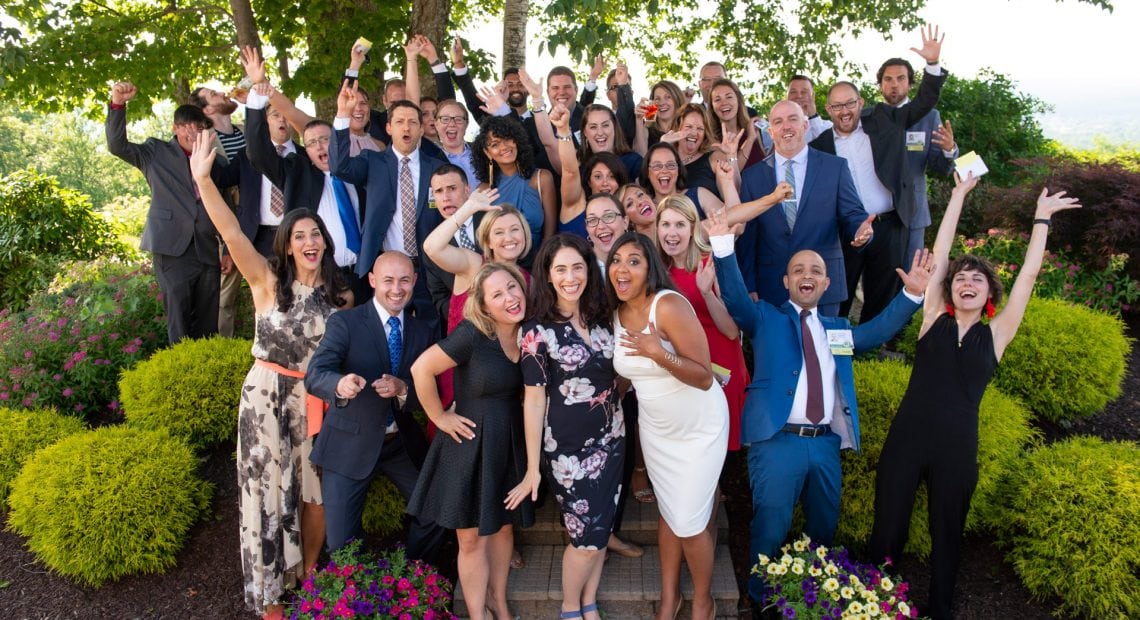
40under40-logo2017aThe class of 2018 was celebrated at the annual 40 Under Forty Gala on Thursday, June 21 at the Log Cabin Banquet & Meeting House in Holyoke.

More than 700 people converged on the Log Cabin Banquet & Meeting House in Holyoke on June 21 to welcome another 40 rising stars to one of the most prestigious clubs in the region — the one comprised of 40 Under Forty honorees. The annual gala was marked by perfect weather and high energy — very high energy. After some networking, the first order of business was announcing the winner of the coveted Continued Excellence Award, which this year went to Samalid Hogan, regional director for the Massachusetts Small Business Development Center Network and editor of Innovate413, and a 40 Under Forty honoree in 2013. After that, it was time to honor the class of 2018. The event, captured in photo montages over the next several pages — was made possible by its sponsors, especially presenting sponsors Northwestern Mutual and PeoplesBank. Other sponsors this year were Development Associates, Health New England, Isenberg School of Management, Mercedes-Benz of Springfield, the MP Group, Renew.Calm, and event partner YPS.


Photography for this special section by Leah Martin Photography


Presenting Sponsors

nortwestern-mutual peoplesbank-logo

Sponsors

hne_logo_cmyk_stack-page-001 isenberg
renew-calm-logo-002

Partner

yps

Daily News

HOLYOKE — Since its founding in 1980, Providence Ministries for the Needy Inc. has been rooted in a mission of serving others with life’s most basic needs: food, clothing, shelter, and job skills.

“We are supported by an extraordinary group of board leaders who are deeply committed to a mission of service and benevolence,” said Executive Director Shannon Rudder, “and it only gains strength and momentum with the addition of the following new members: Lew Rudolph, Marisa Egerstrom, Jeannie Filomeno, and Marvin Gonzalez.”

Egerstrom is currently the priest-in-charge at St. Paul’s Episcopal Church in Holyoke. Her past experience includes serving as Christian education coordinator at St. Stephen’s Episcopal Church in Boston, as a chaplain in hospital and street settings, and as a spiritual director for young adults. She is completing a Ph.D. in American studies at Harvard University.

Rudolph is currently the director of Government and Foundation Grants and Contracts for Trinity Health in Springfield. His past experience includes roles as program director and psychotherapist for ServiceNet Inc. in Northampton, and president and CEO of Hampshire Community United Way.

Filomeno currently serves as the Human Resource manager at her family-operated business, Marcotte Ford. With her family, she has dedicated years of support to Providence Ministries, including preparing and serving monthly at Kate’s Kitchen, organizing clothing, food, and school-supply drives distributed to the community through Margaret’s Pantry; and donating more than 100 holiday gifts and Easter baskets. Outside of working at Marcotte Ford, Jeannie serves on the board of the Professional Women’s Chamber.

Gonzalez currently serves as an outreach specialist with Eliot Community Human Services. As part of his role, he performs daily street outreach in Holyoke and Chicopee. At Kate’s Kitchen, he not only greets guests and records vital daily census data, but also serves as an advisor and troubleshooter on topics including access and information related to housing, detox, mental health, and food support. He has dedicated more than 30 years to working in human services as an advocate for the most vulnerable.

“These four new members bring needed competencies and expertise that will enhance our board and strengthen our commitment to carry out our mission,” said Jim Wall, board chairman.

Added Rudder, “we welcome our new board members and are eager to realize the numerous ways they will fortify our collective work, strengthen the Providence Ministries brand, and, most importantly, support our broad base of constituents across Hampshire and Hampden counties.”

Daily News

SPRINGFIELD — Today, June 21, Springfield’s Fort Street, from Main Street to East Columbus Avenue, will be closed for a special Springfield Student Prince ALS Ice Bucket Challenge. This is the second year that local organizers and ALS activists will come together to create this unique event to fight ALS.

Event organizers have planned the effort to raise funds for the Massachusetts ALS Foundation and specifically to honor local friends who have been stricken with the disease. Registration opens at 4 p.m., and ice buckets will deluge all at 5:45 p.m. Participants can also register online in advance by visiting web.alsa.org/goto/FortStreetALSChallenge.

“So many of us involved in this effort personally know a victim of ALS,” said event organizer Bill Sampson. “When Governor Baker filed legislation last year making the Ice Bucket Challenge Week an annual event, we took it as a special challenge to us here in Springfield, now, to raise money for our friends with ALS. With just a few weeks of planning last year, we were able to fill Fort Street with people. We raised over $25,000.”

ALS, amyothropic lateral sclerosis, is also known as Lou Gehrig’s disease. Last year, Baker held a ceremony with Pete Frates, the Massachusetts native who started the world-wide ALS Bucket Challenge. Advocates note that victims and their families endure many costs and challenges beyond what is covered by insurance.

“This started when a group of us were gathered at the Student Prince, wondering what we could do to help some very dear friends who have ALS,” Sampson said. “These friends are vibrant members of the Greater Springfield community who are used to giving help, not receiving it. We are keeping their names private at this time. We know that, with ALS Massachusetts help, we will be able to assist them in ways that they and their families are not equipped or trained to. All the money we raise will stay here to help them and, as a legacy to them, others.”

Daily News

BOSTON ­— Local unemployment rates decreased in 13 labor-market areas, increased in six areas, and remained the same in five labor-market areas in the state during the month of May, the Executive Office of Labor and Workforce Development reported. Compared to May 2017, the rates dropped in 23 labor-market areas and increased in one area.

Fourteen of the 15 areas for which job estimates are published recorded a seasonal job gain in May. The largest gains occurred in the Boston-Cambridge-Newton, Barnstable, Worcester, Framingham, and Haverhill-Newburyport-Amesbury areas. The Brockton-Bridgewater-Easton area lost jobs over the month.

From May 2017 to May 2018, all 15 areas added jobs, with the largest percentage gains in the Lynn-Saugus-Marblehead, Haverhill-Newburyport-Amesbury, Lawrence-Methuen-Salem, Lowell-Billerica-Chelmsford, and Worcester areas.

In order to compare the statewide rate to local unemployment rates, the Bureau of Labor Statistics estimates the statewide-unadjusted unemployment rate for May was 3.3%.

Last week, the Executive Office of Labor and Workforce Development reported the statewide seasonally adjusted unemployment rate in the month of May remained at 3.5% for the eighth consecutive month. The statewide seasonally adjusted jobs estimate showed a 6,200-job gain in May, and an over-the-year gain of 56,100 jobs.

The unadjusted unemployment rates and job estimates for the labor market areas reflect seasonal fluctuations and therefore may show different levels and trends than the statewide seasonally adjusted estimates. The estimates for labor force, unemployment rates and jobs for Massachusetts are based on different statistical methodology specified by the U.S. Department of Labor’s Bureau of Labor Statistics (BLS).

Daily News

WENDELL — Northeast Solar, in cooperation with the Wendell Energy Committee, is offering residents of Wendell and surrounding communities the opportunity to become owners of the state’s first solar cooperative.

The co-op will be owned by community members who become member-owners of the site by purchasing part of the community solar array. Owners will receive all of the solar benefits generated at the site, located at 97 Wendell Depot Road.

“Over two-thirds of residential properties in Massachusetts are poor sites for solar. A solar cooperative allows those households to switch to clean energy,” said Greg Garrison, president of Northeast Solar.

Solar panels are typically mounted on rooftops, but close to 60% of residential buildings are not suitable sites for solar due to shading or roof condition. The solar cooperative will allow any resident to purchase solar power for their homes by buying into the centralized array.

“Owners in this system will receive a lower purchase price than standard residential installations,” Garrison said. “Co-op owners will receive the federal tax credit, Massachusetts SMART incentives, and on-bill credits to their electric bill. Within a few years, co-op owners will have fully recovered the cost of ownership and will be able to reinvest their energy dollars back into their local community.”

The Wendell Solar Cooperative will return more than $1.3 million back into the local economy over the life of the array. The site is expected to take between six and eight weeks to build. The co-op will accept 50 members, but Northeast Solar is planning more solar cooperatives in other communities to allow more residents the chance to go solar.

Daily News

SPRINGFIELD — Nine new Pioneer Valley municipalities recently joined six already working on Municipal Vulnerability Program (MVP) certification, bringing the total to 15 communities seeking greater resiliency in the face of climate change.

That represents 35% of the Pioneer Valley Planning Commission’s (PVPC) member municipalities — home to approximately 410,000 people, or more than 66% of the region’s population.

“Pioneer Valley municipalities, working jointly and individually, have been leading the way with respect to acting on the climate crisis since we developed the first regional clean-energy climate action plan in 2008, and we are so grateful to the Commonwealth, especially Katie Theoharides and her colleagues at the Executive Office on Energy and Environmental Affairs, for their ongoing funding support for climate action,” said PVPC Land Use and Environment Section Manager Catherine Ratte.

In 2017, six pioneering municipalities applied for and secured MVP planning grants, and four of these six have now successfully secured action grants in the highly competitive first round of funding. Of these, Belchertown will assess stream crossings and culverts, Holyoke is learning from Hurricane Maria survivors how to adapt and care for vulnerable residents affected by extreme weather, Northampton is reducing storm damage by designing with nature, and Pelham aims to improve small-town resilience.

Together, these 15 municipalities have secured $1,186,512 in state funding to plan for ($348,000) and adapt to ($838,512) the changing climate. The funding allows the PVPC to engage with local officials and community stakeholders, while leveraging its unique technical capabilities.

Any of the 43 cities and towns of Hampden and Hampshire counties not currently engaged in MVP work, but interested, should contact PVPC Senior Planning Emily Slotnick at (413) 781-6045 or [email protected].

Daily News

SPRINGFIELD — Faculty from Springfield Technical Community College (STCC) health programs recently departed for Gambia in West Africa as part of a medical mission trip to assist poor communities.

The three STCC faculty members are part of a team administering medication and medical supplies as well as providing health education to people living in the village of Tankular. The team also will distribute school items and clothing for children.

“We are excited to participate in this opportunity to help a population in need,” said Esther Perrelli Brookes, chair of the Respiratory Care Department at STCC. “We will be bringing supplies and caring for those in need as well as helping with a medical clinic that is being built.”

STCC President John Cook praised the faculty members for their efforts. “This medical mission trip to Africa illustrates our faculty’s passion for helping others. They are shining examples of how we can transform lives here on campus and far beyond our borders.”

Perrelli Brookes, Respiratory Care clinical instructor Nfamara “Fams” Taal, and Kathleen Sawtelle, a Surgical Technology instructor, planned to leave June 17 for the two-week-long medical mission. They will join other healthcare workers, from doctors and nurses to dental-care and eye-care professionals, to help people living in the village of Tankular.

“There is a desperate need for access to medical care services, especially in rural villages,” said Taal, a native of Tankular, where the medical clinic is under construction.

He created the Sam Taal Global Foundation, based in Chicopee, to raise money to provide access to medical care and promote education in developing nations such as Gambia. To prepare for their mission, Taal recently brought equipment and supplies to New York City to be shipped across the Atlantic. The clinic will have access to medical diagnostic equipment, including blood-pressure machines, paid for through fundraising efforts.

“Diabetes is common there,” Taal said. “Some of these folks don’t have a way to get prescriptions. They don’t have the ability to check their blood sugar.”

What’s more, villagers don’t have easy access to medications that many Americans might take for granted, like Tylenol or ibuprofen. “We’ll be bringing all these pain medications to help these folks,” Taal said. “They have nothing to take for a headache or migraine besides a local remedy.”

The STCC team, who paid for their own expenses, will put their expertise to work when they arrive in Gambia. Sawtelle will teach schoolchildren about nutrition. Perrelli Brookes will discuss smoking cessation and show them posters from the Centers for Disease Control and Prevention illustrating heart and lung problems related to tobacco use. She also will educate people about chronic obstructive pulmonary disease, which is a common problem.

As of 2016, the average life expectancy in Gambia was only 61, according to data from the World Bank. The villagers have no easy access to medical care. When they get sick, they often cannot receive proper treatment in a timely manner.

“We will give them some hope, because our presence will be known,” said Perrelli Brookes. “We will be there before the clinic is built, so maybe that will give them a sense of hope and faith that there will be medical people to one day fill the clinic.”

Sawtelle said ongoing fundraising efforts through the Sam Taal Global Foundation will make a significant impact on the village. “We’re still trying to finish the clinic. For months, we’ve been collecting items to hand out to the kids and the grownups: clothing, school supplies, dental-care items. After we get back home to our lives, it’s our hope that the supplies will continue to improve their lifestyle.”

Added Taal, “this is our first trip, and hopefully it’s not our last. At least we can leave them with something. We can leave them with some sort of education tool for their benefit.”

Daily News

MONSON — Monson Savings Bank will host a complimentary workshop, open to the public, titled Tips and Tricks for Protecting You and Your Family – An Estate and Elder Law Planning Presentation,” featuring Susan McCoy, partner with Cooley Shrair, P.C. The workshop will be held Thursday, June 21 from 5:30 to 7 p.m. at Monson Savings Bank’s corporate office, 107 Main St., Monson.

Understanding wills and trusts, estate taxes, Medicaid and long-term-care planning, durable power of attorney, and health proxies are topics that can seem overwhelming and time-consuming. These are some of the topics McCoy will touch upon to help people understand what they are and what kind of options are available. She has an extensive background in estate and trust planning as well as Medicaid and long-term healthcare planning, and understands how daunting these processes can be.

“We are pleased to bring this important information to our communities,” said Steve Lowell, president of Monson Savings Bank. “This workshop will aim to simplify the steps needed to create an effective estate plan so that people may better protect themselves, their families, and their assets.”

Refreshments will be served. Seating is limited. To RSVP, contact Anna Calvanese at (413) 267-1221 or [email protected].

Daily News

SPRINGFIELD — Lamont Clemons, President of the Rotary Club of Springfield, recently presented Rotarians Jack Toner and Rick Lee with Rotary pins to acknowledge their donations to the Rotary Foundation. The Rotary Foundation supports clean-water projects, maternal and child health, education, and the promotion of peace throughout the world.

Toner’s pin has one blue sapphire stone for his $2,000 to the foundation, and Lee’s has three sapphire stones for his $4,000 donation made over a period of time.

“The global impact of the Rotary Foundation is extraordinary,” Toner said. “My small monthly gift pays itself forward over and over again. Each dollar given is multiplied through grants and various partnerships, mostly notably with the Bill and Melinda Gates Foundation in Rotary’s effort to eradicate polio worldwide. I feel privileged to wear a different lapel pin each day to represent the various and diverse ongoing activities Rotary initiatives are involved with around the globe.”

Lee also feels strongly about the Rotary and its foundation. “When I served as club president in 2014, I became acutely aware of the important work done worldwide through the Rotary Foundation,” he said. “ I am convinced that supporting these efforts should be job one for any Rotarian. For me, Rotary’s unique blend of local fellowship and service, coupled with its global reach, makes the experience truly special.”

Daily News

SPRINGFIELD — Florence Bank broke ground last week on its second Hampden County branch, at 1444 Allen St. in Springfield, and leaders said the full-service location will open later this year.

“We’re coming to Springfield,” John Heaps Jr., Florence Bank’s president and CEO, told a crowd of roughly 50 people who gathered for the celebratory event. “Our focus is on our customers and on helping to reinvigorate the community.”

Heaps grew up in the Springfield area, and he said the expansion into Springfield “is like coming back home. I used to hang around here. This feels great.”

Likewise, Nikki Gleason, branch manager for the Allen Street location, noted that “Springfield is my home, where I work, volunteer, and spend much of my time. I am thrilled to be serving as the branch manager and happy to be working for Florence Bank. I look forward to seeing many familiar faces and meeting new customers and friends.”

Last September, Florence Bank opened its first branch in Hampden County at 1010 Union St. in West Springfield. The Springfield branch marks the second of an anticipated four branches in the region.

“We’re looking at opening two more,” Heaps said. “This is not just dipping our toe in the water. We’re here, and we’re going to be part of this community for a long time.”

Heaps said the time was right for expansion into the Springfield area because bank mergers and acquisitions in past years have left Springfield without a local bank headquartered there.

As he spoke to the crowd at the groundbreaking, Springfield Mayor Domenic Sarno picked up on this point. “Sometimes, the community touch is lost,” he said. “Florence Bank is accessible. A person will answer the telephone. The city of Springfield is growing, and Florence Bank will continue to move it forward.”

Also in attendance at the event were Joe and Wendy Bonavita, the site’s former landowners; Kevin Kennedy, chief Development officer for the city of Springfield; Mary Dionne, vice president of the Outer Belt Civic Assoc.; Myles Callender of Revitalize Springfield; and representatives for the developers, Marois Construction of South Hadley, HAI Architecture, and for Bohler Engineering. Florence Bank employees, board members, and corporators were present as well, along with State Rep. Angelo Puppolo and Springfield City Councilors Tim Allen and Mike Fenton.

Like the West Springfield banking center, Heaps said, the Allen Street branch will have an open floor plan with a full-service teller pod and innovative technology for quick cash handling. The location will also feature a drive-up ATM with SMART technology for easy depositing and a comfortable waiting area inside with a coffee bar and free internet.

Florence Bank has nearly 3,800 customers living in Hampden County, including 700 business customers.

Daily News

NORTHAMPTON — ValleyBike will launch with celebrations, comments, demonstrations, and a parade at Thursday June 28 at 11 a.m. in Pulaski Park, 274 Main St., Northampton.

ValleyBike is the first bike-share program in the Pioneer Valley and the first pedal-assist bike-share program in New England. The program allows members to pay for bikes by the trip, or join as a member for unlimited 45-minute rides by the day, month, or year. Partners include the communities of Amherst, Holyoke, Northampton, South Hadley, and Springfield, as well as UMass Amherst and the Pioneer Valley Planning Commission (PVPC).

“Five hundred pedal-assist bicycles in 50 stations in five communities will help transform transportation options for many of our residents,” said Northampton Mayor David Narkewicz. “Northampton is proud to be the lead community and fiscal sponsor for our seven-member ValleyBike consortium. This will help provide that extra mile that PVTA can’t always provide, and that is too far to walk and short to drive. We are proud to serve all residents, including those with the least options.”

Added Springfield Mayor Domenic Sarno, “Springfield is delighted to be part of ValleyBike. Serving our downtown core and medical district, bike share will be a benefit for residents, workers, and visitors. Bike share is good for one’s health and our environment, too. Congratulations to all of our partners for coming together on this great regional project.”

Holyoke Mayor Alex Morse noted that ValleyBike will increase connectivity between member communities, along with recent upgrades such as regional rail service. “Coupled with key investments in our densest neighborhoods and complete streetscapes that are favorable to pedestrians and bikers, the bike-share system will play an important role in Holyoke’s continued renaissance.”

ValleyBike was initiated by Amherst, Northampton, and the PVPC, and then quickly joined by Springfield, Holyoke, and South Hadley. The planning effort was led by the PVPC, which found the funding for planning. Leadership of the effort switched to Northampton for the implementation phase of the project. Within the next week, residents will be able to sign up at www.valleybike.org, with special founding membership opportunities for a limited time.

“ValleyBike is yet another exciting example of how our region, and its cities and towns, are working collaboratively and proactively to shape a smart and sustainable future for us all,” said PVPC Executive Director Tim Brennan. “ValleyBike not only introduces a new type of shared mobility, but offers a creative and sensible way to improve our air and our health while capturing the benefits of modern-day pedal power.”

ValleyBike has contracted with Bewegen Technologies and Corps Logistics to build and operate the system. According to Alain Ayotte, Bewegen CEO, “since the very beginning, the Bewegen team has been convinced of the strong potential for bike sharing to succeed in Pioneer Valley. Data from our systems launched around the world have shown that our Pedelec bikes offer a transportation alternative that is more attractive to a diverse range of users, contributing to a larger mode shift toward cycling. Our team is committed to this project, which will continue to strengthen healthy living and active mobility throughout the region. Working in partnership with Corps Logistics, local veterans will be hired to operate the bike-share system, creating jobs and contributing to the local economy.”

ValleyBike is funded by state and federal grants, Bewegen investments, community investments in station pads, user fees, and program sponsors.

Daily News

SPRINGFIELD — Kathleen Sawtelle, a clinical and lab instructor in the Surgical Technology program at Springfield Technical Community College (STCC), received the Clinical Educator of the Year Award during the Assoc. of Surgical Technologists 2018 conference in Lake Buena Vista, Fla., on May 31. She was at the conference as a delegate for the organization.

“It’s a huge honor,” said Sawtelle. “Nominees come from throughout the country. They narrowed it down to six finalists, and I was chosen for the award.”

The award recognizes one clinical educator who has gone above and beyond the call of duty for students. Sawtelle received a $500 award, a trophy, and recognition at the annual conference.

“I am very proud a clinical educator from the STCC community was chosen for this award,” said Mary Jayne Rossman, program director and department chair. “Kathy gives 110% of herself to the Surgical Technology program here at STCC. We are fortunate to have such a strong advocate for our students.”

Added STCC Vice President of Academic Affairs Geraldine de Berly, “we’re proud to have faculty like Kathy Sawtelle, who bring a passion for their work into the classroom. She exemplifies dedication and professionalism and is most deserving of this award.”

A 1976 graduate of STCC’s Surgical Technology program, Sawtelle has worked in the field for 42 years. She has been coordinator of clinical education for the program at STCC for the past three years, and has taught at the college for 11 years. She has worked as a certified surgical technologist at Baystate Medical Center in Springfield for 28 years and on a per diem basis for 10 years.

She previously received the designation of Fellow of the Assoc. of Surgical Technologists, which recognizes surgical technologists who have upheld the highest professional, ethical, and moral standards and traditions of the profession.

Surgical technologists are responsible for preparing the operating room and protecting patients from harmful bacteria. They arrange equipment and hand instruments to the surgeon, among other operating-room responsibilities.

Sawtelle said she loves her work both in and out of the classroom, noting that “it’s an outstanding field. It’s my passion.”

Daily News

SPRINGFIELD — American International College (AIC) will offer businesses and organizations the opportunity to host meetings, conferences, and other programs at the college. While AIC’s first commitment will be to the institution’s academic and theater offerings, the college will open remaining available dates for external rentals.

Event spaces on the main campus vary in capacity and include venues such as the Esther B. Griswold Theatre, seating nearly 500; the Schwartz Campus Center Auditorium; the newly renovated Stinger Pub; the West Wing Gallery; conference rooms; and classrooms. In addition, facility rentals will be available at the athletic complex located on Cortland Street. Free parking is conveniently located near campus venues.

A refundable deposit and liability insurance will be required in advance of contracted events. Technology and catering services may also be available to interested groups. Call (413) 205-3336 or email [email protected] for more information.

Daily News

SPRINGFIELD The third installment of the BusinessWest lecture series Future Tense, titled “Change Considerations: An Examination of Lean Process, Market Disruption, and the Future of Your Business,” will take place on Thursday, Sept. 20 from 8 to 9:30 a.m. at Tech Foundry, 1391 Main St., ninth floor, Springfield.

The lecture, open exclusively to CEOs and business owners, will be delivered by Mark Borsari, president of Sanderson MacLeod. The cost is a $25 donation to Tech Foundry. Event sponsors include Paragus IT, the Jamrog Group, and Meyers Brothers Kalicka, P.C.

With increasingly automated business processes, AI, and machine manufacturing, lean concepts are becoming more important than ever in terms of staying competitive. Borsari will discuss change and innovation through lean concepts and focus on resulting cultural considerations. The presentation will also address already-active market disrupters that will affect business processes in various industries.

Metered street parking is available near the venue, and there are several parking-garage options nearby as well. To register, visit businesswest.com/lecture-series.

Daily News

HOLYOKE — The O’Connell Companies announced the promotion of Joanne Beauregard to financial vice president. Beauregard fills the position vacated by Martin Schoenemann, who retired this spring after 38 years at O’Connell’s. As financial VP, she is responsible for management of the financial, accounting, and tax matters of the company’s real estate, construction, property-management, and biosolids businesses.

She moves to this position after 34 years of successive positions of increased responsibility and leadership, most recently as controller for O’Connell Development Group. She holds a master’s degree in business administration from the University of Hartford and a bachelor’s degree in accounting from Western New England College.

Beauregard is currently a board member of Providence Ministries Service Network and previously served as the chair of the board of the Sisters of Providence Health System. She also served as the treasurer of the Holyoke Children’s Museum.

The O’Connell Companies is the parent company of O’Connell Development Group, New England Fertilizer Company, Appleton Corp., Western Builders, and Daniel O’Connell’s Sons.

Daily News

PITTSFIELD — Berkshire Bank will once again participate in World Elder Abuse Awareness Day on Friday, June 15, by hosting free informational seminars at local senior centers and libraries across its footprint. World Elder Abuse Awareness Day is acknowledged annually in June as a call to action for communities to address the issues surrounding the physical, emotional, and financial abuse of elders.

Elder financial abuse is defined as a crime that deprives the resources and independence of elders through the misuse of assets and exploitation of financial control.

“According to the National Center on Elder Abuse, approximately one in 10 Americans 60 years of age or older have experienced some form of elder abuse, and only one in 14 cases of financial exploitation are ever reported. Developing programs to educate friends, families, and elders in our communities on how to work together to safeguard their finances and personal information is the first step to address and prevent elder abuse,” said Tami Gunsch, executive vice president, Retail Banking at Berkshire Bank.

To help older individuals and their caregivers protect themselves or their loved ones from financial abuse, Berkshire Bank is offering a series of free seminars to the public at locations across its footprint. Locally, they will take place at the West Springfield Library on Friday, June 15 at 2 p.m.; and at the Cheshire Senior Center on Wednesday, June 27 at 1 p.m.

Senior centers and libraries are welcome to contact Berkshire Bank at [email protected] to schedule an elder-abuse awareness seminar.

Daily News

HOLYOKE — The Gateway to College program at Holyoke Community College (HCC) marked another milestone June 5, topping 300 graduates for the first time in the 10-year history of the alternative high-school program, which has become one of the most successful of its kind in the country.

The 34 students from eight local districts also represent the program’s largest graduating class ever, bringing the total number of HCC’s Gateway graduates to 303.

“Each and every one of us is strong,” said student speaker Eric Montagna during the graduation ceremony in HCC’s Leslie Phillips Theater. “High school was rough, but we made it. We’re stronger than the people who told us we couldn’t. They knocked us down, but we got back up. We will succeed because we are strong.”

Gateway to College is a national program that takes struggling high-school students and dropouts and puts them into college classes. Students enrolled in Gateway work toward their high-school diplomas while also racking up transferable college credits.

HCC started its Gateway program in 2008 and for the last two years has been recognized with the national network’s Excellence Award for exceeding benchmarks for retention, GPA, and graduation rate. In 2014, HCC’s Gateway program was ranked number one among all the Gateway programs in the U.S.

“Some students struggle in traditional high school,” said Vivian Ostrowski, coordinator of HCC’s Gateway program. “Those same students can be, and are, wildly successful in a different academic environment and culture. That is the secret to Gateway.”

One such success story is Julia Rodrigue from Amherst. In high school, Rodrigue had a GPA of 1.6 and dropped out during her senior year. Through Gateway, she earned 14 college credits at HCC and graduated from the program with a GPA of 4.0. For her academic achievements, Rodrigue received the Presidents Award from the Gateway National Network.

“Failure is a part of learning,” Rodrigue told her classmates. “Dropping out and going back to school has taught me the importance of education. Finishing something easy isn’t as great of an accomplishment as achieving a goal that has been challenging.”

Rodrigue plans to continue her college education at HCC in the fall and intends to study education in the hopes of being a teacher.

“I entered Gateway with no confidence in myself academically,” she said. “I’m leaving here today with the skills to be successful in college.”

Keynote speaker and HCC professor Raúl Gutiérrez gave a brief Spanish lesson. “There’s a saying, esso vale la pena, meaning ‘it’s worth the struggle.’ You students are worth it. Sometimes, as a professor, you can make me a little frustrated, but it’s worth it. You are worth it. Don’t ever forget that.”

Holyoke mayor Alex Morse, who was in the audience to support the Holyoke students graduating from Gateway, was asked to address the crowd of faculty, staff, family, and friends in the theater. “Wherever you go,” he said, “remember where you’re from. Holyoke needs you. It needs your intelligence, ideas, and energy.”

The 34 new Gateway graduates earned a total of 306 college credits among them.

Daily News

HATFIELD — Northeast Solar announced that the new farm stand for Springfield-based nonprofit Gardening the Community, at 200 Walnut St. in Mason Square, is now being powered by a free solar-power array made possible in part by a collaboration with two area donors.

The farm stand is the 11th free solar installation completed by Northeast Solar, and the list continues to grow as the company identifies more nonprofit organizations operating in the Pioneer Valley to work with. The nonprofit solar installations are part of the company’s larger mission under its commitment to the community program.

Greg Garrison, president of Northeast Solar and a graduate of the Greenfield Community College (GCC) Renewable Energy and Energy Efficiency program, started the company in 2010 after serving as a business consultant for the previous owner in 2009. From the outset, Northeast Solar made it its mission to bring a variety of benefits to the community.

“My time at GCC motivated me to start a company that would give me the chance to improve the community,” Garrison said. “I saw that chance with solar.”

Over the past year, Northeast Solar has been working with Garrison’s former GCC professor, Brian Adams, and Morey Phippen, a long-time social-service worker in Northampton, to bring free solar power to local community organizations.

To date, Northeast Solar has installed free solar for DIAL/Self, ServiceNet, Community Involved in Sustaining Agriculture, Arcadia Wildlife Sanctuary, the Peace Development Fund, Dakin Animal Shelter, Nasami Farm, the Amherst Survival Center, Historic Northampton, and now Gardening the Community.

“Free solar for nonprofits is central to our mission as a company — to give more than we take and to benefit the community,” Garrison said.

The donated solar installations are intended to reduce the amount of money organizations have to spend on electricity every year in the hope that those funds can be redirected into better programs that serve the community.

Daily News

HANCOCK — On July 1, recreational marijuana becomes legal in Massachusetts.  As the only state on the East Coast to allow 21 and older to buy cannabis recreationally, analysts anticipate a surge in tourism to Massachusetts, and particularly the Berkshires, from places like New York, Vermont, and Connecticut. What does this mean for your business? What plans should you have in place by July 1 to be prepared?

Today, June 14, Berkshire Roots and 1Berkshire will host an educational session on “Canna Tourism in the Berkshires: What It Means for Your Business” at Jiminy Peak Mountain Resort in Hancock from 5 to 7 p.m. Attorney Andrea Nuciforo Jr., one of the founding members of Berkshire Roots, will address attendees’ questions.

Berkshire Roots is the first marijuana dispensary in Pittsfield and the largest grower of cannabis in the Berkshires. This educational session is free to 1Berkshire members and their employees. To register, call (413) 499-1600, ext 135.

Daily News

NORTH ADAMS — MassDevelopment has provided a $1.1 million loan to Greylock WORKS LLC, the developer of the Greylock Mill, a former cotton-spinning mill campus in North Adams that Greylock WORKS is transforming into a mixed-use commercial development.

The organization will use loan proceeds to continue renovations of the Weave Shed, which includes a 26,000-square-foot event venue and commercial kitchen where the owners have been producing regional festivals and dance parties, as well as hosting weddings and other private events.

This loan builds on significant support from the state and MassDevelopment, including nearly $4 million in MassWorks Infrastructure Grant Program funding for North Adams. The two awards enabled the city to complete public infrastructure improvements necessary for the development’s ongoing construction.

“The Baker-Polito administration has created a toolbox of flexible resources to support significant opportunities for economic growth in municipalities across the Commonwealth,” said Housing and Economic Development Secretary Jay Ash. “North Adams and the team behind Greylock WORKS have successfully layered multiple funding sources and tools to undertake a transformative development, which will create new jobs, attract visitors, build housing, and become an asset for the entire region.”

Added MassDevelopment President and CEO Lauren Liss, “MassDevelopment is pleased to continue our support of the Greylock WORKS efforts to revive a vacant, underused space in North Adams. We look forward to seeing this former cotton mill transformed into a retail destination and event space for Berkshire residents and visitors alike.”

The Greylock Mill is a 240,000-square-foot former cotton-spinning facility that stretches 700 feet along Route 2 in North Adams. Plans for the building’s campus include wholesale scaled artisanal food production, a boutique hotel, housing, and event space. The Baker-Polito administration, through MassDevelopment, has worked with the developer across numerous aspects of the project, providing pre-development funding and grants through the Brownfields Redevelopment Fund, the Site Readiness Program, and the Collaborative Workspace Program.

“We’ve all seen the wrenching effect of once-vibrant industrial sites like this, languishing into blighted eyesores due to their scale and complexity,” said Sal Perry, development director of Greylock WORKS. “With the financial support and expertise of MassDevelopment, our team is writing a new chapter for this underutilized asset at the heart of Northern Berkshire County. It’s about creating a catalyst for rekindled aspirations at a regional level.”

Daily News

BOSTON — Gov. Charlie Baker joined Transportation Secretary and CEO Stephanie Pollack, U.S. Rep. Richard Neal, Springfield Mayor Domenic Sarno, members of the Massachusetts Legislature, and local leaders at Union Station in Springfield yesterday to announce a request for proposals for a consultant team to study the feasibility of east-west passenger rail service, the launch of a pilot for passenger rail service between Greenfield and Springfield, and one-seat service through Springfield to Hartford and New Haven, Conn.

“Through strong partnerships with federal, state, and local officials, we are investing in our existing rail infrastructure, increasing capacity where it is needed, and strengthening the Commonwealth’s transportation system,” Baker said. “We look forward to reviewing the results of this comprehensive study and continuing to support projects in all regions of the Commonwealth that provide improved travel options to residents and commuters.”

Added Neal, “I have always believed that improved and enhanced rail service between Springfield and Boston has the potential to be a game changer for our region. That’s why I thank Governor Baker for coming to Union Station today to announce that he is authorizing a comprehensive study on the feasibility of east-west rail. It will build on the study of local rail service funded by the Federal Railroad Administration that former Congressman John Olver and I requested in 2006. With the debut of expanded passenger rail service between New Haven and Springfield later this week, these two significant projects will help grow our economy and greatly improve the quality of life in the region. Investing in our transportation infrastructure will benefit people across the entire Commonwealth of Massachusetts.”

The RFP will enable the Massachusetts Department of Transportation (MassDOT) to carry out an extensive study over approximately 18 months, analyzing many aspects and options for potential east-west passenger rail service. In addition to studying potential passenger service from Springfield to Boston, the study will look at potential origins farther west such as Pittsfield and Palmer. This will include engaging with stakeholders and evaluating the potential costs, speed, infrastructure needs, and ridership of potential passenger rail service throughout this corridor.

The administration also announced that a term sheet has been finalized with the Connecticut Department of Transportation which will enable the start of passenger rail service between Springfield and Greenfield beginning on a pilot basis in spring 2019. Under the agreement, MassDOT will fund the cost and management of the pilot service, which will be operated by Amtrak and conclude in fall 2021. The pilot will provide two round-trips each day and make stops at stations in Greenfield, Northampton, Holyoke, and Springfield. Southbound service will be provided in the morning hours, and northbound in the evenings. This pilot service will leverage the MassDOT-owned Knowledge Corridor, which is currently used by Amtrak’s Vermonter service, and the recently renovated Springfield Union Station.

Meanwhile, the new 62-mile Hartford Line begins operating on Saturday, June 16, with trains running approximately every 45 minutes between Springfield and several cities and towns in Connecticut, including Windsor Locks, Windsor, Hartford, Berlin, Meriden, Wallingford, and New Haven. This expanded service is in addition to the existing Amtrak service throughout this corridor. The Hartford Line will offer free service on June 16 and June 17.

“Carrying out a comprehensive study on east-west passenger rail will allow us to have a rigorous, fact-based discussion regarding options for potential service,” Pollack said.  “Many legislators, local and regional officials, and business leaders called for such a study, and we are pleased to take a step in advancing this planning for future service.”

Added Sarno, “I deeply appreciate Governor Baker’s continued efforts to not only better connect us through the North-South corridor, but also his efforts to explore better overall ways to connect us to a feasible and sustainable east-west corridor mechanism. He’s been a great friend and partner to me and to Springfield’s needs.”


Cover Story

Growth Industry

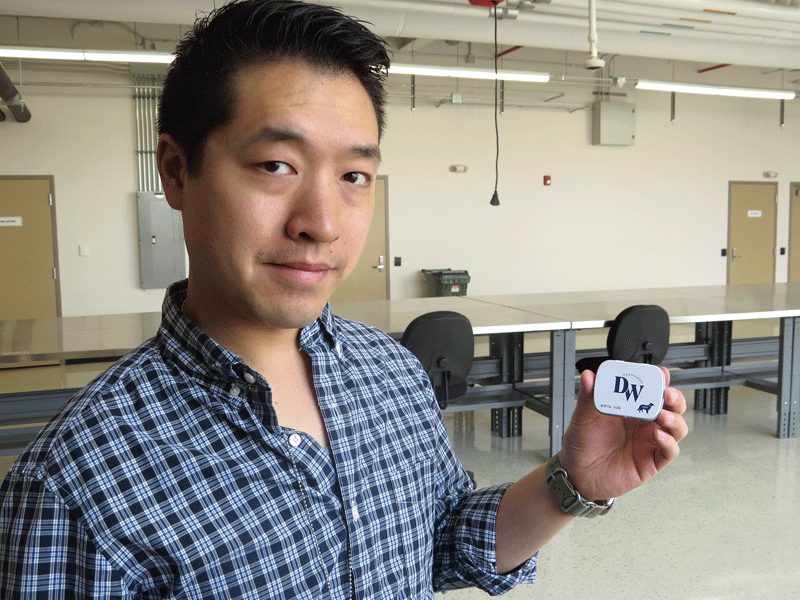
Matt Yee stands outside a room

Matt Yee stands outside a room equipped to simulate ‘summer.’ Access inside is extremely limited.

Green Thumb Industries’ marijuana-cultivation facility in Holyoke is not like most other businesses — or any other business, for that matter. There is no sign over the door, there was no elaborate ribbon-cutting ceremony when it opened, and, with a few minor exceptions, no one will visit this place. It is like all other businesses, though, in keeping the focus on innovation and putting out a quality product.

The ‘flowering room,’ as it’s called, is climate-controlled to simulate early fall.

And it does that so well that when Matt Yee, president of the Massachusetts market for Green Thumb Industries (GTI), walks inside … he has flashbacks of a sort.

“This is perpetual September. I always feel like I’m walking through the Holyoke Community College parking lot at the beginning of school — it always reminds me of that.”

“This is perpetual September,” he told BusinessWest, referencing the temperature, the warmth of the sun, and a slight, cool breeze. “I always feel like I’m walking through the Holyoke Community College parking lot at the beginning of school — it always reminds me of that.”

Perpetual September? Welcome to GTI’s 45,000-square-foot marijuana-cultivation facility in Holyoke, a recently opened venture that is, in just about every way you can imagine, not like any other business in this region.

That much becomes abundantly clear after one short visit — only, you really shouldn’t expect to visit this place anytime soon. They don’t exactly roll out the welcome mat — not because they’re not friendly, but because they don’t want or need company.

For starters, there’s no signage on the property, at least for GTI (there are other tenants in this old paper mill), and for a reason. The company doesn’t exactly want to broadcast its location, although its address, 28 Appleton St., in the so-called Flats section of the city, is commonly known.

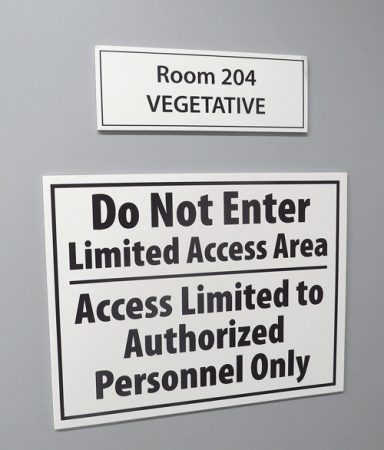
The sign outside one of the growing rooms conveys the importance of keeping the plants safe at GTI’s Holyoke facility.v

The sign outside one of the growing rooms conveys the importance of keeping the plants safe at GTI’s Holyoke facility.

Also, there is no front door, really. You enter through the back, and only after using a coded key to get through a tall gate and passing under several surveillance cameras. Once inside — again, if you get that far — you can’t go any further without checking in with security, leaving a copy of your driver’s license behind, getting a badge with a recorded number on it, and being escorted by an employee through some more locked doors.

But before going through — and unless you’re an employee, an elected official on business, some other sort of VIP, or a business writer on assignment, you probably won’t be going through — one must step onto a large mat of sorts covered by about an inch of water.

That’s because marijuana plants are somewhat fragile and susceptible to contamination that might be brought into their home on the soles of one’s shoes. For the same reason, no one gets further than the security desk without donning a white lab coat.

“Contamination of the system can cause millions of dollars in damage,” said Yee. “Even walking across the parking lot, people can pick up some powdery mildew — one of the biggest issues we have — or various aphids and bugs, and those can be issues as well.”

To help keep these plants — which give new meaning to the phrase ‘cash crop’ — safe, GTI has enlisted the help of what are known as “beneficials” — tiny mites that feast on many of the known enemies of marijuana plants. There are hundreds of them in small packets placed next to each plant.

“If there’s an invasion of aggressive bugs, they’ll eat those little guys,” Yee said of the mites. “It’s an interesting process — signing the invoice for 25,000 bugs was kind of interesting; they’re very, very, very small, but you can see them, although it’s like looking for a needle in a haystack.”

These are just some of the steps (ladybugs and other beneficials are also deployed) being taken to ensure that the first crop, and all those to follow — the business plan calls for cultivating 120 pounds per month — will be as healthy and profitable as possible, said Yee, who came to this job and this industry thanks to a chance encounter with Pete Kadens, president of Chicago-based GTI at the restaurant Yee was managing (more on that later).

The flowering room he showed BusinessWest was empty, but by the time this magazine went to the printer, it was full of plants enjoying those cool fall breezes. From there, it’s only a few more steps until the fruit of the plant is processed into product, such as the small joints called ‘dog walkers’ — because you can start and finish one in about the time it takes to walk the dog — to be placed in tins already stored in the so-called trim room.

“It’s a great little product — everybody really loves these all across the nation,” he said, adding that, starting in several weeks, these dog walkers and other products will be shipped to GTI’s recently opened dispensary in Amherst and other locations across the state.

For this issue, BusinessWest takes an in-depth look inside GTI’s facility in Holyoke, and also inside a business that is new to Massachusetts and this region, but appears to have a future that might be as bright as the high-pressure sodium lights inside the flowering room.

Branch Office

Those are 1,000-watt units, and there are 88 of them in the room, Yee explained, adding quickly that it gets so bright in those rooms that employees wear protective sunglasses when inside.

That was one of many bits of information Yee passed along while serving as tour guide, one of many functions he’s taken on (although, now that growing has started, the volume of tours has subsided) while carrying out a role he probably couldn’t have imagined for himself a few years ago.

GTI expects to cultivate 120 pounds of marijuana per month at its Holyoke facility.

GTI expects to cultivate 120 pounds of marijuana per month at its Holyoke facility.

But the picture changed quickly and profoundly after Kadens ventured into Johnny’s Tavern in South Hadley for dinner back in 2016. Yee, as noted, was general manager of that eatery (one of many owned and operated by his family), with the emphasis on was. Indeed, the two started talking, and the more Kadens talked about the cannabis industry and its potential in the Bay State, the more Yee wanted to be part of it.

To make a long story somewhat shorter, Yee joined GTI and has taken a lead role in opening the Holyoke facility and getting the first plants in the ground, if you will.

First, though, there was a lengthy learning curve for Yee, who said his education in cannabis and the business of cultivating and distributing marijuana took him to GTI facilities across the country, including those in Colorado, Nevada, Illinois, and Virginia.

“It was a really intense drop into the cannabis world,” he recalled, adding that GTI has facilities similar to the one in Holyoke operating in several states.

The operation on Appleton actually represents what Yee called the third iteration of a GTI growth facility. Lessons have been learned over the years, he said, in everything from production to automated systems to air handling, and they’ve all been applied to the Holyoke plant, which came to be after a lengthy review of options regarding what to build and where.

“It came down to ‘should we do this in an open field somewhere for cheaper or do the socially responsible thing and breathe new life into a vacant space?’ And we decided to do this — and it was a project.”

Indeed, as Yee walked through the facility, he noted that, while it provided one key ingredient in the form of wide-open spaces and high ceilings, the old mill required quite a bit of expensive work to be retrofitted into a marijuana-cultivation facility.

But in the end, GTI determined that rehabbing such a facility is a better alternative to building new, even it is the more expensive alternative.

“It came down to ‘should we do this in an open field somewhere for cheaper or do the socially responsible thing and breathe new life into a vacant space?’” he recalled of the decision-making process. “And we decided to do this — and it was a project.”

‘This’ was a retrofit in the middle of an urban setting, granted one that has embraced the cannabis industry with open arms.

Thus, security is extremely tight, he said, noting the facility is outfitted with cameras, motion detectors, glass-break sensors, and more.

“Visitation is very, very restricted,” he said, adding that the state has access to the facility’s camera systems and monitors what goes on. If someone watching sees someone in the building without a badge, inquiries are made.

Joint Venture

Yee’s ability to learn quickly about the industry he joined was in evidence on the tour, as he talked about marijuana and, more specifically, how it will be cultivated in this old mill.

“Marijuana is an annual,” said Yee, who walked while he talked. “Typically, the seeds will pop in the spring, it will grow through the summer, and then, come the shorter days of late summer and fall, its flowering process is triggered — and it’s those flowers that we’re harvesting; it’s the fruit of the plant.”

Matt Yee says it will be a few more months before GTI is able to fill tins of ‘dog walkers’ it will ship out the doors of the Holyoke plant.

Matt Yee says it will be a few more months before GTI is able to fill tins of ‘dog walkers’ it will ship out the doors of the Holyoke plant.

There are no seasons, per se, indoors, so cultivators like GTI have to replicate them, he went on, as he stopped at a room simulating early- to mid-summer. Through a large, thick window, Yee pointed to and talked about the already-tall plants inside.

Taking visitors in that room, even after they’ve put on a lab coat and stepped on a few of those water-covered mats, constitutes far more risk than the company is willing to take on, he said, adding that these plants are much too valuable to risk contamination.

The sign on the door gets this point across. “Do Not Enter — Limited Access Area,” it reads. “Access Limited to Authorized Personnel Only.”

“There are about 18 hours of light in this room,” said Yee, returning to the subject at hand and the process of simulating summer-like conditions. “We’re really just pushing the plants to get to a proper size, and then we stimulate them to get to their flowering stage.”

Actually, the ‘summer’ room is the second stop for the plants, which start off as cuttings from other plants, known as ‘mothers,’ and take up residency in the ‘cloning room.’

Their third stop will be in that room that simulates September, where it is a constant 72 degrees, Yee went on, adding that the first plants were due to arrive there in early June.

In that setting, a shorter day, with the lights on for maybe 12 hours, is created. That difference in the amount of light is what actually triggers the plant to move into its reproductive cycle, he explained.

“The male plants will develop pollinating elements, and the female plants develop the flowers,” he noted. “We only have females here; there are no males on site.”

The plants will double or triple in size in the flowering room, he went on, adding that, when they’re ready for harvesting, they’re removed from their pots, the iconic fan leaves are removed, and the flowers are put into a drying room, to be hung on what are known as ‘Z racks.’

Once the flowers reach a certain level of dryness, they can be processed, said Yee, adding that the product is weighed and then moved into the ‘trim room,’ a space where the flowers are “manicured” (Yee’s word) into their final, saleable form, such as those aforementioned dog walkers.

From beginning to end — from the nursery to that tin of dog walkers — the process covers about three months, and, starting with the second batch, there will be continuous yield at this facility, which will be needed to recover the significant investment (nearly $10 million) in this facility.

“We’ll be harvesting about half a room a day,” he projected, adding, again, that the overriding goal is to keep the crops safe — from invading insects and anything else — until they’re harvested.

Yield Signs

Getting back to those packets of beneficials, Yee said the mites are really small and quite hard to see, and he’s essentially taking the distributor’s word that there were 25,000 of them in that last order.

“If you crack one of the packets open and pour the contents in your hand, there’s sawdust or whatever it is … and if you look hard, you can spot these little critters rolling around.”

What’s somewhat easier to see is the vast potential for the cannabis industry in Massachusetts, although that picture is still coming into focus, on both the medicinal and recreational sides of the spectrum.

GTI intends to be well-positioned to capitalize on whatever market eventually develops, and the Holyoke facility will play a huge role in those efforts.

It is really unlike any business you’ve ever visited — only, you won’t know, because you probably won’t be visiting.

George O’Brien can be reached at [email protected]

Community Spotlight Features

Community Spotlight

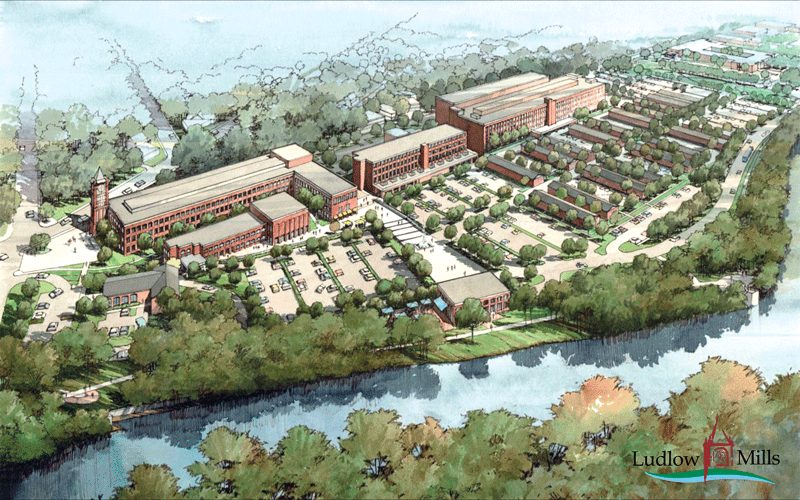
An architect’s rendering of the Ludlow Mills complex, redevelopment of which is an ongoing process.

An architect’s rendering of the Ludlow Mills complex, redevelopment of which is an ongoing process.

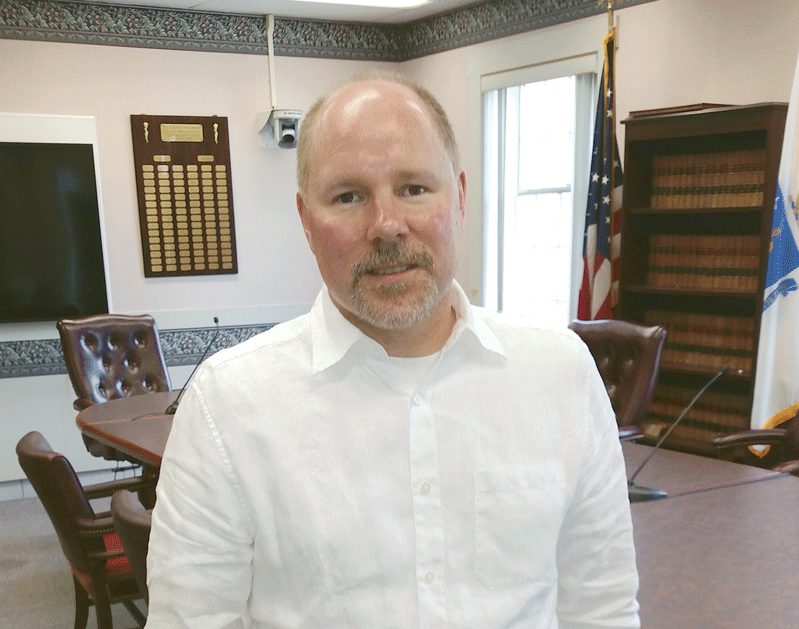
Eric Nelson said he recently had cause to look over the occupancy permit issued to Westmass Area Development Corp. for the property now known as Ludlow Mills.

The date on the document — April 2012 — gave him both pause and more evidence that time does, indeed, fly.

Yes, it’s been more than six years since this ambitious project — a blend of both brownfield and greenfield development — was launched, and, for the most part, it is on schedule, said Nelson, president of Westmass for roughly half the duration of this effort.

And by on schedule, he was referring to the pace of development, or redevelopment, at this complex of 60 buildings and adjoining undeveloped land. When it started the clock back in 2011 when the property was actually acquired, Westmass said this would be a 20-year project that would generate $300 million in public and private investments, more than 2,000 jobs, and a more than $2 million increase in municipal property taxes.

To date, there have been several high-profile initiatives on the site, most notably the building of a new HealthSouth Rehabilitation Hospital ($28 million), WinnDevelopment’s overhaul of the structure known as Mill 10 into over-55 housing ($24 million), and several smaller developments.

And there is more on the drawing board, most notably WinnDevelopment’s planned conversion of Mill 8, the so-called Clock Tower Building — because it’s home to the clock tower that is perhaps the most recognizable landmark in this community — into a mixed-used project featuring commercial space on the ground floor and more housing in the floors above. That’s a $50 million project, according to current but very preliminary estimates, that was announced nearly two years ago.

“So far, we’ve either constructed or leveraged $127 million in private and public investments,” said Nelson, tallying up the two completed projects, the announced Clock Tower initiative, and a host of smaller line items, if you will, such as brownfield cleanup, infrastructure work, and other publicly funded initiatives.

The next key milestone for the project is the construction of Riverside Drive, which will open up approximately 60 acres of pre-permitted light-industrial property in the easternmost area of the mill site. A $3.5 million MassWorks grant from the state was earmarked for the project, and Westmass and town officials are working with congressional leaders to secure a matching $3.5 million grant from the U.S. Economic Development Administration to cover the $7 million cost of the roadwork.

The Ludlow Mills project is on schedule, if not ahead of it, in another respect, said Town Planner Doug Stefancik. This would be what could be called the trickle-down effect to the town and the region in terms of jobs and other benefits.

Doug Stefancik says the ‘trickle-down effect’ from redevelopment of the Ludlow Mills complex is already in evidence.

Doug Stefancik says the ‘trickle-down effect’ from redevelopment of the Ludlow Mills complex is already in evidence.

That list would have to include the riverwalk that was inspired by the project and has become a popular recreational facility within the town, as well as the jobs created and kept in Ludlow by the mill project (HealthSouth would certainly fall into that category), the new housing option of the form of Building 10 (many of those with that address were already town residents) and the promise of more at the Clock Tower Building, and early signs of additional vibrancy and new businesses to support those residents and business tenants at the mill.

“As the mills develop, they will generate additional interest outside that area,” he explained. “That’s because now, you’re putting people down at the mills; you have people who are 55 and over in that housing project, and that’s going to carry over into the community.”

Within walking distance, he added, are a post office, a library, restaurants and shops on East Street, and convenience stores. “There is a trickle down; people are getting into their routines [at Mill 10], and it’s going to be a positive for the whole area.”

The mill project is the story in Ludlow, but it’s not the only story, said Stefancik, adding that the community continues to add new residential projects — it has large amounts of developable land, and as the housing market continues to build momentum, more building permits are being issued — and there are infrastructure projects planned that should spur more private investment.

Chief among them is a $6 million project to improve the aptly named Center Street, the town’s main commercial throughfare and the one that handles traffic getting onto and coming off turnpike exit 7 (more about that later).

For this, the latest installment in its Community Spotlight series, BusinessWest turns its focus onto Ludlow and especially a project that recalls the town’s past and will play a huge role in its future.

Milling About

As he talked about the mill project, Nelson said there are obviously a lot of moving parts, and the broad goal is to keep the initiative moving so that those ambitious goals for everything from jobs to tax revenue can be met.

And the construction of Riverside Drive is a linchpin to those efforts, he said, adding that there is an existing road, but it is not adequate to support development of the 60 acres of greenfield in the Ludlow Mills master plan.

The MassWorks grant, secured with the help of State Sen. Eric Lesser and state Rep. Thomas Petrolati, was a big step forward in the effort to secure the needed federal funds, said Nelson.

“It’s a pretty effective argument when you can say to grant-funding agencies, ‘you’re going to pay 50% because there’s another entity that will kick in 50%,’” he told BusinessWest. “It’s a very competitive environment for grants, and it helps to have that kind of support from the state.”

Ludlow at a glance

Year Incorporated: 1774
Population: 21,103
Area: 28.2 square miles
County: Hampden
Residential Tax Rate: $19.01
Commercial Tax Rate: $19.01
Median Household Income: $53,244
Median Family Income: $67,797
Type of government: Town Council, Representative Town Meeting
Largest Employers: Hampden County House of Correction; HealthSouth Rehabilitation Hospital; Mass. Air National Guard; Kleeberg Sheet Metal Inc.
*Latest information available

As noted earlier, there has been considerable momentum created at the site since it was acquired by Westmass. The first triumph was the HealthSouth project, which amounted to new construction, but with use of many materials from the mill complex itself.

And last fall, the Mill 10 over-55 project opened to considerable fanfare. The complex is fully occupied, and there is, according to some reports, a lengthy waiting list for units that do become available.

Not all has gone according to plan, most notably the very public pending loss of high-profile tenant Iron Duke Brewery. A disagreement developed between tenant and landlord concerning the former’s taproom, which, Westmass argued, had become more of a tavern, attracting large numbers of patrons taking up a considerable amount of the mill’s available parking spaces.

The discord has been marked by acrimony, considerable press coverage, and even a little humor — Iron Duke created a brew called ‘Eviction Notice Black IPA’ at one point — and the company is apparently set to take its act to Wilbraham when its lease expires.

But there is still plenty of forward movement at the historic site, developed by Ludlow Manufacturing and Sales Co., which made a variety of products out of Indian-grown jute and employed more than 4,000 people at its high-water mark.

The goal moving forward is to have people working, living, shopping, dining, recreating, and receiving a wide range of services at the site, said Nelson.

And housing will be a big part of that mix, he noted, adding that the success story that is the Mill 10 project provides ample evidence that there is a need for more housing, including units in the affordable, or subsidized, category, and there are 68 of those among the 75 units at Mill 10.

Actually, what’s planned for the Clock Tower Building is what’s called ‘workforce housing,’ meaning that it will not be for those over 55 exclusively, and will be priced for teachers, firefighters, and others at the lower ends of the pay scale.

Nelson noted that $300,000 in Massachusetts historical tax credits have been secured for the project, said Nelson, an important foundation on which to build in the challenging task of financing the initiative.

Meanwhile, there are other forms of progress on the site, he said, including early movement toward locating a restaurant on the property, one that will have views of the river, and reuse of more of the so-called stock houses once used to store jute and other raw materials.

There are roughly 30 of them, and maybe two dozen are occupied by companies doing everything from precision machining to car-seat repair, said Nelson, adding that the goal is to bring more of them into use and thus continue that process of creating a critical mass of people and businesses that generates more traffic at the mill and, ultimately, more momentum.

“The residential component of Mill 10 presents opportunities for other uses that might come in there and pivot off that residential component,” he told BusinessWest. “If we get a critical mass, and HealthSouth certainly helps with this, we get more traffic, more interest, and more people are exposed to the mill; we’re trying to get more interest from that 8-to-5 window.”

And as momentum swells inside the mill, there is a trickle-down effect, said Stefancik, noting, as just one example, that the river walk has indeed become a popular new attraction in town.

“A lot of people now have that as part of their walking routine,” he told BusinessWest, adding that the amenity is drawing people of all ages and making the river something it really hasn’t been for some time — a community resource.

The town is looking to create more momentum with the planned reconstruction of Center Street (Route 21), a project that will include work on the roadway, shoulders, sidewalks, curbs, drainage, and more.

This will be a $6 million project that bring some inconvenience to people traveling on this main commercial throughfare, but ultimately, it will improve traffic flow through the city. Work is scheduled to start this summer.

Overall, there have been a number of new developments in recent years, he explained, listing everything from solar-energy installations — three of them in all — to new condominium and subdivision projects to another brewery, Vanished Valley, all providing ample evidence that Ludlow is a place where people want to live, work, and even generate electricity.

Bottom Line

Time really does fly, and the Ludlow Mills project offers plenty of evidence to that effect.

A project that was launched six years ago amid considerable fanfare and expectation is, as Nelson noted, on schedule when it comes to those measurables such as a jobs, tax dollars, and public and private investment.

It is also on schedule, as Stefancik said, when it comes to the trickle-down effect and creating more momentum within the community.

And, by all indications, the project — and the community — will only build on what has already been accomplished.

George O’Brien can be reached at [email protected]

Opinion

Editorial

A recent report issued by the Pioneer Institute, a conservative-leaning, Boston-based think tank, brought a new wave of criticism to the admissions practices at the University of Massachusetts and its flagship campus in Amherst, but what it really did — we hope — is open some eyes to some of the alarming trends in higher education today.

The report, released late last month, revealed that out-of-state applicants are often getting in at the expense of in-state residents with higher grade-point averages and SAT scores. The average GPA for admitted out-of-state students was 3.78, while for Massachusetts students it was 3.97.

Stating the blatantly obvious, Mary Connaughton, co-author of the report, said it isn’t supposed to be this way. “It’s actually heartbreaking,” she told the Boston Globe. “We don’t want our kids left out in the cold.”

Indeed, we don’t. But we need a much deeper analysis of the numbers and, more importantly, some aggressive action taken by the state elected leaders to perhaps reverse them.

Out-of-state students are preferred in this environment because they pay higher rates. Meanwhile, competition for those students (and all students, for that matter) is especially keen as high-school graduating classes continue to shrink in size, and that’s why out-of-state applicants are getting admitted to the Amherst campus with lower GPAs than young people in Chicopee, Lowell, and Fall River.

As the Pioneer Institute said, in essence, that’s bad — because this is the state university we’re talking about. It’s there, primarily, to serve state residents, especially as a lower-cost alternative to the many, many exemplary private colleges and universities in this and other states.

Through the decades, it has filled this role well, even as its stature has increased and it has become much more than a ‘fall-back school’ — a phrase used by so many who went there in the ’70s and ’80s to capture how it became their choice after they couldn’t get into, or couldn’t afford, those aforementioned private schools.

But in recent years, changing financial conditions have forced changes in admission policies, and we choose those words carefully. As the state’s commitment to higher education wavered, the university was seemingly left with little choice but to favor out-of-state students and the higher tuitions they paid.

There are other reasons for admitting out-of-students; for starters, they want to come here because of the excellence of the programs, which is a good thing, but the school also wants to create needed diversity by admitting students from other parts of the country and other parts of the world.

But mostly, it’s about money. The estimated cost of attending UMass Amherst for an in-state resident is just under $30,000; conversely, for an out-of-state resident, it’s between $47,600 and $49,000. You can do the math.

And so can the people trying to administer programs at the flagship campus. They would appear to have two choices: admit more in-state residents and incur losses in revenue that threaten quality of programs and perhaps the existence of others, or admit more out-of-state students.

The latter has been the course, and in 2016, the school actually gave more admissions to students who lived outside the state than to those who called the Baystate home — although, overall, more than 75% of those attending the school are from Massachusetts.

School officials believe that’s a good number. The Pioneer Institute doesn’t, and Connaughton believes the state should consider a cap — perhaps 18%, the number used by some other states — on out-of-state admissions so that deserving state residents don’t lose out.

We have a better idea — stronger support of higher education at the state level so those reviewing admissions applications don’t have to make the amount of tuition a student can pay the first number they look at.

Opinion

Opinion

By Beth Haddock

The e-mail can arrive in your inbox cleverly disguised, appearing to come from your boss, a co-worker, or some other person, business, or organization you trust.

But click on a link or attachment as instructed, and you could be in for a headache. You’ve just given cybercriminals access to your company’s data — and potentially put the business out of compliance with federal laws and regulations about protecting that data.

Phishing attacks are one of the most common security challenges individuals and businesses face when it comes to keeping information secure. The phisher’s goal is to steal sensitive and confidential information. That information could include Social Security numbers, credit-card and bank-account numbers, medical or educational records, dates of birth, and e-mail addresses.

That’s problematic because federal regulations may require that your business keep certain information secure. Just as an example, health providers are expected to safeguard the medical records of patients under the Health Insurance Portability and Accountability Act.

Such compliance issues can create unwelcome complications for businesses, which is why they need to be proactive in addressing phishing. Here are a few steps they can take to protect themselves.

Educate employees. The first line of defense against phishing is employees, because they are the ones likely to be targeted. Make them aware of the concerns and tell them to be suspicious of e-mails that offer them links with little explanation, or that ask for sensitive data, even if it appears to be coming from a trusted source.

Reassess who has access to data. Because employee mistakes are the most likely cause of a breach, retraining alone may not get the job done. A business or organization may want to take another look at who should have access to all that sensitive data, and make adjustments where possible.

If a breach happens, take action. You can’t just ignore the data breach. Right away, your IT team needs to be notified so they can get to work handling the breach. At the same time, it’s important to immediately contact your compliance officer or attorney so they can take appropriate steps for reporting the breach to the proper regulatory agencies.

These phishing expeditions from cybercriminals represent a serious challenge for businesses and for their compliance officers. It’s critical to be aware of the threat and to know that there are steps you can take to reduce your risk and avoid finding yourself out of compliance with regulations that govern your sensitive data.

Beth Haddock, CEO and founder of Warburton Advisers, is the author of Triple Bottom-Line Compliance: How to Deliver Protection, Productivity and Impact. She has more than 20 years of experience as a compliance and business executive, and her consulting firm provides sustainable governance and compliance solutions to leading international corporations, technology companies, and nonprofits.

Features

The Fab Five

Scores submitted by a panel of three judges have determined the five finalists for this year’s Continued Excellence Award, an honor created in 2015 to recognize past 40 Under Forty honorees who have built on the business success and civic commitment that initially earned them that honor.

They are:

Michael Fenton, associate at Shatz, Schwartz & Fentin, P.C.;

William Gagnon, vice president of Marketing & Key Accounts for Excel Dryer Inc.;

Samalid Hogan, regional director of the Massachusetts Small Business Development Center;

James Leahy, assistant director, Business Development and Promotion Sales for the regional office of the Massachusetts State Lottery Commission; and

• Holyoke Mayor Alex Morse.

The winner of the fourth annual award will be announced at this year’s 40 Under Forty gala, slated for June 21 at the Log Cabin Banquet & Meeting House in Holyoke.

The winners in 2015 and 2016, respectively, were Delcie Bean, president of Paragus Strategic IT, and Dr. Jonathan Bayuk, president of Allergy and Immunology Associates of Western Mass. and chief of Allergy and Immunology at Baystate Medical Center. Both were originally named to the 40 Under Forty class of 2008. Last year, the judges chose two winners: Scott Foster, an attorney with Bulkley, Richardson and Gelinas (class of 2011), and Nicole Griffin, owner of Griffin Staffing Network, now ManeHire (class of 2014).

This year’s five finalists were determined by scores submitted by three judges — Matthew Bannister, first vice president, Marketing and Innovation at PeoplesBank; Ira Bryck, president of the Family Business Center of Pioneer Valley; and former winner Griffin.

Read on for more details about the nominees.

Michael Fenton

Michael Fenton

Michael Fenton

When Fenton was named to the 40 Under Forty in 2012, he was serving his second term on Springfield’s City Council and preparing to graduate from law school. He was also a trustee at his alma mater, Cathedral High School, where he dedicated countless hours to help rebuild the school following the 2011 tornado.

Now an associate at Shatz, Schwartz & Fentin, P.C., practicing in the areas of business planning, commercial real estate, estate planning, and elder law, he received an Excellence in the Law honor from Massachusetts Lawyers Weekly and was named a Super Lawyers Rising Star in 2014. In 2014, he became Springfield’s youngest-ever City Council president, overseeing the creation of the young professionals committee and the Community Preservation Act committee, which is bringing money into the community to benefit historic preservation, recreation, and open space. He also continues to serve on numerous civic organizations.

William Gagnon

William Gagnon

William Gagnon

A 40 Under Forty honoree in 2013, Gagnon was recognized for his work as vice president of marketing at Excel Dryer, the business launched by his father. In that role, he not only saw the company’s staff double, but was an original seed sponsor of a U.S. Green Building Council’s Green Apple program, which helps build healthy learning environments for kids around the globe.

Today, Gagnon continues to give back to the community through his position on the board of the Children’s Study Home. He has also continued to lead the green movement, spearheading energy efficiency within his industry by recently developing a new product that not only dries hands fast, but uses less energy, making it the most environmentally friendly hand dryer on the planet. He has also been working on a new, ADA-compliant hand dryer designed for easy access for individuals who are disabled or mobility-impaired.

Samalid Hogan

Samalid Hogan

Samalid Hogan

A 40 Under Forty honoree in 2013, Hogan is the regional director for the Massachusetts Small Business Development Center Network’s Western Regional Office. She has built partnerships across public, private, and civic sectors to achieve economic-development goals for the Pioneer Valley region.

In 2014, Hogan founded CoWork Springfield, the city’s first co-working space, which focuses on serving women and minority-owned businesses. In addition, she was appointed to the Governor’s Latino Advisory Commission in 2017, and serves on the boards of several organizations, including Common Capital, the New England Public Radio Foundation, the Minority Business Alliance, and National Junior Tennis and Learning of Greater Springfield. She was awarded the Grinspoon Entrepreneurial Spirit Award in 2017 and was recognized as a Woman Trailblazer and Trendsetter by the Massachusetts Latino Chamber of Commerce in 2016.

James Leahy

James Leahy

James Leahy

When Leahy was selected to the 40 Under Forty class of 2010, he was a five-time Holyoke city councilor, as well as the CEO and president of the city’s St. Patrick’s Day Parade and Road Race. He was also working for Alco Labs, a leader in eye-care medicine, and had won several awards for his business acumen, as well as serving on the boards of directors of the YMCA, the Holyoke Children’s Museum, the Holyoke Merry-Go-Round, the Boys and Girls Club of America.

Since then, Leahy has expanded his roles with the parade and road race, as well as serving as president of the Volleyball Hall of Fame and president of the Westfield State University Foundation board of directors. He is also assistant director of Business Development and Promotion Sales for the State Lottery Commission. Meanwhile, he has grown his civic volunteerism with service on numerous community organizations.

Alex Morse

Alex Morse

Alex Morse

Morse’s story is well-known, being elected Holyoke’s youngest mayor at age 22 in 2012 — reason enough to be named to the 40 Under Forty class of 2014. He’s since then won re-election twice, time enough to put his leadership in perspective.

Morse and his team have spurred a pipeline of some $125 million in private projects over the past few years, and overseen significant streetscape improvements, new and renovated parks, ongoing rehabilitation of the mill buildings, a partnership with the Greater Holyoke Chamber of Commerce to launch the SPARK entrepreneurship program, and many new development projects. During his terms, community policing strategies have led to drops in crime, property values have gone up, and the unemployment rate has dropped. All this has helped create a new energy around a city that has in many ways been an afterthought in the region’s economic-development picture over the past few decades, but one that is clearly on the rise.

Meet the Judges

Three independent judges were tasked with reviewing dozens of nominations for the 2018 Continued Excellence Award and determining the five finalists. They are:

Matthew Bannister

Matthew Bannister

Matthew Bannister is first vice president of Marketing and Corporate Responsibility for PeoplesBank, a leader in green values, sustainable-energy financing, and charitable giving. He manages the corporate philanthropy program through grants and sponsorships, focusing on key areas including academics, innovation, economic growth, and community vibrancy. He also plans and directs the marketing and public-relations programs, and represents the bank in public, social, and business events.

Ira Bryck

Ira Bryck

Ira Bryck is president of the Family Business Center of Pioneer Valley. Since 1994, the center has provided a practical learning community for family-owned and closely held companies throughout Western Mass. Bryck also writes an online advice column for family businesses, and has written and produced three plays about life in family business that have been performed more than 50 times internationally.  His third play, A Tough Nut to Crack, is based on his 17 years in his family’s fourth-generation childrenswear business on Long Island, which he ran with his parents. He also hosts The Western Mass Business Show on WHMP, featuring interviews with business owners and expert advisors.

Nicole Griffin

Nicole Griffin

Nicole Griffin is a 40 Under Forty winner in 2014 and recipient of the Continued Excellence Award in 2017. She is the founder and chief talent officer of ManeHire (formerly known as Griffin Staffing Network). ManeHire is a full-service staffing agency that offers payroll services, corporate training, and temporary, temp-to-hire, and permanent placement. Griffin currently serves as a member of the board of directors for the YWCA of Western Massachusetts and the Regional Employment Board of Hampden County. She is also the 2015 recipient of the Goldman Sachs 10,000 Small Businesses Scholarship at Babson College, the 2015 National Urban League Community Builder Award recipient, and an alumna of the Leadership Institute for Political and Public Impacts.

Law Sections

Not an Arbitrary Decision

John Greaney, who was forced to retire from the state Supreme Judicial Court as he turned 70, is definitely not the retiring type.

John Greaney, who was forced to retire from the state Supreme Judicial Court as he turned 70, is definitely not the retiring type.

John Greaney spent more than four decades behind various benches — everything from this region’s first Housing Court to the state Supreme Judicial Court. Desiring to take advantage of all that judicial experience, the Springfield-based firm Bulkley Richardson, which Greaney joined in 2016, has created an alternative dispute resolution (ADR) group, which he will lead. As arbitration and mediation become ever-more popular methods for resolving disputes, the firm sees this group as a solid business venture.

Peter Barry says it’s a rare opportunity when a small (at least in comparison to outfits in Boston, New York, and Philadelphia) Western Mass. law firm can add a former Massachusetts Supreme Court justice to its team.

Rarer still is an opportunity to add a jurist with the breadth and experience brought to the table by John Greaney, who retired from the SJC in 2008, capping nearly 35 years on various benches, starting with the Hampden County Housing Court (which he started) and time on the Superior Court and then the Appeals Court (more on that remarkable career later).

So it’s incumbent on a firm granted that opportunity to take full advantage of it, said Barry, managing partner with Springfield-based Bulkley Richardson, adding that the firm is doing just that by launching an alternative dispute resolution (ADR) group.

This is a move that not only capitalizes on Greaney’s deep reservoir of experience, but serves as a logical — and, yes, opportunistic — response to an ongoing trend within the law to settle matters not in the courtroom, but outside it, through mediation and arbitration.

These are routes that are generally quicker and less expensive than litigation, said Greaney, adding that ADR, as it’s known, has become increasingly popular in realms ranging from healthcare to construction; education to sports. Yes, some of Major League Baseball’s biggest rising stars have their salaries determined by arbitrators (after negotiation fails).

Greaney and Barry believe the firm could well become an attractive alternative (there’s that word again) amid a growing number of options for businesses, institutions, and sports leagues desiring to resolve matters through ADR, and for several reasons.

Chief among them is the expertise it offers — from not only Greaney, but also Barry, who has been involved in the mediation and arbitration of several complex matters, and the other lawyers at the firm.

But that expertise also comes at a sticker price well below what Boston and Harford firms would charge, an important consideration, said Barry.

“We’re looking to be selective and get appropriate cases from Northern Connecticut, Central Massachusetts, and the Boston area,” he said, noting that the firm already serves several clients in those markets, in part because of lower hourly rates.

Greaney, who will be teaming with Barry to handle many of the ADR matters that come to the firm, agreed, and said the timing and a host of factors were right for the launch of this venture.

“It’s a natural progression for this law firm to begin an ADR group,” he noted, adding that, apart from the Hampden County Bar Assoc., which has a panel of mediators and arbitrators, the only other mediators and arbitrators in this region are single-practice lawyers; Boston and Hartford have ADR groups, but this woud be the first in this region.

“There appears to be a need here for the right type of mediator and arbitrator,” he said, adding that the firm intends to fill that void.

Barry agreed.

“There are a lot of mediators and arbitrators out there,” he acknowledged. “But what we bring to the field is an expertise — primarily Judge Greaney — that is not available generally and is suitable for certain types of cases in particular.”

Peter Barry says ADR is an area of the law that is growing and will continue to grow as businesses and individuals seek alternatives to litigation.

Peter Barry says ADR is an area of the law that is growing and will continue to grow as businesses and individuals seek alternatives to litigation.

For this issue and its focus on law, BusinessWest talked with Greaney and Barry about Bulkey Richardson’s new ADR group, and also about how arbitration and mediation are becoming increasingly popular — and effective — methods for solving complex legal disputes.

Making Their Case

For those not familiar with Greaney’s background (and many are), it takes more than a few column inches, as they say in the print media, to capture all he’s done during his career.

So we’ll hit the highlights. But even that will take a while.

The Westfield native began his law career with the Springfield-based firm Ely and King in 1964, and was appointed to the Hampden County Housing Court in 1974. That housing court was the second in the state, with the first being in Boston, and was unique in that it served an entire county.

“We decided to innovate considerably,” he recalled. “We designed our own court forms, we changed them to get rid of all the legal language — which cluttered all the forms in the other courts — so people could understand them, and we made them bilingual because we had a large Spanish-speaking population. And, to the dismay of a lot of other courts and judges, we set up a citizen’s advisory council — all to make the court more user-friendly.”

In 1976, Gov. Michael Dukakis appointed Greaney to the Superior Court. This was followed by an appointment to the Appeals Court as an associate justice in 1978. In 1984, he became chief justice of the Appeals Court.

Greaney was appointed to the Supreme Judicial Court in 1989 and participated in several landmark cases while serving on the SJC. That list includes Goodridge v. Department of Public Health, in which he wrote the concurrence to the opinion establishing Massachusetts as the first state in the nation to legalize same-sex marriage.

“We share a common humanity and participate together in a social contract that is the foundation of our Commonwealth,” he wrote, creating language that has been used often by gay couples at their wedding ceremonies. “Simple principles of decency dictate that we extend … full acceptance, tolerance, and respect. We should do so because it is the right thing to do.”

Other significant cases include a 1993 decision upholding the adoption of a child by same-sex cohabitants; a 1997 decision in the Benefit v. City of Cambridge case, affirming the unconstitutionality of a statute prohibiting panhandling; a 2003 decision in the First Justice case addressing, on separation of powers principles, the constitutionality of statutes governing court clerks and probation officers; and a 2007 decision in the Murphy v. Boston Herald case, affirming a judgment based on defamation.

Greaney, famous for taking a Peter Pan bus to and from Boston most days and using that time to get more work done, reached mandatory retirement age (70) in 2008, but he wasn’t, and still isn’t, the retiring type. He joined the faculty of Suffolk University Law School, served as director of the Macaronis Institute for Trial and Appellate Advocacy, and taught constitutional law, criminal law, and appellate practice.

But he became a victim of the financial pressures facing many law schools today, and as Suffolk Law downsized and Greaney’s position was essentially eliminated, the judge looked for something else to do in ‘retirement.’ And as he looked, he remembered that Francis ‘Sandy’ Dibble, a partner at Bulkley Richardson, had long ago told him that, when he was done teaching, he should consider joining the firm.

He did so, in 2016, and thus went back to where he started (well, sort of) — practicing law in downtown Springfield.

But the legal landscape has certainly changed since Greaney first started out as a lawyer more than a half-century ago. Indeed, ADR has become an increasingly popular alternative to the courtroom, one that resolves matters in months, or even weeks, rather than years.

A Strong Case for ADR

There are two basic forms of ADR, mediation and arbitration, and while they are similar in that they are alternatives to traditional litigation, there are important differences.

Mediation is generally conducted with a single mediator who does not judge the case but instead simply helps the parties facilitate discussion and, hopefully, a resolution to a problem. Arbitration, on the other hand, is more judicial in nature (that’s why Greaney said it appeals to him) and involves one or more arbitrators who take on the role of a judge, making decisions about evidence and giving written opinions, which can be binding or non-binding, with the results being final.

“The shift from actual courtroom litigation and the resolution of disputes prior to courtroom litigation has become a fairly active enterprise over the past 12 years or so,” Greaney explained. “When I was a trial judge, no such thing existed.

“But the phenomenon was created by business people and others,” he went on. “And the courts wanted to see a simpler, more efficiently way to deal with the problems they had.”Also, many contracts — for everything from construction projects to employment agreements to the one signed by Stormy Daniels when she received $130,000 from Presisdent Trump’s personal lawyer, Michael Choen — have provisions noting that there if problems arise, they will be resolved by private arbitration and not litigation, Greaney told BusinessWest, adding that the Supreme Court, with a few exceptions, has consistently upheld the validity of these arbitration clauses.”

And as a result, and many law firms and individuals, including many retired judges, now specialize in mediation and/or arbitration (mostly the former), creating a somewhat competitive market for those services.

Bulkley Richardson looks to stand out within that playing field and capitalize on the experience of both Greaney and Barry as well as a host of other attorneys within the firm, including Dibble, Daniel Finnegan, Kevin Maynard, David Parke, Melinda Phelps, Jeffrey Poindexter, and John Pucci.

Barry said the firm is not interested in taking on cases that could easily be handled by one of the other mediators in the region, and is instead interested in more complex matters. And, again, they could come from within the 413, or well outside it given the expertise the firm can now bring to bear.

And because of how the pendulum has swung toward ADR, there should be ample opportunity to grow the practice.

“ADR is an area that’s growing and will continue to grow, and there will be a need for the types of services we’ll provide,” he explained. “A lof of big companies have decided, almost across the board as a policy, that they’re not going to litigate — they’re going to do everything possible to settle a case because of the expense and time and misdirection of resources involved in litigation.”

Final Arguments

Getting back to Major League Baseball and those high-profile salary disagreements going to arbitration … and Greaney, an ardent Red Sox fan, noted with a laugh that he would love to get such a matter sent to Bulkley Richardson.

“I love sports; that would be a delight to get something that,” he told BusinessWest. “I understand the statistics and all that goes into those decisions.”

While landing such a case might be a long shot (that’s might), it seems a much safer bet that Bulkley Richardson’s launch of an ADR group will be a winning proposition — for the firm and the region as well.

That’s because of the uniquely high level experience that can brought to the table, especially from a judge that that has made his mark in settings ranging from Hampden County Housing Court to the SJC.

The jury is in — ADR is now the preferred method of resolving a dispute — and Bulkley Richardson appears well-positioned to capitalize on that movement.

George O’Brien can be reached at [email protected]

Law Sections

Streamlining the Process

Westfield State University President Ramon Torrecilha

Westfield State University President Ramon Torrecilha says the 3+3 initiative with UMass Law is just one example of partnerships aimed at streamlining the process of getting a college degree — or two of them, as the case may be.

Since he took the helm as president of Westfield State University in 2015, Ramon Torrecilha has talked often, and consistently, about a changing dynamic in higher education and especially at public institutions.

In this environment, he has said to BusinessWest and a wide range of other media outlets and audiences of various types, public schools must be vigilant in their efforts to make a college education more affordable, more value-laden, and better able to help students succeed in the field they’ve chosen.

And, he has argued, one of the best ways to accomplish these ends is through partnerships with other colleges and universities, especially other public schools.

All these sentiments — not to mention the school’s new operating philosophy — are reflected in WSU’s latest partnership initiative, one with the University of Massachusetts School of Law, or UMass Law, as it’s called, the only public law school in the Commonwealth.

It’s called the ‘3+3 law program,’ and UMass Law has created several such initiatives with other public institutions in the state, including UMass Dartmouth, UMass Boston, UMass Lowell, Fitchburg State, Worcester State, and the Mass. College of Liberal Arts in North Adams.

Those two numbers in the name of the program get right to the heart of the matter. They refer to the number of years a participant is in school. Add them up, and one gets six, which is exactly one less than it traditionally takes someone to earn a bachelor’s degree and then a law degree, otherwise known as a juris doctor or JD.

“And that one year is very significant,” said Torrecilha, adding that, by shaving two semesters off the process, individuals and their families can save perhaps tens of thousands of dollars — and degree recipients can get on with their careers sooner.

At a time when higher education in general, and public higher education especially, happens to be under scrutiny, I think partnerships, not only with UMass Law School but also our community college partners underscores and reaffirms our commitment to the citizens of the Commonwealth.”

And that career may not necessarily be in the law, said Torrecilha, adding that students in majors not traditionally associated with law — everything from English to gender studies — may well find the program worthwhile because of what a law-school education brings — everything from a focus on critical thinking to experience with forging and then presenting arguments to practice in writing.

“This program will target not only students in political science or philosophy or criminal justice,” he said, listing majors that traditionally feed students to law schools. “It will be available to students in disciplines that you don’t usually think of when you think of a law degree.”

Dr. Emily Todd, chair of the WSU English Department, agreed.

“People generally don’t think about English majors going on to get a law degree, but it’s actually a great preparation for law school,” she explained. “We see the strength of our program as setting people up to be successful; English majors develop skills as writers, good researchers, and excellent close readers, and that helps them to be persuasive writers and to develop their skills in synthesis and analysis.

“I was recently speaking with a first-year student before this program was announced,” she went on. “I always ask students what they want to do, and she said, ‘I’m thinking about law — I really love to think about words and analyze them closely.’”

Here’s how the program works. Following the completion of 90 credits at Westfield State, enrolled students begin their first year at UMass Law. Once the first 30 credits are completed there, students will obtain their bachelor’s degree from WSU. Those 30 credits will dually serve as the first-year requisite toward their law degree from UMass Law.

Elaborating, Torrecilha said those 30 credits earned during that first year at UMass Law will effectively serve as the elective courses that students in any degree program are required to take. They will come in what would be the fourth year of one’s progression toward a bachelor’s degree, rather than in the first two or three, which is traditionally the case.

Torrecilha said the 3+3 program was conceived with a number of goals in mind, including a desire to stimulate more interest in a law degree at a time when overall enrollment has been declining at all the most elite schools — although the needle has started pointing back up at some institutions. And also to perhaps provide a boost for UMass Law, which was launched in 2010 after the private law school Southern New England School of Law offered to donate real estate, facilities, technology, and library assets to UMass Dartmouth for the purpose of creating a public law program in the Commonwealth.

The UMass board of trustees approved the plan in late 2009, and the Commonwealth’s Board of Higher Education did the same a few months later. The school’s first class matriculated in 2010.

But the overriding goals are to streamline the process of getting both degrees and making it more cost-effective. Those are the terms one hears most often in association with the initiative.

If all goes well, Torrecilha said, students may be entered in the program by the fall of 2019. He said there are no goals for enrollment at this time, and he’s not exactly sure what to expect. But he has seen a good deal of interest in the program since it was announced several weeks ago.

“We’re educating the community as we go, and we’ve been talking to advisors,” he noted. “There are a lot of students here on the campus who are asking about it already; I’m hoping that that the first cohort will have between 20 and 30 students.”

Meanwhile, the school will continue to look for more ways to partner with other institutions, including those in the UMass system and the region’s community colleges, to create more ways to streamline the process of earning degrees and making them more cost-effective, said Torrecilha.

“At a time when higher education in general, and public higher education especially, happens to be under scrutiny, I think partnerships — not only with UMass Law School, but also our community-college partners — underscore and reaffirm our commitment to the citizens of the Commonwealth,” he told BusinessWest. “I think it also sets an example of how public institutions can come together for the public good.”

— George O’Brien

Education Sections

Art of the Matter

Gabriela Micchia with the multiplication charts created by Holyoke fourth-graders.

Gabriela Micchia with the multiplication charts created by Holyoke fourth-graders.

Forty-two years ago, Enchanted Circle Theater was born as, true to its name, a touring theater company, but its interactions in school classrooms led to a dramatic evolution of its mission. Today, the nonprofit — which works not only in theater arts, but with a whole host of creative endeavors — partners with schools and other organizations on a concept known as arts integration, which uses creativity to make education more impactful — and more fun.

As Gabriela Micchia unfolded a series of multiplication tables in the form of brightly hand-colored diagrams, she explained how they’re much more than mere teaching tools.

“They use these almost like multiplication flash cards,” she said of the Morgan School fourth-graders who created them, pointing out how the numbers connect in straight lines to create a times table for the central digit. “I just made the dots, and they connected the dots, and we talked about how to put the triangles together.”

It’s undoubtedly a more entertaining way to learn math facts than simple recitation. But the real magic happened later, when the students visited another fourth-grade class and excitedly explained how to create the charts and use them to play a math game, said Micchia, a teaching artist with Enchanted Circle Theater in Holyoke. In short, the kids became the teachers.

“It goes back to the idea of the pride they have in the knowledge they gain,” Micchia said. “As much information as they retain from an adult showing them what to do, I think sometimes it’s easier for them to understand it from another student. They see each other doing it.”

That’s a typical story for Enchanted Circle Theater, a 42-year-old, Holyoke-based nonprofit that partners with schools and other organizations to educate through the creative arts.

“It’s an immersion into creative and critical thinking around math concepts,” said Priscilla Kane Hellweg, the long-time executive artistic director. “We hear students telling their friends what they’re working on, and they care about what they’ve created because it’s their creative process. It’s a sense of ownership, so seeing their work, being able to walk by it in the hallway and share it with others, there’s a pride in accomplishment, and a sense of joy.”

It’s a model applicable not just to math, but to all school subjects — with a focus at all times on English-language communication skills.

There’s something about that moment of magic that happens between the audience and the performer during a live performance — there’s this alchemy that happens. And I wanted to follow up on that; I wanted more contact.”

For example, Hellweg said, “we do a lot of work in social studies, where our students will research and write and then perform an original play on the Trail of Tears or immigration or the Civil War or … well, I can give you 42 years worth of content.”

Science is a big focus as well, she added, citing a program for Holyoke fifth-graders called “Where Does Your Water Go?”

“They studied the water cycle, from falling down from the sky into a sewage system into our river right down the street,” she explained. “And then we turned it into an environmental advocacy program, where the students decided what they wanted people to stop and think about, and the impact that humans have on the environment and water.”

The kids then drew pictures — such as a fish swimming amid garbage, or a mallard whose feet are entangled in a plastic six-pack ring — and accompanying slogans, which were then turned into storm-drain art at eight downtown locations. “They created awareness of the water cycle and our role in keeping our world clean.”

Enchanted Circle has, from its beginning, been a working theater, but it has long embraced artistic endeavors of every kind — dance, music, visual arts, literature, even culinary arts — as teaching tools.

“We specialize in what’s called arts integration,” Hellweg said. “And there are three basic components to it. First, it’s about academic understanding — unpacking knowledge and learning concepts and deep critical thinking. The second channel is social-emotional learning and communication and collaboration and all those 21st-century learning skills that prepare us to be engaged in the world.”

The third element, quite simply, is artistry and creativity and examining the world through the filter of creative expression. “We work with people of all ages and all abilities, and it’s about inspiring and engaging and enhancing learning. It’s about connecting people to each other, people to information, people to the world around them, and people to themselves.”

Moment of Magic

Enchanted Circle was launched in 1976 as a touring theater company, but one that had a foothold in education from early on.

“We were traveling to schools, to museums, to fairs, to libraries, bringing folk tales from around the world to life,” Hellweg said. “I’ve been here for 38 of our 42 years, and I love the performing. There’s something about that moment of magic that happens between the audience and the performer during a live performance — there’s this alchemy that happens. And I wanted to follow up on that; I wanted more contact.”

Patricia Kane Hellweg says students who learn through hands-on arts integration retain concepts more effectively because they have more ownership in the process.

Patricia Kane Hellweg says students who learn through hands-on arts integration retain concepts more effectively because they have more ownership in the process.

So the theater started developing workshops related to the performances, which evolved from one-off events to a regular partnership with schools — and an expansion of the organization’s work from drama to arts integration of all kinds.

“I felt that working in the classroom with teachers and students would really bring learning to life,” she told BusinessWest. “So we are still a theater company, and we create original plays on subjects with both cultural and historical relevance. But we really became a teaching institution.”

The theater has a presence in public schools throughout Holyoke, Amherst, Northampton, and parts of Springfield, but also in affordable-housing developments, preschools, universities, and other, perhaps surprising venues.

“We work throughout the community — in the foster-care world, in the mental-health field, with adjudicated youth in detention, in homeless shelters, in housing developments — bringing arts-integrated learning to some of the most marginalized and vulnerable populations in the area,” Hellweg said.

Holyoke’s public schools represent Enchanted Circle’s longest-term and closest partner, as seen in offerings like the visual math programs at Morgan School and a dual-language arts-integration program with grades K-3 at Metcalf School every Friday, which touches on numerous academic subjects. “Whatever they’re working on, we are working on,” she said. “It’s hands-on, project-based, arts-integrated learning.”

And that hands-on element is critical, she noted. Typically, the ideas kids learn at school are stored in their visual memory. “But if we’re doing embodied math — where students become an isosceles triangle, or two people create a parallelogram with their arms — then it’s in your muscle memory. And it brings the joy back to learning because it’s fun, and the laughter in class is huge.”

Micchia agreed. “It becomes this whole-body experience, this holistic experience when we use the arts to create this visual math.”

And students who are having fun are more likely to want to learn, Hellweg added. “What we find is that attendance goes up because students want to be in school, and behavior issues go down because students are engaged.”

That applies even to young people who never considered themselves learners, she said, recalling a bittersweet conversation she had recently with a 15-year-old girl in juvenile detention.

“She said to us, ‘I never thought I would find joy in learning, and I’m loving learning with Enchanted Circle. I never would have dropped out of school had Enchanted Circle been in my classroom.’”

Now working on a poetry-into-performance program through the theater, funded through the National Endowment for the Arts, the girl has a new outlook on why learning can — and should — be so much more than rote memorization. “That engagement, both the physical engagement and the experience of working collaboratively and creatively, changes the learning environment.”

Micchia went further than that, saying Enchanted Circle cultivates an emotionally safe learning space.

“I feel like it creates an acceptance — you’re accepted here. You don’t have to be the best at something,” she said, adding that there’s no one set way to teach a student. “One of the beautiful things is, it’s kind of organic and flexible, and you meet the needs of the child as opposed to the other way around. It’s not a formula.”

Teaching the Teachers

Students aren’t the only ones in need of that confidence, Hellweg noted. Teachers are, too — at least when it comes to the often-unfamiliar territory of arts integration in their classrooms.

“We do a tremendous amount of training of teachers, who don’t necessarily think of themselves as artists, and often feel that they’re not creative. But, within moments of one of our professional-development programs, they realize they’re very creative, and they have a tremendous aptitude for bringing the creative process into the classroom,” she told BusinessWest. “So we’ve been working with teachers on large and small ways to integrate the arts into the classroom, and any time we’re in residence in a classroom, we’re working in partnership with the teacher and students to create something together.”

One innovative initiative, the Honors Arts Academy in Holyoke, is an afterschool program at Donahue School that focuses on rigorous arts training for students. The goal is to secure the funding to place it at Holyoke High School and bring in seventh- and eighth-graders from three city middle schools to work with freshmen at the high school.

“The ninth-grade dropout rate is a big challenge,” Hellweg said, “so it’s good to get seventh- and eighth-graders feeling not just at home in the high school, but that it’s their school, and able to use the resources at the high school, like the television studio and the theater. Most middle schools don’t have those resources.”

In all Enchanted Circle’s programs, she added, students are moving beyond passive learning and generating their own ideas, helping to craft curriculum that means something to them.

While the theater has evolved slowly over the years, Hellweg is excited about a new initiative called the Institute for Arts Integration, which will be a regional hub for training teachers, social-service case workers, administrators, and teaching artists.

“There are a couple programs around the country that are doing this, and because we’ve been pioneers in the field of arts integration, we want to create our own institute,” she said. “Our goal is to make arts integration the norm in every classroom.”

It’s a goal that gets her out of bed each morning, doing a job she has loved for almost four decades.

“You don’t stay in a job that long unless it moves you,” she said. “Every single day, I see that ‘a-ha’ moment where students are able to do something they didn’t think they could. It’s palpable — teachers are seeing their students differently, students are seeing their teachers differently. Learning comes alive, and the creative process means it’s never-ending. That’s where my inspiration comes from.”

Joseph Bednar can be reached at [email protected]

Education Sections

Course Correction

Even her military experience repairing jet engines — work she finds intriguing — hasn’t kept Stephanie Dalton from reaching her goal of becoming a nurse.

Even her military experience repairing jet engines — work she finds intriguing — hasn’t kept Stephanie Dalton from reaching her goal of becoming a nurse.

Stephanie Dalton has wanted to be a nurse since she was 7, though it took a few intriguing detours to get there.

“I’ve always wanted to do it, and I paid for school myself,” she said of her initial enrollment in American International College six years ago. That entailed working at a series of jobs, from waitressing and babysitting to working at a sandwich shop and a horse farm.

“I was living on my own, just trying to make it, and when I got into the nursing program here, I was so excited,” she recalled. “But I struggled. I was working four jobs, I was trying to keep a roof over my head, food on the table, and trying to pay for my education, and I realized I needed to do something different because I was not going to be successful trying to work and manage school and everything else.”

That’s when Dalton decided to join the Air Force, thinking she could train for something in the medical field, but that didn’t work out. Instead, she became a jet-engine mechanic.

“I work on F-15s over at Barnes, and it’s really fun. I like it a lot,” she said, adding that she’s long had an aptitude for mechanical work. “I knew how to turn a wrench, my dad taught me how to change my own oil, I could change a tire. So I knew the basics. And I’m willing to learn — whatever they could teach me, I was willing to just learn.”

But Dalton — through many twists and turns, as we’ll see later — did find her way back to nursing, graduating last month from AIC with her bachelor’s degree.

Lauren Bennett had no such early sights on nursing; instead, she worked in banking and insurance — including a role in sales at MassMutual — for a decade before becoming a stay-at-home mom. Several years later, when her kids were starting kindergarten and second grade, respectively, she decided to pursue a career again — this time in nursing.

“I knew I didn’t want to sit in an office,” said Bennett, who earned her associate degree in nursing at Greenfield Community College in May. “That was something that I didn’t feel was making enough of an impact. There were definitely things I enjoyed about it, but I wanted a career making a positive difference in people’s lives. And I’ve always been interested in anatomy and physiology and nutrition — different aspects of healthcare.”

With nurses once again in demand across the U.S., the field has become an attractive one not only for recent high-school graduates pursing a college path, but for established professionals in other fields looking for a change. For this issue’s focus on nursing education, BusinessWest sat down with a few such women to find out why they made the switch — and where they intend to take their careers from here.

Horse Sense

When Dalton was ready to return to school, she found she was better able to balance her military and academic roles, she explained.

“I was in the National Guard, so I would have drill weekends, go in and do all types of training. Sometimes it was stressful, and I really had to learn how to manage my time, but life was going well for me.”

But the following year, she broke her neck and back horseback riding, and was put into a brace, waist to chin. “I really wanted to come back, but the doctor wouldn’t allow me.”

Still, she was eventually able to return to Barnes, as well as her junior year at AIC. “It was kind of difficult, coming back after being out of the swing of things for a year. I had a lot of struggles, but I had some great supports — a wonderful boyfriend, awesome friends, and my mom, who is my cheerleader. So I struggled, but I made it through.”

Shamicka Jones

Shamicka Jones wants to make a difference the way medical professionals made a difference for her family during times of medical crisis and tragedy.

That year, a family member with mental illness became very ill, which impacted Dalton’s life greatly, and once again she was feeling stretched thin by her military duties, school, and family challenges. But her senior year was much smoother — not less stressful, necessarily, but she was figuring out how to manage the pressures of achieving the career she wanted.

“I feel like I’ve done a lot in the time I’ve been in school,” she told BusinessWest, in what can only be called an understatement.

Shamicka Jones has been through a lot as well, much of it tragic. A congenital heart condition runs in her family, claiming her two brothers at age 11 and her own young son in 2010. Needless to say, she has been exposed to the medical world and some exceptionally caring professionals within it — and found she had a desire to be one, too.

“I did auto insurance for seven years, but I’ve always had an interest in healthcare because of my family history — we had a lot of medical issues,” she said. “Every time I went to the hospital, I always used to see the nurses, and I thought, I want to do that; I want to help people.”

She tried medical assisting school but found the opportunities in that field lacking. After that, she worked at a group home, serving mentally challenged individuals, work she found fulfilling.

But Jones had her sights set on nursing, and was busy with her nursing-school prerequisite coursework when her son passed away, which threw her for a loop. “I started questioning, what am I going to do? Can I ever move forward from this?”

But she continued to attend school, and two years after that, her mother suffered a serious cardiac event “She dropped down in front of me and my daughter while we were out. I had to give her CPR for 10 minutes before the EMS even arrived. We went to the hospital, and they were able to get her back.”

She had to take a semester off to care for her mother, and began doubting her plans to be a nurse — doubts that returned when her daughter was diagnosed with the same genetic heart condition she and so many other family members have.

“I thought, ‘this is not the path,’ she recalled. “But everyone was like, ‘you need to keep going. You need to do this.’” Her daughter, in fact, was her biggest supporter in her quest to get a nursing degree, which she did last month at AIC.

Many Pathways

Jones’ experiences have shaped her career goals, as she is eyeing both cardiac intensive care and psychiatric nursing, helping people with mental-health challenges.

“As a new graduate, I do need to get some experience in so many different areas,” she said. “When I was younger, when I thought of nurses, I thought of hospitals and visiting nurse associations, but nurses are everywhere, in every aspect of society. It’s amazing to me to see all the different options we have.”

Dalton is in the same boat — well, jet, actually — as she considers her options, aiming to find work in a community hospital after taking her boards. She’s looked into being a flight nurse as well, but that plan — which would require copious amounts of specialized training — is on the back burner for now.

When you think of a nurse, the first thing you might think of is somebody in a hospital, at the bedside, but there are so many other possibilities.”

“I always thought I wanted to do some type of pediatric nursing,” she added. “But going through the program, I’ve really broadened my horizons, and now I feel like I want to do everything. Mental illness lies very near and dear to my heart because of my family member, and I see the lack of resources; I see the support that’s not there, the stigma that goes along with it, and I feel like that’s definitely an avenue of interest as well. I’m still interested in pediatrics, and I actually do enjoy working with the older adult population.”

One of her short-term goals is to get involved in community nursing. “In our community course, we actually did blood-pressure and blood-glucose screenings, and that’s something I’m interested in starting up in my town — going to the senior center and starting a little clinic so I can connect with the community and help people.”

Among her long-term goals is meshing her love for horses with her training to launch a therapeutic riding program for special-needs children.

If that sounds like a lot of interests and goals, it is — but it reflects the wide spectrum of roles available to nurses today.

“When you think of a nurse, the first thing you might think of is somebody in a hospital, at the bedside, but there are so many other possibilities,” she said. “That’s the great thing about nursing — you’re not just limited to just one spot, and if you don’t like your job, it doesn’t mean you have to leave nursing. You can maybe do administrative work, or you can do home care. The options are seemingly endless.”

Bennett told BusinessWest she originally wanted to go into labor and delivery. “Now I’ve seen so much more, and I really loved the emergency department, the ICU. I’m pretty open at this point.”

She recognizes that many nurses don’t immediately find the niche they love, and it’s good to keep an open mind, considering all the possible landing spots.

“I know nurses that are stressed by their jobs,” she said, “but I don’t know any nurses who would change careers or say they’d rather do something else. Maybe they’d like a different schedule, but they don’t regret going into nursing.”

Troubled Times

Dalton was experiencing some regrets during the toughest times during her long path to a degree.

“The first year back after I had my injury, I was struggling academically, and I had failed two exams, and I just wasn’t doing well,” she recalled. “An instructor sat down with me and asked me if I had a plan B and what else I would do, and I told her I didn’t.

“I’m extremely persistent,” she said with a laugh born of hard-earned wisdom. “No matter what got in my way, this is what I was meant to do. It was important to be a nurse. The things I’ve been through, that accident … I walked away from a broken neck and back, and the doctors told me I shouldn’t be able to walk right now. So I really believe that this is what I’m meant to do.”

Jones has a similar perspective on being in the right career, no matter where it leads.

“I hope I find my place,” she said. “It may not be where I think I’m going to be right now, but I just want to help people the way my family has been helped. We’ve gone through a lot, but always got amazing care. I want to make that kind of impact.”

Joseph Bednar can be reached at [email protected]

Accounting and Tax Planning Sections

Upping the Ante

By Kristina Drzal Houghton, CPA, MST

It’s June. This is generally not the time to be thinking about taxes. In reality, though, businesses and individuals should always be contemplated taxes and how to reduce their burden. And the Tax Cuts and Jobs Act signed into law late last year gives people even more to think about.

Kristina Drzal Houghton

Kristina Drzal Houghton

The Tax Cuts and Jobs Act, (TCJA), signed into law on Dec. 22, 2017, brought the biggest changes to both individual and corporate taxes that we’ve seen in the past 30 years. These changes were primarily effective for tax years 2018 and after. For many reasons I’ll highlight in this article, these changes make starting your planning early extremely important.

I will briefly acknowledge that the TCJA reduced the C-corporation tax rate to a flat 21%, from the previous maximum rate of 34%. Additionally, there were changes made to U.S. taxation of income earned abroad by U.S. C-corporations and their affiliates.

The focus of this article will revolve around planning for individuals and small businesses.

Where to Start

I would suggest having an accountant run mock 2018 returns as a starting point. Running those future numbers can flag potential issues. That said, state revenue departments and the Internal Revenue Service have had little time to process the changes, so much remains in flux. The IRS and states haven’t decided how some provisions of the new tax law will be calculated yet. I expect that the IRS and states will start to share their 2018 guidance later this summer. In the meantime, here are some suggestions:

Rework Your Withholding

The new law means that the W-4 you filled out, however many years ago, may need to be adjusted. The IRS encourages everyone to use the Withholding Calculator, available on irs.gov, to perform a quick ‘paycheck checkup.’ Remember, the new tables don’t reflect all the changes that may affect a taxpayer next year, so they are a somewhat blunt tool.

The calculator helps you identify your tax withholding to make sure you have the right amount of tax withheld from your paycheck at work.

If workers leave their W-4s as is, they could wind up withholding too little, which can bring penalties, or they may get a smaller-than-expected refund next year. Workers in higher tax brackets who receive large bonuses could see a higher tax bill next season if they don’t tweak W-4s, since one of the ways employers can set the withholding rate on ‘supplemental income’ such as bonuses in the new law is to use a flat rate of 22%.

Think About Deduction Planning

A big change that could affect many taxpayers is the tax overhaul’s controversial cap on state and local income tax (SALT) deductions, a provision Democrats have labeled a war on blue-state Americans. The deduction, which used to be unlimited, will be capped at $10,000 next year. The new law’s near-doubling of the standard deduction to $12,000 for single filers and $24,000 for married couples filing jointly does mean fewer will itemize.

States were busy devising workarounds to keep those residents from seeing a big spike in federal taxes next year, but the IRS recently informed taxpayers that proposed regulations will be issued addressing the deduction of contributions to state and local governments and other state-specified funds, for federal tax purposes. The proposed regulations will make clear that the Internal Revenue Code, not the label used by states, governs the federal income-tax treatment of such transfers.

As a result of the decreased SALT deduction and the increased standard deduction, the tax benefit from charitable contributions may be lost if the standard deduction exceeds itemized deductions. One strategy for people who regularly donate to charity is to bunch up into one year what they would have given over multiple years. For those who itemize, charitable donations remain deductible on federal returns and can help lift married taxpayers who file jointly above the $24,000 standard deduction hurdle.

By putting a few years’ worth of donations into a donor-advised fund — many financial-services firms have units that offer them — you can take the deduction the year you put the money in, but distribute the money to charity over multiple years. For taxpayers older than 70½ who are taking required distributions from an IRA, they should consider making distributions to charities directly from their IRA.

Mortgage and Home-equity Loan Deductions

The new tax law lowered the amount of deductible interest expense on ‘acquisition indebtedness.’ For new loans made after Dec. 14, 2017, the maximum interest is limited to a mortgage ceiling of $750,000; previously, this was $1 million. It also eliminated the interest deduction on loans, such as home-equity loans, that are not used to ‘buy, build, or substantially improve’ a home.

New College Savings Plan Uses

The new tax law expands the allowable use of tax-exempt 529 college savings plans for education costs that accrue while your child is between kindergarten and high-school graduation. This added allowable use is limited to $10,000 per year per beneficiary. But be careful — while some states automatically follow the federal code, others choose to decouple from certain parts of it. So, while the U.S. government may say you can use 529 money for K-12 expenses, a state may consider such a withdrawal a non-qualified distribution and could tax the earnings and charge you penalties.

Section 199A Pass-through Optimization

Section 199A, which is a new section of the tax code arising from the Tax Cuts & Jobs Act of 2017, introduces a 20% deduction on qualified business income (QBI) for the owners of various pass-through business entities which include S-corporations, limited liability companies, partnerships, and sole proprietorships — or, really, any business that is not a C-corporation.

The QBI deduction will provide big tax breaks for many business-owning clients, but unfortunately, the new deduction is highly complicated, and it may take some time before the IRS can even provide more meaningful guidance on how it will be applied. However, the reality is that the planning opportunities created by IRC Section 199A are tremendous, and practitioners are already eagerly exploring how they can help clients reduce their tax burden through creative strategies around the QBI deduction.

Business owners will generally fall within one of three categories when it comes to the QBI deduction:

• Business owners below their applicable threshold amount — which is $157,500 of taxable income for all filers except joint filers, and $315,000 for those filing jointly — can enjoy a QBI deduction for the lesser of 20% of their qualified business income or 20% of their taxable income. It does not matter what type of business is generating the income, nor is there a need to analyze W-2 wages paid by the business or depreciable assets owned by the business. The QBI deduction is what it is.

• Business owners over their applicable threshold who derive their income from a ‘specified service’ business (i.e., some specialized trade or service business) — which includes doctors, lawyers, CPAs, financial advisors, athletes, musicians, and any business in which the principal asset of the business is the skill or reputation of one or more of its employees — will have their QBI deduction phased out. The phase-out range is $50,000 for all filers except joint filers, and $100,000 for those filing jointly. Once a business owner’s taxable income exceeds the upper range of their phase-out threshold ($207,500 for individuals and $415,000 for married filing jointly), they cannot claim a QBI deduction for income generated from a specialized trade or service business. Period. End of story. ‘Do not pass go, do not collect $200.’

• Business owners over their applicable threshold who derive their income from a business that is not a specialized trade or service business may also have their QBI deduction at least partially phased out, but the full deduction may be ‘saved’ based on how much they pay in W-2 wages and/or how much depreciable property they have in the business. Business owners with qualified business income from non-specified service businesses whose taxable income exceeds the upper range of their phase-out threshold can still take a QBI deduction equal to or less than the greater of:

1. 50% of the W-2 wages paid by the business generating the qualified business income; or

2. 25% of the W-2 wages paid by the business generating the qualified business income, plus 2.5% of the unadjusted basis of depreciable property owned by the business.

A careful analysis of the rules above will lead one to realize that, when it comes to maximizing a business owner’s opportunity for a QBI deduction, strategies will fall into one of three main buckets:

• Income-reduction strategies, such as trying to lower taxable income by increasing deductions or spreading out the income over multiple taxpayers, to stay below the income threshold where the specified service business or wage-and-property tests kick in;

• ‘Income alchemy’ strategies, where we try to transform income derived from a specified service business into income derived from a company that is not a specified service business, to avoid the phase-out (for those over the income threshold); and

• Business strategies, such as changing an entity, revisiting compensation models, and revisiting business assets, to more favorably characterize business income in the first place.

Relook at Filing Separate Returns for Married Couples

The tax code has long limited married couples filing separate returns from taking advantage of a number of tax breaks, either by barring those tax breaks entirely under the ‘married filing separately’ status, or phasing them out at very modest income thresholds. As a result, in the past, it’s rarely been a tax-efficient move for married couples to file separate returns, except in highly unusual circumstances. That will likely still be the case for most married couples, but the creation of the QBI deduction does tilt the balance somewhat for some couples.

Should You Revoke S-corp Status?

The hot question since the passage of the Tax Cuts & Jobs Act of 2017 and Section 199A is, “should I revoke S-corp status and go to C-corp?” The answer is no.

While the TCJA reduced C-corporation tax rates to 21%, the QBI reduces the maximum rate on pass-through income to 29.6% (80% of 37%). Previously, the maximum tax rate on pass-through income was 39.6% plus the effect this income had on itemized deduction and personal exemption phase-outs, producing an even greater effective rate.

This rate exceeded the prior maximum C-corporation rate of 34%. Owners elected to operate their businesses in pass-through entities for many reasons beyond the current year’s tax. None of these considerations have changed.

For most small businesses and their owners, the key point is to acknowledge that TCJA creates a tremendous number of planning opportunities. New strategies with QBI will certainly continue to be developed with time and further guidance from the IRS, but even in the present, there exists enough reasons to reach out to your advisors and have them help them reduce your tax liabilities.

Kristina Drzal Houghton, CPA, MST is a partner and director of the Taxation Division at Holyoke-based Meyers Brothers Kalicka; (413) 536-8510.

Accounting and Tax Planning Sections

The Fraud Triangle

By Julie Quink, CPA

Julie Quink

Julie Quink

As a culture, we generally believe that people are honest and are trustworthy. Failures like Enron and WorldCom, whose combined fraud losses totaled $46 billion, have raised an awareness of the costs of fraud and have highlighted the need for management to understand and monitor the business risks within their organizations.

What Is Fraud?

Fraud is an intentional act that results in misrepresenting financial information (lying) or misappropriation of assets (stealing). The misrepresentation of financial information typically encompasses misstating earnings to meet market or company expectations and to meet compensation-plan benchmarks. Misappropriation of assets is the taking of company assets, whether cash and equivalents, inventory or supplies, for personal benefit and use.

Statistics indicate that:

• 10% of employees would never, ever commit fraud;

• 10% of employees are actively exploring ways to commit small-scale fraud against their employer, which could include padded mileage and expense reports, small-scale theft of supplies and other materials; and

• 80% of employees would never commit fraud unless certain factors are present.

The factors that would provide the motivation for 80% of employees to consider committing fraud are termed the Fraud Triangle. These factors include:

• Pressure — a financial need created by gambling addictions, substance and alcohol abuse, family illness, or extramarital affairs;

• Opportunity — the ability to access cash or items easily convertible to cash (inventory); and

• Rationalization — the feeling of entitlement or the feeling that there is no other way to financially meet the pressure unless taken from their employer.

Otherwise honest employees may commit fraud under these circumstances.

Indicators that an employee may be committing fraud include the appearance that the employee is living beyond their lifestyle, suspected or known substance or alcohol abuse, and resistance to relinquishing control of duties to others.

Common Ways Fraud Occurs

Generally, misrepresented financial results are accomplished through fictitious transactions or adjustments recorded in accounting records.

Fraud is an intentional act that results in misrepresenting financial information (lying) or misappropriation of assets (stealing).”

The most common ways that an individual can misappropriate funds are:

• Creating fictitious employees on the payroll system and generating payroll checks that the fraudulent employee cashes — the ghost- employee scheme;

• Creating fictitious vendors and generating checks to the fraudster for goods and services never received by the company — the ghost-vendor scheme; and

• Taking customer checks or cash before being deposited into the bank and modifying the accounting records to conceal the theft.

Preventing Fraud

According to the 2018 Report to the Nations published by the Assoc. of Certified Fraud Examiners, 50% of fraud and corruption cases are detected by a tip. Meanwhile, weaknesses in internal control are responsible for nearly 50% of all frauds, and losses are up to 50% higher when collusion of fraudsters exists.

When considering effective prevention and detection techniques, it is critical to:

• Implement a whistleblower policy that provides a mechanism for confidential communication of suspected impropriety;

• Assess areas of risk and evaluate internal controls over the most susceptible business cycles, including cash receipts, cash disbursements, and payroll; and

• Review financial and operational trends to determine routine and unusual patterns.

Simple techniques to strengthen internal controls over significant business cycles include the receipt of unopened bank statements by owner for independent review of monthly activity, and varying of procedures relative to the review the payroll journals or signing of vendor checks, if another individual is typically responsible for those areas. Inquiry and observation, such as camera systems, in areas that pose a concern may act as a deterrent for the occurrence of fraud due to the mere fact that someone is reviewing activity or inquiring.

When techniques fail to prevent and detect fraud, it is important to gather and review evidence. It is recommended that legal counsel be involved in suspected fraud and investigations at the onset. Legal counsel will likely engage an accountant to assist in the review of evidence and documents.

Business owners and management cannot afford not to be aware of fraud indicators and assess the associated risks within their own organizations. Awareness of who puts your organization at risk, review of trends, and simple monitoring tasks can assist in preventing fraud losses, which can create significant, unplanned costs for an organization.

Julie Quink, CPA is the managing principal of Burkhart, Pizzanelli, P.C., specializing in the accounting and consulting aspects of the practice. She is also a certified fraud examiner.

Cover Story Sections Travel and Tourism

Hot Tips

Vacations are highlights of anyone’s calendar, and summertime is, admittedly, a perfect time to get away. But it’s also a great time to stay at home and enjoy the embarrassment of riches Western Mass. has to offer when it comes to arts and entertainment, cultural experiences, community gatherings, and encounters with nature. From music festivals and agricultural fairs to zoos and water activities — and much more — here is BusinessWest’s annual rundown of some of the region’s outdoor highlights. Have fun!


MUSIC, THEATER, AND DANCE

FreshGrass Festival
1040 MASS MoCA Way, North Adams, MA
www.freshgrass.com
Admission: $46-$119 for three-day pass; $350 for VIP ‘FreshPass’
Sept. 14-16: The Massachusetts Museum of Contemporary Art is known for its musical events, and the Fresh Grass festival is among the highlights, showcasing close to 50 bluegrass artists and bands over three days. This year, the lineup includes Indigo Girls, Trampled by Turtles, Flogging Molly, Béla Fleck, Ricky Skaggs and Kentucky Thunder, and many more.

Green River Festival
One College Dr., Greenfield, MA
www.greenriverfestival.com
Admission: Weekend, $129.99; Friday, $34.99; Saturday, $69.99; Sunday, $64.99
July 13-15: For one weekend every July, Greenfield Community College hosts a high-energy celebration of music; local food, beer, and wine; handmade crafts; and games and activities for families and children — all topped off with hot-air-balloon launches and Friday- and Saturday-evening ‘balloon glows.’ The music is continuous on three stages, with more than 35 bands slated to perform.

Jacob’s Pillow Dance Festival
358 George Carter Road, Becket, MA
www.jacobspillow.org
Admission: $25 and up
Through Aug. 26: Now in its 86th season, Jacob’s Pillow has become one of the country’s premier showcases for dance, featuring more than 50 dance companies from the U.S. and around the world. Participants can take in scores of free performances, talks, and events; train at one of the nation’s most prestigious dance-training centers; and take part in community programs designed to educate and engage audiences of all ages. This year’s highlights include a season-opening performance by the Royal Danish Ballet, a visit from the ever-popular Pilobolus, and an artist-curated program by New York City Ballet’s Daniel Ulbricht.

Mahaiwe Performing Arts Center
14 Castle St., Great Barrington, MA
www.mahaiwe.org
Admission: Varies by event
Year-round: The beloved Mahaiwe Theatre dates back to 1905 — continuously running programs since its opening — and underwent an extensive, $9 million renovation starting in 2003. Today, the theater seats just under 700 and hosts year-round arts programming, including music, dance, theatre, opera, talks, and movie classics. It’s leaders say Mahaiwe is a staple and a resource: its live performances inspire tens of thousands of audience members each year, its embrace of modern technology supplements programming with live, high-definition satellite broadcasts from around the world, and its year-round schedule enhances the quality of life for those who reside in and visit the Berkshires.

Old Sturbridge Village Craft Beer & Roots Music Festival
1 Old Sturbridge Village Road, Sturbridge, MA
www.osv.org
Admission: $14-$28; free for children under 4
July 21: OSV’s craft beer festival is back, with more brews, bands, and bites than ever before. Eighteen craft breweries from across New England will offer an opportunity to sample and purchase some of the region’s top beers, ciders, and ales, while barbecue pork, brats, burgers, and more will be available. At five indoor and outdoor stages, more than a dozen musical artists will present the sounds of Americana, bluegrass, country, folk, and roots music.

Springfield Jazz and Roots Festival
Court Square, Springfield, MA
www.springfieldjazzfest.com
Admission: Free
Aug. 11: The fifth annual Springfield Jazz & Roots Festival will offer a festive atmosphere featuring locally and internationally acclaimed musical artists. More than 10,000 people are expected to hear sounds from a mix of well-known artists and up-and-comers. Headliners announced so far include Maceo Parker, Pedrito Martinez Group, and Jon Cleary, with more announcements expected soon.

Tanglewood
297 West St., Lenox, MA
www.bso.org
Admission: Varies
Through Sept. 14: Tanglewood has been the summer home of the Boston Symphony Orchestra since 1937, and like previous years, it has a broad, diverse slate of concerts in store for the 2018 season, including the Festival of Contemporary Music on July 26-30 and performances by the Boston Symphony and Boston Pops orchestras, ensembles of the Tanglewood Music Center, and internationally renowned guest artists from the worlds of classical, jazz, American songbook, Broadway, rock, pop, and dance.

Williamstown Theatre Festival
1000 Main St., Williamstown, MA
www.wtfestival.org
Admission: $60-$75
Through Aug. 19: Six decades ago, the leaders of Williams College’s drama department and news office conceived of an idea: using the campus’ theater for a summer performance program with a resident company. Since then, the festival has attracted a raft of notable guest performers, with this year’s names including Matthew Broderick (The Closet, June 26 to July 4) and Mary-Louise Parker (The Sound Inside, June 27 to July 8). The 2018 season’s seven productions will spotlight a range of both original productions and works by well-known playwrights.

HISTORY AND CULTURE

Naismith Memorial Basketball Hall of Fame
1000 Hall of Fame Ave., Springfield, MA
www.hoophall.com
Admission: $16-$24; free for children under 5
Year-round: The Naismith Memorial Basketball Hall of Fame is home to more than 300 inductees and more than 40,000 square feet of basketball history. Hundreds of interactive exhibits share the spotlight with skills challenges, live clinics, and shooting contests. A $44 million capital campaign is funding a two-phase renovation project, with the first phase, including new dome lighting, a main lobby overhaul, and significant renovation of the Hall’s theater, now complete.

Glasgow Lands Scottish Festival
300 North Main St., Florence, MA
www.glasgowlands.org
Admission: $5-$16, free for children under 6
July 21: Celebrating its 25th anniversary this year, the largest Scottish festival in Massachusetts, held at Look Park, features Highland dancers, pipe bands, a pipe and drum competition, animals, spinners, weavers, harpists, Celtic music, athletic contests, activities for children, and the authentically dressed Historic Highlanders recreating everyday life in that society from the 14th through 18th centuries.

Glendi
22 St. George Road, Springfield, MA
www.stgeorgecath.org/glendi
Admission: Free
Sept. 7-9: Every year, St. George Cathedral offers thousands of visitors the best in traditional Greek foods, pastries, music, dancing, and old-fashioned Greek hospitality. In addition, the festival offers activities for children, tours of the historic St. George Cathedral and Byzantine Chapel, vendors from across the East Coast, icon workshops, movies in the Glendi Theatre, cooking demonstrations, and more.
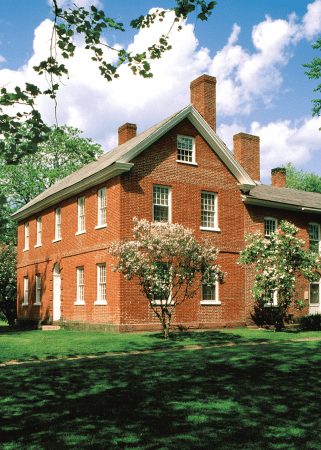
Historic Deerfield
84B Old Main St., Deerfield, MA
www.historic-deerfield.org
Admission: $5-$18; free for children under 6
Year-round: Historic Deerfield, founded in 1952, is an outdoor museum that interprets the history and culture of early New England and the Connecticut River Valley. Visitors can tour 12 carefully preserved antique houses dating from 1730 to 1850, and explore world-class collections of regional furniture, silver, textiles, and other decorative arts on display in the authentic period houses and in the Flynt Center of Early New England Life, a state-of-the-art museum facility. Check out the website for a packed roster of summer activities, including educational lectures, cooking demonstrations, and exhibitions of period decoration, textiles, furniture, and art.

Pocumtuck Homelands Festival
Unity Park, 1st Street, Turners Falls, MA
www.nolumbekaproject.org
Admission: Free
Aug. 4: This fifth annual celebration of the parks, people, history, and culture of Turners Falls is a coordinated effort of the Nolumbeka Project and RiverCulture. The event features outstanding Native American crafts, food, and live music, as well as demonstrations of primitive skills. The Nolumbeka Project aims to preserve regional Native American history through educational programs, art, history, music, heritage seed preservation, and cultural events.

Shakerfest
1843 West Housatonic St., Pittsfield, MA
www.hancockshakervillage.org
Admission: $65-$70 for all access; individual activities priced separately
Aug. 18: Hancock Shaker Village will present a day of music, ballads, storytelling, and dance — a place where musicians blend with the audience, and there’s no backstage. From food to free tours of ancient medicinal herb gardens, this festival offers numerous experiences to enjoy with the music, including afternoon harmony and dance workshop; an evening performance in the barn that combines traditional song and dance with new compositions, movement, and projections inspired by the Shakers who built the barn; and a rollicking barn dance.

Stone Soul Festival
1780 Roosevelt Ave., Springfield, MA
www.stonesoulfestival.com
Admission: Free
Aug. 31 to Sept. 2: New England’s largest African-American festival offers family-oriented activities, entertainment, and cultural enrichment, and is a vehicle for minority-owned businesses to display their wares and crafts. Entertainment at Blunt Park includes gospel, jazz, R&B, and dance. Sunday’s free picnic includes ribs and chicken cooked by talented pitmasters, backed by live gospel music performed by local and regional choirs.

Yidstock
1021 West St., Amherst, MA
www.yiddishbookcenter.org/yidstock
Admission: Festival pass, $236; tickets may be purchased for individual events
July 12-15: Boasting an array of concerts, lectures, and workshops, Yidstock 2018: The Festival of New Yiddish Music brings the best in klezmer and new Yiddish music to the stage at the Yiddish Book Center on the campus of Hampshire College. The seventh annual event offers an intriguing glimpse into Jewish roots, music, and culture.

FAIRS AND FESTS

Berkshires Arts Festival
380 State Road, Great Barrington, MA
www.berkshiresartsfestival.com
Admission: $7-$14; free for children under 10
n July 6-8: Ski Butternut may be best-known for … well, skiing, of course. But the property also plays host to the Berkshires Arts Festival, a regional tradition now in its 17th year. Thousands of art lovers and collectors are expected to stop by to check out and purchase the creations of more than 200 artists and designers.

The Big E
1305 Memorial Ave., West Springfield, MA
www.easternstatesexposition.com
Admission: $10-$15; free for children under 5; 17-day pass $20-$40
Sept. 14-30: As regional fairs go, it’s still the big one, and there’s something for everyone, whether it’s the copious fair food or the livestock shows, the Avenue of States houses or the parades, the local vendors and crafters or the live music. But it’s not the only agricultural fair on the block. The Westfield Fair kicks things off Aug. 18-20, followed by the Blandford Fair and the Three County Fair in Northampton Aug. 31 to Sept. 3, the Franklin County Fair in Greenfield on Sept. 6-9, and the Belchertown Fair on Sept. 21-23, to name some of the larger gatherings.

Celebrate Holyoke
Downtown Holyoke, MA
www.celebrateholyokemass.com
Admission: Free
Aug. 24-26: Celebrate Holyoke is a three-day festival that made its return in 2015 after a 10-year hiatus, and typically draws more than 10,000 people downtown over the course of the weekend. This year’s festival will include live musical performances, food and beverages from local restaurants, activities for children, and goods from local artists and makers.

Downtown Get Down
Exchange Street, Chicopee, MA
www.chicopeegetdown.com
Admission: Free
Aug. 24-25: Now in its fourth year, Chicopee’s downtown block party, which typically draws about 15,000 people to the streets around City Hall, will feature tons of live music, as well as attractions for children, local food vendors, live art demonstrations, and the Get Down 5K Race.

Franklin County Beer Fest
66 Thunder Mountain Road, Charlemont, MA
www.berkshireeast.com
Admission: $25 in advance, $30 at the door
July 21: Join fellow brew enthusiasts for an afternoon of food, music, and drink. The third annual Franklin County Beer Fest will be held at Berkshire East Mountain Resort and will feature beer from several local breweries, local ciders, and local mead and libations. Online ticket buyers will receive a souvenir glass.

Mattoon Street Arts Festival
Mattoon Street, Springfield, MA
www.mattoonfestival.org
Admission: Free
Sept. 8-9: Now in its 46th year, the Mattoon Street Arts Festival is the longest-running arts festival in the Pioneer Valley, featuring about 100 exhibitors, including artists that work in ceramics, fibers, glass, jewelry, painting and printmaking, photography, wood, metal, and mixed media. Food vendors and strolling musicians help to make the event a true late-summer destination.

Monson Summerfest
Main Street, Monson, MA
www.monsonsummerfestinc.com
Admission: Free
July 4: In 1979, a group of parishioners from the town’s Methodist church wanted to start an Independence Day celebration focused on family and community, The first Summerfest featured food, games, and fun activities. With the addition of a parade, along with booths, bands, rides, and activities, the event has evolved into an attraction drawing more than 10,000 people every year.

River Celebration
350 Linden St., Brattleboro, VT
www.ctriver.org/celebration
Admission: $15; free for children 12 and under
June 16: The Connecticut River Conservancy will host this family-friendly event at the Retreat Farm in Brattleboro. Morning excursions including a pontoon cruise on the Connecticut River, a paddling adventure in the Meadows, a freshwater mussel ecology workshop, a fly-casting workshop, and more. Enjoy live music by River Rhapsody and lunch by Tito’s Taqueria and Vermont Country Deli. Additional activities include an ice-cream-making workshop and several demonstrations open all day: a stream table, a soil-infiltration table, a water-quality testing station, and more. Vermont Lt. Gov. David Zuckerman will moderate the “Farm/River Roundtable: Doing Right by Our Rivers.”

Worthy Craft Brew Fest
201 Worthington St., Springfield, MA
www.theworthybrewfest.com
Admission: $45 in advance, $50 at the door
June 16: Smith’s Billiards and Theodores’ Booze, Blues & BBQ, both in the city’s entertainment district, will host more than 25 breweries, with music by Feel Good Drift and the Radiators Soul and Rhythm and Blues Revue, and food served up by Theodores’, Mercado Food Truck, and Nora Cupcake Co. The event will also feature a home-brew contest; Amherst Brewing will make the winner’s beer and serve it at next year’s Brew Fest.

MORE FUN UNDER THE SUN

Berkshire Botanical Garden
5 West Stockbridge Road, Stockbridge, MA
www.berkshirebotanical.org
Admission: $12-$15; free for children under 12
Through Oct. 8: If the flora indigenous to, or thriving in, the Berkshires of Western Mass. is your cup of tea, try 15 acres of stunning public gardens at the Berkshire Botanical Garden in Stockbridge. Originally established as the Berkshire Garden Center in 1934, today’s not-for-profit, educational organization is both functional and ornamental, with a mission to fulfill the community’s need for information, education, and inspiration concerning the art and science of gardening and the preservation of the environment. In addition to the garden’s collections, among the oldest in the U.S., visitors can enjoy workshops, special events, and guided tours.

Crab Apple Whitewater Rafting
2056 Mohawk Trail, Charlemont, MA
www.crabapplewhitewater.com
Admission: Varies by activity
Through Oct. 8: Wanna get wet? Crab Apple is a third-generation, multi-state family business that operates locally on the Deerfield River in the northern Berkshire Mountains of Western Mass. Its five separate rafting excursions range from mild to wild, full- or half-day runs, in rafts and inflatable kayaks. In short, Crab Apple offers something for everyone, from beginners to more experienced rafters.

Great New England Air & Space Show
57 Patriot Ave., Chicopee, MA
www.greatnewenglandairshow.org
Admission: Free; upgraded paid seating available
July 14-15: The 2018 Great New England Air & Space Show at Westover Air Reserve Base will feature popular attractions like the U.S. Air Force Thunderbirds, who last performed in Chicopee in 2008. But note the subtle change to the event title — ‘Space Show.’ That’s because the Air Force operates the largest space program in the world, and the Great New England Air & Space Show is entering a new phase by incorporating elements of space and cyberspace capabilities of military and civilian contractors.

Lupa Zoo
62 Nash Hill Road, Ludlow, MA
www.lupazoo.org
Admission $10-$15; free for children under 2
Through Nov. 4: Lupa Zoo brings the African savannah to Western Mass. residents. The late Henry Lupa fulfilled his lifelong dream of creating a zoo right next to his Ludlow house, filling it with hundreds of animals and instilling a warm, familial atmosphere. Visitors to the 20-acre can be entertained by monkeys, feed giraffes on a custom-built tower, and marvel at the bright colors of tropical birds. In addition to offering animal shows and animal-feeding programs, the staff at Lupa Zoo promotes conservation and sustainability.

Post #351 Catfish Derby
50 Kolbe Dr., Holyoke, MA
www.post351catfishderby.com
Admission: $10 entry fee
July 20-22: The American Legion Post #351 touts its 38th annual Catfish Derby as the biggest catfish tournament in the Northeast. Fishing is open to the Connecticut River and all its tributaries. The derby headquarters and weigh-in station are located at Post #351. A total of $1,425 in prize money is being offered, with a first prize of $300. Three trophies are available in the junior division (age 14 and younger).

Six Flags New England
1623 Main St., Agawam, MA
www.sixflags.com/newengland
Admission: $57.99-$67.99; season passes $109.99
Through Oct. 28: Continuing an annual tradition of adding a new major attraction each spring, Six Flags New England recently unveiled Harley Quinn Spinsanity, an extreme pendulum ride that sends guests soaring 15 stories in the air at speeds up to 70 mph. Other recent additions include the Joker 4D Free Fly Coaster, the looping Fireball, and the 420-foot-tall New England Sky Screamer swings — in addition to a raft of other thrill rides. But fear not: the park has attractions for everyone along the stomach-queasiness spectrum, from the classic carousel and bumper cars to the giant wave pools and lazy river in the Hurricane Harbor water park, free with admission.

Springfield Dragon Boat Festival
121 West St., Springfield, MA
www.pvriverfront.org
Admission: Free
June 23: The sixth annual Springfield Dragon Boat Festival returns to North Riverfront Park. Hosted by the Pioneer Valley Riverfront Club, this family-friendly festival features the exciting sport of dragon-boat racing and will include music, performances, food, vendors, kids’ activities, and more. The festival is an ideal event for businesses and organizations looking for a new team-building opportunity, and provides financial support for the Riverfront Club as it grows and strengthens its presence in Springfield and the Pioneer Valley.

Valley Blue Sox
500 Beech St., Holyoke, MA
www.valleybluesox.com
Admission: $5-$7; season tickets $99
Through Aug. 1: Western Mass. residents don’t have to trek to Boston to catch quality baseball. The Valley Blue Sox, defending champions of the New England Collegiate Baseball League, play close to home at MacKenzie Stadium in Holyoke. These Sox feature a roster of elite collegiate baseball players from around the country, including some who have already been drafted into the major leagues. Frequent promotional events like postgame fireworks and numerous giveaways help make every game at MacKenzie Stadium a fun, affordable event for the whole family.