Daily News

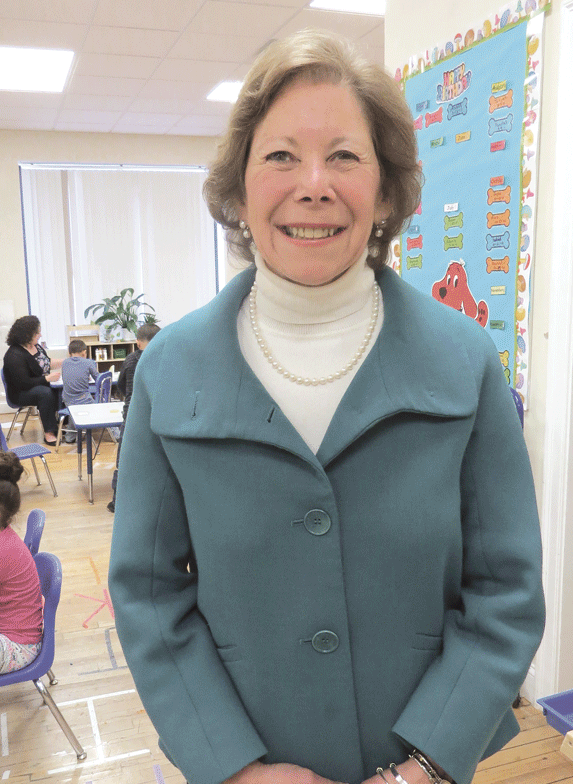
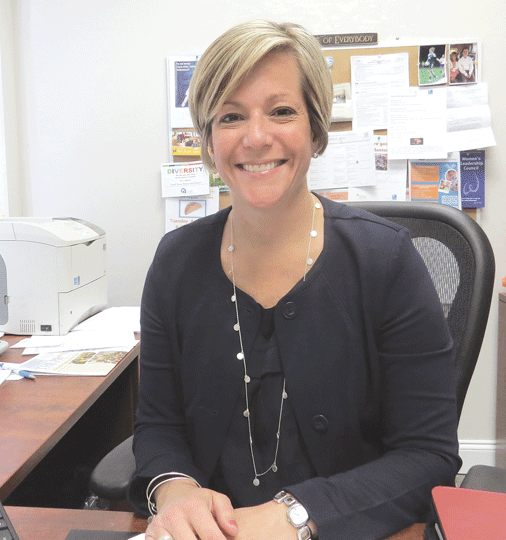
WEST SPRINGFIELD — Anastasia Ezequelle recently joined Lexington Group in West Springfield, bringing more than 20 years of experience in the contract furniture industry.

Ezequelle’s design background allows her to manage projects from conception through completion, including field measurements, space planning, product specification, and assisting clients with color and finish selection. She has an in-depth knowledge of the Herman Miller line and the many other furniture lines Lexington Group represents. She is a LEED green associate and hopes to be involved with the growing green-building movement that is thriving in this region.

Lexington Group has been providing new and used office furniture to the region since 1989.

Daily News

WARE — Country Bank recently sponsored a Credit for Life Fair at Ware High School. Credit for Life is a financial-literacy exercise where more than 350 seniors from Ware, Palmer, Belchertown, and Pathfinder Regional high schools are asked to make decisions on how to spend their money.

Students role-played a 25-year old adult with a career, salary, and credit score. They were assigned a mock checking and savings account and possibly a student-loan payment, depending on the career they selected. Based on their mock salary, they made decisions that affected their finances, such as renting an apartment on their own or having a roommate, buying or leasing a vehicle, purchasing furniture, and saving for their retirement.

“The goal of this event is for students to gain a better understanding of their future fiscal responsibilities. They learned about balancing a budget and making choices about their finances. They also learned how one financial choice can greatly impact another,” said Jodie Gerulaitis, financial education officer at Country Bank.

More than 70 volunteers from Country Bank and the business community staffed the booths and offered advice on money management. Every booth included choices that would be encountered in real life. Students had the option to ‘buy’ a high-end set of furniture, for example, or opt for furniture at a more affordable price. This approach blends real-life scenarios with everyday financial decisions in an organized, hands-on format. Seeing the actual cost of things leaves students with a new perspective on true financial management.

Country Bank sponsored four Credit for Life Fairs in 2016, reaching more than 1,500 students at 11 high schools. To learn more about this program, visit countrybank.com/student/high-school.

Daily News

SPRINGFIELD — Greater Springfield Habitat for Humanity (GSHFH) announced an upcoming Circle of Faith build on 479 Allen St. in Springfield. This project is a partnership between GSHFH and 11 local faith communities who have come together to raise the funds for a Habitat home, and who will also contribute volunteers, in-kind materials, and amenities for the project. As an intentionally interfaith project, this build incorporates Christian, Islamic, and Jewish communities.

These 11 faith communities include First Church of Christ in Longmeadow, Sinai Temple in Springfield, St. Mark’s Episcopal Church in East Longmeadow, St. Andrews Episcopal Church in Longmeadow, the Islamic Society of Western Mass. in West Springfield, Christ the King Lutheran Church in Wilbraham, East Longmeadow United Methodist Church, Mercy Medical Center and the Sisters of Providence Health System in Springfield, St. Cecilia’s Parish in Wilbraham, and Foster Memorial Church in Springfield.

Ellen Tougias, the point person for First Church of Christ in Longmeadow, says her church is “proud to be a part of the Circle of Faith Build for Habitat. We have committed to this project as part of our 30th-year celebration. It is one way that we have chosen to give back to our community in honor of this special year.”

Mohammad Bajwa of the Islamic Society of Western Mass. referenced a piece of Scripture in relation to the project: “cooperate with one another, for doing good deeds and righteousness … surely God’s mercy is upon the good doers.”

To kick off this partnership, the Circle of Faith communities and GSHFH are hosting a “House Wrapped in Love” event at the Islamic Society of Western Mass. on June 1 at 6:30 p.m. This event is family-friendly and invites kids to paint what home, family, and love means to them on sheets of plywood that will then be used to build the walls of the new habitat house at 479 Allen St. Following this event will be several days of building on the job site, where the exterior walls of the home will start to take shape.

Daily News

SPRINGFIELD — On Thursday, June 9 from 5:30 to 8 p.m., the Student Prince at 8 Fort St., Springfield, will host a celebrity bartender event to benefit the Gray House. All tips and a portion of food and drink proceeds will be donated to the Gray House.

Fifteen community leaders will volunteer their time to serve drinks and help the Gray House raise money through their tips. Bartenders will work in 30-minute shifts. They include:

• 5:30-6 p.m.: District Attorney Anthony Gulluni; Melinda Phelps, Bulkley Richardson; Ellen Freyman, Shatz, Schwartz & Fentin, P.C.;

• 6-6:30 p.m.: State Rep. Carlos Gonzalez; Vanessa Otero, Partners for Community; Tony Cignoli, A.L. Cignoli Co.;

• 6:30-7 p.m.: Kateri Walsh, Springfield City Council; Dan Walsh, city of Springfield; Michael Fenton, Shatz, Schwartz & Fentin, P.C. and Springfield City Council;

• 7-7:30 p.m.: Mark Dupont, Diocese of Springfield; Michael Kogut, Kogut Law, P.C.; Tom Ashe, Springfield City Council;

• 7:30-8 p.m.: Peter Ellis, DIF Design; David Chase, Freedom Credit Union; Jeremy Casey, Name Net Worth.

The Gray House is a small, neighborhood human-service agency located at 22 Sheldon St. in the North End of Springfield. Its mission is to help neighbors facing hardships to meet their immediate and transitional needs by providing food, clothing, and educational services in a safe, positive environment. For more information about the celebrity bartending event, visit grayhouse.org/celebrity-bartender-event or contact Dena Calvanese, Gray House executive director, at (413) 734-6696, ext. 100, or [email protected].

Daily News

SPRINGFIELD — Comcast Business will present “How to Leverage Technology to Do More With Less,” part of the BusinessWest/HCN Lecture Series, on Wednesday, June 15. The event will take place at the Lyman & Merrie Wood Museum of Springfield History, 21 Edward St., Springfield. Registration will begin at 7:15 a.m., followed by breakfast and a panel discussion from 7:30 to 9 a.m.

The panelists — influential minds in the IT field — will discuss issues that every business IT department is being forced to deal with, including rising demands to make changes to existing systems, increasing efficiency and improving security, and how budget restrictions impact IT.

Panelists include Michael Feld, CEO, VertitechIT, and interim CTO, Baystate Health and Lancaster General Hospital; Frank Vincentelli, chief technology officer, Integrated IT Solutions; and Patrick Streck, director, IT Services, Baystate Health / Information & Technology.

Admission is free, but pre-registration is required by June 7. Register online here, or call (413) 781-8600 for more information.

Daily News

BOSTON — This week, Gov. Charlie Baker and Lt. Gov. Karyn Polito introduced “An Act to Reform Sick Time,” aimed at limiting sick-time accruals that have led to exorbitant payouts upon retirement from state government.

The legislation would cap accrual of sick time for state employees in the Executive Department at no more than 1,000 hours, equivalent to six months of work. The bill grandfathers in approximately 5,800 current state employees who already have more than 1,000 hours accrued. Those employees would be capped at their current earned amount as of the date of enactment. Once the legislation is passed, the policy will take effect immediately.

“Sick leave is a benefit designed to offer employees a way to deal with health and family issues, not a retirement bonus,” Baker said. “Bringing the Commonwealth’s sick-leave-accrual policy in line with other private- and public-sector employers just makes sense and is the fiscally responsible thing to do.”

Added Polito, “this legislation ensures the use of sick time remains consistent with its intended purpose. Benefits for Executive Department employees will remain competitive while we implement an accrual policy that is fair to Massachusetts taxpayers.”

Under current law, employees can accrue a maximum of 15 sick days per year, and those employees who retire are permitted to cash out 20% of unused sick time. In FY 2015, 378 employees had an accrual of more than 1,000 hours upon retirement. While this represents only about one-third the number of retiring employees, the cashouts for these employees accounted for nearly 80% of the total cashout cost. Based on the last three fiscal years, if fully implemented, a 1,000-hour cap on accruals would have saved an average of $3.5 million in cashouts per year.

“Sick days serve an important purpose, but they must be used in an appropriate and accountable way for our compensation system to have the integrity and transparency taxpayers deserve,” said Senate Minority Leader Bruce Tarr.

Added House Minority Leader Bradley Jones Jr., “recent media reports highlighting excessive sick-leave payouts in the public higher-education system clearly demonstrate the need to crack down on these types of abuses. The reforms proposed by the Baker-Polito administration will help to provide greater transparency and accountability to the state’s taxpayers.”

Daily News

WINDSOR LOCKS, Conn. — The New England Knowledge Corridor, an interstate partnership of regional economic-development, planning, business, tourism, and educational institutions, will host its annual State of the Region Conference on Friday, June 3 starting at 8 a.m. at the Sheraton at Bradley International Airport.

The Knowledge Corridor is home to higher-education institutions large and small. This year’s conference will focus on the current and potential impact of their presence in the region beyond their core academic missions.

Participants will include Ed Klonoski, president, Charter Oak State College; Lynn Pasquerella, president, Mount Holyoke College; Hartford Mayor Luke Bronin; Michael Malone, vice chancellor for Research and Engagement, UMass Amherst; Rhona Free, president, University of Saint Joseph; Wilfredo Nieves, president, Capital Community College; and Robert Landino, founder and CEO, Centerplan Companies, LLC.

For more information or to RSVP, contact Patrick Beaudry at [email protected] or (413) 210-4658.

Daily News

NORTHAMPTON — The Creative, a collaboration of three local businesswomen, has opened an office in Thornes Office Suites.

The collaboration, which launched in April 2013, is made up of Janice Beetle, principal of Beetle Press; Ruth Griggs, principal of RC Communications; and Maureen Scanlon, principal of Murre Creative. Together, they provide strategic marketing, messaging, and design services. The trio provide flexible services to clients, combining forces to match clients’ needs and offering a full complement of agency services where necessary.

The Creative provides its clients with the opportunity for comprehensive marketing and communications services, including assistance with advertising campaigns, branding, public relations, print collateral, strategic marketing planning, and fund-raising campaigns. For more information, call (413) 727-3354 or visit thecreativemarketing.net.

Daily News

SPRINGFIELD — Baystate Medical Center and its Community Benefits Advisory Council (CBAC) announced a request for proposals (RFP) for the newly established Better Together Grants Program.

Formerly known as the DoN Grant Program, Better Together unites healthcare and community-based nonprofit organizations across Baystate Health’s service areas to shape future healthcare and human services. The aim is to develop approaches that, by targeting the social determinants of health, will improve people’s overall well-being and make area communities healthier places to live.

In a more rigorous application and transparent awarding process than in past years, Better Together will utilize values and decision-making criteria as rubrics for the critical evaluation of proposals. Specifically, Better Together will aim to fund evidence-based and data-driven programs that provide an authentic path for alignment with Baystate’s community benefits mission and community health priorities, as described in the RFP.

The Better Together grants program will award outcomes-based grants (one to three years), mini-grants (one or two years), and community education and training grants (one year) to eligible nonprofit organizations with current IRS-designated 501(c)(3) status that have projects directly benefiting residents of Hampden County, with a focus on the underserved and vulnerable populations in Greater Springfield.

Click here for the full RFP. Grant proposals are due before Friday, July 1. Grant award decisions will be issued in early August, with awardees completing a pre-launch implementation planning process from August through September. Grant funding will be released after Oct. 1.

For more information, contact Annamarie Golden at [email protected] or (413) 794-7622.

Daily News

SPRINGFIELD — Effective immediately, Leadership Pioneer Valley (LPV) and the Women’s Fund of Western Massachusetts will begin offering alumni of their programs a mutual 20% discount — just one part of a new effort between these organizations to strengthen and coordinate learning opportunities for emerging leaders in the region.

Both LPV’s core program and the Women’s Fund’s Leadership Institute for Political and Public Impact (LIPPI) program seek to empower up-and-coming leaders and, ultimately, strengthen the region as a whole. However, each program has unique content and perspectives that, if taken subsequently, provide a comprehensive leadership experience. Graduates of the LPV program can apply for LIPPI at womensfund.net; graduates of LIPPI can apply for LPV at leadershippv.org.

“The Women’s Fund is thrilled to participate in this collaborative effort with Leadership Pioneer Valley,” said Elizabeth Barajas-Román, CEO of the Women’s Fund. “We think this is a natural partnership for our organizations, as we both invest in creating strong communities through leadership development. Together, our participants will become the civic and business leaders of tomorrow who will help the region thrive.”

Added Lora Wondolowski, executive director of Leadership Pioneer Valley, “this partnership makes so much sense as we feel our curriculums are complementary. Together, we are building a cadre of leaders who are making a difference in their careers and communities.”

LPV is a nonprofit that works to identify, develop, and connect diverse leaders to strengthen the region. LPV’s core program challenges and engages emerging leaders from all sectors of the community from throughout the region. The curriculum consists of both classroom and hands-on, experiential learning that builds leadership skills, enhances regional understanding, and creates broader networks.

The Women’s Fund is a public foundation that connects donors with the lives of local women and girls through strategic grant making and leadership development. Its signature, non-partisan program, LIPPI, is designed to address the need to provide women with the tools, mentors, and confidence they need to become powerful and effective civic leaders and elected officials.

Further information on each program can be found at leadershippv.org and womensfund.net.

Daily News

BOSTON — Local unemployment rates dropped in all labor market areas in the state during the month of April, the Executive Office of Labor and Workforce Development reported.

All 15 areas added jobs over the month, with the largest gains in the Springfield, Boston-Cambridge-Newton, Barnstable, Worcester, and Lowell-Billerica-Chelmsford areas.

From April 2015 to April 2016, 14 areas added jobs, with the largest percentage gains in the Haverhill-Newburyport-Amesbury, Brockton-Bridgewater-Easton, Taunton-Middleborough-Norton, and Barnstable areas.

In order to compare the statewide rate to local unemployment rates, the Bureau of Labor Statistics estimates the statewide unadjusted unemployment rate for April is 3.9%, down 0.7% from the March rate.

Last week, the Executive Office of Labor and Workforce Development reported the statewide seasonally adjusted unemployment rate dropped to 4.2% for the month of April. The unemployment rate is down 0.8% over the year.

The statewide seasonally adjusted jobs estimate showed a 13,900-job gain in April and an over-the-year gain of 73,500 jobs.

The unadjusted unemployment rates and job estimates for the labor market areas reflect seasonal fluctuations and therefore may show different levels and trends than the statewide seasonally adjusted estimates.

The estimates for labor force, unemployment rates, and jobs for Massachusetts are based on different statistical methodology specified by the U.S. Department of Labor’s Bureau of Labor Statistics.

Daily News

NORTHAMPTON — The Fairfield Inn & Suites Springfield Northampton/Amherst was awarded the 2015 Gold Hotel Award by Marriott International in its first year eligible for the distinction. The hotel, which opened in 2014, was the only hotel property in New England to achieve this designation.

“Guest satisfaction is our top priority. We’re here to serve our guests and make them comfortable while away from home. This award is validation that we are meeting our own goals in providing the best service possible,” said Hilary Wallace, general manager. “We have an amazing team, and this award is a true testament to all of them.”

The 2015 Gold Hotel Award is based on guest-satisfaction scores throughout 2015. The award is achieved only by eligible properties in the top 8% of the total 781 Fairfield Inn & Suites properties across the globe. Overall satisfaction scores for the Fairfield Inn & Suites Springfield Northampton/Amherst were 11.6% higher than the national brand average.

Kyle Richardson, vice president of Royal Talens of North America, utilized the Fairfield Inn & Suites as a home base when the company was just starting out. “Without having a permanent home, we relied on the outstanding service and accommodations of the Fairfield Inn to be our headquarters for the first few months,” he noted. “Whether it was welcoming guests from overseas, finding meeting space at a moment’s notice, or just friendly advice on where to find the best steaks or sushi in town, we were fortunate to have the welcoming and professional staff of the Fairfield Inn & Suites as an extension of our team.”

Daily News

SPRINGFIELD — Springfield College Department of Physical Therapy Chair Julia Chevan received the Ronnie Leavitt Award for Leadership in the Promotion of Social Responsibility in Physical Therapy at the American Physical Therapy Assoc. (APTA) combined section meetings in Anaheim, Calif.

Established by the APTA Health Policy and Administration Section Global Health Special Interest Group, the Ronnie Leavitt Award recognizes a physical therapist whose contributions and actions have demonstrated leadership in the promotion of social responsibility, locally and/or globally, through service, scholarship, and/or advocacy.

Chevan started her career in physical therapy in 1985, and the themes of her 30 years of work as a physical therapist have always included a focus on social justice and global health issues. In 2011, she was a Fulbright scholar to Rwanda, where she taught and conducted research with her colleagues at Kigali Health Institute. That work spawned a collaboration with Health Volunteers Overseas, a nonprofit organization dedicated to training health professionals globally, that resulted in a two-year USAID grant to provide continuing professional-development programming to promote rehabilitation services throughout Rwanda.

Chevan’s global health work has included teaching and mentoring therapists in the U.S., Armenia, Liberia, Rwanda, and Haiti. Her scholarly endeavors focus on the intersection of health-services research and physical therapy. These endeavors have resulted in publications that have uncovered race and sex disparities among people with lower-extremity amputations in the U.S., and studies of the expenditures and distribution of physical-therapy services.

Daily News

EAST LONGMEADOW — Peritus Security Partners, Gaudreau Group Insurance Agency, and CMD Technology Group will present a cybersecurity luncheon on Wednesday, June 8 from 11 a.m. to 1 p.m. at Center Square Grill, 84 Center Square, East Longmeadow.

The event is designed for small to medium-sized businesses faced with threats to client and employee data. This high-level discussion will present three key elements in building a solid foundation for managing cyber risk. Peritus Security Partners will discuss the importance of building proper policies, procedures, and controls to manage cyber risk and compliance. The Gaudreau Group will discuss the importance of using cyber insurance as a tool to manage risk that cannot be practically controlled through policy or technical controls. CMD Technology Group will focus on some practical technology solutions that help reduce the risks of a cyber attack.

The event will culminate with a practical discussion on current and emerging threats and how businesses can use these three strategies to prevent becoming the next poster child for a data breach.

Reservations are required. To register, call (413) 525-0023 or e-mail [email protected].

Daily News

GREENFIELD — Greenfield Savings Bank announced the promotion of John “Trey” Fortier III to accounting officer and financial reporting manager. In his new position, he is responsible for preparing numerous financial and analytical reports for management and the board of directors, as well as regulatory reporting for the FDIC and DIF.

Fortier graduated from Merrimack College in 2006 and received an MBA with honors from the Isenberg School of Management at UMass Amherst. He recently received CPA certification. In his spare time, he volunteers as finance chair of Northampton Area Young Professionals and is a member of the Look Park Auction Committee.

Founded in 1869, Greenfield Savings Bank has 135 employees has offices and ATMs throughout Franklin and Hampshire counties.

Daily News

HADLEY — The owner of both Cultivate and Nest and Beloved Earth will offer a free workshop geared toward the small-business owner or freelancer who wants to learn how to take his or her business to the next level. Terra Missildine will offer “Archetypes at Work” on Tuesday, June 7 from 5 to 7 p.m. at Cultivate and Nest, 2 Bay Road, Suite 100, Hadley.

The workshop will focus on discovering participants’ personality archetypes and exploring how they can use that knowledge more effectively in their branding and in attracting their ideal clients.

“Participants will have fun and have a chance to be introspective while digging deep to discover who they really are in business and, more importantly, how they are perceived in the marketplace,” Missildine said.

Missildine is an experienced entrepreneur. She and her husband, David, launched Beloved Earth, a ‘green’ cleaning business, 10 years ago, and she founded Cultivate and Nest, a membership-based co-office space that incorporates a child-care component, in January.

The workshop is free, but seats are limited. Participants are encouraged to e-mail [email protected] to reserve a spot. For more information, visit cultivateandnest.com or contact Missildine at (413) 345-2400.

Daily News

SPRINGFIELD — The Vann Group and Epstein Financial Services will present “Building Your Exit: The Owner Succession Planning Process Defined,” part of the BusinessWest/HCN Lecture Series, on Wednesday, June 22 at the Student Prince/the Fort in Springfield, and Thursday, June 23 at Hadley Farms Meeting House in Hadley.

Registration both days will begin at 7:15 a.m., followed by breakfast and a panel discussion from 7:30 to 9 a.m.

One of the largest challenges facing business owners today is the question of how to get out of their business. These seminars will present a step-by-step breakdown of the succession-planning process and what to expect along the way, including the many benefits to transitioning business ownership.

Panelists include Kevin Vann and Michael Vann of the Vann Group and Charlie Epstein of Epstein Financial Services and Epstein Financial Group.

Admission is free, but RSVP is requested by June 14 for the first seminar and by June 15 for the second. Register online here, or call (413) 781-8600 for more information.

Daily News

CHICOPEE — The 486-student Elms College class of 2016 received diplomas at the college’s 85th commencement exercises on May 21 at the MassMutual Center in Springfield.

The class of 2016 includes 400 undergraduates — 170 bachelor of arts degrees, 229 bachelor of science degrees, and one associate’s degree — as well as 81 master’s degrees and five certificates of advanced graduate study.

The commencement address was delivered by Dr. James O’Connell, president of the Boston Health Care for the Homeless Program, which he founded in 1985 to provide or ensure access to the highest-quality healthcare for homeless men, women, and children in the Greater Boston area. The nonprofit program now serves more than 13,000 people each year in two hospital-based clinics (Boston Medical Center and Mass General Hospital), and in more than 60 shelters and outreach sites in Boston. It is the largest and most comprehensive healthcare program for the homeless currently funded by the U.S. Health Resources and Services Administration.

O’Connell’s lifelong dedication to helping the homeless fits perfectly with Elms College’s commitment to social justice. As commencement speaker, he delivered an inspirational message to the class of 2016, reminding the graduates of their responsibility to create a better world. O’Connell also received an honorary degree.

“The burden of human suffering out there is huge,” he said. “And I would say if you do nothing else with your lives, find ways that you can ease that burden, whatever that will be.”

He exhorted the graduates to think of Martin Luther King Jr.’s vision of the beloved community. “You have been imbued with the principles of that beloved community, which are excellence, justice, and faith — those are exactly the things that Martin Luther King Jr. asked for,” O’Connell said. “And in that community, which I hope you will now go try to create, what you want is the vision of everyone — the lost and the least among us — to be invited in and treated with dignity, and offered hope and opportunity.”

Daily News

AGAWAM — Recognizing that farming is essential to the region, the Harold Grinspoon Charitable Foundation and Big Y awarded 47 local farmers from the Berkshires to the Pioneer Valley $2,500 each to make physical infrastructure improvements to their farms.

Along with the support of sponsors Harvard Pilgrim Health Care Foundation and MGM Springfield, farmers have already put to use the awards for farm-improvement projects. This represents a 42% increase in awards from the 2015 inaugural year.

With the collaboration of local agriculture advocacy organizations Berkshire Grown and CISA (Community Involved in Sustaining Agriculture), the applications selected for the Local Farmer Awards were announced in December. More than 120 farmers submitted applications describing their improvement projects. The award recipients are diverse: 32% have been farming for more than 20 years, and 23% for five years or fewer; and more than 40% of the farms have sales of more than $100,000, while another 30% recorded sales of less than $49,000.

A winner from 2015 and 2016, Julia Coffey of Mycoterra Farm in Westhampton said, “we are thrilled to be a Local Farmer Award recipient. The projects that these awards have helped fund are making our farm more viable.” This year, Coffey is purchasing equipment required for outfitting a commercial kitchen that will allow the farm to begin manufacturing value-added food products with unsold fresh mushrooms.

Jennifer Salinetti, owner of Woven Roots Farm in Tyringham, will install a permanent vegetable wash station which will directly impact the farm’s productivity. Gideon Porth of Atlas Farm in Deerfield will install a pump system for a new well to increase the supply of potable water for the farm’s packing house and greenhouses, which will double its current watering abilities.

Harold Grinspoon, founder of the Harold Grinspoon Charitable Foundation, who launched the Local Farmer Awards in 2015, noted that “farmers don’t typically ask for help. They are genuinely appreciative of these awards and use the money in creative ways for projects to help their businesses.”

Charlie D’Amour, president & COO of Big Y, added, “through our partnership with the Grinspoon Foundation, we are providing one more way to help local growers thrive in our community.”

The goal of the Local Farmer Awards is to strengthen farmers’ ability to compete in the marketplace so the region benefits from the environmental, health, and economic advantages of local farming. A farmer appreciation event is held yearly for all applicants and awardees to honor and recognize farmers and promote the importance of local farming.

Daily News

HOLYOKE — Hampden County Sheriff Michael J. Ashe Jr. will be honored with a Distinguished Service Award at the Holyoke Community College (HCC) commencement on May 28.

In a letter informing Ashe of the award, HCC President William Messner wrote, “your tireless work on behalf of inmates to bring greater educational opportunities over the past 30 years is a shining example for the region.”

The Education Program of the Hampden County Sheriff’s Department offers comprehensive educational services in its various facilities and in community-based education centers. More than 4,600 offenders in the custody of the Hampden County Sheriff’s Department have earned their GED/HiSET high-school equivalency diplomas during Ashe’s tenure as sheriff.

“One of the characteristics of the profile of the typical inmate who is brought to us is poor educational attainment,” Ashe said. “We offer the challenge and opportunity for them to better themselves educationally, in the same way we do with substance-abuse issues, job readiness, anger management, victim impact awareness, etc. What we are always seeking to do is lessen the baggage that is holding people down so that they can reach their potential as positive, productive, law-abiding citizens.

“I accept this honor not really for myself,” he went on, “but for the people of Hampden County who have supported our education program; the staff who has labored so passionately, unheralded, to bring educational opportunity to those in our custody; and for all the men and women who have risen to the challenge and opportunity of our education programs to better themselves and their lives.”

Daily News

EASTHAMPTON — Matthew Sosik, president and CEO of bankESB, announced the bank’s intention to build a branch in Holyoke.

The entry into Holyoke provides an opportunity for bankESB to be a part of the recent revitalization of Holyoke, he said. It also reinforces the bank’s commitment to community banking in the local market.

For many years, Holyoke has been in bankESB’s top 10 communities for deposits. The bank currently services almost 1,000 customers from Holyoke with $18 million in deposits and $28 million in loans.

The new branch will be built on a lot currently owned by the city of Holyoke at the corner of Sargeant and Beech streets, next to CVS and the newly built Holyoke Senior Center.

“We are presently in the site design and review phase and plan on opening the branch in 2017. We are thrilled to add the convenience of a local branch for our existing Holyoke customers,” said Sosik. “At the same time, we are very excited to share our unique, community-focused brand of banking to the residents of Holyoke who are not yet customers. Holyoke has seen such a resurgence in recent years; we’re excited to be a part of that turnaround.”

Holyoke Mayor Alex Morse added that “bankESB is having an ever-increasing presence as a lender in Holyoke, driving the financing behind some of the largest projects in the city. I’m very excited they’ll have a physical location here as they continue growing their business and other business in the community.”

Daily News

LUDLOW — John Hunt has been named chief executive officer of Healthsouth Rehabilitation Hospital of Western Massachusetts in Ludlow. A speech-language pathologist by trade, he received both his bachelor’s and master’s degrees from UMass Amherst.

Hunt’s career in rehabilitation has spanned almost 30 years as a clinician, director, administrator, private practicioner, consultant, and educator, both regionally and nationally. He has served as a guest speaker and lecturer on the topics of motor speech and swallowing disorders in the neurologically impaired population. His focus has been the improvement of patient care and superior clinical outcomes in the post-acute continuum.

Daily News

SPRINGFIELD — Starting Monday, visitors, residents, and employees of downtown Springfield can expect their daily walk to be a little bit more fun, thanks to the Springfield Central Cultural District’s (SCCD) new placemaking program. Eighteen artists will be painting murals on what are currently bland, grey utility boxes at intersections throughout the footprint of the district.

This program was designed by the SCCD to both encourage walking downtown and provide a source of income to working artists. Artist Priya Nadkarni painting the box at Bridge and Main streets, noted that, “since moving to Springfield, I have noticed a special pride and gumption in the people of this city that I believe is truly unique … it’s important to see that translate into beautifying this place and preserving all the positives in the city.”

Artists may be seen creating murals representing ‘unexpected beauty’ from Monday, May 23 to Saturday, May 28. Pedestrians are invited to stop and watch the murals come together and share their experiences using the hashtag #experiencetheunexpected.

The SCCD is funding this program by matching local businesses and organizations to artists. Sponsors of this program include the Armory-Quadrangle Civic Assoc., the Basketball Hall of Fame, Community Music School of Springfield, Eastern States Exposition, Inspired Marketing, Lessard Property Management, Maplegate Rehab, MassDevelopment, the Mattoon Street Assoc., MacIntosh Condos, One Financial Plaza, New England Farm Workers Council, Painting with a Twist, Springfield Parking Authority, Springfield Symphony Orchestra, Taylor Street Dental, Tower Square, and WGBY Public Television.

The Springfield Central Cultural District encompasses an area of the metro center of Springfield, and is membership-based, involving many of the downtown arts institutions. Its mission is to create and sustain a vibrant cultural environment in Springfield.

More details on this program can be found at springfieldculture.org/artistresources. Live updates on the painting can be found on Twitter at @slfdculture.A schedule of painting is available upon request. Questions can be forwarded to Morgan Drewniany, executive director of the SCCD, at [email protected] or (413) 454-1195.

Daily News

BOSTON — The state’s unemployment rate dropped to 4.2% in April from the March rate of 4.4%, the Executive Office of Labor and Workforce Development announced Thursday.

The preliminary job estimates from the Bureau of Labor Statistics indicate Massachusetts continues to gain jobs, with 13,900 added in April. The April gain follows March’s revised gain of 6,600 jobs. From December 2015 to April 2016, Massachusetts has added 35,600 jobs.

In April, over-the-month job gains occurred in the professional, scientific, and business services; leisure and hospitality; trade, transportation, and utilities; education and health services; other services; information; financial activities; and manufacturing sectors. The April state unemployment rate remains lower than the national rate of 5.0% reported by the Bureau of Labor Statistics.

“We see continued strong job gains in many of the traditional economic drivers for the state,” Secretary of Labor and Workforce Development Ronald Walker II said. “The strong job gains in April are on the heels of 6,600 jobs added in March and 13,900 jobs added in February.”

The labor force increased by 15,400 from 3,581,500 in March, as 19,000 more residents were employed and 3,500 fewer residents were unemployed over the month.

Over the year, the state’s seasonally adjusted unemployment rate dropped 0.8% from 5.0% in April 2015. There were 27,100 fewer unemployed people and 404,000 more employed people over the year compared to April 2015.

The state’s labor force participation rate — the total number of residents 16 or older who worked or were unemployed and actively sought work in the last four weeks — increased 0.3% to 65% over the month. The labor-force participation rate over the year has decreased 0.3% compared to April 2015.

Over the year, the largest private-sector percentage job gains were in construction; professional, scientific, and business services; other services; information; and education and health services.

Daily News

SPRINGFIELD — Springfield Bishop Mitchell Rozanski has appointed Thomas McDowell interim head of school for Pope Francis High School. He will begin his position in late July or early August. Meanwhile, a national search for a permanent head of school has been undertaken.

McDowell is a retired school superintendent, having served most recently as interim superintendent in Wethersfield, Watertown, and Tolland, Conn. He also has served as superintendent of schools in Plymouth, Conn., and in Westfield. He said he looks forward to the new interim position at Pope Francis High School.

“It’s exciting, building something new,” he said. “I like the idea of having one school as a superintendent, with a smaller group of kids.”

He said the advantage of serving a smaller group of students will be the opportunity for more communication and more presence in the school community. “What I miss most about being a superintendent is being close to students.”

McDowell will oversee day-to-day school operations while Paul Gagliarducci remains on as executive director of the Pope Francis High School project, focusing on construction of a new facility as well as other elements regarding the creation of this new Catholic secondary school.

In September, the students and staff of Holyoke Catholic High School in Chicopee and Cathedral High School in Springfield will officially merge, becoming Pope Francis High School in its temporary location on the present Holyoke Catholic campus. Construction of the new Pope Francis High School building on Wendover Road in Springfield is expected to begin later this year, with an anticipated completion date in 2018.

Daily News

SPRINGFIELD — Comcast Business will present “How to Leverage Technology to Do More With Less,” part of the BusinessWest/HCN Lecture Series, on Wednesday, June 15. The event will take place at the Lyman & Merrie Wood Museum of Springfield History, 21 Edward St., Springfield. Registration will begin at 7:15 a.m., followed by breakfast and a panel discussion from 7:30 to 9 a.m.

The panelists — influential minds in the IT field — will discuss issues that every business IT department is being forced to deal with, including rising demands to make changes to existing systems, increasing efficiency and improving security, and how budget restrictions impact IT.

Panelists include Michael Feld, CEO, VertitechIT, and interim CTO, Baystate Health and Lancaster General Hospital; Frank Vincentelli, chief technology officer, Integrated IT Solutions; and Patrick Streck, director, IT Services, Baystate Health / Information & Technology.

Admission is free, but pre-registration is required by June 7. Register online here, or call (413) 781-8600 for more information.

Daily News

SPRINGFIELD — Elms College will present its 85th commencement ceremonies on Saturday, May 21 at 10 a.m. at the MassMutual Center, 1277 Main St., Springfield. The commencement address will be delivered by Dr. James O’Connell, president of Boston Health Care for the Homeless. He will also receive an honorary degree.

The college’s commencement events for 2016 include a senior class gift presentation, an honors convocation, nursing pinning ceremonies, a baccalaureate Mass, and various receptions and award ceremonies. A full schedule of events can be seen at www.elms.edu/commencement.

The MassMutual Center is located at 1277 Main St. in downtown Springfield, between Falcons Way and State Street. Attendees are asked to enter through the box-office entrance located on Falcons Way, across the street from Civic Center Parking Garage. Parking is available in the garage for $7 (VIP parking is $12).

Daily News

SPRINGFIELD — Jynai McDonald was recently hired as regional manager of the Training Resources of America Inc. (TRA) Western Mass. offices located in Holyoke and Springfield.

McDonald holds a bachelor’s degree in digital marketing and social-media management, an associate’s degree in business administration, and a paralegal program certificate in legal studies, all from Bay Path University. She brings significant leadership, supervisory, and job-development experience to her new position.

Training Resources of America, headquartered in Worcester, is a private, nonprofit organization that has been providing quality education, employment, and training services in Massachusetts since 1975. Over the years, its efforts have enabled thousands of educationally and economically disadvantaged youth and adults to improve their quality of life by learning new skills, developing self-confidence, and finding pathways to self-sufficiency through education, employment, and training. It has training sites in Brockton, Fitchburg, Holyoke, New Bedford, Quincy, Salem, Springfield, and Worcester.

Daily News

HOLYOKE — The relationship between Holyoke Community College and UMass Amherst is highlighted in a national report as a model of a successful transfer partnership other colleges would do well to emulate.

HCC and UMass were selected as one of only six pairs of ‘high-performing’ community colleges and partner universities in “The Transfer Playbook: Essential Practices for Two- and Four-Year Colleges” from the Aspen Institute and the Community College Research Center at Columbia University’s Teachers College.

“We analyzed the practices at partnerships of community colleges and four-year institutions with high rates of transfer-student success,” said Davis Jenkins, senior researcher at CCRC and co-author of the report released Tuesday. “This report presents the evidence-based strategies that community colleges and university leaders can use to improve outcomes on their own campuses.”

The free report is available online at as.pn/transfer1. It praises HCC for its “culture of commitment to transfer” and “the institution’s goal of improving transfer rates,” and cites President Bill Messner for regularly communicating “the importance of clear transfer pathways with UMass Amherst leaders.”

The report cites collaborative grants that align degree pathways and support student success for HCC students who transfer to UMass; HCC’s learning-community courses that “provide the sort of rich and rigorous learning experiences that will prepare students for four-year college coursework”; the HCC Honors program, including a new transfer pact between HCC and the Commonwealth Honors College at UMass; the emphasis on dual enrollment for high-school students taking college classes; and regular visits to HCC from UMass transfer representatives.

The report also notes the general expectation among faculty, staff, and advisors that students at HCC will transfer after earning a certificate or degree. “Everyone asks, ‘where are you going next?’” an HCC student quoted in the report remarks.

Each year, UMass Amherst accepts and enrolls more transfer students from HCC than from any other community college in Massachusetts. For the fall 2015 and spring 2016 semesters, a total of 203 HCC students transfered to UMass Amherst.

Daily News

SPRINGFIELD — The Vann Group will present “Building Your Exit: The Owner Succession Planning Process Defined,” part of the BusinessWest/HCN Lecture Series, on Wednesday, June 22 at the Student Prince/the Fort in Springfield, and Thursday, June 23 at Hadley Farms Meeting House in Hadley.

Registration both days will begin at 7:15 a.m., followed by breakfast and a panel discussion from 7:30 to 9 a.m.

One of the largest challenges facing business owners today is the question of how to get out of their business. These seminars will present a step-by-step breakdown of the succession-planning process and what to expect along the way, including the many benefits to transitioning business ownership.

Panelists include Kevin Vann and Michael Vann of the Vann Group and Charlie Epstein of Epstein Financial Services and Epstein Financial Group.

Admission is free, but RSVP is requested by June 14 for the first seminar and by June 15 for the second. Register online here, or call (413) 781-8600 for more information.

Daily News

PLAINVILLE — Gambling revenue at Plainridge Park Casino rose another 2% in April, continuing a four-month upward trend at the state’s first casino after a rocky second half of 2015.

The Plainville slot parlor brought in $13.3 million last month, about $8,000 more a day than in March, according to the Massachusetts Gaming Commission. Plainridge is averaging $13 million in monthly revenue in 2016, up from an average of $12.2 million over the last four months of 2015. To draw more players this year, the casino has significantly increased promotional free-play credits.

“The fact that revenue is up is a good sign for Plainridge Park,” Paul DeBole, an assistant professor of political science at Lasell College and a specialist in gambling regulation, told the Boston Globe. “I’m cautiously optimistic that the upward trend will continue.”

Despite the upturn, Plainridge — which opened strongly last June — remains well short of initial revenue forecasts for its first year. The casino estimated it would bring in $300 million in its opening year, but is on pace for just $161 million.

Daily News

SPRINGFIELD — Ad agencies, design firms, marketing departments, and other members of the Western Mass. and Northern Conn. creative community have submitted work for the Advertising Club of Western Massachusetts’ Creative Awards, the club’s annual recognition of creative excellence. Each year, they come together to celebrate the region’s best creative work with a festive evening of camaraderie. This year’s event — titled “Make. Believe.” — will be held on Thursday, May 19 at Open Square in Holyoke.

The judges for this year’s Creative Awards include Kevin Grady, global head of design and communication for brand strategy firm Siegel + Gale, and Nikita Prokhorov, a freelance designer, author, and professor based in Brooklyn, N.Y. “We were really fortunate to get two judges who are at the top of their field,” said Lynn Saunders, co-chair of the Ad Club’s Creative Awards. “They held the work to a very high standard.”

On May 19, the region’s creatives and guests will convene to find out which works Grady and Prokhorov deemed worthy, and to set the bar for the upcoming year of local advertising and communications. The event will feature hors d’oeuvres, a cash bar, live music, a champagne toast to the local creative community, and the opportunity to rub shoulders with, and celebrate with, colleagues whose creative work will be on display.

“Our region has long been home to outstanding creative talent, and the Creative Awards continue to affirm the great work being produced here” said David Cecchi, Ad Club president.

Tickets are $35 for members, $50 for non-members, and $20 for students. For more information about the 2016 Creative Awards or to purchase tickets, go to adclubwm.org or call (413) 736- 2582.

This year’s Creative Awards sponsors include Andrew Associates, Cecco – the Design Office of David Cecchi, Common Media, 423 Motion Inc., Marcus Printing, Meyers Brothers Kalicka, P.C., Milltown Productions, Six-Point Creative Works Inc., Stephanie Craig Photography, TSM Design, and WWLP-22News.

Daily News

SPRINGFIELD — The Springfield Preservation Trust will host its annual Preservation Awards reception to honor individuals and organizations that help restore and preserve historic places in Springfield. The event is open to the public and will take place tonight, May 18, at 6 p.m. in Center Court of Tower Square, 1500 Main St., Springfield.

The recipients for 2016 are:

• Hector Grullon for restoration of 90 Buckingham St.;

• Charles and Cathy Bellows for restoration of 50 Colony Road;

• The McKnight Neighborhood Council for installation of new historic-district signage;

• The Ocasio Irrevocable Family Trust for restoration of 238 Pine St.;

• Roger Roberge for the restoration and reuse of the Sumner Avenue Fire Station;

• Livingstone, LLC for the restoration of 82 Temple St.;

• Patrick and Deborah Murray for the restoration of 367 Union St.;

• David and Robin Taimanglo for the porch restoration of 34 Westminster St.;

• The Edward Sims Award for Stewardship will go to Victor and Frances Gagnon for 1120 Worthington St.;

• The Robert Holbrook Award for Stewardship will go to Alex and Charlotte DeVillier for 125 Atwater Road;

• The George Pooler Award for Stewardship will go to David and Jacqueline Pleet for 70 Bellevue Ave.; and

• The Donald E. Campion Award for Outstanding Achievement in Historic Preservation will go to Ralph Slate.

Photographs of award winners from 2016 and previous years will be on display at Tower Square through May 21. Slideshows of previous years’ awardees can be found online at springfieldpreservation.org/preservation-awards.

Daily News

AMHERST — The Eric Carle Museum of Picture Book Art announced that co-founder Eric Carle will return to sign books and meet fans on Saturday, May 28 at 10 a.m. Museum members will receive priority line placement and may enter early at 9:30 am. The signing is free with museum admission.

Carle has illustrated more than 70 books. His latest book, The Nonsense Show, published last October, is a book to make children laugh and use their imagination by introducing them to different artistic styles. It made Time’s Top 10 Children’s Books of 2015. It follows on the heels of The Artist Who Painted a Blue Horse, an homage to the artist Franz Marc and expressionism, and Friends, with its semi-abstract artwork.

Carle’s literary career began in 1967 when educator and author Bill Martin Jr. asked him to illustrate a story he had written. Brown Bear, Brown Bear, What Do You See? is the result of their collaboration and is still a favorite with children everywhere. Soon Carle was writing his own stories. His first wholly original book was 1, 2, 3 to the Zoo (1968), followed afterward by the celebrated classic The Very Hungry Caterpillar (1969).

Carle’s books have been read by millions of children all over the world and have been translated into 62 languages. He has illustrated more than 70 books, many of them bestsellers, most of which he also wrote. More than 132 million copies of his books have sold worldwide. Carle and his late wife, Barbara Carle, co-founded the Eric Carle Museum of Picture Book Art in Amherst in 2002.

A limited number of tickets to the signing will be distributed to visitors on the day of the event. No tickets will be available in advance. There is a limit of three books total per ticket holder (includes one book from home per group or family), and no personalization. Carle will be signing books only. No flash photography is allowed. The signing is in person only; the museum is not able to accommodate online orders that need to be shipped.

Features

Meetings of  the Minds
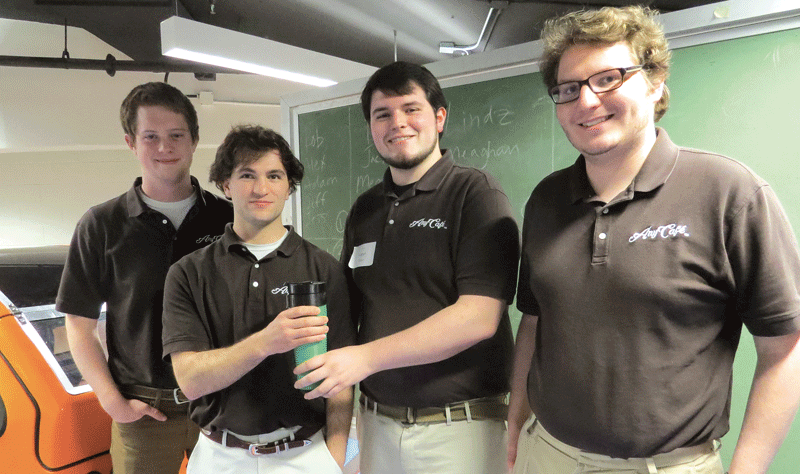
The team at AnyCafé

The team at AnyCafé: from left, Evan Choquette, chief information officer; Logan Carlson, CEO; Chris Urciuoli, president; and Ryan Noon, chief technical officer.

‘Community’ and ‘network.’ Those were the two terms used time and again by members of the second cohort of Valley Venture Mentors’ accelerator program to describe the program — and they speak volumes. While those involved with the 36 ventures are competing against each other for prize money, they are also staring down the same challenges of entrepreneurship, thus making that journey a little less daunting for their colleagues.

Jas Maggu was relating some personal sentiments. But she was also speaking for every member of Valley Venture Mentors’ second accelerator cohort — and also anyone who’s tried to turn an idea into a business.
Jas Maggu

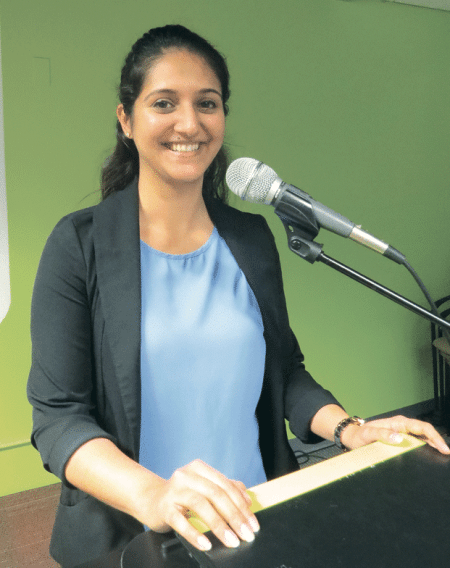
Jas Maggu, founder of AuthenFOOD

“As an entrepreneur, it can get really lonely, and you have huge ups and downs,” said Maggu, who has launched a venture called AuthenFOOD, which will bring gourmet, healthy foods right to one’s doorstep. Through her participation in the four-month accelerator program, which wrapped up a week or so ago, she finds she is far less lonely.

And also more enlightened, more confident, better connected, and, in her mind, better able to stare down the many challenges standing between her and success.

She is not alone in these sentiments. Indeed, as BusinessWest talked with several members of the 36-member cohort — some of whom had already given final presentations before their peers, while others were going to have to sleep on it another night and stand at the podium the next day — many common sentiments were expressed.

Individually and collectively, they spoke of camaraderie and shared learning experiences; gaining a firmer grasp of their specific concept, the market for it, and what it will take to advance it; making important connections; and simply being able to share common challenges and emotions that explain what Maggu meant when she spoke of loneliness.

These sentiments came from a diverse audience trying to advance a seriously eclectic mix of business concepts. For example:

• Joe Salvador is on the verge of bringing to the market a new silencer, or noise suppressor, for firearms, a product he believes will resonate with shooters trying to not only improve their accuracy but save their hearing;

• Chris Urciuoli heads a team of fellow Western New England University engineering students trying to seize what they consider a huge opportunity with a product that will enable the user to brew a cup of coffee anytime and anywhere — hence the corporate name AnyCafé. They’ve already heard from the CEO of Keurig, who told them he believes they have the next logical entrepreneurial step in the ongoing saga of the K-Cup;

• Dr. Alex Louizos is a vascular surgeon and co-founder and CEO of Nanotech Galaxy, which is working to produce software that will enable surgeons to operate more efficiently and healthcare providers to reduce their expenses;

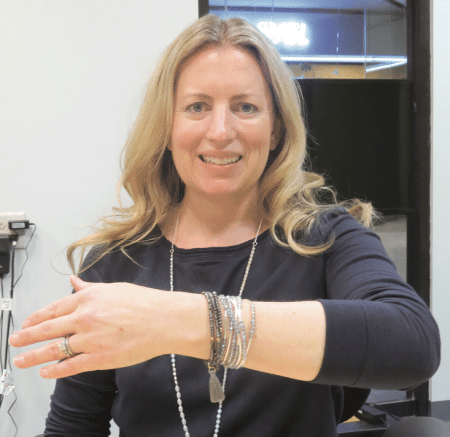
• Lora Fischer-DeWitt has developed a line of jewelry called Scout Curated Wears that is already in a number of gift stores in the region, including Cedar Chest in Northampton;

• Angela Lussier has launched a venture called Speaking School for Women, which, as that name suggests, was conceptualized to help women become better public speakers and, overall, more effective communicators;
Lora Fischer-DeWitt

Lora Fischer-DeWitt, founder of Scout Curated Wears

• Tom Skypek is co-founder of an online networking tool he bills as a “Match.com for government contracting professionals”; and

• Terra Missildine, already a serial entrepreneur — she has a ‘green’ cleaning company — has launched a family-friendly co-working space called Cultivate. She jokingly notes that she wishes she was in the accelerator before she opened the doors (more on that in a bit), but she nonetheless credits the experience with helping her attain early success.

Vastly different people with a wide range of ideas and a common dream (actually, several of them) — that’s what the cohort is. As for what it’s about … we’ll let the entrepreneurs do the talking.

In the course of doing so, they go a long way toward validating the optimism expressed by those who believe the intense accelerator regimen will help steel its participants for the rigors they will face and create a host of new employers for the region.


2016 VVM Accelerator Finalists (in alphabetical order)

AnyCafé: Developer of hot beverage solutions for the future, including the Travel Brewer
Celia Grace: Fair-trade, ethical wedding dresses that give back and empower women around the world
DaVinci Arms: Designer and manufacturer of firearms suppressors and accessories for mission-critical applications
Homebody Holistics: Maker of all-natural, hand-crafted, herbal cleaning solutions using no harsh chemicals or additives
iRollie: Niche-market phone-case manufacturer and online retailer featuring the rolling tray phone case
Livingua: An app that connects travelers to locals who know the language and culture wherever and whenever they want
Name Net Worth: Connective platform that leverages trusted relationships to measure and strengthen a user’s personal and professional networks
Need/Done Inc.: Instant help for kids at home from people your parent network trusts
Prophit Insight: Software company that helps healthcare providers identify and acquire unique sources of physician referrals
Scout Curated Wears: Designer, curator, and producer of thoughtful women’s accessories
Sumu: Works with property managers and landlords to post fee-free apartments to help users find their next home
Treaty: Nanotechnology company whose flagship product is FogKicker, a biodegradable anti-fog solution made from nanocellulose


Getting Down to Business

“Joe’s the man.”

That opinion was expressed loudly by someone in the conference room at VVM headquarters in Tower Square — exactly whom wasn’t entirely clear to BusinessWest — but there were several heads nodding at the suggestion.

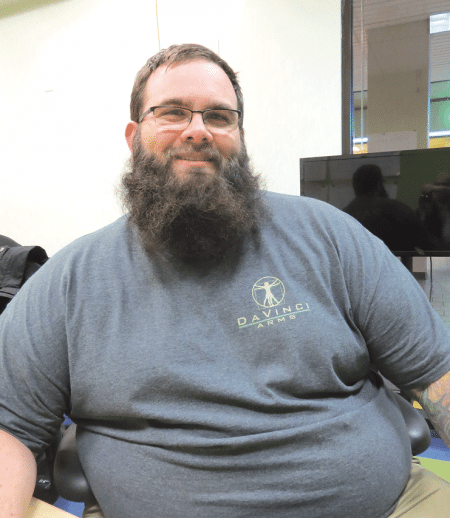
‘Joe’ is the aforementioned Joe Salvador, and the commentary about him was not simply in reference to his suppressor concept — although that’s part of it. It’s clear that, over the past four months, he’s been able to help several of his cohorts, through everything from valuable connections to words of wisdom.

“Joe has put me in touch with someone I’m courting to be an advisor,” said Skypek. “And I know a lot of that has happened across the board; there’s a nice community of people here who are all in this together.”
Joe Salvador

Joe Salvador says the accelerator process has helped him better articulate his suppressor concept and identify target audiences.

Such reflections cut right to the chase when it comes to explaining the accelerator and its inherent value — to those taking part and the region as a whole. Indeed, while the 36 participants are competing against each other for bigger shares of the $250,000 in prize money that will be awarded at the Accelerator Awards on May 26 — everyone will get at least $1,000, and the top prize last year was $35,000 — they are, as Skypek said, in this together.

‘This,’ specifically, being the struggle — because that’s exactly what it is — to turn an idea into a viable business. So, in many ways, the accelerator is a type of support network.

The cohort members are in various stages of development — Missildine and Fisher-DeWitt, as mentioned, were already in business, while those at AnyCafé entered the program with simply a concept — but they all have the common goal of accelerating their progression.

The program they were chosen to be part of helps in that regard in several ways, from rugged weekend boot camps focusing on specific aspects of business management to back-and-forth between participants, to interaction with mentors who can help the entrepreneurs with the issues right in front of them while also assisting them with seeing around the corner and anticipating what will come next.

Much of this support could be described as a form of tough love, or challenging the participants, said Missildine, among others, noting that friends and family members, while they mean well, will often tell entrepreneurs what they think they want to hear.

“Here, you’re confronted on your assumptions, and you have to essentially prove things,” she explained. “And that’s important, because as an entrepreneur, you don’t always have someone pushing back on you regarding the assumptions you make about your business.”

Salvador said the various efforts to challenge his team to identify a market for its product and outline a course for moving forward have certainly helped in the progression of DaVinci Arms, which he described as a spinoff from Wilbraham-based FloDesign, which has developed noise-suppression equipment for several applications, including the military.

“When we started this, we had a really strong product that we had developed, but we really didn’t have the business side locked down — you had two engineers running the company,” he explained. “Through VVM, we’ve been able to gain a laser focus on every aspect of what was needed to grow our startup.

“We needed to have our financials really well-addressed, what our customers and market segment were, how we were going to engage that customer segment, what we were looking at for funding, how we were going to raise that funding, and much more,” he went on. “Basically, all the minutiae that builds up the business, that’s what we needed help with: the details of financing, marketing, and sales, all coming together.”
Dr. Alex Louizos

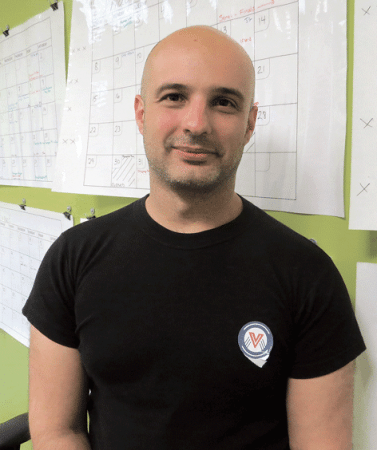
Dr. Alex Louizos credits the accelerator with helping him create more effective presentations for his software concept.

Through all of that, VVM and its accelerator program helped DaVinci hone its presentation and target it to a specific audience, he explained, adding that, before, the team was giving highly technical presentations that effectively went over the collective heads in the audience.

“At the start, I knew that suppressors were selling like crazy, but I didn’t know who they were selling to,” he explained, adding that, through the accelerator experience, the venture has gained key contacts, identified its primary audiences, and drawn a road map for moving forward, starting with product demonstrations and putting the suppressors in the hands of distributors in gun-friendly states like Florida, Texas, and Utah.

Missildine said the accelerator process has also helped her with the audience-identification process and other aspects of her business. She’s grateful for the help, but wishes it had come earlier; if it did, she might have done some things differently.

“I’m a lifelong entrepreneur, and I’m extremely impulsive,” she explained. “I opened the doors to my business in the second month of the accelerator, and already see what I would have done differently if I had gone through the whole experience prior to launch.”

Elaborating, she said she would have shopped, and negotiated, more effectively for a space for the co-working venture — she joked that she has the highest overhead of any venture in the Valley — and she would have expanded her team and not tried to do everything herself.

Through the experience, though, she’s proven what she’s believed all along — that her concept is scalable. And along the way, she’s found “camaraderie and community” on a scale she couldn’t have imagined.

“The accelerator plugs you into so many more resources than the homework that you do,” she explained. “By going through this, I feel that my company’s in a much better place.”

In Good Company

Louizos feels much the same way about his venture, which centers around using artificial intelligence — what he calls “smart software” — that empowers doctors to diagnose patients more quickly and also enables hospitals to analyze data in a way that saves both time and money. He credits the accelerator experience with helping him sharpen his business focus and better articulate complex subject matter.

“When I started the accelerator, I couldn’t describe what I was doing in a way that a 5-year-old would understand,” he noted. “I received lots of critical feedback in a way that helped me explain my idea in a way that makes sense to everyone and also creates some enthusiasm about it.”

Summing up the experience, he said it helped him identify and understand the weakest aspect of his business — because, as the saying goes, it’s only as strong as that point — and improve upon it.

Meanwhile, the team at AnyCafé didn’t exactly have a business when this accelerator session started. Instead, they had a concept, and a bold one at that — to bring to the market a device that would brew a single cup of coffee anywhere the consumer chooses.

The key to this concept — and what has apparently kept others from bringing something like it to store shelves — is battery technology that fuels the heater in the thermos-like device, team members noted, adding that they have perfected this technology and are ready to scale up this operation.

But the science was and is only a part of the equation, as the accelerator experience has shown them.

“We didn’t have much entrepreneurial experience, but we knew we wanted to do this,” said Urciuoli. “Over the past four months, VVM has taught us the way you have to think to succeed as a startup company; they’ve given us the spirit and the knowledge to go out and create our product and a plan to get it to the market and millions of individuals.”

Logan Carlson, another of the AnyCafé partners, agreed, and, echoing Salvador, said the accelerator experience has provided insight not available in the college classroom — especially the engineering classroom.

Tom Skypeck

Tom Skypeck was one of many who used the term ‘community’ to describe the 36 accelerator participants.

“It’s been a tremendous teaching experience,” he said. “Our knowledge has increased exponentially, just because of all the amazing people who are here.”

Maggu has been part of this teaching experience from many sides — she was a venture capitalist “in another life,” as she put it, and has been involved with VVM as a mentor. Now in the role of entrepreneur, she understands, even more than she did before, the importance of connections and learning from others going through similar experiences.

The accelerator process has given her both. Indeed, through her involvement with the program and connections made, she’s been able to forge a partnership with Fitness Together, one of several health clubs she works with to help individuals lose weight by eating better.

And she’s also learned by listening to and interacting with the other 35 participants.

“It’s been great to be part of this tremendous community,” she said, “where everyone you know is going through the same phases that you are.”

Like Maggu, Fischer-DeWitt said the prospect of starting a business can be very isolating. She then added another adjective: scary.

Things are somewhat less so than four months ago, she said, making frequent use of the words ‘network’ and ‘community,’ as so many others did, to describe what VVM, and especially the accelerator, creates.

“The connections have been amazing,” she said, adding that her business is growing rapidly — she’s now in 130 stores and has sales representatives in more than 20 states — and her experience in the accelerator will help her manage that growth and continue the expansion process in a smart fashion, literally and also figuratively.

Only the Lonely

The four AnyCafé partners now have matching dark brown golf shirts with their company’s logo. They had them on as they made their final presentation that Friday evening.

But they have much more than this wardrobe option, thanks to the accelerator. They have, as Urciuoli, said, much more of an ability to think as businesspeople, and not simply engineers with an idea.

Their learning curve, similar to that of other participants, but also unique in some ways, is what the creators of the accelerator program had in mind when they conceptualized it.

That, and making entrepreneurship just a little less lonely.

And in that mission, they have succeeded beyond all expectations.

George O’Brien can be reached at [email protected]

Cover Story Restaurants Sections

Plenty to Chew On

This Year’s Restaurant Guide Reflects a Diverse Dining Scene

RestaurantGuideSecDPBy all accounts, restaurant are flourishing across Western Mass., a region that offers nearly endless choices when it comes to cuisine, atmosphere, price range … you name it. For this special section, the 2016 Restaurant Guide, we venture to three establishments — with calling cards ranging from solar-brewed beer to classic French cuisine to singing servers — that clearly reflect that variety. Bon appetit!

Restaurants Sections

Star Power

Andrew Mankin

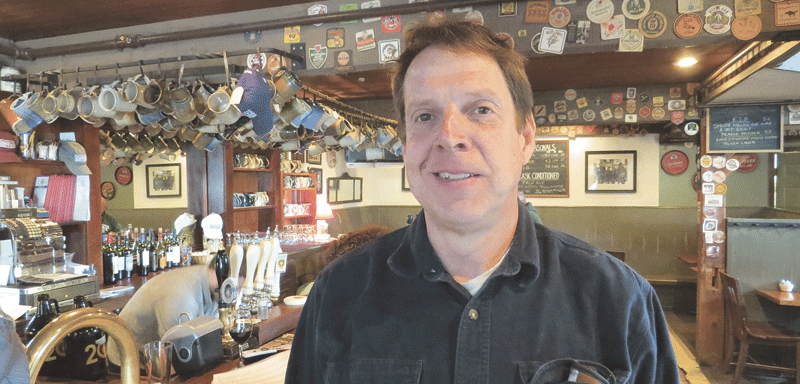
Andrew Mankin, owner and brewer, says a ‘green’ operating philosophy has helped Barrington Brewery & Restaurant create a strong brand.

Andrew Mankin recalls that when he and business partner Gary Happ were crunching the numbers regarding their planned use of solar-heated water for their brew-pub establishment in Great Barrington, what they saw gave them reason to pause.

But not for very long.

“We decided that at some point you’ve got to put your money where your mouth is and do something,” he recalled, as he talked about the system they were contemplating — one that would coincide with, and be a key element in, the construction of a banquet facility that would complement their already well-established brewery and restaurant on busy Route 7. “When you’re putting up a new building, you’re spending a lot of money on all kinds of things, so we thought, ‘why not something that’s environmentally friendly?’”

That ‘something’ has turned out to be an investment that has paid off in a number of ways — from dramatically reducing natural-gas bills to giving Barrington Brewery & Restaurant a branding identity — ‘solar-brewed beer’ — that is not only earth-friendly, but helps generate business as well.

“People will come in, point to those words, and say, ‘what does this mean?’ said Mankin, who, as the company’s owner/brewer, is not only willing but well-equipped to explain it all. (Usually, the dissertation includes handing the individual one of the informative placemats the company uses that not only detail the solar hot-water use but explains the brewing process in five easy-to-follow steps.)

Co-owner Gary Happ with his daughter, Chelsea

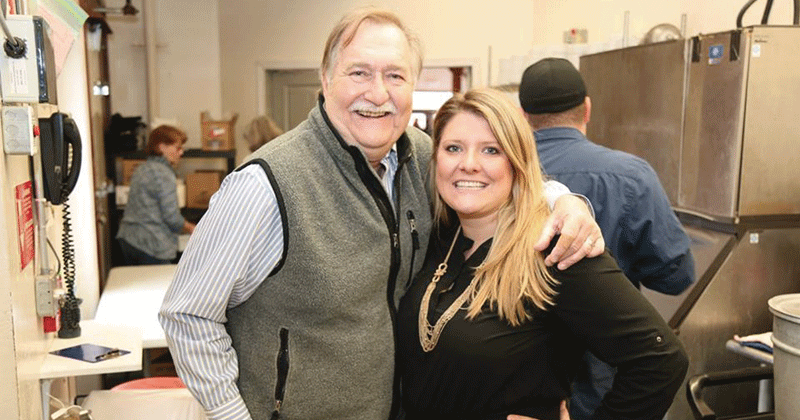
Co-owner Gary Happ with his daughter, Chelsea, who is managing the operation’s banquet facility.

Overall, the sun-heated water gives many environmentally conscious individuals and families a reason to turn off Route 7 and into the large converted barns that comprise this operation. Or another reason, to be more precise.

And there must be several, said Happ, now a nearly 40-year veteran of the ultra-challenging hospitality industry, noting that, while the beers brewed at that location — labels that include Black Bear Stout, Hopland Pale Ale, Berkshire Blond, and Ice Glen IPA, along with a host of seasonal offerings — are a huge draw, there are hundreds of microbrews available in this region. In short, the food has to be good, too.

Barrington Brewery & Restaurant has that part of the equation covered with a menu, classified generally as ‘pub fare,’ that includes everything from barbecued ribs to shepherd’s pie to spinach and eggplant casserole.

To say this establishment effectively blends beer and food is not just idle talk, Happ noted. Indeed, those aforementioned brews are included in the recipes for menu items ranging from the chili to the blue cheese dressing to the famous (it’s been profiled in Bon Appetit a few times) chocolate stout cake.

“We try to keep everything simple, and we make everything here,” he explained. “It’s not a fancy, expensive menu, but it’s good, fresh food.”

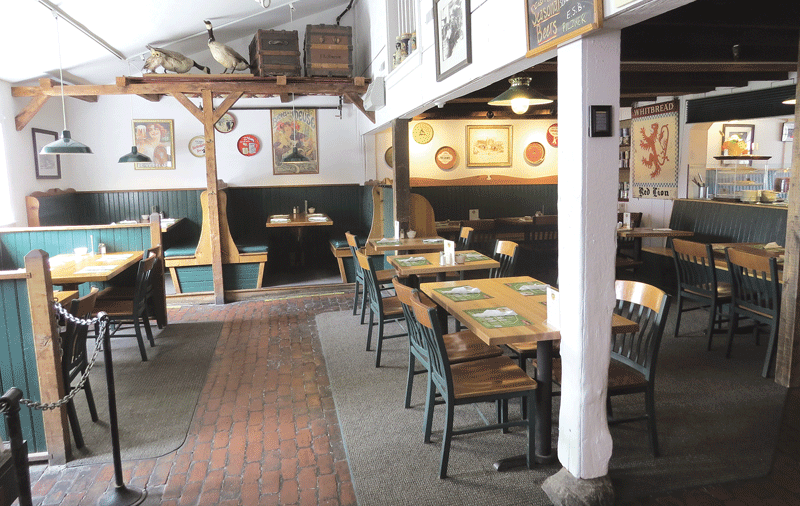
The interior’s décor

The interior’s décor can be described with one word: beer.

As for that aforementioned banquet facility, named Crissey Farm, it has become a solid addition to the venture, said Mankin, noting that, in a region studded with venues at both the high and low end, this 200-seat room has become an attractive middle-of-the road option.

“We throw a very good wedding for a very fair price,” he explained, adding that the facility is drawing its share of other types of events as well, including corporate outings and meetings. “It’s an attractive alternative for people looking for something in the middle.”

For this issue and its annual Restaurant Guide, BusinessWest takes an in-depth look at the Barrington Brewery and Restaurant, where the bright ideas include, but are certainly not limited to, the water-heating process.

Lager than Life

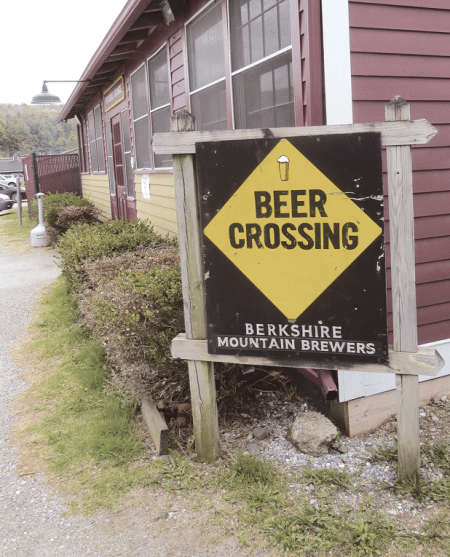
The sign

The sign that greets patrons says it all.

It doesn’t take much time, or many words, for that matter, to describe the décor and the mood at this establishment. ‘Beer’ will do just fine.

It’s brewed on the site, served on tap at the tavern portion of the eatery, sold in pint bottles (the partners distribute to a few other locations as well), explained on the placemats, and reflected on the walls — all of them.

There are pictures of old breweries, tavern signs from a long time ago — one declares that something called ‘white rose special’ costs 20 cents a bottle — and glasses, coasters, and trays bearing the names of brewers from the present, past, and distant past.

While referencing the huge display of coasters — Mankin has no idea how many there are on display or in storage because there’s no room left to display them — he pointed to a couple of his favorites: Dog & Parrott and Ridley’s Old Bob.

Those were brewed in England, which is where Mankin cut his teeth in this art and science. He was a self-described home brewer some 30 years ago, when he had a chance to learn from the masters at the Vaux Brewery in Sunderland in Northeast England, near the border with Scotland.

Upon returning home, his thoughts turned increasingly toward making beer a career, not a hobby. And when he met Happ, things started to come together.

Happ, then a partner in the hugely successful 20 Railroad Street restaurant in Great Barrington’s downtown, was selling his interest in that entity and eyeing a new entrepreneurial adventure. Mankin was looking for his first.

They decided to blend their resources and talents and opened Barrington Brewery & Restaurant on Route 7 in what’s known as the Jennifer House Complex, which featured antique shops and other forms of retail.

Over the past two decades, this venture has become a key component in a broad revitalization effort that has seen Great Barrington evolve from a sleepy Berkshires town “where the sidewalks were rolled up at 8 o’clock,” said Happ, to a true year-round destination.

The town’s rebirth has included everything from new shops and restaurants to the stunning $9 million renovation of the 111-year-old Mahaiwe (pronounced Muh-hay-we) Theatre. Now known as the Mahaiwe Performing Arts Center, it presents music, dance, theater, opera, talks, and movie classics (The Graduate is playing on May 21).

With this new vibrancy has come both opportunity and challenge in the form of greater competition, said Happ, adding that Barrington Brewery & Restaurant has thrived by drawing both local residents and the tourists that now come all 12 months of the year, and through creation of a niche with many elements.

Food (moderately priced) and beer are obvious ingredients, both figuratively and literally, he explained, but the ‘green’ factor is also a key part of the equation.

And there’s more to it the solar hot-water system, which, when installed, was the largest such facility in the region. Indeed, the venture buys its power from Pine Island Farm in Sheffield, a partnership dairy operation that boasts what’s known as an anaerobic digester facility, in which the methane from animal waste is converted into electricity and sold to National Grid.

“When we write a check for our energy at the end of the month, we don’t make it out to National Grid, we make it out to Pine Island Farm,” said Happ, with a strong dose of satisfaction and pride in his voice. “From the beginning, we’ve always tried to run a green business as best we could, and we’re continuing down that path.”

The next step, already on the drawing board and well into the development stage, is to create a photovoltaic system on a two-acre parcel the partners recently acquired and generate enough power to operate both the restaurant and Crissey Farm.

Unfortunately, the state has thrown a roadblock of sorts in front of what Happ called the “crown jewel of our greenness.” Apparently, there is a cap on photovoltaic systems of this type, and it has been reached, he went on, making it clear that this was a source of great frustration.

“Here are two guys trying to do the right thing, run a good, green business, and leave a small footprint, and who’s holding us up? The state,” he said with noticeable exasperation. “We’re ready to go.”

Crissey Farm

Crissey Farm, the banquet facility at Barrington Brewery & Restaurant, is making a name for itself.

Whether the state eases restrictions on solar-power systems and allows the partners to proceed remains to be seen, although both men believe this matter involves the question ‘when?’ and not ‘if?’

In the meantime, they will continue making beer with solar-heated water and press on with their efforts to grow the banquet side of the business.

Off to a solid start, 200-seat Crissey Farm, opened just as the Great Recession was starting in the summer of 2008, is creating a niche in its own right, said Mankin.

“We have a wedding booked every weekend right into October,” he explained. “Over the past few years, business has really picked up.

Icing on the Cake

Mankin told BusinessWest that Barrington Brewery isn’t shy about sharing the recipe for its famous chocolate stout cake. It’s already been published in Bon Appetit, he noted, and staff at the restaurant will hand patrons a copy if they ask for one.

This willingness to share trade secrets is somewhat rare in the restaurant business, he acknowledged, but the company isn’t worried about losing business from the practice.

“It’s not easy to make it — there’s a lot that goes into this,” he said, referring to the stout cake.

But those exact words could be used to describe the restaurant industry itself. The Barrington Brewery has succeeded by creating an effective niche — one that involves price, beer, food — and a green philosophy.

All that gives this establishment star power — in all kinds of ways.

George O’Brien can be reached at [email protected]

Restaurants Sections

Gourmand’s Delight

Paul Hathaway

Paul Hathaway takes pride in creating unique dishes that feature produce from local farms.

Chez Albert is no ordinary French restaurant. But then, Paul Hathaway, who opened the award-winning bistro in Amherst after moving to Western Mass. from Boston 11 years ago, is far from an ordinary chef.

The self-taught food connoisseur and culinary artist makes everything in his restaurant from scratch and has carefully cultivated relationships with local farmers who provide him with their freshest seasonal produce. As a result, the menu changes at least six times a year, although seasonal dishes do accompany staples that customers choose repeatedly at the popular eatery nestled downtown on North Pleasant Street.

“We make our own pickles, grind our own beef, cure our own hams, make all of our desserts from scratch, and stay away from fillers and preservatives,” Hathaway told BusinessWest. “A lot of focus is placed on presentation. People eat with their eyes first, so we try to make things appetizing visually and by using flavor. We focus on utilizing local ingredients to the utmost in unique ways and pickle, cure, or preserve them so the colors or flavors pop in different dishes.

“Many people think French food is fancy, but they don’t realize it’s about using basic techniques,” he went on. “It’s a low, slow style of cooking that allows you to get the best flavor out of whatever you cook.”

Although the menu’s offerings rival dishes in restaurants known for fine dining — current seasonal plates include crab and smoked trout galette with spicy rouille, rabbit ragout with a farm cheese pierogi, and entrées such as pork confit with creamy polenta and a sweet glaze — the mood at Chez Albert was designed to be intimate, yet informal.

“We offer a relaxed, elegant atmosphere which is not stuffy; service is delivered with a smile, and we are always looking for ways to make people happy and get them to try new dishes such as rabbit or oxtail,” Hathaway said, adding they also serve sandwiches and burgers for those with less-adventurous palates.

Amy Paul

Amy Paul says Chez Albert will begin offering wine dinners this summer, which will pair fine wines with foods from different cultures that could range from Vietnamese to Thai or North African.

His wife, Amy Paul, who runs the front end of the bistro and is its wine connoisseur, says music played during lunch and dinner ranges from soul to funk to jazz, which helps create a party-like atmosphere, especially on weekends, in the specially designed eatery with soft lighting that emanates from copper fixtures designed by a local artist.

Frequent patrons include professors from area colleges, as well as people from the neighborhood who sometimes have lunch and dinner at the bistro the same day.

The restaurant seats 48, with 20 additional seats on the patio, where lush flowering plants thrive during the summer. Events at Chez Albert range from business dinners to birthdays and rehearsal dinners, and reservations are suggested as the mainstay bistro is a popular spot and has earned accolades; it was feted with Trip Advisor’s 2015 Certificate of Excellence and named Best in the Valley by a Valley Advocate reader’s poll last year.

Honed Talents

Hathaway loved food as a child, enjoyed baking, and looked forward to holiday dinners with family and friends that featured Italian, Polish, Irish, and other ethnic cuisine.

His culinary career began when he got a job at Seaside Restaurant at Faneuil Hall in Boston during his teenage years. But he didn’t become passionate about cooking until he left that eatery and went to work for Davio’s Italian Steakhouse in Cambridge.

At that point, he began to work his way up the ladder and hone his skills in some of the Hub’s best restaurants. “I had a real thirst and drive to learn new techniques and got my chops under some fine Boston chefs,” Hathaway recalled, explaining that he honed his skills under celebrity chef Todd English, James Beard Award-winning chef Jody Adams, and chef-owner Paul O’Connell of Chez Henri in Boston.

Hathaway became a chef at Pomodoro in the city’s North End, then co-owned Washington Square Tavern before he moved to Western Mass. and opened Chez Albert.

“French food has always been farm-to-table, and there are so many local purveyors and farmers here that people sometimes take them for granted. But I was young, ambitious, and excited about the opportunity that exists in Amherst and was inspired to do something in the European style,” he said, adding that he initially opened Chez Albert on 27 South Pleasant St. in a former bank that screamed ‘old French bistro,’ because it had high ceilings, marble floors, and a feeling frequently found in Paris eateries where people count on seeing friends and enjoying good food.

After the bistro became established, Paul was introduced to Hathaway through a friend. She began working for him, and they fell in love, got married, and had a daughter, followed by twin boys.

Paul’s need to focus on the children meant she had to curtail her hours at the bistro, but it continued to flourish, and four years ago when the lease ran out, the couple decided to move Chez Albert to its current location at 178 North Pleasant St.

The new location doubled their space; it took a major renovation to get it the way they wanted, and they often worked late at night. Great attention was paid to detail, and Hathaway hired local artists to design unique copper light fixtures, paint a mural on the bar, and create custom woodwork and cushioned seats throughout much of the interior.

However, his food has always been the biggest draw, and bar manager Michelle Kacich says patrons appreciate the fact that the menu offers French dishes that can be difficult to find locally, such as the popular appetizer pate de foie and the equally popular entrée pork confit. Although the menu does change with the seasons, some items are served throughout the year, such as escargot and Chez salad, made from local field greens, French green beans, dried cherries, shaved red onions, and crispy duck comfit tossed in a champagne vinaigrette and topped with shaved, hard-boiled eggs and croutons.

Hathaway keeps his focus on farm-to-table cooking, but it can be difficult during the winter, so he makes exceptions. But robust soups and other dishes that include a variety of root vegetables have become mainstays, and with the exception of daily specials, the menu doesn’t undergo much change until early March when spring brings freshly picked arugula, spinach, and radishes to the table.

Some patrons enjoy eating at the bar where they watch soccer and other sports on the flat-screen TV. The cocktail menu features signature drinks created by Kacich, and whenever she gets requests, she makes customized libations to suit palates that prefer sweet, savory, sour, or bitter tastes. Customer favorites include a pear ginger martini and a ‘honey bee,’ which is made from cardamom-infused bourbon, citrus, honey, and bitters.

Changing Tastes

Chez Albert

Chez Albert’s offerings have expanded over the years beyond French cuisine to encompass Asian, Italian, Mediterranean, and Middle Eastern influences.

Hathaway believes it’s important for businesses to evolve, and will make changes this summer that may include new artwork.

“We’re not erasing the old, but improving what we have built on,” he noted. “Every business needs to adapt and evolve over time.”

Prix fixe wine dinners that pair wines with foods from different cultures will be offered during the summer, which is a time when business tends to slow down. Since a similar dinner that features five to seven courses is sold out every New Year’s Eve, Paul expects them to be popular.

“My husband has a following, and people get excited when he cooks something other than French,” she told BusinessWest, explaining that, over the years, the menu has grown to include dishes with Asian, Italian, Mediterranean, and Middle Eastern influences. The wine list has also expanded; in addition to French, there are Spanish, Italian, and American wines, with more than 10 varieties served by the glass.

Customers appreciate being served by Emmanuel Proust, who comes from France and has worked at Chez Albert since it opened. Paul says many see him as the face of the restaurant, so they had a painting commissioned of him dressed as Napoleon that hangs above a cozy niche of copper-topped tables.

“We’re a playful group of people, and we do our best to make people feel like family,” she noted on a recent evening, as customers began filtering in, the music picked up, and the bistro came to life.

Restaurants Sections

Singing for Your Supper

Tony Serafino, with his business partner, Dawn Doyle

Tony Serafino, with his business partner, Dawn Doyle, says he wanted to create a destination, not just a restaurant.

As a 30-year veteran of the restaurant industry, Tony Serafino wasn’t interested in just another eatery when he considered opening the Grill at the Boulevard.

That’s why diners enjoying a dinner of pasta, steak, or any number of other options on a Thursday, Friday, or Saturday night are treated to the spectacle of a server — or several — making their way to the front of this cozy establishment on Page Boulevard in Springfield, picking up a microphone, and belting out a few standards.

“When I opened this business, I wanted to try to recreate the Copa on a much smaller scale,” he said, referring to the Copacabana, the famed New York nightclub known through the decades for its array of live entertainment.

“I had visions of waiters like in Goodfellas, leading people through the crowd and sitting them in front while Frankie Valli was singing — not that we have Frankie Valli, but you get the idea. I wanted to give it that extra thing needed to make this location a destination. We weren’t going to survive off neighborhood business alone — the volume just isn’t there. To bring people to us, to become a destination point, we needed something different.”

The Grill’s success since he and his business partner, Dawn Doyle, opened on Super Bowl weekend in February testifies to the appeal of the ‘singing servers,’ as they’re known, but also to a varied lunch and dinner menu made from scratch. “Everyone says the food is the greatest,” said Serafino, who’s also the executive chef. “That’s one thing that’s really helped build us and kept us going.”

Serafino’s previous executive-chef positions included stints at restaurants owned by long-time friend Jim Efantis, who also owns the building that now houses the Grill and an adjoining bar, Rory Fitzgerald’s. The space next to the bar had been vacant for several months, and, truth be told, it needed plenty of work. But he saw some potential.

“I looked at the space and thought it could be a decent lunch, dinner, and breakfast space,” he told BusinessWest, noting that breakfast is currently served on Sundays only, but that could change as CRRC Rail Corp., the Chinese rail-car manufacturer establishing its North American headquarters in Springfield, builds its factory across the street on Page Boulevard, intending to employ several hundred people.

“It’s a neighborhood bar, and the building is the oldest established boarding house in the city of Springfield,” he noted. “I was intrigued by what was going on across the street, and figured we’ll have a few months to get our feet wet.”

Vintage Sounds

The walls of the Grill are adorned with striking, hand-drawn portraits of mid-century musical icons, from Frank Sinatra to Patsy Cline to Louis Armstrong, a visual accompaniment to the music patrons will hear.

“One thing I’ve always wanted to do in my career was to create a small, Copacabana-type atmosphere, with singing waiters,” Serafino said. “And it’s really starting to come to fruition. The customers are having a ball. We try to keep it to the ’30s and ’40s musical theme, but if the crowd wants to hear something from Grease so they can all sing, we can do that too.”

So far, the concept has been a winner, he added. “People keep coming back, and we’re always seeing new faces, too.”

He said the development of the rail-car facility could usher in a weekday breakfast menu, but he wants to keep changes to a minimum at first. “I’ve been doing this for almost 30 years, and you can’t have rabbit ears when people say, ‘do this’ or ‘do that.’ You have to stick to your business model and get it working before you start adding on.”

The walls of the Grill at the Boulevard

The walls of the Grill at the Boulevard are decorated with drawings of some of the musicians patrons might hear covered by the ‘singing servers.’

That lunch and dinner menu, which he characterizes as ‘upscale American bistro’ food, features pasta selections like tortellini alfredo and buffalo mac and cheese, beef dishes like New England pot roast and short ribs, and other options ranging from chicken francaise and chicken marsala to pork milanese — and, of course, daily specials.

“We are a scratch kitchen; everything from the bread on up is made right here,” Serafino told BusinessWest, adding that the menu, which features about 20 entrees and a dozen appetizers, is complemented by at least three specials a night.

“At any given time, it could be blackened New York strip, blackened Delmonico with gorgonzola fondue … the risotto here — and I’m going to toot my own horn, because I can — is the best you’ve ever had, and my customers will tell you that.

“We’re also very big on plate presentation,” he went on. “A lot of these kids [servers], they’re young and had to be trained in these little things that the customers appreciate. But we’re all about having fun with good food and good friends at a blue-collar price.”

The three nights a week when the servers sing are the most popular, he admitted. When the small house is packed and the music is playing, Serafino noted, the festive atmosphere gets contagious. “All these people have no idea who each other are, but as they’re walking out, they’re shaking hands like they’re best friends. They all get into it, and they have a ball.”

Next Steps

Those images are gratifying to Serafino, who believes his goal of establishing a destination restaurant on Page Boulevard — and maybe other regional locations — is a viable one.

“It’s doing well. I think we’re going to outgrow the place,” he said, adding that one expansion option in the future would be to keep the ‘Grill at’ name with each new establishment, as in Grill at Main Street or Grill at Forest Park, or wherever he might move the concept.

He admits some people are still getting accustomed to that concept, and his vision for the bistro menu. One woman became upset — and left — when the sides for her steak dinner didn’t include a baked potato, insisting that the Grill is a steakhouse, and steakhouses serve baked potatoes.

Fortunately, most patrons are happy that Serafino is following his own muse.

“Some people will try to label you as a specific kind of restaurant,” he said. “All I know is, a lot of people really enjoy it.”

Joseph Bednar can be reached at [email protected]
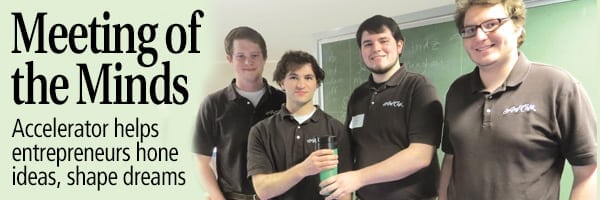
Education Sections
Joan Kagan

Joan Kagan, Square One president and CEO

For more than 130 years, Square One has met the challenge of providing quality early-childhood education, thus serving not only young people, but also their families and the community. Today, as the importance of such education becomes ever more apparent, the challenges to providing it continue to mount. Square One is trying to meet those challenges through vital connections to a host of constituencies.

By Sarah Leete Tsitso

When a water main broke and created a massive sinkhole in the middle of downtown Springfield two weeks ago, Square One President and CEO Joan Kagan could empathize with those who were displaced.

She has seen more than her fair share of disasters and led her team back from the brink. In June 2011, a tornado tore through Square One. Eighteen months later, another of its buildings was destroyed by a gas explosion downtown. Even now, the view from the Square One administrative offices on Main Street is obscured by bulldozers, dirt piles, and orange fencing that are all part of MGM’s massive construction project.

Through — or despite — it all, this 133-year-old nonprofit organization continues to thrive, serving 700 children and their families each day, even in the face of adversity. When the tornado hit on a Wednesday evening, the agency reopened on Monday morning and had space for every single child in the program. After the gas explosion, it got tougher; the team was weary from living in crisis mode and struggling to find the energy to regroup and rebuild. Still, despite the loss of two sites, it had to turn away only 17 children, helping those families find other programs that met their needs.

“The key to the survival of Square One is our adaptability and responsiveness to the needs of the community,” said Kagan. “We have a great, committed staff and team, a board that is willing to take occasional leaps of faith, and a caring community.”

To further strengthen the organization, Kagan and the board of directors recently made a bold decision to expand the resource development team. She hired Kristine Allard in July as vice president of development, then added Dawn DiStefano in January to serve as director of grant development.

Together with Kagan, this experienced team is already making an impact in raising funds and awareness.

Building a Solid Foundation

Square One’s mission is to ensure that all children and families have the opportunity to succeed at school, at work, and in life by providing educational programs, family-support services, health and fitness resources, and a voice in the community. At the core of everything it does is a belief, confirmed by research, that children who begin learning early become better learners for life.

Programs at Square One include center-based child care; preschool and kindergarten; home-based child care in 40 locations throughout the region; after-school, weekend, and summer programming for children living in homeless shelters; fitness and nutrition initiatives; job-skills training for parents; parent education for incarcerated and post-incarcerated parents; supervised visitation; peer support groups for victims and survivors of domestic violence and parents recovering from addiction; and family literacy programs.

Kristine Allard

Kristine Allard, vice president of Development for Square One, says the agency hopes to build support by creating connections.

Taking a holistic, whole-family approach to early-childhood education ensures that the needs of the child are met, with a belief that family success contributes to educational success. As science and research have expanded to show the importance of early-childhood education, the demand for highly qualified teachers has risen dramatically over the past couple of decades. Unfortunately, salaries for these teachers have not kept pace, which presents a near-constant issue for organizations like Square One.

Kagan said early-childhood education has been a focus in terms of curriculum development and resources; however, there is still a lot of work to do in ensuring that programs can attract — and retain — energetic, committed, qualified teachers to lead these classrooms and undertake the important work happening inside.

For many years, early-childhood education was called nursery school, and was focused on keeping children safe and entertained while their parents were at work. Now, these programs are geared toward preparing children for public school, making sure they are ready to learn and interact with their peers when they enter kindergarten.

As this evolution progressed, the need for trained and educated teachers expanded. But supply has not kept up with demand, particularly since jobs in early-childhood education have notoriously low pay rates. Kagan said it is increasingly difficult to find and keep these teachers. As their level of education and training increase, they often leave to take better-paying jobs in the public school system.

Because Square One mostly serves at-risk children and families, Kagan and Allard stressed the need for teachers and others who can meet the unique needs of this population. Of the 700 children served each day, only four are privately paid. The others receive some sort of subsidy that enables them to access services.

Many of Square One’s children have at least one parent who is incarcerated. Others are involved with the Department of Children and Families, are homeless, have at least one parent in recovery, or have a teen parent. With this wide array of needs, Square One employs social workers, therapists, and others who can provide support services to the children and their families.

Many of these family issues have an impact on education, as well as the children’s social and emotional growth. If a child is hungry or malnourished, it affects that child’s ability to focus in school. If a child has a toothache, he or she may not be as cooperative and open to learning.

Kagan noted that 85% of brain development occurs between birth and age 5; if a child does not have a solid foundation, he or she will fall behind, resulting in lifelong implications for future success. To give a strong start to as many children as possible, Square One has partnered with the YMCA, Head Start, and the Springfield School Department on a pilot program geared toward providing free early education to 4-year-olds who had never before participated in a formal program. The school department, which received a four-year grant from the state, provides coaches who work with the teachers at Square One to ensure that the curriculum aligns with state standards.

“We realized there is a large pool of children entering kindergarten who have had no access to formal child care or preschool, so those children were entering kindergarten completely unprepared for it,” said Allard. “This means they are already way behind their peers, even when it comes to basics like how to stand in line or take instructions from a teacher.”

The program launched in September, with 60 children in three classrooms participating at Square One. Kagan reports that, while there have been challenges, the children’s growth has been remarkable.

If You Fund It, They Will Learn

Funding for pilot programs like the one at Square One is important, but only scratches the surface of the organization’s true financial needs. Kagan spends a considerable amount of time lobbying legislators at the state level to increase funding for education programs.

While she understands there is only so much money to go around, and plenty of worthwhile causes looking for a piece of the pie, she believes access to early-childhood education is crucial to the growth and development of society as a whole. She and others in the field have spent years advocating for adequate funding to cover the cost of doing business, which includes paying teachers a living wage and providing exceptional classroom experiences.

At Square One, the annual cost to provide high-quality early education and care is $15,000 per child. The state reimburses $9,000 of that cost, leaving a $6,000 gap for each child, every year.

“The state has to understand that this is really about getting children off to a good start,” she said. “We want them to succeed in school, graduate, go to college or vocational training, and become productive members of society. We also need the state and other stakeholders to understand the savings involved; when you invest in early education, the research has shown that there are significant savings down the road in costs associated with social welfare, criminal justice, and special-needs programs.”

Financial limitations have resulted in fewer programs offering these services to children statewide, and fewer seats in the remaining classrooms. In recent years, the number of available spots for those seeking early-childhood education in Massachusetts has shrunk by 3,000. This reduction in capacity is due to several factors, including the difficulty finding teachers and ever-increasing state regulations. If programs cannot find staff and cannot comply with state licensing requirements around the quality of the teachers they do find, they are closing their doors. It’s a simple business problem — it is not possible to operate without quality staff and enough money to pay the bills. When these centers close, it is the children who suffer.

Square One

At the core of everything Square One does is a belief, confirmed by research, that children who begin learning early become better learners for life.

If a child doesn’t have access to early-education programs, they have difficulty keeping up with their peers once they enter the public schools. The struggles are academic, social, and behavioral, and are challenging to address once the ship has sailed. For many of these struggling students, Kagan noted, it’s like going to a job every day where your boss yells at you for doing it wrong, but never shows you the right way.

This is where public and private investment in early-childhood education comes into play. Advocating for increased government funding is one way to raise needed funds, but it can’t be an organization’s only revenue stream. This is where Allard and DiStefano come in.

Developing a Brand

Since joining the team almost a year ago, Allard said she has been asking a lot of pointed questions. Did people in the community know the Square One brand? Did they know about the wrap-around services provided for families? Were they aware that there is more to Square One than preschool? Had people made the mental transition from the organization’s old identity — Springfield Day Nursery — to its new one?

The team sought answers to those questions, and built its development plan around the answers. This included implementation of a new annual fund-raising campaign, more marketing, bigger special events, and expanded outreach on new grant opportunities. The equation is simple: if they can raise more money, they can serve more kids, pay higher teacher salaries, and have a greater impact on the community.

“When you look at our families and the challenges they face, it can consume you,” said Allard. “Or, you can identify a need and perhaps make a call, write a grant, make a connection in the community, and, in the end, find a solution.”

While Greater Springfield does not have a deep pool of donors, the businesses and individuals here are generous with both their time and money. However, with fierce competition for limited dollars and volunteers, nonprofits like Square One are focused on tracking results. Donors look at their contributions as investments, and want to see those investments yield dividends. Kagan and Allard believe their donors appreciate the work done by the organization and understand how it benefits the community. But there are still those who may not be familiar with Square One and its mission.

Special events are one way to help spread the word and engage new supporters. While labor-intensive and time-consuming, events are about more than making money. They are also about making friends.

“Events let us get in front of people and provide them with that personal connection to the people we serve,” said Allard. “They get to meet the people their money supports and hear their stories first-hand. It’s different coming from the person who lived it. Afterward, people walk away with a better understanding of their community.”

That awareness also gives Square One and other nonprofit organizations a platform to advocate for what they need to meet their mission. For example, Kagan cited the Kentucky Derby-themed event held on behalf of Square One on May 7 at the Colony Club. This event, she noted, provides an opportunity to talk about the early-education and family-support services the organization provides.

“From understanding comes compassion,” she said. “That’s a big part of what comes from hosting an event like this. It’s about funds, friends, and advocacy. And, of course, it’s about having fun.”

Kagan and her staff bring that philosophy directly into the classroom, promoting friendship and fun as well as education. This long-standing commitment to families and children’s education has resulted in a large, dynamic group of donors and supporters who are always willing to lend a hand. Kagan recalls how, after the tornado, when she and her team escaped with nothing more than the items in their pockets, they were setting up shop in temporary space all over the city. A local business heard about their plight and showed up on their doorstop with a big box of office supplies.

“It may not seem like a big deal, a box full of pens and notebooks, but it was a very big deal for us,” she said. “You take those things for granted until you don’t have them. We literally had nothing; we got out with our lives, but that was about it. So, for someone to think about that basic need and make their way to our door with that box? It’s just one example of how this community rallies around its friends and neighbors in need.”