Building Permits Departments

The following building permits were issued during the month of August 2011.

AGAWAM

Kurt and Paula Walker
60 North Westfield St.
$240,000 — New roof system

Western Mass Electric Company
198 Springfield St.
$450,000 — Foundation for new building

AMHERST

Hampshire College
Cole Science Center
$226,000 — New roof

Hampshire College
Enfield House
$17,000 — New roof

Peter Grandonico
25 North Pleasant St.
$6,500 — Install fire sprinkler system

CHICOPEE

Chicopee Boys and Girls Club
580 Meadow St.
$77,000 — Install windows and a fire sprinkler system

Faith Methodist Church
181 Montcalm St.
$10,000 — Install new windows

VSH Realty Inc.
1061 Memorial Dr.
$300,000 — Renovate interior at Cumberland Farms

HADLEY

Parmar and Sons Inc.
37 Russell St.
$145,000 — Remodel of existing space

Pyramid Mall of Hadley
367 Russell St.
$1,425,000 — Renovate Cinemark building to include three additional theatres

Pyramid Mall of Hadley
367 Russell St.
$67,000 — Remodel existing Beauty Plus

HOLYOKE

Blessed Sacrament
1945-1951 Northampton St.
$20,000 — Install new windows

LUDLOW

Alberto Tavares
257 Fuller St.
$25,000 — New roof

NORTHAMPTON

Edwards Church of Northampton
297 Main St.
$25,000 — Upgrade kitchen including new hood

GE Healthcare
22 Industrial Dr.
$13,000 — Interior renovations

Smith College
50 Elm St.
$16,000 — Renovate third-floor bathroom in Clark Hall

Smith College
60 Elm St.
$27,000 — Install stair lift and remodel bathroom in Greene Hall

Tiffany Matrone
7 Armory St.
$48,000 — Renovate existing office to tattoo/piercing parlor

SOUTH HADLEY

Douglas King
5 Hadley St.
$115,500 — Renovations

Mount Holyoke College
50 College St.
$4,500 — Install windows

SOUTHWICK

Dunkin Donuts
497 College Highway
$10,000 — Re-roof

Southwick Acres
256 College Highway
$4,200 — Wooden pavilion

SPRINGFIELD

City of Springfield
200 Birnie Ave.
$1,244,800 — New roof at Gerena School

WESTFIELD

Centro Heritage SPE 6, LLC
231 East Main St.
$80,000 — Interior renovation to retail space

City of Westfield
350 Southampton Road
$60,000 — Addition

First Congregational Church
18 Broad St.
$112,000 — Install 24 custom windows

Jeffrey Glaze
Arch Road
$5,000 — Interior renovations

Gene Kosinski
420 Russelville Road
$31,000 — Install solar panels

Lower Mill, Inc.
47 Mill St.
$564,000 — Office build out of the first floor

Zak Francis
1414 Russell Road
$66,000 — Addition

WEST SPRINGFIELD

CPAN Corp.
339 Bliss St.
$115,000 — Tornado damage repair

Francis O’Brien
1043 Westfield St.
$108,000 — Addition to commercial structure

Friendly’s Ice Cream Corp.
1855 Boston Road
$16,000 — Re-roof

Kouad, LLC
340 Memorial Ave.
$19,000 — Repair roof damage

Ras Patel
560 Riverdale Road
$27,500 — Roof repair

Town of West Springfield
26 Central St.
$1,034,000 — 288 new windows at Colburn Elementary

U.S. Corrugated, Inc.
100 Palmer Ave.
$168,000 — Strip and re-roof

Opinion
The Glass Is More Than Half Full

There have been a lot jokes lately about people seeing a plague of locusts coming down State Street in Springfield — or what they would do if they did see one.
Likewise, there’s been more attempted humor concerning the notion that adversity builds character. If it does, most in this region would say we’ve got more than enough character, thank you.
Indeed, it’s been quite a year, and it’s far from over. The winter was long and brutal. The recovery … that should be put in the form of a question, as in ‘what recovery?’ Gas prices soared back up over $4 a gallon, and although they’re down a little, they remain a challenge to progress. Meanwhile, debt crises here and abroad have sent the stock market reeling in recent weeks and raised the specter of the dreaded double dip.
Then came the natural disasters: first the tornado, from which full recovery will take years, then the minor earthquake (no damage, but it shook people up, literally and figuratively), and then the tropical storm, which didn’t hit with full fury, but try telling that to many people in Franklin County.
So as 2011 heads for the three-quarter pole, many people are looking for the locusts, figuring they have to be next. However, while being pessimistic and cynical in this climate — both economically and meteorologically —  there is room for a little optimism. In other words, yes, things could be much worse, and they are in many parts of this country and other nations as well. Why see the glass as at least half full? Consider these reasons:
• Adversity does, indeed, build character, and out of the trials and travails of 2011, some positive energy and new sources of resiliency have been found. The tornado turned many sections of Springfield, West Springfield, and other communities upside down, but now there is a chance to rebuild and perhaps create momentum from new initiatives. Meanwhile, the sum of the natural disasters and other forms of turmoil (and survival of all of that) could create more needed confidence in the region — an ‘if we can make though all this, we can make it through anything’ mentality.
• The jobs market, while not robust, or anything approaching that description, is at least holding steady, with signs of progress. The cutbacks at Baystate Health and Milton Bradley have been the only real setbacks, while companies such as Smith & Wesson, Big Y, and others have been adding workers, and many businesses are seemingly on the cusp of having enough confidence to move forward with new hiring.
• The region continues to foster entrepreneurship through incubation efforts and mentorship programs that will eventually pay huge dividends for the Greater Springfield area. As we’ve said many times before, while it’s great to lure corporations that will bring hundreds of jobs to an area, the more likely scenario for growth is through small-business development, and this region is making great strides in efforts to encourage entrepreneurial thinking and help companies survive those ultra-challenging first few years.
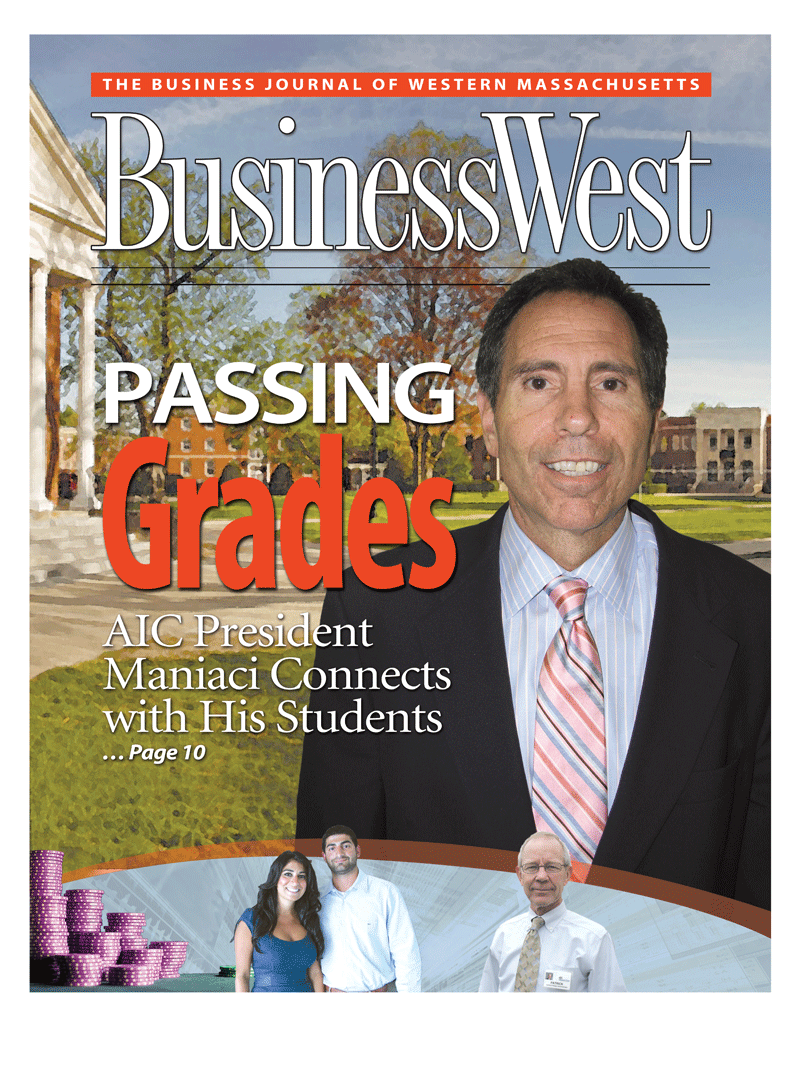
• The ‘eds and meds’ sectors remain strong and show promise to become even greater forces in the local economy. Baystate’s Hospital of the Future is on schedule to open soon, and most all area health care providers have survived the recent economic upheaval more or less intact. The pace of hiring has slowed, but it is still solid. On the higher-education side, schools like American International College have enjoyed strong growth (see story, page 10), while all the institutions in the region have contributed critical resources — especially their student populations — to help spur economic development in many forms, both in individual communities such as Westfield, Chicopee, and Holyoke, and across the region as a whole.
We haven’t even mentioned the high-performance computing center in Holyoke, the emerging ‘green’ business sectors, and the strong possibility that a casino will be built in Palmer or Holyoke over the next several years.
Add it all up, and there is indeed reason for optimism, not merely cause to look over the hill for locusts.

Opinion
Massachusetts Can Be a Model for Growth

During my travels across Massachusetts in the past few weeks, residents have expressed frustration and outright disgust with Washington. They don’t need Standard & Poor’s to tell them what they already know: Washington spends too much, borrows too much, and has for the most part been unable or unwilling to address our debt and deficit challenges in a bipartisan way.
We need to stop the finger-pointing and come up with a bipartisan and bicameral compromise to solve the nation’s fiscal problems. There are three key steps we need to take: cut spending, create a sound long-term fiscal plan, and enact a pro-jobs legislative agenda. In each case, recent history in Massachusetts can be a useful guide.
First, we need to stop spending so much.
In 2001 and ’02, the bursting of the technology bubble hit the Massachusetts economy hard. Our unemployment rate was growing faster than any other state in the country, and we faced a fiscal crisis that many experts said was the worst since World War II. The projected deficit for 2003 was nearly $3 billion.
But instead of raising taxes, Democrats and Republicans worked across the aisle: we tightened our belts and balanced the books by cutting spending. It wasn’t easy, but after some tough negotiations and resetting of priorities, we turned our deficit into a surplus, and the economy and jobs started coming back.
In Congress, we need to stop dithering and start looking at every opportunity for savings, both big and small. We can save at least $5 billion by stopping the ethanol subsidy, $15 billion by selling unused federal properties, and $150 billion by addressing the duplicative programs and improper payments recently brought to light by the Government Accountability Office. These are just a few examples of the waste that steals money from worthy projects. These are the types of bills we need to send to the president.
Second, Washington needs a solid long-term plan to get the $14.5 trillion federal debt under control.
In 2005, when S&P upgraded Massachusetts’ credit rating, it cited two key factors: reduced spending and greater budget certainty. Washington needs to do the same thing.
Many businesses in Massachusetts say they are paralyzed by uncertainty about Washington’s next move and overregulation. They can’t plan, and they are too nervous to hire new workers.
Congress needs to take a hard look at the long-term drivers of our debt — entitlements, the defense budget, annual spending, and our tax code — and have an honest conversation with the American people about how their money is being spent. Both Democrats and Republicans will have to accept less than 100% of what they want to get a big deal done, but that deal would give our job creators some of the stability that they are craving. And we must ensure that, in crafting reforms, those at or near retirement do not see changes to their promised benefits.
Finally, we need to implement a broad, pro-growth agenda.
In decades past, Massachusetts was often cynically referred to as ‘Taxachusetts’ and derided for its anti-business environment. But when the Legislature was faced with those daunting deficits in 2003, we didn’t panic and increase taxes. By holding the line, Massachusetts’ national tax burden ranking improved. We can do the same thing in Washington to compete globally. With personal income tax rates about to increase for millions of Americans in 2013, we need a broad tax-reform package that eliminates the special loopholes, simplifies the tax code, and lowers rates.
We should finally get moving on the stalled trade agreements with Korea, Panama, and Colombia that will open new markets to our products. And we should implement a common-sense approach to regulation that tells the world (including our own entrepreneurs) that America is open for business.
Americans know that borrowing 42 cents out of every dollar we spend is unsustainable, and that a record $14.5 trillion debt threatens our economic stability and future. However, despite our current challenges, America still has more potential for economic growth and job creation than any other country on earth. It’s time for us here in Congress and the administration to put our differences aside and do our job.

Scott Brown is a Republican U.S. senator from Massachusetts.

Manufacturing Sections
Company Makes Medical Instruments, Implants That Change Lives

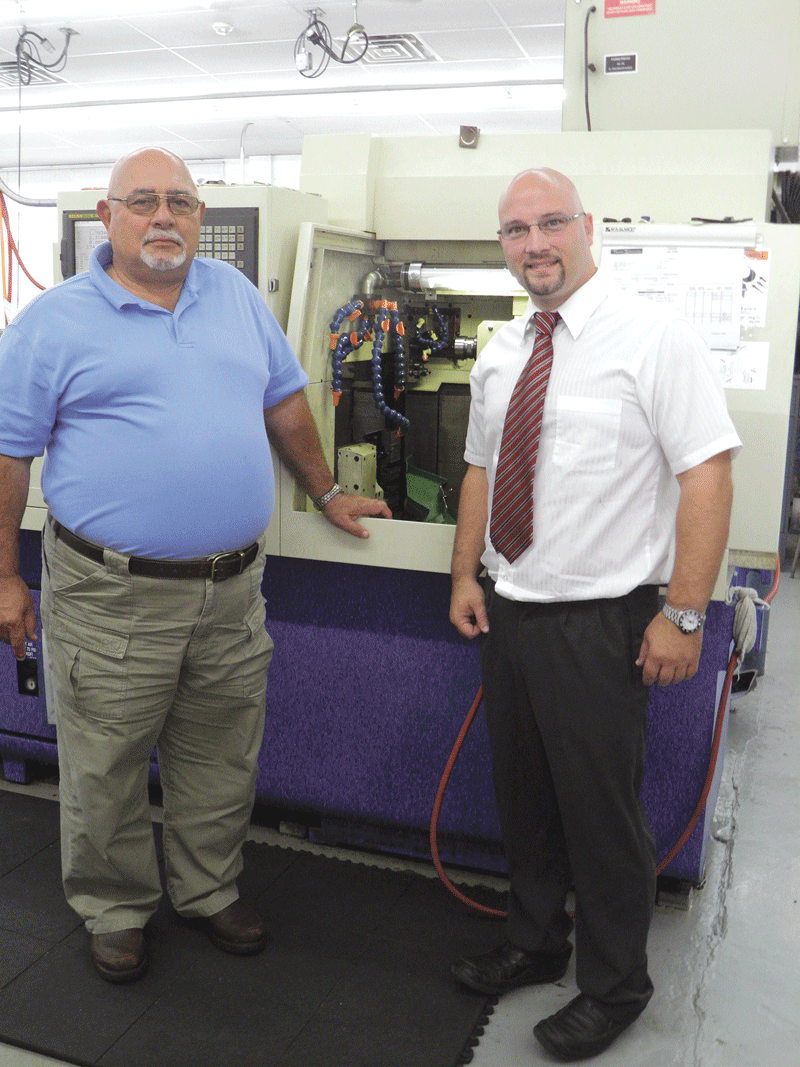
John (left) and Steven Hicks

John (left) and Steven Hicks say they take pride in being on the leading edge of innovations in medical equipment.


When most people get together at a party or with friends and someone asks what they do, it sparks a brief conversation.
But when Steven Hicks, general manager of Thorn Industries Inc. in Springfield, tells people that he makes implants for knee, hip, and spine surgery as well as instruments used by doctors to perform the operations, people launch into detailed stories about their own medical histories.
“Someone will say, ‘I have one of those implants in my neck,’ ” he said, adding that he often shows them the tiny cervical plate that dangles from his keychain. “People have told me about big screws they have in their legs or other implants. The product may not be something we made, but is often something similar. My nephew had problems with his knees, and I was able to show him pictures of a cadaver part and the section of meniscus that was torn in his knee.”
In fact, Thorn Industries is a family business that Steven and his father, John Hicks, who gave birth to the company, take tremendous pride in. “We’re always on the leading edge of something new in the medical field, and we enjoy hearing these stories and being a part of this field,” Steven said. “It’s a very challenging business, but at the end of the day, you know that someone is using your products to better people’s lives.”
Thorn manufactures instrumentation and implantable surgical devices for the spine, knee, and hip using state-of-the-art computer numeric-controlled machinery. It also does its own laser marking, using a laser to mark parts for customers, as well as a process called passivation, which cleans instruments and implants with citric acid to remove imperfections in stainless steel or titanium.
“This business appeals to us, as it’s not something everyone can do,” Steven said. “You need the proper certification, which is difficult to obtain, and we work hand-in-hand with many design engineers on proprietary projects. We’ve done studies in our building on cadaver parts for knee surgery as well as on human feet and a cow’s spine.”

Taking Root
Thorn Industries was launched in February of 2002, after John moved from his job at the manufacturing company where he had worked for 33 years. “It was clear that it was time to go off on my own,” he said. He operated for a short period of time in Ludlow, but when Blackstone Medical Co. invited him to move his company into its facility at 90 Brookfield Dr. in Springfield, he embraced the opportunity for growth.
“They knew the medical business and needed someone to do small jobs for them,” John said, adding that he rented space in Blackstone’s modern plant, which contained state-of-the-art machinery.
At that point, his son Steven, who had started working at age 15 in the same company where his father spent three decades, joined him in the venture. Steven is a manufacturing engineer and had also worked in the field of research and development.
Their business included manufacturing parts for the aviation and firearms industries. But their medical knowledge, which was limited, grew quickly as they worked closely with Blackstone’s engineers and designers, and learned how to resolve issues that involved quality control with members of that firm’s engineering and quality department.
As time went on, Blackstone asked Thorn to expand its production manufacturing, which meant it had to make an investment in new and expensive computer numeric controlled machinery. The company received a grant for $36,000, which they triple matched in order to meet the stringent requirements it took to obtain an ISO13485 certification, which was necessary to allow them to produce medical devices used in the human body.
The added expense meant they needed to acquire more customers to make their investment worthwhile. But they have done so and met with real success.
Nine years later, Thorn is among leaders in the manufacturing of medical devices and instrumentation in Western Mass., and has less than a handful of competitors. Today, it works with about 15 clients and produces approximately 20,000 pieces each month.
The products they make are intricate and cross a wide range of needs within the health care field. In addition to tools used by physicians during surgery, “we work with people who harvest bone and tissue for transplants and want new instruments to do their work,” Steven said. “An engineer will call us and present an idea, and we help the firm develop it from prototype to production.”

Budding Venture
It’s not unusual for Thorn to have a request for a customized medical instrument to fit a specific doctor’s hand. The company also makes instruments and implants to accommodate different-sized patients, and Steven says the “fit, form, and function” of each piece must be precise.
“The size of a doctor’s hand can vary, and many want a tool that fits it exactly,” he explained, adding that physicians are concerned with aesthetics as well as fit and the ease of using a new instrument. “Engineers come to us with their wishes, and we are also called upon to make things in different sizes so they can accommodate surgeries in children as well as adults.”
This is no small feat, as every instrument or implant requires a new prototype. In addition, each one must undergo stringent testing to ensure that it meets those requirements for fit, form, and function without fail.
For example, screws used in surgery must fit exactly inside a stacked tolerance. “You can over-engineer something and still have the right fit and function. But if there is a design flaw, it could break if there is too much pressure put on by an instrument,” Steven said.
It takes two to five prototypes to create a finished design, with the number dependent on its complexity. Once that process is complete, the instrument or medical device is used in cadaver labs, and lengthy testing is required before it can be marketed.
This type of risk analysis is critical, John said, to ensure that accidents don’t occur during surgery.
John and Steven have both watched and worked alongside engineers who have performed surgeries under their roof on cadaver knees and feet, and figured out changes that needed to be made in an implant or instrument.
However, John makes it clear that the utmost respect is paid when cadaver parts are used.
“The people who work on them always take a moment of silence before they begin their surgery to appreciate the person,” he explained. “They will make a cut, then stop because they are extremely careful about what they do. We saw a surgery done on a knee that was scheduled to have four more surgeries after it left our company. It’s not as simple as people think.”
Nor is the production of these instruments and implants used in the human body.
After all modifications have been made to a design that are deemed necessary, it is frozen. “No changes can be made after that, which is why it is important to hash out problems so that, once it is being used in the field, the probability of failure is minimal,” Steven said.
At that point, doctors are trained in the use of the new equipment and/or implant. However, every piece that is manufactured must be marked by the manufacturer, so it can be traced in the event of a problem. “They need to be able to find out who made it and what processes and materials were used in the event that something goes wrong,” Steven said.
John explained that the tools used today are not much different than those used 100 years ago. But the designs have become more sophisticated, and custom fitting and new ideas make the industry one that continues to evolve.
For example, a medical device that has a history of becoming easily contaminated and has many different parts may be modified so it can be disassembled and the parts can be sterilized after each surgery. “Old designs are weaned out as engineers analyze how surgery can be done faster and more efficiently,” Steven said.

Scoping Things Out
The firm also continues to do work in the field of aerospace manufacturing as well as firearm production. But the bulk of its business is dedicated to helping improve people’s lives, which is accomplished with a staff of 12 employees and a team of support people.
“There are always new designs, and we have to keep a competitive edge,” Steven said. “We are always on the cutting edge in terms of equipment and personnel.”
Which makes for some really interesting conversations.

Health Care Sections
How to Ease a Loved One’s Transition to the World of Assisted Living

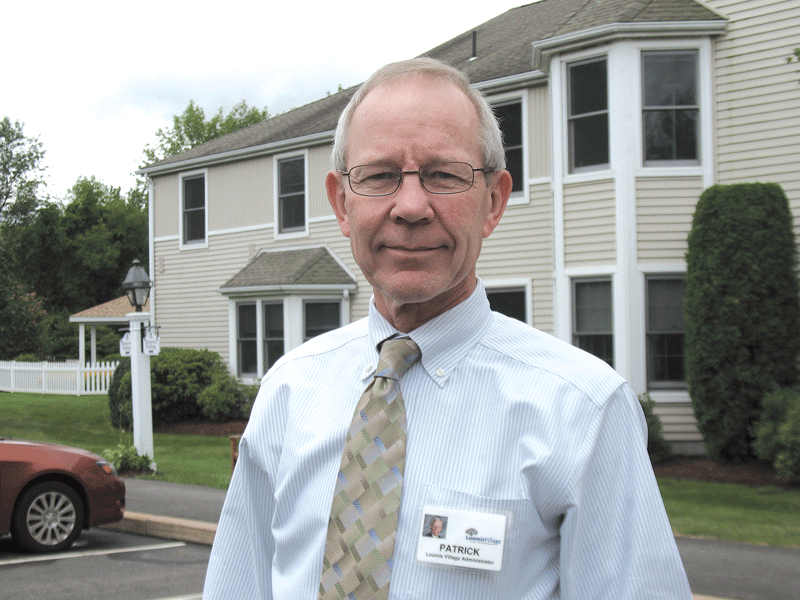
Patrick Laskey

Patrick Laskey says educating families about what assisted living is — and isn’t — goes a long way toward relieving anxiety.

It’s something that seniors and their loved ones are often reluctant to talk about. But the topic of assisted living should be addressed long before it becomes necessary, say administrators and marketing coordinators at area retirement communities. But even for families who have had those conversations, making the transition from independent to assisted living can be challenging. Here’s how to make it a little easier — and why many residents find that what they once feared is a lifestyle they now love.

It’s something no one wants to think about, but should.
“In today’s society, seniors are very willing to talk about what they’re going to do early in retirement, and willing to talk about what they’ll do with their estate after they’re gone, but they’re very reluctant to have a conversation about when they will need care,” said Elena Leon, director of community relations for Orchard Valley at Wilbraham.
“They don’t know what needing care means: is it when they can no longer prepare meals? When they can’t walk so well, hear so well, see so well? When it’s no longer safe to walk out of the tub or shower?”
The fast-growing field of assisted living provides an opportunity for older Americans to enjoy the comforts of a home-like setting, plenty of activities and socialization, along with the help they might need — from bathing and dressing to housecleaning and medication reminders — to get through each day.
Yet, many are so attached to the house they might have called home for decades that leaving it is terrifying, even when diminished faculties, and perhaps the loss of the ability to drive, have left them isolated.
“If you’re sitting looking at the four walls or the TV all day, but your human interactions are lost, you may be staying at home, but what’s the value of that life?” Leon asked. “Are you living life, or just waiting for the end? The thing about assisted-living communities is, there’s a life to be lived, so let’s live it, not just look at the calendar and check off another day.”
Administrators at several area senior-care facilities had similar perspectives on the value of assisted living. But the transition from independent living to a different model can still cause plenty of anxiety for seniors terrified of giving up the familiarity of what they have, and families worried about an aging parent’s safety but confused about the care options available.
Patrick Laskey, administrator of Loomis Village in South Hadley, said the challenges of entering assisted living can vary greatly depending on the circumstances surrounding the transition.
“Some people come in crisis; they’ve been alone and independent, or with their spouse, and then some event happens that brings them to the hospital — some difficulty comes to light — and they suddenly need assisted living,” Laskey said. “That’s often the most difficult for residents and families because they’re the least prepared for it. They’re discharged from the hospital, and it’s, ‘oh my God, what are we going to do?’
“They’re under duress, because they haven’t planned it out,” he added, noting that it’s a good idea for families to begin thinking about such contingencies in advance, in case a loved one suddenly does need additional care.
Leon agreed. “I’m a big advocate of having a plan,” she told BusinessWest. “Otherwise, you’re waiting for a hip fracture, or a wandering incident with dementia, or some other precipitating incident that forces the move, and why put yourself and your loved one through that suffering? The last thing you want is to have this suddenly thrust upon you at the hospital bedside.”
In this issue, the BusinessWest explores the questions families must grapple with when a loved one needs more care than they can get at home — and why they shouldn’t put those questions off.

When a House Isn’t a Home

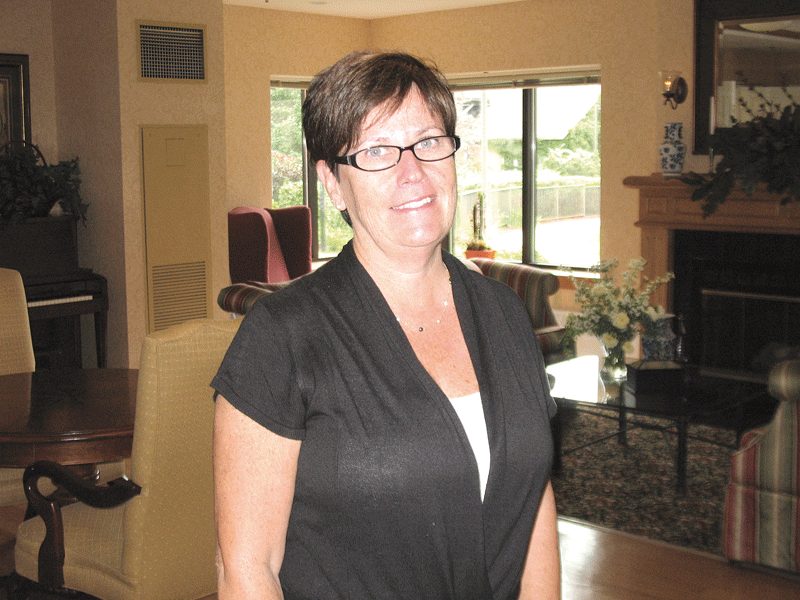
Mary Phaneuf

Mary Phaneuf says a house can become a prison for many seniors, and assisted living frees them to keep on living in a quality way.

Mary Phaneuf, regional marketing director of the Arbors, said it’s natural to want to stay in a house that might have been home for decades, but sometimes an older person needs some prodding to realize it’s no longer an ideal place to be.
“They say, ‘I want to keep that house,’ but when the house doesn’t benefit you anymore, it becomes a prison,” she said. “Assisted living opens up opportunities to keep on living in a quality way.”
What is changing is the public awareness of assisted living, a care model between independent senior housing and nursing homes that has come into prominence in the past 20 years, and will continue to grow as the Baby Boomers head into the retirement years.
“Adult children want to see their parents enjoying things, and they see they’ve lost that in their homes — their eyesight is bad, their hearing is bad, they can’t drive anymore, and when they’re home, they tend to isolate themselves,” Phaneuf said. “But when those opportunities are available to them again, they tend to blossom and enjoy life again.
“We don’t cure diseases, and we don’t prevent people from aging,” she added. “We don’t fix any of those things. But we can allow them to enjoy life to the best of their ability until they’re no longer with us. That’s what our goal is.”
But potential residents and families need to educate themselves first on the benefits of assisted living — and to do it well in advance of actually needing it, said Beth Vettori, administrator of Rockridge Retirement Home in Northampton.
“There’s a trend in society that people generally don’t start thinking about whether they need to move or need services until something happens that forces their hand,” she said. “So one thing assisted-living communities do to help facilitate the transition is to offer a lot of programs and informational sessions for families and potential residents.”
Education has become even more important in recent years, Laskey noted, considering that the trend — perhaps driven by economic strains — seems to be people waiting longer to make the move.
“They feel a need to stay in their houses as long as possible, and they’re presenting themselves with a greater number of challenges, in terms of their own health and support,” he explained. “They may have two, three, four chronic medical conditions, and they’re coming in with what we call a higher acuity level, needing more support than in the past.”
Laskey pointed out that educating families about what assisted living is — and isn’t — helps ease anxieties simply by painting an accurate picture of what to expect. And it’s an important part of the process, since the term ‘assisted living’ has been used in the elder-care community to describe a wide range of models, from home care to skilled nursing care.
For Loomis, “assisted living is residential care; it’s a residential environment, not a health care facility,” he noted. “There’s still a lot of misinformation — some people expect a health care facility, and even people who say ‘I want to be independent’ often have a desire for more medical support.
“So we do a lot of educating,” he continued. “Our approach to assisted living is to assist people with being more independent, not to take care of people. We want you to have the highest level of function, comfort, and safety, but people are still independent, and have rights of privacy, self-determination, and choosing their own providers. That’s our day-to-day philosophy here.”
Jacqueline Marcell, an author, speaker, and advocate for elder care issues, also argues for starting the conversation early — while the potential resident is still in good health — in an essay published at www.seniorhousingnet.com.
“Getting them used to the idea beforehand will make it easier when the time comes,” she writes, adding that the senior’s safety is the most important factor, so families should not be deterred by his or her reluctance to discuss the issue.
“If you know that they cannot remain in their home safely, don’t let your emotions override what you know needs to be done,” Marcell adds. “Don’t wait for a broken hip, a car accident, or a crisis call before you step in. Recognize that, when you were a child, your parents would have done everything possible to keep you safe. Now, as hard as it is, you have to be the ‘parent,’ and you have to make the best decisions for their safety.”

Moving Right Along
Even for someone who recognizes the need for assisted living, the move itself can be traumatic, Laskey said, especially if leaving behind a large house, as opposed to an independent-living apartment.
“A major barrier can be how they’re going to downsize,” he told BusinessWest. “That can intimidate a lot of people into avoiding the decision to move — they just have too much stuff.”
To that end, Loomis provides professional organizers to help wade through the downsizing process, which can be daunting, especially for someone who has lived in the same house for many years.
“You can’t fit a 13-room house into a two-room apartment, so you bring the most important things with you,” Leon said, adding that family members can be great helps in whittling down the pile to the most treasured possessions. “You don’t leave your life behind — you take it with you, and look forward.”
She admits it’s not an easy task for many Baby Boomers.
“I’ve moved a dozen times in my adult life, and the next generation [to retire] will probably know how to move, but this current generation, they didn’t move. They didn’t change careers; they purchased or built one home, and that’s still the home they’re in, and they don’t relate to the whole process of relocation. And they can become frozen with fear because it’s too large a concept to think about, and it’s easier to do nothing.”
Vettori stressed the importance of furnishing a unit with the resident’s favorite furniture and decorative items, but just as important is relieving their loved one as much as possible of the burden of the actual, physical move.
“I highly suggest making sure they set up the apartment, cottage, or suite beforehand, so when they person moves in, they’re not faced with that overwhelming sense of, ‘oh my goodness, look at all this stuff boxed up that I have to unpack.’ Instead, they have the ability to walk into a very familiar, very welcoming place.”
Even after the move, many seniors initially struggle with anxiety over this new life, but most adjust well, Vettori said, adding that residents tend to support newcomers with a welcoming committee or buddy system to get them active in their new community.
Laskey said a hospitality committee at Loomis takes new residents under its wing for the first week or so, taking them to dinner and events and basically making the transition as painless as possible.
“We’re not into bringing in people who don’t want to be here and don’t belong here,” he said. “But it can be traumatic when a person moves in; they can feel a loss of individuality, and some have trouble adjusting. That’s not abnormal. But most people stay, and, if you talk to them, most of them love it.”
Leon reported similar experiences at Orchard Valley.
Assisted living is “about safety and care, but also about that social element,” she told BusinessWest. “Aging is not kind, but we want to make it the best, most joy-ridden experience we can. We have to learn how to play again and take pleasure, and not just endure.”

Joseph Bednar can be reached at [email protected]

Health Care Sections
Understanding the Pros and Cons of This Handy Estate-planning Tool

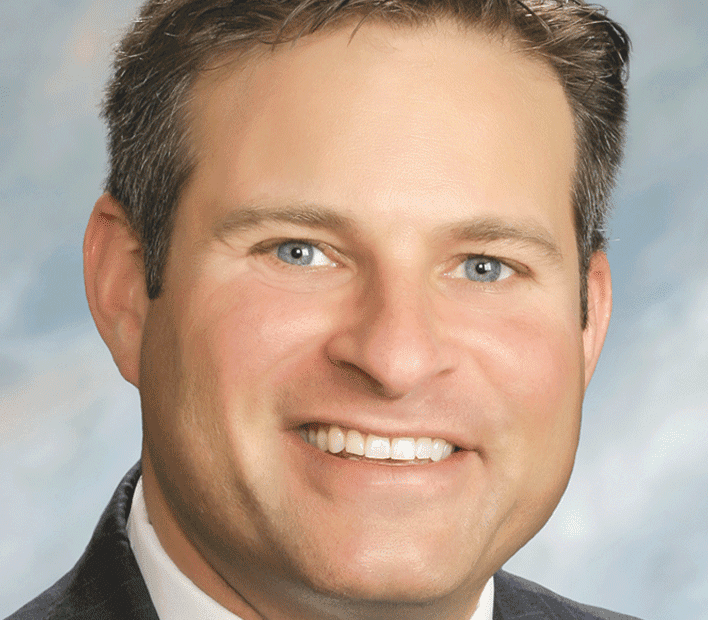
Todd C. Ratner

Todd C. Ratner

Your home is typically the most valuable asset that you own. Estate-planning and elder-law attorneys are frequently asked how one’s home can ultimately be transferred to a client’s children without the necessity of probate or exposure to long-term care expenses.
One particularly useful and common document for this is called a deed with life estate. It has many advantages; however, there are some issues that must be discussed and resolved prior to the transfer to ensure that it will be in the best interests of all those involved.

Demystifying the Deed
A deed with a reserved life estate is used when you wish to both pass your real property to someone upon your death and also protect the property from nursing-home liens. This document may also make it possible for you to live in and maintain control of the property until your death.
The individual or individuals reserving the life estate are referred to as life tenants. The individual or individuals that receive a future interest in the property are referred to as remaindermen. The procedure to complete this transaction involves the execution of a deed, which is recorded in the appropriate Registry of Deeds.
The life tenant has certain duties and obligations to fulfill, including responsibility for paying real-estate taxes and homeowner’s insurance, and making all repairs and performing all maintenance required to keep the property in good working order.

Potential Benefits
There are significant potential benefits when utilizing a deed with life estate.
• Probate avoidance: Upon the death of the life tenant, the life estate is extinguished. The remaindermen become the full owner(s) of the property, thereby avoiding probate. Avoiding probate saves the estate the expense, time, and publicity of the probate process.
• Protection from nursing home liens: A deed reserving a life estate is a gift that triggers a five-year waiting period for Medicaid benefits. Five years after the transfer, the penalty period expires, and Medicaid benefits can be obtained without having to sell the home. Therefore, this technique is best-utilized when it is unlikely that you would be admitted to a nursing home within five years.
• Stepped-up basis: Since your home remains an asset in your estate for estate-tax purposes, at the time of your death, the remaindermen will receive a ‘stepped-up’ basis in the real estate that is equal to the fair market value of the real estate at the time of your death. This means that, when the remaindermen sell the property, they should be able to avoid capital-gains tax if the property does not appreciate in value prior to the sale. This typically helps reduce or eliminate your heirs’ potential tax liability.

Inherent Risks
As attractive as this transaction sounds, there are some potential pitfalls and risks that you should carefully consider prior to executing a deed with life estate. When you sign this document, you give an actual interest in your property to the remaindermen. From that point onward, should you ever wish to sell or mortgage the property, you and all of the remaindermen must agree to do so, and all of you would need to sign the necessary documents.
In addition, in the event that any of the remaindermen experience financial or legal difficulties, such as divorce or bankruptcy, their interest in your property will be considered an asset in the proceedings. As such, you should assess the risk for these potential difficulties prior to transferring your property.
A deed reserving a life estate is not an option to be undertaken without serious consideration. There are other options available when it comes to protecting your home from nursing-home costs or avoiding probate. When determining your best course of action, it is highly recommended that you consult an experienced estate-planning or elder-law attorney so that you understand all considerations, options, and alternatives.

Todd C. Ratner is an estate-planning, business, and real-estate attorney with the law firm Bacon Wilson, P.C. He is a member of the National Academy of Elder Law Attorneys and the Estate Planning Council of Hampden County. He is also a recipient of Boston Magazine’s Super Lawyers Rising Stars distinction from 2007 to 2010; (413) 781-0560; baconwilson.com/attorneys/ratner_2

Employment Sections
In Collective Bargaining, Employers Have to Watch What They Say

By FREDERICK L. SULLIVAN, Esq.

The general council for the National Labor Relations Board (NLRB) recently issued guidelines to the agency’s regional offices on prosecuting unfair labor practice charges against employers that refuse to give information to unions during collective bargaining.
Generally, under existing labor law, a union is entitled to information about the bargaining unit employees’ terms and conditions of employment. But when the requested information involves matters outside the bargaining unit, the union bears the burden of showing the relevance of the requested information to the union’s bargaining responsibilities for its unit members.
Additionally, an employer’s statements or proposals during actual negotiations may make financial or other specific and limited information relevant to negotiations — and, thus, information that the union is entitled to request and to receive. For example, employer statements of an ‘inability to pay’ or ‘cannot afford’ will trigger an obligation to provide financial information if the union requests it.
The general counsel stated that there are no magic words required to create the employer’s obligation to provide financial information. Whenever the employer’s statements and action convey an inability to pay, the obligation is established. Thus, claims of economic hardship, business losses, prospect of layoffs, a matter of survival, or a comment such as, “acceptance of the offer would enable the company to retain your jobs and get back in the black,” in the context of the particular bargaining, have been found to amount to a claim of inability to pay that gives rise to an obligation to provide requested financial information.
The general counsel told NLRB regional directors to distinguish between general claims of inability to pay that give rise to financial information obligations and other, more limited employer claims that can be the subject of a union’s demand for verification. Besides inability statements, an employer may make a statement during bargaining that, according to the NLRB, will give rise to an obligation to provide the union with specific requested information.
For example, when an employer claimed a need to be more competitive, the NLRB ordered the employer to provide the union with competitor data, labor costs, and other information relevant to the claim. General counsel said a union is entitled to information tailored to what allows the union to evaluate specific employer assertions made during bargaining.
General counsel instructed the NLRB regions to analytically distinguish between inability to pay and an employer’s obligation to provide information in response to a specific claim by the employer made during negotiations, e.g., an inability to compete.
This year the NLRB ruled that a union is entitled to specific information regarding an employer’s job-bidding practices because the employer had contended in bargaining that its wages and benefits affected the employer’s ability to get and receive job bids. The NLRB ruled that a union is entitled to information that supports or disproves an employer’s representation.
The general counsel is advising the NLRB’s regional offices to pay close attention to an employer’s words used to support the employer’s bargaining position or used as reasons to reject a union’s proposal. The NLRB is entertaining demands that an employer verify whatever it communicates to the union as the reason for the employer’s position.
Employers need to be very deliberate in how they articulate reasons for their bargaining positions. Loose, unthinking statements can be seized upon by a union to demand all sorts of data and information from the employer. Before using references to costs, competition, etc., the employer should determine if it has data to support its claim and whether it will be willing to provide the information to the union. The current NLRB is moving employers toward a position of having to verify statements that in the past may have been considered part of the bargaining banter.
Now, much more than before, with the current NLRB administration, an employer has to develop a plan for each position that it takes on each proposal and counterproposal. Plus, an employer has to calculate how it will describe its positions and how it will respond, in detail, to union questions about the employer’s reasons so as to avoid giving rise to unintended information obligations. The general counsel’s emphasis on this topic and instructions to the NLRB regional offices constitute a move toward greater power in bargaining for union representatives.

Frederick Sullivan is a founding partner with the Springfield-based firm Sullivan, Hayes & Quinn, which represents employers in labor and employment-law matters; (413) 736-4538.

Columns Sections
Know the Rules of the Road — and the Restaurant — to Avoid Trouble

Jennifer Reynolds

Jennifer Reynolds

Questions continually arise regarding various types of employee expenses, reporting requirements, and the deductibility of certain kinds of expenses. With heightened scrutiny by the IRS, it can be difficult to determine whether or not a meal, entertainment event, or a travel expense qualifies for a tax deduction.  This article will describe the most common expense reimbursements paid by employers, as well as the deduction rules and reporting requirements mandated by the IRS.

Meals and Entertainment
The IRS requires a taxpayer to jump through a number of hoops in order to qualify for this deductible expense. Once the documentation requirements are met, the deduction is limited.
In order for meals and entertainment expenses to qualify for the deduction, the expense must first be an ‘ordinary and necessary’ business expense. This criteria is not exclusive to meals and entertainment; rather, all business expenses must meet the general deductibility requirement of being ordinary and necessary. This term is broad and implies customary or usual in carrying on business. Therefore, if it is reasonable in your business to entertain clients or other business people, you should pass this test.
Second, the expense must be ‘directly related to’ or ‘associated with’ the business.  ‘Directly related to’ involves an active discussion with the anticipated result of gaining immediate revenue. Here, as a business owner or employee of a business, you must anticipate receiving a specific concrete business benefit. General goodwill or making a client, customer, or associate view you in a favorable light will not qualify under this test.  Further, the principal purpose for attending this event must be business, and you must be actively engaged in business discussion during the event or meeting.
Alternatively, the ‘directly related’ test can be met if the meal or entertainment takes place in a clear business setting, in furtherance of your business. Meetings or discussions that take place at venues such as sporting events, nightclubs, or cocktail parties (i.e. social events) would not meet this test.
However, if the ‘directly related’ test cannot be met, the expense may still qualify under an alternative ‘associated with’ test, where the expense may qualify if it is associated with the active conduct of business, or if the meal or entertainment event precedes or follows (basically takes place on the same day as) a substantial and bona fide business discussion. This test is much easier to satisfy, because it allows the ‘goodwill’-type entertainment, such as the sporting event, nightclub, or cocktail party referenced earlier, to qualify as serving a business purpose.
The event will be considered ‘associated with’ the active conduct of a trade or business if its purpose is to get new business or encourage your existing clients or customers to continue their business relationship with your company. For meals, the owner or an employee of the company must be in attendance at the event. This means that, if you simply cover the cost of a client’s meal after a business meeting but you do not join him or her, that expense will not qualify as a deductible business expense.
Assuming the expense meets the ‘directly related’ or ‘associated with’ test, the expense must then be adequately substantiated to prove that it qualifies as a deductible business expense. The use of reasonable estimates is not sufficient to stand up to an IRS challenge; you must be able to establish the amount spent, the time and place, the business purpose, and the business relationship of the individuals involved.
Careful and detailed recordkeeping procedures should be maintained in order to keep track of each business meal and entertainment event, and the justification for its business connection. Further, for expenses of $75 or more, documentary proof (such as a receipt) is required.
Once the business purpose test is met, the expenditure is subsequently limited to a 50% deduction. For example, if you spend $2,500 per year on meals and entertainment, only $1,250 will be deductible, further limiting the tax benefit of business meals and entertainment.

Auto Expenses
Another area of heightened IRS scrutiny is auto-related deductions. The business standard mileage rate is the most common method of reimbursing an employee’s auto expense. Reimbursements based on the business mileage rate are in lieu of reimbursing employees for the actual fixed and operating costs, such as depreciation, maintenance, fuel, etc.
If an employer pays an employee a mileage reimbursement, this reimbursement may be excluded from income provided that the time, place, and business purpose for the travel are substantiated. This substantiation must meet or exceed the amount of allowance paid by the employer. Proof generally is made by substantiating the dates, location, miles, and business purpose of the travel. For 2011, the optional standard mileage rate is set at 51 cents per mile for business use through June 30, 2011 and 55.5 cents per mile on or after July 1, 2011.
If, however, the allowance paid to the employee exceeds the actual substantiated mileage rate, the excess must be treated as taxable compensation on the employee’s W-2.  It is important to note that not only employees, but business owners must comply with the substantiation requirements for mileage allowances. Even though there may be no question as to the deductibility of the expense, the expense may be disallowed by the IRS for lack of contemporaneous documentation to properly substantiate the expense.

Out-of-town Travel
Business deductions are allowed for business conducted out of town, which reasonably requires an overnight stay. The actual cost of travel, including plane fare, cab fare to the airport, etc., are deductible, in addition to the cost of meals and lodging. Meals will be deductible even if they are ‘personal,’ (not connected with business), although they will again be limited to the reduced deduction (generally 50%).
Personal entertainment costs incurred on the trip are not deductible, but business-related costs such as dry cleaning, phone calls, or computer rentals will be deductible.  Further, if a meal or lodging expense is considered ‘lavish or extravagant,’ a term interpreted to mean ‘unreasonable,’ no deduction will be allowed.
If you combine business and pleasure on a trip, it will be necessary to allocate deductible versus non-deductible business expenses. For example, if you fly to a location for five days of business meetings and stay for an extended period of vacation, only the costs of meals, lodging etc. for the travel days pertaining to business are deductible. The IRS does not allow deductions for expenses incurred during personal vacation days.
However, with respect to the travel itself (plane fare, for example), if the trip is ‘primarily’ business, the travel cost is fully deductible.  Alternatively, if the trip is primarily personal, none of the travel costs are deductible.  A significant, but not exclusive, factor in determining the primary purpose of the trip is the amount of time spent on each. The IRS has heightened scrutiny surrounding conventions and seminars.   They will check the nature of the meetings carefully to determine if they are vacations in disguise. It is important to save all materials helpful in establishing the business or professional nature of the travel.
In addition, the rules for deducting costs incurred for a spouse accompanying an employee or business owner on a trip are very restrictive. No deduction for additional spousal travel costs will be allowed unless the spouse is an employee and there is a business purpose for the travel. Moreover, personal expenses incurred at home as a result of taking a business trip are not deductible. For example, pet boarding while away is not a deductible business expense.
This article is intended to give some general guidance surrounding deductibility of business expenses. As always, you should consult your tax advisor or legal advisor before applying this general information to your specific tax situation.

Jennifer Reynolds is a tax manager with the certified public accounting firm Meyers Brothers Kalicka, P.C., in Holyoke.

Departments Picture This

Send photos with a caption and contact information to:  ‘Picture This’ c/o BusinessWest Magazine, 1441 Main Street, Springfield, MA 01103 or to [email protected]

Community Response

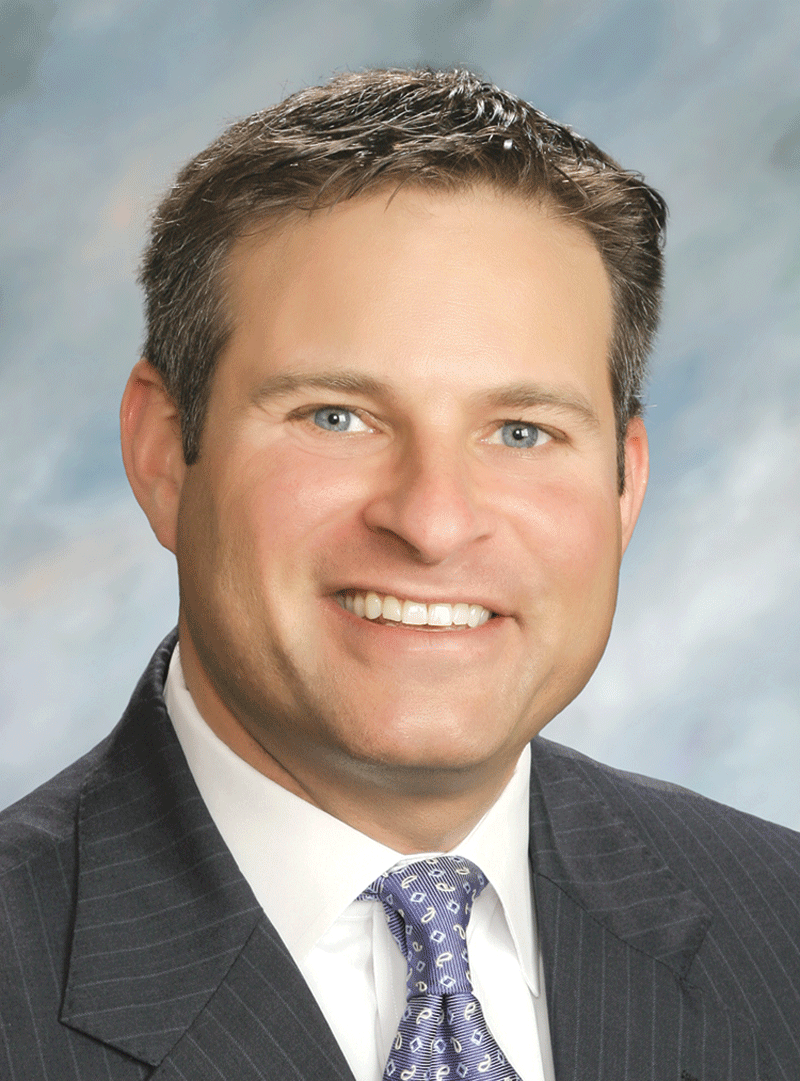
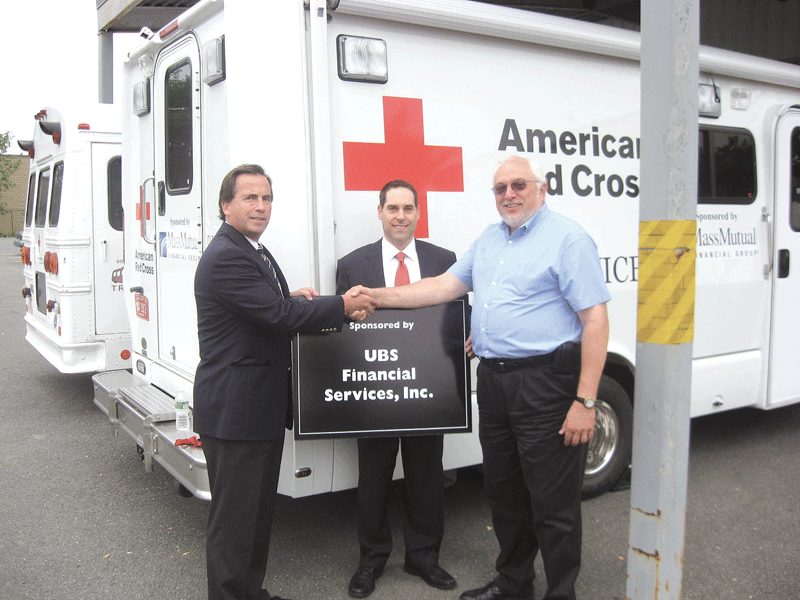
The American Red Cross Pioneer Valley Chapter has benefited from a recent outpouring of generosity from area individuals and businesses. At top left, the chapter’s executive director, Rick Lee (right), accepts a check for $20,000 from UBS Financial Services in Springfield to support local disaster-relief and recovery efforts. The check, representing a corporate donation, a company matching gift, and employee contributions, is presented by George Keady III, UBS senior vice president and branch manager (left), and James Calabrese, UBS account vice president. Bottom, the staff of Texas Roadhouse in Springfield presents a $13,000 donation to Mary Nathan, the chapter’s director of Disaster Services. The restaurant fed victims of the June 1 tornadoes and helped with cleanup, then coordinated a fund-raiser involving Texas Roadhouse restaurants all over New England to raise the $13,000 donation.

Agenda Departments

AIM Executive Forum
Sept. 16: Ralph de la Torre, chairman and CEO of Steward Health Care Systems, will be the guest speaker at the Associated Industries of Massachusetts Executive Forum at the Waltham Westin Hotel. He will discuss how his organization has grown into the largest integrated community health care organization in New England and its plans to reshape the health delivery landscape. Registration, which includes breakfast, is $55 per person, $90 for non-members, for the 7:45 to 9:15 a.m. program. To register, visit www.aimnet.org or call Julie Fazio at (617) 262-1180.

Classic Car Show
Sept. 18: The Chicopee Rotary Club will sponsor its 10th annual Classic Car Show in the Big Y parking lot on Memorial Drive in Chicopee. The event, staged from 9 a.m. to 3 p.m., recognizes over 30 different classes of cars with awards. The committee is soliciting for sponsorships as well as car registrations. Preregistration is $10, while registration that morning is $15. Trophies will be given in all categories, and all presenters will receive a dash plaque. Admission to the car show is free to the community and includes an airbag-deployment demonstration at noon. Refreshments will be available throughout the day. As a fund-raising event, the show raises money for the club’s many projects, including its Helping Hands Program, which provides holiday meals to economically disadvantaged families, and also supports the Polio Plus Project, which fights to eliminate polio throughout the world. Proceeds from this event will also directly benefit the Chicopee Elks Club’s annual Veteran’s Day Dinner. For more information or to obtain a registration, call Don Roy’s Auto Body at (413) 593-5010.

Trademarks Webinar
Sept. 20: Donald Holland, Esq. will present a webinar titled “Protect Your Trademarks” beginning at 11 a.m. for approximately 40 minutes. He is the senior partner at Holland & Bonzagni, P.C., based in Longmeadow. Webinar attendees will have the opportunity to ask specific questions at the end of the presentation. For more information or to register, visit www.hblaw.org/webinars or call (413) 567-2076.

STCC Ovations Series
Sept. 21: Mime Robert Rivest will lead off the Ovations special-events series at Springfield Technical Community College with performances scheduled at 10:10 a.m. and 11:15 a.m. in Scibelli Hall Theater. For more information or to bring a group, contact Ovations coordinator Phil O’Donoghue at (413) 755-4233 or [email protected].

Instant Issues Lunch Series
Sept. 21: The Hon. Patrick Binns, Canadian consul general to New England, will be the guest speaker at the Instant Issues Brown Bag Lunch Series, sponsored by the World Affairs Council of Western Mass. His noon lecture is titled “Beyond the Border: Canada-New England Relations.” Before coming to Boston in 2010, he served as Ambassador of Canada to Ireland. The event is planned at One Financial Plaza, community room, third floor, at 1350 Main St. (corner of Main and Court), Springfield. The cost is $5 for members, $15 with lunch; or $10 for nonmembers, $20 with lunch. For reservations prior to Sept. 19, call (413) 733-0110.

Filmmaker at STCC
Sept. 23: Lawrence Hott, documentary filmmaker, will talk about his upcoming work, The War of 1812, as part of the Ovations special events series at Springfield Technical Community College. His presentations are scheduled at 10:10 a.m. and 11:15 a.m. in Scibelli Hall Theater. In describing this war, Hott will also bring attendees into the world of the documentary film and its process. For more information or to bring a group, contact Ovations coordinator Phil O’Donoghue at (413) 755-4233 or [email protected].

Patents Webinar
Oct. 4: Donald Holland, Esq. will present a webinar titled “The Basics of Patents” beginning at 11 a.m. for approximately 40 minutes. He is the senior partner at Holland & Bonzagni, P.C., based in Longmeadow. Webinar attendees will have the opportunity to ask specific questions at the end of the presentation. For more information or to register, visit www.hblaw.org/webinars or call (413) 567-2076.

Western Mass. Business Expo
Oct. 18: Businesses from throughout Hampden, Hampshire, Franklin, and Berkshire counties will come together for the premier trade show in the region, the Western Mass. Business Expo, produced by BusinessWest, and staged at the MassMutual Center in Springfield. The show will feature breakfast and lunch programs arranged by the Affilaited Chambers of Commerce of Greater Springfield, nearly two dozen seminars on the business issues of the day, several presentations in the Show Floor Floor Theater on timely topics, and the sophisticated networking program known as Mine Your Business. The day will conclude with a networking social from 2 to 4 p.m. The cost for a 10-by-10 booth is $700 for members of all area chambers, and $750 for non-members; corner booths are $800 for all chamber members and $850 for non-members, and a 10-by-20 booth is $1,200 for all chamber members and $1,250 for non-members. For more information, log onto www.businesswest.com or www.WMBExpo.com, or call (413) 781-8600, ext. 100.

Trade Secrecy Protection Webinar
Oct. 20: Donald Holland, Esq. will present a webinar titled “Trade Secrecy Protection” beginning at 11 a.m. for approximately 40 minutes. He is the senior partner at Holland & Bonzagni, P.C., based in Longmeadow. Webinar attendees will have the opportunity to ask specific questions at the end of the presentation. For more information or to register, visit www.hblaw.org/webinars or call (413) 567-2076.

Cartoonist Lecture
Oct. 21: Cartoonist Leigh Rubin, renowned for the comic strip Rubes, will be the featured speaker as the Ovations special-events series continues this fall at Springfield Technical Community College. Rubes is syndicated in more than 400 newspapers and publications worldwide. His presentations, at 10:10 a.m. and 11:15 a.m. in Scibelli Hall Theater, will cover art, satire, and communication. For more information or to bring a group, contact Ovations coordinator Phil O’Donoghue at (413) 755-4233 or [email protected].

Entrepreneurship Lecture
October 27: Sue Morelli, chief executive officer and president of ABP Corp., will be the guest speaker at Bay Path College’s Innovative Thinking & Entrepreneurship Lecture Series in Longmeadow. Since joining Au Bon Pain in 1988, Morelli has worked her way up the ranks of the Boston-based, fast-casual bakery and café to become president and CEO in 2006. Under her leadership, the company now has more than 300 store locations, with almost 200 in the U.S. and the remainder in Thailand, India, South Korea, and the Middle East. She is currently leading a redesign of store interiors, a major menu transformation, and the opening of more than 30 new cafés per year. The lecture begins at 8:15 a.m.; a networking continental breakfast starts at 7:30 a.m. For more information, visit www.baypath.edu.

Serious Fun Event
Nov. 10: MassINC and CommonWealth magazine will host a seriously funny look back at the year in politics and media with pols, pundits, and the press. All proceeds will support MassINC’s CommonWealth Campaign for Civic Journalism as well as a scholarship program for those who are entering the field. The event is planned at the John F. Kennedy Presidential Library and Museum, with cocktails at 6 p.m. and dinner and the program starting at 7:30 p.m. For more information, visit www.seriousfun2011.org or contact Lauren Louison at (617) 224-1613 or [email protected].

Court Dockets Departments

The following is a compilation of recent lawsuits involving area businesses and organizations. These are strictly allegations that have yet to be proven in a court of law. Readers are advised to contact the parties listed, or the court, for more information concerning the individual claims.

CHICOPEE DISTRICT COURT
William Leahy v.Wal-Mart Inc.
Allegation: Negligent maintenance of premises causing slip and fall: $45,717.18
Filed: 4/5/11

HAMPDEN SUPERIOR COURT
Cherokee Enterprises v.Northeast Contractors Inc.
Allegation: Breach of contract: $25,000
Filed: 6/6/11

Ernie Hernandez v.Poolman Pool & Spas
Allegation: Negligence in pool installation: $34,194
Filed: 3/30/11

Edward T. Koczur v.Daniel J. O’Connell and Plumb & Mackinnon, P.C.
Allegation: Employment retaliation: $25,000+
Filed: 6/10/11

Pioneer Valley Concrete Services v.
AM Lithography Corp.
Allegation: Non-payment of materials and labor on a construction project: $25,414.50
Filed: 4/15/11

Standard Plating Co. v.Specialty Loose Leaf Inc.
Allegation: Failure to pay for services: $80,850.75
Filed: 4/11

HAMPSHIRE SUPERIOR COURT
Kapiloff’s Glass Inc. v.Ralph’s Blacksmith Shop
Allegation: Breach of contract against subcontractors for labor and materials: $69,733.37
Filed: 7/12/11

NORTHAMPTON DISTRICT COURT
C&S Trucking Inc. v.Northeast Mesa, LLC
Allegation: Breach of contract for failure to pay amounts due: $21,745
Filed: 7/6/11

Nadim Kresmid v.C&S Wholesaler Inc.
Allegation: Plaintiff was run over by a forklift at C&S Wholesaler: $229,815.76
Filed: 6/28/11

Paul Bacon v.Lockwood Construction
Allegation: Breach of contract for failure to pay purchase price: $15,000
Filed: 7/6/11

SPRINGFIELD DISTRICT COURT
Chase Glass & Allied Products Inc. v.Miller Development and US 1 Construction, Inc.
Allegation: Breach of contract for labor and materials on a construction project: $12,591.30
Filed: 6/1/11

Liberty Mutual Fire Insurance Co. v.Mula Materials Corp.
Allegation: Non-payment on two workers’ compensation policies: $11,147.73
Filed: 6/20/11

Meravic Inc. v.Floral Fantasies by Lois Inc.
Allegation: Breach of contract and unjust enrichment: $5,385.20
Filed: 6/17/11

Optimum Building & Inspection Corp. v.Lizotte Glass Inc.
Allegation: Breach of contract for labor and materials on a construction project: $13,198.67
Filed: 6/20/11

The Professional Agency Protective Services v.HP Waterford Inc. and Waterford Hampden, LLC
Allegation: Breach of contract for security services: $14,083.50+
Filed: 6/17/11

WESTFIELD DISTRICT COURT
Western Mass Electric Co. v.Sander Family, LLC
Allegation: Non-payment of utility services: $14,084.79
Filed: 5/17/11

Chamber Corners Departments

CHamber corners: Upcoming Events

ACCGS
www.myonlinechamber.com
(413) 787-1555
• Sept. 14: After 5, 5-7 p.m. at Mama Iguana’s, Mai• Street, Northampton. Members, $10; non-members, $20. To reserve tickets, contact Cecile Larose at (413) 755-1313 or [email protected].
• Sept. 15: ACCGS board of directors meeting, 8-9 a.m., TD Bank Conference Center, Springfield.
• Sept. 19: ACCGS Golf Tournament, Ludlow Country Club, Tony Lema Drive, Ludlow. Shotgu• start at noon. Cost per golfer, $150. Contact Cecile Larose, [email protected].
• Sept. 21: ERC board of directors meeting, 8-9 a.m., the Gardens of Wilbraham, Community Room, 2 Lodge Lane, Wilbraham.
• Sept. 21: ACCGS ambassadors meeting, 4-5 p.m., EDC Conference Room, Springfield.
• Sept. 21: PWC Luncheon, “Up the Ladder: The Power of Education.” Special guest speaker: Carol Leary, president, Bay Path College. Reserve tickets through Lyn• Johnson, [email protected].
• Sept. 30: Hampden/Wilbraham Golf Classic, Country Club of Wilbraham. Shotgu• start at noon. Cost per golfer: $110. Contact Sarah Tsitso, [email protected].

Amherst Area Chamber of Commerce
www.amherstarea.com
(413) 253-0700
• Sept. 21: Chamber breakfast, 7:15-9 a.m. Hosted by: Applewood at Amherst. Topic updates o• North and South Amherst and Kendrick Park. Sponsored by Elite Home Health Agency. Tickets: $15 for chamber members; $20 for non-members.
RSVP at (413) 253-0700 or [email protected].

Chicopee Chamber of Commerce
www.chicopeechamber.org
(413) 594-2101
• Sept. 21: Salute breakfast, 7:15-9 a.m. at the MassMutual Learning & Conference Center, 350 Memorial Dr., Chicopee. Tickets: $19 for members; $26 for non-members.
• Sept. 27: Rake i• the Business Table Top Expo & Business Networking Event, 4:30- 7 p.m. at the Castle of Knights, 1599 Memorial Dr., Chicopee. Presented by the Chicopee, Greater Holyoke, Greater Westfield, and the North Central Connecticut Chambers of Commerce. Exhibitor fee: $100 per table. Admissio• fee: $5 pre-registered, $10 at the door. Sig• up online www.chicopeechamber.org, or call (413) 594-2101

Greater Easthampto• Chamber of Commerce
www.easthamptonchamber.org
(413) 527-9414
• Sept. 24: Recycling Day, 8:30 a.m-1 p.m. Responsibly dispose of your old computer, monitor, television, stereo and/or home and office appliances. Ope• to all members of area communities. Location: Valley Recycling, 245 Easthampto• Road (Route 10), Northampton. Contact the chamber office at (413) 527-9414 or [email protected] for recycling fees. Recycling services courtesy of Duseau Trucking, Hatfield. Proceeds to benefit chamber community programs.

Holyoke Chamber of Commerce
www.holyokechamber.com
(413) 534-3376
• Sept. 14: Holyoke Chamber Clambake, 5 to 7:30 p.m., Holyoke Country Club. Presented by United Water and sponsored by Kittredge Center at Holyoke Community College, Reidy Heating & Cooling Inc., Weld Management. and Westfield Bank. A seafood feast: lobster, steamers, clam chowder, make your ow• strawberry shortcake bar, and much more. Raffle prizes, cash-prize putting contest, discounted golf, 50/50 raffle. Cost: $30. Call (413) 534-3376 to reserve tickets, or register online at holyokechamber.com
• Sept. 16: Legislative Coffee Hour, 7:45 to 9:15 a.m., Yankee Pedlar Inn, 1866 Northampto• St. Sponsored by Dowd Insurance Agency and Loomis Communities. Featuring Sen. Michael Knapik and Rep. Michael Kane discussing the challenges and opportunities facing the Commonwealth, Holyoke, and local businesses i• the months ahead. Cost: $20 for members, $25 for non-members. Call Wanda Zabawa at (413) 534-3376 to reserve tickets, or register online at holyokechamber.com
• Sept. 21: 2011 Pacesetter Awards Recognitio• Breakfast, 7:30 a.m., the Log Cabin. Sponsored by Ferriter & Ferriter, Attorneys; Lester Halper• & Co., P.C.; People’s United Bank; and Ross Insurance Agency. The Pacesetter Awards go to exceptional small businesses and nonprofit agencies, entrepreneurs, and advocates who make other businesses successful. Cost: $20. Call (413) 534-3376 to reserve tickets, or register online at holyokechamber.com
• Sept. 27: The 14th Annual Rake i• the Business Table Top Showcase, 4:30 to 7 p.m., Castle of Knights, 1599 Memorial Dr., Chicopee. Presented by the Greater Holyoke, Chicopee, Greater Westfield, and North Central Connecticut chambers of commerce. A cost-effective networking opportunity for one’s business, with opportunities to meet potential new customers and clients. Cost: $100 for chamber member exhibitors, $5 for the public. Call (413) 534-3376 to reserve tickets.

Northampto• Area Young Professional Society
www.thenayp.com
(413) 584-1900
• Sept. 15: Vote the Valley, 5-7 p.m., Springfield Country Club, West Springfield. YPS (Young Professional Society of Greater Springfield) i• Partnership with NAYP (Northampto• Area Young Professionals) bring back Vote the Valley.

Quaboag Hills Chamber of Commerce
www.qvcc.biz
(413) 283-2418

South Hadley/Granby
Chamber of Commerce
www.shchamber.com
(413) 532-6451
• Sept. 13: Skinner Museum Stroll, 5-7 p.m. Sponsored by Mount Holyoke College. Special guest: Lyn• Pasquerella, president of Mount Holyoke College. Highlights: tours of Skinner Museum collection; refreshments under the tent. Tickets: $5 for chamber members.

Greater Westfield Chamber of Commerce
www.westfieldbiz.org
(413) 568-1618
• Sept. 12: Mayor’s Coffee Hour, 8-9 a.m. Hosted by the Holiday In• Express, Barnes Meeting Room. Complimentary coffee and Danish. Call the Chamber office at (413) 568-1618 if you pla• o• attending.
• Sept. 16: Chamber September Breakfast. Registratio• begins at 7:15 a.m. Hosted by 104th Fighter Wing Air National Guard Base, 175 Falco• Dr., Westfield. Guest speaker will be Alla• W. Blair, President and CEO of the Economic Development Council of Wester• Mass. Cost: members, $20; non-members, $25. Contact Carrie Dearing at (413) 568-1618 or at [email protected].
• Sept. 27: 14th Annual Rake i• the Business Table Top Showcase. The Greater Westfield, Chicopee, Greater Holyoke, and North Central Connecticut Chambers of Commerce will hold a multi-chamber trade show. Members may purchase a table for $100; purchase includes four complimentary admissio• tickets. Admissio• for the public is $5 for anyone who pre-registers, $10 at the door. Sponsorship opportunities are also available at a platinum, gold, or silver level. Call the Carrie at (413) 568-1618 or e-mail, [email protected].

YPS – Young Professional Society of Greater Springfield
www.springfieldyps.com
• Sept. 15: Vote the Valley, 5-7 p.m. at Springfield Country Club, West Springfield. YPS (Young Professional Society of Greater Springfield) i• Partnership with NAYP (Northampto• Area Young Professionals) bring back Vote the Valley.

Company Notebook Departments

Paul Robbins Associates Wins International Award
WILBRAHAM — Paul Robbins, owner of Paul Robbins Associates, took home a Silver Award in the 2011 Summit Creative Award competition for his documentary-style video titled Housing First, produced for the Western MA Network to End Homelessness. Robbins previously won a Summit Creative Award in 2008 and again in 2009 for videos he produced for HAP Housing, the region’s housing partnership. The video tells the story of the Housing First initiative in Western Mass., which is designed to help families and individuals avoid homelessness by providing housing and support services, through the eyes of four people helped by the initiative in Hampden, Hampshire, Franklin, and Berkshire counties. The video can be viewed on the network’s blog, westernmasshousingfirst.org. This year’s panel of international judges included a host of creative directors from design agencies around the world, including Brazil, Kuwait, Australia, Denmark, Dubai, Malaysia, Canada, and the U.S.  Entries in 23 creative categories are judged against a stringent set of standards. During the blind judging events (entering company names are withheld), judges search for innovative and creative concepts, strong execution, and the ability to communicate and persuade. This year’s creative competition included entries from companies in 22 countries, including Austria, China, Hong Kong, India, New Zealand, Northern Ireland, the United Arab Emirates, the United Kingdom, Spain, the Netherlands and the U.S. Paul Robbins Associates is a strategic-communications consultancy providing public-relations and marketing planning, design, and execution; crisis communication services; compelling video presentations; Web site design; and blog creation and content management for companies, nonprofit organizations, and policy initiatives.

Bacon Wilson Blog Earns Recognition
SPRINGFIELD — Bacon Wilson, P.C.’s blog, Employment Law Bits, has been nominated as a Top 25 Employment Law Blog by LexisNexis. Employment Law Bits was launched in June 2005, and since then has supplied readers with weekly posts regarding legal issues facing both employees and employers in both text and video format. “We are very pleased to have our work singled out in a sea of about 2 million employment-law blogs,” noted Employment Law Department Chairman Paul Rothschild, Esq. “Our blog demonstrates a six-year commitment to informing employees, employers, and HR managers of changes within the law that affect them, and we intend to continue putting out such information that helps our constituency.” Employment Law Bits can be found at bwlaw.blogs.com. Bacon Wilson has offices in Springfield, Westfield, Northampton, and Amherst, and employs 43 attorneys and 65 paralegals, secretaries, and support staff..

MassMutual Offers New TPA Business Implementation Kit
SPRINGFIELD — MassMutual Retirement Services recently launched its latest version of the Third-Party Administrator (TPA) New Business Implementation Kit, further streamlining the plan installation process and increasing ease of use. The kit provides TPAs with all necessary documents to complete the plan installation process, facilitating each retirement plan’s smooth transition to MassMutual Retirement Services. The enhanced version has been recognized to increase ease of use, by simplifying and grouping related questions and incorporating funding and Web site applications. The incorporation of these applications reduced, on average, four signature requirements, according to Gary Stamborski, vice president of TPA and new business operations. “MassMutual is committed to providing TPAs, advisors, and sponsors with the best plan installation service in the marketplace today,” said Stamborski. “The new kit is one way we are striving to exceed the expectations of everyone involved throughout the plan installation experience.” Stamborski noted that the kit will continue to undergo an annual review to incorporate industry best practices and efficiencies as well as valuable feedback from TPAs, advisors, and sponsors.

Six Flags to Add
Goliath Coaster
AGAWAM — Six Flags New England  announced the addition of Goliath, a suspended, looping, boomerang coaster. New England’s newest coaster will reside in the Crack Axle Canyon section of the park and will make its debut in late spring of 2012. The ride experience will begin when guests are strapped into chairs suspended from the track above; then Goliath sends riders dangling face-down out of the station and up the first tower. Once riders reach the top of the tower, they are dropped into a complete vertical 18-story freefall, reaching speeds of 65 mph before racing head over heels on the outside of a 102-foot-tall vertical loop, followed by a 110-foot-tall butterfly turn before rocketing up the second 19-story tower. “Six Flags New England is thrilled to announce the addition of Goliath to our already-amazing arsenal of rides,” said Jason Freeman, Six Flags New England park president. “This ride delivers pure adrenaline from start to finish and solidifies our commitment to adding high-volume fun for the entire family.” Goliath joins a large lineup of coasters, including Cyclone, Batman the Dark Knight, Mind Eraser, and Bizarro

Departments Incorporations

The following business incorporations were recorded in Hampden, Hampshire, and Franklin counties and are the latest available. They are listed by community.

AMHERST

Craig’s Door — A Home Assoc. Inc., 69 South Pleasant St., Amherst, MA 01002. Gerald Gates, same.

CHICOPEE

Gerardo’s Transit Inc., 32 Mercelle St., Chicopee, MA 01020. Kellymar Alejandro, 47 Parkside St., Springfield, MA 01020. Passenger transport for hire.

FEEDING HILLS

Absolute Transport Inc., 24 Hickory St., Feeding Hills, MA 01030. Mazen Awkal, same. Vehicle transport

HAMPDEN

Gio’s Pizzeria Inc., 9 Allen St., Hampden, MA 01036. Giovanni Cirillo, 95 Wedgewood Dr., Ludlow, MA 01056. Restaurant.

HOLYOKE

Adult Community Employment Supports Inc., 30 Center St., Holyoke, MA 01040. Lizzy Ortiz, 32 Mansfield St., Springfield, MA 01108. Vocational programs for people over 18 with disabilities.

HPL Realty Corp., 335 Maple St., Holyoke, MA 01040. Terry Plum, 70 Pinehurst St., Holyoke, MA 01040. Nonprofit corporation to benefit the Holyoke Public Library.

International Laser Solutions Inc., 362 Race St., Holyoke, MA 01040. Edward Sordillo, 97 Lariviere Dr., Chicopee, MA 01020. Laser marking, etching and engraving.

LENOX

Good Vibes Distributing Inc., 172 Housatonic St., Lenox, MA 01240. Kevin Kirshner, same. Wholesaler.

NORTH ADAMS

Howling Inc., 135 Bonair Ave., North Adams, MA 01247. Jared Bruce Decoteau. Same. Restaurant.

PALMER

Advanced Precision Products Inc., 7 First St., Palmer, MA 01069. Jeffrey Buck, same. Precision component manufacturing.

PITTSFIELD

Erich Schmidt, 435 South St., Pittsfield, MA 01201. Erich Schmidt, 37 Bracelan Court, Lenox, MA 01240.

SOUTHWICK

Acclaim Properties Inc., 464 North Loomis Street, Southwick, MA 01077. David Tagliavini, 149 Prospect St., Suffield, CT 06078. Property management.

J & C Property Services Inc., 114 Granville Road, Southwick, MA 01077. Craig Filiault, same.

SPRINGFIELD

American Center for Immigrant Development Inc., 857 State St., Springfield, MA 01109-3103. Eskedar Ayehu Adamu, 33 Maple St., Malden MA, 02148. After-school program including job search and job training.

David Peck, DMD, 174 Worthington St., Springfield, MA 01103. David Peck, DMD 153 Prynwood Road, Longmeadow, MA 01106. General dentistry.

Forest Park Business Assoc. Inc., 185 Belmont Ave, Springfield, MA 01108. Daniel Morrissery, 119 Marengo Park, Springfield, MA 01108. Nonprofit organization.

Hispanic Mark Inc., 1145 Main St., Suite 501, Springfield, MA 01103. John David Perez, 247 Central St., Floor 2 Springfield, MA 01105. Business consulting.

WEST SPRINGFIELD

Ageo Tech Solutions Inc., 2042 Westfield St., West Springfield, MA 01089. Anthony Kashmanian, same. Computer technician.

Bertera Foreign Motors Corp., 657 Riverdale St., West Springfield, MA 01089. Aldo Bertera, 162 Forest Ridge Road, West Springfield, MA 01089. Foreign automobile sales and service.

Dijon Express Corp., 91 Hill St., West Springfield, MA 01089. Ildar Ismailov, same. Transportation services.

In Our hands Day Care Center Inc., 101 Belmont Ave., West Springfield, MA 01089. Joyce Roswess, same. Day care center for children.

WESTFIELD

Infiniti Logistics Inc., 108 Miller St., Westfield, MA 01085. Yaroslav Burkovskiy, same. Truck leasing.

WILBRAHAM

Bizcykl Inc., 8 Powers Dr., Wilbraham, MA 01095. Gregory Allan Pastore, same. Waste and recycling management.

Canosa Restaurants Inc., 5 Anvil Road, Wilbraham, MA 01095. Santiago Canosa, same. Restaurant

DBA Certificates Departments

The following Business Certificates and Trade Names were issued or renewed during the month of August 2011.

AGAWAM

From Dust Till Gone
15 Ley St.
Bridget Alaimo

Gary Polacco Mason Construction
75 Highland St.
Gary Polacco

Majestic Tile Restoration
1132 North St.
Aaron Musa

The Landlocked Dog, LLC
1325 Springfield St.
Ulrike Colonna

AMHERST

Blazers Natural Stove Co.
170 East St.
Lijing Zhang

Mom’s House Chinese Food Market
318 College St.
Fred Wang

Weld Communications
746 Bay Road
Eric Weld

CHICOPEE

Econolodge
357 Burnett Road
Dinesh Patel

LHH & T, LLC
185 Dale St.
Leslie Charles

Salon Jade Hair & Nails
450 Memorial Dr.
Jasmine Reyes

HADLEY

Burger King
359 Russell St.
F.P.S. Inc.

R & S Landscaping
21 Campus Road
Enrique Ortiz

HOLYOKE

Baby Crochet & MB More
254 Maple St.
Dezirez L. Bermudez

Fini’s Ice Cream
2 Fini Road
Dianne M. Sutherland-Fini

Holy Oak Tattoo
1735 Northampton St.
Brendan J. Kennedy

Lyman Laundry
228 Lyman St.
Chi-Ping Pan

Residential Mailboxes Online
575 Pleasant St.
David P. Lavigne

NORTHAMPTON

CDT Construction
158 North Maple St.
Eugene Tacy

Mystical Thrift and Consignment
30 Maple St.
Christa Hilfeis

Skyline Recovery Service
376 Easthampton Road
Frank Fournier III

SOUTHWICK

Angel Wings Couriers
23 Congamond Road
Margaret Tichy

Delreo Home Improvement
131A North Lake Road
Gary Delcamp

Pioneer Valley Martial Arts
320 College Highway
Christopher Miltimore

Red Riding Hood’s Basker Inc.
108 Congamond Road
Marjorie Secora

Stonehedge Farms
56 Kline Road
Donald Corey

SPRINGFIELD

2 Dog Art
71 Midway St.
Gail A. Konopka

Best Home Improvements
39 Algonquin Place
David A. Collins

Chic Afrique African Hair
494 Central St.
Sheila Coly

CQ Talk
351 Bridge St.
Leonard Weitz

Craig Masonry
67 Arden St.
Christine M. Howe

Crickets Corner
414 Chestnut St.
Christine M. Howe

Crystal Bubbles
175 Spring St.
Joseph L. Ridley

DT Paint & Improve
1655 Main St.
Daniel J. Torres

Every Body Needs a Massage
6 North Chatham St.
Sheila Prevost

Expose
21 Dunhill St.
David Noel Maynard

Federici Property Service
164 Carol Ann St.
David N. Maynard

Hispanic Mark Inc.
1145 Main St.
John D. Perez

Irie Designz Custom Silk
80 Sunset Dr.
Paul A. Wilson

Lysak’s Academy
1492 Allen St.
Walter Lysak Jr.

La Campesina Sea Food
2550 Main St.
Maria V. Cardona

WESTFIELD

All-Stars Dance Center
209 Root Road
Kim Starsiak

Friends of the Columbia Greenway Rail Trail
55 Franklin St.
Don Podolski

Gregory
356 Valley View Dr.
Grigoriy Ruge

LTW Custom Cosmetics
32 White St.
Lyn Wegiel

Main Street Hair Company
32 Main St.
Nancy Whittier

Mama Cakes
31 Elm St.
Kimberly McNutt

New Corner Variety
2 Crown St.
Laura Parker

Northeastern Exterior Makeovers
2 Klondike Ave.
Michael Forrett

Professional Handyman
20 Old Feeding Hills Road
Keith Meyer

Swayger Plumbing & Heating
18 Llewellyn Dr.
Michael Swayger

Tiny Paws
362 Montgomery Road
Eileen M. Scully

Union Mart
420 Union St.
Meet Patel

Wizard Cycle Supply
8 Schumann Dr.
Paul E. Jaeger

WEST SPRINGFIELD

Amokatrade
60 Mercury St.
Tiba Tiangbe

Bee Clean Services
753 Union St.
Olga Pchelka

Century Buffet Inc.
247 Memorial Ave.
Xue L. Ye

Fireside Designs
1759 Riverdale St.
Jean Peloquin

GBS Brows
1313 Riverdale St.
Shiva P. Neupane

Jerry Rome Nissan
500 Riverdale St.
Balise JRN Inc.

JMR Welding and Fabrication
33 Allston Ave.
Jason R. Moore

Longoit.com
56 Hillside Ave.
Kevin J. Longo

Michael’s Arts and Crafts
1081 Riverdale St.
Michaels Stores, Inc.

Metro PCS
935 Riverdale St.
Jamie Woodruff

Naea Energy Massachusetts, LLC
15 Agawam Ave.
Kim C. Marsili

Price Rite of West Springfield
1106 Union St.
Corpo PRRC Inc.

R and B Auto Repair Shop
2296 Westfield St.
Fahid Ranjha

Rolandini Brothers Westside Maso
127 Harwich Road
Chris Rolandini

Starlift Equipment Inc.
36 Roanoke Ave.
Raymond Picarillo

Bankruptcies Departments

The following bankruptcy petitions were recently filed in U.S. Bankruptcy Court. Readers should confirm all information with the court.

Andino, Minerva
P.O. Box 364
West Springfield, MA 01090
Chapter: 7
Filing Date: 07/22/11

Angeletti, Mary E.
59 Yeoman Ave.
Westfield, MA 01085
Chapter: 7
Filing Date: 07/22/11

Barbour, Emily H.
93 Water St.
Palmer, MA 01069
Chapter: 7
Filing Date: 07/22/11

Bernard, Richard
21 Ames Ave., Apt. A
Chicopee, MA 01013
Chapter: 7
Filing Date: 07/18/11

Berthiaume, Nathan
Wagher, Robin
413 Belchertown Road
Ware, MA 01082
Chapter: 13
Filing Date: 07/20/11

Blair, Tempyl R.
281 Langevin St.
Chicopee, MA 01020
Chapter: 7
Filing Date: 07/20/11

Bowden, Patricia Grace
150 Lincoln St.
Holyoke, MA 01040
Chapter: 7
Filing Date: 07/27/11

Brannon, Aydin Blaine
a/k/a Brannon, Amy Beth
c/o Ostrander Law Office
P.O. Box 1237
Northampton, MA 01061
Chapter: 7
Filing Date: 07/25/11

Britt, Robert E.
Britt, Margaret A.
390 King Road
Athol, MA 01331
Chapter: 7
Filing Date: 07/28/11

Brophy, Wendy A.
1600 Church St.
North Adams, MA 01247
Chapter: 7
Filing Date: 07/18/11

Brosky, Edward J.
a/k/a Broski, Edward J.
Brosky, Janet H.
a/k/a Westberg, Janet Helen
1083 Old Coldbrook Road
Barre, MA 01005
Chapter: 7
Filing Date: 07/26/11

Canterbury, Cheryl A.
4 Bradlind Ave.
Wilbraham, MA 01095
Chapter: 7
Filing Date: 07/22/11

Chamberlain, Ronnie
84 West Orange Road
Orange, MA 01364
Chapter: 13
Filing Date: 07/28/11

Chizik, Lynn M.
74 Springside Ave.
Pittsfield, MA 01201
Chapter: 7
Filing Date: 07/26/11

Claine, John H.
Claine, Kimberly L.
409 Chapman St.
Greenfield, MA 01301
Chapter: 13
Filing Date: 07/19/11

Cook, Mary J.
18 Lamplighter Lane
Springfield, MA 01119
Chapter: 7
Filing Date: 07/19/11

Cornelius, Darlene M.
110 Main St.
Westfield, MA 01085
Chapter: 7
Filing Date: 07/16/11

Couture, Francis R.
Couture, Susanne T.
616 Granby Road
South Hadley, MA 01075
Chapter: 7
Filing Date: 07/29/11

Cremonti, Nicholas D.
36 Sunbriar Dr.
Westfield, MA 01085
Chapter: 7
Filing Date: 07/26/11

Curto, Shannon M.
210 Stebbins St., Apt. #2R
Chicopee, MA 01020
Chapter: 7
Filing Date: 07/21/11

Dalpe, Frank R.
Dalpe, Sara M.
931 Granby Road
Chicopee, MA 01020
Chapter: 13
Filing Date: 07/20/11

Dauplaise, Todd
12 Autumn Lane
Belchertown, MA 01007
Chapter: 7
Filing Date: 07/18/11

DeForge, Jason J.
252 Leonard St.
Agawam, MA 01001
Chapter: 7
Filing Date: 07/18/11

Demers, Robert H.
Demers, Cynthia L.
485 Beech St.
Holyoke, MA 01040
Chapter: 7
Filing Date: 07/29/11

DeSousa, Richard Canto
45 River Road
Sturbridge, MA 01566
Chapter: 7
Filing Date: 07/21/11

Durand, Timothy M.
Durand, Shannon A.
One Hillcrest Road
Southwick, MA 01077
Chapter: 7
Filing Date: 07/28/11

Faulha, Paul J.
P.O. Box 566
Ludlow, MA 01056
Chapter: 7
Filing Date: 07/25/11

Forman, Brandi M’dele
19 Main St., Apt. 5
Easthampton, MA 01027
Chapter: 7
Filing Date: 07/29/11

Fox, Darlene C.
48 Michigan St.
Indian Orchard, MA 01151
Chapter: 7
Filing Date: 07/18/11

Fydenkevez, Christopher W.
Fydenkevez, Kimberly A.
46 Country Lane
Sunderland, MA 01375
Chapter: 7
Filing Date: 07/27/11

Gebo, Debra A.
37 Barrington Dr.
Springfield, MA 01129
Chapter: 13
Filing Date: 07/28/11

Gerard, Vincent J.
8 Plantation Dr.
Agawam, MA 01001
Chapter: 13
Filing Date: 07/27/11

Goldrick, Loretta I.
89 Circle Dr.
Chicopee, MA 01020
Chapter: 7
Filing Date: 07/29/11

Grande, Guy-Michael
105 Maryland St.
Springfield, MA 01108
Chapter: 7
Filing Date: 07/29/11

Granger, Robert Allen
492 Morgan Road
West Springfield, MA 01089
Chapter: 7
Filing Date: 07/20/11

Greenberg, Steven R.
Rossow, Deborah L.
P.O. Box 144
Ashfield, MA 01330
Chapter: 7
Filing Date: 07/20/11

Harrington, Heather L.
32 Lakewood Circle
Berkshire, MA 01201
Chapter: 7
Filing Date: 07/18/11

Hedeen, Paul D.
394 Granby Road
Chicopee, MA 01020
Chapter: 7
Filing Date: 07/26/11

Hernandez, Maria
2991 Main St. #1
Springfield, MA 01107
Chapter: 7
Filing Date: 07/28/11

Hopper, Megan A.
a/k/a Merrill, Megan A.
68 Larkspur St.
Springfield, MA 01108
Chapter: 7
Filing Date: 07/25/11

Howell, Justin E.
475 Somers Road
East Longmeadow, MA 01028
Chapter: 7
Filing Date: 07/22/11

Howell, Katherine J.
a/k/a Prechtl, Katherine
475 Somers Road
East Longmeadow, MA 01028
Chapter: 7
Filing Date: 07/22/11

Hull, Bruce N.
172 Fairview Ave.
Athol, MA 01331
Chapter: 7
Filing Date: 07/25/11

Iglesias, Bruce G.
Iglesias, Colleen Y.
9 Laro Road
Southwick, MA 01077-9526
Chapter: 7
Filing Date: 07/21/11

Jacobs, Michael John
P.O. Box 615
Monson, MA 01057-0615
Chapter: 7
Filing Date: 07/22/11

Jensen, Richard
36 Colonial Park
Three Rivers, MA 01080
Chapter: 7
Filing Date: 07/29/11

Johnson, David S.
106 Cheney St.
Orange, MA 01364
Chapter: 7
Filing Date: 07/28/11

Johnson, Latania M.
247 Denver St.
Springfield, MA 01109
Chapter: 7
Filing Date: 07/21/11

Jones, Jerry H.
10 Silver St.
Great Barrington, MA 01230
Chapter: 7
Filing Date: 07/19/11

Joseph, Manson P.
30 Danforth Ave.
Pittsfield, MA 01201
Chapter: 7
Filing Date: 07/18/11

Kodreanu, Galina
Codreanu, Dorel
6 Lemnos Lane
Springfield, MA 01119
Chapter: 7
Filing Date: 07/25/11

Kulig, Wesley
63 Jarvis Ave.
Holyoke, MA 01040
Chapter: 7
Filing Date: 07/27/11

Lajeunesse, Gregory D.
124 Elizabeth Ave.
Westfield, MA 01085
Chapter: 7
Filing Date: 07/28/11

Lajewski, Patricia A.
Lajewski, Clifford
200 Fowler Road
Westfield, MA 01085
Chapter: 7
Filing Date: 07/29/11

Lear, Philip G.
12 School Road
Bernardston, MA 01337
Chapter: 13
Filing Date: 07/26/11

Libardi, Wanda E.
482 Pomeroy Ave.
Pittsfield, MA 01201
Chapter: 7
Filing Date: 07/23/11

Lopez, Veronica
a/k/a Colon-Lopez, Veronica
385 Nottingham St.
Springfield, MA 01104
Chapter: 7
Filing Date: 07/20/11

Luciano, Jerry
99 Jenness St.
Springfield, MA 01104
Chapter: 7
Filing Date: 07/29/11

Madore, Joseph R.
Madore, Judy
12 Quaboag Valley
Palmer, MA 01069
Chapter: 7
Filing Date: 07/28/11

Maruca, Umberto T.
18 Zuell Hill Road
Monson, MA 01057
Chapter: 7
Filing Date: 07/27/11

Maung, Hla Win
Win, Thaw Dar
43 Kenwood Terrace
Springfield, MA 01108
Chapter: 7
Filing Date: 07/28/11

McCarthy, Cheryl A.
26 Aldrich St.
Belchertown, MA 01007
Chapter: 7
Filing Date: 07/28/11

McIver, Joseph L.
Larson, Lorraine B.
23 Rollins St.
Springfield, MA 01109
Chapter: 7
Filing Date: 07/22/11

Meunier, Jeffrey
Meunier, Catherine
73 Barrett St., Apt. 6
Northampton, MA 01060
Chapter: 7
Filing Date: 07/26/11

Moffat, Bethany Ann
a/k/a Brennan-Moffat, Bethany Ann
51 Prospect St.
South Hadley, MA 01075
Chapter: 7
Filing Date: 07/29/11

Moncrieffe, Lenworth A.
Allamby-Moncrieffe, Debra
PO Box 81173
Springfield, MA 01138
Chapter: 7
Filing Date: 07/29/11

Monteiro, Carolyn M.
a/k/a Crawford, Carolyn M.
100 Harkness Road
Pelham, MA 01002
Chapter: 7
Filing Date: 07/21/11

Nassar, Micah G.
45 Williow St., Apt. 30
Springfield, MA 01103
Chapter: 7
Filing Date: 07/21/11

Paknia, Daniel
19 Eunice Dr.
Longmeadow, MA 01106
Chapter: 7
Filing Date: 07/28/11

Parent, George S.
Parent, Joan C.
Hubbert Place
93 Tanal St., Apt 203
South Hadley, MA 01075
Chapter: 7
Filing Date: 07/20/11

Parente, Joseph M.
Parente, Sandra E.
74 Lawrence Road
Chicopee, MA 01013
Chapter: 13
Filing Date: 07/21/11

Peers, James Henry
Peers, Sheila Mary
633 Bernardston Road
Greenfield, MA 01301
Chapter: 7
Filing Date: 07/29/11

Peloquin, Jeanne M.
17 Highland Ave.
South Hadley, MA 01075
Chapter: 13
Filing Date: 07/29/11

Perez, Dionisio
70 Shumay St., Lot 22
Springfield, MA 01119
Chapter: 7
Filing Date: 07/29/11

Phelps, Charles D.
Phelps, Patricia A.
P.O. Box 437
Southwick, MA 01077
Chapter: 7
Filing Date: 07/28/11

Poirier, Christopher A.
410 Montcalm St.
Chicopee, MA 01020
Chapter: 7
Filing Date: 07/20/11

Polci, Keith
Polci, Carrie A.
a/k/a Touchette, Carrie
653 Main St.
Hampden, MA 01036
Chapter: 7
Filing Date: 07/27/11

RAN Builders
Nelson, Richard A.
17 Mountain St.
Haydenville, MA 01039
Chapter: 7
Filing Date: 07/29/11

Rebeiro, Raymond A.
96 Fisherdick Road
Ware, MA 01082
Chapter: 7
Filing Date: 07/18/11

Redmond, Richard D.
Redmond, Robin A.
41 Dana Hill
P.O. Box 174
Belchertown, MA 01007
Chapter: 7
Filing Date: 07/21/11

Rendon, Marco A.
Rendon, Silvia A.
557 Leadmine Road
Sturbridge, MA 01566
Chapter: 13
Filing Date: 07/29/11

Rivera, Luis A.
1553 Carew St.
Springfield, MA 01104
Chapter: 7
Filing Date: 07/29/11

Roberts, Cheryl R.
14 Pleasant St.
South Deerfield, MA 01373
Chapter: 7
Filing Date: 07/26/11

Roberts, James A.
131 Old Amherst Road
Sunderland, MA 01375
Chapter: 7
Filing Date: 07/26/11

Robitaille, Sara
83 Ingham St.
Chicopee, MA 01013
Chapter: 7
Filing Date: 07/26/11

Roby, Wendell R.
141 Riverboat Village
South Hadley, MA 01075
Chapter: 7
Filing Date: 07/28/11

Rodriguez, Miguel A.
Rodriguez, Rosa M.
23 Wolcott St.
Holyoke, MA 01040
Chapter: 7
Filing Date: 07/29/11

Ryan, Patricia A.
56 Wells Ave.
Chicopee, MA 01020
Chapter: 7
Filing Date: 07/27/11

Ryan, Robert M.
93 Mechanic St.
Shelburne Falls, MA 01370
Chapter: 7
Filing Date: 07/27/11

Santiago, Jacqueline
65 Longwood Ave.
Holyoke, MA 01040
Chapter: 7
Filing Date: 07/21/11

Scagliarini, Albert A.
Scagliarini, Joanne
70 Grant St.
Wilbraham, MA 01095
Chapter: 7
Filing Date: 07/21/11

Sullivan, Kathleen M.
35 South Main St.
South Deerfield, MA 01373
Chapter: 7
Filing Date: 07/26/11

Szyluk, Marc P.
Wales-Szyluk, Rebecca L.
102 Belleclaire Ave.
Longmeadow, MA 01106-1418
Chapter: 7
Filing Date: 07/20/11

The Flower Shop
Jeffrey’s Auto Sales
D’Aurizio, Jeffrey D.
106 Dunham Road
Warren, MA 01083
Chapter: 13
Filing Date: 07/19/11

Theriault, James R.
71 Clark St.
Chicopee, MA 01013
Chapter: 7
Filing Date: 07/27/11

Thirsher, Beverly J.
3 Beacon Dr.
Palmer, MA 01069
Chapter: 7
Filing Date: 07/19/11

Tri-State Cleaning
Krstyen, David J.
Krstyen, Jodylee
17 South St.
Three Rivers, MA 01080
Chapter: 7
Filing Date: 07/29/11

Valcourt, James E.
Valcourt, Cynthia S.
379 West Royalston Road
Athol, MA 01331
Chapter: 7
Filing Date: 07/25/11

Valentin, David
Valentin, Nereida
64 Fordham St.
Springfield, MA 01104
Chapter: 7
Filing Date: 07/20/11

Waldron, Deborah J.
238 Wells St.
Greenfield, MA 01301
Chapter: 7
Filing Date: 07/25/11

Wayte, Natalie J.
51 Elbert Road
Agawam, MA 01001
Chapter: 7
Filing Date: 07/26/11

Whalen, Crystal L.
182 Monson Turnpike Road
Ware, MA 01082
Chapter: 7
Filing Date: 07/16/11

Wilson, Kenneth
44 Louise St.
Springfield, MA 01118
Chapter: 7
Filing Date: 07/21/11

Cover Story
For the ‘Prez,’ It’s All About Building Connections


Vince Maniaci was talking about the profile of the typical American International College student.
Before doing so, the school’s president made a point of qualifying things by noting that there is a great deal of diversity on his campus, and that individuals with varied backyards wind up there. That said, though, he admitted that many have certain things in common.
For starters, a good percentage of the student population comes from urban areas, he told BusinessWest, and most do not come from what would be considered wealth, as evidenced by the fact that 51% are eligible for federal Pell Grants.
“A lot of our students are smart enough to have gone to any college in the country,” he said, “but for the fact that they’ve had virtually no academic foundation, no intellectual stimulus, growing up. Many of them come from homes where their parents have not gone to college, and they didn’t even know anyone who had gone to college.
“They’ve gone to schools that are not particularly strong, but they’re inherently bright,” he continued, “and they realized at some point that getting an education is a way to improve quality of life. So they come here, and when they get here, their value added is tremendous, because they want to be in school, and they don’t have a sense of entitlement.”
In other words … they are a lot like Maniaci was when he agreed to join a childhood friend and attend City College of San Francisco 35 years ago — mostly with the mindset of playing sports — and also when he moved on from there to the University of California at Berkeley, where he would earn a degree in Sociology.
And this is a big reason why Maniaci feels very comfortable on the campus wedged between Boston Road and Wilbraham Road in Springfield’s economically challenged Mason Square neighborhood, and also why he feels he connects well with the student body.
So well, he said, that most students call him ‘prez’ or by his first name.
And with that, he walked over to the bookcase at the front of his office and grabbed a well-worn, youth-sized football bearing the logo of the team he watched growing up — the San Francisco 49ers.
“This has touched a lot of hands,” he said of its condition, while noting that he takes it with him to the school’s quad most Friday afternoons, and invariably winds up playing catch — and sometimes a quick pick-up game — with several students. “This is a tool I use to build connections.”
But it’s just one of many tools, he stressed, as he reached behind his desk for another — a multi-page rundown of the incoming students this fall, complete with small pictures of each one.
“I try to memorize all the students’ names; each year it gets a little harder because each year I get a little older,” said Maniaci, 53, adding that he spends a good deal of time on this exercise because he believes that a college president calling a student by his or her first name is much more than a symbolic gesture. And he goes well beyond just names.
Indeed, he gets to know a little of each student’s story, and if he sees that one of them is having problems academically, he’ll seek out that individual and offer some advice and encouragement.
“Knowing someone’s name, knowing where a kid is from, knowing what a kid’s story is … those are the kinds of things you can know at a small institution, and those are the things that, if you’re willing to know, can make a difference in someone’s life,” he said.
But there’s much more to his job than simply making connections with students, he acknowledged, adding that one of his priorities has been long-term strategic planning, with ‘long’ being a decidedly relative term in this age of constant change in higher education.
“Strategic planning is critical, now more than ever, because the landscape is moving faster on every level,” he explained. “The economic landscape is highly volatile, technology is changing the shape and form of pedagogy … everything’s evolving at a rapid rate.”
For this, the latest in its profile series, BusinessWest talked with the colorful Maniaci about everything from the state of higher education to the condition of his throwing arm, to phrases he uses like “mission-attractive and market-adaptive” to describe what his school must become.

Making Big Gains
As he spoke, Maniaci made a few references to a talk he would soon be giving to the school’s incoming freshman athletes.
An address from the prez has become part of an orientation of sorts for the students, said Maniaci, adding that he had been thinking about what he will say, and was likely to meet the request of the program’s leader and relate his experiences in community college and then Berkeley, and the lessons to be drawn from them.
It’s a story he shared with BusinessWest, and it starts with his youth — and cultural heritage.
“My parents were both Sicilian, and they spoke the Sicilian dialect as a first language, and in that culture, it’s actually considered disrespectful, at least as far as I knew, to be better-educated than your father,” he said, perhaps to help explain why he wasn’t a great student in high school and had no real plans to go to college.
But he was a pretty good athlete, and much heavier (225 pounds) than he is today. And thus, with the urging of a former youth football teammate, he went to San Francisco City College, basically to perform on the gridiron. (The school had — and still has — a solid tradition of excellence in that sport, he said, noting that O.J. Simpson played there before going to USC.)
Maniaci tore up his knee in the third game he played in, however, and was left to ponder what was next. And this is the part of the story that he emphasizes for the incoming freshmen.
“I wanted to hang out, because I got to know the guys and was having fun, and the only way to do this was to actually go to class,” he explained. “I’ve always been competitive by nature, and I started to think that, if I could be competitive in sports, why should the guy next to me in the classroom be any better than me if I try to do my best?
“So I got what I call ‘competitive with an edge,’” he continued. “I looked at the guy across the aisle from me and said, ‘he’s no smarter than I am,’ and I started to apply myself. And I did three very basic things which I still hold today as being the platform for success: show up, do everything you’re asked to do, and do the best you can.”
He’s followed those guidelines along a circuitous route to the president’s office at AIC, one that continued at Berkley — which he chose mostly because of its affordability — and then at law school, although, by the time he graduated, he had pretty much decided that he didn’t want to be a lawyer.
“I did not like the adversarial nature of law,” he said, adding that he eventually took a job that made him part of a small fund-raising campaign at the University of San Francisco to build a health and recreation center.
He stayed at USF for five years and three different positions, all in the broad realm of development, before moving on to Occidental College in Los Angeles in a vertical move, and from there to the University of Tulsa and eventually to Bellarmine University in Louisville, Ky., and the position of vice president for Institutional Advancement.
It was while in that job that he started thinking about running his own college, and then applying for such jobs.
When asked how he came to the AIC campus, he said the choice — for himself and the college — came down not to credentials, although they always play some part, but to the overall fit.
“I believe that the key to a presidency is not necessarily who’s the smartest, who’s the best writer, or who’s the best manager,” he explained. “But it really has to do with the chemistry, the fit. I was an urban guy, I have a very strong urban sensibility, and the kind of students we get here remind me a lot of the kind of kid that I was.”

Scoring Points
Since Maniaci arrived at AIC, the football-tossing activity has been a constant —  “it gives the students a lift, it creates a sense a humanity for the administration, and it creates a sense of campus community,” he said — as has his work to memorize names, as well as a well-documented tradition of donning blue jeans and a baseball cap and helping students unload cars on moving-in day each September.
Such practices are components of his operating style, and methods to ease the transition to college for students who, as he said, probably have no real academic foundation, and could use some support.
“One thing I know about college-aged kids is that they don’t need older people — adults, for lack of a better term — a lot in their lives, but when they need you, they really need you, and you have to be there. When a kid knows that there’s someone in their life who’s there for them, it subconsciously creates a sense of confidence and well-being in that individual that helps them excel.
“One of the things I do is look through the five-week warnings for our freshmen,” he continued. “And if I see a kid got a warning, just pulling that kid aside and saying, ‘hey, Johnny or Betty, I saw that you didn’t do so well in English; are you going to class? Have you talked to your professor? Are you thinking of that?’ … all that can make a difference.”
And while being careful not to make too many analogies to sports, he thought one was appropriate for this point in the discussion.
“It’s human nature; if you know someone’s watching, you tend to play a little better, you get a little more jazzed about playing,” he said of athletic competition. “And if you think someone’s watching how you’re doing academically, you tend to think about it a little more subconsciously.”
Today, Maniaci is watching, counseling, and tossing spirals to students from a few blocks away, a few time zones away, and even a few continents away, as evidenced by the collection of gifts from foreign students now crowding the front left corner of his desk. It includes items from Egypt, Russia, Holland, China, Brazil, and many other nations.
And it speaks to the reach of the strategic-planning initiatives the school has undertaken, he told BusinessWest, adding that the first such plan, blueprinted soon after he arrived, was focused squarely on two priorities — being “mission-centric and market-smart,” with the goal of increasing enrollment.
“To that end, we focused on attraction and retention, using financial aid, athletics, and transfers as a point of emphasis,” he said, “and also trying to generate more revenue on the perimeter from our graduate programs.
“We were astonishingly successful in all areas,” he continued. “Our enrollment grew by 125% over the past six years; there are few institutions in higher education that have seen that kind of growth.”
The school’s efforts to increase enrollment have taken a number of forms, even marketing in several areas of California where getting seats at public two- or four-year colleges is becoming ever-more challenging. To date, 19 students from the Golden State have enrolled at AIC, a number Maniaci thought would be much higher, but is still respectable in his estimation.
But the abrupt changes to the economy that started in mid-2008 and have continued since have certainly slowed the pace of progress at AIC, he continued, because the demographic constituency served by the school has been the one most impacted by the recession and slow recovery.
“It turned almost overnight … the private loan market dried up, the unemployment rate soared, and when that happens, kids from those backgrounds tend to be impacted the most,” he said. “So what was a growth market turned almost overnight into a mature market. And when that happens, those kinds of tactics don’t work as well.”
So the strategic plan has been tweaked somewhat, he said, noting that, while being mission-centric and market-driven are still important, given the sluggish economy and the ongoing changes in higher education, those qualities are no longer enough.
“So now I’m focused on us being what I call ‘mission-attractive and market-adaptive,’” he said. “What I mean is that we have to move the demand curve; this comes down to affordability, and when I talk about affordability, I’m not talking about price and cost, but about offering an education that parents and students are willing to either pay for out of pocket or borrow to obtain.”
“Our mission, what we’re offering, has to have a strong sense of attraction,” he continued, adding that to be market-adaptive, he means identifying, on what he called the “perimeter,” strong programs in degree-completion, graduate, and non-traditional-student initiatives to boost volume.
“We need to identify what’s strong and what the market demands,” he said, “and we need to be able to move into it quickly, effectively, and efficiently, whether it’s using different kinds of delivery functions through technology, or the pedagogy has to change. We have to get there, and we have to be equally willing to move out of it when the market changes, because things are moving that fast.”

Getting to the End Zone
Returning to this thoughts about AIC’s students and common traits among them, Maniaci again focused on how few, if any, have any sense of entitlement. It’s most evident on the day the diplomas are handed out.
“Our graduations are a thing of beauty,” he explained, “because you see the pride and joy in the families, many of whom are watching this child, who’s now a woman or man, reaching an aspiration they never dreamed of. And you see the pride in the faces of the students, too; it’s really a great, rewarding experience to be able to do that.”
Maniaci remembers feeling the same way when he graduated from San Francisco City College and then Berkeley. He has that and many other things in common with his students, which is why he’s been able to relate to them, and not just in the quad with a football in his hands.

George O’Brien can be reached at [email protected]