Daily News

SPRINGFIELD — Martin Luther King Jr. Family Services (MLKFS) announced that this year’s Social Justice Awards will honor the organization’s former President and CEO Ronn Johnson, who passed away in January. The organization also announced that the Justice Resource Institute has stepped forward as the first event sponsor.

“The Social Justice Awards generated the support every year that Ronn needed to help MLKFS continue to be keepers of the dream,” said Calvin Hill, chairman of the MLKFS board of directors. “Now it is an opportunity for the community and area organizations to honor Ronn’s work and help keep that dream alive.”

The 2022 Social Justice Awards will continue to be a virtual event this year and will take place Saturday, April 23 at 11 a.m. Michael Weeks, president and CEO of the Providers Council, will be the keynote speaker. The awards will honor individuals and organizations that met, if not exceeded, King’s challenge: “Life’s most persistent and urgent question is, ‘what are you doing for others?’”

This year’s honorees are Barbara Gresham (education), Bishop Bryant Robinson Jr. (lifetime achievement), Bishop Talbert Swan II (race relations), CMSS and Eileen McCaffery (arts and culture), Doris Harris (health advocacy), First Church of Christ in Longmeadow UCC (faith-based initiative), MassHire Springfield and Kevin Lynn (economic development), and Thomas Morrow and Julius Lewis (entrepreneurship).

Individuals and organizations interested in supporting Johnson’s work at MLKFS through sponsorship or a donation should contact Lenise Williams at (413) 736-3655 or [email protected], or visit mlkjrfamilyservices.org/donate.

Daily News

HOLYOKE — Girls Inc. of the Valley is inviting the community to join the organization at its newly acquired building for a brief insiders’ tour before the annual Road Race on Saturday, March 19 between 9:30 and 11:30 a.m.

Girls Inc. of the Valley recently continued its 40-year history in Holyoke by purchasing the original O’Connell building. Renovations are slated to begin this spring.

“What we need now is the next generation place for Girls Inc.,” said Cynthia Medina Carson, co-chair of the Her Future, Our Future campaign. “As a proud alumna of Girls Inc., I can state with certainty that this facility will do that, enabling our programming to match up to where we want and need to be for girls.”

Added Girls Inc. Executive Director Suzanne Parker, “when renovations are complete, we will have a truly unique program space specifically designed to bring girls ages 5 to 18 together in one building. This will enable our staff to serve over 1,000 participants annually.”

Those who join the tour can learn what Girls Inc. of the Valley has planned for the building while enjoying refreshments and taking advantage of off-street parking in the lot at Hampden and Linden streets to watch the road race afterward.

All Girls Inc. facilities are mask-required spaces. For those who don’t have a mask, Girls Inc. will provide one upon entrance.

Daily News

SPRINGFIELD — Western New England University (WNE) School of Law announced that Professor Tina Cafaro was unanimously confirmed to serve as associate justice of the District Court.

“I am deeply humbled and honored by my appointment,” said Cafaro. “I have enjoyed every minute of the past two decades working at WNE School of Law. My colleagues are talented and skilled educators, and our student body is made up of engaged, bright, and committed students who constantly make WNE and the legal profession proud. I am blessed to have been a part of each one of their lives. I am excited to take on a new role in the justice system, and I look forward to seeing what the future holds.”

Cafaro began her legal career in 1995 as a clerk for the Hon. Justice Kent Smith of the Massachusetts Appeals Court. She then joined the Hampden County District Attorney’s Office as an assistant district attorney in 1996. Since 2001, she has been a clinical professor of Law and director of Criminal Law Clinics at the Western New England University School of Law. In this role, she instructs students in both prosecution and defense clinics, and has served as a special assistant district attorney for the Hampden District Attorney’s Office. She has been an instructor for the Massachusetts Police Training Committee, the Massachusetts State Police, and the Massachusetts Trial Court Academies since 1999.

Cafaro has been a member of the Hampden County Bar Assoc. education committee since 2015 and is active in her community. She has been a basketball and lacrosse coach with the East Longmeadow Youth Sports Program for nearly two decades, and previously served on the East Longmeadow Basketball Assoc. board of directors. She received her bachelor’s degree from UMass Amherst in 1992 and her juris doctorate from Western New England University School of Law in 1995.

“Although we will miss her very much once she ascends to the bench, we collectively take pride in her accomplishment and look forward to the wisdom, integrity, and thoughtfulness that she will bring to the bench,” said Law School Dean Sudha Setty in an announcement to the WNE community.

The District Court hears a wide range of criminal, civil, housing, juvenile, mental-health, and other types of cases. District Court criminal jurisdiction extends to all felonies punishable by a sentence up to five years and many other specific felonies with greater potential penalties, as well as all misdemeanors and all violations of city and town ordinances and bylaws. The District Court is located in 62 courts across the Commonwealth.

Daily News

NORTHAMPTON — March is National Brain Injury Awareness Month, and BFAIR and Greylock Federal Credit Union are teaming up with All Out Adventures to distribute bike helmets in Northampton to promote brain health and safety. In the U.S., more than 5.3 million children and adults (or about 1 in 60) have a brain injury.

The helmets to be distributed are adult-sized. Those interested in acquiring a new helmet can stop by All Out Adventures at 297 Pleasant St., Northampton on Tuesday, March 29 from noon to 5 p.m. Thanks to funding from Greylock Federal Credit Union, the helmets will be distributed at no cost.

Properly wearing a bike helmet can significantly reduce the risk of a head injury in a bicycle crash. Helmets should be replaced after a crash or if they are more than five years old. All Out Adventures staff and volunteers will ensure that anyone picking up a helmet on March 29 knows how to properly fit and wear their helmet.

Founded in 2001, All Out Adventures operates about 180 outdoor programs each year for people with disabilities, seniors, and veterans throughout Massachusetts. Programs are offered to participants for no or low cost and are funded by grants, contracts, individual contributions, and fundraisers. All Out Adventures also sells and services recumbent trikes from its office/shop at 297 Pleasant St. in Northampton.

Since 1994, BFAIR has provided adult family care; residential, in-home clinical services; employment; and day services for adults and children with developmental disabilities, acquired brain injury, and autism.

Cover Story

The Great Return

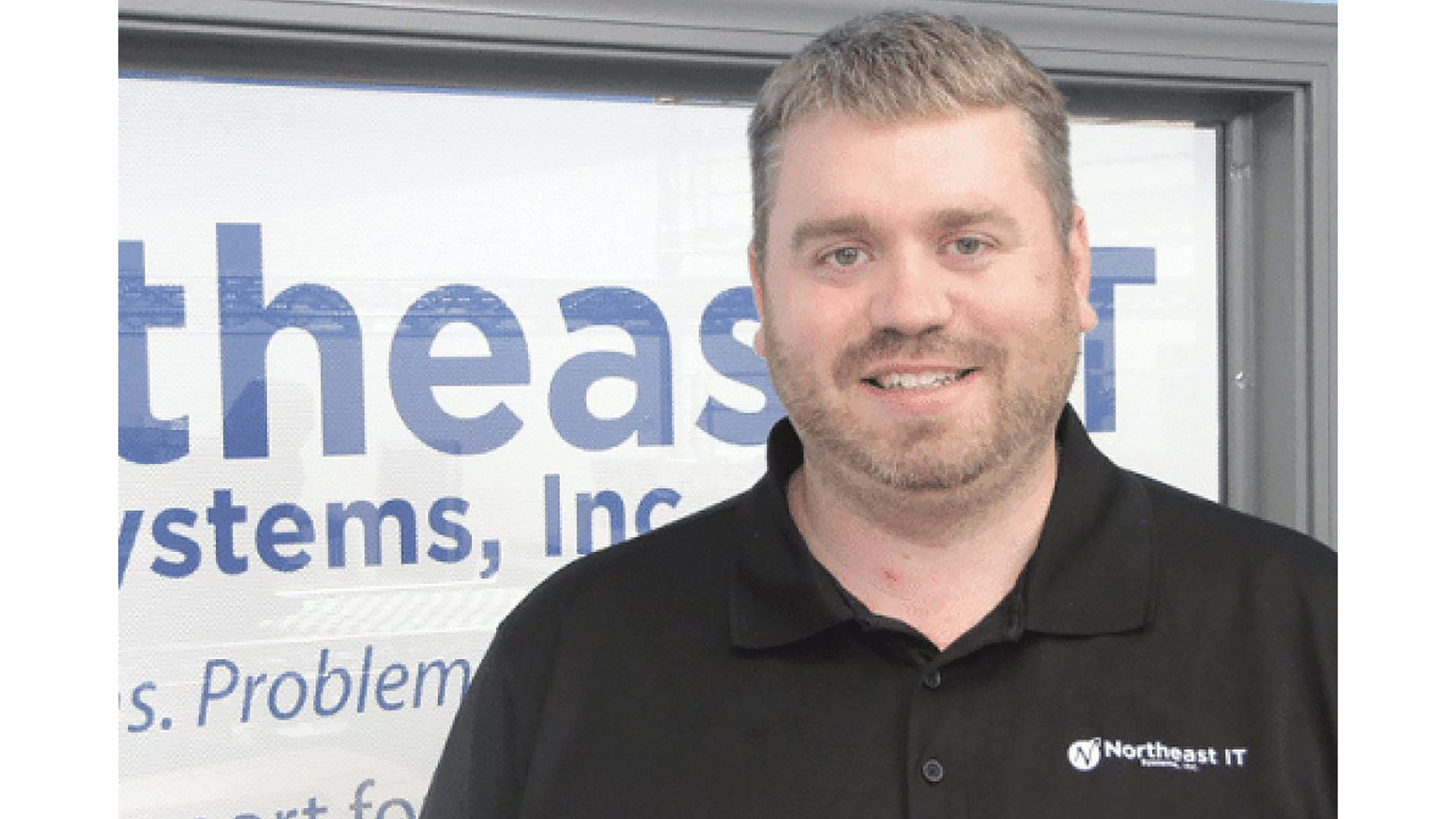
Chris Viale, president and CEO of Cambridge Credit Counseling

Chris Viale, president and CEO of Cambridge Credit Counseling

Over the past year or so, most companies have set — and then pushed back — the date when workers would return to the offices they left when COVID-19 arrived in March 2020. Now, such a return seems more real. But what’s also real is a commitment to flexibility among area employers, who recognize not only that employees can work effectively from home, but that hybrid, or fully remote, work schedules are becoming ever-more critical when it comes to attracting and retaining a workforce.

There was the Great Depression. And 75 years later, there was the Great Recession. We’re still struggling with what’s being called the Great Resignation, and now … we have what some are referring to as the Great Return.

This would be the return to the office of all those workers — tens of millions of them — who went home to work right around this time two years ago. Some have already returned, but many haven’t. There have been several scheduled returns over the past two years — indeed, most major corporations have moved back their return dates several times due to surges and new variants — but this time, by most all accounts, it seems real. Very real.

And it also seems complicated, or at least far different than most would have thought a return would look like two years ago.

That’s because the world of work has changed in a profound way, with the matter put in its proper perspective by Kristin Morales-Lemieux, senior vice president and chief Human Resources officer at Baystate Health.

“When we first sent everyone home, no one wanted to be there,” she said, adding that roughly 4,000 of the system’s employees were told to work remotely, if they could. “And for the first six months, we spent all of our time trying to hold back the tide of employees and managers who wanted to come back into the building, and, quite frankly, walking around and finding people who should not be there and shooing them back home again.

“As our employees come back together, our goal is to combine the flexibility and convenience we’ve had working remotely with the energy, connection, and collaboration that comes from being together in person.”

“But somewhere around that six-month mark …. there was a shift, and people starting saying, ‘I don’t want to go back,’ or ‘I certainly don’t want to go back full-time,’” she went on. “And in a few areas where we started to transition departments back, we started to notice that, not in large numbers, but here and there, we began losing people who were taking jobs with other organizations that allowed them to work remotely full-time.”
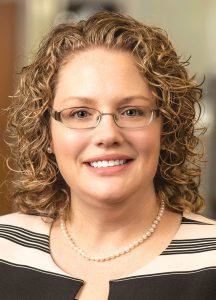
Kristin Morales-Lemieux

When they first went home, Kristin Morales-Lemieux says, employees were clamoring to come back to the office; six months later, most no longer wanted to.

This phenomenon explains why ‘flexibility’ is the watchword as the Great Return commences, and why the hybrid schedule — whereby people work in the office at least a few days of the week and remotely for the remainder — is becoming the norm among employers, and, increasingly, expected when it comes to employees.

At Monson Savings Bank, employees now have a number of options when it comes to working schedules, including a hybrid model that has them in the office at least two days a week, and a four-day work week. MSB President Dan Moriarty said such flexibility, at a time when most have proven they can work effectively from home, is a practical response to the changing work climate.

“We wanted to create some culture for retention for existing employees,” he said, echoing the thoughts of many we spoke with. “And as we compete against other companies in this region, but also well outside, that offer flexibility and remote working, we thought it was a good balance — for the organization and the employee.”

Meanwhile, MassMutual has put in place what it calls a “flexible workplace approach” that is comprised of three work arrangements — full-time in the office, full-time remote, and a hybrid of the two, with the majority of the financial-services giant’s employees working a hybrid arrangement.

“Flexibility is at the heart of our approach,” said Sue Cicco, head of Human Resources and Employee Experience for the company. “As our employees come back together, our goal is to combine the flexibility and convenience we’ve had working remotely with the energy, connection, and collaboration that comes from being together in person.”

Elaborating, she said the flexible-workplace approach has been in place since last summer with employees “testing” it over the past several months. They are now being asked to be at “a more regular cadence” by the beginning of April.

At Cambridge Credit Counseling, Chris Viale, president and CEO of the company, plans to bring employees back to work a hybrid schedule starting later this month. But the longer-term plan is to bring most employees back five days a week, he told BusinessWest, adding that he’s expecting some pushback, will listen to those giving it, and may ultimately change his mind.

“If people thought the labor market was tight going into COVID, we haven’t seen anything yet.”

But for now, that’s the plan, and for reasons that would resonate with many employers across the region.

“We’ve been grappling with this for quite some time,” Viale explained. “Right before the pandemic, we secured a much larger office space with a state-of-the-art call-center environment, and we committed to a seven-year lease, so we have that financial expense baked in to trying to do what’s right for everyone, trying to make sure the company is functioning as we need it to, trying to make sure we’re serving the consumers we’re serving, and meeting the needs of our staff. We’re trying to balance all that — somehow.”

Overall, there are many forces driving the flexibility being exhibited at most workplaces, but perhaps the most significant is common sense when it comes to the matter of attracting and retaining talent, especially at a time when businesses in virtually sector are struggling to do so.
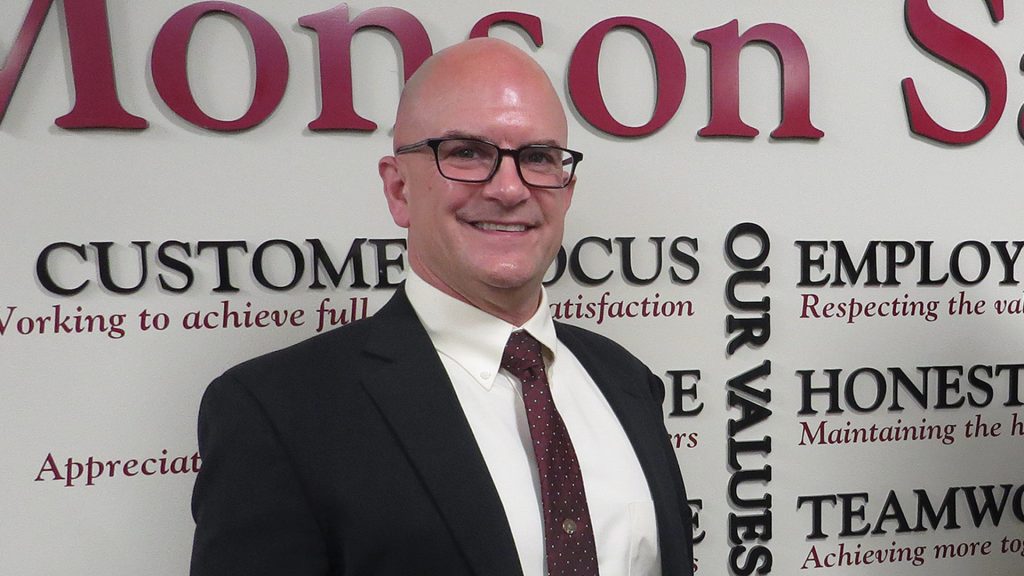
Dan Moriarty says Monson Savings Bank is focusing on flexibility

Dan Moriarty says Monson Savings Bank is focusing on flexibility with its return-to-the-workplace strategies, including hybrid schedules and the option of a four-day work week.

Morales-Lemieux noted that Baystate Health, which regularly employs roughly 13,000 employees, currently has about 1,900 vacancies, three times what might be considered normal and a powerful motivating force when it comes to establishing return-to-the-workplace strategies.

“If people thought the labor market was tight going into COVID,” she said, “we haven’t seen anything yet.”


Work in Progress

It’s called ‘Corporate Tuesday.’

That’s the name Monson Savings Bank has attached to the second day of the work week, a day when most, if not all, employees will be in the office, said Moriarty, adding that this is the day, considered better than Monday, or any other day, for that matter, when people would schedule in-person meetings, department meetings, and collaborations.

“The parking lot is pretty full,” he explained, adding that Corporate Tuesday has been in effect since Jan. 1, and has thus far been greeted with a generally positive response.

Beyond Corporate Tuesday and some similar initiatives, there is now unprecedented amounts of flexibility when it comes to work and work schedules, at companies both large and small, a new landscape that has been years (and not just the past two years) in the making.

Indeed, Morales-Lemieux echoed others when she said there was some movement in this direction before the pandemic, especially as the unemployment rate dropped and it became steadily more challenging to attract and retain talent.
Sarah Morgan

Sarah Morgan says employees at Health New England have shown they can be effective working remotely.

“Even pre-COVID, we were really starting to feel the pressure to move into a variety of more flexible work arrangements, even as it relates to our frontline workers,” she told BusinessWest. “As the unemployment rate had dropped over the past decade, coupled with our own unique challenges in Western Massachusetts, such as our aging population and the number of healthcare-related — and non-healthcare-related — companies that we compete with for workers, we had, in the year prior to the pandemic, been talking in earnest about how we needed to change in order to make sure that we could keep a workforce.”

Elaborating, she said this talk involved, among other things, remote-work scenarios not only for attractive job candidates from other states who do not wish to relocate to Massachusetts, but also candidates and existing employees already in the 413.

Suffice it to say the pandemic has served to open more eyes to this need to change and add several layers of urgency to the matter, despite the delayed nature of the return to work.

But change comes hard to many companies, said Meredith Wise, president and CEO of the Employers Assoc. of the NorthEast, noting that, in this case, most employers she’s talked with have seen the wisdom of embracing flexibility and not trying to put in place a one-size — or one-schedule, to be more precise — fits-all policy or strategy.

Indeed, even most old-school managers who would certainly prefer to have everyone back in the office eight hours a day, five days a week, are recognizing the need to embrace the changing landscape and not fight it — for a number of very practical reasons, especially those workforce issues, she said.

“We’re advising people to be flexible and talk with employees about what’s going to work for them. And one of the big reasons why is the retention problem that most employers are facing right now.”

“We’re advising people to be flexible and talk with employees about what’s going to work for them,” she explained. “And one of the big reasons why is the retention problem that most employers are facing right now; there are enough employers that are offering hybrid arrangements that you could easily lose people if you put your foot down and say, ‘I need you here five days a week.’ Those workers can easily find someone who will be flexible and more accommodating.”


Balance Sheet

Those we spoke with said there have been a number of fits and starts when it comes to returning employees to the workplace. Most were ready to start the process last spring or last fall, but Delta and then Omicron ultimately pushed back those timetables.

Now, most are looking at later this month or early next month as a return date, although it appears the vast majority of workers will still be working remotely at least a few days a week.

At Health New England, Sarah Morgan, director of Human Resources and Organizational Development, said all but a handful of the company’s 385 employees are currently working remotely, and there is no set date for a return. As for a plan, it involves being flexible, giving employees an opportunity to “volunteer” to return if they should desire to do so and if the conditions with regard to the pandemic warrant such a return.

For many reasons, she said, returning everyone to the office full-time — essentially turning back the clock to early March 2020 — is not practical. For starters, even with COVID subsiding in many respects, the company is no rush for a return to pre-pandemic density levels in its office space in Monarch Place. But over the past two years, employees have shown they can effectively work remotely, she went on, which more than justifies flexible or hybrid work schedules.

“Our associates have proven that they’re capable of working remotely for quite some time; they’re meeting the standards and expectations and doing very, very well,” she told BusinessWest. “They’re meeting all the needs of our members, and so we’ve said that people like to work at home, we understand that, and we’re going to enable a certain amount of flexibility within teams and a hybrid approach.”

Like others, she said such flexibility is becoming ever-more critical when it comes to attracting and retaining employees, but also widening the pool of talent to include those from other regions of the country.

“We recognize that flexibility around remote work and hybrid work schedules is a way to honor the needs of people,” she said, using that word ‘needs’ in reference to everything from family matters to physical disabilities. “We’re seeing more people ask for that flexibility when they apply.”

And at the Harold Grinspoon Foundation, which employs roughly 150 people, 100 at the Agawam Corporate Center, there will be similar amounts of flexibility, said Jennifer Murphy, director of Human Resources, adding that the employees now working remotely, and that’s most of them, are slated to return in a hybrid format on April 4.

“Part of our new flexible-work policy involves a hybrid work model; when we return, people will be required to work 60% of the time in the office,” Murphy said, adding that this plan of action has been generally well-received by employees. Overall, it represents acknowledgement of both the emergence of remote work as being popular and effective and the importance of face-to-face interaction when it comes to office culture.

“What COVID has taught us is that, given the nature of our work, we can operate our business successfully remotely,” she explained. “But we also feel it’s important for our culture that we work together and collaborate together; there’s real value in those face-to-face interactions. Overall, we’re trying to balance the value and importance of in-person work and collaboration with employees’ desire to also have that flexibility to work remotely.”
Jennifer Murphy

Jennifer Murphy says the 100 employees working at the offices of the Harold Grinspoon Foundation will be returning on April 4 and working hybrid schedules.

At Cambridge Credit Counseling, Viale said his plan to bring employees back to a hybrid schedule was greeted with a generally positive response. Overall, he’s not expecting the same when it comes to his plans to bring all or most employees (there will be exceptions for health considerations and other factors) back full-time.

Elaborating, and echoing Morales-Lemieux’s comments, he said that, as the months went by, employees became increasingly comfortable with working remotely, and increasingly uncomfortable with the thought of returning to the office.

But after weighing all the factors, including that seven-year lease on a significantly larger footprint and other considerations, he decided that bringing everyone back is the best course. But, as noted earlier, he will listen, and he may be open to changing his plans.

And what may be a deciding factor in his ultimate decision is his ability to maintain his workforce.

“What’s really challenging is just finding people to work,” he said. “I just heard an ad coming in to work this morning that Target is hiring people for $24 an hour; our starting wage is between $16 and $18 an hour.”

At Ware-based Country Bank, most all employees have been back to the office since last fall, said Miriam Siegel, first senior vice president and chief culture officer for the institution, adding that she believes that the bank is among the first, if not the first, business of its kind to put a flexible work policy in place.

The employees who have returned are working three days in the office and two remotely, she said, adding that the new policy, or strategy, is not the result of COVID, necessarily, but rather recognition that times and needs are changing, and flexible schedules are the logical, responsible response to the current landscape.

“One of the big things we’ve learned at the bank is that we have to recognize that we don’t live in a one-size-fits-all working world anymore,” she said. “That has become our mantra in many ways.”

Elaborating, she said the pandemic helped drive home the need to communicate with employees, have them articulate their challenges and needs, and then work with them to the extent possible to accommodate those needs.

“What COVID has taught us is that, given the nature of our work, we can operate our business successfully remotely. But we also feel it’s important for our culture that we work together and collaborate together; there’s real value in those face-to-face interactions.”

This is the right thing to do, Siegel said, but it’s also what many companies are willing to do, which is critical during what could only be called an ongoing workforce crisis.

“When you couple this remote-work situation with the Great Resignation, shifting priorities, and our challenge to retain people … we need to be listening to our employees and accommodate them when we can,” she said. “Because they’ll very quickly go somewhere else right now.”

At Baystate, as Morales-Lemieux noted, efforts to bring back — to the extent they are coming back — those 4,000 employees who left for home two years ago have been underway for some time.

There is now an organization-wide communication plan and strategy that will be launched in early April, she said, adding that there are still 3,000 people working “completely or largely” remotely.


Bottom Line

At all the workplaces we talked with, the new policies and strategies are in place for what would be called the time being.

Indeed, each company said it reserved to right to re-evaluate and change what is in place, depending on how things work out.

“The program we put in place — we keep the option open to revise or revoke if we don’t see good results,” Moriarty said. “But so far, so good.”

Murphy concurred. “When we initiated this policy and rolled it out, we said we would try it for one year and see how it works, and that we reserve the right to revisit it,” she said, adding that, while there is general confidence that this strategy will succeed given what’s happened over the past two years, it is still, on some levels, an experiment.

But overall, she’s not expecting many changes to the new policies — or to the current landscape in the workplace, for that matter.

“Maybe I’m wrong, but I don’t see the trend turning back to fully in-person work for most people, especially those who work at a computer all day,” she said. “We’ve shown that that the remote model works; I think it’s here to stay.”

Morgan agreed. “We’re trending in that direction; HR professionals are talking about the trends, and the ‘new normal,’ and what will be the future of work,” she explained. “For so many reasons, we’re engaging in work in a different way; we’re fitting it into our lives in a different way than we could if we had a 30-minute commute to the office — and we’re finding that we can be even more productive.”

Those sentiments are among the many that make it clear that work has changed over the past two years — and probably changed forever.

And this will make the much-anticipated Great Return something to watch.


George O’Brien can be reached at [email protected]

Home Improvement Special Coverage

Space Race

Infinity Construction Corp.

Infinity Construction Corp. has stayed busy with excavation and site-preparation work.

The past two years have been challenging for most sectors of the economy, and home improvement is no exception, beset as it has been with material shortages and soaring costs. But customer demand has certainly been a positive story, as people suddenly spending more time in their homes found plenty of reasons to call a contractor. Now, however, with inflation not receding and the economy still in flux, the question is whether those phones will continue to ring with such regularity.

By Mark Morris


Two years ago, the COVID-19 pandemic and a sudden shift to remote work drove people across the country into their homes, and they didn’t always like what they saw. So, instead of spending money on vacations or luxury items, many people chose to address long-ignored projects around the house. It was a good year for the home-improvement industry.

“Because so many people were working from home, they decided to tackle problems instead of continuing to put them off,” said Ger Ronan, president of Yankee Home Improvement in Chicopee. “The pandemic definitely changed people’s buying patterns.”

The problem today is that those patterns have continued, and in some cases, customers have had to wait for their contractor to start catching up on all the work they scheduled — while professionals are still dealing with price hikes and material shortages caused by global supply-chain issues.

“Because so many people were working from home, they decided to tackle problems instead of continuing to put them off. The pandemic definitely changed people’s buying patterns.”

Siervo Jimenez, owner of ProBuilders Home Improvement (ProBHI) in Springfield, said some of his current customers first called when the pandemic started. “We’re still finishing the projects we received from that time.”

As area contractors told BusinessWest, the projects homeowners have been asking about run the gamut from flooring and bathrooms to whole additions. “People have told us the housing market is so expensive right now, they want to make their house bigger instead of buying a new one,” Jimenez said.

Early in the pandemic, there was a time when people were nervous about having outside workers in their homes. Jake Levine, design associate with Advanced Rug and Flooring Center, said this phenomenon caused orders to decline for a time in 2020 — but it didn’t last long.

“We’ve come full circle, and now the phone hasn’t stopped ringing,” he said, noting that the most popular flooring these days is luxury vinyl planks (LVP), which click together and look like hardwood floors.

Ger Ronan says his company has avoided some supply-chain issues

Ger Ronan says his company has avoided some supply-chain issues by anticipating shortages and buying a considerable amount of materials in advance.

For the last two years, weather has taken a toll on Western Mass., as the amount of rain each year has increased. Fixing drainage issues for homeowners has been a big part of Kyle Rosa’s recent activity. Rosa owns Infinity Construction Corp., which handles commercial and residential site development.

“People who have been living in the same home for 20 to 30 years were suddenly finding leaks from the basement floor and concrete walls cracking from moisture,” he said. “That’s been the number-one problem we’ve been helping people solve.”

The most popular improvement project for Ronan involves people getting rid of their bathtub for a dedicated shower installation. While that’s been a strong trend for retired and older homeowners, Ronan said they are not his only customers.

“I’ve been seeing people make more practical choices. We’re seeing projects where the emphasis is less on making it beautiful and more on what’s practical.”

“Our younger customers are doing shower conversions because they just aren’t using their tubs,” he explained. “For many people, the idea of sitting and lounging in a bath just isn’t as popular as it once was.”

Ronan was able to get around some of the supply-chain issues because his production manager anticipated there might be shortages last year and ordered a considerable amount of tub and shower materials to have on hand at the warehouse.

“When most people had to wait three to six months for a shower conversion, we could do the job within a week,” he said. “We were able to circumvent many of the supply-chain issues because we had materials in stock.”


Life Improvements

Sometimes a simple home improvement can change someone’s life. When the child of one of Yankee Home Improvement’s construction managers suffered a paralyzing accident, the old shower and tub set up at his home was no longer feasible. Before Ronan could even offer, his crews came to him with a plan to help the family.

Siervo Jimenez

Siervo Jimenez says the cost of new homes has caused many homeowners to invest in additions instead.

“On their own time, our crews jumped into action and converted the bathroom to make it easier for the child to shower,” he said. “I encouraged them to take whatever materials they needed, and in short order, they got rid of the tub and installed a shower setup that would accommodate a wheelchair.”

Like many contractors, Ronan admits that finding replacement windows has been tough. He will work only with vendors who can assure they have stock, and that’s what he offers to customers.

“I will only market products that I can get,” he said. “If there is a long wait list for a product, I won’t offer it because I don’t want to inflict that on the homeowner.”

Jimenez uses a similar strategy of stocking up when items are available. When prices dropped a while back on electrical outlet boxes used for plugs and light switches, he bought them in bulk.

“These are now hard to find, and when you can, they cost two or three times more than before,” he said, adding that every cost savings makes a difference when bidding for new work. “If you have to keep increasing your estimates from project to project, you might lose out on jobs because your prices are too high.”

Not surprisingly, hardwood floors became much more expensive when lumber prices everywhere increased. While the supply of the popular LVP flooring has been steady, so are price hikes, with manufacturers increasing prices 20% to 30% in the past year.

“As a result, traditional laminate flooring is making a comeback,” Levine said. “It has remained affordable as an option that hasn’t gone up 30%.” Laminate floors are known for their durability but are prone to water damage, making them a poor choice in kitchens and bathrooms.

Ceramic flooring is one product in short supply. Levine said consumers who want the durable floor are faced with limited choices. “Many of these companies are still running at half capacity, so they are producing their most popular selections, and that’s all.”

Rising inflation on everything in the economy is causing a shift in customer attitudes when they sign up for a home improvement.

“I’ve been seeing people make more practical choices,” Ronan said. “We’re seeing projects where the emphasis is less on making it beautiful and more on what’s practical.”

“These days. I’m definitely seeing more people who are careful about spending their money.”

Rosa noted that his customers have stopped asking for add-ons. “Back when people were receiving stimulus checks, they wanted esthetic projects like retaining walls, and they would often request an extra project like hydroseeding their lawn. Now that things are getting tight, lots of people are pulling back on the extras, and I get it.”

Levine believes there are two types of customers, those who watch what they are spending and those who get what they want, no matter the price.

“These days,” he said, “I’m definitely seeing more people who are careful about spending their money.”


Up and Down

Jimenez and his crews continue to stay busy with projects from their current customers, but lately his phone is ringing less. “I have seen a decrease in calls coming from new customers,” he noted.

While he expects the commercial side of his business to remain busy, Rosa predicts that high prices will cause a slowdown in residential work as consumers delay home improvements such as re-grading their yards.

Sometimes, however, when one side of the business decreases, the other increases. Rosa may be doing less work at older homes, but he has been preparing building sites for new homes “like they are going out of style” and does not see that trend slowing down anytime soon. He believes the high prices of established homes are making new construction more desirable.

“New houses are selling before they even hit the market,” he said. “In fact, people are making offers to buy the homes we’re building while we are still on the job site.”

Overall, even in this up-and-down business environment in many sectors of the economy, home-improvement contractors remain busy and always on the lookout for what will drive new business.

“We follow the market trends,” Ronan said — however unexpectedly they may shift.

Law Special Coverage

An Employment-law Roundup

By Marylou Fabbo, Esq. and John S. Gannon, Esq.

Here is a quick review of a noteworthy new employment law that was signed by President Biden earlier this month, along with a summary of two significant cases that impact businesses in Massachusetts and beyond.


Ending Forced Arbitration of Sexual Assault and Sexual Harassment Act

On March 4, the president signed a new law that will prohibit agreements between employees and their employers that required them to settle sexual-harassment disputes by arbitration. For those who do not know, an arbitration agreement requires the people who signed the agreement to resolve any disputes by binding arbitration, rather than in court in front of a judge and jury. Employers often require employees to sign arbitration agreements at the beginning of their employment, but will no longer be able to enforce these agreements if an employee alleges they were sexually harassed.

Marylou Fabbo

Marylou Fabbo

John Gannon

John Gannon

“Forced arbitration silences survivors of sexual assault and harassment,” Vice President Kamala Harris said about the new law. “It shields predators instead of holding them accountable and gives corporations a powerful tool to hide abuse and misconduct.”

The law applies retroactively, meaning it applies to agreements signed before March 4. This means employers should revise old arbitration agreements to remove references to sexual-harassment claims. The new law does not impact cases that are already in arbitration, nor does it prohibit mandatory arbitration agreements in employment disputes that do not involve sexual-harassment allegations, such as race- or religious-discrimination claims, or disputes over payments of wages.


U.S. Supreme Court Decision Blocking Vaccine Directives

As many readers are likely aware, earlier this year, the U.S. Supreme Court ruled against the Biden administration in the back-and-forth legal battle over the OSHA ‘shot-or-test’ rule that required larger employers to put policies and procedures in place to ensure employees get vaccinated against COVID-19 or undergo weekly testing.

Does that mean employers do not have to worry about taking steps to protect workers against COVID? Absolutely not. Although OSHA announced it was withdrawing the shot-or-test rule in light of the Supreme Court’s decision, OSHA “strongly encourages vaccination of workers against the continuing dangers posed by COVID-19 in the workplace.” The agency also announced it will continue its COVID enforcement efforts through the “general duty clause,” which is a catch-all provision that allows OSHA to cite employers for failing to provide a work environment free from recognized hazards.

In order to protect against citations and fines from OSHA, employers should implement workplace-safety policies aimed at stopping the spread of COVID. This includes masking requirements consistent with CDC guidance and protocols that require employees to notify their employer immediately if they test positive for COVID. Finally, if employers want to mandate that employees get vaccinated and boosted, that is perfectly fine, as long as exceptions are made for employees who cannot get vaccinated for medical or religious reasons.


In Massachusetts, New Employee Protection Against Retaliation

Earlier this year, the Massachusetts Supreme Judicial Court (SJC) ruled that employees who contradict negative information in their personnel files may be protected against unlawful retaliation. The case stems from an employee who disagreed with his supervisor’s assessment of his performance issues, so he wrote a lengthy rebuttal to be included in his personnel file. The very same day, he was fired. The employee sued, claiming he was wrongfully discharged for writing a rebuttal to negative comments in his personnel file.

Like the employee in this case, most employees in Massachusetts are employed at will, which means they can be terminated for any reason (or no reason) as long as the reason does not violate a statute or other established rule of law, such as laws against discrimination. Prior to this recent case, the SJC had recognized a few narrow exceptions to this general rule based on certain public-policy interests, including the assertion of a legally guaranteed right. Under Massachusetts’ Personnel Records Law, employees have the legal right to respond in writing.

While the SJC has been reluctant to limit employment at will, it concluded that the right to rebut negative information in a personnel file is of considerable public importance. It relates not just to someone’s current employment, but also their ability to seek other employment. It assists potential employers in making informed hiring decisions, “thereby preventing terminated employees from becoming public charges.” In the SJC’s view, having a complete personnel file — reflecting both sides of an issue — also facilitates the evaluation of an employer’s compliance with the Commonwealth’s many other employment laws, including those that require timely payment of wages and forbid discrimination in the workplace.

This decision recognizes a new legal claim that a terminated employee can bring in court against their former employer. Obviously, this creates a new source of potential liability for employers. But it also creates a new source of protection for employees, and as a result, it may incentivize employees to exercise their right to file rebuttals more often, especially when their performance has been poor or they have other reasons to suspect that their employment is not secure. This makes it all the more important for employers to be diligent about performance management, as creating a documented record of performance problems (and efforts to address them) before pulling the trigger on termination is the best way to defend against any wrongful-termination claim.


Marylou Fabbo and John Gannon are attorneys at Skoler, Abbott & Presser, P.C. in Springfield; (413) 737-4753; [email protected][email protected]

Special Coverage Women in Businesss

Reimagine the Possibilities


In many respects, the Bay Path University Women’s Leadership Conference that will unfold on April 1 at the MassMutual Center is the same one that was put together for early spring 2020 and then canceled by COVID-19 — and then canceled again amid a surge in early 2021.

Indeed, most all the speakers, including keynoter Tyra Banks, the model and media maven, are the same as those originally scheduled probably 30 months ago.

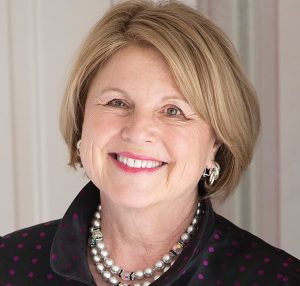
But the day-long event, expected to bring more than 1,300 people to downtown Springfield, simply can’t be the same as the one blueprinted back in 2019, said Sandra Doran, the school’s sixth president, who took the helm just a few months after the 2020 event was canceled.

And that’s because the world has changed so much in the interim, she told BusinessWest, and the conference needs to reflect that.

“Before the pandemic, people talked about being adaptive, they talked about thinking outside the box; the pandemic has changed the way people think about all those things,” said Doran, adding that the changed landscape, and the response to it, is reflected in the new theme for the conference: Reimagine. “What was considered adaptive two years ago is now considered routine today. This concept of really being prepared, with a plan A and a plan B … in the past, we might have had a couple of different strategies; now we have 10 different strategies because we know people’s needs are changing, the needs of employers are changing.”

“Before the pandemic, people talked about being adaptive, they talked about thinking outside the box; the pandemic has changed the way people think about all those things.”

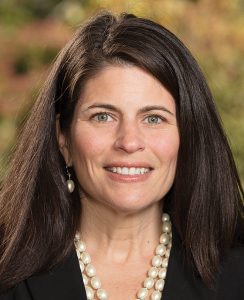
Karen Woods, assistant vice president of Brand Strategy, Marketing, and Integrated Communications at Bay Path, agreed.

The original theme was ‘Own Your Now,’ she explained. “The idea was, ‘wherever you are in your life … own it, move forward, make decisions, and decide what’s next.’ But the pandemic changed a lot for people, so to ask people to ‘own their now’ seemed trite; the past two years not only affected the Women’s Leadership Conference, they affected women.

“And so this year, we have the theme of ‘Reimagine,’ and reimagine is really a gift,” she went on. “Because no matter where you are and what you’ve been through, you have this opportunity to come together, to network, to connect, to be with other women, and really start to think about what is the future, not just for you as an individual, but for our community.”

Sandra Doran, president of Bay Path University

Sandra Doran, president of Bay Path University

That theme, ‘Reimagine,’ will be threaded through a full day of programming that will include Banks’s keynote address at 3:15 p.m.; a luncheon talk featuring Patrice Banks, founder of Girls Auto Clinic; and the morning keynote, featuring Suzy Batiz, founder of Poo~Pourri and supernatural (more on them later). And it will also be incorporated into a series of break-in sessions, with titles ranging from “The Misfit’s Guide to Managing, Surviving, and Thriving at Work” to “Staying Sane with Disruptive Personalities in the Workplace.”


Face to Face

The return of the Women’s Leadership Conference (WLC), especially in its in-person format, is an important development for the region, said Doran, noting that, during its 25-year history, it has not only brought provocative speakers and historic figures to Springfield — a list that includes Margaret Thatcher, Madeline Albright, Rita Moreno, and many others — it has given attendees invaluable insight to bring back to their homes and offices.

Doran told BusinessWest that, while some thought had been given over the past two years to staging a WLC remotely, it was quickly determined that such a presentation would simply not be in keeping with the many goals — and expectations — for this conference, which has become a tradition in Western Mass.

“We made the decision that this was an event that was really focused on professional development, networking, and helping senior leaders in the grow,” she explained. “And the real power of this particular conference is in the face-to-face component of it.”

As organizers of the event saw COVID easing, with cases declining across the country, the decision was made to move forward with a live event, one that will have some restrictions, including proof of vaccine or a negative test to enter the MassMutual Center, as well as masking up when not eating or drinking.

Woods said ticket sales have been brisk, and a turnout similar to what has been the norm over the past several years is expected.

“We’ve been following the trends and the local, state, and federal guidelines,” she said. “Normally, we would start our advertising in the fall, and we were really looking at this spring. In speaking with our sponsors, exhibitors, and those buying tickets, we sense that people are feeling comfortable and ready to come back out for a gathering like this.”

As noted earlier, the overall lineup of speakers for the 25th WLC hasn’t changed since that event was originally blueprinted in 2019. But what has changed are the times, and some of the challenges being faced by women — and all those in the workforce.

And the speakers have been asked to reflect on what has transpired and incorporate these changes and mounting challenges into their presentations, said Doran, noting that the 25th WLC, like those before it, will leave attendees with plenty to think about as they consider how to reimagine their own lives and careers.

Indeed, the three keynoters are all successful entrepreneurs and innovators, who took decidedly different paths to success.

“Before the pandemic, people talked about being adaptive, they talked about thinking outside the box; the pandemic has changed the way people think about all those things.”

The day will start with what promises to be an inspirational, and entertaining talk by Batiz, founder of Poo~Pourri and supernatural, brands she has transformed into a more than $500 million business empire.

Featured in Forbes, Fast Company, and Entrepreneur, Batiz has been named one of Forbes’s “Richest Self Made Women in America” (2019) and EY’s Entrepreneur of the Year (2017). But to get there, she had to overcome some of life’s lowest lows — poverty, sexual abuse, depression, two bankruptcies, and a suicide attempt — which led to what she calls “the luxury of losing everything.”

The luncheon keynote speaker, Patrice Banks, is credited with opening up the male-dominated automotive industry and bringing a fresh perspective to that business. Girls Auto Clinic offers automotive buying and repair resources, services, and products by women to women. Prior to establishing GAC, she worked for more than 12 years as an engineer, manager, and leader at DuPont, a science and technology company.

Karen Woods

Karen Woods says the conference was rethemed from the one canceled two years ago to better reflect pandemic realities.

Frustrated with the lack of resources educating women on car care and her inability to find a female mechanic in the Philadelphia area, Banks enrolled in automotive- technology school to learn how to work on cars. Her mission with Girls Auto Clinic was to create a place she wanted to bring her car for repair and maintenance. She has since made it her mission to educate and empower women through their cars.

By telling her story, she continues to make history, through engaging talks, interactive workshops, authoring an informative car-care guide, and the successful running of a repair garage with female mechanics and a nail salon.

The day’s programing will conclude with a keynote talk by Tyra Banks, the supermodel who has become a serial entrepreneur as well. She created and executive produces America’s Next Top Model, has an Emmy Award-winning talk show (The Tyra Banks Show), hosted America’s Got Talent, and is consistently ranked by Time magazine as one of the world’s most influential people.

Banks is CEO of the Tyra Banks Company, a multi-faceted corporation focused on beauty and entertainment. In 2012, she graduated from the Owner/President Management program at Harvard Business School, from which she created her one-of-a-kind cosmetics experience, TYRA Beauty. She recently developed Fierce Capital, the investment arm of the Tyra Banks Company, which invests in early-stage companies, including firms that are female-led or female-focused.

Her passion is the TZONE Foundation, a nonprofit organization that invests in young women to help them realize their ambitions and approach life’s challenges with fierce determination. The TZONE now takes residence at the Lower Eastside Girls Club Center for Community in New York City and focuses on five core pillars: entrepreneurship; financial literacy; elocution and self-presentation; health and wellness; and self-esteem, beauty, and body image.


Breaking Out

As noted earlier, the conference will also feature a number of breakout sessions designed to both inform and inspire.

Session 1 takes the title “The Misfit’s Guide to Managing, Surviving, and Thriving at Work,” and will be led by Jennifer Romolini, a writer, speaker, senior digital-media strategist, and author of the book Weird in a World That’s Not: A Career Guide for Misfits.”

She will essentially debunk the theory that office-politicking extroverts are best set up for success. The session will help attendees understand, among other things, how to stop feeling like a freak at work, how to start using one’s misfit nature as a strength in the workplace, and how one’s sensitivity and empathy can make her a boss who not only succeeds, but effects real change.

Session 2 is called “The Power of Meaning: Making Your Life, Work, and Relationships Matter,” and will be led by Emily Esfahani-Smith, author of the book The Power of Meaning, which outlines four pillars essential to living a life that matters: belonging, purpose, transcendence, and storytelling.

In this breakout session, Smith will present the latest in psychology and neuroscience (as well as the wisdom of great philosophers) to help attendees live more satisfying lives, and focus in on those four pillars.

“We made the decision that this was an event that was really focused on professional development, networking, and helping senior leaders in the grow. And the real power of this particular conference is in the face-to-face component of it.”

Session 3, titled “The Real Role of Gut Instinct in Managing Complexity and Extreme Risk,” will be led by Laura Huang, a professor at the Harvard Business School and author of the book EDGE.

In her talk, Huang will discuss her research on decision-making in organizations and why the question shouldn’t be about data-driven decisions versus gut-feel-based decisions. Instead, effective organizational outcomes are the result of understanding the set of rules that are inherent in any complex decision, which dictates whether more data actually helps us make better decisions. Bringing her diverse work and research background (having conducted dozens of interviews with investors and observing pitch meetings with entrepreneurs) to analyzing the role of gut instinct in making choices, Huang developed an in-depth understanding vital role that gut feel plays in managing complexity and risk — and the difference between big wins and playing it safe.

Session 4 is titled “Staying Sane with Disruptive Personalities in the Workplace,” and will be presented by Dr. Ramani Durvasula, a licensed clinical psychologist in Los Angeles and professor of Psychology at California State University, Los Angeles. In 2019, her book, titled Don’t You Know Who I Am: How to Stay Sane in the Era of Narcissism, Entitlement, and Incivility, was released. She is also the author of the modern relationship survival manual Should I Stay or Should I Go: Surviving a Relationship With a Narcissist, and You Are WHY You Eat: Change Your Food Attitude, Change Your Life.

Session objectives include understanding what a disruptive personality style looks like and how it may affect oneself; learning how to manage disruptive personalities in the workplace, and what works (and doesn’t work); understanding how systems and people enable disruptive personalities in the workplace, and becoming familiar with a 10-step plan designed to provide the tools to manage disruptive personalities.

For more information on the conference, visit www.baypath.edu/events-calendar/womens-leadership-conference.


George O’Brien can be reached at [email protected]

Architecture Special Coverage

Building Momentum

By Mark Morris

River Valley Co-op

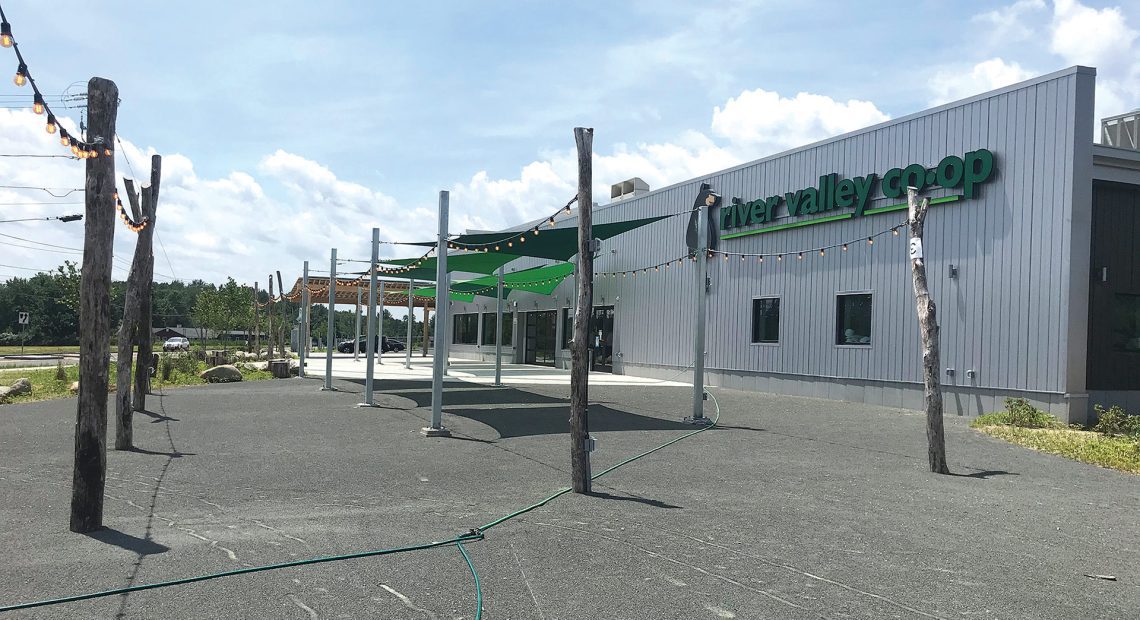
The outdoor seating area at River Valley Co-op before it opened last spring.

Curtis Edgin says his business is all about flexibility and constantly making adjustments. This is the case when times are ‘normal,’ he noting, adding that the pandemic and its many side-effects have only added new dimensions to this equation.

Edgin is a principal at Caolo & Bieniek Associates architecture firm in Springfield, and he appreciates that his firm has stayed busy for the last two years, a time when adjusting and remaining flexible became the norm for everyone, not just architects.

“We were fortunate to have a backlog going into the pandemic; because projects were at different phases, we’ve continued to stay busy throughout,” said Edgin said, noting that municipal projects such as schools, libraries and public safety facilities make up more than two-thirds of Caolo & Bieniek’s portfolio.

Much of the design work handled by Kuhn Riddle Architects in Amherst involves colleges and universities. When campuses switched to online learning during the height of the pandemic, they also put many of their building projects on pause, said Aelan Tierney, president of Kuhn Riddle, adding that this began to change this past fall and her firm has been extremely busy since then.

“Colleges felt more confident about the future in terms of bringing students back to campus, so all the on-hold projects came back to life,” she told BusinessWest. “It’s been a complete turnaround from where we were in 2020.”

Meanwhile, it was two years ago that daily headlines generated speculation about if and how area restaurants, pummeled by the pandemic and draconian restrictions, would survive. They have survived — and many are thriving — by adapting to changing times, said Thomas Douglas, principal of Thomas Douglas Architects in Northampton, a firm that specializes in the restaurant and hospitality sectors.

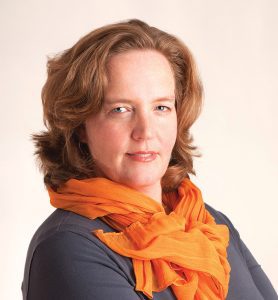
Kuhn Riddle Architects President Aelan Tierney

Kuhn Riddle Architects President Aelan Tierney

“Our restaurateur clients put their focus on refiguring their spaces with less seating and shifted to a different type of service model geared more toward takeout,” said Douglas, adding that these adjustments kept this sector — and his firm — busy at a time when such vibrancy seemed unlikely.

Together these stories convey a time of challenge and opportunity for area architecture firms — a time when some projects were scrapped or delayed, but when others came onto and then off the drawing board as different types of clients adjusted to what the pandemic brought to their doorsteps.

And for many, what it brought was a pressing need to improve the air circulation.

Indeed, design plans for the River Valley Co-op in Easthampton were drawn up long before COVID was on anyone’s radar, said Douglas. From its inception, the plan was for the co-op to run nearly net zero, with most of its heating and air conditioning provided by an array of solar panels covering a large portion of the parking lot. With much of the actual construction of River Valley occurring during the height of the pandemic, he noted that the firm made several changes on the fly. The original plan called for a grab-and-go food area that was nixed after contemplating the idea of people touching food in an open area. At the same time, air quality, took on a new urgency.

“In the middle of the project we needed to shift gears and upgrade the HVAC system with more-robust filtering capacities,” Douglas said. “We made these changes to better address the effects of the pandemic.”

The pandemic has brought other changes and adjustments, especially when it comes to needed materials, said those we spoke with, adding that supply chain shortages combined with steady price hikes for building materials and mechanical equipment have become a constant challenge.

Because architects plan projects that won’t break ground until months later, figuring out what materials will be available and what they will cost has become a big ongoing concern. Tierney said right now mechanical equipment such as generators are delayed up to 12 months before they are available.

“It’s very unsettling for clients and contractors to not know how long it will take to do a project,” Tierney said. “No one feels confident about cost estimates that are put together today because you don’t know if they will be relevant in three to six months when you actually start construction.”

“Any new project plan has to evaluate how it will impact the environment.”

For this issue and its focus on architecture and engineering, BusinessWest talked with several area architects about the many ways the pandemic has impacted business — and how this sector has responded as it always has, by making adjustments and positioning itself effectively for the day when the storm clouds move out.


Blueprint for Success

It’s called a ‘Zoom booth’ — by some people, anyway.

Like the name suggests, it’s a small space, like a phone booth, only instead of phone calls, it’s for the Zoom meetings that have now become part of day-today life in the modern workplace.

“It’s a place where someone in an open office setting can pop into a quieter space to take part in a remote online meeting,” said Tierney, adding that while her firm has included such spaces in many of its plans, it has also converted several conference rooms to accommodate meetings where some people attend in-person while others take part virtually.

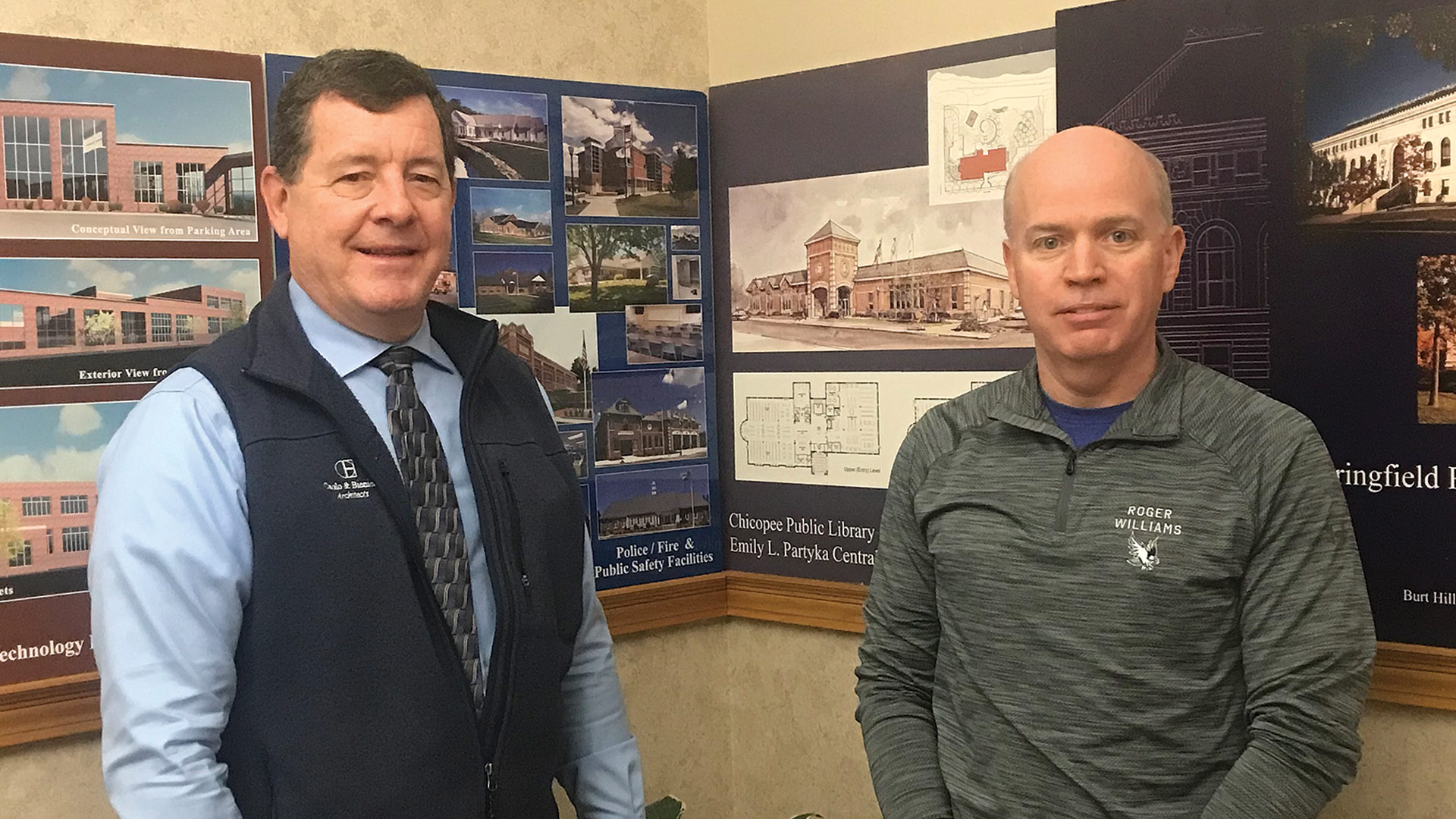
Curtis Edgin (left) and James Hanifan

Curtis Edgin (left) and James Hanifan say the pandemic has thrown extra layers of complexity into renovations, particularly with HVAC.

Zoom booths and altered conference rooms would be among the more subtle changes to the landscape resulting from the pandemic, said those we spoke with, adding that the more dramatic adjustments, as noted, involve air flow and a recognized need to improve it.

And the amount of work — and redesign — needed generally depends on the age and condition of the building.

Indeed, unlike making a design change in new construction, planning a retrofit with existing buildings brings another level of challenge, said Edgin, citing, as one example, a school client looking to replace its old rooftop heating unit with an upgraded unit that would add cooling to the system.

“First we look at structural considerations, such as whether the building support the new unit if it weighs more than the old one,” Edgin said.

The next step according to James Hanifan, also a principal at Caolo & Bieniek, concerns the duct work in the building.

“Many older facilities don’t have the ventilation systems that are required by today’s building codes,” he explained, adding that older buildings often depend on operational windows for ventilation which cannot be relied on in cold weather and can invite mold into the building during rainy times of the year.

Schools may opt to purchase stand-alone air filtering units to install in every classroom but that can be complicated, too.

“Sometimes they find out the electrical system can’t support all that additional equipment,” said Hanifan. “Now they’ve got a different issue.”

Recent funding from the American Rescue Plan Act (ARPA) has certainly helped municipalities in budgeting for these projects. Edgin anticipated that many will use their ARPA funds for improved HVAC and energy projects in their schools and other public buildings.

Overall, energy efficiency and sustainability are built into architecture plans. LEED (Leadership in Energy and Environmental Design) certification is one standard that has provided what Tierney called a great baseline for architects when considering sustainability standards.

Last year Gov. Charlie Baker signed Executive Order 594 which requires all state buildings to meet strict energy efficiency and emission standards going forward.

“Any new project plan has to evaluate how it will impact the environment,” Tierney said. “The goal is to reach carbon-neutral and net-zero emissions by 2050.” Independently, organizations are increasingly focused on reducing energy consumption and on the types of materials they use when constructing their buildings.

“It’s great to see Massachusetts as one of the strongest states in terms of energy code,” Tierney said. “They are aggressively increasing energy requirements every three years when they update state building codes, which is fantastic.”

Thomas Douglas

Thomas Douglas says River Valley Co-op had a strong emphasis on sustainability from the start.

While the River Valley Co-op had a strong emphasis on sustainability from its inception, Douglas suggested a creative addition to the plan that maintained the spirit of the project.

“My first college degree was in landscape architecture, so I worked with the coop to create a large outdoor patio that has a view of Mt. Tom,” Douglas said. With easy access from inside the building as well as outside, the layout can also accommodate a food truck next to the patio.

“We wanted to create a vibrant, exciting, and yet cozy outdoor atmosphere for the patio.”


Drawing on Experience

Meanwhile, both public and private spaces are being adjusted to provide employees and visitors with larger and, in many ways, different spaces.

Indeed, a few years ago, companies had begun planning office layouts that were open and airy to encourage more collaborative workspaces. The arrival of COVID caused a change to some of those plans.

“After designing for an open-office concept, the pandemic came along, and we had clients who wanted to go back to individual cubicles,” Edgin said.

Kuhn Riddle is still creating collaborative areas, while at the same time staying conscious about air exchange and filtration.

“As we begin opening back up and taking off our masks people remain concerned about air quality,” Tierney said. “The last two years have definitely influenced how we think about design.”

When the Westfield Boys and Girls Club was planning a childcare wing, it increased the size of the project from 11,000 to 15,000 square feet because the state had increased minimum space standards per child from 35 to 42 square feet after COVID hit, said Tierney, adding that her firm was brought in as the schematic design architect to work on this part of the project with Chris Carey, the architect of record on the building expansion.

“We don’t know if the state will ever go back to a smaller square-foot-per-child standard, but we wanted to be ready in the future for another pandemic or other event that requires keeping children spaced apart,” she explained.

Add to these challenges and adjustments the ongoing supply-chain issues and escalating prices of materials, which together bring new levels of complexity — and stress — to designing projects and seeing them to completion

As part of a dormitory renovation at Elms College, Hanifan was planning for a certain type of carpet only to be told that, if it even gets produced (and that’s a big if), there will be a 16-24 week lead time. He has already begun adjusting the plan because the project must be completed before the fall semester in September.

“We will look at other colors and if we can’t get those, we will have to look at other manufacturers.”

This constant uncertainty often puts his municipal clients in a tough spot.

“No one wants to hear that prices have spiked and everyone knows prices don’t tend to go down,” Hanifan said. “So, there is a lot of indecision on whether to go ahead with the project or wait to see if prices come back down at some point.”

While supply chain delays and rising costs are still part of daily life, a sense of optimism creeps in as the weather becomes warmer and COVID mandates get relaxed.

“It’s been a tough couple of years, but I think we’ve turned the corner,” Tierney said.

Hanifan acknowledged that in the immediate short-term, supply chain issues will continue because manufacturers are under pressure to get materials out as fast as they can.

“Eventually they will be able to re-stock and fill their warehouses once again,” Hanifan said. “It may be a few years out but I’m optimistic it will happen.”

All it takes is remaining flexible and making adjustments when necessary.

Technology

All Systems Go


One of the surprises of the pandemic’s early days was how quickly companies of all kinds were able to move their workers to remote, home-based setups. Much of the credit for that goes to the IT teams who helped them achieve that transition quickly. It’s just one way IT firms help clients navigate changes in technology, defend against constantly evolving cyberthreats, and make regular assessments of what a business needs to be efficient and effective.


It can start with a cyber breach. Or questions from an insurance company. Or a business simply realizing it needs a hand with its technology.

“Different clients call for different assessments,” said Joel Mollison, president of Northeast IT in West Springfield. “They might say, ‘we don’t know where we are with our technology,’ or maybe they have an outsourced IT department, but they’re having an ongoing issue, which triggers a call. ‘What are we doing right, what are we doing wrong?’ They want a second set of eyes on something.”

What they often find, he added, is “they don’t know what they don’t know,” and the conversation turns to this: what is the desired IT outcome?

“Every client is obviously unique,” Mollison said. “We want to work with them and understand how their business operates. We’re just an extension of their business. Our solutions need to be in line with their technology and business goals. So normally, when we work with a new business, we assess what they have currently and discuss what kind of issues they may be having or sticking points — maybe they’re not able to conduct business as fast as they would like, or their technology doesn’t work for them.”

“We’re just an extension of their business. Our solutions need to be in line with their technology and business goals.”

Or, these days, they have questions about maintaining and securing remote-work connections. Whatever the case, the high-tech side of the business world isn’t getting less complicated, highlighting the role that IT firms play for their clients.

“The goal for us is to act like your internal IT department,” said Jeremiah Beaudry, president of Bloo Solutions in Chicopee, and that means learning the ins and outs of a client’s business and how it uses hardware and software, so Bloo can make holistic recommendations about its technology needs.

Jeremiah Beaudry

Jeremiah Beaudry says his goal is to act like a client’s internal IT department, in every facet that may entail.

“Every business is different, and their needs are different. They all serve their clients differently,” Beaudry added. “Not every solution is right for every business, so one-size-fits-all packages don’t really work. We also want to know what tools you’re using now: are there redundancies that overlap, or are there other tools that are more unified and give you a more collaborative, one-pane-of-glass solution?”

Sean Hogan, president of Hogan Technology in Easthampton, recently published a blog post citing a report that worldwide IT spending is projected to total $4.5 trillion in 2022, an increase of 5.5% from 2021.

“This is a monumental amount of growth which can likely be attributed to employers embracing work-from-home or hybrid-work environments, security concerns over cybersecurity breaches, and the world’s desire to utilize cloud technology,” he wrote. “For small to mid-sized businesses (SMBs), this means that they will have more access to enterprise-level technology solutions, which will empower them to drive productivity and increase their bottom line, if they position themselves properly.”


Serve and Protect

It all starts with the basics, Beaudry said, with security topping the list.

“What data do you have now? How are you securing data to keep it out of bad actors’ hands, while making it easy for employees to access it? Balancing access with security is the hardest part.”

For example, people may dislike retyping a password every time they wake their computer up from screen-saver mode, but there’s a reason for that vigilance. And because passwords need to be complex — and people generally use a lot of them — he stresses the use of a password vault. “We’re getting people to adopt them instead of leaving Post-It notes all over their desk, which is a pretty huge fail.”

Bloo is putting more emphasis on end-user access in general, he went on — teaching people how to spot phishing attempts and e-mails from bad actors, and knowing what files are safe to open and download, and which aren’t. “That was important before the pandemic, but once people started working remotely, it added on variables to the mix.”

Mollison said a lot of IT security-tightening measures are being driven by the insurance industry.

“They’ve clamped down on organizations, requiring you to fill out a lengthy statement of your current security. That’s a big thing that’s happening, so there’s been a lot of discussion around that. A lot of times, folks come to us — they get that questionnaire and don’t even know how to answer it. They have an internal IT person, but it’s not their day job, just a hat they wear. So a lot of times, they come to us to make sure their business insurance is going to cover them. Actually, I’ve heard from a few firms that are paying an additional premium because they don’t have basic security pieces in place.”

Besides security and maintaining the network, Northeast also works with clients on replacement cycles for hardware and technology updates. “When Windows 7 went away in January 2020, all our clients knew about it well in advance, and had years to prepare for it and make changes. Those are the types of things we’re continuously doing to put clients in the best position in regard to technology and compliance.”

All of this has become increasingly difficult for businesses to handle in house, he added. “There are so many pitfalls, so much change. It takes a team of experts who understand the technology, the security levels, who understand all the concepts and how they relate to a particular organization.”

Joel Mollison

Joel Mollison says helping clients navigate cybersecurity is part technology, part behavior training.

Some services deal with the human side of IT and cybersecurity, Mollison noted.

“We’ve done training sessions with clients to go over common phishing techniques and what to look for to distinguish whether an e-mail is credible or not. Obviously, we promote spam filters and other security measures, but we’ll still do a phishing campaign and training videos, making sure our end users are keeping up with what they may see in the real world. Even spam-filtering technologies are not foolproof — things still get through.”

Small businesses shouldn’t assume they’re not targets, Hogan wrote — quite the contrary, actually. “For most small businesses, their IT defense strategy is to simply hope they aren’t a target; however, as larger enterprises increase their spending and become tougher to break into, unprepared SMBs will unfortunately become an ideal target.”

Sean Hogan

Sean Hogan

“All of this increased IT spending is reflective of a world that is accelerating its migration into a fully digital world, when we thought things were already moving in that direction as fast as they could.”

Mollison said Northeast doesn’t conduct free assessments with potential clients because he wants companies to be committed to the process.

“We want to develop a relationship with an organization and be their outsourced IT department and provide these types of services and help them grow, and that starts with being invested in participating in their assessment,” he told BusinessWest. “I’ve seen a lot of boilerplate, free assessments from other IT firms, and there’s not much to it, and they don’t do much for the clients.”


From a Distance

The shift to remote work over the past two years kept IT firms busy, but the ease of transition varied, Beaudry said.

“Working remotely is so different for each business; some clients just use Microsoft Word and Office docs, and working remotely is a pretty easy-to-accomplish task, versus some companies, which have a line of business applications and complex software, and you have to set up secure, virtual private networks to allow employees to access them.”

Businesses that weren’t already set up to work remotely found challenges early on, but they soon adapted — as the still-ongoing work-from-home revolution has made obvious.

“Most of our clients already had the technological components to work remotely, so it wasn’t a big issue,” Mollison said. “Numerous insurance agencies were remote within 48 hours. It really wasn’t a big deal for most companies — it usually boiled down to licensing and multiple security steps and VPNs.”

Whether at a business site or remotely, Beaudry said Bloo handles a wide range of IT issues for clients, including supporting the servers, hardware, and software applications; creating file shares; managing the servers; and maintaining security measures and patches.

“It’s a constant process; you have to be vigilant with those things,” he said. “We’re also dealing with end-user issues — ‘oh, my app won’t run,’ or ‘this program is giving me an error.’ It’s a lot of stuff to deal with, and now that this all stuff going remote, it’s evolving — instead of monitoring hardware, we’re having to monitor the dashboards for multiple cloud servers and take a look at 100 or 200 alerts a month; do these alerts all need action? Is it just an informational alert, or is there a pattern of things happening constantly?

“We’re a managed service provider,” he went on, “which means we are proactively doing all these things just as if you had an internal IT department. If the user is constantly pushing the limits of performance of that machine, we can see that on our dashboard.”

Speaking of which, Beaudry makes sure hardware assessments happen on a regular basis, “but we do a good job monitoring these things proactively, so we can avoid too many surprises,” he said, thereby avoiding unexpected downtime and loss of productivity. “Those surprises are what cost you the most money.”

And the bottom line matters, Hogan said, which is why companies of all kinds are investing in IT to boost efficiency and protect their assets.

“IT spending has increased so dramatically because the pandemic forced decision makers to make their organizations more flexible. They’re starting to understand the increased potential that they have to become more efficient with the latest in technology,” he wrote. “All of this increased IT spending is reflective of a world that is accelerating its migration into a fully digital world, when we thought things were already moving in that direction as fast as they could.”


Joseph Bednar can be reached at [email protected]