Daily News

AMHERST — Lending to small businesses in Massachusetts peaked in the first year of the pandemic but not to low- and moderate-income and majority-persons-of-color census tracts, according to a report released by the Massachusetts Community & Banking Council and the UMass Donahue Institute.

Overall, Community Reinvestment Act data shows lending institutions made 194,025 small-business loans in Massachusetts in 2020. Approximately 35.4% of loans went to businesses with annual revenues of $1 million or less. The number of CRA loans has increased gradually since 2009, reaching a new peak in 2020. When the pandemic hit, almost 28,000 more loans were issued compared to 2019 largely due to the Paycheck Protection Program (PPP), a Small Business Administration-backed loan that helped businesses keep their workforce employed during the COVID-19 crisis.

Compared to 2019, the 2020 CRA data shows some shifts in the number of geographies that received loans. The overall loan count grew; however, there was not a proportionate increase in loans to low- and moderate-income and majority-persons-of-color census tracts. Tracts that were middle- to upper-income or majority white received both more loans this year than last year overall, and proportionately a higher share of loans issued.

“There is growing evidence that, no matter what the ultimate cause of disproportionate access to capital, in the rush to get out funding to businesses during the pandemic, equity suffered,” said Carrie Bernstein, research manager and state data center manager at the UMass Donahue Institute.

One of the drivers of this disparity is differing access to banking services. A Federal Reserve report from August 2020 notes that most Black business owners do not have an existing banking relationship, which complicated applying for these loans and securing them once the application had been submitted. Even with access to a bank, the ability of that bank to secure PPP loans for their clients varied widely, with some banks not submitting applications to the federal government until just before funds had been depleted in the initial round. This weakened PPP loans as a source of aid to communities of color. Business closures were transpiring at this time at very high rates, and moreso for owners of color.

The Federal Reserve noted that “nationally representative data on small businesses indicate that the number of active business owners fell by 22% from February to April 2020” and that Black-owned businesses closed at roughly nearly twice the rate of small firms overall (41% nationally). The report also notes that Hispanic and Asian-owned firms closed at above-average rates (32% and 26%, respectively), while white firms closed at below-average rates (17%). These data points suggest that, despite large amounts of money being made available to businesses during the first year of COVID, it often did not go to the communities and businesses that needed the help the most. This disparity, or closures that transpired even before the loan program started — or both — may have driven the smaller number of loans to majority POC and low- or moderate-income tracts in the 2020 CRA dataset.

Utilizing CRA data on the number of loans issued, American Express is the most active lender in Massachusetts over the last 10 years, issuing smaller loans to existing credit-card holders. However, Bank of America loaned more than triple the amount of dollars than American Express in Massachusetts. Combined, Bank of America and Citizens Bank made up slightly over 20% of all loan dollars issued in Massachusetts in 2020. These two banks rank second and third, respectively, in the number of loan originations, after American Express. Other top-10 lenders in terms of loan count included Eastern, JPMorgan Chase, Lake Forest Bank & Trust, Rockland Trust, Capital One Bank, and TD Bank.

In 2020, Eastern Bank and Rockland Trust were the most active CRA small-business lenders of those headquartered in Massachusetts. Combined, these two lenders made over 15,846 loans in 2020, nearly three times what they issued in 2019 due to the Paycheck Protection Program. Local institutions picked up the volume of lending in 2020. According to the report, 13 lenders headquartered in Massachusetts issued more than 1,000 small-business loans in 2020, while that number was only two in 2019. Cape Cod Five, Enterprise Bank, Berkshire Bank, Avidia Bank, Middlesex Savings, and Westfield Bank were Massachusetts-based institutions that were in the top 25 overall small-business lenders in the state.

Daily News

CHICOPEE — The Greater Chicopee Chamber of Commerce will host its second annual costume-themed Thriller 5K on Saturday, Oct. 29 at 11 a.m. A portion of the event’s proceeds benefit Lorraine’s Soup Kitchen & Pantry.

The race starts and ends at Grise Funeral Home, located at 280 Springfield St. Registration opens at 10 a.m., and the race starts at 11 a.m. The 5K running route takes runners to Front Street, through Szot Park, then back to Grise via Abbey Memorial Drive and Fairview Street. A two-mile walking route will turn up Academy Street.

After the race, participants are invited to Rumbleseat Bar & Grille for an awards ceremony and after-party, which is included in the $35 race registration fee. Prizes will be awarded for fastest runners as well as best individual and group costumes.

The Thriller 5K is presented by N. Riley Construction with other sponsorship support from Holyoke Medical Center, Polish National Credit Union, Valley Opportunity Council, PeoplesBank, First American Insurance Agency, Health New England, HUB Insurance Services, Lumber Dogs, Ondrick Natural Earth, BK Hotels, and Beauty Batlles Lounge. Prizes and decorations are sponsored by Phil Beaulieu & Sons, Riley Home Realty, the Beauty Box, Roca, Slosek Insurance, Grise Funeral Home, East Commerce Solutions, Lids Live Well, Florence Bank, and Vibe Dance Studio.

The Greater Chicopee Chamber has hosted a 5K since 2015, which originally took place in June, with the last such event held in 2019. In 2021, when the chamber was looking to organize the event again, the committee decided to make it a costume-themed run in late October.

Daily News

EAST LONGMEADOW — Excel Dryer Inc., manufacturer of the XLERATOR hand dryer, announced that Scott Kerman has been hired as business development manager – specifications. In this new role, Kerman will work with the Excel Dryer Sales and Marketing teams to grow profits; nurture, retain, and support partner relationships; conduct demonstrations and sales presentations; and much more.

“Scott comes with a unique set of skills that will make him a valuable asset for Excel Dryer and our distribution partners,” said William Gagnon, vice president of Sales and Marketing. “He has worked extensively over his career with hand dryers and other restroom accessories, providing him an in-depth knowledge of our industry. We are excited to welcome him to the team.”

Kerman, a graduate of Arizona State University, has more than 30 years of experience in sales and business development. He has extensive product knowledge with numerous construction market segments and will tap into this experience at Excel Dryer to help grow and support the construction team’s annual profit by leveraging data in construction platforms.

“I have always been impressed with Excel Dryer’s products and am excited to now be working to grow their presence,” Kerman said. “I am ready to use my vast knowledge of the industry to guide the sales team in an even more profitable direction.”

Daily News

CHICOPEE — Elms College has received a $1.1 million grant from the W. K. Kellogg Foundation to continue its work of improving health outcomes in Haiti through nurse-faculty development.

In 2019, a unique partnership was established between the Elms College School of Nursing, the Episcopal University of Haiti School of Nursing (EUH), and the W.K. Kellogg Foundation (WKKF), with the goal of improving the health of the Haitian people. This initiative, the Haiti Nursing Continuing Education Program, was initially supported through a $750,000 grant from WKKF.

“We are thrilled that the W.K. Kellogg Foundation has renewed its commitment to this important, life-saving work and has substantially increased its funding that will extend the program into the foreseeable future,” said Harry Dumay, president of Elms College.

This program is essential because most healthcare in Haiti is delivered by nurses, not doctors. Therefore, nursing faculty throughout Haiti need enhanced training to be better prepared to educate future Haitian nurses.

“Despite the pandemic and social unrest in Haiti, Elms’ Haiti Nursing Continuing Education Program has been successful largely due to its partnership with EUH, as well as its provision of technology to ensure student access to course materials,” said Ryan Jiha, program officer for Haiti at the W.K. Kellogg Foundation. “We are proud to support this excellent collaborative work and look forward to seeing it continue to improve healthcare across Haiti.”

This partnership brings together nurse faculty from across Haiti and uses a ‘train-the-trainer’ approach to instruct the faculty with leading-edge nursing skills. The instruction of the Haitian nurse faculty is led by nurse faculty at the Elms College School of Nursing.

The first two cohorts of nurse educators graduated through the program in May 2022 and earned certificates transferable into the master’s and bachelor’s degree-completion programs at the EUH School of Nursing.

Cover Story

Making Progress

The Latino Economic Development Council recently opened the doors to its new facility on Fort Street in Springfield. More importantly, it is off to a fast and impactful start as it works to open doors — and keep them open — for business owners and entrepreneurs, especially those in the large, and growing, Latino business community. It will offer microgrants and facilities for meetings and co-working opportunities, but most importantly, it will provide much-needed coaching in subjects ranging from finance to human resources to mental wellness.


Executive Director Andrew Melendez

Executive Director Andrew Melendez


Andrew Melendez says he’s led a number of tours of the new Latino Economic Development Council headquarters facility on Fort Street in Springfield. More than he can count, actually.

He said the comments from those taking those tours vary, but there is a common, and very important, theme. Most say they’ve never seen anything quite like it — but wish they had.

Indeed, the Latino EDC, or LEDC, as it’s called, an affiliate of Partners for Community, is different. It is not a chamber of commerce, although it has some of those qualities and it partners with those institutions. It’s not an incubator, but it has some of those qualities, and it partners with those critical components of the entrepreneurship ecosystem as well.

It is a place where more than two dozen coaches, experts in many aspects of business, will make themselves available to business owners — especially those within the large and growing Latino business community, looking to take the next step with their venture, whatever that might be — and share what they know.

The council will also provide microgrants of a few thousand dollars or even less to assist with startup costs, while also providing co-working space and facilities — the PeoplesBank Business Lounge — that the business community can use for meetings and teleconferences.

“The main objective that we have is to help Latino business owners take their business to the next level.”

In short, what the LEDC wants to do is convert employees into employers, spark the growth and development of new businesses, and change the landscape on Main Street — and many other streets — in area communities, said Melendez, director of Operations for the LEDC.

It will do this not necessarily with microgrants — although they can certainly help a microbusiness or startup buy a sign, secure a new piece of equipment, or do some social-media marketing, perhaps — but with a combination of those grants and training programs from those coaches on how to qualify for a business loan, workforce training, mental wellness, and much more.

“We’ll be able to offer ‘Finance 101,’ ‘Accounting 101,’ ‘Building Wealth,’ ‘How to Lead by Example,’ and so on,” said Melendez, adding that the LEDC is partnering with a host of entities and agencies, from the state to the U.S. Small Business Administration in its efforts to build a larger, more sustainable Latino business community.

The facilities at the Latino Economic Development Council include space for meetings and community functions.

The facilities at the Latino Economic Development Council include space for meetings and community functions.

Overall, he said, the agency will focus on what he calls the three ‘Cs’ of helping business owners get to where they want to go: coaching, capital (those microgrants, but also counseling and technical assistance that might help them secure loans from area banks and credit unions), and connections to other business-development and economic-development-related agencies on the local, state, and national levels.

Adriano Vaccaro, CEO of Culture Redesigned, a culture strategist by trade and a workforce training coach for the LEDC, agreed.

“The main objective that we have is to help Latino business owners take their business to the next level,” she told BusinessWest, adding that the agency is putting together a comprehensive catalog of training programs. “And we’re attaching key performance indicators to the coaching sessions, so we can not only provide the skills and fill the gaps, but make sure we’re producing the results that are needed. It’s not just training — it’s training connected to a particular result.”

That’s an important distinction, she said, noting that the coaches are results-oriented and emphasize measuring — and sustaining — those results.

“It doesn’t mean that every business needs everything,” she went on. “We will do a needs assessment and make sure every business gets whatever they need, from where they’re starting their journey with us.”

Melendez concurred. “We want to make sure that, whether it’s a small business making $3 million or a microbusiness making $300,000 or an entrepreneur just starting up, they all have access to the same resources; that’s the fairness,” he said. “In January of 2020, Joe Biden said it’s not fair that some people get to pick up the phone and talk to a lawyer or an HR professional or someone to guide them in a workers’ comp claim, and other people don’t. This is us ensuring that our community — and I want to define our community as this whole community; anyone can come to the LEDC — has access to resources.”

As for the microgrants, made possible by federal ARPA funds awarded to Springfield and funneled to the LEDC, Melendez said there have already been more than 125 applications for such grants, and he expects that number to go much higher in the weeks to come.

BusinessWest recently sat down with Melendez and several of the coaches that are part of the LEDC to get some perspective on how this unique agency will work, how it will address stated goals, and, perhaps most importantly, how it will measure success.

The quick answer, as we’ll see, is that there will be many ways to do just that.


Getting Down to Business

It’s called the ‘imposter syndrome,’ and most business owners and professionals are by now quite familiar with that phrase.

It connotes persistent feelings that one isn’t … well, entirely comfortable in their own skin, professionally, and not fully credentialed, either literally or figuratively, to be worthy of the title on their business card.

Dr. Edna Rodriguez, director of Behavioral Health at Mercy Medical Center, one of the coaches at the LEDC (and one of BusinessWest’s 40 Under Forty honorees for 2022), said that many within the minority community fall victim to imposter syndrome.

“I want to be able to give back when it comes to development of business and entrepreneurship, teaching those basics, and helping people fine-tune their plans and the steps they need to take to become viable businesses in the community.”

“Many doubt if we have the level of skill, the ideas, and the tools … they struggle with confidence and knowing that that they can do and achieve the things they are good at,” she explained. “And that can really create a lot of anxiety and other issues that can definitely impact the mental health of an individual.”

And that’s just one of the matters she addresses with those she counsels as a mental-wellness coach for the LEDC.

“Our culture is beautiful and colorful and very integrated, but with that comes a lot of burden, especially when we’re talking about taking on everything that happens both at work and to home,” she noted. “Often, our Latino folks find a hard time managing stress and taking care of their physical and mental health, especially when they’re in the role of being a business owner.

“So my role is to individually help people understand how they can care for themselves, how they can find balance, and how to communicate their needs in an assertive way to both the people around them and the people who can help them,” she went on. “Sometimes it’s hard to just take that first step and open up and seek help.”

Helping business owners — and, again, especially those within the Latino community — cope with such issues is just one of the many focal points of the LEDC, which grew out of the Massachusetts Latino Chamber of Commerce and continues and expands upon its work, Melendez said.

Latino Economic Development Council

From left, Jose Hernandez, restaurant coach; Deborah Roque, accounting coach; Adriano Vaccaro; workforce training coach; Gilberto Amador, professional-development coach; Jesse Santos, finance and loan coach; Andrew Melendez; and Dr. Edna Rodriguez, mental-wellness coach.

And its model is unique, he went on, both in what it offers and that the services it provides are free.

“We want this to be free to the community, and I’m committed to that,” he said, adding that the LEDC was created to provide critical coaching and insight to business owners and aspiring entrepreneurs who may otherwise not be able to access such expertise.

Which brings him back to those tours he mentioned at the top and the comments from those who take them.

“I’ve taken dozens of people through the doors — people from Boston, Holyoke, Springfield, all over,” he said. “They’ve seen incubators with various businesses … but to walk in, and right where you walk in, there’s a marketing agency; an accountant; a psychologist; a professional-development trainer on safety; a professional-development trainer on diversity, equity, and inclusion; someone who can write a loan for you from beginning to end for free and send it to our partner banks … they haven’t seen that before.”

This is the essence of the LEDC, which Melendez likened to a credit union that doesn’t exclude anyone from membership. And the heart of the agency is its coaches, 28 of them at last count.

People like Rodriguez, the mental-wellness coach; Gilberto Amador, president of the Mass 2 Miami Consultant Group and professional development coach for the LEDC; Deborah Roque, owner of Affordable Accounting Services & Tax Preparation and an accounting coach for the agency; Jose Hernandez, owner of Palete Latin Cuisine in Springfield and the restaurant coach for the LEDC; Carlos DeLeon, a financial advisor with Ameriprise Financial, who provides guidance on personal finance; and Jesse Santos, a business finance and loan coach and officer with Latin Financial.

They and many others offer specific areas of expertise and, more importantly, a willingness to share it, that Amador summed up this way: “we bring something important to the table — experience, drive, and vision. And with the young people today, there’s going to be a generational gap if we don’t bring this information to them.”


Getting a Leg Up

Like Melendez and others we spoke with, Santos said capital is obviously critical to the advancement of any business venture, and is also an area many need help navigating, which is why he is now part of the coaching lineup at the LEDC.

“I’m here to guide those in the Latino community, and others as well, to get alternative funding, equipment financing, lines of credit — just help them get some funding,” he explained. “If the conventional banking system doesn’t help them or the rates are not to their favor or what they consider fair, they can come to me and we can broker it to other banks and other vendors to see what other opportunities we can get them.”

His work is an example of how the LEDC will work to provide guidance where and when it’s needed, and fill in gaps — in service, opportunities, and knowledge. And the coaches gathered around the conference room table at the LEDC said there are many such gaps, especially when it comes to the intricacies of running a business or simply taking an idea and transforming it into a business.

There are the basics — writing a business plan, deciding on a business classification, obtaining a doing-business-as certificate, and more, said Melendez, and coaches can help with all that. But then, there are the day-to-day, year-to-year matters, such as training staff, creating a culture, and handling HR matters. And the LEDC’s coaches can assist in these areas as well.

Amador, a serial entrepreneur himself but also an educator, said he’s been working with entrepreneurs for many years now and understands that many need help not only with their business, but with balancing business and life.

“I want to be able to give back when it comes to development of business and entrepreneurship, teaching those basics, and helping people fine-tune their plans and the steps they need to take to become viable businesses in the community,” he told BusinessWest, adding that one of these basics is simple financial literacy.

“A lot of them have ideas for starting a business, but they don’t realize that the financial piece is very important,” he said. “What does your profit-and-loss statement mean? What does you balance sheet mean? What is your cash flow? There are things that many in this [Latino] community don’t understand about business because we’ve been doing it a certain way, and we need to change that thought process. If we learn about investment and if we learn about how numbers work, then that makes it easier.”

While some coaching is broad in scope, it can also be specialized in its nature as well. Such is the case with Hernandez, who brings his experience in owning a restaurant, and in presenting Latin cuisine, to the forefront, and leads by example while also coaching others.

“I brought something different to the table and raised the bar with it,” he said of his eatery, located on Boston Road in Springfield. “A lot of people took notice, and you’re beginning to see where other restaurants are beginning to change the way they present the food, and I’m really happy about that.”

Overall, Amador echoed the thoughts of Melendez and others we spoke with when it came to seeing more individuals within the Latino community, which is entrepreneurial by nature, make the often-challenging leap from being an employee to being an employer.

“If there’s a McDonald’s in the North End of Springfield, I want to see a Latino owner of that McDonald’s,” he said. “I don’t want to hear people say, ‘let’s go to McDonald’s’ — I want to hear them say, ‘I want to own a McDonald’s.’”

Such sentiments, and such goals, are what prompted PeoplesBank to want to become involved with the LEDC, said Matt Bannister, the institution’s senior vice president of Marketing and Corporate Responsibility, adding that the bank became sold on the concept and its place in the region’s entrepreneurship ecosystem.

“Other groups have a mentor of two that can help you,” he said. “But they have specialists in whatever your issue is, and I think that’s a smart business model; it’s not one generalist who may or may not have experience with what you’re trying to do — they have a whole team of people, and it’s right in downtown Springfield.”

The bank’s participation started with the business lounge that now bears its name, he went on, adding that involvement may go to a higher level, perhaps by matching, or partially matching, the microgrants awarded to businesses by the LEDC.


Connecting the Dots

Summing up what the LEDC is and want he expects it will become in the months and years to come, Melendez said the agency strives to build individuals into “leaders, business owners, and change makers.”

That’s a tall task, he went on, but the ingredients are there for the agency to become transformative when it comes to the Latino business community and the overall economic landscape in Western Mass.

That’s why those who take the tour say they’ve never seen anything quite like it — and why they wish they had. u


George O’Brien can be reached at
[email protected]

Banking and Financial Services Special Coverage

Century Unlimited


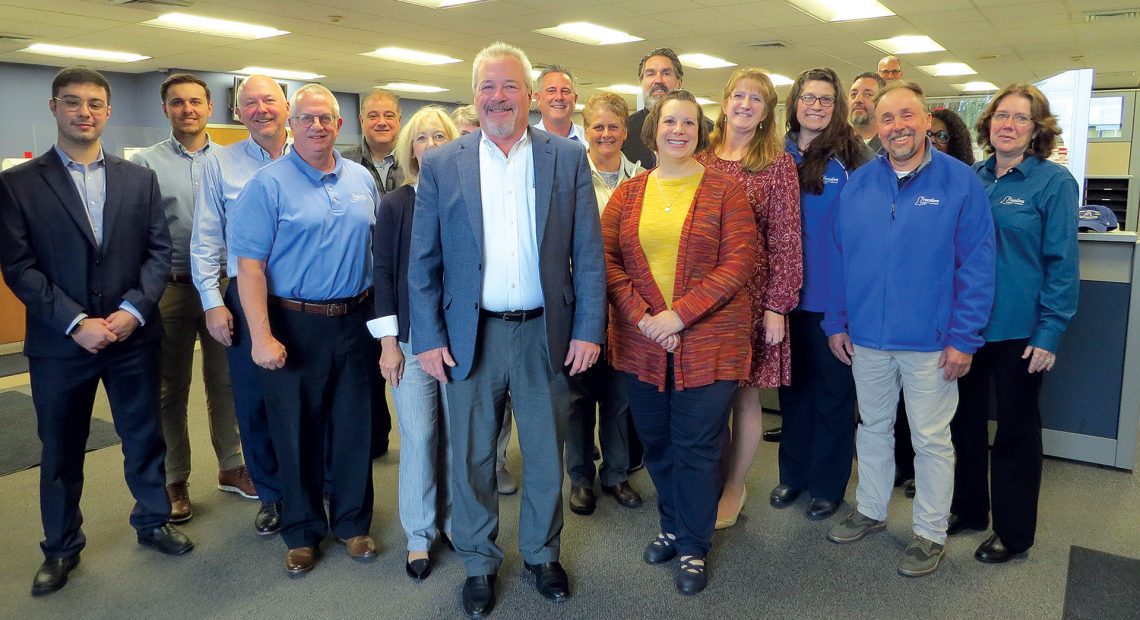
President and CEO Glenn Welch (center) with some of his team.

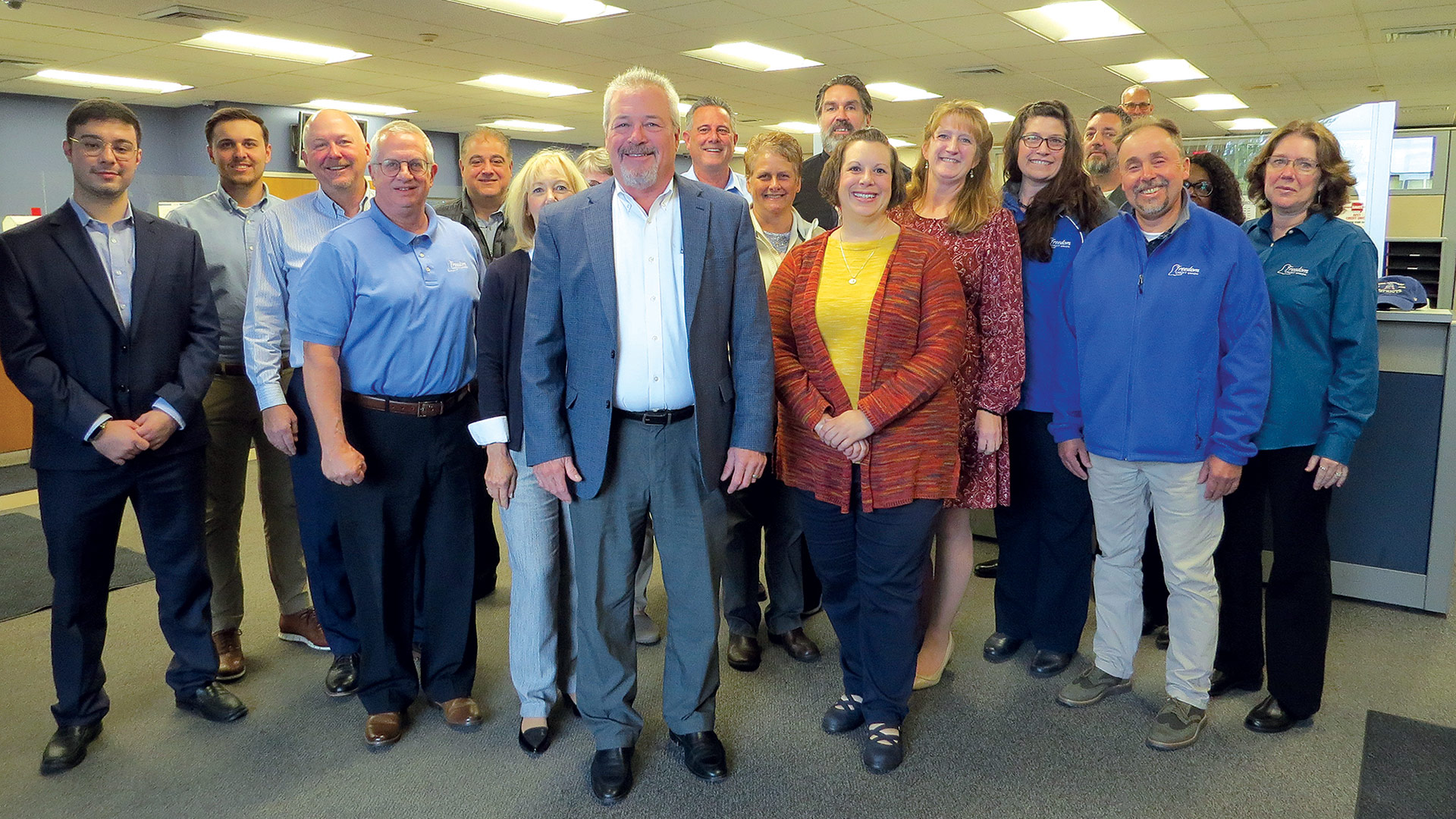
President and CEO Glenn Welch (center) with some of his team.

When asked what might come next for Freedom Credit Union, Glenn Welch said simply, “we’re going to continue doing what we’ve been doing for the past 100 years.”

By that he meant … well, a whole lot of things, from continued growth and innovation to embracing new technology; from growing the base of customers to extending the institution’s geographic reach; from finding new ways to serve members to giving back to the community.

There will be more of all of that, said Welch, president and CEO of Freedom, who offered what amounted to a ‘state of the credit union’ report for BusinessWest on the occasion of its 100th birthday.

The milestone (July 22 was the official birthday) has been marked in various ways — from a 100-day summer food drive that raised $4,100 for the Food Bank of Western Massachusetts and collected 930 pounds of food for the Gray House, to a week of ice cream at all the branches in late July for members and employees; from raffles and giveaways for members to specials on loans and CDs.

“It’s a big milestone these days for a financial institution to be around that long,” Welch said. “So we wanted to celebrate with the community.”

Mostly, though, the institution has been quietly continuing those patterns of behavior listed above, he added, noting that he and his team are being both innovative and entrepreneurial as they go about writing the next chapter in a history that began with an institution known as the Western Massachusetts Telephone Workers Credit Union, formed when Warren Harding was patrolling the White House.

“It’s a big milestone these days for a financial institution to be around that long. So we wanted to celebrate with the community.”

Listing examples of both, he said Freedom will soon be introducing its first interactive teller machine (ITM) as well as credit cards and a new debit-card product. Meanwhile, it is continuing and broadening its push into Connecticut with the opening of a loan-production office on Elm Street in Enfield. Also, the credit union, which now boasts roughly $650 million in assets, more than 32,000 members, and 10 branches across Western Mass., has been making some inroads to service companies in the broad and ever-expanding cannabis industry in Western Mass., while continuing to aggressively pursue more business on the commercial-lending side of the ledger.

With the cannabis sector, the credit union recently started providing deposit and cash-management services for businesses in different kinds of businesses, said Welch, adding that this could become a vehicle for growth at Freedom.

“We have several clients that have signed on with us and we have a pretty good backlog of businesses that are looking to come on board with us,” Welch said, noting that the credit union is working with its regulator to make sure it is complying with guidelines for doing business with those in this sector.

It is certainly not the only institution looking to garner cannabis customers, he went on, adding that, as competition mounts, Freedom will work to remain competitive and secure market share in a sector where new businesses open every month, if not every week.

Cannabis was recently made legal for recreational use in the Nutmeg State, he went on, adding that this could be another avenue for growth in that market. “We think we’re in a good position with our expansion into that market.”

Overall, Freedom is still finding its footing in Connecticut, he said, adding that, over the next few years, it will explore opportunities to branch out south of the border, literally and figuratively.

Glenn Welch

Glenn Welch says the basic strategy at Freedom is “to keep doing what we’ve been doing for the past 100 years.”

“We’re going to explore our options in Connecticut as we get a foothold there,” he explained. “There could be a possibility of branching down there; we signed a two-year lease in Enfield, and we want to explore the market with the loan production first; we thought that was a good way to get a good foothold.”

For this issue and its focus on banking and financial services, BusinessWest talked at length with Welch about the first 100 years for Freedom Credit Union, and what is on tap for this Western Mass. institution.


Answering the Call

Tracing the history of the credit union, Welch said it started in a small office in the telephone-company building on Worthington Street, serving only employees of that large and fast-growing industry.

In 1978, the institution relocated to a new home on Main Street in Springfield’s North End, which still serves as its headquarters today. In 1987, the Western Massachusetts Telephone Workers Credit Union merged with Monarch Credit Union. As demand for the benefits of a credit union grew, the institution applied for a community charter. In January 2001, membership eligibility was expanded to include anyone who lived or worked in Hampden, Hampshire, Franklin, or Berkshire county, and in early 2020, further expansion of membership eligibility included Hartford and Tolland counties in Connecticut.

In 2004, the institution merged with FHBT Credit Union, and the name of the larger entity became Freedom Credit Union. And with that new name came geographic expansion, with new branches in Chicopee, Northampton, and, later, Turners Falls, Greenfield, Feeding Hills, Easthampton, the Sixteen Acres neighborhood in Springfield, Ludlow, West Springfield (after a merger with West Springfield Credit Union in 2019), and then Connecticut.

Throughout its history, Freedom has consistently sought out new opportunities to expand and bring its products, services, and mission to new zip codes, said Welch, while also looking for new and better ways to serve its members, said Welch, adding that these trends continue today.

Especially with its push into Connecticut, but also with its work to attract residents and businesses in its service area that are looking for options in the wake of a seemingly endless string of bank mergers, the latest being M&T’s absorption of People’s United Bank.

“We’re going to explore our options in Connecticut as we get a foothold there.”

Connecticut has become the next frontier for many banks and credit unions based in Western Mass., and so it is with Freedom, said Welch, adding that the new office in Enfield, which opened earlier this month, will include both a commercial-lending officer and a mortgage originator.

“We had a lot of people in Connecticut who wanted to bank with us, so that’s why we expanded our charter in 2020,” he said, adding that COVID obviously slowed the pace of progress into that state, but with the pandemic easing in most all respects, the credit union is expecting to see growth in the numbers of members from across the border.

Meanwhile, Freedom will continue and escalate what has been an aggressive push into the commercial-lending market on both sides of the border, another initiative that has been slowed somewhat by COVID.

“We’re trying to expand on the commercial side, but obviously not ignoring consumers,” he told BusinessWest. “We did hire a new hire lender for the Connecticut market; we believe there is a lot of opportunity there — on both the commercial and consumer side.”

Overall, the credit union began its push into the commercial market roughly seven years ago, he said, adding that it has been making good inroads since, with two lenders in this market and now the one in Connecticut.

Its legal lending limit is $7 million, with a large sweet spot of $2 million to $5 million, Welch explained, adding that this range leaves plenty of growth potential in a region dominated, on both sides of the border, by small businesses.

“We have a very experienced lending team — we’ve been in the market in a long time,” he said, adding that Freedom will be rolling out some new products in the next few months that will make it easier for companies to obtain small-business loans.

“We’ve partnered with a credit-union service organization with an online app where people can go, and they will make the credit decision for us, based on our guidelines in place,” he explained. “That’s how we hope to help the small businesses in the area.”

Another new service soon to be unveiled by Freedom will enable area retailers to offer financing for purchase of their products through the credit union, an initiative that he believes will help small businesses while also creating potential new members for the credit union on the consumer side.

The credit union’s headquarters have been located on Main Street in Springfield since 1978 — before it was called Freedom.

The credit union’s headquarters have been located on Main Street in Springfield since 1978 — before it was called Freedom.

Overall, growth in membership has been steady, at perhaps 1% a year on average, which is typical of credit unions in this market, he said, adding that Freedom is trying to capitalize on the ongoing consolidation of the banking market and mergers like the one involving M&T and People’s United, which, by most accounts, did not go smoothly.

“I think that’s our biggest opportunity, especially in Connecticut, with M&T and People’s United being such big players in that market,” he said, adding that the credit union is conducting some marketing targeting customers of those institutions.

Meanwhile, as noted earlier, the credit union will soon roll out its own credit card as well as a new debit-card product, its first ITM, and other products and services aimed at making banking easier and more convenient for members.

“We just keep automating things as we try to make it easier for our members to do business with us,” Welch explained. “A lot of things are being done online, and I think we have very competitive products for that; if people want to apply for loans or open accounts, they can do it on their own time, but certainly we have the branch system in place to support them when they need help.”


By All Accounts

Looking at the business plan for the next several years, Welch said Freedom is looking at a number of growth opportunities — in Massachusetts, Connecticut, within the cannabis industry, in commercial lending, and with several new consumer products.

It is moving on several different fronts at once, with the goal of expanding its membership base, providing new and better products and services, and taking its mission in new directions.

These initiatives are new in some respects, but overall, they’re simply a continuation of what the institution now known as Freedom has been doing for a century.


George O’Brien can be reached at [email protected]

Education Special Coverage

Learning Experiences

Spearheading the Haiti Nursing Continuing Education Program are Elms College officials

Spearheading the Haiti Nursing Continuing Education Program are Elms College officials, from left, Anne Mistivar, project faculty coordinator and cultural consultant; President Harry Dumay; Maryann Matrow, director of School of Nursing Operations; and Deanna Nunes, assistant clinical professor and associate dean of the School of Nursing.


Harry Dumay says the initial talks began more than four years ago.

They involved nurse educators in Haiti and leaders at Elms College, including Dumay, who is from Haiti, and they centered around how Elms, which has a strong Nursing program, might be able to partner with those in Haiti to continue the education of nurses in a broad effort to improve health outcomes in that country through nurse-faculty development.

Through a $750,000 grant from the W.K. Kellogg Foundation, a partnership between Elms and the Episcopal University of Haiti School of Nursing (EUH) was created that brings together nurse faculty from across Haiti and uses a ‘train-the-trainer’ approach to instruct the faculty with leading-edge nursing skills.

To date, more than 47 nurses in two cohorts from all provinces of Haiti have gone through the program — there was an elaborate graduation ceremony in May for both groups — and a third cohort has begun, with a fourth and perhaps more planned, thanks to a second grant from the Kellogg Foundation for $1.1 million.

That is the short, as in very short, version of a truly compelling story.

“The Elms program was very helpful because in Haiti they don’t have this type of training for nurses. They have nurses that are in different specialties and in different roles, and they find themselves teaching, but they’ve never been taught how to teach, so this program is very important because they are learning how to be an instructor.”

The longer version involves how all this has been accomplished during a time of global pandemic and an earthquake, a severe hurricane, and extreme political upheaval and general unrest in Haiti, including the assassination of the country’s president, Jovenel Moise, more than a year ago.

In short, very little about this initiative has been easy, but those involved — here and in Haiti — have persevered because the stakes are high and need to train nurse faculty is great, said Dumay.

Elaborating, he noted that the original model for this program called for in-person learning, with educators from Elms flying to Haiti once a month to lead classes.

Those plans were eventually scrapped because of the pandemic and other factors, including safety issues, in favor of a remote-learning model that came with its own set of challenges, especially the securing of needed equipment (tablets, hotspots, and even solar chargers in case power was lost) and getting them in the hands of the students who would use it.

In May, the first two cohorts of nurse educators in the Haiti Nursing Continuing Education Program attended their graduation ceremony in Haiti. With the graduates in the front row are, from left, Anne Mistivar, project faculty coordinator and cultural consultant for the program; Hilda Alcindor, project co-director from the Episcopalian University School of Nursing in Haiti; Harry Dumay, president of Elms College; Joyce Hampton, associate vice president of Strategic Initiatives and dean of the School of Arts, Sciences and Professional Programs at Elms; and Bapthol Joseph, project co-manager from the Episcopalian University School of Nursing in Haiti.

And these issues were compounded by other challenges, including those aforementioned natural disasters and the general upheaval in the country. Some students had to stay at their workplaces to take part in the classes because the WiFi was better there; meanwhile, class times were shifted so that students wouldn’t be traveling after dark to take them because of the increased risk to their own safety.

But, as noted, all those involved have pushed through these challenges because of the importance of this training. Indeed, most healthcare in Haiti is provided by nurses, not doctors, so the need to train nurse educators and thereby heighten the skills of those providing care is paramount.

People like Lousemie Duvernat, a nurse who was part of the second cohort that went through the Elms program. Via Zoom and through an interpreter — Anne Mistivar, project faculty coordinator and cultural consultant for what has come to be known as the Haiti Nursing Continuing Education Program — Duvernat said the program, and, specifically, its ‘train-the-trainer’ approach, has made her a better nurse, not to mention a better educator.

“The Elms program was very helpful because in Haiti they don’t have this type of training for nurses,” she explained. “They have nurses that are in different specialties and in different roles, and they find themselves teaching, but they’ve never been taught how to teach, so this program is very important because they are learning how to be an instructor.

“This, in essence, has helped them to understand the students, how to deliver the message, how to present, and how to evaluate the students and make them better educators,” she went on, adding that she would like to see the program continue because they simply don’t have anything like the ‘train-the-trainer’ approach in Haiti.

Such sentiments clearly explain why this initiative was undertaken and why it has persevered through so many extreme challenges, said Deana Nunes, associate dean of the School of Nursing and assistant clinical professor at Elms and nurse educator and course faculty for the Haiti Nursing Continuing Education Program, adding that the results thus far have been encouraging on many levels, but especially in what she called the “thirst for learning” she has seen from the nurses from Haiti who have been involved with the program.

For this issue and its focus on healthcare education, BusinessWest takes an in-depth look at this inspiring program, its goals, and the many ways in which success is being measured.


Course of Action

Duvernat — again, through her interpreter, Mistivar, who is also from Haiti — told BusinessWest that, since she was a child, she harbored dreams of becoming a doctor. In Haiti, though, the road to that profession is long and difficult, and she eventually set her sights on becoming a nurse, a vocation that, as noted, brings even more responsibilities than it does in this country.

But, and also since childhood, she has wanted to be an educator. And these twin passions, coupled with her desire to help others, have now come together as she advances her career as a nurse educator, with the goal to one day earn a doctorate — a path that has been accelerated and helped in many ways by the Haiti Nursing Continuing Education Program and its heavy emphasis on those words ‘continuing education.’

This is what all those involved with the initiative had in mind, said Dumay, noting that the program was born out of need, one that he was quite familiar with, and a desire among those at the college to meet that need.

“Elms College has a great School of Nursing and a strong reputation in the area for preparing great nurses and healthcare professionals in general,” he said. “But Elms College has also had a desire, and some efforts, in reaching outside Chicopee, outside Massachusetts; some of our students have gone to Jamaica for clinical programs, and we’ve had conversations with our partners in Japan around global health initiatives.
“I’ve also had interactions and collaborations with those in higher education in Haiti, and I’ve also had interactions and collaborations with the Kellogg Foundation,” he continued, while explaining the genesis of the initiative in that country. “And I know that one of the strong desires of the Kellogg Foundation has been to support the reinforcement of human resources for health in Haiti, particularly around the support of maternal and child healthcare.”

Looking at those synergistic aspirations and competencies, it was natural to propose to the Kellogg Foundation to help Elms in efforts to reinforce nursing education in Haiti, he continued, adding that the pieces eventually fell into place for what would become the Haiti Nursing Continuing Education Program, for which Elms would partner with the Episcopal University of Haiti and its school of Nursing.

That was back in early 2019, said Dumay, adding that there were visits to Haiti by officials at Elms and those with the Kellogg Foundation to explore the facilities of the Episcopal University of Haiti’s School of Nursing and meet with officials there to brainstorm about how the initiative could take shape.

Eventually, continuing education for nurse educators became the focus, he went on, adding that a ‘train-the-trainer’ model was identified as the most effective course of action — figuratively but also quite literally.

“We know that a lot of the nurse educators in Haiti are at varying degrees of preparation, and we heard from our partners from the healthcare system in Haiti that the nurses that are coming out of the various schools of nursing in that country have varying degrees of preparation as well,” Dumay explained. “So helping to reinforce the capacity, the level, and the preparation of nurse educators in Haiti so that they, in turn, can teach the nurses who are on the front lines became the concept that we created.”

Lousemie Duvernat shares the stage with Elms College President Harry Dumay

Lousemie Duvernat, a graduate of the second cohort of nurse educators, shares the stage with Elms College President Harry Dumay at the recent graduation ceremonies.

With a $750,000 grant from the Kellogg Foundation, plans were put in place for two cohorts of 24 faculty members from approved nursing schools across Haiti to take part in this ‘train-the-trainer’ program, he noted, adding that the original plan was for in-person classes at the Episcopal University of Haiti — specifically a “very intense” once-a month model.

Obviously, this plan had to change, because of COVID but also other factors, including the growing danger of traveling from one province to another in Haiti, said Dumay, noting that the program was halted at one point as plans were developed for an online format. This was a challenging adjustment because of the need to provide the nurse educators with needed equipment in the form of laptops and hotspots — and then actually getting this equipment into their hands, an assignment fraught with challenge on many levels, from the transportation and safety issues to the pandemic itself.

“We worked with and leveraged the network of the telephone company in Haiti, which has stores throughout the country,” he said. “We worked with them to coordinate the distribution of the technology to individuals all across Haiti; it was a logistical feat to be able to have all of the students have access to that material so they could complete the program.”

Overall, said Mistivar, the move to a remote format provided other learning opportunities.

“Not only did they learn about nursing, but also about technology,” she told BusinessWest, adding that the students were nurses representing all 10 provinces in Haiti. Some were already nurse educators, and many were working in various hospitals. Some had bachelor’s degrees, while others had a master’s.

The common denominator was that they wanted to take their education, and their ability to train others, to a higher level.


School of Thought

Nunes told BusinessWest that the shift to remote learning in Haiti was similar to what was happening at Elms College and other schools in this country during the pandemic. But there were many subtle, and not so subtle, nuances and adjustments that had to be made.

“Each week, on Wednesday afternoons, we met with the students via Zoom,” she explained. “We had to adjust our course time because, once darkness comes, it becomes much more dangerous. It became an example of the ways we had to work with our students to make sure we were not only providing them with a great education, but also keeping them safe.”

Overall, the nurse educators displayed great resilience, she went on, and a strong desire to learn, despite the many challenges they are facing in their daily lives, because they understood its importance to them becoming better educators and nurses — and perhaps advancing in their careers.

This resilience, desire to learn, dedication to helping others, and the knowledge and experience they already brought to the table certainly made an impression on those at Elms.

“Speaking with them, it was just fascinating to learn the way Haitian medicine and nursing care is delivered, and the amount of experience these nurses have is incredible,” Nunes told BusinessWest. “For me, as an educator, I feel I learned so much from them in addition to what they learned from us.”

As she talked about what was taught, and how, Nunes said there was prepared curriculum, obviously, but those leading the courses would often take their cues from the students, the nurse educators.

“One of the courses I taught was ‘Health Assessment,’ and in the beginning, we asked them, ‘what do you want?’ she recalled. “One of the things they identified was maternal health, but one of the things that surprised me was that they wanted to know more about how to use a stethoscope because, in Haiti, they said, the physicians do that.

“But they wanted to become more competent as nurses and develop that skill, so we were able to provide resources online, such as videos that demonstrated the sounds they’d hear and where to listen, things like that. In the development of our curriculum, we wanted to integrate knowledge in addition to keeping the focus on how to teach this knowledge.”

This same approach is being used with the third cohort of nursing educators, which just began its course work several weeks ago. This latest chapter in the story has provided more insight into the many challenges to be overcome, and more lessons in perseverance, said Maryann Matrow, director of the School of Nursing Operations at Elms and project co-manager for the Haiti Nursing Continuing Education Program.

She noted, for example, that some students were held up on the road as they traveled to the kickoff for the third cohort, but eventually made it there safely. She also noted some the difficulties in getting new models of laptops to the students that will be using them.

“Once we found and ordered it, things began to get more difficult in terms of travel and delivery,” she said. “As for the kickoff ceremony … to be able to get the people there was trying.”

Despite all this, the attrition rates for the first two cohorts were extremely low, only a few students, said Matrow, adding that she attributes this to everything from that thirst for knowledge that all those involved recognized to the strong support system involving those in both Haiti and Chicopee that has helped students make it to the finish line.

For Duvernat, the challenges involved in taking part in this program went beyond transportation, navigating around extreme weather, and coping with crime. She also had a baby during the course and was working full-time as well, adding up to a juggling act and very stern test that she and others have passed.

“Life in Haiti is very stressful,” she said through Mistivar. “Every day, people have to deal with that stress, which makes them resilient and able to adapt. I was motivated to continue to attend the class because it was something that was very important to me. I tried to focus on the experience because I did not want to miss the opportunity.”


Bottom Line

While there are many words and phrases that can be used the describe the Haiti Nursing Continuing Education Program, including all those in its title, ‘opportunity’ probably sums it up the best.

For those in Haiti, it is an opportunity to continue their education and, as Duvernat said, learn how to become better teachers. Meanwhile, for Elms College, it is a chance to extend its reach and its ability to make a difference in the lives of others, well beyond Chicopee and Western Mass.

In short, it has become a learning experience on many levels and for all those involved. It is a compelling story that hopefully has many new chapters still to be written.

Building Trades Special Coverage

Making the Circuit


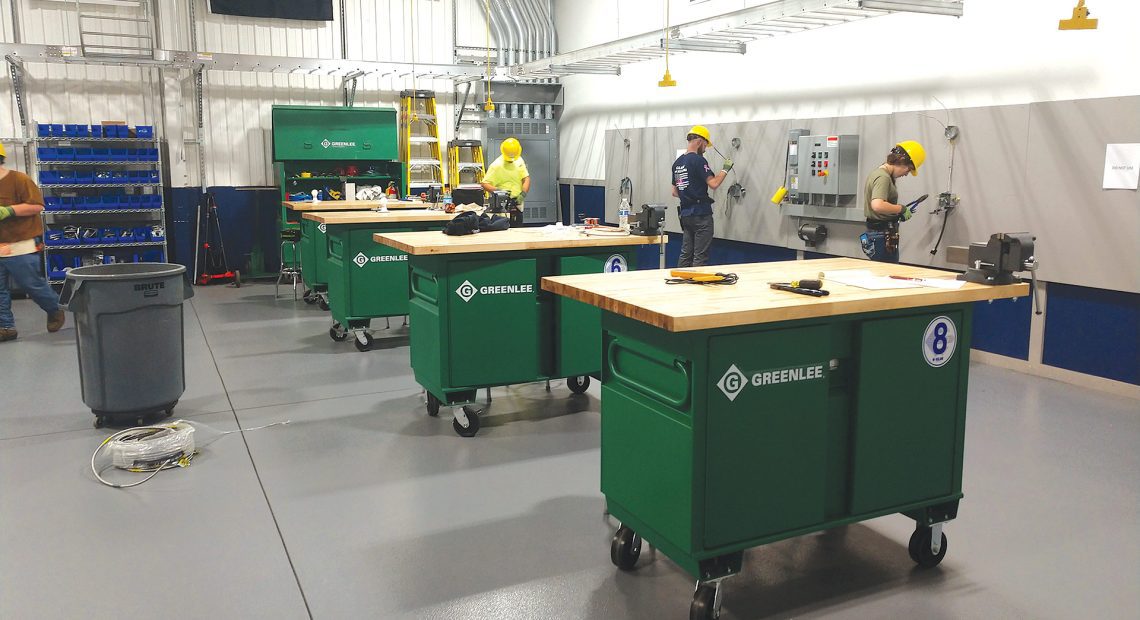
High-school students train at Elm Electrical as part of its summer First Step Futures program.

High-school students train at Elm Electrical as part of its summer First Step Futures program.


Over the summer, three cohorts of high-school students attended four-day training seminars, two in June and one in August, at Elm Electrical in Westfield.

Monday through Wednesday, the students received instruction and training in the state-of-the-art Elm University multi-media classrooms and hands-on lab. Thursday, the final day, was Challenge Day, when students applied what they learned and completed a project board challenge. Elm project managers evaluated their work, offered feedback, and got to know the students.

It was, no doubt, an enriching experience for many. But First Steps Futures, as Elm calls it, is more than a summer camp. It’s a program, to be repeated each summer, with an eye firmly on the future of the electrical industry.

“This is a great opportunity to showcase and utilize our training facility, expose kids to the electrical field, as well as instruct our current and future workforce,” instructor Paul Asselin said. “At the same time, we can get them excited about the field and see what the kids can do. Do they follow our strict safety protocols? Do they ask questions? Do they work well with others? Is their work accurate? Do they have a positive attitude? This gives us a snapshot of what they’d look like as potential co-op students on the job.”

The students, in grades 10-12, were recommended by their teachers or Elm employees to attend the free training seminar. Some were, indeed, invited back as co-op students, to get a better look at the field, and give Elm a better look at what they can do.

“This program also gives kids who don’t attend a technical school the chance to see if the electrical field is something they may be interested in pursuing,” Asselin added. “Oftentimes, students who go to a traditional high school think it’s too late to go into a trade. We make sure they know there is still an opportunity to pursue a career in the field.”

“Oftentimes, students who go to a traditional high school think it’s too late to go into a trade. We make sure they know there is still an opportunity to pursue a career in the field.”

The Elm University classrooms and lab weren’t created with young people in mind, however; they’re used year-round as Elm’s in-house training facility. Employees who want to become licensed electricians can opt into the company’s four-year apprentice program, working their jobs Monday through Thursday and then, every other Friday, attending school at Elm University for free, as an alternative to night school.

“We started our own training because we weren’t happy with the training we were getting, the conventional way of going two nights a week, three hours a night; most of these night classes are in a classroom setting and don’t have a hands-on component. They get what they need to pass the test, of course, but the hands-on component makes a big difference because that’s what their supervisors see out in the field. That’s what they need out in the field.”

In short, Elm has created a way to cultivate a pipeline of young talent at a time when older electrical workers are leaving the trade faster than they can be replaced. It’s a trend being observed in all construction trades, in fact, and it sometimes requires innovative solutions.

“We can complain like everyone else or do something about it, and we’ve chosen to do something about it,” Asselin said, noting that the effort and financial investment are paying back in the quality of workers the company is putting into the field. “It’s apparent it’s working.”

Jean Pierre Crevier, co-owner of M.L. Schmitt Inc., a 99-year-old electrical contractor based in Springfield, agrees that companies need to stay connected to the potential pipeline of young talent. He does so by participating in the interviewing process of the Joint Apprentice Training Committee of the Local 7 International Brotherhood of Electrical Workers, bringing new students into apprenticeship programs. “I was pleased with this year’s turnout — we had a lot of great candidates to choose from this year.”

Putnam Vocational Technical Academy teachers

Putnam Vocational Technical Academy teachers Michael Poole (far left) and Charley Jackson (far right) and senior students are joined in the electrical shop by M.L. Schmitt’s Bobby Williams (back left) and Pete Coppez (back right).

But he also does so with efforts like a recent partnership between M.L. Schmitt, Exposure, and two local electrical manufacturers, Legrand and Fidelux Lighting, to provide donations to the Putnam Electrical Shop at Putnam Vocational Technical Academy in Springfield.

The Putnam Electrical Shop works on a fixed budget, and donations like this give them additional supplies and equipment for student lessons, said teacher and master electrician Charley Jackson. “I share my work experience and testimony with my students, and it really helps them with their desire to learn. Our recent visit from M.L. Schmitt and donation of supplies really encouraged our students to keep pushing.”

The materials that the school received include low-voltage and line-voltage training kits, a variety of light fixtures, blueprints, surface raceways, disconnect switches and more. More donations are expected to take place this fall, and M.L. Schmitt has hired many Putnam graduates over the years.

“We’ve been conditioned to think you have to have a college degree to have a successful career after high school,” Crevier said. “But a lot of people struggling with college and looking at alternate solutions can make really good money in the trades. I know borderline geniuses who don’t have a really strong formal education behind them, but they can use their hands, and they’re virtual artists, interpreting visual drawings to see what the designer’s intent is. It’s a great career path.”


Mind the Gap

The workforce issue isn’t unique to electricians. A recent survey by Associated General Contractors of America (AGCA) found that, overall, construction firms are still struggling to recruit employees. Ninety-three percent of respondents say they have open positions that they’re trying to fill, and 91% indicate they are struggling to fill at least some of these roles. This issue is particularly pronounced among craft positions, which make up the bulk of construction work on job sites.

At the same time, AGCA reported, more companies are waking up to the fact that the future of the construction industry lies in youth, which is why firms are increasingly taking steps to engage younger generations. Fifty-one percent of survey respondents say they’ve gotten involved in career-building programs at the high school, college, and technical-school level in order to encourage students to consider a career in construction.

Jean Pierre Crevier

Jean Pierre Crevier

“But a lot of people struggling with college and looking at alternate solutions can make really good money in the trades. I know borderline geniuses who don’t have a really strong formal education behind them.”

It’s a task facing serious headwinds. Tallo, an employment and scholarship platform geared toward younger workers, issued a report in the spring analyzing survey responses from more than 29,000 high-school and college students about the brands, industries, and career paths they desire. In a ranking of 22 industries, construction attracted the interest of just 16.7% of respondents; only forestry ranked lower. In contrast, 76.5% want to work in technology.

What those who are looking at the trades are finding, however, is opportunity. According to the U.S. Bureau of Labor Statistics, electrician jobs are expected to grow by 9.1% from 2020 to 2030, higher than the 7.7% growth rate projected for all occupations. The increase in demand is largely driven by an increase in devices, buildings, and vehicles that rely on electricity; from 2021 to 2022 alone, total electricity consumption in the U.S. is expected to grow by 1.4%. Meanwhile, as noted earlier, Baby Boomers are retiring at a faster rate than members of Gen Z are choosing careers in the trades.

“I was one of those people who went to a private high school, four-year college, got a bachelor’s degree in marketing, sat behind a desk every day, and decided it wasn’t for me and turned to the trades,” Crevier told BusinessWest. “I decided I was one of those visual people; I like to work with my hands, see my accomplishments at the end of the day, and be proud of what I did.”

One of his pitches to young people is that, particularly for those who enter a union apprentice program, they’ll get paid to learn a career path, rather than go into debt. “Instead of investing tens of thousands, hundreds of thousands, into an education, you’re actually getting paid to learn, paid in the field, as you go to night school, at least on the union side.”

Bobby Williams, a purchasing officer at M.L. Schmitt, graduated from Putnam and is gratified to see more of its students become the future of his field. “Without our young, upcoming electricians, we won’t have a future workforce of skilled tradesmen and women.”

Which is why Jackson is gratified by the continued connection betweeen Putnam and area businesses. “These donations and visits from M.L. Schmitt let our students know they’re included,” he said. “It certainly motivates and keeps them encouraged about entering the trade.”

Michael Poole, who chairs the Electrical Department at Putnam, added that the donation gives students an opportunity to see and work with specialty items that they would otherwise not be able to afford. “It also shows them that the community cares about their future success in the electrical trade. I am grateful, and I know that our students are as well.”


First Steps on a Rewarding Path

Still, Asselin noted, with the manpower shortage, vocational schools can only put out so many students, which is why programs like Elm’s First Steps Futures, is so important, as the company brings in young talent who might otherwise have never thought electrical work was something for them.

“I’ve got them for four days, so I get a pretty good idea what kind of student and what kind of employee they may be. It was really eye-opening for us to see the quality of some of the students out there,” he said. “Some kids who go to a traditional high school or some other alternative school think they can’t go into a trade because they didn’t go to trade school. That’s not the case. Companies like ours will train them both in the classroom and hands-on. We have that ability to get them up to the same level as, say, a vocational student that went through a three-year vocational program.”

Moving forward, Asselin said Elm might open the week-long program to veterans looking to get into a trade. “It’s a different way to approach the problem.”

But Elm University itself, where current employees skill up for better career opportunities, has been a crucial element, he added. “This is what we should have done a long time ago. We kind of had our hand forced because certain jobs require traveling, guys are out of town for a week, and it’s hard to be in school during the week and also be at work. Now, they can travel during the week and get back for class.

“This is a great option for those who don’t want to have to go to night school,” he added. “In four years, students will be ready to sit for their exam to be licensed electricians. Adding our First Steps Futures program to our Elm U program really allows us to groom our future workforce from the very beginning.”

Offering young people pathways into a career is important, but so is showing them how much satisfaction can be found in the work.

“Really, it’s a tangible thing. I tell students, there is a tangible output from what you do,” Crevier said, adding that he tells students about area jobs his company has worked on, from Union Station to the light and visual displays at Thunderbirds games to hospitals, which rely on electrical networks to save lives. “These things might last decades or hundreds of years, and people will always see the product of what you did. Kids today have never thought about that aspect before.

“We can all find people,” he added. “It’s a matter of finding qualified candidates who have the initiative, the drive, and the desire to differentiate themselves and be leaders. Too many people in the workforce today are complacent to show up and participate and don’t want to do more.”

But Schmitt, a company that’s been around for 99 years and doesn’t plan on going anywhere, won’t always have Crevier and his team at the helm, so a job there, as at many companies, is a chance to grow into higher roles.

“We’re not going to be here for 30 years, but we’re looking at the next 30, 40, 50 years, and even beyond that,” he said. “There’s always an opportunity for the right individual.”

At a time when electrical and all other building trades are scrambling to find talent and restock an aging workforce, it’s just one more factor that might draw a Gen-Z student to a career he or she might never have considered before.


Joseph Bednar can be reached at [email protected]