Alumni Achievement Award

President and Owner, Chikmedia

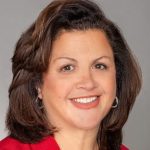
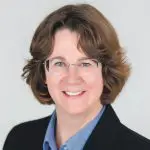
Meghan Rothschild today (above) and as a 40 Under Forty winner in 2011.

Meghan Rothschild today (above) and as a 40 Under Forty winner in 2011.

Meghan Rothschild started speaking in public when she was just 20 years old.

She had become a survivor of melanoma, a common and deadly form of skin cancer, and she began speaking out about her diagnosis as an advocate for sun safety and cancer prevention, turning a negative into a positive.

Over the ensuing two decades or so, she would become a natural behind the microphone, addressing subjects ranging from skin cancer to social media to leadership skills and how to build them. She would also become a sought-after presenter and media host, including red-carpet coverage on behalf of Explore Western Mass. (the Greater Springfield Convention & Visitors Bureau) for Basketball Hall of Fame enshrinement, as a panelist for the RISE Women’s Leadership Conference, and regular media-outlet contributions including The Rhode Show, Mass Appeal on WWLP, iHeart Radio, and more.

It wasn’t until recently, though, that she delivered what she called her first ‘keynote address.’ It came at the Pioneer Valley Women’s Conference staged last month at the Marriott in downtown Springfield. The conference’s theme was Unleashed, and the unofficial title of her address was “Living Authentically Unleashed.”

“These were my tips for how to live an authentically unleashed life,” she told BusinessWest. “Being authentic, unleashing your emotions, unleashing your power, bringing empathy back into the workplace and acknowledging that people are human beings and not machine — things like that.”

When asked if she lived her own life authentically unleashed, she said, “I would certainly say that, yes. It means being free of of concern over how others view you, finding your true authentic mission and purpose, not being afraid to speak your mind, using your voice to set boundaries, knowing your own self-worth, all of those things,” she added.

Building an impressive portfolio of public speaking engagements and living her own life authentically unleashed — in all those ways she described — are just two of the many ways Rothschild has grown and evolved, personally and professionally, since she became a 40 Under Forty honoree in 2011 while serving as Development and Marketing manager for the Food Bank of Western Massachusetts.

The most obvious is the creation and continued growth of the marketing and public-relations business she founded called Chikmedia, a full-service, boutique firm that provides clients nationwide with graphic design, social-media management, public relations, expert positioning, event management, and more.

But there is more to this story, including involvement within the community that takes many forms, from a Girls & Racism town hall created in collaboration with Girls Inc. to a Campaign for Healthy Kids PSA designed to help raise funds for the children and families that rely on Square One and were severely impacted by COVID, to her creation of the Chik of the Future Scholarship, designated for a young woman of color pursuing a degree in a marketing-related field.

The sum of these accomplishments has made Rothschild a repeat finalist for the Alumni Achievement Award. In fact, this is the fourth time that panels of judges have made her one of the top scorers.

It’s easy to see why, starting with her success in business.

She told BusinessWest that, while she considers herself an entrepreneur at heart, she never anticipated growing an agency to where it would have several team members and more than 40 clients at any given point.

“I started this to really take a calmer approach to my career, and it’s been the exact opposite,” she said. “Entrepreneurship is not for the faint of heart, but the business has just blossomed.”

Indeed, it now boasts clients ranging from TIZO, a national skin-care line, to local businesses and nonprofits ranging from the Log Cabin to Girls Inc. to the recently opened event venue 52 Sumner.

But she is perhaps more proud of the work that she and the agency are doing in the community. She is involved with the Advertising Club of Western Massachusetts as a board member, for example; runs in several 5Ks, like the one staged recently to support Dakin Humane Society; and brings added value to the many nonprofits within the client portfolio as another way to give back.

“I do influencer marketing myself, so on social media, I’m constantly talking up my clients and sharing their events and throwing myself in the hat as a marketing tool for them — because I find that’s sort of a seamless way for me to give back,” she said.

And then, there are initiatives like the Chik of the Future Scholarship, which has grown in scope and monetary value over its five-year history thanks to the support of several local businesses, as well as the She Votes campaign spearheaded by the team at Chikmedia in collaboration with Girls Inc. The goal of the campaign was to pre-register as many teen girls to vote as possible and to raise $21,000 for the She Votes curriculum. Voting pre-registrations were outstanding, Rothschild said, and the fundraising campaign concluded 3% above goal.

“I started this to really take a calmer approach to my career, and it’s been the exact opposite. Entrepreneurship is not for the faint of heart, but the business has just blossomed.”

Maybe the best indication of how far she has come, and how her impact has grown, is her increasingly crowded schedule, filled with various speaking engagements that reflect her many areas of expertise.

Last year, for example, she was in Dallas to appear at a major beauty conference to share her personal experience with skin cancer and talk about TIZO. She also addressed the Bradley Chamber of Commerce this month and hosts a series of workshops for Head Start programs across New England.

Overall, she’s speaking four to six times a month on average, with the subject matter ranging from skin-cancer prevention to entreprenership; from social-media training to talks that would be considered motivational in nature.

She said it’s taken her the better part of a decade to “get into a really good groove,” as she called it, developing a style that makes heavy use of humor and that engages the audience in whatever it is she’s talking about.

“When the topic is something outside my comfort zone, like a motivational speech, that fuels me,” she said. “It makes me take a moment and really think about what I’m going to say. I can stand up and talk about social media for six hours and not even bat an eye, but motivational-style speaking is completely different.”

There are many things that fuel Rothschild today, everything from working with her team to grow Chikmedia to providing scholarships to girls of color looking to enter the marketing field, to … well, living life unleashed.

All that explains why she is an Alumni Achievement Award finalist. Again.

—George O’Brien

Daily News

Vanessa Pabón-Hernandez

SPRINGFIELD — The Women’s Fund of Western Massachusetts recently appointed Vanessa Pabón-Hernandez CEO of the philanthropic organization, effective June 17. A native of Springfield’s North End and a driven, longtime mentor of women and champion for social change and empowerment, Pabón-Hernandez succeeds Donna Haghighat in the key role for the nonprofit.

Throughout her 25-year career, Pabón-Hernandez has supported women and Latinx community members, first as a marketing strategist in business for herself and later in roles that include program director for the YMCA North End Youth Center, founder of a community-based digital storytelling center, and executive producer at New England Public Media, a role she left in early June after 14 years to accept the CEO position at the Women’s Fund.

Pabón-Hernandez has experience as a program developer, grant writer, mentor, facilitator, consensus builder, and storyteller, and she is excited to put her skills to work for the Women’s Fund. “I want to make a meaningful impact that’s less about program development and more about supporting the people who have the ideas,” she said. “I’ve been the one who has been dreaming big and creating programs of impact. Now, I want to support the dreams of others.”

Luzed Guzman Romano, current treasurer and incoming board co-chair for the Women’s Fund, said the board is excited about the opportunities that Pabón-Hernandez’s experience, determination, and leadership present. “We are all confident Vanessa’s leadership will drive the organization forward, continuing its mission to support and empower women, girls, and gender-expansive people in the region. In many ways, Vanessa’s life experience mirrors the reason why the Women’s Fund exists.”

Inspired by a strong, independent mother who helped facilitate her path, Pabón-Hernandez defied the odds several decades ago as a young, single mother, earning two associate degrees at Springfield Technical Community College before launching her own business as a marketing strategist for political candidates and area businesspeople.

She mastered the art of storytelling to advance social change, entered the nonprofit sector, and, over 25 years, led and founded innovative programs in marginalized communities that have allowed thousands of individuals to access resources, leverage their strengths, and drive their own career paths. She has received the Unsung Heroine award from the Massachusetts Commission on the Status of Women and was named to BusinessWest’s 40 Under Forty. She was also the grand marshal for the Springfield Puerto Rican Parade.

Daily News

PITTSFIELD — Berkshire Regional Planning Commission (BRPC) announced $3.5 million in supplemental funding from the U.S. Environmental Protection Agency (EPA) to recapitalize its existing Brownfield Revolving Loan Fund (RLF).

The EPA previously provided $7.6 million in RLF funds to the program. BRPC was selected to receive additional funds because it has a high-performing RLF program with significantly depleted funds due to frequent activity. The RLF program has successfully made loans or subgrants, leading to 12 cleanup projects that are either completed or in progress.

“The Brownfields Revolving Loan Fund is a critical economic-development tool in our region,” BRPC Executive Director Tom Matuszko said. “In many cases, we’re filling gaps in a project’s financing that makes it possible to expand or redevelop locations that then provide housing or employment opportunities where they are most needed.”

The fund lends to private, public, and nonprofit entities for cleanup activities at sites contaminated by petroleum or other hazardous substances, pollutants, or contaminants. Municipalities and nonprofits may also be eligible for subgrants from the fund, usually after participating in a phased brownfield assessment program also operated by BRPC.

“Our assessment program lifts the veil of uncertainty from sites, offering answers regarding levels of contamination and, in some fortunate cases, proving that no contamination exists, encouraging private investment and reuse of a site,” said Melissa Provencher, Environmental and Energy Program manager at BRPC.

Additional Berkshire County grants were awarded to projects in North Adams and include $1.9 million to clean up the former Tannery Dump located on Ashton Avenue and $1.863 million for cleanup at the Greylock Flume property.

The tannery dumping site contains a 1.5-acre, 10-foot-high mound of leather scraps that abuts the Hoosic River and is contaminated with heavy metals. Extreme storms have exposed the layers of leather on the riverbank. The flume property is located on State Road, a 7.8-acre former textile mill location that housed 10 above-ground storage tanks and 30 former dip tank drums. It is contaminated with sulfuric acids, phosphoric acid, sodium hydroxide, nitric acid, metals, PCBs, and inorganic contaminants. BRPC staff provided assistance in preparing applications for both site-specific awards and will serve as grant manager for the Tannery site project.

Daily News

Cathy Velez

BOSTON — Berkshire Bank announced that Cathy Velez has joined the bank as managing director of Retail Banking and Deposit Operations.

As a senior leader, Velez will oversee the bank’s financial-center network, retail sales and service delivery, and branch operations. She will also direct the execution of the retail banking strategy to drive short- and long-term growth, business-line initiatives, and major divisional projects.

“We are excited to have Cathy join Berkshire’s leadership team as we look to further strengthen our retail franchise, drive deposit growth, and enhance our client experience,” said Sean Gray, Berkshire Bank president and chief operating officer. “Her knowledge of our New England and New York markets, commitment to talent development, and track record of driving profitable growth make her the ideal candidate to lead retail banking into the future.”

Velez joins Berkshire Bank with more than 25 years of extensive experience in banking. Most recently, she served in multiple senior retail and private banking roles for Webster Bank.

Daily News

CHICOPEE — The Food Bank of Western Massachusetts will host its second annual Voices in Food Equity event on Wednesday, June 12 from 5 to 7:30 p.m. at Springfield College. This gathering, which brings together community leaders and residents to discuss food equity in the region, is sponsored by Alekman DiTusa LLC and the Talcott Financial Group.

Voices in Food Equity will feature a panel discussion with prominent voices in food equity who will share their insights and experiences specifically addressing food insecurity for children, youth, and college students. Attendees will also enjoy refreshments and networking opportunities, fostering collaboration and deeper community engagement.

“We are excited to host the Voices in Food Equity event for the second year,” said Andrew Morehouse, executive director of the Food Bank. “We believe that, by bringing together diverse perspectives, we can inspire meaningful action to create greater food equity and food security for everyone in Western Massachusetts.”

The panel discussion will include Joesiah Gonzalez (moderator), chief Philanthropy & Communications officer, Home City Development, Springfield; Catalina López-Ospina, vice president of Engagement, Project Bread, Boston; José Lopez-Figueroa, director, Center for the Access Services and Thrive Center, Springfield Technical Community College; Shannon Rudder, president and CEO, Martin Luther King Jr. Family Services, Springfield; and Abby Getman Skillicorn, Special Projects manager, Massachusetts Farm to School, Boston.

Topics to be covered in the discussion include innovative approaches to food assistance, the role of public schools and colleges, local agriculture, and empowering underserved communities.

“We invite everyone who is concerned or passionate about food equity to join us for an evening of thoughtful dialogue and networking,” Morehouse said. “Together, we can create a Western Massachusetts where no one faces food insecurity and everyone always has access to nutritious food.”

The event is free and open to the public, but registration is required. Visit foodbankwma.org to reserve a spot.

Community Spotlight

Community Spotlight

Shakespeare & Company’s 33-acre campus in Lenox is open to the public for picnics and exploration of its grounds.

Shakespeare & Company’s 33-acre campus in Lenox is open to the public for picnics and exploration of its grounds.

Becky Piccolo says the Olde Heritage Tavern is the ‘Cheers’ of Lenox.

It’s a place where … well, most everyone knows your name. Indeed, while it’s a popular hangout for locals, those in town for a concert at Tanglewood, a play at Shakespeare & Company, or a massage at one of the spas might well stop in for a burger and a brew as well.

“It’s a gathering place for all the locals,” she said of the tavern, which has been called both a second home for area residents and a home away from home. “It’s really a big family and a big part of the community; it’s way more than just a bar.”

Piccolo and her sister, Rachel, have been managing the tavern for more than 20 years now, but through a series of transactions and changes in ownership, including a time when the U.S. government took possession (we’ll get into all that later), they can now call the establishment theirs.

“The Airbnb phenomenon has certainly impacted us, as it has almost every community in the States and overseas as well. A lot of the modest homes have been purchased by owner/investors that have crowded out the younger families and empty-nest households perhaps looking to downsize to more modest homes.”

And when asked what might change with this latest change in ownership, Piccolo was proud to say, “nothing, really — we’re just going to keep doing what we’ve always done.”

This is certainly good news for the town and its business community, and this change of ownership at the tavern is just one of many developing stories in this community of 5,000 people that is perhaps the tourist mecca in a region built largely on tourism.

Other stories include, on the municipal side, movement toward a new public-safety facility and new wastewater treatment plant, and, perhaps most importantly, steps forward in the development of two new housing projects, which will, according to Select Board member Marybeth Mitts, make a meaningful dent in what has become a serious shortage of affordable housing.

That’s a problem common to communities of all sizes and across Western Mass., said Mitts, adding that it is perhaps even more acute in Lenox because of its wealth of tourism and wellness facilities and an accompanying trend that has seen many properties in — or close to — the ‘affordable’ category converted to Airbnbs.

“The Airbnb phenomenon has certainly impacted us, as it has almost every community in the States and overseas as well,” she noted. “A lot of the modest homes have been purchased by owner/investors that have crowded out the younger families and empty-nest households perhaps looking to downsize to more modest homes.”

Lenox at a glance

Year Incorporated: 1767
Population: 5,095
Area: 21.7 square miles
County: Berkshire
Residential Tax Rate: $9.07
Commercial Tax Rate: $12.85
Median Household Income: $85,581
Median Family Income: $111,413
Type of Government: Select Board, Open Town Meeting
Largest Employers: Canyon Ranch, Boston Symphony Orchestra, Kimball Farms
* Latest information available

This development, and the overall lack of affordable housing, has many side effects and has made it even more difficult for the town’s rich stock of restaurants and tourist attractions to find enough help, said Mitts, adding that many restaurants are able to open maybe five days a week instead or six or seven because of staffing issues.

“It has impacted the ability of our village shops and eateries to have the summer staffs that they’ve enjoyed the past several decades,” Mitts explained. “Kids grow up, and they start busing in the restaurants and working in the local retail establishments in the summertime to help with seasonal employment needs. And now, those kids are becoming fewer and far between, and it’s harder for those restaurants to be open seven days a week in the summer because they just don’t have the staff.”

The two new housing projects — a 65-unit, mixed-income development that should break ground in the next 90 days, and a 68-unit project in the earlier stages of development — should bring some relief, but more new housing is needed.

Meanwhile, on the business side, Lenox continues the process of making a full recovery from COVID. The pandemic obviously hit this community hard, and in the years immediately after the height of COVID, when people could go back out and do things, many took their time getting back into that rhythm.

But Piccolo said the town is primed for a big year in 2024.

“Lenox has been hopping; last year was a great year, and Tanglewood’s lineup for this year looks even better,” she said. “I think this summer is going to be a record-breaking summer.”

Jaclyn Stevenson, director of Marketing & Communications for Shakespeare & Company, was similarly optimistic.

A member of the Lenox Cultural District, she said the community’s many attractions are working together — perhaps more than ever before — to promote the sum of all that’s going on (the busy season started Memorial Day weekend, builds through the summer, and peaks in August) and generate some intrigue.

“The cultural organizations in Lenox, including some of the retail spaces, have been working together more than they have in previous years,” she said, citing as reasons everything from the pandemic to turnover, both in Town Hall and in those retail spaces. “That spirit of collaboration is starting to come back.”

For this, the latest installment of its Community Spotlight series, BusinessWest turns its lens on Lenox, a community that continues to build on its long legacy of being a true destination community.


At Home with the Idea

Mitts isn’t from Lenox — she was born in Hartford, Conn. and subsequently lived in many different places, from Washington, D.C. to Detroit to Manchester, Conn., and then back to West Hartford — but came to this picturesque community just south of Pittsfield in 2001 and has raised a family here.

While doing so, she’s made a point of getting involved. Indeed, in addition to serving on the Select Board, she’s been involved with the Cultural Council and was, until recently, chair of the Affordable Housing Trust, and is currently running for state representative as an independent.

Marybeth Mitts

Marybeth Mitts

“We have a pretty robust rooms and meals tax here in town that keeps us very well-situated so that we can maintain a consistently conservative tax rate.”

She said the town’s business community is top-heavy with tourism and wellness institutions, including anchors such as Canyon Ranch; the Miraval Berkshires Resort & Spa (formerly Cranwell Resort); the Mount (Edith Wharton’s home); Tanglewood, the summer home of the Boston Symphony Orchestra; the Mass Audubon Pleasant Valley Wildlife Sanctuary; Shakespeare & Company; and many others.

“We have a pretty robust rooms and meals tax here in town that keeps us very well-situated so that we can maintain a consistently conservative tax rate,” Mitts noted. “We’re able to stick to the Proposition 2½ restrictions, and we’ve never had to go for an override; we’re not anywhere near our tax limit.”

This strong fiscal balance sheet will be a real asset as the town faces some needed infrastructure projects, she said, starting with a new, $25 million public-safety facility she described as “hugely necessary.”

“That’s because our Police Department is located in the basement of our town hall, and our fire trucks constantly have to be modified to fit our inadequate and tiny fire station,” she said, adding that a new facility that will bring both departments together will be built at the corner of Housatonic Street and Route 7, a somewhat central location outside the village center.

Also planned is a new wastewater-treatment plant, she said, adding that this project, with a projected $40 million price tag, is due to commence over the next 12 to 18 months.

Another huge issue for the community is housing, Mitts said, adding that there was already a shortage before the Airbnb crush made things considerably worse.

Indeed, she said many modestly priced smaller homes and also several multi-family homes have been converted into Airbnbs.

“Some of the two- and four-unit homes that had either smaller families in them or people who want to stay in town but don’t have large families anymore have been converted to Airbnbs,” she said. “I know specifically of the case of a fourplex that was purchased; there were two small families and two individuals who were living in apartments in this fourplex, and they were essentially evicted so that this person could rehab it and turn it four Airbnbs and charge $3,000 a month for those units.

“One of those individuals was someone who worked in the arts in town and was able to affordably live in town and maintain their livelihood,” she went on. “But now, the need to pay an additional amount of rent and try to find an affordable rental unit … it’s become difficult to impossible, and other people who were essentially evicted and had children in the school district were now looking for places to live so their children could stay in the school district, and I believe one of them wound up living with their mother in another town because they couldn’t find a place to live.”

There are many similar stories, Mitts said, adding that the planned new housing developments — that 65-unit project, to be called Brushwood Farms, and the 68-unit complex currently working its way through the funding and approval processes — may enable more young families to come to Lenox and more empty nesters to stay.

“If that project gets approved, we’ll be adding 133 units to our affordable rental housing stock,” she said, adding that eight of the Brushwood Farms units will be for families, with three bedrooms, in addition to 28 two-bedroom units and the rest with one bedroom.


Bar None

Tracing her long history at the Olde Heritage Tavern, Becky Piccolo said she has managed it for several different owners.

That includes John McNinch, who acquired it in 2000 and later sold it to FTX digital bitcoin magnate Ryan Salame, who would eventually enter guilty pleas on two criminal counts — making an estimated $24 million in unlawful political contributions and conspiring to operate an unlicensed money-transmitting business.

As fallout from those charges, the U.S. Marshals Service took possession of the 12 Housatonic St. property, as well as some other properties Salame owned in Lenox, and Piccolo essentially managed the tavern for the federal government while it arranged an auction.

“We’re operating normally; it’s business as usual, the staff is happy, so it’s ‘keep on trucking’ here,” she told the Berkshire Eagle the day after the U.S. Marshals Service took possession.

And those same sentiments apply today, after Annie Selke, serial entrepreneur and founder of the Annie Selke Companies, prevailed at that aforementioned auction in April and in turn sold the tavern to the Piccolo sisters.

Indeed, when asked what it felt like to own the landmark instead of managing it for someone else, including the government, Piccolo said, “I run it the same. It’s just kind of like who I am; I’ve been here for so long.

“It’s a huge part of my life, and it continues,” she went on. “It’s like nothing changes; it’s like I never skipped a beat.”

Elaborating on what she said earlier, Piccolo said she is planning just a few small changes, but is largely invoking the ‘if it ain’t broke, don’t fix it’ philosophy, and in most all respects, the tavern isn’t broken.

Instead, it has grown from being purely a place for locals — a dive bar, by many accounts — to a destination for those coming to Lenox to take in its many attractions.

That list includes Shakespeare & Company, which has an intriguing season planned for 2024. It includes a few traditional Shakespeare plays — The Comedy of Errors and The Winter’s Tale (in this case, an ‘enhanced reading.’ But it also features other offerings, including a world premiere of The Islanders, starting July 25; a regional premiere of Flight of the Monarch, described as a “darkly comic play that explores how siblings’ lives are intertwined”; the world premiere of Three Tall Persian Women, a “comedic and touching play about generational differences, grief, control, and learning to let go, but more than anything it’s a love story to immigrant mothers”; and Shake It Up: A Shakespeare Cabaret.

That eclectic lineup is part of what should be another summer and early fall of building more momentum in Lenox, said Stevenson, who returned to that notion of collaboration among the tourism institutions at this pivotal time for the community.

“We do a lot of art walks, art weeks, and music; Lenox loves music. These are things that happen year-round and are held at different locations, different venues, year to year,” she said, adding that Shakespeare & Company recently staged a Community Day (an open house of sorts with events that also showcased area nonprofits), and other venues have staged similar gatherings.

Collectively, they build not only awareness, but a sense of community, hence the name, said Stevenson, adding that the cultural district works to call attention to all different kinds of artists, promote diversity in the arts, and, in general, celebrate and promote the community’s rich inventory of restaurants and things to do.

Healthcare News

Earning and Learning

Dawn DiStefano, seen here with a group of Square One kids

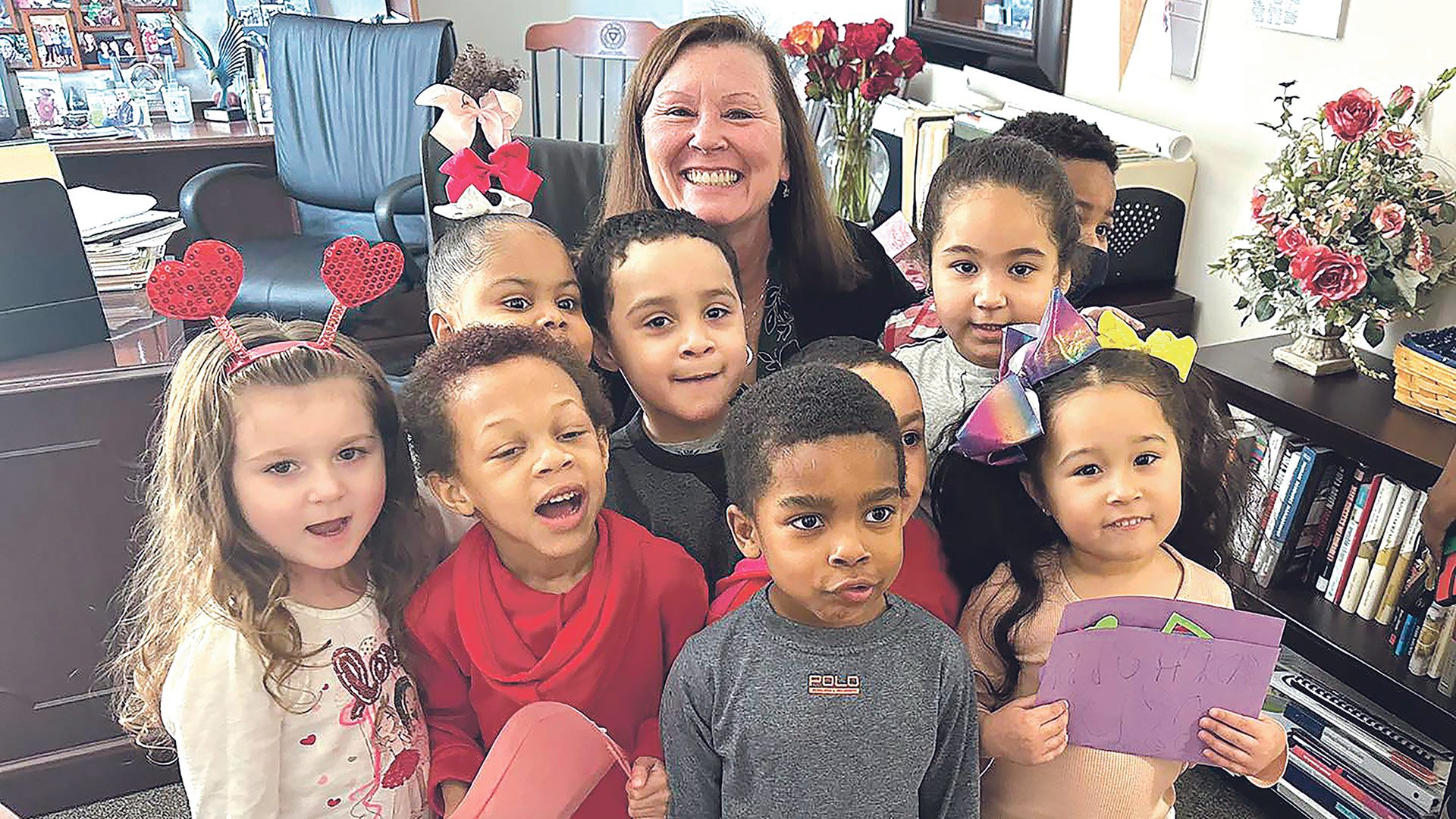
Dawn DiStefano, seen here with a group of Square One kids, says early education isn’t a career for everyone, but those with the right mindset and heart for it will find robust opportunities there.

Dawn DiStefano says early education is “not a career path for the faint of heart,” or something to just settle on.

But for the right person, she added, it can be highly rewarding.

“You’ve got to have the interest and skills and tenacity and heart to want to work with young children. You can’t be, ‘there’s nothing else I want to do, so I’ll try my hand in childcare,’” said DiStefano, president and CEO of Square One, quickly adding that someone with those qualities she mentioned will find a field bursting with opportunity.

“If people don’t want to work in the early-education and childcare space, it prohibits others from going to work,” she said. “Businesses are hiring, and people want to go to work, but they need a place for their children to be.”

Recognizing challenges in the early-education space, the state established what’s known as the Early Education and Child Care Task Force earlier this year, focusing on the essential role childcare plays in driving the state’s economy and competitiveness — and, for that matter, the health and well-being of its families.

“Affordable, accessible, and quality childcare is a significant infrastructure needed in Massachusetts, and an imperative to drive the state’s economic competitiveness,” Secretary of Labor and Workforce Development Lauren Jones said when the program was announced. “I look forward to working with my colleagues across government and with business and community partners to build a strong pipeline of early childhood educators and also enhance the system to encourage our untapped talent to fully participate in our workforce.”

“If people don’t want to work in the early-education and childcare space, it prohibits others from going to work. Businesses are hiring, and people want to go to work, but they need a place for their children to be.”

The pipeline has been solid at Square One, DiStefano said.

“Why do people want to work here? It’s not like our kids are any easier than other kids; they’re all children. But a lot of it has to do with the culture and environment at Square One. We invest in you early on, whether as a young person, just starting out in your career, or as an older adult with a midlife change of heart.”

While entry-level wages aren’t the main draw in any early-education setting, she added, Square One lays out the long-term picture. “We say, ‘here’s the career pathway. Here’s what it looks like, and we’ll be flexible with your schedule, if you want to take advantage of free classes at HCC and STCC.’”

Indeed, in recent years, the state has been actively investing in early education in a number of ways, including free programs at its 15 community colleges through the Massachusetts Department of Early Education and Care’s (EEC) Career Pathways Grant.

One of those, the Family Childcare Institute at Springfield Technical Community College, is currently running June 3 through July 9.

“This is a three-course bundle that will help new family childcare providers get licensed and learn how to run a childcare program in their home,” said Nancy Ward, Career Pathways Grant and Activity director at STCC. “We see this as a great opportunity for anyone who wants to open their own home-based childcare center.”

Christopher Thuot, vice president of Academic Affairs at STCC, added that such programs reduce barriers to help people in the community obtain an education. “The flexibility of the program accommodates individuals with varying schedules and commitments.”


State of Urgency

Meanwhile, applications for the state’s Early Childhood Educators scholarship are now open for the 2024-25 academic year. This scholarship is available for educators who work at programs licensed and/or funded by the EEC, including center-based, family childcare, and out-of-school-time programs.

And for the first time, the scholarship is available for staff who work at residential programs licensed by the EEC. The application process has also been simplified, and eligible majors have been expanded to better support career pathways for out-of-school-time educators.

“We know that far too many parents find it difficult to return to the workforce because of the high cost of childcare, and providers are facing the difficult decision between continuing in the profession they love or leaving for a higher-paid career.”

“Our administration is fully committed to supporting and expanding the early-education and care workforce. When programs have high-quality educators, they can offer better care to even more families,” Gov. Maura Healey said. “I know these important changes to the Early Childhood Educators scholarship will strengthen our supports for our hardworking afterschool educators and residential program staff, positively reinforcing a pipeline of high-quality early-education professionals.”

More than 500 scholarships were awarded for the 2023-24 academic year, an increase over the number awarded in the previous year​. As of this year, the scholarship now covers additional majors, including human services, psychology, social work, elementary education, and special education.

“Our Early Childhood Educators scholarship supports educators and program leaders to advance their careers and ensure that our youngest learners are receiving the highest-quality education they deserve, setting them up for school and lifetime success,” Secretary of Education Patrick Tutwiler said. “I am grateful to our departments of Early Education and Care and Higher Education for their partnership and collaboration with early educators and community partners in making this scholarship even better, reflecting current higher-education pathways and expanding access in a simpler way.”

As noted earlier, the state has also established the Early Education and Child Care Task Force, recognizing the role childcare plays in driving the state’s economy and competitiveness — at a time when keeping residents and businesses from fleeing the Commonwealth, for reasons ranging from housing to cost of living, has become a significant concern.

“If you support folks, get them into the industry by paying them to learn, they’ll probably be more motivated to work for you full-time as an employee. And in our field, we are desperate to strengthen our workforce.”

“We know that far too many parents find it difficult to return to the workforce because of the high cost of childcare, and providers are facing the difficult decision between continuing in the profession they love or leaving for a higher-paid career,” Healey said. “Childcare is central to the success of our entire state — for affordability, education, workforce, equity, and our economic potential — and together we are taking important steps toward solutions.”

The Early Education and Child Care Task Force will engage with industry and business leaders, organized labor, health-services stakeholders, housing and planning experts, working parents and caregivers, and childcare providers and experts in order to craft recommendations aligned with the following five policy objectives:

• Surveying practices of other states in reducing costs, increasing capacity, and improving quality of childcare providers and making recommendations for how such practices could be adopted in Massachusetts;

• Assessing how better coordination among state agencies could support families in accessing childcare that meets their needs, including through technology improvements;

• Identifying resources for building capacity and increasing affordability in the state’s mixed-delivery childcare system, including from the federal government, the philanthropic community, and employers, which may include exploring incentives for employers to assist employees with child care;

• Identifying strategies to recruit, train, upskill, and retain members of the childcare workforce, including by expanding apprenticeship initiatives, higher-education programs, and training opportunities; and

• Reviewing existing assets to identify potential locations to establish center-based care.

“Childcare and early education are critical enablers for economic growth in Massachusetts,” Secretary of Economic Development Yvonne Hao said. “Through this task force, the administration will take a whole-of-government approach to ensure that the state has equitable childcare solutions to meet the needs of the workforce and economy, making Massachusetts the best place to raise a family, grow a business, and succeed in a fulfilling career.”


Thinking Outside the Box

DiStefano said she’s excited about a new, state-level push for an apprenticeship model for early education, similar to buiding trades like electrical, plumbing, carpentry, and HVAC, where young people are paid to gain experience as they learn.

“People need to work and earn a living. People do not want to go to a four-year college and come out with debt for a $17-an-hour job. And we know our industry doesn’t start off very strong with hourly wage,” she noted. “So you’ve got to be creative. I’m excited about this potential apprenticeship model, where you’re paid to learn.

“It’s a balance, much like in other trades, like plumbing or electricity, where you go to work and you’re also training in the classroom to strengthen your formal education. And you’re getting paid to do all that, whether it’s by the business community or the philanthropic community or in a government-supported way.

“If you support folks, get them into the industry by paying them to learn, they’ll probably be more motivated to work for you full-time as an employee,” she went on. “And in our field, we are desperate to strengthen our workforce.”

What seems to be emerging, DiStefano said, is a realization that statewide investments in early education will pay off exponentially in the broader economy, allowing parents to work and businesses to retain talent.

And whether it’s through expanded scholarships, free community-college programs, or innovative apprenticeship initiatives, the impact is the same: more people able to work, learn, and generate income while doing it.

“There’s no better selling point,” she told BusinessWest. “The field of childcare and early learning is looking at the model of the trades and saying, ‘maybe we can do that.’ So I’m excited about the changes in our workforce development. This is an exciting moment to be in this field.”

Healthcare News

A Local Voice in Washington

Jaines Andrades

Jaines Andrades says scholarship opportunities and ways to access funding need to be made more available to minority students — and more community-college programs should be tuition-free.

On May 2, Jaines Andrades, a nurse practitioner at Baystate Medical Center in the Trauma and Surgery unit, testified before the U.S. Senate Committee on Healthcare, Education, Labor, and Pensions (HELP) about ways to minimize the shortage of minority healthcare providers.

Andrades was invited to testify by Sen. Bill Cassidy of Louisiana based on her now-famous story of climbing the ranks in her healthcare career. Featured on CNN, Good Morning America, People magazine, and more, she first caught national attention in 2020 when she posted a photo of each of her hospital badges to social media, showing her progression from custodian to registered nurse to nurse practitioner, all in the same hospital.

Following a screening process with representatives of the bipartisan committee members, the Chicopee resident was invited to be part of the panel, which included three other healthcare professionals, to help senators learn about ways to decrease barriers between minority students.

At the Capitol Hill hearing, Andrades shared her story of struggling to figure out a way to afford a college education which would lead to an career with economic stability while she was a student at Putnam High School in Springfield. She told lawmakers that, by chance, she met a nurse who encouraged her to consider the profession.

She decided to take a job that would help her learn more about healthcare while completing prerequisites at Holyoke Community College, so she could enroll in a bachelor of nursing science program at Elms College, and eventually earn a doctorate of nursing practice degree. She said working with nurses was how she learned how to make the next step in her education feasible.

“Making students at all schools, most especially those in underserved areas, aware of healthcare as an attainable career opportunity would go far, letting these students know it is within their reach and that there are resources available to them as they embark on the journey to higher education.”

“I began working in environmental services, as a custodian, at Baystate Medical Center. I worked to keep surgery and procedure rooms clean. This gave me the opportunity to see, first-hand, what nurses did, what I would need to know to move ahead in a healthcare environment, and to get advice on how to proceed in my career,” Andrades said. “My colleagues also offered incredible insight on ways I hadn’t thought of to fund my education. They pointed me toward resources like the Western Mass. Community Foundation, where I had access to scholarships and interest-free loans.”

Based on her experience, Andrades recommended to senators that education be made more affordable through tuition-free community college. She also suggested that scholarship opportunities and information on ways to access funding need to be made more available to minority students.

She recommended programs like the Baystate Springfield Educational Partnership, which allows students from Springfield to learn about healthcare careers inside the hospital, get more funding, and be implemented in areas where minority students live. She said these programs give students the chance to consider different career options before entering college and provide mentorship from professionals already working in medical professions. She said by participating in these programs, students often see themselves represented among advanced-practice providers and physicians and are more likely to see these professions as realistic possibilities. It also gives them exposure to pathways and resources to pursue their careers.

“I feel fortunate to have had the opportunity to testify before some of the nation’s most instrumental lawmakers. It was an honor to share my experience and insight, and to represent my community and Baystate Health.”

“Robust college and career planning is very critical. Making students at all schools, most especially those in underserved areas, aware of healthcare as an attainable career opportunity would go far, letting these students know it is within their reach and that there are resources available to them as they embark on the journey to higher education,” Andrades said.

Of the experience, she said she is honored to represent her community, Baystate Health, and the nursing profession. Always eager to help raise awareness and share her story, she hopes her words will resonate in Washington and beyond.

“I feel fortunate to have had the opportunity to testify before some of the nation’s most instrumental lawmakers. It was an honor to share my experience and insight, and to represent my community and Baystate Health,” Andrades said. “I hope the senators will take my suggestions under consideration, but most of all, I hope my story reaches one person who will be inspired by it and find a way to pursue their own dreams.”

Building Trades

Safety First


As the weather warms up and people spend more time outside getting their yards and homes ready for the summer, it’s important to keep safety in mind before taking on that next project, especially when dealing with electricity. Eversource is reminding customers that working around electric lines or equipment can be dangerous or even fatal if proper precautions aren’t taken.

“Safety is something we think about every day; it’s part of our daily workflow and is ingrained in all that we do,” Eversource Vice President of Safety Ken Bogler said. “Our crews work around electric equipment in all kinds of weather conditions and receive extensive training to make sure any repair, upgrade, or maintenance work is done as safely as possible. We want to make sure our customers are armed with the information they need so they can remain vigilant and take the necessary precautions when around electric equipment.”

“We want to make sure our customers are armed with the information they need so they can remain vigilant and take the necessary precautions when around electric equipment.”

Customers should always assume power lines are live. Anyone planning to work outside with ladders or power tools should know exactly where electric equipment is located, know what it’s touching, and have a plan to avoid it. Even a quick brush against an energized wire can cause serious harm.

Eversource encourages all customers to keep these additional safety tips in mind throughout the year:


Outdoor Safety Tips

• Don’t touch anything or anyone that’s touching a downed wire.

• Stay as far away as possible from downed wires and fallen trees that could have wires caught in them. Broken power equipment can feed electricity directly into the ground, charging the ground.

• For anyone in an accident with a car or other vehicle near a downed power line, stay in the vehicle until an Eversource worker or first responder says it’s safe to exit.

• Call before you dig. Call 811 or (888) 344-7233 at least three days prior to digging so that utilities can mark underground wires, cables, and pipelines.

• Keep kites, Mylar party balloons, model planes, and drones far away from power lines.

• Always store electrical equipment indoors and never use corded power tools in wet or damp conditions.


Indoor Safety Tips

• Avoid touching any bare wires, faulty appliances, or electrical outlets; always assume a wire or electrical appliance is energized.

• Cover unused wall outlets with plastic safety caps to protect small children and pets; consider installing tamper-resistant receptacles if your outlets do not currently have them to prevent foreign objects, other than electrical plugs, from being inserted into the outlet.

• Never overload outlets by using multiple adapters or power strips as this can cause overheating and fire.

• Regularly check wires and extension cords for signs of wear and replace those that are frayed or cracked.

• Keep an all-purpose fire extinguisher on every floor of a home; never attempt to put out an electrical fire with water.

• Install outlets with a ground fault circuit interrupter in rooms where water and moisture are present.

• Unplug appliances while cleaning or repairing them.


Building Trades

Food for Thought

Big Y has been making significant strides in enhancing its stores across the region. Since 2022, the company has celebrated the grand reopening of 26 remodeled stores, which align with the company’s broader strategy to focus on sustainability and modernize retail spaces to create a more enjoyable shopping experience for both customers and associates.

The new store design incorporates modern elements to inspire guests and reflect each store’s local community. The remodeled stores have been strategically laid out to benefit both shoppers and associates, streamlining operations and creating a more pleasant environment, said Maggie D’Amour, senior manager of Environmental Social Governance.

“Whenever we remodel or build new stores, we always try to upgrade to energy-efficient equipment, motors, refrigeration systems, etc.,” she explained. “Big Y’s commitment to sustainability and community-focused design is evident in these remodels. As we continue to invest in our stores, we aim to meet customers wherever they are, providing a modern, highly connected shopping experience.”

These energy-efficiency-focused upgrades across Connecticut and Massachusetts have included high-efficiency rooftop and refrigeration systems, interior and exterior LED lighting (95% of stores), light-dimming systems, Energy Star-certified equipment, building energy-management systems, night curtains or glass-door retrofits on open refrigerated cases, high-efficiency motors, capture and utilization of waste heat, cycling anti-sweat heaters, waterless urinals, low-flow water controls on sinks, and energy-efficient hand dryers.

“Big Y’s commitment to sustainability and community-focused design is evident in these remodels. As we continue to invest in our stores, we aim to meet customers wherever they are, providing a modern, highly connected shopping experience.”

As a result, the stores are now saving 9.3 million kilowatt-hours of electricity annually, the equivalent of reducing greenhouse-gas emissions by removing 840 gasoline-powered vehicles from area roads for a year.

In addition to the remodeled stores, Big Y also installed a 1.4-megawatt solar array on the rooftop of its Fresh and Local Distribution Center in Springfield. The installation is comprised of 3,100 solar panels, and the renewable energy generated by the system will offset about 70% of the distribution center’s electric requirements.

Expanded in 2021, Big Y’s Fresh and Local Distribution Center provides local farmers and food producers with an efficient, one-stop location that saves them time and money as they don’t need to deliver to individual stores. In addition to supporting communities, farms, and other small businesses, it saves travel time, thus cutting down on greenhouse-gas emissions. It also serves as a hub for all fresh fruits and vegetables throughout the year.

Over the past three years, there has been a company-wide effort to be earth-friendly, with initiatives demonstrating a commitment to expanding solar-energy adoption and addressing environmental challenges. Overall, these changes have reduced the company’s total energy consumption by more than 17,800,000 kilowatt-hours.

The new solar panels are in addition to more than four megawatts of ground-mounted and rooftop arrays installed at several store locations. The company also participates in more than 10 community solar-array projects, creating solar production equivalent to annual C02 emissions from 5,142,780 gallons of gasoline consumed, 8,893 homes’ electricity use for one year, or 105,814 barrels of oil consumed.

Food waste is another major initiative for the grocery chain. Throughout the year, Big Y makes daily donations of meat, fresh produce, and bakery products, along with grocery, frozen food, and dairy items, to four food banks within its two-state marketing area. These donations not only help keep food waste out of landfills, it also helps maximize access to nutritious food and other resources that support food security for those at risk of hunger.

Insurance

Keeping the PACE

Fallon Health announced the recent appointment of Dr. Jean Jaoude as vice president and medical director of its Massachusetts Program of All-inclusive Care for the Elderly (PACE), locally called Summit ElderCare. In this role, Jaoude is responsible for supervising the medical care delivery of approximately 1,400 participants enrolled in the organization’s five PACE centers in Massachusetts, located in Leominster, Lowell, Springfield, Webster, and Worcester.

The primary goal of PACE is to allow older adults to live independently in their homes and communities instead of a nursing home, while maintaining or enhancing their quality of life with a dedicated care team, transportation, full medical care, and opportunities for socialization.

Dr. Jean Jaoude

Dr. Jean Jaoude brings deep experience in family medicine, geriatrics, hospice, and palliative care to his new role with Fallon Health’s PACE program.

Jaoude comes to Fallon Health with deep experience in family medicine, geriatrics, hospice, and palliative care. Most recently, he served as chief medical director of the Supportive and Palliative Care department within the ChristianaCare Health System in Newark, Del. Prior to that, he was chief medical officer for Baystate Home Health’s Hospice and Community Palliative Care division in Springfield. He has also served as a volunteer physician for free medical clinics for underserved populations in Iowa and was a missionary in South Africa providing education and free hospice care for underserved communities.

Jaoude is board-certified in family, geriatric, and hospice and palliative medicine. He earned his medical degree from Lebanese University in Lebanon and a master of health care administration degree from the Carlson School of Management at the University of Minnesota. He also holds a medical director certification from the American Medical Assoc. Society for Post-acute and Long-term Care Medicine and completed the Physician Leadership Academy of the American College of Physician Executives at UnityPoint Clinic in Des Moines, Iowa. He is multi-lingual and is fluent in written and spoken Arabic, French, and English.

He is an active member of the American Assoc. for Physician Leadership, the American Academy of Family Physicians, the American Medical Director Assoc., the American Geriatrics Society, and the American Academy of Hospice and Palliative Medicine, as well as the National Hospice and Palliative Care Organization.

The PACE model is centered on the core belief that given a choice, most elders, the disabled, and their families would choose to receive care in their homes and communities rather than in a nursing home. All PACE programs feature several essential components:

• An interdisciplinary team made up of healthcare and social-service professionals, such as doctors, nurse practitioners, physical and occupational therapists, social workers, and nurses;

• An individualized healthcare plan for each participant that outlines what services are needed to stay safe and healthy; and

• A PACE center that serves as the hub of services and activities, including a doctor’s office, rehabilitation gym, and social-work offices, as well as an activities center. Once enrolled in PACE, most medical services are provided at the PACE center, although services may be provided in the home or at another facility.

Backed by nearly 30 years of experience in PACE, Fallon Health boasts the largest PACE program in New England and among the largest in the country. The not-for-profit healthcare organization also operates a PACE program in Western New York.