Home 2024 June
Daily News

SPRINGFIELD — MP CPAs, a full-service certified public accounting firm offering a wide range of accounting, tax, and consulting services to clients of all sizes, announced the promotions of three directors who have consistently exceeded client expectations and helped enhance team development and growth within the firm.

Melissa English

Melissa English, senior manager, has been promoted to director. She has been with the firm for 23 years, working with clients across a variety of industries. Her background includes managing audits, reviews, and compilations of financial statements of nonprofit organizations, employee benefit plans, and small to medium-sized for-profit businesses specializing in employee benefit plan audits.

English serves on the board of trustees of several local organizations, including serving as treasurer of the Chicopee Galaxy Youth Athletic Assoc., as well as serving as audit chair of Viability Inc. She is a certified employee benefit plan specialist and a member of the American Institute of Certified Public Accountants.

Sharon Blazejowski

Sharon Blazejowski, senior manager, has been promoted to director. She has been with the firm for 28 years, working with clients across a variety of industries. Her background includes managing audits, reviews, and compilations of financial statements in various industries, specializing in charter schools and nonprofit organizations by performing yellow-book and single audits under government auditing standards and uniform guidance.

Blazejowski takes an active role in the local community by participating in various community fundraising and networking events, including serving as treasurer of a local youth sports team. She is a certified public accountant in the Commonwealth of Massachusetts and a member of the American Institute of Certified Public Accountants and the Massachusetts Society of Certified Public Accountants.

Joe Oliveira

Joe Oliveira, senior manager, has been promoted to director. He joined the firm in 2014 and has more than 20 years of experience providing consulting and tax solutions to a diverse group of clients including individuals, partnerships, limited liability companies, corporations, and trusts. He specializes in working closely with high-net-worth clients, as well as private equity firms and their owners.

Oliveira is currently treasurer for the Massachusetts Service Alliance and Suffield Girls Scouts. He is a certified public account in Connecticut and Massachusetts and a member of the American Institute of Certified Public Accountants and the Connecticut Society of Certified Public Accountants.

Daily News

Misty Lyons

GREENFIELD — Misty Lyons and Katya Krasnova, assistant vice presidents and mortgage officers at Greenfield Savings Bank, have both been recognized as top loan originators in Western Mass. for 2023 by Banker & Tradesman, a financial-industry publication that tracks banking and real-estate activity in Massachusetts.

“I am so proud of Misty and Katya,” said Lori Grover, senior vice president and senior Residential Lending officer at Greenfield Savings Bank. “This is a great achievement for both of them.”

Katya Krasnova

Lyons has been recognized as the third-ranking loan originator by dollar volume. She joined the bank in 2019 and works out of its Amherst office at 6 University Dr., covering all of Hampshire County.

Krasnova is the fourth-ranking loan originator by number of loans. She joined the bank in 2016, covers Franklin County, and works out of the Greenfield office at 400 Main St.

In 2023, Greenfield Savings Bank was also the number-one purchase mortgage lender in Hampshire County and, for the 22nd year in row, was the number-one mortgage lender in Franklin County, according to Banker & Tradesman.

Daily News

HOLYOKE — PeoplesBank has again been honored as one of the Best Banks in Massachusetts in the seventh annual America’s Best Banks list from Forbes, and is the only bank headquartered in Western Mass. to make the list. The bank was similarly honored in 2023.

The results were compiled from survey data from more than 26,000 bank customers, as well as online reviews and ratings from 2021 to 2024.

Larger banks and credit unions with branches in 15 or more states — including Bank of America, Wells Fargo, and JPMorgan Chase — were excluded. Top regional banks and credit unions — which populate this year’s lists — have learned how to build a loyal customer base despite being smaller and having fewer resources than their larger counterparts with branches spanning the country, and often the world.

Daily News

WESTFIELD — Westfield State University is currently accepting applications for the 2024-25 addiction counselor education (ACE) program. Classes will be held on evenings and weekends beginning in September 2024 and ending in August 2025.

The goal of this non-credit certificate program, offered at the university since 1991, is to provide students with the knowledge, skills, and techniques necessary for the successful treatment of individuals and families afflicted by alcoholism and/or other drug addictions. This program has been highly instrumental in the professional development of individuals in the Western Mass. area who are currently working in or interested in becoming a part of the growing healthcare field of addiction services.

The application and application instructions for the ACE program can be found at www.westfield.ma.edu/ace. For more information or to have an application mailed, contact Brandon Fredette at [email protected] or (413) 572-8033.

Daily News

MONSON — Monson Savings Bank was recently named the East of the River Chamber of Commerce (ERC5) Business of the Year. The announcement was made at the chamber’s 2024 annual meeting awards and reception event held at Twin Hills Country Club.

“Monson Savings Bank’s unwavering dedication and tireless efforts have left an indelible mark on the lives of countless individuals in our communities,” said Grace Barone, executive director of the ERC5. “The transformative influence of the Monson Savings Bank team under the team’s exceptional leadership is undeniable. I congratulate the entire Monson Savings Bank team on being awarded the ERC5 Business of the Year, with immense respect and admiration.”

The community bank was chosen as the ERC5 Business of the Year by the ERC5’s board members and ambassadors. The ERC5 affiliates voted Monson Savings Bank Business of the Year based on the bank’s achievements and contributions to the communities.

“Although I know there are many other businesses that are just as deserving of this award, I’ll gladly accept it as recognition of my team’s unwavering dedication to the bank’s mission,” said Dan Moriarty, Monson Savings Bank president and CEO. “As a team, we strive to be an integral part of the greater community by meeting the changing needs of all customers in our communities by providing high-value financial products, exceptional personal service, and genuine community support. Monson Savings will always work hard to be a community- and customer-focused bank where people are proud to do their banking.”

Daily News

HOLYOKE — 475 Canal MA LLC announced the conversion of 475 Canal St. in Holyoke into a CubeSmart Self Storage facility. The project is spearheaded by principals James Quinn, Gary Youm, and Richard Lee, who bring a wealth of experience and vision to this development.

CubeSmart, a $12 billion real-estate investment trust (REIT) known for its leadership in the self-storage industry, will oversee both the asset management and property management of the new facility. This partnership promises to bring state-of-the-art storage solutions to Holyoke residents.

“We are very excited to partner with CubeSmart, a true leader in the self-storage industry, on 475 Canal St. in Holyoke,” Quinn said. “Their expertise in property management and customer service will ensure that this facility meets the highest standards.”

Added Youm, “Holyoke is a great town to live in, and this facility will provide a quality, climate-controlled self-storage solution, enhancing the convenience and storage options available to the community.”

Jordan Hart, executive director of the Greater Holyoke Chamber of Commerce, added that “CubeSmart’s arrival marks an exhilarating addition to the Holyoke community, poised to catalyze the city’s growth and prosperity.”

CubeSmart’s 475 Canal St. facility is set to have its grand opening today, June 27 at 11 a.m. and welcomes the public to attend. This new addition to Holyoke will feature modern, climate-controlled units designed to meet a variety of storage needs, from personal to business use.

Daily News

BOSTON — The Healey-Driscoll administration announced $15.9 million in workforce-development grant funding for 22 initiatives across Massachusetts, representing partnerships with employers, training providers, and regional collaborators. This latest round of workforce-development funding will train, upskill, and provide job placement for 2,182 workers for in-demand occupations in healthcare, human services, life sciences, culinary arts, and more.

The announced investments in Senator Kenneth J. Donnelly Workforce Success grants are funded by the Executive Office of Labor and Workforce Development and administered by Commonwealth Corp. through the state’s Workforce Competitiveness Trust Fund. Each awarded grant aims to close the skills gap, increase access to well-paying jobs for unemployed and underemployed residents, and strengthen productivity and workforce needs among employers in regions throughout Massachusetts.

“These Workforce Success Grants will provide hundreds of Massachusetts residents with access to quality job training and connect our employers with the skilled workforce they need to do business,” Gov. Maura Healey said. “Recruiting and retaining a strong and diverse workforce is key to our economic growth and competitiveness.”

Lauren Jones, secretary of Labor and Workforce Development, added that, “by investing in these collaborative partnerships, we are increasing access, opportunities, and outcomes for Massachusetts residents to train, upskill, and compete in our growing workforce.”

Three of the 22 awards will go to organizations in Western Mass.:

• Bay Path University will receive $1,768,036 to provide training and placement services to 144 unemployed and underemployed participants for healthcare assistant, medical assistant, and residential support professional positions. The university will partner with Cooley Dickinson Hospital and Toward Independent Learning and Living Inc.

“We are very excited about the opportunity this grant offers to build a robust collaboration with Cooley Dickinson Hospital, TILL Inc., and our other partners, which include the MassHire workforce boards and career centers in the Pioneer Valley and Northeast planning regions, Springfield Works!, and the United Way of Pioneer Valley,” Bay Path President Sandy Doran said. “With our focus on unemployed or underemployed individuals, our vision is to accelerate their entry into upwardly mobile career and educational pathways in the healthcare and human-services fields through entry-level healthcare assistant positions, thereby addressing critical workforce shortages in the regions we serve.”

• Holyoke Community College will receive $1,564,732 to lead a consortium that includes Berkshire Community College, Greenfield Community College, Roxbury Community College, and Springfield Technical Community College to provide training and placement services to 330 participants for paraprofessional educator roles. Additional partners include Holyoke Public Schools, Central Berkshire Regional School District, Springfield Public Schools, William Monroe Trotter Elementary School & Henry L. Higginson Inclusion School, Mohawk Trail Regional School, Mattahunt Elementary School, and Greenfield Public Schools.

• SnapChef in Springfield and Dorchester will receive $500,000 to provide training and placement services to 168 unemployed and underemployed participants for culinary professional positions. The company will partner with Loophole Brewing, Fresh Food Generation, and Daily Table.

“Receiving the WCTF Donnelly grant from Commonwealth Corporation is a transformative moment for Snapchef, Snapchef Foundation, and the communities we serve,” Snapchef founder and CEO Todd Snopkowski said. “This funding will allow us to expand our Fast Track hands-on culinary training program, equipping individuals with the skills employers need and providing a clear pathway to stable and rewarding careers. Workforce development is at the heart of what we do, as it not only empowers individuals, but also strengthens families and communities. We are deeply grateful for this opportunity to make a significant impact and look forward to the positive changes it will bring.”

Daily News

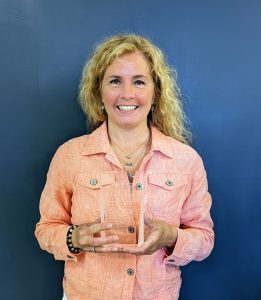
Kim Baker

FLORENCE — Florence Bank announced it recently presented its 2024 Community Support Award to longtime employee Kim Baker.

The Community Support Award was established by the bank in 1997 as a means of formally recognizing team members who are active in the community and give their personal and professional time to local nonprofit organizations.

Each year, the award recipient selects an organization of his or her choice, and the bank donates $500 to that organization on the recipient’s behalf. Baker chose to support United Way of the Franklin & Hampshire Region.

Baker joined Florence Bank in 1995 and currently serves as vice president, Commercial Loan Operations and compliance officer at the bank’s main office in Florence. She is responsible for commercial-loan compliance, including regulatory and management reporting.

She holds an associate degree from Holyoke Community College, a bachelor’s degree in business management with a concentration in finance from Westfield State College, and a master’s degree in business administration from UMass Amherst.

In the community, she is a member of Hatfield’s Finance Committee and the Hatfield Saint Kaz Polish Club. She volunteers for Jessie’s House, Cooley Dickinson Hospital, Cancer Connection, the Three County Fair, and the Northampton Saint Patrick’s Assoc. She also chairs United Way of the Franklin & Hampshire Region’s annual Ski United fundraising event.

“Kim has proven to be a true community volunteer and supporter of many local organizations,” said Matt Garrity, president and CEO of Florence Bank. “She is well-deserving of the Community Support Award.”

Daily News

Morgan Bennett

SOUTH HADLEY — Adam Quenneville Roofing and Siding (AQRS), a locally owned residential and commercial roofing and siding company, recently welcomed Morgan Bennett as Business Development director. In this role, she will support the company in continuing to grow and develop its customer base and geographic reach.

Prior to joining the AQRS team, Bennett worked for 10 years at Holyoke Medical Center, and she also worked at WWLP 22 News in Springfield. Her past roles have helped shape her approach to customer engagement and given her notable experience supporting individuals within the community.

The recently created role at AQRS attracted Bennett because of her level of comfort and passion for engaging with customers. Her personal mission is to develop a strong understanding of the needs of both the residential and commercial customer base and deliver effective solutions.

“When I met Morgan, I knew she was what I was looking for in this role,” company owner Adam Quenneville said. “My company prides itself on referrals and reputation; in some cases, we’ve done the roof on the home of three different generations in a family. When I saw that creating and maintaining relationships with key stakeholders in the community was at the forefront of Morgan’s past roles — and, quite frankly her DNA — I knew she was going to be a great addition to the team.”

The Business Development director position incorporates a variety of responsibilities. Among them, Bennett will represent the company at local events, discuss options and guide customers through the decision-making process, work with industry partners to strengthen customer knowledge about the industry, assist individuals in learning so they can make the right roofing or siding decision to support their needs, and work with organizations to continue to pay forward community giving.

“I chose to join the exceptional team at Adam Quenneville Roofing & Siding for a handful of reasons,” said Bennett, who is currently enrolled at South New Hampshire University pursuing a degree in marketing and business. “If I’m totally truthful, I guess growing up hearing the 1-800-NEW-ROOF jingle over and over, I just had to see what AQRS was all about. Of course, I joke, but in all seriousness, working for a company with such incredible brand recognition was important because I intend to make a positive impact in our community with both existing and new customers, as well as organizations in need, and I couldn’t do that without the strength of the company’s reputation.”

Daily News

AMHERST — The Amherst Business Improvement District (BID) announced the 2024 summer music series lineup on the four Fridays in July from 5 to 9 p.m. on the Town Common.

July 5 features SPF-4 and Harvest and Rust, July 12 brings Grayson Ty and TapRoots, July 19 is Jazz in July, and July 26 features the No Nos and LeFever.

This summer concert series is not only a community-building and arts and cultural event but one of a dozen annual events put on by the BID that contribute to the economic vitality of downtown Amherst.

“We encourage all to explore all that our dynamic downtown has to offer before and after the concerts,” the BID notes. “Support local shops, retail, and experiences, and enjoy a taste of our global gastronomy by sitting down to dinner al fresco or getting your favorite meal to go and bringing it to the Common to enjoy. In addition, Downtown Amherst’s signature new local market, Aster + Pine, is offering picnic charcuterie and snacks baskets for each summer concert. Stop into their beautiful brick-and-mortar location on North Pleasant Street or pre-order only at asterandpinemarket.com.”

The underwriters of this year’s summer concert series are Encharter Insurance and the Massachusetts Cultural Council, whose support enables the BID to bring these free concerts to the community.

Daily News

WEST SPRINGFIELD — The Advertising Club of Western Massachusetts scholarship committee announced that its 2024 scholarship has been awarded to Shea Coe, a recent graduate of Taconic High School in Pittsfield.

Coe, the daughter of Andrea Terry and Jeffrey Coe, plans to attend Salem State University in the fall to study graphic design. She is the first Ad Club scholarship recipient in recent memory from Berkshire County intending to major in graphic design.

Coe was recently presented with a $1,000 check from the Advertising Club at Taconic High School. In addition to her exceptional academic record and extracurricular volunteerism, both factors in her selection, her summer job made a distinct impression on scholarship committee members: she cuts and stacks firewood at Williams Lumber in Lee. “Shea isn’t afraid to get her hands dirty and do the hard work — an attitude that will serve her well in life,” said David Cecchi, scholarship committee chairman.

The Advertising Club of Western Massachusetts supports future generations of creative professionals with an annual merit-based scholarship awarded to a deserving student from Western Mass. intent on pursuing a career in the advertising, communications, marketing, graphic design, or affiliated industries.

Daily News

SPRINGFIELD — The Western New England University Small Business Legal Clinic is accepting applications from entrepreneurs and small-business owners seeking legal assistance for the fall 2024 semester.

Under faculty supervision, law students assist clients with legal issues, including choice of entity, employment policies, contract drafting, regulatory compliance, and intellectual-property issues relating to trademark applications and copyright. This is a free service available to local businesses that might not have the resources to obtain such services, and has assisted more than 500 small businesses since it opened.

“The clinic is a great resource for entrepreneurs who lack the finances to retain an attorney,” said Robert Statchen, associate clinical professor of Law. “By using the clinic’s services, businesses can avoid problems by getting legal issues addressed early and correctly. It also provides students with a great opportunity to get real-world experience.”

The clinic asks small-business owners to submit their applications by Aug. 1. Applications received after that date will be considered if additional resources are available. Students will begin providing services in September.

For more information, call the Small Business Legal Clinic at (413) 782-1469 or email Marie Fletcher, Clinical Programs administrator, at [email protected].

Daily News

SPRINGFIELD — The Springfield Chamber Players (SCP) and the management of the nonprofit Springfield Performing Arts Ventures Inc. (SPAV) will partner to present the Springfield Chamber Players’ 2024-25 season at 52 Sumner, the new performance venue at 52 Sumner Ave., Springfield. The Springfield Chamber Players plan to present a six-concert series at 52 Sumner, which will launch in late October.

“52 Sumner will be the new home for the Springfield Chamber Players,” SCP Chair Beth Welty announced. “Earlier this year, our musicians had a walk-through of the facility, played their instruments to test the acoustics, and toured the neighborhood. We all agreed that 52 Sumner is an ideal locale for chamber music. It offers flexible seating plans, the opportunity to provide our guests with food and drink, sufficient parking, and easy access to Interstate 91. We will continue to perform at other venues throughout the region, but we are very excited to call 52 Sumner our new home.”

Daniel McKellick, chair of SPAV, added that “we see 52 Sumner as a vibrant performing-arts center featuring all types of performing arts. Having the Springfield Chamber Players as one of our anchors will help us increase visibility on the Western Massachusetts culture and arts scene and add to the portfolio of diverse offerings in programming we strive for.”

Mark Auerbach, SCP publicist, said the Springfield Chamber Players concert series will include three classical chamber-music programs. These concerts will showcase the talents and versatility of the musicians, who also perform with the Springfield Symphony Orchestra.

“The concert series include classical music, modern music interpreted by classical ensembles, and well-known pop music performed with a classical twist,” Auerbach noted. “The Springfield Chamber Players’ popular program for children, ‘Johnny Appleseed,’ is on the performance roster, along with a Celtic concert organized by flutist Ellen Redman. The sixth concert brings the music of Broadway to 52 Sumner with a classical twist.”

Tickets will go on sale in late summer, with first priority given to members of the Springfield Chamber Players and 52 Sumner. Click here to join the Springfield Chamber Players mailing list.

Daily News

EASTHAMPTON — On Monday, U.S. Rep. Richard Neal joined Easthampton Mayor Nicole LaChapelle to announce a $960,000 earmark to invest in water infrastructure upgrades along Route 10 in Easthampton.

The allocation was made possible through congressionally directed spending from the Department of Interior and the Environmental Protection Agency. Neal included funding for this project in the FY 2024 spending bill that was signed into law by President Biden on March 9.

“As a member of Congress, I take great pride in the responsibility that we have in overseeing the expenditure of the public purse,” Neal said. “That is why I am pleased to have secured funding for a project that will have a prominent impact on the Easthampton community, providing much-needed upgrades to the water infrastructure that will directly benefit the city’s business corridor.”

Undersized and aging underground utilities currently provide water and sewer services to the Northampton Street business district in Easthampton. The city of Easthampton has undertaken the design of a project to replace these aging utilities, which will ensure adequate domestic supply, fire flow, and sanitary sewer service for this area for generations. This project will also support commercial and housing developments in Easthampton’s 40R smart growth zone.

This project was also the benefactor of funds awarded to local governments under the American Rescue Plan (ARPA), much of which was drafted in the Ways and Means Committee under Neal’s chairmanship. Approximately $270,000 in ARPA funding was allocated toward the design phase of upgrading the water infrastructure along Route 10.

“This award shows how smart growth development contributes to a sustainable local economy. Today’s announcement makes possible the full development of an approved mixed-use project that brings jobs and housing while dovetailing into state pedestrian road improvements,” LaChapelle said. “Congressman Neal’s leadership in securing both ARPA and CDS funds unlocks the full development potential in Easthampton’s highway business corridor.”

Daily News

EAST LONGMEADOW — ArchitectureEL Inc. (AEL) has been awarded on-call architect contract for the Holyoke Housing Authority for a two-year period. The firm also continues to fulfill its obligations as the current on-call architect for the city of Holyoke and Holyoke Public Schools.

ArchitectureEL Inc. provides professional design services on a wide range of projects, from renovating existing buildings to designing new. The firm has significant experience in accessibility, historic preservation, educational, and commercial design, as well as both private and multi-family residential development.

AEL has developed strong local connections and provided services for the city of Holyoke and Holyoke Public schools as their on-call architect for the past two years, completing a roof and skylight replacement for the DPW, a roof and skylight replacement for the City Hall Annex, a roof replacement for the Holyoke Children’s Museum and Volleyball Hall of Fame, heating upgrades for the McMahon VRF, historical renovations on the City Council chambers located at City Hall, HVAC system replacements in the city’s elementary schools.

“We are honored to have been chosen to continue this important work in the city of Holyoke,” said Kevin Rothschild-Shea, owner and principal architect. “We look forward to expanding our relationship with the city of Holyoke and our services to the Holyoke Housing Authority to help maintain the infrastructure of this vibrant city.”

Daily News

SPRINGFIELD — In the spring of 2017, BusinessWest and its sister publication, the Healthcare News, created a new and exciting recognition program called Healthcare Heroes. It was launched with the theory that there are heroes working across this region’s wide, deep, and all-important healthcare sector, and that there was no shortage of fascinating stories to tell and individuals and groups to honor. That theory has certainly been validated.

But there are hundreds, perhaps thousands of heroes whose stories we still need to tell. And that’s where you come in.

Nominations for the class of 2024 are due Monday, July 29, and we encourage you to get involved and help recognize someone you consider to be a hero in the community we call Western Mass. in one (or more) of these eight categories:

• Patient/Resident/Client Care Provider;
• Health/Wellness Administrator;
• Emerging Leader;
• Community Health;
• Health Educator;
• Innovation in Health/Wellness;
• Collaboration in Health/Wellness; and
• Lifetime Achievement.

Nominations can be submitted at businesswest.com/healthcareheroes/nominations. For more information, call Melissa Hallock, Marketing and Events director, at (413) 781-8600, ext. 100, or email [email protected].

Daily News

AMHERST — UMass Amherst graduate engineering programs place among the best in the country in the U.S. News & World Report Best Graduate Schools rankings for 2024, announced last week. UMass Amherst is the only public university in New England to place in the top 50, and most of its College of Engineering doctoral degree programs also made significant gains over last year’s rankings.

Each year, U.S. News ranks more than 800 institutions with a variety of graduate programs in six prominent fields: business, nursing, education, engineering, law, and medicine. The Best Graduate Schools rankings for 15 other academic disciplines were published in April.

Overall, the College of Engineering moved up seven spots from last year to reach the top 25%, tying with Rensselaer Polytechnic Institute and the University of Florida in the 48th spot.

Nine engineering specialty areas that offer doctoral degrees rank between 35 and 69 for 2024. Notably, four engineering specialties — chemical, industrial, computer, and materials — place in the top 40. Chemical engineering ranks 35th, followed by industrial at 36th; computer at 38th, up six spots from 2023; and materials at 40th, which climbed significantly from its ranking in the 57th spot last year.

Environmental engineering ranks 41st, civil 48th, and electrical 53rd. Other specialty areas that also place higher this year include mechanical at 56th, up five spots, and biomedical at 69th, which improves 10 spots from 2023.

This year’s rankings were based on U.S. News survey responses from 199 engineering doctoral degree programs between fall 2023 and early 2024. U.S. News compares schools on their research activity, faculty resources, academic achievements of entering students, and assessments by other engineering schools and employers.

Daily News

BOSTON — The state’s May total unemployment rate was 3.0%, a 0.1% increase from the revised April estimate of 2.9%, the Executive Office of Labor and Workforce Development announced. The Massachusetts unemployment rate was 1.0% lower than the national rate of 4.0% reported by the Bureau of Labor Statistics (BLS). Over the year, the state’s seasonally adjusted unemployment rate was down by 0.3%.

The labor force increased by an estimated 13,600 from the revised estimate of 3,768,100 in April, with 7,500 residents more employed and 6,000 more residents unemployed over the month. The state’s labor-force participation rate — the total number of residents 16 or older who worked or were unemployed and actively sought work in the last four weeks — increased 0.2% over the month to 65.3%. Compared to May 2023, the labor-force participation rate also increased 0.2% over the year.

The BLS preliminary job estimates indicate Massachusetts gained 4,200 jobs in May. This follows April’s revised loss of 3,800 jobs. The largest over-the-month private-sector job gains were in leisure and hospitality, education and health services, and construction. Employment now stands at 3,733,900. Massachusetts gained 670,400 jobs since the employment low in April 2020.

From May 2023 to May 2024, BLS estimates Massachusetts gained 21,200 jobs. The largest over-the-year gains occurred in education and health services, leisure and hospitality, and construction.

Daily News

EASTHAMPTON — bankESB recently announced a commitment of $20,000 to the South Deerfield-based Community Involved in Sustaining Agriculture’s (CISA) Growing Resilience Campaign, an effort focused on building a stronger, more resilient local food system in Western Mass.

CISA’s efforts to support a local food economy began more than 30 years ago. Today, more than 250 farms participate in its programs, expanding residents’ access to locally grown food while ensuring local farmers receive the support they need. The Growing Resilience Campaign is designed to ensure locally grown food is within reach for everyone and farmers are equipped with the necessary resources to remain viable in ever-changing conditions.

This campaign is in line with bankESB’s commitment to supporting the communities it serves through its charitable-giving program, the Giving Tree.

“Helping to unlock more locally sourced food and supporting our local growers is something that bankESB gets behind,” bankESB President and CEO Matthew Sosik said. “As a community bank, we live in, work in, and care about the communities we call home. CISA’s efforts are important for ensuring our local food economy supports our friends and neighbors.”

Wendy Ferris, CISA’s development director, added that “we are so grateful for bankESB’s support, which will help CISA remain nimble and effective at strengthening our local food system. This region is so fortunate to have community-driven institutions like bankESB making a difference every day.”

Daily News

WEST SPRINGFIELD — Each Moment We’re Alive cancer support network invites the public to its fifth annual Canines Against Cancer fundraiser on Friday, June 28 from 5 to 9 p.m. The free event, which will take place at the Morgan Road Pavilion behind the Irish Cultural Center at 429 Morgan Road, West Springfield, will be filled with family-friendly fun and canine companionship, all in support of a meaningful cause.

Participants can enjoy a leisurely walk around the pavilion and discover inspirational rocks hidden along the path. These little treasures are designed to bring joy to both the young and the young at heart.

The event also offers attractions like a food and ice-cream truck, a kids craft table, raffles, a silent auction, soft drinks, craft beer, wine, and live entertainment by the band CO2. This gathering is not just about having fun; it is Each Moment We’re Alive’s most critical fundraising initiative, directly supporting its mission to provide comprehensive, cost-free support services to individuals and families facing the challenges of cancer.

Cindy Sheridan Murphy, founder of the not-for-profit Each Moment We’re Alive cancer support network, launched the group in 2015 after her second bout with breast cancer. She then realized that reaching out, rather than blocking out, was the best chance for survival. Since then, she has helped organize support groups and workshops with a focus on emotional and spiritual health.

“The first time I had cancer was in 2009, and I hid everything under the carpet like it never happened,” Sheridan Murphy explained. “It came back with a vengeance and made me realize that survivors need support. That’s what we do.”

For more information about Each Moment We’re Alive, visit www.eachmomentwerealive.org.

Daily News

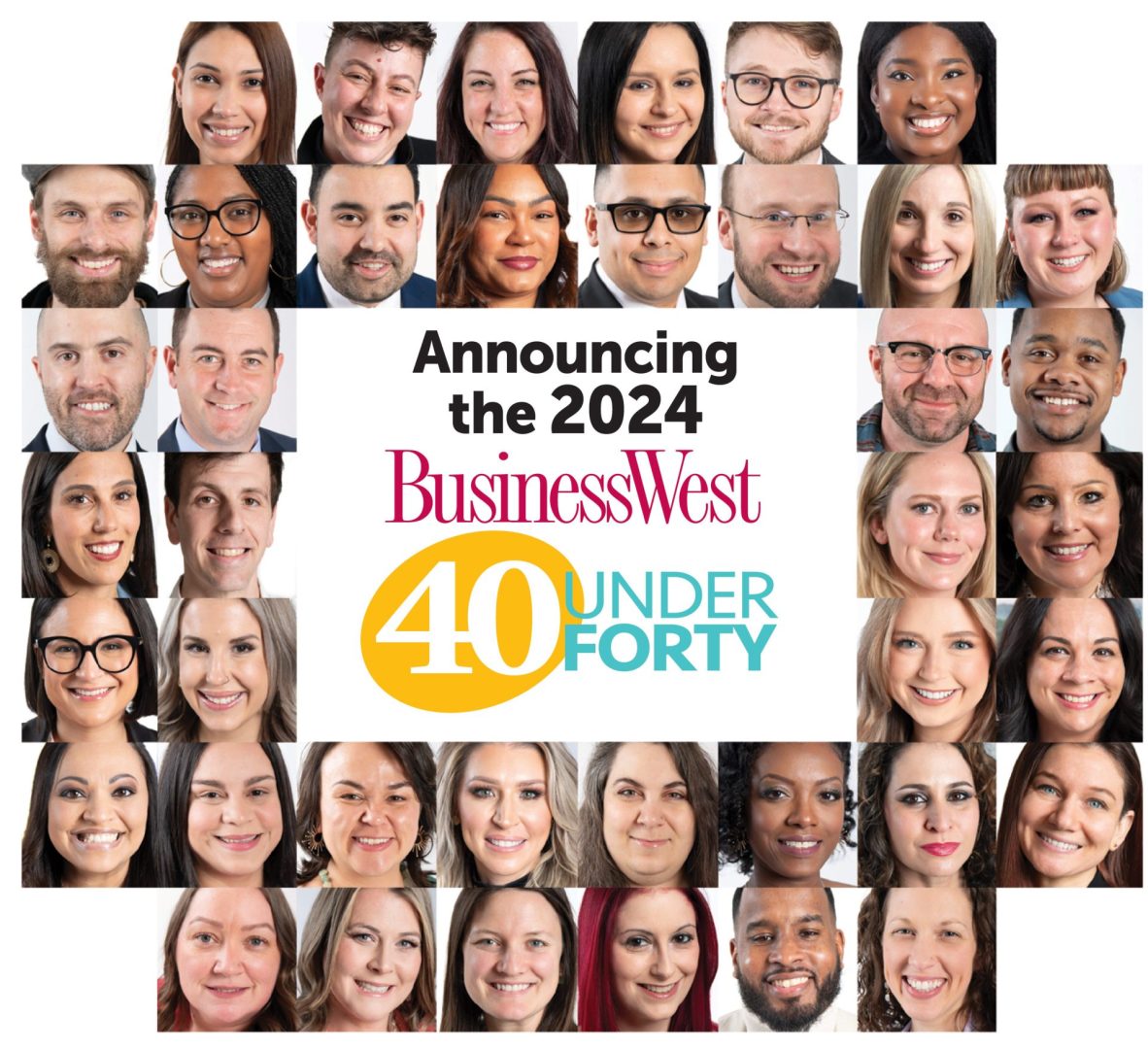
SPRINGFIELD — At Thursday evening’s 18th annual 40 Under Forty event at the MassMutual Center, BusinessWest announced that Meghan Rothschild, president and owner of Chikmedia, is this year’s Alumni Achievement Award (AAA) winner. 

Rothschild broke through on her fourth time as a finalist for the AAA, which, since 2015, has been awarded annually to the past 40 Under Forty winner who, in the minds of an independent panel of judges, has most impressively built on his or her record of professional achievement and service to the community since being named a 40 Under Forty honoree.  

Rothschild was voted to the 40 Under Forty class of 2011 while serving as Development and Marketing manager for the Food Bank of Western Massachusetts. As a survivor of melanoma, she was also a well-known advocate for skin safety and cancer prevention. 

Since then, she has founded and significantly grown the marketing and public-relations business known as Chikmedia, a full-service, boutique firm that provides clients nationwide with graphic design, social-media management, public relations, expert positioning, event management, and more. 

Meanwhile, her involvement within the community takes many forms, from a Girls & Racism town hall created in collaboration with Girls Inc. to a Campaign for Healthy Kids PSA designed to help raise funds for the children and families that rely on Square One and were severely impacted by COVID, to her creation of the Chiks of the Future Scholarship, designated for a young woman of color pursuing a degree in a marketing-related field. 

Rothschild is also increasingly in demand as a public speaker, having addressed subjects ranging from skin cancer to social media to leadership skills and how to build them. She has also become a sought-after presenter and media host, including red-carpet coverage on behalf of Explore Western Mass. (the Greater Springfield Convention & Visitors Bureau) for Basketball Hall of Fame enshrinement, as a panelist for the RISE Women’s Leadership Conference, and regular media-outlet contributions including The Rhode Show, Mass Appeal on WWLP, iHeart Radio, and more. Her first keynote address, called “Living Authentically Unleashed,” came this spring at the Pioneer Valley Women’s Conference in Springfield. 

The other three finalists for this year’s AAA award were Andrew Melendez, founder of the Latino Economic Development Corp.; Payton Shubrick, founder and CEO of 6 Brick’s LLC; and Craig Swimm, senior vice president of Audacy Springfield. 

The Alumni Achievement Award is presented by Health New England. 

Daily News

HOLYOKE — The Taber Art Gallery at Holyoke Community College (HCC), in partnership with the college’s Thrive Student Resource Center, is seeking submissions from area artists for an exhibit titled “THRIVE: Beyond Surviving.” The exhibit will run from Oct. 31 to Dec. 20. 

Artists are encouraged to enter work that considers the systemic, communal, and/or individual obstacles and barriers to survival; what surviving means; how we as humans can continue to dream, push, and hope for more than the minimum; and the struggle of exhaustion versus the ability to rest. Submissions are due by Aug. 31. 

Gallery director Rachel Rushing said the theme of the exhibit stems from conversation she’s had with Ben Ostiguy, Special Programs director for the HCC Thrive Center, which operates the college’s food pantry and provides other support services. 

“Thrive supports HCC students struggling to meet basic needs by focusing primarily on three areas: housing, hunger, and healthcare,” Rushing said. “One of the Taber gallery’s values is collaboration, and working with Thrive is a great way to amplify their program while featuring work from artists who have concerns in these same areas.” 

Daily News

SPRINGFIELD — In May, Junior Achievement of Western Massachusetts (JAWM) honored its 18 Under 18 class of 2024, sponsored by Teddy Bear Pools and Spas, at Tower Square in Springfield. The event, which was also sponsored by the UPS Store and Holyoke Community College, provided the opportunity to spotlight outstanding young people throughout Western Mass. and surrounding areas who exemplify innovative spirit, leadership, and community involvement. 

“This is our third year honoring students in this special way, and we were pleased with the outstanding caliber of the nominations we received,” said Amie Miarecki, president of JAWM. “We feel so inspired by the amazing young people in our community and are delighted to highlight the impact they are making. We hope the whole community joins us in applauding them for their achievements and community contributions.” 

The following students comprise the 18 Under 18 class of 2024: 

  • Aarav Trehan, Grade 12, Longmeadow High School
  • Aiden Kane, Grade 12, Agawam High School
  • A’jahna Johnson, Grade 12, Chicopee Comprehensive High School
  • Haileigh Swistak, Grade 12, Quaboag Regional High School
  • Isabella Oliveira, Grade 11, Agawam High School
  • Jasmine Griffin, Grade 12, East Longmeadow High School
  • Jayden Lopez, Grade 12, Holyoke High School
  • Jordan Wetherell, Grade 11, Pathfinder Regional Vocational Technical High School
  • Lila Broadley, Grade 11, Quaboag Regional Middle-High School
  • Lucy Hildreth, Grade 11, Agawam High School
  • Mah’dee Naylor Jr., Grade 10, Roger L. Putnam Vocational Technical Academy
  • Martha Brannstrom, Grade 12, Longmeadow High School
  • Mychal Connolly Jr., Grade 12, Roger L. Putnam Vocational Technical Academy
  • Nicholas Kendra, Grade 12, Chicopee High School
  • Qua’Nae Golston Thomas, Grade 12, Holyoke High School
  • Nicholas Rodriguez, Grade 11, Holyoke High School
  • Siobhan Armstrong, Grade 11, Holyoke High School
  • Zainab Sheikh, Grade 11, Longmeadow High School

Nominations for 18 Under 18 were open to anyone 18 years or younger who attends school in Hampden, Hampshire, Franklin, or Berkshire counties, as well as the Quaboag and Tantasqua regional school districts and the state of Vermont. Judging criteria were divided into three categories: innovative spirit, leadership, and community involvement. 

Community Spotlight

Community Spotlight

The new ownership group at Shaker Bowl

The new ownership group at Shaker Bowl (from left, Paul Thompson, Brendan Greeley, Amy Greeley, Marc Murphy, General Manager Justin Godfrey, Adam Oliveri, Kim Oliveri, Jordan Healy, and Andrew Robb) is making changes to make the facility even more family-friendly.

Gordon Smith became superintendent of schools in East Longmeadow in 2010.

Not long after, the ‘journey,’ as he called it, to build a replacement for the high school built in 1960 began.

It’s a been a long, difficult, often frustrating road, said Smith, who summed up the early years of the long fight and approval process by saying, “we would get close, but we were never invited in.”

Finally, the last of myriad hurdles — a vote of town residents to approve the $180 million school project and another $19 million for the accompanying natatorium — was cleared last November, and Smith’s already busy schedule became even more so, but in a fulfilling, even exhilarating way.

Indeed, he’s part of the building committee that has been finalizing plans for the school, and as he talked with BusinessWest, he was working with the construction company Fontaine Bros. and other parties on plans for the ceremonial start of preparation of the ground for construction of the new high school (that took place on June 17).

While doing all that, Smith has been reflecting on how the project will impact this town of roughly 16,500, starting with a likely rise in that number because of what a new high school means to a community that has all the other ingredients for growth — land; a strong, diverse business community; vibrant neighborhoods; and high quality of life.

“It’s exciting to really shape the future for a number of years,” he said. “This moves the community as a whole forward, and we’ll have a building that’s current in terms of how it not only engages students, but how it engages the community.”

The long-awaited start of work on the new high school is one of many developing stories in East Longmeadow. Plans to construct a large warehouse on the former Package Machinery complex on Shaker Road have been turned down by the Planning Board and are now in litigation. Meanwhile, town leaders are in early-stage work to address concerns about affordable housing stock in the community.

Town Manager Tom Christensen said town leaders are exploring creation of a Center Town District featuring mixed-use development including housing options, such as apartments or townhouses, that would enable more people to come to East Longmeadow, or continue living there, at a time when most new homes being built there come with price tags approaching $1 million.

“This is a desirable community, but most of the housing stock is detached single-family,” Christensen explained. “With the new high school, and thinking about the cost of living, we’re trying to see if an affordable-housing component makes sense in the downtown area, with some kind of density housing.”

Timm Marini, seen here with staff members

Timm Marini, seen here with staff members during a recent employee-appreciation day at HUB, says East Longmeadow has always been desirable, and a new high school will make it even more so.

Several new businesses have opened in the community as well, including a Chase Bank branch in the center of town; a lingerie, bra-fitting, and swimsuit store called Gazebo Too; and Raspberry Records.

There are also new owners (a large group, in fact) of one the town’s older and perhaps better- known institutions, Shaker Bowl, located, as that name suggests, on Shaker Road.

Brendan Greeley, one of those new owners, said the group saw an opportunity to not only continue a more than 60-year-old tradition, but make some needed improvements and additions to make the facility even more family-friendly and more of a destination.

“We came at it like entrepreneurs; we wanted to make the facility better and more accommodating for families and more accommodating for businesses to come in and have their corporate events.”

“We came at it like entrepreneurs; we wanted to make the facility better and more accommodating for families and more accommodating for businesses to come in and have their corporate events,” he said, adding that improvements have included renovations to the party room, new lighting, new bowling software that allows young people to knock down a castle instead of pins, and more. “For kids coming in for a party, there are a lot more options now.”

For this, the latest installment of its Community Spotlight series, BusinessWest turns its lens on East Longmeadow, where many forms of progress and momentum are evident.


Classroom for Improvement

As he talked about the high-school project and all that goes into it, Smith said this is more than a generational undertaking. We’re talking about several generations.

“The goal is for this building to last equally as long as the last one,” he said, adding that the facility will be state-of-the-art in every way, especially with regard to technology.

“We think it’s going to be a building that firmly puts East Longmeadow into the 21st century,” he told BusinessWest. “This will be a building that students can come into and use the most current technology available — classrooms designed for how the 21st century student learns, a setting that’s much more interactive. It’s not about a teacher standing in the front of the room and presenting all day; it’s a setting that’s much more conducive to hands-on learning, no matter what the subject matter might be.

“And from a safety standpoint, we won’t have to worry about leaking roofs and power outages and things of that nature,” he went on, adding that there have been many of both during this long fight for a new school.

Plans call for the new school to open its doors for the start of the 2026-27 school year, said Smith, who, like others we spoke with, said the impact of the new facility should be felt long before that.

Indeed, in many respects, a modern high school has been the one ingredient missing from a community that has a lot of other things going for it, including land on which to build new homes and businesses and a large commercial base that has helped keep residential tax rates lower than in surrounding communities like Longmeadow and Wilbraham.

“With that investment in a new high school, I think you’re going to see more families moving into town,” said Timm Marini, president of Personal Lines Insurance at HUB International New England, which has an office on Shaker Road near the center of town. “The new schools really draw people — young people — which is what we need.

“We’ve seen several other area communities make investments in new high schools,” he said, listing Longmeadow, Wilbraham, West Springfield, and others. “East Longmeadow is a little behind the times in that respect, but now, town residents are putting their money where their mouth is, and it will benefit the community.”

Christensen, who grew up in town, returned to it several years ago, and then took an intriguing route to his current post — moving from deputy director of the Department of Public Works to deputy town manager to town manager — noted that the strong vote in favor of the debt exclusion (nearly 70%) spoke volumes about the need for the project and its importance to the community.

“The ‘yes’ votes were an indication that this could really jump-start our community,” he said, adding that while the town has recorded both residential and commercial growth over the past few decades, there is certainly room for more.

Indeed, there are two subdivisions (one with 23 lots, the other with 15) now in development, and there is ample land for more, he said.

But there are other needs in the community, he went on, noting that, like many communities in this region, there is a growing need for housing options, especially inventory that would fall into the ‘affordable’ category.

This need has led to ongoing efforts to create that aforementioned Center Town District, a mixed-use development with an affordable-housing component.

Christensen said the goal will be to create this district in the downtown area — not the surrounding residential neighborhoods — on commercially zoned property and parcels in need of redevelopment.

“We have some people in town who may not be able to afford to stay in their home, but want to stay in town, so it’s incumbent on us to provide an option,” he explained, adding that town leaders have engaged the public in the process, asking them what they want and don’t want from such an initiative.


Enthusiasm to Spare

Greeley told BusinessWest that, while he didn’t grow up in East Longmeadow, he spent plenty of time at the bowling alley on Shaker Road.

“I remember Thanksgiving and Easter … my family would get together, and we would always go bowling,” he said, adding that he has many fond memories from what can only be called a landmark.

And it is a desire to create memories for some new generations of area residents that prompted a group of investors (including Greeley’s wife, Amy) to acquire the bowling alley when it came on the market roughly a year ago.

Tom Christensen

Tom Christensen says a desire for housing options in the community has inspired efforts to create a Town Center District with an affordable-housing option.

Retelling the story, Greeley said he and Adam Oliveri, a close friend and over-30 hockey teammate, were looking for businesses to buy and, while driving by Shaker Bowl one day, brought it to the top of their list of prospectives. The owner wasn’t interested in selling, however, so they started looking in other directions, only to return to their original target when it eventually came on the market in early 2023.

They added partners to the group and closed that summer. Since then, they’ve been making improvements aimed at taking advantage of steady — and, by most estimates, growing — interest in bowling, while also making the facility a destination for all kinds of functions.

From September through April, leagues bowl there every day of the week, he explained, adding that league bowlers don’t take all 28 lanes, but they do provide a strong, steady source of revenue. Meanwhile, beyond the leagues, interest is strong among all age groups.

Shaker Bowl is part of a business community that is, as noted earlier, large and diverse, featuring everything from a solid mix of restaurants to a full roster of banks, with Chase being only the latest; from service businesses like HUB to a large number of distribution and manufacturing facilities in the town’s large industrial park.

There are many intriguing stories of entrepreneurship, including the Coating House, a 44-year-old business owned in recent years by Kim Casineau, who has written an inspiring story of growth, diversification, and giving back.

The company manufactures specialized coated and uncoated fasteners and fittings for several sectors, including industrial, medical devices, aerospace, automotive, and the military. But that’s just part of the story.

Indeed, Casineau, who benefited from services provided by the YWCA of Western Massachusetts earlier in her life, has committed herself to giving back not only to that agency (she currently serves as its board president), but also the young women it serves.

Working with board member Dawn Rodgers and YWCA staff, Casineau is part of an effort to implement a new educational program with high-school students called Healthy Empowering Relationships and Education. She’s also working to provide women served by the YWCA with mentoring and, eventually, job opportunities.

“I purchased this company with the intention of growing it and offering job opportunities to the women who are residents at, and receive services from, the YWCA, because I thought I could offer them entry-level jobs and mentorship at a safe place that is welcoming,” she said, adding that the mentoring initiatives and job opportunities remain a work in progress. “I want to offer them a place to learn and grow and feel safe.”

Overall, East Longmeadow is business-friendly, said Grace Barone, executive director of the East of the River Five Town Chamber of Commerce, which counts East Longmeadow among the five communities it represents.

She noted that, with the arrival of Christensen and Rebecca Lisi, deputy town manager, there are now stronger lines of communication between Town Hall and the business community, which brings benefits for both sides.

“They’re fantastic, they’re out in the community, they’re listening to what the members need, and they’re engaging with them,” she told BusinessWest. “It’s very refreshing, and it’s great to work with them.”

Like Marini and others we spoke with, Barone said East Longmeadow boasts a strong location, near Springfield, but also Connecticut, Longmeadow, Wilbraham, and other vibrant communities, making it an attractive address for restaurants and certainly banks, but also retail outlets.

“We’ve had several ribbon cuttings,” she said, listing Gazebo Too, on North Main Street, and Raspberry Records, on Shaker Road, among them. “A business might go out, but you see new businesses coming in right away to fill those spots, and that’s very exciting.”


Features Travel and Tourism

Funding Drive

Regional public transit plays a vital role in communities across Massachusetts, but the current funding approach is fragmented, unfair to those living in rural areas, and unable to fully meet the needs of residents statewide, according to a report released by the Health Foundation of Central Massachusetts and the Quaboag Connector.

Research support was provided by the Center for State Policy Analysis at Tufts University, which examined the operational funding landscape for regional transportation providers, including the “patchwork” of 15 regional transit authorities (RTAs) that offer fixed-route and on-demand bus and shuttle service to millions of residents living outside of Greater Boston, which is served by the Massachusetts Bay Transportation Authority (MBTA).

Regional public transit connects people to jobs, healthcare, education and many other daily activities and is a lifeline to those who cannot afford a car, choose not to own one, or cannot drive.

“Where residents live in Massachusetts should not determine their mobility or access to opportunity.”

The report found that the funding mechanism for RTAs lacks transparency, is overly reliant on local contributions relative to the MBTA, and does not adequately account for issues of regional, rural, or economic equity. It argues that a sustainable funding model is necessary to improve the efficacy and fairness of the transit system as a whole and to fill gaps in the current system.

“We must do more to eliminate transportation deserts and to ensure that urban and rural regions alike have access to public transit, not only within each region, but across a more connected system across the state,” said Dr. Amie Shei, president and CEO of the Health Foundation of Central Massachusetts. “Transportation is a public good, and we must invest in it today so we can achieve the Commonwealth’s climate, economic-development, health, and housing goals of tomorrow.”

RTAs are more reliant on local contributions from the communities they serve than the MBTA system — about 20% versus just 8% to cover operating expenses. Setting aside any federal dollars, the gap is even wider, with 32% of the RTA system funded by local contributions versus 12% of the MBTA. In rural parts of the state, where the tax base is limited, these contributions amount to a significant financial burden for local municipalities and taxpayers.

The study was commissioned by the Quaboag Connector, a micro-transit initiative serving 10 rural communities west of Worcester and funded through a Synergy Initiative grant from the Health Foundation of Central Massachusetts. The Quaboag Connector, led by the Quaboag Valley Community Development Corp. and the town of Ware, has provided more than 66,000 rides over the past several years, serving as a lifeline for local residents.

“Where residents live in Massachusetts should not determine their mobility or access to opportunity,” said Melissa Fales, executive director of the Quaboag Valley Community Development Corp. “This report underscores the critical need to incentivize connectivity across RTA service areas, particularly in rural areas, and to identify dedicated funding streams to support independent micro-transit efforts that are working to fill gaps across the Commonwealth.”

Advocates for transportation equity have called for increased state funding to support RTA operating expenses. “Providing accessible, affordable transportation to rural communities can have transformative impacts on community health, but there is currently no funding mechanism that incentivizes large-scale development of these programs or supports them sustainably in the long run,” said Jen Healy, Quaboag Connector program manager.

The report notes that, in addition to more funding, which should be based on publicly shared principles and stable funding over time, the distribution of funding across the RTA network should be reassessed, along with the incentives to expand service by RTAs or independent transit providers to underserved populations.

“Given how important regional transit is for mobility and economic opportunity around the state, there’s tremendous value in thinking about how best to support RTAs and other innovative players,” said Evan Horowitz, executive director of the Center for State Policy Analysis.  “The funding-by-inertia process we’ve got really isn’t up to the task.”

The report, titled “Regional Transit in Massachusetts: Where We Are and Where We Need to Go,” is available online at www.rideconnector.org/report.

“This report highlights the need for sustainable funding for regional transit and robust, coordinated planning to better provide transportation options for residents, particularly in rural areas,” said Pete Wilson, senior policy director of Transportation for Massachusetts, a statewide coalition focused on improving the Commonwealth’s transportation systems.  “Implementing the recommendations of this report will increase regional equity and sustainability for access to public transportation for all residents.”


Environment and Engineering

Solving a Sticky Situation

UMass Amherst food scientist Lynne McLandsborough recently won the 2024 Mahoney Life Sciences Prize for her research that offers a solution to a sticky sanitation and food-safety dilemma hounding the peanut-butter and chocolate industries.

“I was really surprised and excited,” McLandsborough said of winning the prize. “I think our research is innovative, and there’s a need in the industry. It was a fun project.”

She is already in talks with Mars, the world’s largest chocolate manufacturer, and J.M. Smucker, owner of Jif peanut butter, to test her novel ‘dry’ sanitation method in peanut-butter and chocolate pilot plant facilities, and she has filed a patent application on the innovation.

The work of Lynne McLandsborough’s lab holds the promise of improving food safety and reducing bacterial illness outbreaks.

The work of Lynne McLandsborough’s lab holds the promise of improving food safety and reducing bacterial illness outbreaks.

One doesn’t have to be a commercial candy bar producer to know how tough it is to clean low-moisture foods like peanut butter and liquid chocolate off utensils, bowls, and kitchen equipment. The sticky mess happens because of the high-fat content of those foods and the chemical reality that water and oil don’t mix.

“Outbreaks of salmonellosis associated with low-moisture foods are a persistent problem,” said McLandsborough, who, in addition to her role as professor, also serves as interim associate vice chancellor for Research and Engagement and interim director of the Center for Agriculture, Food, and the Environment.

Her lab’s discovery holds promise to make sanitizing facilities processing low-moisture foods more efficient while improving food safety and reducing bacterial illness outbreaks.

Richard Mahoney, former CEO and chairman of Monsanto, expressed his enthusiasm for the Mahoney Life Sciences Prize and McLandsborough’s breakthrough.

“We are thrilled to champion the innovative research led by UMass researchers. It is crucial to bridge scientific discoveries with industrial applications to address pressing challenges and improve lives,” said Mahoney, who, along with his brothers, Robert and William, established the Mahoney Prize in 2018. “Dr. McLandsborough’s research exemplifies this mission and has the potential to revolutionize food safety nationally and globally. The extraordinary advancements at UMass Amherst continually position the university as a premier research institution on the world stage.”

The Mahoney brothers received their chemistry degrees from UMass Amherst and went on to become leaders in their own industries. They have served as high-level alumni advisers to UMass Amherst and as mentors to students.

The annual competition seeks scientists in the College of Natural Sciences (CNS) who are engaged in high-impact life-sciences research that addresses a significant challenge and advances collaboration between researchers and industry. Following a review by an expert panel of life-science industry scientists and executives, the $25,000 prize is awarded to one CNS faculty member who is the principal author of peer-reviewed research that meets the goals of the Mahoney Life Sciences Prize.

“The cool thing is that osmotic pressure is one of the first concepts you learn when you take basic microbiology, and it’s also one of the basic things you learn in food science. It’s simple, but it works.”

McLandsborough’s winning research paper was published in April 2023 in the journal Microbiology Spectrum. Facilities processing low-moisture foods ‘dry’ clean the equipment followed by hot-oil flushing, which removes residues in processing lines but doesn’t kill bacteria like salmonella. That bacteria exhibits higher heat resistance in high-fat and low-water environments.

“Low moisture sanitization products are formulated with flammable solvents, rather than water, requiring manufacturers to dry, clean, and cool equipment before application, resulting in days of downtime,” McLandsborough explained. “Therefore, routine cleaning and sanitization occur less frequently in low-moisture food-processing facilities.”

McLandsborough and her team initially developed a formulation of oil and acid to create an effective antimicrobial sanitizer that resulted in a bacteria kill rate of more than four log, or 99.99%. But the standard kill rate for a sanitizing agent needs to be five log, or a kill rate of 99.999%.

Then came the ‘a-ha’ moment, when the researchers discovered the missing ingredient needed in the formulation to kill more than 99.999% of salmonella bacteria: a few drops of water.

“We added a small, controlled amount of water as an emulsion,” McLandsborough said. “We mixed the acidified oil with a surfactant and water. Just a small amount of water — 1% to 3% — enhanced our kill, and now we’re getting a six-log bacterial reduction, or 99.9999% kill.”

Chalk up the improved kill rate to osmotic pressure, which accelerated the antimicrobial action of the water-in-oil emulsion. “The cool thing is that osmotic pressure is one of the first concepts you learn when you take basic microbiology, and it’s also one of the basic things you learn in food science,” she said. “It’s simple, but it works.”

Monica Tan, senior vice president of Product & Engineering at Science Exchange and a member of the panel of external experts who reviewed the Mahoney nominations, selected McLandsborough’s research for the prize.

“Dr. Lynne McLandsborough begins her research essay with a beautifully crafted opening paragraph that clearly presents the problem statement. She concisely outlines her approach, making it easy to understand,” Tan said. “Her research appears solid, but what truly stands out is the industry acceptance she has already received from major food companies like M&M Mars and Barry Callebaut. Her submission this year is notable for being the most advanced in bringing academic research to market.”

In addition to Tan, the other reviewers who ranked McLandsborough’s research as their top choice for the prize included Stefan Baier, chief science officer for Aqua Cultured Foods; Leslie Dierauf, retired wildlife veterinarian and conservation biologist; David Mazzo, president and CEO of Lisata Therapeutics Inc.; and Diane Stengle, retired associate professor of STEM at Holyoke Community College.

Workforce Development

Certified Diverse Businesses

By Julie A. Dialessi-Lafley, Esq. and Britaney N. Guzman-Bailey, Esq.

It is no secret that running a profitable business can be difficult. It can be even more difficult, however, for women, minorities, veterans, persons with disabilities, and members of the LGBTQ+ community, who often face systemic obstacles to achieving sustainable economic status for their businesses.

Julie Dialessi-Lafley

Julie Dialessi-Lafley

Massachusetts has created various public programs for certain diverse business enterprises to address this issue, such as the state’s certification program through the Supplier Diversity Office (SDO).

The SDO currently certifies the following business categories: Minority (MBE), Women (WBE), Portuguese (PBE), and Veteran (VBE). The SDO also has agreements with third-party organizations to certify additional business categories: Service-disabled Veteran (SDVOBE), Lesbian, Gay, Bisexual, and Transgender (LGBTBE), and Disability-owned (DOBE).

The qualifications and requirements for each are easily found on the Commonwealth’s website. For a quick list, an interested business may review the SDO certification program at www.mass.gov/certification-program-for-sdo.

In addition to certifying businesses, the SDO also provides certified diverse businesses with networking opportunities to market their goods and services to potential buyers. The SDO certification may give business enterprises a competitive edge when seeking contracts with the government because the SDO sets benchmark spending goals for state-agency buyers to purchase goods and services from certified business.

Additionally, applica nts enjoy the marketing benefit of being listed in the SDO’s directory of certified businesses. A complete list of SDO-certified businesses can be found again at the Commonwealth’s website.

For certification, a business entity must be both owned and controlled by eligible persons and or principals, be free of any conversion rights, be independent, and be ongoing. An eligible person is an adult permanent resident of the U.S. who is a minority, veteran, person of Portuguese origin, LGBT individual, person with a disability, and/or a woman. An eligible principal must own at least 51% of the business enterprise or, if a nonprofit organization, must be in control of the organization.

Clarification of the categories is helpful and may result in being eligible based on more than one criteria. For example, in order to qualify as a minority, one is defined as an Indian or Indigenous, Asian, Black, Hispanic, or Portuguese person.


Careful Consideration

The Commonwealth looks carefully at all requirements. In order to meet the requirement of being free from conversion rights, neither the applicant nor the eligible principals may be subject to a scheme that, if exercised, could result in diluting the ownership of the eligible principals below 51% or cause the entity to not be independent or not controlled by eligible principals.

Under the independence requirement, the applicant cannot be dependent or affiliated with, or influenced by, legally or in practice, any other business enterprise or organization regarding its day-to-day or long-term affairs. The applicant cannot rely on or regularly utilize employees or workforce who, while performing work for the applicant, are in the course of employment with or under the direct control of another person or business entity other than the applicant. The SDO will deem an applicant not independent if the applicant presents insufficient evidence of having the capability to perform, with its own workforce, equipment, and facilities, the work it contracts to perform.

As to the ongoing requirement, the applicant must show that it was not formed for the of taking advantage of the certification program. Reorganization and/or ownership changes that subsequently render an applicant eligible for the SDO certification that occurred within the 12 months prior to application will create a rebuttable presumption that the changes were made to take advantage of the program. In order to rebut the presumption, the applicant must show that it has available resources that are appropriate for a business of its type and that it actively seeks out contracts for services. Essentially, demonstrating ongoing business and having financial resources will demonstrate the legitimacy of the business seeking certification.

Part of the application process includes attendance at a mandatory, two-hour workshop before applying for the SDO certification. It is only after attending the workshop that an applicant may gain access to the application portal. The certification process may take up to 60 days following the submission of an application.

In order to determine if a business may qualify before undergoing the rigor of the workshop and application process, the SDO offers a self-assessment tool for anyone unsure if their business may qualify for a SDO certification. The assessment can be found at www.mass.gov/forms/take-the-certification-self-assessment.

SDO certification typically lasts for three years, at which point the certification will automatically expire. Companies are removed from the SDO directory after expiration unless certification is renewed in a timely manner.

If there have been no material changes regarding the business, the applicant should submit a renewal affidavit attesting to the same and comply with any requests for information from the SDO certification specialist. Changes in ownership, control, or independence are some of the circumstances identified as a material change; naturally, if there have been material changes, the applicant must notify the SDO. The applicant has within 30 days of the change to notify the SDO or risk decertification.


Opportunity Knocks

As of June 5, 1,924 Massachusetts businesses are registered as WBE, 1,442 MBE, 576 DBE, 111 VBE, 74 SDVOBE, 60 PBE, 44 LGBTBE, and 20 DOBE.

Of these registered businesses, 154 of them are nonprofits, and the major business industries include service, construction, goods, technology, transportation, and manufacturing. Although 3,050 Massachusetts businesses are certified, only 223 of those businesses are registered from Hampden County, 69 from Hampshire County, 52 from Berkshire County, and 16 from Franklin County.

There is a lot of opportunity for a registered business, and the numbers indicate there are numerous businesses in the local footprint that would likely qualify but have not registered yet. In addition to the publicity around the certification, the certification also provides the business access to exclusive contracts and subcontract opportunities to help its bottom line. Clearly, well-positioned businesses and entrepreneurs understand getting an edge on the competition may help secure their foothold in the marketplace, and being a certified diverse business in the Commonwealth may be one such way to stand out.

Becoming a certified diverse business may also result in new networking and marketing opportunities and expanded opportunities to contract with the Commonwealth of Massachusetts. As the requirements for certification may differ based on the location of the business and business type, it is important that you obtain legal advice for your business on its potential eligibility and to assist through the certification and/or recertification process.


Julie Dialessi-Lafley is a shareholder and Britaney Guzman-Bailey is an associate at Bacon Wilson, P.C.

Accounting and Tax Planning

Thinking Outside the Firm

By John Trusler, CPA


Small-business owners often wear many hats, juggling various roles across their operations. But let’s face it: doing it all is not feasible in the long term.

One often-overlooked yet game-changing tool is outsourced accounting. Outsourcing your business’s accounting function provides considerable benefits beyond number crunching. It allows owners to devote more time and resources to core business functions like strategic growth and nurturing customer relationships, which are crucial for long-term success. Continue reading to explore more ways small businesses can thrive through outsourced accounting.

“Outsourcing your business’s accounting function provides considerable benefits beyond number crunching. It allows owners to devote more time and resources to core business functions like strategic growth and nurturing customer relationships, which are crucial for long-term success.”


 

Scalable Solutions for Growing Businesses

As your business grows, its financial needs become more complex. Outsourced accounting services can seamlessly adjust to the size and needs of your organization. This scalability ensures that, as your operations grow, your financial oversight and capabilities expand alongside them, eliminating the need to hire additional in-house staff.

Additionally, outsourced accounting teams help streamline your annual tax preparation and compliance processes. It also offers comprehensive advisory services, including forecasting, IT support, and HR services.


Expertise and Professional Oversight

An outsourced accounting team provides businesses with the expertise of certified public accountants (CPAs) who have both private and public experience and a background working with multiple clientele within your industry. These experts deliver insight into financial reporting, automating transaction recording and account reconciliations, plus strategic planning often unattainable for small businesses.

Also, with in-house accounting staff, turnover can be a significant disruption. Outsourcing your team ensures continuity, mitigating the impact of such transitions.


Cloud-based Advantage

Outsourced accounting offers businesses a cloud-based advantage that enhances efficiency and transparency. Cloud-based technologies enable companies to access their financial records anytime, allowing for real-time, informed decision making. This approach enhances internal controls by improving bill-payment approval functions and overseeing the account reconciliation processes.


Conclusion

Outsourced accounting is much more than a cost-saving measure for small businesses. It’s a strategic choice that brings expertise, efficiency, technological advancement, and focused business growth.

By embracing outsourced accounting, small businesses can streamline their financial processes and gain valuable insights and stability, allowing them to concentrate on what they do best: growing their business and nurturing their customer base.


John Trusler is a tax director in the Hartford, Conn. office of Whittlesey. He has more than 19 years of experience in public accounting and four years in the private sector serving as the chief financial officer for one of the largest multi-specialty, for-profit medical groups in the Northeast. He is a member of the American Institute of Certified Public Accountants and the Connecticut Society of Certified Public Accountants.

Opinion

Editorial

Summer is officially here. For college students, it started more than a month ago. And for high-school students, it began just a few days ago.

That means a lot of people are looking for work, and that’s good, because companies across every sector of the economy are looking for help. This juxtaposition of demand and supply is a positive thing because, as we’ve noted many times in the past, summer jobs — often the first jobs for a great many teenagers — are critically important for these individuals, the companies that hire them, and the region’s economy as a whole.

In short, these jobs help introduce people to the world of work, to companies in this area large and small, and, perhaps, to relationships that can last years, decades, or even a lifetime.

Which is why businesses should create such opportunities, if they can. And, in this time of workforce challenges, most of them can — and they are.

No matter where you end up in life — professionally, geographically, or otherwise — you remember your first job. And your second. And your third. But especially your first.

In this market, it might be working the counter at Friendly’s making Fribbles. Or bagging groceries at Big Y. Or working one of the carny games at Six Flags. Or working at one of the farms in Hadley, Hatfield, or East Longmeadow.

In each case, skills are learned, and work habits are developed. Young employees learn about the need to be on time, work beside others, and operate as part of a team. These employees learn not only from their supervisors, but from everyone around them.

The work may not always be fun and exhilarating, but it puts money in one’s pocket and helps keep him or her out of trouble.

As for college students looking to earn some money between semesters, summer jobs can and often do provide more than that. In many cases, jobs or internships can introduce them to careers and companies they can work for in the years to come.

Time and again, we’ve read and heard stories about young people who were undecided about what they wanted to do career-wise and were put on a path — or a different path than the one they were on — because of a summer job or internship at an accounting firm, marketing firm, or even a law firm.

These stories relate the importance of summer jobs — be they first jobs or someone’s fifth or sixth — to creating real opportunities, for both employees and employers.

Summer jobs have always been important, but in this climate, when businesses of all kinds and sizes are often desperate for help, and when many young people are trying to enter the workforce and perhaps start down the path to a career, they are more important than ever.

Opinion

Opinion

By Kim Dunn


Many organizations face the challenge of creating and keeping their workplaces free from conflict and drama. Although drama comes from many places and in many forms, the only sure way to rid your organization of it is to get to its true source.

Identifying the cause or source is where you get to put your detective skills to work. Digging down to the root of the problem starts with asking deep and meaningful questions to draw out what the true issues are that are creating the conflict. To do this, you will need to become an expert fact finder, which is often easier said than done. In many instances, there is not just one issue, but many, and the path to identifying what has created the tension or conflict between employees is murky and blurred with emotions.

It is interesting that there are some organizational cultures that seem to breed drama and others where there is rarely an issue. My research and experience with managing conflict in the workplace has reinforced that failing to address the following items will almost always lead to workplace drama.

• Inauthentic Leadership. A lack of authenticity creates a belief that management is hypocritical and that they only talk the talk, but do not walk the walk. In this environment, employees lose enthusiasm for their jobs, passion for what the company represents, and, most dangerously, they lose trust.

• Lack of Transparency. Misguided attempts at confidentiality can create the sense that everything is a secret. In the face of lacking information, employees will write their own story, which is almost always dangerous. Remember, employees usually know more than you think they know. Old-fashioned though it may sound, it pays to be open with as much information as possible.

• Not Addressing Bad Behavior. Many leaders hope drama will just go away if they ignore it. We know all too well that bad behavior never goes away on its own. The fact that the drama exists must be acknowledged and accepted so that action can be taken to address it. Inconsistency in dealing with conflict not only leads to the erosion of trust, but also increases the chance that it will return for a second act.

What all of these causes have in common is that they lead to a lack of trust in leadership. When employees do not trust and respect leadership, they will quickly become disengaged.

Drama can be created from many sources, and once you have identified the ‘what’ and the ‘why,’ you can begin to take the action necessary to repair the damage or at least stop the bleeding.

If drama is alive and well in your organization, do not wait to take action to uncover and address the issues that are creating or feeding it. Drama impacts the bottom line because it takes up time, and time costs organizations money. That alone is reason enough to make it a top leadership priority.

In taking the steps to address workplace drama, it is important to remember that not all drama is created intentionally. It can be driven by insecurity, fear, or other emotional issues that have not been identified and dealt with. In many organizations, drama is created because people simply do not have the skills to manage conflict. Not many of us wake up in the morning looking forward to managing conflict; however, not having the skills to deal with it can lead to disastrous and expensive drama-filled workplaces.

The culture that you and the leaders are creating and cultivating in your organization must be a priority. By modeling the behaviors of collaboration, support, and customer focus, you will create a foundation where destructive behaviors are quickly identified and corrected. You can even take it a step further and build these behaviors into your performance-management system, which will help reward the best and address the rest.

The one thing we know for sure is that if conflict, aka drama, is not dealt with quickly, thoroughly, and consistently, it will never go away.


Kim Dunn is a Strategic Human Resources consultant at the Employers Assoc. of the Northeast. This article first appeared on the EANE blog; eane.org

40 Under 40 Class of 2024 Event Galleries Special Coverage

The 2024 40 Under Forty

Click on each name to read their story

When BusinessWest launched a program in 2007 to honor young professionals in Western Mass. — not only for their career achievements, but for their service to the community — there was little concern that the initial flow of nominations might slow to a trickle years later.

We were right. In fact, 40 Under Forty has become such a coveted honor in the region’s business community that it makes the job of five independent judges a challenging one — but also a gratifying one.

“That was fun!” one judge emailed along with her scores. “What an amazing way to get to know so many people, and so many better. This was an enjoyable process.” Another wrote, “what an amazing group of individuals! I was amazed to see such talent in Western Mass.”

We agree; in fact, we thought all 40 of this year’s cohort are deserving for many reasons — and so many different reasons — and also felt for the many worthy individuals who barely missed the cut. But there’s always next year, and nominations are welcome all year long.

As usual, this year’s winners hail from a host of different industries, from law to banking; from retail to healthcare; from restaurants to nonprofits, just to name a few. Many are advancing the work of long-established businesses, while others, with an entrepreneurial bent, created their own opportunities instead of waiting for them to emerge.

Almost all would be justified in saying their careers leave them no time for volunteer service. Yet, almost all are doing what they can for their communities and local nonprofits.

They’re all success stories — just 40 among so many more we haven’t gotten around to telling yet.

Meghan Rothschild Wins BusinessWest’s 10th Annual Alumni Achievement Award

At Thursday evening’s 18th annual 40 Under Forty event at the MassMutual Center, BusinessWest announced that Meghan Rothschild, president and owner of Chikmedia, is this year’s Alumni Achievement Award (AAA) winner. 

Click HERE to nominate next year’s Alumni Achievement Award.

This year’s 40 Under Forty sponsors include presenting sponsor PeoplesBank and partner sponsors the Isenberg School of Management at UMass Amherst, Live Nation Premium, Mercedes-Benz of Springfield, and Mercy Medical Center/Trinity Health. The presenting sponsor of the Alumni Achievement Award is Health New England.

2024 Presenting Sponsor

2024 Partner Sponsors

Alumni Achievement Award

Read about past Alumni Achievers.

Please nominate for 2025 HERE

2024 Presenting Sponsor Alumni Achievement Award

Banking & Finance Daily News News

HOLYOKE — Following a unanimous vote from their boards, PeoplesBank and Cornerstone Bank have announced they have entered into a definitive merger agreement to combine their holding companies in a merger transaction.

While the merger agreement between PeoplesBancorp, MHC and SSB Community Bancorp, MHC will unify holding companies, both banks will continue operating under separate names and brands for the foreseeable future. After the completion of the merger, the new, consolidated holding company for both banks will be named PeoplesBancorp, MHC and have approximately $6 billion in assets.

Thomas Senecal will remain as CEO and chairman, and Todd Tallman will become president of the combined mutual holding company. Brian Canina will be the chief operating officer of the holding company and will remain president of PeoplesBank.

Both institutions will benefit from the combined financial strength of two strong community banks coming together to create one of the largest mutual, multi-bank holding companies in the Northeast. PeoplesBank, serving Western Mass. and Northern Conn., and Cornerstone Bank, serving Central Mass., will each continue their normal operations with no disruption to customers. All account information, branch banking, and digital access will remain the same for both banks throughout the transaction.

“This merger of our holding companies will create more financial support for each of our banks, ensuring the kind of sustained strength that our customers have relied on since our founding in 1885,” said Senecal, CEO and chairman of the board of PeoplesBank.

This partnership opens up both banks to future opportunities and market growth. The merger was unanimously approved by the boards of trustees for both holding companies. Completion of the transition remains subject to approval by the corporators of PeoplesBancorp, MHC and SSB Community Bancorp, MHC as well as regulatory approval. Closing is anticipated in the first quarter of 2025.

“We’re excited to be joining forces with another mutual bank serving their communities with the same kind of commitment as us,” said Tallman, CEO of Cornerstone Bank. “While customers won’t see any difference in their day-to-day banking experiences, this merger offers us more scalability and strength, which we can build on in the future.”

Daily News

AMHERST — The Amherst Business Improvement District (BID) has launched a search for a dynamic and visionary leader who is passionate about community development and possesses the skills to build on the organization’s successes as its next executive director. 

The search comes after the recent departure of interim Executive Director Liz Larson. Larson, who previously served as the BID’s director of Operations & Finance, has stepped down to pursue other opportunities. 

Barry Roberts, president of the Amherst BID, expressed his gratitude for Larson’s contributions and his optimism for the future. “We are deeply grateful for the dedication and hard work of Liz Larson, who was instrumental in managing the BID through a period of transition. As we embark on the search for a new executive director, we are excited about the future and the opportunities it holds for our downtown community.” 

The BID’s executive director will be responsible for the administration, operations, and financial management of the organization, managing its programs and services, and responding to stakeholders’ issues and concerns to improve the business climate and vitality of the district. The ideal candidate must have experience in urban planning or economic development and must have a deep commitment to the Amherst community. 

Interested candidates are encouraged to visit www.amherstdowntown.com for more information about the position and application details. 

The Amherst Business Improvement District (BID) is a nonprofit economic-development organization comprised of local property owners dedicated to providing programs and services that supplement those of the town of Amherst. The BID invests its resources to improve downtown Amherst’s vibrancy, sustainability, and economic health through advocacy, events, beautification, marketing, and special projects. 

Daily News

EAST LONGMEADOW — The 2024 Ride-to-Remember kickoff concert and fundraiser will be held tonight, June 20, from 6 to 10 p.m. at East Village Tavern, 53 North Main St., East Longmeadow, and will benefit injured Springfield Police Officer Nestor Santos. 

According to the Springfield Police Department website, Santos was shot in the face and leg on June 5 and taken to a Boston-area hospital with a bullet fragment lodged in his head. He has had one surgery, and doctors were able to save his eye, but he will lose his vision in one eye. He has since been released from the hospital. 

Fundraiser tickets are available at www.eventbrite.com/e/otan-vargas-concert-to-benefitride-to-remember-tickets-918422194507. The event will feature raffles and live music from Otan Vargas, and will be emceed by local comedian Jess Miller. 

There will be Ride-to-Remember sign-ups. Ride-to-Remember will also be selling T-shirts for State Police Trooper Ronnie Gibbons. 

“We all owe our safety to police officers and heroes like Officer Santos,” said John Sullivan, co-owner of East Village Tavern. “It’s our honor and privilege to host this fundraiser to help benefit Officer Santos and his family in this extremely difficult time.” 

Daily News

MONSON — Monson Savings Bank prides itself on sustaining a welcoming, inclusive, and diverse workplace and helping all team members reach their full potential by providing a work environment where all individuals are treated fairly and respectfully, have equal access to opportunities and resources, and can contribute to the organization’s success. The bank strives to be a place where people want to work, diversity is welcomed, and individuals feel valued. 

In line with these efforts, Monson Savings Bank recently hosted a Diversity, Equity, Inclusion, and Belonging (DEIB) Summit for its entire team. 

“I hope everyone walks away with a better understanding of the bank’s commitment and efforts relating to DEI. As an organization, we feel good about who we are and the value of our differences,” said Michael Rouette, the bank’s executive vice president and chief operating officer. 

“I want each and every one of our team members to be inspired on their own personal DEI journey, finding their ‘why’ and their purpose. We want them to be confident in their motive for committing to our DEIB journey,” he added, “whether it be because their heart is in it, and they want to make the world a better place, or they want to do their part in forming a stronger, more profitable organization that sustains itself for another 150 years.” 

The bank invited Adriana Vaccaro and Sarai Rivera of Culture Redesigned to be guest speakers at the summit, as well as the Rev. Terrlyn Curry Avery, owner and licensed psychologist at Sacred Intelligence LLC and reverend of Martin Luther King Jr. Community Presbyterian Church in Springfield, as the keynote speaker of the educational event. Additionally, Monson Savings Bank President and CEO Dan Moriarty and First Vice President and Human Resources Officer Dodie Carpentier addressed team members during the program. 

Moriarty, also the recent past co-chair of the Massachusetts Bankers Assoc. DEI Council, emphasized the importance of embracing and implementing DEIB initiatives and values. 

“At Monson Savings Bank, DEIB is not just a concept, it is a core value. We recognize that embracing DEIB is critical to our individual and organizational success, as well as strategically and financially prudent. More importantly, it is just the right thing to do,” he said. “We are aiming to truly make a difference at the bank and in the larger community by embracing DEIB.” 

During the DEIB Summit, Vaccaro and Rivera of Culture Redesigned discussed the basic concepts of diversity, equity, and inclusion and the importance of adding to a positive culture and building trusting relationships. Following their discussion with the Monson Savings Bank team, Avery gave an engaging and thought-provoking motivational speech discussing race and how it plays into everyday interactions, perceptions, and relationships. 

“Thank you so much, Adriana Vaccaro, Dr. Sarai Rivera, and Rev. Dr. Terrylyn L. Curry Avery for coming here to share your insights with us,” Carpentier said. “And thank you to our amazing team for all joining together to embrace this important discussion. It speaks volumes to everyone’s character and the morale of our team that we got together to respectfully listen, ask questions, and learn together.” 

Daily News

LONGMEADOW — Bay Path University recently announced two new dual licensure programs within its MSEd/EdS in special education: dual licensure in severe and moderate disabilities preK-8 and dual licensure in severe and moderate disabilities 5-12. 

Bay Path’s MSEd/EdS in special education is the only program in the region to offer these dual licensure programs, and only one of a handful in the state. Applications are now being accepted for a Sept. 3 start date. 

Both dual licensing programs aim to address the pressing need for qualified special-education professionals capable of supporting students with diverse needs across different educational settings. 

The dual licensure in severe and moderate disabilities preK-8 program is designed to prepare educators to effectively teach students with a range of disabilities, from mild to severe, at the preK-to-grade-8 level. It emphasizes curriculum modifications, applied academics, alternative assessments, transition strategies, and community inclusion. The coursework aligns with the Massachusetts Professional Standards for Teachers and the Council for Exceptional Children’s 2020 standards. The program includes a yearlong practicum and is delivered 100% online through a combination of synchronous and asynchronous classes. 

The dual licensure in severe and moderate disabilities 5-12 program similarly prepares educators for teaching students with disabilities but focuses on grades 5-12. It covers similar content areas, including modifications for general-education curriculum, alternative assessments, and vocational strategies, ensuring comprehensive training for prospective teachers. Like the preK-8 program, it is also aligned with Massachusetts standards and the Council for Exceptional Children’s 2020 standards, includes a yearlong practicum, and is offered entirely online. 

“Educators earning dual licensure are more marketable and can work with all levels of exceptional children in all special-education settings,” said Dr. Kristen Lech, director of Graduate Programs in Special Education. “Our special education programs ensure teacher candidates are competent to engage in evidence-based instructional practices, culturally relevant pedagogy, and the ability to apply principles of Universal Design for Learning within their classrooms. We believe that, when special education teachers are well-prepared in these practices, the opportunity for increased inclusive practices can and should occur for all children with exceptionalities.” 

After successful completion of the program, individuals are endorsed for two separate Massachusetts initial licenses: severe disabilities, all levels, and moderate disabilities preK-8, or moderate disabilities 5-12. The program is 36 credits (MSEd) or 39 credits (EdS). The coursework for both dual-licensing programs cover all the Massachusetts subject-matter knowledge requirements for both licensure areas, and all courses are aligned to the Council for Exceptional Children’s 2020 initial practice-based professional preparation standards for special educators with high leverage practices. 

Cover Story Features

Staying True to Their Routes


Melissa and Peter A. Picknelly (far left and right) with fourth-generation company leaders

Melissa and Peter A. Picknelly (far left and right) with fourth-generation company leaders Lauryn Picknelly-DuBois, Alyssa Picknelly-Dube, and Peter B. Picknelly. (Staff Photo)

The past five years have brought a raft of challeges to the world of tourism and transportation.

The biggest one? Survival.

“The worldwide pandemic was tough on our industry, and many other industries,” Peter A. Picknelly, chairman and CEO of Peter Pan Bus Lines, told BusinessWest. “For three years, we had the government using our tax dollars to tell people not to use our service.”

There’s a bit of edge in his voice as he brings up topics like shutting down travel, and then restrictions like social distancing that accompanied its gradual return.

“But we survived, and we’re thriving now. We’ve invested $25 million in new equipment in the last couple of years. We’re modernizing our fleet, which is what our consumer wants; they want a nice, clean, modern bus. And we’re continuing to expand our route structure,” he said, noting that Peter Pan serves about 100 locations in the Northeast and Mid-Atlantic states.

“We listen to our customers — where they want to go — and we expand where it makes sense. We recently expanded to Newark, New Jersey, and a suburb right outside of Baltimore called White Marsh. And we’ve added service on Cape Cod. We’re always looking at new areas.”

But the company is also looking to the future in other ways, most notably some emerging leadership from the fourth generation of this family business launched by Picknelly’s grandfather in 1933.

“You just don’t see workers commuting to work, and if they do, they’re not working Mondays and Fridays. I mean, the full-time office worker is just not rebounding. It’s better than it was, and it will eventually come back, I think, but some businesses are just going to thrive on people that work remotely.”

“I kind of grew up just learning from him and wanting to work here,” said Peter B. Picknelly, one of three children of Peter A. and Melissa Picknelly (the company’s vice president) now working at Peter Pan. A fourth is still in college and mulling career goals.

“I had no doubt in my mind that this is what I wanted to do,” added the younger Peter, who is the company’s director of Safety & Security. “I grew up going to school and trying to better myself so I could then come into the business. That’s what I always wanted to do.”

That’s a story his father can relate to. “I’m the third generation; Peter and his sisters are the fourth,” he said. “But I never forced them into it. When I grew up, some kids wanted to be baseball players or football players. All I wanted to do was follow my father and grandfather. And I can’t tell you how proud I am that our kids chose to do that — but it was their decision.”

Peter A. Picknelly

Peter A. Picknelly, standing before some portraits of his predecessors, says there are very few family-owned bus companies in the U.S. today.
Staff Photo

Other fourth-generation leaders at Peter Pan include Lauryn Picknelly-DuBois, who was promoted two years ago to controller, and Alyssa Picknelly-Dube, who is involved with the Maintenance division. (A fourth child is still in college and mulling career goals.)

“There are very few family-operated bus companies in the United States anymore,” their father said. “Here, the fourth generation is already set, and they’re still in their 20s. I think it assures our employees and our customers that we will be around for a long time. They are doing an amazing job.”


All Aboard

They’re doing it at a time when public-transportation demographics might be changing, but bus travel clearly remains important.

Peter Pan specializes in travel that’s longer than a typical work commute, but within 200 miles — a distance that can be covered as quickly as flying, once the airport time is factored in, the senior Picknelly explained.

These days, most travelers are between 18 and 35 years old or over 50, he added. “They may have an automobile, but the bus is more affordable. We go city center to city center. And parking can be extremely expensive in some areas, and hard to find.”

He added that the pandemic hit the work-commuter customer base hard, and it’s still struggling, at around 60% of pre-pandemic volume.

“You just don’t see workers commuting to work, and if they do, they’re not working Mondays and Fridays. I mean, the full-time office worker is just not rebounding. It’s better than it was, and it will eventually come back, I think, but some businesses are just going to thrive on people that work remotely.”

That said, the longer-distance service — say, Boston to New York or New York to Philadelphia — is booming, especially as gas prices have remained high and cities have gone to congestion pricing.

And gas prices do make a difference, he added. “You can instantly see it when gas prices go up. Our cost of operation goes up when fuel goes up — it’s our third-largest cost. But it’s outweighed by the fact that more people seek an alternative. When fuel hits $3, $4 a gallon, you can see an instant surge.”

That said, today’s buses are much more fuel-efficient, Picknelly said, and feature an anti-idling function that shuts them off when they idle at a gate or while parked for more than five minutes (but not while in traffic).

“There are situations when the idling won’t turn off — say it’s middle of winter and it’s freezing, and you want to heat up a little bit. That will override the five-minute idle shutdown,” Peter B. Picknelly said. “Same thing if it’s too hot — to keep the bus cool, it’ll override it.”

Other features of a modern bus include better-designed seats, video and Wi-Fi, and cameras that capture a 360-degree view of the bus for safety purposes.

Peter B. Picknelly

Peter B. Picknelly, director of Safety & Security, is one of three fourth-generation family members so far to have chosen Peter Pan as a career.
Staff Photo

As for those who drive the buses — the current fleet is about 200 vehicles — the younger Picknelly said the workforce crunch was severe a couple of years ago, but hiring has picked up considerably since. “We get a lot of applications every single day, so we’re able to be a little bit more picky when it comes to the driver force.”

His father noted that hiring is easier in some areas than in others. “We’re constantly hiring. But while Cape Cod and Boston are difficult locations, with our driver forces in New York and D.C., we have plenty of applications.”

Peter Pan has been receiving more applications these days from younger people, and the company has brought on employees in the process of getting their commercial driver’s license, and even reimbursed them for it.

“It’s a very good job if you like to drive and you want to deal with people,” Picknelly said. “Our drivers choose what routes they want to operate and when they want to work. Our position is, if you like doing what you want to do, you’re going to do a better job.

“But you’ve got to like to drive, and you’ve got to like to deal with people,” he added. “We can train just about anybody to drive a bus. But you can’t train someone to have good customer-service skills. And wanting to drive is just something you’ve got to have a passion for. Because that’s what we do.”

The younger Picknelly agreed. “It’s good getting these young people on board because most of the time they’re pretty loyal, and they want to stick with the company for a long time. We have people who have been here for so long because they came on when they were younger and were extremely loyal to the company, and that’s what we’re hoping to get now.”


Shifting Gears

Looking to the future, Peter Pan continues to find more ways to be the transportation mode of choice for its customers, especially younger riders, and that means making their travel plans easier.

To that end, the company recently announced a new strategic partnership with Trailways, extending its network of destinations, as well as a strategic alliance with Amtrak.

“So you can take a train somewhere, and then they’ll connect to a bus, and we can take you right to the city center,” Peter A. Picknelly said, and from there, rideshares can take over. “We’re also forming alliances with Ubers and Lyfts where you can coordinate being picked up wherever we drop you off, and instantly getting in an Uber and taking it to your final destination. Because of this coordination, more and more people are saying they don’t need to drive, particularly young people that live in the big city.”

“We can train just about anybody to drive a bus. But you can’t train someone to have good customer-service skills. And wanting to drive is just something you’ve got to have a passion for.”

Statistics bear that trend out. Last year, driver’s license applications actually went down, reversing a 50-year upward trend, he noted.

“It’s so convenient. If you go to Europe, taking public transportation is always involved, and you’re seeing more of that here. It’s way more convenient, and with the amenities in the vehicle, you can work or entertain yourself while you’re traveling. You can’t do that when you’re driving.”

Peter Pan also maintains a model of managing terminals — another one of Peter B. Picknelly’s roles — in its destination cities, with amenities like food, restrooms, a service counter, and a pickup area, instead of the model of picking up and dropping off on unattended corners.

“We don’t like picking up on a street corner like some of these other bus companies,” Peter B. added. “We like going into a terminal or a specific designated area, so they can have that one-on-one personal experience with our employees if they have an issue or have any questions or concerns. We’re a customer-driven business, so we like pleasing the customers.”

About 15% of Peter Pan’s business, meanwhile, is charter service to destinations not on the regular route plan.

“Charters are very big, and in the summer, it picks up a lot. There are people who go out to Saratoga Race Course on the weekend; that’s a very popular place. We’ll take them wherever.”

One shift that occurred over the pandemic years has been a move toward online booking, his father added.

“Prior to COVID, about 50% of our riders would buy their ticket a half-hour before departure, in person. Now, 90% of our sales now are in advance. Most people are booking within three days of their trip, online.”

But, as mentioned up top, the biggest story of the pandemic for Peter Pan was … well, simply surviving it, and coming out stronger on the other side, with plans for the future and a band of 20-something Picknellys ready to evolve into stronger leadership roles.

“We’re really proud of all of our staff,” their father said. “Listen, 40% of all bus companies didn’t make it through the pandemic. We did, and we’re thriving. We’ve had to change our focus on longer-distance trips, less commuter-related, more group travel, but we’re doing well.”

Peter B. Picknelly agreed. “In hindsight, COVID was horrible, but it made us think about how we could run things differently here, and it’s been beneficial.”

Features Special Coverage

At a Tipping Point

Paul Kozub with his children

Paul Kozub with his children, from left, Weston, Ela, Augustin, and Vincent, at the distillery in Kamien, Poland, that he acquired in 2019.

When asked about all that has changed since he first started finalizing plans for creating his own vodka label 20 years ago, Paul Kozub chose to start with the personal side of his life.

“Back then, I was a single guy living alone with not many cares in the world; now, I’m married with four kids under the age of 10,” he said, adding that this reality explains why he only visits the distillery he owns in Poland maybe once a year instead of three or four times, as he did earlier, and why he presides over maybe 20 in-store tastings a year instead of the 50 or 60 he was averaging a few years ago.

As for the business side of the equation, there have been equally significant changes. He started with one flavor in one region of the Bay State, the 413. Now, there are 10 flavors, including a lemon that changes colors and a hugely popular double espresso. And they are now available in eight states — the six New England states as well as New Jersey and Texas — although they can be shipped almost anywhere, as we’ll see.

And there’s that distillery in Poland, which Kozub now owns a 51% share in. He made that investment in 2019 in a critical step that saw him move from outsourcing production to overseeing (officially if not literally) every step in the process.

And while there have been huge leaps in overall growth — from 700 to 1,000 cases produced and sold per year early on to more than 20,000 today — there have been myriad challenges as well, everything from a global pandemic to the war in Ukraine (the distillery is only a few miles from the border); from huge swings in the cost of getting containers from Poland to the U.S. ($4,200 per shipment to $16,000 back down to $4,200) to the burgeoning cannabis industry (in states where cannabis is legalized, there is an accompanying decline in alcohol sales, Kozub reported).

But while looking back — and then ahead — Kozub chose to focus mostly on what hasn’t changed. The goal, then and now, has been to become a national and then international vodka label, and in some respects, that’s already been accomplished; he does sell some vodka in Poland, but not much, as V-One’s prices are higher than other brands because of how it’s made.

And while the original goal was to make a living selling vodka, something he could do when he was selling 1,000 cases a year, the overriding ambition has been to continually grow the label by taking it to more markets in more states and, eventually, more countries.

While that hasn’t changed either, this desire to grow has morphed into a critical need — because of that distillery and the importance of keeping it busy.

Kozub summed it all up directly, and poignantly.

“For me, V-One is at a crucial tipping point,” he explained. “We’re either going to stay small — a Massachusetts, Connecticut, Rhode Island business — or we’re going to get bigger, and a lot bigger, as a national brand or even an international brand.

“For me, V-One is at a crucial tipping point. We’re either going to stay small — a Massachusetts, Connecticut, Rhode Island business — or we’re going to get bigger, and a lot bigger, as a national brand or even an international brand.”

“And the decision has kind of been made for me because of the distillery purchase — the capacity that facility has and the need to keep it busy on a daily basis, which it is not right now,” he went on, adding that, with this decision — and a subsequent capital raise involving local investors — Kozub is moving forward aggressively with plans to more than double his current sales force and move into more states, starting with Florida, then New York, then other states on the East Coast.

It’s an intriguing next chapter in a story that has featured a number of plot twists and turns but a continued focus on the proverbial big picture and how to make it become reality.

V-One now boasts 10 flavors

V-One now boasts 10 flavors, and Paul Kozub hints that more additions to the lineup may be coming soon.
(Photo courtesy of Chris Marion)

For this issue, BusinessWest talked at length with Kozub about the latest, quite significant adjustments to the V-One business plan and how they provide more proof — yes, that’s an industry term — of how those original plans haven’t exactly changed. They’ve just been supersized.


Proof Positive

By now, most people around here know at least the basics of the V-One story.

With a small, $6,000 inheritance from an uncle and some entrepreneurial vigor that ran in the family (his father started Janlynn Corp.), Kozub put aside a career in banking — he was a commercial lender with TD Bank — to fulfill a long-held dream to launch his own vodka label.

That was in 2005. He started with a small still in his basement and soon made his way to Poland to meet with a world-renowned vodka expert for advice, but also inspiration. He made the critical decision to become the first producer of vodka made exclusively from organic spelt wheat (most other vodkas are made from corn).

Over the next 19 years, V-One has grown and evolved, adding new flavors, winning several awards, expanding its reach across New England and beyond, and increasing the number of cases sold each year. Along the way, there have been several milestones — from the opening of V-One’s world headquarters in the former St. John’s Church on Route 9 in Hadley to a rebranding that saw a new look to the bottles, to the acquisition and subsequent expansion of the distillery in Kamien, Poland, a multi-million-dollar investment fueled by a desire to take more control of the process.

“I’ll make this analogy … instead of buying milk from the store, we now own the cow. We need to keep the distillery busier, and we need to essentially double the business that we’re doing now.”

BusinessWest has chronicled the story, and along the way, Kozub has earned two of the magazine’s awards — inclusion in the inaugural 40 Under Forty class of 2007, then being named the magazine’s Top Entrepreneur for 2016.

As he noted at the top, he now has four young children — “life has gotten a little more complicated” — so that means fewer trips to Poland, although he was recently there for some end-of-fiscal-year matters, and more Zoom calls with his master distiller there.

“He has things handled pretty well as far as production goes, so I don’t need to go as much as I used to,” Kozub said, noting, again, that the critical to keep that distillery busy — at optimum output, the facility could increase production 10-fold — has prompted the latest adjustments to the business plan, capital raise, and plans to aggressively move into other states.

Paul Kozub says the need to keep the distillery in Poland busy

Paul Kozub says the need to keep the distillery in Poland busy — busier than it is now — is fueling the company’s aggressive plans for continued growth.

“Before, it was a case of wanting to grow; now, it’s kind of like we have to grow,” he told BusinessWest. “I’ll make this analogy … instead of buying milk from the store, we now own the cow. We need to keep the distillery busier, and we need to essentially double the business that we’re doing now.”

Elaborating, he said he has no real desire to produce other vodka labels in Kamien, only V-One. Which means producing more of it.

“And to do that, we need to put more people, more salespeople, on the street, and tell the V-One story,” he said, adding that this need to hire and ratchet up marketing efforts — although the company still relies heavily on social media — was the impetus for the recent capital raise.

“My next goal is to get V-One in at least five more states in the next 12 to 24 months,” he said, adding that Florida will be the next target.


Entrepreneurial Spirit

The Sunshine State should be a natural next step, Kozub went on, noting that, while consumption of vodka in Poland is higher during the colder months of the year — primarily because people there drink it straight — in the U.S., vodka is generally mixed with other ingredients that are put over ice, making it a warmer-weather choice.

“A place like Florida has great, year-round weather for vodka drinking,” he said. “And there’s obviously a lot of vacationing, a lot of people by the pool. You really don’t want to drink heavy drinks when you’re by the pool; you want lighter drinks like a vodka soda or mojito.”

As he noted earlier, entering new states and new markets is difficult — and expensive. With immense competition in the vodka aisle, there is a strong need to build brand awareness and gain a foothold. And this requires boots on the ground, he said, adding that, while V-One works with distributors, those large companies represent literally thousands of different labels.

“You have distributors in each market, but you also want to have someone talking to those bars and restaurants and liquor stores,” he told BusinessWest. “You need to have someone else telling the story because these distributors are selling 3,000, 4,000, maybe 5,000 other items, and they’re pushing the big brands, so the smaller brands just get left by the wayside.

“So you have to put someone in each market to tell your story,” he went on, adding that he is looking to bring on several additional salespeople in the coming months to do this storytelling.

While Florida is the next primary target, the goal, as he mentioned, is to be in a handful of other states within the next year or two.

New York is another primary target, he said, adding that the plan after making some headway in that all-important state is to move down the East Coast, perhaps into Virginia, Delaware, and North and South Carolina.

“We want to keep things on this side of the country for now,” he said, adding that the ability to ship products to different states (35 of them at present) enables V-One to expand its presence in that fashion. It’s a small but nonetheless meaningful arrow in the quiver, but one that is growing steadily and has potential to continue the growth trajectory.

Overall, expansion into a new state comes with a price tag of $100,000 to $250,000 for marketing, additional salespeople, and other expenses, he said, adding that this is just part of the cost of doing business.

And it’s a critical aspect of being at this important tipping point for V-One, as Kozub called it. As he noted, the company has progressed from wanting to grow to needing to grow.

“For me, it’s time to take that next big step,” he said, adding that he’s approaching this next phase for his company the way he has all those that have come before it — with a focus on that original dream of creating a vodka label and then taking it around the world.

Environment and Engineering Special Coverage

Engineering a Youth Movement

Ashley Sullivan, president of O’Reilly, Talbot & Okun.

Ashley Sullivan, president of O’Reilly, Talbot & Okun.


Ashley Sullivan can think of plenty of reasons why someone might want to go into engineering.

“It is a very rewarding field where you get to see your work benefit your family and your community,” the president and CEO of Springfield-based O’Reilly, Talbot & Okun said. “And you’re always going to need civil engineers, so there’s job protection there. There’s so much opportunity in the field, whether you want to go into construction or consulting or the regulatory side. There’s a lot of different options, and each individual can find what’s right for them.”

That said, the industry is facing the same headwinds seen in other fields these days, ranging from construction to manufacturing to insurance: retirements outpacing the number of young people coming on board.

“We’ve had a lot of retirements; as quick as I hire, we have people retire or leave the industry,” Sullivan said. “We’re trying to grow, we’re trying to hire, and we make progress one year, and then a few months later, we might fall back. We’re trying to hire about five more by the end of the year, but, just like with everybody else, it’s been very challenging.

“Previously, being a smaller, local firm, we didn’t necessarily compete with the larger firms or state agencies because if somebody liked a small firm, they liked a small firm, versus a larger firm. Now we’re finding we’re going up against those agencies and larger firms,” she went on. “I’m not sure if that’s because of the hybrid or remote potential. We’ve really focused on the ones that want to work near where they live, but now it’s getting hard to do that. There are also a lot of competitive salaries out there, so we’ve had to adjust to that. It’s definitely a challenge.”

Westfield-based Tighe & Bond is at the other end of the hiring spectrum, boasting about 600 employees at 17 locations across the Northeast. The firm is growing significantly at a time when a surge of federal funding — from the $1.2 trillion Bipartisan Infrastructure Law of 2021 to the Inflation Reduction Act and CHIPS Act of 2022 — is creating plenty of opportunity for civil-engineering firms.

“They’re requiring technical talent throughout the country to do all the work that’s coming,” President and CEO Bob Belitz said, noting that the firm has more employees dedicated to recruiting and onboarding than in the past. “We’ve made an investment in that function because it’s such a big part of our business.”

He added that the firm’s broad footprint across the Northeast makes it easier to recruit and retain talent. “Before, if somebody was working for us and got married and moved to New Hampshire, Maine, or New York, they might have to leave us to go work for somebody else because we didn’t have offices there. Now we do. From a growth perspective, it helps to be able to transfer you among other offices.”

Bob Belitz

Bob Belitz says work opportunities for engineering firms are high right now, and so is the need to attract new talent.
Staff Photo

But with some turnover to be expected in a company this size, and with a goal of growing both organically and through acquisitions, Tighe & Bond needs to onboard more than 100 new employees each year, and doing so successfully requires it to stand out from its competitors in a number of ways, Belitz said, from its employee-ownership model to hybrid work schedules; from a strong benefits program to a broad mix of projects.

Sullivan said communicating the culture of a company to job seekers is also critical.

“When we’ve had conversations where we effectively communicate that, people are very interested in working here,” she said, adding that another factor is communicating a clear path to career advancement.

“One of the things I think is so great about engineering — particularly about civil engineering or the environmental engineering that we do — is that we make our community better.”

“I am looking for future business partners. You’re working with the people that are managing the business, you’re getting day-to-day experience in that, and there’s real, clear potential for somebody to be a stockholder, be on the board of directors, and guide the company sooner than they might at a larger company. We can give examples of that. So that’s something that we try to explain. We feel that, if we’re effective in communicating that, we’ll find the right people.”


Mission Driven

As a civil engineer teaching at a women’s liberal-arts college, Glenn Ellis, a professor of Engineering at Smith College, said his students often come to the field from a specific mindset — namely, social impact.

“The number-one thing I hear from students is they want to do some good for the world, to make the world a better place,” he told BusinessWest. “They’re very interested in sustainability. That’s the number-one draw for many students as an engineer. And you can really make an impact on all sorts of things.”

That line of thinking resonates with Sullivan. “One of the things I think is so great about engineering — particularly about civil engineering or the environmental engineering that we do — is that we make our community better,” she said. “We’re an important part of that, and you can see it.”

Ellis noted that the industry code of ethics now includes sustainability as a key tenet, which dovetails with what his students are demanding. But he also said young people are drawn to the sheer diversity of engineering and how broadly it impacts the world.

“The more young people know what an engineer is, the more they’re interested in it. Studies show that the reason why way fewer women than men are engineers is not because women leave these programs at a higher rate than men; they leave at the same rate. It’s that they don’t go into engineering programs to begin with.”

And the time to start capturing their interest, he added — not just for engineering but for all STEM fields, where women have been historically underrepresented — is not college or even high school, but middle school.

“I say to a lot of young people, ‘you know, everything you can see has been designed by engineers. Engineers literally designed the entire world.’”

“I think that’s the time to develop a STEM identity. When you ask kids in middle school if they want to be engineers, they say, ‘I don’t know what that is,’ or ‘that’s really boring; you just work on pipes and buildings.’”

Ellis spoke with one young girl who said she wasn’t interested in engineering, but she wanted to work in the medical realm, helping to design artificial limbs that will help people.

“I said, ‘that’s engineering — that’s bioengineering.’ Young people don’t know what engineering is, so you need to introduce them at a young age, show them that it’s not just building bridges and wearing hardhats. This is a creative profession, a collaborative profession. If you want to change the world, this is the place to do it.”

And employers know talented young engineers have options in choosing where to make their mark, so recruitment, onboarding, and benefits are all critical.

“When we think about our benefit programs, we need to think about things that are important to the younger generations,” Belitz noted, and these run the gamut at Tighe & Bond from student-loan assistance to wellness programs to pet insurance, but also include a strong focus on mentorship, learning, and professional-development opportunities, including the addition of a female mentoring program last year.

“We’re also always giving back to our communities, and we try to talk about that as much as we can when we’re recruiting people,” he went on. “Hopefully that total package, along with the work that we have in the backlog, is attractive to the younger and mid-career people, who are the hardest ones to retain.”

O’Reilly, Talbot & Okun, while a much smaller firm, is also in a growth mode.

“There is a lot of work to be done, and the clients need us to get their work done,” Sullivan said, adding that the industry is facing a bit of an experience gap as veterans retire and young engineers replace them.

“We knew this was coming, so you have to invest in your people and make sure that you’re narrowing that gap continuously,” she told BusinessWest. “One of the things that we’ve done — and that I continue to do — is really invest back in people, try to give them the skills and get them the training.

“And not just the technical training, but also business development, project management, and entrepreneurial skills that get you even further,” she went on. “That’s something that I knew I had to do five years ago, and I’ve continued to do that. We just finished a big team training about presentation skills, whether in a small meeting or a large group, but it was also about team building, communication, and all that.”


Making a Difference

Ellis said Smith has been graduating a few dozen engineers each year, and they’re entering a market that’s tilted somewhat to job seekers.

Conversely, for employers, “it’s very challenging,” Sullivan said. “It’s just really hard to find people right now. We’ve had some people with a verbal acceptance, and then a few weeks later, they get a counteroffer and stay where they are.”

Meanwhile, Ellis hopes more young people — particularly young women — get the message early on that this is a meaningful, impactful career with plenty of opportunity.

“Women are definitely more attracted to engineering when they can be involved in messy, complex societal issues, which actually is what engineering is all about. It’s all about taking math and science and solving problems for society,” he said.

“I say to a lot of young people, ‘you know, everything you can see has been designed by engineers. Engineers literally designed the entire world. You can go into it and move up in the world and make a difference.’”

Special Coverage Workforce Development

Culture Shift

Nicole Polite, CEO of the MH Group. (Staff Photo)


Diversity, equity, and inclusion — commonly known as DEI — has become a well-recognized expression in the world of employment, human resources, and executive suites.

But Nicole Polite prefers the term DEIB, which incorporates the word belonging, and there’s a reason for that.

“The belonging factor is making sure that your employees feel like they’re part of a community or environment where they all feel connected, regardless of race, color, creed, and everything else,” said Polite, CEO of the MH Group, which provides a range of staffing services to client employers. “I’m glad belonging is being emphasized; I believe that’s a key factor. Because if you don’t feel like you belong somewhere, then it’s not a good space for you.”

While the term DEI has become politicized in some corners, Polite doesn’t see the concepts behind it fading in importance.

“We’re not going to move away from it. The world has changed so radically,” she said. “And the employees are the ones driving it. They’re the ones asking, ‘how are you supporting me? How do I belong here? What are the steps you’ve been taking to make sure that there’s representation here?’”

John Henderson, director of Learning and Development at the Employers Assoc. of the Northeast (EANE), agrees.

“In this politically and socially divisive world, how do we create a culture where people feel valued? That stems from the diversity, equity, and inclusion piece,” he said, before explaining what each of those terms means for EANE.

“As employees are more educated, they’re more authentic with themselves. And that creates a culture of self-value for employees, a stronger sense of belonging, which makes it easier for them to be fully engaged with the workforce.”

Specifically, he explained, diversity is about representation — not only in terms of race and gender, but in backgrounds, viewpoints, and experiences.

Then, “when you look at equity, it’s about recognition — recognizing what people need in order to be successful. As a business, what do my people need in order to be successful? And what you need and what I need might be totally different. That’s why equity is so important.”

Inclusion, meanwhile, is about the actions a business takes to make people feel like they’re included.

Dan Moriarty

Dan Moriarty says efforts to create a more diverse, inclusive workplace have to start at the top.
Staff Photo

“All three of those really create a sense of belonging. So it’s diversity, equity, and inclusion, and then you have the B, the belonging piece,” Henderson explained. “If I feel valued, if I feel trusted, if I feel I can be my authentic self at work, I feel like I belong.”

It’s a message more and more companies seem to be getting — and even reaching out for help in implementing, he added. “We do get a lot of calls and do trainings around that piece. We want people to understand that differences bring creativity and increased productivity. And when you foster a culture of respect and people feel that they belong, it increases retention rates, and it makes it easier to recruit people.”

Monson Savings Bank President Dan Moriarty has been actively been involved in DEI strategy for some time, not only at his own institution, but his past co-leadership of an executive council established by the Massachusetts Bankers Assoc. to promote DEI efforts across member institutions.

Adopting some best practices recommended by Mass Bankers, Monson Savings has created a DEI commitment statement, developed and implemented a DEI program that continues to evolve, provided DEI training to board members and employees, identified and monitored key performance metrics, and conducted periodic self-assessments of the program.

In addition, he said, the bank has reviewed numerous documents, including its strategic plan, along with communications, processes, and facilities, to ensure that potential barriers are identified and removed and that DEI expectations are reflected, while also conducting outreach and expanding the bank’s relationships with key community members and organizations.

John Henderson

John Henderson says businesses increasingly want to create a culture where people feel valued.
Staff Photo

“We’ve developed a program which is a lot about education and training, from board members to senior management to the entire staff,” Moriarty said, adding that the bank conducted an employee summit a few weeks ago to discuss topics aroud DEI that some might not be familiar with, and explaining the reasons why they’re important.

“As employees are more educated, they’re more authentic with themselves. And that creates a culture of self-value for employees, a stronger sense of belonging, which makes it easier for them to be fully engaged with the workforce,” he added. “If they feel valued, feel like they belong, they’ll be better employees and better people. I just want to enhance those communications and make DEI more transparent, both internally and externally.”


Welcomed, Valued, and Heard

Jackson Davis, who heads up the DEI program for MassMutual, said that organization’s strategy is focused on creating an environment that is equitable and inclusive for its employees, customers, business partners, and the communities it serves.

“When it comes to our workforce, we strive to create teams that reflect our customers and communities, fostering an environment where all employees are welcomed, valued, and heard,” Davis explained. “To do this, we’ve integrated DEI into all that we do, taking specific actions like monitoring and being transparent about our progress in increasing the overall diversity of our workforce, encouraging both a diverse candidate pool and interview panel for open positions, and providing employee benefits and supports that will help us attract and retain a diverse workforce.”

These benefits include a variety of things, from eight employee business resource groups to holistic, flexible benefits that are designed to meet the diverse, evolving needs of employees. And that investment in DEI isn’t just the right thing to do, he added; it pays off in many ways from a business perspective.

“Having a diverse workforce is important because it brings together different perspectives, which in turn can help us solve problems faster, innovate with more success, and go above and beyond for our customers in order to deliver them the best possible experience.”



“Having a diverse workforce is important because it brings together different perspectives, which in turn can help us solve problems faster, innovate with more success, and go above and beyond for our customers in order to deliver them the best possible experience,” Davis noted. “From a customer perspective, having a diverse and inclusive workforce allows us to better understand and meet the needs of those we serve.”

Bob Belitz, president and CEO of Tighe & Bond (see related story on page 20), agreed, noting that the civil-engineering firm’s roster of projects is so broad and affects so many different communities and demographics that it’s important to have team with backgrounds and experiences that are equally varied.

“I think that makes a difference, and we’re really committed to that because of the project portfolio we have,” he said. “We’re also trying to expand the schools that we recruit from, expanding our reach to produce more talent.”

A company that wants to be truly diverse may approach its strategy through many goals, Polite said, from training employees to recognize and prevent unconscious bias in their actions and comments to using gender-neutral language in outward communication, to making sure job postings and promotion opportunities reflect a commitment to diversity.

That doesn’t mean hiring based on checking demographic boxes, she added, but it may mean considering where and how employees are recruited — such as recruiting from a broader range of colleges or partnering with cultural organizations in the community or reaching out to staffing agencies that specialize in DEI.

“I also love it when I see employers have supplier diversity goals,” Polite said. “That tells an employee that they’re committed to diversity; that really shows inclusiveness as a organization. And that makes you, as a minority or someone from a different culture, feel more relaxed. It’s like, ‘OK, there is some commitment here.’ But if you don’t have those types of mechanisms set up, like how do you convey that to the job seeker? How do you convey that to your organization?”


Leading by Example

The answer to that question takes many forms, Polite said, but it has to begin at the top.

“You’ve got to start on the leadership level. Starting from the bottom up doesn’t typically work; you have to start from the top down. And you have to have some accountability with your initiatives, too.”

There, she paused for a moment to add that she’s trying to stay away from the word ‘initiatives’ when she talks to clients because it lacks a key sense of permanence.

“We’re trying to weave it into the employer mission, what they do every day. Initiatives change all the time, correct? So we want to make sure we’re not just doing initiatives; what can we can do on a daily basis?”

Henderson also spoke to the importance of executive leadership in crafting effective DEI strategies.

“We know it increases productivity, it increases employee engagement, it increases retention, and it makes it easier to recruit,” he said. “But some companies don’t know where to start; they’ll say to the HR person, ‘hey, create a DEI plan and implement it.’ And then the HR person has that responsibility.

“But it really has to come from the leadership,” he went on. “If the leadership is not a champion for any initiative, including DEI, it’s not going to stick. You can’t change the culture from the middle up or the bottom up. It has to come from leadership. When a leadership team decides it wants to focus on diversity, equity, inclusion, and belonging, that’s a step in the right direction because it has to come from the top, not the middle.”

Moriarty agreed. “It has to start at the top. I had to start by providing leadership, advocating, training for DEI, and actively trying to foster a bank culture where we promote and support an environment where everyone feels valued and respected and has a strong sense of belonging. The goal is to have everyone be their authentic self at work.”

As Polite noted, it’s something companies of all types and sizes are taking seriously.

“I think employers are more committed than they’ve ever been. Even now, we still get a lot of requests for DEI training,” she said, adding quickly that the result must go beyond mere lip service.

“It still goes back to the commitment. As the leader of an organization, you have to draw the line and say, ‘this is what I’m going to commit to.’ A lot of employers have started to engage the topic of diversity and discrimination, and others have been too scared to touch it — not because they don’t believe in it, but they don’t want to offend, and they don’t know how to approach it.”

She recommends connecting with a consultant on hard questions — and, importantly, conducting internal surveys to gauge the workplace culture and reactions to any changes.

After all, Moriarty said, by creating a workplace where all feel welcome, the bank should become a more attractive employer for people from a variety of backgrounds.

“We’re fostering that culture where we can inspire our existing workforce, but also attract the diversity of experience from outside our walls, so they say, ‘hey, Monson Savings Bank is committed. They talk the talk and walk the walk.’”

The end goal, he noted, is a more diverse workplace, a more diverse vendor profile, and a more diverse customer base. “It’s definitely an ongoing journey along the path to do what’s right.”