
Daily News

MONSON — Monson Savings Bank recently donated $2,500 to the Martin Luther King Jr. Community Presbyterian Church Fire Fund.

In late December 2020, the historically black Martin Luther King Jr. Community Presbyterian Church in Springfield was set on fire by an arsonist. The fire caused an estimated $2.5 million in damages to the church, which was established in 1897. The church’s members have been forced to worship elsewhere but have not let this act of hate and destruction crush them.

“The acts of the arsonist who targeted MLK Church are despicable. As soon as my team and I heard the news, we were ready to stand with the church and help in any way we could. I urge others to do the same; no donation to the Fire Fund is too small,” said Dan Moriarty, Monson Savings Bank president and CEO.

“The response of the church to this situation has been truly inspiring. Their place of worship was targeted and horribly damaged, yet the spirit of the church has remained positive. They were able to quickly pivot, find a temporary place to hold their services, and organize fundraising efforts. Their response is truly admirable.”

To learn more about Martin Luther King Jr. Community Presbyterian Church and how to donate to the Fire Fund, visit www.mlkchurchma.org.

Daily News

John Williams

SPRINGFIELD — Fitzgerald Law, a business advisory law firm with four locations in Springfield, East Longmeadow, Worcester and Hartford, Conn., has announced a new hire to the firm, John “Jack” Williams.

Williams is a 2023 graduate of Western New England University School of Law, where he earned his juris doctor degree with a focus in transactional law. He earned his bachelor’s degree in management, cum laude, with a minor in criminal justice from Franklin Pierce University in Rindge, N.H., where he was a member of the men’s ice hockey team, including captain, for four years.

Williams brings experience as a law clerk and attorney at Susan M. Williams, LLC, where he focused on bankruptcy matters. He also previously interned at the Law Office of Bonnie Mangan, P.C. in South Windsor, Conn., and served as a legal assistant for many years.

“I am happy to join a firm that is recognized as the regional leader in serving businesses that now, more than ever, rely on legal services that are strategic and collaborative to help them grow,” Williams said. “Having grown up in the area, I have been familiar with the reputation of Fitzgerald Law that it has earned helping so many businesses, large and small, to thrive.”

At Fitzgerald Law, Williams will focus on transactional matters, including commercial real estate and finance, corporate governance, and business contracts. He is licensed to practice in Massachusetts and Connecticut.

“Adding Jack to our team improves the depth of our practice in serving businesses in our region,” Managing Shareholder Seth Stratton said. He has demonstrated leadership in college and success in law school and, as a young professional from the region and committed to building his career here, is well-prepared to serve our clients as well as our community.”

Daily News

LEE — The Lee Bank Foundation announced the allocation of $56,700 in grants to 10 organizations serving the Berkshire region, marking its second funding round of 2024. These grants, ranging from $1,000 to $10,000, will bolster local initiatives addressing critical community needs.

The following organizations are recipients of the Lee Bank Foundation grants: Berkshire Bounty, Berkshire South Regional Community Center, Big Brothers Big Sisters of Western Massachusetts, Blackshires, Community Access to the Arts, Elizabeth Freeman Center, Focus Is Our Children, Greenagers, Nonprofit Center of the Berkshires, and Roots Rising.

Nonprofit organizations interested in applying for the next round of funding can access the application and additional details by clicking here. The application deadline for the next cycle is Sept. 1.

Applicants must hold 501(c)(3) nonprofit status to qualify for grant consideration. The foundation prioritizes programs that aim to narrow income and opportunity disparities within the Berkshire community. Funding requests should align with the Lee Bank Foundation’s focus areas, which include education, food security, economic development, health services, and mentorship initiatives. Each organization is eligible to receive grant funding once within a 12-month period.

Established in 2021 to uphold Lee Bank’s commitment to community reinvestment, the Lee Bank Foundation has awarded a total of 150 grants amounting to $759,600 since its inception.

Daily News

NORTHAMPTON — The Willpower Foundation announced its annual golf tournament, set to take place on Tuesday, Sept. 3 at Orchards Golf Club in South Hadley.

The tournament is open to all golf enthusiasts, with a registration fee of $125 per person. Participants will enjoy a round of golf, lunch, and opportunities to win prizes. Proceeds from the event will support the Willpower Foundation’s mission to provide financial support to children and families affected by disabilities.

“We are thrilled to host our annual golf tournament once again,” said Sarah Aasheim, board president. “It’s a wonderful opportunity for the community to come together, enjoy a day of golf, and make a meaningful impact on the lives of those we serve.”

In addition to golfers, the Willpower Foundation is actively seeking sponsors to help offset the costs of the tournament. Sponsorship opportunities range from hole sponsorships to event sponsorships, each offering benefits and recognition. Sponsors will have the chance to showcase their commitment to the community and support a worthy cause.

For more information on registration and sponsorship opportunities, visit www.willpowerfoundation.org or email Hayley Procon at [email protected].

The Willpower Foundation is dedicated to empowering individuals with disabilities by providing financial assistance when insurance falls short. Through community events, grants, and advocacy, the foundation strives to enhance the quality of life for those it serves.

Community Spotlight

Community Spotlight

Mayor Mike McCabe, left, presents Westfield G&E General Manager Tom Flaherty

Mayor Mike McCabe, left, presents Westfield G&E General Manager Tom Flaherty with a proclamation marking the utility’s 125th anniversary.


Mike McCabe isn’t sure how or why Westfield hasn’t really been part of the discussion when it comes to stops on the planned — most believe we’ve moved past using the word proposed — east-west rail line.

But the city’s mayor is intent on changing that.

He’s been talking with the Massachusetts Department of Transportation and stating the city’s case for being a stop on the line, which is being touted as a way to level the playing field between the eastern and western portions of the state. And he believes it’s a strong case that involves everything from geography and the city’s size (roughly 40,000 people) to the fact that it already has a historic station that could turn back the clock and serve in that role again.

“We have an existing train station that Amtrak goes past every day, so I’m trying to encourage some real talk about getting Westfield on the east-west rail plan,” he said, adding that it’s been probably a half-century since a passenger train stopped in the city. “I don’t know why we weren’t in the game in the first place, but I don’t think it’s too late to get in the game.”

McCabe, re-elected to a second two-year term last November, believes a rail stop would bring more people, and more vibrancy, to a city that has been seeing progress on many fronts.

That includes its long-suffering downtown, which is seeing new life, as other area urban centers have, through a wave of entrepreneurship that has brought new businesses and especially restaurants specializing in everything from burritos to coffee to crepes, with more on the way.

“We’re not the old drive-through that we once were,” said Peter Miller, the city’s director of Community Development, noting that, in addition to new businesses, the downtown now has a new gathering place, or plaza, in the heart of downtown.

Located on the site of the former Newberry’s department store, which was destroyed by fire nearly 40 years ago and never replaced, the venue, named Elm Street Plaza, complete with a stage, will host concerts, food trucks, and other programs and happenings, making the downtown more of a destination while also going a long way toward solving that area’s biggest problem — a lack of parking, Miller noted.

Amanda Waterfield, who recently marked a year as executive director of the Greater Westfield Chamber of Commerce, agreed.

“One of the problems we’ve had in town has been parking,” she said. “And this park has added a lot of convenient parking in the downtown. And I know many of the merchants and businesses downtown struggled with that a little bit because the on-street parking is limited.”

Meanwhile, there is progress on many other fronts as well, from efforts to build a new police station to the highly anticipated arrival of the F-35 fighter jets, the next generation of planes to be flown and maintained by the Air National Guard’s 104th Tactical Fighter Group, based at Barnes Municipal Airport. Other developments include early-stage talks about replacement of the now 50-year-old Westfield High School; emerging plans for revitalizing the area just off Turnpike exit 41 (formerly exit 3); new, affordable housing in the old City Hall; and creation of new athletic fields and a track-and-field stadium at the high school, a $11 million project that will be funded essentially through larger in-lieu-of-tax payments by the city’s municipal utility, Westfield Gas & Electric.

Amanda Waterfield

Amanda Waterfield

“This park has added a lot of convenient parking in the downtown. And I know many of the merchants and businesses downtown struggled with that a little bit because the on-street parking is limited.”

The G&E, as it’s known, is marking its 125th anniversary this year, a milestone it is celebrating in many ways, from a fireworks celebration at a recent Westfield Starfires baseball game to an event with retirees in May to a blood drive in cooperation with Baystate Noble Hospital, something that will become a monthly happening.

It’s also marking the occasion with continued growth of what has become an intriguing business success story — Whip City Fiber.

The high-speed internet division of the G&E, which was formed 10 years ago, now boasts more than 17,000 customers in more than 20 communities across Western Mass., with more being added to the portfolio, said Tom Flaherty, general manager of the G&E.

Indeed, West Springfield, East Longmeadow, and Southwick are in the later stages of development of their networks, which will be built out by the G&E, which serves as their internet service provider, he said, adding that the G&E’s track record for success has led to communities from the other end of the state, such as Falmouth and Bourne on Cape Cod, reaching out to tap into that expertise.

For this latest installment of our Community Spotlight series, we turn the lens on Westfield, where progress is taking center stage downtown and elsewhere — figuratively, but also quite literally.


A New Flavor to Downtown

McCabe, as most locals know, served in the Westfield Police Department for 36 years, rising to the rank of captain, before deciding to change gears and seek the corner office in 2021.

He told BusinessWest he enjoys being the city’s CEO and most aspects of the job, especially work to conceive projects and bring them to fruition.
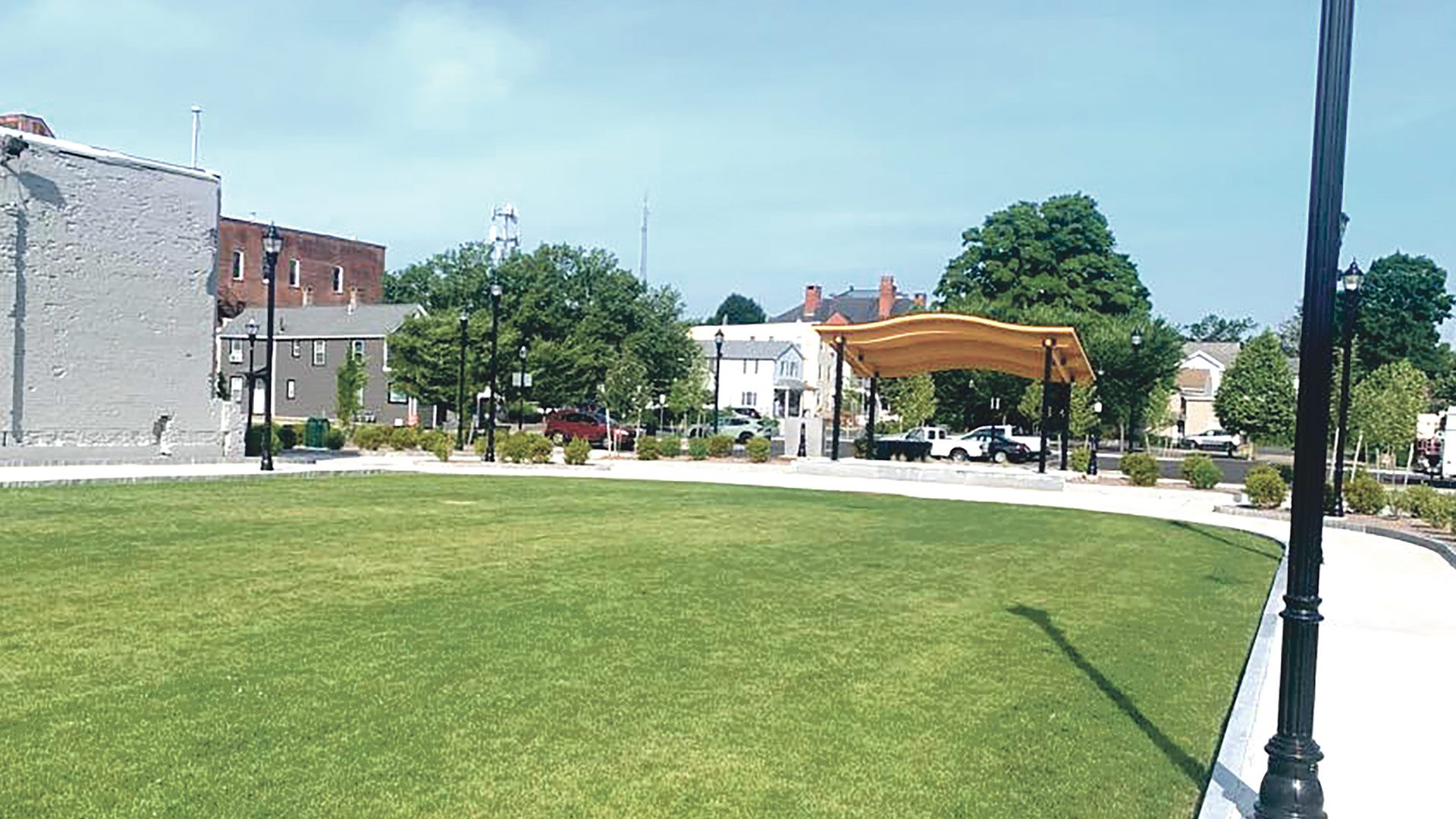
The new Elm Street Plaza

The new Elm Street Plaza, which will host concerts and other events, is one of many new additions to the downtown Westfield landscape.

There have been several such projects in recent years, including the creation of Elm Street Plaza, which, as noted, brought a successful end to talk that began in 1985 about what to do with the rather large hole in the downtown created by the loss of Newberry’s.

Funded with ARPA money, created at a cost of $1.2 million, and officially opened last fall, the plaza is already paying dividends, said the mayor, noting that, in addition to bringing people downtown for various gatherings, the space has created much-needed off-street parking in an area that has seen several new businesses open over the past few years — businesses that need parking.

“Downtown seems to be coming back together again — it seems more vibrant than in the past,” said McCabe, noting the addition of several restaurants that have brought a new flavor to the area — actually, several of them.

“There’s a lot of young entrepreneurs, a lot of new-American entrepreneurs, a lot of women entrepreneurs who are really taking a chance to pursue their passions and their businesses downtown, and it’s been inspiring.”

“We have an incredible variety of international flavors, whether it’s Polish pierogies or Ukrainian crepes or kabobs,” he said. “You can get any flavor you want downtown.”

The growing list of eateries includes everything from Ray Ray’s Café on Main Street to Two Rivers Burrito on Elm Street; from Crave Café, specializing in crepes, which recently opened at the corner of Elm and School streets, to Circuit Coffee, on the other corner of Elm and School.

Another important addition to that portfolio, Tribeca Gastro Bar & Grill, an upscale tapas bar, is set to open soon (a specific date has not been set) on the ground floor of the historic Lambson’s Furniture building on Elm Street, directly across from the plaza.

“They’re crediting the plaza project with their decision to locate downtown,” said Miller, adding that entrepreneurial gambits like Tribeca are fueling a resurgence downtown, one that has been decades in the making.

“It’s been a slog, certainly, and we can’t take credit for what’s been happening,” he said of efforts to breathe new life into a downtown that, like most others in the region, has been forced to reinvent itself over the past few decades amid dramatic changes in the retail landscape.
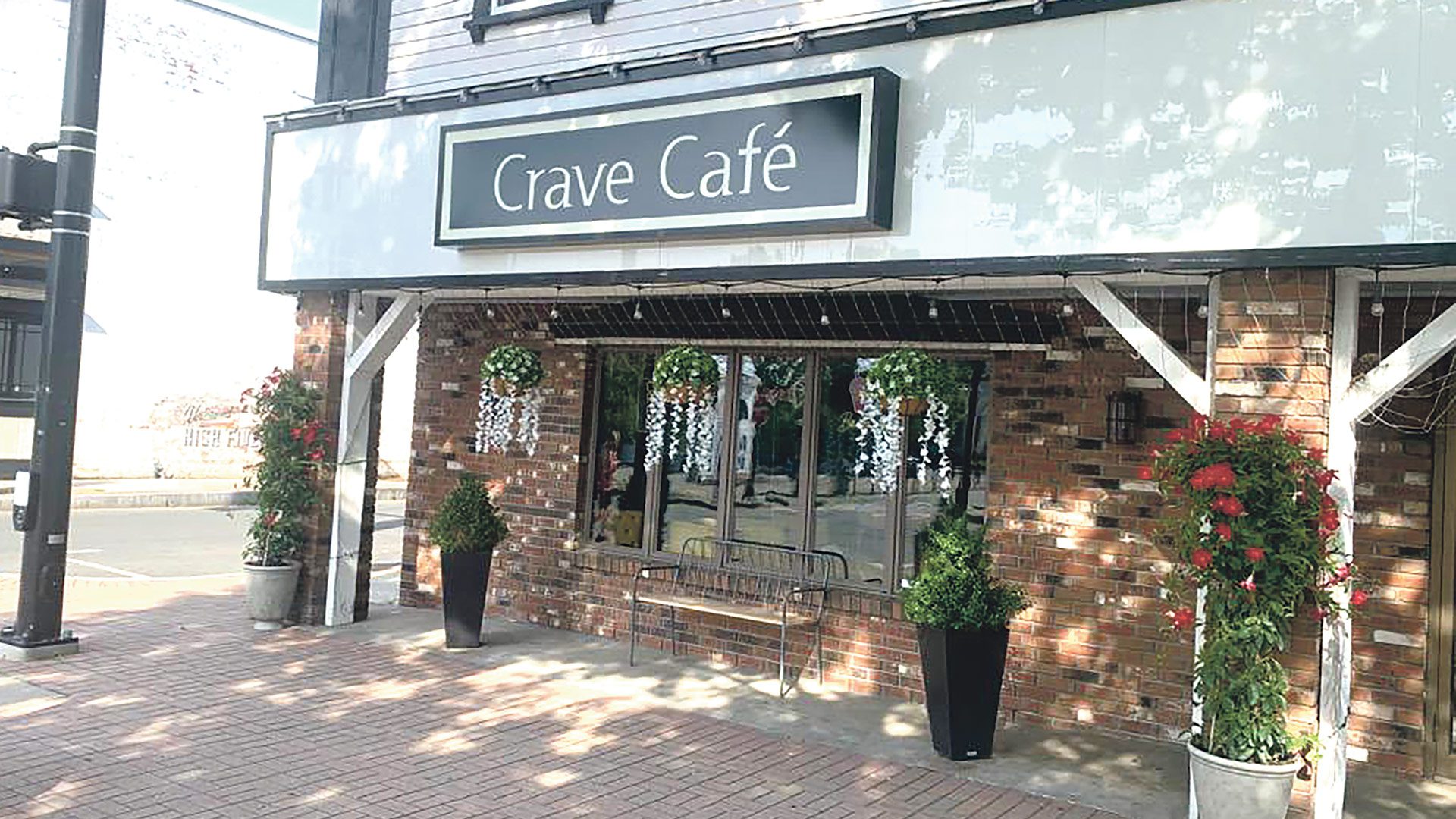
Crave Café

Crave Café is one of many new restaurants that are, collectively, making downtown Westfield more of a destination.

“The small-business community has been much more creative over the course of the past six to eight years,” he went on. “There’s a lot of young entrepreneurs, a lot of new-American entrepreneurs, a lot of women entrepreneurs who are really taking a chance to pursue their passions and their businesses downtown, and it’s been inspiring.”

Miller said he expects the downtown to benefit greatly from another ongoing initiative — a bid to create a cultural district in that area.

“We’ve applied to the Mass. Cultural Council for the designation of a cultural district on Elm Street, which we hope will provide us with a collaborative that will help to better market the downtown,” he explained, noting that the city had a business-improvement district doing some of this work, but it disbanded several years ago.

“We’ve seen these districts be successful in places like Easthampton, Great Barrington, and communities as small as Cummington, and we’re hopeful that putting together a group that’s focused exclusively on the downtown will help us to better market what we have here.”

Elaborating, Miller said this was the first time the city and its leadership have felt comfortable applying for creation of a cultural district, and the decision was sparked by the work of several nonprofit groups, including ArtWorks Westfield, formed five years ago, which has committed to an eight-week, Friday-night concert series in the new plaza, among other initiatives, including several art-walk events.


A New Gig

It was a desire to be part of this resurgence that prompted Waterfield to put aside work in print journalism — she was the owner and publisher of West Springfield Lifestyle magazine — and pursue the job as director of the Greater Westfield Chamber, which also represents Southwick and the hilltowns to the west of the city.

“It was a position that checked a lot of boxes for me,” she explained. “I’ve been a long-time Westfield resident, I love communications, I love community development, I’ve been an engaged member of the Kiwanis Club here, so I have a lot of interests here and decided to make the switch. And I’m very happy that I did.”

Westfield at a glance

Year Incorporated: 1669
Population: 40,834
Area: 47.4 square miles
County: Hampden
Residential Tax Rate: $15.97
Commercial Tax Rate: $31.39
Median Household Income: $45,240
Median Family Income: $55,327
Type of Government: Mayor, City Council
Largest Employers: Westfield State University, Baystate Noble Hospital, Mestek Inc., Savage Arms Inc., Advance Manufacturing Co.
* Latest information available

Since arriving, she’s been focused on building membership (she’s increased that number to roughly 235), meeting each member (she figures she’s about halfway there), developing a new strategic plan, and putting in place an ambassador program to help members, especially the newer ones, make the most of their membership.

Overall, she sees renewed vibrancy downtown, momentum that’s measured in various ways — from the steady number of ribbon cuttings for new businesses to the growing roster of events in the new plaza downtown.

“I love those ribbon cuttings because, to me, that shows an investment in our community,” she said, adding that the growing number of such ceremonies shows that more are willing to make that investment and thus become part of an ongoing story of revitalization.

The G&E has long been part of that story, providing comparatively lower-cost energy and, more recently, reliable, gigabit internet service to a growing mix of residential and commercial customers.

“We’ve seen these districts be successful in places like Easthampton, Great Barrington, and communities as small as Cummington, and we’re hopeful that putting together a group that’s focused exclusively on the downtown will help us to better market what we have here.”

As the utility marks 125 years, the emergence of Whip City Fiber has become one of the utility’s better success stories. As noted, it began 10 years ago with service to the Route 20 corridor in Westfield. Today, the business has expanded to communities near the Quabbin to the east and to the hilltowns and well beyond to the north and west.

“Whip City Fiber has diversified the Gas & Electric to not just be focused on natural gas and electricity with essentially zero growth other than potentially a handful of residential customers each year and a few new commercial customers,” Flaherty explained, adding that it has become a solid business that continues to grow each year.

The success of the venture can be attributed to manner in which the G&E becomes full partners with the communities it serves, he added, providing turnkey operations.

“We’re the network operator, which means we handle soup to nuts, everything involved with their network, from billing customer service to tech customer service,” he said. “We don’t touch their money; it goes right into the town’s account, but we physically do all of the management of their department for them.”

He noted that there is considerable competition, not just from the major players such as Comcast and Verizon Fios, but also from other municipal utilities, including those in Chicopee and South Hadley. The G&E’s main competitive advantages are size and proven capabilities, he went on.

“We’ve built out 20 communities outside of Westfield, so we know the process; we know what that takes,” he told BusinessWest, adding that this track record for success has helped bring on new partnering communities, including Southwick and East Longmeadow.


Bottom Line

Getting back to east-west rail, McCabe acknowledged that the city is somewhat late to this party, but hopefully not too late.

If he can manage to gain the ear of the state and make Westfield a stop on that line, that would bring another dose of momentum to a community that is seeing large amounts of it — on many different fronts.


 

Employment

Motivation Matters

By Nicole Polite


Quiet quitting is a term that has recently gained traction, describing a workplace trend where employees strictly limit their tasks to what is outlined in their job descriptions, refusing to work longer hours or overextend themselves. While these individuals fulfill their basic duties, they establish clear boundaries to preserve work-life balance and resist the notion that ‘work is life.’

This behavior does not necessarily indicate a lack of commitment or intent to leave the organization. Rather, it often highlights a need to manage workplace stress or dissatisfaction effectively. This type of withdrawal could also suggest that an employee is reevaluating their career path or actively seeking new opportunities.

The concept gained notability during the period known as the Great Resignation, a time when many individuals reflected deeply on their careers, salaries, and how they are treated in the workplace. The primary motives behind quiet quitting often include a lack of advancement opportunities, insufficient pay, and a feeling of being undervalued. This isn’t a new phenomenon; workers have been adopting this approach for years in response to issues like poor compensation, unmanageable workloads, and inadequate growth opportunities.


Signs of Quiet Quitting

Quiet quitting can manifest in various ways, some of which include:

• Not attending meetings;

• Poor attendance;

• Arriving late or leaving early;

• Noticeable reduction in productivity;

• Lesser involvement in team projects;

• Avoiding participation in planning or strategy meetings; or

• A general lack of enthusiasm or engagement in work.


Ripple Effects of Quiet Quitting

Increased Workload for Others: With some employees dialing back their efforts, their colleagues often face increased workloads, which can result in burnout and further disengagement, perpetuating a harmful cycle.

Compromised Reputation: Quiet quitting can take a toll on an organization’s external image. Internal problems can tarnish its reputation as a desirable workplace, making it challenging to attract and retain skilled personnel.

Loss of Competitive Edge: In competitive sectors, where innovation is key, the lack of initiative resulting from quiet quitting can severely disadvantage a company.

Increased Turnover: If issues prompting quiet quitting, such as poor recognition, inadequate compensation, or limited growth prospects, aren’t addressed, employees may eventually leave the company. This turnover is not only disruptive, but also adds significant costs to the organization in terms of replacement and training.


Strategies for Employers to Mitigate Quiet Quitting

Employers aiming to combat quiet quitting and enhance employee engagement should focus on improving the overall employee experience through several strategic approaches:

Open Dialogue: Regularly engage with staff to understand their needs and address grievances. Genuine expressions of appreciation can significantly impact morale and motivation.

Realistic Workloads: Ensure that goals set for employees are achievable and reasonable, maintaining clear boundaries to prevent feelings of being overwhelmed.

Regular Check-ins: Create a supportive atmosphere by routinely checking in on employees’ well-being in informal settings. This can help foster a sense of belonging and care within the company.

Autonomy and Creativity: Encourage autonomy in daily tasks and problem solving to enhance creativity and personal investment in work.

Mental Health Prioritization: Develop and implement wellness programs that encourage employees to focus on their mental health. Foster an environment where mental well-being is regarded as essential as physical health.

Career Development: Actively discuss and facilitate potential career paths within the organization. Assist employees with clear, actionable steps to achieve their professional ambitions, showing commitment to their growth and development.

By implementing these strategies, organizations can not only address the issue of quiet quitting, but also cultivate a workplace culture that respects and values employee contributions and personal boundaries. Such an environment can lead to a more engaged and motivated workforce, ultimately benefiting the entire organization and leading to better overall productivity and employee satisfaction.


Conclusion

As quiet quitting continues to be a topic of discussion in many professional circles, it’s crucial for leaders and managers to take proactive steps to understand and address the underlying issues that lead to such behavior. By fostering an empathetic and supportive workplace, companies can ensure that their employees feel valued and motivated, reducing the inclination toward quiet quitting and boosting organizational health and effectiveness.


Nicole Polite is CEO of the MH Group, a staffing and recruiting firm in Massachusetts and Connecticut specializing in placing professionals in various industries with client companies.

Employment

Investment in the Future


Dress for Success of Western Massachusetts (DFSWM), the area’s only workforce-development organization focused exclusively on the needs of women and gender non-conforming people, is expanding its programming to include a new women’s career center in downtown Springfield. The organization recently received a three-year, $133,000 grant from the Women’s Foundation of Boston to help fund this expansion.

Jess Roncarati-Howe

Jess Roncarati-Howe

“We are filled with gratitude for the Women’s Foundation of Boston and thank them for believing in our life-changing mission. Who better than a participant of each of our programs to spearhead this new phase of our programming?”

Currently, DFSWM supports the community through a continuum of workforce-development offerings that includes its suiting program, which makes available new and gently used professional attire to those who have interviews and need appropriate attire; Foot in the Door, a workforce-readiness program for those looking to enter or re-enter the workforce; the Margaret Fitzgerald Mentor Program, which offers one-on-one mentors to program graduates; and a Professional Women’s Group offering graduates ongoing mutual support and professional networking opportunities.

The new career center will supplement this programming by offering workshops and drop-in assistance with résumé writing, job-search strategies, interview preparation, financial literacy, and computer skills.

The career center will be managed by Takisha Mims, a DFSWM program graduate who will be promoted to the organization’s impact manager from her current position as administrative coordinator. In this new role, Mims will conduct a thorough listening tour, receiving feedback from program participants, other graduates, and local community members to inform the career center’s programming, which she will help to design.

Christina Gordon

Christina Gordon

“We are proud to continue working alongside fantastic organizations dedicated to serving and empowering women and girls through this grant cycle, setting them up for success now and in the future.”

“We are filled with gratitude for the Women’s Foundation of Boston and thank them for believing in our life-changing mission,” DFSWM Executive Director Jess Roncarati-Howe said. “Who better than a participant of each of our programs to spearhead this new phase of our programming? We are proud to have Takisha on our management team.”

The Women’s Foundation of Boston is a nonprofit public charity that creates, funds, and accelerates high-impact economic and leadership programs that equip Massachusetts women and girls to be financially independent and successful leaders. During its 2024 grant cycle, the organization awarded $2,173,000 to 10 nonprofits across Massachusetts.

“We are proud to continue working alongside fantastic organizations dedicated to serving and empowering women and girls through this grant cycle, setting them up for success now and in the future,” said Christina Gordon, co-founder and CEO of the Women’s Foundation of Boston.

Law

A Road Map to Fairness

By Elaine Reall, Esq.

Managers, supervisors, and overworked HR professionals all face the specter of a sensitive workplace investigation from time to time. Allegations of illegal discriminatory behavior, workplace harassment and/or bullying, hostile-workplace assertions, or just straightforward favoritism based on a workplace romance between employees all regularly confront employers.


When to Investigate

The first question that employers need to ask is, does a formal or informal investigation need to take place? Not all workplace gripes or groans warrant an investigatory response.

Elaine Reall

Elaine Reall

“The first question that employers need to ask is, does a formal or informal investigation need to take place? Not all workplace gripes or groans warrant an investigatory response.”

For example, mandatory overtime in understaffed healthcare facilities is the subject of numerous complaints. And while it makes good employee relations sense to address such an issue, nothing in such a scenario rises to the level of warranting an investigation. However, if a formal or internal complaint indicates the possibility or probability of illegal discrimination, physical or emotional abuse, criminal misconduct, retaliation for whistleblowing, or OSHA-related safety or health issues, an employer would be wise to seriously consider initiating an investigation.

If an actual complaint exists (as opposed to vague rumors), prompt investigatory action is best practice, as it preserves evidence, prevents fading of witness memories, and demonstrates employer credibility. Yet, in a situation where only rumors and secondhand observations abound, an employer must weigh the pros and cons of pursuing an investigation without an actual complaint serving as an investigatory road map.


Who Should Investigate

Employers should begin by assessing the experience and background of managers and HR professionals working for the organization. Do such individuals have training and experience with internal workplace investigations? How critical is the confidentiality of information? Is there a high likelihood of legal action?

When considering inside versus outside investigators, consider this quick checklist:

• Do legal issues of document protection and privilege exist?

• Will the workplace benefit from a factual/credibility determination by a disinterested party?

• Evaluate the need for a general versus detailed findings/report.

• What is the likelihood of administrate agency (MCAD, etc.) or court action?

• Consider the need for professional demeanor.

• What is the value of inside managers/HR professionals being trusted in sensitive situations?

As a general rule of thumb, an experienced investigator (regardless of internal or external status) will be the most cost-effective.


Timing of Investigation

Prompt investigations are better investigations. Hoping that issues will simply go away is a surefire way for an employer to torpedo a strong result. Timely investigations deal efficiently with issues such as fresh witness memories, existing documentation, and lack of employee turnover. Investigatory urgency also lends a certain energy to the findings or report.

Unfortunately, employees often delay reporting serious issues and incidents to an employer for a variety of reasons. Often, the first evidence of a pattern of sustained harassment comes from information gathered during employee exit interviews. The best way to avoid this result is to actively encourage employees to report problems or concerns while they are still small (and fixable). The use of IT tools to make reporting of employee concerns simple and non-confrontational is a great adjunct to the traditional open-door complaint process used by many organizations.


Strategy, Strategy, Strategy

Nothing is more vital than extensive planning before starting a formal workplace investigation. Take all, or most, of the following actions:

• Gather and review relevant workplace documents;

• Read personnel files of potential witnesses and ‘suspects’;

• Do a deep Google dive on relevant parties;

• Do initial assessment of the nature of the complaint;

• Obtain legal advice about whether the subject matter may be legally privileged; and

• Outline the who, where, and why of the investigation (best investigator, best location for interviews, format for witness statements).


Limit Scope of Investigation

Finally, the workplace is not a judicial setting. Narrow the scope of your investigation to factual determinations. Examples: did X do/ask/physically touch, etc.? Did X violate employer policy? Do not introduce legal jargon or conclusions into the investigation. Example: don’t ask if someone created a hostile work environment.


Written Reports

Where a written report is appropriate or necessary, plain but detailed language is best for an investigator’s notes. Witness answers plus the investigator’s impressions and observations (example: tone of witness, loudness of response, marked body language) should be detailed.

Include specifics in the notes and in the final report. Outside third parties will view such detail as evidence of due diligence on the part of an employer. And, lastly, don’t depersonalize the report’s language; include actual names and identifying information (dates and times, locations, witnesses, and interview format [in-person versus Zoom]).


Written Versus Oral Report

If it has been a significant investigation, an employer needs to create a separate, stand-alone written report. Tip: do not file such a report in a regular employee personnel file. A distinct investigation file should be created. Written reports should not attempt to draw legal conclusions.

Consider notifying the complainant(s) and accused party of the general outcome of the investigation. Failure to do this almost always leads to such parties looking for answers outside the workplace, including talking with a lawyer.

Last, but never least, strive for a proper investigatory behavior and demeanor:

• Learn the value of silence and open-ended pauses;

• Don’t rush through questions;

• Ask a question and then actively listen;

• Remember to include open-ended questions to encourage witnesses to talk;

• Maintain a detached demeanor (avoid emotionally charged statements); and

• Absolutely avoid promises or guarantees.


Conclusion

Following the guidelines outlined above will help you create a solid investigatory road map. If you have any questions or concerns about the above policies, it is prudent to contact a labor and employment attorney so that the best investigatory practices can be followed and you can, hopefully, avoid unnecessary litigation.


Elaine Reall is an attorney who specializes in labor and employment-law matters at the Royal Law Firm LLP, a woman-owned, women-managed corporate law firm that is certified as a women’s business enterprise with the Massachusetts Supplier Diversity Office, the National Assoc. of Minority and Women Owned Law Firms, and the Women’s Business Enterprise National Council.

Law

Sensible Move or Overreach?

By Meaghan Murphy, Esq. and John Gannon, Esq.

Meaghan Murphy

Meaghan Murphy

John Gannon

John Gannon

Non-compete agreements have long been the subject of intense debate. Some view them as a critical way to protect confidential and proprietary business information, while others view them as stifling the rights of workers to freely change jobs.

Taking the latter view, last year, officials at the Federal Trade Commission (FTC) proposed banning the use of non-compete agreements in the workplace. Because non-compete agreements prohibit workers from moving to or starting competing businesses for a designated period of time, from the FTC’s perspective, restrictions on employee mobility disadvantage workers who are seeking to change jobs, while at the same time harm businesses looking to hire employees. The net result, according to the FTC, hurts the economy overall and violates the Federal Trade Commission Act, which prohibits businesses from engaging in unfair methods of competition.

Just a few weeks ago, the FTC officially moved forward with its plan to eliminate non-compete agreements when it issued a final rule that will ban non-compete agreements nationwide starting Sept. 4, 2024. The new rule will impact an estimated 30 million workers — approximately one in five workers in the U.S.

“The rule does not impact non-disclosure and confidentiality agreements or non-solicitation agreements unless they prohibit a worker from, penalize a worker for, or function to prevent a worker from seeking or accepting work or operating a business.”

In this article, we take a closer look at what is required by the new rule, legal challenges to the nationwide ban, and strategies for employers who have non-compete agreements currently in place.


What Does the Rule Actually Say?

Here are the most important things businesses need to know about the new rule slated to take effect on Sept. 4 of this year.

Employers are prohibited from entering into or attempting to enter into a non-compete agreement with any employees. Also, with one limited exception (discussed below), employers will not be able to enforce non-compete agreements currently in place. Further, there is an affirmative obligation on employers to provide clear and conspicuous notice to workers with existing non-competes that those agreements will not be enforced against them.

There is a ‘senior executive’ exception: for senior executives, which are defined as those in “a policy-making position” earning more than $151,164 annually, it is unlawful to enter into new non-compete agreements after Sept. 4, but current non-compete agreements for senior executives will be allowed to stay in effect even after the effective date of the rule.

The rule does not impact non-disclosure and confidentiality agreements or non-solicitation agreements unless they prohibit a worker from, penalize a worker for, or function to prevent a worker from seeking or accepting work or operating a business. In other words, as long as those agreements are not worded so broadly as to essentially be non-compete agreements, they are safe.

As is often the case, there are some exceptions to the rule. For example, the rule does not apply to workers at nonprofits. Non-competes between franchisors and franchisees are exempted, so any such agreements remain lawful to have or enter into in the future. The same goes for non-competes between the seller and buyer of a business.


Legal Challenges

Business advocacy groups have taken issue with the non-compete ban from the get-go, arguing that the FTC’s actions are classic government overreach. The U.S. Chamber of Commerce — which touts itself as the world’s largest business-association advocacy group — announced its intention to file a lawsuit to block the rule months ago.

The chamber emphasized that non-compete agreements are — and should continue to be —upheld or struck down under well-established state laws and, further, that such a broad rule applied to all businesses across all sectors is not appropriate for the FTC to implement unilaterally.

In addition to the Chamber of Commerce’s lawsuit, a global tax services and software provider based in Dallas (Ryan, LLC) is challenging the rule in a federal district court in Texas. According to that company, non-competes are a valuable tool for firms to protect their intellectual property and foster innovation, and the FTC rule would upend businesses’ ability to do both.

Several motions have been filed in that case, and the court has suggested that it will issue a ruling on the legality of the FTC’s rule soon. Whichever way that court decides, employers can expect the losing party to appeal the decision to the Court of Appeals. After that, it’s possible the U.S. Supreme Court will weigh in.


What Should Employers Do?

Employers should collaborate with legal counsel to review all existing non-compete agreements and assess whether they will pass muster under the new FTC rule. If a business determines that most (if not all) of its non-compete agreements will be unenforceable come Sept. 4, management needs to craft a new plan aimed at protecting customer goodwill and shielding sensitive confidential information from disclosure.

As noted above, for the most part, non-disclosure and confidentiality agreements and non-solicitation agreements are not affected by the FTC’s non-compete ban. When properly drafted, these agreements can achieve the same goals as a non-compete without running afoul of the new FTC rule.

Businesses should also monitor the status of the FTC’s rule. We expect courts will issue important rulings in the FTC non-compete rule litigation very soon. If those decisions leave the rule in place in its current form, employers may need to issue notices compliant with the rule to those workers that fall within its protections, as well as refrain from requiring non-competes be signed by any workers in the future.


John Gannon is a partner with Springfield-based Skoler, Abbott & Presser, specializing in employment law and regularly counseling employers on enforcing restrictive covenants and protecting trade secrets. Meaghan Murphy is an associate with the firm and specializes in labor and employment law; (413) 737-4753.

Law

The Decline of the Nuclear Family

By Julie A. Dialessi-Lafley, Esq.


Historically, a nuclear family (also known as an elementary family, atomic family, cereal-packet family or conjugal family), was the traditional family structure which is defined as a family group consisting of parents and their children (one or more), typically living in one home residence.

Statistically speaking, this is no longer the norm. In fact, 80% of households in the U.S. have a non-traditional family structure. Family structures that may be considered non-traditional or alternative include, but are not limited to, single-parent families (a single parent raises a child alone), cohabitation (an unmarried couple shares a household), same-sex families (two individuals of the same sex raise a family), grandparenting (grandparents raising grandchildren), and polygamy (marriage among at least three people).

Julie A. Dialessi-Lafley

Julie A. Dialessi-Lafley

“In the Baby Boom of 1960, there was one dominant family structure, with 73% of all children living in a family with two married parents in their first marriage. By 1980, 61% of children were living in this type of family, and today, less than half (46%) are in households with two married parents.”

Gay and lesbian households increased from 540,000 to 980,000 post-legalization of same-sex marriages, and multi-generational households have increased from 7 to 26%, which represents a 271% increase over a decade. The change in the common family structure from traditional to non-traditional happened quickly, and the laws have not moved as quickly to keep up with the times.

To highlight the change and how quickly it has taken place, consider that in the Baby Boom of 1960, there was one dominant family structure, with 73% of all children living in a family with two married parents in their first marriage. By 1980, 61% of children were living in this type of family, and today, less than half (46%) are in households with two married parents.

The formation of the non-traditional family, and the children that may result, can bring complex legal issues such as custody, visitation, child support, property division, estate planning, and constitutional issues, to name just a few of the most obvious ones. These are the legal issues only and do not even touch on social and emotional issues, which exist due to lack of understanding and/or acceptance in a society still rooted in traditional values.


Planning Is Paramount

Given how quickly the nuclear family has become the non-dominant family structure, one would think the members of non-traditional families would have all the resources they need available to them to address all the legal issues we face in our increasingly more complicated modern family society. Unfortunately, due to lack of concrete guidelines, non-traditional families are often forced to resolve these legal issues in a court process due to failure to understand the unique issues of their family structure or a lack of legal process.

By way of example, it is the unfortunate reality that some laws may not support the same federal estate or tax benefits in non-traditional households versus traditional ones. Federal benefits and retirement may not pass to non-married partners or same-sex spouses without actions taken specifically to designate beneficiaries. Proper tax planning and asset planning should be a priority in these households and relationships; however, these are areas often overlooked when dealing with the daily challenges of managing life and household dynamics.

When considering that most households have more than one income, likely have purchased real estate, have commingled assets, and may have blended families with children from other parents, non-married partners, or multi-generational households caring for children, the need to plan for the distribution of assets upon death is of paramount importance.

However, there is no specific, cookie-cutter estate plan for all non-traditional families to abide by. To ensure that property passes to your non-married partner, same-sex spouse, or non-biological and/or biological children, proper estate plans need to be put into place. These plans may include a will and trusts to ensure that goals of asset distribution are met upon a death.

In the same way, plans need to be put into place and properly documented to make sure that lifetime decisions such as health decisions, personal financial decisions, and end-of-life determinations can be made by your partner if not married, or by any person you chose. In the absence of estate planning, things may not be carried out as you would want them to be or by the people you would have selected had you taken the time to put a plan in place.

The non-traditional family should consider cohabitation agreements, prenuptial agreements, custodial agreements (if recognizable in your home state), as well as formal estate planning in order to protect themselves and their families in the event of a breakup, divorce, dissolution of a household, or death.


Seeking Answers

It can be difficult for partners or single parents to protect their rights as a family. There is no definitive answer to these challenges with custody and parenting arrangements. Many of the outcomes are fact driven and left to the discretion of a court when agreements cannot be reached by the parents or caregivers. When relationships break down, parties are less likely to be able to put the best interests of the children at the forefront in order to reach an agreement.

Does a non-married person who has raised a non-biological child automatically have parenting rights? Are they financially responsible for the child(ren)? Do grandparents who have been a caretakers to a grandchild get visitation if the child returns to the care of the biological parent? The answers are not as clear and obvious as you would think or hope they would be when considering the relationships that may have existed between children and caretakers of any kind.

The law, again, is fact-specific and gives great discretion to the courts in reaching a decision when parties cannot resolve these issues among themselves. Thus, while many partners find informal custodial arrangements and other systems work well for them, the majority face issues when problems arise.

Frequently, mainstream advice is given with traditional families in mind, which undoubtedly creates confusion for unconventional arrangements. All family units of any structure, but especially for certain non-traditional families, should consult knowledgeable family-law attorneys and financial professionals to develop the plans that best meet the unique needs of their chosen life.


Julie A. Dialessi-Lafley is a shareholder with the law firm Bacon Wilson, P.C. and chairs the firm’s Family Law department. She is a certified family law mediator, a member of the Springfield Women’s Leadership Council, a member of the United Way of Pioneer Valley board of directors, and is licensed to practice law in both Massachusetts and Connecticut; (413) 781-0560; [email protected]