Daily News

SPRINGFIELDBusinessWest is currently accepting nominations for the 40 Under Forty class of 2025. The deadline for nominations is Feb. 27.

Launched in 2007, the program recognizes rising stars in the four counties of Western Mass. Nominations, which should be detailed in nature, should list an individual’s accomplishments within their profession as well as their work within the community. Nominations can be completed online by clicking here.

Nominations will be weighed by a panel of judges, and the selected individuals will be profiled in the April 28 issue of BusinessWest and honored at the 40 Under Forty Gala in June.

Daily News

HOLYOKE — Meyers Brothers Kalicka, P.C. (MBK) announced the following new hires: Elise Puza, CPA as tax supervisor, Kevin Murray as senior associate, and Jacob Bear as associate.

Elise Puza

Puza has been practicing public accounting since 2017 and brings an array of expertise to the table. With seven years of experience in public accounting, including assurance and taxation services, she brings knowledge to the table especially in real estate, manufacturing, and healthcare. Prior to working in public accounting, she worked in private, corporate accounting for five years.

She received her bachelor’s degree in business management with a concentration in accounting at Westfield State University and furthered her education in the university’s accounting master program. She is a certified public accountant licensed in Massachusetts. She is also a member of CPAmerica and the Massachusetts Society of Certified Public Accountants.

Known to be detail-oriented and collaborative, Puza takes pride in providing excellent customer service to her clients and believes superb customer service starts with an active listening ear and an open line of communication.

“The addition of Elise to the tax team at MBK continues an exciting time for the firm,” Partner Jim Krupienski said. “We are confident her expertise will elevate the firm’s mission and vision.”

Kevin Murray

MBK also welcomes Murray as a senior associate in the firm’s Taxation department. Prior to MBK, he owned his own accounting firm for 15 years and also worked with the IRS, gaining valuable insights into both sides of the tax process. He is also an enrolled agent and brings an array of expertise to the table.

He received his master’s degree in taxation from American International College and is a member of CPAmerica and the Massachusetts Society of Certified Public Accountants.

“My goal is to be committed to continuous learning and professional growth, so I can provide the highest level of service to my clients,” Murray said.

Jacob Bear

MBK also welcomes Bear to the firm as an associate in the Taxation department. He began his career in public accounting in 2023. He brings his fresh perspective to his engagements and believes customer service starts with listening to clients’ unique needs so that he can better understand their business and help them achieve their goals.

Bear received his master’s degree in accounting from UMass Amherst. He is also a member of CPAmerica and the Massachusetts Society of Certified Public Accountants.

Daily News

SPRINGFIELD — The Entrepreneurial & Business Collaborative (E&BC), based in Springfield, provides guidance, support, resources, and leadership-development programs to help both entrepreneurs and their businesses grow. The Healey-Driscoll administration recently awarded E&BC $315,000 in grants to advance clean-energy workforce development and help minority- and women-owned businesses (MWBEs) in climate-critical sectors.

“We are grateful to the Healey-Driscoll administration in selecting us as grant recipient,” said Ron Molina-Brantley, founder and CEO of E&BC. “This important work will drive research and planning efforts to help guide workforce development in clean energy. Collaborating with local organizations and entrepreneurs is part of our mission. We look forward to the future impact these grants will make on communities, climate change, reducing pollution, and job creation in Massachusetts.”

The grants were allocated as follows:

• $100,000 to create a comprehensive program report to serve as a critical road map, delineating clear pathways for MWBEs to access capital within the clean-energy sector;

• $35,000 to draft a plan to launch the Clean Start for Equal Energy Program, which guides MWBEs from concept to tangible reality of product development;

• $150,000 in partnership with former E&BC Consolidated Accelerator Program participant and now MWBE grantee Grounded Services LLC. E&BC will focus on program design and adding the capacity needed to launch comprehensive training focused on renewable-energy systems and modern electrical infrastructures with the goal of addressing the critical shortage of skilled electricians in Massachusetts. The program will target residents of environmental-justice communities and combine industry-relevant courses, hands-on field training, and personalized case management; and

• $30,000 to address the growing demand for EV technicians to service and repair electric vehicles. Currently, Springfield Technical Community College is working with E&BC to research employer demand, curriculum design, certification, and hands-on training needs to help prepare the workforce for the expanding clean-energy sector. Both the research and plan are important because Massachusetts is looking at workforce development as the state accelerates its transition to clean energy and the adoption of electric vehicles.

Daily News

SPRINGFIELD — Way Finders recently received a grant from KeyBank Foundation for $10,000 to implement its Ready to Work: My Story, My Goals program, which provides employment-readiness resources to unemployed and underemployed residents in Hamden County.

KeyBank’s funding enables Way Finders to provide a six-week employment-readiness course consisting of in-class instruction and one-to-one support for up to 15 low- to moderate-income residents with limited or no documented work experience.

“Taking the first step on the journey to employment can be intimidating, especially if you are missing important things like a valid ID, a résumé, interview clothes, or the ability to access and use the internet,” said Bea Dewberry, director of Community Building and Engagement at Way Finders. “This KeyBank funding allows us to work hand-in-hand with Holyoke and Springfield residents, helping them ready themselves for employment and ultimately securing a more stable future for themselves and their families.

Participants reflect the diversity of Holyoke’s and Springfield’s underserved neighborhoods, where 35% to 80% of the residents identify as people of color and/or Latino or Latina. At the conclusion of the program, each participant will have a résumé and cover letter, understand how to translate their life experiences into marketable skills, improve their digital-literacy skills, conduct a job search and complete an application, and understand area resources and programs that can provide additional and/or ongoing employment support.

Cover Story

Uncertainty, Guarded Optimism Abound as the Calendar Turns


Before talking about 2025 and what might happen this year, Carol Campbell first wanted to talk about 2024 — and 2023.

The latter was a very solid year for her business, Chicopee Industrial Contractors, which specializes in rigging and machinery installation, and also for the manufacturers on its client list. The former? Not so much.

“Almost immediately after the first quarter, we really experienced a lot of peaks and valleys, and I think it was the uncertainty of the election and the uncertainty of the world,” she said. “I talked to people in our industry, and they were all the same — whether union or non-union, it was just … people were afraid to spend money. They were afraid to borrow money, and they were afraid to spend money.”

But after the election — and Campbell doesn’t think it has much to do with who won — things got better, and orders started coming in. “There was no more uncertainty,” she explained, adding quickly that such sentiment applies strictly to the presidential race.

“There’s a lot of uncertainty about what Trump’s really going to do, and any prognostication about the economy is contingent on what Trump does.”

Indeed, there is a great deal of uncertainty about matters impacting Campbell’s sector — everything from a possible dockworkers’ strike, which would keep the machines CIC installs from entering the country, to tariffs, which would impact the cost of those machines and the parts for them — and most other sectors as well.

“There’s a lot of uncertainty about what Trump’s really going to do, and any prognostication about the economy is contingent on what Trump does,” said Bob Nakosteen, semi-retired professor of Economics at UMass Amherst, referring to the president-elect’s return to the White House and unending speculation about what his administration will be doing regarding everything from tariffs to immigration to taxes on tips and Social Security — and what the impact will be on everything from the workforce to interest rates and inflation to the federal deficit.

Carol Campbell

Carol Campbell says the uncertainty of the election has passed, but there is now uncertainty about what comes next.

Beyond the general uncertainty about the economy, inflation, and the Trump administration, there is general optimism regarding the local scene, as captured in thoughts on the coming year from more than two dozen area business leaders starting on page 7.

Rick Sullivan, president and CEO of the Western Massachusetts Economic Development Council, said the state’s economic-development bond bill contains earmarks that represent large, and unprecedented, opportunities for development of new sectors, specifically food science, cybersecurity, and quantum computing in this region.

“When you put these things together, I think it’s the single biggest investment, specifically in the Western Mass. economy, maybe ever, but certainly in the past few decades,” he said. “The governor, the lieutenant governor, and the secretary of Economic Development are committed to making potentially transformative investments in Western Mass. and our economy.”

Meanwhile, Andrew Melendez, founder and director of the Latino Economic Development Corp., said one of the better stories locally has been the continued surge in new businesses launched by women, Blacks, and Hispanics in the region’s gateway cities.

He cited the Shops at 1350 Main in Springfield — a collection of nine Hispanic-owned businesses in former office space in that tower — as an example of this growth, and also of what area communities should try to emulate.

While new businesses are opening in area communities, many entrepreneurs looking to launch or get to the next level are facing the challenge of finding a storefront, Melendez said, with too many landlords holding out for national chains or opting to keep space vacant rather than compromise on rent and give a fledgling enterprise a place to start, at an amount that won’t handicap them.

“Inflation is at 2.7% and trending upwards. If they do more rate cuts, they’re fearful that inflation will creep back in, so I don’t think we’re going to see the rate cuts we thought we were going to get.”

“There’s a new dynamic with new entrepreneurs trying to come into the market, and landlords that are just getting what they believe they can get for their square footage,” he explained. “What we need are people willing to come together and negotiate.”

For BusinessWest’s annual Economic Outlook, we talked with business and economic-development leaders about these issues and the many others that will shape 2025 — and beyond.


Matters of Interest

Adding to the speculation — and anxiety — about what might come in 2025 was the Federal Reserve’s recent decision to package its 25-basis-point cut in interest rates last month with indications that it will only cut rates twice in 2025, down from four in its previous forecast.

Tom Senecal, CEO and chairman at Holyoke-based PeoplesBank, had read about projections for fewer cuts before the strong hints from the Fed, and said they speak loudly to the fact that the fight to lower inflation is far from over.

“Inflation is at 2.7% and trending upwards,” he noted. “If they do more rate cuts, they’re fearful that inflation will creep back in, so I don’t think we’re going to see the rate cuts we thought we were going to get.”

A slower pace of rate cuts, or even rate increases, which some economists project might actually happen if inflation climbs higher and the Fed sees the need to step in, would not be good news for banks, Senecal said, noting, as others in the industry have, that 2024 was a year of reckoning, when higher rates on deposits, coupled with loans locked in at lower rates, squeezed margins to uncomfortable levels.

Compounding matters further is that there is now a deposit crunch, Senecal added, noting that, while deposit rates soared during the pandemic when people were spending less, they’ve been dwindling as customers battle the higher costs of … just about everything. Now, as always, banks need deposits to fuel loans, and there’s a pitched battle for them.

“With no deposit growth, banks are getting squeezed in their ability to lend, which ultimately impacts economic growth,” he said, adding that factors such as these should fuel more M&A activity, such as the announced ‘merger of equals’ between Berkshire Hills Bancorp and Brookline Bancorp (see story on page 28).

“Scale and efficiency are huge these days because of where interest rates are,” he explained. “Margins are extremely tight, costs are extremely high, and banks are starting to realize that, to compete, you have to have scale.”

Andrew Melendez

Andrew Melendez says entrepreneurship is key to filling vacant storefronts — and creating more vibrancy — in the region’s gateway cities.

Despite the many challenges facing banks and the general uncertainty regarding the economy, Senecal said he’s cautiously optimistic, a sentiment shared by Campbell, who said there are caveats to this optimism. The possible dockworkers’ strike would be the most immediate, and tariffs would be the largest.

“I don’t see any good coming from tariffs — it’s simple math,” she said. “If the parts are coming from China and there’s a huge tariff on those parts, I don’t see how that can help manufacturers — or us.”

Overall, Nakosteen said, the Biden administration is handing the Trump administration a relatively sound economy, one with low unemployment, relatively low inflation, and modest but persistent growth. It’s strong enough that the Fed is worried that it might have to slow it down again.

What happens with the economy over the next several quarters depends on those factors listed above, he said, adding that large-scale deportations, as promised by Trump, could hurt several sectors from a workforce perspective, including agriculture, construction, and hospitality.

Meanwhile, Trump vows to continue tax cuts and eliminate taxes on Social Security, tips, and overtime work, will certainly raise the deficit and may trigger higher inflation.

“If all the policies he’s talked about are implemented, the national debt is going to really increase,” Nakosteen said. “At some point, that will really affect bond markets, interest rates may increase, and you might even see inflation go back up just because of that.

“At the moment, if the status quo was maintained … the economy is strong, and there’s no indication it’s going to weaken,” he went on, adding that, given the strong talk leading up to November, the status quo is unlikely.


Growth Engines

As for regional economic development, Sullivan offered many reasons for optimism, with many of them contained in those earmarks within the state’s economic-development bond bill.

“There’s an exciting one for $30 million around food science, leveraging the leadership at UMass Amherst and the great work they’re doing there,” he said. “There’s $40 million identified for Greater Springfield around quantum computing, quantum manufacturing, leveraging the Massachusetts Green High Performance Computing Center in Holyoke, and there’s an additional commitment by the Commonwealth in cybersecurity, which is going to continue to grow.

“These are all important sectors — they’re important today, and they’re going to be more important tomorrow and for the next generation,” he went on, adding that growth of these sectors means new, important, good-paying jobs for the region, some of which will not require a college degree.”

On the minus side, workforce issues continue to nag businesses across virtually all sectors, an ongoing challenge that has many concerned.

“We’re just not getting people walking through the doors, young or old, who want to work defined hours,” Campbell told BusinessWest. “And when we talk with people in our industry, they say the same thing — the biggest concern is workforce, and I don’t see anything out there to indicate that things are going to change any time soon.”

Melendez, meanwhile, said there are new businesses being opened in the downtowns of the region’s many gateway cities, including Springfield, Holyoke, Chicopee, Westfield, and Pittsfield, but there would be more of them, and these communities would certainly benefit if more landlords were willing to negotiate and structure rental agreements to give entrepreneurs time — and terms — to get some roots down.

He cited the example of Las Cangiris, a new Latin restaurant in downtown Springfield, in the location of the short-lived Crazy Crab eatery, which managed to negotiate a favorable lease that will give it a better chance at survival.

“There has to be a balance within area communities — we have to figure out how we can fill these empty storefronts,” he said, adding that doing so benefits not only individual entrepreneurs, but also central business districts across the region.

Unfortunately, he went on, too many landlords are content to “wait for Superman,” as he put it, meaning a national chain willing to pay a high rate, or let a property sit vacant and take the losses to help reduce their tax burden.

Melendez pointed to ongoing discussions among Boston city councilors about a tax on long-vacant property in an effort to stimulate movement and fill empty storefronts. He said this region may not need to go there, necessarily, but it does need a concerted effort to put this real estate to productive use.
“Everyone has to play ball together,” he said. “We’ve been filling storefronts across Western Mass., and people are people successful, but they’re one-offs; what we need to start doing is filling city blocks and city districts to make a true impact.”

Economic Outlook Special Coverage

The Local Business Community Offers Perspectives on 2025


Beyond the big-picture context provided by regional business leaders in the lead story on page 4, how do individual business owners and executives in Western Mass. see their own enterprises faring in 2025?

BusinessWest asked 27 of them to offer thoughts on that question, and about the trends, challenges, and opportunities they see arising in the coming year. Here’s what they told us.


James Birge, President, Massachusetts College of Liberal Arts

James BirgeAn education grounded in the study of the humanities provides the skills, insights, and wisdom to deepen our understanding of the human condition and to examine social phenomena through a variety of lenses. As a result, we can better respond to some of society’s most pressing and thorny issues. So it puzzles me that there exists an increasing lack of appreciation for the liberal arts and humanities.

MCLA graduates excel in their careers because of an education centered on courses that all students take in history, language, philosophy, literature, and more. This core distribution of courses that are integrated throughout the academic majors means nursing students are able to help patients hurdle the obstacles of cultural or economic barriers; music production students can curate music in such a way that it is accessible to people using a spectrum of technology platforms; history students research land-use laws that marginalize people and draft legislation to change the laws.

These, along with many other examples, amplify not just the application of a humanities-based education, but the real need for an educated citizenry that can respond to the needs and demands of our society.


Carlo Bonavita, Owner, Springfield Wine Exchange

Carlo Bonavita

My prediction is, based on the trending I see and feel now, that 2025 will be like a fine wine and will need to be decanted before you can really get the full experience.

Translation: the trends I am seeing and conversations I am having suggest a good business year ahead, but a slow start. In terms of anything to be excited about, that will come later in the year — I’m focusing on August through December. Using the language of wine again, the first half of the year will be like Chardonnay — dry but buttery notes, meaning not unpleasant at all, just not remarkable, either. But the second half of the year is going to be more exciting — like an awe-inspiring French Bordeaux.

By the way, for those who need to know, the wine of the year will be Pinot noir, and, yes, it’s back.


Emily Carlson, Owner, We Do Travel Right

Emily CarlsonThe ‘take the trip’ mindset is going to cause the biggest travel trend since 2022’s revenge travel. Experiencing the inability to see loved ones on demand due to a pandemic can really reset life’s priorities. Most people keep that scary limitation in the back of their minds and, in turn, have spent more time with family. But a lot of life can happen in five years. In addition to great joys, the past few years may have also delivered immense loss. Most of us learned from navigating tragedies. We know how precious the Rolodex of life’s moments can be.

Five years ago, we would have just traveled with our immediate families and sent funny drugstore postcards to our parents and grandparents back at home. Now we know better. In 2025, multi-generational travel will become the new norm as people begin to fully comprehend that life is short.

For those who still can, take the trip. I can promise you, it will be an adventure you will never forget.


Carla Cosenzi, President, TommyCar Auto Group

Carla CosenziThe automotive industry is entering an exciting year, and at TommyCar Auto Group, we’re eager to embrace the opportunities ahead. Supply-chain improvements have increased vehicle availability, and manufacturers are offering exceptional incentives, including strong rebates and low-rate APR financing. With favorable market conditions expected to continue into 2025, now is the perfect time to purchase your next vehicle.

Digital retailing is revolutionizing the car-buying experience, providing customers with a seamless transition from online browsing to the showroom. At TommyCar, we are dedicated to delivering personalized, transparent, and convenient service to build lasting customer loyalty. With stabilizing prices, enticing incentives, and an expanding selection of vehicles, the market is well-equipped to meet diverse needs and is poised for a promising 2025.


John Dowd, President and CEO, Dowd Insurance

John DowdAs we enter 2025, the impact of inflation on valuations continues to be a problem, along with challenges around policies covering older buildings and properties near water. We do expect this to level off in the coming year, as we recover from a significant spike in the cost of labor and materials.

AI is expected to create further efficiencies in the insurance industry, helping improve customer service. Investment in technology for insurance carriers and agencies is critical for maintaining a competitive edge. The growing threat of cybercrime has put a focus on stronger and more sophisticated protective measures.

Meanwhile, auto-insurance premiums have turned a corner, with pricing leveling off in 2025. But general liability remains a challenge in the absence of tort reform and growing jury awards due to ‘social inflation.’ Workers’ compensation is the most favorable of all lines of insurance as rates are falling across most industries.


Matt Farkas, Senior Vice President, Head of Fixed Income, St. Germain Investment Management

Matt FarkasThe wealth-management landscape is undergoing a significant transformation. Clients increasingly demand more than just investment management; they seek holistic financial planning and advice. Disillusioned by conflicts of interest and product-centric approaches, clients are increasingly voting with their feet, migrating toward independent firms that offer objective advice without the pressure to ‘sell’ products.

Advisors are responding by leveraging sophisticated technology to create tailored financial plans, personalized client portals, and customized reporting. This allows for a more proactive and comprehensive approach to wealth management.

Advisors are evolving into the central hub of their clients’ financial lives, coordinating with tax accountants and attorneys to ensure seamless integration of financial strategies. To meet these elevated expectations and navigate an increasingly complex financial world, advisors are pursuing specialized credentials that demonstrate a commitment to ongoing professional development and enhance their ability to provide sophisticated advice.

As the wealth-management industry continues to evolve, advisors who prioritize client relationships, embrace technology, and expand their service offerings will be well-positioned to thrive in this dynamic landscape.


Robert Fraser, President and CEO, MountainOne

Robert FraserThe failure of Silicon Valley Bank in 2023 resulted in a regulatory focus on balance-sheet management and liquidity for banks of all sizes. On balance, liquidity to fund growth will continue to be a challenge for many banks and will contribute to more mergers as a means of increasing efficiencies and creating more deposit-growth opportunities.

The Fed’s recent announcement regarding fewer-than-anticipated rate cuts in 2025 has dampened enthusiasm of significantly improving net-interest margins, but we should see some margin improvement in 2025. High long-term interest rates, along with minimal inventory, will continue to challenge the residential mortgage market.

Our company makeup, which includes a significant (and growing) bank-owned insurance agency and investment division, reduces our reliance on net-interest income for overall profitability. In 2024, we acquired two insurance agencies in the Pioneer Valley, G.W. Morisi Insurance and the McClure Insurance Agency. Looking ahead, we have the financial capacity to continue to acquire insurance agencies that fit our business model and culture. This strategy will continue to assist us in reducing dependence on net-interest margin.


Sam Hanmer, President and CEO, Rush Insurance Group
Sam HanmerThe property and casualty insurance industry in 2025 continues to navigate challenges stemming from climate change, inflation, and evolving technology. Catastrophic weather events, such as hurricanes and wildfires, have intensified claims, driving insurers to reassess risk models and pricing. Inflation has raised the cost of claims, particularly in auto and property sectors.

Rush Insurance Group is advising clients to reassess their deductible levels as a way to save on premium costs. Opting for a higher deductible means assuming greater out-of-pocket responsibility in the event of a claim, but often results in significantly lower monthly or annual premiums. This strategy is especially beneficial for policyholders with strong financial reserves who can cover higher deductibles. By balancing deductible levels with risk exposure, clients can better control insurance costs while still maintaining essential coverage.


Carolyne Hannan, Senior Vice President, Comcast, New England

Carolyne HannanComcast serves thousands of businesses and residents with Xfinity and Comcast Business products and services across Western Mass. Over the last three years, the company has invested nearly $909 million in our state-of-the-art network across Massachusetts.

In 2025, Comcast will introduce innovations like WiFi Boost, delivering gig speeds to Xfinity Mobile and Comcast Business Mobile customers, to support increasing demands to stream, game, chat, and surf at home and on the go. Comcast will also continue to invest in its network locally, delivering 2-gig download speeds and up to 10 times faster upload speeds to more Xfinity customers in Holyoke, Longmeadow, Southwick, Springfield, West Springfield, and Westfield.

Additionally, as cybersecurity threats evolve in 2025, businesses will need to establish a multi-layered approach to protecting their operations. Comcast Business has a full suite of solutions, including fast, reliable connectivity and advanced cybersecurity, to meet the needs of businesses of all sizes.


Sean Hogan, President, Hogan Technology

Sean HoganAs we look forward to 2025, Hogan Technology is poised for a year of growth and innovation. Building on the strong foundation of a successful 2024, we anticipate a significant 20% increase in revenue. Our IT sales team has already secured new business commitments extending into the second quarter, positioning us favorably for sustained growth.

The demand for enhanced cybersecurity tools continues to rise, driving our ongoing efforts to evaluate and integrate cutting-edge solutions for our clients. This proactive approach not only fortifies our existing client relationships, but also opens doors to new business opportunities.

Our strategic focus for 2025 includes expanding our portfolio of cybersecurity services and enhancing our technological capabilities to meet the evolving needs of our clientele. We are committed to investing in research and development to stay ahead of industry trends and deliver unparalleled value to our customers.

In short, 2025 promises to be a year of strategic growth and innovation for Hogan Technology.


Lisa Johnson, Chief Operating Officer, Encharter Insurance

Lisa JohnsonEncharter Insurance had an excellent year in 2024, and we anticipate that success to continue in 2025. The challenges faced by businesses and consumers due to increasing insurance premiums have brought many to our door, seeking alternative options and savings.

Finding the right insurance coverage at an affordable price has become more challenging than ever. Rising premiums are driven by catastrophic weather events across the country, higher repair costs, increased legal expenses, and a greater frequency of claims. Unfortunately, these trends show no signs of slowing down.

In response, we remain dedicated to educating our clients about the realities of the insurance marketplace and providing practical advice on how to manage costs. Our team is investing more time than ever in exploring tailored options for our clients, and this effort is paying off through increased customer loyalty.

The stability of our agency, the wide range of options we can offer, the expertise of our staff, and their unwavering commitment to each customer keep us optimistic about 2025 and beyond.


Emily Leonczyk, Executive Vice President and Chief Operating Officer, the Markens Group

Emily LeonczykIt looks like 2025 shaping up to be an exciting year for the Markens Group and the associations we serve.

Generational shifts are at the forefront as we work with our clients to realign their core purposes of balancing the needs of traditional members while attracting and retaining younger ones. Post-pandemic trends are reshaping meetings and events, driving a renewed focus on face-to-face engagement. Meanwhile, work-from-home dynamics have introduced new styles of digital engagement, which younger members not only embrace, but rely on.

At the Markens Group, we’re committed to helping associations thrive through enhanced strategic planning, purpose-driven leadership, and innovative solutions. Whether fostering growth via social-media channels, hosting impactful events, or advancing advocacy efforts, our clients are making meaningful strides. With tailored support in governance, financial management, and marketing, we’re proud to partner with associations to drive success and lasting value.


Timm Marini, President of Personal Lines Insurance, HUB International New England

Timm MariniIn today’s dynamic landscape, where geopolitical risk, climate change, rising healthcare costs, and the rapid advancement of AI are reshaping industries, our clients face constant challenges. The speed of change is dizzying, but those who embrace new approaches and solutions will improve their profitability, workplace vitality, and resilience.

To prepare for the upcoming year, HUB surveyed 900 business leaders across the U.S. and Canada.

The overall sentiment for 2025 is predominantly positive. Among the key insights from the HUB 2025 Outlook Executive Survey:

• Siloed teams put businesses at risk. Organizations with integrated risk management and benefits best practices are better equipped to achieve sustained profitability, workforce vitality, and resiliency.

• While risk and disruption will continue, successful business leaders are making constant shifts to navigate an increasingly complex world. With the right partners and analytic insights, they can gain an edge and remain resilient amid unforeseen disruption.


Mary McGovern, President and Chief Operating Officer, Country Bank
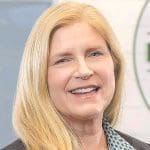
Mary McGovernWhile some challenges likely in 2025 are reminiscent of those faced in 2024, it’s important to note that Country Bank has shown remarkable resilience. While a considerable expense, the continued escalation of fraud is being effectively managed, both in actual dollars lost and in the cost of fraud-prevention systems.

Another challenge on the horizon is the uncertainty a new presidential administration brings regarding regulation. Even if there is a reduction in oversight, the bank’s risk and compliance divisions are well-prepared to adapt to any rule changes to ensure they are being adhered to.

The evolving interest-rate environment is a challenge in managing the balance sheet and projecting levels for the upcoming year. Many banks’ margins were squeezed when short-term rates remained high, but this pressure eased somewhat after the Fed cut rates by 75 basis points in 2024.

Country Bank is focused on expansion in Western and Central Mass. in 2025, with strategic positioning in key markets. As we celebrate our 175th anniversary in the new year, the bank has never been stronger.


Joel Mollison, President, Northeast IT

Joel MollisonAs we look ahead to 2025, we anticipate a remarkably busy year as we continue to collaborate with our customers to execute the timely replacement of thousands of computers and software packages ahead of the end of Windows 10 support deadline in October.

Our management team predicts continuous uptick in demand for improved cybersecurity posture, compliance services, and business continuity across all sectors as threats and compliance become more sophisticated. Grant funding will continue to push these objectives in the municipal sector.

Generative AI technologies will continue to be on horizon as many of our customers seek to utilize the capabilities of these technologies for data collection, analytics, automation, and specialized content creation. The feasibility and adoption rate of these technologies by smaller organizations is still widely unknown.


Peter Picknelly, Chairman, Peter Pan Bus Lines

Peter PicknellyThe future of public transportation, particularly intercity buses, appears bright. Fewer new driver’s licenses were issued last year than in the past 50 years, indicating a preference for public transportation. Inter-city buses are becoming increasingly popular due to their high frequency of service, reasonable fares, and onboard amenities that allow passengers to work, relax, and entertain themselves while traveling.

With rising fuel, insurance, and toll costs — and the introduction of congestion pricing in major cities like New York City and Boston — buses are becoming an even more attractive option. Additionally, apps like Uber make it convenient for passengers to get from the bus terminal to their destination.

As affordability, convenience, and sustainability take center stage, intercity bus travel is well-positioned to thrive.


Nicole Polite, CEO, the MH Group

Nicole PoliteIn 2025, workplaces will highly value being adaptable and open to learning so employees can quickly handle changes in their industries. Knowing how to use digital tools will be important as technology becomes part of daily work. Being able to think critically and solve problems will be essential for tackling complex challenges, working alongside AI and automation.

Understanding emotions and managing relationships will help with teamwork and leadership. Companies will encourage creativity and new ideas to stay ahead. Being able to communicate clearly, both digitally and in person, will remain crucial for effective collaboration.

Strong leadership and the ability to work well in teams will be needed to guide diverse groups. Understanding different cultures will be valuable in workplaces that are becoming more global, helping them work well with various perspectives. Lastly, being skilled at using data to make informed decisions will become crucial as data plays a bigger role in shaping business strategies.


Meghan Rothschild, President, Chikmedia

Meghan RothschildThe world of marketing and public relations has been ever-changing since its beginning, and this upcoming year will be no exception. Right now, we’re seeing a boom in the podcast industry and utilizing hosts as influencers and collaborators on social media to advance our clients’ expert positioning. Authenticity, ‘edutainment,’ and storytelling continue to be the priority for online content, with a heavy emphasis on video.

Perhaps one of the most concerning trends I see coming down the pipeline is a cut to marketing spends. I cannot stress this enough: cutting your marketing budget in a time of low sales is the kiss of death. You must prioritize sharing your company services to the public so you can build your customer database. As a general rule, 5% to 10% of your net revenue should be invested back into marketing efforts.

Quality over quantity continues to lead, and every post, advertisement, or blog entry should have intention behind it. Applying strategy to your external communication will be key in the new year, so reserve some time in Q1 to outline a plan.


Amy Royal, CEO, the Royal Law Firm

Amy RoyalA new year can feel like a reset, and many business professionals become reinvigorated and motivated to seek new opportunities upon its outset. Indeed, a new year creates momentum toward building business again. In looking for new growth opportunities for the Royal Law Firm in the new year, I have adopted a continued mindset of thinking outside of the box.

Over the last year, we have seen significant growth through collaboration with our competitors. That approach could seem strange or even antithetical to creating new business opportunities; however, it has generated a new revenue stream while also leveraging top talent. One three-firm relationship we’re part of gives our clients a deep bench from which to draw across practice areas and states. In an era of quality personnel shortages, another collaborative relationship has Royal Law Firm attorneys and paralegals serving as the backroom to a Los Angeles-based, management-side labor and employment firm.

Seeking out additional collaborative relationships in 2025 is a continued strategic goal of mine. It is also one that businesses in other industries can piggyback on.


Shannon Rudder, President and CEO, Martin Luther King, Jr. Family Services

Shannon Rudder

Shannon Rudder

In 2025, our pathway forward is clear — Martin Luther King, Jr. Family Services will shape futures and impact generations through strategic partnerships and programs, solid infrastructure and operations, and creating a diversified financial portfolio. We will continue to center youth voices, collaborate intergenerationally, and steep ourselves in addressing systemic challenges through a public-health and resiliency-informed lens.

With our collective reinvestment, MLKFS will grow as a cornerstone of Mason Square, continue to expand across the region, and be a beacon of Dr. King’s dream manifested throughout the Commonwealth.


Ashley Sullivan, President, O’Reilly, Talbot & Okun

Ashley SullivanRegardless of what 2025 brings, I am confident in OTO’s resiliency and ability to adapt as we have for the past 30 years. OTO will continue to focus on growth and strengthening our team by reinforcing company culture and values, while offering flexibility, a space for authenticity, and clear communication of responsibilities and goals; these are all essential in 2025.

Technology, AI, robotics, and data processing will continue to push us toward better solutions in the architectural engineering and construction industry. However, I believe people will seek trusted human professionals, and it’s an opportune time for building a strong network of peers, advisors, consultants, and contractors.

Finally, while uncertainties exist around potential changes to environmental regulations and policies, a value-driven and thoughtful approach to managing impacted or improving poor-quality soils will remain a key component for both brownfields redevelopment and new development projects.


Jeff Sullivan, President and CEO, New Valley Bank & Trust
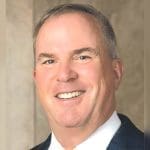
Jeff SullivanBanking has always been about people and communication, and in today’s world, that has never been more apparent. One of our most important roles as bankers is to communicate with our customers about suspicious account activity, whether that includes potential cyber crime or low-tech frauds such as stolen checks. We at New Valley Bank recommend a few simple good habits for business owners:

• Check balances and activity frequently to ensure that all transactions on your accounts are proper. Tools such as Positive Pay add an additional layer of security.

• Online banking should allow you to set limits for each employee’s role, whether view-only or the ability to send the funds out.

• Having a separation of duties for payments of any type — checks, ACH, or wires — is an essential financial control.


Diana Szynal, President, Springfield Regional Chamber

Diana SzynalThe Springfield Regional Chamber is a business support organization that serves its 400 members through legislative advocacy, informative communications, and impactful programming. We are charging into 2025 with a full slate of events designed to inform, connect, and inspire our members. From Rise & Shine breakfasts to the Mayor’s Forum to the Fire & Ice reception, each event offers our members the chance to learn and network.

The Springfield Regional Chamber will also continue to advocate on behalf of the business community, and our member-driven agenda aims to ensure that policies that come out of Beacon Hill maintain a favorable business environment and contribute to the economic vitality of our region. Our legislative events such as Government Reception, Outlook, and Beacon Hill Summit give our members the opportunity to participate in this advocacy.


Aelan Tierney, President, Kuhn Riddle Architects

Aelan TierneyAs we head into 2025, conversations in our office are focused on energy codes, construction costs, and housing. Massachusetts is recognized as a leader in energy efficiency in large part due to our aggressive energy codes.

But the state’s new specialized opt-in energy code, while well-intentioned, is challenging, especially for our multi-family projects. The primary pathway for these types of projects to meet this code is to design and build to the Passive House standard. This standard focuses on super-insulated, airtight construction with minimal heating and cooling loads, energy-recovery ventilation, and renewable-energy sources such as solar panels.

In addition to the increased cost of building high-performance, energy-efficient buildings, there are concerns that construction costs in general may further increase in 2025 due to potential tariffs on foreign building materials and reduced labor forces with the possibility of fewer immigrant workers.

While it is an exciting time to be designing and developing high-performance, energy-efficient, resilient buildings, there is the counterweight of how to do it affordably. It’s a challenge we look forward to solving on several projects in 2025.


George Timmons, President, Holyoke Community College

George TimmonsThree words come to mind when I think about a community-college education in Western Mass. today: access, belonging, and possibility. When the Healey-Driscoll administration made community college free for eligible students in Massachusetts, we opened doors for thousands across our region. In Hampden County, where nearly 40% of residents lack post-secondary education, this access is crucial for economic growth. Our 12.6% enrollment increase in 2024 reflects this expanding opportunity.

The landscape is evolving: the county’s school-age population has declined 9% over the last decade, while the over-65 population grows. Seventy percent of our students study part-time, balancing work and family responsibilities, and more than one-third identify as Hispanic or Latino. At HCC, we embrace this diversity, creating a community where students feel they truly belong.

Looking ahead, we’ll continue adapting to meet our students’ unique and changing needs, ensuring their success remains our priority.


Glenn Welch, President and CEO, Freedom Credit Union
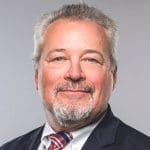
Glenn WelchIn 2025, financial institutions, especially credit unions, will navigate a landscape rich with both challenges and opportunities. Interest rates remain elevated, reducing people’s ability or willingness to borrow. High mortgage rates and a low number of homes on the market makes it difficult for our members to refinance or move into their next homes. Now there are fewer rate cuts expected in 2025 than previous predictions had indicated, so much-needed relief from high rates will not come to fruition.

With these issues, credit unions must prioritize financial literacy and member education, empowering individuals to make informed decisions in uncertain times. Freedom is proud of its financial-literacy programs, including fraud-prevention education at area senior centers, schools, and other venues. Teaching the public how to handle finances helps them navigate financial challenges.

In 2025, there will be a growing emphasis on community support. Credit unions have a unique opportunity to strengthen their local impact and foster stronger community ties.


Sasha Wilde, Owner, Sexton Roofing & Siding

Sasha WildeThis past year was one of growth and learning for Sexton Roofing & Siding. We expanded our offerings, strengthened our team, and gained invaluable insights along the way. Now, as we step into 2025, we’re ready to build on this strong foundation and push toward an even brighter future.

Looking ahead, we’re focused on growth — not just as a business, but as a community partner. We’re committed to finding new ways to support local initiatives and get more involved in the neighborhoods we serve. Additionally, we’re exploring more sustainable materials to offer homeowners eco-friendly options that contribute to a greener future.

Thank you for being part of our story. Here’s to building stronger homes, stronger communities, and a stronger future in 2025 and beyond.

 

Community Spotlight Special Coverage

Community Spotlight

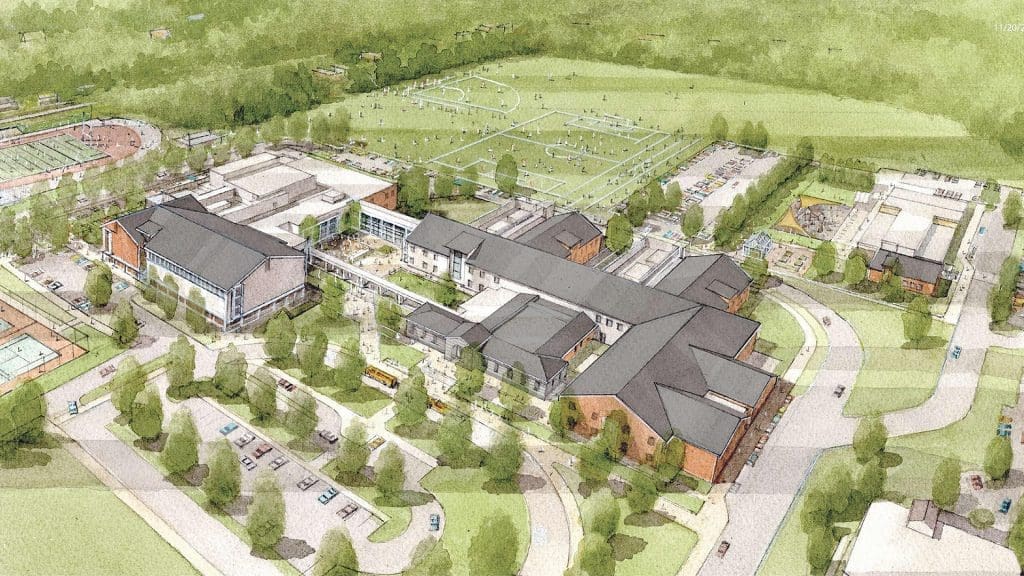
A architect’s rendering of the planned new Agawam High School.

A architect’s rendering of the planned new Agawam
High School.

Chris Johnson called it “an easy fix.”

He was referring to his decision early in 2024 to put things back the way they were in City Hall — quite literally — the last time he occupied the corner office, some 24 years earlier.

Indeed, the three-office mayor’s suite in City Hall had been reconfigured in the intervening years, with the smallest space, which had been Johnson’s office, made into a closet; the middle space, which had been a conference room, devoted to staff; and the largest space, which had been home to the two-person staff, converted to accommodate the mayor’s office and a conference-room table.

Not long after returning to office, Johnson reshuffled the deck, claiming that the old arrangement made far more sense.

Other business hasn’t been resolved quite so easily, but Johnson has achieved progress on several fronts — especially with the building of a new high school, a project that has been discussed for decades and was resolved in resounding fashion at a special election last June, with roughly 70% of residents approving a three-stage project with a price tag of $226 million.

Johnson, who served three two-year terms in the mid- to late ’90s, and, more recently, served several terms on the City Council, sought a return to the corner office in the fall of 2023, in large part to resolve the issue of a new high school. He considers the new building (and a small saved portion of the old building) to be the best option for this community of almost 29,000.

“For the voters, it came down to this: do you want to make a significant investment and renovate what we have, or spend a few extra dollars and build a new high school?” said Johnson, in reference to what will be, by far, the largest capital-improvement project in the history of Agawam. “The right decision, from an education standpoint, but also a business and financial standpoint, was to invest in a new building that has a useful life of 50-plus years instead of major renovations in what we have that would have a useful life of probably 20 to 30 years.”

“The right decision, from an education standpoint, but also a business and financial standpoint, was to invest in a new building that has a useful life of 50-plus years instead of major renovations in what we have that would have a useful life of probably 20 to 30 years.”

The high-school vote is easily the biggest storyline in this community, but there are others, including ongoing work to transform the old HUB Insurance building on Suffield Street into the city’s new police headquarters, an intriguing conversion project that should be wrapped up next spring. There’s also the ongoing saga of the former Games and Lanes property on Walnut Street Extension — a new use for that parcel remains elusive years after the eyesore was torn down — as well as the need for new housing of all kinds, but especially the affordable variety.

There are some new businesses, including a Starbucks just over the Morgan-Sullivan Bridge from West Springfield that opened roughly a year ago, and some emerging ventures, including an urgent-care facility in a building now under construction just behind Starbucks.

As for existing businesses, the landscape is dominated — figuratively but also literally — by Six Flags New England, the giant amusement park near the Connecticut border that is not only the city’s largest employer, but a good corporate citizen, the mayor said.

The park, now 25 years under the Six Flags brand, is adding a new roller coaster and undertaking other significant expansion and improvement efforts, said Park President Peter Carmichael (see related story on page XX).

For this latest installment of its Community Spotlight series, BusinessWest turns its focus on Agawam, where momentum is building — in every sense of that phrase.


Early Returns

The framed newspaper front pages on one wall of Johnson’s office speak to how much has changed over the past 24 years — journalistically, and in some other ways as well.

The large headlines trumpet three of his five election victories, starting in 1989. The masthead at the top of each declares that this is the Agawam/West Springfield edition of the Union News. The Springfield newspaper is now called the Republican, and there is no longer an Agawam/West Springfield edition. Meanwhile, the large headlines from the ’90s were all about Johnson because West Springfield didn’t have a mayor in those days.

But while many things have changed in a quarter-century, in Agawam, many of the issues are the same, and Johnson has been dealing with them consistently because he served on the City Council for 12 years in the interim.

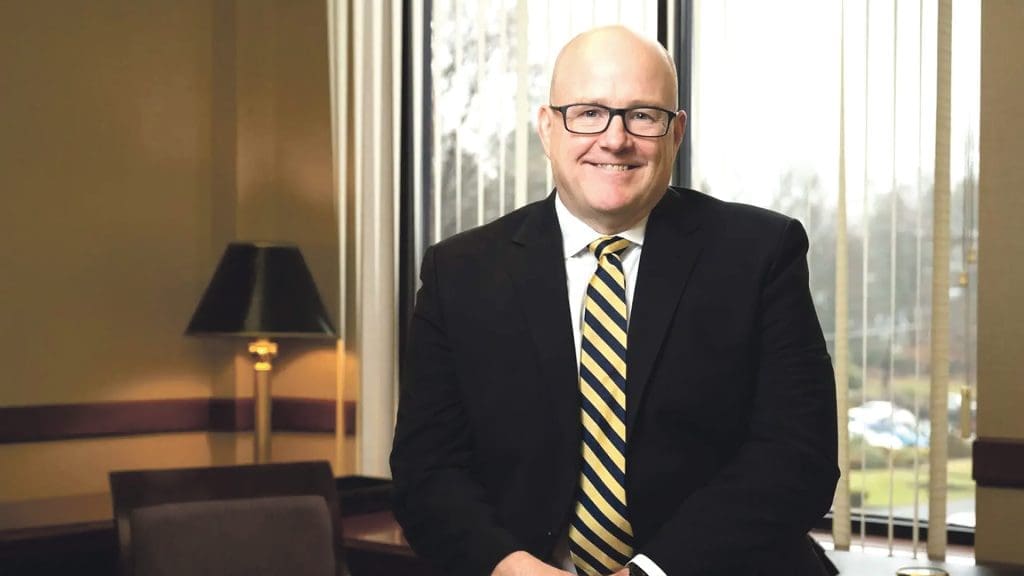
Mayor Chris Johnson

Mayor Chris Johnson says resolution of the high-school issue was one of the prime motivators for his return to the corner office.

At the top of that list is the high school, he said, noting that the original building, opened in 1995, has been renovated and expanded several times over the years, with the result being a sprawling, one-story complex that was in need of another facelift — or replacement.

Johnson has long been a strong advocate of the latter, and efforts to inform the public of the available options dominated his first several months back in the mayor’s office.

“I can’t even count how many presentations I made,” he said. “I pretty much said, ‘anytime, anywhere that anyone wants one, I’ll go’ — and I did a lot of them, while also putting together educational videos to put on the town’s website and social media. My goal was to make sure people had the information they needed to make an educated decision.”

“Whether it be aging roadways or storm-drainage issues, most of our infrastructure dates back 50, 60, 70-plus years.”

Dave Fontaine Jr., CEO of Springfield-based Fontaine Bros., the general contractor awarded the project, said it is unique in that it has three phases — new construction of a ‘community wing’ on fields adjacent to the current high school; an academic wing, which will involve demolition of much of the existing high school (some will be saved) and new construction; and additional demolition as well as conversion of some of the existing high school into an early-childhood center.

The building will also use geothermal wells for heating and cooling, said Fontaine, adding that the technology is becoming more common, but still fairly rare in school buildings. It will also have sloping metal roofs, which are more durable than flat roofs and will have a longer lifespan, he said, adding that they provide an intriguing architectural element.

Johnson said ground should be broken this spring, with work on phase 1 to be completed by the end of 2026, phase 2 by the fall of 2028, and phase 3 in 2029.

Fontaine will be building the new Agawam High School at the same time it constructs a new high school in East Longmeadow, a project roughly six months further along. That will be challenging in some ways, but the company traditionally has at least two large-scale school projects occurring simultaneously.

Meanwhile, another intriguing project, this one now well underway, is the conversion of the former HUB Insurance building (before that, it was the Oaks banquet facility) into the new police headquarters.

It’s unique, said Carl Mercieri, executive vice president with Marois Construction, the contractor handling the project, because most new public-safety facilities are built from the ground up.

Agawam at a glance

Year Incorporated: 1855
Population: 28,692
Area: 24.2 square miles
County: Hampden
Residential Tax Rate: $14.54
Commercial Tax Rate: $27.54
Median Household Income: $49,390
Family Household Income: $59,088
Type of government: Mayor; City Council
Largest Employers: OMG Inc., Agawam Public Schools, Six Flags New England
* Latest information available

Because the town was able to acquire the property at an attractive price, converting it for this use emerged as the most common-sense option, he went on, adding that transforming a large (36,000 square feet) office building into a public-safety facility has required complete interior gutting and creation of a wide range of new spaces, from offices to a dispatch room to six holding cells. Meanwhile, a large sallyport had to be added to the rear of the building.

“There are several different areas to create — a detective area, a sergeant’s area, a patrolman’s area, an armory, and the holding cells,” said Mercieri, adding that the completion date for the project, like the final price tag (around $9 million), is a moving target, but work is expected to be wrapped up by late spring.


Forward Progress

Between the new high-school project (the town’s share of that initiative is roughly $120 million) and the new public-safety complex, the town will have little to spend on other large-scale capital projects for some time, said Johnson, adding quickly that this can’t stop the community from planning.

And he summed up what’s next on the proverbial to-do list with a single word: ‘infrastructure.’

“Whether it be aging roadways or storm-drainage issues, most of our infrastructure dates back 50, 60, 70-plus years,” he explained. “But we need to come up with a plan, and then match a funding mechanism to a plan to be able to move forward so that we’re not faced with dealing with crisis situations.”

Coming up with these plans — while also building the new school — will be the next challenges for Johnson in what can be called a second tour of duty in the corner office.

Or corner offices, to be more precise.

He’s put things back the way they were before in that suite, but for other, much larger issues, there is no going back — just moving forward. In the larger scheme of things, that is the plan.

Banking and Financial Services Special Coverage

More Than Writing Checks


A community bank should be about, well, the community.

That’s the prevailing thought, anyway, among bank and credit-union leaders throughout the Western Mass. region when it comes to philanthropy, volunteerism, and other activities under the broad umbrella of corporate responsibility.

“It’s identifying the needs of the communities we serve. We’re very consistent with that mission,” said Matt Garrity, president and CEO of Florence Savings Bank, who was quick to name several areas of focus for the institution’s giving-back strategy, including affordable housing, food insecurity, financial literacy, education, substance abuse, health and human services, and community redevelopment. “These are issues that impact the lives of people in the communities we serve.”

To that end, Florence funded close to 400 requests in 2024, and it’s far from alone in meeting those needs.

“For mutual banks and community banks here in Western Massachusetts, giving back to the community really is a core value,” Garrity said. “And it’s local — the overwhelming majority of the giving we do is centered on supporting communities in Hampshire, Hampden, and Franklin counties.”

UMassFive College Federal Credit Union focuses on the word ‘wellness’ a lot, said Craig Boivin, vice president of Marketing.

“That can mean different things. Obviously, financial wellness is the biggest thing. We’re a credit union, so we’re making sure we educate people on financial matters, with webinars and workshops on budgeting, understanding credit, and paying down debt. But another bucket of wellness has to do with basic necessities.”

That’s why UMassFive works with local survival centers, helping them meet needs and spreading the word to others, like through an annual coat and winter clothing drive that brought critical supplies to Amherst Survival Center, the Gray House in Springfield, and Net of Compassion in Worcester.

In fact, UMassFive partners with a host of area nonprofits on various giving and volunteering initiatives, including Community Involved in Sustaining Agriculture, the Food Bank of Western Massachusetts (through participation in Will Bike 4 Food), and health-focused organizations like the UMass Cancer Center (through the UMass Cancer Walk).

Matt Garrity

Matt Garrity says Florence Savings Bank prioritizes community needs including affordable housing, food insecurity, financial literacy, education, health and human services, and community redevelopment.

Dan Moriarty, president and CEO of Monson Savings Bank, says his institution is dedicated to enriching lives in the cities and towns where it does business, and surrounding communities as well, helping organizations that serve a host of constituencies, from senior citizens to veterans to people in need of health services and basic needs.

“Obviously, a bank can’t solve all the area’s problems, but when we do things along with other good corporate citizens, we feel we make a difference in people’s lives,” he noted, noting that the bank has adopted “when we all give back, we all move forward” as its philanthropic tagline.

“We are a community bank, and we’ve been doing that for over 150 years now. As we continue to grow and expand our market footprint, we expect to help with more needs in the community.”

Matt Bannister, vice president of Marketing and Corporate Responsibility for PeoplesBank, has said many times that his bank’s guiding philosophy is to give a little to a lot of groups.

“Obviously, a bank can’t solve all the area’s problems, but when we do things along with other good corporate citizens, we feel we make a difference in people’s lives.”

“Some organizations will give a lot to a few groups. If a hospital is building a new cancer wing or an emergency room or something like that, those tend to be very large donations because they are very large projects. We take the opposite approach. We want to be in as many places as we possibly can.”

As a result, PeoplesBank gave away $1.6 million last year to 550 different nonprofits, Bannister noted. “You do the math, and it’s about $2,500 or $3,000 per grant, which doesn’t mean much to a large corporation that’s building a hospital … but it does mean a lot to a small nonprofit with a shoestring budget. So the ability to impact many organizations as possible is the route that we choose.”


Making the World Better

That said, corporate responsibility goes well beyond writing checks, Bannister explained.

“Corporate responsibility, to me, means standing for something that benefits the public at large. It’s a way to telegraph the values that a company has, and a consumer can use that information to make decisions. One of the factors when they’re purchasing a product or a service is, ‘who am I buying this from, and what do they do that makes the world a better place,’ as opposed to ‘what are they not doing, or what are they doing that makes the world a worse place?’”

So, that extends not only to philanthropy, but to what vendors and suppliers a bank partners with, and whether they share similar values.

“You might say a certain percentage of the vendors of a company should be minority-led organizations or women-led organizations. So it’s not only how you telegraph your values, but how you put them into action; are you, as a company, spending money to encourage what we think are beneficial programs for society?”

That approach extends to volunteerism as well — an area of community support that virtually every bank based in this region emphasizes.

Dan Moriarty (left, with Veronica Garcia, CEO of Latino Marketing Agency, and John Perez, project office manager at the Hispanic-American Institute

Dan Moriarty (left, with Veronica Garcia, CEO of Latino Marketing Agency, and John Perez, project office manager at the Hispanic-American Institute) enjoys taking many of these big-check photos each year with organizations that benefit from Monson Savings Bank’s giving.

“When employees of a company volunteer in the community, that’s another way the company adds value to the community,” Bannister said, which is why PeoplesBank — and the other institutions that spoke with BusinessWest — pays employees to take volunteer days.

“So United Way has Days of Caring, where teams [of volunteers] will come out, or Habitat for Humanity has a build, where teams will come out, and that’s good for team building. But the company is also saying, ‘you’re not going to do your job today; we’re going to pay you to do something out in the community.’”

That makes a statement about corporate values, which is why Monson Savings Bank recently codified it.

“We’re launching a community service day policy where we pay our full-time employees to donate eight hours of a day, or two half-days, to an organization or a nonprofit,” Moriarty said. “We’ve done that kind of unofficially; now it’s an official policy. We allow employees to donate their time during the work week, and we pay them to go out and support the community. It’s a great thing.”

Such activities also expose employees to the good work being done in the community, and they can be enjoyable, he added. “We’ve had fun helping Revitalize CDC on volunteer projects, or helping out organizations from the United Way to Martin Luther King Family Services to I Found Light Against All Odds, and many others.”

The bank also collects $5 donations from employees every Friday for the ability to wear jeans to work, and those donations are pooled and given to local organizations as well.

At Florence, “volunteerism is a big part of what we do. We encourage it highly in our organization, and we’ll continue to do that,” added Garrity, noting that employees have recently volunteered at organizations including Hampshire Regional YMCA, Greater Springfield Habitat for Humanity, Square One, Caring Health Center, and many more.

At UMassFive, Boivin said, “the level of engagement of our employees is high — it’s the culture here to support others in the community, especially with fundraising that we do with Will Bike 4 Food and the Cancer Walk and Run. We raised over 25 grand combined for those two organizations this year.

“And a lot of that comes from grassroots stuff the employees are doing,” he added. “They’re selling baked goods, they’re creating artworks and selling them in the branches, they’re talking to their families and friends, and they’re donating themselves. We really support the causes we care about.”

UMassFive’s community support also extends to elevating local businesses, as it did when it partnered with UMass Athletics and UMass Sports Properties on a recent contest to recognize a small business that demonstrates service, innovation, and community involvement.

The winner, Sexton Roofing & Siding, received an ad package worth $10,000, allowing it to be featured on digital displays, radio reads, email blasts, and tabling opportunities during and surrounding the university’s sporting events. “That’s another way to practice corporate responsibility, by amplifying other businesses,” Boivin said.


Moving the Needle

And then, there are the votes.

Two local banks — Florence Savings Bank, through its Customers’ Choice program, and Monson Savings Bank, through its Community Giving Initiative — just finished another annual round of voting by customers and community members on what organizations they’d like the banks to support with donations.

“We began this back in 2010. We’re aware of a lot of different nonprofits that are doing a lot of good work, but not all of them,” Moriarty said, and since its inception, the program has grown significantly. “It’s exciting — now we have nonprofits say, ‘hey, Dan, when do we launch the CGI initiative, so we can get the information to voters?’ It’s been a great program for us, and we’ve met a lot of great organizations across the Pioneer Valley.”

Florence Bank’s program is in its 23rd year, and the most recent round of voting drew more than 7,000 ballots, Garrity noted. “We’ve even tried to provide, for the benefit of a lot of our nonprofit organizations, tips on how to get the message out to their supporters around Customers’ Choice. It’s really been something the community has embraced.”

Readers have probably noticed the word ‘community’ repeated often throughout this article — more than two dozen times, in fact. But there’s a good reason for that.

“The word ‘community’ can be overused, but it really does feel like we’re a community of people helping others in the community,” Boivin said. “Our whole mission is set up to help people. The biggest way we do that is in the financial world, but there are a lot of other pillars here.

“When you think about the budgets we have for marketing and outreach, they are not as big as some of the community banks in our area,” he went on. “And, yes, we write checks and donate money, but a lot of it, for us, comes down to volunteer efforts and fundraising and spreading the word about events organizations are having, or participating in those events when they have them.

“A lot of it is a boots-on-the-ground effort,” Boivin added. “We don’t just write checks; we show up. That’s an internal mantra of ours.”

Healthcare News Special Coverage

Learning Experience

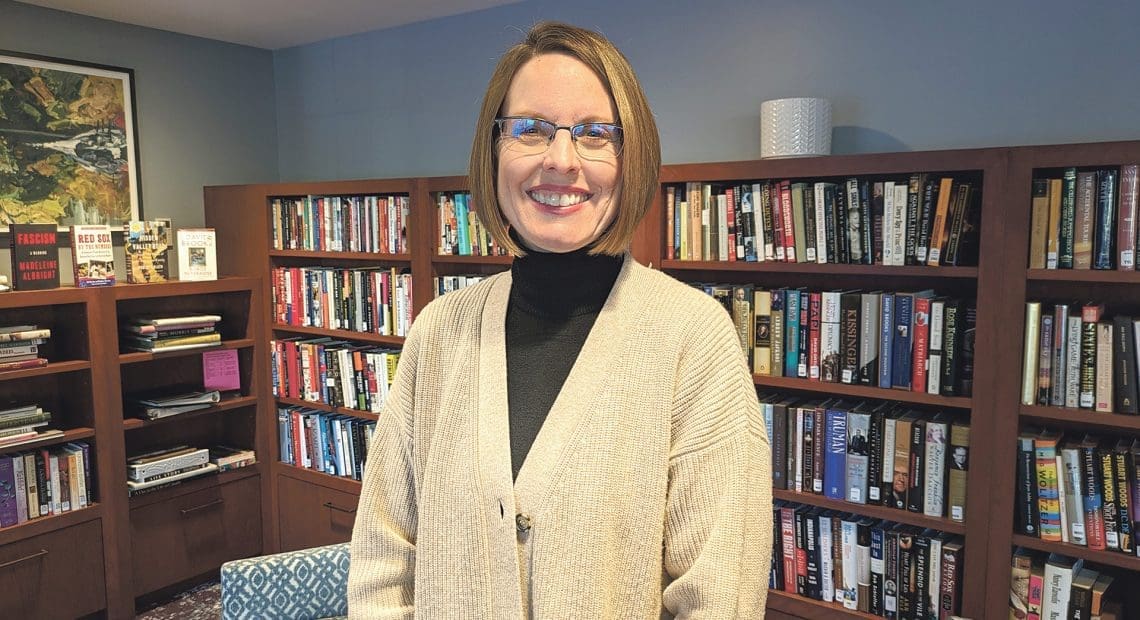
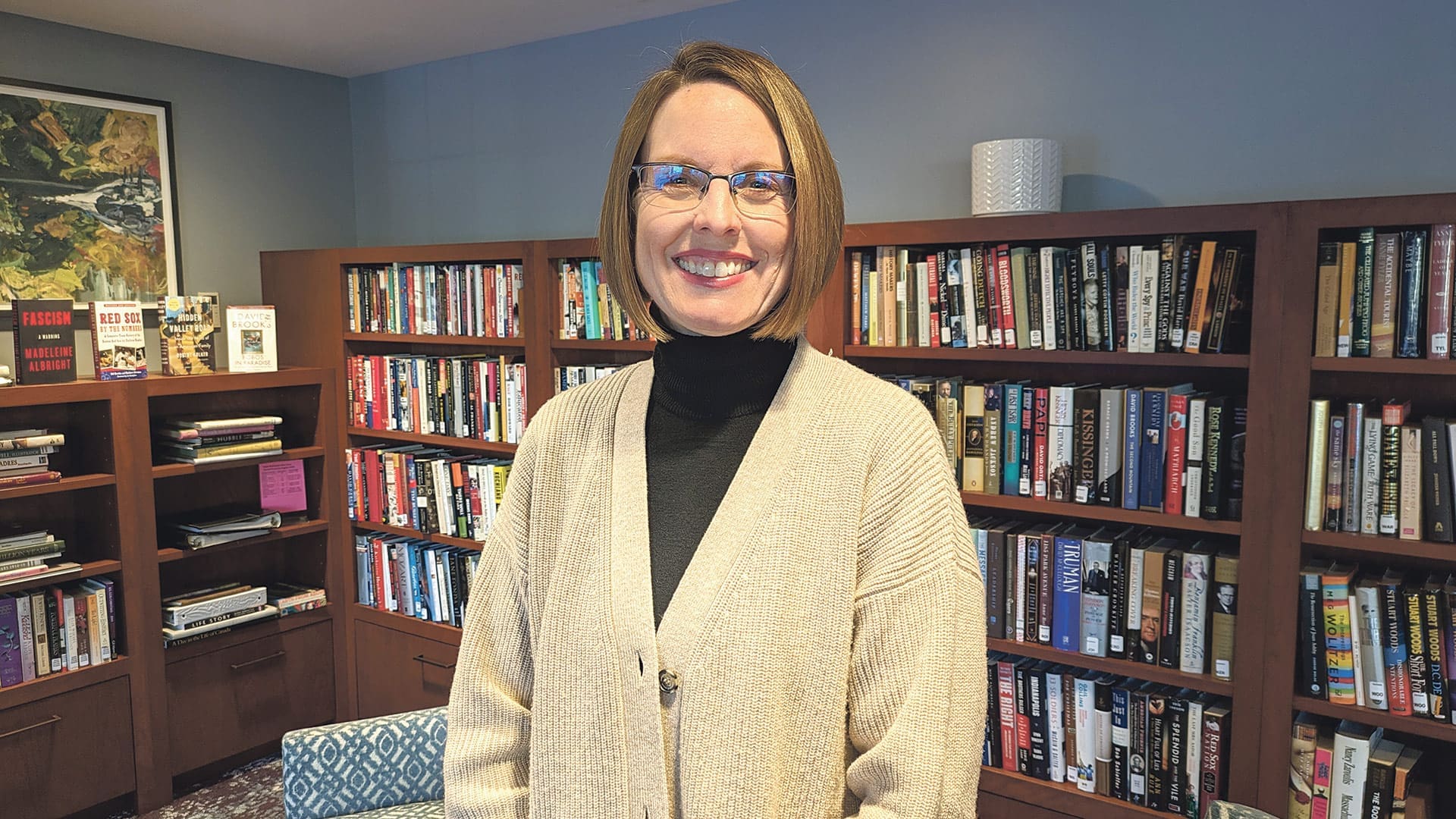
Glenmeadow President and CEO Kathy Martin

Glenmeadow President and CEO Kathy Martin

Kathy Martin had built an impressive career on higher education — first as a teacher, then as an administrator, most recently as assistant provost for Accreditation and Administration at UMass Amherst — when she saw an opportunity to make a sharp turn. And she took it.

“It was the right time for me to think about trying something else,” said Martin, who had been serving on the board of Glenmeadow, a senior-living community in Longmeadow, when the position of president and CEO opened up there in 2023. “Glenmeadow’s timeline for its presidential search coincided with my timeline for seeking a new opportunity because the provost I was working with at UMass got a new job, so she was leaving UMass anyway. So it was just an opportunity of timing.”

Her role on the board had been a great introduction to that venerable (as in 140-year-old) community, and to senior living in general.

“I was at a point professionally where I needed to make a decision about what I wanted to do. Did I want to continue to pursue a presidency in higher education, or did I want to try something else?” she told BusinessWest.

The shift — she’s been on the job 15 months now — has been dramatic in some ways, but rewarding as well.

“This is a new language for me in many ways, but I love learning new things. This was an opportunity for me to take on the challenge of learning and leading in a new sector. And there are more overlaps between higher ed and senior living than you might think,” Martin continued. “Some of the challenges and opportunities are the same, and leadership is leadership, but I have really enjoyed the pivot from working primarily with college students to working with seniors. It’s been a wonderful shift of perspective.”

“This is a new language for me in many ways, but I love learning new things. This was an opportunity for me to take on the challenge of learning and leading in a new sector. And there are more overlaps between higher ed and senior living than you might think.”

It has also been a process of learning about the day-to-day operations and everything the frontline staff and the leadership team do to keep a 24/7 operation working efficiently, she added.

“We think of it from our residents’ perspective first. What do they need? What are they interested in? What would make their Glenmeadow experience everything that they’ve always wanted it to be? And then there are all of the behind-the-scenes, operational decisions that we’re making; we’re looking at things like how reliant are we on paper processes, and can we move more things to the cloud, and how can we become more efficient in our operations?”

But most decisions come down to enhancing the resident experience, Martin said.

“Every decision that we make is based on what’s best for our residents and ensuring that we have enough programming, and the kind of programming that is meaningful for our residents,” she explained. “One of the things we’ve had a lot of conversation about in the last year is intellectual engagement, that it’s not just about playing mahjong, but it’s about having access to local speakers or a TED Talk or a guided discussion on a topic of interest. So we’re making sure we’re being responsive to what is interesting for the residents and engages their families as well in life at Glenmeadow.”


Long History

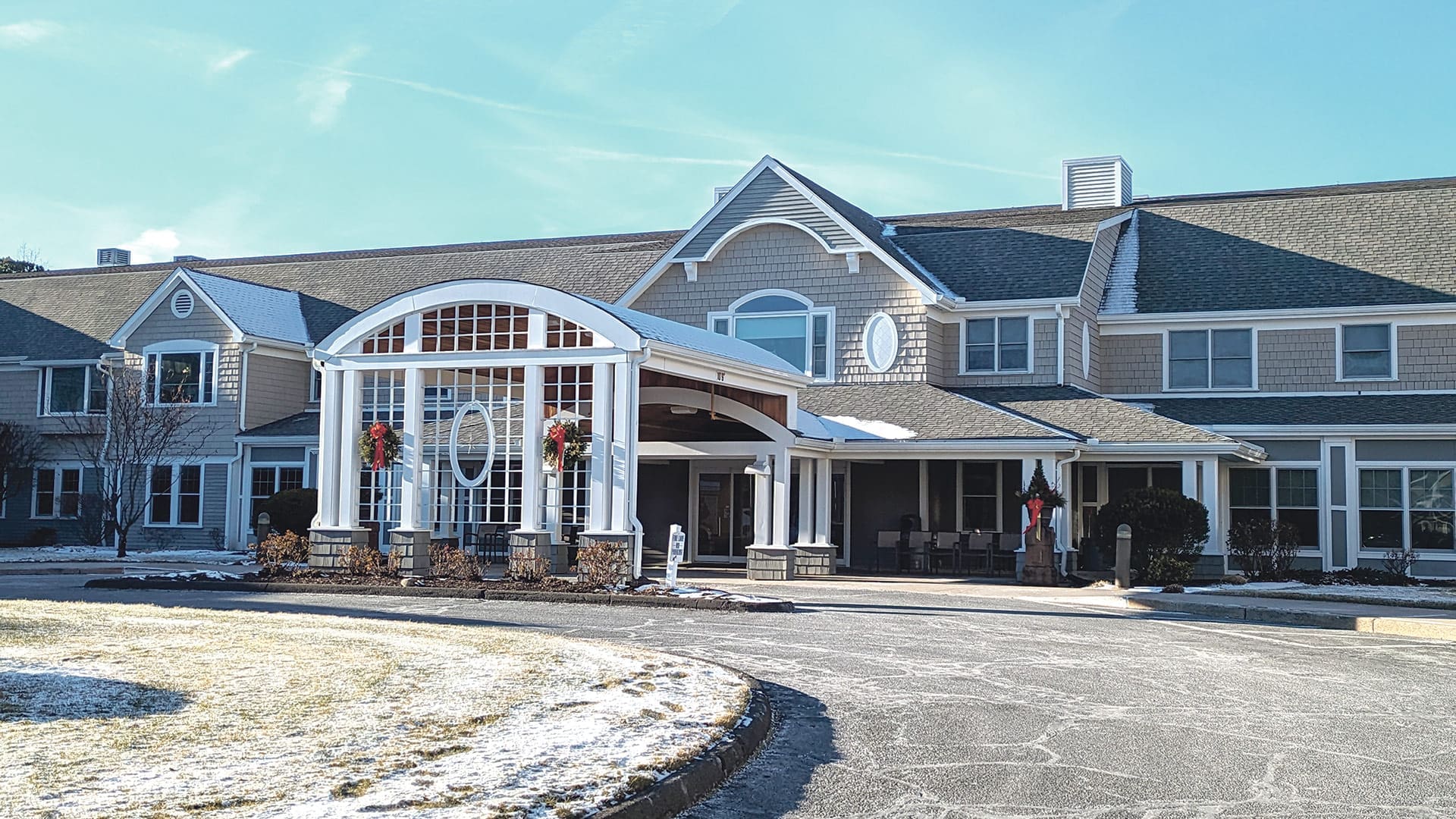
Glenmeadow traces its roots to 1884, when a group of civic leaders raised funds among themselves and other area families and purchased a house on Main Street in Springfield’s South End, establishing the Springfield Home for Aged Women. This residence opened in November 1886 and accommodated 16 women from the community without family or means.

Glenmeadow moved from Springfield to Longmeadow

Glenmeadow moved from Springfield to Longmeadow in 1993, right around the time the facility took its current name.

Fourteen years later, a new, larger home opened nearby, and in 1960, its name changed to Chestnut Knoll. In 1992, the facility began admitting men alongside the women.

In 1993, the organization purchased a 23-acre parcel in Longmeadow to build a new community that would provide both independent and assisted-living apartments with various common areas, and the name changed again, this time to Glenmeadow. In 2002, it unveiled Glenmeadow at Home, offering personal care, companionship, and home-care services to older adults living in their homes throughout Greater Springfield.

The home-care service is important for a couple of reasons, Martin said. “We recognize how important it is for seniors to stay at home as long as they possibly can. It can be very emotional to think about leaving your family home and making a move to a community like Glenmeadow, so we wanted to do everything we can to make it possible for seniors to stay at home a bit longer.”

In addition, she said, “home care is a nice gateway to Glenmeadow as a community. We do have residents who started as Glenmeadow at Home clients. We also have residents who use Glenmeadow at Home for some additional care. So it’s an important part of our business model, not only for what it provides our residents, but what we can give back to the local community to make home care more accessible.”

One crucial piece of the organization’s services is the concept of aging in community, she noted.

“One of the reasons that our residents thrive at Glenmeadow is because they’re with people who are having similar life experiences. We actively work to combat social isolation. And for those seniors who are staying at home and maybe increasingly infirm, it’s harder to maintain those social interactions. So a lot of our residents just enjoy being with people of the same age … it’s a social community as much as it is a residential one.”

“Home care is a nice gateway to Glenmeadow as a community. We do have residents who started as Glenmeadow at Home clients. We also have residents who use Glenmeadow at Home for some additional care. So it’s an important part of our business model.”

In 2024, Glenmeadow elevated the senior experience in a different way, by recognizing accomplished individuals over age 60 throughout the region in its first annual Age of Excellence awards program.

“That was really born out of a conversation among our board of directors about how we can have a hallmark event for Glenmeadow as a fundraiser,” Martin said. “We thought it was important to highlight the accomplishments and inspiration of those over 60.

“I think, too often, when you are approaching retirement, it feels like the end of something and that your best years are behind you,” she went on. “And we wanted to take the opportunity to highlight older adults that are doing amazing things. For some people, it’s a new career. For some people, it’s a new hobby. We wanted to be the ones to put a very appropriate spotlight on those individuals.”

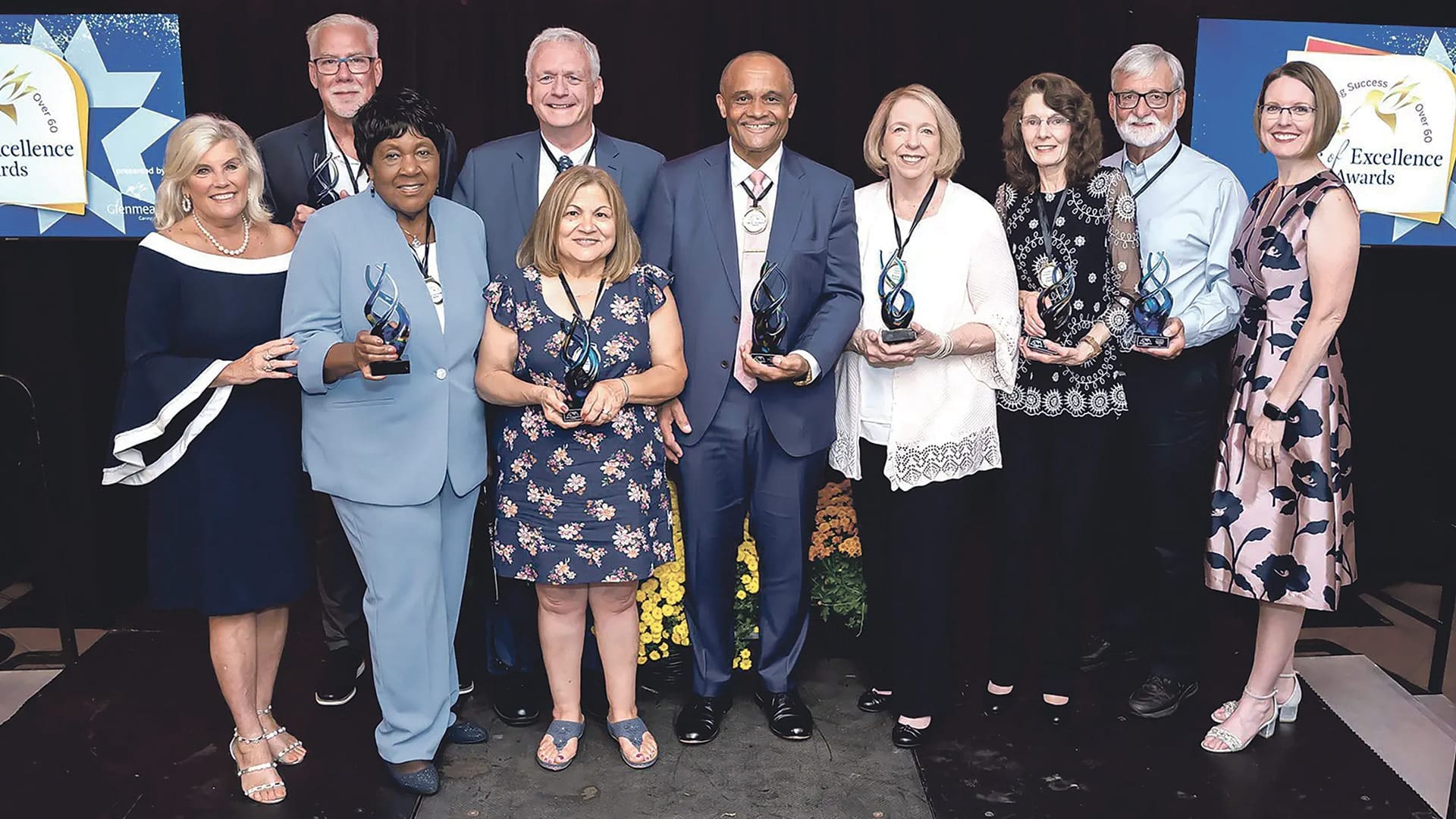
The inaugural honorees, celebrated with a gala event in September, included Springfield Police Superintendent Lawrence Akers; Debbie Gardner of the Reminder; Jeffrey Greim of Jeff’s Granola; Ethel Griffin from Revitalize CDC; James Lagodich, who has been involved in local youth and adult sports; Maria Roy of the Indian Orchard Citizens Council; Patrick Sullivan, recently retired executive director of Springfield Parks; and Karen Tetreault of the Springfield Regional Chamber.

Kathy Martin (right) with the honorees at the inaugural Age of Excellence awards gala in September.

Kathy Martin (right) with the honorees at the inaugural Age of Excellence awards gala in September.

They were honored for a variety of reasons, from mentorship to volunteerism to leadership to simply inspiring change, and the selection process was challenging, Martin said, explaining that the public nominated individuals, and a small panel of local community leaders evaluated the nominations and made the selections.

“It’s been wonderful for us to hear people say, ‘oh, I wish we had done this 10 years ago,’ or ‘why hasn’t anybody had this idea before?’ And it was really inspirational, I think, for everybody who was involved in the selection process, but certainly everybody who went to the event in September. I think we all walked out of there with a little lift in our step from hearing what all of these honorees have accomplished.

“And there are dozens more like them, so we’re looking forward to the opportunity in 2025 to select the next class of Age of Excellence honorees,” she went on, noting that event will take place on Sept. 3.


Challenges and Opportunities

Senior living is a challenging field in many ways, Martin said, but right now, one of the biggest is the continued generational shift as the average age of Americans continues to rise.

“We have about 10,000 new Medicare subscribers every day with the Baby Boomers reaching retirement age. So, while we’re focused on how can we best serve the needs of our current residents, we’re also thinking about how to get ahead of what the Baby Boomer generation is going to be seeking in a community like Glenmeadow.”

To that end, the community is in the final stages of an $11 million renovation aimed to entice seniors interested in maintaining a wellness-focused lifestyle into retirement, she noted.

“Trying to forecast the needs of the next generation, I think, is certainly a challenge. And we’re a nonprofit, and maintaining a healthy revenue stream as a nonprofit is always a challenge. We focus on our occupancy, but we are grateful for the support that our residents and local members of the community and organizations make in supporting Glenmeadow financially so that we can continue to do what we do.”

Another industry challenge — one common to many industries these days — is recruiting and retaining a workforce, and on that front, Glenmeadow has been fortunate, Martin said.

“Through the pandemic and since then, our workforce has been relatively stable. We don’t have very many open positions,” she elaborated. “We focus a great deal on staff engagement, and I think that goes a long way toward that retention figure, but it’s also the interactions that our staff has with our residents.

“Every time I ask the staff what’s their favorite part about working here, they say the residents,” she went on. “And when I ask the residents what’s their favorite part about living here, they say the staff. So, it’s really a wonderful work environment for our staff, and we see that we’re all doing really good and important work, and it makes it much easier to come to work every day knowing about the positive impact that you have.”

Martin said that feeling extends to families, some of whom live far away, but many of whom live locally and stop by regularly for visits, meals, and events. “We love to see their interactions with our residents because it’s really their home. So we want our residents to treat it like their home and have their families here for holidays and other special occasions, or just to come watch a movie on a Thursday night.”

As for her own experience, Martin said she’s happy to have made this intriguing career shift — and she’s still learning.

“I love that it’s new every day,” she told BusinessWest. “There’s always something new that happens that I wouldn’t have anticipated. But I’ve loved getting to know the residents, their families, and our staff. It’s really the people that make a difference in this work, and getting to know the stories of the people who are here has been really inspiring and motivating and reinforcing of why this is such a great career path.”