Home Sections Archive by category Features (Page 22)

Features

Features
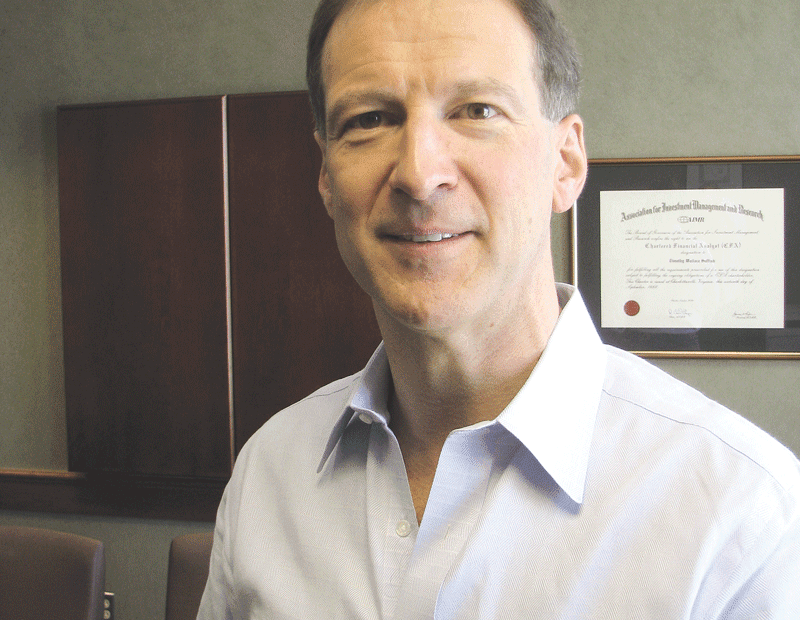
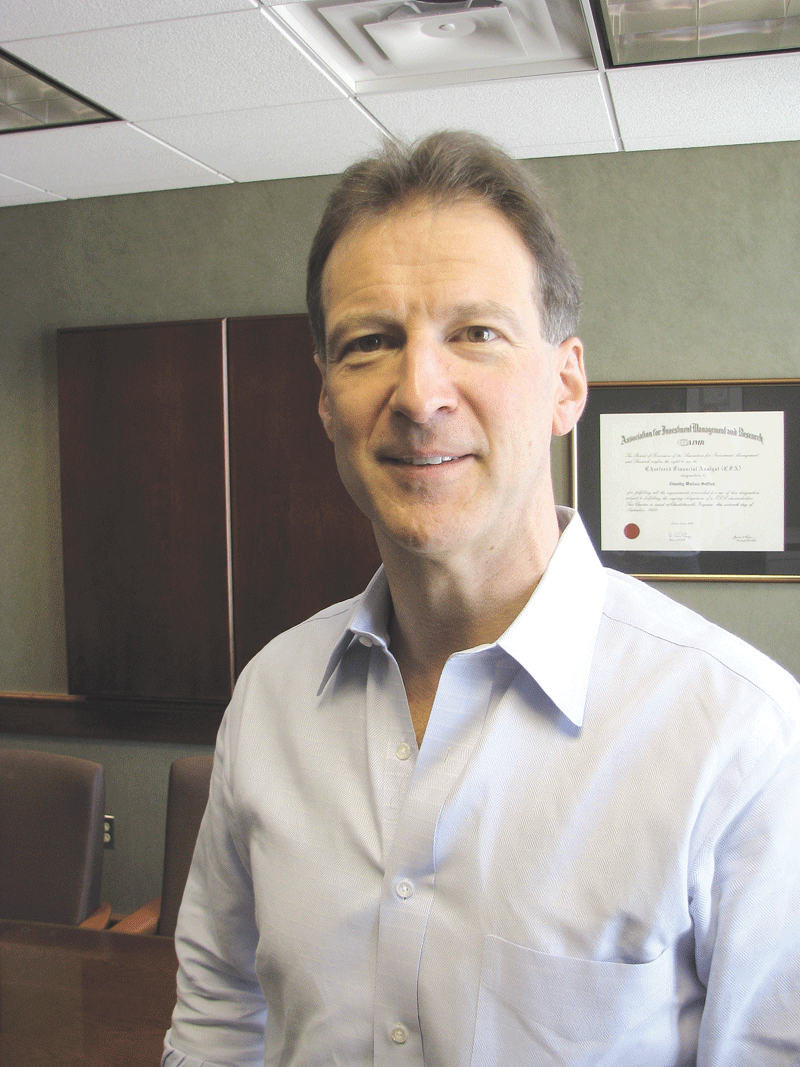
Hospital CEO’s Career Is a Study in Determination
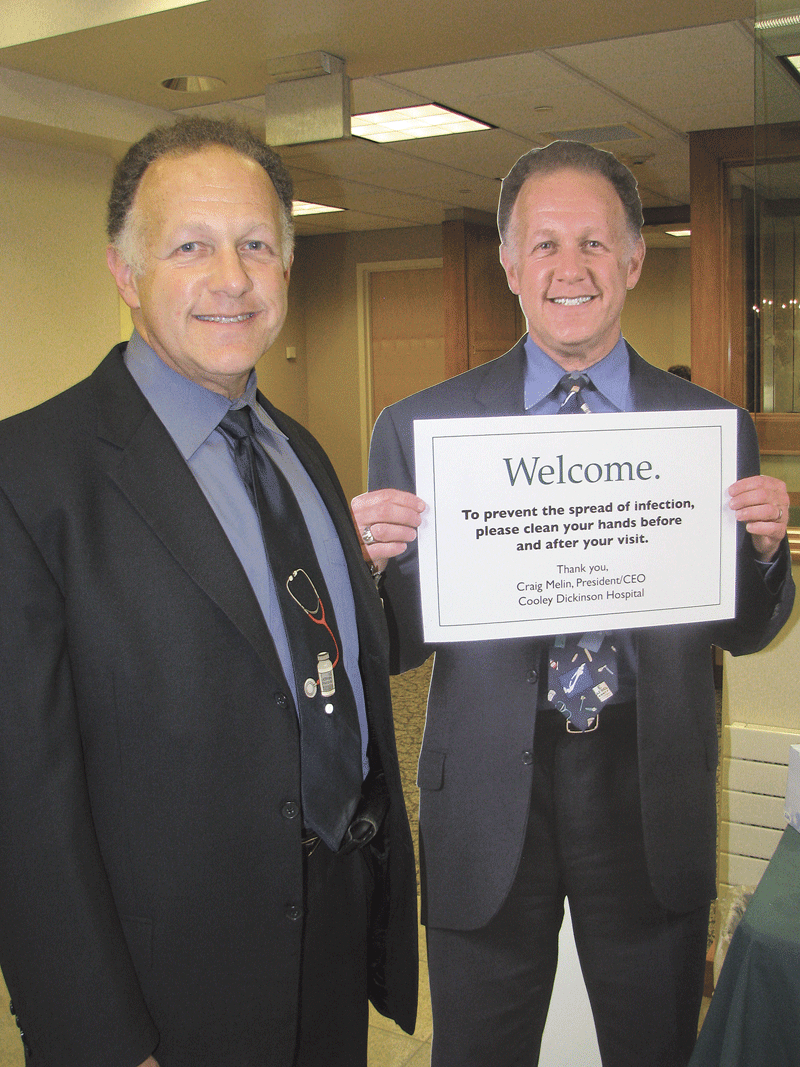
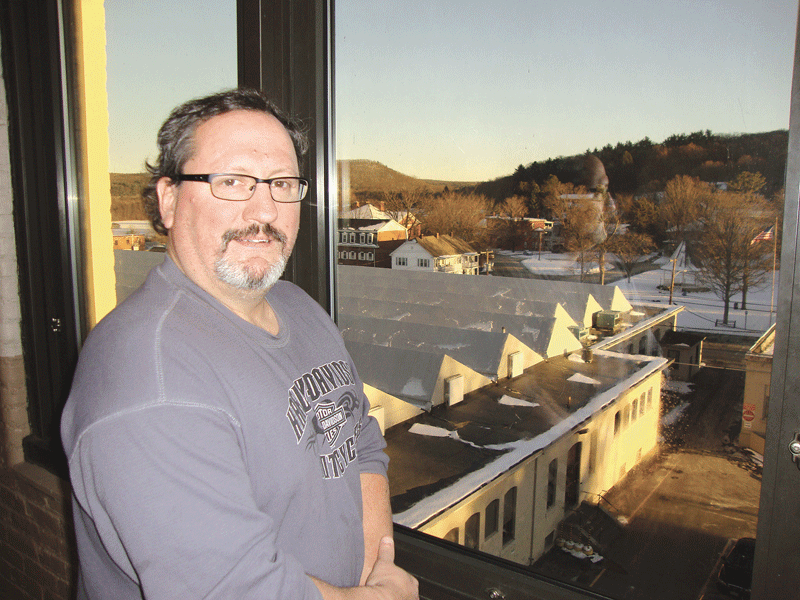
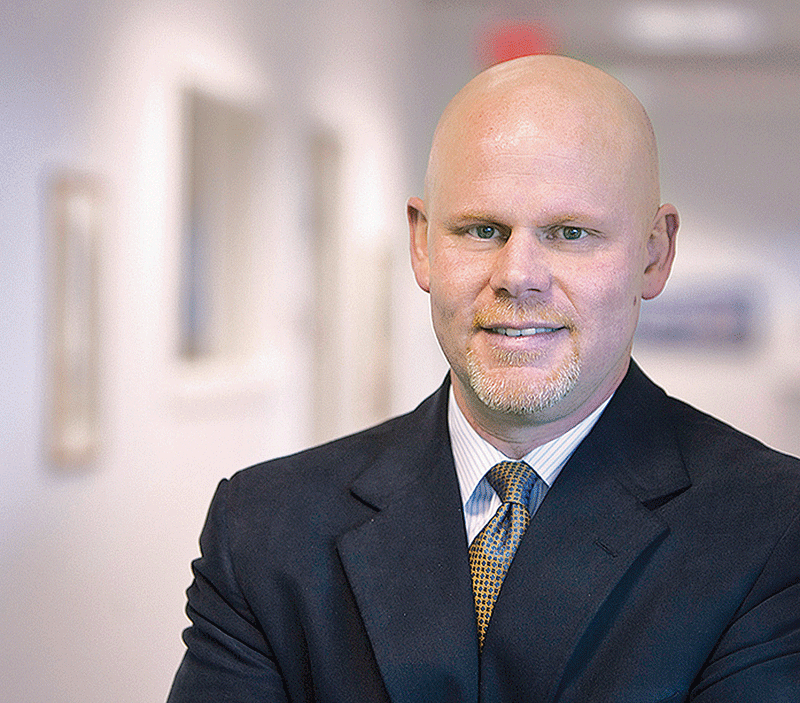
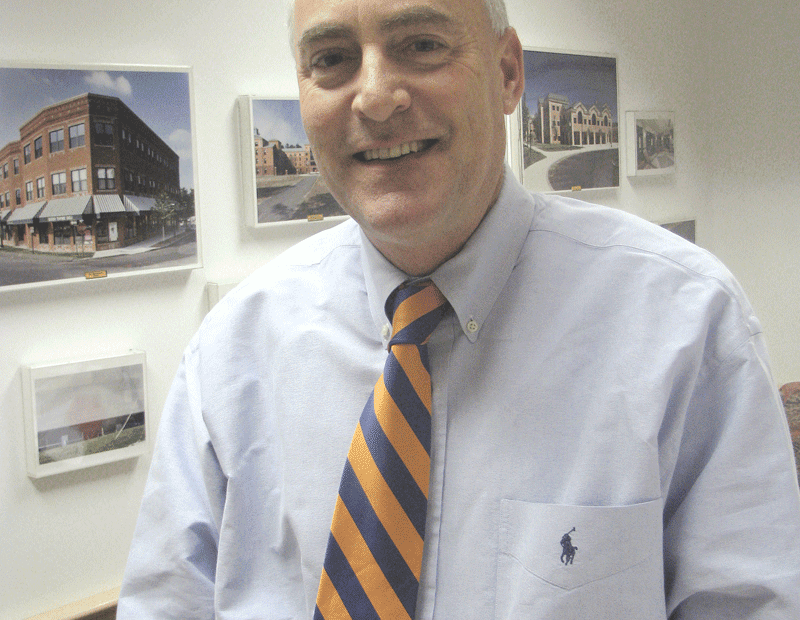
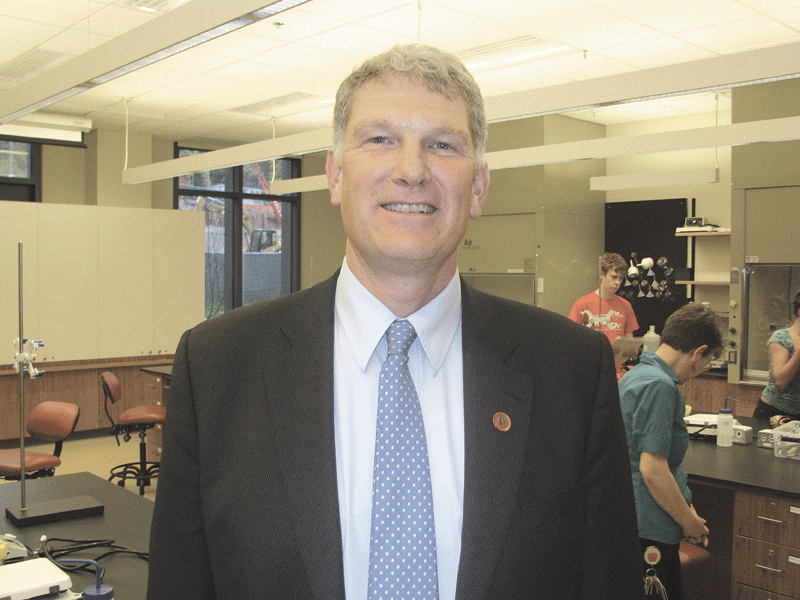
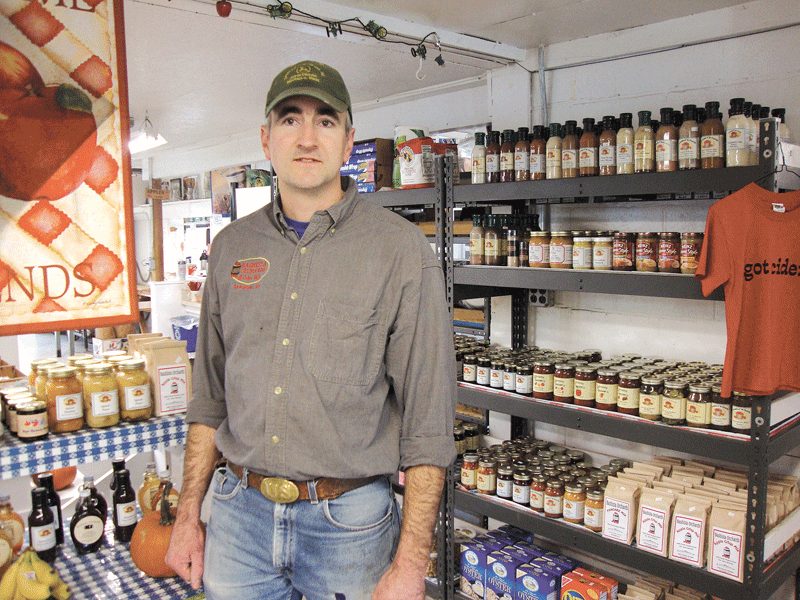
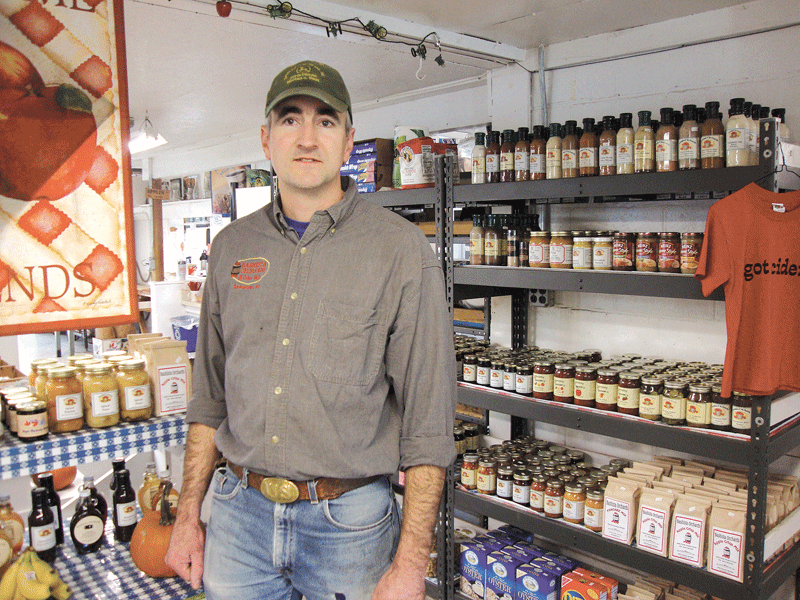
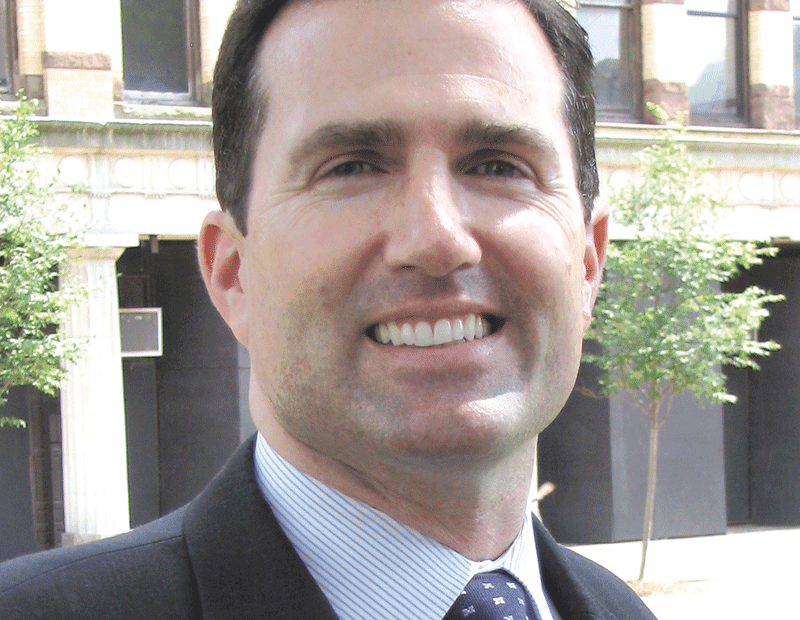
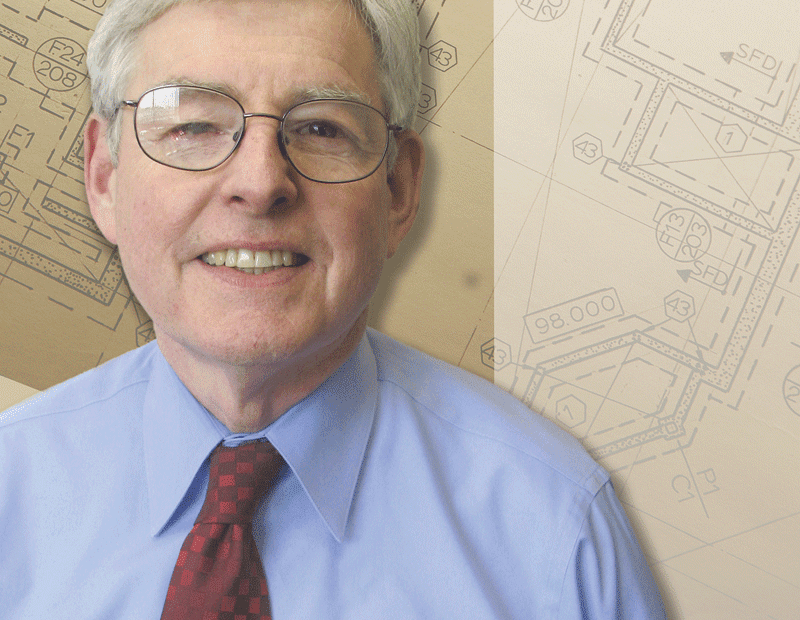
Craig Melin President and CEO, Cooley Dickinson Hospital

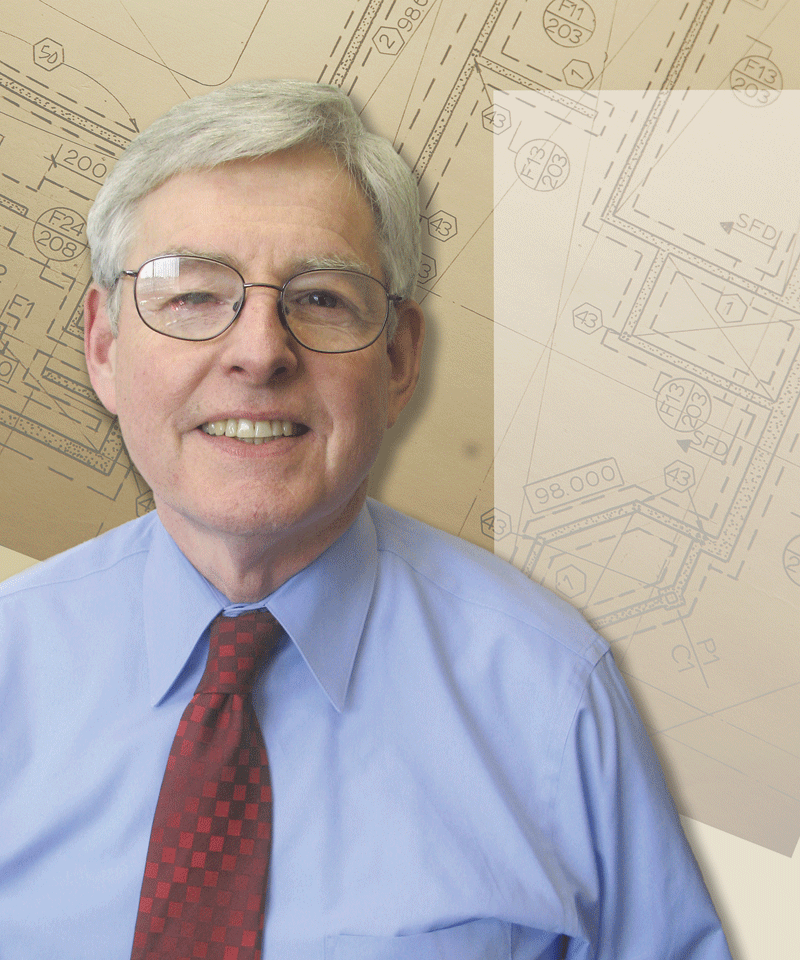
Craig Melin President and CEO, Cooley Dickinson Hospital

When Craig Melin embarked on his pursuit of a doctoral degree from the Dartmouth Institution for Health Policy and Clinical Practice, he figured it would be a two- or three-year journey.
Almost five years after he started, Melin, president and CEO of Cooley Dickinson Hospital in Northampton, still has a ways to go, but there is light, he said, at the end of the proverbial tunnel.
Work on his dissertation has been slowed, and made both more challenging and intriguing in many respects, by the lengthy recession and its ongoing impact within the broad health care community, he explained, and especially hospital administration, which is at the heart of his work.
“There were two factors, both of which had to do with the health care environment, that slowed things up,” he explained. “One was that this environment became so treacherous that two of the hospitals that I wanted to visit were going through such economic upheaval that, at the times I wanted to visit, they were going through reductions in force.
“And to interview people about all the wonderful things they’d done and how great their outcomes were, at a time when the staff was going through the angst of feeling that they had failed and that the world doesn’t work … well, the timing just wasn’t right,” he continued, adding quickly that the second delaying factor was that he was dealing with these same issues, including workforce reductions, at CDH — work that absorbed early-morning and evening hours he would otherwise have devoted to his studies.
When asked about the specific thrust of his doctoral work, Melin said it centers on “how to transform the quality of care in community hospitals.” He then caught himself and made a key adjustment. “It’s actually ‘how to lead the transformation of the quality of care in community hospitals.’ It’s from a leader’s perspective.”
That’s an important distinction, and in many ways, Melin isn’t simply studying this concept, he’s living it. It has become much more than the title of a dissertation — it has become a life’s work.
Indeed, when Melin arrived at Cooley Dickinson in 1988, soon to commence work that would pull the hospital from the brink of financial collapse, he figured the stay would be no longer than five years. Close to a quarter-century later, he is still at the helm, primarily because he believes this is where he can make the most significant impact with regard to that ‘big picture’ that is modern health care administration.
His goal, almost since the day he arrived and especially over the past decade or so, has been to make CDH what he called a “model community hospital.” And to do that, he decided he needed to take his base of knowledge to a much higher level. “I understood that I needed to be an expert in that field, not simply know about it, and that’s why I decided to pursue my doctorate.”
This pursuit has been a learning experience on a host of levels, one that has brought new perspectives on the ongoing work at Cooley Dickinson and lessons in how to do it better.
For this, the latest installment of its Profiles In Business series, BusinessWest talked with Melin at length about the process of putting Ph.D. after his name, and about what is certainly much more than a research topic; it’s what he hopes will become a blueprint for more effective hospital administration.

Healthy Perspective
Regarding the timeline for his dissertation, Melin said most all of the course work, research, site visits to four of the top-performing community hospitals in the country (which he couldn’t disclose at this time), transcription of dozens of interviews, and coding of most results is now all behind him.
What remains, essentially, is completion of his analysis and the writing, which he has started, both on his home computer and in his mind. He said he anticipates being finished by this June, but followed that statement with a qualifying ‘but…’
While acknowledging that it is quite difficult to sum up what he has learned and what his dissertation will say quickly or in simple terms, Melin said much of his doctoral work comes down to five steps, not necessarily sequential, that he has identified and that he believes form a framework that can be followed by virtually any community hospital as it goes about working to transform quality of care.
“The first involves how the leader got the attention of his or her organization regarding the gap between where they are and where they need to be,” he explained. “And the second, after you’ve recognized, for example, that more people are dying in health care than should be or people are harmed in health care organizations more than is necessary, the next question is how to get people’s intentions to change. So you go from attention to intention.”
In other words, he said, the employees of the hospital, not merely the administrators, take ownership of that aforementioned gap.
“The third piece concerns how we translate that ‘intention’ into the work that people actually do,” he continued. “So it’s one thing to believe that we need to do a better job of eliminating infections in a hospital, it’s another question to look at whether we can figure how to test every patient who comes in and disinfect rooms in a very different way. It has to be the work of the people on the front lines, not the managers and directors.”
The fourth step involves how to hold people within an organization accountable for the change in their work and the results that are expected, he went on, adding that this step is necessary to ensure that the changes that everyone agreed to make are actually happening.
As for the fifth … “you can do all of this and still fail as a leader if, as an organization, you don’t provide all the system supports to help people change their work, know how they’re doing, and so on,” he told BusinessWest. “Whether it’s IT support, or, for the front-line staff, whether the group has time to sit down and think, rather than just do, whether they have a facilitator and outside resources to look at what others are doing and what can be copied and adjusted for us … the system supports are central to success. You’ll see systems that will do the first four things and then fall apart, because they’re expecting everyone to change the work they do, but not give them any time to think about how they would do it.”
The dissertation will go into several hundred pages worth of elaborate detail on these five steps, and essentially take a retrospective look at how those four chosen hospitals, each with outstanding outcomes, navigated them.
Meanwhile, the experience of doing the research and those interviews has provided invaluable opportunities to look prospectively at how CDH may be able to take what those hospitals have done and are doing and apply them to its quality-improvement efforts (more on that later).
How Melin arrived at this place in both his professional career and education is an intriguing story that really begins to take shape at the Massachusetts Institute of Technology, where Melin earned a bachelor’s degree in Mathematics and for a long time thought he would wind up teaching that subject at some level.

Adding Things Up
“But I sort of adjusted to more practical uses for math,” he said, adding that his search led him to actuarial work with some insurance companies and, eventually, a summer job with the Mass. Rate Setting Commission, where he worked for a group redesigning the payment system for hospitals and nursing.
“Through that, I came to the conclusion personally that the data suggested that health care organizations were not well-managed,” he said, “and that this represented an opportunity for me.”
So he enrolled in Harvard Business School with the mindset of pursuing a career in health care management. While there, the School of Public Health created a new program called Health Policy and Management and invited the 800 first-year students at Harvard Business to consider a course of study that would essentially combine management and health care. Melin said he was the only one who did.
Fast-forwarding a little, he said he would go on to earn master’s degrees in business and health policy as well as management. He would put them to work first at Beth Israel Hospital in Boston, which he would eventually serve as associate director; National Jewish Hospital in Denver, where he would become both vice president of Planning and director of Hospital and Clinical Services; the Cambridge Research Institute; and University Hospital (now Boston University Medical Center), which he would serve as vice president of External Affairs.
His career then approached what could only be described as a crossroads.
“I was contacted by a search firm to look at the possibility of a teaching hospital in another state and also Cooley Dickinson Hospital,” he explained. “I didn’t really know Cooley Dickinson or Northampton, and I was at a career stage where I was considering two paths to reach my ultimate goal, to be CEO of a major teaching hospital; one was to be the CEO of a community hospital first, and the other was to be the number-two person at a teaching hospital.
“There was something about Cooley Dickinson and the community that attracted me, and so I came here,” he continued. “I thought it would be five years, but once here, that attitude changed, because underlying all that was wanting to change the health care field, not just where I was working. I soon got the sense, from all that we were able to do, that you could develop a model community hospital that others could learn from, and change the field.”
Melin told BusinessWest that recruiters have contacted him countless times over the past 23 years to gauge his interest in other administrative positions, some at facilities several times the size of CDH.
They still call, or e-mail (the more common method of making such inquiries these days), but he said he hasn’t seen or heard anything that would take him away from CDH. When asked to elaborate on why, he said, in essence, that there is still considerable work to be done with regard to making Cooley Dickinson into that model community hospital. In short, he hasn’t finished what he started.
Which brings him back once again to his Ph.D. and that prospective work he’s doing with taking lessons from his site visits back to CDH. He said those visits have generated tremendous learning experiences and provided plenty of insight into the work he’s doing in Northampton — and how he might do it better.
“I’ve got a framework for how I think and how I lead,” he explained. “The experience of seeing other places has given me guidance on how to adjust that framework, because it’s always going to be different based on context. There’s a concept called realist evaluation that says that you need to look at the mechanisms of change in the context in which they occur, and then look at the outcomes.
“And where the process I’m talking about has five steps,” he continued, “we’re looking at five different mechanisms of change, but the question becomes, ‘how do you adjust them in different contexts, and what outcomes do you get?’
“Basically, it comes down to what works where, when, and why,” he went on, adding, once again, that his site visits have provided myriad talking points for his dissertation and plenty to think about at CDH. “Cooley Dickinson has a completely different context than those other places, and our outcomes will be different, but we can still ask the question, ‘how can we make that framework successful in our community?’”
And while his site visits have involved lengthy visits to CEOs’ offices, they’ve also included talks with physicians and quality-improvement staff and lengthy stints on the front lines, said Melin, adding that with each group came a unique perspective on the steps taken and, more importantly, why they were successful.
“This was a real learning experience for someone who’s a CEO,” he told BusinessWest. “When I talk to the CEO about what he or she has done to lead change, and then I talk to the front-line staff, they’ve experienced the change, too, and they know why it is they made the changes, but they might not be the same reasons as the leader thought.
“And as someone who’s in a leadership position, this was a great opportunity to see first-hand somewhere else that there is that disconnect,” he continued. “That doesn’t mean that what the leader did wasn’t really effective, because in each of these places it obviously was, but it wasn’t necessarily what they thought they did that caused the success at the front lines; it was something that happened within their organization because of the transitions they set in place.”

Degree of Progress
When asked what he does in his spare time, Melin smiled and said that, at this time in his life, there simply isn’t much of that precious commodity.
Indeed, between his work molding CDH into a model community hospital and work on his Ph.D., most everything else has been put on hold. He still finds time to visit the Connecticut shore with his wife, who operates a unique bed-and-breakfast in Northampton that features extended-stay programs. There will be more time for the beach when his doctoral work is completed, obviously, a day Melin is looking forward to seeing.
But while that work will eventually end, the more important assignment of applying what’s learned won’t. That’s because hospitals must seek to continuously improve, he said, adding that this is the real framework for a model community hospital.

George O’Brien can be reached at [email protected]

Features
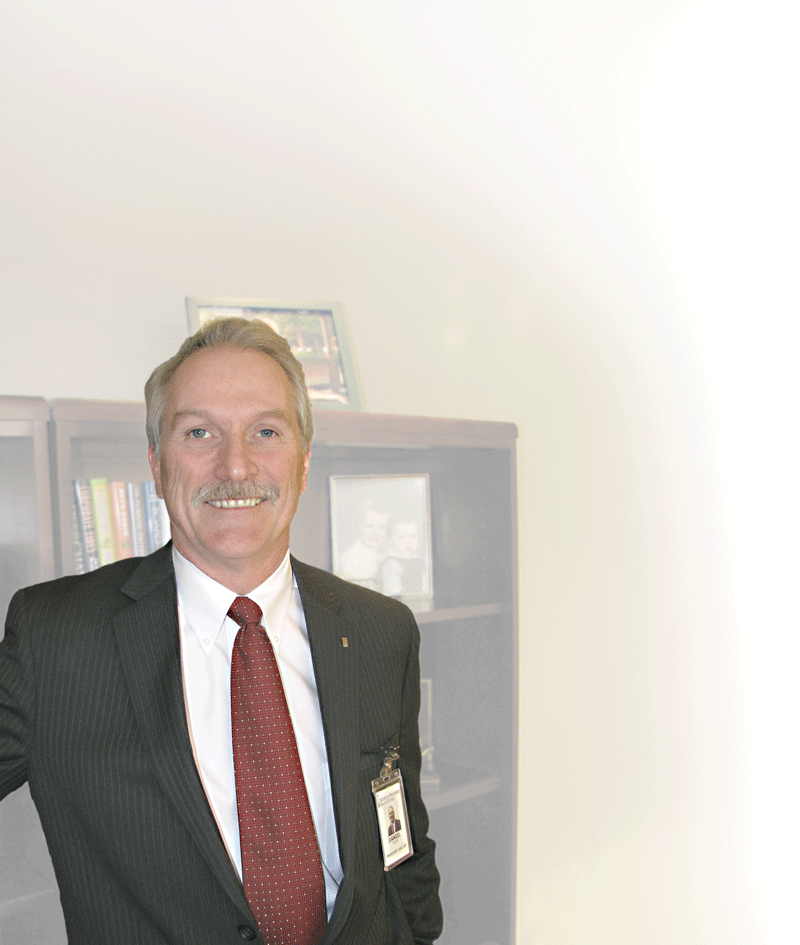
He’s Leaving the Nation’s Poor Health in His Wake

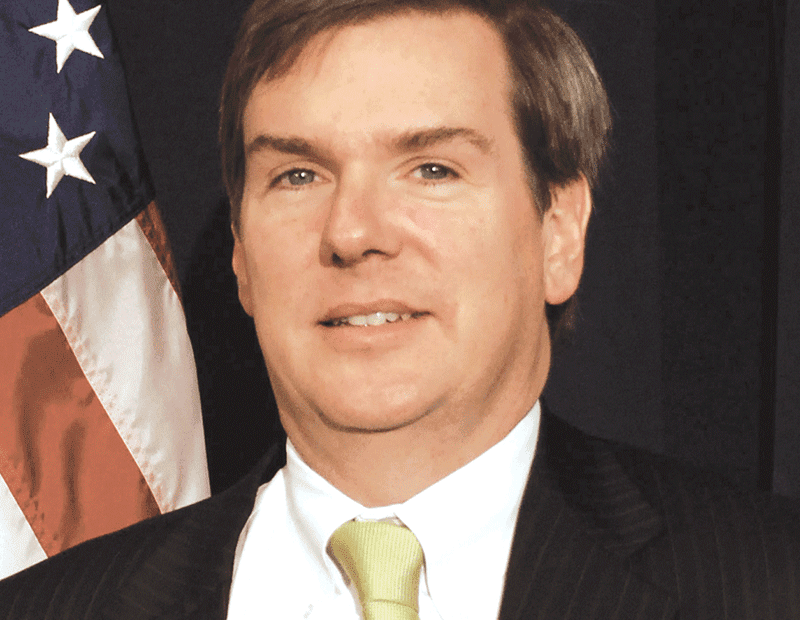
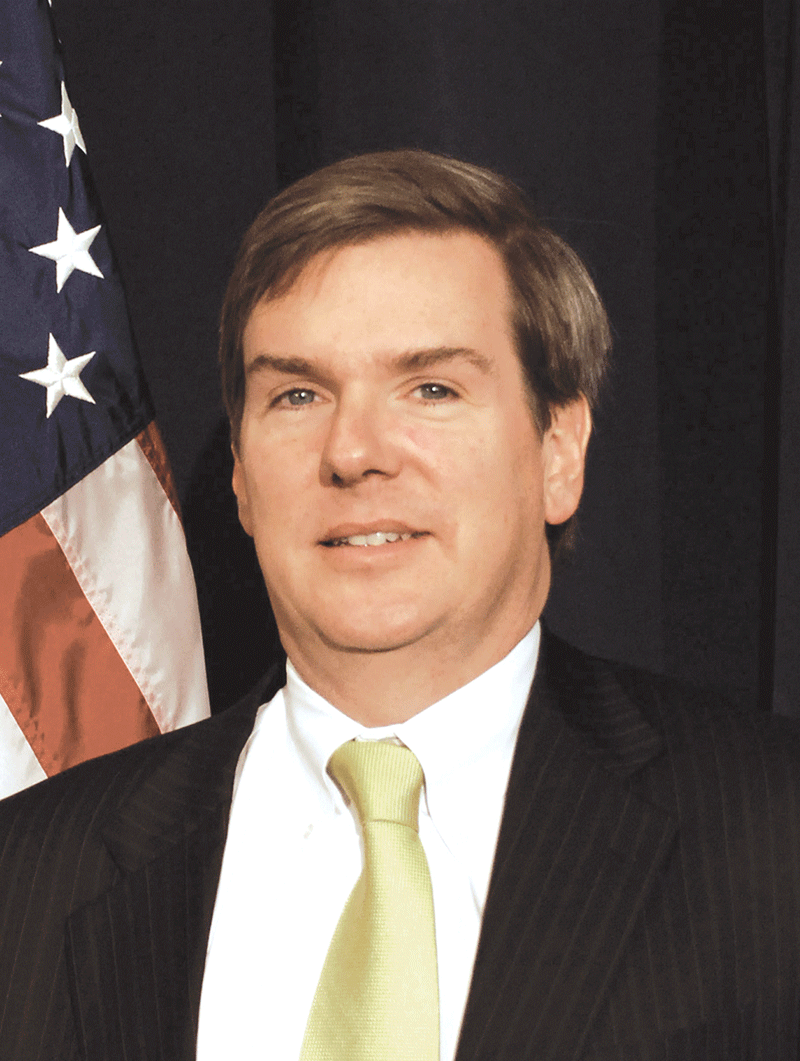
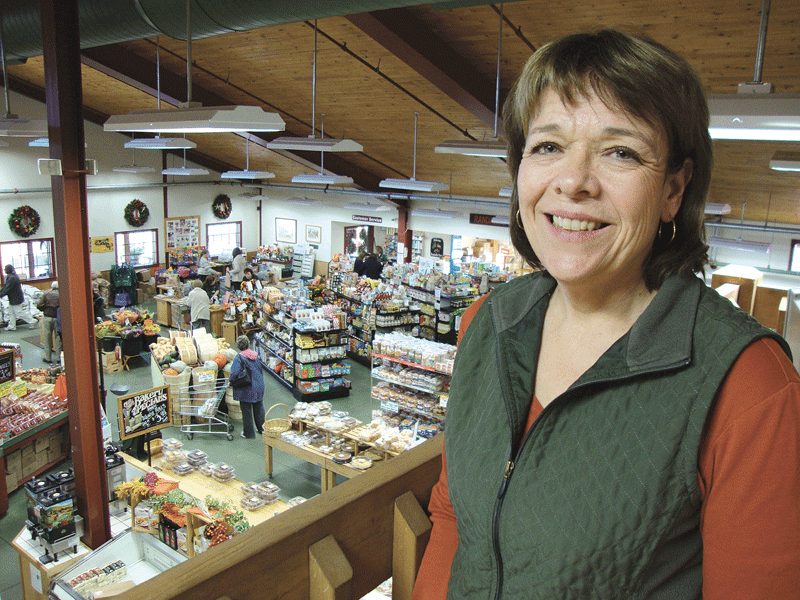
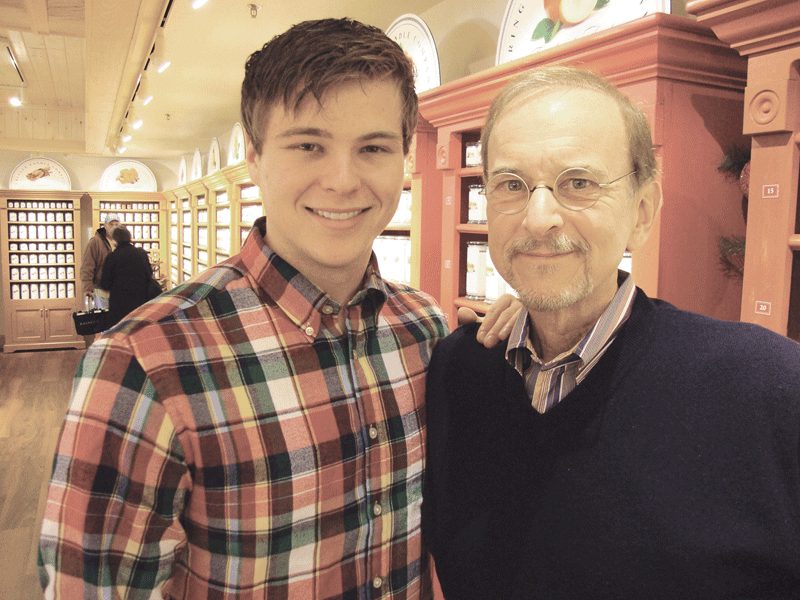
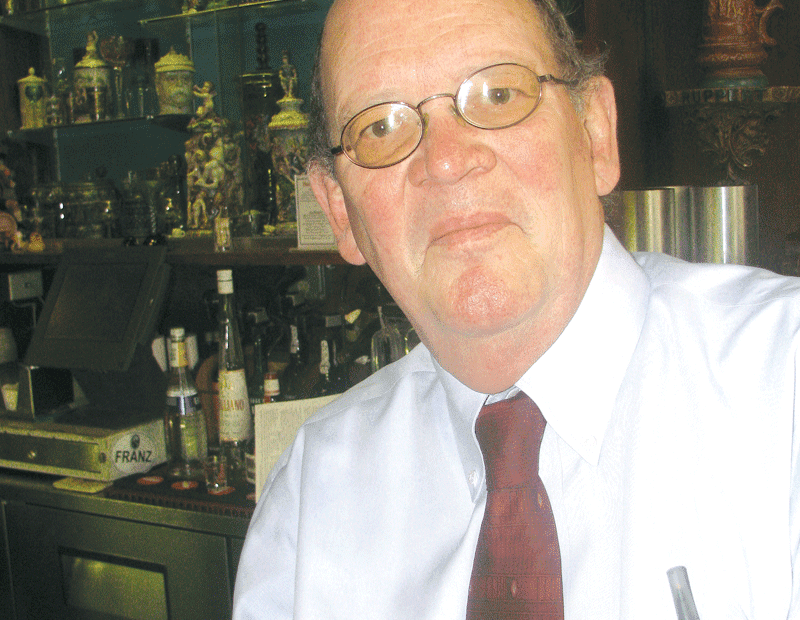
Peter Straley President and CEO of Health New England

Peter Straley President and CEO of Health New England


Peter Straley was talking about the Connecticut River — specifically, a winding stretch in Northampton — and how almost no one knows that it’s an ideal spot for waterskiing.
Or didn’t know.
“Maybe I should keep quiet about this,” he said with a laugh, adding that one of the things that makes this spot perfect is a lack of congestion, which he expects will continue even though he’s effectively blown his cover. Waterskiing isn’t a hugely popular sport in these parts, and it’s not something one enters into easily.
Although maybe they should, said Straley, president and CEO of Health New England, adding that he started with this activity in his youth — his grandparents built a summer camp on a lake in the Adirondacks the year he was born (1954) — and continued through his life. But it became much more than a summer-vacation pursuit when he discovered that stretch of the Connecticut River many years after one of his many career twists and turns (they’ll be chronicled later) brought him to Western Mass.
He considers it perhaps his favorite way to put the pressures of the day aside for an hour or two, and physically and mentally reboot.
“I remember a performance coach telling me, ‘Peter, you’re expected to be on all day, every day — people don’t expect the CEO to ever have a bad day or ever be in a bad mood — and of course, no one can do that,’” he explained. “She said, ‘when you have a 7 a.m. meeting followed by a full day of internal meetings, and then a 7 p.m. event, you have to carve out a time when you can let down and be offstage, because if you don’t, you’re just fooling yourself; no one can sustain that continuously.’
“She told me that, if I was passionate about something, whether it’s waterskiing or running or whatever, I should carve out an hour and just go do it; I’d come back renewed,” he continued. “And so I do try to leave here and go off and do something, and often, it’s waterskiing.”
Before and after he takes this time to relieve stress and stay fit, Straley does a lot of things that, collectively, work to diffuse the notion of the “big, bad insurance company,” as he called it on several occasions. This includes everything from being very visible in the community to inviting guests to his office to take a few minutes on his ‘Bogo Board,’ a contraption designed to help improve one’s balance.
The perception of large health-insurance companies has taken a number of hits over the years, especially as rates continue to climb and companies of all sizes struggle to meet this necessary but often-perplexing cost of doing business. The most recent controversies involved Blue Cross Blue Shield paying $8.6 million to CEO Cleve Killingsworth after he resigned roughly a year ago, and revelations that Blue Cross and other insurers paid their board members five-figure stipends at a time when relatively few nonprofits did so (the practice has since been halted at Blue Cross, and the others are considering a similar tack).
“When these people [at Blue Cross] look at the scope of their company — it’s a multi-billion-dollar corporation — and compare themselves to the for-profit world … there’s lots of people making that kind of money,” Straley said of Killingsworth’s departure package. “So when they do objective compensation analysis, which everyone does, from that truly rational perspective, with rational meaning objective, you get there. But then, when you say, ‘how does that play out in the environment we’re in today, in the state we’re in today, with the increased levels of scrutiny they have?’ — it just doesn’t work.”
Straley had much more to say about the reasons why he believes health care costs, and especially insurance, continue to soar. Chief among them, he said, is a propensity among many Americans to simply make bad decisions when it comes to their overall health and well-being. And as he said this, he referenced his father, who died the day he turned 51.
“While I don’t know this for a fact, I believe that he could have lived a much longer, more productive life, and I would have known him much better had he made different choices in his life,” said Straley, noting that his father was a heavy smoker, drank more than he should have, didn’t have a good diet, and didn’t do enough to avoid or deflect the stress that came with a high-pressure job in the insurance business.
His father’s death at a young age — and the causes of it — have prompted Straley to take words and advice from his mother and compose them into a white paper he drafted last fall called “My Mother’s Health Plan — Everything I Need to Know About Good Health I Learned from My Mother.”
“Health care is extremely complex, and therefore you may believe that the solutions to decreasing health care costs are also complex,” he writes. “However, my mother’s health plan offers a simple solution to bending the cost curve in the right direction.
“When you take a moment to think about it, you can summarize the important components of good health into three categories: 1) physical activity/exercise, 2) good nutrition, and 3) practicing prevention,” he continued. “These are all things your mother told you do to. It most likely sounded like ‘turn off the TV and go out an play,’ ‘eat your vegetables,’ and ‘wash your hands and brush your teeth!’ Thinking back, this message was about taking responsibility for my own health and well-being.”

Fruits of His Labor
As Straley talks about this responsibility, one can clearly see that he is passionate, if not obsessed, with his desire to see individuals make smarter choices, become healthier — and, perhaps most importantly, have the workplace become a real force for helping people down this road.
His father’s early death has something to do with this, obviously, but he says an equally impactful catalyst came with the events of 9/11, or, to be more specific, with an exercise Health New England, headquartered on floors 15-17 in Monarch Place, had undertaken just a few days after the terrorist attacks.
“That’s when I realized you could change things from work,” he explained. “I heard all these stories about people who couldn’t be rescued [from the Twin Towers] because they couldn’t make it down the stairs. Shortly thereafter, we decided we should have a fire drill here, because we’d never had one.
“Well, we did — and it was scary,” he continued. “People just couldn’t make it down the 15, 16, or 17 flights of stairs. I realized that, if this was real and all 25 floors of this building emptied out at once, people would have been trampled just like they were in New York.
“That’s when I decided that we just had to do more,” he went on, adding that HNE already had programs in place to promote healthier living, but they weren’t “grabbing people,” as he put it. “So we set off on a journey back then, thinking, ‘if what we’re doing isn’t really affecting everyone, then we have to try more, we have to do different things, and we have to take some harder positions.”
Thus began an initiative that goes well beyond walking programs, reimbursements for gym memberships, and participation in Weight Watchers.
Referencing his father one more time, Straley tapped the side of his head a few times as he talked again about choices, responsibility, and doing the right things.
“He knew up here that all those things were not good for him,” he explained. “But knowing something isn’t enough to motivate behavioral change. I believe — and I’m wrong in a lot of my beliefs, so I may be wrong about this one, too — that the workplace is the best place to motivate change. And this is a radical idea for a lot of people.
“They think, ‘I go to work, I do my job, I’m myself, you can’t change me, and I go home and I live my life,’” he continued. “I believe the workplace is where you can make these kinds of changes; you’re there eight, nine, 10 hours a day … it’s a pretty self-contained biosphere, and, generally speaking, it’s a supportive environment.”
How Straley arrived at the corner office at HNE and eventually led the company to its current leadership role in health and fitness is an intriguing career-development story, one he says has no “rhyme or reason,” and starts at Vermont’s Middlebury College, where he majored in a subject far removed from both health care and insurance — geology.

Stone’s Throw Away
“It really worked well for me, because it was a blend of outdoor work and intellectual work — this was the early ’70s, when tectonic plates were first discovered,” he recalled. “So the science was going through a revolution, and this is a recurring thing for me; I’ve always been attracted to things where you don’t have to be an expert to have a contribution. In most aspects of science, you had to have a Ph.D. and 30 years of research before you could actually contribute something new. But this was new — the research didn’t matter anymore; as an undergraduate student working with an inspired professor, you could contribute something.”
But job opportunities in this field were limited, he said, adding that, fortunately, he was also making strides in another field coming its own — computer science. He took every computer course Middlebury offered (two), eventually landed a job in a computer lab on campus, and took his first career step as a systems analyst for Squibb in New Jersey.
Later, he held several positions, including vice president of R&D for Amherst Associates, a Amherst-based firm that developed software for the health care industry. While there, he earned an MBA at UMass, and eventually went into management-consulting work at the Northampton office of a firm called Jennings, Ryan & Kolb.
“It was fast-paced, exciting work, and I really enjoyed it,” he recalled. “You’re sitting in this room with the board of directors, and you’re a 30-year-old kid. And you had to be right. You couldn’t be saying, ‘I think you do this — you had to prove that this is what they should be doing. It was a great experience.”
In the course of that work, Straley worked with a number of hospitals, including Baystate Medical Center, where the assignment was to form Bay Care Health Partners, a three-hospital, 720-physician managed-care contract organization serving Western Mass. “I had actually developed an expertise in building these things,” he said. “Why? Because no one else was doing it; it was a new thing, you could jump in really quickly and be an expert on it. I wrote the book on it — actually, I edited the book on it.”
After he set it up, Baystate asked him to run it, which he did for three years, essentially following the advice that he had been giving to others as a consultant. And when there was an opening at Health New England in 1997, he said he was brash enough to aggressively pursue the position.
“I didn’t know coming here what the challenges were going to be,” he continued. “I didn’t know that health care was going to implode and there would be all this national stuff. But I did know that I had enough faith in my ability to run a business, I knew a lot about health care, and I could figure out the parts I didn’t know.
“And it’s a job that’s allowed be to use all my skills,” he continued. “We’re a big IT company here, and we‘re trying to figure out how to redesign the health care system, so that consulting background is helpful, and we’re a service organization, and we’re about health. It was not my plan to come here, but it’s turned out to be a great place for me personally, and I think the company’s done pretty well under my tenure.”

The Shape of Things to Come
Straley told BusinessWest that he’d lived in Western Mass. for many years before waterskiing suddenly became a much bigger part of his life.
“Through my kids, I met a guy who had a boat on the river, and it turned out that he was an avid waterskier; I’d never even heard of anyone waterskiing on that river,” he said gesturing out his office window to the Connecticut. “Our kids played soccer together, and I remember asking him if I could invite myself to go waterskiing some day; I wasn’t shy about it.
“We’ve been skiing together ever since,” he continued, adding that, unbeknownst to most in this region, a section of the river near the Oxbow provides ideal conditions for this sport.
“What you want is glass,” he explained, referring to calm conditions and little traffic from other boats. “You don’t want other people around — you want it all to yourself. The other thing that makes it good is that this river is long and narrow and it curves; if there’s a wind out of the west, the river curves, and you can find a place where you’re not into the wind and there’s no chop. No matter which direction the wind is coming from, you can find a place that’s calm.”
Several years ago, Straley bought his own boat, one he says is good for one thing and one thing only, and that’s pulling waterskiers in a straight line. “You have to get people out of the water quickly and without a lot of effort, so you need a powerful engine,” he explained. “The second thing you have to do is not create a wake, because a wake is disruptive, and the third thing is that it has to be highly maneuverable so you can go where you want to go.”
The waterskiing is part of Straley’s work to alleviate the stress and burnout that claimed his father more than 30 years ago and threaten many business owners and managers today as they try to pack work and life into what always seems like too few hours.
“Sometimes I’ll leave at 4:30, go ski for an hour, put my suit back on, and go to a 7 o’clock event,” he said. “I’ve been off having a complete release of mind, body, and soul, and I’m really happy when I come back; I’m a lot happier than anyone else in the room because I got away.”
He finds other ways to find these releases, such as jogging and biking. The common denominator is putting the pressures of the day aside for a while, knowing that they’ll be there when you get back, but you’ve managed to spend at least an hour away from it all.
“The most important thing is relaxing your mind,” he told BusinessWest. “When your body is moving, and when your body is engaged in doing what it knows how to do, your mind is then free to think and to imagine, and I get more good ideas by not trying to think about good ideas. If you occupy your body in a fun, productive, challenging thing, your mind is free to imagine.”
One of these good ideas, he believes, is “My Mother’s Health Plan,” co-authored by Lynn Ostrowski, director of brand and corporate relations at HNE, and distributed at various events in recent months, including the Affiliated Chambers’ Outlook luncheon, attended by roughly 1,000 people. As he talked about it, Straley summoned a term most Baby Boomers would be familiar with, although it hasn’t been used much lately.
“The boob tube — your mother was always telling you to turn it off and go outside and play,” he recalled. “That was pretty good advice that people have gotten away from. People of all ages need to get outside and play more. And they need to eat their vegetables — something else their mother told them to do — and brush their teeth.”
All this brings him back to the high cost of health care, and how doing all these things can move the needle in the right direction. It can be done, he told BusinessWest, but it won’t be easy, because changing individuals’ behavioral patterns is quite challenging.
“We try everything,” he said of HNE’s efforts to promote health and well-being. “And each thing grabs one more person and brings them along, but no one thing grabs everybody, so you have to be committed to meeting people where they are right now and just get them to take the first step.
“The reason I think people don’t sustain the change is that they actually know up here that they should do it,” he continued, tapping his temple again for effect, “but the task is so daunting, there are so many moving parts, and their lives are so complex and fast-paced right now, they can’t figure out the first step. If we can help them with that first step, and they have success, then it’s easier to take that second step.”

The Bottom Line
Straley’s white paper, dated November 2010, is identified as “Volume 1, Number 1,” a strong hint that there are more of these to come.
The next installment may involve thoughts on personal responsibility and how to assume some, he said, adding that this assignment involves people of all ages and social strata — and employers as well.
And it is one of the foundations of a multi-pronged approach that he firmly believes will bring down the cost of health care in this country.
“I don’t expect the 15th floor of Monarch Place to be the epicenter of change,” he said, “but we do expect to have an impact, and we do expect that we’ll export that impact to any place else that will listen.”
He seems quite willing to do everything in his power — and that of his company’s — to make a real difference in this matter.
And that includes letting everyone in on his favorite spot for waterskiing.

George O’Brien can be reached at [email protected]
Features
The ‘City in the Country’ Is Turning Some Heads

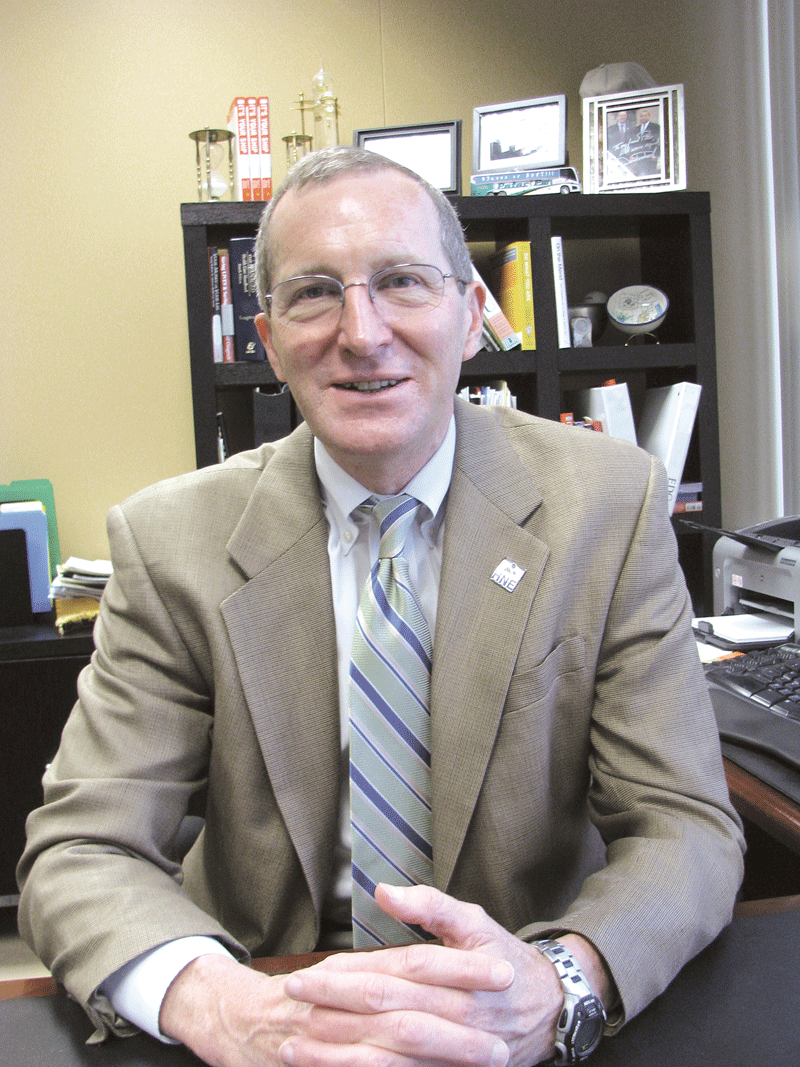
Michael Supranowicz

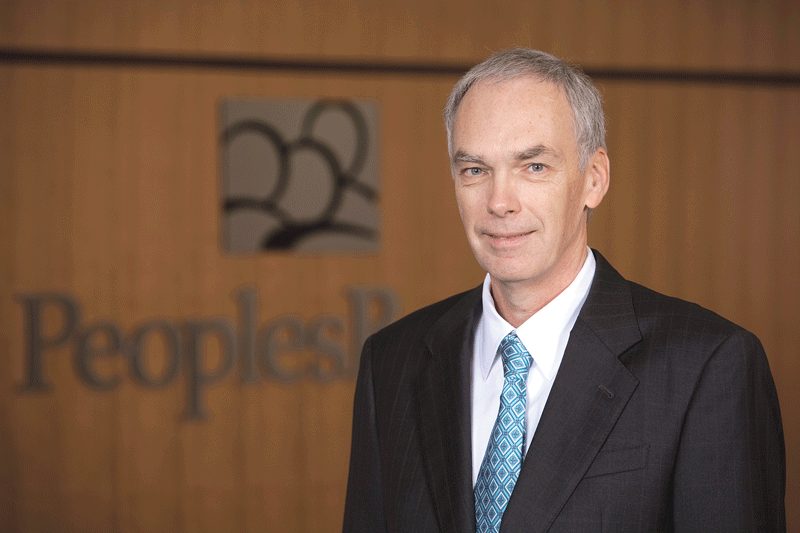
Michael Supranowicz says the Berkshires offer quality of life, good schools and colleges, and plenty to do after work, among other draws.

Michael Supranowicz says the business community in the Berkshires is vibrant and alive.
“Pittsfield had a $21 million increase in retail sales from 2008 to 2009. It was one of only three cities in the state with an increase, so we know we are attracting people and something is happening here,” said the president and CEO of the Berkshire Chamber of Commerce.
The region contains about 30 towns and cities, with commercial hubs in Pittsfield, Lee, and Great Barrington. These communities boast residential and business space that is lower in cost than other, larger cities in the Northeast, said Supranowicz, with plenty of opportunity for growth.
Deanna Ruffer, Pittsfield’s community development director, agreed. “We are the city in the country. That characterizes not only what we offer businesses but what we have for all those who come here as a destination for health care, legal activities, shopping, and more.”
During the past five years, Pittsfield, which is a short distance from the Mass Turnpike, has concentrated its efforts on becoming a cultural and entertainment destination.
The historic Colonial Theater reopened about five years ago after a comprehensive restoration, and the Barrington Stage Company moved to Pittsfield from Great Barrington, investing millions into renovating an old theater. The two attractions draw at least 100,000 people a year, Ruffer said. In addition, a six-screen movie theater opened a year ago behind the façade of a historic building.
“We have it all and are known to be very pro-business. Recently, the mayor approached the vice president of General Dynamics and helped them get a Navy contract which will create 500 new jobs,” she said.
There is land available for development in existing buildings as well in the 52-acre William Stanley Business Park, a remediated brownfield site that sits a quarter-mile from downtown. The chamber offers a site locator on its Web page that shows the diversity of properties and buildings available.
“Mayor James Ruberto set a vision for this community to become the best small city in New England, and we are well along the way to accomplishing that,” said Ruffer. “We really have something to offer everyone, and this is a great place to live, work, and play.”

Middle Ground
Richard Vinnette, executive director of the Community Development Corp. in the centrally located town of Lee, calls it “the gateway to the Berkshires.”
Located off Route 2 and boasting a single tax rate, the area has a rich concentration of art, recreation, and cultural venues. “We are right in the middle of what is the quintessential Berkshires. Tanglewood and Jacob’s Pillow are only minutes away, and we are well-positioned to accommodate innovative companies,” he said. “It is a great place to live and do business, and those who do live and work here know that there is no place like the Berkshires.”
There are a number of economic opportunities in Lee with state incentives available to relocate or expand businesses there. Greylock Mill, situated two miles from I-90, is offering both a 17-acre parcel and a 28-acre lot with rail service. Quarry Hill Business Park has a number of lots sized from two to eight acres, while Laurel Mill, which has a building on 15 acres, is also available, as is another six-acre parcel for sale or lease.
“There are a number of real-estate opportunities available to developers; we have a 200-year tradition of skilled manufacturing and innovation that continues today, and we are well-positioned to accommodate innovative companies,” Vinnette said, adding that businesses such as Country Curtains, Boyd Technologies, and Onyx Specialty Papers Inc. have evolved over the years and offer new businesses the chance to form synergestic partnerships.
“We also have wonderful restaurants and shops downtown, plus the 60 brand- name shops at Premium Outlets provide retail diversions,” Vinnette said, explaining that tourists who come to Lee to shop often explore its walking downtown, which “also has a great array of retail shops and restaurants.”
The Community Development Corp. and a private developer recently worked together to create a viable business plan in the downtown area. The CDC is building a 61-car parking lot near the historic Baird-Benton building, while the developer, whose business addresses the needs of college-age students with Asperger’s syndrome, is doing a $3 million renovation to convert the top two floors of the building into office and classroom space for students with special needs.

Southern Exposure
Great Barrington is nestled in the southwestern corner of the state, and its 46 acres are bordered by Connecticut and New York. It is the commercial and cultural hub of the Southern Berkshires and its eight contiguous towns.
Proponents say it has everything that a large city offers, but on a smaller scale, with close to 50 gourmet restaurants, a diverse number of small businesses, the county courthouse, a small hospital, and a large second-home market. The region, with its two ski areas, fall foliage, hiking trails, fishing, and more, attracts a continuous influx of tourists which double its population year-round.
“We have a walking downtown and are a quintessential New England village with a variety of businesses. There are also some tremendous businesses in the area with an international reach,” said Christine Ludwiszewski, chief executive officer of the Southern Berkshire Chamber of Commerce, citing examples that include Sheffield Plastics, Fairview Hospital, and Jane Iredale mineral cosmetics.
“But there are also many small new businesses that have opened recently, including the Magic Fluke, which relocated here on Jan. 1 from New Hartford, Conn. We have a new clothing shop opening on Main Street and a new restaurant, Fiori, on Railroad Street,” she continued. “Our downtown, which is very walkable, has two hardware stores, a half-dozen restaurants, a number of women’s clothing stores, and specialty shops such as a Swedish furniture store. There are also at least three art galleries downtown, so Great Barrington is a great tourist destination and an exciting place to live and shop. We get visitors from Hartford, Albany, New York City, and around the world.”
Great Barrington is also known as a cultural mecca. The historic Mahaiwe Performing Arts Center has undergone $8 million in renovations in recent years and offers concerts, lectures, and films, as well as Broadway plays. “They open here before they go to Broadway; we also have a castle in the middle of town that has been converted to a private school,” Ludwiszewski said.
And although Pittsfield is becoming a haven for artists and culture, “we definitely have a different ambiance, with well-established art galleries, films, and theater,” Ludwiszewski said. Antique shops in the area also bring in many tourists, and since Route 7 is the main downtown throughfare, businesses in that location see a lot of traffic.
The town also has a number of redevelopment projects underway which will provide new office, gallery, and/or loft space for businesses. The former St. James Episcopal Church is being refurbished, and the owner hopes to use it as a wedding and/or music venue. The purchase of the old firehouse was recently approved, and will have space for a café as well as classroom space for students studying culinary arts and woodworking.
Two former schools, which sit on the same piece of downtown property, are also undergoing renovation. Iredale Cosmetics is converting one into office space for its own use, while the other will be transformed into private residences, retail, and office space.
Nearby towns are home to vibrant businesses, and opportunity exists there, Ludwiszewski said. Egremont’s thriving retail shops include a high-end ski clothing store, an antique lighting store, and an Asian antique shop.
“The quality of life is peaceful in the Berkshires,” she continued. “We are surrounded by beautiful scenery, we have excellent schools and health care, and businesses rely on each other to prosper.”
Supranowicz agrees. “When people talk about relocating their business, they want to know what there is for employees to do after work, and we have so many established cultural attractions,” he said. “Plus, there is just such an attractive quality of life here. We have colleges that offer training opportunities so businesses can change as quickly as their customers and a huge second-home market in South County which provides another layer of customers who spend a lot of time and dollars here.
“There is a mix of business in every community,” he concluded. “A lot is happening here.”

Features
City Leaders Want to Make It Easy to Get Started

Mayor Mike Bissonnette (left) and Tom Haberlin

Mayor Mike Bissonnette (left) and Tom Haberlin hope to see more shovels on the wall as Chicopee builds on its momentum.

Ask anyone about the business community in Chicopee, Mayor Mike Bissonnette told BusinessWest, and you’re going to get a biased opinion.
“Talk to new owners or existing operations, and they’ll tell you,” he said. “They come to City Hall telling us, ‘we want to be here.’”
With one of the Pioneer Valley’s more bustling commercial thoroughfares on Memorial Drive, along with an expanding series of industrial parks adjacent to the Westover Air Force Base, that rhetoric is indeed grounded in pragmatic reality.
But such enthusiasm has been put to the test in recent years, most recently and famously with the profound downsizing at the Callaway Golf plant on Meadow Street. The factory cut back hundreds of jobs due to corporate restructuring — meaning a shift in manufacturing to low-cost wages in Mexico and China — but the city was able to keep operations continuing for some of the more prestigious lines of the brand; for now, roughly 150 to 200 jobs are safe in Chicopee.
While that chip shot into the rough might spell disaster for many other communities’ business base, Chicopee, while impacted, has not been staggered because of its diversified business portfolio — both of varied industries and different geographic locations for growth. And Bissonnette gives a great deal of credit to the seasoned professionals he has in City Hall, all of whom he says are actively engaged in supporting a business-friendly climate for development.
“We have one-stop shopping on permitting and licensing,” he explained, “where we put all our department heads together when someone has a proposal, before they file it, so that we can identify for them what we see as significant issues or potential hurdles that they need to address before they file their plans.”
One of those departments in the city, the Office of Community Development, has a storehouse of ideas on what needs to be addressed within the city and how that can be, or has been, accomplished. Tom Haberlin has decades of experience as the city’s director of economic development, and he said that, while some solid momentum has been building in the Westover business parks and the city’s center, there is still considerable work to be done.
The Westover Economic Development Corp., owner of the burgeoning commercial parks — Airparks North, East, West, and soon-to-be-developed South — is affiliated with the Economic Development Council of Western Mass., and Bissonnette and Haberlin praised that organization for its substantial and fruitful marketing efforts.
“The EDC provides excellent overall region-wide marketing for prospects outside the area,” Haberlin said, “so when developers show up here, they might cast a wider net. Maybe five or six times a month we’ll get a prospectus looking for 25,000 square feet somewhere in the city.”
While new investors eye the desirable properties in the city’s portfolio, such as a $35 million development slated to break ground across from the Home Depot on Memorial Drive containing retail, restaurant, office, and hotel space, there are some businesses that didn’t need to look very far to find the perfect spot in Chicopee.
The John R. Lyman Co. has been a city business since 1906. As owner of the subsidiary LymTech Scientific, the business manufactures specialized wiping cloths for a variety of industrial uses. Third-generation owner Bill Wright said that, when it came time for him to realistically address the modernizing needs for his business, he needed to make a decision.
Should the company relocate closer to its suppliers and core clients, in the southern U.S.? It’s a decision that many business owners face, but for Wright and his wife, Anita, it was simple.
“There’s a lot of heart in my decision to stay,” he said, standing among the boxes scattered around his offices about to be moved to their new location on Westover Road. Like his own history with the company, he said that many of his employees are second- or third-generation also. He could have forced the hand of local officials to keep his expanding business in town, he explained, “but I’m not interested in playing hardball with these people’s jobs.”
Like the officials in City Hall, Wright said that Chicopee is a good place to do business, and his words are echoed by both newcomers to the commercial tax rolls as well as some that have put the city on the map. In this latest profile of the area’s business community, BusinessWest looks at Chicopee, a city that has good reason to have a biased perspective on its commercial future.

Practice Makes Permits
On a large wall opposite his desk, Bissonnette hangs the prized shovels from groundbreaking ceremonies in the city. It’s a fairly large collection, and if the trend continues, he might need a bigger wall.
Chicopee has been fortunate to secure some high-profile business imports, primarily in the Westover area. Bimbo Bakeries, new owner of Sara Lee, is one of the world’s largest commercial bakeries, and on Taxiway Drive, it is completing work on a $33 million warehouse and distribution center.
Bissonnette and Haberlin both agreed that the EDC is doing effective work in terms of attracting new tenants such as the bakery, and they said City Hall’s role in landing these businesses takes the form of making the process for stetting up shop as simple as it can be.
“In my view, the city’s role is to not be an impediment,” Bissonnette said. “In terms of our branding, from a sort of industry standpoint, people talk to each other. We want those people to know how easy it is to start here.”
As an example, he cited the research and development facility for Qteros at Westover. “That was a last-minute decision by Qteros to change its location and come to Chicopee,” he explained. “We were very proud of that. We were able to get their permitting turned around in two weeks, so they could move forward with applications for federal funding.
“The Commonwealth has said that they want to see permitting turned around in six months,” he continued. “They think that’s a good target. I think six weeks is too long, so we try to turn things around from the date it’s filed to the time it’s approved in about two weeks.”
Victor Augusto said that he grew up right around the corner, on Dwight Street, from his present office.
He’s the CEO of Bernadino’s Bakery, a Chicopee institution started by the Stadnicki family back in 1918. A decade ago, he underwent a $1 million expansion to modernize the facility and improve distribution and production. When asked if it would have been more cost-effective to build new, he said the company could have easily relocated to another community.
“Most of our employees live here, though,” he explained. “I would not want to lose them.”
Since the expansion, Augusto said that Bernadino’s has grown, and now provides bread to many area schools and hospitals. But a major avenue of commerce has come from private-label production and distribution of other manufacturers’ products.
“Our trucks are already going to Stop and Shop, with our label,” he explained. “While we’re there, in a few more minutes, we can put in Vermont Breads, or Joseph’s Pitas, or Mission products. Transportation is a good percentage of costs, so these outside companies benefit.”
Augusto said that Bernadino’s range spans most of the Northeast, as far south as New Jersey. He sees the distribution component of his operations as one key to the continued growth of the bakery, despite the trend toward low-carb lifestyles.
While the Atkins Diet phenomenon was a hiccup in the company’s history, he laughed as he described some of the customers that come from far outside the city limits every day to get his signature baked goods.
“One gentleman comes every day from Longmeadow to get one type of bread,” he said, “and he’s tall and skinny!”

People Power
There are many emotions wrapped up in Wright’s decision to move his operations to Westover. He was just a kid when he first started coming to work with his father in the same building where he later operated the company.
“Here we are manufacturing clean-room products in a warehouse built in the 19th century,” he explained. “We had a lot of space, but it was the wrong type of space. These buildings were designed for hand carts, and here we are with gas-powered fork trucks. The accident waiting to happen never happened, and thank goodness for that.”
Meanwhile, Lyman sells his high-tech and industrial wiping cloths all over the world, and to some of the biggest names on these shores. Steinway Pianos is one of his oldest accounts, and locally, he provides cloths to Yankee Candle, Callaway, Hasbro, and E-Ink in South Hadley, maker of the technology found in ‘e-reader’ portable devices, such as Kindles and Nooks.
After a Chicopee Chamber of Commerce event at the Westover municipal airport, he and his wife noticed a building with a large ‘available’ sign. “I wrote the number in my BlackBerry,” he said, “and called them the next morning.
“At the time it was still occupied by a shrinking plastics business,” he continued, “and I thought, ‘what would we ever do with all this space?’ Well, we bought the facility last March, and are constructing a building within the building to house a clean room. We haven’t even moved in yet, and I’m not worried at all about having too much space.”
As Lyman’s business expands into the high-tech arena, so too does his expanding market base. “But we’re a small business,” he said, “and we want to act small — to be reactive and personable.
“Our forte is service and quality,” he explained, “and while it’s tough to go head to head with the competition in Asia, what we do is outperform on this continent, quality and service-wise, because we’re here and we can react fast. We make good product and can make them think twice before shifting to an Asian competitor.”
Even though his client base in this area was once the manufacturing plants that have long since departed, he said that there never once was a thought that he would take the opportunity to expand by relocating his operations elsewhere.
“There’s a pledge of loyalty to our long-time employees,” Lyman said. “There are a lot of second-generation employees, or cousins, friends. There’s a community here.”

Strength in Numbers
It’s business owners like Augusto and Wright who give Bissonnette reason to think that his office’s collection of shovels hasn’t even come close to rounding out.
After the sale last year of 57 acres to the Westover EDC, the proposed Airpark South will have the ability to attract the largest-possible commercial tenants. The mayor cited the region’s loss of Pepsico some years back because no community in the Pioneer Valley had the space available for its needs, which was in the neighborhood of 1 million square feet of floor space.
And with that business community’s strength comes an important aspect for the city at large — a good commercial base to offset homeowners’ taxes.
“For the fifth year in a row we have the lowest residential tax bill in the entire Valley,” Bissonnette said, “and lower water and utility rates than most other communities. One of the things I hear almost universally, from places like Callaway, is that the dedication of the employees, the quality of the employees, is what keeps them wanting to stay here.”
Chicopee might have some hard numbers to put toward that line of thought, also, as census results are tallied. “We believe that our population has gone up, on the order of 1,000-plus. We’ll be one of the few communities in Western Mass to show that kind of growth,” said Bissonnette. “This augurs well for money allocated from the government, based on population. That could easily turn into $15 million to $20 million over the next decade.”
And that will turn into more people who are biased toward the city of Chicopee. Looking over the evidence from all those groundbreaking ceremonies, Bissonnette said, “I believe we are poised to come back bigger and better. I’m privileged to sit here.”

Features
Difference Makers to Be Saluted on March 24

BizDiffMakrsLOGO2011They have become part of the tradition — and a big part of the event prep work.
These would be the ornate cloth butterflies that have come to symbolize BusinessWest’s Difference Makers program — and decorate the ceiling at the Log Cabin & Banquet & Meeting House in Holyoke on the night of the awards ceremony.
“It takes several hours to get them up and looking just right,” said Kate Campiti, BusinessWest’s associate publisher and advertising manager. “But it’s worth it; they bring energy to the room, and they convey the forward movement, the momentum, that this program was created to generate.”
These colorful insects were chosen as the imagery for Difference Makers as a nod to something called the Butterfly Effect, the theory that small and seemingly inconsequential actions, such as the flapping of a butterfly’s wings, can have broad, and even global, impact.
“In the case of the Difference Makers, their actions, which come in a number of forms, have had enormous impact on this region, and even beyond,” said Campiti, adding that this effect is certainly in evidence with those chosen for the honor this year. “Their work has affected, and improved, the lives of people across Western Mass.”
This year’s recipients, to be honored on Thursday, March 24 at a gala to begin at 5 p.m., are:
• Tim Brennan, executive director of the Pioneer Valley Planning Commission;
• Lucia (Lucy) Giuggio-Carvalho, founder of Rays of Hope, a fund-raising walk staged to battle breast cancer;
• Don Kozera, president of Human Resources Unlimited;
• Robert Perry, retired partner/consultant with Meyers Brothers Kalicka, P.C.; and
• Anthony Scott, police chief of the city of Holyoke.
BusinessWest Editor George O’Brien said the honorees for 2011 demonstrate the many ways in which an individual can make a difference in the region.
“In Chief Scott, we have a police administrator who likes to say that he made that the cost of doing business in his city too high for criminals, thus forcing them out of town or into a different line of work,” said O’Brien. “And in Lucy Carvalho, we have someone who survived breast cancer and then created a walk that has raised more than $18 million for research and services for breast-cancer victims.
“Meanwhile, Tim Brennan authored the region’s Plan for Progress, giving it a blueprint to follow for several decades as it works to remain competitive with other regions,” O’Brien continued. “Don Kozera’s leadership has enabled Human Resources Unlimited to expand and enhance its programs for the physically and mentally challenged, and Robert Perry has donated time, energy, and imagination to a number of area nonprofit groups, especially Habitat for Humanity.
“Their contributions vary,” O’Brien went on, “but the bottom line is that all these individuals are helping to improve quality of life in this region, and truly making a difference.”
Tickets for this year’s event are still available ($50 each, with tables of 10 available) and can be ordered by calling (413) 781-8600, via e-mail at [email protected]; or online at www.businesswest.com.
The gala is being sponsored by abc40/Fox 6; Baystate Medical Practices; Catuogno Court Reporting/Sten-Tel; Epstein Financial Group; Health New England; Meyers Brothers Kalicka, P.C.; Royal LLP; and Sarat Ford.

Fast Facts:

What: The Difference Makers Gala
When: Thursday, March 24
Where: The Log Cabin Banquet & Meeting House
Honorees: Tim Brennan, executive director of the Pioneer Valley Planning Commission; Lucia (Lucy) Giuggio-Carvalho, founder of Rays of Hope; Don Kozera, president of Human Resources Unlimited; Robert Perry, retired partner/consultant with Meyers Brothers Kalicka, P.C.; and Anthony Scott, police chief of the city of Holyoke.

Features
Chambers Assess Value of ACCGS During Time of Transition

ACCGS President Jeff Ciuffreda

ACCGS President Jeff Ciuffreda

With its leadership in transition and having endured one high-profile defection, the Affiliated Chambers of Commerce of Greater Springfield got a needed break when the East of the River Five Town Chamber of Commerce recently decided to remain under its umbrella. The work is only beginning, however, for new ACCGS President Jeff Ciuffreda, who is committed to forging a new vision for the organization, improving communication among members, and finding new ways to demonstrate the value of a regional voice in the business community.

For the Affiliated Chambers of Commerce of Greater Springfield, this was a decidedly precarious spot.
With the ACCGS already in transition mode — Jeff Ciuffreda succeeded long-time President Russell Denver in the head chair — the ACCGS endured a high-profile defection in January when the West of the River Chamber of Commerce, which represents West Springfield and Agawam, cut its ties with the regional organization.
Now it waited for a decision from the East of the River Five Town Chamber of Commerce (ERC5). If that body — representing Ludlow, Wilbraham, Hampden, Longmeadow, and East Longmeadow — defected as well, the Affiliated Chambers would suddenly be a shell of its former self.
However, after a four-month review of its situation, balancing the pros and cons of staying versus striking out on its own, the ERC5 chose not to defect, but instead to remain under the ACCGS umbrella.
“One of our tasks in going through this was to review all processes and make sure they’re working efficiently for all members,” said Tammy Bordeaux, branch manager at PeoplesBank in East Longmeadow and chairman of the East of the River board. “I can tell you that the board finds great value in being part of the ACCGS.”
The decision was a massive relief to Ciuffreda. Losing the ERC5 would have drained another 240 members after the exodus of 230 with the West of the River loss, leaving only the 550-member Springfield Chamber and the much smaller Professional Women’s Chamber.
The contrasting decisions across the Connecticut River highlight a clear divide in perceptions of the ACCGS and the value it provides as a regional chamber voice. Ciuffreda said the ERC5 recognized that value in three areas.
“One was networking opportunities — the opportunity to sell their product, if you will,” he told BusinessWest. “And then our legislative activities always rank very high. And the third thing is just the opportunity to be a good corporate citizen with some of the events the chamber puts on. Those were the major things the chambers wanted to hear about.”
Relief, however, gives way to new challenges for the new president — namely, fortifying the Affiliated Chambers’ connections, improving communication among current members, and forging a new vision going forward. And Ciuffreda says he’s excited to tackle all three.

New Alliance
Soon after its defection, the West of the River Chamber (WRC) announced its new affiliation with the Massachusetts Chamber of Business and Industry. But Debra Boronski, MassCBI president, said the move wasn’t about switching allegiances, but about gaining autonomy, and that her organization simply provides valuable benefits to independent chambers.
“If anything, the Massachusetts Chamber stepped in to help the West of the River Chamber. We have services we can offer that are similar to those of the ACCGS,” Boronski said, adding that the WRC wanted to be an independent organization and use its resources locally, but still appreciated the statewide networking and lobbying power the MassCBI provides.
Dale Mazanec, chairman of the West of the River Chamber, said its board of directors also spent a great deal of time examining its past activity within the ACCGS and how that larger body benefited its members, and decided it would be better served by breaking away and affiliating with the MassCBI, an organization created just four years ago by Boronski, a former ACCGS executive.
“You still have the opportunity to network locally if this is what you enjoy,” Mazanec told his members in a statement after the decision. “Most importantly, your membership in the WRC now gives you a base membership in a state chamber of commerce which will provide you with up-to-date information and active advocacy on issues that impact your bottom line.”
“We are a lobbying organization,” Boronski said. “Our primary concern is working with lawmakers on issues affecting all businesses in Massachusetts; we take positions with a statewide perspective.”
She and Mazanec both noted two recent law changes that the MassCBI promoted, one being an increase in small-claims limits from $2,500 to $7,500.
“We increased the ability of businesses to get back what they would have received from businesses that are not paying their bills,” she said. “That is worth millions and millions of dollars. Springfield alone had 6,000 small-claims cases last year, so if the cap goes from $2,500 to $7,500, that’s potentially $30 million returned to the business community.”
In addition, “we also had change in the state procurement law so that now, government agencies have permission to give Massachusetts corporations preference when bidding on state contracts,” Boronski said. “It’s not a mandate, which we wanted, but they’re being given permission.”
By focusing on statewide advocacy, she said the MassCBI gives local chambers a connection to statewide resources while letting them operate their day-to-day business independently — a preference shared by the Holyoke and Chicopee chambers, which have rejected invitations to join the ACCGS, and the Westfield chamber, which was affiliated for a few years before striking out on its own again.
At the same time, though, Boronski stressed that Western Mass. is a unique part of the Commonwealth, one that deserves special attention from the MassCBI. To that end, the chamber has developed a program called the Western Mass. Chamber Presidents Forum that will bring together chamber leaders throughout the region on a regular basis. The first event will be held on March 30 in conjunction with the Westfield Chamber of Commerce.
“There are 14 chambers of commerce in Western Mass., and all of them are unique and independent, but all of them agree that a regional voice and an opportunity to meet monthly would be of great value, so the Massachusetts chamber has stepped in to facilitate the development of that program,” she explained. “We’ll offer them information and resources so they can develop positions or statements on programs that fit the need of their demographic in Western Mass.”

Support System

Tammy Bordeaux

Tammy Bordeaux says the ERC5 finds value in the regional resources it can access through the Affiliated Chambers.

Despite the departure of the West of the River chamber, Bordeaux said her board is pleased with the autonomy East of the River members have as part of the Affiliated Chamber. “The ERC5 has its own individual chamber, but has the ability to access all the resources the ACCGS has to offer.
“We see value in the extended networking powers we get with Outlook, the Business Expo, and all the After 5s and breakfasts our members have the ability to attend,” she continued. “From a marketing standpoint, it extends our marketing ability from the 240 members ERC5 has to 800; our board members see that the ACCGS allows our individual communities access to the regional-level information and regional-level advocacy. We certainly have confidence in Jeff, and we look forward to working with him.”
Ciuffreda said the ERC5 also appreciates having its executive director, Sarah Tsitso, working full-time in the ACCGS offices, giving those communities a constant connection to the regional body’s activities and decisions.
“They have a dedicated person to respond to their changing needs or priorities,” he explained, “and behind that person, because of our regional structure, is a team to do the legislative advocacy and event management.”
Bordeaux agreed. “Certainly, one of the positive aspects is shared resources, and Sarah is extremely dynamic for us. Those shared resources allow our board and committees to use their time to the best of their ability helping businesses grow.”
Ciuffreda stressed, however, that chambers aligned with the ACCGS can still forge their own identity, and is pleased that the East of the River chamber feels comfortable with the level of independence it has.
“They have their own board, so if they want to sponsor a golf tournament that benefits a scholarship fund, we’re able to do that for them,” he said. “It’s their unique brand in their communities, but at the same time, they realized that they were able to reach out with a regional organization to a larger audience.”
For example, “in legislative affairs, we can reach out to Springfield legislators and explain to them, say, the importance of Ludlow Mills, that it’s not just a Ludlow project, but that a lot of their workers will cross the bridge and go to work there. It’s a regional concept; what’s good for one community either benefits the other or wouldn’t be possible without other communities. I think they saw that they could preserve what makes their communities unique, but also the value of acting in a regional manner.”

Forward Thinking
Ciuffreda said the proposal he prepared for the West of the River Chamber was a strong one, but he was unable to present it in time. Still, he stands by the value and relevance of the Affiliated Chambers in its current form.
He admitted there are ways the ACCGS can improve how it serves its members, and said the change in leadership and the recent challenge of keeping its members on board (or losing them) provides an opportunity to rethink some of its procedures.
For example, “I’m not sure we communicated to the board and to our members enough, so I think we’ll be sharing more information,” he said. “I’ll use the word ‘transparent’ — to make our board meetings more interactive, to be sure that any questions are responded to immediately. We’re going to listen.”
Ciuffreda and ACCGS leadership will also spend the next few months engaging in strategic planning to create a vision of what the organization should be going forward. There’s plenty to consider, he said, from outreach to companies that have not participated in many chamber activities to the growing profile of nonprofits in the regional business community.
“We have to get a better ebb and flow of information to and from our members,” he said. “Everything is on the table.”

Joseph Bednar can be reached at [email protected]

Features
The Nominations Are In, and the Judges Are Hard at Work

40 Under FortyHector Toledo was getting ready to leave on a long-awaited school-break-week vacation in Maine, where it’s quite cold in February, but there’s still plenty to do. He said he was looking forward to spending some time away from work and with his family, including his in-laws. And while the slate was pretty full, he said there would be some down time to relax.
Well, maybe there was some down time.
Toledo, vice president and Retail Sales director for Hampden Bank, and proud member of BusinessWest’s 40 Under Forty class of 2008, agreed to be a judge for this year’s program, and further agreed to devote some of his vacation time to the cause. He may have wound up donating more than he planned.
Indeed, Toledo left Hampden Bank headquarters in downtown Springfield with a three-inch-thick packet under his arm, representing the nominations of more than 100 people. Toledo and four other judges will wrap up the scoring of those individuals this week, and then the 40 Under Forty class of 2011 will be known.
The winners will be notified later this week, and the fifth class of 40 will be announced in BusinessWest’s April 25 edition, with the annual gala slated for June 23 at the Log Cabin Banquet & Meeting House.
Kate Campiti, associate publisher and advertising director at BusinessWest, said the heavy workload for this year’s judges speaks well of the 40 Under Forty program, and the region as a whole.
“When we started this initiative, we believed that becoming a member of this club — having a 40 Under Forty award on one’s desk and the ceremonial plaque on one’s wall or cubicle — would become an honor, something to strive for, and it has,” she explained. “Meanwhile, we believed the program would become a way for businesses, nonprofit agencies, and government organizations to showcase their young talent and, in essence, show it off. And that’s happened as well, as evidenced by the number of nominations we’ve received in year five.”
The nominations, which include everything from assorted professionals to entrepreneurs getting businesses off the ground or to the next level, to a high-school student already donating time a number of nonprofits, truly runs the gamut, said Campiti, adding that the judges “really have their work cut out for them this year.”
Those judges are a diverse group, as well, representing several fields within business and two classes of the 40 Under Forty program. They, too, will be recognized on June 23, and they will have earned their applause and BusinessWest’s tokens of thanks (still to be determined to build suspense). Our judges are:

Hector Toledo

Hector Toledo

• Hector Toledo, who, in addition to his work with the bank, has long been very active in the community. He is currently chair of the Board of Trustees at Springfield Technical Community College (from which he graduated), and has long been active with the Juvenile Diabetes Foundation, Springfield’s libraries, his church, and a host of other nonprofit groups;
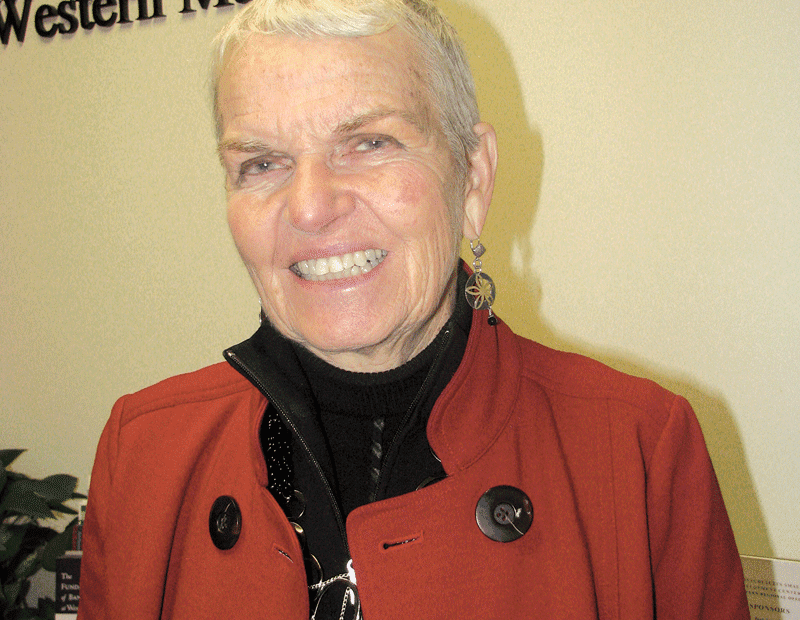
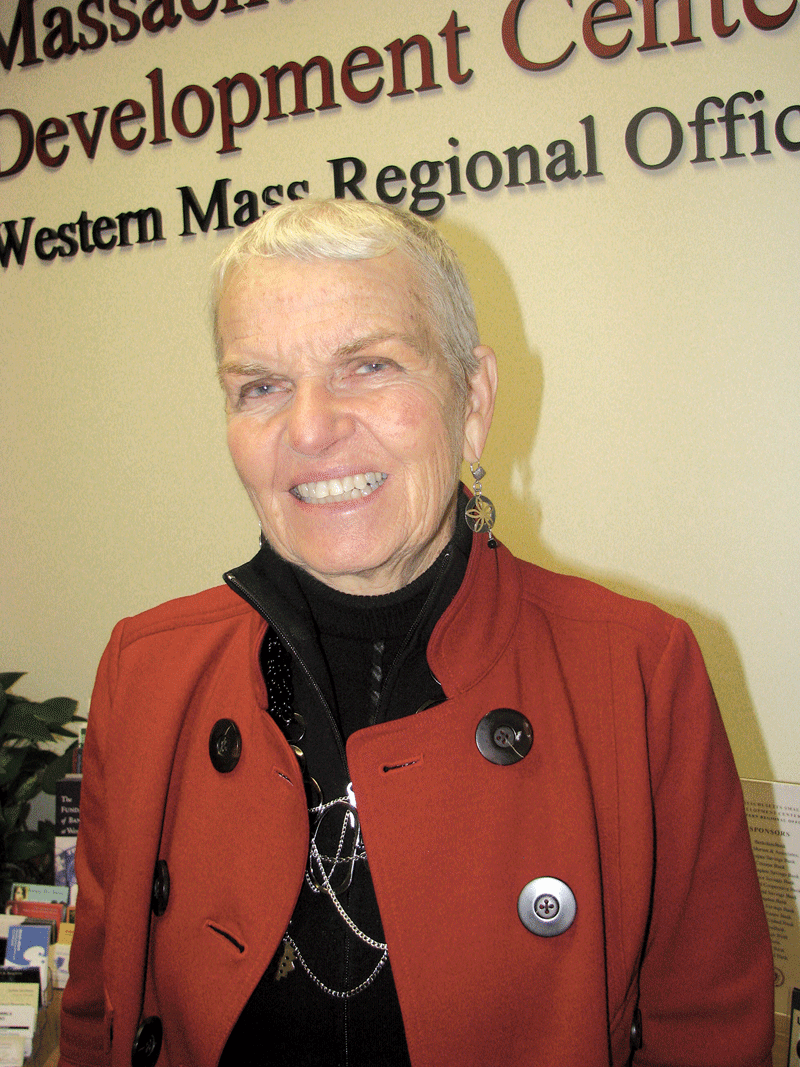
• Dianne Fuller Doherty, regional director of the Western Mass. Regional Office of the Massachusetts Small Business Development Center Network (MSBDC) since 1992. Part of the Isenberg School of Management at UMass Amherst, the MSBDC offers free and confidential business-advisory services, training programs, and information and referral to small businesses in Western Mass. Previously, she founded and served as president and CEO of Doherty-Tzoumas Marketing, a full-service advertising and public-relations firm based in Springfield. Active in civic affairs in the Greater Springfield area, Doherty is a founder of the Women’s Fund of Western Mass., an
Dianne Fuller Doherty

Dianne Fuller Doherty

endowment to support women and girls. She also serves on the boards of the Pioneer Valley Plan for Progress, Bay Path College, the Community Foundation of Western Mass. and the Regional Technology Corp. She is also a board member of Digital Divide Data, a U.S.-based, nonprofit corporation that offers employment and educational opportunities to disadvantaged youth in Cambodia and Laos, by addressing the technology divide;

  • Eric Gouvin, a professor of Law at the Western New England College School of Law and director of the WNEC Law and Business Center for Entrepreneurship, which provides a number of services to ‘low-income’ business owners, including clinical support and several forms of community outreach. Prior to joining the faculty at WNEC, Gouvin practiced corporate, commercial, and banking law with a large firm in Portland, Maine. He worked on

Eric Gouvin

Eric Gouvin

matters for business clients ranging from Fortune 500 companies to small, closely held concerns. He has been very involved in entrepreneurship education, having founded the Small Business Clinic at the WNEC School of Law, serving on the Board of Editors for the Kauffman Foundation’s eLaw Web site, and being a member of the Board of Advisors for the Scibelli Enterprise Center and for the Harold Grinspoon Charitable Foundation’s Entrepreneurship Initiative. His areas of scholarly interest include corporate, banking, and entrepreneurship law, often with an international or comparative perspective;

• Jeffrey Hayden, director of the Kittrredge Center for Business and Workforce Development at Holyoke Community College, which houses a number of workforce-development programs, the Mass Export Center, and WISER, the World Institute for Strategic Economic Research. Previously, he was the long-time director of the Holyoke Office of Planning and Development and the Holyoke Economic Development and Industrial Corp. In those capacities, he worked on a wide range of economic-development-related programs, and also assisted dozens of small businesses with efforts to locate and expand within Holyoke; and

Jeffrey Hayden

Jeffrey Hayden


• Michael Vann, a principal with the Vann Group, a professional-services firm that provides small to mid-size businesses with solutions such as accounting and bookkeeping, human resources, recruiting, and strategic advisory services. He is responsible for the day-to-day operations of the group’s strategic-advisory services and merger/acquisition activities, where he serves as the trusted adviser to several of the group’s key clients. In addition to his duties with the Vann Group, he serves on the Board of the Alden Credit Union and is actively involved in a number of charitable organizations. He is a member of the 40 Under Forty Class of 2007.
Michael Vann

Michael Vann

For more information on the 40 Under Forty gala or to order tickets — $60 per person ($50 for members of the Young Professional Society of Greater Springfield and Northampton Area Young Professionals), with tables of 10 available — call (413) 781-8600, or visit www.businesswest.com.

Features
In Business and Life, He’s Faced Peaks and Valleys

Michael Matty, president of  St. Germain Investment Management

Michael Matty, president of St. Germain Investment Management

Mike Matty says there are about 350 people who have reached the so-called ‘seven summits’ — the highest peaks on each of the seven continents. That’s about 50 or so fewer than have been rocketed into space.
“So you’re more likely to run into an astronaut than you are someone who’s done this,” said Matty, who will attempt to join a very exclusive club in May, when he takes on the highest peak in the world, Mount Everest.
He leaves for Nepal in late March, and is training hard for this latest assignment (much more on that later), which is the culmination of a quest that started rather informally and innocuously only about five years ago, when he ventured to central Africa to take on Mount Kilimanjaro, or ‘Kili,’ as those who have scaled it — or tried to — are given to calling it.
“I met a guy on that trip who started talking about these seven summits and how he was going to try and do it,” said Matty, president of Springfield-based St. Germain Investment Management. “But he never did — he climbed Kili, and that was it — his first and last. But I became interested with the prospect of doing it, and now I’m just one big step away.”
Indeed, over the course of the three and a half years or so after Kili, Matty climbed, in succession, Elbrus (Europe); Vinson (Antarctica); McKinley, or Denali, as it’s often called (North America); Kosciuszko/Carstensz (Australia); and Asconcagua (South America), the highest peak not in the Himalayas, which he scaled roughly a year ago.
Each of these mountains was challenging in some, and often several, ways, he said, listing everything from the extreme cold and remoteness of Antarctica to the long travel times to Australia, to the high and unpredictable winds in Alaska — and seemingly every other stop.
The six climbs, and the myriad others at far-less-celebrated peaks, including Mount Washington in New Hampshire, provide Matty with extremely stern tests of his strength, endurance, and patience, which he enjoys. But they also provide something else — much-needed breaks from his day job, or, to be more specific, from the intense attention to national and world events that is needed to do it properly.
“The funny thing about the investment world is that almost everything has a potential impact,” he explained. “So you say, ‘I’m tired of thinking about the news and what’s going on in Egypt and things like that — the heck with this, I’m going to turn on the Weather Channel.’ Well, the Weather Channel’s talking about a hurricane moving into the Gulf, so you start thinking about oil rigs and what’s going to happen there.
“Your mind never gets away from it if you’ve done this forever,” he continued. “That’s one of the nice things about mountain climbing — it gives you a break to get away from it; you don’t know what’s going on anymore. Everything you’re doing is physical as opposed to what I do on the job, which is all mental.”
For this, the latest installment of its Profiles in Business series, BusinessWest talks with Matty about his work, but mostly what he does away from it, and especially that seventh summit. He still has some rigorous training to do, but believes he’s ready, physically and mentally. And while he has plenty of inspiration, he’s bringing along a little more — a decades-old picture of his brother, Billy, who passed away unexpectedly last year at the age of 48, which he intends to leave at the roof of the world.
“It‘s a shot of him when he was a little kid; it was sitting on my father’s dresser for decades,” he continued. “I asked him if I could have it … I said, ‘if I need one little extra push on summit day, that might be it — I need to get his picture up there.’”

On a Grand Scale
As he talked with BusinessWest on a Friday in mid-February, a somewhat casually dressed Matty was prepping for a weekend trip to Mount Washington. This peak in the Presidential Range of the White Mountains is, at 6,288 feet, just over one-fifth the height of Mount Everest.
But scaling it, something Matty’s done more than 50 times by his estimation, is effective training for May’s climb, especially in the nasty weather that was predicted for that weekend.
There is no shortage of weather on Mount Washington, Matty continued, adding that temperatures in mid-winter are just above or, quite often, well below freezing. And that’s without wind, which is almost always howling. In fact, until very recently, Mount Washington proudly held the record for highest wind gust directly measured at the earth’s surface (231 mph), and it regularly hits three digits at the summit.
Matty says it’s all but impossible to climb when the winds get above 60 mph, and that it gets dicey when the gusts get to even half that level, considering that one is on a mountain — and sometimes on a ledge only a few feet wide — with up to 100 pounds on his or her back.
“It’s much more difficult than most can fathom even with a 20- or 40-mph wind,” he said. “I say to people, ‘imagine trying to stand on the roof of a car going down the highway at 65 miles an hour — that’s what a 65 mile-per-hour breeze is. Except on the highway, it’s a steady breeze going in one direction; up there, what you’re getting is wild gusts that are changing direction potentially every second or two as it’s bouncing off of something or shifting. You’re bracing in one direction, and all of the sudden the wind is pushing from that direction. That’s one of the reasons why Mount Washington is such a great training ground.
“We had some really windy days on Asconcagua,” he recalled. “You’d be lying in the tent, and you’d suddenly hear this sound like a freight train rolling down the mountain, and you knew that in another five or 10 seconds you’d be pummeled by a high, high wind. So you’d try to stretch yourself out to the corners of the tent so the wind can’t get underneath the tent. Meanwhile, the side of the tent is getting bent over, and you’re waiting for the poles to snap and hope you don’t get impaled on one of the poles. It’s a worrisome event when you get in those high winds.
There are many things about mountain climbing — especially summits like the seven — that people who have never done anything like this couldn’t easily comprehend, he continued, citing, as another example, the cold encountered in Antarctica.
When he was climbing there, Matty told BusinessWest, the sun was out 24 hours a day, “and it’s just sort of circling around the horizon. And when the sun drops behind one of the mountains … the temperature gets down to about minus-40, and in a hurry. One minute you’re standing there feeling pretty comfortable in just one layer, and then, you’re eating dinner and the sun creeps behind that mountain, and 10 minutes later, the temperature has dropped 30 or 40 degrees; it’s like being in the desert — there’s nothing to hold the heat in. That’s when it’s time to get in the sleeping bag and try to stay warm until the sun pops out on the other side.”
There’s also the remoteness factor to deal with on that continent, he went on.
“Vinson is really in the middle of nowhere,” he explained. “There’s a Russian cargo plane that drops you off on a natural ice runway; it’s a miles-long patch of rock-hard ice that runs parallel to the mountain range. It’s a big, big, big plane, and when it hits the runway, you can’t brake, so you roll for miles after you hit the ground.
“And when that plane takes off, they can’t land again until the winds off the mountains die down,” he continued. “You might call and say, ‘we’re ready to be picked up on your next flight in — but their next flight in … the winds may not shift for two, three, or four weeks. It’s not so bad if you’re prepared for it, but if you have someone with a medical condition, knowing you may be stuck for several weeks can be a real problem. When you watch that plane take off, you know it’s your last link with anything, anywhere — and the anywhere is a four- or five-hour flight to a remote town in South America.”
Matty has compiled all these memories, and many more, in a fairly short career in mountain climbing. He told BusinessWest that, since his youth, he’s always been a hiker — he thought about trekking across the Appalachian Trail and was told that he should do so when he was young, but didn’t — and kept active with that activity into his 40s.
It was at the invitation of Paul Valickus, CEO at St. Germain, that Matty took on what would become the first of the seven ascents — Kilimanjaro — in 2006. In the end, Valickus didn’t go on that trip, but Matty did, and he recalls those conversations with the fellow climber who introduced him to the concept of the seven summits.
“He never went on to do any of the others, but I was getting intrigued talking to him,” Matty recalled. “I said, tongue-in-cheek, ‘geez, there’s only six more after this.’ But then I started thinking about it, and said, ‘Kili’s doable, Asconcagua, the one in South America, is doable, the one in Australia’s doable — long flight, but it’s doable, the one in Russia’s doable, and McKinley, well, that’s doable, but it’s a tough mountain.”

Taking Stock of the Challenge
While staring down mountains over the past several years, Matty, like all those in the financial-services realm, has coped with peaks and valleys of a different kind.
Indeed, while Matty has stories of enduring wind, cold, frostbite, sunburn in strange places (like the tongue and the roof of the mouth), and snow-bridge-hidden crevasses, he has similarly harrowing tales of trying to calm panicked investors in the fall of 2008, when the Dow plunged below 7,000 and the phrase Great Recession was working its way into the lexicon.
It might be an oversimplification, but Matty seems to take the same approach to investment-consultation work that he does to mountain climbing — intense preparation, knowing his subject matter, and looking at what’s directly ahead as well as the bigger picture.
His career in the financial-services sector began in the mid-’80s with Phoenix Mutual in Hartford. There, he took part in a training program that provided exposure to all aspects of the business, from real estate to fixed-income; from high-yield products to stocks, the facet he liked best.
He became an analyst in the stock department and wound up running one of the mutual funds there. When Phoenix started moving some of the fund managers out of Hartford to other locations (something he wasn’t interested in), Matty left to start a company that wrote investment research for hedge-fund managers, mutual-fund managers, and others handling investments.
And while doing that for five years, he said he kept getting phone calls from broker friends about a firm in Springfield (St. Germain) that he should look into.
“I got four or five calls saying I should go talk to those people, and I eventually did, just so when I got calls seven, eight, nine, and 10, I could say, ‘I already talked to them,’” he recalled, adding that his visit led to the kind of opportunity — and lifestyle, away from the congestion and commutes of New York and Boston — that he was looking for.
Matty said St. Germain has a unique (for this industry, anyway) compensation formula, in which people are not paid by commission, a system he supports wholeheartedly.
“People will respond to whatever incentive you pay them, and I’ve seen that in some of the other places I’ve worked,” he explained. “So if you’re going to pay people commissions, you’re going to get people who are going to try to sell product, not people who are going to say, ‘I want to sit down and take care of people the best way I can.’
“That’s a broad overstatement, but there’s a good deal of truth to that,” he continued. “Instead, what I want to compensate people for is taking care of clients, so I say to everyone here who’s talking with clients, ‘every potential client who’s coming in is your potential parent or grandparent — do the right thing for them.”
This approach has succeeded, he said, in helping the company keep clients for the long haul, and properly serve them through the many ups and downs that mark a lifetime of investing and managing money.
“When someone comes in who shouldn’t be in stocks, for example, and the focus should be on ways to pare down debt as this person approaches retirement, we want to send them out with a laundry list of things that they should be doing on the financial-planning side that don’t include a single thing that puts money in our pocket.
“And that’s OK,” he continued. “We’ve been around a long time. We’re not worried about paying the light bills. We don’t need to get every dollar out of every client that comes in the door; what we need to do is treat people well and keep clients for a long time.”

Face Time
Matty knows that people have died trying to climb each of the seven summits — and a good number have lost their lives attempting the challenge now awaiting him.
“Historically, for every 10 people who summit Everest, you’ve had one mortality,” he said, “but it’s much better than that now — you’ve got better gear, people are in better shape … there’s lot of reasons why that number has gone down.”
Still, he has filled out the body-disposal form that is part and parcel to getting a climbing permit for the summit at Everest. It asks him to pick from one of several options with regard to what to do with his body if — and this is a rather large if — it can be recovered should tragedy strike. (He chose cremation in nearby Katmandu.)
“When you climb Everest, you see the bodies,” he said, adding that retrieval is logistically difficult, and people would often have to put their own lives at risk for such recovery exercises, so usually they don’t attempt them.
But Matty — and apparently his colleagues at St. Germain — can maintain a sense of humor about this subject. “They were getting a pool going in the office, so if I came back, they’d be really happy, and if not, there would be a consolation prize,” he joked. “They were going to try to get a few million dollars in insurance on me, but no one would write it.”
Meanwhile, training for the Everest climb is a far more serious matter.
“Right now, I’m working super hard because it’s coming up fast,” he said, adding that he works out with personal trainers four mornings a week at Attain Performance in East Longmeadow, and also uses a so-called versa-climber, what he described as “an endless ladder,” at home.
“The trainers are high-tech in terms of their knowledge of things,” he continued, adding that they’ve worked out with minor-league baseball players and other professional athletes. “When you’re trying to work on a specific muscle group or exercise to mimic something you would do on the mountain, they really know which buttons to push to activate those muscles and build up a lot of strength and endurance, which is what this is all about.”
Many of his workout routines at the gym, from squats to sessions on the treadmill or elliptical machines, are taken on while carrying a pack containing a 50-pound bag of sand, he continued.
When asked if he was worried about a letdown if and when Everest is conquered — feelings of ‘what do I do now?’ — Matty said there will still be plenty of challenges left, both personally and professionally.
“There’s still a lot of interesting stuff out there, like Mount Rainier in Washington State and the Matterhorn in Switzerland,” he said, “And, heck, I’ll be getting too old for this stuff soon anyway.”
Matty told BusinessWest that there isn’t much official recognition that comes with joining those who have scaled the seven summits.
“You get your name on the Web site … and that’s about it,” he said, referring to a list of the members of this exclusive club. “That, and some bragging rights, I guess.”
For scaling Everest, though, he gets to write his name on the wall in the famous Rum Doodle bar and restaurant in Katmandu — and he gets to eat there free for the rest of his life.
All that — and the chance to give his brother’s picture a new home, one with the best view on the planet — is more than enough reward for him.

George O’Brien can be reached at [email protected]
Features
New SPHS CEO Enters the Health Care Fast Lane

SPHS President and CEO Dan Moen

SPHS President and CEO Dan Moen

Dan Moen wasn’t looking for a job opportunity when a recruiter invited him to apply for the position of president and CEO of the Sisters of Providence Health System last summer. But after the initial interviews, Moen, then president of Heywood Hospital in Gardner, saw an intriguing career challenge unfolding. Since putting his new title on his business card, Moen has been familiarizing himself with the region, his health care system and its employees, and even the competition. He’s also getting to work on strategic initiatives to confront the myriad hurdles facing all health care providers.

Dan Moen describes himself as “an adrenaline junkie.”
He explained by pointing to several pictures of a red racecar adorning the bookcase of his office. “I race at Lime Rock and Sebring regularly,” he said of two road courses in Connecticut and Florida, respectively. “I started with open wheels, but now I race mostly sports cars, and I love it.”
He continued by grabbing a framed copy of a Worcester-area magazine story highlighting his exploits in something called hydrofoiling, an extreme form of waterskiing in which one is actually riding on a sled-like device several feet above the surface of the water.
Moen is also feeding his habit with his latest career move — assuming the helm at the Sisters of Providence Health System (SPHS). While not as outwardly hair-raising as those other pursuits, this assignment comes with its own stern set of challenges. Indeed, while SPHS and its various component parts, including Mercy Medical Center, are facing the same fiscal challenges as other providers, the system itself has the specific challenge of meeting a mission, set more than a century ago, to essentially serve the historically underserved.
And often, this means programs that struggle to pay for themselves, and often don’t.
Meanwhile, there is the regionwide and nationwide matter of coping with health care reform — or what Moen calls “access reform” — and the need for what he termed “payment reform.”
“Every hospital is going to be challenged over the next three to five years, maybe longer, and moreso than I think we’ve ever seen before,” he told BusinessWest. “The pressures on the cost side are enormous at this point; the state budget is in serious trouble, the federal budget is in serious trouble, and employers are experiencing premium increases on health insurance for their employers that are just unsustainable. Things will have to change.”
All this adds up to a challenge that is bigger and, in some ways but not all, different than the one Moen was facing at Heywood Hospital, a 125-bed facility in Gardner, just north of Worcester. And it was, and is, an intriguing-enough challenge for him to first accept an invitation to interview for the position and then accept it when it was offered.
“At one point I thought I’d finish my career at Heywood — I’d spent 21 years there and was enjoying a good run; it’s a fine institution,” he said. “But when the recruiter called me on this one, it really made me start to think about the rest of my career, and I said to myself, “if I’m going to do something else with my career, now is the time to do it. I looked at this and saw some new challenges for me, and the fit was right.”
Elaborating, Moen said SPHS, with its wide range of services and focus on accountable care (which moves toward rewarding good peformance and better outcomes, rather than sheer volume), represents “where health care is going,” and he wanted to be on the front lines of that movement.
“When you look at some of the work that’s being done here to build a model for accountable-care organizations, I don’t see a lot of institutions at the level we’re at here,” he explained. “Some of them are just getting their hands around what it all means. I’m enthused that we’re already looking at the model of care that’s going to help us be successful in the future, because starting from scratch is a big undertaking.”
For this issue, BusinessWest talked at length with Moen about the challenge he’s accepted, how he’ll approach his latest high-octane endeavor, and topics ranging from physician recruitment to having his major competition (Baystate Health) 800 yards away, instead of 15 miles, as was the case at Heywood.

Getting Revved Up

Dan Moen, seen here in a Mazda

Dan Moen, seen here in a Mazda, has added racecar driving to his list of adrenaline-pumping activities.

Moen has enjoyed an intriguing, 28-year career in health care, one that has offered him a number of vantage points and insight into services — and those to whom they are provided.
Indeed, he started out as a radiologic technologist, or rad tech, as they’re called, at several hospitals, and later taught that subject at Quinsigamond Community College and Northeastern University.
He said that direct-care experience has helped in a series of administrative roles he’s had in the past quarter-century, including that of CEO at Heywood and, before that, Holden Hospital in Holden, Mass.
“Coming from a direct-patient-care position,” he explained, “my values center around the quality of patient care, the experience the patient has when he or she comes into the institution, building a positive reputation for the institution out in the community, but also connecting with the community and not being isolated.”
Moen told BusinessWest that he certainly wasn’t looking for a career move, and had already turned down a number of recruiters’ requests to interview, when the SPHS position came onto his radar screen.
“I was so involved in what I was doing, and was still having fun with it — we were doing a lot of innovative things,” he said of his work at Heywood. “There wasn’t the opportunity to make a change until the right opportunity came along, and this was it.”
Since arriving on Jan. 24, Moen says he’s spent most of his time listening — to employees, fellow administrators, patients, area business owners, and government leaders — and is just getting started with that exercise.
“The learning curve is just getting to know so many people — hundreds of people in the organization and lots of people out in the community,” he said. “Having been in my previous institution for 21 years, I pretty much knew everything and everybody; one of the exciting things about coming to a new opportunity is getting to meet a lot of new people. Everyone has something to bring to the table, so I try to learn from every conversation I have out there, both inside the organization and outside, because I call it servant leadership, if you will; it’s a situation where I feel we’re really here to help other people do their jobs well, and we’re here to serve the community.
“I see one of my roles being as an information gatherer for the system, and I do that in a lot of different ways,” he continued. “Bringing that information to the institution and talking to people about it will help us make better strategic decisions, both short-term and long-term.”
Looking ahead, he said he has a number of receptions planned to advance the process of meeting and listening. Those constituencies include the medical staff and area business leaders, while at the same time, he’s also reaching out to other hospital CEOs in the region to sound them out on opportunities for collaboration.
“I know all of them very well, but this is a new day, a new opportunity for us to talk about health care needs in the area and how we can meet those needs,” he said. “There may be some things we can do together.”
At Heywood, he recalled, that facility worked with nearby Health Alliance to put a program in place to facilitate access to care. “We were helping patients and their families get health-insurance coverage that they were eligible for; it’s quite a task to get people enrolled in these plans,” he said. “We worked with Health Alliance to make it a multi-town, multi-city effort. This is the kind of thing hospitals can look at.”
Moen noted that he is now in a different kind of competitive situation than he was at Heywood, with Baystate just a few blocks to the north. He said he’s never been afraid of competition, and looks forward to it in this case, but will look for ways to collaborate as well.

A Higher Gear
When asked to describe his management style, Moen came back repeatedly to the adjective ‘collaborative.’ And when pressed to elaborate on what that means to him, he said it entails an inclusive form of management where he delegates where necessary and does not make decisions in a vacuum.
“To me, it’s more about listening than anything else — listening and learning from the people who are really out there doing these important jobs on a day-to-day basis,” he explained. “And that feedback is included when we’re making decisions about the future of the system.
“As CEO, I view myself an orchestra leader,” he continued. “There are a lot of talented people out there in the organization, and it’s my job, and that of the administrative team, to pull all that together, make sure there’s a vision for the future, and that we take steps to get this institution ready for that future. And that’s something I think I have a pretty good history of doing.”
Moen will lead this orchestra at a time when composing quality, efficient health care is a daunting task, and in an environment where the questions about how to change a system that most say doesn’t work come much easier than the answers.
“There’s a lot of pressure on the system to be more efficient, and payment changes will put a premium on wellness and keeping people’s health at optimum levels — whatever that happens to be for the individual,” he continued. “There will be a lot more preventative care, preventing readmissions and exacerbations of chronic illness — that’s what it’s going to be.”
But while acknowledging that all this is the right thing to do, Moen said this thinking runs counter to the way most health care systems have been set up to operate.
“People get into health care because they want to do the right thing and help patients,” he explained, “but the health care system isn’t built to make that happen. But I think we’re going to see some real changes because the status quo, in the bigger health care system, is really unsustainable.
“Something’s going to have to change in our health care system in this country,” he went on. “We’ve done the access reform, and we’ve seen national health care follow Massachusetts on that. But now it comes down to answering the question, ‘how are we going to be able to provide high-quality care and do it at a cost that everyone can afford? The current fee-for-service system doesn’t reward people for doing that.”
While accomplishing the change that seems so necessary won’t be easy, Moen says the needed building blocks are, for the most part, ready and waiting to be put into place.
“We’re caught in this system that doesn’t work as well as we would like, but it will be a more efficient system and one that, I think, will reward the right behaviors if we make some of these payment changes,” he said. “A lot of the pieces are here … you’re going to see more care delivered in the home; you’re going to see intensive medical care delivered in skilled-nursing beds; you’re going to see more work being done on an outpatient basis to prevent hospitalizations. These are just some of the pieces in place.
“The question is, what are the strategies we work on to further improve the Sisters of Providence Health System and make sure we’re well-positioned for what comes down the road?” he continued. “And it could come fast.”

Getting on the Right Track
Summing up his thoughts on health care in general, and his new assignment in particular, Moen said that health care, and running a health care system, “is not necessarily rocket science.”
“It’s making sure the basics are done well, that the planning is done well, getting patients in and out, making sure there’s good quality and a good experience, and planning and implementing new services for the community in the future,” he explained. “Those basics are inherent in any hospital or health care system.”
But taking care of those basics is more challenging than ever before. And while health care isn’t as fast-paced, literally, as racecar driving or hydrofoiling, it will get the adrenaline pumping.
And Moen, as he said, is a junkie. n

George O’Brien can be reached at [email protected]
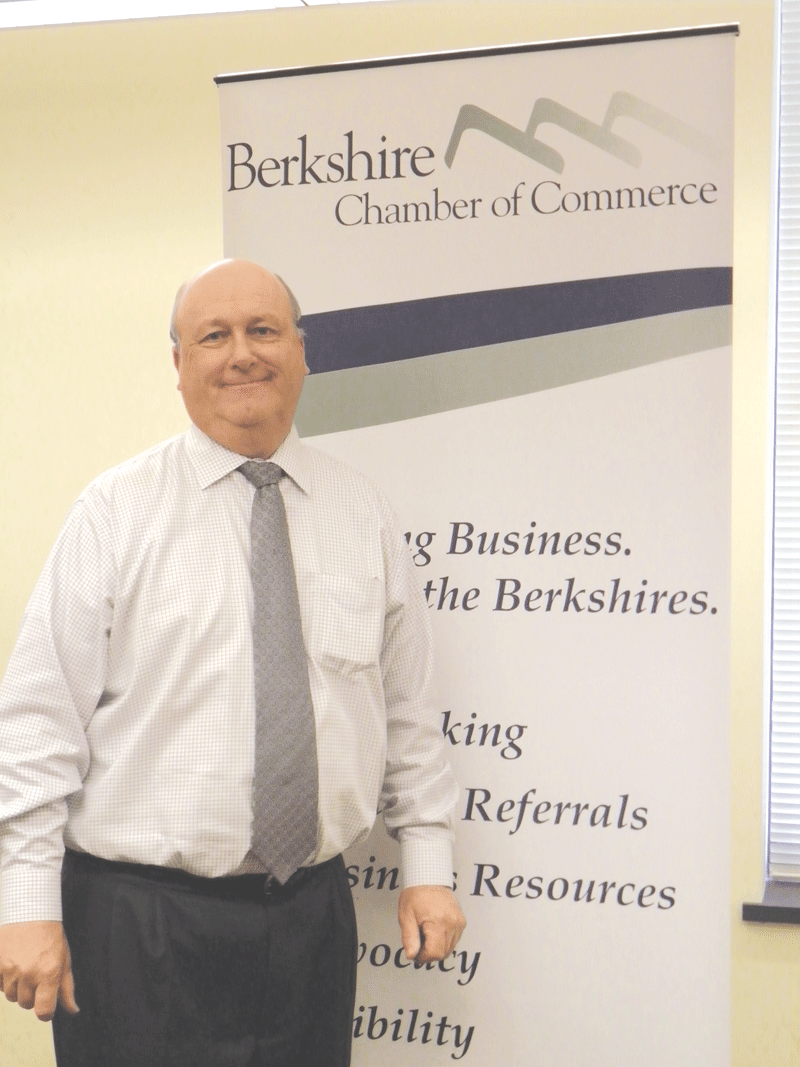
Difference Makers Features
Celebrate This Year’s Difference Makers on March 24

Kate Campiti, BusinessWest’s associate publisher and advertising director, says that, when the magazine created the Difference Makers recognition program more than two years ago, it did so knowing that there were many ways in which recipients could live up to that title.
And never has that been more evident than with the class of 2011, recently chosen by the magazine after receiving dozens of worthy nominations. Indeed, this year’s cast consists of:

• Pioneer Valley Planning Commission Executive Director Tim Brennan, who has kept one eye on the present and the other on the future — sometimes decades into the future — as he goes about helping to create a better quality of life for area residents and enabling this region to effectively compete in an increasingly global economy. He has many legacies, including the Pioneer Valley Transit Authority, a cleaner Connecticut River, several bike trails, and the Plan for Progress — with more on the horizon;

• The founder of Rays of Hope, Lucia (Lucy) Giuggio Carvalho. A breast-cancer survivor, she took inspiration, and some practical lessons in how to wage an effective event, from an AIDS walk in Boston led by, among others, her nephew, and created a walk that today draws more than 18,000 participants annually. In 17 years, Rays of Hope has raised more than $8 million for breast-cancer services and research, while also creating a strong show of unity in the ongoing fight against this killer;

• Don Kozera, president of Human Resources Unlimited, who, over the course of three decades of leadership, has enabled the organization to expand and evolve while remaining true to its original mission: helping individuals with mental and physical disabilities find employment and thus become productive members of society. Kozera has steered the agency though a number of fiscal and bureaucratic challenges while keeping it on course with its all-important goals;

• Robert Perry, a quasi-retired accountant who has, over the course of his career, devoted generous amounts of time, energy, imagination, and dedication to a number of nonprofit organizations, especially Habitat for Humanity. While lending his financial acumen and strong leadership and organizational skills to that agency as president and treasurer, he and his wife, Bobbi, also provided a large dose of inspiration when they committed to donating and raising $35,000 each toward the construction of a Habitat home, the building of which coincided with their 35th wedding anniversary; and

• Holyoke’s police chief, Anthony Scott, who says that his decade-long mission in that job — one that most would say he’s accomplished — has been to “increase the overhead” on criminals in that city, thus driving them out of business, or at least to another community. While doing so, he’s kept the heat on judges and probation officers to keep criminals in jail and off the streets.

“This year’s class of Difference Makers clearly show that there are, indeed, many ways to make a difference in our community,” said Campiti, noting that the award was created to highlight this fact and hopefully inspire others to find new and different ways to continue this legacy.
The class of 2011 will be honored at a gala slated for March 24 at the Log Cabin Banquet & Meeting House in Holyoke, beginning with a networking hour starting at 5 p.m. The event will feature entertainment, butlered hors d’ouevres, lavish food stations, introductions of the Difference Makers, and remarks from the members of this year’s class.
Tickets are $50 per person, with tables of 10 available. For more information or to order tickets, call (413) 781-8600, ext. 10, or visit www.businesswest.com.

Features
This Quaboag Town Ponders Its High-stakes Future

John Morrison

Through hard work and tenacity, John Morrison has occupancy at the Palmer Technology Center at around 90%.

Susan Rutherford said that, when it comes to fostering new business ventures in Palmer, her office isn’t just rolling the dice.
The executive director for the Quaboag Valley Community Development Corp., she told BusinessWest how her office has been helping to nurture an entrepreneurial business climate for the region. And in many ways, what she has found in the 15 years of seeing business in Palmer grow is that this recession hit hard, but there are some success stories.
“Obviously the past few years have been as stressful here as elsewhere,” she said. “But then there are some sectors that are doing okay, and some that are actually doing quite well.”
The town might be making the most headlines these days for that contentious piece of property eyed as a potential home for a resort casino to be developed by Mohegan Sun. But while the fate of gambling is still undecided on Beacon Hill, Palmer is steadily gaining ground for business initiatives to capitalize on the assets that are already in place.
Lucy Carlson

Where some see Palmer as off the beaten track, Lucy Carlson saw it as a place with untapped potential.

Five years after starting her advertising and marketing business just outside of the downtown area of Depot Village, Lucy Carlson said that Palmer presents a unique opportunity due to the very reason some cite as a business obstacle. Others might say that the town’s geographic location outside of the Route 91 corridor places Palmer off the beaten track, but she says otherwise.
“I saw that the Quaboag area in general was untouched and untapped,” she explained. “There are a lot of ad agencies in Greater Springfield, and then in Northampton. But this area didn’t seem to have that. There’s a lot of potential here, and especially Palmer as the largest town in this area.”
Up the street at the headquarters of the Quaboag Valley Chamber of Commerce, president Len Weake also said that the business climate mirrors that of most everywhere else in Western Mass., and Palmer has been affected by a recession that has cut through to commercial lending.
“In the past, when people were laid off, it pushed them into new ventures,” he said. “This time, we’re not seeing that — those people with entrepreneurial drive are having trouble getting the capital to start up.”
But, not wanting to focus on the negative aspects of the current economy, he quickly pointed out that thanks to the QVCDC, it’s not all doom and gloom within his region. And he pointed out the strong mill origins of the town as a link to Palmer’s full potential. The Garabedian family, owners of Thorndike Mills braided rugs, has been in business since 1925, and Weake cited them as an example of industry that continues to this day.
However, he also told BusinessWest of two properties that had seen the rug pulled from under them when the original owners of their buildings left the area. The Mapletree Industrial Plaza, just outside of downtown, and the Palmer Technology Center (formerly Tambrands), in Three Rivers, are prime examples of adaptive reuse, with both complexes boasting nearly-full occupancy.
“They aren’t retail locations,” he said to describe both properties, “but they have a strong commercial presence here in town.”
In this latest installment of ‘Doing Business In,’ BusinessWest talks to the principals at those industrial properties and finds out how they, and others, took a gamble on Palmer — and why it was a bet that paid off.

Home-field Advantage
Carlson said the business population in the Quaboag Valley is filled with, in her words, “hidden jewels.” As a full-service marketing and advertising agency, she said her office is primed to cater to those businesses, and that is what drew her to open shop in her location on South Main Street.
She acknowledged that one problem facing Palmer, in contrast to some of the other surrounding towns, citing Monson and Belchertown as two examples, is a lack of younger generations moving in — to work or live.
But residents have a strong sense of support for the hometown mom-and-pop shops, she went on to say. And with Palmer at the center of so many different, smaller communities, a good opportunity presents itself for anyone to hang out a shingle for new ventures. “There are so many opportunities for so many types of enterprises,” she explained, “and because we are just far enough from Springfield or Northampton, the local residents would be happy to support that business.”
Located in Ware, but serving Palmer and the other towns of the Quaboag Valley, the QVCDC is the place for local entrepreneurs to start when considering a new business. Stating the goals of her operation simply, Rutherford said, “we work with small businesses, including making loans to those who can’t get them from banks, and providing training, education, and consulting to businesses.”
The QVCDC’s stated mission is to “improve the quality of life in the Quaboag Valley by addressing the economic, environmental, and social needs of its residents while maintaining the integrity and character of each community in the region.”
When speaking of the new ventures that have come through her office in the 15 years of its existence, Rutherford said that this recession has proven more challenging for individuals than any downturn in the past.
“But a lot of it goes back to the ingenuity of the owners, and their adaptability, and ability to go with the flow,” she said. “And a lot has to do with good, tight management. The businesses that are having the most troubles are the ones that were lucky before — they were doing the right thing at the right time. The ones that are doing the best now are good planners, good users of resources.”
Citing some manufacturing concerns in town, she said success stories do exist. “There are imaginative people out there,” she added, “and they are developing interesting businesses. I’d say that it is individuals, more than an entire industry, who show the success of this region.”

Mill Power
An example of that definition of success, John Morrison and his industrial complex known as the Palmer Technology Center, could be exhibit A.
He is the owner of the buildings formerly housing Otis Mills, then Tambrands, maker of Tampax products, and even though he laughed when he said that, in some form or other, “these buildings have always made me money,” there was absolute truth in his statement.
His parents both worked at the plant when it was Tambrands, and as a youth, he had a job there also. He augmented his ‘day job’ with a plowing contract for the premises, and then a scrap-metal contract, and when the building was sold to Procter & Gamble in the 1980s, the new owners liquidated the offices and manufacturing facilities, but kept him on as ’round-the-clock security.
A brokerage firm was engaged to lease the facility, unsuccessfully, and as the site coordinator, Morrison became acquainted with some of the potential players. Eventually partnering with one of those individuals, Sid Kovitch from Boston (and, later, that man’s family after he passed away), Morrison took a gamble and purchased the four-building complex.
Originally there were no tenants on the property, but through hard work and determination, Morrison said that he has secured leases from 27 businesses. Presently, he puts the occupancy at just over 90%. And while he has been an unflagging point person for the property’s management, he credits the former owners for making this a top-notch, marketable facility.
P&G invested $20 million in the buildings in the late ’80s, which means that new tenants have the benefit of weather-tight construction, a T1 connection, and full fiber optics. Mustang Motorcycle Seats uses the original fabrication building, and today is Morrison’s largest tenant. But he also cites small operations, from musical-instrument teachers needing space, to Wing Memorial Hospital’s billing and visiting-nurse departments, who together occupy a full, 18,000-square-foot floor.
And his tenants can grow without leaving the property, he said. “We’ve had a lot of people who started out small, like Halpern Titanium. He came here with a table saw and a couple tools, and now has about 20 big machines. He started out cutting pieces of titanium and selling them, and he’s a full-blown machine shop now.”
But Morrison knows that if he doesn’t have the space for a prospective tenant, he can always refer them to another complex, Mapletree Industrial Park, for example, “so that the business and the jobs still stay here in Palmer.”
John Rottman is the senior property manager at Mapletree, and he shared the sentiment that keeping jobs in Palmer is important, especially when thinking of all the employment that was lost when the Colorado Fuel and Iron Steel Mill wire factory, whose mill his firm now owns, closed shop back in 1971.
“In its heyday, there were three shifts here running around the clock, with more than 1,000 workers; some old-timers here in town say that wire here went into the construction of the Golden Gate Bridge,” he said. “When the plant closed, there were still 700 people working here. It was quite a shock to the town.”
The current owners, Presidential Realty Corp., from White Plains, N.Y., bought the property in 1973. Rottman said there were a handful of small tenants for the next decade. He worked in the management office there for six months, in 1986, and at that time a concerted effort was made to lease out the rest of the property.
“We really pushed to make it a multi-tenant facility; we have 83 tenants, presently,” he said, adding that they come in a range of sizes. “Our biggest user is New England Wood Pallet, with more than 30,000 feet. But they are winding down now, due to transportation costs, and by summer, we’ll need to find another tenant for that spot.”
While that will mean another push to find tenants, Rottman said that, because his buildings have rail access, there is a whole subsidiary of rail marketing that exists to find properties like his. In his time, he has seen adaptively reused properties like Mapletree shift from light manufacturing to high-tech to, in some cases, warehouse space for other businesses off-site.
“But I hope that’s cyclical,” he said of warehousing. “I hope we get to the point where entrepreneurs can do some startups again, do some manufacturing and distribution. But it’s hard to find capital today to make that leap, and to take that chance.
“The last two years have been challenging,” he continued, “but we continue to rent space. It’s still chugging along. There are people with good ideas out there, though; hopefully, as soon as there’s money available, they will be able to make their business work.”
And that’s a sentiment that is echoed and supported across the town line at the QVCDC. Rutherford said that the challenge is not necessarily the funding, because that is what her office works to achieve, but to continue finding the right people to turn ideas into thriving businesses.
“That’s the goal,” she said, “to find those people who have a good work ethic who also have good entrepreneurial ability.”
And, rather than a bet with long odds, so far that has proven to be a sure thing.

Features
A Progress Report from the State’s Economic-development Czar

Greg Bialecki, secretary of Housing & Economic Development

Greg Bialecki, secretary of Housing & Economic Development

As the Patrick administration begins its second term in office, the focus, from an economic-development perspective, will be to continue to use public dollars to leverage private investment, says Greg Bialecki, secretary of Housing & Economic Development. He noted that so-called gateway cities such as Springfield and Holyoke need investments from the state to stimulate private spending and create new sources of jobs and overall economic vitality. In a wide-ranging Q&A touching on everything from corporate incentives to market-rate housing development, Bialecki talks about what’s been accomplished, and the work still to do in such cities.

Greg Bialecki acknowledged that that much of the progress being seen in Springfield and other area communities has been generated by state and/or federal assistance — on one level or another.
Examples abound, from the presence of Liberty Mutual in the Technology Park at Springfield Technical Community College to the high-performance computing center in Holyoke; from the tax incentives recently awarded to Smith & Wesson in exchange for its pledge to create 225 new jobs at its Springfield plant and make significant investments there, to the backup data center soon to be take shape at the former Technical High School on Elliot Street in Springfield.
Bialecki, the state secretary of Housing and Economic Development, prefers to look at the state’s contributions as investments that will help trigger private-sector spending in older, former manufacturing centers, like Springfield, Holyoke, Chicopee, and others, that need a boost in their efforts to reinvent themselves and spur economic growth.
The Deval Patrick administration’s strategic plan has been to make prudent, well-thought-out investments capable of generating significant returns, said Bialecki, adding that this policy will continue in the second term that started this month, and that, given some help in the form of economic recovery, such returns should soon be visible and measurable.

data center

The data center taking shape at the old Tech High building is another example of state investment in a gateway city — Springfield.

In this Q&A, BusinessWest sounded out the state’s economic-development czar on what’s been accomplished to date, and what can be expected in the months and years to come.
BusinessWest: Talk about the state’s investments in economic development and the goals and expectations that come with this assistance.

Bialecki: “Everyone who does investing is always looking for leverage, and the state is no exception. The governor has asked me to look for opportunities where a state investment will be matched, not just one-to-one, but many times over, by private investment. The high-performance computing center is a good example of that; the state has committed $25 million to that effort, which will probably be a $160 million project when all is said and done, and a number of private colleges involved have made sizeable investments as well. Originally, we put out the promise of some public funding to encourage private funding, but at this point, all the money that’s needed to make this go is in hand.
“Smith & Wesson is another example. Our $6 million investment tax credit is probably going to be about 10% of the actual private investment. Smith & Wesson has committed to spend at least $60 million in new plant equipment there over the next several years, so we’re just making a commitment that’s way overmatched by private investment.”

BusinessWest: How do these investments fit into the state’s broad strategic initiative involving the so-called Gateway Cities, such as Springfield and Holyoke, and are there signs that state-assisted projects are, in fact, stimulating private development?

Bialecki: “You can see some examples of the model this administration is advancing taking place in Springfield. Liberty Mutual is one, and the old federal building, 1550 Main St., is another, and so is the data center. These are public/private projects, for the most part, and examples of how state assistance has been provided to help older cities. We do believe that, if you’re really going to be a catalyst for economic development and job creation, we need to be thinking not only about places where we can do public projects — Union Station might be an example — but balancing that out with projects where we are providing an incentive for private investment.
“These projects send a bit of a different message about the way we think of the economic potential of different regions of the state, including our older cities. In other words, this approach is based on the view, the perspective, that good things are happening in all the regions and many of our cities, and if we can address their challenges, but also talk up the good things about them, we can convince private business to locate there.”

BusinessWest: Some people and groups criticize such public assistance to private companies, calling it corporate welfare and a flawed system for spurring economic development and job growth. How do you respond to that, and does the state need to make such incentives available to compete with other regions and cities?

Bialecki: “We believe that some level of assistance is probably required in a number of these places to help people make the decision to locate in a Springfield or locate in Western Mass., in part because of what other regions are offering, but also in part because some companies like it here and want to be able to stay here.
“Frankly, the Smith & Wesson deal, although that was real money, was in a way a blockbuster deal, in terms of the amount of incentives compared to what other states are offering. We have other states offering some of our companies huge deals — they’re saying, ‘if you move here, we’ll build you a factory, and we’ll pay for it.’ And if you talk to Smith & Wesson and ask them if the state’s willingness to commit to incentives was an important part of their decision, they’ll say, ‘yes, absolutely.’ But they’ll also say that they really like being in Springfield, we’ve got a great workforce; it’s not a case where they’re saying, ‘we don’t want to be in Massachusetts, we don’t wan’t to be in Springfield, but if you pay us enough, we’ll stay here.’ They want to be here.”

BusinessWest: How important is balance, in terms of public and private investments, to a city’s long-term success?

Bialecki: “Very important. The ultimate goal, obviously, is to maximize the amount of private-sector job-creation and private-sector investment in the region. We’re glad to continue to make significant public investments as well, but, realistically, and from our point of view, you’re only to going to be able to say we have a healthy economy in Western Mass. if there’s not only public dollars going into employment and investment, but also private dollars, and more private dollars than public.”

BusinessWest: Talk about the plight of the gateway cities and what the state is doing to assist them.

Bialecki: “Our approach is very consistent in that we don’t look down condescendingly on these cities — we view them as being able to participate in and contribute to the economic health of the state. We want them to be in the mainstream of the business mix in the state. What are the big industries in Massachusetts? Health care, higher ed, financial services, high tech … a measure of our success should be that those industries are in our gateway cities. In Springfield, MassMutual was already there, but getting Liberty Mutual was big — these are Fortune 100 companies, and they both have a presence there.
“There are also many colleges and universities in Springfield, and that’s important, as well as Baystate Medical center and other health care providers. We want to add the tech sector to that mix, and the high-performance computing center will help. We want the gateway cities to be in the mainstream of the state’s economy, especially the innovation economy.”

BusinessWest: What role does housing, specifically market-rate housing that will, theoretically, attract young people and professionals, play in economic development, and what is the state doing to stimulate such developments?

Bialecki: “Housing is a critical component, and we want to make sure that cities have a good mix of all kinds of people living within their boundaries. We want there to be enough affordable housing for those at that end of the spectrum, but also enough places for people who are middle-class and above and have choices about where they want to live. How can we create an environment where people will want to live in our gateway cities?
“We started a new program where, for the first time, we have money available to provide tax-incentive support for people to create market-rate housing in gateway cities. It’s a pilot program with $5 million available initially, and it’s something [Springfield] Mayor [Domenic] Sarno has expressed great interest in. Officials in Springfield have done an inventory of what market-rate housing is available today, and identified potential pipeline opportunities where such housing can be created; developers will probably need some help, and we’re willing to do that.”

BusinessWest: Is there a policy or strategic plan for helping these cities, and if so, what are the main elements?

Bialecki: “Some of the strategies that people have talked about in the past for helping gateway cities have been to mitigate the challenges and the problems facing these cities, such as public safety, and those are important things to do. But we are actually aiming higher. We’re not just trying to mitigate the problems; our vision focuses on determining what these cities, like Springfield, would look like if they were functioning at a high level and were contributing to the economic life of the region.
“And if you look back, all of these played that role at one time, some more recently than others. Holyoke was the first planned industrial city in the country, New Bedford was the whaling capital of the world, and Lowell and Lawrence were main textile centers. Most all of these cities were, at some point in time, not just keeping up with the economic prosperity of their neighbors, they were driving the economic prosperity of their respective region.
“We understand the challenges, but we think that that is the right aspiration to have for these cities: what would it look like and feel like for Springfield to be that driving force again?”

BusinessWest: What are the immediate hurdles to achieving that goal, and what has to be done for the city to achieve this vision?

Bialecki: “There are a lot of good building blocks in Springfield, like its colleges, universities, and fine health care facilities. We would like to see other aspects of the innovation economy; we’d like to see more tech companies. There are some initiatives with incubator space [at STCC], and there is the Pioneer Valley Life Sciences Initiative to get some other life sciences and biotech. There is plenty to build on.
“And development of these sectors goes back to my earlier comments about how many projects require some measure of state assistance. While it’s true that, to jump-start some of these things, assistance is needed, our goal is to move off that.
“In other words, let’s talk about the things we have to do in Springfield and the other gateway cities so that the businesses will say, ‘you don’t need to persuade me to open a new business unit in Springfield — that’s where things are happening; that’s where I want to be.’

BusinessWest: Is there a model to be followed in terms of such a recovery?

Bialecki: “Lowell is the classic; that’s the one everyone points to, and they have had a good deal of success over a prolonged period of time, going back to the ’80s. But I’ve seen some very impressive changes and improvements more recently, over the past four years, for example. In Haverhill, the mayor has made a big focus on market-rate housing in the downtown, mostly in old mills and even to the point where people said, ‘what are you doing?’ But it’s worked out very well; he’s got a lot of telecommuters there and people who can work anywhere, and it’s a short commute to Boston. And he’s generated a lot of street life, a lot of new restaurants.
“And New Bedford’s done very nicely. We’ve helped them with some things, and they’ve used those projects to trigger some private investments; there is a nice creative-economy element to what they’ve done, with a lot of artists moving in.
“The thing about gateway cities is that there’s no silver-bullet project that’s going to put you over the top; it’s an accumulation of things that are going to make a difference, including that all-important private investment.”

George O’Brien can be reached at [email protected]
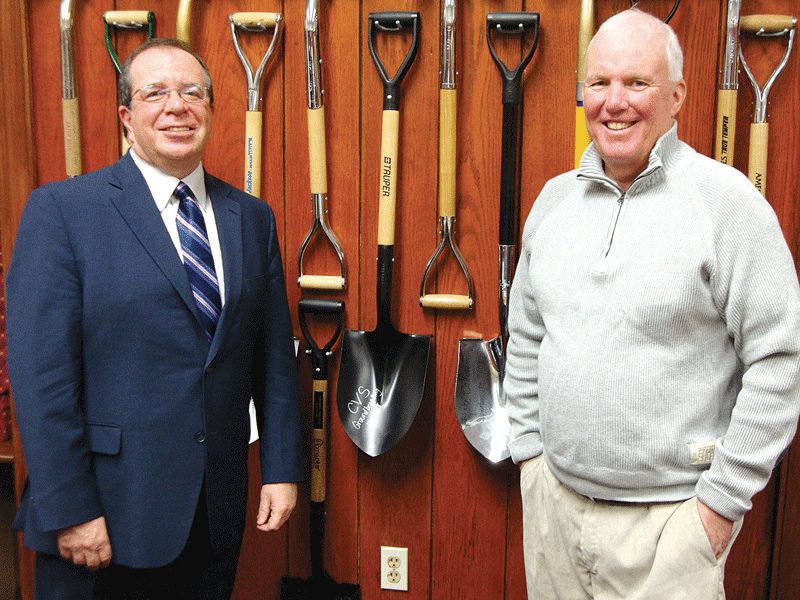
Features
Insurance Exec Has Modesty Element Fully Covered

Sam Hanmer President of FieldEddy Insurance Network

Sam Hanmer President of FieldEddy Insurance Network

Sam Hanmer could play football for Bill Bellichick.
Well … he could handle the pre- and post-game interviews with the media, anyway.
He sure sounds like one of the Patriots when he talks about his career, his life, and the things that define it. He’d much rather talk about the team than himself, and there’s an unassuming, ‘just-doing-my-job,’ ‘it’s-really-no-big-deal’ tone, or attitude, to much, if not almost all, of what he says. However, there’s a little more dry humor than most of the Patriots display.
Consider this comment when asked how he was able to exponentially grow what is now known as the FieldEddy Insurance Network in the 14 or so years after he took the reins as CEO soon after his father retired from the agency known as Field, Eddy and Bulkley:
“I think the thing I’ve done best is put together a really good team of people,” he started. “I want people to be smarter than me when they come here — which isn’t saying much, believe me; that’s not exactly a lofty goal. Together, this team gets it done, and they’ve enabled me to achieve a good work-life balance.”
There was similar modesty when he was talking about his athletic ability and proficiency in various sports.
Indeed, when asked if he was in an over-40 hockey league (he’s 48 and loves the game), he said, “no, but I’m certainly ready for one. I’m still in an over-30 league, and those guys are too fast for me. I’ve got to move on.”
On skiing: “I wouldn’t say I’m good at it … I’d leave it up to the people I ski with to say how good I am.” And on his exploits in triathlon competitions: “I just do the sprints, which is a half-mile swimming, 15 miles on the bike, and a three- or four-mile run,” he said, noting that these events progress markedly, distance-wise, with the so-called Olympic, half, and full, or ‘ironman,’ triathlons. “Each year I think I’m going to do an Olympic or a half, but haven’t gotten there yet; primarily, it’s the swimming that’s holding me back.”
Despite the understated tone to all these comments — and Hanmer’s insistence that his partner, FieldEddy President Timm Marini, who did spend some time playing for the NFL’s Miami Dolphins; his son, in training to be a marine biologist; or virtually anyone else would be a better profile subject for BusinessWest — there is an intriguing story here. Actually, several of them.
The first involves business, of course, and the expansion of FieldEddy well beyond its roots in downtown Springfield, an initiative that Hanmer orchestrated, and that continues today, although current market conditions have brought a temporary halt to the spate of acquisitions.
There’s also a strong track record of community involvement, especially with the YMCA of Greater Springfield, where Hanmer is in his fourth year as board chair and in the middle of his second search for an executive director with the recent departure of James O’S Morton for the Hartford YMCA.
Overall, there seems to be an attractive work-life balance that many business executives are still searching for. Indeed, thanks to that team he mentioned earlier, Hanmer was able to take Fridays off last summer and fall and spend more time at a home he purchased a few years ago in West Yarmouth. And with ski season now in full force, he’s thinking strongly about continuing that schedule into the spring.
The house on the Cape hasn’t helped Hanmer’s golf handicap — weekends there mean less time to play and practice — but he still gets out regularly enough, and there are those other sports, and even a fascination for ’60s and ’70s muscle cars, especially the Pontiac GTO.
“I’ve owned three of them — I’m a car nut,” he said, listing a ’65 tri-power, a ’65 four-barrel convertible, and ’67 hardtop, with a tinge of lament in his voice as he uses the past tense. “I’ll get another one … someday.”
For this, the latest installment of its Profiles in Business series, BusinessWest talks with a man who doesn’t like to talk about himself, but managed to do so just long enough to paint an interesting self-portrait.

Policy Statement
Hanmer was talking about the swimming leg of one of those sprint triathlons he’s taken part in, this one in Ludlow — but if you didn’t know any better, you’d swear he was expounding on the ultra-competitive world of insurance.
“The pack never really separates,” he explained, noting that there are dozens of people in a small stretch of water, kicking and clawing to gain some ground. “You get kicked in the face, punched in the face, and elbowed, and of course the anxiety level picks up; it gets a little crazy out there, a little wild.”
To some extent, though, FieldEddy has managed to gain some degree of separation. It now boasts more than 70 employees after acquiring several smaller agencies over more than a decade of aggressive expansion efforts, a crital mass that brings many competitive advantages. Still, this is a changing, ultra-challenging business sector, impacted most recently in the auto realm by a number of national online companies, such as Geico and Progressive, jockeying for position in a state that recently changed the rules to stimulate greater competition.
“It’s great for the consumers — they’ve seen up to a 20% reduction in their rates,” he explained. “The business has changed for us; it’s not necessarily good or bad, it’s just different. We’ve seen our share of the direct writers get a foothold here, but we’re starting to see that come back because they’re taking some rate increases.
“Geico has done a very soft launch in Massachusetts,” he continued, noting that that the company has been in the Bay State for more than a year, but has yet to make a lot of noise beyond its heavy marketing. “I’m just worried about what happens when they really want to pull the trigger.”
How Hanmer arrived at this position to reflect on, and react to, all these changes is an intriguing story. His father was the majority owner of a firm known then as Field, Eddy, and Bulkley, but Hanmer didn’t go to work for him upon graduation from UMass Amherst in 1984.
“I was interviewing at UMass for jobs, and went with the one that offered the most money,” he explained. “And that was with Liberty Mutual in Boston.”
Ironically, his girlfriend and future wife, Jenny, was working for the agency (she started part-time while they were both at UMass) when he ventured off to the Hub.
While Hanmer enjoyed his time in Boston — he said he spent many an afternoon and evening in the bleachers at Fenway — he soon returned to Springfield to get married and join Field, Eddy, and Bulkley.
He started in sales, but soon moved to the financial side of the business when the then-treasurer suffered a heart attack and had to leave the company for some time. He eventually gravitated back to sales and, in 1995 when his father retired, stepped into a leadership role.
And it wasn’t long before he started to capitalize on a trend within the industry — small, often mom-and-pop operations struggling to adjust to changes and technology began looking in earnest for exit strategies — to grow by acquisition.

Pedal to the Metal
Over the next dozen years or so, the firm acquired a number of agencies, some with familiar names known across the region and others with names known across the city or town in question. That list includes the Curtis and Hodskins agencies in Monson, Aliengena in Palmer, LDS in Three Rivers, Meadows in East Longmeadow, BPI in Springfield, Remillard in South Hadley, Buckley Bridge in Windsor Locks, and, most recently, Lawson, Marino & Bertera, another Springfield-based agency specializing in employee benefits.
When asked to evaluate his body of work with regard to growing the company, Hanmer was his usual modest self, almost Tom Brady-like.
“In the aggregate, it’s working,” he explained. “I’m not going to say all of those agencies are what I thought they were or that everything’s worked out exactly as I’d hoped, but for the most part, it’s worked, or it’s working; we’ve done well.”
Looking ahead, Hanmer said he continues to scan the horizon in search of new acquisition opportunities, but he’s not expecting additional expansion in the near term.
“There’s been a couple that have come across my desk,” he said, “but things are still pretty uncertain out there right now, especially in health care. And in personal lines, well … it’s really hard to put your finger on what might happen there. It’s a very competitive marketplace.”
In the meantime, he says his day-to-day job description at the moment involves working more on the business than in it — something else most area executives are striving to do. “But that’s difficult when you’ve been working in the business as long as I have,” he said.
Equally hard is achieving that desired balance between work, life, and community involvement, but Hanmer seems to found something approaching the right formula.
In addition to his lengthy stint as chair of the Y board — prolonged because successors due to succeed him have been unable to do so — Hanmer has donated time and energy to other agencies and causes. These include Bay Path College and the Springfield Museums, both of which he serves as a trustee, and Mason-Wright Retirement Community, where he’s a corporator.
He’s also a long-time member of an organization known as YPO, the Young Presidents’ Organization, a global network of young chief executives that currently boasts about 17,000 members in more than 100 countries. The local group acts as a de-facto board of directors for smaller companies that don’t have one, he explained, adding that roundtable discussions among members have helped him grow as a business leader and tackle some of the hard decisions he’s had to make over the years.
Hanmer also saves plenty of time for his family, especially his three children — Jessica, 25; John, 24; and Margo, 21 — and his two bulldogs, Bentley and Nola.
As for sports, as he said, he’s still in the over-30 league, playing left wing primarily, “but I go wherever they need me.” He’s also an avid skier and snowboarder — he sold his place at Mount Sugarbush and now rotates between Stratton, Okemo, Mount Snow, and, occasionally, Killington — and a triathlon veteran looking to get better in the water.
“I always thought I was a pretty good swimmer until I did one of these things; I found out in a hurry I wasn’t as good as I thought as I was,” he told BusinessWest, noting that the quality and quantity of competition usually leaves him playing catch-up when he gets out of the water and onto the bike.
“The good news with the swimming,” he continued, “is that it’s so short that being behind the pack means only about 20 seconds or half-minute, which you can make up on the bike, which is my best strength.”

Business Cycles
Time will tell if Hanmer graduates to an Olympic or half-marathon this year. He’s optimistic that will happen, but not exceedingly so.
He’s also not sure about the year ahead in insurance, where the economy continues to be a factor, and a green lizard and a woman named Flo are making things even more interesting in a business known for intense competition.
What is certain is that he will continue on in his understated way, giving credit to the team and essentially directing attention away from himself.
“That’s how I am — we just keep looking for ways to do things better and get ahead,” he said, sounding, again, like a certain hooded-sweatshirt-wearing football coach.

George O’Brien can be reached at [email protected]
Features

BUILDING PERMITS

 The following building permits were issued during the month of December 2010.


AMHERST

 Pioneer Valley Living Care Center
1 Spencer Dr.
$10,000 — Enclose existing balcony into new sunroom

 Peter Grandonico
41 Boltwood Walk
$3,000 — Pour new concrete floor for restaurant

 WD Cowls Inc.
116 Montague St.
$5,000 — Re-roof

 CHICOPEE

 Mass Mutual
350 Memorial Dr.
$11,600 — Strip exterior wood trim and replace

 GREENFIELD

 AR Sandri Inc.
400 Chapman St.
$268,000 — Construct a 48.6 KW ground-mounted photovoltaic system

 Greenfield Grille
30-44 Federal St.
$3,000 — Installation of a fire-alarm system

 Odyssey Holdings, LLC
1 Fisk Ave.
$60,000 — Replace roof

 Stoneleigh Burnham School
574 Bernardston Road
$9,750 — Re-shingle roof

 The Theodore Leonard House, LLC
116 Federal St.
$72,000 — Replace storm windows and exterior doors

 HADLEY

 CBR Realty Corporation
195 Russell St.
$25,000 — Tenant build-out of 1,360 square feet on second floor

 Knights Inn
208 Russell St.
$21,000 — 12’-by-24’ addition

 HOLYOKE

 Eric Suher
541-549 Main St.
$20,000 — Install new roof

 Thomas R. Rohan
329 Hampden St.
$16,500 — Remodel bathroom and new lights in bar area

 LUDLOW

 Baystate Gas
5 Ravenwood Dr.
$645,000 — Foundation

 Pieroway’s
20-28 East St.
$12,000 — Interior renovations

 NORTHAMPTON

 Big Y
158 North King St.
$77,000 — Construct interior walls for bathroom and office space

 Cooley Dickinson Hospital Inc.
30 Locust St.
$253,000 — Renovate central registration

 Forty Main Street Inc.
40 Main St.
$22,000 — Frame new wall for suite 206

 Millbank Place
351 Pleasant St.
$30,000 — Shingle roof

 Smith College
178 West St.
$30,000 — Rework roof eve and fascia

 SOUTHWICK

 T.J. Welch Inc.
622 College Highway
$35,000 — Construct spray booth for painting cars

 Town of Southwick
454 College Highway
$69,000 — Remodel auditorium stage in town hall

 SPRINGFIELD

 Chapin Center
200 Kendall St.
$16,000 — Re-roof

 Mercy Medical Center
299 Carew St.
$99,000 — Renovation for Lifepath Partners on the ground floor

 Smith & Wesson Corporation
2100 Roosevelt Ave.
$149,000 — Renovate and create new offices

 TFO Properties, LLC
18 Prescott St.
$10,000 — Re-roof

 WMECO/Northeast Utilities
300 Cadwell St.
$49,000 — Renovate women’s restroom and shower

 WESTFIELD

 Devcon Shops LLC
457 East Main St.
$71,000 — Alteration

 WEST SPRINGFIELD

 Pearson Daggett Development Company
46 Daggett Dr.
$49,500 — Replace existing roof

 Sullivan Associates Inc.
741 Main St.
$10,000 — Handicap ramp

 Town of West Springfield
26 Central St.
$867,000 — Replace 293 windows in the municipal office building

Features
Success in His Chosen Field Was No Accident

Rick Recor, owner, Rick’s Auto Body

Rick Recor, owner, Rick’s Auto Body

Rick Recor was recalling his early days as an entrepreneur, more than 35 years ago, when he hung out his shingle in the highly competitive world of auto-body work.
When asked if that venture, like the current operation on Pasco Road, put his first name over the door, he had to pause and think.
“You know … it was so long ago, I don’t even remember,” he told BusinessWest. “It must have, because I don’t recall ever naming it anything else. But when I look back, I don’t think it even had a name; I was doing almost exclusively wholesale at the time.”
So you might say that both Recor and his operation have made names for themselves in this business — and well outside it — over the past four decades. Indeed, by most standards, Rick’s has become one of the more well-known and established brands in the region, an accomplishment made possible by everything from heavy repeat business to a highly orchestrated billboard campaign that continues today, although on a much smaller scale than 10 years ago.
And now, as then, Recor is heavily involved with even the most minute of details involving all facets of this business, something he believes casual observers of his enterprise probably don’t know or understand.
“I’m not out on some island like Tahiti, which is what some people think,” he said. “I’m out there [in the shop] on production, every day. I look at every car before it goes off for delivery, and I look at it during the repair process, as well. I’m in here six days a week, and working hard; I have to — that’s the nature of this business.”
From very humble beginnings — a business with no name and just a few customers — Recor has grown his venture into one of the largest of its kind in the region, one with 40 employees, and maybe 100 cars in the shop at any given time. Rick’s will handle more than 3,000 jobs in a typical year.
Much has changed since those early days. “When I first started, it took two people to take a bumper off a car. That’s how much one weighed, maybe 200 or 300 pounds — they were all chrome; now, you can do it with one finger because everything is so light for fuel economy,” Ricor noted, citing just one example.
But the basics haven’t changed, he continued, listing solid customer service, attention to detail, and the need to generate business volume as just some of the things in that category.
For this, the latest installment in its Profiles in Business series, BusinessWest chronicles the winding road Recor took to this point in his life and career, and in the process gets a crash course in the auto-body business.

Scratching the Surface
As he talked about the ins and outs of his chosen field, Recor made repeated reference to a red Corvette parked in the back corner of the huge garage. Much of the front end had had been stripped off, and the hood was gone, revealing the powerful engine.
“The ‘BP’ written on the windshield stands for ‘blueprint,’” said Recor, referring to the battle plan for returning the car to its pre-mishap condition and the name of the technician who will carry it out — written next to those two letters. The BP follows the disassembly, or tear down, of the damaged portions of a vehicle, a process followed by the cataloguing, ordering, and checking of replacement parts, sequential steps that are carried out methodically to avoid having to do things twice, a very high priority given the low margins shop owners work under in this state (more on that later).
Recor said he gets involved in each of these steps and others that follow, including paint-shop work and final inspection before the car goes back to its owner, a regimen he describes as “orchestrating” each and every job that comes into the shop, including the longest and most expensive project to date — repairs to a Mercedes that totaled $68,000.
“There were more than 300 parts involved with that one job, when you count every nut and clip,” he said, adding that he inspected every step in that endeavor, as he has with every job, right down to a simple fender replacement.
Aside from the six months he was being treated for and recovering from throat cancer in 2005, this is the way it’s been for Recor since he first entered the world of auto body work after dropping out of high school in the early ’70s.
He started with sanding and taping duties for Boston Road Motors in Springfield, for which his father sold used cars. Later, he went to work for Central Chevrolet in West Springfield, where he painted cars and started the progression from employee to employer.
“I mentioned to (owner) Floyd Voke that I could paint a lot more cars if I had some people helping me,” he recalled. “He said that, if I split the ticket, split the compensation, I could hire people. So I did, I hired two people. They prepped the cars and I painted them, and I worked til 10 o’clock at night.”
After painting cars for a few other area dealers, he decided, in 1974, that it was time to go into business for himself.
He set up shop in a one-car garage behind Millie’s Pierogi on Broadway Street in Chicopee, and started doing work for a few auto dealers in the area.
He steadily added customers and, with his name now on the signs and work orders, grew the business into progressively larger garages. In 1997, he moved into a 40,000-square-foot facility on Pasco Road that was formerly home to Grossman’s Lumber. There, he now manages a truly family business.
Indeed, his wife, Mari Tarpinian, a long-time travel-bureau employee who was downsized when that industry shrank, joined Rick’s several years ago. She’s responsible for marketing and human resources, and handled most all of the myriad logistics, including the rugged permitting process, involved with getting the new digital sign now outside the business up and running.
Meanwhile, Recor’s sister-in-law, Susan, is the office manager, and his father-in-law, Leo, now in his 80s, picks up and drops off customers and “chases parts,” among other duties.
Not officially family members, but certainly critical to the organization, are the 40 or so other employees, said Recor, noting that many have been with him for two decades or more.

Framework for Success
As he gave BusinessWest a tour of the many departments within the sprawling shop, Recor would occasionally stop at a car, reach in an open window, pull the work order off the dashboard, and point to the line at the bottom of the page where it lists who referred the customer in question.
In each case, and not coincidentally — remember, he knows practically everything about each car in the garage — the words ‘return customer’ were stamped onto that line.
“Repeat business is very important in this field,” he explained while reaching into another window. “We have to generate volume, and to do that, we have to give people reasons to come back, not look somewhere else the next time.”
Elaborating, Recor said that he and all other players in this sector are continually challenged by the hourly rates that insurance companies are willing to pay for work done. Those rates average perhaps $37 per hour, he continued, and with the highly skilled workers he employs and his considerable overhead, there is literally no margin for error.
“We’re working with the lowest labor rate in the country, which makes it very hard to make a profit,” he explained. “To be profitable you have to be as efficient as possible, and you need to be as thorough as possible, because there’s no time to do anything twice.”
While discussing his business and how he handles its many challenges, Recor had to clear his throat often, and took repeated hits off a bottle of water. The dryness is one of the lingering effects of his throat cancer; another was the loss of roughly half his hearing.
He described his course of treatment and recovery as the most difficult time of his career, when he was left with no choice but to relinquish his orchestration duties and let someone else supervise the shop.
“It was hard, but you seem to forget about work when your health is an issue,” he explained. “It just not that important anymore.”
These days, work is paramount again, and, as always, Recor is singularly focused on the 60 or 70 cars that are in his shop and in various stages of repair. He said he enjoys riding his motorcycle when the weather allows, and likes to get away to New York City with Mari. But his first love appears to be his orchestrating at the shop. Which is good, because he’s at it maybe 60 hours a week.
“The best part of my job is that I still love what I do, and to me, that’s everything,” he said. “I’m usually one of the first people here, and I’m the last one to leave. I like it that way.”
Now 58, Recor said that while at various points in his career he thought about possibly expanding and opening multiple locations, he is content with his one shop.
“It’s too late in the game for me now; it’s always been my dream to be where I’m at, but it just took too long to get there,” he said, adding that the logistical difficulties of major expansion, as well as the problems he would have finding enough qualified help, have stifled those ambitions.
But looking back over 35 years, he can say that he’s certainly enjoyed this ride, and there are many miles still to travel.

George O’Brien can be reached at
[email protected]

Features
Karen Randall Reinvents the Family Farm
Karen Randall

Karen Randall has been willing to adapt to what customers want, which is why her business is much more than a farm today.

Maintaining a viable family farm is a pursuit subject to many different variables, Mother Nature and changing markets among the top contenders. Maintaining a successful farm store is no different, said Karen Randall, and it presents all the complexities of running a business — in addition to agriculture.
But Randall has had good ideas on how to keep both the family farm and a farm market not only viable, but a growing enterprise that has been evolving over time. It’s a tradition that she has been fine-tuning for the past few decades, but she thanks her late father, Bill, for starting the trend.
As the second-generation owner of Randall’s Farm and Greenhouse on a rural stretch of Center Street in Ludlow, she told BusinessWest how her father was not only a good farmer, but a good businessman as well.
Starting out in the 1950s, the operation was originally an egg farm, and Bill would travel the Pioneer Valley delivering his goods. “On his travels,” said Karen, “he would bring home cider, apples, asparagus, things like that, to sell with the eggs.”
Spotting the opportunity to become what Randall called a “convenience store before there were such things,” her father built a small roadside stand where he sold a little of everything.
“Everything you’d possibly imagine,” she continued, “from batteries and fuses to other convenience items. And because of the perishable nature of the produce, we were open all the time, seven days a week all year ’round. I remember on Christmas morning my dad and Uncle John would go open the store for a few hours.”
It wasn’t always her plan to take over the family business, though. After graduating from college in the 1970s with a degree in Childhood Education, she said that a tough job market plowed the way for her to help out on the farm and in the farm market, located in what is now Elsie’s Creamery, named after her mother. She stayed on, became a key employee, and, when her father passed away in 1987 after a short illness, found herself running the operation with her mother.
Life on a farm is all about adaptation, said Randall, from those variables that one can’t control to the decisions that can make or break a business. It was in the mid-1990s when the time came to face another epoch in the history of the farm, and Randall had to decide what to do next.
“I had a milestone birthday,” Randall explained, “and I thought to myself, we have outgrown our building at the creamery. We had gotten out of the recession of the late ’80s and early ’90s. So the questions were, ‘do I take this to the next level — not create a new business, but modernize what I do have and expand certain departments, expand on different ideas? Or do I get out?’”
The answer, of course, was not the latter, but rather the beautiful structure that Randall built in the winter of 1996 to expand the farmstand into an expansive greenhouse and marketplace that also incorporates a kitchen and deli.
“There were other businesses in the eastern part of the state that had done similar things,” she said of her decision to take the farm to the next level. “It was the time for agricultural businesses to grow. There aren’t a lot of them, but there had been some successful expansions, in places like Lexington and Acton.”
Randall came up with a business plan and strategy, borrowed the capital necessary for such a venture, and hired Associated Builders to handle the design and construction to realize her business goals. The 20,000-square-foot structure houses both retail greenhouse space and a post-and-beam market, and gave the business breathing room for those expanded operations, but also some new ventures entirely.
Produce and plants had always been the basis of the retail operations, and the small kitchen she built for the bakery and deli reflected that. “I thought, we’ll make a few sandwiches, sell some deli items, some pies,” she remembered. “Never would I have expected it to become the number-one department in sales for the business.”
It’s a trend that Randall’s has adapted to, she said, to reflect the changing nature of shoppers’ preferences. “People’s lifestyles have changed so much,” she said, adding that “the bakery and deli department grows in sales every year.
“And it’s not just the prepared foods, either,” she continued. “I guess I grew up cutting my teeth in a different environment. We used to sell a lot of 50-pound bags of potatoes, half-bushels of apples, and cases of produce. Well, that’s a thing of the past. We sell a lot of single potatoes now. My dad, who has been dead for 20 years, could never have imagined that we’d be selling out of cut and peeled butternut squash. And green beans already snipped, ready to go in the microwave.”
The downturn in the economy hit the retail greenhouse, Randall said, citing the discretionary nature of such purchases as houseplants. But, keeping true to the adaptive nature of this business over the past few decades, the space today not only houses flowers and plants, but gives the staff a chance to showcase seasonal products and displays.
“And it’s a great place for people to take their deli items and enjoy them all year,” she said.
From spring flowers to the homemade ice cream at Elsie’s, to the popular maze through the cornfields in autumn, to the twinkling holiday trees up now, Randall’s has continued to be a full-year business, and a testament to the success of locally-grown produce — a key concept that’s remained from the old days.
“There are times in this business where you’re selling things that spoil in just a few days,” Randall said, reflecting on the past decade. “You say to yourself, I’d rather be selling cars or refrigerators. Well, I have to say that in the past few years, I take back all of those words, and I’m happy to be selling things that people love to eat.” n

— Dan Chase

Features
He’s Found the Right Ingredients for Career Success

Doug Bowen

Doug Bowen, president and CEO, PeoplesBank


Doug Bowen says cooking is a big part of who he is — in more ways than one.
He and his wife, Anna, have traveled to Europe a few times for culinary tours, or extensive learning experiences (more on those later), and he really enjoys bringing new recipes off the page of a book and onto a plate — although he admits that Anna does most of the cooking at home.
Meanwhile, he jokes that it was someone else’s cooking that just might have enabled him to launch what has become a 35-year career in banking, all with the same institution: PeoplesBank.
“My wife’s mom was a short-order cook at one of the luncheonettes in Holyoke,” he said while explaining how he eventually landed work after a lengthy search in the midst of the recession of the mid-’70s. “It just happened to be where Warren Rhodes, the president of the bank, went for lunch every single day; she just kept plugging me to Warren.”
Whether it was his future mother-in-law’s persistent selling or Bowen’s résumé that landed him in PeoplesBank’s leadership-development program is a matter of speculation. What is known is that Bowen made it all the way from the teller’s window (that’s where all those in the program began, and still start today) to the president’s office, and in so doing, he provided a dramatic illustration of one of the bank’s commonly used tag lines: ‘a passion for what is possible.’
“We make it happen every day for employees and customers,” said Bowen. “When you start as a teller and end up in the corner office, that just shows that anything’s possible.”
These days, Bowen and the extended team are making PeoplesBank known for much more than a catchy marketing slogan. Indeed, it is taking the lead in everything from ecologically minded programs and ‘green lending’ to corporate philanthropy.
Indeed, toward the end of the interview in Bowen’s office at the PeoplesBank Executive Office Park in Holyoke, the bucket of a boom truck suddenly appeared in one of the windows, lifting a worker toward the top of one of the light poles in the parking lot outside the complex.
“We’re replacing the bulbs with more energy-efficient products,” he explained, adding that this exercise is one of many at the bank, which acquired the office tower a decade ago, that fall into the broad category of green initiatives. Others include everything from a LEED-certified branch in Springfield, opened earlier this year, to LED lights on holiday displays, which those in the boom truck were also putting up.
The environmentally friendly steps are like PeoplesBank’s now-regular standing near the top of the Boston Business Journal’s annual list of top corporate givers in the Commonwealth, and its recent listing among “America’s Best Banks to Work For” — just some of the ways the institution reflects the character of its president and CEO, who is quite involved in the community.
But Bowen, whose leadership efforts in all of these areas, as well as his extensive work in the community — he currently sits on six boards — helped make him one of BusinessWest’s first Difference Makers in 2009, is prolific in his use of the words ‘team’ and ‘we.’ And he states repeatedly that leadership in such things as corporate giving and going green reflect the mood and direction of an institution, not one person.
Consider this remark when he was asked about his management style and strategy. “I’m a big fan of ‘good to great,’ and I think it all starts with people, getting the right people on the bus, as they say metaphorically, getting them in the right seats, and then providing the driving and direction for the bus. My philosophy is simple: you get good people, give them some direction, and then get out of the room; they do all the heavy lifting.”
For this, the latest installment of its Profiles in Business series, BusinessWest talks with Bowen about everything from his take on the local banking scene to his fascination with wine and wine-making, to what he called a “holistic approach” to both work and life.

Shedding Some Light
Bowen said the economic conditions that prevailed when he graduated from Salem State College in the spring of 1975 were quite similar to what exists today.
“The unemployment rate was around 9%, about what it is now,” he explained. “I was looking for work — GE was right there in Lynn, and Polaroid was close by as well — but no one was hiring.”
Engaged to be married to Anna, his high-school sweetheart, at that time, Bowen started focusing his employment search in Western Mass., and eventually applied to jobs at PeoplesBank, MassMutual, and the former Third National Bank. With that assist, whatever it was worth, from his future mother-in-law, he landed in downtown Holyoke — and has never left.
He credited the leadership-development program with putting him on the proper path and honing the skills he would need to stay on it. And he now considers such talent development some of the most important and intriguing work he does.
“Our program is a little more accelerated now — we put people through it in about six to 12 months as opposed to two years when I did it,” he said. “And we still start people off as tellers, because that’s great experience. Most banks don’t have programs like this anymore, but we’re at a size where we need to have a constant influx of these management-development candidates, so we hire two to three a year, sometimes out of the Isenberg School of Management at UMass, and sometimes out of other schools in New England.
“Leadership development is probably the most fun part of my job; it’s rewarding to see these young people come on and work their way up,” he continued. “I was given the opportunity so many years ago, and it’s great to see these people at the beginning of their careers and know that there’s no limits for them. People can do what I did.”
Indeed, to say that Bowen made the most of his opportunity would be a huge understatement. Before becoming just the 10th president in the history of the 125-year-old bank in 2007, he held just about every title one could have in such an institution.
He acknowledged that most people don’t stay with one bank for 35 years, but quickly added that PeoplesBank is one of a maybe a handful of institutions in this region that someone could work with for that long, given the large number of banks that have disappeared from the landscape or been absorbed by larger banks.
“I was fortunate to work in pretty much all areas of the bank,” he explained. “I started in retail, moved on to operations, and actually trained to be the new chief financial officer, but the person who was going to retire didn’t, so I moved on, which was a good thing. I moved on to the lending areas — consumer lending, residential mortgages, and then in the early ’80s, started the commercial-loan department — before eventually becoming executive vice president.”
Today, Bowen is driving the bus at PeoplesBank, in that metaphoric sense. He has steered it toward leadership in not only green initiatives such as paper-use reduction and those LED lights on the Christmas decorations, but also in green lending. The bank has funded a number of clean-energy business initiatives, ranging from wind-power projects to a partnership with the Holyoke Gas & Electric Department to develop and expand hydroelectric facilities.
He’s also taking the bank ever higher on the Boston Business Journal’s list of the most charitable companies doing business in Massachusetts. In the most recent ranking, involving 2009 numbers, the bank was at number 35 with $705,000 in corporate giving, behind only MassMutual on the list of companies based in Western Mass. Two years earlier, it was 52nd, at $412,000.
Bowen said the bank has historically been generous in its corporate giving, but management, and the workforce as a whole, have made this even more of a priority in recent years.
As for the local banking scene, Bowen said it is more competitive than ever, and that individual institutions, like businesses in most all sectors, must work harder, and be more diligent and creative, to record the profits they have enjoyed over the years.
As an example, he cited one of the bank’s recent initiatives, a drive to open new checking accounts that included a $125 incentive, to match the bank’s 125th birthday.
“It was hugely successful; we did better than we anticipated,” he said, adding quickly that banks have to keep such creative ideas coming. “You need more programs like that because people will copy your idea or try something similar; you have to keep developing new concepts for generating business.”

Recipe for Success
Bowen says PeoplesBank got what he calls a “two-fer” when it hired him.
By that, he meant that his wife, Anna, while never actually an employee, has nonetheless been a visible and, in some cases, integral part of some of the things Bowen and the bank have been doing within the community.
“The bank got me, and it got her, too … she’s such a huge part of my life,” he said, adding quickly that the two do almost everything together, be it in Western Mass. or the Hawaiian islands, where they vacation for a few weeks every late winter, around the time the whales are migrating.
“Sometimes, we’ll kayak out to see the whales — there are hundreds of them,” he said, adding that Hawaii is the perfect place to leave the often-frenetic pace, and formal wardrobe, of a bank president far behind. “It’s a great place to relax and unwind; it’s all T-shirts, flip-flops, and shorts.”
Things were a little different when the two traveled to France and later Italy with friends to learn from some of the best chefs in the world.
The first culinary tour, to the Bordeaux region of France, was 10 compelling days spent with Jean-Pierre Moulle, long-time head chef at the renowned Chez Panisse restaurant, and his wife, Denise.
“It was an incredible experience,” Bowen recalled. “We’d go to the market every day and pick out what we wanted, we’d cook for a good part of the day, then go do a little sightseeing in the afternoon — maybe see cheesemakers or see where they made wine barrels — and then come back, finish cooking, and eat what we had prepared; we had a blast.”
The second trip was to Tuscany in Italy, “another 10-day adventure,” Bowen called it, at a facility connected with a restaurant. “Some of the things we cooked were actually served to guests that evening, and I guess we did OK — no complaints,” he said. “It’s a great way to learn about food, and for a long time I’ve been fascinated by food and how to properly prepare it.”
Bowen was quick to say that he had nothing entrepreneurial in mind when it comes to his culinary interests, and dispatched the notion that he might spend retirement running a restaurant somewhere.
“No, this is something I like to do on a very small scale; I’d never want to do this on a large scale for other people,” he explained, adding that he rarely cooks at home. “My wife is a great cook; on most days, my job is to pick out the wine for dinner, which I’m fine with. Maybe down the road I’ll do more cooking.”

The Bottom Line
Bowen says he’s not looking too far down the road at this point. He’s only 57 and not even thinking about retirement, except to the extent that, when it does come, he’ll be able to spend more time, perhaps a month or more, in Hawaii each year.
“I do two weeks now; maybe I can get it to three — I’ll have to check with the board,” he joked.
In the meantime, he’s perfectly content to keep driving the bus for the bank, helping to find new ways to be green, giving back to the community, and, perhaps most importantly, helping people unlock their passion for what’s possible.

George O’Brien can be reached at [email protected]

Features
Building on the Foundation of a Family Business

David Fontaine, president of Fontaine Bros. Inc.

David Fontaine, president of Fontaine Bros. Inc.

Dave Fontaine was in his conference room, referencing the pictures on the walls, all representing projects this family business had undertaken — from perhaps its biggest initiative, the complex at UMass Medical School, to one of the most visible in this region, Scibelli Hall on the campus of Springfield Technical Community College.
But it was one not spotlighted within this collection — there are many pictures elsewhere — that soon captured his attention as he attempted to place the history and longevity of Fontaine Bros. Inc. in perspective.
“Chicopee Comp High School … we built the new one, but as part of the project, we also had to raze the old one — which we also built, in 1962,” he said. “In this business, you never think about being around long enough to tear down your own work.”
Fontaine Bros. has been part of the construction landscape in this region for nearly 80 years. Dave Fontaine, its president since 1995, has been involved essentially since his father took a more prominent leadership role with the company in the late ’70s (more on that later). That means he’s been around long enough to experience at least five or six serious swings in the economy, both up and down.
But there’s been nothing that can compare with the current downturn, he said, adding that it is unlike those that have preceded it in many respects, but not all ways.
“We can always see them coming,” said Fontaine of dips in the economy large and small, noting that construction work is traditionally a lagging indicator, but those in the sector can easily see the dark clouds forming on the horizon. “And we can usually guess how long they’re going to last. With this one, no one knows, and I mean no one.”
There are other aspects to this downturn that are equally mystifying and compelling, he continued, citing the lack of method and what appears to be some madness when it comes to how companies are bidding on projects.
Indeed, Fontaine has come in as the runner-up in no less than 25 projects over the past 18 months or so — initiatives ranging from the new Putnam Vocational High School in Springfield to the new Longmeadow High School, to perhaps a half-dozen police and fire stations across the Commonwealth. The winning bids have been so low, he continued, that in at least 20 of the 25 cases, Fontaine Bros. simply wouldn’t take the job at the price it was awarded at.
When asked what it’s like to come that close, but apparently not that close, two dozen times, Fontaine simply shook his head repeatedly, as if to say he didn’t know how to put it into words and also didn’t need to.
In retrospect, Fontaine says this historically slow period for the company should have been a time to perhaps play a little more golf — he’s a 14-handicapper at Longmeadow Country Club and the incoming president of that institution. “But I always thought that the call that would turn things around for us would come in … and I’d be out on the course,” he laughed.
So like most in this business, he’s been in the office, doing some muttering and stewing about the economic conditions, while also welcoming the fourth generation of the family to the business (his son David), as well as his energy and imagination.
“He went to Bentley, and he’s bringing a lot of that business education to the company,” said Fontaine. “He has a lot of good ideas on how to generate new business.”
For this, the latest installment of its Profile in Business series, BusinessWest talks at length with Fontaine about his business, construction, overcoming shyness (a lifelong challenge for him), and cutting the grass.

Mow Town
That’s right, cutting the grass.
Fontaine says he’s always loved doing it and still does — and that’s good, because he and his wife, Beth, recently moved from East Longmeadow to a six-acre farm in nearby Somers, where she tends to a few horses and copes with a considerably larger lawn and a 200-year-old home that is decidedly high-maintenance.
Looking back, Fontaine said his first entrepreneurial venture was a neighborhood grass-cutting operation that lasted from the fifth grade well into high school. And he might have wound up pursuing a career in landscaping had not the family business started suffering through another of those pronounced downturns he described earlier.
Before telling that story, Fontaine ventured back to the 1930s, when his grandfather and one of his great uncles left their family farm in Canada at the ages of 12 and 13, respectively, to come to this country and seek their fortune. They landed in Chicopee Falls and eventually started building porches. They shaped this specialty into a residential construction company that would later be led by first cousins George and Ray Fontaine, who would transform it into a commercial builder.
Starting with some buildings at what was then Westover Air Force Base, the Fontaine company quickly evolved into one of the region’s largest construction companies, handling mostly public work that included everything from dormitories, academic buildings, and the Fine Arts Center at the rapidly expanding UMass Amherst campus to dozens of schools across the region and far outside it, to a host of municipal buildings.
The biggest project in the portfolio was the UMass Medical Center complex in Worcester, a $50 million project when built in 1970s, but perhaps a $500 million venture today, when adjusted for inflation.
But then, the bottom fell out — and in a big way.
“Overnight, the construction market just stopped,” he said. “It went from being the busiest time in the company’s history to a period when it had zero work.”
Things looked so bleak that Ray Fontaine, who was now alone at the top following George’s passing in 1972, was thinking about shutting things down. Before he did, he asked Dave’s father, Lester, a long-time field supervisor for the company, if he wanted to take a more active role in overseeing the business, its construction work (what little there was), and its many commercial real-estate properties, especially apartment complexes.
“It wasn’t a hard choice for my father,” Dave recalled. “It was essentially be out of work or give this a try; he gave it a try.”
The younger Fontaine started working at the family business part-time almost immediately upon graduation from high school, but he said his father informed him that, if he ever wanted to take a leadership role in the business, he would need more education.
So he enrolled in STCC’s Civil Engineering Technology department and graduated in 1982. He credits that experience with giving him not only the necessary skills for his eventual career path, but also some needed self-confidence. Today, he sits on the school’s board of trustees.

Nerves of Steel
Fontaine now manages the business with his first cousin, Chris, who handles the estimating work — all those bids — while Dave tackles the day-to-day operations.
In recent years, the portfolio and, in some cases, the office walls have been bolstered by work that includes the MassMutual Center, the new Chicopee Comp (perhaps its largest public-school project), and, more recently, the new Minnechaug Regional High School and soon-to-open Center for the Sciences and Pharmacy at Western New England College.
There are currently six projects on the company’s books — roughly half the number during what would be considered a typical year, if there is such a thing. Business has picked up slightly, said Fontaine, but there is still a ways to go before this sector can approach what can be considered normalcy.
Waiting for that time to arrive is more than a little nervewracking, he told BusinessWest, adding quickly that some of the anxiety is self-inflicted.
“After all this time and all these cycles, I should know better,” he said of the hand-wringing he’s been doing. “Eventually, things are going to pick up — I know that.”
He said those who remain cautious about the economy and moving ahead with building projects should understand that, while there are risks to doing so, the conditions, especially in terms of prices, won’t be better for a long, long time.
“We’re doing a four-story building at Holy Cross College,” he said. “The way the bids came in, they’re getting the fourth floor for free. There’s a lot of that going on.”
While waiting impatiently for conditions to improve, Fontaine is enjoying having the next generation of the Fontaine family come to the Cottage Street offices for work every day — a decision that wasn’t the foregone conclusion it was for the third generation.
“We had some discussions before he went to college,” he recalled. “I had always indicated that we’d love to have him and that there would always be a place for him, but it really needed to be his decision because there are certainly other ways to make a living, and if it was his idea, that would be terrific, but it had to be his idea.”
And Fontaine is happy that the younger David did choose this way to make a living.
“He’s been spending some time learning the estimating side of the business,” Fontaine continued. “And he’s become very proactive with getting our name out to the private-sector client base.”
Meanwhile, Fontaine has officially taken over as president of Longmeadow Country Club after working his way up the leadership positions. He’s expecting that his tenure, which could last anywhere from one to three years, will help in his seemingly lifelong battle against shyness and putting himself before large groups.
“I’m incredibly shy, and I fight that virtually every day of the week,” he explained. “From college on, it’s been one of my goals to get over that, and I’ve done a pretty good job of that. But every time I have to go speak or say something or meet new people, I think about it for a couple of days in advance; I’m still not comfortable with it.
“I am getting better — I think,” he continued, “and being president of the club will force me to get better still. I keep telling myself that I’m better than I think I am.”

Building Blocks
Looking ahead to 2011 and the plight of the construction sector, Fontaine said there is evidence that the skies are brightening somewhat.
Just when a pronounced turnaround will begin is anyone’s guess, though, he said, adding that it’s likely there will be more of those maddening runner-up finishes in project biddings in the months to come.
But there are some things to distract him — bringing his son along in the business, taking the country club through the process of installing a new irrigation system, and, starting in the spring, anyway, more chances to mow the grass.
At least that activity isn’t impacted by those wild swings in the economy.

George O’Brien can be reached at [email protected]
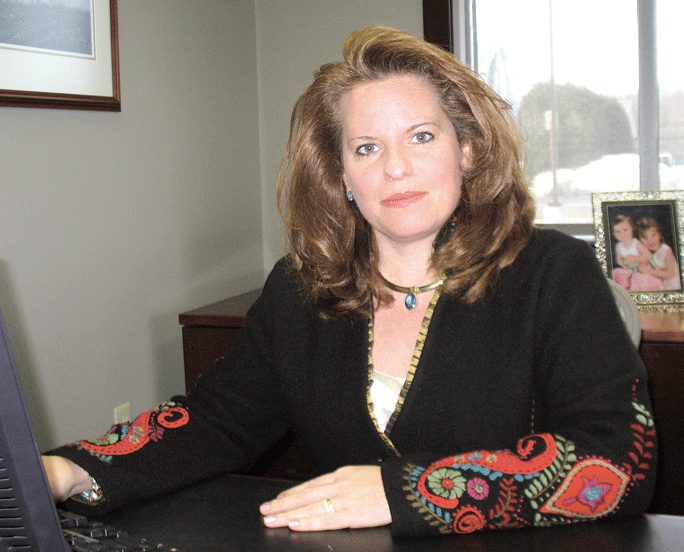
Features
Mick Kittredge Isn’t Just Waxing Nostalgic

Mick-and-Mike-Kittredge

Mick Kittredge doesn’t want to copy the business model of his father, Mike, but instead wants to give customers a more boutique experience.

It isn’t often in life when you get a chance to do it all over again, either personally or professionally. But Michael Kittredge II is getting that opportunity, and he can thank his son for that.
Mike, as he’s called, founded, developed, and later sold Yankee Candle Co., in what is arguably the region’s most celebrated entrepreneurial success story. You probably have heard that it all started on an old Queen Anne stove in his parents’ house in South Hadley, on which he made a candle that became a present for his mother. What you might not know is that his son, Michael Kittredge III, “Mick,” also made his first candle on that very same stove a few decades later.
Today, the Queen Anne holds pride of place just inside the front door at the Kringle Candle Company’s retail store and headquarters in Bernardston. In many ways, it represents not only the elegantly shelved candles in the store beyond, but the connection between a father and son.
At Kringle, Mike is on hand to collaborate with Mick on marketing, making gift baskets, and keeping an eye on the retail side of things — he said that “retail was always something that I really loved, so I’ll walk around the store, put a little more of this here and there. When a company is just starting out, there are a lot of hats that everyone has to wear.”
The only difference this time is that Kringle is Mick’s idea, and he’s the one at the helm.
The all-white, scented candles began as an idea just over a year ago as part of a marketing class Mick was taking at Greenfield Community College, and today they are rapidly becoming another success in the Kittredge family. The path of the chandler was always one he had envisioned, Mick said, explaining, “I knew that I wanted to do something with candles, not quite sure how specifically. When I was younger, I had thought about running Yankee someday.”
But when Mike sold the company in 1998, both men agreed that the culture they knew had changed. “I decided against trying to work up the ladder over there. It was a little too corporatized to me, especially as I remember what it used to be like,” Mick said, referring to a close-knit and very family-oriented work and retail environment.
“Going into this company,” he continued, “with my father and me discussing different names, we wanted to be associated with Christmas, with the warm feeling you get from the holidays. That’s really what I’m looking to do here.”
What that translates to is a retail and marketing experience that, as company president, Mick says he works hard at to make fun for all involved, customers and employees alike. “That’s why people are going to come here,” he explained. “It’s the fundamental and underlying need of all people to want to have some fun in their lives.”
And, Mike added, “if it’s fun, you’re going to want to do it again.”
The basic design of the Kringle Candle is all-white and highly fragrant. Currently, the lineup features more than 40 different scents, from florals to foods; from spices to holiday favorites. The retail store is set up with rooms of both classically presented shelves and inspired vignettes — like a refrigerator stocked with fruit-scented candles in reusable culinary containers.
Shedding light on his own distinct approach to the business, Mick said, “we’re honest with our prices, we’re honest with our quality, and we’re striving to keep that honesty in the marketplace.” He uses both the highest-quality fragrance oils available and domestically produced 100% food-grade paraffin to create the distinctly white premium candles.
“There’s no line of candles out there that’s anything like it,” he added. “Unique shapes, styles, scents, and the whole concept of the white candle. It throws more light, it’s décor-neutral; it’s for someone who’s looking for some ambience and art in their life.”
Mick’s first foray into the retail market was a single point of sale at Jackson & Connor, in Northampton. But just a year ago, he and his father came across the ‘for sale’ sign outside their present headquarters while on a foliage drive.
“The original idea was that it would encompass 3,000 square feet of retail in the front, then distribution, warehousing, and production all here, all contained within this building,” Mick said.
“Today, less than a year later,” he continued, “we have a 15,000-square-foot distribution center, we own more than 200 acres in Bernardston, and we are already unable to continue within the confinements of this one building.” Success is coming fast for Kringle; Kathie Lee and Hoda proclaimed the candles one of their “favorite things” on NBC’s Today show.
As one would expect, all eyes are on Mick’s venture into what was, essentially, the family business, and Kringle has attracted international media attention. But he takes it in stride. “My father started what became the largest candle company in the world,” he explained. “Those are big shoes to fill, and it’s a lot of work, but a lot of fun trying.
“The product quality is top-notch,” he continued, “we have a great concept, and we have a good idea of what we want for the future. My dad knows what works and what doesn’t, and he’s giving me a great deal of knowledge, as any son would go to their father for advice. He’s the best teacher I could ever have. He’s done it before, and it just so happens that he was the best in the world at that.”
Mike added that it’s a different story this time — Mick’s, not his. Those big shoes he built over at Yankee might have turned into “giant fishing boots,” but, he added, “this is a different-style company — a boutique company. For people who know the difference between high quality and all the rest. Mick is here filling his own very cool boat shoes.”
The comparisons to Yankee will be inevitable, but Mick is adamant about keeping Kringle his own. “I don’t want it to get so large where I lose touch with every facet of the company,” he explained. “I come in still and make candles, I’m in the retail store talking to customers, I’m working online, doing marketing. I’ll take the growth as it comes, but always keeping it the way I remember it, the way it used to be.”
Because, like his father who famously created an empire by doing things his own way, Mick has his eyes on a business model that goes much further than a balance sheet. In many more ways than one, Mick is rekindling an old flame. n

— Dan Chase

Features
This Town Manages to Strike a Winning Balance

Selectman Jack Villamaino

Selectman Jack Villamaino can trace his family’s business roots back generations — a common story in East Longmeadow.

East Longmeadow Selectman Jack Villamaino is a lifelong town resident, from a family that traces its business roots to the last century.
He says that his great-grandfather’s farm is currently the fourth hole at Franconia Golf Course, but in the 1950s, his grandfather started the landscaping and asphalt-paving company that bears his family’s name to this day.
His story is not uncommon in this town of 16,000, where homeowners share space with a thriving retail sector, as well as one of the area’s healthier hubs of industry. He started out as “the coffee boy” for EJ Villamaino Paving contractors, and Villamaino said that there are “tons of guys I grew up with who work for their dads.”
“Those businesses might have started out as entrepreneurial enterprises,” he continued, “but now they employ a handful of people. And I think we’re fortunate for that, because they’re doing work in town, and they still live here. They have a stake in what they do in and around East Longmeadow.”
The town’s percentage of residential property to commerce and industry is around 78% to 22%, he said, and for Villiamaino and others in town, this is a winning mix.
“It’s a well-planned community, really,” said John Maybury. “There’s the proper amount of industrial and commercial development in the right zones.” And he should know; not only has he lived in East Longmeadow for most of his life, but he is one of the community’s most successful business owners, as president of Maybury Associates, a materials-handling firm.
Not far from his company on Denslow Road, the southwestern section of East Longmeadow is home to several world-class manufacturing plants. The world headquarters of Hasbro is nearby on Shaker Road, as well as Lenox Saw and Sullivan Paper, among many others. Maybury calls his and other businesses with a national and global reach “economic importers” for the town.
And while industry stays strong in East Longmeadow, those imported dollars find homes in a robust retail sector. Several large-scale plazas dot the landscape, with mom-and-pop stores alongside national retailers. At the East Longmeadow Center Village, Rocco Falcone said the plaza just filled its last available storefront.
A principal with Falcone Retail Properties, owner of that plaza, as well as the president of Rocky’s Hardware, Falcone is another native son who finds the balance of residential and industry a good fit, not just from the perspective of a fully tenanted plaza, but as a business owner.
“For Rocky’s to be one of the anchor tenants in that plaza,” he said, “this works on two levels. The locals like to do their purchasing within the town, and we have everything that a homeowner would need. But we also have accounts with some businesses in the industrial parks, for maintenance and supply products for the large companies.”
In this, the latest installment of its Doing Business In series, BusinessWest looks at some of those economic importers in East Longmeadow, a town that most observers say has struck the perfect balance between business and residential neighborhoods.

The Family Way
Villamaino said East Longmeadow is fortunate to have maintained this balance, some of which he calls just plain luck in the way developments have evolved over the past few decades.
“But part of that has to do with a master plan that goes back before I was born,” he continued, “with planning boards of the 1960s and earlier.”
As one of the current legislators, he said that Town Hall continues to work at keeping that balance.
“As far as the selectmen go,” he said, “I’ve voted four times — every time, really — in favor of the single tax rate. As long as I’ve been on the board, we’ve looked upon businesses as partners, not prey. We don’t want to subject them to unjustly high tax rates.
“They are dutiful taxpayers,” he continued, “and you have to consider them as landowners that aren’t sapping much of the municipal resources. For example, Hasbro isn’t putting any kids into the school system. Lenox uses their own waste-management system, not what the homeowners are using.”
Talking further about the Lenox complex in town, Villamaino expanded on the legacy from that business, and the original owners, in East Longmeadow. “You can’t credit the Davis family enough,” he said. “They owned it when it was American Saw, and they always made it a priority to keep the manufacturing and headquarters here. When they sold it to Newell Rubbermaid, they lobbied very strongly to ensure that all who were employed here remain here. Lenox employs somewhere in the neighborhood of 500 people. You don’t find that a lot in this area anymore.”
To this day, that home-field advantage has been broadened to encompass many other brands in the NR portfolio, with a list of household names such as Graco, Calphalon, Levolor, and many others. A training facility has been created at the East Longmeadow location for brand representatives of all NR products. “They spent about $50 million upgrading to make this a key component of their whole organization,” Villamaino said. “They’ve invested a lot to stay here, and we want to do whatever we can for them to stay.”
Speaking to his history as a town resident and entrepreneur, Maybury said that there have always been questions about large businesses that choose to stay in this region. “Usually it has to do with money — lower cost of a building, lower tax rates,” he explained. “But when you consider the bigger picture, and the roots that we have been able to sustain here, and the ability to network from here, there’s no reason to go.
“Even though there might be some other areas in the region that we could move to,” he added, “we have been able to retain a competitive advantage by staying local, staying with the people that are here. There’s an excellent core workforce, with a lot of tradesmen and machinists.”
In other words, people like himself. Maybury started the company from his parent’s garage as a teen, and while the business — selling and servicing forklifts and all the equipment behind the scenes to get the goods out on the shelves — has grown exponentially, it has never become too large for East Longmeadow.
Having just spoken at a meeting that day presented by the Affiliated Chambers of Commerce of Greater Springfield, titled “Thriving in a Difficult Economy,” Maybury echoed Villamaino’s comments that the town is a good partner for the business sector within it.
“It’s easy to do business here,” he said. “For the people who want to grow here, there’s a clear process through the Planning Board. As long as you put a comprehensive package together, it can happen really quickly. I’m involved in the Western Mass Development Collaborative, which is a part of the EDC, and we do a lot of the industrial-park buildouts. There are some other towns where businesses just can’t get things to happen fast enough, from the time someone has the idea and funding to the time when they want to be underway — that window can be very short.”
Maybury said that his firm has branched out to an office in Wallingford, Conn., and a sister operation in New Jersey. Not only is that good for his business, but also for the town it calls home.
“The cool part for East Longmeadow is that we are still going to be here, as an economic importer of dollars,” he explained. “Like some of our neighbors — Hasbro, for instance, with all of those jobs, selling all over the world, while the money comes back here. Similarly, although not to such a degree, we’re doing business all over Connecticut, the Worcester region, into New Jersey and New York. More than 70 employees here take a paycheck and distribute that locally.”

Center of Attention
Situated at the intersection of two roads leading into the rotary at the town’s center, the East Longmeadow Center Village is a relative newcomer to the retail district of town, but an addition that fits in comfortably with the community.
“In terms of marketing,” said Villamaino, “you can’t go anywhere in East Longmeadow without at some point passing through here. We as a town are lucky to have a few good people take advantage of opportunities to increase retail in town.”
In the not-too-distant past, an A&P sat on the property fronting North Main Street. Falcone said that a group of investors, including his father, bought the parcel, and one of the first Rocky’s went into the former grocery site. In the 1980s, the property increased, encompassing what is now the Healthtrax building, and a subsequent property venture brought along the other parcel, connecting the site to Maple Street.
Today, the bustling plaza is home to A.O. White, Spoleto, Starbucks, Sleepy’s, and a handful of other businesses. The buildings are handsomely styled, and Falcone said that considerable attention went into creating an architectural aesthetic that was suitable for the community. “We wanted a higher-end development that would attract a higher-end tenant,” he explained.
While Healthtrax is currently considering a sublease for what Falcone called a “synergistic” tenant to move into a small portion of that building, the retail component of the sprawling plaza is solidly filled. An adjacent property might be a potential addition to the plaza, but Falcone said that there are no specific plans yet to add on.
In Town Hall, Villamaino said that work continues to ensure that, with regard to East Longmeadow’s growth, those balanced scales are kept even for a town that has watched its population climb in the last few decades.
“Business is a great neighbor,” he said, “and, yes, it does make you a more solvent community. But you don’t want haphazard growth — you want to be sensible, with an eye to the future, so that the decisions we make today aren’t penny-wise and pound-foolish. I certainly don’t think we’re done growing — there are certainly people who want to live here, and I think we’re going to see, as that work base increases, business is going to want to locate itself near that population.”
As he looked out the windows from Town Hall on the busy intersection at the center of town, he smiled and said, “we’ve got a good thing going.”

Features
This Growing Company Puts Its Brand on Business

Pam and Andy Boryea

Pam and Andy Boryea say both corporate clients and individual customers are key to their success.

The term ‘visual branding’ translates roughly to depicting a specific design or logo — corporate, academic, political, personal — on everyday objects. For Andy and Pam Boryea, owners of Lil’ Dogs, the possibilities for what medium that takes knows few bounds.
Clothing, banners, those perforated vehicle wraps that one sees commonly on buses, the ubiquitous political lawn placards, as well as the smaller office objects like pens, travel mugs, and many, many other promotional items, all have passed through the shipping dock of the Ludlow-based company.
“It’s a one-stop shop,” Andy said. But the origins of the company were a bit more specific.
Back in 1997, three friends, all professional soccer players, decided to start a youth soccer camp. Stu MacRury and Glen Jusczyk asked Andy Boryea onboard to provide the goalie for the camp.
When Boryea bought into the business, he found that his partners had purchased some used screen-printing equipment. “They thought they were paying too much for the 60 camp T-shirts they ordered,” he told BusinessWest.
At the time, he knew nothing about that process, but as word-of-mouth spread locally that the trio could make T-shirts, the orders started coming in. “Friends and friends of friends would ask us to do shirts for construction companies, landscapers, you name it,” Boryea said. “My father was one of my first customers.”
Deciding to learn more about the process, he jumped in headfirst and went to school for advanced training. And that, he explained, is how the business got its start.
MacRury sold his share of the company, and Jusczyk and Boryea decided that the screen-printing facet needed its own name. Jusczyk had recently bought his girlfriend a Jack Russell terrier puppy, and after determining that a toll-free number could be acquired to correspond to the words ‘lil’ dogs,’ their own brand became visualized.
“After a while it was just Glen and myself, doing both camps and printing,” Andy continued. “So here we were, working a ‘real job’ during the day, landscaping or whatever soccer players do to make a living — roofing, siding, landscaping, you name it — then we would do the soccer practices after that, and then late at night, we’d be printing T-shirts.”
Around 2000, the state regulated athletic camps more stringently, requiring medical doctors to sign off on their health plans. Boryea said the cost to do so was prohibitive, and in 2001, they sold the soccer camp and became a full-time print shop. Pam joined the team in 2007, and a year later, husband and wife bought the company outright.
What started out as approximately $15,000 in sales in 1998 has grown exponentially each year.
Pam said that the year she joined the company, Lil’ Dogs was posting $2.5 million in total sales. There were some acquisitions along the way, she said, citing the purchase that year of Advantage Athletics in Palmer. But the pair credits a good part of the growth to both word-of-mouth and the aggressive sales techniques of their former partner.
“We were doing no advertising,” Andy said. “But the miles that Glen would rack up … 100,000 a year, easily. He was all over, pushing the company. He’d go play a match and come back with orders from the other team.”
But as sole owners, the Boryeas said that one doesn’t become a multi-million dollar company as a local screenprinter, so they made the shift toward corporate and academic clients, often doing subcontracted work for some of the most recognizable athletic brands.
But the individual customer is just as important, Andy emphasized. “We’re a one-stop shop for all visual branding because I don’t want my clients to need to go to someone else for different products. Because if I don’t have the ability to do it all, someone else will.”
And to keep that one stop always on the cusp of unfolding technology, Andy belongs to trade organizations and consults within the industry. “I’ve seen a lot, I know a lot, and we can offer more than our competition before they even hear about unfolding innovations,” he said, noting that a recent acquisition represents the latest word in specialized printing: wide-format digital. “Take your home printer and multiply its dimensions by 20. That printer can work on a multitude of rolled materials.”
Pushing their industry further, Pam said that she’s at work launching a Web-based self-created clothing program for customers, offering the ability to design online one T-shirt or many. But still, the pair said that their attention will always be on the customer’s immediate needs.
Andy related the story of how Nike contracted Lil’ Dogs to manufacture some transfer designs for the New York Yankees this past season, to be sold and custom processed at their home in the Bronx.
“They told me on a Monday night that they ‘might’ want me to print some transfers for sale at the stadium,” he said, pausing a beat for effect before adding, “for Wednesday morning.”
“So, I said, ‘OK … well, you have to let me know if you do want them,’” he continued. “They said, ‘we’ll let you know.’ I had to report back to the stadium on Tuesday, and at that time they said, ‘OK, but we don’t have any art for you.’
“So it’s Tuesday at 3:30, and I finally got the art,” he continued. “Given the technology we use, I was able to log into the office from my hotel room in New York and send it to Ludlow. By 5 that night we printed them all out, and they were in a box by the time I showed up for duty the next day.”
Of course, if the Yankees’ postseason was as successful as the work done by Lil’ Dogs, Red Sox fans would be a little less cheerful these days.

— Dan Chase

Features Sections Supplements
Medical Society Study Shows Continued Primary Care Shortages

The Mass. Medical Society recently released its annual Physician Workforce Study, showing a fifth consecutive year of shortages of primary care physicians, half of primary care practices closed to new patients, shortages in 10 of 18 physician specialties across the state, and community hospitals continuing to be the most affected by persistent physician shortages.
The 2010 study is the society’s ninth annual look at multiple aspects of the physician workforce, and builds on the previous eight years of data. The study surveys teaching hospitals, community hospitals, practicing physicians, medical directors of medical groups, and resident and fellow programs throughout the state. It is the most comprehensive examination of the physician workforce in the state done on an annual basis.
The report’s key findings include:   
• The primary care specialties of family medicine and internal medicine are in critically short supply, the fifth consecutive year of shortages for these specialties;
• Ten of 18 specialties studied have been found in short supply, three more than last year;
• High percentages of primary care practices are closed to new patients: 54% of family medicine physicians and 49% of internal medicine physicians are not accepting new patients;
• Wait times for new patients for primary care continue to be long, with an average wait time of 29 days for family physicians and 53 days for internists;
• With the exception of Boston, physician shortages exist in all regional labor markets across the state;
• Community hospitals continue to be the most seriously affected by the physician shortages, with difficulty filling vacancies and retaining physicians, resulting in the need to alter services and change staffing patterns; and
• The fear of being sued remains a substantial negative influence on the practice of medicine, affecting access to and availability of physician services.
“The findings from this latest analysis,” said Dr. Alice Coombs, president of the Mass. Medical Society, “clearly show how fragile access to care for patients is across the entire Commonwealth.
“The state’s universal health care plan has improved access to care,” she continued, “but universal coverage and access can only be sustained with a strong physician workforce. As we continue to look at reforming the health care system, we must do so carefully and deliberately in all aspects, and that includes the next steps for cost control, particularly with respect to establishing a fair system of payment reform.
“A strong physician workforce is critical to delivering top-quality and cost-effective care,” Coombs went on. “If physicians think that the viability of their practices is threatened or unsustainable under a new payment system, Massachusetts may encounter further problems with recruitment and retention. And that, certainly, will affect patient care.”
Coombs said the physician workforce in Massachusetts continues to be affected by a lingering poor practice environment in the state. The Society’s Physician Practice Environment Index, a statistical indicator of nine factors that shape the environment in which physicians provide patient care, dropped 0.8% in 2009, and has fallen in 16 of the past 18 years. Since 1992, the Massachusetts Index has declined by 26.4%, significantly more than the 21.3% decline in the comparable national index. The index takes into account such factors as the cost of maintaining a practice, median physician income, liability insurance rates, and hours spent on patient care.
Here are some details on the report’s key findings: 
 
Specialties Classified in Short Supply
The medical society’s 2010 analysis found 10 of 18 specialties studied in short supply: dermatology, emergency medicine, family medicine, general surgery, internal medicine, neurology, orthopedics, psychiatry, urology, and vascular surgery.
Over the last three years (2008-10), six specialties have been operating within tight labor market conditions in each of those years: family medicine, internal medicine, vascular surgery, urology, dermatology, and neurology.
A trend analysis over a five-year period (2006-10) shows that 11 specialties have been in short supply in at least three of those five years: family medicine, internal medicine, vascular surgery, urology, dermatology, neurology, psychiatry, general surgery, orthopedics, emergency medicine, and neurosurgery.
  

Primary Care Practices Closed to New Patients; Long Waits
The primary care specialties of internal medicine and family medicine continue to be under intense pressure following the establishment in 2006 of the state’s health care reform law, which resulted in some 440,000 residents being added to the insurance rolls.
A survey of physician practices showed that approximately half of primary care physicians are not accepting new patients. The percentage of family medicine physicians who are not accepting new patients has increased from 30% in 2007 to 54% in 2010 — the highest it has been in four years. The percentage of internal medicine physicians no longer accepting new patients decreased slightly from the previous year to 49% in 2010 — the same level it was in 2007.
Meanwhile, long wait times for appointments for new patients continue. For internal medicine, the average wait time increased to 53 days, nine days longer than last year’s figure of 44 days and the highest it has been in six years. For family medicine, the average wait time is 29 days, 15 days shorter than last year’s figure of 44 days.

Shortages Across the State
A regional analysis of the 18 specialties for the five metropolitan statistical areas in the state (Boston, Worcester, Springfield, New Bedford/Barnstable, and Pittsfield/Western Mass.) found that, with the exception of Boston, all regional labor markets were experiencing shortages of physicians. Critical shortages exist in Pittsfield/Western Mass. and Worcester.
In an analysis of the 18 specialties examined by the study, the percentage of practicing physicians in the four labor markets of New Bedford/Barnstable, Pittsfield/Western Mass., Springfield, and Worcester who responded that they were dealing with an inadequate pool of physicians, had difficulty in filling vacancies, needed to alter services, and needed to adjust staffing exceeded the percentage of physicians in the Boston market by at least nine percentage points.
In the four labor markets outside of Boston, more than two-thirds of the practicing physicians said there was an inadequate pool of physicians for recruiting. This characteristic was especially acute in New Bedford/Barnstable and Pittsfield/ Western Mass., where more than eight out of 10 said the pool was inadequate.

Community Hospitals Are Most Affected By Shortages
Community hospitals continue to be the most affected by the consequences of physician shortages. All (100%) of the medical-staff presidents of community hospitals reported they are experiencing difficulty filling vacancies, and 82% reported that the amount of time to recruit a physician has risen, an increase of 5% over the average of the previous eight years of the studies.
Community hospitals are also reporting the most difficulty with retaining physicians, with 64% saying retention has become harder over the past three years. However, this is an improvement from the average of the previous seven-year period, when 79% reported difficulty in retaining physicians.
Additionally, 64% of community hospitals reported that physician shortages required them to alter the services they provide, a substantial increase from 43% in last year’s study. Meanwhile, 82% of medical-staff presidents responded that physician-supply problems required adjustments in their staffing patterns, a large increase from 64% last year and the average ratio of 56% for the years 2003-09.

Professional Liability Hinders Practice of Medicine
The 2010 study once again found that medical malpractice concerns and the fear of being sued continue to have a substantial negative influence on physicians and the practice of medicine. This finding is consistent with the society’s previous workforce studies and its first-of-a-kind Investigation of Defensive Medicine in Massachusetts, released in November 2008, which showed that the fear of being sued is a serious burden on health care. Findings from the 2010 Workforce Study:
• A full 46% of practicing physicians surveyed said their practice has been altered or limited because of the fear of being sued, the same percentage as last year; and
• More than half of physicians in five specialties said they have altered or limited their practice because of the fear of being sued: neurosurgery (82%); urology (74%); emergency medicine (70%); orthopedics (70%); and obstetrics/gynecology (60%). Also, 40% or more of physicians in nine other specialties have changed their practice for the same reason: cardiology, neurology, gastroenterology, general surgery, dermatology, psychiatry, radiology, internal medicine, and family medicine.

Additional Findings
For the first time, more physicians (43%) expressed satisfaction with the practice environment than not (41%).
However, more physicians expressed displeasure with the tradeoff between patient care and administrative tasks. More than half (51%, up from 44% last year) of all practicing physicians regardless of specialty expressed displeasure with the abundance of administrative measures. Among primary care physicians, 59% expressed displeasure.

Features
UMass Wants to Raise Its Status Among Research Institutions

New Laboratory Science Building

New Laboratory Science Building

It’s called the New Laboratory Science Building, or NLSB, a $156 million, state-of-the-art facility now taking shape on the UMass Amherst campus. It’s part of a larger, nearly $300 million initiative, which also includes the Integrated Science Building opened in late 2009, to create a life sciences ‘precinct’ or ‘community’ on the campus that is being designed to greatly increase research capacity and facilitate collaborative efforts among science departments. The new facilities are expected to play a lead role in helping the university meet its stated goal of doubling its overall research volume by 2014 and climb within the ranks of the nation’s leading research institutions.

Karen Hayes says that, when it comes to word associations, many possible answers come to mind when one mentions UMass Amherst.
A beautiful suburban campus is one of them, said Hayes, who works as director of Strategic Communications and Outreach for the university, while strong undergraduate programs might be another, and service to the Commonwealth could be a third. One phrase you probably won’t hear is ‘major research institution,’ or words to that effect, she continued, adding that, while it’s certainly not written down anywhere, it’s part of her job description to change that equation.
Part of the strategy for doing so is simply telling the university’s story better and with a louder voice, she said, noting that there are currently a number of intriguing research initiatives underway on the campus, such as one she’s written about herself involving work that sequenced the first full genome of a female Hereford cow.
“We need to get our name out in the public,” she said. “When the Boston Globe or the New York Times or the national publications talk about discoveries in science, we have to be there; our name has to be out there as much as Harvard, Ohio State, MIT, the University of Michigan, or any of the other research powerhouses.”
For that to happen, the university needs to have more for those publications and others to write about, Hayes continued, and the $156 million New Laboratory Science Building, or NLSB, as it’s called, now taking shape on the campus should certainly provide a real boost for those efforts. The 310,000-square-foot facility will provide not only the physical space for additional research initiatives, but also a collaborative environment in which scientists across a number of different fields can more easily work together on projects, she said.
Mike Malone, the university’s vice chancellor of Research Engagement, agreed. He told BusinessWest that the NLSB will play a lead role in helping the university meet its ambitious goal, set in 2009, of doubling its level of federally funded research within five years.
“The NLSB will greatly increase our capacity for doing research,” he explained. “It will give us more equipment, more people, and more modern laboratories. Most importantly, though, it will bring people together in collaborative efforts.”
The NLSB is actually the second phase of a nearly $300 million initiative to create what many are calling a life sciences ‘precinct,’ or ‘community’ on the Amherst campus. The first was the university’s $114.5 million Integrated Science Building, which brings classrooms and labs for the life, chemical, and physical sciences together in one building, thus improving the prospects for collaboration.

Steve Goodwin

Steve Goodwin says the Integrated Science Building brings people in several different disciplines together to effectively solve problems.

This clustering process is part of a nationwide trend, said Steve Goodwin, dean of the College of Natural Sciences at UMass, noting that science, as well as the way it is taught, is changing, with an emphasis on integrating the various disciplines, hence the name on the new building.
For this issue, BusinessWest takes an indepth look at UMass Amherst’s emerging life-sciences precinct, how it will play a lead role in ongoing efforts to move the university to another level when it comes to research institutions, and also how the process of moving up in the ranks requires more than building more lab space.

Good Chemistry
Tom Whelan, a chemistry professor at the university, told BusinessWest that it couldn’t, or shouldn’t, print the words used by many of his students when they first glimpsed the new laboratory facilities in the ISB. “Holy sh—— was the most common refrain,” he said, not actually using the offending word in question.
That and other colorful phrases were needed to adequately put into the perspective the difference between what the students had for facilities in their former home at Goessmann Lab and what they now enjoyed at the ISB, said Whelan, noting that everything in the new science building is spacious and state-of-the-art.
“It’s great space — it’s a better learning environment, and it’s already changing the way we do things,” he said, adding that, while the ISB is bigger, it allows educators to work smaller in terms of attention to individual students. Meanwhile, it improves the flow of communication between departments that were in separate buildings and brings more opportunities for collaboration.
Goodwin agreed. As he led BusinessWest on a tour of the ISB, he said the building’s design encourages interaction among students and faculty, certainly much more so than was possible when departments were scattered around the campus in buildings as much as a century old and with outdated facilities.
He said the underlying concept for the building actually started to take shape 10 to 15 years ago, when those in the field noticed that the way science was done was changing.
“Therefore, we concluded that the way we train people should change as well,” he explained. “We realized that bringing people from multiple disciplines together to solve problems is the way things move forward. So this building was built on a teaching concept that said, ‘OK, we want to teach in the same way; we want to take the people who are taking introductory chemistry and physics and biology, bring them together in the same building, and give them opportunities to interact.’
“The exciting thing is that, over time, that notion has become more and more defined,” he continued, citing a new program initiated this fall called iCONS, short for Integrated Concentrations in the Sciences, where faculty members across several fields try to bring multiple disciplines together to solve problems.
This notion of bringing people together to work in collaboration is also at the heart of the NLSB, said Malone, adding that the facility is being designed with the goal of promoting collaboration, while also greatly upgrading the facilities in which people are performing critical work.
“Now, faculty members are typically located in individual buildings or parts of buildings that are assigned to their particular departments,” he explained. “And that makes it not impossible, but a little more difficult for their students and they themselves to get together. In this new facility, they’ll be living and working in the same environment.
“And it’s a great upgrade for our facilities,” he continued. “We have quite a backlog of deferred maintenance on campus, and this will put people who are, in many cases, from labs that aren’t state-of-the-art into a state-of-the-art facility.”
Roughly half the NLSB will be finished labs, and the rest will be shelf space, said Malone, noting that this will provide the university with cost-effective room to grow for the future.

A New Culture
And that room will eventually be needed if the university is to meet that stated goal for doubling its research volume by 2014, and then continuing a steady pace of growth. For the fiscal year that ended last June 30, the university logged $170 million in research projects from all sources, a number aided by large amounts of federal stimulus money, compared to $137.5 million for the prior year.
For fiscal 2011, the first-quarter numbers are tracking just ahead of the ’09 figures, which was expected as the level of stimulus funding drops, he continued, adding that the university wants to reach or exceed $270 million by 2014.
With that goal in mind, Malone has created a new Office of Research Development, which will work to identify funding sources and assist individuals and departments with putting proposals together.
The life sciences have been identified as a large growth area for the university, said Malone, noting that, at present, 45% of the federal funding awarded to the school is from the National Science Foundation.
“We have room to grow in areas supported by the National Institutes of Health, and some of that growth will be enabled by a collaboration with people at our medical school,” he explained. “They just got what’s called a Clinical and Translational Science Award from the NIH to support projects that link basic science with the practice of medicine — translating the results from the benchtop to the bedside. This translational area is a good one for us in terms of growth.”
And as research volume grows, and the university escalates its efforts to tell those stories regionally and nationally, UMass will make headway in its ongoing efforts to become more well-known as one of those aforementioned research powerhouses, said Hayes, noting that the story-telling process is an important, sometimes overlooked part of the equation.
“If we want to build our image with the general public and other constituencies, we need to be able to tell our story well,” she told BusinessWest. “Telling your science story well is something we haven’t done, and it’s a challenge. How can you connect the average person who doesn’t know a lot about science to what going’s on here in a way that helps them understand what’s in it for them? That’s what we have to do.”
The new science facilities on the campus will help the university raise its stature in a number of ways, said Hayes, adding that the ISB is a powerful tool in attracting students and faculty to the school.
“It’s a springboard to talk about research on campus and students’ opportunities there,” she said, adding quickly that the new facilities are all about creating more of these opportunites. “In the past, if you were a student who wanted to get research experience on campus, you had to be bold, you had to approach a faculty member, engage them directly, and take the initiative. With these new facilities and new programs that we have to connect students to research experiences, it is so much easier for them to seize opportunities.”

The Bottom Line
The NLSB is slated to open in the summer or fall of 2012. In time, and probably not much it, the facility is expected to generate those collaborations that Malone and Goodwin talked about, as well the critical momentum the university will need to take its name and reputation within the world of science to a higher level.
And perhaps sometime soon, when people do play word-association games with UMass Amherst, the phrase ‘major research institution’ will be appropriate, and widely used, vocabulary.

George O’Brien can be reached at [email protected]
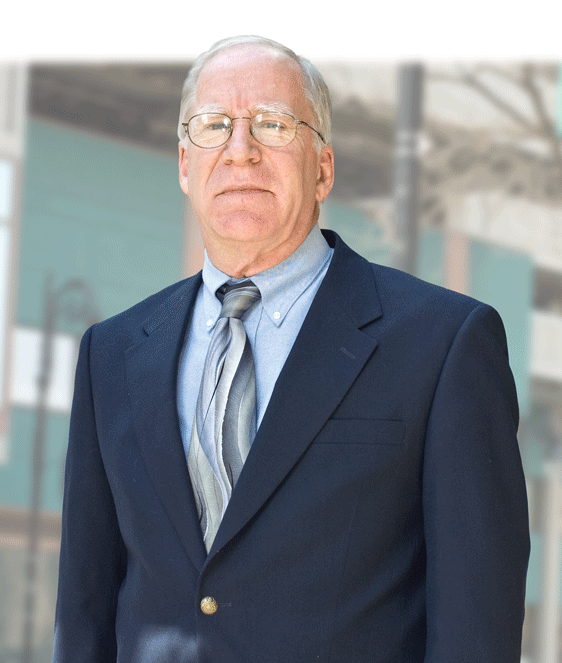
Features
As Key Votes Loom, Palmer Casino Backers Put Their Chips on the Table

Casino Rendering

Casino Rendering

For years now, casino backers, including those pushing for a resort operation in Palmer, have said it’s a question of when, not if, such gaming operations are approved. They’re saying it again this year, and with a House vote to support casinos already secured, and confidence that the Senate will follow suit, attention is now focused more than ever on where casinos will be located. Mohegan Sun, which would develop the $1 billion Palmer facility, believes it has a winning hand, because it maintains that the state needs what it calls a “Western Mass. outpost.”

The storefront has been open for just over a year now. In fact, an open house was recently staged to mark the anniversary.
It’s right in the middle of Main Street in Palmer, clearly visible to those approaching downtown from Route 32. The Mohegan Sun sign is large and prominent in the window.Visitors to the former retail space — now decorated in the motif of the casino in Uncasville, Conn. operated by the Mohegan Tribal Gaming Authority, complete with a few seats from the arena where the WNBA’s Connecticut Sun play — have a few primary objectives, said Paul Brody, vice president of development for that organization.
Some want to pose questions about the potential impact on their homes or businesses from a proposed $1 billion casino complex on land just off the exit 8 interchange of the Turnpike. “They want to know about traffic and how that will be and how it will be mitigated,” he said. But most are inquiring about jobs and, more specifically, what kinds of opportunities will be created. Mohegan Sun isn’t taking job applications, but it is signing people up, with the intent of calling them back if the complex becomes reality.
“And some others … they just want to know what’s going on with this thing,” said Brody, one of four Mohegan employees who staff the storefront. “They want to know if this is going to happen, and when — whether it will be one year, two years, or more.”
And Brody says he tells them basically what he also told BusinessWest when it stopped by the office: that these are certainly critical times for those who support — and oppose — organized gaming in Massachusetts, and especially for those who have invested considerable time (several years), energy, and emotion in Mohegan Sun’s proposed complex, which would be built on a hill high above the pike and Route 32 and include a 164,000-square-foot casino, a 600-room hotel, 12 restaurants, and 100,000 square feet of retail space.
The state House of Representatives has passed a bill calling for two casinos and several slot operations at racetracks (called racinos by some), and the Senate is due to vote on its own version later this month. There is strong sentiment that the Senate will also vote to support some kind of gaming package, but the devil is in the details, and Brody acknowledged that, while he is not conceding anything regarding the broad vote to green-light casinos, he said the conversation is, in many ways, shifting to where they’ll be located, not if.
And thus, Brody also tells visitors, as he told BusinessWest, that, in response to a request for data that might help legislators determine where, Mohegan Sun commissioned a study that shows that a casino in Palmer, or “Greater Palmer,” as she called it, would benefit the state more than one built in another proposed location (Milford), assuming that the second casino is built at the Wonderland complex in Boston.
The study, conducted by Morowicz Gaming Advisors, LLC, concludes that a casino in Palmer, instead of Milford in Central Mass., would result in $43.8 million in additional gaming revenue annually to the state, and nearly $100 million more in out-of-state dollars coming to the Commonwealth, primarily because it would lure more New York State residents than one farther east.
The study — which, to no one’s surprise, is being questioned by the backers of a Milford casino, who have a different take — is one of many ways backers of the Palmer resort are trying to build momentum at a time that many consider critical to the town’s future.
They’re presenting the proposal as more than a casino, but also as a way for an economically beleaguered community to replace manufacturing jobs that have left over the past two decades and provide long-term stability, while also bringing other types of development to nearby vacant or underutilized real estate. Meanwhile, they’re presenting it as the state’s best bet for a secondary resort outside Boston.
“This is not just a singular project on the hill, but potentially other kinds of development that will blend with the flow of traffic,” said Leon Dragone, president of the Northeast Resort Group, which owns the proposed casino property and leases it to Mohegan Sun, and now also occupies the space two doors down from Mohegan on Main Street. “There are several other properties we’re looking at.”

The Hand That’s Been Dealt Them
There’s a cluster of signs greeting motorists getting off the exit 8 interchange, most of them directing them to businesses and attractions in Palmer, to the right down Route 32, or in Ware, a few miles to the left.
But there are three relatively new additions that, along with a smattering of lawn signs along Route 32 supporting the casino effort, tell of the sense of urgency in Palmer these days and the importance of the casino to the town’s fortunes.
There’s the ‘Mohegan Sun — A World at Play’ sign in bright yellow, flanked by two signs of support, one for each of two recently formed groups: Palmer Businesses for a Palmer Casino and Citizens for Jobs & Growth in Palmer.
Robert Young is a member of both groups. He owns a landscaping company and has lived in Palmer most of his life, or at least long enough to see most manufacturing jobs leave and nothing of any substance to fill the employment void. Indeed, as he listed the manufacturers that have departed, including Tambrands, Zero Corp., Pearson Industries, and others, he said efforts to attract different kinds of employers, including those in high tech and the biosciences, have not met with success.
He acknowledged that the former Tambrands complex, seeking new tenants for more than a decade now, has attracted some new businesses, but few if any that are large employers.
“Palmer is a town that’s dying, and it’s been dying for a long time,” he said, noting that the ease with which Mohegan Sun and Northeast found vacant storefronts in the middle of downtown says something about the deterioration of the central business district. “We’ve lost tons of manufacturing jobs and support jobs, and nothing has materialized to replace them.
“We have no more jobs for a lifetime,” he continued, noting that, in his view and in the opinion of those who undertook a study on the subject at UMass, casino jobs are the new factory jobs that can support families for decades.
But jobs are not the only component of the argument being proferred by the support groups and other Palmer-site backers, who say a casino could lead to other kinds of economic development in the community and, in the process, fill a number of vacant parcels in and around Palmer with everything from additional hotels and restaurants to golf courses.
“There are a number of sites that could potentially be developed,” said Dragone, citing a 30-acre parcel once proposed for a Lowe’s and a 95-acre parcel in Ware as just two examples.
He said a North Carolina-based firm is being considered to create a master plan for nearby undeveloped parcels. Speaking broadly, he said a casino in Palmer could do for the town and surrounding region what the resort in Uncasville has done for Mystic, Conn., about a half-hour down the road, known for attractions such as its aquarium and Mystic Seaport.
“It’s quite legendary what’s occurred there, which has been a direct result of the blossoming of the gaming industry in the southeastern part of Connecticut,” he said. “It’s become much more of a year-round tourist attraction, where before, it was mostly seasonal.”

Doubling Down
While the Palmer casino support groups present their arguments about the benefits of resort casinos in general and a Palmer facility in particular, Mohegan Sun is devoting most of its efforts now toward pressing the case for a Western Mass. casino, said Brody, who is now splitting his time between Palmer and Boston, where he and lobbyists hired by the firm are trying to gain the ear of lawmakers.
The Morowicz Gaming Advisors’ numbers already have the attention of many legislators. They show that if there was one casino in Boston and a second in Palmer, the total gross slot and table revenues for the state in 2014 would be $1.168 billion, as opposed to $1.124 million for a Boston/Milford mix. Meanwhile, total out-of-state money coming into the Commonwealth would be $216.4 million with a Boston/Palmer scenario, compared to $119.1 million with a Boston/Milford combination.
The former numbers result from a Central Mass. facility essentially “cannibalizing” (the report’s authors’ word) the Eastern Mass. casino and racinos, while the latter is due largely to Palmer’s proximity to New York, resulting in reduced drive time for New York residents traveling to Palmer, as opposed to Central Mass.
Those in the industry say individuals will generally drive no more than two hours to frequent a casino, said Brody, which puts a Palmer resort in reach for people in Albany, Schenectedy, and Troy, and a Milford facility less so.
While Milford-resort backers have questioned the study’s results, Brody said that, objectively speaking, they are hard to argue with.
“There’s no outpost in the western portion of the state to attract the gaming revenue from this area and the New York, Vermont, and New Hampshire area,” he explained, adding that, in addition to that geographical logic, it’s clear, to him at least, that a Central Mass. casino would be far more vulnerable to cannibalism from existing facilities and ones that could come on the drawing board.
“What happens if New Hampshire launches gaming in the next few years at Rockingham and Seabrook?” he asked rhetorically. “That will have a profound impact on that whole Central Mass./ Eastern Mass. area. There’s a huge concentration of either existing or proposed facilities, all in or near Eastern Mass., and that’s why the math from this study is so compelling.”
Time will tell if the numbers and words coming out of the Mohegan camp will sway the decision makers in Boston, but Brody remains cautiously confident, and conveys this to visitors to the company’s storefront.
He said the volume of traffic increases when “something happens” like the House vote or when a key player endorses casinos. And that means the facility is quite busy these days.
“People sense that this is closer to reality than ever before,” he said. “We see it in the community, and we see it right here. There is still a ways to go, but people are excited; they sense that this is real.”

Roll of the Dice
Brody told BusinessWest that Mohegan Sun opened its storefront on Main Street to provide a resource for those with questions, opinions, and desires to land one of the projected 3,000 jobs to be created at the proposed resort. Meanwhile, the company wanted to provide a highly visible way of showing that, in some ways, it was already part of the Palmer community.
Whether Mohegan eventually assumes an exponentially greater presence and occupies a hilltop rather than a 1,000-square-foot storefront remains to be seen. The Legislature still has to decide if it will give the go-ahead for casinos, and then, if it does take that step, where to put them.
The Palmer site’s backers think they have a good hand, but they’re working hard to improve their odds in any way they can.
And in only a few weeks, they should find out if that hand is a winner.

George O’Brien can be reached at [email protected]
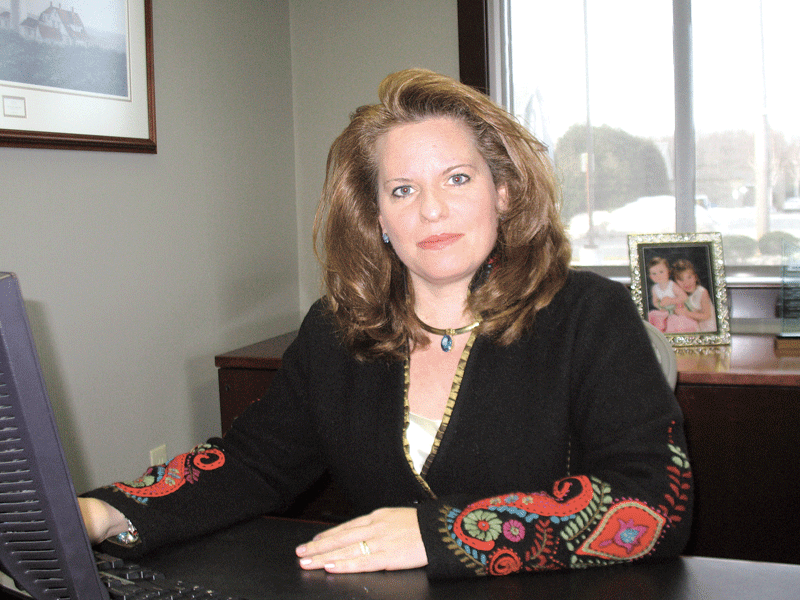
Features
This Entrepreneur Certainly Has Things Covered

Michael Linton

Michael Linton says entrepreneurship is in his blood, and he’s successfully carrying on his family’s legacy of business ownership.

It wasn’t really a question of if Michael Linton would start his own business, but when. Let’s just say it’s in his blood.
“My father has owned a business since before I was born,” the 28-year-old owner of Michael’s Party Rentals (MPR) told BusinessWest. “His father owned a separate business, and his mother owned a different business from that.  And my mother’s father owned a business.”
When he and his younger brother, Ryan, started the company called Party Tent Rental in 2000, they figured it would be a good seasonal and part-time job while going to college. For the sons of entrepreneurs, the idea for the business came with their sharp attention to detail: A neighbor rented what he thought would be a tent for his daughter’s backyard high-school graduation party. What showed up was a portable carport.
“We knew of other companies offering a tent of like size for similar rates,” Michael said. “So we took a photo of one of those tents, called up the manufacturer, and ordered one. We now had a legitimate tent instead of a carport. And that’s how it started. We used our father’s pickup truck, our parents’ garage, and we did it all ourselves; we never envisioned it becoming a full-fledged business.”
But just a few years later, Michael said that he came to the realization of how much the enterprise appealed to him.
“There was always something new,” he explained, “and it was different. When I started getting into renting the tables and chairs, the calls started coming in, and there was real growth. I knew it could be a long-term business.”
So in 2003, he bought out his brother, renamed the business, and hasn’t looked back since — because there hasn’t been any time for that.
From that one tent, MPR now has more than 60 in stock, along with the necessary tables and chairs, lights, dance floors … everything one needs to get the party started.
“We’re a one-stop shop for your events,” Linton said, “from backyard gatherings to weddings to commercial affairs.”
And while the term ‘no job is too big or small’ might be tossed around by others, Linton means it, and said that his experience has put that adage to the test. Smaller, one-man businesses out there are tough competition for his operation, he said, comparing them to his humble origins.
“When I started,” he said, “I had no overhead, and I was definitely the cheapest option around. But as I grew, I realized the importance of keeping a good crew, who needed health insurance, and who needed to make a living. I had to increase my rates.”
He proudly mentions his staff whenever talking about his business, and he gives them a great deal of credit for the company’s success. They work upwards of 80 hours a week during the peak season, and Linton said that they are there to help him with those ever-changing challenges to keep things interesting.
There was the time they had to set up in the Mullins Center in Amherst at 2 a.m. for the Glen Miller Orchestra, “because that was our timeline,” he said. And for a wedding of 450 at a soccer dome in Connecticut, he said there was a unique complication.
“When we got there with three box trucks filled with equipment,” he remembered, “we realized that everything had to be brought in through a 10-by-15- foot room, with either entryway door having to be closed, otherwise the dome would deflate.”
“It took much longer than we anticipated,” he admitted, “but it’s those challenges that make me enjoy coming to work every day.”
And they’re the reason for people to rely on him to make sure everything goes according to plan. Linton said that in an industry with so much competition for the bottom line, his experience and customer service set him apart.
“A lot of places don’t deliver seven days a week,” he said, “and we don’t charge extra for Sundays. For us, it’s a regular workday. Every prospective client has access to my cell-phone number, and when they call me, I answer. Even on a Saturday night, I’ll run out there and fix something if I have to.”
Linton said he feels very fortunate to be where he is today.
When making the first steps to take over from his brother, he said, “it was difficult at 20 to approach a commercial loan officer, having no credit and no experience. But I did get lucky. At a convention I met an investor who believed in me, and he loaned me the money to get started. My parents were also very helpful in lending me financial support, as they own the building I’m in. They paid my brother’s college education, and I got free rent for a year.
“When I first started, they helped out with more than just the checkbook,” he added. “My mother went out and helped me break down tents when I didn’t have anyone else.”
While the party-rental industry is inherently seasonal, ever-entrepreneurial Linton offered his means to address that challenge. It helps that wedding plans are made during the winter months, so deposits can be taken for the following season.
But he envisions branching out into linens, china, and what he called pipe and drape — for expos and convention set-ups, all to keep his crew employed through the year. “That crosses pretty closely to what we’re good at,” he said.
Ultimately, he never forgets the people who help keep him going forward, and he knows that his success isn’t just a party of one.

— Dan Chase

Features
Strong Diversity Makes Up for Town’s Small Size

Tom Bashista

Tom Bashista took over his family’s farm this past January, becoming the fourth generation to work the land.

If you drive into Southampton along Route 10 out of Easthampton, one of the first signs of commerce to greet you is a Big Y superstore.
But a stone’s throw across the road is the sign and entryway for Red Rock Shops, with 1960s-style letters heralding a strip of mom-and-pop stores. And this lets you know that you’re in Southampton. Primarily a residential community with a population of close to 5,800, the town has a business base that in many cases can be traced back for more than a generation.
Town Clerk Eileen Couture is no longer owner of Mahoney’s Package Store, but with her husband, she ran one of those mom-and-pops for more than 25 years. She said that, in addition to her former store, her husband’s family was owner of the popular Couture Gardens dance hall.
Speaking from personal experience, she said, “quite a few businesses in town have grown up with their families.”
While she sold her store to take up a position in Town Hall, she listed off the names of several Southamptonites who are still business owners: Pure Foods, owned by Don Pusa; the Tarka family’s auto-service station; and Lyman Sheet Metal, a machine shop that has been in that family since 1894.
With his wife, Cheryl, Tom Bashista took over his family’s farm this past January, becoming the fourth generation to work the land. At Bashista Orchards and Cider Mill on East Street, he joked that the only thing that’s different now as owner is the amount of paperwork for which he’s responsible.
But a drive through Southampton’s scenic byways offers a window into a business community that also reflects the cultural underpinnings of this colonial town.
Sage Books is a used bookstore that is housed in an elegant antique home along Route 10. Owner Pete Morin said that it was fate that brought him and his wife to this role, and that, despite the Internet, the written word on paper is still a draw for people. Similarly, Robert Floyd, owner of the eponymous photo gallery next door to Town Hall, said that, after a professional career as a photojournalist in New York City, he made the decision to take this property before he even knew what he wanted to do with it.
Since opening in 2001, the Robert Floyd Photo Gallery has been serving both local and world-renowned artists in the medium, while also providing monthly classes and seminars.
For this installment of its Doing Business In series, BusinessWest finds out how Southampton is very similar to Floyd’s description of his gallery: “It’s many things to many people.”

All in the Family
Couture said that her business flourished through the 1970s and ’80s. “But when the bigger stores started opening in West Springfield or Westfield in the ’90s, everyone would go there for their big purchases.”
Given the tightly knit town, though, she said that people are very much interested in supporting the shops owned by their neighbors.
“You want to give the local people a shot,” she said, adding, “Pure Foods has some very solid local business, even with Big Y right across the street. His parking lot is always full. They have a lot of meat specials, and people flock there for that.
“At the bowling alley,” she continued, “I learned how to bowl there; my kids did, too. It’s nice to have things like that for your kids. That place has been owned by the same family forever.”
It’s a long way, commercially speaking, from bowling lanes to apple orchards, but the sentiment is the same for Bashista.
Working the same farmland his great-grandfather Jacob first owned in 1926, Bashista said that he took over as the latest generation because “I didn’t want houses built on this land.
“It’s sweat equity just to keep the land the way it was when I grew up,” he continued, “so my kids can have that same opportunity. What they do with it is up to them, but it’s my choice to do this.”
But it wasn’t a difficult decision to make. Bashista Orchards has maintained a thriving retail component to the farming, from the days when Jacob had a container by the roadside so customers could make their own change, to the current building, housing the apple-sorting facility, cold storage, a bakery, and shelves lined with the best this farm and other local food purveyors have to offer.
Bashista credits his parents for turning the market into a year-round operation four years ago, and he noted that the 40 varieties of apples he grows are kept perfectly in the decades-old cold storage, to be enjoyed through the following summer.
“And none of this is high-tech,” he added. “This sorting machine here was bought in the 1950s, and it still works as well as the day it was bought.”
The stretch of road out front is in contention for repaving, and Bashista said he’ll wait for that outcome to determine how, if at all, he’ll change things in his time at the farm. A covered porch would be nice, he said, to offer some protection for idling with a cup of coffee and gazing at the view — something he’s not too familiar with, in his busy time on the farm.
“But it would be a great spot for folks,” he said, “like Yankee Candle’s great wraparound porch.
“I want to keep this the way it has always been,” he added, “like people could step back in time when they come here. Other than making things more efficient, I don’t want to change a thing.”

Read All About It
When Morin had been ‘downsized’ in the 1990s, he knew that the time had come to make a life change. And looking around at the number of books he and his wife, Susan Shea, had amassed the solution was right there all the time.
“After collecting for 35 years, we had probably 5,000 books,” he said. “We thought, ‘why not open a bookstore?’”
Having a good idea from their travels of what they wanted, the two decided upon the current location, an old house that had been vacant for 20 years. It wasn’t for sale, but they had bought a few properties already from the owner, a Realtor, and their patience paid off. After building out the inside from basement to second floor, all with his own millwork, Morin said that operations began in 1996.
At one time, the operation specialized in locating hard-to-find and out-of-print volumes, but has scaled back on that service out of necessity. “When we first opened, there were maybe 400 to 500 booksellers using Internet searches. Today I’d say there’s 40,000 to 50,000. There are those local customers who will come to us, though, just not in the numbers that once were.”
Reflecting on the future of the written word, Morin backtracked first and called it “as important an invention as fire and the wheel,” and said that his demographic is decidedly the older generations.
“Don’t get me wrong,” he added, “I love my iTouch, I listen to the radio on it, but it doesn’t ever replace my desire to read on paper. Younger people still are interested, but it’s less than it used to be. When my wife and I used to go to the beach, we’d bring a stack of paperbacks. James Michener, Tom Clancy, you know the type. I can’t for the life of me imagine doing that with a Kindle.”
While his market is in an ever-evolving state, like a true bibliophile he added, “after opening up here, I was offered a very lucrative job, and I just didn’t want to take it. This is a labor of love.”

Picture This
Similarly, when asked what brought him to Southampton originally, Floyd smiled and said, “two words: Linda Emerson.”
Indeed, after forging a career first as an engineer and then as a photojournalist, with clients ranging from the Special Olympics to Morgan Stanley, Floyd said that he moved to town to be with his partner, but kept the clients and an apartment in Manhattan for many years.
“Three years after I was in town, we were walking right along the street outside on New Year’s Day,” he remembered. “As we passed by this building I noticed a ‘for rent’ sign. I decided on the spot that I was going to take it. For nine months, I didn’t know exactly what I wanted to do with it.”
A gallery dedicated to his own work wasn’t the goal, he said, but to exhibit the work of others in that medium was. “My heart is in elevating photography for the general public,” he said, “to learn about photography, and to really view it.”
His studio isn’t the place for the “cute bear in the wildflowers” kind of imagery, he said, explaining that there is a potentially profitable market he’s turning away. But the work does draw people from both the region and far beyond, and Floyd has become known as a gallerist with as good an eye for his exhibitions as his photojournalism work.
Currently showcasing the photomontage work of Julius Lester and infrared landscapes by Betsy Feick, among examples of many others, Floyd said “my photographers tell me they sell better here than any of their other venues. I know we offer more than any photo gallery in Western Mass, what with seminars and classes. And there are great galleries out there, to be sure.”
His concluding remarks about his business are emblematic of the town itself. “People who know about us know how strong a collection we are. We make a lot of noise for a little gallery.”

Features
She Helps in the ‘Upward Climb of Entrepreneurship’

Dianne Fuller Doherty

Dianne Fuller Doherty, director of the Mass. Small Business Development Center Network, Western Regional Office

Dianne Doherty remembers the urgent tone in the voice of Bai Qing Li, a client and friend who was looking for some help — and not the kind Doherty was used to offering.
Lee was looking for someone to teach a course in Marketing at Shandong University in Jinan, China. The individual who was slated to take that assignment had to back out of that commitment, and only a few weeks before the start of the spring semester. Lee wanted to know if Doherty could recommend someone with the skills and desire — and flexibility — to step in.
To make a long story short, Doherty wound up recommending herself.
“I was driving somewhere in Vermont with my husband [Paul], and I asked him, ‘what would you think of me taking that job?’” she recalled. “He reminded me that I’d never taught anything before, but then said, ‘if that’s what you want to do, go do it.’”
And she did.
Doherty quickly arranged a leave of absence from her job as director of the Mass. Small Business Development Center Network’s Western Regional Office, obtained a visa, and by early March she was in front of two different classes of 70 students each. She actually wound up teaching Finance 101 — another American woman took the Marketing classes — an assignment that became a learning experience on many levels.
“I learned about the country, the people, the economy — and a lot about myself,” she told BusinessWest, adding that, while she thoroughly enjoyed her stint in Jinan, by the time the semester was over, she was certainly ready to come home.
“I was very happy to be back, happy to be an American, and happy to be back in this job,” she said, adding that, among other things, her time in China provided her with great appreciation for everything she left behind when she got on the plane. Meanwhile, she added, her leave was “very renewing — it definitely recharged the batteries.”
Not that Doherty has ever lacked for energy. In addition to her more-than-full-time duties with the Small Business Development Center, she’s also involved with the Pioneer Valley Planning Commission’s Plan for Progress, sits on the task force for the high-performance computing center planned for Holyoke, and volunteers her time for Digital Divide Data, a social enterprise that provides jobs and training to youths in Laos and Cambodia, among other activities.
And she says she gets the energy for all that from her work and, more specifically, her clients. These are entrepreneurs, or would-be entrepreneurs, who come to the SBDC looking for assistance with everything from writing a business plan to securing financing, to pricing a product or service.
In her 18-year stint with the SBDC, Doherty and her staff have assisted budding entrepreneurs such as Stanley Kowalski, president of FloDesign and its subsidiary, which is working to bring a new wind-turbine design to the marketplace; Suki Kramer, who has developed her own line of cosmetics; Li, who immigrated to this country from China a decade ago and now has several business ventures, including China Access, which arranges visits for transfer students and others interested in that booming nation; and BusinessWest founder and ABC 40/Fox 6 owner John Gormally.
But there are hundreds of other stories, many of which haven’t generated headlines, but that, together, add up to thousands of jobs and some much-needed strength and flexibility for the local economy.
Through her work with several successful businesses, as well as her involvement with the computing center, the WestMass Area Development Corp., the Plan for Progress, and other economic-development-related agencies, Doherty is understandably bullish on Western Mass. She thinks others should share in this optimism, and believes, overall, that one of the things holding this region back is a self-confidence problem.
“There are a lot of exciting things going on in the Valley, and I really believe we need to change our attitudes about Springfield and believe in it again,” she said. “We need to change some attitudes about Springfield and this region, and put our inferiority complex behind us, because there is such great potential for this region, and it’s not just potential — it’s real.”

Occupational Therapy
Doherty told BusinessWest that she wasn’t quite sure what to think or do when a writer for the New York Times called her back in January and asked that she be a subject for an ongoing series called Preoccupations, which is essentially about people and twists and turns in their career paths. The slant for this particular piece was someone working well past what most would consider retirement age — and why.
For starters, Doherty wasn’t sure why she was being considered for this subject matter or how the Times knew about her. And she wasn’t exactly keen on talking about her age or the fact that she was working past 70. Eventually, though, she acquiesced, and in early February, her story, complete with the headline “When She’s Ready to Retire, She’ll Know,” appeared in the Times’ Jobs section.
“If I left now, I think I’d miss the structure and the intellectual challenge of the job and the people,” Doherty told the Times when asked why she was still working. “My feeling is that, as long as I am doing something of value, why not continue doing it?”
It is because of this mindset that Doherty, who told some people a few years ago that she might retire in a few years, doesn’t make any more comments or projections on that subject, other than to say that the Times headline sums it up nicely — and she’s definitely not ready yet.
Instead, she wants to add more chapters to a professional career that began shortly after earning an MBA from Western New England College, exactly two decades after graduating from Mount Holyoke with a degree in Philosophy. By then, her four daughters were all in their teens, and she had the time and the desire to go back to school.
“I wasn’t sure exactly what I wanted to do, so I decided on an MBA because it was a versatile degree,” she said. “That was interesting, going back 20 years later and taking classes with people half your age and with professors younger than you.”
She would eventually take a job handling business development for a marketing and public-relations firm in Hartford, and, after doing that for a few years, took a job centered on marketing and promoting downtown Springfield.
“MassMutual, SIS [Springfield Institution for Savings, now TD Bank], and Steigers put up a quarter of a million dollars to do a marketing campaign for the city,” she said. “This was after there had been a lot of bricks-and-mortar investment in downtown, but no one was coming. They wanted to change people’s attitudes about Springfield and downtown.
“What we discovered was that $250,000, while it sounded like a lot, was nothing for a media campaign, so we turned it into a PR campaign,” she continued, adding that she worked in conjunction with current Spirit of Springfield director Judy Matt, then working for the Convention and Visitors Bureau, and others to create programs including the Taste of Springfield, the Big Balloon Parade, and the holiday lighting initiative.
“All of those things brought people downtown,” said Doherty, adding that, 25 years later, the Spirit of Springfield continues many of those programs and has added others. “That was a fun job, and I never worked harder in my life.”
Eventually, though, the entrepreneurial spirit that Doherty fosters at the SBDC prompted her to start her own business. She partnered with Marsha Tzoumas (now Marsha Montori) to start a marketing and PR firm that would take their two names.
Between 1983 and 1992, the firm grew from its two principals to 12 total employees, and handled work for many prominent businesses, including Colebrook Realty Services, SIS, Fontaine Brothers, Daniel O’Connell’s Sons, and others. It was once named Agency of the Year by the Ad Club of Western Mass.

Getting into Gear
Doherty had just entered into some commitments for marketing projects when she saw the job posting for the directorship of SBDC’s western office, so while she was intrigued with the job and its description — she was very familiar with the SBDC, having served it as an advisory board member — she didn’t think she was in a position to pursue it.
“But a friend told me, ‘just apply — you don’t know the university’s search process,’” she said, adding that she did, and her friend was right; the search took several months, and when it was over, Doherty gained the nod.
She thought she would only be in that position for perhaps a few years, but instead it’s been almost two decades and counting, and for the reasons she outlined for the Times; the people and the intellectual challenges keep her coming back for more.
“It’s such a great job, because of the diversity and variety and the great staff I have,” she said, “and because of the great people I have to work with; it’s very rewarding to help people take their dreams and make them reality.”
When she came to the SBDC, Doherty brought with her a wall ornament from the marketing firm — a brass bicycle, almost life-size. She has it hanging in the agency’s front lobby, at an upward angle, and tells everyone who asks (and that’s most people) that this is to illustrate what she called the “upward climb of entrepreneurship.”
Helping people negotiate that climb is the unofficial mission statement for the SBDC, which is celebrating its 30th anniversary this year, said Doherty, noting that, while roughly half of her workload with the SBDC involves one-on-one consultation with clients, the rest involves economic development, a subject she’s passionate about.
This is evident from her 20 years of involvement with the Plan for Progress, a commitment of similar length to the Affiliated Chambers, work with the former Regional Technology Corp., and, most recently, the high-performance computing center, a project she believes has enormous potential to change the business landscape in Holyoke and the region as a whole.
“That’s one of the biggest things to ever come to this region, and I’m really excited about what can come from this,” she said. “It’s a tremendous opportunity for our area.”
Overall, Doherty says the region has an enormous amount of intellectual and entrepreneurial energy that has not been adequately tapped, a situation that she says must change.
“Here in the Pioneer Valley, which I think is aptly named, we have so many pioneers in terms of entrepreneurship and small business and good ideas around wind and energy and other things,” she told BusinessWest. “There’s such intellectual capacity in this valley, between the colleges and the businesses we have. We have an enormous amount of intellectual energy, but we have to harness it, package it, and market it, and these are things we haven’t done well.”
Doherty said she has no regrets about putting aside her work at the SBDC, as well as her economic-development exploits, for three months to take that aforementioned teaching assignment, one that gave her a detailed look at how China is growing, both outward and especially upward. Indeed, this was her fourth trip to that country and the first since 1998. She marveled at how the landscape had been altered in a dozen years.
“It was absolutely astonishing the changes that had taken place,” she explained. “As one friend said as we were driving from the airport at night into Shanghai, ‘this makes Manhattan look like a Third World country.’ The lighting is incredible in all the cities, but especially Shanghai. There were clusters of high-rises everywhere.”
As for the teaching assignment itself, Doherty said it was eye-opening, but also challenging. Her students had six years of English behind them, and were both hardworking and disciplined, but trained to essentially learn by memorization.
“It’s very hard to get them to be interactive,” she explained. “If you asked a question generally, there would just be dead silence. If you called on someone directly, they’d stand up very properly and try to answer as best they could. But they just weren’t used to speaking in English, and they weren’t used to dialogue or the Socratic method, which I was naive enough to try to explain to them during the first class.”
She said the Chinese people are very interested in the U.S. and Americans, and, upon learning what Doherty had for a day job, they wanted to know about entrepreneurship and owning a business.
“That’s just starting to happen there, so they were very interested in knowing about American business,” she said. “Meanwhile, the women there wanted to know about the women in America, because they’re going to be the first generation of women in the workplace, and they didn’t have colleagues and mentors and mothers and grandmothers who had been in the workplace.”
She came home with new respect for teaching, greater appreciation for the opportunities people in this country have, and recharged batteries with which to help clients make that upward climb of entrepreneurship.
“I blogged about the experience, and while doing so I talked about the external journey of China, but there’s also an internal journey that accompanies that, and it’s very important,” she said. “You get to see who you are in a foreign environment and who you are in this environment, and it’s an interesting process of introspection.”

Signs of the Times
Doherty told BusinessWest she was pleasantly surprised by the number of people, from this region and far outside it, who read the Times piece and commented to her about it in one way or another.
“I couldn’t believe the response … I had a woman call me, whom I’ve never met, who said, ‘I just want to thank you for that story; I’m going to start my third career now,’” Doherty recalled. “She said she was going back to get a master’s in Education and start teaching because she thought that was the most important thing she could do — something of great value to the community.”
Doherty believes she’s doing many things that are of value to this region, so she has no intention to stop or even slow down. Aside from the occasional break to teach in China, she’s going to keep working on ways to harness all that entrepreneurial energy in the Valley.

George O’Brien can be reached at [email protected]

Features
This Venture Is About Much More Than Diapers

Mychal and Adrienne Connolly

Mychal and Adrienne Connolly say Stinky Cakes is the ideal baby gift that blends practicality and creativity.

What’s in a name? A perfect opportunity for branding a great entrepreneurial idea, said Mychal Connolly.
After the birth of their second child, Connolly and his wife, Adrienne, fielded the all-too-common question asked of parents — ‘What can we get you?’
“Friends and family always want to help,” he said, “but most everything we already owned from our firstborn. There was stuff we had still in boxes that we’d never used.”
What the pair did want, however, was what all parents do need: diapers.
“Their thought was, well … that’s not really a gift, though,” he remembered. “And sure, there’s a little bit of a stigma about giving a box of diapers as a gift. Some people might even be insulted by it.”
The idea behind Stinky Cakes was to make diaper giving fun as well as practical. “We needed to transform them into gift mode,” Adrienne said. “If you walk in to a party with a Stinky Cake, it’s not about the diapers, it’s about the gift itself.”
The idea of the ‘cakes,’ built from tiers of diapers, baby toiletries, toys, books, and just about anything you can think of, came easily to the pair. What wasn’t so immediate was a good name for the enterprise. “We thought of many different names,” Mychal said, “but none of them seemed to fit well, or they would need so much marketing just to explain what they were.
“At the time,” he continued, “my oldest son happened to come into the room and said ‘Dada, I did stinkies!’ I looked at Adrienne, and our faces lit up. I said, ‘what about Stinky Cakes?’ She said, ‘great!’”
The name is memorable, the pair said, which is good for recognition in the marketplace, but it also lives up to a spirit of whimsy and fun, which is equally important for the company.
Prices start at $24.99, which makes the cakes a good gift that most everyone can afford. But, Mychal said, the sky is the limit as to what the creative forces can conjure up. “We love getting custom orders, because that challenges us,” he said, describing a number of different projects, from a three-foot tall Dr. Seuss cake made for the Springfield Museums to a Japanese-themed cake complete with diaper ‘sushi.’
He held up a smaller-sized confection, what he called a ‘corporate cupcake,’ this for an area lab. “On one hand,” he said, “as a company you show that you care about your employees or your clients. For the business, their logo is on it. If this comes to a baby shower, or a party, it’s one more way to get your company out there. It’s a smart move to give this beyond a generic gift.”
In addition, the Connellys strive for relevance beyond a baby’s immediate needs. Adrienne described a cake based on Eric Carle’s The Hungry Caterpillar, which contained a copy of the book, tying in a goal for children’s literacy. In fact, the two said that, while the business might be best-known for making their namesake cakes, they have a commitment to much larger issues.
Advocacy for teen pregnancy and foster care are two of Adrienne’s driving passions, and as a Springfield native, her goal is to be a positive role model for city youth. “Being from here,” she explained, “I hate to see the direction that the city could be going in. There’s a lot of teen pregnancy, and I think that for many, the reality of their being pregnant is never made clear to them.
“There are also a lot of kids in foster care,” she continued, “and they need some form of guidance, or support, or mentoring. They need positive role models in their life, because a lot of what they see out there … well, I think it’s fair to say that they might be exposed to people that aren’t the best influences. They need to know that they, themselves, can have a better path.”
From Mychal’s perspective, becoming an entrepreneur is an excellent way to elevate oneself out of the path of juvenile crime. In that respect, he considers himself a role model and has a message for other young people in the region: “change your product,” he stated. “From illegal activity, put your focus into something legitimate. Change it to anything. I mean, we’re doing it with diapers. There are so many things that you can do to get yourself out of crime.”
The Connollys are currently mentoring a pregnant teen who, at one time, aspired only to public assistance. But under their tutelage, the girl is attending Westfield State University, and Mychal reports that she is thrilled about the communications programs at her school.
“It’s just a matter of putting kids into the right environment, so that they can see a better way,” he said, adding, “if you don’t have any goals or dreams, and if you can’t picture yourself in a better place, it might not happen.”
Stinky Cakes might soon be finding itself in a better place, thanks to a recent $10,000 grant from an online resource called TheCASHFLOW. Mychal said that the money will go into bolstering their marketing efforts, but will also help put Stinky Cakes on the map, quite literally. A city property is envisioned as the new headquarters for the home-based company, which will help when the pair launches their foray into baby-shower planning, called the Stinky Cakes Experience.
“We will be able to do just about any theme you can imagine,” Mychal said, “and we’ll take care of everything.”
If their business grows as planned, the only odor the Connellys will have to worry about is the sweet smell of success.

— Dan Chase

Features
PeoplesBank Moves Up List of Most Generous Companies in Massachusetts

Tom Senecal says PeoplesBank has created a culture of philanthropy, one that has given a boost to hundreds of nonprofit organizations throughout Western Mass.
In the latest Boston Business Journal rankings of the most charitable companies doing business in Massachusetts — unveiled at the magazine’s annual Corporate Citizenship Summit — PeoplesBank ranked 35th, with $705,000 in corporate giving in 2009, a 71% increase from $412,000 in 2007, when it ranked 52nd.
That doesn’t count the $55,000 in donations from employees through payroll deduction, up from $49,000 in 2007, a number that ranks eighth in the state.
“It’s a culture we’re trying to build here at PeoplesBank,” said Senecal, executive vice president. “That’s clearly exemplified by the employees donating their hours and dollars to the communities where we do business.”
Those hours are time spent volunteering for nonprofit organizations; PeoplesBank employees ranked second in the state last year with more than 22 hours per employee, up from eight in the previous survey. And they supported more than 400 different groups, a sharp increase from about 275.
“At PeoplesBank, we like to say we have a passion for what is possible,” President Doug Bowen said. “We base that statement on our longstanding commitment to improving our community. As evidenced by the Boston Business Journal naming us number two in the state for volunteer hours donated, our passion for helping goes well beyond a tagline. It is ingrained in our culture and part of the reason that we are able to draw and retain excellent employees.”
A closer look at the numbers — after all, Senecal said, “I’m a numbers guy” — makes the bank’s charitable ranking even more impressive. With about 240 employees, he explained, far fewer than many of the businesses on the list, PeoplesBank actually gives more on the corporate level per employee than any other company — in a group that includes such big names as MassMutual, Microsoft, Staples, and Cisco Systems, among others.
Paired with the top-10 ranking for payroll-deduction giving, that statistic reflects the culture that Senecal referenced — one which employees have embraced without any incentive beyond the day off everyone gets to take part in the United Way Day of Caring; about 40 individuals used paid time last month to work with various United Way agencies.
“Giving is a philosophy for us,” he told BusinessWest. “We do talk about it and encourage it, but our employees take it upon themselves to contribute their time and money to organizations they believe in. It’s an indication of our employees’ commitment to philanthropy.”
The time can be as significant as the money. He noted that bank employees volunteered 4,900 hours in 2009, up sharply from 1,500 hours in 2007, which provides critical support to organizations that have, in many cases, been stretched by a lingering recession.
“We see our charitable donations and volunteer contributions as significant investments in our community,” said Susan Wilson, vice president of Marketing and Communications for PeoplesBank.
Bay Path College is among the recipients of that assistance, to the tune of a $200,000 pledge.
“PeoplesBank recognizes that education plays an important role in the vitality of our region,” said Dr. Carol Leary, Bay Path’s president. “Their generosity will assist low-income women in pursuing their educational dreams, support professional development of women and men, and help foster dialogue and understanding of critical issues for the members of the Pioneer Valley community.”
That kind of impact — spread among hundreds more organizations — is gratifying for Senecal.
“Especially with the times we’re in right now, as a mutual community bank, we believe in giving back to the communities we do business in,” he said. “That was clearly recognized by the Boston Business Journal.”
But that’s just a start. “The 2010 figures,” he said, “are going to blow all these numbers out of the water.”

— Joseph Bednar

Features
Developers Conference Is Designed to Create a Buzz About Springfield

John Judge

John Judge

John Judge says the so-called Developers Conference initiated by Springfield Mayor Domenic Sarno has evolved considerably in its short, 18-month existence.
The first few events staged in 2009 amounted to what Judge, Springfield’s chief development officer, called “dog-and-pony shows” designed to introduce or reintroduce the development community to sites ranging from the York Street Jail property to the Memorial II industrial park near Smith & Wesson, to the former Indian Motocycle complex in Mason Square.
There will still be a chance to see some of those sites and others at the Oct. 27 conference, said Judge, but this event will go well beyond maps, aerial photos of property primed for redevelopment, and guided tours.
“This conference is more about ideas than it is about real estate,” said Judge, adding that the primary goals are to create a buzz about Springfield and help make the kinds of connections needed to bring business owners to the City of Homes or one of its suburbs. “We want to showcase the city and the region, especially to people who haven’t seen it in a few years; we want people to take a new look at us as a place to invest in, start a new business, or come together with an existing business and help it grow.
“I want this to help reaffirm that we want to be the capital of Western New England,” he continued, “and innovation is certainly the key to that — it’s where the job growth is. We want to say to people inside our city and outside it that we want to take the lead on innovation.”
More than 200 people are expected for the conference, which will be staged at the Basketball Hall of Fame and run from 8:30 a.m. to 2:30 p.m. A networking breakfast will kick off the event, followed by some remarks from Sarno and Allan Blair, president and CEO of the Western Mass. Economic Development Council. The latter will provide an orientation of Springfield and the larger Knowledge Corridor, the stretch between Northampton and Hartford.
There will then be a series of presentations and panel discussions, with subjects ranging from “Comprehensive Project Planning: Designing to Achieve Sustainability” to “Transportation Infrastructure in the Pioneer Valley,” to “Financial and Project Support Resources for Clean Energy and Resource Business in Western Massachusetts.”
The likely highlight of the conference, however, will be a keynote address from Stanley Kowalski III, founder of FloDesign Wind Turbine, a Wilbraham-based company trying to bring a radical new turbine design to the market. His talk, like many that day, will be focused on innovation, said Judge, and how the Valley can be home to more of it.
Judge said that while the guest lists for prior conferences were dominated by real-estate brokers and developers, this year there will be more of a mix, with business owners, government officials, property owners, financial-services professionals, and others. The broad goal is have attendees make the connections that will spur economic development.
“There will be some of the usual suspects — the contractors, developers, architects, anyone interested in design and innovation,” he said, “but there will also be some entrepreneurs, owners of small businesses or established businesses that might not have anything to do with commercial real-estate development; they’re just trying to grow their business.”
When asked how he will gauge the success of this year’s conference, Judge said it will likely be some time before one can assess whether the goals were accomplished. He told BusinessWest that his primary objective is to get people taking about Springfield and the region in a way that will generate progress and new economic development.
“The buzz is key — that water-cooler PR, if you will,” he said, “when people go back to their business in Boston or Hartford or New York City and say, ‘hey, I was in Springfield, Massachusetts last week … they’re really re-inventing themselves; there’s some great opportunities up there, and we should consider it.”
Beyond that buzz, he wants to drive traffic to some of the specific sites available in Springfield and the region, and, as he said, acquaint or reacquaint people with the City of Homes.
“We really want people to start thinking of Springfield first,” he concluded, “and bring people together around ideas. We want to seed the field and see what grows.”
And that’s why the 2010 Developers Conference is much more than a dog-and-pony show.
For more information on the conference or to register, call (413) 787-6020.

— George O’Brien

Features
MassMutual Executive Is an Expert in Many Fields

By GEORGE O’BRIEN

Elaine Sarsynski

Elaine Sarsynski, executive vice president of MassMutual’s Retirement Services Division and chairman and CEO of MassMutual International LLC

Elaine Sarsynski says she worked on the family vegetable farm in Hadley until she graduated from college — and she has the biceps to prove it.
She admitted that, more than three decades later, they stay toned through regular and rigorous workouts at the gym, but stressed repeatedly that the foundation was laid from what amounts to bench-pressing 50-pound sacks of potatoes and piling them into pickup trucks, among innumerable other chores.
“I don’t do it anymore, but I used to arm-wrestle boys all the time — and beat them,” joked Sarsynski, executive vice president of MassMutual’s Retirement Services Division and chairman and CEO of MassMutual International LLC. “We had five kids in our family, four girls, and we [girls] had to do whatever our brother did. That’s how it was. Farming is hard work, and I became really strong.”
But Sarsynski’s years on the farm would provide her with much more than rock-hard muscles. There would be many lessons in life and in business, she explained, noting, for starters, that her mother was the real entrepreneur in the family and transplanted some of her considerable business energy, acumen, and instincts to her children.
“She would think beyond picking squash and selling it wholesale, and about what she could do on a more retail level,” said Sarsynski. “She went around to local restaurants and supermarkets and said, ‘if I cut up that butternut squash and put it into half-pound bags, do you think that would sell?’ And they said, ‘yes.’
“Lo and behold, we became one of the first farms to pre-package vegetables,” she continued. “I only wish my mother had taken out a patent on it, because everyone does it today.”
There were many other lessons from those days peeling, slicing, and packaging that squash — “there were always eight to 12 bushels of it waiting for us when we got home from school” — or picking cucumbers, stripping tobacco, and countless other duties. They covered everything from work ethic to effective time management; from pulling one’s own weight to the necessity for diversification in the fields — and business in general.
“We had about 10 crops that we produced from spring through fall, and that was a very important lesson,” she said, “because I remember one season there was a flood, and the majority of our cucumber crop was destroyed. But because of our efforts on the other kinds of crops, we were able to pull through that summer. So I learned very early on that you don’t put all your eggs in one basket.”
Sarsynski applies this lesson and countless others from the farm to her work at MassMutual — where she manages, to one degree or another, more than 2,500 workers and 15,000 agents in Asia — and often touches on them during the many speeches she delivers, including the one she gave at a meeting of the Women’s Partnership just a few hours before she talked with BusinessWest.
She said she spoke on the subject of the glass ceiling and the extent to which she believes it still exists — “if it does, it’s much more subtle than when I started in business 30 years ago” — but also touched on matters ranging from work/life balance to the importance of financial planning, to the need for all those hoping to succeed in business to hone their public-speaking skills.
“It’s important because we must communicate well, in written form, and while speaking in front of audiences,” she explained, adding that time in front of a microphone is a key part of any individual’s brand-building work. “It’s imporant to be able to articulate your position in a calm, thoughtful way, and speaking in front of an audience is one very good way to build that skill.”
For this, the latest installment of its Profiles in Business series, BusinessWest talked with Sarsynski about everything from diversity and inclusion in the workplace to her management style — and most all things in between. And she had much to say on all those topics.

Crop Circles
The Sarsynski farm still exists, but almost all of the 70 acres are now leased out to other parties. There is a large garden at the homestead, however, in which Sarsynski will work during some of her many visits home.
It’s been more than 30 years since she’s actually worked on the farm, but she certainly hasn’t forgotten much from those days. Consider these comments when asked about the crop Hadley is perhaps best known for, asparagus, and why it carries a high price at the grocery store.
“It takes about four years before you can actually start producing a crop,” she explained. “It’s also susceptable to various diseases, so some of it may not make it till the time you harvest it. The thing I like most about asparagus, even though I don’t like picking it, is that in optimal conditions, meaning when it’s warm and moist, it can grow a foot a day. So, frequently, not only would we get up early to pick it, before we went to school, but we would have to pick it again when we came home. I didn’t like days like that.”
But while Sarsynski’s parents contually stressed the importance of meeting one’s responsibilities in the field, they were even more focused on their children’s education. The four girls would all go on to attend Smith College, while their brother would graduate from Amherst College.
“My parents did not have college degrees, but from very early on, they stressed the importance of us going to college,” said Sarsynski, who would also earn an MBA from Columbia University. “They wanted the best for us, and they stressed that a good education was the key to real success.”
Sarsynski has put her education from the farm and the classroom to good use at career stops that include stints with several financial-services giants, work as a consultant to the real-estate industry, and even two elected terms as chief executive officer of the town of Suffield, Conn.
She started out as an analyst at Morgan Stanley Realty in New York, and eventually joined Aetna, where she spent 17 years and held a number of senior management positions, overseeing segments of the company’s Investments Division and leading the Corporate Finance Department. She also served as corporate vice president of real-estate investments, and was responsible for the direction and oversight of Aetna’s $15 billion mortgage-loan and owned-real-estate portfolios.
By 1998 though, Aetna was going through some changes organizationally and philosophically, and Sarsysnki was looking for a new challenge. Actually, upon leaving the company, she took on several.
She taught real-estate finance at Columbia for a semester, for example, and, at about the same time, created the Sun Consulting Group, LLC, offering consulting services to the real-estate industry. The firm was responsible for helping Connecticut Innovations Inc. to develop and implement Connecticut’s multi-million-dollar biotechnology lending and construction-development program.
While these endeavors were demanding, they left her with more time for her family — and her community, Suffield. And during one talk with the town’s first selectman (CEO) about economic-development matters, he convinced her to apply for the soon-to-be-vacated position of economic development director for the community, which she was awarded.
She never intended to stay long, and didn’t, but in her short stint did succeed in advancing a number of projects and helping Suffield win substantial state and federal grant money. Within a year in that post, she was ready to return to the private sector, but was instead talked into running for first selectman by the man who was getting ready to leave that position.
She won the seat handily, and settled in for what would be four years of service that she found fun and rewarding, while also providing more lessons that would help her thrive in a corporate setting.
“I loved it because we had an opportunity to effectuate change,” she explained, noting that, among other things, she led the town through 9/11 and its profound impact on public safety and national security. “And I was able to continually hone my leadership skills.
“In many ways, this was more difficult than being in the corporate sector,” she continued, “because you had to have people endorse your vision, and endorse what you were accomplishing. You can be the best mayor or town selectman in the world, but you still have to be involved in the political process of being elected. So you always had to be sure you could communicate your vision and the vision of the community, articulate the positions you were bringing to town meeting in such a way that people embraced and supported them so you could get re-elected.”

Planting Seeds
Sarsynski would take these and other lessons back to the corporate world and, more specifically, Babson Capital Management LLC, a MassMutual subsidiary, where she was responsible for the Portfolio Consulting Group. In 2005, she joined MassMutual as senior vice president and chief administrative officer, responsible for corporate services, human resource management, corporate communications, community relations, and MassMutual’s strategy implementation.
In 2006, she was appointed chairman, president, and CEO of MassMutual International LLC, and became responsible for the company’s international insurance operations, including subsidiaries in Hong Kong, Taiwan, Japan, Luxemborg, Chile, and China. She assumed added responsibility for the company’s retirement-services business in 2008, and under her leadership, the division achieved its second consecutive year of at least 20% sales growth and its highest annual sales volume in history.
To hit those numbers — and lay the track for more like them — Sarsynski says she’s been applying the many lessons acquired through business school, the farm, elected office, and from those she’s worked for and with over the years.
She said that success for MassMutual or any other company begins with leadership — “it drives the performance of the entire team, and especially the direct reports” — and when asked about her style, she noted, repeatedly, that it is to lead by example.
“I set high standards, and I expect those standards to be met,” she continued. “I think I’m fair and reasonable, yet I really do demand excellence from my direct reports because this is a very competitive industry that we work within, and it’s important that we have exceptional customer service, product development, and execution. People enjoy working in retirement services because we set those high standards, and we’ve been able to achieve them over the past couple of years.”
Sarsynski said her basic philosophy with regard to professional development is to continually reach higher and set new career goals. She encourages those she directs to do the same, and to help them reach their full potential she becomes the supervisor’s equivalent of a chameleon.
“I try to see what will motivate a person to become the best he or she can be,” she explained. “So my management style, and anyone’s management style, should change depending on the audience that you have, the person that you’re dealing with, and creating that unique environment to help them excel, to help them learn, to drive them to perform to the height of their ability.
“So the way I approach my head of marketing might be different than how I approach my head of distribution,” she continued. “In every case, I give them enough rope so that they can manage their organizations, and as they excel, I give them even more rope, because my ultimate goal is to have succession plans in place for all my businesses so that I become obsolete and my successors are extraordinarily well-prepared to continue to produce the kinds of results the organizations wants.”
As she searched her memory bank for an example of how her leadership style, not to mention her farm-honed life lessons, manifest themselves, she mentioned a recent suggestion (more like an edict) that her staff members with long commutes get satellite radio in their cars so they can stay better-attuned to business news and national and international commentary on current events.
“I told them they could hear the thought leaders of the industry talking about where the markets are going and where the global world is going, what Congress is doing, and what the president is doing,” she said, adding that she considers this a better use of their time than listening to rock music or sports talk. “It’s interesting, because they all went out and got it. I believe it’s very important to use time wisely, because we only have 24 hours in a day; you have to prioritize time.”

The Root to Success
During one recent trip to Hadley, Sarsynski actually took a moment to thank her mother for stressing education early on — and also for farm lifestyle and all that it gave her.
“It was a terrific way to grow up,” she said. “I was very close to my entire family, and we learned lessons in management, in commerce, wholesale, and retail. We learned work ethic that you can only learn in an environment where you get up early and go to bed late and your livelihood depends on the produce of the farm.
“It was a very wholesome way; there was no question of whether you were going to roll out of bed at 5:30 to pick asparagus — you just did it,” she continued, adding that, while she is three decades removed from those experiences, that ‘way,’ as she called it, is still very much with her.
“It’s there in terms of work ethic, frugality, focusing on the value of a dollar, asking if we are efficiently producing work at MassMutual, and focusing on the value of the individual and achieving the mission of the team.”
In other words, Sarsynski still has the muscles she earned on the farm, but she has many other ways to show how strong — mentally and physically — she’s become.

George O’Brien can be reached
at [email protected]

Features
The Region Is Still Struggling to Recover from the Great Recession

Mass East West Economy

MassEastWestEconomyDPart

Recent statistics show that the Bay State is outpacing the nation when it comes to job creation and economic expansion since the recession officially ended roughly a year ago. But Western Mass. is not enjoying the same kind of recovery as the Boston area, primarily because its mix of businesses doesn’t lend itself to profound growth, say economists, and job growth has been negligible. This is not surprising, they say, but rather indicative of an east-west divide that this region has historically struggled to close.

Alan Clayton Matthews says Western Massachusetts is probably not officially still in a recession — although it’s very close to the line, by his estimates — but he wouldn’t blame anyone for thinking that it was.
“It certainly feels that way — there’s still negative job growth on the order of 3% year over year, and it may well be that gross output in Springfield is still declining,” said Matthews, contributing editor to the quarterly Mass Benchmarks, which charts the state of the economy in the Commonwealth. He noted that, while the Bay State as a whole has been growing at about a 6% clip for the past few quarters (far ahead of the national pace), Western Mass. hasn’t enjoyed anything approaching that rate of expansion.
“There’s been no recovery from this recession in Springfield to speak of,” said Matthews. “Year-over-year change in payroll employment has gone up 1.2% statewide, while there’s been no growth nationally. In the Springfield area, it’s declined 3.2%, so it’s been quite a different story there.”
Bob Nakosteen, a professor of Economics at the Isenberg School of Management at UMass Amherst, agreed. He said the discrepancy between what’s happening in the Boston area and in Greater Springfield, “shows more dramatically than ever the east-west divide.”
He chose that terminology to convey the sentiment that this region, known for not having the profound highs and subsequent lows that other regions experience, is simply not recovering from the Great Recession with any degree of vibrancy, and probably won’t for some time to come.
“Employment is going up in Boston, and it’s going down here,” he said, adding that jobs are perhaps the strongest indicator of the divide, but not the only one. “The regions are heading in different directions, and the difference in the numbers shows just how wide that divide has become.”
In the shorter term, Western Mass. will eventually see a bounce, said Matthews, noting that, historically, economic expansions in this state move east to west, and this one will almost certainly follow that pattern. Longer-term, though, the region must further diversify its economic base with technology-related manufacturers and larger employers, he continued, adding that, at present, this area simply doesn’t have the proper mix to generate a job growth and a pronounced recovery.
“In the Boston area, 9.8% of employment [in 2008] was in professional and technical services, and those tend to be high-paying jobs,” he explained. “In Hampden County, that number is only 2.8%; that’s a quite a difference.”
For this issue, BusinessWest looks at the short-term economic forecast for the region, and that east-west divide, the reasons for it, and the prospects for closing the gap any time soon.

Experiencing Some Turbulence
“Headwinds.”
That’s the term Nakosteen chose to describe what this region — and the nation as a whole — will be facing as the fourth quarter approaches, a time when hiring historically picks up.
These headwinds include the dissipating impact of federal stimulus programs, which have provided some sparks and kept things from getting worse than they are, said Nakosteen, as well as an ongoing lack of confidence among consumers, as evidenced by sluggish back-to-school sales, a still-struggling housing market, and a financial-services sector that remains what he called a “mess.”
Nakosteen told BusinessWest that he doubts that the nation as a whole will fall back into recession — the dreaded double dip; “we’re still a long way from that, but it could happen” — but be believes expansion will be modest for at least the next few quarters and slow in coming, especially for the Western Mass. region.
“There are a lot of doubts about whether the economy can sustain itself absent the stimulus,” he said. “In any case, things are going to be very sluggish, and it’s going to feel like we’re in a recession in terms of employment and the housing market, even if, ultimately, we’re not in one.”
The potent mix of headwinds will test the Bay State as a whole to continue its strong, steady pace of expansion, said Matthews, noting that the rate of growth is already slowing and will likely be closer to 4% than 6% for the third quarter, which will end Sept. 30. And for Western Mass., they will make it more difficult to really dig out of the recession and improve on unemployment figures that are north of 10% for the region and above 14% in Springfield, he continued.
Elaborating, he said that expansions do indeed move from Boston westward, “but it takes a while.” And the current conditions may make for a longer while with this cycle than what might be considered typical. “This expansion will have to continue on for quite a while before Springfield sees any real improvement.”
Dissecting the east-west divide, both Matthews and Nakosteen said it is really nothing new, but perhaps more pronounced than ever, due to several factors.
One is the emergence of technology-related sectors, or clusters, in Eastern Mass. that are enabling that region to bounce back more quickly and profoundly, and much smaller numbers of such jobs in this area.
“The largest growth in the first quarter of the year when it comes to national GDP [gross domestic product] was in business investment,” he explained, “and many of those investments came in high-tech areas, and that’s what the eastern part of the state specializes in. We don’t have that kind of mix here; the manufacturing in this region is mostly what would be called ‘low-tech’ in nature.

Work in Progress
Another factor, said Matthews, is that, unlike in the Boston area, major employers in Western Mass. are simply not adding large numbers of workers. In fact, many are still cutting workforces.
This is the case in health care, historically one of the region’s strongest sectors for employment, said Nakosteen, as several hospitals have pared workers or limited hiring in the face of economic pressures resulting from the stagnant economy (see related story, page 43).
“I’ve heard stories about nursing graduates who, two years ago, would have had several job offers, but now can’t get an offer,” he said. “That represents a real change, and it doesn’t bode well for an area so dependent on the health care sector.”
Kathleen McCormack-Batterson, director of Strategic Recruiting at MassMutual, said the financial-services giant did have some layoffs in 2008 and 2009 as a result of the recession, but said there was a pronounced spike in hiring that accompanied a reorganization in 2007, and, overall, hiring at the company has been steady and consistent in recent years.
“I have 125 open requisitions in the system right now,” she said, noting that these slots represent both new hirings and the filling of vacancies created by departures and retirements, and she would consider that number typical.
McCormack-Batterson did note, however, that overall hiring at the company might have slowed somewhat over the past year simply because there was less attrition, because there are, overall, fewer opportunities for existing employees to move on to, and some have put off retirement due to severe hits to retirement accounts.
“Our attrition rate is much lower this year,” she explained, estimating that the number of vacancies created is perhaps half what it was in 2009. “People aren’t leaving here and going elsewhere to pursue opportunities, largely because of the uncertainty of the market, so people are staying with the company, and that means we don’t have as many open positions. Meanwhile, anyone who’s close to retirement age is looking at things and thinking that if they stay a few more years, their 401(k) will rebound.”
Looking at the longer term and this region’s prospects for closing the east-west divide, Nakosteen and Matthews said the Pioneer Valley needs to further diversify its economy with more technology-related businesses, while also spurring new investment in the area.
“There has to be investment, both public and private, in the Springfield area,” said Matthews. “And for that to happen, people have to want to live there, and that takes an attractive quality of life, and that means public investments in infrastructure and public schools that will attract new employers.”
Nakosteen agreed. “The major employers in this region will eventually stabilize and even grow again,” he said, referring to the health care facilities, colleges and universities (many struggling due to state budget cuts), and financial-services companies. “But they’re never really going to be engines of growth. The only way this region has growth prospects is if there’s something new out there that catches on.”
Matthews told BusinessWest that the location of a planned high-performance computing center in Holyoke could be that something new that provides a needed spark in terms of both visibility (the facility may well put the region on the map) and computing horsepower that would draw major corporations, government agencies, or both.
“This is just the kind of investment that could positively effect future growth there,” he said, while acknowledging that there won’t be large numbers of jobs to start. “It could become a magnet to draw other investment in the region.”
Both Matthews and Nakosteen said that a high-speed rail line between Springfield and Boston would provide the connectivity that might spur growth. Such a line would make the region a more attractive place to live (because people could now commute to jobs in the eastern part of the state) and locate businesses, again, because talented workers could more easily access jobs here. But the prospects for such infrastructure improvement is dim.
“It’s just not going to happen,” said Nakosteen, adding that the region will have to find other ways to stimulate investment and create jobs.

The State We’re In
Once again summoning that phrase “a while,” Matthews used it to delineate how long it will take for the current expansion being enjoyed by the Boston area to work its way west and have a real impact on Greater Springfield.
“And a while could be a few years,” he said, noting, as Nakosteen did, that, for the short term, the region will be looking at sluggish growth, at best, that will feel like a recession.
For the longer haul, this area has to find ways to close the gap between east and west, and, as with this recession, creating progress will likely be a long, slow grind.

George O’Brien can be reached
at [email protected]
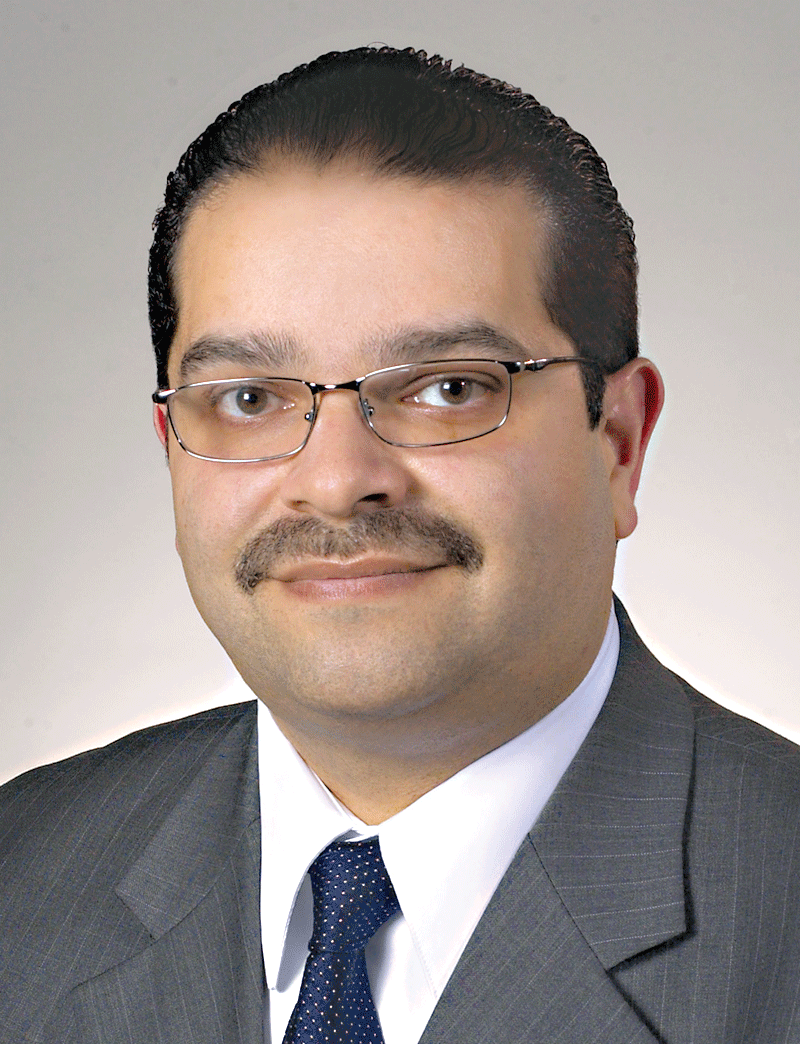
Features
Textbook Example of Business in a College Town

Amherst

Amherst

In October of 2009, Reza Rahmani and Arash Hashemkhani opened a Persian/Mediterranean restaurant in Amherst named Moti. It was a dream come true for Rahmani, who fell in love with the town during his years at UMass Amherst and had always been intrigued by the idea of opening a downtown eatery.
He was living in Phoenix, Ariz. when he finally found a site that suited his needs. “Two summers ago, I made the trip to Amherst four times to look for property,” he said.
So, when the space Moti now occupies became available, he and Hashemkhani rented it, then proceeded to gut it and renovate the entire interior.
Their restaurant has been so successful, they are expanding into space next door which recently became available. They are also gutting a large property on Boltwood Place with plans to turn it into a restaurant/lounge for working professionals.
“The rents here are equivalent to those in the back bay of Boston, but I love the demographics of this town; Amherst has a flavor you don’t find in many small towns, let alone bigger cities. There is a little bit of Europe here, especially uptown where our restaurant is located,” Rahmani said, adding that businesses are so supportive of each other that other restaurant owners have told customers to try Moti. “Within a year, we have built so many relationships, we almost feel we have been here our whole lives.”
Tony Maroulis, executive director of the Amherst Area Chamber of Commerce, says the restauranteurs’ experience is in line with the Chamber’s motto: “The Amherst area is a perfect place.”
“The student population of UMass, Amherst College, and Hampshire College are right in our backyard. We have a vibrant downtown and interesting village centers in several sections of town,” he said. “Thousands of people come here each year because of the colleges and cultural institutions. There are eight museums in town, and we also have a wonderful year-round population that is engaged with the community, which makes for a fertile business environment. These are just some of the reasons why Amherst is a terrific place to live and work.”
Robert Green agrees. Since 1976, he has owned and operated Amherst Typewriter and Computer, which is a few doors away from Moti.
“Amherst is a well-educated community, which is compatible with the services I perform,” he said. “There are many poets, writers, and artists as well as liberal arts students here who use typewriters because their senses are greater than that of the average person and the typewriter becomes an extension of them. To me, there is more than a monetary reward in owning a business here, because I serve several generations.”
For this, the latest installment of its Doing Business In series, BusinessWest takes a comprehensive look at Amherst and at why its chamber’s slogan is on the money.

Schools of Thought
Jeremy Austin moved J. Austin Antiques from Boston to Amherst in 2005. Since then, he has combined his business with J. Austin Jewelers, which his mother owns.
“This is a good, family-oriented community, but also a very intellectual, sophisticated community,” he said. “People who visit here are looking for things to do, which results in a lot of business potential because there is a steady influx of students and their parents as well as people from all over the world who come to Amherst to see the Emily Dickinson Museum.”
Amherst has 50 working farms, and Austin says the combination of a walkable downtown surrounded by land is another bonus. “People tend to pigeonhole this as a college town, but there is also a lot of open land here and good proximity to Boston and New York, as well as high-end restaurants,” he said.
Town Manager Larry Shaffer says town officials have done a remarkably good job of using resources offered by the Preservation of Agricultural Land Program to keep the rural landscape intact. In addition, the town recently adopted a new master plan with a goal of concentrating development in specific village centers.
“We want to preserve agricultural land by not encouraging traditional urban sprawl,” Shaffer said. “The village center concept is new for Amherst and is an attempt to compact development while retaining areas of conservation and open space.”
New development will be concentrated in pockets located throughout the town. They include Atkins Center, Cushman Village, Pomeroy Potwine Village Center, the intersection of College Street and South East Street, and Main Street and North East Street. “New zoning is being crafted and will be brought to the town meeting to be voted on,” Shaffer added.
Maroulis believes the changes will make make the town more sustainable. “It is a really exciting time to be here,” he said.
Shaffer agrees and adds that Amherst is a great place to do business. “It is virtually recession-proof, because the community is based on education. The university is a center of excellence in a number of academic disciplines and has one of the best engineering schools in the country, which offers businesses a splendid opportunity to work with them for complementary activities,” he said. “We are a small town, but absolutely committed to getting projects underway that are consistent with our zoning regulations and are in the best interests of the town.”
The town and its colleges have forged strong relationships, which are evident in many projects they have completed together. Currently, Amherst College is undertaking a $15 million restoration of the Lord Jeffery Inn, which will include a pub and an upscale restaurant.
And in recent weeks UMass signed over a piece of property to the town. The transaction, called the Gateway Project, involves a collaboration between the town and the university to redevelop a 1,500-foot stretch of North Pleasant Street. It will connect the northern end of the town center with the UMass campus and contain its own center that will include private student housing, private commercial development, lodging, parking, and space for UMass functions.
Jeffrey Guidera also sees potential in Amherst. In January 2008, he and contractor Rus Wilson formed Hills House LLC, a real-estate development venture established to restore a cluster of historically significant homes on the property of the Henry Hills mansion, which was the former home of the Boys & Girls Club of Amherst. “There is interest and demand for living space downtown. People like to have services that are concentrated in one area. So, we are saving these old homes and providing new ones for people,” said Guidera.
He believes there is real opportunity for business growth in town. “This is due to the combination of the regulatory environment, zoning changes, and the mood of the population, who realize they need a more diversified tax base,” he said, adding that greater housing density will help promote growth.
Kyle Wilson and David Williams are about to break ground for a new, five-story structure situated directly behind the popular Judie’s restaurant on North Pleasant Street. The new building is slated for mixed use, with a dozen high-end residential apartments on floors two through five and retail/professional space on the first floor along with storage space for the residents.
Wilson said a large number of professionals have already moved to Amherst because of the quality of life there and the culture. “Almost all of the interest in our building is coming from the Boomer generation who want to sell their ranch-style homes and move downtown to a building with an elevator and access to the colleges and movie theater,” he said, adding that they will break ground this fall and expect residents will be able to move in by September 2011.
A Class Act
“We think Amherst has amazing potential,” said Wilson. “UMass is looking to grow by 3,000 students in the next 10 years, and if they and Amherst College hope to attract top researchers, faculty, and students, there needs to be an active and lively downtown,” Wilson said.
Maroulis wants people to understand how attractive Amherst is.
“We are not in the middle of nowhere,” he said. “There is always something happening here. As our slogan says, we are the perfect place to live, work, and play. We have a creative economy, and the economic landscape is quite diverse. It is a wonderful and interesting place to be that is on the rise, and the next five to 10 years will be really exciting.”

Features
This Time-tested Vehicle Remains a Solid Estate-planning Tool

Kevin Hines

Kevin Hines

Family limited partnerships (FLPs) have long been considered an estate-planning tool for transferring wealth at discounted values and ultimately reducing estate-tax transfer costs. With the possible repeal of the federal estate tax (maybe, maybe not), is there still a need for these family limited partnerships?
The answer remains a strong ‘yes,’ and there are many reasons for this. What follows is a basic primer on the FLP and as well as some of the best practices that should be followed so that your partnership will be recognized as an entity and not considered a sham.

Family Limited Partnership
First, what is a partnership? A partnership is a joint venture between at least two investors or owners to manage and operate a business or investments. Generally, there is a written plan (operating agreement) that lays out various terms of the agreement such as, but not limited to, who and how will the partnership be managed, who are eligible partners, if and when earnings and profits will be paid, and how and when the relationship will end. A partnership is a ‘flow-through entity’ for income-tax purposes. This means that the individual partner will be responsible for payment of the taxes rather than the partnership.
A limited partnership is a similar entity but will have two classes of investors, general partners and limited partners. As the name implies, the limited partners have limited powers in the management of the partnership. This can be good and bad. You may not have a say in the management, but you also have a limited liability based on those decisions (your loss is limited to your investments into the partnership). Family limited partnerships will usually be formed as a limited partnership. The managing partner determines in accordance with the operating agreement if and when distributions will be made and when to terminate the partnership, thus controlling the management of the assets.
 
How It Works
The family limited partnership is formed by the senior generation. Oftentimes, a second-generation family member will manage the partnership (general partner). Assets of the senior generation will be transferred into the FLP in exchange for limited partner interests. These limited partner interests are then gifted to family members either at one time or through a systematic annual gifting program. The managing partner can then determine the level of distributions from the partnership.
Should limited distributions be made to cover income taxes of the partners, since this is a pass-through tax entity? Or should the distributions be higher to help pay for college education or another life event? The options are numerous but at the discretion of the manager.
 
Purpose of the FLP
Although the primary reason for using a FLP might be the possible reduction of the estate and gift transfer tax due the IRS (through the use of valuation discounts), there continues to be other non-tax purposes to validate the formation of the family limited partnership. Additionally, there is a requirement that one or more of these other purposes be met so that the partnership is recognized as a business entity for legal reasons. These purposes and benefits should include one or more of the following:
• Transfer of the family business or investments for succession planning (ease of transferring FLP interest);
• Centralized management of investments or other family assets such as a second home or other assets that you would rather not have to liquidate;
• Diversification of investments;
• Management during the senior generation’s lifetime and thereafter; and
• Credit protection and spendthrift  protection.
Remember, when forming the FLP, think long-term. What will your situation be in 10 years or 15 years?

Dos and Don’ts of an FLP
Operation of the FLP is key (in addition to the business purpose of the entity) in order to withstand a challenge to the entity recognition. Here are some of the dos and don’ts to formation and operation of the FLP.
• Provide for a succession plan from the senior generation;
• Limited partners should contribute assets to the partnership at start-up. Consider using prior gifts from the senior generation;
• The senior generation should retain other liquid assets in their name to cover living costs. Don’t transfer all of senior-generation assets nor the primary residence;
• Do not commingle personal assets and FLP assets; 
• Ensure that distributions follow the operating agreement and are in proportion to ownership;
• Prepare management reports on a regular basis and distribute to all partners; and
• Do not terminate FLP shortly after the passing of senior members.
As we all wait to see how the debate regarding the federal estate-tax law plays out in Congress, recognize that there are other non-estate-tax reasons for having your own family limited partnership. But the most important point is that once you set up your FLP, it is of the utmost importance to follow good business practices in managing it. You want your state and the federal government to recognize it as a separate entity so that you will be able to achieve your goals that were set out when the FLP was formed. Always consult with your accountant and attorney when setting up these entities.
 
Kevin E. Hines, CPA, MST, CVA, CSEP, is a partner with Meyers Brothers Kalicka, P.C., with specialties in business valuations, estate planning, and taxes; (413) 536-8510.

Features
This Hockey Veteran is Certainly Goal-oriented

Bruce Landon, president, general manager, and co-owner of the Springfield Falconsv

Bruce Landon, president, general manager, and co-owner of the Springfield Falcons

Bruce Landon said an equipment manager found it a few months ago in an old equipment bag in the back of a storage area at the Springfield Falcons complex within the MassMutual Center.
Now, the goalie mask, which Landon last used in action in the mid ’70s when he played for the World Hockey Associations’s Hartford Whalers, is displayed on a book shelf in his office, not far from the so-called “stick pad,” found in the same box, that he also used during a career cut short by a knee injury.
“I tried it on … it was pretty tight; the eye holes didn’t line up just right,” Landon said of the mask. “I’ve put on some weight over the years, obviously. I’ve got to lose about 15 pounds for that to fit again.”
The goalie equipment, which certainly looks dated when compared to the high-tech gear goalies use today, is one of the few items that have survived from Landon’s playing days. Other items in his office include a souvenir Whalers coffee mug, bearing his picture, that was sent to him by a fan of that team, as well as a framed team picture of the 1972 Whalers squad that captured the WHA championship.
“That club would have beaten most NHL teams,” said Landon as he ticked off the names of former teammates on that unit, many of whom enjoyed success in the NHL before or after that 1972 season. “That was a talented group of players.”
One has to prod the Kingston, Ontario native to talk about his playing days and the past in general. The man most closely associated with hockey in Springfield for the past three decades is certainly more focused on the present and especially the future, one that he says is dominated by question marks, much more so than he would prefer.
Indeed, while he would like to say that there will always be hockey in Springfield, he knows he can’t really use that phrase with any degree of confidence.
“I always like to remain optimistic that we can put something together and remain here long-term, but there are simply no guarantees anymore,” he said, noting that the hockey landscape has changed considerably over the past three decades and especially the past several years, and the challenges to existence, especially in what is now considered a small market, are mounting.
After several years of deep disappointment — the team hasn’t made the playoffs since 2003 and it’s been 20 years since the last Calder Cup championship — with NHL affiliates the Edmonton Oilers, Tampa Bay Lightning, and Phoenix Coyotes, the Falcons have a new partner in the Columbus Blue Jackets. The deal is just for one year (with an option year) though, as both the Falcons and the new parent club essentially try on this relationship to see how it fits.
But hockey in Springfield has become what amounts to a year-to-year proposition anyway, said Landon, 61, who told BusinessWest that attendance, down slightly from years ago, must improve if the team is going to compete, and succeed financially, at a time when expenses continue to soar, as does competition for the time and attention of area families.
For this, the latest installment of its Profiles in Business series, BusinessWest talks at length with a man who has gone from preventing goals on the ice to meeting and exceeding them in the changing world of professional hockey.

Making the Big Stop
Landon likes to joke that he put Billy Smith in the hall of fame.
The two were teammates and fellow netminders on the 1969-70 Springfield Kings squad that played its home games in the Coliseum at the Big E. Landon was injured (a shoulder dislocation) during the final weeks of that season, putting Smith between the pipes for a playoff run that ended in a memorable Calder Cup championship.
Smith would use that run to help catapult his way into the NHL, first with the Los Angeles Kings, and later the expansion New York Islanders, for which he played a lead role in four consecutive Stanley Cup championships in the early ’80s.
“I always told Billy that if I never got hurt, he wouldn’t have got a chance to play,” said Landon, whose hockey career, cut short by injuries, took a much different, but nonetheless fulfilling, route.
After playing with the Whalers for five seasons, he found himself back in the AHL, and Springfield, where he both played and handled some sales the summer before the season started, an unusual arrangement, orchestrated by Springfield Indians owner George Leary that gave Landon a taste of life in the front office. When Landon blew out his knee in December, 1977, Leary offered him a job handling group sales.
“And I’ve been here ever since.”
He’s had just about every title one can have with such an organization, from director of marketing and public relations to the current president and general manager, with ‘co-owner’ “thrown in,” as he likes to say, in 1994, when, just a few weeks after the then-Springfield Indians left the city for Worcester, he cobbled together an ownership group that brought a new team, to be called the Falcons, to town.
Since that time, Landon’s unofficial job description has been to keep hockey in Springfield, where it has been part of the landscape since 1936. He’s been successful in that mission due to his ability to recruit, assemble, and maintain two ownership groups, the second in 2002, that have enabled the city’s hockey tradition to continue.
In recent years, the team has managed to survive, but wins, not to mention playoff opportunities, have been hard to come by. The Falcons have gone through a number of NHL affiliations — more than most teams, by Landon’s calculations — and that certainly hasn’t helped matters. And the team’s presence at or near the bottom of the standings had definitely impacted attendance.
All this makes the task of keeping hockey in Springfield that much more challenging, said Landon, who brings vast amounts of energy, determination, and imagination to that assignment.
“I’m still the first one in in the morning and the last one to go home at night,” he said, while describing himself as a workaholic, and one who didn’t take a full week’s vacation at one time (until just last month) for perhaps two decades. “I love what I do; if I didn’t enjoy, I wouldn’t be doing it after all these years.”

Icing on the Cake
Landon said this work ethic reflects his hiring strategies as well as his management style. In short, when he’s evaluating the large amounts of young talent coming out of sports management programs, including those at several area colleges, he’s looking for certain traits, especially hard work and the ability to sell.
“The first thing I look for when I hire someone is a passion for the industry,” he explained. If you don’t have that passion for business or the passion to come to work every day, I don’t want you. As the guy overseeing this operation, I don’t want to micromanage and I don’t want to baby-sit. I want people who come in the morning excited to be here, knowing there’s a wonderful opportunity to build their resume.”
Looking back on his own career in hockey, Landon said he had a few attractive opportunities to move on to the NHL. But he ultimately turned them down to keep his family — and himself — grounded in Western Mass.
“I didn’t want to be a hockey gypsy,” he explained, noting that in this business, many assignments are only a few years in duration, and families must be uprooted with each new career stop. “I had a couple of opportunities over the years, going way back. When I was a player, I built a house in West Springfield and raised by two kids in West Springfield.
“Family is important to me, and it was important for me to establish roots here — I love this region,” he continued. “I never had any aspirations to be a coach … I always loved the management side, the sales side, the marketing side. I looked at my options, and said, ‘I like what I have going for me. If hockey doesn’t work out for me, I’ll find something else to do here. But hockey has always worked out.”
Looking ahead, Landon said his broad goal, however difficult it may be to achieve, is to add a layer, or perhaps several layers, of permanence to the prospects for hockey in Springfield. He told BusinessWest that this work will likely involve recruitment of more or different owners, as the current mix has been in place for more than eight years, and some may be ready for new and different opportunities.
“Our group of owners has been fantastic, we have tremendous partners here,” he said. “But it’s been eight years for them now, so maybe it’s time for a changing of the guard, and I’m hoping we can find some committed people at the local level. There’s a lot of interest in this franchise from groups outside this area, but with those people, you don’t have that local commitment.”
And for both current owners, as well as those in the future, hockey in Springfield must be more of a philanthropic gesture than a pure business decision, he continued.
“You can make money at this and we have in the past,” he said with a smile that indicated that such a feat is getting more difficult all the time. “But if people are looking at this as a pure investment, then they should put their money somewhere else; there has to be a little bit of philanthropic investment here as well, where it’s good for the community, it’s good for the city. Hockey has been here since 1936 and it’s a major part of this city.”

Net Results
Assessing the present and future status of hockey in the City of Homes, Landon said his management teams have, over the years, done a good job of providing solid family entertainment at the arena on Main Street. There was then a pause, followed by the inevitable ‘but …’
“We need a better product on ice to get the hockey fan back, to make hockey viable here.”
Making hockey viable in Springfield has been Landon’s passion since, well, the last time he put on a uniform and that old goalie mask that no longer fits him properly.
He knows there’s no turning back the clock — with regard to where the eye holes should line up on his face, or with the game of hockey as a business; the game has changed, and there’s no going back to the old days.
But then again, he’s never been one to dwell on the past.

George O’Brien can be reached at [email protected]
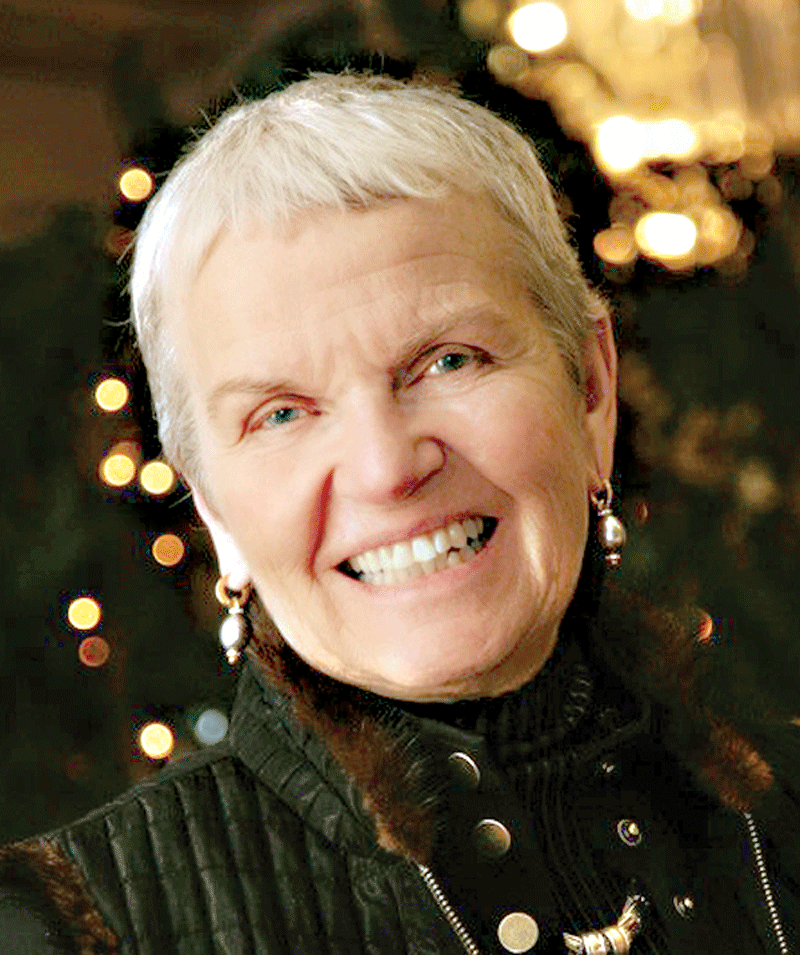
Features
The Springfield Public Forum at 75

Springfield Public Forum 2010

Springfield Public Forum 2010

Launched in 1935 as a pilot program designed to further the education of adults unable to attend college at the height of the Great Depression, the Springfield Public Forum is today one of the oldest lecture series in the country and perhaps the only one that remain free to the public. The list of speakers who have come to Springfield includes hundreds of luminaries, ranging from future presidential contenders Richard Nixon and Hubert Humphrey to Doonesbury creator Gary Trudeau. Through the years, the forum has remained true to its mission while also changing and evolving to remain relevant, reach audiences of all ages, and be a force in the cultural life of the region

Patricia Canavan says those round-number anniversaries, such as the 75th now being marked by the Springfield Public Forum, are much more than occasions for blowing out candles on a cake and marking the passage of time.
Indeed, these are occasions — historically better than other anniversary numbers, such as 74, 76, 49, or 51 — for efforts to draw attention to an organization and remind the public of its value to the community. “And, even more importantly, it’s a time for introspection, for looking at what’s being done and for ways to do it better,” said Canavan, executive director of the forum, noting that those involved with this Western Mass. institution are taking full advantage of this anniversary to do all that and more.
In other words, she said, the 75th will be an occasion to underscore one of the forum’s more effective marketing slogans: ‘Old, but New Every Year.’
Dave Martel, a partner with the Springfield-based law firm Doherty, Wallace, Pillsbury, and Murphy, and a board member for nearly half the forum’s existence, agreed. He told BusinessWest that this year’s forum series, to begin Sept. 21 with a talk from Supreme Court Justice Stephen Breyer, is both a celebration of the institution’s contributions to the community and testimony to how the forum continues to carry out its mission to educate and engage area residents.
He said the 75th anniversary season, while in many ways no different than other years, does, because it is a milestone, present a good opportunity for everything from enlisting additional support from the business community, which underwrites the lectures, to building up an endowment that will someday lessen the forum’s reliance on fund-raising.
“We want to use that endowment to fund one lecture each year, which will put less emphasis on having to find sponsors for each talk,” said Martel, adding that the attention garnered by the 75th anniversary celebration will provide a real boost for those efforts.
Canavan, now in her fourth year at the helm of the forum, said the organization, one of the oldest lecture series in the country and perhaps the only one that remains free to the public, continues to evolve. She used that term first in reference to the fact that the staff, which has grown to four part-time employees, is now paid. But she also utilized it to describe efforts with everything from choosing speakers that will appeal to today’s tech-savvy young people to taking learning opportunities well beyond the one hour of a speaker’s address.
These and other measures are part of a broad strategic planning initiative launched in 2007 and, in many ways, inspired by the diamond anniversary, said Canavan, noting that, overall, the plan’s goal is simply to extend the forum’s reach and enable it to touch more lives.
“We needed to define where we were going and look into the future and decide what we wanted to be,” she said of the strategic initiative. “We are committed to the fact that we are education organization, and while the lectures play a huge part in this, we decided that because we’re bringing such a wealth of resources, people, to a community, to just let them speak for one night and have that be it, is in many ways a waste.”
For this issue, BusinessWest, on the occasion of the forum’s 75th anniversary, takes a broad look at how the lecture series continues to evolve and find new and different ways to remain true to its original mission.

Learning Experience
As she talked about the 75th anniversary and anticipation of it, Canavan said that one more thing the milestone inspired was research into the forum’s creation, history, and legacy. Much of the work was carried out by an intern, and it was quite eye opening, she noted.
Among other things, it revealed that the forum began in 1935 as a three-year project sponsored by the American Association for Adult Education in New York City, which ran similar programs across the country. The first series featured 40 programs over eight weeks, and functioned as a short college course with guest lecturers on related topics, said Canavan, noting that, at the time (the height of the Great Depression), many adults simply did not have the wherewithal to pursue college degrees, and the forum served as a means for continuing their education.
The lectures, which drew nearly 50,000 people that first season, were intentionally historical in nature for the first few years, she continued, but changed at the request of the audience to address topical issues. By openly addressing contemporary problems, the forum series became a driving force in the cultural life in Springfield.
Over the years, luminaries from politics, literature, science, sports, the media and other fields have appeared at Symphony Hall. The list of speakers includes Henry Kissinger, Robert Moses, Maya Angelou, Issac Asimov, Zbigniew Brzeziniski, Alex Haley, Art Linkletter, Gary Trudeau, and Red Auerbach. In 1952, Senators Richard Nixon and Hubert Humphrey, who would square off against each other in the 1968 presidential election, both spoke at the forum.
Then, as now, the commitment has been to “great speakers, great discourse,” said Martel, and this is a tradition being continued with the 75th anniversary lineup, which presents testimony to the many ways in which the forum remains true to its mission, but also continues that evolutionary process and strives to reach larger and more diverse audiences.
The roster of speakers reflects how those who are assembling the lineup are striving for diversity in terms of subject matter, as well as a focus on current events and efforts to grow attendance by bringing more families and young people to Symphony Hall, he continued.
Breyer, just the second Supreme Court justice to take part in the forum (William O. Douglas was the other), appears as both a jurist — speaking on current issues, including the recent appointment of the court’s latest member, Elena Kagan — and as author of several books, including Active Liberty and Through the Eyes of a Judge.
Breyer’s visit will be followed by what Canavan calls one of the forum’s “family friendly” lectures, featuring Mars Rover lead scientist Steven Squyres, on Oct. 24. This will be a multi-media presentation that will include up-to-the-minute news and footage from the Mars Rovers Spirit and Opportunity, as well as information about NASA’s future plans. The lecture, which is the culminating event in a month-long series of programming involving science and technology (more on that later) will be preceded by a small student discussion group with Squyres and demonstrations by student robotics groups.
Squyres’ appearance typifies efforts in recent years on the part of forum administrators and board members to reach out to younger people, said Canavan, noting that recent lineups, crafted with the same goal in mind, have included marine archeologist Robert Ballard, whose team located the Titanic, Jean Michel Cousteau, son of the late explorer, oceanographer, and filmmaker Jacques Cousteau and president of the Ocean Futures Society, and others involved in the sciences.
Inclusion of speakers with messages that will appeal to younger audiences is a key part of that broad initiative, but it is only one component.
“One of our big goals for this season is to really resonate with people of my generation or younger,” said Canavan, 41, noting that one of the strategies for doing this is making full use of the rapidly advancing information technology and social media outlets embraced by younger generations. “We have updated and upgraded our Web site, we have a very active FaceBook page and an electronic newsletter.
“But that’s just one part of the equation,” she continued. “Another piece is resonating with movers and shakers within the younger crowd. “I’ve reached out to people who can say to their group or sphere of influence, ‘hey, look at this … this is something great, a real asset to our community.”

Talking the Talk
The rest of the lineup for this fall reflects efforts on the forum’s part to be topical while also engaging audiences, said Canavan.
On Oct. 28, Kavita Ramdas, senior advisor to and former president and CEO of the Global Fund for Women, will give a talk focusing on the challenges and opportunities presented by globalization, with a look at the role of social entrepreneurship on improving health, education, and economic security in developing countries.
Meanwhile, urban revitalization will the focus of a talk by Newark, N.J. Mayor Cory Booker, whose innovative strategies are producing solid results for that community. Booker will share his multi-faceted approach to economic development, community building, education and housing reform, and promotion of arts and culture. The season will conclude with a town-hall-style moderated conversation with new analysts and commentators Mark Shields and David Brooks, as they appear on PBS’s Newshour. They will provide insight into current events, including the mid-term elections, the economy, national, and international affairs.
In many ways, the 2010 season and its lineup of speakers reflects initiatives included in that strategic planning process, completed two years ago, that spurred several new initiatives.
Among them is something called the City Thinks Program, undertaken in conjunction with the Springfield Public Library and funded by a number of groups, especially the American International College Honors Program. City Thinks takes one of the forum lecture topics and develops three weeks of programming around it, offered in a number of venues.
This season, the Squyres lecture was chosen, said Canavan, adding that programming will include book-discussion groups, movie and documentary screenings, a student video contest (with a special prize donated by PeoplesBank), “Family Fun Day” at the Springfield Museums, and more.
“The goal is to give as many as possible the opportunity to learn more about this topic,” she explained, noting that this year’s topic is called “The Final Frontier: Space, Science, and Technology. “We want to provide as many avenues as possible for people to engage and learn more.”
Other component of the strategic initiative involves efforts to expand outreach to area schools, community centers, and other facilities to provide resources for additional learning, she continued. These endeavors include small-group discussions with forum speakers prior to their talks at Symphony Hall. One such talk two years ago, involving presidential historian Michael Beschloss involved 25 students in Springfield Public Schools.
“It was a terrific program … these students were prepped, they came with great questions,” said Canavan. “This was a great way for them to build upon what they were learning in the classroom.
“We’re finding that with these educational outreach activities and the partnerships we’re building with different educational and cultural organizations that we’re able to reach more people,” she continued. “And that’s something we’re really excited about.”

In Conclusion
Canavan told BusinessWest that some special marketing initiatives have been undertaken for this 75th season of lectures, including a new logo and related materials. There are some other things planned that would be considered extraordinary, and there may well be a cake included in the mix somewhere.
But forum administrators and board members want to do much more this year than simply celebrate a milestone, a diamond anniversary. They want to take full advantage of this opportunity to not only mark some history, but generate some awareness and momentum so that much more history can be written, and a tradition can not only continue, but expand and thrive.
If they can succeed with all that, then there will be really something to celebrate.

George O’Brien can be reached at [email protected]

Features
Creating Online Video — and Opportunities — for Clients

Dave Sweeney, left, and Marty Langford say they help companies get the big picture.

Dave Sweeney, left, and Marty Langford say they help companies get the big picture.

Dave Sweeney and Marty Langford believe in practicing what they preach.
And what they preach is that video on the Internet is a very popular medium — more than 70% of U.S. Web surfers view video on line, they say — and that business owners should take full advantage of this popularity to “advance their brand.”
So if one visits their Web site — www.viz-bang.com — he or she can see a clip featuring Sweeney and Langford talking about video, their company, and how they can use a host of platforms to help clients get their message across.
“If you don’t think this Web-video thing is real, what are you doing right now?” asks Sweeney shortly after introducing himself on the two-minute video. “You’re doing it — and your customers are doing it, too.”
The two partners, who launched Viz-Bang nine months ago, alternate with commentary throughout the video, with Sweeney saying at one point, “we make videos that move people — in a good way,” with Langford following with, “kick-ass videos.”
But the two were quick to point out — in both their video and an interview with BusinessWest — that they do more than create videos. They also combine them with some of the latest social-media vehicles, such as Twitter and Facebook, to give clients a diverse and cost-effective package of options for relaying a message to their intended audience.
All this means that there is a large educational component to their work, said Sweeney, adding that while most business owners are aware of the various social media outlets, they don’t know how to take full advantage of them. “So there are two conversations we have with people,” he explained. “We talk to business owners and managers about being on Facebook, Twitter, or a YouTube channel, and all the reasons they should be on those platforms. And then, what you hear often is, ‘OK, you’ve convinced me; now what are we going to say? What are we going to put out there?’ And that gets to the content question, which we can answer.’”
Doing both the convincing and the content has been the job description for the two partners since they came together late last year, confident that their talents would complement one another effectively.
Sweeney has a background in corporate communications (he spent 10 years with Cigna), while Langford has spent his career in video-production work. After working for other people for many years, the two went out on their own with entrepreneurial ventures. They collaborated on a few projects, and the resulting good chemistry prompted talk of going into business together — talk that eventually turned into action.
As he commented on video and the Internet, Langford said many business owners are taking advantage of advancing technology such as Web cams to gain visibility, tout their brands, and inform customers. But often, the product is lacking needed quality.
“As soon as the video question comes into the conversation, you can see it working in people’s eyes, you can see them tossing it around as we’re talking to them,” he explained. “They say, ‘I have a video camera, I have a Web cam on my computer, and I’ve seen lots of video blogs and links on sites for companies where they’re sitting at their computer blabbering away into their Web cam for five or six minutes.’
“That’s content,” he continued, “but it’s not particularly good content that’s maintaining and supporting the brand that they’ve established. It could actually hurt a company — we’ve seen it hurt clients and potential clients. There might be some good stuff in there, but production-value-wise, it’s probably lacking.”
Adding value that will enhance the brand is what the two partners say they specialize in, to the point where they’re using the slogan, ‘creating digital video they’ll wanna watch.’
But generating video is just part of the equation, the two stressed repeatedly. Another big part is taking that video and putting it to effective, cost-efficient use.
“One piece of video shouldn’t live or die based on one distribution method,” Langford explained, adding that he and Sweeney can work with clients to spread the content over several platforms, ranging from traditional media to social media.
The two partners said Viz-Bang is off to a solid start, with growth coming slowly and surely. They have been actively engaged in building awareness of their company, products, and services. Methods for doing so including participation in a series of seminars on social media called Online Impact, involvement in community projects such as the Big Theater restoration, and work on some high-profile projects such as the Art & Soles initiatives (those 5-foot-high sneakers visible throughout Springfield) and BusinessWest’s 40 Under Forty Gala, for which the company produced a humorous video introducing the Class of 2010.
And they also do it through their own marketing, which includes all those platforms, including Twitter, Facebook, and YouTube, that they pitch to their clients.
“Viz-Bang is more than a video-production company,” says Sweeney toward the end of that promotional video on the company’s Web site. “It’s more than a product or service; Viz-Bang transcends commerce.”
Perhaps, but for now, the two partners are working to build some commerce for themselves. They say their book of business is growing steadily, as evidenced by calendars that have a healthy number of appointments booked. They expect to become increasingly busy as word gets out about them and more business owners come to say, ‘OK, you’ve convinced me; now what are we going to say? What are we going to put out there?’

— George O’Brien

Features
The Region’s Plan for Progress Continues to Change and Evolve

Tim Brennan

Tim Brennan says the Plan for Progress is in a constant state of evolution.

Originally drafted in 1994, the region’s Plan for Progress, authored and administered by the Pioneer Valley Planning Commission in conjunction with area economic-development leaders, is anything but a static document. It is being constantly changed and updated to reflect new priorities, challenges, and opportunities. Recent additions and amendments have been made to address workforce-development trends and concerns, the desire to create a ‘green’ regional economy, and the need to connect the region to other urban areas in an emerging ‘mega-region.’

Tim Brennan says the Plan for Progress, the comprehensive regional strategic economic plan for Hampden, Hampshire, and Franklin counties, receives a major overhaul every 10 years; the last one came in 2004, a decade after the plan was originally drafted.
There are smaller, yet significant, updates every five years, said Brennan, director of the Pioneer Valley Planning Commission (PVPC) and the document’s lead author, noting that the most recent of these came in 2009. But in reality, the plan is constantly changing — the word he chose to describe it was “fluid” — because it needs to reflect new p
riorities, challenges, and opportunities.
Take, for example, the somewhat recent national and regional emphasis on all things ‘green.’
Indeed, as of June 2009, ‘the plan,’ as it’s called, has a “strategy to develop a green regional economy.” There is a stated goal — to “establish a regional economy where sustainable living and business practices combined with clean-technology opportunities are core to our economic, environmental, and cultural vitality” — as well as identified action steps in six key areas: business development, agriculture, education and workforce development, management of natural and built resources, transportation, and communication.
Brennan said plan administrators want to take the regionwide clean-energy plan put in place in 2008, as well as several existing clean-energy companies, such as FloDesign Wind Turbine, Qteros, and others, and use these as a starting point from which to build a green cluster over the next decade or so.
“We started looking at it from the standpoint of how we can use this to our economic advantage, to grow new businesses and create more jobs,” he explained, adding that the new chapter in the Plan for Progress was added to keep the initiative in the region’s collective consciousness.
The informal plan moving forward is to take the various components of a ‘green sector,’ everything from existing companies to the planned high-performance computing sector in Holyoke to the annual Energy Connections Conference in Springfield, and shape them into something larger than the component parts.
“As someone said to me at a recent event, ‘there’s a lot of stuff going on in the region in this green sector; we need something to take all the snowflakes and make a snowball out of them,’” said Brennan. “I thought that was a good way to explain how we’re trying to get some traction and push this from an economic-development standpoint as well as an energy standpoint.”
The new strategy to develop a green regional economy is just one example of how the Plan for Progress is in a continual state of flux, said Brennan, adding that is in many ways like a roadmap in that it is always being amended to reflect changes in the landscape.
Other recent changes to the document include a rewrite of the plan’s workforce component to address issues such as the retraining of area residents for jobs in the knowledge-based economy; intensified efforts to brand the Knowledge Corridor and connect it to other urban centers in the Northeast “mega-region,” as Brennan calls it (more on that later); a new emphasis on the creative economy; and a commitment among plan administrators to turn plans into action and also measure what they’re doing.
“The plan is the roadmap to the future,” he said. “Once we finish doing the plan, I feel like there should be no more planning; instead, let’s get on to doing.”
For this issue, BusinessWest takes a look at some of the recent additions and adjustments to the plan, and why annual upgrades are needed to make sure the region is putting its attention — and its energy — in the right directions, and making more of those snowballs.

Connecting the Dots
As he talked about the plan’s new green component, Brennan said that emerging strategic initiative is predicated on the belief that, perhaps sooner than later, the region and nation will be moving away from fossil fuels to alternative, cleaner forms of energy.
The consensus seems to be that it’s not a question of if that will happen, but when, he told BusinessWest, adding that the plan’s new green component was added to “give the region a competitive edge” when that day comes.
Making the region more competitive is the simple, yet also quite complex, overriding purpose of the plan, said Brennan, as he traced the steps in its development. Putting things another way, he said the plan was put in place, and is continuously updated, to put the region out front, or ahead of whatever curve it was confronting, and be as prepared as possible to answer the proverbial ‘what’s next?’
As an example, he cited the plan’s long-term focus on improved rail service and connecting the region to points south and east, a strategic initiative that paid off when the Obama administration announced a serious commitment to rail-system improvements.
“We’ve been working on this rail plan for five years now,” he said, referring to an initiative to connect Springfield with New Haven and thus New York. “You wake up one morning and Obama says, ‘we’re going to put $8 billion into rail projects.’ Because we had been planning, we could flip our plan into a grant application and get it; Connecticut gets $40 million, Massachusetts gets $70 million, and Vermont gets $50 million. We’re the only corridor in New England to get funded.”
By continually tweaking the Plan for Progress, its administrators can script more success stories like the rail grant, said Brennan, adding there are many forward-looking strategic initiatives being considered, most all of them focused on the emergence of the so-called mega-region.
In a recent presentation to the Springfield Business Roundtable — and in other talks and documents — Brennan has identified 11 of these mega-regions: The Northeast, ‘Piedmont Atlantic’ (slicing through the Carolinas, Georgia, and Alabama), Florida, the Gulf Coast, the Great Lakes, the Texas Triangle, ‘Front Range’ (in the Rockies), the Arizona Sun Corridor, Southern Calif., Northern Calif., and ‘Cascadia’ (the Seattle area).
The names given to these regions vary with the individual or group referencing them, he continued, but most analysts looking out 40 or 50 years believe these regions will be the main forces driving the economy, and it will be incumbent upon smaller regions within those areas to be players in those regional economies — or get left out of the party.
“Our work is designed to make the Knowledge Corridor more than a brand,” he told BusinessWest, acknowledging that, even a few years ago, awareness building was the primary objective when it came to the Hartford-Springfield partnership. “We want to make it real, make it connected, and make it a much bigger powerhouse from an economic point of view, and make sure it’s part of this constellation here in the Northeast corridor. We’re working to position ourselves to be not just a bystander, but a player.”
To thrive in the Northeast mega-region, said Brennan, Western Mass. must be effectively connected to other parts of the region, especially Boston and Hartford.
“We can’t end up as a cul-de-sac,” he said, using ‘we’ to mean the corridor, and implying that, while there is a degree of connectivity already, it needs to be improved.
To achieve the connectivity Brennan described, the region has to take full advantage of vehicles such as high-speed rail, improved broadband service in Western Mass. (a $71 million plan to do just that is on the drawing board), highways, and other forms of infrastructure. And with connection can come collaboration with other cities and regions, he said, which is how economic development is really achieved.
As part of the broad action plan on bolstering the corridor, officials on both sides of the border will be applying for a federal grant to create a sustainable development plan for the cross-border initiative. There will be considerable competition for such grants, said Brennan, adding quickly that he’s optimistic about the region’s chances.
“We’re going into this with our eyes wide open,” he said. “We’re going to be competing against the Chicagos, the LAs, and the Atlantas, but I think we have a story to tell, and we have some impressive accomplishments for a medium-sized area.
“The Knowledge Corridor brand now has some traction,” he continued. “The challenge now is to get a product that goes with that brand that has a lot of substance.”

For Good Measure
While moving beyond the brand is a top priority within the plan, there are many other initiatives as well, said Brennan, adding that they involve everything from keeping college graduates in the region to helping more area residents become workforce-ready to Connecticut River cleanup.
Returning to the new green strategic plan and that snowball he referenced, Brennan said there will likely be a number of components to a green cluster in the region, from new products and services, such as the Scuderi engine and FloDesign’s new wind turbine design, to existing products that could be ‘greened’ to help them achieve a larger market, to available green power that can be used to attract companies that want to reduce their carbon footprints.
“The high-performance computing center is coming to Holyoke for essentially one reason — low-cost, clean energy,” he said, adding that area municipal officials and economic-development leaders must look for ways to leverage that asset and others across Western Mass.
And when the computing center is up and running, it will become another huge asset to leverage. “There will be a number of businesses that will want to plug into that kind of computing power, and that’s where the job growth could come from if there can be a path to accessibility.”
The green strategic initiative is the most comprehensive new addition to the Plan for Progress, but there have been other tweaks, including revisions made earlier this year to a strategic initiative to integrate workforce development and business priorities.
Overall, said Brennan, the plan is putting more emphasis on devising methods to close the skills gap in the region, a gap that is keeping many unemployed, underemployed, and displaced workers from finding solid job opportunities.
“We need to address how to retrain workers who wake up one morning to find that what they’ve been doing for 15 or 20 years is now being done by machine, or is being done in Asia, or isn’t being done at all because some other product or service has trumped it and knocked it off the boards,” he said. “Figuring out to get people more gainfully employed if they run into some kind of quicksand is something that needs more attention.”
The revised strategy calls for several steps, including the creation of a regional workforce-development plan; engaging the business community, civic leaders, and various industry sectors to be involved in the plan’s development and implementation; and work to identify funding for regional workforce and educational planning. It also recommends formation of a workforce-development strategy team as a subcommittee of the Plan for Progress that will oversee the progress of the strategic initiative by working with various workforce and educational institutions, such as the regional employment boards.
Still another adjustment to the Plan for Progress is a greater sense of accountability, or measuring results, said Brennan, adding that the Web site www.stateofthepioneervalley.org has been created to show how the region, through various implementing agencies, is doing relative to key issues.
“We’re trying, 24/7, to show how we’re doing in these various categories,” he said of the indicators. “We’re trying to access whether we’re making progress with any of this, or if we’re in a steady state and need to try harder.”
Measuring is that third leg of the stool behind planning and doing, he said, adding that they are all equally important to achieving the larger goals of attaining progress and giving the region competitive edges.

When a Plan Comes Together
The next big overhaul for the Plan for Progress won’t come until 2014. But it’s safe to say that the document, if it can be called that, will see a number of changes and additions before then.
Keeping the plan current to reflect new challenges and opportunities is critical, said Brennan, to the ongoing efforts to make the region more competitive, at a time when the competition is mounting.
Planning, doing, and measuring, the three parts of this equation, are all keys to progress, or enabling sound ideas to snowball — literally and figuratively.

George O’Brien can be reached at [email protected]
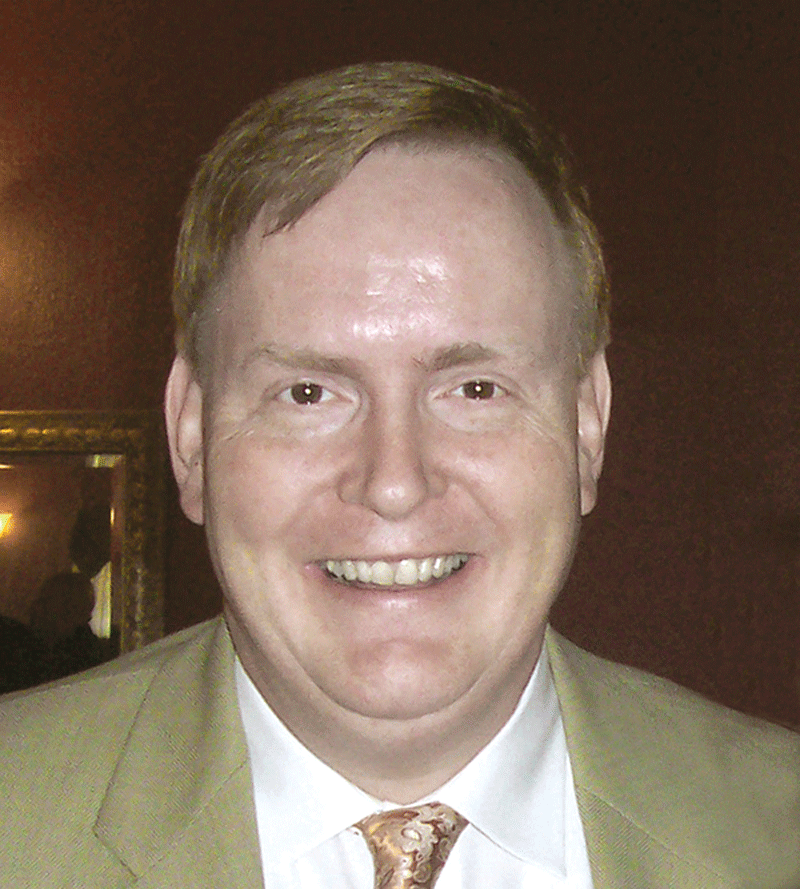
Features
His Job Description? Holding Down the Fort

Rudi Scherff, co-owner of the Student Prince restaurant

Rudi Scherff, co-owner of the Student Prince restaurant

Rudi Scherff started washing dishes at the Student Prince restaurant, then co-owned by his father, Rupprecht, when he was 12 years old. This means that, among many other things, he has a half-century’s worth of perspective on downtown Springfield.
He’s seen quite a bit of change in and around the central business district over that time, with much of it, by his estimation, being not exactly good for business.
“Years ago, people had to come downtown to see their lawyer or their dentist,” he said, noting that, while doing so, they would often stop in for lunch. “Now, that’s pretty much disappeared. When I was a teenager, I’d walk to the bank with my dad, and maybe 60% of the men you saw were wearing a sportcoat and tie, even in July; now, collars are a rarity, never mind ties.”
There have been other changes beyond dress and an outmigration of professionals, he added. There are fewer stores and far fewer restaurants downtown, and where once many white-collar workers lived downtown, now, the vast majority of housing is of the subsidized variety.
Through all of this change and societal evolution, the Student Prince, or the Fort, as it’s called colloquially, has been a constant (this year marking its 75th anniversary), when so many other establishments fail to keep the doors open even a tenth that time. When asked to articulate on the landmark’s longevity, the soft-spoken but opinionated Scherff said it comes down to consistency but also flexibility and adjusting to those changing times.
Elaborating, he said that, where once most customers and potential customers were content to simply have a nice meal and perhaps some accompanying liquid refreshment, many people today want “an experience.”
“As a result, we’re a little more in the entertainment business and less in the basic sustenance business,” Scherff explained. “Some people just want to come out and have something to eat, but I think more people are looking for that experience, they’re looking a novelty, for more than just stomach filling.
“So we change our menus a lot more, we’ll do many more seasonal specials, we’ll do a lot of different desserts,” he continued. “We try to give people reasons to come in, be it with soft-shell crabs in July or native corn; we try to have some variation of products. Sometimes things succeed, and sometimes they don’t.”
For this, the latest installment of its Profiles in Business series, BusinessWest turns the spotlight on one of Springfield’s most noted restaurateurs, who may not be quite the institution his father was, but has been equally successful in holding down the Fort.

A Lot on His Plate
Scherff never expected to follow in Rupprecht’s considerable footprints, even though he practically grew up in the restaurant and held just about every job in the place.
The plan was to become a lawyer, and, by and large, things went according to script. Scherff earned his juris doctorate from Boston College and settled into private practice in Springfield in the early ’80s. He focused on criminal work and handled some real estate. “Some of it I enjoyed, but all that paperwork … I didn’t really care for that.”
He had been in practice about a decade, and doing reasonably well, when his father’s failing health forced him to eventually slow down. Rudi, who would work in the restaurant on occasion, especially during peak times of the year, found himself having to pitch in much more and attempt to juggle two vocations.
“I tried to do both for a year,” he said, “but decided that I wasn’t being fair to the law practice, the restaurant, or myself.” So he left the legal profession in the early ’90s, and, with his sister, Barbara, brother, Peter, and nephew, Michael, now the kitchen manager, he continues the Fort tradition, which began in 1935.
When asked for his job description, Scherff said there are many elements to it. “I keep my eyes open, see what’s happening, and see if the customers are enjoying themselves,” he said, offering first the long view of what occupies the 60 or so hours a week he spends at 8 Fort St. “I do the scheduling and the ordering, and supervise menu development — all the little things that don’t fit in the pigeonholes.”
Also on that list is listening to stories about his father, who passed away in 1996, and there is no shortage of them coming from the Fort’s legion of long-time and sometimes very long-time customers.
“Some of these stories are true, some of them are not true,” he said, “but far be it for me to ruin someone’s memories.”
Scherff has many of his own memories from five decades on Fort Street. He’s watched the restaurant, famous for its collection of beer steins, stained-glass windows, and Roquefort dressing, expand and evolve, while also gaining a place in both the local lexicon and the national trade media.
Indeed, when, in 2008, Gourmet magazine printed its list of “legendary restaurants,” establishments that had been in business since before the magazine started publishing in 1941, the Student Prince was on it.
“We didn’t know it was coming,” Scherff said of the listing in Gourmet. “They just said, ‘we’re doing an article … you may or may not be in it.’ They were kind enough to send us a copy of the magazine, and it came the same day as we were having our Hampden Street Octoberfest. It was a very exciting day for us.”
Scherff said the Student Prince has hosted its share of celebrities over the years. John Kennedy frequented the restaurant when he was a senator, and his brother, Ted, did as well. Wilt Chamberlain dined there, as have others from the world of basketball visiting the birthplace of the game. Roy Rogers stopped in a few times, John Ratzenberger paid a visit when he was in town several weeks ago (and ordered a bologna sandwich), and Scherff has fond memories of when John Denver came in for dinner.
“Some of the guys in the kitchen wanted autographs,” he recalled. “When I asked him if he would sign a few, he said, ‘no, I’m not going to do that here,’ and promptly went out to the kitchen, thanked everyone, and signed them back there. He was a real gentleman.”
But while having stars in the dining room is great for any restaurant in terms of creating lasting memories for staff and patrons alike, Scherff said one doesn’t build a business and keep it open for 75 years because a few singers, politicians, and hoop legends stop in on their way to somewhere else. “All that’s wonderful,” he said of the celebrities, “but the guy who comes in once a week and has bratwurst and a beer or two is much more important to me.”
Such customers have been the lifeblood of the Student Prince, and while Scherff says there are still enough of them to keep the business humming, times are changing in the area, and they are making life more challenging for the current generations managing the landmark.
For starters, there are those changing trends and demographics downtown, which combine to create fewer of the kinds of customers the Fort has always thrived on. Also, the Fort, like all establishments downtown, has to contend with the negative perceptions of the area and the lack of free parking. In the meantime, there is considerable competition, both in the suburbs (much more than in decades past) and along Springfield’s riverfront.
On the brighter side, Scherff says he seeing some signs of a comeback in downtown Springfield, although he keeps his optimism guarded. He notes with enthusiasm the retenanting of the old federal building and other efforts to bring more workers to the central business district. Meanwhile, he sees some signs of progress bringing more professionals into the area to live.
“Hopefully we’re starting to see downtown come back a little bit,” he told BusinessWest. There are some things happening that give you reason to think that things are going to get better.”

Check, Please
When asked what he does when he’s not keeping an eye on things at the Student Prince, Scherff says he works, often in frustration, in his garden, and that he’s trying — that’s trying — to take up woodworking.
“I bought a lot of equipment, and I still have all my fingers, so I guess that’s good,” he joked, before admitting that, between his family (and especially twin 16-year-olds) and the family business, there simply isn’t time for much else.
And while he’s thinking about somehow trying to pare some of those hours he spends at and on the restaurant, he knows he can’t pull back too much. “I’d go crazy if I wasn’t here a lot,” he said.
Which means that he’ll log many more years of reflections on downtown Springfield. Times may never be as they were when the sidewalks were crammed with people and all the men wore suits and ties, but Scherff can easily envision much better times for the downtown that’s been his real home for the past 50 years.

George O’Brien can be reached at [email protected]