Home Sections Archive by category Features (Page 21)

Features

Features
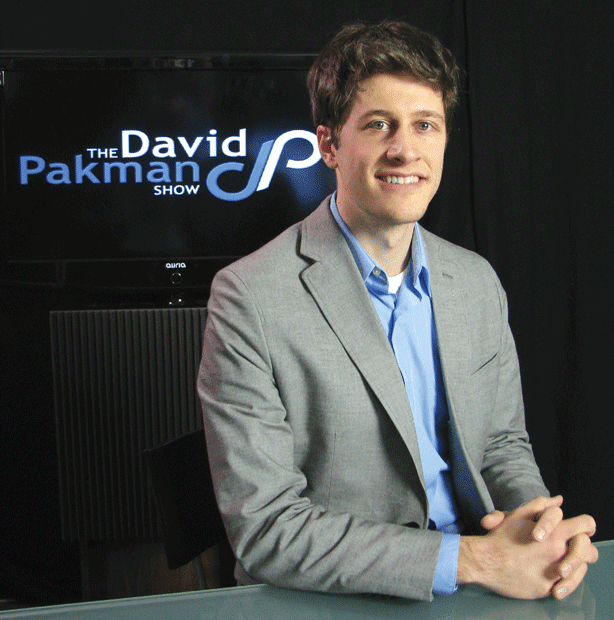
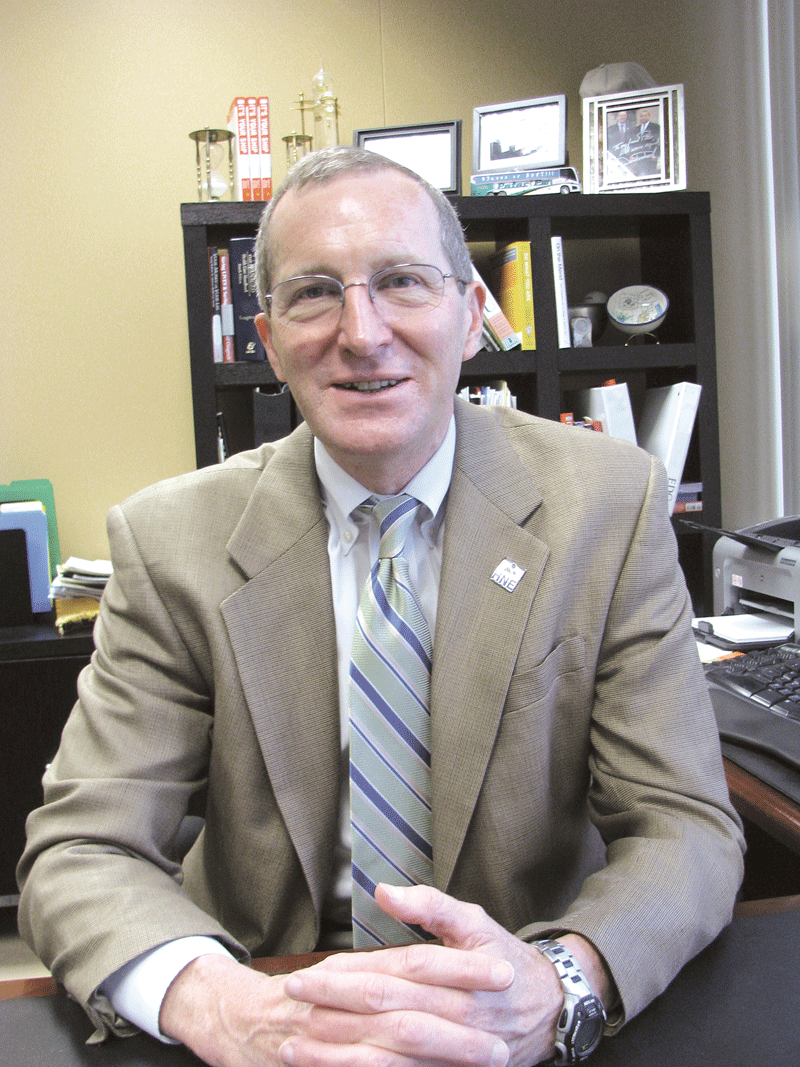
David Pakman Builds a Multimedia Enterprise on His Own Terms

The crazier David Pakman thinks someone is, the more he wants you to hear them.
The folks at Westboro Baptist Church in Kansas, the virulently anti-gay outfit that pickets military funerals, seem to have figured that out, since they refuse to speak on The David Pakman Show anymore. But there’s no shortage of other, similar voices to take Westboro’s place.
“The more extremist interviews are typically with people like Westboro, or Terry Jones, who was famously planning to burn Korans on 9/11 two years ago, or people like Bryan Fischer, who is an anti-gay radio guy who hosts a show for the American Family Assoc.,” Pakman told BusinessWest. “We had a former Navy chaplain on the show who claimed to perform gay and lesbian exorcisms with a 50% success rate.”
Pakman occasionally gets comments on his Web site asking why he gives such people a microphone and an audience at all, if he considers their viewpoint crazy or offensive. But he believes the exposure doesn’t benefit their cause, but actually damages it.
“Those are entertaining for me to do, and when I do those interviews, there might be 100 new articles or blog posts written about it” across the Web, he said, characterizing that exposure as a kind of public service. “The shows where people libel gay people create discussion, and that’s what I like to see — I like to see that entered into evidence, to expose these people’s lines of thought that are flat-out wrong and indefensible.”
Pakman, who has driven the growth of his multimedia talk show to a national presence and a spot in BusinessWest’s 40 Under Forty last year, has no shortage of pluck when it comes to taking on those he disagrees with — which is notable, since he had no aspirations to make a career in politics or radio when he enrolled at UMass about a decade ago.
“It’s a progressive talk show for sure, but when I say progressive, it’s not affiliated with the Democratic party; we’ve been very critical of President Obama and other Democrats,” said Pakman, who nonetheless identifies with much of today’s liberal thought. On social issues and other matters, he tends to be highly critical of conservatives and particularly those who identify with the Religious Right, which he calls “a destructive force.”
“We’re in the genre of progressive talk, but on some issues, we may not be in line with standard Democratic talking points,” he further explained, adding that keeping an independent streak is important to him. “We depend mostly on individual people to support the show, so there’s no industry behemoth that can say, ‘if you don’t change your view on this, we’ll do a, b, or c.’”
He emphasized that ‘independent’ doesn’t mean ‘centrist’ in this context; Pakman stakes out strong positions and doesn’t try to cater to the middle of the road. “But we’re independent from any broader directives, and I think that comes through in the show.”
For this issue, Pakman sat down with BusinessWest at his Greenfield studio to discuss how his radio and TV presence has developed over the past several years, and how both his revenue model and his exploration of new media are blazing new, innovative trails in the field of political opinion.

Accidental Career
Pakman was drawn to radio several years ago, during an internship with the nonprofit Media Education Foundation (MEF) while studying economics and communication at UMass Amherst.
“I had no radio experience; it seemed like something that would be fun to do,” he said, so he created a show for Northampton-based WXOJ, known as ‘Valley Free Radio,’ a Pacifica Radio affiliate whose license was held by MEF. The David Pakman Show focused on political topics from the beginning.
“When I started the show, I didn’t want to be a DJ guy,” he told BusinessWest. “I liked sports, but not enough to do a show around it. So I did a political show.”
At first, “it was terrible,” he added. “It was just me reading news. I didn’t know how to read news. There were no opinions. Even my mom, a Jewish mother who likes everything I do, said it was ‘pretty good.’ So I knew it wasn’t great.”
But as he morphed into an opinion show, “I just liked something about it, and I stuck with it.”
As he worked on his MBA at Bentley College, the show was syndicated in 2006 and 2007 to more than 25 Pacifica stations across the country, from Athens, Ga. to Moscow, Idaho, with much more growth to follow.
He made a good decision, he said, by focusing on national politics from the start, rather than local issues. “The show was always in Northampton, but it could have been anywhere; the topics were nationwide.”
In 2007, Pakman brought in childhood friend Louis Motamedy as radio producer, and the show broadened in scope, starting to attract more well-known guests and expanding to commercial radio outlets. Then, in 2009, Pakman decided put cameras in the studio and expand into television and the Internet, hiring his brother, Natan Pakman, to produce the video side. A year later, that show, Midweek Politics, obtained national distribution through Free Speech TV, airing on satellite television and a number of public-access stations.
“That was really big for us,” he told BusinessWest. “Our affiliates now total around 150, and it’s more TV than radio at this point. The YouTube channel does well, with around 10,000 subscribers and 11 million views.”
Best of all, Pakman has forged a mix of revenue streams that allows him to remain feistily independent. He sells advertising, of course, and is a partner in Google’s ad service on YouTube. But he also promotes a membership program by which subscribers pay monthly or yearly for the ability to access extra content.
“That started in April 2010,” he said, “and it’s really grown.” He was reluctant to reveal actual subscriber figures, since they tend to fluctuate, but he did note that membership has been rising by about 15% per month.
“If you like the show, then you can get more of it pretty cheaply — you probably blow more on coffee in a week. It’s a really easy sell for people, and it’s by far our main revenue source.”
It’s also a way, he said, for people to show support for an independent voice in an era of bundled fees for media. “You might pay 80 bucks for cable and watch just 10 or 15 channels. Otherwise, some would go out of business. So they say, ‘we’ll give you the Food Network, but you have to take Golf 6 and Home and Garden 4.’ With our model, people can say, ‘I like this show, and I want to support this.’ I think people appreciate that.”
Meanwhile, he was occasionally asked if he sold mugs, hats, or other tchotchkes emblazoned with the show’s logo, “but I was hesitant to do that, because the perception of having some lame items for sale might do more harm than help.”
Then Pakman came across a friend’s company, Repair the World, that makes clothing from recycled fabrics, including polyester materials from plastic bottles. He felt that emphasis on sustainability was something his listeners and viewers would appreciate, so he began ordering up logo shirts to sell and wrap into membership packages.

Do Your Homework
To prepare for each show, Pakman peruses news articles, blogs, YouTube clips, and other sources of discussion ideas, which he then enters into a database, along with notes and talking points for each; then, “we have to cut tons out of it to fit into our hour.”
Hosting the show during a national election cycle doesn’t necessarily change the volume of that prep work; he and the show’s core fans can mine material out of any day’s news. “Those people are always engaged,” he said. “As for casual political observers, we track Web searches and analytics very closely, and, yes, the closer we get to elections, the more people come into our universe.”
That universe typically includes an interview subject in addition to Pakman’s own opinions, and he has talked to some fairly prominent names over the years.
“If you’re realistic about who you can get, your success rate goes up,” he said. “If I say my goal for next week is George Soros, Bill Gates, Barack Obama, and the new leader of North Korea, well…”
That said, the show boasts some prominent regulars, including Ohio’s U.S. Rep. Dennis Kucinich, while Sen. John Kerry, Gov. Deval Patrick, and other luminaries in state and federal politics have made multiple appearances.
“Sometimes I’m surprised,” he said. “You send out an e-mail and assume it’s going through a series of handlers, but then they write back and say, ‘sounds great — let’s get you in touch with my scheduler.’ We also get pitches for interviews constantly. If we accepted everyone’s pitch, we wouldn’t be able to fit them into the week.”
Pakman said his goal is to inch the twice-weekly show toward daily broadcasts, but he first wants to secure additional sponsors and make sure there’s enough cash on hand to ensure against any sudden loss of memberships or revenues, for whatever reason. “I like to be conservative in that sense,” he said with a smile. “But there are so many guests and so much to cover.”
Sparring with anti-gay leaders has earned him particular notoriety around the Web. He once mediated an on-air confrontation between Westboro and the Internet hacking group Anonymous, and the latter essentially took over the church’s Web site during the discussion. The exchange wound up garnering more than 1 million YouTube hits.
“There’s kind of an interesting undercurrent throughout the discussions of whether I’m gay because we interview anti-gay people. I’m not gay, but there’s this assumption that the only reason I stand up for gay rights is that I’m gay myself,” Pakman said. “But I think it’s powerful when people see gay rights supported by someone who’s not gay, and not just supporting something out of personal interest.”
Not all guests are political in nature, he noted; one exception was Bob Werb from the Frontier Space Foundation, who discussed what’s on the horizon in space exploration over the next five to 10 years. “I’m learning as much as anyone when I’m talking to someone like that.”
At the same time, Pakman wants other people to learn more by engaging in their own discussions.
“Between e-mail, voice mail, Twitter, and YouTube, I get probably hundreds of messages to look at every single day, maybe more. Two things are great: positive comments, but also when arguments spin off. It’s great when we put up a topic on YouTube — like, should progressives support Ron Paul? There are some things about him that should be appealing to progressives. It’s a very controversial topic, and many varied opinions about it. We got 500 comments on that one, coupled with 100 e-mails. That’s great, and we’re not necessarily creating the discussion.”

Moving On Up
Obtaining his own studio space, first in Northampton in 2010 and later in Greenfield, was critical to growing the show. “At Valley Free Radio, we had to bring in our own equipment, bring it out, and then edit,” Pakman said. “It was an incredibly long process; it probably took four hours of work to do one hour of program.”
When asked about the possibility of becoming a major national player in talk radio under a syndication deal, Pakman said he’s not pursuing that model, but rather trying to forge a path in new media.
“I don’t really consider this a talk-radio program,” he said. “We’re much bigger on TV, and, combined with the Internet, I consider this a multi-platform show. And already, several automobiles have Internet radio in the car. As the Internet becomes more ubiquitous, being on [broadcast] radio becomes more of a moot point.
“I don’t even have regular radio at home,” he added, “and I don’t think I’m unique in that sense. We’re building an audience with a multiplatform approach.”
So The David Pakman Show — which is now the name of his TV show as well as his radio broadcast — forges ahead with something new, something exciting, something … well, progressive.
“We’re creating a product and building demand for it, and creating a successful revenue model,” he said, adding that he strives to keep the business and his values in balance. “I was once asked, if I could make four times as much money, would I be a conservative on radio and TV?”
If you don’t know the answer to that question, then you haven’t heard David Pakman. Yet.

Joseph Bednar can be reached at [email protected]

Features
Southern Berkshire Chamber Puts Community First

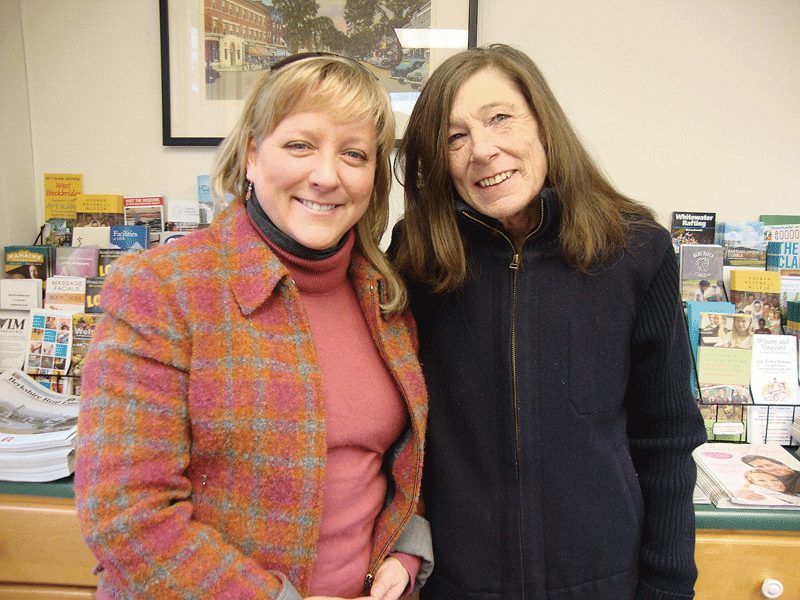
Betsy Andrus, left, and Joy Lyon

Betsy Andrus, left, and Joy Lyon say last year’s events let people experience Great Barrington in a new, exciting way.

In a different time, Joy Lyon said, people would have called it a “love-in.”
The manager of the Southern Berkshire Chamber of Commerce’s Visitor Center was referring to 2011’s roster of celebrations for the 250th anniversary of Great Barrington. While the events may have lacked some of the more colorful connotations of those groovy times 45 years ago, the fact remains that, for a full year, scores came out in force to honor the businesses, townspeople, and civic pride of this picturesque Berkshire town.
One of the architects of this year-long series of events was Betsy Andrus, at that time owner of her own business in consulting, marketing, event planning … “it was this multifunctional operation,” she explained. “I would do weddings, property management, run construction projects — all across the board. Every day it was something new.”
As of Jan. 3, however, she assumed the role of the executive director of the SBCC, and it’s hard to imagine a more vibrant champion of both the town and the member region’s business community.
The SBCC serves Alford, Egremont, Great Barrington, Monterey, Mount Washington, New Marlborough, Otis, Sandisfield, and Sheffield. Each community offers a unique piece of the Berkshire experience, from outdoor activities, historic tourism, and unique retail — Sheffield has a widely known array of antiques dealers — to the hub of all comings and goings, the town of Great Barrington.
Andrus calls herself “just a local girl who is community-business-oriented.” But this local girl is a part of that very population of merchants, dating back generations.
As the incoming director of the SBCC, Andrus said her greatest hope is to keep the momentum from 2011’s spirited civic pride rolling into the years ahead. “Our drive was to bring the community back out of their houses and together again,” she said, “and that is our great challenge for the future.
“When I grew up here, this town was like a Norman Rockwell painting,” she continued. “Everyone knew their neighbors, everyone said ‘hi’ to one another. We had parades, huge town picnics. It all just stopped, and that was sad.”
Just a month into her tenure as the Chamber of Commerce director in this scenic corner of the Commonwealth, Andrus told the story of how she has been there to help Great Barrington, and the Southern Berkshires, continue to get down to business. “I want to help the business community recreate those events that people loved,” she said — “to make that a guaranteed part of our calendar, and part of our identity.”

Our Town
Andrus said that her family has been active in the Great Barrington-area business community for more than 70 years, and that continues to this day. Starting with her great-grandfathers and grandfathers, she told how some of those businesses are still owned by relatives, from Harlan B. Foster’s on Bridge Street— a hardware store with a noteworthy collection of antique tools — to R.J. Aloisi Inc., an electrical contractor.
Her own foray into local commerce came from organizing the showrooms for one of her father’s firms, and after a hiatus to care for her ailing mother, she returned to the Berkshires to get back to business.
Andrus was always drawn to multitasking styles of employment, from the family businesses to her own, and a few years ago, an item in the local newspaper caught her eye. “The town of Great Barrington was interested in people to donate their time for the next few years to create and carry out ‘something,’ whatever we chose, for the 250th anniversary of the town. I was very excited about that, submitted a paper on why I would be an OK person to do that, and my proposal was accepted.”
Immediately, there was a need for officers to take charge of the various and sundry roles necessary to execute the events, and Andrus, the born leader, suggested a local businessperson who had a large secretarial pool, perfect for the administrative tasks at hand.
“I’m one of those cheerleading types,” she explained, “and also a bit of a jokester, so in the middle of a meeting when no one was volunteering, I said, ‘well, I think so-and-so should do it.’ So, through that smart-alecky remark, that person said, ‘OK, I’ll do it, if you do it with me.’ And it turned out to be a fabulous year.”
Lyon and Andrus together remembered many of the 28 events that took place in their hometown, from historic slide shows, where they couldn’t shoehorn another guest into the auditorium, to picnics, parades, a gravity car race, a family snow day, and the popular holiday stroll.
“It was almost over the top,” Lyon said. “Each day was like a better party than the last. A lot of people in Great Barrington got to experience the town in such a way that we hadn’t for many, many years.”
It was during the time organizing the holiday stroll that Andrus learned of the eminent departure of the chamber’s then-executive director. “I had the conversation with the president of the board,” she said, “talking about how it was sad to see her go, and I asked about the job description — trying to figure out, maybe, why she would want to leave, why was it not working for her, because we all liked her.
“I left that conversation, and the president called me back and asked if I’d be willing to come in for an interview,” she continued. “I hadn’t written a résumé in 30 years! I said I’d think about it, but they called me back two hours later and said, ‘no, we really want you to come in for an interview.’ I said, ‘oh boy!’”

Time Tested
“When I was younger, people would say that Great Barrington was like Mayberry,” Andrus said of the old-fashioned feel to her hometown.
While the smaller towns each have their own distinct pockets of commerce, the fact remains that most, if not all, roads wend into Great Barrington. Andrus said that is a strength of those more rural locations.
“We are a quaint town,” she explained, “but that doesn’t mean there isn’t vibrancy here. Pittsfield is just up the road, and that does have all the offerings of a larger city. But we have here in downtown a satellite branch of Berkshire Community College, we have businesses that have been anchors of Main Street for over 50 years, and are still important employers in the town, not to mention supporters of civic events.” She mentioned Tom’s Toys, Wheeler & Taylor Realty Co., her family’s hardware store, and the Berkshire Co-op Market on Bridge Street, among many others.
The co-op has been instrumental in supporting small, local brands and giving them a platform for expanded distribution, said Andrus, noting that, in years past, brands like Berkshire Brewing, SoCo Creamery’s ice cream, Route 7 BBQ Sauce, and many others have been given their first boost by the market.
As the “local girl,” Andrus said that neighborly support is still a part of the fabric of her small town, and as the chamber director, she added that such community actions are a source of strength for businesses in the Southern Berkshire region. “Somewhere along the way, the notion that we are a community has been lost,” she said. “And I want the chamber to help change that.”
To encourage business owners to become part of the SBCC, Andrus said she is willing to adopt creative methods for them to finance initial entry into the organization.
“If finances are an issue, you don’t have to pay dues the first year,” she explained, “but can instead donate your space, food, or your time. You can still have a place on our Web site, in our newsletter, and be part of Joy’s vibrant Facebook presence for the chamber.”
The next few years will see two large-scale construction projects tearing up downtown Great Barrington, and Andrus said that some business owners are concerned about the potential disruption. But the chamber expects to prepare up-to-the-minute responses for parking, closures, and other relevant information on navigating their big dig. The SBCC will speak with one organized voice for the business community, she explained.
Reflecting back on the successful birthday of Great Barrington, and the momentum for bringing her to where she was that day, Andrus said, “even at some of the very smallest things we did, people loved it. They would say, ‘why haven’t we done this in 20 years? Is someone going to take over and do it again?’”
Looking out the window onto Main Street, she nodded her head and said, “yes.”

Features
Rebuild Springfield Unveils Strategy for Revitalizing the City of Homes
This rendering shows how the banks of Mill River

This rendering shows how the banks of Mill River could be improved with walking trails, new plantings, and other amenities.

Outside St. Anthony’s Social Center on Island Pond Road, overlooking the parking lot, sits a ridge lined with trees, most of them bent and broken beyond salvaging.
Inside, hundreds of Springfield residents recently pressed into a standing-room-only gathering, where municipal officials and individuals tasked with revitalizing the city in the wake of last spring’s tornado unveiled the outline of their plan.
Unlike that row of battered trees, they testified to a city well worth saving.
“This is a solid, strong road map, a framework of good guidance. This is going to be a three- to five-year plan of action,” Mayor Domenic Sarno told residents. “I need you committed, to stay engaged. We must show the same tenacity and resiliency we showed in tackling the cleanup of the tornado.”
The Rebuild Springfield Plan, the result of months of meetings, discussions, and strategy sessions between local and national consultants and the city’s residents and business owners, aims for more than simply rebuilding the structures devastated by the June 1 twister. It’s a chance, said Nick Fyntrilakis, to activate a master plan for the improvement of the entire city, but it’s only the beginning.
“This plan is not a panacea. We don’t have all the answers,” said Fyntrilakis, who was appointed last year to co-chair Rebuild Springfield with Jerry Hayes. “But by putting the right people in the right room with the right leadership, we’ll get even more recommendations and make better progress.”
The Rebuild Springfield Plan is the latest and most tangible result of a process that began shortly after the tornado, but came to encompass much more than rebuilding what was destroyed in that weather disaster. Sarno helped to mobilize a public/private partnership between the Springfield Redevelopment Authority and DevelopSpringfield, respectively, and a 15-member Rebuild Springfield Advisory Committee was appointed to help guide that process.
Over the past six months, 19 separate meetings, with an aggregate attendance of more than 2,000 citizens, have been held in various locations, primarily in neighborhoods impacted by the tornado.
The Rebuild Springfield Plan was crafted using input from those meetings, and also incorporates many previous plans, reports, and studies from a variety of organizations and stakeholders in Springfield. But Sarno stressed that the plan goes much further than returning the city to its pre-tornado condition. Instead, it aims to establish realistic short-term and long-term visions for the city’s future.
As the community came together and tornado recovery progressed, “people were talking about the entire city: ‘how can we build on this positiveness?’” he said, adding that it quickly became clear that this was an opportunity to stimulate the city’s rebirth, not just respond to a storm.
Bobbie Hill, a principal with Concordia LLC, a New Orleans-based consulting firm hired to work on the plan, agreed.
“The tornado-impacted areas were the impetus for the plan, and there’s a special focus on what we call the three districts” hardest-hit by the storm, Hill told those gathered at St. Anthony’s. “But we also have a plan that looks citywide because this is not just about the impacted areas, but about the whole city.”
The Rebuild Springfield Plan, in its final form, will be a “very, very large document,” Hill said, but the 12-page executive summary mailed to every address in Springfield gets to the heart of what the priorities are for each of those districts — the Metro Center and the South End; Maple High/Six Corners, Old Hill, Upper Hill, and the northern part of Forest Park; and East Forest Park and Sixteen Acres — as well as how the physical, cultural, social, organizational, economic, and educational assets of Springfield may be part of a holistic, citywide revitalization plan.
“This is a plan not just about physical projects,” she explained, “but about projects and people and places; we are using this framework to build recommendations across the city and across the different neighborhoods.”

Downtown Dilemma
According to the executive summary, “as the pre-eminent urban center of the Pioneer Valley with unique historic character, Springfield has the opportunity to create and sustain a desirable, walkable, urban environment for living, working, playing, and learning.” To that end, the plan builds on previous plans for the downtown and South End — what the plan calls District 1 — that were in place before the tornado. Some major points of emphasis include:
• Public safety. The city needs to strengthen partnerships among community stakeholders, police, and enforcement staff. Key initiatives should include replication of the C-3 policing model successfully implemented in the Brightwood section of the city and replicated in the South Holyoke Safe Neighborhood Initiative.
Hill noted that the safety of a community and people’s perception thereof are often two different things, but for Springfield’s center to thrive, both must be addressed. “If you want a thriving downtown, people have to feel safe and want to go down there.”
• Housing. The plan calls for a variety of housing options appropriate to different locations in the Metro Center and South End that enhance downtown and neighborhood character, add market-rate housing, and raise the median household income.
• Commercial and retail strategy. The city should create centers of vitality and activity along Main Street by recruiting retail and restaurants to ground-floor spaces, office users to upper-story space, and neighborhood-serving retail, as well as assisting in the rebuilding of important sites. Key initiatives include rebuilding the Main and Union intersection to be a South End gateway and activity center, reinforcing the cluster of eateries in the South End to form a ‘restaurant row,’ and exploring options for a grocery store or pharmacy.
• Community institutions. The plan aims to enhance the anchor role of community institutions, especially by hekping to relocate those damaged by the tornado. Key initiatives include assisting the South End Community Center in relocating to the Gemini site and Square One in developing new space on Main Street.
• Urban character and historic preservation. The plan encourages the adaptive reuse of historic buildings and sites and establishes urban design guidelines and a regulatory framework to enhance walkability. Among the recommendations is connecting the district to the riverfront with public art, and special treatments for Union Street as a ‘festival street.’
Public spaces. The city should activate and program public spaces to create destinations, mobilize community partners for stewardship, and connect important public spaces. Key initiatives include programs and activities led by community arts and culture groups to attract people to Court Square and other locations; organizing temporary uses, programs, and events for empty storefronts; and focusing on maintenance and programming for existing parks and open spaces, including the newly redesigned Emerson Wight Park.

A Time to Heal
The neighborhoods of Maple High/Six Corners, Upper Hill, Old Hill, and some of Forest Park comprise District 2, making it a richly diverse section of Springfield, the plan notes.
“The dialogue in District 2 has been intense and complex, yet hopeful,” it goes on. “Many challenges faced District 2 neighborhoods even before the tornado struck: abandoned properties, substandard housing, low home-ownership rates, higher-than-average crime and poverty rates, and low high-school graduation rates.
“In District 2, perhaps more than anywhere else in the city, there is an opportunity for the rebuilding process to have a transformative effect,” it adds. “The scar of the tornado’s path in this part of town revealed the challenges and allowed them to air. What came from these dialogue sessions was a strong commitment to rebuild stronger than before, an engaged community newly energized to improve their community.”
The plan identifies six guiding principles that support and elaborate on this vision:
• Build on the strong commitment and pride in the neighborhoods to support communities and organizations that are connected, engaged, and working together;
• Improve quality of life and provide new opportunities for residents by enhancing the health, safety, and vitality of the community;
• Preserve and promote the history and character of the neighborhoods as an amenity that enriches quality of life and attracts new residents and businesses;
• Achieve a sustainable and equitable balance of owners and renters, incomes, housing types, land uses, employment opportunities, and services that meets the needs of residents while positioning the community to thrive and flourish in the future;
• Value the diversity of people, cultures, and activities and recognize this diversity as a source of resilience, creativity, learning, empowerment, and collaboration that strengthens the neighborhoods; and
• Demonstrate public and personal commitment, improve perceptions, and attract new energy and investment through neighborhoods that are attractive and well-maintained.
Among the specific goals to meet those objectives are a coordinated housing strategy with new infill housing, job training and small-business support, enhanced neighborhood businesses, reuse of vacant lots, access to safe public transit, improved schools, healthier lifestyles, and coordination of community services, among others.

Better Than Before
District 3, which includes the East Forest Park and Sixteen Acres neighborhoods, is relatively stable with a strong sense of neighborhood pride, the report notes.
“While home rebuilding has long since begun in this district, it will take generations for newly planted trees to replace what was lost,” it continues. “There is a strong interest in rebuilding better than before in this community.
Some broad goals for the district include:
• Restore and enhance the neighborhoods’ natural resources, including trees, water bodies, open spaces, and wildlife, and recognize these resources as amenities that enhance value, improve health, and provide recreational opportunities;
• Promote the family-friendly character of the community through safe, attractive neighborhoods, strong community organizations, quality schools, social gathering spaces, and activities for all ages;
• Focus on schools, parks, and public facilities as community anchors that are integrated into the neighborhood and coordinated to provide efficient, effective services;
• Improve mobility within and between neighborhoods through efforts to reduce congestion, calm traffic, provide enhanced bicycle and pedestrian infrastructure, explore trail opportunities, and enhance streetscapes to support local businesses; and
• Strengthen neighborhoods by rebuilding, repairing, and maintaining well-designed homes that are efficient, durable, and comfortable.
Residents, the report states, are ready to turn the devastation of the tornado into an opportunity to enhance their neighborhoods by way of better homes, parks, greenways, trails, and other community assets. The plan calls for a branch library at Dryden Memorial School, greater access to youth and senior activities, and aggressive maintenance and repair assistance, among other things.

Street-level View
Sarno said the entire city should think along the lines of creating a better Springfield than before, and also took a moment to be grateful for how much worse the twister could have been.
“This tornado hit at 4:37 p.m. Think about it: if this tornado hit at 2:37 p.m., all our children would have been in school. Imagine if it had hit at 4:37 a.m.; we would all have been asleep,” the mayor said. “And as Gov. Patrick indicated when he came out here, there’s a silver lining to these storm clouds that we’ve already seen: the resiliency of Springfield’s people.”
Hill agreed. “There are great success stories in this city, and one for sure is how far you’ve come in eight months after the disaster. These great stories will attract people to this area.”
But first, the plan must be implemented, Fyntrilakis said, and that will begin by forming committees of volunteers to focus on specific domains and districts, each co-chaired by a public employee and someone from the private sector.
“The task for the leaders,” he said, “is to convene all the stakeholders, all those who want to participate and all those already participating, and to convene a working group as set forth by recommendations in the plan.”
“I need you to stay engaged; that is the key,” Sarno told residents. “It’s not over … but the framework is there. The guidance is there. The road map is there.”

Joseph Bednar can be reached at [email protected]

Features

WRC Launches Wicked Wednesdays
WEST SPRINGFIELD — The West of the River Chamber of Commerce (WRC) has a new lineup of events for the business community as well as career-minded students, including Wicked Wednesdays. Starting in March, Wicked Wednesdays will be conducted on the first Wednesday of every month, to be hosted by various businesses throughout Agawam and West Springfield. The gatherings are free for members and $10 for non-members. The first event is planned for March 7 at 5 p.m. at Westfield Bank, 206 Park St., West Springfield. For more information about Wicked Wednesdays or other events, visit www.ourwrc.com or call (413) 426-3880.

Construction Employment Hits Two-year High
WASHINGTON, D.C. — The construction sector added 21,000 jobs in January as a second consecutive month of unseasonably mild winter weather helped the industry raise employment to a two-year high, according to an analysis of new federal employment data recently released by Associated General Contractors of America. Association officials cautioned that the gains remain fragile amid declining public-sector investments in construction and infrastructure. “Although it’s great news that the industry has added 52,000 jobs in the past two months, the unemployment rate in construction is still double that of the overall economy, and construction employment remains at 1996 levels,” said Ken Simonson, the association’s chief economist. “It will take another month or two to see if the recent job growth reflects a sustained pickup or merely acceleration of home building and highway projects that normally halt when the ground freezes in December and January.” Total construction employment now stands at 5,572,000, or 0.4% higher than a month earlier, and 116,000 (21%) higher than in January 2011 — which was an exceptionally cold and snowy month in many regions, noted Simonson. He added that construction employment is still 28% below its peak level of 7,726,000 in April 2006 and is no higher than in August 1996. The industry’s unemployment rate in January was 17.7%, not seasonally adjusted, Simonson noted. The rate was down from 22.5% a year earlier but still double the all-industry rate of 8.8% (8.5%, seasonally adjusted). Job gains occurred at similar rates across the major construction segments in the past year, added Simonson. Heavy and civil-engineering construction employment grew by 2.6% or 21,000 jobs from January 2011 to last month. Non-residential building and specialty trade contractors increased their combined employment by 2% (17,000 jobs), while employment among residential building and specialty trade contractors rose by 2.1% (41,000 jobs), he said. Association officials said the across-the-board increase in construction jobs was heartening, but they were concerned that an ongoing failure to enact highway and other infrastructure funding in Washington would drag down employment numbers across the industry, especially in heavy and civil-engineering construction. “While it is encouraging to see some recent progress on aviation and surface transportation measures, it is vital that Congress and the White House make passing key infrastructure and pro-growth measures a top priority,” said Stephen Sandherr, the association’s CEO. “Without adequate long-term funding for infrastructure, competitive tax rates, and fewer costly regulatory hurdles, the construction industry may lose many of the jobs it has gained in the past year.”

Submissions Sought for Mass. Chamber Awards
BOSTON — The Massachusetts Chamber of Commerce is seeking submissions for the annual Business of the Year and Employer of Choice awards. Business of the Year recipients receive statewide visibility for companies that have dedicated resources toward working with lawmakers in Boston and Washington, D.C., to make changes and support laws that improve the business climate in Massachusetts. The Employer of Choice award, sponsored by the Employers Association of the NorthEast, provides statewide visibility for companies that have developed a culture for transforming and rewarding employee performance. The awards committee ranks companies based on the following criteria: company culture, training and development, communication, performance recognition and rewards, life/work balance, and Employer of Choice-related results of on-site visits performed. An award will also be presented to a business in the manufacturing and non-manufacturing/service sectors. Applications will be accepted until April 9. Winners of both awards will receive invitations to attend the Massachusetts Business Summit in September in Hyannis, where they will meet other business leaders from across Massachusetts, as well as state and local elected officials, and will be recognized at a luncheon in their honor on Sept. 11. The application process is free. For more information or to obtain an application, visit www.masschambersummit.com or call (617) 512-9667 or (413) 426-3850. The Massachusetts Chamber of Commerce provides legislative advocacy, marketing, networking, and educational and informational programs for businesses across the state. The chamber also provides managerial services for local chambers of commerce and professional organizations such as the West of the River Chamber of Commerce and the Realtors Commercial Alliance of Massachusetts.

Employers Step Up
Hiring in January
WASHINGTON, D.C. — The nation’s labor market posted strong gains in January, according to a recent statement by Secretary of Labor Hilda Solis. “The economy added 257,000 private-sector jobs last month, exceeding expectations, while the unemployment rate dropped to 8.3% — its lowest level since February 2009,” said Solis. “These numbers show that the labor market continues on a positive trajectory.” More than 3.7 million private-sector jobs have been created over the last 23 months, according to revised numbers from the Bureau of Labor Statistics. January’s job growth was the strongest in nine months. The unemployment rate among African-Americans fell by 2.2% in January down to 13.6% — the largest one-month drop in recorded history. “The national unemployment rate has fallen by 0.8% in the last five months,” added Solis. “The drop in unemployment has been driven by employment gains, not workers leaving the labor force. We’re seeing accelerated growth in our labor force across almost every industry.” Solis noted that the manufacturing industry surged in January, adding 50,000 jobs. “Over the past year, we’ve added 235,000 manufacturing jobs,” she said. “More products are rolling off the assembly line marked ‘made in the USA.’ We can build on this encouraging trend if Congress acts on the president’s proposals to remove tax incentives for companies that ship American jobs overseas and invests in training programs so our workers can fill existing openings in advanced manufacturing. January’s employment numbers exceeded all forecasts and provide the strongest evidence yet that our economic recovery is on track.”

Census Bureau Reports Post-recession Growth in 10 of 11 Service Sectors
WASHINGTON, D.C. — The U.S. Census Bureau recently released its 2010 Service Annual Survey, which shows that, of the nation’s 11 service sectors, 10 showed an increase in revenues for employer firms between 2009 and 2010. Only the finance and insurance sector showed a loss ($27.2 billion, down 0.8%). “The statistics presented in this year’s Service Annual Survey are noteworthy,” said Thomas Mesenbourg, the Census Bureau’s deputy director. “We are able to present a six-year trend that clearly shows the impact the most recent recession had on certain service sectors. At the same time, the newly released 2010 statistics show that, in some industries, there is evidence of a statistically significant change in an upward direction.” These figures are the first findings from this survey to track the revenues of services after the December 2007 to June 2009 recession. The survey provides the most comprehensive national statistics available annually on service activity in the U.S. Since 2009, the survey has been expanded to collect data for all service industries, capturing 55% of U.S. gross domestic product (GDP). Previously, the survey accounted for only 30% of GDP.
“Increases varied widely across service sectors,” said Mesenbourg. For example, the information sector increased from $1.08 trillion to $1.1 trillion. Within this sector, Internet publishing and broadcasting continued to see increased revenues, up 11.3% from $19.1 billion to $21.3 billion in 2010. Television broadcasting increased 12.0% from $31.6 billion to $35 billion. Cable and subscription other programming as well as wireless telecommunications carriers also saw increases in revenue of 7.3% and 5.3%, respectively, to $55.2 billion and $195.5 billion. However, revenues for newspaper and periodical publishers continued to fall. Newspaper publishers declined by 4.6% to $34.7 billion, and periodical publishers declined 1.8% to $38.4 billion. Wired telecommunications carriers continued to decline, falling 2.3% to $168.8 billion. Health care and social-assistance revenue continued to increase for employer firms, rising to $1.9 trillion in 2010, an increase of 4.0%. Hospitals increased revenue to $822.6 billion, up 4.5% from 2009. Nursing and residential care facilities also rose 4.4% to $192 billion.  The finance and insurance sector had a small decline to $3.3 trillion in revenues in 2010, decreasing 0.8% from the prior year. Revenues for securities and commodity exchanges decreased 1.5% to $10.9 billion, while miscellaneous intermediation revenue rose 16.0% to $23.6 billion. Among other sectors covered by the Service Annual Survey, the utilities sector showed estimated revenues of $501.7 billion, an increase of 5.0% from $477.6 billion in 2009. Arts, entertainment, and recreation increased 2.0% to $192 billion in revenue. Revenues for the transportation and warehousing sector were $640.2 billion in 2010, up 7.6% from $595.2 billion in 2009. The real-estate rental and leasing sector had total revenues of $356.0 billion, up 1.8% from 2009. New subsectors added last year to this sector included real estate and lessors of nonfinancial, intangible assets. For measures of sampling variability and other survey information, visit www.census.gov/svsd/www/cv.html.

Retailers Say January
Ends on Mixed Note
NEW YORK — The fiscal month of January ended on a mixed note for retailers, as retail sales rose marginally on a week-over-week basis. For the week ending Jan. 28, weekly retail sales rose modestly by 0.1%, according to the International Council of Shopping Centers (ICSC) and the Goldman Sachs Weekly Chain Store Sales Index. However, on a year-over-year basis, retail sales rose sharply by 3.9% to end the fiscal month, which was lifted by a weather-depressed sales performance during the same week of 2011. “With the fiscal month and year coming to a close this past week, retail sales once again showed how much sales patterns can shift, especially in January,” said Michael Niemira, ICSC vice president of research and chief economist. “The good news is that sales on a year-over-year basis continue to show strength, which is a positive sign as the industry moves into the new fiscal year beginning this week.” For January, ICSC Research anticipates that January comparable-store sales for the retail industry will increase by 2% to 3% on a year-over-year basis when retailers release their monthly sales figures in February. The Weekly Chain Store Sales Snapshot measures U.S. nominal same-store or comparable-store sales excluding restaurant and vehicle demand. The weekly index is constructed as a sales-weighted geometric average growth rate to preserve long-term consistency, and is statistically benchmarked to a broad-based, monthly retail-industry sales aggregate that currently represents approximately 40 retail chain stores, also compiled by ICSC.

Features
The EDC Focuses on Promoting the Region and Its Assets
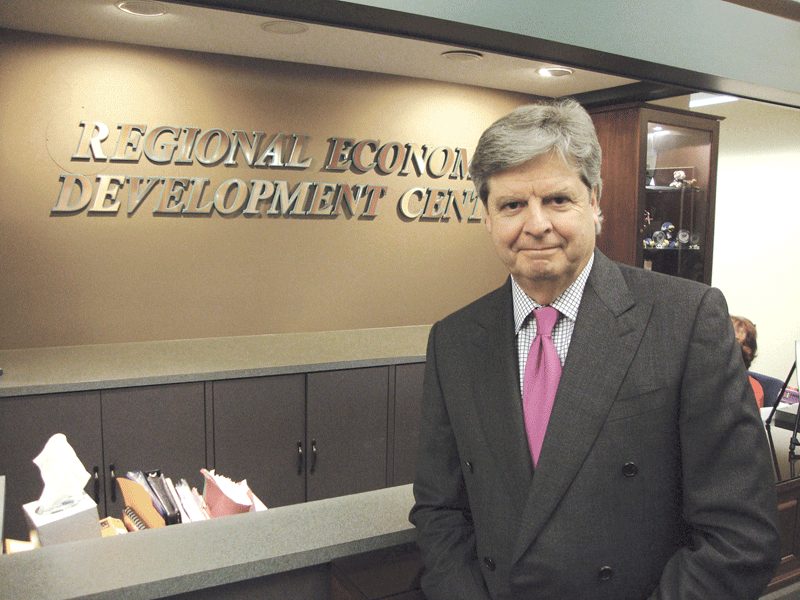
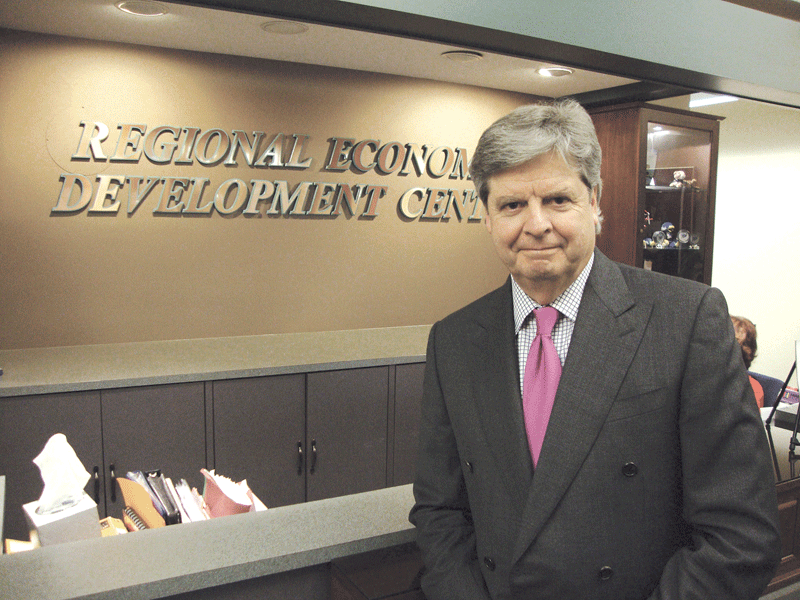
Allan Blair

Allan Blair says quality jobs, public and private investment, and an increase in visitors to Western Mass. are keys to stimulating the regional economy.

Editor’s Note: This is the second in a series of stories spotlighting the work being done by area chambers of commerce and other economic-development-related agencies. For this issue, we profile the Economic Development Council of Western Mass.

The full measure of his organization, Allan Blair will tell you, is pretty straightforward. “Three goals,” he began.
Blair is president and CEO of the Economic Development Council (EDC) of Western Mass., and he explained that those goals to stimulate the regional economy are quality jobs, public and private investment, and bringing in additional visitors. “Those three goals,” he continued, “as broad as they are, contribute to increasing economic development, and there are a number of different strategies for how we go about that, a variety of methods to stimulate economic vitality, and a host of affiliated partners to help make that happen.”
The EDC was created in 1996, when a group of business leaders at some of the larger companies in the region came together in support of a unified organization to make Western Mass. more competitive on a variety of fronts.
“We had a lot of well-intentioned organizations doing a lot of hard work,” Blair said, “but there was little coordination or collaboration between the groups. Therefore, the feeling was that the region wasn’t acting efficiently — we weren’t speaking with one voice on the most important issues of the region.”
The business leadership charter group of the EDC created this organization that initially included the mayors of six cities (now nine) and the presidents of the colleges and universities. The idea was to have in one place a public-private partnership with the common goal of economic development. “We hear about the conceptual importance of such entities all the time,” he added. “They made it real.”
In addition to that group of individuals, a host of business-sponsored organizations were included that are now known as affiliated partners. The names may have changed a bit over time, but those partners now are the Affiliated Chambers of Commerce of Greater Springfield, Westmass Area Development Corp., the Greater Springfield Convention and Visitors Bureau, the Westover Metropolitan Development Corp., and the business-improvement districts (BIDs) in Springfield, Westfield, Northampton, and quite possibly soon to be a fourth in Amherst.
There’s also a board of directors, comprised of elected representatives from the EDC’s membership. Peter Straley, president and CEO of Health New England, is the current chairman of the board. In his assessment of the EDC, there’s never been a more important role for such an organization in this region. “At a time when the economy has not been worse in our lifetimes,” he said, “that’s a real challenge — to stimulate job growth, with good jobs, in our local economy.”
And that means it’s time to get down to business, something the EDC has been doing for more than 15 years in Western Mass. Speaking to BusinessWest recently, both Blair and Straley spoke of the importance of their organization and how its goals are accomplished. “It’s important that there’s a regionally focused board looking down over all of this,” said Blair. “The most essential thing is that we’ve got the right people looking at the potential here.”

Center of Attention
Each year, the EDC assesses the different projects it believes will affect economic development in the region in the year or years ahead, Blair noted, “and then we organize our efforts around those targets.”
And, as they say, there’s strength in numbers.
It’s here that the EDC excels in its mission, and both men described the expertise that so many different affiliate partners can bring to the proverbial table. For example, the convention bureau is the primary player in attracting visitors, Blair said, and the Westmass and Westover entities are the ones responsible for maintaining an inventory of industrial- and business-park land to be available and appealing to both outside investors and companies within the region who are expanding. The chambers of commerce are best in the support and promotion of smaller businesses, and the BIDs are essential in making those local businesses aesthetically attractive and well-kept.
Straley said that such a comprehensive look, from the largest issues down to the smallest details of downtowns, is a key aspect to giving the region a competitive advantage in attracting outside investment. The EDC not only strives to make those details manifest, but to showcase them as well.
Site selectors are employed by companies seeking to relocate or branch out into new markets, and the EDC knows how they operate. “When someone from outside the area is looking to relocate a business, they’ll typically use consultants that will do the legwork for them,” he explained. “Those consultants will start by gathering information about a region, starting with the broadest end of a funnel, and narrowing it down, based on their clients’ requirements.”
The EDC’s Web site is the only dedicated source of information in the region specifically targeting those consultants. “It turns out that it is the primary point of contact for site selectors,” Straley continued. “If a manufacturing or distribution company says it needs a Northeast location, let’s say, obviously they’ve got a lot of places to choose from. What we’re doing is presenting a good face to the outside world for those consultants. They’ll be looking at the demographics of the area, what kind of businesses are in the area, is there a trained workforce in the area that we can tap into, what are the education levels of people in the region … all before they are even going to consider coming to look.
“In a sense, we’re acting as the matchmaker,” he went on. “Quite frankly, in this business, it’s difficult to land a final account. It’s like any sales business; with the economy the way it is, the length of time companies are taking to make final decisions about relocating and expanding is lengthening. More than ever, you need to be on top of that follow-through.”

Focal Point
While each city has its own economic-development team, the EDC works with all of them to get those businesses into “the funnel,” as Straley called it. “They’re all going to be competitive with one another to secure those companies, but it’s our job to get them into this region.”
Civic leaders, college presidents, and CEOs move in and out of the EDC’s purview owing to their own professional trajectories, but Blair said that, almost without exception, each new, incoming leader realizes the organization’s importance. Meeting quarterly with mayors is typically one of the few times they all convene, and it allows them the chance to think about their cities from a macroeconomic perspective.
“The region is entirely interdependent,” Blair explained. “The reality is that every community is dependent on a business’s employees and how they spend money. Yes, the notion of municipal growth is hugely important to every mayor, and how they can make some tactical moves to attract that investment. But it’s just as important for a company to know that they are locating in a region with good regional school systems that are supporting a strong workforce pipeline as it is for the company to know about the taxes and the regulatory environment in its own community.”
There are a few initiatives on the EDC’s radar for the year ahead. The Holyoke Green High Performance Computing Center is an important initiative for not only the Paper City, but the region as a whole. The Ludlow Mills initiative and the Three County Fairgrounds in Northampton are both targeted areas of interest, and Blair said the term ‘Knowledge Corridor,’ now nearly a dozen years old, will be further developed as a brand.
“We need to turn that term into more of a positive action,” he said, “by providing a single point of contact where an outside interest can access everything within those 14 institutions that they would need to know, and to help them focus their attention on bigger issues within the region so that they could collectively make a contribution.”
While the EDC’s agenda has no small number of directives, stimulating the regional economy clearly has some specific targets, including the promotion of entrepreneurship.
“One of the things we all need to be reminded of is that most of the growth the region has had is by companies that were started here,” Blair said. “We’re not a region that has a lot of big companies move here. When you look at our biggest corporate presences — Peter Pan, MassMutual, Smith & Wesson, Milton Bradley — they all started here, and they grew into something important.
“At some point in their history it started as an entrepreneur who took a risk, and who built a culture,” he continued.  “Have we lost that? Do we still have it? And if we still have it, is there something we can do to stimulate it so that we have more innovators, so that there are more people willing to take these risks for the rewards that will come?”
If there’s anything that his organization has managed to do, he went on, it has been the ability to open everybody’s horizons to all the issues that are affecting economic development.
“Before, we could be in our little silos and could miss an awful lot of opportunities coming our way,” Blair said. “Now, everybody’s aware of the landscape and understands their place within it. They have a more wide-angle view, and that’s really an important thing for us to have, for the business leadership to have, to have a wide-angle view of what’s going on and then to focus on the things that need to be done.”

Features
Report Touts Economic Impact of Region’s Nonprofit Organizations

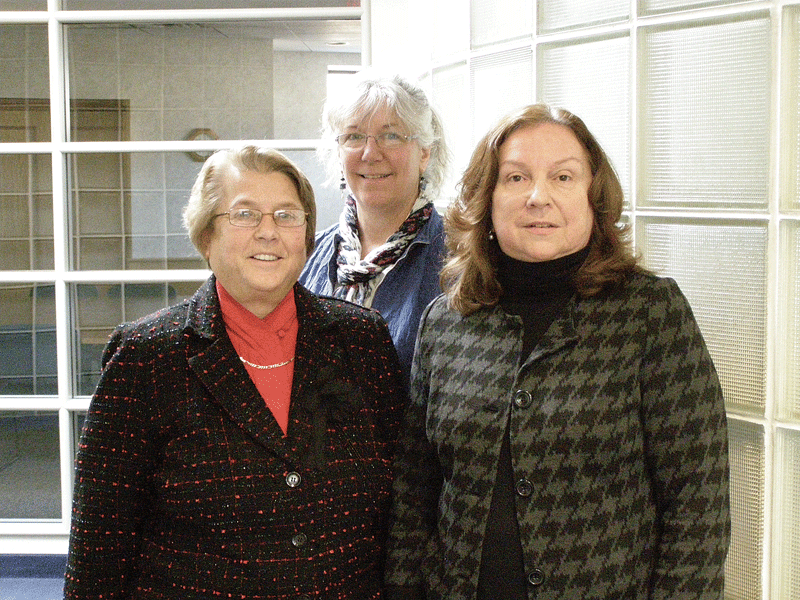
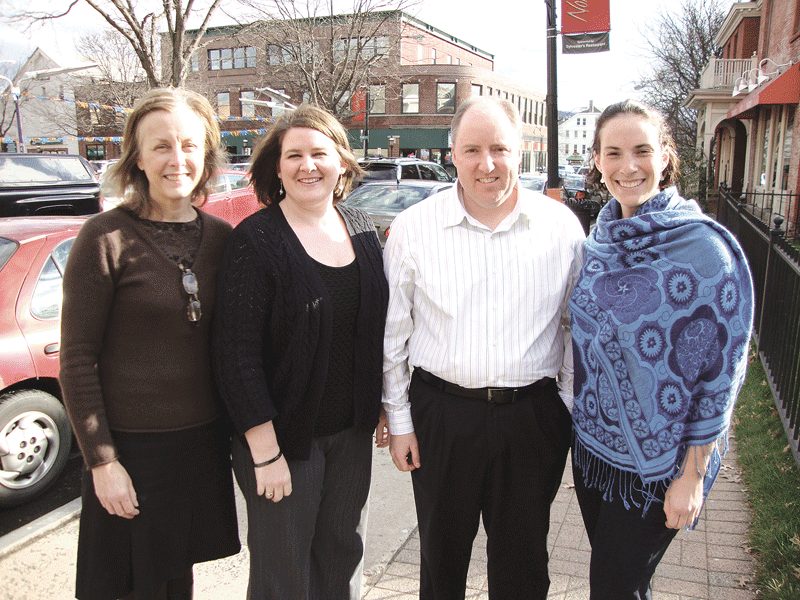
Linda Williams (left, with Kathleen Dowd and Elizabeth Sullivan)

Linda Williams (left, with Kathleen Dowd and Elizabeth Sullivan) says HSHS agencies touch every life in some way.

Many different voices speaking as one.
That’s the goal of the Human Service Forum (HSF), a Western Mass. organization that provides a public platform for a wide variety of human-service nonprofits.
That catch-all term covers literally dozens of different types of agencies, providing services ranging from health care to early education; substance-abuse treatment to homeless shelters; youth recreation to career services.
But when people think of the good work done by these agencies, they often don’t consider the economic impact they have on the region, through job opportunities, local spending, and taxes. Kathleen Dowd, director of the HSF, thinks that should change.
“We felt the need to get our voice out there and talk about how we contribute as businesses, and about the impact we have as employers,” Dowd said. That’s why the Forum commissioned the Pioneer Valley Planning Commission (PVPC) to research those influences.
The report that emerged from that study, “The Economic Impact of Human, Social, and Health Service Organizations in the Pioneer Valley,” may have a cumbersome name, but its findings cut right to the point, and make the case that human-, social-, and health-services (HSHS) agencies do more than help people — they dramatically lift the region’s entire economy.
The numbers are striking. In 2009, HSHS organizations in the Pioneer Valley employed one out of every five workers in the region, paid $1.6 billion in wages, posted revenues of close to $4 billion, and recorded expenditures also around $4 billion.
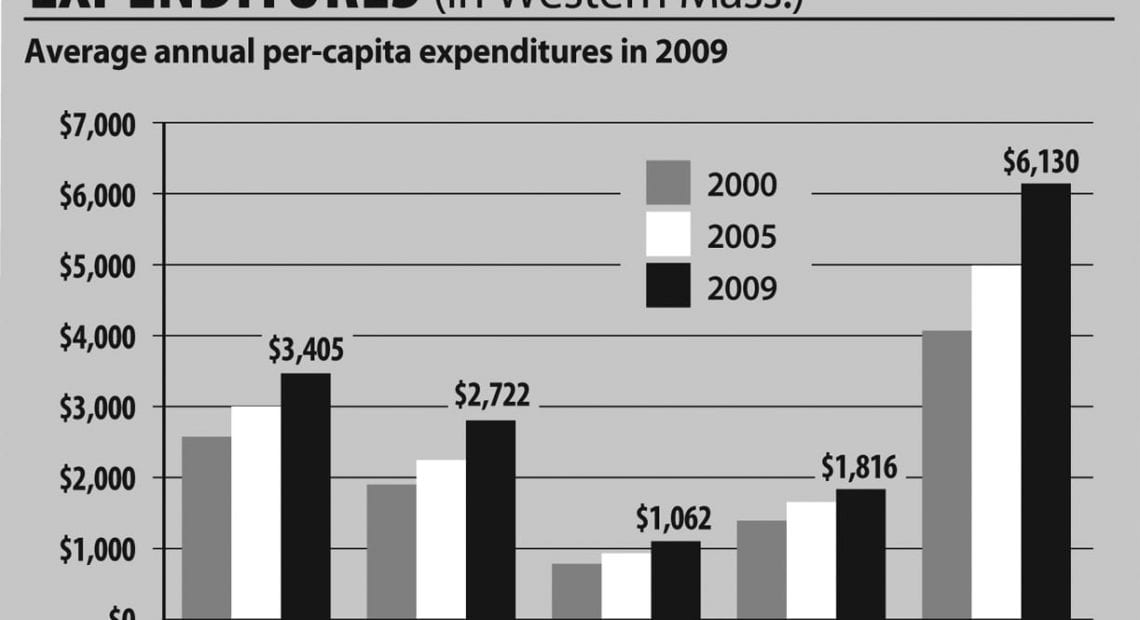
Those numbers have risen sharply over the past decade. The total number of HSHS nonprofits in the region increased by 18% between 2000 and 2009, and annual per-capita expenditures of those organizations rose from just under $2,000 to more than $2,700 over the same period — and more than twice that total in Hampden County (see chart on page 11).
The sector is also growing more quickly in the Pioneer Valley than statewide. HSHS organizations in the region increased spending by 46% from 2000 to 2009, compared to 40% for all of Massachusetts. Those spending levels have a significant impact on area communities, as nonprofits typically spend more than 75% of their dollars locally.
“We’re part of the fabric of the whole community, and you really can’t separate us,” said Linda Williams, executive director of the Springfield-based Mental Health Assoc. (MHA), a Forum member. “People say our workers touch just about every life in Western Mass. — but I would maintain that we touch every life.”

Spreading the Word
Williams stressed that the PVPC report is not an end in itself.
“This isn’t a one-time deal where we just throw out a study,” she said. “This is a campaign of eduation from those of us providing these services. It’s a multi-year effort, and we need to continue the momentum.”
Part of that effort is a campaign to educate the public and get them talking about the importance of HSHS nonprofits — and, in time, increase support, financial and otherwise, for their services. To that end, the HSF tasked Paul Robbins, president of Wilbraham-based Paul Robbins Associates, to cultivate marketing opportunities.
“We brought Paul in to help us really distill all this data that the Planning Commission was so good at finding,” Williams said. “Some of it tends to be a bit dry, but we wanted to make sure we had the talking points, the bullet points we could articulate, not just to the general community, but legislators and people we do business with.”
One of those opportunities is the Forum’s annual legislative reception, scheduled for Jan. 20 at the Knights of Columbus in Chicopee.
“We’ll actually see legislators sitting at the table with constituents from various organizations,” she said. “It puts our work in perspective for them. We’re voters, and we use this time to get in front of our legislators.”
The reception, like the PVPC report, is a way to distill many different voices in the HSHS world into one clear message, Williams added.
“Even though we call ourselves human-service agencies and organizations, we’re very different, and for us to speak with a common voice is very important. This [reception] is a vehicle I’m passionate about. Whether it’s mental health or disabilities, elderly services, or education, it’s important for us to have a common voice.”
NonprofitHealthServExpendBW0112bAnd the economic value of those nonprofits is the message that needs to emerge, Dowd said.
“Many of our member organizations and businesses focus on their mission and get a little tunnel vision,” she told BusinessWest. “Over the next couple of years, we’ll produce a speakers’ bureau to educate the business community and local chambers, with this big-picture idea that we’re contributors and businesses as well as having a social profit.”
She added that the report is intended to stress the contributions of non-health-related agencies that sometimes get lost when people think of Western Mass. as a strong region for ‘eds and meds.’ “It’s known widely that health care businesses have a very strong workforce, but I think that’s lesser-known about human- and social-services organizations.
“We’re contributors; we have a vital workforce,” Dowd added. “We do professional development and provide career pathways for our peers.”
Nonprofits boast “some of the most creative business people I’ve ever met,” Robbins added. “They have to be creative and inventive in how they raise money and manage their resources.”
Although the human aspect of their work is critical, Dowd said, “at the same time, not-for-profit does not mean we do not run a financially sound business. We do — and we’re a large, vital force in terms of workforce and economic impact, in terms of multipliers like real estate, insurance products we purchase, taxes we pay. We do that every single day.”
She said she prefers the term not-for-profit, rather than nonprofit, when describing HSHS work, because the latter can give the impression that agencies aren’t trying to bring in dollars. The most effective organizations, she said, keep the funds rolling in, even during a recession, but they pump that money back into the organization, rather than lining the pockets of a CEO or stockholders.
“It’s not either-or,” Dowd said of the difference between for-profit businesses and not-for-profit agencies. “It’s not about pointing fingers, them against us. It’s not about making a profit, but what we do with that profit. We provide services as a business, and we have to operate with sound business principles while providing a mission. We’re not nonprofit; we’re not for profit. That’s a capital ‘for’ in the middle.”

Growth Pattern

Molly Goren-Watts

Molly Goren-Watts says the PVPC report gives the region’s nonprofits the type of marketing tool they have too-often lacked.

Even before the current awareness campaign, HSHS agencies had been proliferating throughout Hampden, Hampshire, and Franklin counties, with most of that expansion occurring in Springfield, Northampton, Holyoke, Amherst, and Greenfield. The 18% growth over the past decade can be explained in a number of ways, Forum members said.
“I would say Western Mass. is a region that focuses on community,” said Elizabeth Sullivan, special projects coordinator for the Mental Health Assoc. “With the closures of Belchertown State School, Northampton State Hospital, and, in the very near future, Monson Developmental Center, we’ve needed to establish human-services organizations to address those needs.”
The aging of the population is also a factor, she added; people are living longer today than in past decades, but often with a more acute need for health and social services.
In addition, Williams said, there’s less of a stigma these days attached to seeking the kind of support HSHS agencies offer. “People are more open to it, whether they’re looking to get help for a husband or wife, an elder, a child, or someone with a disability. That’s come through years of education, communication, and community service.”
Even with the success not-for-profits have had with growing their services and hiring more workers, communication still suffers at times, which is why the PVPC report is so important, said Molly Goren-Watts, principal planner/manager of the commission’s Regional Information and Policy Center.
“It seems that one of the major limits of nonprofits is that you have funding coming from a specific source or for a specific service,” she said. “It’s allocated for you to provide a specific service, and there’s usually not extra money built into the budget for marketing.”
Williams said it will take a cooperative effort to change that.
“It’s so good for the Human Service Forum to bring us all together under this umbrella and bring a common voice and make the message of our contributions heard,” she said. “It’s hard to do that with one voice when we’re all going in different directions. The Human Service Forum has been around for 25 years now, and it’s able to provide that support for all our organizations that we couldn’t achieve separately.”
Sullivan agreed. “This provides us with a forum to discuss what we have in common with the businesses in the community,” she said. “We have not really engaged in that discussion, so that dialogue begins now.”

Joseph Bednar can be reached at [email protected]

Features
Holyoke’s Young Mayor Is Ready to Get to Work

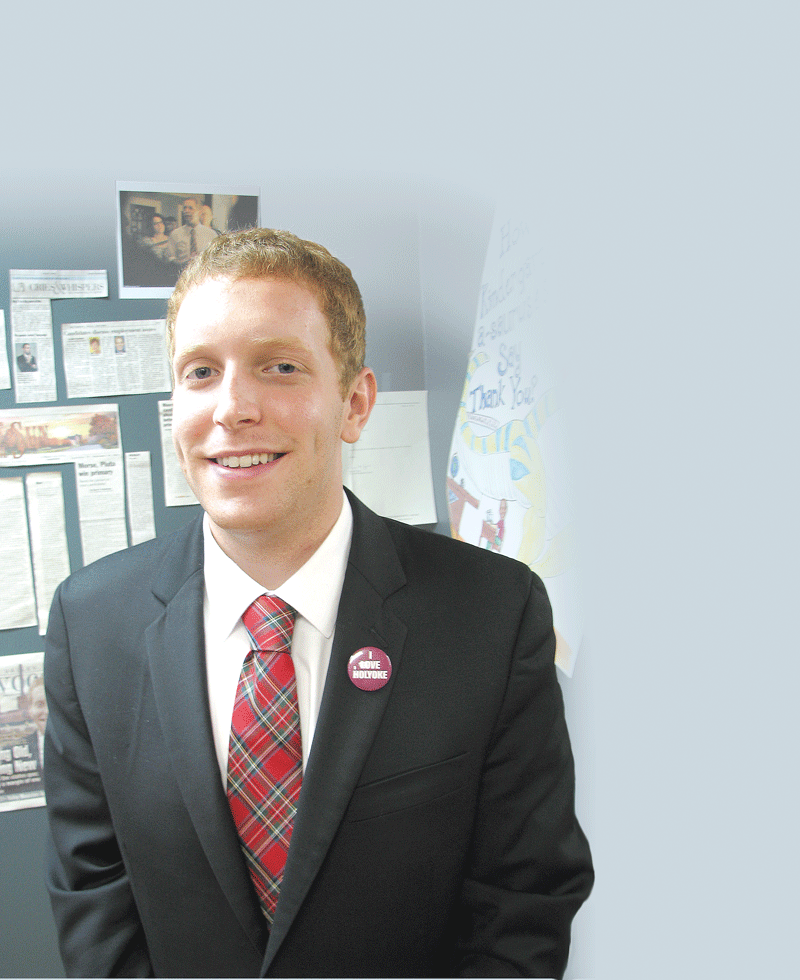
Holyoke Mayor-elect Alex Morse

Holyoke Mayor-elect Alex Morse

Alex Morse’s triumph in November’s election captured the attention of the entire region — not to mention those who put  together the guest list for a dinner at the White House a few weeks ago. At 22, Morse is said to be second-youngest mayor in the state’s history, but his educational background and seemingly limitless confidence would appear to have him ready for the corner office. He says his primary goals are to aggressively market and rebrand the city, and enable it to take full advantage of what he called “its moment.”

Alex Morse graduated from Brown University last spring with a degree in Urban Studies.
This means that he knows a lot more than most people about what prompted the decline of every major Northeast city in the ’50s, ’60s, and ’70s, and also about what some of those same communities have done to reinvent themselves and bring people back downtown.
And at Brown, he had a working laboratory in the form of one of the more intriguing urban comebacks, albeit one that is still very much a work in progress. In Providence, city officials, led by flamboyant and controversial mayor Vincent (Buddy) Cianci, literally moved a river, among other initiatives, in their efforts to reinvigorate a moribund central business district and make their community a destination.
Providence, its downtown, and its public school system became the subjects of many of Morse’s classroom projects in Urban Studies, but his hometown of Holyoke also figured prominently in his coursework; indeed, the recent Hope 6 project in the city’s Churchill neighborhood became the subject of one assignment, and his experiences growing up in a declining urban core gave him a unique perspective for the classroom — in the many forms it took.
“Unlike my classmates in Urban Studies and Political Science, I actually came from a struggling urban community, and could use my perspective from growing up here and going to public schools,” he explained. “A lot of the kids at Brown had gone to private schools and didn’t have the experience that I had; I thought that what I brought to the table was much more relevant than what my classmates had to offer. And at the same time, I could take what I learned at Brown and bring it back to Holyoke.”
And it was while working toward his degree — probably early in his junior year, by his estimation — that Morse boldly decided that he would like to continue his education in urban studies in Holyoke City Hall, specifically the spacious ground-floor mayor’s office.
It was with extreme confidence that Morse entered the race nearly a year ago, and it was this character trait, coupled with a solid game plan, a message of hope, and a positive campaign tone, captured in his lapel pin bearing the words ‘I Love Holyoke,’ that propelled him to victory over incumbent Elaine Pluta on Nov. 1.
In a wide-ranging interview with BusinessWest a few weeks before his inauguration, Morse, whose campaign exploits have made news well outside the 413 area code — at 22, he’s the second-youngest mayor in the state’s history, and he’s already been a guest at the White House — talked at length about his road to the corner office and what he plans to do when he officially takes office.
He said that, while his business card and door plaque will say ‘mayor,’ he considers himself, first and foremost, to be the city’s “chief marketing officer.”
Indeed, he told BusinessWest, while Holyoke has suffered (and continues to suffer) from many of the ailments facing Northeast cities — from high concentrations of poverty in the urban core to a struggling public school system —perhaps its biggest problem is perception and the fact that no one is telling the city’s story, or at least to the right people.
And he believes that, from the perspective of a marketer, or salesperson, he has a quality product to sell.
“Holyoke is a great city, and we’re at a great time,” he explained. “Things are really falling into place in a really great way for our city. And I’m prepared to be Holyoke’s biggest salesperson and spokesperson as mayor, and I think that’s what Holyoke needs, someone willing to stand up and promote our assets.”
Beyond marketing, Morse says his primary assignment is to help make sure that Holyoke takes full advantage of what he called “its moment.”
Elaborating, he said pieces of the recovery puzzle — an emerging creative economy, the possible return of rail service, investments in downtown, the Canal Walk, a growing reputation as a ‘green’ community, the Victory Theatre project, and especially the high-performance computing center and the attention it is generating — are coming together, and Holyoke must seize its opportunity to do something special.
“This is the moment; we have a window of opportunity over the next two years to take advantage of this incredible moment,” he said. “It comes down to what we do with that moment, and this is why I ran for mayor. We can either stay the same and cling to the status quo, or we can embrace the future and do things differently.”

News Flash
One of Morse’s biggest challenges since election night has been handling all the media requests.
They’ve come from far and wide, including the Boston Globe, the Christian Science Monitor (which made him one of its ‘30 under 30’ subjects), New England Cable News, MSNBC, CommonWealth magazine, and the Brown University alumni magazine, among others.
He doesn’t say ‘yes’ to everyone — he’s spending most of his time on transition issues — but there haven’t been many ‘nos’ to date. That’s because he views such press encounters as opportunities — not for him, necessarily, but for Holyoke. He endeavors to take the focus of questioners from himself to the city, and often, the interviews take place while he’s offering a tour of the community to someone who has never seen it or knows little about it (he took the Globe on one just before meeting with BusinessWest).
And he can already see some tangible results from all that press.

The high-performance computing center

The high-performance computing center is one of many projects that Morse believes has “put all eyes on Holyoke.”

“It’s great for Holyoke to get this kind of exposure,” he explained. “Kathy Anderson [the city’s director of economic development] will tell you she’s received a number of calls and e-mails because of the stories done since the election. I’ve had people say, ‘I heard on the CBS clip that you have a lot of renewable energy; can we have a phone conversation about that?’”
Thanks to all that attention from the Fourth Estate before and after the election, many in the region know at least some of the Alex Morse story — that he’s young, openly gay, has had dinner at the White House (he said the invitation just appeared in the mail one day), and isn’t a supporter of a casino as an economic-development strategy. Those who have read a little more thoroughly know that he grew up in the city, attended Peck Middle School and Holyoke High School, where he was salutatorian, and was accepted at the only college he applied to — Brown.
They might also know by now that Morse’s parents have worked mostly blue-collar jobs — his father with Carando (he now has a manager’s position there) and his mother with a day-care facility she ran out of the family home — and that he was the first one in his family to earn a college degree.
He told BusinessWest that his upbringing has provided him a unique perspective on one of the main challenges facing his city and most others like it: narrowing the income gap between the poor and the wealthy, and bolstering the middle class.
“We need people with disposable income in downtown Holyoke,” he explained. “It’s not sustainable to have concentrated poverty in our downtown.”
What most have come to learn about Morse is that running for mayor certainly wasn’t anything spontaneous. Rather, it was a well-thought-out plan, a common-sense career path chosen because of his affection for his hometown, knowledge of urban challenges and models for revitalization, and a desire to bring real change to a city that has long been the butt of jokes.
“The last two years of my life have been pretty much consumed by the campaign,” he explained. “It’s something I’ve thought about for about four years. It didn’t matter exactly who I was running against; I could have been running against Elaine Pluta, I could have been running against another long-term city councilor — there was nothing personal about it, it was just something I wanted to do.”
Morse said his campaign strategy was fairly straightforward, and involved meeting as many residents and business owners as possible, framing everything in the positive — “I focused on my ideas and my plans, and people respected that” — and, in a nutshell, “getting people excited about Holyoke again.”
To say that he succeeded with all that would be an understatement. He won the endorsement of the Republican, a paper with a long and deep record of supporting incumbents, and was swept into office by a 53-47 margin.
And while some have suggested that the election results represent a vote against Pluta, a longtime city councilor elected mayor two years ago, and/or a vote against casinos, Morse certainly doesn’t see it that way.

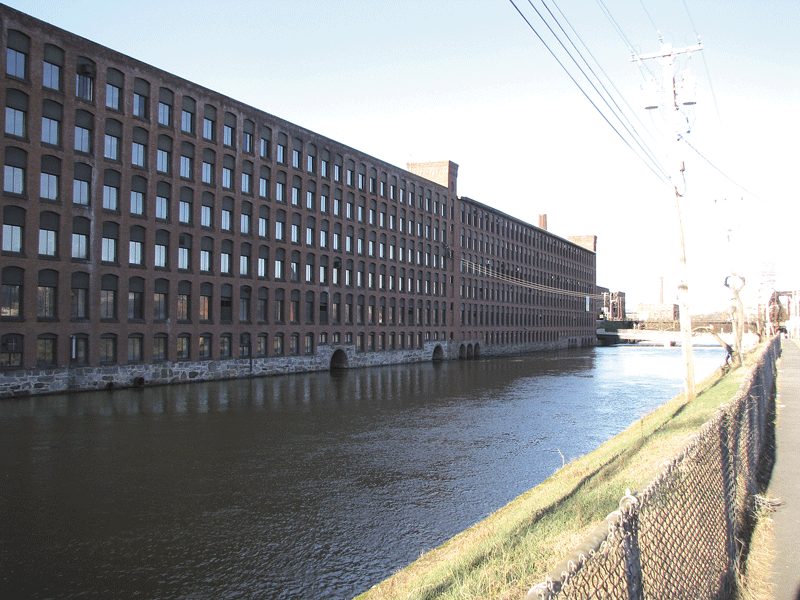
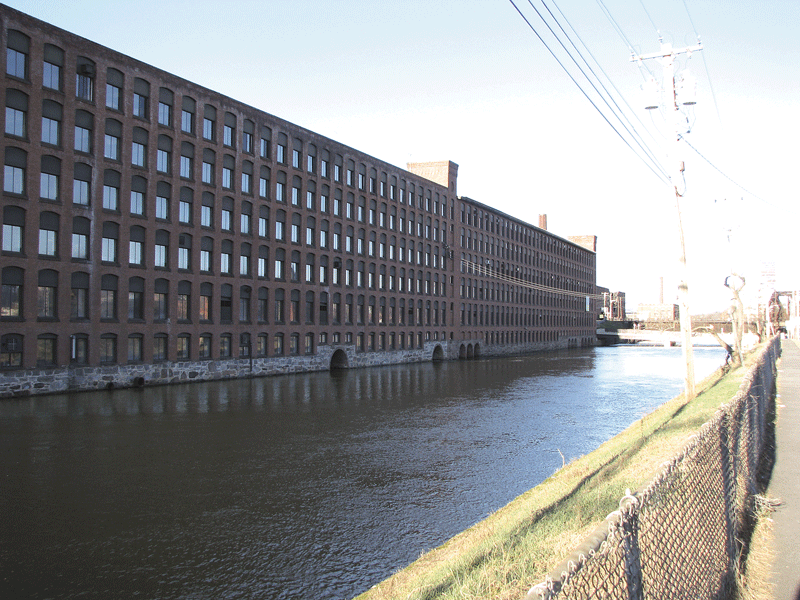
Morse will soon become a resident of Open Square, seen here from just across the canal, in a move he equates to putting his money where his mouth is.

“I see those as votes for Holyoke and its future,” he said of the ballots cast for him. “This election was framed as a choice between the past and the future and what direction Holyoke wants to go in. I decided to run not because I’m particularly distraught or concerned about the direction of our community, but because all eyes are on Holyoke right now, whether it’s because of the computing center or other projects we have going on. The race came down to deciding what kind of mayor we want during these exciting times.”

A Moveable Feast
It’s called BYOR.
That’s short for Bring Your Own Restaurant, a rather unique grassroots initiative started by a group of city residents more than a year ago in response to a perceived lack of dining options in the downtown area.
Participants bring tables, chairs, and potluck dishes to designated spots — empty lots near the canals and the parking area of a closed gas station have worked — that in essence become those nights’ restaurant, said Morse, adding that he’s taken part in several of these get-togethers. He’s hoping, of course, that someday soon this BYOR tradition will end out of necessity — or lack thereof, in this case. And bringing that day closer to reality is just one of many formal and informal items on his list of goals and objectives.
At the top of that list is rebranding the city, or changing the long-held perceptions about it. He’s noticing incremental improvement in the way people talk about his community — he mentioned he’s heard people saying they should move to the city, or move back to it, as the case may be — but maintains that it still has a long way to go.
As chief marketing officer, Morse said he’ll essentially go anywhere and do anything to put Holyoke front and center and sell attributes ranging from cheap, ‘green’ energy to housing prices well below those in surrounding cities.
“We have a great foundation here — it’s not as if we have to start over,” he told BusinessWest. “We just have to restore it to what it once was and beyond that. During the campaign, I talked about bringing us from the Paper City to the Digital City, and I’m going to be the one to lead us into the future — and a better future.”
Rebranding is something he believes Providence did quite well, and its success in that realm is just one component of a broad revitalization strategy he would like to make one of many models Holyoke can borrow from in the years ahead.
Another was the partnerships forged with the business community, he went on, as well as the desire to take bold and dramatic steps, such as reclaiming the Providence River, once spanned by the ‘world’s widest bridge’ (1.5 miles) as recorded in the Guinness Book of World Records, and making it a true asset through initiatives such as the famed WaterFire installation.
“There’s a lot of good things happening in Providence in terms of what they’ve done to rebrand themselves,” he said. “Some of the reflections and experiences I’ve had in Providence will help inform what I want to do in Holyoke in terms of perception and the way Providence has used the artists’ community in the downtown, restaurants, how they’ve taken advantage of the river with WaterFire, and how they’re bringing people into downtown.
“They had some very concerted efforts on the part of the municipal government, and what they did well was partner with business,” he continued. “There were a lot of public-private partnerships to get investment back in Providence.”
Morse said he and his classmates at Brown studied a number of communities, including Baltimore, Detroit, Boston, and others, and that there are common denominators and lessons to be taken from many models for recovery.
“Holyoke is unique in many senses and special in many senses, but at the same time, we have followed the same trajectory as many Northeast and Midwestern cities in terms of deindustrialization and the moving of factories to the south and then overseas; Holyoke is just a part of that story,” he explained.
“Any urban community struggles with issues like public education; it’s how we respond to them that’s really going to make a difference,” he continued. “What I’m interested in as mayor is looking at what other mayors are doing, looking at what other school systems are doing, looking at best practices, and learning from what’s worked and what hasn’t worked.”

Live and Learn
Morse said much of his administration’s focus and energy will be directed toward the downtown area, where efforts will be concentrated on seizing momentum from the computing center, while also working on the many aspects involved with getting more people living in that area.
And the new mayor won’t just be talking about it — he’ll be doing it.
Indeed, he will be the first residential tenant in Open Square, the massive former mill complex now home to dozens of businesses, a café, a performing-arts group, and more, and is awaiting final touches on the space before moving in later this month.
“I made a statement that I wanted to move downtown to help change the perception there,” he told BusinessWest. “If I show a business owner our downtown or Open Square, or talk to young families about moving here, I can say, ‘hey, the mayor lives right down the street; it must be safe.’
“It’s a symbolic gesture, but I’m putting my money where my mouth is,” he continued. “Anything we can do to promote downtown and bring more people and more business there … I think that will help us.”
Overall, Morse says he sees a good deal of momentum downtown, and it comes in a number of forms — from the attendance at the regular BYOR events to growing interest in commercial property in that area, to a growing sense of community, coupled with changing demographics, that he believes are a very positive sign.
“There’s a community today that didn’t exist 10 years ago in Holyoke — a progressive, young, arts-friendly constituency here in downtown,” he explained. “There’s an interest in downtown moreso than I’ve ever seen before, and that’s very refreshing to me, someone who was born and raised here; it’s great to see interest from people who weren’t born here but want to move here and have things happen downtown.”
From his studies of other cities, Morse said he fully understands the chicken-and-egg scenario when it comes to growing the population in the urban core; professionals, empty nesters, and others with disposable income need good reasons to move to a downtown — safe streets, attractive housing, and nightlife are all high on the list — but many of those things, and especially the nightlife part, won’t happen unless there is already a critical mass of urban dwellers capable of supporting businesses.
“If we want to support a thriving small-business community — restaurants, cafés, and nightclubs — we need to have people with money in their pockets,” he explained. “And that means we have to convince people to move to Holyoke, bring their business here, and be a part of this.
“A lot of young professionals and even single people, men and women, want to live in urban communities; I’m convinced of that,” he continued. “Over the past 50 years, there’s been a lot of disinvestment in cities, as if cities were bad, but now, attitudes are changing, and we need to take advantage of that.”

Forward Thinking
When asked what someone ambitious enough to run for mayor of a major city while still a college student might do next for a career challenge, Morse smiled broadly and paused for a minute.
While he didn’t speculate on what else he might do, he mentioned Thomas Menino, the longest-serving mayor in Boston’s history (18 years) and hinted that this is a record of service he may try to emulate.
“Holyoke needs consistent leadership over the next decade,” he said, hinting that he plans to be around at least that long — if the voters are so inclined.
For now, though, he’s focused on getting on with his work as chief marketing officer and with enabling Holyoke to take advantage of that window of opportunity he mentioned.
He said he’s never seen people this excited about the city, and that he considers it his job to capture that excitement and have it translate it into tangible, positive change. He acknowledged that he certainly can’t change the citiy’s fortunes in two years, but he can certainly get the ball rolling.
And if he does, he might be back in the White House soon.

George O’Brien can be reached at [email protected]

Features
NAYP Readies Itself for Reinvention

Editor’s Note: This is the first in a series of stories spotlighting the work being done by area chambers of commerce and other economic-development-related agencies. We start with Northampton Area Young Professionals.

From left, Suzanne Beck, Lynn Kennedy, Rich Horton, and Kate Glynn.

From left, Suzanne Beck, Lynn Kennedy, Rich Horton, and Kate Glynn.

Sitting around the conference table at the Northampton Chamber of Commerce were some members of a new ‘executive team.’
That’s the name the Northampton Area Young Professionals — or NAYP, as the group calls itself colloquially — are using for the new leadership that has been steadily helping to reinvent the organization.
Some departures in the prior leadership of NAYP have led the group to take a look at its core values and mission. Kate Glynn is the owner of A Child’s Garden and co-owner of Impish, two children’s stores in downtown Northampton, and she said they were necessary changes for the group to evolve.
“Over the past four years of NAYP being up and running, we’ve learned that young professionals change careers,” she said. “We’re at a time in our lives where people get new opportunities, professionally speaking, or they’re making big changes in their private lives, having babies. And that’s the nature of being a young professional in today’s world.
“So, rather than have a static organization that isn’t flexible, nor addressing actual needs, we’ve decided to open it up and re-examine,” she added.
Rich Horton, Northampton director of Community Staffing, an employment agency, said NAYP is currently making “aggressive structural changes.”
“Historically it’s been what we called the leadership team — 10 or 12 people, a president, vice president, with committees underneath that,” he said. “So we decided to pull back and make the leadership roles a committee, with an executive team at its core. That team will have five members responsible for strategy, making sure everything gets done, with project leaders overseeing specific issues.
“The leadership of NAYP is no longer just 10 people,” he continued. “Rather, it’s really whoever wants to be involved. We’ll be having open meetings where anyone can come, and we expect that, over time, there will be a core of people who are consistently showing up. It really is more of an open format, allowing us to get more warm bodies in the room, getting things done that we want to get done, but also just to get excitement going around.”
The sixth de facto member of the executive team is Lynn Kennedy, the NAYP’s liaison within the Northampton Chamber of Commerce. She was quick to add that, while all this talk of restructured leadership and changing titles might sound like an entirely new organization, NAYP will not change in the way the group functions for its members.
“But there is one change that we want them to see,” she added, “and that is how to get involved, and at what levels. They don’t need to make these excessive commitments to get involved — they can be involved at the level that works for them.
“We hope that the NAYP membership is seeing a more clear way for them to be part of the group. That was a barrier that we are recognizing — that people weren’t always sure of the steps that they needed to take before.”
While the NAYP team was talking out the changes that are still taking place, they did state that they are, as always, ready to get down to business. Talking with BusinessWest for this inaugural feature, NAYP members said that, at its next meet-and greet-function to take place on Jan. 12, relative terms like ‘young’ and ‘area’ keep it pretty open as far is who is welcome to attend.
“We’re never going to say ‘no’ to someone because of where they are from,” Kennedy said, “or that you’re too old.”

Defining Moments
“The way that I address that question of who can be a member,” Glynn said, “and it comes up all the time, is that young can mean chronological; young can mean in business. Or young can mean that you have a fresh perspective on how you want to be part of the community.”
She was one of the early members of NAYP, which is not yet five years old. Initially, there was a common theme among other businesspeople like her, that a lack of a forum for young professionals needed to be addressed.
“I know there are other young people out there in business,” she remembered, “who consider their professional lives first and foremost, but also have a desire for networking and social opportunities within that.”
The Northampton Chamber of Commerce also realized early on the importance of such an organization, and NAYP considers them a sponsor and its biggest advocate. Suzanne Beck is the chamber’s executive director, and she told BusinessWest that there has always been a lot of talk in the Valley about who is that next generation in business and what is their commitment to the region. The chamber’s commitment to NAYP has stemmed from that question.
“Many of those people that were at the beginning of our downtown’s renaissance are aging out of their businesses,” she continued. “There was a five-year period where we really asked, ‘who’s next?’ Kate is one of the younger generation with a retail presence on Main Street, and these days, if you walk through Thorne’s, it’s amazing how many young people are running businesses there.”
NAYP started as a once-a-month networking event, and it has added things like leadership lunches, where a small group meets with area CEOs to learn about their career paths. There’s also a strong philanthropic component, working with area nonprofits, and Glynn said the monthly meetings are also “an opportunity for a local nonprofit to stand up and tell us what they do. We ask that they don’t make a pitch for money, but it’s more of an educational instruction as to what they do within the community, and if members want to get involved, here’s how.”
Borrowing an idea from the playbook of the Young Professional Society of Greater Springfield, NAYP launched what it calls a Nonprofit Board Fair this past summer. “What we find is that a lot of young professionals have interest in nonprofit leadership opportunities, but don’t have any clue as to how to get on a board,” said Horton.
“We worked closely with the local United Way,” he continued, “and we reached out to other nonprofits and stipulated that they had to have a board opportunity opening in the next six months. They didn’t have to actually take any of our folks, but they did have to have an opening.” The meeting was well-attended, and all members said that this was assuredly the first of an unfolding tradition for NAYP.

School of Thought
From the perspective of the chamber, Beck said NAYP fills a need for that developing generation of businesspeople in the region.
“With all the colleges and UMass, there’s always been the question of what happens to those kids who have been very well-educated and want to stay here,” she said. “We know that a huge percentage of people who are educated here want to stay here, and unfortunately we know that the majority of them won’t find it easy to find a job to keep them here. NAYP serves an important purpose for developing those connections to the community that might be more valuable to them.”
As one of those former students, Glynn said that it is exciting to see the possibilities for new members within NAYP’s frameworks, because a larger membership means more opportunities for individuals and for the organization as a whole. With a committee-based leadership, Kennedy noted that this structure will be an asset in how those opportunities are addressed.
“In the past, we had so many things that we wanted to do, but only a small number of people able to get things done,” she said, adding that the organization will look hard at prioritizing programs and then maximizing its available young talent to carry them out.
But as the assembled members of NAYP said, the core mission of the group will always be welcoming anyone who wants to be a member. There are currently 135 dues-paying NAYPs, and the goal is for that number to rise.
“Just last week, we had an event, and I met five or six people,” Horton said. “The hope is that they will become members, and from that become more involved. We have really evolved into a vibrant population. There’s a younger slant, but certainly there are folks who are much older in age but who contribute to the energy that knows no age limits.”
Said Glynn, “it’s not just a party with a purpose — we want it to be a fun networking event, but it’s an opportunity to be professional and social with a business perspective. People are coming because of that energy.”

Features
Nominations for the 40 Under Forty Class of 2012 Are Due Feb. 17

When BusinessWest launched its 40 Under Forty program in 2007, it did so with the expectation that the honor would soon become coveted and that the program would cast a bright light on the young talent in the four counties of Western Mass. To say that all this has happened would be a huge understatement. The program continues to grow in terms of both relevance and popularity, as evidenced by a new high-water mark for nominations in 2011 and record attendance at the June gala. And now, it’s time to nominate the class of 2012.

Eric Gouvin said being one of the judges for last year’s crop of 40 Under Forty nominees was a more difficult task than he thought it would be. But he said the experience was also enlightening — and encouraging, when he thinks about the future of the Western Mass. business community.
“It was hard,” said Gouvin, professor of Law and director of the Law and Business Center for Advancing Entrepreneurship at Western New England University. “There are a lot of talented people who participate, and to try to narrow that down to 40 was challenging. But I found it to be a real shot in the arm, for sure, to reassure me that we’re not running out of talented, smart people.”
Indeed, in its fifth incarnation, last winter’s nomination process brought forth a record number of applicants, demonstrating that, if anything, the program is only gaining steam.
“There’s so much enthusiasm,” said Pam Thornton, business development coordinator at United Personnel in Springfield, and current president of the Young Professional Society of Greater Springfield (YPS), which has consistently mined its membership for 40 Under Forty honorees on an annual basis.
“If you think about it, the program has created a kind of precedent already, which is amazing,” she continued. “People really look forward to the opportunity to get their name out there, to get an opportunity to get in front of people, and that’s just an awesome thing for our group, and for our age group.”
Now entering its sixth year with a call for nominations, BusinessWest’s 40 Under Forty has captured the respect of the region’s business community and continues to demonstrate that Western Mass. is home to a creative, motivated, and successful group of young business leaders, entrepreneurs, and innovators — people who are redefining what it means to build successful businesses and serve their communities with whatever spare time they have left over.
There are clear benefits in recognizing local professionals under age 40, said Kate Campiti, BusinessWest’s associate publisher. But initially, there were some concerns as to whether a strong-enough crop could emerge year after year. Clearly, that worry has long been put to rest.
“I’m amazed at the number of strong nominations we’re getting every year,” Campiti said. “It really speaks to the depth of the young talent here in the region.”

Click here for a nomination form!

Shine a Light
The 40 Under Forty program was launched in 2007 as a way to spotlight the accomplishments of younger professionals throughout Western Mass. — not only their on-the-job achievements, but their often-extensive volunteer work with organizations that benefit their communities.
Over the years, the program has highlighted individuals from an impressive range of businesses and industries, including education, law, finance, media, medicine, creative arts, nonprofits, government, retail, restaurants, green business, and many others. And last year presented a first — a 16-year-old high-school student (Stephen Freyman) was among the winners.
In addition, a healthy number of honorees each year hail from the ranks of entrepreneurs, developing their own business plans and building companies that in turn create jobs.
Judges score nominees on a combination of their accomplishments (be they in business, government, or the nonprofit realm), leadership qualities, and work within the community.
The effort has also helped boost the image of groups like YPS and Northampton Area Young Professionals, which share a common goal with 40 Under Forty — specifically, demonstrating the economic and cultural vibrancy of this region and generating enthusiasm among talented professionals to set down roots in Western Mass.
“I would absolutely say that it’s raised our profile, without a doubt,” Thornton said, noting that YPS typically brings a strong contingent to the annual June gala. “Everyone looks forward to it, and it’s such a great event.”
One theme that past winners have touched upon repeatedly is the networking benefits generated by being chosen to the 40 Under Forty.
“The experience of being an honoree brought together 40 great business people with collegial networking and partnerships that wouldn’t have been made otherwise,” said Beth Vettori, executive director of Rockridge Retirement Community in Northampton, one of the 2011 honorees.
“Between the friendships formed and the business opportunities, the 40 Under Forty really provided a bridge to some successful affiliations,” she added. “These people I’ve been able to network with — they’re very charismatic, very intelligent, and it’s just great to see that the youth in this area really have depth.”
Vettori said those connections have given her a viable resource — plenty of new colleagues with strong business acumen.
“You’re able to have conversations that give you greater insight into your own business,” she said. “The networking has allowed me a greater understanding of my own operation. It’s helpful to get different perspectives, different ideas; other people may work in different fields, but it’s still business, and it allows you to expand your own thinking.”
As with the past five installments of 40 Under Forty, this year’s winners — chosen by a panel of judges comprised of area business leaders and previous honorees — will be profiled in a spring issue of BusinessWest (always a must-read issue) and toasted at the annual gala reception, which drew a record crowd last June, providing further evidence of the 40 Under Forty’s momentum.

Healthy Crop
Gouvin said the growing popularity of the program is due in part to the sheer impressiveness of the honorees.
“Lots of these folks are professionally accomplished and very engaged in our community; they’re giving back, too,” he told BusinessWest. “That’s very encouraging. We want to make this city the best it can be, but we all have to contribute, not just in our jobs, but in our free time, too. I really do feel like they’re making it better.”
The nomination form can be found on page 20 of this issue. It will be reprinted in upcoming issues as well, and may also be printed from businesswest.com. The deadline for entries is Feb. 17.
Thornton sees the 40 Under Forty, and the role of YPS in it, as a collaborative effort.
“It’s people doing great work together, and I feel like the YPS organization helps to feed the program,” she said. “It’s a way for our people to celebrate what they’ve done, who they are, and how they’ve gotten where they are. And it’s something we should continue if we want to keep the momentum going.”


Past Honorees

Class of 2007
William Bither III — Atalasoft
Kimberlynn Cartelli — Fathers & Sons
Amy Caruso — MassMutual Financial Group
Denise Cogman — Springfield School Volunteers
Richard Corder — Cooley Dickinson Hospital
Katherine Pacella Costello — Egan, Flanagan & Cohen, P.C.
A. Rima Dael — Berkshire Bank Foundation of Pioneer Valley
Nino Del Padre — Del Padre Visual Productions
Antonio Dos Santos — Robinson Donovan, P.C.
Jake Giessman — Academy Hill School
Jillian Gould — Eastfield Mall
Michael Gove — Lyon & Fitzpatrick, LLP
Dena Hall — United Bank
James Harrington — Our Town Variety & Liquors
Christy Hedgpeth — Spalding Sports
Francis Hoey III — Tighe & Bond
Amy Jamrog — The Jamrog Group, Northwestern Mutual
Cinda Jones — Cowls Land & Lumber Co.
Paul Kozub — V-1 Vodka
Bob Lowry — Bueno y Sano
G.E. Patrick Leary — Moriarty & Primack, P.C.
Todd Lever — Noble Hospital
Audrey Manring — The Women’s Times
Daniel Morrill — Wolf & Company
Joseph Pacella — Egan, Flanagan & Cohen, P.C.
Arlene Rodriquez — Springfield Technical Community College
Craig Swimm — WMAS 94.7
Sarah Tanner — United Way of Pioneer Valley
Mark Tanner — Bacon Wilson, P.C.
Michelle Theroux — Child & Family Services of Pioneer Valley Inc.
Tad Tokarz — Western MA Sports Journal
Dan Touhey — Spalding Sports
Sarah Leete Tsitso — Fred Astaire Dance
Michael Vann — The Vann Group
Ryan Voiland — Red Fire Farm
Erica Walch — Speak Easy Accent Modification
Catherine West — Meyers Brothers Kalicka, P.C.
Michael Zaskey — Zasco Productions, LLC
Edward Zemba — Robert Charles Photography
Carin Zinter — The Princeton Review

Class of 2008
Michelle Abdow — Market Mentors
Matthew Andrews — Best Buddies of Western Mass.
Rob Anthony — WMAS
Shane Bajnoci — Cowls Land & Lumber Co.
Steve Bandarra — Atlas TC
Dr. Jonathan Bayuk — Hampden County Physician Associates
Delcie Bean IV — Valley Computer Works
Brendan Ciecko — Ten Minute Media
Todd Cieplinski — Universal Mind Inc.
William Collins — Spoleto Restaurant Group
Michael Corduff — Log Cabin Banquet and Meeting House
Amy Davis — New City Scenic & Display
Dave DelVecchio — Innovative Business Systems Inc.
Tyler Fairbank — EOS Ventures
Timothy Farrell — F.W. Farrell Insurance
Jeffrey Fialky — Bacon Wilson, P.C.
Dennis Francis — America’s Box Choice
Kelly Galanis — Westfield State College
Jennifer Glockner — Winstanley Associates
Andrea Hill-Cataldo — Johnson & Hill Staffing Services
Steven Huntley — Valley Opportunity Council
Alexander Jarrett — Pedal People Cooperative
Kevin Jourdain — City of Holyoke
Craig Kaylor — Hampden Bank / Hampden Bancorp Inc.
Stanley Kowalski III — FloDesign Inc.
Marco Liquori — NetLogix Inc.
Azell Murphy Cavaan — City of Springfield
Michael Presnal — The Federal Restaurant
Melissa Shea — Sullivan, Hayes & Quinn
Sheryl Shinn — Hampden Bank
Ja’Net Smith — Center for Human Development
Diana Sorrentini-Velez — Cooley, Shrair, P.C.
Meghan Sullivan — Sullivan, Hayes & Quinn
Michael Sweet — Doherty Wallace Pillsbury & Murphy
Heidi Thomson — Girls Inc.
Hector Toledo — Hampden Bank
William Trudeau Jr. — Insurance Center of New England
David Vermette — MassMutual Financial Services
Lauren Way — Bay Path College
Paul Yacovone — Brain Powered Concepts
Class of 2009
Marco Alvan — Team Link Brazilian Jiu Jitsu
Gina Barry — Bacon Wilson, P.C.
Maggie Bergin — The Art of Politics
Daniel Bessette — Get Set Marketing
Brandon Braxton — NewAlliance Bank
Dena Calvanese — Gray House
Edward Cassell — Park Square Realty
Karen Chadwell — Doherty, Wallace, Pillsbury and Murphy, P.C.
Kate Ciriello — MassMutual Financial Group
Kamari Collins — Springfield Technical Community College
Mychal Connolly Sr. — Stinky Cakes
Todd Demers — Family Wireless
Kate Glynn — A Child’s Garden and Impish
Andrew Jensen — Jx2 Productions, LLC
Kathy LeMay — Raising Change
Ned Leutz — Webber & Grinnell Insurance Agency
Scott MacKenzie — MacKenzie Vault Inc.
Tony Maroulis — Amherst Area Chamber of Commerce
Seth Mias — Seth Mias Catering
Marjory Moore — Chicopee Public Schools
Corey Murphy — First American Insurance Agency Inc.
Mark Hugo Nasjleti — Go Voice for Choice
Joshua Pendrick — Royal Touch Painting
Christopher Prouty — Studio99Creative
Adam Quenneville — Adam Quenneville Roofing
Michael Ravosa — Morgan Stanley
Kristi Reale — Meyers Brothers Kalicka, P.C.
Amy Royal — Royal & Klimczuk, LLC
Michelle Sade — United Personnel
Scott Sadowsky — Williams Distributing Corp.
Gregory Schmidt — Doherty, Wallace, Pillsbury & Murphy, P.C.
Gretchen Siegchrist — Media Shower Productions
Erik Skar — MassMutual Financial Services
Paul Stallman — Alias Solutions
Renee Stolar — J. Stolar Insurance Co.
Tara Tetreault — Jackson and Connor
Chris Thompson — Springfield Falcons Hockey Team
Karl Tur — Ink & Toner Solutions, LLC
Michael Weber — Minuteman Press
Brenda Wishart — Aspen Square Management

Class of 2010
Nancy Bazanchuk — Disability Resource Program, Center for Human Development
Raymond Berry — United Way of Pioneer Valley
David Beturne — Big Brothers Big Sisters of Hampden County
Maegan Brooks — The Law Office of Maegan Brooks
Karen Buell — PeoplesBank
Shanna Burke — Nonotuck Resource Associates
Damon Cartelli — Fathers & Sons
Brady Chianciola — PeoplesBank
Natasha Clark — Springfield School Volunteers
Julie Cowan — TD Bank
Karen Curran — Thomson Financial Management Inc.
Adam Epstein — Dielectrics Inc.
Mary Fallon — Garvey Communication Associates
Daniel Finn — Pioneer Valley Local First
Owen Freeman-Daniels — Foley-Connelly Financial Partners and Foley Insurance Group
Lorenzo Gaines — ACCESS Springfield Promise Program
Thomas Galanis — Westfield State College
Anthony Gleason II — Roger Sitterly & Son, Inc. and Gleason Landscaping
Allen Harris — Berkshire Money Management Inc.
Meghan Hibner — Westfield Bank
Amanda Huston — Junior Achievement of Western Mass. Inc.
Kimberly Klimczuk — Royal, LLP
James Krupienski — Meyers Brothers Kalicka, P.C.
David Kutcher — Confluent Forms, LLC
James Leahy — City of Holyoke and Alcon Laboratories
Kristin Leutz — Community Foundation of Western Mass.
Meghan Lynch — Six-Point Creative Works
Susan Mielnikowski — Cooley, Shrair, P.C.
Jill Monson — Adam Quenneville Roofing & Siding Inc. and Inspired Marketing & Promotions
Kevin Perrier — Five Star Building Corp.
Lindsay Porter — Big Y Foods
Brandon Reed — Fitness Together
Boris Revsin — CampusLIVE Inc.
Aaron Vega — Vega Yoga & Movement Arts
Ian Vukovich — Florence Savings Bank
Thomas Walsh — City of Springfield
Sean Wandrei — Meyers Brothers Kalicka, P.C.
Byron White — Pazzo Ristorante
Chester Wojcik — Design Construction Group
Peter Zurlino — Atlantico Designs and Springfield Public Schools

Class of 2011
Kelly Albrecht — left-click Corp.
Gianna Allentuck — Springfield Public Schools
Briony Angus — Tighe & Bond
Delania Barbee — ACCESS Springfield Promise Program
Monica Borgatti — Pioneer Valley Habitat for Humanity
Nancy Buffone — University of Massachusetts
Michelle Cayo — Country Bank
Nicole Contois — Springfield Housing Authority
Christin Deremian — Human Resources Unlimited/Pyramid Project
Peter Ellis — DIF Design
Scott Foster — Bulkley, Richardson and Gelinas, LLP
Stephen Freyman — Longmeadow High School
Benjamin Garvey — Insurance Center of New England
Mathew Geffin — Webber and Grinnell
Nick Gelfand — NRG Real Estate Inc.
Mark Germain — Gomes, DaCruz and Tracy, P.C.
Elizabeth Gosselin — Commonwealth Packaging
Kathryn Grandonico — Lincoln Real Estate
Jaimye Hebert — Monson Savings Bank
Sean Hemingway — Center for Human Development
Kelly Koch — Bulkley, Richardson and Gelinas, LLP
Jason Mark — Gravity Switch
Joan Maylor — Stop and Shop Supermarkets
Todd McGee — MassMutual Financial Group
Donald Mitchell — Western Mass. Development Collaborative
David Pakman — Vivid Edge Media Group/The David Pakman Show
Timothy Plante — City of Springfield/Springfield Public Schools
MauricePowe — The Law Offices of Brooks and Powe
Jeremy Procon — Interstate Towing Inc.
Kristen Pueschel — PeoplesBank
Meghan Rothschild — SurvivingSkin.org
Jennifer Schimmel — Greater Springfield Habitat for Humanity
Amy Scott — Wild Apple Design Group
Alexander Simon — LogicTrail, LLC
Lauren Tabin — PeoplesBank
Lisa Totz — ITT Power Solutions
Jeffrey Trant — Human Resources Unlimited
Timothy Van Epps — Sandri Companies
Michael Vedovelli — Mass. Office of Business Development
Beth Vettori — Rockridge Retirement Community

Joseph Bednar can be reached at [email protected]

Features
Always Remember the Rules of Deductibility

Charlotte Cathro

Charlotte Cathro

The holidays are upon us, and many practices or individual physicians feel it is important to show appreciation to their customers, employees, and business contacts. Gifts can be a great way to stay top of the mind through what can be a slow season. If it wasn’t difficult enough to find that perfect business gift to send the right message, businesses also want to be sure that the gifts will be tax-deductible.
There are several factors to consider in determining whether the IRS will allow the deduction.
For any business expense to be deemed tax-deductible, it must be ordinary and necessary in relation to the business and reasonable in amount. Ordinary is defined as customary or usual. It is not required to be a usual occurrence for the taxpayer, just within the trade or industry. A necessary expense is one that is appropriate and helpful, but need not be essential to the business. The IRS uses this language in order to disallow reporting personal expenses or excessive expenditures for the purpose of decreasing taxable income.
Business gift deductions are limited in dollar amount by the IRS, and that limit is a mere $25 per recipient. Incidental costs that do not add value to the item, such as shipping, are not included. So that taxpayers do not try to circumvent the threshold, gifts cannot be split between spouses, who are treated as one entity for this purpose even if they have separate business reasons for giving the gifts. In addition, gifts to separate members of a family will be aggregated for the limitation, unless there is an independent business connection with each of them. A gift given to a corporation is not limited in dollar amount as long as the gift was not intended to be used by a particular person or limited class of people. If you were wondering why your office is full of gift baskets around the holidays, this is why.
The line can be blurry as to what should be classified as a gift versus a promotional expense versus an entertainment expense. Promotional items include those that cost less than $4 each, have the name of the business clearly on them, and are identical to others generally distributed by the business. This classification would include the pens, calendars, and bobbleheads bearing the name of pharmaceutical companies which we all have in our desk drawers. Entertainment expenses are considered by the IRS to have both a business and personal benefit, and thus they are limited to 50% deductible. Entertainment items might include tickets to a sporting event or concert. If the event is attended by both the gift giver and recipient, then the event must be classified as entertainment. If the event is not attended by a member of the business giving the tickets, then the choice is open to classify the tickets as either a gift, limited to the $25, or entertainment, limited to the 50%.
Businesses should be especially careful with gifts made to employees. Where the cash or non-cash gift is payment for services, the value will be considered wages and will be taxable to the employee. The IRS will assume all gifts are for services unless established otherwise. Sales incentives should be included in the employee’s gross wages and are subject to withholdings. Non-cash items are added to income at their fair market value. There are special exceptions made for safety or length-of-service awards, but these must meet certain other restrictions. Nominal items such as gift certificates for specific items or Thanksgiving turkeys given to employees are excluded. However, a $25 grocery-store gift card would not meet this exception.
It should also be noted that the IRS maintains recordkeeping requirements to substantiate the deductibility of business gifts. The cost, description, date, and business purpose of the gift, as well as the name and other information about the recipient that would establish their relationship to the taxpayer, must be included in the record of the expense. In the case where the gift was given to a business, the names of the indirect recipients do not need to be recorded, just a general note about the class of recipients such as ‘the employees of ABC corporation.’
Why does the IRS care how generous you are? While the reasonableness of the dollar limitation in the current market is debatable (the amount has remained unchanged since 1963), the purpose is clear. Like most IRS restrictions, the regulations come on the heels of misconduct. Upon audit, business owners have attempted to mask illegal payments such as kickbacks and bribes by classifying them as gifts. Personal presents for a taxpayer’s spouse and children have been passed through corporations. Expensive cars and other non-cash payments for services have been excluded from income. Consequently, business gifts are classified with entertainment expenses as items the IRS deems particularly susceptible to abuse.
When picking out your business gifts this holiday season, remember these rules of deductibility — and, of course, it’s the thought that counts.

Charlotte Cathro is a tax manager with the Holyoke-based certified public accounting firm Meyers Brothers Kalicka, P.C.

Features

In August, BusinessWest presented its 2011-2012 Resource Guide. What follows are needed additions and corrections to the charts that appeared in that issue:

Addition to Accounting Firms:
Pignatare & Sagan, LLC
1098 Elm St., West Springfield, MA 01089
(413) 746-9465; www.pignatareandsagan.com
Number of CPAs: 4
Number of Partners: 2
Total Staff: 18
Offices: 2
Managing Partner: Charles Sagan
Specialties: Certified public accountants; enrolled agents; tax planning and tax-return preparation; personal and business consulting; personal financial planning; retirement planning; business purchase, sale, and financing; financial-statement preparation; computerized accounting and bookkeeping; incorporating a business

Addition to Audio-Visual/Multimedia:
New York Sound and Motion
181 Doty Circle, West Springfield, MA 01089
(413) 734-3456; Fax: (413) 734-3457
www.nysmtv.com
Services: Full-service video production company; all forms of digital and audio media; specializes in high-definition production as well as post-production in two AVID suites; provides solutions to nonprofits, educational organizations, small-business owners, and others
Contact: Edward Brown III

Addition to Banquet Facilities:
Marriott Courtyard Hadley Amherst
423 Russell St., Hadley, MA 01035
(413) 362-8405; Fax: (413) 256-5422
www.marriott.com
Capacity: 200
Contact: Sean Welch
Services: Offers 2,880 square feet of meeting space; can accommodate meetings from two to 200 people; full catering capabilities on property

Change to Computer Network/IT Services:
Squad 16
16A Pasco Dr., East Windsor, CT 06088
(860) 758-7250; www.squad16.com

Additions to Financial Services/Brokerage Firms:
First Niagara Private Client Services
225 Park Avenue, 4th Floor, West Springfield, MA 01089
(413) 747-1465; www.fnfg.com
Licensed Brokers in Western Mass.: 4
Branch Manager: Michelle Hagan
Services: Full-service wealth, investment, and fiduciary services

New England Financial Group, LLC
17 North Main St., West Hartford, CT 06107
(860) 521-2250; Fax: (860) 521-2214; www.nefghartford.com
Licensed Brokers in Western Mass.: 15
Branch Manager: James Marlor Jr.
Services: Family protection; wealth accumulation and distribution strategies; business-continuation planning; tax-qualified retirement plans; employee benefit plans; executive benefit plans

Change to Financial Services/Brokerage Firms:
Charter Oak Insurance & Financial Services Co.
Licensed Brokers in Western Mass.: 80
Services: Personal and life insurance; employee benefits; investments

Change to Insurance Agencies:
Berkshire Insurance Group
66 West St., Pittsfield, MA 01201
(Local offices in Dalton, Greenfield, Great Barrington, Longmeadow, Pittsfield, Shelburne Falls, South Deerfield, Stockbridge, and Westfield)
(866) 636-0244; Fax: (413) 447-1977
www.berkshireinsurancegroup.com
Full-time Agents: 70
Full-time Employees: 80
Offices (Locally):  10
Type of Insurance:  Commercial, Personal, Life, Employee Benefits
Top Local Officers: James Herrick, Vice President, Personal Lines; Steven Cronin, Vice President, Commercial Lines

Change to Largest Employers and Largest Manufacturers:
Lenox Industrial Tools
Top Local Officer: Rich Wuerthele

Addition to Largest Manufacturers:
MicroTek Inc.
36 Justin Dr., Chicopee, MA 01022
(413) 593-1025
www.microtek-cables.com
Total Employees: 120
Top Local Officer: Anne Paradis
Business: Custom cable assemblies and wire harnesses; control panels and boxes

Features
Here, Shop Owners Help Foster Community Spirit

Bobby Scott and Jess Imbriglio

Bobby Scott and Jess Imbriglio say East Longmeadow was and is the perfect location for their Brush Salon.

Giuseppe “Pino” DeGuglielmo is a man who knows pizza.
He joked that he loves food. “Take a look at me,” he laughed, holding his sides. He’s really not as wide as he thinks, though, and talking about the scope of his business, he said that he’s just one guy making pizza every day, seven days a week. But the busy stream of customers, in and out of his restaurant, Peppa’s Pizza, on Harkness Avenue, tells a different story.
He’s lived in a few different places since he was born in Springfield, perhaps most notably as a pizza man in New Haven, but he went to school in East Longmeadow. When a location opened up in the small plaza just off the bustling thoroughfare of Route 83, he knew it was time to come home.
East Longmeadow’s business community is among the more vibrant in the towns of the southern Pioneer Valley. On the one hand there is an industrial sector, with, among many others, Hasbro Games and Lenox, but for much of the populace in the smaller outlying towns, this is the destination for their retail needs.
The larger shopping plazas, containing chains such as Starbucks, Panera Bread, and Home Goods, are attractively maintained, and vacancies, if any at all, are neither large nor visible. This creates a bustling venue for smaller operations, and alongside the famous national names, are a few local stand-outs. With A.O. White, Rocky’s Hardware, Spoleto’s Italian restaurant, and numerous others, East Longmeadow is a busy town.
When Kate Vishnyakov was deciding where to open a clothing store for women, to be called Kate Gray, this was the strong retail environment that she had in mind.
“To say that all roads go into East Longmeadow … it’s a bit of a trite statement, but it is, if anything, an understatement,” she said.
“Just to think about that rotary,” she continued, referring to the famous, or infamous, union of seven roads, just outside her store. “All those spokes — there are times of the day that it’s incredibly busy.”
Her clothing store is a destination for shoppers from not only East Longmeadow and surrounding towns, but also for clients willing to travel an hour or more. “Customers do business with people whom they know and trust,” she said, “and we work to provide that. There’s much more to this business than just selling clothes.”
In another facet of the world of fashion and beauty, the same philosophical statement could just as easily be applied. For the co-owners of Brush Salon, Bobby Scott and Jess Imbriglio, the ability to transform lives, both for clients and charitable deeds, is very important.
Kate Vishnyakov

Kate Vishnyakov says the line ‘all roads lead to East Longmeadow’ is, if anything, an understatement.

“We make people feel good about themselves,” Scott said. Of his salon’s work with local groups like Girls Just Want to Have Fun, and organizations helping survivors of breast cancer, he added, “Helping women change the way they feel is something that you just couldn’t put a value upon. And is it that much out of our lives to make such an impact on someone?”
Their salon is just over a year old, and opened during a slow time for the beauty industry and the economy in general. But, like others in town, it’s that role in their community which makes them happy to be doing business in East Longmeadow.
As Vishnyakov added, “It’s not about being in a centralized location, but in a good location.”

I Did it My Way
Across the room from a glass display case stuffed with pizza varieties like cheeseburger, Buffalo chicken, and one with a particularly interesting combination — bacon, seasoned french fries, and cheddar — DeGuglielmo hooked his thumb at that array and said, “we try to make things a bit different here.”
He’s been making pizza since he was 11 he said, and during that spell in New Haven, a foodie mecca, he said he was given some pointers on the bench. But it was while he was running his cousin’s restaurant in Chicopee, John’s Pizza, that he realized he wanted to own his own shop.
Nine years ago, he bought the business, and in short order, he transformed the operation. “It was smaller scale, no delivery,” he said. “I brought in a fryer, really started up the ability to do more for sporting events. And it was then I brought in a lot of crazier ideas for pizza also.”
Cheese fries, barbecued chicken, shepherd’s pie, and garlic knot crust, are just a few of the “reinventions” of pizza, as he calls them, that have people lining up to order by the slice or entire pie.
He says that his current store is a little hidden, off the main road, but on a weekday during lunch, and in fact for many times throughout the week, no one has any trouble finding it. DeGuglielmo recently opened another branch, called Peppa’s Express, in close proximity to Western New England University.
Business is brisk at the home location, though, so much so that he said at some point soon, he’s going to have to expand, either in the present location or one close by. He’s pretty modest about what he does, stating matter-of-factly, “I love to make pizza, I’m here seven days a week, and my wife comes in to work, also.”
But one thing that is as important to him as his love of food is helping out in his hometown, “any way I can,” he said. “Anytime there’s something going on in the community, I like to be a part of it.”
A business can only benefit from that level of charitable commitment, Scott agreed. And in the one year that his salon has been transforming hair and makeup for its clients, it also strives to make over an entire brand.
“Yes, this about hair and aesthetics,” he continued, “but if you really need to put your donated time into a business perspective, sure, it is free advertising. We speak at colleges, and hospitals, and if we get two people that become customers from it, then that’s beneficial for everyone.”
Scott and Imbriglio make beauty look easy — he as a master stylist for hair and she as a skin therapist — but their business involves hard work and long days. When asked to recall their shared backstory, Imbriglio smiled and deferred to her co-owner’s memory. “He tells it so much better.”
“She was a model at a fashion show where I had been doing hair, and I couldn’t for the life of me remember her name,” he said. “I kept calling her ‘Blondie’ that entire night, and through some subsequent social events. But then I found out that Jess, when finally learning her real name, was more than a model; she was a professional aesthetician who also had an interest in creating her own business.
“We chatted, and realized that our visual concepts for a salon were very much on the same page, from how it should be run, to what the vibe would be like, how people should be treated,” he continued. “And here we are.”
Here is also on Harkness Avenue, and Scott explained that there never was a thought to open his first salon anywhere but East Longmeadow.
“This town is kind of like the Las Vegas strip with the amount of salons here,” he said. “Everyone tends to come to East Longmeadow to get their hair done. I boomed fast when I was younger, getting a good clientele; it was important for me to have a place convenient for them.”
That level of competition is good, Imbriglio said, because it keeps their business on its toes. “It makes you want to do that much better. One key message here above all else is to focus on our clients, making them feel welcome.”
And that simple message is one of the key components to what their far-reaching clientele says makes Brush a salon like none other. But not for long, because the pair have grand designs on taking that first location and branching out elsewhere.
“Not that we aren’t content to be here, not at all,” she explained. “But there is always the thought of what more can we do, and where can we go from here?”
Scott joked that people accuse him of too frequently looking into “the crystal ball” at what the future might hold. “Initially, I could see three or four stores. But still where everyone knows your name.”
It’s not hard to imagine that growth, either, because the pair has racked up a strong and successful business in such an unforgiving economy. “Everyone strongly advised us against opening,” Scott remembered of their debut in June 2010. “We were crazy, they’d say. Even our clients were saying that. It is naturally slower during the summer months for a salon, and then to add the recession on top of that; my philosophy was that it can’t get any worse.
Fast forward to today, and he said that the salon has grown every month, not exponentially, but steadily. The partners carry the TIGI line of products, makers of Bed Head, and that company recently told them that theirs is the number-one small business in sales for the line in Massachusetts.
Looking across to his business partner, Scott added, “They say that during a recession, everyone wants to feel better.” After an appointment with those two and their staff, everyone would look better, also.

Gray Matters
“I knew I wanted to have the business named after a person, and my last name wasn’t the best choice,” Vishnyakov told BusinessWest. “It’s neither memorable, nor easy to say!”
Growing up in Russia, she said that her dolls had the best wardrobe of any that she knew. The passion for fashion may have been lifelong, but it was honed during the final days of the clothing store Yale Genton, where she managed the women’s clothing section for six years. “Being there really allowed me to fine-tune my approach to quality clothing,” she added.
The process of creating a brand wasn’t one she took lightly, and that went all the way to what the name would be. “Gray for gray matter — the brains,” she explained. “I have always loved to work with women who are grown-up, confident, who just enjoy being the way they are. She doesn’t necessarily need to be professional, she could be a mom — but definitely sophisticated.
“One of the sales reps with whom I had worked for a long time said, ‘Oh, gray the color — not so black and white,’” she continued. “Everyone’s perception is different. But in the end, I had a box of Earl Grey tea before me, which I drink constantly. I wrote ‘Kate Gray’ down, and I said, ‘This is it.’
She did some research after that, talking to her customers from all professions and backgrounds, and asked what the name ‘Kate Gray’ conveyed to them. “They said it sounds like it had been in business for a long time, it sounded reliable,” she explained, “and that was the message I wanted to send — quality, tradition, classical, but very modern as well.”
After four years of owning her own store, Vishnyakov said that her clientele has come to appreciate her role not just as a merchant, but in matters less tangible. “This is a business of trust. I sell clothes, yes, but more than that, I sell confidence.”
Reflecting on her role in the tightly-knit community of East Longmeadow — whose connections were once again put to a test by Mother Nature, this time in the freak October snowstorm that knocked out power town-wide for almost a full week — she said that beyond even her role as a trusted salesperson, being a small-business owner means so much more than just the items on the rack.
“Yes, it can be exciting, going shopping in Boston or New York, but in the end, the money that you spend here in your home community stays here,” she said. “We merchants shop locally, we employ people from the community, and we donate to local organizations.
And those relationships are beneficial to her customers, as well, she said. “I get so much repeat business every year at the holidays because people know they can get a gift very easily here with personalized care. Sometimes we’ll even know the person well, and can prepare very special gifts, just for them.”

Features
Leadership Pioneer Valley Gets Down to Business

Kimberly Williams

Kimberly Williams hopes to gain deep insight into the issues and challenges confronting area communities through Leadership Pioneer Valley.

Kimberly Williams said she was “almost” embarrassed to admit that she needed her car’s GPS device to get her to Westfield and, more specifically, the Genesis Spiritual Life Center just a few blocks from that city’s downtown.
But she fessed up to help drive home one of many points about why she’s one of the 44 individuals in the inaugural class of a program called Leadership Pioneer Valley (LPV), and why she’s excited about its potential to become a real learning opportunity.
Williams, a consultant in the Office of Diversity at Baystate Health, grew up in Springfield, left the area upon graduation from high school, settled in Washington, D.C., and returned to this area nine years ago. She says Springfield has changed considerably since her childhood in the ’70s, and admitted that, while she and her two children have taken a number of day trips across Western Mass., she doesn’t know much at all about many of the cities and towns in which her co-workers at Baystate live.
LPV, which staged a weekend-long retreat at Genesis in late October to kick off its program, will help enlighten her by taking her into many of those communities, including the Amherst-Northampton area, Franklin County, Holyoke, and Chicopee, where she anticipates getting much more than an understanding of Western Mass. geography.
“I have what I’d call a surface understanding of many of the communities, and this region as a whole,” she said, adding that she wants to greatly expand that base of knowledge while also honing leadership skills.
Tony Maroulis, executive director of the Amherst Area Chamber of Commerce and another member of the inaugural class of leaders, agreed. He told BusinessWest that he has a particular fascination with cities, and expects that his nine-month tour of duty with LPV will provide a greater understanding of the issues facing Springfield, Holyoke, Chicopee, and other area urban centers.
But well beyond that, he anticipates that the interaction with his 43 classmates and the projects they become involved in through LPV will help advance the cause of regional thinking and doing in Western Mass., and the removal of boundary lines real and imagined.
“I’m lucky enough to sit on the board of the Greater Springfield Convention and Visitors Bureau, so I get a little more of a valley-wide perspective, but I still get wind up getting in my own silo sometimes because there’s so much to do in Amherst,” he told BusinessWest. “Sometimes, I don’t have a valley-wide view, and I entered this program thinking, ‘what are the connections that we can make and the synergies we can create? And through those connections and synergies, what can we solve?’
“This is a very diverse place that covers a big geographic area,” Maroulis continued, referring to the Pioneer Valley. “And its geography is both an asset and a curse in a way; we have a river that cuts us right down the middle, and we’ve got mountain ranges that go ways they don’t anywhere else.
The 44 members of the inaugural class of Leadership Pioneer Valley.

The 44 members of the inaugural class of Leadership Pioneer Valley.

“We need to break through all that … and eat through the tofu curtain from my end,” he went on, referring to the term that has come to describe an invisible barrier between the Northampton-Amherst area and points of the Holyoke Range.
Achieving progress toward such ambitious goals are among the many motivations for LPV, said its program director, Laura Wondolowski. She noted that the initiative was sparked by an action item in an overhaul of the Pioneer Valley Planning Commission’s Plan for Progress, one calling for a vehicle to “recruit and train a new generation of regional leaders.”
For this issue, BusinessWest talked with Wandolowski and some of the members of the class of 2012 to get perspective on the work ahead of them, and their expectations for this ambitious endeavor.

Heading in the Right Direction
Wondolowski said this first class of leaders represents diversity in a number of forms.
Introduced at a reception on Oct. 18 at the MassMutual Conference Center in Chicopee, the class includes individuals from across Hampden, Hampshire, and Franklin counties, represents several major employers and most industry groups — from health care to financial services to technology, as well as the broad nonprofit realm — and is culturally diverse as well. And while most class members are in their late 30s and 40s, some are much younger, and others can remember growing up in the ’60s.
Such a mix will provide the group with a number of different perspectives, which is important as it goes about the task of not only building leadership skills, but also broadening its participants’ base of knowledge concerning the region and its population, said Wondolowski.
“We wanted to make sure we had a good mix of individuals,” she said, adding that aggressive recruiting efforts helped create the high level of diversity and representation within industry sectors and geographic regions. More than 50 applications were received.
Participants will take part in a nine-month program of experiential learning that will take place at organizations and locations across the region, she explained, adding that there will be sessions devoted to team-building exercises and development of leadership skills, as well as field visits to many area communities.
“The field-based and challenge-based curriculum is specifically designed to help class members refine their leadership skills, gain connections, and develop a greater commitment to community stewardship and cultural competency,” said Wondolowski. “The program also features small-group projects, where class members will take action to address a regional need identified in the Pioneer Planning Commission’s Plan for Progress.”
Williams, 43, said she entered the program with a number of goals and expectations, but especially a desire to gain a better understanding of the region as a whole and many of its individual communities, knowledge and insight she believes will help her in her professional capacity at Baystate.
And she’s excited about LPV’s model, which involves learning while doing.
“That’s a critical component of adult education,” she said. “Adults learn by doing something as opposed to reading about it or getting instruction. This program is going to give all of us the chance to hone or develop new leadership skills, while also applying those skills within the community; it’s a learning opportunity on many levels.”
Maroulis, meanwhile, is looking forward to learning about other communities and the challenges they face, and also making real progress with perhaps removing that ‘tofu curtain’ from the local lexicon.
“We’re still trying to figure out how to work regionally in Hampshire County,” he said, adding that there remains a great divide between Amherst and Northampton symbolized by the Coolidge Bridge. “I think we’re doing it better and better, but we’re not there, not completely, and there’s much work to do across the entire valley.”
“To get more of a handle on that, and meet some people from the lower valley and to start working with those same people and getting them to think about those issues, will be a challenge and also a lot of fun,” he continued. “And fun is a big part of it for me.”

The Road Ahead
Maroulis doesn’t recall exactly how, but he remembers some discussion from the opening retreat focusing on the town of Gill. To which more than a few of the individuals present said, ‘where’s Gill?’
“No one from Hampden County had a clue, but the three people from Franklin County set everyone straight,” he recalled, noting that he already knew, and now others are aware that the community is just northeast of Greenfield, not far from the Vermont line.
By the time this inaugural class has graduated next spring, members will have benefited from much more than geography lessons, Maroulis went on, adding that, while learning new leadership skills, participants will also gain a better understanding of the many issues facing the area, and perhaps make progress on the task of thinking and acting like a region.

George O’Brien can be reached at [email protected]

Features
Business Owners Here Say This Town Is Ideal

Joe Hickson

Joe Hickson enjoys working in Hampden alongside his wife and children — and often his grandchildren.

There’s no town water and no sewer systems. Yet, somehow, a business class has emerged in Hampden that echoes the words of one business person in town: “I wouldn’t choose to be anywhere else, really.”
Those are the sentiments of Rich Rediker, creator and owner of Rediker Software. From his large, contemporary clapboard structure he built behind Monson Savings Bank in the center of town, he joked that, to build such a building as his, “not many would make a business decision like this in Hampden.”
“When you get to a certain square footage, you need fire sprinklers,” he explained, “and as there’s no town water, we had to spend an incredible amount of money to bury a tank to keep the water pressurized. To build this building in this town was many times more expensive than anywhere else I could have gone — more than I ever could have imagined, but worth it.”
Pointing out the window to the woods in autumn colors, he added, “look out there at the view — we’re in a beautiful spot. I like it here. It’s home.”
Rediker Software is a pioneering leader in school administrative software, and when Rediker said he wouldn’t imagine putting his business in any other location, he wasn’t the only one in this semirural town of 4,000 of that mind.
Joe Hickson’s Private Garden, recognized across the continent as the resource for greenhouse and agricultural glass buildings that are, in his words, “the crème de la crème,” also makes the conscious decision to stay home, as in hometown.
“We’re not the cheapest, and, in fact, we’re the most expensive,” he said of the glass buildings his company has built to clients’ specifications as far away as Europe. “But if you want something that’s going to stand out and make you money, that’s what you get.”
Fred Shea

Fred Shea says people who work for him tend to stay with his company for many years.

Just across the road, yet a little closer to heaven, is Stained Glass Resources Inc., owned and operated by Fred Shea. He graduated with a degree in English back in the mid-1970s, but he was unsure about taking a job in the rat race. “I had done stained glass as a hobby previously,” he said. “Rather than work some job that I didn’t enjoy, I’d try my hand at stained-glass repair.” After a short while passing out his business cards to churches and private institutions, it wasn’t long before he established a reputation as one of the region’s leading restorers of this ancient art.
When asked why he chose Hampden as the place for his work and home life, he said it just happened that way. But, as the years passed, the town became the place he wanted to stay. “It’s not crowded, close enough to the city, suburban in some ways, rural in others,” he said. “It’s like being out in the country.” And that, combined with these companies’ reputations in the world beyond, makes doing business in Hampden continue to be the ideal place that they all choose to call home base.

Nobody Does It Better
Shea went on to say that he moved to a few different locations within town before finally settling in the workshop that now contains all operations for complete stained-glass restoration, from the smallest of windows to full cathedrals.
At the height of his business, there was another outpost in the Pittsburgh area and, adjacent to the building in Hampden, a full millworking studio. The economic downturn, however, dimmed those operations. “We were one of the three or four largest studios in the country, right around the time the economy fell,” he said.
Describing some noteworthy jobs that his firm has overseen, Shea described the restoration of a cathedral in Pennsylvania with windows all designed by Tiffany Studios, but also cited several projects in the Pioneer Valley, like all windows at St. Mary’s Parish in Longmeadow, and in Springfield, the Bethesda Evangelical Lutheran church on Island Pond Road and the brownstone Sacred Heart on Chestnut Street, to name but a few.
In the airy space behind his office, the colorful panels from a church nearby await restoration. Shea explained how the cames, the lead support systems, deteriorate over time, along with the waterproofing becoming brittle. From careful dismantling to repair to fabrication of new panels that are indistinguishable from the old, it’s all done in his shop.
Hampden will always be the home base for this operation that has a strong national presence and continues to thrive despite the hard economic reality faced by his clients. “Endowments have been destroyed by this economy,” he said. “Schools, chapels, universities — all completely dried up. You get in touch with your contact people at those places, and they tell you that we have no money to spend on this work.
“Stained-glass windows last around 100 years,” Shea continued, “and sometimes the deterioration can go from moderate to severe in the course of a decade. So people might be postponing it as long as they can; it’s not like plumbing or the roof, or if the organ doesn’t play, then you couldn’t hold services. If the window falls out, it’s still a discretionary purchase.”
He has faith, however, that the current financial climate will eventually improve. “As the economy picks up, I’m sure our business will also,” he said.
“We love what we do here,” he added, “and everyone who works here stays here for a long time — 10, 15, 20-plus years. We provide ourselves on providing the highest quality. There are others, two or three other studios in the country, who also do high-quality work, but there isn’t anyone who’s doing it better.”
Across the street, Hickson’s business has been built on that same business credo.
He and others in the office threw out some client names that would be familiar to readers of Architectural Digest. Private Garden has an exclusive contract with the Bellagio in Las Vegas, and is also responsible for the largest hydroponic tomato grower in the Northeast, with many acres under glass. He displayed some plans for another installation, called GlassPoint, which comprises 500 acres under glass with concave mirrors. “It’s like a magnifying glass,” he explained, “turning water into steam, pumping the steam into the ground, to liquefy solid oil in the Bakersfield oil fields.”
The business that became Private Garden has a backstory that exemplifies how Hickson has earned the reputation his firm has built over the past few decades. As the regional manager for a company that sold greenhouses 28 years ago, he admitted that, at that time, fresh out of a career in the National Park Service, “I knew nothing then about greenhouses.
“In the first six to eight months, we sold $1.5 million in greenhouses,” he continued, “but nothing was happening … we were getting deposits, but no work was being delivered. As it happened, the parent company went into Chapter 11 and told me that they weren’t going to perform. The customers that you sold to, they were done. That went against everything in my grain — I had made a commitment with these people.
“I left the company, and soon thereafter, they went into Chapter 7 bankruptcy,” he went on. “When everything of theirs was liquidated, I sat down with each of my customers, all throughout New England. I went to the auction and bought all of the materials I needed to fulfill all of those obligations. I was just a young kid at the time, 28 years old, with no substantial money, but we did co-checks with the owners, and after all was said and done, we were late with fulfillment, but we performed. And from there we never looked back.”
These days, Hickson’s wife, Kathy, and their children are all part of the family business, and that means his grandchildren are also part of the daily operations. That, he said, is what makes it all worthwhile. He agreed that the economy is tough out there for an industry like his — it is the construction business, and clients have just as much trouble with bank financing — but that staying close to one’s roots makes it all worthwhile at the end of the day.
“Let’s face it, it’s been a tough economy, and in my opinion, it has transformed the way people do business,” he said. “But the grandkids are here four days a week all over my office. How many owners of a business can say they love having the place a mess?”

Setting the Record Straight
Rediker said he has a long commute to work each day — if he rides his bike. “It’s only about 20 minutes, but then much longer on the way home. It’s all uphill.”
That last statement wouldn’t be used to describe his business career or the success enjoyed by his software systems, used in all but one of the 50 states and in 115 countries. And in true entrepreneurial fashion, it all began because he saw a need and invented the means to address it.
“I kid my customers that I was a chemistry teacher back when they were adding carbon to the periodic table of elements,” he said of his backstory. “Sometimes people respond by asking, ‘in the 1980s, you mean?’”
As a teacher in high school, he wrote a program to take attendance. “To make a long story short,” he explained, “it just expanded. I was the class advisor and responsible for kids’ tardy letters. I was keeping track of it with pencil on a daily list every day. I figured out how to do it a lot more efficiently, quickly, and I figured there had to be a market for this.”
There was, and continues to be. He was on his way the next morning to a month of meetings from Bangkok to Portugal, and he said that the company was branching out from primary- and secondary-school administrative software to admissions programs for schools, replacing the pen-and-paper method of the application process.
Of his modern, yet traditional headquarters in town, he told of the many features designed into the building, all specific to the needs of Hampden: a $50,000 natural-gas generator, the aforementioned water system, and the ‘cloud’ of servers on the premises for his worldwide clients.
“I could have built an ugly building here, but together with the bank out closer to the street, we made it look the same,” he explained. “We didn’t have to, but we wanted it to be an attractive corner in town. When you live here, you don’t want to save a few hundred thousand dollars and put up an ugly building.”
Meanwhile, just as important to his hometown is the ability to create much-needed jobs at a time when they are the foundation of every financial-recovery plan. “These are my friends and neighbors here, and if there’s one single thing that this country needs right now, it’s jobs,” he said.
Rediker Software continues to be a business with a strong market share, and is the largest employer in town. The man himself just smiled and said he’s happy to be able to continue to run his business.
“Many businesses like this end up selling out to a larger company,” he said, “and once they do, they’re owned by some giant investment bank; then you have to grow by so many percent every year. To me, if I don’t grow, so what? And yet, we’ve still been profitable for 31 years.”

Features
Region’s Business Successes Will Be Feted on Oct. 28

Formerly called the Fabulous 50, the Super 60 — a celebration of successful and growing businesses — has become an annual tradition in Western Mass. This year’s Super 60 lunch, slated for Oct. 28 at Chez Josef, will honor individual companies, but also recognize the diversity and vibrancy of the entire local business community — a worthwhile message as the economy continues its slow recovery.

Jeffrey Ciuffreda says the annual Super 60 luncheon is more than a recognition of individual achievement in business, although it is definitely that, too.
It’s also a celebration of Western Mass. as a whole.
“I believe this program is a great showcase of our region and truly shows the diversity of our employment base, our businesses, which is our strength,” said Ciuffreda, president of the Affiliated Chambers of Commerce of Greater Springfield, which sponsors the event. “The list of winners includes human-services providers, manufacturers, institutions of higher education, technology, environmental firms, insurers, and more.”
And that’s a positive message at a time when the economy continues to slog toward some semblance of forward momentum. The Super 60, Ciuffreda said, is an opportunity to honor some of the success stories being written across Western Mass. during these uncertain times.
For 23 years now, the luncheon at Chez Josef in Agawam has toasted the chamber’s top 30 companies in the total revenue and revenue growth categories (there are actually 53 businesses being honored this year, as seven overlap both lists). This year’s event is scheduled for Oct. 29, and will feature as a keynote speaker Paul Kozub, president of V-One Vodka.
“The two categories allow one to see businesses in a couple of important ways,” Ciuffreda said. “Revenue speaks for itself oftentimes in the size of a company or in its longevity. The Revenue growth category oftentimes includes newer companies who have solidified their base and are beginning to show real growth, or companies that have been around for some time and continue to do the right things and therefore grow in our area.
“The program has always been well-received and attended by more than 500 people,” he added. “Oftentimes the winners use this award in their marketing and advertising, and the public realizes the significance of it.
The companies being honored represent virtually every sector of the economy, from financial services to education; from human services to manufacturing; from health care to retail.
The top finisher in the total revenue category is Savage Sports Corp. in Westfield, followed by Springfield College (which made the top three last year as well) and Hannoush Jewelers. NUVO Bank & Trust, chartered four years ago, is the top company in the revenue growth category for 2011, followed by Convergent Solutions in Wilbraham (last year’s top growth company) and Samuel’s in Springfield. Those six companies alone demonstrate the diversity of the Super 60.
Average revenue for the top 30 companies in total revenue exceeded $28 million in 2010. In the growth category, the average growth for the top 30 companies was 23%, and half of them recorded revenue growth in excess of 30%.
The luncheon will run from 11:30 a.m. to 1:30 p.m. The keynote speaker, Kozub, is a classic example of the entrepreneurial spirit running through the Pioneer Valley. His father ran a successful family business, and his grandfather produced and distributed his own vodka during the 1930s. Inspired by those stories, Kozub started making vodka at home, visiting Poland several times to perfect the recipe.
Six years ago, V-One Vodka made its debut in 10 liquor stores and five restaurants. In the first year, Kozub spent all of his time visiting restaurants and liquor stores with samples of his product. Today, V-One is widely distributed and considered one of the top vodkas in the world.
Ciuffreda called Kozub “a businessperson who fits the mold of an entrepreneur and started his own company within the last 10 years and has met with great success, not just regionally but nationally and internationally. It is safe to assume that many of the award winners started as Paul did: with an idea, with a product, and with great determination.”
For more information on the Super 60 luncheon or to order seats ($50 for chamber members or $70 for non-members), call (413) 787-1555. n

TOTAL REVENUE

American International College
1000 State St., Springfield, MA 01109
(800) 242-3142
www.aic.edu
Vincent Maniaci, President
Launched in 1885, AIC is a private, co-educational, four-year institution in the geographic center of Springfield. Liberal arts serves as the core in all its academic offerings, and the college is organized into schools of Arts, Education, and Sciences; Business Administration; Health Sciences; and Continuing and Extended Studies.

Associated Electro-Mechanics Inc.
185 Rowland St., Springfield, MA 01107
(413) 781-4276
www.aemservices.com
Elayne Lebeau, CEO
Associated Electro-Mechanics Inc. is the largest independent industrial service center in the Northeast, providing industry with services that cover electrical, mechanical, machining, welding, and field services. Its multi-faceted field service crews and a staff of electrical and mechanical engineers complement the departmentalized staff operations.

City Tire Co. Inc.
25 Avocado St., Springfield, MA 01101
(413) 737-1419
www.city-tire.com
Peter Greenberg, President
With 11 locations in Massachusetts, Connecticut, Vermont, and New Hampshire, City Tire offers quality tires from a number of top brands, while its service department specializes in alignments, oil changes, brakes, suspension, and more.

Delaney Restaurant Inc. / The Log Cabin
500 Easthampton Road, Holyoke, MA 01040
(413) 535-5077
www.logcabin-delaney.com
Peter Rosskothen, President
The Delaney House restaurant offers 13 private-themed rooms for any special occasion, with seating for up to 260. It offers two dining options — fine dining and the more casual Mick. The Log Cabin Banquet & Meeting House offers quality banquet facilities for weddings, showers, anniversaries, engagement parties, bar/bat mitzvahs, business meetings, holiday parties, and more.

The Dennis Group, LLC
1537 Main St., Springfield, MA 01103
(413) 746-0054
www.dennisgrp.com
Tom Dennis, CEO
The Dennis Group offers complete planning, design, architectural, engineering, and construction-management services. The firm is comprised of experienced engineering and design professionals dedicated to excellence in the implementation of food-manufacturing processes and facilities.

Disability Management Services Inc.
1350 Main St., Springfield, MA 01103
(413) 523-1126
www.disabilitymanagementservices.com
Robert Bonsall Jr., President
Founded in 1995, DMS is an independent, full-service third-party administrator and consulting firm, specializing in the management of individual and group disability products. DMS is headquartered in Springfield, with an additional office located in Syracuse, N.Y., and employs more than 200 professional associates.

Environmental Compliance Services Inc.
588 Silver St., Agawam, MA 01001
(413) 789-3530
www.ecsconsult.com
Mark Hellstein, CEO
For more than 25 years, ECS has specialized in environmental site assessments; testing for asbestos, lead, indoor air quality, and mold; drilling and subsurface investigations; and emergency response management.

Hannoush Jewelers Inc.
1655 Boston Road, Unit B7, Springfield, MA 01129
(888) 325-3935
www.hannoush.com
Norman Hannoush, CEO
Since it opened its first store in 1980, Hannoush Jewelers has grown its network to more than 50 company-owned and franchised locations throughout the U.S. The chain operates under a philosophy of family ownership and personal attention to detail, and boasts more than 400 professionally trained employees.

Insurance Center Of New England
1070 Suffield St., Agawam, MA 01001
(413) 781-2410
www.icnegroup.com
Dean Florian, President
In operation since 1866, Insurance Center of New England Group (ICNE Group) is a locally owned, independent insurance agency, providing full-service insurance solutions for individuals and businesses. It operates six locations throughout Massachusetts.

Jet Industries Inc.
307 Silver St., Agawam, MA 01001
(413) 781-2010
Michael Turrini, President
Jet Industries manufactures aircraft engines, parts, and equipment, as well as turbines and turbine generator sets and parts, aircraft power systems, flight instrumentation, and aircraft landing and braking systems.

The Gaudreau Group
1984 Boston Road, Wilbraham, MA 01095
(800) 750-3534
www.gaudreaugroup.com
Jules Gaudreau Jr., President
The Gaudreau Group is an insurance and financial-services agency serving neighboring families and businesses since 1921. It offers a consultative approach to assessing needs and risks and then offering a custom solution.

Joseph Freedman Co. Inc.
115 Stevens St., Springfield, MA 01104
(888) 677-7818
www.josephfreedmanco.com
John Freedman, president
Founded in 1891, the company provides industrial scrap-metal recycling, specializing in aluminum, copper, nickel alloys, and aircraft scrap, and has two facilities in Springfield — a 120,000-square-foot indoor ferrous facility, and a 60,000-square-foot chopping operation.

Kittredge Equipment Co.
100 Bowles Road, Agawam, MA 01001
(413) 304-4100
www.kittredgeequipment.com
Wendy Webber, CEO
Serving a variety of establishments and institutions for more than 80 years, Kittredge is a one-stop, full-service equipment and supplies dealership for the food service industry, with three showroom locations — in Agawam, Natick, and Williston, Vt.

Marcotte Ford Sales
1025 Main St., Holyoke, MA 01040
(800) 923-9810
www.marcotteford.com
Bryan Marcotte, President
The dealership sells new Ford vehicles as well as pre-owned cars, trucks, and SUVs, and features a full service department. Marcotte has achieved the President’s Award, one of the most prestigious honors given to dealerships by Ford Motor Co., on multiple occasions over the past decade.

Maybury Material Handling
90 Denslow Road, East Longmeadow, MA 01028
(413) 525-4216
www.maybury.com
John Maybury, President
Since 1976, Maybury Material Handling has been designing, supplying, and servicing all types of material-handling equipment throughout New England. Maybury provides customers in a wide range of industries with solutions to move, lift, and store their parts and products.

Mental Health Association Inc.
995 Worthington St., Springfield, MA 01109
(413) 734-5376
www.mhainc.org
Linda Williams, Executive Director
The Mental Health Assoc. Inc. provides residential and support services to enhance the quality of life for individuals challenged with mental impairments. Affordable quality housing, advocacy, and public education are part of the agency’s dedication to empowering individuals to develop their fullest potential.

Rocky’s Hardware Inc.
40 Island Pond Road, Springfield, MA 01118
(413) 781-1650
www.rockys.com
Rocco Falcone II, President
With locations throughout Massachusetts, Rhode Island, and New Hampshire, the family-run business founded in 1926 is a fully stocked, convenient source for not only typical hardware-store items but also a line of goods for the home, yard, and garden.

Sarat Ford Sales Inc.
245 Springfield St., Agawam, MA 01001
(888) 254-2911
saratford.dealerconnection.com
John Sarat Jr., CEO
Founded in 1929, Sarat has grown to become the largest Ford dealership in Western Mass. The third-generation business sells a wide variety of new and used vehicles and boasts a 24-bay service center with a $1 million parts inventory, and has received Ford’s Distinguished Achievement Award for excellent customer service multiple times.

Savage Sports Corp.
100 Springdale Road, Westfield, MA 01085
(413) 568-7001
www.savagearms.com
Albert Kasper, President
Founded in 1995, Savage Sports Corp. designs and manufactures center-fire rifles, rim-fire rifles, shotguns, and muzzleloaders for the hunting and shooting sports industries. It also offers firearms, ranges, bullet traps, and accessories.

Specialty Bolt & Screw Inc.
235 Bowles Road, Agawam, MA 01001
(413) 789-6700
www.specialtybolt.com
Alan Crosby, CEO
Founded in 1977, Specialty Bolt & Screw Inc. is a distributor of innovative fastener solutions. The company has engineering resources on staff to help determine the optimum fastener for each application, and utilizes state-of-the-art technology along with more than 30 years of experience to help clients achieve their objectives.

Spectrum Analytical Inc.
11 Almgren Dr., Agawam, MA 01001
(413) 789-9018
Dr. Hanibal Tayeh, CEO
For more than a decade, Spectrum Analytical Inc. has provided quantitative analysis of soil, water, and, more recently, air samples, as well as petroleum products. Consulting firms, industries, municipalities, universities, and the public sector are among the constituencies that make up the client list.

Springfield College
263 Alden St., Springfield, MA 01109
(413) 748-3000
www.springfieldcollege.edu
Dr. Richard Flynn, CEO
Founded in 1885, Springfield College is a private, independent, coeducational, four-year college offering undergraduate and graduate degree programs with its Humanics philosophy — educating students in spirit, mind, and body for leadership in service to others.

Tighe & Bond Inc.
53 Southampton Road, Westfield, MA 01085
(413) 562-1600
www.tighebond.com
David Pinsky, President
Celebrating its 100th anniversary in 2011, Tighe & Bond specializes in environmental engineering, focusing on water, wastewater, solid-waste, and hazardous-waste issues, and provides innovative engineering services to public and private clients around the country and overseas.

Titan USA Enterprises Inc.
140 Baldwin St., West Springfield, MA 01089
(888) 482-6872
www.titanman.com
Ralph Colby, CEO
For almost four decades, Titan USA Enterprises has served industrial distributors as a manufacturer of premium-quality, solid-carbide, high-speed steel, and cobalt cutting tools.

United Personnel Services Inc.
1331 Main St., Springfield, MA 01103
(413) 736-0800
www.unitedpersonnel.com
Mary Ellen Scott, President
United provides a full range of staffing services, including temporary staffing and full-time placement, on-site project management, and strategic recruitment in the Springfield, Hartford, and Northampton areas, specializing in administrative, professional, medical, and light-industrial staff.

Universal Plastics Corp.
75 Whiting Farms Road, Holyoke, MA 01040
(800) 553-0120
www.universalplastics.com
Joseph Peters, CEO
Since 1965, Universal Plastics has been a leading force in the custom thermoforming industry. It specializes in precision custom thermoforming, a plastic-manufacturing process that converts a sheet of plastic into a highly detailed finished product with less tooling investment than other plastic molding processes.

Valley Communications Systems Inc.
201 First Ave., Chicopee, MA 01020
(413) 592-4136
www.valleycommunications.com
Edward Tremble, President
Valley is a diversified communications company serving New England with broadband TV distribution systems, satellite-dish installations, data and voice cabling, computer interactive whiteboards, data/video projection equipment and systems, videoconference room design, telephone systems, sound systems, security systems, and AV equipment.

W.F. Young Inc.
302 Benton Dr., East Longmeadow, MA 01028
(800) 628-9653
www.absorbine.com
Tyler Young, CEO
This family-run business prides itself on offering a variety of high-quality products that can effectively improve the well-being of both people and horses with its Absorbine brands.

Whalley Computer Associates Inc.
One Whalley Way, Southwick, MA 01077
(413) 569-4200
www.wca.com
John Whalley, President
WCA is a locally owned family business that has evolved from a hardware resale and service group in the 1970s and 1980s into a company that now focuses on lowering the total cost of ownership of technology and productivity enhancement for its customers. Whalley carries name-brand computers as well as low-cost performance compatibles.

YMCA of Greater Springfield Inc.
275 Chestnut St., Springfield, MA 01104
(413) 739-6951
www.springfieldy.org
Kirk Smith, CEO
The YMCA focuses on youth development, with child-care, educational, and enrichment programs; on healthy living, with programs in exercise, fitness, and nutrition; and on social responsibility, with scholarships and social-services programs. Also includes the Scantic Valley Y Family Center in Wilbraham.

REVENUE GROWTH

ABIDE INC.
P.O. Box 886, East Longmeadow, MA 01028
(800) 696-2243
www.abideinc.com
Frank Tilli, CEO
With more than 14 years of experience, Abide is an environmental contracting and restoration firm using the latest equipment and technology. It provides abatement services to remove environmental hazards, as well as general contracting services to rebuild and restore facilities following remediation.

Acme Metals & Recycling Inc.
64 Napier St., Springfield, MA 01104
(413) 737-3112
www.acmerecycling.com
George Sachs, President
For more than 70 years, Acme Metals & Recycling has been a leader in state-of-the-art recycling services,  offering consultations, on-site evaluations, plant dismantling, demolition services, and more. It also provides steel mills, paper mills, foundries, and overseas markets with valuable materials recycled from its facilities.

American International College
1000 State St., Springfield, MA 01109
(800) 242-3142
www.aic.edu
Vincent Maniaci, President
Launched in 1885, AIC is a private, coeducational, four-year institution in the geographic center of Springfield. Liberal arts serves as the core in all its academic offerings, and the college is organized into schools of Arts, Education, and Sciences; Business Administration; Health Sciences; and Continuing and Extended Studies.

Benchmark Carbide
572 St. James Ave., Springfield MA 01109
(413) 732-7470
www.benchmarkcarbide.com
Paul St. Louis, President
A manufacturer of carbide end mills and reamers, Benchmark (a division of Custom Carbide Corp.) sells its products to distributors throughout the continental U.S. and Canada. Its extensive line of products includes its best-selling aluminum series and its patented variable-helix end mills.

Braman Chemical Enterprises Inc.
147 Almgren Dr., Agawam, MA 01001
(413) 732-9009
www.braman.biz
Gerald Lazarus, President
Braman has been serving New England since 1890, using state-of-the-art pest elimination procedures for commercial and residential customers. The company has offices in Agawam, Worcester, and Lee, as well as Hartford and New Haven, Conn.

Complete Healthcare Solutions Inc.
1497 North Main St., Palmer, MA 01069
(800) 250-8687
www.completehealthcaresolutions.com
Michael Penna, CEO
Founded in 1994, CHS provides affordable software solutions for small to mid-sized health care practices.  The company helps customers with electronic medical records, practice-management software, medical billing, document management, data security, and a host of other services.

Consolidated Health Plans Inc.
2077 Roosevelt Ave., Springfield, MA 01104
(413) 733-4540
www.consolidatedhealthplan.com
Kevin Saremi, President
Established in 1993, Consolidated Health Plans is a leader in providing third-party claims administration of medical, dental, disability, flex, accident, and life insurance programs for employees and college students throughout the country.

Convergent Solutions Inc.
9501 Post Office Park, Wilbraham, MA 01095
(413) 509-1000
www.convergentsolutions.com
Arlene Kelly, CEO
A health care billing solutions provider founded in 2006, Convergent Solutions provides hardware and software products that help eliminate human error in medical billing processes, thus helping bring down the cost of health care.

Dietz & Co. Architects Inc.
17 Hampden St., Springfield, MA 01103
(413) 733-6798
www.dietzarch.com
Kerry Dietz, CEO
Dietz & Co. provides a full range of architectural services in the public and private sectors, including work in housing, education, heath care, commercial facilities, historic preservation, and sustainable projects. The firm seeks to bring the benefits of integrated design into all its projects, from individual buildings to entire neighborhoods.

Duval Precision Grinding Inc.
940 Sheridan St., Chicopee, MA 01022
(413) 593-3060
Ronald Duval, CEO
Since its inception in 1988, Duval Precision Grinding has specialized in precision grinding, metal coating, and engraving.

EOS/Proshred
75 Post Office Park, Suite 7401, Wilbraham, MA 01095
(413) 596-5479
www.proshred.com
Joseph Kelly, CEO
Proshred is a paper-shredding company providing secure on-site document shredding and recycling services for safeguarding private information, maintaining legislative compliance, and protecting public image.

The Futures Health Group, LLC
136 Williams St., Springfield, MA 01105
(800) 218-9280
Peter Bittel, CEO
The Futures Health Group provides special education and clinical services and management to 25,000 students and individuals. Bittel has more than 35 years of clinical and executive leadership experience in the areas of special education, rehabilitation, and developmental disabilities.

Gandara Center
147 Norman St., West Springfield, MA 01089
(413) 736-8329
www.gandaracenter.org
Dr. Henery East-Trou, CEO
Focusing on the Latino/Hispanic community, Gandara Center provides substance-abuse recovery, mental-health, and housing services for men, women, children, adolescents, and families throughout the Pioneer Valley.

Kittredge Equipment Co.
100 Bowles Road, Agawam, MA 01001
(413) 304-4100
www.kittredgeequipment.com
Wendy Webber, CEO
Serving a variety of establishments and institutions for more than 80 years, Kittredge is a one-stop, full-service equipment and supplies dealership for the food service industry, with three showroom locations — in Agawam, Natick, and Williston, Vt.

Litron Inc.
207 Bowles Road, Agawam, MA 01001
(413) 789-0700
www.litron.com
Mark Plasso, President
Litron was founded in 1997 as a laser welding and laser systems company, but has grown to incorporate four distinct, yet interrelated, divisions: open-air laser welding, laser systems, microwave electronic packaging, and glovebox hermetic sealing. The company services the aerospace, medical, and industrial markets.

Marcotte Ford Sales
1025 Main St., Holyoke, MA 01040
(800) 923-9810
www.marcotteford.com
Bryan Marcotte, President
The dealership sells new Ford vehicles as well as pre-owned cars, trucks, and SUVs, and features a full service department. Marcotte has achieved the President’s Award, one of the most prestigious honors given to dealerships by Ford Motor Co., on multiple occasions over the past decade.

The Markens Group
1350 Main St., Suite 1508, Springfield, MA 01103
(413) 686-9199
www.markens.com
Ben Markens, President
Markens has guided hundreds of businesses toward excellence since 1988. It provides services in strategic management, profit planning, sales and marketing, mergers and acquisitions, and more.

Moriarty & Primack, P.C.
One Monarch Place, Springfield, MA 01144
(413) 739-1800
www.mass-cpa.com
Jay Primack, CEO
While audit and tax services continue to be a dominant aspect of the accounting firmís business, practice professionals also provide a wide range of services in the areas of tax-planning and tax-compliance services.

NetLogix Inc.
181 Notre Dame St., Westfield, MA 01085
(413) 586-2777
www.netlgx.com
Marco Liquori, President
NetLogix offers a wide range of IT services, including equipment sales; managed network services and remote monitoring; network design, installation, and management; network security and firewalls; disaster-recovery and business-continuity services; VoIP; wi-fi; and more.

NUVO Bank & Trust Co.
1500 Main St., Springfield, MA 01115
(413) 787-2700
www.nuvobank.com
M. Dale Janes, CEO
Chartered in 2007, NUVO is an independent, locally owned bank that provides loans, deposits, and cash-management services for both personal-banking and business-banking needs.

O’ConnelL CARE AT HOME & HEALTHCARE STAFFING
14 Bobala Road, Suite 1B, Holyoke, MA 01040
(413) 533-1030
www.opns.com
Francis O’Connell, President
For more than two decades, O’Connell Care at Home and Healthcare Staffing has grown to deliver the a wide range of home health care and staffing services across the Pioneer Valley. Services range from nursing care and geriatric health care management to advocacy and transportation.

PC Enterprises / Entre Computer
138 Memorial Ave., West Springfield, MA 01089
(413) 736-2112
www.pc-enterprises.com
Norman Fiedler, CEO
PC Enterprises (d/b/a Entre Computer) assists organizations with procuring, installing, troubleshooting, servicing, and maximizing the value of technology. In business since 1983, it and continues to evolve and grow as a lead provider for many businesses, health care providers, retailers, and state, local, and education entities.

Pioneer Spine & Sports Physicians
271 Park St., West Springfield, MA 01089
(413) 785-1153
www.spinesports.com
Dr. Scott Cooper, CEO
The practice specializes in the diagnosis and treatment of neurologic and musculoskeletal disorders. While best-known for expertise in sports medicine and spine care, it treats a wide variety of conditions. In addition to routine non-operative care, the practice also provides the latest in minimally invasive and reconstructive surgery of the spine.

Robert F. Scott Co., Inc.
467 Longmeadow St., Longmeadow, MA 01106
(413) 567-7089
Leonard Rising III, President
Robert F. Scott Co. Inc. (known as Longmeadow Garage) is a locally owned and operated full-service gasoline and automotive service station. Its staff includes ASE-certified technicians well-versed in all makes and models.

Samuel’s
1000 West Columbus Ave., Springfield, MA 01105
(413) 732-7267
www.samuelstavern.com
Edward Grimaldi, CEO
Located at the Basketball Hall of Fame, Samuels is a sports bar that takes as its motto “It’s better to eat in a bar than to drink in a restaurant,” and backs it up with a menu strong on new American cuisine, seafood, tapas, and an extensive selection of wine and other drinks.

Sarat Ford Sales Inc.
245 Springfield St., Agawam, MA 01001
(888) 254-2911
saratford.dealerconnection.com
John Sarat Jr., CEO
Founded in 1929, Sarat has grown to become the largest Ford dealership in Western Mass. The third-generation business sells a wide variety of new and used vehicles and boasts a 24-bay service center with a $1 million parts inventory, and has received Ford’s Distinguished Achievement Award for excellent customer service multiple times.

Springfield College
263 Alden St., Springfield, MA 01109
(413) 748-3000
www.springfieldcollege.edu
Dr. Richard Flynn, CEO
Founded in 1885, Springfield College is a private, independent, coeducational, four-year college offering undergraduate and graduate degree programs with its Humanics philosophy — educating students in spirit, mind, and body for leadership in service to others.

United Personnel Services Inc.
1331 Main St., Springfield, MA 01103
(413) 736-0800
www.unitedpersonnel.com
Mary Ellen Scott, President
United provides a full range of staffing services, including temporary staffing and full-time placement, on-site project management, and strategic recruitment in the Springfield, Hartford, and Northampton areas, specializing in administrative, professional, medical, and light-industrial staff.

Valley Communications Systems Inc.
201 First Ave., Chicopee, MA 01020
(413) 592-4136
www.valleycommunications.com
Edward Tremble, President
Valley is a diversified communications company serving New England with broadband TV distribution systems, satellite-dish installations, data and voice cabling, computer interactive whiteboards, data/video projection equipment and systems, videoconference room design, telephone systems, sound systems, security systems, and AV equipment.

YWCA Of Western Massachusetts
One Clough St., Springfield, MA 01118
(413) 733-7100
www.springfieldy.org
Mary Johnson, Executive Director
The YWCA is a worldwide organization seeking to bring women of diverse backgrounds together to work toward a common vision of peace, justice, freedom, and dignity for all people. The YWCA of Western Massachusetts is a private, not-for-profit charitable corporation and a certified woman-owned business.


Features
Westfield Scores Big with Planned Corporate Expansion at Barnes Airport

From left, Mike Burns, Richard Sullivan, former Westfield mayor and current state secretary of Energy and Environmental Affairs, and Gov. Deval Patrick.

From left, Mike Burns, Richard Sullivan, former Westfield mayor and current state secretary of Energy and Environmental Affairs, and Gov. Deval Patrick.

At the recent ceremony marking the official announcement of Gulfstream Aerospace Corps’ expansion of its service facility at Barnes Municipal Airport, Mayor Dan Knapik jokingly told the crowd that he and other members of his staff in City Hall “can finally sleep at night.”
With a couple of gleaming white jets as a backdrop, the event in Hangar 2 had all of the customary dignitaries in attendance, from Gov. Deval Patrick, who remembered fondly his use of a G5 while working in the private sector, to U.S. Sens. Scott Brown and John Kerry. And there was good reason to celebrate: the planned new facility will be a $20 million, state-of-the-art service hangar, adding 100 new jobs to the company’s operations in Westfield, a nearly 80% increase in its current workforce.
Talking to BusinessWest after the event, Knapik said that Gulfstream had been looking at their other existing locations throughout the U.S. as possible sites, and he said that he was at times fearful of losing out to Appleton, Wis., the location of another Gulfstream service center.
“If you look at that location on Google Earth,” he said of the company’s facility at Outagamie County Regional Airport, “you just see how much geographic space there is there.”
But, as every one of the speakers at the ceremony mentioned, it was the existing local workforce that was the ultimate factor in Gulfstream’s decision to choose Westfield.
Also joining the mayor and governor to address the attendees were Mark Burns, president of Gulfstream Product Support; Fran Ahern, general manager of the Westfield facility; state Sen. Michael Knapik, and State Reps. John Olver and Don Humason, the latter of whom is also the chair of the Mass. Legislative Aviation Caucus.
Ahern credited his staff for their commitment to a job well done, with customer service as an equal priority. And the executives at Gulfstream had also taken notice.
“This is one of the strongest facilities that we have,” Burns said that day. “It is because of our employees. Our employee team is customer-committed to continuous improvement, and that has been a key factor in our decision to expand here.
“Throughout our product-support network, our team has continued to build and grow,” he continued. “And our customers tell us repeatedly that this team of people, and our others that service and support them every day, is the number-one product-support organization in all of business aviation.”
It isn’t often that the strength of a company’s workforce can tilt the scales in such a way, but with such sentiments as those from Gulfstream’s brass, and the tireless efforts of Westfield’s politicians, the future at Barnes just got an all clear for takeoff.

Up, Up, and Away
As a company, Gulfstream itself is ready for liftoff. The Savannah, Ga. headquarters is currently undergoing a seven-year expansion plan, estimated at $500 million, with a proposed 1,000 new jobs, increasing its size by 15%.
What started out in the late 1950s as Grumman Aircraft Engineering — with a new name inspired by the current that flows along the coast of Florida, a favored spot of then-company executives — Gulfstream jets are considered the last word in aviation. As of last year, Gulfstreams are in operation with one-quarter of all Fortune 500 companies.
Constantly updating the technical prowess of its aircraft means that Gulfstream is moving at nearly sonic speed. Actually, its two newest models, the G280 and the G650, are capable of Mach .85 and Mach .925, respectively. The company has more than 2,200 jets in service presently, Burns said, adding that that there are already 200 orders for the G650, the company’s largest, fastest, and most expensive craft.
The need for the expansion in Westfield is a direct result of this stratospheric success and the need for service for those latest models. “And simply put,” Burns said to the crowd, “we need more space. We need more hangars to work on these airplanes. And we need more technicians — highly skilled employees to help us keep these airplanes flying each and every day.”
In a printed memo from the company, Burns explained how the expansion is in direct response to the company’s high-flying success. “In the second quarter,” he wrote, “we had the largest number of orders for new aircraft since the economic downturn began. At the same time, flying hours have increased, resulting in record-setting service demand. This expansion is part of our long-range plan to ensure our service network remains well-positioned to serve our customers and our growing installed fleet.”
Groundbreaking for the new, 100,000-square-foot facility, to be built adjacent to the existing 85,000-square-foot Gulfstream branch in Westfield, is slated for next April. Burns said that the hope is for the hangar to be fully operational by early 2013, and the company is already in the process of hiring for those new jobs.
“The new 100 jobs that we’ll be adding are high-quality, high-paying jobs,” he said. “These are the kinds of jobs that lift up communities. These are the types of jobs that add to the economic base of a community — not just here in Westfield, but the surrounding communities.”

Net Jets
This latest good fortune at Barnes improves upon an already-solid operation. The Mass. Statewide Airport Economic Impact Study states that the airport generates $69 million of total economic output for the region.
In addition to everyone who was given credit for their efforts, and rousing rounds of applause on the day of the ceremony, Westfield city officials have been tireless in their quest to bring this expansion to the Whip City. After securing a $1.4 million Economic Development Incentive Program tax credit from Beacon Hill, Westfield passed a $4.2 million tax-incentive financing plan for Gulfstream with the goal of bringing this project to fruition. While the company will save money throughout that 15-year time period, the city can still expect to receive $4 million in new property taxes.
Additionally, Patrick announced a $3 million grant from the state DOT’s aeronautics division to the city of Westfield to, in his words, “support Gulfstream’s growth through improvements in the roadways along the airport perimeter and a new parking apron.”
And while the event in Hangar 2 had all the trappings of the standard ribbon-cutting ceremony, the VIPs and politicians were outnumbered by the men and women wearing Gulfstream uniforms. As all the men on the panel said, the city worked hard to get the new facility, as did the State House. But one of the biggest reasons for the expansion in Westfield was due to the track record that this workforce can boast.
Ahern summed up his comments at the podium by mentioning the 13 years that Gulfstream has been at Barnes, and the excellent working relationship with the city and airport managerial staff. “Our values, our internal culture of continuous improvement, our employees’ continued desire to exceed our customers’ expectations,” he added, “have all allowed us to be here today.”
In response to the jet-set brass seated next to him, Knapik finished his remarks by noting, “mostly, what I want to say to the men and women who perform the work up here is thank you. One of the consistent messages that I’d always heard from Fran and the folks at Gulfstream is how well you do your job. It is because of you that we are here today.”

Features
New UMass President Says That’s a Big Part of His Job Description

UMass President Robert Caret

UMass President Robert Caret at the site of the high-performance computing center in Holyoke.

“On the Road Together.” That’s the name new UMass President Robert Caret and his staff gave to a four-day, 400-mile bus tour he took of the state and the university’s five campuses. It was called that to drive home the point that the state and university must travel together if they intend to get where they both want to go, said Caret. He emphasized repeatedly in an interview with BusinessWest that more support from the Commonwealth is needed to reverse an alarming trend that has seen the public institution increasingly take the look and feel of a private university, with possible limits on access.

Robert Caret said he was repeating a joke, and while his comments drew many laughs, overall, he finds little humor in what he was saying.
He was talking with business leaders in Greater Springfield about the medical school in Worcester, how it carries the name UMass in front of those two words, and wondering, sort of, why that’s the case.
“The medical school’s budget is almost $1 billion, and only 4% is state-supported,” Caret, the recently installed president of the five-campus University of Massachusetts, told his audience over breakfast at the Springfield Sheraton. “I joked to the governor’s team that I could get more than 4% if I sold the name to Gillette or EMC or Peter Pan. Why do we have Massachusetts on the label if Massachusetts isn’t paying for it?”
Obtaining better support from the Commonwealth is just one of the many goals and aspirations Caret brings with him to his office in Boston as he takes the helm at a public institution ranked as the 19th-best university in the world in the Times of London 2011 World Reputation Rankings, but one that has historically received much less respect (in the form of funding) from the state in which it plays such a key role in economic development and job creation — $5 billion annually, by his estimates.
Overall, only 23% of the roughly $2.6 billion for the system comes from the state, he went on, adding that options for the rest are few, with tuition being the primary source. And as tuition rises, which it has steadily over the past few decades, public schools must devote more resources to student aid, said Caret, while also contributing more to new capital projects and relying more on endowments to meet the bottom line.
“We’re becoming a private institution,” he explained, adding a pause for effect. “That’s the model of a private university — high tuition, high aid, build your own buildings, raise your own money, 70% of your revenue comes from tuition. That’s a private university, and that’s where we’re all going.
“And the problem if we all go private is we’ll all provide high quality,” he continued, “but a lot of people aren’t going to get in, because you can’t run a 70,000-student enterprise using that model. You can run Smith, Mount Holyoke, and Amherst using that model, but not a school this large.”
Efforts to change that equation and improve such numbers are part of a complex job description that Caret attempted to simplify down to a few overriding tasks, with “telling and selling” being perhaps the most important. “That’s a big part of what I do,” he explained. “It’s all about getting out and telling the story.”
He would add another action verb to that list — listening, which he says is an important attribute and a big part of the process of making the university more of the force that economic-development officials statewide, and especially in the regions near the five campuses, want and need it to be.
Caret did copious amounts of telling, selling, and listening on a recent four-day, 400-mile bus tour of the state that took him from Adams to Buzzards Bay. Called “On the Road Together,” so-named to drive home the point that the state and university must travel together if they intend to get where they both want to go, the bus tour made stops locally in Pittsfield, downtown Springfield, the Smith & Wesson facility on Roosevelt Avenue, the high-performance computing center and intermodal transportation center, both in Holyoke, and the Engineering Research Center for Collaborative Adaptive Sensing of the Atmosphere (CASA) on the Amherst campus.
BusinessWest rode on the bus for several legs of the junket, seizing an opportunity to talk with Caret about this latest stop on a 30-year career in higher education (all of it spent in the public arena), his vision for the university, and the strategic plan he’s creating to better tell the university’s story and drive home his points about the ominous trends unfolding.
“We need society to understand that they’re closing the doors to education,” he said. “If government doesn’t step up, we’ll continue to build quality, but as we build quality, we’ll become more privatized, and as we become more privatized, access becomes the thing that suffers, and we just don’t want that to happen.”

Back to His Routes
Caret calls it the “Rodney Dangerfield effect.”
That’s the phrase he summoned to describe the situations he’s found himself in at the three stops on his résumé, including the latest.
Elaborating, he said that, at Towson University in Maryland, which he served in many capacities and lastly as president for eight years, the school operated in the very large shadow of Johns Hopkins University, just 20 miles away. And at San Jose State University in California, which he served as president from 1995 to 2003, Stanford was just down the road.
In Massachusetts, Harvard is the iconic private institution, but there are more than a dozen other major private colleges vying for students, media coverage, research money, and the attention of the public.
At Towson and San Jose, Caret said he learned early on that the best strategy wasn’t to try to compete with those institutions, but to complement them. And he intends to take the same approach in the Bay State.

“We want to be in a state of complementation; society needs public, private, two-year, four-year, state universities, community colleges, and universities to handle all its economic and social needs,” he explained. “What we all need to do is decide what piece we do, and how we can do it with high quality.
“And if you look at schools like Johns Hopkins, Stanford, Harvard, and MIT, only about 20% or less of their graduates stay in the state in which those schools reside, because they’re playing largely to an international audience; they take people from all over the world, and they go back all over the world,” he continued. “The University of Massachusetts takes 80% of its students from the state of Massachusetts and 80% of them stay here; we graduate 13,000 or 14,000 new citizens a year who go into the workforce and pay taxes. And all those campuses I’ve been involved with … you may get more startups out of Hopkins, MIT, and Stanford, but 20 years from now, UMass graduates are going to be running those companies because we’re going to permeate the ranks of those companies.”
Beyond these complementation efforts, Claret presided over periods of significant growth at both of his previous stops, career-wise, and gained national acclaim for eliminating race-based graduation disparity at Towson.
Indeed, under his leadership, the six-year graduation rate for all Towson students rose from 60% in 2003 to 75% in 2010. What’s more, the six-year graduation rate for African-American students rose from 48% in 2003 to 76% in 2010.
Caret wasn’t necessarily looking for a new job — although he’s always been receptive to new challenges — when UMass commenced its search for a successor to Jack Wilson last fall. He said he was lured by the opportunity to lead a system, and especially one with a strong research component, something he hadn’t experienced previously. Meanwhile, Boston was also an attraction; he did his undergraduate work there and grew up in New England.

Road Map for Progress
Starting back in the interviewing process, Caret said he’s been doing a lot of “reading, Googling, and learning” about the university, its five campuses — Amherst, Worcester, Boston, Lowell, and Dartmouth — and specific initiatives at those campuses and the communities that surround them. That process has only accelerated since he was hired in July.
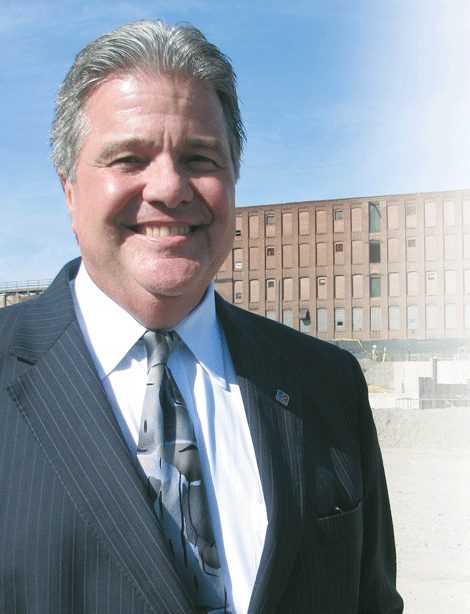
“I was given three briefing books on an iPad that were probably a total of 450 pages of briefings on every piece of the UMass system — from campuses to budgets to the high-performance computing center, the stem-cell bank, everything we were doing,” he said. After he was hired, he complemented this reading and learning with roundtable meetings on the various campuses with faculty senates, unions, vice chancellors, deans, student groups, and other constituencies.
The bus trip, which included 24 stops, was, in many ways, a continuation of those research efforts, while also serving as a vehicle — literally and figuratively — for doing more of that telling and selling.
At Smith & Wesson, for example, he learned not only about that company’s expansion initiative and the adding of more than 200 jobs, but also about the many challenges facing area manufacturers — recruitment of talent topping the list — and the university’s efforts to address them while also spurring innovation.
In Holyoke, he spent time with city leaders at the high-performance computing center — a prime example of the university partnering with both private colleges (MIT and Boston University) and the business community — and also learned of that community’s efforts to create an Innovation District and use public transportation to help achieve growth.
Other stops on the tour included the Emerging Energy Technology & Innovation Center at UMass Lowell, a biomanufacturing facility in Fall River, Venture Development Center at UMass Boston, and the medical school itself.
What has he learned?
“There are a lot of similarities in what people are looking for from UMass,” he explained, referring to just the first few legs of his trip in Western Mass. “In North Adams, Pittsfield, Lee, and Springfield, they want more help with economic development, especially with technology transfer; if they have startup companies, they want a workforce to continue to feed those ventures, especially in the new technologies areas like biotech, life sciences, IT, and clean energy. But the further you are away from the main campuses, the harder it is to maintain those relationships.
“The other piece we see is the educational piece itself, which also feeds into workforce,” he continued. “But it also feeds into advanced manufacturing. And the third one is basic quality of life; Springfield, for example, would like to have much more of a cultural linkage with Amherst, and have more of the kinds of things that happen on the campus — like plays and other kinds of performances — in Springfield.”

Moving in the Right Direction
At most of the stops on the tour there was at least one meeting with the local business community, which Caret described as one of the constituencies with which the university must build relationships — and draw support.
Indeed, as he wrapped up his remarks at the Springfield Sheraton, Caret asked those assembled for advocacy in several different forms.
“We’d like some financial advocacy,” he said, meaning monetary support. “But we also need political advocacy, which can be almost as important as financial advocacy. And we’d also like a little emotional advocacy; every once in while, give us a pat on the back or a hug — we’d like to feel good every day about what we’re doing.”
When asked to elaborate on what he wants to accomplish at UMass, Caret listed several of the things he’s achieved at Towson and San Jose State, everything from higher graduation rates to stronger partnerships with business, other colleges (public and private), and the state itself. He also listed stronger linkages between the individual campuses, the regions surrounding them, and individual cities.
Which brought the conversation to the link between the flagship campus in Amherst and Springfield, and efforts in recent years to bolster that relationship and leverage the university’s many assets in a city trying to revitalize and reinvent itself.
“I will be a strong advocate for all of our campuses being aggressive with their local regions — but then you have to define ‘region,’ which becomes more complex,” he explained. “But I do think Amherst and Springfield are a logical pairing.
“If you look at studies from the Brookings Institute and other groups, you’ll find that, in most instances, for a vibrant city, you need a university at the core of its economic focus,” he continued. “And we want to play that role.”
And when asked how he would measure his success rate with his many goals, he again referenced his previous stops and said, “when I’m done here, I want to be able to say the same things I’ve said at the other two campuses.”
Elaborating, he said that, at both Towson and San Jose State, he presided over a number of capital projects that changed the faces of both schools. “I’ve probably done $2 billion worth of infrastructure at the two schools, and more than $1 billion at the last one (Towson), and they hadn’t had a new building in 30 years; it was a transformational change.”
But he is more proud of his success with improving the image of both schools, both in their respective regions and globally.
“At both schools, I raised the image of the campus, I raised the sense of pride among the people working there and graduating from there, and got the world excited about those campuses again; these were schools that were among the best of their breed, but they just weren’t getting the recognition they deserved.
“The biggest thing I’ve done is to revitalize a school, make people feel good about it, and energize the campus,” he continued. “And I’d like to say that about UMass, because if I can do that, then all those other things will happen; the rankings will improve, the funding will improve, the political advocacy will improve, and all the rest will happen.”

Next Stop?
There is no simple strategy for energizing a campus, he told BusinessWest as the bus was pulling into downtown Holyoke for its next stop. But a big part of that equation is that ‘telling-and-selling’ component of his job description.
But it’s also the next step in that process — delivering.
“After the telling and selling, you come back and you produce something and you get people excited,” he said. “You do put your money where your mouth is.”
That’s something both the university and state need to do, adding that sometime soon he’d like to be able to stop making jokes — if that’s what they are — about selling the name on the medical school in Worcester.

George O’Brien can be reached at [email protected]

Features
Easy Access to Highways Drives Business Success

Kathy Miro

Kathy Miro says she was impressed by how supportive the business community is, and how loyal customers are, after opening a pizzeria in Enfield.


Several months ago, Michael “Monte” Monteforte and Jay Bellamo opened Bellmont Kitchen and Bath in Enfield, Conn.
“This location is perfect,” Monteforte said as he stood in their gleaming new showroom on Hazard Avenue, otherwise known as Route 190, explaining that they looked at sites in Windsor Locks, East Windsor, and Enfield before finding exactly what they wanted in the former Video Galaxy Plaza.
“This is a key location because we wanted to be right off a highway,” Monteforte said. “Enfield has four exits off of Route 91, there are plenty of stores and restaurants which draw customers here, and Route 190 gets all of the traffic going to and from Somers.”
Ray Warren, Enfield’s director of Development Services, agrees that the town’s location makes it an excellent spot to own and operate a business. Since it is bordered on the north by Longmeadow and East Longmeadow, it draws traffic from Massachusetts as well as from Somers to its east, East Windsor and Ellington to its south, and Suffield and Windsor Locks to its west.
“Enfield has a population of 45,000 people, which makes it a good-sized small town. We have more than 1,200 small businesses along with many large operations. Lego, Hallmark, MassMutual, and the headquarters for Brooks Brothers are all here,” Warren said.
The majority of the retail sector is located along two main corridors, although Route 5 also has its share of entrepreneurs. They are Hazard Avenue and Elm Street, thoroughfares that run parallel to each other. “Our retail sector is in a very concentrated area with shopping on both sides of the streets,” said Mayor Scott Kaupin.
The town’s biggest constraint in terms of new development is lack of land. “We have turned away businesses due to lack of space,” Warren said. But there are still a number of businesses under construction, and the many stores in Enfield Mall and the adjacent shopping centers represent substantial investments.
“This year, we issued more than $43 million in construction value of building permits,” Warren said. “In FY 2011, the town estimated it would take in $350,000 in building-permit fees. But we took in more than $700,000.”

New Horizons
Although the town has little commercial land available, there is space available for renovation of existing properties and property zoned for industrial development.
Enfield has also seen growth in the professional sector, and both Hartford Hospital and St. Francis Hospital recently built medical offices there.

Michael Monteforte and Jay Bellamo

Michael Monteforte and Jay Bellamo say Enfield’s location alongside I-91 and Route 190 was a factor in locating there.

Larger companies are also expanding. “Lego did a 75,000-square-foot renovation to expand their operations. And Eppendorf Manufacturing, which is an international company that specializes in biosciences, has chosen Enfield as its growth center and made a $25 million investment here,” Warren said.
When Eppendorf moved to the town several years ago, it purchased a large campus. “They are just about to complete their first expansion, and we are already in conversation about a second expansion,” Kaupin said.
The company had access to a large, professional labor pool in New York, but executives have told Warren they found an equally capable and educated workforce here.
“We are part of what is known as the Knowledge Corridor,” Kaupin said of the stretch of land running from the Northampton/Amherst area past Hartford that contains a plethora of colleges and universities, which results in a large pool of well-educated people. In addition, Asnuntuck Community College in Enfield is a leader in the field of machine technology and has forged great relationships with local companies.
Warren said 30,000 people from Massachusetts work in Enfield, and most companies employ workers from the north and south. “The fact that there is a supply of labor which stretches from Springfield to Hartford in a two-state region makes this a very attractive place to do business.”
Enfield has been chosen as a stopping place on the proposed New Haven-Hartford-Springfield commuter-rail line. Its station will be located in the village of Thompsonville, an old mill area of Enfield which is in need of a great deal of revitalization.
Kaupin is hopeful that, when the project is complete, it will lead to a rebirth in the village, boosting demand for housing as well as for new businesses and restaurants that will be needed to provide service to commuters.

Helping Hands
Kathy and Michael Miro opened Mama Miro’s Pizzeria and Restaurant in January after spending $90,000 and eight months gutting and remodeling a building on Hazard Avenue that had sat empty for about two years.
Kathy said they have been impressed by how friendly other business owners have been since they opened their eatery. “Business owners here help each other,” she said, adding that the pizzeria is their first venture. They have also been surprised by how quickly they gained loyal customers. Although business was slow at first, their weekend breakfast offering has proved so popular, they recently expanded it to seven days a week.
The couple, who moved to Enfield from Brooklyn, N.Y. the fateful week of Sept. 11, 2001, said people come from as far away as Chicopee and Manchester, Conn. to enjoy their thin, New York-style pizza. “Our customers have become our friends, and we have made a lot of them since we opened. One woman comes here three times a day, three days a week, and we have a group of widows who met here and continue to come here for comfort,” Kathy said.
Although they could have located closer to the mall, they chose the site because it has its own parking lot and they will be able to hold fund-raisers there if and when they choose.
Kaupin said the Miros’ experience is not unusual, as the town has a very strong chamber of commerce which serves Enfield, Somers, Suffield, and East Windsor. “The North Central Chamber of Commerce is heavily weighted towards small business. Other chambers in the state are very large, but the members here are very good at networking and share their challenges as well as solutions to problems,” he explained.
Town officials are also doing all they can to encourage economic development, which has included freezing the tax rate for four years in a row. “This was a very deliberate effort which occurred without any reductions is essential services,” Kaupin said. “In the past, the town had been on the higher end of the tax structure, but now we are very competitive.”
The town also created an Administrative Review Team to expedite the permitting process. Team meetings bring everyone to the table who will be involved with a new business. “We meet with business owners, review their plans, and offer advice,” Warren said, adding that money and time are saved by identifying issues and addressing them in the planning stage. “And if they are on a tight timeline, they can go through the Land Review and Building Department simultaneously, which shortens the whole review process. It’s very important, as this is New England, where development is governed by a large body of rules, and we want people to succeed.”
Kaupin said their team approach provides “proverbial one-stop shopping” for new business owners, which is critical in this community, since there are five fire districts and a regional health district independent of the town. The retail arena continues to grow, and available space is always filled quickly. “First and foremost, we are known as a regional shopping area.”
And one that attracts businesses with a pitch that is very appealing — a location that literally drives customers right to their doors.

Features
Jack Dill Successfully Manages Time and Space

Jack Dill,  President and Principal,  Colebrook Realty Services

Jack Dill, President and Principal, Colebrook Realty Services


Jack Dill was asked about the currently slumping commercial real estate market, and, more specifically, how this prolonged downturn compares to the one from two decades ago, and if this sector has finally hit bottom and started back up.
He paused and offered a few facial contortions that conveyed the message that this would be an exercise in basic futility, one not really worth his time or energy. And, speaking broadly, he said that while there have been times when the market is more subdued than others, there are few, if any, occasions when conditions in this realm could actually be called ‘good.’
“How do you know what the bottom is until you’re past it?” he asked. “I said this to someone the other day: ‘I never remember a period of time when I was picking up the financial news and reading that we were in a great economy.’
“If you go back and find the high points of the metrics and read the contemporary business literature at the time,” he continued. “I think you’ll see more things that are concerns, worries, and negative comments about the economy; I don’t think you’d see too many articles saying we’re in the tall grass. It is what it is, and you just have to come to terms with it.”
So rather than discuss about how bad things are, or how bad they are now compared to the recession of the early ’90s, Dill talked instead about a sign that he hung in the offices of Colebrook Realty Services — the former wholly owed subsidiary of what is now TD Bank that he acquired in 1998 — during that slump 20 years ago.
“It said, ‘No Whining Zone,’” he recalled, adding that this became a basic operating philosophy for the firm, which has both brokerage and property-management divisions that have grown steadily over the years.
“I had observed to someone at that time that we tried whining as a strategy and it just wasn’t very productive,” he noted, adding that while the sign is long gone, the attitude prevails. Indeed he told BusinessWest that while the current market is slow, the company continues to search out — and find — opportunities to expand its portfolios and gain market share.
The ‘no whining apparoach’ is an attitude that Dill takes with all aspects of his work at Colebrook — and within the community as well. It was much in evidence during his recent, and ongoing, efforts to assist the diocese of Springfield in its efforts to bounce back from the June 1 tornado, especially with regard to the comprehensive search for temporary quarters for Cathedral High School (see related story, page 19). That search ended with the selection of the former Memorial Elementary School in Wilbraham, after a spirited attempt to place the school on two floors of a building at Springfield Technical Community College failed to materialize due to logistics and time constraints.
“That was a fascinating project in and off itself,” Dill said of the relocation efforts, which were both typical in some respects and atypical in many others, of the site-selection work the company handles for clients. “We spent a lot of time on STCC because there was a lot of sentiment to try to keep things in Springfield.
“We had great cooperation from STCC, FEMA, the congressman’s office, the mayor’s office, and from our contractors and architects,” he continued. “It was a full-court press, and we spent four weeks in intensive analysis … at the end of the day, we just ran out of time. We had the elements in place to pull that off, but when we ran the critical paths schedule from that point forward, we would have been starting school Oct. 19, which really doesn’t work.”
Meanwhile, within the community, Dill has spent years on the board at Baystate Health, and was chairman as that institution blueprinted its $250 million Hospital of the Future, and more recently, he’s become involved with efforts to promote early childhood education as an economic development strategy as important to the region as building a new industrial park.
Looking at the sum of everything he’s doing these days, it’s clear to see that his focus is squarely on what’s down the road, and not what’s in the rear-view mirror.
For this, the latest in its profile series, BusinessWest talked with Dill about everything from the state of the real estate market to the importance of child literacy programs. The common denominator in each case is the passion with which he approaches all matters he’s involved with.

Signs of the Times
Dill leaned back in his chair and glanced toward the ceiling, as if the answer might be written there.
He was asked how many times the signs had changed on the building at 1441 Main St.  — where Colebrook, which manages the property, is headquartered — since the brand SIS (Springfield Institution for Savings) disappeared from the local landscape.
“Had we known how the banking business was going to change in the’90s, we would definitely have gone into the sign business,” he started, displaying his trademark dry wit before starting to list off the names that have appeared over the front entranceway, from Peoples Heritage to First Massachusetts, to TD Bank.
Much has changed for Colebrook over the past several years as well, but the same basic operating philosophy hasn’t, said Dill, referencing the ‘No Whining Zone’ without actually saying the words.
Tracing his career path, Dill said he essentially grew up in the real estate financing realm — his father was in the mortgage business on a national level.
“From a very early age, I traveled with him and met his business associates and contacts, said Dill, “and from the age of about 14 on, I could calculate mortgage and bond yields.”
He maintained his interest in finance and real estate, and upon graduating from Williams College in 1974, went to work for SIS, even with opportunities to go to larger institutions in much bigger cities.
“I was sitting in the Friendly’s (in what is now known as Tower Square) on interview day, looking across the street at the bank building, and wondering ‘what am I doing here?’” he recalled. “My offers at the time were in New York and Boston. But SIS had a reputation for a really good management-training program that got people very quickly into the stream of doing things, as opposed to a multi-year credit training program that other people were offering.”
And rise quickly he did. Dill neventually become executive vice president of the bank’s Colebrook Corp. and affiliates, and thus actively engaged in commercial real estate development, finance, brokerage, and consulting work.
“It was highly unusual for a bank to do direct development, rather than just passive financing, so every chance I had when I was in my early career here, I would arrange to be lent to Colebrook, to do consulting work, survey work, or project work,” he said. “I spent time migrating back and forth between the bank and Colebrook.”
Projects initiated by SIS fell into the broad category of community development, he said, adding that initiatives included the Stockbridge Court and Armory Commons apartment projects in downtown Springfield, but also direct investment in high-tech office-park development in the Boston market.
Fast-forwarding a little, he said that over the years, the Colebrook Group, as it came to be called, underwent a steady course of evolution, and is today a multi-faceted service business, with diversity being its strongest asset.
Its individual service areas include brokerage work, property management, asset management, development services, and construction management, he explained, adding that the operating philosophy in each case is to “look at client business like it’s our money.”
The company has enjoyed steady growth across the board, especially in the property-management realm, where a trend toward outsourcing that began in the late ’80s continues in earnest today. As the pictures in the lobby of the Colebrook office attest, the portfolio of managed properties is diversified, including everything from the PeoplesBank building in Holyoke to the the Basketball Hall of Fame complex in Springfield, a contract the company earned last year.
“Our label on a building means something, even if we don’t own it,” Dill continued, “because we’re the day-to-day contact for people.
“That’s part of our value-added, because one thing we’ve learned in 30 years of developing, owning, and managing buildings is that you really cannot afford to lose tenants,” he went on. “A rational owner will try to avoid losing a tenant at all costs, because it’s very hard to make up that cash flow; in an economy like this, good tenants are hard to find.”

Success Stories
Like most people who were in or near the path of the tornadoes on June 1, Dill has little trouble remembering where he was and what he was doing that fateful afternoon.
After the first tornado tore through downtown Springfield — missing 1441 Main St. by just a few hundred yards — he remembers trying to get updates on several clients that were more in harm’s way, such as the Hall of Fame and the Community Music School, for example, and heading out, first on foot and then by car, for some first-hand accounts.
He remembers being “embargoed” at the Hall of Fame as reports of a second tornado approaching from the Northeast starting coming in, and essentially waiting it out there until the skies cleared.
Starting on June 2, however, most of his energies have been directed toward assisting the diocese of Springfield, which had many facilities damaged by the twister, and specifically the efforts to find temporary quarters for Cathedral, as well as the   middle school and a pre-school facility all located at the Surrey Road complex.
“It took 48 hours for people to understand how serious that damage was,” he explained. “The tornado hit on a Wednesday, and by Friday afternoon we were working on solutions. We surveyed the market, and eventually identified about 30 buildings sorted by various criteria that we developed with the diocese.
“About six or eight buildings into the tour, it occurred to me that with the new building codes, adoptive reuse of non-school buildings was going to be a problem,” he continued. “So we shifted gears, with the aphorism I was credited with developing that ‘schools make good schools,’ and that limited the inventory of things that we were considering to schools or buildings that had been schools.”
That list included STCC and the MacDuffie, the latter of which was also extensively damaged by the tornado, he said, adding that for logistical reasons, the former Memorial School made the most sense. And while conducting the search for new quarters, Dill said he’s become inspired by the energy and momentum the Cathedral community has created as it has forged ahead from the disaster.
“This will focus people,” he said of the recovery efforts,” and what I hope it will do is bring the alumni out and get people thinking about how important Cathedral is to this community, and bring resources to bear on this. And I think it will.”
While he admitted that education is not one of his areas of expertise, Dill has nonetheless become involved in many education- and community-oriented endeavors during his career.
In addition to his work with real estate-related groups, such as the Mass. Housing Investment Corp. and the Councilors of Real Estate and its New England and Upstate New York chapter, Dill’s resume includes work (past and present) with the Springfield School Volunteers, Mass. Business Alliance for Higher Education, Greater Springfield YMCA, Community Music School, Springfield Library and Musems Assoc., American International College, for former StageWest, and even the Springfield Parks Commission.
Many of these assignments date back to when he was an SIS employee, he said, adding that in recent years he has scaled back his community work, but remains quite active, especially in the broad realm of education. One current passion is promoting early childhood education and, especially, the importance of literacy, through a project undertaken in conjunction with the Irene E. and George A. David Foundation called “Effective Reading by the Fourth Grade.”
“The research is really clear that if you’re not an effective reader by the fourth grade, the chances of a successful outcome, meaning graduation from high school, are much slimmer,” he said. “The Davis Foundation has reversed engineered education reform in some sense and come to the realization — and they’ve convinced me, at least — that early focus is absolutely critical; the earlier the better.”

The Lease He Can Do
Although somewhat reluctantly, Dill offered some commentary on the state of the local commercial real estate market.
“It’s been a tenant-driven market for 28 of the 30 years I’ve been doing this,” he said. ‘There have been a few very brief periods when landlords had leverage, but for most of that time, it’s been tenants that have had leverage. And in a way, that’s good, because it has a positive impact on the cost of doing business here, and that’s been helpful to growing service businesses and smaller providers of services, and that’s good for the economy.
“We’ve talen some hits with major tenant relocations and consolidations,” he continued. “It’s always great to be dealing with one big transaction with a few hundred employees, but if that goes away, the market has a bigger program. We’ve seen some pretty good growth among smaller, flexible firms, and I think that gives us a better-integrated economy.”
Which led him to again borrow from Bill Bellichick: “it is what it is.”
And with that, he returned to what is still the ‘No Whining Zone,’ even if the sign identifying it as such is gone.

George O’Brien can be reached at [email protected]

Features
For Holyoke, the High- performance Computing Center Is Only the Beginning

Holyoke Canals

Holyoke Canals

The high-performance computing center soon to take shape in downtown Holyoke is a large project creating a good deal of excitement. Two things it won’t create directly, however, are large numbers of jobs and tax revenue. So area planning officials are hard at work looking at ways to generate both indirectly. They call it leveraging an asset. The strategies being developed have many facets, and are summed up by one official as a “surround-sound approach to economic development.”

The high-performance computing center being developed in downtown Holyoke brings together a group of public and private partners in a groundbreaking initiative that will eventually provide unparalleled computing power for the state’s most prestigious universities.
Imagine its impact on … farming.
No, really.
“The high-performance computing center will generate a lot of heat,” said Kathleen Anderson, director of Holyoke’s Office of Planning and Development. “If we did urban agriculture, we could take the heat from the computing center and pump it into greenhouses or possibly older mill buildings and start growing things.”Such a project, she said, could generate more than 100 jobs.
“Then there’s distributors, processing plants up and down the Valley … how do you include them? An asset like that in Holyoke would need distribution, processing, transportation — how can we leverage that asset to help other businesses in the Valley?”

Tim Brennan

Tim Brennan says efforts to leverage the computing centers can be described as “the surround-sound approach to economic development.”

Tim Brennan, executive director of the Pioneer Valley Planning Commission, also cited agriculture as a way to create economic development from a facility that in itself won’t generate many jobs for the city.
“Can we capture the heat it gives off and create a very large-scale urban greenhouse where we could have vegetable production year-round?” he said. “That’s an asset to much of the region; many farmers are active in agricultural production but see the winter period as downtime, because the climate in New England is not conducive to growing in every season. And it could help create middle-income jobs with benefits for people in Holyoke.”
What has members of the Holyoke Innovation District Task Force — a broad partnership charged with leveraging the computing center and related downtown efforts into large-scale economic development — so excited isn’t the prospect of growing crops in a former mill. It’s that urban agriculture represents only one of many ways to make the city’s (and region’s) economy more robust.
Urban farming, said Brennan, “is an example people can get their heads around of how we can create leverage out of the computing center and get jobs and also off-site benefits that ripple positively to the regional economy. This region is disposed to being at the cutting edge, so can we use that quality to fuel more innovation, more technological entities here? And they don’t necessarily need to all be in Holyoke.”
“The strategy,” said Anderson, “is basically to determine what industries are most likely to take advantage of the assets in Holyoke and the Pioneer Valley and where they’re likely to locate. So we’re looking at economic opportunities within the Innovation District, the entire city of Holyoke, and the whole Pioneer Valley, and asking, what are the related investment pieces and strategies needed to achieve this economic potential?”

Thinking Big
The task force, Anderson explained, developed strategies with a threefold overall goal in mind: to increase and improve job opportunities for the residents of Holyoke and the Pioneer Valley, to attract an increased level of private investment into Holyoke, and to connect the green high-performance computing center and various regional assets into an integrated economic-development marketing and delivery system.
The eight broad strategies that sprung from this multi-pronged goal target different aspects of economic development, but tend to originate from strengths Holyoke already possesses. Clean-energy innovation and development is one example.
The idea is to maintain the city’s low-cost, renewable-energy-based competitive advantage by expanding the city’s portfolio of cost-effective renewable-energy generation capacity, and eventually transform Holyoke into a global leader in clean-energy research and applications. A longer-term objective is to convert that research into the widespread manufacturing of clean-energy products.
That goal makes sense in the context of Holyoke’s hydropower capacity, one of the significant factors in the computing center being located there.
“Holyoke Gas & Electric has the cheapest electrical rates in New England for industrial customers,” Anderson said. “They (center developers) saw the low-cost real estate and also wanted clean energy with hydro, and we were able to do that.”
Holyoke Mayor Elaine Pluta is certainly thinking big about Holyoke as a renewable-energy leader.
“Our overall goal is to become as close to 100% renewable energy as soon as possible,” she said. “That’s the message, and the word will get out, because we’re going to be promoting that to the economic developers and letting them know that, if they want to do green projects, this is the city to come to. The computing center is going to be a green project, and that’s going to be one of the first of many, we hope.”
Brennan has long been an advocate of moving toward renewable energy as the world’s primary source of power — and of thinking urgently about the issue.
“High energy costs, uncertainty of supplies, and threats from climate change are changing everything,” he said. “The transition from coal as the primary fuel source in this country took 30 to 50 years. I don’t think we have 30 to 50 years this time, so those parts of the country that don’t get out in front of this wave are going to fall behind it. We’ll also take that message about low energy costs and carry it as far as we can.”
Other strategies the task force has developed include:
• making the Innovation District a sort of laboratory for innovation and entrepreneurship, with assets in place to support startups;
• leveraging the region’s colleges and universities as a critical part of its talent base and reputation;
• creating more sites ready for development and redevelopment by identifying priority sites, selectively clearing and remediating abandoned properties, and providing incentives to encourage investment;
• coordinating among all regional economic-development players to streamline the processes for attracting and retaining businesses;
• creating and growing an information-technology industry cluster; and
• retaining and growing manufacturing opportunities in Holyoke by building from the city’s existing advantages, such as low-cost energy and real estate, available workforce, and transportation access.
In short, “the high-performance computing center is coming to Holyoke, so how do we leverage that opportunity?” Anderson said. “We know there’s going to be a minimal amount of jobs and no taxes — it’s a tax-exempt entity — so this task force was established to leverage this opportunity for economic-development opportunities.”
Pluta partly disputed those jobs-and-taxes claims, noting that “there will be a small amount of jobs, and we are going to be looking at a small amount of tax revenue from them. But, yes, we are mostly looking for the spinoff on that development, and it’s going to have an effect on all our economic development, especially in the immediate area.
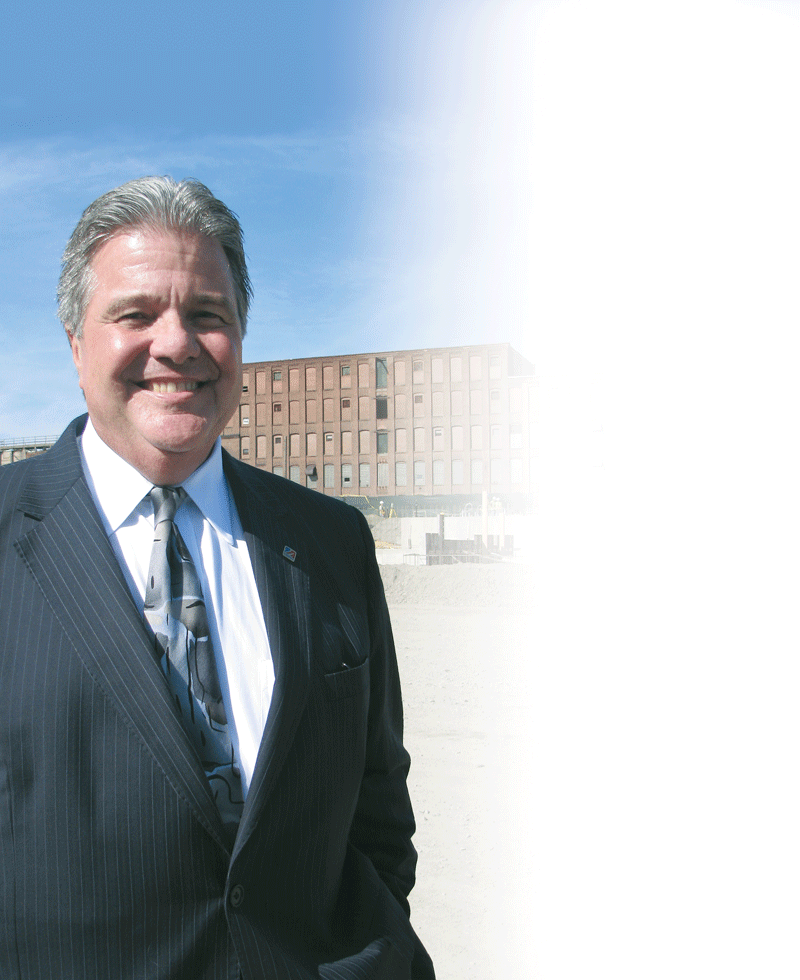
“We already have the building across the way from [the computing center] being rehabbed for office space, and we’re looking for more of that,” she added. “We are making progress, and I’m assured that, within a short period of time, we’ll be targeting pieces of property where we anticipate seeing development and preparing those parcels for someone to come in and develop. We’re getting very close to being at that point in time.”

Scoring Opportunities
Brennan noted that the strategy part of the process is complete; “now we’re working with what’s been handed to us and trying not to fumble it, but taking it up the field to score.
“There are multiple tracks,” he noted. “What does Holyoke need to do, and what benefits can be derived locally, and what things does the region have to do, and what benefits can be derived from a regional perspective? Then there’s obviously heavy state interest in the whole property, as much as the state itself has an investment. This is sort of a surround-sound approach to economic development.”
Brennan stressed the need to prioritize. “We can’t do everything. We have to take these recommendations and assign some priorities to them, put them into time zones. What do we need to do in the short term that’s achievable? Mid-range and longer-range items need more time, but might have a more significant payoff.”
Pluta said she foresees a snowball effect once economic development related to the Innovation District begins in Holyoke, in no small part due to factors such as the city’s affordability and capacity for renewable energy.
“We want to create a climate for businesses to come, not only to Holyoke, but to the Pioneer Valley,” Anderson said. “A lot of people in Holyoke need jobs, so what kind of strategy could we use to create them? What things can we do to deal with that?”
Again, Brennan said, the idea is to determine what can be accomplished right away, and what needs to be cultivated over time.
“I think the Holyoke high-performance computing center is an attractive force, but the ability to be a magnet and pull firms from outside the region and outside Holyoke is one of the mid- or long-term targets,” he told BusinessWest. “I honestly see that, in the short term, small and mid-sized businesses are where the action is, and we have these within this region. We need to grow our own economic base in the Valley through entrepreneurship, and nurture the businesses we have and allow them to grow.”
In Brennan’s view – and he’s been observing the business culture in the Pioneer Valley for a long time – the raw materials are there.
“One of the things this work reinforces is that what matters most to all future economic development is not tax breaks, it’s not land – it’s about talent,” he said. “Talent matters most, and diversity is a close second. There are disguised opportunities here that the work of the task force has teased out.”
Anderson heartily agreed.
“I think right now, between the urban-renewal plan in our urban core and the whole Innovation District task-force strategies, there are a lot of eyes on Holyoke and how we can make a better business climate in the region,” she said. “To me, this work solidifies the things I know to be true, but we’re still trying to accomplish what’s been very difficult to accomplish.”
Still, she added, “I’m confident we have the strategy moving forward to benefit Holyoke and the region.”

Joseph Bednar can be reached at [email protected]

Features
Progress Is Defined by Big Projects, Small Businesses

Bill Terry

Bill Terry says communication with residents is crucial to moving big projects, such as the proposed assisted-living facility, along.

Kenneth Elstein, newly appointed chair of the Belchertown Board of Selectmen, said that, with so much going on in town these days, it can be difficult to see the forest for the trees.
While two large, long-running projects — the ongoing saga involving redevelopment of the former Belchertown State School and long-overdue realization of the Cold Spring Golf Course on Route 21 — are the buzz from Town Hall to the coffee shops, this community remains a fertile field for small business.
“These smaller shops opening up aren’t making headlines the way those other two are,” Elstein told BusinessWest. “But they are certainly affecting the shape of the business sector here.”
In what he called “news falling under the radar,” Elstein said that new business has grown to the extent that it has markedly affected the town’s tax revenues. “Since the mid-’90s,” he explained, “not only has business real-estate tax revenue gone up, but it has gone up hugely as a proportion of the overall tax collections. It’s something on the order of 4% to 8% over the past 15 years. We have the fastest-growing town in Western Mass., so you’d expect it to go up as a straight dollar amount. But to go up as a percentage amount is enormously important. It helps relieve the rest of the tax burden for residents.”
Elaborating, he cited figures from the town’s Community Preservation Committee. “Between 2001 and 2008, businesses increased by 36%, and jobs by 29%.’”
So small-headline operations are clearly making a marked impact in this town of 15,000. But those aforementioned signature projects are still the talk of the town, and there is apparent progress with both.
Town Planner Doug Albertson told BusinessWest that, after numerous false starts, the golf course, now owned by Qianlong (US Boston) LLC, a Chinese business with an office in the Boston metropolitan area, is seemingly ready for prime time.
“Of course, this property has been through a few hands in the last 13 years,” he said. “This time, though, people are confident. Qianlong has put a lot of money into this project.”
Indeed, since acquiring the property from Southbridge Savings Bank, which owned it through foreclosure, Qianlong has invested large sums on top of the $2.3 million purchase price. And the course, which is described as a high-end, destination layout, is finally completed, and set to open in 2012.
Meanwhile, concerning the state school property, Bill Terry, chairman of the Belchertown Economic Development and Industrial Corp. (BEDIC), said that stages of the project are moving forward, and the partnership with Weston Solutions to develop the beleaguered site is solid, with an auspicious future.
But a lot now depends on the town’s voting population, he continued, noting that votes at a series of town meetings will ultimately determine the fate of the property.

Linked In
Just over a decade ago, the property on Chauncey Walker Street, a.k.a. Route 21, was an apple orchard, said Albertson, adding that its evolution into a golf course has been a slow and (for town residents) painful process of evolution and business calamity.
The original developers of the project petitioned for a golf course special permit in 1998, and as part of that development also planned a 150-unit residential development, typical of similar high-end golf initiatives.
“They made errors, shall we say,” he explained, “and lost the property. The next investor did finish the golf course, but they, too, lost the property to foreclosure.”
The golf course that Qianlong purchased in August 2009 was basically complete, but not fully finished. According to materials distributed to local press, Qianlong has finally made the finishing touches needed to make it a high-end destination course.
“Qianlong has already spent a few million in infrastructure,” Elstein said. “Roads, paved cart paths, drainage … to complete the project, the final numbers that have been bandied about are along the lines of $40 million in total investment. A couple weeks ago, the latest that came to us was a special permit for the main public building on the site, which will be a catering hall and restaurant.
“The developer is throwing out numbers like 190 employees,” he continued, “probably not all full-time due to the nature of catering types of jobs. But unmistakably it is a facility the likes of which we don’t have here. It would be a big place, in the context of our town. And this developer has a keen interest in attracting foreign tourists. Qianlong has a lot of plans for this site. There has been talk about doing retiree housing there, also.”
According to Lawrence Tuttle, one of the principals and owners of Architectural Insights in Palmer, architect for all structures at the course, the clubhouse will be the first of the formal, public buildings to be completed. Tee times should expect to follow sometime in May 2012.
“The clubhouse will be prominent up the hillside and highly visible upon approaches to the property,” he said. “It’s a cross between a traditional and craftsman-style of construction — fairly informal, but with some rich detailing.
“The owners have made a reinforced effort and determination to make this a thoroughly quality development,” he continued. “That is apparent with the money already spent at the golf course, and also, pulling back, in reviewing the overall master plan, and their acquisition of other property adjacent to the original golf course.”
A critical component to that master plan is the number of residential units ultimately to be built at the course. While earlier developments had projected more than 150 apartment-style units, the current design calls for 75 duplex residences, to be landscaped into the property while maximizing views out over the course and the surrounding valley.
Ultimately the market will dictate the completion date for the full complement of residences, but Tuttle said that, with the current pace, it’s possible to see the start of construction as soon as next year. But for now, it’s all about the links.
“We are delighted at the scope and quality of this project,” he said. “We’re putting quite a bit of energy into the project, but so are the owners. A lot of local craftspeople and trades are involved in this project, so it’s good for many around here.”

Some Assistance, Please
As for the state school property, which has been closed for more than a decade, Elstein said that quite a few people who have expressed interest to the BEDIC in doing business on that site. And Terry said the same thing.
However, before that can happen, a project needs to get underway, something that will generate momentum and turn interest into activity.
Weston Solutions, the enterprise committed to the revitalization of the state school property, has identified an assisted-living developer who is, in Terry’s words, “ready to go” on a 170,000-square-foot facility that could provide such a spark.
Weston has asked the BEDIC to sell it a 10-acre parcel for this purpose off Berkshire Avenue, a town road that needs to be improved. Such a first step would signal the beginnings of the larger redevelopment and, in Terry’s words, “would identify to the world that we are for real, and the number-two deal would be forthcoming.
“So our task here in town now is to figure out how to make it happen,” he added.
The BEDIC would need to upgrade the road, and Weston has agreed to the subsequent expenditures necessary for the assisted-living development, to the tune of some $2 million, said Terry. In order to pull its end of the agreement, the BEDIC is putting together a DIF (district improvement financing) package, which would allow the town to vote on a real-estate tax flow, which would allocate funds for a bond to complete the road repair.
And the paper chase doesn’t stop there. “We’re also in the process of pulling together a second grant application that looks at other infrastructure work,” Terry explained, “because it appears that this is something the BEDIC can do.
“But we’re also doing a third thing,” he went on, “which is working with our legislative team on discussions to see what the Commonwealth would like to do in cleaning up the rest of the state school property. The bottom line is, because of the contamination on the site — asbestos, lead paint, and more — it’s more expensive to clean the site up than the absolute value of the property once cleaned. So we have to take that case to the Commonwealth and see if, in fact, they will consider funding some of those bonds to clean up the rest of the site. And then we would turn around and sell those pieces of property at fair market value.”
The immediate deal that needs to begin, however, is the project for the assisted-living facility, and it is here that Terry said the full participation of Belchertown’s voters is essential for the future of their town. The first vote will be to set up a DIF for the 10 acres, and pending that approval, the second vote would be to sign the real-estate tax flow with the project’s developer, in order to pay off the bond for the infrastructure repair.
“Anything we do is going to be brought to the town meeting,” Terry emphasized. “Obviously there will be public meetings, and these things will also be discussed in front of the Channel 5 public access. People can track along the entire way.
“And once we get the hearings scheduled,” he added, “we’re hoping the townspeople take the time to understand how these things happen. Because if we’re not successful at town meeting, we’ll have no project, and no way to move forward because there aren’t funds available otherwise to do what has to be done.”
He gives top marks to all the local participants working diligently — on a volunteer basis — to see this successfully to fruition. And Weston, he added, is fully committed to the project.
A lot depends on the people in town, however, and Terry admitted that these tougher financial times mean that an initial opportunity such as the one presented by Weston needs to happen procedurally, all the while taking a bit more time than would be the case during a more robust economy.
But there are other businesses in the wings awaiting the fate of the assisted-living project. And while it’s too soon to tell who these parties might be, the fact stands that Belchertown itself is on the radar.

School of Thought
“We’ve done a lot of due diligence, and we’re seeking advice and counsel on all fronts,” Terry said, explaining the stages before these crucial decisions at the ballot box.
“I’d say it’s like moving a chain uphill with your nose,” he said with a smile. “That’s exactly what we’re doing.”

Features
The Maccabi Games Will Bring the World to Springfield

Organizers of the upcoming Maccabi Games

Organizers of the upcoming Maccabi Games, from left: Francis Mirkin; Stuart Greene; Jeff Grodsky, vice president of the Harry Grodsky & Co.; and Michael Paysnick.

The digital display in the lobby of the Springfield Jewish Community Center (SJCC) has been counting down the days, hours, minutes, and seconds to the start of the Maccabi Games since early this year.
What the current numbers translate to is crunch time, said Michael Paysnick, executive director of the center, noting that the kickoff ceremonies on Aug. 14 are virtually right around the corner. Most all of the really hard work, from recruiting sponsors to finding host parents (although some still need to be secured) to arranging security for the estimated 900 athletes (ages 12-16), 250 coaches and delegates, and 5,000 spectators, has been handled, “and now we’re down to the fine details.”
And they are what ultimately add up to a successful week (Aug. 14-19), said Paysnick, adding that the final pieces are coming into a place for an event that truly brings the world to Western Mass.
Indeed, athletes from across the country and several foreign nations, including Israel, Canada, and Mexico, will descend on the region in mid-August for an event that mirrors the Olympics in many ways, starting with elaborate opening ceremonies at the MassMutual Center, said Francis Mirkin, an attorney with the Springfield-based firm Bacon Wilson and co-chairman of the Games.
“Like the Olympics, the Maccabi Games bring people together from across the country and other nations,” he explained. “They compete against each other, but they also learn from each other and share ideas and memories. It’s a learning and growing experience as much as it is an athletic competition.”
The games mirror the Olympics in another respect as well: putting them on is a huge undertaking, a challenging test for a region and its hospitality infrastructure, but with rewards there as well.
Indeed, while the games are, at their core, a series of athletic competitions with medals for the top performers, said Mirkin, they have become an economic boon for the hosting region and, in the case of Springfield, which hosted the games before, in 1992, a showcase of its tourism facilities, communities, colleges, and universities, many of which will host sporting events, and the business community as well.
“In many ways, this region is perfect for the games,” Mirkin explained. “It has the strong support network and communities with hundreds of willing host families. But it also has the colleges, the facilities, such as those at the MassMutual Center, and the attractions like Six Flags and the Basketball Hall of Fame. And while the games have benefited from coming here, this region has benefited from being host.”
For this issue, BusinessWest goes behind the scenes as the region again prepares to host nearly 900 young Jewish athletes and create another of those learning experiences Mirkin described.

Winning Proposition
Stuart Greene, director of Health & Physical Education at the SJCC, coordinated the games when they came to Springfield in 1992, and he has that assignment again this year.
He brings to the job nearly two decades of experience with the games, starting in 1992, when he took a delegation from the SJCC to its first Maccabi event in Boston. Since then, he’s led subsequent delegations as they’ve competed in Denver, Baltimore, Philadelphia, San Diego, and other cities.
The Maccabi movement was started in 1895, but it was not until 1932, when the first official Maccabiah Games — originally conceived by Yosef Yekutieli, a 15-year-old inspired by the 1912 Stockholm Olympic Games — were held in Israel. And it wasn’t until 1982 that the first games were staged in North America, in Memphis.
Like Mirkin, Greene said the games represent much more than a chance to compete in sports ranging from basketball, soccer, and volleyball on the team level to tennis, swimming, golf, and track and field at the individual level — although that’s certainly a big part of it.
“It’s a chance to see other places, meet lots of new people, forge friendships, compete, and learn,” he said. “It’s a rewarding experience on so many levels.”
The same can be said of the art and science of hosting the games, he continued, adding that Springfield and Philadelphia stepped forward to co-stage the event (it’s usually held in several venues each year) when many other cities were simply unable to, due in large part to a still-sluggish economy.
The work actually began more than a year ago, when the host cities were announced, said Paysnick, and it will continue until long after the countdown is officially over and even after the athletes and coaches have gone home.
There is a virtual mountain of logistics involved, said Paysnick, adding that perhaps the most challenging is finding host families for the athletes. That work continues even in the final weeks, he said, adding that additional beds are still being sought.
But there are myriad other details to be worked out, he continued, from the securing of venues for the various athletic events to the recruitment of hundreds of volunteers; from security arrangements (which are not as elaborate as they were in 2002, only months after the 9/11 terrorist attacks, but are still comprehensive) to coordination of transportation for all those athletes.
In all, 33 delegations will descend on Springfield and the surrounding region. In addition to three international teams, there will be squads representing neighborhoods of big cities (Bensonhurst in New York and North Miami Beach, for example) and entire cities, including Hartford, Houston, Chicago, San Antonio, and Jacksonville.
They will be competing in events staged at several area colleges and facilities, including the MassMutual Center, Springfield College, American International College, Holyoke Community College, several area golf courses, and other venues.
The total budget for the SJCC games is approaching $1 million, and is covered through contributions, in cash and in-kind donations, from a host of individuals and corporate sponsors. That latter list includes PeoplesBank, Big Y, C&S Wholesale Grocers, Harry Grodsky & Co., Bacon Wilson, Williams Distributing, and many others.
“It’s a huge undertaking that wouldn’t be possible without the donations of time, money, and energy from many people and businesses,” said Mirkin.

Let the Games Begin
As the numbers get smaller on the digital display at the SJCC, the anticipation builds for an event that will showcase not only young athletes, but Western Mass. and its proficiency at staging large, and ultimately successful, events.
In that respect, there will be winners on many levels as these games are played out in mid-August, and rewards for the all those participated — and those who were part of the effort to bring the event back to Greater Springfield.

George O’Brien can be reached at [email protected]

Features
Small Specialty Shops Thrive in This Affluent Town

Lois Brooke

Lois Brooke says moving her store to Longmeadow was too good an opportunity to pass up.


Fifteen years ago, Lois Brooke started a business named Floral Fantasies and erected a building on Memorial Drive in West Springfield to house the fresh and silk flower arrangements and gift items she carries.
Although the shop was doing well, when she heard that florist William Burrows was retiring and the storefront in the Longmeadow Shops that he occupied was available, she moved her business there because she said the opportunity was too good to pass up.
“I thought it was a great walk-in location. It is a nice community, and a lot of my customers come from Longmeadow, Hampden, and Wilbraham, so I figured it would be more convenient for them,” Brooke explained.
Her shop carries a wide variety of unique gift items that range from fanciful figurines to sea-glass jewelry, specialty chocolate, high-end designer purses, and unusual silver and crystal.
“People come to the Longmeadow Shops looking for something different,” she said, adding that some are seeking bridal or shower gifts and want something more unique and memorable than what couples have registered for.
After moving to Longmeadow, Brooke discovered another bonus: a close-knit community of business owners who work together to support one another. During prom season, she puts roses in a nearby clothing store as promgoers rent tuxedos there, and both businesses tell their customers about each other’s offerings.
Brooke has also carried on the tradition started by Burrows of decorating the plaza during the holiday season, and provides free flowers each week to Starbucks and other stores, which brings new customers to her store.
When it comes to the world of business, Longmeadow is small, and its business space is fairly limited. The majority of storefronts are owned by people who specialize in high-end goods at retail shops, or who operate specialty restaurants, most of which are located in a triangle that includes the Longmeadow Shops on Bliss Road, the Big Y plaza, and Williams Place across the street, which rents office space as well.
There are also a number of small retail establishments in a strip along the Enfield line in the Armata’s supermarket plaza area and at two other plazas at the junction of Shaker and Maple roads. Office space also exists in a building at 1200 Converse St., and many doctors and dentists occupy two buildings on Dwight Road.
“Longmeadow is a small community, but that is the benefit of doing business there,” said Sarah Tsitso, executive director of the East of the River Chamber of Commerce, adding that residents like to patronize community businesses. “The town has a little bit of everything, from banks to clothing shops, along with great public schools.”

Small Wonder
Longmeadow boasts a single tax rate, and Tsitso said the Board of Selectmen works continuously with the chamber to ensure that Longmeadow remains a good place to own and operate a business.
The town sits on the Connecticut line and is easily accessible from Route 5, which runs directly through it via Longmeadow Street, where it connects to Interstate 91 North.
“Longmeadow also has a college in its midst, so it draws parents and a large crowd of continuing-education students from all over the region,” Tsitso said, referring to Bay Path College on Longmeadow Street. “In addition, it has two wonderful golf courses with banquet facilities.”
Town Manager Robin Crosby told BusinessWest that the community is well-informed, and has a higher per-capita income than the average earned by residents in Western Mass. as a region.
“The people here can afford services and are willing to pay for them; plus, the town is very pedestrian- and bicycle-friendly,” she said. “The Longmeadow Shops are located right next to the high school and athletic fields, which makes it easy for families to shop there.”
Walter Gunn agrees. “We are a destination spot because the stores here are upscale,” said the Planning Board chairman. “We also have a lot of professional services and small businesses that include engineers, lawyers, and real-estate agents. Longmeadow doesn’t have an industrial park, and there is no zoning for one. Professional and retail is what the town is all about, and the shops and stores cater to an affluent population. The Longmeadow Shops attract people from out of town. They are a destination, and it’s a safe and secure place for people to shop.”
Over the past year, there have been a number of changes with regard to the town’s retail landscape, and several storefronts have vacated, but Crosby said they fill in quickly.
Camile Hannoush, who co-owns Hannoush Jewelers with his family, says they opened their third Gift-ology store in town last fall. The chain now has dozens of stores across Western Mass. and beyond.
Hannoush said the company chose the Longmeadow Shops because it is a great market for the type of product it carries. “We have handmade and very unique gift items such as pillows from different parts of the country, handmade blown glass which is actually wall art, and handmade purses,” he said, naming several exclusive lines. “Gift boutiques have done very well in Longmeadow because of the demographics. There is a demand for that type of product in town, and I feel that customers who go there want something that other stores don’t offer.”
Hannoush told BusinessWest that, although its Springfield store does well, the company doesn’t have to do as much target marketing in Longmeadow because the location attracts clients interested in its merchandise. “It’s not like going to a mall. The shops here are a destination and a retail mecca with a lot of beautiful co-tenants that we felt were a good fit,” he said. “It’s a great area that is convenient and a pretty place for people to go and shop. They feel comfortable there.”
Crosby said that feeling exists throughout the town, and small restaurants also do well. She cites the Iron Chef as an example. It serves Asian cuisine and opened in a small space on Shaker Road in the Armata’s plaza a number of years ago.
Joann Melikian and her brother, Ardy Iennaco, along with other family members, have been working since January to open a second Primo’s Pizza shop on Maple Road in Longmeadow. The family business will sit in a small strip mall across the street from the Iron Chef and next to a Chinese restaurant in the four-corner section of town on the Enfield border.
Primo’s does excellent business in its shop on Worthington Street in Springfield, Melikian said, but has had its eye on Longmeadow for more than seven years.
“We grew up in Longmeadow, and the whole family lives here, with the exception of my sister, who is in the military, and my brother Frank, who lives in East Longmeadow,” she said. “It’s a small community, we know everyone, we can service more towns with takeout in Longmeadow, and there are only a few other pizza shops in town.” She added that the type of pizza they make will be new to the town because it is baked in old-style ovens.

Location, Location, Location
The family has been looking for an appropriate location in town for years, and when Iennaco discovered that the owner of the Maple Street location would allow them to open a pizza business there, he was thrilled. “I’ve wanted to be in this spot for seven years because I knew it will be a home run,” he said. “There is a steady flow of traffic, and there are two schools nearby,” he added, explaining that their operation will offer takeout and meals that will feed three to eight people.
“It is a great economic opportunity,” Melikian agreed. “We’re a family-oriented business and don’t have a big staff. This is small and is exactly what we were looking for. We grew up here and think people need the opportunity to have old-style, homemade pizza.”
There are many business owners in Longmeadow expressing similar sentiments. Indeed, while the products vary — from flowers to jewelry to pizza — everyone seems to be hitting home runs.

Features
Reaching Everest’s Summit Was a Physical and Mental Test

Mike Matty displays the St. Germain flag

Mike Matty displays the St. Germain flag as he poses at the roof of the world.

Editor’s Note: In March, BusinessWest profiled St. Germain Investments President Mike Matty, focusing mostly on his upcoming attempt to summit Mount Everest and thus join a very exclusive club — the one consisting of individuals who have scaled the highest peak on each of the seven continents. Matty is now a proud member of that fraternity, although the Everest climb challenged him in every way possible. Here’s a quick update.

Mike Matty had heard countless times before he left for Nepal that scaling Mount Everest, the highest peak in the world, is every bit as much a mental challenge as it is a physical test — and maybe moreso.
He listened, and he thought he understood. But he didn’t fully comprehend that sentiment until he could finally take his crampons off for the last time, after safely descending back to base camp about a week after reaching the summit on May 13.
By the time his Sherpa guide had photographed him at the roof of the world just after 7 that morning (with a sign for his company in his hands), Matty had watched another member of his climbing team die on the mountain, seen another turn back soon after absorbing that fatality, climbed past the dead body of a member from another team as he neared the summit, and entertained seemingly countless thoughts about whether what he was doing was worth all the physical pain and mental anguish he was enduring.
“You reach a point where, after you’ve been sleeping in a tent on a glacier for a month, you say, ‘a cold beer and a warm bed seem pretty good at this point,’” he recalled. “You’re feeling so lousy, you’re wondering whether you’re going to be able to summit on summit day; you’re constantly questioning, questioning, questioning. That’s why it was so easy for that one guy to make a decision; he said, ‘I didn’t come here to die on this mountain,’ and he went home.”
When BusinessWest talked with Matty as part of its ongoing Profiles in Business series in late February, Everest was the lone obstacle remaining as he continued his quest to join a very exclusive club consisting of individuals who have scaled the highest peaks on all seven continents. Over the previous several years, he’d climbed, in succession, Kilimanjaro in Africa; Elbrus (Europe); Vinson (Antarctica); McKinley, or Demali (North America); Kosciuszko/Carstenz (Australia); and Asconcagua (South America). In the weeks leading up the Everest climb he was working out extensively with a team of trainers, preparing himself for a physical challenge that would eclipse anything he’d experienced in his climbing career to date.
But in retrospect, he says there was nothing that could have prepared him for the mental challenge he was to endure, especially the death of a fellow climber and the introspection that followed as the body was taken back down the mountain to what’s known as Base 2 for eventual transport back to the U.S. (In many cases, bodies are simply left on the mountain because it is too dangerous to remove them, but this fatality occurred at a height and in a place where recovery was possible.)
“That was the closest I came to heading home and saying ‘the heck with this,’” Matty told BusinessWest, adding that he was the closest person to the other climber when he died, and tried, along with others, to resuscitate him. “After sitting there and doing shots of adrenaline and epinephrine and CPR and other things for a good long while, I descended to Base 2 by myself, and the whole way down, for the next few hours, I’m thinking, ‘all right … how much do I want to keep going here?’”
But go on he did, eventually reaching the summit and fulfilling a promise he made to himself to leave there a photo of his brother, who died in his sleep last year at age 48, when he was a young child. Explaining the photo to his Sherpa, who lacked a firm grasp of the English language, was a stern challenge, but Matty believes he got the message across.
“I’m trying to tell him the story about this whole thing, and you can tell that he doesn’t understand the details,” he said, “but because of the emotions you’re going through, he gets the gist of it.”

Mike Matty’s recent view from the summit.

Mike Matty’s recent view from the summit.

Looking back on the Everest climb, Matty said it was physically taxing in every way imaginable, and he credits the hard work he did in the months leading up the assault with enabling him to persevere, although he admits there were many times when he wondered if he could win the battle of attrition.
“You think you know what it’s going to be like, but the combination of being away from home, the unfamiliar foods, everyone has a bad cough, everybody feels like their ribs are cracked or they have pulled muscles in their chests, and so on … you’re feeling pretty beat up, and I lost 24 pounds while I was there,” he recalled. “Physically, your body’s deteriorating and your strength is declining; you’re just hoping you can get yourself up the mountain at some point.”
Watching someone die and later seeing the dead body of another climber were certainly traumatic experiences, but Matty said there were plenty of other episodes that made him question the wisdom of his decision to take on the world’s highest peak. Many came while crossing the famous Khumbu Icefall, which climbers have to traverse a half-dozen times while becoming acclimated to the altitude. The icefall, located at the head of the Khumbu Glacier, is found at the 18,000-foot mark, just above base camp, and is considered one of the most dangerous stages of the so-called South Col route to the summit, with large crevasses opening and closing with little warning and huge ice towers known to collapse suddenly.
“You see these mobile-home-size blocks of ice leaning in all directions,” he recalled. “One day, the line you’re clipping on to keep from sliding down the mountain if something happens goes under a block of ice at an 80-degree angle; the next day, it’s a 60-degree angle, and the next, it’s 45 degrees; you realize that this stuff is moving all day, every day, and you’ve got to walk right underneath it.
“Tomorrow, there’s a 40-foot-wide crevasse where there was none today, because suddenly, everything just split open,” he continued. “It’s a constantly changing thing, and you’ve got to go through there six times. It’s nervewracking … you’re walking through there every time thinking, ‘this could be it, this could be it.’”
Matty did some blogging of his experience, and one of the missives he sent was that no one who attempts Everest considers the fight won until they’re through the icefall one last time and back to base camp.
“It’s one thing to be there at the summit,” he said, noting that he had a full hour to take in that view and enjoy the moment. “But it’s quite another to be back down safely and done. That’s when you say, ‘yeah, all right, I climbed Everest.”
And once back down, he made the traditional visit to the Rum Doodle restaurant in Kathmandu. He signed the wall, as more than 4,000 had before him, including the first to make it to the top, Sir Edmund Hillary, who did in 1953.
When asked what he had for dinner, Matty said he couldn’t remember. “I just know there was a lot of beer.”

George O’Brien can be reached at [email protected]

Features
This Family Business Owner Is Driven to Succeed

Damon Cartelli President and General Manager,  Fathers & Sons Collection

Damon Cartelli President and General Manager, Fathers & Sons Collection


Damon Cartelli was clicking his way to the Boston College football Web site to see which opponents would be coming to the Heights, as the Chestnut Hill campus is called, for games this fall.
Years ago, he probably would have known the schedule by heart, and the fact that this alum and long-time season-ticket holder didn’t on this occasion — not to mention the hard truth that most of this year’s tickets will be used by friends, family members (his father likes to go), and very good customers — speaks volumes about the changes that have taken place in his life since he was a diehard regular at Alumni Stadium.
For starters, his two children are now 5 and 8, and both will be playing soccer this fall, and on Saturdays, which will take care of some of those Eagles’ games. Also, there are the two titles on his business card — president and general manager of Fathers & Sons Collection, as well as the one you don’t see: he’s also general sales manager until he hires a new one. All that keeps him quite busy. And then, there’s the fishing boat he intends to keep on the water and, more specifically, a favorite spot about 30 miles off Block Island, for as long as the weather permits.
Add it all up, and there probably won’t be much time for football this autumn. But Cartelli has accepted this as part of his progression as husband, father, and business owner. In short, priorities have changed, if not his loyalty to his alma mater.
Change has certainly come to the family business. Indeed, Cartelli, who came to Fathers & Sons  — or back to it, as the case may be — after aspirations to enter the legal profession failed to materialize nearly 20 years ago (more on that later), has moved out of the large shadow cast by his father, Bob, and is now presiding over the host of dealerships on Memorial Avenue in West Springfield, and is co-owner (with his father) of two dealerships in Greenfield as well.
He acquired Fathers & Sons in September 2008, and has managed to keep his sense of humor about that major acquisition coming just as the economy was going into freefall and the auto industry was just weeks away from the most disastrous period in its history.
“My timing was impeccable,” he joked, adding quickly that, while it’s been a long, hard slog, the family business has made what amounts to a nearly full recovery from the days when showrooms across the country were devoid of customers and inventories were mounting.
Indeed, as he talked about sales of Audi, the hottest of several brands the company sells, he looked at a list of cars slated for delivery in the coming weeks. “Let’s see … sold, sold, sold, sold,” he said, running his finger down a roster of various models and lamenting that he didn’t have more product to sell. “Sold, sold, sold … it’s a good problem to have — I guess.”
Other brands, including some Volvo models, are faring well also, he said, adding that, as the car industry continues to get healthier, change continues to come to the business. There are fewer dealerships overall, and greater consolidation, all of which make it more difficult to do what he’s done — rise in the ranks and own a small chain of dealerships — unless one has a great deal of luck or the kind of family-run operation he ascended within.
“The capital involved to get into this business is intensive,” he explained. “I don’t think it’s realistic for people to think they can come in out of college or even years after and say, ‘I want to own a dealership’ unless they’re in a family or have some family wealth, or hit it big somewhere, somehow to have the capital to get it going.
“The difference now is keeping it going once you get it started — that’s more challenging, and for a number of reasons,” he continued. “Anyone can own one if you have the money, but how do you keep it going, keep it profitable, and keep everyone employed?”
For this, the latest installment of its Profiles in Business series, BusinessWest talked at length with Cartelli about all that’s happening with his work and life, thus answering the question about why he’s been less visible at BC home games.

Not Idle Talk
For his talk with BusinessWest, Cartelli sat down behind the desk in the sales manager’s office, which is around the corner from the space with his own name on the door.
“This is where I’ve been spending a lot of my time lately,” he explained, adding that, while he continues his search for a new occupant for that office, he is carrying out most all of that job’s responsibilities — up to and including sitting in warm vehicles in the parking lot trying to figure out where noises, identified by concerned customers, might be originating.
“You can’t hear the noise if the air conditioner is on,” he explained. “So it gets pretty hot in those cars.”
Cartelli is certainly experienced in identifying noises, as he is with virtually every other aspect of the industry. Indeed, like many who are now managing second- or third-generation family operations, he grew up in the business, learning every nuance, from washing cars when he was in grade school to stacking parts during his adolescence, to learning how to sell when he was still a senior in high school.
He said some of the earliest memories are eating lunch with his grandfather, Domenic, at the counter in the Sears Roebuck store near the rotary on Memorial Avenue in West Springfield; the original Fathers & Sons was located across the street.
Actually, our story starts years earlier, when Domenic opened a gas station on   High Street in Holyoke and eventually won a Pontiac franchise. The second generation of the family, Damon’s father, Bob, eventually joined the business and diversified it into foreign cars such as Jaguar and MG, before splitting off that segment of the operation and going into business on Memorial Avenue.
Damon Cartelli said that he did just about everything one can do at a dealership while growing up, from sweeping floors to cleaning cars; from tracking parts to basic work in the body shop. In his senior year in high school, he received from tutoring from long-time sales manager Vinny Fusaro in the art of the auto sale.
“I learned a lot from him about the psychology of selling and the ins and outs of taking care of customers,” he explained. “And those essentials haven’t changed, really, from the steps and process of meeting the customer, greeting the customer, finding common ground, and then listening to their needs and matching them with a vehicle that meets those needs.
“It’s funny — everything’s been changed and turned upside-down by the Internet,” he continued, “but the basic steps of selling haven’t changed a bit from when I started 22 years ago, and I’m sure Vinny would say the same thing, and he started in the ’60s.”
But while Cartelli grew up in the car business, he said he was not his plan to make it a career. Instead, after majoring in political science and pre-law at BC, his objective was to enter the legal field.
“My uncle was an attorney, and my cousin was an attorney, and they both tried to dissuade me from that profession,” he said with a laugh. “But I still enjoyed the banter, the back-and-forth nature of the work, the intellectual conversation, the writing, all of that. That’s what I was going to do.
“I tried to get an internship at the State House for the summer, and then go to law school in the fall,” he continued. “The internship never came together, and by fall I wasn’t ready for law school. My father said, ‘come on home, I have some work for you.’”
That work turned out to be at his summer home in Sturbridge, sanding decks, painting walls, and other forms of “manual labor,” as he called it.
“I decided that was the birds — I just wasn’t cut out for that — and I eventually took him up on his offer to join the business,” he said of his re-entry of sorts into auto sales. Over the next several years, he would have several titles on his business card, including used car manager, new car manager, and eventually general manager.
When Cartelli ascended to GM in 2002, what he called “an interesting management dynamic,” a power struggle of sorts developed. Elaborating, he said while he was more or less in charge of running the operation, his father was still president, visible, and quite accessible, which led to some problems.

His Coupe Runneth Over
“We had a lot of employees who had been here for years and years,” he explained, “and if they didn’t like what I had to say, well, it was like if you didn’t like what dad said, go see mom.’
“If they didn’t like what I was telling them, they’d go see my dad, and maybe he would — without talking to me, because he didn’t know they’d come to me — tell them something different. It was definitely a difficult period in terms of managing that dynamic between the two of us and staying on top of communications.”
In 2008, Damon acquired the dealership from his father and thus shed himself of the problem — as his father focused on the Greenfield operations — only to have to trade it for something far worse.
That would be the Great Recession, which rocked virtually every sector of the economy, but shook the auto industry to its core.
Looking back on those anxious times, Cartelli said business all but came to a halt for a few months, and what followed was a prolonged period marked by uncertainty, desperate measures such as Cash for Clunkers, and wholesale changes to the local auto scene.
Several dealerships, especially smaller outfits and suburban operations, closed their doors, and many names that had dominated the landscape for decades disappeared during the recession or the shakeup that followed it, he explained, leaving fewer family operations. It’s a trend that seems destined to continue.
“For years, that’s how it went — family operations passed from one generation the next,” he continued. “But the business is heading in a different direction now, with conglomerates and chains gobbling up all the mom-and-pop stores and franchisers trying to consolidate and getting rid of a lot of those smaller, family-run business that have been around for decades.”
When asked about the many hats he’s wearing now, Cartelli said his schedule is definitely more crowded, but he can handle it, in large part due to a talented staff that handles their assignments well. More to the point, he doesn’t really have a choice.
“Being general sales manager has been good … it’s allowed me to get my hands dirty a little bit; it’s not good to be isolated and out of the action and away from the pulse of what’s going on,” he explained. “I’ve actually been enjoying this for the past few weeks, talking to customers, getting a feel for where they’re at, what they’re doing, what they want to accomplish, and how we can help them.”
Meanwhile, he’s dealing with the lack of Audi inventory, which is one of the many new realities of the auto industry these days.
“The challenge with Audi is inventory, inventory, inventory — we can’t get enough,” he said while explaining the many reasons why. “Three or four years ago, dealers were carrying 60 to 90 to 120 days’ supply of inventory. When the economic downturn hit, manufacturers cut production, and we went down to 30 to 45 days’ supply. And the manufacturers realized that, if we have that kind of supply, they don’t have to incentivize us as much, and they make more money per car.
“Now that we’re coming out of it and they’re starting to build more cars, they’re very cognizant of the fact that they don’t want too many cars on the lots, because if they do, they’ll have to incentivize more, and that will reduce their margins,” he continued. “Plus, with the world economy, they’re shipping a lot of cars; they’re not cutting production — they’re just cutting the production that’s coming to the U.S.”

Gearing Up
As he talked with BusinessWest just after the July 4th holiday, Cartelli said that weekend marked his first on the water with his boat — the latest he had ever started a season.
His June schedule was packed, he explained, especially on weekends, forcing the late start. July will be a little better, although when he talked to BusinessWest he was preparing to head to Chicago and a Kia dealers’ meeting that would take care of another weekend. “My plate is definitely full,” he said.
It will be even moreso in the fall, as soccer starts for his children and other endeavors compete for his time.
The trips to Chestnut Hill are now few and far between, he said, adding quickly that, while he still cares greatly about how his Eagles fare against UMass, Notre Dame, and the teams from the Atlantic Coast Conference, there are many more pressing matters at the moment.
Such as getting out from behind the sales manager’s desk and meeting some customers.

George O’Brien can be reached at [email protected]

Features
A look at the event from June 23, 2011

More than 600 people gathered at the Log Cabin Banquet & Meeting House on June 23 for the fifth annual 40 Under Forty Gala, a celebration of the Class of 2011. The overflow crowd enjoyed a wide selection of food and some excellent networking opportunities before getting down to the real business of the night — the introductions of the Class of 2011, with each member choosing their own music for their moment in the spotlight.

Click Here: 40UnderFortyGalaBW0711a


••• Click here for more photos •••

Features
A Mill Town Writes a New Chapter in Its History

Aaron Saunders

Aaron Saunders says the Ludlow Mills site reflects one part of the town’s history, but farming has been another important aspect.


As he surveyed the landscape — old yet solid brick factory buildings bordered by broken expanses of asphalt with lanky grass growing in patches — Aaron Saunders said that this property is filled with the stories that gave birth to his town.
Walking around the Ludlow Mills, the chairman of the town’s Board of Selectmen remembered one particularly extreme tale — of the old smokestack, which he said was covered in diesel fuel and set afire to demolish it. “There are families living here that can trace their history there 100 years or more,” he said. “Those are the stories that maybe only one or two people still remember.”
Gesturing to the brick mills all around him, he added, “some of the older generations are still alive, and that means there’s a lot of living history here.”
He was at the property to tell BusinessWest about history in the making at this site bordered by State Street and the Chicopee River. The former Ludlow Manufacturing Associates jute mill has been selected as the latest property development undertaken by Westmass Area Development Corp. This past March, that organization secured funding to go forward with the remediation and redevelopment of this 170-acre site on the town’s southern border.
Bill Wagner, right, with Kenn Delude

Bill Wagner, right, with Kenn Delude, says the Ludlow Mills project, if done right, could serve as a blueprint for other cities’ riverfront development projects.

At Westmass headquarters in Chicopee, Kenn Delude, president and CEO of  the agency, and Bill Wagner, chairman of the board, sat before two posterboards: a present-day aerial shot of the property, and an historic etching of that same view.
Wagner said that, while Westmass has a history of successful site development, including the business and industrial parks at Westover, the project in Ludlow has some important and distinct qualities, some measured by the property itself, but also by the residents in town.
“When people in Ludlow first heard that we were involved in the property,” he said, “their first response was, ‘what can we do to help?’”
From the outset, the community has been invited to meetings intended to help determine the fate of this property, and both men agreed that Ludlow has been actively concerned with the property whose iconic clock tower graces everything from the town’s seal to its stationary to the high school’s class rings.
Doing business in Ludlow has long been reflective of many small towns in the area, with many primary services provided by locally owned operations. But as the mill property that gave the town much of its urban shape is redeveloped, an important aspect of this project stands a good chance to reinvent much of the way the Pioneer Valley looks at its riverfront industrial property.
It’s a big-picture perspective, but as Wagner pointed to a bucolic photograph of the greenway in front of the Ludlow Mills, he said, “the board’s opinion is that, if we revitalize this, and do it successfully, it will establish the blueprint for all the other communities to go forward with their riverfront property.”

Flower Power
Saunders was one of many people who spoke openly about their hopes for the future of the Ludlow Mills project. But he also mentioned the interesting nature of the town’s business profile. “Sure, this site is what built up all the houses in this part of town, but go just a couple miles east, and it’s all farmland.”
And while that agricultural legacy might have been eroded as the family farms were replaced by housing developments — another homegrown industry, you might say — Ludlow is still a place to get some of the finest local produce.
“Well, right now we’re in strawberry season,” Karen Randall said, “along with asparagus. This time of year is really the kick-off for the area’s growing season, and people have been busy putting in their perennial gardens, too.”
The second-generation owner of Randall’s Farm and Greenhouse on Center Street, she listed off all the local bounty that can be found in the market area of her operation. “Red and green leaf lettuces, summer squashes, tomatoes in late July, and then corn after the fourth of July. It’s really the exciting time of year for us. And if Mother Nature cooperates with sunny days, the ice-cream stand will be busy also.”
As she gets ready to celebrate the 50th birthday (next year) of the family business — what started out as a farmstand run by her mother and father — Randall said that her business has stayed in bloom throughout an otherwise down economy.
“The last two seasons have been good,” she explained, “and I’m really happy to say that. People do seem to be more relaxed. I haven’t quite figured out if people’s circumstances are better, or they’re just used to the way things are now, but people seem to be less nervous about the economy.”
While her business has a broad appeal far beyond the town limits, she said that efforts have been made to secure that market share. “We’ve developed our e-mail lists of customers, and our marketing through that. By touching our customers in that way, it has helped.”
But, as owner of one of the popular places for people to gather for coffee in the morning, she does see that there are other sectors that aren’t as rosy. “We do have a high concentration of construction companies in town who have taken a hit because there just isn’t a lot of new building out there,” she said.
That’s a sentiment that Bruce Libby said is unfortunate, but true.
He’s also a second-generation owner of a family business in Ludlow — Contemporary Structures Construction was started by him and his father back in 1975. They started as general homebuilders way back when, but in the early 1990s, during another downturn in the construction sector’s fortunes, a decision was made to hammer out some changes.
“We started doing staircases as a fill-in-the-gaps thing,” he explained. “Then it evolved into a great niche as the construction tide ebbed. So we focused on that, and today there are nine guys who work for me all year long — installers, shop people, estimators. Building finely crafted staircases is a nice area of focus.”
Today, that niche operation has ascended to a business that builds, on average, 200 to 300 staircases per year, from Worcester west to New York, up and down from Vermont to Connecticut.
In talking about the town’s construction economy, which saw a boom in houses built both in Ludlow and by its talented local builders in other communities, he tracked the changes from the perspective of his corner of the market.
“Five years ago, we probably did 95% new, and now it’s probably 50-50,” he explained. “There is still a market for new construction, but people are increasingly using remodeling as a means to get more out of their investment. New stairs, hardwood flooring, these are big improvements that add a lot of value to a home.”
He credits the Home Builders & Remodelers Assoc. of Western Mass as a key player in keeping the industry on a solid tread. “I’d say 80% of my contractor clients are from there,” he said of that trade group. And as tornado reconstruction gets underway, he’s looking to those colleagues to help rebuild the area. Ludlow, he said, will be well-represented in that effort.
“In general, Ludlow has a lot of contractor companies,” he added. “You won’t see a harder-working group of people.”

Rolling on the River
The development-update materials from Westmass refer to the Ludlow Mills project as “Our Next Challenge.”
While it is the largest brownfield mill-redevelopment project in New England, with nearly 1.5 million square feet of space in 66 buildings on 170 acres, the property is still in decent overall shape, both Delude and Wagner said. And, they agreed, the people of Ludlow have been vocal and helpful about what they hope to see both before and after the official sale — on track for early this month.
“The larger issue for the people of Ludlow,” Wagner explained, “was that they didn’t want it to deteriorate like other riverfront mill properties in the area, and become a potential big environmental hazard. They were very pleased that we were going to come in while the mill was still in a useful state.”
Delude said that Ludlow’s citizens have been engaged in meetings from the outset, to help determine what would be a good shape for the final results of the project. And, of course, his office’s track record speaks for itself.
“When people found out it was Westmass,” he said, “they knew that we’re looking for business uses, industrial uses, maybe in some cases a small residential component. This is contrasted with what they’ve seen in the past, when maybe there was a fear that there was too much of an emphasis on residential development.
“The focus here is on the creation of jobs still, with some mixed-use development,” he continued. “And that scope gives the plan its strength. If one sector is a little softer than others, you’ve got the others to support it.”
To elaborate on much-anticipated details is premature, Delude said, but he did note that two businesses have expressed strong interest in the property. “And both of them would be embraced by the community,” he added.
But one component to the Ludlow Mills which has both men, and indeed most everyone attached to the project, brimming with enthusiasm is the greenway along the property’s river edge. “There’s been a fence along State Street for almost 160 years,” Delude said, “prohibiting the people who live in these houses just across the street from getting to the river. In fact, by virtue of the infrastructure in town, there is no public access to this beautiful stretch of water.”
In response, Delude said that 50 acres of the project is to be set aside for a greenbelt and walkway along the river, stretching from the westernmost point, close to the town common, all the way along the property’s waterfront, up to a rail trestle spanning the bridge.
Putting that into perspective, Wagner said, “almost since we started talking about doing this, about five years ago, everyone is struck by the fact that, here in the Pioneer Valley, some of our most valuable land — the land along these clean and beautiful rivers — is banked with these old mills that are becoming more and more functionally obsolete. The real estate isn’t being put to its highest and best use.
“That has an economic cost to Western Mass. and to cities like Holyoke and Springfield and Chicopee,” he continued. “The fact that, thus far, you can’t use this shore property is a big negative. It’s a monumentally important effort that we’re putting forward here for not just Ludlow, but the future of our valley.”
It might sound like a lofty goal, but, then again, Delude and Wagner don’t limit the scope of what their office can accomplish. Looking at the images behind him of not just the Ludlow Mills complex, but of other Westmass projects, Delude said, “I think you can see why we chose this site in Ludlow; it does have the beauty, and it has the ability to create a model that Westmass could use going forward.”

Features
He’s Kept His Focus on Job Creation and Retention

Allan Blair

Allan Blair President of the Economic Development Council of Western Mass.


Allan Blair says his passion for photography started taking form just before his first son, Colin, was born in 1978.
“My wife was getting close with him, and I said to myself, ‘you better figure out how to take pictures,’” Blair recalled, adding that he bought a camera and managed to gain a degree of competence just as he was also becoming a father.
Over the years, he’s taken his hobby to a different level — and many different places — as the walls in his office attest. There are some framed photos from a trip several years ago to the town of St. Andrews in Scotland (the famous golf course, the world’s oldest, appears in the background in one of them), where Colin studied for a year. There are also a few scenes from Amsterdam, which Blair visited as part of a contingent from Western Mass. on one of the first international flights out of Bradley Airport in 2008 — a short-lived program, as it would turn out. And there’s an intriguing shot of an indoor mall in Melbourne taken while Blair was visiting his younger son, Justin, while he was studying in that Australian city.
“My wife, Sheila, has a better eye than I do,” he explained, “so she’ll often identify subjects or approaches to subjects that I don’t see, and I execute the photograph; it’s good teamwork.”
While some friends and colleagues are aware of Blair’s proficiency with a camera, most are more attuned to his efforts with regard to another form of big-picture developing. Indeed, as president of the Economic Development Council (EDC) of Western Mass., Blair is the individual most closely associated with the region’s overall economic health and well-being, and efforts to improve it.
This is a job that comes fully loaded with rewards, challenges, and expectations (many of them inherently unreasonable, he said, but more commentary on that later). It is also what Blair calls a complex, multi-faceted extension of his first real job, as a vocational counselor with the state Division of Employment Security, now known as the Division of Employment & Training, and subsequent work administering the Springfield chamber’s jobs program.
The common denominator, he said, is putting people to work, an assignment he finds both tremendously important and quite fulfilling.
“The one common thread that always stuck with me was that the importance of a job to a person’s feeling of worth is almost inestimable,” he explained. “Every person, no matter how down and out and destitute they might have been, wanted to be self-reliant; they wanted to be able to take care of their family.
“It’s somewhat ironic, the circuitous route I’ve taken,” he went on. “Being on the job-creation side, trying to provide the jobs or attract the jobs for people like those I worked with all those years ago, seems like closure, coming full-circle. Instead of working with individuals, I’m working with companies and regions and municipalities to create jobs and retain jobs.”
This task of putting people into employment situations has evolved considerably over the past 40 years, said Blair, speaking to his tenure in the broad realm of economic-development-related work. “It’s a different mindset; it’s not so much real-estate-based any more as it is business-to-business growth,” he explained, noting that in the past, much more emphasis has been placed on selling the region and recruiting companies here. “It’s a transition that’s been taking place over the past 30 years or so, and it has accelerated in the 21st century, where technology has been adopted to products and processes.”
And it has become much more difficult, he continued, as the cost of doing business in this region becomes an increasingly negative factor, as the regional and national economy moves increasingly away from manufacturing, and, perhaps most important, as the gap widens between the skills necessary for today’s technology-centered jobs and the skills most area residents possess.
The size of this gap became readily, and disturbingly, apparent with the deep economic downturn that started more than three years ago, said Blair, and it now looms as the biggest challenge for the region moving forward.
“In all my career, I’ve never seen such a dislocation between the skill preparation of the worker and the skill requirements of the new jobs,” he said. “There are going to be some who can make the transition and retool, and there are going to be many who can’t.”
For this, the latest in the ongoing series called Profiles in Business, Blair talked at length about this gap and the challenges it presents, as well as the many ways in which economic-development work has changed over the years.

Definitive Answers
When asked for his working definition of the phrase economic development, Blair gave a slight smile and a nod that indicated he’s been asked that question quite often over his career, and had a well-thought-out answer.
“I’ve given my definition of economic development to different groups over the years, and the more experienced I get, the more that definition morphs a little bit,” he explained. “Economic development, as I see it, is creating increasing investment in our region — and, ultimately, a city or town — that generates increased tax revenue to the municipality and the state and creates jobs; that’s my simple definition.
“But if I were to expand it, I would say that it is really also community development,” he continued, “because in order to have an environment that is conductive to those investments being made, you need to have a municipality as a host that can provide adequate services to the company and municipalities where the workers live that provide good school systems, public safety, and neighborhoods to keep those employees in our market. I see it as two sides of the same coin; the growth in taxes for any city or town enables that community to improve and increase the level of service it provides to both companies and residents, and as a result we all benefit, if it all works.”
Blair has been honing this definition since not long after he graduated from UMass Amherst and took that job with the Division of Employment Security, one that made a lasting impression and, in many ways, set a tone for his life’s work.
“That job with DES probably had one of the biggest influences on my future career and my perspective,” he told BusinessWest. “I was responsible for dealing with unemployed teenagers and trying to help them determine some sort of vocational choice, and often it meant referring them to the [chamber’s] jobs center, where in those days they got a stipend to go to school and either earn a GED or learn a trade.
“Over the years, as I’ve experienced the downsizing of our manufacturing sector and the big job losses at the Van Norman plant, American Bosch, and the Armory, those good-paying jobs that were family-supporting jobs were lost,” he continued, “and I never forgot the lessons I learned in those first four years after I was out of college about the importance of work.”
From his work with the chamber’s jobs center, Blair went on to become the organization’s vice president of administration and finance, a post that involved considerable legislative work. He eventually became executive vice president, and left in 1984 to become president of Westover Metropolitan Development Corp., which manages several industrial parks on land that was once part of Westover Air Force Base.
In 1993, he added the title of president of Westmass Area Development Corp. after that entity, which developed a number of industrial parks first in Springfield and then other cities and towns, successfully emerged from Chapter 11 bankruptcy. And in 1996, Blair became the first president of the EDC, an umbrella agency that includes a number of economic-development groups, including Westover, Westmass, the Greater Springfield Convention and Visitors Bureau, and other organizations.
In the mid-’90s, while doing all this, Blair took on another challenge, or detour, as he called it — earning his juris doctor from Western New England College School of Law. The four-and-a-half-year odyssey of night school was a learning experience on a number of levels, he told BusinessWest, adding that his pursuit of a law degree posed some challenges and taxed his schedule, while also providing him with career flexibility and, ultimately, some acquired analytical skills for his chosen day job.
“Just as I finished, and I got notification that I’d passed the bar, was when the EDC was created,” he explained. “I had to make a choice between a law career and this career, and I chose this. But the experience in law school provided a unique framework for looking at things, and in the world I’m in, with a lot of real-estate work, there were immediate applications for what I was learning at night.
“I found it to be really exciting and interesting,” he continued. “That may sound crazy to people who went to law school right out of college and probably hated the experience, but as a mid-lifer doing it with all my life experiences to date, it was really interesting to see how it all fit together.”
He credits his family with helping him to manage what was an even more complicated process of balancing life and work, and providing needed inspiration. “I wasn’t around much in those days, but I used to make it home for dinner, even on law-school nights, just to look my kids in the eye and give my wife a kiss on the cheek and say, ‘I’m still around, and don’t forget it,’” he said. “There were many nights when my kids and I were studying in the same room together, and that was pretty neat; Colin graduated from high school the same year I got through the bar, so that was a major celebration.”
It was a capped off with a trip to Wimbledon, where the tennis-loving Blair family took in a few matches — and Allan took several hundred pictures.

Moving Experiences
There have been some celebrations in his professional life, as well.
Indeed, Blair listed off a number of accomplishments from his career, including the broad category of industrial-park development, or creation of those neighborhoods that sparked the kinds of investments he spoke of. Such parks have been created in Chicopee at Westover, and also Agawam, East Longmeadow, Westfield, and other communities, resulting in the creation or retention of thousands of jobs.
Individual success stories include the recruitment of Emery Air Freight to Westover in the mid-’80s early in his career (another short-lived triumph, as major players FedEx and UPS soon dominated the market); bringing Sundor Brands, later to be acquired by Procter & Gamble, to Airpark West; attracting C&S Grocers to the north side of Westfield, where it built a massive freezer warehouse, in the mid-’90s; and the improbable rescue of Westmass from bankruptcy.
“In 1991, when they filed, I got involved with a number of people in the effort to salvage their properties and holdings because of my belief in having these neighborhoods available for expansion,” Blair told BusinessWest. “This was the first not-for-profit bankruptcy in Massachusetts that was successful, and it took a lot of hard work and imagination to make it happen.”
In recent years, the major economic-development triumphs have been fewer, different in nature, and more difficult to quantify and qualify, said Blair, adding that the recession has taken a hard toll on development efforts in this region and many others. Meanwhile, much of the workload for groups like the EDC has evolved and diversified over the years, becoming less real-estate focused. This is a process that really began in the ’70s, he explained.
“The source of jobs today is very different from when I started with Westover in the early ’80s, or even when I was with the chamber in the ’70s, when we were relying upon a number of very large employers, particularly in manufacturing, but also in financial services,” he told BusinessWest. “And most of those companies grew here — they developed out of someone’s garage into these great things or they fell from the Armory as intellectual property that propagated around the region and grew. Almost none of them moved into Western Mass.; they grew in here.
“The job-creation strategy in those days was to attract another big manufacturer that wanted to be around this big nest of companies, but even then, the growth was incremental,” he continued. “The difference today is that, while we’re still going to try to attract that prospect that’s looking around the country or the Northeast — we still need to have that flag out and about in front of those decision makers — most of our growth is going to come from small businesses, and with them, growth is in fives, 10s, and 20s at a time.”
And to accomplish growth of this nature, the region needs to have a different infrastructure in place than the one that has existed in recent decades — one that nurtures entrepreneurship and innovation, he explained, adding that, ironically, the region grew into a manufacturing mecca more a century ago because of such an environment.
“Most all of the big companies we have today — and that list includes MassMutual, Smith & Wesson, Big Y, the hospitals, and the colleges — and the plethora of smaller companies all started when someone had a good idea and took a risk,” he continued. “Today, we’re spending a lot of our time working on making sure that we have a robust infrastructure that supports new-business formation, provides ample capital for growth, and has plenty of mentorship and interactive opportunities for people to nurture their good ideas, because that’s where our future is.
“We’ve turned a lot of attention to the process of understanding it, figuring out what can enhance it, and then trying to put these things in place with partners who have more interest or more resources to bear,” he went on. “The problems of small businesses are different, and we need an infrastructure that can address them.”

Getting the Picture
Accompanying these changes in overall philosophy with regard to economic development have been several factors — many of them beyond the control of leaders in this region — that have made the tasks of job creation and retention much more difficult, said Blair as he addressed the subject of expectations regarding the EDC, and how he believes many of them are not realistic.
The biggest of these factors is the recession, which is over from the textbook-definition standpoint only, he said, adding that the prolonged downturn has created stagnancy and quiet — in both a literal and figurative sense — unlike anything he’s witnessed in his lengthy career.
“The phone literally stopped ringing for almost three years,” he explained. “Those phone calls from brokers, site selectors, and real-estate people inquiring about opportunities to invest in the region just stopped. And with growth literally halting and corresponding layoffs and contractions happening, the ranks of the unemployed grew exponentially. And probably the most compelling comment on this period as we look back on it is going to be that the rebound that’s coming is going to be more of a jobless recovery than anyone anticipated.
“It’s not just that the number of jobs may be down,” he continued, “but that the new jobs created will be very different from the skill sets of the people who are unemployed.”
This sizable gap poses a dilemma for economic-development leaders, he went on, noting that it creates questions about whether the region should continue trying to attract knowledge-based jobs for which many residents are simply not qualified, as it has for several years now, or shift the focus to industries with lower-skilled jobs, such as distribution.
“And this has implications for everything,” he told BusinessWest, “implications for marketing, land use — if you decide to go after more distribution than manufacturing, for example, the amount of land used is greater, so you’re chewing up that resource faster — and other factors. I don’t have the answer, but this has created a need for us to re-examine some of our strategies and targets.”
Another factor is the cost of doing business in this region, he said, adding that, despite the efforts of state and local officials to mitigate the overall impact, those numbers are more of an issue than ever before.
“By virtue of where we are in the world, those costs are higher than in lots of other places,” Blair explained. “In the ’50s, ‘60s, and ‘70s, it wasn’t that far out of whack with the rest of the country, and it didn’t matter anyway because the products were being produced here and companies wanted to stay.
“Today, if we as a state are not nurturing businesses that are producing high-value products that can absorb the underlying costs of doing business, we’re going to lose the manufacturing that we currently have,” he continued. “And the only way for companies to create those products is to be constantly innovating, finding that new thing, putting that new tweak on an existing product, designing a machine that makes something 10% cheaper so they can continue to stay on top and be unique and competitive.”
All this brings Blair to perhaps his most critical observation — that effective economic development requires more partnerships than ever before, with players that can assume key roles in creating an environment that fosters entrepreneurship and innovation and then provides the support network needed to help businesses get to the proverbial next level.
“The economic-development effort is much more of a partnership today than it ever was,” he said. “It always had to be, but there was a lot more room for lone rangers to go out there and make a deal, drag a company back, and put it in a building. Today, it’s such a complex decision-making exercise as to where a company locates that there has to be a broader circle of partners. That includes the planners, the municipal economic-development people, and higher education and other workforce-talent-development people, because that’s the biggest issue companies face.
“The circle of those of us involved in economic development, the collaborators, is much bigger today than ever before,” he continued. “And it has to continue to be flexible because of the sheer complexity involved. We’ve done a good job of responding to this change, this evolution, and we have to continue doing so, because if we don’t, we’re going to lose.”
While coping with all this change and evolution, Blair said he also has to deal with the high expectations for the EDC, a situation magnified by the recession and the critical need for jobs, especially in urban centers trying to reinvent themselves.
“When things are this difficult, people look to organizations like ours for solutions,” he explained. “They expect, because we have the leadership of our region involved, that we’re going to figure out some solutions and somehow put the resources there to make things happen. But those solutions are not easy to recognize.
“I’m sure that people are disappointed that we haven’t been able to create more jobs and attract more jobs to this region,” he continued. “I can say definitively that it’s not for lack of effort and it’s not for lack of trying to find a new, smarter, better way of doing what we do; things have just changed, and it’s going to take a while for us to get back in the game. And if misery loves company, we’re certainly not the only ones facing this.”

A Developing Story
Now 62, Blair told BusinessWest that, while he’s not fixated on the subject, thoughts of retirement and what it might be like enter his head every so often.
“At some point, you turn the corner,” he said, “and realize that you won’t be here for the next cycle of whatever it is you’ve been working on for years and years — someone else will be doing that.”
There will be several options if he decides to stay active professionally when that day comes, he continued, referring to his vast experience in real estate and other economic-development matters, not to mention that law degree he earned 15 years ago.
For now, though, he is focused on that career-long devotion to putting people into jobs and leading the region’s response to change in how that assignment is carried out. “I love what I do, and I’m still totally committed to working with our region for our economic growth and benefit.”
As the economic-development landscape continues to evolve, and recruitment of companies to Western Mass. absorbs less of his time, there will likely be fewer opportunities to add to that collection of photos in his office.
But then again, his attention has always been on the really big picture.

George O’Brien can be reached at [email protected]

Features
Partners Come Together for Ambitious Book Drive

It’s called a “worldwide day of action.”
That’s the name that the United Way has given to a program that represents a significant expansion of its annual Day of Caring program staged each September.

Dora Robinson

Dora Robinson

“It was decided that one day simply isn’t enough,” said Dora Robinson, executive director of the United Way of Pioneer Valley, noting that there will be several such days of action over the next year.
The first, coming up on June 21, will have a hard focus on the broad subject of literacy, and a very aggressive goal: collecting 5,000 books for a variety of child-literacy programs, including the Hasbro Summer Learning Initiative (HSLI), which works to bridge the gap in learning that occurs when many area young people leave school for the summer months. Other programs include Link to Libraries and Book It.
To reach that lofty goal, the United Way, a long-time supporter of the HSLI, will conduct the Connect to Reading Book Drive, and is working with a number of partners on this initiative, including BusinessWest and its Difference Makers for the past three years, as well as sponsors of that event. Other partners include Link to Libraries, the Irene E. and George A. Davis Foundation, Girls Inc., the Springfield Public Library, and the Holyoke Public Library.
The Difference Makers program was initiated two years ago, and soon after the first winners of the award were feted, an initiative was announced making literacy an ongoing priority for the recipients of that honor, and a matter to which they would contribute time, energy, and imagination. To date, these efforts have focused mostly on the HSLI and collecting books to support that effort.
In each of the past two years, several hundred books have been collected, and the efforts have culminated in a book-distribution and read-aloud program at the Dunbar Community Center.
“This year, as the United Way devotes a day of action to efforts to promote literacy in this region, BusinessWest and its Difference Makers are partnering with the United Way and other groups to not only collect books, but also bring needed attention to this important issue, said Kate Campiti, associate publisher and advertising director for BusinessWest.
Each of the Difference Makers is being asked to make a commitment to collect 70 new books or the equivalent amount of money, Campiti continued, adding that recent sponsors of the event will also be invited to take part in the campaign.
And while the book drive is the focus of the June 21 day of action, this will actually be a lengthy drive that will take place between June 16 and July 5, said Robinson, adding that the drive will kick off with an elaborate read-aloud program and book-collection effort at the Barnes & Noble in Holyoke. For those books purchased at that store between June 16 and June 25, Barnes & Noble will donate 15% of the total spent toward the purchase of more books.
On the actual day of caring, a book-distribution effort will be staged at the Boys & Girls Club of Greater Holyoke (and co-hosted by Girls Inc.), as well as an initiative to register young people for library cards at area libraries.
Susan O’Connor, director of the HSLI, said the United Way’s campaign will serve to bring additional awareness to the Hasbro program, and spotlight efforts to address the summer learning gap that impacts thousands of area young people.
“While the average home has 13 books per child, low-income homes have fewer than one book per child,” said O’Connor, adding that this summer’s campaign has the stated goal of collecting at least one book for every child in Hampden County involved in the HSLI (roughly 1,300), and certainly hopes to far exceed that number.
“Children who don’t have summer learning opportunities lose three months of reading every summer, which can accumulate into a two-year gap in reading by the sixth grade,” O’Connor continued. “Given that two-thirds of our children in Springfield and more in Holyoke are not proficient readers by grade 4, which is when we like to see children become proficient, we simply must keep the learning faucet on during the summer.”
For those interested in helping the United Way in its book-collecting efforts, the following list of suggested titles has been compiled by HSLI administrators. Other books are also welcome. Books can be dropped off at the United Way of Pioneer Valley in Springfield, Odyssey Books in South Hadley, Olive Tree Books in Springfield, and BusinessWest, which has offices at 1441 Main St. in Springfield.

Kindergarten and Grade 1

Where the Wild Things Are by Maurice Sendak
Swimmy by Leo Lionni
Charlie Parker Played Bebop by Chris Raschka
Caps for Sale by Esphyr Slobodkina
My Color My World/ Mis Colores Mis Mundo by Maya Christian Gonzales
ABC: An Amazing Alphabet Book by Dr. Seuss
Green Eggs and Ham by Dr. Seuss (and Huevos Verdes con Jamon)
Hop on Pop by Dr. Seuss
The Cat in the Hat by Dr. Seuss
Biscuit series by Alyssa Satin Capucilli (as an early reader)
The Very Hungry Caterpillar, by Eric Carle
The Very Quiet Cricket, by Eric Carle
My Colors My World by Maya Christian Gonzales

Grades 2 and 3

Not Norman by Kelly Bennett
How I Became a Pirate by Melinda Long
The Relatives Came by Cynthia Rylant
Bringing the Rain to Kapiti Plain by Verna Aardema
The Rough-Face Girl by Rafe Martin
Winners Never Quit! by Mia Hamm
A Chair for My Mother by Vera B. Williams
Cherries and Cherry Pits by Vera B. Williams
Giraffes Can’t Dance by Giles Andreae
The Big Orange Splot by Daniel Pinkwater
The Paperbag Princess by Robert N. Munson
Bring Me Some Apples and I’ll Make You a Pie by Robbin Gourley
A Bad Case of Stripes by David Shannon

Grades 4 through 6

Lon PoPo: A Red Riding Hood Story for China by Ed Young
Pink and Say by Patricia Polacco
Wilma Unlimited by Kathleen Krull
The Boy on Fairfield Street by Kathleen Krull
Because of Winn-Dixie by Kate DiCamillo
Maniac Magee by Jerry Spinelli
The Voice that Challenged the Nation: Marion Anderson and the Struggle for Equal Rights by Russell Freed
Henry’s Freedom Box: A True Story from the Underground Railroad by Kadir Nelson
Where the Sidewalk Ends by Shel Silverstein
The Lorax by Dr. Seuss
The Boy on Fairfield Street by Kathleen Krull
Rosa by Nikki Giovanni
Holes by Louis Sachar
Love That Dog by Sharon Creech
The Giver by Louis Lowry
The Encyclopedia Brown series by Donald J. Sobol
Diary of a Wimpy Kid series by Jeff Kinney

Chapter Books for All Teens

Missing Mae by Cynthia Rylant
The House on Mango Street by Sandra Cisneros
The Outsiders by S.E Hinton
The Skin I’m In by Sharon G. Flake
Stargirl by Jerry Spinelli
A Wrinkle in Time by Madeleine L’Engle
Hunger Games by Suzanne Collins
Catching Fire by Suzanne Collins

Picture books for All Ages

Martian’s Big Words by Doreen Rappaport
Just the Two of Us by Will Smith
The True Story of the Three Little Pigs by Jon Scieska
Click, Clack, Moo by Doreen Cronin
Barack Obama: United States President by Roberta Edwards

Spanish Read Aloud For Young Ages

Buenas Noches, Luna (Goodnight Moon) by Lois Elhert (age 3-6)
Tu Mama es una Llama? (Is Your Mama a Llama?) by Deborah Guarino (ages 3-6)
El Gato en el Sombrero (The Cat in the Hat) by Dr. Seuss (ages 3-6)
Huevos verdes con jamón (Green Eggs and Ham) by Dr. Seuss (ages 3-6)
La Oruga Muy Hambrienta (The Very Hungry Caterpillar) (board) by Eric Carle (ages 3-6)
Cinco Monitos Brincando en la Cama/Five Little Monkeys Jumping on the Bed (Bilingual edition: English and Spanish) by Eileen Christelow
Un Renacuajo (Diary of a Wimpy Kid Series #1) (ages 6-9)
Esperanza Renace (Esperanza Rising, Spanish-language edition) (ages 6-9)
La Telarana de Carlota (Charlotte’s Web, Spanish-language Edition) by E.B. White (ages 6-9)
Ramona Empieza el Curso (Ramona series, Spanish-language edition) by Beverly Cleary (ages 6-9)
Dinosaurios al Atardecer (Dinosaurs Before Dark: Magic Tree House Series #1, Spanish-language edition) (ages 6-9)
The Complete Book of Starter Spanish, Grades Preschool-1 (bilingual)
Siempre Te Querre by Robert N. Munsch (ages 6-9)
Corduroy (Spanish-language Edition) by Don Freeman (ages 6-9)
Harry Potter y la Piedra Filosofal (Harry Potter and the Sorcerer’s Stone, Spanish-language edition) by J.K. Rowling (ages 9-12)
La Ciudad de Las Bestias (City of the Beasts, Spanish-language edition) by Isabel Allende (ages 9-12)
Cajas de Carton: Relatos de la Vida Peregrina de uno Nino Campesino (The Circuit: Stories from the Life of a Migrant Child, Spanish-language edition) by Francisco Jimenez (ages 9-12)
El Principito (The Little Prince, Spanish-language edition) by Antoine de Saint-Exupery (9-12)
Antes de Ser Libres (Before We Were Free, Spanish-language edition) by Julia Alvarez (ages 9-12)
Las Cronicas de Narnia (The Chronicles of Narnia, Spanish-language edition) by C. S. Lewis (ages 9-12)
El León, la Bruja y el Ropero (The Lion, the Witch and the Wardrobe, Spanish-language edition) by C. S. Lewis (ages 9-12)
Junie B. Jones Tiene un Pio Pio en el Bolsillo (Junie B. Jones Has a Peep in Her Pocket, Spanish-language edition) by Barbara Park (ages 9-12)
En el Tiempo de las Mariposas (In The Time of the Butterflies, Spanish-language edition) by Julia Alvarez (teens)
Crepúsculo (Twilight, movie tie-in, Spanish-language edition) by Stephenie Meyer (teens)
De Como las Muchachas Garcia Perdieron el Acento (How the Garcia Girls Lost Their Accents, Spanish-language edition) by Julia Alvarez (teens)
Matar un Ruisenor (To Kill a Mockingbird, Spanish-language edition) by Harper Lee (teens)
El Dador (The Giver) by Lois Lowry (teens)
El Príncipe Caspian (Prince Caspian) (Spanish-language edition) by C.S. Lewis (teens)
Hermanas (Sisters) (Bilingual Spanish-English edition) by Gary Paulsen (teens)
Marcada (Marked, Spanish-language edition) by P.C. Cast (teens)

Features
City of Homes Boasts an Inviting Mix of Amenities

From left, Chris DeVoie, John DeVoie, and Don Watroba say Hot Table was so successful in 16 Acres that they expanded to a second, downtown location, which is also thriving.

From left, Chris DeVoie, John DeVoie, and Don Watroba say Hot Table was so successful in 16 Acres that they expanded to a second, downtown location, which is also thriving.

John DeVoie, his brother, Chris DeVoie, and Don Watroba opened Hot Table in the 16 Acres neighborhood of Springfield in 2007. The restaurant specializes in paninis, and the trio chose Springfield as the site for their new business because the city is their home and they are Springfield natives.
“We love the place and want to see it thrive,” John said. “We also saw an opportunity, as there was an underserved market there. Western New England College, which is now a university, was right across the street, and Springfield College was right down the street. And the college community didn’t even have a local coffeehouse.”
Their success led the restaurateurs to open a second location on Main Street in 2009, which is 1,000 feet larger and boasts an outdoor patio. John said the downtown site has also drawn a large crowd, and their location has one of the highest concentrations of working people in one location in Western Mass.
“I couldn’t be happier about our growth and the fact that we have expanded under the current economic conditions,” he told BusinessWest. “Everyone has to come into Springfield eventually, whether it’s for jury duty, to go to the hospital, or to see a lawyer, and the density of the population and traffic provides a real opportunity for businesses.”
The diverse population and the fact that economic incentives abound in the city are among the strong motivating factors for entrepreneurs and established businesses looking to relocate their operations, said Mayor Domenic Sarno, now winding down his second two-year term in office.
“The city is the economic engine for the region, and we have incentives for any and all businesses, from the mom-and-pop operations to businesses on a larger scale,” he said, adding that economic help can be found via initiatives like the city’s small-business loan program, which lends companies up to $20,000, its neighborhood storefront program, and special tax assessments that add gradual increments to a company’s tax bill after an expansion.
Bruce Stebbins, administrator for business development, explained that the city will exempt the value of improvements for a period of time and gradually ease them into a company’s tax bill. “The state also offers tax credits, because we are designated as a Gateway City, so we consider ourselves an affordable location for companies looking to serve the Northeast market,” he added.
Sarno cited access to broadband as another advantage. The city has allowed the Mass. Broadband Institute to thread a 21st-century communications network through a network of underground conduits that will result in broadband service up to 1,000 times faster when it is complete.
Business property exists in many neighborhoods, and the city has worked hard to streamline its permitting process. Christopher Moskal, interim chief development officer, said officials have spent three years on the project and eliminated many of the hoops businesses once had to jump through.
“We bring all of the necessary departments to the table for a one-stop shopping experience so businesses can get the permits they need quickly and save money,” he said.
Carl Frattini, director of business development for Northeast Utilities, says the city is easy to work with. “Our solar program focuses on using restricted-use properties such as brownfields to accommodate large-scale PV facilities. These projects offer economies of scale that make them more cost-effective, but they often have complex permitting requirements,” he explained.
“On May 12, we announced the Indian Orchard Solar Facility, a 2.2-megawatt project located on a 12-acre brownfield site in the Indian Orchard section of Springfield,” he continued. “The city was well-organized, particularly the Springfield Redevelopment Authority, and they did an outstanding job working with us to make this project happen. Given the time and resources necessary to develop these types of projects, it’s more than reassuring to know the city, along with community stakeholders like the Indian Orchard Citizens Council, are ready and willing to collaborate.”
Sarno cited other benefits of operating a business in Springfield. “We have a railroad, and the Springfield Technical Community College Enterprise Center is a great place for startups. And the city offers a complete toolkit for new and expanding businesses,” he said.
For this, the latest installment of ‘Doing Business In,’ BusinessWest looks at the current conditions in the City of Homes, and why there are some good reasons to consider the unofficial capital of Western Mass. as a place to locate or expand a venture.

It’s Elementary
Chet Wojcik is a real proponent of Springfield. He moved Alliance Medical Gas from North Carolina to Agawam in July 2010, and the following January, the owner and CEO relocated the firm to the Scibelli Enterprise Center in Springfield.
“We wanted to be in a building that was historically preserved, and all of the state and federal resources are in this building,” Wojcik said, ticking off agencies that range from the Mass. Small Business Development Center Network to the federal Small Business Administration to SCORE.
Wojcik has taken advantage of activities staged by the STCC Business Incubator, also located in the downtown site. “This city is pro-business,” he said.
Available property includes public and private sites that run the gamut from the former School Department headquarters on 195 State St. to sites in the Hollywood section of the South End that are included in the South End Redevelopment Plan, which has spurred a great deal of infrastructure work in the last few years.
“There are business parcels in every neighborhood, and we feel we can offer workforce-planning programs that businesses need to succeed in Springfield,” said Moskal. “We work hand-in-hand with them to provide skilled labor.”
An example of this is a collaborative effort between the School Department and Smith & Wesson, which brings high-school juniors and seniors into the company for hands-on experience and mentoring programs. “They are introducing their line of business to prospective high-school graduates,” Moskal said.
Nicholas Fyntrilakis, assistant vice president of Responsibility for MassMutual in Springfield, agrees that the city has a lot to offer. “This is MassMutual’s 160th anniversary. The business started as one person in a rented office and has grown to a Fortune 500 company,” he said. “Springfield has provided us with a terrific workforce locally and regionally, and is a terrific place to live and work. For those thinking of planting a flag in Springfield, we are centrally located with great access to highways, a nearby airport, and broadband fiber optics. Plus, the city is really committed to helping small businesses grow and transition.”
Fyntrilakis is also on the board of the nonprofit corporation DevelopSpringfield, which is dedicated to advancing development and redevelopment projects and expanding revitalization within the city.
“We offer grants up to $10,000 to businesses on Main Street and State Street,” he said, explaining that companies are required to provide 25% in matching funds for improvement projects. “It is a really nice initiative that is unique to Springfield. The economy and demographics of the city are also diverse, and the general climate toward business is positive.
“Folks are eager to support businesses, and many have had a lot of success,” he added, pointing to the Puerto Rican Bakery on Main Street and Red Rose Pizzeria, which started out small and has grown exponentially over the years to include a banquet facility.
Mary Ellen Scott says Springfield is the center of all of the activity in Western Mass. She opened United Personnel 26 years ago, and believes it is a perfect place for business owners who want to be situated in an urban setting, but also want to forge strong connections in the community.
“I grew up in Boston and lived in New York City for 10 years, and I believe Springfield is a great place for people to live,” she told BusinessWest. “It’s a smaller city and a place where people develop relationships. If I lived in New York City, I probably would not know the mayor personally or the president of MassMutual. You can walk down Main Street and say ‘hi’ to five people you know in one block.”
Scott, a member of the Economic Development Council of Western Mass., added that Springfield has a ready supply of labor. “My company is in the business of supplying people, and there is a diverse workforce in Springfield,” she said, adding that United is able to fill employers’ needs for positions in offices, light-industrial settings, manufacturing, and more.

At Home with the Idea
“Springfield also has easy access to highways for distribution purposes. And there is a lower cost of living here than in Hartford, Boston, or New York City, which means savings for employers,” Scott continued, listing more reasons why business owners and managers should give the community some consideration as a landing spot.
“The city has its issues,” she continued, “but the pleasure of living here far outweighs them, and city officials are really trying to make it a better place.”

Features
He’s a Driving Force in the Business Community

Tom Burton,  President and CEO of Hampden Bank

Tom Burton, President and CEO of Hampden Bank

Tom Burton calls it “the Beauty.”
That’s the name he gave to a 1953 Buick Super he acquired more than 20 years ago and now displays at several car shows each summer. As he talked about it, Burton said it is most definitely not the kind of vehicle most Baby Boomers — and he’s among the older members of that generation at 65 — set out to put in their garage upon being bitten by the “old-car bug,” as he called it,
“This is not a car you dream of having as a kid; most guys think about the old muscle cars — the Camaros, Mustangs, Firebirds, or Chargers,” said Burton, president and CEO of Hampden Bank, adding that, while he also likes those hugely popular models that now carry big price tags, he never really looked at anything other than that huge, chrome-laden, four-door sedan. Part of the reason was a fairly limited budget for this pursuit, but there was much more to it, as he explained in a recent issue of the bank’s newsletter, which focused on the broad subject of hobbies.
“When I was 7, my father purchased his first brand-new car,” he wrote in a piece titled “The Last Buick.” “Tragically, when I was 10, he died of cancer. Needless to say, my mother was saddled with me and my two younger brothers and that Buick for many years. Without a breadwinner, there was little money to replace the Buick when it became tired and old, and upon turning 16, it was the vehicle I learned to drive.
“By that time, it was totally obsolete, and I was ashamed to take it out on a date,” he continued. “Fortunately, my teenage self-esteem was redeemed when it was replaced by a somewhat used, very uncool, but more presentable Chevy Nova. Although I didn’t appreciate the significance of the Buick at the time, when it came to making a choice on the purchase of a classic car, there was no other.”
“The Beauty"

“The Beauty,” making one of its summertime appearances outside its garage home.

It wouldn’t be a stretch to say Burton is a lot like the car that now has its own heated garage and gets regular pampering. Like the 58-year-old sedan, he represents stability, not flash; dependability, not speed — although he says the eight-cylinder Buick still has plenty of giddyup if one is so inclined, although the gas mileage is quite poor. “I don’t know what it is; I just know it isn’t good.”
Yet the bank president and the Super would both earn a good number of style points.
In his 18 years at the helm, Burton has overseen pronounced growth — from $150 million in assets to just under $600 million, and from four offices to 10 — while also orchestrating a change in operational mission, from a bond bank to one that now has a large portfolio of loans, both residential and commercial.
And he’s taken the bank public, a step he considered the best option to attain the capital needed to fuel an expansion plan that has taken the institution well beyond its roots in downtown Springfield.
Looking ahead, he said that Hampden, like all the banks in this region, have to essentially fight their way through this time of general sluggishness in the economy and be positioned for the day when the housing market rebounds and business owners regain the confidence needed to seek capital for expansion and new ventures.
“Loan demand has been very slow; it’s starting to pick up a little bit, but it’s nowhere near where it should be,” he explained. “There’s a hesitancy on the part of business owners to undertake expansions and hire employees, because they’re still uncertain about their future.”
For this, the latest in its Profiles in Business series, BusinessWest talked at length with a business executive who’s been a driving force, figuratively and it seems literally as well, in the region’s business community and, especially, the financial-services sector.

His Big Brake
Burton told BusinessWest that this is actually the second Buick Super he’s owned. The first was in relatively poor condition — “it was a lot junkier” — when he bought it, and he didn’t do much with it.
He found the second in North Carolina after a fairly lengthy search on an Internet that was then still very much in its infancy. After successfully negotiating a price, he had it shipped north. Burton said it doesn’t get out of that heated garage much — it still has only 44,000 miles on it — but he does display it at several area cruise-night gatherings, including a huge show in East Granby that features between 600 and 800 cars. He’s even won a few trophies at such events.
As hobbies go, this one can get fairly expensive — Burton has a plastic model of a 1953 Buick Skylark on the bookshelf in his office, a car that would fetch $125,000 to $150,000 on the open market because so few were made — but not all-consuming … if one keeps things under control, of course. “It can certainly become work if you have too many,” he explained. “At one time I had two cars, and that really became work, and I found that I can have one and thoroughly enjoy that one car instead of doing two or more.”
Besides, he has a number of other things on his plate at the moment, especially leadership of the bank through a period that, while it certainly doesn’t compare with the landscape-changing turmoil of the early ’90s, comes with its own set of more modest but still-intriguing challenges (more on them later).
Burton brings to this assignment an interesting background, one with its foundation in accounting, not banking. Indeed, he spent 23 years at KPMG, and didn’t even count banks among his clientele until he was roughly seven years into his tenure at the then-Big 8 firm’s Springfield office.
His “route,” as he called it, stretched from Hartford into Southern Vermont and New Hampshire, and eventually it included several financial institutions, including what was known then as Hampden Savings Bank.
In 1991, KPMG had a downsizing in its partnership ranks — about 25% of them left or retired. “And that left a lot of pressure on those who remained, including myself,” said Burton. “We went from four partners in our banking group down to two, and that was pretty stressful.”
Elaborating, he said he started to explore other career opportunities, including the opening in the president’s office at Hampden Savings.
“It was a small mutual bank, and I saw it as an attractive lifestyle change,” Burton said of his decision to pursue and eventually take the position after it was offered to him. “I knew banking … I had been working in it through tax and audit work and some consulting for a lot of years, and thought it would be a good opportunity for me.
“We were coming out of a very, very difficult recession at the time,” he continued, noting that banks tapping CPAs as presidents and other top executives was not uncommon during that turbulent period when financial stability was the top priority moving forward. “Prior to that time, the road to becoming a CEO at a bank was through the lending area, and having that lending discipline was important; what they found out was that the lenders didn’t do such a good job, so they said, ‘maybe we need some finance people.’”
The bank he took over didn’t look at all like the one he presides over now, an evolution he says is part of a much broader change that has come to the industry over the past two decades.
“This bank was very different then; it had only 29% of its assets in loans, and subsequently very few loan problems,” he explained, adding that the bulk of the holdings were in bonds. “Six weeks after the annual meeting in February 1994, there was a sharp rise in interest rates that led to the worst bond market since 1927; bonds just collapsed.”
In response, the bank expanded into residential and then commercial lending, with the latter being a pattern repeated at some other community banks, thus dramatically changing the business-lending landscape.
“The local savings banks that traditionally did just mortgages, except for maybe a few consumer loans, all got into business banking,” he explained. “So now, in this marketplace, they dominate the business-banking market — the Uniteds, Chicopees, Westfields, and ourselves are dominating that area.
“The commercial-banking landscape is diminished, and the savings banks have really taken over the commercial-banking realm,” he continued. “We filled a void; we needed to expand, and with the consolidation of the commercial banks, there was an opportunity for the savings banks, who filled that in. And all the commercial lenders we’ve hired, and that others have hired, came from commercial banks, so the players, the individuals, are very much the same people.”

Of General Interest
Hampden also expanded geographically, and boasts five branches in Springfield, (including one in Indian Orchard), two in Longmeadow, and one each in Agawam, West Springfield, and Wilbraham.
Such growth requires capital, however, and in 2006, Burton and the rest of Hampden’s leadership team decided the best course was to take the institution public, a move that mirrored several other area institutions and provided needed flexibility, said Burton.
One of the many aspects of taking a bank public is the resulting change with regard to the dissemination of information, said Burton.
“Transparent” was the word he used to describe how an institution must look and act. Among other things, this means that people like Burton are limited in what they can say and when they can say it.
“You have to let everyone know everything at the same time,” he explained, adding that this has been a learning process for those at the bank. And with that as a backdrop, he talked about the present and future in very general terms and with mostly predictable language.
“Our five-year plan is to simply grow the bank,” he said. “We’ve always done well in this marketplace, especially when there’s been turmoil.”
And by that, he meant mergers and acquisitions, or a further consolidation of the local banking community. Hampden, like most all community banks, fares well when regional institutions doing business in the area become part of much bigger regional or national banks.
As for whether Hampden might become part of such an acquisition, Burton would say only that the bank has been approached on several occasions, but there has been nothing but talk to date.
“We’re a very nice franchise, and we’re attractive to other institutions,” he explained. “We’d be offended if we weren’t invited to lunch every now and then. But our goal is to remain independent.”
Pressed for comments about the current state of the industry and what’s ahead for Hampden and the financial-services industry in general, Burton started by simply recalling a question from someone in the audience at a recent shareholders meeting — and his answer.
“He was asking when the bank was going to increase the dividend,” Burton recalled. “My response was, ‘when I feel comfortable that we can consistently have good quarters.’ My concern was that we’d have some quarters and we may have some that are not so good. The consistency isn’t there just yet.
“Things are starting to look a little better,” he continued, referring to banks’ bottom lines in specific. “Everyone seems to be posting profits — some of them of them are very small, but they are profits — and that should continue. We’re through the worst, things are starting to get better, but we’ve got a ways to go before companies start to feel really comfortable that they can make an expansion or they can hire employees and they won’t have to reverse those decisions.”
While working to help achieve that consistency he spoke of, Burton is keeping busy with many other things. He’s active in the community, with interests ranging from Western New England College (he’s an alumnus), where he has served on the board for many years, including a stint as director, to the Springfield Symphony Orchestra, for which he’s also been a long-term board member. He also plays some golf; he’s a member of Longmeadow Country Club.
He’s also following the professional exploits of his three sons. Tom, the oldest, is an attorney in the Boston area specializing in alternative-energy companies; his middle son, James, is in retail, while his youngest, Sean, is a college music professor.
Which brings Burton to another intriguing subject, a trumpet that dates back to when his father bought the Buick. A Pan American model, the instrument, which has been passed down to several family members, has lost much of its plating, “but still has a lot of character.”
Burton said bank employees have made some several entreaties for him to play it at the jazz festival the bank sponsors each summer, but he has thus far rejected those invitations, and plans to continue that pattern.
“Most definitely not,” he said when asked if there might be an appearance this summer. “I wouldn’t embarrass myself or put people through that.”
And then, there’s the Buick, and the approaching summer, which is its time to shine — in more ways than one.

In the Driver’s Seat
On the day he talked with BusinessWest, Burton was readying for a trip to a Florida, where he and his wife, Kathy, have a condo and spend several weeks a year. He was also planning on bringing the Buick over to Robbie’s Auto Repair on the corner of State Street and Columbus Avenue in Springfield for some work on the master brake cylinder, which had been leaking.
“He [Robbie] takes a great interest in old cars — I think he likes working on them more than he does the modern ones,” said Burton, adding that he brings the Super in at least a few times a year for needed service and replacement parts to keep it running smoothly.
Just like the bank he leads.

George O’Brien can be reached at [email protected]

Features
El Silencio Offers the Authentic Costa Rican Rainforest Experience

Editor’s Note: This is the first in an occasional series on executive travel destinations.
CostaRicaWhat’s in a name?
Well, when it comes to the El Silencio Lodge & Spa in Bajos del Toro, Costa Rica, there’s plenty.
El Silencio means ‘the silence’ in Spanish, and that’s exactly what guests get in this back-to-basics getaway experience — other than the sound of tropical birds, you won’t hear much else. The rainforest clouds that surround El Silencio offer a quiet solitude, a refreshing retreat from the hustle and bustle of modern-day work and life. While the quiet of the rainforest takes a little getting used to, once you do, you’ll find it relaxing, empowering, and highly spiritual.
But the sound of silence is only one of the ways El Silencio and this somewhat remote area of Costa Rica touch the senses — all of them. The views of the rainforest at El Silencio are spectacular, and the numerous nature trails bring visitors deep into the rainforest. Along the way you will encounter some of the most beautiful flora and birds in the world. Don’t forget your camera!
Meanwhile, the locally grown food served in the lodge is fresh, exotic, and delicious. El Silencio offers visitors the authentic Costa Rican experience, in every sense of that word.
The lodge itself is unique in many ways, starting with the setting. It is quiet, colorful, and, in one word, unforgettable. The hotel is quite literally in the middle of the rainforest. It was built in a sustainable manner with products from the local environment and built by local workers. El Silencio is about an hour drive from Juan Santamaria International Airport in San Jose.
There are 16 cottage suites in total. While small, probably about 400 square feet, they are intimate and quite cozy. The early-morning chill and foggy mist are enhanced by the deep valley the property is situated in.
A personal concierge with a wealth of rainforest knowledge is assigned to each party for the length of their stay. Staff members are incredibly friendly and go out of their way to make each stay as comfortable and memorable as possible. As part of the experience, visitors are encouraged to plant a complimentary tree in memory of a loved one and can come back year after year to see its growth.
But don’t visit El Silencio if you want to stay in your villa and watch CNN. There are no televisions in the rooms — there is one in the main lodge, along with Internet, for those who can’t be without it — but that’s fine because there are plenty of things to do to get one’s mind and body occupied.
Starting with the hiking trails, which provide the full, rich flavor of the rainforest and the cool, misty air, along with picturesque waterfalls, the beauty is awe- inspiring. The lodge sits amid 500 luscious acres surrounded by two national parks. Nearby are other family-friendly activities such as horseback riding, ziplining, and water rafting. The town of Sarchi is about 45 minutes away and provides tourists an array of artisan woodworking shops and products from indigenous Costa Rican trees.
The lodge’s restaurant serves only organic chicken, fish, and vegetarian dishes, which are grown on site. The menu is only one of the ways El Silencio brings its guests back to the basics of life and nature; the resort offers meditation and yoga retreats that help beat back the stress from the world guests leave behind when they check in.
El Silencio is a must-stay for those who  have ever thought about visiting Costa Rica or experiencing the rain forest. It’s ideal for honeymoons, anniversaries, and executive getaways.
Some might say it’s in the middle of nowhere, but there’s another way to sum it all up: it’s in the middle of somewhere special.
Room prices vary, but are affordable by U.S standards. Call +011 (506) 2761-0301 for more information; www.elsilenciolodge.com
— John Gormally

Features
Working in Paradise City Certainly Has Advantages

Crist Myers, president and CEO of Myers Information Systems

Crist Myers, president and CEO of Myers Information Systems, says the company’s Northampton location helps to enhance the creativity of its employees.


Six years ago, the owners of Myers Information Systems Inc. relocated the broadcast-software company from Holyoke to Northampton.
“We don’t do business locally or regionally,” said President and CEO Crist Myers as he explained that decision. “We moved here because we wanted to offer our employees the very best atmosphere we could find to enhance their creativity.”
The business is adjacent to the Norwottuck Rail Trail so employees can take a stroll or ride their bicycles on it. They can also walk downtown, which Myers said is a wonderful option when they need a break from work. “They don’t have to jump in their cars to go somewhere to have lunch. They can interact with people downtown where there is a blend of academics and professionals,” he said, adding that employees also take advantage of the many events and offerings available after hours and on weekends, which range from concerts to performances, restaurants, and pubs.
The fact that Northampton is the hub of the five-college area also made the city an attractive choice of mailing address, Myers said. “When you’re in the software business, it is important to have young, professional talent, and this area is conducive to attracting that kind of employee. We seem to get a higher quality of résumés here and can take advantage of the local college graduating classes.”
His rent is higher than it would be in surrounding communities. “But without a doubt, it’s worth it,” he told BusinessWest. “It is a nicer environment for employees, and in the long run, that is a positive for them and for an employer. They enjoy being here because it’s safe and quiet and there is alternative transportation — buses and walking and biking trails, which cuts down their expenses. Some of our employees ride their bicycles to work, which they couldn’t do before.”
There are many business owners in Northampton who use similar words to describe why they’re located in Paradise City, said Suzanne Beck, executive director of the Greater Northampton Chamber of Commerce. She agrees that Northampton is very appealing to young people and professionals because of the lifestyle it offers.
“It combines rural and urban characteristics and has everything from farmland to a vibrant downtown commercial district,” she said. “It’s also very easy to get to, and there are no traffic jams at any time of the day.”
Although rents downtown can be pricey, Beck says there are many different price points throughout the city, particularly for office space. And entrepreneurs thrive in all areas. “Entrepreneurs are attracted to Northampton because there is a very strong entrepreneurial character which is visible due to the mix of retail stores and commercial and professional businesses downtown. The entrepreneurial spirit is tangible here,” Beck said.
In addition, Northampton’s residents are well-rounded. Teri Anderson, the city’s economic development coordinator, says 91% have a minimum of a high-school diploma, and 50% have a bachelor’s degree or higher, making for a highly skilled and educated workforce.
“We also have a very good public-school system and offer business-development assistance through our office to help with site selection, resource and referrals, financial assistance, and business counseling sessions,” she told BusinessWest.
The single tax rate, set at $12.96 per thousand of assessed valuation, is another attractive draw. “It’s pretty low compared to a split tax where commercial and industrial property is taxed at $35 to $40 per thousand,” Anderson said, citing figures from surrounding communities. “And the proximity of the five colleges offers strong research capabilities and access to students for internships.”

Center of Attention
Northampton has a number of business hubs, including its downtown district, King Street and Pleasant Street, the I-91 Industrial Park, Village Hill, Florence Center, and the smaller Leeds Center.
“We have manufacturing and technology here, as well as a strong independent retail and restaurant sector,” Anderson noted. “Plus, Northampton’s commercial property values seem to hold their value even during recessions.”
Space is available for small and medium-sized businesses throughout the city, and opportunities exist at Village Hill, which occupies the grounds of the former Northampton State Hospital, which has been the subject of an ongoing reuse project for more than 20 years.
“Kollmorgen relocated to the village, and there is another 100,000 square feet available on smaller sites; it’s a good spot for small retailers and restaurants,” Anderson said, noting that there is a ready-made market of employees and residents who live in the 90 units on the property.
The downtown area is thriving and sees a steady stream of both foot and vehicular traffic. “We have one of the strongest downtowns in Western New England,” said Anderson. “We’re known as a cultural destination and have a large number of art organizations, businesses, and cultural events which range from art shows to music and concerts. In fact, Northampton has been listed among the top 25 art destinations in the country since 2000 by American Style magazine.”
The Three County Fairground, which serves as a showcase for cultural and agricultural exhibitions, also attracts tourists. “The Paradise City Arts Festival brings thousands of people to Northampton each year from all over New England and New York. It is important to downtown, as it is very beneficial to the retailers and restaurants,” Anderson said.
Pat Goggins has owned Goggins Real Estate for 30 years, and does most of the commercial rentals and sales business in Northampton. He said his job is made much easier because of the town’s well-deserved reputation as a cultural, retail, and culinary center.
“All people have to do is drive through the downtown area to see that it is thriving,” he said. “And the Business Improvement District, led by Dan Yacuzzo, helps make that happen.”
King Street and Pleasant Street benefit due to a ripple effect, he continued. “While they don’t have the same walkability as downtown, they lead directly there and are able to satisfy what the downtown area can’t in terms of demand.”
Meanwhile, Florence offers a village setting and is quieter than the downtown area, which some people appreciate. “It has its own business center and an industrial section in the old mill buildings, where space is available,” Anderson said.
Goggins concurred, and said Florence “has more of a service-based downtown but people love the quaintness and pace there.”
The industrial park is another attractive option. It is home to a wide range of ventures, including VOmax, which makes performance apparel for a number of sports, and relocated there from Plainfield in February of 2007.
“The top three reasons we moved here are access to a trained labor force, access to a major highway and metropolitan areas such as Boston and New York, and available space — we didn’t have the space to expand in Plainfield,” explained owner Michael Restuccia. “And the local access to art and design culture has certainly helped influence some of our newer products and designs.”
He said VOmax has taken advantage of the intelligent, well-skilled college population in the area. “We’ve hired a number of interns to help with initiatives, and have also engaged a local marketing and consulting firm to help build our brand,” he said. “They’ve helped us sign license agreements with the National Basketball Assoc., the National Hockey League, and Major League Baseball teams.”
The city is also becoming known as a prime location for green businesses and companies such as Environmental Compliance Systems Inc., which recently opened a new division in Florence in the Nonotuck Mill.

Thrive Time
Beck said one of the factors that attracts such companies is that the majority of Northampton business owners share similar values. “There are a lot of businesses here that are dedicated to supporting the community as well as their employees,” she said. “They are family-friendly.”
And while business owners and their employees support Northampton, it supports them as well, providing an attractive blend of commerce, activity, the arts, architecture, and, in a word, energy.
For visitors and business owners alike, it is truly paradise found.

Features
As UMass Football Ascends, Question Marks Linger

UMass Athletic Director Jon McCutcheon

UMass Athletic Director Jon McCutcheon says there are risks in most all scenarios involving football at the university, but far more potential rewards with joining the MAC.


UMass administrators say the school’s planned move up a notch to the Football Bowl Subdivision (FBS) will provide the university with more prominence and legitimacy in the Bay State, and also improve the overall bottom line for football, meaning, at least for the immediate future, that it will likely lose less than it does now. But there are some who believe that both the math and geography — a university in Amherst and a football stadium 90 miles away in Foxborough — don’t work with this gambit.

‘Risk-reward.’
That’s a phrase, or descriptive adjective, used quite frequently in business, sports, or, in this day and age, the business of sports. It’s been deployed to categorize everything from golf holes to NFL draft selections, and implies that, for those willing to assume risk, there are potential rewards.
It’s also been heard with reference to UMass Amherst’s recent decision to make the move from what’s known as the Football Championship Subdivision (FCS) and the Colonial Athletic Assoc. (CAA) to the Football Bowl Subdivision (FBS) and the Mid-America Conference, or MAC. And it’s being used appropriately, said Jon McCutcheon, athletic director for the school.
“There are possible rewards, and there certainly are risks,” he told BusinessWest, adding quickly that what many are overlooking in the discussion of the merits of this move — and there’s been quite a bit of it — is that this phrase can and must also be applied to most all other options involving UMass and its football program, including the status quo, staying in the CAA.
“There are risks to just staying where we are, and there are fewer potential rewards,” he said, referring, in this case, to purely financial considerations.
Elaborating, McCutcheon and UMass Amherst Chancellor Robert Holub said there is movement within the CAA — some New England teams moving out or dropping football altogether, and additions coming with schools hundreds of miles to the south — that will make staying in that conference a more-expensive proposition for the university (more on that later).
Meanwhile, staying in the FCS will not offer UMass the same revenue-enhancing possibilities — from playing in a much larger stadium to securing larger guarantees for playing bigger non-conference rivals (such as Michigan, which the Minuteman played last year in Ann Arbor), to gaining a share of the MAC’s TV money from ESPN — that making the move will provide, said Holub.
“In middle conferences such as the MAC, you almost always lose money on football,” said the chancellor, who stressed repeatedly that finishing in the black is a feat reserved only for the biggest and most successful programs on the gridiron. “But you can wind up losing less. Your bottom line can be better.”

UMass Chancellor Robert Holub, left, with Robert Kraft, owner of New England Patriots

UMass Chancellor Robert Holub, left, with Robert Kraft, owner of New England Patriots, at last month’s announcement that the university had moved up to the Football Bowl Subdivision.

Still, this move to the MAC comes with a large number of ‘ifs’ that are already being contemplated by students, alumni, and college football followers. Indeed, there is mostly conjecture, and hardly any guarantees, about whether:
• MAC schools like Akron, Buffalo, Bowling Green, Temple (there’s a little history there from basketball), or Kent State will resonate with those abovementioned constituencies and prompt them to travel to Gillette Stadium in Foxborough, where most of the UMass games will be played;
• The university can gain some attractive non-conference games with area schools like Boston College and UConn and national powers like Michigan, which certainly seem more likely to be better draws than Ball State and Western Michigan;
• The estimated 100,000 alumni living within 30 minutes of Foxborough will become regular attendees of games; or
• The 2,500 to 3,500 UMass Amherst students who attended games on campus last fall will make the trek across the state to see their school play.
Considering these questions and others, Andrew Zimbalist, the noted sports economist and professor at Smith College, summoned his own adjective to describe the university’s gambit: “problematic.”
Hinting strongly that he believes there are too many risks and not enough potential rewards from this move, Zimbalist told BusinessWest that perhaps his biggest concerns are with simple geography, or, to be more specific, the 90 miles between the Amherst campus and Gillette Stadium.
“That’s an hour-and-45-minute drive, and to me that’s a parody of what college sports have become,” said Zimbalist, author of several books, including one titled Unpaid Professionals: Commercialization and Conflict in Big-Time College Sports. “The idea in college sports is that it was an entertaining distraction for the students after a hard week of cerebral work; it was a way a school could create some school spirit and a deeper sense of community. In my knowledge, there is no other school, among the 1,000-plus schools in the NCAA, that has a football stadium, or any other kind of stadium, an hour and 45 minutes away from campus.
“The longest drive I know about is the one at UConn — it’s about a half-hour from Storrs to East Hartford,” he continued, making the first of many unfavorable comparisons to the University of Connecticut’s football upgrade to the Big East, what’s known as a BCS, or Bowl Championship Series, conference. (The Huskies played in the Fiesta Bowl in January.)
Overall, there are many other concerns beyond geography, said Zimbalist, noting everything from the cost of getting the marching band to Foxborough to the prospect of paying much more for a head coach.
“It’s a difficult transition to make even when everything is done properly and even when you upgrade to a BCS conference,” said Zimbalist. “There are no guarantees, and you end up spending a lot more money.”
For this issue, BusinessWest takes an indepth look at the game plan for UMass Amherst, and breaks down those risks and the potential rewards.

Gaining Ground
The Mid-America Conference is certainly well-named. With the exception of Temple, located in Philadelphia, the other 12 current schools are all hundreds of miles to the west of Amherst, in the middle of the country.
There are six schools in Ohio — Akron, Bowling Green, Kent State, Miami, Ohio University, and Toledo — and also three from Michigan (‘Central,’ ‘Eastern,’ and ‘Western’), Northern Illinois, Ball State in Indiana, and Buffalo in Western New York.
The addition of UMass will allow the conference to balance its divisions — seven teams in both the east and west — and, much more importantly, penetrate the New England market and gain valuable exposure to the Boston and Hartford/Springfield markets, said MAC Commissioner Jon Steinbrecher.
“We were looking for ways to balance our divisions, strengthen the conference, raise visibility, and raise our stature academically,” said Steinbrecher. “And among the institutions we identified was the University of Massachusetts at Amherst; we both kind of reached out to each other at the same time.”
But while there seems to be little, if any, risk for the MAC in this initiative, there appears to be plenty of it for the university. However, both Holub and McCutcheon say these are risks worth taking based on a thorough analysis of the team’s options and the economics involved with them for the short and long term.
McCutcheon told BusinessWest that UMass has been exploring a number of options, including a move to the FBS, for several years now. These alternatives have always included (in theory, at least) moving down, to a lower division, or dropping football altogether, although neither has been considered a real option for the university.
Indeed, citing everything from tradition — UMass has been playing football since 1879, has captured 22 conference championships, and won what was then known as the I-AA national championship in 1998 — to the school’s marching band, Holub said dropping football has not been seriously discussed. “You don’t have a great marching band — and we have one of the best — unless you’re going to have them march at football games.”
Meanwhile, moving backward has not been much of a consideration either, said Holub, adding that this attitude reflects most everything at the university, not simply athletics. That sentiment is summed up in the comment he offered in a press release on the day the elevation to the FBS was announced. “We seek greatness in everything we do at UMass,” he said. “We promise national excellence and prominence to the citizens of the Commonwealth, and we deliver on that promise; moving to the FBS is consistent with our upward trajectory, as Minuteman football becomes part of our move toward national prominence.”
But while there have always been merits to an upgrade to the FBS, there have likewise been high hurdles — most particularly finding a conference willing to accept the university and, perhaps even more daunting, a stadium to play in.
Both those concerns were worked out in recent months, Holub noted, adding that, overall, a move to the FBS became a more alluring possibility due to changes within the Colonial Athletic Assoc.
There, several teams, including Northeastern and Hofstra, have dropped football or moved out, and the University of Rhode Island will soon be moving down a division, said Holub, adding that other schools have been added, including William & Mary, Old Dominion, and James Madison (all in Virginia) and Georgia Southern, but they are a plane ride, not a bus trip, from Amherst.
This movement, with the higher travel expenses that come with it, bring the economics of staying put into question, said McCutcheon. Elaborating, he said that UMass football has an overall budget of $4 million, with a current $850,000 contribution (Holub used the word ‘subsidy’) from the university’s general fund, and the rest coming from what is known as ‘program-generated revenue,’ which includes everything from ticket sales to concessions to guarantees from non-conference schools such as Michigan and Kansas State, which UMass played in 2009.
Looking down the road several years, there is a strong possibility that, if the university stayed in the CAA, that $850,000 subsidy would actually go up, because there would be additional expenses and no new revenues to speak of.
“When we looked at our expenses and revenues, as we got further out with the CAA, things looked worse than they do now,” said Holub. “In those situations, you contemplate the kind of move we made.”
Expenses will certainly go up with the move to the MAC, McCutcheon noted, citing everything from the need to bus students to Foxborough (which the school did for a game there last year against New Hampshire) to the probability of enlarging the coaching staff, but there is far greater potential for new revenue.

Passing Grade?
For starters, he pointed to the Michigan game last fall. UMass was given $500,000 to essentially become a non-conference ‘W’ for the Wolverines, and then almost won the game. In the FBS, such contests with national powers will yield $1 million and perhaps more, said McCutcheon, and there is now the possibility that such games could be played at Gillette.
Other potential attractive non-conference games at Gillette could involve Boston College (a long-time rival, although not in most recent years), UConn, and perhaps one or more of the military academies, although they are attractive targets and their schedules fill up fast.
There is also the MAC’s TV contract with ESPN, he continued, adding that UMass will get a share of this, and could well wind up on of the weekday night games that have featured a steady diet of MAC teams in recent years.
Add to all this the possibility of winding up in a bowl game — the MAC holds primary bowl agreements with the Little Caesars Bowl, the GoDaddy.com Bowl, and the uDrove Humanitarian Bowl, and a host of secondary bowl accords — and the prospects for revenues that can eventually reduce and perhaps even eliminate the subsidy to football seem bright, said McCutcheon.
“There will be an increase in costs the first few years because of the transition and getting our schedules in place and things like that,” he explained. “But if you look five years out, once we make the transition, our projections have us reducing that $850,000, and if you look seven years out, we have the potential to eliminate that altogether.”
But Zimbalist belives a lot of this is fuzzy math, at best, and a very large amount of wishful thinking.
He told BusinessWest that any move from the FCS to the FBS is fraught with peril and question marks, and the volume of both escalates exponentially when the upgrade does not involve a BCS conference.
“That’s why any comparison between this move and UConn’s is fallacious,” he said, “because UConn moved up to a BCS conference and UMass did not do that. So the revenue potentials are much different.”
Overall, Zimbalist said there are, in all likelihood, simply too many increases on the expense side, and not enough potential new revenue, to make this a winning proposition.
“You’re spending more not only on the stadium or stadium upgrades, but coaches’ salaries all of a sudden go from being a few hundred thousand dollars for the head coach to maybe a few million dollars,” he said. “And you probably have twice as many assistants, and they’re making a lot more money. You have more trainers, more training facilities, and additional athletic tutoring that you have to do.
“You also increase the possibility of academic scandals,” he continued, noting that such incidents have rocked many schools reputation-wise and also hurt revenues. “At the end of the day, if you’re not upgrading to a revenue-rich conference, you get a lot of stuff on the negative side and very little on the positive side. I don’t think this a prudent move, especially in this economic environment.”

In the Red Zone?
Holub told BusinessWest that, when it comes to potential rewards from the move to the FBS, there may be some that go well beyond dollars and cents.
Indeed, he noted that success on the gridiron, basketball court, and other venues has helped many schools gain visibility, respect, and a pronounced increase in the quality and quality of applications.
“There is an important part that football can play in campus life and especially in alumni relations and donor relations,” he explained. “It can also play an important part in your state relations; if we do what we want to do and get thought of as the state’s flagship institution, like Ohio State is in that state, or Wisconsin, for example, that would be a big step forward. And if football can help us get there — along with academics and research; we won’t stop doing those things, certainly — then it will have been worthwhile.”
“Football is not going to raise our school academically at all, because that’s not what it’s designed to do,” he continued. “It was designed for us to have greater prominence and legitimacy in the state of Massachusetts.”
For this reason and many others, Holub says the rewards more than outweigh the risks from this planned football ascension. Zimbalist is among those who see it the other way.
Only time will tell will who’s right, and whether the school with triumph, not only on the field, but with the bottom line.
For now, there is only anticipation … and all those question marks.

George O’Brien can be reached at [email protected]

Features
He’s in the Business of Making “Entertaining Art”

Kevin Rhodes

Kevin Rhodes Music Director, Springfield Symphony Orchestra

Kevin Rhodes was on a tight schedule, but then … he usually is.
On the day he managed to squeeze in some time for BusinessWest,  Rhodes, the long-time music director of the Springfield Symphony Orchestra, had a lot on his plate, including everything from rehearsals to auditions for ‘first oboe.’
He was actually on break from the latter when he sat down for an interview in a tiny room off the box office at Symphony Hall, a site chosen to ensure that those vying for a job with the SSO would have complete quiet for their tryouts.
Candidate review — and the ultimate selections — in such searches are made by committee, Rhodes explained, adding that he is among several, including others in the orchestra who will play alongside the first oboe, who will listen to the hopefuls as they perform behind a curtain, so that the music — and only the music — is under consideration.
“These are completely anonymous … we’re careful not to use any gender-specific pronouns  — people will just say ‘candidate No. 5,’ or ‘the next candidate,” Rhodes explained, adding that the work of assessing hopefuls’ abilities to play music and perform as part of the SSO is a very subjective exercise, a blend of art, science, and entertainment.
Which makes it much like the profession of orchestral conducting itself.
“People ask me if what I do is art or entertainment,” Rhodes, now wrapping up his 10th season with the SSO, explained. “I like to tell them that I try to make it entertaining art.”
There is much more to the job description, of course, he went on, adding that, to one degree or another, conductors must be musicians, marketers, and, in many ways, promoters of the arts, and especially music, in the communities in which they work. Rhodes has woven all three into his tenure with the SSO, and is credited by many with bringing heightened energy and a greater sense of awareness to the 67-year-old orchestra.
Meanwhile, he has become the face of the SSO  — his image is used in most all of the orchestra’s marketing materials — and a fixture in the community, performing, guest lecturing, and teaching classes such as the one at the Community Music School on how to listen to music.
“There are several different ways to listen,” he said, adding that he explains them over the course of four sessions that are part of the school’s adult education extension program. “You can let the sound wash over you, like you’re taking a wonderful bath in it. But there is a more ultimately rewarding way, if one has just has a few tools to do that.
“It’s called ‘active listening,’ where while you’re listening to it, you’re sort of sorting through what’s coming at you,” he continued, gesturing with his hands in motions not unlike conducting, while noting that it would take several hours to explain exactly how one does such sorting.
For this, the latest in its ongoing series of profiles, BusinessWest did some active listening, and learning, as Rhodes discussed everything from his batons and how he needs to find another supplier — “I’m actually running low on them” — to how he’s reducing that tight schedule, or “calming the rhythm down,” as he put it,” in some respects, but still racking up the frequent-flyer miles.

Achievements of Note
On the day he spoke with BusinessWest, Rhodes was without his watch.
“I hardly ever forget it, but today I did, and I feel quite naked without it” he said, adding that, unlike those who rely on their cell phone for the time, he still looks at his wrist several dozen times a day.
And he needs to, given the schedule he keeps with just his two main professional assignments — as music director with the SSO and also with the Traverse Symphony Orchestra in Michigan. Consider this rundown of one recent stretch, which was, in most ways, quite typical.
“Three weeks ago, we had a big concert here with a huge reception after for my new contract signing,” he started. “The next two days were full of auditions, and the two after that were huge youth concerts, with thousands of kids. I then flew to Michigan, and the next day had a full day of meetings, a radio interview and a preview party for the upcoming season. The following days were filled with rehearsals with chorus and orchestra for Braham’s Requiem, then the performances and receptions. I did a radio commercial on Monday, flew home Monday night, and taught my class in listening to music on Tuesday.”
And while he’s forever looking at his watch, Rhodes also spends considerable time adjusting it for the time zone he happens to be in — or is flying toward.
Indeed, since leaving a host of concurrent assignments in Europe for his position with the SSO in 2001, Rhodes has crossed the Atlantic countless times for guest-conducting work at such venues as the Paris Opera, La Scala in Milan, the Verona Opera, and the Dutch National Ballet, among others. And in recent years, his plane rides have been longer; he toured Australia with the Paris Ballet in 2009, and last fall, he joined the Dutch National Ballet on tour in China.
Such locations, and assignments, are literally worlds away from Evansville, Ind., where Rhodes was born, spent many days (and also nights and early mornings) at his parents’ 24-hour “trucker diner,” and developed his passion for music.
“When I was in kindergarten, I was totally taken with the teacher playing the piano, so I started bugging my parents for lessons,” he said, adding that his family secured a piano from the same man who serviced the juke boxes at the family’s diner. “I found a young teacher — I think she was 16 when I started with her — and started playing in the school choir when I was 11.
“This led to playing for community theater when I was 13, and conducting for community theater when I was in high school,” he continued. “And by that time, it was pretty clear what I wanted to do.”
He received a bachelor’s degree in Piano Performance from Michigan State University, and later a master’s in Orchestral Conducting at the University of Illinois. He then served as music director of the Albuquerque Civic Light Opera, while also teaching piano at the University of New Mexico, before relocating to Switzerland in 1991.
His professional career unfolded in Europe, where he led many different orchestras, including the Vienna State Opera Orchestra (the Vienna Philharmonic), the Berlin Staatskapple, the Zagreb Philharmonic, the Dusseldorf Symphony, the Duisburg Philharmonic, the Swiss Chamber Philharmonic, the Symphony Orchestra of Madrid, the Basel Symphony Orchestra, and many others.
By 2001, he said, he and his wife made a conscious decision to return to the United States, and thus began what he called a quiet search for job opportunities. This can be a lengthy, laborious process, he continued, adding that positions like the one that opened in Springfield are filled at a “glacial pace.”
Citing the factors that brought him to Symphony Hall, he said geography played a small part — “Springfield is a perfect springboard to Europe” — but the institution and what people told him about it weighed much more heavily.
“I made some calls to people I knew in the Northeast,” he said. “They all raved about it, I applied, and it all worked out.”

Sound Strategy
As he talked about his work and job description, Rhodes returned to those words ‘art’ and ‘entertainment.’ They are both integral to what he does as music director.
But there is much more to it than that, he said, adding that he considers work to promote the orchestra, music, and the arts in general, to be a big part of his assignment.
And it’s a part he enjoys and feels quite comfortable doing.
“I seem to have an outgoing personality and I like people,” he explained. “I like meeting people and talking with people, and a love talking about music, so for me it’s an easy fit; I started going out in front of people at age 10 at kiddie talent shows, so I’m comfortable with the entertainment part of this and being the face of the orchestra.”
Rhodes said that not all conductors are as adept at, or comfortable with, the marketing aspects of this profession, and with larger orchestras those skills are certainly less necessary. But in markets like Springfield it’s what he called “a huge responsibility.”
And it takes many forms, from media interviews, to being highly visible in the community and doing what would be considered outreach work, to helping the public access and appreciate music.
“One of the messages I try to leave with people is that there’s so much that they can know about any piece of music that we play, but they can actually enjoy it without knowing any of that,” he explained. “It’s like listening to music — there are many ways to do it; you can listen to Beethoven knowing all about him, or you can listen to it, and enjoy it, thinking ‘that’s Beethoven, whoever that is.’
“I always try to make that point, because so often people think there’s no way they can enjoy it unless they know a whole ton about Beethoven,” he continued. “Once you get people over that fear, that concern factor, it’s amazing how it almost becomes a drug; they come more and more and they get more into it. It is infectious, and it’s great to see this curiosity inside of people that they didn’t know they had.”
Looking ahead, Rhodes, with that new contract signed, said his immediate career goals involve continuing the work he’s done in Springfield, Michigan, and elsewhere, specifically those efforts to introduce people across all social strata to music and essentially make them thirsty for more.
“I want to continue to expand our audience,” he explained, “but with the audience we have, which is very dedicated to us, I want to expand the concept of what is possible for them; I want them to expand their world and enable them to gain more from the experience of listening to what the orchestra plays.”
He’ll have plenty of opportunities to do that, because despite this talk of scaling back, schedule wise, he’s actually taking on more — at least on this side of the Atlantic.
In recent years, a typical schedule would look like the 2009-2010 slate, which included nine concerts in Springfield, six in Michigan, three productions with the Paris Ballet, or roughly 60 performances, two series of productions with the Dutch National Ballet in Amsterdam (another 30 performances), and a production at La Scala, with nine or 10 performances. And for this season, he took on the additional assignment of music director of the Pro Arte Chamber Orchestra in Cambridge, Mass., and four performances there.
To create some breathing room, he’ll pare the schedule in Europe slightly.
“There have been several occasions when I’ll be finishing the last performance in Europe on a Tuesday or Wednesday and get back either the night before, or even the day we begin rehearsals for a concert here,” he explained. “I’m calming it down from that.”

The Finale
As for those batons he uses … Rhodes said his supply came mostly via a “very colorful character” who hung around the Vienna State Opera in the 1990s.
“He had this music publishing and baton-making business, and it was all quite suspicious,” he said, choosing that last word carefully while noting that this was the middle man in the operation and the batons were actually made by someone else. “I am concerned, because I’m getting low on these, and I believe both of those characters are no longer with us.”
Finding a new supplier will be something else he’ll have to find room for in that  schedule that soon will be lighter but still quite crowded — in between teaching people how to listen to music, assessing first oboe candidates, and, most importantly, making art entertaining.

George O’Brien can be reached at [email protected]

Features
West Side’s Story Is One of Access and Diversity

Kevin Kousch

When it came time to launch his own business, Kevin Kousch says, it made good sense for him to stay in West Springfield.

These days you have to be ready to go boldly forward when it comes to strengthening your market position, Kevin Kousch told BusinessWest. And he should know.
He’s the owner of A Formal Affair, what he calls the “largest in-stock tuxedo rental this side of Boston,” and you might remember him from his days with the now-defunct clothier Yale Genton, also in West Springfield. Kousch was referring to the challenging circumstances facing everyone in business, and how his venture has wholeheartedly embraced new media, as well as good old-fashioned word of mouth, to secure a place as a go-to, top-of-the-line formalwear outfitter for the area.
In many ways, his comments were echoed by other business owners in this town, long a commercial destination for many in the region, due to the popular and thriving Riverdale Street thoroughfare. Cindy Johnson, owner of Fran Johnson’s Golf and Tennis along that strip, said that, since her much-publicized economic difficulties and comeback in 2010, she’s taken some creative steps to broaden the seasonal nature of her store’s offerings.
“It’s what you have to do in order to stay afloat,” she said, while describing an exciting new way for her customers to enjoy the game of golf — simulators that enable someone to play Pebble Beach without leaving the 413 area code.
But while there are businesses in town that are readily embracing new techniques to stay vital in a challenging economic time, there is one signature venue in West Springfield that believes it’s also important to keep in mind the past, and how history, specifically with regard to agriculture, is a key link to the future.
And where else could an agrarian industry be better represented than at the 17-day Eastern States Exposition, the Big E, held every September for almost 100 years along the town’s Memorial Avenue? Wayne McCary has been president of the Big E since 1991, and he told BusinessWest that “I think it’s important to know that we will continue to make sure that agriculture remains a part of this facility’s soul.”
With annual visitors to both the Big E and other events at the site totaling more than 2 million individuals, he also stressed the importance of the facility’s power to be an important agent for West Springfield, for both the town itself and the business community.

Go with the Flow
When asked what was happening in his office these days, Joseph Laplante, West Springfield’s Community Development director, said, “quite a bit, actually.”
The big news these days is forward momentum at the West Springfield Trade Center, a 5.750-acre parcel along Western Avenue that the town has been working on for several years. The property is adjacent to the CSX rail yards, said Laplante, adding that the town has just finished demolition and cleanup at the property, and now the redevelopment authority can proceed with a marketing plan.
An attractive aspect of the site is that proximity to CSX, which is also putting steam to a $10 million expansion and upgrade of its West Side yards, LaPlante continued, adding that the plan is to attract a new business, preferably in manufacturing, that will create new employment and a new tax base for the community.
“We’re trying to avoid, more or less, a warehousing operation, which doesn’t bring many new jobs in,” he said.
Additionally, he mentioned a project currently in the design phase to improve clearance at a railway underpass along Union Street, which will significantly impact larger tractor-trailer traffic flow to the south side of town, “which doesn’t exist right now.”
That $15 million project, with an estimated completion date in 10 years, will improve load-heavy traffic flow outside of the historic city center and some of the residential neighborhoods in town. But, he added, not all the good news is years away.
Some signs of economic recovery are coming from large stores along Route 5 that are in remodeling stages — Kohl’s, Dick’s Sporting Goods, and the Stop & Shop, all in the Riverdale Shops. And near that plaza, construction of a town canoe ramp this spring will offer visitors access to the river — and increased visibility for the stores there.
“I think that people find it easy to come to West Springfield,” Laplante said, “because there is more of a small-town atmosphere, and it’s a safe and easy place to stop off and do business.”

Tailor Made
After working at Yale Genton for many years, Kousch said, it made good sense to stay in West Springfield when the time came for him to start his own business venture.
“I’ve been here for the majority of my professional career,” he explained. “When you come from a company that was in business for over 75 years, and you’ve devoted a lot of your time to the community, I don’t think it’s fair to uproot and go somewhere to start fresh where you don’t have any roots. You build relationships with people, and then, in turn, those people know that they can count on you when they need your services.”
The economy has put a dent in business, he said, adding quickly that he is confident in his strategies for keeping both his business and his clientele in the black — quite literally.
“Every customer here is custom-fit,” he said. “And because all of our stock is right here, we don’t deal with any of the issues that the competition does, where they have to get their merchandise from a warehouse and then try to navigate any complications.”
Solid word-of-mouth referrals are a key part of Kousch’s marketing strategy, but embracing Facebook and e-mail-blast advertising help keep a company on point. “You have to be with the times for a business to succeed,” he continued.
And as prom season approaches, Kousch said that he was employing another strategy for success — lowering his prices for 2011. “It doesn’t do me any good to have the stock sitting here on hangers; we’d rather rent it.” His old sign from Yale Genton — and those historic prices — are right out in front of his shop.
For those folks who might ‘like’ AFA on Facebook as they consider who will be their prom date this spring, he added, “there’s going to be lots of specials starting in mid-April; we’re expecting to be very, very busy.”
That’s something that Cindy Johnson is also happy to report.
She said the new Tee2Green2 high-definition golf simulators that Fran Johnson’s purchased last November represent a “welcome opportunity to be busy during the winter months, which is a first for me in about 30 years.”
Using these high tech video displays, customers can choose to ‘play’ 18 classic courses, from Pebble Beach to Casa de Campo. “They use their own clubs, play with real golf balls,” she said. “It’s completely different from something like PlayStation.”
While in the past, Fran Johnson’s suffered through the winter months when dedicated duffers couldn’t be on the links, the simulators have finally turned her operation into a year-round destination.
But as the area courses get ready for the approaching season, Johnson said that she’s excited to begin fitting customers for clubs — both new and used sticks. “You want to make sure your old clubs still have the right loft and lie for your swing. As with everything else, things change over the course of a few years.
“Then you can take your newly fitted clubs and try them out on the first hole at Doral,” she added.

Farmer’s Almanac

The Big E

The Big E established a trust fund for the city in 1994 that has amassed more than $2.3 million to date.

For 17 days a year, said McCary, the Big E becomes one of the largest cities in the state.
“We’re fortunate to be located in West Springfield where we have built these significant bridges with people who have to play a critical role in the outcome,” he said, “especially when it comes to public services and safety.”
The Big E is one of the few fairs of its kind in the nation not heavily subsidized by state government, and as a nonprofit, he emphasized the importance of those bridges within the town.
“One of the unique things here, and I think this is a model way for a nonprofit to behave in a community, is the Big E West Springfield Trust Fund, which we created in 1994,” he explained. “It cements the relationship with people in the community, and it provides a very important revenue stream, especially in these times when municipalities and states are economically hard-pressed for resources. Through 2010, we have contributed more than $2.3 million, through 1% of our gross annual revenues.” That’s in addition to contracting the town’s services — its largest vendor, adding an additional $1.2 million to the city’s coffers.
But, he added, the Big E — as an exposition and a multi-use facility for those other 11 months of the year — is very aware of the business community nearby.
With many thousands of vendors descending on Memorial Avenue throughout the year, McCary stressed the importance of marketing West Springfield’s private sector to visitors from outside the environs.
“We encourage people to patronize business in the area,” he said, adding that “our marketing department creates a directory of local enterprises. We’re trying to channel those individuals to look into the service stream on Memorial Avenue.”
The Big E is a nonprofit, though, and McCary highlighted the importance of economic strength for the facility itself. “The other 11 months are absolutely critical to maintaining the economic stability of the exposition,” he said. “No matter how successful the fair is in 17 days, in today’s world, in order to maintain a first-class physical plant of 175 acres with more than 30 buildings, it’s a challenge.
“These year-round events contribute very significantly not only to the overall economy of the Big E, but to all the area services we’ve been talking about,” he continued. “That’s important to our own economy, and our own health, but I think it’s critical to the Big E as an economic engine; there’s no question about it.”
But the message he likes to drive home, he said, is that, since 1916, agriculture has always been the heart and soul of the Big E.
“We are an important forum to bring together young people from 4H and Future Farmers of America, who have commitments to being in the food industry for their livelihood,” McCary said. “As many as 17 states send kids here to compete in the different fields of agriculture.
“While we’re talking about economics, and how important they are,” he added, “without agriculture, none of us could continue to exist.”

Features
Hospital CEO’s Career Is a Study in Determination

Craig Melin President and CEO, Cooley Dickinson Hospital

Craig Melin President and CEO, Cooley Dickinson Hospital

When Craig Melin embarked on his pursuit of a doctoral degree from the Dartmouth Institution for Health Policy and Clinical Practice, he figured it would be a two- or three-year journey.
Almost five years after he started, Melin, president and CEO of Cooley Dickinson Hospital in Northampton, still has a ways to go, but there is light, he said, at the end of the proverbial tunnel.
Work on his dissertation has been slowed, and made both more challenging and intriguing in many respects, by the lengthy recession and its ongoing impact within the broad health care community, he explained, and especially hospital administration, which is at the heart of his work.
“There were two factors, both of which had to do with the health care environment, that slowed things up,” he explained. “One was that this environment became so treacherous that two of the hospitals that I wanted to visit were going through such economic upheaval that, at the times I wanted to visit, they were going through reductions in force.
“And to interview people about all the wonderful things they’d done and how great their outcomes were, at a time when the staff was going through the angst of feeling that they had failed and that the world doesn’t work … well, the timing just wasn’t right,” he continued, adding quickly that the second delaying factor was that he was dealing with these same issues, including workforce reductions, at CDH — work that absorbed early-morning and evening hours he would otherwise have devoted to his studies.
When asked about the specific thrust of his doctoral work, Melin said it centers on “how to transform the quality of care in community hospitals.” He then caught himself and made a key adjustment. “It’s actually ‘how to lead the transformation of the quality of care in community hospitals.’ It’s from a leader’s perspective.”
That’s an important distinction, and in many ways, Melin isn’t simply studying this concept, he’s living it. It has become much more than the title of a dissertation — it has become a life’s work.
Indeed, when Melin arrived at Cooley Dickinson in 1988, soon to commence work that would pull the hospital from the brink of financial collapse, he figured the stay would be no longer than five years. Close to a quarter-century later, he is still at the helm, primarily because he believes this is where he can make the most significant impact with regard to that ‘big picture’ that is modern health care administration.
His goal, almost since the day he arrived and especially over the past decade or so, has been to make CDH what he called a “model community hospital.” And to do that, he decided he needed to take his base of knowledge to a much higher level. “I understood that I needed to be an expert in that field, not simply know about it, and that’s why I decided to pursue my doctorate.”
This pursuit has been a learning experience on a host of levels, one that has brought new perspectives on the ongoing work at Cooley Dickinson and lessons in how to do it better.
For this, the latest installment of its Profiles In Business series, BusinessWest talked with Melin at length about the process of putting Ph.D. after his name, and about what is certainly much more than a research topic; it’s what he hopes will become a blueprint for more effective hospital administration.

Healthy Perspective
Regarding the timeline for his dissertation, Melin said most all of the course work, research, site visits to four of the top-performing community hospitals in the country (which he couldn’t disclose at this time), transcription of dozens of interviews, and coding of most results is now all behind him.
What remains, essentially, is completion of his analysis and the writing, which he has started, both on his home computer and in his mind. He said he anticipates being finished by this June, but followed that statement with a qualifying ‘but…’
While acknowledging that it is quite difficult to sum up what he has learned and what his dissertation will say quickly or in simple terms, Melin said much of his doctoral work comes down to five steps, not necessarily sequential, that he has identified and that he believes form a framework that can be followed by virtually any community hospital as it goes about working to transform quality of care.
“The first involves how the leader got the attention of his or her organization regarding the gap between where they are and where they need to be,” he explained. “And the second, after you’ve recognized, for example, that more people are dying in health care than should be or people are harmed in health care organizations more than is necessary, the next question is how to get people’s intentions to change. So you go from attention to intention.”
In other words, he said, the employees of the hospital, not merely the administrators, take ownership of that aforementioned gap.
“The third piece concerns how we translate that ‘intention’ into the work that people actually do,” he continued. “So it’s one thing to believe that we need to do a better job of eliminating infections in a hospital, it’s another question to look at whether we can figure how to test every patient who comes in and disinfect rooms in a very different way. It has to be the work of the people on the front lines, not the managers and directors.”
The fourth step involves how to hold people within an organization accountable for the change in their work and the results that are expected, he went on, adding that this step is necessary to ensure that the changes that everyone agreed to make are actually happening.
As for the fifth … “you can do all of this and still fail as a leader if, as an organization, you don’t provide all the system supports to help people change their work, know how they’re doing, and so on,” he told BusinessWest. “Whether it’s IT support, or, for the front-line staff, whether the group has time to sit down and think, rather than just do, whether they have a facilitator and outside resources to look at what others are doing and what can be copied and adjusted for us … the system supports are central to success. You’ll see systems that will do the first four things and then fall apart, because they’re expecting everyone to change the work they do, but not give them any time to think about how they would do it.”
The dissertation will go into several hundred pages worth of elaborate detail on these five steps, and essentially take a retrospective look at how those four chosen hospitals, each with outstanding outcomes, navigated them.
Meanwhile, the experience of doing the research and those interviews has provided invaluable opportunities to look prospectively at how CDH may be able to take what those hospitals have done and are doing and apply them to its quality-improvement efforts (more on that later).
How Melin arrived at this place in both his professional career and education is an intriguing story that really begins to take shape at the Massachusetts Institute of Technology, where Melin earned a bachelor’s degree in Mathematics and for a long time thought he would wind up teaching that subject at some level.

Adding Things Up
“But I sort of adjusted to more practical uses for math,” he said, adding that his search led him to actuarial work with some insurance companies and, eventually, a summer job with the Mass. Rate Setting Commission, where he worked for a group redesigning the payment system for hospitals and nursing.
“Through that, I came to the conclusion personally that the data suggested that health care organizations were not well-managed,” he said, “and that this represented an opportunity for me.”
So he enrolled in Harvard Business School with the mindset of pursuing a career in health care management. While there, the School of Public Health created a new program called Health Policy and Management and invited the 800 first-year students at Harvard Business to consider a course of study that would essentially combine management and health care. Melin said he was the only one who did.
Fast-forwarding a little, he said he would go on to earn master’s degrees in business and health policy as well as management. He would put them to work first at Beth Israel Hospital in Boston, which he would eventually serve as associate director; National Jewish Hospital in Denver, where he would become both vice president of Planning and director of Hospital and Clinical Services; the Cambridge Research Institute; and University Hospital (now Boston University Medical Center), which he would serve as vice president of External Affairs.
His career then approached what could only be described as a crossroads.
“I was contacted by a search firm to look at the possibility of a teaching hospital in another state and also Cooley Dickinson Hospital,” he explained. “I didn’t really know Cooley Dickinson or Northampton, and I was at a career stage where I was considering two paths to reach my ultimate goal, to be CEO of a major teaching hospital; one was to be the CEO of a community hospital first, and the other was to be the number-two person at a teaching hospital.
“There was something about Cooley Dickinson and the community that attracted me, and so I came here,” he continued. “I thought it would be five years, but once here, that attitude changed, because underlying all that was wanting to change the health care field, not just where I was working. I soon got the sense, from all that we were able to do, that you could develop a model community hospital that others could learn from, and change the field.”
Melin told BusinessWest that recruiters have contacted him countless times over the past 23 years to gauge his interest in other administrative positions, some at facilities several times the size of CDH.
They still call, or e-mail (the more common method of making such inquiries these days), but he said he hasn’t seen or heard anything that would take him away from CDH. When asked to elaborate on why, he said, in essence, that there is still considerable work to be done with regard to making Cooley Dickinson into that model community hospital. In short, he hasn’t finished what he started.
Which brings him back once again to his Ph.D. and that prospective work he’s doing with taking lessons from his site visits back to CDH. He said those visits have generated tremendous learning experiences and provided plenty of insight into the work he’s doing in Northampton — and how he might do it better.
“I’ve got a framework for how I think and how I lead,” he explained. “The experience of seeing other places has given me guidance on how to adjust that framework, because it’s always going to be different based on context. There’s a concept called realist evaluation that says that you need to look at the mechanisms of change in the context in which they occur, and then look at the outcomes.
“And where the process I’m talking about has five steps,” he continued, “we’re looking at five different mechanisms of change, but the question becomes, ‘how do you adjust them in different contexts, and what outcomes do you get?’
“Basically, it comes down to what works where, when, and why,” he went on, adding, once again, that his site visits have provided myriad talking points for his dissertation and plenty to think about at CDH. “Cooley Dickinson has a completely different context than those other places, and our outcomes will be different, but we can still ask the question, ‘how can we make that framework successful in our community?’”
And while his site visits have involved lengthy visits to CEOs’ offices, they’ve also included talks with physicians and quality-improvement staff and lengthy stints on the front lines, said Melin, adding that with each group came a unique perspective on the steps taken and, more importantly, why they were successful.
“This was a real learning experience for someone who’s a CEO,” he told BusinessWest. “When I talk to the CEO about what he or she has done to lead change, and then I talk to the front-line staff, they’ve experienced the change, too, and they know why it is they made the changes, but they might not be the same reasons as the leader thought.
“And as someone who’s in a leadership position, this was a great opportunity to see first-hand somewhere else that there is that disconnect,” he continued. “That doesn’t mean that what the leader did wasn’t really effective, because in each of these places it obviously was, but it wasn’t necessarily what they thought they did that caused the success at the front lines; it was something that happened within their organization because of the transitions they set in place.”

Degree of Progress
When asked what he does in his spare time, Melin smiled and said that, at this time in his life, there simply isn’t much of that precious commodity.
Indeed, between his work molding CDH into a model community hospital and work on his Ph.D., most everything else has been put on hold. He still finds time to visit the Connecticut shore with his wife, who operates a unique bed-and-breakfast in Northampton that features extended-stay programs. There will be more time for the beach when his doctoral work is completed, obviously, a day Melin is looking forward to seeing.
But while that work will eventually end, the more important assignment of applying what’s learned won’t. That’s because hospitals must seek to continuously improve, he said, adding that this is the real framework for a model community hospital.

George O’Brien can be reached at [email protected]

Features
The ‘City in the Country’ Is Turning Some Heads

Michael Supranowicz

Michael Supranowicz says the Berkshires offer quality of life, good schools and colleges, and plenty to do after work, among other draws.

Michael Supranowicz says the business community in the Berkshires is vibrant and alive.
“Pittsfield had a $21 million increase in retail sales from 2008 to 2009. It was one of only three cities in the state with an increase, so we know we are attracting people and something is happening here,” said the president and CEO of the Berkshire Chamber of Commerce.
The region contains about 30 towns and cities, with commercial hubs in Pittsfield, Lee, and Great Barrington. These communities boast residential and business space that is lower in cost than other, larger cities in the Northeast, said Supranowicz, with plenty of opportunity for growth.
Deanna Ruffer, Pittsfield’s community development director, agreed. “We are the city in the country. That characterizes not only what we offer businesses but what we have for all those who come here as a destination for health care, legal activities, shopping, and more.”
During the past five years, Pittsfield, which is a short distance from the Mass Turnpike, has concentrated its efforts on becoming a cultural and entertainment destination.
The historic Colonial Theater reopened about five years ago after a comprehensive restoration, and the Barrington Stage Company moved to Pittsfield from Great Barrington, investing millions into renovating an old theater. The two attractions draw at least 100,000 people a year, Ruffer said. In addition, a six-screen movie theater opened a year ago behind the façade of a historic building.
“We have it all and are known to be very pro-business. Recently, the mayor approached the vice president of General Dynamics and helped them get a Navy contract which will create 500 new jobs,” she said.
There is land available for development in existing buildings as well in the 52-acre William Stanley Business Park, a remediated brownfield site that sits a quarter-mile from downtown. The chamber offers a site locator on its Web page that shows the diversity of properties and buildings available.
“Mayor James Ruberto set a vision for this community to become the best small city in New England, and we are well along the way to accomplishing that,” said Ruffer. “We really have something to offer everyone, and this is a great place to live, work, and play.”

Middle Ground
Richard Vinnette, executive director of the Community Development Corp. in the centrally located town of Lee, calls it “the gateway to the Berkshires.”
Located off Route 2 and boasting a single tax rate, the area has a rich concentration of art, recreation, and cultural venues. “We are right in the middle of what is the quintessential Berkshires. Tanglewood and Jacob’s Pillow are only minutes away, and we are well-positioned to accommodate innovative companies,” he said. “It is a great place to live and do business, and those who do live and work here know that there is no place like the Berkshires.”
There are a number of economic opportunities in Lee with state incentives available to relocate or expand businesses there. Greylock Mill, situated two miles from I-90, is offering both a 17-acre parcel and a 28-acre lot with rail service. Quarry Hill Business Park has a number of lots sized from two to eight acres, while Laurel Mill, which has a building on 15 acres, is also available, as is another six-acre parcel for sale or lease.
“There are a number of real-estate opportunities available to developers; we have a 200-year tradition of skilled manufacturing and innovation that continues today, and we are well-positioned to accommodate innovative companies,” Vinnette said, adding that businesses such as Country Curtains, Boyd Technologies, and Onyx Specialty Papers Inc. have evolved over the years and offer new businesses the chance to form synergestic partnerships.
“We also have wonderful restaurants and shops downtown, plus the 60 brand- name shops at Premium Outlets provide retail diversions,” Vinnette said, explaining that tourists who come to Lee to shop often explore its walking downtown, which “also has a great array of retail shops and restaurants.”
The Community Development Corp. and a private developer recently worked together to create a viable business plan in the downtown area. The CDC is building a 61-car parking lot near the historic Baird-Benton building, while the developer, whose business addresses the needs of college-age students with Asperger’s syndrome, is doing a $3 million renovation to convert the top two floors of the building into office and classroom space for students with special needs.

Southern Exposure
Great Barrington is nestled in the southwestern corner of the state, and its 46 acres are bordered by Connecticut and New York. It is the commercial and cultural hub of the Southern Berkshires and its eight contiguous towns.
Proponents say it has everything that a large city offers, but on a smaller scale, with close to 50 gourmet restaurants, a diverse number of small businesses, the county courthouse, a small hospital, and a large second-home market. The region, with its two ski areas, fall foliage, hiking trails, fishing, and more, attracts a continuous influx of tourists which double its population year-round.
“We have a walking downtown and are a quintessential New England village with a variety of businesses. There are also some tremendous businesses in the area with an international reach,” said Christine Ludwiszewski, chief executive officer of the Southern Berkshire Chamber of Commerce, citing examples that include Sheffield Plastics, Fairview Hospital, and Jane Iredale mineral cosmetics.
“But there are also many small new businesses that have opened recently, including the Magic Fluke, which relocated here on Jan. 1 from New Hartford, Conn. We have a new clothing shop opening on Main Street and a new restaurant, Fiori, on Railroad Street,” she continued. “Our downtown, which is very walkable, has two hardware stores, a half-dozen restaurants, a number of women’s clothing stores, and specialty shops such as a Swedish furniture store. There are also at least three art galleries downtown, so Great Barrington is a great tourist destination and an exciting place to live and shop. We get visitors from Hartford, Albany, New York City, and around the world.”
Great Barrington is also known as a cultural mecca. The historic Mahaiwe Performing Arts Center has undergone $8 million in renovations in recent years and offers concerts, lectures, and films, as well as Broadway plays. “They open here before they go to Broadway; we also have a castle in the middle of town that has been converted to a private school,” Ludwiszewski said.
And although Pittsfield is becoming a haven for artists and culture, “we definitely have a different ambiance, with well-established art galleries, films, and theater,” Ludwiszewski said. Antique shops in the area also bring in many tourists, and since Route 7 is the main downtown throughfare, businesses in that location see a lot of traffic.
The town also has a number of redevelopment projects underway which will provide new office, gallery, and/or loft space for businesses. The former St. James Episcopal Church is being refurbished, and the owner hopes to use it as a wedding and/or music venue. The purchase of the old firehouse was recently approved, and will have space for a café as well as classroom space for students studying culinary arts and woodworking.
Two former schools, which sit on the same piece of downtown property, are also undergoing renovation. Iredale Cosmetics is converting one into office space for its own use, while the other will be transformed into private residences, retail, and office space.
Nearby towns are home to vibrant businesses, and opportunity exists there, Ludwiszewski said. Egremont’s thriving retail shops include a high-end ski clothing store, an antique lighting store, and an Asian antique shop.
“The quality of life is peaceful in the Berkshires,” she continued. “We are surrounded by beautiful scenery, we have excellent schools and health care, and businesses rely on each other to prosper.”
Supranowicz agrees. “When people talk about relocating their business, they want to know what there is for employees to do after work, and we have so many established cultural attractions,” he said. “Plus, there is just such an attractive quality of life here. We have colleges that offer training opportunities so businesses can change as quickly as their customers and a huge second-home market in South County which provides another layer of customers who spend a lot of time and dollars here.
“There is a mix of business in every community,” he concluded. “A lot is happening here.”

Features
He’s Leaving the Nation’s Poor Health in His Wake

Peter Straley President and CEO of Health New England

Peter Straley President and CEO of Health New England


Peter Straley was talking about the Connecticut River — specifically, a winding stretch in Northampton — and how almost no one knows that it’s an ideal spot for waterskiing.
Or didn’t know.
“Maybe I should keep quiet about this,” he said with a laugh, adding that one of the things that makes this spot perfect is a lack of congestion, which he expects will continue even though he’s effectively blown his cover. Waterskiing isn’t a hugely popular sport in these parts, and it’s not something one enters into easily.
Although maybe they should, said Straley, president and CEO of Health New England, adding that he started with this activity in his youth — his grandparents built a summer camp on a lake in the Adirondacks the year he was born (1954) — and continued through his life. But it became much more than a summer-vacation pursuit when he discovered that stretch of the Connecticut River many years after one of his many career twists and turns (they’ll be chronicled later) brought him to Western Mass.
He considers it perhaps his favorite way to put the pressures of the day aside for an hour or two, and physically and mentally reboot.
“I remember a performance coach telling me, ‘Peter, you’re expected to be on all day, every day — people don’t expect the CEO to ever have a bad day or ever be in a bad mood — and of course, no one can do that,’” he explained. “She said, ‘when you have a 7 a.m. meeting followed by a full day of internal meetings, and then a 7 p.m. event, you have to carve out a time when you can let down and be offstage, because if you don’t, you’re just fooling yourself; no one can sustain that continuously.’
“She told me that, if I was passionate about something, whether it’s waterskiing or running or whatever, I should carve out an hour and just go do it; I’d come back renewed,” he continued. “And so I do try to leave here and go off and do something, and often, it’s waterskiing.”
Before and after he takes this time to relieve stress and stay fit, Straley does a lot of things that, collectively, work to diffuse the notion of the “big, bad insurance company,” as he called it on several occasions. This includes everything from being very visible in the community to inviting guests to his office to take a few minutes on his ‘Bogo Board,’ a contraption designed to help improve one’s balance.
The perception of large health-insurance companies has taken a number of hits over the years, especially as rates continue to climb and companies of all sizes struggle to meet this necessary but often-perplexing cost of doing business. The most recent controversies involved Blue Cross Blue Shield paying $8.6 million to CEO Cleve Killingsworth after he resigned roughly a year ago, and revelations that Blue Cross and other insurers paid their board members five-figure stipends at a time when relatively few nonprofits did so (the practice has since been halted at Blue Cross, and the others are considering a similar tack).
“When these people [at Blue Cross] look at the scope of their company — it’s a multi-billion-dollar corporation — and compare themselves to the for-profit world … there’s lots of people making that kind of money,” Straley said of Killingsworth’s departure package. “So when they do objective compensation analysis, which everyone does, from that truly rational perspective, with rational meaning objective, you get there. But then, when you say, ‘how does that play out in the environment we’re in today, in the state we’re in today, with the increased levels of scrutiny they have?’ — it just doesn’t work.”
Straley had much more to say about the reasons why he believes health care costs, and especially insurance, continue to soar. Chief among them, he said, is a propensity among many Americans to simply make bad decisions when it comes to their overall health and well-being. And as he said this, he referenced his father, who died the day he turned 51.
“While I don’t know this for a fact, I believe that he could have lived a much longer, more productive life, and I would have known him much better had he made different choices in his life,” said Straley, noting that his father was a heavy smoker, drank more than he should have, didn’t have a good diet, and didn’t do enough to avoid or deflect the stress that came with a high-pressure job in the insurance business.
His father’s death at a young age — and the causes of it — have prompted Straley to take words and advice from his mother and compose them into a white paper he drafted last fall called “My Mother’s Health Plan — Everything I Need to Know About Good Health I Learned from My Mother.”
“Health care is extremely complex, and therefore you may believe that the solutions to decreasing health care costs are also complex,” he writes. “However, my mother’s health plan offers a simple solution to bending the cost curve in the right direction.
“When you take a moment to think about it, you can summarize the important components of good health into three categories: 1) physical activity/exercise, 2) good nutrition, and 3) practicing prevention,” he continued. “These are all things your mother told you do to. It most likely sounded like ‘turn off the TV and go out an play,’ ‘eat your vegetables,’ and ‘wash your hands and brush your teeth!’ Thinking back, this message was about taking responsibility for my own health and well-being.”

Fruits of His Labor
As Straley talks about this responsibility, one can clearly see that he is passionate, if not obsessed, with his desire to see individuals make smarter choices, become healthier — and, perhaps most importantly, have the workplace become a real force for helping people down this road.
His father’s early death has something to do with this, obviously, but he says an equally impactful catalyst came with the events of 9/11, or, to be more specific, with an exercise Health New England, headquartered on floors 15-17 in Monarch Place, had undertaken just a few days after the terrorist attacks.
“That’s when I realized you could change things from work,” he explained. “I heard all these stories about people who couldn’t be rescued [from the Twin Towers] because they couldn’t make it down the stairs. Shortly thereafter, we decided we should have a fire drill here, because we’d never had one.
“Well, we did — and it was scary,” he continued. “People just couldn’t make it down the 15, 16, or 17 flights of stairs. I realized that, if this was real and all 25 floors of this building emptied out at once, people would have been trampled just like they were in New York.
“That’s when I decided that we just had to do more,” he went on, adding that HNE already had programs in place to promote healthier living, but they weren’t “grabbing people,” as he put it. “So we set off on a journey back then, thinking, ‘if what we’re doing isn’t really affecting everyone, then we have to try more, we have to do different things, and we have to take some harder positions.”
Thus began an initiative that goes well beyond walking programs, reimbursements for gym memberships, and participation in Weight Watchers.
Referencing his father one more time, Straley tapped the side of his head a few times as he talked again about choices, responsibility, and doing the right things.
“He knew up here that all those things were not good for him,” he explained. “But knowing something isn’t enough to motivate behavioral change. I believe — and I’m wrong in a lot of my beliefs, so I may be wrong about this one, too — that the workplace is the best place to motivate change. And this is a radical idea for a lot of people.
“They think, ‘I go to work, I do my job, I’m myself, you can’t change me, and I go home and I live my life,’” he continued. “I believe the workplace is where you can make these kinds of changes; you’re there eight, nine, 10 hours a day … it’s a pretty self-contained biosphere, and, generally speaking, it’s a supportive environment.”
How Straley arrived at the corner office at HNE and eventually led the company to its current leadership role in health and fitness is an intriguing career-development story, one he says has no “rhyme or reason,” and starts at Vermont’s Middlebury College, where he majored in a subject far removed from both health care and insurance — geology.

Stone’s Throw Away
“It really worked well for me, because it was a blend of outdoor work and intellectual work — this was the early ’70s, when tectonic plates were first discovered,” he recalled. “So the science was going through a revolution, and this is a recurring thing for me; I’ve always been attracted to things where you don’t have to be an expert to have a contribution. In most aspects of science, you had to have a Ph.D. and 30 years of research before you could actually contribute something new. But this was new — the research didn’t matter anymore; as an undergraduate student working with an inspired professor, you could contribute something.”
But job opportunities in this field were limited, he said, adding that, fortunately, he was also making strides in another field coming its own — computer science. He took every computer course Middlebury offered (two), eventually landed a job in a computer lab on campus, and took his first career step as a systems analyst for Squibb in New Jersey.
Later, he held several positions, including vice president of R&D for Amherst Associates, a Amherst-based firm that developed software for the health care industry. While there, he earned an MBA at UMass, and eventually went into management-consulting work at the Northampton office of a firm called Jennings, Ryan & Kolb.
“It was fast-paced, exciting work, and I really enjoyed it,” he recalled. “You’re sitting in this room with the board of directors, and you’re a 30-year-old kid. And you had to be right. You couldn’t be saying, ‘I think you do this — you had to prove that this is what they should be doing. It was a great experience.”
In the course of that work, Straley worked with a number of hospitals, including Baystate Medical Center, where the assignment was to form Bay Care Health Partners, a three-hospital, 720-physician managed-care contract organization serving Western Mass. “I had actually developed an expertise in building these things,” he said. “Why? Because no one else was doing it; it was a new thing, you could jump in really quickly and be an expert on it. I wrote the book on it — actually, I edited the book on it.”
After he set it up, Baystate asked him to run it, which he did for three years, essentially following the advice that he had been giving to others as a consultant. And when there was an opening at Health New England in 1997, he said he was brash enough to aggressively pursue the position.
“I didn’t know coming here what the challenges were going to be,” he continued. “I didn’t know that health care was going to implode and there would be all this national stuff. But I did know that I had enough faith in my ability to run a business, I knew a lot about health care, and I could figure out the parts I didn’t know.
“And it’s a job that’s allowed be to use all my skills,” he continued. “We’re a big IT company here, and we‘re trying to figure out how to redesign the health care system, so that consulting background is helpful, and we’re a service organization, and we’re about health. It was not my plan to come here, but it’s turned out to be a great place for me personally, and I think the company’s done pretty well under my tenure.”

The Shape of Things to Come
Straley told BusinessWest that he’d lived in Western Mass. for many years before waterskiing suddenly became a much bigger part of his life.
“Through my kids, I met a guy who had a boat on the river, and it turned out that he was an avid waterskier; I’d never even heard of anyone waterskiing on that river,” he said gesturing out his office window to the Connecticut. “Our kids played soccer together, and I remember asking him if I could invite myself to go waterskiing some day; I wasn’t shy about it.
“We’ve been skiing together ever since,” he continued, adding that, unbeknownst to most in this region, a section of the river near the Oxbow provides ideal conditions for this sport.
“What you want is glass,” he explained, referring to calm conditions and little traffic from other boats. “You don’t want other people around — you want it all to yourself. The other thing that makes it good is that this river is long and narrow and it curves; if there’s a wind out of the west, the river curves, and you can find a place where you’re not into the wind and there’s no chop. No matter which direction the wind is coming from, you can find a place that’s calm.”
Several years ago, Straley bought his own boat, one he says is good for one thing and one thing only, and that’s pulling waterskiers in a straight line. “You have to get people out of the water quickly and without a lot of effort, so you need a powerful engine,” he explained. “The second thing you have to do is not create a wake, because a wake is disruptive, and the third thing is that it has to be highly maneuverable so you can go where you want to go.”
The waterskiing is part of Straley’s work to alleviate the stress and burnout that claimed his father more than 30 years ago and threaten many business owners and managers today as they try to pack work and life into what always seems like too few hours.
“Sometimes I’ll leave at 4:30, go ski for an hour, put my suit back on, and go to a 7 o’clock event,” he said. “I’ve been off having a complete release of mind, body, and soul, and I’m really happy when I come back; I’m a lot happier than anyone else in the room because I got away.”
He finds other ways to find these releases, such as jogging and biking. The common denominator is putting the pressures of the day aside for a while, knowing that they’ll be there when you get back, but you’ve managed to spend at least an hour away from it all.
“The most important thing is relaxing your mind,” he told BusinessWest. “When your body is moving, and when your body is engaged in doing what it knows how to do, your mind is then free to think and to imagine, and I get more good ideas by not trying to think about good ideas. If you occupy your body in a fun, productive, challenging thing, your mind is free to imagine.”
One of these good ideas, he believes, is “My Mother’s Health Plan,” co-authored by Lynn Ostrowski, director of brand and corporate relations at HNE, and distributed at various events in recent months, including the Affiliated Chambers’ Outlook luncheon, attended by roughly 1,000 people. As he talked about it, Straley summoned a term most Baby Boomers would be familiar with, although it hasn’t been used much lately.
“The boob tube — your mother was always telling you to turn it off and go outside and play,” he recalled. “That was pretty good advice that people have gotten away from. People of all ages need to get outside and play more. And they need to eat their vegetables — something else their mother told them to do — and brush their teeth.”
All this brings him back to the high cost of health care, and how doing all these things can move the needle in the right direction. It can be done, he told BusinessWest, but it won’t be easy, because changing individuals’ behavioral patterns is quite challenging.
“We try everything,” he said of HNE’s efforts to promote health and well-being. “And each thing grabs one more person and brings them along, but no one thing grabs everybody, so you have to be committed to meeting people where they are right now and just get them to take the first step.
“The reason I think people don’t sustain the change is that they actually know up here that they should do it,” he continued, tapping his temple again for effect, “but the task is so daunting, there are so many moving parts, and their lives are so complex and fast-paced right now, they can’t figure out the first step. If we can help them with that first step, and they have success, then it’s easier to take that second step.”

The Bottom Line
Straley’s white paper, dated November 2010, is identified as “Volume 1, Number 1,” a strong hint that there are more of these to come.
The next installment may involve thoughts on personal responsibility and how to assume some, he said, adding that this assignment involves people of all ages and social strata — and employers as well.
And it is one of the foundations of a multi-pronged approach that he firmly believes will bring down the cost of health care in this country.
“I don’t expect the 15th floor of Monarch Place to be the epicenter of change,” he said, “but we do expect to have an impact, and we do expect that we’ll export that impact to any place else that will listen.”
He seems quite willing to do everything in his power — and that of his company’s — to make a real difference in this matter.
And that includes letting everyone in on his favorite spot for waterskiing.

George O’Brien can be reached at [email protected]