
Home Sections Archive by category Features (Page 24)

Features

Features
The Pieces Are Finally Falling into Place for Holyoke?s Victory Theatre

Setting the Stage

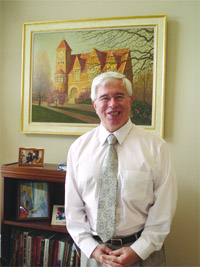
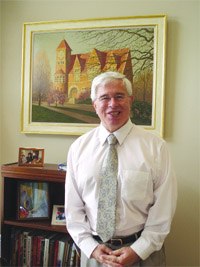
Donald Sanders is convinced that the Victory Theatre will not languish in faded glory, but will be relevant again.

The Victory Theatre has long been a valued part of Holyoke’s past, hosting everything from celebrated singers to Oscar-winning films to high school graduations. Making it a real part of the city’s future has been a 30-year challenge met only with frustration. But a new group, the Mass. International Festival of the Arts, a Holyoke-based performing-arts organizer, has secured ownership and believes it has the friends — and the funds — to finally turn the lights back on.

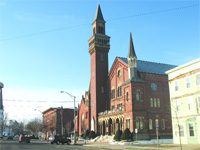
These days, with red plywood covering all window openings, it might not look like much. But at the Victory Theatre at the corner of Suffolk and Chestnut streets in Holyoke, the magic always came from what is within.

“No expense was spared in materials,” said Donald Sanders. “Staircases are Vermont marble, paneling is rare Brazilian mahogany, windows were made by Tiffany. The exciting thing is that, as we’ve gone through the building, going through the layers accrued over the years, we’ve discovered the original silk wall covering, most likely made by the Skinner family. It is basically intact, stretched on frames over felt and cloth, just the way it was done at Versailles.”

Sanders is the executive artistic director of the 16-year old Mass. International Festival of the Arts (MIFA), a Holyoke-based performing-arts organizer with a history of bringing world-class acts to the Pioneer Valley. Past features include Mikhail Baryshnikov, the National Ballet of Cuba, and players from Shakespeare’s Globe Theatre in London, among many others.

Talking with BusinessWest recently, Sanders proudly described the chronology of the Victory Theatre, happy to add the latest chapter in a saga that has spanned close to a century. As of last December, MIFA is the newest owner of the former jewel in the crown of the region’s theaters.

Other attempts have been made to revitalize the structure since the house lights dimmed for the last time in 1979, from homegrown initiatives to a venture funded by the Armand Hammer exhibition of paintings in the city’s Heritage State Park in 1987. None have succeeded in opening the doors.

But Sanders said that important work was set in motion by each one of these steps along the way, and that the theater will not languish in faded glory and the forgotten memories of the city. With ownership now secure, and more than half of funding for a bill totaling $27 million underway, the Victory plans to open its doors to a theater-going public 92 years after the first opening night, on Dec. 30, 2012.

BusinessWest talked recently with Sanders and MIFA’s managing director, Kathy McKean, both basking in the knowledge that, as the banner outside the building proclaims, “Victory is ours!”

Curtain Call

To say that Nathan and Samuel Goldstein built theaters is an understatement. The Goldstein Brothers Amusement Co. was the leading theater impresario of its day in the first decades of the 20th century.

Based in both Springfield and Holyoke, the brothers are responsible for some of the area’s most-cherished venues: the Calvin in Northampton, the Colonial Theater in Pittsfield, and a string of long-gone palaces of performing arts in Springfield, Westfield, Ware, and elsewhere. The Holyoke Transcript Telegram of February 1926 valued their business at close to $3.5 million, a staggering sum for the time.

When the business and civic leaders of Holyoke, among them the Parson and Skinner families, decided that Holyoke needed a world-class theater, it was the Goldstein brothers who got the call. What they built in the Victory Theatre was nothing short of their finest achievement. Preeminent theater architects Mowll & Rand from Boston designed the structure, and on opening night on Dec. 30, 1920, Eva Tanguay, a singer Sanders describes as the Madonna of her day, performed. In its heyday, everyone who was anyone took the stage at the Victory.

Sanders said that the legacy of the Goldstein brothers’ building continues to impress. “The quality of the workmanship, down to the bricklaying … all the engineers comment on it,” he said. “It’s also one of the first uses of steel beams to create a fan-shaped auditorium. No obstructions whatsoever, and the beams support the dress circle, what people call the lower balcony. It’s an amazing building.”

Designed at first to be, in Sanders’ words, a “Broadway-style” theater, the Victory was, over the years, slowly turned into a movie house, to reflect changing tastes in entertainment. But for Sanders, he knew the moment he first saw the inside that this was no ordinary hall.

“It isn’t a provincial theater house,” he explained. “The volume of the space is magnificent. For those of us in live performance, you know it the moment you walk in. The focus is entirely on the stage. I was totally flabbergasted that it was in there. Going by there, from the outside, you don’t have the sense of what is in that footprint.”

A 1942 fire damaged the interior of the Victory, which was redecorated to reflect the times. Sadly, very little photographic record exists of the interior prior to the redesign, and both Sanders and McKean said that a current appeal is for anyone with images in their family’s possessions to step forward.

The Show Must Go On

The Victory’s history went on to mirror its home city, and declining fortunes led ultimately to the theater’s closing its doors for the last time in 1979. Unlike the numerous other theaters in this once-elegant city, the Victory was spared the wrecking ball, and for many residents the allure of the building continues to be a powerful force that can’t quite be identified.

Local writers have waxed nostalgic about the Victory, linking it to the city of their childhood memories, halcyon days involving many other ghosts of downtown Holyoke past. McKean said that every time she goes over to the structure, once the door opens, people stop and say, ‘I remember when.’

“Every single time,” she said.

Almost immediately upon its closing, local grassroots efforts went into action to keep the Victory from suffering the same inglorious fate of its contemporaries. The Victory Theatre Commission began raising money in 1980, and it received money from the Armand Hammer exhibition, which went into the important first steps of architectural evaluation.

Those initial funds removed asbestos and shored up the failing roof, but the final price tag, $8 million, was just too much for the group. McKean said that it was important to put that bill into perspective.

“It was at a time when downtown, and the idea of downtown, was not high on the priority list,” she explained. “There were so many other issues facing the city that a theater, and what to do with it, wasn’t going to get the attention, especially with such a price tag.”

MIFA’s involvement with the theater is a story of chance occurrences that ultimately bring about the brightest lights in the Victory chronology. Sanders first became acquainted with the theater in the early 1990s, when a small performance was staged in the lobby.

After hosting the Cuban ballet at the Academy of Music, he realized that a larger venue would be necessary to garner the type of talent MIFA vies for. The Northampton venue seats 800, while the Victory can seat 1,600. He contacted the ‘Save the Victory’ organization, but the word was that it had gone as far as it could.

At that time, MIFA’s long-term strategic planning called for a permanent home in the Pioneer Valley. Sanders remembers thinking that the Victory, with its awe-inspiring possibilities, was too great to ignore. In 2003, the decision was made to make the landmark that home.

MIFA partnered with Nessen Associates out of Boston and Architectural Heritage Foundation, two firms with a successful history of historic restoration. Nessen has completed theater renovation projects in Worcester, at the Hanover, and at the Boston Conservatory of Music. Meanwhile, AHF is a pioneer in urban redevelopment, responsible for the landmark Faneuil Hall and Quincy Market revitalization.

After years of leasing the structure to MIFA, the Holyoke City Council finally agreed this past September to sell the structure to the organization for $1,500. On that day, Sanders wrote on the MIFA blog, “let the fun begin!”

The fun, as in fund-raising, will be a daunting task, but not insurmountable. Nearly 60% of the $27 million price tag will come from Massachusetts Housing Investment Corp. funds, similar to multi-million-dollar theater projects in Pittsfield and Worcester.

McKean noted that the project in Worcester is a bellwether for the Victory. “It’s interesting in that the Hanover Theater has become very successful, and business around it has increased. Not only is the theater doing well, but they’re seeing an increase in restaurants, and foot traffic, that they didn’t see.

“The Massachusetts Housing Investment Corp. did a study, which told them that the number-one stimulant for downtown rejuvenation was theaters and performing-arts centers,” she continued. “This was not an organization naturally drawn to the arts, but it did put an emphasis on their importance.”

At this stage, just under $11 million needs to be raised to ensure the opening night of Dec. 30, 2012. Sanders and McKean both agree that the Victory is finally in the forward motion of renewal. “We have everything in place, and we know what it’s going to cost,” Sanders said. Fund-raising, and ‘friend-raising,’ is the next stage. He expects that the former will come about like other projects have, with the usual mix of corporate and individual donors. Friend-raising, however, might be unique to the theater so ingrained into Holyoke’s civic identity.

“If everyone who loves the theater made a contribution from $10 on up, and the community who really wants this becomes involved, it would be great,” he said. “Holyoke doesn’t have a lot of corporations, and the Skinners and Parsons are gone.”

McKean said that the biggest challenge she faces isn’t fund-raising, but rather making sure that the city understands what the Victory will mean as a city resource. “We’re not going to drop something down into the city and then expect it to be a part of the community,” she explained. “People remember Saturday-afternoon movies, Holyoke High graduations. We want that too.”

Sanders said that, when he heard about the Nessen brothers’ interest in Holyoke, he knew that the project was finally possible, and that it heralds a success not only for the theater, but also for the city itself. When the doors to the theater opened for the first time to the public in September 2008, Sanders said he expected 10 or 15 people to show up. “It was a rainy and cold morning. I didn’t know what to expect. There were people coming in steadily all day.

“There’s been so much hope and disappointment in the past,” he continued, pausing to reflect upon the Victory’s future. “People want that theater back. They don’t necessarily know why, but it is a powerful entity. We finally have the expertise to make it happen. For me, personally, that is wonderful.”

Features
Comcast Program Helps Low-income Students Become Computer-literate
Bridging the Digital Divide

From left, high-school students Esther Njeri, Shemron Ross, Melissa Philogene, and Tevin Jones work together on a community-service project.

It’s called the Digital Connectors Program, and, as the name implies, it is designed to help connect young people, specifically those in low-income areas, to digital technology. In Springfield, the program is opening eyes — and also opening doors to opportunity.

It’s 5 p.m. on a Wednesday afternoon, and several teenagers are intently focused on computer screens at the Urban League in Springfield.

They are researching violence and its causes, studying the consequences of smoking tobacco, visiting college Web sites, and creating and editing public-service announcements and films.

Several months ago, the majority of these teens used the computer only to network with friends via Facebook and MySpace accounts. But today, thanks to the Comcast Digital Connectors Program, they have become proficient in broadband technology and are using their newfound knowledge to pursue personal goals and make a difference in Springfield.

The purpose of Comcast’s program is to help young people in low-income neighborhoods become computer- and broadband-literate and develop leadership skills that will allow them to become ambassadors and share their knowledge with their families and community.

“My friends told me about this, and it sounded fun and interesting,” said 15-year-old Gladys Kibunyi. “I wanted to become involved in something that could help me build my future and help me figure out what I want to be when I grow up. This will help me get ready for college and choose what college I want to attend. In this program, I can do community service or do volunteer work, learn how to get scholarships or grants, and meet important people and make the right connections.”

Kibunyi’s sentiments mirror those of other program participants. “I didn’t know much about computers before I became part of this program,” said 16-year-old Esther Njeri. “I want to become a computer engineer, and this will help me with my future. It has also taught me about teamwork and how to work well with others.”

The group recently used flip video cameras donated by Comcast to film themselves passing out informational packets to people in the downtown area. The packets contained a list of community resources and were provided by the Shannon Foundation’s Anti-Youth Violence Campaign.

They are also promoting the Urban League’s Tobacco Prevention and Cessation Program and developing a TV show, which they hope will air on Comcast’s Springfield access channel as well as the Digital Connection’s Web portal.

“It’s a talk show about violence prevention,” said Leon Cosby, director of the Urban League of Springfield Digital Connectors Program. “We want to get them active in areas where they want to see change. We also hope to get some local radio stations to air their public-service announcements.”

The program was set up for 25 students, but word of mouth has made it so popular that about 40 teens have become involved. Comcast provided the computers they work on as well as broadband service at the Urban League.

“Each teen has their own Web page where they post videos and talk to students in other Comcast groups in the country,” said Cosby. “Leadership skills are built into the program. These teens could be anywhere, but they are here doing something constructive and building relationships with each other.”

Classes began last April, but the program’s curriculum has expanded and was recently finalized. Cosby has adapted it to their needs, making sure to focus on the core areas of competency.

The majority of program participants are from New Leadership Charter School. The Urban League was instrumental in its establishment in 1998 and continues to be involved with education and leadership and development programs there.

“Our goal is to have these students become ambassador advocates,” Cosby said. “Once they have this knowledge they will be in a position to help others, and will also be on a level playing field with other teens.”

National Initiative

Comcast has made a national $1.2 million commitment to sponsor its Digital Connectors initiative for three years, beginning in 2009. The company plans to implement the program in 22 cities across the nation, but chose Springfield, Washington, D.C., and Houston to launch its pilot programs.

“The Comcast Digital Connectors initiative began with our desire to promote the importance of digital-literacy skills that are necessary for students to realize their potential,” said Doug Guthrie, senior vice president of Comcast’s Western New England region. They took action by forming a partnership with One Economy Corp., which began a Digital Connectors program in 2002, which identifies talented young people, immerses them in technology training, and helps them build leadership and workplace skills.

One Economy’s program is active in more than 20 rural and urban areas across the country. But since Comcast is the largest residential broadband provider in the country, combining resources will allow the program to grow quickly.

Its new curriculum, which was just released, has expanded the subject matter to be mastered from four to 12 areas of competency. Participants will be educated in leadership and diversity, personal development, workforce development, financial literacy, community mapping, digital literacy, hardware and networks, software and programming, media production and civic journalism, the environment and sustainability, service and global engagement, and teaching and facilitation.

The program, which contains testing to ensure that students are meeting benchmarks, is aimed at address what experts call the ‘digital divide.’

“For cities like Springfield, the digital divide is not about access to broadband service. It’s about the adoption and the development of digital-literacy skills that will be necessary for these kids to realize their future potential,” said Guthrie.

Henry Thomas, Urban League president, agrees.

“Knowledge is power,” he said. “Being connected digitally is critically important to the quality of people’s lives and gives them an advantage. Although digital connectivity is almost essential for work or college, the digital divide is very substantial.”

A recent national study showed that 80% of Caucasians have computers and are connected to the Internet, while 55% to 60% of Latinos have those resources, but only 46% of African-Americans have the same advantage. “We are the ethnic population that is the least connected,” Thomas said, adding that inner cities are heavily populated by African-Americans and Latinos, and 85% of Springfield’s Mason Square residents are African-American.

Thomas cites two reasons for the digital divide. The first is affordability, while the second is that many people aren’t aware of the value computers and broadband can add to their lives. Unfortunately, childen in these families often fall behind.

“Children in families who don’t have computers or haven’t adopted broadband lack a major source of information and technology that they need to be competitive in the academic arena,” he said.

Local Partnership

Thomas was delighted when Comcast approached him and proposed using the Urban League as the setting for its pilot program. Comcast has provided funding and support for the league’s programs in the past, including a computer-skills training program that took place about three years ago.

“They were familiar with our mission and understand the impact we are having in the community,” he said, adding that Comcast has relationships with many of the 101 Urban Leagues across the country. “We were honored to be part of the initiative.”

The students have done so well that Comcast made a DVD of their program for distribution to new markets. Thomas is proud of this and proud that students are sharing their new skills with others. “We will increase the collective functioning within the inner city to the extent that we can establish value in being digitally capable and proficient, so that people can be on even ground as it relates to educational and workforce-development issues,” he said.

The students are very appreciative of the opportunity and growth they have experienced since signed on as Digital Connectors.

“I haven’t seen any other programs like this,” said 17-year-old Ceeja Brice. “It’s been a very great learning experience and very valuable as our world is headed toward technology. I actually feel a lot smarter than I did before. Now I know what computers are capable of.”

He has gained knowledge about how to utilize the Internet to search for jobs. “The One Economy Web site has job-search tools, and I have shown the site to several people, including my mother,” he said. “She used it, and it was a new resource for her.”

Brice is editing a public-service announcement the teens are creating about violence. “It is never the answer to where you want to be,” he said. “People are being killed or sent to the hospital because of violence.”

His life goal is to own a music business, and he has learned that the Internet can be a useful tool for conducting surveys about new musicians and music. “This is making a huge difference for me,” he said.

Kibunyi is producing a public-service announcement about tobacco use. She has also taught her mother how to use the Internet and is excited about coming into contact with a whole world of new people and opportunities.

“She’s building her network,” Cosby said.

It’s a network that will continue to grow, city by city, across the nation as students in communities spread the word about the benefits of being a Comcast Digital Connector.

Features
Integrity Development & Construction Builds a Name for Itself
Strong Foundation

Peter Jessop, president of Integrity Development & Construction

A summer job more than 30 years ago turned into a career for Peter Jessop, who launched Integrity Development & Construction in Hartford and later moved the business to Amherst. In those three decades of building homes and businesses, he has seen abundant change in his industry, from a computer revolution to an increased focus on environmental impact. Throughout it all, he says he’s tried to build a reputation that lives up to his company’s name.

Construction wasn’t exactly Peter Jessop’s first plan for his life.

In fact, back in the 1970s, he was working at Hartford Hospital, partway through a master’s degree in hospital administration, when that field started to seem unsatisfying.

“I had a lot of ideas about how a hospital should be organized and run, but I realized I was trying to shift the Titanic; it wasn’t going to move very much,” he said. “Between government regulations and the general inertia of a 3,000-employee operation, I couldn’t move it the way I wanted.”

Meanwhile, Jessop had worked as a carpenter during summer breaks from college, and he always enjoyed the experience. From there, an idea — and a construction business — eventually grew.

“It took me a little while, but I started working on some smaller projects with people I knew in the Hartford area, and it blossomed into a slightly bigger operation, and that blossomed into an even bigger operation,” he said. “I did a lot of low-income housing, tax-credit deals in Hartford, Bridgeport, even Arizona.”

That proved to be a bit too much travel, he decided. “Fortunately, we’ve enjoyed good success working within an hour of our office.”

That was the case for more than a decade working in Hartford, and remained true when he moved his operation, Integrity Development & Construction, to Amherst in 1992.

His first project there was Pioneer Valley Co-housing, a living community that melds private condos with communal space to create a unique sort of planned neighborhood in North Amherst. Jessop lives in the complex, too, and built his company’s headquarters there as well.

As in Hartford, Jessop has balanced residential building and remodeling with commercial, industrial, and institutional projects, from Northampton Brewery to a new building at the Hartsbrook School in Hadley.

“The wonderful thing about this business is the tremendous amount of variety,” he said. “Every project we do is different, and we always get to meet new and interesting people. It’s wonderfully varied that way — which wasn’t the case early in my career.”

Indeed, while hospital management left him feeling stifled and bored, as president of Integrity, “I feel we make a difference in people’s lives in terms of the way they live.”

In this issue, Jessop talks with BusinessWest about Integrity’s steady growth, how the construction industry has changed over the years, and those difference-making moments that convince him that he made the right career decision three decades ago.

Greener Pastures

One example of making a difference is energy efficiency, which has long been a priority for Integrity and has since become industry dogma. All the units in that first co-housing project were designed as Energy Crafted homes, a status that preceded today’s Energy Star designation.

“There’s an emphasis on energy efficiency in the building trades,” Jessop said. “We’re pretty conscientious about air seals, insulation, window packages, appliances — everything that goes into making a building as energy-efficient as possible. A lot more people are doing photovoltaic and solar-related projects; that continues to be strong, and that’s a good thing.

“I think this is a very exciting time to be in business,” he continued. “We have a lot of opportunities to raise people’s consciousness about energy use and siting of buildings. The whole field is changing, moving toward a greater awareness of how building affects the global environment.

“Some people think driving cars is a horrible thing,” he continued, “but a much greater percentage of greenhouse gases come from buildings than cars, so making our buildings more efficient, thinking about things like deep energy retrofits, will make a difference for our children and our children’s children.”

This increased focus on the environment is only one way the building trades have shifted in the past 30 years.

“The industry has changed a lot since 1979,” Jessop said, noting, as one example, that materials are different, with much more engineered lumber being used, offering higher performance and a healthier ecological impact.

“And, certainly, the use of computers and the amount of information generated digitally has radically changed the business,” he said. “We’ve moved from doing everything on paper and pencil to a digital world. Of course, every industry has seen that, and contracting is no different.

“It’s been a blessing,” he continued. “Everything from accounting to drawings to project management and communications with clients — we still produce paper, obviously, but much of our work is done digitally. That saves a lot of time and makes us more efficient and makes the industry more professional.”

Jessop came back to the notion of professionalism more than once during the interview. It’s an element he said is reflected in the company’s name, and also echoes a more-savvy clientele.

“Customers are more sophisticated, which forces us to be more professional,” he told BusinessWest. “And we certainly take pride in our level of professionalism — in our presentations to clients, our contracts and documents, and our knowledge of the industry.”

Even professional journals, he noted, have become more sophisticated. And, not surprisingly, “I think tradespeople are more knowledgeable than they were 30 years ago. They’re more cutting-edge —from the technological point of view, obviously, but also just in general knowledge. These kids seem brighter, more on top of things than they were 30 years ago.”

What does that all mean for builders? “You can’t relax,” Jessop said. “People know better what they want, and the Internet has opened up a whole host of opportunities for folks to learn about things.

“Sometimes a little knowledge is a dangerous thing,” he added, “and we’ve occasionally had to set clients straight on information they learned on the Internet that might not be accurate as our take on the situation. But there’s nothing wrong with an informed consumer. They help us stay on track, help us stay professional.”

Work and Play

Integrity tackles plenty of design-build work, but also works with local architects, reflecting a willingness to work within a client’s needs and budget, Jessop said.

“We have a great respect for architects and do many projects with an architect; I’m a believer in good architectural services. But some projects don’t need the services of a full-scale architectural firm.”

Many home-remodeling projects fall into that category. “Renovations have always been a strong part of our mix,” he said. “We find it a wonderful challenge working with older buildings, adding on or making interior spaces more functional. We enjoy that process. Some builders don’t have the patience for that; it’s a slightly different animal.”

For one thing, unlike new construction, there’s the issue of working around a family who actually lives in the space, kids and pets often included. But it’s an expertise that has proven valuable in the Hampshire County region, where new building space is at a premium.

“In this area, land is relatively costly, and there aren’t tons of land available to build new construction,” he said. “A lot of people are finding that an investment in their current homes is a much better way to go. They may like their neighborhood, they like the school system, but they need more space. So they reconfigure the space they have, put in a new kitchen or new bathrooms.”

The ability to take on many different kinds of projects allows a builder key flexibility during an economic downturn when all contractors need to be nimble, Jessop said. “We’re in the midsize of construction companies — not big, but not two guys in a pickup truck, either. The ability to be flexible, and be able to do anything from smaller projects to $2 million to $3 million projects, is certainly a benefit.”

As for that recession, Jessop said the Western Mass. region is fortunate not to experience the economic peaks and valleys — and the resulting rollercoaster of real-estate valuations — seen in other parts of the country, and added that the many colleges and universities clustered in and around Amherst also provide some stability for his industry, as people are constantly moving into and out of the area.

“There has been enough work to go around, and although the last year or two has been tough on everybody, we’ll turn the corner on that,” he said. “We’re proceeding apace, booking work for the spring and summer.”

Indeed, while business could certainly be better across the industry, Jessop is confident that his company’s diversity and reputation will continue to see it through.

“There are a lot of good builders around here, but I don’t think you can work here in the Valley without having a decent reputation,” he said. “People know we’re trustworthy, and that word gets around and helps you stay in business.

Even the need for modern tools such as a Web site hasn’t changed that.

“Our Web page is nice, but it’s a bit of a glorified electronic yellow pages,” Jessop said. “Our work comes from architects who know us, people in the community who know us, past clients who refer us, and other personal contacts we make.”

He believes in that personal touch, and doesn’t think a Web site can tell everything about how a company does business anyway.

“You might find a doctor online, but would you stay with him just because you found him on the Internet — or because you like this person and trust him? When people work with us, they understand they can trust us.”

That’s a reputation to build on.

Joseph Bednar can be reached at[email protected]

Features
This Western Mass. Institution Makes a Fashion Statement
Company to Watch: A.O. White

Lewis White, owner of A.O. White, pictured with his wife, Kathy, says the most successful retail stores know when the time is right to reinvent themselves.

Evolution. Lewis White used that word early and quite often as he discussed the business, A.O. White, started by his father more than 60 years ago and that he took over in the early ’90s. He also used it to describe the retail industry, fashion, attitudes about dress, and even that relatively new and ubiquitous industry term ‘business casual,’ which both women and particularly men struggled to get their hands around when it came into prominence in the mid-’90s.

“We pretty much built a business on what’s called business casual,” he explained, “because guys coming out of tailored clothing and the business uniform didn’t know what to do. I gave seminars … I went to companies and talked to people about what was good, what wasn’t, what you could and couldn’t do. People were in Never Never Land, not knowing what was appropriate.”

In each case, including business casual, the evolution continues, said White, as he explained in depth how the store his father started in downtown Springfield to sell men’s tailored clothing is now operating in the center of East Longmeadow and sells mostly women’s attire. In short, A.O. White has changed to adapt to all that evolution taking place in society and retail, he said.

“Today, we sell everything from $2,500 sheepskin coats to Red Sox T-shirts,” he said, “and very often to the same customer.”

Tracing the history of the company, White said his father, Albert Oscar White, opened the men’s clothing store that took his name and initials in the late 1940s. He moved several times, always within downtown Springfield, and eventually settled in what was then known as Baystate West (now Tower Square) not long after it opened in 1967. The elder White would go on to be the first general manager of that retail and office facility.

In the early years, his store sold tailored items — suits, jackets, and trousers — made by some of the finest clothiers of the time, including many names that have disappeared from the fashion landscape. “It was a great store,” said White, “one of the finest in the country.”

Albert Oscar White eventually diversified into women’s clothing (he took a vacant storefront in Baystate West above his men’s store for this second venture, A.O. White for Women), and it was this aspect of the business that his son essentially took over and refined, focusing on working women, which was a new trend in the retail sector.

In 1983, the company continued its evolutionary process by opening a store in the Longmeadow Shops called A.O. White Sports, which, as the name suggests, sold casual, sporty clothing for both men and women. And when downtown Springfield started to become much less of a retail center (part of that business sector’s evolution in the wake of the Holyoke Mall and other facilities like it), A.O. White first closed its women’s store downtown (in 1991), and then its men’s store (in 1993).

The Longmeadow store then became the sole location, and it continued to change with the times, focusing increasingly on women’s clothes and moving out of tailored men’s clothing entirely.

When asked to describe the sum of what’s offered today, White thought for a moment and said, “a carefully selected and well-edited collection of casual and dressy clothes for men and women that basically covers every aspect of someone’s lifestyle.

“I sell everything from upscale yoga pants and active sportswear for men and women to dressy separates and tops — we dressed a lot of people for New Year’s Eve,” he continued. “This is probably the only store I know of where you can get a Red Sox sweatshirt and a crystal-trimmed silk tanktop sold to the same person. The common denominator is quality.”

Over the past few decades, White and his wife, Kathy, have helped men adjust to business casual — meaning, among other things, life mostly without ties — while also continuing to edit the selections that go on the shelves and racks.

“We’re still evolving and still changing,” said White, noting that the move to the East Longmeadow Center Village was part of that process. The new location, which features large amounts of natural light, gives the store a new look and atmosphere.

“I was ready to do something fresh and new,” said White. “I think that you have to reinvent yourself in retail every so often, even when times are good. If you look at the stores that have gone out of business, I think it’s because they didn’t do that.”

When asked to recall the landscape when he first started with the family business — meaning the scene downtown and the large number of competitors that existed back then — White started talking nostalgically about a bustling central business district. And when he started naming those competitors — from the old Forbes & Wallace and Steigers to Joseph’s and Paramount Clothes — White paused for a moment and said, “I’m really dating myself.”

Perhaps, but when recounting more than 60 years of life in the clothing business, one has to go through a lot of history — and evolution.

— George O’Brien

Features
Valley Communications Remains Focused on the Big Picture
Sound Business Strategy

Jim Tremble (right, with Bob Tremble, left, and Pat Parente) says Valley’s 65 years in the industry gives it a competitive advantage.

Jim Tremble can tell you that the old adage, ‘the more things change, the more they stay the same’ easily applies to his business.

As president of Valley Communications Systems Inc., he is one of six second-generation Trembles to carry on the company started by his parents in 1945. What began as a small retail photo shop has grown to become one of the pioneering distributors of communications equipment and services in New England.

The business has stayed in the same location in Chicopee, just off I-291, for the past few decades, yet from that same location new products and services have been added to the Valley roster almost as soon as they’ve become available.

Tremble said that, because of the company’s reputation, with 65 years in the industry, when manufacturers have something new to offer, it’s usually Valley who gets first crack at it. “Being in business as long as we have gives us an advantage,” he said. “And we have developed a relationship in each of our disciplines. We’ve represented the top manufacturers of each of them at one time or another. When a manufacturer has a new product and wants representation in the New England area, they come to us first. This isn’t bragging; it’s a fact.”

While Tremble could easily brag about the strength of the family business, he joined his brother Bob — who, along with brother Mike, heads the video, A/V, and data/imaging department — to describe how the company that began with a spirited young couple became the successful enterprise it is today.

Mother Knows Best

When Rita and Ed Tremble first hung out their shingle on State Street in Springfield, the pair sold photographic equipment. Ed ran the front of the house, while Rita took care of both the bookkeeping and the nuts and bolts of the business. Jim and Bob credit her vision for the company that Valley Communications has become today.

“She was the instrument of change,” Bob said. “She recognized technology and decided that it was something that we wanted to be a part of almost immediately. She called in manufacturers, and, lo and behold, we were suddenly part of the security business, or the telephone business.” Looking back, that foresight is nothing short of spectacular.

Within four years, a new branch opened on Belmont Avenue in Springfield. From there, Jim counted off the services that his parents added to their portfolio, essentially adding up a roster of the history of the 20th century’s communications industry.

First branching out as a holding facility for New England Telephone’s 16mm films for elementary classrooms, the pair segued into intercom systems for those schools. When Valley decided to add commercial sound systems to their roster in the late 1940s, it became the go-to resource for professional installation. The Eastern States Exposition’s Coliseum was outfitted by the Trembles, and later, they worked on both Springfield and Hartford’s Civic Centers. Jim estimates that 80% to 90% of all churches in Massachusetts and Connecticut have had Valley Communications install their sound systems.

When Rita decided to add security to her portfolio, the company installed residential and commercial cameras and touch-tone entry pads. Within 10 years, the focus shifted to larger applications. “And we’ve been doing that for the last 40 years,” Jim noted.

A landmark FCC deregulation decision in the late ’60s, known as the Carterfone Act, allowed non-AT&T phones to connect to that company’s communications grid. Jim said that this legislation was immediately embraced by Valley. “Because we were already doing work over lines like intercoms and such, it was a natural for us to get into that.”

The company’s history tells of the challenges they faced in those early days taking on Ma Bell head to head. Valley contended with what it calls “mysterious” accidents, cut wires and cables, uncooperative operators, and many court cases, all without hindering its role as David to AT&T’s Goliath. From that contentious beginning, according to company records, Valley “is nationally recognized as one of the largest independent telephone interconnects in the communications industry.”

Currently, the largest account for Valley is the Mass. State Lottery Commission. “If you’re familiar with Keno,” Jim said, “Valley installs at least one monitor in connection to the data computer in every restaurant, bar, and grocery store that sells and plays Keno. The new Daily Race Game, started about a year ago, is now an offshoot of that.”

The beginnings of the company might be humble, but the current business, with more than $25 million in annual sales, is anything but. Jim is happy to mention that, of the 106 employees, many have been with Valley for decades.

Securing Success

Keeping abreast of technology in the highly competitive and constantly evolving field of communications can be a daunting challenge. But Jim said that Valley confidently keeps appraised of the latest and greatest, and described his simple yet secure methods.

“We learn from what we see and read, and we keep up with the industry forecasters — looking three to five years down the road,” he explained. “We listen to the manufacturers that we align ourselves with. They are developing new products, and that affects them more than us. We get it from our salespeople; they are out there seeing what people want and need. We get it from our competitors. Sometimes that’s your best clue to what’s going on. If someone gets the jump on you, well, you’re going to find out what that is.

“Those four key methods keep us tapped into the vein,” he said.

Responding to comments about the economic conditions of the past year, Bob proudly stated that “the business part of it, from 1945 to now, can be summed up as easily as this — every single year we’ve made a profit. While some years might have been better than others, that has always been the case.”

This past year’s performance was helped by solidification and expansion of a new division for the company, one focused on business security, something Valley has always done, but, until recently, on a relatively small scale.

“About six months ago we decided to start a separate department to forge that division forward,” said Bob Tremble. “So in October of this past year, the division took off, and already we’ve had about $1 million in sales.”

In addition to security at the former federal building at 1550 Main St. in Springfield, Valley is handling security systems at a county jail outside Boston, all of the WNEC campus, “and just this morning,” Bob added, “we got a job for a high school in Connecticut.”

Jim explained how the new security division is an example of ongoing expansion and diversification, a trademark for his business. “Instead of saying, ‘how can we cut back?’ and ‘where do we have to cut jobs?’ we’ve said, ‘how do we increase the number of jobs, and increase our income?’”

Bob agreed, adding that “we knew there was a lot of business out there; what we needed to do was to position ourselves, with the proper people, talent, and resources, to go out there and get that business. And it is working.”

Back to School

Another important product category for the company, one that’s really exploded over the past 10 years, is the SMART classroom, Bob explained, using the brand name for what is known in the industry as interactive white boards. Chalkboards are destined to become another academic relic of earlier centuries.

The product looks like a white, dry-erase panel about six feet square, with a data projector mounted above. That white surface promises to be one of Valley’s next great contributions to its clients.

“There are about 53,000 classrooms K through 12 in Massachusetts, and about 32,000 in Connecticut,” said Bob. “We have put smart classrooms in about 20% of them, so we look at about 80% to go. That’s a lot of boards.

“When we started to put these into the classrooms,” he continued, “we thought, ‘what a great product.’ The teachers can link their computer up to it, and the board itself is touch-sensitive — you can write on it with your finger.”

While the newer crop of tech-savvy teachers might be as familiar with computers as their students, earlier generations found the tools foreign, Bob said. “About three or four years into our putting these boards in, we went back to the schools to see how the teachers were using them. We thought it would be a good exercise. We found out that, in many cases, the boards were used simply as a white chalkboard, or a projection screen — not the purpose for them. It was an awakening for us.”

In true entrepreneurial fashion, a need was identified, and a solution quickly addressed. A training program for the SMART boards was established, with courses offered in all the disciplines and educational levels that would be working with the equipment. The training became a division known as Valley Academy. Those same teachers who relied on their older lesson plans, perhaps resistant to this newfangled device, discovered how it could improve their lessons and better involve tech-oriented students.

Because of the success of both Valley Academy and those teachers spreading the word out in the field, Bob said that there was an explosion of additional sales. Parochial schools in the Boston area have been programming a set number of boards to be installed in their schools every year until all classrooms are outfitted, and new construction often designates them. Smiling, Bob said his goal is to see those other 80% of classrooms with SMART boards.

Local Heroes

While Valley may have a geographic market all over New England, both Trembles emphasized that this company is, and will always be, a local business.

“We’re a private institution, not a worldwide entity,” Jim said. “We know that New England is our territory, and we want to do the best possible job that we can in that area. In my lifetime, I don’t want to be a national company. I eat and sleep in the area that I sell my products. I run into the people that I do business with, and I want to continue to be proud of what I’ve done for them.”

For Valley, he stressed, the relationship with the client begins after the product or service is sold. “It doesn’t take much magic to sell something,” Jim said. “Anyone can do that; you lower your price and get it out there. It does, however, take something to carry on after the sale.”

Looking ahead, the third generation of Trembles is busy on the front lines, just like the generation before them. Both men have sons that work for Valley, both in the Chicopee facility and out in the field. While Ed passed away some time ago, Rita, at age 93, still comes in once a week to check up on her children. They laughed when the subject of succession to the next generation came up.

“It’s a little early to tell what will happen,” Jim said. “But there are 48 grandchildren, so there’s a lot of good talent to pick from.”

One thing is certain: the field of communications will be changing. But when Valley says that it too has evolved apace with technology, there’s 65 years of proof to the statement. The Trembles’ method of business might be old-fashioned in a rapidly changing world, but Jim summed up how it’s a success.

“The same customer that bought a system from us in 1950 is still doing business with us today,” he said. “That, to me, is the key that keeps my blood running. It’s a great comfort that these people let us continue to do business the way we were taught to do it back in 1945.”

Features
Contractors Must Tighten Belts, Stay Flexible to Survive the Recession
Concrete Strategies

Joe Marois (right, with Vice President Carl Mercieri) says his company is facing unprecedented bid competition, including some from out-of-state builders.

To Joseph Marois, the most difficult part of running a business during a deep recession is minimizing the pain — for everyone.

“Our goal is to maintain our workforce,” said the president of Marois Construction in South Hadley. “We feel that we owe it to our people to try to make sure they’re not laid off. They have families, and they’ve been good to us.”

But that’s not easy at a time when a shrinking job pool, combined with a surge in competition from increasingly desperate bidders, many from outside the region, have combined to push profit margins way down.

“The bids right now are marginal in terms of profits,” Marois said. “It’s very competitive. We’re getting quotes with upwards of eight to 18 bidders from all throughout Massachusetts, Connecticut, New York, and Vermont. We don’t usually see all that; normally there’s three or four bidders on a job. It’s kind of depressing.”

It’s an account being told and retold throughout the Pioneer Valley as contractors try to stay afloat amid continued economic turmoil, a time when private companies and public agencies alike are pulling back on new capital projects and reducing opportunities for builders in all niches.

So instead of asking them to repeat this litany of hardship — it’s certainly not a new story — BusinessWest asked area builders a different question: how do contractors slog through such tough times? After all, they’ve survived recessions before. In most cases, the answer is as simple as watching every penny until the dollars start rolling in again.

Budget Blues

Carol Campbell, president of Chicopee Industrial Contractors, said she’s not doing anything that most others in the industry aren’t also doing to minimize the current fiscal pain.

“We’re tightening our belts in every possible way,” she said. “There’s not a line on our income statement that we haven’t assessed, which continues to cause a ripple effect. We have cut costs, we have eliminated any non-essential purchases or programs, and our main focus, when spending money, is on the training and support that allows us to provide a better product and service to our customer. Otherwise, if a purchase is not job-related or a required improvement in the services we are providing, the purchase is being delayed.”

Marois mentioned similar cutbacks. “We’ve taken some vehicles off the road,” he said, “and initiated other ideas to dramatically minimize our costs and overhead.”

Meanwhile, Associated Builders in South Hadley has also been taking a close look at containing costs. It’s been a difficult but necessary process, said Peter Wood, the company’s director of sales and marketing. For starters, the firm has closely examined the number of hours its trucks and other equipment are in service, making sure resources are properly utilized and not used for “busywork.” And the cutbacks don’t stop there.

“Normally, like everyone else, we implement as many cost savings as we can in the company,” Wood said, “whether that’s reducing the number of employees due to the amount of work or looking at energy consumption — making sure that we have all the proper efficiencies, not leaving lights on, anything that has to do with energy use.”

Energy efficiency is a common way to save costs, although it sometimes requires some investment up front in new materials or equipment. But with ‘green’ business becoming an important consideration for companies across all industries, Campbell said, it’s something builders should be looking at anyway.

“Our driving force, now as before, is energy efficiency and green initiatives,” she said. “Certainly the cost savings on our electric bill make the investment something I can justify.”

In addition to cutting costs and seeking such efficiencies, many contractors say maintaining diversity in the types of projects pursued can be an effective hedge against a downturn.

“We do both public and private work,” Marois said. “We don’t have one niche right now; we bid anything.”

At the same time, Wood said that contractors need to understand their strengths and not panic and chase jobs that might not fit their business model.

“We try to stick directly to our core values, which is how we’ve tried to do business for the past 35 or 40 years,” he told BusinessWest. “That means looking at projects that fit our business profile — strictly design-build, using our in-house engineering and architectural services.

“We’re broadening our area; we may be looking at going a little farther geographically from our base, looking at projects we might not have looked at in busier times,” he continued, “but we always keep in mind that we have a successful business plan and a reputation for not trying to do things we’ve proven not to be as competitive at, or are out of our realm of expertise — for instance, public work, schools, bridges, etc.”

According to Wood, companies that go far outside of what they’re good at for the sake of chasing down a few dollars are the ones least likely to survive a recession.

“We’re fortunate — even in down times, when all contractors are struggling to maintain a level of profitability — that we have a solid business plan and a consistent approach to how we do business,” he said. “Staying on the path of our business plan, though difficult, is allowing us to survive. It has allowed us to maintain a certain level of business that may not be seen across the board.”

No End in Sight?

According to the U.S. Bureau of Labor Statistics, construction-industry employment has declined by 1.6 million nationally since the start of the current recession, with 53,000 of those job losses coming in December 2009 alone. What worries some builders is the idea that this period of belt-tightening and minimal profits might not end anytime soon.

“I think this recession has some unique qualities that limit our ability to make a determination as to what’s going to happen; it’s difficult to predict whether or not we’ll continue to spiral downward,” Marois told BusinessWest.

“We’re dealing with failures of large institutions, federal bailouts of an unprecedented nature, which is increasing our debt ceiling nationally, and that’s causing confusion for business leaders and their ability to make sense of the whole thing,” he added. “Normally industry corrects itself, but unknown forces seem to be complicating that process.”

Even if the economy does begin to rebound, he posited, builders won’t reap the benefits until after businesses regain the confidence to tackle capital projects again — and then proceed through architectural planning and the bid process.

“From the time they decide there’s some confidence in the industry, it could be three or four months before we got the job, and then two or three months before we started realizing an infusion of capital,” Marois said. “So the relief is not going to be immediate.”

Until that relief does arrive, builders will keep grappling with those razor-thin profit margins, double-checking every budget item — relieved that they’re not yet a casualty of an economic downturn that continues to be as unpredictable as it is destructive.

Joseph Bednar can be reached at[email protected]

Features
The Holyoke G&E Makes Some Powerful Statements

Current EventsIt was a spirit of entrepreneurship that made Holyoke into one of New England’s most vibrant industrial centers more than a century ago. Today, that spirit lives on in a place where one might not expect to find it — at the city’s 107-year-old municipal utility. The Holyoke Gas & Electric Department has initiated a number of bold steps in recent years, from purchase of the Holyoke Water Power Co., to startup and rapid expansion of its fiber-optic network, to ongoing work to build its portfolio of renewable energy. The sum of these and other ambitious steps has made the municipal utility a primary driver of economic development in the city — and BusinessWest’s Top Entrepreneur for 2009.

Jim Lavelle says 2009 was “a good water year.”

By that, the manager of the Holyoke Gas & Electric Department meant that the water levels in the Connecticut River, helped by steady rains through much of the first half of the year, were high enough to yield a significant increase in the amount of electricity produced at HG&E’s hydro power facility, one of the few in the country operated by a municipal utility.

But they weren’t too high.

“There is a law of diminishing return,” Lavelle explained. “If the water’s too high, you reach a point where production stops increasing. This year, the levels were just right.”

A number of things have been going just right for the HG&E and its various departments in recent years. They range from the successful acquisition of the various assets of the Holyoke Water Power Co. from Northeast Utilities more than a decade ago, to the launching of a fiber-optic division that provides voice and Internet service to homes and businesses in Holyoke and now well beyond, to the acquisition of land on Mount Tom for the exploration of a windpower operation and other initiatives to grow the utility’s renewable-energy portfolio.

Add it all up, and it makes for a decidedly different kind of honoree for BusinessWest’s Top Entrepreneur Award, first presented in 1996 to recognize the region’s long history of entrepreneurship and those who are carrying on that tradition.

This is not an individual manager (although Lavelle’s strong leadership since he arrived in Holyoke 10 years ago has been a strong factor). Nor is it a private company. This is a utility, one with an entrepreneurial spirit, and one that has become a driving force in Holyoke’s economic-development activities.

Indeed, it was the G&E’s ability to provide a large, reliable supply of inexpensive and ‘green’ (hydro) power that convinced a group of partners from academia and corporate America — the list includes MIT, UMass, Boston University, and Cisco — to select Holyoke as the site for a high-performance computing center in what was undoubtedly the brightest moment in an otherwise down year business-wise.

Lavelle stated repeatedly that the utility’s recent string of success stories — and its selection as Entrepreneur of the Year — are the byproduct of strong leadership from managers and large doses of teamwork. That, and a very businesslike and environmentally conscious, or ‘green,’ approach to the utility’s 107-year-old mission: “to provide reliable electricity at a competitive cost to the ratepayers of Holyoke, while providing great customer service.”

In short, the utility is not merely providing reliable and comparatively inexpensive power, said Lavelle, but it is working continuously to lower its carbon footprint in the process.

Fran Hoey, chair of Holyoke’s Municipal Light Board, used the word ‘innovative’ repeatedly as he talked about the many initiatives Lavelle and his team have undertaken over the past decade or so, and that’s a quality he says is needed in what has become an ultra-competitive and very challenging industry — and if the HG&E is going to continue to be a driving force in economic development.

“Innovation has to be part of it, and a big part of it,” he explained. “The energy market operates within a changing market, probably more so now than at any time in the past, in terms of both the regulatory requirements and the financial drivers. We need to be able to successfully navigate these challenges, while at the same time exploit the opportunities that they present.

“To sustain our position as market leaders, we really need to develop and promote an innovation-oriented culture, and that’s what our team has done,” he continued. “In this business, the status quo won’t cut it.”

BusinessWest kicks off this year as it has the previous 13, with the naming of its Top Entrepreneur, and a detailed look at why this choice is worthy of such an honor.

Dam Straight

BusinessWest has gone outside the box in its selection of previous Entrepreneurs of the Year, such as with the choice of Springfield Technical Community College President Andrew Scibelli for his work to create the Technology Park and Enterprise Center in the former Digital Equipment Corp. complex across Federal Street from the main campus.

A similar pick was Craig Melin, president of Cooley Dickinson Hospital in Northampton, chosen for leadership in efforts with everything from improving efficiency and patient satisfaction to initiating green-energy measures such as a biomass plant.

Those examples show that entrepreneurship is not confined to successful private business operations, and the HG&E provides more evidence.

And this story is similar to those at STCC and CDH in many different ways. They start with leadership, but are punctuated by teamwork and an entrepreneurial spirit that flows from the top through the entire organization, and the HG&E is no exception.

Lavelle was working as an administrator at United Technologies in its Space and Sea Division when he decided to become a candidate for the manager’s position at the G&E in 2000. He eventually triumphed over a number of other contenders, including the city’s former mayor, Daniel Szostkiewicz.

Upon arriving, Lavelle quickly determined that he had a number of challenges on his to-do list, ranging from blueprinting a growth strategy for the then-fledgling fiber-optic operation to finding new revenue streams, to developing a plan for coping with the sea changes that were taking place in the energy business.

“There were a lot of questions to be answered,” he said. “First off, we were trying to figure out how to meet growing electric demand and whether we should pursue acquisition of the hydroelectric project from Northeast Utilities. There was also the matter of what we were going to do with the telecommunications system, which at that time was just a network attached to municipal buildings in Holyoke, and how we could maximize that asset. And then we had to figure out how to fix the steam department, which had been losing money for years.”

One of his first orders of business was to assemble and task a team of managers that now includes Brian Beauregard, superintendent of the Electric Division; Timothy Shannon, superintendent of the Gas Division; Robert Gaboury, Telecommunications Operations manager; Paul Ducheney, superintendent of Electric Production; Jim Jackowski, business liaison; and Brian Richards, comptroller.

Together, and with Lavelle’s lead, they’ve injected a decidedly entrepreneurial spirit into all five of the utility’s operations — gas, electric, steam, fiber-optic, and customer service — while using the utility’s mission as a guide.

Certainly the boldest, and in many ways most controversial, gambit was the purchase of the many assets of the Holyoke Water Power Co. from Northeast Utilities, which had been, through a rather unusual set of circumstances, a direct competitor to the HG&E.

“It was totally unique … there were two sets of wires that went down a lot of streets,” said Beauregard, noting that he could recall just one other city (Cleveland) which had two utilities vying for the same business. “And it wasn’t just concentrated in downtown Holyoke; there was a line that went down by the mall and into Westfield. Northeast Utilities had about 17 or 18 miles of distribution lines and a lot of customers.

“We were literally competing head to head,” he continued. “Somebody from Northeast Utilities would go in with a proposal, and then someone from the Holyoke Gas & Electric would come in with a proposal. Whoever had the best proposal would get to serve the customer, and both sides were very aggressive.”

Amped Up

So when NU eventually agreed to sell the various assets of the water power operation to HG&E for $17.55 million in 1999 — it rebuffed an earlier attempt five years earlier and kept its operating license — the transaction provided the municipal utility with not only a solid source of energy, and renewable energy, but it also resolved what Lavelle called “legacy issues” and helped the utility streamline its operations.

The acquisition also helped set a tone within the department, Lavelle continued, one marked by creative problem-solving, innovative thinking, and entrepreneurship. And this method of doing business was employed in several departments.

Indeed, with its fiber-optic business, the HG&E took a decidedly different route from most competing in that arena. Most focus on residential customers and, on the commercial side, what Gaboury calls “low-hanging fruit.”

Instead, the utility focused on larger, enterprise customers on the commercial side of the ledger, starting in Holyoke, but quickly expanding into downtown Springfield, where the HG&E has wired three buildings — Monarch Place, Tower Square, and the TD Bank tower.

Growth has been relatively slow but steady, and at a pace that the utility can handle, said Gaboury, adding that the telecommunications component has provided the HG&E with a solid business-growth opportunity, and the city with another hard asset in its drive to spur more economic development.

The same can be said of the utility’s efforts with regard to renewable energy, said Lavelle, noting that it is working to become a leader in that realm. Thanks to the ‘good water year’ in 2009, the HG&E was able to meet roughly 75% of its energy needs through hydro, while in a normal year that number would be closer to half or 60%.

Overall, the department is committed to expanding its portfolio of renewable energy, he said, and, in the process, providing the city with an important economic-development asset. Elaborating, he said it is the right, responsible thing to do, but it also makes good business sense.

“The impact on our carbon footprint is minimized by the hydro power we produce,” he explained. “The average electric distribution company’s carbon footprint is about 1,100 pounds of carbon dioxide per megawatt hour, and ours is about half that, and a in a very good water year, it will be about one-tenth.”

Add an attractive price to this large source of renewable energy, and Holyoke now has a real asset, he continued.

“In virtually any other territory, if you want to get green energy, you pay a premium for it,” he said. “Here, we sell it off the shelf, and for less than what others charge for standard power.”

Watt’s Ahead?

Lavelle said it’s no coincidence that the sum of the utility’s many expansion initiatives in recent years have made Holyoke a more-attractive site for locating or expanding a business; this was all part of the utility’s strategic plan.

The city still has one of the highest commercial tax rates in the region (currently $35.15), but that disadvantage is offset in many ways by the reliable, inexpensive power the G&E can provide to all its customers, and even lower rates for large users, as well as high-speed Internet service.

This combination of competitive advantages, and also the fact that a large percentage of the power produced is green (hydro), quickly made Holyoke the focus of attention for those exploring the prospects for building a high-performance computing center somewhere in southern New England.

While MIT and Harvard would no doubt like to have such a facility in their backyard in Cambridge, utility costs there are currently at least twice what they are in Holyoke, said Lavelle, and the power in Cambridge isn’t green.

“This combination of inexpensive power and renewable power is becoming very attractive to developers,” he explained. “There’s no doubt that this was a huge factor in the high-performance computing center coming to Holyoke, and there will be other businesses and government agencies that will want to follow suit.”

The challenge moving forward, said Lavelle, is to scale up the utility’s green-power initiatives to ensure that the competitive edge that the city now has with regard to economic development will be there for years and decades to come.

It is this need that motivated the utility to purchase 270 acres on Mount Tom for exploration of windpower alternatives that would enhance green power supplies and enable the city to attract more businesses and institutions with a mindset to ‘go green.’

“As part of our ongoing efforts to plan for our power needs and to develop plants to satisfy our power needs, we generally start by looking in our own backyard at what assets we have and how we can extract value from those assets,” Lavelle explained. “We’re doing it with hydro — we’re looking at how we can reduce our cost and reduce our carbon footprint — and we’re also looking at Mount Tom and its viability for windpower.

Studies of that site are ongoing, he continued, adding that there are many factors that will determine if and how the utility moves forward with such a facility, including the ability to lower costs and further reduce the carbon footprint. Ultimately, though, the utility will need a larger portfolio of competitively priced renewable energy if, as Lavelle and others expect, the high-performance computing center prompts increased interest in Holyoke.

The Mount Tom acquisition was yet another bold initiative in a decade of many for the HG&E, which, through Lavelle’s leadership, had adopted an entreprenurial mindset through all its various operations. And, as Hoey noted, such a strategic approach is necessary if the utility is to effectively compete in this altered, highly competitive landscape.

Looking at the HG&E’s body of work during his 12-year tenure, and especially during Lavelle’s stint as manager, Hoey said there has been what he called a “passion” driving the various programs and expansion efforts.

“Acquiring the assets of the Holyoke Water Power Co. was a pretty bold and controversial move, but as we look back at it, it’s been a great win for the city,” he said. “Building out the fiber-optic network required vision and a certain amount of initiative, and now we’re evaluating the expansion of our renewable portfolio through small-scale hydro and community-scale wind. These initiatives are really paying off — for the G&E, but especially for Holyoke and the region.”

Power Plays

As HG&E’s managers talked with BusinessWest late last month, one of them noted that the ninth anniversary of the utility’s acquisition of the dam and hydro facility (Dec. 14) had passed rather quietly, without much fanfare within the department.

Perhaps, but the impact of that bold initiative, and many of the G&E’s other moves in recent years, certainly won’t be overlooked any time soon.

The utility is making great strides in all its various divisions, taking many bold steps with regard to producing inexpensive, green power, and playing a key role in helping Holyoke return to the vibrancy that made it one of the state’s leading industrial centers.

As Hoye said, it was an entrepreneu
ial spirit that built Holyoke form an agrarian community into the home of dozens of paper and textile mills. And that spirit lives on today, at the city’s utility.

George O’Brien can be reached

at[email protected]

Features
PMRAP Builds a Bridge Between Research at UMass and Area Manufacturers
Innovative Force

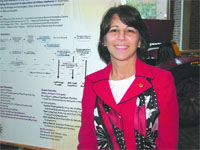
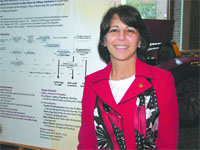
Marla Michel says the Precision Manu-facturing Regional Alliance Project has the potential to help existing companies grow market share and add jobs.

It’s called the Precision Manufacturing Regional Alliance Project, or PMRAP. That’s the long title of an initiative that one participant, a professor in UMass Amherst’s Machining and Industrial Engineering department, called a “two-way communication street” between the university and area manufacturers. That communication is expected to drive innovation that will eventually lead to growth in a vital sector of the economy — and job creation.

There were dozens of area dignitaries gathered at the new Museum of Springfield History for the Dec. 17 press conference to announce an initiative called the Precision Manufacturing Regional Alliance Project, or PMRAP for short.

Many of the speakers, from Springfield Mayor Domenic Sarno to Greg Bialecki, secretary of the state Executive Office of Housing and Economic Development, said the kinds of things one might expect as they discussed the project, funded by a $600,000 National Science Foundation grant.

They used words like ‘historic’ and ‘breakthrough’ and ‘potential’ as they discussed what amounts to a unique partnership between the region’s precision-manufacturing sector, departments at UMass Amherst, and other players, designed to foster innovation and create jobs.

But when the owners of these precision manufacturers and officials at UMass spoke, there was a different, very confident tone that wasn’t speculative in nature, noted Dave Cruise, project manager for the Regional Employment Board of Hampden County, who was one of those in attendance.

“And there was good reason for that,” said Cruise, one of the lead coordinators of the PMRAP project. “It’s because they know that this is not just talk. They can tell that it’s going to work. They’ve seen it.”

Indeed, while those representing the various parties involved in the project waited until the circumstances were right and all the major players could be assembled to stage the elaborate announcement ceremony and signing of a memorandum of agreement, the work toward forging partnerships was already well underway.

It started in late summer with the first of four so-called “technology-innovation forums,” said Cruise, referring to sessions at which area precision-manufacturing shop owners meet with faculty members at UMass to discuss ways in which they can help each other. These forums had titles ranging from ‘Non-metallic Metals — Machining and Processing Technologies’ to ‘Manufacturing Process Optimization’; from ‘Metals and Composite Interfaces’ to ‘Cryogenic Machining.’

The common denominator in each case, said Cruise, was open dialogue designed to develop ways in which research at UMass could help area manufacturers create new products; develop new, more efficient processes; or use lighter and stronger materials to better serve customers and drive innovation.

Marla Michel, director of Research Liaison & Development at UMass, put things another way. She said the innovation forums — and the PMRAP as a whole — were blueprinted to create what she called “an invisible new climate” in which technology can be transferred from the labs at the university to plants across the Valley.

Elaborating, she said that UMass faculty members and students are involved in many different types of research projects, and are conducting such work mostly unaware of how it might be applied by small and mid-sized precision manufacturers. Meanwhile, these same manufacturers are facing both challenges and opportunities with regard to existing markets and possible new ones, and without much of an understanding about how ongoing research at UMass might help them accomplish stated goals.

The PMRAP was conceived to essentially open up the lines of communication, keep them open, and build a bridge between a still-strong sector of the economy and one of the state’s leading research institutions, said Sundar Krishnamurty, a professor in the university’s Mechanical and Industrial Engineering (MIE) department, one of two that are closely involved with the project.

“I think this is a very unique opportunity for us to collaborate with small and medium-sized manufacturing facilities,” he said. “Our valley is known for its manufacturing expertise, but nevertheless, industry on the whole, and especially in Western Mass., is being challenged by increased competition globally, aging facilities and technologies, and insufficient labor.”

Krishnamurty said the PMRAP is unique in that it is focusing on smaller precision manufacturers, and also on innovation that will take place in a few years, not 10 or 20, as is the case with most such initiatives. Therefore, it has strong potential to become a model for other regions and universities, he said, noting that there are already some presentations being planned for a year from now, at which PMRAP participants will discuss how their work can be emulated.

More importantly, though, he said, the project could foster job growth, help area companies maintain market share, and increase market share.

Material Evidence

The essence of the PMRAP can be derived from language in the memorandum of agreement between the three major players — the Western Mass. Chapter of the National Tooling and Machining Assoc., UMass Amherst, and the REB — and specifically from some of the passages pertaining to what UMass effectively agrees to do:

  • Collaborate in the design and implementation of the Technology Innovation Forums that will result in identifying solution approaches to short- and long-term technology-development issues;

  • Facilitate and enable the piloting of a technology-transfer project that will demonstrate the feasibility of transferring research discovery or new-product invention from UMass to a small precision-manufacturing company;
  • Agree to support small precision-manufacturing companies in their applications for new funds to further the technology transfer between them and UMass; and

  • Liaison between the REB technology-innovation and applications engineer to ‘mine’ technologies and practices that can be shared with the precision-manufacturing companies to help the regional industry develop flexible, creative solutions, and to deliver new and better products and services in the present or new markets.
  • Breaking down these assignments and those given to the other parties involved, Cruise said it all comes back to one word: partnerships. And in that respect, the PMRAP is a perfect followup to other work being funded by a John Adams Innovation Institute Grant to make the region’s precision-manufacturing sector more visible, a better alternative for job seekers, and, ultimately, more competitive.

    Ed Leyden, president of Ben Franklin Design & Manufacturing in Agawam and current president of the Western Mass. Chapter of the National Tooling and Machining Assoc. (NTMA), said that one of the main goals of the Innovation Institute-funded initiative is to drive transfer of technology from UMass to area precision-manufacturing shops; the PMRAP will essentially piggyback that effort and ensure that such transfers take place.

    And by doing so, it will keep technology that has historically gone elsewhere inside the Commonwealth and, specifically, the 413 area code.

    “What excites me about this is that there’s so much money being spent on research and development in this state, including that $1 billion set aside for life sciences,” he said, “and my big question is, why aren’t we bringing those things to market, why aren’t we creating jobs in this state? We’re doing the research and development here, and then it’s leaving.

    “How difficult is it for us to get together,” he continued, “and keep it here, and create good quality jobs in the process?”

    The PMRAP project will help change that equation, said Cruise, adding that the initiative has a number of partners. In addition to the REB and UMass, the Economic Development Council of Western Mass., Springfield Technical Community College, Holyoke Community College, and six area vocational technical high schools are all involved.

    There are several goals and deliverables, he continued, including the far-reaching ambition of establishing something that would be called the Massachusetts Center for Advanced Precision Manufacturing Technology, which would take all of the PMRAP’s stated goals — and strategies for reaching them — to a higher plane.

    The initiative falls under the broad category of economic development, said Michel, and, more specifically, an emerging focus on the state level to help existing companies to not only stay in business but also identify ways to trigger growth and penetrate new markets.

    “In previous years, there’s been a lot of attention put on attracting new businesses here,” she explained. “But there’s been this revival, or ‘aha moment,’ that we have to make sure that the companies that are already here stay here, and grow. There’s actually been some data that shows that most of the business growth comes from companies that are already here anyway. So why not put some resources there?”

    If the project takes the course organizers believe it will, then there will be several winners emerging from the work done, Michel continued, noting that precision manufacturers win because they gain new business; researchers at UMass win because they get new and interesting problems to solve, “and that’s their lifeblood”; and the region wins because it gains jobs (in all likelihood), and an important sector becomes more vibrant.

    Parts of the Whole

    What the PMRAP does is allow small- to medium-sized manufacturers to step beyond the daily grind of survival and look at new-product discovery and development and new and better ways of doing things, Michel told BusinessWest.

    “What we know is that most of these businesses are looking day to day, how to meet the next order, how to find the next customer,” she explained, “and not necessarily looking at how to find the next process or how to find the next new material so we can find a different customer and grow our customer base.

    “That’s one of the really neat things that this project is doing,” she continued, using the present tense as she did so. “It’s allowing companies to learn about new technologies before they have customers with them, and so they can find customers with them. But it’s also allowing the faculty, the researchers, to see how the technology is used in an environment like this, as opposed to with a larger company or in a research environment.”

    Krishnamurty agreed, and said the main goal of the PMRAP is to create what he called a “two-way communications street” whereby those in the precision manufacturing industry and faculty and students at UMass can get together and discuss new and innovative ideas.

    “And not in a generic sense, but in targeted, tailored research projects,” he said, ones that will likely have an immediate impact. “A lot of the work that goes on at universities is futuristic — looking 10 or 20 years down the road and assessing how we can change things. But with this particular project, our focus is on more immediate transfer of applications.

    This, in essence, is what the technology-innovation forums are all about.

    Michel says she hasn’t been to any of the innovation forums, but she’s received enough feedback from those who have to gain a real sense of what’s happening at these events and why the exchanges bode well for the future.

    She described the sessions as “elaborate mating dances” of sorts, during which the two main parties (the MIE and Polymer Science Engineering departments at UMass and representatives of area precision manufacturers), as well as other partners, gauge compatibility and the ability to understand each other’s language. Most have gone well, but one that got off to a rather slow start showed — and perhaps better than the others — how these are going to work.

    “The fourth session [Cryogenic Machining, or the use of liquid nitrogen to cool tools] looked like it was going to be a total dud,” Michel explained. “People were getting ready to wrap up and say, ‘this is not working — we don’t have anything here,’ but then, someone said something, and things just started flowing.”

    Krishnamurty, who was one of several from the MEI Department in attendance for that session, said it was slow to yield some true results, but eventually, the give-and-take led to discussions that might eventually lead to process improvements that could improve efficiency for many area shops.

    “Cryogenic manufacturing eliminates the need for many other kinds of cooling processes, and reduces the general wear and tear on the tools,” he explained. “The challenge is how to bring the liquid nitrogen into the plant — in what shape and form does the process take, and how does it affect the machining operation?

    “Our hope and hypothesis is that it will lead to significant improvement in efficiency and cost-effectiveness for our partners,” he continued, adding that discussions on this subject will definitely continue.

    Similar developments should be expected from the other forums, both those already held and two additional ones slated for early this year, said Krishnamurty, noting that the sessions have yielded what he called “very good exchanges.”

    “These have been very conversational discussions on what our priorities should be moving forward,” he explained. “What projects are of interest to them, and what are the projects with which UMass can make the maximum contribution? We heard from the companies about their needs, and we heard from the faculty about their expertise.”

    In so doing, he concluded, the sessions helped break down what one area shop owner called a “wall” between the university and the manufacturing sector.

    Finished Product

    Several of those who spoke at the Dec. 17 press conference talked about how the history museum was the perfect setting to announce the PMRAP. Most all of the exhibits in the facility, which opened only a few months ago, are prime examples of how innovation changed everyday life — and fueled the region’s economy.

    Those in attendance were given a tour that included exhibits of Rolls Royces made in Springfield, Indian Motocycles that were invented in the City of Homes, Smith & Wesson guns, and some products made by current precision manufacturers spawned by what many consider the age of innovation in the the Pioneer Valley.

    No one can say with any degree of certainty when or if the PMRAP project will add to the exhibits in the museum. But what all those involved do know is that this initiative has enormous potential for making the precision-manufacturing sector more vibrant and a bigger force in economic development.

    They know, because they’ve already seen it.

    George O’Brien can be reached at[email protected]

    Features
    Springfield Superintendent Focuses on Community Partnerships
    Schools of Thought

    Alan Ingram says his life is an example of being challenged to overcome barriers to success — and achieving it.

    As he goes about the task of running the state’s second-largest school system, Alan Ingram falls back on experiences and lessons from his own childhood (spent attending a different school virtually year), a 22-year career in the military, time spent learning from several mentors, and a stint in Oklahoma City, a community facing many of the same statistical challenges as the City of Homes. His philosophy is simple: to create a culture of educational excellence.

    Springfield School Superintendent Alan Ingram has a core belief that defines his work.

    “I believe in the power of high expectations — believe that children and adults will rise to the level of expectations that you create for them,” he told BusinessWest. “Success is possible, even against the odds.”

    It’s a tenet learned through a life that has taken him from an impoverished Detroit neighborhood to Europe and military bases around the world, to Oklahoma City, and more recently to Springfield, where he sits at the helm of the second-largest school district in the Commonwealth.

    It’s a job in a city with statistics that are startling and present their own challenge. The majority of the students are minorities, who share poverty as a common demonimator.

    The student body is 54% Latino and 23% African-American. Nearly 85% qualify for the federal lunch program, and 23% have special needs, a figure that is almost double the national average of 13%.

    In addition, 13% of Springfield students have limited proficiency in English, and 24% speak English as a second language.

    But those numbers have little effect on Ingram’s expectations and belief that, with collaborated effort, Springfield’s schools can become known for excellence. “Our circumstances just require that we do things differently to address the unique needs of our kids,” he said.

    His life experiences and significant mentors taught Ingram that urban challenges can be overcome with a no-nonsense attitude and a strategic formula that puts everything and everyone in alignment.

    “There is much work ahead of us, yet we will take time to celebrate our accomplishments along the way,” he said. “My vision is for a culture of educational excellence. In plain words, this means every kid will get a great education. It doesn’t mean we are perfect. People shouldn’t equate excellence with perfection. But it does mean we will be striving for excellence in every aspect of our work.”

    His formula includes parents, teachers, principals, school administrators, the transportation department, food-service workers, business partners and even policies that Ingram has carefully combed to facilitate cooperation and consistency. “Springfield is a city where I can give back what was given to me by working hard every day to provide the highest quality of education so that all of our students are empowered to realize their full potential.”

    Early Education

    Ingram’s beliefs were ingrained in early childhood. He grew up in poverty in a single-parent home in Detroit. His mother was a high-school dropout, and by grade 4, he was responsible for caring for his two siblings after school until his mother returned home from working second shift.

    In spite of their circumstances and her own limited academic history, Ingram’s mother had a strong belief in the power of education, along with high expectations for her children. “My mother was, without question, a very strong-willed, no-nonsense woman,” Ingram said.

    She had no tolerance for excuses and expected a lot from her children. “One of my favorite childhood memories about expectations is that, when we pointed out what other children were doing, she would tell us, ‘Well, their name isn’t Ingram,” he remembered. “What mattered to her were the expectations she set for us.”

    Ingram attended nine different schools from the time he entered kindergarten until his high-school graduation. While in high school, he had to change schools every year. “Although I was born and raised in Detroit, I graduated from high school in South Carolina,” he said.

    Athletics played a large role in his life. “I played basketball and football, but football was the thing I was best at,” Ingram said.

    “But it was tough,” he continued, referring to the constant change of schools. When he lived in Detroit, 90% of the school population was African-American. When he moved to South Carolina to help his aunt and uncle, that number was reversed, and was especially noticeable in sports. “There were very few African-Americans on the team,” he said.

    But no matter where he was, people expected big things of Ingram. “I’ve been blesssed with coaches, mentors, and caring adults who have made a difference in my life,” he said.

    One was his junior-high English teacher, Dr. Matt Blount. “He, too, was no-nonsense and had very high expectations,” Ingram said. “I resented him because he wouldn’t let me get away with anything.”

    But they still share a friendship today, and Blount passed his strong work ethic, discipline to persevere, and love of writing to Ingram.

    Another pivotal figure was Judge Dominick Carnovale. Ingram met him when he was in sixth grade, living in Ingram’s aunt’s neighborhood. He visited Carnovale on weekends and during his adolescence. “I cut his grass and washed his car … he was the kind of man who always had $10 or $15 for a kid trying to earn a few dollars by working odd jobs.”

    More importantly, he had time for Ingram, and when his grades dropped precipitously during his freshman year of high school, Carnovale took him in and became his legal guardian and “the father figure I know to this day,” keeping a close watch on his educational and moral development.

    As a teen, Ingram was often an observer of Carnovale’s courtroom proceedings. “I sat there and saw people who made horrendous mistakes and their consequences,” he said, adding that he lived with Carnovale for two years and is still very close to him.

    During his senior year of high school, his aunt decided to move from South Carolina. Ingram didn’t want to switch schools again and moved in with his best friend’s family. It was headed by Willie Mae Smith, who had eight children and taught him “the spirit of giving. She was a devout Christian and beautiful lady,” he said.

    Life Experience

    Ingram’s next venture was the U.S. Air Force. Although his dream had been to play college football, he attended so many schools, he didn’t have a portfolio to demonstrate his potential.

    Instead, he volunteered to serve his country. His career spanned 22 years, and Ingram lived all over the world, spending 11 years in Europe and three in Hawaii. Eleven of those years were spent in education and training, and he specialized in leadership and management, which he taught to to young airmen as well as civilians. By the end of his military stint, Ingram had achieved the rank of Air Force chief master sergeant. “Only 1% ascend to that grade,” he said.

    During his years in the Air Force, Ingram’s belief in high expectations was enhanced by values that included integrity and a need to give of himself to “my country and my community. I also learned the value of excellence, which I had been introduced to at an early age. It was nurtured and cultivated and is certainly integral to who I am today,” he said.

    Living abroad schooled Ingram in diversity and the importance of recognizing and appreciating different cultures. “We can’t live with borders and walls around the U.S. It’s a global economy, and we have to work with our neighbors in a productive way,” he said.

    Ingram married while he was in the military. His wife was also in the Air Force and had been stationed in Oklahoma City.

    When he left the military, he honored her desire to move there again and took a position as admissions officer for Oklahoma State University. “I saw it as a way to help kids,” he said, adding that it aligned with the educational work he had done in the military.

    About two years later, “with a little nudging and encouragement,” he assumed the job of central office administrator for Oklahoma public schools. He spent 10 years on the job, and when he left, he was chief account officer and held the second-highest position in the district. During his time there, mentors Gui Sconzo and Bill Scoggins told him if that, he wanted to become a school superintendent, he needed to get a doctorate, which he accomplished.

    At the time, Oklahoma City was almost a mirror image of Springfield in terms of its student body. “It had 40,000 students and was the second-largest district in the state at the time. They have a large Latino population and are a very poor urban district, much like Springfield,” he said.

    But the knowledge and skills that led him to the City of Homes were honed even furthur when he was acccepted at the prestigious Broad Superintendents Academy. “It gave me exposure to some of the best minds in the country who were concerned with urban issues,” he explained. “We studied Miami-Dade, Chicago, Houston, Long Beach, California, and other areas.”

    After graduation, he became one of 20 candidates who vied for the position of school superintendent in Tacoma, Wash. He was one of two finalists, but didn’t get the job, and the application process was so grueling, he was not ready to begin another.

    But a short time later, he was contacted by a national search consultant about the superintendent’s opening in Springfield Schools. He interviewed, was hired in May 2008, and began work that July.

    Ambitious Goals

    Ingram’s action plan for Springfield began with a period of listening and learning the needs of the students, their teachers, the school system, and the community. His goal was to assess the district’s strengths and understand its challenges and weaknesses.

    “Every child can and should learn,” he said. “We must not be satisfied with simply helping some children to succeed — we must strive to have every child learn to their highest potential. If we settle for anything less than success, that’s what we will get.”

    Since that time, Ingram has put a number of initiatives into place via a strategic planning process. It was a year-long endeavor that brought 60 to 70 people together with a common goal. They included community leaders, people in the faith community, school principals, administrators, and parents. “We spent a year developing a vision, mission, and priorities for the district,” he said. “I believe in collaboration and have a leadership style based on bringing the right people to the table.”

    Over the past 15 months, Ingram has made a significant number of changes to the Springfield School system. His first priority is to ensure “that every child gets a great education,” and to that end, he reorganized Springfield’s three school districts.

    Today, all of the elementary schools are in two zones, and the middle and high schools make up another zone. Ingram also initiated a quality-measurement survey of district stakeholders which included students, parents, teachers, and staff, so he could prioritize needs.

    In June, he presented four plans to the School Committee for its approval. The first was a Pupil Progression Plan, which would identify what each student should learn in each grade, along with intervention strategies.

    The second was a District Grading Framework, which calls for grading students based on a formula composed of their achievement-based assessments and their academic habits, such as class participation and homework.

    The third is a Student Assignment Policy, Procedure, and Process Manual, which contains guidelines and formal assignment practices.

    Ingram’s final proposal dealt with academic policy. He revised the old policy to provide incentives for students to return to school after extensive absences, with a plan to recover lost credits and make up missed school hours.

    He also instituted a rigorous process to find and hire experienced teachers, principals, and administrators, and fired a principal in July who allowed 10 students to graduate who had not fulfilled graduation requirements.

    Ingram has joined forces with the Hampden County Sheriff’s Department to launch a comprehensive, service-oriented truancy intervention and prevention program, and created a new Springfield Student Attendance Resource Center. Its goal is to provide support for students with egregious truancy records to help them get back on track.

    “The warning signs are flashing around us, and it’s obvious that what we have been doing is not working,” Ingram said. “If we want new results, we have to do something new and something that has been proven to work in other districts.”

    In November, he also instituted a ‘Principal for a Day’ program which allowed community leaders and business people to get a first-hand look at the challenges these officials face on a daily basis.

    Ingram continues to be relentless in his pursuit of excellence and says he wants to make sure every student has the opportunity to become proficient in a school system that is safe. He has created community partnerships to facilitate these goals and formed committees to study a variety of issues.

    He said one of the things that attracted him to Springfield was the realization that the business community has a vested interest in the city’s schools and is willing to work with him. Companies such as Big Y, MassMutual, and Baystate Health have strong alliances with the School Department, and a network of volunteers are dedicated to helping students.

    “What makes Springfield different from other cities is that the business people here really understand the connection between schools and success. You can’t create enough gates outside of Springfield to shelter yourself from urban social ills. The solution is in the community — how well the children are educated and the opportunties they have,” he said.

    Ingram believes leadership is and should be about influence. “It’s about creating the right vision and, more importantly, how to influence the people willing to go with you and those who are unable or unwilling,” he said. “The best way to do this is to strike a chord through collaboration with the use of data, high expectations, progress monitoring, and strategic planning.”

    It’s a tall order, but what else would one expect from a leader who believes “greatness lies within each student — even if they don’t realize it yet.”

    Features
    This Entrepreneur Is Getting the Bugs Out
    Companies to Watch: Graduate Pest Solutions

    Glenn Olesuk says his degree in Entomology gives him a competitive edge — and it also gave his company a name.

    Glenn Olesuk says he won’t easily forget his first professional assignment.

    That was as the technical director for a local pest-control company in Chicago. There were many elements to that job description, but at the top of the list was battling something the locals and the press had dubbed the “super rat.” This was a pest said to have amassed a resistance to all or most of the rodenticides in use at that time (1979).

    “There was evidence that some resistance had been built up,” said Olesuk, now the owner and entomologist with his own company, Hampden-based Graduate Pest Solutions, adding quickly that the super rat was, in his opinion, more myth than reality.

    But he did see plenty of rats, and he has some vivid memories from those days in the Windy City, including one that he and his wife, Brenda, often retell. Glenn, it appears, wanted to show Brenda just what he did for a living, specifically his work at some of the finer hotels to keep rats out of the view of guests.

    “Every major city has layers — downtown Chicago had what’s known as Wabash Avenue, which is the layer below the main streets, where the service vehicles would come in,” he explained. “And that’s where the real battle with rats took place. We would trap and kills rats by the hundreds. One night I took my wife to show her what I do every day; I was driving with my lights off, and pulled into an alleyway behind one of the major hotels. When I turned the lights on, it was like a Hollywood movie — there was just a mass of dark gray that moved from the street and ran into these inconceivable little holes and openings in the alleyway.”

    These days, Olesuk is doing battle with far-less-exotically named pests at a venture he named Graduate to call attention to something he says differentiates him from most all competition. That would be his bachelor’s degree in Entomology, the study of insects, that he earned at Syracuse.

    “Sometimes I have to explain it,” he said of his company’s name and the motivation behind it. “But by the time I’m done explaining, they get it.”

    Most in this huge, highly competitive industry don’t have such qualifications, he explained, adding that, from his studies in college — not to mention his 30 years in the field (and in attics and back alleys) — he can effectively answer most all questions people have about pests in their home or business.

    And informed answers are what clients and potential clients want most, said Olesuk, adding that he’s been providing them since his career path took a turn at Syracuse. “I was going to get into forestry,” he explained, “But then one of my professors said, ‘take pest-control technology, and you’ll always be employed.’ He was right.”

    Tracing his history in the pest-control business, Olesuk said he worked for both local and regional firms until becoming part-owner of a venture in 1998. That business partnership eventually dissolved in early 2007, he continued, adding that he launched Graduate Pest Solutions shortly thereafter, and has been building a book of business steadily since then.

    Moving forward, Olesak, who has his two sons, Paul and Scott, working with him in part-time capacities, said his primary goal — and challenge — is to get his company’s name and his résumé in front of people. If he does so, he believes he can take market share from a host of local, regional, and national competitors.

    And once he gets a customer, Olesuk says he keeps it. “I’ve always had 100% retention,” he explained. “I’ve never lost a client to service.”

    Olesuk says the majority of his clients are commercial, and while he’s working to continually build that portfolio, he also wants to greatly increase his residential customer base as well.

    In both realms, the key is exposure, he said, adding that he’s employing a number of marketing vehicles — from some direct mail to his service truck, outfitted with a new logo — to introduce people and businesses to his venture.

    Olesuk hasn’t encountered any super rats in his current service territory (Hartford north through the Pioneer Valley), but he is being kept busy with Asian lady beetles, mice, spiders, ants, and bees, each with their own season, except spiders, which are generally a year-round concern.

    He can talk at length about any and all of them, because he has not only experience, but that diploma that gives him a degree of separation — both figuratively and literally.

    Features
    City Strives to Create Momentum in Its Downtown Core
    Doing Business in: Chicopee

    Economic-development leaders hope the Ames Privilege building is only the beginning of more housing downtown.

    “Chicopee is the crossroads of New England,” Gail Sherman said proudly — even as she acknowledged that other communities might take offense to that descriptor.

    “I know a lot of cities say that,” said Sherman, president of the Chicopee Chamber of Commerce. “But with the Mass Pike and the interstates, this really is a very convenient location.”

    The chamber’s goal, however, is to make Chicopee more than convenient for business owners, but also an affordable and attractive place to do business.

    “Our electric rates are lower than many other cities because we have a municipal electric company,” she noted, also citing property taxes, which were lowered last year so that businesses are paying less than before to the municipality — an attractive draw for companies to locate in town. “That’s a real advantage at a time when people are tightening their belts.”

    Meanwhile, Mayor Michael Bissonnette and other Chicopee officials are busy shepherding projects to draw more retail, services, and housing; expand parking capacity downtown; and generally try to counter an economic climate that has not been kind to any city.

    “Business is still tough,” Sherman said. “Manufacturers are struggling, and everyone’s wondering whether to hire people back or not, wondering what will happen in the new year. Some businesses have laid off a third of their workforce. Retail has done pretty well with the holidays, but now the holidays are over. And restaurants are struggling; people aren’t eating out as much. Everyone seems to be waiting to see what happens in 2010.”

    It’s a year when some long-awaited projects could start to bear fruit, positioning Chicopee to benefit from whatever economic recovery might emerge in the new decade.

    Parking Lost

    Patrick Gottschlicht, co-owner of the Munich Haus restaurant downtown, knows the area has a long way to go before becoming the sort of vibrant destination some envision. But his establishment has been one of downtown’s significant success stories, and when he looks out his front door, he sees opportunity.

    “Every time I talk to the mayor, he’s trying to attract some new businesses. He hasn’t forgotten about the downtown, and one of his priorities is getting businesses down here,” Gottschlicht said.

    “Obviously in it’s hard in this economy to attract new business, but there’s definitely unlimited potential downtown,” he added. “There are a lot of open storefronts, but that can be a good thing too, because once we get some of them filled, it could cause a chain reaction and bring more business down here.”

    Parking capacity has been an issue, and the city continues to examine possible downtown properties to purchase and convert to more parking.

    “There’s been a big push for more parking, and there’s a good chance we’ll see that happen,” Gottschlicht said, noting that, while Munich Haus faces a shortage of parking during lunch hours, it’s easier to find a spot nearby for dinnertime, after many businesses are closed for the day.

    “A lot of downtown storefronts are empty,” Sherman said, “but so much is about parking. Once we make more parking, we’ll start filling up some of those storefronts” — and perhaps start that chain reaction Gottschlicht mentioned.

    Other downtown projects aimed at revitalizing the area are at various stages of progress. The historic mill building now known as Ames Privilege is home to some affordable housing, and New York-based developer Josh Guttman has been targeting the neighboring Cabotville complex for more condos, both affordable and market-rate. Sherman believes housing is a key component to the long-term health and vibrancy of any downtown, and such a project could be an attractive residential option for Elms College professors, Baystate Health employees, and retirees.

    “It’s that whole idea of people living around the businesses,” she said. “When people retire, they want to be closer to downtown services.”

    Then there’s the bike path being developed alongside the Chicopee River, which should be completed this spring, as well as a burgeoning nightlife scene, with the success of the Maximum Capacity nightclub and talk of converting the former Rivoli Theatre into a European-style nightspot.

    City officials take seriously the potential for more entertainment and dining options. They can point to a recent resident survey conducted as part of a long-term neighborhood revitalization plan funded in part by the state Department of Housing and Community Development.

    Nearly 90% of respondents felt that more retail, entertainment, and leisure options were ‘very important’ or ‘essential’ to the downtown’s revitalization. More than 80% also named more food and beverage options and better parking as ‘very important’ or ‘essential.’ When asked where they would spend the city’s money to revitalize downtown Chicopee, the three clear favorites were to raze or fix up blighted properties, increase parking, and increase retail activity.

    Gottschlicht also cited the old library building that borders City Hall and is currently vacant. “The library is still out there for requests for proposals,” he said. “Something could definitely happen with that building; there’s a ton of potential over there.”

    For potential fulfilled in Chicopee, the clearest success story has been the rebirth of the Memorial Drive retail corridor — particularly the stretch adjacent to Mass Pike exit 5. Where the dying Fairfield Mall used to sit is now a complex housing Wal-Mart, Home Depot, Marshalls, and a host of other retail establishments and dining options.

    “Memorial Drive continues to grow,” Sherman said, noting that the stalled Chicopee Crossroads development at exit 5, with a planned mix of retail and restaurants, could eventually be another success story. “The whole area has become a thriving retail center.”

    Deep Roots

    Sherman said Chicopee has one other selling point that’s harder to quantify: a close-knit community feel in its various neighborhoods that, over the long term, breeds loyalty to business establishments.

    “It’s the second-largest city in Western Mass., yet it feels like a town; businesses here have deep roots in the community,” she said.

    Gottschlicht agreed. “For us, the key to our success has always been the people of Chicopee,” he said. “It’s a very, very loyal city, and we knew that coming in; my mother grew up in Chicopee, and my grandfather grew up here and worked here. So that loyalty of the businesses and residents has been a key component; their word-of-mouth promotion is the best advertising we could have.”

    Sherman also praised the financial stweardship of the city, which gives it flexibility in pursuing various projects.

    “Chicopee is in great shape fiscally,” she said. “We have almost $10 million in a rainy-day fund, so, unlike a lot of cities, we’re blessed with having good fiscal management.”

    She concedes, however, that many of the moves Chicopee is making to attract businesses, from downtown improvements to competitive tax rates, may only be laying a foundation for future economic development, because the state of the current economy continues to spook developers and business owners from making moves.

    “Businesses are worried because they don’t know what’s coming, so it could take two or three years for everything to bounce back — if it ever does,” she said. “Some people say that, with this economy, we’ll never go back to what we perceived as normal.”

    Which is why it’s all the more important — particularly in a state known for saddling business owners with costly regulations — for a city to create as much of a business-friendly environment as possible, to compete when the economic tide does turn.

    “This city seems to respect the fact that businesses carry the city,” Sherman said. “When businesses move out, so do residents.”

    So far, however, Chicopee continues to grow, and the projects strewn across the drawing board of the chamber and city officials continue to take shape, albeit slowly.

    “We’re hoping for a kind of renaissance in the years to come,” Sherman said, again contemplating the needs of Chicopee’s downtown. “The mayor feels like it’s going to happen, and I feel it’s going to happen, too.”

    Joseph Bednar can be reached

    at[email protected]

    Features

    Those thinking about nominating a group or individual for BusinessWest’s Difference Makers Class of 2010 need to think — and move — quickly.

    The deadline for nominations is Thursday, Dec. 31.

    BusinessWest Editor George O’Brien said a number of nominations have been received to date, involving a number of individuals and organizations who are, in myriad ways, making a difference in the community.

    “We already have many excellent candidates to consider,” said O’Brien. “But there are many more people doing some incredible things who haven’t been nominated, and should be.”

    O’Brien said the nomination form on page 15 is self-explanatory and simple to use, and he encourages readers to use their imagination to identify and then nominate people worthy of the Difference Makers award.

    The inaugural class of Difference Makers included four individuals — Doug Bowen, president and CEO of PeoplesBank; Kate Kane, managing director of the Springfield office of the Northwestern Mutual Financial Group; Susan Jaye-Kaplan, founder of GoFIT and co-founder of Link to Libraries; and Bill Ward, executive director of the Regional Employment Board of Hampden County — and one group, the Young Professionals Society of Greater Springfield.

    Together, these honorees represent an excellent cross-section of the types of groups and individuals the program was created to celebrate, said BusinessWest Associate Publisher Kate Campiti, who also urged readers to play an active role in shaping the Class of 2010.

    While nominations continue to come in, details are falling into place for the awards ceremony honoring the next class, she said. The event will be staged at the Log Cabin Banquet and Meeting House in Holyoke on March 25, beginning at 5 p.m. The celebration will feature live entertainment, heavy hors d’ouevres, and introductions of this year’s winners.

    It will also include an update on an ambitious program called “Creating a Culture of Literacy — One Book at a Time.” It was created last summer at the urging of Ward and others at the Regional Employment Board to focus additional attention on the issue of literacy and its importance to the overall health and well-being of the region.

    The initiative helped collect hundreds of books for the Hasbro Summer Learning Initiative, and will be an ongoing concern for future classes of Difference Makers.

    Additional details on the March 25 celebration will be published in upcoming issues of BusinessWest as they become available.

    Features
    Today’s High-tech Gear Benefits a Generation on the Go

    Societal trends point to a generation of professionals who are increasingly doing business away from traditional offices, and the tools they use — not just for work, but leisure time, too — reflect the need to stay connected with colleagues, clients, and friends when on the road. From lightweight notebook computers to cameras that upload quickly to the Internet; from GPS navigators to smartphones and MP3 players, there’s something for everyone — and, in many cases, at more affordable prices than ever.

    Technology moves fast. Which is good, because today’s business professional is on the move, too.

    So it’s not surprising that a look at this year’s top-rated high-tech offerings is also a crash course in how to work — and play — while on the go. From laptop computers to GPS systems; flash drives to iPods and e-readers, Americans are increasingly bringing their work and leisure activities with them wherever they go — and those devices are constantly improving in terms of power, storage capabilities, and (importantly) price.

    Take, for example, the Toshiba Mini NB205, one of PC magazine’s most highly touted ‘netbook’ computers for 2009. At just $400, it weighs a little under three pounds — average by laptop standards, but still pretty lightweight — and boasts a roster of features including three USB ports, a webcam, fast 1.67GHz processor, 1GB of memory upgradable to 2GB, and battery life that ranks among the longest available.

    Yes, its 10-inch screen is smaller than the 12-inch screen of some pricier notebooks, but it compensates with a full-size keyboard, large mouse buttons, and spacious touchpad. The NB205 also meets established standards of energy conservation and recyclability, another plus in todaqy’s ‘green’ business world.

    For those with a slightly higher budget, but still in the affordable range, PC magazine gives high marks to the Acer Aspire 3935 ($900), which boasts a sleek, metallic cover, 1-inch-thick chassis, and 4.3-pound weight, all while supporting a 13.3-inch screen and good-sized, comfortable keyboard buttons. The system could be even thinner if not for one of its most desirable features, its built-in, dual-layer DVD burner. Its other features — the webcam, a 5-in-1 card reader, and a 250GB hard drive — are standard on ultraportables. With a 2GHz processor speed and decent batter life, the 3935 also meets standards of energy efficiency and recyclability.

    On the go means more than carrying around notebooks, however; it also means actually driving between destinations, and professionals are increasingly relying on global positioning systems (GPS) to get them where they want to go.

    According to cargpsreviews.net, the Garmin Nuvi 780 GPS navigator ($599) goes above and beyond what’s usually expected from a GPS, offering an easy-to-use interface, a Qwerty keyboard, and a wide array of features including spoken directions in real street names, integrated traffic receivers, an MP3 player and photo viewer, and an FM transmitter that will play voice prompts, MP3s, and audio books directly through the vehicle’s stereo system. In addition, its bright, 4.3-inch, widescreen display is readable even in harsh daylight from any angle, thanks to the integrated white backlight.

    For less money, PC World gives high marks to the TomTom XL 340 ($299), whose 4.3-inch screen is larger than that of its predecessor, the TomTom ONE 140, and also features the company’s new IQ Routes technology, which is based on real-life user data rather than the traditional maximum speed method. It considers all possible routes and then selects the one that takes the least time, with the technology often trying to avoid main roads. The unit also boasts advanced lane guidance, by which an icon in the corner of the map screen highlights which lane the vehicle should be in, depending on the destination.

    Point and Click

    What better device to take on any journey — business or pleasure — than a camera? Digital cameras are being used increasingly for both work and play, as the rise of blogging, social media, and other Internet 2.0 applications has individuals and businesses uploading images online like never before. Fortunately, the top-rated models for 2009 come in a variety of price points, with a wide range of features, making it easy to find a camera to match one’s photographic needs.

    PC World gives very high marks to the Nikon D3000 ($600), which is an evolution from its popular D40x, increasing its megapixel count from 6 to 10, and boasting a wider range of ISO settings, a larger LCD screen, an 11-point autofocus system, and a 3-frames-per-second burst mode. The redesigned menu makes it easy to maneuver through the menu options and to understand settings. The camera also features an array of scene modes and in-camera editing features, including scene recognition, Active D-Lighting, face detection, and a retouch menu.

    For those on a budget, PC World recommends the Canon PowerShot SX200 IS point-and-shoot camera ($350), with a 12X optical-zoom lens. The camera represents a growing trend among point-and-shoot digital cameras: high-zoom models that are just a bit bigger than typical compact cameras but still stowable in a bag, purse, or large pocket. The body is still big enough to accommodate a 3-inch LCD screen on the back, and the display is sufficiently bright for composing shots in sunlight.

    For many people, cameras are sheer leisure tools, and the same can be said for e-readers and MP3 players. In the former category, the Barnes & Noble Nook is making serious strides on the popular Amazon Kindle e-reader. The Nook ($259) competes with design and usability features such as e-book loaning, dual displays, and touchscreen navigation.

    According to SlashGear, while the Nook is comparable in size and display to the Kindle, it employs a 3.5-inch color-capacitive touchscreen instead of the Kindle’s Qwerty keyboard, allowing for faster navigation. The reading experience is similar to other e-readers on the market; text is crisp and sharp-edged, with two to three font styles and different sizes supported, and since there’s no backlighting it’s an easier read than attempting to do the same with an LCD screen.

    As far as MP3 players go, the iPod Touch, now on its third generation at 8GB ($199), 32GB ($299), or a whopping 64GB ($399), is still the product of choice, according to PC magazine. There’s no built-in video camera, as had been rumored, keeping the focus on music and portable gaming. With 480 x 320 resolution, the display is the best in the business, and Apple claims that the 32GB and 64GB versions are 50% faster than the previous generation.

    Also, the higher-capacity Touch models support games and apps with better graphics. The existing Genius feature in iTunes lets users develop a playlist around a single song and suggest music they might like based on what they already listen to. Genius can also create custom playlists and organize music into ‘mixes’ based on genre. Apple rates the battery life for the iPod Touch at 30 hours for audio playback and 6 hours for video.

    In Touch and Logged On

    For staying in touch with work, friends, and family, smartphones continue to impress, adding new features each year. The Apple iPhone 3GS ($299) improves upon the original third-generation model by adding common cell-phone features like multimedia messaging, video recording, and voice dialing, according to a review on cnet.com. It also runs faster, its promised battery life is longer, and the multimedia quality continues to shine, although call quality and signal reception remain uneven.

    Stuff magazine has some positive things to say about the BlackBerry Bold 9700 ($200), including praise for its compact design, user-friendly push E-mail service, tactile Qwerty keyboard, vivid display, and much-improved multimedia performance over previous models. The camera still has issues, the magazine notes — 3.2 megapixels is substandard by today’s smartphone standards — but it’s an improvement over the previous 2MP model and delivers average-quality photos for uploading to Facebook and Twitter directly from the camera interface.

    Speaking of staying in touch, internet access is crucial on the road, and the Verizon Wireless USB760 allows anyone to stay connected, whether on a weekend getaway or on a business trip. The device provides high-speed Internet access on a laptop computer; just plug in and get online. The modem ($99.99) comes with a built-in, high-performance internal antenna to ensure the ability to log on whenever and wherever needed.

    With business professionals zipping back and forth between homes, offices, and vehicles, flash drives have become an essential tool, carrying data and multi-media files in a small — sometimes very small — package. Take, for example, the Tuff-‘N’-Tiny family of portable USB drives ($30 to $40), toting 4GB or 8GB of data while measuring 1 inch long, a half-inch wide, and the thickness of a penny.

    Eventually, however, most people find themselves working at a desk in an actual office — and perhaps eating quickly while working. Are you one of countless people who have spilled coffee or soda on a computer keyboard, or been frustrated at the difficulty of cleaning food crumbs from the cracks? Check out the Unotron Washable Keyboard and Mouse ($45.99), which are completely submergible and washable, which not only allows users to eat and drink safely at their desks, but also contribute to a reduction in germs and bacteria, a real plus with flu still a threat in homes and offices. If a spill occurs — or the equipment just gets a little dirty — just run it under the faucet, and it’s clean without incurring any water damage.

    And considering how much time you’re spending there, get that car washed, too. You know how New England winters are.

    Joseph Bednar can be reached

    at[email protected]

    Features Sections Supplements
    People Are Still Donating to Charity — Just Not as Much

    Retail statistics for the holiday season show that Americans are still shopping despite the recession; they’re just spending less than in past years. The same trend seems to be playing out for charitable donations.

    “People are still giving, but they’re giving less,” Roger Lowe, senior vice president of communications for the American Red Cross, told Reuters Life.

    Last year, with the recession growing, donations to charitable causes in the U.S. totaled $307.6 billion, down from from $314.1 billion in 2007, according to the Giving USA Foundation, a consultancy for nonprofits. This year’s figures are unavailable as yet, but are expected to hover in the same area, although it typically takes six to 12 months after a recession ends for charitable giving to fully rebound, according to Charity Navigator, an independent charity evaluator.

    Still, tough times seem to have reinforced people’s resolve to help others; 70% of those polled by Giving USA believe it’s more important to donate now, given the state of the economy. And with 80% of those polled saying they favor charities that help the poor, widespread economic hardship might be causing people to think about the plight of those even less fortunate.

    The numbers also suggest that Americans are more apt this year to donate to organizations that meet needs within their own communities, rather than national nonprofits. In particular, giving to churches and religious organizations actually rose 1.6% last year.

    Peter Fissinger, president of Campbell & Co., a consulting firm for nonprofits, recently used a webinar to discuss the Giving USA numbers, and found plenty to be optimistic about. For example, corporate giving was down by 8% in 2008 while corporate profits fell by 16%, and individual giving (which accounts for 75% of all donations) decreased by 6.3%, although U.S. household net worth fell nearly 18%.

    When Giving Is Difficult

    Wesley Watkis, managing principal and financial advisor for the W&W Group, a financial-advisory and investment firm, writes of three ways people can donate to charity during hard times and still have enough left over for themselves.

    Reduce the amount, but still give. “Perhaps you used to send a large check to your favorite charity, but can no longer spare the money. You don’t have to give a large gift in order to make it worth the effort, however,” he writes. “If you can pare down your expenses to find the money, or even find $10 in a month to give, the charity will be glad to have it … even that small amount can make a big difference in someone’s life.”

    Consider in-kind donations. “If no amount of money is available in your budget, what about giving away some of the items clogging your basement?” Watkis asks. Many charities will take donations of usable household items, which they can sell to raise cash. “Be sure that you are only giving away items in good order, however,” he adds. “Sending broken items forces the charity to pay money to take it to the dump, and actually takes money away from the people they are trying to serve.”

    Time is money, too. “Even if it’s not money or food you are giving to the food bank, for example, they still need volunteers to sort through the donations and to make packages for those in need,” Watkis notes. “Many other types of nonprofits are also desperately in need of volunteer help, and volunteering is a fabulous way of continuing charitable giving during a recession.”

    Certified financial planner John Gin recently wrote in the New Orleans-based Times-Picayune that people should always consider the laws surrounding charitable giving and try to maximize the tax benefits in order to afford higher donations. That includes giving to qualified organizations recognized by the IRS and properly documenting donations.

    Gin also suggests donating stock or mutual-fund shares as one charitable option, as well as making contributions a regular part of one’s budget through payroll deductions or automatic bank withdrawals.

    Meanwhile, Fissinger’s webinar concluded with a panel discussion that produced several bits of advice for nonprofits struggling to bring in enough donations to continue their services. They include:

    • Stay in touch with donors, even if they can’t give as much as they did at one time;
    • Explain to donors how their contributions impact the organization’s mission;
    • Appreciate donors and thank them frequently;
    • Focus on annual gifts, major gifts, and bequests;
    • Tell a compelling story;
    • Engage donors continuously; and
    • Look at development as a long-term investment.
    • —Joseph Bednar

      Features
      Community Music School’s Expansion Program Reaches a Crescendo
      Eric Bachrach

      Eric Bachrach says the Community Music School has faced — and overcome — daunting challenges since its inception.

      The Community Music School of Springfield, which has battled considerable adversity since it was founded a quarter-century ago, has been hitting some high notes lately. Indeed, the school has completed more than $3 million in renovations to its facilities on State Street, and is set to show off its new performing hall.

      It’s breathtaking. It’s a jewel. It’s magnificent.”

      That’s how Eric Bachrach feels about the new performing hall at Community Music School of Springfield. “It’s quite miraculous and very emotional for me,” he said.

      Bachrach opened the school in 1984 with a dream of providing democratic access to music education at a time when budget cuts handed a death note to arts education in public schools.

      Today, CMSS is celebrating its silver anniversary and a $3.1 million renovation to its facilities at 127 State St. The school has created a grand new performance hall and the Prelude Preschool of the Arts, located on the third floor of the facility.

      The projects are the result of a successful “Fanfare for the Future” capital campaign that presented an imposing challenge to board members after the economy took a downturn last fall. But a symphony of concerted efforts brought the goal to fruition, and on Dec. 10, the community is invited to the hall for a concert and program, which will honor Bachrach and celebrate the completion of the ambitious renovation and program expansion.

      The performance kicks off a series of six concerts to be held next year. It will feature two noted talents: Metropolitan Opera tenor Russell Thomas, and pianist and UMass professor Estela Kersenbaum Olevsky.

      “This is an extraordinarily exciting time for the music school and for Greater Springfield, and it’s fitting that Estela plays on the school’s silver anniversary,” said Jeanie Connor, director of development and communications for CMSS. “She and her late husband, violinist Julian Olevsky, gave the very first benefit concert for CMSS 25 years ago to raise money for scholarships.”

      In this issue, BusinessWest takes a look at how a fledgling school matured into a vibrant arts center that has provided more than $1.25 million in scholarships to area families, added vitality to downtown Springfield, and is now poised to bring new life to the community via exciting performances and films.

      Bachrach’s Overture

      Bachrach grew up in a family where education was valued. He developed a love for the arts, especially music, at a young age and became a music teacher after graduating from college.

      But he wanted to introduce his passion for music and social justice to far more than a classroom of students. After teaching in New York City schools, Bachrach came to Springfield and spent a year meeting with city officials and getting to know the area.

      Although the idea of a community music school was welcomed, funding was a different matter, and the CMSS executive director and his board have faced daunting challenges from the beginning of their 25-year history.

      “The school has gone through a lot of trials, tribulations, and economic challenges,” Connor said. “Eric founded the school in 1983, and it opened its doors to its first students in 1984. It took almost a year to get funding.”

      At the time, the school was housed in the lower level of what is now German Gerena School on Birnie Avenue in a space dedicated to after-school programs.

      The school remained at that location until September 1994, when a major water-main break in the North End flooded Gerena School. “The lower level was hit the worst, and all of our student records were lost,” Connor said. “Only one piano survived.”

      For the next two years, CMSS operated out of churches that generously opened their doors to the nonprofit organization.

      But the loss of the school’s home didn’t deter Bachrach from his calling. His board was equally inspired and tirelessly searched for a new base of operations. They were rewarded when Fleet Bank partnered with them and the music school took possession of an empty former bank building at 127 State St., along with a nearby parking garage. “The bank was reinvesting in the community by giving the music school a facility and a garage,” said Bachrach.

      CMSS moved into the Art Deco building in the heart of downtown Springfield in 1996. The structure’s design presented a challenge, as it had been built as a bank, and CMSS had no money to make renovations. So faculty and adminstrators worked with what they had.

      “Classes were held in offices, and executive bankers’ offices became music studios,” said Connor. “It’s functioned that way ever since.”

      Working in Harmony

      In 1999, CMSS board members launched their first capital campaign and raised about $2 million. The money was used to renovate the second floor of the building and create teaching studios there, as well as make structural improvements.

      In 2003 they began developing a strategic plan for the next five years. “There were several goals,” said Connor. “One was the creation of a preschool focused on the arts. The other was to create a dedicated performance hall and to move the administrative offices to the fourth floor.” The plan also included improvements to the parking garage, scheduled to take place next summer.

      Connor explained that the former bank had a large lobby with glassed-in offices lining its sides. “The space served as our main recital hall as well as providing access to and from lessons, even during recitals,” she said. “It was truly a multi-purpose room.”

      But certainly not a place to stage major concerts or film festivals. “So the board undertook a $3.1 million capital campaign to accomplish its goals,” Connor said.

      In May 2007, board members kicked off the campaign by making personal donations. “They were extraordinarily generous and not only set the pace for the campaign, but really laid a strong foundation for other funders,” she told BusinessWest.

      Board members also began seeking support from major foundations, and in June 2008 they obtained a $300,000 Kresge challenge grant. The terms of the grant required them to reach their $3.1 million goal by Sept. 1, 2009.

      It was questionable whether such an ambitious goal could be reached.

      “Roll back the calendar to 2008; the economy had gone into a tailspin, and not only were we faced with the challenge of meeting this goal, but individual and corporate donors were feeling very compromised and nervous about giving,” said Connor. “By the end of 2008, we had raised close to $2 million, but we clearly had a long way to go.”

      But they realized their goal, on their own, without any help from the city.

      “It’s a true testament to the tenacity of our board members and their belief in what the music school accomplishes,” Connor said.

      They had to borrow some money from their endowment, so they are still fund-raising as part of their plan was to increase the fund by $500,000. The interest from it is used to fund scholarships for the school’s 650 students, who play 30 different instruments.

      The school’s Community Partnership Division serves an additional 750 children and youth through a variety of collaborations, which includes Department of Youth Services juvenile detention centers and other alternative settings.

      Connor was so impressed by the board’s success that she purchased a copy of the children’s book The Little Engine That Could for each of the members. “They spent a great many waking hours talking to people, meeting with them, and telling them the story of the music school,” she said. “I thought they were a lot like the little engine. In 25 years they have never given up, through floods and all kinds of financial challenges.”

      Bachrach agreed. “I would never minimize the difficult challenges we have had to vault and endure,” he said. “But underlying every aspect of the journey was a wonderful faculty and great board members who all understood the mission of what we are about — trying to democratize access to the arts.”

      Corporate donors who contributed include the Irene E. and George A. Davis Foundation, MassMutual Financial Group, the Beverage Family Foundation, the Steiger Foundation, the SIS Foundation, the Bardon Cole Foundation, the Nirenberg Foundation, as well as corporate support from Big Y and many local banks. CMSS also received $391,000 from the Mass. Cultural Council Foundation Facilties Fund.

      Bass of Support

      The first step in transforming the old bank into a center for the arts was to move the administrative offices to the rear of the first floor, which was accomplished in August 2008.

      About three years ago, a tenant that occupied a portion of the fourth floor left, and the board decided to renovate the space and create more teaching studios there. Today, a dozen new studios have been built and share the space with the administrative offices.

      The third floor has become a preschool for children ages 3 to 5, which opened in September 2008 with a new playground, two classrooms, and about three dozen students. Some pay full tuition, while others attend via scholarship aid, keeping with the school’s mission of providing equal access to the arts to everyone.

      “It is the only full day arts program in Massachusetts, and every subject is infused with the arts,” said Connor. “Every child is learning to play an instrument, and two days each week there is a Suzuki guitar instructor and a violin instructor.” Guest artists also make appearances, and the children are learning dance and creative movement.

      Bachrach’s love for music is reflected even in the playground, where large, artificial musical instruments stand tall. Storytellers visit the school, and renowned bassist Avery Sharpe and his trio spent a month there as artists in residence. They worked with the children and helped them compose a song and concert for their parents.

      “There is an infusion of resources from larger institutions; it is extraordinary and really magical,” Connor said.

      After those projects were completed, the next step was to create a performance hall worthy of Bachrach’s vision.

      Visitors who walk through the front doors today will be drawn to the enormous pastel mural on the far wall, which extends onto the ceiling between the 175-person seating area and the stage.

      It is a visionary work, which depicts the George Washington Bridge in New York City in the forefront, with buildings set in the rear. The artist added CMSS, the MassMutual Center, and a rendition of the old Springfield Safe Deposit and Trust Co. to the New York scene, which continues onto the ceiling.

      “It’s like a Michelangelo,” said Bachrach. “This whole thing is breathtaking. We call it our own little Alice Tully Hall, which is part of the Lincoln Center.

      “But the best is yet to come,” he insisted. “I truly believe the advent of this performing and film hall will provide the community with something no one can yet imagine. There will be a cultural pulse that adds to the vitality of State Street and all of the other cultural venues that exist downtown. It will make the community that much more healthy, animated, and vibrant.”

      And so beautiful that Bachrach has to pinch himself every day when he walks inside.

      Features
      Holyoke Medical Center, Other Hospitals Mull Lawsuit Against State over Funding
      Hank Porten

      Hank Porten wants state officials to know that the treatment of poor people in Holyoke is a significant, and underfunded, part of HMC’s mission.

      Caring for a large population of low-income residents has long been a passion of Hank Porten, president and CEO of Holyoke Medical Center, who knows that his facility meets a critical need in treating the poor.

      That’s why HMC, along with five other hospitals, is considering suing the state over what they feel is chronic underfunding of the care they provide to residents below the poverty line.

      The other parties to the discussions, which have already involved state Attorney General Martha Coakley, include Berkshire Health System in Pittsfield, St. Vincent Hospital in Worcester, Merrimack Valley Hospital in Haverhill, Cape Cod Healthcare, and Quincy Medical Center; all those institutions, like Holyoke, are considered ‘disproportionate-share hospitals,’ meaning they serve a high percentage of low-income or elderly people.

      State reimbursement for Medicaid services, which is the heart of the issue, is not a new problem, but one hospitals have grappled with for years, complaining that the state underpays for the actual cost of treatment — typically, anywhere from 65 to 75 cents on the dollar over the past decade.

      But the reimbursement issue took on new life over the summer when Boston Medical Center, the Commonwealth’s largest disproportionate-share hospital, sued the state, accusing it of reneging on promised Medicaid reimbursement rates. The problem for many other hospitals, including Holyoke, is the perception that BMC already soaks up too much of the available funding and, by angling for more through the legal system, could harm other facilities.

      “We had Boston Medical Center talking about underpayment, and as the case came forward and we began viewing it, we realized that for the vast majority of the case, we could just interchange our names,” Porten said. “And that created an issue for us. The concern we had is that, if this proceeded through the litigation or settlement process, Boston Medical Center could end up with a large amount of what’s available for disproportionate-share hospitals.”

      Stirring the Pot

      Boston Medical Center’s lawsuit argues that the state has financed its health-insurance reform law on the backs of poor residents by cutting money to a hospital that cares for many of them to pay for expanded coverage.

      At the time, BMC estimated that it will lose $175 million in the current fiscal year and would finish this year $38 million in the red, its first operating loss in five years. For that, the hospital blamed the state for cutting the amount it reimburses BMC for treating Medicaid patients. The state now pays about 75 cents for each dollar of Medicaid-paid treatment, by some estimates.

      When that lawsuit was announced, Health and Human Services Secretary Dr. JudyAnn Bigby told the Boston Globe that “the administration is greatly disappointed that BMC, which has received $1.5 billion in state funding in the past year, has chosen this path. At a time when everyone funded and served by state government is being asked to do more with less, BMC has been treated no differently.”

      Porten and the other hospital administrators considering their own lawsuit would argue that Boston Medical has been given more than its fair share of state funding when compared with other hospitals across the Commonwealth that care for large populations of poor residents.

      For one thing, BMC received $88 million for disproportionate-care treatment from the state in May, while the six hospitals involved in the current discussions received $42 million between them this year to treat poor patients — yet those six institutions care for more than double the volume of such patients as Boston Medical does.

      “We met with the attorney general,” Porten said. “We might not be smart enough to know what amount is fair, but we’re smart enough to know that there are at least two definitions of fair now, and we want the legal system to define for us what is fair. We should be paid at Boston Medical Center’s rate, or, if we’re all being paid at our rate, then Boston Medical Center shouldn’t get additional money.

      “We’re reviewing our options,” he continued, “and we’ll do what’s in the best interest of our hospitals to make sure that our disproportionate-share hospitals are paid a parity rate.”

      Hospital CEOs say they understand the fiscal strain caused by the state’s insurance reform, soaring treatment costs, and recession-strapped government coffers. But Porten says he’s just looking for a fair shake.

      “We don’t begrudge Boston Medical what they’ve received; we all need the funding,” Porten told BusinessWest. “But there has to be some parity. There should be no difference between the poor of Holyoke and the poor of Boston.”

      Joseph Bednar can be reached at

      [email protected]

      Features
      Qteros, the ‘Microsoft of Energy,’ Lands in Chicopee
      Attendees at the groundbreaking ceremonies for Qteros’s plant in Chicopee hailed it as much more than a match of a tenant with available space.

      Attendees at the groundbreaking ceremonies for Qteros’s plant in Chicopee hailed it as much more than a match of a tenant with available space.

      Several months ago, amid reports that Qteros — a company working to use something called the ‘Q microbe’ to revolutionize ethanol production — would be leaving the Pioneer Valley to continue its progression in Worcester, its CEO, Bill Frey, announced a commitment to maintain a strong presence in the 413 area code.

      It has taken some time, and some maneuvering, but he’s now making good on that pledge.

      On Oct. 9, Frey and a host of other dignitaries officially broke ground, if you will, on a $3.2 million pilot plant that will be located in a 16,000-square-foot building off Padgett Road in Chicopee that was built on spec by Agawam-based Development Associates.

      Qteros, which Frey boldly describes as the “Microsoft of energy,” will soon commence work to ‘scale up’ its production of ethanol from common biomass, rather than corn. “We believe that this technology is transforming the way we produce fuel,” said Frey, “and the work we are doing at this pilot plant is a critical step in scaling up our process.”

      The location of the plant in Chicopee was hailed by attendees as not simply matching a company with available square footage, but as part of a commitment on the part of Qteros to have a presence in the region, and for Chicopee officials to continue to bring new jobs — and new technology — to their city.

      And for that, Mayor Michael Bissonnette praised all those on hand for the ceremony and, a few days later, someone who wasn’t — Robert Redford.

      The Natural

      Bissonnette told BusinessWest that, in 2007, he was one of 41 mayors from across the nation invited to the ‘Sundance Summit,’ an annual mayors’ gathering on climate protection, sponsored by Redford, the National Resources Defense Council, and the Clinton Foundation.

      While he is unsure of exactly why he was specifically chosen as one of the guests that year, Bissonnette speculates that his commitment to energy conservation within his city brought him to the attention of the actor who played the Sundance Kid.

      “We had done some piloting with energy efficiency in Chicopee,” he explained, “and within the school systems, we’ve saved $2 million in three years by going green. We’re saving $40,000 a year with efficient fixtures in municipal buildings.”

      At the summit, Bissonnette said, he learned a lot about alternative energy and technologies, and upon returning to the corner office, the wheels were set in motion for those ideas to come to his city, which he calls the ‘crossroads of New England.’

      “When I came back, my attention was drawn to an article in Boston magazine about what was then called Sun Ethanol and Dr. Susan Leschine’s work at UMass,” he said, referring to Qteros. “I was fascinated with the process, and I was very intrigued to read that they were looking to establish a pilot plant in Western Mass. So Chris Nolan, my chief of staff, made contact with them to let them know that Chicopee was very interested in this.”

      But the path from that article to the groundbreaking was circuitous. As reported in these pages earlier this year, Qteros had plans to lease space within the massive Solutia complex in Indian Orchard. Due to decisions in out-of-state corporate management for the latter company, the deal fell through. What was a loss for that site became good news for the courtiers in Chicopee.

      Bissonnette gives a great deal of credit to a development team in city hall for the permitting process for Qteros. From beginning to end, the permits were secured in two weeks. The team is comprised of department heads from infrastructure and zoning to Chicopee Electric Light and municipal utilities. The mayor expressed how committed the city is to fostering new business growth.

      “Say you came to me tomorrow,” Bissonnette said, “and told me, ‘mayor, I want to do this in your city.’ Well, it’s not just what I think. Our team knows all that needs to be done, to expedite the process. Let’s sit down, we’ll tell you what might need to be tweaked to make it fit, we’ll tell you what problems might be foreseen, and we’ll go ahead and get those permits to you.”

      What led to Qteros coming to Chicopee was a series of right moves, said the mayor. “Ken Vincunas, president of Development Associates, had incredible foresight to build at the location,” he explained, “so the structure was there. And the expedited permits allowed Qteros to secure Department of Energy grants for the project.

      “The most important factors,” he continued, “were that we were familiar with the scientific research, and we were prepared to move very quickly when we learned that they wanted to seek an alternative site from Solutia.”

      Open Arms

      Leschine’s research forms the backbone of Qteros. While the nuts and bolts of the business venture are handled by her associates and partners within the company, she said that driving to the Westover site for the first time, she realized what an ideal location had been found.

      Leschine gives credit to Frey, working with the other founders of the company, to achieve a continued presence in this area. She also has high praise for the two Congressmen for the area, calling Richard Neal and John Olver “diehard supporters.” Echoing her colleague’s praise for their host city, Leschine found Chicopee to be a happy end to the search process.

      “Chicopee is just such a great place for it,” she told BusinessWest. “It’s already zoned for commercial development, and it’s close to major highways; all the obvious things are there. Also, it was very encouraging to hear from the local people and officials in Chicopee — there was no hesitation, and we were welcomed. The more we go forward, it just becomes more and more clear that it’s the perfect location.”

      This pilot plant represents an important step for the company to move from the lab to the market, she said. When the pilot plant is completed in the next several months, the facility will be figuring out such complex functions as transport of the feedstock, the raw materials necessary for the process, to the plant.

      Qteros also recently announced a collaboration with Israel-based Applied Clean Tech to utilize its technology dealing with wastewater sludge as a feedstock for the Qteros process. In an interview with an ethanol trade journal, Frey said, “there was not a technology that anyone had available to actually convert that material into ethanol. What we’ve done is develop our process so that it can use this particular source of cellulosic material.”

      But while the breaking of ground (in a figurative sense) was considered significant for Qteros, it was also described as another big step forward for Chicopee, a former mill city trying to replace jobs lost decades ago, and, in some ways, reinvent itself.

      At the ceremonies, Robert Culver, president and CEO of MassDevelopment, talked about the historic importance of an emerging technology in the 21st century taking place in the city where another generation’s technology took hold. He should know; MassDevelopment signed an agreement earlier this year to manage demolition and development of the old Uniroyal complex off Grove Street, which has been an eyesore for decades.

      Bissonnette sees the Qteros pilot plant as a springboard with implications for both his city and beyond. Addressing the age-old topic of jobs and livelihoods for young people in Western Mass, he said, “in my city it used to be tire makers and textile workers that built families and futures along the banks of the Chicopee River. But it’s a new technology, and a new generation. It is absolutely imperative that we keep looking for these opportunities.”

      And he said more of them could come via the state university and the research being conducted in Amherst.

      “There’s a lot of talent at UMass,” he said. “People are doing a variety of things in the lab, and we’d love to partner with them in creating a campus, as it were, not unlike what Microsoft has done in Redmond, Wash.

      “Keeping it here in Western Mass is key,” he continued. “If this is going to continue to be the Knowledge Corridor, you can’t just have academics in an ivory vacuum. There’s got to be real-world meaning. And that’s what these spinoffs are beginning to accomplish, and we are beyond excited to be included.”

      Chicopee might well find itself on the cusp of a role in biofuels and the so-called innovation economy. Bissonnette said he’d like to see the future 115-acre Westover West business park turn into a green-technology center. He mentioned that he has been talking to the scientists at UMass behind ‘grassoline,’ another venture currently in the process of commercializing of an alternative fuel, and what he called a hydro plant scheduled to come online for the city in 2011. He said that his hopes are for the eventual larger Qteros plant to be located in his city as well, adding, “that’s when you’re going to see hundreds of jobs created.

      “Wind, solar, alternative fuel … we’re open to all the green technologies that are out there to succeed in the new economy,” he continued, noting that the city has seen progress across the board. “We’ve had $80 million in new business growth in the last two years in Chicopee, in probably the worst economy in my lifetime,” Bissonnette said. “And it’s because we know how to be business-friendly.”

      Features
      The Town’s Torrid Residential Expansion Slows, Providing Time to Think and Plan
      G Brougham and D Albertson

      G Brougham and D Albertson say that, with the slowdown in Belchertown residential development, attention can focus again on their towns next steps.

      Doug Albertson says he can finally take a breath.

      After close to two decades of rapid residential growth in Belchertown, the nation’s sagging economy slowed the pace of further expansion for one of the fastest-growing municipalities in the Commonwealth. And a break, while it brings hardship to several sectors — from homebuilders to home sellers — was probably needed.

      “I think that the building lull has given us a chance to catch up and regroup a little bit,” said Albertson, the town’s chief planner. “It’s always good to have a rest, especially after being frantically hurried over the last decade. It’s given us a chance to do some real planning.”

      A town with a rich history, Belchertown was first settled in 1731, and retains much the same boundaries where Jonathan Belcher first took deed in the early part of that century. The October town fair is one of the oldest of its kind continuously operated in the nation, and the creation of the Quabbin Reservoir, mostly within those borders, is one of the Bay State’s most documented municipal projects of the 20th century.

      These days, Belchertown is most noted for that once-enviable pace of robust residential development, what Town Administrator Gary Brougham calls the town’s “single largest industry.” But the community has been in the headlines for the past few years over the fate of the former Belchertown State School.

      While the town has been active in seeking ideas for the property, there have been some setbacks. It has contended with both a developer whose ideas were bigger than his checkbook, and a site with millions of dollars in overdue cleanup costs presenting more than a minor challenge for any potential development.

      But town leaders remain confident. The Belchertown Economic Development & Industrial Corp. is managing oversight of the state school property, and it is getting ready to propose some new findings to the Board of Selectmen this month. “That’s when the rubber really hits the road, ” said EDIC chair Bill Terry.

      In the latest in its ongoing series of community profiles, BusinessWest takes an indepth look at Belchertown — past, present, and (potential) future.

      Leaps and Bounds

      According to town records, Belchertown’s population grew, on average, 2% annually for its first 200 years. In 1970, the population was just under 6,000, and by 2000, there were close to 13,000 people in town. The U.S. Census estimates Belchertown’s population to be close to 16,000 people now, and projections range to 25,000 in the next 20 years. Between 1990 and 2000, the rate of growth was 22%, more than four times the regional average of 5%.

      Despite such an influx of new residents, Albertson said that what the community lacks is density.

      “We are 50 square miles — that’s one of the largest geographical towns in the state,” he said. “If you look at the core of the town, out of the town’s 15,000 people, Belchertown’s center has maybe half that. Everybody else is closer to Amherst, Ware, Palmer, and Ludlow.”

      What that translates to is a bit of a challenge for a homegrown business district. Belchertown’s center is an historic village green, but it lacks the presence of a commercial destination. Instead, business districts are pocketed in areas on Routes 9 and 202.

      “In terms of new growth, we’re always trying to attract new business,” said Albertson. “But one of the challenges we have here is zoning. We don’t have a lot of land that is zoned for business, and changing that can be difficult. Once a residential neighborhood is established, people don’t like the idea that business can show up in their neighborhood. Everybody wants new business in town, but they want it ‘over there.’ And there really isn’t any ‘there’ here.”

      Jim Phaneuf agrees. He’s the owner of Bell & Hudson Insurance, a business that can trace its roots back to the Civil War. For 23 years he has been located close to the downtown area, but doesn’t find the widely spread population to be a drawback.

      “It’s a rural economy, sure,” he said. “For the people who live here, though, my sense is that people want to do their business locally. They tend to make a strong effort.

      “One reason I think is that the business community does a great job of supporting local causes,” he continued. “If you look in our weekly paper, you see thank-you notes to the local businesses for supporting things at the high school, or local fund drives to donate money to cancer research. I don’t think that a week goes by where you don’t see a letter of some kind like that.”

      Brougham said the town’s business population might not be highly visible for the outside visitor, but it is there, and strong.

      “There’s a pretty equal mix of small mom-and-pop shops and larger businesses,” he said. “Two lumber companies, Northeast Treaters and Universal Forest Products, are both significant employers in town, and the construction sector, the way it is, hit them hard. But they are still in good shape.” Another manufacturer of construction materials, National Fiber, is also holding its ground.

      With the residential boom in Belchertown, that construction sector has been an important facet to the town’s economy. And when turmoil hit Wall Street, it also hit Belchertown’s Main Street.

      “The builders, tradesmen, landscapers, Realtors, bankers, lawyers, everyone has a stake in construction here,” said Brougham. But that pace has slowed significantly.

      “From more than 100 or more housing starts per year we were down to 13 last year and 12 as of Aug. 1 this year,” he said, adding that, with such a slowdown in activity, the time is perfect for people wanting to make a move.

      “There is still activity out there,” he said. “A new subdivision was recently approved, and there’s a multiple-year backlog of available property. Lots that had been selling for $160,000 could be had for much less today.”

      For Albertson, the focus on town development in the residential market isn’t a drawback at all. “We’ve been growing at a manageable pace, really, and financially we’re sound. That might be one of the advantages of having a primarily residential tax base. People complain about it all the time, but when businesses suffer, we aren’t stuck with a lot of empty properties.”

      Back to School

      The 70-plus acres of the former Belchertown State School have been a concern since Beacon Hill decommissioned the facility in 1992.

      Currently zoned for light industrial use, the property had a brief flicker of hope when a developer sought to bring a large-scale resort spa and wellness-related businesses to the site. The concept, though supported in principle, never got off the ground. Albertson credits the EDIC with solid vision, and said it has been great at “focusing on what can be done there.”

      “We got a grant under Mass State Law 43D,” he continued, “which states that a town can designate an area a priority development, and we received $100,000. Looking at the site, we’ve hired the engineering firm Fuss & O’Neill to do site and conceptual planning. There’s been a marketing firm, RKG Associates, to do a feasibility analysis to find out where the market is, and to get a realistic and sober view of what we have there.

      “So, instead of casting a line out and seeing where it blows,” he continued, “it’s a much better way of looking at our site objectively, and looking at what our assets and disadvantages are.”

      Cleanup at the site has proven to be a big, lingering disadvantage. Old buildings (some in terminal deterioration), asbestos, and old steam tunnels all have conspired to keep most developers at bay. While the town has succeeded in gaining approval for a $10 million bond specifically to address those conditions, the bond market hasn’t hasn’t been very inviting of late, and cleanup continues to wait. “But the law is there,” Albertson said, “so once the money has been raised we should get up to that amount.”

      Terry is one of those people who remains confident that, when it comes to effective reuse of the site, it’s a matter of when, not if, it will happen. Since 2000 he has been actively seeking answers for the property. While there is the main campus of just over 70 acres, other neighboring school parcels have been successfully developed. The new Hampshire County Courthouse and Sheriff’s Office, Easthampton Savings Bank, and TSC Tractor Supply Warehouse, all at the intersection of Routes 202 and 21, sit on one of those parcels.

      “Sure, we’ve only delivered some $78,000 dollars to the town in taxes, and we’ve only developed slightly under $20 million in private investment,” he said. “And we’ve only delivered around 150 full-time jobs. This doesn’t sound like much, but when you consider that there was nothing … it’s not too bad.”

      At the selectmen’s meeting scheduled in September, Terry said that there are two feasibility plans that will presented. While nothing could be made official at press time, he did say that “they are two solid approaches.”

      “One of them is, as we have done since 2002, one property at a time,” he explained. “The second concept that I know is to consider a mixed-use type of development. However, that would require some retail/commercial-type space, and you would have to identify who would take advantage of that. Where are those customers going to come from?”

      Terry has some thoughts for what he believes would be successful at the property. “We’ve been dancing around a bit with an assisted-living developer,” he said. “A project with 90 units … I absolutely believe that would be a slam dunk, because all those younger people moving into town have mom and dad to think of in the near future. Sooner or later, they’ll need assisted-living types of housing. There’s no reason, in my opinion, why that couldn’t be successful.”

      Albertson also looks ahead, rather than dwelling on the past pitfalls. “I think there’s a lot of potential, but I think it has to be done in a way that will grow with the community. Rather than something imposed on the town, something that just shows up and buries us … do it in a way that improves the community and adds to our employment base. I think it can be done right. It’s not going to happen in a year, but it’s already been 15, so we do want to do this right.

      “The New England Small Farm Institute is on the other side of the property,” he continued, “and we keep thinking about UMass, because an institutional connection seems to me like a perfect thing. We’ve got the UMass farms and orchards already in town, and it would not be much of a stretch at all if the university had a further presence here. It’s all about using the site, providing employment and activity in town without adding a lot of extra traffic.”

      Speaking personally, Phaneuf said that he’d just like to see more jobs created in the town. “We employ 14 people here (at Town Hall), and while that’s small, that’s a similar size for many businesses in town.

      “What I would like to see is a place to create jobs within the community so that people wouldn’t have to leave,” he continued, noting that 75% of the population currently travels out of town for work.

      Plan Be

      Devising ways to lower that number appreciably is just one of the things that town officials can do with that breathing room that comes with the lull in residential expansion.

      That lull won’t last forever, or even another year or two, as the economy begins to improve and developers again eye ways to develop more of this community’s wide, open spaces. Challenges like the fate of the Belchertown State School property remain, but, overall, the forecast remains bright for a community with the room — and the imagination — to keep on growing.

      Features
      Summit Will Shine a Spotlight on the Importance of Literacy
      Chris Matthews

      Chris Matthews, host of MSNBC’s Hardball, will speak about the importance of literacy at the Oct. 4 event.

      Gianna Allentuck calls it “the snowball effect.”

      She’s referring to research that shows that, when communities implement successful literacy programs, businesses, families, and society reap real benefits that boost the economy.

      Allentuck is an adjustment counselor at Elias Brookings School in Springfield and the person who gave birth to the upcoming literacy-based event, “United in Hope: A Community Comes Together.”

      On Oct. 4 at 2 p.m., national media personality Chris Matthews will convene a free, inspirational program about literacy programs in the area. It will be staged at the Naismith Memorial Basketball Hall of Fame in Springfield in collaboration with WWLP-22 News, and will include an address by Matthews as well as compelling stories.

      “We hope to encourage people in the audience to volunteer and become involved in the literacy effort as they hear stories of success,” Allentuck said. “More volunteers means more services can be offered. And if more students graduate from high school, more will go to college or into the work force, which will make Springfield stronger economically. Then, businesses from other parts of the state or other states will pay attention to this city.”

      The afternoon will begin with a talk by Matthews about the importance of education in maintaining America’s standing in the world.

      The author, international journalist, and political commentator is host of the MSNBC show Hardball with Chris Matthews as well as a weekly syndicated news program.

      Allentuck worked as a nanny for his children years ago and invited him to lead the conference. “His job is to educate people and make them think about issues and pay attention to them,” she said.

      There will also be presentations about five successful Springfield-based literacy programs. The event will be conducted in a town-hall-meeting style to allow people to interact with presenters.

      Maura Geary, project manager for the Regional Employment Board of Hampden County’s LiteracyWorks initiative, says literacy and education is a continuum.

      “It’s a fundamental part of the health and vitality of our community,” she said. “The business community consistently tells us they depend on a literate and skilled workforce. It can influence whether a business locates or remains in an area. We know literacy begins at birth and continues through school years and into adulthood.”

      The first presentation will focus on the importance of exposing children to reading and books at a young age. It will be given by Bonnie McCain from the Early Childhood Center of Greater Springfield. “She is a really excellent teacher who has done a lot of training in the community,” said Geary. “She has also had a lot of success in helping children learn to read and helping parents implement strategies at home to improve the literacy of young children.”

      The second presentation, by representatives from the Hasbro Summer Learning Initiative, will focus on the importance of summer programs.

      Research from the Nellie Mae Education Foundation shows that children in low-income families start school with a pronounced literacy gap. Although they may catch up during the school year, the gap remains and increases every summer. “There is a two-month gap when they enter kindergarten, which increases to a two-year gap by fifth grade,” said Geary.

      Hasbro runs a very effective program to reduce this gap that involves 3,500 children in 40 programs in Greater Springfield. It operates via a theme-based approach that includes options ranging from hip hop and drumming to theater and a hands-on Connecticut River Watershed program.

      “Hasbro’s program was developed by local experts and is aligned with the Massachusetts School Curriculum Framework,” said Geary.

      BusinessWest’s Difference Makers class of 2009 raised money to purchase 350 books for a component of the Hasbro program in which teachers work with children identified as struggling readers. Also, the magazine has committed to making literacy an ongoing focus for future classes of Difference Makers.

      The third success story comes from the Big Y Youth Employment Mentoring Program. It’s a partnership with Springfield Public Schools to reduce the high school dropout rate, which stands at 60% in Springfield and Holyoke.

      Although this statistic, combined with the poverty rate, educational gaps, and budget cuts can paint a negative picture, Geary said the program will make people aware of the “incredible things going on in our community.”

      Leslie Lawrence is a shining example of the difference an individual can make. The Springfield Schools volunteer has succesfully recruited hundreds of volunteers and mentors. She and her mentee will talk share their experiences and what it takes to make a difference in the life of a young person.

      “Research shows that in order to be successful in school and in life, children need a significant or meaningful relationship with an adult. But there are many children who don’t have that,” said Geary.

      The afternoon program will also include a focus on adult-literacy programs. Geary said 17% of adults over the age of 25 in Hampden County don’t have a high-school diploma, and 22% of the population age 5 and older speak a language other than English at home.

      “We know that adults need to have access to language and literacy programs to become productive citizens, better workers, and good members of the community,” said Geary. Unfortunately, due to budget cuts, more than 1,200 adults are desperately waiting for spots to open in literacy progams in Springfield, Holyoke, and Chicopee.

      Angelica Bay, who came to the U.S. from Russia in 1992, will share the story of how literacy programs helped her soar to success. The 19-year-old couldn’t speak a word of English when she arrived here, but thanks to local programs, she earned a bachelor’s degree from UMass Amherst, is working towards a master’s degree, and is personally responsible for helping 16 people learn English and find employment.

      Event organizers include Literacy-Works, the Irene E. and George A. Davis Foundation’s READ! Reading Success by Fourth Grade program, Springfield Public Schools, and WWLP-22 News.

      Features
      Westfield Charts Progress Downtown and in Its Industrial Parks
      Lisa McMahon

      Lisa McMahon, seen at Westfield’s Farmers Market, says there is a great deal of interest in downtown real estate.

      Moving like a freight train.

      That’s the speedy-sounding metaphor Westfield Mayor Michael Boulanger used to describe the forces transforming both his city’s downtown and overall immediate future. As he delved into the details, the description doesn’t seem far off.

      A city with a long history evident in three centuries of architecture along its city green, Westfield dates to the 1660s as the westernmost outpost of the Massachusetts Colony. In its heyday, it was a manufacturing center for bricks, cigars, and the buggy whips that give the city its nickname. Today, more than 40,000 people inhabit its 47 square miles, with a median income of around $45,500.

      Westfield has long been free from many of the social ills plaguing its regional peers. It boasts steady home prices, a low crime rate, and a solid middle-class population have made the Whip City something of an anomaly in the Pioneer Valley.

      While other former mill cities strive to shore up their communities from decades of urban blight, Westfield has its eyes on a larger prize, nothing short of transformation into a destination city, not unlike nearby Northampton. In this latest community profile, BusinessWest talks to some of those people with the lofty, yet very real, goals of making that happen.

      Home Court Advantage

      Nationwide, economic development has been as stagnant as the summer’s heat. But Westfield boasts new-business planning that most communities can only dream of. Boulanger sat at the head of his conference table recently to outline the details of that “freight train” he described.

      “Contrary to what the Massachusetts economy, or that of the nation, has shown in terms of a lack of growth, well, there’s a lot of stuff happening here now,” he said. Indeed, there is.

      The undeveloped areas of land around Barnes Airport on the north side of the city are proving to be fertile grounds for significant growth. Home Depot had already operated a regional facility in that section of town, but plans are underway for a $25 million rapid-deployment center in Campanelli Industrial Park.

      “That facility will be the regional distribution facility for all the Home Depots in Eastern New York State, as well as New England,” said Boulanger. “That’s a 675,000-square foot facility, and that to us is huge.”

      Not only did Westfield successfully keep the facility within city limits after sites in Connecticut were considered as potential hosts, but officials estimate that 150 new jobs will be added to the city’s workforce.

      Also scheduled for construction in Campanelli Industrial Park is a $400 million power plant owned by the Pioneer Valley Energy Corp. Boulanger noted that all permitting is in place; phase two of the project, involving gas lines from Southwick, is underway; and the site promises a substantial contribution for the city’s tax coffers. “We’re expecting annual revenues for Westfield to be around $3.2 million,” Boulanger said.

      Why Westfield? Boulanger was happy to expound on the relative strengths of his community. “We had the space available, first and foremost, and not many other places did, really, for facilities of that size,” he explained. “We’ve got the airport right there for corporate needs, we’re at the axis of highways going north-south and east-west, we’re close to a major city, Springfield, as well as a commercial airport. In the case of Home Depot, Westfield is centralized for all the facilities for the stores they need to service.”

      Boulanger noted that new growth is not limited to the industrial park. Barnes & Noble plans to open a 10,000-square-foot facility incorporating a Starbucks café in the city common, with a target date for business beginning in summer 2010. “That will be a huge anchor point for other establishments to build off that brand and its presence,” he said. The retailer’s college-bookstore division also signed an agreement in principle with Westfield State College, with business to begin in October of this year at the campus.

      In a statement, WSC President Evan Dobelle noted that Barnes & Noble was unanimously recommended to be the school’s managing bookseller, adding that “they have been highly successful in communities of all sizes.”

      But the bookstore isn’t all that the city and college will be sharing.

      Head of the Class

      When BusinessWest recently turned its focus on Westfield, the big news was Boulanger and Dobelle agreeing to join forces in using downtown student housing to spur revitalization in the city’s center. The two understand that a college community is dependent on both town and gown for reciprocal strength and vitality. Boulanger said that the plan is moving along, and that he “couldn’t be more pleased.”

      “The college had put out requests for proposals for student quarters in the downtown area a few months ago,” he said; that process has closed and is being reviewed by the state’s Division of Capital Asset Management (DCAM). “That office will come out with some decisions on those housing locations in a few weeks, so we can use that as a springboard for other projects in downtown.

      “Revitalization of downtown is really college-dependent at this point,” Boulanger continued, adding that “the close partnership with the college is very strong, and I do know that they want to do this as much as we do. This really will serve as the catalyst for commercial and economic growth.”

      Dobelle is no stranger to town-and-gown collaborations, nor, for that matter, the corner office itself. For two terms back in the early 1970s, he served as mayor of Pittsfield. Since then, he has been president at four different colleges; he became the 19th president of WSC in December 2007. While at Trinity College in Hartford, he successfully led efforts to utilize the school’s strengths to strengthen the poor neighborhoods surrounding the school.

      “Westfield has an affluence that you don’t find in a lot of cities,” Dobelle told BusinessWest. “But the reality is that the dollars spent in Westfield are drawn out of the city because there aren’t places for that money to be spent here, be it retail or entertainment.”

      The plan to house students downtown has a definite target date for move-in day for the fall 2010 semester, but Dobelle said it could realistically happen as early as the beginning of next year.

      He sees WSC as an “anchor tenant” for downtown Westfield, and belives that, once people with disposable income start moving into those locations, business can be viable and successful, with a chain reaction taking place whereby the public sector wants to be a part of that vibrant culture. Locally, the turnaround of Northamp-ton’s downtown in the 1980s and ’90s is often cited as an example.

      When the Great River Bridge (Elm Street) construction project is completed, the village green is redone, and the infrastructure of the city is repaired in a couple of years, Dobelle hopes that WSC will have proved to be the catalyst for a bustling city center like that of other college towns across the nation. He sees his role as president of a public college having even more of a place in that collaboration.

      “When a public college is subsidized by the taxpayers, then there is a responsibility,” he said. “I could build dormitories on the campus and then not pay any taxes. But doing this is a more-responsible way to be respectful of the local property owners and the taxpayers subsidizing our institution.”

      Home Improvements

      When WSC successfully integrates into the city’s downtown, it won’t be the first agent of change in the historic center.

      In the summer of 2006, the wheels were set in motion for the third Business Improvement District in the Commonwealth, located in Westfield. Lisa McMahon is executive director of the WBID, noted that, like other small to mid-size American cities, “strip malls took their toll on downtown’s economy. The Chamber of Commerce, the business community, and also City Hall agreed that our downtown was not well-represented.”

      Like most people in the city, McMahon said that the collaboration with WSC puts some planning into a holding pattern. Once DCAM knows where those student-housing units will be, the private sector will follow. More than just director of the BID, McMahon has become a liaison to interested developers.

      “I’ve become a bit of a connector,” she said, adding that “I’m familiar with the real-estate stock in the city, so I’ll get calls from people both here and out of the area, saying, ‘I’m looking for x square feet,’ or ‘I need a storefront or a second floor.’

      “I’ve walked around downtown with developers from all over,” she continued, “from Eastern Mass., from New York, who are all interested in downtown; they’re interested in the potential and the possibilities here.”

      Students’ feet on the streets translates into consumers with money to spend, and the business community knows that. McMahon said that some of the calls she has been fielding reflect that demographic. “We have someone who is interested in opening a fish market, another a clothing store, a chocolatier, all these different people who are really interested and who want to get in on the ground floor here,” she said.

      In fact, McMahon said the response has been so overwhelming that the WBID has pulled back on its advertising of commercial properties due to the sheer volume of calls.

      But the WBID isn’t limited in scope to attracting new blood to the city center. During a well-attended ‘Farmers Market,’ one of the agency’s initiatives, McMahon told of what the BID means for the city. Like others of its kind, the agency strives to make the city, in its words, “a clean, attractive, safe, well-programmed, and aggressively promoted location in which to live, conduct business, shop, and visit.”

      From the Farmers Market to concerts on the Green; from holiday lights and decorating vacant storefronts downtown to programs for youths, seniors, free health care, and adult literacy, the WBID has become a one-stop “New Deal” for Westfield, she said, adding that assistance from the city has been vital to her own successes.

      “All of these things — Summer Sounds, the Farmers Market, and more, we wouldn’t be able to do any of them if we didn’t have the cooperation of the Parks and Recreation commission, the licensing commission, the City Council, the restaurateurs,” she said. “Even here, right now, the church across the street gives us their parking lot.

      “People want to see downtown succeed,” she continued. “From the Gas & Electric linesmen who help us with lights on the common to the Police Department, everyone pitches in. It would never be able to happen if we didn’t have collaborations from everyone in the city. People are community-minded, and they want to see change.”

      As a benchmark of the WBID’s success, McMahon said a number of properties originally opted out of the BID, “but many have since contacted us to say, ‘how do we get in? We want to be part of the BID, we want to be on the Web site, we want to be on the flyers that come out.’”

      Overall, she said the city is responding positively to all that the WBID has done. “People stop you on the street and say, ‘we appreciate what you are doing here.’”

      Summing things up, McMahon said the city is in a holding pattern for further development now, but not for long.

      In just a few weeks, the first wave of college students will find out their new potential addresses in the city center for next year. From students to the new development that follows, it seems clear that Westfield is cracking the whip anew, and is charting a new course for success.

      Features
      More Than a College Town
      Town Manager Laurence Shaffer

      Town Manager Laurence Shaffer says Amherst has some insulation against the recession.

      Tourists, Retirees, Even Telecommuters Keep Businesses Hopping

      Laurence Shaffer says no community, like no company of business sector, is truly recession-proof.

      Every city and town is feeling the effects of the current downturn, said Amherst’s town manager, and his is certainly no exception. But this college town that has evolved into so much more over the past few decades has what Shaffer calls more “insulation” than most.

      It comes from the colleges, obviously, especially UMass Amherst with its more than 5,000 employees and 20,000 students, but also from Amherst College and Hampshire College. However, insulation also comes from the community’s status as a tourist destination, with year-round traffic visiting a host of museums, restaurants, and other attractions. And another buffer has emerged from Amherst’s growing reputation as a retirement destination.

      Indeed, publications such as U.S. News and World Report have listed the town as one of the proverbial ‘best places to retire to’ — a achievement that results from many of those aforementioned attributes.

      All this makes Amherst an attractive location for businesses across a number of sectors, said Shaffer, adding that, as the town celebrates its 250th anniversary, it is also celebrating the fact that it has become a local and regional economic engine, one that continues to add horsepower.

      “Many communities have to create excitement and buzz to get people there,” he said. “We already have it.”

      In this issue, BusinessWest examines the buzz that is Amherst, and how this community of 35,000 continues to build on those layers of insulation.

      A Class Act

      As they talked about Amherst and its many attributes, Shaffer and Tony Maroulis, director of the Amherst Area Chamber of Commerce, said they combine to make the town a true destination — for students, professionals, tourists, retirees, and even telecommuters. Indeed, it seems that Amherst has become home to many of those who can utilize technology to live wherever they want, but work for almost anyone, including themselves.

      And it’s the mix that makes the town so attractive, he continued, listing everything from its quintessential New England downtown to its stock of impressive homes to a number of cultural attractions, ranging from the Emily Dickinson Museum to the Jones Library on the campus of Amherst college, which boasts one of the largest collections in the state.

      “Some of the works there should be in the National Archives,” said Shaffer. “The library has the original poetry of Robert Frost and some from Emily Dickinson.”

      There are eight museums that call Amherst home, including the National Yiddish Book Center and the Eric Carle Museum of Picture Book Art, said Maroulis, noting that, collectively, they draw more than 100,000 people to the town, visitors who usually stay and spread the wealth among a number of restaurants and eclectic shops.

      “Amherst is very proud of its literary tradition. We are community poets and people who appreciate the grandeur of their artistry,” said Shaffer. “We have a lot of history here, and we enhance and embellish it.”

      History and the town’s intellectual culture, fueled by the colleges as well as its downtown and surrounding neighborhoods, laced with their own bevy of quaint shops, are responsible for the growing number of retirees choosing to call Amherst home.

      Although no empirical data has been kept on how many seniors have recently moved there, there are qualitative, and some quantitative, measures showing that Amherst has become a mecca for retirees.

      That reputation — and the growing number of older individuals who appreciate the fact that the neighborhood hubs are all accessible by public transportation, biking, or a brisk walk — have caused developers to look to Amherst as a viable place to build communities for people age 50 and older.

      Hampshire College has been working with Boston developers to develop an over-50 community, and 160 units are planned for Veridian Village, which will be linked with and located adjacent to the college. The developer has gone through the planning-board process, but the project is on hold due to the economy.

      Still, “it’s not off the table, and other planned communities are also under discussion,” said Maroulis. “There is continuing conversation with a number of developers about housing for seniors or families without children.”

      Shaffer said space that can be developed near the downtown area is available, and builders are talking about creating luxurious, upscale units with lots of glass, fireplaces, and specialized kitchens.

      “That way, people in fairly remarkable homes can move in and be comfortable,” Shaffer said, adding that Amherst neighborhoods are unique, beautiful, and provide a real sense of community to those who live there.

      “Retirees are increasingly looking to relocate to communities that provide a level of ambience and services that will enhance their lives,” he added. “And Amherst is a Currier and Ives community.”

      The history, intellectual stimulation, and atmosphere that draw retirees and tourists are key to the town’s branding and economic focus.

      “We want to be well-known for tourism and should be able to capitalize on it,” Maroulis said. “The chamber urges people to ‘come to Amherst where you can do a lot in a day.’”

      Prominent town museums are also doing their own marketing. They include the Amherst College Museum of Natural History, the Emily Dickinson Museum, and the National Yiddish Book Center, which have banded together with others in a collaborative effort to promote themselves as a local attraction under the banner of Museums10.

      Shaffer says Amherst provides a great environment for businesses such as restaurants, bakeries, retail shops, and bookstores, as the town already has an established clientele, composed of tens of thousands of students and people who work at the colleges, along with the infrastructure to support them.

      Something to Celebrate

      The sum of Amherst’s various parts makes it both a local and regional economic engine, said Shaffer, noting that, while there are many direct benefits to Amherst itself, the impact can be felt across Western Mass.

      “Amherst has been perceived as an insular community with an internal focus. People forget our regional importance,” he said, pointing to UMass Amherst, which is the second-largest employer in Western Mass. “UMass is an 800-pound gorilla and is a significant part of the community. We wouldn’t have a population of 36,000 without it.”

      The university pays the town $475,000 to operate its fire and ambulance services along with other payments in lieu of taxes. It’s also the summer home for Jehovah’s Witnesses. “They bring in tens of thousands of people for their sessions,” Shaffer said, adding that these visitors frequent the town’s business establishments.

      Amherst College plays a pivotal economic role and has a strategic partnership agreement with the town. “They have gifted us $250,000 over the last two years,” Shaffer said. “Our partnership with them is deep, strong, and positive.”

      Hampshire College is the third educational cornerstone, and one of the town’s primary goals is to maintain positive relationships with these schools, as they are inextricably linked to economic success.

      “What comes out of the college is the basis for our economic activity,” said Maroulis. “Studies that date back to 2006 show that nearly a billion dollars is generated across the region from them.”

      Since UMass is known as a leader in the field of polymers, engineering, and alternative energy, the town hopes to use that as leverage to attract new businesses to a 60-acre plot of land in North Amherst.

      The parcel is composed of farmland owned by the Patterson family, but Shaffer said the town is working to gain control of it and plans to market and develop the site to and for companies who could take advantage of UMass specialty graduates who want to remain in Amherst because of the lifestyle there.

      “This plot is one of our more significant sites. We have been working on it over the past year, and it is an important opportunity,” Shaffer said.

      School of Thought

      No town is recession-proof, but Maroulis and Shaffer say Amherst comes as close as it gets.

      “When the recession hit so deeply and quickly, the rest of the country was impacted very fast,” said Maroulis. “We had stability because classes at the colleges were already in place.”

      He predicts the town will see the effects of the downturn next year as college endowments are reduced and will see a later recovery as well. “We are following a different timeline,” he said.

      Shaffer agrees. “We are not immune to the economic downturn, but we are insulated because of the great stability of our academic institutions,” he said.

      Although the town has had to make cuts, its public school system has always been a draw, and “since we started from a program which was extremely rich, we are not going to cry about the budget,” he added.

      Amherst also benefits from businesses that spin off from the colleges. Many young students have become entrepreneurs, and Maroulis points to the success of Campuslife.com as an example.

      “It’s a growing business that serves over 60 colleges across the U.S. and Canada and was started here by students who didn’t finish college,” he said.

      UMass has been an incubator for other firms, such as Sun Ethanol, whose name was changed to Qteros. Although the firm, dedicated to producing low-carbon fuel energy from plant and tree waste, has moved from the town, “they set a good example of the type of business spawned here and left their mark,” said Maroulis. “We have seen growth in the university incubator and expect to see more in the future.”

      If life is a balancing act, Amherst officials see their town as a high-wire attraction. Zones of economic activity include the neighborhoods of Atkins Corner, North Amherst Center, and Cushman’s Center, where Cushman’s delicatessen serves up music and art as well as food.

      There are also businesses in East Amherst Center and open spots ready to be developed along University Drive. “All of them are easily accessible to the downtown hub,” Maroulis said.

      Many telecommuters have moved to Amherst, he added, noting that “the urban existence in a small town setting appeals to them.” They include Web developers, database developers, and graphic designers who bring their computers to downtown coffee shops and work there.

      Another bright spot is the Cinema Complex on the corner of Amity and South Pleasant streets. It’s a project that had been been talked about for years, beginning in the late ’90s, and was eventually downscaled.

      But the result is unique, and consists of a partnership between the nonprofit cinema, which shows foreign and Sundance Festival films, and the attached restaurant, art gallery, jewelry store, coffee shop, Chamber of Commerce office, and more. “You can’t talk about success without mentioning the importance of this project,” said Maroulis. “It has helped transform downtown.”

      The cinema attracts about 2,000 visitors a week who also frequent the shops and eateries. “Downtown was a lot different before this was built,” he said. “It helped set up an anchor and brought in a more-adult crowd.”

      He explained that, although students have always kept the town vibrant, the new complex is drawing business people and seniors. “The nonprofit and shops work in synergy,” he said.

      Maroulis relocated to Amherst from New York City with his wife and owns a business in town. “I like to say Northampton is Manhattan, and we are Brooklyn with a funky vibe. Amherst is a very livable place with a variety of great things to do and a lot of green space.”

      That’s the color of money, which Shaffer and Maroulis hope will continue to grow in this town with more than 600 businesses and a population rich with citizens of all ages.

      They include a year-round population of tourists who flock to the town to visit its eight historic musuems and countless art galleries, dine in its restaurants, and shop in eclectic storefronts. Tourists are also drawn to the classes, galleries, shows, and other offerings at UMass Amherst, Amherst College, and Hampshire College.

      Jones Library, which is second only to Boston Public Library in size in the state, is another tourist mainstay that beckons intellectuals who seek out its special collections.

      The Emily Dickinson homestead sits about 100 yards from Town Hall, and although it only allows six to eight people to tour it at a time, Tony Maroulis, executive director of the Amherst Area Chamber of Commerce, says it’s one of the town’s biggest draws. Add to that the National Yiddish Book Center and the Eric Carle Museum of Picture Book Art, which sit on land donated by Hampshire College. The two entertained a combined total of 60,000 visitors last year, and visitors to all the museums number more than 100,000 annually.

      And they’re only a small part of the picture in Amherst, a town that is quietly making an art form out of quality of life.

      Features
      Tourism Is the Driving Force in the Town Made Famous By Norman Rockwell
      Michelle Kotek

      Michelle Kotek stands outside the historic Red Lion Inn, whose 108 rooms are booked a year out for the chamber’s Stockbridge Main Street at Christmas weekend.

      As digital television and flat-panel computer displays take over, what happens to the old tube TVs and monitors? While the potential for landfills to be choked with CRTs is a threat, an industry was created to handle the material responsibly. In this business, it’s known as ‘cradle-to-cradle’ recycling.

      It’s one of those defining moments that, paradoxically, we’ve come to see on the television.

      On June 12 of this year, the rooftop TV antenna became another quaint relic of the 20th century, as Congress mandates the use of digital-only signals. The rationale is one borne of our time, also. By eliminating TV signals from the airwaves, the broadcast spectrum can now be limited to public-safety communications.

      While the shift to digital has been more than 10 years in the making, pundits have predicted a tsunami of older cathode-ray tube TVs to hit recycling centers or, worse, find improper disposal in landfills or worse, endangering groundwater and the environment.

      CRT has entered the eco-lexicon with PCBs and CFCs as another bad acronym. CRTs are the picture-delivering guts for everything from the mahogany-paneled Magnavox that used to sit on the family-room floor to the pretty purple iMac that just had to be bought the first day it came out. The great picture quality that glass tube gave poses some serious challenges to responsible recycling, however.

      Remember when your mother told you not to sit so close to the TV set? Well, Mom was right, to a degree. Those CRTs contain mercury and, on average, 6 to 8 pounds of lead per unit to keep the TV’s X-ray emissions from beaming through the glass.

      What critics call the ‘Achilles heel’ of recycling is that the concept is great — save material from clogging landfills, keep dangerous matter from contributing to pollution — but the practice can only work if you can turn that material into something else. Plastic soda bottles might be the primary component of that fancy new fleece jacket you bought last winter, but CRTs had really been able only to make … other CRTs.

      So what’s a consumer to do? Sure, that new high-definition plasma looks great for Sox games, and the new Dell desktop fits so much better with a flat-panel monitor, but what about that old tube TV in the basement? The options aren’t many, but luckily they do exist.

      Adjusting the Volume

      The EPA estimates that somewhere in the neighborhood of 100 million televisions are dormant, in attics or garages, in homes across the nation. Since 2004, the number of TVs entering the waste stream has increased by 14%. They estimate that close to 24 million units were disposed of last year. That adds up to more than 700,000 tons.

      On the state and federal levels, restrictions and regulations have made it more difficult to let these outdated devices enter the landfills. But, as the EPA acknowledges, “there are still relatively few consistent and convenient outlets for consumers to recycle old TVs.”

      In an effort to assist recycling at the consumer level, the EPA issued a challenge starting on the first of this year. Called ‘Plug-In to eCycling,’ the initiative attempts to create manufacturer-based drop-off centers across the nation. Samsung, Sony, Panasonic, Sharp, and Toshiba all have designated areas where customers can unload their old tube TVs. In some cases, the equipment is passed on to charitable organizations.

      Here in Western Mass., most waste-management facilities have the ability to transfer electronic devices to a larger processing facility. You pay a nominal fee and feel better about one less TV in the dump. But then what?

      John Shegerian is the co-founder and CEO of Electronic Recyclers International Inc. based in Fresno, Calif. He has been called the ‘King of E-Waste Recycling.’ “We are the number-one electronic-waste-recycling company in the nation,” he told BusinessWest, and with good reason. For several years, the Gardner, Mass. outpost of the company has been awarded the contract for all electronic waste recycling in the Commonwealth. The $50 million ERI has six locations across the U.S., and handles other state operations as well as accounts such as Los Angeles.

      Shegerian’s plant in California operates the largest electronic waste shredder in the world, and he said that the plan is to build more like it at his other facilities.

      “Cradle-to-cradle” recycling is what Shegerian calls his operation. “We are a zero-landfill facility. So when the stuff comes in through the front door, we have a proprietary bar coding system, and then all of the materials are sold and tracked,” he said.

      Explaining the process, he said, “we bring in the CRT, separate the glass, plastics, and the metals. The glass is crushed in a hermetically sealed environment with a HEPA vacuum system, and the materials are sold to smelters all over the world for repurposing.

      “Once the CRT is broken down into its constituent glass, metal, and plastic, the materials can be used in a variety of other purposes, not just CRTs,” he continued. “In the developing areas of China and India, where there is an industrial and technological revolution, their infrastructure is building out … hospitals, roads … they need these raw materials. The landfills aren’t choked, and the stuff isn’t dumped illegally like it has been in third-world nations.”

      The industry is a new one, and Shegerian certainly is making the most of his pioneering role in the field. “When I started this company five years ago,” he said, “our first month of business we recycled 10,000 pounds of electronic waste. Last month we recycled about 15 million pounds.”

      The College Try

      Closer to home, John Pepi is known on the UMass Amherst campus as the ‘recycling czar,’ and with good reason. For the past 13 years, he has seen the volume of electronics coming into his facility reach levels that were at one time hard to imagine.

      The college began setting aside computers and other electronics for reuse or recovery around 1991, well before any regulations went into effect.

      Around 1999, when the Mass DEP started to enforce heavier regulations on landfills, the state also provided grant money for several regional collection facilities. UMass was tapped to be one of them.

      “Up to that point we weren’t really taking electronics from municipalities,” said Pepi, “but they saw what we were doing and thought it would be useful to have a responsible and capable aggregation center in this western part of the state.”

      While the grant money only lasted a couple of years, Pepi’s operation took on the recycling concerns for the region until 2007. The volume just was too much.

      “We went from our own quantities of 75 or so tons to more than 200 tons of electronics in a year, for a few years,” he said. “That all came from the private sector or the local communities. What we did in the latter years of the grant, we took it in and absorbed the costs associated with such increases.

      “After the grant was over,” he continued, “the arrangement we set up was as a pass-through. We take it here, we’d give the best prices around for the disposal of these items. We were able to recycle CRTs for half what the municipalities were charging. Part of that has to do with the fact that municipalities aren’t usually dealing with consumers bringing in a tractor-trailer load, so they have to charge more for the smaller amounts of consumer waste.”

      But 200 tons poses a lot of challenges for an infrastructure that had been running at full steam processing half that amount. Pepi said that the concerns for the physical plant of his operations, from trucks and loaders on down to the heavy-duty scales, didn’t have the necessary funds to keep up with the wear and tear. “There just wasn’t any money to be able to replace them,” he said.

      Pepi said that the business of taking CRTs has become bigger than ever, and his vigilance to separate the good from the bad is all the more necessary. “We definitely strive for our contractors, the people who take our CRTs and other hazardous material, to exhibit transparency,” he said. “You want to make sure that they have all the permits to handle mercury and lead, and that they have the appropriate staff to handle such a volume.

      “There are vendors out there who will just take everything, strip out the valuable materials, and send the rest in an overseas shipping container to Asia,” he said. “A high percentage of the stuff is worthless on the reuse market, and it’s going to get torn apart in a third world country for the high-value stuff, and then the people there are going to be exposed to the trash and the dangerous effluents. There are a lot of nightmare stories that have been documented where that has been all too common.”

      As the industry faces increasingly stiff government oversight, the levels of accountability rise also. Pepi said that it does make his job easier. “It’s still hard to confirm a lot of the information, but you do site visits and audit the companies yourself. It’s not easy. You still have to make some judgment calls.

      “Things are moving more in the cradle-to-cradle direction,” he said. “But, still, it’s frustrating sometimes; there’s a lot of electronics that are being outdated at faster and faster speeds.” UMass, he said, is doing its due diligence to keep electronics in that responsible pipeline, and the university could be a model for others to watch as well.

      Your own Magnavox might have made it from living room to India, and when you watch the documentary about third-world pollution on your HD LCD TV, you can feel better knowing that you weren’t part of the problem.

      Features
      Stimulus Money Gives a Real Boost to Summer Jobs Programs

      Michael Chechette and Kathryn Kirby

      Michael Chechette and Kathryn Kirby say federal stimulus money will greatly increase the number of area young people able to secure summer jobs.v

      Unemployment levels may still be at the highest levels in decades here in the Bay State, but this summer presents a golden employment opportunity for area youth.

      Two programs, both getting a huge boost from federal stimulus money, are targeting lower-income and at-risk youths from Hampden County. The days of summer days leaning on a broom, however, are gone. With an infusion of federal funds, Hampden County youths have additional opportunities to find jobs that aren’t just roles for a warm body. Rather, there is an additional focus on education, social programs, and the possibility that the summer job might turn into a career.

      And while the two programs have big aspirations this summer, their foundations go back as far as a decade. The Workforce Investment Act of 1998 was a broad-based employment initiative with assistance on many levels. Within that bill has always been a component focused on summer jobs for youths. In Hampden County, those finding employment through that program have numbered around 200 annually.

      WIA is a high-support, high-intensity program. Youths that qualify for it have tremendous mechanisms in place to support them, whether it’s training to assist them in getting their GED or staying in school to help through the MCAS tests.

      This year, big stimulus money jump-starts the WIA Summer Jobs Program by adding an additional $1.4 million to an annual budget for a summer program that hovered around $200,000, said Michael Chechette, manager of Youth Programs for the REB. He pointed proudly to what difference the stimulus money has made.

      “Because of the president’s summer jobs initiative in the stimulus, we here in Hampden County have come into a substantial dollar amount. With our WIA year-round program and our stimulus jobs program, we are in a position right now to place around 1,100 kids in both programs.”

      But it doesn’t stop there.

      Kathryn Kirby, youth-employment coordinator for the REB and one of the managers of another state funded program, called the YouthWorks Summer Jobs Program, said the YSJP initiative plans to place 472 youths in meaningful jobs for the next three months.

      Unlike the WIA program, which is open to youths from across Hampden County, the YSJP specifically targets the cities of Springfield, Chicopee, and Holyoke, she said.

      In this issue, BusinessWest looks at the bright prospects for youths and summer jobs, and what the programs mean for the bigger picture of economic development in the region.

      Work in Progress

      From Palmer all the way west to Blandford, the WIA summer jobs program begins on July 6. The needs-based aspect of this initiative requires that applicants be at 70% of the poverty level. The ages range from 14 to 21 for the regular WIA SJP, while the federal-stimulus side of the WIA SJP stretches that up to age 24, also placing a prioritized requirement to hire veterans and children in foster care.

      In Hampden County, the REB was chosen as the existing structure utilized to streamline the pipeline of stimulus funds. “The REB literally approves every work site,” said Chechette. “We are the fiscal and administrative entity above all else. The WIA stimulus is massive. It’s just a great volume of people. In order to place 1,600 kids in the WIA SJP, we will probably put out 4,000 applications, and we will interview about 2,200 youth.

      “On the stimulus side of the SJP,” he added, “we have to have hundreds and hundreds of work sites, meaningful work sites. There has to be due diligence; we have to make sure that child labor laws are addressed … there are just a lot of details in this.”

      From the REB, the next link in the chain is a series of what are referred to as ‘vendors,’ in this case the entities to get youths into the jobs. For the WIA SJP, the vendors are the Holyoke Public School Department, the Mass. Career Development Institute, New England Farm Workers’ Council, New North Citizens Council, Pathfinder Vocational High School, and the YWCA of Western Mass. YouthWorks’ vendors are the MCDI for Springfield, the Valley Opportunity Council in Chicopee, and the city of Holyoke, which will handle all employment there.

      “All roads start here and end here,” Chechette explained, “and we’re the ones that make sure all the i’s are dotted and t’s are crossed.” He explained what is keeping everyone in the REB offices busy these days.

      “The way it works is that the kids go in for an academic piece in the morning, maybe for an hour or two, and then they would transition for a few hours into the field on the job. The total funding going to those contractors is $1.4 million; that’s on the stimulus side. We have an additional $200,000 roughly going to what we call support services. To help with transportation, we will pay for van transport, and for the very first time, bus passes through PVTA are going to be supplied.

      “Transportation is a big issue,” he continued. “The bus pass costs $45 a month, and with the president’s initiative, they want us to be very aggressive getting the money into the kids’ hands. We will be giving a bus pass to every one of them coming through our program. We want to get that money that they will be earning out into the markets, to give them the means to disseminate that back into the economy … for shopping, for their parents, but we want them to be able to travel and get out there, too.”

      Kirby was quick to address that these jobs have substance, and are ideally going to address longer-term impact for the youths.

      “This year under the YouthWorks program, there are a few priorities that the vendors are looking at and focusing on,” she said. “A lot of the employers will be working with the Massachusetts Work-Based Learning Plan, which is an excellent evaluation tool. After two weeks into the job, the youth is evaluated. At the end of the job, they are evaluated again on all their skill sets.”

      The program will involve dozens of area companies, from larger employers such as Big Y Foods, MassMutual, and Baystate Medical Center down to small businesses with fewer than 10 employees. The common denominator is providing young people with not just a paycheck, but real learning experiences, exposure to the world of work, and, in some cases, a good start down a career path.

      To illustrate such tangibles and intangibles, Kirby pointed to the efforts of one employer and long-time participant in summer-jobs initiatives.

      “A nice example of substantial jobs is the contribution I’m working on with George Gomez,” she explained. “He is the president and owner of nine McDonald’s in Massachusetts and Connecticut, and he is going to hire 20 youths through the YSJP. Then, at the end of the program, he will hire on the youths during the school year.”

      Chechette was quick to point out that these are not just run-of-the-mill employment opportunities. “Just to clarify, these are for management positions; this is not bringing kids in to work the counter. He wants to cultivate the youth at a higher level, that maybe they can look at this as a career path.

      “This is kind of new for us, that we are also very aggressively pursuing the private sector,” he continued. “Historically, because we are federally funded, we would stay away from the for-profit entities. This year, we will pay for the youth to work in the for-profit companies, but they will provide the kids with the supervision, obviously. However, what we are looking for come September is that, because we extended that courtesy of providing them with the paid-for employment, they might look to hire those kids for after-school employment, or they might offer older youths the opportunity to work with them in a full-time job.”

      Kirby added, “in addition to the private sector, we have a number of community-based organizations that have opened their doors, particularly this summer with the stimulus money. It’s a win-win situation for the youth, the employers, and the community.”

      For the 472 youths that are guaranteed placements through the YouthWorks program, she said, “we’re confident that we can not only meet that goal, but surpass it. Many of the vendors are very creative with their dollars. For instance, they’ll say to an employer, ‘if we give you two youths, can you hire an additional one or two?’ In that way, we can get more bang for our buck. All the vendors are on board with that kind of creative leadership, trying to expand the opportunity.”

      The Job at Hand

      Late last month, Gov. Patrick announced further spending to secure youth-based summer job programs. In a press release from Beacon Hill, he said he plans to commit more than $30 million over the next two years to create more than 10,000 jobs across the state.

      “Summer jobs keep young people engaged in something constructive and safe,” said Patrick. “Thanks to this innovative combination of state and federal recovery funds, we can give more kids than ever a chance to work, earn, and learn this summer.”

      Congressman John Olver expressed similar sentiments. “Providing our young people with the opportunity to earn money while gaining work experience, skills-oriented training, and career exposure is a smart investment,” he said. “In this struggling economy, jobs are hard to come by for everyone, including young adults. We cannot afford to have an entire generation missing out on the many lessons learned from a summer job. Our economy’s health in the future depends on investing in programs like this today.”

      In Springfield, Chechette and Kirby are glad to see the usual high-minded talk from elected officials become reality.

      “I’m really happy that Hampden County got this extra money,” Kirby said. “The two programs complement each other very well, in taking care of all the kids that have this need. If one isn’t a fit for them, the other is another great opportunity to get them a good summer job with some real opportunities for the future.”

      Chechette agreed. “I’m excited about this, and I think the dividends are going to be huge. The kids will have good structured time, and ultimately, they will have a place to go. I’ve been doing this for a long time now, and this is a good chance for them to move forward.”

      Features
      Some Statistics Show Renewed Confidence, but Economists Urge Caution
      Bob Nakosteen

      Bob Nakosteen says he and others will know the economy is improving when employment figures start to climb.

      This past month, the Consumer Confidence Index reached a new high since the recession began. Some see this as a clear sign that the nation, and perhaps the region, have hit bottom with regard to the economy and that the recovery has begun. Area economists note the positive indicators, but say it may be too early to do any celebrating.

      According to reports from the Conference Board, its Consumer Confidence Index shows that in the month of May people were feeling better about the economy, with confidence reaching its highest levels since last September.

      In a public statement, Lynn Franco, director of the Conference Board Consumer Research Center, said that “consumers are considerably less pessimistic than they were earlier this year, and expectations are that business conditions, the labor market, and incomes will improve in the coming months.

      “While confidence is still weak by historic standards,” she continued, “as far as consumers are concerned, the worst is now behind us.”

      But is the worst recession in decades now a subject confined to the past tense? Hardly, say two area economists, who say there is danger in putting too much emphasis on one statistic, especially one like consumer confidence, and predict that there are many difficult days still ahead.

      “I am unclear why consumer confidence has had such a large increase,” said Anita Dancs, a professor of Economics at Western New England College. “It doesn’t quite match what is actually going on with the economy.”

      Robert Nakosteen, professor of Economics at UMass Amherst, agreed. The Confidence Index numbers need to be taken in context, he told BusinessWest. “That figure was not a new high in any record sense. It’s the highest it’s been in over a year, but it rose to a very historically low level. So consumer confidence is important in that it’s not falling any more, but it’s not what I would call high.”

      Six months into the second calendar year of the recession and 100 days into President Obama’s stimulus, there are certainly some positive signs regarding the economy, but these positives must be juxtaposed against doldrums in house prices, the GDP, and other hard numbers. In this issue, BusinessWest takes a mid-year look at the state of affairs with the economy, and what experts project for the months to come.

      Jumping the Gun?

      Getting a read on what’s happening in the economy these days can feel more like trying to read tea leaves. The same week that the Conference Board published its Consumer Confidence Index, reports on the nation’s GDP showed a 5.7% decline in the first quarter of 2009, hot on the heels of a 6.3% decline at the end of last year. You could say that we are on a statistical seesaw.

      “I guess I would caution against getting too optimistic with a statistic like consumer confidence,” said Dancs, “just like I would point to the release recently from the Commerce Department, where the order for durable goods is up; it’s difficult to get overly optimistic, or, for that matter, pessimistic, over one particular piece of data.”

      However, one can’t completely disregard the psychology or emotions of the nation at large in such times.

      “Obviously, if consumer confidence is up,” she continued, “that’s incredibly important. If people feel good, and they feel that their own economic future looks positive, they’re going to spend more money.”

      But is this a situation of the bad just being not as bad?

      “What’s happened now is that the rate of descent has diminished to where we may not be descending much more at all, and we’re getting some of these confidence indicators,” said Nakosteen. “The stability that we’re beginning to feel is making people feel more comfortable about the future.

      “One of the interesting aspects of the Consumer Confidence Index,” he continued, “is that consumers feel negative about what is happening at the moment, but they feel good about the intermediate-term future. Any turnaround is going to wait, and true stability … well, it’s hard to see where the growth is going to come from.”

      So, is it too soon to take the champagne out of the fridge? While increased consumer confidence can translate into increased spending, thereby starting the ripple effect necessary to jump-start other sectors of the economy, is it realistic to think that perception can, in fact, become reality?

      “The stock market has rebounded,” said Nakosteen. “Maybe that’s why people are feeling good. But that could be a bear-market rally, and could turn around. There’s nothing really fundamental in the economy that’s going to lead to a quick turnaround.

      “The banks are still unhealthy,” he continued, “foreclosures are still increasing, and now they are creeping over to the prime borrowers, not just the subprime borrowers. The only sector of the economy that’s being active is the federal government, with its stimulus package. Even the state and local governments are being very deflationary in their behavior, because they have no money to spend.”

      Dancs agreed, and wondered out loud about what rising confidence will translate into with regard to a recovery. “Wages and salaries have been stagnating for a number of years now. And consumer debt has been increasing. People at the beginning of the 21st century felt wealthy because of the housing bubble, but there’s been a trillion dollars of wealth wiped away because of that bubble, and what we’re seeing when looking at housing prices is about $400 billion a month being further wiped out.

      “So at the same time that we look at consumer confidence,” she continued, “we say ‘people are feeling good, they’re going to spend money, and that’s going to create a demand for more goods and services, and stimulate the economy.’ But at the same time, people’s income and wealth situations don’t seem to underpin a whole lot of spending.”

      History Lesson

      Past economic downturns can give one a metric by which to measure current situations. Both economists agreed that there are many systems in place today to avoid any calamities that might have been alluded to by the doomsday soothsayers of the nightly news.

      “One of the problems in economics is that true understanding of what is happening right now doesn’t take place until a few months after right now, when we get firm data,” said Nakosteen. “We won’t know when we’ve reached the bottom until we are starting to ascend out of the trough.”

      However, he did say that there is a sign that the rate of descent is decelerating, and there are a lot of people who expect employment numbers to start improving. “Not necessarily that jobs will increase, but that layoffs will start to diminish,” he said. “We haven’t seen that yet, but this is what people anticipate.”

      Dancs mentioned the role of automatic stabilizers, systems such as unemployment insurance and FDIC security, as stopgap measures to prevent any precipitous skids. “That will always mitigate a recession,” she said.

      But this time around, the stakes are a bit different. The forces that sent the nation, and eventually the globe, into such a downward spiral make this a different playing field altogether.

      Dancs mentioned the tribulations of the American auto industry having a significant role in this recession. “I think that economists have tied one in 10 jobs in the economy to the auto industry, indirectly and directly,” she said.

      “I would say that a lot of what happens to Chrysler and General Motors … well, that’s going to mean a lot more people are going to get laid off,” she explained. “There were no auto layoffs in April, but the overall cumulative effect could have a major impact for the future.”

      Nakosteen pointed to the end of the housing bubble. “Consumers aren’t in a position to help bring this economy out of a recession. The recession of the early 1990s was a bit of a delayed reaction to the savings-and-loan debacle. The amount of debt in household balance sheets is so much more than it was 15 years ago, in the late ’80s, early ’90s, when households were saving something in the neighborhood of 10% of their gross incomes. That number over the course of time into the current decade went close to zero and in some cases into negative territory for awhile.

      “People aren’t saving anymore,” he continued, “and they are carrying a lot of debt. Credit cards, mortgages that in some cases which exceed the value of their homes … they just aren’t in a position financially or emotionally to bring their wallets out and start spending.”

      Ultimately, the early 1990s didn’t see a robust climb out of the recession, said Nakosteen. “That was a pretty anemic turnaround, just like this one is probably going to be. There was a rise in consumer spending that was then maintained throughout the ’90s. We may never really go back to the spending patterns of the ’90s or the first part of this decade. We may be, in a sense, in a long-term lower-consumption society.”

      When asked what signs will lead him to feel that the worst is indeed over, Nakosteen pointed to employment numbers. “The economy was going down long before the employment numbers started to deteriorate,” he explained. “The economy is going to start up before the employment rates will be getting better. So when layoffs come to a halt, and maybe we start to see some modest increases in employment, that’s going to be a very good sign.”

      Dancs hopes Americans use this time to begin questioning their own consumer confidence, as well as their spending and saving habits.

      “One question I have is, how much consumer debt are people willing to continue carrying?” she said. “What happened over the past few decades is that people started to carry a significant amount more debt. Another aspect of today, it will depend on people being willing to continue carrying high levels of consumer debt.

      “Consumption makes up 70% of the GDP,” she went on, “so when people feel good, they spend money.”

      Shifting focus, she asked, “is our economy moving in such a way that our country will have industries that are competitive in this century? Will we be able to keep up with other countries that are, to some extent, further along to developing the key industries of the century?”

      Elaborating, she said, “the recovery of 2001 potentially tells us something about the economy. While the recession ended in November and growth resumed, job losses continued well into the recovery, and it took until February 2005 to reach the employment levels prior to the recession. At the same time, there was little new non-residential investment in equipment and buildings, and consumer debt rose. It is really strange for consumer debt to rise during a recovery. People felt wealthy — in economics, we call this the ‘wealth effect’ — but that wealth was because of inflated housing prices, and has been subsequently erased.”

      Riding the Cycle

      Nakosteen made an emphatic point that, while he can’t say the worst is over, he does sense that real recovery may soon begin in earnest.

      “I should emphasize that this economy is inherently strong,” he said. “There are things that are going to turn the economy around, and the stimulus money is going to really start kicking in next year. Inventories in business have been cut down so low that, even to sustain that low-level business that we have now, they’re going to have to increase purchases. We have an inherently vibrant economy that’s going to eventually dig itself out of this situation.

      “There is an emotional business cycle just as clearly as there is an economic one,” he continued. “And it has very tangible effects. Much of the breathtaking and precipitous decline of the end of past year had to do with people’s emotions. Their emotions translated into spending patterns. I get so angry at the nightly news — I mean, I view what is happening out there with my own perspective, and then the nightly news comes on, and they make it seem like the end of the world. It just isn’t.”

      Of course, it’s not possible to think a single statistic might be the silver bullet necessary to bolster the economy on its own, but the message is there: people aren’t as afraid anymore. The waters are still uncharted, and anyone’s guess about the economy is just that — a guess.

      While the ascent might not be robust, let’s face it — these days, no bad news is good news.

      Features
      Social Media Seminar Will Show How to Tap Online Tools

      Tom Lewis says that, while Facebook has definitely expanded beyond the college crowd that spawned it, far too many business owners still believe its usefulness — as well as its inherent value — is restricted to that narrow constituency.

      This is a mistake that could prove costly, said Lewis, president of Needlemine, a marketing consultancy specializing in search engine optimization of Web site content and cost-per-click/AdWords management strategy, and especially if one’s competition fully understands how beneficial and cost-effective the free-access social-networking Web site can be in getting a company’s message across.

      “How can any business owner say that he or she doesn’t need a place where about 200 million people are actively using it and could come across that business in some way?” he said. “Whether you’re a regional business or an online business, there’s a lot of value there; it provides a forum for you to interact with your customers, it offers a community space for your own employees to communicate with each other and your customers, and the fact that it’s free is what’s so fascinating about it.”

      This is a message that Lewis has spent considerable time before the microphone trying to spread, and he’ll be back at it June 5 as one of several experts who will be sharing their knowledge of social media and how those in business can use it at a program called “Online Impact: Tapping Twitter, Facebook & Other Online Tools to Grow Your Business.”

      Sponored by BusinessWest and host of other businesses and organizations, the how-to seminar will be staged at the Technology Park at Springfield Technical Community College (STCC) from 8 a.m. to noon.

      Those presenting the program are taking the view that, while most in the audience will walk in knowing something about the social-networking sites being discussed, they generally won’t know enough about how to fully tap their vast potential, explained Gordon Snyder, director of the National Center for Informational and Communications Technology at STCC, and another of the seminar’s presenters.

      By the time they leave, they’ll know much more, he told BusinessWest, and will hopefully be inspired to continue the learning process.

      Snyder said he can attest to the benefits of incorporating social-media tools into an organization’s pre-established advertising and marketing methods. He told BusinessWest that tools like Twitter have allowed him and his colleagues to inexpensively inform the public about what they’re doing on a real-time basis. The use of these sites has also allowed the center and STCC as a whole to build a strong online reputation, and has made retrieving information about the school a quick and easy task.

      “Twitter for Business” is the title of the breakout session Snyder will lead. It is one of many, and others include: “Leveraging LinkedIn for Business,” led by Ann Latham, president of Uncommon Clarity; “YouTube for Business,” led by Dave Sweeney of the Communications Department; “This Business Sucks! — Enhancing your Business Reputation Online,” led by John Garvey, president of Garvey Communications Associates; “Facebook for Business,” led by Lewis; and “Online Advertising for Local Businesses,” led by Mary Fallon of Garvey Communications.

      The seminar will begin with a panel discussion addressing the impact that social networking has had on the Internet. Contributing panelists will include Snyder, Veronica Cintron of WWLP 22 News, and Garvey.

      For the duration of the event there will be a help desk available to assist attendees in getting online during the breakout sessions, and PCs will also be available for attendees to do their own exploring.

      The reality that business owners have to face is that these sites are not going to simply disappear and melt into the technological woodwork, said Lewis. Advertising, marketing, and networking through these Web sites may very well be the future of business, and it’s important for business owners not to get left behind.

      It is Snyder’s hope that the seminar will aid attendees in learning about social-media tools and how to use them in a way that will be most beneficial to their business or organization. After all, technology is only going to continue to grow, and there’s no better time than now for businesses to gain their technological footing.

      The cost to attend the seminar is $45, with all proceeds going to the Regional Technology Corp. To register, contact Suzanne Parker at (413) 755-1301 or at[email protected].

      The seminar is being sponsored by BusinessWest, the Communications Department, Garvey Communications, STCC, NCICT, Needlemine, Uncommon Clarity, and WWLP 22 News.

      Features
      Ethanol Pioneer Qteros Has Designs on a Strong Western Mass. Presence
      The Qteros management team, from left: Jon Gorham, Steve Rogers, Sarad Parekh, Bill Frey, Sarah Matthews, Jeff Housthor, and Jef Sharp.

      The Qteros management team, from left: Jon Gorham, Steve Rogers, Sarad Parekh, Bill Frey, Sarah Matthews, Jeff Housthor, and Jef Sharp.

      As area business writers and economic-development leaders were compiling their top stories of 2008 last December, one near the top of that list was the apparent loss of a green-energy venture called Qteros, which was working with something called the ‘Q microbe’ to revolutionize ethanol production, to the Worcester area. But while the company’s headquarters has in fact moved, Qteros still has plans for a big presence in Western Mass., with a pilot plant it wants to develop in Indian Orchard. The talk now is that Qteros isn’t a loss; instead, it’s a potential spark for clean-energy-sector growth.

      t was only a few months ago that Qteros, the company formerly known as Sun Ethanol, was also referred to as the ‘one that got away.’

      It earned that distinction after company leaders announced last December that the venture, created to take the so-called ‘Q microbe’ and use it to revolutionize production of ethanol, would be moving its headquarters from Hadley to the Worcester area. Many area economic-development leaders referred to that announcement as a sad day for the region.

      But now, Qteros isn’t simply the one that didn’t get away, it’s also the one that could produce a spark with regard to efforts to create ‘green,’ or clean-energy, jobs in the region.

      “We’re Western Mass. people,” Qteros co-founder Jef Sharp told BusinessWest recently. “The company was founded in Western Mass., the technology came from the Quabbin and UMass Amherst, and we still work closely with the university on sponsored research. We live in this area, and we want the pilot facility to be within driving distance to our Marlborough lab.”

      This sudden and dramatic change in fortunes and presence within the community came into focus last month, when the leadership team at Qteros announced their intentions to create a multi-million-dollar pilot facility in Indian Orchard at the sprawling Solutia complex. During and after that press event, attention shifted to the massive potential such a development would have in terms of giving the region some cache as it attempts to become a center for clean-energy jobs.

      Indeed, Qteros isn’t alone in looking to the Springfield area as a home base for pioneering technologies. Mayor Domenic Sarno has a commitment to his city becoming a hub for green industry, and with a multi-million-dollar investment by Qteros, the company sees this as a foundation which will be laid for others.

      Over the next several weeks, Qteros officials will be spending as much time in the nation’s capital as in the lab, with the goal of securing $18 million in Department of Energy grant money, all for advanced stages of development at that Indian Orchard pilot facility.

      Sharp said that the DOE has already been a partner of earlier Qteros projects, “and they’ve given us a couple of smaller Small Business Innovation Research grant awards. We’ve got a relationship with them that we hope will be fruitful as they review the grant applications.”

      In this issue, BusinessWest looks at how and why Qteros is, once again, a Western Mass. business story.

      In the Beginning

      Qteros’ history in the region goes way back before the company came into existence, and it all started with a walk in the woods.

      Dr. Susan Leschine, a microbiologist at UMass Amherst, was looking in the Quabbin Reservoir watershed for a microbe that would break down plant matter. However, what she and her research assistant found one day in 1996 was something of far greater importance.

      From a “spoonful of dirt,” they discovered what was later identified as an incredibly efficient microbial engine for breaking down cellulose, found in all plant and woody matter, into ethanol. The director of the National Renewable Energy Lab has termed this Q microbe (so named for its point of origin) a “holy grail” of cellulosic ethanol production.

      It would take 10 years from that day in 1996 for the company to finally launch into the big leagues of the biofuel industry. SunEthanol Inc. was the first company that Leschine and Sharp began, and before long the world took notice. By late 2008, the company had secured more than $25 million in private funding.

      Ethanol is considered to be one of the best potential replacements for gasoline, what is known as a biofuel, but the common concern heretofore has been the costly means of its production.

      Sharp explained the Q microbe’s process. “It basically consumes plant matter and spits out ethanol. We have so far scaled its productivity up 15-fold, and if we can scale that up another two-fold, there will be no question that it will be the most cost-effective solution for manufacturing ethanol.”

      “It wasn’t hard convincing the investors to invest,” Sharp told an ethanol industry journal recently. “They recognized that the industry has been searching for a microbe that could do this for some time.”

      But with that outside funding came outside influence, and by the end of that year, Qteros officials announced that they were leaving their Hadley offices and taking up residence in Marlborough, in the hot biotech corridor around Worcester.

      At the time, Leschine mentioned that the company’s needs had outstripped the resources in the Pioneer Valley, and that Worcester County had systems in place for their immediate vertical expansion. What had been a great year for Qteros was turning out to be bad news for the company’s Western Mass. roots. The migration meant a loss of both jobs and a benchmark biotech firm, not to mention the stinging blow of another homegrown industry moving east.

      But the big news this past month was that the Q is back.

      Plant Maintenance

      Actually, it never left, said Sharp, who spoke to BusinessWest from Washington D.C., where he and company CEO William Frey have been spending a lot of time recently. Qteros is in the midst of negotiations with the DOE to secure close to $20 million for the company’s expansion into Indian Orchard, at the old Fiberloid factory site on Worcester Street.

      In addition to that lump sum from the DOE, Sharp mentioned a goal for a $4.5 million matching fund requirement that Qteros hopes the Commonwealth will endorse. He said that, with such funding in place, the company can greenlight later phases of operations at the site, currently occupied only by Solutia.

      The company is the only tenant on the 250-acre site, which is the largest chemical manufacturing facility in New England, currently employing more than 700 people. Sharp thinks that the company will make a good neighbor.

      “We have a good relationship with the people at Solutia who have helped us right along,” he said, adding that “we are currently storing some feedstock for the process there.

      “We’ve had conversations with them about the different stages of the pilot programs, and they happen to have a very good location for it,” he continued. “Our engineers have looked at the site, it’s appropriate, we have permits in place there, there’s excess capacity, they have the ability to bring the biomass necessary for the Q microbe in via water and rail, and they have the ability to burn the residuals of the biomass at the power plant there.”

      However, he added, “It’s a relatively small power plant, so it’s not going to have a tremendous amount of emissions or anything like that. It’s very benign. Even if we were running one ton of material a day, which we won’t be right away, that’s like a pickup-truck load of grass. From an industrial scale, it’s a pretty small quantity, so it wouldn’t have any negative impact on the air quality or anything else.”

      There are three phases in the works for the Qteros pilot plant in Indian Orchard. The first is to put the Q microbe to work beginning later this year. Second and third phases will involve a larger, full-scale plant, depending on those all-important DOE grants. “The second phase is a one- to two-ton-per-day pilot plant that will demonstrate our technology in a much larger scale than we currently can at our labs in Marlborough,” said Sharp. He and his colleagues hope to know the future of the federal funding by the end of June.

      If all goes according to plan, the company will soon be a major employer — and perhaps serve as inspiration to other startups in the clean-energy and biotechnology realms.

      “The plant will bring at least several million dollars of a project into the city this year,” said Sharp, “and hopefully it will grow into a much larger pilot, and from there into a manufacturing facility, where instead of employing the tens of people that we do, we could employ 100-plus people. If we are successful beyond that, well, there could be the potential for a bio-ethanol facility which would be an ultimate goal for Qteros and the Commonwealth.”

      Sharp is quick to point out that the company is happy to be back in the area for a variety of reasons, not the least of which is to acknowledge the connection and contribution of its partner at UMass Amherst.

      “The university is a great partner to Qteros,” he said. “There’s work being done in a couple of labs there with the Q microbe, and we sponsor some of that research with contractual arrangements, but we also continue to be engaged with the school due to the fact that we’re their partners. We’ve licensed the technology from them, and they will benefit from a royalty stream once we start producing revenue with the product.

      “Obviously you can put a facility in Eastern Mass.,” he continued, “but the UMass campus is very strong, the talent there is impressive, and we want to be able to be closer to that talent.”

      Sarno told BusinessWest that he is thrilled to see this component to green technology coming to his city as part of his initiative to see Springfield become a hub for the green-technology industry. Mentioning the UMass Amherst/Qteros development in Indian Orchard, he said, “the idea is that UMass is really putting its footprint here. We already have great colleges in the city, and don’t want to step on their toes, but I see UMass as an economic engine on the R&D that these other colleges just can’t do.”

      U.S. Rep. Richard Neal has also been supportive of Qteros and its work in both Western and Central Mass. “Obviously I’m delighted that this is a homegrown technology, once again reminding all of us once again of just how important UMass is as a research institute,” he said. “I think that, based upon the visits I’ve had with Qteros, there’s promise here.”

      Neal said he has been active with Qteros both in Massachusetts and in Washington, and he’s confident that the company will spearhead a birth of similar ventures in the city. “I think that, for any start-up, they need a bit of a floor from which to build, and the federal government helped out here in the past and hopefully will continue to with the DOE grant.”

      Center of Energy

      Sharp sees Qteros, and Springfield, being at the beginning of something big. “We’re thinking that there’s potential for a tremendous impact for the city and the state, not to mention the entire country. We’re pretty convinced of the importance of this technology and the impact it could have.”

      He looked past the walls of his new pilot plant, though, saying, “Springfield has the potential to become a bioenergy center and a technology center. I think that Qteros siting the first pilot plant there will be the first phase of what could be a facility that could work with a lot of spin-off technologies from UMass. There are some great bioenergy technologies that are being developed in the labs there now. We’re hoping that this will encourage and accelerate those technologies.”

      Sharp said he sees no reason why Western Mass. can’t start to create the momentum needed to build upon one success and to have multiple companies, or an industry cluster. “When you have one company in a hot field, then you have more technologies coming out of the University that are in that hot area.

      “Before you know it,” he continued, “you’ve got companies that are supporting each other and having a cumulative effect of people wanting to live there, wanting to do business there.”

      The Indian Orchard plant is still a ways from becoming reality, but it already looks like a remarkable turnaround for the company known just a few months ago as the “one that got away.”

      Features
      Just Where Is All That Money Going?
      Tim Brennan

      Tim Brennan says the primary motivation for stimulus spending is job creation, but there could be some other benefits for the region, including improved rail service.

      It’s been a couple months in the making, but the federal stimulus program is starting to come to fruition. You’ve already seen the benefits on your tax return, but as the spring construction season commences, people on the front lines of stimulus funding have high hopes for 2009. While there are different subjects on which to focus — from infrastructure to rail lines; from schools to ‘green’ initiatives — the primary concern is job creation.


      Historic times call for historic measures.

      By all accounts, the current state of the world’s economy has precipitated the largest financial rescue effort in history. Prior to President Obama’s federal stimulus program, 2008 saw Washington doling out $700 billion to failing banks, more than $500 billion to collapsing money-market managers, $150 billion to insurance giant AIG, and the list goes on. It has led one economist to wonder if we are using greenbacks or Monopoly money.

      The hue and cry across the nation at the use of taxpayer dollars to bail out the villains of the financial collapse is apparently yesterday’s news. Looking into 2009, the real story is not a whodunit, but rather, who is going to get it? — as in stimulus money. And the good news is that the answer to that question is communities across the nation, via the Obama administration’s stimulus package.

      Stimulus: by now the term has become woven into the national lexicon, and in 2009 it will continue to be the watchword. The first waves of the $789 billion federal stimulus package have been rolling out since Obama’s inauguration, and almost immediately Gov. Deval Patrick and a host of local officials began working hard win slices of that enormous pie.

      In addition to money for long-overdue projects in public education, workforce development, and social services, at the beginning of the year, cities and towns across Massachusetts pulled together their shovel-ready infrastructure projects for the first wave of stimulus funds.

      Chicopee Mayor Mike Bissonnette filed nearly $200 million in requests, with school renovation, senior centers, and industrial redevelopment the top priorities. Springfield sent off $1 billion dollars in proposals, nearly half of that targeted to the city’s schools. With such an invoice to the stimulus pool of funds, Mayor Domenic Sarno told the press in January that “we threw everything against the wall to see what sticks.”

      Almost every community in the Commonwealth has done essentially the same thing.

      Massachusetts expects to receive close to $600 million in the first round of funds, for projects that need to be started within 120 days of the January passing of the stimulus plan. And, as might be expected, the administrative facet to the federal stimulus program is enormous. To streamline the process by which funds are disbursed, the state has gone with existing systems: regional planning boards to be the umbrella organizations to serve the towns under their jurisdiction.

      In this region, the Pioneer Valley Planning Commission is the designated body to oversee stimulus funds, and PVPC Executive Director Tim Brennan called the project “enormous.”

      But with so much funding for so many different programs, be they focused on energy, transportation, education, or tax relief, the prevailing mindset is that with such an unprecedented need also comes an unprecedented opportunity, and the obligation to take full advantage of that opportunity.

      “There’s two ways to think about the solutions,” said Robert Pollin, a professor of Economics at UMass Amherst who is a more-than-interested observer when it comes to the stimulus process. “One is in terms of the short run. If the economy is in a ditch, like we are now, what is the best way to get out of the ditch? And the longer-run question is, if we’re going to be spending huge amounts of money to help us get out of the ditch, maybe it should also help ward off future ditches.”

      For this issue, BusinessWest takes an indepth look at all things stimulus, and what the sum of the various parts means for this region.

      Local Dirt

      Looking at the anticipated breakdown of stimulus money for Massachusetts, the total amount in the first round of funds adds up to about $600 million, with the lion’s share projected for the Boston area’s Metropolitan Area Planning Council, with projects totaling $309 million.

      However, among the state’s 12 other regional planning boards, the PVPC is estimated to garner the third-largest appropriation, about 6% of the total, amounting to $35.4 million.

      According to the PVPC’s status reports, the majority of presently green-lighted projects are roadwork, with Route 9 from Belchertown to Ware designated for $6 million; another $4.5 million for Routes 5 and 10 in the communities of Easthampton, Northampton, Southampton, and West-field; and just over $4.5 million to connect two rail-trail bicycle and pedestrian byways in Northampton and Easthampton.

      As the planning body for Hampden and Hampshire counties, the PVPC is not a federal or state organization, but, in its words, “a consortium of local governments that have banded together under the provisions of state law to address problems and opportunities that are regional in scope.”

      Brennan was instrumental in the early days of both Patrick’s and Lt. Gov. Murray’s task forces to speed aid to Mass. communities. He described that process as “unprecedented in scope.”

      Commenting on the first round of submissions from the communities across the state, he said, “One thing that I think that has to be underscored here, is that the shovel ready-ness of a project is a much more daunting situation than people might understand.”

      Elaborating, Brennan said that, given the nature of the bill, to stimulate employment, “in order for a stimulus to have an effect it has to come out quickly. The bottom line is that it’s a jobs bill. So, many projects came in, but realistically speaking were not shovel-ready.”

      An unprecedented aspect to the 120-day expedited timeline, he mentioned, was the speed from proposal to plan. “As the bids are open, contractors are asked to sign the contract for the winning bid on the spot. That’s unheard of, but that gives you an impression of the speed that things are envisioned. No state, including ours, wants to leave any funds on the table. If you don’t spend the dollars within the timeline, it goes back into the pool and gets redistributed to other states.”

      But Brennan’s job isn’t just about getting the checks out on time.

      Key areas of interest for the PVPC in 2009 include, among other things, climate change, energy, economic development, infrastructure investment, and transportation. As executive director, Brennan sees these as points of focus when looking at the stimulus funding.

      He said that building the area’s infrastructure is an excellent opportunity for the overall stimulus plan, both in this first round, with its focus on highway and road work, and in the planning stages for the second round of funds.

      Commenting on the big news of the day, that many construction bids were coming in well under estimate, he said, “that’s because the cost of materials has dropped dramatically. Asphalt is way down from a year ago, and petroleum has come down too, but also contractors are hungry. Overall, this is good. We can get more projects out there. There is a backlog of projects, also, so that if any one falters, there could easily be another to move in its place so that no Commonwealth dollars are left behind.”

      But for Brennan, the big story isn’t what’s in the news … yet.

      On the Right Track

      Indeed, commenting on a recent groundbreaking in Greenfield for a multi-modal transportation center, he mentioned that the city had provisioned for that building’s inclusion in a potential rail connection from Springfield due north to Vermont, the Connecticut River Line.

      Currently, Amtrak passenger rail enters Springfield, then takes a circuitous route out to Palmer before eventually linking to the Green Mountain State. The existing north-south rail lines are so outdated that only freight trains traveling at a very low speed can use them.

      A big hope for stimulus money in the subsequent round of funding is to completely repair the track along the population centers of the Connecticut River Valley, bringing commuter possibilities, expanded tourism options, and ultimately big opportunities for some communities that could use the support. Mayor Mike Sullivan has spoken in the past of his hopes for a rail stop in Holyoke, and Brennan noted that Chicopee, Northampton, Greenfield, and other cities and towns could easily envision themselves as within commuting distance for all points along the rail, even as far south as New York.

      “This as an excellent example of how you can make a stimulus investment,” said Brennan, “and get large amounts of economic activity spinning off because of it.”

      Ultimately, the goal for further stimulus money is to have a brick-and-mortar application, rather than as tax credits, said Brennan. “Out of the $789 billion stimulus bill, almost half of it went to tax relief, $800 for a family and $400 for an individual,” Brennan said. “That’s nice, but that doesn’t go far in the way of creating new jobs.

      “You get more jobs out of infrastructure creation than you do out of tax relief — they’ve put actual concrete numbers to this,” he continued, citing the work of the Political Economy Research Institute (PERI) at UMass Amherst (which Pollin co-directs) as having identified distinct benefits to spending over tax breaks.

      A Green Recovery

      Some of these benefits are spelled out in Green Recovery: A Program to Create Good Jobs & Start Building a Low-Carbon Economy, a report that Pollin co-authored and released last fall.

      “As the nation debates its energy future, this report shows that the U.S. can create 2 million jobs by investing in a rapid, green economic-recovery program,” states the study’s abstract, “which will strengthen the economy, increase energy independence, and fight global warming.”

      Pollin modestly states that he had little to do with the creation and design of the Obama administration’s stimulus plan. He does admit, however, “I’ve heard that Green Recovery was heavily used, and in the final measure which passed, the green component to it, pretty closely reflects what we published.”

      Talking to BusinessWest recently, Pollin set out the importance of his study’s focus, and its application to the stimulus plan. From his perspective, a focus on a green application to any stimulus planning is the right thing to do for the environment, but also for the employment rate.

      “I think it’s fair to say that the green-investment agenda, as well as the broadening infrastructure, will be effective on both counts, on the short term and the long term,” he said. “Here’s the reason for it. Over the short term, spending on the green agenda, or public infrastructure, has a bigger short-term positive job impact.

      “It is about 25% to 30% bigger,” he continued. “So, if you spend $1 million on a green agenda, or an infrastructure agenda, you’re going to get about 17 jobs created. If you do the same thing for tax cuts, at maximum you’re going to get about 14 jobs. And I do stress the maximum. You’re probably going to get less, and the reason is, many of us are in bad shape financially.

      “When we get our stimulus checks, it’s not necessarily that we’re going to go out and spend it. Some of us may, but some of us are going to save, or pay off debts. On the other hand, when the government says, ‘we’re going to start retrofitting a building,’ or ‘we’re going to start constructing a bridge,’ you know the money is going to get spent for that, because that’s what the money is meant to do.”

      Continuing with his thoughts on how the stimulus funding should proceed, Pollin said that over the long term, we need to make this transition to a clean-energy economy — even former President Bush paid lip service to that toward the end. We’ve got to start, and it’s got to be some time. If we’re going to spend $1 trillion in the next couple of years, why not invest in things that are going to help us over the long term?”

      As to how Western Mass. could benefit from such a program, Pollin merely shrugged and said, “most of the job creation from the green agenda comes through construction projects and retrofits. Every community has buildings that could be retrofitted, and we also certainly need to improve our infrastructure grid.”

      In citing the study’s numbers, Pollin mentioned six areas that could both have that green agenda, and also create a maximum of employment. They included the building retrofitting and rail and mass transit, but also work on ‘smart grid’ technology systems, wind power, solar power, and advanced biofuels.

      Within all of these sectors, according to the report, “the vast majority of jobs are in the same areas of employment that people already work in today, in every region and state of the country.”

      On-the-money Analysis

      Ultimately, time will tell what the stimulus will indeed stimulate, be it tax dollars returning to people’s wallets on up to larger social systems. The ideas are big, but even those framing the complexities are hammering down the edges. Pollin himself is working with the Department of Energy on its own funding programs.

      “There are the really big issues,” he said expansively, but then, there are the regularly big issues, like making what has been funded work properly.

      “So how do we get the money out the right way, and how would we need to make mid-term corrections if there are things that aren’t going right with job creation?” he asked. “Because, above all else, it’s important to create jobs.”

      Features
      How to Turn Such Individuals into Positive Performers

      These days, we often hear stories of toxic assets, toxic waste dumps, and toxic shock syndrome. But increasingly the adjective ‘toxic’ is being used to describe a deplorable employee.

      We have all likely dealt with a toxic employee or colleague at some point in our working life. We can easily identify the toxic employees as the few individuals who may constitute less than 1% of the workforce, but are responsible for over 90% of all the personnel issues in the workplace. They are frustrating, annoying to deal with, and a morale buster — rarely friendly, often bitter, and occasionally downright offensive. At first glance, the quick and easy reaction to having a toxic employee is to fire the individual. However, from a management perspective, approaching and handling a toxic employee is not always as easy as it may seem.

      Although the toxic employee may have a detestable attitude, the individual may be exceptionally talented, very hard-working, and incredibly valuable to the company, making it difficult if not impossible to terminate the individual. The toxic employee may also have significant ties or seniority with the company, making termination highly emotional and politically sensitive, and thus an undesirable option. In addition, terminating the employee may result in litigation, which can be costly and emotionally draining to the employer even when it prevails.

      This article will identify possible reasons why a seemingly excellent hire turns out to be toxic, or why a long-standing employee has deteriorated into a hostile individual. In addition, we will focus on the proper approach employers should take toward transforming a toxic employee into a positive performer.

      Identifying the Problem

      What is a ‘toxic’ employee? Simply, it’s an employee who regularly causes problems with or between co-workers, managers, customers, and clients. Symptoms of a toxic employee include:

      • A decrease in or poor morale;
      • A decrease in or lack of productivity;
      • An increased frequency in arguments between the employee and others;
      • A sense that the employee is increasingly frustrated because ‘things just aren’t going right’;
      • A negative, antagonistic attitude;
      • An increase in negative comments and personal attacks;
      • An increase in hateful, harmful, or nasty gossip and rumors;
      • An unwillingness to work overtime or stay late without reason;
      • An unwillingness to go the extra mile while encouraging others to refuse as well;
      • An unwillingness to help out others; and
      • Bullying other employees.
      • Within the broad category of toxic employees, we can also make specific diagnoses. First, the most potentially poisonous employee is the passive-aggressive individual, who is the master of manipulation. They may be passive and friendly to your face, but engage in aggressive and hostile acts behind your back. A passive-aggressive employee may engage in subtly subversive tactics such as gossip, sarcasm, or cheap shots, or far more devious and destructive conduct such as constantly breaking the chain of command, sabotage, or retaliation.

        Another common toxic employee is the ‘whiner’ who constantly complains and avoids resolving issues. Because the whiner lacks self-confidence, he or she feels powerless to do anything to resolve or eliminate an unpleasant or difficult situation, so instead they complain about it.

        In addition, ‘arguers’ frequently turn into toxic employees. The arguer is typified by someone who constantly challenges supervision and is determined to change another’s point of view and usually will not let up until they do.

        Many other types of employees may also be classified as toxic if their behavior has a distressing impact on morale or performance. They have names, or designations, including ‘space cadets,’ ‘power grabbers,’ ‘drama kings and queens,’ ‘clingers,’ the ‘entitled’ (employees who believe they deserve a raise or promotion even thought they have not done anything to deserve it), and the ‘incompletes’ (employees who never complete a project and always believe their partially completed work is good enough).

        The Creation of a Toxic Employee

        While some people may be naturally or intrinsically hostile or offensive, oftentimes employees turn toxic due to poor management. In addition, placing sole responsibility with the employee when a toxic situation arises is inconsistent with the essential management credo: ‘give credit when things go well; take responsibility when things go wrong.’ Thus, it is incumbent for management to take a good look in the mirror when a toxic employee starts impacting the work environment. Specifically, supervisors and managers should engage in some introspection and ask themselves the following questions when an employee becomes toxic:

        • Did we strive to meet the wants and needs of the employee? Studies have shown that employees most desire: (1) full appreciation for a job well-done; (2) interesting work; and (3) a say in things. In fact, these intangible, respect-oriented needs often surpass an employee’s desire for better wages, benefits, or promotional opportunities. Obviously, a work environment mired in a lack of communication, disrespect, harassment, and boring work will manifest itself with poor production, less efficiency, poor morale, absenteeism, tardiness, disciplinary action, and other ‘toxic’ problems.
        • Was the employee the best-qualified candidate for the job? Oftentimes, a person becomes toxic simply because they were not fit or qualified for the job. An inability to perform or complete tasks in a satisfactory manner can easily turn an otherwise pleasant individual into a difficult employee.
        • Did the employee have a good understanding of the expectations of the job? On some occasions, the employee was hired expecting to perform certain duties but quickly ended up doing something completely different. Employees can easily become frustrated, angry, or hostile if they are forced to do tasks contrary to their expectations. In addition, it is essential that management inform potential and new employees, during both the interview and at the time of hire, (1) the specific day-to-day job duties and responsibilities so no ambiguities exist regarding the expectations of the job; (2) that it is an essential function of the job to work with other employees as a team; and; (3) that all policies and rules relating to harassment and treating others with respect are strictly enforced.

        • Did the employee receive adequate training? An employee forced to complete projects or work without proper training is analogous to a surgeon being expected to conduct an operation without a scalpel, anesthesia, or X-rays. Obviously, the surgeon is going to quickly become very frustrated and angry — and guess how the patient feels! Employees likewise asked to perform a job without the necessary tools or training can quickly turn hostile, especially if they are criticized for poor performance.
        • Did the employee receive adequate and consistent evaluations? Constant feedback and communication are essential to effective performance management. Employees should be aware of any ongoing issues and given the opportunity to correct or improve their performance. In addition, an evaluation that merely glosses over performance issues will undoubtedly come back to haunt the employer when those performance problems become far more severe and pervasive.
        • Turning the Toxic Employee into a Positive Producer

          When a toxic employee is in your midst, do not lose hope. With some effort on the part of management and the employee, the situation can be reversed or, at a minimum, reach a level where the employee no longer becomes a drain on the employer.

          When a toxic employee rears his or her hostile head, employers should adhere to the following five-step protocol, which will help management and the employee stay focused on resolving the particular situation.

          Step 1:Identify the Problem. In other words, what is the employee not doing that he or she should be doing? Without getting a handle on the specific issue at hand, it will be difficult for management to set an appropriate course of action. Refer to policies, job descriptions, evaluations, written instructions, prior corrective action, and other performance documentation.

          Step 2:Engage in an Interactive Dialogue with the Employee. Effective communication is essential! When a toxic situation arises, management must deal with the employee head on. Ignoring the issue or hoping the problem will go away on its own will likely result in the situation getting worse. In particular, the employee must be informed that his or her behavior is causing a problem. For example, if the employee is creating a toxic work environment by not working with or assisting other employees, the employee should be told directly, “it is a requirement of your job to assist your co-workers and work as a team. And you are not assisting your coworkers or being a good team player.” Be sure to provide particular setails.

          Step 3:Listen attentively to the employee’s reasons for his or her toxic behavior. You must give employee the opportunity to tell his or her side of the story. In particular, the employee may have a serious underlying problem, such as a health or personal issue, that is responsible for the toxic behavior. When speaking to the employee, listen carefully, take good notes, and remain calm. Very importantly, recognize any potential legally protected rights (i.e., disability, medical, or Family Medical Leave Act (FMLA) issue) that may obligate the employer to provide a possible accommodation or leave of absence.

          Step 4:Identify your responsibilities as a manager for addressing the performance problem. If the employee raises a potential legally protected right (disability, medical, or FMLA issue), refer the person to human resources or the appropriate person. However, if the employee does not raise any legally protected rights or if the employee cannot substantiate any disability, medical, or FMLA excuse for the poor performance, then engage in effective performance management. This may include any combination of the following: coaching, referral to the employee-assistance program (EAP), training, mentoring, corrective action (e.g., warning, suspension), or performance improvement plan.

          Step 5:Collect and Prepare the 3 D’s (Data, Details, and Documents). Any time you are engaging in effective performance management, you must have the data to support your conclusion that the employee is engaging in toxic behavior. Data would include any and all examples of offensive conduct or poor work performance, including offensive E-mails, written statements from coworkers or others, documents with mistakes, time cards, etc. You must also have the specific details. General and vague references, such as referring to the employee as being “frequently late,” a “poor performer,” or a “poor team player,” are inadequate. Obtain specific dates, times, quotes, and names of witnesses. The details should also include all policies being violated and job requirements not being adequately performed.

          Additionally, the details should include the employee’s excuses or reasons for the toxic conduct. Lastly, document carefully. Performance documentation (e.g., evaluations, performance plans, and corrective action) should identify the factual details of the specific problems at issue but should not state any reason or excuse related to a disability, medical condition, or right protected under the FMLA.

          Engage in Verbal Coaching for Optimal Employee Performance

          Verbal coaching is the most-recognized and cost-efficient tool for improving employee performance. In order to transform a toxic employee into a positive perform, you must build an effective work relationship and motivate the employee to change his behavior and improve his performance. Coaching is the easiest and most effective means of accomplishing those goals. But to be effective, coaching should be direct and timely and provide accurate, constructive feedback about the employee’s problematic conduct.

          There are generally two types of verbal-coaching strategies: ‘on-the-spot coaching’ to recognize and compliment good work; and ‘one-on-one coaching’ to improve and/or correct employee performance. On-the-spot coaching should be used by a manager on a daily basis to recognize the employee for his or her efforts and good work, and to help the employee gain greater competence and confidence in the job. Stated somewhat differently, managers should continually praise an employee for a job well done and going the extra mile.

          One-on-one coaching, however, requires planning to be effective. Because one-on-one coaching will undoubtedly be used to address the toxic problems, you will definitely need your 3 Ds (data, details, and documents) as well as a prepared plan of action. When meeting with the employee, first, remain calm and friendly, but make sure the employee knows exactly why the coaching is necessary. Second, get an agreement with the employee that the exhibited poor behavior is not acceptable. This is not always easy, particularly when an employee is adamant that he or she has done nothing wrong or blames others. However, at a minimum, get the employee to both acknowledge the expectations of the job and accept that any violations of policies will not be tolerated.

          Third, explore alternatives. Make suggestions to the employee on how he or she can become a positive performer. Also, ask for and acknowledge the employee’s own possible solutions to deal with the problem, and then discuss the benefits and drawbacks of all suggestions.

          Fourth, get a commitment to act. Although the employee may be in a state of denial regarding his or her toxic behavior, employees may still be willing to commit to a course of action to improve performance in order to avoid further disciplinary action.

          Fifth, follow up. Obviously, it is not enough that the employee states that he or she will improve his or her performance. Schedule future one-on-one meetings on a weekly or biweekly basis to check in with the employee on his or her efforts to comply with the agreed-upon performance improvement plan. As stated above, it you establish an effective work relationship with the person and keep the lines of communication open and ongoing, you are in a much better position to help transform the individual into a positive employee.

          Conclusion

          Employers need not become exasperated when an employee becomes toxic. Of course, in severe situations, termination may be the only viable option. However, in many instances an antidote may prove successful — namely, effective performance management. By addressing the specific performance problems directly, establishing open lines of communication, and engaging in effective one-on-one coaching, problematic employees can become or return to being positive performers.

          Clearly, a proactive management approach to dealing with toxic employees, while not always easy, is a far more prudent and efficient investment than either allowing the problem to fester or summarily terminating someone who may otherwise be a valuable employee.

          Edward R. Mitnick is an experienced employment and labor attorney specializing in employment litigation, labor relations, legal training, investigations, and alternative dispute resolutions. He owns a consulting firm, Just Training Solutions, LLC, based in Springfield, which provides effective employment training, consulting, and investigative services to employers throughout the U.S.; (413) 735-1773;[email protected]

          Features
          Photos from the Difference Makers’ big night out

          A crowd of close to 400 people turned out at the Log Cabin Banquet & Meeting House on March 26 as BusinessWest staged its inaugural Difference Makers gala. The event honored the first class of Difference Makers, as selected by the magazine, for the contributions to the community and work to make the region a better place in which to live, work, and play. Those gathered saluted Doug Bowen, president of PeoplesBank; Kate Kane, director of the Springfield office of the Northwestern Mutual Financial Network; Susan Jaye-Kaplan, founder of GoFIT and co-founder of Linked to Libraries; Bill Ward, executive director of the Regional Employment Board of Hampden County; and the Young Professionals Society of Greater Springfield.

          Difference Maker Bill Ward, second from right, is seen with, from left, Sally Fuller, Cherish Every Child project director for the Irene E. & George A. Davis Foundation; Wanda Flores, administrative assistant at Springfield Technical Community College; Jorge Costellano, administrator for the Workforce Development Department at Springfield Public Schools; and Mary Walachy, executive director of the Irene E. & George A. Davis Foundation.


          BusinessWest advertising account executive Michael Hurczyn, far left, with those representing event sponsor Sarat Ford Lincoln Mercury and other guests; from left, John DeLecchi, business development manager at Sarat; Jack Sarat, dealer and principal; Ron Dowling; Mark Bartos, account executive at ABC40 and FOX6; Jeff Sarat, general manager; Rick Daigneault, commercial truck sales manager; and Nancy Nielson.


          Members of the Community Music School of Springfield’s String City entertain attendees at the gala.


          Difference Maker Doug Bowen, president of PeoplesBank, with his wife, Anna.


          Difference Maker Kate Kane, right, with Anne Paradis, CEO of event sponsor MicroTek.


          BusinessWest advertising account executive Dianne Baribeault, with Michael White, left, director of operations and marketing for event sponsor PAZZO restaurant; and Richard DeBonis, senior vice president of Marketing for Hampden Bank.


          BusinessWest Editor George O’Brien, Difference Maker Kate Kane (center), and BusinessWest Associate Publisher and Advertising Manager Kate Campiti pose with Kane’s ceremonial plaque.


          BusinessWest advertising account executive Tina Kuselias, with Rich Webber, left, owner and treasurer of event sponsor Webber & Grinnell Insurance; and Bill Grinnell, owner and president of the firm.


          Difference Maker Susan Jaye-Kaplan, left, with Janet Crimmins, her partner in a venture called Linked to Libraries, and Tim Crimmins, Janet’s husband and president of the Bank of Western Massachusetts.


          Networking prior to the formal ceremonies are, from left, Rich Webber, owner and treasurer of event sponsor Webber & Grinnell; Christy Hedgpeth, former Spalding executive and one of BusinessWest’s 40 Under Forty, class of 2007; Peter DeMallie, president and CEO of Design Professionals Inc.; Bill Grinnell, owner and president of Webber & Grinnell Insurance; John Prenosil, principal of JMP Environmental Consulting Inc.; Ned Lutz, commercial lines account executive with Webber & Grinnell; and John Bidwell, president of Bidwell ID.


          The unofficial theme for the night was the Butterfly Effect — the concept that small events can have large, widespread consequences — which sums up the importance of the Difference Makers and their contributions.


          Kate Campiti welcomes attendees to the gala.


          George O’Brien and Kate Campiti present Susan Jaye-Kaplan with her plaque.


          Event sponsor Sarat Ford Lincoln Mercury had a number of the car-makers current models on display in front of the Log Cabin.


          David White, owner of event sponsor Exclusive Car Service, which delivered many of the Difference Makers to the event in limousines, addresses the audience.


          Alyssa Carvalho, current president of the Young Professionals Society of Greater Springfield shares the stage with the group’s board members as she accepts the Difference Makers plaque from George O’Brien.

          Features
          Agawam Wants to Balance Commercial Growth with Rural Charm
          Deborah Dachos (left, with Mayor Susan Dawson)

          Deborah Dachos (left, with Mayor Susan Dawson) says the time has come for residents to re-evalute the Tennis Road property.

          Agawam is the first colonial settlement in the Pioneer Valley and, from its early beginnings in 1635, has always had a rich agricultural history.

          What makes this community of 30,000 residents different from many others in the region is this link to the farms of yesteryear, yet with a suburban presence at the other side of a bridge from the city of Springfield. Like other bedroom communities in the Valley, more than 75% of the town’s population commutes out of town.

          Mayor Susan Dawson recently told BusinessWest that it is just that balance of the rural and suburban which initially drew her to the town. “When I moved here, I came from outside Philadelphia,” she said, “and I was looking for a suburban community. But I also wasn’t really looking for ‘big,’ because at college in Lancaster County, Pa., I really enjoyed that agricultural side of things.”

          While many other communities struggle with foreclosures and tax defaults, Dawson said that because Agawam is solidly in the middle of the economic spectrum, her town hasn’t been affected to the extent that one reads elsewhere. The median family income hovers around $59,000, and the median sale price of homes from the most recent statistics comes in at just under $200,000.

          While Agawam prides itself on that small-town charm, it is also home to one of the region’s largest tourist draws: Six Flags New England. Despite a history with that entertainment giant, the town has struggled in recent years for an appropriate balance of its residential and commercial areas, and town officials and residents say the time has come to address this situation again, learning from past divisive issues.

          Tennis, Anyone?

          Deborah Dachos is the town planner for Agawam, and she likes to look on the bright side of the current economic climate. “One thing we’ve noticed is that the number of applications for new development has significantly decreased over the last year,” she said. “But that gives me the opportunity to do things I might not normally have the time to do.”

          What Dachos was specifically referring to is a townwide, comprehensive economic-development survey to address what she, others in Town Hall, and many residents feel is an important, if not the most important, issue: commercial development in Agawam. Sent out to residents via mail, E-mail, and a local newspaper, the survey seeks answers to a variety of questions about retail preferences in the 01001 zip code.

          But more importantly, the survey addresses the concerns that townspeople might have with what is known in town as ‘the Tennis Road property,’ one of the most valuable pieces of undeveloped land bordering Route 57.

          Three years ago, an out-of-state developer petitioned to change the zoning on the property to enable commercial, retail construction. A binding referendum question was defeated by a margin of 3 to 1. The prevailing thought from that vote was that Agawam residents do not want a big-box retailer in town, especially one that would negatively impact the smaller residential roads leading to the site and also the high school across the highway.

          Dachos said the time has come to re-evaluate that property. “We put that question into the survey to revisit Tennis Road,” she said. “It appeared that, from anecdotal information, people were opposed to someone from the outside. The fear was that some New Yorker was going to come in and circumvent local and state laws, and build something that would be too big for the town.

          “At the time,” she continued, “the perception from the referendum vote was that residents said we definitely don’t want commercial development on that property. But the survey results aren’t suggesting that right now. People want new retail development there, but they want very specific things.”

          Ed Borgatti is the owner of E.B.’s, a popular Agawam restaurant, and is also the former president of the Agawam Chamber of Commerce. Remembering that referendum, and the developer whose plans were cut short, he believes it wasn’t the right time, nor the right way, to proceed with such a proposal.

          “The developer who wanted to build out the Tennis Road property a few years back made some serious missteps,” he told BusinessWest. “He wasn’t a bad person; he just went about it the wrong way for Agawam. He was from out of the area, he used PR people and lawyers from Springfield, and basically people in Agawam are not thrilled to feel like the big city is trying to muscle them into decisions.

          “He should have gotten a consultant from town,” Borgatti continued, “and he should have hired an Agawam lawyer … but as it happened, the town politicians sat down at the meeting, and in come all these guys from Springfield, and that was just the wrong thing to do.”

          Dachos said that now is the time for the voices of Agawam to decide what they would like for Tennis Road. “The residents and the community need to speak up,” she said. “For the first time, it’s not a developer from outside the community saying, ‘this is what we’re going to give you,’ or ‘this is what you’re going to get.’ It is us saying, ‘OK, do you want something there, and if so, what do you want?’ So we, as a town, can say to a potential developer that this is what the community says it want, and what it will support.”

          She noted that there is a developer interested in the property right now, but the administration wants to promote what the community has an interest in.

          Big, but Not Too Big

          Dave Ratner is the owner of Dave’s Soda and Pet Food City, one of the stalwarts in the town’s local business establishment. After 34 years of successful operations in the community, Ratner knows a thing or two about how things work, and he still finds Agawam a good fit.

          “Well, one of the things about Agawam that makes it good for a home-grown business,” he said, “is that when real-estate brokers from chain stores come to town looking to establish a presence, we’re not on a major highway, so they say, ‘there can’t be any kind of marketplace here,’ and they stay away. And these days, trust me, when you’re an independent business owner, that’s very good for you.”

          But Ratner admits that such lack of competition can be too much of a good thing. “The flip side to that is, there’s more traffic when you do have major, national tenants.”

          Elaborating on this conundrum, Ratner said that it might not be a bad idea for a few of the bigger players on the national retail scene coming to town wouldn’t be a bad idea at all. “I think if we got one or two major tenants in Agawam, the whole stock of the town would go up.”

          Ratner gives a great deal of credit to the town leaders in their efforts to bring successful tenants to the other building abutting his store, formerly housing the now defunct Steve & Barry’s. “The officials in the town are wonderful to work with. Anything that I’ve ever needed, they’ve helped with.

          “It was amazing how much coaxing the town had to do to get Steve & Barry’s to come to this plaza,” he continued. “The brokers came from New York; they drove by here and said, ‘well, this is a terrible location.’ It’s not on Route 5, so they didn’t want to open up. But as it turns out, this was one of the best stores for that chain in the region. In little ol’ Agawam.”

          Even though much of the town’s focus is on the new dirt that could be developed on Tennis Road, many members of the community wonder if such development could revitalize the sagging fortunes of the Agawam Towne Plaza, as reported in these pages recently after the bankruptcy of Steve & Barry’s shut down the one anchor store in an otherwise nearly empty plaza.

          Both Dawson and Dachos mentioned the lengths to which the town strived to get that retailer into the plaza, hoping that, with such a strong presence, the vacancy signs in the windows would be replaced with new business opportunities. But what makes Tennis Road such a desirable commercial property also makes the Towne Center a more difficult sell. “There is a large, vocal group that really wants to see something happen in that plaza,” Dachos said. “People just can’t understand that the buildings are old, the street visibility is not great, and it lacks the highway location.”

          Roller-coaster Ride

          Even though the big-box stores have had a rough road in breaking ground in Agawam, the Six Flags complex has successfully co-existed with the town. Dachos gives that company a gold star for its efforts to be a good neighbor.

          “They’ve invested a tremendous amount of revenue, several million dollars, in parking lots, pedestrian bridges, and road improvements, to reduce gridlock,” she explained. “Six Flags has been, from my perspective, a very good neighbor here in town. And it supports a lot of social and civic organizations. The taxes and the jobs are great. We don’t hear the complaints that we did when it became a Six Flags facility, where people couldn’t get out of their driveway for hours and hours.”

          Dawson agreed. “Someone might think that a giant presence like Six Flags would be an issue for small-town Agawam would be such a giant presence like Six Flags. But that hasn’t been the case.”

          Responding to the recent news of hard times and possible bankruptcy for the nationwide chain, Dawson said that despite the grumblings of impending doom, the company’s local operation should be riding the roller coaster A-OK. “According to the information I’ve gotten from them, they are looking at reorganizing, which simply means that they are going to reorganize their debt. But the services they provide will still be the same. As long as the public doesn’t stop going to their entertainment areas, the company will stay sound.”

          Borgatti, meanwhile, sees the future of his hometown as looking bright. And the word he used to describe this optimism was vision.

          “We’ve always lacked vision in business development in this town,” he said. “But we are going in a positive direction now.”

          “I think people are afraid that development immediately means that we are going to lose our small-town charm,” he continued. “But they can live in harmony. There’s always that fear some big developer from out of the area is going to come in and take over for their own benefit. But there are people who grew up here who have a good idea of how to develop and still keep the town spirit intact.”

          Dachos agreed. “Primarily this development interest we’re seeing right now is home-grown, and the developers who are proposing the subdivisions are local guys who have confidence that things are going to improve, and they want to get ahead of the curve and get their projects approved so that they are ready to go. New restaurants are opening up by local residents who have had dreams for years, and who are now just plowing ahead and doing it.”

          Dawson weighed in with her final thoughts on the controversial issue of Tennis Road and its future. “What Agawam is going to have to do is make some tough decisions about development,” she said, “because we can have development — which means new tax growth, new revenue — and it can be clustered so that it doesn’t negatively affect our residential areas.

          “My goal is for affordable senior housing as well as commercial development that people want. It’s going to be a win for everyone in town. We’ll see what happens.”

          Features
          Springfield’s Hoop Hall Will Host BusinessWest’s 40 Under Forty Gala
          The Basketball Hall of Fame will be the site of this year’s 40 Under Forty gala.

          The Basketball Hall of Fame will be the site of this year’s 40 Under Forty gala.

          Mark the date: June 18.

          That’s when BusinessWest will celebrate its third class of 40 Under Forty winners at a gala to be staged at the Basketball Hall of Fame on Springfield’s revitalized riverfront.

          Kate Campiti, associate publisher and advertising director for BusinessWest, said the magazine wanted to bring the event to the Hall of Fame in 2009 to showcase some of the exciting developments there and be a part of that revitalization process.

          “We’re spotlighting some of the bright, young talent in this region at our festive celebration, which has become a not-to-be-missed event,” she explained. “But we also wanted to turn the spotlight on Springfield, its riverfront, and the Hall of Fame complex. We’re excited to be bringing our event to this great venue.”

          The Hall’s Center Court will be the site for the gala, which will honor a diverse class of under-40 leaders, as chosen by a panel of five judges. The scores were tabulated early in March, and the winners were notified a few weeks ago. They will be presented to BusinessWest’s readers in the magazine’s April 27 issue.

          To maintain a level of suspense, we’ll reveal only that this group of winners represents sectors ranging from manufacturing to technology; from law to financial services; from retail to construction. Overall, it is a very entrepreneurial group, with many business owners, as well as others who bring a spirit of entrepreneurship to their company or nonprofit agency.

          While not all the details of the June 18 event have been hammered out, many things are known, starting with corporate sponsorship of the event. Several companies have agreed to take a lead role in presenting the gala, including Bay Path College, Comcast, Fathers & Sons, Hampden Bank, and Moriarty & Primack.

          Tickets to the event, which will feature butlered hors d’oeuvres, lavish food stations, and entertainment, will be $50 each and may be obtained by calling (413) 781-8600, ext. 10, or via E-mail at[email protected].

          Features
          Two Members of the Class of ’07 Have a Pressing Engagement
          Cathy West and Bob Lowry

          Cathy West and Bob Lowry, members of the Class of 2007, have scheduled their wedding for this October.

          Catherine West remembers having “only about a five-second conversation” with Bob Lowry that night at the Log Cabin almost two years ago when BusinessWest honored those two and 38 other members of the first 40 Under Forty class.

          “It was just too crowded … we barely said hello to each other,” West recalled as she recounted the sequence of events that led to Lowry asking for her hand in marriage last Christmas. (She said ‘yes.’)

          Actually, the story began roughly a year earlier, when Lowry, a restaurateur and serial entrepreneur (he has several Mexican eateries), gave a quick talk to the 500 or so students taking West’s ‘Introduction to Accounting’ class at UMass Amherst as part of a program to promote entrepreneurship. That was also a very quick encounter, an introduction, really, with Lowry’s only real recollection being the thought that West, also a part-time tax manager with Meyers Brothers Kalicka, was “young, about my age, and cute … but probably married.”

          In truth, West was thinking pretty much the same things about him, she later confided. “He handed out burrito coupons … he seemed like a really cool guy.” She noted, however, that neither had an opportunity — not that they were really trying — to find out anything more that evening at the Log Cabin.

          But while that event didn’t exactly trigger this ‘small-world’ romance, the 40 Under Forty program nonetheless played a key role in sparking the union scheduled for this Oct. 11.

          It seems that Lowry was scheduled to speak to another of West’s classes a few months after the gala. He told BusinessWest that he called her to discuss the matter, and, sensing what he interpreted as “over-friendliness and a desire to talk to me some more” on her part (something West quickly denied; “that was all in his head”), he searched for a way to keep her on the phone.

          He found one in West’s 40 Under Forty profile story, parts of which — specifically her many travels to the African nation of Ghana — he managed to retain. “I cooked up some kind of question from her profile,” he said. “Then we started E-mailing each other.”

          Then, Lowry managed to enlist her help to solve some accounting problems for one of his entrepreneurial charges — an encounter that clearly had several motivations.

          “And we’ve been pretty much inseparable since then,” said West, fast-forwarding things significantly, but slowing down enough to say that the two first got together on Nov. 1, 2007 at the Esselon Café in Hadley — and hit it off. Obviously.

          Actually, those 40 Under Forty profiles did more than provide Lowry with some talking points during that phone call, the two told BusinessWest. They helped pique interest in one another and create some shared ground.

          “She had done some fascinating things,” said Lowry, referring to, among other things, West’s participation in efforts to build a business and learning center in the Ghanian city of Secondi. Meanwhile, West, who said she glanced at most of the 39 other profiles, was intrigued by Lowry’s — “his kind of stuck out” — and especially mention of his work in the community, which includes donations of time and energy to Big Brothers Big Sisters, Hampshire Health Connect, and other groups.

          “When you read those 40 Under Forty profiles, you think about what the people do and how similar they are to you,” she explained. “And they can appreciate the same things that you do.

          “One of the things I admire about Bob is that he really loves to help people,” she continued. “That’s how I feel, too, and it’s really nice not to have to explain yourself to someone — they just understand.”

          As for the Christmas Day proposal, West said that, while the two had talked about the subject, she was nonetheless surprised he popped the question at that time. “I wasn’t really expecting it, but it was a wonderful surprise.”

          — George O’Brien

          Features
          The Recession Poses Challenges to Commercial Lenders, but Also Opportunities
          Allen Miles

          Allen Miles says the recent troubles of many large lenders have opened the door to community banks to meet business-loan needs.

          The banking industry isn’t exactly coming off a banner year, but the bad news nationally might be creating some opportunities locally.

          “The big banks have given the community banks an opportunity to deal with some customers and companies in the area that we wouldn’t have had the chance to deal with in the past,” said Allen Miles, executive vice president and senior lender at Westfield Bank.

          By that, he was referring to a general seizing-up of credit at many large institutions that are awash in toxic debt — a situation that has not been the case at regionally based banks in the Pioneer Valley.

          “The large banks are having liquidity issues and are in the process of deleveraging themselves,” said Miles. “They’re pushing on borrowers, and that tends to push them out of the bank. We’ve become a good alternative to them — and we’re actually seeing an increase in loans as well as deposits.”

          That’s no fortunate accident, but rather the result of planning ahead, said Alice Babcock, vice president at Westfield Bank.

          “We continued to call on these companies over the past five years, so we’re a known entity to them,” she explained. “And even though we didn’t get a piece of their business at the time, that helped position us as the alternative choice for them today.”

          Kenneth Boutin, senior vice president in charge of lending at PeoplesBank, has seen a similar phenomenon.

          “Not only are the local banks healthy,” he said, “but when it comes to deals with good cash flow and strong secondary sources of repayment, this continues to be one of the most competitive areas in the whole country.

          “All the local banks have money to lend,” Boutin continued. “The biggest question is, are the borrowers qualified? Again, having a good history of payments, adequate cash flow to service the loan they’re requesting, and a secondary source of repayment are the primary factors driving whether they get approved. If they have those elements and a good business plan, multiple banks will be chasing their business.”

          That’s not hyperbole; Boutin cited one area company that recently interviewed five banks — all of which were interested — and took the best deal. “The money is out there,” he said.

          At the same time, however, the recession is taking its toll on business owners’ willingness to invest in their companies and their ability to pursue commercial loans. It adds up to both challenge and opportunity for lenders, if some anxiety as well.

          Closer Look

          What has changed over the past year or so, said Boutin, is bank scrutiny of marginal borrowers — but responsible lenders should be looking carefully at the strength of a customer’s qualifications anyway, and Western Mass.-based banks have developed a reputation for prudence.

          “They understand the marketplace and the type of borrowers we see in Western Mass.,” he said. “They underwrite based on experience and responsible lending, and that hasn’t changed here.”

          That said, Boutin added, banks are looking more closely at certain projects deemed risky right now, such as retail properties, hotels, and housing.

          “There’s plenty of available housing stock, so that would probably be a riskier situation now, and maybe you’re going to be more conservative,” he said. “And there have been a lot of hotels built up in the past seven to 10 years. If someone comes in with a hotel project, he might find that banks are being more cautious. It’s industry by industry, but that’s just prudent lending, which is what bankers here have always done.”

          Timothy Crimmins, president of the Bank of Western Mass., said he noticed a slowdown in activity starting last fall, before ticking off a litany of issues all-too-common to bankers today.

          “There has been an increase in troubled loans, and asset quality has declined a little bit from where it was last year,” he said. “I’m very concerned about the economy and the effect it’s having on customers.”

          That includes retail woes — which directly impact the owners of strip malls and similar properties — order cancellations for manufacturers, and alarming jobless rates across the board, he said, adding that two especially hard-hit industries in the current downturn, housing and automotive, together impact a large swath of the overall economy.

          “As far as we and other local banks are concerned, none of us have a liquidity crisis, and we have plenty to lend,” he noted. “But as things get worse and worse, we have to take a more conservative look at how we’ll extend credit.

          “The economy has far-reaching ramifications for the financial sector, primarily initiated by the housing crisis, but it crosses all industries, from retail to aircraft to suppliers of the medical industry,” Crimmins added.

          Part of the problem has been a tectonic shift in the economic factors underpinning existing loans, he explained. “Loans for shopping centers were based on strong, national tenants signing leases. But look what has happened to the retail sector.”

          One example involves the franchising industry, in which defaults on loans guaranteed by the U.S. Small Business Administration increased by 52% from 2007 to 2008, according to a recent report in the Wall Street Journal, which also noted that the figures could give pause to banks with money to lend.

          SBA-guaranteed loans are made through commercial banks and other lenders, and provide capital to small businesses that are often unable to qualify for conventional credit. The SBA insures a significant part of the loan to encourage both lending and small-business entrepreneurship, and the recently passed federal stimulus package raises that guarantee amount from 75% to 90%.

          Wide-ranging Effects

          No one expects that stimulus to work wonders on the economy overnight, and that causes concern in every bank, said Miles.

          “It hits everyone now,” he noted. “The past recessions we’ve had, 1992 and 2003, were isolated to particular industries, but this one is far-reaching, hitting every sector.”

          And the business world has seen it coming for some time, he added, noting that area manufacturers were pulling back on or delaying capital investments last summer and fall. He doesn’t see a quick end to the pain, either, due to the region’s tendency to lag behind national economic trends. “We won’t feel the full effects until later this year, and maybe well into 2010.”

          Crimmins has talked about how, when his bank was in its relative infancy during the recession of the early 1990s, it never closed its lending window to customers. He doesn’t expect to do so this time either, but it might be a tougher slog.

          “I don’t see taking action to get out of certain industries, because this recession crosses all industries,” he said. “But I think these circumstances are more severe than the ’90s. I think this will be longer-lasting than it was then.”

          It helps, he said, that the Western Mass. economy traditionally hues to a more even keel than other regions, avoiding extreme highs and lows. But the recession has already cut severely into individuals’ and businesses’ purchasing power and confidence, which is understandable at a time when so much wealth has suddenly disappeared.

          “It’s going to take time,” said Crimmins. “We didn’t get in this situation overnight, and we won’t get out of it overnight.”

          Joseph Bednar can be reached at

          [email protected]

          Features
          The Latest ‘40’ Have Been Chosen

          The scores have been tabulated, and the members of the 40 Under Forty Class of 2009 are now known — at least to the editors at BusinessWest.

          The winners will be notified this week, and the Class of ’09 will be presented to the region later this spring in a special edition of BusinessWest. It’s a very diverse class, with many industry groups and personality profiles represented.

          Overall, the judges for this year’s class said they were quite impressed with the nearly 100 nominations, and thought the depth and diversity of the field spoke well about the region and its prospects for the future.

          “It was a very interesting group of people, and there was a lot of variety,” said Lauren Way, director of the Entrepreneurial Program at Bay Path College, member of the Class of 2008, and one of two former winners asked to judge this year’s nominees. “We had chefs, lawyers, investment professionals … nearly every field was represented.”

          An entrepreneur herself — she partnered in a number of business ventures before transitioning into academia — Way said she often found herself giving slightly higher scores (when appropriate) to those who were in business for themselves.

          “That’s because I know the risks involved and just how hard it is to be an entrepreneur,” she explained. “There’s no one there to tell you what to do or how to do it … you’re really on your own.”

          Kevin Vann, a principal with the Springfield-based Vann Group and a serial entrepreneur in his own right, said he also found himself drawn to the stories of business owners — and perhaps awarding them a slight edge. But he was also partial to a few other constituencies, if one can call them that.

          “I tend to pull for the underdog,” he explained, adding that he was impressed by the stories of those who may not have had the educational or societal advantages of some of the others. “And that showed up in my scoring.”

          So did something else — a tendency to favor what he called “solid role models.”

          “In some ways, I changed my scoring philosophy as I got deeper into this,” he said. “When I started, I was looking at the business accomplishments and the community work … but then, I shifted the thinking toward, ‘is this person a good role model for others?’ That’s because that’s what we need today — more people who can lead by example.”

          Carol Campbell, owner of Chicopee Industrial Contractors in Chicopee, spoke for all the judges when she said the process was rewarding and enlightening, but also somewhat frustrating, due in large part to vague or incomplete nomination forms for some of the candidates.

          “There were a lot of instances where I wanted to know more about an individual, but there wasn’t any more,” she said, adding that she hopes those doing the nominating keep this in mind for next year. “Overall, though, I was impressed; it’s an intriguing group of young leaders. There’s a lot of talented people out there.”

          Next up for the chosen 40 will be photo sessions and interviews with BusinessWest writers. This year’s class will be introduced in late April, with the annual 40 Under Forty Gala to be staged early this summer.

          Watch future editions of BusinessWest for details.

          — George O’Brien

          Features
          Ad Club Welcomes Nominees, Guests to 2009 ADDY Awards

          The Ad Club of Western Mass. will roll out the red carpet — literally — for area marketers at this year’s ADDY awards event, slated for Thursday, March 12 at CityStage in Springfield.

          This year’s awards are “all about ADDYtude,” said club President Alta Stark, stressing and she expects a fun, spirited celebration of local advertising and marketing creativity.

          “We want to have a little fun with this,” she said. “We’ll have a red carpet, and we’ll have some fun with people on the red carpet. We want to encourage them and have a good time, and we’ll have entertainment geared toward that.”

          The regional ADDYs recognize creative excellence in all media — radio, TV, Web, and print — and include a wide range of formats, including interactive, out-of-home, and public-service advertising. All contestants who take home a silver or gold ADDY are eligible to continue on to the national level of competition.

          The ADDYs are typically a three-tier event, with district winners advancing to regional competition, and regional winners put forward for national consideration. But the Western Mass. region has only one district, so its annual event doubles for both.

          Stark called the competition an important part of the region’s business landscape, one that entrants take seriously.

          “Agencies and creative professionals see this as a great selling tool,” she said. “What better way to attract more business than saying, ‘hey, we brought home six ADDYs; we must be doing something right.

          “Sometimes,” she added, “agencies enter works on behalf of clients, or people enter their own work. We see a lot of both.”

          The Ad Club will kicking off the festivities with a cocktail party and ‘grand buffet’ — catered by Elegant Affairs — at 5 p.m., during which time all the regional nominees will be on display. In all, 166 entries were received this year from creative firms and in-house marketing departments across the four counties of Western Mass.

          At 7 p.m., the club will announce the winners. That will be followed by dessert and coffee, with the event wrapping up by 9 p.m.

          The judges for the event are Susan Cook Adkins, president and creative director of Adkins & Associates of Benbrook, Texas; Mark Bazil, professor of Advertising at Savannah College of Art and Design in Georgia; and Gregg Steward, senior vice president of DDB in Miami.

          “All the judges are experienced on the national level,” said Stark, explaining that such judges will be looking for qualities that will succeed at the next level. “We wanted to bring in people who have experience with the national ADDYs so that these works will be judged on a similar level of competency.”

          Gold sponsors for the event are the Republican and MassLive. Hampden Bank is the silver sponsor, and bronze sponsors include New England Promotional Marketing, the Baystate Regional Sleep Program, Bidwell ID, and Del Padre Digital.

          Tickets cost $50 for club members, $60 for non-members, and $25 for full-time students. To register, log ontowww.adclubwm.org, or call (413) 736-2582.

          — Joseph Bednar

          Features
          Marketing Campaign Promotes the City and Its Convention Facilities as Second to None
          The Springfield First campaign is designed to specifically spotlight the MassMutual Center and its many amenities.

          The Springfield First campaign is designed to specifically spotlight the MassMutual Center and its many amenities.

          ‘Think Springfield, Massachusetts.’ That’s the gist of a bold, new marketing campaign recently rolled out by a group of tourism-focused agencies called Team Springfield. The multi-faceted campaign, called ‘Springfield First,’ is designed to introduce, or re-introduce, meeting and convention planners to the city and its MassMutual Center, and get across the message that there’s much that’s new and much to like about the City of Homes and the surrounding region.

          As the old adage goes, seeing is believing.

          Mary Kay Wydra remembers a tour she helped provide just over a year ago to some prospective clients kicking the tires on the MassMutual Center as the possible site for a convention. One of the visitors hailed from the Worcester area and, prior to the visit, had tried to dissuade his colleagues from booking the Springfield venue, saying, in essence, ‘Why would we want to go there?’

          “He never really gave his reasons,” said Wydra, president of the Greater Springfield Convention and Visitors Bureau (GSCVB). “But during the site inspection, the man said, ‘you know what, I haven’t been to this city in years. What a difference 10 years makes!’”

          This, in a nutshell, is the essence of the message that a group of tourism-focused groups, brought together in a collaborative effort known as ‘Team Springfield,’ is working to get across in an ambitious, multi-faceted, $500,000 ad campaign designed to show just how big a difference a decade or so makes.

          Targeted toward convention and meeting planners, the campaign, launched last month, will introduce, or reintroduce, this constituency to the MassMutual Center — created through a $71 million expansion and renovation of the old Springfield Civic Center — and, in the process, answer that question about why a group should want to come to Springfield.

          There are plenty of reasons, said Wydra, listing everything from affordable rates to a considerable inventory of hotel rooms; from attractions both inside the city and a few miles from it to a facility, in the MassMutual Center, that can handle events of all sizes and types. This broad message will be delivered through a host of media, including ads in trade publications, direct mail, a new Web site (www.springfield-first.com), and other Web-based forms of marketing, such as electronic newsletters.

          ‘Think Springfield, Massachusetts’ is the tagline to a series of ads developed by Team Springfield, which is comprised of the GSCVB, the Mass. Convention Center Authority (MCCA), and Philadelphia-based Global Spectrum, the private facility management firm that handles day-to-day operations for the MassMutual Center. That line is the Jeopardy-like answer to questions such as: ‘Looking for a Convention Center Beyond Expectations?’ and ‘Looking for a Creative Solution for Your Next Convention?’

          The broad goal of the campaign, said Wydra, is to get more people to see Springfield and the MMC, and thus become believers. And she herself believes the timing is ultimately right for such a campaign.

          “We’re stronger than ever now,” said Wydra of the MMC. “We have a great marketing team in place. In the past, we never had this aggressive marketing plan. We haven’t been out in front of the meeting planners the way we’re going to be out there now. I’m confident that we’re going to start seeing a building that will be utilized far more than it has been in the past.”

          Recently, Wydra sat down with BusinessWest to talk about Springfield First, and to detail just how the MMC is going to be competitive in bringing those convention dollars to the city.

          First Things First

          As she talked about the new marketing campaign, Wydra said that, while it will place heavy emphasis on the word ‘Springfield,’ it will do likewise with the word ‘first.’

          “We want Springfield to be first in the minds of the meeting planners when they are thinking about a venue of this size,” she explained. “But Springfield is also known as the city of firsts, and we thought that name has a lot of legs in terms of future promotions. Basketball, the Duryea automobile, Dr. Seuss, the Granville Brothers airplane, Springfield Rifles, things like that … the campaign was created to get the word out there about what gives this city a rich history.”

          The focus of Springfield First is on three types of business for the region: leisure, or people on vacation in the area, group tours, and especially the conventions and meetings at the MMC.

          “Conventions and meetings are the best type of business,” said Wydra, “in that they tend to be the most lucrative. You convince one person to bring a meeting here, and they bring with them hundreds if not thousands of people.

          “But we can also convert those visitors into leisure travelers,” she continued. “That’s always our goal, so that when people come here for business, we want to expose them to enough of the region outside of their program — their business for being here — where they say ‘wow, Six Flags is there, Yankee Candle is there, and I’m coming back and bringing the kids next time.’”

          The three organizations behind ‘Springfield First’ — MCCA, Global Spectrum, and GSCVB — recognize that, in terms of attracting conventions, the infrastructure and everything else needed to make successful meetings happen in Springfield is now in place — and the mission at hand is to get that message out.

          “For years we had the Marriott and Sheraton hotels, but this building was offline,” Wydra explained, referring to the minimal professional organization space at the Civic Center, which was shut down during renovations. “But now we have a mix of the first-class meeting space, really nice downtown hotels, and spill-over hotels in surrounding communities that can be offered at a lower price point. Adding to all the attractions is the ease of travel to Springfield.

          “We knew that we needed to get this building back in the minds of meeting planners,” she continued. “And we wanted them to understand that it’s been transformed. People who had been here six, seven, or eight years ago knew it as the Civic Center, when it was an arena with a tiny, 9,000-square-foot exhibition room. It’s completely different.”

          Indeed, what reopened in September 2005 was a contemporary structure bearing little resemblance to its former self, with nearly 150,000 square feet of new meeting and convention space on two levels.

          Global Spectrum is Philadelphia-based, yet has an international presence, and at the MMC it will focus on short-term bookings, while the GSCVB focuses on long-term business, or meetings for well down the road. Wydra called this the “bulls-eye” type of client: one who would be planning an event 15 months or more out.

          Conventional Thinking

          In discussing why now is the time for the Springfield First campaign, Wydra spoke to the amount of planning, organizing, and marketing put into gear for the MMC. “We were very focused on putting a process in place,” she said, “with the Team Springfield advisory committee and with our sales team, and going through our pipeline of businesses.

          “This is a very competitive industry,” she continued. “We have Worcester, Hartford, Albany, and Providence nearby. We knew we needed to have a presence out there, but we knew we needed to be organized and ready also.”

          To set the MMC apart from its many competitors, Wydra explained the additional personalized level of treatment from the administration of the MMC, the GSCVB, and the city of Springfield. “We really sell the concept of big-city services and small-town hospitality,” she said.

          “We work with the convention planners,” Wydra continued. “When they come to the city, we’ll put the ‘welcome’ signs up downtown, we’ll get them the mayor to come greet the group, we’ll do welcome tables in their hotels, get their name across the marquee at the Sheraton, or even talk to the press about covering their meeting or convention. There’s a staffed ‘ambassador’ booth here in the building. So if you need help registering people for your convention, we’ll help you do that.”

          Wydra explained that many of the groups she encounters tend to be volunteer organizations. In addition to their groups’ organizational needs, they probably have full-time jobs. “These people have to make a huge convention happen,” she said. “There are people in the workforce who do that as their full-time job. We’re able to say to that type of client, ‘let us help you with the details; that’s what we’re here for.’ That really goes a long way for them. To my knowledge, a lot of our competition doesn’t offer such programs.”

          While targeted customers tend to be regional, with the Northeast as a focus, there are those outside groups for whom the Springfield’s size is an asset. Wydra mentioned an international organization, the Daughters of the Nile, that visited a few years ago. “Prior to Springfield,” she said, “they had gone to Orlando, where they were meeting in a hotel. Here in Springfield, they are in the convention center. For a larger city, they were just a drop in the bucket. Here, they were on the front page of the local newspaper for three days.”

          Equally important to the Springfield First campaign is the business community outside of the convention center. “Team Springfield is all about economic impact,” said Wydra, “and so is the MCCA. They know that the bang for the buck is when there’s hotel revenue, when these people are dining out, and maybe they’re going out in the evenings after their events.”

          In order to open up the city and region, Team Springfield has tie-ins with locations outside of the MMC to give local flavor, said Wydra. “We tie in some unique meeting venues,” she said. “One of the things we’re able to say to meeting planners is, ‘you’ve got an opening-night reception? Have you thought about having it at center court in the Basketball Hall of Fame? Or maybe up at one of the museums in the Quadrangle? We’re talking with a group right now who always has a golf component to their convention, so we’re working with the Ranch Golf Club in Southwick to make that part of our proposal.”

          And while the publicity and the planning for Springfield First is new this year, Wydra makes it clear that organizers aren’t selling a ‘new’ Springfield. “The city has everything a convention group would need, and that’s what we’re selling, Springfield as it is now, with all the amenities and attractions that goes with it.”

          With direct-mail initiatives and marketing in industry publications, Wydra said that the red carpet is rolled out, Team Springfield is ready to go online, and there are “robust candidates in our tentative schedule.”

          All this proves, as was said once before, “if you build it, they will come.”

          Features
          BusinessWest Will Celebrate the Difference Makers at March 26 Gala

          Mark your calendar!

          BusinessWest recently chose its first class of Difference Makers — four individuals and one group of young people who are all improving the quality of life in Western Mass. — and will celebrate their accomplishments at a gala set for March 26 at the Log Cabin Banquet and Meeting House in Holyoke.

          Details of the event are falling into place, and the gala is shaping up as a not-to-be-missed gathering that will blend networking with some well-deserved recognition for people who are making a difference in the community.

          “Our first Difference Makers have different roles, different backgrounds, and different ways to channel their generous donations of time, energy, and imagination to the community,” said Kate Campiti, associate publisher of BusinessWest. “But there are many common denominators, starting with a desire to connect people and businesses with resources.

          “These resources vary,” she continued, “and include everything from library books to outfits women can wear to a job interview; from capital for sustainable energy projects to programs designed to help make individuals workforce-ready. In each case, these connections make the region a better place in which to live, work, and play, and they create a ripple effect that can be felt across the Valley.”

          And this focus on the Western Mass. region has generated a theme, if you will, for the March 26 gala. Indeed, this will be a celebration of not only the Difference Makers, but the Pioneer Valley itself, with food and beverages produced locally and entertainment music provided by area artists.

          “There is going to be an incredible amount of energy in the room that night,” said Campiti. “BusinessWest wants to invite all its readers to attend, celebrate excellence, and recognize all that is special about this region.”

          Tickets for the inaugural Difference Makers Gala are $50 per person, and may be ordered by calling (413) 781-8600, ext. 10, or via E-mail at[email protected].

          The Difference Makers for 2009, as profiled in the Feb. 2 edition of BusinessWest, are:

          • Doug Bowen, president and CEO of PeoplesBank, emphasizes a strong philanthropic platform — the bank ranks among the leading charitable contributors among Massachusetts businesses, giving well over $3 million over the past five years — as well as a solid leadership position in lending to ‘green’ businesses and sustainable-energy-related ventures. He has also steered the bank to strong profitability, while balancing his own time with service to a number of civic and charitable organizations.
          • Kate Kane, managing director of the Springfield office of the Northwestern Mutual Financial Network, has used her platform in a variety of service roles, from mentoring young entrepreneurs to helping steer the Sisters of Providence Health System through a time of uncertainty for health care providers, to serving on the board of Friends for the Homeless. She co-wrote the original business plan for the Western Mass. chapter of Dress for Success, an organization that has become an international phenomenon.
          • Susan Jaye Kaplan founded GoFIT, which introduces young people to the importance of fitness and provides them with not only running shoes but a game plan to stay in shape. Later, she co-founded Linked to Libraries, which collects new books and donates them to elementary schools across the region that serve children of low-income families. In both roles, she has started kids on the path to good habits, both physical and intellectual, that will hopefully last a lifetime.
          • Bill Ward, as executive director of the Regional Employment Board of Hampden County, has worked to create access to employment, especially for minorities, young people, and underskilled individuals. The REB’s latest project, Building a Better Workforce — Closing the Skills Gap on the Road to Economic Resurgence, brings together businesses and colleges in an effort to establish universal kindergarten, improve young education proficiency and career awareness, increase adult literacy, and boost technical training in high-growth industry sectors.
          • The Young Professionals Society of Greater Springfield, in just two years, has grown to include more than 200 members. YPS creates professional-development programs, educates members on economic and other issues of the day, and provides reasons for young professionals to plant roots in the Pioneer Valley and become valuable contributors to its long-term progress. It also conducts events intended to connect young people with the arts, promote mentoring, and facilitate efforts to give back to the community.
          • Features
            Easthampton Is ‘Maturing’ as a Center for the Arts
            The conversion of the old town hall into CitySpace is one of many arts-focused initiatives in Easthampton.

            The conversion of the old town hall into CitySpace is one of many arts-focused initiatives in Easthampton.

            Editor’s Note: In this issue, Business-West begins a new series that will provide snapshots of many of the cities and towns in Western Mass. In each issue, a different community will be highlighted in a program intended to inform readers about the issues and challenges facing these cities and towns, while also providing some of the flavor that makes each community different. This series will include communities in the four counties of Western Mass. — Berkshire, Franklin, Hampden, and Hampshire — and begins with the Hampshire County jewel Easthampton, one of the region’s newest cities.

            Michael Tauznik is Easthampton’s first, and still its only, mayor. He was first elected in 1995, giving him tenure surpassed only by North Adams’s long-time corner-office holder, John Barrett III, who has been in his seat since 1984 and is the longest-serving mayor in the Commonwealth.

            Beyond the very unofficial title of ‘dean’ of Springfield-Holyoke-area mayors, Tauznik’s lengthy stint in what can now be called City Hall. has given him a front row seat to an ongoing evolution of this community’s economy. A former mill town where everything from paper to rubber stoppers; from cleaning products to the stretch bands in underwear were produced, Easthampton has become a more arts- and culture-focused community, with much of that old mill space now occupied by painters, sculptors, photographers, upholsterers, furniture makers, and others who find the community an attractive and affordable alternative to Northampton.

            Meanwhile, the community’s old town/city hall is undergoing a transformation that underscores this fiscal evolution. It’s called CitySpace, the name given to the effort to convert the Main Street landmark into a center for the arts and arts-related businesses. The first floor is now occupied by a gallery and frame shop, and there are preliminary plans to take the spacious auditorium on the second floor where town meetings were once staged and convert it to a performance venue.

            And starting this summer, the city will become home to something called the Easthampton Bear Fest. From June through mid-October, the community’s downtown will host an exhibit of life-sized, fiberglass bears (like the cows seen in some communities and the whales that populate Cape Cod) that are creatively painted, decorated, and festooned by artisans from Easthampton and the region and placed in various public spaces within an easy walking tour. A total of 30 bears, 20 life-size and 10 smaller, will be displayed. The bears will be sponsored by businesses and individuals, and will be auctioned off at the end of the festival to benefit Riverside Industries Art Program, Easthampton Public Schools art programs, the artists who decorate them, and Easthampton City Arts.

            That’s quite a change from the days when most everyone who lived in the town worked at one of a dozen major mills.

            But while Easthampton is embracing the arts and the artisans, its manufacturing heritage is not exactly a thing of the past. In many ways, it’s still a thing of the present, said Tauznik, with several major players, including Berry Tubed Products, October Co., Stevens Urethane, and others, employing more than 1,000 people.

            There are far fewer of the major employers that called this community home decades ago, said Eric Snyder, director of the city’s Chamber of Commerce, adding that Easthampton, like most other area cities and towns, now relies on small businesses and diversity to remain vibrant.

            “Easthampton’s progression is still a work in progress,” said Synder, who told BusinessWest that the city is “maturing” as a center of arts and culture and home to small and very small businesses. “We’re still at a point where we’re growing, and there’s greater realization that is what’s happening in Easthampton; people are taking notice of what’s going on here.”

            In this issue, BusinessWest, in the course of profiling Easthampton, will examine this maturation process and what lies ahead for this gem in the shadow of Mount Tom.

            Brush with Fame

            It’s called Art Walk Easthampton.

            That’s the name attached to a program started two years ago and staged on the second Saturday of every month. Residents and visitors are encouraged to walk around the community and, while doing so, visit some of galleries and arts venues and get a sampling of local, regional, and national talent.

            Such venues include the Blue Guitar Gallery, Easthampton City Arts (the non-profit group formed in 2005 to enhance the collaborative efforts of the artist and business communities in the city), the Lathrop Inn Art Gallery, Nashawannuck Gallery, and the Pioneer Arts Center of Easthamp-ton. Each venue is identified by a bright yellow Art Walk banner; there’s even a similarly colored shuttle bus.

            The fact that this community now has a monthly art walk with its own Web site (www.artwalkeasthampton.org) speaks to the changes that have taken place over the past few decades, said Snyder, adding that change is ongoing and constant.

            The transformation began while the community was still actually a town, said Tauznik, noting that, over the past 15-20 years, Easthampton has seen many of its old mills become small-business incubators and homes to hundreds of artisans. The first of these conversions was at One Cottage Street, an old mill that once made elastic bands for undergarments and other uses.

            The property was eventually taken over by Riverside Industries Inc., a nonprofit agency serving the developmentally disabled, which began leasing out some of the cavernous space for use as studios and workshops. By the late ’90s, a cultural community had taken root on the property, one that continues to grow, thrive, and inspire similar ventures today.

            The city’s evolution continued with the biggest of these mill conversions — at the sprawling former home to Stanley Home Products, later Stanhome, on Pleasant Street. The 500,000-square-foot building is home to dozens of businesses and has become both a business address and a destination, with a number of restaurants and shops that bring visitors — and dollars — into Easthampton from outside its borders.

            Today, the tenant list includes everything from a maker of decorative gift baskets to a driving school.

            There have been other, smaller mill conversions, including the one at the former Paragon Rubber Co. plant just down the road from Eastworks (see story, page 39). The sum of these efforts has given the town a solid foundation on which to build and a chamber membership roster at more than 350, and growing.

            “This is really a community of small businesses now,” said Snyder, whose job it is to serve and engage his members. “They’re the backbone of the economy here.”

            The emergence of an arts community has brought attention — and large numbers of visitors — to the city’s downtown, said Tauznik, noting that one challenge for the community is to market itself and thus increase its visibility.

            Art Walk Easthampton has certainly helped in this regard, he said, and the bear festival provides an additional boost to the efforts to move Easthampton off the list of best-kept secrets.

            Like Snyder, Tauznik said Easthampton is in the midst of a maturation process as it grows and promotes its cultural economy. And continued growth will be challenged in the short term by the recession and its impact on town finances.

            Like virtually all communities, Easthampton is facing sharp declines in auto excise tax receipts and other forms of revenue, as well as the threat of cuts in local aid from the Commonwealth. Thus, the city will have to become creative itself as it searches for funding sources for projects like CitySpace.

            “Finding money to do some of the things we want to do will be difficult, but doable,” he said, noting that the community recently secured funds to help the owners of the Paragon building install new windows along Pleasant Street. “We’re going to have to be diligent and imaginative.”

            Not Your Run-of-the-mill Town

            “Connecting the Past with the Future.”

            That’s one of the working slogans used by Eastworks in its promotional efforts, and in many ways it speaks to what the community is trying to do as it continues to evolve and mature.

            It’s not leaving the past behind, said Tauznik, noting, again, that the city embraces its manufacturing heritage and still relies on that sector for needed jobs. But like all communities, it must diversify to remain vibrant.

            It has been made considerable strides in that regard, but, as Snyder and the mayor noted, there’s still work to do with this work in progress.

            George O’Brien can be reached at[email protected]

            Features
            Avid Ironworks Forges a Place in the Region’s Construction Industry
            Janice Visconti

            Janice Visconti says her career change from nursing to president of Avid Ironworks has been a successful blending of business and family.

            When Janice Visconti left a career of more than 20 years to run the family business, she knew that her new role would surprise those who had known her as a pediatric nurse.

            “It’s definitely a career change,” she told BusinessWest. “I see people I used to work with, and they ask, ‘are you still at the hospital?’ And I say, ‘oh, you won’t believe where I am.’”

            To be specific, she’s in the president’s chair at Avid Ironworks in Springfield, which her husband, Dave, and her father-in-law, Joseph, launched in 2005.

            Dave had built and operated an independent metal-fabrication business since the mid-1980s, but closed shop about five years ago. He reopened with his father at the helm as a silent partner, but Janice bought him out in 2006.

            The timing was right to switch careers, she said, because she wasn’t actively working in nursing. About five years ago, after the Viscontis’ 9-year-old son lost a five-year battle with neuroblastoma, the importance of family overshadowed career goals, and Janice quit her job in home care to spend more time with her daughter, now 11. When the opportunity arose to join her husband in the family business, it just made sense.

            “I like the flexibility of it, the challenge of doing something different and working for myself,” she said. “After my husband had done it for years, he said, ‘I don’t want to be the president of a company anymore.’ He just wanted to go in and work. I started getting interested in doing some office work, and he asked me, ‘why don’t you own the company?’”

            At first, Janice worked at home away from Avid’s small headquarters on Rose Street in Springfield, but when a larger, neighboring building became available, the entire operations moved there. “It’s worked out well,” she said.

            Eager to Work

            Avid Ironworks serves as subcontractor for a variety of general contractors, with output including rails, stairs, catwalks, and other ornamental metals; gas metal arc welding, gas tungsten arc welding, and aluminum, stainless, and carbon steel welding; and a range of other services.

            “We fabricate iron and materials here in the shop, and we have welders that will install on site,” Visconti said.

            “We’re working on colleges, libraries, police stations, fire stations — that’s where the work is right now. There are a lot of bids out there in the public sector. We used to concentrate on private work, but then we became DCAM-certified.”

            That certification by the Mass. Division of Capital Asset Management opens doors for contractors and subcontractors seeking public-sector work in the Commonwealth, and it also promotes diversity, in particular businesses owned by women and minorities, which is a benefit for Avid.

            “With these public jobs, you have to be DCAM-certified to work on them,” Visconti said. “We have to submit a bid to DCAM, and they have to choose the lowest responsible bidder, and the general contractor who wins that bid has to choose you. It’s good in a way; it gets the general contractors working with a lot of different people. We’re already pre-qualified, so we can do the job.

            “It’s definitely a process, though,” she continued. “A lot of general contractors stay away from that because there’s a lot of paperwork for anything dealing with the state. But once you get certification, it’s nice because it opens up lots of doors.”

            For instance, she’s spoken with general contractors in Connecticut who had to become DCAM-certified to move into Massachusetts. “With work starting to dry up in Connecticut, they’re moving over the border, but that gives us more opportunities to work with different contractors.”

            On top of that, Avid has also been certified through the State Office of Minority and Women Business Assistance.

            “Being a woman in the workforce, that’s supposed to help with gaining contracts and being more competitive with other companies,” she said. “That was the whole purpose of it. I own a business in a competitive market, and if this gives me any type of advantage, that’s good.”

            Still, she said, Avid typically bids on DCAM work that must go to the lowest bidder, so she hasn’t seen many ill effects of being a woman in an overwhelmingly male field.

            In fact, due to DCAM, “there are contractors out there who will contact us because they need to work with more women and minorities,” she said. “The state of Massachusetts is definitely pushing toward equal opportunities, and that’s definitely a plus.”

            The ability to bid low also gives Avid an advantage over Eastern Mass.-based entities.

            “There are a few companies in this area that we’re quite competitive with, but a lot of the companies out east, their prices are really out there,” she said. “I don’t know if they have so much work that they don’t need to move into our area, but we really don’t compete with them.”

            What growth Avid had attained in the past few years, however, must be balanced against the financial dark clouds impacting industries of all types.

            “The steel prices alone have gone way up. The delivery freight surcharges, the gas surcharges, everything went up,” said Visconti — and that was before the sharp economic downturn started to put the clamps on some expected work.

            “Things are definitely slowing down. In the wintertime, it’s always down anyway in this trade. But there’s some work that was out to bid, and they’re holding off or cancelling the jobs, and that affects us as well as everyone else. We’re lucky to be busy, but right now we’re expecting 2009 and possibly 2010 to be slow. Hopefully not too slow.”

            Family Affair

            Ironworking runs in the blood for Dave Visconti, whose grandfather worked at the Moore Drop Forging Co. in Springfield. And the company he founded truly is a family business; while he serves as operations manager, the Viscontis have a nephew on board as project manager.

            Like most businesses these days, Avid is concentrating on simply surviving the next year or two. But down the line, Janice Visconti isn’t as interested in growing physically as much as maintaining a solid schedule of work.

            “We don’t want to grow too big; that’s not always the best way, and we’re happy where we are,” she said. “We just want to stay busy and continue to provide a quality product in a timely and cost-effective manner for our customers.”

            Meanwhile, Visconti doesn’t want to be the silent executive her father-in-law was. After all, she didn’t leave a career in health care to sit in an office and crunch numbers — so she became a certified welder in 2006.

            “I figured, if I’m going to own this company, I want to learn the business. I don’t just want my name on it. So I got down there and learned how to weld,” she said.

            Sounds like the framework of a successful second career.

            Joseph Bednar can be reached at[email protected]