Home Sections Archive by category Features (Page 25)

Features

Features

Nominations, Please

This year’s five judges — including one member from each of the first two classes — will be announced later this month. They will be tasked with carefully weighing the achievements and community commitment of those who are nominated by their peers over the next two months. The nomination form can be found on page 20 of this issue. It will be reprinted in upcoming issues as well, and may also be printed from businesswest.com. The deadline for entry is Feb. 20.

As with the past two installments of 40 Under Forty, the winners will be profiled in an upcoming issue of BusinessWest — always a must-read — and toasted at a reception in the spring.

Of course, the contributions of young professionals certainly haven’t gone unnoticed in the business community at large, and BusinessWest isn’t the only organization to actively promote them.

For example, William Trudeau Jr., another 2008 honoree and chief operating officer at the Insurance Center of New England in West Springfield, noted the efforts of the Young Professional Society of Greater Springfield to cultivate a group of young business people who work in the Valley and give back to its cities and towns on a civic level.

“They give evidence that you can live here and make a good career here,” he said, adding that he got the same impression by spending time with his fellow 40 Under Forty honorees.

“To see all these folks who are under 40, it’s promising for this region,” he said, noting that the experience was a good one for networking. “There were some people I knew and some people I had never known. It was just a good platform to get to know people, and a stepping-off point for a conversation when you see these people in the future. It was a great icebreaker to meet them through this event.”

Davis agreed. “I very much enjoyed meeting some of the other young, talented people in the Valley, and I developed some good contacts,” she said. “I thought it was well-put together, and I enjoyed the experience.”

And, of course, who doesn’t like a good party?

“That was definitely a blast,” Anthony said. “I had a great time, and my family had a lot of fun. It was good to talk to everyone, and I’m looking forward to seeing what the next group is all about.”

If the past two years are any indication, they’re about to make a difference.

Joseph Bednar can be reached at[email protected]

Features
Lack of Sunshine Has Many People at Risk of Vitamin D Deficiency
Dr. Ken Aquilino

Dr. Ken Aquilino says ingesting foods rich in vitamin D won’t do much good unless the vitamin is triggered by exposure to the sun — which many kids aren’t getting enough of.

There are many reasons not to like the shorter days that come this time of year, ranging from the psychological to the practical.

Here’s one people might not be thinking much about. Less sunlight (not to mention less time in the sun when it is out) means less vitamin D, which is transferred to people’s bodies directly from the sun’s rays. And that can carry some health risks.

“In the winter, you don’t have much choice,” said Dr. Kenneth Aquilino, an internist at Holyoke Medical Center. “There’s less sunlight during the day, and it’s cold outside, especially in the New England area. So a lot of people are at risk of developing vitamin D deficiency.”

Vitamin D, which maintains normal levels of calcium and phosphorous, aids in the absorption of calcium, which directly affects bone health. Not getting enough, he explained, can cause rickets in children and malfused bones and bone loss in adults.

“With osteomalacia, the bone starts eating itself away, and in older adults there’s osteoporosis,” said Aquilino. “So there are some major problems and diseases associated with vitamin D deficiency.”

For many children, however, lack of adequate sunshine has become a year-round problem because they don’t spend as much time outdoors as young people from previous generations did. Several factors — including parents’ safety concerns about playing outside, the growing popularity of video games and the Internet, and increasing rates of childhood obesity due to sedentary lifestyles — have converged to keep children out of the sun, meaning they’re not getting that natural dose of vitamin D.

Even adults have increasingly drifted away from an outdoorsy lifestyle, and away from the sun — a problem that’s only exacerbated when the weather gets colder.

“In New England, because of our climate, the consensus is that very few people are getting enough sun exposure,” said Paula Serafino-Cross, a registered bariatric dietitian at Baystate Medical Center.

“In the hospital, we see lots of patients with low vitamin D levels, and people who are homebound or nursing home-bound are especially at risk,” she added. “We’re testing everybody now, at all ages, and we’re finding a prevalence of vitamin D deficiency. If we lived closer to the equator, spending more time outdoors, walking to work, it would be different.”

In this issue, BusinessWest looks at the importance of this key nutrient, how to get more into the body, and why sunlight is still the best option.

Pulling the Trigger

The term ‘vitamin D’ actually refers to several different forms of the nutrient. Two are important to people: ergocalciferol (vitamin D2), which is synthesized by plants, and cholecalciferol (vitamin D3), which is synthesized by humans in the skin when exposed to ultraviolet rays from the sun. Foods may be fortified with either vitamin D2 or D3.

The good news is that vitamin D is present in a number of foods and drinks, said Aquilino, among them milk, cereals, yogurt, egg yolks, orange juice, and some seafood, including tuna and salmon — in other words, a wide range of common items.

“The problem,” he continued, “is that we still need exposure to the sun, because that’s what activates the vitamin D and starts the process to convert it to an active form. Even if you eat plenty of vitamin D in your diet, if you don’t have sun exposure, it won’t do much good. Think of the sun as the trigger that starts the whole process. Without that switch, you can’t process the vitamin D.”

The liver and kidneys are both active in this process, he added, and people with problems with those organs are also at higher risk for deficiency. Others at risk include people with malabsorption syndromes (like cystic fibrosis) or inflammatory bowel disease (such as Crohn’s disease).

Vitamin D deficiency can exacerbate such medical issues, said Serafino-Cross, noting that gastric-bypass surgery poses a risk of malabsorption, yet many patients begin the surgery in that condition. “So surgeons are actually treating patients prior to surgery and monitoring their vitamin D levels after surgery,” she said.

In older patients, she added, an adequate intake of vitamin D might stem the incidence of hip and other bone fractures, which often trigger a permanent downward spiral in health.

Yet, even this demographic group isn’t as aware as it should be about the dangers of deficiency, said Serafino-Cross, who lectured recently at Keystone Woods in Springfield and asked a group of 30 residents if they knew their vitamin D levels.

“Only one said, ‘yes, my doctor checked my vitamin D.’ No one else knew if their levels had been checked, or if they were too low — and this carries a heightened risk in this population.”

On the other hand, Aquilio noted, while many benefits of vitamin D are well-established, others are only theoretical. “Nowadays, some studies say that people with vitamin D deficiency are prone to develop certain types of cancer, too,” he said. “Those studies are controversial, however, with little hard evidence to support those claims.”

According to the American Cancer Society, a few small-scale studies have been conducted that examine the effects of vitamin D along with standard treatments for prostate cancer. In one study of men with prostate cancer that had spread, one in four had less bone pain and one in three had stronger muscles after taking 2,000 IU of vitamin D each day for 12 weeks. However, among these 16 patients, nearly half were deficient in vitamin D at the start of the study, which could have affected the results.

Other studies have looked at the effect of vitamin D3 on blood PSA (prostate-specific antigen) levels in prostate-cancer patients, and while early results were promising, the ACS said more studies are needed to determine whether vitamin D can have a significant role in slowing the progression of the disease.

In addition, too much vitamin D can be unsafe for both children and adults; levels above what is recommended can cause nausea, vomiting, poor appetite, constipation, weakness, and weight loss. Over the long term, too much vitamin D can lead to depression, headache, sleepiness, and weakness, as well as calcium and bone loss. It can also cause the arteries and other soft tissues of the body (such as kidneys, heart, and lungs) to become hardened and lined with layers of calcium, a condition known as calcinosis.

Ray of Hope

Serafino-Cross said the medical community has already begun to increase its recommendations for vitamin D intake, and the good news is that the vitamin in supplement form remains very inexpensive, “which is a nice thing, considering the economy right now.”

More good news, for those who don’t exactly worship the sun, is that it takes only about 10 minutes of direct sunlight exposure per day, on average, to prevent the diseases caused by inadequate vitamin D. The fact that deficiency remains a problem speaks volumes about modern lifestyles, especially among children, whose bones are still growing and who especially need plenty of vitamin D.

“We live in the northern latitudes, and anywhere above Georgia, people tend to be at risk for vitamin D deficiency,” said Aquilino, due to colder temperatures during the winter months keeping people indoors. But the issue is also one of lifestyle, he reiterated, given that today’s children, even in the warmer seasons, don’t spend as much time in outdoor play as kids did, say, 20 or 30 years ago.

“Today, they’re more likely to play video games, and they do that indoors,” he said. “For whatever reason, they’re not out playing, and so they are at risk for vitamin D deficiency.”

And forget trying to have it both ways, like moving the computer next to a window. “The thing is, the sun exposure has to be outside,” said Aquilino. “Indoors, essentially getting sun through the glass, is not going to cut it.”

In other words, it’s time to power down, get outside, and power up.

Joseph Bednar can be reached at[email protected]

Features
Surveillance System Brings Crime, Safety Concerns into Focus
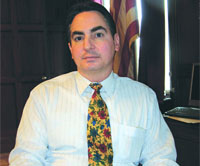
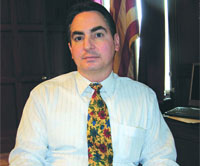
Chris Castellano

Chris Castellano keeps on eye on Springfield from the monitoring room.

They’ve been in place only a few months now, but the cameras positioned in downtown Springfield are already showing enormous promise as a vehicle for making the area safer and more attractive. The surveillance system currently boasts more than 15 cameras, and there will be 25 within a few weeks and 40 by the end of the next year. They’re capable of picking up license plates from a few hundred yards away, and they’re giving Springfield officials and police some much-needed eyes in the sky.

Chris Castellano zoomed in on a stretch of Harrison Avenue near the Civic Center Parking Garage.

There had been a rather high incidence of motor vehicle break-ins of the so-called ‘smash-and-grab’ variety in that area, and Castellano, operations manager of the Springfield Business Improvement District (BID), wanted to show BusinessWest exactly where all this was happening.

He did so by manipulating a camera — installed atop the back of the TD Banknorth Building that sits on the corner of Main and Harrison — now sending images to a command post of sorts at the Springfield Guides offices within that office tower. This is one of about 15 cameras that have been installed in the downtown area, with another 10 to be put in place over the next few months, and a total of 40 by the end of 2009.

With his Nintendo-like joystick, Castellano, staring at a bank of computer screens in the so-called ‘monitoring room,’ could zero in on that aforementioned area along Harrison Avenue, pan across to other sections of that busy quadrant, and even get in tight enough to read license-plate numbers and identify features on passersby, such as their style of dress and the color of their pants.

And with all that capability, he and others involved in a broad surveillance program involving the downtown and other areas of Springfield hope — and expect — to be able to use the past tense much more often when it comes to describing crime and patterns of it in the City of Homes.

This was the overall motivation behind a $175,000 state earmark for cameras and monitoring equipment, the first several of which were installed a few months ago, with new additions coming regularly since.

Indeed, as he talked with BusinessWest, Castellano discovered that another camera had been activated since the last time he was in his chair — this one a few hundred yards down Harrison Avenue. Perched on a light pole, it provides great views of the corner of Chestnut and Mattoon streets, which has been identified as a trouble spot in some ways.

“This is going to be interesting,” said Castellano as he maneuvered the camera and developed a feel for its range of motion, noting, as he did so, that the street corner in question and the surrounding area have seen larger-than-desired volumes of loitering and panhandling, much of it in front of a liquor store at the intersection. The new camera should help the Springfield Guides, a small group of individuals who patrol the 26-block area under the auspices of the BID and assist the police with keeping order, to reduce such activities and thus better protect visitors, workers, and residents in the downtown.

“A lot of the complaints we get — and the reason we put this camera here and put cameras in the positions they’re in — involve loitering and people who make others feel unsafe,” he explained. “With this camera, we can zoom in, and if we see anybody, we send out one of our patrols and ask them to move along. If they refuse to move, we contact the police, and they tell them to move along.”

This isn’t exactly what would be called serious crime, said Castellano, but it falls under the categories of quality of life and perception of safety, and the surveillance program should improve both.

“And when we cut down on those types of things, people will see that downtown is not a bad place to live or work in,” he continued, adding that the surveillance program is as much an economic-development tool as it is a public-safety initiative.

If the bad guys don’t yet know there are cameras on them — “it’s been all over the news, and if they read the press release we sent out, they’d know where the cameras are located,” said Castellano — they may well find out the hard way.

“It’s amazing what we’ve been able to see and do in just a few weeks — we’ve caught some people doing things they wouldn’t do if they knew there was a camera on them,” he continued, adding that he believes the cameras have helped police identify some wrongdoers, and will undoubtedly contribute to taking many such individuals off the streets, while giving law-abiding individuals more peace of mind.

For this issue, BusinessWest spent some time in the monitoring room to gain an understanding of the new surveillance system and how it should impact some of the big-picture issues in the region’s largest city.

Zoom Service

As he clicked through the menu of cameras currently installed, Castellano stopped at the one aimed down Worthington Street by what’s called Duryea Park.

“This is a fun one,” he explained. “With this camera we can see all the club action — we can see all the petty things kids do when they’re drunk and heading in and out of all the clubs.”

‘Fun’ was a word Castellano used more than a few times, but this surveillance program is serious business with a hard purpose — making a large dent in the twin issues of crime and the perception of same, which have been identified as some of the keys to revitalization of the city.

Such programs have been instituted in several other metropolitan areas, and even some much smaller communities — all as part of a broad program funded mostly by the U.S. Department of Homeland Security in the aftermath of the 9/11 attacks. While officials in the Boston suburb of Brookline recently made headlines for threatening to reject cameras amid concern from residents about a “surveillance society,” hundreds of cities and towns have embraced them.

That list includes New York, which has cameras in several areas of the city, Chicago, Atlanta, and Wilmington, Del. Business-improvement districts have been involved with the surveillance efforts, Castellano explained, and Springfield BID officials checked out several other cities’ systems to gain insight into their capabilities — and performance.

In downtown Atlanta, cameras were installed roughly a year ago, said BID Director Jeff Keck, adding that, according to one account, development officials in that city noted a significant drop in crime over the past six months — and the surveillance system has been given some of the credit.

A comprehensive surveillance system has been talked about in Springfield for the better part of a decade, said Castellano, adding that, while cameras had been approved and money earmarked, the cameras were not actually funded by the Legislature until very recently. In fact, lawmakers had to override Gov. Patrick’s budget veto to bring the first cameras to the downtown in early October.

There are now cameras spread across the 26-block section handled by the BID — an area that stretches from East Columbus Avenue to Edward Street, from Frank B. Murray Way to Bliss Street — and some locations outside that zone, including two in Mason Square.

The surveillance system is still a work in progress, said Castellano, with some kinks being worked out, new cameras being added regularly, and software upgrades pending that will significantly improve overall performance. In addition, the BID is exploring opportunities with Springfield Technical Community College to create classes that would train individuals to use the technology.

As an example of what this technology can — or soon will — do, Castellano paused to watch a pedestrian moving past the MassMutual Center. Soon, a software upgrade will enable individuals monitoring images sent from the cameras to essentially click on such an individual and follow their movements — all hands-free.

There is a certain Big Brother-like nature to this kind of surveillance that concerns some, Castellano acknowledged, but polls show that a majority of Americans support such activity as a way to reduce crime and keep streets safer.

Frame Work

Running through the scope and capabilities of the system, Castellano said the cameras are perched on buildings and streetlights, and have been strategically placed (with significant input from city police) to help reduce the incidence of crime. Images are monitored from 4 p.m. to 4 a.m. each day.

The cameras have a 360-degree range of motion, are equipped with night-vision technology, and can bring license plates into focus from several hundred feet away. The accompanying software, meanwhile, enables those monitoring the images to zoom in and out, play back any incidents, break them down frame by frame, and review them using slow-motion and freeze-frame technology.

“We can see things much better than we could with the naked eye,” said Castellano, noting, for example, that a frame-by-frame review of some images from one camera revealed how an individual was able to determine which cars to break into.

“He had a scout working ahead of him, checking out the cars,” he explained. “That’s how he could tell one car was unlocked. We used the tape to see that a guy was using a torch to break into cars; it turned out to be the same guy.”

As he focused in on another pedestrian seen in a recording of events captured by a camera at 1648 Main St, near the federal building, Castellano showed how the system could detect such details as a red hooded sweatshirt, brown pants, and sneakers. Sometimes, this is all police need to further an investigation.

Indeed, while most of the cameras have only been in place a few weeks or even a few days, Castellano said it’s certainly not too early to state conclusively that the surveillance system should help reduce the incidence of crime in Springfield.

“The cameras are proving themselves extremely effective in showing us all that’s going on and helping to make the streets safer,” he explained. “We’re still working the kinks out; once we’re at 100%, this system is going to be able to catch everything. It’s amazing what it has caught already — and sometimes we don’t even realize what we’ve caught.”

Castellano was careful not to reveal information that could hinder ongoing police investigations, he did say the cameras have helped achieve what he would term “progress” in some trouble spots.

These include Stockbridge Street, and specifically the area behind the Community Music School — site of several motor-vehicle break-ins — and the area by Gridiron Street and the Hippodrome.

Meanwhile, Castellano said he and others who monitor the images are finding their work intriguing — and ultimately quite rewarding.

“It’s work, but I have some fun with it, and my guys have some fun with it, too,” he explained. “They get really pumped up trying to catch someone committing a crime, and they love working with police; it’s exciting to them. We’re the eyes and ears for the police.”

Eyes in the Sky

Returning to the images provided by the camera positioned on Worthington Street, Castellano said that, in addition to the antics of club-goers, those monitoring the images have witnessed a few minor fights, all of which were broken up by police or bouncers.

Overall, he said the cameras have revealed something he pretty much knew already as a BID official and downtown resident — that Springfield has crime, but nothing more than most cities its size.

The surveillance system will make this known, he said, and also let residents, workers, and visitors understand that the city is focused on public safety, quality-of-life concerns, and, in general, making downtown a place to be, not a place to avoid.

In other words, big-picture issues.

George O’Brien can be reached at[email protected]

Features

As a brutal 2008 draws to a close, thoughts turn toward the year ahead, with talk dominated by words such as ‘recession,’ ‘depression,’ ‘deleveraging,’ and ‘deflation.’ And one more: ‘bottom.’ Everyone wants to know when the nation will hit it and, thus, when the recovery will begin. The answer to that question lies mainly in the size and nature of future stimulus efforts and in restoration of that all-important commodity known as consumer confidence. In short, no one knows!

Features
Attorney Marty Dunn Stands Tall Against ALS
Marty Dunn with his daughter, Kellis; his son, Ryan; and his wife, Anne Marie.

Marty Dunn with his daughter, Kellis; his son, Ryan; and his wife, Anne Marie.

Marty Dunn first started noticing a slight slurring of his speech about a year ago. Soon, others noticed as well. Eight months later, he would be officially diagnosed with ALS — amytrophic lateral sclerosis, or Lou Gehrig’s disease. It’s been a strange, almost surreal 2008 for Dunn, vice president of contracts for Chicopee’s Turbocare and a well-known attorney in the region. But the past is certainly not his focus. Instead, it’s the present and especially the future. There is much planning to do for Dunn, who wants to be an inspiration, not the object of pity, and a determination to make the very most of the time he has left — especially this time.

Marty Dunn extended his right arm and started shaking and flexing his hand, as if to provide some visual effects for some comments about his thumb.

It’s simply not as opposable as it was or should be, said Dunn, adding that a lack of mobility and resistance in his thumb has affected, to one degree or another, his ability to eat, write, brush his teeth, turn the car key in the ignition, or do any of those myriad other things that one does with their dominant hand. “It really messes things up.”

Aside from a slurring of his speech, which has become progressively worse over the past year or so, these thumb problems are the first outward manifestations of amytrophic lateral sclerosis, or ALS, otherwise known as Lou Gehrig’s disease.

Dunn knows there will be more.

Many more.

He just doesn’t know when they’ll appear, or where, or to what degree they will impact that intangible known as quality of life — for himself and those around him, especially his wife, Anne Marie, daughter, Kellis, and son, Ryan.

This is one of the exceedingly cruel aspects of ALS — a progressive neurodegenerative disease that affects nerve cells in the brain and spinal cord — and there are many. There is no cure for this menace, named after the New York Yankees star who contracted it, and no one really knows definitively what causes it. A diagnosis is, in most all cases, a death sentence. But those who have it just don’t know how long that sentence is or what the weeks, months, and years ahead of them will be like.

All they can do is think and hope and prepare for what they know, or think, is coming — which most people would find incomprehensible and exceedingly depressing.

But Dunn, an attorney, vice president of contracts with Chicopee-based Turbocare, and former associate with the Springfield-based firm Bacon Wilson, isn’t sitting around feeling sorry for himself. He has much better things to do with his time — especially this time, before ALS takes from him his ability to speak, eat, write, type, walk, and be independent.

He knows those days are coming. He just doesn’t know when.

“I never miss an opportunity to spend time with the kids now,” he told BusinessWest. “I’d like to think that it was always like that, but it wasn’t. Now, it means so much more to me.”

One thing Dunn wants to do with this time is try to raise awareness of ALS in the hope that maybe someday the causes will be known and a cure can be found. “ALS is relatively rare, and it doesn’t get the federal money that other, more widespread diseases do, so anything I can do to draw attention to it will help.”

He’s not going to climb a mountain, stage a telethon, or even blog about his experiences, but he will try to help people understand this disease and perhaps comprehend the many ways it impacts the lives of its victims and all those around them. Ultimately, he doesn’t want to be a victim and object of pity, but rather an inspiration to others fighting battles like his own.

And one way of doing that is agreeing to sit with BusinessWest and talk about ALS, what he’s experiencing, and what he wants to do “before it’s too late,” a phrase he used on a few occasions to convey his determination to make the most of what is now a truly precious commodity.

Indeed, as he recalled a time recently when Anne Marie said, “why did this happen to us? — we’ve always done everything right … we’re good people,” Dunn said he replied, “why not us? What makes us so special? Life isn’t fair, and I’ve been pretty lucky through my life.”

That was his way of acknowledging that ALS strikes indiscriminately, and that time spent asking ‘why?’ isn’t time spent wisely.

And he’s becoming quite an expert on that subject.

Body of Evidence

It was a Sunday-afternoon football party with some of his neighbors in East Longmeadow, like so many before it, until

Dunn recalls that it was quite cold that day late last fall, and that the New England Patriots triumphed (they won every regular-season game last year). But by day’s end he would have something much different and far more menacing to remember the occasion by.

This was the first time someone made reference to his speech and that it didn’t seem right. “Someone said, ‘your voice sounds funny,’” he recalled, adding that he had noticed something himself, a slight slurring, in the days preceding, but didn’t think much of it. But with this second reference, he began to think that maybe something was wrong. And with some hard prompting from Anne Marie, he would eventually seek out some answers.

As he would find out much later, the ALS had actually invaded his body several months earlier, and this lengthy time before the first visible manifestation of the disease is part and parcel to ALS.

This was just one of the many things Dunn would learn during an almost surreal 2008 for the Springfield native, Cathedral High School and AIC graduate, and Navy veteran who once worked for the late Congressman Edward Boland as an aide in the mid-’80s, first in Springfield and then in Washington.

“That was a fantastic experience,” he said of his time in D.C., adding that it helped propel him into a career in law, one that would take some time to develop.

Indeed, after leaving Boland’s staff, he went to work to what was then Continental Cablevision (there have been several new owners and names since) as government affairs manager, and later at MassMutual and Aetna in what he called “systems jobs.”

During his time with Aetna, he attended Western New England College Law School part-time. Upon graduation in 1998, he went to work for Bacon Wilson, where he specialized in corporate law, especially commercial transactions. He also handled some immigration work and residential real estate.

In 2006, he left the firm for Turbocare, a subsidiary of Siemens that makes replacement parts for steam and gas turbine engines manufactured by Siemens and other makers. His work involves international contracts, as the title suggests, but Dunn also serves as in-house attorney for the company, handling a broad array of duties that he categorized as “office work.”

But this was the kind of behind-the-scenes, transactional legal work that appealed to him, and he had settled into the job nicely by late 2007. Soon, though, things would become rather unsettled.

Questions, but No Answers

There are many things that medical science doesn’t know about ALS, said Dunn. What causes it and how to cure it are at the top of the list, but it is also not easy to diagnose.

In fact, it was actually late summer, more than eight months after that first reference about his voice and nearly two months after Dunn finally went in for tests, before doctors could actually, and officially, confirm that this was the problem.

“A diagnosis of ALS is a diagnosis of exclusion,” said Dunn, noting that there are several neurological disorders that could have been the cause of his slurred speech. “They start out with a list a mile long and they slowly eliminate things; the thing at the bottom is ALS.”

He remembers several procedures, none of them pleasant, as doctors worked their way down that long list. “They shock you with electric shock, and stick needles in you all over the place,” he recalled, “in the tongue, in the extremities, anywhere and everywhere.”

Before any of that, doctors found something else to be concerned about — an abnormal heartbeat, which required some immediate attention. By the time a measure of control with his heartbeat had been achieved, doctors were making some headway in their process of elimination.

“But it would be Aug. 29, a date Dunn won’t ever forget, when he received not only the official word, but a letter that he would have to use as he sought benefits from the Veterans Administration and other agencies. “That’s my kick-off date.”

He told BusinessWest he greeted the news with “shock and horror,” with thoughts soon returning to some recent experiences, when he watched a boyhood friend’s mother suffer from and then succumb to ALS.

“It was horrifying … it was very hard to watch it unfold,” he recalled of this exposure to ALS, which played itself out over the course of four or five years. “I heard from my friend frequently; I would visit him and see his mother. I could see what it was doing to her, so there’s some tragic irony to all this.”

When all was said and done and ALS was confirmed, Dunn said he actually felt sorry for the neurologists who made the diagnosis, who feel helpless in such situations. “Once they come away with this diagnosis, they shift from a curative type of consultation to saying, ‘well, you should make the most of the time you have left.’”

Upon learning that he was afflicted with ALS, Dunn then did what people do these days when they want information; he googled the acronym.

Then he started reading, a sobering experience, to say the least.

Among the things he’s learned is that ALS strikes about 30,000 people a year. That’s a big number, but not big enough, apparently, to drive the pharmaceutical companies to invest large amounts of time and money to finding a cure; there’s simply not enough of a payback.

He’s also learned that while life expectancy varies, most victims have between two and five years to live. But what none of the sites he clicked on could tell him was just how quickly this disease will take over his body and what he can expect next. He’s not sure exactly why, but he believes his progression will be slow, which is both good and bad.

Dunn has learned that there are essentially two informal types of ALS. One starts from the head, or top, and works its way down the body. The other moves in reverse, striking the legs and then heading north.

He has the former, which explains why his speech was the first thing to be impacted. The thumb problems followed, he said, adding quickly that while it’s not getting any worse — yet — it’s not getting better, impacting myriad daily activities.

“My writing is getting really sloppy,” he said. “I have trouble holding a fork — I really have to grab it — and I can’t really turn the ignition in the car.”

No one really knows exactly what will happen next or when, but Dunn is pretty much resigned to the fact that soon (a decidedly relative term for those with ALS), he will lose his speech altogether, and he will need to communicate via a computer. Next, or maybe simultaneously, he will lose the ability to swallow, meaning he will need a feeding tube for nourishment.

Knowing that such things are coming, but not knowing when, is difficult, he said, adding that he is determined to make good use of his time before such quality-of-life-limiting things happen.

Desire to Inspire

Dunn said that putting the acronym ALS together with the word blessing in the same sentence is awkward and somewhat perverse.

But that’s the term he chose to describe one aspect of this disease: time — to think and reflect and relish and maybe do some of the things one might do if he or she knew there was only so much time, or quality time, left. And also time to get one’s affairs in order and make sure that people are taken care of to the best of his ability. Dunn has been doing all of that, and he noted that many people don’t have that luxury.

“First and foremost, I wanted to do those things they say you should do for your family,” he said, listing a will and a health care proxy, among others. “There are a lot of business-related issues that have to be addressed, and you want to make sure everything’s been done right.”

His situation improved in September, he said, when the Veterans Administration, acting upon statistics showing that those who served time in the military had a much greater chance of contracting ALS than non-veterans, altered its policy on the disease. Before that, Gulf War and Vietnam-era veterans who contracted the illness would be eligible for service-connected pensions. However, that policy now includes everyone.

“That opens up some new avenues of help for me and other veterans who have it,” he explained, adding that his wife will now receive a small pension because of that policy change and that ‘service-connected’ designation attached to his ALS.

Dunn said he doesn’t have any firm plans for the future, but he is mulling a host of possibilities. He intends to take the family on a vacation to Disney World — “it’ll be the 100th time, but if it makes them happy, that’s all I care about” — and is thinking about a visit to Ireland, something his wife wants to do.

“I have to take advantage of the time I have, meaning while I’m still mobile and can still speak,” he explained. “Hopefully, I’ll be around for quite a few years, but there will come a point where there will be wheelchairs and other things I’ll need, and it just won’t be the same.”

In the meantime, Dunn is taking inspiration and support wherever and whenever he can find it.

He’s been given a number of books on the subjects of death and dying, including Randy Pausch’s The Last Lecture, from which he’s gained determination to honor the late educator’s call for those staring at death to be ‘Tiggers’ and not ‘Eeyores’ (characters from Winnie the Pooh) as they live out their lives.

“He says you can either be an Eeyore and sit in the corner and say, ‘oh, woe is me,’ or you can bounce around like Tigger and just enjoy life. That’s what I plan to do.”

Overall, he doesn’t dwell on the hand he’s been dealt or rant at his misfortune. “Sometimes the ball bounces in your direction, which it usually has for me, and sometimes it doesn’t,” he said. “I’ve been more fortunate than most.”

Dunn was honored this past Veteran’s Day with the role of grand marshal in Springfield’s Veteran’s Day Parade, and a few days later he was the guest of honor at a huge fundraiser at the Basketball Hall of Fame. More than 500 friends, family members, colleagues, and former colleagues gathered at an event that had the look and feel of a Frank Capra movie and drove home the point that Dunn will have plenty of support as he battles ALS.

Doug Guthrie, now vice president of the Connecticut-West Region for Comcast, with whom Dunn had worked at Continental Cablevision some 20 years earlier when both were just getting started in their careers, organized many of details of the event (which raised more than $25,000 by some very early estimates) and introduced Dunn to those gathered. Meanwhile, attorneys at Bacon Wilson sold hundreds of tickets to the event, and organizers collected raffle prizes from dozens of area businesses and attractions.

AnnMarie Harding, marketing director for Max’s Tavern and hostess of that football party in East Longmeadow 11 months earlier, handled most of the logistics, with help from some interns at WNEC, Dunn’s alma matter.

Dunn wrote out his remarks, telling those assembled that by doing so, someone else might finish if he couldn’t. He had to stop several t
mes, with each pause pierced by a cry of “we love you, Marty,” or “we’re here for you, Marty,” always from a different corner of the room, and each time providing enough to give Dunn whatever it took to read on.

He told those gathered what he later told BusinessWest — that he intends to be around for a while, and for the time being, it will be “business as usual”— or as usual as it can get when one’s been handed a death sentence.

He doesn’t know for how long, but one more thing Dunn has learned about ALS is that one lives for the moment and prepares for the future.

He’s got that part down.

Lasting Impressions

When asked if he could ever truly put aside his plight and not think about it, Dunn said there are actually some times when he can forget he has ALS.

“But it’s not easy,” he said, “not when every time you start to talk you’re reminded. The only respite you get is when you’re sleeping.”

And now, there’s the thumb.

Returning to that subject, he flexed his hand a few more times. Dunn said that from that all he’s read and all he knows, it will slowly get worse and that this will impact so many aspects of his life and those around him.

“It’s really going to sink in when I can’t hold a football anymore and I won’t be able to play catch with Ryan,” he said, stopping for a minute as if to let that eventuality wash over him. And in a very rare display, you could see the pain on his face.

That’s because he knows that day is coming.

He just doesn’t know when.

And that’s the curse of ALS.

George O’Brien can be reached at[email protected]

Features
Marketing Effort Answers the Question About How to Raise Awareness of the Agency
Joe

Joe

His name is ‘Joe.’

And while he bears some resemblance to a few business owners in the area, there is no one person who inspired this character, said Ann Burke.

Instead, he represents every business owner in the region, said Burke, vice president of the Western Mass. Economic Development Council, and thus he puts a face on an intriguing new marketing intiative launched earlier by this fall by the agency.

It’s called ‘Ask the EDC,’ and its primary mission, said Danielle Paine, manager of Communications for the non-profit agency, is to raise awareness of the many ways in which it can be of assistance, especially to small-business owners, through myriad free services offered by a host of organizations affiliated with the EDC.

Such services — from help with writing a business plan to assistance with crafting an energy-conservation program — are always in some level of demand, said Paine, adding quickly that such interest rises in trying economic times such as these. Which explains the timing of ‘Ask the EDC,’ which, according to some early numbers, is doing precisely what it was designed to do.

Indeed, while it’s somewhat early to draw in-depth conclusions about the overall success of the initiative, initial response to the campaign has been positive, said Burke, adding that, while the EDC was getting a few random questions a week from area business owners before the campaign started, it is now getting closer to 15. And traffic to the EDC’s Web site is up, unofficially, by about 30%.

All this is positive news for the region, she told BusinessWest, noting that one of the EDC’s primary missions is to help existing businesses survive, thrive, and, if at all possible, stay in this region. The ‘Ask the EDC’ program, part of a larger effort called HomeField Advantage, has become an important manifestation of that mission, and at a time when many businesses are struggling and looking for some help to get them through to the day when the economic climate improves.

“Acknowledging that 70% of our growth comes from within, meaning businesses that are already in the region, and the need to better support those businesses in light of these challenging times, we decided to launch this campaign to help make people more aware of the free services available to them,” said Burke. She noted that recent questions reflect the current conditions, and include issues such as replacing lost customers, securing financing, and creating new revenue streams.

Helping small business owners get the answers to these and other questions was the motivation for ‘Ask the EDC,’ which was officially launched on Oct. 27 and has included print ads, radio spots, a new page (asktheedc.com) on the EDC’s Web site, and a billboard on the southbound lane of Interstate 91 near Longmeadow.

The campaign was inspired by the nagging perception that, while larger businesses probably know about the EDC, its services, and its affiliations with a host of economic-development agencies and business-support organizations, many smaller venues don’t, or lack a full understanding of the help that’s available. The recent surge in calls, E-mails, and Web hits would seem to verify that notion, said Burke, and offer evidence that the $28,000 expenditure has been a sound investment.

‘Ask the EDC’ was designed to build the EDC brand, said Burke, and, in general, educate business owners and managers about the many areas in which support is available. They include:

  • Real estate, or help with finding a new location;
  • Capital access, or assistance with obtaining financial resources, grants, micro-loans, venture funding, and incentive programs;
  • Regional data and drive-time analysis, or access to demographics and statistics needed for relocation and expansion decisions;
  • Peer networking opportunities;
  • Workforce development, or insight into recruiting and training opportunities, internships, and grants to help resolve staffing issues; and
  • Academic institutions, or ways to tap into the resources available at the colleges and universities in the Knowledge Corridor.
  • The questions posed to asktheedc.com have run the gamut, said Burke, as evidenced by one recent print ad. One inquirer wanted some input on whether state funding or other types of grants are available for a solar power installation for his manufacturing plant. Meanwhile, a retailer in what he called a “hidden location” in Springfield wanted to know if there was financing available for some obviously needed marketing.

    “My company currently uses contracted employees, but we are interested in transitioning to direct hire,” wrote a third business owner. “How can we learn about workers’ compensation wage rates and insurance?” Still another, the owner of a small electrical-contracting business, desires to build in the local industrial park and wanted to know where to turn for financing.

    Those with questions are often referred to a veritable alphabet soup of acronyms, said Burke, connoting agencies such as the Western Mass. Enterprise Fund (WMEF), the Small Business Development Center Network (SBDC), SCORE (the Service Corps of Retired Executives), and even the Mass. Office of International Trade & Investment (MOITI).

    Paine told BusinessWest that the new marketing campaign will run through the end of the year, at which time, she, Burke, and others will review goals, results, and strategies for moving forward. Results (in the form of responses to the various marketing vehicles) are being carefully tabulated, she continued, adding that the EDC will likely continue the campaign with those media outlets that are generating the best results.

    For now, ‘Ask the EDC’ seems to be the answer to the ongoing question about how to brand the EDC and make its broad menu of services and affiliations known to more business and owners and managers.

    Just ask ‘Joe.’— George O’Brien

    Features
    Recognition Program to Honor Those Who Are Changing the Landscape

    We’re calling it Difference Makers. And while that name says a lot, it doesn’t reveal everything about BusinessWest’s latest recognition program, to be launched early next year.

    With this new initiative, BusinessWest, the region’s leading business publication, which next year will celebrate its 25th anniversary (2009 is shaping up as quite a year already) wants to recognize people and institutions that are, well, making a difference.

    How?

    It can be any number of ways, really, which is the best part about this new program.

    A difference maker can be anyone from an inventor bringing some ‘disruptive’ technology or innovation to the market or at least to the drawing board, meaning a potential new product that could dramatically alter the landscape in a given sector, to an administrator who has changed the course of a local nonprofit agency.

    It could be an elected or appointed official who has succeeded in improving the quality of life in one of this region’s cities or towns. Or it may be a college president or other administrator who has changed the fortunes of one of the Valley’s many institutions of higher learning. It could be the second, third, or even fourth generation within a family business that has taken that company to places that some of those earlier generations may not have dreamed possible.

    It could be … well, one’s imagination is the only real limit.

    The accomplishments that make someone or some group worthy of Difference Maker status can be very recent in nature, have taken place over the past several years, or even fall into that ‘lifetime achievement’ category. But ideally we’re looking for those who are helping to set the tone in our region today.

    We’re launching Difference Makers because we believe this region has many such individuals and groups, and, while some of the stories are known — and have perhaps been told on the pages of BusinessWest — some are not, and we think it’s time they were. Meanwhile, we believe it’s also time for these individuals or teams of people to be recognized.

    BusinessWest has a Forty Under 40 program (which will introduce its third class late next spring), but that recognizes only people too young to remember the Nixon years or, in some extreme cases, the Reagan years. The magazine also offers a ‘Top Entrepreneur’ program, but it recognizes only one individual, family, or set of partners each year.

    Difference Makers will go further, and honor many of the people, institutions, and developments that are shaping the fortunes of the Pioneer Valley in the 21st century.

    We’re excited about it, and we think you should be, too.

    Here’s how it works: On this page (and at www.businesswest.com), you’ll find a nomination form for this latest recognition program. The form and its various questions, especially the explanation of why you believe someone or some group fits our description, is self-explanatory. These nomination forms will be due to BusinessWest — via E-mail, fax, or snail mail — by Dec. 31.

    The writers and editors at BusinessWest will then review the nominations, make their selections (there will be no set number for a given year), and introduce them in a subsequent issue of the magazine. A special gala will be staged to recognize our winners.

    It will be a real party, because the individuals chosen and their accomplishments will be worthy of a serious celebration.

    So take a few minutes, think of those of who are making a difference in the Pioneer Valley — they may just be in the next office or cubicle — and nominate them for this special honor.

    —George O’Brien, Editor

    Features
    Staying Calm Amid the Inevitable Tempests of Change

    Hurricane WaMu. Tropical Storm Enron. The Lehman Brothers Tsunami. In the increasingly tumultuous climate of corporate America, it seems as if no place is safe.

    Nowadays, most places of employment — from small businesses to multinational corporations — contain a pocket or two of whispering staffers fretting over the impending change that is about to hit their world, or complaining about the one that just took place. They have nervously listened to reports of economic doom and gloom, heard rumors circulating throughout the office corridors, watched a steady stream of co-workers come and go, and grumbled every time a new organizational chart was delivered to their E-mail inbox.

    There’s no doubt about it: people are scared.

    Whether it is the result of witnessing several of the largest bankruptcies in modern history, a hostile merger or acquisition, massive reductions in force, or simply a change in management, workers across the country are being negatively affected by the widespread changes taking effect in the workplace. Stress and anxiety levels are increasing, productivity is decreasing, and job-hopping is commonplace, thus further lowering already-basement-level employee morale.

    If you have ever been in a major weather event such as a hurricane, tornado, or earthquake, you are undoubtedly familiar with the few basic rules of survival and protection. Corporate changes are not unlike these natural occurrences, as they can often inflict similar emotional and financial upset. If you find yourself in the throes of yet another career shakeup, here are a few helpful hints for how not only to weather the storm, but also to emerge head and shoulders above your competition once the dust settles.

    • Expect it. Every year a hurricane will hit land somewhere. It is not probable; it is inevitable. Change in the business world is exactly the same. A company is an entity, and like all entities, it grows and evolves over time. In fact, it needs to change, because a stagnant company will eventually become a failed one. If you know that change — potentially a great deal of it — is guaranteed to happen, it will help you minimize the shock and denial that sometimes surface when it invariably hits.
    • Be prepared. When a big storm threatens a community, there are two key steps to adequately prepare: develop a solid plan and secure the necessary provisions. You want to know what you are going to do and what you need to do it. The same holds true for your employment. Before the storm of change hits, decide now what you want from your career and how your skills, credentials, and desires match your current employment. This may mean keeping your resume polished up, if only to boost your own comfort level and confidence. A calm, prepared employee typically survives the rocky roller-coaster ride of corporate change a lot easier. As for provisions, you may want to identify what financial needs you and your family have to be comfortable. Do you have all of your finances in place to ensure that these provisions are met? If not, it is wise to do so before the storm hits and your priorities are on other things.
    • Ride it out. OK, the storm has hit. You have a new office, boss, job, or company — or maybe you just found out that you no longer have any of them! The wind is howling, the shutters are banging, and the power is out. Everyone around you is panicking. What should you do when you are in the eye of the storm?
    • Now is the time to get grounded and centered. Take some deep breaths, and become your favorite tree (yes, you read it correctly: your favorite tree). Pretend that you have thick roots in your legs, and imagine that they are plunging deep into the ground below you. Trust that everything will happen exactly as it needs to in your highest good, and surrender to the Powers That Be. You are not in charge, but you have the ability to stay calm while the storm passes. Keep breathing!

      Clean up afterward. At this point you are surveying the damage. As you look around, you can’t help but notice the casualties and the huge amount of work ahead of you. First and foremost, give yourself permission to feel bad for a while, and honor the fact that you just went through a difficult challenge. If others are hurt by the change, extend a compassionate hand. But after a short period of time, decide that you want to get on with your life once again. Make a graceful exit from the pity party, roll up your sleeves and get to work. Start getting to know your new co-workers, learn the ins and outs of your new role or flesh out your next career trajectory. Whatever the results of the change are, know that the sooner you stop the self-destructive spin cycle of complaining, the quicker you will move back into a place of happiness and prosperity.

      The spate of corporate fear can be addressed when we take our cues from the lessons of Mother Nature. By adequately preparing for and weathering the inevitable tempests of change, you will clearly set yourself apart from the rest of the people who are still cowering around the water cooler, hoping that tapping their heels three times will return them to a safe, static work environment. Through awareness, preparation, centeredness, and acceptance, you will move swiftly through the blowing winds of change and ultimately emerge more joyful and successful than ever before.v

      Theresa Rose is an inspirational speaker and author of the newly released “Opening the Kimono.” As the founder of Serious Mojo Publications, Theresa specializes in fresh approaches to energy management, productivity, and creative development. Her past experience includes several entrepreneurial and management positions, including owner of an alternative-healing center, senior manager of marketing and product development for a Fortune 100 telecommunications firm, and vice president of a consulting firm specializing in higher education;www.theresarose.net

      Features
      Now-former Development Leader Says Springfield Is Positioned for Progress
      Dave Panagore

      Dave Panagore says Springfield has come to recognize that it is not Boston, and has only limited sway over the development community.

      Dave Panagore likes to say that he’s been working in the “family business that he never intended to make into a family business.”

      By that, he means the art and inexact science of planning and economic development. His father was urban renewal director for the Eastern Mass. city of Marlboro, and Panagore has followed in his footsteps, sort of, in various positions with Boston and Chelsea, Mass.; San Jose, Calif.; Springfield (which he served as chief development director); and, as of this writing, Hartford, which he now serves as director of Development.

      While he was wrapping up his duties in Springfield, ‘signing off’ on a host of projects, and readying for the Hartford assignment late last month, Panagore spoke with BusinessWest about the City of Homes, what’s happened over the past 30 months that he’s been here, and what the prospects are for the future. And as he did so, he borrowed a line from his father.

      “He always used to say that you can’t stop developers from developing where they want, and you can’t make them develop in places they don’t,” said Panagore, reciting the line as if he’s spoken it many times — and probably has. “The best you can hope to do is shape them and guide them.”

      And this pretty much sums up what he and others have been trying to do for the past few years, while also instilling some confidence and a can-do attitude in this city and putting in place an infrastructure — meaning everything from a development team (now minus its leader, obviously) to a plan of action in the form of the Urban Land Institute (ULI) report — to move things forward.

      In a word, if one term can cover it, the city now has an agenda, or much more of one than it had even a few years ago, Panagore continued, and it has considerably more stability.

      “The reputation of the city — in the state and with the federal government — has been restored,” he explained. “The state views Springfield as a place that’s stable and fairly well-managed currently, has cash reserves, and has policies in place. And our relationship with the federal government, in terms of our ability to spend federal dollars, is restored.

      “The city is stable … the spade work, the baseline work has been undertaken,” he continued. “The ground has been turned, and we’re ready to build on it.”

      All this has positioned Springfield to more ably survive the current economic turbulence facing the region and the nation, he said, adding quickly that had this downturn hit three years ago it would have devastated the city. “With this economy, Springfield is going to take a hit, just like every other city,” he explained. “But it’s much more resilient now; it can take that hit.”

      And these positive developments will help facilitate what are some very difficult development projects.

      Indeed, as he has many times since arriving in Springfield, Panagore told BusinessWest that the specific development initiatives facing the city — from Chapman Valve to the South End revitalization; from the York Street Jail site to Court Square — are not easy. “If they were, they would have been done a long time ago.”

      Looking forward, Panagore, who was recruited by Hartford and took that job in part because of uncertainty about his status here as the Finance Control Board winds up his work, says the current economic slump and general anxiety about the future will certainly impact Springfield’s short-term prospects for growth. But longer-term, he believes the city is, at the very least, better-positioned to achieve progress in the many ways it can be defined.

      Mapping Out a Strategy

      The wall outside Panogore’s now-former office in the municipal complex on Tapley Street is covered with some old panels that comprise an aerial photo of Springfield looking west. The composite includes most of the heart of the central business district and extends to the riverfront.

      Thus, in the top left corner, one can see the preparation of the site of the new Basketball Hall of Fame, giving a strong hint that the photo is about a decade old. More evidence of the date is provided by the fact that the buildings razed to make room for the MassMutual Center are still intact.

      The panels present few real signs of change or progress in Springfield, said Panagore, noting quickly that there have been many such signs outside the confines of this image — farther down the riverfront, at the industrial park at Smith & Wesson, in Indian Orchard, and in the city’s North End.

      Meanwhile, some of the indications of progress, from a planning and management perspective, can’t clearly be seen by the naked eye or the camera’s lens.

      Many of them are administrative and fiscal in nature, he said, adding that Springfield has managed to restore financial stability four years after the arrival of the control board, and, in the planning realm, has put together what he called a “functioning team.”

      Elaborating, he said there is now much more coordination among the various departments within the planning and development sphere — including planning, code enforcement, community development, and economic development — and considerably more communication.

      “When the control board arrived, there was little communication between departments,” he explained. “Now, there’s excellent communication, and a very cooperative spirit between those offices.”

      The city also has at least a short-term road map for progress in the form of the ULI study, said Panagore, noting that officials are aggressively addressing that report’s stated priorities — Court Square, the South End neighborhood, the now-vacant federal building, and the downtown in general.

      Overall, the city has a much more clearly defined agenda than it had even a few years ago, said Panagore, noting that it is one that is grounded in realism and some of those truths that his father professed.

      “Springfield needed to recognize, and it has recognized, that it’s not Boston,” he explained. “Our ability to make demands on the market and tell the market what it will do are far more limited than they would be in a city like Boston. But we’ve been able, with each of the projects that have come along, to shape them by being aggressive.”

      Running down the list of projects that are in various stages of progress, Panagore said most of them are on track, figuratively if not literally, starting with what he considers to be a new and improved plan for Union Station.

      The long-dormant landmark is still slated for restoration, but with a slimmed-down plan — considered more realistic by those who have put it together — that calls for far less retail, an intermodal transportation center, and office space, some of which is already targeted for the Pioneer Valley Planning Commission, the Pioneer Valley Transit Authority, and Square One.

      There is forward movement on other projects that are on the drawing board or soon to be there, he said, listing several, including:

      • The Chapman Valve location in Indian Orchard. The site of the former manufacturing complex where valves were built for the Navy and other customers is now predominantly clear, said Panagore, but the extent of sub-surface contamination is not known. An urban-renewal plan for the torpedo-shaped site is being readied, with acquisition by the city likely and necessary if plans to convert it into a business park — perhaps the most feasible use — are to become reality.
      • A shopping center planned for the old Westinghouse complex on Page Boulevard. Panagore said that, since the day he arrived in Springfield, developers have been trying to piece together a project that will give major retailers an attractive demographic between Enfield and Holyoke. The Packard Development Group has, in his words, “solved the puzzle” with a plan, now in the permitting stage, that will create a large-scale retail destination in that East Springfield neighborhood.
      • The federal building. It is now vacant, and while the city waits for the federal government to transfer ownership, various new uses are being considered.
      • The York Street Jail site. After years of trying to sell the landmark to the development community, the city has razed the building and will now to try to sell the land, said Panagore, adding that there is considerable momentum for a ‘court of dreams’ venture that will bring basketball tournaments — and, hopefully, large audiences — to the city.
      • 31 Elm Street (Court Square). The economic downturn will probably slow the progress of plans to convert the landmark into market-rate housing, said Panagore, but the question now is more when the site will developed than if it will be developed.
      • The South End. Recognized as a top priority by the ULI, revitalization of the challenged neigborhood is on track, said Panagore, with $6 million in improvements (parks, streets, sidewalks, etc.) budgeted, and the Hollywood section being the primary target.
      • Beyond specific projects, the city has been able to assert itself in recent years, said Panagore, meaning that it is not simply settling for what developers want to do, and where they want to do it, but setting high standards on design and construction.

        “We’ve been able to not only guide developers by being an attractive place in which to do business, with a short time period for permitting,” he said, “but also to help shape them and have them work in ways that will help the community fight for and achieve a level of design quality that other communities in the region have.”

        As an example, he cited a project to locate a new CVS on Sumner Avenue.

        “In response to our continual drumbeat of concerns about the façade they were planning, they’ve made changes, and they’re now putting glass in,” he told BusinessWest. “It’s a war of attrition to make continual, incremental improvement in process, results, and standards; Springfield deserves as good a building project as any other city in the region.”

        Puzzle Pieces

        That ‘functioning team’ Panagore says is now in place certainly has its work cut for it. As he said, the projects the city and the ULI report have identified as priorities are complicated, and the economy is one giant question mark that has most developers in a holding pattern.

        But, and this is a big ‘but,’ the city is better-positioned to handle these challenges than it was a few years ago — primarily because of a focus on what Panagore described as the fundamentals of economic development.

        These are some of the things his father learned and passed down — along with those principles of ‘shaping’ and ‘guiding’ — while working in the family business.

        George O’Brien can be reached at[email protected]

        Features
        Caterer Peg Boxold Has Persevered Through Determination, Diversification
        Peg Boxold

        Peg Boxold says her recipe for success has always had creativity as the main ingredient.

        Peg Boxold knows what it’s like to maneuver one’s way through a recession.

        She and partner Mike Martel, both veterans of the Marriott Hotel in downtown Springfield, started their catering business, Elegant Affairs, in early 1989, about the same time as the start of a severe economic downturn that would last, by some estimates, for four years.

        The company was launched almost exclusively on corporate functions, and many of the companies that headed up the early client list — Monarch Capital, Bank of New England West, and Heritage Bancorp — would soon disappear from the landscape. Meanwhile, most all of those left were thinking about survival, not lavishing clients and employees with smoked salmon and shrimp cocktail.

        Boxold told BusinessWest that she and Martel survived those lean years by being, in a word, creative. As an example, she said the company would work with businesses of all shapes and sizes to stage events that were fun and cost-effective, if not exactly elaborate.

        “We were creative … we did whatever we had to do to make it through those times,” she explained. “We picked up a lot of business with people who couldn’t afford a big hurrah, but still wanted to do something.”

        Today, entrepreneurial creativity is still the watchword, but Boxold, who would become sole proprietor of this venture after Martel left to pursue other business opportunities in 2001, is being challenged by much more than the economy these days.

        Indeed, the landscape for caterers, especially in this market, has changed dramatically over the years, she said, so much so that many of the traditional caterers doing business in the Pioneer Valley years ago are no longer doing so. There are many more banquet halls now vying for corporate and personal events such as weddings and showers, and many of these establishments, as well as a number of area restaurants, are catering events off their own sites, she said, citing a few of the additional challenges facing her nearly two decades after she started out.

        Meanwhile, downtown Springfield, where she has always based her business, is far less vibrant than it was years ago, with many banks and other corporate clients and potential clients now gone or relocated to the suburbs. Very recently, the soaring prices of food and gasoline have brought additional burdens in the form of expenses she can’t easily pass on to clients.

        And then, there’s the Basketball Hall of Fame and the exclusive catering contract awarded to Max’s Tavern, located in the Hall complex, for all events staged at the shrine.

        Boxold handled hundreds of events at the old Hall, and a few at the new one, before Max’s arrived, and she’s still quite bitter about that deal and how it went down.

        “No one told us anything,” she explained, adding quickly that, amid swirling rumors, she sought and was granted a meeting with Hall officials, who gave her the news. “We did a number of events for free or at cost to help them raise the money to build the new Hall, and then they turn around and give the contract to a Connecticut-based restaurant chain…”

        She didn’t actually finish that thought before moving on to another one — the fact that the loss of the Hall of Fame business nearly doomed her venture.

        But she has persevered, through determination and diversification, which, in this case, means everything from handling the food service at Springfield’s Franconia Golf Course to successfully managing a vegan wedding a few years ago.

        “That’s tougher than kosher catering — you have to read a lot of labels,” she said with a laugh, adding that every additional event or contract helps with the all-important task of keeping the calendar full, which is the ultimate recipe for success for any catering venture.

        In this issue, BusinessWest looks at how Boxold has managed to find the right ingredients for continued success in a field where entrepreneurs have to think outside the box lunch.

        Food for Thought

        As she talked about the very early days of Elegant Affairs and the years that preceded them, Boxold eased back in her chair, smiled, and shook her head slightly, as if to indicate a degree of disbelief as to just how good things were, at least when compared to today.

        “The money was flowing in those days,” she recalled of the mid-’80s, when the economy, downtown Springfield, and most of the major corporations doing business there were booming. Monarch Capital, then based in the office tower that bears its name, hosted a number of lavish affairs, she said, and the 28th floor of Baystate West (later renamed Tower Square), home to Baybank, was also hopping with events that kept several catering companies busy. “Downtown Springfield was the place to be,” she said.

        It all came to a crashing halt not long after Elegant Affairs was launched, she recalled, adding that it was a weekly, or seemingly daily, struggle to keep the fledgling operation going, an experience that steeled her for subsequent downturns in the economy and a host of other challenges.

        Boxold says she gained the necessary experience — and intestinal fortitude — for her chosen entrepreneurial venture through years of hard, disciplined work at the Springfield Marriott.

        She started there in 1976 as housekeeping manager, later moved on to human-resources functions, and eventually shifted gears and went into the catering side of the operation — working her way up to director of on-site operations at the downtown hotel. Martel, meanwhile, ascended to supervisor of outside catering. In early 1989, the two decided to go into business for themselves, and set up shop in the Marketplace building, where they operated an on-site deli (mostly to provide cash flow) and an off-site catering business that soon became the main focus, especially as the recession took its toll on the deli.

        Success with the catering venture, both before and especially after the recession hit, came through relationships and thus cultivation of a client list that included a number of major corporations, such as MassMutual and Baystate Health, but also business and civic groups ranging from chambers of commerce to the Spirit of Springfield to the Springfield Civic Center. And the Basketball Hall of Fame.

        In 1991, the business was moved across the road, to 1380 Main St. and space that includes what has come to be known as the Glass House — there are windows on three sides — that seats about 80 and has hosted everything from bridal and baby showers to events for a host of Springfield mayors.

        Over the years, there have been some memorable events, on-site but especially off-site — such as a small dinner arranged for relatives of a coma patient who came out of that coma as the meal was being consumed — as well as some catering for celebrities; that list includes Tony Bennett, Mikhail Baryshnikov, Pearl Jam, and several past NBA greats.

        As the landscape in the region has changed, literally and figuratively, Boxold and her venture have had to adjust accordingly. There are fewer major corporate players than there were 20 years ago, she explained, and as for those that remain, the extravagance of the past has been replaced by a general cost-consciousness that places a premium on value, but also the necessary elegance and, increasingly, creativity.

        Meanwhile, there are a number of new players in the field, making it that much more difficult to fill the slate, which Boxold says she still manages to do through imagination and cultivating opportunities when and where she can.

        Just Desserts

        As she talked with BusinessWest, Boxold stopped for a minute to get some water for Sophie, her cairn terrier, who was rather loud in her requests for something to drink, and then louder still as she sought — and was granted — a game of ‘fetch the empty water bottle.’

        “She’s here (at work) a lot,” said Boxold. “When mommy’s working 15-hour days, there’s no one at home to be with her, so she comes here.”

        Long hours are part of the equation in this business, and have been since the beginning, said Boxold, noting that she, like others in this field, must rely on volume — in whatever ways it can be amassed.

        Indeed, on a recent Thursday, Boxold was prepping for a busy but typical weekend, one that would feature several events, including a wedding, on Friday evening, two more weddings and several smaller get-togethers on Saturday, and another 14 or 15 hours worth of catering jobs on Sunday, including two bridal showers.

        Pulling off such weekends requires logistical skills as well as some imagination, especially when it comes to staffing, she explained, adding that she has a cell phone full of numbers for employees past and present, as well as family members — and she isn’t shy about using it.

        “Sometimes, you wind up calling people you haven’t seen in two years,” she said of staffing demands. “You just do what’s necessary — you have to be creative, and you’ve got to make it happen; these days, there are some times when you can’t really say ‘no’ to someone — you’ve got to stay alive.

        “On Monday mornings, I’m dead,” she continued. “It takes me until nearly noon to clear my head and get on with planning out another week.”

        But packed calendars in June, July, August, September, and especially December are needed to get the company through what have become painfully slow winters and early springs, said Boxold, who shook her head as she talked about the many challenges involved with keeping a staff of 60 working and her company in the black.

        A big part of that challenge has come in the form of increased competition, she said, noting that the field still has traditional caterers, although fewer of them, and a host of restaurants and banquet facilities now doing work on- and off-site. Couple this with a weakened economy, a desire among many business owners to cut back on entertainment, fuel surcharges that come with every delivery, and $4-per-gallon gasoline for her own fleet, and it makes for some rough going.

        In this environment, players in the catering field have to be flexible and imaginative, she said, adding that the addition of the work at Franconia provides a steady, helpful addition to the cash flow.

        A few years ago, Boxold formed a relationship with the owners of Wyckoff Country Club in Holyoke, giving her a steady supply of weddings that put her volume well above what it was before that arrangement. Wyckoff has since been sold, and that relationship has ended, but she still handles dozens of weddings a year at venues such as the Carriage House at the Barney Estate, Look Park in Northampton, Stanley Park in Westfield, Worthington Pond Farm & Gardens in Somers, Conn., and many others.

        The best source of business remains word-of-mouth referrals, she said, and they are amassed by doing more than putting together a good menu, said Boxold, adding that her company has to go a step, or many steps, beyond what might be expected.

        With regard to weddings, this means being more like a wedding coordinator than a company that simply handles the food and the bar, she explained.

        “You have to take the bride and the groom and make them think about the details and how their day is going to unfold,” she explained.

        “And the timing is key. At most venues, people have five hours for a wedding, and that goes by like that,” she said, snapping her fingers. “It’s a blur, and that’s why I tell people I have to give them great food, great service, and also help them maximize their time.”

        Success also comes from being able to handle just about anything a potential client might throw at you, she said, adding that this means everything from an exotic venue for a wedding — like the New England Air Museum in Windsor Locks, in one case — to different or exotic menu offerings, such as that vegan wedding.

        “You have to keep your food items updated and trendy — and healthy,” she explained, adding that she must stay atop everything from the latest attitudes on carbs to the growing problem with peanut allergies to finding gluten-free ingredients. “It’s all part of paying attention to details, which clients want and appreciate.”

        Taste of Success

        Boxold’s office, one of the unique workspaces carved out of the old Haynes Hotel, which was once one of Springfield’s finest, is cluttered with some items reflecting her fondness for the Red Sox — a framed photo of Ted Williams and Babe Ruth, a calendar with photos of players, and one of those pink hats, among others. There are also a few gifts from clients (bottles of wine and rum, for example), and a sampling of the small tokens given to guests at weddings.

        And on the far wall is a framed copy of a Republican article from Oct. 10, 1993. The newspaper did a series of stories on recession survivors under the banner “Beating the Odds,” and Elegant Affairs was that Sunday’s profile.

        Boxold actually has the piece framed in a few places in her headquarters space downtown. She told BusinessWest that it reminds her of the hardships she’s overcome and how business is a persistent struggle.

        And given the many new challenges facing her today, she’s still beating the odds.

        George O’Brien can be reached at[email protected]

        Features
        Whom Do You Pay First When Cash Gets Tight ?

        This region and its business community are facing some frightening times. Energy prices are at record highs, which not only affect what we pay at the pump, but push up prices on most goods, as transportation and other costs increase. Furthermore, consumers are unwilling or unable to spend as they have in the past due to these perceived price increases.

        As a result, many businesses are experiencing cash-flow problems that they have not experienced for many years and are struggling with how to keep current. Here is some practical advice on how to maneuver through these challenging times.

        When the inevitable cash crunch hits, are you prepared for it, and what will you do?

        The first thing that needs to be dealt with in order to prevent a crisis is a complete review of your company’s budget to determine any areas where there may be some fat or other reasons to curtail expenses. This is a difficult decision because certain expenses that appear discretionary, such as promotional and advertising costs, may be quite essential to keeping a business going in order to get to a turnaround.

        A more difficult decision involves personnel costs. These are usually the highest expenses in a business, exclusive of inventory. Cutting back on personnel sends a message to the community — and, more importantly, to your employees — that things are not going well. This could have a deleterious effect on your organization. Therefore, it is important at some point to communicate, with at least the key employees, as to what the situation is with your business and to elicit their help and support during difficult times.

        Once you are satisfied that the budget is in proper form and reasonable, how do you ride out the storm?

        In almost every business, a substantial amount of the expenses are compensation-related items such as health care and payroll taxes. Certainly the payroll and related costs must be paid in a timely manner in order to maintain the normal business operation. Taxes, including payroll taxes, sales taxes, and others, are not necessarily due on a weekly basis, and if these payments slip, the usual business operations can appear unaffected for a relatively indefinite period of time. For this reason, there is a great temptation on the part of many business owners to use these funds for temporary working capital.

        This is probably one of the worst mistakes you can make. Not only do these overdue taxes result in exorbitant interest charges and penalties, but in the event of a disastrous result, such as liquidation of your business, they do not enjoy a priority over that of secured creditors, and if they remain unpaid, they become the personal obligation of the principals of the business.

        In most cases they can never be discharged, even in individual bankruptcies. Therefore, it is not in your best interest to use these funds as working capital. You should assiduously make these payments so they do not come back to bite you. Do not give in to the temptation to delay on these items.

        Other substantial costs are likely to be loan payments to secured creditors. Typically, secured creditors are banks, and they are secured by liens on substantially all the assets of your business. In virtually every case, they are also guaranteed by the principals, and it is entirely likely that they will have liens on your other assets that are outside of the company’s operations, such as homes and bank accounts. These secured creditors have a priority lien on the assets that secure their loans, and as a result have the right to seize and foreclose upon your assets if defaults occur. Obviously no business can survive without its major assets, so these debts need to be handled with great care if not paid.

        Many times, secured loan terms can be re-negotiated and modified by agreements with the secured creditors in advance. Such renegotiated terms can be beneficial to both parties. Hopefully, terms can be arrived at that will allow you to reduce your monthly payments, while at the same time providing the secured party greater confidence that the newly negotiated payments can be made.

        These negotiations can also be beneficial to lenders in that they can provide information about your business and its future, as well as instill greater confidence that the reduced payments can not only be met, but will give your business the relief that it needs in order to avoid further defaults.

        Any further defaults are likely to lead to perhaps a liquidation, foreclosure on assets at fire-sale prices, and not only the loss of your business but substantial losses to the lender, as a result of a forced liquidation sale remedy. The secured creditors, if given the appropriate information, may be willing to work with you to help you through difficult times in the hopes that your business can prosper. This will potentially increase its recovery either by refinancing with other lenders or by maximizing results by an orderly liquidation if things do not pan out as planned.

        This is certainly a much better approach and less stressful for all parties as opposed to allowing these loans to go into delinquency due to non-payment. Most secured creditors are willing to work with their borrowers through troubled times as long as they are fully aware of the circumstances and do not feel that they are being further endangered. Therefore, it is best to talk early and often with these lenders in order to receive their help, support, and patience.

        Obviously these discussions should be held only after substantial preparation with your financial advisor and attorney, and all parties should be present at any meetings with lenders.

        Potential Short-term Cash Relief

        Generally this leaves a third group: unsecured trade creditors. These creditors, some of whom are likely your friends and associates, are really at the bottom of the food chain in the event of a foreclosure or other liquidation. They are usually suppliers of goods or services on open accounts, and their rights are generally subject to the secured creditor’s claims and the priority tax and wage claims. They have little or no leverage except to cease to deliver goods and/or take legal action.

        This is the group that can most likely be worked with in order to obtain some limited relief. Since these creditors stand to lose the most by both their inability to collect the outstanding debt and the potential loss of what may be a good customer, it is likely that they will agree to a limited moratorium on payments as long as they are not prejudiced any further.

        They should insist upon and be offered at least payment for any new goods or services delivered from this time on so that they do not lose any further ground. Most likely, a liquidation by secured creditors will leave them high and dry, so there are real incentives for them to provide some relief as long as they are being fairly treated. Hopefully, a relatively short time period for a moratorium on payments will provide the time to scale down costs, increase sales, and take whatever other steps are necessary in order to bring the cash flow back in line.

        The best time to deal with these issues is early, before any crisis appears. In this way, companies are most likely to be able to negotiate terms that are helpful without creating a history of broken promises and a breakdown of relationships. The goal is to ultimately reach a commitment that leads to a turnaround of the business.

        It is highly likely that a company that would otherwise be a candidate for a reorganization proceeding such as a Chapter 11 bankruptcy can avoid that if these issues are recognized early. The alternatives, although possible, are costly and stressful.

        In summary, it is key to recognize the problem early, create a plausible solution, and discuss it openly with the various creditor groups. This planning will enhance the likely survival and future prosperity of any business that is properly planned and operated.

        Paul R. Salvage, Esq. is senior partner and co-chair of Bacon Wilson’s Business Reorganization and Insolvency department. His law practice deals with sophisticated workout and bankruptcy matters, representing both creditors and individuals or companies facing financial difficulties. His additional specialties include creditor’s rights, business law, and real estate; (413) 781-0560;[email protected]

        Features
        ‘Profit Recovery’ Firm Is Changing the Methodology and Image of Collections

        Alan Surprenant says he can understand why some companies and professionals are somewhat passive when it comes to the matter of collecting past-due bills.

        There is a fine line that most must walk, he explained, noting that, while business owners obviously want and need to get paid, they usually don’t want to offend long-time — or potential long-time — customers, who may end a relationship if they sense over-aggressiveness in pursuit of payment.

        Meanwhile, many business owners and managers simply don’t want to turn over a percentage of what they are owed (usually 25% to 50%) to a collection agency, he continued. Some try small-claims court (if the amount owed fits that category), but often they just get a ruling in their favor, and not a check. “Courts don’t collect money.”

        So many companies try to do things on their own and mostly wait and hope that the payment will come in soon, said Suprenant, Western Mass. and Northern Conn. sales representative for a company called GreenFlag Profit Recovery. This strategy, if one can call it that, often leads to bills getting ‘stale’ — six months overdue or older — when the odds of getting paid are much lower than when a bill is 60 or 90 days out.

        GreenFlag takes care of most all of these concerns, said Surprenant and Michael Bernier, the company’s sales manager. It does so by convincing companies to more-aggressively, but not over-aggressively, pursue payment much earlier than they might otherwise, and in a manner that Bernier says “takes some of the stink out of collections.” And the company also has a flat-fee schedule, sometimes as a low as $10 or $12 per bill.

        Thus, it relies on volume, which it achieves through both its 123 offices scattered across the country and a willingness to accept everything from a five-figure bill all the way down to a few bounced checks.

        Summing things up, Surprenant said GreenFlag acts more like an extension of a company’s accounts-receivable department than a hired gun brought on to go after a few past-due bills.

        “I like to call what we do pre-collection work,” he explained, adding that the company takes its name because it’s not recovering money, but instead is recovering profits, and at a time when many business owners are facing noticeably slimmer margins. “What we’re doing is putting a system in place that prevent accounts from going into what most would consider the ‘collections’ state.”

        Bernier told BusinessWest that his company, like all collections businesses, is busier at times like these, when the economy is slower and when consumers, be they individuals or businesses, have decisions to make about which bills to pay, and when, because they can’t pay them all on time. Virtually every industrial sector and individual business sees its accounts-receivable file impacted by times like this, but some, including professionals such as health and dental care providers, lawyers and accountants, and service-oriented ventures, feel it more, usually because of the size of the bills they send out.

        And then there are the fuel-oil dealers, who deliver a commodity that is essential but increasingly difficult to afford.

        “Some have just gone out of business, and a lot of it has to do with getting paid, or not getting paid, as the case may be,” said Bernier, noting that some, when possible, are demanding cash on delivery. “When you talk to talk to those people today, they’re generally not as concerned with how many gallons they’re delivering as they are with just getting their money.”

        In this issue, BusinessWest takes an indepth look at GreenFlag and its different approach to collections. In the process of doing so, we’ll shed some light on an all-important but still somewhat overlooked aspect of business management — getting paid.

        Due Diligence

        As he talked about those ‘decisions’ now facing individuals and business owners, Bernier recalled a recent visit to the convenience store.

        “There was a guy in line ahead of me who had $10,” he explained. “He bought a pack of cigarettes and said, ‘put the rest on pump 2.’ He needed those cigarettes, and put what was left on gas, which was what … just over a gallon — maybe?’”

        The anecdote is somewhat extreme, but drives home a point, he explained. Specifically, most all people have less buying power than they did a few weeks or a few months ago, and they have decisions to make about how they spend what they have. There are some things they need (or believe they need), like cigarettes, some things they can do without (many are in fact cutting back), and some things they need but don’t necessarily have to pay for right away — and don’t.

        Anyone who handles accounts receivable can see this phenomenon at work, said Surprenant, adding that, while collections are an ongoing issue for most businesses, they are a far-more-pressing concern at the moment, because more people are having trouble paying bills, and small businesses, which are also facing rising costs, need proper cash flow. If they don’t have it, then they can easily find themselves on the other end of the bill-collection problem.

        Despite all this, Surprenant says he consistently sees a lack of proper attention and/or a lack of understanding regarding the matter of getting paid. Thus, he says he spends a good amount of time educating or re-educating clients about the art and science of collections.

        It certainly isn’t rocket science, he explained, but there are some points that business owners should keep in mind, starting with the long-held mindset concerning this business.

        “A business owner always thinks that they’re going to figure out a way to collect the money without going to collection,” he explained. “And the reason they do is because their thought is that ‘collections’ is percentages, or giving up a big piece of what they’re owed, and they don’t want to do that.”

        At the top of that list when it comes to re-educating clients is emphasizing the need to start getting serious about collecting a debt well before it becomes stale, said Surprenant.

        Elaborating, he said that too many business owners will wait several months before thinking about taking a bill to collection, and for all those reasons listed earlier. The basic mentality held by many is to take a bill to collection only when they’ve become convinced they’re not going to get paid, and when they are subsequently less concerned about paying the collector’s percentage.

        “This is backward thinking,” said Bernier, who told BusinessWest that there are ways to go after past-due bills earlier, and without being over-aggressive to the point of alienating people.

        He calls GreenFlag’s methodology “a diplomatic and professional approach.”

        It starts with what he calls a “courtesy letter,” which politely asks if the tardiness is an oversight. The letter then invites and encourages prompt payment to the vendor in question and not the collection agency, which is the standard procedure so that the agency can take its cut first.

        This letter generally yields one of four responses, said Bernier: prompt full payment, partial payment, negotiation of a payment schedule, or it’s ignored. And in this last scenario there is a series of follow-up letters (one issued every 10 days) designed to generate a different, better response.

        Generally, GreenFlag is able to generate one, he said, adding that the company has been able to recover roughly 56% of the debts it is assigned, a rate four times the national average of 14%, as estimated by the American Collectors Assoc.

        This track record has enabled Green-Flag’s regional office to build a client list that includes everything from sole proprietorships to a health care system to a pharmacy chain (which needs ongoing help collecting from people who order prescriptions online and then don’t pay).

        It also includes several oil dealers, said Bernier, who expects this coming winter to be as difficult for those businesses (from a collections standpoint) as it will be for those facing soaring fuel-oil prices.

        But the current bill-collecting climate is challenging for most all businesses, he continued, noting that some physicians have reported growing problems with self-pay accounts, and many dentists are being challenged to collect the difference between what they are owed and what the insurance company will pay.

        “Every business that extends credit or accepts checks is feeling the pinch right now,” said Bernier, who noted that many expect conditions to get worse before they get any better.

        By All Accounts

        Returning to the matter of that fine line he referenced — the one that everyone has to walk when it comes to accounts receivable — Surprenant said business owners must be aware of it and respect it.

        But they don’t have to be paralyzed by it, and thus become passive with regard to an important issue for everyone doing business.

        “These are your profits we’re talking about,” he said. “Many professionals and business owners are concerned about diplomacy, and they need to be, but the bottom line is, well … the bottom line, and making sure its healthy.”

        Features
        How to Make Your Business Stand Out In the Marketplace

        Everything has become a commodity; we constantly find more inexpensive versions of the same things. Companies quickly catch up with what others have done — and even a good idea quickly becomes ‘commodicized.’

        How do you keep your edge? How do you get remembered? How do you develop your SO — the Stand Out factor?

        Even though we know that new, different, and distinct is what gets people’s attention, most of our services and products look like what people expect or what has already been done. We are stuck in a pattern doing what we’ve always done. Bland. Boring. Blah!

        The issue is actually deeper and more personal. Most of us don’t like to stand out or to be different. We started off as unique and independent — seeing things in our unique patterns of synaptic responses. And then we were corralled into school. We were taught that the grass is green, the sky is blue, and the sun is yellow. What if, in your mind, the sun is not yellow but some other color? Our first thought is, ‘that’s not right.’ The universe has an order, and the sun has always been yellow. We perpetuate the conventional approach by requiring what should be instead of encouraging what could be.

        In today’s thinking or service economy, our value is in our thinking. Passionate performance happens when we have freedom to imagine, create, and innovate. Business and life successes are in the ‘could be,’ not in the ‘what is.’ The result is that much of the workplace, and the workforce as well, is now bland, taking yesterday’s approach even though today is different. Customers and employees become bored, and the effect is employees changing jobs hoping to find more excitement and the ability to significantly contribute.

        Customers and employees look for organizations that commit to the largest experiences and impact in what they do because it’s a lot more fun. And if an organization can be either ordinary or extraordinary, why not work and shop in a place that is extraordinary?

        In stand-out thinking, being different is key. The goal is to know what others do and insist on doing something better. We don’t try to fit in; we separate ourselves because, in a crowded marketplace, fitting in is failing. As Tom Peters states, “in a busy marketplace, not standing out is the same as being invisible.”

        If the point of being in business is to develop a loyal customer base — those customers who return and bring their friends — it is not going to happen by doing what others do. Regardless of the case, it is about getting noticed and being remembered. Standing out is about creating something original, exciting, and dynamic.

        Stand-out thinking starts with the permission to let yourself invent. This happens in an open and accepting environment. It happens when your workplace is diverse in both background and experience and when all employees are required to openly invent, think, and participate in decision-making, and allowed to say what is on their minds. This is way to invite the new, the different, and the great.

        As we were herded into similar thinking, much of our ability to stand out was challenged, diminished, or eliminated. Over time we became great at doing what others did. We learned to be OK with blending and fitting in. The good news is that we can relearn how to stand out.

        Focus on the following two areas to get back in touch with your stand-out abilities.

        1. Learn to reconnect with your creative side.

        More than 90% of 5-year-olds are creative, but only 5% of 13-year-olds (and older) are creative. We have trained ourselves out of being creative. Train yourself back into creative thinking by learning how to revisit a problem, issue, or opportunity in the following ways:

        • Frame it differently. Make it a product, a hobby, an inanimate object, a cartoon, a food, a superhero, etc.
        • See it from another perspective: man, woman, child, minority, friend, enemy, teacher, employee, customer, affluent, poor, honest, greedy, etc.
        • Morph the problem by changing it to the best, the worst, an object, a person, a policy, a fruit, a car, a game, etc.
        • Link it to an unrelated item to see the correlations; identify how it is similar and how it is different. This forces the brain to see connections it would normally ignore.
        • Use pictures to visualize the problem, issue, or opportunity. How does the visual encourage different thinking?
        • View the problem as a color — what does it make you think of, and how does the color offer a new perspective?
        • Brainstorm using the phrases, “what if?” “how about?” or “just consider.”
        • Use word association to generate ideas.
        • Write a headline, poem, obituary, news report, or book title that relates to a business issue, event, or other need. This forces a new perspective on the situation.
        • 2. Build a culture of creative thinkers in your organization by taking the following steps.

          • Allow employees to invent and take calculated risks. Reward excellent failures, and punish mediocre successes. Encourage greater thinking. If you are not failing every now and then, chances are you are not doing anything innovative. Visibly applaud creative efforts that focus on value, profits, and customer service. Applaud your employees’ reach and innovation.
          • Break a few rules. Identify the rules that do not add value for a customer, business, or process. Challenge pattern thinking by constantly questioning everything. Be sure it is the best way to do something, respond, or make a difference. If not, suggest a change. Stand out as an employee who focuses more on value than rules.
          • Invent a creativity zone, an area of the workplace that is committed to standing out and extraordinary thinking.
          • Invent a ‘Creativiteam’ — a team assembled to generate ideas to solve an issue, invent something new, create an event, etc.
          • Require an idea each day from each employee. Create a new theme each week to direct employee thinking. Ensure that the only requirement is that the idea must not look like what is already done.
          • Create an idea journal and add to it each day.
          • Organizations that openly encourage all employees to think, dream, and invent create the possibility of standing out. And standing out is the only way to compete in this information-blurred and over-commodicized economy. Service that stands out encourages customer loyalty.

            Likewise, workplaces that stand out encourage employee loyalty. At a time where there seems to be so little loyalty by either party, a bold commitment to being remembered is a critical advantage.

            So, remember the bad Bs: bland, boring, and blending as a way of going bust.

            To succeed, stand out. Think unique, valuable, exceptional, and exclusive. Think success by focusing on what makes you different and distinct. Then help your employees show up to get it done, step up to do it right, and stand out to be remembered.v

            Jay Forte is a performance speaker, consultant, and founder of Humanetrics, LLC. He applies years of research, along with his training as a CPA, to help organizations maximize performance and profits through improved employee productivity, creative thinking, and customer service;www.humanetricsllc.com

            Features
            Wing Memorial Hospital Opens New, $26.5 Million Building

            The new intensive care unit at Wing Memorial Hospital in Palmer, one of the departments overhauled in a just-completed, $26.5 million expansion project, will soon be equipped with something called the VISICU system.

            That’s a network that uses computer monitors to make each patient’s vital signs — among them blood pressure, oxygen saturation, and heart rate — viewable in real time by critical-care specialists at UMass Medical Center in Worcester, Wing’s parent hospital. Those same doctors can also monitor other patient information, such as current medications and recent test results.

            Proponents of such ‘telemedicine’ technology note that even the slightest change in a patient’s condition can cause potentially serious effects, and the ability to alert doctors to such changes instantly — doctors who, in turn, can immediately notify on-site staff in the Wing ICU — ensures that patients get urgent care when necessary.

            Compared to the manner in which hospital care was delivered only 10 or 20 years ago, that’s a long way for vital information to travel quickly. But Wing has come a long way in many other aspects, too, as evidenced by this week’s opening of the new, 58,000-square-foot Country Bank Pavilion on its campus.

            The addition, named for the Ware-based bank that donated $750,000 to the $26.5 million project, replaces the former operating rooms, intensive care unit, ambulatory surgery unit, and inpatient unit. The original hospital building has been renamed the Paul C. Michalski Pavilion after a former CFO at Wing who was a key player in the hospital’s previous growth, said Wing’s president and CEO, Dr. Charles E. Cavagnaro III.

            Investing in Tomorrow

            The new operating rooms will help Wing more effectively deliver general and laparoscopic surgical services including surgeries of the colon and rectum, gynecology, neurosurgery, orthopedics, ophthalmology, podiatry, urology, and ear, nose, and throat, as well as thoracic surgery and cosmetic and reconstructive procedures.

            The new medical/surgical inpatient unit features 18 private rooms and 11 semi-private units, with all beds featuring an unobstructed view out the window and the private rooms including recliners for family members to stay overnight.

            The mix of private and double rooms “makes it much easier for the staff to put people where they need to be to get the best care possible,” said Edward Noonan, chairman of Wing’s board of directors, at last week’s ribbon-cutting ceremony attended by hundreds of hospital employees, dignitaries, and local residents. “Even though the total number of rooms hasn’t changed dramatically, it extends our ability to take people into the hospital. And with telemedicine capabilities, doctors can look in on patients directly from UMass.

            “These are state-of-the-art operating rooms that no one imagined we would have here in Palmer,” Noonan added. “It’s spacious, and it’s your home when you or a loved one needs help.”

            State Sen. Stephen Brewer said the expansion is one example of the type of health care investment needed to create jobs and keep Massachusetts on the cutting edge of the industry, another being the life sciences bill recently passed by the state Legislature to provide $1 billion over 10 years for what could potentially be an $8 billion sector.

            “That’s a good economic multiplier and job creator, but more important was the person I met recently in Boston — a handsome young man in a wheelchair with Lou Gehrig’s disease.” The man had battled the disease for two years and didn’t have long to live, Brewer said. “I hung my head all the way back to my office thinking about the loss of this beautiful, talented individual. What we do for life sciences, how your tax dollars are invested for life sciences, is about alleviating the pain and suffering of your fellow citizens, and obviously we take it very seriously.”

            Likewise, any public or private investment in health care of all kinds, including Wing’s expansion, continues to benefit society, Brewer said, noting that the average life expectancy in Massachusetts, which stood at 52 a century ago, has now surpassed 78. “I think increasing life expectancy and the quality of life for our citizens happens because of the work that happens here.”

            At the same time, many of the speakers assembled for the ribbon-cutting ceremony on a rainy Monday morning spoke not just to the hospital’s technological advancements, but to a tradition of compassionate care.

            State Rep. Todd Smola, who has four living grandparents, was one of those who touched on the human side of Wing, recalling various occasions when they were admitted to the hospital. “Nobody’s more grateful to the care here than the person standing here,” the Palmer resident said. “Whenever we came to the hospital to visit my grandfather or grandmother, the doctors and nurses took the time to ask how we were doing, not just the people they were caring for.”

            State Rep. Anne Gobi noted that the hospital has made important strides in end-of-life care, including not only hospice care for the dying but bereavement counseling for families, among other services.

            Now and Then

            Wing’s expansion has cleared some space in the old, 111,400-square-foot building, and Wing administrators must still make decisions on the best use of that square footage. But at a time when Massachusetts residents are living longer, all the ceremony attendees said it’s important for Wing to remain in a growth mode.

            “At a time when community hospitals are struggling to stay open, Wing is building and growing,” said James Phaneuf, vice chairman of Wing’s board of directors, noting that the hospital employs 600 people and has benefited from its membership in the UMass Memorial Health Care system beginning in 1999. “We couldn’t have reached this point without the close support of UMass Memorial.”

            That system employs 13,000 people and treats some 3,000 to 4,000 patients per day, said John O’Brien, president and CEO of the health network. “In our system, some of the very best people we have work inside the walls of this hospital,” he said. “This has been a wonderful effort by this hospital to serve all who need help, and I am particularly thankful to this staff that does such an extraordinary job every day providing health care to everyone who comes through these doors.”

            Paul Scully, president of Country Bank, resorted to a little humor in recounting the bank’s decision to financially support the expansion project. “When I started to write a check for $750,000, my hand started to shake, but then a voice said this is the right thing to do,” he said, then turned to Cavagnaro. “Thanks, Charlie, for helping me to finish signing the check.”

            U.S. Rep. Richard Neal wasn’t able to attend the gathering, but his aide, Kevin Kennedy, promised additional federal funding for regional health care endeavors down the road.

            “The critical nature of health care in Massachusetts and all around the country is not something that I have to explain to any of you,” Kennedy said. “Looking at this magnificent structure, you deserve to be congratulated.”

            Features
            Four Simple Steps to Manage Your Boss

            Conventional business communication has been always been defined from the top down. There are limitless books, seminars, and online resources on top-down management you can access any time.

            However, this is not the case for managing up. Middle management continues to struggle to effectively influence executive management, which is crucial to business survival.

            Not only should middle managers be able to listen to the problems and challenges of their direct reports, but they should be able to influence a positive change going upward in the organization.

            Upward management may be the most important skill set to hone and own, particularity in the volatility of today’s economy. Who better to ‘have your back’ than the boss who is front of you all the time?

            The following four-step approach is chock full of nuggets that are simple, but potent. These are not about sucking up or being a ‘yes’ man or woman; rather, these are practical behaviors that require diligence, courage, and transparency. You just may find that you’d like to be managed by your direct reports in similar fashion.

            Step One: Choose Good Timing

            Part of knowing the right timing is setting expectations with your boss upfront, but if you haven’t covered this ground, or the scope of responsibility has changed for either of you, it may be time to realign. Rather than assume what seems appropriate, consider these tips when timing your connections:

            If you and your boss have travel schedules not conducive to face-to-face dialogue, simply inquire, “when can I get you on the phone for 20 minutes? I’d really like your input.”

            When you have something heavier to discuss, inform your boss about the importance of the matter. Many employees will try to connect with their boss once or twice, and when they don’t get the attention they need, they harbor resentment. While it’s frustrating, chances are your boss is buried with work like you, and availability may be at a premium. Stay on him or her, and be tactfully persistent.

            Discover the best times for your boss and yourself to speak. Designated times may end up saving time and building strong communication, fueling better results.

            Step Two: Understand How Your Boss Prefers Information

            Perhaps the most common error employees make is they deliver information in the opposite manner that their boss prefers receiving it. This does little to help their connection or personal market value.

            A month ago, I gained insight on this topic from my brother, who is a partner at a Chicago law firm. He responded, “some bosses want you to issue-spot, meaning quickly identify the issue you need input on and get to the point. Others want context and background around the subjects being addressed. We’re often accused of not listening, but it poses a challenge when you’re coming to us with the wrong approach.”

            So, how does one know what the preferred communication is with the boss? Eliminate uncertainty by asking so you can provide the highest value on a consistent basis.

            Other tips to consider:

            Be succinct and to the point. Even if your boss prefers context and background, avoid rambling on.

            State upfront why you’re coming and what you’re hoping to gain from the encounter. There’s nothing worse than explaining your situation to your boss, and after five minutes he or she interrupts and politely says, “I’m sorry, Susan, what exactly can I help you with?”

            Bring solutions to problems. Sure, you are approaching your boss for answers and feedback, but he or she wants to know you’ve thought it through. The less time they have to spend solving your problems, the more they value your contribution.

            Do your best to be clinical and emotionally controlled. Often what stands out above anything is your ability to demonstrate passion and confidence, providing you remain cool and in control. Emotional intelligence is key.

            Step Three: Align Understanding

            When wondering about the perception of his performance, my client John from New York once told me, “I really dislike the one-time annual review. I need to know how I’m doing more often so I can constantly improve.”

            When I asked him what he does about it, he replied, “every six to eight weeks, I approach my boss and ask him two questions: ‘What am I doing well?’ and ‘Where can I improve?’”

            John’s approach may be slightly more frequent than you prefer, but it’s so much better than the guessing game that comes with anxiety or fear, particularly in today’s unstable market. A different client inquired about the approach he should take to get into a business-development position with his company. I told him, “approach your boss and tell him you’d like to get into business development, and state the value you believe you can provide.” When in doubt, ask.

            Step Four: Follow Up and Live Your Word

            Few things in managing up are more demoralizing than a boss who doesn’t follow up or get back to you on issues that are important to you and seemed the same to them. This is why it’s critical to capture information in writing during the meeting so they know you’re retaining exchanged data and expect execution.

            Also, as often as possible, agree on times and dates to follow up on issues discussed so you can diplomatically hold your boss accountable.

            When your boss can rely on you, loyalty is more likely to be reciprocated. Establish trust through deadline-driven behavior and prompt response time.

            The road to success upward is one that can be gratifying and rewarding. In a time of uncertainty, it can be a path that is safe and secure. Consider these steps and remember that you are judged on your behavior, performance, and results, not on your intentions.

            Joe Takash is a keynote speaker and the CEO of performance management firm Victory Consulting, based in LaGrange Park, Ill.;www.joetakash.com

            Features
            How to Survive the Mass Exodus of Boomers from the Workplace

            In 2011, the oldest of the Baby Boomers will turn 65, marking a turning point in corporate America. As the 76 million Boomers begin to leave the workforce, the U.S. will experience the most dramatic economic and demographic changes in its history. For the first time ever we are facing a mass retirement movement.

            To survive unscathed, companies must begin planning and preparing for this transition today.

            At first glance, the impending Baby Boomer exodus may seem of little concern to companies. After all, people have been retiring from the workplace for ages. However, companies need to keep in mind that the upcoming retirement years are going to be larger in scale than in any other time in our country’s history. With 76 million Boomers leaving the workforce and only 46 million Generation Xers available to take the newly vacant roles, there’s a deficit of 30 million workers. And while the Millennials (also known as Generation Y) number approximately 100 million, the oldest of them are too young and inexperienced to step into leadership roles.

            Therefore, think about your own company for a moment. How will you handle this transition? How will you groom your Generation-X workers to step into leadership roles? How are you going to transfer the 40-plus years of wisdom and experience that the Boomers possess to your younger workers? How do you plan to keep your company successful and running smoothly with a deficit of workers?

            The bottom line is that all companies need to harness the young leadership already in their company so that the Baby Boomer exodus has as little impact as possible on the organization. Use the following tips to help make the upcoming transition period a smooth one.

            1. Know what you’re up against. You need to find out as soon as possible how this mass retirement will affect your company. Get with your HR department and find out your workplace demographics. How many Baby Boomers are currently working in the company, what are their positions, and what are their anticipated retirement dates? For example, are all your middle managers positioned to retire in the next five years? Will three key machinists be leaving all at once? Will your sales department shrink by half in the next few years? You need to know what the impact will be on your company so you can start planning and be ready for the transition.

            2. Develop a knowledge-transfer strategy. Most companies have policy manuals that detail each position’s job requirements. While such a policy manual is a good start for grooming younger workers, it’s simply not enough. After all, you can only document so much of the day-to-day activities. Plus, there are subtleties of every job — things you do just because experience and knowledge points you in a certain direction. You simply can’t document those kinds of things. That’s why you need to go a step further and develop a strategy, policy, and training system for transferring the knowledge and skills of the older workers to the younger successors.

            3. Mentor the younger workers. As part of the knowledge-transfer strategy, companies need to implement some sort of mentoring program. For a company to have a successful transition, the younger generation needs to work side-by-side with the older workers for some time. You simply cannot transfer 40-plus years of knowledge and expertise overnight. Therefore, if you know that a key person is going to be retiring in three years, have that person start mentoring a younger worker now. Again, this is not something you can do during a new hire’s 90-day training period. True mentoring takes a year to accomplish at the very least. Additionally, the Generation-X workers who receive this sort of long-term mentoring will feel more valued and will be more likely to stay with the company long-term.

            4. Retain the older workers in some fashion. Realize that just because someone turns 65 doesn’t mean they want to retire that day. Many of your older workers will want to stay in the workforce in some sort of capacity, either by choice or by necessity. Since many Boomers worked hard to put kids through college or are currently taking care of aging parents, they still need to work well past age 65 just to make ends meet.

            Others are taking advantage of medical breakthroughs and, as a result, feel more active and alive than they did when they were younger. In either of these cases, your older workers may be open to staying on board on a part-time basis or as consultants. Since they often want to pursue other interests at this stage of their life, being chained down to a 9-to-5 desk job won’t appeal to them. But the more flexibility you offer, the more likely they’ll be to stick around as a resource for the company.

            5. Put a strong management team in place. For your company to get through this transitional period, you need strong management and leadership. You need someone who can empower and motivate both generations to be open-minded and learn from each other. You need a leader with expertise, not only in your industry, but also in people skills. Realize that a lot of the younger workers don’t have much patience to be side-by-side with older workers, because they believe the Boomers aren’t up-to-date on technology or know “how the world really is.”

            That’s why you need leaders in place who can help people be open to mentoring — on both the giving and receiving sides. If your company doesn’t have the right leaders on board, the bottom line will suffer. Your leaders simply must be involved to see this transitional phase through.

            A Successful Transition for All

            Because the unemployment rate is high right now due to the current economy, companies can draw from that pool of workers to help fill the gap the Boomers will be leaving. But since no one has a crystal ball that can predict the country’s economic future, no one can rely on this ‘fix’ for the long haul. That’s why planning and preparation are so needed.

            The coming years will definitely be a challenge for companies, as more people will be retiring than usual. The smart organizations will take a proactive approach and start addressing the issue now.

            Remember, transferring the knowledge and expertise of your older workers to your younger ones is not something you can do in a few days or weeks. Therefore, you need to adopt a longer-term focus than what you may be accustomed to in order to survive the impending transitional phase. By helping everyone — young and old — work together, your company can be successful and thrive in the years to come.

            Anne Houlihan is president of Satori Seal, where she tripled revenues in one year with her innovative budgeting and leadership techniques. In addition, she is founder of Elevated Leadership International, where she shares more than 25 years of hands-on corporate experience and coaching to help companies of all sizes; (951) 235-5405;www.elevatedleadership.com

            Features
            It’s Not What Your Business Makes That Counts — It’s What You Get to Keep

            “The hardest thing in the world to understand is the income tax.”

            —Albert Einstein

            There are two things in life you don’t want to watch closely as they’re made; the first is sausages, the second is tax laws. While death and taxes are inevitable, death doesn’t get worse every time Congress meets. The constant push-pull of special interests, partisan and ‘pork-barrel’ politics left us with an income tax system that is convoluted and overly complex.

            The system has one saving grace: it’s semi-voluntary. For example, everyone knows that if you own a home, you may deduct the property taxes and mortgage interest. But you are not required to. You could file form 1040A and forego deductions and ‘volunteer’ to pay more taxes.

            There are a great number of tax-saving opportunities available to business owners. Sad to say, many of these opportunities are not well-known and are often ignored even by tax planners, CPAs, and attorneys. By not using them, you will have volunteered to pay more taxes.

            Let’s get one thing out in the open at the get-go: everything this article covers is legal, audit-tested, and rooted well within the IRC (Internal Revenue Code). So let’s get started so you can keep more of that hard-earned money from your business.

            There are plenty of business tax savings in the system without resorting to illegal strategies that can come back to bite you. Stay away from tax-evasion schemes such as foreign trusts, secret offshore bank accounts, claiming your house as a ‘church,’ and other shady deals sold out of magazines or the Internet. Remember what happened to Wesley Snipes recently? Well, here are a few legitimate strategies you can implement now:

            • Rent part of your home to your business. Many business owners use part of their homes for business, second office, storage, etc., and yet those expenses are not deducted. Determine the portion of your home that is used for business and rent it to your corporation or LLC. Rent should be reasonable and average for your area. You must report the income on Schedule E of your personal tax return (1040), but you will apply a percentage of deductions against that income such as utilities, home insurance and maintenance, depreciation, etc. that you cannot use otherwise.

            Don’t fear the home-office deduction. If you operate as a sole proprietor, you cannot rent part of your home to yourself. However, you can use the home-office deduction. A court ruling in the late ’80s resulted in that deduction being outlawed and denied to many businesses. Legislation two years later overturned this ruling and restored the deduction. However, many accountants to this day fear using this. Don’t listen to them. Home office deductions are legitimate and allowed by the IRC. As in all deductions, be sure to keep documentation to back it up.

            • Don’t neglect business use of your automobile. Simply because you don’t use your car often in your business, it doesn’t mean you shouldn’t deduct the amount that you do use. Keep a log of your business mileage, reimburse yourself by using the IRS mileage rate, and deduct it on your business tax return. Do not include the commute to and from your business, and make sure to document the business reason for auto usage.

            • Make your spouse part-owner (shareholder) of your Sub S Corpora-tion. A recent tax court ruling held that any money paid sole shareholders of S corporations from the business must be taken as payroll. That’s because S distributions are not subject to payroll taxes, and the IRS wants those taxes paid. The tax court backed it up by stating that a single shareholder-owner is rendering service to the corporation.

            By having a spouse part owner, you no longer have a sole shareholder and the spouse may receive distributions without payroll taxes. Caution: Be certain you have a good marital situation because your spouse will now own part of the business.

            • Are you bad at record-keeping? Consider LLC ‘Disregarded Entity Status.’ If you are a single-member LLC owner, the IRS allows your status to be ‘disregarded’ for income-tax purposes. You file a Schedule C (self-employment) just like a sole proprietor, yet you are protected from liability. The advantage is simplification of record keeping. You can take money out of your business anytime, co-mingle money, avoid filing as a corporation, and generally make business life easier. Caution: you must still document income and expenses and retain documentation to back it up.

            • Set up a SEP IRA, SIMPLE, 401(k), or other retirement plan. Since it comes off the top, this will save 27.5% and 7.5% in the average brackets. Sure, you can’t spend it until you retire, but so what? You’re going to get older and need money for retirement; where will it come from if you don’t accumulate it? Caution: if you have employees, you must contribute equally to their retirement plan. Consult with a pro for the details.

            These are only a few business ideas. There are tons more in the IRC. Be proactive. Work with your accountant to develop safe, tax-saving strategies. If you want to volunteer money, give it to your favorite charity, not the IRS.v

            Patrick Astre, CFP, EA, RFC, is an author, speaker, and tax and financial expert specializing in the economic issues of longevity and business. As the founder of Astre Planning Inc., Patrick has been advising individuals, small businesses, and corporations for nearly 40 years. He is the author of This is Not Your Parents’ Retirement, as well as Educated Investing and the Four Seasons of Money;www.prosperousboomer.com

            Features
            A Unique Family Business Looks to Capitalize on the Region’s Youth Sports Legacies
            Natalie and Patrick Lynch

            Natalie and Patrick Lynch, owners of a local branch of TSS Photography, say their new venture is bringing them closer as a family.

            As parents of athletic children, Patrick and Natalie Lynch have purchased their share of team-related photos and chotchkes.

            “Our kids are all involved in sports,” said Patrick. “As a result, we’ve purchased a lot of product.”

            But last year, the couple started looking at things a little differently when they attended games and other events. Seeing the volume of items purchased by families to commemorate a team, a big game, or other important times in their children’s lives, they stopped viewing trophies, plaques, and fun rewards as an expense, but instead as a business opportunity.

            “Natalie and I talked about starting a family business for many years,” said Patrick. “We’ve always been avid photographers, and we’re passionate about our children’s lives and the role sports play in them. We like the involvement because it teaches them teamwork.”

            Taking a cue from the same lessons their children are learning, the Lynches embarked on a new endeavor last September, designed to bring them closer as a family as well as bring new revenue to the household. The two opened a local branch of TSS Photography (formerly the Sports Section) in their hometown of Southwick, thus bringing to the region a national outfit headquartered in Atlanta that offers a wide range of unique, photo-based products geared toward families.

            TSS began by offering sports memorabilia to commemorate experiences on various teams, from Little League to Mighty Mite hockey, but over the past decade it has expanded to offer other innovative packages, including the transfer of a child’s original artwork onto various items such as mugs, T-shirts, mouse pads, and other memorabilia, and services for another aspect of childhood that’s familiar to any parent with school-aged children: ‘Picture Day.’

            We Are Family

            The Lynches said their new venture is exciting not only because they’ve long been immersed in the very atmosphere their products serve, but also because Western Mass., they say, is an area primed and ready for such a niche suite of offerings.

            “We’ve been involved in our children’s school and sports lives for so long,” Natalie said. “In doing so, we’ve developed several relationships with various groups, and because of that, we won’t put our name on it if it’s not the best we can offer. There’s a huge emphasis on quality for us, because we know these people.”

            In addition, the two have also come to realize just how vast the photo and sports-memorabilia industry has actually become.

            “When we focus on youth sports photography alone, the opportunities are endless,” said Patrick. “Think of the sports that kids are involved in these days: there’s karate, swimming, cheerleading, golf, bowling … the list goes on and on. Almost any organized youth activity takes photos of its teams and team members as a part of the experience, and there’s absolutely a huge youth sports culture in Western Mass.”

            This volume of sports teams and leagues in the region is complemented, Lynch went on, by the vast amount of items — more than 250 of them — that they can offer as TSS’s local affiliate.

            The more-common photo plaques and framed prints are part of the mix, but so are ‘photo balls,’ water bottles, magnets, photo ‘dog tags,’ totes, stickers, buttons, coasters, bulletin boards, blankets, pillows, statuettes, gift tags, and much more.

            It’s All in a Name

            One of the couple’s favorite items was inspired by another product with an interesting name — Fatheads.

            The life-size vinyl cutouts of star athletes, entertainers, cartoon characters, and others are a brand-name offering of the company that creates them (also called Fathead).

            Another branded item that TSS sells, Wallpix, raises the cool factor. Wallpix use a concept similar to Fatheads to place large, removable cutouts of a child’s photo next to their hero, be it Tom Brady, Big Papi, or Hannah Montana.

            “The idea behind all of these products is really cool — it takes photos and artwork that parents want to keep, but sometimes don’t know what to do with — and makes something useable that is less likely to get ruined,” said Patrick. “When we were first introduced to these items, we were blown away by the products and services. The pictures are top-quality, and there’s an extremely wide range of items — everything from the individual pictures of students taken on picture day to team photos, to really unique items we’d never seen before.”

            The Lynches take the photographs that are mounted or transferred to these products themselves, and the images are sent to TSS’s headquarters in Atlanta for processing. Local clients, however, always have a contact nearby to keep tabs on orders, and that was an important part of the decision to bring the TSS model to Western Mass., they said.

            Moving forward, the partners say they’re focusing on developing more relationships with leagues, teams, schools, and other entities to further grow their business in Western Mass.

            “This is an area we believe in, and we believe that there are opportunities waiting for us,” said Natalie. “We just need to make the appointments.”

            The couple has a specific plan in place to broaden the TSS presence in Western Mass. by focusing first on the youth sports market, and later moving into school photography and other co-curricular events.

            “We want to get word out there, but in the meantime, we’re loving it,” Patrick said. “The interaction with the kids is probably the most rewarding part. We make silly faces to make kids laugh, and sometimes the parents give us positive feedback … it’s a great business.”

            Capturing the Moment

            Plus, Patrick added, he and Natalie hope TSS Photography will grow into a business opportunity for their own children later in life.

            “We have three kids, plus we own a daycare, and this has turned into a tremendous opportunity to do well while doing something we enjoy, as well as a chance to grow a family business,” he said. “This could give our daughter summer work, a chance to earn her own money and to learn the business with us.”

            TSS Photography is also adding a new wrinkle to the Lynch family’s involvement with sports, and their purchases of full-color memories. If nothing else, Patrick and Natalie are confident they can cull a few interesting decorating ideas for their home — a Wallpix of a treasured moment, a keepsake of a childhood work of art, or a snapshot, preserved on anything from a coaster to a ballcap, of a home run.

            Jaclyn Stevenson can be reached at

            [email protected]

            Features
            Peter Pan and Greyhound Shake Up the Transit Market with BoltBus
            Peter Picknelly

            Peter Picknelly predicts that BoltBus will soon be the premier curbside carrier in the Northeast, and thus a sound business venture for Peter Pan.

            Ridership statistics show that the bus has never been as popular as it is today. There are many reasons for this, ranging from spiraling gas prices to a desire to ‘go green.’ All this has created business opportunities, but also immense competition, and a new joint venture on the part of Peter Pan and Greyhound called BoltBus is a response to both.

            Cathleen Carr does stand-up comedy for a living. She’s one half of an acclaimed burlesque team called Two Girls for Five Bucks, which performs in several clubs in New York, among other places, on a fairly regular basis.

            To get to Gotham, the Boston resident will occasionally drive — “I’m getting pretty good at timing it so I don’t arrive when the parking bans go into effect,” she said with the delivery of a comedian — but usually takes the bus, which, she notes candidly, is no laughing matter.

            “I’ve ridden on all these guys, and I hate all of ’em,” she said in a tone brimming with exaggeration as she swept her hand across Boston’s South Station and listed off most of the carriers that run buses to New York.

            “Actually, I’ve made my peace with bus travel,” she continued, softening her tone considerably and going on to say that, given the alternatives, or the lack thereof when one considers the cost of gas or an Amtrak ticket, the bus is a necessary and acceptable option.

            And now it’s much more so, at least for Carr, with the arrival of BoltBus and the start late last month of its Boston-to-New York service. The new carrier, a joint venture between long-time rivals and industry giants Greyhound and Springfield-based Peter Pan Bus Lines, is starting to turn some heads.

            BoltBus borrows heavily from South-west Airlines — right down to the bright orange paint on the buses, priority seating, and the hiring of drivers who can make the commute fun, or at least more fun — and less so from defunct airline Skybus; it offers at least one seat per trip for $1, and has rates that start low, get higher as the departure date draws closer, and are typically lower than what other carriers are charging.

            The buses, which drop off passengers curbside (more on that later), are right out of the box, featuring free WiFi, power outlets, more leg room (one row of seats was taken out), and bathrooms with real flush toilets. This package of amenities resonated with Carr, who rode back to Boston from New York on one of the carrier’s first runs on that route, paid $1 for the ticket (all seats were that price for the first four days), and pronounced it “the best bus ride of my life.”

            She was back at South Station a few days later waiting for the 5:30 p.m. BoltBus to New York (fare: $15), hoping, and expecting, that her first experience would become the norm, and predicting that the back pain she was enduring from frequent bus riding would subside with the more-comfortable seating.

            Carr is exactly the kind of passenger Peter Pan and Greyhound had in mind when they launched BoltBus, which constitutes an intriguing, $15 million gambit taken in response to explosive growth in bus ridership in recent years and what has become white-hot competition for that business, especially between major Northeast cities.

            Indeed, ‘bus wars’ is a phrase being seen and heard with increasing frequency in the business and travel press, especially with regard to the popular New York-to-Washington, D.C. route, which has a number of players slugging it out, including Peter Pan, Greyhound, and now BoltBus. But it also applies to the Boston-to-New York run. Soon, there will be no less than five carriers competing within that market, including so-called ‘Chinatown carriers’ Fung Wah and Lucky Star, and all with highly competitive fares.

            Players need ammunition to survive and win in such a conflict, and BoltBus appears to be a solid addition to the arsenal, said Bob Schwarz, Peter Pan’s executive vice president. He said BoltBus was created to capture part of the existing market (people like Carr), but mostly to create new riders who would be attracted by its many amenities, including that curbside service.

            Elaborating, he said that many professionals, college students, and other riders would prefer to disembark on the street, near a subway station, rather than in a crowded terminal like New York’s Port Authority. Competitors such as Fung Wah and Lucky Star have been providing such service for years — Schwarz goes so far as to call them “curbside carriers” — and with excellent results.

            “In many ways, they’ve developed a new market,” he said of the curbside carriers, who can’t park on street corners in Boston (laws there prohibit the practice), but can in other markets. “Before launching BoltBus, we listened to consumers, and many of them said they didn’t want to go to big stations, and instead wanted to go to metro stops.”

            Thus, the official BoltBus destination in New York is the corner of 34th Street and 8th Avenue, which is about a block from Penn Station.

            By stopping there, while also providing those aforementioned amenities and prices below other carriers, BoltBus may lure train travelers and even motorists to the bus, especially with gas prices at current levels, said Peter Pan President Peter Picknelly.

            In this issue, BusinessWest documents the arrival of BoltBus, puts it in the context of a changing, ultra-competitive bus market, and looks at what it all means for Peter Pan.

            Tracing Their Routes

            It was the bathrooms that first caught the attention of Elizabeth Kennedy.

            Actually, it was her father who first saw the BoltBus news item. “He said the bathroom sounded really sanitary,” said Kennedy, membership coordinator for something called Chefs Collaborative, which promotes sustainable cuisine. Like Carr, she commutes often from Boston to New York, and was, as she stood waiting to board the 5:30 BoltBus, hoping for a better riding experience.

            “I figured it was certainly worth giving this a try,” said Kennedy, who was heading to New York in advance of an early-morning meeting. “I don’t have anything to lose.”

            Like Carr, Kennedy said she is content with, but not overwhelmed by, traditional bus service, and (unlike Carr and many others) is reluctant to ride on the curbside, or ‘Chinatown,’ carriers because of well-documented safety issues. She was open to checking out a new option, and she’s not alone in that sentiment.

            Flora Masciadrelli, marketing manager for Peter Pan, who was present for the BoltBus rollout ceremonies for the three routes involving New York (Boston, Washington, and Philadelphia), said the $1 fares did what company officials hoped they would; they got people on the buses, even if they didn’t have any business in whatever city they bought a ticket to.

            “I ran into people in two families traveling together — nine people who paid a total of $18 to go New York and back,” she said of the Boston rollout. “I ran into someone else who said, ‘I’m exploring … for a dollar, I figured I couldn’t go wrong.’”

            The expectation is that BoltBus will resonate with frequent riders with a purpose, including business people, college students, people visiting family, and a group that Masciadrelli calls “excursionists.” And early results show that such optimism is warranted.

            Most of the 33 vehicles in the BoltBus fleet have been running at about 80% to 90% capacity (after the initial $1 fare offer expired), said Masciadrelli, adding that, meanwhile, ridership on regular Peter Pan service has not been impacted.

            This means, she said, that BoltBus is succeeding in taking market share from the curbside carriers, inspiring new riders, or, most likely, both.

            “We’re not really competing against ourselves … we’re creating a new service that appeals to the adventurous,” she explained. “So far, we’re attracting new bus riders, but we’re also gaining attention from people who rode some of the other bus lines.”

            And this bodes well for BoltBus and thus Peter Pan at a time of enormous opportunity and challenge within the bus industry.

            Shifting Gears

            There is plenty of the former, said Picknelly, noting that when the price of gasoline climbs above $3 per gallon, consumers start to look, and look hard, for alternatives to filling their tank. The commodity is now well above that mark, with most signs pointing to it going higher before it goes any lower, he said. “We can see it within 48 hours of when it hits that $3 mark … ridership always goes up.”

            Meanwhile, the bus has historically been a practical option for tourists, business people, and college students bound for large metropolitan areas, where the cost to park a vehicle for a weekend could be a multiple of the price of a bus ticket, he continued, and it also resonates with a growing number of people trying, in whatever ways they can, to ‘go green.’ “The bus is the most fuel-efficient vehicle on the planet.”

            As might be expected, though, the many business opportunities created by the convergence of these trends and issues, especially in large urban markets, is spawning what many consider unprecedented levels of competition, said Schwarz, using Boston as an example.

            Where once there were only a few dominant carriers making the Boston-to-New York run, there are now five, counting BoltBus, with still another, Scotland-based Megabus (so-called because it runs mostly large, double-decker buses), due to make its arrival around Memorial Day with dueling $1 fares.

            “This is an attractive market, in part because of all the college students, who are good customers,” Schwarz explained. “It’s always been a competitive market, but now it’s getting very crowded.”

            The competition is equally keen, if not more so, in some of the other popular Northeast runs, said Picknelly, adding that, while Peter Pan is based in Springfield, it logs only about 5% of its business running buses to and from the City of Homes. Most of the rest is transit involving major Northeast cities, where the bus has never been more popular.

            “There are 1 billion people riding the bus a year,” he told BusinessWest. “Not many people know that, nor do they understand just how competitive the business has become.”

            The explosive growth of bus travel in general, and curbside service specifically, prompted Peter Pan and Greyhound to start talking. The discussions, which began a few years ago, centered on entering the curbside business — but with some new wrinkles.

            What emerged was the result of research and development — transportation-industry style. The research was into what travelers liked and disliked, and the polling included bus riders, train travelers, and flyers.

            What emerged from that research, said Dustin Clark, a spokesman for Greyhound, is something unique in the bus industry, a carrier that blends curbside service with those aforementioned amenities, and the chance to “bolt for a buck,” as it says on the back of each BoltBus.

            “This is unlike anything currently on the market,” said Clark. “This is a new service, one that is focused on providing riders with a fun trip.”

            This unique quality allows BoltBus to compete against rival curbside carriers, but not against Peter Pan and Greyhound, which still appeal to what Schwarz calls those “perhaps less adventurous” travelers who prefer the comfort of a large station.

            As he talked about the new business venture, Picknelly drew an analogy between Gap and another clothing retailer it owns: Old Navy.

            “You see them in the same malls, sometimes just a few hundred feet from one another,” he explained. “They’re not really competing against one another — they’re appealing to different customers. It’s the same with Peter Pan and BoltBus; they’re different services competing for different kinds of riders.”

            While some industry watchers consider BoltBus to be a gamble, perhaps one bus line too many at a time of immense competition, Picknelly doesn’t see it that way.

            “I think this is a smart business decision,” he said. “We did our homework, we watched what the street-side carriers were doing, and now we’re going after that market. Soon, I believe, we’ll be the dominant street-side carrier.”

            Pulling Out All the Stops

            As she waited to board the BoltBus and talked with BusinessWest, Carr gestured toward the Fung Wah gate and said, “I almost feel guilty about not riding with them anymore — almost.”

            She went on to say that she probably won’t be riding the bus — any bus — nearly as much in the future because she’s spending so much time in New York, she’s decided to move there later this spring.

            “I wish they’d started this sooner,” she laughed while pointing to the parked BoltBus. “That would have saved me some back pain.”

            The timing may not be perfect for Carr, but it appears to be just right for Peter Pan and Greyhound, who have considerable hopes and expectations riding — literally and figuratively — on a bright orange bus.

            George O’Brien can be reached at[email protected]

            Features
            Tuxedo Venture Could Be a Rags-to-riches Story
            Kevin Kousch

            Kevin Kousch says he considers Formal Affair a sound business decision and a common-sense entrepreneurial gambit.

            Kevin Kousch was walking on the beach in Maine when he got the call alerting him to be at work early at Yale Genton the next day.

            Upon arriving, he and other employees were quickly informed by owner Mark Berman that the store, which was slated to undergo a much-publicized makeover, from formal clothing to more casual apparel, would, in fact, be closing its doors instead. Before that meeting was officially over, Kousch was already thinking strongly about purchasing the division of the company that he had managed for several years — its tuxedo-rental operation — and a few days later, he would officially seal the deal.

            “Within 10 minutes after that meeting broke up, I was in Mark’s office talking about how I would like to move forward with the formalwear division,” he said. “Mark said he couldn’t imagine a better fit.”

            His fast action has taken him from employee to employer in just a few months, from a situation where he managed a business as if he owned it — those are his words — to one where he really does own it.

            Things moved so quickly that Kousch hasn’t had much time to think about his decision to create Formal Affair, a tuxedo rental and tailoring shop, located on Westfield Street in West Springfield. When he has reflected, there have been some expected nervous doubts, but mostly quiet confidence about what he considers a solid business decision — one that, well, suits him perfectly.

            Indeed, while Kousch has some doubts about the viability of formal-clothing operations — “people just aren’t wearing suits anymore” — he believes there will always be room for a venture like Formal Affair, which he opened on March 8.

            Moving forward, Kousch said he plans to apply lessons in customer service he learned while at Yale Genton (and also working as a concierge on a luxury cruise line), while also capitalizing on some of the many connections he made as manager of the RSVP Formalwear Shop.

            Meanwhile, he’s learning while doing with regard to other aspects of business, such as budgeting, staffing, inventory, and marketing.

            For the last of those, he’s putting his English bulldog, Dutch, to work; he’s featured in several promotional items, including a postcard for a prom-time special offer he’s running.

            “People love him, and he’s very recognizable,” Kousch explained. “People will call or stop by and say, ‘are you the store with the bulldog?’”

            He is, and Kousch figures that, between Dutch’s looks and marketability and his own experience in the formalwear business, his venture is, indeed, a logical fit for the Greater Springfield market — and his own entrepreneurial drive.

            Ties That Bind

            ‘The rag business.’

            That’s how some in the clothing industry refer to their sector. Kousch has been in and around it for most of his working life, and has seen enough to know that it is challenging and often tough to predict.

            He told BusinessWest that he wasn’t completely surprised by the demise of Yale Genton — he had noticed societal changes, especially a far-less-formal workplace, and understood how competitive the market was for more-casual clothing — but the suddenness caught him somewhat off guard.

            Ultimately, what it did was compress the process most entrepreneurs go through when first deciding if a venture is viable and whether they have what it takes to be a business owner, and then actually doing it, securing everything from a location to financing.

            “I had about nine weeks,” said Kousch, referring to the timeline from when he was told Yale Genton was going to close to when it actually ceased operations.

            He wanted to make a fluid transition, so as not to lose any momentum, but also to hit the ground running and thus be ready for one of this sector’s busiest seasons — high-school prom time. By his count, there are 30 high schools within a 25-mile radius, and he wanted (needed) a good share of that market his first year in business.

            Going back to that compressed schedule for opening, Kousch acknowledged that most entrepreneurs take more than a few hours or a few days to decide whether something will work or not. But he already had a good understanding of the nuances of this business and a firm grasp of the market and the competition within it.

            “Within a 20-mile radius there are four operations renting tuxedos,” he said, adding that, from his years of experience at Yale Genton, he knows how many black-tie events there are in this market (four major ones), how many proms, roughly how many weddings, and, all told, maybe 2,500 tuxes to be rented each year. He did all that math (again, quickly) and decided that he and Dutch would go into business together.

            With financing from the Bank of Western Mass., he secured a sizable inventory (25,000 units, meaning everything from tuxes to shoes, bowties to cummerbunds), a location on busy Westfield Street, signage, and more.

            Kousch has launched a number of specials and promotions to let people know he’s open and that he was the formalwear manager at Yale Genton, in order to generate some momentum and quickly establish a presence in what is a fairly competitive market.

            He told BusinessWest that there are some challenges and nuances to this business that most not in it wouldn’t understand, starting with inventory.

            There is a science, an inexact one, to determining which styles and colors to have on hand, how many and what sizes, he said, adding that preferences change, and often quickly. The key is to have a good variety, but not have too many of a model that could well go out of style within a few months or quarters.

            Thus, Kousch keeps plenty of what he called “your basic James Bond look” — black tux, white shirt, black bowtie — on the racks, but also lots of options, particularly regarding color, especially with ties and vests.

            “One of the first questions we like to ask now is not ‘what’s your size?’ but ‘what is your wife wearing?’” he explained, adding that he provide colors that will match and won’t clash.

            As for a more unusual challenge, Kousch mentioned trying to properly fit high-school students for tuxes when they usually wear their jeans halfway down their backside.

            “It’s a problem … most of these kids don’t know how to wear clothes,” he said, adding that he is patient with them and goes the extra mile — and for a reason.

            “This is their first experience with renting a tux,” he said. “There will be more years down the road. When they get married, I want them to think back to the prom and come back to me.”

            Overall, Kousch is confident about his venture, and admits that it there is a sizable transition to make when one goes from being an employee to being an employer.

            “Before, when I went home at 5, I would concentrate on other things; now, I’m still thinking about Formal Affair all the time,” he explained. “And those 5 o’clock days are gone — long gone.”

            Kousch said he learned a lot about the rag business, and business in general, from the Berman family, which owned and operated Yale Genton for decades, and he intends to apply those lessons. He’ll also try to maximize the many connections he made at that store, such as the one with the Spirit of Springfield, for which he ran tuxedo specials for attendees of its Bright Nights Ball.

            He’s a Shoe-in

            Kousch says it will take a few quarters, if not a few years, to ultimately decide whether his entrepreneurial gambit was a wise business decision.

            But for now, he believes he has the many pieces in place to succeed in what it is a specific niche but also a competitive market. Among those pieces are know-how, connections, and even a dog with a face that resonates with his intended audience.

            “When the phone rings, there are generally two questions — ‘are you Kevin from Yale Genton?’ and ‘are you the guy with the bulldog?’” said Kousch.

            Because he can answer “yes” to both, he believes he has a good chance to succeed in a business for which he’s obviously well-suited.

            George O’Brien can be reached at[email protected]

            Features
            Comcast Brings a New Bundle to the Small-business Marketplace

            Doug Guthrie

            Doug Guthrie says Comcast Small Business Voice addresses the direct needs of what has been an underserved constituency.

            Doug Guthrie says small businesses have traditionally been overlooked, or “underserved,” as he put it, when it comes to voice services, which is ironic, because they dominate the economic scene in most regions, including the Pioneer Valley.

            “Small businesses have pretty much had to take a back seat to bigger companies when it comes to phone service,” said Guthrie, vice president of Comcast’s so-called Connecticut-West Region, which encompasses the Valley. He told BusinessWest that his company is hard at work on remedying that situation with a new product rolled out earlier this year. It’s called Comcast Business Class Voice, part of a ‘Business Class’ bundle of voice, data, and television services that is similar in many ways to the company’s Triple Play package of those three services for residential customers. The new offering should help businesses operate more effectively, said Guthrie, while also saving money in the process through monthly charges as low as $99.

            Business Class Voice includes unlimited local and long-distance calling for one price, as well as features ranging from auto attendant to a host of caller ID services to three-way calling. The new product brings a number of benefits to small businesses, said Guthrie, starting with choice, meaning a viable option to the phone company. But it also offers an effective bundle, those aforementioned cost savings, and the ability for smaller companies (those with under 20 employees) to operate as much larger entities.

            “The idea behind this product is to make the small-business guy feel like the big-business guy,” he explained, adding that this concept is captured in Comcast’s materials to market the new product, which feature the tag line, ‘turn your office on.’ “We’re providing power to the business people.”

            Meanwhile, for Comcast, which does business in 39 states, Business Class Voice and the new bundle provide what Guthrie and others expect will be an effective vehicle for capturing a larger share of the small business market within its substantial footprint, which is pegged at $12 billion to $15 billion nationally, by most estimates.

            The immediate mission, or challenge, for the company, Guthrie acknowledged, is to convince would-be customers that a cable giant that has also gained a solid footing in the business of providing reliable, high-speed Internet service can also provide a quality voice service.

            He believes the product quality will speak for itself, literally and figuratively, and that Comcast can build on the track record it has compiled within the residential market.

            “We have a considerable amount of experience providing voice services to residential customers,” he explained. “We want to take that know-how to the small-business market, where there is enormous potential for growth.”

            Voice of Reason

            Anthony Facchini says his law firm was quick to be among the first to sign on for Business Class Voice and the Comcast business bundle.

            Springfield-based Facchini & Facchini has three lawyers (brothers Anthony, Richard, and Michael), 10 employees, and seven phone lines, said Fracchini, and saw in the Comcast package an opportunity to pay one bill instead of two or three, reduce some expanses, and gain better quality, reliability, and service response.

            Three months after signing on, he’s reporting all of the above.

            “Our bill used to be about $450 a month, and we’ve probably cut that in half,” he said. “Our Internet is much faster and more reliable, and the phone service is good; there have been just a few hiccups with it, but the service has been tremendous.”

            Facchini & Facchini represents the kind of customer, and the type of response, that Comcast had in mind when it spent the bulk of 2007 putting together its new product — one that would give it the opportunity to compete against AT&T’s package of phone and Internet service that runs for $90 per month, or closer to $130 when mobile phone service is added to the mix — while also building the sales and service team that would bring it to the market.

            Such small businesses have traditionally had few, if any, choices besides AT&T for land-line services, said Guthrie, adding that he believes Comcast’s business bundle will compete effectively, garner significant market share — perhaps 20% — and meet or exceed the company’s goal to create a $2.5 billion business by 2011.

            He bases that estimate on the quality of the package, the quantity of specific features and services, and, perhaps most importantly, the opportunity the Comcast bundle provides for businesses in terms of cost savings and greater efficiency.

            These are the selling points being stressed by a sales force amassed by Ed Gallagher, a 20-year veteran of the communications industry recruited by Comcast to become vice president and general manager of Buisness Services for Comcast’s NorthCentral Division, which encompasses all of New England. Gallagher was given the task of putting what Guthrie called the “building blocks” in place for the new business venture.

            Assignments included the hiring and training of a sales force for all regions, he said, adding that, by the end of 2007, Comcast had more than 2,000 employees across the country dedicated to the small- and medium-sized business efforts, including about 750 business salespeople and 1,400 technicians.

            They’ve been busy of late, said Guthrie, adding that early response to the bundle has been positive, and no doubt helped by a softened economy that has business owners thinking about costs and how to reduce them.

            “All companies are looking to trim their expenses and become more efficient,” he explained. “This is the right product at the right time.”

            And Western Mass. has the demographics to be the right place, he continued, adding that small businesses dominate the landscape in the 35 area communities to which the company provides service. These include Springfield, Holyoke, Westfield, Northampton, Greenfield, Longmeadow, and West Springfield.

            “We see Western Mass. as a strong growth area for us,” he explained, adding that many businesspeople in the area are familiar with Comcast through their residential cable, Internet service, or even cable advertising. Such relationships, coupled with the new voice product and the “business Triple Play,” as he called it, all add up to opportunities to take market share.

            Guthrie told BusinessWest that, while Business Class Voice is a new product, and it is part of a new small-business bundle, the company is bringing a significant amount of experience to this initiative that makes ‘new’ a bit of a misnomer.

            For starters, Comcast is the fourth-largest residential phone provider in the nation, so it brings voice experience to the table, he explained, and it has been offering its Triple Play — cable, Internet, and voice — to residential customers for years.

            “Comcast already delivers reliable voice service to thousands of business owners where they live,” said Gallagher. “These business owners now have the option of choosing Comcast for all their communications needs where they work.”

            Answering the Call

            “Comcast means business.”

            That’s another of the marketing slogans being used for the rollout of the new small-business bundle, and it has meaning on a number of levels, said Guthrie.

            First, it speaks to the company’s focus on bringing better services to small-business owners. But it also reflects the company’s aggressive plans to take market share in an increasingly popular small-business sector, which, as he said, offers vast potential.

            Whether Comcast will meet its ambitious goals remains to be seen, but the company’s intentions are as clear as a bell — or a strong dial tone.v

            George O’Brien can be reached at [email protected]

            Features

            It’s Not Exactly Business as Usual in the Valley, but There’s No Panic, Either

            ‘Survival mode.’
            That’s a term being seen and heard with increasing frequency these days as the media covers the ongoing economic downturn and how individuals, families, businesses, and municipalities are responding to life within it.

            This phrase and others like it may accurately depict the current picture within some areas of the country, and even some parts of the Bay State, said Ken Albano — putting the accent on ‘may’ — but they’re a bit overblown for the Pioneer Valley, where, it seems, most companies seem intent on doing more than merely surviving.

            “A lot of people are saying, ‘knock on wood, I’m doing OK,’” said Albano, a business law specialist with the Springfield-based firm Bacon and Wilson, who spoke about life for his clients, as well as for his law firm. “They’re just not saying it very loud because they’d prefer to fly under the radar screen and not say they’re doing OK, in case something happens.”

            Others used different words and phrases to convey essentially the same thing — that the economic downturn (there still appears to be some debate over whether this is officially a recession) has business owners cautious and wary about what might happen. But no one is yet drawing up comparisons to 1991, the height of the last deep recession, when the phones simply stopped ringing at many companies.

            It’s not exactly business as usual in this region, by most accounts, and there are some definite signs that times are tough. Indeed, the demise of low-cost carrier Skybus earlier this month brought the downturn home to the Valley and, specifically, to Westover Metropolitan Airport in Chicopee, with an exclamation point. Meanwhile, there are real concerns about the residential real-estate market and its fate. There is talk of large-scale cutbacks across the Commonwealth as state and municipal officials grapple with budget deficits and declining tax revenues, and most all businesses have been touched in some way by high gas prices and sky-high diesel fuel prices.

            But many of those asked to give a quarter-pole analysis of 2008 and the state of the local economy were sounding mostly optimistic tones. Here are some observations:

            • Laura Stevens, president of the regional offices of Keller Williams Realty, said that, contrary to popular opinion, houses are moving — if they’re priced right, that is. “The problem we have is that a lot of people simply don’t want to believe that their house has lost 10% of its value since last year, and they’re stubborn,” she said, referring to the average drop in the Valley, by most estimates, that she believes represents a market correction that was overdue. Stevens remains optimistic that sellers will come to grips with reality and that, likewise, buyers will realize that there is no real advantage to waiting, two prerequisites for reducing a bloated inventory that is keeping prices lower. The question is, when?

            • Arlene Putnam, general manager of the Eastfield Mall in Springfield, said most retailers there enjoyed a fairly strong February — “why, no one is really sure.” Despite mostly gloom-and-doom headlines and sound bites locally and nationally, she expects this sector to hold its own amid a general decline in consumer confidence and capitalize on those economic-stimulus checks that people will be getting later this year.

            • Kenneth Boutin, senior vice president and senior credit officer at Holyoke-based PeoplesBank, wasn’t projecting a strong first quarter for commercial lending activity last fall, but to his surprise the numbers are solid, with business owners in many sectors making investments in new equipment and facilities. Some industry groups are doing better than others, he acknowledged — hospitality is struggling somewhat, for example — but most are exercising caution, not hunkering down.

            • Joe Ascioti, president of Reliable Temps in Agawam, said that, thus far, he’s seeing little evidence of companies cutting back or delaying planned hiring. He admits, though, that the picture is seriously clouded by the much-bigger story — ongoing struggles in many sectors to find enough good help. This is evidence, he said, that shortages in labor that many have projected for years down the road — when smaller generations are going to be asked, unrealistically, to fill the huge void left by retiring Baby Boomers — are already here.

            In this issue, BusinessWest takes an in-depth look at the economy as the second quarter of ’08 begins, and the issues that will determine what happens short- and long-term.

            House Money

            Stevens told BusinessWest that, in response to one reporter’s question a few months ago, she said that “if there was a recession, her company was choosing not to participate in it.”

            That was her way of saying that Keller Williams is having a solid start to ’08 and that, overall, the local housing market is not as depressed as many other areas of the country, nor is the picture as bad as most would believe.

            She used the word “stable,” and went so far as to say that a long, bleak winter may have as much to do with the current conditions as any downturn in the economy, and that the picture will improve when the weather does.

            “We’ve been ignoring the headlines and advising our clients to essentially do the same,” she said. “We tell them that if they put a reasonable price on their house, someone will buy it. I can sell anyone’s house in a day — you just have to price it right.”

            It appears that not enough people in the Valley are heeding such advice, because the local housing market has declined to the point where firms such as Bacon Wilson, which handle large volumes of real estate closings, are certainly feeling an impact on the bottom line.

            Albano said this is part of a broad trickle-down effect from a slow housing market that he and most others believe is perhaps the most important factor impacting the fate of the local economy short- and long-term. That’s because this trickle-down impacts businesses ranging from law firms to homebuilders to retailers, and it’s real, based on what he’s seen and heard anecdotally.

            “It all starts with the real estate market, and right now, it’s slow,” he said, adding that he can qualify matters more easily than he can quantify them. “There were times during the boom three or four years ago when a deal would come in the door and you’d have to order a title exam from the local title examiner. The feedback you’d get was, ‘maybe next week at the earliest.’ That’s not happening now; people are sitting around waiting for the phone to ring because people aren’t buying and selling homes.

            “I represent a few local developers who opted to get into the over-55-development concept,” he continued. “It still is a great concept … but for people to move into one of these complexes, they need to sell their house; there’s a big backlog of inventory at these over-55 developments because people have signed up to move in but they can’t until they close on their existing home.”

            While he insists he’s a “glass-half-full person,” and sees plenty of positive signs regarding the economy, Albano says the residential market is the key, and there are real questions about when it will rebound. “I’m glad I’m not a mortgage broker right now, and I’m glad I’m not a Realtor.”

            Stevens is a Realtor, and she expressed some cautious optimism that the market will improve, but included a number of caveats. Specifically, she said some attitudes will have to change if the big picture is to brighten considerably.

            Elaborating, she said that both buyers and sellers should think through their strategic outlook and not respond to headlines, perceptions, or their what neighbor might be thinking or doing. For sellers, she said, most expectations on price are not realistic, and this is contributing to high inventory: “if a house is priced right, it will sell; if it’s not, it won’t.” As for buyers, if they wait to pull the trigger due to reasonable expectations that prices will go still lower, they will only see any benefit offset by rising interest rates.

            When or how much they’ll rise is anyone’s guess, she continued, but logic dictates that they can’t go much, if any, lower. “Once the economy stabilizes, rates will rise, and buyers will be sorry.”

            Overall, Stevens said sellers are only hurting matters by rushing to sell now, amid fears that conditions will only worsen. Such actions will simply turn those fears into reality, she explained, because a glut of homes with ‘for sale’ signs keeps prices down, while giving buyers more reason to hesitate, which just deepens the cycle.

            “More people are trying to sell because they fear what’s coming — sellers are the ones panicking the market,” she said, noting that her firm currently has about 130 listings, when it normally would have roughly 90. “If they would just stay put, the inventory would go down, buyers wouldn’t have so much to choose from, and they’d bid against each other on houses.”

            Banking on It

            While the residential housing market bears watching, so too does the commercial-lending realm; when conditions worsen, some business owners will put off expansion plans or investments in new equipment and facilities until they feel more confident about the future.

            But thus far in ’08, there has been little such hesitancy, said Boutin, who admits to being more than little surprised by the numbers recorded by the PeoplesBank commercial-lending department thus far this year.

            “We’re ahead of the pace for the past few years,” he said, attributing this to, among other things, several strong sectors, including health care and education, as well as a manufacturing base that is considerably smaller than it was years ago, but still has many strong players that have flourished in niche markets.

            “This market doesn’t see as the highs or the lows that other areas, like Boston, do,” he said, referring to the Valley’s traditional performance during economic declines and upswings. “We’re ‘steady Eddie.’”

            Donna Bliznak, vice president of Commercial Loans at PeoplesBank, told BusinessWest that there isn’t much, if any, speculative borrowing at present, but companies are responding to what they need in terms of growth strategies. She cited one manufacturer that secured $1 million for new equipment and another that borrowed $2 million to invest in new technology. “There’s been a steady stream of business coming in the door.”

            Mary Meehan, another vice president of commercial loans at PeoplesBank, said the commercial real-estate market remains fairly steady, with many clients and potential clients looking for investment opportunities.

            Still, all three bankers noted that it’s early in ’08, and many business owners are still analyzing year-end accounting statements. The next few months will provide a good barometer of overall business confidence, said Bliznak, adding that some sectors are more vulnerable to worsening conditions than others.

            One sector that would certainly appear to be in harm’s way is retail, and some components of this industry, especially restaurants, hotels, and other hospitality-related businesses, are being impacted as consumers tighten their belts.

            Putnam acknowledged that seemingly non-stop gloom-and-doom coverage of the scene nationally tends to wear down consumers — “those headlines scare people” — but she is optimistic that the worse may be over, and some first-quarter numbers support her positive feelings.

            Indeed, while most retailers did not enjoy a good holiday season and that trend continued into ’08, there was, at least at Eastfield Mall, a noticeable bounce in February.

            “Many of our stores reported increases over last year’s numbers,” said Putnam, adding that some imaginative steps, such as a ‘summer in February’ program staged during school vacation week, succeeded in bringing people to the mall.

            “And if you can get them to the mall, they will spend money in the stores and eat lunch here,” she said, adding that confidence among consumers remains generally high locally, and it should remain that way unless the situation changes for the worse in dramatic fashion.

            And she doesn’t believe it will. A veteran of several economic cycles, Putnam said that, generally, when people start talking about definitely being in a recession (as many economists are with regard to the current conditions), the nation is already on its way out of recession.

            “I think we’ve hit that magic point, and there’s no place to go but up,” she said, expressing confidence that a presidential election, which generally helps boost an economy, coupled with those economic-stimulus checks, should brighten the picture for retailers within a few months, and certainly by back-to-school sales time.

            What the jobs picture will look like by then is anyone’s guess, said Ascioti, who admitted that he is having a hard time making complete sense of what’s going on now. In general, he said, businesses are not showing signs of cutting back or putting off hiring, and are proceeding as they would during better times.

            But there is a problem, he continued, noting that businesses in many sectors continue to struggle in their search for qualified help. Many are turning to companies like Reliable Temps for help, he continued, which helps explain a strong Q4 in ’07 and a good start to ’08 for the firm.

            “Companies are wanting us to find them good, quality people they can hire, and to me, that’s not indicative of a recession,” he said. “All of our seasonal people are starting to pick up, and our phones are ringing; we’re seeing a lot of people looking for work.”

            But it leads to questions for the long term. “People were projecting that, down the road, there would be real shortages of people for many different jobs because the Boomers would be retiring and there wouldn’t be enough members of the younger generations willing to go into those fields,” he said. “Well, it’s starting to happen now.”

            Summing things up, Albano said Bacon Wilson is responding to the current downtown as most responsible businesses would — with caution and what he called “smart spending.”

            This strategic approach applies to everything from additional hiring to marketing to charitable giving, such as sponsorship of benefit golf tournaments. “We’re going to be prudent and spend when and how it makes sense to do so.”

            That’s all most companies are doing for now, he said, displaying that ‘glass-half-full’ mentality. “I talk to a lot of people in business, and, for the most part, they are doing OK.”

            Knock on wood.

            Features
            2007 Regional ADDY Winners Announced
            Best in Show: Lily Allen microsite, by Ten Minute Media

            Best in Show: Lily Allen microsite, by Ten Minute Media

            Amid the mysterious tricks of professional mentalists and the acrobatic feats of award-winning trapeze artists, the creative professionals of Western Mass. had a chance to show their own magic at the second annual regional ADDY Awards, staged March 20 at CityStage in Springfield. The event was hosted by the AdClub of Western Mass., in conjunction with the American Advertising Federation, and this year celebrated the best design and marketing materials the region has to offer in an atmosphere worthy of any circus or carnival.

            The competition awarded 61 gold, silver, and bronze ADDYs to various marketing and design firms and in-house graphics and advertising departments that do business in all four counties of Western Mass. The winners were culled from more than 160 entries, and gold and silver ADDY winners are eligible to move on to the national-level competition in June.

            The 2007 regional ADDY winners are listed below by category. The entrant as well as the client for which a project was created appear next to each award, as well as the names of staff who contributed to each entry.

            BusinessWest congratulates the 2007 ADDY winners, and wishes luck to the local companies moving on to the next level.

            Best in Show

            Ten Minute Media,

            for Lily Allen LDN microsite, Capitol Records

            Sales Promotion

            (Exhibits and Displays)

            n Point-of-purchase, trade show exhibit

            Bronze — Winstanley Associates, for Smith & Wesson trade show exhibit

            Ralph Frisina, Creative Director

            David Morrison, Art Director

            Annette Ragan, ACD, Copywriter

            Collateral Material

            (Stationery, Brochures, Annual Reports, Posters, etc.)

            n Stationery package

            Silver — Rob and Damia Design, travel stationery for Babydue Travel

            Rob Stewart, Designer

            Damia Stewart, Producer

            n Annual Report

            Silver — John C. Otto Printing, for Springfield College Annual Report

            Radwell Communication by Design, Designer

            Bronze — Springfield Technical Community College, for STCC Annual Report

            Kerry Tufts, Designer/Production Manager

            Setta McCabe, Director of Public Relations

            AM Lithography, Printer

            Bronze — Baystate Health, for Baystate Health Annual Report

            Bronze — TSM Design, for Vision 2006 Mass. Mutual Wholesale Electric Co.

            Marisa Fillippone, Designer

            David Tuohey, Copywriter

            Bassette, Printer

            n Brochure, four-color

            Silver — TigerPress, for Image the Possibilities, Williston Northampton School

            Silver — Meyers Brothers Kalicka, P.C. for MBK 3D Capabilities, Meyers Brothers Kalicka

            Silver — Robert Charles Photography, for Exceeding All Expectations, DuRocher Florist

            Edward Zemba, Creative Director

            Leah Martin, Photographer

            Robert Francis, Photographer

            Julia Goldberg, Designer

            Kara Lavelle, Designer

            Susanna Zemba, Designer

            Graphi Studio, Printer

            Pip Printing, Printer (stickers)

            Silver — Bidwell ID, for Glenmeadow brochure, Glenmeadow Retirement Community

            Todd Verlander, Creative Director

            Bronze — TSM Design, for Convergence, Environmental Compliance Services

            Noel Szado, Designer

            Nancy Urbschat, Copywriter

            Marcus Bordeaux, Printer

            Bronze — Radwell Communication by Design, for the MacDuffie School admissions viewbook

            Laura Radwell, Designer

            Hadley Printing, Printer

            n Publication design

            Bronze — TigerPress, for Supermodels, Supermodels LLC

            n Posters, single

            Gold — W.F. Young Inc. for Absorbine 115th anniversary poster, W.F. Young Inc.

            Jamie Young, Art Director

            Amy Johnquest, Artist

            Bronze — lshd advertising, for USCRA North American Vintage Grand Prix poster, USCRA

            Bob Demetrius, Creative Director, Account Executive

            n Posters, campaign

            Bronze — Springfield Technical Community College, for STCC Black History Month posters, STCC

            Kerry Tufts, Designer, Production Manager

            Myra Smith, VP Human Resources and Multicultural Affairs

            n Special event material/invitations

            Gold — Health New England, for City of Bright Nights Ball 2007 Invitation, Spirit of Springfield

            Leslie Bercume, Manager of Advertising & Graphic Design

            Greg Desrochers, Hadley Printing

            Direct Marketing

            Silver — TSM Design, for Get Watermarked, Southworth Paper

            Noel Szado, Designer

            Soren Johnson, Copywriter

            AM Lithography, Printer

            Silver — lshd advertising, for MassMutual IRA Consolidation direct mailer

            Paul McCullen, Account Executive, Creative Director

            Fred Crisp, Art Director

            Margot Zalkind, Copywriter

            Bronze — chemetal/treefrog for Cubes and Tiles postcard, interior51.com

            Meg Broughton, Graphic Designer

            Geoff Schaefer, Creative Director

            Out-of-home Advertising

            (Billboards and Placards)

            n Single

            Gold — Advertus Media, for In the Way, Westfield State College

            Adam Wright, Creative Director

            Todd Lemieux, Graphic Artist

            n Campaign

            Gold — Winstanley Associates, for Hampden Bank ‘Evolved’ billboards

            Ralph Frisina, Creative Director

            David Morrison, Art Director

            Annette Ragan, ACD, Copywriter

            Consumer or Trade

            Publication Advertising

            n Fractional page, four-color

            Silver — chemetal/treefrog for ‘Palpable Angst,’ chemetal

            Geoff Schaefer, Creative Director, Copywriter, Art Director

            Bronze — chemetal/treefrog for ‘More metal than …,’ chemetal

            Geoff Schaefer, Creative Director, Copywriter, Art Director

            n Full page, four-color

            Silver — Winstanley Associates, Suddekor Dimension Ad, Suddekor LLC

            Ralph Frisina, Creative Director

            Meghan Dewar, Art Director

            Annette Ragan, ACD, Copywriter

            Mark McCarty, Photographer

            n Campaign, four-color

            Gold — chemetal/treefrog for Interior51 campaign, Interior51.com

            Geoff Schaefer, Creative Director, Copywriter, Art Director

            Brent Hale, Art Director, logo

            Gold — Winstanley Associates, for Hardigg Animal Testing campaign, Hardigg Industries

            Ralph Frisina, Creative Director

            David Morrison, Art Director

            Annette Ragan, ACD, Copywriter

            Mary Doherty, Graphic Designer

            Bronze — lshd advertising, for Holyoke Medical Center Short Stay print campaign, HMC

            Bob Demetrius, Creative Director

            Susan Martin, Account Executive

            Fred Crisp, Art Director

            Paul Pereira, Art Director

            Laura Cunha, Production

            Newspaper Advertising

            n Black and white

            Gold — Cardinale Design, for ‘Six’ campaign, Hadley Printing

            Kathy Cardinale, Art Director

            Don Forest, Designer

            Hadley Printing, Printer

            Interactive Media

            n Web sites, B-2-B, HTML/other

            Silver — chemetal/treefrog for chemetal Web site

            Geoff Schafer, Creative Director, Copywriter, Art Director

            Tony Palleschi, Web Programmer

            n Web sites, consumer, Flash

            Gold — visual concepts media, for Spalding Web site

            Silver — Ten Minute Media, for Natalie Cole Web site, Verve Music Group / UMG

            Silver — Ten Minute Media, for Mick Jagger Web site, Atlantic Records

            n Web sites, consumer, HTML/other

            Silver — Ten Minute Media, for Triple Crown Records Web site, Triple Crown Records

            Silver — visual concepts media for Peter Pan Web site, Peter Pan Bus Lines

            Silver — Del Padre Visual Productions, for RileyMartin. com, Riley Martin Enterprises

            Nino Del Padre, Creative Director

            Mark Archer, Producer

            Joe Maki, SEO Programmer

            n Interactive media, online, microsites and minisites

            Bronze — Ten Minute Media, for ‘Dan in Real Life’ Soundtrack microsite, Virgin Records

            Radio

            n Local, 60 seconds or more

            Gold — Goff Media, for ‘Lie Detector,’ Providence Auto Body

            David Goff, Producer

            David Brinnel, Writer, Sound Engineer, Talent

            n Television

            Gold — Winstanley Associates, for Hampden Bank ‘Evolved’ TV spot

            Ralph Frisina, Creative Director

            David Morrison, Art Director

            Annette Ragan, ACD, Copywriter

            Mixed Media

            (Cross Platform)

            n Campaigns

            Gold — Winstanley Associates, for Hampden Bank ‘Evolved Banking’

            Ralph Frisina, Creative Director

            Annette Ragan, ACD, Copywriter

            David Morrison, Art Director

            Mary Doherty, Graphic Designer

            Bronze — TSM Design, for ‘Game Face,’ Springfield Falcons

            Deborah Walsh, Designer

            Jim Langone, Photographer

            Penfield Productions, Video Producer

            Jason Gonat, Talent

            Brandon Dionne, Talent

            Ryan Flinn, Talent

            Advertising for the

            Arts and Sciences

            n Collateral, brochures and sales kits

            Gold — TigerPress, for Japanese Tea Wares, Smith College Museum of Art

            Silver — Rob & Damia Design, for Williams ’62 Center Season calendar, for Williams College Center for Theater and Dance

            Rob Stewart, Designer

            Damia Stewart, Producer

            Ben Ruddick, Photographer

            Olli Chanoff, Copywriter

            Bronze — Rob & Damia Design, for UMass Fine Arts Center Season brochure

            Rob Stewart, Designer

            Damia Stewart, Producer

            n Collateral, Posters

            Bronze — Rob & Damia Design, for Nutcracker poster, the Ballet Center at Manchester

            Rob Stewart, Designer

            Damia Stewart, Producer

            Public Service

            n Collateral, brochures and sales kits

            Gold — TSM Design, for ‘On the Way Home,’ Friends of the Homeless

            Deborah Walsh, Designer

            Nancy Urbschat, Copywriter

            Jim Langone, Photographer

            Getty, cover photo

            Bassette, Printer

            Mt. Tom Box, Printer

            Silver — Rob & Damia Design, for Media Reform Information Sheets, Free Press

            Rob Stewart, Designer, Illustrator

            Damia Stewart, Producer

            n Collateral, posters

            Bronze — Rob & Damia Design, for Step it Up Rally Poster, Step It Up Northampton

            Rob Stewart, Designer

            Damia Stewart, Producer

            Advertising

            Self-promotion

            n Creative services and industry suppliers, consumer

            Silver — TigerPress, for TigerPress 2008 calendar

            Bronze — Six-point Creative Works, for ‘Convicted: Non-profit Marketing’

            Marsha Montori, Copywriter

            David Wicks, Art Director

            White Point Imaging, Photography

            n Creative services and industry suppliers, direct

            Gold — Winstanley Associates, for ‘Winstanley Nothing’

            Ralph Frisina, Creative Director

            Meghan Dewar, Art Director

            Annette Ragan, ACD, Copywriter

            Bronze — Robert Charles Photography, for ‘Celebrating Life in Motion’ fall mailer

            Edward Zemba, Creative Director

            Robert Francis, Photographer

            Leah Martin, Photographer

            Julia Goldberg, Designer

            Kara Lavelle, Designer

            Susanna Zemba, Designer

            Lucky Designs, Printer (postcards)

            Pip Printing, Printer (stickers)

            Marathon Press, Printer (belly band)

            n Creative services and industry suppliers, cards and other printed materials

            Gold — Winstanley Associates, holiday greeting

            Ralph Frisina, Creative Director

            David Morrison, Art Director

            Annette Ragan, ACD, Copywriter

            Winstanley Staff, assembly

            n Campaign, single medium

            Bronze — TSM Design, for ‘Breakout Work,’ AdClub of Western Mass.

            Noel Szado, Designer, Illustrator

            Soren Johnson, Copywriter

            Hadley Printing, Printer

            Elements of Advertising

            n Logo

            Bronze — Bidwell ID, for Glenmeadow Retirement Community

            Todd Verlander, Creative Director

            Bronze — Bidwell ID, for Page Product Design

            Todd Verlander, Art Director

            Mark Verlander, Designer

            Bronze — lshd advertising, for Bacon & Wilson P.C.

            Bob Demetrius, Creative Director

            Mario Pereira, Creative Director

            Maya Whitman, Art Director

            Aliya Mamdani, Account Executive

            Laura Cunha, Production

            n Illustration, illustration campaign

            Silver — MicaBlue Creative, for Paintbox Theatre

            Silver — Rob & Damia Design, for Media Reform Illustrations, Free Press

            Rob Stewart, Illustrator

            Features
            How a Team Effort Brought Liberty Mutual, and 300 Jobs, to Springfield
            Bob Greeley

            Bob Greeley shows off the space in the Technology Park at STCC that will soon be occupied by Liberty Mutual.

            It was called ‘Project Evergreen.’

            Why? Apparently no one from this region who was involved with it has a clue, nor should they, really. That’s because they don’t name these initiatives, these so-called ‘blind searches’ waged on behalf of companies that are looking for office space or real estate on which to build — and don’t want the world to know they’re looking.

            No, that honor goes to site selectors, said Mike Greaney, senior vice president of business development for the Economic Development Council (EDC) of Western Mass. And he told BusinessWest that such regional and national outfits are getting quite creative in this regard. Indeed, projects code-named ‘Ajax,’ ‘Mercury,’ ‘Apollo,’ ‘Sunshine,’ and even ‘Ocean’s Eleven’ have come across his desk and E-mail box in recent months, he said, adding that the EDC might be involved — to one degree or another — with more than a dozen at any given time.

            Very few have worked out as well as Evergreen.

            At an elaborate yet top-secret (until the very last minute) ceremony staged at the Technology Park at Springfield Technical Community College, it was announced that Liberty Mutual will be assuming 55,000 square feet in the park (the company inked a 10-year lease), for a customer service call center operation that will employ about 150 people to start and perhaps 300 or more down the road.

            Gov. Deval Patrick, eager to showcase examples of job growth and retention across the Commonwealth, turned out for the announcement, ensuring a good crowd (150 people, many of whom had no idea what was being announced) and lots of press — which wanted to know more about casinos than call center jobs, but that’s another story. Patrick was preceded to the podium by Edmund Kelly, president, chairman, and CEO of Boston-based Liberty Mutual, who eventually uttered a line that economic-development leaders in this region have been waiting to hear from someone like him for decades.

            “Massachusetts is not an expensive state in which to do business,” he said in his heavy Irish accent, “if you stay outside of Route 495.”

            Few of the press accounts, which included an item in Forbes via the Associated Press, picked up on the comment, which didn’t seem to faze Allan Blair, president of the EDC, who told BusinessWest that, when it comes to Evergreen and the ceremony to announce its conclusion, “we couldn’t have scripted it any better.”

            Whether the Liberty Mutual deal will help the region write more happy endings of this ilk remains to be seen, but Blair believes it has clearly created some momentum, because of the star quality of the company in question (95th on the Fortune 500 list, with $26 billion in revenues in 2007), the sector represented (financial services), Liberty Mutual’s desire to add jobs in Massachusetts but look outside Boston, and, perhaps most importantly, an apparent willingness on the part of the Patrick administration to help steer such companies to the western part of the state, and especially Springfield.

            “We’re seeing a genuine effort on the part of this administration to sell Western Mass. in the east, in an appropriate manner, and that’s all we ask for,” he said. “But we’re seeing more aggressive behavior on the part of this administration than any previous one in this regard, and it’s very welcome.”

            That said, Blair was quick to note that, despite this sentiment from the Patrick administration, Liberty Mutual conducted Evergreen “by the book,” meaning that the company was out to find the best fit it could in Massachusetts or the Northeast (most believe this search extended into Connecticut), not necessarily Springfield. This means the company became effectively sold on this region, and this bodes well for other sales jobs — involving other projects with imaginative code names — still in progress.

            In this issue, BusinessWest goes behind the scenes on Project Evergreen to show how such initiatives proceed, why this one ended successfully, and what it might mean for the region.

            Policy Statement

            Blair says it’s not uncommon for a search initiative such as Evergreen to have what he called a “big lull.”

            It comes, he explained, when the site selector stops talking with the representatives of one community and starts talking to those in another — while keeping that first locale “on the hook,” as he put it.

            It’s a somewhat nerve-wracking time, which in this case lasted about a month, he said, adding that it’s one of many aspects of such blind searches that make them both exhilarating and frustrating.

            “They generally keep you in the dark right up until the very end,” he explained, noting that communities, or regions, usually have no idea with whom they’re competing or where they stand in a search until the party in question makes up its mind. “You usually don’t know you didn’t get it until they make an announcement somewhere else.”

            Meanwhile, the current weakened state of the economy and generally uncertainty about the future have added some new wrinkles — and layers of anxiety — to the equation with many projects, said Greaney.

            “Sometimes you lose out in these searches,” he explained, “but in a lot of cases, companies are simply delaying their decisions, giving us an ‘on-hold’ category that appears to be growing.”

            Evergreen isn’t in that category, because Liberty Mutual is eager to take advantage of the state’s shift to a ‘managed-competition’ system for auto insurance, and because, by many accounts, the Patrick administration was eager to get a deal done — and in Springfield.

            The search on behalf of Liberty Mutual started late last summer, when, said Greaney, representatives of the Boston-based site section company CresaPartners first dropped the code name ‘Evergreen,’ and issued a request for information and, later, another for proposals to suit an unnamed client searching for roughly 30,000 square feet of office space for an undesignated use.

            That number would eventually increase — twice, in fact, said Greaney, adding that the EDC eventually submitted six or seven possible locations spread across the region, including the STCC Technology Park, located on the grounds of the former Springfield Armory.

            Dave Panagore, director of Economic Development for Springfield, said careful consideration was made to ensure that several downtown Springfield properties were included in the discussion, although none were apparently able to match the tech park’s mix of facilities, fiber-optic connectivity, infrastructure, and ample on-site parking.

            Still, there were some logistical hurdles to be cleared to enable the park to accommodate Liberty Mutual, said Robert Greeley, president of RJ Greeley Co., leasing agent for the park, who noted quickly that no one involved knew it was Liberty Mutual for some time.

            “All we knew was that it was a significant financial institution, Boston-based,” he said, “and that the governor’s office wanted to try and make a deal in Springfield. For a while, we thought it might be Fidelity.”

            Those aforementioned hurdles included some shuffling to get the desired footprint, he explained, noting that at the heart of the discussions was a former call center operated in the park by RCN, which occupied roughly 90,000 square feet before shutting down that facility in 2003. Roughly half that space would eventually go to Western Mass. Electric Co. (WMECO), which moved many of its personnel and operations into the park in 2004.

            To accommodate Liberty Mutual, tech park administrators initiated talks with WMECO that would end with that company effectively giving back about one-third of its space, enabling the park to put together a 30,000-square-foot block of space on one floor that will house phase one of Liberty Mutual’s plans, with subsequent phases to go in adjoining spaces.

            “This was certainly not an off-the-shelf deal,” said Greeley. “It required some maneuvering and, on WMECO’s part, a great deal of cooperation that enabled us to get this done.”

            Art of the Deal

            In response to a question from BusinessWest as to how and why Liberty Mutual came to Springfield and the technology park, Kelly said the choice “made perfect sense,” which is another remark that Blair and others longed to hear.

            He based that assessment on a combination of this region’s comparatively lower cost of doing business; infrastructure, meaning the city’s fiber-optic network and the facilities within the tech park itself; and workforce quality and quantity.

            Whether the region can turn these advantages, coupled with the positive press from the Liberty Mutual lease and support from the Patrick administration, into more jobs for the region remains to be seen.

            But Blair believes the pieces are in place for more success stories like Evergreen, especially if business owners can be persuaded, as Kelly was, to consider locations in this part of the state, and then become properly incentivized to locate in the Valley.

            “I think it certainly makes a difference to the site-selector community and also the CEO community when they read about decisions like Liberty Mutual’s,” Blair told BusinessWest. “Everyone is looking for lower-cost places, and when a leading company like this one makes a move like this, others notice; this will definitely help us.”

            Greaney concurred, adding that the Patrick camp is doing more than any administration in recent memory to prompt companies to choose Western Mass.

            “The Liberty Mutual deal didn’t swing on this, but many times, as we compete, state incentives become a big factor in the decisions,” he explained. “We’re seeing that this administration is becoming as creative in putting incentive packages together in Western Mass. as other administrations historically were for Eastern Mass., Fort Devens, and places like that. So we have to give the Patrick administration high marks for that.”

            But beyond whatever push the governor and his administration may have provided, there were other factors in Liberty Mutual’s decision that bode well for the Valley, said Greaney, noting, especially, the cost factor.

            “We know that part of the analysis the company and its consultants did was a geographic continuum of wages,” he explained. “There were two intersecting lines — one was labor availability, and the other was wage rate; where they got to a rate they could swallow but still had a sufficient labor pool, that was the ideal, and they found it here.”

            Overall, it was a combination of factors that appealed to Liberty Mutual — and will appeal to others, he said. “The infrastructure needs matched the workforce needs, which matched the wage rates that Liberty Mutual needs to be competitive; all the arrows pointed to Springfield.”

            Paul Stelzer, president of Appleton Corp., which manages the tech park and many other commercial properties in the region, said Evergreen went as well as it did because of teamwork and the parties effectively playing the roles to which they were assigned.

            “The EDC was the front door — it got Liberty Mutual here to take a look,” he explained. “But then, the region responded: the Regional Employment Board answered labor force concerns, and an appropriate site with the needed infrastructure was assembled. All the pieces came together — that’s how you prevail in a search like this one.”

            Collision Course

            Greaney told BusinessWest that he has received more than a few electronic congratulatory notes from site selectors in the wake of Evergreen’s successful conclusion.

            “They know how hard it is to close a deal like that, and they also know what it means to the region to have a Liberty Mutual choose to come here,” he said, adding that while this is a fairly close-knit community, news of Evergreen has traveled far and fast.

            That’s just one of the many positive aspects of this deal, one for which, as Blair said, it would be difficult to imagine a better script.

            The task at hand is to write more of them.

            George O’Brien can be reached at[email protected]

            Features
            Ad Club’s Second Annual ADDY Awards Slated for March 20

            The Advertising Club of Western Mass. asked marketers across the region to show them some magic this year, and now the group is gearing up to return the favor.

            On Thursday, March 20, the Ad Club will unveil the winners of the region’s second annual ADDY awards competition at a ceremony at CityStage that will feature a magical theme. Kicking off at 5 p.m., the ADDY awards will begin with a cocktail reception at which all of the regional entries will be on display for viewing. In all, 170 entries were received this year representing various media, including print, Web, radio, and television, from creative firms and in-house marketing departments across all four counties of Western Mass.

            In addition to the entry displays, however, which this year will include two multi-media stations to view or listen to audio-visual projects, the reception will feature magician and mentalist Michael Paul, who recently completed a show in Las Vegas and will circulate through the crowd performing his unique brand of tricks.

            Continuing this visual theme, members of the Nimble Arts circus production company, an award-winning collection of performers based in Brattleboro, Vt., will lead attendees into the main event with a floor acrobatic display, followed by a trapeze act performed by the company’s founders, Elsie Smith and Serenity Smith Forchion.

            Following the performance, trophies will be presented to winners, and Paul will perform a more formal magic act for the audience as part of the festivities, which will conclude with a coffee and dessert finale.

            The advertising collateral for the event, including posters, invitations, and tickets, also promotes the ‘show us your magic’ theme, and were designed by last year’s winner of ‘Best in Show,’ Winstanley Associates of Lenox.

            Representing the first level of a three-tier national competition for the advertising and marketing industry, the regional ADDYs recognize creative excellence in all media including print, broadcast, interactive, out-of-home, and public-service advertising. Those contestants who take home a silver or gold ADDY are eligible to continue on to the next, national level of competition.

            Four judges, each part of the American Advertising Federation (AAF) network that sponsors the ADDYs, judged the area’s entries last month. Anne McFadden, creative director emeritus for Blattner Brunner Inc. of Pittsburgh, Pa.; Don Brown, past president of the Houston Advertising Federation of Houston, Texas; Jim Clark, creative director with Clark & Co. of Niceville, Fla.; and Scott Mackey, president and creative director of Mackey Ink of Norfolk, Va., chose 60 winners from the entry pool.

            The AAF, which is headquartered in Washington, D.C, is the country’s leading trade association for the advertising industry. The Ad Club joined late last year, and the ADDY awards competition has replaced the Ad Club’s former annual competition, the Creative Merit Awards.

            The presenting sponsor for this year’s ADDYs ceremony is Baystate Medical Practices, and silver sponsors are Hampden Bank, Health New England, and St. Germain Investing Services.

            Tickets are $50 for members and $60 for non-members; reservations may be made at the Ad Club’s Web site,adclubwm.org, or by calling (413) 736-2582.

            The national ADDYs will be awarded in June 2008.

            Features
            Bringing A Sense of Accountability to the ‘Plan’
            Timothy Brennan

            Pioneer Valley Planning Commission Executive Director Timothy Brennan

            Since it was first blueprinted in 1994, the region’s Plan for Progress has identified growth strategies for the Pioneer Valley, and helped to keep area business and civic leaders focused on the proverbial big picture. What had been missing from the equation with the ‘plan,’ according to some involved with it, was a method for actually measuring progress with regard to those strategies. A recently implemented accountability system was designed with the specific goal of filling that void.

            Timothy Brennan equated it to checking the gauges on a car’s dashboard.

            “We need to be able to see if we have enough gas to get where we want to go,” he explained. “We need to see if everything’s working the way we want.”

            It was with this well-thought-out analogy that Brennan, executive director of the Pioneer Valley Planning Commission, summed up an elaborate effort to add a strong measure of accountability to the region’s so-called Plan for Progress and the many strategic components imbedded within it.

            The ‘plan,’ first drafted in 1994 as a road map of sorts for guiding the Valley out of the seemingly endless recession of the early ’90s, has evolved over the years, but its basic mission has remained the same: to give the region focus points for growth and economic development that will enable it to effectively compete against other economic-development regions across the country.

            The document, which has been updated and expanded for its 10th anniversary, has no less than 14 individual bits of strategy — from improving and enriching K-12 education to “enhancing high-tech and conventional infrastructure” to “revitalizing the Connecticut River.” A small army of area business and civic leaders has been assembled to address these strategic components and develop action plans for addressing them.

            What was missing from the equation, according to some involved with the plan, was a measure of accountability, or a means to measure the progress being made with each of these strategic points — or not being made, as the case may be.

            And what has emerged over the past several months is a system that fills that void, said Brennan, who told BusinessWest that it uses numbers, not words, to gauge (there’s that word again) whether the region is moving forward on a specific issue, going backward, or remaining in neutral — another automotive term.

            “We didn’t want to use words alone to measure progress,” he said, noting that there was a certain subjectivity to the one-paragraph narratives that had been used to create “progress reports,” for lack of a better term, in the past.

            We wanted to do this in a metric fashion to give it a harder edge.”

            To illustrate how the new accountability system works, Brennan and Molly Jackson-Watts, the PVPC’s Regional Information and Policy Center manager, focused on one of four larger groupings of strategic components within the plan— in this case “Strategic Grouping III: Supply the Region with an Educated, Skilled, and Adequately Sized Pool of Workers.” Within this group are four of the plan’s 14 strategy points:

            • Integrate workforce development and business priorities;
            • Advance early-education strategy at state and regional levels;
            • Improve and enrich K-to-12 education; and
            • Support higher education and retain graduates.
            • There is a also a list of six so-called “indicators,” ranging from average MCAS test scores (including breakouts for the region’s urban core and rural school districts) to the median age of the region’s workforce to the number of older workers (55 to 75 years old) who remain engaged in the region’s workforce.

              These and others are all telling statistics, said Brennan, who noted that for some, including most MCAS scores, the region is trending down, while for others, like the number of older workers, the region is gaining ground.

              What does it all mean? Well, that’s open to interpretation, said Brennan, and also subject to comparisons with other regions similar to this one. Indeed, part of any attempt to quantify progress is to put any numbers in perspective, and this is the next challenge for those involved in this initiative.

              “We knew that there was another piece of this coming down the road,” he explained. “It involves not just issuing ourselves a report card, but taking our report card and putting it against peer regions. That’s the next thing we have to do.”

              In this issue, BusinessWest takes an indepth look at the the plan’s new accountability system, and focuses on the broad ‘workforce strategy’ grouping to show how it works and why it’s important to the program’s success.

              Statistics Course

              Brennan told BusinessWest that the search for a system of accountability for initiatives like the Plan for Progress is not exactly a recent phenomenon. It’s been a topic of discussion nationally, at meetings and conferences involving agencies (like the PVRPC) that fall under the auspices of the federal Economic Development Administration.

              “They’ve been on this for more than six years, since the start of the Bush administration, really,” said Brennan. “They kept saying that these planning efforts across the country needed to have to a more rigorous measurement system. So I’d go to these meetings, put my hand up, and say, ‘got any examples that you can show us to help us along?’

              “The standard answer, which almost became comical, was, ‘no … you go figure it out,’” he continued. “They’d say, ‘this is what we want, but we haven’t figured it out yet — you go find a way.’”

              So he and some of the others involved with the Plan for Progress did, although Brennan admits to being somewhat defensive the first time it was suggested that the plan needed more accountability. Such prompting came from several members of the initiative’s executive board, especially former Stanhome CEO John Gallup.

              “He challenged everyone,” Brennan said of Gallup. “He said, ‘we have a plan, and we’re trying to follow it, but it’s time to reach beyond what we had been doing and do it better.’ In general terms, he said, ‘is there a better way for us to be accountable than what we have now?’”

              Over the course of several months, a team involved with the plan pieced together that better way, an accountability system that essentially gauges progress and awards a score, or rating. Such ratings are ‘1,’ ‘2’, or ‘3’, to connote a negative trend, a neutral trend, or a positive trend, respectively.

              Going into this exercise, Brennan said that those involved with it had several fears or concerns, but two that really stood out.

              First, there was acknowledgement that individuals and groups can manipulate numbers to show virtually whatever they want to show. Plan for Progress leaders wanted to avoid such appearances, and focused on objective questions, or statistical points, that would reduce or eliminate such doubts. Second, there was the fear that by putting numbers, or scores, out for everyone in the region to see, there would be a focus on the negative, which is something else that organizers wanted to avoid.

              Overall, architects of the new system wanted something intrinsically simple, yet effective, and conducted a good amount of research to achieve that end.

              “We had done a fair amount of study into systems of measurement in other metropolitan areas, and it helped us identify what we wanted — and didn’t want,” Brennan explained. “We came across one in Cleveland, for example, that had 300 indicators. They spent millions of dollars on it, and it lasted about two years before it melted down. So we knew we didn’t want to go with something that was so laborious that you couldn’t maintain it.”

              Developers of the new system also wanted the results to be readily accessible, so they put a new section on the PVPC Web site (www.pvpc.org) called ‘The Plan for Progress/Region Wide Performance Indicators Summary,’ which is updated as new data is available, said Jackson-Watts.

              Number of Possibilities

              As they pieced together their accountability system, organizers settled on four strategy groupings. In addition to the ‘workforce’ category, which Brennan said is perhaps the most critical set of issues facing the region, there are others titled ‘Strengthen and Expand the Region’s Economic Base,’ ‘Foster Means of Regional Competitiveness,’ and ‘Enhancements Fostering the Region’s Business Climate and Prospects for Sustainable Economic Growth.’

              Each grouping has three or four of the strategic components that were set down within the expanded, revamped plan. The ‘expand the economic base’ grouping, for example, has three strategic elements — ‘attract, retain, and grow existing businesses and priority clusters,’ ‘promote small businesses and generate flexible risk capital,’ and ‘market our region.’

              The ‘workforce strategy’ grouping, which is focused primarily on the matters of supply and demand with regard to skilled labor, now and for the foreseeable future, produced some fairly mixed results for the region — in this case, Franklin, Hampden, and Hampshire counties — as a visit to the ‘performance indicators summary’ section of the PVPC Web site clearly shows.

              Overall, the section earned a 1.9 rating, showing a neutral trend, but there was great fluctuation in the numbers for individual indicators. While the percentage of students scoring proficient or above on the MCAS third-grade English test increased 1.7% between 2006 and 2007, for example, the percentage of students passing the MCAS math test (administered in 10th grade) decreased 4.2% across the Valley between 2005 and 2006, the latest numbers available. Meanwhile, the high school dropout rate for the region was virtually unchanged (up 0.9%), while the percentage of high school graduates in the workforce among those ages 25 or older increased nearly 6%.

              What do these dashboard gauges, as Brennan called them, show at this time? In some cases, as with the MCAS math scores, they show where work needs to be done, he explained, adding quickly that it is generally difficult to extract meaningful findings unless or until the numbers are compared to peer regions.

              In the meantime, though, the numbers provide a base on which future years can be assessed, giving the region some direction in matters such as workforce development, which will be a challenging realm as Baby Boomers retire and the smaller generations that succeed them are asked to step up.

              “There is a major focus on supply, in this region and everywhere else, and with good reason,” said Brennan. “That’s because we know there’s going to be a huge exodus of workers, in probably 2010 or 2011, when people will hit age 65 and reach retirement, or at least soft retirement. One of the big questions is whether we’re going to have worker shortfalls in the New England states, and most of us think there will be.”

              Numbers gathered in the ‘workforce’ grouping can help area development leaders gauge how the region will fare up to the supply challenges, he continued, by offering indications on everything from the sheer number of bodies in the workforce to the overall quality of that constituency.

              “We’re in a new economy, a global economy, and we’re not chasing smokestacks anymore, we’re chasing talent — that’s what makes an economy grow,” he said, adding that the new accountability system should help the region assess just how it’s faring in that chase.

              Summing things up, Brennan said the assembled numbers hold up a truly objective mirror to the region and its strategies regarding growth and competitiveness.

              “The idea was to try to be as candid as possible — tell the good stuff but also tell the bad stuff to make it as believable as possible,” he explained. “But also, don’t be afraid — tell it like it is and hope, particularly with those things that we’re not doing so well on, that we have something to shoot for.

              “At the same time, the numbers can help us clear up some of the misconceptions about this region,” he continued. “There are many out there, and the numbers can help separate fact from perception.”

              Off the Charts

              When asked to elaborate on what numbers can do that words can’t do, or do as well, when it comes to gauging progress, Brennan said the numerical statistics hit harder and speak in a louder voice, one that’s much harder to ignore.

              “By going to numbers, you’re forcing yourself to get more rigorous,” he said, referring to those involved with carrying out the plan. “It’s less easy to weasel out of problems, but it’s also easier to celebrate successes.”

              Like the plan itself, its accountability system is a work in — and about — progress. It is already showing great promise as a method for showing area economic developers when to hit the gas, and what problems or issues they may confront further down the road.

              And that’s what dashboard gauges are for.

              George O’Brien can be reached at[email protected]

              Features
              Domenic Sarno Wants to Change the Perception of a Beleaguered City
              Domenic Sarno

              Domenic Sarno’s goals for economic development in Springfield include the fostering of what he called a “new Armory.”

              Domenic Sarno is certainly no stranger to the mayor’s office in Springfield.

              Nearly two decades ago he served as an assistant to Mary Hurley when she occupied the corner office, and handled a wide variety of administrative and public relations-oriented duties. “I sat right out there,” he said, motioning with his hand to the outer office complex, as he sat where Hurley once did — the reward for pulling off what most (but not Sarno) would consider an upset in last fall’s contest against incumbent Charles Ryan.

              His former and current desks are only about 30 feet and a wall apart, but there is of course a world of difference in terms of responsibility. “The buck stops with me, and I mean that,” said Sarno, who used that well-worn phrase despite the presence of the Finance Control Board, which, for all intents and purposes, is still running the city. And he used it for a reason.

              Indeed, Sarno told BusinessWest that he views his triumph over Ryan, who was elected to two terms and served all but his first six months in the large shadow of the Control Board, as a mandate of sorts, or a call to action, despite the presence of the board, which will be in place for at least another year.

              “While I was out talking to people last year, I sensed that people appreciated what Mayor Ryan did … many thought he was the right person at the right time,” said Sarno, referring to the early days of the Control Board. “But I also sensed that people were looking at the next horizon for Springfield, and looking for the attitude, the vision, and the drive to make things happen.”

              Sarno will take what he called a “Springfield first” attitude with him as he goes to work on a laundry list of issues and problems, from public safety, which he has identified as priority one because of its influence on so many constituencies, including the business community, to economic stability — gaining an extension on the loan given to the city by the state is a top priority there — to the broad subject of economic development and his goal to create “a new Armory.”

              By that he meant not only a new and large source of high-paying jobs — the Springfield Armory, which closed four decades ago, traditionally employed thousands, and about 14,000 at peak production during World War II — but also something that will provide the city with an identity, again, as the Armory did with the Springfield Rifle and a precision machining base that emerged from that complex.

              Sarno says this new identity and job source may well come in the form of a blend of ‘green’ businesses, meaning those involved with renewable energy and other environmentally friendly pursuits, and the broad category known as ‘the arts.’

              “When you look across the nation, the first sign of revitalization, or renaissance, in a downtrodden area has an artistic flair to it,” he said, noting that there is much involved with accomplishing this melding of ‘green’ and the arts, everything from funding to get startups off the ground, to an infrastructure and workforce that will enable them to grow. But he believes Springfield has the potential to put the pieces in place.

              Meanwhile, as for the Control Board, Sarno, who served on that body as president of the City Council, says the transition back to self-governance in Springfield is already underway, starting with work on the fiscal 2008 budget, and his administration is focused on making that transition go as smoothly, but also as quickly, as possible.

              “I want to get this city back to self-governance,” he said. “But in the meantime, I have an agenda I want to drive.”

              In a wide-ranging interview, Sarno talked about why he wants to be mayor of Springfield, and why now. He called this a critical juncture for the city, a time when it can — if people work together toward common goals — regain fiscal autonomy, a sense of civic pride, and perhaps a new economic identity.

              No Pane, No Gain

              Sarno calls it the “broken-window strategy,” a philosophy of municipal management that he loosely attributes to former New York Mayor Rudy Gulianni.

              “When you see a broken window, that’s usually the first sign of trouble,” he said, referring to an abandoned building and the further deterioration that can and usually does follow. “So when you see that broken window, you do something, you get on top of it; if you don’t, things are only going to get worse.”

              There are many of those figurative broken windows in Springfield, he said, listing everything from public safety to education; poverty to jobless rates; troubled neighborhoods to the Springfield Falcons, the AHL franchise that needs some support, in the form of season ticket sales, if it’s going to remain in the City of Homes.

              He plans to address them with the outlook of an optimist — at least as defined by Winston Churchill — who said such individuals see opportunity in every difficulty.

              Sarno borrowed that line for his inauguration speech two months ago, at which time he said he is “energized by the numerous opportunities before us.”

              At the top of that list, he said, is the chance to radically change the perception of Springfield — the one held by both its citizens and people across the Commonwealth and beyond — of a city long past its prime and in a hole from which it can’t recover.

              “People say things like, ‘what do you expect? It’s Springfield,’” said Sarno. “I want to hear, ‘why not Springfield?’”

              The new mayor acknowledges that changing current perception — or, more to the point, doing all that will be necessary to affect such a change — constitutes a very tall order.

              He’ll approach it through his broken-window theory of the universe, an intense focus on quality-of-life issues, and, in general, work toward bringing back the far better times he remembers — “that was back when politicians were revered because they helped people and helped families” — while hanging around his father’s barber shop on Dickinson Street, which is still there, with the elder Sarno still cutting hair and dispensing advice.

              Sarno told BusinessWest that his working-class upbringing — his mother opened and still operates a seamstress shop — helps him relate to the challenges facing many in the city, and also understand the importance of small businesses to families and neighborhoods. “They’re the backbone of any community.”

              He also draws on his previous work experiences, most of which fall under the category of public service. In addition to his work for the Hurley administration, Sarno also worked in the office of Hampden County District Attorney William Bennett, and later as executive director of the South End Community Center.

              While Sarno intends to wage his fight to revitalize Springfield on several fronts, he’ll put heavy emphasis on public safety, education, and economic development, which are all intertwined. And on the subject of crime, he plans what he called a “frontal assault.”

              Flexing His Imagination

              Such an initiative is needed, he said, because reducing crime and fear are prerequisites to successfully achieving other goals — everything from attracting new businesses to creating a stronger residential component in the city’s downtown.

              “Let’s face it … perception plus attitude equals reality,” he told BusinessWest. “We can spend thousands, or even millions, of dollars marketing Springfield, but if you don’t have that grassroots feeling among residents that this city is clean, safe, and worth investing in, then we’re not going to get anywhere.”

              The frontal assault on crime and public safety will take a number of forms, he continued, from the difficult work on the root causes of crime, including poverty and high dropout rates at city high schools, to a new focus by the Sarno administration of so-called quality-of-life issues.

              This is a broad category that includes everything from barking dogs to zoning code violations; speeding cars on residential streets to derelect property, and it will fall under the auspices of something Sarno is calling the Quality of Life Flex Squad. It will involve both the mayor’s office, where aide Tom Walsh will head up activities, and the Police Department, which will respond when and if needed, said the mayor, adding that the word ‘flex’ is used to indicate that this unit will be working at all hours of the day. “Crime doesn’t happen only between 8 a.m. and 4 p.m.”

              As for education, Sarno said the city’s first priority is a superintendent search that he hopes and expects will produce an individual who can “revolutionize the system.”

              Both public safety and education have obvious connections to economic development, said Sarno, who noted that the city needs a safe environment and an attractive workforce to attract new businesses and retain current ones. But it also needs a spark or two to trigger job growth and a needed dose of vitality.

              Which brings him back to ‘green’ development and the arts.

              He told BusinessWest that there is certainly need worldwide for renewable energy sources, and the potential exists for Springfield and the Pioneer Valley to be a center for such ventures.

              “The stars are aligned for growth of such businesses,” he said, referring to both need and a commitment from Gov. Deval Patrick and the Legislature to prime the pump. “Why can’t Springfield be a hub for ‘green’ companies?”

              As for the arts, they could represent a way to breathe some life into the downtown area, he said, noting that artists can spark both residential and commercial growth. And, overall, they could contribute to an enhanced quality of life that might draw empty-nesters and Baby Boomers looking to downsize into Springfield’s downtown and properties like the complex of buildings in Court Square.

              A request for qualifications was recently issued for the site, dominated by the long-vacant, six-story building at 13-31 Elm St., and several came in, including proposals to convert the property into market-rate housing or a boutique hotel.

              The Elm Street complex is part of what Sarno called the “spine” of the city, referring to the stretch from the riverfront up State Street. There are signs of progress at several points, including the new federal courthouse, which, said the mayor, has potential to inspire other improvements and developments, and several possible sparks, including an expansion of basketball-themed development seen on the riverfront.

              Referencing Cooperstown, N.Y., the Baseball Hall of Fame there, and the adjacent baseball diamonds that have been called the ‘Field of Dreams,’ Sarno said he envisions something similar in the City of Homes, with families and teams traveling here to play on courts and in tournaments near the Hall.

              “We could have the Court of Dreams here,” he told BusinessWest. “That’s the kind of thing the city needs to bring people here and inject some pride in our community.”

              First Things First

              As he talked about his plans moving forward, Sarno mentioned some of things he doesn’t need.

              ‘Yes people’ are on that list — “I want constructive criticism, I want to hear the pros and cons; yes people just move on the next person,” he explained — as are studies, specifically those related to economic development. “We’ve had enough of those — now we need to get going.”

              What he does need is a little optimism — well, more than a little — and a broad ‘Springfield-first’ focus that might help him make some inroads toward progress.

              The buck might stop at his desk, he said, but the work to restore pride and stability to Springfield starts with everyone moving in the same direction.

              George O’Brien can be reached at[email protected]

              Features
              In the World of Sports Economics, Andrew Zimbalist Knows the Score
              Andrew Zimbalist

              Andrew Zimbalist says the sheer enormity of baseball revenues have been sufficient to quell any labor discord since 1995 because, no matter how the pie is sliced, owners and players are both getting a big piece.

              It was bedtime, and Andrew Zimbalist’s son was worried.

              It was the spring of 1990, and Major League Baseball owners had dug in on a lockout that would eventually delay the start of the season by about a month. And that saddened 11-year-old Jeff — an avid fan with baseball cards plastered all over his walls — because, he told his father, he wouldn’t be able to play Little League ball, either.

              “It was a peculiar comment,” said Zimbalist, a professor of Economics at Smith College. “I explained to him why the major-leaguers weren’t playing, and that it wouldn’t stop him from playing. Then, as I was walking out, he said, ‘hey, Dad, you’re an economist. Why don’t you write a book about baseball economics?’”

              It was a precocious question coming from a preteen, but it got Zimbalist thinking. “I went to the library and starting looking up sports economics,” he said. “And I found that no one had written a book about the economics of baseball.”

              So he worked up a proposal and some sample pages and whisked them off to a publisher, thinking he’d never hear anything back. But two weeks later, the editor called with a $30,000 advance to write the book. The end result, titled Baseball and Billions: A Probing Look Inside the Big Business of Our National Pastime, became a business bestseller in 1992, and Zimbalist began receiving invitations to TV and radio talk shows — and requests to do more writing.

              That he did — following up Baseball and Billions with eight other sports-themed tomes, covering such wide-ranging topics as college athletics, Title IX equality, the economic impact of teams and stadiums on cities, and, of course, baseball, which he has revisited in three other books.

              In the process, Zimbalist, now one of the country’s leading ‘sports economists,’ has found himself increasingly in demand — not only in the media, but as a legal consultant in dozens of cases involving salary arbitration, collective bargaining, antitrust laws, and even litigation involving teams, cities, and leagues.

              “All sports, from baseball and football to NASCAR, tennis, and golf, have lots and lots of issues, and we live in a very litigious society,” he told BusinessWest. “Anyone can find something to sue someone over. There’s always something going on.”

              All of which has helped Zimbalist, who began his career as an expert in Latin American economies, to carve out a starting role in a vastly different arena.

              Halftime Adjustments

              Zimbalist’s career arc has taken him well outside his original goals.

              As an undergraduate in the 1960s, a time of war and social upheaval, he majored in economics as a way to understand the world. He eventually became intrigued with questions of poverty and economic development in Latin America, a broad subject on which he has written several books. He arrived at Smith in 1974, teaching comparative economics.

              But his shift into sports economics has introduced him to far different subjects, such as Sports, Jobs, and Taxes: The Economic Impact of Sports Teams and Stadiums, to quote the title of his 1997 book.

              “My basic finding was that, as a general matter, cities should not anticipate that building a facility or attracting a team will have an impact on the general economy,” he told BusinessWest.

              “If the deal is done in the best conceivable way and the stars align properly,” he explained, “maybe you’ll see a small positive impact, and if the opposite occurs, you might have a small negative impact. Now, if the plan comes with other components, such as a village around the stadium with integrated themes, then you can say the overall project is pro-development, but you can’t say that of a stadium by itself.”

              In 1999, Zimbalist delved into the lucrative world of collegiate athletics with Unpaid Professionals: Commercialization and Conflict in Big-Time College Sports. He doesn’t argue, as some have, that college athletes should be paid, partly on the basis that colleges don’t pay other amateur talent, such as orchestra musicians.

              At the same time, however, he acknowledges that the big money generated by sports programs, particularly football programs at top Division I schools, have led to an uncomfortable hybrid boasting both professional and amateur elements. By some estimates, he said, a star football player may generate more than $1 million for the school by himself.

              “If I had my druthers, I’d sever these big-time programs from college,” Zimbalist said. Athletes would still play at the college stadium, but be paid by an independent team affiliated with the school. In return for the exposure, the college would offer a lifetime free pass — four years of free tuition, room, and board if the athlete ever has the motivation to attend the school.

              “That would get rid of all the contradictions right there,” he said. “They would no longer have to pretend to be students.”

              While the influx of money has arguably changed college athletics considerably over time, said Zimbalist, Major League Baseball has changed enormously just since the 1980s and early 1990s, when strikes and lockouts occurred every few years, culminating in the strike of 1994-95 that erased the World Series for the first time in almost a century.

              “Baseball was dysfunctional from a business perspective then,” said Zimbalist. “The owners couldn’t agree with each other, let alone the Players Association. But historically, baseball had never had any real competition, and it grew very arrogant, with lax business practices, and didn’t innovate at all. It had no central marketing department. As a business, it was limping along.”

              But the lengthy, bitter strike — the last one the sport has endured, in fact — changed all that. “The strike was finally a recognition by both sides that they were wasting a treasure,” he said. “The fan reaction and media reaction were extraordinarily negative, and it scared them. They felt like they had to get their act together and cooperate with each other.”

              That crystalizing moment dovetailed with the ascent of Milwaukee Brewers owner Bud Selig into the commissioner’s chair. Selig is widely credited with many of the popular innovations in baseball since 1995, including interleague games, playoff wild cards, market expansion, and — most notably — revenues that have been growing by an average of 11% per year.

              “One of his greatest strengths has been that he knows the owners, and he spends countless hours talking to them about their issues. He was an effective force in turning baseball in the right direction,” said Zimbalist, who chronicled Selig’s achievements in 2006’s In the Best Interest of Baseball? The Revolutionary Reign of Bud Selig.

              “The economic riches have become so great that the players lost all appetite for going on strike, and the owners lost their appetite for doing lockouts,” he said. “As imperfect as the situation seems to them sometimes — everyone has something to complain about — the bottom line is that everyone does pretty damn well, and under those circumstances, everyone has learned to get along.”

              Shutting Out the Competition

              Few would deny that the professional sports world, with its billion-dollar coffers and individual monopolies that typically allow one league to dominate each sport, is fertile ground for greed and even corruption.

              However, Zimbalist stops short of calling for federal regulation, noting that even baseball’s legendary anti-trust exemption, so often discussed during the strike of 1994-95, is more a symbol today than anything else.

              “We’ve had anti-trust laws in this country since the 1880s,” he said, “and they used to be vigorously enforced to prevent monopolies from forming and abusing customers.

              “They used to be somewhat effective,” he continued, “but since at least Ronald Reagan and maybe back further, they’ve been eviscerated, and new standards for finding companies in violation make it very difficult to prosecute. It’s almost as though society has deemed that monopolies are bad, but trying to prosecute them is worse, just a waste of resources.”

              Given that scenario, he noted, it’s easy to understand how fans of average and lower income are slowly being priced out of the experience of watching live sports.

              “Revenues have gone way up, players’ salaries have gone way up, and consumers have to pay a lot more to attend events,” said Zimbalist. “All of this could be taking place at a lower level. If stadiums didn’t extort large sums from cities, they’d have to play in more modest facilities and generate less revenue. Players would get paid less, ticket prices would be lower, and profits would be lower. It’s the exact same game, but ratcheted down a notch or two.”

              He doesn’t blame the owners or players, though — “they want to maximize their profit, just like anyone else would do in their situation” — and doesn’t expect the system to change internally. But he says government interference isn’t the answer, either.

              “If we knew how to regulate in this country, I would be more in favor of that, but regulators tend to get captured by industry and the morass of bureaucracy,” he said.

              “I could see it on the world stage, where members of a commission put checks on policies,” he continued, “but I’m not sure the U.S. political scene could accommodate that very well.”

              Two decades considering such debates, and immersing himself in the financial nitty-gritty of the games we play and watch, haven’t made Zimbalist less of a fan — just one with a more critical eye.

              “I’m a different fan than I used to be,” he said. “I have less-focused preferences than I used to. I’ve worked with so many teams and leagues that I’ve come to appreciate many of them. So I tend to root for the teams of my friends, people I respect and like. My preferences are much more evenly distributed, but that just means I have more horses in the race.”

              And if he gets too jaded? Well, there’s always Little League.v

              Joseph Bednar can be reached at[email protected]

              Features
              Vehicle’s Pace May Be Brisker Than Sales, but Retailer Says Innovations Take Time
              George Condon Jr.

              George Condon Jr., son of one of the co-owners of Segway Central Massachusetts, demonstrates the self-balancing, easy-to-use vehicle.

              “Come back in the spring, and we’ll ride them outside for an hour,” Jerry Condon said at the end of his interview with BusinessWest. “Make sure you bring a jacket.”

              Condon, co-owner of Segway Central Massachusetts in West Springfield, had been demonstrating the so-called ‘human transporter’ inside the company’s lobby, due to wintry conditions outside. In that confined space, he could only get the Segway up to 3 or 4 mph. Outside, it hits a top speed of 12.5 mph.

              Hence the jacket — first-time riders are always surprised how fast 12.5 mph actually feels, he said, and how chilly the ride can become if there’s any touch of coolness in the air.

              That brisk ride, as anyone who has stepped onto a Segway knows, is also safe; the revolutionary, self-balancing device unveiled by inventor Dean Kamen in 1999 uses gyroscopes to intrinsically know where the rider is in space at all times. With an ever-so-slight lean of the body in any direction, or just a little pressure on the toes or heels, the Segway moves that way. Lean too far forward or back, and the device automatically moves beneath the rider and keeps him upright. When used correctly, it’s almost impossible to fall off.

              “Typically, it takes less than two minutes to be comfortable with the machine, and two hours to be very good on it,” said Condon. “It’s all about trusting the machine.”

              It’s also a money-saver when it comes to energy costs. In a country where an estimated 50% of all car starts are for trips under three miles, he said, the Segway makes sense — particularly when gas prices have been soaring for some time. “For people who want to be earth-friendly, this will recharge on about 15 cents worth of electricity, and will go 24 miles on that 15-cent charge,” he said.

              It comes down to what’s most efficient, Condon explained. If you’re going from Boston to California, he said, obviously you’ll want to fly, and a car works best between Springfield and Boston. “But if you’re going a few blocks for lunch, the Segway is the fastest way to get there. I can literally race guys in their cars to lunch and win every time.”

              Quick Thinking

              Kamen has produced an impressive series of medical innovations over the years, including IV pumps for premature babies, portable insulin pumps, home kidney dialysis, and a wheelchair that climbs stairs through use of a ‘dynamic stabilization’ system that was a direct predecessor of the Segway.

              Unlike many of Kamen’s other creations, the Segway — which uses five ‘gyroscopes’ that communicate with each other 100 times per second to adjust balance — makes no medical claims, and in fact Kamen sold all medical rights surrounding dynamic balance to Johnson & Johnson, which now manufactures the wheelchair. That hasn’t stopped elderly people and others with mobility issues from using Segways effectively to get around.

              Still, Segways start at $5,200 for the basic model and $5,700 for an all-terrain version with larger tires, so they do require an investment — one that far fewer Americans have made than the national company would like. So why sell such a niche item?

              “We just love the Segway,” said Condon, who partnered with his brother, George, on the venture. They sell about one transporter per week, and sales have steadily increased during their two years in business. But they had to wait awhile before they could convert their passion for the vehicle into a company.

              “When they first came out, they were sold only through Amazon.com, and after that only through Brookstone stores,” he said. “Then they decided to go to dealerships, but we kind of missed the boat at first; someone in Agawam got a dealership first” — and Segway doesn’t allow multiple dealers in one area. But that seller gave up his business after 18 months, and the brothers jumped at the opportunity to take over the territory, which includes Springfield, Northampton, and Amherst, among other communities.

              “No one can open another retail outlet in that area, but we can sell them anywhere in the continental U.S.,” he said.

              About 40% of Segways are sold to police departments, which use them for community policing and neighborhood patrols, Condon said. “They find it makes for very friendly interaction; when you’re riding along, people are willing to go up and talk to you, whereas on a bicycle, you’re moving too fast to be on a sidewalk, so the officer doesn’t get as good a chance to talk to people.”

              Another advantage, Condon said, is the Segway’s height, which adds eight inches to an officer’s own standing, allowing him or her to see over parked cars and crowds. It also keeps the officer from becoming tired during what would otherwise be a foot or bicycle chase.

              “I think it’s been a great tool,” said Holyoke Police Chief Anthony Scott, whose department owns four Segways. “In fact, the mayor, the public works superintendent, and I use them to check several areas of the city. I have several officers trained, and we use them to patrol the shopping center areas on Northampton Street, the downtown area on High Street, and the strip malls. During the summer months, we’re going to be using them at Ingleside in the parking lots and inside the mall.”

              He said the height advantage — enabling the officer to see over crowds, and people to clearly see the officer — isn’t the only advantage a Segway offers.

              “It has better maneuverability than a bicycle, and you can carry a lot more equipment on it,” Scott said. “Plus, people can’t steal the Segway like they can just jump on a bike and ride away.”

              Actually, he clarified, the Segway can be stolen; it’s just useless to the thief. The Segway can be turned on with only one magnetic key, and even if someone tried to bring a stolen Segway to a dealer to have the key replaced, the real owner’s name would pop up on the computer.

              “I realized the year before last that this is a great tool,” Scott said.

              Slow Going

              The fact remains, however, that the Segway has not been the world-changing technology that Kamen and its investors — who poured $100 million into the device’s development and unleashed a torrent of hype before its unveiling — hoped it would be. Segway, which initially boasted that it could produce 40,000 vehicles per month, has always been reluctant to share actual sales figures, but two recent recalls shed some light on how pervasive the machine actually is — or isn’t.

              According to Time magazine, Segway recalled 6,000 vehicles in 2003, a year after it began selling the device, to fix a problem associated with depleted batteries. Then, about 18 months ago, another recall — this time to repair a software issue — revealed that the company had sold only 23,500 Segways to date. Compare the two figures, three years apart, and they reveal steady growth, but also nothing close to serious market penetration.

              “It didn’t catch on like wildfire, but it wasn’t supposed to,” Condon said, noting that Kamen originally anticipated that the vehicle would replace one-third of all cars within 15 to 20 years. “This is an innovation, and innovations take time to catch on.”

              At the same time, some analysts point out, many communities have become more pedestrian- and bike-friendly over the past decade, and many people would rather walk or pedal their way to nearby destinations than pay more than $5,000 to use a Segway and then have to worry about where to park it.

              “From a technological standpoint Segway was a revolutionary invention: a computer-controlled, self-balancing human transporter that was highly maneuverable yet easy and safe to use,” wrote Jeff Foust, an author and blogger who deals with space and technology. “However, to the public, whose expectations had bloomed in a hothouse of hype fueled by the media and the Internet, the Segway seemed more like an odd-looking scooter than the device that was as revolutionary as the Internet and would force people to rearchitect cities.”

              To Foust, the reason is simple: most people have never felt like they need a Segway, which is why its broadest use so far has been among police departments, golfers, and tourism companies, which offer Segway tours in many vacation-destination cities. “In essence, the Segway team had crafted a wonderful technical solution,” Foust said, “but had failed in clearly enunciating the problem it could solve.”

              That doesn’t faze Condon, though, who has sold the transporter to a range of customers, from police to young people who simply enjoy riding them, to people with joint replacements who appreciate the enhanced mobility.

              “I’ve met people who have multiple sclerosis who use it to get around for personal transportation,” he said. “We’re seeing people between age 55 and 75 who don’t want to slow down, and people who have had their knees replaced and are now able to walk with the kids or the dog every day.

              “Well, they’re not actually walking,” he corrected. But they are getting around — and getting around high gas prices at the same time. And, hopefully, wearing a jacket.

              Joseph Bednar can be reached at[email protected]

              Features
              Local Creators of ‘The Berries’ Share the Secrets of their Sweet Success
              Paul Yacovone, Eric Stevens, and Fred Pokryzwa, Michelle DeLuca, Joy Scott, and Erin Leddy

              The Berries’ creators, from left, Paul Yacovone, Eric Stevens, and Fred Pokryzwa, with three of the stars of their show, from left, Michelle DeLuca (Raz), Joy Scott (Cran), and Erin Leddy (Straw).

              Their theme song says ‘there’s no doubt when the Berries come along,’ and the creators of the rising children’s stars couldn’t agree more. As they enter their fourth year as producers of an increasingly popular program and musical act for kids, three local dads look back at the road they’ve taken, and how The Berries are leading to just desserts.

              When three girls wearing brightly colored costumes and big smiles visited the Naismith Memorial Basketball Hall of Fame last summer, they nearly brought the house down.

              The performers were The Berries — Raz, Straw, and Blue — the stars of their own children’s DVD and recording artists with their own CD soundtrack. Their fans will tell you they also have their own T-shirts and downloadable coloring pages.

              Children waited in line patiently to meet the Berries and pose for photos — one little girl burst into happy tears after shaking hands with the stars she sings along with nearly every day.

              The event was a success for the group, and for its creators, three dads who formed Brain Powered Concepts Inc. (BPC) in 2004 to try their hand at producing, as well as augmenting the pool of children’s programming available today. They started slowly, learning the ropes as they continued to balance family with full-time jobs, but the result of three years of work is an award-winning, live-action, musically oriented children’s program geared toward the preschool demographic — children roughly aged 2 through 6 — that is about to burst onto the kids’ entertainment scene.

              But there’s more to the Berries’ story than that, for even though they reside in Berryland, their roots are planted firmly in Western Mass.

              BPC is powered by Fred Pokryzwa of Chicopee, Eric Stevens of West Springfield, and Paul Yacovone of Agawam. The partners are long-time friends with children of varying ages, and their venture began with a conversation one evening about the TV shows and DVDs their children watched, and what was missing from them.

              “The three of us, as fathers, thought there must be room for something better,” said Yacovone, BPC’s chief financial officer. “There’s a lack of positive role models out there.”

              The partners had never worked in the entertainment or production arenas before, but said they had an idea they felt was strong, and the drive to see it through. Instead of taking on the massive task themselves, they pooled their own capital and began searching for professionals across New England to help them bring The Berries to fruition.

              Talent by the Bushel

              The search began with Bill Miller, an Emmy Award-winning video producer and director based in Sherborn, Mass., whose client list includes Disney Television, ESPN, Major League Baseball, and VH1, among other outlets. It was here that the partners got their first look at the road ahead — one that wasn’t always going to be brightly colored and cheerful.

              “He actually tried to discourage us,” said Pokryzwa, BPC’s chief information officer. “He told us, ‘this is a tough business. You don’t want to be in this business.’”

              But Yacovone noted that if he and his partners were ready to launch a new company based on handwritten notes from their first conversation, they were ready to take the leap into the unknown world of children’s entertainment.
              “We just said, ‘let’s do it,’” said Yacovone. “We knew it was something we wanted to do — we were motivated, especially by our families, and wanted to strike while the iron was hot.”

              Stevens, who serves as BPC’s president, said they eventually sold Miller on their concept through a blend of confidence and a little humor, by telling him they still wanted to take their shot.

              “We wanted his expertise, and if the endeavor flopped, we told him we’d simply say our children owned the most expensive DVD ever,” he said. “He responded by telling us he couldn’t promise us success, but he could promise us quality, and that’s what we wanted to hear.”

              With Miller at the helm, BPC moved forward with trademarking, copyrighting, and hiring, working to identify more children’s media moguls to join the Berries team.

              Those who signed on include Ben Stellpflug, a songwriter, producer, and arranger who has worked in various capacities within the Disney Corp., among other credits; Jon Sellew, a script- and copywriter who has written for a number of corporate and media-based clients such as Discovery Channel, Animal Planet, and Children’s Television Workshop; and David Porter, Jim Sullivan, and Chris Anderson, managing partners of Mix One Studios in Boston, where the Berries’ nine-song CD was recorded. This affiliation puts the Berries and BPC on par with such clients as Aerosmith, HBO, and the Boston Pops.

              “We’ve been involved at all levels, but we have some of the best people in the business working with us, and that has added a lot of leadership to our endeavor,” said Yacovone, who noted that every day in Berryland is a learning experience for the new ‘dadtrepreneurs.’ “We had a slow start — it was more than a year before we started filming. But since it’s all new to us, every step of the way has been a blast.”

              Handpicked Players

              That includes the partners’ first casting call, at which more than 150 young women responded to the search to cast the Berries.

              “The ultimate goal was to find three women with whom kids could form an instant bond,” said Yacovone. “Picking three was difficult. We saw a lot of talent.”

              In the end, Boston-area actresses Erin Leddy, Sheena Melwani, and Michelle DeLuca were cast as Straw, Blue, and Raz, while Joy Scott earned a spot as Cran, the Berries’ cousin, who appears in one of the three episodes filmed to date.

              “The shows teach life lessons — things like the importance of friendship and how it’s OK to be different,” said Stevens, “and we look at the Berries as being positive role models. We thought that was one area where children’s shows could do better, so we were very sure early on what type of characters we wanted the Berries to be, and we worked closely with our team to make sure the vision stuck.”

              The Berries lead viewers through a series of original songs with titles like “Outside the Lines” and “Something in Common,” and discuss topics appropriate to the preschool age group, such as colors, senses, and friendship.

              But the BPC team believes that the Berries provide one of the more progressive offerings for children available today, as well.

              “The music is strong,” said Yacovone. “It’s not childlike, and the rhythm is catchy. There are more difficult words than the norm to take in and memorize.

              “But the biggest complaint we get from parents is that their kids are demanding the Berries’ CD be played constantly — at home, in the car — and they can’t get the songs out of their heads.”

              “And some parents,” added Stevens, “say they keep the CD playing even after the kids get out of the car.”

              Pie in the Sky

              Beyond positive feedback, BPC has seen other signs of success, including an important national accolade. The Berries’ premiere DVD, featuring the act’s first three episodes, was recently awarded the National Parenting Center’s Seal of Approval, placing it in the company of such high-profile films and videos as The Chronicles of Narnia, High School Musical, and Pooh’s Grand Adventure, all produced by Disney.

              The songs and shows have also been featured on Radio Disney and KidVideos.com, the children’s equivalent to YouTube.

              As they make plans for the future, the business partners are hoping to locate additional venture capital; increase distribution of the Berries’ DVDs, CDs, and other merchandise; and produce a new set of episodes. They’re also in talks with a major Web-based firm to feature the Berries’ shows online, and hope to pursue a collaboration to syndicate the show on television.

              Regionally, as proven by the Berries’ reception at the Basketball Hall of Fame, Raz, Straw, and Blue have a strong following. Big Y now carries their merchandise in all of their stores in Massachusetts and Connecticut, as does Pilgrim Candle in Westfield and South Hadley. Christmas sales helped BPC have its best quarter ever at the close of last year, and Pokryzwa said the local response has only bolstered his belief that the Berries are destined for great things.

              “When you see every child react in the same great way to the Berries, you know you’ve got a product that’s good,” he said. “I used to say we wanted to go national with this, but I don’t say that anymore. We can go international.”

              Yacovone and Stevens nod in agreement, but the partners’ collective definition of return on investment isn’t relegated to profits from CD, DVD, and T-shirt sales.

              “We’d love to make the Berries a household name,” said Yacovone. “The growing brand recognition of the Berries is already allowing more children to get to know them.”

              Jaclyn Stevenson can be reached at[email protected]

              Features
              John Robison Puts Aside the Wrench to Write His Story of Life with Asperger’s
              John Robinson and Derek Cyboron

              Author and self-described ‘machine aficionado’ John Robison (at right) Master Auto Technician Derek Cyboron at Robison Service.

              In the early 1970s, John Robison found a blue Porsche missing its engine hidden in the woods of Amherst near his childhood home, and, after a quick look around to make sure he was alone, slid into the driver’s seat.

              That marked the start of a lifelong obsession, and the root of a successful business — Robison Service, a European and exotic auto sales and service outfit tucked into a corner on Page Boulevard in Springfield.

              Through that venture, Robison was able to put many of his self-confessed quirks, including the ability to relate better to machines than people, to good use. While some clients may have noticed Robison’s tendency to avoid idle chit-chat and direct eye contact, it was often chalked up to nothing more than a businessman with a demanding schedule, or maybe one with a touch of social ineptitude.

              This year, however, Robison’s loyal client base, along with thousands of others, got a glimpse into what’s going on behind his wire-rimmed glasses. The explanation begins on the cover of his first book, a memoir titled Look Me in the Eye: My Life With Asperger’s.

              Robison was diagnosed with Asperger’s Syndrome, a close cousin to autism, in 1996 — well into his adulthood. The syndrome is characterized by difficulty interacting with others, impaired nonverbal communication (a lack of facial expressions and an awkward gait are two examples), and focused, repetitive interests in specific areas — in Robison’s case, it’s on machines, including cars, trains, cameras, and sound equipment.

              Today, it’s a syndrome that is most often identified during childhood, and one that is receiving more attention than ever before. Robison’s late realization that he was an Aspergian — his own term — led him to pen Look Me in the Eye in 2006, and it was published by the Crown Publishing Group, an affiliate of Random House, in January, 2007 with a foreword by his younger brother, author Augusten Burroughs. The story of the abandoned Porsche also appears, in an account so detailed, it’s as though it happened yesterday.

              Show Us Everything You’ve Got

              This year could return a paragraph or two to the new author, as well. Look Me in The Eye was placed on the New York Times Bestseller List five months after its publication, and has also garnered a slew of other accolades, among them inclusion on Amazon.com’s 100 Best Books of 2007, a People magazine Critic’s Choice, and Elle magazine’s Reader’s Prize.

              It’s also the latest chapter in a decidedly colorful life. Despite his condition, and sometimes because of the advantages it provided, Robison’s history includes a gig in the 1970s traveling with and creating special-effects guitars for KISS. Later, he worked as an engineer for a major toy company, and after that, parlayed his love and proficiency for servicing high-end cars into one of the busiest repair, restoration, and customization outfits in the Northeast.

              Twenty years later, Robison retains that low level of animation that is often associated with Asperger’s Syndrome, but it’s paired with a biting wit and the knowledge that, yes, he’s done some amazing things with his years.

              “Who woulda thought,” he deadpans.

              But he says that what he finds more notable than how his memoir sets him apart are the ways in which his story parallels those of other adults, many children, and plenty of Aspergians.

              “It’s not a story of what you can’t ever be,” he said. “It’s not like I walked on the moon. Having a dream to fix nice cars is real, and attainable.

              “What I did is stuff that millions of ordinary people can do,” he added. “There are kids being raised right now in Western Mass. who can go on to tour with bands or write books. That accessibility, I think, makes it more inspiring.”

              It seems plenty of other people agree with that assessment.

              Look Me in the Eye is currently in its ninth printing in the U.S., and its fifth in Australia. Robison said the book will be on sale in the U.K. in a matter of weeks, and is being translated into a number of languages for continued sale around the world, including Portuguese, Italian, and Chinese.

              There are two audio versions of the book, one read by Robison and recorded locally at Armadillo Audio in Pelham, and the book is also being incorporated into U.S. high school curricula as part of a new, national focus on teaching diversity. On the college level, a teaching guide has been developed by Dr. Kathy Dyers, an autism and speech pathology professor at UMass Amherst and Elms College.

              As an outgrowth of that success, Robison has taken to public speaking, discussing the book and his experiences in various locales across the country. At times, he’s working in collaboration with New York City-based documentarian Jennifer Venditti, introducing screenings of her film Billy the Kid, which follows a 15-year-old Aspergian and has received awards this year at the L.A., Edinburgh, and Melbourne film festivals, among other accolades.

              Locally, Robison is also speaking in schools and at colleges, and is working with Elms College to assist in the development of a graduate program in understanding Asperger’s and autism for teachers.

              “That’s a big deal for me, because this is a failing of the education system,” he said. “It’s important to me to help provide training for teachers, especially in our area.”

              Shifting Gears

              Indeed, Robison is a hometown boy. Look Me in the Eye details a number of people, places, and events that are familiar to Western Mass. residents, and while his success has taken him to several new destinations (that travel will expand and continue in 2008, when his memoir is introduced in Europe), he always returns to the roots he’s firmly planted locally, including those at his shop in Springfield.

              “My business serves a continuing need, so I’ll continue doing that and continue writing,” he said, noting that the publicity afforded him by his memoir has also benefited Robison Service, which is now drawing clients from an even wider radius. “It’s amazing to me, as a guy in the car biz, to see how things have taken off in such a big way. I’ve worked for 20 years in the auto world, and in a matter of weeks, the name recognition from the book surpassed 20 years of work.”

              He added that while there are no plans to abandon his first love, his book’s success has also opened up doors through which he’s looking for new and different opportunities more than ever before.

              “Cars have always been important to me,” he said. “I love this machinery, but when someone says my book is a window into their husband’s mind, or their child’s, I have to see that it’s significantly more important than putting a new water pump into a Mercedes.”

              Robison said that when he set out to write Look Me in the Eye, he had certain notions about how it would be perceived: as an entertaining account of an unusual life. But as it turned out, the book was received by a much greater audience, and in a much different way, than he suspected.

              “It has turned out that the book speaks to a larger percentage of the population than I ever imagined,” he said. “I didn’t realize that Asperger’s and autism were so pervasive, but the CDC says they affect one in 80 boys and one in 300 girls. That means everybody knows someone.

              “I was very surprised by the response I got, and also surprised because I thought I had written a book about how different I was,” he continued. “But even people without Asperger’s have written to me to say that in parts, they see themselves.”

              A Space Reserved

              That’s because, Robison says, that pressing need to fit in is a feeling everyone has at one time or another, and in the case of Aspergians, this feeling is often magnified and ongoing.

              “There are many things that I do that seem eccentric and that some people find offensive,” he said. “I still don’t look at people. But, I have found a niche where my handicaps are advantages. Having a compulsion to know everything there is to know about Rolls Royces and Land Rovers is ideal in my profession –– whereas, it would be irritating if I worked in a record store.”

              Finding one’s place is a pervasive theme in Look Me in the Eye, Robison said, which also resonates with many readers of all types.

              “Sometimes without my own knowledge, I have turned my Aspergian traits into benefits,” he said, noting that some Aspergian tendencies are more accepted in the auto service field than in most.

              Robison has, for example, a tendency to be very truthful and direct with his customers.

              “If I worked in a grocery store and a customer came through my line and I said, ‘hey, looks like you’ve put on some weight,’” he offered, “I wouldn’t have a job very much longer.

              “But I’m talking about the reality of what’s wrong with people’s cars,” he said. “They may not like to hear it at first, but it’s something they can accept.”

              Robison’s late diagnosis was also a boon in other ways, he said. While he often felt like the odd man out, he also spent many years learning how to adapt to more conventional society — a task all Aspergians must eventually tackle.

              “Often, a diagnosis is an excuse,” he explained. “People have to recognize that there are conditions for which society makes no accommodation; you need to teach yourself how to deal with the public. Society will not adapt to you –– and that goes for everyone. I think I’m more keenly aware of that fact than a lot of young people.

              “But at the same time, I grew up thinking many of the things that were said about me, that I was a sociopath or ‘no good,’ were true.”

              The Porsche Swing

              In between book signings and appearances, Robison said he’s working on his second book, a how-to of sorts that will delve further into the ways he’s “succeeded as a misfit,” as he puts it, and is mulling plans for a third tome.

              He’s also continuing to reap the benefits of Look Me in the Eye’s popularity, and among his favorite byproducts are the letters he receives daily from readers, which he said are burying those memories of being called ‘no good’ under a pile of ‘thank yous.’

              One letter in particular came by certified, overnight mail from the general counsel at Porsche Cars. Sure he’d committed some sort of copyright or trademark infringement, Robison tore open the envelope and was surprised yet again to read a grateful, personal note.

              “He just wanted to say he loved the book and the mentions of Porsche cars,” said Robison. “And, he said Porsche is home to a lot of Aspergians.”

              With that, Robison let out a short but jubilant belly laugh.

              For him, the more he blends in, the more comfortable he feels.

              Jaclyn Stevenson can be reached at[email protected]

              Features
              YPO Provides a Unique Forum for Business Leaders

              Tyler Young was looking for what he called a “second opinion” — actually, several of them.

              The president of East Longmeadow-based W.F. Young Inc., distributors of Absorbine Junior and a host of other health products for people and animals, Young, now 48, was considering an acquisition that would supplement the animal-care side of the operation.


              Peter Picknelly

              He had his own thoughts about whether to proceed, but decided that before making a move of this magnitude he should first bounce the idea off fellow members of the Berkshire chapter of the Young Presidents Organization (YPO).

              This is a nonprofit group of young business leaders — one must be under 45 when joining and can’t stay past 55, although they can join what amounts to a graduate organization — that currently boasts roughly 11,000 members and 25,000 alumni in more than 100 countries. For this exercise, though, Young was focused on feedback from the other 10 members of his ‘forum,’ one of several smaller groups within that Berkshire chapter that meet monthly.

              These individuals essentially convinced him that this was one of those deals that would be good because it didn’t get done.

              “They helped me look at the pros and cons, and the hidden issues that might trip you up during the negotiations,” Young said of his fellow forum members. “Having that second look, having that input, really helped.”


              Tyler Young

              Elaborating, he said that lawyers and accountants tend to look at business deals purely from the standpoint of numbers and whether they work or not. YPOers, as they’re called, go beyond the math and look at the individual and whether the deal works for him or her. “Sometimes, you have to look at the whole person, where they are in their life, where’s the balance in their life, and how much appetite they have for change,” he said. “There are issues that become more personal than business that YPOers can supplement, because they get to know you on a very intimate and personal basis.”

              Just about every member of the Berkshire chapter can relate a story similar to Young’s — and with issues that go well beyond the day-to-day operation of a business.

              Peter Picknelly, 48, third-generation president of Springfield-based Peter Pan Bus Lines, told BusinessWest that he turned to members of his forum for help in deciding whether to make a major acquisition of several bus lines a few years ago — he eventually went ahead with that deal and has no regrets. But he’s also used that group as a sounding board on many personal issues that collectively speak to the daunting challenge of balancing life and work.

              “I think most people think of YPO as a strictly business organization,” he said. “And while there are great business aspects to it, and I absolutely believe I’m a better business person because of my association with it, just as importantly, I am absolutely a better father and a better husband as a result of my association with YPO.”


              Rocco Falcone

              There are several elements to the YPO experience, including the forums, monthly chapter meetings, national and international conventions, retreats that often involve spouses and children, and something called the YPO Member Exchange, or M2Mx. This is a confidential, member-driven referral service that helps members tackle issues large and small, personal and professional.

              “It’s just an unbelievable resource,” said Rocco Falcone, president of Rocky’s Ace Hardware and longtime YPO member, who said the forum has helped him grow his business — while also providing rewarding opportunities to enable others to do the same.

              In this issue, BusinessWest takes an in-depth look at YPO and how it goes about meeting its mission — creating “better leaders through education and idea exchange.”

              Follow the Leaders

              Like most YPOers around the globe, members of the Berkshire chapter are well-traveled, and they can drop some names.


              Larry Eagan

              They’ve been to NORAD (North American Aerospace Defense Command) headquarters in Colorado to see how that operation monitors the airspace over the U.S. and Canada. They’ve also visited Lime Rock in Connecticut, where they were put behind the wheel of a race car for a few spins around the track at over 100 miles per hour. They’ve been to Mohegan Sun to see, among other things, how casinos track cheats across the country, to Baystate Medical Center to observe open heart surgery, and to the Dana Farber Cancer Institute to learn about new research and techniques.

              Meanwhile, at the chapter or network level, they’ve heard talks from Barack Obama, Colin Powell, Jack Welch, F. Lee Bailey, and even Dr. Ruth, who, recalls Picknelly, talked about “different things” in an address to members and their spouses.

              Young told BusinessWest that YPO has unique access to military operations and installations, and that there have been many field trips over the years at which participants learned not only how equipment works, but also how the military functions organizationally, with the goal of taking some lessons back to the office or factory.

              “We’ve been to Westover to do flight simulations,” he explained. “When we can, we drive tanks, shoot guns, go on aircraft carriers — anything that will take us behind the scenes to learn how something is managed.”


              Al Kasper

              These junkets and speeches are made possible by YPO’s clout and connections (as well as the financial wherewithal of its members), and are just part of the way YPO goes about making members into better business people, and simply better people.

              Much of this learning goes on at those forum meetings, said Picknelly, noting that he joined YPO 13 years ago, when he was only 35. He told BusinessWest that he joined for the same reason most do — the opportunity to tap into a wealth of knowledge possessed by people who speak the same language, figuratively speaking, and to get some support with matters on both sides of the work/life balance equation.

              “The only mentor I ever had in my life was my dad,” he explained, referring to Peter L. Picknelly, who greatly expanded the bus company and later became involved in a number of real estate ventures, including the acquisition of Monarch Place. “But he was fairly one-dimensional — he was all business. I figured out early on in my career that I wasn’t my dad, and didn’t try to duplicate what he did; YPO helped me establish my own self and the balance I want to have. Being a good father and husband is as important to me as being a good, solid businessman.”

              This is what Ray Hickok had in mind when he started YPO nearly 60 years ago.

              Hickok was just 28 when he was given the reins of his family’s business, Hickok Belts, after the death of his father in 1945. At that time, there were few people that age leading companies of such size, and Hickok, upon meeting and talking with individuals in similar situations, recognized the need for an organization that would serve as a support network. He created the first YPO chapter in New York, with 20 members, in 1950.

              Over the years, YPO has evolved — the forum, as an established component of the organization, was created in 1975 — and expanded into a national and international entity now boasting 300 chapters worldwide. Last year, YPO merged with its graduate association, the World Presidents Organization (WPO), to become the world’s largest global network of business leaders.

              Membership guidelines make this a fairly exclusive group. Beyond the age restrictions, members must lead companies with at least 50 full-time employees and $8 million in annual revenues (financial institutions must have annual assets of at least $160 million). And while the name says Young Presidents, other titles are acceptable — ‘chairman,’ ‘CEO,’ ‘publisher,’ ‘managing director,’ and ‘managing partner’ will do — as long as the person in question is in charge.

              This combination of rank, young age, and significant business size (at least for this chapter’s geographic coverage area) certainly limits the field of candidates for membership, said Picknelly, who believes that most everyone in the Greater Springfield area who would qualify is either a member or has made a conscious decision not to become one.

              But there are some others from within the wide coverage area — which includes Western New Hampshire, all of Vermont, Western Mass., and parts of Eastern New York — who could join.

              Young Ideas

              And they should, said Larry Eagan, 47 president of Collins Electric in Chicopee, because there is a good amount of truth to that old adage about it being lonely at the top.

              YPO makes it less so, he told BusinessWest, by providing some collective knowledge and insight that simply can’t be found anywhere else.

              “It can be lonely being the president or chairman of a company if you have some issues you can’t talk about with employees, or family, especially if it’s a family business, or just your lawyer and accountant,” said Eagan, who joined YPO at age 44 after realizing he was in a ‘now or never’ situation with regard to membership and would likely regret ‘never.’ “YPO provides a way for people to open up and talk about pressures and issues when they really have no one else to turn to.

              “Then, you find out that other people are facing these same issues, and that’s comforting,” he continued. “You say, ‘OK, I’m not alone with some of my frustrations.’”

              Picknelly agreed, noting that consultants are expensive, and often provide advice that suits them and their contracts, but not the company, while lawyers and accountants are driven mostly by numbers. “There’s a place for those people,” he said. “But with YPOers … they’ve been in the trenches, they’ve done it, and that’s how they can provide solid advice.”

              Such advice often comes during the forums, at which members will discuss matters involving work and life — everything from mergers and acquisitions to dealing with teenagers — and then hear a formal presentation from a member who has been coached in advance to make sure that the program in question is relevant and worthy of the group’s time and energy. Sometimes, the presentation takes the form of Young’s overview of his potential acquisition and request for advice and whether and how to proceed, but other times it can be an informative program on subjects ranging from weight loss to caring for an aging parent to career choices for members’ children.

              Falcone described his forum group (the same as Picknelly’s) as a “personal board of directors,” while Young said it was a place to talk about “anything that keeps you up at night.”

              Such references show how effective the sessions are at providing insight for businesses decisions, but also “getting to the person,” as Young put it.

              “There are a lot of business associations and industry groups that get together and talk strictly business,” he explained. “We spend a lot of time getting to the personal side of someone, meaning their family and their personal life issues, so we know the total life balance of an individual when they’re facing an issue, and we come at it from a couple of different angles, so it’s not just nuts and bolts on the business side.”

              Al Kasper, 51, current president of the Berkshire chapter, is part of a minority among YPO members — those who are not part of family businesses, but are instead ‘hired guns,’ which in his case is in appropriate term because he’s president and COO of Westfield-based Savage Arms Corp., a maker of sporting rifles, among other products.

              He said his situation is different from that of other members (usually business owners) because he’s accountable to a superior, which means that he doesn’t have the same freedom to come and go (to YPO events, for example) as they do. He also believes he’s under perhaps more pressure to grow the business, because it’s not his business.

              “There’s a different dynamic — I have a boss, and I have to answer to him,” he explained, adding that YPO and his forum group have helped him better handle his relationship with his boss and, in the process, move the company forward. “I didn’t know anything about YPO when I first joined — and I wish I had known a few years earlier.”

              Falcone said that another key element of YPO is the networking opportunities it presents. Through the meetings, conventions, retreats, and especially the exchange, members can tap into the collective knowledge and clout of the entire organization.

              “The resources and the contacts you can have are phenomenal,” he explained. “If you reach out to another YPOer, 99% of the time they’re going to return your phone call in a day. If you have a challenge, an issue, or just want to make a contact, there are people you can turn to.”

              This is made possible by something called the ‘inventory of skills,’ that each individual fills out when they become a member. A database lists the skills and special interests of each member, along with contact information.

              Over the years, Falcone has been of assistance to individuals on matters concerning retail, franchising, and other matters, and he credits the exchange with helping him secure Benjamin Moore paints for some of his stores. “I got in touch with a guy who’s president of a company that makes color chips, including some for Ben Moore. He put me in touch with some people at the company and helped get the ball rolling. We don’t have it all our stores, but we managed to get it in some.”

              Overall, Falcone said his YPO experience has made him a better manager, by helping him find balance and, as the saying goes, “work on his business, not in his business.”

              Knowledge is Power

              Picknelly said the true value of YPO can perhaps best be seen in the attendance records for his forum.

              Over the past 13 years, he’s missed one session due to the birth of a child, and another member missed one due to the death of his father. “These are 11 guys who are really busy people, but they show up every month, because they always take something away from these meetings,” he said.

              Young agreed, and stressed again that the group’s work goes well beyond business and profits.

              “This is not a private club where we sit around and talk about how to make more money,” he explained. “We’re broadening ourselves beyond the scope of our business; we’re building our family and our community.”

              George O’Brien can be reached at[email protected]

              Features
              Local Chamber Leader Creates a New Agency for the Commonwealth
              Deb Boronski

              Deb Boronski perceived need for a ‘state’ chamber in the Commonwealth, and created the Mass. Chamber of Business & Industry.

              Deb Boronski says she started thinking about the concept a few years ago.

              Through her involvement with the U.S. Chamber of Commerce Northeast Board of Regents, she met and talked often with those directing statewide chambers, something Massachusetts has never had, and that Boronski started to think it could possibly use.

              Over time, any doubts about such need, at least in her mind, were erased. And thus, after several months of planning, Boronski, long-time senior vice president of the Affiliated Chambers of Commerce of Greater Springfield (ACCGS), has launched something called the Mass. Chamber of Business & Industry Inc.

              That’s the MassCBI, for short, a mostly Web-based organization that will be run out of an office Boronski is now leasing in East Longmeadow. But it will, she says, represent businesses across the state and, in essence, provide a louder, stronger voice than chambers representing individual cities (like Chicopee’s and Holyoke’s) and regions (like the ACCGS, which has seven chambers representing nearly 2,000 members).

              “Our primary focus will be on state issues, those that affect every business in the Commonwealth — we’re going to inform, educate, and then advocate on behalf of businesses so we can affect positive change,” said Boronski, who described her start-up venture as a logical next step for the state — and for her from a professional-development standpoint.

              “I’ve been in this position for 10 years now,” she said of her work with the ACCGS. “I’m ready for a new and bigger challenge.”

              Jeffrey Albright believes that a state chamber can succeed in Massachusetts, primarily because he’s seen such an organization work effectively in another Northeast industrial state. He’s member executive of the Pennsylvania Chamber of Business & Industry, an entity that has been in place since 1916, and currently represents members in all 67 of the state’s counties.

              Albright told BusinessWest that while local and federal legislation certainly affects business owners, the most impactful proposals usually emerge on the state level. And the PA Chamber, as his agency is called, provides what he described as a “unified voice” on the ‘Hill.’

              “The reason all organizations form is to take advantage of the collective power, strength, and unity of the group,” he said. “Numbers speak; this is clout, this is influence. When we go to the Hill we can tell legislators just how many people we have in each of those legislative districts that they represent — and we can tell them what these people are thinking about the issues they’re voting on.

              “You might have some local chambers that have very close relationships with their legislators,” he continued, referring to his state. “But quite frankly, when you take that number to the Hill and try to get something passed, let’s see how well you do. Without the support of other legislators, you’re not going to get anything accomplished.”

              Boronski, who will leave the ACCGS in early February, said she expects the MassCBI will provide a similar, unified voice. Explaining how such a statewide chamber operates, and how it works to complement smaller chambers, not compete with them, is part of a broad education process that she has already embarked on. This assignment will continue for some time, she told BusinessWest, and eventually take her from Williamstown to Nantucket.

              “You eat an elephant one bite at a time,” she said of her plans to take the MassCBI to every corner of the state. “I’m going to take this one bite — one city or town or region — at a time.”

              Chamber Music

              As he talked about the PA Chamber, what it does, and how it works, Albright made frequent use of that word ‘clout.’

              He said that this is what his group provides to roughly 24,000 members (those who pay dues) and customers (those who don’t but participate in chamber-sponsored programs and events). And this clout comes from a combination of that number and the word ‘chamber,’ which carries a good amount of weight, especially with elected officials.

              With its size and clout, the PA Chamber is able to help level the playing field in a state where the Southwest (Pittsburgh area) and Southeast (Philadelphia and its suburbs) quadrants are well-represented, but most other areas feel neglected, he said.

              “What we try to do as a state chamber is enlarge the pie, from an economic development standpoint, and see that everyone gets a slice,” he explained. “First and foremost, what we do is advocacy — we’re the voice of the business community.”

              Enlarging the pie is one way to describe what Boronski wants to accomplish with the MassCBI, and she said her experience with the ACCGS provided some inspiration for her venture in the form of ample evidence that there is indeed strength in numbers.

              She said that through affiliation with the ACCGS, smaller chambers have access to information, expertise, lobbyists, and programs. But even the affiliated chambers are limited in what they can do because of their size and specific geographic focus, so she wants to take that model to a much wider stage — the entire state.

              “The ACCGS does a great job — but that’s just Greater Springfield,” she said. “The Worcester chamber does a good job in that city, and the Boston chamber does, too. But there needs to be a united voice; when the Massachusetts Chamber of Business & Industry goes to Boston, it speaks for the Berkshires, Boston, and everyone in between.”

              The business plan for the statewide chamber is still a work in progress, said Boronski, and it is being shaped by trends and issues involving chambers across the country, and the need for what she described as a “support system” for these municipal and regional chambers.

              The MassCBI will fill this role through a variety of products and services, said Boronski, whose preliminary marketing materials list several of them, including:

              • Membership programs, including discount programs involving health, life, and dental insurance, as well as car rentals, shipping, and even Monster.com;

              • Monthly updates through a MassCBI E-news service, offered free to members, that will provide monthly reviews of legislative and political news (the Web site — www.masscbi.com — goes live Jan. 2);

              • Vote for Massachusetts.com, another online service that enables members to access the voting records of their state and national legislators, and also voice their opinions on issues;

              • Employee training seminars on subjects including human resources, employment law, workplace safety, and health care;

              • Regulatory compliance publications — reference guides covering employers’ rights and responsibilities under state and federal employment, safety and health, tax, and environmental laws;

              • Events including a “congressional dinner,” an annual meeting, a legislative reception, and regular breakfast roundtables she calls “Eggs and Issues.”

              While the times and places for these events have not been finalized, Boronski expects many of them to be staged in the Worcester area, middle ground for members at either end of the state.

              Getting Down to Business

              While finalizing the roster of services, Boronski says she must also go about the task of selling the MassCBI, and convincing business owners that there is real value in what she’s calling the “membership investment” — which ranges from $299 to $2,000 depending on the size of the company’s workforce.

              For this, she’ll call on previous experience with chambers — she was also long-time president of the Chicopee chamber — and also in marketing (which she’s taught at the college level), development, and even as a business author.

              In 1994, for example, she wrote You Don’t Need a Crystal Ball! Visualize Your Future Success Through Market-oriented Strategic Planning. This is a manual of sorts for those starting a business, trying to take one to the next level, or just trying to figure out what the next step might be. There are chapters on identifying one’s customers, doing market research, analyzing competition, performing self-analysis, assessing the business climate, and, finally, formulating a strategy.

              Boronski has followed her own manual as she’s gone about creating the MassCBI, and will continue to do so as works to build a membership base, crystalize her mission, and develop a suite of products and services.

              She told BusinessWest that she did some extensive research before she embarked on her venture, and it revealed a clear need for a state chamber, even at a time when chamber membership is declining in many regions of the country, and when the Commonwealth boasts a statewide business group — the Associated Industries of Mass. (AIM) — that already provides many of the services planned for the MassCBI.

              “We have AIM, we have the Employers Assoc. of the Northeast, and other groups, but there is room for everyone, and not every one program or organization fits every need,” she said. “While AIM is a magnificent resource for the state of Massachusetts, it can’t possibly meet every need for every business.

              “AIM is also not a chamber of commerce by name,” she continued. “It’s an association, and that is different; there are associations for everything. A chamber of commerce is a significantly different creature that has a more united voice.”

              When asked how she intends to build membership, Boronski said she’s having a number of databases prepared, and has a number of target audiences she’s trying to reach. Current chamber members are a logical starting point, she explained, because they obviously have some level of support for the concept.

              “If they see value in a local chamber, they’re likely to also see value in a state chamber,” she said, noting that she plans to speak before area chambers, Rotary clubs, and other business-related groups to outline her venture.

              But a state chamber may provide a solid alternative for those who are not part of a local chamber because they don’t have the time to take part in programs and events because they’re too busy trying to grow their businesses.

              “The state chamber is mostly Internet-based — it’s information, education, and advocacy, so members don’t have to be involved,” she said. “Many people are busy and don’t feel they have the time to commit once they make an investment in an organization. And if you’re going to be active in a local chamber and get value from your membership, you have to make an investment in time and network.”

              But she reiterated that she wants the MassCBI to complement existing chambers, not compete with them.

              “Every business should support their local chamber, first and foremost,” she said. “But they can also support a state chamber and even the national chamber — and they should, because each one plays a different but important role in advocating for the business community.”

              Network News

              Albright said he was one of several members of the Northeast Board of Regents who advised Boronski to meet what he considers an unmet need in the Bay State.

              “It looked to me that (Massachusetts) had a lot of strength in its local chambers, but didn’t have an overall umbrella, or an organization that can pull them all together when needed,” he explained. “It sounds like they’re doing a lot of things individually very well, but collectively, the strength of the group [a state chamber] can do even bigger and broader things.”

              Time will tell if he’s right with that assessment.

              George O’Brien can be reached at[email protected]

              Features
              Federal Tax Credit Program May Help Build Some Momentum in the Valley
              Capital Ideas

              Capital Ideas

              They’re called New Market Tax Credits, a federally funded economic development vehicle designed to spur activity in low-income urban and suburban areas. Few developers and business owners in the region know they exist, and fewer still know (or want to know) how they work. But they’ve been used to bridge financing gaps needed to bring projects like the River Valley Market in Northampton (below) to fruition, and could be a useful tool in the broad effort to revitalize neighborhoods in Springfield and other area communities.

              Austin Miller has been involved with commercial and residential development for more than 30 years now. To bring various projects to fruition, he’s tapped clients into a number of government-funded programs, and through those experiences has come to one of those ‘death-and-taxes-like’ conclusions:

              “When you’re dealing with government programs, two things always get you in trouble,” he explained. “The first is trying to use logic, because the government never uses logic, and the second is to try to think simply, because nothing is ever simple. If you keep those two things in mind, you might get there.”

              All this goes double, maybe triple, for something called New Markets Tax Credits, a relatively new, U.S. Treasury-funded method for spurring development in lower-income, underserved areas across the country. This is a complex product, so much so that, when asked what language he uses to explain how they work, Miller said simply, “usually, I don’t even try.”

              Instead of focusing on what these tax credits are and exactly how they work, Miller, a principal with Springfield-based MBL Housing & Development, which has consulted on a number of area projects, prefers to talk about why developers might want to consider them as a viable option for closing gaps in project funding, and when and where they might be applied.

              Locally, this includes ventures like the Holyoke Health Center and, more recently, the River Valley Market now taking shape on King Street in Northampton, a unique venture described by those involved as a “locally grown food cooperative” that’s member-owned.

              The 17,000-square foot marketplace, which will sell locally produced foods and other products and is nearly ready to open its doors, has received nearly $7.5 million in funding from a variety of sources, both traditional and non-traditional. The former includes debt financing from Bank of Western Mass. and several subordinate, or secondary, lenders, including the Western Mass Enterprise Fund (WMEF), a nonprofit community loan fund, which made $300,000 available in working capital.

              The WMEF has also partnered with Portland, Maine-based Coastal Enterprises Inc. (CEI) and its associate, Trans Capital Investments, to bring $2.03 million in new markets tax credits to the project, a key development in making the venture possible, said Chris Sikes, executive director of the WMEF.

              Sikes and Miller, who served as a development consultant for the River Valley project, both told BusinessWest that NMTCs can help spur development efforts in Springfield — several sections of the city meet income guidelines spelled out by the Treasury Department for the program — and many other communities in the Pioneer Valley. The challenge, they say, is to make developers and nonprofit groups aware of the tax credits, the benefits they bring to borrowers, and how they make projects like the River Valley Market ultimately doable.

              “The tax credits provide about a 30% discount on a project,” said Sikes, noting that this is the percentage of the loan amount (roughly equal to the tax credit given the investor) that is essentially forgiven. “If you had a $1 million project, at the end of seven years, it’s down to roughly a $700,000 project, depending on how the deal is structured.

              “It’s a tremendous opportunity for this region,” he continued, “we now have access to these tax credits, and we need to take full advantage of that opportunity.”

              Taxing the Imagination

              To help explain how NMTCs may help with financing projects in Springfield, Sikes, in a presentation to city officials several months ago, offered a PowerPoint synopsis he called “New Markets Tax Credits Lite.”

              Like Miller, he found himself moving quickly through the math portions of the exercise that explain why the credits are an attractive option for investors — debt and equity investors earn a federal income tax credit, calculated on the amount provided, over seven years: 5% for each of the first three years and 6% for the next four years — and focusing instead on how they might help revitalize neighborhoods.

              “Our mission at the enterprise fund is to create economic opportunity for low- and moderate-income communities in Western Mass., and the way we do that is to bring capital into the region, whether it’s our own or others’,” he explained, noting that, while the WMEF provides loans ranging from $500 to $300,000 and other types of financing, the more important numbers concern the amount of capital its activities leverage. “What matters is that the right kinds of capital get into the region to help it grow.”

              And the NMTC has become a new and potentially powerful tool for meeting that mission.

              The program was created in 2000 by the Community Tax Relief Act of 2000, for the purpose of leveraging capital from investors to spur economic development in urban and rural low-income communities. Roughly $3 billion in tax credits are made available each year, and there is mounting competition for them, said Sikes.

              Language provided by the Treasury Department’s Community Affairs Division and its Insights publication provides ample evidence that Miller is right about government programs not being simple. In describing NMTCs, Insights serves up an alphabet soup of acronyms to describe who can use the tax credits and how.

              “With the Treasury Department, the Community Development Financial Institutions Fund (CDFI Fund) and the Internal Revenue Service (through Section 45D of the Internal Revenue Code) jointly administer the program,” it starts.

              “A prospective recipient of new markets tax credits must be certified by the CDFI Fund and a qualified community development entity (CDE) before submitting an application for a tax credit allocation. An NMTC application is evaluated by the CDFI Fund on the basis of the CDE’s business strategy, capitalization strategy, management capacity, and projected community impacts.

              “The NMTC process works as follows: The CDFI Fund allocates NMTCs to CDEs which, in turn, offer them to investors in return for equity capital. The proceeds from investors are referred to as Qualified Equity Investments (QEIs). CDE allocatees and other parties such as equity fund managers, market the availability of NMTCs to prospective investors at the institutional and individual level.

              “Using the QEI proceeds, a CDE makes its financial assistance available to eligible businesses known as Qualified Active Low-Income Community Businesses (QALICBs). ‘Substantially all’ of the QEIs, defined as 85%, must be deployed by the recipient CDE within one year in Qualified Low Income Community Investments (QLICs). The QLICs comprise a host of financial and technical assistance to eligible businesses: investing in or lending to these business enterprises; investing in or lending to CDEs; purchasing loans from CDEs; and providing financing counseling and other services (FCOS) by the CDE to organizations, including nonprofit and organizations, to assist with business plan development, financial analysis, financing, and similar activities.”

              That’s the simple explanation. There are another 20 pages of dizzying text outlining various models — ‘bank-operated’ and ‘third-party’ — as well as financing structures (leveraged and non-leveraged), key risks, regulatory issues, and other considerations.

              All developers and business owners really need to know, at least at the outset, is that the tax credits can be used to help support a wide array of ventures that share common challenges — especially the fact that many don’t easily qualify for traditional financing to cover all or part of their need.

              This was the case with the River Valley project, Sikes recalled, noting that discussions between backers of that venture, which eventually became a QALICB, and the WMEF began nearly three years ago.

              It took some time, he said, to piece together a complex financing collaborative that would eventually include seven lenders (led by the Bank of Western Mass.), one investor, and 26 guarantors.

              “This was not only a very complicated deal, but it involved the entire Northampton community to put it together,” he explained, noting that the NMTCs were pivotal, and the project became eligible because that one small area off King Street is the only one in Northampton that meets the definition of ‘low-income community’ or ‘New Markets Tax Credits Zone’ as set by the Census Bureau — a poverty rate of at least 20% or median income of up to 80% of the area or statewide median, whichever is greater.

              This was the first foray into the Pioneer Valley for Coastal Enterprises, said Sikes — the $30 million Holyoke Health Center project was supported by Boston-based Mass. Housing Investment Corp. — and it took some time to materialize. He expects that there will be many more, and that they will come together more quickly and easily.

              Developing Interest

              A look at CEI’s New Markets Tax Credits portfolio, assembled by its subsidiary, Capital Management LLC, shows the many diverse ways the credits can be put to use. CEI has been awarded nearly $250 million in credits to date and has put them to work in ways ranging from sustainable forestry initiatives to marine businesses; from tourism ventures to manufacturing companies. Projects include:

              • Katahdin Forest Management: $32.5 million of NMTC capacity to finance 300,000 acres of sustainable working timberlands in North Central Maine, part of the financing needed to reopen the Great Northern Paper Company mills, preserving or re-activating 620 jobs;

              • Gulf of Maine Research Institute: $4.1 million of NMTC capacity used to provide long-term debt financing for the institute’s marine research/education laboratory in Portland, Maine, with a principal mission of supporting the fishing industry in the Gulf of Maine;

              • Fralo Plastech Manufacturing: $6.2 million of NMTC capacity used to facilitate an equity investment in an early-stage manufacturer of engineered plastic septic tank systems located in Upstate New York and utilizing recycled plastic; and

              • Ingraham Community Services: $4 million of NMTC capacity to allow Ingraham, a community-based nonprofit that provides crisis response, residential, and support services to purchase a building in downtown Portland to consolidate disparate operations into one location so it can reduce its rental costs and take advantage of greater operational efficiencies.

              These examples show how NMTCs can be put to work in the Pioneer Valley, said Sikes, noting that, while there are limitations on how and where they may be applied — they cannot be used for affordable housing projects, for example — they can be a practical tool for economic development in this region.

              He pointed to Court Square in Springfield — where a boutique hotel was planned, then shelved, but still remains a viable option — and the so-called State Street Corridor, as examples of where they might be effectively utilized.
              “The State Street area was made for these tax credits,” he explained. “They could play a large role in generating investments in that corridor.”

              Overall, Coastal weighs requests for tax credits based on several criteria, the first being that a project must make economic sense, said Sikes, adding that there must also be tangible benefits for the community or specific neighborhood.

              “Coastal wants its projects to have an impact,” he explained. “They want the money to mean something. This isn’t about building a few McDonald’s; that’s not what this is for.”

              As the benefits to be derived from the tax credits — for both the investors and the borrowers — become known and understood and developers and business owners become more savvy with regard to them, competition for NMTCs continues to mount, said Sikes. “Coastal Enterprises has put out about $200 million of credits, and they probably have another billion-and-a-half in the pipeline, because as people find out this, they want to get involved.

              “That said, Coastal Enterprises wants to do more deals in this market,” he continued, adding that he projects that $50 million or $60 million could be brought into the region, as long as CEI continues to receive its current allotment.

              We need to get some projects together, and we can do that if more people become aware of the tax credits and what a great opportunity they represent.”

              The Bottom Line

              Like Sikes, Miller said more investors and borrowers are becoming more savvy about NMTCs, because they add up to attractive, relatively low-risk deals for both sides of the transaction.

              These deals are not simple, in keeping with Miller’s thoughts on government-funded programs, and sometimes the rules pertaining to them are not exactly logical. But in many ways, these deals make sense — and they make for intriguing possibilities for future economic development.

              George O’Brien can be reached at[email protected]

              Features
              Report Urges Action on Job Creation in the Commonwealth

              Dana Ansel says Massachusetts simply can’t be expected to be one of the leading states when it comes to job creation — and for several reasons.

              First, the Commonwealth has an older economy, and most of its square mileage has been developed, especially in the Eastern part of the state, thus limiting commercial and residential development. Meanwhile, businesses across many sectors, but especially manufacturing, are discovering how to do more with fewer or the same number of people — leading to strong gains in productivity, but not employment — and many other parts of this country and other nations are becoming more competitive in several of the fields that have generated job growth in the Bay State.

              “So it would be unrealistic to think that Massachusetts would be at or near the top of the chart,” said Ansel, research director for the Mass. Institute for a New Commonwealth, or MassINC, who added a quick ‘but…’
              “We can do better than 49th.”

              That’s exactly where the state sits, behind only Michigan, which has been devastated by ongoing cutbacks within the auto industry, in terms of jobs gained since the peak of the last economic boom in early 2001.

              The Bay State’s relatively poor showing in this statistical category is at the heart of a new MassINC report, undertaken in concert with the Center for Labor Market Studies at Northeastern University, titled “Mass. Jobs: Meeting the Challenges of a Shifting Economy.”

              This shift is toward something those at MassINC are calling a “boutique economy,” one that, according to MassINC President Gregory Torres, “rewards well-educated and skilled workers in knowledge-based sectors, but offers fewer options for everyone else.”

              Michael Meeropol, an Economics professor at Western New England College, calls it something else — the ‘winner-take-all economy.’

              “Instead of a solid middle class, we have a sliver of a very wealthy group driving the economy,” he said. “There has been an unbelievable skewing of income distribution and wealth.”

              Regardless of what it’s called, this shift has played a big part in the state’s sluggish job-growth performance, and MassINC officials are imploring civic and business leaders to recognize that the landscape has changed and make needed adjustments — and soon. That’s because, if the state stays on this track, revenues will be constrained, and out-migration will likely increase as residents seek opportunities elsewhere.

              Ansel told BusinessWest that MassINC issued the 110-page ‘Mass. Jobs’ report with the goals of drawing attention to the Commonwealth’s job-creation problem, prompting dialogue and then action to generate some improvement in that realm, and also providing a mix of opportunities for all workers.

              “There are two levels of jobs — there are quality jobs, and then there are just ‘jobs,’ and they’re both important, here and in any state,” she said. “We’ve done well, for the most part, on the quality side, but we still need plain old jobs; such jobs are a key piece of driving revenue for the state.”

              The report suggests several steps, including everything from growing the number of so-called export-based jobs, which bring dollars into Massachusetts, to filling the estimated 90,000 existing job vacancies in the state, which cross several sectors, to improving the business climate in the Bay State.

              In this issue, BusinessWest takes an indepth look at the report and what its findings mean for the long-term health of the Commonwealth.

              Work in Progress

              For the record, the top five states in the nation for job growth over the past six years, or since the peak before the last recession, are Nevada (a 27% gain), Arizona (17.9%), Wyoming (15.1%), Idaho (14%), and Florida (12.6%). Massachusetts (-3.7%), behind only Michigan (-6.3%), shouldn’t really be compared to most of those at the top, which are seeing huge growth in development and spikes in population, said Ansel.

              But it can be compared to other New England states and 10 so-called ‘competitor states’ — these include New York, New Jersey, Virginia, North Carolina, California, Texas, Colorado, Minnesota, and Florida — and it doesn’t compare well.

              Four New England states have added jobs over the past six years, while New Jersey has seen 2.3% growth, and New York has “just about broken even,” said Ansel, noting that the Bay State is one of only six states that have not recovered all those jobs lost during the last recession, when employment plunged more than 6%. In fact, Massachusetts remains 100,000 jobs below its peak employment level of 3.3 million in early 2001.

              There are several reasons for this, said Ansel, noting that when the recession hit, Massachusetts had a large number of jobs in the technology sector, which was extremely hard-hit by that downturn and has yet to fully recover.

              “At the peak of the boom in 2001, the Massachusetts economy was more dependent on high-tech jobs than most other states,” she said. “The recession wiped out high tech jobs here and everywhere; we had built a lot of our economic success on an industry that suffered some of the greatest losses.”

              But there were other factors as well, including a nationwide decline in manufacturing jobs, as well as mounting competition for jobs in the knowledge industries. Indeed, the Bay State’s share of high-tech jobs nationwide has declined, from 4.2% in 2000 to 3.9% in 2005, showing clearly that other states are becoming more competitive. Also, the high cost of doing business in the Commonwealth — when compared with other states and other nations — no doubt has played a role in the low rate of job growth, she said.

              Despite a net job loss, some sectors have added new positions, said Ansel, thus changing the composition of the state’s economy toward that ‘boutique’ characterization, manifested by a shift toward knowledge-based sectors, such as health care and biotech, that often require highly specialized employees who hold at least a bachelor’s degree.

              While suffering losses in manufacturing and high-tech, Massachusetts doubled the national rate in adding biotech jobs (15% vs. 7%) between 2000 and 2005. In that period, Massachusetts added 10,000 new biotech jobs, bringing the sector to about 75,000 jobs in Massachusetts, or 2.4% of the state’s payroll jobs. By comparison, manufacturing, despite large job losses, still accounts for about 9% of Massachusetts jobs, including some biotech manufacturing positions.

              And while Massachusetts trailed the nation in job creation, it was among the leaders in productivity, an important measure of economic health. The state’s level of labor productivity ranks seventh-highest, and since 2001, it has grown faster than the nation’s (11.5% versus 10.6%). In 2005, the productivity level of an employee in Massachusetts was $94,150 in real output per worker, compared with $83,920 nationally.

              These statistics and others point to a shift toward a ‘boutique economy,’ said Ansel, noting that this term was contrived by the report’s authors to describe what’s happening within the Commonwealth’s borders.

              “It captures a significant shift in the economy toward knowledge industries,” she explained. “While we do have an overall record of job loss, we are still creating jobs in some sectors; where we’re creating jobs and where we’re losing them is not the same place, and as a consequence, the economy is shifting.”

              Laboring State

              The MassINC report lays out four principles that could form an economic vision and agenda to be shared by the administration, Legislature, business community, and labor community, said Ansel, adding that the report recommends a long-term strategy that includes creation of export jobs, better workforce training to fill current vacancies, improvements to the business climate, and a regional approach to meet varying needs across the state.

              The report’s four main recommendations are:

              • Setting a target goal for the number of new export-based jobs created. “Because export jobs — those linked to selling goods and services out-of-state — bring revenue into the state and generally offer higher pay to workers, they embody the characteristics of ‘good jobs’ in the economy, said the report’s authors. “Export-based jobs and not specific sectors should be the emphasis of a long-term strategy.”
              • Filling the existing vacancies. A Massachusetts job vacancy survey in late 2006 revealed more than 90,000 openings. The vacancies indicate a willingness of employers to hire more workers, said Ansel, but may also show the need to better educate and train a workforce that has the required skills to fill the slots.
              • Creating a more favorable business climate that streamlines permitting for business expansion across Massachusetts and addresses expenses, such as energy costs and unemployment benefits and policies. “Economic policy should encourage and assist Massachusetts companies looking to grow here,” said the report’s authors.
              • Taking a regional approach. “Because economic conditions and needs vary across the state, efforts to develop strategies must focus on regional strengths,” the report concluded. “The specific strengths will determine what growth opportunities are best suited for a region. State leaders should also develop an urban strategy for cities outside Greater Boston that are lagging the rest of the state in job creation.”

              Ansel called the 90,000 job openings in the state “low-hanging fruit,” comparatively, because it is generally considered easier to fill positions that companies have open and desire to fill than to create new jobs.

              But the fact that the jobs remain open at a time when unemployment is relatively high indicates a mismatch between the skills needed for those positions and what the available labor market possesses. Thus, closing that gap is a priority for the state, said Ansel.

              “That number (90,000) is the highest since the state started doing the job-vacancy survey in 2002,” she said, adding that there were 75,000 openings reported in the previous survey, undertaken in 2006. “It’s significant, and it sends a mixed message in the sense that there is some appetite on the part of employers to hire people, which is good. But at the same time, if they’re not able to fill those positions, that’s a real problem; vacancies are increasing across the country, but the implications are greater here because of how slow our job creation has been.”

              Many of the openings are in health care and related sectors, said Ansel, and perhaps half of them could be handled with a year of college education. The challenge ahead, she said, is to create the right programs and motivate people to enter them.

              Ira Rubenzahl, president of Springfield Technical Community College, agreed. He said his school doing its part by focusing on health and technology programs, designed to assist area employers with vacancies they’re struggling to fill — and also on improving access to higher education.

              “This report clearly indicates that education is the key to the new economy,” he said, adding that he considers the findings sobering, but not at all surprising. “Our economy has shifted, it is knowledge-based, and we have to properly prepare people if they’re going to succeed in that economy.”

              Meerepol, while acknowledging that Massachusetts is struggling with job creation, said the problem exists nationwide, and it needs to be addressed. He said the trend toward greater productivity brings benefits to individual companies, but not to the country or individual states.

              “Over time, even in good times, really efficient companies are shedding workers like crazy, and when things pick up, they learn to produce more with the same number of people,” he said, noting reports showing that nationwide, there are fewer job losses and fewer gains. “One of the reasons why job growth is so slow in Massachusetts is because of this surge in productivity, and that’s also why we’re seeing the loss of so many manufacturing jobs across the country.

              “You want that growth in productivity, but you want it to benefit many people in terms of income; when that happens, you get the mass-market increases that lead to job growth,” he continued. “The reason why the economy experienced some significant job growth in the late 1990s was that, for the first time in 20 years, lower-income people were enjoying rather significant gains in income.”

              Solutions to the job-growth problem won’t come easily, said Meeropol, especially if elected officials resist what he fully understands is political kryptonite — raising taxes and putting the proceeds to work creating jobs, a strategy that has worked during several periods in the nation’s history, including World War II, the late ’60s, and the Reagan years.

              “There have been several times when we’ve seen a rise in total government revenue, a rise in taxes, and the percentage of total government spending rose, which is a rise in spending, and the economy boomed like crazy,” he said.

              It’s an obvious thing, but no one is willing to go that route; it’s good economics, but terrible politics.”

              Bust with No Boom

              Compounding matters for the Bay State is the national economy, and the very real possibility of another recession, said Ansel, noting that the state simply won’t recover all the jobs it lost during the last downturn before entering another one.

              This scenario puts even more emphasis on forging new and better job-creation strategies, she continued, because jobs are critical, and the competition for them is mounting.

              And this is just a part of life in a boutique economy.

              George O’Brien can be reached at[email protected]

              Features
              HCC Joins National Initiative to Reduce High School Drop-out Rates

              Students in Western Mass. have a brand-new opportunity for success open to them.

              Holyoke Community College (HCC) has launched a nationally recognized initiative aimed at curbing high school dropout rates called Gateway to College.

              First put into practice at Portland Community College (PCC) in Portland, Ore., the program addresses the needs of youths ages 16 to 20 who have dropped out of high school or who are at risk for dropping out. HCC is one of five institutions that were chosen by PCC to replicate the Gateway to College program this year, and in turn is part of a national initiative to establish 250 so-called ‘Early College High Schools’ by 2010.

              HCC is the first college in the region to launch such a program for at-risk high-school students; there are currently two other similar efforts in the Commonwealth, at Mt. Wachusett Community College in Gardner and Massasoit Community College in Brockton.

              In Western Mass., two other community colleges offer early-college programs — Greenfield Community College, which partners with students from Greenfield High School and Amherst Regional High School to offer college credit for doing work in high school, and Springfield Technical Community College, which allows high school students to take courses on campus, but does not specifically target at-risk students.

              Jeff Hayden, vice president for business and community services at HCC, said the initiative will be supported locally by HCC and the Springfield and Holyoke public schools, and will assist up to 350 students over three years, with the help of a $350,000 grant from PCC. Public-school funding will also be added to the mix.

              Hayden added that dropout rates in Springfield and Holyoke amount to a significant problem, amounting to about 50% of the high-school-aged population in both cities. “The really important piece here is the collaboration with the Springfield and Holyoke communities,” he said. “They’re not just working with us — they’re working with each other, too. The school districts deserve a lot of credit for recognizing a problem and taking steps to fix it.”

              Hayden added that Gateway has become one of three early-college programs on campus, joining a similar initiative managed by the Springfield School District and another that resulted from a partnership between HCC and the Hampshire Educational Collaborative, called Mt. Tom Academy, which serves students living in Hampshire County.

              “Over the past several years, we’ve been working on ways to connect with local school districts to service students who find that the traditional high school doesn’t work for them,” said Hayden. “We’ve seen that we need to give students access to the college so they can be successful and gain college credit, and if there are a variety of access points, we can further increase their chances for finding their own niche.”

              Hayden said the program will work by identifying program candidates — drop-outs with some high-school credit and those at risk to drop out residing in Springfield and Holyoke — and enrolling them in high-school-level courses at HCC. The program results in a high school diploma from a student’s former high school, as well as college credit and a springboard to further college-level coursework at the college.

              There are some requirements for acceptance — students must exhibit at least an eighth-grade reading level and must have some level of high-school credit already applied.

              Once students are accepted, however, Gateway provides a number of support mechanisms in addition to traditional coursework, including an initial ‘foundation semester’ that focuses on preparing students for the college experience. Core skills in reading, writing, and math are strengthened, and ancillary skills such as organization and study habits are also covered.

              In the second semester, students enroll as traditional college students at HCC, with the added benefit of appropriate assistance from administrators and professors, who are notified of a student’s Gateway status.

              Other students, however, are not, and while this seems like a small point, Hayden said he believes it’s a tenet of the program that will allow it to flourish.

              “The Gateway students will work with professors to get the support they need, but to other students, they’ll be just another college student,” he said. “We attended a workshop at PCC last year to better understand the program and the process, and one thing we heard from the students in Portland again and again is that they identify as college students, and that change in attitude made all the difference. With the change came a new responsibility that I think we’re going to see here, as well.”

              The Early College High School Initiative is coordinated on a national level by Jobs for the Future, and supported by the Bill & Melinda Gates Foundation and its partners, the Carnegie Corporation of New York, the Ford Foundation, and the W.K. Kellogg Foundation. The Gateway to College program will begin at HCC early next year.v

              Features
              Chamber Seeks a New Model of Governance for Springfield
              Victor Woolridge and Russell Denver

              Victor Woolridge, left, and Russell Denver say Springfield needs both a strong mayor and a chief administrative officer.

              Victor Woolridge equates it to a project manager.

              That’s the simplest and, in his mind, most effective way to describe a new position that Springfield Chamber of Commerce leaders would like to see added to the city’s management structure.

              “Chief administrative officer would be the technical term,” said Woolridge, president of the Springfield Chamber and managing director of the real estate finance group at Babson Capital Management. “But this individual, this CAO, would essentially be a project manager, handling a specific assignment, and reporting back to those in charge.”

              Among those in charge would be Springfield’s mayor, who, according to the informal proposal being shaped by chamber leaders, would have pre-control-board levels of power, but be serving a four-year term (twice the current length) and earning close to $150,000 per year (more than half again the current rate of compensation). And the CAO’s assignment would be to see that Springfield, which Woolridge described as a “complex, half-billion-dollar entity,” is being managed effectively, and that there is no backsliding from the fiscal and administrative progress achieved by the Finance Control Board that has been essentially running the city for more than three years.

              “We’ve been focused on repositioning the top level of local government in such a way that there would be a smooth transition from the control board to local control,” he explained, adding that the CAO his group envisions would act much as the executive director of the control board, Stephen Lisauskas, currently does.

              The multi-pronged initiative to change the shape of the of the city’s management structure results from a mix of recent events and new research into the governmental models being used in municipalities across the country, said Russell Denver, president of the Affiliated Chambers of Commerce of Greater Springfield.

              He told BusinessWest that the chamber has been supportive of many suggestions spelled out in the Urban Land Institute (ULI) study of the City of Homes undertaken in 2006, including one to examine the city’s management structure and change it if necessary. Chamber leaders generally agree that change is needed, said Denver, and, after some research and calls to cities with various models, they have zeroed in on one that keeps Springfield’s strong mayor, but adds a layer of professional management needed to keep a city with a $515 million budget running smoothly.

              “The job of mayor is so complex,” said Denver, “that we need someone in there day to day pushing all the new initiatives that the control board has put forward and making sure that the ball keeps moving.”

              The chamber’s pursuit of this model, which is relatively new to Massachusetts, was at least partly inspired by a 1999 report penned by the private, non-profit group the Worcester Regional Research Bureau. Prompted by renewed calls to change that city’s structure from a council-city manager format to a strong mayor (the shift was not approved), the report analyzed trends and concluded that, among other things, there has been a blurring of the traditional lines in municipal governance.

              There is movement toward adapting modified city manager and strong mayor formats, said Roberta Schaafer, executive director of the research bureau, adding that these models contain elements of both. She said a number of cities, including Philadelphia, Oakland, St. Petersburg, Fla., San Jose, Calif., and Kansas City, Mo., have embraced formats that include a strong mayor and an administrator carrying titles ranging from city manager to managing director to city administrator.

              “The two forms seem to be merging — there doesn’t seem to be the sharp distinction there was before,” she said, noting that council-manager governments have become more political over the years, thus defeating the purpose for which most were established.

              However, at the same time, municipal management has become increasingly complex, thus requiring the services of professional administrators to assist strong mayors.

              The challenge ahead for those pushing for change in Springfield is to build support for the new model — they have been doing so at informal coffee hours with business owners and managers, while also meeting with city councilors and the city’s legislative delegation — then implement the change through one of several methods available (more on that later), and get all this done so the changes are in place for the 2009 election.

              “There needs to be a strategy developed and then an implementation phase to ensure that, from a timing perspective, all this happens as the control board is wrapping up its work,” said Woolridge, noting that the board is slated to depart in roughly 18 months.

              In this issue, BusinessWest looks at the changes proposed for management of the city, why they are being considered, and how they might become reality.

              Form and Function

              Denver told BusinessWest that chamber leaders have been looking at Springfield’s governmental structure, and if and how it should be changed, for roughly a year.

              A working group, led by Woolridge, has met more than a dozen times to discuss the matter. Focusing strictly on the mayor’s position and questions about whether to add a professional administrator, this panel has come to some conclusions:

              • First, that the strong-mayor form of government should be maintained in Springfield.

              “I think the residents of Springfield want to see their mayor back in control,” said Denver, noting that the control board has been running the ship the past three years.

              • Second, that the term for that office should be four years, not two, to give the office holder time and opportunity to achieve progress without facing an election every other year.

              “With elections every two years, the mayor of Springfield spends one year managing and one year running for re-election, and that’s not an efficient way to run a city,” said Denver. “Boston’s mayor has a four-year term, and we think that’s appropriate.”

              • Third, that the salary for the mayor’s job be increased from the current $95,000 to $150,000 to attract a wider pool of candidates.

              “Most of our mayors and mayoral candidates have been coming from the City Council,” said Woolridge. “This isn’t necessarily bad, but if the salary was higher, we could attract some people from the business community who could run, but haven’t run historically because they’re making more than what the mayor’s job pays.”

              • Fourth, that the strong mayor format be modified to include a new position — chief administrative officer — and that this individual serve a five-year term to provide a measure of continuity needed when there is a change in mayoral administrations.

              Pursuit of a CAO has been inspired by the success of the control board in restoring fiscal order in Springfield, said Denver, and a desire among many in the business community to maintain this level of professionalism and accountability in city operations.

              “This individual, this CAO, would be the day-to-day manager of the city, which would allow the strong mayor to focus on bigger-picture matters,” he explained. “The mayor would be more of an advocate on both the state and federal levels for additional funding, and would be the one creating relationships with federal, state, and local officials.

              “Do you need a mayor sitting in on contract negotiations? No, a city administrator could handle that,” he continued. “The CAO can take all the recommendations included in various reports and make sure that those things get done. These are the day-to-day things you need to keep the city moving in the right direction, and you can’t have the mayor involved in all of them — there aren’t enough hours in the day.”

              Detail Work

              This CAO would work for the city and report to the mayor and city council, said Woolridge, returning to his analogy of a project manager.

              “If we’re building a large office building, and we’re the partners, then we’re in control,” he explained. “But we hire a professional project manager to make sure all of the disciplines are coordinated and our strategy is effectively implemented.

              “That person reports back to the people in charge,” he continued, “and the people in charge continue to direct that individual on which way to go. But that project-manager type of person is responsible for coordinating all the efforts.”

              Schaafer had a somewhat different analogy — that of a college president and a provost. The former represents the school and works primarily to set a vision, while also building an endowment, she explained, while a provost acts as a chief of operations.

              Divisions of labor vary from city to city, said Schaafer, referring to specific duties for both mayors and professional managers in the new, “modified” formats, but, in general, the mayor is responsible for developing a vision, while the administrator carries it out, essentially making sure that the trains run on time.

              While Schaafer sees some benefits to the strong mayor/CAO model and understands why Springfield would pursue it in light of its recent fiscal problems and scandals, she questions plans for a five-year contract for the manager. In most models she’s seen, the CAO is chosen by the mayor, appointed by the council, and can be terminated only for cause. Having a five-year term for the CAO but a four-year term for the mayor makes little sense, she said.

              And while chamber leaders hope and expect that the changes in governmental structure will lead to improvement in how the city is run, some research suggests that governmental structure does not play a deciding role in municipal performance.

              A 2004 study undertaken by the research bureau suggests that a change in government is not likely to have a dramatic effect (positive or negative) on performance areas ranging from economic development to crime; from test scores in schools to muncipal fiscal health.

              “There are many other factors that influence municipal health, such as national economic trends, availability of land to develop, quality of workforce, state tax structure, local policies, and individual leadership qualities,” stated the report’s authors. “The form of municipal government has little effect on these factors except that the form and particular provisions within a charter may encourage or discourage strong leadership. Both mayor and manager forms of government are capable of producing strong leaders.”

              There are several ways for Springfield to implement a change, including a special act of the Legislature, a charter commission, or even a decision of the control board, said Denver, noting that voters would need to approve a lengthening of the mayoral term from two to four years.

              The key is to move the process forward, said Woolridge, noting that those backing this initiative do not have time of their side.

              “We’re talking about a broad strategy,” he explained. “The details of how it might get implemented and determining what the right course is … those haven’t been fully vetted yet. The timeline needs to be looked at, and there are a lot of issues lying under the water that have to be looked at. But you develop the vision and strategy first before you work out the details, and we’ve done that.”

              Taking a Strong Position

              Just how those details will be worked out remains to be seen, but Springfield chamber leaders believe the strong mayor/CAO model they’re pursuing represents a real chance to maintain the momentum achieved on several fronts by the control board, while also making the mayor’s position more attractive, from a fiscal standpoint, and more effective.

              “It’s the best of both worlds,” said Denver, noting that, with this model, city residents can elect someone to set a tone and develop a vision for their city, while a professional manager can handle the myriad details involved with carrying out that vision.

              If all goes as planned, the very top of city management will look much different in January 2010. That’s when the ‘project manager’ will report for duty.

              George O’Brien can be reached at[email protected]

              Features
              Elms College Launches Master’s Program in Nursing
              Kathleen Scoble

              Kathleen Scoble says future nurse managers need to learn both clinical and business skills to succeed.

              It’s a vicious circle, one that Elms College hopes to straighten out.

              The shortage of nurses across the U.S. and in Massachusetts has been a problem for much of the past decade, with a generation of older nurses retiring or preparing to retire at a faster clip than young nurses are entering the workforce — all at a time when people are living longer than ever before, often with chronic conditions that require ongoing medical care.

              It’s also a trend that is expected to accelerate, with a recent study by the Mass. Assoc. of Colleges of Nursing anticipating a statewide 25,000-nurse shortage by 2020 — about three times the shortfall today. Meanwhile, the national shortage projection for 2020 is a staggering 340,000.

              There’s an irony to the situation, however. Since the shortage has been on national media radar, colleges that offer nursing programs have, virtually across the board, reported a spike in interest from applicants looking to train for what has become one of the most secure careers available. However, many of those schools are turning applicants away at an alarming rate, or at best wait-listing them — because of a shortage of nursing faculty to teach them.

              Elms College in Chicopee has taken a proactive approach, albeit one that will take a few years to bear fruit. It has instituted a new master’s degree program in nursing, which consists of two tracks: a master’s in Nursing Education, a 36-credit program that prepares graduates to educate the next generation of nurses in a variety of settings; and a master’s in Nursing and Health Services Management, a 42-credit program aimed at creating a stream of nurse managers.

              Each track will enroll between 15 and 20 students at a time. In addition, two 12-credit certificate programs will also be offered in each of the specialty areas.

              Kathleen Scoble, director of Nursing at the Elms, said modern nurses need to be equipped with both clinical and business skills, and to that end, the new programs will be taught by an interdisciplinary faculty from nursing, business, and education.

              “Elms College has a strong history of responding to changes and needs in the community, the educational environment, and particularly the health care community,” Scoble said. “We acknowledge and share our health care community’s need to prepare nurses for leadership and management roles, and as nurse educators.”

              Mary Tarbell, acting dean of Nursing at Springfield Technical Community College, said hospital patients are sicker, on average, than they used to be, noting that a gallbladder removal is now an outpatient procedure, when it used to require an overnight stay. Meanwhile, patients now listed as critically ill would not have survived a generation ago.
              Such situations require specialized skills, which is why hospitals and other organizations fret that a shortage of nurse leaders and managers — and the expected further exodus of those nearing retirement age — has made it difficult to properly train and support less-experienced nurses.

              Both nursing professors and nurse managers are among the nursing careers that require post-graduate degrees, and Elms administrators say the college is meeting a real need.

              “We need significantly greater numbers of nursing faculty and also nursing leaders and managers,” Scoble said. “We’ve heard of high vacancy rates in management positions. This is an attempt to increase those numbers.”

              The two tracks are complementary in many ways, she noted, because nursing education does not have to end with an associate’s or bachelor’s degree. In fact, she said, while studies have shown a relationship between the continuing education of a nursing workforce and improved patient care, many acute-care hospitals in Western Mass. have reported low levels of baccalaureate- and master’s-prepared nurses.

              The shortage has played out in measurable ways locally, said Mary Brunton, director of Patient Care Services at Baystate Medical Center, who said her hospital has experienced growing waits in the Emergency Department due to more and sicker patients.

              That’s one of the factors that led to Baystate’s planned $259 million expansion, which will require an influx of nurses — including those with advanced degrees — well beyond the average 100 or so Baystate has hired annually in recent years to keep pace with retirements and patient needs.

              “We anticipate needing many more nurses after we open this building,” Brunton said, noting that the Elms master’s program will help students find quality career opportunities at Baystate down the road. “This is beneficial not just to these students, but to us.”

              At the Elms, that means fewer applicants languishing on waiting lists and, eventually, more key jobs being filled at facilities throughout Western Mass.

              “All programs in our area have had to deal with this shortage, with positions going unfilled,” said Cynthia Dakin, associate professor of Nursing at the Elms. “Whether big or small, everyone is feeling the same crunch.”

              Joseph Bednar can be reached at[email protected]