Home Archive by category Sections (Page 6)

Sections

Law

Changes in the Workplace

By Erica E. Flores, Esq.


Here in Massachusetts, we’ve gotten pretty accustomed to being known as a liberal bastion, a reliably blue populace governed by progressive icons like U.S. Sen. Elizabeth Warren and Gov. Maura Healey. Our laws reflect that ideology, including our many employment laws, which provide broad protections for workers on a wide array of topics, such as discrimination, harassment, retaliation, wage payments, family and medical leave, sick time, and others.

Federal law has never been nearly as protective of workers — for sure, the abysmal federal minimum wage ($7.25 per hour) has not been increased since 2009. But, still, it never really felt at odds with liberal values — just more moderate. Since President Trump took office for the second time, however, federal employment law has been changing at a breakneck pace, and not just via the president’s ever-growing stack of executive orders, but in the federal agencies and the federal courts as well.

Erica E. Flores“Employers here should start thinking about where their policies, programs, and practices are situated in the growing divide between Massachusetts’ liberal employment laws and the Trump administration’s new policies.”

“How does this affect me or my business?” you may be asking yourself. And it’s a fair question. Massachusetts businesses have to abide by the more employee-friendly Massachusetts laws, so a conservative shift in how federal employment laws are interpreted or enforced doesn’t really change employers’ obligations here. Right? Maybe not.

Under the U.S. Constitution, federal law is the supreme law of the land notwithstanding any state law to the contrary. This means that, when a state law conflicts with a federal law, the federal law trumps (no pun intended) the state law, which is rendered invalid and unenforceable. So, if a Massachusetts employment law were found to be in conflict with a federal law, the Massachusetts law would no longer govern. And conflicts are certainly brewing.


Executive Decisions

In January, President Trump signed a slew of executive orders, including two addressing “illegal” diversity, equity, and inclusion (DEI) and diversity, equity, inclusion, and accessibility (DEIA) initiatives, policies, and programs within the federal government and in place at federal contractors, federal grant recipients, and private employers who are subject to federal anti-discrimination laws.

A third executive order requires the federal government to recognize just two gender identities, male and female, as determined by the biological anatomy a person was born with, and to eliminate federal funding for gender-affirming care and the promotion of so-called “gender ideology.”

The latter also prohibits people who identify as transgender and other gender minorities from using single-sex spaces in federally funded facilities that do not conform with their biological sex, and directed the U.S. Attorney General to issue guidance that will “ensure the freedom to express the binary nature of sex and the right to single-sex spaces in workplaces and federally funded entities covered by the Civil Rights Act of 1964.”

The federal government responded swiftly to implement these orders. The acting chair of the Equal Employment Opportunity Commission (EEOC) stated that her priorities will include “rooting out unlawful DEI-motivated race and sex discrimination,” “protecting American workers from anti-American national origin discrimination,” and “defending the biological and binary reality of sex and related rights, including women’s rights to single-sex spaces at work.”

The EEOC and the Department of Justice (DOJ) also published technical assistance documents, offering guidance to employees who believe they have experienced discrimination related to DEI or DEIA programs at work. And the U.S. Deputy Attorney General announced the formation of the Civil Rights Fraud Initiative to investigate and pursue fraud claims against any recipient of federal funds that knowingly violates federal civil rights law.

The initiative will pursue its targets under the False Claims Act (FCA), a law that imposes civil liability on those who make a false statement to the government when seeking payment of government funds. The administration’s theory is that employers who accept federal funds while knowingly violating civil rights laws, or falsely certifying compliance with those laws, defrauds the federal government in violation of the FCA.

As an example, the deputy AG’s memo expressly states that a recipient of federal funding could be in violation of the FCA if it “allows men to intrude into women’s bathrooms.” The memo also encourages private citizens to report suspected DEI-related discrimination to the DOJ and to file their own FCA lawsuits against potential offenders in order to share in any monetary recovery. And the penalties can be steep. Under the FCA, violators are liable for treble damages (three times the government’s actual damages) as well as civil penalties.


Pending Appeals

Legal challenges to President Trump’s executive orders are pending, but most remain undecided. Earlier this year, a group of employers obtained a preliminary injunction that would have prevented the DEI/DEIA executive orders from taking effect while their lawsuit was pending, only to see that decision reversed on appeal, a strong indication that the challenge will ultimately fail.

Earlier this month, a federal judge in California blocked the Trump administration from enforcing both the DEI/DEIA executive orders and the executive order on gender identity, finding that the challengers in that case — a group of health centers, LGBTQ+ services groups, and the Gay Lesbian Bisexual Transgender Historical Society — had successfully demonstrated that the orders likely violate their constitutional rights.

But even if that decision is upheld on appeal, it would set the stage for a likely showdown in the U.S. Supreme Court, where a majority of the justices are considered to be conservative. In fact, the court recently ruled that a straight woman could not be required to satisfy a more demanding standard to prove that she was the victim of discrimination based on her sexual orientation than a gay person would have to satisfy, effectively eliminating the concept of so-called “reverse discrimination.”

The unanimous decision concluded that, “by establishing the same protections for every ‘individual’ — without regard to that individual’s membership in a minority or a majority group — Congress left no room for courts to impose special requirements on majority-group plaintiffs alone.”

Meanwhile, a federal judge in Texas recently dealt the LGBTQ+ community yet another blow when it vacated enforcement guidance that had been published by the EEOC last year under President Biden. The guidance in question contained information about workplace harassment based on gender identity, such as intentional misgendering and denial of access to restrooms that align with an employee’s gender identity.

The state of Texas and the Heritage Foundation brought a lawsuit against the EEOC, arguing that the EEOC did not have authority to require employers to accommodate employees’ gender identities in the workplace. A federal judge in Texas agreed, holding that the EEOC could not lawfully expand the definition of ‘sex’ under Title VII of the Civil Rights Act of 1964 to include ‘gender identity’ and ‘sexual orientation’ and that Title VII does not require employers to make accommodations related to employee pronouns, bathrooms, or attire.

Back in the Bay State

Massachusetts law, by contrast, expressly protects employees from discrimination on the basis of gender identity and sexual orientation, and both the Massachusetts Commission Against Discrimination and our state courts have long agreed that denying an employee access to the restroom that corresponds to their gender identity, refusing to respect an employee’s request to use their preferred pronouns, and harassing an employee for behaviors that are believed to be inconsistent with their biological sex are forms of prohibited discrimination in Massachusetts.

Additionally, a group of 15 state attorneys general, led by Massachusetts Attorney General Joy Campbell and Illinois Attorney General Kwame Raoul, published a joint memorandum in March emphasizing the difference between DEI/DEIA programs and so-called ‘affirmative action,’ criticizing President Trump’s executive orders for conflating the two, and opining that the federal government does not have the legal authority to prohibit “otherwise lawful activities in the private sector” or to “mandate the wholesale removal of [DEI/DEIA] policies and practices within private organizations, including those that receive federal contracts and grants.”

How all of this ultimately shakes out remains to be seen, but as conflict between federal employment laws and our state’s laws seems more and more likely, employers here should start thinking about where their policies, programs, and practices are situated in the growing divide between Massachusetts’ liberal employment laws and the Trump administration’s new policies.


Erica E. Flores is a partner at Skoler, Abbott & Presser, P.C.; (413) 737-4753; [email protected]

Law

High Stakes

By Scott Foster, Esq.


The Massachusetts House of Representatives recently unanimously adopted House Bill 4206 (HR4206), which would introduce fundamental changes in how the Massachusetts cannabis industry is regulated and managed. These changes include:

• A complete overhaul of the structure of the Cannabis Control Commission (CCC), moving from five full-time commissioners appointed by the governor, the attorney general, and the state treasurer to three commissioners in total, each of whom is appointed by the governor acting alone, with only the chair serving in a full-time capacity;

• Increasing the number of retail licenses under common control from three to six, potentially paving the way for increased consolidation in the market but also allowing early entrants to sell their business to multi-state operators and realize a significant gain on their investment of time and money;

• Legalizing CBD gummies, hemp-infused beverages, and other CBD edibles, while clearly controlling the manufacture, distribution, and sales of these products; and

• Opening the door a bit wider for employee stock ownership plans, which allow employees to potentially realize significant retirement benefits from long-term employment while also saving on taxes.

Two significant changes are also a bit ‘half-baked’ at the moment, and the Massachusetts Senate could provide more clarity on the implementation of these changes when it begins deliberations.

Currently, no individual or entity can own more than 10% of more than three licenses per category (e.g., retail, manufacturing, and cultivation). HR4206 appears to increase that threshold to 35% by exempting “any person or entity that possesses a financial interest in the form of equity in a license of less than 35%” from these license caps.

However, HR4206 leaves in place the definition of a ‘controlling person,’ which includes “any individual who has a financial or voting interest of 10% or greater.” Under the current regulations, an individual cannot be a controlling person over more than three licenses per category. The Senate has the opportunity to reconcile these seemingly contradictory provisions.

HR4206 also proposes a new delinquency reporting system that mirrors that which the Alcohol Beverages Control Commission has in place with respect to alcohol sales in the Commonwealth.

Going forward, no marijuana establishment will be able to offer credit terms to another marijuana establishment of more than 60 days from the delivery of products. If a purchasing establishment does not pay its invoice within these 60 days, the selling establishment is required to notify the CCC of this non-payment within three days, at which point the CCC reviews the situation and will post the name of the delinquent establishment on a newly created ‘delinquency report.’

At that point, no other selling establishment will be able to offer the delinquent establishment any credit terms, and all future purchases must be paid in advance or cash on delivery. Further, the CCC will not process any change of control applications for the delinquent establishment until the past due amounts have been settled.

While this may sound reasonable, the reality is that a large number — some believe a majority — of the current establishments have accounts payable over 60 days. Since HR4206 does not explicitly apply retroactively, these currently overdue accounts would not be considered delinquent.

This raises multiple issues regarding the future allocation of payments, such as whether a future payment applies to the oldest invoice or the most recent invoice, and whether the purchaser can specify to which invoice a future payment should be applied.

Hopefully, the Senate will consider the nuances of these significant changes and provide the necessary clarity before the bill is finalized. Either way, given the broad support already seen for overhauling the current statute, cannabis businesses (and their lawyers) should be on alert for a significant shift in how they operate.


Scott Foster is a partner at Bulkley Richardson in Springfield; (413) 272-6258; [email protected]

Law

Modern Leadership Through Coaching

By Derek Brown


“Ability is what you’re capable of doing. Motivation determines what you do. Attitude determines how well you do it.”

This quote from my Notre Dame football coach, Lou Holtz, has not only resonated with me through all aspects of my life, but it has guided me in coaching employees for success. Indeed, in playing for Coach Holtz in the late 1980s and winning a national championship with him, I learned quite a bit about leadership and accomplishing goals.

The following takeaways that I learned as a young adult are what I have implemented into my professional life. While the objectives of leadership — driving performance, fostering engagement, and cultivating growth — remain constant, the ways in which we motivate our teams have evolved with each generation. What inspired Baby Boomers may not resonate with Millennials or Gen Z. Understanding these generational shifts is key to effective leadership today.

Derek Brown“When leaders understand what their team members are capable of, they can align tasks and goals in ways that challenge without overwhelming. Coaching helps bridge the gap between raw potential and real-world performance.”

In today’s work environment, coaching employees is not just a leadership tactic — it’s a strategic imperative. Remote work has reshaped communication, and employee expectations have shifted toward development and purpose. Coach Holtz’s quote serves as a simple but powerful framework for effective coaching: leaders must recognize ability, fuel motivation, and shape attitudes to bring out the best in their teams.


Recognizing Ability: Know What Your People Can Do

The first step in coaching is understanding each employee’s strengths and capabilities. This means going beyond résumés and job descriptions to truly observe how individuals think, solve problems, and interact with others. When leaders understand what their team members are capable of, they can align tasks and goals in ways that challenge without overwhelming. Coaching helps bridge the gap between raw potential and real-world performance.


Inspiring Motivation: Help People See the Why

Motivation is deeply personal. What drives one employee may not matter to another. Effective coaches take time to learn what inspires their team — whether it’s growth opportunities, recognition, or a sense of purpose. By connecting everyday work to larger goals and company values, leaders can unlock intrinsic motivation. Motivated employees are more likely to take initiative, push past obstacles, and grow within the organization.


The Leader’s Role in Shaping Attitude

Attitude determines how work gets done. A coach’s role is to cultivate a culture where positivity, resilience, and accountability thrive. This involves addressing challenges by considering setbacks as chances for learning and demonstrating emotional intelligence. Leaders who coach with empathy and encouragement set the tone for how their teams respond to pressure, change, and collaboration.


From Feedback to Forward Momentum

Coaching isn’t about occasional feedback — it’s about ongoing dialogue. Regular check-ins, clear communication, and actionable suggestions create an environment where employees feel supported and empowered. Effective coaching helps people take ownership of their growth, rather than waiting for direction. It turns feedback into fuel for development.


Coaching in the Modern Workplace

Hybrid teams, technological shifts, and generational changes have made coaching even more essential. Today’s leaders must be more intentional about building connections and offering guidance, especially when face-to-face time is limited. Virtual coaching tools can help, but the foundation remains the same: genuine curiosity, active listening, and consistent support.


The Lasting Impact of a Great Coach

Coaching done well builds more than just stronger employees — it builds stronger people. When leaders take the time to develop ability, ignite motivation, and nurture the right attitude, they create lasting value for individuals and the organization. As Coach Holtz wisely reminds us, performance is not just about what you can do — it’s about how and why you do it.


Derek Brown is chief administrative officer at the Royal Law Firm, LLP and a retired, nine-year NFL veteran who also gives speeches on leadership and teamwork to accomplish goals. If you have any questions or would like to engage the Royal Law Firm for training sessions, contact Brown at (413) 586-2288 or [email protected]

Wealth Management

Maximum Impact

By Michael Orszulak


If giving is in your heart, charitable planning vehicles have likely been a topic of conversation with your advisor. There are a variety of options, and each has its own benefits, from tax advantages to grant control.

I advise using the following planned giving vehicles to maximize your impact on charitable causes and see your generosity go further. Consider these common charitable giving vehicles as part of your financial plan.


Private Foundation

A private foundation might be the most recognized charitable giving vehicle among wealthy donors. Having one is often seen as a sign of success. They can be funded with assets like cash, private equity, publicly traded securities, tangible assets, real estate, and intangible personal property. All foundations are required to distribute at least 5% of their assets to charities or qualifying individuals each year.

Private foundations can engage in philanthropic activities that are not available through other giving vehicles, including distributing donations to individuals. Donors have complete control over granting (as long as it is charitable in nature) and investment decisions.

A foundation can exist in perpetuity, creating an enduring family legacy, and the collaborative board structure encourages family engagement. Invite your family members to become board members or vote on where charitable funds are distributed. Depending on the level of involvement your family members want, you may be able to hire one of them to manage the foundation.

Michael Orszulak

Michael Orszulak

“Private foundations can engage in philanthropic activities that are not available through other giving vehicles, including distributing donations to individuals. Donors have complete control over granting (as long as it is charitable in nature) and investment decisions.”

Alternatively, you can hire a professional operating partner to oversee the administrative tasks associated with the foundation, as such tasks can become complex. Private foundations are a great solution for those who want to run their own charity, employ staff, and have greater flexibility in grant making.


Donor-advised Fund

A donor-advised fund (DAF) is like having a designated bank account for charitable giving. You can contribute to the DAF as often as you like, with cash, securities, or even other illiquid assets. You receive a tax deduction upon funding the account for the full fair market value, but don’t have to distribute the contributions until a later date.

DAFs are a popular choice because they offer great tax benefits and flexibility. The tax deduction for contributing cash can be up to 60% of adjusted gross income and 30% for long-term appreciated assets. (That compares to 30% and 20%, respectively, for a private foundation.) And you can involve your family in charitable giving through a DAF by requesting grant nominations from family members, like a private foundation, but without the formalities of board meetings and minutes.

There are no mandatory annual distributions, and you can even remain anonymous. DAFs also have less of an administrative burden than that of a private foundation; however, you are limited to disbursing funds to only qualifying charitable entities. If you want a simple solution with low costs and the potential to grow tax-free, a DAF might appeal.


Charitable Remainder Trust

A charitable remainder trust (CRT) is an ideal option if you’re interested in earning income over a period or for life while also contributing to a charity (or charities) of your choice. This irrevocable trust provides you or your beneficiaries with regular income. At the time of your death, the remaining assets are given to the designated charity.

You contribute assets to the trust and obtain a current-year personal income tax deduction, based on the estimated value set to go to charity. In the case of a charitable remainder annuity trust, you’ll get a fixed annuity amount every year for the term; for a charitable remainder unitrust, the annual distribution is a percentage of the trust, typically between 5% and 50%.

In most cases, a donor-advised fund can also be named the charitable beneficiary. A scenario that might lend itself well to a CRT is when you want a trust that can generate income for heirs or charities.


Charitable Lead Trust

A charitable lead trust (CLT) is an irrevocable trust that lets you donate money to charitable organizations for a specific period before giving the remaining assets to your family or other beneficiaries — essentially the reverse of a CRT. It’s an efficient way to transfer assets and can help reduce your taxes while making a positive impact through charitable giving.

You donate assets to the trust, choose one or more charitable organizations, and distribute regular donations to them from the trust. The assets that remain in the CLT upon its termination go to your family and are free of estate and gift taxes. Similar to a CRT, a CLT can benefit investors who wish to generate income for a cause.


Bottom Line

Incorporating charitable giving in your planning is a noble effort that allows you to leave a legacy of generosity and goodwill with your wealth. Speak to your advisor about your philanthropic goals to determine which charitable giving vehicle is best matched to help you achieve them.


Michael Orszulak is vice president of PeoplesWealth Advisory Group and senior wealth advisor with Raymond James Financial Services Inc.

Sources: foundationsource.com. Securities offered through Raymond James Financial Services Inc., member FINRA SIPC, and are not insured by bank insurance, the FDIC, or any other government agency, are not deposits or obligations of the bank, are not guaranteed by the bank, and are subject to risks, including the possible loss of principal. PeoplesWealth Advisory Group and PeoplesBank are not registered broker/dealers, and are independent of Raymond James Financial Services. Investment advisory services offered through Raymond James Financial Services Advisors Inc. Donors are urged to consult their attorneys, accountants, or tax advisors with respect to questions relating to the deductibility of various types of contributions to a donor-advised fund for federal and state tax purposes. Raymond James and its advisors do not offer tax or legal advice. You should discuss any tax or legal matters with the appropriate professional. Please be aware that there may be substantial fees, charges, and costs associated with establishing a charitable trust. Every investor’s situation is unique, and you should consider your investment goals, risk tolerance, and time horizon before making any investment. The foregoing information has been obtained from sources considered to be reliable, but we do not guarantee that it is accurate or complete, it is not a statement of all available data necessary for making an investment decision, and it does not constitute a recommendation. Any opinions are those of Michael Orszulak and not necessarily those of Raymond James.

Building Trades Special Coverage

Golden Opportunity

From left, Heather Roy, marketing and communications specialist; D’Lynn Healey, project executive; Bryan Hughes, president; and Ed Ackley, general superintendent.

From left, Heather Roy, marketing and communications specialist; D’Lynn Healey, project executive; Bryan Hughes, president; and Ed Ackley, general superintendent.

Bryan Hughes says Western Builders has marked its 50th anniversary in several different ways — from a gathering of employees and their families at a local restaurant,to postings on social media celebrating both employee and company milestones, to a new, temporary logo marking the occasion.

And there’s more to come, with a larger gathering slated for September at the company’s Granby headquarters for employees, clients, subcontractors, and more.

But in many ways, it’s been business as usual for this construction firm, which is not the same thing as business as it was done in 1975, or even 2005.

“In decades past, business was generally done with a handshake,” said Hughes, who took over as company president in 2022. “And the new way of delivering a project is more managerial in a sense; when people come to Western, they’re paying for a partnership in solving problems, forecasting challenges, and addressing them.”

Creating more value for clients is just one of the focal points for Hughes and the leadership team at Western, a subsidiary of the O’Connell Companies.

“In decades past, business was generally done with a handshake. And the new way of delivering a project is more managerial in a sense; when people come to Western, they’re paying for a partnership in solving problems, forecasting challenges, and addressing them.”

Overall, the company is in a growth mode — let’s call it a controlled growth mode — fueled by several factors, but especially the region’s (and the state’s) housing crisis. Indeed, many of the firm’s current projects involve initiatives to address an extreme shortage of housing, especially within the affordable category. These include:

• Phase 2 of South Holyoke Homes, a modular construction project led by the Holyoke Housing Authority that features single-family homes and duplexes;

• Baskin West Main Residences, a 105-unit, mixed-income apartment complex being undertaken by Brisa Builders Development;

• Amethyst Brook Apartments, an affordable housing community in Pelham being undertaken by Home City Development; and

• An expansion of Clinical & Support Options’ Friends of the Homeless campus on Worthington Street in Springfield, a 23,974-square-foot facility that will provide critical shelter and supportive housing to individuals experiencing chronic homelessness.

Meanwhile, several projects completed recently involve housing — everything from East Gables, an affordable housing project on Northampton Road in Amherst undertaken in collaboration with Valley CDC, to Aspen Heights, a student housing apartment facility, also in Amherst.

The housing crunch is not a problem that will be solved quickly or easily, said Hughes, adding that this reality should provide ongoing growth opportunities for a firm that has made its mark in that arena.

“The way the crisis is described to us by local, state, and federal officials is that it will be a never-ending challenge to overcome,” he noted, adding that, as the Commonwealth and local agencies ranging from Way Finders to Home City Development address the crisis, Western will have opportunities to not only do more work in the 413, but expand its service radius as well.

Among the many projects in the Western Builders portfolio is renovation work at the Naismith Memorial Basketball Hall of Fame. (Photo by Red Skies Photography)

Among the many projects in the Western Builders portfolio is renovation work at the Naismith Memorial Basketball Hall of Fame. (Photo by Red Skies Photography)

“We definitely have a local edge, with local subcontracting partners and local relationships and clientele — that’s why we’re Western Builders, because we typically stay in Western Mass.,” Hughes explained. “But part of the future vision of the company is to push the limits there a little bit, because the housing crisis isn’t limited to Western Mass.

“Moving forward, we want to grow the company at a comfortable clip — we want to be able to sustain our methods and our confidence in ourselves,” he went on. “But I think we’re ready to take on more.”

Any firm marking 50 years has survived many kinds of challenges, and that’s true of Western as well, which has weathered downturns and a Great Recession, but also a pandemic and ongoing workforce issues, including the need to replace the many talented workers approaching, or already at, retirement age.

Like other firms, it is taking a proactive approach to the problem, as we’ll see, promoting the trades and getting young people involved early, giving them a taste of the work as well as the financial rewards and relative stability of the sector.

For this issue and its focus on the building trades, we’ll look at the first 50 years for Western Builders and what will likely come next at a time when some golden opportunities are emerging.


Firm Commitment

Tracing the history of the firm, D’Lynn Healy, project executive, said it was created by O’Connell to work with the company’s development group and also with local private colleges and development companies.

And from the beginning, diversity, in all its forms, has been perhaps the company’s strongest suit.

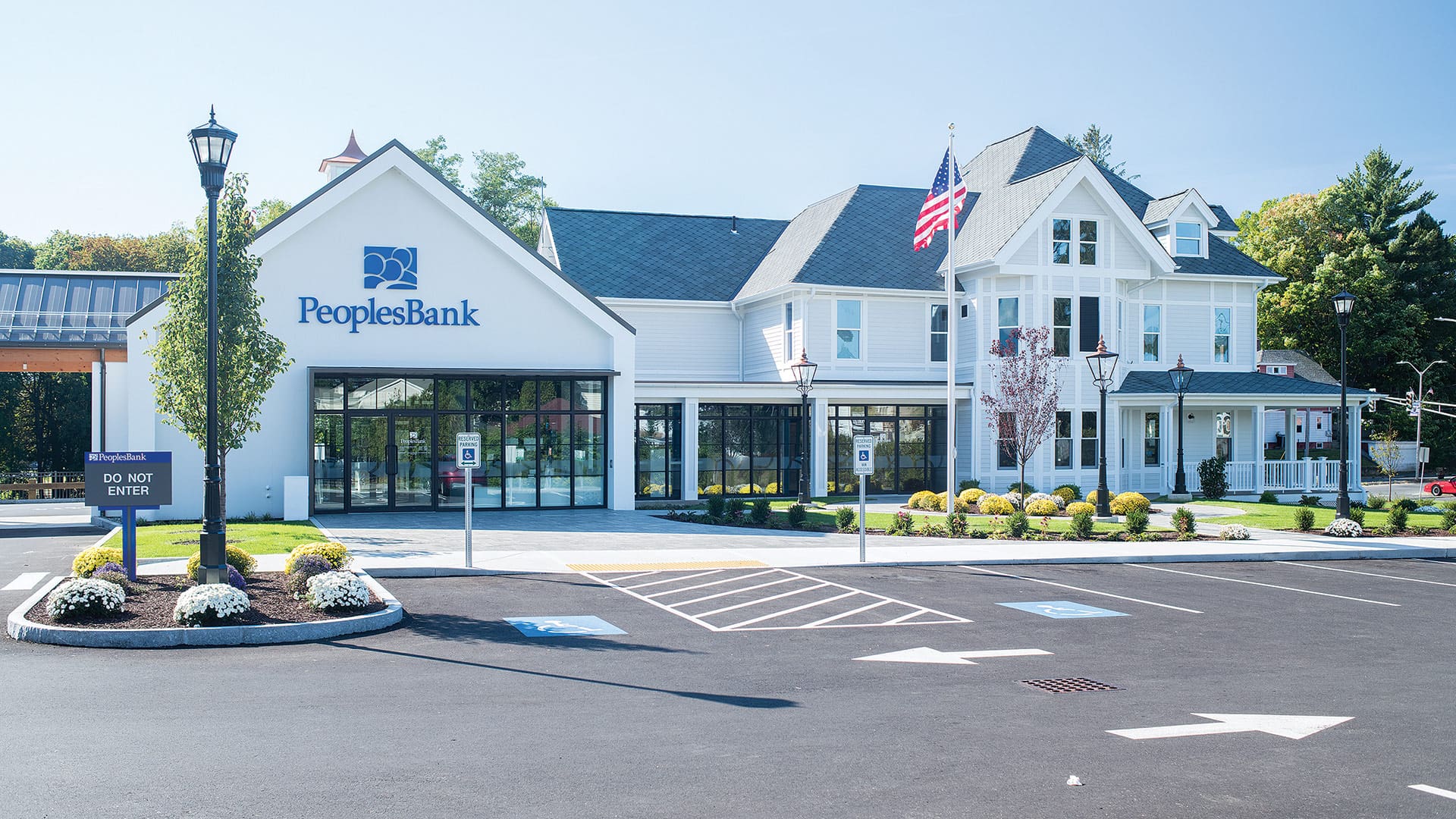
Indeed, while it’s perhaps best known for wood-frame construction — as seen in projects ranging from phase 1 of Glenmeadow in Longmeadow to transformation of the former Yankee Pedlar in Holyoke into a PeoplesBank branch; from River Mills Assisted Living in Chicopee to restoration of the historic Gaylord mansion on the Elms College campus — it has worked with stone and steel as well.

Indeed, the portfolio includes projects like Way Finders’ new home in downtown Springfield, the Educare early learning facility, also in Springfield, and renovation work on the Naismith Memorial Basketball Hall of Fame, including refurbishment of the sphere, which involved removing thousands of fiberglass panels and resurfacing them, but also extensive interior renovations.

The PeoplesBank branch in the former Yankee Pedlar in Holyoke. (Photos by Red Skies Photography)

The PeoplesBank branch in the former Yankee Pedlar in Holyoke. (Photos by Red Skies Photography)

Work in the Health Sciences building at American International College (right) showcase the diversity of projects in the Western Builders portfolio. (Photos by Red Skies Photography)

Work in the Health Sciences building at American International College (right) showcase the diversity of projects in the Western Builders portfolio. (Photos by Red Skies Photography)

Beyond diversity with materials, the company has worked in several sectors, including public and private clients, new construction as well as renovations, such as at Elms College, and different realms, everything from housing to the new Phoenix Academy Public Charter School at the Springfield Technology Park, to emergency renovations to the Courniotes Building at American International College (AIC) after a fire there.

“Our focus can remain in housing, but we want to emphasize diversity,” Hughes said. “We’ve won some hard-bid projects for public work, which has helped us diversify in our project types. We’re back at some institutions, like AIC and Smith College, building on existing relationships.”

Signature projects over the past five decades, and there are many, include work with O’Connell Development to build a new 152,000-square-foot, LEED-certified manufacturing facility and corporate headquarters for L3Harris Integrated Mission Systems/KEO, formerly Kollmorgen, at the site of the former Northampton State Hospital; the Educare facility, considered state-of-the-art in that sector; the work at the Hall of Fame; the new Girls Inc. headquarters in Holyoke, located, ironically, in the former home of the O’Connell Companies; and the Holyoke Crossing retail facility in Holyoke, another project where O’Connell Development was the client.

Today, Western is doing far less for O’Connell and much more with a growing list of clients, many of them involved with housing, including Way Finders, Valley CDC, Home City Development, and others.

A common denominator is repeat business, said Healey, adding that clients such as Way Finders, American International College, PeoplesBank, and others have turned to Western for several different undertakings.

“A lot of clients are repeat clients that we’ve worked with,” she explained, adding that one of the firm’s strengths is relationship building. “When these clients have another project, they reach out to us.”

And much of this repeat business stems from the firm’s ability to create value and effectively manage projects, as Hughes mentioned earlier.

“It used to be … construction was definitely a ‘work-harder industry,’” Healey explained. “Now, we’ve finally acquiesced and realized that we have to work smarter and not just harder. You have to be strategic, and you have to plan — you have to make sure that you have everything lined up before you start working.”


Building Relationships

As noted earlier, housing has become a major focal point for Western over the past few decades as need grows and agencies take imaginative steps to address it. And the company has several projects in this realm in various stages of development.

Amethyst Brook should be fully occupied by the end of this month; the projects in Chicopee (Baskin West Main Residences) and Springfield (expansion of the Friends of the Homeless complex) are in early-stage work, while the Holyoke initiative is moving toward completion, with the Holyoke Housing Authority now running commercials urging people to enter the lottery to purchase those homes.

That Holyoke project represents a first — working with modular construction, said Hughes, adding that it has been a learning experience.

“Boxes are prefabricated in Pennsylvania and shipped to Holyoke and put together as side-by-side townhomes,” he explained, adding that the process significantly streamlines the timeline for construction.

“It’s nice to see an emphasis on the trades. You see commercials about it, you hear the unions talk about it, the non-unions talk about it … anyone in the trades can be, if they want to apply themselves, as successful as someone who wound up with a giant college loan that they have to pay back and may or may not be able to work in the field they trained for.”

Meanwhile, many initiatives, including one of the buildings at Amethyst Brook as well as East Gables in Amherst, involve what’s known as passive housing, a voluntary standard for energy efficiency in a building that has surpassed LEED as the cutting edge in that realm.

“There are more passive houses in development and pre-construction because that’s the popular trend moving forward with energy efficiency and sustainability, which is what clients want,” Hughes said. “But there’s also a code aspect — client developers need to meet the Massachusetts Stretch Energy Code, which is one of the most stringent in the country.”

Beyond housing and the growth opportunities it presents, the company has been focused on relationship building — continuing long-standing partnerships and forging new ones — and also on perhaps the biggest issue facing this sector — maintaining a workforce.

Indeed, since arriving at Western, Hughes said one of his priorities has been to generate interest in the field among the younger generations.

He cited several initiatives, including work with Dean Tech High School in Holyoke, hiring co-op students to work for the company part-time at job sites while also attending school.

“It’s been cool to see that youthful excitement about construction,” he said, adding that, by exposing young people early to the lifestyle and opportunities the trades create, the firm is helping to put more future workers into the pipeline.

Ed Ackley, the company’s long-time general superintendent, agreed.

“The workforce is aging, and it’s retiring out,” he said. “So one of things we’ve been doing is trying to attract young people as project managers and assistant superintendents in hopes that they can gain experience, so by the time they become a super, they’re as effective as the seasoned personnel we have now.

“It’s nice to see an emphasis on the trades,” Ackley went on. “You see commercials about it, you hear the unions talk about it, the non-unions talk about it … anyone in the trades can be, if they want to apply themselves, as successful as someone who wound up with a giant college loan that they have to pay back and may or may not be able to work in the field they trained for.”

And, unlike jobs in many other fields that face uncertain futures with advancing technology, including AI, those in the trades are relatively secure, Hughes told BusinessWest. “You can’t ask ChatGPT to build a masonry wall.”


Law Special Coverage

Protecting Your Assets 

By Tyler W. Humphrey, Esq.

Protecting your assets is not just a matter of securing wealth for the next generation. It also ensures that your hard-earned assets are shielded from legal risks, liabilities, and other unforeseen events.

In a world where lawsuits, creditors, and volatile economic shifts can threaten your wealth, proactive asset protection is essential. Whether you’re a business owner, investor, professional, or simply someone looking to secure your family’s future, protecting your assets isn’t just wise, it’s necessary.

While there is no one-size-fits-all solution to protect your assets, this article can help you formulate a plan utilizing a combination of strategies, including estate planning and business solutions, that can offer substantial protection of what you and your family have worked so hard to build.


Understanding Asset Protection

Before exploring the specific tools available, it is important to understand what asset protection is and why it is so important. Asset protection involves using strategies and structures established through various legal instruments to reduce or mitigate the risk of losing valuable assets due to lawsuits, debts, or other liabilities.

Some common risks include:

Creditors. In the case of default on loans or other debts, creditors may seize personal or business assets to recover what is owed. Even loans secured by a specific asset, such as real property subject to a mortgage, may put your other assets at risk if the sale of the secured asset is insufficient to satisfy the debt.

Lawsuits. Individuals and businesses can be the targets of lawsuits and other claims. Regardless of whether the plaintiff’s claims are valid or frivolous, an adverse judgment may expose assets to liens or seizure.

Divorce. In the case of divorce, the resolution of the petition will often require, sometimes by court order, the equitable division of marital assets. This can include assets acquired by one party before the start of the relationship.

Governmental risk. Long-term care, especially nursing home care, can come with a substantial cost. Many people assume Medicare will cover these expenses, but Medicare does not pay for long-term custodial care. That’s where Medicaid (MassHealth) comes in. However, qualifying for coverage comes with strict income and asset limits. In Massachusetts, a single applicant is allowed to keep only $2,000 in countable assets, and those assets are subject to a five-year look-back period.

“Trusts are among the most powerful tools in estate and asset protection planning. A trust is a legal arrangement where a trustee holds and manages assets on behalf of a beneficiary.”


Estate Planning and Trusts: Building a Legal Wall Around Your Wealth

Trusts are among the most powerful tools in estate and asset protection planning. A trust is a legal arrangement where a trustee holds and manages assets on behalf of a beneficiary. There are many types of trusts, each with their own benefits and limitations:

Revocable living trusts. Their primary use is estate planning and probate avoidance. It offers limited asset protection during your lifetime because you maintain control, but it ensures privacy and smoother transfer of assets upon death.

Irrevocable trusts. Their primary use is asset protection and tax planning. Once assets are transferred, you relinquish control, making them inaccessible to creditors. Common types include spousal lifetime access trusts, which offer access to assets through a spouse while maintaining protection, and Medicaid trusts, which protect assets from being counted for Medicaid eligibility.

Credit shelter and QTIP trusts. For married couples, particularly those with estates approaching or exceeding $2 million, credit shelter trusts and QTIP trusts can minimize taxes while protecting surviving spouses. Their primary use is to preserve the estate tax exemption of the first spouse to die and provide support to the surviving spouse. They offer no asset protection during your lifetime because you maintain control, but they preserve both spouses’ estate tax exemptions and protects assets from remarriage, creditors, and spend-down.

Other estate planning essentials include:

• Durable power of attorney, which empowers a trusted person of your choosing to manage finances if you become incapacitated;

• Healthcare proxy and living will, which clarifies medical wishes and avoids court intervention; and

• Homestead declaration (in Massachusetts), which protects up to $1 million in home equity in your primary residence from creditors.


Corporate Entities: Separating Personal and Business Liabilities

In addition to an estate plan to protect your personal assets, it is necessary to consider how to protect and preserve your business assets. Operating your business or managing investments through the right entity can provide a crucial layer of protection.

For business owners and real estate investors, placing assets in separate LLCs or entities can shield personal wealth from business liabilities. It is also important to consider agreements between co-owners of a closely held company so that the business interests themselves are not subject to claims by non-owners.

Limited liability companies (LLCs) shield personal assets from business liabilities and offer flexible taxation, as they can be taxed as a sole proprietorship, partnership, or corporation.

Corporations (C-corps and S-corps) protect shareholders from corporate debts and obligations, while S-corps have the advantage of pass-through taxation with liability protection.


Combining Strategies for Maximum Protection

The most effective asset protection plans layer several strategies. For instance, a business owner might:

• Hold rental properties in separate LLCs;

• Utilize a shareholder agreement to ensure all corporate interests are free from seizure and stay within the current ownership group; and

• Establish a credit shelter and QTIP trust to minimize estate tax and protect assets for their surviving spouse.


Bottom Line

Asset protection is most effective when implemented early, well before a problem or disagreement arises. By combining these tools, you can create a robust defense against risks while maintaining control or flexibility.

Asset protection isn’t about hiding wealth; it’s about responsibly managing risk and preserving what you’ve built. With the right combination of trusts, business agreements, insurance, and estate planning tools, you can create a legal and financial structure that defends your assets against potential threats while supporting your long-term goals.

Consult with one of Bacon Wilson’s qualified estate planning or commercial attorneys to tailor a strategy that fits your specific situation and goals. Even if you have a plan in place, it is crucial to review your plan regularly to ensure it remains in compliance with constantly changing laws and regulations. Asset protection may seem daunting, but with the right advisor and proper planning, you can enjoy peace of mind knowing your legacy is secure.


Tyler W. Humphrey is an associate with the law firm Bacon Wilson, P.C. He concentrates his practice in the areas of estate planning, elder law, probate administration, and business and corporate law. Humphrey is admitted in Massachusetts and Connecticut, as well as the U.S. District Court of Connecticut; (413) 781-0560;
[email protected]

Special Coverage Wealth Management

Bumps in the Road

Pat Grenier says investors worried about market volatility shouldn’t panic, but instead seek competent advice.


Early April was an anxious time for many investors, but not a surprising one for the advisors they rely on.

“We prepped for a volatile market this year,” said Pat Grenier, owner and principal at Grenier Financial Advisors in Springfield. “We thought the market was high. We thought there would be a pullback. We didn’t expect the amount of volatility that we had, but we did expect a little bit of a pullback.”

The early months of the Trump administration have impacted the markets in a number of ways, particularly with an aggressive series of tariff decisions — some in force, some only threatened as negotiating tools — that have triggered fluctuations in the stock market and plenty of client phone calls to investment firms. But Grenier isn’t overly concerned, especially as things are calmer now.

“To me, this is more of an event-driven gyration. Even though we did expect some pullback, I think a lot has to do with all the negative talk about tariffs,” she explained. “So, one of two things is going to happen. The tariffs are going to work out, and the market’s going to do well. Or tariffs are not going to work out, and then the market will adjust and eventually do well. So I’m not negative.

“I think people should not panic,” she went on. “I think they should seek competent advice and not assume things. We’re bombarded 24-7 with news bites, but they’re just news bites. They don’t tell you the whole story.”

“We didn’t expect the amount of volatility that we had, but we did expect a little bit of a pullback.”

Jeff Liguori, executive vice president and senior portfolio manager at Bradley, Foster & Sargent in Hartford, Conn., had similar feelings as the calendar turned.

“At the end of 2024, the optimism was pretty excessive. Everything had gone up. People were feeling really good about the market; it was up 20-odd percent from previous years. There was almost too much enthusiasm.”

So a correction was likely, even if some of the forces generating it were questionable, he added. “Economically, tariffs can be so excessive that it’s not healthy for the economy. But when we were in the throes of that, we told clients, ‘this is a manufactured crisis; it can easily be turned around with a stroke of a pen, or with potential legal roadblocks.’ And that’s how it played out.

Jeff Liguori

Jeff Liguori

“The data is 100% in your favor. Nothing ever goes straight up. We’ve lived through most of these crises — the housing crisis, the tech bubble, the Great Recession. All of those, time and again, have been incredible buying opportunities.”

“After a while, it’s been less of what we consider a headline risk. Before, when every headline came out, stocks reacted instantaneously. Over time, we’ve come out of that, and now people are asking how much of this is really going to materialize.”

That said, taking a sanguine view of the long-term health of the markets is much easier when the tides are calm than when they’re volatile, Liguori noted.

“But the data is 100% in your favor. Nothing ever goes straight up. We’ve lived through most of these crises — the housing crisis, the tech bubble, the Great Recession. All of those, time and again, have been incredible buying opportunities. It’s almost like, if there’s no pain, there’s no gain.”


Risks and Rewards

Tim Suffish, senior vice president and head of equities at St. Germain Investment Management in Springfield, said it’s important that investors understand the long-term nature of the firm’s strategies and how it approaches the market — and its inevitable shifts.

“If we’re doing our job well, we have a conversation with our clients up front about the risks and rewards of various asset classes,” Suffish explained. “Cash is the only asset that does not go down, but cash yields very little. Your checking or savings account is guaranteed by the FDIC, and you might get half of 1% a year. But it’s not going anywhere.

“On the other end of the spectrum, stocks are for the long term, and by looking back a few years, you can see what can happen with stocks. Right after COVID hit, stocks were down 35% in one month. It was one of the worst months ever for the markets. Of course, the economy got flooded with stimulus and low interest rates and bounced back.”

Tim Suffish

Tim Suffish

“We’ve been through it before, and the volatility and the drawdowns happen. The reasons may be different each time, but the global economy is resilient.”

That said, “when you talk about volatility, people need to know what to prepare for. If you can prepare for it, history shows you’ll be rewarded by taking on some risk.”

To explain, Suffish took a quick tour through the past 25 years of market-jarring events, and why risks tend to be short-term and rewards longer-term. The dot-com crash of 2000-01 saw the market down 50%, as did the housing boom and bust and resulting global financial crisis in 2008-09. China-related trade concerns in 2018 caused another 20% drawdown, followed by that 35% COVID-driven drop in 2020, and another 18% hit in 2022 caused by inflation concerns.

“Even with all that volatility and scary drawdowns — and these are not 5% moves in the market that, if you squint at your monthly statement, you don’t notice it; these are big numbers that you do notice — the stock market still averages, over that time frame, going back to 2000, about 7% a year.

“So the market historically rewards you for taking risks,” Suffish went on. “Taking risks is really the only way you’re going to get those rewards, and the rewards tend to be proportionate with your risk. So part of our counsel to clients who are nervous in a time like this is that it’s more than likely a repeat of what we’ve seen over the past 20, 25 years. We’ve been through it before, and the volatility and the drawdowns happen. The reasons may be different each time, but the global economy is resilient.”

Liguori agreed. “We have this philosophy that, when the market gets rocky and volatility increases, there’s always a reason for it, whether it’s something macroeconomic or, in this case, a combination of political and macroeconomic factors. We’ll hear clients say, ‘this time, XYZ is different than the last time.’ Yes, whatever is causing the volatility might be different, but the reaction is always the same. Economic decisions are being made by humans, and humans always act the same way.”

That said, he continued, it can be beneficial to be more aggressive when the market drops.

“No one wants to lose money, even if it’s just on paper. But if I’ve done my job and the market is down 20 but you’re down 10, maybe increase your exposure a little. If we look at the stock market in a broad sense, the time to be more aggressive on equities or stocks is at the point when humans feel really uncertain. It’s a contrarian way to look at it.”


Planning for Life

That long-range view of investments plays into how those we spoke with handle clients; they’re plotting out a path where investments will meet the various needs of life — a home purchase, college education, retirement — both now and well into the future.

“We have to know the client really well,” Grenier said. “Sometimes we know them better than their own family knows them. We have to know what makes them tick, what their goals are, what their aspirations are, what they want from a value perspective, what their values are, so that we can kind of guide them and use the investments as a tool to get them where they want to be. We do so much hand-holding for clients.”

A client’s portfolio can employ a range of vehicles, from mutual funds to stocks, bonds, and annuities.

“When somebody comes here, we want to make sure that they’re well taken care of and that the risks that they face are minimized,” Grenier went on. “And you have to acknowledge that they are nervous, and it is nerve-wracking, when you see the market gyrate the way it has. Nobody likes to see the value of their portfolio come down. So what I try to do is acknowledge that, ‘yes, I get it,’ and then I try to put it in perspective for them.”

Like Liguori, she said those nervous times can be an opportunity.

“We know the market is resilient. And when the market is down the way it was at the beginning of April, I used it as an opportunity to add because we were buying good companies on sale. We added in where we could.”

That said, clients who are closer to retirement — or already there — will be less likely to tolerate risk.

“If they are going to depend on their investments for a good portion of their living expenses, their livelihood, then you have to be more conservative with their investments,” Grenier said. “We’ve been using some buffer programs that kind of make sense — it does cap the upside, but it protects the downside.”

Suffish said portfolio diversification is the best path to enhanced returns while reducing risk.

“When you have diversity in asset classes that are not perfectly correlated, you can build that portfolio,” he explained. “Last year, large cap U.S. stocks were up 20%, but bonds were about flat on the year. But by mixing the asset classes — U.S. equities, foreign equities, bonds, cash, maybe some precious metals — these assets are not perfectly correlated with each other, so you get the blended return. But you also get the blended volatility or risk, which benefits the portfolio.”

Whatever the circumstances in the market, all those we spoke with said that those who start investing early in life — in their 20s and 30s, as opposed to 40s, 50s, or later — can exercise a greater degree of risk taking.

“A younger investor can afford to be more aggressive, can afford to be more speculative. They’re not going to feel the consequences for a long time,” Suffish said. “Our typical client is close to retirement or in retirement, so they need to be diversified and take the sharp edges off off the market downturns.”

Grenier agreed. “The earlier you start, the better, because you have time on your side. If you look back at the market throughout the years, there have been so many gyrations, and you might be caught in a point where the market is down. But if you’re looking at it long-term, it has only gone up.”


Community Spotlight Special Coverage

Community Spotlight

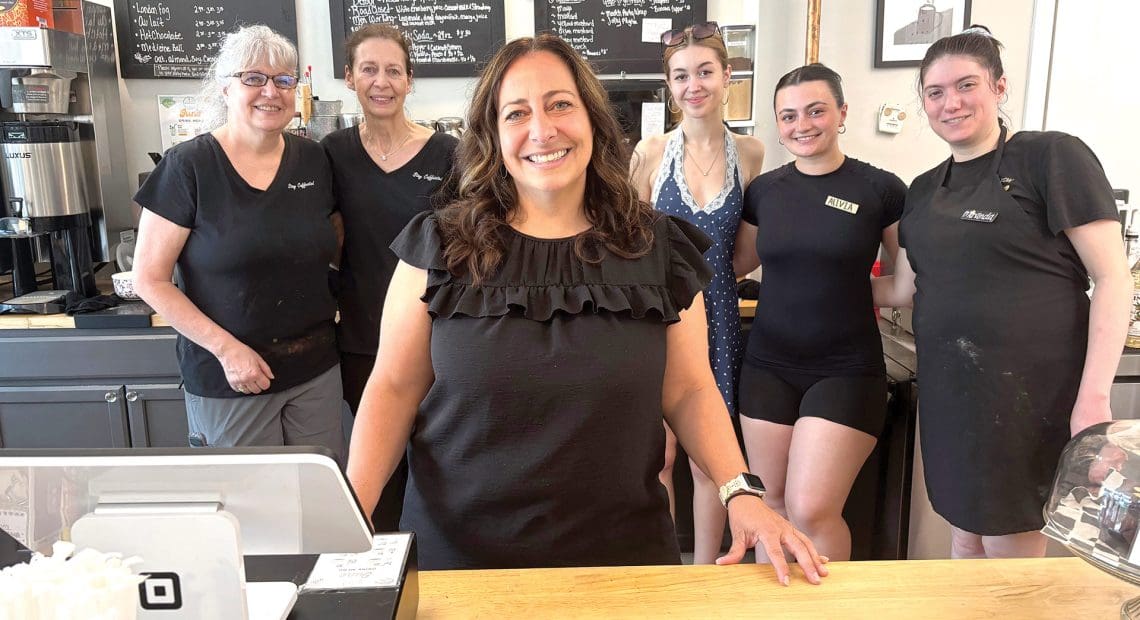
Amanda Roy, center, with several staff members at the Better Bean coffee shop on Main Street in Monson.

Amanda Roy, center, with several staff members at the Better Bean coffee shop on Main Street in Monson.


Amanda Roy likes to say the devastating ankle injury she suffered in 2021 when she missed the last step at her house didn’t happen to her; it happened for her.

That mishap left her in a wheelchair and facing a lengthy recovery period, which she chose to spend with her parents, in the Monson home where she grew up. And while recovering, she spent a lot of time thinking about what the next chapter in her life would look like and where it would play out.

She ultimately decided it would look somewhat like a previous chapter, when she spent 10 years operating a coffee shop in Plymouth, but with some real changes (more on those later). As for the place … she chose downtown Monson with the thought that this would be a short-term gig.

But things changed, and quickly.

“I thought, ‘I’m going to open a coffee shop, and when I get better, I’m going to sell it, move back to Plymouth, and get on with my life,’” said Roy, who opened the Better Bean in the summer of 2023, when she thought she was recovering from that ankle injury. Instead, she was told she would need a replacement. And while getting it and some subsequent surgeries, she made the decision to get on with her life in her hometown. She’s making the Better Bean one of the more intriguing business stories in this community, while she and her boyfriend build a house there.

These developing stories are just a few of many in this town of just over 8,000 people. Others include:

• Progress with the redevelopment of the sprawling Monson Developmental Center (MDC) site. The board of Westmass Area Development Corp. is expected to vote soon on a proposal to acquire a 100-acre portion of the site with the intention of redeveloping it for housing and related purposes;

• Renovation and expansion of the town’s fire station;

• A town meeting vote to move from three selectmen to five;

• Continued growth of what would be called agritourism, with businesses such as Silver Bell Farms, Echo Hill Orchard, Westview Farms Creamery, and others, which grow and sell everything from apples to Christmas trees to wine to ice cream, and draw people from across the region and beyond; and

• Anticipation and excitement concerning the planned east-west rail station in Palmer, which has the potential to make Monson a more popular place to live for those who work in Greater Boston but can’t afford home prices in the capital area.

“It’s still costs a lot to build a house, but from a value standpoint, this is an opportunity to bring people here, and when individuals move in, now you have an opportunity for another restaurant or two, and then businesses will look at Monson as a vibrant place to move to.”

Westmass President and CEO Jeff Daley said the board is expected to vote by the end of this month on a proposal to acquire a section of the MDC property, on which he envisions a ‘village concept’ for the parcel, which represents a new and intriguing opportunity for the agency.

“What we’ve done in the past has been mostly commercial and industrial-type projects,” he said, noting industrial park projects in cities like Westfield, Agawam, and Chicopee, as well as redevelopment of the massive Ludlow Mills complex in Ludlow, which includes large housing components. “We’ve worked with partners on housing in the past, and housing is definitely a need, and the demographics of Monson have been changing; housing would be a good fit at that location.”

The MDC was among many state-owned properties featured in a recent showcase of parcels available for housing development that hosted the Healey administration, said Jenn Wolowicz, Monson’s town administrator, noting that, while there are several potential future uses, housing, especially affordable and 55-and-over housing, are critical needs.

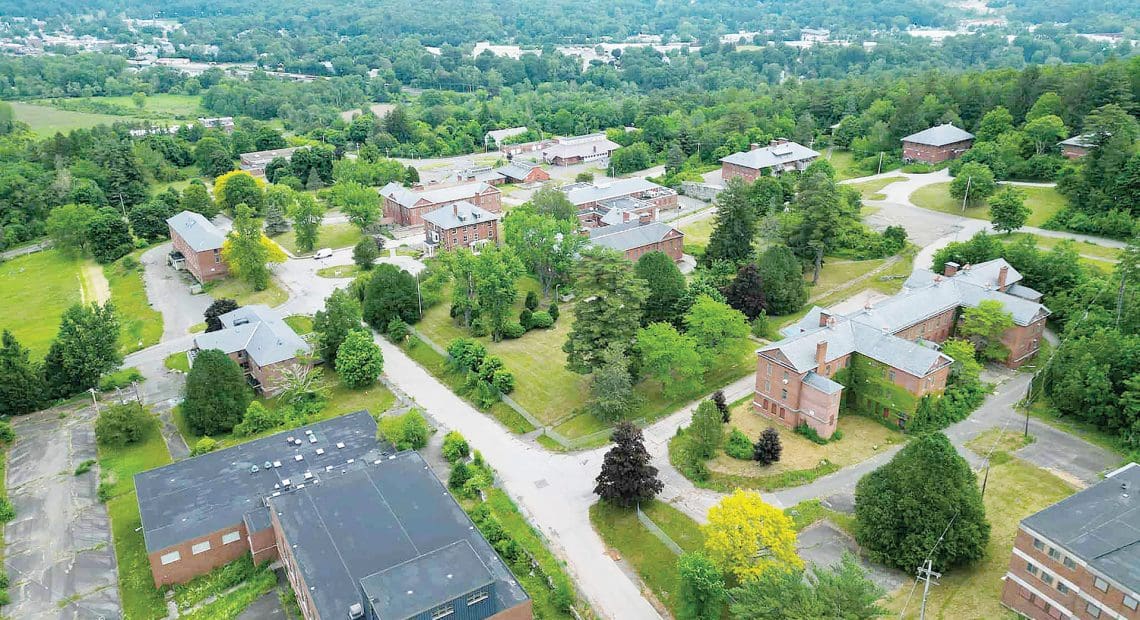
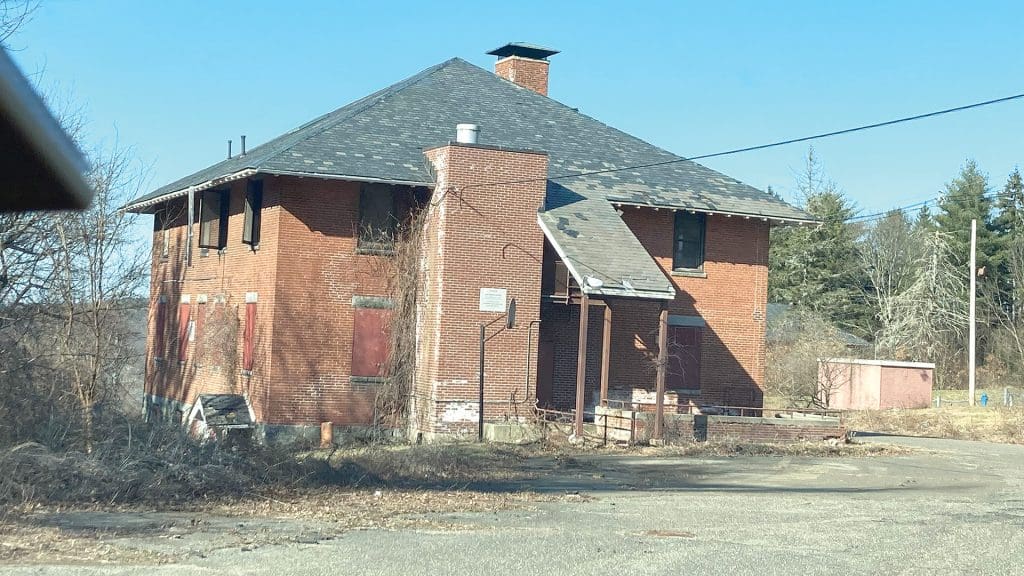
One of the long-shuttered buildings at the Monson Developmental Center, which is moving closer to redevelopment, with housing as one of the likely new uses.

One of the long-shuttered buildings at the Monson Developmental Center, which is moving closer to redevelopment, with housing as one of the likely new uses.

“As of April 30, our population of seniors is 33% of our overall population,” she explained. “We have a lot of people living in single-family homes, their children are grown, and they’d love to be able to downsize to a townhouse-type unit, and we’ve made sure that this is something that’s being heard by Westmass.”

As for east-west rail, Jim Przypek, CEO of the Quaboag Hills Chamber of Commerce, which serves 15 communities, including Monson, said that service will benefit many of the communities in the Quaboag region simply by making them more accessible.

“The trend of people moving out of Eastern Mass. and migrating farther and farther west will continue and be accelerated by east-west rail,” he said, adding that rail service will make it easier to live in those towns but still work in Boston or Hartford.

For this latest installment of its Community Spotlight series, BusinessWest turns its lens on Monson, the picturesque town roughly halfway between Springfield and Worcester that has established its own identity.


Developing Stories

Mike Rouette grew up in Monson, and it has remained his home. He described it as the “perfect place to raise a family,” and a community where people team up to get things done, right down to planning and executing the Fourth of July parade and fireworks.

“Everyone pitches in and does what needs to be done to keep the town vibrant,” said Rouette, executive vice president and chief operating officer at Monson Savings Bank, who, as he surveys the landscape, sees both challenges and opportunities for the town.

The challenges are similar to those facing other rural communities in that area, including the loss of manufacturing jobs — plants once made everything from hats to toilet seats here — as well as retaining existing businesses and grappling with declining enrollment in local schools stemming from school choice and other contributing factors.

“It’s not easy to access Monson,” he explained. “Sometimes, people tend to look at Monson, from a Springfield standpoint, as if Wilbraham Mountain is almost like a Great Wall of China — it’s ‘over there.’”

As for opportunities, they mostly involve abundant land (although much of it is on hillsides) and still-affordable buildings lots, at least when compared to towns to the west (like Wilbraham, Hampden, and East Longmeadow) and to the east (Sturbridge and Auburn).

“There’s an opportunity there that the town should take advantage of,” Rouette said of lot prices. “It’s still costs a lot to build a house, but from a value standpoint, this is an opportunity to bring people here, and when individuals move in, now you have an opportunity for another restaurant or two, and then businesses will look at Monson as a vibrant place to move to.”

Meanwhile, the MDC site provides a wealth of opportunities — much like the site of the former Belchertown State School has — for creative reuse, everything from housing to commercial sites to Rouette’s vision of a regional high school that would serve Monson and Palmer and help keep students in those communities.

The MDC, which closed in 2012, was spread over more than 650 acres. A large portion of the property will be transferred to the Massachusetts Department of Fish and Game to become a wildlife management area, said Wolowicz, adding that Westmass could become the developer of the remaining 100-acre parcel, where the hospital buildings and other facilities still stand.

“We would be demoing the hospital buildings and doing a mixed-use development with quite a bit of housing,” said Daley of plans that are still being formalized and, of course, contingent on the upcoming vote of the board. “We’re proposing that it would be affordable, market-rate, and workforce, to make sure that people can come into town if they want, or upsize or downsize in the town of Monson, as well as potentially some retail and commercial use to create a village atmosphere, as opposed to just coming in and putting some buildings up.

“We really want to respect the town of Monson and the surrounding communities, and that’s why we’re proposing something with more of a village feel rather than just putting up ranch homes or duplexes,” he went on. “This would be more strategically thought out … a village concept where people could still enjoy that rural farm life, if you will, in Monson, while also creating a new development for housing upgrades for people who want to get out of their homes, as well as workforce housing. This could be a game changer for Monson, Palmer, and the surrounding communities.”


Bean Optimistic

The staff at the Better Bean likes to get creative and theme its specialty drinks and other fare.

Such was the case last fall, with a two-month salute to Gilmore Girls and the small, fictional Connecticut town called Stars Hollow, where the show takes place.

“Stars Hollow looks a lot like Monson,” said Roy, referencing both her coffee shop and Dan Grieve Park, across the street from the shop, and its gazebo, which is very similar to the one in the show.

Monson at a Glance

Year Incorporated: 1775
Population: 8,150
Area: 44.8 square miles
County: Hampden
Residential Tax Rate: $14.87
Commercial Tax Rate: $14.87
Median Household Income: $52,030
Median Family Income: $58,607
Type of Government: Select Board, Open Town Meeting
Latest information available

The park, complete with several Adirondack chairs and benches, is quite popular with Better Bean clients, most of them regulars, said Roy, who chose a grab-and-go format rather than seating, one of many lessons she took from her time in Plymouth, which was split between two locations.

The first was a kiosk inside a Registry of Motor Vehicles office, and the second was a much larger space in the same industrial park, “with seats and a public bathroom and a big menu … and I burned myself right out,” she said, adding that she sold that enterprise six months before COVID arrived.

“Someone was looking out for me big time, because I can’t imagine being that burned out and having to deal with COVID,” she said, adding that her ankle injury brought her back to Monson and, eventually, to a storefront — the same one her father operated a realty office out of when she was young — on Main Street.

Learning her lesson from Plymouth, she created a place that’s not too big or too small, although it’s been cramped since she opened, so she will soon take over the space next door (the former Petal and Wren flower shop, which relocated) and will use the back for storage and the front for a small gift shop, something she said the town needs.

Overall, Roy told BusinessWest, the downtown has lost some storefronts — a cannabis shop closed recently, for example — but it remains an emerging destination.

Wolowicz agreed, but noted that the town’s business community is diverse, with many ventures existing in the agritourism and hospitality spaces.

“We have quite a few people who are being very creative when it comes to what their land is used for, be it what they’re growing or their animals,” she said, adding that one of the priorities for town officials has been to promote the preservation of farmland and, overall, a healthy rural community.

The Monson Agricultural Commission goes about this work in many ways, she said, listing everything from Right to Farm bylaws, which protect farms from noise, odor, and other complaints, to a farmers market event with live music and more than a dozen local vendors, including farms, bakeries, and artisans; the next such event is slated for Sept. 13.

“The town of Monson supports its commercial farms,” Wolowicz said, “and wishes to ensure their continued existence and positive impact on the town economically, ecologically, and socially.”

Przypek, who came to the chamber after a lengthy stint with the Basketball Hall of Fame in marketing and sponsorships, and then several years as general manager of the Three County Fairgrounds, agreed, noting that agritourism has become a large part of Monson’s identity as it transitions away from its manufacturing heritage.

“Businesses like Silver Bell Farms and Echo Hill and Westview Farms Creamery are thriving, and they bring people from all over to Monson,” he said, adding that new businesses downtown, like the Better Bean, do the same.


Community Spotlight

Community Spotlight

Forbes Library in downtown Northampton will soon feature a small outdoor stage, as seen in this rendering from HAI Architecture.

Forbes Library in downtown Northampton will soon feature a small outdoor stage, as seen in this rendering from HAI Architecture.

Andrea Monson came to her new role as executive director of the Northampton Downtown Assoc. (DNA) in a roundabout way, but found it to be an intriguing fit during an uncertain time for the city and its downtown, which will soon undergo a major — and not universally loved — redevelopment project.

After spending five and a half years at MassDevelopment as its Tranformative Development Initiative fellow for Chicopee, she then moved into the position of creative content officer for a few years; prior to that, she had been in marketing research at companies like Aetna and CVS. She’s also co-owner of Monson Roastery and founded the Urban Food Brood collaborative in Springfield.

“I found out about the Main Street redevelopment project from a friend of mine who lives in Northampton and was connected to a lot of folks there, and said they could really use a fellow to get through the project,” she said, adding that she wound up volunteering with Pardon Our Progress (POP), an entity created to streamline communication and mitigate obstacles around the Main Street redevelopment project, dubbed Picture Main Street by municipal leaders.

Then, when Jillian Duclos, the previous executive director of DNA, stepped down, Monson applied and won the job earlier this year. She explained that a major DNA focus is downtown advocacy, and it has been active in communicating project updates to businesses there.

“The bulk of construction is happening in 2027,” she said. “There will be some preliminary construction in the fall of 2026, but the city is very mindful of the retail experience of Northampton for the holiday season, so no construction then.”

Monson recognizes business owners are a divided camp on the project, and said the city has been trying to level up the way it communicates regarding the issue, while the DNA works directly with business owners, keeping them informed.

“We’re always thinking about how construction will affect traffic, incentives for foot traffic, creative ways to get around the work on Main Street. We don’t want anything to catch us by surprise.”

“We launched a survey to get all the businesses to share their experiences and feelings. A lot of them they’re frustrated because there hasn’t always been clear communication in the past, though we’re actively trying to remedy that,” she explained, adding that businesses emerging from the difficult pandemic years feel stressed on multiple fronts today, worried about tariffs, recession talk, and what they see as a major Main Street upheaval that could keep foot traffic away.

“They’re looking at the project as the end of the world, but that’s not the case,” Monson went on. “A lot of redevelopment projects end up increasing foot traffic; they end up being really profitable when they’re finished. And with POP, and my job at DNA, we’re listening to business owners and acting on their concerns, looking for grant funding and other funding to support them through the project. We’re also launching an RFP for marketing, to market Northampton in general and market the downtown, and keep them in the loop with everything that’s happening, scheduling changes, all of that.”

Judy Herrell, owner of Herrell’s Ice Cream, is one of several business owners who have taken the city to task over its downtown plans for a number of reasons, including an increase in traffic, concerns over bike safety, and a lack of public meetings on the project.

“I’ve talked to a few people that wanted to open businesses Northampton but didn’t for lack of being assured they would be fine during Picture Main Street. They’re worried that, for three years, Main Street will will be torn up, even though the city says it’ll be done in sequences and not tear up the whole street at once,” Herrell told BusinessWest. “That’s still a lot of stress on businesses in the city.”


Meeting of the Minds

Monson said the city is working with Emily Innes from Innes Associates, which specializes in municipal planning, on a grant-funded consultancy.

“She’s seen cities through a lot of these projects, and they’ve told us that we’re ahead of the game just by POP existing. We’re always thinking about how construction will affect traffic, incentives for foot traffic, creative ways to get around the work on Main Street. We don’t want anything to catch us by surprise.”

Monson is also in the process of bringing Jeff Speck to the city for a public talk. A noted city planner who wrote Walkable City: How Downtown Saves America, One Step at a Time, he will tailor his presentation to Picture Main Street and why it’s important, she said, adding that she’s also trying to put together a panel of mayors who have seen these types of projects through in their own cities.

But for locals looking for activities beyond road construction talk, there’s plenty to look forward to in town, including the return of the Taste of Northampton, now as a two-day event on Sept. 13-14.

“I love seeing all the businesses rally around these ideas. They’re all putting in their time and energy to create these collaborations. What I love about Northampton is how businesses help each other thrive.”

“It was a lot of work and a lot of money for just one day,” Monson noted, explaining the expansion to a two-day affair. “Again, this is being led by the restaurants; a lot of food and beverage establishments downtown are co-creating this with us. They know what’s best for them. They’ve been part of the Taste of Northampton for many years, and they’re excited to bring it back.”

The following month, Mischa Roy, owner of Spill the Tea Sis, is spearheading, alongside Isaac Weiner, co-owner of Familiars Coffee & Tea, a month-long October event called the Great Northampton Haunt, which celebrates the city’s haunted history.

“You know, we have as many hauntings here as anywhere else. We had witch trials before Salem. We just don’t brag about it,” Monson said. “So we’re trying to lean into it. They have plans to have something going on every single day in October, which coincides with a dip in retail business. So it’s strategic and intentional.

“I love seeing all the businesses rally around these ideas. They’re all putting in their time and energy to create these collaborations,” she added. “What I love about Northampton is how businesses help each other thrive.”

Meanwhile, a project to construct an outdoor performance stage beside Forbes Library promises to be another activation point for the downtown. HAI Architecture, based in Northampton, designed the accessible, open-air, covered stage to support a wide variety of programs, including concerts, children’s programming, and outdoor movies.

Northampton at a Glance

Year Incorporated: 1883
Population: 29,571
Area: 35.8 square miles
County: Hampshire
Residential tax rate: $13.93
Commercial tax rate: $13.93
Median Household Income: $56,999
Median Family Income: $80,179
Type of government: Mayor, City Council
Largest Employers: Cooley Dickinson Hospital; ServiceNet Inc.; Smith College; L-3 KEO
* Latest information available

The Northampton Jazz Fest also returns to downtown — at numerous venues, as usual — on Sept. 26-27, headlined by New York Voices, a world-renowned vocal jazz quartet.

And speaking of music, the Iron Horse Music Hall recently celebrated one year since its much-anticipated reopening following a major renovation on Center Street, while other venues in town, from the Academy of Music to the Parlor Room to Bombyx, continue to thrive. But Monson said the still-shuttered Calvin Theater in the heart of downtown remains troublesome.

“When music venues are shut down, that’s big. That’s a big piece of what makes Northampton vibrant. If the Calvin doesn’t come back, that’s going keep Northampton from growing.”


Strength in Numbers

Northampton’s success is personal to Monson, who visited the city plenty during her youth and lived there during her college years. “I always felt it’s home. I want to come back and retire in Northampton. So I need it to stay vibrant, selfishly.”

To accomplish that vibrancy, she said, collaboration is key — between businesses, organizations like the chamber and the DNA, and even agencies across the region and state. So is a continued focus on the needs of businesses in a downtown that, aside from CVS, is comprised exclusively of small, local enterprises.

“How can we elevate Northampton? How can we address issues and creatively bring more traffic, more events, more people, so that people want to come back, stay over, go shopping?” Monson asked. “I get to work with some incredibly talented people, which benefits me in my understanding and learning about local economic development. And I think the DNA has been working really hard to build better relationships in Northampton.”

Cities that are struggling, she said, tend to have people working in silos that don’t collaborate with each other, and that’s the opposite of her vision for Paradise City, including that still-controversial reconstruction of Main Street.

“As Northampton forges on with this project, what I see is the potential of so many people working together and collaborating, and that’s ultimately going to be the great success of Northampton.”

Insurance

Rates on the Rise

By Rate Insurance

In 2024, personal insurance pricing continued to rise due to a complex mix of escalating claims, extreme weather events, and ongoing coverage restrictions in select markets. The insurance market remained challenging, as carriers navigated the unprecedented impacts of climate change, technological advancements, and evolving risk profiles. Moreover, record-breaking economic losses from hurricanes, wildfires, and freeze events, have driven significant premium increases, particularly in high-risk geographic regions.

The 2024 home insurance market continued to experience sharp premium increases. Internal policyholder data comparing January through August 2024 to the same period in 2023 showed a national average annual premium rise to $2,072, a significant 20% increase from $1,723 in 2023.

Over the past six years, premiums have increased by 78%, placing persistent financial strain on homeowners. While the personal lines industry’s year-over-year improvement in underwriting losses was an important development, homeowners insurance carriers are still operating at a loss. Pricing is expected to stay high and continue to increase until profitability is restored.

“While the personal lines industry’s year-over-year improvement in underwriting losses was an important development, homeowners insurance carriers are still operating at a loss. Pricing is expected to stay high and continue to increase until profitability is restored.”

Looking ahead to the remainder of 2025, the trends that have shaped the insurance market will continue to challenge homeowners and carriers alike. As an insurance customer navigating the market, it is increasingly important to have a solid understanding of the ever-evolving insurance landscape, and proactive, detailed approaches are crucial. Here are 10 strategies to help customers avoid high premiums and at the same time get sufficient coverage.


Engage with Trusted Agents

Customers need to stay in touch with their insurance agents to stay updated on changes that could affect their policies. Agents can help identify gaps in coverage, explain new risks, and offer advice on options or discounts that might fit their situation. This ongoing communication ensures customers are prepared and adequately protected as circumstances and insurance requirements change.


Review and Update Insurance Policies Regularly

Customers should review their insurance policies at least once a year to ensure adequate coverage. This includes assessing and updating coverage limits and deductibles to reflect any home improvements, renovations, or changes in property value, reducing the risk of being underinsured.


Consider Higher Deductibles

By raising deductibles, customers accept more out-of-pocket expenses after a claim, which usually leads to a lower premium. This method is significantly safer than letting coverage lapse or lowering coverage limits.


Understand Flood Insurance Needs

Standard homeowner policies do not cover flood-related damage, leaving property owners vulnerable to significant repair and replacement costs. Flooding can result from various sources, including heavy rainfall, storm surges, overflowing rivers, and rapid snowmelt, and these risks are not limited to officially designated flood zones.

FEMA reports that approximately 25% of flood claims come from properties outside high-risk flood areas. This additional coverage is especially vital as weather patterns shift and urban development alters existing drainage systems, increasing flood risks in previously unaffected areas. Policies should be evaluated based on both current risks and potential future developments.


Consider Adding Coverage for Water Damage

Water damage is one of the most common causes of homeowner insurance claims, making it essential for customers to evaluate whether they have sufficient coverage. In addition to flood policies, homeowners should consider adding endorsements for increased protection against sewer backups and drain-related issues or raising coverage limits for water-related risks, particularly in areas prone to flooding or homes with aging plumbing systems.

Including service line coverage is also recommended to protect against costly repairs to underground water, sewer, or utility lines. Meanwhile, basic preventive measures can help reduce the risk of water damage year-round. Homeowners should consider installing sump pumps to manage water buildup, using smart water detection systems to catch leaks early, and insulating pipes to prevent freezing in colder months.


Stay Informed About Coverage Changes

Homeowners should stay informed about changes to insurance coverage, particularly for key home components like roofing, siding, and foundations. Policies may introduce stricter conditions, higher deductibles, or exclusions for older features. Regular policy reviews and proactively upgrading aging components can help maintain adequate protection.

By staying updated, homeowners can address these changes by replacing outdated components or adding endorsements to their policies, ensuring they have adequate coverage and avoiding unexpected expenses.


Plan for Natural Disasters

Customers in areas prone to natural disasters like hurricanes, wildfires, high winds, or hailstorms can protect their homes by investing in strategic improvements. For example, installing impact-resistant roofing and siding, reinforced garage doors, and protective systems like hurricane glass and shutters can reduce vulnerability to storms.

For regions at risk of wildfires, creating defensible space by clearing flammable vegetation, using fire-resistant building materials, and sealing gaps around roofs or vents can help protect homes. Installing hail-resistant shingles, anchoring outdoor structures, trimming weak or overhanging tree branches, and securing outdoor property reduces the risk of damage from hail, high winds, or heavy rains during storm seasons.

Homeowners should also review their policy to fully understand coverage for specific hazards like hurricanes, tornadoes, or hail. Since policy limits and exclusions can vary widely by location and insurance carrier, it is essential for customers to stay informed about their policy details.


Explore New Carrier Options

The evolving insurance market regularly introduces new carriers and competitive options. By comparing quotes from multiple providers, customers can evaluate premiums, deductibles, and coverage levels. Some carriers may offer unique discounts for bundling policies, maintaining claim-free histories, or having specific home upgrades like security systems or weather-resistant materials. Regularly exploring these options can help ensure customers get the best possible value for their coverage.


Understand the Implications of Non-renewal

Non-renewal notices can happen due to factors like increased risk, geographic hazards, or property-related issues such as an aging roof or poor maintenance. Insurance carriers may also issue non-renewals due to changes in underwriting guidelines and service area limitations. Understanding these factors and taking proactive steps to prevent risks can reduce the likelihood of a policy non-renewal. If a non-renewal does occur, shopping for new coverage promptly is critical to avoid gaps in protection.


Prepare for Increased Premiums

With the insurance market facing ongoing challenges, premiums are likely to continue increasing in the coming years. Customers should incorporate premium increases into their annual budgets to avoid financial strain and explore cost-reduction methods. Additionally, homeowners should work closely with their agent or provider to identify the factors driving premium increases and uncover potential savings.

By taking a proactive approach, customers can better manage rising costs while ensuring they maintain the coverage they need.

Women in Businesss

More Than Words

Ayanna Crawford is a public speaker who has helped many people, especially young women, find their own voice.

Ayanna Crawford is a public speaker who has helped many people, especially young women, find their own voice.


For the past three years, the Springfield Symphony Orchestra has presented its Fearless Women Awards to area women who embody bravery, advocacy, passion, perseverance, and authenticity.

Ayanna Crawford certainly represents all five qualities, which explains why the SSO included her among its class of 2025. But she also finds the honor humbling, recalling a recent conversation with SSO President and CEO Paul Lambert.

“He said, ‘oh my gosh, we’re so honored to honor you because you just do so much great work.’ And I’m thinking, ‘but I do what everybody else does, right? We just help and serve the community.’

“To be recognized like that was a little overwhelming because I’m not looking for the recognition,” she went on. “I just want to do a good job. I want to be a servant for the people I want to help. I want to be positive. I want to encourage everybody, no matter your walk of life, your religious background, your economic status, whatever. I want to help all of our people, you know?”

Many folks in Western Mass. certainly do know, because Crawford has been serving and helping in many ways for decades. And on June 19, she will take the stage at the MassMutual Center as co-emcee, along with White Lion Brewing Co. owner Ray Berry, of BusinessWest’s 19th annual 40 Under Forty gala.

Her career journey began in education — she taught for two decades in the Springfield Public Schools and as an adjunct professor at Springfield Technical Community College — and she is now both president of AC Consulting and Media Services, which helps nonprofits and other organizations with public relations, press releases, social media management, and marketing; and chief of staff to state Rep. Orlando Ramos, a role she assumed in 2020.

She also created a public speaking program about 10 years ago called Take the Mic, which helps young people in the region grow their confidence and self-esteem while becoming comfortable addressing large groups of people. Meanwhile, she’s an in-demand speaker herself on a wide range of topics, including race, women’s issues, and parenthood.

In short, Crawford has been speaking, teaching, and inspiring for a long time — and has no plans to slow down now.


Speaking Up

Crawford didn’t initially pursue an education degree at Westfield State University; she originally studied broadcast journalism, but found she didn’t like the camera and editing work. So she switched majors and found a different way to be a presenter: in the classroom.

“I’ve taught creative writing for middle school, and I’ve taught reading and language arts for elementary school. Those are the two areas I focused in on through my career, which was really awesome because I saw the fundamentals of reading and writing with my younger students and was able to be more creative with my older students,” she recalled.

During that time, she volunteered quite a bit in the community — a passion that has continued until today — and was gratified when students saw her in that setting.

“They were like, ‘Miss Crawford’s not just a teacher, she’s also part of our community. We see her at the grocery store, we see her at the mall, we see her at community events.’ So that was also an opportunity to connect more with my students.

“I want to be positive. I want to encourage everybody, no matter your walk of life, your religious background, your economic status, whatever.”

“And they knew that I wanted to see them successful, so whatever things that I could do to support them, with their families, with themselves, I was always there to help them,” she went on. And that philosophy became the basis of Take the Mic.

Ayanna Crawford says she wants to be a servant who encourages everyone.

Ayanna Crawford says she wants to be a servant who encourages everyone.

“When I was teaching elementary, I found that my children would do their presentations, and they would be really shy. They would cry; they wouldn’t want to do them. So I said, ‘well, what can I do to help?’ And I asked my principal, ‘can I just do a mini-lesson around public speaking?’”

The principal agreed, and the session went well, but Crawford thought she needed more time with them, so she received permission to create an afterschool program. When the middle schoolers caught wind of that, they wanted to join as well. And she knew she had something. So she took her initiative into the community.

Backed by a cadre of interns and volunteers, she has partnered with community colleges, especially STCC, creating a curriculum within its College for Kids summer program, and also conducted programs in the Springfield Public Schools and an afterschool program at the East Springfield branch of Springfield City Library. In all, the program serves young people from ages 6 to 18.

“Now some of the parents were saying, ‘oh, I need to take a public speaking class. You know, I want to do that too.’ We can’t do the full program with the adults, but we do a workshop around public speaking,” she noted, adding that all this work with Take the Mic is especially gratifying in that it can truly impact people’s lives in the long term.

“About 75% of the world’s population is afraid of public speaking. Even myself, growing up, I was afraid to as well. But there are strategies, techniques, resources, so many different things that you can use. I’ve done a lot of training myself to make sure that I’m on the cutting edge of the nuances of public speaking and making sure that not only the students have what they need, but the adults, too.

“We have had graduates come back to tell us, ‘I had a college interview, and I was more prepared than I thought I was because I took your course,’” she went on. “We’ve had youth come back to us to talk about their job interviews, saying, ‘I was more prepared than I thought I was for the job interview.’ So I think it does work, and it does help, and we do see impact.”


Making Connections

Crawford’s work with AC Consulting and Media Services also emerged from her time in education. He recalled her principal noticing she was doing a lot of community work, so she became the go-to person for connecting the school with community leaders, elected officials, and the media as well.

“I used some of that early groundwork to create my firm, where people ask me today, ‘hey, could you help us with this press release?’ ‘Could you help us getting the media to attend our event?’ ‘Can you help us with a flyer?’ ‘Can you help us with a little bit of marketing?’” she explained.

“I’ve helped nonprofits and small businesses that are up and coming; I’ve worked with folks with marketing and branding stuff, folks that want to get more exposure on TV and radio, helped them with their talking points, helped them put their press release together.”

Her foray into politics, culminating with her current role as chief of staff to Ramos (one of this year’s Alumni Achievement Award finalists; see story on page 19) began with her volunteer service on school PTOs, neighborhood councils, and, eventually, political campaigns. She later became chair of the Democratic City Committee for Springfield’s Ward 8, worked on Ramos’ campaign for the State House, and then joined him in that work, much of which she’s personally passionate about.

Take the Mic has helped young people develop self-esteem and empowerment through speaking skills.

Take the Mic has helped young people develop self-esteem and empowerment through speaking skills.

“Anything around education and our teachers, he always leans on me for that. I’m also very very concerned and passionate about our environment and anything that has to do with safety for our children,” she explained. “So it’s been a pretty positive experience being in that role and being a part of initiatives that can help people and change people’s lives.”

Crawford noted that many people in her role came from law or politics, but she joined Ramos from a background in education and community service, and that’s valuable.

“I’m just like everyone else that calls our office looking for support or assistance. I can say to them, ‘I get you, I understand,’ because we all can fall into situations where we need someone to help us. People call, and sometimes they’re ashamed, and I say, ‘there’s no reason to be ashamed. Everyone needs help once in a while.’ So I assure people, and I give them the confidence that they need.

“My whole premise, I think, is all about elevation, positivity, and helping those that are in need,” she added. “Whether it’s an individual or an organization, if I can help fill a need, then I want to be able to do that.”

As for her community work — she is currently on the boards of Parent Villages, American Service Alliance, and Behavioral Health Network, among other volunteer roles — Crawford said she learned about service from her mother.

“She was a nurse for many, many years, and she was always about helping and health and wellness for our community. I saw the work that she was doing, and I wanted to be authentically me, and asked, ‘what can I contribute to the community?’”

Crawford has been answering that question in many ways — fearlessly and impactfully — ever since.

Healthcare News

Brain Matters


As the number of Americans living with Alzheimer’s disease tops 7 million for the first time, nearly four in five Americans would want to know if they had Alzheimer’s disease before it impacted their lives. They also want treatment, even if it comes with risks, as long as it slows the progression of the disease. These are among the insights uncovered in the 2025 Alzheimer’s Disease Facts and Figures report recently released by the Alzheimer’s Assoc.

The nationwide survey of more than 1,700 Americans aged 45 and older examined awareness and attitudes about Alzheimer’s disease, early detection and diagnosis, tests used to help diagnose Alzheimer’s, and treatments that can slow progression of the disease.

“Our survey finds that people want to know if they have Alzheimer’s, and they want to know before it impacts their daily life. They want a simple test so they can access care earlier, including treatments that can slow the progression of the disease,” said Elizabeth Edgerly, senior director of Community Programs and Services for the Alzheimer’s Assoc. “Their interest in early diagnosis and treatment highlights how important it is that we keep advancing toward diagnostic testing that is simple to administer and widely available. We also heard loud and clear that Americans want disease-modifying treatments that can make a real difference after an Alzheimer’s diagnosis.”

The survey found that:

• 79% of Americans would want to know if they had Alzheimer’s disease before having symptoms, or before symptoms interfere with daily activities.

• 91% said they would want to take a simple test — such as a blood biomarker test — if it were available, although very few are familiar with these tests. Access to early treatment and care is the main reason cited for wanting a simple test.

• 80% said they would ask to be tested rather than wait for their doctor to suggest testing.

• 92% would probably or definitely want to take a medication that could slow the progression of the disease following an Alzheimer’s diagnosis.

• 58% said they would accept moderate to very high levels of risk with taking medication to slow the progression of Alzheimer’s disease in the early stages.

• If diagnosed with Alzheimer’s disease, 83% would be willing to participate in a clinical trial for treatment to help slow or cure the disease.

• 48% cited the ability to participate in clinical trials as a reason for wanting Alzheimer’s testing.

• 81% believe that new treatments to stop the progression of Alzheimer’s will emerge in the next decade.

• 66% believe that new treatments to prevent the disease will be available soon.

• 44% worry that insurance will not cover future care and treatment following testing.

• 41% are concerned about test accuracy.

Other concerns include the cost of testing and losing confidence in abilities or not being allowed to do certain activities (such as driving).

“As someone who has benefited from early diagnosis and treatment, I encourage others who are worried about their cognition to be proactive in addressing their concerns,” said Darlene Bradley, a member of the Alzheimer’s Assoc. early-stage advisory group. “The survey underscores what many of us living with Alzheimer’s believe — we want every opportunity to fight this disease and live the best life we can for as long as we can. I am living proof that there is life after an Alzheimer’s diagnosis.”


Concerning Trends

Additionally, the 2025 Alzheimer’s Disease Facts and Figures report found that the prevalence and cost of Alzheimer’s disease are rising. Among the findings:

• 7.2 million people aged 65 and older are living with Alzheimer’s disease.

• Total annual costs of caring for people living with Alzheimer’s and other dementias (excluding unpaid care) is projected to be $384 billion in 2025.

• Nearly 12 million family members and friends provide 19.2 billion hours of unpaid care, valued at an additional $413 billion.

• Deaths due to Alzheimer’s disease more than doubled between 2000 and 2022.

“Our survey makes it clear — most Americans want to take action if they experience cognitive problems,” Edgerly said. “With the rising prevalence of Alzheimer’s, it’s more important than ever that researchers, clinicians, health systems, public health officials, and other stakeholders work together to ensure all Americans have access to timely and appropriate Alzheimer’s diagnosis, care, and treatment.”

The report highlights several key efforts needed to improve early detection, diagnosis, and treatment in the current environment, including:

• Supporting research to validate and advance biomarker testing so it can be used widely in clinical settings to detect and diagnose Alzheimer’s disease at the earliest stages.

• Creating clinical practice guidelines to keep pace with rapidly evolving science. The Alzheimer’s Assoc. is preparing guidelines on blood-based biomarker tests (anticipated in 2025), cognitive assessment tools (also anticipated in 2025), and clinical implementation of staging criteria and treatment (anticipated in 2026).

• Improving physician-patient conversations about testing, diagnosis, and treatment so patients and their caregivers better understand the meaning of test results and the risks and benefits of new treatments. Physicians should have access to training to deliver information in a way that is easy for patients to understand.

• Addressing ethical concerns of early detection by making sure patients understand that tests only measure potential risk and that a formal diagnosis involves cognitive testing and other assessments, including the health professional’s clinical judgment. Counseling patients in advance and making sure that test results are shared by a physician who provides context can help avoid misinterpretation or undue emotional distress.

• Advocating for laws and policies that require insurance coverage of tests, which will speed up diagnosis and provide faster access to treatments that slow disease progression and support better care planning.

• Fostering public health efforts to educate healthcare providers and the public about the latest research and best practices for risk reduction, diagnosis, treatment, and safe, high-quality care.

Full text of the Alzheimer’s Assoc. 2025 Alzheimer’s Disease Facts and Figures report, including the accompanying special report, “American Perspectives on Early Detection of Alzheimer’s Disease in the Era of Treatment,” can be viewed at alz.org/facts.

Features Special Coverage

Filling in the Canvas

Raipher Pellegrino stands near the huge curved window on the second floor of the property at 280-302 Worthington St., known as the Underwood Building.

Raipher Pellegrino stands near the huge curved window on the second floor of the property at 280-302 Worthington St., known as the Underwood Building.


Raipher Pellegrino paused at the huge, curved second-floor window facing the corner of Worthington and Dwight streets.

“How’s that for a view?” he asked rhetorically, noting that it’s been quite some time since anyone — other than those he’s had out for tours — has looked out that window, some recent history he intends to change.

Indeed, he envisions a Pilates studio, a gym, or something similar on the second-floor space at 280-302 Worthington St., a property known as the Underwood Building, which has been vacant or mostly vacant for more than decade. And that space is just part of a much larger canvas that Pellegrino, the noted personal injury lawyer and real estate developer, working in partnership with his brother, Joseph, and the city of Springfield, is intent on filling in.

While doing so, he’s writing the intriguing next chapter in the history of what has been called (and is still called, even though it hasn’t lived up to the title) Springfield’s ‘entertainment district.’

This is the Worthington Street corridor, specifically the blocks just west of Dwight Street. It has been growing increasingly quiet over the past decade or so as restaurants, clubs, other businesses, and even a nonprofit (Suit Up Springfield) have shuttered or moved. The closing of Dewey’s Jazz Lounge last month was just the latest blow for the area.

It was with the intent of reinvigorating that corridor that Pellegrino and his brother acquired the three buildings east of Duryea Way at auction in 2021. With support from the city in the form of a $2.5 million grant and infrastructure improvements, Pellegrino is filling in his canvas.

Some of the spaces have been filled, like Petra Hookah Lounge, which features Mediterranean food and reopened last fall in extensively renovated space. Others are nearing completion, such as the new restaurant called Mamou, to be owned and operated by the chef at the former Chef Wayne’s Big Mamou, set to open this summer. And still others, including three more restaurants, a music venue to host between 250 and 400 people, and other businesses, like that projected Pilates studio, are still weeks or months away. Meanwhile, several residential units have been renovated, and more will be added to the mix.

“I think it’s vitally important to bring this area back — it raises the quality of living for those living downtown, and it provides places for people to go and eat. That was my desire with this, and it’s a much more difficult project than I think anyone envisioned, but I think we’re starting to see it evolve, and we’re seeing a lot of momentum.”

“The pieces are coming into place,” said Pellegrino, who envisions five restaurants in all, most with doors opening out onto Worthington Street and outdoor dining, in addition to a club and other businesses that will support one another and bring people — and energy — back to the Worthington Street corridor.

“I think it’s vitally important to bring this area back — it raises the quality of living for those living downtown, and it provides places for people to go and eat,” he said. “That was my desire with this, and it’s a much more difficult project than I think anyone envisioned, but I think we’re starting to see it evolve, and we’re seeing a lot of momentum.”

Tim Sheehan, Springfield’s chief Economic Development officer, agreed, noting that the city has invested more than $3.2 million in the entertainment corridor for everything from outdoor dining facilities to small-business assistance to interior buildout for commercial tenants.

This ground-floor space in the Underwood Building is being renovated for use as a music venue, what Raipher Pellegrino describes as an “Iron Horse-like” facility.

This ground-floor space in the Underwood Building is being renovated for use as a music venue, what Raipher Pellegrino describes as an “Iron Horse-like” facility.

“The city’s investment continues in the corridor, and with what’s coming forward, people will see a lot of different options relative to dining in the dining district,” he said, adding that the goal is to bring both new businesses and a degree of long-term stability to a region that has not seen much of the latter.

Indeed, Brian Connors, deputy Development officer for the city, used understatement when he said the entertainment district has had “ebbs and flows.”

By that, he meant some good times, but also controversy with several late-night/early-morning incidents, and, from a business perspective, a high degree of turnover when it comes to restaurants and other businesses, problems compounded by the natural-gas explosion a block away in 2012.

For this issue, BusinessWest takes an in-depth look behind the plywood and brown paper over the doors and windows along that stretch of Worthington and into the future of the city’s entertainment district.


Work in Progress

It was raining intermittently as BusinessWest took its visit to the properties being redeveloped along that block on Worthington Street. The showers quickened the pace of the walks between the buildings, but they could hardly dampen the enthusiasm Pellegrino brought to his work as erstwhile tour guide, something he’s been doing often.

“This is a labor of love,” he said of the project, which is now approaching roughly $6 million in cost and represents perhaps the most extensive undertaking in a growing portfolio of real estate projects in Pellegrino’s portfolio.

That list includes the property at 265 State St. in Springfield — the large home later populated by commercial tenants but vacant in the ’90s and then restored by Pellegrino as a home to his offices — and its adjoining carriage house.

But it also includes a diverse mix of other properties, from charter schools in Springfield and Lowell, where Pellegrino went to college as an undergrad, to Springfield Country Club, which he acquired in partnership with the Hannoush brothers; from the property at 401 Liberty St. in Springfield, a former wire-manufacturing complex, now home to Behavioral Health Network, to the former Lunt Silversmith property in Greenfield, now home to a substance abuse center and mental health offices.

“The tenancy that we have needs to be established tenancy. In terms of going into the restaurant business as a startup business, it’s very, very difficult, and if the business model isn’t spot on, you have a tendency to have what we’ve had — businesses come in, businesses go out, businesses come in.”

Often, the projects involve properties that are historic in nature that require considerable renovations and modernization. Such is the case with the Worthington Street properties, which comprise a new challenge and a tremendous opportunity to reshape and reinvigorate the entertainment district, said Pellegrino, who started his tour at Petra Hookah Lounge, which opened its doors last fall, with the intent of showing what will be happening at the other properties along the street.

The block-long string of properties includes three buildings: 250-270 Worthington St., 272-280 Worthington, and 280-302 Worthington. The first two were built in the 1880s, and the third dates to the early 1930s.

Moving west to east, the properties were in progressively worse condition, he told BusinessWest, adding that 250-270 Worthington, most recently home to Jackalope Restaurant and now Petra (next door), was in decent shape, although both the residential units and restaurant spaces needed upgrades, including new HVAC systems. The property at 272-280, formerly home to several different restaurants, was in worse shape, he said, while 280-302 was “horrendous … uninhabitable.”

Efforts to make it habitable are among the many going on concurrently along that block, a project that came, as Pellegrino noted, with plenty of challenges — everything from renovating historic but badly deteriorated structures to securing established tenants — which became clear as he walked and talked about each of the buildings and the progress being made.

“With historic buildings like these, including one that hadn’t been occupied in 15 years, there are a lot of challenges,” he said, listing everything from floors one could see through to roofs that needed replacing to staircases that no longer meet code and need to be replaced. “This is a project that you can only figure out as you do it; we’ve systematically started at one end, 250-270 Worthington Street, and are working our way to the other.”

Starting with 250-270, he said Petra is now an established tenant, and there will be a new restaurant moving into the former Jackalope space by August or September. He declined to say what the entity will be but noted that it is an already established Springfield restaurant.

Raipher Pellegrino projects that five new restaurants, a music venue, other businesses, and new residential units will take shape along Worthington Street, reinvigorating the city’s entertainment district.

Raipher Pellegrino projects that five new restaurants, a music venue, other businesses, and new residential units will take shape along Worthington Street, reinvigorating the city’s entertainment district.

At 272-280, another new restaurant, Mamou, is expected to open later this month, and another new restaurant, a “bar-like” establishment with light fare, will be opening in the fall, he went on, adding that 280-302 Worthington will have a music venue, a breakfast/lunch restaurant, and other commercial spaces, six units in all, with tenants yet to be identified.

The music venue he’s envisioning will not compete with but rather complement existing venues such as the MassMutual Center, Symphony Hall, and the former CityStage, now being renovated into an arts center for youth, and be an “Iron Horse-like” venue, he said, a reference to the Northampton landmark that reopened last spring.

“The concept is to offer people live entertainment, but also support the restaurants,” Pellegrino said. “If you have an act and sell 250 to 400 tickets, people will want to eat before that.”


Building Momentum

As he stopped at that massive, curved window in the second-floor space above what will be the music venue, Pellegrino pointed to all the parking in the surrounding area, one of the many keys to the success of this project and the entertainment district overall.

Others include everything from improving the perception of public safety to creating stability with the business mix, as well as that supportive element that he mentioned.

Indeed, as the canvas gets filled in, the entertainment district will have a core of new restaurants and businesses, as well as some established eateries — Theodores’ and Del Rey Taqueria on Worthington Street, Osteria on Bridge Street, the nearby Student Prince, and other restaurants and taverns that will support one another, said Pellegrino, adding that the critical mass in his block of buildings should become a draw.

“All of the tenants understand the synergy — there’s discussion about that, and they work well with one another,” he noted. “The idea is that maybe someone can have dinner in one place tonight and have a drink in your place the next night; it feeds off one another. The more people we pull down into the region, the better the restaurants will do. The idea is to create the entertainment district, and the more the merrier.”

Sheehan agreed, noting there are several other keys to the success of this iteration, if you will, of the entertainment district.

These include everything from bringing experienced restaurateurs with proven concepts into the area to infrastructure upgrades.

“The tenancy that we have needs to be established tenancy,” he noted. “In terms of going into the restaurant business as a startup business, it’s very, very difficult, and if the business model isn’t spot on, you have a tendency to have what we’ve had — businesses come in, businesses go out, businesses come in.

“Our objective is to get more stabilized entrepreneurs into the spaces, and I do believe the tenancy that [Pellegrino] is putting forward reflects that stability,” he went on, adding that infrastructure improvements continue in the area, including additional upgrades, including more uplighting and plantings, to Stearns Square, capitalizing on work previously undertaken at that landmark.

Overall, the city has made a large commitment — in funding but also other forms of support — to the stability and growth of the entertainment district, said Connors, noting that public sector support, in the form of loans and grants for initiatives like outdoor dining, interior renovations, and relocation costs, are critical at a time when banks are often reluctant to lend for restaurant and brewery initiatives.

Pellegrino agreed, adding that the investments being made in the three properties along that block of Worthington Street and the individual spaces for restaurants and other businesses are another factor in the success quotient.

“These are major facelifts … these are beautiful, state-of-the-art restaurants. They’re coming into beautifully renovated spaces,” he told BusinessWest. “There’s no guarantee that any restaurant is going to succeed, but this gives them the best opportunity to succeed.

“Everyone has to do their part,” he went on. “The restaurateur has to put out good food and atmosphere; we collectively, with the city, have to provide a safe atmosphere and parking, so it’s inviting, and people feel comfortable coming downtown.”

Whether this picture will come together as Pellegrino and city officials anticipate remains to be seen. But there is great anticipation about what’s behind all that plywood and brown paper.

It’s the next big chapter in the life and times of Springfield’s entertainment district.

Insurance Special Coverage

Smart Policy

HUB International New England President Timm Marini

HUB International New England President Timm Marini

HUB International New England may be the largest insurance broker in those six states, President Timm Marini said, but that’s a point of pride that goes only so far.

That’s because there’s a difference between largest and best, and the latter is what the company strives for each day, and with each acquisition it makes.

And there have been plenty of those.

“We bought six agencies last year. We focused down in Connecticut a lot. You’ll see a couple more coming soon,” he said, adding that each acquisition has to make sense for both parties. “We bought two agencies down there, one in Fairfield County and one in the Putnam area — both smaller operations, but thirsting to partner with the backroom services that we offer, risk control, loss management, claims, financial services. We just do so many different things now.”

HUB International is no stranger to growth. The company was around 500 employees strong when FieldEddy, one of Massachusetts’ larger agencies, joined the organization in 2014; today, it boasts 19,000 across the U.S.

“A lot of it has been through acquisition, a lot of it through talent acquisition,” Marini said. “We’ve been out there acquiring really good people in their space where they operate — marketing, claims. I don’t know how many attorneys we have working for us in non-attorney jobs, but we’ve got highly educated people transacting and helping our customers.”

As for the smaller firms that join the fold, “they get expertise that they otherwise couldn’t necessarily afford on their own,” he said, noting that was essentially the draw for FieldEddy 11 years ago. “They get shared resources that are available to help make sales happen, make retention happen, and make the customer experience better. Just different minds, different thought processes.”

“We want to have a lot of conversations about how to help our customers and prospective customers survive through the maze of confusion. It’s dizzying the amount of change that goes on every day.”

HUB’s services run the gamut from business insurance and employee benefits to personal insurance and retirement services, with a wide range of specialties within each.

“We’ve refocused on small business, which Western Massachusetts has a ton of,” Marini said. “We’re focusing on some automation in there, some quick quotes, but also day-to-day service, partnering with our carriers to provide top-notch service to those customers. It’s our lifeblood. Small business is a backbone of the United States, and especially in Western Mass., Maine, Vermont, everywhere we are.”

On the middle-market business front, rates have receded a bit after a long stretch in the other direction. “It’s been three to four years of just delivering bad news, but you’re starting to see little to no increase, so that’s nice. Some of it is just loss-driven; if the customer had losses, then they’re getting increases.”

Since its entrance into the Western Mass. market in 2014 through acquisition of FieldEddy Insurance, HUB International has significantly grown its presence through both geographic and organic expansion.

Since its entrance into the Western Mass. market in 2014 through acquisition of FieldEddy Insurance, HUB International has significantly grown its presence through both geographic and organic expansion.

Meanwhile, HUB’s investment services represent one of its fastest-growing businesses; HUB has paired locally with Epstein Financial Services on that front. And these are important times for investors to have someone to consult with, he added, so they understand what’s happening in an uncertain market.

“There’s a ton of confusion, and it’s tough to keep track of all this,” Marini said. “With small business, middle market, employee benefits, and financial services, those four businesses, nobody can know everything. So it’s nice to have a peer group of experts to recommend to our customers so that they can deal with quality people.

“It’s funny, because if you think about what’s going on in the economy, it’s done nothing but really push people to talk to their advisors. And that’s kind of what we want to do, right?” he went on. “We want to have conversations, whether it’s about insurance or investment or risk services. We want to have a lot of conversations about how to help our customers and prospective customers survive through the maze of confusion. It’s dizzying the amount of change that goes on every day.”

That said, “seek your counsel; seek the advice of your experts,” he advised. “Don’t read your investment statement and get all upset and whatnot. Have a conversation. There may be some things moving around that you don’t know.

“I try not to look at my statements and things of that nature,” he added. “Of course, as you get older, you start to look at it. But at the same time, I don’t want to panic.”


Help … in Many Forms

Marini emphasized that the broad reach of expertise at HUB gives clients exposure to team members that can help them and have experience in their particular business or situation.

“We see the exposures, and we see the opportunities for improvement that could help their efficiency and effectiveness. And if you’re helping a business with efficiency and effectiveness, then you’re saving them time and money.”

“We see the exposures, and we see the opportunities for improvement that could help their efficiency and effectiveness. And if you’re helping a business with efficiency and effectiveness, then you’re saving them time and money.”

For example, “coming out of COVID really affected a lot of our manufacturing businesses. We heard a lot about the slowdown of supply and things coming in slower. That created a heck of a budgetary concern for some of those customers. But the only solution wasn’t to do more — because people were slow with reinvesting — but to do it more efficiently and more effectively over a shorter period of time. Better quality control, quality checking. That’s what we try to build, business solution relationships.”

The company employs high-tech methods to determine risk scores, he added. “We have data folks that can put in a mathematical equation using industry standards and data to predict loss. Not necessarily storms or things like that, but how much a machine can run before it breaks down, before it has a problem. It’s amazing the analytics we now see in our business.”

At the same time, he doesn’t want to lose the human touch of the company and especially a workplace culture that prioritizes work-life balance and employee appreciation.

“We want to make sure our employees feel the culture — that this is a pretty good place to work, and it’s a pretty good place to do business with. I never say the best because we’re still striving.”

Marini says HUB International has long maintained relationships of another kind as well — with the nonprofits and community organizations it supports with money, time, energy, and expertise.

Timm Marini, seen here with staff members during an employee-appreciation day at HUB, says the agency emphasizes a healthy workplace culture.

Timm Marini, seen here with staff members during an employee-appreciation day at HUB, says the agency emphasizes a healthy workplace culture.

HUB was recognized on the Military Times 2024 Best for Vets employers list for its efforts to hire veterans, and the company is working with Epstein Financial on a campaign to prevent veteran suicide.

Meanwhile, the company’s philanthropic and volunteerism arm continues to invest in its communities in myriad ways.

“It’s amazing how many different things that we invest in,” Marini said. “Our carrier partners invest along with us. Sometimes they’ll give us dollars to match, or, if we invest a certain amount, then they’ll double it or sometimes triple it. It’s nice to see that, especially in a time of need right now. I can’t tell you how many social service nonprofits, schools, educational institutions, and Boys & Girls Clubs we help.”

Meanwhile, employees are encouraged to volunteer for schools, nonprofits, and other community groups, often during their work hours if they need to.

“I still remain on about six boards, and they’re near and dear to my heart,” he noted. “Every time I think about walking away, I see the level of leadership on those boards is less and less, and doesn’t even meet quorum sometimes; it’s like, I can’t leave now. Some of them I’ve been on 20, 25 years. I’ve learned so much from doing it.”


Expansive Efforts

Marini has said HUB undergoes a due-diligence process before making an offer to acquire a smaller firm, one that involves three questions. Is it a good fit? Are they bringing something to the party to make HUB better? And can it grow? Meanwhile, for the agencies that come aboard, being part of a large, national company is a healthy balance between local autonomy and broader resources.

“We like to say we no longer have to grow just to grow, just to be big. We’re never going to get to the largest,” he told BusinessWest. “We’re around $5.7 billion dollars of revenue, and that affords us some scale in the marketplace so that we can invest in talent and we can grow, but hopefully just not to be big. We don’t want to just be big; we want to be best.”

It’s a message he hopes resonates with those 19,000 employees, who hopefully, as he noted earlier, feel the culture and do what they need to do to maintain a healthy work-life balance, and that means taking time off.

“I always promise, when people take their vacation, ‘don’t worry about your vacation. Your work will be there when you get back. We will take care of what the customer needs.’ And we allow them to enjoy their time.

“I often say, we’re not brain surgeons; we don’t save lives,” Marini added. “But we make lives better.”

Special Coverage Women in Businesss

Sisters at Work

Owners Abigail (left) and Rachel Begley

Owners Abigail (left) and Rachel Begley


The name says it all. The word ‘dream’ in particular.

It’s the culmination of a dream of two sisters, who grew up on a tree farm, to co-found a business centered on a passion for nature they both share.

Now, just a year after launching American Dream Landscape Design from her home in East Longmeadow, Rachel Begley said she and her sister, Abigail, have built a steady pipeline of projects, largely through word of mouth.

“We definitely have a passion when it comes to outdoor work, but we both had separate life paths. Abby moved out west. She was involved in commercial agriculture and other growing operations, kind of off the grid,” Begley said. “My life path was that I always had an interest in gardening, but I had other jobs throughout the years and raised my family for the past few years.”

But last April, the sisters started talking about a business plan.

“I said, ‘I have this idea. I would love to start a woman-owned landscape business. I have no idea how I’m going to do it, or if there’s even a need, but I just noticed there’s no women out there doing this,’” Begley continued. “And Abby adored the idea. She really encouraged it. And it kind of brought us back together.”

While walking BusinessWest around the property she and her husband, Hayden Smith, own, Begley pointed out flower beds, both complete and under development, that will serve as models to show potential clients.

“We work with flowers, mostly — my specialty is sustainable, native flowers — and we do a lot of the softscaping,” she explained, noting that they also put in trees and bushes. “So that means a lot of the vegetation — we’re adding in the plant features and the garden art, but we don’t do the earth-moving type of landscaping.”

At one recent job in Ludlow, they planted three trees and are going back to install an orchard with some fruiting trees and more flowering trees. A typical job begins by sitting down, hearing what the client’s goals are, and mapping out a plan.

“We’re helping save time and effort in the garden, but also we’re helping out with their property values. We’re improving their property, and we’re also making people happier. It’s nice being welcomed home with a beautiful, fresh flowerbed.”

“I listen to what their interests are, favorite flowers, and from there, I’ll just take off; I’ll start researching and drafting things. I usually go back one or two times before we start breaking ground. That way, we’re all on the same page.”

As for who drives the conversation, it’s a healthy mix, Begley added. “A lot of times, people have a good knowledge of different plants, but a lot of times, I am bringing in fresh ideas.”


From the Ground Up

On her website, Begley described the origins of American Dream as simply years of playing in the dirt with her sister and dreaming up beautiful outdoor spaces.

“Growing up on a farm, we’ve always been deeply connected to the land, learning the value of nature and sustainability. Over the years, Abby built her expertise in horticulture while I honed my skills in design, and together, we created a company that’s rooted in family values and environmental care,” she explained.

Rachel Begley says planting beds like this one serve as models for clients.

Rachel Begley says planting beds like this one serve as models for clients.

“From the very beginning,” she added, “we’ve been fortunate to meet so many inspiring people — fellow entrepreneurs, clients, coaches, and mentors — who have offered invaluable advice and support. Every step of this journey has been shaped by their wisdom and encouragement.”

Part of that process was going through an entrepreneurial program at EforAll Holyoke, followed by a few months of just ramping up working out the details of the business. American Dream didn’t tackle many projects that first year, “but then we got a good amount of customers asking us to start their projects this spring. And as soon as May started, we hit the ground running, and every week since, we’ve had jobs.”

She credits much of that early success to word of mouth, noting there are plenty of property owners who want yardscapes filled with flowers and plants, but may not know how to go about it, or simply don’t want to put in the work.

“We’re helping save time and effort in the garden, but also we’re helping out with their property values. We’re improving their property, and we’re also making people happier. It’s nice being welcomed home with a beautiful, fresh flowerbed.”

Besides growing their own plants, American Dream sources plants from a number of local growers, from Stony Hill Farm in Wilbraham to Garden’s Dream and Tarnow Nursery in Enfield, Conn. — relationships that essentially form an ecosystem of connected outdoor-focused businesses.

“As we all know, small business is the backbone of the economy. So, yes, I am a big promoter of small businesses,” Begley said. “Both my parents are entrepreneurs, so I’ve learned from them.”

Meanwhile, this growing business — no pun intended — is an opportunity to train other young people in gardening and landscaping. Ethan Andrews, one of two people who work in the business with the Begley sisters, has enjoyed his time there since coming on earlier this spring.

Rachel Begley says it’s gratifying to support other small businesses, like the nurseries from which she sources flowers and plants.

Rachel Begley says it’s gratifying to support other small businesses, like the nurseries from which she sources flowers and plants.

“It’s a very friendly, inclusive environment, we have a good time on the jobs, and it’s not very intense at work — it’s not super tiring,” he said. “And it’s good to see the work you can do, and you definitely help out people, make them happier, and make a nice, bright place for them to come home to.”


Garden Path

The team at American Dream see plenty of growth potential — and the opportunity to hire more employees — as they build their name and book of business. And while almost all their jobs so far have been residential, Begley sees potential on the commercial side; their first job this spring was at an industrial park outside Bradley International Airport in Windsor Locks, Conn.

“So I guess a goal for the business in the future is more collaborations with business owners or real estate professionals,” she said, noting that the days it takes to complete a project vary. “It depends on how big it is — that industrial park, we were able to accomplish in a week, and I did hire a couple of people to help out, so we had a team of six going. But it’s usually within two or three days that we can complete the job.”

Rachel Begley with Ethan Andrews, a new hire at American Dream in 2025.

Rachel Begley with Ethan Andrews, a new hire at American Dream in 2025.

Begley will have to wait a while to see if her own children want to work in the business — her daughter, Emerson, is just 4, and her son, Arthur, is almost 2 — but she enjoys having them nearby as she tends to her display gardens at home. “They help out with a little backyard biology once in a while,” she joked.

They might eventually feel like Andrews does. “What I enjoy most is that my office is in the great outdoors, and that every project is different,” he said. “You know, the goal of the project changes so often, and just tackling the problems and finding solutions is the best part.”

Begley agreed, adding, “there have been a lot of surprises. But it’s very, very gratifying. I think that this was the right path for me to take. I just wish I took it sooner; that’s the only regret. This is honestly my calling.”

Healthcare News Special Coverage

Critical Gaps


When Beverly Fein surveys the nursing landscape at Holyoke Medical Center, she sees both positives and challenges, and the difference is generational. Take new nursing graduates, for example; the hospital hired more than 25 of them last year.

“Many of them do their clinicals here. They have a good foundation working for us. They like the environment. So we’ve been lucky — we’ve been able to attract them,” said Fein, senior vice president and chief Human Resources officer for Valley Health Systems, which includes HMC.

“And many others were student nurse techs with us, which means they come on earlier during their schooling, while they’re still juniors or seniors, and we hire them as techs, and that creates a pipeline for nurses,” she added. “Many have come through that pipeline, which is a good thing.”

But finding experienced nurses? That’s been much tougher — and it’s a common lament across the healthcare industry.

“The biggest gaps are in nursing, especially when it comes to RNs and LPNs. The shortage is huge. So how does that impact bedside care at hospitals and long-term care facilities? They’re feeling the shortage.”

“We’re always looking for experienced nurses,” Fein said. “We have had a number of different open house events over the year, and we’ve been able to hire experienced nurses. We have a weekly Walk-In Wednesday, and we’ve been able to hire some experienced nurses just walking in, getting interviews on the spot, offers on the spot. That’s been a tactic we’ve been using in addition to some strong advertising on our intranet, as well as all the social media platforms.”

Nicole Polite, CEO of the MH Group in East Longmeadow, a staffing and recruiting firm with a robust healthcare niche, understands the industry challenges as well.

Beverly Fein says Holyoke Medical Center has hired dozens of new graduate nurses recently, but experienced nurses are harder to come by.

Beverly Fein says Holyoke Medical Center has hired dozens of new graduate nurses recently, but experienced nurses are harder to come by.

“The biggest gaps are in nursing, especially when it comes to RNs and LPNs. The shortage is huge,” she said. “So how does that impact bedside care at hospitals and long-term care facilities? They’re feeling the shortage.”

As are other settings. “Home health and hospice are definitely feeling it. Even outpatient and ambulatory centers are feeling it. Then, there’s a dire need for nurse practitioners and physician assistants in primary and urgent care. Believe it or not, we’re even struggling with telemedicine, especially in rural areas and underserved areas.”

The list goes on. Polite cited workforce gaps locally in behavioral health — psychiatrists, licensed social workers, and licensed professional counselors are in high demand — as well as physician specialties including cardiology and oncology (again, especially in rural and underserved areas). As for home health aides, she said the industry is exploding with the continued aging of the Baby Boom generation.

Michele Anstett, president and director of Visiting Angels West Springfield, promoted two CNAs into recruiting positions to bolster the home care agency’s efforts to maintain a workforce that keeps up with demand.

“They use their own personal stories and experiences with Visiting Angels to sell how much they love working here,” she said, adding that aides and nurses with plenty of options are prioritizing workplace culture as much as pay. “Now what is important is telling our story, and whether they like the way the work environment sounds.”

Karen Rousseau, dean of the School of Health Sciences at American International College, sees the workforce crunch from a different perspective — and a positive one for graduates.

She noted that nursing enrollment has been impacted a bit by free community college in Massachusetts, but it’s still strong, and there’s plenty of interest in AIC’s graduate nursing programs, with nursing recognized by many young people as a secure career choice, given the current state of the workforce.

“It’s a pretty strong job market in the region. The labor statistics show growth in PT and OT, and there continues to be a nursing shortage,” she noted. “Our graduates having no trouble finding positions. I’m hearing that current students seeking employment are being selective in what they choose.”


Glass Half Full

Anstett said recruiting has become more challenging in home care for a number of reasons.

“I’m a person who always thinks positively. I don’t try to dwell on, ‘gee we can’t get people.’ I try to think, ‘how can we get people?’ We do tend to use some different tactics, and it’s much different than before, when it was just putting an ad in the paper, and people would answer it. Now you have to get on social media, get on all these job sites, and you have to word it in a way that the algorithms won’t put it down at the bottom and no one will ever see it.”

Karen Rousseau

Karen Rousseau

“Our graduates having no trouble finding positions. I’m hearing that current students seeking employment are being selective in what they choose.”

One annoying aspect of the current market is … well, the ability of some applicants to be dismissive of the process, or even rude.

“A lot of times, we do have people that respond to the ads and seem interested, but then, when we set up an interview, they’re no-shows. One reason is they never intended to have a job, or applying for a job might have been a requirement to receive some kind of aid.

“It’s a different kind of mindset, and I don’t think it’s generational,” Anstett went on. “I definitely think it’s a society thing. We’ve had people of all ages do this ghosting thing. They come for orientation, and then they’re nowhere to be found. And it’s hard for us because it’s quite a process. We have to do background checks and reference checks and check their skill level, everything. It’s a dollar investment, and it’s heartbreaking when they get all the way through and you schedule them, and then they don’t show up.”

She said Visiting Angels continues to bring in quality caregivers, but the process is tougher, as she may wind up hiring two for every 10 interviews — and even then, their work-hour preferences might change between the interview and the hire.

As for retention, Anstett said it’s a mindset.

Nicole Polite says employers need to understand that potential young hires demand different a culture than in the past.

Nicole Polite says employers need to understand that potential young hires demand different a culture than in the past.

“I really believe a good work environment is the key. It’s creating a family culture at work, which is also very respectful of their family. If they need to get to something for their son or daughter, we do our best because we’re all moms and dads. My belief that no one in Visiting Angels is any better or more important than the other person. We’re all very important to the whole team, and I think that resonates.”

Another thing employers need to be mindful of today is burnout, Polite said, as many nurses and other healthcare workers are feeling it, and often feeling it intensely.

That’s one reason many nurses and doctors who are placed through the MH Group work in a contract capacity.

“Being a contract employee helps them to have work-life balance; they get to select when they want to work. The new term is Uber nursing, the ability to sign up for work when they want, like an Uber driver, which allows them more balance and to alleviate burnout.”

While the model is great for workers who desire it, it can actually benefit organizations as well, as the agency pays for benefits and malpractice insurance. Meanwhile, both sides get to test the waters before perhaps committing to something longer-term, Polite explained. “They find out, do they want to stay? What’s the environment like? What’s the culture like?”


Michele Anstett

Michele Anstett

“We’ve had people of all ages do this ghosting thing. They come for orientation, and then they’re nowhere to be found.”

She added that a nationwide shortage of nursing professors — who also sometimes feel burnt out — is taking its toll on the workforce as well, with many aspiring nurses being turned away from programs for lack of capacity.


Meeting the Needs

Speaking of higher education, colleges and universities with health programs are also looking at shifting needs in healthcare when planning new programs. For example, this fall, AIC will introduce a master of population and community health degree to meet a growing need for professionals who can mobilize community resources to address factors that affect people’s health and well-being.

“We feel there’s a need for public health in the community,” Rousseau said. “We had a master’s of public health, but we’re phasing that out. There hasn’t been a large demand for that, and UMass has a very large program. But a master’s in population and community health practice was driven out of the way we see the needs of employers in the region, and what will help them.”

Rousseau noted that there are many different types of roles in healthcare besides nursing, OT, and PT, noting another AIC program, its exercise science track. “It’s strength and conditioning, but you also use exercise as medicine to help people heal. You can perform all kinds of roles with that degree as well. Healthcare is a big industry. It’s not just the things you think of right off the bat.”

To meet its own workforce needs, Holyoke Medical Center has been innovative beyond just the Walk-In Wednesdays for nurses. Open houses for phlebotomists, another in-demand career, have been successful, Fein said, and the hospital has used temp agencies for roles like medical assistants and medical lab techs to test out their fit.

“We’ve recently been happy with the response to our open house events. It’s nice to have leadership from these areas present and for them to make offers on the spot if we feel there’s a great fit after the tour. If we have good dialogue and they have some experience and we feel good about them, we can bring them on pretty quickly. We’re trying to remove some of the hurdles and roadblocks, basically, and streamline the process.”

At the same time, Fein emphasized the importance of benefits to retention efforts, from a health package to a robust tuition reimbursement program that can funnel $7,000 to $8,000 annually toward a degree and help employees move into the positions they aspire to.

“I think a lot of new employees are very focused on work-life balance as well,” she said, noting that HMC has made some changes to vacation policies with that in mind. “That work-life piece is definitely significant with them. They’re speaking about it a lot.”

Polite hears the conversations, too.

“There will be a shift in the newer generation in terms of the healthcare workplace,” she told BusinessWest. “They’re in demand, and their demands are different; they have a different need for flexibility. So everyone needs to come to the table and come up with a better way to staff those medical positions, and it will need to include flexibility for employees.”

Filling in the gaps will take years, Polite she. “And the big fix is going to have to come from the government. There has to be some incentives for the younger generation coming in from their college years, giving them funding if they enter that field.”

It’s just one of many possible solutions to boosting the workforce, decreasing rampant burnout, and, most importantly, making sure patient needs are met.

Features

A Whole New World


Michael Weber says he eases anxiety around AI while giving businesses real tools and strategies to use it.

Michael Weber says he eases anxiety around AI while giving businesses real tools and strategies to use it.


After 20 years building a successful commercial printing business, Michael Weber stopped the presses and took a step into his future — both his own and that of the changing role of business IT.

The printing story begins around 2004, when Weber and his wife, Lindsey, who were living in Boston at the time, had the opportunity to buy Minuteman Press in Enfield, Conn. So they moved to this region and began to grow that business, eventually expanding it to two more locations in Springfield and Brattleboro, Vt., with numerous employees at all three sites.

When Weber received an offer to sell the company in late 2023, he was intrigued.

“The business had changed a lot over 20 years, and I thought it was an interesting opportunity and an interesting time to do something new. So that’s what we did,” he told BusinessWest. “We accepted the offer and took some time off. We traveled with the kids and tried to enjoy life the best we could for a little while — knowing that I needed to get back to work at some point.”

Before his two decades in the printing world, Weber earned a degree in management information systems at Worcester Polytechnic Institute and built a career as a middleware engineer, and had kept his finger on the pulse of IT since. His idea for a second career was to become a fractional chief technology officer (CTO), someone who offers technology leadership and expertise to client companies on a contract basis.

That’s how his current enterprise, North Star Technology Leadership, was born.

“I have a unique skill set in the sense that I understand technology, but I also understand business. So I can talk to business owners about their technology in a way that’s very different than most technology people can,” he explained. “Most technology people are so focused on the bits and the bytes and those kinds of things, but the business people just want the technology to work right. As somebody who’s been on both sides, I feel like I can bring that to the table more clearly than so many other technology companies.”

He chose the name of his firm purposefully. “I wanted to make it clear that I’m not competing with those other technology companies, those managed service providers that come in to fix your computer. I don’t want to do that. I could fix your computer if that’s what I needed to do, but I’m trying to provide leadership and an understanding of technology.

“I have a unique skill set in the sense that I understand technology, but I also understand business. So I can talk to business owners about their technology in a way that’s very different than most technology people can.”

“I felt like part of doing that meant I had to be sitting next to the CEO of the company and not across the table, and the only way I can do that is if I don’t sell anything other than myself,” he went on. “So I don’t sell any products, and I don’t accept commissions. I’m not competing with that MSP who’s already selling hardware and software to the client.”

But the needs Weber does meet are significant, particularly for companies that don’t have a CTO. North Star’s services fall into a few broad buckets, including technology leadership and management; technology roadmap and alignment with business objectives; technology staff and vendor management; and risk, security, and compliance management.

One example of a specific service is a technology stack review. “That’s just understanding what do they have, and is it working, or is it not working? Often, they’ve been doing a process for 15 or 20 years because that’s how they’ve always done it, and nobody’s ever looked at it and said, ‘this is not the efficient way to do it.’

“One of my clients was doing a payroll export from their payroll software into Microsoft Excel and then manipulating that data file for about two hours every payroll period to get it into a format they needed. I was able to automate that task and turn it into, like, 25 seconds. That’s a huge savings,” he explained. “That’s not uncommon, and it’s not his fault that he didn’t know how to make those changes because he’s not a technology person.”


Mindset Shift

One major focus with clients lately — and for the foreseeable future — is the role of artificial intelligence in myriad businesses and industries.

“The biggest concern seems to be understanding the data policy and what is happening with their data. You have employees who are scared of AI as a concept. You have a lot of business owners who don’t understand it, but want to understand it, and they don’t know who to turn to. So I’m providing that level of knowledge and guidance for them,” Weber explained.

“In terms of using AI, the easy ways are using it to rewrite your email to make it more clear and concise, or using it to build your PowerPoint presentation deck that you need to pass off to a client, or using it for data analytics. All those things are really low-hanging fruit, and we can show their staff how to actually engage and use these things in a productive manner that doesn’t have gigantic bills behind it, and is just there to make their day easier and more efficient.”

“You have employees who are scared of AI as a concept. You have a lot of business owners who don’t understand it, but want to understand it, and they don’t know who to turn to. So I’m providing that level of knowledge and guidance for them.”

After he conducts presentations on current uses of AI in the workplace, he noted, “they’re understanding it better, and they’re saying, ‘oh that’s not so scary,’ or ‘yes I can do that better.’ Because it is an amazing technology, and it’s a whole mindset shift in how you’re using it because it’s not just a Google search window. There’s so much more to it and so much more feedback it can provide to you — if you understand the right questions to ask and how to use it.”

Whatever the issue, Weber says he has found a niche in a landscape where many mid-sized businesses — he typically works with firms between $5 million and $50 million in annual revenue, in a wide range of sectors — don’t have this expertise in-house.

“It has to be companies that are interested in growth because you’re not going to bring in somebody as a fractional CTO if you’re just kind of plodding along and doing OK. You’re interested in growing your company, and now you’re looking for those efficiencies to make everything work better. That’s the space I’m filling.”

Since opening North Star last September, Weber has seen a steady influx of clients. He noted that the field isn’t as competitive as one might think.

“There are a lot of fractional CFOs,” he said, referring to the financial side of a business. “Companies will go, ‘accounting is important, and I don’t know what I’m doing anymore, and I need a guy.’ So they bring in a person to fill that role. So a fractional CFO is a very common thing.

“A fractional CTO is very uncommon,” he went on. “I don’t think I’ve met another one in this area. Again, I think I’m unique by bringing the technology and the business sense together, which creates a unique situation.”


Change Agent

Weber also appreciates that he’s able to lessen anxiety — for both business owners and employees — around the changing face of IT, and especially AI.

“Obviously, people get scared whenever there’s change, and that is understandable,” he said, while noting that today’s students may be preparing for high-tech jobs that don’t exist yet, while other careers will fade away. “People need to be aware of both those sides. I mean, if I was a young person today and I was graduating high school or college, I would want to know what’s not going to exist and what is still going to exist in a period of years.

“I was doing an AI presentation the other day, and a woman was talking, and she has a son who’s in high school, and he wants to be a plumber. His job is safe for now. That’s not going anywhere anytime soon,” he noted. “For somebody like him, AI is just an asset because it can help answer questions and provide guidance, but the actual work of a plumber is still going to be done by a human. It’s not being replaced by AI anytime soon.”

For many other jobs and industries, the outlook is less certain, but Weber is optimistic that he can steer clients toward growth and opportunity as they grapple with all the coming changes.

“I owned a small business for a long time, with employees and multiple locations. And now I have the opportunity to help businesses in different manner,” he said. “I’m having a lot of fun, and my clients seem to be really enjoying engaging with me and having this conversation. So it’s working out really well.”

At the end of the day, Weber added, he loves helping and teaching people, demystifying the role of IT, and seeing the impact he can make on a growing pool of clients.

“It’s like I was saying before — I’m kind of a unicorn in the sense that I can talk about technology in a way that regular people understand. And that is rare. You find a lot of really smart IT people that you wouldn’t want to have a coffee with because you couldn’t understand them. And you find a lot of amazing business people that don’t know anything about their technology, but they need to. So I can bridge that gap for them, and that’s what I’m doing.”

Features

Deep Dive

Ted Hebert says his story has been one of being knocked down and always getting back up.

Ted Hebert says his story has been one of being knocked down and always getting back up.


As Teddy Bear Pools & Spas marks its 50th anniversary this year, it’s safe to say most in the business community have read — in this publication and others over the years — Ted Hebert’s story of humble beginnings, perseverance through severe challenges, and current status as not only one of the region’s venerable business owners, but a strong supporter of area nonprofits.

But ask him what the milestone means, and he says, “I don’t see the significance of 50 years.”

That’s not because he lacks gratitude or perspective on his career — he certainly has both — but for him, when he thinks about the work itself, he’s actually been doing it for closer to 60 years, starting as a gofer at a pool store at age 14.

“That developed over about three years. I started to become a pool installer. The above-ground pool would be dropped off at someone’s house, and my late friend Kenny and I would go and build a pool. Back then, we used to hand-dig the above-ground pool. We used to wheelbarrow the dirt into the backyard. We’d even do two pools a day. We’d work from maybe 6, 7 in the morning to 8, 9, 10 at night. I remember working on pools in the dark.”

His own work is, obviously, much less physically strenuous now, but those early years gave Hebert an appreciation for his employees that he’s quick to express.

“I guess I don’t realize the reality of 50 years because I don’t have a job. This isn’t work for me. I mean it sincerely. My employees are my extended family,” he said, noting that some have been with him for decades, and some are second-generation team members.

“Many times, people will say to me, ‘I can’t wait to retire.’ But I do not work — I love what I do. I’m not here for the money. Teddy Bear Pools is my home away from home. I get enough free time, but in May and June, I try to be here almost seven days a week because I want to see my customers.

“I’ve achieved every goal that I could ever think of. I’ve achieved fantasies. I’ve been on top of the mountain. But I’ve also been on the very bottom, with betrayal by close friends, people that I trusted, people in my wedding party. I’ve had a lot of really low points in my life.”

“I built someone’s pool 30, 40, 50 years ago, and now their kids are coming in,” he added. “I call every customer that buys an above ground-pool, a spa, or even a liner, and I call to thank them personally.”

That gratitude extends to his own journey, which has seen both highs and lows (more on that later), but has also been marked by hard work, dogged persistence, and faith.

“I’m a survivor,” he said. “I think, being in business, you need to be a survivor. A lot of people can’t. It’s a challenge, but if you’re up to the challenge, it’s going to be very exciting.”


Into the Deep End

Hebert has told the story of how he wanted to become a doctor, but didn’t have the money for medical school, so he eventually started his own pool company from the carport of his parents’ home. Although the original name he chose for his business was Custom Pools by Ted, his mother suggested he use his childhood nickname of ‘Teddy Bear,’ a play on the French pronunciation of Ted Hebert.

By 1976, Teddy Bear had grown enough to allow Hebert to rent a former car-wash bay on Memorial Drive in Chicopee and turn it into a storefront. When the property was foreclosed upon three years later, he purchased a run-down former car dealership in a dilapidated building on East Street in Chicopee, which remains his address today.

The East Street store wasn’t always surrounded by display pools, as this photo from around 1980 shows.

The East Street store wasn’t always surrounded by display pools, as this photo from around 1980 shows.

In the early years, the business grew steadily, but he suffered two major setbacks during the 1980s in the form of employee betrayal and mismanagement. The first event occurred in 1986 when an audit undercovered $1.2 million of money and goods not accounted for, and the second took place while he was on his honeymoon in 1987. When he returned, he found an additional $200,000 of money and goods missing.

“I’ve been embezzled twice, but I never went bankrupt,” he recalled. “I went back to church, and I prayed to God to help me through this. I worked seven days a week, living at home with my mom. I was like 35. It took me a few years, but I paid off everybody.”

Those times have instilled in him an appreciation for the success that followed.

“I’ve achieved every goal that I could ever think of. I’ve achieved fantasies. I’ve been on top of the mountain. But I’ve also been on the very bottom, with betrayal by close friends, people that I trusted, people in my wedding party. I’ve had a lot of really low points in my life.”

And with that appreciation of his journey, Hebert was even more determined to redirect his own success back on his community. In 2022, he was honored by BusinessWest as a Difference Maker, for his many years of giving back to the community, not just by writing checks to nonprofits (though he does a lot of that), but by sitting on boards and volunteering at fundraising events.

He and his wife, Barbara — who, it should be noted, is an equal partner in all this community service — give time and money to many different types of organizations, but have a special place in their hearts for animal welfare. For example, as a longtime supporter of Second Chance Animal Services (whose CEO, Sheryl Blancato, was also named a Difference Maker this year), Teddy Bear hosts two rabies and parvo vaccination clinics each year for the nonprofit, helping hundreds of pet owners access free or very low-cost services.

Barbara Hebert said some of their civic work hits close to home, as with their support of Camp Words Unspoken, a program for kids who stutter — an issue Ted overcame in his youth, and that Barbara still sometimes struggles with.

“We’re not saying that you have to do as much as us, but if everybody gave a little bit, it would make the world a better place.”

“Between the company and our personal ability, it’s nice to just give back,” she said. “We’re not saying that you have to do as much as us, but if everybody gave a little bit, it would make the world a better place. There are people we know that don’t take the time. They say they’re too busy. We are too, but we make time.”

Ted said his mother, who grew up humbly in the Great Depression, instilled in him a love for identifying needs and meeting them.

“It feels great to give. Whether it be money or time. I can’t explain it. I just love giving to people. So we have the opportunity to sponsor teams, sponsor golf tournaments, be involved in local charities, award scholarships for different programs.”

In recent years, the couple established Ted and Barbara Hebert Charitable Ventures, a 501(c)(3) entity, through which they also give to charity.

“We want to give away our money to help others — furry friends and people young and old — while we’re alive,” Ted said. “It’s not like we have millions of dollars, but we have more money than the average person. So we’re very blessed and very humbled to give some of that money away while we’re alive. We love it.”


A Story Worth Telling

Hebert has also done plenty of motivational speaking over the years — again, quite the accomplishment for someone who once fought a stutter — though he likes to use the term ‘inspirational speaking’ instead.

“I cannot motivate you. In my opinion, motivation is from within,” he said. “But I want to inspire you. If I can inspire you, that motivation may come awake. When I used to do speaking, people would say, ‘you’re an inspirational speaker. You inspired me to do things.’

“And that’s my goal in life: to inspire people to do better for all people, all living creatures, to make this a better world — starting with your family, then in your community, your country, and the world. Because time is infinite. I don’t know when it started or when it’s going to end. My life on this earth is a speck of time. And I’m hoping to make it a better place. Because I will die, and I hope I have more pluses than minuses.”

Teddy Bear Pools & Spas has certainly experienced more of the former, despite challenges ranging from the aforementioned employee betrayals to a number of economic downturns that tend to dampen the sales outlook for luxury items, including pools.

“If you’re going to be in business, you’d better have thick skin, you’ve got to have perseverance, and you’ve got to plan ahead,” Hebert said. “I’ve always put money away for rainy days in the business.

“But I’ve been very blessed and lucky,” he added. “It’s like a boxer getting knocked down. I won a lot of championships. But I’ve been knocked down many times, and instead of quitting or throwing in the towel, I got back up.”

These days, he still shows up in the ring — er, the store — most days, simply because he enjoys running this business that has defined his life, and he enjoys helping customers and supporting employees.

“I’m only as good as my employees; they’re your greatest asset or your greatest liability,” he said. “I know it sounds common, but I try to treat people like I want to be treated. And I’ve been blessed.”

Autos

Progress Report

By Nicole Sherwood and Rich Sherwood

Clean Queen Car Wash owners Nicole and Rich Sherwood.

Clean Queen Car Wash owners Nicole and Rich Sherwood.

When we took over Clean Queen Car Wash in Holyoke a year ago, we knew we were in for an adventure. We had the skills — Rich, with his deep experience in automotive repair, and me, with my background in customer success and business operations. But no amount of preparation fully equips you for the real experience of running a business together as a couple.

Reflecting on our first year, we’ve seen incredible growth, faced unexpected challenges, and learned more than we could have imagined. Here are five things we did well — and five things we wish we had done better.


Five Things We Did Well

Customer Experience First. From day one, we prioritized a high-quality wash and detailing service. We listened to customer feedback and made adjustments to improve efficiency and satisfaction. The result? A growing base of loyal customers. We also introduced additional services, like family pricing and express interior detailing, to create long-term value and repeat business.

Investing in the Right Equipment. We quickly realized that outdated or poorly maintained equipment leads to inefficiencies and downtime. Investing in high-quality tools, staying on top of repairs, and proactively maintaining the machinery have minimized disruptions. A single breakdown can cost us hundreds in lost revenue, so preventive maintenance has been a key factor in keeping things running smoothly.

“A single breakdown can cost us hundreds in lost revenue, so preventive maintenance has been a key factor in keeping things running smoothly.”

Marketing and Social Media Presence. We made a strong push on social media with promotions, giveaways, and engaging content. This helped us gain traction in the community and bring in new customers, especially through targeted Facebook ads and seasonal campaigns. Our fall-themed ads and winter promotions helped drive membership sales and increase awareness of the dangers of salt buildup on vehicles.

Building Community Relationships. Hosting fundraisers, supporting local organizations, and engaging with the community has strengthened our brand and built goodwill. One of our proudest moments was raising $500 for Holyoke Youth Football. We’ve also worked with local businesses for cross-promotions, helping expand our reach while supporting others in the area.

Learning Every Aspect of the Business. Rich made it his mission to understand the ins and outs of the car wash. From mechanical repairs to customer service, knowing every aspect has allowed us to be hands-on owners and troubleshoot problems quickly. I focused on streamlining operations, improving customer retention strategies, and refining our service offerings. This hands-on approach has allowed us to stay lean and maximize profitability.


Five Things We Wish We Did Better

Work-life Balance. Running a business as a couple means work follows you home. We often found ourselves discussing operations at dinner or on weekends, which led to burnout at times. Setting clear work-life boundaries earlier — such as designated ‘no-business’ hours — would have helped us recharge and avoid unnecessary stress.

Financial Planning for Unexpected Costs. While we had a budget, unexpected repairs and maintenance issues caught us off guard. For example, when a major piece of equipment broke down unexpectedly, we had to scramble to cover the repair costs. A larger emergency fund from the start would have reduced financial stress and allowed us to handle surprises more smoothly.

Hiring and Delegation. We took on too much ourselves in the beginning. Trying to manage every detail left us stretched thin. Learning to delegate and trust employees sooner would have helped us focus on growth rather than just daily operations. We now understand the importance of hiring the right people and providing clear training to ensure the business runs smoothly without us having to be there 24/7.

“We took on too much ourselves in the beginning. Trying to manage every detail left us stretched thin. Learning to delegate and trust employees sooner would have helped us focus on growth rather than just daily operations.”

Better Systems for Membership and Promotions. Our unlimited membership program is a great value, but in the early months, we struggled with managing renewals, tracking customer accounts, and efficiently promoting it. Implementing a more robust system from the start would have saved us headaches and provided a better experience for our customers.

Clearer Communication as Business Partners. Running a business together is different from a personal relationship. We had to learn to separate emotions from business decisions and communicate more effectively about expectations and responsibilities. Early on, miscommunications sometimes led to frustration, but over time, we developed a clearer structure for dividing tasks and making decisions together.


Looking Ahead

Our first year was full of lessons, and while we’ve made mistakes, we’ve also built something we’re incredibly proud of. We’ve increased our customer base, established a strong local presence, and created a business that continues to grow. As we move into our second year, we’re focusing on scaling, refining our processes, and continuing to provide top-notch service to our customers in Holyoke and beyond.

To fellow entrepreneurs — especially couples diving into business together — our advice is simple: plan for the unexpected, communicate openly, and celebrate the wins (big and small) along the way.

Here’s to another year of growth, learning, and cleaner cars!


Nicole and Rich Sherwood are the owners of Clean Queen Car Wash in Holyoke.

Workforce Development

Mindfulness and Mentorship

By Chelsea Russell and Mia McDonald


Chelsea Russell

Chelsea Russell

Mia McDonald

Mia McDonald

Mentorship is essential in every career to help foster personal and professional growth among employees. These relationships are instrumental in developing the culture of your business by improving performance, increasing productivity, and encouraging continued learning.

Thoughtfully and strategically pairing individuals together to build a strong and successful connection is a win all around. For both parties to obtain the most benefit out of the mentor-mentee relationship, there are four main mental-health and mindfulness practices that can be utilized: visualization, goal setting, reflection, and gratitude.


Visualization

The first key in building a strong mentor-mentee relationship is visualization. This mindfulness technique is a practice that, even when informally used, can ensure that the mentor and mentee are on the same page when it comes to what they are each looking to get out of the collaboration. The mentor and mentee must come to the table with their own intrinsic motivation and determination to succeed.

Visualization can help each person regularly see their end outcome and plan out the processes that will help them get to their desired outcome. This practice can also be used to manage stress and everyday obstacles by reminding everyone that every step and obstacle is another day closer to the future and their vision.


“Establishing and setting goals creates purpose and provides a baseline for an ongoing, supportive relationship, with measurable benchmarks to continually gauge progress.”


Goal Setting

While visualization builds confidence and encourages forward thinking about what the future could hold, goal setting takes the next step by making those visions tangible. Mentors can offer invaluable help and guidance in setting and measuring short and long-term goals; therefore, this should be a collaborative process. Establishing and setting goals creates purpose and provides a baseline for an ongoing, supportive relationship, with measurable benchmarks to continually gauge progress.

Mentorship is about sharing and building on experiences to help define and refine meaningful objectives. Therefore, a best practice to build accountability in the mentorship would be to set up monthly check-ins to measure goal progression.

Goals can be fluid, as life happens and sometimes gets in the way of targets. However, having a mentor champion your goals with you can help determine where goals can be adjusted or what additional resources may be beneficial. Throughout the mentorship, always remember to celebrate the accomplishments and benchmarks along the way, no matter how big or small.


Reflection

An important part of goal setting and personal growth is reflecting on the outcome and the journey. The mentor and mentee should have open communication and provide regular feedback in a timely manner. When goals are completed, the mentor and mentee should reflect on what went well or what could have gone better, and then determine areas for growth.

During the mentorship, each person should reflect on their own progress individually and then discuss what they can do to improve or how they can provide better support for each other. Regular evaluation throughout the span of the relationship will create the most value.


Gratitude

Gratitude is something we all take for granted. As important as it is to continue looking for ways to improve, it is equally, if not more, important to slow down and practice regular gratitude — for each other and for the process. Being able to appreciate all the positive aspects and milestones of navigating the workforce and life will create more joy and improve overall well-being.

Expressing gratitude can be as simple as writing down what you are thankful for or telling a co-worker you are thankful for their guidance and support. This practice enhances the trust, mutual respect, and open communication that guides these meaningful relationships between the mentor and mentee.

When there is a sense of appreciation for each other and the process of mentorship, each person will grow, learn, and collaborate more effectively. Every challenge encountered is a building block toward the end goal and vision, so remember to be grateful for the learning opportunities provided and the continued growth.


Bottom Line

Achieving any success in the workplace is a measure of time, effort, and dedication. Success cannot be achieved alone; it is dependent on the help and support of others. Embracing the uncomfortable to push for new challenges and embracing ways to incorporate individuality will make any mentor-mentee relationship the most successful.


Chelsea Russell is a senior manager, and Mia McDonald a senior associate, at the Holyoke-based accounting firm Meyers Brothers Kalicka, P.C.


Commercial Real Estate

Designs on Growth

The Franklin County Chamber of Commerce & Regional Tourism Council recently announced that it has been awarded the contract to spearhead the Rural Downtown Redevelopment Project, an initiative aimed at revitalizing the downtowns of Northfield, Turners Falls, and Shelburne Falls/Buckland.

The project, administered by the Franklin Regional Council of Governments (FRCOG) and funded by the Massachusetts Executive Office of Economic Development, aims to bolster economic growth and develop a sustainable regional model for rural downtown management. 

The year-long pilot project builds upon a 2023-24 study conducted by the BSC Group, which identified the need for enhanced coordination and administrative capacity to support rural downtowns. The Rural Downtown District Project aims to strengthen economic growth and improve collaboration between business owners, municipal leaders, and community stakeholders to boost local economies and improve overall downtown vibrancy, and pilot a regional downtown coordination model that, if successful, may be replicated throughout Franklin County and other rural areas. 

Project organizers say the Franklin County Chamber of Commerce, serving as the county’s only regional chamber and state-designated regional tourism council, is well-positioned to lead the effort. With more than a century of experience supporting local businesses, promoting economic development, and marketing Franklin County locally and regionally, the chamber looks to improve collaboration and leverage existing resources to maximize the pilot’s success. 

“This project is an exciting opportunity to plug in additional administrative capacity to enhance regional collaboration and downtown vibrancy and test a replicable regional model for economic growth.”

“After a robust planning process, we are excited about the opportunity to work with the chamber on this pilot phase of the Rural Downtown Redevelopment Project,” said Ted Harvey, senior economic development planner at FRCOG. “At its core, this project is about building capacity and supporting our communities to grow their local economies sustainably. Given the chamber’s strong local partnerships and its success as a regional dot connector, the chamber is well-positioned to bring this program to life in the three downtown districts.” 

Harvey explained that each of the three pilot communities prioritized enhanced coordination in their local rapid recovery plans, making them ideal starter locations to pilot this new approach. 

He said the Franklin County Chamber will collaborate closely with the Franklin County Community Development Corp. (FCCDC), FRCOG, municipal officials, and local leaders to launch the pilot. A key part of the project will include hiring a downtown district coordinator to convene working groups in each community. These downtown working groups (DWGs) — comprised of business owners, residents, nonprofit leaders, arts and culture representatives, property owners, and town officials — will identify two or three priority projects in each district, help guide the downtown district coordinator, and inform long-term planning. 

“This project is an exciting opportunity to plug in additional administrative capacity to enhance regional collaboration and downtown vibrancy and test a replicable regional model for economic growth,” said Jessye Deane, executive director of the Franklin County Chamber of Commerce & Regional Tourism Council. “This is a great, low-risk opportunity to pilot a regional coordination model and give our downtowns a measurable boost.”

Deane said the downtown district coordinator’s work will be guided by input from local stakeholders to ensure that projects reflect each community’s unique vision and needs. The DWGs will also help determine how to best leverage available resources and identify new opportunities for funding downtown projects. 

“The Franklin County CDC is excited to work with the chamber and FRCOG on this project. We work one-on-one with many businesses in the area to strengthen their business plans and work with them on marketing, operations, and finances. We provide capital when appropriate,” said John Waite, executive director of the FCCDC. “We also know that each individual business is stronger when the other neighboring businesses are stronger. This project will help businesses and vested stakeholders work together and use their various strengths to make each downtown greater than the sum of its parts.”

Autos Special Coverage

Too Many Moving Parts


‘Fascinating.’

That’s the first word Ben Sullivan, chief operating officer at Balise Motor Sales, used to describe the current landscape for the auto industry, and especially dealers, as tariffs of some kind, involving some countries and some products, loom over the sector.

He would use many others, especially ‘uncertainty’ and ‘volatility,’ terms that explain why, by and large, the large Balise stable of dealerships across Western Mass., Connecticut, and Cape Cod isn’t really doing much of anything at this point in response to what’s happening and is conducting what could be described business as usual.

That includes refraining from use of ‘beat the tariffs prices’ advertisements and similar messages that many others have deployed — although they’ve been discussed.

“We just didn’t think we had enough clarity to do that,” Sullivan said, hitting on just how much uncertainty exists today. “If we’re going to say something to our customers, we have to make sure that we’re on solid ground. We absolutely stayed away from creating any kind of frenzy around these things because we just don’t know if it’s true or not.”

But while it’s business as usual in some respects, dealers are certainly doing more business than usual for this time of year.

“Consumers are getting smart when it comes to how to manipulate the market and take advantage of the best opportunity and time to upgrade their vehicle and learning how to really maximize their equity.”

Indeed, while Sullivan said sales in March and April were up 24% over that same period a year ago, Carla Cosenzi, president of TommyCar Auto Group, which has five dealerships in Hampshire County, put the number at more than 30% across all brands, with Hyundai and Volkswagen leading the way.

“We’ve seen a surge in consumer urgency — they’re trying to get ahead of the potential tariffs,” she said. “And, right now, incentives are still good — there are a lot of low APRs available for consumers across the board — and their trade values are worth more than now than they were a month ago or two months ago. That combination is driving a sense of urgency.”

Other impacts include:

• An increase in leasing, as consumers in need of a new car survey the situation and see that option as a way to get a decent price and buy themselves some time until there is more clarity on what will happen long-term, or at least longer-term;

• With uncertainty about new cars, marked growth in demand for used cars, with prices holding generally steady, at least for now, said Cosenzi, adding that this demand translates into those higher trade-in values she mentioned; and

• A similar increase in demand for service contracts as consumers read and hear about how the prices of parts might be soaring as well due to tariffs.

“Consumers are getting smart when it comes to how to manipulate the market and take advantage of the best opportunity and time to upgrade their vehicle and learning how to really maximize their equity,” said Cosenzi as she surveyed the landscape and what’s she’s seeing from her front-row seat regarding all of the above.

Ben Sullivan says there are too many variables and unknowns to say with any kind of certainty what the short and long term look like for auto dealers.

Ben Sullivan says there are too many variables and unknowns to say with any kind of certainty what the short and long term look like for auto dealers.

As for what comes next … well, that’s where uncertainty takes over, especially with headlines changing seemingly every week, or even every day, on the levels of tariffs, possible exemptions, new deals with countries — such as the 90-day truce recently struck with China — and possibly individual manufacturers, and more.

“Nobody’s making major adjustments — the manufacturers are not making wild swings in what they’re doing because the landscape is changing almost by the day,” said Sullivan, who drew a parallel to the recent run on iPhones, a surge that quickly abated when it was announced that there would be exemptions on those products, but then picked up again when it was announced that the chips inside them would not be exempt.

“Overall, I don’t believe the tariff news will end up being as bad as we fear or as good as we hope,” said Sullivan as he summed things up, adding that it is simply too soon to know what will happen in the months and years to come.

Cosenzi agreed, noting that, beyond prices, inventory will be something to watch. Availability will likely become more limited, she said, adding that the great unknowns are when and to what degree this will happen.

“It’s too soon to really know, and it depends on the brand, but we’re starting to see that slowdown with brands like Volvo and VW,” she noted, adding that she doesn’t know if these cars are still in Europe or at the dock waiting for the smoke to clear. “It’s really complicated right now, and it’s very gray, so it’s hard for us to give consumers a clear picture.”

‘Fascinating.’ ‘Complicated.’ ‘Volatile.’ ‘Gray.’ These are the adjectives that describe the current state of the auto sales market, and it appears they will prevail for some time.


Driving Forces

March and April are traditionally not big months in the auto industry, said those we spoke with. They’re not bad months, necessarily, but they’re not like February (the real start of the sales season), end of year, or even some summer months, when there are usually deals to be had.

But this year was, of course, different.

With the coming of President Trump’s Liberation Day and news reports of car prices rising several thousand dollars as a result of traiffs, consumers took the initiative and found not only locked-in prices, but some incentives as well, said Cosenzi, adding that demand has been steady across the board, brand-wise, with small to mid-sized SUVs still dominating sales. Overall, the trend continues even as the rhetoric on tariffs continues to soften.

“When you back it up and look into an industry like ours with a truly global supply chain, it is nearly impossible right now to determine all of the impacts.”

Some of these buyers needed a new car, she said, but most were trying to beat the clock when it comes to expected price hikes and reduced availability.

“They may not necessarily be in the market for a new car, but they’re saying, ‘I might as well take advantage of the market conditions and upgrade sooner rather than later,” she explained, adding that this surge speaks to still-high levels of confidence in the economy.

Meanwhile, some manufacturers are price-protecting until the end of May and June in some cases, which provides even more incentive to buy now.

“If someone is in the market for a new car or coming up to be in the market, this is the perfect time to purchase,” said Cosenzi, adding that, while no one has a crystal ball and can say what the landscape will look like in six months or even six weeks, it is unlikely that it will look as good as it does now for consumers.

So, for now, it is still business as usual, and more of it. The overriding question is for how long. And no one really knows.

There are too many variables, especially when it comes to the impact on the thousands of parts that go into a vehicle, how many times these parts cross boundaries, and, thus, how many times they may be subject to a tariff.

“When you back it up and look into an industry like ours with a truly global supply chain, it is nearly impossible right now to determine all of the impacts,” Sullivan said. “A car might be assembled in Alabama, but there are parts from all over the world. And some of those things start as a small part, get put into an assembly, they cross the country border, get into the next stage of development … some of these assemblies might cross a country border seven times. So, if the tariffs become stackable, it would be devastating to consumers.”

Which explains the surge in new-car and used-car buying in March and April, but also the increases in leasing and service contracts as consumers digest the news and look to beat some worst-case scenarios with regard to both pricing and availability.

“With the tariffs, inventories will start to tighten, and consumers want to get ahead of that,” Cosenzi said. “They don’t want to be in a situation like the one they were in with COVID, where if they wanted a car, they really had to sacrifice what they were looking for in terms of color or trim.”

Carla Cosenzi says March and April were much busier than normal amid tariff and inventory concerns, and that trend is continuing.

Carla Cosenzi says March and April were much busier than normal amid tariff and inventory concerns, and that trend is continuing.

While this is certainly a good time to buy, and many consumers are, Sullivan said Balise has been reluctant to encourage consumers to buy now because of the high levels of uncertainty and the pace at which the landscape is changing.

“Most industry analysts say the average car price could go up by between $4,000 and $15,000 if all this comes to pass,” he noted. “There will certainly be some cost increase, but I don’t think it will be as severe as people fear at this point. But there is so much that is not known.”

Dealers are already seeing swings in consumer activity, he went on, adding that, while April was a very strong month for Balise, by late April, as the headlines started to reflect a softening of tone on tariffs, the pace of sales eased accordingly.

He drew some parallels to the early months of COVID, when news of shortages of paper towels and toilet paper sent consumers into stores for what amounted to panic buying.

It’s not quite like that with auto sales, but there was a similar knee-jerk reaction, Sullivan said, adding that the frenzy, if it can be called that, is already abating.


Bottom Line

Returning to his analogy with iPhones, Sullivan said it provides some appropriate context for any conjecture on what might happen next in his industry.

“You go to bed one night assuming that your iPhone is going to cost $2,000, and the next morning, it’s still going to be $800 to $900 for the top-end models that it was the day before,” he said, adding that the same is likely — not definite, but likely — to be the case with all those mid-sized SUVs on the market today.

But no one really knows.

So dealers have to be ready, willing, and able to adjust on the fly and absorb whatever comes at them, Cosenzi said, adding that, over the past several years, they’ve had plenty of practice at pivoting.

“This is a really challenging industry anyway, so dealers have to be resilient to be able to be in this business,” she explained. “We know how to pivot quickly and adjust to whatever the customers’ needs and demands are, and that’s what we’re doing in these unsettled times.”

That’s what’s needed when there are so many moving parts, literally and figuratively.

Special Coverage Workforce Development

Focus on the Future

Executive Director Todd Gazda

Executive Director Todd Gazda

“Everyone is a learner.”

Those are the words used on marketing materials for the Collaborative for Educational Services (CES), one of 24 such collaboratives in Massachusetts and arguably the most robust when it comes to programming.

“We’re kind of different than the other 23,” Executive Director Todd Gazda told BusinessWest. “The other 23 collaboratives really focus on special education and direct services to students — autism programs or behavior programs or programs for students with developmental delays, situations where their regular public school district doesn’t have the capacity to effectively meet their needs and they are looking an out-of-district placement.

“What happens is the districts get together and form a collaborative to pool resources and work in a manner that supports maximizing resources,” he explained. “One school district may be too small to apply for a grant, but if the collaborative pulls together three or four or five districts, then they can help coordinate what happens.”

CES does some of that too, and also runs two programs that provide direct services to students: HEC Academy, a special education school in Northampton, and Mount Tom Academy on the Holyoke Community College campus, which serves non-traditional students who, for whatever reason, are having difficulty succeeding in a regular public school setting and need more personalized instruction and support.

“We’ve seen incredible success for the students who attend both of those programs,” Gazda noted.

That said, he added, the Collaborative for Educational Services is much broader than that. For one thing, it runs statewide programs; as one example, for the past 15 years, it has provided all educational programming for the Department of Youth Services (DYS).

“So, for every youth lock-up in the state of Massachusetts, we run the schools. We hire the teachers, we do the curriculum, and it’s just like a regular public school setting.”

CES also provides special education in institutional settings, from DYS to Department of Mental Health programs to county houses of correction. Other statewide services include the Massachusetts Migrant Education Program, which connects migrant youth and their families with services and supports, and the Special Education Surrogate Parent Program, which connects special-education advocates with students whose parents, for whatever reason, aren’t in the picture.

“One of the areas that we’ve really gotten into recently is AI — how do we support districts as they seek to kind of adapt to AI and its use in schools and its use in instruction, and how do we effectively utilize it to support learning in the classroom?”

CES also does a lot of consulting and professional-development work statewide for teachers, schools, and districts, running the gamut from curriculum development to strategic planning.

“One of the areas that we’ve really gotten into recently is AI — how do we support districts as they seek to kind of adapt to AI and its use in schools and its use in instruction, and how do we effectively utilize it to support learning in the classroom?” Gazda explained. “That’s been a big area of growth for us.

“We’ve also done quite a bit of work helping districts navigate difficult conversations. There may be an incident in a school district that creates an emotionally charged atmosphere; we’ll go in and facilitate listening sessions and focus groups and pull people together to help bridge those differences so that people can have thoughtful conversations about their differences. We’ve been doing that work across the Commonwealth as well.”

CES also has an Early Childhood division that serves students “from cradle to career,” Gazda said — from pre-K education all the way up through internship programs to help link them to careers.

“Early Childhood, again, works statewide with school districts, helping them build more robust preschool programs and provide good services to their preschool students,” he explained, adding that other CES programs deal in community wellness, local food policy, and substance-abuse awareness and prevention.


Career Goals

One particularly robust element of the collaborative’s services is its workforce development programs.

“We partner with school districts, and they plan and implement a variety of workforce and career development programs for students — skills trainings, career development, helping students create and refine résumés, interviewing skills,” Gazda said. “These are all things we work on with our member districts to help students so, as they look to go into the workforce or prepare for a career, they have this skill set.”

One of those initiatives has been a paid STEM internship program, helping students prepare for careers in science, technology, engineering, and math. Since 2018, the program has placed 265 students in good-paying internships across 28 Western Mass. school districts.

“These are high-school kids who literally get paid to do work in businesses. It’s a leg up for the kids, but it’s also a leg up for local businesses, particularly those in the STEM fields, because it gives them an opportunity to train these students and generate a future workforce for them. It’s a win for everybody.”

While providing support for students in its local districts, as all such collaboratives do, CES also runs statewide programs.

While providing support for students in its local districts, as all such collaboratives do, CES also runs statewide programs.

Placements, typically for between 100 and 270 hours, are typically done over the summer when students have more time and opportunity. The fields include biomedical engineering, molecular biology, biotechnology, biochemistry, polymer science, neuroscience, oncology, nursing, and other fields within the STEM realm.

“They have paid stipends at the state minimum hourly wage or higher,” Gazda noted. “And they get training and support in researching, communicating, interview preparation, cover letter and résumé writing, and internship performance reviews. They gain professional and scientific experience, and they gain references to support college applications and job applications.”

The STEM program has grown from serving 30 students in 2018 to 69 last year, and 98% of participants complete their internships. Those results aren’t a matter of luck, Gazda said.

“There’s a lot of work that goes into matching the student with the employer in the correct field to get that kind of a completion rate. So it’s a good fit,” he noted, adding that, since 2018, the program has served 28 school districts in Western Mass., with 60 employers hosting student interns.

Funding has come from a variety of sources, but the biggest and longest supporter is the Massachusetts Life Sciences Center (MLSC), which supports internships of up to 270 hours.

“We can coordinate with MLSC to pay for 19 placements at UMass Amherst,” he said. “In 2024, the Massachusetts Executive Office of Education’s STEM-focused internship program funded 47 internships and a portion of our director’s salary. Community partners supported three internships, and a private donor in Hadley supported three internships. And we were able to secure private donor funding to support 41 students this summer with paid internships.”

Finding the finances to support this work is always a challenge, Gazda said.

“The problem is uncertainty at the federal level, which is leading to changes in state funding priorities,” he noted. “The Executive Office of Education is no longer offering funding under the STEM internship program, and the Massachusetts Life Sciences Center is reducing its support for student stipends as well. So this is where we find ourselves — in kind of a state of flux, funding-wise.”

CES, founded in 1974 and now the largest collaborative in Massachusetts by membership, geographic size, and revenue — around $39 million last year — gets funding from grants, contracts, and fees for service. But much of its money filters through the state or federal government in some way, meaning it’s vulnerable to the spending cuts happening in Washington`.

“If we run short, I can’t go back to a town and say, ‘we need more money.’ It just doesn’t work that way. We’ve got to earn and raise and generate revenue to support all of the different programming that we do to support our districts,” Gazda said.

“These are high-school kids who literally get paid to do work in businesses. It’s a leg up for the kids, but it’s also a leg up for local businesses, particularly those in the STEM fields, because it gives them an opportunity to train these students and generate a future workforce for them. It’s a win for everybody.”

“Typically, when you have a lot of grant-funded programs, there’s always a certain amount of trepidation about when that grant is going to end. Will you get another one? Will it be extended? And now, that’s kind of heightened by that additional question regarding anything directly from the federal government: are they going to cut it off with no warning?”

He certainly hopes not, noting that the internship programs have no real downside, for either the students or the businesses.

“The employer business partners who host school STEM interns enjoy the re-energizing benefits of mentorship and the additional support to complete certain projects. Employers are given a seat at the table in creating a pipeline of future researchers and workers,” he told BusinessWest. “Having an educated workforce is critical for our business community to thrive, and this is one vehicle whereby we can help make it happen.”


Revenue Questions

Gazda was superintendent of schools in Ludlow for nine years and has been working for 24 years in public education. Before that, he was an attorney, doing corporate litigation in New York City.

“I just came to the realization that wasn’t the job I wanted or the life I wanted to live. So I moved back home to Western Mass. and became an eighth-grade history teacher,” he recalled. “It was a little scary making that switch, but I’ve never regretted it once.”

The Ludlow district belongs to the Lower Pioneer Valley Educational Collaborative, the only other collaborative in Western Mass. It primarily runs special education programs, as well as a vocational school. “So it’s a slightly different type of collaborative and more in line with the other collaboratives across the state.”

At CES, Gazda has broadened his focus, applying lessons from the classroom and public school administration to an agency that is doing impactful work across a much wider playing field.

“It is a lot, and trying to keep all those moving parts going, particularly in this fiscal environment, has created challenges for the organization,” he noted, adding that the financial challenges aren’t new. “The pandemic really shook things up, and we’re seeing the results of uncertain finances in districts across the state where they’re being forced to adjust to declining student populations, less revenues, and increased expenses. So there’s a ripple effect that creates the system that we have to work within.”

Still, he remains optimistic, and focused on the work. “We continue to monitor the situation in order to be ready to respond to whatever happens to come next.”

In other words, keep on learning, always with an eye on the future.

Commercial Real Estate Special Coverage

Warrior Mentality

Richard Knight says USA Ninja Challenge not only develops core strength, agility, and flexibility, but offers a positive, supportive environment to get in shape.


Richard Knight said the idea for a business that now boasts dozens of franchises across the U.S. — and will soon come to Western Mass. — has its roots in a video found on the internet.

Twelve years ago, he recalled, he was sitting at a luncheon with his friend, Dale Grant, who owned a gymnastics studio in Concord, N.H. with his wife.

“A friend sent a video to him of a child going over homemade obstacles, and we were sitting there saying, ‘that’s just like the TV show American Ninja Warrior,’” Knight recalled.

The child’s enthusiasm was infectious — and the show, which poses a series of challenges along a grueling obstacle course, was peaking in popularity around that time.

At the same time, Grant was lamenting the fact that boys were dropping out of gymnastics — it was becoming harder to keep them engaged as they got older — and he and Knight began talking about opening a different kind of gym. Knight had sold a business in 2008 and was looking for a different opportunity, and in 2015, the pair launched the first USA Ninja Challenge facility in Manchester, N.H.

“The kids see it as variety, working on cool new obstacles. What they’re doing is working different muscle groups — but don’t tell the kids that. They’re having a great time doing something different every week.”

“It’s an interesting model,” said Knight, a New Hampshire native and now the company’s CEO. “We took the basics of our backgrounds from gymnastics and CrossFit and built a curriculum for training children. It’s a different lesson plan every week. The kids see it as variety, working on cool new obstacles. What they’re doing is working different muscle groups — but don’t tell the kids that. They’re having a great time doing something different every week. The variety makes it exciting for them.”

Seven years ago, after a second site opened in Concord, USA Ninja Challenge opened its first franchised location in South Windsor, Conn. Since then, the company has opened — or is in the process of opening — about 50 such locations across the U.S., including three now operating in Massachusetts: in Andover, Marlborough, and, most recently, Norton.

And now Knight and Grant have Western Mass. on their radar. They have researched communities including Northampton, Holyoke, Southampton, and others, and are looking to open up to five locations in and around the Pioneer Valley, with the first expected to open during the first half of 2026.

“All our gyms are doing great in the Massachusetts market, and we’re looking to expand our footprint,” Knight said, before talking about why the company’s franchise model is attractive. “We’ve been able to get 60% of our gym owners to go cash-flow positive in the first month. That’s huge when you start a business — to get to that break-even point. That’s the first hurdle for any business owner. After that, you’re adding kids every month to the program.”

He said USA Ninja Challenge looks for locations within a short driving distance from at least 15,000 to 20,000 people, a quality the Valley has in spades. The sites will ideally have between 3,500 and 8,000 square feet of space.

“It takes about six months to find the right location. We’re looking for light industrial space, flex space — we don’t need retail, similar to a gymnastics studio. That’s what we’re targeting,” he explained. “Once we find a location and sign a lease, it’s 13 weeks to open. It’s highly automated, highly structured, from that point.”

With ambitious plans taking shape, Knight talked with BusinessWest for this issue’s focus on commercial real estate about what USA Ninja Challenge does for kids — and what it can bring to this region.


Fit and Focused

Open to boys and girls aged 2 to 17, USA Ninja Challenge is a year-round obstacle-course training program that combines basic skill sets from gymnastics, climbing, cross training, and track and field. The program features six levels to master with a wide variety of progressions, drills, and challenges, including rings, balance obstacles, tumbling surfaces, cargo nets, traverse walls, slack lines, ropes, ladders, and warped walls.

Ninjas that demonstrate their mastery of skills advance to the next level of training, and each participant progresses according to their own ability. Essentially, Knight said, the program aims to build children’s self-esteem, confidence, and sense of accomplishment, one obstacle at a time.

“When I put my stepson in the program, he was probably 20 to 30 pounds overweight and didn’t like school sports, and six months later, he was doing 10 good push-ups and holding a plank. At the end of the year, he was doing 100. Now he’s 21 years old, and he’s a fit young man.

“Traditional sports never worked for him. He didn’t like football, soccer, or basketball. Ninja gives kids of all abilities the chance to be challenged and get in shape, and we can also take top athletes and elevate them even further,” he went on. “The program helps develop core strength, agility, and flexibility for kids. You develop the upper body as well. It really helps in other sports because, if you have a strong core, that helps you with everything you do in life.”

Kids can enroll in memberships for one, two, or three visits a week, and those classes are supplemented with events like birthday parties, camps, and competitions, he added.

“What sets us apart from other franchises is a focus on families and community give-back,” Knight went on. “People we attract as owners are people that want to work with children and develop long-term relationships with families. It’s about helping kids get fit and feeling good about themselves, and putting kids and families first.”

He called the sport a “positive positive,” then explained what that means.

“We’ve been able to get 60% of our gym owners to go cash-flow positive in the first month. That’s huge when you start a business — to get to that break-even point. That’s the first hurdle for any business owner. After that, you’re adding kids every month to the program.”

“Say you go to a basketball game. People in the stands are booing kids, booing players, booing referees, and they’re cheering their own kids as well. In ninja, when we have a competitive event, you cheer for every athlete. There’s no booing. There’s no ‘oh, ref, you’re terrible.’ There’s none of that. The kids get exposed to an environment that’s all about themselves in a very positive environment.

“From a sports standpoint, that is huge with our kids,” he added. “There’s a lot going on in society today, and here, children can be in a very positive environment and feel good about themselves and grow. And that’s very good for us as parents, too.”

As for the community element, franchises have become involved, through fundraisers and other activities, with organizations like school PTAs and PTOs, Girl Scouts and Boy Scouts, 4-H, the American Cancer Society, Best Buddies, and many more.

“It’s really part of our nature to do those things on a regular basis,” Knight said. “So people who tend to be owners really like the family aspect of it, working with children, and the local give-back. That’s what’s unique about our business model, unlike a fast-food restaurant where you can make good money, but may not make the same kinds of relationships.”


Olympic Dreams

The latest development that has Knight and Grant excited is the elevation of obstacle course racing to the Summer Olympics, starting in 2028 in Los Angeles.

Specifically, it’s now part of the pentathlon, replacing equestrian show jumping. A few years ago, the International Olympic Committee evaluated a whopping 62 proposals to replace that event before deciding on a ninja-style obstacle course. The other four pentathlon events remain swimming, fencing, pistol shooting, and running.

Knight and Grant both believe this development will further legitimize the sport, providing both opportunities for kids to get fit — particularly those who don’t enjoy traditional youth sports — while boosting the profile of USA Ninja Challenge. Knight expects the number of franchises to reach around 90 within a year.

USA Ninja Challenge is looking to open up to five locations in Western Mass., starting in 2026.

USA Ninja Challenge is looking to open up to five locations in Western Mass., starting in 2026.

“We have a partnership with U.S. Olympics,” he told BusinessWest. “We run competitions for our kids, and top athletes get to train with Olympic coaches in the summer. We’re the only one that has a program like that because we have a curriculum that’s all about progression training for kids.”

“People we attract as owners are people that want to work with children and develop long-term relationships with families.”

The company has also been involved with the Junior Olympics program, offering ideas to help create a pathway for kids to compete for the Olympics in this sport. And it is growing worldwide. The Ultimate Ninja Athlete Assoc. saw about 10,000 kids from 23 countries at its championship in Anaheim, Calif. last year — a tenfold increase from 2023.

And when the Olympics added the sport to its pentathlon, 160 countries immediately signed on — the biggest adoption of any sport introduced to the Olympics, Knight said.

He’s equally excited about the potential of this growing youth activity to get kids active and in shape, a particular concern in this era of copious screen time. An article on the USA Ninja Challenge website touts several studies linking youth fitness to better performance at school as well.

In short, he said, the benefits are manifold, and for Western Mass., they will also include that community element he spoke of, as well as job creation.

“We need people to work with kids and provide kids with a positive, safe environment to develop,” he told BusinessWest, adding that there will be a need for coaches, managers, and other positions at the new gyms when they start to open up in this region next year. “It’s remarkable the positive impact this can have on the community.”

Community Spotlight Special Coverage

Community Spotlight


The Daniel Arts Center is one of many individual pieces on the Bard College of Simon’s Rock campus that have caught the attention of developers.

The Daniel Arts Center is one of many individual pieces on the Bard College of Simon’s Rock campus that have caught the attention of developers.

John Weinstein said the phones started ringing seemingly within hours after the news broke last November.

This was the official announcement that Bard College at Simon’s Rock, an institution in Great Barrington for 60 years, would be closing its campus there and relocating programs to Bard College’s main campus in New York for the start of fall classes.

The phone calls were — and are (they’re still coming at a good clip) — from those interested in acquiring and developing all or a piece of the 280-acre campus, with a wide range of specific intentions, including housing.

“The inquiries have ranged from totality to the very granular,” said Weinstein, the school’s vice president and provost, meaning everything from the entire campus to individual buildings to specific pieces of equipment.

Interest in those pieces picked up in intensity with passage of an overlay zone at the recent town meeting, one that will permit many different uses beyond education, said Weinstein, adding that some uses — cannabis facilities and an amusement park, for example — are still not allowed.

The fate of the Bard campus and the prospect of losing such a large contributor to the Great Barrington economy are at the top of a long list of storylines involving this picturesque Southern Berkshires community and its mostly tourism-driven business community.

“The inquiries have ranged from totality to the very granular.”

“This will have an impact on the town in multiple ways,” said Betsy Andrus, executive director of the Southern Berkshire Chamber of Commerce, based in Great Barrington. “We won’t have the influx of students coming into the town for shopping and eating, and you also have teachers and staff, an athletic center, and the Daniel Arts Center; it’s certainly a loss for this area.”

A loss that is in many ways balanced by anticipation about what might come next.

As for other storylines, they include everything from new ownership for several downtown properties — and reshaping of those properties for retail and office use (including a new home for the chamber) as well as residential units — to lingering housing concerns, especially a shortage of affordable, or ‘workforce,’ units, putting a burden on both business owners and their employees.

“This whole area needs more workforce housing; our employees can find places to live, but often at a fairly substantial commute,” said Janis Martinson, executive director of the Mahaiwe Performing Arts Center. “It’s a real challenge; people are coming a long way to get to work because they don’t have a choice.”

Janis Martinson says the Mahaiwe Performing Arts Center will open a second facility later this year, one of many efforts to connect the community to the arts.

Janis Martinson says the Mahaiwe Performing Arts Center will open a second facility later this year, one of many efforts to connect the community to the arts.

On another note (pun intended), this is shaping up to be a big year for the Mahaiwe, built in 1905, which has a full slate of performances on tap — from classic movies like Casablanca, shown on Valentine’s Day, and Sabrina, which aired May 23, to a Brian Cox tribute to opera, comedy, and a wide variety of musical performances — and is set to open an accessory venue in the town’s former fire station.

“A group of businesspeople have restored the firehouse, and they’re leasing us a portion of the first floor,” said Martinson, adding that the building is roughly the same age as the Mahaiwe. “We’re using that as an intimate, flexible performance venue and a concession space.”

The Mahaiwe is one of many key contribitors to a vibrant downtown that has made a near-complete recovery from COVID and extensive infrastructure work in the central business district, said Martinson, adding that, while Great Barrington once had slow times of the year — most of September, for example — it is now vibrant year-round.

“I think the town has grown a little younger,” she said. “And while there used to be some times when it would be pretty sleepy, it’s not like that anymore; this is a 12-month-a-year busy town.”

Andrus agreed, noting that the investments made in several downtown properties will bring more people, and more vibrancy, to the area, with some new businesses and several existing ones with new mailing addresses.

“I think the town has grown a little younger. And while there used to be some times when it would be pretty sleepy, it’s not like that anymore; this is a 12-month-a-year busy town.”

“Change is always a positive thing,” she said, noting that several existing businesses have or will find new and better spots. Meanwhile, new housing units equate to more people living in the central business district — and more opportunities for some workers to shorten their commute.

For this latest installment of its Community Spotlight series, BusinessWest takes an in-depth look at Great Barrington and the many developing stories in this destination community.


A Loss — and an Opportunity

Weinstein said the decision to close Bard College’s Great Barrington campus and relocate its various programs — early college and some high-school offerings — came down to numbers.

Getting more specific, he said it was the number of students that would make sustaining that campus feasible. That number is at least 450 and preferably much higher, he noted, adding that the school hasn’t been able to reach that threshold, and with current demographic shifts — specifically fewer high-school-age people — it wasn’t going to get there anytime soon.

So the decision was made to move the school and its programs to the main Bard campus, where economies of scale will make this operation much more sustainable, said Weinstein, adding quickly that, while this move represents a loss for the community, the campus as a whole and its individual parts present a unique development opportunity.

And the zoning overlay district certainly helps in this redevelopment, said Weinstein and others we spoke with, noting that it will permit operation of an athletic center and performing-arts center — those are just two examples — without a school being attached.

“Those most interested in the future of the property did that shift,” said Weinstein, noting that the redevelopment of the campus will afford the town an opportunity to address some of its pressing needs and challenges, a list that certainly includes housing.

Great Barrington at a Glance

Year Incorporated: 1761
Population: 7,172
Area: 45.8 square miles
County: Berkshire
Residential Tax Rate: $13.79
Commercial Tax Rate: $13.79
Median Household Income: $95,490
Median Family Income: $103,135
Type of Government: Open Town Meeting
Largest Employers: Fairview Hospital; Iredale Mineral Cosmetics; Prairie Whale
* Latest information available

Andrus agreed, noting, as Martinson did, that businesses and their employees are impacted by the current lack of affordable housing.

Many of these businesses are in the broad tourism, hospitality, and retail sectors, said Andrus, noting that Great Barrington draws visitors from nearby New York, other communities within the Berkshires, and well beyond. Meanwhile, its population increases threefold in the summer, from 7,000 to 21,000, as snowbirds and those with second homes in the area return.

“With that influx of people, even going to the grocery store can be chaotic,” she noted, adding that the town’s character changes as its population swells, especially the central business district.

Residents and visitors alike enjoy a very walkable downtown that features attractions like the Mahaiwe, a diverse lineup of restaurants, and unique arts-related programs such as Berkshire Busk — organized street entertainment (everything from singers and flamenco dancers to poets and aerialists) that runs on Railroad Street and other parts of the downtown on Friday and Saturday nights from early July to Labor Day.

There have been some changes within this downtown, and more are on the way, as some aging properties have changed hands, said Andrus, adding that this list includes the so-called Mahaiwe Block, the Marble Block, and other properties.

“All these buildings have changed hands to younger, probably more energetic people,” she said, adding that these landmarks are being renovated and, in some cases, reimagined, with mixes of retail, office, and much-needed housing.

The chamber’s new home at 343 Main St., across from Town Hall, is a good example. The property there, acquired and redeveloped by the Alander Group, will house the chamber’s offices as well as an enlarged visitors’ center, as well as other retail, 15 apartments, and a wine bar, said Andrus, noting that, prior to its move, the chamber was in two locations, a small visitors’ booth in front of CVS and a business office on Railroad Street, a situation that was less than ideal.

“It was like working in a cave — it was hard to find; it wasn’t easily accessible,” she said of the Railroad Street location. “Now, we’ve combined the business office and visitors center, and it’s a real improvement.”

The Alander Group also owns the Mahaiwe Block, which houses the performing arts center, she said, adding that it also features retail and housing units.

Meanwhile, at the Marble Block on Main Street, the former Gorham & Norton grocery store, a fixture for generations, is being remade into Robbie’s Community Market, said Andrus, adding that the property will soon feature several apartments as well. As for the market, it will be a collective, including a coffee bar, pizza oven, sandwich shop, and more, combining the past — this was a soda counter decades ago — with the present.


Taking Center Stage

These investments, as well as the new or relocated businesses and residents they bring to the area, will create more vibrancy in the downtown, said Andrus, adding that, overall, the downtown continues to thrive and build on its status as a destination.

Martinson agreed. She took the reins as executive director of the Mahaiwe in January 2020, just two months before COVID arrived and essentially shut down its scheduled season.

But the facility survived that challenge by getting creative, she recalled, adding that one of first initiatives that year was to partner with Bard College at Simon’s Rock to create a drive-in movie theater in one of its parking lots.

“They had a parking lot outside their performing arts center that happened to be tiered down a hillside, so we could have all the cars facing in one direction and put the screen at the bottom of the hill,” she recalled, adding that the schedule included a few of the Star Wars movies, American Graffiti, The Princess Bride, and other family stalwarts.

“That’s how we got through summer,” she went on, adding that the Mahaiwe partnered with other performing arts nonprofits in the area to record concerts from its stage in efforts that were more about the arts than revenues. “We managed to stay in touch with our community throughout the pandemic, and that’s really the point — to bring people together, and bring them together around the performing arts.”

This creative spirit continues today, she said, adding that the facility hosted more than 125 individual events last year and will grow that number this year, especially with the opening of the new space in the renovated former fire station.

“We’ll be able to do much more intimate performances there — things that are a little more niche and involving emerging artists and more local artists,” Martinson told BusinessWest. “And we’ll be able to rent that space out to local performing arts organizations.

“We’re really excited about that coming online,” she went on, adding that there have been some ‘sneak previews,’ with a planned opening for later in the year, probably the fall.

The auxiliary theater is part of a broader five-year strategic plan now in year two, said Martinson, adding that, in simple terms, the plan calls for bringing more performing arts than it already brings to its main stage and “reaching further into our community.”

That community includes Great Barrington residents, but also visitors from a wide radius, she said, adding that this town is a true destination, one that has made its way all the way back from the dark days of COVID.

And one that is looking to turn the loss of Bard College at Simon’s Rock into new opportunities.

Education

Turning Back the Clock


The historic chapel, seen above in an archival photo, will be restored to its former glory and given a new role as a dining facility, as seen in the architect’s rendering below.

The historic chapel, seen above in an archival photo, will be restored to its former glory and given a new role as a dining facility, as seen in the architect’s rendering below.

architect’s rendering

Brian Easler calls it “an inflection point … a seismic shift in the academy’s upward trajectory.”

He was referring to a $20 million project to create a new kitchen and servery at Wilbraham & Monson Academy (WMA) and convert its historic chapel into a dining commons.

Those phrases ‘inflection point’ and ‘seismic shift’ refer to several aspects of this project and cover a lot of ground. Indeed, they reference everything from the magnitude of the upgrade in dining facilities — from fairly nondescript quarters to the fully restored chapel, with its vaulted ceilings and stained-glass windows, what students are calling the ‘Harry Potter dining hall’ — to the way this project will shift still more of the activity at WMA to the east side of Main Street, thus reducing traffic crossing the busy street.

“This will move the center of the campus from the west side of Main Street to the east side,” said Easler. “And that will generate a 70% reduction in student Main Street crossings, which is just one big impact.”

Meanwhile ‘inflection point’ also refers to the way this project galvanized the WMA community and especially its alumni base, from which the vast majority of the funds for the project were raised.

“This was not one of those fund-raising efforts where you put the ask out to everyone in the community … 7,000 alumni and everyone chips in,” Easler explained. “This was a handful of donors already close to the school, already close to me.

“We went out to them with personal appeals from the school to see if they were interested in the project,” he went on. “We were fortunate in that they were all interested in the project, and they were almost all able to help us with it; that’s how we were able to make it happen relatively quicky.”

“This space will serve as a unifying gathering place for our community. The dining commons will become the heart and soul of our campus, and a central part of the student experience.”

Elaborating, he said there were two lead gifts — from donors he was not ready to name — that generated much-needed momentum for the initiative, one for $7 million, the other for $5 million. “Several other people picked up on that momentum, and that enabled us to get to $20 million.”

Groundbreaking ceremonies were staged on April 25. Work is slated to commence soon, and the plan is to have the facility ready for the start of the 2026-27 school year.

Easler said the initiative represents the next phase in the school’s master plan for its campus, one with several components, including the construction of a new athenaeum, completed in 2020, which is connected to the chapel and will be connected to the new kitchen and server area, with the current dining hall to be converted to a state-of-the-art large-capacity theater and performance and meeting space.

The past and present will come together — literally, and in powerful ways, said Easler, noting that the rough-hewn brownstone exterior chapel will become the servery’s interior wall.

“During the day, the skylights will illuminate the servery with natural light,” said Easler, “highlighting the beauty of the original brownstone exterior and creating a stunning backdrop for a modern country-kitchen style.”

But while the project has many aspects to it, in many respects, the chapel is the primary focus. Completed in 1870, it has been used sparingly in recent years — for school meetings once a week, said Easler. It’s transformation into a dining hall will make it a much larger part of the school’s identity and its daily activity.

“This space will serve as a unifying gathering place for our community,” said Easler. “The dining commons will become the heart and soul of our campus, and a central part of the student experience.”

And the project will turn back the clock and restore the chapel to its original elegance and architectural allure.

“We have photos of the chapel when it was first constructed; it was magnificent on the inside, with exposed beams and stained-glass dormers,” said Easler. All of that is still up there, but it was covered with sheet rock somewhere along the line, probably to minimize the cubic yards that had to be cooled or heated. We have other ways to mitigate that now, so we’ll be opening it back up to its original beauty, and it will be a stunning dining room.”

Dave Fontaine Jr., CEO with Fontaine Bros., the general contractor for the project, as well as the athenaeum, agreed, noting that this project falls into several categories, everything from new construction to what would be considered historic renovation.

“It’s a very cool project,” he told BusinessWest. “There’s a lot of history in the chapel, it’s a really cool building, and I think this will be a gem of a project when it’s completed.”

— George O’Brien

Education

Recognizing a Legacy of Giving Back

Steve and Sue Kaplan, left, with Laurie Flynn, executive director of Link to Libraries, and John Doleva, president and CEO of the Basketball Hall of Fame, a strong supporter of the agency.

Steve and Sue Kaplan, left, with Laurie Flynn, executive director of Link to Libraries, and John Doleva, president and CEO of the Basketball Hall of Fame, a strong supporter of the agency.


As she talked about Steve Kaplan and his many contributions to the nonprofit Link to Libraries, Laurie Flynn, the agency’s executive director, didn’t start with his service on the board, his lengthy stint as treasurer, or even his role as quiet, behind-the-scenes co-founder with his wife, Susan Jaye Kaplan.

No, she started by talking about the manner in which Kaplan, who passed away in January after a lengthy battle with brain cancer, adopted, for lack of a better word, the Kensington International School in Springfield — because, in many ways, that says even more about him.

“He started off as a volunteer reader,” she recalled, noting that the nonprofit helps place such readers in schools across the region to help encourage young people to read. “And he turned it into so much more; it became near and dear to him. He tutored there, he did all kinds of things, and he did it without asking for a spotlight … he just quietly gave and gave and gave.

“He always joked that he was “Mr. Susan Jaye Kaplan,” Flynn went on. “But he was a force in his own right; it was just different energy.”

It was that above-and-beyond approach at the Kensington School, and the varying forms of energy displayed by both Kaplans that helped inspire Flynn to create a legacy fund in both their names to help continue and even expand LTL’s service to the young people in the region.

Susan Jaye Kaplan, as most now know, co-founded not only LTL but also the nonprofit GoFIT. She was honored for her work with BusinessWest’s Difference Maker award in 2009.

“When Steve passed in January, I thought it was an important time to honor his work and Sue’s work, and their work as a couple in Western Mass.”

“When Steve passed in January, I thought it was an important time to honor his work and Sue’s work, and their work as a couple in Western Mass.,” she told BusinessWest. “They’ve done so much, not just for Link to Libraries, but we’re a huge piece of their legacy. It seemed to me that … when you look at the two of them, and how much they gave, not just through the schools, but through community partnerships, it seems like a great opportunity, a great way to honor their legacy, to have something that is permanently part of Link to Libraries, that is dedicated to doing more than we’re doing now.”

Elaborating, Flynn said the Stephen Kaplan & Susan Jaye Kaplan Community Legacy Fund, which was formally announced at LTL’s biennial fund-raising ball at the Basketball Hall of Fame, will enable the nonprofit to extend its reach, and impact.

“While most of Link to Libraries’ work is done through underserved elementary schools, we frequently receive requests from other local nonprofits for book donations to support their own work with children and families in need,” she explained. “We do our very best to say ‘yes’ to every book request we get, but we have limited funds, limited ability to do that.

“By creating this fund and having this cache of money set aside to support our community partners, who are serving the same kids and families that we are, that will enable our reach to expand,” she went on, adding that that the legacy fund will be a permanent fixture at LTL.

Flynn said there is no specific goal for the fund, adding that whatever is raised — and she is expecting support from individuals and businesses alike — will enable LTL to support more groups serving children and families, such as the Salvation Army, the Springfield Museums, and countless others.

“Steve’s passing was a terrible loss to our Link to Libraries family, to the Western Massachusetts community, and to all who knew and loved him,” said Flynn. “We hope that this tribute will be a living reminder of Sue and Steve’s tireless work and passion for improving the lives of others.”

For more information on the legacy fund, visit linktolibraries.org.

— George O’Brien

Banking and Financial Services

Broad Impact

The M&T Charitable Foundation, the philanthropic arm of M&T Bank, recently announced $4.9 million in grants to 51 nonprofit organizations across the six New England states, as well as Long Island and Westchester County, N.Y.

The announcement of this third round concludes the company’s Amplify Fund supplemental grant program, a three-year, $25 million commitment to address inequities, with a focus on all low- and moderate-income communities and underserved populations.

First announced in May 2022, the Amplify Fund is a $25 million philanthropic investment as part of the merger between People’s United Bank and M&T Bank. Powered by the M&T Charitable Foundation, the Amplify Fund is a one-time supplemental charitable giving program to provide further support in the legacy People’s United communities.

Dominique Goss

Dominique Goss

“The M&T Charitable Foundation is proud to support the work of nonprofits that are dedicated to advancing equity and creating positive and lasting change. We look forward to seeing the progress of their work and the collective outcomes of our partnerships in the months and years ahead.”

During the first and second rounds of giving through the Amplify Fund, more than $20.1 million was awarded to 173 nonprofit organizations. The grants were awarded through a series of RFPs that focused on environmental initiatives, mission-driven and capacity-building work, community and tenant organizing, and financial empowerment, in addition to collaboratives working together to advance equity.

Grantees in this third and final round of funding include nonprofit organizations that are centered on advancing financial inclusion and spurring economic growth and prosperity, with a particular focus on creating equitable change through homeownership, small-business development and entrepreneurship, career growth, and financial resilience.

“The M&T Charitable Foundation is proud to support the work of nonprofits that are dedicated to advancing equity and creating positive and lasting change,” said Dominique Goss, executive director of the M&T Charitable Foundation. “We look forward to seeing the progress of their work and the collective outcomes of our partnerships in the months and years ahead.”

Throughout the three-year Amplify Fund grant program, the M&T Charitable Foundation awarded $25 million to 224 nonprofit organizations and collaboratives, helping to empower nonprofit organizations to work collaboratively to drive meaningful change and advance equity in the communities served by the program.

“This grant means a lot to our ability to help the families and communities we serve achieve economic self-reliance,” said David Hopkins, CEO of the Urban League of Greater Hartford, which is celebrating 60 years of economic empowerment. “We appreciate the leadership and team at M&T Bank, a 2024 equity partner, for their support of our social enterprise, community engagement, and leadership development, and now this Amplify Fund award will help enrich our financial opportunity program.”

Betsy Biemann, CEO of Coastal Enterprises Inc., added that “we are grateful for the M&T Bank Charitable Foundation’s support of CEI and their commitment to promoting entrepreneurship and a thriving small business community in Maine. This funding from the Amplify Fund will enable us to help more Maine entrepreneurs who are CEI lending and advisory clients to take charge of their finances and build assets through no-cost, confidential financial counseling and coaching, starting them on a solid foundation for starting or growing their business.”

The M&T Charitable Foundation, the philanthropic arm of M&T Bank, is a 501(c)(3) not-for-profit charitable organization founded in 1993 and funded by M&T Bank. The foundation awards nearly $40 million in grants per year to thousands of nonprofit organizations focused on improving quality of life in the areas the bank serves.

Healthcare News

Toward Better Quality of Life

AIC students experiment with the Spill-Not, an assistive technology tool that allows users to carry drinks without spilling.

AIC students experiment with the Spill-Not, an assistive technology tool that allows users to carry drinks without spilling.

The American International College (AIC) Division of Occupational Therapy recently partnered with United Cerebral Palsy of Western Massachusetts (UCP) to expand access to assistive technology (AT) for individuals with disabilities. This collaboration has established a new satellite location for UCP’s Assistive Technology Regional Center at AIC, located at 1067 State St. in Springfield.

Previously, individuals in the Springfield area seeking AT services had to travel to Pittsfield, Worcester, or Boston. Now, through this partnership with the college, UCP can better serve the Pioneer Valley by offering local access to assistive devices that enhance daily living, mobility, vision, hearing, and workplace or home modifications.

Similar to a library loan system, individuals can borrow AT equipment at no cost on a short-term basis. The process is simple: browse available devices at MassAbility, visit the AIC lab for a demonstration, and borrow the device for personal use. If a requested device is unavailable, UCP will work to acquire it.

Following the July 2023 lightning-strike fire that devastated AIC’s Health Sciences labs, UCP donated adaptive equipment to support the master of occupational therapy (MSOT) program. These tools — including feeding assistance devices, low-vision aids, and mobility training equipment — are now housed in AIC’s reconstructed MSOT lab, where they train students and assist community members.

“I’ve dreamed of offering this service to the community. It aligns with AIC’s mission of education and outreach.”

Dr. Jennifer Nordstrom, director of AIC’s Center for Accessibility Services and Academic Accommodations (CASAA) and assistant professor of Occupational Therapy, provides assistive technology training to community members during designated hours. When not in public use, the equipment serves as an instructional resource for MSOT students. Through this collaboration, AIC can also offer assistive technology support to CASAA students as needed.

“I’ve dreamed of offering this service to the community,” Nordstrom said. “It aligns with AIC’s mission of education and outreach.”

For AIC’s MSOT students, access to innovative AT enhances their clinical training and practical experience.

To further enrich student learning, Nordstrom developed a dedicated Assistive Technology course at AIC, covering the Assistive Technology Act in Massachusetts, assistive technology and disability, assistive technology levels, how to choose the correct assistive technology, and assistive technology and occupational therapy

“Assistive Technology is always a favorite course,” she said. “With this equipment, our students are better prepared for fieldwork and pro bono clinics, staying up to date with advancements in the field.”

Shelby Cortis, senior director of Assistive Technology for UCP of Western Massachusetts, sees great value in this collaboration. “When I was in OT school, we didn’t have opportunities to train on these devices. Now, AIC students have hands-on access, giving them a strong foundation for their careers.”

During a recent visit to AIC, Cortis and Iris Long, UCP Assistive Technology regional director, demonstrated various types of AT devices to students, including electronic aids for daily living, speech-generating devices, computer access equipment, vision and hearing aids, and recreational aids.

Highlights included Spill-Not, a simple tool that allows users to carry drinks without spilling; a robotic feeding arm, a high-tech plate with a robotic spoon for individuals with limited mobility; and a wheelchair pressure pad, a sensor system that measures pressure points, helping prevent pressure sores and optimizing comfort for wheelchair users.

This interactive experience allowed students to interact with the latest advancements in assistive technology, enhancing both their academic learning and practical skills.

AIC occupational therapy students explore assistive technology devices as part of their training.

AIC occupational therapy students explore assistive technology devices as part of their training.

The next phase of this partnership will focus on public outreach, inviting other institutions to AIC for AT training and demonstrations.

For students like Trent Davenport, a first-year MSOT student, exposure to this technology is inspiring.

“It makes me excited to enter the field,” he said. “I plan to work with geriatric patients, helping them maintain independence through instrumental activities of daily living. Seeing the range of devices available today makes me even more excited about the future of assistive technology.”

Through this collaboration, AIC and UCP are strengthening student education and community support, ensuring that individuals in the Springfield area have greater access to life-changing assistive technology.

Education Special Coverage

School of Thought

Western New England University President Robert Johnson


“A shift in the market.”

That’s how Robert Johnson, president of Western New England University, chose to describe the current state of higher education, knowing this is a huge understatement.

Indeed, colleges and universities were already under great amounts of stress due to declining enrollments, rising costs, weaker bottom lines, and mounting questions about the cost and value of a college education. And that was before the Trump administration started what the Boston Globe and others are calling a ‘reign of terror,’ pressuring institutions on matters such as DEI policies and efforts to curb antisemitism with threats involving everything from the cancelation of grants to removal of schools’ tax-exempt status.

“It was already a fairly rapid pace of change, and what’s going on at the federal level is merely accelerating the pace of change, creating high levels of anxiety,” said Johnson. “I don’t think higher ed has ever been through this — I’ve been in higher ed 35 years, and I’ve never seen anything like this.”

But, at the end of the day, and in his opinion, this is just … a shift in the market, or another shift, one of many that higher education institutions have faced over the years, decades, or centuries, depending on how long they’ve been around, said Johnson, who referred early and often to the proverbial ‘other side’ of this current shift.

“I don’t want to call it a ‘new normal,’ because I think we’re creating ‘normal,’ and it’s going to be different,” he said. “What that ‘different’ is … who knows? But I think we must remain agile enough to change with the times. My perspective is simple; when it comes right down to it, places like Western New England University — we started as a branch campus for Northeastern University — are at a place where we’ve come through world wars, the Great Depression, the Civil Rights movement, Jim Crow, the dot-com bubble, the Great Recession … and now this. And we’ll figure this out.

“I don’t want to call it a ‘new normal,’ because I think we’re creating ‘normal,’ and it’s going to be different. What that ‘different’ is … who knows? But I think we must remain agile enough to change with the times.”

“Anyone who says they have a crystal ball and understands what it’s going to look like on the other side is fool’s gold,” he went on. “The best that we can do is be agile and try and manage as best we can given the resources that we have to emerge from this. It’s not going to be fun — this is not the golden age of higher education post World War II — it is a shift in the market, and that has to be our view, and there will be winners and losers.”

These were just some of the thoughts from Johnson in a wide-ranging interview with Johnson that turned out to be an exit interview, if you will. Indeed, he announced, just a few days after he talked with BusinessWest, that he will be stepping down from the university in August.

As he talked about the current landscape, he came back repeatedly to his contention that, to survive this latest shift in the market, schools will have to be agile and proactive in response to the factors that created this paradigm. And WNE is doing exactly that, he said, noting that, through several new strategic initiatives, it has improved its position.

Indeed, the school enrolled the largest entering class in its history in the fall of 2024, just two years after it recorded one if its lowest figures in a quarter century, he said. “Three years ago, we had just over 6,700 applications for our entering class. This year, we’re right on the cusp of 13,000 applications.”

This was accomplished, he said, by stressing brand value and return on investment — “including a 94% job-placement rate, starting salaries higher than 52 of the top-100 universities in the country — 36% higher than any of the other schools in this region.

Robert Johnson says that, through aggressive, targeted marketing, WNE entered its largest class ever in 2024, and is on pace to do the same this September.

Robert Johnson says that, through aggressive, targeted marketing, WNE entered its largest class ever in 2024, and is on pace to do the same this September.

“That’s the message that we keep driving home,” he went on. “And it’s showing up in our applications, deposits, campus visits … that’s my story, and I’m sticking to it.”

Beyond marketing, these increases in applications and enrollment are due to new programs designed to provide a bridge to the workforce, he said, citing the school’s new master’s degree program in Biopharmaceutical Technology, due to launch in September, as just one example.

If current trends continue, the school could exceed 1,050 students, and perhaps more, for the class entering this September, said Johnson, adding that this would be the largest class yet again.

For this issue and its focus on education, BusinessWest talked with Johnson about the current state of higher education and the many factors that will determine how and to what extent schools can ride out this storm.


Course of Action

Johnson, who arrived at WNE just as COVID did, noted that the pandemic represented a stern test for all institutions of higher education, one that forced them to rethink what they were doing and how, and make often dramatic changes to carry on and continue their missions.

This latest shift, one marked by demographic changes and governmental changes alike, and where 40% of private schools in New England are under some form of financial distress, is similar in many ways, but also fundamentally different.

“With COVID, there was a predictability to it — you knew that if you did certain things you would get through it,” he said. “Right now, in this environment we’re in right now, there’s no predictability; that’s what creates the high levels of anxiety we’re seeing right now.”

And this brings him back to that notion that schools will “figure this out.” Or not.

‘There’s something about the human spirit that says, ‘no matter what we’re going through, we’ll come out on the other side,’ and oftentimes, it really does come down to sheer determination with a plan of action that has the ability to pivot as you get different information or new information along the way that enables you to move forward.

“The indelible human spirt says that when a group of people work together toward a common goal, and they’re all rowing in the same direction, you can’t find a time in human history where they did not come out on the other side. And that’s going to be the difference — the institutions that can pull together and have that indelible human spirit that says ‘yes, I can.’ It’s possibility thinking and operating from a perspective of assets and not deficits — ‘I’m not going to focus on what I don’t have and therefore what I can’t do, but what I do have and what we can do with that.”

Elaborating, he said WNE’s success with growing its numbers for applications, deposits, and enrollment, comes down to one word — marketing.

“We’ve been really focused on telling our story,” he explained. “Because if families are going to make the investment, they want to know if I can get a job, a good job. It’s about outcomes, outcomes, outcomes.”

This marketing involves traditional vehicles, but especially social media and digital marketing, he said, but it also involves getting students on the campus.

“Getting them on our campus matters; there’s a higher probability of enrolling a student if they’ve been to the campus,” he said, adding that the school succeeds at being welcoming.

“This is place where, no matter who you are, where you’re from, or what you look like, you’re welcome. “It doesn’t matter what your political persuasion may be. And we don’t engage in highly politicized debate that’s happening in the external world; our heads are down, this is where you come to go to school, where you come to get a job — you don’t have all the drama about what’s going on in the world.”

When asked about how schools will emerge on the other side, and the factors that will determine what will look like when they do, Johnson said financial models and roadmaps that will provide long-term sustainability and growth, where revenues align with expenses, are obviously a key. But the bigger factor will the level to which institutions can focus on academic programs that can provide real jobs, “not just education for the sake of education.”

He mentioned examples at WNE including the new Biopharmaceutical Technology degree program, the Center for Advanced Manufacturing, FinTech program, and the recently opened XR/VR Lab, which provides students with hands-on access to cutting-edge virtual, augmented, and mixed-reality technologies.

“With COVID, there was a predictability to it — you knew that if you did certain things you would get through it. Right now, in this environment we’re in right now, there’s no predictability; that’s what creates the high levels of anxiety we’re seeing right now.”

“Those are the kinds of things that will matter moving forward,” he said. “Part of what will make a winner is programs that are relevant, that enable students to get real jobs … that have innovative and entrepreneurial components in place that become creative in nature and allow students to have hands-on experience and take that experience and go out into the world of work.”

“At the end of the day, each institution will have to decide what’s best for them, and position themselves accordingly,” he went on. ‘For many of them, probably most of them, elements of their plan will work, and for some of them, their plans will not work, and it will be to their own demise.”


Bottom Line

Johnson stressed that neither he, nor anyone else, really, knows just what ‘different will, indeed, look like.

But in these unprecedented times, when there is, as he said earlier, no predictability, schools must be creative and diligent if they are going to get to the other side.

“One of the outcomes of what we’re seeing now is that you’ll see some of the institutions come out of this and evolve and thrive, and there will be others that will contract and perhaps go out of business,” he continued. “I go back to the Great Depression, when the economy was rough, to say the least — which is what we’re starting to potentially see as an outcome of tariffs and uncertainty in the marketplace — some of the greatest companies in the world were started or evolved during that time. And that’s what we’re going to see on the other side of this with higher education — there will be institutions that will be reborn in a different way that will evolve and thrive in an environment in whatever ‘different’ will look like.”

Banking and Financial Services Special Coverage

Generational Impact

Country Bank team members help high-school seniors navigate a Credit for Life Fair.

Country Bank team members help high-school seniors navigate a Credit for Life Fair.


Jodie Gerulaitis’s title at Country Bank is first vice president, Community Relations. But before that, she was a Financial Education officer for the institution — a role for which she still has a passion.

“My job was offering financial education to our communities,” she said, noting initiatives like Savings Makes Sense, a partnership forged in the late 1990s with local schools — eventually about 40 of them — in which the bank collected deposits and students could engage in banking activities right at school.

These days, that program has morphed into Money School, a series of financial-literacy resources in public schools that include books, workshops, and five annual Credit for Life fairs that involve about 2,000 seniors from 13 different high schools.

The fair, a Massachusetts-based program that many banks participate in, asks students to role-play a 25-year-old, visiting about a dozen booths and making financial choices based on their career and salary goals.

“Some students get a salary or a credit score they weren’t expecting, and they also learn to understand needs versus wants,” Gerulaitis said, adding that the students also get a dose of reality; at one booth, they might get a bonus at work or an unexpected expense. “Do they want to take vacations? Is that important to them? Do they want to own a pet? These are choices you and I make every day, and we’re bringing it to the students.

“The students who wind up with a low credit score or a low salary and are struggling, they’re going to learn the most,” she added. “They see how difficult it is to get where they want to go. Can they afford a house, or do they need a roommate to split expenses? It’s a really eye-opening experience, and they need to experience this stuff now, so they don’t make bad choices later.”

Two years ago, the United Way of Pioneer Valley started partnering with middle- and high-school students in Springfield and Holyoke to teach basic financial-literacy skills to young adults before they start interacting with finances for real, President and CEO Megan Moynihan said.

Megan Moynihan

Megan Moynihan

“It’s so very important — if you don’t understand how to take care of yourself from a financial perspective, how can you become successful?”

“We want them to create a basis to be financially successful before they go out into the real world,” she noted. “Many of these students may not have access to learning about financial independence through their families. They didn’t learn about the importance of saving and credit and preparing a budget as a child. Some of the students we work with have zero idea going into these classes. The goal is to give them a basis, a skill set to prepare them for the real world.”

The United Way’s financial-literacy programs go well beyond young people; it launched an initiative called Thrive almost a decade ago, which helps individuals across all age groups achieve financial security through education and other resources.

“Personal financial education is huge — it’s a huge gap for so many individuals,” Moynihan said, noting that the partner agencies the United Way funded would refer to Thrive people who needed the service.

“Our partner agencies let us know about individuals who needed support. We would do one-on-one coaching with those individuals, typically follow them for an entire year, helping them with budgeting, helping them set goals for raising their credit score. Many did not even have bank accounts, so we brought in individuals from the banks to set up simple checking accounts, direct deposit, and credit cards to create credit. Others would learn how to fix their credit score, how to consolidate credit, the importance of reducing expenses, and more.”

Around 2020, the United Way switched to a more direct-service model, and now Thrive services are offered to any client of the nonprofit who needs them, typically people who access services from one of the United Way’s service centers in Springfield, Chicopee, and Holyoke.

“Individuals come in needing help with food insecurity or mental-health support, and we can also help them with personal-finance training; every individual who comes through our doors has access to Thrive financial education,” Moynihan explained. “We also partner with other nonprofits on a classroom-style, six-session financial-education series.”

Serving about 450 people at any given time through its youth programs, human-service agencies, and workplaces, Thrive impacts families in ways that can be generational, she noted.

Jodie Gerulaitis says the financial-literacy skills students develop now will benefit them later, no matter what college or career path they choose.

Jodie Gerulaitis says the financial-literacy skills students develop now will benefit them later, no matter what college or career path they choose.

“It’s so very important — if you don’t understand how to take care of yourself from a financial perspective, how can you become successful?”

For this issue’s focus on banking and finance, BusinessWest talks to several area professionals involved in financial-literacy efforts about those impacts, and the various forms these programs take.


Lifetime Financial Journey

Springfield Partners for Community Action is another local organization offering financial-literacy education through a series of different free workshops, from basic financial literacy to first-time homebuying and property management.

“They all consist of a little bit of financial literacy. We dive deep into budgeting, credit, debt management, banking, and investing,” said Gabriel Ortiz, a housing councilor at Springfield Partners, noting that the workshops average around 28 people each. Some are one-session workshops that run six to eight hours, often featuring speakers from the banking and financial-services world, while the first-time homebuyer workshop is a two-part series.

“We have a lot of professionals that have been in that industry for a lot of years, and they give their expert analysis of what the process is and how to get people where they need to go, watching out for predatory lending, things like that.”

Meanwhile, the basic financial-literacy session is a good idea for people looking to establish some credit and start saving for the future, Ortiz added.

“In Springfield, probably one out of four residents live in poverty. Springfield has seen inflation, and potential tariffs will make it harder for households to manage their budgets. As a local financial advisor, we’re trying to give some helpful tips and help people regain control of their finances, stick to a budget, and cope with today’s economic challenges.

“We want to help people transition from poverty to a more equitable future,” he went on. “By establishing generational wealth, buying homes, and establishing some credit, that’s definitely going to help families down the road.”

Having offered financial-literacy programs since 1996, Gerulaitis noted, Country Bank has seen those initiatives take on a life of their own.

“These programs make a difference. Sometimes parents are not in the financial situation they expected themselves to be in, and I’ve found the grown-ups at home sometimes don’t talk to kids about money. Maybe they’re embarrassed about their financial situation.

“So, whether they come from a wealthier background or not — really, all walks of life — these programs empower students to make the decisions themselves. After all, if the parents aren’t having these conversations, who is?”

“In Springfield, probably one out of four residents live in poverty. Springfield has seen inflation, and potential tariffs will make it harder for households to manage their budgets. As a local financial advisor, we’re trying to give some helpful tips and help people regain control of their finances, stick to a budget, and cope with today’s economic challenges.”

Sherleen Crespo, vice president, branch manager, and mortgage specialist at Westfield Bank, who is being honored as one of BusinessWest’s 40 Under Forty this spring, said this reality — and the opportunity to start the conversation — is one of the reasons she loves being in banking.

“Sometimes financial literacy starts in the home, but not everyone has access to that,” she said. “Parents try their best, but they may not know as much as they should. And that lack of education affects people.

“Now, schools are very much involved in financial literacy. They invite me in, and that’s something that we didn’t have when I was growing up,” Crespo added. “It’s super important. It’s planting a seed toward breaking these generational cycles. The more we can educate people, the more that they’ll be able to grow.”

Gerulaitis agrees, and has anecdotal evidence to boot.

“I run into students after they’ve been through the programs — at the grocery store or a restaurant — and they say, ‘thank you, thank you. I got my first job, and a lot of what you said makes sense now.’ They put it into practice. That’s why we hit them when they’re seniors. Whether they’re going into the workforce or college, these skills are necessary at all levels. You can see the impact later on.”

And it’s not just high-schoolers; Country Bank targets educational programs throughout the community, from college students to senior centers. She’s even read age-appropriate books about money to preschoolers.


Bridging the Gaps

Moynihan said the United Way has a Thrive program that goes into workplaces, helping coach employees on the best ways to navigate financial struggles. In fact, three staffers are certified as financial coaches in the workplace, and they come at their roles from a mentorship perspective.

“We’re not giving you this information and saying, ‘now go figure it out yourselves.’ We’re setting you up with a mentor to walk you through these programs that will support you not just in your financial education, but on everything else that impacts your life.”

Another Thrive coach is a social worker, “so he understands the full scope of the needs of our clients — not just help with financial literacy, but so many other underlying issues that need to be addressed in the classes,” she went on. “We work with individuals to understand and identify the other areas where they need support so they can become financially stable.”

Every individual doesn’t need the same level of support, or the same educational components, she noted; some need close hand holding to get through it, and others just need to learn about different modalities to budget, save, and make good financial decisions.

“You don’t know what you don’t know, but it’s one of those things where it can be very difficult to ask for help. They might be ashamed,” Moynihan said. “So we move at the speed of trust. It can take time to build a relationship with an individual to become comfortable talking about this.”

The United Way is also part of the Bridges to Prosperity program through Springfield WORKS, a state-funded pilot program tasked with overcoming the ‘cliff effect,’ a phenomenon whereby the increased income from securing a job isn’t enough to offset public benefits while unemployed.

“It’s a first-in-the-nation approach that pairs cash payments to employed individuals over a two-year period with financial coaching and workforce training to bridge the gap between being on state assistance and being fully, gainfully employed,” Moynihan said. “So far, it’s working wonderfully.”

At the same time, the need for financial education continues, and Gerulaitis wishes it started at a younger age for everyone. She’s part of a committee that has advocated in Boston for state-mandated financial-literacy education in schools, trying to make Massachusetts the 27th state to mandate that as a graduation requirement.

Meanwhile, she added, Country Bank is doing as much as it can by offering free financial education.

“Even if it’s just one class, these schools love to partner with us. They feel they’re able to offer something to students as a benefit. Not all of them have personal-finance classes,” she said. “So, we’ve done a lot of programs. We want to provide as many free resources as we can to the community and guide them through their financial journey.”

Healthcare News Special Coverage

Crossing the Finish Line

Community Foundation of Western Massachusetts President and CEO Megan Burke

Community Foundation of Western Massachusetts President and CEO Megan Burke


A few years ago, faced with a daunting statistic — that average college graduation rates are 60% at four-year institutions and 25% at two-year institutions — the Community Foundation of Western Massachusetts commissioned a study on factors that contribute to higher-education persistence.

From that effort emerged a program called Western Mass Completes, which recently supported 50 nursing and health-sciences students from 10 of the region’s colleges and universities, all of them identified by their schools as possibly being at risk of not finishing their degrees, for a variety of reasons.

The result? Forty-nine of them graduated on time and passed their certification exam, and most have secured employment in their field. The 50th simply missed a class and had to add an extra semester, but is expected to join the list of success stories.

That’s a remarkable result, but what may be even more impressive is the level of financial support involved: just $2,500 per student, to help pay for a range of expenses, from equipment to transportation to exam fees.

“From all these students who potentially were at risk of not completing, to have that much of a completion rate is really important,” said Megan Burke, president and CEO of the Community Foundation. “And because there was a preference for commuter students, these are now qualified nurses who are in our communities and are part of the local workforce. And most of them, as of this past winter, were employed — which isn’t surprising because we know there’s a great need for nurses.”

“It’s important to lift up the fact that there’s regional economic impact — that these folks are gainfully employed, making livable wages, and contributing to their local communities, which are very likely in the three counties that we serve.”

Based on the research of Becky Packard, a Community Foundation trustee and professor of Psychology and Education at Mount Holyoke College, who spearheaded the initial research, Western Mass Completes was developed with the understanding that it’s not enough to help students enter college — the bigger priority, for them and the region, is to see them cross the finish line.

Ten local colleges and universities joined the endeavor — UMass Amherst, Westfield State University, Bay Path University, Springfield College, American International College, Elms College, and Western New England University, as well as Greenfield, Holyoke, and Springfield Technical community colleges.

The research showed that students often need more time and more resources to complete degrees; many are working full-time while in school and taking a reduced course load, while others are balancing school, work, and family responsibilities. Those financial roadblocks create barriers to completion, especially for high-need, first-generation students.

Denise Hurst, vice president for Community Impact and Partnerships at the Community Foundation, noted that Western Mass Completes emerged from a growing focus on access to post-secondary institutions and the emerging realization that the biggest issue isn’t enrollment, but persistence and completion.

“From there, we really started to look at the areas where students were more apt to encounter financial barriers to completion,” she told BusinessWest. “And then the pandemic hit, and we knew there was a shortage in the nursing and allied health-sciences fields.”

Denise Hurst

Denise Hurst says Western Mass Completes has undoubtedly helped change the trajectory of some nursing students’ lives.

So the nonprofit launched a pilot program at four local colleges, providing financial grants to 20 nursing students. When the results came back positive, the program was expanded to 10 institutions and 50 students, some of them not in nursing but in health sciences, as not every school has a nursing program.

“We did that with the same sort of intention — how do we mitigate any financial barriers to completion — providing them with a grant during their time in school so that they could reduce their work hours, use it for food, gas, whatever it was that they needed that could impede their completion,” Hurst explained. “And we followed that up with providing them with a grant toward their NCLEX exam so they could be prepared to go right out into the workforce.”

While the Community Foundation is still working on next steps — determining what lessons can be gleaned from the pilot and how they can be applied to an overall workforce strategy in the region’s healthcare economy — it’s clear that students reaching the finish line is critical not only to their own career success, but to the long-term growth of a key sector.


Meeting a Need

Hurst listed a number of factors that Western Mass Completes seeks to address:

• The demand for skilled nurses has been at an all-time high and escalated with COVID-19, yet many aspiring nurses struggle to complete their education due to financial barriers.

• While tuition is a significant cost, smaller, but critical, expenses — like certification exam fees, technology costs, transportation to clinical training, medical equipment, and scrubs — can be the deciding factor between completing a degree or dropping out of an academic program.

• These challenges disproportionately affect students from low-income backgrounds and those without financial safety nets.

• Investing in students not only supports individuals, but strengthens the entire healthcare system by ensuring communities have access to well-trained professionals.

“Even though we might not know what particular niche of nursing they’ll go into,” she noted, “it’s important to lift up the fact that there’s regional economic impact — that these folks are gainfully employed, making livable wages, and contributing to their local communities, which are very likely in the three counties that we serve.”

Burke said it was important that colleges selected students for this assistance who were most in need of it.

A recent graduating nursing class at Holyoke Community College, one of the 10 partnering institutions in the Western Mass Completes program.

A recent graduating nursing class at Holyoke Community College, one of the 10 partnering institutions in the Western Mass Completes program.

“We recognized that the schools know their students really well and know who might be struggling or who might be facing barriers. When there is an application process, you don’t necessarily get the students who most need it; you sometimes get the students who are best able to complete an application.

“A lot of the students were so surprised and almost didn’t even believe it,” she added. “That was one of the challenges that our researchers had to overcome, which was to say, ‘no, no, this is for real. We’re giving you money, and we want you to be successful.’ And one of the things the students noted in the evaluation is that this vote of confidence, that we want you to succeed, was a really valuable component of the program for them.”

The fact that a relatively small grant can make a significant impact on completion rates is important to note, Burke said.

“It’s concerning that you could get three out of four years through nursing school and then potentially leave without a degree, not be able to pay back your student loans, not necessarily have an income to support your family — and $2,500 really made a significant difference in people’s lives,” she told BusinessWest. “It also helps to fill a nursing shortage in our economy.”


Strategy Sessions

The next big step, Burke said, will be a strategic planning process. “We really want to get a lot of community input into where can we best add value. So we’ve made it pretty clear that we will not be launching a new phase of Western Mass Completes right away until we can do some more of that learning.

“We do have other ongoing things that we’ll continue to do that contribute to student success, like our scholarship program, our interest-free student loans, and other pieces,” she added.
“But in this particular area of study, we’re waiting to learn what could be most useful.”

Another emerging factor, particularly for the community-college partners, is the success of MassReconnect and MassEducate, the state programs that offer an associate degree free of charge to a wide swath of Massachusetts residents.

“There’s also some input we’d like to get from employers who might be saying, ‘we have this program to try to recruit nurses,’ or maybe there’s a need in the early-education space, the daycare centers, who are struggling to employ. How can we build on the efforts that some of the employers are having?” Burke went on.

She noted that many students who are a good fit for a program like Western Mass Completes are

non-traditional students — typically older students who are returning to their education.

“A significant percentage have children, so they’re parenting, they’re sustaining a family, and they’re doing all these other things while they get their education. These are folks who are trying hard to improve the situation for their entire family. And the fact that we could do that with a couple thousand dollars — it feels so gratifying to know you’re helping a family stabilize itself, benefiting not just the one individual, but everyone else they’re supporting as well.”

Hurst agreed it has been satisfying to see the initial impact of the project, whatever strategies come of it. “To know that you were able to change the financial trajectory of someone’s life, something we know has generational impact, is really exciting.”

Community Spotlight Special Coverage

Community Spotlight

Kettlebread Deli is just one of the intriguing business storylines in Southwick.

Kettlebread Deli is just one of the intriguing business storylines in Southwick.


Ed Grimaldi pointed to the small table for two by the door, under the large-screen television. 

“I was sitting right there,” he recalled. “I had my head in my hands, thinking, ‘what have I done? What have I gotten myself into?’” 

It was April of 2020, a month after COVID-19 officially arrived in the region. Grimaldi had, in keeping with a mandate from the state, shut down Samuel’s, the pub-style restaurant at the Basketball Hall of Fame that he co-owned. And he had already invested, along with partners Melissa Veino and Joe Rondoletto, in a new endeavor on College Highway in Southwick called Kettlebread Deli, that was slated to open in a few weeks. 

Which explains why Grimaldi had his head in his hands. 

“We muddled through, somehow,” he said, noting that Kettlebread — more on that name and that concept later — pushed on through curbside service and was able to establish a beachhead, if you will. Fast-forwarding a little, the new business survived, has expanded to a second location and central bakery in Westfield, and Grimaldi and his partners are exploring franchising opportunities. 

“There’s nothing new about doing things home-made — lots of places do that now; we’re trying to do it in a way that’s duplicatable and scalable,” he said, hitting at the heart of this operation, adding that he believes he has an easily identifiable brand, a name that resonates within the industry, and “food that’s really, really good.” 

Kettlebread is one of many intriguing businesses and storylines in Southwick, a recreational community known for its Congamond Lakes, motocross, including the highly anticipated Southwick National in late June, the Ranch golf course, rail trails, a wide range of outdoor experiences, and more. 

“Our bread is very good because a portion of each batch is folded into the next day’s batch, allowing for an exponentially small portion of every batch that has ever been to be in every other batch.”

It’s also known for its hospitality and food-related businesses, including one that has risen to the ranks of institution. That would be Mrs. Murphy’s Donuts, another College Highway establishment that will soon — as in next year — be celebrating a half century of serving up a wide variety of offerings, including its signature raised, glazed honey dip. 

A family business to the core, Mrs. Murphy’s now has members of three generations working behind the big glass display case, or behind the scenes, said Shane Smith, noting that things really started with her grandparents — and especially her grandmother, Shirley, “the original Mrs. Murphy” — who opened a donut shop in Florida. 

“They taught my dad, Earl Murphy, how to make the donuts,” said Smith, adding that her father and mother, Rose, opened the shop in Southwick in 1976. 

Today, Rose is mostly retired, with Smith assuming more management responsibilities over the years and sharing duties with her husband, Zack, as well as her daughter, Bryce, and her husband, Jeff, and other team members. 

Building on this strong existing base of businesses, while maintaining the community’s rural, recreational character is among the main responsibilities of the community’s government, said Town Manager Nicole Parker, who came to Southwick not quite a year ago after serving in a similar post in the Central Mass. community of Hardwick. 

Shane Smith shows off the display case at Mrs. Murphy’s Donuts, a Southwick institution approaching its 50th birthday.

Shane Smith shows off the display case at Mrs. Murphy’s Donuts, a Southwick institution approaching its 50th birthday.

She was attracted by the town’s many attributes, including that rural quality, and has made it one of her priorities to build on that foundation. 

“As a recreational community, it’s important to have these kinds of opportunities,” she said, adding there have been some additions in that broad category with others in the planning stages, including a spray park at Whalley Park now under construction, a pickleball court at town hall, and perhaps more pickleball at Whalley Park — there’s an item on the town meeting warrant to that effect. 

Meanwhile, the community is in the process of hiring a new town planner, undertaking what Parker called a “major zoning revision” to update bylaws that have not been overhauled for decades, and voting on a proposal for new high-speed internet service through WhipCity Fiber. On the business side, the community’s first cannabis dispensaries will be opening shortly, and a Dollar General will soon join the ranks of the establishments on busy College Highway. 

Overall, said Parker, there is a need to achieve balance — between the businesses needed to serve residents and reduce the tax burden on those who call the town home, and maintaining those qualities that make this community so attractive to residents and visitors alike. 

“On College Highway … there’s a house, a business, a house, a house, a business, a business, a house — there’s no cohesion. Having strategic zones will really help the town grow the way it needs to grow, the way the residents want to see it grow.”

For this the latest installment of its Community Spotlight series, BusinessWest turns its lens on Southwick, where there is plenty to do, plenty to see, and plenty to eat. 


Doughs and Don’ts 

There’s a treatment on one wall inside Kettlebread that tells the story of this venture, or at least a big part of it. 

It features a dictionary-like definition of the noun Kettlebread — actually, two of them: 

1. ‘Our family’s secret all-natural artisan bread recipe involving a 3-day process, baked daily in round kettle pans, butter-salted crust’; 

2. ‘Suspiciously awesome sandwiches.’ 

The latter is a tagline of sorts for the business. Grimaldi was thinking about using ‘curiously awesome,’ but was reminded that the slogan for Altoids is ‘curiously strong mints,’ and he didn’t want to go there.  

As for the former … well, the bread is what defines this venture — along with what’s put inside it, especially the makings of a Philly cheesesteak sandwich, the most popular item on the menu. Grimaldi talked in generally vague terms about the bread and how it’s made, stressing repeatedly that it is, indeed, a process. 

“All bread has very simple ingredients, it’s just a matter of ratios,” he explained. “Everyone has their own formula; ask 100 people how to make bread, you get 100 recipes. I think our bread is very good because a portion of each batch is folded into the next day’s batch, allowing for an exponentially small portion of every batch that has ever been to be in every other batch.”

Grimaldi was visiting the Midwest several years ago, and became so impressed by a sandwich he had on that trip — a variation of the muffaletta, a New Orleans-style sandwich featuring a round loaf of Sicilian bread — that he became inspired to try to replicate it in the 413. 

“They had a very unique bread, and I tried for years to duplicate their bread, and I came nowhere near it,” he told BusinessWest, adding that he came up with something else, something he believes is even better — Kettlebread. 

As noted earlier, he and small group of partners introduced the concept near the height of the pandemic in a long vacant former karate studio on College Highway. Using mostly curbside service, the new deli and its offerings built a following, and today, the location is thriving, especially at lunch time. 

Southwick at a Glance

Year Incorporated: 1770
Population: 9,232
Area: 31.7 square miles
County: Hampden
Residential Tax Rate: $15.57
Commercial Tax Rate: $15.57
Median Household Income: $52,296
Family Household Income: $64,456
Type of Government: Open Town Meeting; Select Board
Largest Employers: Big Y; Whalley Computer Associates; Southwick Regional School District
*Latest information available

Grimaldi and his partners expanded with a second location in Westfield, which also serves as the bakery. And the long-term plan is to create franchises, said Grimaldi, adding that the first step in that process was to create that central bakery. 

“Franchising is still the ultimate goal, but right now, I want to stabilize my own operation,” he said. “So much has changed over the past couple of years — labor costs, food costs … it’s a more challenging environment in many ways.” 

As for the Southwick deli, Grimaldi said he fell in love with that location early on, noting that it is close to where Routes 10-202 and Route 57 form a ‘T.’ There are several other eateries and gathering spots in that general location including Tucker’s restaurant, the Summer House, the Southwick Inn, another institution, and Mrs. Murphy’s, which also found a way to persevere through the pandemic. 

That was with a drive-through, which remained how business was done until January of 2024, when the front doors were once again opened to a large and thoroughly loyal customer base that includes Southwick residents, of course, but also many from neighboring communities on both sides of the border with Connecticut. 

This customer base is treated to hand-cut donuts (a rarity in this business; most are now cut by machine) as well as pastries, breakfast sandwiches, and coffee. But it’s the donuts that make this an institution. 

They come in dozens of varieties, including many classics, but also several ‘specialty’ offerings including ‘maple bacon,’ ‘thin mint,’ ‘chocolate crème crumble,’ and ‘strawberry shortcake.’ 

When asked what the business has planned for its 50th anniversary, Smith said she hadn’t given that much thought — she and her family are busy enough with the day-to-day — but would in the months to come. 

“We’re just going to keep on doing what we’re doing,” she said, adding that this is one Southwick tradition that will endure. 


Work and Play 

Parker told BusinessWest that she wasn’t exactly searching for a new career opportunity when a friend recommended that she take a hard look at Southwick, which was advertising for a successor to long-time chief administrative officer Karl Steinhart. 

“I was like, ‘no, I’m happy here,’” she recalled, adding that her friend was persistent and again encouraged her to apply, noting that the town was bigger than Hardwick and presented more opportunities to grow professionally. She listened, did apply, and eventually triumphed in a lengthy search. 

“It’s been an amazing 10 months,” she said, hinting that it’s not exactly easy to succeed someone who had been in the job for 35 years. 

But the transition has gone smoothly, she said, adding that she was working on the warrant for her first town meeting, set for May 20, when she spoke with BusinessWest.  

Among the priorities she’s established is a revision of zoning bylaws, said Parker, noting that the current bylaws haven’t been overhauled “ever.” 

And this reality has contributed in many ways to the hodge podge that exists on College Highway today, said Parker, noting that the street is a mix of commercial, residential, municipal, and more. 

“On College Highway … there’s a house, a business, a house, a house, a business, a business, a house — there’s no cohesion,” she said. “Having strategic zones will really help the town grow the way it needs to grow, the way the residents want to see it grow.” 

Elaborating, she said planning officials can look at current zoning codes and see essentially whatever they want to see whether it comes to including a proposed use or excluding one, and something far more definitive is needed moving forward. 

And town residents will have a large say in how the bylaws are overhauled. 

“We’ll have a lot of public meetings to let residents let us know what they want to see for their town,” said Parker. “You live in a town because this is where you want to be, and you should make the decisions on how your town should modernize or move forward or really grow; it needs to be the residents who make those decisions, so I’m looking forward to having those meetings so we can gauge what the community wants for a business zone, where they want to see industrial zones, and where they want to see strictly residential zones.” 

Meanwhile, another issue confronting this community, like all others in the region, is housing, said Parker, adding that while few developments in the ‘affordable’ category are in the pipeline, there is a 200-unit condo project slated for Depot Street that has received Planning Board approval. 

As for the cannabis dispensaries, Pioneer Valley Trading and Haven will be opening in storefronts just a few blocks from each other on College Highway. 

“They can’t be within 500 feet each other, but I think they’re maybe 501 feet from each other,” joked Parker, adding that these additions will bring even more variety, and vibrancy to the town’s main business throughfare. 

And they provide even more to do and see in a community where there is already plenty in both categories.

Law

Collision Course

By Mark Tanner, Esq.


We help a great many people who have been involved in automobile collisions, including those who have been injured in automobile collisions through no fault of their own. One of the first questions we ask our clients is, “what insurance coverage do you have?” You would be amazed at how many people don’t know or understand their automobile-insurance coverage.

To better understand your coverage, start with your insurance broker. Ask your broker to provide you with your coverage selections page, a document that outlines the types and amounts of insurance coverage you have.

A number of different types of automobile insurance are available. Comprehensive protects your vehicle from damage caused by events other than a collision, such as vandalism and theft. Collision pays for damage to your vehicle when you collide with another car. The amount of coverage you need for these types of insurance depends largely on the value of your car.

Mark Tanner

Mark Tanner

“If you really think about it, the minimum coverage mandated by Massachusetts is probably insufficient to cover a serious auto accident. It would be smart to speak with your broker about increasing this coverage over the minimum.”

Since we’re talking about collisions, let’s discuss some important types of coverage that often come into play after an automobile accident, are highly variable, and can often be increased or decreased depending on your personal situation.


Personal-injury Protection (PIP)

PIP coverage pays up to $8,000 of your medical expenses and lost wages you suffered as the result of a collision and is mandatory in Massachusetts policies. You should know that, to reduce policy premiums, some insurers offer an $8,000 ‘PIP deductible,’ which means you have to pay the first $8,000 of PIP coverage out of pocket. This effectively means you have no PIP coverage, since you must pay the $8,000 deductible, and the coverage limit is $8,000. Think long and hard before you agree to this deductible to decrease the cost of your policy.


Bodily Injury to Others (BI)

BI coverage insures you against injuries you cause to others. In Massachusetts, the minimum BI limits are $20,000/$40,000, meaning there is $20,000 in coverage per injured person, up to a maximum of $40,000 if more than one person is hurt in the accident. This coverage pays for medical bills, lost wages, pain and suffering, and the like. If you really think about it, the minimum coverage mandated by Massachusetts is probably insufficient to cover a serious auto accident. It would be smart to speak with your broker about increasing this coverage over the minimum.


Damage to Someone Else’s Property

Property damage is coverage that insures you for damage you cause to another person’s property. In Massachusetts, the mandatory coverage is $5,000. Like BI coverage, it is possible to increase the limits of your property-damage coverage. With the ever-increasing cost of cars, and the real possibility that a serious collision might involve more than one car, a house, or who knows what, you should discuss this coverage with your broker to make sure you have adequate coverage.


Under/Uninsured Motorist Coverage (UM)

UM coverage often comes into play when we represent people injured in a collision through no fault of their own. UM coverage protects you against injuries, medical bills, lost wages, and the like caused by a driver who is uninsured or underinsured. Like BI, the minimum limits for UM coverage are $20,000/$40,000.

Here’s where it gets tricky. If you and the at-fault driver each have the minimum $20,000/$40,000 coverage, then you effectively have no UM coverage, since the amount of coverage available is determined by subtracting the at-fault driver’s BI coverage from your UM coverage. For example, if the at-fault driver has $20,000/$40,000 BI, and you have $100,000/$300,000 UM, then you have $80,000 per person (or $260,000 per collision if multiple people are injured). You can access your UM coverage once you have received the policy limits of the at-fault driver’s policy.

Given the number of drivers who carry only the mandatory $20,000/$40,000 BI coverage, it would be smart to speak with your broker about increasing this coverage.


More Words to the Wise

Make sure your car is garaged at the address shown on your insurance policy. If you have moved, or the car is regularly kept in a different location than is listed on your policy, and you do not tell your insurance company, the insurance company can deny coverage if you are in an accident.

Next, make sure anyone who regularly drives your car is named as an insured on your policy. If you don’t, and they are involved in a collision, your insurer may deny all or a portion of your claims.

Car accidents are never good and always unexpected. Reviewing and adjusting your coverages now can help make sure you are in the best possible position if you are involved in a collision. Your insurance broker can help you determine the types and levels of coverage you need. If you are in a collision, Bacon Wilson can help you navigate this complex process and make sure you receive full and fair compensation for your injuries. If you cause a collision and need help understanding your insurance coverage or need to deal with your insurer, we can help with that as well.

This article is presented for information purposes only, is not legal advice, and does not create an attorney-client relationship. Note that all mandatory coverage limits are increasing effective July 1, 2025.


Mark Tanner is a shareholder with the law firm Bacon Wilson, P.C. and chairs the firm’s Litigation department. He is an active member of the Hampden and Hampshire County bar associations as well as a board member for Community Involved in Sustaining Agriculture Inc., People’s Institute, and Franklin County Community Development Corp. He is licensed to practice law in Massachusetts and New York; (413) 781-0560; [email protected]

Law

Good Advice for Employers

By Trevor Brice, Esq.


On July 31, 2024, Massachusetts Gov. Maura Healey signed into law “An Act Relative to Salary Range Transparency” in an effort to increase equity and transparency in pay in the Commonwealth. The act puts different requirements on Massachusetts employers depending on the size of their organization.

By signing the act into law, Massachusetts joins 19 other state efforts to bring transparency to job applicants and current employees when it comes to pay in their applied-for and current roles. The states that already have such laws in place include Alaska, California, Colorado, Connecticut, Hawaii, Illinois, Kentucky, Maine, Maryland, Missouri, Montana, Nevada, New Jersey, New York, Oregon, Rhode Island, Vermont, Washington, and the District of Columbia.

While other states have different requirements regarding pay transparency, Massachusetts has its own set of requirements that must be followed, and employers must be aware of these requirements when posting positions during their hiring seasons.


Who Must File EEO-1 Reports

As of Feb. 1, 2025, Massachusetts employers with 100 or more employees who are subject to federal filing requirements must submit their most recent EEO-1 reports that were filed with the Equal Employment Opportunity Commission (EEOC) through the Office of the Secretary of the Commonwealth of Massachusetts. Employers having this requirement must submit the EEO-1 reports through an online portal, which started to accept these reports on Feb. 3 in PDF, JPEG, or PNG format.

Trevor Brice

Trevor Brice

“By signing the act into law, Massachusetts joins 19 other state efforts to bring transparency to job applicants and current employees when it comes to pay in their applied-for and current roles.”

The Commonwealth has provided clarification that information on ‘Component 2’ of the EEO-1 form that has not been collected by the federal government since 2018 is not required to be provided. This information would include W-2 income earnings data by race/ethnicity, sex, and job category. By this clarification, the state is mirroring current EEOC requirements as to the EEO-1. However, this information could be required in the future if the EEOC again requires it to be submitted.


Who Must Disclose Wage Ranges for Positions

Starting Oct. 29, 2025, the act requires employers with 25 or more employees to disclose wage ranges in job posts to applicants and to current employees upon request. If a current employee requests a wage range for a position, they are protected under the act from being retaliated against due to this request, and employees have an individual right to sue for retaliation.

The penalties for employers that do not disclose pay ranges (or do not submit EEO-1 reports as required above), are a warning for the first offense, a fine of not more than $500 for the second offense, and a fine of not more than $1,000 for the third offense; a fourth and any subsequent offense can be subject to civil citations. Within the first two years (until Oct. 29, 2027), employers are granted a two-business-day grace period to cure a violation before a fine is imposed.

The wage range that must be disclosed for employers meeting the above requirements is the annual salary range or hourly wage range that the employer reasonably and in good faith expects to pay for the position at the time of the job posting. This wage range does not include an obligation to provide a range as to other forms of compensation than base salary or hourly wages, such as bonuses, commissions, deferred compensation, stock options, or other forms of equity or benefits.

A ‘posting’ is any advertisement or job posting intended to recruit job applicants for a particular or specific employment position, whether directly or indirectly through a third party, such as a recruiter. Employers must provide the same information to an internal employee who is offered a promotion or transferred to a new position with different job responsibilities.


Takeaways

The act, while applying only to larger employers, does impose strict penalties for non-compliance and an individual right to sue for employees who feel they have been retaliated against for inquiring into a wage range. To get ahead of the disclosure requirement of the act, employers should be pulling together ranges for salary and hourly pay of all positions.

The act does provide a safe harbor for employers that have undertaken a reasonable analysis of the wages connected with a position in the last three years and either remedied the issues or didn’t identify any issues. As with any analysis, however, an employer’s analysis of pay can become public record, so employers should undertake this effort under the direction of counsel to help maintain privilege and prevent the analysis from being discoverable by the state, federal government, or private litigants.

Employers should also make active efforts to educate their management as to the retaliation provision of the act in order to avoid potential litigation.


Trevor Brice is an attorney who specializes in labor and employment-law matters at the Royal Law Firm LLP, a woman-owned, women-managed corporate law firm that is certified as a women’s business enterprise with the Massachusetts Supplier Diversity Office, the National Assoc. of Minority and Women Owned Law Firms, and the Women’s Business Enterprise National Council.

Features Special Coverage

A World of Good

Billy Spitzer and a friend in the visitors center at the Hitchcock Center for the Environment in Amherst.

Billy Spitzer and a friend in the visitors center at the Hitchcock Center for the Environment in Amherst.


It’s called Japanese knotweed.

This is an invasive plant species of plant that, as the name suggests, comes from Asia. It is said to be one of the resilient organisms on Earth and is very difficult to eradicate once it gains a foothold.

“If you cut it down, little bits of it will stick to your mower or your cutter, and when you go to cut something else, you’ve transported it to a new home,” said Bill Spitzer, executive director of the Hitchcock Center for the Environment.

When the center staged an informational program on Japanese knotweed, the room was full of attendees from across the region, with thousands more joining virtually from around the world.

Such programming is one of myriad ways the Amherst-based center carries out a unique mission encapsulated in its tagline, “education for a healthy planet.”

Other ways include field trips for area students, after-school programs, summer camps, and trips to local schools, where students receive lessons in design, engineering, and problem solving.

“We give them these design and engineering challenges to work with, and then, when they come here, they can see how we’ve solved some of those problems at our facility,” said Spitzer, adding that the center is one of only a few dozen ‘certified living buildings’ in the world, and is a classroom unto itself.

“It’s not only about net-zero in terms of energy use, but also water conservation, using non-toxic materials, being rooted in your place and conserving the land around you, and thinking about aesthetics as well as the functional aspects of your building.”

Among other things, the Hitchcock Center achieves net-zero energy through highly efficient building strategies and a 60-kilowatt rooftop solar array; achieves net-zero water through composting toilets (which never fail to fascinate young visitors), rainwater collection storage, treatment for drinking water, and grey-water filtration through a constructed wetland; uses only chemical-free and non-toxic materials; creates landscapes that use native species to promote greater biodiversity; and uses locally sourced, salvaged, recycled, and substantially harvested materials.

The center, funded by fees for its programs, grants, and a number of corporate sponsors, including several area banks, also carries out that mission through studies and programs within the community, such as an environmental-justice project studying the connections between air quality, climate, and health.

The Hitchcock Center provides a number of learning opportunities for young people.

The Hitchcock Center provides a number of learning opportunities for young people.

Funding for that study, a $500,000 grant, was recently terminated by the U.S. Environmental Protection Agency, making the Hitchcock Center one of countless nonprofits to see grants and other forms of funding cut by the Trump administration.

Spitzer said the EPA sent a letter stating that the grant was cut “on the grounds that the award no longer effectuates the program goals or agency priorities; the objectives of the award are no longer consistent with EPA funding priorities.”

The center will appeal that decision, he said, adding that roughly 400 other grants for projects across the country were terminated for the same stated reason.

“This is money that has been congressionally approved and appropriated, signed into law, and turned into grants and contracts signed between organizations like us and the federal government,” he said, adding that several other grants awarded to the agency are hanging in the balance. “It’s unprecedented to be doing anything like this — to stop all these projects already in motion.”

In the meantime, he said he’s rather proud that the agency is doing work that is in opposition to the priorities of the administration.

“This building, as a living building, is unique in that it’s really designed as a teaching building.”

“This is the kind of work we need to be doing — we need to be educating people about the environment, we need to be educating people who are disproportionately impacted, whether in its cities or in small towns, rural communities … this is the kind of work that a place like the Hitchcock Center should be doing and that the federal government should be supporting,” he said, adding that, while fighting to keep this grant and others that are imperiled, the agency will look for other sources of funding, including the state, foundations, and businesses.

For this issue, BusinessWest talked at length with Spitzer about the Hitchcock Center, its evolution over the past 60 years, and the many different ways its mission is carried out.


From the Ground Up

Chronicling the history of the Hitchcock Center, Spitzer said it can trace its roots to 1962 and a woman named Ethel Dubois, who brought children to her farm in Leverett to experience more of nature.

Seeking to formalize and perpetuate what she was doing, she created a nonprofit, called the Hitchcock Center, which, for a while, operated out of the trunk of its executive director’s car, said Spitzer, adding that the agency eventually moved to a physical site, an old carriage house owned by the town of Amherst.

A certified living building, the Hitchcock Center is visited by grade-schoolers and college architecture students alike.

A certified living building, the Hitchcock Center is visited by grade-schoolers and college architecture students alike.

By the early 2000s, that building was showing its age, and the agency had also outgrown it, so the center’s director and board commenced a search for a new site and found one on the campus of Hampshire College. The site search coincided with the determination that, if the agency was going to build a new home, it should be a sustainable building.

“They decided to go for creating the highest level of sustainability that you could,” he said, referencing the Living Building Challenge and the fact that only three dozen structures in the world have met that challenge, with a handful in the 413, including the nearby Curran Center at Hampshire College. “It’s not only about net-zero in terms of energy use, but also water conservation, using non-toxic materials, being rooted in your place and conserving the land around you, and thinking about aesthetics as well as the functional aspects of your building.”

Overall, there are seven different domains — energy, water, materials, beauty, health and happiness, place, and equity — in which a building must achieve excellence to achieve Living Building status, Spitzer noted, adding that $7 million was raised through a capital campaign, and the center opened in 2016.

The standards are rigorous. For example, the ‘materials’ domain — focused on creating a materials economy that is local, non-toxic, and ecologically restorative — requires, among other things, that 75% of materials be sourced within 1,000 kilometers of the site. The center achieved this with salvaged insulation from Framingham, white cedar wood from Quebec, PolyWhey wood finish from Hardwick, Vt., and planting-bed soil from Agawam.

“This building, as a living building, is unique in that it’s really designed as a teaching building — all of the aspects of infrastructure and features that make it a Living Building are on display; we interpret them and give tours about them,” he noted, adding that it is visited by grade-schoolers and college architecture students alike.

This and the many other forms of education provided at the center fit nicely into his own career goals, if you will, said Spitzer, who brings a diverse background to his role. Indeed, while earning a PhD in Oceanography from MIT and Woods Hole Oceanographic Institution, he concluded that he was interested in science education as much as he was interested in science.

“Instead of following a research career, I started learning about science education, and made my way to working at the New England Aquarium in Boston,” he said, adding that he worked there for more than 20 years, handing education programs and developing exhibits.

Drawn to the problem of climate change, Spitzer worked with others to develop a training program for educators and communicators in aquariums, zoos, science centers, and museums across the country, efforts that are ongoing.

Billy Spitzer says environmental education is the kind of work organizations should be doing — and the government should be supporting.

Billy Spitzer says environmental education is the kind of work organizations should be doing — and the government should be supporting.

“I realized at some point that I wanted to spend the rest of my career working on climate education,” he told BusinessWest, adding that this realization — coupled with the Hitchcock Center’s work to develop programs consistent with the creation of a Living Building — drew him to the agency when it was searching for a new director.


Hands-on Education

He arrived in the late summer of 2021, an intriguing time for the center, which had made its way through the challenging first waves of COVID by essentially moving most of its programming outdoors, a trend that continues today.

And there are many constituencies that find their way to the property, from families to dog walkers to students from dozens of area schools.

“We provide semi-structured and sometimes unstructured outdoor-experience time, giving them a chance to do the things kids are meant to do, but often don’t get the opportunity to do as much as people did years ago,” he explained. “But we have also have kids doing joint projects, like building an igloo and imaginative play using mud and sticks and sand.”

There are lessons to be learned inside and out, said Spitzer, noting that a number of native species are planted on the grounds and tended to by a team of volunteer master gardeners. Meanwhile, the center’s staff works with young people to grow vegetables and herbs that are used in summer camp programs, making pesto, pizza, and more.

“One of the things that we focus on a lot in this building is ‘how can we be inspired by nature to build better things?’” he said. “And that’s something we also do with kids — help them understand how problems are solved in nature and how we can use some of those same principles to solve some of the problems we face.”

As an example, he cited the solar panels on the Hitchcock Center’s roof.

“One of the things this center does is capture sunlight to provide power, in the same way that trees capture sunlight on their leaves, and that’s how they power themselves,” he explained. “We have kids doing experiments with solar panels.”

Meanwhile, the center encourages outside groups to use its spaces, and many do, he said. “This is an inspiring place to work and also an inspiring place to visit, and we find that people want to do workshops here, retreats, meetings — we have groups from most of the Five Colleges come and do things here, other nonprofit groups, and more.”

The center is in the process of working on its next strategic plan, he said, adding that such planning is difficult at any time, but especially these times.

“The idea of a five-year plan doesn’t quite make as much sense as perhaps it used to, but it is really helpful,” he told BusinessWest. “If you’re on a ship, you want to have a destination, you want to have a course, a heading. But you also realize that you’re going to be affected by weather and the seas, and sometimes you have to tack this way and that way.”

This talk of tacking brings Spitzer back to that project funded by the grant cut by the EPA.

He said it’s an example of how the center moves beyond its physical building and the field trips and lectures on Japanese knotweed in efforts to improve quality of life in this region and beyond.

The project was undertaken with several other agencies, including the Public Health Institute of Western Massachusetts, which had initiated a healthy-air network in response to high asthma rates in Springfield, Holyoke, and other area communities.

“We’d been working with them to expand an educational component of this project, which gets communities monitoring air quality, understanding what the problems are, and advocating for solutions,” he explained, adding that this is a three-year project that is about one year in, with 25% of the funding spent.

“It’s hard to imagine how a grant that’s focused on clean air is not consistent with EPA’s priorities,” he said. “And even in a fairly rural place like the Connecticut River Valley, we have air-pollution problems, whether they’re from vehicle emissions or industry or from local brush fires like we had last summer, or more distant sources like the Canadian wildfires.”

The ultimate goal of the project was (and still is) “getting young people involved in understanding the issues around air quality, what we can do to protect ourselves, what we can to improve conditions and make them better, and partnering with people in community organizations up and down the Valley, whether it’s libraries or public health departments or schools, to really get the word out about air quality, why it matters, and how it’s connected to climate and what can we do about it.”

In other words, education for a healthy planet. That work will go on, no matter the fate of this grant.

Special Coverage Technology

Making IT Happen

Tricia Canavan in Tech Foundry’s new space in downtown Springfield.

Tricia Canavan in Tech Foundry’s new space in downtown Springfield.

As she walked BusinessWest through Tech Foundry’s new space on the fifth floor of 1350 Main St. in downtown Springfield, CEO Tricia Canavan expressed gratitude that the space — the former home of digital-health startup TechSpring — was available when her growing operation needed a new home.

“We never in a million years could have afforded to do this kind of buildout, but it was completely turnkey,” she noted.

But there’s plenty of other progress and momentum she’s excited about.

“We were founded 11 years ago by area employers who saw a need to build a stronger entry-level tech force in Western Mass. and, at the same time, connect low- to moderate-income people — who are underrepresented in tech — to training and support to access jobs in the technology field,” Canavan explained.

“The people who come to Tech Foundry are people with tremendous potential and tremendous assets. But there’s a reason why they’re here.”

And while the IT training program started modestly, it has grown significantly in recent years; in fact, in the fall of 2022, Tech Foundry doubled the number of students it serves, from 25 students per cohort to 50. “We’ve been able to maintain that level of funding since that time, which we’re really grateful for.”

Early in her tenure, Tech Foundry leaders discussed how they could better “professionalize” the way they were doing student coaching and mentoring, she added.

“The people who come to Tech Foundry are people with tremendous potential and tremendous assets. But there’s a reason why they’re here. Maybe the traditional college path didn’t work out for them, or the traditional career path didn’t work out for them. They may be changing careers. They may be returning to the workforce after a period of time away.”

Seeking a social-work element in the program, Tech Foundry recently partnered with EMPath, a Boston-based economic-mobility organization nationally known for its work with people who are seeking to move from poverty into more stable financial situations.

“We were fortunate to receive funding for the entire staff to become certified practitioners of the EMPath model,” Canavan said. “We use a standard system which helps us work in a more standardized way with the students to set goals and troubleshoot, and for us to share information as a team so that we can help people overcome obstacles to their success.”

Students work at these stations in the just-opened second Tech Hub location in Springfield; the first launched in Holyoke 18 months ago.

Students work at these stations in the just-opened second Tech Hub location in Springfield; the first launched in Holyoke 18 months ago.

As part of that process, Tech Foundry hired a coaching manager to tackle professional-development training, as well as some part-time coaches to work with him.

“So, in addition to the technical training that we offer through our 18-week program,” she explained, “we do significant professional-development work with the students — everything from time management to résumés to mock interview practice and networking skills.”

In the past three years, Tech Foundry has grown its staff from four people to 19, while still offering all its programs free of charge, thanks to a robust network of support from foundations, corporations, and other sources.

“I love that quote that ‘talent is universal, but opportunity is not,’” Canavan said. “That’s what drives us. And another quote: ‘vision with action can change the world.’ Those are some framing wisdom for us as we think about further growth.”


Hub of Opportunity

Recent growth has taken numerous forms. Working in collaboration with other partners, Tech Foundry launched a program called Tech Hub in downtown Holyoke in the fall of 2023. It offers basic and intermediate digital-literacy training, with an eye on enabling people to access jobs of all kinds, not just specifically in IT.

Those accessing the program have skills gaps ranging from using programs like Word and Excel to understanding the basics of using a mouse and the internet — all skills necessary for jobs in myriad fields. Tech Hub also provides computers free of charge to eligible people, as well as technical support and one-on-one troubleshooting services.

And now Tech Hub has a second location, at the new Tech Foundry location in downtown Springfield, where it can serve even more individuals, thanks to an ARPA grant through the city, as well as other funding sources.

“We knew that there was a need for digital literacy and technical support in the community,” Canavan said, noting that the initial tranche of funding for Tech Hub came through the $50 million allocation the Baker administration made to address digital literacy and digital equity in Massachusetts.

“We’ve done a ton of research, but where the rubber hits the road is the employer community — we need to ensure there are employers eager to work with these young adults, to potentially hire them into their jobs.”

“We had set a goal of serving 100 people a month at Tech Hub Holyoke. And we’ve been blowing those numbers away. I mean, the demand far exceeded our expectations, and last summer, it was so incredibly busy, we actually had to put in an appointment system because the staff was just overwhelmed. We want to serve as many people as we can, but it was standing room only there. So we are really, really pleased with the results at Tech Hub.”

In fact, she added, seven students who started at Tech Hub learned enough skills that they had the foundational knowledge to come to Tech Foundry, and now they’re starting to get jobs.

In addition to offering training and technical support to the community, Canavan noted, Tech Hub also allows Tech Foundry to provide hands-on work experience for students and alumni. “So students, who are in class down the hall, can walk down here if they’re in good standing and get service learning hours working with the team here,” she explained.

“We also have an internship program and a one-year professional digital fellowship, which is a program for Tech Foundry alumni. They’re full-time, paid employees at Tech Foundry,” she went on. “They’re practicing their skills by assisting in class, assisting with repair, assisting with technical support, and over time, they start doing more and more things on their own under the direction of our technical managers. And then, at the end of the year, they have a portfolio of work.”

One intriguing pilot program is a collaboration with the Springfield Empowerment Zone Partnership to help area high-school graduates who do not have firm post-graduation plans.

Tech Foundry’s most recent cohort of graduates celebrates at a ceremony in January.

Tech Foundry’s most recent cohort of graduates celebrates at a ceremony in January.

“I think one of the good news stories about education in Springfield is that our graduation rate has gone up tremendously in the last 10 years,” Canavan said. “But a statistic that doesn’t get looked at quite so much is the plans of those students after they graduate. These are talented students who have tremendous potential. On average, about 37% of Springfield public high-school students go to college. But a much smaller percentage of those students actually graduate — it tends to hover around 10% to 20%.”

So the question, she noted, is what are their options, and what can be done to help them? The pilot program, called Tech Bridge, will start with a small cohort of students, probably about 15, for the first year to trial proof of concept.

“This is going to be a program that focuses a ton on community building, but we’ll have two separate technical training modules,” she explained. “One will be IT-focused, based upon what we currently do.

“The second one, which will be next spring, we are still developing based upon labor-force needs. We’re looking at low-voltage electrical certification or advanced manufacturing skills. We’re still talking to a wide variety of employers to determine where the needs are. We’ve done a ton of research, but where the rubber hits the road is the employer community — we need to ensure there are employers eager to work with these young adults, to potentially hire them into their jobs.”

Canavan said the hope is that roughly half of Tech Bridge participants go to college — “we’re building significant college readiness into this program” — and half will enter good-paying jobs with certifications they earn through the program.

“We’re really trying to think about how to engage them and how to provide the support so that they can complete another year of supported education and training and go thrive, whatever that means for them,” she added. “Hopefully, the Tech Bridge program will prove the concept, and we can expand on that — because there’s an incredible need for us to do better for our young people that are on a non-traditional path.”


Forward Thinkers

Looking forward, Canavan said Tech Foundry is wrapping up its current three-year strategic plan and formulating the next one. To celebrate its 10th anniversary last year, it raised $300,000 for what it calls an innovation fund — money that will be used specifically to fuel growth opportunities.

She said Tech Foundry is also discussing what it would look like to bring its services to other communities. “We love the idea of expanding Tech Hub and Tech Foundry together — bringing those as a joint project to another community here in Massachusetts or Connecticut.”

In short, it’s an organization that thinks big — but with a focus on every individual success story.

“One of my favorite stories is our very first Tech Hub student,” she told BusinessWest. “He came on the day we opened because he saw us on the news, and he completed most, if not all, of our training programs. He had been in a manual job before, had gotten hurt at work, and was no longer able to work in a physically strenuous job. And to his credit, he was like, ‘I have to get back to work; I have to learn a different skill set.’ So he came to us, then he came to Tech Foundry, and he did really well in the program, and now he’s working in a tech job.”

It’s all part of the mission that has powered the organization since its inception 11 years ago — to help people access careers while helping employers succeed as well.

Law Special Coverage

Cooling the Drama

By Tanzi Cannon-Eckerle, Esq.

We all know about workplace investigations, right? At least from TV. Much TV these days is some form of investigation-related drama — Law & Order, Suits, Jack Reacher, and, for you history drama fans, The Law According to Lidia Poët.

And from real life as well, as nearly every organization conducts (or should conduct) investigations from time to time. Heck, technically, trying to find your missing red stapler is a workplace investigation. “Where did I last see it? Where is it supposed to be? Who used it last? Ah — there it is!” Investigation concluded.

Of course, most investigations are not quite that simple. But no matter how serious or trivial the allegation, the approach should be consistent. The scope may change — but the method should not.


What Is a Workplace Investigation?

Merriam-Webster defines “investigate” as “to study by close examination and systemic inquiry.” An effective investigation allows a company to identify and analyze workplace issues in an organized way, leading to meaningful, rule-compliant solutions.

In practice, a workplace investigation is a tool — carried out through trained investigators and appropriate policies — that helps an organization stay compliant with laws and industry regulations, maintain a safe and productive workplace, support a healthy company culture, boost employee morale and decrease employee turnover, troubleshoot efficiency and/or productivity issues, maintain a positive company brand, and, importantly, save money.


Is an Investigation Really Necessary?

As a labor and employment attorney, I often hear, “do I really need to do an investigation?” Usually, this question arises when the allegation seems minor, the employee has a history of complaints, it is a repeat issue (or the company thinks the issue has been addressed and is moot), the employee is about to quit, or all of the above.

The answer? Yes. Every time.

If there is an incident report, a complaint, or even a hallway conversation that raises concern, it should be addressed. Investigations are necessary for allegations involving harassment, discrimination, or retaliation; misconduct (such as theft or fraud); policy violations or safety concerns; whistleblower complaints; performance issues; and production mishaps.

Once an employer is on notice of a potential issue, the obligation to investigate kicks in — regardless of whether the employee stays or leaves. The company has a duty to maintain a safe, lawful, and equitable workplace.

Tanzi Cannon-Eckerle

Tanzi Cannon-Eckerle

“Beyond litigation risk, investigations signal to employees that the company takes concerns seriously, the workplace is safe and fair, and inappropriate behavior has consequences.”

The Risk of Inaction or Poorly Executed Action

Well, aside from avoiding lawsuits (kidding … but not really), a timely, impartial investigation can help resolve internal issues, prevent escalation, and demonstrate a commitment to a respectful workplace.

According to the Equal Employment Opportunity Commission (EEOC), workplace investigations are a crucial tool in addressing and preventing claims of harassment, discrimination, and retaliation. In 2024, the EEOC received more than 88,500 claims, while the Massachusetts Commission Against Discrimination (MCAD) received more than 3,500 claims (with approximately 70% of them moving beyond administrative dismissal in one form or another).

A well-executed investigation can provide a solid defense in legal matters — and even help companies avoid them altogether. Side note: 22% of the MCAD claims are retaliation claims, and 21% are disability-related. These types of issues are more preventable than most, but we can talk about that next time; there is no room in this article for me to stand on my soapbox to discuss those issues.

But beyond litigation risk, investigations signal to employees that the company takes concerns seriously, the workplace is safe and fair, and inappropriate behavior has consequences. All of this contributes to employee engagement — and engaged employees are productive employees. Conversely, failure to act can lead to chaos, disengagement, and liability.

The average cost of a workplace harassment lawsuit? About $75,000 to get to pre-trial settlement, while pre-trial to trial defense costs average $125,000 to $250,000. That does not even include a potential jury award for the plaintiff, reputational damage (64% of consumers have stopped purchasing a brand after hearing news of a company’s poor employee treatment), or regulatory scrutiny. A poorly handled (or non-existent) investigation can make matters worse, opening the company, and sometimes individual managers or executives, to further legal exposure.

So, yes, it is necessary to conduct timely investigations using skilled investigators that utilize a productive investigation process that can later be defended.


Who Should Conduct the Investigation?

Good question. The wrong investigator can create a problem all by themselves. Is the person too close to the issue? Do they have a conflict of interest? Have they been trained?

I have recently had several conversations (be still my investigator-geek heart) about who should investigate and whether hiring an outside consultant is always necessary. Some argue, “if I can run the company, I can run an investigation.” Technically? Probably.

But should the owner or a C-suite executive do it? Absolutely not. That is a recipe for accusations of bias, and also, don’t they have better things to do — like, I don’t know, running the company? Others say every investigation should be outsourced. That is a bit extreme, too. You wouldn’t hire a consultant to find your red stapler.

“Though external investigators may be more costly, the cost is likely less than a poorly handled investigation, and external experts likely have no motive for bias.”

The right answer is the classic lawyer fallback: it depends. On the issue. On the people involved. On the scope. Investigating is a learned skill. If your team is trained, and you have a solid policy and process, many internal investigations can be managed in-house.

For higher-risk matters, or for investigations that are broad in scope, bringing in an external, independent expert is often the better move. Though external investigators may be more costly, the cost is likely less than a poorly handled investigation, and external experts likely have no motive for bias. And because of their expertise, which includes being skilled interviewers, they often investigate efficiently, create less workplace disruption, and make better witnesses if a lawsuit were to be filed.

In the words of Reacher, “you do not mess with the special [external] investigators!”


What Should a Typical Investigation Involve?

Not all investigations are the same, but there should be a consistent procedure. Depending on the type of issue being investigated and the scope, some procedural steps may not be necessary, but it is best to leave that to the investigator to determine.

Generally, the company should receive and respond to the complaint or allegation; this is usually someone in human resources. At this point, the ‘timeliness’ clock starts ticking, which is important to a defense of a claim.

The initial response to the complaint should briefly state that the concern has been received, and next steps are being taken, ensuring confidentiality (to the extent practicable). Next, the company should take immediate interim action to prevent further harm, if applicable (such as separate employees, administrative leave, or temporary accommodations). It is also a best practice to remind stakeholders about the rules governing retaliation.

Then the company chooses an investigator. Once this is done, the investigator should do a preliminary review of the allegations, do initial fact gathering, and determine the scope of the investigation. At this stage, the investigator should decide whether it is necessary to use an external expert.

Next, the investigator should develop an investigation plan, outlining the objectives, scope, and timeline of the investigation. The investigator then collects evidence, such as gathering relevant documents, records, and witness statements, reasonably ensuring confidentiality and maintaining a chain of custody.

Next, impartial, thorough witness interviews should be conducted using active listening skills and open-ended questions. Then the investigator should analyze the evidence, identifying patterns, inconsistencies, and credibility issues, and draw conclusions based on the findings. Then the investigator must compile a comprehensive report detailing the findings, conclusions, and recommendations for corrective action or remedial measures.

Lastly, the investigator should counsel the company on implementing the recommended actions, and the company should ensure accountability and provide employee support. If a lawyer is used as an external investigator, the lawyer may counsel the company about legal risks and make recommendations.

Best practices include using trained, impartial investigators; avoiding conflicts of interest; maintaining confidentiality and proper documentation; being thorough and prompt; and keeping accurate records and reports that can stand up to scrutiny.

One of the most overlooked areas? Record keeping. Even the best investigation won’t help in court (or with regulators) if there is not adequate documentation. Investigators must maintain accurate and detailed records of the investigation, including notes, documents, and evidence, and must know how to draft accurate investigation reports in a manner that will withstand opposing counsel, agency, or judicial scrutiny.


Final Thoughts

Workplace investigations aren’t just for TV dramas; they are essential risk-management tools for every organization. When done right, they protect your business, your people, and your reputation. And if you happen to find your red stapler along the way? Even better.


Tanzi Cannon-Eckerle is the principal attorney at General Counsel by Cannon, PLLC, a fractional general-counsel law firm that focuses on labor, employment, and business law. She is also a certified workplace investigator and equity and inclusion officer. For more information about workplace investigations or to seek legal assistance for business matters or labor and employment concerns, schedule a free, 30-minute consultation by emailing [email protected], or visit gcbycannon.com and fill out the contact form.

Community Spotlight Special Coverage

Community Spotlight

Angela and Isaac Mass, owners of the Greenfield Garden Cinemas, one of many intriguing storylines in the city’s downtown.

Angela and Isaac Mass, owners of the Greenfield Garden Cinemas, one of many intriguing storylines in the city’s downtown.


Isaac Mass was in law school, looking for a job that would allow him to not only earn a little money but get in some studying for the bar exam as well.

He had experience working at movie theaters and remembered that life in the projection room (these were the days before everything went digital) would provide him what he was looking for.

“Once you started the movie, you had nothing to do for a couple of hours,” he said, adding that he called George Gohl, co-owner of the Greenfield Garden Cinemas, and before long, he had a job. And he wasn’t in it long before he started setting his sights higher when it came to that downtown landmark, opened in 1929.

Indeed, when Gohl and his partner, Bill Goebielle, were facing the high cost of converting to that digital technology, Mass, who by then had set up a law office in downtown Greenfield, came through with financing for that project — a deal that came with an option to acquire the theater should it come up for sale.

Which it did, in 2019.

Fast-forwarding our story a little, Mass and his wife, Angela (both are BusinessWest 40 Under Forty alumni) are now the owners of the theater, the only cinema in Franklin County. The pandemic hit just a few months after they took ownership, and that was a long and difficult storm to ride out. But they’ve done it, their operation is in the black, and they’re looking forward to a big summer, with a new Superman movie and other projected blockbusters.

“What we’re seeing right now is a kind of renaissance — a dynamic fusion of entrepreneurship, creative energy, and community investment that is strengthened by deep collaborations between business and municipal support organizations.”

Greenfield Garden Cinemas is just one of many intriguing storylines in Greenfield — others involve everything from a new Starbucks to some new housing initiatives to the anticipated start of work to reimagine the former Wilson’s department store — and just one reason why many see a surge in energy and optimism in the community.

“What we’re seeing right now is a kind of renaissance — a dynamic fusion of entrepreneurship, creative energy, and community investment that is strengthened by deep collaborations between business and municipal support organizations,” said Jessye Deane, executive director of the Franklin County Chamber of Commerce. “The city’s evolution is not just happening — it’s being shaped intentionally. Greenfield isn’t growing by accident; it’s growing because people believe in it. They’re investing here. They’re creating jobs, art, and experiences that can only happen in a place like this — where rural ingenuity meets downtown opportunity.”

Hannah Rechtschaffen, director of the Greenfield Business Assoc. (GBA), which recently moved into its own space on Main Street, agreed.

“Greenfield is in a lovely moment of revitalization,” she told BusinessWest. “A lot of pieces of the puzzle were here when I got here two years ago; they just needed a push behind the visibility, the story we’re telling, the partnerships we’re building, and getting Greenfield more visibility Valley-wide.”

While there is progress, many challenges remain, especially when it comes to the loss of manufacturing jobs, ongoing struggles to replace them, county-wide population loss, and the housing front, where some new units are in the pipeline (more on that later), but the issue of affordability is causing some concern.

Hannah Rechtschaffen shows off the new Greenfield Business Assoc. space on Main Street.

Hannah Rechtschaffen shows off the new Greenfield Business Assoc. space on Main Street.

“Housing is becoming a particular issue, both in the lack of inventory and the cost,” said Tony Worden, president and CEO of Greenfield Cooperative Bank. “Rents have increased, but even more troubling to me is the cost of single-family homes. Greenfield has always been the affordable alternative here in Western Mass. People who were priced out of other areas — particularly Hampshire County — could find reasonably priced homes here in Greenfield, but that is increasingly becoming a thing of the past.”

For this latest installment of its Community Spotlight series, BusinessWest turns its lens on Greenfield, a community where many pieces of the puzzle are coming together to make an intriguing picture — not unlike the ones shown in the cinemas.


Strong Arguments

It’s called the Strongest Towns Contest. This is a nomination-driven competition staged by strongtowns.org, with 16 communities competing in a bracket-style format similar to the recent March Madness.

Greenfield was one of those 16 towns, which are being measured essentially on how they’re faring against the complex problems facing cities and towns today. And it advanced to the Final Four, beating out Manchester, N.H. and then Silverton, Ore. to get there, with voters determining who will advance.

The city eventually lost to Harrisburg, Va., which went on to finals against Marion, Ohio, with the latter prevailing. Greenfield Mayor Ginny Desorgher was disappointed not to advance further, but buoyed by what the strong showing indicated — especially, in her view, unity and a sense of everyone pulling in the same direction when it comes to the city’s opportunities and challenges.

“People are working together,” she said, referring to everything from downtown cleanups and crosswalk-painting efforts to long-term economic-development initiatives. “So many things are citizen-led.”

Deane agreed. “Sometimes, rural communities fall into a scarcity mindset when it comes to economic development, but I’m seeing a fundamental shift in that mindset at the leadership level,” she noted. “We’re building bridges, not silos, which is critical in a county of 70,000 residents with a tax base that’s 75% residential.

“A business like ours relies upon a smart, educated workforce, and this cost of housing is worrying me for the future. Where are our employees going to live? Will there be a pool of qualified workers able to live in this area?”

“There is a palpable sense of alignment now,” she went on, adding that, last year, Greenfield secured a Massachusetts Downtown Initiative grant, which enabled the city, the GBA, the chamber, and the Crossroads Cultural District to explore opportunities for collaborative marketing and capacity building to enhance Greenfield’s regional profile.

Meanwhile, the GBA has initiated a roundtable series, which has effectively opened lines of communication between Greenfield stakeholders and re-engaged business owners and nonprofit leaders as local advocates, said Rechtschaffen, adding that these events have covered a wide range of topics, such as the return of a police substation to downtown.

“We recently started a property owners’ group to bring property owners together and get on the same page with them about new development that they’re looking to do, development that’s coming to Greenfield, best practices, lines of communication … we have a very active property-owners contingent.”

Along with this palpable sense of alignment comes several visible signs of progress, said Deane, noting, as one example, the expansion of Ja’Duke onto Main Street.

The Turners Falls-based provider of childcare services, performing-arts education (singing, dancing, and acting), and even driver education needed to expand, said owner Kim Williams, and chose a 25,000-square-foot space on Main Street in Greenfield, formerly occupied by Greenfield Community College.

Tony Worden says Greenfield has long been an affordable alternative in Western Mass., but times are changing, and it is becoming far less so.

Tony Worden says Greenfield has long been an affordable alternative in Western Mass., but times are changing, and it is becoming far less so.

“We’re excited … we believe this will be a catalyst downtown,” she said, adding that the facility, which will bring people of all ages to downtown Greenfield, is expected to increase vibrancy and stimulate economic growth. “Childcare is such a driver of economic development; if people have childcare, they can enter the workforce. Meanwhile, the arts center and drivers ed will bring more foot traffic, more vibrancy, more arts.”


Progress Report

There are other things happening in and around downtown, said Desorgher, including the reimagining of the former Wilson’s department store into a mix of street-level retail and housing on the upper floors, as well as new life for the historic Leavitt-Hovey House, the former home of the Greenfield Public Library.

The landmark, built in 1797 and vacant since the new library next door opened in the summer of 2023, was acquired by Greenfield Savings Bank, whose main office abuts the library, with the intention of housing its residential-lending program and wealth-management offices.

Meanwhile, there are some additional housing initiatives, said Desorgher, including units at the Wilson’s site and another 30 to 40 units at another site on Main Street. Meanwhile, the city is issuing an RFP for redevelopment of the Hope Street parking lot into additional housing.

That RFP has yet to be issued, but several developers have already expressed interest in the project, said Desorgher, adding that this is another indicator of positive energy in town and growing sentiment that Greenfield is a good place to land — for families, small businesses, and, increasingly, regional and national chains.

The arrival of Starbucks at the rotary off the I-91 exit — as well as the Aldi’s discount supermarket chain in that same area — provide more evidence, the mayor said.

“All this is indicative of what the future holds, and I can feel it in the fact that we haven’t even put out an RFP for the Hope Street parking lot for housing, but people have already reached out, indicating they’re interested. That’s a really good sign.”

As for the larger housing picture, she said studies indicate a need for several hundred additional units, and the projects in the pipeline will make only a small dent in overall need. But there is progress, especially downtown, which should provide a boost to existing businesses and also spark additional investment.

Greenfield at a Glance

Year Incorporated: 1753
Population: 17,768
Area: 21.9 square miles
County: Franklin
Residential Tax Rate: $19.56
Commercial Tax Rate: $19.56
Median Household Income: $33,110
Median Family Income: $46,412
Type of Government: Mayor, City Council
Largest Employers: Baystate Franklin Medical Center, Greenfield Community College, Sandri
* Latest information available

Still, there is general concern over the way home prices are rising and changing the equation in what has historically been an affordable community.

“My wife and I live in a neighborhood just off the Federal Street corridor — in close proximity to the Greenfield High School and Four Corners Elementary School — that has historically been known for its mid-sized homes and its affordability,” Worden told BusinessWest. “Over the past few years, we’ve seen a handful of homes on our street and adjacent streets sell for amounts that we used to expect from the Northampton and Amherst market.

“A business like ours relies upon a smart, educated workforce, and this cost of housing is worrying me for the future,” he went on. “Where are our employees going to live? Will there be a pool of qualified workers able to live in this area?”

Deane concurred.

“Like many communities across the Commonwealth, our growth is hindered by a shortage of available housing — and this is further exacerbated by aging infrastructure that requires significant investment,” she said. “At the same time, we’re seeing a real uptick in businesses and families looking to relocate here because the quality of life is exceptional, and at a glance, the cost of living is more manageable than in more urban markets. That growing interest is energizing, but we know we can’t grow sustainably unless we also address those foundational needs.”


Coming Attractions

As he talked about Greenfield, Bob Provost spoke with more than 75 years of experience. Sort of.

He’s the third-generation co-owner (with his sister, Robyn) of the general-contracting firm Mowry & Schmidt, which is handling the renovations of the Leavitt-Hovey House. He knows firsthand how the city has changed, and he has stories from those who managed the company before him.

“Greenfield was once a manufacturing hub back in the ’40s and ’50s, even up to the ’70s, but most all of those places have closed,” he said, adding that this has changed not only the employment equation, but the jobs mix for his company.

Indeed, Mowry & Schmidt did a good deal of work in many of the former mills — from exterior work to office renovations to millwright work, said Provost, adding that the portfolio has since shifted and now includes residential projects and more work for institutions such as the many banks in town, Greenfield Community College, Baystate Franklin Medical Center, and area private schools.

Overall, the city’s economy has largely shifted from manufacturing to service and the tourism and hospitality sector, with the latter becoming an ever-stronger force, said Deane, noting that Greenfield and Franklin County are growing as a destination, with Greenfield alone generating 6.7 million visits in 2024.

There are specific destinations and attractions, but also popular events such as the upcoming Bee Festival, during which the town celebrates its designation as the place where the beehive was invented, as well as the Green River Festival, a three-day celebration of music.

“Our marketing focus has shifted from generic outreach to specific, interest-driven storytelling — targeting Boomers who want to stay active, Millennials chasing Insta-worthy landscapes, and Gen Z looking for positivity and purpose,” Deane said. “We’ve also partnered with local event coordinators to promote bigger-ticket cultural and sporting events like Franklin County Pride, the Greenfield Winter Carnival, the Greenfield Triathlon, the Franklin County Fairgrounds, and the Green River Festival, with its great lineup of bands, coming in late June.

“Last April, the Franklin County Chamber launched an aggressive digital ad campaign promoting the Green River Festival and virtually introduced the fairgrounds and Greenfield to more than 2 million people,” she went on. “In large part to the success of this campaign, this year’s Green River Festival ticket sales saw a 13% increase over last year, with 25% of ticket buyers attending the festival for the first time.”

At Greenfield Garden Cinemas, Mass said people are going to the movies again — not quite as much as they did pre-pandemic, but the numbers are steady and even improving slightly.

And there is optimism for this summer — one of two busy times for movie theaters, with Christmas being the other — and later this spring as well. Indeed, in addition to a new Superman movie, there’s a live action Lilo & Stitch production, another Jurassic World offering, and a new Avengers movie, said Mass, adding that the cinemas cater mostly to seniors and families, so action movies don’t play particularly well.

But, overall, business is good at the cinemas, and across downtown Greenfield, where the coming attractions are, indeed, quite compelling.

Features

Matters of Trust

Recently, Megan MacBride, director of Marketing and Communications for the Better Business Bureau of Central New England, paid a visit to our BusinessTalk podcast, talking with BusinessWest Editor Joseph Bednar about the role of the BBB. Here are some abridged highlights of that conversation.


BusinessWest: Can you give us a basic idea of some of the programs and services of the BBB and how they benefit both business owners and customers?

MacBride: We have the business side, and we have the consumer side. We have a consumer foundation that offers support to consumers. For example, we put on a lot of scam presentations and seminars. It’s really helpful for people who are getting older because there are a lot of elder scams out there. So we’re continuously trying to educate those people.

We also have a complaint service. For example, if you went and bought a hot dog at a hot-dog stand and you were charged $2 and the person behind you was charged $1, and you were mad about that $1, you could call the BBB, and we’ll open up a complaint, whether the business is accredited with us or not, and we’ll be a neutral third party that will bring the unhappy customer and the business together to find a positive resolution that works for both.

Megan MacBride

Megan MacBride

“Don’t let these scammers bully you with threats and rush tactics like, ‘you need to pay now, or otherwise you’re going to get a fine, or you’re going to get arrested.’ The IRS will send you a letter in the mail. It’ll never be a threatening phone call.”

What the business wouldn’t want, whether they’re accredited with us or not, is a bad rating on our website because we document all of this stuff, and we vet all of our businesses before they can become accredited with us. Even if they’re not accredited with us and there are complaints, we’ll still fully investigate it, and we’ll make those complaints public so people are aware of what’s going on.


BusinessWest: What does it mean to be a BBB-accredited business?

MacBride: We have to go through your entire business and make sure that you fit our standards of trust. Our BBB standards of trust are to advertise honestly, tell the truth, be transparent, honor promises, be responsive, safeguard privacy, and embody integrity. We want to have businesses that follow our standards of trust to be accredited.

And there are a lot of benefits. We had about 220 million viewers in 2024 on bbb.org. As an accredited business, you can list your business with us. We also do advertising for businesses, so they can buy ad spots as well. There are tons of other opportunities to work with the BBB beyond just getting the seal.

We’re always here as a resource for anyone on the business or consumer side if they ever need anything. I think it just fosters trust in the community. We all want to do business with good businesses, and we want to avoid scams and frustration. So when we’re all in this together and we have these accreditations to back it up, it makes you feel just a little bit better.

Another part of being a BBB-accredited business is that you have opportunities for e-learning seminars, so you can learn different things about various business topics. It’s an additional resource for lifelong learning. Even as a business owner, you’re still learning every day.


BusinessWest: You mentioned consumer scams. What are some examples of scams that are common right now?

MacBride: One that’s been ongoing recently is an EZ Pass scam. I don’t know if you’ve ever received an unsolicited text message claiming to be from an EZ Pass service. They make you follow this weird link, and then, next thing you know, your information is stolen. There have been over 800 reports in our region alone, and I know that other regions have also been targets of this.

I want to continue to remind people, do not respond to that text. It is absolutely fake news. EZ Pass would never send a text to you saying that you have an outstanding balance. It’s important to delete those, and it’s also important not to respond back. That’s a big thing. Even if you’re trying to respond just to say stop or unsubscribe, don’t even do that. Immediately block the number, report it, don’t even engage with it.

Another big scam that’s been going around recently is the wrong-number scam. You’ll get a random text and somebody says, ‘hi, I’m trying to reach so-and-so; this is my new number.’ And you might respond back and say, ‘hey, sorry, I think you might have the wrong number. I am not so-and-so.’ And then the scammer will respond, ‘oh my gosh, I’m so sorry. Thank you so much for taking the time to let me know. How are you today? My name is X. I’d like to start talking to you now.’

And it just gets a little weird, right? So again, don’t respond to these. If you ever get an unsolicited text or phone call, review the number with caution, and if it’s a call, they can always leave a voicemail.

The other one relates to tax season. Everyone’s preparing for that April 15 date, so I’ve been trying to warn people about the IRS impersonation scams, when you receive a phone call from the IRS and they’re demanding money from you. The IRS does not do that, so don’t let these scammers bully you with threats and rush tactics like, ‘you need to pay now, or otherwise you’re going to get a fine, or you’re going to get arrested.’ The IRS will send you a letter in the mail. It’ll never be a threatening phone call.


BusinessWest: It would seem to me there is more awareness of scams, but I imagine you’re seeing the complaints at ground level, and there’s probably still a lot of need for education and to keep reinforcing these messages, right?

MacBride: Absolutely. Like I said, we have some of these vulnerable populations, older people, and with the rise of AI and the ability to manipulate photos and videos, it’s so important for us to continue to trying to get get ahead of it, making sure we’re on top of the curve, so we can continue to warn people of these things.


BusinessWest: There are a lot of organizations out there that advocate for the business community or for the consumer community. You really do both. How gratifying is it to be involved in that sort of work, to help consumers find what they need and also help businesses succeed?

MacBride: Honestly, it’s great. We are a nonprofit advocacy group for not only businesses, but also consumers, and it feels really good to get all the good businesses to come together and work together. I think our values are important. And I think having resources for consumers is amazing too, because sometimes people don’t know where to turn when things happen. So we want to always be there for both sides of it.