Home Posts tagged Greenfield Mass.
Community Spotlight Special Coverage

Community Spotlight

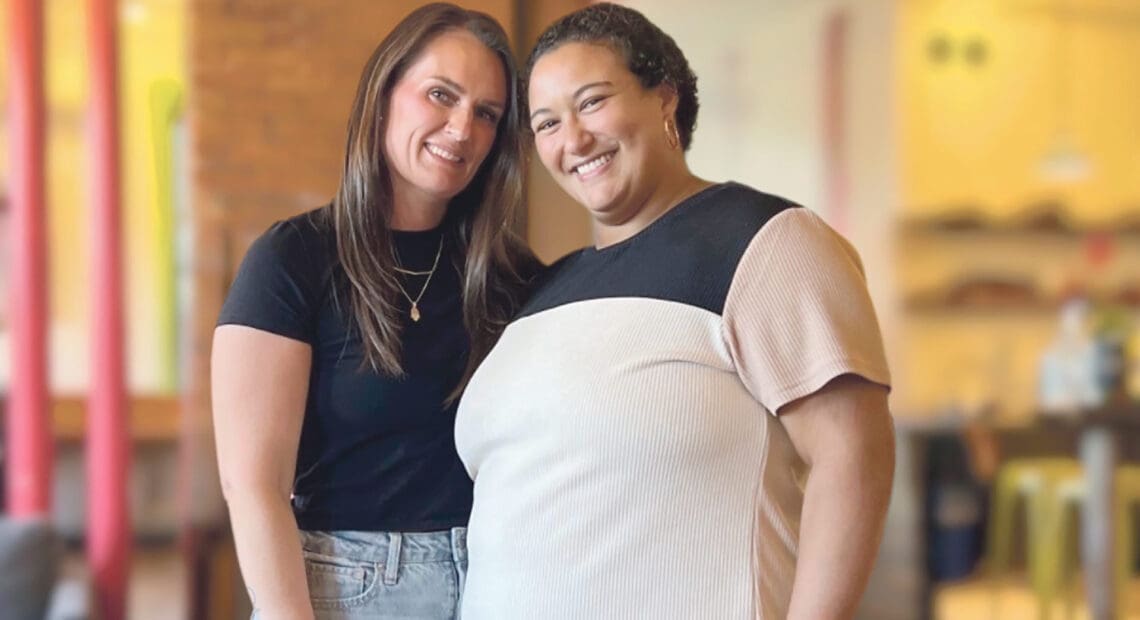
Sarah Little (left) and Nismah Osman want people to walk into Greenspace CoWork and think, “I belong here.”

Sarah Little (left) and Nismah Osman want people to walk into Greenspace CoWork and think, “I belong here.”


For Nismah Osman, acquiring Greenspace CoWork late last year with business partner Sarah Little feels like a full-circle moment.

After relocating from Boston to Gill, her first job in the area was at Hawks & Reed. She used Greenspace, which Jeremy Goldsher and Jeff Sauser launched in 2018, almost daily for printing and overflow work and felt drawn to the space from the start.

“When we learned the space might be available, it just felt right,” Osman said. “Greenspace had already played a role in my journey here. We wanted to honor what Jeremy and Jeff created while expanding what’s possible.”

Little, who grew up in Gill in a small business family, sees the space as a natural extension of Franklin County’s entrepreneurial culture.

“We want this to be a place where people can build something meaningful — not just a place to sit and work, but a place to connect, collaborate, and feel supported,” she said.

“We want this to be a place where people can build something meaningful — not just a place to sit and work, but a place to connect, collaborate, and feel supported.”

Jessye Deane, executive director of the Franklin County Chamber of Commerce & Regional Tourism Council, noted that entrepreneurs and remote professionals are an increasingly important part of Franklin County’s economic future, and Greenfield is no exception.

“We’re thrilled to see Sarah and Nismah leverage their own venture to support other small business owners,” Deane said. “Greenspace attracts career-oriented professionals to downtown Greenfield who might otherwise be working from home. That translates into increased foot traffic, stronger connections, and more commerce for our local restaurants, retailers, and service providers. It’s a win for Greenspace CoWork members and for the entire downtown ecosystem.”

That downtown foot traffic is something Hannah Rechtschaffen thinks about a lot. As executive director of the Greenfield Business Assoc. (GBA), she said her organization’s efforts to drive and promote downtown activity fall into a few buckets.

“First, we’re tending to what is visible on the surface — downtown, but all over Greenfield, too — where we can. That’s a multi-pronged approach around cleanliness, beautification, and activation of vacant storefronts, and really bringing business owners together to have more communication and connection among themselves,” she explained, adding that some of those are new businesses in town, like Victoria Bar, Freedom Café, the Sparkle Cave, and Ja’Duke.

“We’re working with business owners in different ways to pull people together and have some collaboration going on,” Rechtschaffen told BusinessWest. One is an effort to encourage downtown businesses to stay open until 8 p.m. during Arts Walk events, which happen the last Friday of every month, and on certain Saturdays throughout the year that coincide with big Greenfield events.

“We’re targeting activation. Business owners are not being asked for the moon; they’re just being asked to lean into things that have a lot of structure,” she said, adding that the GBA is also working to activate vacant storefronts and encourage businesses to liven up active windows.

Rechtschaffen noted that attendance at Greenfield events has been a concern, even though social media engagement with local organizations is up.

“We continue to hear things like, ‘there’s nothing going on downtown.’ And that disconnect, for us, feels like a responsibility,” she told BusinessWest. “We’re continuing to amplify things on social media, share things broadly, work with our partners. What’s keeping people from going out? Maybe it’s been overstated, but post-COVID has seen such a behavioral change in how people engage, and maybe there has to be something to our approach that’s different.”

To that end, a downtown business meet-up group will gather for the first time on April 30 to crowdsource what’s keeping people from going out, she added. “It’s not just marketing. Clearly we see more traffic to the websites, but attendance is still shaky.”

“They’re looking for the kind of life that we offer in Western Mass. — and they’re leaving the state for it. So it would be wonderful to see the state looking at how they can leverage Western Mass. to solve one of our major issues, which is people leaving the state.”

In this latest installment of our Community Spotlight series, we take a look at progress being made in Franklin County’s largest municipality — and how local leaders plan to generate more.


On the Move

Another of the GBA’s buckets of focus is economic development; Rechtschaffen and her team are working closely with the Office of Community and Economic Development and its executive director, Amy Cahillane, as well as with the Franklin Regional Council of Governments. The GBA also recently hosted Aaron Vega, president and CEO of the Western Massachusetts Economic Development Council, for a day visiting local businesses.

“That was amazing,” Rechtschaffen said. “We’re working to make sure Greenfield gets attention and gets focused on. We’re proud to be the heart of Franklin County, but we oftentimes fall outside certain advocacy efforts and funding efforts. We’re not a rural place, in a county that’s largely rural, so Greenfield doesn’t fall under certain funding structures, and we need to step up our advocacy for Greenfield and our connection to Franklin County in a healthy way.”

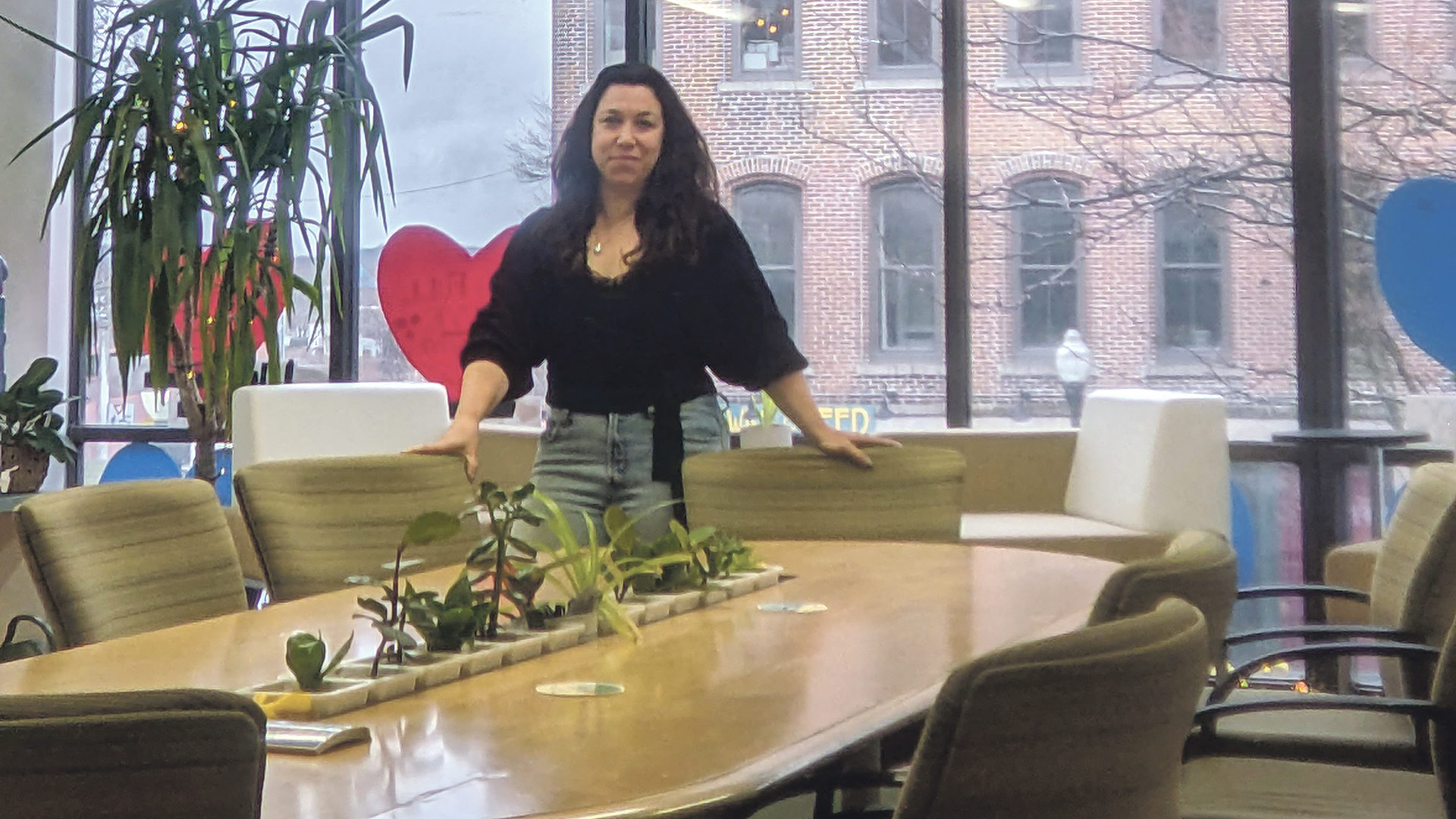
Hannah Rechtschaffen

Hannah Rechtschaffen

“We have 100 units of affordable housing coming online in downtown Greenfield in the next two years. That’s going to be huge for us.”

She told BusinessWest there’s been a national trend of people moving to rural and bucolic places, but in many cases, they’re moving out of urban areas in Massachusetts to Connecticut, Rhode Island, New Jersey, and elsewhere.

“They’re looking for the kind of life that we offer in Western Mass. — and they’re leaving the state for it. So it would be wonderful to see the state looking at how they can leverage Western Mass. to solve one of our major issues, which is people leaving the state.”

Mayor Virginia Desorgher recently wrote on Greenfield’s website that expanding the city’s tax base through development is its best long-term solution for stabilizing taxes and stimulating the economy, and housing is one place where the city is making significant strides.

That includes the continuing development of the former Wilson’s department store into a mix of retail and housing, as well as a project undertaken by Rural Development Inc. (RDI) — an arm of the Greenfield Housing Authority — to develop 32 units of mixed-income housing at 176 Main St.

MassDevelopment acquired the Wilson’s property at 242-262 Main St. in 2022 with plans to expand and relocate Green Fields Market to the building’s first floor, while turning the upper floors into 65 mixed-income rental apartments. The RDI project site includes an existing single-story commercial building and a 22,000-square-foot surface parking lot to the rear of the buildings, all in the heart of downtown Greenfield. Also in the works is the city’s plan to develop a property at 53 Hope St. into a residential or mixed-use development.

“We have 100 units of affordable housing coming online in downtown Greenfield in the next two years. That’s going to be huge for us,” Rechtschaffen said, noting, again, that development can be challenging in the city because of certain state funding restrictions.

“Our population is too high to be considered rural in the eyes of the state, which excludes us from certain funding pools, but we’re also too small to be considered a gateway city, which is also an amazing program.”

Still, she added, we continue to see small developers in Greenfield really step up, going above and beyond turning old office space into apartments. We have folks up here working hard and investing in ways that, for them, don’t always make financial sense; it’s because they care deeply about people being able to live up here and be part of what’s happening here.”


Street-level View

Desorgher noted that the city is building a downtown that meets everyday needs in part by upgrading infrastructure and incentivizing the occupation of vacant storefronts.

“In 2026, we should see the results of a new tax credit grant designed to revitalize long-vacant spaces,” she said. In terms of infrastructure, “we are focused on the basics that impact daily life: better sidewalks, smarter recycling, and parking improvements. We have replaced roughly 10% of our total sidewalk mileage since 2018, including nearly 4,000 feet replaced in 2025 alone.”

Greenfield at a Glance

Year Incorporated: 1753
Population: 17,768
Area: 21.9 square miles
County: Franklin
Residential Tax Rate: $19.31
Commercial Tax Rate: $19.31
Median Household Income: $33,110
Median Family Income: $46,412
Type of Government: Mayor, City Council
Largest Employers: Baystate Franklin Medical Center, Greenfield Community College, Sandri
* Latest information available

Through June 1, the city is accepting applicants for its Storefront Improvement Program, which provides resources for storefront upgrades to elevate downtown aesthetic appeal and economic vitality, with the ultimate aim of enhancing the area as a welcoming place to visit, shop, and work.

The program is funded through the federal Community Development Block Grant Program and administered by the city’s Community and Economic Development Department, and businesses located in the central commercial zone can apply for up to $10,000. While funding is prioritized for signage and awnings, other visual storefront improvements may be eligible.

“We are putting federal funds to work in our effort to improve downtown vitality and support small, local businesses,” the mayor noted. “The Storefront Improvement Program is a great opportunity for local businesses and organizations to improve their curb appeal while contributing to the overall health of our downtown.”

Meanwhile, Osman and Little are excited to be overseeing Greenspace CoWork’s two locations on either side of 289 Main St., hoping to deepen partnerships with local organizations; continue collaborations such as the Take the Floor competition with the Franklin County Community Development Corp.; and host incubators, retreats, workshops, mixers, and conferences that further strengthen the downtown sector’s business network.

Goldsher and Sauser originally designed Greenspace to elicit calm and focus, incorporating wood, abundant natural light, and a variety of real plants throughout the space. Under Osman and Little’s leadership, that aesthetic foundation remains intact while the mission evolves.

Under their ownership, Greenspace has introduced several updates, including a streamlined, automated booking system; a more affordable and flexible membership option for those who do not need full-time access; complimentary monthly yoga sessions for members; and expanded amenities.

“These details might seem small, but they make a difference. We want people to feel seen and considered when they’re here,” Osman said, adding that, as BIPOC and LGBTQ+ women business owners, they’re committed to creating spaces that feel welcoming and inclusive to all.

Added Little, “we want people to walk in and think, ‘I belong here’” — a sentiment certainly shared by many city business and municipal leaders striving to make Greenfield more of a place people want to live, work, and visit.
Community Spotlight Special Coverage

Community Spotlight

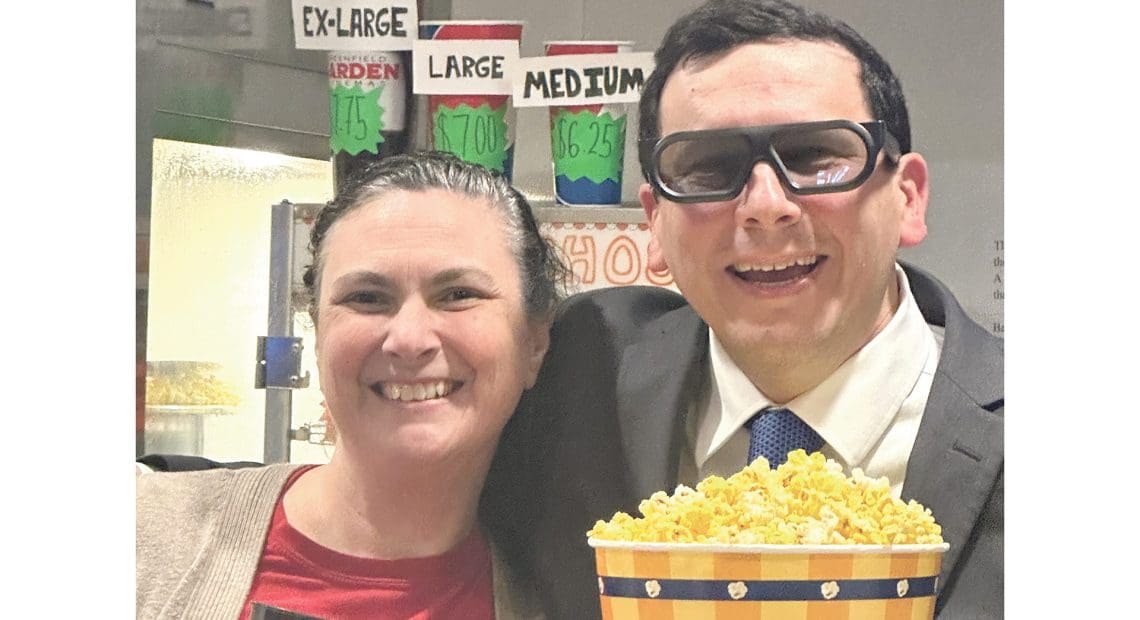
Angela and Isaac Mass, owners of the Greenfield Garden Cinemas, one of many intriguing storylines in the city’s downtown.

Angela and Isaac Mass, owners of the Greenfield Garden Cinemas, one of many intriguing storylines in the city’s downtown.


Isaac Mass was in law school, looking for a job that would allow him to not only earn a little money but get in some studying for the bar exam as well.

He had experience working at movie theaters and remembered that life in the projection room (these were the days before everything went digital) would provide him what he was looking for.

“Once you started the movie, you had nothing to do for a couple of hours,” he said, adding that he called George Gohl, co-owner of the Greenfield Garden Cinemas, and before long, he had a job. And he wasn’t in it long before he started setting his sights higher when it came to that downtown landmark, opened in 1929.

Indeed, when Gohl and his partner, Bill Goebielle, were facing the high cost of converting to that digital technology, Mass, who by then had set up a law office in downtown Greenfield, came through with financing for that project — a deal that came with an option to acquire the theater should it come up for sale.

Which it did, in 2019.

Fast-forwarding our story a little, Mass and his wife, Angela (both are BusinessWest 40 Under Forty alumni) are now the owners of the theater, the only cinema in Franklin County. The pandemic hit just a few months after they took ownership, and that was a long and difficult storm to ride out. But they’ve done it, their operation is in the black, and they’re looking forward to a big summer, with a new Superman movie and other projected blockbusters.

“What we’re seeing right now is a kind of renaissance — a dynamic fusion of entrepreneurship, creative energy, and community investment that is strengthened by deep collaborations between business and municipal support organizations.”

Greenfield Garden Cinemas is just one of many intriguing storylines in Greenfield — others involve everything from a new Starbucks to some new housing initiatives to the anticipated start of work to reimagine the former Wilson’s department store — and just one reason why many see a surge in energy and optimism in the community.

“What we’re seeing right now is a kind of renaissance — a dynamic fusion of entrepreneurship, creative energy, and community investment that is strengthened by deep collaborations between business and municipal support organizations,” said Jessye Deane, executive director of the Franklin County Chamber of Commerce. “The city’s evolution is not just happening — it’s being shaped intentionally. Greenfield isn’t growing by accident; it’s growing because people believe in it. They’re investing here. They’re creating jobs, art, and experiences that can only happen in a place like this — where rural ingenuity meets downtown opportunity.”

Hannah Rechtschaffen, director of the Greenfield Business Assoc. (GBA), which recently moved into its own space on Main Street, agreed.

“Greenfield is in a lovely moment of revitalization,” she told BusinessWest. “A lot of pieces of the puzzle were here when I got here two years ago; they just needed a push behind the visibility, the story we’re telling, the partnerships we’re building, and getting Greenfield more visibility Valley-wide.”

While there is progress, many challenges remain, especially when it comes to the loss of manufacturing jobs, ongoing struggles to replace them, county-wide population loss, and the housing front, where some new units are in the pipeline (more on that later), but the issue of affordability is causing some concern.

Hannah Rechtschaffen shows off the new Greenfield Business Assoc. space on Main Street.

Hannah Rechtschaffen shows off the new Greenfield Business Assoc. space on Main Street.

“Housing is becoming a particular issue, both in the lack of inventory and the cost,” said Tony Worden, president and CEO of Greenfield Cooperative Bank. “Rents have increased, but even more troubling to me is the cost of single-family homes. Greenfield has always been the affordable alternative here in Western Mass. People who were priced out of other areas — particularly Hampshire County — could find reasonably priced homes here in Greenfield, but that is increasingly becoming a thing of the past.”

For this latest installment of its Community Spotlight series, BusinessWest turns its lens on Greenfield, a community where many pieces of the puzzle are coming together to make an intriguing picture — not unlike the ones shown in the cinemas.


Strong Arguments

It’s called the Strongest Towns Contest. This is a nomination-driven competition staged by strongtowns.org, with 16 communities competing in a bracket-style format similar to the recent March Madness.

Greenfield was one of those 16 towns, which are being measured essentially on how they’re faring against the complex problems facing cities and towns today. And it advanced to the Final Four, beating out Manchester, N.H. and then Silverton, Ore. to get there, with voters determining who will advance.

The city eventually lost to Harrisburg, Va., which went on to finals against Marion, Ohio, with the latter prevailing. Greenfield Mayor Ginny Desorgher was disappointed not to advance further, but buoyed by what the strong showing indicated — especially, in her view, unity and a sense of everyone pulling in the same direction when it comes to the city’s opportunities and challenges.

“People are working together,” she said, referring to everything from downtown cleanups and crosswalk-painting efforts to long-term economic-development initiatives. “So many things are citizen-led.”

Deane agreed. “Sometimes, rural communities fall into a scarcity mindset when it comes to economic development, but I’m seeing a fundamental shift in that mindset at the leadership level,” she noted. “We’re building bridges, not silos, which is critical in a county of 70,000 residents with a tax base that’s 75% residential.

“A business like ours relies upon a smart, educated workforce, and this cost of housing is worrying me for the future. Where are our employees going to live? Will there be a pool of qualified workers able to live in this area?”

“There is a palpable sense of alignment now,” she went on, adding that, last year, Greenfield secured a Massachusetts Downtown Initiative grant, which enabled the city, the GBA, the chamber, and the Crossroads Cultural District to explore opportunities for collaborative marketing and capacity building to enhance Greenfield’s regional profile.

Meanwhile, the GBA has initiated a roundtable series, which has effectively opened lines of communication between Greenfield stakeholders and re-engaged business owners and nonprofit leaders as local advocates, said Rechtschaffen, adding that these events have covered a wide range of topics, such as the return of a police substation to downtown.

“We recently started a property owners’ group to bring property owners together and get on the same page with them about new development that they’re looking to do, development that’s coming to Greenfield, best practices, lines of communication … we have a very active property-owners contingent.”

Along with this palpable sense of alignment comes several visible signs of progress, said Deane, noting, as one example, the expansion of Ja’Duke onto Main Street.

The Turners Falls-based provider of childcare services, performing-arts education (singing, dancing, and acting), and even driver education needed to expand, said owner Kim Williams, and chose a 25,000-square-foot space on Main Street in Greenfield, formerly occupied by Greenfield Community College.

Tony Worden says Greenfield has long been an affordable alternative in Western Mass., but times are changing, and it is becoming far less so.

Tony Worden says Greenfield has long been an affordable alternative in Western Mass., but times are changing, and it is becoming far less so.

“We’re excited … we believe this will be a catalyst downtown,” she said, adding that the facility, which will bring people of all ages to downtown Greenfield, is expected to increase vibrancy and stimulate economic growth. “Childcare is such a driver of economic development; if people have childcare, they can enter the workforce. Meanwhile, the arts center and drivers ed will bring more foot traffic, more vibrancy, more arts.”


Progress Report

There are other things happening in and around downtown, said Desorgher, including the reimagining of the former Wilson’s department store into a mix of street-level retail and housing on the upper floors, as well as new life for the historic Leavitt-Hovey House, the former home of the Greenfield Public Library.

The landmark, built in 1797 and vacant since the new library next door opened in the summer of 2023, was acquired by Greenfield Savings Bank, whose main office abuts the library, with the intention of housing its residential-lending program and wealth-management offices.

Meanwhile, there are some additional housing initiatives, said Desorgher, including units at the Wilson’s site and another 30 to 40 units at another site on Main Street. Meanwhile, the city is issuing an RFP for redevelopment of the Hope Street parking lot into additional housing.

That RFP has yet to be issued, but several developers have already expressed interest in the project, said Desorgher, adding that this is another indicator of positive energy in town and growing sentiment that Greenfield is a good place to land — for families, small businesses, and, increasingly, regional and national chains.

The arrival of Starbucks at the rotary off the I-91 exit — as well as the Aldi’s discount supermarket chain in that same area — provide more evidence, the mayor said.

“All this is indicative of what the future holds, and I can feel it in the fact that we haven’t even put out an RFP for the Hope Street parking lot for housing, but people have already reached out, indicating they’re interested. That’s a really good sign.”

As for the larger housing picture, she said studies indicate a need for several hundred additional units, and the projects in the pipeline will make only a small dent in overall need. But there is progress, especially downtown, which should provide a boost to existing businesses and also spark additional investment.

Greenfield at a Glance

Year Incorporated: 1753
Population: 17,768
Area: 21.9 square miles
County: Franklin
Residential Tax Rate: $19.56
Commercial Tax Rate: $19.56
Median Household Income: $33,110
Median Family Income: $46,412
Type of Government: Mayor, City Council
Largest Employers: Baystate Franklin Medical Center, Greenfield Community College, Sandri
* Latest information available

Still, there is general concern over the way home prices are rising and changing the equation in what has historically been an affordable community.

“My wife and I live in a neighborhood just off the Federal Street corridor — in close proximity to the Greenfield High School and Four Corners Elementary School — that has historically been known for its mid-sized homes and its affordability,” Worden told BusinessWest. “Over the past few years, we’ve seen a handful of homes on our street and adjacent streets sell for amounts that we used to expect from the Northampton and Amherst market.

“A business like ours relies upon a smart, educated workforce, and this cost of housing is worrying me for the future,” he went on. “Where are our employees going to live? Will there be a pool of qualified workers able to live in this area?”

Deane concurred.

“Like many communities across the Commonwealth, our growth is hindered by a shortage of available housing — and this is further exacerbated by aging infrastructure that requires significant investment,” she said. “At the same time, we’re seeing a real uptick in businesses and families looking to relocate here because the quality of life is exceptional, and at a glance, the cost of living is more manageable than in more urban markets. That growing interest is energizing, but we know we can’t grow sustainably unless we also address those foundational needs.”


Coming Attractions

As he talked about Greenfield, Bob Provost spoke with more than 75 years of experience. Sort of.

He’s the third-generation co-owner (with his sister, Robyn) of the general-contracting firm Mowry & Schmidt, which is handling the renovations of the Leavitt-Hovey House. He knows firsthand how the city has changed, and he has stories from those who managed the company before him.

“Greenfield was once a manufacturing hub back in the ’40s and ’50s, even up to the ’70s, but most all of those places have closed,” he said, adding that this has changed not only the employment equation, but the jobs mix for his company.

Indeed, Mowry & Schmidt did a good deal of work in many of the former mills — from exterior work to office renovations to millwright work, said Provost, adding that the portfolio has since shifted and now includes residential projects and more work for institutions such as the many banks in town, Greenfield Community College, Baystate Franklin Medical Center, and area private schools.

Overall, the city’s economy has largely shifted from manufacturing to service and the tourism and hospitality sector, with the latter becoming an ever-stronger force, said Deane, noting that Greenfield and Franklin County are growing as a destination, with Greenfield alone generating 6.7 million visits in 2024.

There are specific destinations and attractions, but also popular events such as the upcoming Bee Festival, during which the town celebrates its designation as the place where the beehive was invented, as well as the Green River Festival, a three-day celebration of music.

“Our marketing focus has shifted from generic outreach to specific, interest-driven storytelling — targeting Boomers who want to stay active, Millennials chasing Insta-worthy landscapes, and Gen Z looking for positivity and purpose,” Deane said. “We’ve also partnered with local event coordinators to promote bigger-ticket cultural and sporting events like Franklin County Pride, the Greenfield Winter Carnival, the Greenfield Triathlon, the Franklin County Fairgrounds, and the Green River Festival, with its great lineup of bands, coming in late June.

“Last April, the Franklin County Chamber launched an aggressive digital ad campaign promoting the Green River Festival and virtually introduced the fairgrounds and Greenfield to more than 2 million people,” she went on. “In large part to the success of this campaign, this year’s Green River Festival ticket sales saw a 13% increase over last year, with 25% of ticket buyers attending the festival for the first time.”

At Greenfield Garden Cinemas, Mass said people are going to the movies again — not quite as much as they did pre-pandemic, but the numbers are steady and even improving slightly.

And there is optimism for this summer — one of two busy times for movie theaters, with Christmas being the other — and later this spring as well. Indeed, in addition to a new Superman movie, there’s a live action Lilo & Stitch production, another Jurassic World offering, and a new Avengers movie, said Mass, adding that the cinemas cater mostly to seniors and families, so action movies don’t play particularly well.

But, overall, business is good at the cinemas, and across downtown Greenfield, where the coming attractions are, indeed, quite compelling.

Special Coverage Technology

Current Events

Randy Ames

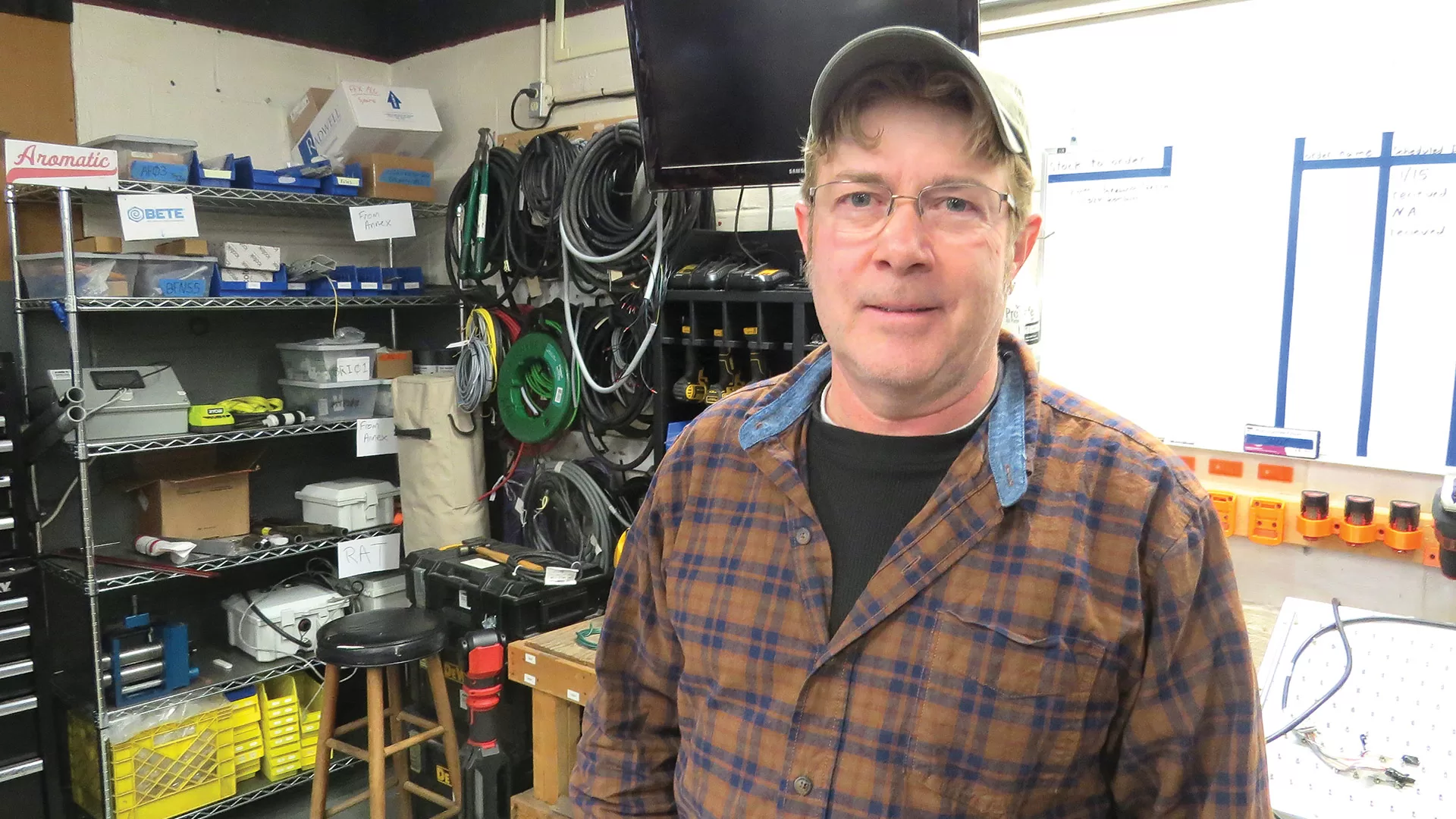
Randy Ames says robotics will be the main focus of the next chapter in the intriguing Ames story.


As he talked with BusinessWest, Randy Ames gestured out the window of his tiny office to the traffic on Greenfield Street just a few dozen feet away.

He guessed that several thousand cars pass that spot every day, and further speculated that few, if any, of those travelers would have any idea at all what goes on inside the small, nondescript building that has been home to his business for the past 15 years.

That’s a pretty safe bet, actually. In fact, it’s easy to drive right by Ames Electrical Consulting without knowing it’s there. And soon, it won’t be there.

Indeed, as he talked, Ames noted that he was in the very early stages of packing up for a move to much larger quarters in Greenfield Industrial Park, just a few miles away. That move is a big part of an exciting next chapter in one of the more intriguing, and still evolving, business stories in Franklin County.

The first chapter saw Ames abandon a career, if it could be called that, as a chef — because he needed something more financially rewarding as he started a family — and enroll in an electrical engineering technology program at Springfield Technical Community College.

“Manufacturers can’t find people to work — and it’s not just manufacturers, it’s everyone.”

The next chapters would see him put that degree to work in jobs for several different companies in the region — from Elm Electrical in Westfield to Kellogg Brush in Easthampton — while also earning a degree in electrical engineering at Wentworth Institute of Technology in Boston on weekends (“three years of Saturdays,” as he called it), and also doing a little of what he described as “moonlighting.”

Specifically, he was developing and installing systems to help businesses automate various operations and processes.

Eventually, and with some real incentive after he was pink-slipped by a downsizing Kellogg Brush, his work with automation evolved from moonlighting into a risk-laden entrepreneurial venture, one that somehow managed to survive the Great Recession of 2008 and 2009, when OEMs that made the equipment he installs all but shut down.

Today, Ames boasts clients in a wide range of sectors, from breweries to plastics; food and beverage to paper; recreation (think ski lifts) to municipal water and wastewater facilities. Indeed, the company designs electrical hardware and software control systems for companies that make everything from golf balls to Play-Doh to ketchup bottles.

“We’re the automation guys,” Ames said simply, adding that, over the years, the company has enjoyed steady growth while expanding and diversifying its portfolio of customers, which it provides with turnkey operations.

The next chapter for Ames, and a big reason behind its move to larger quarters, involves the growing, ever-changing world of robotics.

The company has become New England’s only authorized distributor and integrator of NACHI Robotics Systems, said Ames, adding that, as manufacturers and machine shops across the region and throughout the Northeast continue to struggle to attract and retain employees, more of these companies are increasingly looking to robots and cobots (‘collaborative robots’ that work together with people) as a solution.

NACHI Robot Roundup

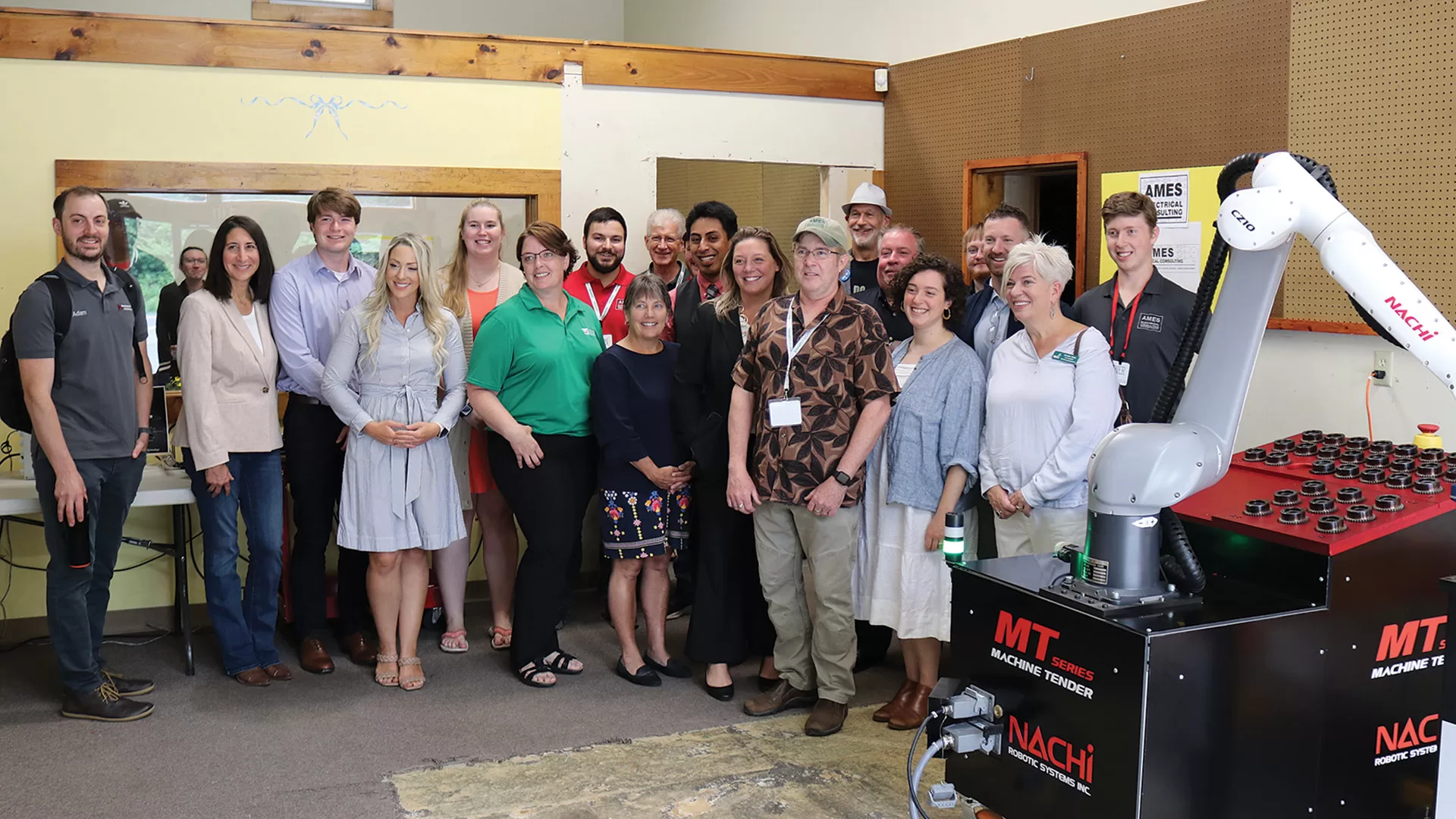
Randy Ames, center, and a large delegation of local, state, and business leaders gathered at the company’s facility in Deerfield last summer for the NACHI Robot Roundup.

“Manufacturers can’t find people to work — and it’s not just manufacturers, it’s everyone,” said Ames, adding that his company is now primed and well-positioned to take full advantage of this technology and what it can do for companies.

It was this next chapter and what it might it might mean for the company and the region that drew business leaders and elected officials — more people than had come to his door in decades — to the office on Greenfield Street last summer for what was dubbed the NACHI Robot Roundup.

At that gathering, attendees got a good look into the future — of manufacturing, Ames Electrical, and, in many respects, the region.

For this issue and its focus on Franklin County, BusinessWest takes an in-depth look at Ames and what comes next for a company where success hasn’t come automatically, but through entrepreneurial energy and a willingness to keep current — figuratively, but also quite literally.


Watt’s Happening?

Ames joked early and often about the acronyms that dominate his business.

There are many of them — from PLCs (programmable logic controls), which are small devices, “the heart of automation,” as Ames called them, that can be programmed to turn things on and off; to HMIs (human-machine interfaces), the operators’ touchscreens; and even RAT (remote access technology), which provides a secure, cloud-based IT network that allows Ames to access remote locations and control machines with just a few clicks.

These acronyms come together in an industry, and a business, that has emerged, grown, and evolved over the past four decades, and continues to do so.

As noted earlier, Ames was a chef before enrolling at STCC and then working at Elm Electrical and then Kellogg Brush and eventually starting that moonlighting with automated systems.

He started in 1992 at Yankee Candle as it was opening its village in South Deerfield, specifically with developing, building, and programming ‘Santa’s toy machine,’ which made it appear that toys were going into a huge box in pieces and coming out as finished products.

“Part of it was to make it sort of this Willy Wonka/Rube Goldberg machine-looking mechanical contraption,” he recalled, adding that he worked with Yankee Candle founder Michael Kittredge on the project. “He said, ‘I want it to do this … I want this valve to make this thing spin, and all these lights to blink, the conveyer to run, to turn the snow on and off in the windows outside, etc.’ I’ll bet there were 25-foot-diameter gears on the wall with little motors that I had to make run.”

From there, Ames worked with several other moonlighting customers offering their own versions of ‘I want it to do this.’ Those experiences provided him with the confidence to go into business for himself in the spring of 1992 when he was laid off from Kellogg Brush as it was downsizing.

“I made four phone calls that day, and three people called me back,” he said, adding that one of them was Hillside Plastics in nearby Turners Falls, which would go on to be a steady customer.

He initially operated out of his house in Montague, working there during the day and then for OEM Kingsbury Corp. in New Hampshire at night, before focusing exclusively on his own work.

Over the past 30 years, the company has survived disruptive forces ranging from the Great Recession, when the phone stopped ringing and he started thinking about returning to work as a chef, to the pandemic, and thrived mostly by growing and diversifying its portfolio of customers while developing strong partnerships with both those clients and the makers of the equipment it installs.

Elaborating, Ames said the company takes a collaborative approach to what amounts to finding solutions for a client, whether it’s a manufacturer looking to automate a production process or a municipality operating its wastewater treatment plant.

He said the phone started ringing again in 2011, and with few exceptions, it hasn’t stopped ringing since, with customers finding Ames mostly through its vendors and all-important word-of-mouth from existing clients. Along the way, it has developed a niche — mostly smaller systems — and a reputation for being able to move quickly and nimbly, separating it from its much larger competitors.

Most of its customers are along the I-91 corridor in Western Mass., but it has also expanded into the North Shore, the Worcester area, and other parts of New England.

This expansion process may be accelerated by the partnership with NACHI Robotic Systems, Ames said, noting that a growing number of companies, including machine shops, are looking to robots as their workforce challenges mount.

“Manufacturers are tired of the revolving door,” he explained. “They bring someone in, they train them for a week, and then they’re gone. So, increasingly, they’re looking at robots.”

Indeed, he said he’s taking calls from potential customers ranging from bakeries to machine shops exploring the possibility of using robots to handle some of the work currently carried out by people.

Elaborating, Ames said he’s given two quotes to machine shops for robots that can handle what’s known as ‘machine tending,’ yielding yet another acronym (MT). And as he talked, he played a video of a NACHI robot picking and placing parts and putting them into a chuck on a computer numerical control system.

“This machine costs $92,000 — it comes with a cart and a robot,” he told BusinessWest. “If you can keep loading that, it will work all day and all night long; we just quoted one company where the ROI on one of these was three months.”

The company hasn’t installed any robotic systems yet, but Ames said the pace of phone calls inquiring about the equipment and what it can do has certainly picked up over the past several months. And he expects that call volume to only increase as workforce issues across all sectors continue.


Wired for Growth

Returning to the matter of that Willy Wonka/Rube Goldberg contraption he developed for Yankee Candle, Ames said that Michael Kittredge, who passed away in 2019, told him years ago that someone from the Smithsonian Institution called, saying they would be very interested in putting it on display once Yankee Candle was done with it.

Unfortunately, the toy machine had been taken down and dismantled by that time, Ames went on, adding that he never thought about his work winding up in the Smithsonian one day.

Instead, he’d gladly settle for satisfied customers and continued growth of the business he started from scratch and developed into something that has remained on the cutting edge of an emerging sector.

You certainly can’t see any of that driving past the company’s soon-to-be-former home on Greenfield Street, and that’s part of this engaging story — one with some intriguing chapters still to come.

Business Talk Podcast Special Coverage

We are excited to announce that BusinessWest has launched a new podcast series, BusinessTalk. Each episode will feature in-depth interviews and discussions with local industry leaders, providing thoughtful perspectives on the Western Massachuetts economy and the many business ventures that keep it running during these challenging times.

Go HERE to view all episodes

Episode 204: March 11, 2024

Joe Interviews Hannah Rechtschaffen, director of the Greenfield Business Association

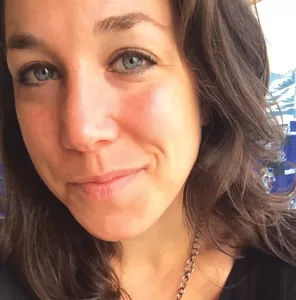
Hannah Rechtschaffen

Hannah Rechtschaffen has long been passionate about the intersection between the arts, economic growth, and community building, and she’s found a place for all that and much more as director of the Greenfield Business Assoc., which promotes the city and region and works to elevate the local business community. On the next episode of BusinessTalk, Hannah talks with BusinessWest Editor Joe Bednar about the previous career stops that have shaped her work, the challenges of doing business in Massachusetts’ most rural county, but also about the opportunity this region — pocketed by cultural treasures, stunning outdoor recreation, and a vibrant, resilient business community — poses for employers, residents, and visitors alike. It’s must listening, so tune in to BusinessTalk, a podcast presented by BusinessWest and sponsored by PeoplesBank.

Sponsored by:

Also Available On