Home Posts tagged Law (Page 19)
Daily News

BOSTON — Clear in his aim to reframe substance abuse as a public-health crisis that can’t be solved by law enforcement alone, Gov. Charlie Baker on Monday detailed a suite of options to reverse the trend of opioid addiction that last year claimed the lives of more than 1,000 residents across the state.

Baker, who was joined at a press conference by Attorney General Maura Healey, Health and Human Services Secretary Marylou Sudders, and a Cape Cod family impacted by substance abuse, spoke of investing in new beds for treatment, providing resources for schools to educate students on the dangers of painkillers, and reforming the way the criminal justice system handles addicts.

The governor’s task force on substance abuse produced a report with 65 action items that include making the state’s prescription monitoring program easier for physicians to use and more efficient at producing real-time data that can be used to target treatment and intervention programs.

“Let me make one thing perfectly clear here. Opioid addiction is a healthcare issue that knows no boundaries across age, race, class, or demographics,” Baker said. “From the Berkshires to Boston to Cape Cod, too many people have heart-wrenching stories of loved ones and friends that battled with addiction and, in some cases, lost their lives.”

Unintentional opioid overdoses claimed an estimated 1,008 lives in Massachusetts in 2014, an increase over the prior year and more than three times the number of lives lost to automobile accidents.

The report calls for the creation of nearly 200 new treatment beds by July 2016, state funding for school prevention programs to be designed at the local level, a partnership with a chain pharmacy to pilot a drug take-back program, and amendments to the civil commitment statute to include substance-abuse disorders.

According to Health and Human Services, the plan calls for adding 64 treatment beds in Greenfield at Behavioral Health Network, 27 new beds in Westborough at Spectrum Health, 34 new beds in Natick at Metrowest Medical Center, 24 new beds in Dartmouth at Acadia Health, and 43 new beds in Haverhill at Summit Behavioral Health.

“It can’t just be law enforcement, and it can’t just be Health and Human Services,” Sudders said.

Baker’s task force recommended a process to certify and register drug-free housing for recovery addicts, to require prescription monitoring data to be entered into the system within 24 hours by pharmacies instead of within seven days, and to improve the affordability of the overdose reversing drug naloxone, also known as Narcan, through bulk purchasing.

Baker said he intends to file legislation “shortly,” perhaps within the next 10 days, to begin implementing some recommendations, and will seek $27.8 million in new funding from the Legislature in FY 2016. Sudders said that the administration will also repurpose $6.7 million in existing funds to bring the total investment next year to $34.5 million.

Senate President Stanley Rosenberg said he’s hopeful that the House and Senate can accomplish some goals quickly through the budget process. Both the House and Senate passed measures geared toward combating substance abuse that overlap with the governor’s recommendations, including the Senate’s proposal for bulk purchasing of Narcan.

House Speaker Robert DeLeo also said he would be amenable to making additional financial resources available to Baker.

“I don’t think there’s a person in this building that doesn’t feel that opioid addiction is one of the major issues facing us as a Commonwealth and, as such, maybe some of the stuff we can do through the budget process. But having said that, I think that whatever resources are necessary to combat this issue, I think we have to use,” DeLeo said.

The governor also said he was in discussion with other governors in the region about how to make the state’s prescription monitoring data compatible across borders to stop patients from doctor shopping in New Hampshire, Rhode Island, Connecticut, and other nearby states.

Daily News

Delcie Bean IV

Delcie Bean IV

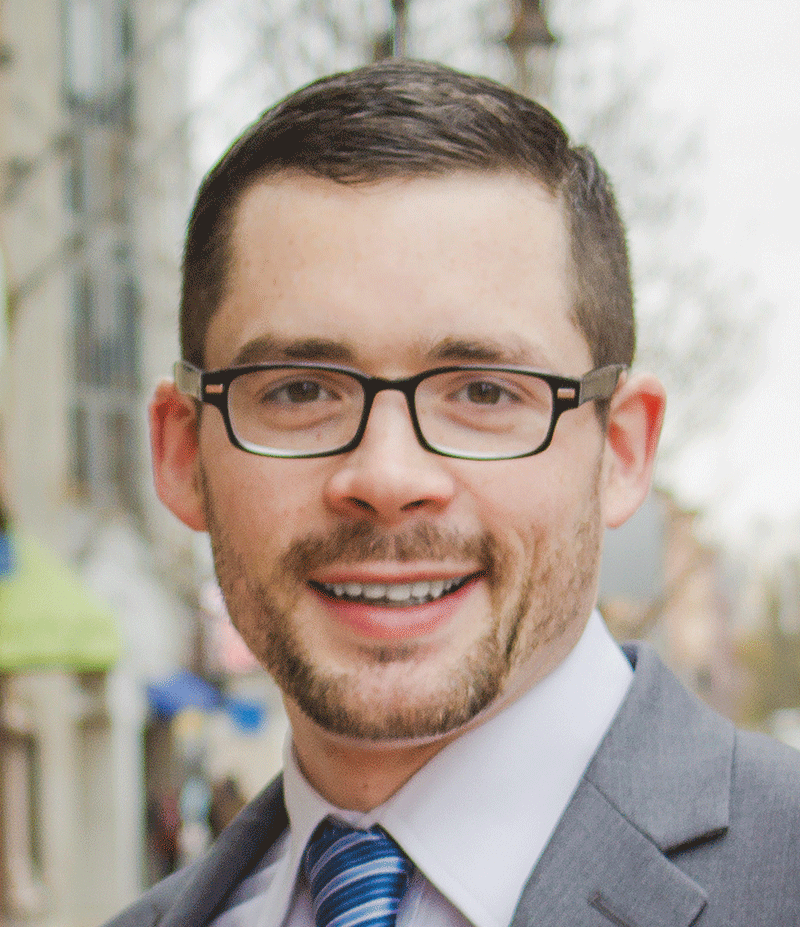
HOLYOKE — Serial entrepreneur Delcie Bean IV took home BusinessWest’s inaugural Continued Excellence Award at last night’s ninth annual 40 Under Forty gala.

It was yet another honor for the owner of Paragus Strategic IT, who was named BusinessWest’s Top Entrepreneur for 2014. For the Continued Excellence Award, which will be awarded annually to a former 40 Under Forty honoree who has continued to expand his or her business accomplishments and community impact, Bean was among about 40 individuals nominated by their peers and judged by an independent panel.

“Nothing I have done has not been without the help of at least 100 other people,” Bean said to more than 650 attendees of the 40 Under Forty event at the Log Cabin in Holyoke. He cited, as one example, the 24 high-school students who graduated this week from Tech Foundry, a nonprofit he started to provide IT workforce training and job skills to young people.

A member of the 40 Under Forty Class of 2008 when he was just 21, Bean has since seen Paragus grow 450% and earn status as one of Inc. magazine’s fastest-growing companies on several occasions, and recently earn the Top Employer of Choice Award from the Employers Assoc. of the NorthEast. He’s also started a second business venture, Waterdog Technologies, a technology-distribution company.

Meanwhile, within the community, he has been active with Valley Venture Mentors, River Valley Investors, and DevelopSpringfield; is a board member for Up Academy Springfield; and serves as a board member for the Mass. Department of Elementary & Secondary Education’s Digital Literacy and Computer Science Standards Panel.

In his short acceptance speech last night, Bean put the focus not on himself, but on the promise of the Pioneer Valley.

“I’m just one of many people who helped me get to where I am,” he said. “I’m so incredibly grateful to be here, to be part of the Valley. And you know what? I think there’s so much more we can do. I really, really think this Valley has a huge story ahead of it. I’m excited to be a part of that, and I hope you guys will join me. And, with that challenge, let’s see what’s next.”

The other four finalists for the Continued Excellence Award were Kamari Collins (40 Under Forty class of 2009), dean of Academic Advising and Student Success at Springfield Technical Community College; Jeff Fialky (class of 2008), partner at Bacon Wilson, P.C.; Cinda Jones (class of 2007), president of Cowls Lumber Co.; and Kristin Leutz (class of 2010), vice president of Philanthropic Services for the Community Foundation of Western Mass.

The judges for the inaugural award were Carol Campbell, president of Chicopee Industrial Contractors; Eric Gouvin, dean of the Western New England School of Law; and Kirk Smith, former director of the YMCA of Greater Springfield.

Daily News

HOLYOKE — The ninth annual 40 Under Forty award program, staged by BusinessWest, will be held at the Log Cabin Banquet & Meeting House tonight. The sold-out event honors the region’s most accomplished and civic-minded professionals under age 40, and this year’s class was profiled in the April 20 issue.

This year’s winners represent virtually every sector of the economy — from financial services to manufacturing; retail to healthcare; technology to nonprofit management; education to law. They also show the seemingly innumerable ways people can give back to the community.

This year’s event features a new wrinkle — the Continued Excellence Award, presented to the previous 40 Under Forty honoree who has most impressively built upon their track record of excellence. The finalists are Delcie Bean, Kamari Collins, Jeff Fialky, Cinda Jones, and Kristin Leutz, and the winner will be announced at tonight’s gala.

The 40 Under Forty program and gala are sponsored this year by Northwestern Mutual (presenting sponsor), Paragus Strategic IT (presenting sponsor), Fathers & Sons, the Isenberg School of Management at UMass Amherst, Moriarty & Primack, and United Bank.

Features
Continued Excellence Award Finalists Are Announced

40under40continuousExcellenceAwardOnlineThe judges have cast their ballots, and their scores have determined the five finalists for BusinessWest’s first Continued Excellence Award, or CEA.

And, as with the 40 Under Forty competition that inspired this new recognition program, the defining element for the list of finalists is diversity.

Indeed, those with the highest scores among nearly 40 nominees for the CEA include a serial entrepreneur, an attorney, one of the forces behind the region’s hugely successful Valley Gives program, the current president of one of the state’s oldest family-run businesses, and an administrator in the region’s large and prestigious higher-education sector.

“We created the Continued Excellence Award to recognize 40 Under Forty honorees who have done anything but rest on their laurels,” said BusinessWest Associate Publisher Kate Campiti. “We wanted to single out for recognition those who have built upon their strong records of service in business, within the community, and as regional leaders. And these five finalists have certainly done that.”

The winner of the inaugural CEA will be announced at this year’s 40 Under Forty Gala, slated for June 18 at the Log Cabin Banquet & Meeting House.

The finalists, as determined by scores submitted by three judges — Carol Campbell, president of Chicopee Industrial Contractors; Eric Gouvin, dean of the Western New England School of Law; and Kirk Smith, former director of the YMCA of Greater Springfield — are:


Delcie Bean IV

Delcie Bean IV

Delcie Bean IV

A member of the 40 Under Forty Class of 2008 at age 21, Bean is the founder of Valley Computer Works, now known as Paragus Strategic IT. Since that time, he’s gone on to be named BusinessWest’s Top Entrepreneur for 2014, seen Paragus grow 450% and earn status as one of Inc. magazine’s fastest-growing companies on several occasions, and recently have his company earn the Top Employer of Choice Award from the Employers Assoc. of the NorthEast. He’s also started a second business venture, Waterdog Technologies, a technology-distribution company.

Meanwhile, within the community, Bean started the nonprofit Tech Foundry, an organization that provides training and workplace skills to high-school students. He’s also been active with Valley Venture Mentors, River Valley Investors, and DevelopSpringfield; is a board member for Up Academy Springfield; and serves as a board member for the Mass. Department of Elementary & Secondary Education’s Digital Literacy and Computer Science Standards Panel.

Kamari Collins

Kamari Collins

Kamari Collins

When nominated for the 40 Under Forty Class of 2009, Collins was an academic counselor at Springfield Technical Community College and an individual devoted to helping young people get on the right path — and stay on it. Over the ensuing years, he’s built upon his professional résumé and become involved in many different programs aimed at providing guidance and mentorship.

Collins was promoted to director of Academic Advising at STCC in 2012, and in 2014, he was named dean of Academic Advising and Student Success, and currently leads a staff of more than 25 professionals.

Within the community, he lends his time, energy, and imagination to several organizations, including the Children’s Study Home, the Urban League of Springfield Inc., the Community Foundation Education Committee, the Pioneer Valley AHEC/Reach Advisory Board, and the Lower Pioneer Valley Career and Technical Education Center’s Building and Property Maintenance Advisory Board.


Jeff Fialky

 Jeff Fialky


Jeff Fialky

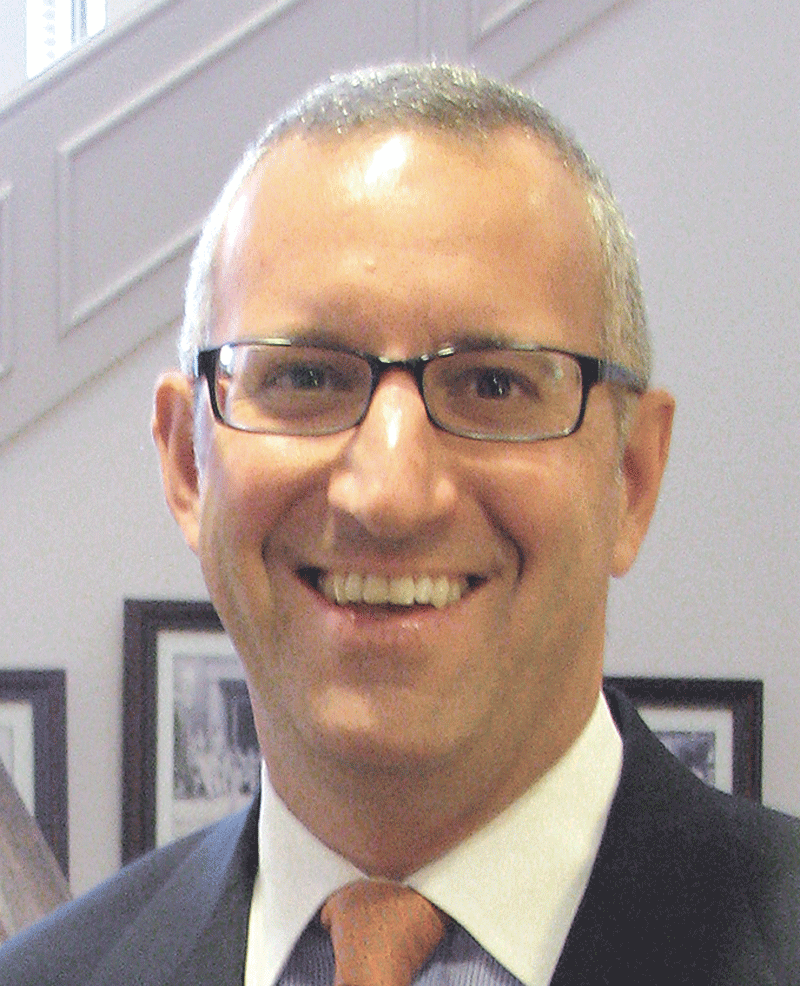
Another member of the 40 Under Forty Class of 2008, Fialky has added a number of lines to the résumé that helped him earn that distinction.

For starters, in 2012, he was named a partner at the Springfield-based law firm Bacon Wilson, which he joined as an associate, and is active in leadership capacities with the firm. But he has also become a leader within the Greater Springfield business community.

Former president of the Young Professional Society of Greater Spring-field, Fialky currently serves as chair of the Springfield Chamber of Commerce, and is also on the board of trustees of the Springfield Museums. In his capacity with the chamber, he has spent the past several years working with city officials and groups such as Valley Venture Mentors to foster economic development in the city and advance a 10-year economic strategic plan for Springfield.

Cinda Jones

Cinda Jones

Cinda Jones

When she placed among the highest scorers in BusinessWest’s inaugural 40 Under Forty competition in 2007, Cinda Jones was noted mostly as the ninth-generation president of Cowls Lumber Co. (one of the oldest family-owned businesses in the nation) and as president of the Amherst Area Chamber of Commerce. Over the past eight years, she has built upon that résumé in many ways.

Indeed, she has expanded the Cowls business in several directions, but primarily through an initiative to convert the company’s sawmill into a multi-purpose arts and entertainment facility called the Mill District. One multi-use building, the Trolley Barn, hosts the Lift Salon and Bread & Butter Café, along with several residential units, and additional development is planned on the sprawling site.

While entrepreneurial, Jones is also a staunch protector of the environment. In 2011, for example, she brokered and closed the state’s largest-ever private conservation project, the Paul C. Jones Working Forest, a 3,486-acre conservation restriction in Leverett and Shutesbury named for her recently deceased father.

Kristin Leutz

Kristin Leutz

Kristin Leutz

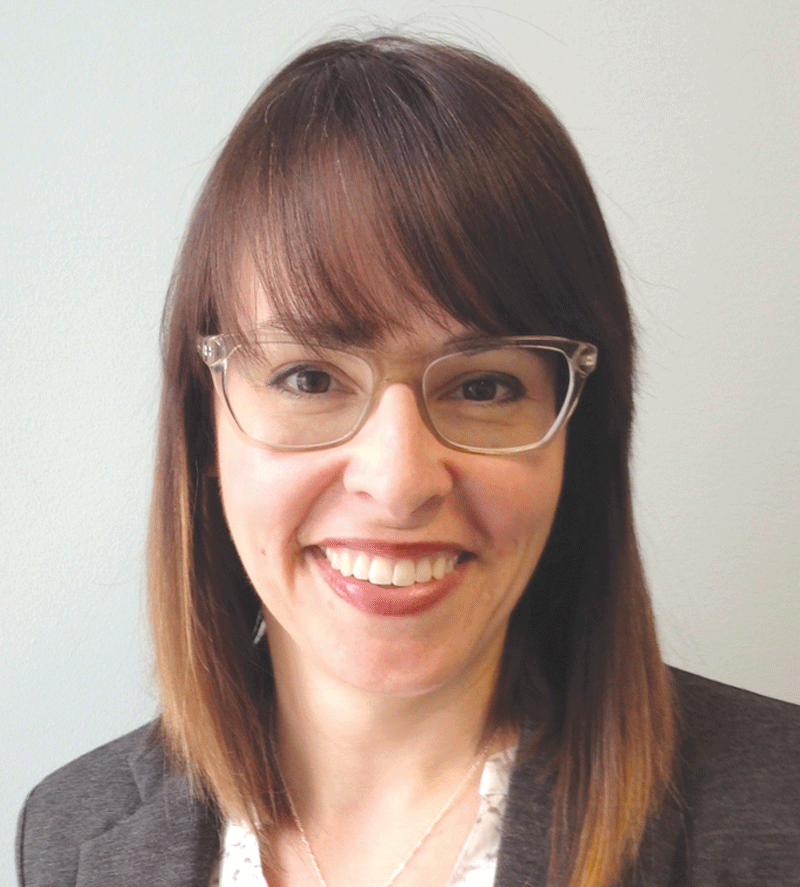
A member of the 40 Under Forty Class of 2010, Leutz has added to an impressive list of business accomplishments and initiatives within the community over the past five years.

As vice president of Philanthropic Services for the Community Foundation, she played a leading role in efforts to bring Valley Gives from a concept on a drawing board to a hugely successful three-year pilot program that raised more than $5 million for hundreds of nonprofits across Western Mass.

Within the community, meanwhile, Leutz, who has started several businesses, has become a mentor to other entrepreneurs, donating time and energy to Valley Venture Mentors and contributing to the launch of its Accelerator program.

She has also been involved with a number of nonprofit groups, including the Women’s Fund of Western Mass., and often meets with nonprofit leaders, volunteers, and staff to coach them, especially with regard to fund-raising and organizational development.

Sections Women in Businesss
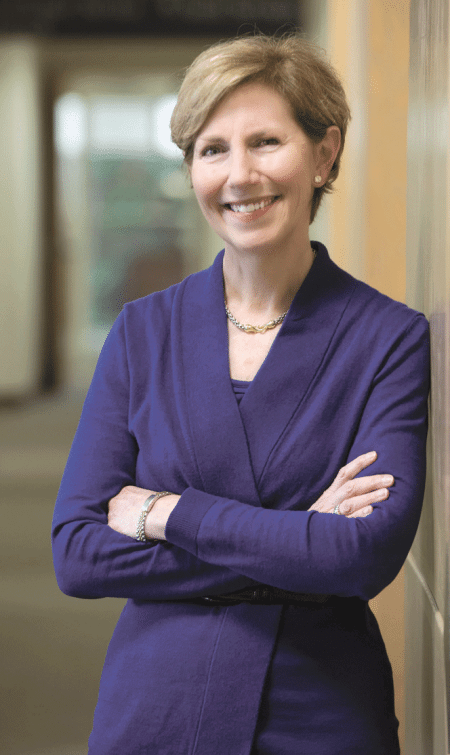
Jo-Ann Davis Becomes First General Counsel for Baystate System

Jo-Ann Davis

Jo-Ann Davis says her office will handle matters ranging from bond financing to mergers and acquisitions to labor negotiations — and much more.

When Baystate Health administrators decided last fall to move ahead with plans to hire the system’s first chief general legal counsel, they asked Jo-Ann Davis, serving then as Baystate’s vice president of Human Resources Consulting and Employee Relations, if she would serve on the search committee that would evaluate candidates for that important post.

She agreed to take on that assignment, but not long afterward came to the conclusion that she was at least as qualified for this position, if not more so, than the applicants she would be screening.

“I started to scratch my head and say, ‘I think that I could actually do this … I’d like to throw my hat into the ring,” she told BusinessWest, adding that, by sharing this observation with those same Baystate administrators, she went from being an assessor of candidates to a candidate being assessed.

Fast-forward a few months, and Davis now has what she considers to be the best job within what would be considered the region’s legal community.

Her new business card identifies her as senior vice president and chief general counsel, which means she’s responsible for overseeing the handling of all legal matters involving a system that now includes four hospitals (Baystate Medical Center, Baystate Franklin Medical Center, Baystate Mary Lane Hospital, and Baystate Wing Hospital — with negotiations underway for a fifth, Noble Hospital in Westfield), more than 11,700 employees, and nearly $2 billion in net revenues.

This is a multi-faceted position, she said, one that involves everything from labor contracts to real-estate matters; from regulatory compliance to litigation management. She will also serve as primary legal advisor to the chief executive and the president’s cabinet, and chief legal officer to the board of trustees.

“This involves planning, overseeing, and managing all legal services for the system,” she said, reading directly from the lengthy job description that came with that business card, adding this is a professional challenge she fully embraces.

“I’m very excited about this for a lot of reasons,” she explained. “One, we need this role and function here. Two, there’s an excitement for me when it comes to building a department and starting from scratch, and as a professional woman, I’m very proud of the fact that Baystate, when it had the opportunity to hire its first senior leader and general counsel, they chose a woman for the position.”

Jo-Ann Davis says her office will handle matters ranging from bond financing to mergers and acquisitions to labor negotiations — and much more.
[/caption]Davis said one of the first items on her to-do list is to assemble a staff — one that she believes will eventually consist of several lawyers (perhaps five to eight) and several support staff, including paralegals. And before deciding the size and makeup of that staff, she said she must first itemize, if you will, the system’s legal needs and then decide how best to meet them.

Historically, the system has contracted with several area firms to handle matters ranging from bond financing (for the massive, $353 million Hospital of the Future project, for example) to mergers and acquisitions to labor negotiations. And it will continue to do so with the new general-counsel structure, although more matters will now be handled in house.

Davis said the Baystate system has long considered adopting the general-counsel model — one used by most major corporations and health systems — and new President and CEO Mark Keroack, who took the helm 11 months ago, made it one of the priorities of his administration.

“As the system grows and expands, and as healthcare and health law become increasingly complex, you need to have in-house counsel so you have that expertise at your fingertips,” she explained, adding that, while the system is expecting to lower its overall legal bills through this model, the primary motivation is to more effectively manage (that’s a word she would use often) the myriad legal services required by a system of Baystate’s size.

For this issue, BusinessWest talked at length with Davis about her new role and all that entails.

Offering Testimony

Davis began her law career in 1982 as a human-resources consultant for the Springfield-based law firm Sullivan & Hayes, where she landed after earning first a bachelor’s degree in political science at Wheaton and then a master’s in education at Harvard.

She would add a juris doctor to her educational résumé in 1988, graduating from Western New England University, and became an associate with Sullivan & Hayes that year. She made partner in 1994 and remained with the firm until 1998, when she joined Springfield-based Skoler Abbott & Presser, becoming a partner in 1999.

At Skoler Abbott, she worked with a wide range of clients, developing strategies with regard to the many aspects of employment and labor-law matters, and representing them in federal and Massachusetts courts and before such bodies as the Equal Employment Opportunity Counsel (EEOC), the Mass. Commission Againt Discrimination (MCAD), and the National Labor Relations Board. Baystate wasn’t one of her clients (although the firm did some work for it); however, the system became the next line on her résumé.

She came on board as director of Employee Relations in 2003, and became director of Human Resources Consulting and Employee relations in 2009, and vice president overseeing that department in 2012.

In those latter roles, she built, developed, and managed the department, supervising six HR directors system-wide and leading a staff of 25. She also handled the full gamut of employment and labor-related matters, including employment litigation in state and federal courts, before the EEOC, MCAD, and other bodies.

It was the breadth and depth of her experience with the system, and also in private practice, that convinced her she was capable of handling the general counsel’s role — and not merely coordinating the search for that individual — and those who did conduct that search eventually came to the same conclusion.

Indeed, Davis, who prevailed over a host of candidates from across the country, took on her new role in late March. And she’s spent the past two months undertaking that aforementioned analysis of the system’s legal needs.

“A big part of my role is to build the department,” she explained, adding that this means analyzing how much is spent (she said she was still getting her arms around the budget), where it’s spent — in business transactions or employment and labor matters, for example — and then determining what types of lawyers should be hired (meaning which aspects of the law they specialize in) as well as which work will be handled in-house and which assignments will be contracted out.

“This analysis is typical of what any general counsel’s office would do,” she went on. “You have to decide what your bread and butter is — what you can handle internally — and what is too complex and sophisticated, where you really need specialists.”

This will be an involved analysis, she continued, adding that she expects it will take several months to determine the size and character of her staff and fill those positions.

When it’s staffed and operating, she expects that the general counsel’s office will bring more efficiency to the task of managing the system’s legal matters, simply because those individuals are in house and employed by Baystate.

“I sit on the president’s cabinet, and when we meet weekly, there isn’t an issue or strategy or business imperative, or any discussion around patient care, that doesn’t involve or have legal implications,” she explained. “To have that expertise sitting at the table, in the moment, is invaluable.”

Using the Hospital of the Future as an example, she said that huge project involved everything from bond financing to regulatory compliance matters to construction issues. Outside counsel was used for each aspect of that initiative, but with the general-counsel model, many, though certainly not all, of these matters can be handled in house.

“Areas that are very sophisticated, that are not done on a day-to-day basis … you still want to contract those out,” she explained. “But things internally that we’ll be doing include general contract review, employment and labor relations, physician contracting, professional-services agreements, and much more.”

Summary Judgment

As she talked about why she left private practice and a partnership with one of the region’s leading employment-law firms to join Baystate a dozen years ago, Davis said there were many motivating factors, but primarily a desire to represent one client, not a portfolio of them.

“When you work for a private firm, a lot of it becomes marketing your own services instead of practicing law,” she explained. “I got to the point where I wanted to represent one client; you form deep relationships with that one client, and you have a vested interest in the success and opportunities of that one client.”

Today, she’s not only representing that client, but representing it as general counsel. That role represents a host of responsibilities, but a tremendous opportunity as well. “As a lawyer in this community, I have the best job,” she said.

Not bad for someone who was originally asked to weigh the candidates for that job.

Departments Incorporations

The following business incorporations were recorded in Hampden, Hampshire, and Franklin counties and are the latest available. They are listed by community.

Indian Orchard

American Legion Auxiliary, Indian Orchard Unit 277 Inc., 379 Oak St., Indian Orchard, MA 01151. Mary Ellen Seiffert, 102 Monrovia St., Springfield, MA 01104. To uphold the constitution of the United States of America.

Longmeadow

Hindley Creative Inc., 202 Captain Road, Longmeadow, MA 01106. Stephen Hindley, same. Advertising and marketing.

Longmeadow Legal Associates, P.C., 908 Shaker Road, Longmeadow, MA 01106. William G. Scibelli, same. General practice of law.

Safehand.org Inc., 930 Longmeadow St., Longmeadow, MA 01106. Jeffrey Wint, same. To promote and publicize hand safety and to prevent hand injury in the home and industry.

Ludlow

Gavoni Construction Corp., 800 East St., Ludlow, MA 01056. Michael A. Gavoni, same. Construction.

Seabra Foods VIII Inc., 40 East St., Ludlow, MA 02056. Antonio Seabra, 574 Ferry St., Newark, NJ 07105. Retail supermarket.

Southampton

Diamond Comfort Inc., 102 Valley Road, Southampton, MA 01073. Laurie Nulph, same. Home services heating and cooling.

Southwick

Bushee Enterprises Inc., 619 College Highway, Southwick, MA 01077. Christopher S. Bushee, same. Construction and landscaping.

Springfield

Aliz Enterprises Inc., 27 Bronson Terrace, Springfield, MA 01108. Ali Elzinji, same. Convenience store.

Association of Black Business and Professionals Inc., 21 Dunhill Avenue, Springfield, MA 01151. David Maynard, same. To encourage, foster, and stimulate commerce, trade, business, and finance amongst black professionals.

Brax Freight Management Inc., 61 Tioga St., Springfield, MA 01128. Shaun Blanchard, same. Transportation management and support.

West Springfield

Club Camel Inc., 1452 Memorial Ave., West Springfield, MA 01089. Annese C. Rinaldi, same. Health and fitness club.

US Trucking Express Inc., 56 Lathrop St., West Springfield, MA 01089. Andrei Mineev, same. Trucking company.

Wilbraham

Medical-Legal Consulting Inc., 7 Hemlock Circle, Wilbraham, MA 01095. Therese Margaret Quinn, same. Consulting, case management, and life-care planning.

Williamstown

Merit Dental of Massachusetts, P.C., 182 Adams Road, Williamstown, MA 02167. Jeffrey W. Moos, 680 Hehi Way, Mondovi, WI 54755. Dental practice.

Departments People on the Move

Marie Bowen has been appointed assistant vice chancellor for human resources at UMass Amherst following a nationwide search. Bowen, who will join the university administration in August, will serve as the chief human-resources officer for the campus. She will be responsible for developing human-resources policies and strategies, and will advise Chancellor Kumble Subbaswamy and the Campus Leadership Council on human-resources policies, procedures, and regulations. James Sheehan, vice chancellor for administration and finance, said, “we are excited to have someone of Marie Bowen’s caliber join the UMass Amherst community. She brings a wealth of human-resources experience to this key position, most recently serving as the associate dean and chief human resource officer at the Harvard Law School. Prior to that, she served as the director of human resources at the Massachusetts Port Authority. We look forward to working with Marie in her new role and on new initiatives that will continue to make UMass Amherst an employer of choice for faculty and staff.” Bowen graduated cum laude from Harvard College and received a master’s degree from Simmons College and a juris doctor degree from the University of Virginia School of Law. She is also certified as a senior professional in human resources.
•••••
Florence Bank announced that Rachel Dionne has been named to the President’s Club for 2015. Employees nominate their peers for the President’s Club honor, which recognizes superior performance, customer service, and overall contribution to Florence Bank. Dionne, a commercial credit analyst who has been with the bank since 2011, was nominated by numerous colleagues. Dionne is a graduate of American International College, where she received a bachelor’s degree in accounting and her master’s degree in nonprofit management. Her numerous volunteer endeavors include serving as a board of trustees member with the Pioneer Valley Performing Arts Charter Public School in South Hadley; she is also a member of the school’s finance committee. In addition, she is a youth ministry group volunteer, eucharistic minister, and lector at Our Lady of the Blessed Sacrament Church in Westfield. “We received so many comments about Rachel — everything from ‘I was amazed at how much work she was able to accomplish on a project and still maintain her regular workload’ to ‘she always goes well above what is expected of her,’” said John Heaps Jr., president and CEO of Florence Bank. “Rachel’s remarkable work ethic and sincere desire to contribute make her an outstanding member of the President’s Club.”
•••••

Brian Risler

Brian Risler

Farmington Bank announced the appointment of Brian Risler as assistant vice president, mortgage sales manager for the Western Mass. region. Risler will lead Farmington Bank’s efforts in building a team of residential loan specialists serving the Western Mass. market. In addition, he’ll originate first mortgages in concert with Farmington Bank’s commercial-lending team in Western Mass. and the bank’s future branch offices opening later this year in West Springfield and East Longmeadow. “We are thrilled to have Brian join our growing team of experienced, local banking professionals serving Western Massachusetts,” said John Patrick Jr., chairman, president, and CEO of Farmington Bank. “We look forward to Brian’s leadership, expertise, and local decision-making skills in creating and servicing mortgages for our customers.” Risler has more than 15 years of experience in residential mortgage banking in Massachusetts. He comes to Farmington Bank from Residential Mortgage Services Inc., where he served as branch manager for its Easthampton office. Since 2005, Risler has served as an affiliate member of the Realtor Assoc. of Pioneer Valley (RAPV) and serves as the co-chair of RAPV’s Education Fair & Trade Expo Task Force. In addition, Risler serves on the Government Affairs/Realtor Political Action Committee, which promotes the legislative agenda of the Massachusetts Assoc. of Realtors; as president of the Mill River BNI, a networking group of area businesses; and as a member of both the Greater Easthampton and Greater Northampton chambers of commerce. He received a bachelor’s degree in business administration/finance from Stonehill College. Farmington Bank is a full-service community bank with 22 branch locations throughout Central Conn., offering commercial and residential lending as well as wealth-management services in Connecticut and Western Mass. For more information, visit farmingtonbankct.com.
•••••
Heidi-Jo Kemp

Heidi-Jo Kemp

North Brookfield Savings Bank (NBSB) announced that Heidi-Jo Kemp has joined the bank as vice president and residential loan officer. “Heidi-Jo is an excellent and valued addition to our lending team,” said North Brookfield Savings Bank President and CEO Donna Boulanger. “Her experience and expertise are well-known in the area, making her a wonderful asset to our growing customer base and expanding Mortgage Center. I am confident that she will be a great benefit to our current and future customers wishing to purchase or refinance a home.” Kemp is a graduate of the New England School for Financial Studies at Babson College. She began her banking career at Country Bank in 1988 and was a standout performer for 27 years, receiving numerous awards and being active in many community organizations. She joins NBSB’s Mortgage Center team, comprised of a group of skilled mortgage professionals led by mortgage expert Donna Tiso, senior vice president and retail lending manager. “I’m very excited about joining North Brookfield Savings Bank,” Kemp said. “Donna Tiso has assembled a very capable and strong retail lending team at the NBSB Mortgage Center, and I’m very proud to be a part of it. I look forward to helping people navigate the home-buying process, so that individuals, couples, and families can finance the home of their dreams.” Kemp is a member of several community organizations, including the Central Mass. South Chamber of Commerce, the Quaboag Hills Chamber of Commerce, the Worcester Regional Assoc. of Realtors, and Woman in Business Inc. North Brookfield Savings Bank is a mutual savings bank with full-service branches in North Brookfield, East Brookfield, West Brookfield, Ware, Belchertown, Palmer, and Three Rivers. To contact Kemp for assistance purchasing or refinancing a home, call (774) 452-3918 or e-mail [email protected]. For residential-loan information, contact the Mortgage Center at (508) 867-1302 or [email protected].

Court Dockets Departments

The following is a compilation of recent lawsuits involving area businesses and organizations. These are strictly allegations that have yet to be proven in a court of law. Readers are advised to contact the parties listed, or the court, for more information concerning the individual claims.

CHICOPEE DISTRICT COURT
Thames Insurance Co., as subrogee of Robert and Elaine Peterson v. Bennett Properties, LLC
Allegation: Negligent disposal of smoking materials by employee of Bennett Properties, causing roof fire and substantial damage to plaintiff’s home: $22,106.13
Filed: 4/21/15

FRANKLIN SUPERIOR COURT
Patrick Buchanan v. J.L. Raymaakers and Sons Inc.
Allegation: Negligent construction work performed by the defendant during a sewer rehab project in the town of Greenfield: $50,000
Filed: 4/28/15

HAMPDEN SUPERIOR COURT
Gregory and Laurie Pyles v. Jean Duquette and Son
Allegation: Defendant breached a contract for construction of plaintiff’s home: $70,000
Filed: 5/18/15

PALMER DISTRICT COURT
Medeiros Real Estate Investments v. Chef Lou’s Gourmet Foods, LLC and Luis Maravilha
Allegation: Non-payment of rent and utilities: $38,713.50
Filed: 5/1/15

SPRINGFIELD DISTRICT COURT
Connecticut Valley Artesian Co. v. Cherokee Enterprises d/b/a Cherokee Environmental
Allegation: Non-payment of services rendered: $20,634.04
Filed: 5/13/15

Perkins Paper, LLC v. Diamond Gourmet Meat and Deli, LLC
Allegation: Non-payment for goods sold and delivered: $2,022.66
Filed: 4/23/15

WESTFIELD DISTRICT COURT
Simplicity Engineering N.E. Inc. v. Wood Waste of Boston Inc.
Allegation: Non-payment of rental machinery: $4,785.00
Filed: 4/15/15

Daily News

SPRINGFIELD — Western New England University (WNEU) is expanding opportunities for international students to enroll in undergraduate and graduate degree programs through a new language-instruction partnership with Denver-based Bridge Education Group. The arrangement will facilitate establishment of a BridgePathways Intensive English Center on the university campus this fall. The first cohort of students will be enrolled in January 2016.

WNEU is dedicated to providing international students with the tools they will need to succeed while studying in the U.S., said Vice President for Strategic Initiatives Richard Keating. “We are thrilled to be part of the BridgePathways partnership, not only for the high-quality language programming offered on our campus, but also for the opportunity to collaborate with other exceptional U.S. universities in international enrollment initiatives.”

Western New England University is one of three universities to open BridgePathways Centers this year, and the only program in New England, joining three previously established programs in other parts of the U.S.

Full-immersion experiences, academically, culturally, and socially, are an essential component of the program. BridgePathways students at Western New England will be housed on campus and provided with structured activities designed to get them actively participating in daily campus life and the surrounding community. An intensive academic English curriculum will focus on critical writing, with coursework designed to prepare students for university-level assignments. Students also practice essential speaking and listening skills needed for successful participation in discussions and lectures. The rigorous curriculum was designed using a three-pronged approach, addressing linguistic, academic, and intercultural skills.

BridgePathways at Western New England University will have six start dates throughout the year, offering eight-week terms, and will accept students at an intermediate English proficiency level. Students in the language program will receive conditional admission to the university, allowing them to enroll in one more than 60 academic programs upon successful completion of the BridgePathways curriculum.

Founded in 1986, Bridge Education Group is a world leader in language education for international students. Headquartered in Denver, it offers a wide spectrum of services, including language training and immersion programs, teacher training and development courses, language testing, translation and interpretation services, and cross-cultural exchange programs.

During the spring 2015 semester, WNEU hosted about 130 international undergraduate and graduate students in its academic programs from 27 different countries, including Bolivia, Brazil, Canada, China, Egypt, Ethiopia, France, Hong Kong, Iceland, India, Iran, Ivory Coast, Japan, Kazakhstan, Malaysia, Panama, Russia, Saudi Arabia, South Korea, Taiwan, Togo, Turkey, United Kingdom, Venezuela, Vietnam, Yemen, and Zambia. The students matriculated in the colleges of Engineering, Business, Arts and Sciences, and Pharmacy, as well as the School of Law.

Daily News

SPRINGFIELD — The judges have cast their ballots, and their scores have determined the five finalists for BusinessWest’s first Continued Excellence Award, or CEA. And, as with the 40 Under Forty competition that inspired this new recognition program, the defining element for the list of finalists is diversity.

Indeed, those with the highest scores among the nearly 40 nominees for the CEA include a serial entrepreneur, an attorney, one of the forces behind the region’s hugely successful Valley Gives program, the current president of one of the state’s oldest family-run businesses, and an administrator in the region’s large and prestigious higher-education sector.

“We created the Continued Excellence Award to recognize 40 Under Forty honorees who have done anything but rest on their laurels,” said BusinessWest Associate Publisher Kate Campiti. “We wanted to single out for recognition those who have built upon their strong records of service in business, within the community, and as regional leaders. And these five finalists have certainly done that.”

The winner of the inaugural CEA will be announced at this year’s 40 Under Forty Gala, slated for June 18 at the Log Cabin Banquet & Meeting House.

The finalists, as determined by scores submitted by three judges — Carol Campbell, president of Chicopee Industrial Contractors; Eric Gouvin, dean of the Western New England School of Law; and Kirk Smith, former director of the YMCA of Greater Springfield — are:

DelcieSidewalk-copyDelcie Bean

A member of the 40 Under Forty Class of 2008 at age 21, Bean is the founder of Valley Computer Works, now known as Paragus Strategic IT. Since that time, he’s gone on to be named BusinessWest’s Top Entrepreneur for 2014, seen Paragus grow 450% and earn status as one of Inc. magazine’s fastest-growing companies on several occasions, and recently have his company earn the Top Employer of Choice Award from the Employers Assoc. of the NorthEast. He’s also started a second business venture, Waterdog Technologies, a technology-distribution company.

Meanwhile, within the community, Bean started the nonprofit Tech Foundry, an organization that provides training and workplace skills to high-school students. He’s also been active with Valley Venture Mentors, River Valley Investors, and DevelopSpringfield; is a board member for Up Academy Springfield; and serves as a board member for the Mass. Department of Elementary & Secondary Education’s Digital Literacy and Computer Science Standards Panel.

Kamari-Collins-copyKamari Collins

When nominated for the 40 Under Forty Class of 2009, Collins was an academic counselor at Springfield Technical Community College and an individual devoted to helping young people get on the right path — and stay on it. Over the ensuing years, he’s built upon his professional résumé and become involved in many different programs aimed at providing guidance and mentorship.

Collins was promoted to director of Academic Advising at STCC in 2012, and in 2014, he was named dean of Academic Advising and Student Success, and currently leads a staff of more than 25 professionals.

Within the community, he lends his time, energy, and imagination to several organizations, including the Children’s Study Home, the Urban League of Springfield Inc., the Community Foundation Education Committee, the Pioneer Valley AHEC/Reach Advisory Board, and the Lower Pioneer Valley Career and Technical Education Center’s Building and Property Maintenance Advisory Board.

Fialky-copyJeff Fialky

Another member of the 40 Under Forty Class of 2008, Fialky has added a number of lines to the résumé that helped him earn that distinction.

For starters, in 2012, he was named a partner at the Springfield-based law firm Bacon Wilson, which he joined as an associate, and is active in leadership capacities with the firm. But he has also become a leader within the Greater Springfield business community.

Former president of the Young Professional Society of Greater Springfield, Fialky currently serves as chair of the Springfield Chamber of Commerce, and is also on the board of trustees of the Springfield Museums. In his capacity with the chamber, he has spent the past several years working with city officials and various agencies to foster economic development in the city and advance a 10-year economic strategic plan for Springfield.

CindaJones-copyCinda Jones

When she placed among the highest scorers in BusinessWest’s inaugural 40 Under Forty competition in 2007, Cinda Jones was noted mostly as the ninth-generation president of Cowls Lumber Co. (one of the oldest family-owned businesses in the nation) and as president of the Amherst Area Chamber of Commerce. Over the past eight years, she has built upon that résumé in many ways.

Indeed, she has expanded the Cowls business in several directions, but primarily through an initiative to convert the company’s sawmill into a multi-purpose arts and entertainment facility called the Mill District. One multi-use building, the Trolley Barn, hosts the Lift Salon and Bread & Butter Café, along with several residential units, and additional development is planned on the sprawling site.

While entrepreneurial, Jones is also a staunch protector of the environment. In 2011, for example, she brokered and closed the state’s largest-ever private conservation project, the Paul C. Jones Working Forest, a 3,486-acre conservation restriction in Leverett and Shutesbury named for her recently deceased father.

KristinLeutz2Kristin Leutz

A member of the 40 Under Forty Class of 2010, Leutz has added to an impressive list of business accomplishments and initiatives within the community over the past five years. As vice president of Philanthropic Services for the Community Foundation, she played a leading role in efforts to bring Valley Gives from a concept on a drawing board to a hugely successful three-year pilot program that raised more than $5 million for hundreds of nonprofits across Western Mass.

Within the community, meanwhile, Leutz, who has started several businesses, has become a mentor to other entrepreneurs, donating time and energy to Valley Venture Mentors and contributing to the launch of its Accelerator program.

She has also been involved with a number of nonprofit groups, including the Women’s Fund of Western Mass., and often meets with nonprofit leaders, volunteers, and staff to coach them, especially with regard to fund-raising and organizational development.

Daily News

SPRINGFIELD — The Affiliated Chambers of Commerce of Greater Springfield (ACCGS), in collaboration with the Greater Chicopee, Easthampton, Holyoke, and Westfield chambers of commerce, will present a panel discussion on health-plan changes associated with the Affordable Care Act (ACA) on Tuesday, June 23 from 3 to 4 p.m. at the UMass Center at Springfield, 1500 Main St., Springfield.

Sponsored by the Regional Employment Board of Hampden County, Massachusetts Assoc. of Health Plans (MAHP) President and CEO Lora Pellegrino and Senior Vice President Eric Linzer will present “The State of the Massachusetts Marketplace.”

Despite the Commonwealth’s 2006 Health Care Reform Law serving as the model for the ACA, according to MAHP, Massachusetts faces significant challenges five years after its passage. Massachusetts employers, particularly small and mid-size companies, will need to confront significant changes to the marketplace, which, MAHP says, will have a substantial impact on health-care costs, including the expansion of the small-group market to include companies with up to 100 employers and the elimination of the state’s rating factors.

Pellegrino and Linzer will discuss the current state of the health-plan market, what the ACA changes mean for employers, how employees can address the impact of the ACA changes, how mandated benefits and other changes at the state level may exacerbate the challenges employers face, and what employers can do to get involved.

The cost is $10 for members of the participating chambers and $15 for general admission. To register, visit one of the chambers online or e-mail Kara Cavanaugh at [email protected].

Daily News

SPRINGFIELD — Local law firm Shatz, Schwartz and Fentin, P.C. announced that shareholder Michele Feinstein will co-chair a full-day Massachusetts Continuing Legal Education (MCLE) symposium, “Estate Planning: Cutting-edge Issues in Western Massachusetts,” on Thursday, June 11 from 9 a.m. to 4 p.m. at Sheraton Springfield, One Monarch Place.

The full-day, regional conference will be delivered by a diverse panel of distinguished estate planners — including Feinstein — who will share their insights to train estate-planning professionals in the latest issues affecting their practice. Topics will include issues unique to Western Mass., from the diverse business populations (artists, farmers, and manufacturers) to case and legislative updates, income-tax planning, litigation considerations, and practice-management tips.

Feinstein concentrates her practice in the areas of estate planning and administration, elder law, probate litigation, health law, corporate and business planning, including all aspects of planning for the succession of business interests, representation of closely held businesses and their owners, and representation of physicians in their individual and group practices. She has received many professional recognitions, including repeated selection to the Super Lawyers of Massachusetts, Best Lawyers in America, and Top Women Attorneys in New England. Additionally, she was named among the Top Women of Law by Massachusetts Lawyers Weekly in 2014, the only attorney in the Western Mass. region to be so honored.

MCLE is the Massachusetts legal community’s premier provider of hands-on educational programs and reference materials. Its particular focus is applied law — practical, concrete training for attorneys in the essential elements of professional practice.

Daily News

AMHERST — Marie Bowen has been appointed assistant vice chancellor for human resources at UMass Amherst following a nationwide search.

Bowen, who will join the university administration in August, will serve as the chief human-resources officer for the campus. She will be responsible for developing human-resources policies and strategies, and will advise Chancellor Kumble Subbaswamy and the Campus Leadership Council on human-resources policies, procedures, and regulations.

James Sheehan, vice chancellor for administration and finance, said, “we are excited to have someone of Marie Bowen’s caliber join the UMass Amherst community. She brings a wealth of human-resources experience to this key position, most recently serving as the associate dean and chief human resource officer at the Harvard Law School. Prior to that, she served as the director of human resources at the Massachusetts Port Authority. We look forward to working with Marie in her new role and on new initiatives that will continue to make UMass Amherst an employer of choice for faculty and staff.”

Bowen graduated cum laude from Harvard College and received a master’s degree from Simmons College and a juris doctor degree from the University of Virginia School of Law. She is also certified as a senior professional in human resources.

Agenda Departments

Civic ‘Hackathon’
June 6-7: As part of the National Day of Civic Hacking, more than 100 people with a variety of computer-technology skills are expected to participate in the Hack for Western Mass. (H4WMA) being held at the UMass Center at Springfield. This ‘hackathon’ will connect these ‘techies’ with more than a dozen nonprofit organizations from throughout the Pioneer Valley to create web­based solutions to help them have greater impact on their communities. Participants are being actively sought; the website www.hackforwesternmass.org is available for information, registration, and sponsorship opportunities. “Civic hackers are a generous breed,” said H4WMA co­organizer Steven Brewer, director of the Biology Computer Resource Center at UMass Amherst, noting that the hackthon is entering its third year. “The first was held at UMass Amherst in 2013. Last year’s was held in Holyoke. This year, we wanted it in Springfield.” A hackathon is a gathering of people — many with computer-technology skills but also project managers, scribes, presentation preparers, designers, and social-media mavens — who come together to code collaboratively in a short period of time, usually a weekend, to create IT­based solutions to local problems. More than three dozen local nonprofits have benefited or will benefit from this annual day of local civic hacking. “It’s a great opportunity to apply local talent to local challenges,” said Bram Moreinis, another H4WMA co­organizer, who ran Tech Scouts in Greenfield last summer. The organizers, who also include Elyssa Serrilli, a lead mentor for the Full Moon Girls program of the Vermont Wilderness School, and Cristos Lianides­Chin, a FileMaker developer at inRESONANCE in Northampton, have been meeting for months to get ready for this weekend. “It takes a lot of planning to pull this together — recruit project managers, nonprofits, sponsors, and participants; do all the outreach; and set up all the technology” noted Serrilli. Added Lianides-Chin, “there are many details to keep track of and people to engage to bring it to fruition. We’ve been meeting weekly in person and almost daily online for months. Online collaboration tools have come a long way.” Participating nonprofits include United Way of Pioneer Valley, Square One, Suit Up Springfield, Springfield Parking Authority, Gardening the Community, DIAL/SELF, Lyme Disease Resource Center, LightHouse Personalized Education for Teens, Permaculture Practitioners in the Northeast, Smith College, Full Moon Girls, and Pioneer Valley Local First. “This hackathon is such a novel way of helping our regional nonprofit organizations,” said LaTonia Naylor, manager of community impact at United Way of Pioneer Valley. “We’re thrilled on two levels. We’ve submitted a challenge that will help us with engaging the volunteers that give their time to many area nonprofits, and many area nonprofits will benefit from the solutions that emerge.” The organizers also want to engage youth in information technology and offer a youth hackathon running in parallel to the main event. Sponsors of the event to date include UMass Amherst’s Center for Public Policy and Administration, Atalasoft, Communicate Health, App­o­Mat, FIT Solutions, Last Call Media, Mad POW, inRESONANCE, AmherstMedia.org, the UMass Center at Springfield, and the Springfield Parking Authority. For more information and to register or sponsor, visit hackforwesternmass.org or contact Cristos Lianides­Chin at [email protected].

Breakfast Series on IT Security
June 11: You have heard the stories about Target, Home Depot and Sony, but could something like that really happen to a small business in Western Mass.? What are the biggest threats facing a small business when it comes to IT security? Spoiler alert: it isn’t what you think. Join Paragus Strategic IT as it kicks off its new breakfast series by taking a look at these questions and eating some great food. Presenters will review what’s happening locally, regionally, nationally, and globally when it comes to IT security, and share valuable tips that can help prevent your business from becoming the victim of a cyberattack. The event is scheduled for 8 to 9:30 a.m. at Paragus Strategic IT, 112 Russell St., Hadley. To register, visit www.eventbrite.com/e/paragus-breakfast-series-tickets-16867459024.

Workshop on Retirement Planning, Social Security
June 16:
Monson Savings Bank is holding a complimentary workshop titled “Social Security: The Choice of a Lifetime.” It will be presented by Kevin Flynn, regional vice president of Nationwide Financial, and an expert on retirement planning and helping people to understand Social Security and how to optimize their benefits. The event is designed to give people a comprehensive understanding of the rules and details regarding when and how to file for Social Security. It will be held from 5 to 6:30 p.m. at the Hampden Senior Center at 104 Allen St. in Hampden. The free event is open to the public. “This workshop is back by popular demand,” said Steven Lowell, president of Monson Savings Bank. “Knowing when and how to file for Social Security can have a big impact on retirement income. We have offered this workshop before, and those who attended were very appreciative of the information.” Those interested in attending should call Anna Driscoll at (413) 267-1221 or e-mail [email protected]. Seating is limited. Refreshments will be served.

40 Under Forty
June 18: The ninth annual 40 Under Forty award program, staged by BusinessWest, will be held at the Log Cabin Banquet & Meeting House the evening of June 18. The event honors the region’s most accomplished and civic-minded professionals under age 40, and this year’s class was profiled in the April 20 issue. This year’s winners represent virtually every sector of the economy — from financial services to manufacturing; retail to healthcare; technology to nonprofit management; education to law. They also show the seemingly innumerable ways people can give back to the community. This year’s event will feature a new award — the Continued Excellence Award, presented to the previous honoree who has most impressively built upon their track record of excellence. Always one of the most anticipated events and best networking opportunities on the calendar, the gala will feature lavish food stations, entertainment, and the introduction of this year’s class. Tickets cost $65 each, with standing-room-only tickets still available. Tickets can be ordered by calling (413) 781-8600, ext. 100, or by visiting HERE. The 40 Under Forty program and gala are sponsored this year by Northwestern Mutual (presenting sponsor), Paragus Strategic IT (presenting sponsor), Fathers & Sons, the Isenberg School of Management at UMass Amherst, Moriarty & Primack, and United Bank.

Berkshire Region MITS Summer Institute
July 6-10: Berkshire Museum will host the Berkshire Region Museum Institute for Teaching Science (MITS) summer session for middle- and high-school teachers. This year’s theme is “Going with the Flow: Using Inquiry Methods to Teach Watershed Science.” The Berkshire Museum is the lead educational partner for MITS in the Berkshires. The program is presented with instructing partners Housatonic Valley Assoc., Flying Cloud Institute, and American Rivers. This exciting professional-development program will focus on the ecology and history of local rivers and watersheds. Participants will learn from experts about what is affecting water quality in the rivers that flow through area communities and how scientists effectively measure watershed health using principles of ecology, engineering, and robotics. The week-long institute includes outside exploration of local rivers and time indoors at the museum for hands-on, inquiry-based projects. Institute participants will build and use a SeaPerch underwater remotely operated vehicle (ROV) and then take it back to their classrooms. The SeaPerch ROV is used to take videos of underwater ecosystems and collect water samples. SeaPerch curriculum serves as an introduction to basics in engineering, ship and submarine design, and an exploration of ways that engineers have been able to explore places that are too dangerous or unreachable for humans to visit. The educators will explore a variety of methods to test water quality. They also will build miniature urban landscapes to prototype methods for remediating runoff in an exploration of low-impact-development solutions to non-point source pollution. Participants will learn from experts about the science and politics of dam removal that have been affecting New England rivers, and they will hear the story of PCB pollution and removal in the Housatonic River watershed and examine issues surrounding urban and agricultural runoff into rivers and aquifers. Throughout the course, participating educators will try out, develop, and implement inquiry-based approaches and project ideas for use in the classroom that amplify the concepts covered in the course and that will encourage students to become critical, inquisitive thinkers. Throughout the institute, the educators will be working with proven methods of assessing student learning. Educators who complete the institute earn professional development points and/or graduate credits from either Massachusetts College of Liberal Arts or Cambridge College, based on a teacher’s chosen level of participation. All activities will be linked to Massachusetts Common Core state standards and STEM (science, technology, engineering, math) initiatives. All teachers from grades 5 to 12 are welcome to attend. Online registration for the institute is available at www.mits.org. There will be an orientation on June 20 before the July 6-10 session. The deadline to guarantee a spot is June 1; late sign-ups will be accepted based on space availability. The registration fee, which includes the cost of the SeaPerch kit, is $400 for individual participants and $375 for two or more participants from same school district. Meghan Bone, Berkshire Museum’s School and Teacher Program specialist, can answer questions about the program; she can be reached at (413) 443-7171, ext. 332, or [email protected].

Western Mass. Business Expo
Nov. 4: Comcast Business will present the fifth annual Western Mass. Business Expo at the MassMutual Center in downtown Springfield, produced by BusinessWest and the Healthcare News in partnership with Go Graphix and Rider Productions. The business-to-business show will feature more than 100 booths, seminars and Show Floor Theater presentations, breakfast and lunch programs, and a day-capping Expo Social. Details about specific events, programs, and featured speakers will be printed in future issues of BusinessWest. Current sponsors include MGM Springfield, Expo Social sponsor; the Isenberg School of Business at UMass Amherst, education sponsor; Johnson & Hill, silver sponsor; DIF Design, director level sponsor; and 94.7 WMAS, media sponsor. Additional sponsorship opportunities are available. Exhibitor spaces are also available; booth prices start at $750. For more information on sponsorships or booth purchase, call (413) 781-8600, ext. 100.

Court Dockets Departments

The following is a compilation of recent lawsuits involving area businesses and organizations. These are strictly allegations that have yet to be proven in a court of law. Readers are advised to contact the parties listed, or the court, for more information concerning the individual claims.

HAMPDEN SUPERIOR COURT
Bill Miller Bar-B-Q Enterprises, LTD v. Package Machinery Co. Inc.
Allegation: Monies due on previous foreign judgment: $778,145.64
Filed: 3/23/15

HAMPSHIRE SUPERIOR COURT
Thomas A. Pascucci v. Ryder Funeral Home Inc. and William Ryder
Allegation: Unpaid wages and out-of-pocket expenses: $61,548.58
Filed: 3/6/15

Wayne and Pamela Hayes v. Bennett Burns, M.D., Timothy Rice, P.A., and New England Orthopedic Surgeons Inc.
Allegation: Delayed diagnosis resulting in a more extensive surgery: $25,000+
Filed: 4/3/15

HOLYOKE DISTRICT COURT
Maria Gonzalez v. Atlas Property Management Inc.
Allegation: Negligence in ownership of dog resulting in dog bite: $1,308.79
Filed: 4/22/15

NORTHAMPTON DISTRICT COURT
People’s United Bank v. Northampton Beadery, LLC and Heather Black
Allegation: Default on commercial loan and breach of contract: $9,946.11
Filed: 3/13/15

Roslyn Rochester v. Wal-Mart Stores Inc.
Allegation: Negligent maintenance of business property causing trip and fall: $2,000+
Filed: 2/12/15

SPRINGFIELD DISTRICT COURT
Joel Bousquet and Eric Bousquet d/b/a J & E Roof Systems v. Craig McCarthy d/b/a Quality Renovations
Allegation: Monies due on previous judgment: $7,248.23
Filed: 4/29/15

Monnay Miller, as parent and next friend of Jada Miller v. Eastfield Fashion Inc. and NLC Insurance Co.
Allegation: Negligent maintenance of business premises causing trip and fall: $16,882.60
Filed: 4/13/15

Law Sections
Job Prospects Are Getting (Slightly) Better for Law-school Grads
Karen Adamski, a 2014 graduate of WNEU School of Law

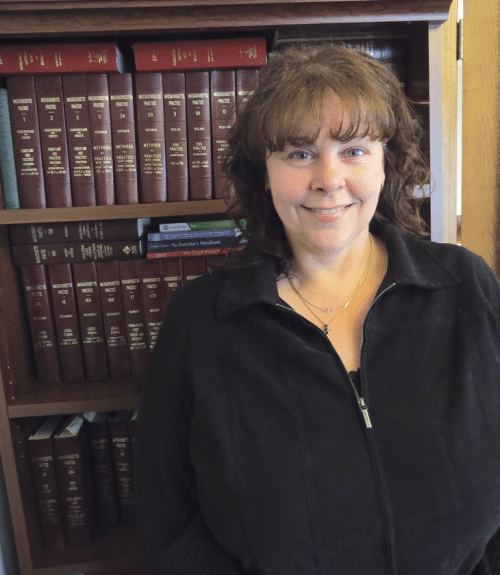
Karen Adamski, a 2014 graduate of WNEU School of Law, in her office in downtown Easthampton.

Eric Gouvin was asked to qualify the state of the job market for recent law-school graduates, and especially those at Western New England University School of Law, which he serves as dean.

He thought about it for a moment, and then, when asked to find a word or two or three to sum things up, he paused again before saying, “well … it’s not terrible.”

He would go on to elaborate, using more numbers than words, to convey the general opinion that what seems like a simple question doesn’t have a simple answer. That’s because these are intriguing and certainly challenging times for those looking to enter the legal profession, and the scene is changing, in some ways quickly and profoundly, and in others slowly and — at least for some of those looking to land work — frustratingly.

What’s changing, said Gouvin, is the landscape in terms of the number and types of services for which lawyers are required. In short, there are fewer of them, with more matters handled by paralegals and those without a law degree.

What’s not changing, meanwhile, are both the overall appetite for bringing on new lawyers (many firms are still hesitant to do so even through the economy is certainly better than it was a few years ago) and the rate of retirement for the Baby Boomers who came into the profession when it was, well, booming 40-plus years ago.

In short, those legions of attorneys who entered the profession in the early and mid-’70s aren’t retiring — or at least at anything approaching the rates one might expect. There are many reasons for this, said Gouvin, including the Great Recession and its impact on everything from real-estate values to retirement savings, and the fact that many lawyers are more inclined to stay active and scale back their workload rather than fully retire.

Add all this up, and it translates into “not terrible,” which is, by and large, a slight enhancement over a few years ago, a vast improvement over 2010 and 2011 (the two worst years for finding work in this profession in quite some time), and roughly the same as last year.

“I’m cautiously optimistic that things are getting better,” said Gouvin. “But it will be pretty much like last year; as the economy improves, the prospects for law hiring improve.”

Gouvin and other law-school administrators won’t really know how the class of 2015 fares for several months — 10 months out from commencement is actually the benchmark used by those tracking placement and related issues — because many job offers are predicated on one’s passing the bar exam, and that grueling exercise won’t happen until July, and the results won’t be known until fall.

But Jeffrey Stitt Jr. won’t have to wait that long. He’s one of the members of this year’s class at WNEU who already has a job — in this case, with the firm of O’Connell & Aronowitz, which is based in Albany, N.Y. and also has offices in Saratoga and Plattsburg, N.Y., his hometown.

“It was always a hope of mine to begin my legal career here,” he said from home just two days after commencement ceremonies on the WNEU campus. “So I was very fortunate to have something work out.”

Jeffrey Stitt

Jeffrey Stitt, seen just after WNEU Law’s commencement exercise on May 17, is one of the fortunate graduates who already have a job with a firm.

Meanwhile, Karen Adamski, a member of WNEU’s class of 2014, is settling in nicely at her solo practice in downtown Easthampton. The name over the door, also printed in smaller type on her business card, is O’Brien & Adamski Law Office, a name she kept (she believes it’s a sound business decision, not a sentimental one) to recognize her father, Karl Adamski, and Edward O’Brien, who practiced together for many years.

Karen told BusinessWest she entered law school with the intention of joining her father (O’Brien passed away several years ago), and that plan was jelling nicely until the elder Adamski became ill not long after she passed the bar and died a few months later.

She carries on by herself, handling everything from real-estate closings to estate-planning work, and said business is solid.

“Things have gone very well, surprisingly well,” she said, giving much of the credit for that to what she called a “support system” of other lawyers in that area who have provided help and mentoring.

As the examples of Stitt and Adamski clearly show, there are still ample opportunities to join this profession and have a law degree fulfill a long-held dream. Still, circumstances are making it more difficult to script such an outcome, and for some, the dream is being delayed or altered due to the challenging conditions.

Firm Resolve

After graduating from Westfield State University in 1989, Adamski eventually went to work for Hasbro, in R&D, where, among other things, she helped write content and rules for a number of games and supervised those who contrived the questions for Trivial Pursuit.

This was fun work and rewarding in several ways, but by 2010, she had made up her mind to plot a significant course change career-wise, join the legal profession, and essentially fulfill a childhood ambition that had been put on ice for more than two decades.

“Growing up and being around my father, I always had an interest in the law,” she explained. “But life got in the way, and it kept getting pushed off. At the time, Hasbro was changing its structure, and I was reassessing what I wanted to do with the next phase of my life. I decided that, if I was ever going to this, this was the time to do it.”

The timing of her decision is significant because 2010 was when the bottom started falling out in terms of both the legal job market and the numbers of individuals who were opting to pursue a law degree.

Gouvin noted that, for the fall semester in 2010, Adamski was one of 52,488 first-year law students enrolled in schools across the country. By the fall of 2014, that number had declined to 37,924, a startling 28% contraction, as schools reacted to a sharp decline in applications by shrinking the size of the classes.

Meanwhile, the worsening conditions also made it more challenging for graduates to find jobs — or at least the kind of jobs they were hoping for when they entered law school, usually taking on large amounts of debt to do so.

“Between 2008 and 2011, big law firms were just shedding jobs left and right — I think the number was something like 60,000 law jobs were eliminated during that period,” Gouvin noted. “There were a lot of layoffs, and the market took a huge hit; that big class that enrolled in the fall of 2010 graduated into a market that was pretty moribund in terms of hiring.”

Adamski was well aware of these developments as she filled out the paperwork to pursue her juris doctor at WNEU on a part-time basis. But she decided this was a risk worth taking.

“I knew it was a difficult time,” she recalled. “Firms were cutting back, certainly, but those times also put a strain on the solo practitioner, which is what my father was. It’s a lot of work to keep an office up and running in a market that had an excess of attorneys in it and not as many jobs available; everyone’s in competition.

“The tough conditions were something I was aware of,” she went on, “but the desire to do it was enough for me to decide that I would take a chance, hope that the market would square up a little bit, and make a go of it.”

She was fairly confident that she would find a suitable opportunity working beside her father and eventually succeeding him. The second part of that equation happened much sooner than she expected, and she regrets that, but overall, she’s happy with her career change.

However, the sharp downward spiral in the legal job market has deterred many over the past several years, said Gouvin, noting that enrollment at WNEU, as at most other law schools across the country, is down significantly from the years just prior to the economic collapse of 2008, and there is no indication that they will start to swing back up any time soon.


Offering Testimony

That’s because of all those market forces he described earlier, a combination of change and stagnancy that has many thinking at least twice about pursuing a law career.

Stitt, however, was not in that category.

Like Adamski, he said he was well aware of how the landscape had changed in the legal profession during and after the Great Recession when he was mulling whether to go to law school and where.

But he was also not deterred by what he had heard and seen.

“I’ve always wanted to be a lawyer, and I wasn’t going to let the job market deter me,” he told BusinessWest. “Everything is pretty cyclical, and I think the job market is going to come back around over the next few years.”

Perhaps, but some things will have to go right for conditions to improve substantially, said Gouvin. One of them is the economy, which certainly appears to be heading in the right direction.
Eric Gouvin

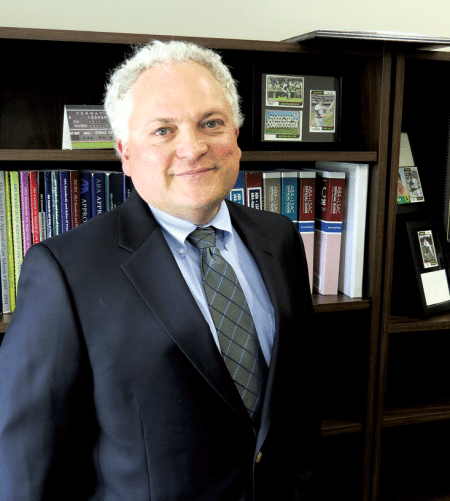
Eric Gouvin expects the job market for law grads to improve as the economy strengthens and Baby Boom-generation lawyers eventually retire.

Another is the eventual exodus of the Baby Boom lawyers and even some who came before them. While their departure from the stage will certainly generate a loss of valuable talent and expertise — as the expected mass retirements over the next decade will in all sectors of the economy — it will generate opportunities for a new generation of law graduates.

“One of the things we keep waiting for is the retirement of Baby Boom lawyers — but they keep holding on,” Gouvin noted with a telling laugh, adding that this is a rather large constituency.

Indeed, in 1969, the total number of JDs graduating was 15,000, he said, citing statistics he’s repeated many times. In 1975, that number was 32,000, swollen by a large number of law schools that had recently attained accreditation, including WNEU, then known as Western New England College.

Meanwhile, the basic laws of supply and demand will generate improvement as well, said Gouvin.

“The good news moving forward is that, for the group that just entered in the fall, their job prospects should be good, assuming the economy continues to recover,” he explained. “The delta between the number of available jobs and the number of new lawyers seeking those jobs will be smaller, simply because there will be a lot fewer lawyers graduated.”

Stitt acknowledged that he is more fortunate than many of his classmates — not only finding a job but one in his hometown — but noted that there are certainly opportunities to be found for those who are diligent and make full use of the resources that WNEU makes available to its law-school students.

“Like anything, there has to be a lot of initiative on your part,” he explained. “And they [WNEU administrators] give us the tools, and they also bring a lot of law firms from the Hartford-Springfield area onto the campus as well.

“Going back to when I was a 1L [the first year of law school] … they always preach to use the school’s externship programs and clinic programs to really shorten that learning curve when you get out of school and into practice,” he went on, adding that these programs can also help make a candidate more attractive to potential employers.

Summary Judgment

As for Adamski, she said keeping the name O’Brien & Adamski Law Office has been one of many factors that have contributed to what she considers a solid start to her career in the law.

“I kept that name because it has equity — it’s been around since 1972,” she explained, adding that many of her father’s clients have stayed with the firm, and she has brought in a number of new ones, including friends, colleagues from previous jobs, and people she knew through law school.

Hers was a plan that didn’t go entirely according to script, but in many ways has unfolded as she envisioned — just on a different timetable.

Many recent and current law-school graduates may well wind up using similar language but in different contexts as they strive to put their degrees to work.

Such is life in this changing environment, one where ‘not terrible’ actually constitutes improvement.

George O’Brien can be reached at [email protected]

Law Sections
As Effective Date Approaches, Many Questions Remain

By KARINA L. SCHRENGOHST, Esq. and OLGA SERAFIMOVA, Esq.

Many employers are struggling to roll out new policies and payroll practices that are compliant with the new Massachusetts Earned Sick Leave law by the July 1, 2015 effective date, which is fast approaching.

Karina Schrengohst

Karina Schrengohst

Olga Serafimova

Olga Serafimova

Last fall, Massachusetts voters passed a law mandating that employers provide up to 40 hours of sick leave per calendar year to their employees. Since then, employers have eagerly anticipated guidance from the Massachusetts Attorney General’s Office, which recently issued proposed regulations. Although the regulations clarify some aspects of this complex new law, ambiguities remain, and the regulations raise new questions and are subject to change after public comment. As public comment is open until June 10, the final regulations will not be issued until very close in time to the law’s effective date.

In light of this, as a compromise, Attorney General Maura Healey recently announced that employers who have a paid-time-off policy in existence as of May 1, 2015 that provides employees with at least 30 hours of paid time off during the calendar year 2015 will have until Jan. 1, 2016 to fully comply with the new law’s requirements.

In order to take advantage of this safe-harbor provision, employers must extend at least 30 hours of paid time off to all employees, and leave taken between July 1, 2015 and Dec. 31, 2015 must be job-protected and subject to the law’s non-retaliation and non-interference provisions. This means that, under the safe-harbor provision, employers would likely have to provide at least some part-time, temporary, and seasonal employees with more sick leave than they would otherwise accrue under the new law.

Consequently, practically speaking, this safe-harbor provision could potentially prove to be more costly for those employers with a significant portion of their workforce employed on a part-time, temporary, or seasonable basis.

In a nutshell, under the new sick-leave law, employers with 11 or more employees must provide paid sick leave, while employers with less than 11 employees must provide unpaid sick leave. The law broadly applies to full-time, part-time, temporary, and seasonal employees, without regard to exempt or non-exempt status, and interns.

The purposes for which employees may use sick leave are similarly broad. An employee may use sick time to care for his or her own physical or mental illness, injury, or medical condition, or to attend routine medical appointments. An employee may also take sick time to care for or attend medical appointments with his or her child, spouse, parent, or parent of a spouse. In addition, sick time may be used to address the psychological, physical, or legal effects of domestic violence committed against the employee or his or her dependent child.

When the need to take leave is foreseeable, employers may require up to seven days’ advance notice; for unforeseeable leave, employees must give notice as soon as practicable. Medical documentation supporting the need for sick leave may be required only after an employee has been absent for at least 24 consecutive work hours (for example, three eight-hour days).

The accrual rate of sick time under this new law is proving to be administratively challenging, baffling employers and payroll companies alike. Specifically, an employee accrues one hour of sick time for every 30 hours worked. For purposes of accrual, exempt employees are assumed to work 40 hours per week, unless their job specifies fewer. Although new employees begin to accrue sick time on their date of hire, they cannot use it until they have been employed for at least 90 days. Current employees begin to earn sick leave on the day the law goes into effect and are likewise not able to use it until they have been employed for 90 days. An employee may carry over up to 40 hours of accrued but unused sick leave from one year to the next. Unlike accrued vacation time, accrued sick time does not have to be paid to an employee upon separation.

Some of the provisions of the proposed regulations brought welcome news. For instance, during the transition year, employers are not required to provide more than 40 hours of paid sick leave, and any paid time off taken prior to July 1, 2015 will be credited. In addition, employers may substitute their vacation or other paid time off (PTO) policies if certain requirements are met. Also, as an administrative relief for some employers, for purposes of tracking sick-leave use and accrual, employers may select any consecutive 12-month period (i.e. calendar year, fiscal year, the year running from an employee’s anniversary date of employment).

Additionally, an employee may be required to verify in writing that he or she has used sick leave for an allowable purpose under the law after any absence. Further, where an employee’s absence from work requires his or her employer to hire a replacement, the employer may require the employee to use up to a full shift of earned sick time. In all other cases, sick-leave use must be tracked by no greater than one-hour increments.

Notably, under the proposed regulations, employees committing fraud or abusing sick leave or exhibiting a clear pattern of taking leave on days when the employee is scheduled to perform duties perceived as undesirable may be disciplined. Because there are explicit prohibitions on retaliating against employees for taking sick leave, employers would be wise to consult with employment counsel before disciplining employees based on abuse of sick leave.

In the same vein, per the proposed regulations, attendance policies that reward employees for good attendance are permissible so long as employees who exercise their rights under this law are not subject to any adverse action. Further, employers may choose to offer a payout of up to 40 hours of unused sick leave at the end of the calendar year, as long as the employee is provided at least 16 hours of sick leave at the beginning of the new calendar year.   

In light of this new law, employers will need to revise their current vacation or paid-time-off policies or create a separate sick-time policy to ensure compliance with the law.

Karina L. Schrengohst, Esq. and Olga Serafimova, Esq. are attorneys at Royal LLP, a woman-owned, boutique, management-side labor and employment law firm. Royal LLP is a certified Women’s Business Enterprise with the Massachusetts Supplier Diversity Office, the National Assoc. of Minority and Women Owned Law Firms, and the Women’s Business Enterprise National Council; (413) 586-2288; [email protected]; [email protected]

Law Sections
Sending a Personal Message from the Deceased to Those Left Behind

By ANN I. WEBER, Esq.

Do you remember old movies where, after the death of an important person, there is a formal reading of the will? The family, trusted retainers, and ancient lawyer gather while the lawyer reads the will, which imparts not just a distribution of assets, but also advice and wisdom — and sometimes also spite and vitriol — from the recently deceased.

Ann Weber

Ann Weber

Of course, the latter two emotions are certainly not recommended in current estate-planning practice, but, upon the premise that we are all important persons with or without family retainers, ethical wills have been reintroduced as a way to send a personal message from the deceased to those left behind.

The concept of an ethical will is not new. It seems to have originated as an ancient Judeo-Christian tradition, which was carried on by rabbis and laypersons as a means of passing ethical values from one generation to the next. In current practice, ethical wills have been touted by websites, books, and how-to manuals as of means of leaving your loved ones a statement of your values and your hopes for their future.

An ethical will is not legally binding as is the memorandum that a testator can attach to his or her will. A legal memorandum sets forth the disposition of specified articles of personal property, i.e., “my jewelry to my daughter, my tools to my granddaughter, my old Ford Taurus to my son,” etc. When properly drafted and executed by the testator, a memorandum is legally binding and will be judicially enforced.

An ethical will, on the other hand, passes on the testator’s final wishes for the family, which can range from desired funeral arrangements to heartfelt lessons, insight and advice for the next generation, or even reminders of events which will bring a smile to the faces of those left behind. It is not a binding legal document, but an expression of memories, values, and hopes for the future.

It can provide an opportunity to say what has not been said in life — though all writers on the subject caution against saying anything negative or painful. Ethical wills can often serve as an offset to dry legal documents and may also balance the sometimes sterile and impersonal care that can attend dying in the modern age.

The most effective ethical will leave the survivors with a stronger sense of the departed loved one, what she wants them to understand about her life. An ethical will may also help the family cope with unresolved issues, explain the reasons behind certain dispositions, and help to avoid conflicts that can arise from the bare bones of the testamentary provisions in a will or trust.

Ethical wills need not be confined to a written document. For example, a father may include remembrances of his parents in saved pictures, letters, or a collection of favorite memories and stories handed down in the family. A businesswoman who wants to instill the values that allowed her to create a successful business and how she hopes her values and ethics will be carried on by the next generation may include stories of how she came to create the business, her successes, her failures, what she learned from them, and how she hopes these lessons will be carried on in the future.

Another person might create a video so that he can have a last conversation with his loved ones, tell a favorite joke or story, and share a last laugh with his family. Scrapbooks and online collections of important family memories may also be part of the ethical will.

If you would like to include such a document with your will, trust, or other testamentary documents, talk to your lawyer about how to go about this. There are a number of books and online guides to assist you, or your lawyer may have a format to help you get started. Many families have found comfort in the legacy of an ethical will that allows their loved one to stay with them in spirit after death, so if this is something appeals to you, start the process now and let it evolve as the years go by. Your family will thank you.

Attorney Ann I. Weber is a partner at Shatz, Schwartz and Fentin, P.C., and concentrates her practice in the areas of estate planning, estate administration, probate, and elder law. She is a fellow of the American College of Trust and Estate Council and past president of the Hampden County Estate Planning Council, and has been recognized by Super Lawyers (2004-2014), Top 50 Women Attorneys in Massachusetts (2007, 2012, 2013, 2014) and Best Lawyers in America (2004-2015); (413) 737-1131; [email protected]

Law Sections
Individuals Are Caught Between a State and a Federal Place

By Valerie Vignaux, Esq.

Imagine your aunt Sarah, 74 years old, three-year resident of an assisted-living facility in a small Massachusetts city.

Valerie Vignaux

Valerie Vignaux

She is thriving there, making friends, and actively participating in organized activities. She takes blood-pressure medication, and, because she doesn’t drive, you pick up her prescription and deliver it to the facility, where it is stored and dispensed by the staff. In her fourth year there, Sarah is diagnosed with breast cancer and opts to treat the disease aggressively with chemotherapy and radiation.

Once fairly robust, Sarah begins to suffer the effects of the chemotherapy. Her nausea diminishes her quality of life, and she loses weight. Her oncologist suggests exploring medical marijuana to alleviate the nausea and stimulate her appetite.

The legalization of medical marijuana took effect in Massachusetts in January of 2013. An Act for the Humanitarian Medical Use of Marijuana legalized marijuana for “the treatment of debilitating medical conditions, or the symptoms thereof.” Such conditions are defined by the statute as cancer, glaucoma, HIV-positive status, AIDS, hepatitis C, ALS, Crohn’s disease, Parkinson’s disease, multiple sclerosis, and, more vaguely, “other conditions as determined in writing by a qualifying patient’s physician.”

By these definitions, Sarah would seem to qualify for medical marijuana. After receiving certification of a debilitating condition from her doctor, Sarah could submit that certification to the Department of Health and receive a registration card. She would then use this card to obtain marijuana from a licensed dispensary.

If Sarah lived at home and drove, she could take her registration card to the nearest dispensary and store the marijuana at home. But what are the considerations now that Sarah lives at an assisted-living facility? Indeed, how will the growing population of elders at assisted-living and skilled-nursing facilities across the state take advantage of this legal treatment option?

It is important to remember that marijuana remains illegal under federal law. In recognition of increasing public support of and state action on legalization, the Obama administration has repeatedly asserted that federal prosecution of medical-marijuana distribution and use will remain a “low priority.” Additionally, Congress recently passed an amendment that prohibits the Justice Department from undermining state medical-marijuana laws — for 2015.

Despite this turning of the federal blind eye, will the owners and management of elder-care communities — both assisted-living and skilled-nursing facilities — take the risk of flouting federal law? If the facility admits patients receiving Medicaid, will it lose its federal funding? Will nursing staff be allowed to store and distribute this legal-yet-illegal substance? If Sarah can’t administer the drug herself, will a staff nurse or care attendant be authorized by the facility to help her? If Sarah opts to smoke the drug, will the facility allow it if there are restrictions on smoking? Will a family member be allowed to pick up her marijuana at the dispensary for her, as with her blood pressure medication from the pharmacy?

The Massachusetts statute allows for a “personal caregiver” to assist with a patient’s medical use of marijuana. Like the patient, caregivers may also receive a registration card to procure a patient’s marijuana. The statute states that “an employee of a hospice provider, nursing, or medical facility providing care to a qualifying patient may also serve as a personal caregiver.” Such caregivers, along with patients and healthcare professionals, are expressly protected under the law from state prosecution. In this scenario, both family and a staff member at Sarah’s facility could become personal caregivers under the law and assist Sarah with the procurement, storage, and administration of the drug.

Despite express protection from state prosecution, the Massachusetts statute also notes that “nothing in this law … purports to give immunity under federal law,” and “nothing in this law poses an obstacle to federal enforcement of federal law.” Presidential promises and the one-year hiatus from prosecution may be small comfort to administrators of elder-care facilities. The fear not only of prosecution, but also of loss of licensure and federal funding, are genuine concerns that may affect an elderly resident’s access to this particular treatment.

Attorney Valerie Vignaux is an associate attorney with Bacon Wilson and a member of the firm’s Estate Planning and Elder Law team. She assists clients with all manner of estate planning and provides representation for guardianship and conservatorship matters. She also spent a year serving as Superior Court Clerk to the justices of the Massachusetts Trial Court; (413) 781-0560; [email protected]

Briefcase Departments

State Awards $100,000 in Workplace Safety Grants
BOSTON — Seven Massachusetts employers — including one in Western Mass. — were awarded grants, totaling more than $100,000, to train 552 workers to prevent workplace injuries, illnesses, and deaths, Labor and Workforce Development Secretary Ronald Walker II announced. The Department of Industrial Accidents Office of Safety administers and manages the Workplace Safety Training and Education Grant program to promote safe, healthy workplace conditions through training, education, and other preventative programs for employers and employees covered by the Massachusetts Workers’ Compensation Law. North Adams-based Berkshire Family & Individual Resources, a nonprofit, human-service organization providing support services for adults and children with disabilities, autism, and traumatic brain injuries, was awarded $10,165. Other grants were awarded to organizations in Lawrence, Dorchester, Roxbury, Boston, Wellesley, and Pepperell. “It’s not just employers and workers who pay the price for occupational fatalities, injuries, and illness. Society often bears the indirect costs of medical treatments and lost wages and productivity,” Gov. Charles Baker said. Added Lt. Gov. Karyn Polito, “making employers and workers aware of workplace hazards and developing safety precautions and protocols can go a long way in reducing the costs of workplace tragedies.” With $800,000 budgeted annually for the safety grant program, the Department of Industrial Accidents (DIA) has funded hundreds of programs that have educated thousands of employers and workers in the Commonwealth. The new round of grants will be the last given out this fiscal year. “These grants have made Massachusetts workplaces safer and healthier for thousands of employees and simultaneously created opportunities for trained workers to move into new or higher-paying jobs,” Walker said. Grant recipients can be awarded up to $25,000 per entity each fiscal year. Employers were awarded training grants through a competitive application process through DIA.

State Unemployment Rate Drops to 4.7% in April
BOSTON — Massachusetts’ total unemployment rate dropped to 4.7% in April, a 0.1% decrease from the previous month, the Executive Office of Labor and Workforce Development announced. The new preliminary job estimates from the Bureau of Labor Statistics (BLS) indicate that Massachusetts gained 10,100 jobs in April, marking the eighth consecutive month of job gains. BLS also revised upward its March job figure, reporting the state gained 12,100 jobs, instead of 10,500, which the agency originally reported last month. Over the year, the state’s unemployment rate fell 1.1% from 5.8% in April 2014. January 2008 was the last time the state’s unemployment rate was at 4.7%. The state unemployment rate remains lower than the national rate of 5.4% reported by the Bureau of Labor Statistics. The state’s labor participation rate — the total number of residents 16 or older who worked or were unemployed and actively sought work in the last four weeks — increased 0.1% to 66.3%. The April labor participation rate is the highest since May 2010, and this is the third consecutive month there was an increase in the participation rate. Compared to April 2014, the labor participation rate increased 1.1% over the year. “This is the seventh consecutive month we’ve seen a decrease in unemployment,” Labor and Workforce Development Secretary Ronald Walker said. “Many more residents are employed, and labor participation has increased again.” April 2015 estimates show that 3,464,500 residents were employed and 169,400 were unemployed. There were 37,700 fewer unemployed persons over the year compared to April 2014. Over the month, jobs were up 10,100, with a private-sector gain of 9,700. Since April 2014, jobs grew by 66,100, with 57,900 private-sector job gains. Education and health services and professional, scientific, and business services were the sectors with the largest job gains over the year.

DCR to Issue Volunteer Fire Assistance Grants
BOSTON — Department of Conservation and Recreation (DCR) Commissioner Carol Sanchez announced that $65,542 has been made available in the 2015 Volunteer Fire Assistance (VFA) grant funding program for eligible towns. Funding for this program, which is provided by the U.S. Department of Agriculture’s Forest Service, is administered by DCR’s Bureau of Forest Fire Control and Forestry. “The Volunteer Fire Assistance grants are an extremely important funding tool to assist qualifying local fire departments that might not have the means to pay for vital equipment and training needed to combat wildland fires within their borders,” Sanchez said. “The recent outbreak of brushfires across the Commonwealth only reinforces the value of the VFA grants.” VFA grants are available to nonprofit rural call or volunteer fire departments that provide service primarily to a community or city with a population of 10,000 or fewer. Fire departments must be comprised of at least 80% call or volunteer firefighters, must be recognized as a fire department under state law, and must be compliant with the National Incident Management System. Applications with eligibility guidelines were mailed recently to the Commonwealth’s forest wardens in all eligible communities. The completed application must be received by June 12 by Program Coordinator Roxanne Savoie, DCR Bureau of Forest Fire Control, Hampton Ponds State Park, 1048 North Road, Westfield, MA 01085. For questions regarding the application process, call (413) 538-9092, ext. 400. DCR, an agency of the Executive Office of Energy and Environmental Affairs, oversees 450,000 acres of parks and forests, beaches, bike trails, watersheds, dams, and parkways. The agency’s mission is to protect, promote, and enhance the state’s natural, cultural, and recreational resources. To learn more about DCR, visit www.mass.gov/dcr, or e-mail [email protected].

Springfield Wins $526,813 for Sewer Improvements

SPRINGFIELD — State Treasurer Deb Goldberg, chair of the Massachusetts Clean Water Trust, announced more than $6.7 million in loan-principal forgiveness for 13 communities statewide, including Springfield. The principal-forgiveness funds, administered by the state and funded by the federal government, were awarded on a competitive basis to cities and towns most in need of financial assistance associated with loan payments to the Massachusetts Clean Water Trust. The funds will be used for financing improvements to drinking water and wastewater infrastructure. The Springfield Water and Sewer Commission received a $526,813 award for the CWP-14-27 Dickinson Street siphon/main interceptor rehabilitation
project. The objective of the project is to rehabilitate and extend the lifespan of existing infrastructure and to improve hydraulic capacity which allows for mitigation of structural failure leading to sanitary sewer overflow (SSO) events. Approximately half of Springfield and the surrounding towns of Ludlow and Wilbraham are served by the main interceptor (MI), which runs for approximately 27,200 feet. The MI was built in 1972 and is constructed of 60-inch and 66-inch reinforced concrete pipe. Based on recent inspection, the MI is considered to be in structural distress. The Dickinson Street Siphon feeds a large catchment of flow into the MI. SSOs into the Mill River and neighborhoods have occurred at the siphon during heavy rainfall events. As part of the project, the siphon will be replaced with a large-diameter gravity sewer. “The Clean Water Trust delivers a critical service to our municipalities by financing water infrastructure projects,” Goldberg said. “Improving water quality presents a range of both public-health and economic benefits for the citizens and communities we represent.” The Massachusetts Clean Water Trust improves water quality in the Commonwealth through the provision of low-cost capital financing to cities, towns, and other eligible entities, and maintains stewardship of public funds. Because of the reduction of loan principal funded by this program, impacted communities will see their biannual loan payments reduced, freeing up capital for other local needs. The loans were originated to pay for municipal water projects such as upgrades to water-treatment facilities and stormwater and sewer-improvement projects.

Dress for Success Names New President, Members
SPRINGFIELD — Dress for Success Western Massachusetts announced that Dawn Creighton, Western Mass. regional director for the Associated Industries of Massachusetts, has been named board president. Dress for Success is a not-for-profit organization promoting the economic independence of disadvantaged women by providing professional attire, a network of support, and the career-development tools to help women thrive in work and in life. “As president of Dress for Success, strengthening our community with strong women will be my priority,” said Creighton. “Dress for Success isn’t just about the suit. It’s about the women that fill the suits. I am eager to work with partnering agencies and community leaders to ensure the women of Pioneer Valley have the tools they need to be successful in the workforce.” In addition to her role with AIM, Creighton serves on multiple committees and boards, including the Human Resource Management Assoc. of Western New England, Junior Achievement of Western Massachusetts, Internhere.com, the Hartford-Springfield Economic Partnership, United Way of Pioneer Valley, the Affiliated Chambers of Commerce of Greater Springfield, and the World Affairs Council. Also named to the board are Jennifer Brown, Jonencia Wood, and Natallia Furjan-Collins. Brown has more than 16 years of experience within the staffing industry and currently is assistant vice president of operations for United Personnel, supervising candidate recruitment, client relations, staffing support, and quality assurance. Prior to joining United Personnel, she was the managing director at Staffing Now. She is a member of the Human Resource Management Assoc. and the human resource roundtable with the Employers Assoc. of the NorthEast. Wood is senior director of programs for the alumnae association of Mount Holyoke College and has more than 10 years of experience focusing on the professional development and advancement of underrepresented individuals. Prior to joining Mount Holyoke, she served as a diversity specialist for Baystate Health and community action and communications coordinator for the Youth Empowerment Adolescent Health Network. Furjan-Collins is the human resources leader for MassLive. She brings with her an innovative and modern approach to employee relations in the digital environment. Prior to joining MassLive, her career spanned several years in human-resource management in her native Canada, including speaking publicly on topics such as workplace harassment and bullying. She is currently a community business partner in the sophomore business cohort program at Western New England University.

Departments People on the Move

Elizabeth Cardona

Elizabeth Cardona

Bay Path University announced the appointment of Elizabeth Cardona as executive director for Multicultural Affairs, International Student Life, and assistant to the provost for Diversity and Inclusion. Cardona, the former senior director and civic engagement advisor to then-Gov. Deval Patrick, comes to Bay Path with extensive experience in state government, education, and nonprofit program management. In her position, Cardona will provide institutional leadership to support the needs of first-generation and underrepresented minority students by offering academic assistance, mentoring, coaching, and leadership programs to promote multi-cultural awareness, diversity, and inclusion in accordance to the mission of Bay Path University. In addition, she will work with international students to provide ongoing assistance with social and cross-cultural activities to support their immersion and academic experience. Bilingual in Spanish, Cardona also has a working knowledge of Arabic. “I am thrilled to join Bay Path University’s community to facilitate understanding of multi-culturalism, diversity, equity, and inclusion in an affirming space where students, faculty, staff, and leadership engage collaboratively to enhance academic and social development,” Cardona said. A graduate of the Women’s Pipeline for Change, an initiative that supports women of color as they enter leadership roles and public life, her expertise also includes serving on state Treasurer-elect Deb Goldberg’s transition team, as an advisory board member for the Women’s Fund of Western Massachusetts Leadership Institute for Political and Public Impact, and as a founding board member for the CHICA Project, a Massachusetts statewide Latina youth leadership, mentoring, and coaching program. Cardona holds an MPA and a certificate in conflict resolution from the Maxwell School of Citizenship and Public Affairs at Syracuse University, and a bachelor’s degree in American studies with a concentration in social issues from Springfield College.
•••••
Dress for Success Western Massachusetts announced that Dawn Creighton, Western Mass. regional director for the Associated Industries of Massachusetts, has been named board president. Dress for Success is a not-for-profit organization promoting the economic independence of disadvantaged women by providing professional attire, a network of support, and the career-development tools to help women thrive in work and in life. “As president of Dress for Success, strengthening our community with strong women will be my priority,” said Creighton. “Dress for Success isn’t just about the suit. It’s about the women that fill the suits. I am eager to work with partnering agencies and community leaders to ensure the women of Pioneer Valley have the tools they need to be successful in the workforce.” In addition to her role with AIM, Creighton serves on multiple committees and boards, including the Human Resource Management Assoc. of Western New England, Junior Achievement of Western Massachusetts, Internhere.com, the Hartford-Springfield Economic Partnership, United Way of Pioneer Valley, the Affiliated Chambers of Commerce of Greater Springfield, and the World Affairs Council. Also named to the board are Jennifer Brown, Jonencia Wood, and Natallia Furjan-Collins. Brown has more than 16 years of experience within the staffing industry and currently is assistant vice president of operations for United Personnel, supervising candidate recruitment, client relations, staffing support, and quality assurance. Prior to joining United Personnel, she was the managing director at Staffing Now. She is a member of the Human Resource Management Assoc. and the human resource roundtable with the Employers Assoc. of the NorthEast. Wood is senior director of programs for the alumnae association of Mount Holyoke College and has more than 10 years of experience focusing on the professional development and advancement of underrepresented individuals. Prior to joining Mount Holyoke, she served as a diversity specialist for Baystate Health and community action and communications coordinator for the Youth Empowerment Adolescent Health Network. Furjan-Collins is the human resources leader for MassLive. She brings with her an innovative and modern approach to employee relations in the digital environment. Prior to joining MassLive, her career spanned several years in human-resource management in her native Canada, including speaking publicly on topics such as workplace harassment and bullying. She is currently a community business partner in the sophomore business cohort program at Western New England University.
•••••
Dodie Carpentier

Dodie Carpentier

Monson Savings Bank (MSB) announced the promotion of Dodie Carpentier to assistant vice president of Human Resources. Carpentier joined MSB in 2006 as assistant branch manager and was promoted to branch manager in 2008. In 2012, she assumed a dual role as branch manager and education coordinator. With her growing interest in training and HR, she obtained certification in Supervision in Banking and Human Resources Management from the Center for Financial Training. In 2014, she was named human resources officer after an extensive search to replace her predecessor, who had retired. “There is nothing more important than our employee culture,” said Steve Lowell, president of Monson Savings Bank. “We work very hard to make sure our folks are knowledgeable and caring and that we work together as a team to make our customers’ lives easier and improve their financial future. Having a dedicated and strong leader in HR is an absolute must, and I’m very pleased to promote Dodie to assistant vice president.” Carpentier is a board member of River East School to Career and serves on the steering committee for Rays of Hope.
•••••
Calvin Hill

Calvin Hill

Calvin Hill has been named vice president for Inclusion and Community Engagement at Springfield College, following a national search. With more than 20 years of experience as a faculty member in higher education, Hill most recently served as the university diversity and inclusion officer for the University of St. Thomas in St. Paul, Minn. Previously, he developed strong ties to higher education in Massachusetts working as assistant to the president and director of the Office of Diversity, Inclusion, and Equal Opportunity at Worcester State University; serving as associate provost and chief diversity officer for MGH Institute of Health Professions in Boston; and prospering as assistant dean and director of diversity programs at Worcester Polytechnic Institute. Hill’s experience has included a commitment to providing equal access to educational opportunities for underrepresented populations, and to lead institutional compliance efforts around the ADA, Title VI, Title VII, VOWA, the Campus SaVE Act, and Title IX. “I am pleased to announce that Calvin will be joining the leadership team at Springfield College,” said Springfield College President Mary-Beth Cooper. “Springfield College recognizes that a diverse and inclusive campus community where different perspectives are recognized and celebrated is an integral part of educating students in the 21st century. In addition, we are proud of our collaborative partnerships with many community organizations, and we are committed to being a strong advocate for greater Springfield. Calvin’s experience in both academic and professional settings will enhance the college’s goals and vision in these areas moving forward.” Reporting directly to the president, Hill will work closely with a broad range of students, faculty, staff, and community constitutes to develop Springfield College as a model for diversity and inclusion in higher education. Striving to connect the college’s intellectual and cultural resources to area communities, his leadership will support the recruitment and retention of a diverse student population. In addition, he will monitor, document, and facilitate the college’s integrated governmental and community relations and serve as a liaison to local, state, and federal government agencies. “I am thrilled to join the Springfield College community in the position of vice president for inclusion and community engagement,” said Hill. “From what I have seen and heard, Springfield College is a special place, and I look forward to working with its dedicated faculty, staff, students, and community partners to not only shape, but to also gain a better understanding of the world around us.” Hill has a doctor of philosophy degree in political science from Howard University, a master’s degree in student personnel administration from Emporia State University, and a bachelor’s degree in history and political science from Bethany College.
•••••
Local law firm Shatz, Schwartz and Fentin, P.C. recently announced that attorneys Michele Feinstein, L. Alexandra Hogan, Carol Cioe Klyman, and Ann Weber have been selected to the Super Lawyers Top Women Attorneys in Massachusetts list. Klyman and Weber have also been selected to the 2014 Top 50 Women list. Super Lawyers is a rating service of outstanding lawyers from more than 70 practice areas who have attained a high degree of peer recognition and professional achievement. The selection process includes independent research, peer nominations, and peer evaluations. Super Lawyers magazine features the list and profiles of selected attorneys and is distributed to attorneys in the state or region and the ABA-accredited law school libraries. Super Lawyers is also published as a special section in leading city and regional magazines across the country, including the April 2015 edition of Boston magazine. “Beginning your search for legal counsel is no small feat; knowing where to start, researching attorneys, and finally selecting one you feel comfortable with can be overwhelming tasks,” said Super Lawyers Director of Research Julie Gleason. “All of the women lawyers in this special section have been named to a 2014 Massachusetts Super Lawyers or Rising Stars list. In creating our lists, Super Lawyers performs the type of due diligence that a highly motivated and informed consumer would undertake if he or she had the time, energy, and resources.”
•••••
Zachary Piper

Zachary Piper

Northeast IT Systems Inc. announced the hiring of Zachary Piper as a desktop specialist. Piper has a degree in computer engineering technology from Manchester Community College, where he served as head technician for the college’s volunteer Computer Repair and Share Club. In 2011, he constructed a computer lab for a Boy Scout camp in Connecticut, where he had served as a camp counselor. “The IT field brings unique challenges every day, and I find them to be intriguing. From a very young age, computers have fascinated me. I was able to build my first PC at age 11,” said Piper, adding that his favorite aspects of his job are helping customers, solving strange problems, and learning new things. “It has been great having Zac as a part of our team,” said owner Joel Mollison. “He works hard, and I can always count on him to help with any problem a customer faces.”

Daily News

SPRINGFIELD — On May 19, the Western New England University College of Pharmacy held its fifth annual Continuing Pharmacy Education and Preceptor Development Conference. The conference is one way the College of Pharmacy supports the educational needs of pharmacists in the region. The conference is free, and practitioners receive continuing-education credits for attending.

This year, nearly 100 pharmacists from New England participated in the full-day training program. The workshops included “Immunization Update” by Dr. Courtney Doyle-Campbell, “Sepsis Guidelines Update” with Dr. Yoonsun Mo, and “Guide to a Good Night’s Sleep” presented by Dr. Melissa Mattison. The participants also received an update on “Regulatory Law and Pharmacist Liability” from Paul Garbarini, RPh, Esq.

During the event, the Preceptor of the Year Award for Institutional Acute Care was presented to Sara Shermer, RPh, of Enfield, Conn. This annual honor is given to a pharmacist who exemplifies the best in professional mentoring and experiential teaching skills, as determined by students and the College of Pharmacy Office of Experiential Affairs.

Comments from students supporting Shermer’s nomination included, “she went above and beyond to make sure we had the best experience,” “she was enthusiastic about maintaining the best patient care,” and “everyone looked up to her at the work site.”

For more information about educational opportunities at the College of Pharmacy, e-mail Kim Tanzer, assistant dean of Experiential Affairs and Continuing Education administrator, at [email protected].

Daily News

SPRINGFIELD — As a leading labor and employment law firm serving the Greater Springfield area, Skoler, Abbott & Presser, P.C. understands the complexities of the Earned Sick Leave Law passed by voters in November 2014 and the new ‘safe-harbor’ provision for employers, which was recently announced by state Attorney General Maura Healey.

The Earned Sick Leave Law, which goes into effect July 1, entitles employees to earn up to 40 hours of paid sick time each year if they work for businesses with 11 or more employees. Businesses with fewer than 11 employees must still provide up to 40 hours of annual sick leave, but it can be unpaid. According to a new provision announced by Healey, employers that already offer paid sick time to their employees will have until the end of the year to adjust their policies and comply with the new law.

“Employers who do not comply with the new law risk civil sanctions and lawsuits from wrongfully disciplined or terminated employees,” said John Gannon, an attorney with Skoler, Abbott & Presser. “The new provision announced by the attorney general gives businesses that already offer earned sick time to their employees more time to comply without risk of legal action.”

According to Healey’s safe-harbor provision, employers with a policy that exists as of May 1 that provides at least 30 hours of paid time off to employees for the 2015 calendar year will be in compliance with the law through Jan. 1, 2016.

“These businesses do not need to worry about providing additional paid leave or developing an accrual system under the Earned Sick Leave Law for the employees who are covered under their paid-time-off policy until the beginning of next year,” Gannon said. “However, employers cannot retaliate against or otherwise interfere with an employee who requests and/or uses available paid time off after July 1. Employer policies that were permissible before July 1 — including policies related to attendance, occurrences, notice protocol, and holiday pay — may still need to be changed prior to the law’s effective date.”

If employees are not currently covered by a paid-time-off plan, employers can amend their policies to offer 30 hours of paid time off to employees who do not currently qualify for paid leave, or they can comply with the new law by beginning accrual for other workers at the rate of one hour for every 30 hours worked, beginning July 1.

Business owners seeking assistance in understanding or complying with the Earned Sick Leave Law or safe-harbor provision may contact the employment law attorneys at Skoler, Abbott & Presser, P.C. For information, visit skoler-abbott.com or call (413) 737-4753.

Daily News

TAUNTON — Skoler, Abbott & Presser, P.C., a leading labor and employment law firm, announced that partner Susan Fentin will host a seminar for employers regarding the new Earned Sick Leave Law and other leaves of absence. The event, sponsored by FBinsure, will be held Wednesday, May 27 at the Holiday Inn, 700 Myles Standish Blvd., Taunton.

Massachusetts employers have been hit with a number of new statutes that require them to permit employees to take time off. Foremost among these is the new Earned Sick Leave Law, which goes into effect on July 1. In addition, Massachusetts has a new Parental Leave Act and a Domestic Violence Leave Act that will affect many employers, in addition to other legally mandated leaves such as Family and Medical Leave and a medical leave of absence that might be required under the Americans with Disabilities Amendments Act or parallel state law.

“The legal environment is rapidly evolving, with more labor-related rules and regulatory requirements for employers to understand,” Fentin said. “Without proper guidance and understanding, the complex responsibilities placed on employers regarding leaves of absence can leave them feeling overwhelmed. Employers need a strong understanding of their statutory obligations in order to protect themselves from inadvertent exposure to costly risks.”

Attendees will learn the basics of Massachusetts’ new Earned Sick Leave Law, what other leave laws and regulations affect company of various sizes, the responsibilities of an employer, and effective strategies to manage leaves of absence.


“Leaves of absence are among the most complicated issues for employers and employees,” said Fentin. “The new Earned Sick Leave Law will create huge headaches for Massachusetts employers. It’s critically important for employers to understand their obligations under this and other leave laws to be sure that employees get all the leave to which they are entitled and also to protect the employer from litigation. Understanding how those laws interact can help business owners make informed decisions about leaves of absence and potentially avoid costly litigation.”

Registration and breakfast begin at 8:30 a.m. The program begins at 9 a.m. and ends at noon. To register, visit fbinsure.com/seminars.

Fentin has been a partner at the firm since 2004. Her practice concentrates on labor and employment counseling, advising large and small employers on their responsibilities and obligations under state and federal employment laws, and representing employers before state and federal agencies and in court. She speaks frequently to employer groups, conducts training on avoiding problems in employment law, and teaches master classes on both the FMLA and ADA. Since 2010, she has been ranked as one of the top labor and employment attorneys in the state of Massachusetts by the prestigious Chambers USA rating firm.

Agenda Departments

Celebration of Heroes
May 25: Smith & Wesson Corp. announced it will present its second annual Celebration of Heroes. The company invites the community to join it in honoring those who have served their country by attending the event from 11 a.m. until 4 p.m. on the grounds of Smith & Wesson, 2100 Roosevelt Ave., Springfield. At 11:45 a.m., Springfield Mayor Domenic Sarno, along with James Debney, president and CEO of Smith & Wesson, will preside over a program to honor local heroes and our country. Eight-year-old Shea Braceland of Westfield will deliver the national anthem. Following the program, the Celebration of Heroes will commence. There is no admission fee, and proceeds from the sale of food and items at the event will benefit the Friends of Ward 8 and the Friends of the Springfield Vet Center, two local veterans’ organizations supported by Smith & Wesson. Activities will include live stage performances by local bands including Lower Level, Maxxtone, and more. A kids’ tent will feature interactive musical performances by Rachel Hiller of Music Together, a photo booth, activities run by the YMCA of Greater Springfield, and other free activities. Bottled water will be provided free of charge by Big Y. In 2014, Smith & Wesson was honored to restore Springfield’s Veterans War Monument, which had been destroyed by the impact of weather and time. On Memorial Day 2014, a rededication ceremony and the first annual Celebration of Heroes was held to reveal the restored monument and to honor local veterans, active duty members of the U.S. Armed Forces, and military families. Proceeds benefited the Friends of the Springfield Vet Center, which offers social, recreational, and educational programs to combat veterans and their families, as well as the Friends of Ward 8, a nonprofit organization that supports the Veterans of Ward 8 at the VA Medical Center in Leeds. Ward 8 veterans suffer from combat PTSD and benefit from a six week in-treatment program to learn how to better cope with the condition.  During the 2015 Celebration of Heroes, funds will be raised for these two deserving organizations through ticket sales for fare from area food trucks and a beer and sangria tent courtesy of Commercial Distributing and Log Rolling. Event T-shirts will be available for a minimal fee. Military personnel (with military ID) will receive a free event shirt. For more information, visit www.facebook.com/celebrationofheroes, call Elaine Stellato at (413) 747-3371, or e-mail [email protected].

Springfield Police Year in Review
May 26: Since taking his post last June, Springfield Police Commissioner John Barbieri has focused his efforts on a collaborative, community-oriented approach to public safety through five priority objectives. He will present an update on his first year as commissioner at the Affiliated Chambers of Commerce of Greater Springfield’s Pastries, Politics and Policy event from 8 to 9 a.m. at the TD Bank Conference Center, 1441 Main St., Springfield. When he first was sworn in, Barbieri said he would strive to “re-engineer police services to positively impact crime, quality of life, and fear-of-crime issues, and improve quality of service and stakeholder satisfaction” through becoming more proactive, improving response times, increasing levels of service, building relationships with stakeholders, and developing and measuring feedback processes. He has launched an expanded Counter Criminal Continuum (C-3) policing model to the North End, the Hollywood section of the South End, the area around Mason Square, and the Belmont Avenue/Oakland Street section of Forest Park; introduced an innovative, web-based neighborhood-watch program; and continues to conduct successful law-enforcement sweeps across the city, concentrating on quality-of-life issues. The cost of the May 26 event are $15 for members, $25 for general admission, and includes continental breakfast. Reservations may be made online at www.myonlinechamber.com or by e-mailing Sarah Mazzaferro at [email protected].

‘Women Lead Change’
May 28: The Women’s Fund of Western Massachusetts (WFWM) will host “Women Lead Change: A Celebration of the Leadership Institute for Political and Public Impact (LIPPI) Class of 2015” at the Log Cabin in Holyoke from 6 to 8 p.m. More than 200 participants are expected to attend, including local and state elected officials. The keynote speaker is Attorney General Maura Healey, who began her term in January. She has led groundbreaking cases for civil rights, fair lending and housing, and litigation supporting access to reproductive health care for women. The Women’s Fund will honor her achievements with a “She Changes the World” award at the event. Holyoke Mayor Alex Morse will welcome guests, and Emily McLaughlin, deputy director of the Massachusetts Treasury’s department on Economic Empowerment, will also give remarks. The event is open to the public. Tickets are $50 and can be purchased online until Sunday, May 24 at www.womensfund.net. “We are thrilled to host our distinguished speakers as we welcome 38 highly qualified women into our LIPPI ranks,” said WFWM CEO Elizabeth Barajas-Román. “Our LIPPI program has trained more than 200 women in Western Massachusetts to run for elected office, 20% of whom have run their first race, with a 60% success rate. We know LIPPI women run, and LIPPI women win.” LIPPI is a 10-month program, the only one of its kind in Massachusetts, designed to respond to the shortage of women stepping into leadership at all levels. Focusing on areas such as public speaking, community organizing, the legislative process and policy making, fund-raising and campaigning, collaborative and cooperative working models, and board service, LIPPI gives women the tools and confidence they need to become more involved as civic leaders in their communities and to impact policy on the local, state, and national levels. Representing 40% women of color, LIPPI graduates comprise a wide spectrum of backgrounds, ethnic groups, and ages. They also represent all four Western Mass. counties, and their achievements range from running for office to managing campaigns; from fund-raising for female candidates to entering the Yale Women’s Campaign School. Two graduates are currently running for mayor in Pittsfield and Greenfield. Together, graduates form a strong cohort of like-minded women who support each other when they run for office, meet with policy makers, form coalitions, and conduct get-out-the-vote efforts. The Women’s Fund of Western Massachusetts is a public foundation that invests in local women and girls through strategic grant making and leadership development. Since 1997, the Women’s Fund has awarded more than $2 million in grants to nearly 100 organizations in Western Mass.

40 Under Forty
June 18:The ninth annual 40 Under Forty award program, staged by BusinessWest, will be held at the Log Cabin Banquet & Meeting House the evening of June 18. The event honors the region’s most accomplished and civic-minded professionals under age 40, and this year’s class was profiled in the April 20 issue. This year’s winners represent virtually every sector of the economy — from financial services to manufacturing; retail to healthcare; technology to nonprofit management; education to law. They also show the seemingly innumerable ways people can give back to the community. This year’s event will feature a new award — the Continued Excellence Award, presented to the previous honoree who has most impressively built upon their track record of excellence. Nominations will be accepted through Friday, May 22 at 5 p.m. The nomination form can be found at HERE. Always one of the most anticipated events and best networking opportunities on the calendar, the gala will feature lavish food stations, entertainment, and the introduction of this year’s class. Tickets cost $65 each, with a limited number of standing-room-only tickets still available. Tickets can be ordered by calling (413) 781-8600, ext. 100, or by visiting HERE. The 40 Under Forty program and gala are sponsored this year by Northwestern Mutual (presenting sponsor), Paragus Strategic IT (presenting sponsor), Fathers & Sons, the Isenberg School of Management at UMass Amherst, Moriarty & Primack, and United Bank.

Valley Fest
Aug. 29: White Lion Brewing Co. announced that it will host its inaugural beer festival, called Valley Fest, at Court Square in downtown Springfield. MGM Springfield will be the presenting sponsor. The festival is poised to be White Lion’s signature annual event, introducing the young brand to craft-beer enthusiasts throughout New England and beyond. White Lion Brewing Co., the city of Springfield’s only brewery, launched in October 2014. Founder Ray Berry and brewmaster Mike Yates have released three selections under the White Lion brand and have been busy promoting their efforts in venues all over Massachusetts and other New England states. Berry anticipates that more than 50 breweries and many local food vendors will converge on Court Square for two sessions. Enthusiasts will have an opportunity to sample more than 100 varieties of beer and hard cider alongside pairing selections by local chefs. A number of sponsors have already committed to the event, including MassMutual Financial Group, the Young Professional Society of Greater Springfield, the Dennis Group, Springfield Sheraton Monarch Place, Paragus Strategic IT, Williams Distributing, and the Springfield Business Improvement District (BID). “We are honored to sponsor Valley Fest and look forward to it being an annual event that shares in the facilitation of growth within the downtown community,” said Chris Russell, executive director of the Springfield BID. Visit www.valleybrewfest.com for event details, ongoing updates, and sponsorship opportunities. A portion of Valley Fest proceeds will support several local charities.

Western Mass. Business Expo
Nov. 4: Comcast Business will present the fifth annual Western Mass. Business Expo at the MassMutual Center in downtown Springfield, produced by BusinessWest and the Healthcare News in partnership with Go Graphix and Rider Productions. The business-to-business show will feature more than 100 booths, seminars and Show Floor Theater presentations, breakfast and lunch programs, and a day-capping Expo Social. Details about specific events, programs, and featured speakers will be printed in future issues of BusinessWest. Current sponsors include MGM Springfield, Expo Social Sponsor; the Isenberg School of Business at UMass Amherst, Education Sponsor; Johnson & Hill Staffing, Silver Sponsor; DIF Design, Director Level Sponsor; and 94.7 WMAS, Media Sponsor. Additional sponsorship opportunities are available. Exhibitor spaces are also available; booths prices start at $750. For more information on sponsorships or booth purchase, call (413) 781-8600, ext. 100.

Court Dockets Departments

The following is a compilation of recent lawsuits involving area businesses and organizations. These are strictly allegations that have yet to be proven in a court of law. Readers are advised to contact the parties listed, or the court, for more information concerning the individual claims.

HAMPDEN SUPERIOR COURT
East PBE Inc. v. Lighthouse General Contractors Inc.
Allegation: Non-payment for equipment provided: $10,094.75
Filed: 4/2/15

HAMPSHIRE SUPERIOR COURT
Brittany Dalton v. Patrick W. Edmunds, D.M.D.
Allegation: Negligent extraction of wisdom tooth causing permanent damage: $225,000
Filed: 2/27/15

DLW Realty, LLC v. Christian Carey, Architect, P.C.
Allegation: Negligent design of the Pet Hotel: $75,000+
Filed: 4/6/15

HOLYOKE DISTRICT COURT
Hadley Printing Co. v. Signature Advertising and Design Inc.
Allegation: Non-payment of goods sold and delivered: $24,894
Filed: 3/2/15

NORTHAMPTON DISTRICT COURT
Reinhart Food Service, LLC v. The Sub & Pizza of Amherst Inc.
Allegation: Non-payment of goods sold and delivered: $6,366.91
Filed: 2/20/15

SPRINGFIELD DISTRICT COURT
J.L. Raymakers & Sons Inc. v. Split Excavating Inc.
Allegation: Failure to pay under the terms of a contract: $11,300
Filed: 3/31/15

Lawrence Goodman v. TR Stone Trucking Co. and Thomas R. Stone
Allegation: Failure to pay wages: $25,000
Filed: 4/6/15

Sandra Rodriguez v. Fashion Gallery Inc. d/b/a Rainbow
Allegation: Negligent failure to maintain business premises: $24,000
Filed: 4/7/15

Daily News

SPRINGFIELD — Local law firm Shatz, Schwartz and Fentin, P.C. recently announced that attorneys Michele Feinstein, L. Alexandra Hogan, Carol Cioe Klyman, and Ann Weber have been selected to the Super Lawyers Top Women Attorneys in Massachusetts list. Klyman and Weber have also been selected to the 2014 Top 50 Women list.

Super Lawyers is a rating service of outstanding lawyers from more than 70 practice areas who have attained a high degree of peer recognition and professional achievement. The selection process includes independent research, peer nominations, and peer evaluations. Super Lawyers magazine features the list and profiles of selected attorneys and is distributed to attorneys in the state or region and the ABA-accredited law school libraries. Super Lawyers is also published as a special section in leading city and regional magazines across the country, including the April 2015 edition of Boston magazine.

“Beginning your search for legal counsel is no small feat; knowing where to start, researching attorneys, and finally selecting one you feel comfortable with can be overwhelming tasks,” said Super Lawyers Director of Research Julie Gleason. “All of the women lawyers in this special section have been named to a 2014 Massachusetts Super Lawyers or Rising Stars list. In creating our lists, Super Lawyers performs the type of due diligence that a highly motivated and informed consumer would undertake if he or she had the time, energy and resources — the very things that are in short supply in most people’s lives.”

Daily News

BOSTON — Department of Conservation and Recreation (DCR) Commissioner Carol Sanchez announced that $65,542 has been made available in the 2015 Volunteer Fire Assistance (VFA) grant funding program for eligible towns. Funding for this program, which is provided by the U.S. Department of Agriculture’s Forest Service, is administered by DCR’s Bureau of Forest Fire Control and Forestry.

“The Volunteer Fire Assistance grants are an extremely important funding tool to assist qualifying local fire departments that might not have the means to pay for vital equipment and training needed to combat wildland fires within their borders,” Sanchez said. “The recent outbreak of brushfires across the Commonwealth only reinforces the value of the VFA grants.”

VFA grants are available to nonprofit rural call or volunteer fire departments that provide service primarily to a community or city with a population of 10,000 or fewer. Fire departments must be comprised of at least 80% call or volunteer firefighters, must be recognized as a fire department under state law, and must be compliant with the National Incident Management System.

Applications with eligibility guidelines were mailed recently to the Commonwealth’s forest wardens in all eligible communities. The completed application must be received by June 12 by Program Coordinator Roxanne Savoie, DCR Bureau of Forest Fire Control, Hampton Ponds State Park, 1048 North Road, Westfield, MA 01085. For questions regarding the application process, call (413) 538-9092, ext. 400.

DCR, an agency of the Executive Office of Energy and Environmental Affairs, oversees 450,000 acres of parks and forests, beaches, bike trails, watersheds, dams, and parkways. The agency’s mission is to protect, promote, and enhance the state’s natural, cultural, and recreational resources. To learn more about DCR, visit www.mass.gov/dcr, or e-mail [email protected].

Daily News

SPRINGFIELD — Time is running out to nominate an individual for BusinessWest’s first annual Continued Excellence Award.

The new award, sponsored by Northwestern Mutual, is an offshoot of BusinessWest’s 40 Under Forty program, which recognizes young professionals for their career accomplishments and civic involvement. The Continued Excellence Award will be presented annually to one former 40 Under Forty honoree who, in the eyes of the judges, has most impressively continued and built upon the track record of accomplishment that earned them 40 Under Forty status.

The inaugural award will be presented at this year’s 40 Under Forty Gala on June 18 at the Log Cabin Banquet & Meeting House. All 40 Under Forty winners from 2007 through 2014 are eligible. Nomination forms are available at businesswest.com/40-under-forty/40-under-forty-continued-excellence-award and due by 5 p.m. on May 22.

After that, a panel of three independent judges — Carol Campbell, president and CEO of Chicopee Industrial Contractors; Eric Gouvin, dean of the Western New England University School of Law; and Kirk Smith, president and CEO of the YMCA of Greater Springfield — will consider how each nominee has built upon his or her success in business or service to a nonprofit; built upon his or her record of service within the community; become even more of a leader in Western Mass.; contributed to efforts to make this region an attractive place to live, work, and do business; and inspired others through his or her work.

The judges will first narrow the field of nominees to five candidates, who will be informed that they are finalists for the coveted honor — an accomplishment in itself. They will then choose a winner, the identity of whom will not be known to anyone but the judges until the night of the event.

Daily News

SPRINGFIELD — Time is running out to nominate an individual for BusinessWest’s first annual Continued Excellence Award.

The new award, sponsored by Northwestern Mutual, is an offshoot of BusinessWest’s 40 Under Forty program, which recognizes young professionals for their career accomplishments and civic involvement. The Continued Excellence Award will be presented annually to one former 40 Under Forty honoree who, in the eyes of the judges, has most impressively continued and built upon the track record of accomplishment that earned them 40 Under Forty status.

The inaugural award will be presented at this year’s 40 Under Forty Gala on June 18 at the Log Cabin Banquet & Meeting House. All 40 Under Forty winners from 2007 through 2014 are eligible. Nomination forms are available at businesswest.com/40-under-forty/40-under-forty-continued-excellence-award and due by 5 p.m. on May 22.

After that, a panel of three independent judges — Carol Campbell, president and CEO of Chicopee Industrial Contractors; Eric Gouvin, dean of the Western New England University School of Law; and and Kirk Smith, president and CEO of the YMCA of Greater Springfield — will consider how each nominee has built upon his or her success in business or service to a nonprofit; built upon his or her record of service within the community; become even more of a leader in Western Mass.; contributed to efforts to make this region an attractive place to live, work, and do business; and inspired others through his or her work.

The judges will first narrow the field of nominees to five candidates, who will be informed that they are finalists for the coveted honor — an accomplishment in itself. They will then choose a winner, the identity of whom will not be known to anyone but the judges until the night of the event.

Daily News

HOLYOKE — On Wednesday, May 20, Champ Law will hold a grand-opening event at its office at 330 High St., Holyoke.

Champ Law is a new law firm which focuses on personal injury, and its attorneys bring many years of experience to the table. The firm offers representation in all aspects of personal-injury law, including slips and falls, auto accidents, worker’ compensation, and medical malpractice, as well as most other areas of the law.

“Our slogan is ‘we go the distance’ because Champ Law has the dedication and the resources to fight for what our clients truly deserve,” said Julie Dialessi-Lafley, founding partner of Champ Law.

The emerging business community in downtown Holyoke was an attraction when the attorneys were looking to set up shop. “Downtown Holyoke has really started to thrive in recent years,” said founding partner Adam Basch. “We’re very excited to be part of this committed, tight-knit group of business owners and neighborhood leaders.”

Wednesday’s grand opening will feature catering from Fernandez Family Restaurant and Old San Juan Bakery. Expected attendees include Mayor Alex Morse, state Rep. Aaron Vega, and Greater Holyoke Chamber of Commerce President Kathleen Anderson.

Daily News

BOYLSTON — Skoler, Abbott & Presser, P.C., a leading labor and employment-law firm serving the Greater Springfield area, announced that Partner Kimberly Klimczuk will present a briefing focusing on the Massachusetts Earned Sick Leave Law on Wednesday, May 13 at the Cyprian Keyes Golf Club, 284 East Temple St., Boylston.

The program, from 9 to 11 a.m., will highlight the Massachusetts attorney general’s regulations implementing the Earned Sick Leave Law that goes into effect July 1 and how the law and the accompanying regulations will affect businesses. The program is sponsored by CMEA the Employers Assoc., a nonprofit organization established to help employers promote positive employer/employee relations.

The Earned Sick Leave Law, which entitles employees to earn up to 40 hours of paid sick time each year if they work for businesses with 11 or more employees, appeared on the November 2014 election ballot and was passed by voters. Businesses with fewer than 11 employees must still provide up to 40 hours of annual sick leave, but it can be unpaid leave.

“The proposed regulations issued by the attorney general’s office address a number of key issues regarding when and how employees may accrue and use sick leave under the law,” said Klimczuk. “Massachusetts is only the third state to pass this kind of law, and it is the most onerous in the country. It is critically important for employers to know what they are legally responsible for before it goes into effect in July.”

Registration and continental breakfast will begin at 8:45 a.m. The cost to attend is $45 for CMEA members, $60 for non-members. The program is approved for two general recertification credit hours toward PHR and SPHR recertification through the Human Resource Certification Institute. For information about certification or recertification, visit hrci.org.

Klimczuk joined Skoler, Abbott & Presser, P.C. in 2004 and concentrates her practice on labor law and employment litigation. She became a partner with the firm in 2011. She graduated from the University of Pennsylvania and received her juris doctor from Duke University School of Law. Her experience includes negotiating collective-bargaining agreements and advising on contract interpretation, and successfully defending clients in state and federal court and before administrative agencies in a variety of areas of employment law, including wage/hour law, discrimination, harassment, wrongful discharge, breach of contract, and workers’ compensation claims. In addition, she has assisted employers in compliance matters involving the Office of Federal Contract Compliance Programs and drafted numerous affirmative action plans for them. She is a frequent speaker for a wide variety of associations and organizations.

Daily News

BOSTON — Seven Massachusetts employers — including one in Western Mass. — were awarded grants, totaling more than $100,000, to train 552 workers to prevent workplace injuries, illnesses, and deaths, Labor and Workforce Development Secretary Ronald Walker II announced.

The Department of Industrial Accidents Office of Safety administers and manages the Workplace Safety Training and Education Grant program to promote safe, healthy workplace conditions through training, education, and other preventative programs for employers and employees covered by the Massachusetts Workers’ Compensation Law.

North Adams-based Berkshire Family & Individual Resources, a nonprofit, human-service organization providing support services for adults and children with disabilities, autism, and traumatic brain injuries, was awarded $10,165. Other grants were awarded to organizations in Lawrence, Dorchester, Roxbury, Boston, Wellesley, and Pepperell.

“It’s not just employers and workers who pay the price for occupational fatalities, injuries, and illness. Society often bears the indirect costs of medical treatments and lost wages and productivity,” Gov. Charles Baker said.

Added Lt. Gov. Karyn Polito, “making employers and workers aware of workplace hazards and developing safety precautions and protocols can go a long way in reducing the costs of workplace tragedies.”

With $800,000 budgeted annually for the safety grant program, the Department of Industrial Accidents (DIA) has funded hundreds of programs that have educated thousands of employers and workers in the Commonwealth. The new round of grants will be the last given out this fiscal year.

“These grants have made Massachusetts workplaces safer and healthier for thousands of employees and simultaneously created opportunities for trained workers to move into new or higher-paying jobs,” Walker said.

Grant recipients can be awarded up to $25,000 per entity each fiscal year. Employers were awarded training grants through a competitive application process through DIA.

Daily News

NORTHAMPTON — Due to the high volume of interest, Royal LLP will present an encore of its seminar pertaining to three major changes in employment law that every employer needs to be aware of for 2015. The event will take place Thursday, May 21 from 8 to 9 a.m. at Royal LLP, 270 Pleasant St., Northampton.

This informative roundtable, led by founding partner Amy Royal, will focus on the topics of sick leave, domestic-violence leave, and paternity leave. It will also touch on the Affordable Care Act relating to healthcare reimbursement, as well as minimum wage.

The cost is $30 per person. Mail your payment, and make your check payable, to Royal LLP, 270 Pleasant St., Northampton, MA 01060. Advance registration is required, and seating will be limited. E-mail Ann-Marie Marcil at [email protected] to register or with any questions about this seminar.
Daily News

SPRINGFIELD — Since taking his post last June, Springfield Police Commissioner John Barbieri has focused his efforts on a collaborative, community-oriented approach to public safety through five priority objectives. Barbieri first addressed these objectives at the Affiliated Chambers of Commerce of Greater Springfield’s (ACCGS) Pastries, Politics and Policy in May 2014. He will return for an update on his first year as commissioner at the ACCGS Pastries, Politics and Policy on May 26 from 8 to 9 a.m. at the TD Bank Conference Center, 1441 Main St., Springfield.

When he first was sworn in, Barbieri said he would strive to “re-engineer police services to positively impact crime, quality of life, and fear-of-crime issues, and improve quality of service and stakeholder satisfaction” through becoming more proactive, improving response times, increasing levels of service, building relationships with stakeholders, and developing and measuring feedback processes.

He has launched an expanded Counter Criminal Continuum (C-3) policing model to the North End, the Hollywood section of the South End, the area around Mason Square, and the Belmont Avenue/Oakland Street section of Forest Park; introduced an innovative, web-based neighborhood-watch program; and continues to conduct successful law-enforcement sweeps across the city, concentrating on quality-of-life issues.

The cost of the May 26 event are $15 for members, $25 for general admission, and includes continental breakfast. Reservations may be made online at www.myonlinechamber.com or by e-mailing Sarah Mazzaferro at [email protected].

Daily News

SPRINGFIELD — Skoler, Abbott & Presser, P.C., a leading labor and employment-law firm serving the Greater Springfield area, announced that partners Susan Fentin and Timothy Murphy will present a Breakfast Briefing on Friday, May 15 at Sheraton Springfield, One Monarch Place.

The event, “Your 2015 Handbook: New Developments That Employers Must Understand,” will highlight recent legal developments that have affected policies in the workplace, including the Domestic Violence Leave Act, the Parental Leave Act, the Earned Sick Leave Law, and the March memorandum from the general counsel of the National Labor Relations Board (NLRB) regarding impermissible handbook language.

“This has been quite a year for employers in Massachusetts. Beginning last August, there have been three new statutes impacting employment policies,” said Fentin. “The Earned Sick Leave Law, passed by referendum in November, is slated to go into effect on July 1, and the attorney general’s regulations on that statute were issued in April. The Breakfast Briefing will cover the statute and those regulations and their potential impact on your obligations under the law.”

In addition, Murphy noted, “the National Labor Relations Board has had employee handbooks under a microscope, finding certain, common policies to be unfair labor practices that subject an employer to liability, even if none of the employer’s workers are unionized.”

The Breakfast Briefing will focus on these new developments and will cover the policy changes required by the new laws and the NLRB. Attendees will review the handbook provisions that may need to be changed under the Earned Sick Leave Law, as well as those that have been ruled to be violations under the National Labor Relations Act. “If a handbook review is in your future — and we think it should be — you won’t want to miss this important Breakfast Briefing,” said Fentin.

The continental breakfast and registration begin at 8 a.m. The program begins at 8:30 a.m. and ends at 10 a.m. The cost of the event is $25. For more information or to register, visit www.skoler-abbott.com.

Features
Panel will decide for the Continued Excellence Award winner

Carol Campbell

Carol Campbell

Eric Gouvin

Eric Gouvin

Kirk Smith

Kirk Smith

With nominations now being accepted for BusinessWest’s Contined Excellence Award, three judges — Carol Campbell, Eric Gouvin, and Kirk Smith — have been chosen to study the entries and determine an inaugural winner.

The new award, sponsored by Northwestern Mutual, is an offshoot of BusinessWest’s 40 Under Forty program, which recognizes young professionals for their career accomplishments and civic involvement. The Continued Excellence Award will be presented annually to one former 40 Under Forty honoree who, in the eyes of the judges, has most impressively continued and built upon the track record of accomplishment that earned them 40 Under Forty status.

The award will be presented at this year’s 40 Under Forty Gala on June 18 at the Log Cabin Banquet & Meeting House. All 40 Under Forty winners from 2007 through 2014 are eligible. Nomination forms are available at businesswest.com and due by 5 p.m. on May 22.

For each application, the judges have been asked to consider how the candidate has built upon his or her success in business or service to a nonprofit; built upon his or her record of service within the community; become even more of a leader in Western Mass.; contributed to efforts to make this region an attractive place to live, work, and do business; and inspired others through his or her work.

The judges will first narrow the field of nominees to five candidates, who will be informed that they are finalists for the coveted honor — an accomplishment in itself. They will then choose a winner, the identity of whom will not be known to anyone but the judges until the night of the event.

The judges are:

Carol Campbell, the founder, president, and CEO of Chicopee Industrial Contractors Inc. (CIC), an industrial contracting company established in 1992, specializing in providing quality services in plant relocation, machinery installations and riggers, millwrighting, and industrial construction.

Campbell serves on the boards of Associated Industries of Massachusetts, the Greater Chicopee Chamber of Commerce, Health New England, Westmass Area Development Corp., and the Women’s Fund of Western Massachusetts. In 2014, she was honored as Woman of the Year by the Professional Women’s Chamber, and in 2002, CIC was honored by the Greater Chicopee Chamber of Commerce as Business of the Year. She was a judge of BusinessWest’s 40 Under Forty Class of 2009.

Eric Gouvin, dean of the Western New England University School of Law. A faculty member since 1991, he teaches in the areas of corporate and commercial law. He has published numerous law-review articles, has taught and presented papers around the world, and is a co-author of the treatises Blumberg on Corporate Groups and The Law of Corporate Groups: Jurisdiction, Practice and Procedure.

Gouvin is the founder of both the law school’s Small Business Clinic and the university’s Center for Innovation & Entrepreneurship. He has been involved in the Entrepreneurship Ecosystem Committee of the Economic Development Council of Western Massachusetts. He sits on the advisory board of the Entrepreneurial Initiative of the Harold Grinspoon Charitable Foundation and on the Kauffman Foundation’s eLaw website editorial board. He served as a judge of BusinessWest’s 40 Under Forty Class of 2011.

Kirk Smith, president and CEO of the YMCA of Greater Springfield. Smith grew up in a single-parent home with seven siblings in the largest ghetto in Cincinnati, a community that was crime-, drug-, and alcohol-infested. To stay out of trouble, he played sports at the Boy’s Club. Today, he helps other young people stay out of trouble and achieve success.

In addition to his role at the YMCA, Smith is an ordained minister and motivational speaker. He has been featured on several national and local television shows and in news publications and magazines discussing YMCA work in urban communities and professional staff development. He served as a judge of BusinessWest’s 40 Under Forty Class of 2012.

Employment Sections
United Personnel Engages in Professional Matchmaking

UnitedPersonnelDPart
Jennifer Atwater says partnerships are at the foundation of United Personnel’s 30-year history of success.

“We don’t just put bodies in jobs; we do much more than that. We take a proactive role and partner with our customers so both they and our job seekers can meet their goals,” said the company’s vice president of operations. “Employers often tell us they need a candidate who can hit the ground running, while job candidates can be so anxious to find employment, they say they are willing to take whatever we have available.

“But it’s important for us to talk to the employer in depth to get to the bottom of what they really need,” she continued, noting that these meetings often reveal that the position the customer wants to fill entails responsibilities not included in the job title or description. “It’s also important for us to extrapolate a job candidate’s strengths from their résumé, pare them down, and make sure the work environment will be a good fit for their personality and what they want to do.”

In 1984, Mary Ellen Scott and her late husband, Jay Canavan, opened the job-placement agency in Hartford, under the moniker United Temporary Professional and Industrial Staffing. Five years later, they moved to Springfield, where they quickly were recognized for their ability to provide local companies with staffing and employment solutions. Today, the business operates in three locations — the others are in Easthampton and Pittsfield — and continues to be run by family members.

Although Jay is deceased and Mary Ellen has retired (she serves as chairman emerita of the board), their daughter Patricia is president, and daughter Andrea also sits on the board of directors.

The company’s professional job-matching service has led to a bevy of long-time and new clients who include sole proprietors that need someone part-time, manufacturers in need of temporary employees throughout the year, and businesses seeking to fill permanent positions. And United has done well despite the ebb and flow of the economy over the past three decades. Business is currently booming in its offices, which employ a total of 30 people.

“As the economy improves and things pick up, many of our customers find they need an extra pair of hands, but are not yet ready to commit to a full-time employee,” Atwater told BusinessWest, adding that, over the past year or two, the number of companies using United to fill full-time positions has risen. Overall, the company placed and paid 2,700 employees last year, and 303 were hired full-time by the businesses where they were placed.

She noted that many companies don’t have a job recruiter, and the responsibilities of advertising, sifting through résumés, and interviewing job candidates often interfere with efficient operations when added to a busy employee’s schedule.

“It can also be difficult for businesses that need temporary employees to keep pace with ever-changing employment laws,” she said, noting that United’s commitment to staying knowledgeable and keeping clients informed about changing legislation sets them apart from other job-placement agencies.

Atwater cited progressive discipline as an example, and said firing temporary employees is not as simple as it was years ago.

“The mentality toward temporary staffing has changed. In the past, if the employer didn’t like a temporary worker, they could demand that the agency find someone else. But today, more goes into the equation; we don’t want to run into a situation where an employee feels they have been treated unfairly,” she told BusinessWest, noting that United makes sure laws are followed to avoid accusations or lawsuits claiming discrimination.

Complex Formula

United Personnel has grown considerably since its early beginnings.

The agency opened a second office in Northampton in 1994, then moved to Easthampton when it outgrew its space there. However, that branch will soon move back to Northampton in a building the company purchased on Brewster Court to accommodate its increasing client load.

A third office also opened in Pittsfield three years ago after Canavan contacted area business owners and determined there was a need for their services in Berkshire County.

In addition to finding temporary workers for employers who need to fill a position for a pre-determined period of time, the agency also does ‘temp-to-hire’ placements in which they put people in temporary jobs that can lead to full-time positions.

UnitedPersonnelLOGO“It gives the person a foot in the door so they can see what the climate of the company is like, and lets the employer assess the person’s skills and see whether they can fulfill the duties they need them to accomplish,” Atwater said.

United also provides direct hires, which range from administrative assistants to executive positions such as human resource managers, chief financial officers, and sales directors. “We do all the vetting and have a wide database of candidates to choose from,” she noted. “We advertise for the positions through our website, MassLive, and social media.”

However, after a preset, limited number of candidates are selected, the customer typically conducts its own interviews and makes the final determination as to who will get the job.

And United spends a considerable amount of time with each client before they search their database to find a qualified applicant. Atwater said company representatives visit customers and speak with them at length, as well as view the environment the new employee will be working in. “It’s important because not everyone wants to be in a cubicle or at a company with more than 20 people.”

The firm also delves deeply into what the employee will need to do on a daily basis. “Companies have called us saying they need someone to answer the phone, but when we meet with them, we discover the person also needs to be able to work with Excel and Outlook. We spend a long time at their business so we can fine-tune exactly what they are looking for,” she continued.

The selection process for job candidates begins when they fill out an application. After it is reviewed, they are contacted by phone, and if United feels they can help them find employment, an interview is scheduled at one of its branches to get more information about what the person does best, their job history, and what they are seeking.

“We also look for skills that are transferable because they may be able to transition into a new industry,” said Atwater. “For example, United has had great in-house success hiring people with sales backgrounds, as our jobs are fast-paced and customer-oriented.”

After a placement is made, United continues to solicit feedback from the customer to ensure things are going well, which can be especially important in manufacturing, where a diverse range of skills can be required.

Atwater said it’s reassuring for customers to know that United’s phones are manned 24 hours a day, seven days a week, to handle any problems that might arise. A staff member is available until 9 p.m., and after that, a live answering service takes over. If a temporary employee calls in sick, they are expected to call in and notify United as well as the firm they are working for.

Atwater added that it’s important for both the employer and employee to be happy. “If someone is going to spend eight to 12 hours a day in a position, they need to like what they are doing.”

Careful Screening

The partnerships United Personnel forms extend into the community. Indeed, its employees are actively involved in nonprofit organizations, and many serve as ambassadors at their local chambers of commerce or are members of Northampton Young Professionals or the Young Professional Society of Greater Springfield.

“Every employee also has a professional-development plan which they draw up with their manager. It insures that they continue their training,” said Atwater, adding that it is critical for them to keep up with changes in employment law, such as the Right to Know Act for temporary workers, which was passed last year and requires employers to give industrial job candidates specifics in writing that include their rate of pay, work location, and job duties.

Canavan is active in at least 11 local nonprofits, and the combined efforts of her employees allow the agency to stay in tune with local workforce needs while networking and solidifying relationships.

The agency also supports organizations including Girls Inc., the Women’s Fund of Western Massachusetts, and the Berkshire Community Foundation, and has sponsored events and nonprofits including the Outlook Legislative Luncheon, Go Red for Women, Dakin Humane Society, Springfield Bright Nights, Dress for Success, DevelopSpringfield, the Springfield Public Forum, and more.

Although the groups United Personnel works with have changed over the course of three decades, its services have always been in demand.

“When the economy is poor and our customers have to lay people off, they need temporary help because they still have to produce the same amount of product,” Atwater said.

Once the economy shifts into a higher gear, however, temporary employees may be able to transition into full-time jobs. “Our job is to work with customers, figure out their needs and provide them with the most qualified job candidates,” she continued. “We want everyone we serve to be happy.”

Which involves a very specialized type of matchmaking that requires knowledge and insight far beyond the skills listed on a résumé.

Employment Sections
Recent SJC Rulings Reject Efforts to Constrain Employers

By PETER VICKERY, Esq.

Peter Vickery

Peter Vickery

In April, the State Supreme Judicial Court (SJC) issued two important employment-law decisions. In both cases, the SJC rejected arguments that would have further constrained the ability of employers to run their businesses flexibly and efficiently.

The first relates to the Tips Act (M.G.L. c. 149, §152A) and should come as good news to restaurateurs and bar owners. The second case involves the independent-contractor law (M.G.L. c. 149, §148B), and, although it concerns the highly regulated field of Boston taxi cabs, the way the SJC interpreted the statute may help businesses in other fields rebut the legal presumption that any given individual performing a service is, by default, an employee.

The case about tips, Meshna v. Scrivanos, concerned a Dunkin’ Donuts franchisee that adopted a no-tipping policy. In Massachusetts, employers have to ensure that employees receive their tips by the end of the day or in their next paycheck at the latest. Violating the Tips Act can have drastic consequences: having to pay restitution plus 12% interest, and criminal penalties ranging from hefty fines to one year’s imprisonment (for a first offense).

To avoid both potential liability under the Tips Act and the administrative costs of dividing up tips among the employees, the franchisee adopted a policy of prohibiting tips altogether. In addition to telling employees not to accept tips, the employer put up signs for customers stating “no tipping” and “thank you for not tipping.”

Prior to the Meshna case, two Superior Court justices and one federal district court had ruled no-tipping policies lawful under the Tips Act. Nevertheless, some current and former Dunkin’ Donuts employees, all of whom earned at least the minimum wage, filed suit in Superior Court alleging that the no-tipping policy violated the law.

The Tips Act provides that no employer “shall demand, request, or accept from any staff employee, service employee, or service bartender any payment or deduction from a tip or service charge given to any such staff employee, service employee, or service bartender by a patron.” The employees and the Labor Relations and Research Center at UMass Amherst (which filed an amicus brief) argued that the words ‘deduction from’ are flexible enough to mean ‘prohibit’ — i.e. no employer shall prohibit an employee from receiving a tip.

Not so, said the SJC. When it enacted the statute, the Legislature’s intent was to bar employers from deducting or retaining tips that customers had given to the waitstaff. Making it unlawful for restaurant and bar owners to keep or skim tips is not the same as forbidding employers from trying to prevent customers from tipping in the first place. A no-tipping policy simply does not violate the statute. And so long as the owner clearly communicates the policy to customers, if they still leave money behind, the servers do not have the right to claim that money as theirs. The employer is not breaking the law by keeping it or giving it away.

The take-away for employers? If you have a no-tipping policy, make sure that you get the message across to your customer clearly.

In the second case, Sebago v. Boston Cab Dispatch Inc., the issue was whether licensed Boston taxi drivers were independent contractors or the employees of the defendants (taxi-cab license owners, radio associations, and a taxi-servicing garage). Three drivers, together with the Massachusetts AFL-CIO, argued that the separate defendants really constituted one monolithic industry, a sham designed to evade the strictures of wage and overtime laws.

The SJC disagreed, holding that the various entities were not all one and the same and that “distinctions in services within the taxi-cab industry as a whole are not illusory, but quite real.”

Much of the court’s decision revolves around the municipal rule that regulates taxis in Boston, namely Police Department Rule 403, which establishes four possible business models for cabs. One permissible model allows the owners of medallions (taxi licenses) to lease their medallions to drivers at a flat rate, not a percentage of the fares. This was the model at issue in the Sebago case: the drivers paid the medallion owners a fixed amount rather than a cut of their takings.

Rule 403 requires parties using that business model to sign a City of Boston Hackney Carriage Shift Lease Agreement, which includes an optional independent-contractor clause. Under the independent-contractor clause of the city-mandated contract, the drivers are free to operate anywhere they choose, and to pick and choose which radio dispatches to accept. As the SJC noted, drivers “may lease taxicabs and medallions from whomever they wish … each day of the week, they may lease from a different owner, each using a different radio association… earn as much as they are able and need not accept a single dispatch.” Moreover, the statutes governing workers’ compensation, unemployment insurance, and income-tax withholding all exclude taxi drivers operating under flat-rate leases from the definition of ‘employee.’

Nevertheless, the plaintiffs argued that they were employees. This is because, under Massachusetts default rule, the onus is on the defendant to rebut the presumption that an individual is an employee, and this can be done only by clearing three distinct hurdles. The defendant has to prove that:

(1) the individual is free from control and direction in connection with the performance of the service, both under his contract for the performance of service and in fact;
(2) the service is performed outside the usual course of the business of the employer; and
(3) the individual is customarily engaged in an independently established trade, occupation, profession, or business of the same nature as that involved in the service performed.

The Sebago case hinged on the second factor, i.e. whether the service that the drivers provide is outside the usual course of the defendants’ business. That depends on whether the service is necessary to that business or merely incidental to it. So is taxi-driving necessary or incidental to the medallion owners’ business? Incidental, said the SJC. The medallion owners are in the business of leasing medallions, something that is “not directly dependent on the success of the drivers’ endeavors.”

At first blush, this interpretation of the term ‘usual course of the [defendant’s] business’ may appear a stretch. How can cab drivers be merely incidental to — rather than necessary to — the business of a company whose sole raison d’être is the leasing of taxi licenses? After all, without the drivers, the medallions would be worthless. In fact, this was the approach that the Superior Court judge took in denying the defendants’ motion for summary judgment.

But the SJC said that the judge’s reasoning “proves too much.” Taken to its logical conclusion, it would mean that “all lessees would be deemed presumptive employees of their lessors.” Instead, the SJC stated that the second prong (the ‘usual course of the business’) does not include all aspects of the business.

The nutshell for business owners? First, Sebago arose in a unique regulatory environment involving city-prescribed contracts governing the leasing of city-issued licenses. Second, the courts remain vigilant for Rube-Goldbergian contractual arrangements involving several legal entities designed to evade the Wage Act. But with those two caveats, business owners operating several connected but distinct entities should remember that individuals claiming to be employees rather than independent contractors must establish — and not simply assert — that the several entities are merely alter egos.

If the companies are not organized as part of a ruse but are legitimately separate, the courts will be more likely to define the ‘usual course of the business’ narrowly, to the benefit of the business owner. So, while the Massachusetts independent contractor remains an endangered species, it is not yet extinct.


Peter Vickery practices law in Amherst; (413) 549-9933; www.petervickery.com