Home Posts tagged Law (Page 20)
Employment Sections
Recent SJC Rulings Reject Efforts to Constrain Employers

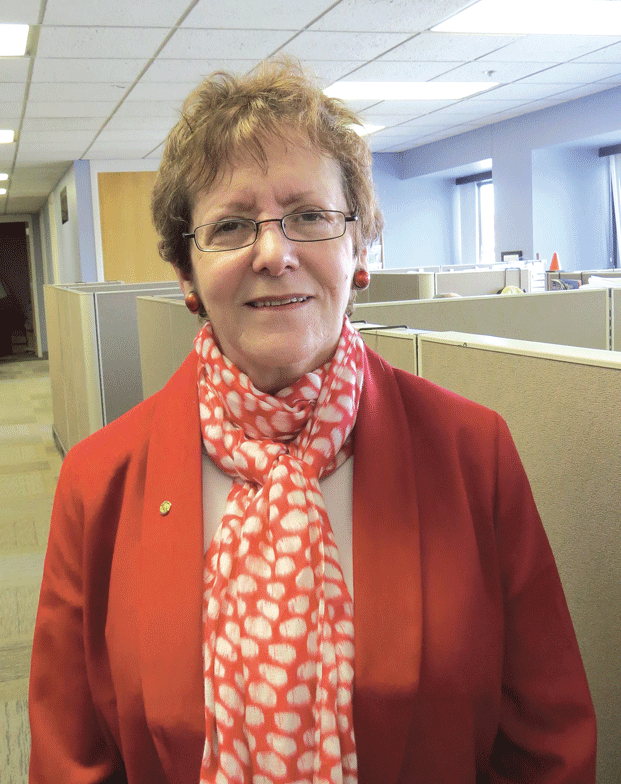
By PETER VICKERY, Esq.

Peter Vickery

Peter Vickery

In April, the State Supreme Judicial Court (SJC) issued two important employment-law decisions. In both cases, the SJC rejected arguments that would have further constrained the ability of employers to run their businesses flexibly and efficiently.

The first relates to the Tips Act (M.G.L. c. 149, §152A) and should come as good news to restaurateurs and bar owners. The second case involves the independent-contractor law (M.G.L. c. 149, §148B), and, although it concerns the highly regulated field of Boston taxi cabs, the way the SJC interpreted the statute may help businesses in other fields rebut the legal presumption that any given individual performing a service is, by default, an employee.

The case about tips, Meshna v. Scrivanos, concerned a Dunkin’ Donuts franchisee that adopted a no-tipping policy. In Massachusetts, employers have to ensure that employees receive their tips by the end of the day or in their next paycheck at the latest. Violating the Tips Act can have drastic consequences: having to pay restitution plus 12% interest, and criminal penalties ranging from hefty fines to one year’s imprisonment (for a first offense).

To avoid both potential liability under the Tips Act and the administrative costs of dividing up tips among the employees, the franchisee adopted a policy of prohibiting tips altogether. In addition to telling employees not to accept tips, the employer put up signs for customers stating “no tipping” and “thank you for not tipping.”

Prior to the Meshna case, two Superior Court justices and one federal district court had ruled no-tipping policies lawful under the Tips Act. Nevertheless, some current and former Dunkin’ Donuts employees, all of whom earned at least the minimum wage, filed suit in Superior Court alleging that the no-tipping policy violated the law.

The Tips Act provides that no employer “shall demand, request, or accept from any staff employee, service employee, or service bartender any payment or deduction from a tip or service charge given to any such staff employee, service employee, or service bartender by a patron.” The employees and the Labor Relations and Research Center at UMass Amherst (which filed an amicus brief) argued that the words ‘deduction from’ are flexible enough to mean ‘prohibit’ — i.e. no employer shall prohibit an employee from receiving a tip.

Not so, said the SJC. When it enacted the statute, the Legislature’s intent was to bar employers from deducting or retaining tips that customers had given to the waitstaff. Making it unlawful for restaurant and bar owners to keep or skim tips is not the same as forbidding employers from trying to prevent customers from tipping in the first place. A no-tipping policy simply does not violate the statute. And so long as the owner clearly communicates the policy to customers, if they still leave money behind, the servers do not have the right to claim that money as theirs. The employer is not breaking the law by keeping it or giving it away.

The take-away for employers? If you have a no-tipping policy, make sure that you get the message across to your customer clearly.

In the second case, Sebago v. Boston Cab Dispatch Inc., the issue was whether licensed Boston taxi drivers were independent contractors or the employees of the defendants (taxi-cab license owners, radio associations, and a taxi-servicing garage). Three drivers, together with the Massachusetts AFL-CIO, argued that the separate defendants really constituted one monolithic industry, a sham designed to evade the strictures of wage and overtime laws.

The SJC disagreed, holding that the various entities were not all one and the same and that “distinctions in services within the taxi-cab industry as a whole are not illusory, but quite real.”

Much of the court’s decision revolves around the municipal rule that regulates taxis in Boston, namely Police Department Rule 403, which establishes four possible business models for cabs. One permissible model allows the owners of medallions (taxi licenses) to lease their medallions to drivers at a flat rate, not a percentage of the fares. This was the model at issue in the Sebago case: the drivers paid the medallion owners a fixed amount rather than a cut of their takings.

Rule 403 requires parties using that business model to sign a City of Boston Hackney Carriage Shift Lease Agreement, which includes an optional independent-contractor clause. Under the independent-contractor clause of the city-mandated contract, the drivers are free to operate anywhere they choose, and to pick and choose which radio dispatches to accept. As the SJC noted, drivers “may lease taxicabs and medallions from whomever they wish … each day of the week, they may lease from a different owner, each using a different radio association… earn as much as they are able and need not accept a single dispatch.” Moreover, the statutes governing workers’ compensation, unemployment insurance, and income-tax withholding all exclude taxi drivers operating under flat-rate leases from the definition of ‘employee.’

Nevertheless, the plaintiffs argued that they were employees. This is because, under Massachusetts default rule, the onus is on the defendant to rebut the presumption that an individual is an employee, and this can be done only by clearing three distinct hurdles. The defendant has to prove that:

(1) the individual is free from control and direction in connection with the performance of the service, both under his contract for the performance of service and in fact;
(2) the service is performed outside the usual course of the business of the employer; and
(3) the individual is customarily engaged in an independently established trade, occupation, profession, or business of the same nature as that involved in the service performed.

The Sebago case hinged on the second factor, i.e. whether the service that the drivers provide is outside the usual course of the defendants’ business. That depends on whether the service is necessary to that business or merely incidental to it. So is taxi-driving necessary or incidental to the medallion owners’ business? Incidental, said the SJC. The medallion owners are in the business of leasing medallions, something that is “not directly dependent on the success of the drivers’ endeavors.”

At first blush, this interpretation of the term ‘usual course of the [defendant’s] business’ may appear a stretch. How can cab drivers be merely incidental to — rather than necessary to — the business of a company whose sole raison d’être is the leasing of taxi licenses? After all, without the drivers, the medallions would be worthless. In fact, this was the approach that the Superior Court judge took in denying the defendants’ motion for summary judgment.

But the SJC said that the judge’s reasoning “proves too much.” Taken to its logical conclusion, it would mean that “all lessees would be deemed presumptive employees of their lessors.” Instead, the SJC stated that the second prong (the ‘usual course of the business’) does not include all aspects of the business.

The nutshell for business owners? First, Sebago arose in a unique regulatory environment involving city-prescribed contracts governing the leasing of city-issued licenses. Second, the courts remain vigilant for Rube-Goldbergian contractual arrangements involving several legal entities designed to evade the Wage Act. But with those two caveats, business owners operating several connected but distinct entities should remember that individuals claiming to be employees rather than independent contractors must establish — and not simply assert — that the several entities are merely alter egos.

If the companies are not organized as part of a ruse but are legitimately separate, the courts will be more likely to define the ‘usual course of the business’ narrowly, to the benefit of the business owner. So, while the Massachusetts independent contractor remains an endangered species, it is not yet extinct.


Peter Vickery practices law in Amherst; (413) 549-9933; www.petervickery.com

Employment Sections
Paternity Leave Becomes Law in Bay State — but Hold the Applause

By Valerie Vignaux, Esq.

Massachusetts has officially recognized the importance of paternity leave.

On April 7, the Bay State updated its Maternity Leave Act, expanding it to include time off for fathers. The new Act Relative to Parental Leave, with its more inclusive title, offers both men and women eight weeks of unpaid leave from employers with six or more employees. Such leave is available for the birth or adoption of a child, or for the placement of a child under the age of 18.

Qualified employees must be full-time workers and have passed their employer’s probationary period, not to exceed three months, and must provide two weeks’ notice of their intended leave. Two parents at the same job are limited to a total of eight weeks between them.

Employers, upon the new father’s return, must restore him to the same position, or one similar (with an exception if there is a similarly qualified individual who had been laid off). Employers may not reduce the father’s benefits because of leave taken — no reduction in sick time, vacation, seniority, or pay, for example — but that time off can be discounted in calculating such benefits.

Businesses may grant a longer leave. In such cases, these job protections cease at the end of eight weeks only if the employer informs the employee in writing before the leave is taken. Any violation of this act is a violation of Massachusetts anti-discrimination laws.

The Family Medical Leave Act (FMLA) remains in place with time off for mothers and fathers alike, but is applicable only to employers of 50 or more. This act provides for 12 weeks of unpaid leave for full-time employees of one year or more.

This extension of Massachusetts law to provide for fathers is a step in the right direction. Massachusetts, after all, has a reputation for being a state with progressive policies (e.g., it was the first in the nation to legalize same-sex marriage). Consider, however, the affordability of unpaid leave for the 99%. Whether eight weeks or 12, mothers or fathers, how many new parents have the luxury of forgoing a paycheck for any stretch of time?

California, New Jersey, and the District of Columbia stand alone in the U.S. for offering paid family leave to both men and women. Globally, the U.S. is an embarrassment: out of 185 countries, the U.S. is one of only three that do not offer national paid maternity leave (the other two are Oman and Papua New Guinea).

For perspective, Iran offers 12 weeks, the Democratic Republic of Congo offers 14, and the United Kingdom offers 40 weeks of paid maternity leave. The U.S. and Massachusetts offer none. Further, there are 70 countries that offer national paid leave. Iceland provides three months, Finland six weeks, and Kenya two weeks. The U.S. and Massachusetts offer none.

Some may laud Massachusetts for moving toward a more family-friendly policy, expanding the rights of new fathers, and protecting employees of small businesses. Certainly this movement is preferable to the status quo. But any celebration should be tempered until true progress is made, in this state and the nation, toward the support of an employee’s responsibilities at home.


Valerie Vignaux is an associate attorney with Bacon Wilson and a member of the firm’s Estate Planning and Elder Law team. She assists clients with all manner of estate planning and provides representation for guardianship and conservatorship matters. She has also served as Superior Court clerk to the justices of the Massachusetts Trial Court; (413) 781-0560.

Meetings & Conventions Sections
Smith College Conference Center Offers a Slice of Paradise

Smith College Conference CenterAddie MacDonald was offering a quick tour of the Smith College Conference Center.

He started in the front lobby and quickly moved on to the main meeting room, ticking off its various amenities — including a host of seating possibilities, state-of-the-art audio-visual systems, ample parking, and a slew of catering options — as he walked.

“And then … there’s that,” he said, gesturing out the huge windows covering one side of room.

‘That,’ of course, is Paradise Pond and the many views of it and the surrounding grounds that are perhaps the best selling point of this relatively new entry into the highly competitive local market for meetings and conventions.

Intriguing even in winter, the pond area is exceptionally beautiful in the spring and fall, said MacDonald, manager of the conference center, adding that the views — from the Paradise Room, as that aforementioned main meeting facility is called, to the deck nearby and many of the other rooms in this complex — certainly help explain why this facility has become an attractive option for groups of several sizes since it opened to the public only four years ago.

But there is more to this venue than what’s visible out the windows, or experienced up close if one chooses to venture outside during a break in the proceedings in question — which almost everyone does, said MacDonald.

There’s the location — downtown Northampton and, more specifically, the Smith campus, which boasts everything from century-old buildings to its famous botanical garden (designed by the firm headed by Frederick Law Olmstead, who also conceptualized Central Park), to the pond and its waterfall — which is something decidedly different among meeting venues. There are also the many catering options available, said MacDonald, adding that the facility’s kitchens have been used by many of the city’s renowned restaurants to prepare meals for clients.

Addie MacDonald

Addie MacDonald says the Smith College Conference Center is off to a good start because of its mix of scenery and amenities.

Addie MacDonald says the Smith College Conference Center is off to a good start because of its mix of scenery and amenities.
[/caption]Until very recently, these views and amenities could be enjoyed only by Smith faculty and invited guests. Indeed, the conference center, or at least the main building in the complex, was once the Faculty Club and then the College Club, said MacDonald, meaning it was open only to faculty and staff and was, as he put it, the “social epicenter for the academic mission of Smith.”

“For years, there is where faculty would come to wine and dine and entertain lecturers who would come from out of town, or interview potential candidates,” he explained, adding that the conference center is comprised of two buildings — the 1950s-era former Faculty Club, and a century-old building eventually acquired by the college that was believed to be the home of a buggy-whip manufacturing facility. “And this was ultimately a place where they could freely speak, exchange ideas, develop coursework, and invite other professors from local colleges.

“Over the years, it became more and more popular, and the college decided to open it up to the Northampton general public — and then well beyond,” he continued.

Mostly through word-of-mouth referrals, it quickly became the site for a wide array of functions — from weddings to corporate retreats; from holiday parties to meetings of the U.S. Fish & Wildlife Service.

“They do retreats, and once or twice a year they might meet here to discuss policy — I think they like looking at our pond because they can identify the various ducks that are coming and going from there,” MacDonald joked, referencing the fish and wildlife agency.

He told BusinessWest that Smith has become more aggressive in its marketing of the conference center in recent months, and it can certainly no longer be considered a hidden gem or best-kept secret.

It now stages more than 25 weddings a year, and the calendar, especially for those warmer months, fills up quickly.

“In many respects, this is like a classic startup business with a great infrastructure behind it,” he said of the venture. “And it’s gone well — we’ve picked up business even faster than we anticipated; the location has really attracted a number of people.”

For this issue and its focus on meetings and conventions, BusinessWest takes in the views at the Smith College Conference Center and examines why it has quickly become a venue of choice for many different types of groups.

Setting the Stage

MacDonald brings an intriguing background to his role as manager of the conference center.

Indeed, the Vermont native eventually settled in New York City, where he worked for years for the Directors Guild of America, handling a number of screenings and movie premieres in Gotham.

“It was the classic New York job in many ways — a lot of late nights and meeting many interesting people,” he explained, adding that there were several factors that motivated him to come back to New England and get this startup successfully off the ground.

The deck, with its views of Paradise Pond

The deck, with its views of Paradise Pond and the many forms of wildlife that inhabit it, has become a popular spot at the Smith College Conference Center.

“New England is in my blood, and my wife and I really knew that we wanted to find a place to settle down and find a community,” he explained. “We found all that in Northampton and Smith.”

But there are still quite a few of those late nights that he was in many ways hoping to leave behind, he went on, adding quickly that this is a good thing because it’s a clear sign that the conference center is off to a strong start in its bid to become a player in the region’s meeting and conventions market.

“We hit the ground running, because part of my charge here was to bring in new business, and people from Northampton and beyond, across Western Massachusetts, have always been eager to come to campus, utilize our facilities, and take advantage of the many resources we have here — and, quite frankly, impress their clients, because the view and this location are unparalleled.”

As MacDonald mentioned, the conference center, which was given a facelift in early 2014 — one that opened up the lobby area and gave it a new façade — is more than one room with a great view. Offering a more elaborate tour, he and Merrilyn Lewis, associate director of the Events Management Office at Smith, stopped at a number of smaller rooms that are appropriate for a number of different types of events.

There’s the Oak Room, which can accommodate 75 for a reception, 100 for theater-style seating, and 55 for a seated dinner. There’s the adjacent lounge, which can host 50 for a reception, said Lewis, adding that clients can book both rooms for a slightly larger event.

There’s also the so-called Directors Room, which can seat 15 for meetings, and Meeting Rooms B and C, which can accommodate six and 15 people, respectively. Meanwhile, the lobby and adjoining deck, which can accommodate 75 for a reception, has become a popular alternative, in part because it brings guests even closer to the beautiful surroundings and allows more of the senses to get some exercise.

“Everyone likes it out here, and it’s part of the attraction; not many venues have an outdoor location that’s this convenient,” said MacDonald as he stepped onto the deck, noting that various forms of wildlife often come into view, including some otters that recently established residence nearby and have put on some good shows for guests.

the conference center at Smith

Addie MacDonald says the conference center at Smith is much more than a room with a view.

The venue is a natural for weddings because of the facilities and surroundings, said MacDonald, adding that the center has booked several, some involving individuals, especially students, who have connections to Smith, but also many others who don’t.

And already, a number of businesses, nonprofit groups, and even government agencies have discovered the conference center, said Lewis, noting that Yankee Candle, headquartered in nearby Deerfield, has hosted a number of events there, as has Baystate Health, the Northampton School District, United Way of Hampshire County, and others. Some of those groups are based a few blocks or a few miles from the campus, but many others are headquartered in Springfield and points further south and east.

“Sometimes, when you’re staging a company retreat, it’s nice to hold it away from the office in a completely different setting, which frees up thinking,” Lewis explained. “And that sentiment has brought a lot of people here.”

And while the spring, summer, and early fall are easily the busiest months, the center books a number of corporate outings and annual meetings in the winter, and the venue has hosted a number of smaller holiday parties as well.

View to the Future

Looking ahead, the conference center’s obvious goal is to add more events to its calendar, said MacDonald, who told BusinessWest that he expects this will happen as more individuals and groups come to the facility for the first time.

This will lead to more word-of-mouth referrals, he noted, as well as repeat business — and there has already been a good amount of that.

“We’ve been very fortunate to have a number of repeat clients because of the convenience, location, and simplicity of it all,” he said, adding that a number of businesses and nonprofits have returned several times.

They obviously liked what they saw — both literally and figuratively.


George O’Brien can be reached at [email protected]

DBA Certificates Departments

The following Business Certificates and Trade Names were issued or renewed during the month of April 2015.

AGAWAM

Budsuds, LLC
52 Greenock St.
Joseph Caracciolo

Divine Elegance
32 Shoemaker Lane
Christina Haracsy

Eco Décor Company
49 Cooley St.
Radu & Ilinkyh

Hot Works and Welding
85 Ramah Circle
Hector Ramos

J & R Sales
270 Main St.
John Wiczkowicz

The Cutting Edge
975 Springfield St.
Amanda Olmo

CHICOPEE

CG Painting and Home Improvement
222 Hampden St.
Carlos Guarneri

Chik-fil-A
501 Memorial Dr.
Robert Hewes

K & J Motors
337 Hampden St.
Kyle Rosa

Positive Spaces Architectural Design
1 Springfield St.
David LeTellier

GREENFIELD

Fresh Jones
14 Miner St.
Florence Jones

Honey & Wine
200 Main St.
Alana Travis

Kevin’s Auto Body & Sales
35 Montague City Road
Kevin LaBelle

Lucia Pottery
86 Leyden Road
Lucy Fagella

HOLYOKE

Beaven Kelly Home
25 Brightside Dr.
Christopher McLaughlin

Chris’s Cut & Design
910 Hampden St.
Kenneth A. Adams

E.B. Apparel Mass Inc.
50 Holyoke St.
Edward Blanco

Rack Room Shoes
50 Holyoke St.
Peter Barr

Sunglass Hut
400 Whitney Ave.
Deborah Ackerman

TKTMZ Hydrographics
68 Winter St.
John Breen

LUDLOW

All Seal Asphalt
4143 Owens Way
Gerald Veautour

EB Homes
35 State St.
Evan Willard

KB Carpentry
38 Lyon St.
Kenneth Butts

Rachel’s Painting
1632 Center St.
Rachel Saloio

PALMER

Amy’s Natural Soaps
21 Wilbraham St.
Amy Mitchell

Cute Kids Daycare
24 Lawrence St.
Ghada Ghrear

JSJ Business Solutions
7 Desimone Dr.
Jennifer Baraffaldi

R.J. Foskit Building & Remodeling
42 Barker St.
Ronald Foskit

SOUTHWICK

Birch 306
24 Iroquois Dr.
Gregory Zito

Courtney’s Touch of Serenity
549 College Highway
Courtney Walker

Designer Consignor
549 College Highway
Linda Ligsukis

Do Good Designs
24 Iroquois Dr.
Gregory Zito

Kurt Langheld Design
7 Mockingbird Lane
Kurt Langheld

Mama Bird Designs
352 Granville Road
Jessica Thornton

SPRINGFIELD

Carew Mini Market
158 Carew St.
Martin E. Severino

Community Transportation
288 Verge St.
Houshang Ansarifar

Discovery Services Investment
97 Lumae St.
Keith L. Walker

Presbyterian Church
526 Grayson Dr.
George Koomson

RDR Trucking, LLC
98 Bristol St.
Radhames D. Rodriguez

Racing Mart
363 Main St.
Robert Kayrouz

Raices Spanish Cuisine
1021 Main St.
Jose A. Baez

SSD Tactical Training
100 Verge St.
Crystal A. Williams

Samuel D. Plotkin & Associates
41 Taylor St.
Evan C. Plotkin

Santana’s Fashion
2633 Main St.
Jose Santana

Sidecar Bakery
156 Buckingham St.
Todd Crosset

Southside Mini-Market
469 Main St.
Juan C. Lopez

Spades Clothing Company
17 Ringgold St.
Justice Kirkland

Springfield Mass Investment
78 Bowdoin St.
Tamara Williams

T & G Services
8 Bellevue Ave.
Timothy M. Guilmain

T & T Nail Bar, LLC
340 Cooley St.
Vinh Nguyen

The Car Guy
199 Laconia St.
Freddy Rosario

The Maine Lure Company
34 Front St.
Michael Lee

Thompson Center
2100 Roosevelt Ave.
Smith and Wesson

We the Best Construction
14 Alsace St.
Armando Roman

Wolkee, LLC
1250 St. James Ave.
Rebecca Keenan

WEST SPRINGFIELD

84 Lumber Company
38 Monterey Dr.
Robert Berry

A & A Furniture Repair
32 Partridge Lane
Alan Archambault

Friendly Car Wash
668 Westfield St.
James D. Porter

Kolodiej Enterprises, LLC
263 Quary Road
Brian Kolodiej

Landry Lock and Alarm
33 Sylvan St.
George Condon

Naatz Law Office
1012 Memorial Ave.
Carrie A. Naatz

Super Washing Well Laundry
1126 Union St.
David Cortis

TRC Precision Trucking
14 Kelso Ave.
Ralph E. Figueroa

Village Pizza
1164 Westfield St.
Eray Arslan

Zalewski Landscaping
791 Piper Road
Jeffrey Philip

Agenda Departments

‘Victorian Opulence’ Exhibit
Through April 2016: On April 7, the Lyman and Merrie Wood Museum of Springfield History unveiled a new exhibit titled “Victorian Opulence: Springfield’s Industrial Elite.” The exhibit, which runs through April 10, 2016, features a representative selection of the kinds of luxury and everyday items that would be found in the typical upper-class Victorian homes, while also exploring the lives and values of many of these prominent families. Using beautifully ornate objects from the Springfield Museums’ own collections, this exhibit provides a window into the lives of America’s privileged classes both at home and at play during the Victorian era. Some of the fine clothing and personal items, like elegant men’s pocket watches and ladies’ jewelry and hair combs, will be familiar to fans of Downton Abbey. Objects like grandfather clocks and gentleman’s ceremonial items exhibit a level of craftsmanship no longer evident today. The items on view tell many stories about their owners, the time and place in which they lived, and the level of wealth that allowed them to possess such luxury items. The exhibit covers the period between 1840 and 1900, a time when Springfield was a powerhouse of innovation and industry. Wealthy industrialists like Everett Barney, the inventor of the clamp-on ice skate, and railroad president and Congressman Chester Chapin displayed their success through their philanthropic pursuits and by making their homes into showpieces for their newfound wealth. The spirit of philanthropy shown by individuals like James Rumrill and George Walter Vincent Smith helped create some of Springfield’s most venerable institutions, including Forest Park and the Springfield Museums themselves.

Speed-networking Breakfast
May 6: The Affiliated Chambers of Commerce of Greater Springfield’s (ACCGS) will hold its monthly Business@Breakfast with a speed-networking theme from 7:15 to 9 a.m. at the Colony Club, 1500 Main St., Springfield. Sponsored by United Personnel, the breakfast will provide attendees with a quick and entertaining opportunity to introduce themselves and pitch their company to other attendees. The core concept in speed networking is the ‘elevator speech,’ a short summary of an individual, business, organization, product, or service — a summary that a person could deliver in the time span of a short elevator ride. Attendees will be divided into two groups, seated across from each other. Each group member will have 60 seconds to give his or her elevator speech to the person seated directly across. Once each member has given their elevator speech, they will change seats, and the process will begin again with a new partner. This round-robin format of networking will continue until the event is over. The event will begin with networking and breakfast at 7:15 a.m. To accommodate the event, breakfast will not be served after 7:45 a.m., and no admittance will be allowed after 7:55 a.m. Reservations are $20 for members or $35 for general admission. Reservations must be made online and in advance at www.myonlinechamber.com or by e-mailing Sarah Mazzaferro at [email protected].

‘Life’s Impressions’ Exhibit
May 9-17: The Springfield Museums will host a community art show featuring creations by local students in grades 5 through 12. “Life’s Impressions” will be on view in the Special Exhibit Gallery of the D’Amour Museum of Fine Arts. The show is free with general admission. The exhibition is funded, in part, by the Michele and Donald D’Amour Fund, established in 2008 to bring world-class art exhibitions to the museum. The 36 featured works include drawings and paintings that were selected by museum staff from more than 65 entries from the following schools: Belchertown High School, Chicopee Comprehensive High School, Hatfield Elementary School, Longmeadow High School, Northampton High School, PV Chinese Immersion Charter School, Springfield Conservatory of the Arts, Springfield Central High School, West Springfield High School, and Westfield High School. In addition to the privilege of having their art displayed at a prestigious museum, the winning students will also receive free enrollment in one of the summer art courses offered through the Museum School. The opening of “Life’s Impressions” will be celebrated with a reception in Blake Court of the D’Amour Museum on May 9 at 2 p.m. 

EASTEC
May 12-14:
With manufacturing a driving force of economic growth in the Northeast, as well as across the U.S., more than 12,000 business owners, engineers, designers, production managers, and purchasing executives will gather at EASTEC, the East Coast’s premier manufacturing event. Produced by SME, the biennial event takes place at the Eastern States Exposition in West Springfield and features more than 650 exhibitors and three days of complimentary educational sessions. In its 34th year, the event showcases the latest manufacturing technologies from additive manufacturing/3D printing to waterjet cutting, and provides access to industry experts sharing insights on how to foster innovation, increase productivity, and improve profits. This year, attendees will also get to see more than 300 new products being highlighted at the show. “Since 1790, when the first cotton mill was founded in Rhode Island, New England has been a leader in our country’s quest to capitalize on American innovation and passion for making things,” said Kimberly Farrugia, senior event manager for SME. “EASTEC is committed to keeping New England manufacturers competitive by bringing the human ingenuity needed and manufacturing brilliance demanded together in a face-to-face environment.” At EASTEC, attendees will have the opportunity to connect with resources, research and purchase the latest technologies, and discover ways to improve productivity and increase profits. Meanwhile, the complimentary educational sessions will address trending topics such as automation innovations and Lean creativity, along with other major advancements in manufacturing. New features in 2015 will include keynote presentations from Carl Palme, applications product manager, Rethink Robotics; and Jason Prater, vice president of Development, Plex Systems, that will help with solving complex issues that U.S. manufacturers face today. EASTEC also will highlight the Bright Minds Program, designed to educate the next-generation workforce on the advancements in manufacturing that make it an exciting and rewarding career path. Winners of the Bright Minds Dream It! Do It! Student Challenge will be recognized at a special program during the three-day event. EASTEC is recommended for professionals in industries such as aerospace, defense, medical, automotive, commercial machinery, electronics, fabricating, and plastics. The event is nearly sold out, so SME encourages companies to reserve exhibit space before it’s too late. To learn more about EASTEC, view full conference and exhibit details, or register, visit easteconline.com.

Tailgate Party
May 13: The Affiliated Chambers of Commerce of Greater Springfield (ACCGS) will hold a tailgate party at its last After 5 of its 2014-15 season, at the Residence Inn, 500 Memorial Ave., Chicopee, sponsored by Get Set Marketing. The After 5 will create a tailgating atmosphere with food trucks serving tailgating cuisine, parking-lot games such as cornhole and ladder toss, networking around outdoor firepits, and more. Reservations for the After 5 are $5 for members and $10 for general admission. Reservations may be made online by visiting www.myonlinechamber.com or by e-mailing Sarah Mazzaferro at [email protected]

Striving and Driving Golf Tournament at GCC
May 18: In celebration of the 25th anniversary of the event, area residents and businesses are invited to participate in the Striving and Driving for GCC Scholars Golf Tournament at the Country Club of Greenfield. The tournament is an opportunity to enjoy golf while helping students attend Greenfield Community College. The tournament is an anchor fund-raising activity of the GCC Foundation 2015 Annual Campaign, “Investing in Students, Creating a Future.” “Striving and Driving is a win-win day for all,” said GCC President Bob Pura. “Golfers enjoy a day out on the course early in the season. People are just happy to be out after winter’s hibernation. The best part of the day comes when we all hear just how much has been raised for scholarships. You can feel the community’s goodwill and heart in that moment. It really is a wonderful day for the golfers, the community, the college, and especially the students.” Funds raised by the tournament go toward unrestricted scholarship funds for GCC students. Striving and Driving has raised $398,861 for scholarships since the tournament began. Lead sponsored by Cohn & Co. and Greenfield Savings Bank, and co-chaired by Terry Boyce and Princy Stotz, the tournament will include lunch, dinner, and prizes and awards. The field is limited to the first 144 players. Players may register either as individuals to be placed in foursomes by the tournament organizers, or as teams of four. The cost is $115 per player. “Striving and Driving combines the fun of playing golf with raising funds for scholarships for students in high need,” said tournament co-chair Terry Boyce, who teaches psychology at GCC. “I know that many GCC students depend on scholarship assistance to be able to attend college, just like I did when I studied at a community college in New York. I’m a first-generation college graduate, and scholarships made it possible for me to go to college. I’m glad that I can help others have the same opportunity that I did.” To register for the Striving and Driving Golf Tournament or for information about sponsorship opportunities, visit www.gcc.mass.edu/golf or call (413) 775-1470.

40 Under Forty
June 18: The ninth annual 40 Under Forty award program, staged by BusinessWest, will be held at the Log Cabin Banquet & Meeting House the evening of June 18. The event honors the region’s most accomplished and civic-minded professionals under age 40, and this year’s class was profiled in the April 20 issue. This year’s winners represent virtually every sector of the economy — from financial services to manufacturing; retail to healthcare; technology to nonprofit management; education to law. They also show the seemingly innumerable ways people can give back to the community. This year’s event will feature a new award — the Continued Excellence Award, presented to the previous honoree who has most impressively built upon their track record of excellence. Always one of the most anticipated events and best networking opportunities on the calendar, the gala will feature lavish food stations, entertainment, and the introduction of this year’s class. Tickets cost $65 each, with tables of 10 still available. Tickets can be ordered by calling (413) 781-8600, ext. 100, or by visiting HERE. The 40 Under Forty program and gala are sponsored this year by Northwestern Mutual (presenting sponsor), Paragus Strategic IT (presenting sponsor), Fathers & Sons, the Isenberg School of Management at UMass Amherst, Moriarty & Primack, and United Bank.

Valley Fest
Aug. 29: White Lion Brewing Co. announced that it will host its inaugural beer festival, called Valley Fest, at Court Square in downtown Springfield. MGM Springfield will be the presenting sponsor. The festival is poised to be White Lion’s signature annual event, introducing the young brand to craft-beer enthusiasts throughout New England and beyond. White Lion Brewing Co., the city of Springfield’s only brewery, launched in October 2014. Founder Ray Berry and brewmaster Mike Yates have released three selections under the White Lion brand and have been busy promoting their efforts in venues all over Massachusetts and other New England states. “Valley Fest will have the best of the best local, regional, and national beer and hard cider brands,” Berry said. “Even in our inaugural year, Valley Fest will be the largest one-day beer festival in Western Massachusetts. We expect to draw up to 2,000 enthusiasts from throughout New England. We are very excited to showcase the fourth-largest city in New England and all of its amenities.” Berry anticipates that more than 50 breweries and many local food vendors will converge on Court Square for two sessions. Enthusiasts will have an opportunity to sample more than 100 varieties of beer and hard cider alongside pairing selections by local chefs. Michael Mathis, MGM Springfield president, said his company “is excited to take the lead in sponsoring the inaugural Valley Fest. The local entrepreneurial spirit of White Lion Brewing, coupled with the historic Court Square setting, is a winning combination to start a new Springfield tradition. We look forward to Aug. 29.” A number of sponsors have already committed to the event, including MassMutual Financial Group, the Young Professional Society of Greater Springfield, the Dennis Group, Springfield Sheraton Monarch Place, Paragus Strategic IT, Williams Distributing, and the Springfield Business Improvement District (BID). “We are honored to sponsor Valley Fest and look forward to it being an annual event that shares in the facilitation of growth within the downtown community,” said Chris Russell, executive director of the Springfield BID. Visit www.valleybrewfest.com for event details, ongoing updates, and sponsorship opportunities. A portion of Valley Fest proceeds will support several local charities.

Western Mass.Business Expo
Nov. 4: Comcast Business will present the fifth annual Western Mass. Business Expo at the MassMutual Center in downtown Springfield, produced by BusinessWest and the Healthcare News in partnership with Go Graphix and Rider Productions. The business-to-business show will feature more than 100 booths, seminars and Show Floor Theater presentations, breakfast and lunch programs, and a day-capping Expo Social. Details about specific events, programs, and featured speakers will be printed in future issues of BusinessWest. Current sponsors include MGM Springfield, Expo Social sponsor; the Isenberg School of Business at UMass Amherst, education sponsor; DIF Design, silver sponsor; and 94.7 WMAS, media sponsor. Additional sponsorship opportunities are available. Exhibitor spaces are also available; booths prices start at $750. For more information on sponsorships or booth purchase, call (413) 781-8600, ext. 100.

Court Dockets Departments

The following is a compilation of recent lawsuits involving area businesses and organizations. These are strictly allegations that have yet to be proven in a court of law. Readers are advised to contact the parties listed, or the court, for more information concerning the individual claims.

FRANKLIN SUPERIOR COURT
Christian Antunes v. City of Greenfield
Allegation: Plaintiff’s home was flooded with sewage backflow when town employees attempted to repair a main sewer line: $48,179
Filed: 3/11/15

Multimedia Center Inc. v. Lange Chiropractic Inc. and Kimberly Lange
Allegation: Non-payment of promissory note: $58,000
Filed: 2/25/15

HAMPDEN SUPERIOR COURT
Cosale Inc. v. NiSource Inc. and Baystate Gas Co. d/b/a Columbia Gas of MA
Allegation: Employees of Columbia negligently ruptured a pipe causing a massive explosion, property damage, and lost revenue: $301,066.59
Filed: 3/13/15

PALMER DISTRICT COURT
Jordan Quitero v. Boston Road Auto Mall and Platte River Insurance Co.
Allegation: Breach of contract and odometer fraud: $12,650
Filed: 3/25/15

SPRINGFIELD DISTRICT COURT
Security Credit Services, LLC v. Silks Auto Service Inc.
Allegation: Non-payment on business credit account: $58,063.19
Filed: 3/20/15

Tamaro Ako-Brew v. Graham’s Package Store Inc. and 1655 Main St., LLC
Allegation: Negligent maintenance of property causing slip and fall: $1,634
Filed: 3/19/15

Daily News

GREENFIELD — Skoler, Abbott & Presser, P.C., a leading labor- and employment-law firm serving the Greater Springfield area, announced that partner Susan Fentin will address attendees of the Franklin County Chamber of Commerce “Wake-Up Wednesday,” series on Wednesday, May 6 from 7:30 to 9:30 a.m. at Greenfield Community College, 270 Main St., Greenfield, first floor.

Fentin, alongside Lisa DeLisle, Human Resources director at Mayhew Steel Products and Deerfield Packaging, will discuss best practices for employers conducting job interviews.

“Employers want to make the best decisions possible when hiring new employees,” said Fentin. “It’s imperative that employers understand not only how to put their interviewee at ease, but also how to make the most of the time they have to spend with their potential new hire. I encourage both Franklin County Chamber members and non-members to take advantage of this opportunity to learn about the legal aspects of the interview process.”

Several federal and Massachusetts laws limit what employers can ask during the interview process, including questions about an applicant’s age, gender, national origin, disability, or any other questions related to a person’s protected status that are not directly related to the qualifications for the position. Fentin and DeLisle will address the entire interview process — from the time the candidate walks through the door to the extended job offer. The presentation will include the legal aspects of the interviewing process as well as provide informative, real-life examples of situations they have encountered. The presentation will conclude with a question-and-answer session for attendees to learn more.

The event is free and open to the public, but seating is limited. Coffee and light refreshments will be provided. For reservations, visit www.gcc.mass.edu/wakeup, call (413) 586-6506, or e-mail [email protected].

Fentin has been a partner at the firm since 2004. Her practice concentrates on labor and employment counseling, advising large and small employers on their responsibilities and obligations under state and federal employment laws, and representing employers before state and federal agencies and in court. She speaks frequently to employer groups, conducts training on avoiding problems in employment law, and teaches master classes on both the FMLA and ADA. Since 2010, she has been ranked as one of the top labor and employment attorneys in the state of Massachusetts by the prestigious Chambers USA rating firm.

DeLisle holds both the PHR (professional in human resources) and SHRM-CP (certified professional) designations from the Human Resources Certification Institute and the Society of Human Resources Management. She has spent the majority of her career in therapeutic education. She has spent the past three years as the director of Human Resources for Mayhew Steel Products, the global leader in punch and chisel manufacturing.

Daily News

CHICOPEE — For even the most seasoned CEOs and HR professionals, the Affordable Care Act (ACA) can seem like an unintelligible regulatory minefield in which compliance is near to impossible.

On Friday, May 15, from 11:45 a.m. to 1 p.m., management-side labor and employment attorney Meghan Sullivan, managing partner of Sullivan, Hayes & Quinn, will speak to Greater Chicopee Chamber of Commerce members about how the law works and how the ACA landmines can be disarmed so employers can better understand and comply with the ACA.

She will engage the participants so that employers will better understand the most significant ACA issues their businesses face, including measurement obligations and how employers are responding to government compliance issues.

The event will take place at Hampton Inn, 600 Memorial Dr., Chicopee. Lunch will be provided by Hamel’s Catering. For more information or to register, call (413) 594-2102 or visit www.chicopeechamber.org.

Daily News

CHICOPEE — First responders are the ones who run into burning buildings and rush to help during natural disasters and other emergencies. Because they work in dangerous conditions, there’s a chance at the start of every shift that they won’t see the end of it. And, more often than not, they don’t have a will.

First responders often don’t think about the high risks inherent in their work, or the need for an estate plan in the event of their demise. It might sound paradoxical, but it’s true. But Caroline Murray, director and associate professor of Paralegal and Legal Studies at Elms College, is working to change that. Every spring, she hosts a workshop at the college, allowing students in her Wills class to offer free, attorney-supervised will-writing services to local heroes.

The event is associated with the Wills for Heroes Foundation, which originated after 9/11, when the lack of estate planning among most first responders became clear. The U.S. military offers soldiers free estate-planning documents — especially wills — but local first responders must pay for their own, and they can be expensive. “And, understandably, this is a topic most families do not want to think about, never mind discuss,” Murray said.

Wills for Heroes was founded in 2007 to create and execute free wills for first responders. Attorneys from around the country volunteer to participate in these events. This year, Murray and her class of about a dozen students will work with the West Springfield Fire Department. She and her class wanted to help local first responders, cementing community relations and also allowing them to focus on a specific group of heroes each year.

It’s an important service to offer firefighters. For example, in the U.S., 106 firefighters died in the line of duty in 2013, according to the U.S. Fire Administration. Three-quarters of them died from emergency-related activities, half died from fire-scene activities, and 14 died while returning from or responding to emergencies. These deaths were unexpected and sudden, and if the firefighters died without wills in place, the families could have ended up with miles of red tape to walk while grieving.

It’s important to Murray’s students, too. Law firms generally prefer to hire paralegals with experience, she pointed out, so students must earn such experience in the classroom, or through voluntary clinics or internship opportunities. “The event helps paralegal students gain the valuable experience they need by creating and executing wills under the supervision of an attorney.”

It also forces them out of the classroom comfort zone and get a real, hands-on taste of estate planning, she added. “Several students [in previous years] claimed this was their favorite class because what they did made a real difference.”

40 Under 40 Cover Story The Class of 2015
The Top Young Business and Community Leaders in Western Massachusetts

Diverse.
That’s a word that could be used to describe any of BusinessWest’s classes of 40 Under Forty winners. But with the class of 2015 (see the list below), an adverb like ‘very’ or ‘extremely’ would sem to be necessary.

That’s because this group of winners represents virtually every sector of the economy — from financial services to manufacturing; retail to healthcare; technology to nonprofit management; education to law. They also show the seemingly innumerable ways to give back to the community — from serving as a Big Sister to teaching young girls how to cheer; from service on nonprofit boards to work repairing homes in Springfield’s neighborhoods; from taking a leadership role in an Extreme Makeover project to service on the town of Orange’s School Building Committee (see the profiles of the five judge’s HERE).

The Class of 2015 will be feted at the annual 40 Under Forty Gala, set for June 18 at the Log Cabin Banquet & Meeting House. Always one of the most anticipated events of the year and best networking opportunities on the calendar, the gala will feature lavish food stations, entertainment, and the introduction of this year’s class, with individuals walking to the podium backed by a song of their choice. Download the flipbook of this year’s 40 Under Forty HERE

Tickets to the gala are $65 each, with tables of 10 still available. Tickets can be ordered by calling (413) 781-8600, ext. 100, for more information go HERE.

40 Under Forty Class of 2015


Presenting Sponsors:

NorthwesternMutual900pxParagus200x130px


Sponsors:

Fathers&Sonns200x130pxIsenberg200x130pxHNElogo200x130pxMoriartyPrimack200x130pxUnitedBank200x130px


Partner:

YPS200x130px


Photography for this special section by Denise Smith Photography

Daily News

NORTHAMPTON — Amy Royal, principal and founding partner of Royal LLP, the boutique woman-owned, women-managed labor and employment law firm, was honored recently by the Massachusetts Clubhouse Coalition (MCC) at a ceremony at the State House in Boston. She was recognized for her efforts to diversify Royal LLP’s workforce by employing individuals with mental illness from the local community, with the support of Star Light Center and the MCC. State Rep. Ellen Story was on hand to present the award to Royal.

Features
How a New Type of Virus Is Destroying Small Businesses

By DELCIE BEAN

Since the advent of the computer, even before the Internet, there have been viruses.

At its most simple form, a virus occurs when malicious computer code is hidden inside of other programs or data. While the concept of a virus itself is anything but new, just about everything else about them is.

Delcie Bean

Delcie Bean

A computer virus typically fits into one of three categories. First are nuisance viruses, typically created by a single person or a very small team that creates a virus that makes a computer do something that frustrates or annoys the user. In these cases, the most that is ever gained by the authors is bragging rights among their peers.

Second are resource viruses, which turn a computer into a robot that can be controlled by a hacker to do things like send spam e-mail. Typically the creator has a financial motive, but the end user whose computer is infected doesn’t typically suffer any consequences and, in many cases, might not even realize for months that they are infected.

For many years, these were by far the two most common types of viruses, but over the last 18 months, we have seen an unprecedented number of infections by a third category called ransomware. This type of virus infects a user’s computer and then holds the data contained on it hostage for a ransom.

As if that wasn’t scary enough, there is something else that makes this particular category a real concern. Normally a virus will come out, it will run its course, a protection will be developed by the antivirus community, and the problem will slowly fade out of existence. In this case, however, not only has the antivirus community been having a very hard time figuring out how to block it, each time they have been successful, the virus has come back a few months later even stronger and harder to stop.

The latest virus of this third category we find ourselves tangling with is called CryptoWall 3.0. We have been dealing with versions of this virus for the past two years; however, this latest strand is without question the most dangerous and complex virus that has ever hit the U.S. This is without question cyberterrorism, and the victims this time, more than ever, aren’t just home users, but businesses.

Once you get this virus, it immediately begins encrypting any data it can see. It scans your network drives, Dropbox, Google drive, and desktop, and encrypts everything it can touch. It is even able to infect your backups so you can’t simply just restore your files.

Once the files are encrypted, you have to pay a ransom to get them unencrypted. Some versions of the virus are even using a complex algorithm that estimates how much money they think you can afford. Most people end up with a $500 ransom at first that gets larger the longer you don’t pay it. However, you have only 30 days, and after that, you’re done. If you pay the ransom, they will promptly send you a key that will unlock all of your files. If you don’t, your files are gone forever because you will never be able to open them.

Over the last three months alone, I have personally seen a wide range of victims, including medical offices that have lost access to their electronic medical records as well as other critical patient data, law firms that lose access to client-management systems and case files, companies from all industries that lose access to their e-mail, municipalities that lose access to their billing systems, and manufactures that lose access to their ERPs.

In every single case, it was a work-stopping event where the business owner was put in the very difficult situation of having to decide to pay a ransom to an overseas terrorist or lose access to critical data forever.

In the short term, there is little we can expect from law enforcement. The terrorists seem to be aware of how to escape prosecution, using bitcoins as their form of ransom payment and being careful to never hit any one customer for more than a couple hundred thousand dollars, well beneath the realm of investigation for the FBI.

Fortunately, there are some things you can do. First, have your e-mail filtered externally by a reputable third-party cloud service. This helps to keep an e-mailed infection from ever reaching your network. Second, have a business-grade firewall that has the option of subscription-based security services, — and, of course, activate them. Third, use a remote backup application to back up your data offsite and in a way that the virus can’t infect. Fourth, make sure you are using a reputable anti-virus product that has a centralized management component, that it is installed on every machine, and that it is set up to send out notifications to whomever manages your IT if a threat is detected.

There is no silver bullet here — it just isn’t that easy. With just one of these groups estimated to have reaped $3 billion in revenue last year alone, stopping their attacks isn’t going to be easy, and it’s only going to get harder. Your best defense is to make sure you have well-educated and experienced resources looking out for your business’s interests.


Delcie Bean is founder and CEO of Paragus Strategic IT; (413) 587-2666, ext. 105; [email protected]

Court Dockets Departments

The following is a compilation of recent lawsuits involving area businesses and organizations. These are strictly allegations that have yet to be proven in a court of law. Readers are advised to contact the parties listed, or the court, for more information concerning the individual claims.

CHICOPEE DISTRICT COURT
Esteban Sanchez-Mejias and Maria Hernandez v. Commerce Insurance Co.
Allegation: Breach of contract and refusal to issue agreed-upon settlement checks: $7,325+
Filed: 4/3/15

FRANKLIN SUPERIOR COURT
Lisa Wood v. Massachusetts Department of State Police, Commonwealth of Massachusetts, and Executive Office of Public Safety and Security
Allegation: Plaintiff’s vehicle was struck by a Mass. State Police, resulting in injury: $91,922.18
Filed: 2/25/15

GREENFIELD DISTRICT COURT
Deborah G. Earle v. BJ’s Wholesale Club
Allegation: Negligent maintenance of property causing slip and fall: $7,183.16
Filed: 2/15/15

HAMPDEN SUPERIOR COURT
La Casse v. Lego Systems Inc.
Allegation: Defendant failed to compensate for damages to property: $42,524.55
Filed: 3/6/15

PALMER DISTRICT COURT
Hibu Inc. f/k/a Yellowbook Sales and Distribution Co. Inc. v. Alban Insurance Agency and Orlando Alban
Allegation: Monies due for breach of contract, monies owed, advertising, and other services rendered: $10,797.78
Filed: 3/4/15

SPRINGFIELD DISTRICT COURT
Caserta Co., LLC v. Chase Management Services Inc.
Allegation: Breach of commercial lease: $19,550
Filed: 3/19/15

Laura Bardelli v. GA and BJ, LLC d/b/a Ambiance HR
Allegation: Negligence in hair-removal service, causing significant burns and scarring: $25,000+
Filed: 3/18/15

40 Under 40 The Class of 2015
Attorney, Fierst, Kane & Bloomberg LLP; Age 38

Danielle Williams

Danielle Williams

To most of the world, they are Asha, Henry, and Stanley Crenshaw, cousins, teenage heirs to the massive Crenshaw Family Foods empire, and sole survivors of the tragic, and suspicious, explosion that wiped out the entire Crenshaw family — except for their beloved Uncle Fletcher.

To the forces of greed and chaos, however, they are the Mighty Magical Majestics, keepers of ancient mysteries and defenders of civilization. And they are a product of the imagination possessed by Danielle Williams — by day an attorney with the Northampton-based firm Fierst, Kane & Bloomberg LLP, specializing in litigation, housing, and intellectual-property law — and co-creator Armani Barake Scott.

“It’s basically a melding of our families — his children and my niece and nephew, and it’s been a great experience and a lot of fun,” said Williams as she explained the Majestics concept and the inspirations for the superheroes themselves. “It’s based on Egyptian mythology, and trying to understand the legacy they stumble upon. They only have bits and pieces — they’re trying to discover who’s after them and who killed their family.”

In the partners’ first Majestics comic book, Anubis Plague Part 1, the young superheroes head to the Midwest in hopes of finding answers to a pattern of powerful and very suspicious storms that are destroying industrial farms and killing herds of cattle.

As the title suggests, there is much more to this saga coming — another three parts are planned, said Williams, adding that, as she and Scott continue writing — they share those duties and together decide plot lines — they are also working on a webisode based on their concept.

While continuing to develop the Majestics through GADA, the entertainment company created by the partners, Williams continues her law career, one that began with her battling crime in a different way — as an assistant district attorney in Hampden County — before she followed a friend’s advice, moved to New York City, and began mixing legal work with creative writing.

She returned to Western Mass. several years ago, and has become active in the community she has always considered home. She is a founding board member and board secretary of Veritas Prep Charter School, a member of the MacDuffie School Advisory Board, and vice president of the Greater Springfield Chapter of the Links Inc. She has also done volunteer work with PeaceJam New England and the United Way of Pioneer Valley — efforts that are heroic in their own way.

— George O’Brien

Photo by Denise Smith Photography

40 Under 40 The Class of 2015
State Representative, 4th Hampden District; Captain in Army Reserves; Age 35

John Velis

John Velis

John Velis is committed to public service.

He is an attorney, state representative for the 4th Hampden District in Westfield, decorated combat veteran, and captain and judge advocate general jobs officer in the Army Reserves. His military service includes time in Afghanistan, where he was in charge of all ISAF-NATO law efforts throughout the Zabul province, and was instrumental in bringing parties together that had been at odds for hundreds of years to resolve disputes.

“Nothing gives me more pride than putting on my Army uniform. I plan to stay in the Army as long as I can,” said the Democrat who won his seat in the House of Representatives during a special election after it was vacated by Republican Don Humason; it had been held by Republicans for 43 years.

“I don’t recall a time when partisan politics at the federal level was as vitriolic as it is today; I am committed to problem solving and supporting things that are good for Westfield and the people of Massachusetts, whether it means voting with my party or against it,” Velis said, explaining that the willingness of warring parties in Afghanistan to compromise and build a consensus inspired him to run for office, as he believes that should be happening in the U.S.

Velis recently sponsored a bill titled the Stolen Valor Act that would make it a misdemeanor to fake military service for financial gain, and would make Massachusetts laws against “this egregious crime the toughest in the nation.”

He is the only Western Mass. state representative on the Veteran’s Affairs Committee, and has been successful in his bid to obtain funding for Westfield Senior Center, downtown businesses, and Noble Hospital.

Velis is a basketball coach for the Greater Westfield Boys & Girls Club and had to resign from the Westfield Citizens with Disabilities Committee after winning the election. He was also an intern for the Hampden and Hampshire County DA offices, Hampden County Superior Court, the Mass. State Treasurer’s Office, and the White House during the George W. Bush administration.

“It was instilled in me at a very young age to put the good of others before myself,” he said. “Public service was stressed in my family, and I have always been encouraged to do it.”

— Kathleen Mitchell

Photo by Denise Smith Photography

40 Under 40 The Class of 2015
President, Northeast IT Systems; Age 36

Joel Mollison

Joel Mollison

As a student at Greenfield Community College in the mid-’90s, Joel Mollison couldn’t have imagined himself forging a career in information technology, much less starting his own business in that field. But circumstances changed things, and in a big way.

“I got into this industry by default,” he explained. “I actually started out as a mechanical engineering major and found out I hated it. But along the way, I bought a very expensive computer to do some of my engineering at home. I had a problem with it … I had a warranty from Staples. They wanted me to send it out for six to eight weeks during the middle of the semester, which simply wasn’t feasible.

“So I wound up fixing it myself — taking the cover off, replacing the parts, voiding the warranty, and all that fun stuff,” he went on. “That’s when I got under the hood and decided that this was something I was interested in.”

In other words, he learned by doing, a pattern that would continue after he changed his major to information systems and followed up his associate’s degree from GCC with a bachelor’s from American International College.

Indeed, after surveying a job market that was still quite weak after the dot-com bust that followed Y2K, he decided his best option would be to go into business for himself. He called the venture Joel Mollison Computer Services before taking on a business partner and changing the name to Northeast IT. Today, there are 10 people on the payroll, and the company has a diverse portfolio of clients ranging from municipalities and chambers of commerce to small businesses such as law firm Royal LLP.

A dozen years after getting started, Mollison said business ownership continues to be a learning experience, with no shortage of challenges and new ones seemingly every year.

“There were some lean years in the beginning because I really didn’t know what I was doing,” he recalled. “No bank would touch me, so I started things with credit cards and boot-strapping. I made a lot of mistakes along the way, but you learn from those mistakes, and you get better as the years go on. It’s all worked out, but it’s been a long ride — with a long way to go.”

While that ride continues, he’s set to embark on another learning experience — he and his fiancée, Christine Grynkiewicz, are planning a wedding for this fall.

— George O’Brien

Photo by Denise Smith Photography

40 Under 40 The Class of 2015
State Senator, First Hampden and Hampshire District; Age 30

Eric Lesser

Eric Lesser

Eric Lesser likened it to being equipment manager for the 2004 World Series-winning Boston Red Sox.

That’s how he chose to describe his time as “ground logistics coordinator” for then-U.S. Sen. Barack Obama during his 2008 campaign for the presidency. “Basically, my job was to keep track of all the luggage and all the equipment as we crisscrossed the country,” he explained. “I had to keep track of all the loose ends and make sure everything went smoothly.”

Obama, Lesser, and the rest of the campaign team visited 47 states and logged 200,000 miles that year. Since then, he hasn’t traveled nearly as much, but he’s certainly covered a lot of territory, figuratively speaking.

Indeed, after forging a relationship with Obama’s eventual senior advisor, David Axelrod, during the campaign, Lesser went to work for him in the White House, occupying a desk just a few feet from the Oval Office during a critical, intense time in the nation’s history, one defined by the Great Recession and wars in Iraq and Afghanistan.

He would later become director of Strategic Planning for the White House Council of Economic Advisors before enrolling in Harvard Law School in 2011. As he pursued that degree, he became a father (daughter Rose is now 21 months old), was hired as a technical consultant to the HBO series Veep — “they’ll e-mail me scripts, and I’ll make sure everything sounds good and is realistic” — and eventually decided to pursue public service on another level.

Indeed, in the spring of 2014, he announced his intentions to seek the state Senate seat being vacated by Gail Candaras, and in November he triumphed in a hard-fought election, becoming the youngest of the state’s 40 senators.

Today, Lesser is focusing his efforts on the issues that dominated his campaign, the battle against opioid abuse — he’s been named to the Senate committee addressing that issue and has written several pieces of legislation to confront the problem — and economic development, especially efforts to revitalize the region’s manufacturing sector and retain young talent.

“Western Mass. can be a place where young people can grow and prosper, and where young families can stay,” he said. “We can do that if we focus on those areas where we have traditional strength, like high-tech manufacturing. There’s a reason why the Armory was here, and American Bosch, and Indian Motocycle; let’s build on that history.”

— George O’Brien

Photo by Denise Smith Photography

40 Under 40 The Class of 2015
Associate Attorney, Skoler, Abbott & Presser, P.C.; Age 29

Amelia Holstrom

Amelia Holstrom

When Amelia Holstrom was growing up, her parents held jobs in management and spoke about their work at home. As a result, she witnessed their struggles when they had to terminate an employee and saw how others reacted in the small community where they lived.

“I’ve always wanted to be an attorney, and my parents helped to shape my worldview about how difficult it is for business owners and managers to do the right thing,” Holstrom said. “When people think about businesses, they tend to forget they are run by ordinary individuals who have to make difficult decisions.”

Today, she takes pride in helping clients with a wide array of employment and labor-related issues.

“An employer never wants to terminate an employee. They understand the person may have a spouse or a family and needs the paycheck,” she told BusinessWest. “People are deeply affected by it, and it’s never a decision that is taken lightly. So I help my clients make decisions about employees, so they can do the right thing and operate within the law. It’s always a real challenge to follow complicated and seemingly ever-changing employment laws.”

Meanwhile, her compassion for others is also reflected in service to the community. She is on the board of directors for the Girl Scouts of Central and Western Massachusetts, which she joined after her niece became a scout, and believes in the organization’s mission of helping girls “develop courage, confidence and character.”

Holstrom is also an ad hoc member of the personnel committee for the Food Bank of Western Mass. and organizes her firm’s participation in the annual Legal Food Frenzy conducted by the Mass. Attorney General’s Office to help local food banks solicit donations. The cause has always been important to her, and Holstrom coordinated a program that served the hungry and the homeless in Burlington, Vt. when she was a college student. “These people are often overlooked. There is a stigma associated with being homeless, but assistance, food, and programs are needed to help them,” she said.

Holstrom is also a speaker on employment-related issues for a wide variety of organizations, contributes regularly to the Massachusetts Employment Law Letter as well as her firm’s blog, and writes for local publications, including BusinessWest. “It’s important to me to support people at all levels,” she said. “My work is meaningful because I have always wanted to help people and build lasting relationships.”

Last month, Holstrom and her husband Stephen began another relationship — with their new baby boy, Carter.

— Kathleen Mitchell

Photo by Denise Smith Photography

40 Under 40 The Class of 2015
Attorney, Marinosci Law Group, P.C.; Age 29

Bridget Fiala

Bridget Fiala

When she first started out in law, Bridget Fiala worked for a firm that handled a broad variety of work, but she never found a niche she especially liked.

That changed when she joined Marinosci Law Group, which is strictly a real-estate law firm, handling both commercial and residential transactions and refinances. “I represent people who are buying and selling their houses, as well as the bank in regard to the transaction,” she said.

Fiala finds the work appealing, she noted, because she can usually put her head on her pillow at night without dwelling on the often-troubling aspects of other legal practices.

“I like working with people at what can be a very exciting time in their lives — when they’re buying a house for the first time or selling their first house. Maybe they recently had a baby, and they’re trying to find something bigger. Whatever the case, it’s usually not a terrible situation, unlike people who work in family law, bankruptcy, things like that.

“It’s a pleasure helping people with a good part of their lives,” she added, “something that generally makes them happy.”

As a political science major in college, Fiala has long been interested in government and politics, which led her to run for West Springfield’s Town Council in 2013, becoming one of its youngest-ever members.

Meanwhile, she has donated her time and energy to a number of local civic organizations, including the West Springfield St. Patrick’s Day Parade Committee, Dr. Seuss Read Across America, Clean Up West Springfield, Operation Santa, and Taste of the Valley, to name a few.

“When I graduated law school and had the ability to give more of my time, I was also burdened with debt — so it felt like all I had to give was time,” she said. “I was able to donate my time to give back instead of writing that big check.”

Fiala is most gratified that so many of her community-oriented efforts revolve around her hometown.

“It’s huge for me. I was born and raised in West Springfield, and I was a user of all those programs, so this is my way of giving back,” she said. “I love the town I live in. I’m not going to go anywhere else; I want to raise my family here and help grow the town and make it better, get involved, and try not to miss out on an opportunity to help out if I can.”

— Joseph Bednar

Photo by Denise Smith Photography

40 Under 40 The Class of 2015
Professor of Law and Director of the Center for Gender & Sexuality Studies, Western New England University School of Law; Age 38

Erin Buzuvis

Erin Buzuvis

Erin Buzuvis says that, when most people hear the phrase ‘Title IX’ — which states, in part, that “no person in the United States shall, on the basis of sex, be excluded from participation in, be denied the benefits of, or be subject to discrimination under any education program or activity receiving federal financial assistance” — they inevitably think of sports.

And while equality on the playing field, something lacking before this legislation, is certainly a part of this now-44-year-old statute, there is much more to it, said Buzuvis, who would know.

Indeed, she is one of the nation’s leading authorities on Title IX, has published numerous articles and book chapters on the statute, and has been quoted on the subject in a number of media outlets, including the New York Times, Sports Illustrated, and the Chronicle of Higher Education.

“One thing we’re seeing nationally is increasing recognition of Title IX’s application to areas other than athletics, which is not to say that we’ve reached full equality in athletics and we’ve decided to move on,” she explained. “Title IX is a very generally worded statute about sex discrimination and education, and there is now increased awareness of Title IX’s application to campus sexual assaults.

“Roughly 100 schools are now being subject to investigation by the Department of Education for their lack of sufficient policies and practices to prevent sexual assaults on campus,” she went on, adding that this was an aspect of the statute that had been unexplored in recent years.

Exploring the wide range of issues involved with gender and sexual equality is the informal mission of the Center for Gender & Sexuality Studies at Western New England School of Law, which Buzuvis helped launch in 2012 and now directs.

The center serves as an educational resource for the law school, the university, the legal community, and the general public, she explained, adding that it enables WNEU Law to provide students with unique opportunities to learn about gender and sexuality legal issues — and there are many of them — and graduate with a concentration in that emerging area of the law.

“We’re working on an upcoming program about housing-discrimination issues and challenges, and the legal response to those issues for the LGBT community, and we had a program last year on domestic-violence issues in the NFL,” she said, adding that the center was created to shine a spotlight on such matters — and keep that light on.

— George O’Brien

Photo by Denise Smith Photography

Daily News

HOLYOKE — The ninth annual 40 Under Forty award program, staged by BusinessWest, will be held at the Log Cabin Banquet & Meeting House the evening of June 18.

The event honors the region’s most accomplished and civic-minded professionals under age 40, and this year’s class will be revealed and profiled in next week’s April 20 issue. This year’s winners represent virtually every sector of the economy — from financial services to manufacturing; retail to healthcare; technology to nonprofit management; education to law. They also show the seemingly innumerable ways people can give back to the community.

Always one of the most anticipated events and best networking opportunities on the calendar, the June 18 gala will feature lavish food stations, entertainment, and the introduction of this year’s class. Tickets cost $65 each, with tables of 10 still available. Tickets can be ordered by calling (413) 781-8600, ext. 100, or by visiting www.businesswest.com.

The 40 Under Forty program and gala are sponsored this year by Northwestern Mutual (presenting sponsor), Fathers & Sons, the Isenberg School of Management at UMass Amherst, Moriarty & Primack, Paragus Strategic IT, and United Bank.

Daily News

SPRINGFIELD — Skoler, Abbott & Presser, P.C., a labor and employment law firm serving the Greater Springfield area, announced that partner Susan Fentin will host a webinar for employers regarding how to master odor and allergy accommodations under the Americans with Disabilities Act (ADA). The webinar, provided in part by BLR (Business & Legal Resources), will be held Thursday, April 16 from 1:30 to 3 p.m.

“ADA accommodations are a common HR challenge,” said Fentin, “and employee allergies to fragrances and odors present a real compliance conundrum. Their complaints include headaches, respiratory problems, nausea, chest tightness, asthma, and skin rashes. This can make it difficult to impossible for the employee to work, leading to many absences and other problems in the workplace.”

Fragrance sensitivity may be covered by the ADA, depending upon the severity of the condition and how limiting it is to the worker. Figuring out how to accommodate these impairments so employees can perform essential job functions can be tricky for human resources to navigate. To avoid annoying complaints, lost productivity due to employee absences, or even threats of a lawsuit, it’s crucial to have a plan to address scent-related allergies.

The webinar will touch on how allergies to odors and fragrances affect employees, when allergies to fragrances and odors constitute an ADA disability, possible accommodations for employees with fragrance allergies, how to create a company culture mitigating odors, how to create a fragrance-free environment for allergic employees, how companies reduce exposure to odors and how much is necessary to comply with the law, how to implement a fragrance-free workplace policy, possible Equal Opportunity Employment Commission (EEOC) claims employers face, and more.

To register for the webinar, call (800) 274-6774 or visit store.hrhero.com/events/audio-conferences-webinars/odors-041615. The program has been approved for up to 1.5 recertification credit hours through the HR Certification Institute.

Fentin has been a partner at the firm since 2004. Her practice concentrates on labor and employment counseling, advising large and small employers on their responsibilities and obligations under state and federal employment laws, and representing employers before state and federal agencies and in court. She speaks frequently to employer groups, conducts training on avoiding problems in employment law, and teaches master classes on both the Family and Medical Leave Act and the ADA. Since 2010, she has been ranked as one of the top labor and employment attorneys in Massachusetts by the Chambers USA rating firm.

Daily News

WESTFIELD — The Continuing Professional Education Forum, held at the Westfield Athenaeum, has announced its seven-week spring series. All programs are three hours in length and start at 3 p.m. on the following Tuesdays:

• April 21: “The Dollars and Cents of Divorce,” Attorney Julie Dialessi-Lafley, Bacon Wilson;
• April 28: “Social Security Questions Answered,” Tim Flynn, Edward Jones;
• May 5: “Dealing with IRS Collection Division,” Attorney Eric Green, Green & Sklarz;
• May 12: “Income T’s: Today, Tomorrow, and Taxes,” Garry Heiney, Income & Wealth Advisors;
• May 19: “Why Are We Afraid to Invest?” Michael Callahan, Retirement Plan Advisory Services;
• May 26: “Exchange-traded Funds in Retirement Planning,” Michael Callahan, Retirement Advisory Plan Services; and
• June 2: “Massachusetts Employment-law Update,” Attorney Karina Schrengohost, Royal LLP.

The CPE Forum was established in 1980 by Josephine Sarnelli, CPA. She continues to volunteer her services in organizing 40 hours of educational programming each year. “The CPE Forum’s mission is to provide high-quality educational programs at a low cost to business professionals, including certified public accountants, enrolled agents, and others seeking continuing professional educational credits for licensing purposes,” she said. “It is also open to the general community.”

The cost of attending the entire series is $50, which provides 21 hours of continuing professional education (CPE) credits. “Besides being an incredible value, the CPE Forum offers a place for business professionals to meet, exchange ideas, and network,” Sarnelli added.

All sessions are held at Lang Auditorium at the Westfield Athenaeum, 6 Elm St., Westfield. Payment to the CPE Forum is due at the time of attending. For more information, visit www.cpeforum.org or call (413) 746-9067.

Daily News

SPRINGFIELD — The regional law firm Bacon Wilson, P.C. announced that Attorney Kenneth Albano was recently appointed to the board of directors of the New England Chapter of the March of Dimes. Albano is also currently serving a second term as board chair of Massachusetts’ Western Division Chapter.

The March of Dimes is a national organization whose primary mission is to reduce birth defects, premature birth, and infant mortality. Upon learning of his appointment to the New England Board, Albano noted that “I am very pleased to continue my service to the important mission of the March of Dimes. The good work of the March of Dimes improves the health of Massachusetts babies and provides support to their families.”

Albano is a senior partner with Bacon Wilson and a member of the firm’s corporate, commercial, and municipal practice groups. Bacon Wilson is one of the largest firms in Western Mass., with a total of 40 lawyers and approximately 60 paralegals, assistants, and support staff.

Features
Toastmasters Helps Members Do More Than Talk the Talk

Toastmasters DPart0415aIn her role as a credit analyst for TD Bank, Alicia Raymond spends most all of her time crunching numbers and helping to gauge risk. She’s not often interacting with clients or making presentations.

But with an eye toward the future, she knows that, to advance into commercial lending and one day have her own portfolio of clients, she must build confidence and improve her communication skills.

And those are the primary reasons why, nine months ago, she joined he downtown Springfield chapter of Toastmasters International, an organization that, as the name implies, has 313,000 members in 14,650 clubs in 126 countries around the world.

“I never felt comfortable doing it,” said Raymond, using that collective to describe the broad range of what would be considered public speaking. “It was something I knew I needed to work on if I wanted to advance.”

She first entered the room — in this case, a donated conference room at Cambridge College’s downtown facility in Tower Square — with curiosity and trepidation (more of the latter, to be sure), but soon found the group the group to be laid back, and that put her at ease.

Still, she remembers being quite nervous for her first two-minute speech, on a topic she can’t even remember. That’s because there have been so many since, and in the process of giving them and participating in a host of other exercises, including the regular ‘Table Talk’ sessions, during which random topics are discussed, she has greatly expanded her comfort zone when it comes to speaking in front of other people.

Alicia Raymond

Alicia Raymond understood that she needed to gain confidence and improve her communication skills to advance, and has done both through Toastmasters.

Meanwhile, she’s gained critical feedback and can measure improvement in several ways — from her considerably more-relaxed state to a marked decrease in the number of times she says ‘um’ or ‘ah’ when speaking in general.

In all of these respects — from the reasons for joining to first impressions to the results — Raymond is very typical of the people who find Toastmasters and often stay with the organization for years, if not decades, said Shera Cohen, who certainly speaks from experience.

Indeed, she had those same sentiments, fears, and emotions when she first attended a Toastmasters meeting nearly three decades ago, and she’s watched hundreds of others experience them as well.

“I didn’t give a speech for nine months after I joined — I could have given birth in the time it took to finally give one,” said Cohen, who heads up In the Spotlight, a nonprofit group that promotes the arts, and also leads the Springfield Armory Alliance, another nonprofit. “I was nervous about being judged and that I would not be coherent at all, and that I would use all those filler words like ‘um’ or ‘ah’ or ‘er,’ and that I wouldn’t sound professional.”

She eventually overcame all that with the help of a good mentor within the club, started with a short speech, worked toward longer ones, garnered invaluable repetition, and improved continuously.

Shera Cohen

Shera Cohen says Toastmasters provides a positive environment where members can progress at their own pace.

That’s what the organization has helped thousands of people achieve worldwide, said Cohen, unofficial president and spokesperson for the downtown Springfield club. She told BusinessWest that, while common perception holds that Toastmasters will help members give speeches in front of 400 or 500 people, or, as the name implies, give a toast at a wedding (and it will do that), it is more focused on building confidence, making people more comfortable in a range of settings, and enabling participants to think on their feet — an important skill in many professions.

Membership has brought a number of benefits for Sharon Gates, who owns a franchise of Conference Direct and assists clients of all sizes with finding sites for meetings and conferences. In that role, she’s making presentations to business owners and making pitches to prospective new clients — skills she was looking to improve, and has.

“I would say the difference is substantial,” she said when comparing things before she found the Springfield chapter through a web search three years ago and now. “Before I arrived, there was a lack of confidence with public speaking, and the nerves took over. Now, I’m much more in control; the more you do something, the more comfortable you get.”

For this issue, BusinessWest talked with several members of the Springfield chapter about how Toastmasters has helped them overcome what is widely considered one of society’s greatest fears — public speaking is right up there with flying, death, heights, the dark, failure, rejection, and spiders — and gain needed self-confidence along the way.

Speaking Up

Ellen Freyman has been a practicing attorney for more than 30 years. She focuses primarily on real-estate and business law, which means she spends almost all her time at her desk or at the Registry of Deeds, rather than in the courtroom.

But when she’s not at work, she’s active with one of many groups she supports in various ways, including the Affiliated Chambers of Commerce of Greater Springfield, which she currently serves as board chairman.

When she took on that responsibility, she understood that it would place her behind the podium — not often, but enough. And not for major policy speeches, certainly, but for general remarks, such as welcoming an audience, introducing a speaker, or kicking off a program.

She knew she could do all those things, but also knew she wanted, and needed, to do them better, and especially without the prepared notes that made her remarks seem, well, scripted, which they were.

That’s the primary reason why, even though she’s probably less than a decade from retirement, she chose to join the Springfield chapter of Toastmasters, and why she’s going to make a strong commitment to improving her recent attendance at meetings; she wants to get better and become more comfortable behind a microphone, and when speaking in general.

“Every time I speak in front of people, I need to use a script, and I’d love to be able to be more extemporaneous,” she said, noting one specific goal. “Overall, I want to feel comfortable — and more confident — when I’m up there talking.”

This is a common theme among those who join Toastmasters, said Cohen, adding that the Springfield chapter is one of three public groups regionally — the others are in Northampton and East Longmeadow — along with several private chapters at MassMutual.

There is a one-time entry fee of $20, she said, adding that annual dues are $48, with that money going toward rent, advertising, manuals, and local, regional, national, and international competitions, among other expenses.

Membership in the downtown Springfield chapter is capped at 20, and it is around that number now, she said, adding that individuals join at all ages, represent a wide range of professions, and arrive with a singular goal of controlling and overcoming their fear of public speaking.

This is accomplished through a very structured format designed to ease people into speaking in front of others, she noted, adding that all meetings unfold in a similar fashion.

There are generally one or two formal speeches given each session, she said, adding that members progress through a series of speeches carefully outlined by Toastmasters International, starting with shorter ones and progressing to longer, more involved talks — and always at the member’s pace.

“We don’t rush people,” Cohen said, recalling her own hesitation with giving a speech. “When they’re ready, they’re ready.”

While some members give speeches, others handle a variety of other roles, including timing the speech, counting the ‘ums’ and related words, and providing feedback.

This last individual, the ‘designated evaluator,’ is coached to provide positive feedback, with the accent on positive, to help build confidence, not shatter it.

“Everything is done kindly — we start with something good to say, and we end with something good to say; we clap all the time,” Cohen explained, adding that feedback is offered to address everything from body language to the smoothness of the delivery, all with the goal of helping the speaker improve.

“We give the results at the end … some people might not want to know, but others want to know exactly how they did,” she said. “I say ‘so’ a lot, so I want to know how many time I say that word.

“People gradually get into it, and it really helps when there’s a mentor, whether a formal one or an informal one,” she went on. “Toastmasters encourage the experienced members to help the newbie; I had a mentor whom I didn’t ask for; he was a little tough on me. But it worked — he encouraged me.”

Each meeting also features a segment called Table Topics, which, as the name suggests, involves a topic — almost anything except politics or religion — discussed around the table.

People don’t know what the topic is until they hear it, said Cohen, adding that it could involve a current event, an upcoming holiday, asking someone to comment on their favorite vacation, or another topic that could generate a wide range of responses and encourage participants to think quickly.

“Some of the topics are really simple, like, ‘what are you going to do for Easter?’” she explained. “But the ones that ask you to think a little more are interesting; some of the answers are funny, and some are very serious.”

The Subject at Hand

These Table Talk sessions have been particularly helpful for Dave Malloy, client services manager for United Personnel in Springfield. In that role, he handles everything from client retention to improving the recruiting pool, and is often interacting with the many types of clients the company has.

Dave Malloy

Dave Malloy says Toastmasters has helped him most with extemporaneous speaking — getting him to think quickly on his feet.

Previously, he handled business development at National Ambulance in Springfield and worked for several manufacturers on the operations and logistics side of the business.

He’s been involved with Toastmasters since 2008, or roughly since he discovered that what he needed to improve his communication skills and ability to organize thoughts was repetition, something this organization provides in large quantities.

“What I first thought about Toastmasters was, ‘this will help me give presentations in public to 20 people, 50 people, or more — and that’s certainly something that someone can work on and polish,” he said. “But where it’s really helped for me is with Table Topics, which is more devoted to spontaneous speaking, or extemporaneous speaking, as opposed to having prepared comments.

“To me, that’s where I find more value, because it’s allowed me to be better in my work in terms of being more responsive to people,” he went on. “In the old days, when someone would come up to me at work and they’d have a question, I would feel like I’d have to go back to my desk, research things, and figure out what my answer is. Through Toastmasters, when someone asks me a question, I feel more comfortable, and I can draw from the knowledge I possess more readily, and I think that’s from practice.”

All that practice has made him a better, more valuable employee, he told BusinessWest, because he’s more efficient and can respond to people more quickly and effectively.

“That’s what comes from having to respond and comment on a topic when, a minute earlier, you didn’t know what that topic would be,” he continued. “It teaches you to think on your feet — and where else do you get the chance to practice that?”

Gates agreed, adding that, above all else, Toastmasters has provided her with needed self-confidence she’s gained through various speeches, but also from those spontaneous speaking exercises.

“I pushed myself to attend the meetings, number one, and when I attend, I do some speaking, whether it’s a short speech or Table Topics,” she explained. “And that really pushed me to get in front of an audience, get the feedback, and get the repetition, which has allowed me to be much more comfortable.

“So much so,” she went on, “that I recently gave a presentation to 200 people. I was a little nervous, of course, but it was fine. I was in control, where in the past, I would not have felt in control.”

Raymond can’t speak with as much experience, but she uses very similar language to describe how the group is helping her with a recognized need.

“I’m still nervous when I get up in front of people, but it’s a much more manageable level of nerves,” she explained. “I’ve become less reluctant to get in front of groups — I have the confidence that now I can do this, whereas before I started, when someone said, ‘we need someone to present for such and such,’ I would say, ‘pick someone else — not me, not me, not me!’”

Getting the Last Word

Malloy told BusinessWest that, although he’s been part of Toastmasters for eight years, he’s never considered his work with that group anywhere near done, because he needs to keep getting those reps he described as so valuable to his work and career.

“I will always need this. I know what the stats are — 98% of the public is afraid of speaking in public, or something like that; whatever it is, it’s a very large number,” he said. “I’m one of those people, and I’ll never not be one of those people. But what Toastmasters allows me to do is take this part of who I am and work on it.”

With that, he spoke for all those whose goal it is to speak more clearly and more effectively.

George O’Brien can be reached at [email protected]

Community Spotlight Features
Northampton Expands Housing and Its Downtown

Mayor David Narkewicz

Mayor David Narkewicz says Northampton officials are planning a major redesign of Pulaski Park.

For more than three decades now, Northampton’s downtown has been the envy of cities and towns in this region and well outside it.

It is known for — and in many cases has won awards for — its cultural community, inventory of dining establishments, vitality, diversity, liveability, driveability (with bicycles), and sustainability. And moving forward, said Mayor David Narkewicz, the goal is to essentially make this city, well, even more of all of the above.

Indeed, plans are underway or on the drawing board for additional housing (especially in the ‘affordable’ category), traffic improvements, a wide range of developments on Pleasant Street (Route 5), long-awaited revitalization efforts involving Pulaski Park in the heart of downtown, new retail, and more.

“Northampton has won awards for its walkability and for having the best Main Street in America,” said the mayor. “And I’m excited about the progress being made and am very bullish about our city.”

The net effect of these many initiatives will be to effectively expand downtown, enable more people to live in it — thus providing more foot traffic for existing businesses and potential new ones — and make the city even more of a destination.

And that’s an important factor in the casino era set to begin in Massachusetts and especially the South End of Springfield, just 20 miles to the south, said the mayor, and also at a time when rail service will improve across the region, making Northampton that much more accessible.

Overall, Narkewicz says Northampton’s initiatives to expand its downtown, add more affordable housing, and make infrastructure improvements is a “winning strategy,” one that should enable it to withstand whatever threat the casino presents to its vitality.

“We need to focus on how to prepare and position ourselves so that we can remain a successful and viable downtown destination,” he said, adding that this is a multi-pronged initiative.

For this, the latest installment in BusinessWest’s Community Spotlight series, we take an in-depth look at the many developments underway or planned for Paradise City, and how they are expected to improve what is already considerable quality of life.

At Home with the Idea

Narkewicz said one of the few downsides to Northampton’s three-decade-long resurgence has been consistently high property values that have had the effect of pricing some people out of the city and its downtown.

Plans to increase the inventory of affordable housing will not only help remedy that situation, but they could also result in a more diverse population.

Two major housing projects that will feature affordable units and are in different stages of development are part of a broad initiative to expand and improve the Pleasant Street corridor.

HAPHousing Inc. is purchasing the Northampton Lodging House and plans to transform the multi-story building from single rooms into 72 units of housing, with half of them affordable or subsidized. The new apartments will be built on the upper stories of the building, and the first floor will contain 3,500 square feet of retail space, enough for two storefronts.

In addition, the Northampton Lumber Site, which sits perpendicular to the Northampton Lodging House, is under contract negotiations. Valley CDC is planning to purchase it and convert the property’s 70,000 square feet into 55 affordable housing units, each with one to three bedrooms.

“It’s a plus for our future to have new housing near state-transit-oriented development; these two projects are on a route served by the Pioneer Valley Transit Authority and within a five-minute walk to the Amtrak passenger rail station,” Narkewicz said, adding that the rerouted Amtrak Vermonter train service is operational, and although there are only two trains stopping in Northampton each day right now, ridership is strong and will continue to grow.

“There are also other benefits associated with an increase in downtown housing, including more customers for retail stores and restaurants. The housing will also allow people to be within walking distance to jobs, and the affordability factor is important,” he continued. “We take pride in trying to make sure that Northampton remains affordable to people on every rung of the income ladder.”

New housing options will also become available this year for elders when construction on Christopher Heights is complete. The senior housing facility is being built on the grounds of the former Northampton State Hospital, and half of the 86 assisted units will be affordable.

“It is part of a continuum to try to provide affordable housing for people of all ages,” the mayor said, adding that the Christopher Grantham Group which is building the facility, applied for and received housing tax credits from the state, which were boosted by $250,000 in Community Preservation Act funding from the city.

In addition to new housing options, other developments are planned for that area of the city. The state will begin construction on a major reconfiguration of the intersection of Route 5 and Conz Street, and the fork in the road that people encounter when they enter Northampton from the south will become a roundabout.

“This is one of our busiest intersections, and many businesses are centered around it, so this will help to make the traffic pattern more efficient and will be a more aesthetically pleasing gateway from the south,” Narkewicz said.

The vitality of the roadway was enhanced when the Fairfield Inn by Marriott opened late last year on Conz Street and added 108 new hotel rooms within walking distance to downtown, increasing the city’s hotel space to 300 rooms.

Art of the Matter

Northampton touts a new initiative called “Pleasant Futures,” which Narkewicz describes as a “community re-visioning process for Pleasant Street,” and a number of public meetings have been held to get input from residents in surrounding neighborhoods about what needs to be done to increase density and expand the downtown area in the neighborhood in a way that is pleasing to everyone.

It kicked off last May and is a collaborative effort between the Office of Planning and Sustainability and the Ward 3 Neighborhood Organization. “The concerns expressed in the meetings focused on pedestrian safety and vibrancy along the corridor,” Narkewicz said.

To that end, the city filed an application for a MassWorks grant to install new sidewalks, increase on-street parking, and create an attractive streetscape that would make the roadway more walkable. Traffic-mitigation funds from a new medical-marijuana dispensary soon to open on Conz Street will be used to help fund the planning process, and the mayor said Yes Computer renovated a building there a few years ago, while the owner of the shops across the street has renovated several storefronts.

“One of the advantages of interjecting more housing is that it pushes Pleasant Street to be more walkable and increases downtown’s vibrancy, which we are looking to expand,” said Economic Development Director Terry Masterson.

Change is also occurring in the heart of downtown. The Academy of Music, the oldest municipally owned theater in America, has increased its programming, and a major capital campaign kicked off in the fall of 2013 to install new seating, repair damage to the building’s ornate plaster from a leaky roof, and return the interior to its original colors.

“The city partnered with the Academy to improve the exterior and replace the roof,” Narkewicz said. “Most of the work was done last summer when the academy went black, and the city installed a new fire-escape system in the building at that time. The Academy is a major driver for tourism and brings 45,000 to 50,000 people to the city every year.”

He told BusinessWest that arts and culture play a major role in Northampton’s success, and venues like the Calvin Theater and Iron Horse Music Hall, events such as First Night and a monthly Arts Night Out, and retail stores that showcase the work of artists and artisans are part of the thriving arts fabric.

“A really exciting development in the same realm is also taking place on the other side of town,” Narkewicz said. “The Arts Trust has purchased the Universal Fitness Center, and through fund-raising and grants, they are turning it into an arts center with a black-box theater and space for artists to work in, which is important because Northampton’s success and the growth in property values and rents has made it difficult for artists to find affordable studios to work in.”

Park Place

Meanwhile, another major development is the broad effort to revitalize Pulaski Park.

It sits in the center of the city’s downtown, and a $2.4 million renovation and addition is being planned that will create more green, open space for residents and visitors to enjoy.

“We think the park will become a crown jewel in our already-excellent downtown,” said the mayor. “It sits between City Hall and the Academy of Music and hasn’t undergone a major renovation since 1976.”

Although upgrades had been considered in the past, cost played into the equation. But revamping the park recently became a viable option due to a change in state law that allows cities to use Community Preservation Act funds for existing parks, rather than just for new ones.

As a result, last year Northampton sought and received a $400,000 Parkland Acquisitions and Renovations (PARC) Grant to help fund the construction, as well as some initial design money from the City Council.

Stephen Stimson Associates was hired to create a plan for the park, and after holding a series of open meetings with residents to determine what they would like to see done, “they produced a breathtaking new design,” Narkewicz said. It is pending approval from the Community Preservation Committee, and, if it’s granted, construction will begin in June and continue through July 2017.

“Sustainability is part of the design, and it features a unique bioswale that will collect rainwater runoff and process it in an environmentally friendly way. The park will also have a new nature play area that will replace the existing, dated play structure. It will incorporate rocks, logs, and platforms and have a small slide,” the mayor said.

However, additional funds will be needed to complete the project, and the city is seeking $1,675,000 in the next round of PARC grants. About $200,000 of that funding would be used to comply with state PARC requirements to move utilities and communications lines underground.

Narkewicz said his office, the Department of Public Works, the Recreation Department, and the Office of Planning and Sustainability are all committed to identifying construction funding through a combination of local monies and state grant opportunities.

Bottom Line

For decades now, downtown Northampton has set the standard when it comes to vibrancy, diversity, and, as mentioned earlier, overall liveability.

Mayor Narkewicz and other city officials believe that the overall impact of the many initiatives underway will be to set the bar even higher. And, in doing so, they will give new meaning to that nickname Paradise City.

Northampton at a glance

Year Incorporated: 1884
Population: 28,495
Area: 35.75 square miles

County: Hampshire
Residential Tax Rate: $15.81
Commercial Tax Rate: $15.81
Median Household Income: $57,991 (2013)
Family Household Income: $81,680 (2013)
Type of government: Mayor; City Council
Largest Employers: Cooley Dickinson Hospital; Smith College; Veterans Administration Medical Clinic
* Latest information available

Law Sections
Steven Schwartz Looks Back at a Lifetime in Law

Steven Schwartz

Steven Schwartz

Steven Schwartz considers himself a lucky person, because he’s spent a career doing exactly what he always wanted.

“Some people, when they’re young, they have a dream of what kind of profession or job they would like to have when they grow up,” he told BusinessWest. If he had forgotten his childhood dreams, he was reminded when his parents were moving and uncovered a paper he had written in the sixth grade at Washington School in Springfield.

“It was a combination of autobiography and future dreams,” Schwartz recalled. “I wrote that I would like to go to Boston University Law School, which I did, and I would like to be a lawyer. When I saw this, I was very surprised because, even while going through law school, I had never expected to become a practicing lawyer, but to be a businessman.

“But,” he quickly added, “I’m so lucky that I decided to practice law, as I’ve had the most wonderful career, and had the pleasure to work with so many fabulous people in this firm, and other law firms, in pursuing my craft.”

Prior to launching the firm that bears his name — Shatz, Schwartz and Fentin, P.C. — he and Stephen Shatz were legal-services attorneys working with a neighborhood program. “We were staff members, but in 1969, we decided to set up our own firm. For about two years, we had another experienced lawyer who joined with us. In January 1971, we established our own firm without him.”

Later that decade, Gary Fentin came on board and would eventually find his name on the door as well.

“At the beginning, we were in general practice,” Schwartz said. “When you start a firm, you want to eat, and you are not too selective in the areas you are going to represent — provided that your lack of experience is not a detriment to the people who come to you with problems. Fortunately, we had many friends who were experienced lawyers who we could call on to hold our hand and give us the guidance we needed to ably represent our clients.”

Eventually, however, the firm garnered more business, to the point where the partners began developing the niche work they most enjoyed.

“Steve Shatz was interested in real-estate development and finance and banking law, and I pursued a career as a business lawyer and an estate planner,” he explained. “Fortunately, after about five years, we could focus on these areas and become specialists in our field. Over the years, we’ve added other practice areas in our firm based on later hires and the interest those lawyers had in particular fields.

“Some of the areas we were engaged in over the years have been eliminated because of changes in tax laws,” he added. “But we have been able to attract people to our firm who are interested in the areas we were interested in, and we’ve expanded those practices substantially. We now have a bankruptcy practice, a tax practice, and a regulatory practice in the area of zoning and land use.”

Today, 13 attorneys specialize in a broad range of business-law work for both for-profit and nonprofit entities, including estate planning and elder law; probate and guardianships; real-estate development, permitting, land use, and zoning; telecommunications siting and permitting; affordable-housing development and finance; corporate and business planning; contract preparation and negotiation; business exit planning; bond financing; bankruptcy; litigation; and licensing.

It’s a different legal world than it was 45 years ago, Schwartz said, and not always for the better. But he can look back at that long-ago school assignment with gratification, recognizing that not everyone actually gets to live out their sixth-grade dreams.

Start to Finish

Schwartz, who graduated from Babson College in 1963 and earned his law degree at BU in 1966, concentrates his practice in the areas of family business planning, mergers and acquisitions, corporate law, and estate planning — a range of specialties that involves representing principals in family business planning, including exit planning; representing individuals and corporations in the purchase and sale of business enterprises; strategic planning for the future of clients’ businesses; and providing advice on financing alternatives through loans and venture capital.

It’s a mouthful, but it basically boils down to helping other people reach their goals like he reached his, and there’s satisfaction in that.

“I’ve always been very interested in business, and many of my clients have included me in discussions related to the future of their business — whether to do an acquisition or not, or how to finance the business’s future,” he explained. “This has been extremely rewarding, as I’ve always taken pleasure in the success of my clients. I also learned that I’m better-positioned to be a lawyer than a manager, which takes many skills which I lack.”

Schwartz’s skill at helping business owners steer their ships has been recognized regularly on annual lists of Super Lawyers and Best Lawyers in America lists.

“It turns out, when you represent a family-owned or closely held business, a basic knowledge — and, really, more than a basic knowledge — of estate planning is necessary to represent their interests,” he explained. “Over the past few years, as many of my clients have dealt with the issue of what to do with their business when they get to retirement age, we’ve been very busy — transitioning into issues of transferring the interests of the family business to the next generation, or establishing employee stock-option plans for the business to be transferred to its employees.”

What economists call ‘Great Transfer’ — a handover of about $12 trillion from those born in the 1920s and 1930s to the Baby Boomers — has been going on for some time. But that figure is expected to be dwarfed by an anticipated $30 trillion in assets that the Boomers will transfer to their heirs over the next 30 to 40 years in the U.S. alone.

For that reason, attorneys who work in business planning are doing so at an intriguing, and busy, time in the country’s history. “Transitioning is a hot topic,” he noted, “mostly for people who own businesses.”

And with some of his clients dating back decades, Schwartz, in some ways, has had a hand in the region’s economic development over the years by helping businesses form, grow, and transition.

Love of the Game

As for Schwartz, he has no plans to transition into retirement, although communication — he’s watched landline phones and faxes give way to smartphones, texts, and e-mail — makes it easier these days to conduct business remotely. “That’s given me the opportunity to work from a different place and not retire, and still be effective at my craft.”

What makes him effective, he told BusinessWest, isn’t just knowledge and almost five decades of experience, but also a sincere love for his calling.

When he started practicing, he said, “I always felt that lawyers were interested in making a living, but their love of what they did was more important to them than the financial rewards. Today — as in many fields — the fact that there are so many lawyers means more financial pressures, and that makes the business end of the practice more important.”

Which leads to developments that confound the old-school side of Schwartz, even as his own firm has acquiesced to the times.

“I cannot remember any law firms back then having a marketing staff on board, or hiring outside agencies to service the law firm in that capacity,” he said. “I think a lot of it has to do with technology. In the early days, our new clients would come from referrals from bankers and insurance agents. Today, we get referrals for new clients from media advertising, public relations, public seminars, social media — and still some traditional referral sources.”

He even took a self-deprecating swipe at his own attire, which today involved a turtleneck and sport jacket. “That’s one substantial change,” he said. “I would never come to the office without a jacket or tie. That wouldn’t have been the case in the ’60s.”

Plenty has changed since then, of course, and many companies Schwartz helped off the ground in those early days have closed or transitioned to new owners — or, in many cases, are still growing, still contributing to business life in the Pioneer Valley.

“A lot of my clients are older,” he said, “and at some point, I’ll be dealing with their estates, which is necessary but very sad for me. I have clients in their 90s still working.”

Joseph Bednar can be reached at [email protected]

Law Sections
Recent Cases Should Serve as Wake-up Calls for Employers

By JOHN S. GANNON

John Gannon

John Gannon

Managing employee medical leaves of absence can certainly give employers a headache.

The Family and Medical Leave Act (FMLA) and the Americans with Disabilities Act (ADA) have been around for more than two decades, yet human-resource professionals still consider these laws to be among the most challenging to navigate.

When an employee requests medical leave, employers are left to ponder a multitude of questions. Do we need to grant this request? What can we do while the employee is out of work? What kind of documentation can we ask for? How long is too long?

To further complicate things, recent legal developments prove one thing: ADA and FMLA violations are fertile ground for both class-action and single-plaintiff litigation. The Equal Employment Opportunity Commission (EEOC), which is responsible for enforcing federal laws prohibiting employment discrimination, has taken aim at vulnerable employer medical leave-of-absence policies in two lawsuits. What follows is an overview of those suits.

Case #1: Equal Employment Opportunity Commission v. United Parcel Service Inc.

In this case, the EEOC claims that United Parcel Service (UPS) violated the ADA by denying medical leaves of absence for its employees with disabilities. The lawsuit contends that these medical leaves were required as a reasonable workplace accommodation.

According to the EEOC’s lawsuit, since 2002, UPS maintained a leave-of-absence policy that “administratively separated from employment” any employee who took more than 12 months of medical leave. UPS did not make exceptions to this policy based on the employee’s job or the nature of the disability.

For example, one employee took a 12-month leave of absence from work when she began experiencing symptoms of multiple sclerosis. After the leave, she returned to work for a few weeks, but started feeling negative side effects from her medication. The employee needed another two weeks off to receive therapeutic treatment, but instead of granting her request for additional leave, UPS fired the employee, citing its rigid 12-month leave policy. Other employees were also fired under UPS’ “inflexible” leave-of-absence policy after requesting leave for longer than 12 months.

The EEOC filed a class-action suit alleging that UPS violated the ADA by failing to accommodate its disabled employees. The ADA requires employers to provide employees (or applicants for employment) with reasonable workplace accommodations, unless such accommodation would cause an undue hardship. Common workplace accommodations can include an unpaid, job-protected leave of absence, in addition to job restructuring, modified or part-time scheduling, modified workplace policies, and transfer to vacant positions for which the employee is qualified.

Once an employer becomes aware of the need for a reasonable accommodation, the ADA obligates it to engage in an interactive process with the employee to identify and implement appropriate, reasonable accommodations. In the UPS case, the employer did not engage in any interactive process to determine whether it could accommodate its employees. Instead, the employer administratively terminated disabled employees as soon as they exceeded the 12-month leave-of-absence high-water mark. UPS filed a motion to dismiss the class action last year, but its motion was denied by the court, and the litigation is ongoing.

Case #2: Equal Employment Oppor-tunity Commission v. ValleyLife

Last month, the EEOC filed a lawsuit against ValleyLife, a disability-support-services company, alleging ADA violations, once again linked to the employer’s leave-of-absence policy. The lawsuit claims the employer discriminated against disabled employees by refusing to provide them with reasonable accommodations after they exhausted their available leave under the Family Medical Leave Act.

The FMLA provides eligible employees with 12 weeks of job-protected leave for a variety of medical and family reasons if they work for a covered employer. According to the EEOC’s lawsuit, ValleyLife’s “inflexible” leave-of-absence policy called for automatic termination of employees who requested medical leave after exhausting all of their FMLA time. The EEOC claims that ValleyLife did not consider whether an extended leave of absence was a reasonable accommodation option and therefore failed to engage in the interactive process.

In one case, the EEOC alleges that ValleyLife forced out an employee who used up all available FMLA leave and needed another surgery. ValleyLife did not engage in any interactive process to determine whether any accommodations (including additional leave) were possible.

Another employee was unable to return to her job after her 12 weeks of FMLA benefits were used up. ValleyLife allegedly terminated her employment pursuant to its leave-of-absence policy without considering whether the additional leave would impact the business.

Tips for Employers

The EEOC has made it clear that an “inflexible” leave-of-absence policy calling for automatic termination after an employer-established medical leave threshold violates the ADA.

For instance, many employers put a hard six- or 12-month cap on the amount of medical leave available to employees. These policies will not pass muster under the ADA because of their rigidity. Instead, employers must engage in the interactive process with every leave request based on an employee’s disability to determine whether the request poses an undue hardship to the business. Often, a six- or 12- month leave of absence will have harmful staffing implications or impact customer satisfaction, particularly where the position is not suitable for temporary employment or backfilling.

Under those circumstances, the employer might be able to deny the request if it properly considers the business impact and discusses other options with the employee.

Bottom Line

Denying medical leave-of-absence requests without careful consideration puts employers at risk of costly and time-consuming litigation. If you need assistance reviewing and analyzing a medical leave-of-absence request, you should contact experienced employment counsel for assistance. n

John S. Gannon is an associate with Skoler, Abbott & Presser, P.C., and practices in the firm’s Springfield office. Since joining the firm in 2011, he has defended employers against claims of discrimination, retaliation, harassment, wrongful-termination claims, as well as actions arising under the Family Medical Leave Act and wage-and-hour law. Gannon also has experience with lawsuits seeking to enforce restrictive covenants and protect trade secrets; (413) 737-4753; [email protected]

Law Sections
SJC Interprets Key Provisions of Alimony Reform Act

By KATHERINE E. McCARTHY

Katherine McCarthy

Katherine McCarthy

The passage of the Alimony Reform Act of 2011 brought about widespread changes to alimony in Massachusetts. Perhaps not surprisingly, the act also left many questions regarding how it would be interpreted by the probate and family courts.

Over the past few years, attorneys, judges, and litigants alike have questioned whether certain provisions of the act permit relief to individuals seeking to modify or terminate alimony orders that predate the passage of the act. This question was answered in part by recent decisions rendered by the Commonwealth’s highest court, the Supreme Judicial Court (SJC).

Three cases were argued before the SJC, all relating to the effect of the act on separation agreements or divorce judgments that predate the act. The SJC determined that the only provision of the act that is applicable to separation agreements and/or divorce judgments that are dated prior to March 1 2012 is a section in the act that allows for the modification of alimony based on the length of the marriage.

One major change brought on by the act is that, under most circumstances, general-term alimony will end once the payor reaches full retirement age under Social Security, unless the divorcing parties agree to another end date or the court deviates from this rule. But the question remained whether that provision of the act would apply to alimony orders that entered before the effective date of the act — in other words, whether the new retirement provision could be applied retroactively, or whether it applied only to alimony judgments that were entered after the date of the act.

The SJC determined that the Legislature did not intend for the retirement provision to apply retroactively. Consequently, a payor under a separation agreement or judgment entered prior to March 1, 2012 may not seek to terminate his or her alimony obligation based solely on the fact that he or she has reached full retirement age under Social Security. Rather, the payor must establish that there has been a material change of circumstances since entry of the alimony order which would justify the termination.

Another issue addressed by the SJC was whether the cohabitation provision of the act applies to alimony orders that entered prior to the effective date of the act. Under the act, a payor may seek to terminate his or her alimony obligation if the recipient is cohabitating with another individual as that term is defined in the act. The SJC decided that this provision, similar to the provision regarding retirement, is not retroactive and applies only to alimony orders entered into following the enactment of the act.

Therefore, payors who entered into agreements to pay alimony or are subject to divorce judgments prior to the enactment of the act must establish a material change in circumstances in order to modify or terminate their alimony obligation.

But it is not all bad news for payors of alimony established in agreements or judgments dated prior to the act, at least not those who were married for fewer than 20 years. The new alimony law allows a payor with an alimony order that predates the passage of the act to seek a modification based solely on the length of the marriage. The act contains detailed guidelines dictating when a payor can seek a modification or termination of alimony on these grounds.

In sum, while these recent cases have clarified some of the limits of the act, they are just the beginning of what are likely to be more challenges to the interpretation of the language of the act and the legislative intent behind the law.

Katherine E. McCarthy is an associate with Robinson Donovan, P.C., where she concentrates on domestic relations; (413) 732-2301.

DBA Certificates Departments

The following Business Certificates and Trade Names were issued or renewed during the month of March 2015.

AGAWAM

LKQ Southwick, LLC
609 Silver St.
Michael Sullivan

Mad Man
58 Oak Lane
Thomas Graveline

Northeast Power Sports
66 Letendre Ave.
Felix Santana Jr.

CHICOPEE

Marshall’s
591 Memorial Dr.
Kristin Adams

No Heat Call Tommy
213 Bemis Ave.
Thomas Fregeau

Precision Orthodontic Lab
10 Percy St.
David Merritt

Sandy’s Auto World Transport
172 Prospect St.
Ludmila Kudrya

Soft Touch Auto Wash
1405 Memorial Ave.
Joseph Larrivee

Suds Your Duds Laundromat
349 Chicopee St.
Preston Carr

The Kung Fu Academy
551 East St.
Mark Ostrander

HOLYOKE

Budget Inn
579 Northampton St.
Mita Patel

CNS Academy for Healthcare Professionals
187 High St.
Marc Beaulieu

Hampden Mini Mart
263 Hampden St.
Angel Coriano

JoJo’s Mini Market
31 Essex St.
Joel Brito

Legends Barbershop
153 Sargeant St.
Tatiana Madera

Messier Funeral Home
1944 Northampton St.
Michael A. Usher

The Muse Custom Framing
220 South Water St.
Debra Luzny

LUDLOW

Bella Couture Salon & Day Spa
154 East St.
Michell Ruark

Marta Law Offices
30 Chestnut St.
Paulo G. Marta

NORTHAMPTON

Architectural Home
320 Riverside Dr.
Patrick Bauhan

Brad’s Landscaping & Handyman Services
86 Overlook Dr.
Bradley Finn

Curio
1 Amber Lane
Emily Withenbury

Florence Pie Bar
17 Main St.
Maura Glennon

Give Life to Art
215 State St.
John Lewis

Helio Aerial Photo
716 Park Hill Road
Jonathan Soto

The Jamrog Group
211 North St.
Amy Jamrog

Understory Professional Woodsman
40 Williams St.
Carl T. Danelski

PALMER

Palmer Auto Mall
1219 Thorndike St.
Raymond Recor

SPRINGFIELD

La Fortuna Mini Market
899 Carew St.
Jose M. Sanchez

Larry’s Trucking Company
16 Lakeside St.
Larry Cole

LMP Trucking
150 Northampton Ave.
Robert Parker

MJH Carpenters
1532 Bay St.
Michael Helbling

MAD Respect
150 Oklahoma St.
Joseph Daniels

Main Street Laundromat
95 Main St.
Deborah Woytowicz

Mr. Tees and More
2 Chestnut St.
Richard A. Ducharme

MW Dwell
99 Haskin St.
Marshal Anderson

New England Fashion Show
24 Warriner Ave.
Maria R. Lozada

Nontoxic Apparel
95 Breckwood Blvd.
Samantha Kratovil

Nuccio’s Inc.
477 Page Blvd.
Carmine Picardi

Olympic Deli Restaurant
232 Chestnut St.
Francisco Rasario

Orchard Gardening
172 Main St.
Jerome Brown

Orchard Imports, LLC
1213 Worcester St.
D’Juan Barlow

Pop’s Biscotti
26 Middlebrook Dr.
Maria Elizabeth

Pro Cuts
322 St. James Ave.
Xavier Velazquez

RV Medics
868 Armory St.
Christopher Dillard

Reyes Screen Printing
5 Brianna Lane
Carlos J. Reyes

Riparial
62 Eddy St.
Thomas J. Regan

Sole Fresh
1655 Boston Road
Emanuel L. Mwenda

The Able Place
186 St. James Ave.
Elaine Awand

The Brim and Crown Shop
439 White St.
Richard D. Little

The Chalkboard Jungle
28 Knollwood St.
Bonnie M. Roy

The Curve Society
462 Berkshire Ave.
Elizabeth A. Wallace

Upper Room Music Group
1500 Main St.
Sam Bradley

WESTFIELD

Kimberly Hatch Photography
77 Mill St.
Kimberly Hatch

Pancake Sundaes, LLC
266 Elm St.
Pancake Sundaes, LLC

Responsible Driving of Westfield, LLC
132 Elm St.
Responsible Driving of Westfield, LLC

Spark Arc Sheet Metal
104 Mainline Dr.
Comfort Services, LLC

WEST SPRINGFIELD

Aline of Hair East
306 Westfield St.
Aline Stolar

Christine G. Whalen
1005 Elm St.
Christine G. Whalen

Freeland Construction Company
1111 Elm St.
Leroy R. Clink

Novella Photography
1838 Riverdale St.
Paulette Griswold

Parus
766 Main St.
Dzhavat Azizov

Reina’s Mini Market
411 Main St.
Michael S. Candelaria

Departments Incorporations

The following business incorporations were recorded in Hampden, Hampshire, and Franklin counties and are the latest available. They are listed by community.

AMHERST

The Coffee Grind Inc., 450 West St., Amherst, MA 01002. Isabel Mercado, 18 Hunter Hills Circle, Amherst, MA 01002. Coffee bar and tea house.

GRANBY

Alphabet Soup Childcare Center Inc., 166 West State St., Granby, MA 01033. Bobbi L. Rougeau, same. Childcare services.

HATFIELD

A & S Building and Remodeling Inc., 123 Depot Road, Hatfield, MA 01038. David Jagodzinski, same. Construction.

HOLYOKE

Aircraft Management Service & Sales Inc., 330 Whitney Ave., Suite, 440, Holyoke, MA 01040. Michael J. Kane, 6 Old Pasture Dr., East Longmeadow, MA 01028. Management and sale of aircraft and related industries.

LONGMEADOW

Renal and Transplant Associates of New England, P.C., 15 Pendleton Lane, Longmeadow, MA 01106. Krishnan Babu, same. Medical services.

MONTAGUE

Andrew Cavanagh Inc., 555 Turners Falls Road, Montague, MA 01351. Andrew Cavanagh, same. Building websites and applications.

NORTHAMPTON

A2Z Science Inc., 57 King St., Unit A, Northampton, MA 01060. Andre Boulay, same. Retail sales.

PITTSFIELD

Anthony Gianacopoulos Attorney at Law, P.C., 75 North St., Suite 320, Pittsfield, MA 01201. Anthony Gianacopoulos, same. Legal services.

SOUTHWICK

4Life Entertainment Organization Inc., 389 North Loomis St., Southwick, MA 01077. Spencer Lavoie. same. Event production for charitable causes.

Adam Transport Inc., 628 College Highway, Southwick, MA 01077. Erdem Akca, same. Trucking.

Allied Tree Service Inc., 237 Hillside Road, Southwick, MA 01077. Adam C. Roberts, same. Commercial and residential tree service including but not limited to tree removal, stump grinding, and chipping.

SPRINGFIELD

Save Cathedral High School Inc., 110 Atwater Terrace, Springfield, MA 01107. Al Dilascia, 16 Ginger Road, Chicopee, MA 01020. Charity for Catherdral High School.

WESTFIELD

Western England Amateur Boxing Inc., 5 Princeton St., Westfield, MA 01085. Dean Fay, same. To support charitable and community organizations through amateur boxing and related events.

Yagmur Inc., 18 School St., Westfield, MA 01085. Yagmur Hamurcu, 19 Pine St., Ludlow, MA 01056. Pizza restaurant.

Court Dockets Departments

The following is a compilation of recent lawsuits involving area businesses and organizations. These are strictly allegations that have yet to be proven in a court of law. Readers are advised to contact the parties listed, or the court, for more information concerning the individual claims.

HAMPDEN SUPERIOR COURT
All Metals Industries Inc. v. Baystate Metal Solutions Inc. and Patricia A. Fernandez
Allegation: Breach of contract: $113,198.95
Filed: 2/5/15

EP Floors Corp. v. The Polycube Company, LLC and Recycle Inc.
Allegation: Breach of contract: $120,000
Filed: 2/25/15

Michael E. Anderson v. Toyota Motor Sales
Allegation: Product liability: $500,000
Filed: 2/11/15

Pioneer Tool Supply Co. Inc. v. AMK Welding Inc.
Allegation: Non-payment of goods sold and delivered: $39,826.63
Filed: 2/13/15

S & K Distribution, LLC d/b/a New Castle Building Products v. Morris Roofing and Sheet Metal Corp. and Steven N. Kravitz
Allegation: Breach of contract and non-payment of materials provided: $12,000
Filed 2/13/15

HAMPSHIRE SUPERIOR COURT
Amand Chouinard v. Publisher Circulation Fulfillment Inc., Paul Racine, Jason Coones, Steve Fletcher, and Chris Robare
Allegation: Sexual harassment and discrimination: $25,000+
Filed: 1/26/15

Christine Nutter v. Tractor Supply Co.
Allegation: While shopping, plaintiff fell off of a loading dock: $79,715.14
Filed: 2/21/15

Mary P. and Michael D. Boudreau v. William Ryder Funeral Home Inc.
Allegation: Breach of funeral-service contract: $2,000. Filed: 2/3/15

HOLYOKE DISTRICT COURT

James Hall v. Green Tree Servicing, LLC
Allegation: The plaintiff had a mortgage with the defendant’s company which he paid off with the sale of the home, but the defendant refused to discharge, causing economic damage: $24,800
Filed: 1/2/15

Janelle Johnson, as parent of her minor child, Samuel Johnson v. Spirit Halloween
Allegation: Negligent maintenance of Halloween display causing injury: $2,430.10
Filed: 1/20/15

NORTHAMPTON DISTRICT COURT
Marcelino Ortiz Jr. v. Bowditch, LLC d/b/a Northampton Lodging House
Allegation: When attempting to open a window in a room the plaintiff was renting from the defendant, the window came off the hinges and fell on the plaintiff’s head: $2,947.81
Filed: 2/9/15

Reinhart Food Services, LLC v. The Sub & Pizza of Amherst Inc.
Allegation: Non-payment of goods sold and delivered: $6,336.91
Filed: 2/20/15

SPRINGFIELD DISTRICT COURT
Basette Printers, LLC d/b/a Bassette Company v. Encompass Design Inc.
Allegation: Non-payment of goods sold and delivered: $8,340.79
Filed: 2/6/15

Crystal Window and Door Systems, LTD v. Lizotte Glass Inc.
Allegation: Non-payment of goods sold and delivered: $34,260.48
Filed: 1/26/15

Sanmar Corp. v. Turbo Screen Painting, LLC
Allegation: Non-payment of goods sold and delivered: $12,738.66
Filed: 2/12/15

40 Under 40 Alumni Achievement Award

Delcie Bean IV

Delcie Bean IV

HOLYOKE — Serial entrepreneur Delcie Bean IV took home BusinessWest’s inaugural Continued Excellence Award at last night’s ninth annual 40 Under Forty gala.

It was yet another honor for the owner of Paragus Strategic IT, who was named BusinessWest’s Top Entrepreneur for 2014. For the Continued Excellence Award, which will be awarded annually to a former 40 Under Forty honoree who has continued to expand his or her business accomplishments and community impact, Bean was among about 40 individuals nominated by their peers and judged by an independent panel (nomination form is HERE).

“Nothing I have done has not been without the help of at least 100 other people,” Bean said to more than 650 attendees of the 40 Under Forty event at the Log Cabin in Holyoke. He cited, as one example, the 24 high-school students who graduated this week from Tech Foundry, a nonprofit he started to provide IT workforce training and job skills to young people.

A member of the 40 Under Forty Class of 2008 when he was just 21, Bean has since seen Paragus grow 450% and earn status as one of Inc. magazine’s fastest-growing companies on several occasions, and recently earn the Top Employer of Choice Award from the Employers Assoc. of the NorthEast. He’s also started a second business venture, Waterdog Technologies, a technology-distribution company.

Meanwhile, within the community, he has been active with Valley Venture Mentors, River Valley Investors, and DevelopSpringfield; is a board member for Up Academy Springfield; and serves as a board member for the Mass. Department of Elementary & Secondary Education’s Digital Literacy and Computer Science Standards Panel.

In his short acceptance speech last night, Bean put the focus not on himself, but on the promise of the Pioneer Valley.

“I’m just one of many people who helped me get to where I am,” he said. “I’m so incredibly grateful to be here, to be part of the Valley. And you know what? I think there’s so much more we can do. I really, really think this Valley has a huge story ahead of it. I’m excited to be a part of that, and I hope you guys will join me. And, with that challenge, let’s see what’s next.”

The other four finalists for the Continued Excellence Award were Kamari Collins (40 Under Forty class of 2009), dean of Academic Advising and Student Success at Springfield Technical Community College; Jeff Fialky (class of 2008), partner at Bacon Wilson, P.C.; Cinda Jones (class of 2007), president of Cowls Lumber Co.; and Kristin Leutz (class of 2010), vice president of Philanthropic Services for the Community Foundation of Western Mass.

The judges for the inaugural award were Carol Campbell, president of Chicopee Industrial Contractors; Eric Gouvin, dean of the Western New England School of Law; and Kirk Smith, former director of the YMCA of Greater Springfield.

Daily News

SPRINGFIELD — The Springfield College School of Social Work (SSW) recently honored 2014-15 Field Supervisor of the Year awardees Joni Beck Brewer and Katherine Nazario during its annual Field Supervisor Appreciation Event at the Brennan Center. The SSW has been presenting this honor as a way to recognize the strong contributions of local field supervisors working with SSW students since 2005.

Brewer has more than 25 years of social-work experience, including serving as Square One’s vice president of family services since 2006. Throughout her career, Brewer has focused primarily on supporting and strengthening parents so that they may raise happy, healthy children. As part of Brewer’s responsibilities with Square One, she oversees support services for families and children, including home visiting and group services for young parents, parents who are or were incarcerated, parents in recovery, and parents who are challenged by issues of homelessness and other life stressors. Along with her responsibilities at Square One, she serves as a trainer for the Massachusetts Children’s Trust’s Healthy Families program.

Nazario serves as a coordinator of the student and family assistance center at Quirk Middle School in Hartford, Conn. She also works as district intervention specialist for Hartford schools and is a founding faculty member and part of the leadership team for Opportunity High School. Nazario is dedicated to helping students identify their strengths, find their voice, and reach their potential. She has served as a clinician for the Village of Families and Children for the past seven years, as well as working as a case manager for Mi Casa Services and serving as a mentor for Mentoring Services Community Residence Inc.

SSW offers multiple programs for students, including a full-time, two-year, weekday master of social work program in Springfield, and a part-time, three-year, weekend master of social work program in Springfield and Worcester. There are also options for graduates of Council on Social Work Education-accredited bachelor of social work programs to choose either a four-semester weekend or three-semester weekday advanced standing program. The dual master of social work/juris doctorate is a four-year, full-time program in conjunction with Western New England University School of Law. Students can also work toward a post-master’s certificate in advanced practice with children and adolescents.

Since 1989, SSW has been accredited by the Council on Social Work Education, the official accrediting body for social work programs in the U.S. Graduates are eligible for professional social-work licensure in all 50 states. The MSW/JD program is accredited by the American Bar Assoc. and is a member of the Assoc. of American Law Schools. Graduates are eligible for professional social-work licensure and bar examination.

The home of SSW, the Brennan Center, is a state-of-the-art teaching and conference facility that underwent a $2.2 million renovation in 2002. The facility was again renovated in 2012 to include more classroom and office space. It includes technologically enhanced classrooms, a computer lab, a tiered auditorium, faculty offices, and a large, light-filled atrium, which is the site of school events and also serves as a student lounge. Easily accessible, it is located just over a mile from the main campus, and has on-site parking. The weekend program in Worcester is located at Saint Vincent Hospital.

Daily News

BOSTON — At its March annual meeting, the board of trustees of the Massachusetts Bar Foundation (MBF) unanimously selected Attorney Jack Ferriter as a member of the board of trustees for a four-year term. The board meets in Boston and is comprised of judges and lawyers from across the Commonwealth. Ferriter has been a fllow of the MBF for 12 years and has served on the grant-review committee for the last 10 years.

The MBF represents the commitment of lawyers and judges in Massachusetts to improve the administration of justice, promote an understanding of the law, and ensure equal access to the legal system for all residents of the Commonwealth, particularly those most vulnerable.

Ferriter is a business and estate attorney at Ferriter Law in Holyoke. He recently received the Distinguished Advisor in Philanthropy Award from the Community Foundation and has served as campaign chair and board chair of the United Way of Pioneer Valley, among many other leadership positions. Ferriter has also been recognized by the YMCA, the Saint Patrick Committee, and the Northeast Public Power Assoc.

He is a graduate of the College of the Holy Cross, where he was a member of the President’s Council, and Western New England University School of Law, where he served on the Law Review Editorial Board.

Daily News

GREENFIELD — Greenfield Savings Bank recently announced that John Howland has been chosen to succeed Rebecca Caplice as the next president and CEO of the bank and its holding company, GSB, MHC. Howland was elected at the bank’s annual meeting of corporators on March 18.

Howland served as president of two banks prior to joining Greenfield Savings, most recently the First Bank of Greenwich, based in Greenwich, Conn. He has worked in the financial-services field his entire career, and holds a bachelor’s degree from Bowdoin College and a juris doctor degree from the University of Maine School of Law.

“John brings a broad range of experience from both banking and the financial-services sector,” said Ed Margola, chairman of the board. “His commitment to community, management style, and personality are consistent with Greenfield Savings Bank’s philosophy and goals.”

Added Howland, “I am honored to have been selected to serve as the president and CEO of this extraordinary institution. Becky Caplice has done an amazing job as the CEO. I’m stepping into a position with a well-run organization led by a strong senior management team and welcoming employees.”

Howland, 50, notes that he plans to build on the strong foundation that Caplice built over her 24-year tenure at the bank. Although she is stepping down from the day-to-day operation, Caplice will continue to serve as a director of Greenfield Savings Bank.

Court Dockets Departments

The following is a compilation of recent lawsuits involving area businesses and organizations. These are strictly allegations that have yet to be proven in a court of law. Readers are advised to contact the parties listed, or the court, for more information concerning the individual claims.

CHICOPEE DISTRICT COURT
Marie Desources v. Early Childhood Centers of Greater Springfield Inc.
Allegation: Negligent failure to maintain property: $4,974.17
Filed: 2/26/15

HAMPDEN SUPERIOR COURT
Camfour Inc. v. Flint Armament Inc.
Allegation: Failure to comply with previous judgment: $213,573+
Filed: 2/27/15

Certified Laboratories Inc. v. Lansal, Inc. d/b/a Hot Mama’s Foods
Allegation: Non-payment of goods sold and delivered: $100,112.63
Filed: 2/2/15

George H. Holsten III, M.D. v. Noble Health Systems
Allegation: Lost compensation for professional services rendered: $25,000+
Filed: 2/4/15

Springfield Housing Authority, as third-party beneficiary and as assignee for the Commonwealth of Massachusetts Department of Housing and Development v. Wall Construction Inc.
Allegation: Breach of contract and conversion: $250,000
Filed: 2/27/15

HAMPSHIRE SUPERIOR COURT
John and Darcy Guimond v. Chicopee Concrete Services Inc. and L & L Realty Trust
Allegation: The plaintiff, in his capacity as an employee of the Mass. Department of Transportation, was inspecting cement mixers when he fell into a lube pit: $25,000+
Filed: 1/26/15

William H. and Ilene Mitchell v. James M. Kiely and Ziad Kutayli, M.D.
Allegations: Medical malpractice in the performance of colorectal surgery: $120,000
Filed: 2/3/15

HOLYOKE DISTRICT COURT
Dream Cymbals and Gongs Inc. v. Jose Dias d/b/a Paper City Music Shop
Allegation: Non-payment of goods sold and delivered: $9,876.61
Filed: 1/23/15

Hadley Printing Co. v. Signature Advertising and Design Inc.
Allegation: Non-payment of goods sold and delivered: $24,894
Filed: 3/2/15

NORTHAMPTON DISTRICT COURT
Physicians Services v. Kimberly Lange d/b/a Lange Chiropractic
Allegation: Unpaid medical billing services: $6,313.77
Filed: 1/30/15

Rosyln Rochester v. Wal-Mart Stores Inc.
Allegation: Plaintiff seeking relief for injuries sustained in slip and fall: $2,000+
Filed: 2/12/15

SPRINGFIELD DISTRICT COURT
Irene and Walter Greenia v. Balise Mazda
Allegation: Breach of contract for sale of a motor vehicle: $14,920.63
Filed: 2/25/15

Perkins Paper, LLC v. Linda L. Briggs d/b/a Codfather Restaurant
Allegation: Non-payment of goods sold and delivered: $10,702.54
Filed: 3/2/15

Wolverine World Wide Inc. v. Kids Footwear Outlet Inc.
Allegation: Non-payment of goods sold and delivered: $3,691.13
Filed: 2/25/15

WESTFIELD DISTRICT COURT
Inspan, LLC v. James P. Ayotte, d/b/a Country Cottage Construction
Allegation: Breach of contract: $14,711.37
Filed: 2/12/15

Commercial Real Estate Sections
MGM Springfield Set to Begin Changing the Landscape

Casino Rendering Main StMike Mathis wasn’t offering much by way of details.

MGM Springfield is slated to stage a groundbreaking on March 24 for its $800 million casino complex in Springfield’s South End, and there is naturally widespread speculation about what’s on tap for that event, given the nature of the company staging the ceremony and an intriguing, more flashy time for groundbreaking ceremonies in general.

Indeed, recent events in Boston, which is witnessing an explosion in new construction, have featured everything from mimes to confetti cannons to mayors operating backhoes. Meanwhile, the casino industry has long been noted for its imagination and extravagance with such events.

Mathis, president of MGM Springfield, hinted that there might be something dramatic unfolding that morning on the grounds of the former Zanetti School, the first of several buildings that will come down over the next few months. But for the most part, he was, as might be expected, keeping things pretty close to the vest.

“We’re still finalizing some of the details. We’ll have a show — that’s all I want to say for now,” said Mathis. “We’re known for throwing good parties — and for keeping the details of those parties under wraps. Suffice to say, we won’t disappoint.”

He was, however, much more forthcoming about what will transpire after the ceremonies.

Indeed, after years of planning, formalizing its unique inside-out concept, negotiating with Springfield and a host of neighboring communities, and eventually winning the contest for the coveted Western Mass. casino license, MGM is finally set to begin altering the landscape — and in a number of ways.

But especially with the look and feel of several blocks within Springfield’s South End.

Things will start with the demolition of nearly 20 properties, starting with the tornado-damaged school, but then moving on to a host of buildings on State, Main, Howard, Bliss, and Union streets. And as structures start coming down, MGM’s huge parking garage, able to accommodate more than 3,000 cars, will start to go up, probably by this summer, said Mathis, adding that it is due to be ready for occupancy by the end of 2016.

The next structures to take shape will comprise what’s known as the project’s “podium,” meaning the low-rise buildings on the property, said Mathis, evoking an industry term. The signature hotel tower — 25 stories tall, according to the latest plans, and easily the most visible component of this complex — will be the last component to take shape.

As for the overall look of the project. Mathis said the phrase “final design” is not one that he’s comfortable using, because, well, things are far from final, and that state will continue to be a moving target in many respects.

“The concept continues to evolve,” he told BusinessWest. “There are certain elements that are fairly permanent, and there are others that we’ll continue to tweak; 90% of the project will stay largely the same as what we’ve shown in the past.”

The former Zanetti School on Howard Street

The former Zanetti School on Howard Street will be the first of 19 buildings razed to make way for MGM Springfield.

By that, he meant the concept seen in the artist’s rendering on page 41, which shows the hotel tower, casino area, retail elements, and more. There is a tight timetable for getting it all done, and the clock essentially started ticking at midnight on Nov. 5.

“Technically, we could go into 2018 in terms of an outside date for getting this done,” he explained, “but we certainly want to get this project up and going as quickly as we can for the benefit of the city and the Commonwealth, as well as our company and our stockholders. We’re looking at a 33- to 34-month window that should put us into the fall of 2017.”

For this issue and its focus on commercial real estate, BusinessWest talked with Mathis about the next steps in this, the largest commercial project in the region’s history, and how and when the skyline will begin to change.

Razing Their Game

As he talked with BusinessWest from Las Vegas, where he still spends most of his time, Mathis joked that he hoped what the region has witnessed over the past 90 days or so constitutes what he called a “100-year winter,” and that it’s officially over by the time work commences March 24.

“I hope you’re getting it all out of the way before we really get going — and we don’t need another one like this,” he said with a laugh, noting that frequent snowstorms and bitter cold aren’t helpful when it comes to meeting a tight construction deadline.

But, then again, neither are the 120-degree days that frequent Las Vegas, he went on, adding that the company has worked through and around those while building the massive City Center project and other initiatives there.

“Las Vegas construction is as sophisticated as any in the country or the world,” he explained, while noting that the company is well-versed with large-scale projects and demanding timelines. “City Center was many times the size and cost of what we’re doing here. This [MGM Springfield] is well within our comfort zone in terms of scale.

“What makes it unique are the historical aspects and the New England environment,” he went on, adding that the company now has three projects underway simultaneously — MGM Springfield, the National Harbor project just outside Washington, D.C., and a large casino complex in Macau.

Overall, it’s been a busy four months of activity for MGM since the state’s voters turned aside a referendum question that would essentially have outlawed casinos in the Commonwealth.

As chronicled in the real-estate-transaction pages of this magazine, the company completed acquisition of the various properties it secured options on in 2013 and 2014, and then proceeded to issue notices to vacate to occupants of the buildings to be torn down or made part of the casino complex (see related story, page 44).

There have also been discussions and negotiations with the city’s Historical Commission regarding some of the properties in the footprint — including 73 Main St., the former Electric Light building, the Western Mass. Correctional Alcohol Center (formerly a YWCA) and its façade, and the State Armory on Howard Street — and some of those talks are ongoing.

“As always, this is about striking a balance,” Mathis explained, “and we’ve been recognized by the Gaming Commission for going above and beyond the work that many other developers would do in terms of incorporating historic buildings into the plan.”

As an example, he cited one recent tweak to the overall plan for MGM Springfield. Indeed, 95 State St., one of the properties vacated and scheduled to come down, will instead become part of the new casino complex, likely housing MGM administrative offices. Meanwhile, 101 State St., which was targeted for internal use, will instead be leased to outside tenants.

“The plan was to put our executive offices into 101 State, but that would not have left much capacity for other commercial tenants,” he explained. “Keeping 95 State is a significant step toward giving some capacity back to the downtown.”

As for the Correctional Alcohol Center, tests on that site have determined that the façade cannot be saved and the building will have to be razed, he noted, adding the MGM has proposed replicating some of its architectural elements elsewhere in the complex.

Demo Daze

MGM also named a general counsel — Seth Stratton, formerly with Fitzgerald Attorneys at Law, and, earlier this month, it named Brian Packer vice president of Development and Construction. In that capacity, he will provide executive oversight for all aspects of construction and program-management activities at MGM Springfield.

The company has also hired a construction manager, Tishman Construction of Boston, in a departure from the general-contractor model, said Mathis, a move that brings numerous advantages for the developer.

This aerial architect’s rendering

This aerial architect’s rendering shows the various elements of MGM Springfield, including the 25-story hotel tower.


Elaborating, he noted that a CM, as one is called, is traditionally brought into a project at the very beginning as a partner of sorts, handling every phase of the construction program, fielding bids, managing the job, crunching numbers, and devising ways to add value. A general contractor, meanwhile, is brought in after a full set of finished architectural and engineering drawings have been created. The GC then bids out the various components of the job and presents the client with one final number.

In the CM model, MGM will have greater flexibility when it comes to parceling out in the work in various-sized packages, or “spreading the wealth,” as Mathis put it, especially among local firms.

“We don’t intend to give the entire project to one general contractor that would then typically bring in their own established teams of subcontractors — the traditional list of people they would go to,” he explained. “This [CM model]gives us the ability to break the project up into components and allow smaller packages for more local opportunities.”

As one example of this, he cited the demolition work soon to commence at the former Zanetti School and other buildings in the casino footprint. Rather than include the fencing that accompanies such work in the demolition package, that item has been kept separate, giving more companies, and especially those in the 413 area code, a slice of the pie.

“Not surprisingly, there’s a pent-up desire for a health capital project like this one,” he explained. “We’ve done general notices on certain construction packages for demolition, excavation, fencing, and other elements of this work because we want to make sure we reach as many different companies as we can about the various opportunities.

“We’re going to work hard to create smaller packages, which is somewhat unique,” he went on. “We’re customizing things to this market to provide as many opportunities to different contractors as we can. There will be smaller, less-lucrative single packages, but we’ll be able to touch more smaller businesses this way.”

Building Momentum

While the specifics of the March 24 groundbreaking remain a closely guarded secret, the company’s plans, as Mathis said, will not disappoint.

And it will certainly work to make sure the same can be said for each aspect of the project — from the design to the construction timeline, to the opportunities for local business to share in the wealth from the $800 million.

Whether all that goes as planned remains to be seen, but one thing is certain: the landscape is going to start changing, and in some very big ways.


George O’Brien can be reached at [email protected]

Commercial Real Estate Sections
Shakeout from Casino Project Stabilizes Downtown Market

Attorney Gerald Berg

Attorney Gerald Berg in his new office at 130 Main St. in Springfield. In the background is 95 State St., his former business address.

Attorney Gerald Berg says the letter arrived in late January.

It was from MGM Springfield, and it essentially informed him that he had to vacate his offices at 95 State St. in Springfield, inside the footprint of the planned $800 million casino complex, within 30 days.

He was expecting such a missive — as well as that time frame — and basically knew he would have to find new quarters once the election returns started coming in last Nov. 4 and it became clear that voters would reject a referendum question that would have effectively ended the casino era before it really got started.

So Berg, who specializes in real-estate and domestic-relations law, started looking for a new mailing address within days of the election. He briefly considered leaving downtown Springfield after spending nearly four decades in a succession of offices at 95 and 101 State St., but eventually concluded that he still wanted to be within walking distance of the various courts and the Hampden County Registry of Deeds just down the street.

What’s more, he feared that casino construction and pending repair work on the I-91 viaduct would make parking in the vicinity of the court complex a nightmare, so he passed on the suburbs.

He looked at several locations in the central business district, experienced some mild (but, again, certainly expected) sticker shock as he looked at certain properties, especially the Class A buildings, and eventually settled on 990 square feet in 1350 Main St., a.k.a. One Financial Plaza.

“It’s a nice spot,” he told BusinessWest. “It’s good space, I’m on the 11th floor, we have a nice view, we face southeast, so we get the sun … things worked out well.”

With those comments, Berg is truly representative of what has transpired since the election and during the great commercial-real-estate shakeout prompted by MGM’s pending transformation of Springfield’s South End. The shuffle isn’t officially over yet, but most of the dust — at least the immediate fallout from MGM’s property acquistions —has settled.

And while this wasn’t exactly a seismic event, it has had a definite impact on the downtown market, in terms of filling some long-vacant space and bringing a dose of stability to rates when, by most all accounts, some was needed.

“There’s still a good amount of office space left in downtown Springfield,” said Doug Macmillan, president of Macmillan & Son Inc. “But this has done a lot to stabilize rents; it’s put something solid under lease rates that had been vacillating and floating up and down for years.”

Evan Plotkin, a principal with NAI Plotkin and co-owner of 1350 Main St., agreed, and said MGM’s movement into the South End and the forced relocation of several commercial tenants helped improve an occupancy rate that had been lagging for the better part of the past 15 years and certainly since the economic downturn.

“It’s great for the market when you can absorb office space when we’ve had chronically high vacancy rates in the Class A office market, as well as Class B and C,” he explained. “There’s long been a glut of office space downtown, and that’s why I’ve been against the development of new space.”

But while most everyone forced to relocate by the casino project has found a new home or is close to doing so, the overall impact from the MGM project downtown may be far from over.

Indeed, Kevin Jennings, owner of Jennings Real Estate, who has placed — or is placing, to be more precise — several of the impacted businesses, says he’s seeing heightened interest downtown from those not in the official casino footprint.

“I don’t think we can look at it purely in terms of those who needed to be relocated,” he said. “I think there’s activity in addition to those parties, a heightened interest in downtown overall.”

For this issue and its focus on commercial real estate, BusinessWest looks at what’s transpired in recent weeks — and might happen next — as the casino era enters a new and intriguing phase in Springfield.

New Lease on Life

Macmillan called it “an interesting footrace.”

That’s how he chose to describe the past four months or so, or since the fate of the referendum question became clear.

What that vote did was send dozens of commercial tenants — a slew of lawyers, a few nonprofit agencies, Springfield’s Office of Health & Human Services, and the Hampden County Alcohol Correctional facility, among others — looking for new quarters into a greatly accelerated process of acquiring space.

“It’s been interesting because many of them had a demanding timeline to meet,” he explained. “It was ‘here’s your notice; you have less than 90 days to get out.”

95 State St.

Tenants in 95 State St., most of them attorneys, were among those who had to relocate to make way for MGM Springfield.

The lawyers, spread out across 73, 83, 95, and 101 State St. — long-time homes to the legal community because of their proximity to the court complex and Registry of Deeds — all faced the same basic questions. These involved whether to stay downtown, and, if so, where.

Some did go to the suburbs — Macmillan said he placed a few in surrounding communities — but most chose to stay in the central business district (CBD), and for those reasons listed by Berg.

There were some incentives offered by MGM to do so — $3 per square foot to stay in what’s considered downtown and $4 to remain in the CBD (generally considered to be the stretch between the Arch and State Street) — but Travaun Bailey said that was not a real consideration in his decision to relocate his office at 83 State St. to 1350 Main.

He was swayed more by convenience and parking, and that’s what prompted him to grab nearly 3,000 square feet on the third floor, a large portion of which he’s subleasing out to several other lawyers.

“We had a conversation about moving out of downtown, but it wasn’t seriously considered, said Bailey, who specializes in criminal defense, personal injury, and family law. “We wanted to stay close to the courts.”

Overall, 10 lawyers landed in 1350 Main, the Class A building closest to the court complex, together occupying nearly 8,000 square feet on three different floors. Others touched down in 115 State St. (a.k.a. the Clocktower Building), the Colonial Block further south on Main Street and across from the casino site, as well as Monarch Place, Tower Square, the TD Bank Building, and the buildings between Harrison Avenue and Falcons Way.

“Almost every building downtown has benefited from these relocations, in addition to those coming in from outside the market,” said Jennings. “It’s just been a real healthy shot in the arm for downtown.”

Some of the displaced entities are still looking for homes, including a few law firms, HHS, and the correctional facility, but much of the shakeout is over.

However, the overall activity level remains high — or at least higher than it’s been for much of the past 10-15 years.

Jennings said he’s been talking with interested parties about space in Harrision Place, including the long-vacant and highly visible ground floor, and to others, including a restaurateur, about storefronts along Main Street.

Meanwhile, Plotkin said he’s showing space at 1350 Main to a number of prospective tenants, including an insurance company, an entity specializing in shared office concept, and others.

Both attribute at least some of this interest to the casino and, more specifically, the interest they believe it is generating in Springfield and its downtown.

“There’s a new optimism concerning Springfield,” Plotkin said, choosing that word carefully. “And much of it stems from the building of this resort. Forget for a minute that it’s a casino as well, which is a huge draw; this is a resort, a destination resort, and one that will bring 8 million visitors a year to Springfield. The spinoff and benefit from that tourism and that activity in the downtown is huge.

“There’s been a lot of interest in downtown office space from some of the large real-estate search firms, the site selectors that are looking at space for clients based outside of the area that are looking for locations in different markets,” he went on. “And Springfield is one of them.”

Jennings agreed.

“We’re showing space to a lot of interested parties, and it runs the gamut, from restaurants to professionals,” he told BusinessWest. “It’s an exciting time for Springfield.”


Building Momentum

Meanwhile, Plotkin believes the destination resort that will be MGM Springfield will have an impact throughout downtown, not only in the direct vicinity of the casino’s footprint, including Pynchon Park, Union Station, Stearns Square, and other landmarks.

“Now that there’s new optimism and a new direction for downtown — and more money available to do these kinds of things — I see lots of positive things happening,” he said.

In other words, the impact downtown will likely extend far beyond the recent game of musical chairs.


George O’Brien can be reached at [email protected]