Home Posts tagged Mill District
Cover Story Special Coverage

Creating Community

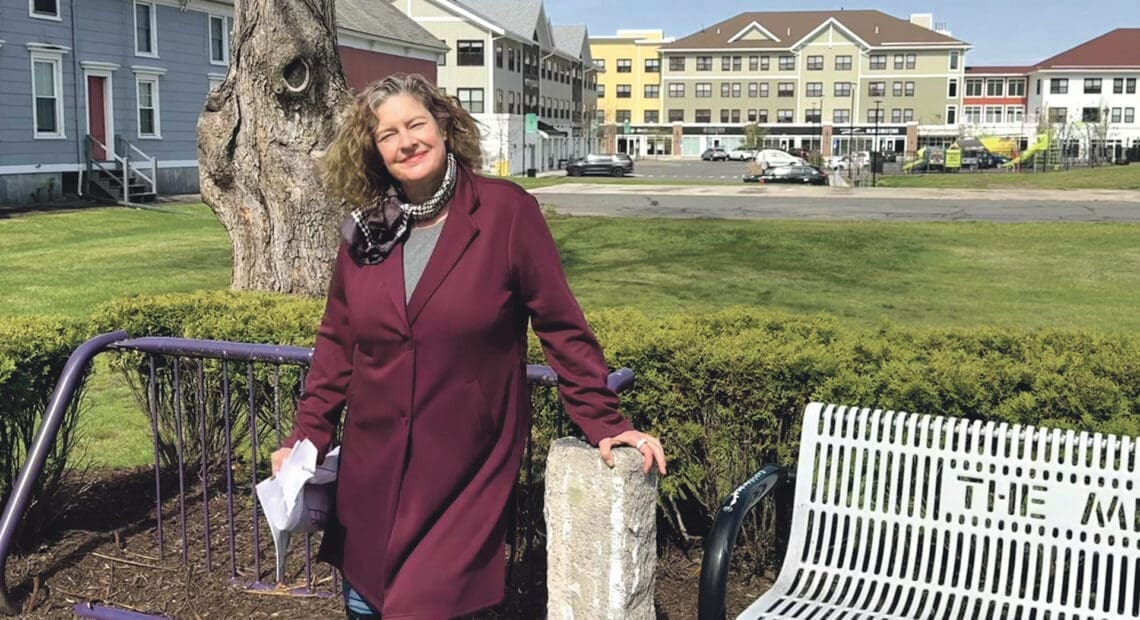
Cinda Jones, architect of the Mill District

Amy McDonough was working in the renewable energy business when, in her words, she “picked up pinball again” after putting it down following graduate school at the University of Vermont.

“I couldn’t get pinball off my brain, and I started picking up pinball machines here and there,” she told BusinessWest, adding that she would eventually amass a collection of nearly 70 machines. “And then, I was thinking about pinball much more than I was renewable energy.”

This thinking soon became serious in nature, and it led to an entrepreneurial venture called the Tilted Orbit Arcade, with that name borrowing two terms from the pinball world — orbit, which refers to the path for the ball along the outer rim of the game, and tilt, of course is when the machine is tilted or shaken beyond an acceptable level and the game ends.
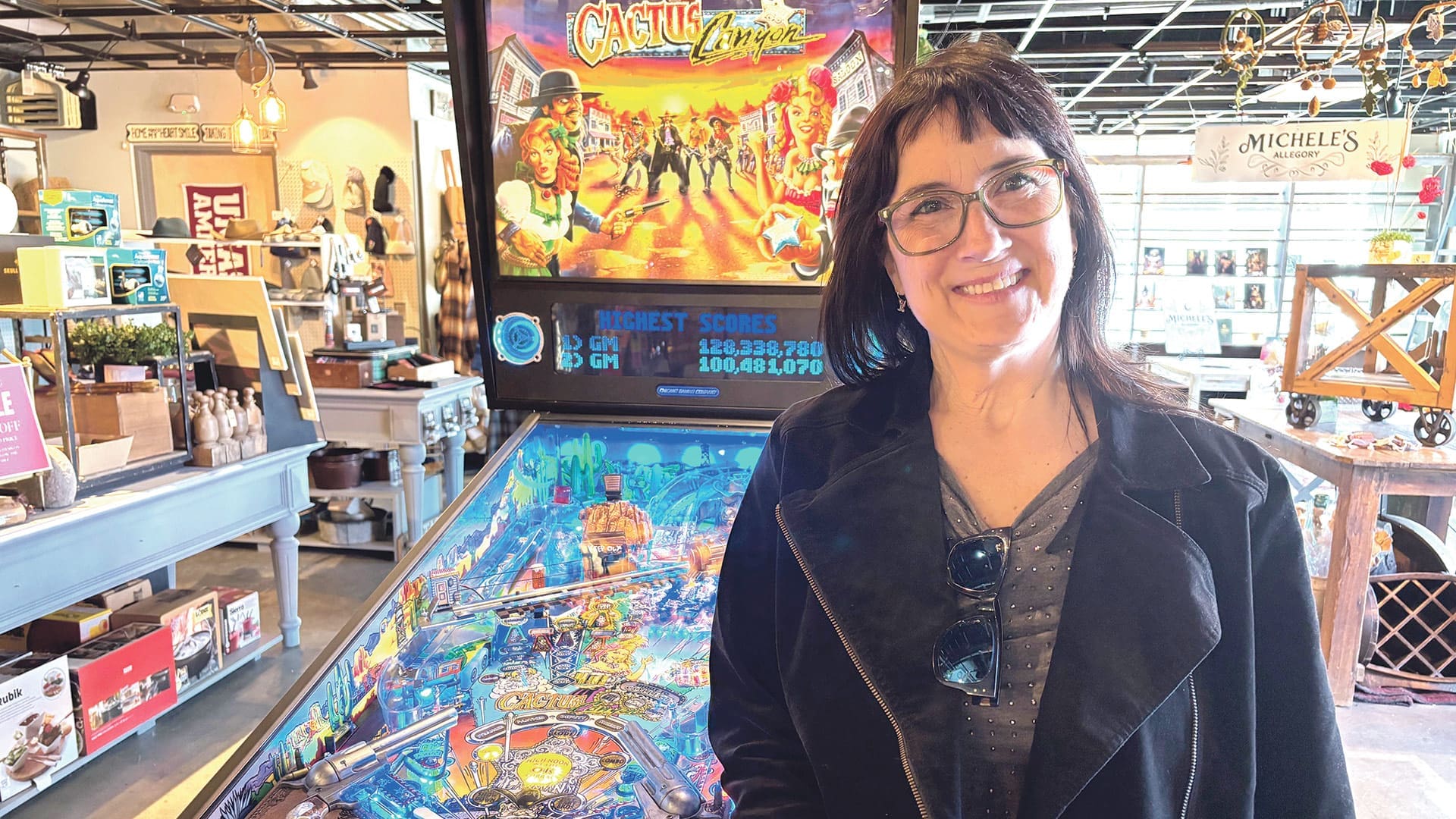
Amy McDonough with one of the more than 70 pinball machines she’s collected.

Due to open in the fall, the arcade will feature many machines from McDonough’s collection, as well as a golf simulator, a few vintage ’80s video games, a kitchen, and bar. It is being designed to attract many different constituencies, including families, area college students, teens, and the Boomers who discovered pinball in the ’60s and ‘70s, and then put it down.

And it is part of the ongoing evolution of the Mill District in North Amherst, a mixed-use facility that features housing, retail, art, and hospitality — a canvas that Cinda Jones, its architect owner, has been filling in over the past 15 years or so.

“We’ll still occasionally hear that people don’t know that the Mill District is here and how shocked they are when they find it.”

Indeed, Tilted Orbit will occupy what’s known as the Cow Barn, which was once home to Provisions, the wine and cheese emporium, which was moved to another building on the property (more on that later), and before that, Atkins, said Jones, adding that other additions and improvements include everything from a new pavilion taking shape on the site of another former barn, a new Herrell’s ice cream parlor (the company has been operating a small, pop-up facility the past few years); from recent additions such as Three Amigos, a restaurant that fuses the flavors of Chile, Mexico, and Puerto Rico and Carefree Cakery, and even some demolition  — of another former barn and a seven-car garage — that will improve visibility and allow travelers on Route 63 to see all that the site has to offer.

“We’ll still occasionally hear that people don’t know that the Mill District is here and how shocked they are when they find it,” said Jones, adding that the broad goal, as it has been from the beginning, has been to create what she called a ‘downtown’ in North Amherst, a mix of shops and amenities that deliver food, fashion, and fun — a true destination, attracting people from across Amherst and nearby Franklin County, but also a much wider circle.

Elaborating, she said current work involves creation of public open space, a ‘town common,’ leading from the highway to the shops. It will include the pavilion, which doesn’t have a formal name yet, although Jones calls it the ‘Manta Ray,’ because the architect has given it something approximating that shape.

It will include a catering kitchen and host a wide array of events, she said, adding that a tent has been erected on the site to hold gatherings such as a recent wine tasting staged by Provisions, with construction of the pavilion set to begin this spring, and due to be completed in time to host events this fall.
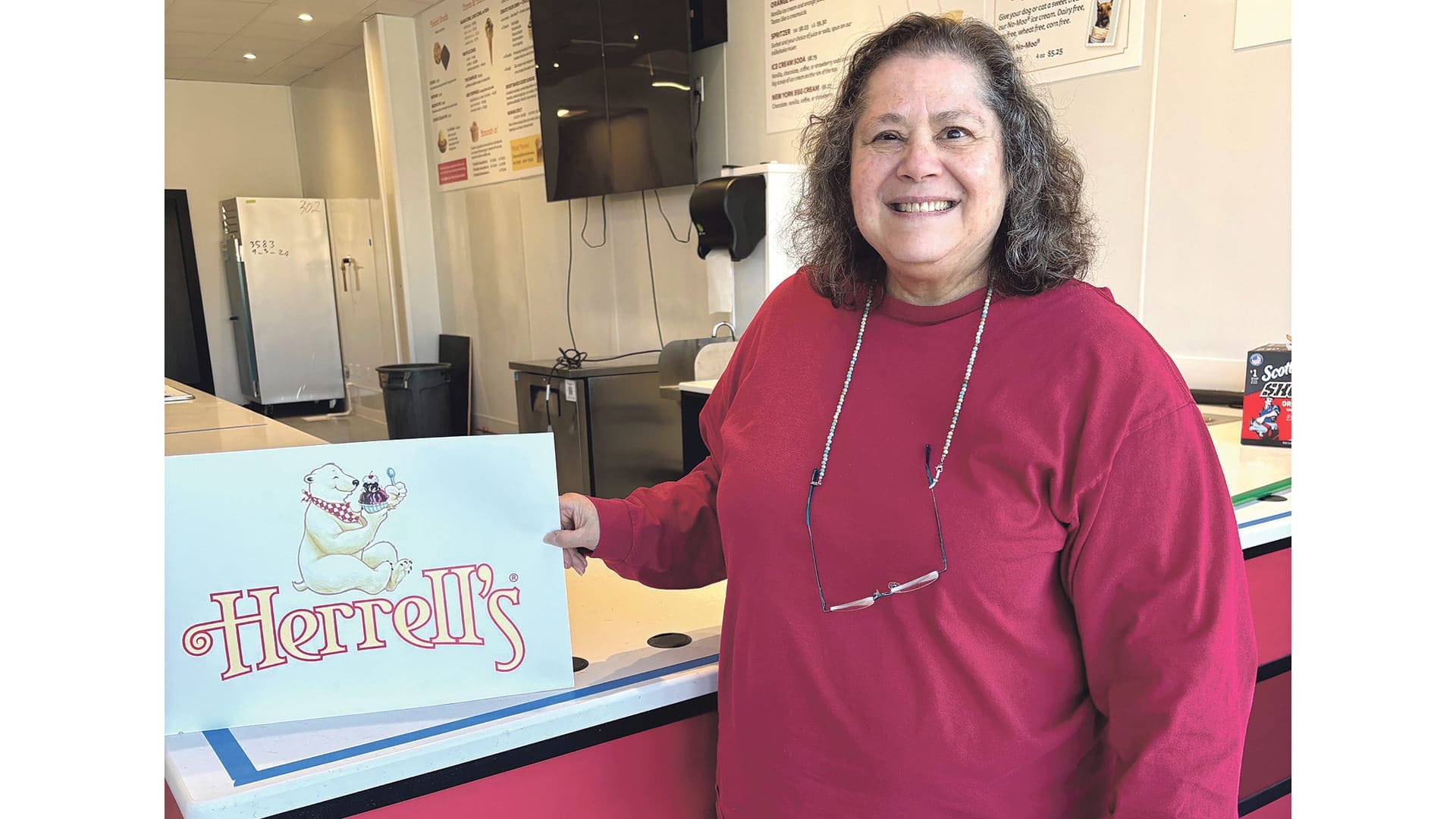
Judy Herrell stands in the almost-finished new location for Herrell’s in the Mill District.

The Tilted Orbit Arcade is one of many new developments at the Mill District, which has been in a seemingly constant state of change since it opened, and

Meanwhile, the location of the Mill District, and the diverse mix of tenants, eventually drew the attention of Judy Herrell, president of Herrell’s, who said the iconic, Northampton-based brand has been searching for a site for a second location, and zeroed in on North Amherst village.

“What we found out is that people didn’t want to venture over the bridge,” she said, referring to the Calvin Coolidge Bridge, which many in the Amherst/Hadley area simply don’t want to cross, even after significant infrastructure changes made it easier to do so. The new location, due to open in several weeks, will make Herrell’s more accessible, she said.

For this issue, BusinessWest talked with Jones and many doing business in the Mill District, or soon to do so, about this evolving concept and the diverse mix of ventures that are drawing visitors from across town and well beyond.


Flipping the Script

McDonough joked that her affection for pinball, developed while she was working toward her master’s degree at the UVM, probably put off her thesis by a year.

“I did a lot of procrastinating playing pinball,” she said, noting that one game in particular, The Addams Family, became especially addictive.
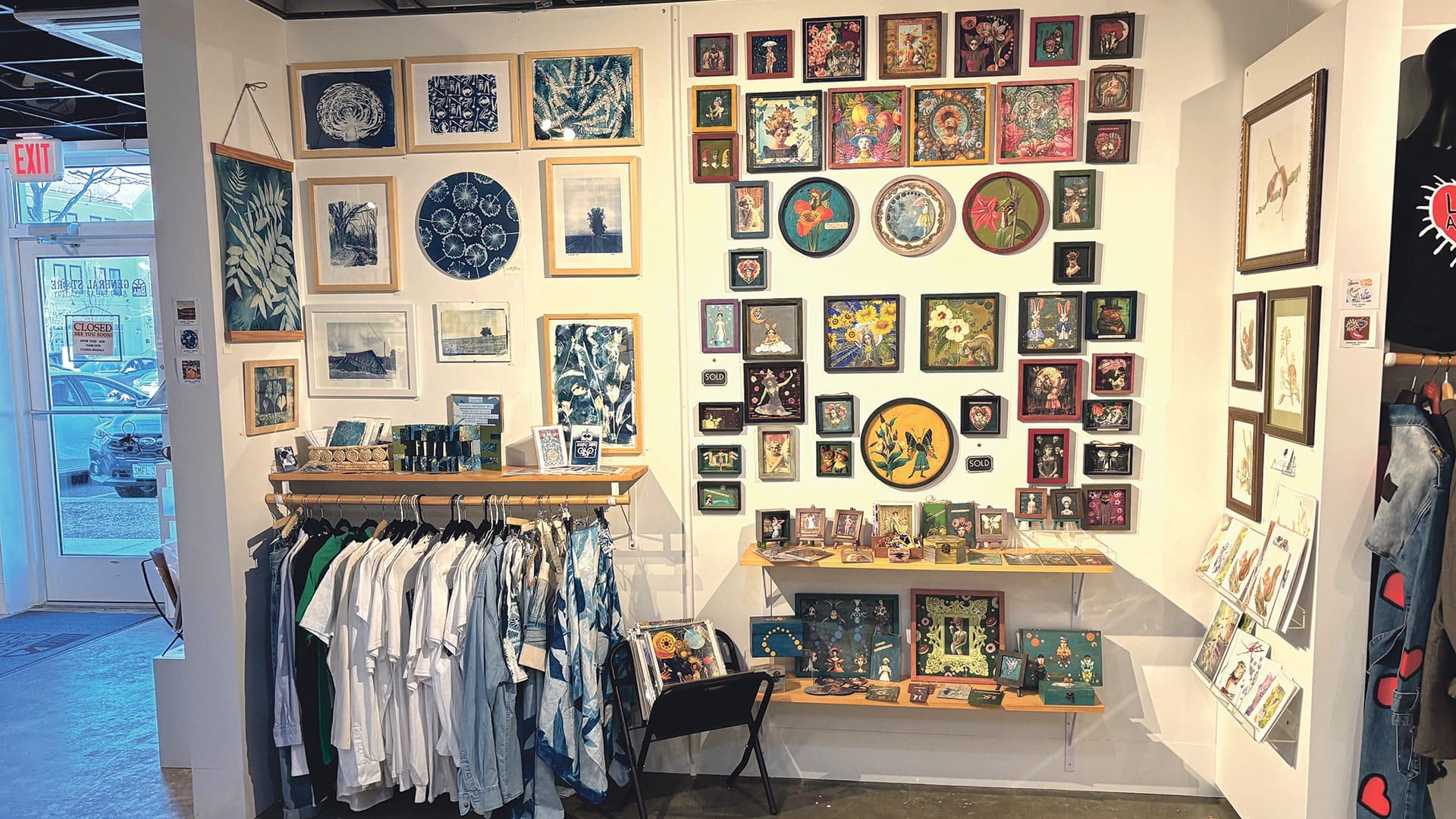
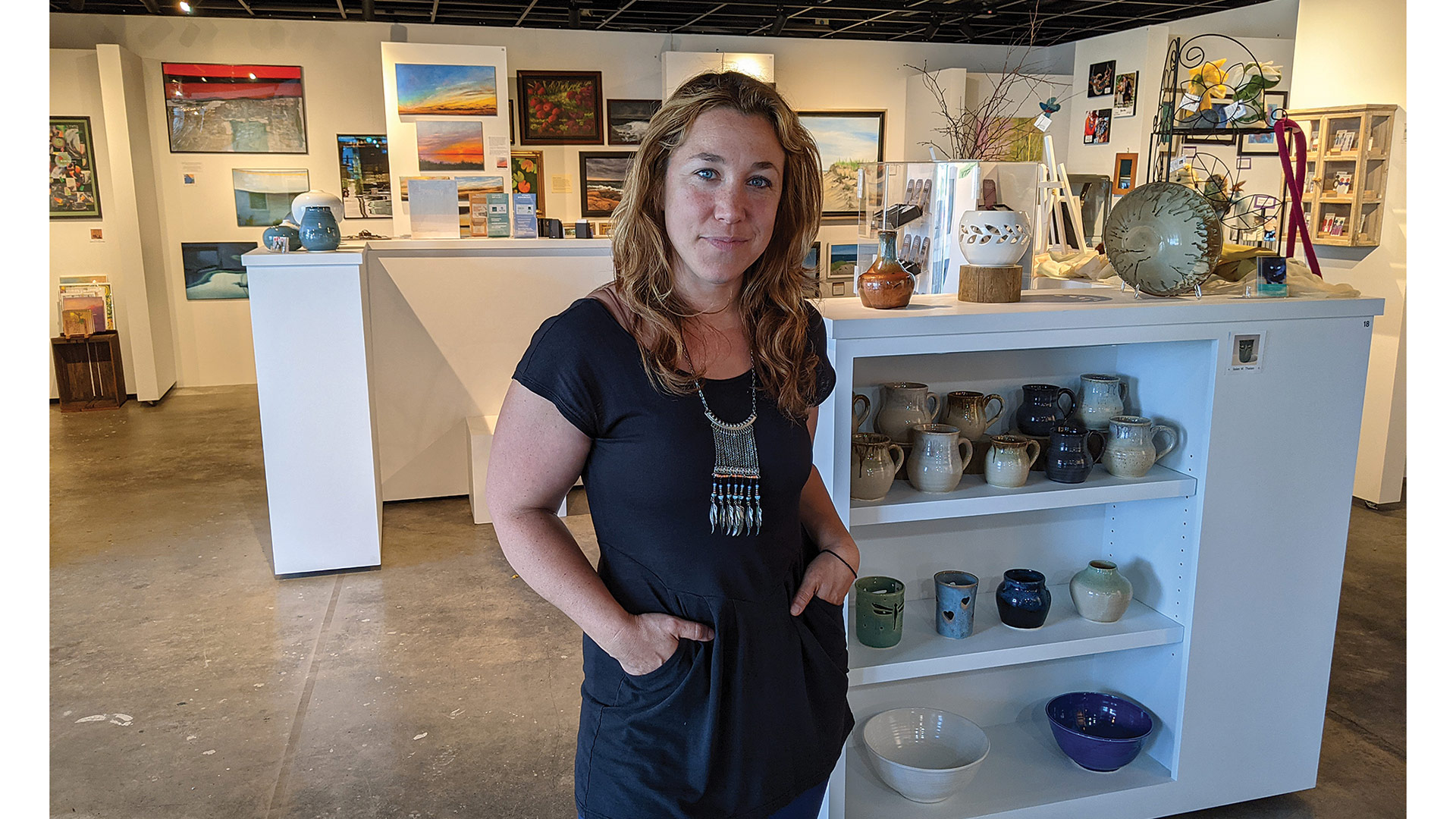
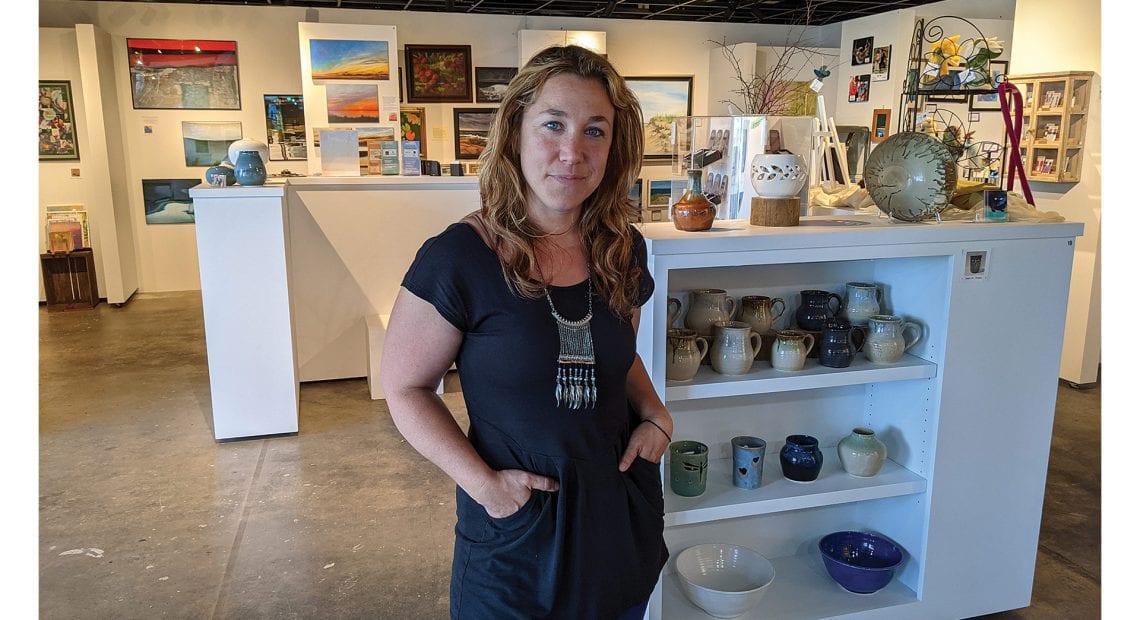
Just some of the local art to be found at the General Store.

It was among the first machines she acquired when she started building her collection, and it will be one of those on the floor at Tilted Orbit Arcade when it opens its doors, she said, adding that, before settling on the Mill District as home for her venture, she considered several other sites, including the Canal Lanes bowling alley in Southampton when it briefly came on the market.

The Mill District site offers what she was looking for, she said, meaning visibility and an opportunity to attract a diverse customer base, and also take advantage of a resurgence for pinball.

“It’s making a comeback; it started during COVID,” she noted. “Right now, pinball is serving mostly the male population, ages 40 to 65, but women are up and coming, and there’s a whole tournament world out there as well as leagues.”

McDonough said she’s looking to attract a wide audience that crosses all age groups, “families, seniors, teen-agers, college students, and adults.” And not just for pinball, but also the golf simulator, some arcade games, and other attractions she will offer, although the overriding goal is to inspire all those groups is to get them introduced to pinball and make them regulars.

“You can’t count on the weather in New England, and this will make it much easier to plan things.”

The Tilted Orbit Arcade is one of many new developments at the Mill District, which has been in a seemingly constant state of change since it opened, and the Cow Barn is where Jones began a detailed tour of the property.

Other stops included the town common area and spot for the new pavilion, which will provide larger, better space for the many types of events held there, and, especially, a roof, which will cut down on the rainouts and other weather problems that occurred with frequency last year or moving events to cramped indoor quarters.

“You can’t count on the weather in New England, and this will make it much easier to plan things,” said Jones, noting that the facility is being designed and built by Hardwick Post and Beam, and she is excited by the possibilities it presents.

“It will be a wonderful place where high school groups could perform, or you could have birthday parties,” she said, adding that performances could include seating in the pavilion and the lawn space outside, much like Tanglewood in Lenox.

And the pavilion is one of many steps being taken to attract more visitors and make the Mill District more of a destination.

“There are roughly 25,000 vehicle trips a day, including buses, that go within a block of the Mill District.”

Jones described the location as the ‘gateway to Franklin County,’ and on the route that many employees and students take to get from homes in communities like Greenfield, Montague, Conway, and Sunderland to jobs at UMass Amherst, nearby Northampton or points to the south. From the beginning, the goal has been to create a community, a village where people can shop, eat, see and buy art, and take in the many cultural events staged by tenants.

“There are roughly 25,000 vehicle trips a day, including buses, that go within a block of the Mill District,” she noted, adding that the goal is provide reasons to pull over and explore, while also creating a tenant mix and calendar of events that would prompt planned visits from across the region.

“My goal is to make this a place where community members, full-time, long-term community members, enjoy connecting with friends and enjoy the spaces and shops we’ve brought together,” she said.

The mix of tenants has changed over the years, said Jones, adding that she has always been looking to improve that mix and provide more to see and do. Most of the space is occupied, or soon to be occupied, she noted, adding that there is roughly 4,500 square feet — with high ceilings — available in the building currently home to Provisions.

“We’re listening to people, hearing what they like, and responding to what they’re saying,” she said, adding that this strategy applies to tenants and visitors alike.

Meanwhile, there are concerted efforts to make the Mill District more visible, literally and figuratively, said Jones, adding these include the creation of the common that will improve sight lines to the shops as well as new signage currently winding its way through the permitting process. 


Food for Thought

As they talked with BusinessWest, Jose Diaz and Matias Martinez, owners of Three Amigos, the next stop on the tour, were gearing up for Cinco de Mayo.

They were putting together a special menu for the occasion and were expecting a strong turnout for what has become a day of celebration for many in the region.

But most days have produced good crowds at this unique eatery, which, as noted earlier, blends dishes from Puerto Rico, Chile, and Mexico, with many offerings inspired by meals prepared by the owners’ mothers.
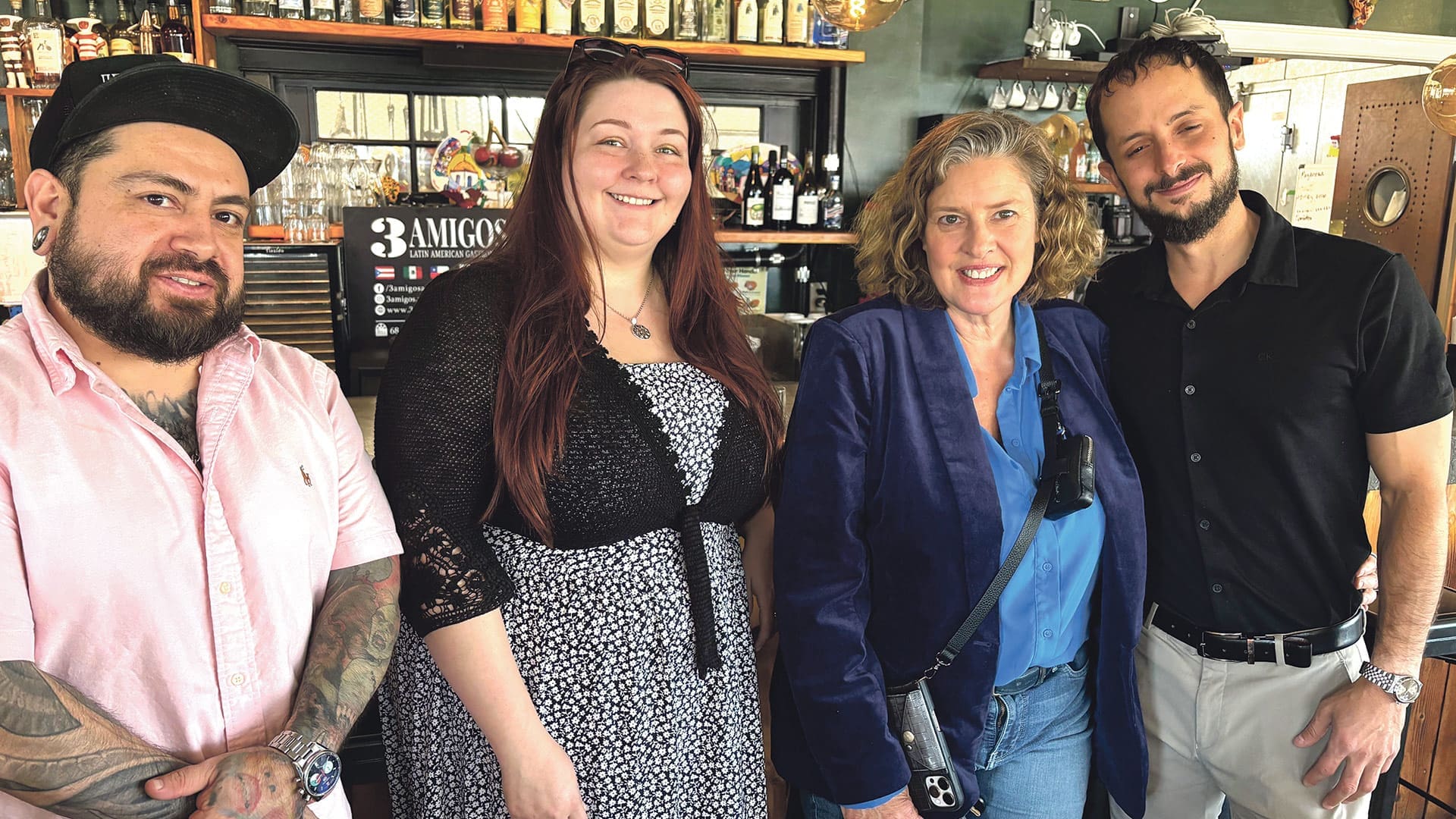
Matias Martinez, left, and Jose Diaz, co-owners of Three Amigos, share a moment with Cinda Jones and Shauna Wallace, project manager of Mill District General Store and Local Art Gallery.

“My mom has some really good recipes, and Jose’s mom has really good recipes from Puerto Rico; we take both and we put together a good menu,” said Martinez, a native of Chile, adding that Diaz also brings knowledge of Mexican cuisine to the table — literally and figuratively.

This knowledge and deep menus will have even more local flavor, said Diaz, adding that the partners are now committed to buying more locally produced vegetables, meats, eggs and more, and are further committed to bringing different kinds of experiences to the venue, such as karaoke nights.

“My mom has some really good recipes, and Jose’s mom has really good recipes from Puerto Rico; we take both and we put together a good menu.”

And, like other business owners in the Mill District, the two partners (there was a third, hence the name, but he is no longer involved) said the location brings a diverse mix of patrons across all age groups.

As Jones’ tour of the Mill District left Three Amigos, it made a quick stop in the vacant space adjacent to Provisions and below housing units. As noted earlier, it has high ceilings and what she considers enormous potential as home to a small grocery store, an indoor play space for kids, or similar that will be compatible with and complementary to everything else that exists on the property.

From there, the tour would continue to several existing and emerging businesses, such as Provisions, Futura Coffee Roasters, Carefree Cakery, Everbloom Salon, the Balanced Birch Studio, the Mill District General Store and the art gallery inside its walls, and the Herrell’s now taking shape.

Not on the tour, but technically part of the Mill District are businesses in a mall on Route 63, including Amherst House of Pizza, Big Guys Liquors, Mindy’s Barber Shop, and the Harp Irish Pub.

Collectively, these businesses provide ample reasons to get off the highway, whether one is heading home from work or planning a day trip, said Jones, adding that the Mill District comes as advertised, with that mix of food, fashion, and fun, including several play areas for children and families.

Herrell’s will make an intriguing addition to the mix, she said, adding that the pop-up facility has attracted solid numbers of visitors, and the larger, permanent space is expected to bring more.

Herrell told BusinessWest that the new location needs to be open by summer, for obvious reasons, and it is on track to do so.

She said the location in the Mill District brings the brand closer to other markets, such as Franklin County, and also closer to UMass Amherst, where she teaches a course — a lab on how to make ice cream “from a chemistry point of view” — and partners with the university on an ice cream competition, which is the final exam, if you will, for the that class, with Herrell’s featuring the winner’s flavors in its stores.

“We try to make all of them if we can, but we definitely make the four top finishers,” she said. “We’ve had some incredibly great, creative ideas from that group, and their lab is one mile from here.”

Beyond that partnership, Herrell’s is looking to tap into a broad base of loyal customers that know the Northampton store and now have something that for many will be more convenient.

And then, there’s the Tilted Orbit Arcade, which will present a novel new use for the Cow Barn, and an interesting addition to the mix.

For McDonough, it’s her first real entrepreneurial venture, which means there’s a mix of excitement and trepidation.

Overall, she’s optimistic that she can make something a little different work out in a big way. And in many respects, that’s been the goal at the Mill District from the very beginning. 
Daily News

NORTH AMHERST — The Mill District, a regional destination known for its blend of food, fashion, and fun, announced the upcoming addition of Tilted Orbit Arcade, to be located in the historic, 4,600-square-foot Cow Barn at 113 Cowls Road.

Tilted Orbit Arcade is envisioned as a community gathering space built on a foundation of play and connection. The venue will offer a curated selection of classic pinball and arcade games and a golf simulator. The space will also have a variety of snacks and foods to keep game playing energy up, as well as a selection of both alcoholic and non-alcoholic beverages. The aim is to create an environment where active participation, camaraderie, and shared experiences are prioritized.

The proprietor, Amy McDonough, is a long-time member of the local pinball community and the founder of the Northampton Belles and Chimes pinball team. Leaving a long career as a vice president in green energy production, she is bringing her commitment to a healthier planet to her new venture. This commitment is reflected in her plan to donate beverage deposits to a local charity with whom Tilted Orbit Arcade will form a long-standing promotional relationship.

“Our model will naturally attract patrons who prioritize active participation and good sportsmanship, camaraderie, and shared experiences over excessive consumption,” McDonough said. “It’s going to be an asset to the neighborhood.”

The Tilted Orbit name is a nod to a playful, space age theme that will extend to the interior design. Guests can anticipate a whimsical and unexpected atmosphere where familiar farm elements are given an otherworldly twist. The Mill District and Tilted Orbit Arcade look forward to welcoming the community, from pinball enthusiasts and casual players to families and friends, to this new venue, which is expected to open in the spring of 2026.

“Tilted Orbit is such a game changer for the Mill District,” said Andy Haase, manager of Cowls Building Supply. “We’re hosting two of Amy’s games between now and her grand opening so people can come in and get excited about Tilted Orbit coming to the neighborhood.”

One arcade game is located at Cowls Building Supply at 125 Sunderland Road in North Amherst, and the other is just around the corner at the Mill District General Store, at 91 Cowls Road.

Daily News

AMHERST — Locally made gifts crafted by more than 50 talented artists and makers will be the main attraction at the third annual Holiday Arts Market at the Mill District General Store and Local Art Gallery, being held on Sunday, Nov. 19 from noon to 4 p.m. on Cowls Road in North Amherst.

“This is our third year bringing this wonderful event to the Amherst community, and we’ve had a record outreach from artisans seeking to exhibit. Visitors to Cowls Road will find more variety than ever this year, ranging from jewelry to pottery, candles and cards,” said Shannon Borrell, coordinator of the Mill District Local Art Gallery. “Our artisans will be situated outdoors to encourage strolling, and our retail stores will be welcoming customers indoors as well. There’s a lot of excitement out there, and I know the makers are all really looking forward to this event.”

If it’s a chilly day, visitors will find warming drinks to go at Cisco’s Café and the District’s newest tenant, Futura Coffee Roasters.

This date is the rain date; the event was originally scheduled for Saturday, Nov. 18 but moved due to the weather forecast.

Daily News

NORTH AMHERST — The Cars & Coffee auto-show series returns to the Mill District’s North Square with another free collectible and classic vehicle exhibition on Sunday, Aug. 20 from 8:30 a.m. to noon. And also returning is the chance for spectators to test-drive a Mercedes-Benz electric vehicle (EV).

“We’re expecting two vehicles, a Mercedes-Benz EQS and GLB, to be on hand Sunday,” said Tim O’Brien of the Mill District. “Folks who’ve never experienced the unique driving experience of an EV will especially enjoy this opportunity.”

The Cars & Coffee concept has grown explosively across the U.S. as a car-collector and spectator phenomenon. By emphasizing a laid-back, everyone-welcome format, the shows typically attract a widely different mix of vehicles — and car-curious onlookers — each time they’re held.

The June edition of the series set a record with more than 70 vehicles on display, plus a new record model-year span. The cars arriving that day ranged from a 1923 Ford Model T to a 2023 Chevy Corvette.

“A century’s worth of motoring diversity in one show really demonstrates the wide appeal of the Cars & Coffee format,” O’Brien added. “One hundred years is definitely the biggest difference we’ve seen so far, but that could change with the next show.”

Trophies will be awarded at 11:45 a.m. for the crowd’s favorite domestic, import, exotic, and best overall. Everyone submitting a ballot will be entered into a free drawing for one of three Mill District General Store gift cards.

Special Coverage Women in Businesss

Crafting Connections

Hannah Rechtschaffen, director of placemaking for the Mill District and manager of Hannah’s Local Art Gallery.

Hannah Rechtschaffen, director of placemaking for the Mill District and manager of Hannah’s Local Art Gallery.

When Hannah Rechtschaffen set about to open an art gallery in Amherst’s Mill District, she didn’t envision a static space; instead, her goal was to develop a vibrant, eclectic, multi-media gallery that not only focused on local artists, but forged connections between them and the public through workshops, classes, events, and even the everyday conversations that bring to life the stories and history behind each artist and each piece. A couple weeks after the gallery’s opening, she’s optimistic those creative collisions are already happening.


Anika Lopes’ roots in Amherst go back six generations, so the town is special to her. But as a milliner — an artist who designs and creates hats — she has made her name in galleries and boutiques in much larger cities, especially New York.

Now, as the highlighted artist for the recent grand opening of Hannah’s Local Art Gallery in Amherst’s Mill District, she feels like she’s come full circle.

“This is the first time I’ve shown in Amherst,” she told BusinessWest. “I never thought I would be showing here, and it’s been wonderful how it’s been received — and it’s a way to give back to the community and encourage artists, especially local artists, that there is a scene and a space for everything.”

“I never thought I would be showing here, and it’s been wonderful how it’s been received — and it’s a way to give back to the community and encourage artists, especially local artists, that there is a scene and a space for everything.”

The Hannah in the gallery name is Hannah Rechtschaffen, director of placemaking at the Mill District, who launched a gallery after Cinda Jones, the ninth-generation owner of the property, asked her to. But Rechtschaffen infused that task with her own vision for an eclectic, multi-media collection of rotating artists (21 are on display now, hailing from 13 different towns, with some being replaced every quarter), but also a space-rental model that continually reinvests in bringing more exposure to the artists (more on that in a bit).

“Every three months, some of the artists will turn over, so there will always be something fresh, and there will also be some carryover,” she said. “I want people to feel good knowing they’ll come back in here and see new stuff. That’s a really crucial part.”

Also rotating will be the front window space, with which the gallery will highlight a certain artist. For the opening weeks, that’s Lopes, who was on hand to celebrate the gallery’s opening on June 19.

Anika Lopes with the front-window display of her millinery art.

Anika Lopes with the front-window display of her millinery art.

“In conjunction with Juneteenth, we wanted to make sure we were highlighting a local artist of color, and Anika’s work with the hats … gives us an opportunity to kind of push the boundary a little bit on what art is,” Rechtschaffen said of the front window space. “We can also have historic installations there, or we can do installations of artists who aren’t local, but maybe they’re doing work you can’t find locally, and we want to highlight it.”

History is important to Lopes, whose display at the gallery includes not only her hats, but original hat blocks created by one of first black men to have a millinery factory in the garment district of New York City — which she uses to hand-block her hat designs, which she then hand-sews.

“There’s a lot of history here, and it’s been amazing to merge this [artwork] with Amherst history as part of the Juneteenth celebration,” Lopes said. “It was just a wonderful opportunity to celebrate Amherst and what’s going on here at the Mill District, which was, in itself, such a pleasant surprise to see and experience. It’s an inspiration for where Amherst can go.”

As for the rental model, Rechtschaffen charges $20 per linear foot per month for wall space, which gives the artist use of the entire wall, floor to ceiling. She also takes a 20% commission on any art sales, all of which cycles back into the gallery for marketing, events, classes, and anything that brings more people in to see the work.

“Right from the start, they felt they were buying into something that was bigger than just their small space. It’s the connection, it’s the lifeline, it’s learning new things that are going to enhance their business.”

“That’s the idea — the commission isn’t just flying out of the artist’s pocket; it’s going right back into running the engine of the business side,” she said, noting that she modeled it after Woolworth Walk, a much larger gallery in Asheville, N.C., which features 230 booths in a former Woolworth’s store.

“In charging a little bit of rent, you create this ownership that artists have of the space. I want to overhear an artist say, ‘oh, I want to show you my gallery.’ I know that I’m doing it right when they have that connection to it,” she explained.

“I wasn’t sure it would translate, and especially coming out of COVID, I felt so self-conscious about putting the model out there, to charge them money up front, even if it was a low rent,” she went on. “I’m an artist; I know how hard it is. But no one batted a eye. Right from the start, they felt they were buying into something that was bigger than just their small space. It’s the connection, it’s the lifeline, it’s learning new things that are going to enhance their business.”


Art of the Matter

One of Rechtschaffen’s goals was to highlight a wide variety of art, and she’s done that, with the first 21 exhibitors — all but a couple of them women — working in media ranging from paint to felt to polymer clay. True to its name, the gallery aims to draw from local artists, meaning those living within a one-hour radius.

“We want to connect anyone coming to the Mill District with the wealth of art and artists in the area because it’s crazy how many artists are living right around here,” she said.

In addition, “it was really important to me to have both emerging and established artists sharing the space. For some of these people, it’s their full-time job, they’re artists, it’s what they do. And for some people, it’s very much on the side of what they do; maybe they want to make it a larger part of their livelihood, or maybe they’re retired and they’re just doing it because it’s a passion.”

Showing those works side by side forges connections between artists and their various media — and so does a large gathering table toward the front of the gallery, which will host classes, workshops, and “conversations” between artists and the public.

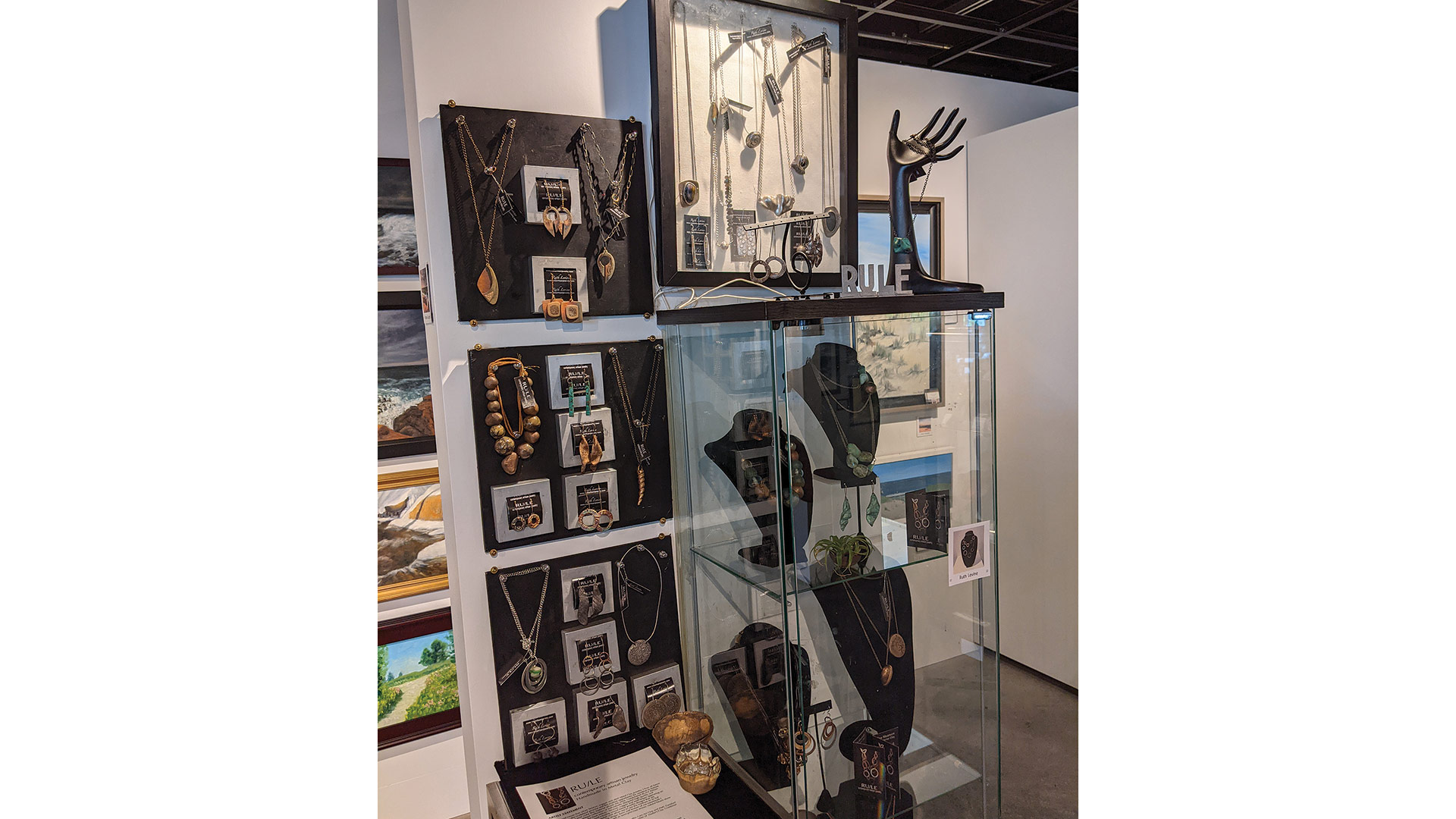
Ruth Levine says Hannah’s Local Art Gallery gave her a chance to move her jewelry from her garage into public view.

Ruth Levine says Hannah’s Local Art Gallery gave her a chance to move her jewelry from her garage into public view.

Rechtschaffen related a conversation with one of the exhibitors, Maxine Oland, a well-known local artist who operates an Etsy page.

“I was like, ‘oh, would you be open to teaching a class called Should I Bother Having an Etsy Page?’” she recalled. “Because it’s a lot of work, and you’ve got to keep it up, and there’s a cost involved. I get artists all the time saying, ‘should I bother? Is it worth it?’ What better way to have that conversation than with an artist who’s going to be honest and say, ‘well, for me it’s been worth it, and I sell X amount a month, and here’s the process.’

“So those kinds of classes and pop-up conversations can happen with emerging and established artists, and those who don’t consider themselves artists, coming and listening and learning from each other,” she went on.

Lopes sees great value in the gallery’s focus on connection, calling it a “lifeline for artists.”

“As I’ve been able to see the space and the artists coming in here, especially at this time, where people are coming out of COVID, where everyone in the arts has been affected, it’s really a place that has inspired artists,” she said. “I think it’s building confidence within artists and giving people hope.”

Rechtschaffen said the Mill District itself is intended to be a place that tells a story and builds community, which is why Jones felt an art gallery would be a strong component to begin with.

“Every artist in here has a story behind why they make the art they make, why it’s important to them,” Rechtschaffen told BusinessWest. “I can point to any one of them and tell you the backstory, and it just adds to why someone would connect with a piece and then decide to take it home.”

Stories like Susan Roylance, a longtime woodworker who, one day, carved a face and wasn’t sure what to do with it. She put it aside, but then got inspired by it, and started working in both wood and felt to sculpt whimsical characters. “I feel like every one of those sculptures is a children’s book waiting to happen,” Rechtschaffen said.

Or Dana Volungis, who worked for 24 years for Yankee Candle, got laid off during the pandemic, and started painting … only 10 months ago; her oceanside landscapes and other work belie that short gestation period. “Ten months!” Rechtschaffen said. “I didn’t even realize that when she submitted her application.”

Or Ruth Levine, who makes metal clay jewelry, but set it aside for a time to focus on being a parent and grandparent. “Now here she is,” Rechtschaffen said. “She was so empowered when she was setting her space up, saying, ‘I remember how this feels; this is great.’ She said to me, ‘if you hadn’t opened this gallery, this stuff would still be in my garage.’ I said, ‘you just validated everything for me, because I’m so glad this is not in your garage.’”

Visitors to the gallery, then, aren’t just seeing art, Lopes said. They’re connecting with history — the history of the area and the people who create art here — and maybe take a piece of that history home.


Animal Attraction

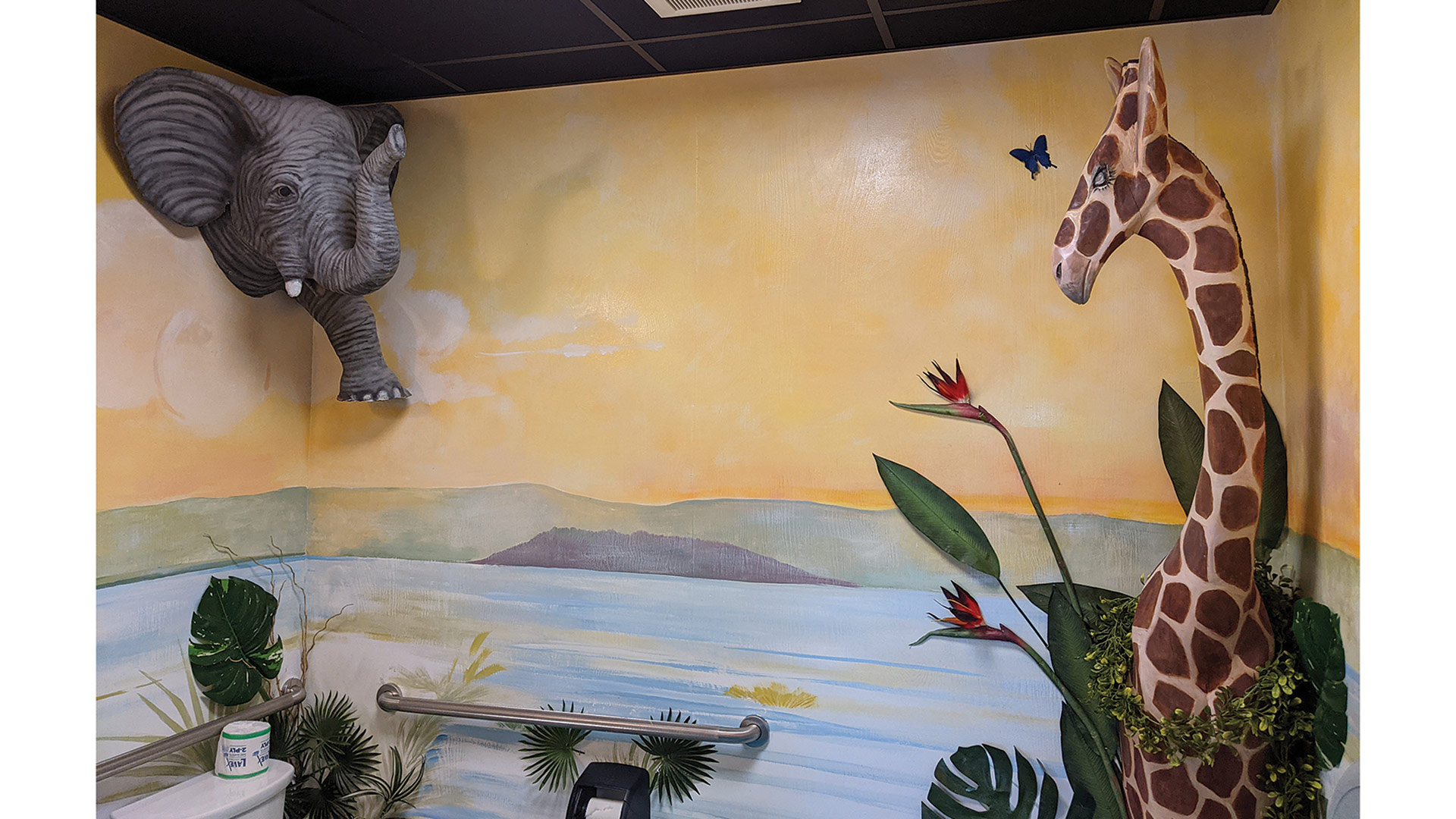
To add a bit of childlike fun to the gallery, Rechtschaffen commissioned Ivy Mabius, a close friend of Jones and a mural artist, to create a jungle-themed bathroom, complete with large, colorfully painted sculptures of an elephant and a giraffe. “Already, kids who see it don’t want to leave. It’s such an attraction. Kids — and adults — are going to want to come and use the bathroom.”

The general store that adjoins the gallery also features a unique bathroom — this one with one-sided glass, so users have a full view of the sidewalk and parking lot outside. But eclectic bathrooms aren’t the only connection between the two spaces. Rechtschaffen can see a time when artists who have displayed in the gallery find a space in the store to sell their crafts.

Ivy Mabius designed a whimsical, jungle-themed bathroom at the gallery.

Ivy Mabius designed a whimsical, jungle-themed bathroom at the gallery.

Again, it comes back to making connections and offering a wide range of exposure to local art. The front table can also be used as a co-working space, or just a spot to hang out, she added.

“This is really meant to be something people can access all the time, however they need to. The goal is for people to see great art and great work,” she went on, noting that a master cabinet maker from Cowls Building Supply built all the gallery’s walls, shelving, and fixtures on wheels, so the configuration of the gallery can be changed. Artists who want to apply to rent space may do so at bit.ly/HannahsGalleryApplication.

Rechtschaffen also envisions sharing art outside the gallery at pop-up displays, art fairs, holiday events, and other gatherings — again, with the goal of connecting local art to as many people as possible. And they’re hungry for it, she added, like one woman who came to the gallery opening and said it was her first social event in a long time.

“She was like, ‘I’m good, I’m good; this is helping.’ It’s not just about getting people back out there; for business owners and people creating these events, we have a responsibility — if we’re inviting someone into a space, we need to be mindful of what that space feels like, that it feels comfortable. I take that very seriously, creating a space like this where people can come enjoy themselves.”

As people emerge from COVID isolation, Lopes said, one positive is that many have learned a lot about themselves, and that’s especially true for artists, who can now move forward with new understanding and new vulnerability — and a new audience at the Mill District.

“We are into telling stories and making sure people get to see art,” Rechtschaffen said, “but also learn something about their community.”


Joseph Bednar can be reached at [email protected]m