
Meeting of the Minds

Cofab Design Partner Mike Stone
When Mike Stone looks around Holyoke — and some of the innovative companies that have set up shop there — he sees a city with several unique advantages.
“First of all, the cost of energy is low, which is great for companies with electrical-heavy processes. Then there’s the amount of available space,” said Stone, CEO of Cofab Design, a Holyoke-based studio that develops hardtech products (more on that term in a moment) and the strategies to produce them.
In addition, he noted, “there are about 60,000 students in the Pioneer Valley, plus an industrial workforce that’s been here for more than 150 years. That’s not to say it’s the same as it was 100 years ago or 150 years ago, but there are still a lot of precision manufacturers, and there is a manufacturing workforce base here.
“So you have folks that know how to scale processes and do manufacturing, and you have the sort of innovation coming from the Five Colleges, plus the Boston-New York corridor, and I just think we’re uniquely positioned here to be able to kind of leverage that and offer second-stage space.”
“It makes much more sense to grow a base here and have a little bit more room to stretch out and grow. So that’s the vision, and hopefully more companies will take note.”
HardTech Holyoke, the second event of its kind (the first took place in 2023), highlights some of the innovative companies that are growing in Holyoke. The gathering, held on June 18 at Open Square, brought attendees face to face with the minds behind growing companies like Clean Crop Technologies, which is developing new ways to remove contamination from seeds and foods; Sublime Systems, which is developing an innovative cement manufacturing process; Xenocs, which uses X-ray technology to analyze nanoscale materials; and florrent, a maker of supercapacitors for energy storage, to name a few.
As opposed to software, Stone said, hardtech refers to more physical technology. “It’s a wide net — it covers advanced manufacturing, clean tech and green tech, even things in the defense space, energy, food and ag tech. It’s sort of an amorphous term, but the throughline here is folks that are building physical things, which takes a different form of investment and attitude than building software or building other types of businesses.”

Dan White says Holyoke has been attractive to many innovative companies, for reasons ranging from competitive utility rates to a supportive city government.
And Holyoke, located not far from major innovation centers but offering a lower cost of doing business with a host of amenities, is the ideal spot to grow a hardtech hub, he added.
“It’s hard to compete on innovation. There are people innovating here, but you can’t compete with Boston or New York in terms of density of schools, and we know the attraction the cities have,” Stone explained. “But for a Clean Crop, when you’re spending money in Cambridge or Somerville for a bigger space, it starts to be disadvantageous, and it makes much more sense to grow a base here and have a little bit more room to stretch out and grow. So that’s the vision, and hopefully more companies will take note.”
Selling a City
HardTech Holyoke was conceived in 2023 when FORGE, a nonproft that helps innovators with physical projects navigate the journey from prototype through to commercialization, teamed up with Cofab, Clean Crop, and the city of Holyoke on a gathering to celebrate the startups, engineers, researchers, manufacturers, and others building new physical products in and around the city.
“So we put an event together, and we expected 50 people to show up, but 100 people came, and there was a good buzz,” Stone recalled. “There was a good sense after the event that people found it a good place to connect and network with this community. So we’ve been trying to do it annually ever since.”
It actually took about a year and a half to get the second HardTech launched, but attendance topped the first, drawing about 150, as did the number of participating companies. “It’s a bigger format, and we have a bigger space here, and we’re really appreciative of the folks at Open Square who donated space for this,” he noted at the start of the June 18 event. “I’m kind of leaning into the exhibit theme — I like to think of this as an art gallery opening night for manufacturing companies.”
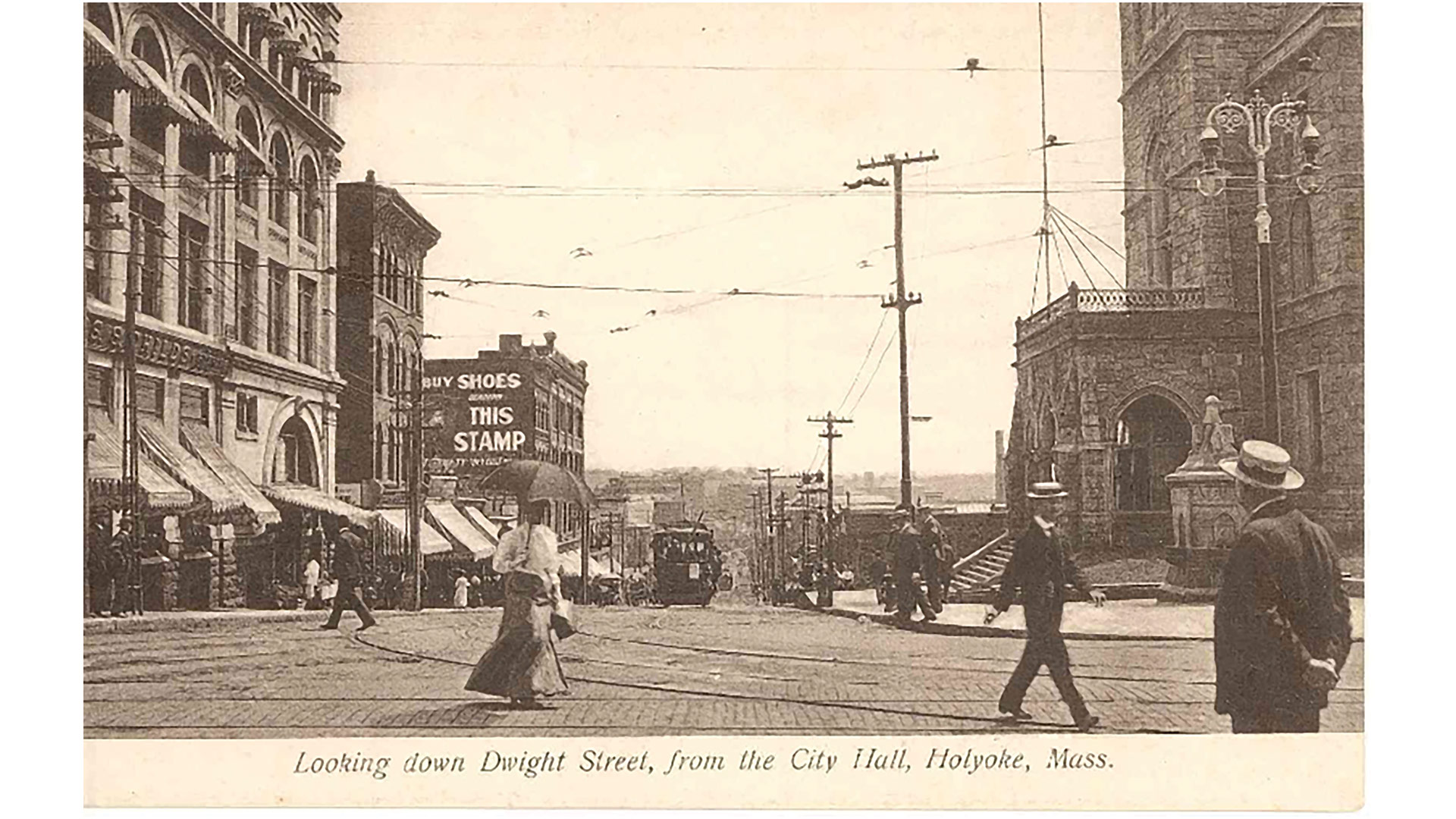
“I think we have a chance to re-industrialize in a grassroots way and build cool stuff while also building robust manufacturing jobs, which left Holyoke 40, 50 years ago.”
Inside that ‘gallery,’ along with the participating companies’ exhibit tables, were displays explaining what Holyoke brings to the table in several categories, including:
• Energy and water, including the lowest regional energy costs, a high percentage of renewable sources, access to power infrastructure through Holyoke Gas & Electric, and high water supply and wastewater treatment capacity for water-intensive processes;
• Space and location, including 1.5 million square feet of industrial space available in the city, local development resources, turnkey hardtech startup spaces, pre-zoned industrial parcels, access to I-90 and I-91 connecting to major cities, airport access, and regional rail and bus lines;
• Talent and workforce, including an existing manufacturing base, a rich higher-education ecosystem, technical training programs, and workforce supports like MassHire; and
• A number of other factors, from a strong local industrial supply chain to available pools of both public and private grant funding.

Alex Nichols says he and his two co-founders of florrent took advantage of some specialized equipment at UMass Amherst for early prototyping, then decided to stay in the region.
“We want to pitch why we’re here, why some of these other companies are here, and just try to get that into a communicable message where other people can say, ‘oh, there’s something going on in Holyoke,’” Stone said. “We want to show why it’s a good place, specifically for hardtech companies that are past their startup stage and into their scale-up stage.”
Companies like Clean Crop.
“Right now, we’re focused on seed treatment and finding ways to reduce overall pesticide use, so we can displace a lot of existing tools and give growers the same yields or better,” co-founder Dan White said. “We found a really strong initial market in leafy greens. So we’ve got quite a lot of demand that we’re just growing into right now, but we’re on track to expand our facility here to full utilization by the end of this year. And then the next step will be establishing our first facility in California sometime next year.”
White said it’s gratifying to see HardTech Holyoke grow since its first inception.
“When I look across at these other companies, the same reasons that we came here are why I think a lot of other folks are coming as well. We have really competitive utility rates, particularly electricity. But also, the city government has been incredibly helpful, and the ecosystem partners like Cofab are a huge part of the story too.”
Alex Nichols is one of three founders of florrent, a Sunderland-based startup that took part in HardTech Holyoke. The company is developing a material innovation that enables performance improvement in supercapacitor technologies.
The founders, Nichols explained, are UMass Amherst alumni who wound up using specialized lab space on that campus after they graduated. “They have some very specific equipment that allowed us to do early prototyping. That really brought us to the region. We stayed, we hired a team out here, and we’re here to stay.”
One Company at a Time
Stone said growth toward making Holyoke a hardtech hub may be gradual, but every step is meaningful.
“It’s a small city, so one company moving to the city a year could be meaningful for workforce development, which I think is a big part of this,” he told BusinessWest. “I think we have a chance to re-industrialize in a grassroots way and build cool stuff while also building robust manufacturing jobs, which left Holyoke 40, 50 years ago.
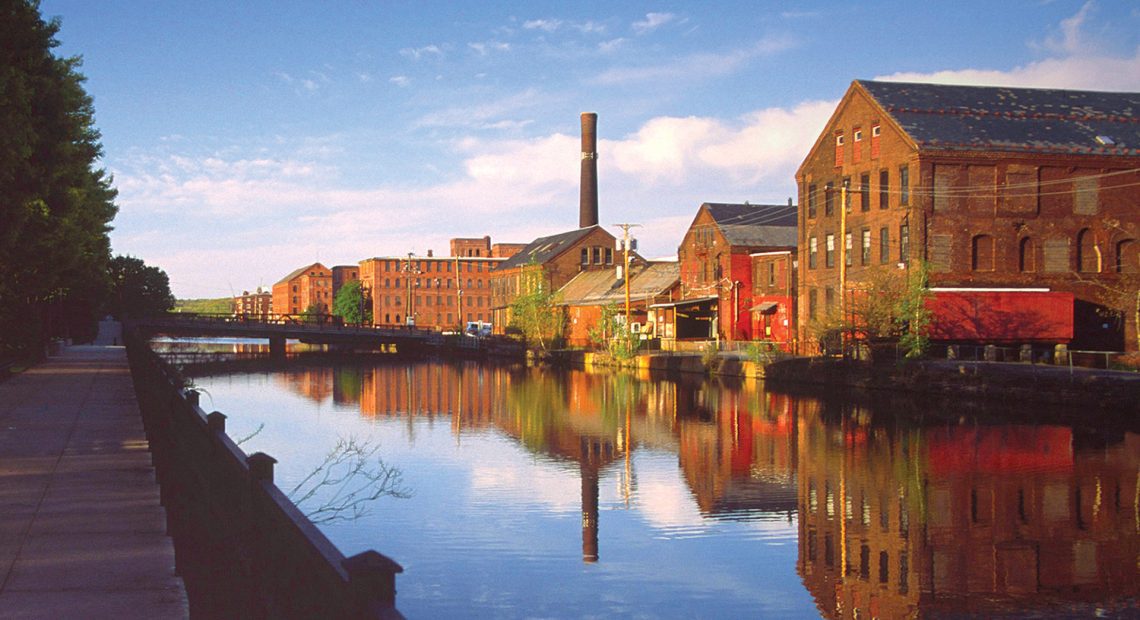
“So I think it’s a unique opportunity to do social impact work and create good jobs and create workforce training programs, and have some fun building some really novel, groundbreaking technology and utilize the infrastructure that was started 150-plus years ago in Holyoke; we can have a little bit of a repurposing for some of these tech companies.”
A wave of cannabis companies started moving to Holyoke over the past five years, he noted, and for some of the same reasons.
“I think that crest has peaked. But I think, over the next five, 10, 20 years, there will be a lot of this hardtech stuff. I have my ear to the ground because of Cofab, and there’s been a sea change over the past three or four years where a lot of people are trying to build stuff like this. And we’re able to take advantage of that.”
 Unless you’re from Holyoke, you probably won’t get it.