Construction Sections
Baystate Project Lifted a Troubled Construction Sector
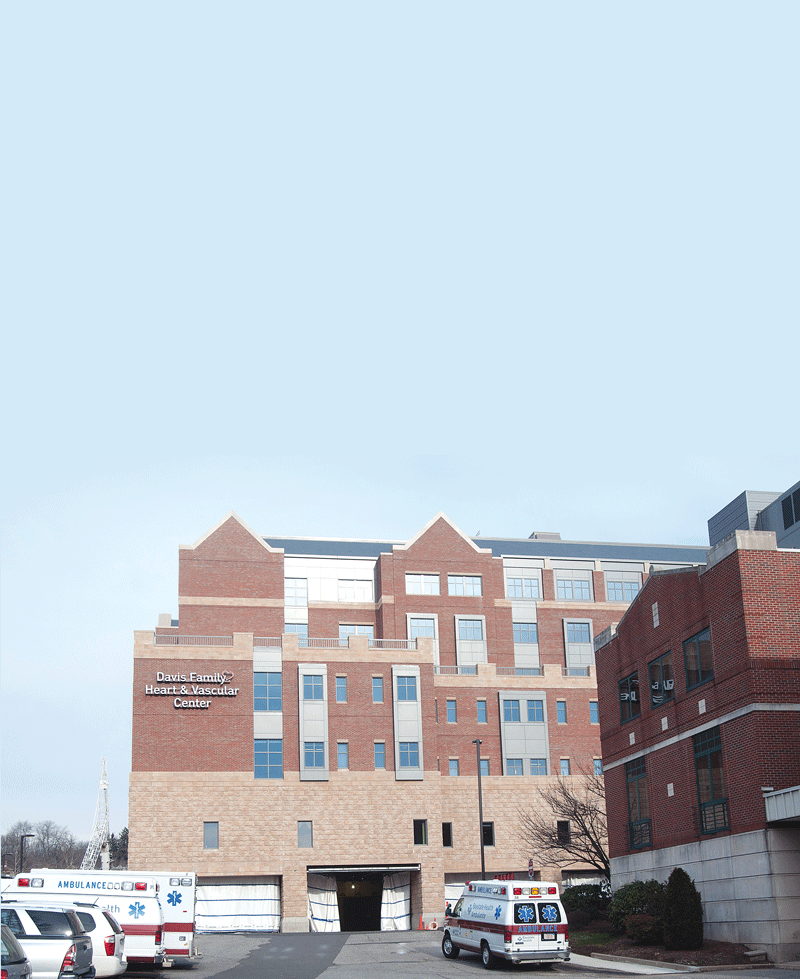
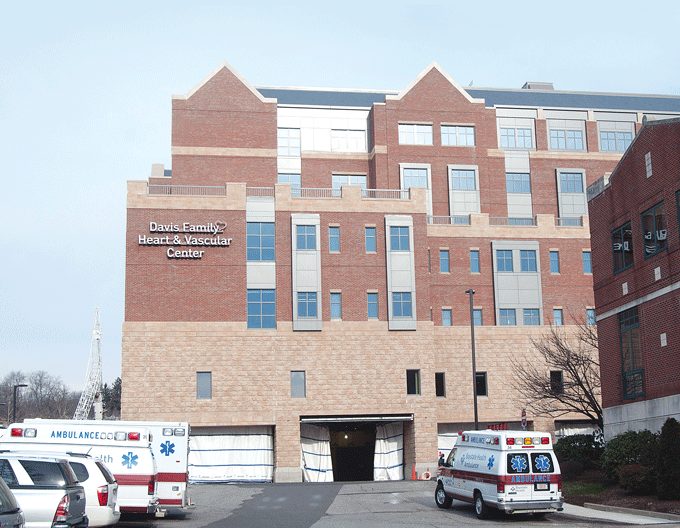
BaystateDPartLate in 2008, just as the economy began to slide into the Great Recession, officials at Baystate Health were having second thoughts about moving forward with their planned $250 million Hospital of the Future expansion. They eventually decided to press on, much to the relief of hundreds of workers in the construction trades — most of them local — who found the project a lifeline at a time when opportunities were scarce.

When the economy fell off a cliff late in 2008, the construction industry was already suffering — and the region’s largest health system had a big decision to make.
The issue before Baystate Health was whether to move forward with a $250 million expansion and renovation project dubbed the Hospital of the Future. Project executive Stanley Hunter said there was real anxiety about breaking ground when the economy was on such shaky ground.
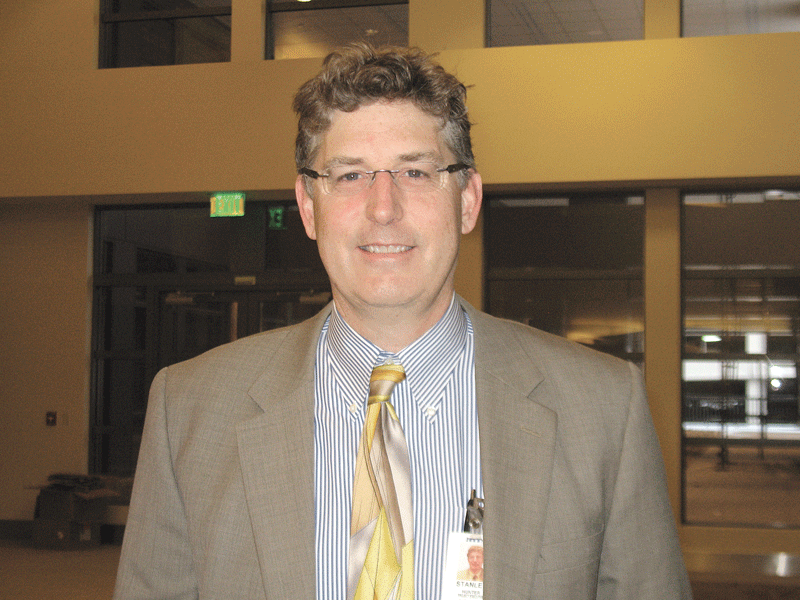
Stephen Hunter

Stephen Hunter says more than two-thirds of construction jobs on the Hospital of the Future went to people who live in Springfield or the surrounding region.

“We were at the point in 2008 when we were set to start construction, and that was the time — in September and October — when the economy took a real dive, and we really thought it through, as a campus, whether we should continue the project or not,” Hunter told BusinessWest.
“We went back to reassess the finances and the long-term medical impact, and through the course of a four-month evaluation, in early 2009, we decided to stay with the project,” he went on. “We held off on going to financing and making a final decision until the board decided to move forward with it, but that was a big decision, and it has really proven to be a huge benefit for the community that we went forward.”
The first beneficiaries — long before patients will reap the benefits of a new, state-of-the-art Heart and Vascular Center and, later this year, a new Emergency Department — were the builders and tradesmen — and women — who have reaped the benefits of steady work for almost three years, at a time when their industry really needed the jobs.
“As the project came along, a lot of the construction industry — union and non-union — was at an all-time high in unemployment,” said Fiore Grassetti, business agent and industry analyst with the Ironworkers Local Union No. 7. “This came at the perfect time for the building trades.”
That’s clear from a look at the numbers.
“Obviously, the crews there were different at various times, but we consistently had 250 to 300 construction workers on the site for more than two years,” Hunter said. “That’s a huge amount of jobs, and what we’ve been able to do is focus on using as much of the local workforce as possible.”

Hire Ground
That was certainly important for Grassetti.
“We wanted to protect our labor agreement with the hospital and guarantee that local workers were put on this project, as well as responsible contractors, meaning companies with health insurance and pension plans, and who actually train with apprenticeship programs,” he said. “The hospital really went out of its way to make sure the reps were contacted and local workers got the jobs.”
To break it down, Hunter tracked four categories of workers who labored on the project: those based in Springfield, those from outside the city but within the Pioneer Valley region, females, and minorities. Two-thirds of all workers over the course of the project to date have hailed from the city or surrounding region — “well beyond the expectations we had at the beginning of the project,” he said — while women and minorities comprised 15% of the workforce.
“That was something we were very pleased with, seeing those jobs stay local,” Hunter added. “We worked with local trade organizations to set that as a priority at the very outset of the project. And they were responsive to that; they wanted to help us, to really emphasize that as an important part of this project.”
Baystate also tracked the businesses it hired to work on the Hospital of the Future, and 40% of them are headquartered locally, while 55% of employers fall into one of the four aforementioned categories (Springfield-based, regional, female, minority).
“It’s been interesting; some guys — and women — worked on the job the whole three and a half years, like the company that did the site work and landscaping, Northeast Contractors out of Ludlow,” Hunter said. “They were here in the beginning, doing excavation, and are still here now doing landscaping.”
Meanwhile, Adams and Ruxton of West Springfield was brought on for casework, millwork, and general carpentry for the project. “They’re a small company that we’ve used before this project on smaller jobs, and when this larger job came up, they were able to help out with part of it.”
Baystate also hired Harry Grodsky & Co. for HVAC work. “Grodsky did mechanical systems and plumbing systems; they’re a pretty common name here, a Springfield company,” Hunter said. “They’ve been a great partner on this job, but also on many jobs.”
The new building is 640,000 square feet in size, which Baystate is fitting out in phases. Just under half the building will house the Heart and Vascular Program, which comprises an ICU floor for the most serious patients, two regular inpatient floors, space for outpatient procedures, and a spacious operating suite with cutting-edge technology and large monitors looming above the surgical tables.
Later this year, Baystate will unveil a much larger, state-of-the-art Emergency Department in the new building, replacing a current ER that was designed to handle much less traffic than it does. Other floors have been left unfinished as shell space so that the hospital can meet future needs that may not be apparent right now — hence, the Hospital of the Future moniker.

Kid Stuff
Hunter said many workers take pride in helping to build a facility they might have visited in the past, or might need in the future.
“This is the hospital they’d go to if there was an issue with their health or their family’s health,” he said. “To have worked here for that amount of time, they’re very proud of that.”
For many of the ironworkers, the project got personal when they started working under the watchful eye of patients and staff at Baystate’s Children’s Hospital. The kids would watch the workers, who in turn started communicating with hospital staff.
“The steward was talking to the nurse and heard a Wii game got broken or stolen from the hospital, so the guys took up a collection to replace the game,” Grassetti said. “it just snowballed from there.”
Indeed, not only did the workers supply a new Wii, but they added a new Xbox for older pediatric patients, several other donations of presents, and about $1,000 from their pockets to purchase whatever else the kids might want. Later, workers discovered that the chidren’s play area was outdated, “so we hit other contractors up, other unions, and some side organizations I worked with, and we collected about $10,000 to help fix up the children’s room.”
“From there,” Grassetti added, “it snowballed even more.”
He was referring to the beams.
Those started with a sign, one of many the children had set to making for the ironworkers. It read, “hello down there from the kids up here.”
The kids started using the signs to introduce themselves, and the workers started spray-painting their patients’ names on the steel beams they sent up into the grid — similar to the well-documented beam-painting effort at the Dana Farber Cancer Institute during one of its expansions several years ago.
“Every day, we’d get a couple new names and put them on the beams, and fly the beams up,” he recalled. “It was all about putting smiles on kids’ faces. Something as simple as a name on a beam could do that.”
The effort even extended to the topping-off ceremony, which incorporated a white beam decorated with the kids’ painted handprints, as well as a pillowcase fashioned into an American flag, teddy bears, and other items.
“It was pretty exciting to be part of that project, to work with the nurses and see the smiles on the kids’ faces,” Grassetti said. “We don’t get a lot of those opportunities, to give back to the community quite like that.”
Hunter appreciates those gestures. “They made some major donations to the Children’s Hospital and made several collections for gifts around Christmas. It was a really positive experience.”
Still, it all comes back to having the opportunity to work at a time when so many in the construction industry are still struggling.
“We had high unemployment in our industry, across the building trades,” Grassetti said, “and this put a lot of our members back to work, in many cases just as their unemployment benefits were running out. Baystate really did the right thing by working with us and with all the building trades and giving us the opportunity to work with them. We formed a good relationship.”

Joseph Bednar can be reached at [email protected]
Columns Sections
Understanding the Issues Surrounding Commercial-vehicle Insurance

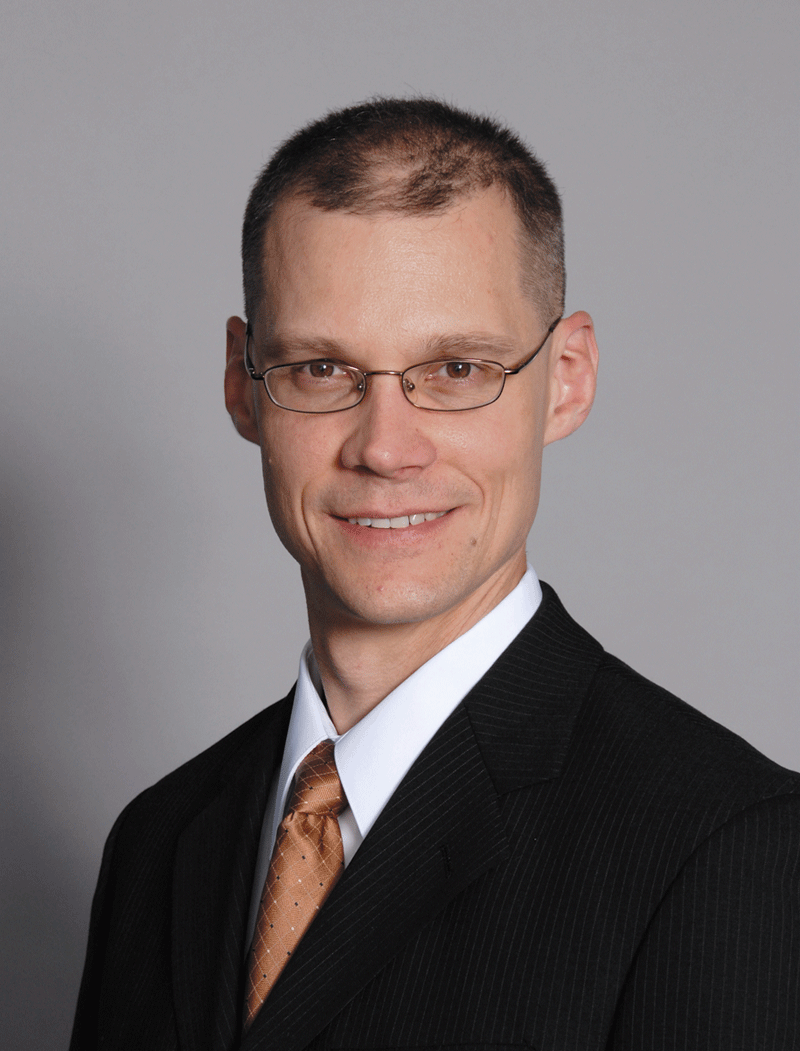
Corey Murphy

Corey Murphy

Company vehicles are vital assets. They are an integral part of our daily business practice. For many, the expense of keeping these vehicles on the road is a significant cost center for their company. They are also a major insurance liability issue that requires your attention if the matter is to be managed effectively.
A helpful tool for managing your company’s commercial-vehicle insurance program begins with a clear understanding of how insurance underwriters calculate your commercial insurance premium. A better understanding of this process puts you in a better position to lower insurance costs and also gain the confidence that your policy correctly reflects proper protection for your commercial-vehicle liability exposure.
The International Assoc. of Industrial Accident Boards & Commissions reports that commercial vehicles traveling on highways, as a group, are a significant risk of serious injury to employees. They are also associated with some of the most costly workers’ compensation claims. Insurance data confirms that traffic accidents are the source of a large portion of the total number of serious cases involving employee disabilities and fatalities. Within this commercial-vehicle risk group are truck drivers, salespeople, messengers, and collectors.
When pricing business automobile-insurance policies, underwriters generally rely on several considerations. They want to know what do you drive, where you drive, and how well your drivers perform. How you answer these questions has a significant impact upon your commercial-vehicle insurance cost. So it is important to fully consider how you respond to each criterion.
The question of what you drive considers the physical characteristics of the vehicle. It also extends to how you use the vehicle and what or who is carried in or on the vehicle. A vehicles is first classified by its gross weight, which is usually assigned by the manufacturer. This weight assessment indicates the weight of the vehicle when empty, plus the maximum load it is capable of carrying. Vehicles used to transport people are classified by their seating capacity, not vehicle weight. Generally speaking, the higher the gross weight — or, for passenger vehicles, the higher the seating capacity — the more it costs to insure the vehicle.
There are several standard classes of vehicles in the world of underwriting. The classes include private-passenger types, service vehicles, retail, and commercial. Again, the group that best suits your vehicles will determine their insurance ranking. A car that is driven by a salesperson to sell and service clients is considered a private-passenger type. If a vehicle is used to transport tools, equipment, or supplies to and from a job site, it fits into the service-vehicle category. An auto used to pick up or deliver property to individual homes or businesses is an example of the retail class. Vehicles used to transport goods or people are classified as commercial usage. This latter group can be further subdivided depending on the cargo they carry.
Where you most often drive is another consideration taken into account. Underwriters often define this by the ‘operating radius’ your vehicles typically drive within. Most often this is measured from a vehicle’s principal place of garaging. A local radius is considered 50 miles or less, an intermediate radius is 51 to 200 miles, and 200 or more miles is considered a long-distance classification. Interestingly, private-passenger vehicles typically have no radius restrictions assigned to them.
The exception to all of this is if your vehicle is most active in a particular geographic area outside its home-based location. For example, a vehicle that is principally garaged in Chicopee but chiefly operates in the Boston area may be assigned by the underwriter to the much-higher-rated Boston territory.
Depending upon your company’s driving record, you may earn a credit. If the driving record proves better than your industry’s norm, you may qualify for a credit. Conversely, if your driving experience exceeds the norm, your premium will be debited. Typically a business with five or more vehicles is subject to this experience rating. A formula taking into account similar-type businesses or industry standards is applied to measure your performance.
It is important to obtain a copy of the rating to ensure that it is accurate. Review this carefully with your agent to identify potential errors. Inaccurate calculations can cost your business plenty.
Finally, whom you select as your drivers significantly impacts your premium. Business owners must pay close attention to their driver selection. A driver-qualification program is a great and simple tool to manage who is allowed to operate your vehicles. Make certain your drivers remain eligible to operate your vehicles and have clean driving records. It is a great way to avoid driving up your insurance costs.

Corey Murphy is a certified insurance counselor and president of First American Insurance Agency in Chicopee; (413) 592-8118; [email protected]

Architecture Sections
At Dietz & Co. Architects, Sustainability Is a Way of Life
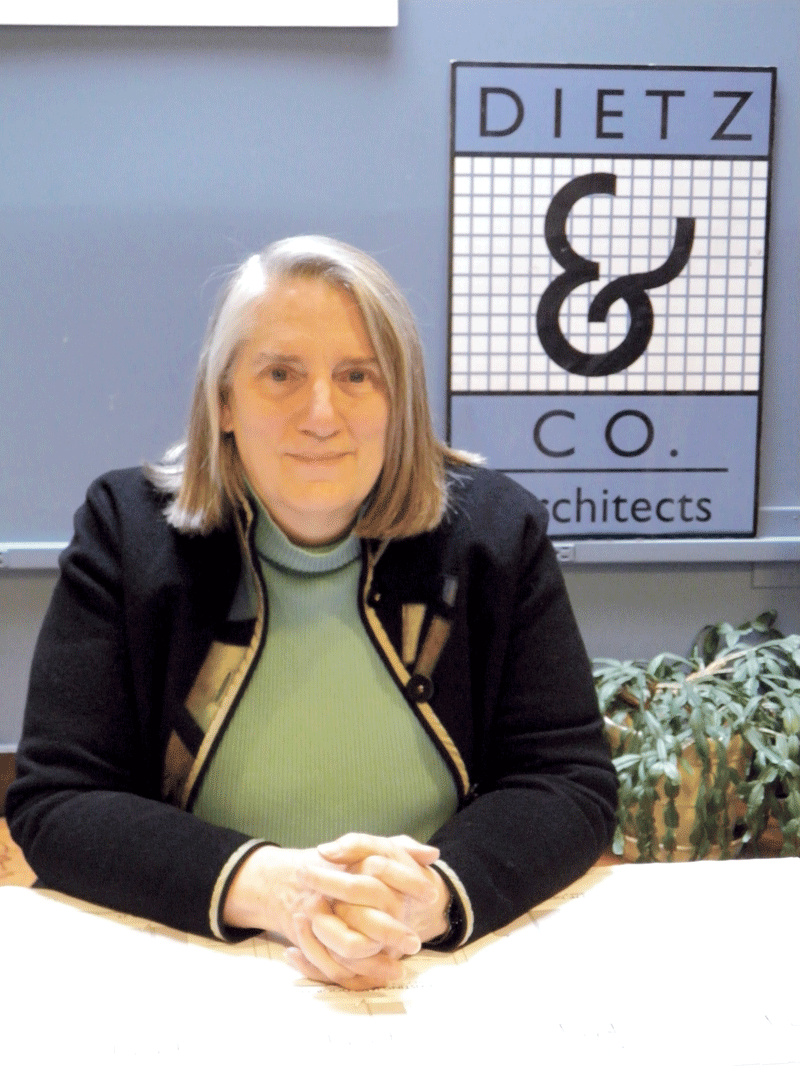
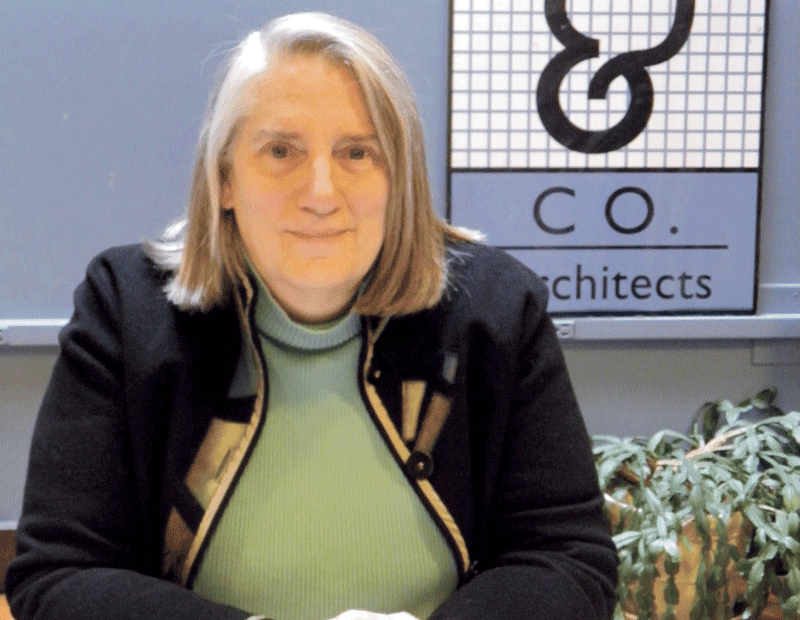
Kerry Dietz

Kerry Dietz, says the design work her firm does must meet clients’ needs and budgets and also create a sustainable and comfortable environment for the people who will occupy or work in the buildings.

Kerry Dietz was talking about sustainable building design.
And although many people associate the concept with ‘green’ construction, to Dietz, the word ‘sustainable’ encompasses a wide range of considerations.
“Design is critical and happens at many levels, and the word ‘sustainable”’means a lot of different things to our clients,” said the principal of Springfield-based Dietz and Co. Architects Inc.
At Dietz, it includes the comfort and health of those who will live and work in a structure, the aesthetics inside and out, and the costs to maintain a structure during its life cycle, which is especially important to nonprofits that may not have the resources to do maintenance work in the future. “It also includes the materials, the context a building sits in, and the image the client wants to project, because a building can become a brand (more about that later). “It is all critical to us,” she said.
Her company’s tagline is “design that looks good, does good,” and that value has remained key to the way the firm has approached its projects for the past 25 years.
“People know they can count on us to do quality work and do it right,” Dietz told BusinessWest, adding that the entire staff believes their designs should make a difference in the community. “We have never faltered from that initial desire to create architecture that also serves. We are a company that pledges to be a responsible citizen in everything we do.”
Their projects range from affordable housing, which has always been a mainstay of the firm, to education, health care, commercial, institutional, and historic-preservation work. Part of the company’s success is attributed not only to having employees who are experts in their fields, but also to the fact that everyone working on a project is well-versed in its finances.
“We are an open-book company, and my employees know the budgets on our projects, which includes how much money we are making and how many new jobs there will be,” said Dietz, adding that, when there is a profit, everyone shares in it. “People who come here from other firms are surprised at this, but I believe my employees need to know the rules of the game and what the parameters are in terms of hours and months allocated to it.”

Blueprint for Success
Dietz said architectural firms in Western Mass. have to be generalists. “There is not enough work here to be a niche operator unless you are global in scale,” she explained.
However, one of the firm’s challenges is competing with Boston-based companies. “Every time the economy goes south, they come here. And sometimes they bring a level of expertise we don’t have,” she explained. “For example, we haven’t designed 50 schools, and we have never designed a library, so we will never get one. People want to hire someone who has done the job before.”

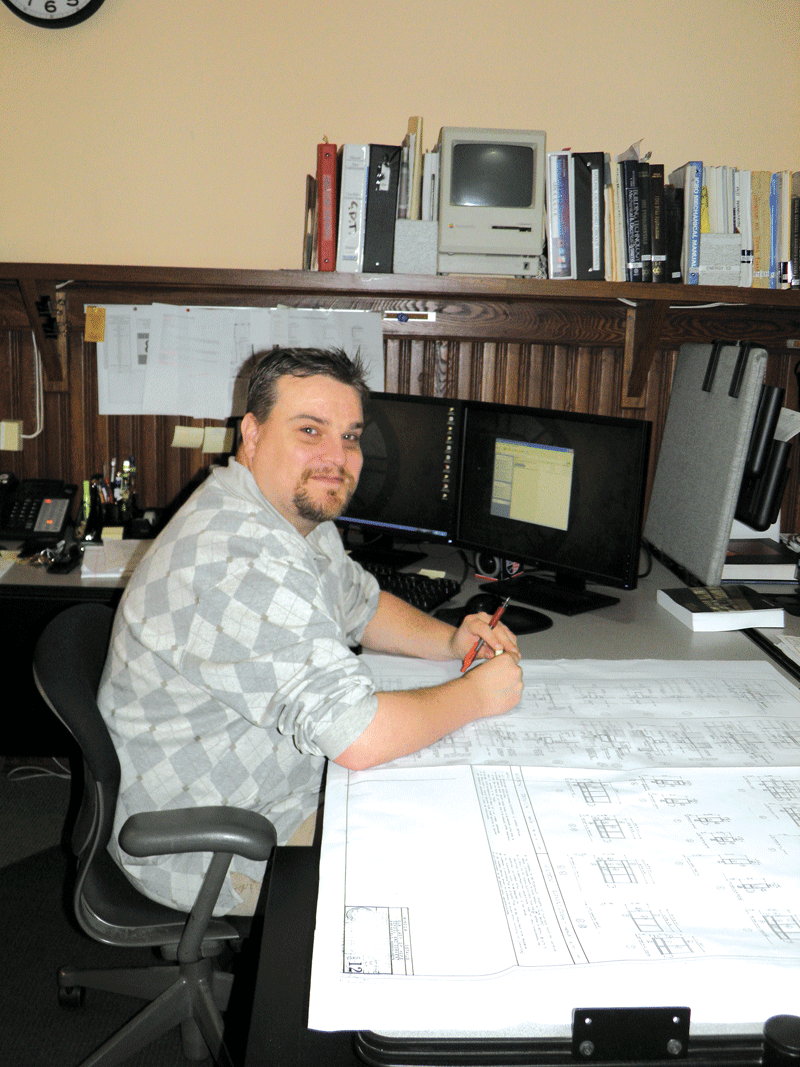
Michael Erickson, an architectural associate at Dietz & Co. Architects Inc.,

Michael Erickson, an architectural associate at Dietz & Co. Architects Inc., works on a design for one of their many projects that range from affordable housing to education, health care, commercial, institutional, and historic preservation.

The firm has several specialties, but its bread and butter has always come from work in the affordable-housing industry. “We understand the funding cycles and the regulations. Very often, it means scrambling to put together an application, then having to wait, but we are very familiar with that. Our core value is about serving the community.
“Architectural firms are altruistic to begin with, but for this firm, serving the community is at the core of our values,” she continued. “We tend to attract employees whose desire is to serve, and we do a lot of work for nonprofits. We understand the pressures they are under in terms of funding.”
Another niche for the company is education, especially colleges and universities, said Dietz, adding that the firm is also well-versed in the challenges, fiscal and otherwise, facing both public and private institutions. “Their decision-making and funding sources and flow are totally different from affordable housing.”
When schools receive grants, the work has to be done right away, and most institutions are dependent on state funding and bonding, so any time a financial crisis hits, it affects their budgets immediately, she went on. “But we like doing the work. It ranges from designing new environmental centers to cafés in science buildings, to work in their libraries.”
Banks are also a specialty. The firm designed Easthampton Savings Bank’s new main office and is renovating some of its branches. “We have also done work for United Bank and have been involved in master plans and studies,” Dietz said.

Staying Afloat
In recent years, the firm’s focus has shifted. It is designing less affordable housing and has broadened its base, in part because the economy has made it difficult for nonprofit developers to get funding.
“The heart of the recession was horrid; it was an equal-opportunity destroyer, and we were lucky to survive it. In 2008 and 2009, we had the worst two years we have ever had. Then in 2010 we had the best year we have ever had in our history,” Dietz said.
She attributes the firm’s success to carefully crafted strategic planning, and said its forecasting tools yielded indications that the recession was imminent. “By October of 2008, it was clear we were headed toward a major disaster. And we knew 2009 would be horrible and we were unlikely to get any new work.”
Although many architectural firms laid off employees or closed their doors, Dietz chose to keep all 19 employees on staff. She cut her own salary and reduced employees’ hours, taking advantage of a graduated program within the state’s unemployment system.
“It allowed us to reduce hours without substantially penalizing our employees, which was important, because we still had projects we were working on,” Dietz said. And although it would have cost less to lay employees off, she knew that, by keeping them, the company was positioned well, as there would be clients who would want to take advantage of declining construction prices.
The company has won a number of awards, and individuals within it have also earned accolades. Dietz said one of the firm’s architects received an e-mail from the Department of Public Health stating that her submission for the Caring Health Center, a recent project in Springfield delayed by the June 1 tornado, “was the best she had ever seen in her history.”
“The ability to make these people happy is a huge selling point for us,” Dietz said, adding that it takes a lot of expertise and work to meet complex and detailed requirements.
She added that much of the housing design they do is dependent on low-income tax credits, and they are also knowledgeable about those requirements due to their 25-year history in that arena.

Attention to Detail
An architectural design contains many elements and can become a “brand,” said Dietz, as she talked about the building the firm created for the YWCA of Western Mass. about 10 years ago.
“The organization almost died about 25 years ago,” said Dietz. “They came to us when they were on their last legs and had sites scattered in a variety of office buildings. They told us they wanted a new facility that looked corporate and would let people know their importance as one of the largest human-service agencies in the area.”
So the firm designed a building for the YWCA that “became a reflection of who they are and their vision for the future. Sustainable meant a lot of things to them, including choosing a high-efficiency heating and air-conditioning system as well as exterior materials that wouldn’t require maintenance,” she said.
Dietz said it’s critical to her company’s mission to think about who will use the buildings they design. Office workers need to have enough light and should not be distracted by noise or each other, for example.
“We really try to integrate our philosophy about sustainable design into everything we do; it’s not new to us, and some of the folks who work with me have been thinking this way for 20 years — sustainability is like religion,” she told BusinessWest, explaining that, although the U.S. Green Building Council developed a system of measurements for green building and Dietz and some of her employees are LEED-certified, there are a variety of measures that can be used to promote sustainability.
“We look at the human cost in terms of materials, rather than just the dollar cost,” she said. For example, although many buildings contain vinyl floor tiles, maintaining them requires expensive chemicals, which are not good for the environment; the people who work with them or the employees who will inhale the fumes of the cleaning solutions.

Unchanging Goals
“Since we opened our doors in 1985, we’ve worked to provide an environment that’s both challenging and nurturing,” Dietz said, adding that this begins within the company and extends to the nuances of every project.
“We never lose sight of our ultimate goal: to interpret our clients’ personal vision and create spaces that look great, feel great, and serve the needs of the people who will use these spaces,” she added.
And they do so in a way that creates comfort — and sustainability — now and for generations to come.

Construction Sections
Forish Construction Marks Another Milestone in Its Long History

Eric Forish says  he has always taken a slow and steady approach to growth.

Eric Forish says he has always taken a slow and steady approach to growth.

Eric Forish is a man of contrasts.
On the one hand, the man at play is a passionate and dedicated seeker of extreme winter sports. His adventures on ski slopes that few will ever traverse would give just about anyone a head of gray hair.
But the man at the helm of Forish Construction, the second-generation owner and current president, considers himself a conservative businessperson. “I always have been,” he told BusinessWest recently, “and I’ve always taken the attitude of slow and steady growth. That’s how we’ve been able to maintain ourselves over the last few years, which we have done despite the economy. We reinvest in our company — whether that’s tools or employees and staff. We continue in a controlled-growth mode.”
That approach to his family’s business is clearly a good blueprint for success in an industry that has taken some hard hits in not only this recession, but every other in its seven decades of operation. Since Forish Construction celebrated its last milestone, 60 years in business, the company’s founder (Forish’s father) passed away.
“That’s been the biggest change,” he said. “Dad’s no longer here. He was the one who created and developed this company, and of course there’s a void with his absence.” After the succession of operations to his son, Leonard Forish still came to work every day, and his legacy of how the business developed is one that the new generation credits for its success.
“Dad was always someone who embraced new technologies,” Forish explained. “But he did it with machinery and tools for doing certain operations. We always had the newest equipment to be able to increase productivity, to have the ability to do a better job, to be one step ahead of the next guy.
“And we’ve pretty much continued that tradition,” he continued. “When dad was here, he saw that, and I know he enjoyed that I was doing the same as he, in a different way — in my own field of interest.”
To that end, he said that, in construction, it is a mandate to stay current with not only the newest technology, but also training, education, regulations, licensures — all the products of an industry that is constantly changing.
“Staying current, no matter what your profession, is essential,” he said, “or else you really are moving backward.”
But as the company’s 65th year in business came to a close, and Forish looked ahead to his next milestone, it’s clear the business his dad built is headed onward and upward. “I know for a fact we’ll be here in another five years,” he joked. “So I guess the next milestone is 75 years.”

Industrial Revolution
Sitting in front of a wall of framed photographs showing the structures his firm has built over the last half-century, Forish said that a big difference in the scope of its work has come from the changing nature of the area’s business sector.
“We were living in a region of different industry,” he said. “There were still paper mills up and down the Connecticut River Valley. My dad focused on maintaining and working on all those paper mills and factories.
“We are still fortunate, though,” he was quick to add. “Our region has high-tech tooling, medical-related manufacturing, and many other types of industries that still prosper. And we still participate in activities at those sites and businesses. However, we have also focused and increased our volume of building construction over the years. Years ago, where we might have been more involved in a maintenance style of construction, now we have increased our volume of building-related activities.”

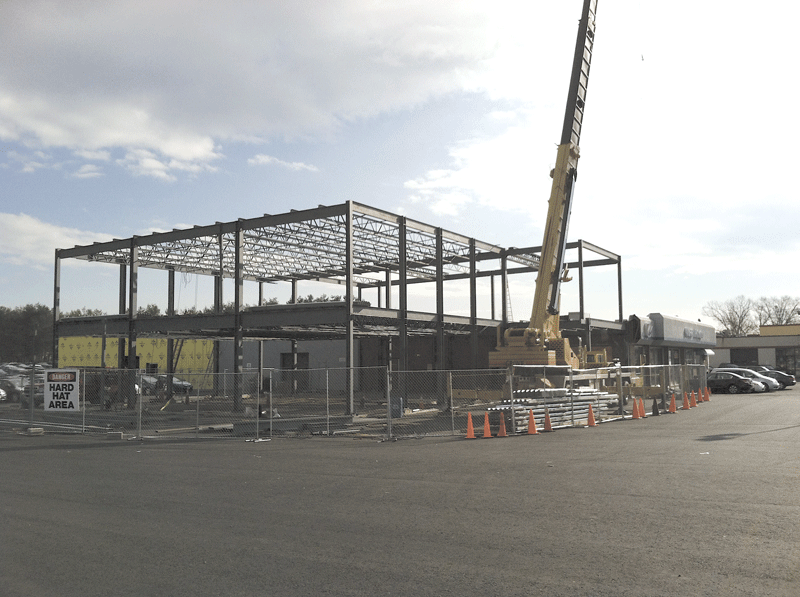
Framing goes up for the new Curry Honda in Chicopee.

Framing goes up for the new Curry Honda in Chicopee.

As an adjunct to building services, Forish has also added design services. “By self-performing the design aspect, we are able to keep a tight control on the final product and the ultimate cost. Design/build services often save time as well as money for the end user.”
Over the past decade, Forish has made a foray into publicly funded works, also. It is this facet of the construction industry that he said has not only helped his own firm, but, in many ways throughout this downturn, helped to keep his industry alive.
That changing face of the construction industry was a common refrain in his conversation with BusinessWest. And with so many years of growth and development, Forish said that his business has had a chance to perfect what it takes to not only get the job done right, but to get that job in the first place.
“Clearly in the private sector, the volume decreased,” he said. “Therefore, whatever activity is out there is highly sought. We’ve been successful because of the team we assembled over the years.
“As much as we’re diversified in our activities,” he continued, “my personnel is also diversified. Some are very well-versed in public sector, others in private, but overall, it’s a very strong team. That’s what is necessary in any business through difficult times. You need a strong staff to complement your organization.”
That team is vital to Forish’s own perspective on the concept of legacy. “I don’t have someone within my immediate family ready to follow me,” he said. “So what I’ve been doing is surrounding myself with good people, finding that team that can carry us forward.”

Solid Build
Forish cited another legacy that gives him a great deal of pride — the finished projects that dot the region.
“I’m proud to drive through areas and see buildings that my father completed, and then projects that we did after. Everyone in the organization feels a similar pride in our finished products. When they pass a facility that they worked on, they proudly tell their families, and their families proudly tell their friends. We all work together to create something that will last a very long time, and take great pride in doing so.”
He listed the names of several clients that have been repeat customers — Dirats Laboratories, Governor’s America Corp., as well as numerous auto dealers, public and private colleges, banks, municipal offices, and many others. Most recently, Forish completed the Steve Lewis Subaru expansion on Route 9 in Hadley, and is currently undertaking the full rebuilding of Curry Honda in Chicopee into that brand’s Generation 3 image program.
Like many other current owners of a family business, Forish said he knew early on that one day he would enter the profession of his father. The earliest address for Forish Construction was the homestead, he said, and his Tonka trucks were overshadowed by their real-life counterparts across the yard.
“I’ve always enjoyed being around construction projects and construction equipment,” he said. “It was just always part of my life. I became a civil engineer in order to gain the skills and knowledge to actually be able to go to the next level within the industry — to be the conductor of the orchestra, putting these projects together.”
He chuckled when he told the story of a recent late evening, when he stopped off at the School Street Bistro in Westfield for dinner before heading home. As he sat alone, “in walks John Reed, 95 years old, the owner of Mestek,” he said. “There’s a man who built himself a legacy.
“John told me again the story of how my grandfather worked for him, my father worked for him, and so did I,” he continued. “Not only has he used Forish Construction services for 65 years, but those of my grandfather, who was a stonemason before that.”
Forish clearly swells with pride in retelling and remembering the buildings that were built by his forebears. He calls it “an emotional connection” to the work and the region.
“Whether it’s the legacy of the family company,” he said, “or those who have worked with us, who helped us create these structures that go on for many years, I’m proud of what we do. Everyone here is proud of what we do.
“I’m thankful that we’ve had such good customers, good employees, and good opportunities,” he continued. “I’m thankful for everything that we’ve been blessed with in the past 65 years. Now let’s sit here and talk again in 10 years.”

Opinion
Workforce Training Is Good Business

There are 13 million unemployed Americans and approximately 3 million job openings in the U.S. today. According to the Mass. Department of Workforce Development, this 4:1 ratio of unemployed people to unfilled jobs is mirrored in our state as well. Despite high unemployment, a 2011 report found that more than half of business leaders, and 67% of small-business leaders, face a challenge recruiting employees with the right education and training. In Massachusetts, these unfilled jobs in the health care, education, and manufacturing sectors pay between $40,000 and $60,000 per year.
How can this be?
Primarily, it’s the result of a skills mismatch brought on by technological change, structural economic shifts, and decades of underinvestment in the types of basic skills and occupational training that are essential for a thriving economy. We need an education system that focuses not on a college degree, but on preparation for the jobs of today and tomorrow as identified by employers, not politicians and economic forecasters. And with the rapid evolution of technology, we need programs that continually train and retrain adults.
Middle-skill jobs across the country pay well and contribute similarly through income-tax revenues paid by employees and reduced unemployment payments. Many of these jobs involve specialized training on highly complex manufacturing machinery or in hospitals and labs. Regions can achieve economies of scale by partnering with vocational schools and community colleges to do this training on shared equipment with shared curricula.
Western Mass. faces a chronic shortage of skilled machinists in our high-technology, precision-manufacturing industry. This month alone, three companies in Hampden County are looking to hire more than 40 machinists at salaries that average $60,000. Without these workers, companies face unwelcome choices such as subcontracting the work to outside shops or expanding in other states with more skilled machinists.
We’ve had success in Western Mass. by developing public-private partnerships to support this type of skills training, but employers can’t do it alone. The partnership between employers in the Western Mass. Chapter of the National Tooling and Machining Assoc., the Regional Employment Board of Hampden County (REB), the state, and area school systems and community colleges has leveraged resources and created or retained good-paying jobs for over 1,000 Western Mass. residents.
Precision machinists, nurses, elevator mechanics, and EMTs require a foundation of advanced math, metrology, physiology, biology, etc. that employers cannot be expected to provide. Skills training by professional educators combined with on-the-job internships should be part of our public education system. And if properly aligned with available jobs by hiring employers, this will strengthen our economy by putting people back to work.
Congress should examine the business case for skills training:  the above-mentioned 3 million job openings, if filled, could generate over $9 billion in annual taxable income (assuming a low average salary of $30,000 per year). With a federal tax rate of 15%, this would provide more than $1.3 billion in annual payroll taxes as well as state tax revenues and reduced unemployment benefits. With estimated training costs of $2,500 per person, the government would recover its investment in less than a year.
Federal funding for workforce-training programs declined by almost 20% (adjusted for inflation) between 2002 and 2012, with a 29% decrease in funding for Workforce Investment Act programs for adults, dislocated (laid-off) workers, and youth.
Instead of improving the system to help workers enter or return to the labor market and match employers with skilled workers, Congress has proposed eliminating it or consolidating it to the point of elimination. Cuts to federally funded workforce training would hurt Massachusetts’ small-business owners, stifle job creation, and slow economic growth.
Our elected representatives, including Sen. Brown and Sen. Kerry, need to stop their colleagues from acting in direct opposition to the economic interests of Massachusetts and the needs of our state’s workers and employers.
These programs, when properly structured and administered, pay for themselves. The Western Mass. model developed by the local Machining and Tooling Assoc. and the REB can provide the case study for success. v

Larry Maier is president of Peerless Precision Inc. in Westfield and co-president of the National Tool and Machining Assoc. of Western Mass.; [email protected]

Departments Picture This

Send photos with a caption and contact information to:  ‘Picture This’ c/o BusinessWest Magazine, 1441 Main Street, Springfield, MA 01103 or to [email protected]

Cutting the Ribbon

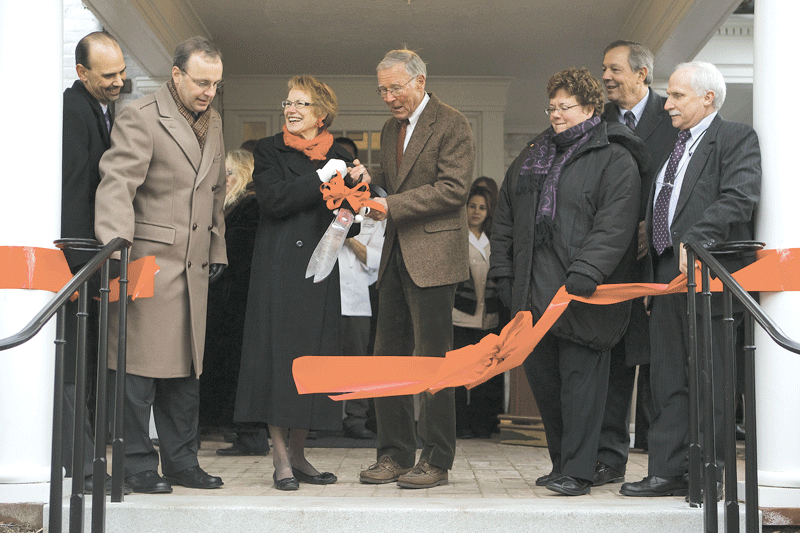
PicThis 1 0112cAfter an extensive renovation project, the Lord Jeffery Inn in downtown Amherst reopened to the public on Jan. 9. Doing the honors at a ribbon-cutting ceremony are, from left: Robert Reeves, general manager of the inn; John Musante, Amherst town manager; state Rep. Ellen Story; Charles R. Longsworth, chair emeritus of the Amherst College Board of Trustees; Biddy Martin, president of Amherst College; Rob Winchester, president of the Waterford Hotel Group; and Peter Shea, treasurer of Amherst College and president of the Amherst Inn Co.

Third Thursday

YPS2
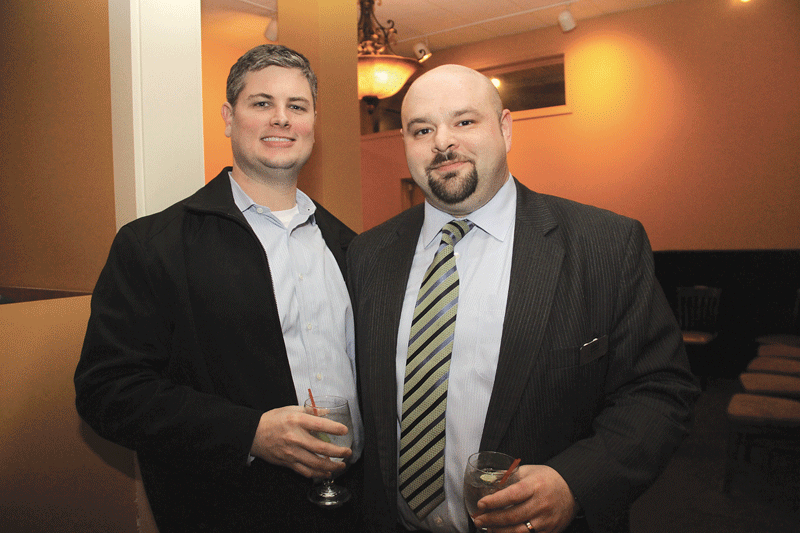
YPS1The Young Professional Society of Greater Springfield recently staged its monthly Third Thursday event at Nadim’s Mediterranean Grill in East Longmeadow. Top, Nick Gelfand, owner of NRG Real Estate Inc., with Christopher Rinaldi of Excel Technologies Inc. Bottom, board Member Ron Laprise, owner of Laprise Chiropractic, with Laura Judd.


Groundbreaking Development

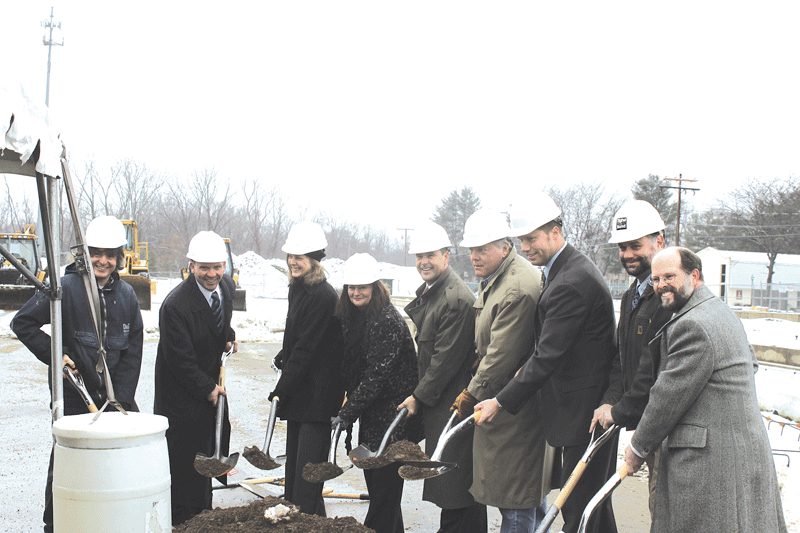
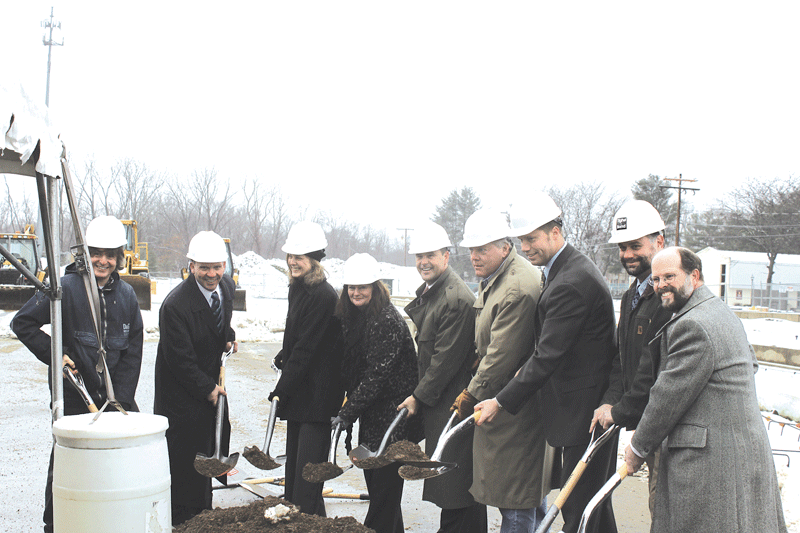
DevAssocGroundbreakingBW-0112cGroundbreaking ceremonies were recently staged at the site of what will become known as the Northampton I-91 Professional Center, which will consist of two three-story Class-A office buildings designed for professional and medical tenants. The project is being spearheaded by Agawam-based Development Associates. From left are: David Masiello, owner of R.P. Masiello, general contractor, the builder chosen for the project; Travis Ward, operations manager for Development Associates; Suzanne Beck, executive director of the Northampton Area Chamber of Commerce; Eileen O’Leary Sullivan, co-owner of Northampton I-91 Professional Center; Ken Vincunas, general manager of Development Associates; J. Curtis Shumway, co-owner of the Northampton I-91 Professional Center; Northampton Mayor David Narkewicz; Brian Huntley, project manager for Tighe & Bond, the engineering firm consulting on the project; and Pat Levelle, CFO of CSO, a future tenant.

Court Dockets Departments
The following is a compilation of recent lawsuits involving area businesses and organizations. These are strictly allegations that have yet to be proven in a court of law. Readers are advised to contact the parties listed, or the court, for more information concerning the individual claims.

CHICOPEE DISTRICT COURT
DHL Global Forwarding v. Diecast Connections Co. Inc.
Allegation: Non-payment of goods sold and delivered: $5,251.11
Filed: 12/9/11

Viking SupplyNet v. Statewide Mechanical Contracting Inc.
Allegation: Non-payment of goods sold and delivered: $5,059.04
Filed: 1/4/12

HAMPDEN SUPERIOR COURT
A.J.’s Pro Shop v. AMF Bowling Center Inc.
Allegation: Damages resulting from violation of lease agreement: $25,000+
Filed: 12/6/11

David A. Faita v. East Springfield Transportation Inc.
Allegation: Minority stockholder suit seeking equitable relief: $25,000+
Filed: 12/13/11

Iglesia Koinonia Inc. v. Primera Iglesia Cristiana Misionera, et al
Allegation: Fraudulent sale of property: $300,000
Filed: 12/16/11

Reynolds & Reynolds Co. v. Medeiros Williams Inc.
Allegation: Balance remaining on previous judgment: $32,140.88
Filed: 12/14/11

T.D. Bank, N.A. v. Advanced Corp. f/k/a Advanced Petroleum Installation Inc.
Allegation: Default on promissory notes: $159,080.89
Filed: 12/20/11

HAMPSHIRE SUPERIOR COURT
De Lage Landen Financial Services Inc. v. Value Discount Inc. and Abdul Chaudry
Allegation: Breach of lease agreements: $168,699.90
Filed: 12/5/11

Margaret Mercier and Marian Kennedy v. S.E. Sulenski Roofing and Siding Co. Inc.
Allegation: Breach of contract, negligent misrepresentation, and failure to perform remodeling services: $408,789.54
Filed: 12/19/11

Mary Bartoli v. Rolling Green Apartments
Allegation: Negligence in property causing slip and fall: $143,891.45
Filed: 12/14/11

HOLYOKE DISTRICT COURT
James C. McCann, D.C. v. Travelers of MA
Allegation: Claim for unpaid PIP benefits: $1,352.50
Filed: 10/26/11

NORTHAMPTON DISTRICT COURT
Waste Management New England Environmental Transport Inc. v. Northampton Nursing and Rehabilitation Center, LLV
Allegation: Breach of commercial service agreement and non-payment of waste-disposal services: $7,082.23
Filed: 12/2/11

PALMER DISTRICT COURT
Anna Maria Ribas-Dias and Joe Dias v. Adam Quenneville Roofing and Siding Inc.
Allegation: Breach of contract and misrepresentation relating to the installation of a new roof: $7,000
Filed: 11/22/11

Lonnie Desmariais v. Curtis Factory Plus Inc.
Allegation: Negligence and breach of contract: $5,141.39
Filed: 12/7/11

SPRINGFIELD DISTRICT COURT
Liberty Mutual Insurance Co. v. Maillett Development
Allegation: Balance remaining on workers’ compensation insurance policy: $10,212.98
Filed: 12/12/11

Liberty Mutual Insurance Co. v. Peter Amorello Construction and Demolition Inc.
Allegation: Balance remaining on workers’ compensation insurance policy: $7,229.19
Filed: 12/12/11

R.S.M.S., LLC v. T.K.O. Insurance Agency Inc.
Allegation: Collection of remaining balance on commercial rent: $1,250
Filed: 12/16/11

WESTFIELD DISTRICT COURT
Mark Lund v. Reed’s Flooring and Mark Reed
Allegation: Breach of contract for shower installation and misrepresentation: $7,419.30
Filed: 11/14/11

Commercial Real Estate Sections
Enterprise Center Has a New Lease on Life

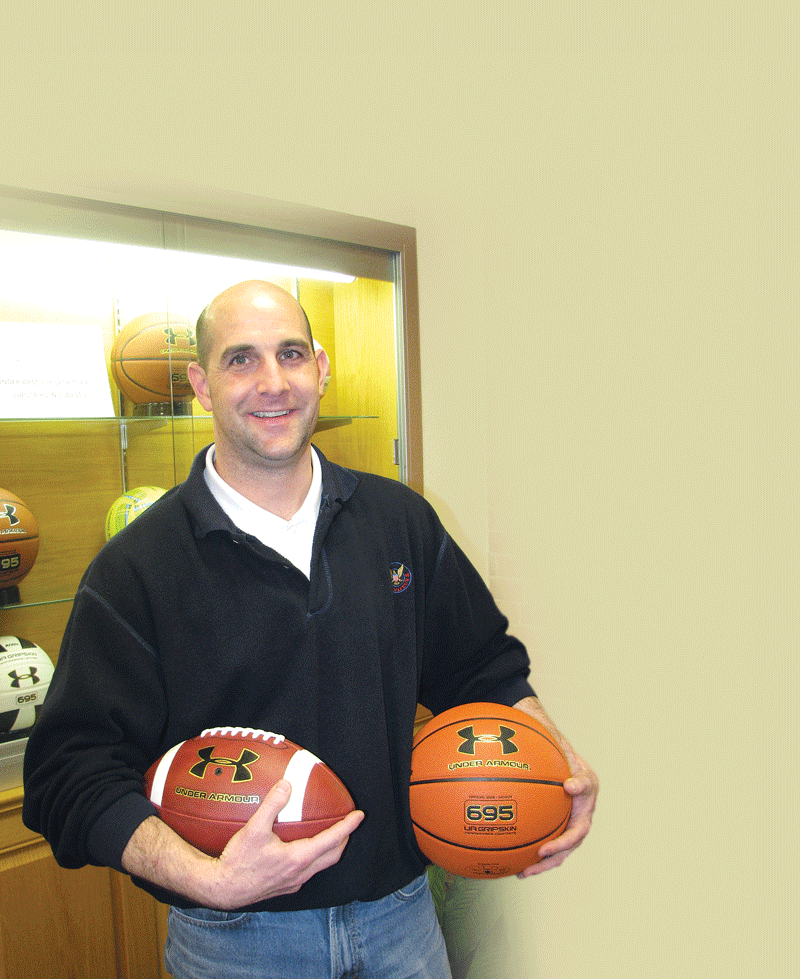
Dan Touhey, a partner in psi 91, which develops and distributes inflatable products for Under Armor

Dan Touhey, a partner in psi 91, which develops and distributes inflatable products for Under Armor, is one of many new tenants in the Springfield Enterprise Center.

One of the main marketing taglines for the Scibelli Enterprise Center at Springfield Technical Community College is ‘Business Building.” This explains both what the facility is — a facility housing small businesses, said Director Marla Michel — and what it does, which is to help certain clients develop, mature, and get to the next level. In recent years, the focus has been primarily on the former, she said, noting that, as the economy sagged, the emphasis was on filling space. Moving forward, the shift will be more to the latter, which has always been the primary mission.

Marla Michel acknowledged that Square One is not exactly the kind of tenant that the creators of the Scibelli Enterprise Center, a business incubator, had in mind when they opened its doors more than a dozen years ago.
The provider of early-childhood-education programs and related services is certainly not a startup (in fact, it’s one of the oldest businesses in Springfield), and it’s not a fledgling outfit looking for advice and technical support on how to get to that proverbial next level — two variations on the desired-tenant profile.
But the institution needed office and operations space after its headquarters and other facilities on Main Street were destroyed in the June 1 tornado, and the Technology Park at Springfield Technical Community College, as well as the so-called SEC, which is part of that complex, provided an attractive, accessible, and affordable option.
“So by taking seven suites in the SEC, Square One has helped forge a classic win-win scenario,” said Michel, the SEC’s director, adding that the company moves into centrally located Class A space not far from where it was before, while the enterprise center gains what she called “much-needed breathing room.”

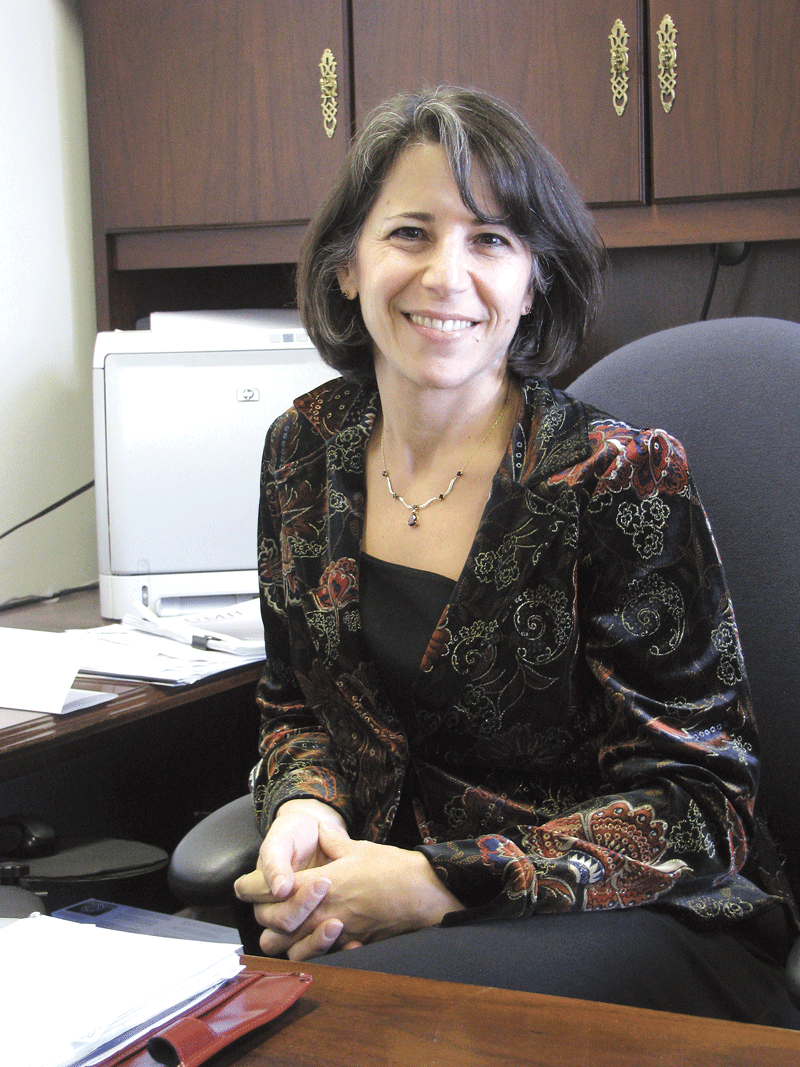
Marla Michel

Marla Michel says Square One’s arrival at the SEC provides the facility with much-needed breathing room to conduct strategic planning.

Elaborating, Michel said the SEC, through its arrangement with Square One and other recent additions to the tenant roster, has gained a strong measure of financial stability and thus the time and opportunity to conduct some strategic planning, marketing, and other steps to attract more of the type of tenants that those aforementioned creators have in mind.
Companies like psi 91, which moved in just over a year ago.
Started by two former Spalding executives who opted to stay in the region when the corporation left Springfield for Kentucky in 2009, the venture — which takes its name from its function (inflatable products and their unit of measure, pounds per square inch) and its location, off the interstate — develops and distributes products for apparel maker Under Armor. A basketball and football were brought to the market last year, its first in operation, and a volleyball and soccer ball will follow later in 2012 (a rugby ball is also in the works).
There’s also Tickets for Groups, which, as the name suggests, serves groups of 15 or more looking for tickets for everything from Rockettes performances to the current traveling show known as “Bodies: the Exhibition,” touted as a celebration of the human form. Deb Axtell, who started the venture after working as director of group sales for Radio City Music Hall and then Disney Theatricals, and moved into the SEC in 2010, said the King Tut exhibit that was in Discovery Times Square for several months before recently returning to Egypt was a “home run” for the company, and she’s looking for the another show that will fit that description.
Another recent arrival is Barkley Logistics, a third-party logistics company owned by Robin Sauve, that arranges the transportation of shipments between two points, with palletized freight — usually much less than a truckload — comprising much of the business volume. There is a separate division, called My Luggage Valet, which will do the same thing with suitcases, golf clubs, and other items that one may not want to trust to an airline.
The most recent addition, meanwhile, is Sanitas Solutions, a technology partner focused specifically on helping individual physicians and practice groups make the transition to electronic medical records.
To attract more ventures of this type and thus secure long-term sustainability for the SEC, Michel is preparing what amounts to a new strategic plan. As part of that process, the college has hired a consultant, Jim Robbins, a noted expert on business incubators and innovation clusters, to help develop a game plan for the facility as well as implementation processes.
Summing up what Robbins has told the college thus far, Michel said he’s suggested strongly that it undertake revenue-diversification efforts, meaning more income streams — “right now, what we have is the state [through the college] and rent, which is a model that’s not sustainable,” she explained. Also, he has suggested a more regional approach to marketing, greatly increasing the number of incubator tenants, and also providing services outside the walls of the SEC to make it more of a regional resource.
“Once we take location off the table and start shoring up the services an incubator provides, that an enterprise center provides, we can potentially have a much larger economic impact,” she explained, adding that successful incubators around the country have both ‘resident’ and ‘non-resident’ programs, and the SEC will look to emulate those models.

What’s In the Cards?
Like most people in business and education (she’s in both, technically), Michel, who splits her time between the SEC and UMass Amherst, where she serves as executive director for economic development and regional partnerships, has a stack of business cards on her desk. Only, her stack is unlike almost any other.
Her cards are what she calls “three-dimensional.” They fold into small, four-sided cubes, many of which she has sculpted into a multi-level tower. Printed inside the cube are the words ‘business’ and ‘building,’ which, depending on which order they’re arranged, explains both what the SEC is and what it does, said Michel.
And moving forward, it would like to put much more emphasis on the latter half of that equation, and this explains why Square One’s move to the facility is so important.
In recent years, the SEC has suffered from high vacancy rates (near 50% at the low point) that have stemmed from several factors, but mostly the sluggish economy and a lack of aggressive marketing, said Michel. She noted that her initial focus when she arrived 20 months ago, as part of a cooperative agreement between the college and the university, was much more on filling space than the mission of incubating fledgling companies.
Indeed, not long after she took the helm, college administrators gave her the go-ahead to bring in tenants that were non-incubator-related, with the over-arching goal of lessening the financial burden imposed by the center on the college.
She’s added several companies and agencies that fit that description, one of many initiatives designed to help position the center for a stronger, more impactful future when it comes to economic development and all-important job creation.

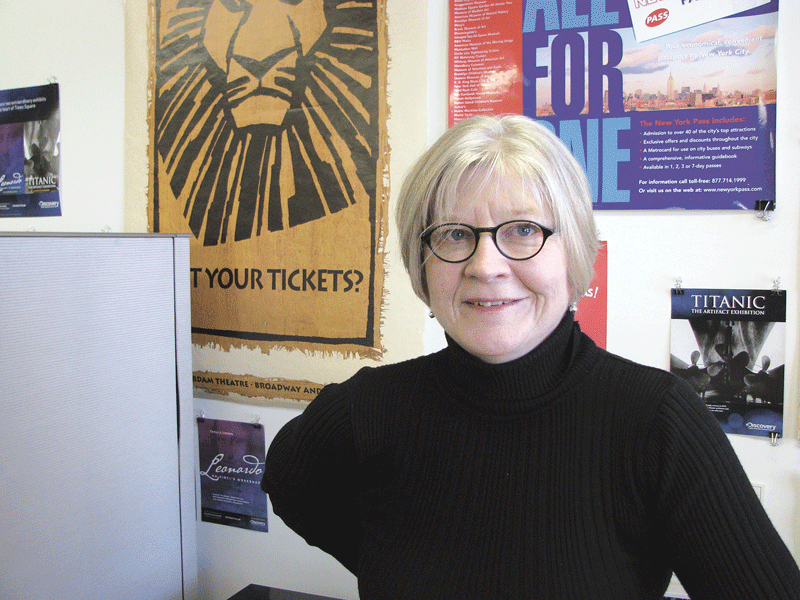
Deb Axtell, owner of Tickets for Groups

Deb Axtell, owner of Tickets for Groups, says many SEC incubator tenants leave kicking and screaming — and she intends to do the same.

These steps include bringing more space on line, or into the ‘leaseable’ category, by taking some unused or underutilized square footage and retrofitting it for paying tenants. She’s also reduced the rates on suites, from $800 per month to $560, and created what is now known as the E-Zone, located in the former student incubator. It houses cubicles leased by budding entrepreneurs who don’t require a suite but do need some space and an Internet connection to advance their business concept.
Meanwhile, she’s also been building what she calls “business clusters” within the center. There are now three of them — Cleantech, IT, and Education, and the hope is that a growing critical mass will help attract other ventures in each category.
With these and other efforts, as well as the relocation of Square One following the tornado, Michel has built up occupancy to near capacity, with tenants falling into four categories:
• Incubator Clients, now totaling six, including psi 91, Tickets for Groups, and Barkley Logistics;
• Anchor Tenants, including the Mass. Small Business Development Center Network, SCORE, and the Small Business Administration;
• SEC Tenants, or non-incubator clients, including Square One, Alliance Medical Gas, CTC Electric, the Achievement Network, and the Veritas Preparatory Charter School; and
• STCC Tenants, or agencies related to the college, such as T.W.O., the workforce-training initiative undertaken in collaboration with Holyoke Community College, and the MassGreen Initiative, a program designed to train people for jobs in green-energy businesses.
The goal moving forward, Michel said, is to gradually increase that number of incubator tenants, but also enable the SEC to have a greater impact on economic development through both resident and non-resident programs aimed at helping ventures survive their first few years in operation and stay in business rather than failing or selling out.
“Our region is lacking services that help companies that are already in business,”she explained. “We have a fair amount of services for those who want to get into business, but when they’re in business, we have to make services more accessible that will teach companies how to grow rather than sell.”
At the moment, she focused on steps ranging from more aggressive marketing of the square footage to simply telling the stories of the people who now have a business address of 1 Federal St., Building 101.
They are all unique, but with several common denominators, including, in many cases, a need and desire to have a place to bring potential clients other than the corner Dunkin Donuts.

A Fortuitous Bounce
Such was the case with Dan Touhey, a former sales executive with Spalding (and BusinessWest 40 Under Forty winner) who opted not to relocate his family when the corporation that owned the sporting-goods maker moved it to Kentucky.
He took his career in a few directions, including a stint in business consulting and an assignment teaching management at UMass, where he met Michel. Later, after he and former Spalding colleague John Frank decided to launch psi 91 together, Touhey asked Michel if the partners could use one of the conference rooms in the SEC to meet with Under Armor executives.
“We had been meeting at Panera Bread or wherever we could grab a cup of coffee, and it just wasn’t working for us to have confidential conversations in that environment,” he told BusinessWest, adding that, to make a long story a little shorter, he and Frank inked their first contract in that conference room and shortly thereafter decided to move into the SEC. Meanwhile, Michel created a new policy whereby any pre-revenue-stage company can use the conference room at the enterprise center.
Just over a year after opening, Touhey and Frank can claim a number of success stories. For example, if one was to look really hard — and past the new (and many would say garish) uniforms worn by the University of Maryland football team last fall — he or she would notice that the team’s offensive unit uses an Under Armor pigskin.
“That’s how it works in college football — the offensive team can decide what ball it wants to use,” said Touhey, adding that several squads that wear Under Armor apparel are now using its footballs and basketballs as well.
“The beauty of our relationship with Under Armor is that we can come under the umbrella of the master brand of that company,” he explained. “And they have a very strong relationship with about 15 colleges and universities; for example, the University of Maryland is an all-Under Armor school, and it used our football last year.
“In basketball, it’s a little different; you play the ball the home team decides to use,” he continued. “If you go Auburn, Texas Tech, Towson University, LaSalle, Lamar, the University of Utah, and others, they’re playing with our basketball.”
The company has added staffing, including other former Spalding employees, and is already tight on space in its 635-square-foot facility. Touhey anticipates that psi 91 will have to move to larger quarters sometime in 2013, an eventuality he’s not looking forward to, because he likes the building, gains from the expertise of Michel and others, and enjoys sharing war stories with other entrepreneurs.
Axtell can relate. She’s not looking to move out either, although she understands that ‘graduation,’ as it’s often called, is part of the incubation process.

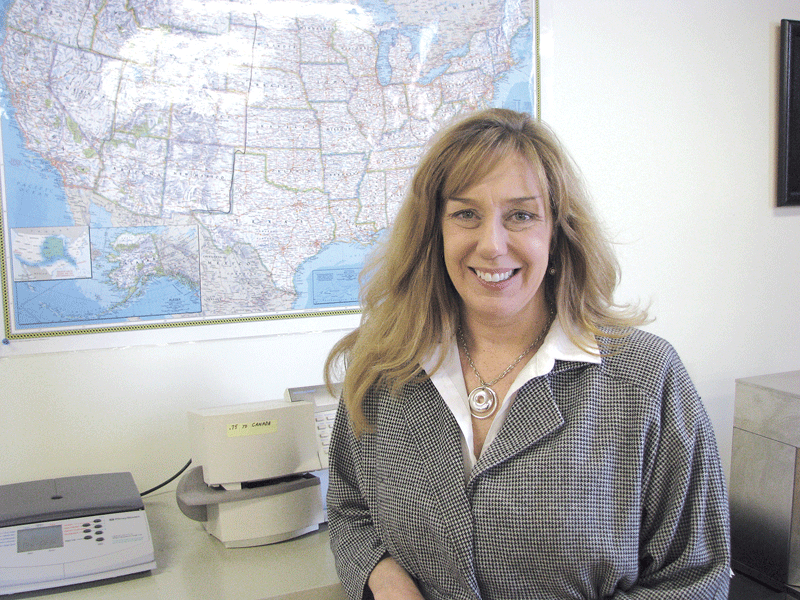
Robin Sauve, owner of Barkley Logistics

Robin Sauve, owner of Barkley Logistics, says one of the main benefits from being an incubator tenant is being able to learn from people who have “been there and done that.”

For now, she’s looking for the next King Tut exhibit, for which she booked a number visits to Gotham. “I could use another blockbuster,” she said, noting that field trips comprise a large part of this business, which she started on a lap-top computer in her bedroom eight years ago after tiring of the commute from Western Mass. to New York while working for Radio City Music Hall and Disney.
She eventually moved into a tiny office in East Longmeadow and quickly outgrew that. Thus commenced a search for larger and better quarters that ended at the SEC; she moved in just before Michel arrived.
She told BusinessWest that she’s now up to six employees — four in the SEC, and two who work out of their homes in New York — and is in the process of “taking a snapshot” of her business and writing a new five-year plan.
Meanwhile, Sauve is focused more on crafting a two-year plan for Barkley Logistics, which she created not long after Premiere Logistics, which she served as vice president of business administration before it lost its line of credit, then its reputation, and then most of its customers.
She bought the equipment (mostly hardware and software) used by Premiere,  and, seeking a clean break from that venture, started Barkley Logistics, which has been growing steadily since its formation, thanks in large part to support from the panel of advisors assigned to the company as part of its incubation experience.
“There’s an enormous sense of affirmation when you’ve met with people who have been there and done that,” she explained. “The people on my panel, designed to meet my specific needs, have been instrumental.
“As much as I have a general business-management background, I’m not an accountant,” she continued, noting that there is one on her panel who has been helpful with the many financial aspects of operating the venture. “The same with marketing — I’m not an advertising person, so some of the tips I’ve been given on that have been tremendous.
“Just hearing from other people who have run their own business and been through many of the same things I’m going through is a great benefit,” she went on. “It’s comforting to hear them tell me I’m on the right track, and also to know that, if I was doing something wrong, they’d be the first to let me know about it and steer me back in the right direction.”

Room for Improvement
Axtel told BusinessWest that she knows how it’s supposed to work in a business incubator.
“You’re supposed to get the support you need, spunk up, and then you’re thrown out,” she said. “I’ve heard stories that people exit here kicking and screaming, and I hope to be one of those.”
But exit she will — eventually — because, while the SEC is indeed a business building, the focus for the future will be more on what the facility does. And with that in mind, Michel intends to take full advantage of the breathing room that she’s been given.

George O’Brien can be reached at [email protected]

Architecture Sections
Recent Projects Embody Firm’s Commitment to ‘Preserve, Adapt, Renew’

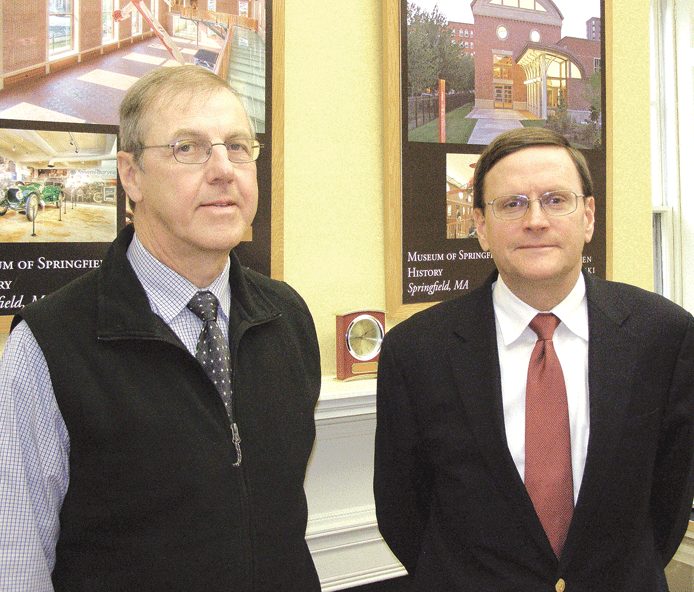
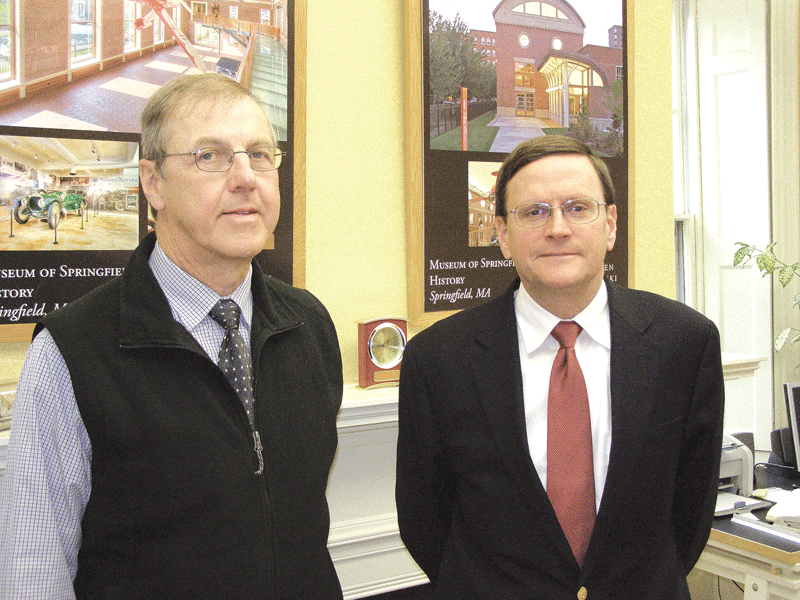
Stephen Jablonski (right) and Brian DeVriese.

Stephen Jablonski (right) and Brian DeVriese.

Architects Stephen Jablonski and Brian DeVriese have crafted an impressive legacy of projects involving schools, libraries, museums, parks, and a host of other structures. But rarely have they been tested by the time constraints they faced last summer when Springfield College tapped them for repairs of three tornado-damaged residence halls. The resulting success story is a lesson in teamwork, setting goals, and adapting to change.

When Stephen Jablonski and Brian DeVriese arrived at Springfield College on June 2, the morning after a devastating tornado ripped through the city, they were shocked by the extent of the damage on campus.
But they had no time to lose.
Due to a relationship that stretches back a decade and includes the award-winning Stitzer YMCA Center, college officials quickly tapped Jablonski DeVriese Architects to work with Erland Construction of East Windsor, Conn. to repair three hard-hit residence halls — International, Reed, and Massasoit — as well as a damaged power house.
There was one big question, however: could the job be done in a mere 10 weeks, or would students expecting to live in those dorms need to find other lodging for the start of the fall semester?
“We worked very carefully with the Springfield Building Department because we didn’t want anyone saying we were going too fast,” Jablonski said, looking back on a hectic summer that, indeed, saw all three dorms ready for students by mid-August.
“The Building Department worked excellently with us,” he recalled. “They could easily have said, ‘are you kidding? The whole city was hit by a tornado; we’re not going to approve anything for six months, but we’ll take it under advisement.’ They were there on site the first day.
“As far as we know, International Hall was the tallest building completely damaged in Springfield,” Jablonski added. “We’re not aware of another taller one in the direct path of the tornado, and it was completely repaired in two months.”
Jablonski and DeVriese sat down with BusinessWest recently to explain how that came to pass, and how the project fits into the philosophy of a firm committed to preserving the past while adapting to the often-harsh winds of circumstance.

Plan of Attack
The first step, of course, was turning that initial shock into a well-defined strategy.
“We had to do damage assessment of the dormitories,” DeVriese said. “We went through every room in every dorm and itemized all the damage. In all three, we had a list of every room and all the categories of damage that we could use as a starting point, helping the contractor develop an estimate for what it was going to take to repair the damage.”
Erland personnel secured broken window openings with temporary closures. But a big thunderstorm rolled through less than a week after the tornado and damaged most of those quick fixes. Meanwhile, Jablonski said, “we had to ask, ‘can we salvage these buildings at all?’ We had an intuition that they were definitely salvageable.”
DeVriese, who recently forged a business partnership with Jablonski, noted that the tornado had blown many of the windows out of the building, ripped solid-core doors off the hinges, and damaged much of the furniture. “Light fixtures were hanging down from the ceilings, and there was a tremendous amount of water inside the building. That was mainly International Hall; there was some of that damage in Massasoit and Reed, but to a lesser degree.”
Once they decided the structures, even International, were salvageable, the architects and contractors had a significant challenge: to complete the work in time to house returning students.
Even as cleanup crews were just starting to remove fallen trees, Jablonski said, meetings were quickly convened involving college officials, insurance carriers and agents, and the architects and builders, during which all parties agreed to cost estimates and orders of new doors, windows, furniture, exterior metal panels, and other materials.
Jablonski credited the college’s insurance carriers for acting quickly — though they did have a financial incentive to do so.
“We said to the insurance company, ‘do you want to approve this list right now and get this stuff ordered, or run the risk of students going to the Sheraton to live off-campus?’” — an insured expense no one wanted to trigger, he said. “Even though they brought in their own experts, we shared a lot of our analysis with them, and that was the success of it. We hit the target and did not have any delayed openings at all.”
After seeing several architectural renderings, the college decided to go beyond simple repairs by replacing the original exterior of the building with higher-quality, better-insulated panels than what had existed before, Jablonski said.
“Most people feel it looks a lot better now than it did, no question,” he added. “The windows are much more high-quality, and we put in much better insulation; there was no insulation behind the enamel, so we put in a nice air barrier. It used to get a lot of wind-driven leaks.”
R&R Windows of Easthampton provided the aluminum replacement windows and new aluminum panels, while the new doors came from Hardware Specialties of West Springfield, Collins Electric of Chicopee made electrical repairs, and Harry Grodsky Co. of Springfield repaired damage to the HVAC system.
“One thing I’ve been impressed with about Erland — they don’t just order windows and start installing them,” Jablonski said. “They put one in, test it for water penetration, for air leakage; actually an engineering company comes to look at it and blast it with moisture and high wind pressure. And if it doesn’t pass, they have a meeting with everyone about what they did wrong, and keep doing different configurations until they pass the test.”
As new windows, doors, and exterior panels were installed, floor tiles were replaced in only a portion of rooms in order to stay on schedule (floors in other rooms were repaired, cleaned, and waxed). And 10 weeks and $5 million after the twister ripped through, little evidence remained of anything other than a summer remodeling job.

Study in Teamwork

YMCA Center at Springfield College

The design of the Stitzer YMCA Center at Springfield College has earned multiple awards for Jablonski DeVriese Architects.

Last June, DeVriese, who had a company in Shelburne Falls, joined Stephen Jablonski Architects as a partner. “Brian and I worked together for 10 years; he was a consultant with me on projects,” Jablonski said. “But we decided it would be a stronger company to have a partnership, so we formed a corporation.”
“My experience has been mainly restoration and renovation types of projects,” DeVriese said, “and quite a number of municipal projects, which requires familiarity with public bidding laws. So I think that, combined, we cover pretty much the whole gamut, public and private.”
With the name change came a new discussion of where the firm should focus its energies.
“As a young architect, I was trained to design everything, and I guess I believe in that,” Jablonski said. “But when we formed a corporation, we took the opportunity to really look at what our strengths are. And it seems like almost all the projects both Brian and I worked on individually, even going back to being employed by other architects, were renovations and restorations. So we came up with the motto, ‘preserve, adapt, renew.’ I think that has a real selling power in New England because there’s so much that needs preservation, adaptation, and renewal.”
The next natural question, he said, was what types of customers they should focus on.
“We’re identified really strongly with three or four sectors,” he explained, including higher education; municipal and government work, which includes schools, libraries, park buildings, and museums; and historical buildings of all kinds, which can cut across many sectors.
The firm also does some residential work, “but in Western New England, we’ve found it’s very difficult to be successful in residential projects; there aren’t enough multi-million-dollar houses going up — certainly, in this economy, there are zero.”
The firm’s various areas of focus give it a diversity that can withstand economic trends, Jablonski explained.
“The nature of municipal work tends to be ebbing and flowing, and recently there’s been a serious ebb, and we don’t know when it’s going to start flowing again,” he said. “The great thing about higher education is, they’re fueled by tuitions and alumni donations and endowments. They’re not independent of the economy, but they’re often able to do things the other sectors can’t.”
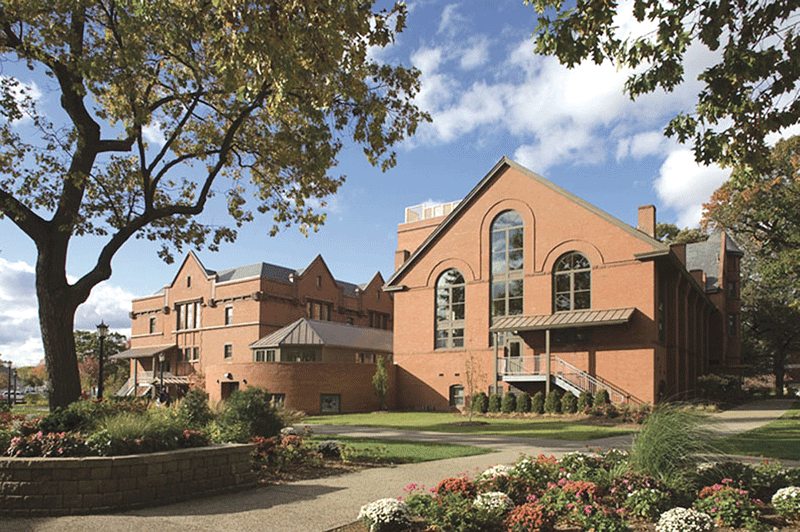
The partners like to talk about ‘adaptive reuse’ when describing projects, and the firm’s design of the Museum of Springfield History at the Quadrangle is a good example. “It was an old Verizon office building,” Jablonski said. “Springfield Museums, because of its location, wanted to acquire it, but how could they use this as a museum? They didn’t want an office building.
“When people talk about sustainability and sound design, we feel that one of the best ways to embody that is to take resources that are already there — the bricks were already there, the wood, the windows, everything was there, but it didn’t have a current use. A lot of it is imagination, when something is transformed into another thing, but making sure it’s up to date with modern building codes.”
That museum project led to Springfield College hiring the firm for its complete renovation of Judd Gymnasia, renamed the Stitzer YMCA Center. For that design, Jablonski DeVries Architects received the Paul E. Tsongas Award from Preservation Massachusetts, as well as the Springfield Preservation Trust Award for Restoration/Stewardship.
The project had a museum component, Jablonski said, and the wife of college President Richard Flynn is a trustee at Springfield Museums. “She was aware of our work at the history museum, and really liked it, and said, ‘why not give these guys a try?’”
When that call came again last summer, under much more trying circumstances, ‘preserve, adapt, renew’ was more than a motto — it’s why students at International, Reed, and Massasoit halls didn’t have to find a new home.

Joseph Bednar can be reached at [email protected]
Bankruptcies Departments
The following bankruptcy petitions were recently filed in U.S. Bankruptcy Court. Readers should confirm all information with the court.

Archer, Cynthia L.
88 Columbus Ave.
Holyoke, MA 01040
Chapter: 7
Filing Date: 12/30/11

Armold, Melissa
121 Joseph Dr.
Pittsfield, MA 01201
Chapter: 7
Filing Date: 12/16/11

Barrett, Patricia A.
97 Rear Homer Ave.
Chicopee, MA 01020
Chapter: 7
Filing Date: 12/16/11

Beauregard, Cheryl Ann
55 Belanger St.
Three Rivers, MA 01080
Chapter: 7
Filing Date: 12/30/11

Bedard, Lise M.
72 Humphrey Lane
West Springfield, MA 01089
Chapter: 7
Filing Date: 12/23/11

Bird, Sarah A.
407 Brookfield Road
Brimfield, MA 01010
Chapter: 7
Filing Date: 12/28/11

Briggs, Laura G.
13 Walpole Road
Haydenville, MA 01039-9751
Chapter: 7
Filing Date: 12/28/11

Broskey, Jason L.
9 Plimpton St.
Sturbridge, MA 01566
Chapter: 7
Filing Date: 12/29/11

Bryant, Raymond F.
Bryant, Carol A.
25 Lincoln St.
Greenfield, MA 01301
Chapter: 7
Filing Date: 12/22/11

Budlong, Carrie A.
4 Opal St.
Wilbraham, MA 01095
Chapter: 7
Filing Date: 12/19/11

Campbell, William P.
Campbell, Lisa M.
150 Fairview Ave.
Chicopee, MA 01013
Chapter: 7
Filing Date: 12/30/11

Carr, Cheryl
34 Adams St.
Easthampton, MA 01027
Chapter: 7
Filing Date: 12/27/11

Chic Spaces Interior Design
Obahi, Hassan
Obahi, Lida
172 High Meadow Dr.
West Springfield, MA 01089
Chapter: 7
Filing Date: 12/30/11

Chittenden, Lindsay Jean
189 East Road
Adams, MA 01220
Chapter: 7
Filing Date: 12/22/11

Christian, Robert H.
1310 South Main St.
Palmer, MA 01069
Chapter: 7
Filing Date: 12/28/11

Clark, Patricia E.
781 So. West St.
Feeding Hills, MA 01030
Chapter: 7
Filing Date: 12/21/11

Collado, Aguedo
136 Prospect St.
Chicopee, MA 01013
Chapter: 7
Filing Date: 12/30/11

Cruz, Tito
Cruz, Patricia C.
16 Banner St.
Indian Orchard, MA 01151
Chapter: 7
Filing Date: 12/27/11

Dendievel, Ronald P.
Dendievel, Virginia M.
71 Benedict Ter.
Longmeadow, MA 01106
Chapter: 7
Filing Date: 12/23/11

Designs by Nicole
Bowers, Nicole R.
a/k/a Barstow, Nicole R.
a/k/a Nicole R. Bowers
120 Hayden St.
Orange, MA 01364
Chapter: 7
Filing Date: 12/23/11

Desmond, David William
215 Windsor St.
West Springfield, MA 01089
Chapter: 7
Filing Date: 12/21/11

DeSousa, Janine D.
81 Cummings Road
Athol, MA 01331
Chapter: 7
Filing Date: 12/21/11

Dessources, Marie K.
616 Armory St.
Springfield, MA 01104
Chapter: 13
Filing Date: 12/21/11

Dunsmoor, James W.
426 Wilbraham Road
Hampden, MA 01036
Chapter: 7
Filing Date: 12/28/11

Fare With Flair, LLC
DiSalvo, Ronald J.
46 Lynebrook Road
Springfield, MA 01118
Chapter: 7
Filing Date: 12/22/11

Fueston, James T.
Fueston, Lisa J.
19 Voltage Ave.
Ludlow, MA 01056
Chapter: 13
Filing Date: 12/30/11

Fuller, Sherri Lee
a/k/a Stevens, Sherri Lee
a/k/a Munster, Sherri Lee
15 Sawmill Plain Road
South Deerfield, MA 01373
Chapter: 7
Filing Date: 12/29/11

Hastings, Mark J.
7 Bradlind Ave.
Wilbraham, MA 01095
Chapter: 7
Filing Date: 12/16/11

Huffman, Marilyn Ann
51 Village Hill Road
Northampton, MA 01060
Chapter: 7
Filing Date: 12/16/11

Jabry, Cynthia M.
158 Corey Colonial
Agawam, MA 01001
Chapter: 7
Filing Date: 12/21/11

Johnson, Maureen Lisa
63 Plain St.
Easthampton, MA 01027
Chapter: 7
Filing Date: 12/27/11

Johnson, Raymond A.
Johnson, Anna C.
585 Sheridan St., Apt. 42
Chicopee, MA 01020
Chapter: 7
Filing Date: 12/30/11

Johnson-Studstill, Theresa D.
17 Los Angeles St.
Springfield, MA 01107
Chapter: 7
Filing Date: 12/20/11

LaBranche, Amy Leigh
a/k/a Dubiel, Amy Leigh
P.O Box 199
Russell, MA 01071
Chapter: 7
Filing Date: 12/21/11

LaVoie, Carol A.
8 Castle Ave.
Athol, MA 01331
Chapter: 7
Filing Date: 12/16/11

LeClair, Suzanne Florence
4496 High St.
Palmer, MA 01069-1500
Chapter: 7
Filing Date: 12/27/11

Lemarier, Mark S.
Lemarier, Jennifer P.
a/k/a Lukert, Jennifer P.
457 Old Dana Road
Barre, MA 01005
Chapter: 13
Filing Date: 12/30/11

Lord, Bill
a/k/a Lord, William G.
134 Silver St.
Granville, MA 01034-9532
Chapter: 7
Filing Date: 12/28/11

Lussier, Melinda Anne
55 North Main St. #45
Belchertown, MA 01007
Chapter: 7
Filing Date: 12/16/11

Malachowski, Christine A.
50 Colony Dr.
Westfield, MA 01085
Chapter: 7
Filing Date: 12/23/11

Marotte, Justine
a/k/a Finn, Justine
1569 Parker St.
Springfield, MA 01129
Chapter: 13
Filing Date: 12/20/11

McNamara, Mary J.
PO Box 546
Wilbraham, MA 01095
Chapter: 7
Filing Date: 12/27/11

Melendez-Oakley, Milagrito
a/k/a Marrero, Milagro
85 Marsden St.
Springfield, MA 01109
Chapter: 7
Filing Date: 12/22/11

Morton, Susan
27 King St.
Westfield, MA 01085
Chapter: 7
Filing Date: 12/28/11

Murphy, Timothy J.
PO Box 821
East Longmeadow, MA 01028-0821
Chapter: 13
Filing Date: 12/29/11

Murray, Patricia A.
30 Lachine St.
Chicopee, MA 01020
Chapter: 7
Filing Date: 12/19/11

Olofson, Norma Jean
45 Mayfair St.
Lynn, MA 01904
Chapter: 7
Filing Date: 12/30/11

Perry, Anthony L.
Perry, Karen A.
64 Treetop Ave.
Springfield, MA 01118
Chapter: 7
Filing Date: 12/28/11

Plucker, Donald R.
Plucker, Donnamarie
26 Berkshire Ave.
Southwick, MA 01077
Chapter: 7
Filing Date: 12/27/11

Potvin, Patricia A.
58 Felix St.
Chicopee, MA 01020
Chapter: 7
Filing Date: 12/28/11

Rothery, John Robinson
257 Redlands St.
Springfield, MA 01104
Chapter: 7
Filing Date: 12/30/11

Rounds, Kevin G.
P.O. Box 75
Greenfield, MA 01302
Chapter: 7
Filing Date: 12/23/11

Salazar, Joel N.
Velazquez-Rodriguez, Maria Santos
187 William St.
Springfield, MA 01105
Chapter: 7
Filing Date: 12/29/11

Santiago, Jose A.
108 Shawmut St.
Springfield, MA 01108
Chapter: 7
Filing Date: 12/20/11

Scharmann, Catherine A.
153 South Longyard Road
Southwick, MA 01077
Chapter: 7
Filing Date: 12/16/11

Senez, Michael L.
Senez, Sharon E.
43 Vincent Dr.
West Springfield, MA 01089
Chapter: 7
Filing Date: 12/21/11

Simmons, John F.
Simmons, Jennifer P.
a/k/a Thomas, Jennifer
51 Shaw Park Ave.
Chicopee, MA 01013
Chapter: 7
Filing Date: 12/30/11

Soler, Jeanette
56 Eddy St.
Springfield, MA 01104
Chapter: 7
Filing Date: 12/22/11

Stone, Melinda Sue
148 Russell St.
Hadley, MA 01035
Chapter: 7
Filing Date: 12/29/11

Suse, James Francis
Suse, Theresa Marie
PO Box 188
Brimfield, MA 01010
Chapter: 7
Filing Date: 12/29/11

Sylvester, David A.
Sylvester, Brenda M.
39 Mattawa Circle
Orange, MA 01364
Chapter: 7
Filing Date: 12/23/11

Taft, Richard R.
PO Box 1371
Warren, MA 01083
Chapter: 7
Filing Date: 12/23/11

Todd Boynton Roofing
Boynton, Todd Joseph
83 Silver St.
Greenfield, MA 01301
Chapter: 7
Filing Date: 12/22/11

Vargas, Iris C.
a/k/a Rivera, Iris C.
192 Lucerne Road
Springfield, MA 01119
Chapter: 7
Filing Date: 12/19/11

Whitfield, Kristine B.
439 Warren Wright Road
Belchertown, MA 01007
Chapter: 7
Filing Date: 12/23/11

Willis, Joseph Theodore
200 Lambert Ter. #46
Chicopee, MA 01020
Chapter: 7
Filing Date: 12/20/11

Wing, Carol T.
146 School St.
Agawam, MA 01001
Chapter: 7
Filing Date: 12/30/11

Departments Incorporations
The following business incorporations were recorded in Hampden, Hampshire, and Franklin counties and are the latest available. They are listed by community.

AMHERST

Polymer Standards Service-USA Inc., 160 Old Farm Road, Suite 1, Amherst, MA 01002. John McConville, same. Importing and selling chromotology products.

EAST OTIS

Well of Salvation Ministries Inc., 146 Ridge Ave., East Otis, MA 01029. James Wackerbarth, same. To drill water wells and provide safe and clean drinking water.

HOLYOKE

National Deaf Basketball Organization Inc., 7 Green Willow Dr., Holyoke, MA 01040. Donnie Schwebke, 9630 West Coldspring Road, Greenfield, WI 53228. Organization designed to provide eligible players an opportunity to develop their basketball skills and play basketball competitively.

Standen & Gallagher Insurance Agency Inc., 1763 Northampton St., Holyoke, MA 01040. Paul Gallagher, 1763 Northampton St., Holyoke, MA 01040. Insurance Agency.

LEE

Skyline Ridge Homeowners Association Inc., 10 Park Place, Lee, MA 01238. Sean McGlone, 49 Turtlecove Lane, Huntington, NY 11743. Managing the affairs of Skyline Ridge subdivision in the Town of Becket, MA.

LEEDS

Soldier On Development & Management Company Inc., 421 North Main St., Building 6, Leeds, MA 01053. Taylor Caswell, same. Development of housing for veterans, consultation and management of developments.

LONGMEADOW

Locivi Corp., 138 Longmeadow St., Longmeadow, MA 01106. John Kole, same. Development and sales of mobile-orientated platforms.

MIDDLEFIELD

RWB Farms Inc., 92 Skyline Trail, Middlefield, MA 01243. Laurence Kenneth Shorter, same. To provide shelter and care for homeless and unwanted animals.

NORTHAMPTON

West Street Properties Inc., 82 Coles Meadow Road, Northampton, MA 01060. Patricia Giangregorio, same. Residential property rentals.

PALMER

Yanming Inc., 16 Cedar Hill St., Palmer, MA 01069. Michael Yan, same. Restaurant.

PITTSFIELD

Omvistech Inc., 20 Meadow Ridge Dr., Pittsfield, MA 01201. Srinivas Lingutla, same. Software products and services, online services, and information-technology products.

SPRINGFIELD

Maahi Petrolium Corp., 491 Allen St., Springfield, MA 01118. Rakeshkumar Vyas, 8 Bulhill Road, Pittsfield, MA 01201.

R.B.C. Foundation Inc., C/O Sabrena Brantley, 40 Delmore St., Springfield, MA 01109. James Jiles, 504 Fort Pleasant Ave., Springfield, MA 01108. Provides youth services and athletic opportunities to at risk youth in the Western Mass. area.

Rana Supplies Inc., 337 East Columbus Ave., Springfield, MA 01105. Harbhajan Singh. 191 Elm St., East Longmeadow, MA 01028. Whole supplier for convenience stores.

S.A.E. Records Inc., 61 Keith St., Springfield, MA 01108. Denroy Morgan, same. Corporation is involved in all aspects of the music industry.

Seabrooks Inc., 47 Overlook Dr., Springfield, MA 01118. Christopher Seabrooks, same. Marketing services.

Shaili Love Inc., 500 Page Blvd., Springfield, MA 01104. Suresh Patel, 176 Rolling Green, Amherst, MA 01002. Convenience store.

St. Sauveur Associates Inc., 72 Sterling St., Springfield, MA 01107-1339. Michael James McMann, same. Manufacturers sales agency.

T3KDAD Inc., 692 Carew St., Springfield, MA 01104. Zachary Lamour, same. Software application development with sales.

The Corporation for Epiphany Development Corporation, 339 State St., Springfield, MA 01105. Timothy Baymon, 57 Thompson St.  Springfield, MA 01109. Establish ventures for other corporate entities.

Vann Group Resources Inc., 819 Worcester St., Springfield, MA 01151. Michael Vann, 149 Pitroff St., South Hadley, MA 01075. Employee staffing and management services.

WEST SPRINGFIELD

Vision Source West Inc., 180 Westfield St., West Springfield, MA 01089. Brian Wadman, 100 Meadow Lane, Greenfield, MA 01301. Optical services.

WESTFIELD

Perfect Climate Inc., 649 Montgomery Road, Westfield, MA 01085. David Gourley, same. HVAC and mechanical systems.

Vellano Servistar Inc., 199 Servistar industrial Way, Unit One, Westfield, MA 01085. Joseph Vellano, 7 Hemlock St., Latham, NY 12110. Municipal water, sewer, and drainline supply house.

Company Notebook Departments

Tighe & Bond Launches New Web Site
WESTFIELD — Tighe & Bond recently launched a new Web site aimed at making information on the engineering firm’s core services easier to find and more comprehensive, according to David Pinsky, president. “Part of being a progressive engineering firm that is client-focused means keeping up with technology and making it easier for our clients and others to readily find the information they seek on our Web site,” said Pinsky. He added that the firm wanted to “bring elements of our core business into greater focus and create a fresh design.” Beyond the firm’s traditional core business — civil engineering, water, wastewater, and environmental consulting — the Web site highlights newer areas of expertise. These areas include renewable energy, as well as the latest 3D modeling and GIS technologies. In addition, the Web site offers interactive features such as the ability to ask a question on each Web site page, review current projects that are out to bid, and request a host of technical papers authored by Tighe & Bond staff. The Web site also features a revitalized section on career opportunities and information on the company’s culture. Facebook, Twitter, and LinkedIn are also integrated to keep followers up to date on the latest news. Lastly, the Web site spotlights the firm’s commitment to sustainability, documents the firm’s history, and provides a link to the online commemorative book, Engineering a Century of Progress: The Evolution of Tighe & Bond.

NUVO Bank Unveils No-Catch Checking
SPRINGFIELD — NUVO Bank & Trust Co. is now offering No-Catch Checking, a free account with no hidden requirements, according to M. Dale Janes, CEO. Customers may open a No-Catch Checking account with a deposit of $10; going forward, there is no minimum balance to maintain. Customers will have the benefits of no direct-deposit requirements, no monthly maintenance or activity charges, no service charges, no hidden fees, and no ATM fees. “We simply adjusted the requirements of our original two checking-account options,” said Janes. “We listened to what is going on regionally and nationally and heard consumers demanding simplicity in banking, with no games or hoops to jump through.”

Cooley Dickinson Named High-performing Hospital
NORTHAMPTON — Two independent rating organizations have verified that patients who choose Cooley Dickinson Hospital (CDH) for their health needs receive better quality and safer outcomes, even as the hospital has reduced the cost of care, according to Dr. Mark Novotny, chief medical officer. The hospital is among the 2011 Top Performing Hospitals in the Premier health care alliance’s national QUEST collaborative. In the delivery of evidence-based care, CDH ranked 10 percentage points above the top-performing hospitals’ score of 84%, and its cost per adjusted admission was $780 lower than that of other community hospitals in its size group. This is the first year CDH placed among the top-performing QUEST hospitals. “Being a QUEST member means redesigning the way we provide care so that patients receive reliable, safe, and efficient health care every time they visit Cooley Dickinson,” added Novotny. QUEST, the most comprehensive hospital collaborative (300 hospitals) in the nation, measures, compares, and scales solutions for the complex task of caring for patients. In related news, the Leapfrog Group reported that CDH ranked in the top 10% on overall value, a measure that takes into account the quality of care hospitals provide. This is the second consecutive year that CDH has ranked in Leapfrog’s top 10%. “Achieving high overall value is the key success factor for health systems,” said Novotny. “More than ever, employers and patients expect superb outcomes at low cost.” Among the Leapfrog database of 1,066 hospitals from 43 states, CDH earned roll-up scores of 81 on quality and 88 on resource use in Leapfrog’s 2011 Hospital Survey. The value score combines the quality and resource scores, with quality weighted most. The hospital’s 83 for value is 11 points above the 72 score needed to rank in the top 10%. Leapfrog’s quality score is based on a hospital’s performance on more than 20 national quality standards. The standards measured include care provided for common conditions such as pneumonia and normal deliveries of babies, intensive-care unit physician staffing levels, and performance on preventing conditions such as pressure ulcers and central-line-associated bloodstream infections.

Lord Jeffery Inn Reopens in Downtown Amherst
AMHERST — The transformation of the Lord Jeffery Inn is complete, according to the Amherst Inn Co., an affiliate of Amherst College and owner of the inn. The downtown property features 49 state-of-the-art guestrooms, including three king, three queen, and two double/double suites. The inn has added a 2,360-square-foot ballroom along with a tented garden area that can accommodate up to a 40’ x 80’ tent. The project also included upgrading the 46,000-square-foot building’s internal systems, adding 20 parking spaces, and creating a new restaurant. The renovation and expansion also included significant energy-efficiency improvements that make it one of the greenest inns in the Pioneer Valley, according to Amherst College President Biddy Martin. “The absence of the Lord Jeff over the past few years has shown how important the inn is to the vibrancy of the college and the community,” said Martin. “The Lord Jeff has long served as a beacon, welcoming visitors to the town of Amherst and to Amherst College. We are thrilled that the magnificently renovated inn and restaurant is open to guests once again.” Last June, the Mass. Historical Commission announced that it had voted and approved the expansion of the boundaries of the Amherst Central Historic Business District to allow for the inclusion of the Lord Jeffery Inn. The vote was the first step in recognizing the historical significance of the inn, which is now included on the National Historic Registry along with such notable community landmarks as the Emily Dickinson Homestead, the Evergreens, the Strong House, and the West Cemetery. “The new inn was given a fresh contemporary update representing the spirit of a new generation of modern comfort,” added Rob Winchester, president and COO of Waterford Hotel Group Inc., the inn’s management company. “This renovation addresses the evolving needs of today’s traveler, offering a more contemporary style and the latest technology. We are thrilled to reintroduce the Lord Jeffery Inn to the community as the premier destination for lodging, dining, corporate meetings, and social events.”

Holyoke Community College Going Smoke-free
HOLYOKE — Holyoke Community College will become an entirely smoke-free campus on Aug. 13, college President William Messner announced recently. On that day, smoking will no longer be permitted in any building or outdoor area on the 135-acre HCC campus. Smoking is now allowed only outdoors outside 20-foot buffer zones around entryways. “The decision to establish a smoke-free campus reflects HCC’s commitment to provide an accessible, safe, and healthy environment in which to learn and work,” Messner said in a message sent out today to the HCC community. “It is also a result of the efforts of HCC students and the staff members of the HCC Smoke-Free Committee, who urged us to join the hundreds of other colleges and universities that have already made smoke-free a reality.” The full text of Messner’s statement is available on the HCC Web site at www.hcc.edu/smokefree, along with resources and links for people who want to quit smoking. Counseling and nicotine patches are also being made available through HCC Health Services. “We understand that overcoming the addiction to tobacco is a great challenge,” Messner said. “For students and staff who wish to quit smoking or find ways to manage their cravings on campus, HCC will provide a variety of resources.” HCC will also be holding events throughout the spring semester to raise awareness about the new smoking policy and the health benefits of quitting. Testimonials from people who quit smoking will be going up soon in the main lobby of HCC’s Frost Building. “As with any change, it will take time to adjust,” Messner said. “During the transition to a smoke-free campus, all members of the HCC community must share the responsibility of self-enforcement and of creating an environment that is respectful and cooperative.”

United Bank Supports Several United Ways
WEST SPRINGFIELD — United Bank’s employees and its United Bank Foundation recently contributed a combined totaled of $97,643 in support of the United Ways of Pioneer Valley, Hampshire County, and Central Mass. United’s employee campaign totaled more than $58,000, surpassing last year’s level of giving, according to Richard Collins, president and CEO. In addition, the bank’s foundation contributed $39,000 to the three United Ways. “The participation of our employees is also a reflection of United Bank’s commitment to the communities where we live and work,” said Collins. “It’s particularly meaningful in today’s trying economic times. Our neighbors need our help; our employees stepped up to provide that help.”

First Niagara Donates
$50,000 to Mass Mentoring Partnership
BOSTON – Mass Mentoring Partnership (MMP), a Boston-based nonprofit that is an umbrella organization for youth mentoring statewide, recently announced that First Niagara Bank will donate $50,000 to support the organization’s mentoring efforts, with a focus on initiatives in Western Mass. During Mass Mentoring’s annual Youth Mentoring Forum at State Street, which was held recently at State Street Financial Center, MMP Chief Program Officer Marty Martinez thanked representatives from First Niagara for signing on as the Western Mass. sponsor of National Mentoring Month (January) and for its support of the annual Champions of Mentoring fund-raising event with the Boston Red Sox, which will be held June 7 at Fenway Park. “National Mentoring Month is a time when mentoring organizations across the country come together with a focus on raising awareness of the importance of mentors, acknowledging and appreciating current mentors, and positioning our organizations for future success,” said Martinez. “We’re thrilled to partner with First Niagara to promote National Mentoring Month and expand quality mentoring in Western Mass.” During January, First Niagara supported MMP’s efforts to promote the importance of mentoring through a multi-faceted marketing campaign with a focus on Western Mass. Throughout National Mentoring Month, MMP aims to help Massachusetts mentoring programs celebrate the everyday people who are making a difference for young people in their communities.

Departments People on the Move

Edward J. Garbacik

Edward J. Garbacik

Edward J. Garbacik, Vice President of FSB Financial Group at  Florence Savings Bank, has completed his CFP certification requirements from the Certified Financial Planner Board of Standard. Certification encompasses seven major financial planning areas — general principles of financial planning, insurance planning and risk management, employee-benefits planning, investment planning, income-tax planning, retirement planning, and estate planning. Individuals must also agree to meet ongoing continuing-education requirements and to uphold the CFP Board’s Code of Ethics and Professional Responsibility, Rules of Conduct, and Financial Planning Practice Standards.
•••••
Tina M. Bennett has been named President of Conservation Services Group in Westborough. She runs the company’s day-to-day operations and oversees the executive committee. She also serves as an ex-officio member of the board of directors.
•••••
Cathy Jocelyn

Cathy Jocelyn

Cathy Jocelyn has been promoted to Assistant Vice President/Marketing Manager at Westfield Bank. In this new role, Jocelyn is responsible for day-to-day marketing, promotion, and public relations, along with coordinating community outreach and the Future Fund.
•••••
Michael B. Ginsberg has joined Accenture as a Partner in the life-insurance industry practice. He will work in Accenture’s Hartford office and serve several large insurance customers in Massachusetts and Connecticut in a client-account leadership role.
•••••
David J. Ericson, Physician Assistant, joined Cooley Dickinson Hospital’s Medical Staff and Pioneer Valley Ear, Nose and Throat Surgeons. Ericson treats adults and children for a variety of ear, nose, and throat disorders, including allergy and sinus problems, hearing and balance disorders, and voice and swallowing problems.
•••••
Warren R. LaBerge has been promoted to Manager of Amherst Tire.
•••••
Robert Dellatorre has been named Senior Relationship Manager in the New England Middle Market Banking Group for First Niagara. Dellatorre will manage the bank’s relationships with middle-market companies located in Connecticut, Rhode Island, and Massachusetts.
•••••
Tracey Burke has joined Park Square Realty in its Westfield office as a Sales Associate.
•••••
Janelle Holmboe was recently named Dean of Admissions at American International College in Springfield. Most recently, Holmboe served as Associate Director of Graduate Admissions in Forest Grove, Ore.
•••••
William Dowding has been named Director of Marketing at A.W. Hasting & Co. in Enfield. The firm is a distributor of Marvin Windows and Doors.
•••••
Atlantic Fasteners announced the following:
• Tony Orvis has joined its industrial fastener division; and
• Bruce Bonzey has been named Director of Quality.
•••••
InteliCoat has announced the following:
• Dave Burgos has joined the firm as inside Sales Representative. He is responsible for supporting and growing the firm’s digital-imaging business with key distributor partners.
• Candice Bakke has joined the firm as National Telesales Representative. She is tasked with raising brand awareness for the Magic, Magiclée, and Museo product lines, as well as increasing and improving customer contact and support.
•••••
Julie M. Quink

Julie M. Quink

Burkhart, Pizzanelli, P.C. announced that Julie M. Quink, CPA, has recently joined the firm. Her experience is in the accounting and auditing and forensic and fraud consulting areas of public accounting.  Her past experience includes 16 years with J.M. O’Brien and Co., P.C. in Springfield, and three years with KPMG Peat Marwick, LLP in Springfield prior to its office relocation. She received her bachelor’s degree in Accounting and Business Management from Elms College.  Her professional affiliations include membership in the American Institute of Certified Public Accountants, the Mass. Society of Certified Public Accountants, and the Assoc. of Certified Fraud Examiners.
•••••
Reliable Temps announced that Erin Corriveau has joined the firm as Marketing Manager. She will be responsible for overseeing daily marketing and public relations duties for the three Massachusetts Reliable temps locations: Agawam, Easthampton, and Greenfield.
•••••
Lynda Zukowski, manager of Radiology and Imaging at Baystate Franklin Medical Center, has received the credential of Certified Radiology Administrator (CRA) through the Radiology Administration Certification Commission.

Agenda Departments

Wine Tasting
Feb. 10: The Wistariahurst Museum in Holyoke will host its annual “I Love Wine Event” from 6 to 8 p.m., sponsored by Liquors 44 and Historic Holyoke at Wistariahurst. Wines will be available from distributors including Bay State Wines, MS Walker, Commonwealth, and United. Light refreshments will be provided. Advance tickets are $25 each or $40 per couple; door admission is $30 each or $50 per couple. Reservations are necessary. For more information, call the museum at (413) 322-5660. The museum is located at 238 Cabot St.

Historical Lecture
Feb. 20: Professor emeritus Alan Swedlund will lecture on his 30-year research on the history of mortality in the Connecticut Valley as part of the Wistariahurst Museum’s Historical Lecture Series. Swedlund’s program is planned at 6 p.m., and there is a $5 suggested donation. Swedlund’s approach incorporates medical history with social history, and he uses documents from valley towns to identify epidemics and causes of death. Diaries, letters, newspapers, and other sources combine to tell the story from any given town. The lecture will be accompanied by historical images from the area. Swedlund is professor emeritus of Anthropology at UMass Amherst. His most recent book is titled Shadows in the Valley: A Cultural History of Illness, Death and Loss in New England, 1840-1916. The Wistariahurst Museum is located at 238 Cabot St., Holyoke. For more information, call the museum at (413) 322-5660 or visit www.wistariahurst.org.

Anthropologist Lecture
Feb. 22: Susan Darlington, a professor at Hampshire College, will discuss her latest book, The Ordination of a Tree: The Thai Buddhist Environmental Movement, as part of the Ovations series at Springfield Technical Community College. Darlington has studied the work of Buddhist monks in Thailand who are engaged in rural development and environmental conservation. The science-based talks, at 10:10 a.m. and 11:15 a.m. in Scibelli Hall Theater, will also include insights into religion and social activism. The presentations are free and open to the public. For more information, call (413) 755-4233.

Author Lecture
March 28: Internationally acclaimed author Tom Perrotta will read from his upcoming novel, The Leftovers, at 10:10 a.m. and 11:15 a.m. in Scibelli Hall Theater, as part of the Ovations series at Springfield Technical Community College. The talks are free and open to the public. Two of Perrotta’s books, Election and Little Children, have been made into movies, and five novels have been national bestsellers. For more information, call (413) 755-4233.

Slam Poet Lecture
April 13: Taylor Mali, a former high-school teacher who has emerged from the slam-poetry movement as one of its leaders, will discuss his performances at 10:10 a.m. and 11:15 a.m. in Scibelli Hall Theater, as part of the Ovations series at Springfield Technical Community College. The talks are free and open to the public. For more information, call (413) 755-4233.

Difference Makers
March 22: BusinessWest will stage its fourth annual Difference Makers Celebration at the Log Cabin Banquet & Meeting House in Holyoke. The program recognizes area individuals and organizations that are truly making a difference in this region. The winners will be announced in the Feb. 13 edition of BusinessWest. The awards ceremony will feature entertainment, butlered hors d’oeuvres, and introductions of the winners. Tickets are $55 per person, with tables of 10 available. For more information or to order tickets, call (413) 781-8600, e-mail [email protected], or visit www.businesswest.com.

Outlook 2012
Feb. 22: The Affiliated Chambers of Commerce of Greater Springfield will stage its annual Outlook program at a new venue, the MassMutual Center in downtown Springfield. The event will feature co-keynote speakers: U.S. Rep. Richard Neal will provide the federal outlook, and Michael Widmer, president of the Mass. Taxpayers Foundation, will provide a state perspective. Tickets are $50 person, with tables of 10 available for $475. For more information, call (413) 755-1313, or visit www.myonlinechamber.com.

40 Under Forty
June 21: BusinessWest will present its sixth class of regional rising stars at its annual 40 Under Forty gala at the Log Cabin Banquet & Meeting House in Holyoke. Nominations are currently being sought for the popular program, which recognizes young people in realms including business, education, health care, nonprofits, government, law, and many others. Nominations, due Feb. 17, will be scored by a team of five judges. The 40 highest scorers will be feted at the June 21 gala, which will feature music, lavish food stations, and introductions of the winners. Tickets are $60 per person, with tables of 10 available. Early registration is advised, as seating is limited. For more information, call (413) 781-8600, ext. 100, or visit www.businesswest.com.

Chamber Corners Departments

ACCGS
www.myonlinechamber.com
(413) 787-1555

• Feb. 1: February Business@Breakfast, 7:15 a.m., Ludlow Country Club. Networking beginning at 7:15 a.m., breakfast buffet opens at 7:30 a.m., and program begins at 7:55 a.m. Cost: $20 for members, $30 for non-members. Seaso• tickets sponsor: Freedom Credit Union. Sig• sponsor: FastSigns. Coffee bar sponsor: YMCA of Greater Springfield. The chamber is still looking for sponsors for this breakfast.  Contact Cecile Larose at (413) 755-1313 or [email protected] for information.

• Feb. 7: Springfield Chamber of Commerce Executive Directors’ Meeting, 12-1:30 p.m., EDC Conference Room, Springfield.

• Feb. 8: Professional Women’s Chamber Critical Thinking @ Problem Solving Symposium, 11:30 a.m. to 1 p.m., Max’s Tavern, MassMutual Room, Springfield. Cost: $25 for members, $25 for non-members.

• Feb. 8: February After5, 5-7 p.m., Chez Josef. Joi• fellow chamber members for a• evening of networking, food, and a cash bar. Cost: $10 for members, $20 for non-members. Sponsorships are available. Contact Cecile Larose at (413) 755-1313 or [email protected] for more information.

• Feb. 10: ACCGS Legislative Steering Committee, 8-9 a.m., TD Bank Conference Center, Springfield.

• Feb. 15: ERC Board of Directors’ Meeting, 8-9 a.m., the Gardens of Wilbraham, Community Room, 2 Lodge Lane, Wilbraham.

• Feb. 15: ACCGS Ambassadors Meeting, 4-5 p.m., EDC Conference Room, Springfield.

• Feb. 16: ACCGS Executive Committee Meeting, 12-1 p.m., TD Bank Conference Room, Chamber Offices.

• Feb. 16: Springfield Leadership Institute begins. For information, contact Lyn• Johnso• at [email protected].

Amherst Area Chamber of Commerce
www.amherstarea.com
(413) 253-0700

• Feb. 2: Chamber After Five, 5-7 p.m., Lit Mezze Lounge and Nightclub. Cost: $5 for members, $10 for non-members.

• Feb. 8: Chamber Breakfast, 7:15-9 a.m., the Lord Jeffery Inn. Guest Speaker: Biddy Martin, president, Amherst College. Cost: $12 for members, $15 for non-members.

Chicopee Chamber of Commerce
www.chicopeechamber.org
(413) 594-2101

• Feb. 15: Chicopee Chamber Salute Breakfast/Annual Meeting, 7:15-9 a.m., Castle of Knights, 1599 Memorial Dr., Chicopee. Cost: $19 for members, $26 for non-members preregistered.

• Feb. 22: Chicopee Chamber Business After Hours, 5-7 p.m., Hu Ke Lau, 705 Memorial Dr., Chicopee. Joint networking event with the Massachusetts Latino Chamber of Commerce. Cost: $5 for members, $15 for non-members pre-registered. Sig• up online at www.chicopeechamber.org, or call (413) 594-2101.

Frankli• County Chamber of Commerce
www.franklincc.org
(413) 773-5463

• Feb. 24: Breakfast Series, 7:30-9 a.m., Chandler’s at Yankee Candle, Deerfield. Topic: “I Love My Job” — a panel of local speakers happy i• their work. Sponsored by Yankee Candle Co. Cost: $12 for members, $15 for non-members.

Greater Holyoke Chamber of Commerce
www.holycham.com
(413) 534-3376

• Feb. 15: Chamber After Hours, 5-7 p.m., Mrs. Mitchell’s Kitchen, 514 Westfield Road, Holyoke. Sponsored by Holyoke Credit Union. Cost: $10 for members, $15 cash for non-members. Make a reservatio• by calling the chamber at (413) 534-3376 or online at holycham.com.

• Feb. 17: Legislative Luncheon, 12-2 p.m., Log Cabi• Banquet & Meeting House. Keynote speaker: Therese Murray. Cost: $36. Purchase tickets by calling the chamber at (413) 534-3376 or online at holycham.com.

Northampto• Area Young Professional Society
www.thenayp.com
(413) 584-1900

• Feb. 9: February NAYP Networking Event 5-8 p.m., the Clario• Hotel & Conference Center, One Atwood Dr., Northampton. For more information, visit www.thenayp.com.

West of the River Chamber of Commerce
www.ourwrc.com
(413) 426-3880

• Feb. 2: Nighttime Networking event, 5 p.m., BMW of West Springfield, 1712 Riverdale St. Cost: free for members, $10 for non-members. For more information, contact the WRC at (413) 426-3880 or e-mail [email protected].

Greater Westfield Chamber of Commerce
www.westfieldbiz.org
(413) 568-1618

• Feb. 6: Mayor’s Coffee Hour, 8-9 a.m., Elm Street Diner, 266 Elm St., Westfield. Mayor Knapik welcomes you to hear about our the city and to bring any questions, concerns, or ideas. The event is free. Call Carrie Dearing at (413) 568-1618 to register.

• Feb. 15: February WestNet, 5-7 p.m., Tekoa Country Club, 459 Russell Road, Westfield. Guest speaker: Rich Rubin, executive director of the America• Red Cross Westfield Chapter. Cost: $10 for members, $15 cash for non-members. Networking, cash bar, and free hors d’oeurvres. Call Carrie Dearing at (413) 568-1618 to register.

Opinion
A Victory on Many Levels

The recent announcement that Thing5 LLC will be creating a new call center in One Financial Plaza, thus bringing 500 new jobs to Springfield, is a positive story for the city and the region — on a number of levels.
Let’s start with the jobs. That’s priority No. 1 in the Greater Springfield area, and it has been for many years now. Some might look at this and say, ‘it’s only call-center jobs,’ or words to that effect, but these opportunities come on many levels, from entry positions to management slots, and, in many cases, they can be handled by those who do not possess a college education. The region needs those high-quality jobs (call them white-collar, if you like), but it also needs employment opportunities like these, especially in such large volume.
Beyond the employment factor, there are many other aspects to this story, all of them positive. First, this company started here, in the Technology Park at Springfield Technical Community College — which was created to spur this kind of tech-related enterprise — and thus provides solid evidence that we can incubate ventures and grow them into major employers.
Also, this company stayed here. Indeed, when it reached that proverbial next level, there were, quite obviously, opportunities to take Thing5 almost anywhere — because there isn’t a city or town in the Commonwealth or well beyond it that wouldn’t fight, and fight hard, for 500 jobs. But management chose to stay in the City of Homes, largely because of the lower cost of living, available workforce, access, quality of life, and affordable commercial real estate.
This shows that our various assets are tangible — and sellable.
But perhaps the biggest benefit will come in the form of greater momentum downtown. First, this move gives a substantial boost to the office tower known as One Financial Plaza, which has had several dark floors for many years, but has been staging something of a comeback recently.
Beyond that, though, the 500 new employees working downtown will provide a larger critical mass of people needed to spur additional investments, be they in support businesses, hospitality-related ventures such as restaurants and clubs, or badly needed retail.
And there is another component — the possibility that some of these employees may soon be working and living downtown, thanks to a program that will offer reduced lease rates to Thing5 employees at the nearby Morgan Square apartments, managed by the same company (Samuel D. Plotkin) that also manages One Financial Plaza. This additional residential piece could further stimulate investment in the central business district and be a key contributor to the kind of vibrancy that other Northeast cities have enjoyed.
As we said, there are many angles to this positive story for Springfield and its downtown. The headlines were all about the jobs coming to the city — and that’s an important aspect of this — but there are many other elements that bode well for the City of Homes.