Building Permits Departments

The following building permits were issued during the month of May 2012.

AMHERST

Amherst College
Johnson Chapel
$4,000 — Repair and cleanup of water damage

Amherst Colonial Village, LLC
200 South East St.
$13,000 — Roof repairs

Jan Eidelson
138 Sunderland Road
$1,500,000 — Build new structure for Amherst Survival Center

Peter Grandonico
23 North Pleasant St.
$25,000 — Interior renovations for Froyo World

EASTHAMPTON

City of Easthampton
19 Union St.
$1,500 — Repair granite steps at Council on Aging

David Boyle
422 Main St.
$200,000 — Construct 84 self-storage units

David Shelton
39 Union St.
$5,000 — Create new 3,000 square feet of gym space

Frank Basile
16 Industrial Parkway
$8,000 — Repair damaged trolley hoist-support system

Lisa Fusca
93-95 Main St.
$2,000 — Repair rear egress

HOLYOKE

Bayview Financial
345-363 Dwight St.
$200,000 — Emergency exterior repairs

Holyoke Boys Club
70 Nick Cosmos Way
$74,600 — Remove existing roof and install new

Sacred Heart Parish
427 Maple St.
$4,000 — Construct pergola

Verano Apartments, LTD
560-562 South St.
$40,000 — Repair structural columns

LUDLOW

Five Star Cleaners
433 Center St.
$3,500 — Alterations

Kapinos Mazur Funeral Home
64 Sewall St.
$40,000 — Reshingle

KUB Properties
4 Pell St.
$30,000 — Alterations

Oak Tree Inn
782 Center St.
$24,000 — Alterations

Richard Kelleher
44 Sewall St.
$40,000 — Reshingle

NORTHAMPTON

Colvest/Northampton, LLC
327 King St.
$383,500 — Construct new commercial bank with drive-up; foundation only

Easthampton Savings Bank
297 King St.
$34,500 — Relocate ATM

Look Park
300 North Main St.
$12,000 — Move building onto new foundation

Packaging Corp. of America
25 Mount Tom Road
$178,000 — New roof

SOUTHWICK

SBA Communications
686 College Highway
$20,000 — Replace six antennas

SPRINGFIELD

Diamond Affiliates, LLC
125 Paridon St.
$20,000 — Upgrade antennas

Diocese of Springfield
123 William St.
$84,000 — Exterior repairs

Golden Eagle Apartments
129-145 White St.
$17,000 — Renovations

MD Trading Corp.
19 St. James Ave.
$46,000 — Interior renovations

Springfield College
701 Wilbraham Road
$19,000 — Bathroom renovations

Stockbridge Court, LP
45 Willow St.
$10,000 — Rebuild handicap ramp

WESTFIELD

Ann Woodson
67 Elm St.
$7,600 — Interior repairs

University Housing, LLC
27 Washington St.
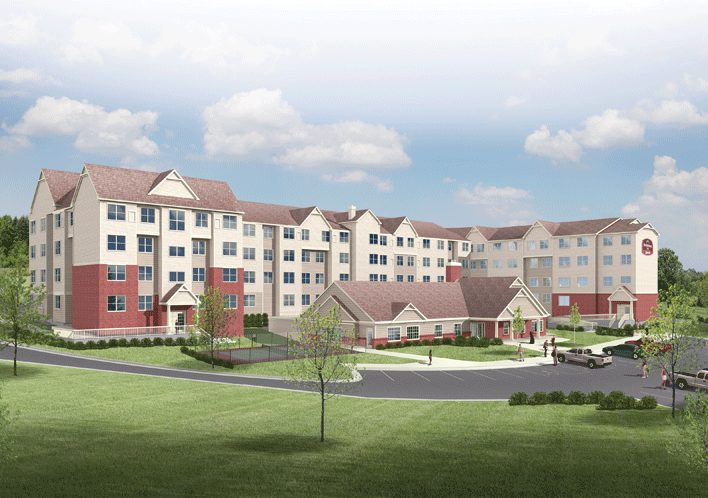
$2,500,000 — Construction of new student apartments for Westfield State College

WEST SPRINGFIELD

Century Investment
73 State St.
$14,000 — Interior fit-out for a doctor’s office

Eastern States Exposition
1305 Memorial Dr.
$6,000 — Exterior repairs

Matthew Griswold
1838 Riverdale St.
$20,000 — Renovations to existing building

Robin Taylor
255 Interstate Dr.
$12,000 — Reroof

Construction Sections
Improvements at Red Lion Inn Respect the Past

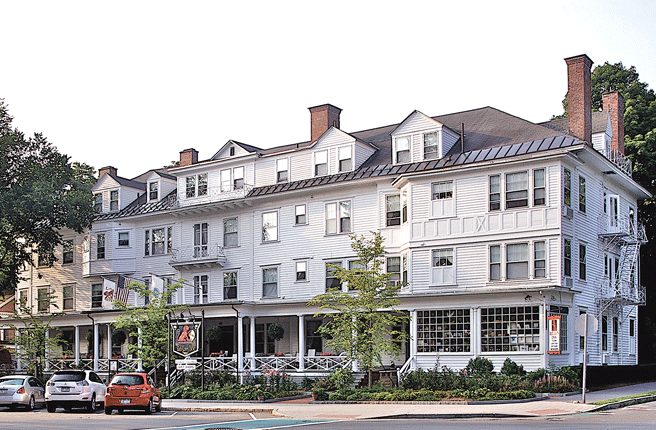
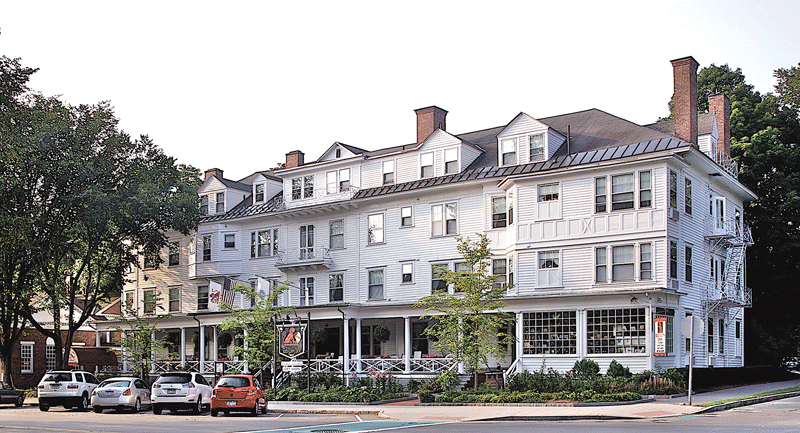
The Red Lion Inn in Stockbridge.

The Red Lion Inn in Stockbridge.

When the Red Lion Inn undertook a major renovation of its south wing a few years ago, it knew it was digging into the past. Exactly how far past, no one could say.
The wing is between 111 and 115 years old, but it’s hard to pinpoint the precise age, said James Hunt, buildings and grounds manager, explaining that it doesn’t show up on the inn’s 1897 maps — drawn shortly after its reconstruction following a devastating fire in 1896 — but the section does appear on 1901 maps.
“Strangely enough,” he said, “after this project was completed, we found the original set of blueprints. We had those reproduced, matted, and framed,” and they’re hanging in the first-floor hallway of the renovated section today.
These days, Red Lion owner Nancy Fitzpatrick might find some wall space to mark another milestone, as the inn was recently honored with the 2012 Paul E. Tsongas Award, the highest award given by Preservation Massachusetts, a statewide, nonprofit advocacy organization that promotes the preservation of historic buildings as a positive force for economic development and community character.
“We did 28 guest rooms in the south wing,” Hunt told BusinessWest. “The project was a full remodel, and that involved structural, electrical, mechanical, plumbing, the fire-alarm system, the sprinkler system, and all the finishes that go along with that. That was the basic scope of the job. We brought everything up to code in that section.”
The way they did so — enhancing guest comfort and increasing energy efficiency while maintaining the historic character of the rooms — is what drew the attention of Preservation Massachusetts.
“From my perspective,” Hunt said, “what’s neat about the whole project was that it took the latest and greatest of modern technology and installed it in this historic environment.”

Quiet, Please

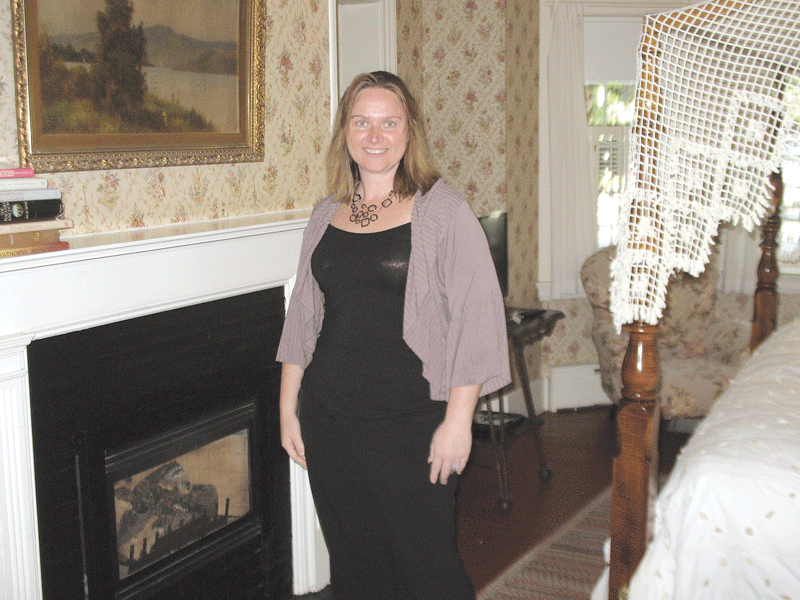
Innkeeper Michelle Kotek stands in one of the remodeled rooms.

Innkeeper Michelle Kotek stands in one of the remodeled rooms.

The key, Innkeeper Michele Kopek said, is to integrate the upgrades so seamlessly that guests have a better experience without any loss of the Red Lion’s historic character. “People look around and say, ‘oh, what did you change?’” she noted. “But much of it is behind the walls.”
Or on the walls themselves. “Contractors, by nature, when they do a demolition, like to tear out everything,” Hunt said. “One challenge we faced was to save as much of the original horsehair plaster as we could. The fact is, it probably would have been a lot more affordable for us to peel it all off and start over, but we were able to put patches in where it needed them.”
Similarly, workers kept the door hardware — ornate bronze hinges and knobs well-worth saving, Hunt said — and stripped off literally dozens of coats of paint to bring out the look of the original doors. And 17 of the rooms saw their fireplaces — which were, in some cases, buried behind walls — upgraded with new gas inserts. “They were woodburning fireplaces,” Kotek said, “but we didn’t use them for fear of fire.”
Other upgrades speak directly to guest comfort, such as an upgrade of the old air conditioners, replaced now by modern temperature-control units.
Hunt explained that the project really began with frequent complaints about traffic noise coming from outside, as the hotel sits at the intersection of routes 7 and 102 in downtown Stockbridge. Meanwhile, “it was very difficult to control the climate in the rooms, and it was kind of a double-edged thing — guests would come in, and the room would be overheated, so they’d open the window to cool the room down, and then deal with the truck noise.”
Now, thanks to the upgraded heating and cooling units — not to mention the eight inches of insulation inside the walls and between the rooms — guests in each room can much more easily control the climate while minimizing noise with the new insulated glass in the windows.
Speaking of the windows, Hunt said he was surprised when architects recommended keeping the triple-track aluminum storm windows instead of replacing all the windows completely.
“So we removed every window sash and marked and catalogued every single sash and where it was located. We sent the windows out and had them stripped and then milled out to accept insulated glass. Then we put insulated glass in the sash that had been there for 100 years, in that exact position.”
Kotek said that, between the attention to guest comfort and a restoration of original elements, “we kind of kept some of the old with the new.”

Quality of Life
The Tsongas Award from Preservation Massachusetts comes on the 10th anniversary of the Massachusetts Historic Rehabilitation Tax Credit (MHRTC) program. Even though the Fitzgerald family was given the award in 1999 for its dedication to preservation projects in Stockbridge, today, the honor — awarded to 32 developments in 2012 — recognizes projects that have successfully used the MHRTC to revitalize communities, spur investment, create jobs, or enhance quality of life in the Commonwealth.
“The Red Lion Inn is one of the most well-known historic inns in all of Massachusetts, if not the entire country,” said Jim Igoe, president of Preservation Massachusetts. “Its continual presence and popularity as a Stockbridge destination shows how historic preservation benefits our communities, both large and small.”
Hunt said he’s amazed at how quickly the project was completed — less than five months from moving furniture out to checking visitors in. “At one time, I counted 80 tradesmen on the job,” he added, noting that the contractor, David J. Tierney Jr. Inc. of Pittsfield, deserves credit for moving the project along successfully at that pace.
Hunt said most of the preservation aspects of the renovation were decisions made internally, and not by any outside body overseeing historic sites. “Most of the elements were things we wanted to keep, and a lot of them, the architects wanted to keep,” he noted, referring to Einhorn Yaffee Prescott of Albany, N.Y., an architecture firm that specializes in this kind of property. “They are passionate about historic preservation, and it shows.”
That appealed to the inn’s leadership, said General Manager Bruce Finn. “Preservation is a critical factor in the core values of our business.”
Kotek said the Red Lion, at least since being rebuilt following the 1896 fire, has upgraded rooms at various times, but never on the scale of the current project.
Still, the work is far from done. Hunt said the facility has a master plan in place to conduct similar large-scale renovations in three more phases. The first of those has been drawn up, but all renovations have been on hold due to the economy. However, the Red Lion will soon open 17 rooms in a new guest house, one of several the inn has converted from neighboring buildings it purchased over the years.
He added that further renovations, when they take place, will reap economic benefits over time in added energy effiency.
“It’s great to have the historic-preservation part of it coupled with the energy part of it,” he said. “We’ve reduced energy consumption in the south wing by 27%, both electric and gas. The numbers are there; they don’t lie. That’s what’s neat, to see that kind of improvement in this historic environment.”
And those benefits don’t at all change what guests have always loved about the Red Lion Inn and its quirky appeal, Kotek said.
“We like to keep our leaks and our slanted floors and the doors that don’t close all the way. That’s part of the charm. We wanted to keep that historic aspect and yet enjoy these modern changes.”

Joseph Bednar can be reached at  [email protected]

Construction Sections
Public-sector Construction Shows Signs of Life

Northern Construction Service was busy repairing roads following Hurricane Irene, including these in Florida, Mass.

Northern Construction Service was busy repairing roads following Hurricane Irene, including these in Florida, Mass.

When Hurricane Irene washed out miles of the Mohawk Trail last August, plenty of Franklin and Berkshire County residents were suddenly forced to find alternate routes to work and other destinations — often at great inconvenience.
“We’re not really a rapid-transit society, although we like to believe we are. We’re not Europe, even though some people want to make us Europe,” said John Rahkonen, president of Northern Construction Service in Palmer. “How would you run a train to some of the hilltowns? No matter what you do, you still need cars, and roads.”
Crews from Northern have spent plenty of days on Route 2 since that storm — which wreaked even more havoc just to the north in Vermont — fixing roadways that, in some cases, were completely wiped out by the hurricane.
For contractors that specialize in such projects, events like Irene mean steady work, in the same way tree-service outfits haven’t slowed down a bit since the freak October snowstorm felled limbs and branches across Western Mass. And when public roads are damaged, it creates a need that can’t be set aside, no matter what the economy is like.
Construction companies that focus on the private sector — where projects can more easily be put off or cancelled for financial reasons — have had a rough few years, but state and municipal jobs have continued to flow steadily (if not spectacularly) for firms heavily invested in the public sector. And it’s not just roads and bridges; the region has seen a building boom for new high school construction and renovations that shows no signs of slowing down.
Dave Fontaine

Dave Fontaine says public-school construction has been a healthy niche in the region for the past quarter-century.

“We’ve had a pretty good share of opportunities over the past 20, 25 years in the public-school market. We built a lot of schools locally,” said David Fontaine, president of Fontaine Brothers in Springfield.
He cited Chicopee Comprehensive High School as one of the firm’s bigger recent projects, but Fontaine has several other schools under construction across the state, including three in the Pioneer Valley, each at a different stage of completion. The new Minnechaug Regional High School in Wilbraham will open this fall, followed by the new Easthampton High School next spring. The firm also recently broke ground on a new West Springfield High School, which will open in 2014.
“They’re all unique,” Fontaine said. “The one coming out of the ground now in West Springfield is a large school with a big footprint and a large, complicated earthwork job. That was the big challenge there, coming out of the ground. And then there’s the length, because you’re tying up a lot of capital, for most of three years. You’re building a new building for two years, then you’re there for the third year tearing down the existing building and reconfiguring the whole area.”
Clearly, this is a vibrant scene — other high schools currently being constructed or rebuilt include Longmeadow High School and the new Putnam Vocational Technical High School — at least in part spurred by the Massachusetts School Building Authority, which, since 2004, has helped communities pay for school construction through a 1-percent sales tax.
“Since they started sending a penny of the state sales tax, we’ve fared pretty well,” Fontaine said. “The Building Authority hasn’t forgotten Western Mass.” The Bay State also benefited from the 2009 federal stimulus, which channeled $7.9 billion into the Commonwealth for construction projects.
Still, these success stories have not spread to all areas of construction, and contractors are finding that, in projects not involving a steady stream of state funds or, in the case of storm-damaged roads, immediate need, the public arena isn’t much more promising than the still-stagnant private sector.

Slim Pickings
Indeed, while state-funded projects have been available in varying degrees, infrastructure projects on the municipal level have been frustratingly slim, according to Matias Goncalves, president of Caracas Construction Corp. in Ludlow.
“It’s very competitive out there,” said Goncalves, whose firm focuses on public-sector projects such as roads, curbs, sidewalks, and underground utilities. “It’s tough right now.”
The entire industry was pounded throughout the Great Recession, and Goncalves said his niche has not rebounded due to tightened purse strings in city and town budgets.
“It’s the same as before; they don’t have as much tax revenue coming in, and as a result, they can’t do the capital-improvement projects they’ve been hoping to get done,” he told BusinessWest. “The same way people complain about school budgets, nobody wants to do any road work.”
And when jobs do come online, Goncalves said, contractors are faced with the same competitive situation across the board — namely, far more companies getting into the bid action than in decades past, and coming from farther away than before.
“We bid a job a couple of months ago with about 20 bidders; we finished in the middle of the pack,” he said. “It’s doubtful you’ll find a project without at least six to 10 bidders, easily.”
Projects involving state roads, on the other hand, have benefited from roughly $1 billion in bond issues per year recently. “That has not changed over the past two years,” Rahkonen said.
“We’re primarily doing a lot of bridge work in three states — Connecticut, Rhode Island, and Massachusetts — and we’re probably sitting on quite a bit of work,” he said, adding that the firm employs between 120 and 200 people, depending on the current workload.
Recent or pending work at Northern includes the Davitt Bridge in Chicopee, an $8 million job replacing most of a bridge on Route 2 in Gill, and a $6 million job repairing hurricane damage in Shelburne Falls. “There was no road in places. It varied from place to place, a lot of washouts; we had to do a lot of that repair on the Mohawk Trail.”
The situation on Route 2 was especially critical, he added, considering it’s one of only three thoroughfares running east to west across the state, the Pike and Route 20 being the others.

Cost and Effect
Still, Rahkonen said, these aren’t exactly heady days, even for firms who focus on state work. The fierce competition for bids that Goncalves cited has made it very difficult for firms to make profits, while costs continue to mount.
Take a bulldozer, Rahkonen said. Estimating conservatively, that piece of equipment might log 2,000 hours annually; after five years and 10,000 hours, it’s time to replace it. Pickup trucks — Northern maintains between 20 and 30 — only last so long, too, and need to be replaced at a cost of close to $40,000 per vehicle.
But recently, the U.S. Environmental Protection Agency has made budgeting even more difficult by requiring that all building equipment using diesel fuel (Northern has about 100 such machines) be fitted with a device to lower emissions to what are known as ‘Tier 4’ standards. At a cost of about $3,000 per conversion, the math isn’t hard to figure out. “That’s an additional cost that no one is putting into jobs, but we’re forced to do it.”
At a time of such tight profit margins, Rahkonen noted, any sort of additional cost is a burden, and it’s harder for contractors to grow their business. “They don’t expand, because they’ve got to make ends meet. Companies want to reinvest and hire more people, but if they’re getting clobbered, they can’t do it.”
Intense competition across all sectors of construction has brought players from Greater Boston and even neighboring states into Western Mass., but Fontaine has responded by doing the same; in addition to its local projects, the company is building schools in Norfolk and East Bridgewater.
“We’ve been more competitive recently; our forte has been larger projects, which don’t seem to draw the 10 to 15 bidders most projects do. I also think we’re pretty good at these big schools,” Fontaine said, adding that the company has the size and resources to absorb the day-to-day costs associated with a $5 to $10 million project over multiple years.
“Fortunately, we have the financial capacity to be carrying an awful lot of money over an awful lot of time,” he told BusinessWest. “I will say that, in the public-school marketplace, cities and towns do pay their bills every four to six weeks on average, so that’s pretty good, all things considered.”

Lean and Green
The keys to juggling so many big projects at once are many, Fontaine said, including the task managing subcontractors at such a volatile economic time.
“The last five to 10 years have been difficult with so many subcontractors going out of business, and you’re always nervous that a lot of bad subcontractors will turn a project bad, so we’re always very particular about who we subcontract certain things to,” he explained.
Then there’s the new emphasis on ‘green’ building, which has become especially important to municipalities putting up public structures like schools — a specialty that not only requires evolving skills, but reams more paperwork and frustration. Still, Fontaine said, he understands the momentum of the trend, particularly when it comes to energy-efficiency improvements that carry a long-term “bang for the buck.”
Other trends in public projects come and go.
“There’s a lot of library funding out there; we’re doing the Holyoke Library renovations, and some others have been funded,” Fontaine said. “But we’re not seeing anything in public-sector housing improvements.”
On the other hand, he said, there has been a rash of fire stations constructed over the last couple of years, and UMass Amherst continues to engage in numerous renovation projects.
Still, “about 70% public-sector activity is done by out-of-town firms,” he said. “But we’ve been fortunate. We’re not afraid to take our game on the road, either.”

Joseph Bednar can be reached at [email protected]

Employment Sections
Hikes in the Minimum Wage May Soon Become Reality

Heads up, employers.

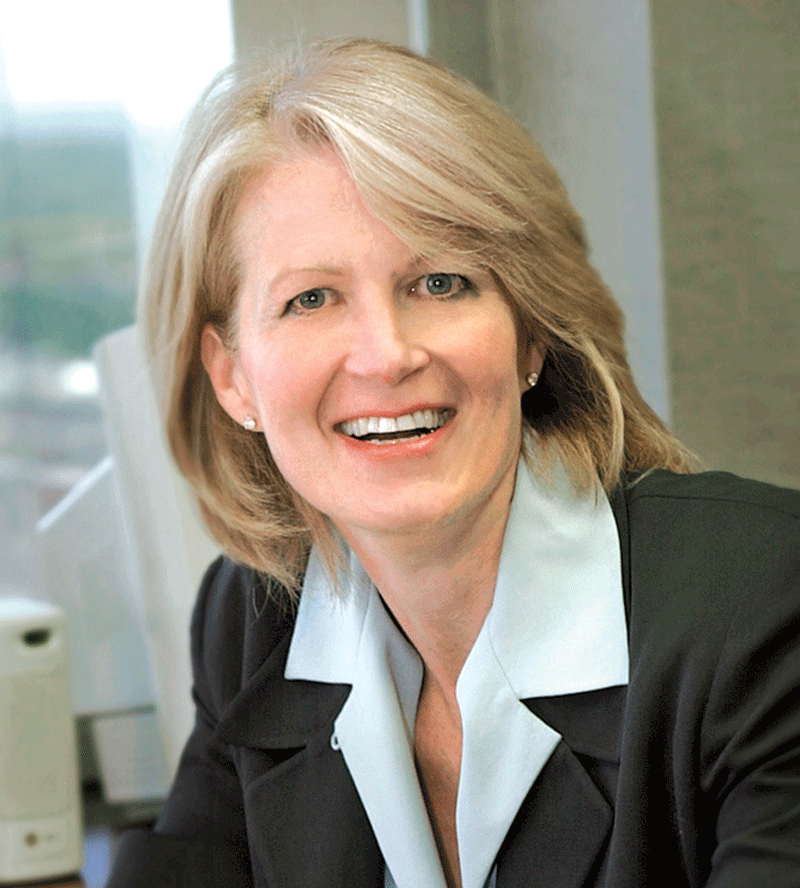
Susan G. Fentin

Susan G. Fentin

The Massachusetts Legislature is still in session, and you never know what surprises they have in store for you on Beacon Hill.  In a recent issue of BusinessWest, we told you about an initiative to require some Massachusetts employers to provide paid sick leave to their employees. We’ve been told that bill has recently been buried and is unlikely to see passage in this legislative session. But there are other opportunities for the Legislature to wreak havoc with employers in the Bay State, and even if these initiatives are not successful during this session, they will likely be brought forward in the near future.
A bill has been filed by state Sen. Marc Pacheco that would raise Massachusetts minimum wage to $10 per hour over the course of the next three years. The bill cleared a legislative committee in March, creating the possibility that the Senate could vote on what would be the first hike in the state’s minimum wage in four years. Currently, the minimum wage in Massachusetts is $8 per hour, raised from $7.50 per hour in the 2007 legislative session.  This rate is substantially higher than the current federal rate of $7.25 per hour, which was last increased in 2009.
Massachusetts law provides that the state’s minimum wage will always stay ahead of the federal rate, although not necessarily by 75 cents (the Commonwealth’s statute governing the minimum wage provides that the state’s minimum-wage rate automatically increases if the federal rate matches the current Massachusetts rate, with the result that Massachusetts’ minimum wage will always be at least 10 cents higher than the current federal rate). But, if passed, the current legislation would go way beyond that standard and give Massachusetts the highest minimum wage in the country, surpassing the current high mark of $9.04 in Washington state.
Massachusetts is not alone in this effort. State legislatures in neighboring New York and Connecticut, as well as New Jersey and Illinois, are also pushing efforts to raise their minimum wages. Missouri voters may be asked to vote on an increase in the minimum wage in a referendum in November.
Legislators in these states are arguing that $7.25 per hour doesn’t provide a living wage. There may be some merit to that argument: a full-time worker, working 40 hours a week, 52 weeks a year, paid at the federal minimum wage would earn only $15,080 per year, lower than the federal poverty line for a family of two and less than 75% of the federal poverty line for a family of four.
These state initiatives are spurring some discussion at the federal level about whether the time is ripe for another increase in the federal minimum wage. Although the federal rate went up in 2009, that was the last year of a multi-year, phased-in increase that began in 2006. Sen. Tom Harkin of Iowa, head of the Senate Labor Committee, is trying to rally support for a bill that would increase the federal minimum wage to $9.80 per hour by 2014. So even if the current Massachusetts initiative doesn’t succeed, there’s the possibility that the Commonwealth’s minimum wage will float up along with the federal rate, at 10 cents per hour above whatever Congress establishes at the federal level.
Pacheco doesn’t believe that the minimum wage bill will be successful this year, but in comments published in the Patriot Ledger, the senator noted that the bill has strong support from the AFL-CIO, and he expects that support for the bill from other legislators would take a couple of years to build. So employers can certainly expect that, whether from the state Legislature or from Congress, there may be future attempts to increase the minimum wage.

More Wage-and-hour News
The U.S. Department of Labor has announced that that its investigations into the restaurant industry in Massachusetts have uncovered $1,307,808 in back wages owed by a number of Massachusetts restaurants to 478 employees. The DOL is currently calculating what level of penalty might also be assessed against these restaurants, which had multiple wage-and-hour violations, including paying their wait staff a flat rate, failing to pay or properly calculate overtime, making illegal deductions from employees’ paychecks, and failing to keep proper records of their employees’ wages.
The department has developed a smartphone application to help employees independently track the hours they work and determine the wages they are owed. The app, which is available in English and Spanish, helps users track their regular work hours, break time, and any overtime hours.
This announcement from the DOL underscores the fact that the federal government is serious about investigating wage-and-hour violations wherever they might occur.

Susan G. Fentin is a partner in the law firm Skoler, Abbott & Presser, P.C., which practices only labor and employment law and represents the interests of employers exclusively; (413) 737-4753; [email protected]

Employment Sections
What You Should Know About Worker Misclassification

Charlotte Cathro

Charlotte Cathro

Since the downturn in the economy, businesses have been looking for ways to cut costs, and the largest cost for many is payroll. Companies might engage more part-time and temporary workers, in addition to independent consultants, to reduce expenses. However, business owners could find themselves in a difficult position if they don’t know the rules of how to classify these workers.
Due to tight budgets and decreased collections, federal and state governments are also cutting costs and looking to generate additional revenue. These governments have focused efforts on misclassification of workers to collect unpaid employment taxes. A similar push by the IRS from 1988 through 1994 reclassified 483,000 workers as employees and resulted in $751 million in assessments.
Business owners trying to reduce costs would rather have their workers classified as independent contractors than as employees. Employers are required to withhold and submit federal and state withholding taxes from an employee’s payroll, and pay Social Security, Medicare, and unemployment taxes on their behalf. Depending on how the company’s plans are set up, they could also provide health, dental, retirement, and other benefits to everyone classified as an employee. Sick time and vacation time might also be paid. State protections such as wage-and-hour laws may apply only to employees, and employment arrangements can be much more difficult to terminate.
Independent contractors are considered self-employed individuals. Some workers appreciate the flexibility and the ability to deduct additional un-reimbursed expenses against income. The contractor is responsible for paying the employer and employee contributions for Medicare and Social Security taxes, and they receive a deduction on their tax return for the employer portion. They are expected to make quarterly estimated tax payments on their income since they are not having taxes withheld. Health and other insurance is the self-employed individual’s responsibility, and they may be entitled to a deduction for tax purposes. The company using their services is responsible for acquiring the appropriate federal identification number and issuing a form 1099 at the end of the year if they paid the worker over $600, but they do not incur payroll-tax liabilities.
Issues with classification are generally noted when a worker applies for unemployment, since employees are eligible, while self-employed individuals are not. Effective in 2008, the federal government implemented the Emergency Unemployment Compensation Program, which provides federal funding to extend unemployment benefits up to 53 weeks. An additional program effective in 2012, the Federal-State Extended Benefits Program, provides for an additional 20 weeks of unemployment during periods of high unemployment on a state-by-state basis.
Therefore, depending on the employee’s state, the individual may be eligible for up to 99 weeks of payments. The more attractive the unemployment benefits become, the more likely individuals are to apply and open up the inquiry into whether they were previously employed.
Determining whether a worker is an employee or an independent contractor is more complex than simply how the worker is paid or whether they work full-time or part-time. The IRS has historically used a series of questions referred to as the ‘20-factor test’ to establish worker status. The 20-factor test was not intended to be used as a pass-or-fail determination. However, the results were often unclear because some of the questions did not affect the final result of the test.
In a 2009 update to its manual for auditors, the IRS noted that some of these questions could be inapplicable, other pieces of information could be pertinent, and relevancy changes over time given the circumstances. Therefore, it revised its approach to include more general considerations organized into three categories: behavioral control, financial control, and relationship of the parties.
Behavioral control exists when the employer directs the employee in the way that they perform their duties. The level of instruction and training the worker receives, who provides the tools or equipment, and when and where the work should be done would all be factors to consider in this area. The business can, of course, indicate the result of the work to be performed, but when it also has control over the means and methods to achieve the result, it is acting more like an employer.
Financial control includes considerations related to whether the worker acts like a self-employed person. For example, to what extent do they make themselves available to assist multiple businesses? An independent contractor might also have made their own financial investment in facilities, tools, or equipment; might incur unreimbursed expenses related to their work; and could achieve a profit or a loss. To establish the relationship between the business and the worker, the IRS would look at the permanency of the relationship as well as to what extent the work performed is an integral part of the company’s business.
A written contract would be a consideration in determining the relationship of the parties, but it cannot be used to avoid classification as an employee if other factors indicate that relationship.
Many states, including Massachusetts and Connecticut, have moved away from the IRS definition of ‘employee,’ and have adopted another test for determining worker status. In addition, some states have separate tests for unemployment and workers’ compensation classifications. Often, specific industries, such as construction contractors, have stricter rules.
The most common non-IRS test is called the ‘A, B, C’ test. This test has three factors, all of which must be met for the worker to be considered an independent contractor. The first test is whether the employer exercised control and direction over the worker. This is similar to the behavioral-control test. The second test asks whether the duties performed were outside of the usual course or all normal places of business; integral functions of a business generally would be performed by employees. The final test is the most stringent, and is where this type of test differs from the IRS. A contractor must be engaged in an independently established trade or business. To meet this definition, it could be shown that the worker has his or her own business license, insurance, or federal identification number.
Penalties for misclassification of workers differ depending on whether the misclassification is considered an intentional disregard for the requirements. If it is deemed intentional, the employer is responsible for all back taxes. If no intentional disregard is found, the employer can use Section 3509 rates to calculate their federal liability. The rates are lower if the employer issued the appropriate 1099 forms.
If the forms were filed, the employer is liable for the employer’s share of Social Security and Medicare plus 20% of the employee’s portion. In addition, the employer is responsible for income tax at a rate of 1.5% of wages. If the 1099s were not filed, the amounts increase to 40% of the employee’s portion of Social Security and Medicare and 3% income taxes. The employer owes even if the worker properly paid income taxes and self-employment taxes on their income, and cannot recover amounts from the employee. The business would be responsible for unpaid benefits such as retirement-plan contributions for the reclassified employees. On top of the federal requirements, the employer will likely have state tax liabilities and may face steep fines and penalties.
A business can be absolutely certain that the IRS will agree with its worker classification only by obtaining a determination letter directly from the source. Form SS-8 is organized with questions in the three factor categories and provides information the IRS can use in issuing the determination. The form can be filed with the IRS by a firm or by a worker to receive a resolution for purposes of federal withholding and employment taxes only, although many states that conform to IRS rules will accept the determination. States that do not conform to IRS rules generally also have a request form to file with their employment divisions.
The IRS and many states have voluntary settlement programs whereby a company is required to file and pay only for the last few years, but these programs are available only if no notices or inquiries have been received. If you are unsure whether your workers are properly classified, it is best to speak with your accountant or labor attorney as soon as possible to gauge your exposure.

Charlotte Cathro is a tax manager for the Holyoke-based public accounting firm Meyers Brothers Kalicka, P.C.; [email protected]

Employment Sections
What a Résumé Can Say — or Not Say — About a Candidate

Katherine Lamondia-Wrinkle

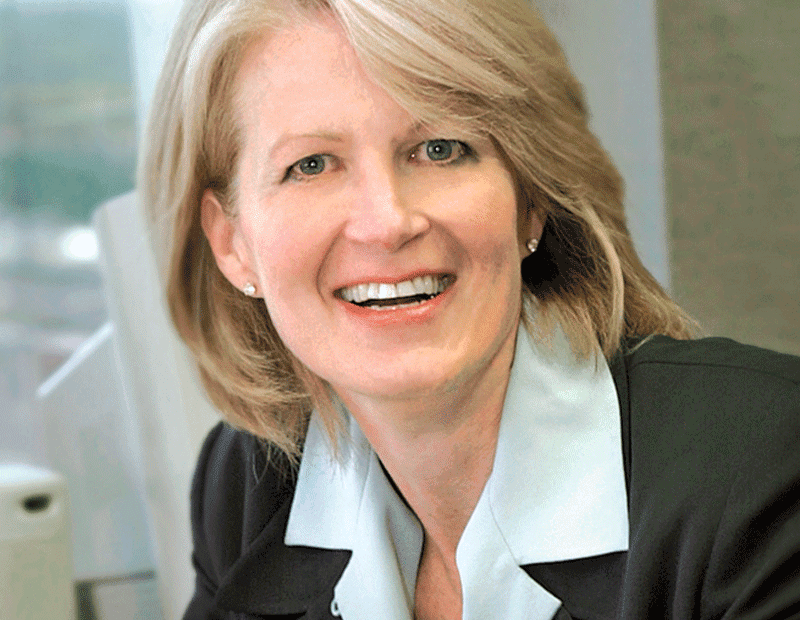
Katherine Lamondia-Wrinkle says the references from the résumé don’t always tell the whole story.

Cynthia Landry says that, despite many advances in the process of recruiting, evaluating, and eventually hiring talent, the résumé remains one of the most critical pieces of the puzzle.
It presents the candidate with a chance to make a case, she explained, and thus do what every job seeker strives to do — get their foot in the door. And yet, many simply don’t make effective use of that opportunity, and sometimes that’s why the door doesn’t open, said Landry, a human resources generalist for Health New England (HNE).
“The résumé is for you to put your best attributes out there so we can match your skills to the requirements of the job,” she told BusinessWest, adding quickly that such attributes can be lost amid too many words about things that don’t matter — someone’s hobbies, for example — and too few about what does matter, such as how an individual has helped a company grow revenues and reduce expenses.
Katherine Lamondia-Wrinkle, a partner with the law offices of Thomas M. Libbos, agrees. She said too many candidates fail to take full advantage of a résumé’s ability to make a good first impression. Meanwhile, she advises business owners and managers to maximize their opportunities to use a résumé to learn about a candidate, and thus pose effective questions that will enable them to ascertain more.
Kim Kenney-Rockwal, director of human resources for HNE, said there is an art and science to both writing and reading résumés, and she stressed the importance of using the document to not only present a past employment history, but also — and more importantly — explain what one has accomplished and how.
“If you have two people that are equally qualified, it’s hard to differentiate each one,” she explained. “You have to show how you stand out, and you need to show how you can bring more to that position than anyone else.”
For this issue and its focus on employment, BusinessWest talked with several résumé readers and writers about what a résumé can say — and why, all too often, it doesn’t say enough.

The Write Stuff
Jill Grindle, a certified professional résumé writer who owns A Step Ahead Résumé in Agawam, said there are three styles of résumés.
The first and most common is the chronological résumé. While entirely overused, it serves a purpose for someone younger — say, a recent college graduate who doesn’t have much work history to report. The next is what’s known as the combination or hybrid, and it lists not only the dates and places one has worked, but also what they accomplished in that job. For instance, did the applicant start a new process that saved himself and others in the office time and effort? Did she go above and beyond her sales goals? Were they rewarded by their former employer for certain accomplishments?
The third style is the functional résumé, and, according to Grindle, this is the “job obituary.”
“It’s typically used when someone has a spotty work history and feels they need to minimize those gaps, but it’s a red flag for most employers, and it’s very hard to track when a skill was learned in what job during what dates.”
The functional résumé style lists a candidate’s information by skill sets, and while it does allow the person to match their skills to what a job description is requiring, it’s difficult for an employer to read, especially when 20 seconds is about all you get to make an impression on paper or computer screen.
Typically, those with many years out of the workforce — due to, say, raising a family, military obligations, or a multi-track job history — might use this style, but the hybrid should still be the number-one style choice.
Kenney-Rockwal says that fewer than one-quarter of the résumés that Health New England receives are in the hybrid format, and this is regrettable because opportunities are missed to showcase how a person has truly benefited a company.
“How much money did you save the company in what amount of time?” she said, referring to one question that a résumé should help answer. “Don’t just tell me what the role was; tell me what you did in that role to make it different.”
She adds that one of the biggest mistakes that people make is taking their former job description and simply transfering it onto the résumé.

Mind the Gap
But what about those gaps in a work history? According to Grindle, candidates should just be honest.
“If you were home raising children, say so,” she said. “If you had to leave full-time work to care for ailing children, you’re not alone. Many Baby Boomers, who are still a major force in the labor pool, are facing this same issue and will continue to for many years. If you were off for some time, what did you do during that time to gain more skills, or what effort did you take to make use of that time for the future?”
Kenney-Rockwal agrees, and said that the effort to keep strengthening skills during those gaps shows serious intent. “If someone is transitioning from one industry to another, then of course we are going to expect some gaps of time for education or job searching. Even using the time wisely to go back to school is important, and we recognize that.”
Elisa Rose, another human resources generalist with HNE, adds that some of the questions being asked these days regarding work-history gaps include inquires about what a person learned during their time off that can be beneficial to the company.
Lamondia-Wrinkle is leery of short-term hiccups in the work history, and uses the applicant’s references to do some fact-finding. Obviously, she’s looking for a reference to give a great review of the candidate, but sometimes the unfavorable review — if she can get it in this age of privacy laws and fears of legal ramification — doesn’t always tell the full story.
She gives the example of a recent position that had to be filled by someone who had fantastic people skills and would represent the firm at the first point of phone or in-person contact. One résumé presented the initial requirements, and after a stellar set of interviews, the reference from a former employer just didn’t add up for this particular candidate.
“Her references were not supportive of what her résumé said, but we really took a chance on who she was, how well she appeared, and how well-spoken she was — despite the poor references.”
Lamondia-Wrinkle says the situation turned out to be the result of bad feelings that lingered between the candidate and the former employer who made the past personal. “She really impressed us in the personal interview. She’s been a phenomenal asset to our company; she was the right person for the job.”

The Bottom Line
The résumé is still a force to be reckoned with and doesn’t appear to be going away anytime soon. Kenney-Rockwal says that not everybody can afford to hire a professional résumé writer, or automatically know the presentation skills that are necessary for the personal interview, but there are plenty of area organizations and career fairs that offer free services to help.
And, while there are many aspects to the job search, the résumé is one of the keys, she stressed — a key that just might open a door and allow one to get a foot inside.

Elizabeth Taras can be reached at [email protected]

Opinion
Rebuilding a Stronger Springfield

We all will remember where we were on June 1, 2011. Without a great deal of warning, an EF-3 tornado with winds of more than 160 miles per hour descended from the sky and tore a 6.2-mile path through Springfield, leaving behind a trail of damage unprecedented in the city’s history.
This devastation immediately impacted 40% of city residents and resulted in more than 350 city residents having to live in temporary shelter at the MassMutual Center, over 600 structures damaged, and 150,000 cubic yards of tree debris to be cleared from public ways.
While that was a truly historic event, what happened following the tornado was equally as significant. Neighbors helping neighbors, businesses helping businesses, our first responders and those assisting us from across the state, city employees and our federal and state partners responding in a swift and compassionate fashion demonstrated the true character of our city.
As we approach the one-year anniversary, we look back at what has been accomplished since that day. Beyond the crucial 24/7 emergency response that happened in the days and weeks after the tornado — homeless families being re-housed, streets being cleared and reopened, power being restored in 72 hours — it was clear that the community was going to need to work together on a plan to rebuild Springfield, and not just rebuild what was lost, but rebuild a stronger Springfield.
It was important to me that our entire community be represented in this process, and with that, the partnership of the Springfield Redevelopment Authority and DevelopSpringfield was established to help lead the process, truly making this a public-private partnership. To further ensure participation, the Rebuild Springfield Advisory Committee was formed, comprised of representatives from a wide spectrum of impacted residents, businesses, and organizations interested in the rebuild phase.
What followed was a phased planning process in each of the neighborhoods affected by the tornado, a process that, when completed, involved the participation of more than 3,000 city residents — the largest community planning process in the city’s history. It was inspiring to see the numbers of people taking time out of their days to come and bring their concerns, ideas, and input on how to make Springfield a better place.
And this didn’t mean the rebuilding was on hold. We saw people in their own lives rebuilding and doing it bigger and better. Since June 1, 2011, we’ve seen more than $22.5 million worth of rebuilding in the tornado-impacted areas. People are reinvesting in their community, and see the opportunity we have in Springfield. We saw more than 80 businesses that had either short-term closures due to power loss or long term disruption due to damage, rebuild, reopen, and our community has come back to support them. The city rebuilt and reopened while still planning for its future.
So we now have the completion of a grassroots plan — available at www.developspringfield.com — that does not sit on a shelf. Rather it becomes a living document, one that is led by our domain and district Leaders through DevelopSpringfield for implementation, including the hundreds of volunteers who indicated they wanted to be part of the implementation on a whole host of topics.
I couldn’t be more thankful for our business community through the recovery and planning process. Knowing the quality of our companies in Springfield, I know we can fully expect a similar wave of support as we enter into the important phase of implementation and rebuilding.
Institutions like MassMutual — which not only donated significant staff time to the process and emergency response resources, but also made a generous $1.6 million contribution toward rebuilding our city — have been nothing short of heroic.
Experiencing a tornado here at home is something we in Springfield never expected would have happened, but the silver lining in what has happened since that day, the work the community has done in helping each other and in planning for our future, has been truly inspiring.
The city will continue the rebuilding process in an effective, constructive, and compassionate manner and will fight tooth and nail to ensure we received every reimbursable dime that we are entitled to.

Domenic Sarno is mayor of Springfield.

Opinion
Time to Put Young People to Work

It’s never been easy for young people to find summer employment, especially low-income youths from urban areas. It’s seemingly always been a case of too much competition and too few opportunities.
And this year, it appears that things will get even worse. Indeed, a recent study conducted by the Center for Labor Market Studies shows that this will likely be the most difficult year in the past two decades for young people to secure summer employment. And it is that dire prediction that led Bill Ward, president and CEO of the Regional Employment Board of Hampden County, to note that it will take a concerted effort of the private sector, working in partnership with local, state, and federal government, to secure something approaching adequate numbers of summer jobs.
He made that assessment at the recent launch of the REB’s annual YouthWorks summer jobs program, where he was joined at the podium by the mayors of Springfield and Holyoke, as well as other area leaders, all of whom made the case for employers and municipalities to be bold and creative and find ways to create summer job opportunities.
We hope the collective messages resonate, because, as we’ve stated on many occasions over the years, summer jobs (which are often first jobs for those fortunate enough to get one) are an important part of the overall learning process for young people, as well as another vehicle for building a solid workforce for the future.
In short, they’re very important for the continued growth and prosperity of the region.
Employers in both the public and private sectors understand this, but many are facing enormous challenges of their own. While the Great Recession is being talked about mostly in the past tense, there is lingering hardship, not to mention large amounts of doubt about whether the state’s economy will continue to rebound, and, if so, to what extent.
In this climate, it’s easy to see why employers would be cautious about adding any help — even a teenager making $8 per hour, 20 hours per week. In this environment, it would be easy for employers to say ‘no, not this year’ when it comes to expanding their payrolls.
We’re hoping that they can do what’s more difficult and say ‘yes,’ thus giving a young person a tremendous opportunity that they will long remember.
Summer jobs, especially first jobs, do many things. First, they can help take young people off the streets and perhaps keep them out of trouble at a critical juncture in their lives. They can also put a little money in their pockets and their bank accounts, and thus introduce them to the concepts of earning an income and, hopefully, proper money management.
But, perhaps more importantly, such jobs introduce people to the world of work. They can learn about what to wear, how to work with the public, what it’s like to have people count on you, and, if conditions are right, what it’s like to be part of a team.
What’s more, in some cases, summer jobs can open young people’s eyes to career possibilities and introduce them to companies they may want to work for years down the road.
Add it all up, and it’s evident that mostly good things happen when businesses consider young people to fulfill their summer hiring needs. It is our hope that companies across many sectors will heed the call and make this a summer to earn and learn for area young people.

Features
Northampton Chamber Marks Century of Progress

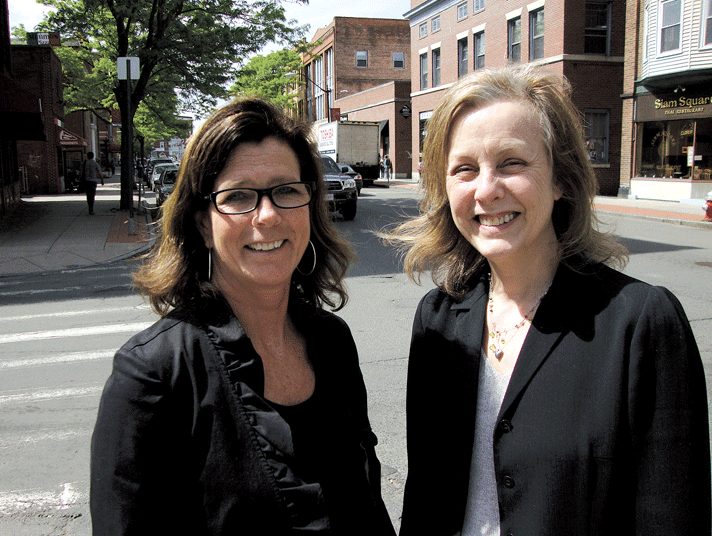
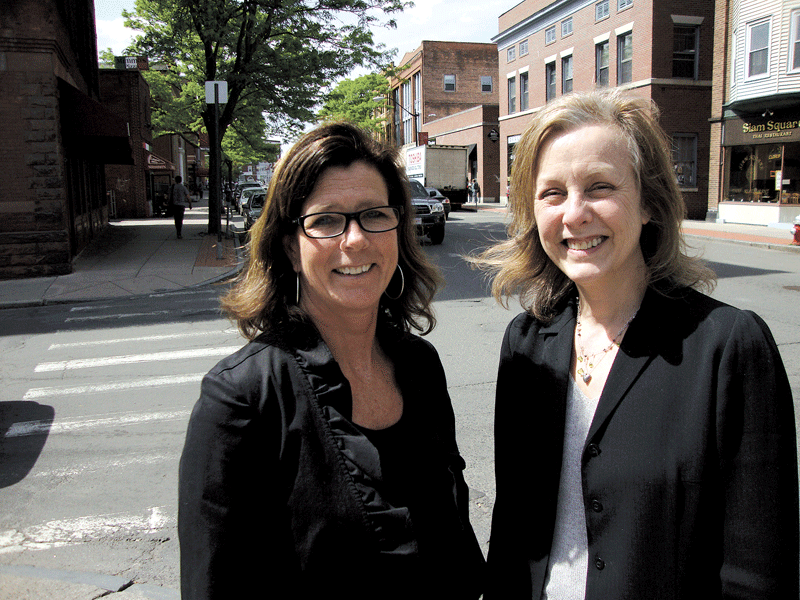
Janet Warren, left, and Suzanne Beck

Janet Warren, left, and Suzanne Beck say the chamber benefits both businesses and the overall community.

In seven years, the Greater Northampton Chamber of Commerce will mark its centennial, and Suzanne Beck says many parallels exist between those earliest days and what the organization does today.
Beck, the chamber’s long-time president, told BusinessWest recently that the early GNCC set goals for civic responsibility in addition to the day-to-day concerns of the member businesses. In fact, the chamber was responsible for the establishment of the Northampton Community Chest in 1922 — what later became the United Way of Hampshire County. And in 1926, the Hotel Northampton was developed from an earlier and smaller structure into the elegant quarters guests enjoy know, all at the hand of the Chamber of Commerce.
“Of course we look at what our members need,” Beck said of the chamber’s role, “and we determine what we can do to meet those needs. But often, in helping the business sector move forward, there are roles for economic development and benefits to the community.”
For many, those centennial accomplishments might be hard to replicate. But within the past decade, the GNCC has excelled as a launching pad not only for business-minded subsidiaries, but also in active roles with events and organizations for the town and residents of Northampton. And, as BusinessWest reported in April, the GNCC was a catalyst for the creation of the Hampshire County Chamber of Commerce, ready to go online this year.
Joining Beck in her talk with BusinessWest was Janet Warren, current president of the chamber’s board of directors, and herself a long-time member. “We have done some research in the last handful of years which shows us that people join this chamber for a few reasons,” she said. “We know for a fact that our members would like to see a direct benefit to their business in terms of helping to grow.
“But there are also people who are joining because they know they can invest in the chamber,” she continued, “and help us work on projects that can have an overall impact within the community.”
Both Beck and Warren agree that an engaged membership, a committed board, and a dedicated staff are all dedicated to helping the GNCC get down to business. “There’s great vision, with great people, in a great community,” Warren said.

Membership Has Its Privileges
Both women said Warren’s own story of coming to the chamber was a good example of how the organization benefits its members. “She herself uses many of the programs that we offer, and has chosen to take on a critical leadership role,” Beck said. “So there must be something she likes.”
Warren smiled and introduced her own chamber piece. She’s the owner of MarCom Capital, a marketing and communications agency based in Hatfield. After working in a corporate environment in Connecticut, a lengthy commute from her family home in the Greater Northampton area, she decided 11 years ago to hang out her own shingle. “Even though I lived here, I didn’t know anyone in the business community,” she said.
“I joined the chamber almost immediately after starting up because it just seemed like the right thing to do,” she continued. “I came to a new-member orientation, and I literally got my first client there. And then, as I was leaving, another member approached me and said they needed marketing services, so I was like, ‘wow.’ I know it doesn’t always work out that way, but sometimes it does.”
For a few years, Warren said, she didn’t have much of an active role in the chamber. “I didn’t really intend to go to events, quite honestly — my kids were really little,” she explained. “For a couple of years, I just stayed connected via the communications sent to me through the chamber. Most of my business was out of the area because of the contacts from my old job.
“But getting the newsletters every month, getting the package of materials every month, it kept me connected to what was happening here,” she continued. “Then, of course, I did get more involved in committees, and it exploded.”
Member events run the gamut from the signature Arrive@5, a meet-and-greet held on the first Wednesday of every month, to new-member breakfasts. But the GNCC excels at member marketing, Beck said, and here she listed off a host of action plans. In addition to the monthly newsletter, available both in print and online, the chamber maintains an annual Explore Northampton guide, distributed to more than 22,000 local businesses and households. There is also a member-to-member value program, with special offers available between participating businesses.
That engaged membership base, however, also translates into referrals outside of the published guidebooks. “The tone of the events is very supportive, whether you’re in a new business or if you’ve been around for a while,” Beck said. “We have a very social membership. The value there is certainly that you may find someone with whom to do business, but definitely you’ll find somebody who you can rely on for support, or someone who will speak well of you when they’re out and about within the community.”

Special Effects
Like its predecessors of the early 20th century, the current iteration of the chamber has set goals for the city in which it operates. “At a certain point in the trajectory of a business, it becomes more important to be functioning in a strong environment,” Beck said. “You’ve taken care of all the primary needs of a new business, and now it’s incumbent to be operating that business in a thriving local economy. Where you are is as important as what you do.”
To that end, she outlined what the GNCC has accomplished in the 20 years she has been working with the organization. About a decade ago, the chamber’s tourism committee began talks with the administrators of the Three County Fairgrounds, all with an eye toward the city’s growing leisure-travel market.
“Destinations can often get a boost with more organized programming,” she said. “But you need certain facilities to pull that off. As it happens, the fairgrounds were going through some significant changes in the way they were operating, so we formed a partnership with the city, the chamber, and the fairgrounds. Since then, we’ve created a redevelopment strategy for the fairgrounds, raised $400,000 in public and private money to define the market opportunities for the venue, and this year, the first physical evidence was the construction of three new horse barns, which was undertaken with $4 million in state bond authorization.
This development could have far-reaching implications for the city, she explained, adding that the facilities will enable the community to host more events, and on a year-round basis. A market study has shown that this broader portfolio of events could generate an additional $35 million annually in consumer spending in the area.
Meanwhile, the GNCC has been instrumental as a launching pad for organizations to become independently operating entities. “We’ve been good at nurturing ideas, getting people together, collaborating, and then being transparent in terms of whatever is best for what needs to get done,” Warren said.
The Northampton Area Young Professionals is one good example of this. Still considered a partner organization with the GNCC, NAYP acts as a chamber of sorts to the younger members of the area’s business community.
Another example is the Northampton Business Improvement District (BID). At one time, the GNCC was responsible for the sidewalk sales, the Taste of Northampton events — “all things that members would support financially, when they were interested,” Beck recalled.
“Owners stepped up and said they couldn’t do this on a casual, ad-hoc basis,” she continued. “There’s an enormous investment in the properties downtown; in the creation of the BID, we supported it financially, and we supported with leadership. But the BID now takes on that role of downtown programming. They have a lot more money to spend than we ourselves alone would have, year after year.”
Beck and Warren were both enthusiastic about the unfolding regional organization. “Chambers across the country have been coming to the realization that you can’t get all that you want done when you’re focused only on a small area or a single municipality,” Beck said.
The Hampshire County Chamber of Commerce is close to fully funded for a target inauguration later this year. Again, Beck pointed to the GNCC’s role in this new agency as another key example of how her office has the community’s interests in mind, as well as those of the business sector.
“The EDC in Springfield is a great generator of economic-development interests for our region,” she said. “And it’s our job to set the table for Hampshire County. It doesn’t make any sense for this chamber to be pitching to site selectors. We don’t have the land, the commercial space. We have what we have. And we just need to look at a much bigger footprint.
“And, of course,” Beck added, “the chamber knows that what is good for business in the region is going to be a game changer for us all.”

Health Care Sections
Family Care Medical Center Marks 30 Years in Business

Drs. David Doyle, left, and Ira Helfand say the Family Care Medical Center

Drs. David Doyle, left, and Ira Helfand say the Family Care Medical Center has become what they call a “community institution.”

Dr. Ira Helfand says the staff at the Family Care Medical Center in Springfield  may eventually get around to doing something this year to officially mark the facility’s 30th anniversary, but at present, people are simply too busy to have any kind of party.
But that doesn’t mean there isn’t anything to celebrate at the urgent-care facility that has been at the same location on Allen Street since the start. Actually, there’s plenty.
For starters, there’s the sustained, steady growth that Helfand and partner Dr. David Doyle have orchestrated since they acquired the business six years ago from founder Dr. Ty Matthews after working for him for many years. There’s also continued diversification of the center — which now handles everything from camp and school athletic physicals to a host of urgent-care matters; from physical therapy to suboxone treatment for those with opiate addiction — a key source of that growth.
And then, there’s the fact that the center is still thriving long after many competitors have opened their doors — and then eventually closed them because their operating model wasn’t profitable. “We’ve seen a lot of them come and go,” said Doyle, referring to rival urgent-care facilities.
But what is perhaps most celebration-worthy, said Helfand, is that the center has become what he considers “a community institution,” a part of the fabric of the Western Mass. health care sector.
“There have been people who have been coming here for two decades or more,” he explained. “They have their own primary-care doctor, but come here for their urgent-care needs on a fairly regular basis. We have charts for all our patients, and some are big and thick, because people have been coming back year after year for their urgent-care problems.”
For this issue, BusinessWest takes an indepth look at just how the FCMC has gained institution status in this region, and how it intends to continually build on the success that has enabled it to reach a notable milestone like 30 years and boast shelves crowded with those thick files Helfand described.

No Cake Walk
There were about 15 people in the waiting room at the FCMC when BusinessWest visited the facility in the late afternoon on a Friday in mid-April. That’s typical for the center, said Helfand, noting that its staff will treat 90-100 people per day, on average, numbers that have remained fairly constant through the years.
And those waiting at that particular time represent the many different reasons why people come to the center, he continued, noting that some required attention but couldn’t get an appointment with their primary-care physician for several days or even weeks, while others could have opted for a hospital emergency room, but were wary of a lengthy wait that has become the norm in such units. And still others have less-urgent needs that don’t require a visit to an ER or PCP — and thus can be handled at the center.
All these reasons explain why the FCMC and other urgent-care facilities were created, said Doyle, noting that this type of facility is certainly not a recent phenomenon. But they don’t make clear why this facility has succeeded while others have not.
The explanation for this lies in the center’s ability to essentially provide what it promises — quality, compassionate care that is usually administered in an hour, on average, he told BusinessWest, adding that the answer also lies with a staff that boasts many who have been at the FCMC for decades and thus understand the large and diverse population it serves.
The center’s successful track record is reflected in the fact that the vast majority of new patients are derived from word-of-mouth referrals from existing clients, said Helfand. “We’ve never done much marketing, mostly because we haven’t needed to.”
Backing up a bit, Helfand and Doyle said they both started in health care as emergency-room physicians and worked together for many years at Cooley Dickinson Hospital in Northampton. But both were attracted to the urgent-care model, and more specifically, the one in place at the FCMC.
In 2006, with Matthews easing into retirement, the two acquired the facility, and have since made the often-difficult transition from employee to employer, while achieving roughly 50% growth in revenues over that six-year span and expanding the staff to roughly 30.
Helfand and Doyle said many things have changed since 1982, and even since 2006, including the advent of health-care reform in Massachusetts, which has mandated insurance coverage for all residents (bringing some logistical and bureaucratic challenges), as well as ever-improving information technology and a constantly changing competitive landscape. But some things haven’t changed, he went on, including the factors that gave rise to urgent-care facilites.
In fact, some of these have become more exacerbated in recent years. This includes the declining numbers of primary-care physicians — a phenomenon that exlplains those issues of accessibility — and the still-growing use of the hospital emergency room as a PCP among some constituencies, creating more crowding and longer waits.
“I think people have more difficulty accessing their primary-care physician,” said Doyle. “When they have an urgent problem, they’ll call their primary care, and not be able to see him or her for weeks or months; they might have an acute infection, allergic reaction, poison ivy, a sprained ankle, and need some attention. Also, emergency rooms are overutilized, and we are able to see a lot of the minor emergencies.”
Helfand concurred, and noted that being able to help people impacted by these converging forces in health care is one of the most rewarding aspects of working in an urgent-care setting.
“So many patients in the emergency room are just so unhappy,” he said by way of contrasting his current work assignment with the one he had several years ago. “They’ve been waiting for hours — even in the best emergency rooms. So many of the patients who come here are just so pleased that they can be seen by a doctor, get treated, and get discharged in an hour or an hour and 15 minutes.”
Today, the FCMC provides a host of services it has offered since the beginning, such as school and camp physicals; primary-care services for those suffering from hypertension, diabetes, and other conditions; and urgent care for everything from flu-like symptoms to urinary infections to lacerations. It also offers lab and X-ray services, FAA exams, psychological counseling, and orthopedics, and has an on-site physical-therapy facility.
In recent years, though, the center has added additional services, such as the suboxone practice for opiate addiction involving heroin, but also pain medications such as oxycontin. Suboxone is an alternative to methadone, and one that Doyle believes is more effective.
“We feel strongly that works much better than methadone,” he explained, adding that the number of patients being treated for opiate addiction continue to rise, and the extent of the problem isn’t generally understood.
“When we started doing this five years ago, experts estimated that there were 1 million people with opiate addiction,” he continued. “Now, they’re saying 4 million to 5 million, and it’s probably many times that number.”

On the Mark
As he talked with BusinessWest in the center’s conference room/break facility, Helfand helped himself to one of the large chocolate-chip cookies from a box someone had left on the table.
“This is our celebration, I guess,” he joked, noting that, while 30 years in any business is a noteworthy achievement, and three decades in this one is certainly an accomplishment, nothing elaborate is planned to commemorate what started in 1982.
Instead, the FCMC will celebrate by doing what it has always done, and that’s meet a need, and do so in an effective, patient-friendly fashion.
In other words, it will go on being a community institution.

George O’Brien can be reached at [email protected]

DBA Certificates Departments

The following Business Certificates and Trade Names were issued or renewed during the month of May 2012.

AGAWAM

4 U Siding & Roofing
605 Southwick St.
Dmitriy Bruskly

Agawam Wellness
430 Main St.
Nichole Hines

Custom Cabinet & Millwork Inc.
62 Suffield St.
Garrett Kimball

Tucano Applications
14 Mansion Woods
Leonardo D. Mascarenhas

Wargamers’ Terrain
73 Tobacco Farm Road
Joe Linares

AMHERST

Arise Pizzeria
28 Amity St.
Emily Wadham

Smoking Otter Furniture
13 Ridgecrest Road
Ben Paus-Weiler

CHICOPEE

Jonken Lawncare
1981 Memorial Dr.
Kevin Blanton

Kava Press
57 Springfield St.
Lyudmila Shumska

Knight Home Improvement
18 Mellen St.
Richard E. Knight Jr.

Renzo Services
70 Broadway St.
Carlos Carrero

Westover Tailor Shop
1512 Memorial Dr.
Cengiz Ihas

EASTHAMPTON

Brickyard Maintenance
142 Pleasant St.
James Wittmer II

Eastside Auto Recovery and Transport
3 West St.
Aneudi Bermudez

The Botaniste
101 Main St.
Corina Miller

Video 4 Good
116 Pleasant St.
Media Shower Productions

HADLEY

Interskate 91 North
367 Russell St.
William Hoeffer

Shaolin Kung Fu Center
231 Russell St.
Ryan Budny

Z Auto
105 East St.
Michael Zera

HOLYOKE

Dollar Rite
50 Holyoke St.
Sawkat Owali

Easy Pick Convenience
224 Lyman St.
Arfa Shaikh

NORTHAMPTON

Amulet Nine
225 Elm St.
Elisabeth Beller

Aqua View Design
16-20 Crafts Ave.
Yue Zhang

Harlowe Luggage
196 Main St.
Robert Murdick Jr.

Home Town Healthcare Store
142 North King St.
Heriberto Tapanes

Pho Vietnam
18 Main St.
Giang Nguyen

Sid Vantage
279 Main St.
Jill Boyce

The Laughing Tomato
20 Hampton Ave.
Armando Verea

Vend Magic
73 Bridge St.
Barbara Marsh

PALMER

Tenczar’s Food Store
2004 Main St.
Rejesh Patel

The Blue Veins Band
1028 School St.
Matthew Skowyra

SOUTHWICK

Conlin Interiors
17 Island Pond Road
Sonia Sube

Extreme Tree
9 Robin Road
Zachary Dougherty

Friends of the Southwick Rail Trail
454 College Highway
Roger Yargeau

Full Bobbin Quilting
27 Gargon Ter.
Catherine Barwikowski

Lunique Realm
160 Point Grove Road
Lynne Hartwell

SPRINGFIELD

Lil Divas Boutique
65 Sycamore St.
Elizabeth Matos

Lion Like it or Not
108 Yale St.
Sheldon Alexander

M.V.M. Balloon Design
172 Eastern Ave.
Benjamin Martinez

Mahigani Flava LLC
248 White St.
Yvette Anderson

Martin’s Barbershop
165 White St.
Martin Nieves

Mikey’s Pizza
89 Main St.
Mohammad M. Tajerha

One Stop Cuts
494 Central St.
Radalle Hubbard

P J & E Home Improvement
94 Draper St.
Paul Jeannenot

P.B. Remodeling
565 Riverside Road
Pedro Baez

Partnership Nest Egg Club
37 James St.
Tracey A. Maddix

PH Photography
115 Denwall St.
Anitra Brown

S & S Wholesale Corporation
90 Pinta Circle
Suraji S. Omar

Simply Divine Beauty Lounge
607 Dickinson St.
Kelly Rochelle

Small Repair / PC
45 Itendale St.
Fred L. Moskowitz

Something to Talk About
1500 Main St.
Diane Evans

Step in Styel
280 Oakland St.
Sean Brantley

Stop & Shop
415 Cooley St.
Stop & Shop

Sweet Start Family Childcare
36 Amanda St.
Germaris Pinero

Tamaz Inc.
32 Boston Road
Mazhar Iqbal

Universal Cuts
172 Eastern Ave.
Jossimarye Melendez

Velez Home Improvement
22 Wilmont St.
Evelio V. Garcia

Vessels of Silver and Gold
8 Navajo Rd.
Ingrid Ingram

War and Fantasy Games
20 Old Farm Road
Wayne Liggan

Xiuli Li Corporation
271 Belmont Ave.
Xiuli Li

Youth Logic
80 Congress St.
Experience Wellness

WESTFIELD

Complete Tax Service Inc.
85 Reservoir Ave.
Shelley LaCross

Design the Line Custom Clothing
246 Elm St.
Joshua Kelsey

Dine & Play Buffet
77 Mill St.
Michael Ventrice

Glitz, Glamour, N’Elegance
160 Elm St.
Stephanie L. Wesolowski

Westfield Vacuum Center
281 Notre Dame St.
Annette Barl

WEST SPRINGFIELD

Afterglow RV Auto Detailing
134 Orchard View St.
Michael J. Stefano

Cori’s K9 Clip
242 Elm St.
Cori Napolitan

Cornerstone Construction Co.
105 Hampden St.
Anatoliy Paliy

E. Scott Landscaping
320 Massachusetts Ave.
Eric Scott

Hale Channel Photography
124 Lincoln St.
Brian M. Hale

JJ’s Soft Serve & More
16 Chestnut St.
Montagna Enterprises Corporation

Lattitude
1338 Memorial Ave.
Inspirations Food

North Garden Chinese Restaurant
42 Myron St.
Raymond Kan

Peak Performance Exterior Home Improvement
103 Lower Beverly Hill
Eric Barkyoumb

Ready Motors
2405 Westfield Road
Victor Meyko

The Puppy Place
935 Riverdale St.
Richard Carty

Van Deene Medical Building Partner
75 Van Deene Ave.
Jonathan C. Sudal

Westside Checking
205 Elm St.
JMT Check Cashing Inc.

Departments Incorporations

The following business incorporations were recorded in Hampden, Hampshire, and Franklin counties and are the latest available. They are listed by community.

AGAWAM

Cross Logistics Inc., 135 Brien St., Agawam, MA 01001. Mohamad M. Borhot, same. Transportation services.

Ecotek Print Solutions Inc., 417 Springfield St., #203, Agawam, MA 01001. Abdallah Ghalayini , same. Digital signage equipment and services.

Angels Take Flight Inc., 103 Lealand Ave., Agawam, MA, 01001. Tamara J. Blake, 136 Rosewell St., Springfield, MA 01109. A non-profit organization that provides luggage and transitional items to local children in foster care placements, hospital settings, homeless shelters, domestic violence shelters, or other safe homes.

BELCHERTOWN

21st Century Green Homes Inc., 368 Turkey Hill Road, Belchertown, MA 01007. James F. Bachand Jr., same. Real estate purchases, sales, and construction of residential homes.

CHICOPEE

Donald J. Ruel Electric Inc., 72 Parenteau Ct., Chicopee, MA 01020. Donald J. Ruel, same. Licensed electrician.

Rusin Services Inc., 76 Cote Ave., Chicopee, MA, 01020. John Rusin, same. General cleaning and maintenance services.

EASTHAMPTON

Rsk Media Inc., 116 Pleasant St., Unit 325, Easthampton, MA, 01027. Matthew B Harrison, 6 Pepin Ave., Easthampton, MA 01027. Photo and video production.

FEEDING HILLS

Extreme Enterprice Inc., 371 South Westfield St., Feeding Hills, MA 01030. Danny Acevedo, 336 Tokeneke Road, Holyoke, MA 01040. Auto body.

GREENFIELD

Roundabout Books Inc., 16 West St, Greenfield, MA 0130. Raymond Joseph Neal II, 16 West St., Greenfield, MA 01301. Used book sales.

HOLYOKE

Imagine Philanthropy Inc., 591 Northampton St., Holyoke, MA 01040. Tuti B. Scott , 591 Northampton St., Holyoke, MA 01040.

Umoja Now Inc., 17 Old Jarvis Ave. Holyoke, MA 01040. Pascal Kelvin Akimana, same. To prevent all forms of violence and heal its effects. To promote gender equality. To build sustainable peace in local communities across the African continent.

INDIAN ORCHARD

K&O Corp., 1295 Worcester St., Indian Orchard, MA 0115. Orlando Ovalles, same. Grocery store.

LEE

Hannn Lerner, P.C., 184 Main St., Lee MA 01238. Jeremia A. Pollard, same. Legal services.

LENOX

Massachusetts Equine Welfare Council Inc., 431 New Lenox Road, Lenox, MA, 01240. Barbara E. Kellogg, same. To provide assistance and education to equine owners and the public to ensure equine welfare; to foster and encourage and assist in the humane care and treatment of equines.

NORTHAMPTON

Wishbone Productions Incorporated Inc., 43 Warburton Way, Northampton, MA 01060. Matthew McCloghry, same. Fund raising, sales and marketing.

PITTSFIELD

Berkshire Lockshop Inc., 24 Dalton Ave., Pittsfield, MA 01201. David Hicks, same. Locksmith services.

R & A Bertolino Inc., 43 Bellmore Dr., Pittsfield, MA 01201. Robert M Bertolino, same. Food services.

RUSSELL

Russell Enterprise Inc., 265 Dickinson Hill Road, Russell, MA 01071. Nadezhda Burkovskiy, same. Truck leasing.

SOUTHWICK

Paul Martin Construction Corp., 23 Berkshire Ave., Southwick, MA 01077. Paul Martin, same. Commercial construction and renovations.

SPRINGFIELD

Charlene’s Boutique Inc., 114 State St., Springfield, MA 01103. Charlene S. Naylor, same. Retail store-storefront; sales-clothing.

Easy Checks & Variety Inc., 494 Central St., Springfield, MA 01109. Rajesh R. Patel, 102 Sterling Road, Springfield, MA 01119. Check cashing.

Metropolitan Insurance Union Inc., 251 Boston Road, Springfield, MA 01109. Lance D. Letourneau, same. Insurance center.

Goodness Outreach Ministries Inc., 145 Bay St., Springfield, MA 01109. Derrick Augustus Samms, 801 Chicopee St., Chicopee, MA 01013. To propagate the gospel of Jesus Christ.

Re Green Springfield Inc., 1441 Main St., Suite 601, Springfield, MA 01108. Timothy J. Ryan, 72 Morningside Park, Springfield, MA 01108. The corporation is organized for charitable, scientific purposes, which include the development, creation and implementation of sustainable planting, caring and maintenance of trees and vegetation in the city of Springfield.

Iglesia Pentecostal Jesus La Rosa De Saroin Inc., 316 1/2 Belmont Ave., Springfield, MA 01108. Mercedes Figueroa, 44 Allen Park Road, Springfield, MA 01118. Bible studies and religious studies related to the church.

STURBRIDGE

Bonneau Anesthesia Services Inc., 69 Mashapaug Road, Sturbridge, MA 01566. Jean-Paul Bonneau, same. Nurse anesthesia services.

WEST SPRINGFIELD

Ar-Rahman Co. Inc, 470 Main St., West Springfield, MA 01089. Ulkadir Hussein, 3 Union St., West Springfield, MA 01089. Grocery store.

Car Development Inc., 122 Doty Circle, West Springfield, MA 01089. James E. Balise Jr., same. Financing and redevelopment of real estate.

WILBRAHAM

Lamontagne Auto Body Inc., 8 Fairview Road, Wilbraham, MA 01095. Glen Lamontagne, 8 Fairview Road, Wilbraham, MA 01095. Auto Body repairs.

Manny’s Olive Oil Inc., 1872 Boston Road, Wilbraham, MA 01095. Barbara J. Rovithis, 1872 Boston Road, Wilbraham, MA 01095. Manufacture, sales, and distribution of olive oil.

Company Notebook Departments

Hampden Bancorp Plans Cash Dividend
SPRINGFIELD — Hampden Bancorp Inc., the holding company for Hampden Bank, recently announced it had a $624,000, or 246.6%, increase in net income for the three months ended March 31, 2012, to $877,000, as compared to $253,000 for the same period in 2011. The provision for loan losses decreased $575,000 for the three-month period ended March 31, 2012 compared to the same period in 2011, due to decreases in delinquent loans, including non-accrual loans, declining impaired loans, and continued improvement in general economic conditions. In addition, the company’s total assets increased $37.8 million, or 6.6%, from $573.3 million at June 30, 2011 to $611.1 million at March 31, 2012. Securities increased $19.6 million, or 17.5%, to $131.5 million, and cash and cash equivalents increased $7.2 million, or 23.0%, to $38.3 million at March 31, 2012. Deposits increased $18.2 million, or 4.4%, to $435.4 million at March 31, 2012, from $417.3 million at June 30, 2011. The company has been focused more on obtaining core deposits than time deposits, according to Thomas R. Burton, CEO and vice chairman. “Economic conditions in our local economy continue to improve, as evidenced by a decline in delinquent and impaired loans as well as a nominal increase in loan growth,” he said. “We have reduced the provision for loan losses while continuing to maintain strong ratios related to our reserve coverage. Overall, we are pleased with the results but recognize that asset growth is necessary for continued financial improvement.” The board of directors declared a quarterly cash dividend of $0.04 per common share, payable on May 31, to shareholders of record at the close of business on May 16.

WMECo Launches Mobile Web Site
SPRINGFIELD — Western Massachusetts Electric Co. (WMECo) recently launched a mobile Web site for customers who use smartphones. Using the new mobile site, customers can view their account, pay their bill, view current power outages, or report a new power outage, all from the specially designed Web site. “It’s important to us that our customers feel we are accessible,” said Peter Clarke, WMECo president and chief operating officer. “They have told us they want more and easier ways to manage their accounts and receive information from us, so this is a logical next step for us to deliver on that request.” The mobile Web site works with either an iPhone or Android device. When customers access wmeco.com from a smartphone, they will be automatically directed to the mobile-friendly Web site.  In addition, the mobile site puts customers one touch away from calling or e-mailing WMECo customer service and from accessing the company’s Twitter, Facebook, and YouTube pages. Customers may also click a link on the site to view the company’s full Web site. WMECo, a Northeast Utilities company, serves approximately 210,000 customers in 59 communities throughout Western Mass.

Whalley Selected for ITC47 Contract
SOUTHWICK — Whalley Computer Associates (WCA) was recently awarded the ITC47 contract, which will allow it to continue to sell technology products such as desktop computers, laptops, servers, storage devices, and numerous other related technology products to organizations that use the Massachusetts State Purchasing Contract as a purchasing tool. WCA, a leading supplier to Massachusetts K-12 schools, partners with 181 of the state’s 320 school systems to provide technology products, services, training, and consultation. WCA also works with 57 cities and towns, 36 law-enforcement departments, 19 public colleges and universities, and 12 state agencies. “I think the number of Massachusetts organizations that have selected us as their primary vendor validates our decision to remain a large, regional, locally owned business,” said Paul Whalley, vice president and a former elementary-school teacher. Whalley noted that WCA is the sixth-largest vendor of the prestigious Massachusetts Higher Education Consortium (MHEC) contract, which has 600 suppliers providing computers, books, vehicles, science materials, furniture, and nearly every other product required by public Massachusetts colleges and universities. “WCA is also unique in having an office in the western part of Massachusetts and another in Central and Eastern Mass.,” said Whalley. “This allows us to rapidly and easily service those organizations that have offices throughout the state.”

Tighe & Bond Ranked Among Top Design Firms
WESTFIELD — The Engineering News-Record (ENR) once again ranked Tighe & Bond among the top 500 design firms in the nation, according to David Pinsky, president. ENR ranks companies by the previous year’s gross revenue for providing design services to domestic and international markets. Tighe & Bond ranked 272 in ENR’s 2012 report, which exceeds last year’s ranking of 309 and reflects the firm’s 2011 annual gross revenue of $36 million. “Last year was a very successful and profitable year for us,” said Pinsky. “We saw growth in all of our primary business units and acquired a sixth office in Portsmouth, N.H., that enables us to better serve our clients in that state, Southeastern Maine, and Northeastern Mass. All of this is backed by our ongoing commitment to deliver the highest-quality services to our clients on time and within budget.” The Boston Business Journal also ranked Tighe & Bond as one of the largest engineering firms in Massachusetts, according to Pinsky. In its 2012 Book of Lists, the journal ranked the firm 12th out of 25 top-billing firms.

Columbia Gas Supports Link to Libraries
SPRINGFIELD — Columbia Gas of Massachusetts has given a grant to Link to Libraries to help promote literacy and donate books to public elementary schools and nonprofit organizations in Western Mass. The funds will be used to supply all children entering kindergarten in Holyoke and Springfield with literacy bookbags. “We are tremendously honored that the Columbia Gas of Massachusetts has decided to join us in our mission,” said Susan Jaye-Kaplan, Link to Libraries co-founder. “This grant will have substantial economic impact in our mission to enhance early literacy and promote that all youth be proficient readers by grade 4.” Steve Bryant, president of Columbia Gas, noted that “Columbia Gas, as well as our employees, is committed to supporting families in need. Helping to provide books to kindergarten children is just one way we can help ensure that children get started on the right path to become lifelong readers.” Since its inception in 2008, Link to Libraries has donated more than 50,000 new books to area youth.

Big Y Adds 41st Pharmacy
SPRINGFIELD — Big Y Foods Inc. recently opened its 41st pharmacy in the World Class Market at 700 Main St., Suite 2, in Great Barrington. Pharmacy Manager Helen Costello, R.Ph., will be working alongside pharmacist Julie Samale, R.Ph. and technician Raeven Fuller to bring added convenience to grocery shoppers in Southern Berkshire County. Pharmacy hours will be weekdays, 9 a.m. to 8 p.m.; Saturdays, 9 a.m. to 5 p.m.; and Sundays, 9 a.m. to 1 p.m. Big Y Pharmacies plan to conduct special wellness events throughout the next few months, including total cholesterol and blood-pressure screenings, glucose and body-fat-percentage testing, and skin analysis. Big Y currently operates pharmacies throughout Massachusetts and Connecticut.

Departments People on the Move

Denise V. Laizer

Denise V. Laizer

Denise V. Laizer, Senior Vice President and Chief Lending Officer for Easthampton Savings Bank, has been named a Community Bank Hero for 2012 by Banker and Tradesman magazine. Readers of Banker & Tradesman were asked to nominate individuals who work in a Massachusetts community bank, are respected industry professionals who have made a significant impact on those around them, and make outstanding contributions to their institution. Criteria for candidates also included giving back to the community and the industry with time, energy, and resources through volunteerism, community service, and charity. Laizer, who was one of 16 selected, will be honored at a special awards ceremony in Boston on May 23.
•••••
Michael Ravosa was recently elected to the Board of Trustees at American International College in Springfield. He is the Vice President for Investment for the RBD Wealth Management Group, UBS Financial Services.
•••••
United Fresh Foundation’s Center for Leadership Excellence has chosen John Heon, Produce and Floral Sales Manager, Big Y World Class Market in Great Barrington, as an honoree for its 2012 awards. Heon was honored among 25 produce managers representing 20 supermarket chains, commissaries, and independent retail stores within the U.S. and Canada. Winners were selected by a team of produce experts who examined efforts to increase produce consumption through everyday excellence in merchandising, special displays and promotions, community service, and commitment to total customer satisfaction. Heon has been with Big Y for 31 years.
•••••
North Brookfield Savings Bank announced the following:
• Rick Egan has been named Assistant Vice President and Commercial Loan Officer. He is responsible for developing new and existing commercial-lending relationships, advising business customers on available lending products, and helping borrowers achieve their financing goals.
• Lillian Carlson has been named Loan Officer. She is responsible for creating and maintaining relationships with existing and prospective loan customers as well as assisting customers with the mortgage-lending process and helping them find financing solutions.
•••••
Kim Bushey

Kim Bushey

Santander Holdings USA Inc. and Sovereign Bank, N.A., wholly owned subsidiaries of Banco Santander, announced the appointment of Kim Bushey as Senior Vice President and Business Banking Executive for Connecticut and Western Mass. Bushey, based out of the West Hartford, Conn. office, will be responsible for serving the needs of local businesses with annual revenue of $3 million to $20 million.
•••••
Attorney Danielle I. Nicklas has joined Cooley Shrair in Springfield as Associate Legal Counsel. Nicklas focuses her practice on health law, including health care compliance, risk management, Stark law, and anti-kickback regulations.
•••••
James M. Lavelle, General Manager of the Holyoke Gas & Electric Department, will receive the 2012 Henry A. Fifield Award for Voluntary Service to the Greater Holyoke Chamber of Commerce. The late Henry Fifield was an Ampad executive who served the chamber in many capacities, including chairman of the board. Lavelle will be honored at the 122nd annual meeting of the Holyoke Chamber on May 30 at the Log Cabin Banquet and Meeting House. The award presentation and reception for Lavelle will be a highlight of the annual meeting, which will also include an election of officers and directors for the 2012-13 year.
•••••
David Fedor, an independent Financial Advisor affiliated with Commonwealth Financial Network and President of Fedor Financial Group in West Springfield, was named to Commonwealth’s Winners Circle. The distinction recognizes 167 out of Commonwealth’s 1,400 financial advisors nationwide.
•••••
The Hampden County Bar Assoc. announced the following:
• Attorney Kevin J. Claffey received the John M. Greaney Award during the association’s National Law Day Ceremony at Springfield District Court; and
• Noreen E. Nardi received the John M. Greaney Award during National Law Day. The annual awards are given to both an attorney and a non-attorney who are deemed outstanding citizens of the Hampden County legal community.
•••••
John Elder Robison was among 15 individuals recently selected to serve on the U.S. Health and Human Services Interagency Autism Coordinating Committee. Robison is an adjunct faculty member in the Department of Communication Sciences and Disorders at Elms College, Chicopee. He speaks publicly about his experience as a person on the autism spectrum, and is the author of Look Me in the Eye: My Life with Asperger’s and Be Different: Adventures of a Free-Range Aspergian.
•••••
Tighe & Bond of Westfield announced the following:
• Stephen Seigal, P.E., BCEE, has joined the firm as a Vice President, and will work out of the Worcester office. A civil engineer with 36 years of regional experience in the wastewater industry, Seigal has planned, designed, and provided construction-phase engineering services for more than 24 wastewater treatment facilities throughout the region.
• David Loring, P.E., LEED AP, has been named Technical Practice Leader for the Civil Practice Group. In this role, he will coordinate and advance the firm’s civil-engineering capabilities, oversee the continual advancement of relevant technical skills, and promote professional development of key staff. He will also ensure that the Civil Practice Group stays abreast of local, state, and federal regulations that impact clients. Loring is a licensed civil engineer and construction supervisor in Massachusetts, as well as a LEED Accredited Professional.
•••••
American International College in Springfield has named Dr. Cesarina Thompson Dean of the School of Health Sciences. Thompson will begin her duties on July 1. She was inducted as a Fellow in the National League for Nursing’s Academy of Nursing Education for her research and scholarly activities focusing on advancing nursing education. She received a Ph.D. in Adult Education and a M.S. in Nursing from the University of Connecticut, and a bachelor’s degree from the University of Bridgeport.
•••••
The Massachusetts Municipal Wholesale Electric Company (MMWEC) announced the following election of directors and officers:
• Paul Robbins, Principal of Paul Robbins Associates and a gubernatorial appointee, was elected Chairman;
• Phillip W. Sweeney, Marblehead Municipal Light Department Commission Chairman, was elected to a two-year term on the board;
• Kevin P. Kelly, Groton Electric Light Department Manager, was elected to a three-year board term; and
• Peter D. Dion, General Manager of the Wakefield Municipal Gas & Light Department, was re-elected by the membership to his fourth one-year term as President of MMWEC.
Additional MMWEC officers for the coming year, as elected by the board, include:
• Ronald C. DeCurzio, CEO and Secretary;
•  Jeffrey B. Iafrati, Treasurer;
• Stephen J. Smith, Assistant Treasurer;
•  Nancy A. Brown, Assistant Secretary; and
•  Nicholas J. Scobbo Jr., General Counsel.
Other MMWEC directors, elected previously by the membership, include:
• Gary R. Babin, Director of the Mansfield Municipal Electric Department;
• Jeffrey R.  Cady, Manager of the Chicopee Muncipal Lighting Plant;
• Sean Hamilton, General Manager of the Sterling Municipal Light Department;
• Jonathan V. Fitch, Princeton Municipal Light Department Manager; and
• James M. Lavelle, Holyoke Gas & Electric Department Manager.
In addition to Robbins, Michael J. Flynn serves on the board as gubernatorial appointee. Flynn also represents the Town of Wilbraham on the board, with Luis Vitorino and John M. Flynn representing the towns of Ludlow and Hampden, respectively.
•••••
Big Y Foods Inc. of Springfield announced the following:
• Michael J. Galat has been named interim Senior Director of Employee Services. He will oversee the entire department, including employee policies and procedures, training and development, morale and engagement, recognition, progressive discipline, employee benefits, and wellness initiatives; and
• Sean S. Nimmons has been appointed a District Director for the eastern zone. He is responsible for managing all aspects of the 15-store zone, including employees, financial performance, merchandising, and operations.
•••••
Daniel R. Moriarty has been named Senior Vice President and Chief Financial Officer at Monson Savings Bank. A member of the bank’s senior leadership team, he is responsible for leading the bank’s financial functions, operations, and reporting.

Agenda Departments

Management Fundamentals Workshop
May 24: Lyne Kendall of the Massachusetts Small Business Development Center Network will present “Business Plan Basics” from 9:30 a.m. to 12:30 p.m. at the Amherst Town Hall, first floor meeting room, 4 Boltwood Walk. The workshop will focus on management fundamentals from start-up considerations through business-plan development. Topics will include financing, marketing and business planning. The cost is $40. For more information, call (413) 737-6712 or visit www.msbdc.org/wmass.

State of the Region
June 5: The Hartford-Springfield Economic Partnership (HSEP) will stage its 2012 State of the Region Conference, from 7:30 to 10:30 a.m. at the Holiday Inn Enfield-Springfield at One Bright Meadow Blvd. in Enfield. The event will have as its theme “State Collaboration and the Region’s Future.” Keynote speakers will be Catherine Smith, commissioner of the Conn. Department of Economic and Community Development, and Gregory Bialecki, Mass. secretary of Housing and Economic Development. Mary Ellen Jones, chair of the Connecticut Airport Authority, also will speak. There is no charge, but pre-registration is necessary.  For more information and to register, visit www.hartfordspringfield.com. The Hartford-Springfield Economic Partnership is an interstate collaboration of regional economic-development, planning, business, tourism, and educational institutions that work together to advance the region’s economic progress.

YMCA CELEBRATION
June 18:  Given the YMCA of Greater Springfield’s history with the game of basketball, it is only fitting that a celebration of the organization’s 160th Anniversary will be staged at the Naismith Memorial Basketball Hall of Fame. The event, to start at 6 p.m., will feature a keynote address by successful sports and business leader Mannie Jackson and Boston Globe sportswriters and ESPN commentators, Jackie MacMullan and Bob Ryan. MacMullan and Ryan, both Basketball Hall of Fame Award winners, will together share with guests their thoughts and experiences covering the celebrated Boston sports teams, with a special concentration on the Boston Celtics. Jackson is a former player for the Harlem Globetrotters who, after a successful business career, purchased the Globetrotters from near bankruptcy and extinction, reinvigorating one of America’s most popular sports brands. Jackson will share stories and insights from his life beginning with literally being born in a railway boxcar, to becoming the first African American player at the University of Illinois, to becoming the president of a unit of Honeywell Corporation, and his ultimate purchase of the Globetrotters and his experiences around the world with the team. Jackson is now a philanthropist and author, who recently released a book called Boxcar to Boardrooms; My Memories and Travels, that chronicles his inspiring journey. The book is on sale now www.boxcarholding.com with all proceeds donated to cancer research and the I-LEAP Academic Scholarship Program. “We are extremely honored to be joined by these three amazingly talented sports icons,” says Kirk Smith, President & CEO, YMCA of Greater Springfield. “I couldn’t ask for a better way to commemorate our 160th anniversary than with them at Center Court of the Basketball Hall of Fame.” Tickets to the June 18 celebration are available by contacting Peggy Graveline, Development assistant at the YMCA of Greater Springfield, at [email protected], or by calling (413) 739-6951, ext. 179. Tickets are $160/each, or $1,500 for a table of 10. All proceeds from the event will benefit the YMCA of Greater Springfield’s 2012 Annual Scholarship Campaign.

40 Under Forty
June 21: BusinessWest will present its sixth class of regional rising stars at its annual 40 Under Forty gala at the Log Cabin Banquet & Meeting House in Holyoke. The gala will feature music, lavish food stations, and introductions of the winners. Tickets are $60 per person, with tables of 10 available. Early registration is advised, as seating is limited. For more information, call (413) 781-8600, ext. 100, or log onto www.businesswest.com.

WBOA 30th Anniversary
June 21: Chez Josef in Agawam will be the setting for the 30th anniversary celebration of the Women’s Business Owners Alliance of the Pioneer Valley (WBOA) at 6 p.m. The WBOA will recognize its 2012 Business Woman of the Year, as well as its 2012 Outstanding New Member, and will name its Top Women in Business in the Pioneer Valley. Renate Oliver, WBOA founder, will also be a featured speaker. The event will feature entertainment by Jeannie Pomeroy-Murphy, as well as a raffle fund-raiser. For more information or tickets, call (413) 525-7345 or visit www.wboa.org.

NYC Bus Trip
June 30: The Chicopee Chamber of Commerce will host a bus trip to New York City, leaving the chamber parking lot at 7 a.m. and returning around 9:30 p.m. Participants are on their own for the day in New York City. Tickets are $45 per person. For more information, contact Lynn at (413) 594-2101.

Massachusetts Chamber Summit
Sept. 9-11: The Massachusetts Chamber board of directors will conduct its annual Business Summit and Awards Ceremony Sept. 9-11 at the Resort and Conference Center at Hyannis. The two-day meeting allows participants to meet with business professionals from across the state, as well as listen to state and local elected officials who will discuss the future of business in Massachusetts. Additionally, representatives from the Massachusetts Office of Economic Development will discuss loans, grants, and tax incentives available to business owners. Industry experts will also be on hand to discuss topics such as leveraging social media, search-engine optimization, and health care cost containment. The winners of the Business of the Year Award and the Employer of Choice Award will also be announced during the summit. For more information, call (617) 512-9667 or visit www.masscbi.com.

Western Mass. Business Expo
Oct. 11: BusinessWest will again present the Western Mass. Business Expo. The event, which made its debut last fall at the MassMutual Center in downtown Springfield, will feature more than 180 exhibitors, seminars, special presentations, breakfast and lunch programs, and the year’s most extensive networking opportunity. Comcast Business Class will again be the presenting sponsor of the event. Details, including breakfast and lunch agendas, seminar topics, and featured speakers, will be printed in the pages of BusinessWest over the coming months. For more information or to purchase a booth, call (413) 781-8600, e-mail [email protected], or visit www.wmbexpo.com.

Chamber Corners Departments

ACCGS
www.myonlinechamber.com
(413) 787-1555
• June 1: ERC5 Town Chamber Annual Meeting, 11:45 a.m.-1 p.m., at the Country Club of Wilbraham. Cost: members, $20; non-members, $25.
• June 5: Springfield Chamber of Commerce Executive Committee, noon-1:30 p.m., in the EDC Conference Room, Springfield.
• June 6: ACCGS June Breakfast, 7:15-9 a.m., at Springfield College. Cost: members, $20; non-members, $30.
• June 8: ACCGS Legislative Steering Committee meeting, 8-9 a.m., at the TD Bank Conference Center, Springfield.
• June 12: ACCGS Annual Meeting, 11:30 a.m.-1:30 p.m., at the MassMutual Center. Keynote speaker is state Attorney General Martha Coakley. Cost: members, $40; tables of eight, $300; non-members, $60.
• June 13: ACCGS After 5, at the Glass Room, Elegant Affairs, Springfield, Cost: members, $20; non-members, $30.
• June 20: ACCGS Ambassadors meeting, 4-5 p.m., in the EDC Conference Room, Springfield.
• June 21: ACCGS Executive Committee meeting, noon-1 p.m., in the TD Bank Conference Center, Springfield.
• June 27: Professional Women’s Chamber Board of Directors’ Meeting, 8-9 a.m. Hosted by the Professional Women’s Chamber.

CHICOPEE CHAMBER OF COMMERCE
www.chicopeechamber.org
(413) 594-2101
• June 19: Health & Career Fair presented by Health New England, 8:30-11:30 a.m., at the Castle of Knights, 1599 Memorial Dr., Chicopee. Calling all businesses in the health care industry. Be an exhibitor: $125 for members, $175 for non-members. If you are in the health care industry and have job openings, be a part of the job fair that will be at this event in the section “Corridor to Your Career.” The event is free to attend, and the public is welcome. Complimentary coffee, herbal tea, and sliced fresh fruit will be available until 9:30 a.m.
• June 27: Business After Hours, 5-7 p.m., at Grandview Estates, located off of Granby Road in Chicopee. Cost: $5 pre-registered members; $15 for non-members.
• June 30: Bus trip to New York City, a day on your own in the city. The bus leaves the chamber parking lot at 7 a.m. and returns around 9:30 p.m. Cost is $45 per person. Call (413) 594-2101 or sign up online at www.chicopeechamber.org.

FRANKLIN COUNTY CHAMBER OF COMMERCE
www.franklincc.org
(413) 773-5463
• June 29: Annual Legislative Breakfast and Annual Meeting, 7:30-9 a.m. Attendees will be briefed on FY ’13 budget and business news from our delegation on Beacon Hill. Sponsored by People’s United Bank. Cost: $12 for members; $15 for non-members.

GREATER EASTHAMPTON CHAMBER OF COMMERCE
www.easthamptonchamber.org
(413) 527-9414
• June 14: Networking by Night Business Card Exchange, 5-7 p.m. Network on Shop Row, Main Street, Easthampton. Sponsors: Daily Hampshire Gazette, Silver Spoon Restaurant, and Taylor Agency Real Estate. Hors d’ouevres, door prizes, host beer and wine. Tickets: $5 for members; $15 for future members.

GREATER NORTHAMPTON CHAMBER OF COMMERCE
www.explorenorthampton.com
(413) 584-1900
• June 6: Northampton Chamber Monthly Arrive @5, 5-7 p.m. A casual mix and mingle with your colleagues and friends. Hosted by Pioneer Valley Landscapes at the Garden House at Look Park, Florence. Sponsored by Finck & Perras Insurance Agency, United Bank, and Verizon Wireless/Wireless Zone. Catered by Captain Jack’s. This event will also be accompanied by the band Changes in Latitude. V-1 Vodka will be on hand for a martini sampling, and there will be door prizes, including a handheld leaf blower and a professional line trimmer donated by Pioneer Landscapes, and an iPad donated by Verizon Wireless/Wireless Zone.
• June 21: New Member Info Session, 8-9 a.m. A chance to tell us more about your business and how the chamber can best serve you, meet other new members, and tell you how to make to the most of your chamber membership. A light breakfast will be served. RSVP to (413) 584-1900 or [email protected].

NORTHAMPTON AREA YOUNG PROFESSIONALS
www.thenayp.com
(413) 584-1900
• June 13: Looking to stand out in the crowd? The Northampton Area Young Professionals are looking to help. Join us for a unique opportunity to meet with more than 20 local nonprofit organizations with upcoming board-level openings who are looking for their next leaders. In addition, they’ll showcase their organizations an discuss other volunteer opportunities. The event will be staged from 5-8 p.m. in the Smith College Conference Center. The event is free to members of NAYP and the Greater Northampton, Greater Easthampton, and Amherst chambers of commerce; $5 entry for all others. For more information, contact [email protected].

PROFESSIONAL WOMEN’S CHAMBER
www.professionalwomenschamber.com
(413) 755-1310
• June 7: Woman of the Year, honoring Attorney Ellen Freyman, 6-9 p.m., at the Springfield Sheraton. Cost is $55 per person.

SOUTH HADLEY/GRANBY CHAMBER OF COMMERCE
www.shchamber.com
(413) 532-6451
• June 13: Beyond Business, 5-7 p.m. Sponsors: Big Wide Smiles and Chicopee Savings Bank. Entertainment by Berkshire Hills Music Academy. Refreshments available. Cost: $5. Reservations are encouraged by June 6 by calling (413) 532-6451 or e-mailing [email protected].

WEST OF THE RIVER CHAMBER OF COMMERCE
www.ourwrc.com
(413) 426-3880
• June 5: Membership Committee meeting, 8-9 a.m., Westfield Bank, Agawam.
• June 6: Education Committee Meeting, 8-9 a.m. Hosted by Agawam High School and the Career Development Center, Agawam.
• June 6: Wicked Wednesday and Member Appreciation, 5-7 p.m., at the Hampton Inn of West Springfield. WRC invites you to join us on the first Wednesday of every month at businesses across Agawam and West Springfield. Get a little wicked with us and see what WRC is all about. These events are free for WRC members and $10 for non-members.
• June 7: Annual Breakfast Meeting, 7-9 a.m., at Chez Josef in Agawam. Tickets are $25 for WRC members, $35 for non-members. The WRC hosts Seth Mattison of BridgeWorks, an organization dedicated to helping businesses successfully bridge the generational gaps they face in their workforce, as it announces its 2012-13 chairman and board of directors. This event is sponsored in part by Development Associates and Westfield Bank.
• June 14: Programs Committee meeting, 7:30- 9 a.m., at Management Search Inc., West Springfield.
• June 15: Executive Committee meeting, 8-9 a.m., at Hampden Bank, West Springfield.
• June 21: Economic Development Committee meeting, 7:30- 8:30 a.m., at the Work Opportunity Center, Agawam.

GREATER WESTFIELD CHAMBER OF COMMERCE
www.westfieldbiz.org
(413) 568-1618
• June 8: June Chamber Breakfast, 7:15 a.m., at the Ranch Golf Club. Guest speaker is Richard K. Sullivan Jr., secretary of the state Executive Office of Energy and Environmental Affairs. Platinum Sponsor is First Niagara; Gold Sponsors are United Bank and Westfield State University; Bronze Sponsor is AIM. Tickets are $25 for members; $30 for non-members. For more information or to register, contact Carrie Dearing at (413) 568-1618 or [email protected]. The Ranch Golf Club is offering a golf special for those who attend the breakfast; $75 for 18 holes with a cart. Call (413) 569-9333 to make a reservation.
• June 12: Chamber WestNet, 5-7 p.m., at Maple Brook Alpaca Farm. Sponsors are AIM and Wal-Mart. Featured speaker is Sarah Tanner of the United Way of Pioneer Valley Inc. Attend the WestNet for business-connection opportunities; bring your business cards. Tickets are $10 for members, $15 for non-members. For more information or to register, contact Carrie Dearing at (413) 568-1618 or [email protected].
• June 18: 51st Annual Golf Tournament, 10 a.m.-7 p.m., at East Mountain Country. Title Sponsor is Westfield Gas & Electric, Cart Sponsor is United Bank, and there are seven Eagle Sponsors: Air Compressor Engineering, Field Eddy Insurance, Peppermill Catering, Savage Arms, Wal-Mart, Westfield Bank, and the Westfield News Group. We are still accepting foursomes, sponsorships, and raffle prizes. Contact Kate Phelon at (413) 568-1618 or [email protected].

Departments Picture This

Send photos with a caption and contact information to:  ‘Picture This’ c/o BusinessWest Magazine, 1441 Main Street, Springfield, MA 01103 or to [email protected]

Continuing the Legacy

The Sisters of Providence Health System staged its eighth annual Continuing the Legacy luncheon on May 4 in the Springfield Sheraton ballroom. More than 500 people attended the annual fundraiser, at which guests are inspired by, and educated about, the SPHS mission, services and advancements. The event introduces the multi-year giving society, Providence Circle, and invites guests to provide financial or other support. From top, Judith Danek, of Chicopee, tells the gathering about her family’s positive experiences at Mercy Medical Center; John E. Sjoberg, SPHS trustee and SPHS Foundation Board chair, speaks to attendees; and Daniel P. Moen, President and CEO, SPHS, (standing) is surrounded by members of the Sisters of Providence congregation; seated (from left) are Sisters Mary McGrath, SP, Ruth McGoldrick, SP, Margaret McCleary, SP, and Elizabeth Oleksak, SP. Standing (from left) are Sisters Mary Martin de Porres, SP, Priscilla St. Pierre, Joan Manning, SP, and Ann Horgan, SP.


Art of the Matter

Students from the UMass Amherst Commonwealth Honors College, none of whom are Fine Arts majors, showcased their artwork in a pre-concert gallery opening and reception in the lobby of One Financial Plaza on May 12. The students’ works were inspired by Gustav Holst’s The Planets, being performed that evening by the Springfield Symphony Orchestra. Top to bottom, exhibiting senior Rachel Mroz and guest Charlene Baiardi discuss a painting; parents Louise and Bernie Hartnett and Connoisseur Rosemary Tracy Woods view a recreation of Botticelli’s Primavera; James Vinick of Moors & Cabot Investments and Marjorie Koft contemplate an artist’s unique chimpanzee concept; Springfield City Councilor Timothy Rooke and Spirit of Springfield President Judy Matt discuss the artists’ talent; and (from left) Professor John Simpson, Beverly Hill, Evan Plotkin, and Willie Hill Jr. celebrate the opening of the exhibit and gallery. The event was sponsored by UMass Amherst, NIA Plotkin, and Springfield Symphony Orchestra.


Corridan Center Dedication

The Springfield Technical Community College (STCC) Technology Park dining commons courtyard was recently dedicated to Brian Q. Corridan, president and CEO of the investment firm Corridan & Co. Corridan was honored in recognition of his years of service to the STCC Board of Trustees, including several years as president, a lengthy tenure as chairman of the STCC Assistance Corporation Board of Directors, and strong record of community service. Top, Corridan (center) poses with former STCC President Andrew Scibelli and Gail Carberry, former STCC vice president and current president of Quinsigamond Community College in Worcester. Below, Corridan with his family in front of the plaque inside the center.


Greaney Award Winners

On May 1, the fourth annual John M. Greaney Awards were given out during the Hampden County Bar Association’s National Law Day Ceremony in the Springfield District Court. The awards are given to both an attorney and non-attorney who are deemed outstanding citizens of the Hampden County legal community. Here, Greaney, center, is seen with this year’s winners, Kevin J. Claffey, Esq., and Noreen E. Nardi.

Commercial Real Estate Sections
Chicopee Crossing Will Complement Booming Growth on Route 33

Marriott Courtyard that will anchor Chicopee Crossing

An artist’s rendering of the Marriott Courtyard that will anchor Chicopee Crossing.

At the front of a large, open plot of land on Memorial Drive in Chicopee, just south of Mass Pike exit 5, is a lone Chipotle Mexican Grill — and nothing else.
But judging by the volume of cars pulling in each day, Frank Colaccino has to be optimistic about the prospects for the rest of that open space, which he has dubbed Chicopee Crossing.
“I was surprised that Chipotle has such a following, but they do a very, very good job,” said Colaccino, president of the Colvest Group in Windsor, Conn., which is developing the site. And other restaurants and retailers should see value in joining Chipotle there, he added.
“It’s so accessible — you have access right off the Mass Pike and from Route 33, a major street with a high traffic count — and you have a lot of traffic generators around there, from a Wal-Mart to a Home Depot to Stop & Shop, Big Y, and a BJ’s Wholesale Club. That’s a lot of retail attractions, and we’re right in the middle of all those traffic generators.”
The process of developing Chicopee Crossing began in 2009, but had to clear a major hurdle first. Namely, the city had to find a way to allow northbound drivers on Memorial Drive — separated from the southbound lane by a guardrail — access to the property.
“The access was only on one side of Route 33,” Colaccino said — and with plenty of other retail and restaurant options at the next few busy intersections, none of them allowing U-turns, it was unrealistic to think northbound drivers would make the effort to reverse course for Chicopee Crossing. “To make this an attractive site for retailers, we had to put a traffic light in, and in order to do that, we had to go through the state, through Mass Highway — because it’s a state road — and get their permission.”
That process, he noted, took about 14 months, and involved input from several different agencies. “But that happened, and we’ve put in the traffic signal. It’s installed and operating.” The intersection allows not only left turns into the development, but also access from across the street, where a host of other retail ventures have sprung up over the past decade, and where an Aldi’s supermarket will be built later this year.
While the intersection issue was working its way to resolution, infrastructure for Chicopee Crossing — from water and sewer drains to electric installations and road paving — were being completed, and Colaccino expects construction work to begin in earnest early this summer, following commitments by tenants.
The one building already erected, the 7,000-square-foot structure which currently houses Chipotle, will soon have two other tenants to fill its remaining space: Great Clips, a national hair-salon chain, and a national telephone store. Three other buildings of similar size are also planned; they’re expected to be a second fast-food restaurant, a family restaurant, and a bank. Behind those will be a three-story office building and a 40,000-square-foot retail complex.
Further back will be a Marriott Courtyard hotel. That portion of the project is owned and being developed by Dennis Patel of BK-Investments.
“We’re starting to see some more activity out there,” Colaccino said regarding interest from potential tenants at Chicopee Crossing, “so we’re optimistic that something will happen soon.”

Setting Their Sites
Chicopee Mayor Michael Bissonnette said last year that the key event in bringing Chicopee Crossing to reality was a financial commitment by the state — specifically, $1.25 million through the Massachusetts Opportunity Relocations and Expansion Jobs Capital Program — to pay for the construction of the new intersection, allowing access from both sides of the Route 33 and connecting the new development with the former Casey Chevrolet (and future Aldi’s) property.
“It’s a great project, and it’s going to have the best access off the Pike of any piece of land in Western Mass.,” said Kate Brown, Chicopee’s Planning Department director. “I guess we’re hopeful, now that the economy seems to be picking up, that we’ll see more activity in that location.”
In particular, she noted, the hospitality industry was sluggish during the Great Recession, casting caution over any new hotel project, so it’s encouraging to see the Marriott Courtyard, and all the other proposed elements of the development, coming together.
As for other retailers and restaurant chains that might be feeling out the property, “I can certainly see that site as a draw because the hotel won’t have a restaurant facility,” Brown added. “So it’s kind of a captive audience.”
Any new additions would join a flood of retail and restaurant ventures that have sprung up along Memorial Drive just north and south of the Pike entrance over the past few decades.
The former Fairfield Mall property across the street was the most significant recent development; after those buildings were torn down in 2002, they were gradually replaced by a Home Depot and a Wal-Mart Supercenter. Those, in turn, anchor a plaza that now includes a Marshall’s, Staples, 99 Restaurant, Applebees, and about a dozen smaller retailers and quick-service eateries; a Friendly’s at the south edge of the site is the only survivor from the mall years.
Yet, Brown said the corridor began to pick up even before that, around 1996, with a series of smaller store openings. Since the mid-’90s, “if we had a vacant spot, we’d have a building on it quickly. It’s been pretty amazing. I wish we had more land there, actually. We were kind of skeptical that the stores located in the [Wal-Mart] shopping center would be viable, but it’s been a very stable group of businesses.”
Colvest, which has built a solid portfolio of projects in Western Mass., from several CVS locations to a new office complex on East Columbus Avenue in Springfield, has never taken on this kind of mixed-use project before, Colaccino told BusinessWest, but he’s excited about the potential for this particular site, for the very reason others mentioned — the fact that exit 5 has become a significant retail destination.
“I think this is a prime mixed-use project, with everything that’s here,” he said, adding that he has enjoyed working with Chicopee officials on bringing the development to the verge of the construction phase.
“All the people I’ve worked with in the city of Chicopee have been terrific,” he noted. “Mayor Bissonnette has been great to work with, and they have been very cooperative.
“They have a system in Chicopee,” Colaccino continued. “When a developer comes in, they get all the various departments together to talk about all the issues that might come up and all the different needs they have and what the developer has to do. They really make the process streamlined, and you don’t have to guess at everything. They just tell you, ‘these are the requirements,’ and we work together to make those things happen in a way that’s beneficial to everybody.”

Bottom Line
Nothing will happen — except for the hotel, of course — without commitments from tenants, and Colaccino expects those to be firmed up in short order so that construction can proceed this summer.
“We won’t build on spec,” he said, not even the office building. “But we envision some demand for office space there, and when that comes in, we’ll be ready. I think we’re envisioning some 22,000 to 25,000 square feet of office space, and that could be any number of uses — a doctor’s office, a dentist’s office, it could be a professional office, a mixed office with medical … any number of things.”
In any case, construction workers will be digging for drainage and other underground work very soon, and the hotel foundation will follow. After that, “we wait for the tenants,” Colaccino said, conceding that he’s anxious to see that phase move swiftly. “It doesn’t do us any good to have land just sitting there.”

Joseph Bednar can be reached at [email protected]

Cover Story
Wayne McCary Exits the Big E Stage with Plenty of Memories

Cover-BW0512bWayne McCary was asked to speculate on how many visits he might make to the Big E this fall.
He offered a slight chuckle and then a wide grin that spoke volumes. “I really don’t know, but I’m sure I’ll get there — I’ll be one of those people eating my way through the fair,” said the Big E’s outgoing president as he thought ahead briefly to what will be his first trip to the West Springfield landmark as a non-employee in more than four decades.
“I certainly don’t want to be a shadow,” he continued, referring to his desire not to even appear to be looking over the shoulder of his successor, Gene Cassidy, who will take over in a month. “However, I’m looking forward to seeing it through the eyes of a spectator, rather than having the 24/7 responsibility of running the show.”
And while he might enjoy not having that burden of responsibility, McCary made it clear that he’s had a lot of fun at the fair in his many capacities over the years. “Every business has its trials and tribulations, and we’ve had plenty, but I’ve enjoyed every day that I’ve ever been here.”
This attitude, if that’s what one chooses to call it, explains a lot about McCary, his lifelong love affair with outdoor entertainment, and especially his passion for the Big E. Indeed, he told BusinessWest (and he’s told just about everyone else) that the very first time he visited it, as a high-school student growing up on the Connecticut shore, he said to himself that he wouldn’t just work there someday — he would like to run the place.
Wayne McCary

Wayne McCary knew from his first visit to the Big E that this was an institution he wanted to be part of — and someday manage.

He’s done just that for the past few decades, orchestrating a number of changes, but also maintaining many traditions, some that go back as far as the fair itself — 1916. It’s been a delicate balancing act, he said of this mix of old and new concepts, and a necessary one in an age when people have less time to devote to recreation and entertainment, and so many more options when it comes to how to spend that time.
And as he reflected on his long tenure with the Big E, McCary used both words and numbers to convey what he considers an economic success story, as well as a career path that met and probably exceeded all his dreams.
With the latter, he tossed out figures like 40 million — the number of people he estimates have passed through the Big E gates for year-round events during his 21 years as president — and also 95%, the number of survey respondents who said they enjoyed the fall fair enough to plan a return trip; $225 million, the amount the Big E contributes to the local economy each year; and 1.26 million, the Big E attendance record, set in 2009.
As for the former, well, he turned to Robert Frost and borrowed the last two lines from his classic poem “The Road Not Taken” to wrap up his sentiments on his time at the Big E for its 2001 annual report: “Two roads diverged in a wood, and I — I took the one less traveled by, and that has made all the difference.”
For this issue, BusinessWest will look back with McCary on his lengthy career and, in essence, explain why he would choose that verse.

A Hard Act to Follow
Although McCary didn’t officially start working for the Big E until 1973, when he took the title executive assistant, he said his fingerprints have been on the current incarnation of the fair since the mid-’60s.
By then, he was booking talent for a Boston-based company called Lordly & Dame Inc., and the Big E was one of his clients. He told BusinessWest that he collaborated with then-Big E President Bill Wynne to orchestrate an important change in the fair’s philosophy on entertainment.
Up to that point, he explained, the fair was featuring well-known names from television and Hollywood — Jack Benny, Bob Hope, and Lorne Greene were among the names he mentioned — and charging patrons to see and hear them. “One of my early charges from him [Wynne] was to reinvent the format for entertainment at the Big E, and the biggest change was to go from paid celebrity concerts and appearances to free entertainment.”
And one of the first big acts to appear with this new format was Diana Ross & the Supremes, a group that that been selling out venues across the country, which prompted McCary and officials at the Big E to make elaborate plans for overflow crowds.
However, there were many empty seats in the Coliseum for both shows, and for a few reasons. “People either didn’t believe that it was the real group, or they didn’t perceive it would actually be free — that was such a new concept,” McCary recalled. “So it took a few years before the general public became acclimated to the fact that the Big E was actually going to give away that magnitude of talent.”
But the adjustment was eventually made, he continued, and today mostly free entertainment — there is paid admission to a few shows a year — remains one of the hallmarks of the Big E. And that development has been just one of many changes, large and subtle, to come to the show in recent decades.
How McCary would come to preside over them is an intriguing story that really starts in a different New England entertainment venue — Ocean Beach Park in New London. It was there that he spent countless hours as a teenager, getting a “taste,” as he put it, for the outdoor-amusement industry. “I spent most of my youth around that beach, almost every day of every summer; I first went to work there when I was 14.”
It was soon after that he made his first trip to the Big E in the late ’50s, a trip that would eventually shape the career path he chose.
“I was blown away by the diversity of what was here,” he said of the first visit to the Big E. “I left there thinking, ‘this would be a great place to work and be part of the management team in the future.’”
But it would be several years before he would get to find out first-hand.
Indeed, after graduating from the University of Hartford with a business degree, he would take a job with Hartford Bank & Trust, knowing that his real interests lay elsewhere. “I knew my destiny was in the outdoor-entertainment business.”
He eventually landed at Lordly & Dame, and was soon booking entertainment for 25 fairs and circuses, including many rising country music stars, such as Dolly Parton and Barbara Mandrell.
Although he enjoyed his work, McCary desired to work at a venue. And although he had opportunities to take his career in a number of directions, geographically and otherwise, he chose the Big E because of its diversity, strong agricultural heritage, and totally unique multi-state character.
As executive assistant, he said he “rode shotgun” on entertainment and handled a number of specific projects, such as an expansion and renovation of the midway in the mid-’70s.
He worked in that capacity for a a decade before leaving to become executive director of the Cumberland County Civic Center in Portland, Maine, only to return to the Big E as senior vice president in 1986. He would become executive vice president in 1989 and president in 1991.
And through his tenure in that position, he said he was driven by a single goal: “to make the Big E the Disney of the fair industry.”

Show of Resilience
Looking back on the past 40 years, and especially his tenure as president, McCary believes he’s succeeded in that goal.
For evidence, he returns to those numbers regarding attendance, economic impact, and repeat visitation, but also to the fact that the Big E has survived and thrived over the past several decades, while many state fairs have downsized or ceased operations altogether.
“The Big E is a nonprofit 501(c)(3), but it’s never been subsidized,” McCary explained, “and many of our counterparts, many of the big fairs in this country, are heavily subsidized by the state, and that’s turning out to be an albatross in today’s world.”
It took some doing, but Wayne McCary was finally able to coax a Big E visit out of of then-Massachusetts Gov. Mitt Romney.

It took some doing, but Wayne McCary was finally able to coax a Big E visit out of of then-Massachusetts Gov. Mitt Romney.

Elaborating, he said that, as states struggle financially — and most all of them are — they have been forced to cut back on their support for fairs, and there have been some casualties, such as the Michigan State fair, which ceased operations last year.
“It was a creature of the state, and the state could no longer afford to subsidize its existence,” said McCary, noting that California is another state that has dramatically reduced its support for fairs. “And there are other fairs whose destiny is in harm’s way.”
McCary attributes the Big E’s longevity and continued growth to a number of factors, including everything from its six-state personality to its focus on the visitor experience, to a successful bid to lengthen the fair from 14 to 17 days in 1994.
The addition of that third weekend — a proposal twice rejected by officials in West Springfield before they approved it — has provided the fair with a needed cushion against revenue-sapping bad-weather days as well as a way to lessen what is still a considerable traffic burden on neighborhoods surrounding the Big E.
“The 17-day fair has helped put a much more solid economic foundation under the fair,” he explained. “It alleviated the worst traffic conditions and allowed for some moderate growth.”
Another key to the Big E’s financial success has been the ability to grow its book of business for events throughout the year to more than 120, although those numbers have been challenged in recent years by the opening of the MassMutual Center and other publicly supported venues.
Maintaining and growing that year-round business will be a challenging but necessary assignment in the years to come.
“We need to continue to be successful in attracting as many year-round events as possible,” McCary told BusinessWest. “The cost of sustaining the exposition can’t be driven solely by the revenues that come in during the Big E. As good as they are, as with every business, overhead here doesn’t shrink, and that will be a challenge going forward.”
Lengthening the fair and expanding the year-round side of the business have been two of many accomplishments he can cite during his tenure. Others include:
• Establishment of the Big E/West Springfield Trust, whereby 1% of the Eastern States Exposition’s gross revenues are contributed to the fund annually, with allocations made to worthy organizations and town projects; since the fund’s inception in 1994, contributions have totaled nearly $2.5 million;
• More than $36 million in capital improvements to the infrastructure and new facilities, including a new Equine Arena last year;
• Creation of the Big E Super Circus, with is seen by 80,000 fairgoers each year; and
• Many new innovations, including an authentic Mardi Gras parade and many international exhibits.
And as he talked about these developments, McCary stressed repeatedly that success in business is never the result of just one individual, and that is especially true with the Big E.
“The positive outcome that we have had is the result of the hard work of dedicated employees, volunteers, agricultural exhibitors, concessionaires, and entertainers,” he told BusinessWest. “I’ve always had tremendous respect for every individual who plays a role on the outcome of the exhibition — be it a ticket taker, a volunteer in Storrowton Village, a ride operator, shuttle bus driver, or a 4-H exhibitor; every single person’s contribution makes a difference.
“I’ve never seen my job as being more important than any other person’s as part of the fabric of producing this place,” he continued. “And that’s something I’ve tried to instill in everyone here; it takes a lot of people working together to make all this happen.”

State of the Eastern States
McCary is fond of saying that the Big E is “in the business of making memories.”
He’s referring to visitors and participants when he says that, but he has many of his own. They involve interaction with individuals and families, weather (good and bad), and specific episodes — everything from meeting a number of celebrity entertainers to being able to shake then-Massachusetts Gov. Mitt Romney’s hand at the fair — finally.
“We had to basically shame him into coming,” he said, noting that the presumptive Republican presidential candidate was by far the most reluctant Massachusetts governor when it came to making personal trips to the Big E, although he eventually stopped by near the end of his tenure.
And then, there was 9/11.
That day and the ones that followed (the fair was slated to open three days after the terrorist attacks) led to some of the most difficult decisions he had to make in his tenure. And with the benefit of hindsight, he can say that most all of them were made correctly.
“Planes weren’t flying for a few days; professional sports were shut down,” he said when recalling the time just after the attacks. “We had to make the decision whether we should open the exposition. Would it be appropriate? Would it be safe to open? Those were the questions we needed to answer.
“We had a lot of discussions with many officials in the six New England states, from the governors’ offices to security to police,” he continued, “and in the end the chairman of our board said, ‘it’s your call.’ We did decide, obviously, to go forward, and our thinking was that you didn’t have to come to the Big E, but you could if you wanted to. And I had a feeling that, perhaps because of the nature of the fair and its tradition, and being part of the culture of New England, that it might be able to contribute to the healing process.”
As it turned out, he was right.
More than 1 million people came to the fair, said McCary, adding quickly that, while there was a different feel than anyone had ever experienced there, the fair did indeed help people move on after the tragedy. “People wanted an opportunity to be with other people,” he went on. “I think the fair and its traditions exemplified the spirit of America; people were not willing to let what happened in New York compromise their life.”
Looking ahead, McCary said that he considers it part of his job description as president to see that the tradition of the Big E is handed down to the next generation of leadership, just as it was handed down to him.
Thus, he’s working closely with Cassidy, long-time Big E CFO, on transition issues, with the goal of a seamless transfer of control. Until his last day, June 26, he intends to continue what has been an ongoing process of passing on what he knows to those who will lead the Big E into the future.
“When you’ve had a career that’s spanned nearly 40 years here, most of what you’ve learned isn’t written down anywhere,” he explained. “You carry it with you, and I’m trying to share as much of that experience as I can with my successor and others in leadership here.”
McCary believes he’s handing over a Big E that, despite numerous challenges, is well-positioned for the future. He lists a number of positive attributes, including its traditionally strong entertainment lineups and ability to attract top talent, a first-class physical plant (“it’s old, but in great shape”), a highly respected professional staff, ongoing commitments from the six New England states to maintain and strengthen their participation along the Avenue of States, and devotion to the agricultural traditions that have been part of the show since the beginning.
“I believe this is an opportunity for a new generation to pick up the torch and build, hopefully, on what I’m leaving behind,” he explained. “There will be new ideas, new challenges, and different approaches; it’s important to keep any company  healthy and prosperous going forward.”
Overall, he believes that, if the Big E can continue to provide the quality visitor experience it has historically, while also remaining on firm financial footing, it should remain viable decades into the future.
“To borrow that old Coke slogan — this is the real thing,” he said of the fair experience in general and the Big E in particular. “It’s a family destination, and there’s only a few remaining.”
And even at a time of unparalleled competition for individuals’ time — be they adults or children — McCary believes there will always be room for the fair.
“Our lifestyle today is such that so much of it is computerized and electronic, and quite often, people don’t even have a chance to socialize in the workplace — a lot of people work from home,” he explained. “But there is still something within most of us; we want to get out and touch things and smell things and be part of something. And the fair can bring all those things together, and that’s why 1.2 million people come here in September — they like the excitement, and they like the diversity.”

Eyes on the Prize
McCary is due to become a grandfather for the first time in a few weeks. That’s just one of many things he’s looking forward to as he hands over the reins. “My wife [Annette] and I are looking forward to doing more of the things we want to do, as opposed to things we have to do.”
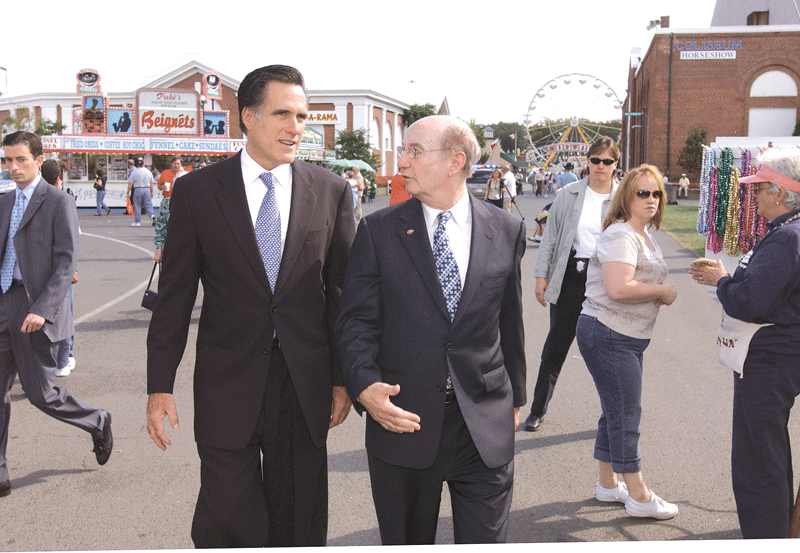
And he’ll be transitioning to the next stage of his life with few, if any, regrets and a great deal of gratitude for what he’s been able to do professionally.
“Not many people have the luxury of working at something for most of their career that they have a passion for,” he said. “I’ve clearly had that luxury; it’s been a 40-year adventure.”
And this fall, he’ll have another luxury — a chance to relax and eat his way through the fair like everyone else.

George O’Brien can be reached at [email protected]