Home 2014 (Page 18)
Daily News

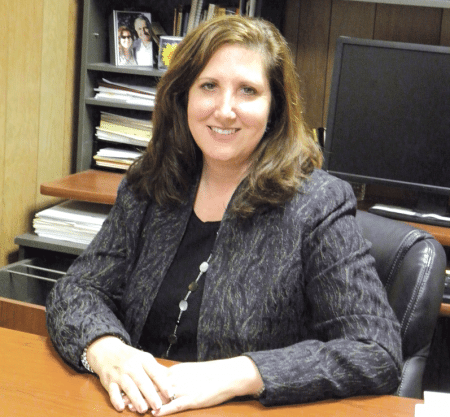
WESTFIELD — Westfield State University announced the appointment of Shelley Tinkham as interim dean of the Division of Graduate and Continuing Education (DGCE).

Tinkham previously worked at the Mass. Department of Higher Education, where she served for eight years, most recently as assistant commissioner for Academic, P-16, and Veterans Policy. In this role, Tinkham served as the lead staff member for the civic learning and engagement key outcome initiative of the Vision Project, a statewide initiative intended to develop the goals, objectives, and assessment strategies that will assure that all students attending public higher institutions in the state are prepared for informed civic participation.

Westfield State University‘s Division of Graduate and Continuing Education offers an extensive range of part-time undergraduate, graduate, online, certificate, professional-development, and non-credit programs designed to help students help meet their educational and professional goals. As dean, Tinkham will oversee all operations of the division, including academic programs, recruitment, admissions, records, billing, and finance, and will serve as decision maker for academic and financial appeals and conflicts. She is responsible for providing comprehensive leadership and vision for the division, providing results-oriented leadership in program development and outreach, and developing and implementing business plans.

Tinkham earned her bachelor’s degree in philosophy from Kent State University, her master of education degree in international education development at Boston University, and her Ph.D. in public policy at UMass Boston. Committed to multiculturalism and internationalization, she is a strong advocate of promoting access to intercultural education and dialogue. She has worked, volunteered, or traveled to more than 15 countries and published her dissertation, titled The Value of Getting Out: The Impact of School Leaders’ International Experiences.

Daily News

NORTHAMPTON — The Sierra Grille will defend its title against challengers Galaxy and Viva Fresh Pasta to determine which restaurant can impress a panel of blue-ribbon judges and build the best 12 Mile Meal: an appetizer, entree, and dessert made with ingredients sourced from farms within a 12-mile radius of the Chef Tent at the Northampton Jazz Festival.

The event, hosted by Rick Gifford, will take place behind Thornes Marketplace in downtown Northampton on Saturday, Sept. 6, from 11 a.m. to 3 p.m. as part of the Northampton Jazz Festival. Thirty-six VIP Diner Donor seats are available for those who give a suggested donation of $100. Those interested in joining the fun should contact each restaurant directly for tickets to enjoy the cuisine; taste wines from local vintners Black Birch Vineyard, Mineral Hills, and Amherst Farms Winery; and listen to world-class jazz.

The Sierra Grille is a full-service American-fare restaurant in Northampton whose chefs, Jackson Smith and O’Brian Tomalin, won the 2013 12 Mile Meal Cup. It is a destination for those who want to build their own plates from a menu that allows diners to select proteins, sauces, and sides. It features wine and beer selections and hosts live music.

Galaxy is a new restaurant and lounge in Easthampton owned by chef Casey Douglass, who also owns Apollo Grill. Galaxy is a full-service American-fare restaurant and lounge that reflects day and night with a bright white and colorful dining room and a darker but cozy lounge where patrons can enjoy cocktails and the tapas-inspired small plates or full entrees.

Viva Fresh Pasta is a well-known, art-driven, full-service restaurant in Northampton. Chef Xavier Jones has teamed up with co-owners Christine Buchholz and Paul Milani to bring Southern European-style cuisine and a varied wine list to diners sitting under beautiful paintings and prints.

The 2014 Northampton Jazz Festival begins Tuesday, Sept. 2 with various events held throughout the week, leading up to the Saturday, Sept. 6 main festival event from 11 a.m. to 10 p.m. in downtown Northampton on Hampton Street. At Saturday’s signature Northampton Jazz Festival event, which is free and open to the public, featured performers will include Etienne Charles & Creole Soul, the Seamus Blake Band, the Champian Fulton Quartet, the Steve Davis Quintet, Hendrik Meurkens and Scott Mullet with the Green Street Trio, Miro Sprague Quintet, and FlavaEvolution. More information on the festival is available at www.northamptonjazzfestival.org.

Daily News

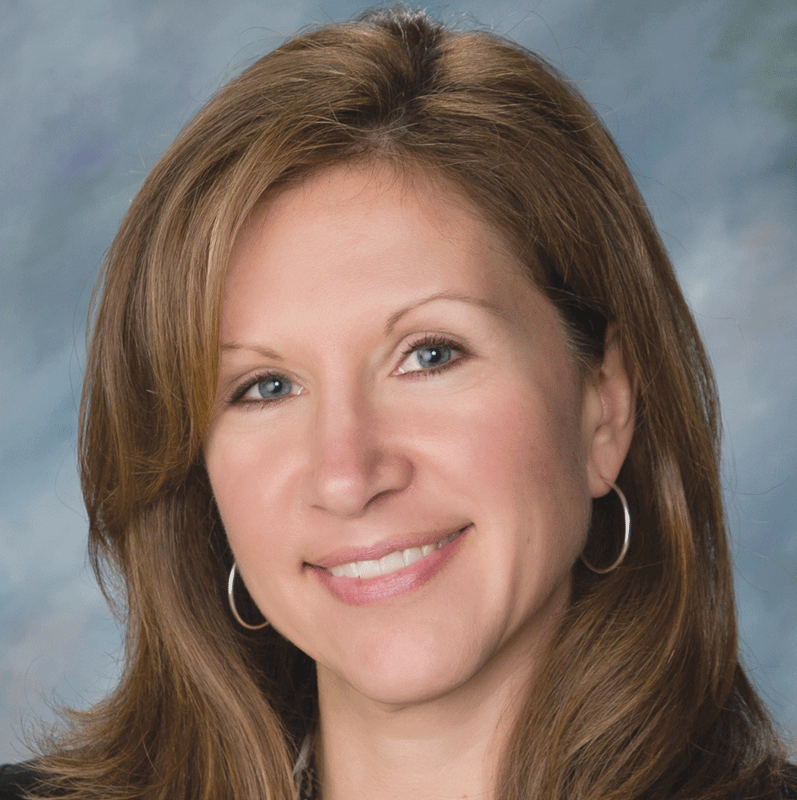
NORTHAMPTON — Michael Sarsynski, CFP, vice president, Investments; Joseph Miller, CRPC, associate vice president, Investments; and Barbara Turcotte, senior registered client associate, have joined the Northampton office of Wells Fargo Advisors. The trio previously served with Merrill Lynch.

A certified financial-planning professional, Sarsynski has been helping clients and businesses reach their financial goals for more than 20 years. His formal education includes a bachelor’s degree from Amherst College and an MBA from the Wharton School. He is a trustee for the Brattleboro Retreat Board and is actively involved with the Hampshire Council of Governments.

A 20-year veteran of the industry, Miller is certified as a chartered retirement planning counselor by the College of Financial Planning. He is a Series 7, 63, and 65 registered representative and holds life, annuity, and long-term-care licenses.

“With Mike and Joe, we have found experienced financial advisors whose client-centric philosophy matches our own. We are pleased that their careful deliberation brought them to us. Their experience will provide significant value to our team members and clients,” said Pam Nichols, senior vice president, complex manager.

Daily News

CHICOPEE — Kathleen Scoble, dean of the Elms College School of Nursing, has become the first nurse to serve on the board of trustees of Baystate Health.

Chair of the Division of Nursing at Elms College since 2003, Scoble led the program’s development from a traditional baccalaureate nursing program into a school of nursing which offers several educational pathways for advancing the education of RNs, including master of science and doctor of nursing practice degrees. Baystate Health is the largest regional employer in Western Mass., and one of the largest health systems in New England.

“Nurses are the largest part of our workforce, and they essentially define the experience of care for patients,” said Baystate Health CEO Dr. Mark Keroack. “Someone with Dr. Scoble’s qualifications is who I had in mind when I advocated for a nurse leader on the board. We do so many programs with Elms that this is a logical pairing.”

Added Scoble, “I am very honored to be the first nurse appointed to the Baystate Health board of trustees, and am confident that my experience as both a chief nurse executive and a leader in higher education — as well as the strong relationship that Elms College has enjoyed with Baystate — will assist me in this endeavor.”

She added that she has been impressed with how Baystate trustees, executives, senior managers, and medical staff leaders work and collaborate to achieve the health system’s goals. “I could not be more enthusiastic about the opportunity and responsibility I have as I serve in this very important position.”

Scoble, who has more than three decades of experience in academic, administrative, and consultant roles, has been recognized for her leadership in professional nursing both nationally and abroad. She currently serves as past president of the Mass. Assoc. of Colleges of Nursing and co-chairs a statewide team for the Mass. Institute of Medicine Action Coalition for Nursing. She is also a founding member of the Western Mass. Nursing Collaborative.

Consulting internationally for the Institute for Nursing Healthcare Leadership and Partners Healthcare International (formerly Partners Harvard Medical International) since 1999, Scoble has had programmatic experience in multiple countries, including Colombia, India, China, Dubai, and Turkey. She is a member of Sigma Theta Tau International and the National Honor Society of Alpha Sigma Lambda. She has also held faculty appointments at Teachers College, Columbia University, and UMass Boston. Her administrative posts in acute-care organizations have ranged from unit manager to chief nurse executive.

Daily News

SPRINGFIELD — The Melanoma Foundation of New England (MFNE) announced a fund-raising event, “Martinis for Melanoma,” to take place on Sept. 9 in Springfield.

“We’re really excited for this event,” said Meghan Rothschild, a melanoma survivor and PR and marketing manager for the MFNE. “We have a lot of local businesses and community members involved with the planning. It’s shaping up to be an incredible evening.”

The event will take place at Luxe Burger Bar in downtown Springfield at 6 p.m. The evening will feature live music by the Looney Tunes, appetizers and spreads from Luxe, and a signature martini. Raffle items have been donated by various businesses across the state, including SkinCatering, the Westin Boston, Stella & Dot Jewelry, and many others.

Additionally, many local businesses have stepped up to sponsor the event, including ArchitectureEL Inc., Chicopee Savings Bank, Rock 102, and Starburst Printing and Graphics. “We’re happy to be supporting this local event,” said Kevin Rothschild-Shea, founder and president of ArchitectureEL. “This is a great cause involving many of our community members right here in Western Mass. We’re proud to be a part of it.”

Tickets cost $35 in advance or $40 at the door, and can be purchased by visiting mfne.org/martinis-for-melanoma.

Daily News

WESTFIELD — Westfield State University President Elizabeth Preston announced that Robert Martin has been named the newest member of the Westfield State University board of trustees. Martin was appointed to the board by Gov. Deval Patrick and sworn in on Aug. 8.

“I’m extremely grateful that Bob has agreed to rejoin the Westfield State community. His extensive experience with public higher education and his familiarity with Westfield State and the city will further strengthen our board in important ways,” said Preston.

Martin most recently served as interim president of Framingham State University, where he was responsible for overseeing a $100 million operating budget and providing strategic planning and overall direction for academic programs, enrollment, student life, development, and governmental and community relations. Prior to his appointment as interim president, he served as Framingham State’s vice president for Academic Affairs and as a visiting lecturer.

He joined Framingham after 16 years at Westfield State, where he served in a variety of positions, including dean of Undergraduate Studies and associate vice president for Academic Affairs. Martin is a member of the American Assoc. of State Colleges and Universities, the American Conference of Academic Deans, and the College Board.

This is not his first time serving as a trustee for an organization. He has been a member of the board of trustees for the Danforth Art Museum since 2006 and currently serves as president of the board. Martin’s community-service efforts include current membership on the board of directors for the Chief’s Memorial Scholarship Fund, and former roles as corporator at the Westfield Athenaeum, member of the Downtown Revitalization Committee of the Community Development Corp. in Westfield, and member of the Hospital Ethics Committee at Noble Hospital. He recently presented “Student Success: Moving the Needle on Graduation Rates” at the plenary session of the New England Regional Assembly of the College Board. He earned his bachelor’s degree in psychology from Wesleyan University and his master’s and Ph.D. in clinical psychology from the University of Rochester.

Comprised of 11 members, the WSU board of trustees is appointed by the governor of the Commonwealth. Each member is appointed for a five-year term, with the possibility of one additional term of five years. Current trustees include Terrell Hill, principal, High School Inc.; Steven Marcus, president and CEO of New England Geriatrics; Luis Perez, former First Justice, Worcester Juvenile Court; Kevin Queenin, Specialty Bolt & Screw Inc.; Elizabeth Scheibel (chair), former Northwestern District Attorney; James Hagan, president of Westfield Bank; and student trustee Joshua Frank. There are currently three vacancies.

Daily News

WEST SPRINGFIELD — Radius Financial Group Inc., a leading private mortgage lender in New England, has announced the addition of Jessica DiPietro as a loan officer in its West Springfield branch.

DiPietro brings 15 years of experience in mortgage lending. Most recently, she was a loan officer at Santander Bank, formerly Sovereign Bank. Throughout her career, she has built a solid network of referral partners focusing primarily on the first-time-homebuyer market. DiPietro studied finance while attending Western New England University.

“Expanding our team will give us the opportunity to help more people get loans that truly fit their needs,” said West Springfield Branch Manager Nora MacKay. “Jessica is genuinely fulfilled by guiding people in their home-financing decisions. Her expertise and passion for educating her clients makes her a perfect addition to the radius family.”

Headquartered in Norwell, Radius services Massachusetts, New Hampshire, Rhode Island, Maine, Connecticut, and Florida. For more information, visit www.radiusgrp.com.

Daily News

SPRINGFIELD — This year’s 21st annual Rays of Hope – A Walk Toward the Cure of Breast Cancer may still be two months away on Oct. 19, but walker Phyllis Dupre is already out there pounding the pavement for her team.

“I have some very generous sponsors and normally begin to call on them again in August for their continued financial support,” said Dupre, a nine-year breast-cancer survivor from Springfield. Dupre’s team, Bosom Buddies – Fight Like a Girl, has grown to some 40 members over the years and continues to expand through word of mouth, said the team captain.

“Breast cancer isn’t something that happens only during Breast Cancer Awareness Month in October,” said Michelle Shattuck, Rays of Hope event chair. “It strikes women and men 365 days a year. So, whether forming your own team, joining another, or just walking on your own, it’s never too early to begin recruiting team members or soliciting sponsors as part of your fund-raising effort for the walk and run.”

Participants can register now for both the walk and run online at baystatehealth.org/raysofhope, where they can also create their own personal webpage to assist them in their fund-raising efforts. Since its inception in Springfield in 1994 by Lucy Giuggio Carvalho, Rays of Hope has grown from 500 participants raising $50,000 to some 24,000 walkers and runners in an expanded event that includes a second walk in Greenfield, as well as this year’s 5th annual Run Toward the Cure 8K in Springfield.

This year’s annual events are presented by Health New England. As in past years, the Springfield walk (a two- or five-mile route) and run, with some 600 teams, begin at Temple Beth El on Dickinson Street where registration is set for 9 a.m. The walk in Greenfield (either a two- or three-mile route) begins at Energy Park on Miles Street with registration at 10 a.m. In Springfield, the run begins at 10:15 a.m. followed by walkers at 10:30 a.m. Greenfield’s walk steps off at noon. The 5th Annual Run Toward the Cure 8K continues this year with the help of Fast Feet in West Springfield and Westfield. While considered a ‘fun run,’ there will be a time clock at the finish line for runners who want to record what may be their personal best.

Since 1994, Rays of Hope has raised more than $11.8 million, with all monies remaining local and administered by the Baystate Health Foundation to assist patients and their families affected by breast cancer. Over the years, funds have supported the Rays of Hope Center for Breast Cancer Research, as well as treatment, breast-health outreach and education, and the purchase of state-of-the-art equipment through the Baystate Health Breast Network, including Baystate Medical Center in Springfield, Baystate Franklin Medical Center in Greenfield, Baystate Mary Lane Hospital in Ware, and various community projects throughout Western Mass.

Those who want to support the Rays of Hope, but are unable to walk due to other commitments, can participate in the 10,000 Steps Toward a Cure program. Participants receive a pedometer to keep track of their steps throughout the month of October, while raising donations similar to other walkers.

This year’s Rays of Hope major sponsors are Health New England, Gale Toyota, Baystate Breast & Wellness Center, Baystate Breast Specialists, Chicopee Savings Charitable Foundation, Kinsley Power Systems, Radiology & Imaging, and Zasco Productions. A listing of all sponsors can be found on the Rays of Hope website. For more information about this year’s Rays of Hope Walk and 8K Run, held rain or shine, call (413) 794-8001 or visit baystatehealth.org/raysofhope.

Daily News

BOSTON — The Executive Office of Labor and Workforce Development reported that preliminary estimates from the Bureau of Labor Statistics (BLS) show Massachusetts added 13,800 jobs in July for a total of 3,422,100 jobs, and the total unemployment rate edged up 0.1% to 5.6% from the June rate. The rate is still the lowest since August 2008 and is below the 6.2% national unemployment rate.

Since July 2013, Massachusetts has added a net of 67,300 jobs, with 66,400 jobs added in the private sector. The total unemployment rate for the year is down 1.6% from the July 2013 rate of 7.2%. BLS also revised its June job estimates to a 2,500-job gain from the 3,700 previously reported for the month. Here is the July employment overview:

• Professional, scientific, and business services added 5,000 jobs (+1.0%) over the month. Over the year, professional, scientific, and business services added 13,300 (+2.6%) jobs.

• Education and health services gained 3,800 jobs (+0.5%) over the month. Over the year, education and health services gained 24,000 (+3.3%) jobs.

• Construction added 1,900 jobs (+1.5%) over the month. Over the year, the sector has added 2,400 (+2.0%) jobs.

• Trade, transportation, and utilities added 1,900 jobs (+0.3%) over the month. Over the year, trade, transportation, and utilities gained 12,800 (+2.3%) jobs.

• Financial activities gained 1,000 jobs (+0.5%) over the month. Over the year, the sector added 2,500 (+1.2%) jobs.

• Other services added 800 jobs (+0.6%) over the month. Over the year, jobs are up 3,300 (+2.7%) in this sector.

• Leisure and hospitality gained 600 jobs (+0.2%) over the month. Over the year, the sector added 4,300 (+1.3%) jobs.

• Manufacturing added 500 jobs (+0.2%) jobs over the month. Over the year, manufacturing lost 600 (-0.2%) jobs.

Daily News

LUDLOW — Ludlow Mills on State Street in Ludlow will be the site of Millfest, the first After 5 of the chamber season, on Sept. 10 from 5 p.m. to dusk. The event will be presented by the East of the River Five Town Chamber of Commerce (ERC5), an affiliate of the Affiliated Chambers of Commerce of Greater Springfield (ACCGS), in partnership with the ACCGS. The rain date is Sept. 11.

Sponsored by Chicopee Savings Bank and MGM Springfield, Millfest will take place in an outdoor tented environment and will provide attendees the opportunity to network in a casual and informal setting. Attendees will also be able to network with many of the businesses that are based in this unique industrial complex and learn more about the Ludlow Riverwalk. Attendees will enjoy music; complimentary hot dogs, hamburgers, and apple pie; and a cash bar provided by Europa Black Rock Bar & Grill, as well as a display of classic cars, amusements, and a special dedication to the region’s first responders.

Reservations are $15 for members and $25 for the general public. Net proceeds benefit the ERC5 Scholarship Fund. Reservations may be made online at www.myonlinechamber.com.

Daily News

BOSTON — Gov. Deval Patrick has signed H.4377, “An Act to Promote Economic Growth in the Commonwealth,” building on his administration’s economic-development strategy of investing in education, innovation, and infrastructure.

The economic-development package provides new tools and training to ensure the Massachusetts workforce meets the needs of employers, invests in Gateway Cities to promote development across the entire state, and provides incentives to create jobs and stimulate the economy. Patrick also refiled legislation that limits the use of non-compete agreements and adopts the Uniform Trade Secrets Act to ensure that government acts to retain talented entrepreneurs, supports individual career growth, and encourages the development of new, innovative businesses to drive future economic growth.

The legislation also includes a provision to give local governments across Massachusetts control over the number of liquor licenses in their jurisdiction. Placing the authority to approve liquor licenses in the hands of municipal officials will allow local communities to make responsible decisions regarding their economic development and growth, helping to free the Legislature from time-consuming local issues.

“In important ways, this legislation improves existing tools and provides a few new ones to continue our strong job growth, and I thank the Legislature for being so responsive,” said Patrick. “At the same time, we have unfinished business, so I am filing further legislation today to give innovators and municipalities all the tools they need to grow jobs and opportunity.”

The act bolsters the economic revitalization of the Commonwealth’s Gateway Cities with $15 million for the Gateway Cities Transformative Development Fund and encourages the reuse of brownfields in economically distressed areas of Massachusetts with $10 million in funding.

“This legislation makes many targeted investments in our emerging industries, like big data and advanced manufacturing, that are necessary to create a competitive environment here in Massachusetts and grow our status as a leader in the world economy,” said Senate President Therese Murray. “By capitalizing on our state’s existing and developing industries, as well as investing in a strong, educated workforce, we are outlining a path to success for our residents and promoting economic development throughout the entire Commonwealth.”

Added House Speaker Robert DeLeo, “this comprehensive bill will help ensure that residents, businesses, and communities are able to compete and excel in a dynamic economy. We’ve made substantial gains in strengthening our economy and must now focus on broadening the circle of prosperity beyond Greater Boston to all regions of the Commonwealth. This bill does just that while preparing future leaders through provisions like MassCAN, a computer-science-education partnership, and the Talent Pipeline Initiative.”

In the area of workforce development and training, the act includes $12 million for the Middle Skills Job Training Grant Fund to support advanced manufacturing, mechanical and technical skills at vocational-technical schools, and community colleges. Also, the Workforce Competitiveness Trust Fund will receive $1.5 million to prepare Massachusetts residents for new jobs in high-demand occupations, helping close the middle-skills gap and creating a seamless pathway to employment.

The economic-development legislation also includes a number of initiatives to expand the Commonwealth’s world-class innovation economy, including $2 million for a Big Data Innovation and Workforce Fund to promote the use of big data, open data, and analytics, and $2 million for the Innovation Institute Fund at the Massachusetts Technology Collaborative. The legislation also creates a $1 million talent-pipeline program that will provide matching grants aimed at increasing technology and innovation internships, and another $1 million for a startup mentoring program to connect early-stage entrepreneurs, technology startups, and small business with experienced business enterprises and capital financing.

Daily News

WARE — Healing after a loss is often a long and difficult journey. Beginning Tuesday, Sept. 2, Baystate Mary Lane Hospital will offer a support group for people experiencing the grief that follows the death of a loved one.

“It takes courage to address one’s grief,” said Amy Correia, a medical social worker at the hospital, who will facilitate the group, which will meet the first Tuesday of each month from 5:30 to 7 p.m. in the hospital’s Human Resource Conference Room. “Those experiencing a loss may feel alone in their struggles and grief. Support groups can help to inspire strength in those who have suffered a tremendous loss and can offer a sense of togetherness and understanding from people who have experienced the same feelings.”

Community members are welcome to attend regularly or on a drop-in basis, Correia added. “This support group can be used to address grief from a loss that is recent, from long ago, or that you expect in the near future. This loss could be related to the death of a loved one, a friend or relative facing terminal illness, having a loved one placed in a nursing home, or any other major life change.”

For more information, call Correia at (413) 967-2225.

Daily News

WESTFIELD — Noble Hospital has introduced a new device that improves the treatment of breast cancer. The BioZorb Tissue Marker helps physicians deliver more precise radiation treatment and keep track of the site after lumpectomy surgery to remove cancer. The three-dimensional marker provides a clear ‘target’ for radiation treatment that often follows breast-cancer surgery.

BioZorb contains several tiny titanium clips positioned in a precise, three-dimensional array. While surgeons have often used single clips as markers in the past, this new device reduces the problems associated with individual clips, because it keeps the clips arranged in a 3D pattern, thanks to bio-absorbable material that holds the clips in place and is eventually absorbed by the body.

“This unique device does a better job of helping us protect healthy tissue around the surgical site during radiation therapy,” said Dr. Steven Schonholz, breast surgeon and director of the Center for Comprehensive Breast Health at Noble Hospital. “It can also provide our patients with a more satisfying cosmetic result after treatment.”

Radiation therapy is often prescribed after lumpectomy surgery to keep breast cancer from coming back. Before treatments begin, the area to be treated must be identified so that the radiation can be targeted as closely as possible to where the cancer was. “Using traditional surgical clips often makes this goal hard to reach,” Schonholz said, “because individual clips can move from their original position, and they don’t show the target area very clearly.”

To compensate, radiation treatments in the past were usually planned with plenty of margin for error to make sure that the cancerous area was treated with radiation. But that puts healthy tissue at risk because the radiation can expose areas outside the cancer site. Excess radiation can also affect the cosmetic appearance of the breast for years afterward.

A new surgical trend called oncoplastic surgery has been developed to improve cosmetic outcomes of breast-cancer treatment. In cases where oncoplastic surgery is appropriate, BioZorb can minimize any potential problems with dimpling or deformities that can occur after breast surgery without the device. “Along with the more precise targeting, this explains the good cosmetic results that have been seen with BioZorb,” Schonholz said.

Another advantage is that the device can be clearly seen in three dimensions for months after surgery. This is important because radiation therapy may not begin until some time after surgery, once a round of chemotherapy is completed. “We have the ability today to deliver radiation with excellent precision, especially when we can clearly see where to point the treatment,” Schonholz said. “Because the new three-dimensional BioZorb gives us that ability, it’s an exciting and important advance in breast-cancer treatment.”

To reach the Center for Comprehensive Breast Health at Noble Hospital, call (413) 572-6070 or visit noblehospital.org/ccbh.

Daily News

WILBRAHAM — New England Promotional Marketing announced that former abc40 anchor Maggie Pereiras has joined its team. She will be contributing to the NEPM sales force and creating a cohesive social-media platform for the company while highlighting the success of its clients.

Pereiras acquired her bachelor’s degree in communications with honors from Marist College in Poughkeepsie, N.Y. after graduating from Minnechaug Regional High School. She began her professional career as an editor for Avon Products Inc. and then Victoria’s Secret, both in New York City.

Upon returning to Western Mass., she began working as an account executive for WGGB Channel 40/Fox 6. Shortly thereafter, she transitioned from advertising sales and became the host, executive producer, and editor for abc40’s local lifestyle program, SimplyLiving. The program allowed her to sharpen her creativity and build lasting relationships with many businesses throughout the area. Once SimplyLiving had run its course, she transitioned again to become a reporter and anchor for abc40’s news team. Pereiras has a strong background in creative marketing and social media.

Daily News

NORTHAMPTON — Gleason Johndrow Landscaping, a Northampton-based snow-removal and landscaping contractor, has landed a spot among the top 100 snow-removal contractors nationwide as determined by SNOW magazine, an industry publication that bestows this honor every summer based on the previous year’s revenues. Mike Zawacki, editor of SNOW, views the list as “a reflection of those contractors’ operational excellence.”

“We’re thrilled to be included,” said Tony Gleason, a partner in Gleason Johndrow. “We pride ourselves each and every year on logistical process and customer satisfaction. We’re very honored and grateful to be numbered among the best contractors in the country by our peers.” SNOW has been compiling this list (to be released in an article in September’s issue) for the past 10 years and focuses on revenues and operations for contractors submitting their yearly revenues.

“It’s a pleasure to see contractors on this list keep growing. It’s a testament to their continued focus on improving their operation every year,” said Zawacki, adding that “2013 was a good year for snow. It was tougher to get on this list this year because so many contractors had a great year.”

Gleason and Dave Johndrow have been providing landscaping and snow-removal services since 2002, with commercial and residential clients throughout Western Mass. and Northern Conn.

Daily News

BOSTON — The Mass. Public Health Council approved three determination-of-need (DON) requests to support Baystate Health’s efforts to modernize its facilities and improve access to, and quality and value of, healthcare for patients in Western Mass.

The approved requests relate to the transfer of ownership of Wing Memorial Hospital and Medical Centers to Baystate Health from UMass Memorial Health Care of Worcester; construction of new operating rooms at Baystate Franklin Medical Center to replace aging facilities; and construction of a new inpatient pharmacy in shell space in the MassMutual Wing at Baystate Medical Center.

“We’re very pleased to receive the approval of the Public Health Council for three initiatives that we expect to have a major positive impact on quality, access, and affordability of healthcare in Western Mass., and on our ability to continue to provide outstanding, high-value care for our patients close to where they live,” said Dr. Mark Keroack, president and CEO of Baystate Health.

With the council’s approval in place, the transfer of ownership of Wing, announced prospectively in December 2013, is now expected to be complete in September. Wing will become an affiliate of Baystate Health, and its approximately 800 employees will join Baystate. Baystate officials expect that Wing’s proximity to Baystate’s Western Mass. network will mean improved access to doctors, cost savings, better coordination of care, and better alignment with local public-health efforts for patients in the Palmer/Quaboag region. Wing and Baystate Mary Lane Hospital in Ware will operate in close coordination with each other and with other local healthcare providers, and patients’ current options for choosing providers will not be affected.

The Surgery Modernization Project at Baystate Franklin Medical Center (BFMC) in Greenfield addresses a need for contemporary facilities to replace the current ORs built in 1974, which will be renovated to relocate endoscopy services. The project, expected to begin this fall, will allow Franklin County and North Quabbin area residents to receive more healthcare services close to home, while also aiding in Baystate’s efforts to recruit additional physicians to the region.

Moving the inpatient pharmacy at Baystate Medical Center (BMC) enables pharmacists to meet patients’ growing needs in a state-of-the-art, safe, and secure facility in the newest wing of the Springfield teaching and research hospital.

The BFMC and BMC projects come with new community-benefit contributions from Baystate Health. BFMC’s Surgery Modernization Project will generate $228,921 per year for five years for community health-improvement projects in the Franklin County/North Quabbin region. The pharmacy at BMC comes with a community-benefit contribution of $342,146, which brings the total community benefit under the entire determination of need for the expansion of Baystate Medical Center to $13,144,765. Baystate’s Health’s community-benefit work at all of its hospitals is conducted in partnership with a wide array of community stakeholders to achieve the most inclusive process and effective outcomes possible.

Daily News

AGAWAM — The Leukemia & Lymphoma Society (LLS) offers a family support group to bring together patients, family members, friends, and survivors undergoing similar challenges of living with a blood cancer. The next meeting is Thursday, Aug. 28 from 5:30 to 7 p.m. at the Agawam Senior Center, 954 Main St., in the main-entrance conference room.

Pre-registration is required for those new to the group. To register or for more information, contact Gayle Bagley, Senior Patient Services manager for LLS, at (800) 688-6572, ext. 1304, or [email protected].

Daily News

AMHERST — Brian Kane, a professor and researcher at the UMass Amherst, is this year’s co-recipient of the International Society of Arboriculture’s (ISA’s) prestigious Alex L. Shigo Award for Excellence in Arboricultural Education. The award honors ISA members for enhancing the quality and professionalism of arboriculture through education.

Kane is the Mass. Arborists Assoc. professor of Commercial Arboriculture at UMass Amherst. He is an ISA-certified arborist who started climbing trees professionally 25 years ago. Kane invites his students to participate in his tree research, supports them in their tree-climbing competitions, and guides them to be skilled future workers and business owners in arboriculture. ISA honored Kane at a ceremony on Aug. 3 in Milwaukee as part of the 90th annual ISA International Conference and Trade Show.

“Brian is one of the most formidable researchers in practical arboriculture today, but he’s equally considered for his substantial reputation as a professor,” said Mark Roberts, ISA president. “His devotion to students and his commitment to the field of arboriculture have benefited ISA and will continue to influence the industry for years to come.”

The award’s namesake, Dr. Alex Shigo, was a renowned plant pathologist, known throughout the industry for his studies on tree decay, which led to major changes in arboriculture. “I met Dr. Shigo once and quickly realized that he was a very passionate educator,” said Kane. “What I emphasize most as a teacher to all of my classes is safety, even to those classes that are not hands-on, field techniques. The profession of arboriculture is inherently dangerous, so training arborists to work safely and build a culture of safety wherever they work is an important way to address that.”

Daily News

SPRINGFIELD — Freedom Credit Union (FCU) President and CEO Barry Crosby announced a $2.2 million expansion of the company’s Springfield headquarters on Tuesday.

Freedom will expand its facilities at 1976 Main St. to a building at 77 Boylston St., directly behind Freedom. Crosby said the company plans to relocate 26 Springfield employees to that location, along with 16 employees from Feeding Hills, and hire an additional 13 employees to staff the new building.

FCU has had a presence in downtown Springfield since 1922, when it was known as the Western Massachusetts Telephone Workers Credit Union. Renovations of the Bolyston Street property, most recently home to Hampden County Physician Associates, are expected to be completed next January or February.

Daily News

CHICOPEE — The Greater Chicopee Chamber of Commerce, in collaboration with Common Capital Inc., is presenting a six-part workshop series, “Taking Care of Business: How to Develop and Grow Your Business.”

Sponsored by Common Capital, this series addresses best practices for all types of businesses. The first session, being staged on Sept. 5, is “From Startup to Finish: Financing Your Business.” This first workshop will be held at the Residence Inn by Marriott Springfield/Chicopee. The other five seminar topics are: “Negotiating and Understanding Leases,” “Human Resources: Best Practices for Small Businesses,” “How to Retain Your Top Talent,” “Is Your Website Working for You?” and “Strategic Networking: Networking to Increase Profitability.” Facilitators for each seminar are experts in their respective fields.

The cost is $20 per workshop for chamber members and $30 for non-members, or $120 for all six sessions for chamber members and $150 for all six sessions for non-members, meaning one session is free when signing up for the entire series. Register online at www.chicopeechamber.org under Upcoming Events, or call (413) 594-2101.

Daily News

NORTHAMPTON — A local entrepreneur who also offers business coaching will offer a free workshop geared toward the small-business owner or freelancer who wants to learn how to take his or her business to the next level.

Terra Missildine, the owner of Beloved Earth, a cleaning company dedicated to eco-friendly products and practices, will offer “Taking It to the Next Level: Leveraging Your Personality Type in Business” on Monday, Aug. 25 from 6 to 8 p.m. in the Watson Room of Forbes Library, 20 West St., Northampton. The workshop will focus on discussing archetypes like the hero, warrior, lover, and magician to help entrepreneurs and business owners learn about branding and attracting ideal clients. It will feature a talk about how using the authentic and universal imagery of archetypes helps put confidence behind a company’s message as well as filter its audience to make it almost irresistible to ideal clients.

Missildine is working toward a bachelor’s degree in sustainable entrepreneurship through the University Without Walls at UMass Amherst. She is a successful entrepreneur and creative-business coach who loves helping other passionate small-business owners build and refine their businesses or projects. She is active in the local sustainability movement and has organized an annual Beloved Earth Day in the region.

While the workshop is free, seats are limited, so participants should e-mail [email protected] to reserve a spot. For more information, contact Missildine at (413) 949-3509.

Employment Sections
Sunshine Village Provides Opportunities for Clients, Solutions for Employers

Gina Golash Kos

Gina Golash Kos says Sunshine Village has made a significant difference in the lives of individuals with disabilities.

Gina Golash Kos says Sunshine Village gives people with disabilities the opportunity to fulfill their potential, become independent, and learn valuable work skills.

“People’s lives are better today because of a dream conceived by a small group of parents in 1967 who wanted to create a warm, welcoming organization to help their children and other people with disabilities,” said Kos, the agency’s executive director. “That dream was and is Sunshine Village, and today the organization helps people find employment, make friends, and do things they never thought they could.”

The agency serves 400 adults age 22 and older, and has formed close ties with many local businesses that augment their employee base with trained workers who are available on a temporary, seasonal, or permanent basis.

“It’s a win-win situation because people with disabilities get the opportunity to work and businesses get great employees who show up on time and do the job correctly,” Kos told BusinessWest.

She added that using Sunshine Village as a subcontractor is cost-effective because it pays for traditional employee-related benefits and its employees are prescreened, trained, and overseen by a supervisor who accompanies them to the worksite each day.

“We typically meet with the employer, tour their operation, talk to them about the work they need done, and help them determine how we can help them save time and money through group or individual placements, before we assign people to a job,” Kos said.

Last November, Callaway Golf Balls Operations Inc. in Chicopee hired a six-person team from Sunshine Village to help fulfill a number of orders. “We put them on the assembly line and also had them label and unpack golf balls,” said Georgia London, Callaway’s maintenance, repair, and operating buyer and parts-crib supervisor. “They were here for six months, and we grew to love them. They showed up every day smiling, ready for the next challenge, and their smiles never diminished, no matter what we asked them to do. I was impressed and amazed by how conscientious they were and by their focus on quality. It was an excellent situation, and as soon as business picks up, we will hire them again.”

Kos said people who work for Sunshine Village are happy to be given the opportunity to earn a paycheck. Although some might not be able to meet the demands of a workplace on their own, the supervision they receive allows them to be successful.

“The workers we place are proud to do jobs that others might find repetitive or boring,” Kos said. “So many people with disabilities want to work and have the chance to prove themselves, and with our support, they are able to meet employers’ expectations and often exceed them.”

For this issue and its focus on employment, BusinessWest takes an in-depth look at Sunshine Village and its strong track record of providing opportunities for its clients and solutions for area employers.

Work in Progress

The village became a reality 47 years ago, thanks to the efforts of a group of parents whose children had disabilities. Under the direction of P. Joseph Casey of Chicopee, they procured 13 acres of donated land and built their program.

“They started with a nursery school and playground,” Kos said, adding that Sunshine Village soon grew to include three large buildings and a ballfield. “Over time, it went from a grassroots organization led by parents to a well-respected, sophisticated organization led by a board of directors.”

Sunshine employees

Sunshine employees (from left) Colleen Brosnan, Jonathan Gelula, and Richard Klisiewicz say their training center prepares people to work in industrial and commercial settings.

The agency employs more than 200 staff members, and its annual operating budget exceeds $10 million, which comes from federal and state money, boosted by private funding and proceeds from an annual fund-raising golf tournament.

Services provided by clients range from packaging to document preparation, catalog assembly, custom display assembly, box folding, labeling, collating, shrink-wrapping, clamshell and blister packaging, liquid pouring, and more.

Many begin their careers by working in the Employment Services Division’s integrated training center on the Chicopee campus, which prepares individuals to work in industrial and commercial settings.

“It’s a hub where we help people find jobs,” Kos said, adding that individuals with and without disabilities are trained alongside each other and fulfill orders that companies outsource to the facility.

The jobs can range from redoing work that was done incorrectly, such as removing inappropriate stickers and replacing them with the right ones, or removing products from boxes that were packed incorrectly, then repacking them. “We support a lot of manufacturers,” she added.

Sunshine Village also has a federal contract, and its employees maintain and clean all of the buildings and hangars at Westover Air Reserve Base. In addition, some perform other janitorial work, such as dusting, vacuuming, and emptying wastebaskets at local companies.

In addition, Sunshine Village opened a Community Based Day Service last month to allow individuals to find their own jobs while enhancing their professional skills through internships and volunteer opportunities, while enjoying an array of social and recreational activities.

Kos says the unpaid internships give people the opportunity to experience different types of jobs and work environments. “It’s important because some individuals are not sure what they would like to do,” she explained. “They may enjoy sitting and working quietly or prefer a fast-paced environment with a lot of other people around them.”

The volunteer work is also helpful. “Our clients have helped local churches with cleaning and spent time in local food pantries, at the Chicopee Public Library, and in the Thomas J. O’Connor Animal Control and Adoption Center,” Kos said. “Volunteering is a great way for people to get ready for their first job and give back to the community.” She added that groups planning nonprofit events are invited to call Sunshine Village if they need volunteers.

Expanded Horizons

In addition to its Employment Services Division, Sunshine Village offers a Day Habilitation Services Program, which runs year-round and helps people acquire the skills they need to become productive members of their communities. It is a medically based model with offerings tailored to meet each individual’s strengths and needs.

“Physical, speech, and occupational therapies are incorporated into music, culinary, art, and sport therapy programs,” Kos said. “People might work on gross motor skills in music therapy or fine motor skills in art therapy. Music therapy helps them communicate and express themselves while they have fun and socialize with others. They also learn to prepare food in our culinary program and participate in yoga and tae kwon do classes in our sports program. We focus on developing functional life skills, improving coping strategies, and increasing independence.” Adaptive devices and equipment are also used to maximize each person’s potential.

Jonathan Scytkowksi and Samuel Whittle fill out job applications with help from Miguel Colon.

Jonathan Scytkowksi and Samuel Whittle fill out job applications with help from Miguel Colon.

These programs are conducted at a variety of locations. In addition to providing services at Sunshine Village’s main campus on Litwin Lane in Chicopee, the agency also operates community-based sites in Three Rivers, Westfield, Springfield, and Chicopee Falls, said Kos, adding that the organization receives a great deal of support from the community.

The golf tournament, for example, allows the agency to pay for improvements to its buildings, new technology, and holiday parties, as well as adaptive equipment and extra supplies, she noted.

Meanwhile, the Chicopee Elder Council 69 of the Knights of Columbus and Fairview Council #4044 have made generous donations to the agency, and many businesses provide ongoing support. “We are very fortunate to have so many people helping us,” Kos said.

As a result, Sunshine Village’s programs continue to grow. “We’re developing a day program specifically designed to meet the needs of people with autism-spectrum disorders,” she noted. “We want to help them live independent lives by promoting social and daily living skills and improving communication.”

The program is still in the planning stages, but the demand for it is clear. “Autism is a growing problem, and during the last year we have talked with our funding sources, local sources, and parents to determine the types of services that are needed,” Kos said.

People employed by Sunshine Village are proud that, since 1968, all of the organization’s programs have received the highest level of accreditation by the Commission on Accreditation of Rehabilitation Facilities. “And the most recent accreditation, which was highly complimentary, was completed in April,” Kos told BusinessWest.

Bright Prospects

Sunshine Village has made a significant difference in the lives of individuals with disabilities.

“Everything we do, which includes the people participating in services, our experienced and caring employees, our innovative programs, and our effective outcomes, is a realization of our founders’ dream,” Kos said.

“We serve so many people who are truly happy, and we are proud of our history and what we achieve day by day,” she went on. “Our partnerships are growing and will continue to expand, which allows us to help people find jobs while providing employers with good employees. So we are confident about the future of our organization, because our success is sustained by compassion and enthusiasm and realized through strategic planning and effective leadership.”

Employment Sections
Three Recent Rulings Issued by the MCAD Are Ones to Remember

By PETER VICKERY

Is a worker who had a heart attack ‘handicapped’ in the legal sense of the word? Is a manager handicapped even if he can work nine hours a day, five days a week? Can a professor win $200,000 in emotional-distress damages without presenting any medical records as evidence? According to the Massachusetts Commission Against Discrimination (MCAD), the answer to all three questions is ‘yes.’

Our Commonwealth’s fair-employment-practices law, Chapter 151B, prohibits employers from discriminating on the basis of race, color, religious creed, national origin, sex, sexual orientation, age, ancestry, or handicap. The agency that has the job of adjudicating complaints under that law is the MCAD. If the MCAD finds probable course, the case goes to a public hearing. If the losing side appeals, it goes to the full commission. Either side can seek judicial review of the full commission’s decision.

Although the MCAD is not a court, its opinions influence the way judges interpret the statute. The judiciary tends to defer to the MCAD’s view of the scope and meaning of Chapter 151B — not always, but often enough. So when the full commission issues a decision, it matters.

Three of the decisions that the full commission issued over the past 12 months provide employers with some useful pointers about the legal presumptions and interpretations MCAD’s hearing officers use, and the potential cost of not knowing what they are. In all three cases, the hearing officer awarded the employee damages for emotional distress, the full commission affirmed the award, and it took at least five years from filing the complaint to the commission’s final decision — in one case, nine years. In addition to those commonalities, each of the three decisions is noteworthy in its own right.

Glynn v. Massasoit Industrial Corp.

One of the key questions in this case was whether the employee had a handicap. Chapter 151B defines a handicap primarily as “a physical or mental impairment which substantially limits one or more major life activities of a person.” In the context of the statute’s ban against discrimination on the basis of immutable characteristics such as gender, race, ethnicity, and national origin, a reasonable reader could infer that the Legislature meant to prohibit discrimination against people with lifelong (or at least lengthy) disabilities.

But the way the MCAD interprets the word, an ‘impairment’ does not have to be permanent to qualify as a handicap. Even a temporary impairment may qualify, as in the case of 74-year old Mr. Glynn, who suffered pneumonia and a heart attack leading to a one-month hospital stay. Glynn’s employer terminated him, allegedly for his failure to show up at work or to call in.

A supervisor testified that the company had not known the reason for Glynn’s absence. But the testimony the hearing officer found more credible was that of Glynn’s daughter-in-law, who said that she had visited the workplace twice to explain about the pneumonia, heart attack, and hospitalization.

The hearing officer took into account Glynn’s 22 years of service with the company, his age, plus the difficulty of finding another job at age 74, and decided that he deserved compensatory damages of $54,600. Based on Glynn’s testimony about how he felt after losing his job (lost, lonely, and disappointed) she awarded him $35,000 for emotional distress. As well as affirming the damages, the full commission ordered the employer to pay almost $52,000 in legal fees and costs. In total, the company had to pay just under $142,000. This six-figure price tag should help serve as a reminder that even temporary ailments can constitute a handicap.

The MCAD has a duty to construe Chapter 151B liberally, which as a practical matter tends to help employees and hurt employers. The Legislature wrote this liberal-construction rule into the text of the law, but there are some equally important rules that do not appear in the statute itself. They have emerged through the common-law process of judges applying the law to individual cases.

Anderson v. UPS

One such rule, which employers may think of as a thumb on the scales in favor of employees, made its presence felt in Anderson v. UPS, namely the broad presumption in favor of finding individuals disabled.

A manager asked his employer to reassign him to the day shift because working 12-hour shifts at night exacerbated his bipolar depression and anxiety disorder. Noting that Mr. Anderson said that, despite his condition, he could work nine hours a day, five days a week, the company determined that he was not legally handicapped and refused to engage in a discussion with him. Instead, it terminated him. This was a mistake, and quite an expensive one.

In combination, the statutory liberal-construction rule and the judge-made presumption in favor of finding individuals disabled tilted the scales heavily against UPS. Applying those two principles, the MCAD hearing officer found that Anderson was handicapped, and that UPS should have realized as much on the basis of the medical records describing his symptoms in detail, plus his lengthy hospital stays.

Because Anderson was handicapped in the Chapter 151B sense of the word, the MCAD held that UPS should have engaged in an interactive dialogue about providing reasonable accommodations. The failure to do so led to an award of approximately $575,000 in damages (including $125,000 for emotional distress), $8,000 in costs, and legal fees of $90,000, for a grand total of $673,000.

Anderson v. UPS shows that, even if an employee can put in a full working week, the employer should not conclude, on that basis alone, that the employee is outside the definition of ‘handicapped.’ That employee may still be entitled to Chapter 151B protection as a ‘qualified handicapped person,’ triggering the employer’s duty to engage in a good-faith, two-way discussion about reasonable accommodations.

Lulu Sun v. UMass Dartmouth

Liberal construction and the presumption in favor of deeming employees disabled are legal principles that affect the cost of day-to-day decisions in the workplace. The third case, Lulu Sun v. UMass Dartmouth, highlights the impact of another rule: the deference that the full commission accords to the hearing officer’s decisions about witness credibility.

In this case, a professor filed two complaints against her employer, UMass Dartmouth. One alleged that the university had denied her promotion on the basis of her gender, race/ancestry, and national origin, and the second alleged retaliation. The professor prevailed at the hearing, and, in addition to awarding damages, the hearing officer ordered UMass to promote her to full professor, pay a civil penalty of $10,000, and undergo training.

UMass appealed only the civil penalty, the training, and the emotional-distress award, which amounted to $200,000. At the root of the emotional-distress award was the hearing officer’s assessment of the credibility of the professor and her witnesses (the professor’s father and two faculty members) regarding her sleeplessness, timidity, a rash on her hands and legs, and her loss of both weight and verve. The hearing officer stated, “the vivacity, confidence, and vigor the complainant exhibited prior to the events at issue are hard to square with the fragile and wan woman who presented herself for public hearing.”

Pointing to the dearth of medical evidence, UMass challenged the emotional-distress damages. But the full commission upheld the $200,000 figure and awarded attorneys’ fees of almost $425,000.

It is important to note that the commissioners do not rehear the case, so they are not in a position to see the witnesses in the flesh. Instead, in a rule that works somewhat like a presumption, they defer to the hearing officer. As it noted in Lulu Sun, the commission shows “great deference” to the hearing officer’s decisions about the credibility of witnesses, the weighing of disputed issues of fact, and the assessment of damages. So unless it concludes that the officer’s decision was arbitrary, capricious, an abuse of discretion, or otherwise unlawful, the commission will affirm that decision.

The main lesson of this case is simple: live testimony matters. The physical appearance and demeanor of a complainant-employee and the way witnesses comport themselves under questioning are factors that the hearing officer will take into account, both in deciding liability and calculating damages. Because the full commission will defer to the officer on these matters, employers would be wise — particularly when sums in the half-million-dollar range are at stake — to treat MCAD hearings as make-or-break events.

Bottom Line

In summary, these three cases help remind employers that: (1) hearings matter, and persuading the full commission to overturn the decision of the hearing officer is an uphill battle; (2) the MCAD can — and does — award damages for emotional distress, sometimes six-figure sums; and (3) even before judicial review, the amount of time likely to elapse between the employee filing the complaint and the full Commission rendering a decision may be upward of five years.

Sometimes, of course, this last point redounds to the employer’s advantage, so long as management and counsel alike prepare themselves for a marathon, not a sprint.


Peter Vickery, Esq., practices law in Amherst; www.petervickery.com

Employment Sections
Beware Some of the Many Costly Mistakes Employers Make

By Kathryn S. Crouss, Esq.

Kathryn S. Crouss, Esq.

Kathryn S. Crouss, Esq.

Employee handbooks communicate employers’ expectations to employees. While such manuals are not required, they are recommended.

Having formal, written procedures in place will reduce the possibility of confusion regarding company policy, thereby enabling employers to spend less time, energy, and money explaining rules and regulations.

Handbooks also serve as good references regarding applicable federal, state, and local law, which lessens employers’ exposure to litigation. As such, it is good practice to be cognizant of the current laws in force, make note of any changes or new developments, and adjust policies accordingly. The best advice regarding employee handbooks is to develop a good organizational style, so that the handbook is user-friendly, and avoid using overly broad or narrow language.

Some suggested topics to focus on include:

Sexual Harassment Policy

Employers can be held liable for sexual harassment on the part of their employees in certain circumstances. If an employer is found to have been aware of sexually harassing conduct from one co-worker to another, and did not act reasonably to prevent it, the employer can be held liable for the behavior. For this reason, employers are well advised to adopt a policy against sexual harassment.

The policy should include a description and examples of sexual harassment, provide a description of the process for filing a complaint, and state that it is unlawful to retaliate against someone for filing a complaint. Employees should be required to sign an acknowledgment of their understanding of the policy, which employers should keep in each employee’s personnel file.

E-mail and Internet Use Policy

A good employee handbook should include a comprehensive e-mail and Internet use policy. Recent case law suggests that employers may be liable for the conduct of their employees when they use the company’s e-mail and Internet connections. However, courts also recognize that employees have a reasonable expectation of privacy in the workplace.

A good e-mail and Internet policy will clearly outline the employer’s expectations regarding Internet and e-mail usage in the workplace, to avoid conflict between the two competing interests. Such a policy should:

• Inform employees whether personal use of the Internet or e-mail is permitted. It is advisable to prohibit all personal use of Internet and electronic mail on company time and equipment.

• Advise employees that their Internet and e-mail activity is monitored.

• Inform employees what uses of e-mail and Internet are prohibited.

• Develop an easy process for employees to report mistakes or violations.

• Provide employees with information regarding the consequences of violating the e-mail and Internet use policy.

As with an employer’s sexual harassment policy in a handbook, employers are advised to require employees to sign a statement acknowledging receipt of the policy.

Other Topics to Include

The handbook should explain that eEmployee health benefits may be continued at the employee’s expense for up to 18 months after a voluntary or involuntary termination (for employers with 20 or more employees) through the Consolidated Omnibus Budget Reconciliation Act (COBRA). At the state level (often referred to as mini-COBRA), Massachusetts continued coverage is available for the same amount of time for employers with two to 19 employees.

A good handbook will also address workers’ compensation, at-will employment, anti-discrimination policies, sick and personal days, vacation time (Massachusetts employers are not required to pay terminated employees for unused sick or personal days, but unused vacation time is considered wages and must be paid upon termination), the Family Medical Leave Act, access to personnel files (in Massachusetts, employees have the right to access their records within five days of submitting a written request), and jury-duty leave (in Massachusetts, if an employee is scheduled to work for three months prior to the jury duty, he or she is entitled to regular wages for the first three days of jury-duty leave).

Avoiding the Contract Trap

Employers should include a clause in the handbook stating that nothing in the handbook constitutes an employment contract. Courts now find that an employee handbook can be construed as an employment contract, binding the employer to certain obligations. For example, an employer’s failure to adhere to a handbook policy regarding progressive discipline may be used as evidence of an improper termination.

Therefore, it is critical that employers be familiar with their own employee handbook and ensure that its practices conform to the stated policies. It is also important that the language in a handbook is flexible enough to allow employers to alter and adjust such policies as needed. Consequently, employers are urged to invest some effort and carefully draft their employee handbooks to reflect their business needs.

To prevent an employee handbook from being considered a contract:

• Retaining the right to unilaterally modify the contact;

• Do not negotiate any terms of the handbook with the employee;

• Make sure the handbook provides only guidance to employees regarding the company’s policies;

• Make sure the handbook never states a term or length of employment;

• Call special attention to the handbook during the hiring process; and

• Do not require that the employee sign the handbook.

If you need assistance with drafting or reviewing your employee handbook, you are urged to contact an attorney or an employment specialist.

Kathryn S. Crouss, Esq. is a member of Bacon Wilson’s litigation department and handles all aspects of civil litigation, including employee- and management-side employment-law litigation, personal injury, and domestic-relations litigation; (413) 781-0560; baconwilson.com/attorneys/crouss

Sections Sports & Leisure
Area Recreation Facilities Raise the Game for Summer Fun

By KEVIN FLANDERS

Kevin McMillan, with canopy tour manager Nina Nunes

Kevin McMillan, with canopy tour manager Nina Nunes, says Zoar Outdoor used to be one of the only such facilities in the region, but today, enterprises across New England are getting in on an increasingly popular activity.

The forest is cool and quiet, sunlight coruscating through the trees. In the distance, a high-pitched, mechanical whine tumbles down the mountain, growing steadily louder, closer, accompanied by screams of excitement. A look upward reveals a taut cable backlit by ripples of morning light, and then, moments later, a flash of color and joyful sound ripping past — another guest giddily speeding toward the next platform.

It’s a scene that plays out every day in Charlemont, a rural Franklin County town intersected by the Mohawk Trail and the Deerfield River. With a population scarcely exceeding 1,000, the town would be virtually unknown to most Massachusetts residents if not for two popular ziplining destinations that have transformed the burg into a hub of outdoor recreation.

Located almost directly across the river from each other, Berkshire East and Zoar Outdoor have become two of the premier ziplining and canopy-tour businesses in New England. Boasting advanced equipment, thrilling courses, and knowledgeable staffs, they have helped thousands of families learn how to ‘zip’ while enjoying the breathtaking scenery atop Massachusetts’ northwest woods.

“Our focus is on making a connection with guests,” said Kevin McMillan, director of guided programs at Zoar Outdoor. “We carefully train our staff, and they’re always excited to share their vocation with the guests. If you have a family with young teens, coming here is a great family adventure.”

The sentiment was echoed by Gabriel Porter-Henry, director of marketing and customer relations at Berkshire East, who encourages guests to sample both facilities.

“What’s nice is that both businesses provide different experiences and cater to people with different focuses,” he said. “Both are great businesses that have created a series of outdoor activities that draw people to Charlemont.”

For this issue’s focus on sports and leisure, BusinessWest zips up to Charlemont to learn about a fast-growing activity that is, quite literally, raising the game when it comes to outdoor fun.

High-flying Business

Berkshire East and Zoar Outdoor vary in terms of ziplining offerings, with programs geared toward different interests, McMillan and Porter-Henry said.

For example, Zoar puts a greater emphasis on the tree-to-tree exploration component of a canopy tour, with eleven zip lines and two sky bridges. The course is essentially an aerial hike, enabling guests to explore the woods from one platform to the next and experience nature in a new way. At times, when they’re cutting through the dense wilderness at 35 mph, guests feel what it’s like for birds to fly between the trees. The course’s highest point reaches 55 feet, and the tour takes about three hours to complete.

DownHill“We’re definitely different in what we offer, and I always recommend that guests try both places,” said McMillan, who has been with Zoar Outdoor for 23 years and previously worked at Berkshire East.

Meanwhile, across the Mohawk Trail, the Berkshire East course is perfect for those in search of speed, height, and distance, Porter-Henry noted, boasting zips that exceed 50 mph and rise nearly 200 feet into the air. The course’s most extreme lines, X1 and X2, are each a half-mile long and bring guests high above the treetops and across town lines. Berkshire East also offers an introductory tour for those who aren’t quite up for the intensity of X1 and X2.

“We have some of the longest lines in North America, and it’s great to see all kinds of people come out and enjoy them,” he said, adding that staff recently guided a 94-year-old woman through the course.

Both Zoar Outdoor and Berkshire East draw significant revenue from ziplining during a season that runs from spring to fall. For Berkshire East, a ski resort, the zips allow the mountain to maintain a steady stream of customers long after the snow melts.

Meanwhile, Zoar Outdoor generates revenue through a host of activities, including rafting, kayaking, mountain biking, and rock climbing, the latter run through a partnership between Zoar and Hadley’s Central Rock Gym, which specializes in rock climbing and rappelling.

Ziplining has flourished in the last decade, not only regionally but nationally, with hundreds of operations starting up. Many of them are run by ski resorts, as the expansive, hilly terrain is ideal for the construction of zip platforms complete with sturdy cables that can support 14,000 pounds. Other zipline businesses are operated by companies that specialize in water sports and are interested in adding another source of income.

“The zip business is going well,” said Porter-Henry. “There is excellent interest locally and from people throughout New England, which is great for the local economy.”

For Zoar Outdoor, the zipping and canopy-tour business continues to thrive, but McMillan has seen growth slow slightly in recent years, mostly due to increased competition.

“When we first started, we were one of the only places in the region offering canopy tours,” he said. “Now there are many operations in New England, which means more competition for us.”

Still, Zoar Outdoor has hosted about 50,000 people since starting its canopy-tour business six years ago, and employs about 55 canopy tour guides, most of whom are also experienced in leading rafting and kayaking excursions. Many staff members have primary jobs in teaching or other occupations that give them significant time off in the summer, and they wind up serving as guides in a part-time capacity.

“It’s nice to have staff members that can do kayaking, rafting, and zipping, which gives them variation and keeps people fresh,” McMillan said. “Because of how we do it with the part-time work, our staff tends to be a little older and more experienced in each activity.”

Hanging Around

While both Berkshire East and Zoar Outdoor are constantly welcoming new zipliners to the thrill of sailing over the trees, it’s only natural that some participants arrive with a little anxiety. But Porter-Henry and McMillan both emphasized the role of their well-trained guides — and their safety equipment — in helping zippers build trust and let go of their fears.

In fact, they said, newcomers are often left speechless by the exhilarating freedom that sweeps over them while soaring through the air, suspended by just a few pieces of equipment, including harnesses, carabiners, ropes, and cables. Some guests curl their legs up tightly to maximize speed, while others spread themselves out to increase drag and prolong their views of the sprawling scenery.

As thrilling as the activity is, however, there are innate risks if the correct safety procedures aren’t used. Both Zoar Outdoor and Berkshire East employ dual locking mechanisms on each line that provide a secondary failsafe in the extremely unlikely event of a break from the cables. The equipment is carefully inspected each day, and when guests are waiting for their next zip on the platforms, the staffs at both sites ensure they are secured to the decks to prevent injury in case of a stumble.

“Whenever you’re working at height, it’s all about redundancy,” McMillan said. “Redundancy will minimize your exposure to risk.”

Guides also carefully explain the safety procedures and confirm that guests are comfortable and ready prior to each jump, and no one feels rushed.

Those positive experiences with ziplining have been a boon to Zoar, especially as families try other outdoor activities after coming down from the trees. They’ve also taken advantage of Zoar’s campground and lodge.

“A lot of people will raft one day, camp overnight, and zip the next morning, which I think is the perfect way to do it,” McMillan said. “You could leave one day in the morning and be back by noon the next day.”

Berkshire East also affords guests an opportunity to try various outdoor thrills in one day or weekend. As a partner with nearby Crab Apple Whitewater, the facility offers guests discounts for zipping and then heading down the road for a few hours on the Deerfield River. In addition, Berkshire East is nearing the completion of what will be the longest mountain coaster in North America. Carrying one to two people per car, the attraction is expected to open in late summer or early fall.

“We’re really excited about it opening. This will provide another activity for people to try and help increase our exposure,” said Porter-Henry, who used to work at Crab Apple Whitewater as a raft guide, and is gratified to see people enjoying a variety of activities that have helped put sleepy Charlemont on the map.

“Personally,” he said, “it’s very rewarding to work in the area where I grew up and see these businesses continue to develop.”

Sections Sports & Leisure
Pioneer Valley Indoor Karting Is a Venture on the Right Track

By KEVIN FLANDERS

PVIK owner Ryan Bouvier, left, pictured with manager Wilder Gulmi-Landy

PVIK owner Ryan Bouvier, left, pictured with manager Wilder Gulmi-Landy, is advancing plans to expand his venture.

As a youngster, Ryan Bouvier and his family would often vacation at Salisbury Beach on the Bay State’s North Shore. One of the annual stops would be at Go-Kart Land.

It was there, he recalls, that he not only developed an affection for the sport, but started dreaming about one day opening his own operation in Western Mass. In fact, he told his parents that this was his career ambition — or at least one of many.

It would take more than a decade for that dream to become reality, but today, Bouvier is the proud owner of Pioneer Valley Indoor Karting in Hatfield, a business that only two years after opening is already on the fast track, serving a growing number of customers in all age groups.

PVIK, as it’s called, has been a wild ride for this entrepreneur, who left a job as a commercial-lending officer to pursue this venture full-time, and it’s really just getting started. The operation boasts go-karts capable of reaching 35 mph and a winding, 1,000-foot track that keeps drivers on their toes.

PVIK attracts serious racers and families alike, hosting everything from leagues to birthday parties to corporate outings that offer something much faster — and exponentially more fun — than a conference-room table. Visitors come from across town, throughout the region, and even beyond, because there just aren’t many facilities like this.

“This is definitely a destination for people, many who don’t live around here; some people will travel one or two hours every week to get time on the track,” said Bouvier, who works closely with manager Wilder Gulmi-Landy to handle daily operations and promote the venture. “Just like any business, you want to always get the word out there about what you offer and keep people coming back.”

Bouvier spent more than nine years researching the karting industry, saving money, and honing his vision. Often, he thought it would be beyond his reach, because while the business is unique and has vast promise, there are also some considerable risks and expenses that come with the territory.

“When I was researching, I never thought it would be possible for me to open a business due to the expense involved,” he said, adding that, after much due diligence and introspection, he decided to take the plunge, and he hasn’t bothered to look in the rear-view mirror — not that there is one on these karts — since he opened the doors.

Instead, the focus is on what’s down the road, meaning likely expansion — on several possible levels.

Bouvier is already moving ahead with a plan to invest in new vehicles, double karts that will enable young children to ride with parents and also allow disabled individuals to also experience the track’s speed and tight turns. He’s also exploring the possibility of opening another karting operation, potentially farther south in the Pioneer Valley, and is already thinking about one day having multiple karting locations.

“We’ve done really well for a young business with young people operating it,” said Bouvier, who is 29. “I’d love to own multiple locations by the time I’m 40.”

For this issue and its focus on sports and leisure, BusinessWest goes behind the scenes at this operation, where the phrase ‘getting up to speed’ has many different connotations.

Start Your Engines

Take a walk through the PVIK facility, and you’ll be quick to spot its many auto-racing inspirations.

The track, flanked by carefully laid tire barriers, can be completed in less than 20 seconds by the expert drivers who take part in PVIK’s many leagues, perfecting the sharp curves over thousands of laps. The high-performance adult and junior karts meet the industry standard, and the track officials even use flags like those seen on the NASCAR circuit — blue and yellow to indicate a passing situation and checkered to signify the completion of a race, among others — to keep traffic moving smoothly.

It’s an environment designed to keep guests feeling like they’re in the fast lane, making each second of PVIK’s eight-minute, $20 sessions riveting.

Pioneer Valley Indoor Karting

Racers get ready to roll at Pioneer Valley Indoor Karting in Hatfield.

“The cool thing about karting is that you really feel like you did something when it’s over,” Bouvier said. “You get what you pay for every time, and we’ve never had anyone come out disappointed. We’re in the business of making people happy; that’s the most important thing for us.”

The PVIK staff is also in the business of keeping people safe, an emphasis reflected in its many course policies. Before they even step through the doors to the track, guests are required to watch a brief video explaining safety regulations and equipment. They are then guided by track officials in selecting a helmet and neck brace of the appropriate size prior to entering the karts. As yet another layer of safety, each kart is equipped with seatbelts to minimize the risk of injury in the event of a collision into the wall or another kart.

“Safety is our biggest priority,” Bouvier said. “We want to keep people safe at all times when they’re on our track.”

For Wyatt Pease and other track officials, ensuring guest safety and good track conditions are part of a multi-faceted job description. When officials aren’t helping guests with chinstraps and seatbelts, they’re monitoring the vehicles on the course and waving the correct flags for specific situations. In the instance of a spinout or another incident on the course, it’s up to the track officials to wave the red flags and indicate to drivers that they must stop.

“It’s awesome working here — we have a lot of fun every day,” said Pease, one of 20 PVIK employees who collectively serve as the engine that makes the business run.

The Road Ahead

From a revenue perspective, the race has just begun for the PVIK staff, and they believe they’re off to a fast start.

Bouvier estimates that about 80% of his customers are new to the facility, and his primary mission is to turn them into repeat customers, many of whom will participate regularly in events and leagues. He said PVIK has already developed a solid core of regulars, some of whom travel from other states to get behind the wheel of its karts.

“New customers walk through our doors all the time,” Bouvier said. “We’re constantly getting new people from all over the area, and we want to get as many of those people as we can to come back for more.”

Through leagues, shows, and ironman events, as well as promotions and occasional free races, Bouvier has seen a rise in repeat customers in the past year. But it’s PVIK’s future plans that are expected to significantly increase its exposure and customer base.

For example, there’s the plan to order several double karts to accommodate a broader spectrum of guests. The PVIK staff is excited about the opportunities these new karts will create for people who previously wouldn’t have been able to enjoy karting.

“We’re hoping to have them in by the holiday season,” Bouvier predicted. “If people know someone who’s disabled who has always wanted to do this, now they’ll be able to ride.”

Bouvier said the new karts will be equipped with specialized steering wheels located in the passenger compartments, which will enable individuals without the use of their lower extremities to steer the karts while the operator focuses on the brake and accelerator.

Meanwhile, Bouvier is hoping to make major improvements to the track as well, a project that could include the addition of 10,000 square feet of drivable space. One of Bouvier’s main goals for the planned upgrade is to elevate the track by adding a raised deck that spans other sections of the course, then loops around and connects back to the starting point. Currently the course doesn’t feature any elevation changes, but that could soon be a thing of the past.

“At this point, it’s just a matter of getting the financing together,” said Bouvier. “It’s hard to put a date on the project, but we’re definitely looking into the possibility of expanding.”

Indeed, Bouvier has researched several locations with good potential, and he may decide to partner with an investor if the right opportunity presents itself.

It’s an ambitious goal, but the word ‘complacency’ isn’t in Bouvier’s vocabulary, and while he’s still somewhat new to the industry, he’s knows that, like his kart drivers, he has to focus on what’s ahead and be ready for it.

Getting Revved Up

It isn’t always high speeds and smooth driving in the indoor karting business. When the doors close for the night and the customers head home, that’s when the hard work starts for Bouvier and Gulmi-Landy, long hours of readying the equipment for the next day and devising new marketing strategies, with the constant goal of making customers’ experiences as enjoyable as possible.

“It’s been a ton of work, a lot of 100-hour weeks,” recalled Bouvier, who has had a hand in every aspect of PVIK’s growth, even the initial construction of the building and the track design. “It was a huge help to have him [Gulmi-Landy] helping me when we first opened up. Sometimes we’d be here at 4 a.m. trying to figure out certain things and working on different projects.”

One of the biggest challenges is getting the word out and bringing people to the facility on West Street, just off I-91, he said. But once they get there, he added, they are drawn to the sport’s speed and exhilaration.

That’s because, like Bouvier, they enjoy life in the fast lane.

Business of Aging Sections
Armbrook Village Helps Seniors Navigate Stages of Life

By JAMES PALEOLOGOPOULOS

Executive Director Beth Cardillo

Executive Director Beth Cardillo

In the sleepy northwest corner of Westfield lies a winding path marked by a sign that reads “Armbrook Village: A Senior Living Residence.” But that description only tells part of the story.

This modern, 109,000-square-foot structure, which looks like a recently finished condominium complex with its siding, flowerbeds, and bleach-white balconies, is part of a growing wave of senior-living communities that offers older citizens a variety of options along the continuum of aging, its 122 units encompassing independent living, assisted living, and what’s known as Compass Memory Support Neighborhood, which allows residents with memory loss to receive constant treatment and supervision in a secure setting.

The result is an interactive community in the best sense of the word, said Beth Cardillo, executive director.

“We’re not going to get any bigger; we were built to operate at a very manageable size,” she told BusinessWest, adding that the facility, which serves seniors from age 60 to 100, is nearly three-quarters full. “We know everyone in the building. We know everybody’s daughter and son, we know everybody’s grandkids, and we work hard to provide a community atmosphere.”

Armbrook Village was built by East Longmeadow developer Michael McCarthy, along with other investors, in 2012 after he saw the benefits his late mother, Jean, experienced at a senior-living residence in Springfield. However, without any background in elder care or independent-living arrangements, he hired Senior Living Residences (SLR) — a Boston-based company specializing in senior housing operations with a special emphasis on dementia and Alzheimer’s disease — to manage the facility.

Managing 12 communities from Boston to Milford, SLR is affiliated with Boston University’s Alzheimer’s Disease Center, and seven of the chain’s communities feature Compass Memory Support Neighborhoods. With most of the residences located in Eastern Mass., Armbrook Village is the only SLR community on the Bay State’s western region, but it operates with the same goal as all the company’s properties — providing cost-effective care to all residents, whether they’re living independently and going to work each day or need assistance getting up in the morning.

Modern Living

For those living in the studio, one-bedroom, or two-bedroom apartments, Armbrook provides perks that allow residents to be totally on their own, “but not completely,” Cardillo said. Those perks include services ranging from emergency pull cords in each unit to transportation to doctor’s appointments.

The facility also makes it a point of encouraging its residents to get out into the community by providing transportation to restaurants, symphonies, and museums, among other destinations throughout the year. Independent-living residents also have access to three meals a day, prepared with an emphasis on ‘brain-healthy’ foods, as part of Armbrook’s affiliation with BU’s Alzheimer’s Disease Center.

According to Cardillo, SLR emphasizes such a diet throughout its communities, with a number of menu items built around a Mediterranean diet of fish, whole grains, and other foods that are both nutrient-rich and contain omega-3 fatty acids, a fat believed to help reduce the risks of dementia.

“Our statistics show it’s good for the brain,” she said. “A lot of olive oil, a lot of vegetables, a lot of fish, a lot of chicken — all studies point to certain herbs and foods not curing dementia, but adding to the mix of prevention.”

Independent-living residents enjoy other amenities as well, with apartments equipped with kitchens, washers and dryers, and walk-in showers. The apartments are designed to be “desirable,” said Cardillo, breaking away from the past industry standard of small, converted rooms.

Armbrook-Village “Years ago, I think, when assisted living became popular, they were taking the place of older buildings, maybe a converted school, a converted monastery. So the rooms were a lot smaller,” she told BusinessWest. “But now, when families are starting to look for apartments for their elders, they’re thinking, ‘just because Mom is 90 doesn’t mean she has to live in a small apartment.’”

Meanwhile, assisted-living residents receive help with many activities of daily living. Among those services are assistance with getting up in the morning, showering, getting dressed, as well as help with taking medication. Three meals a day are provided.

“Our assisted living is almost the same, only a little bit smaller, because they don’t need a full kitchen because we’re supplying the meals,” she explained.

Then there’s the Compass Memory Support Neighborhood, which features everything found in assisted living, plus some additional services. A smaller neighborhood with 25 units, it’s “the world in a smaller place” for residents with certain memory-related disorders, Cardillo said. “It’s a world that’s easier to negotiate, and it’s filled with activities all day long.”

The rooms were designed to be compact, she continued, since a number of residents there have a hard time finding their way around in bigger spaces. At the same time, the neighborhood’s activity rooms were designed to be larger, allowing residents to conduct activities and ensure that they are not isolating themselves in their own rooms, but staying involved in the community.

“We know that, with dementia, structure and socialization are key,” Cardillo said. Part of that socialization includes bringing out residents for art, photography, and adult learning activities, said Brenda Lopes, director of the Compass Memory Support Neighborhood.

“Here at Armbrook, we do a lot of adult learning, including a program called Reconnections,” Lopes said. “In it, we bring the memory-support residents back into the past with, say, imagery of Frank Sinatra and the Rat Pack or from World War II, and it works to help them connect the past with the future.”

That, along with a number of individualized programs and daily exercise, are among the routines that not only keep the residents active but also work against the effects of dementia and Alzheimer’s.

To enhance their care of residents, SLR involves staff in joint training operations through Boston University and, in Armbrook’s case, participation in a graduate study program with American International College’s occupational-therapy students. Part of a research project conducted by the students, the goal is to have residents in the Memory Care wing increase their daily activities through interacting with music as the AIC students observe its effectiveness and results.

Making Westfield Dementia-friendly

As part of its efforts to improve life for people with memory issues, Armbrook has launched a campaign to make Westfield one of the first ‘dementia-friendly’ communities on the East Coast.

Specifically, inspired by the story of Watertown, Wis. and its own drive to make the town friendlier and safer to those who are experiencing dementia, Cardillo set out earlier this year to coordinate with businesses and departments across Westfield to create an environment where, if an individual with memory loss were to wander into a restaurant or other establishment, staff would know the right steps to handle the situation.

“We’re trying to have more people learn more about dementia, so that, say, if an 85-year-old woman walks into the bank and is very confused, the tellers will be able to know what to do, properly identifying any confusion or memory issues,” Cardillo said. “I would like to do trainings throughout the community and here at Armbrook to teach people a little more about dementia, so that they can embrace it and not be scared by it and have the resources to know what to do.”

In addition to local banks, grocery stores, and other places of business, Cardillo wants to include the city’s police and fire officials, who sometimes find themselves dealing with people, either on the phone or at a scene, with some form of memory loss.

Already, a “virtual dementia tour” has begun involving the Fire Department, said Cardillo, a short (10-15 minutes) explanation of the symptoms of dementia. Hoping to include Noble Hospital and the local senior center, among other organizations, she plans to produce a PowerPoint in the near future as she continues to meet with officials such as the mayor and Chamber of Commerce.

“It’s about giving people the tools they need in order to know what to do when they come across somebody with dementia,” she said — tools her team at Armbrook Village provide to residents every day.

Business of Aging Sections
This Growing Model Bridges Gap Between Primary, Emergency Care

Rick Crews, left, with partner Jim Brennan

Rick Crews, left, with partner Jim Brennan, says there are many reasons — from affordability to its ability to save individuals time and aggravation — why urgent care has become so popular.

Rick Crews has been heralding the benefits of urgent care since he and Jim Brennan opened their first afc Doctors Express practice five years ago.

“We’re treating many people who traditionally used to go to the ER — but a lot of that was not appropriate,” he said of patients whose illness or injury didn’t rise to the level of an emergency, yet had no access to primary care.

“This is an alternative — a place you can go with really high-quality care that’s much more affordable, and get that care in a more timely fashion. That’s why urgent care is so successful right now.

“Hospitals need to concentrate on doing what they do best — the sicker patients, the more labor-intensive patients,” he continued, adding that patients who crowd the ER with less pressing matters cause a backlog, which elevates waiting times and frustration levels for everyone. Several area hospitals have recently renovated and expanded their emergency departments, but Crews said that’s not always the answer.

“I think we’ve provided relief for the hospital so they don’t have to build a new facility, and we’ve provided an outlet for patients, who can be seen for something in a much quicker fashion.”

If it sounds like hospitals consider afc Doctors Express and other urgent-care facilities a competitive threat, think again. In fact, hospitals are increasingly opening urgent-care clinics of their own to provide a level of care between the doctor’s office and the ER, with hours that often extend well into evenings and weekends, unlike the typical primary-care practice.

In some cases, hospitals are even teaming up with urgent-care practices, as evidenced by the recently announced affiliation between Boston-area afc Doctors Express franchises and Steward Health Care, a network of 11 hospitals and other facilities.

“The way our affiliation is set up is really cool,” Crews told BusinessWest. “When a patient walks in the door, we ask them, ‘do you have a primary-care provider?’ If they say ‘no’, we will refer them to primary-care physicians with the Steward group. And their family-practice physicians will refer their patients to afc Doctors Express after hours and weekends for urgent-care needs.”

Through the affiliation, 45 family-practice, emergency-medicine, and internal-medicine physicians employed by afc Doctors Express will join the Steward Health Care Network, and afc Doctors Express physicians will have access to Steward’s patient portal to evaluate a patient’s clinical history prior to commencing treatment. Clinical notes from an urgent-care visit will be communicated back to a patient’s primary-care physician or specialist for necessary follow-up.

“The hospitals are embracing urgent care; they see it as a great thing,” said Dr. Richard Freniere, co-owner, Urgent Care of Wilbraham, which opened last year. “We really have some good relationships with both Baystate and Mercy, open communications with doctors and emergency rooms in both hospitals.”

The pair know something about hospital ERs, since they’re both employees in the Wing Memorial Hospital Emergeny Department in Palmer, although Freniere devotes the bulk of his time these days to the Wilbraham facility.

“Baystate opened up an urgent care; they see the value of it,” Freniere said, citing just one of the area’s hospital-affiliated practices. “But we’re starting to see other competition coming in — little mom-and-pops, with one doctor, taking a shot at urgent care.”

Growing Model

According to the New York Times, the proliferation of those tiny practices makes it difficult to determine the exact number of urgent-care facilities in operation, but the Urgent Care Assoc. of America pegs the figure at around 9,000 — and growing.

Dr. Ateev Mehotra, associate professor of Health Care Policy at Harvard Medical School, told the newspaper that greater patient awareness of urgent care is causing a cultural shift.

“We expect to do our banking 24 hours a day, seven days a week, and to shop 24/7,” he said. “So now we want our healthcare to be 24/7.”

The cost of urgent care, with its much lower co-pays than emergency care, also appeals to patients — not to mention commercial insurers. By any measure, Freniere said, Wilbraham Urgent Care has been a success.

“We definitely way exceeded our one-year expectation. We are basically at our max volume right now. For the size of the facility we have, I really don’t want to burden the system any more than we do. If we go much more than this, we’ll have what happened in hospitals, getting too many people, and we won’t be able to provide what we set out to do in the first place.”

And seeing patients quickly is a hallmark of urgent-care clinics, with wait times typically averaging a half-hour or less, compared with several hours at some hospital ERs. So is time flexibility; according to the American Academy of Urgent Care Medicine (AAUCM), only 29% of primary-care doctors offer after-hours coverage, but urgent-care practices are generally open evenings and weekends, with some offering around-the-clock care.

Dr. Richard Freniere

Dr. Richard Freniere says hospitals are embracing urgent care, rather than viewing it as a threat, because it enables them to focus on what they do best.

That’s a relief for patients who would rather not deal with the emergency room to have a minor injury or illness treated. According to the AAUCM, the number of emergency-room visits increased by more than 1 million per year between 1994 and 2004, while the number of hospitals and ERs decreased by 9%.

Today, emergency departments handle 110 visits annually, and many are clearly not emergencies. A 2009 RAND Corp. study reported that up to 27% of ER visits could be easily handled by urgent-care centers or retail clinics, saving up to $4.4 billion per year in health costs.

“We’ve all experienced the five-hour wait at the ER — it’s not good,” Crews said. “We’ve all experienced those long waits and frustration in crowded ERs, so we are providing an alternative.” In fact, across the four practices he and Brennan own and six others for which they are master franchisees, patients’ average door-to-door time last year was 49 minutes.

“That’s a huge differentiator,” Crews said. “Then there’s the cost — in the emergency room, the average deductible is $100 to $200.”

Freniere agreed. “Being ER doctors for the past 20 years, we’ve seen all the people coming in and getting frustrated at times. And many of them really don’t need to be coming into the emergency department and incurring a high cost of care.”

The fact that a successful urgent-care practice can be very profitable isn’t lost on private-equity funds, which have purchased many urgent-care networks over the past few years. Insurance companies have also gotten into the ownership game. “Clearly there’s more competition now,” Freniere said.

Still, the Wilbraham practice has been such a success that the partners are preparing to open a second location in Worcester County. “And I’m not sure that’ll be the last place we do.”

Catching On

Massachusetts is especially fertile ground for urgent care, said Freniere, because the Bay State lagged considerably behind much of the country in adopting the urgent-care model, although that’s clearly changing.

“I think Massachusetts is a little late to the game,” he told BusinessWest. “We’re advanced in high-end care, but we really took the slow approach to urgent care. Everything was done in the hospital; everything was done in the big medical center. It never felt as if we had to cater to the patient. I think that’s a big change.”

That change includes the attitude of hospitals, which increasingly see the value in this relatively recent model. “They’re saying, ‘hey, guys, we want to get you to work with us. You’re complementary to what we’re doing.

“Doctors are coming around too,” Freniere added. “Initially they saw us as competition, but now they see us as supplemental. We’re not out to take anyone’s patients from them. We’re helping to unburden the system, basically.”

Crews has seen that shift as well. “There’s been a lot of change over the past four or five years since Jim and I opened up our first one,” he said. On the national level, afc Doctors Express — which was recently purchased by American Family Care — will boast more than 160 sites by year end, and Crews and Brennan expect to increase their total from 10 to 18 by the end of 2015.

“We continue to grow every year as patient volumes increase,” Crews said. “It’s because we focus on providing an exceptional patient experience, great quality medical care, convenient hours, and low prices — all those things together.”

Since affiliating with Steward, he said the partners have been busy meeting with the system’s hospital presidents and talking strategy. “These hospitals out there are embracing us.”

As for Freniere, he said he has been contacted by a large urgent-care company, but has no plans to sell — in large part because he finds delivering healthcare in this way a gratifying experience.

“The way the model is set up, the way it’s working right now … it’s attracting attention,” he said. “I think it’s the future.”


Joseph Bednar can be reached at [email protected]

Law Sections
EEOC Issues Enforcement Guidance on Pregnancy Discrimination Act

By SUSAN G. FENTIN, Esq.

Employers’ obligations under the Pregnancy Discrimination Act made news in July when the U.S. Equal Employment Opportunity Commission (EEOC) issued new enforcement guidance on the Pregnancy Discrimination Act (PDA). This announcement from the EEOC follows the U.S. Supreme Court’s July 1 decision agreeing to hear Young v. UPS, a case that arises out of an employer’s decisions regarding a pregnant employee who was unable to perform the essential functions of her position.

SUSAN G. FENTIN

Susan G. Fentin

The PDA was enacted to extend the protections of Title VII to encompass pregnancy, childbirth, or related medical conditions, considering discrimination based on those circumstances to be a form of sex discrimination in violation of Title VII. The issue in the Young case involves a UPS policy that limits light-duty assignments to individuals with work-related injuries or those who are considered disabled under the ADA. UPS denied a light-duty assignment to Ms. Young because her lifting restrictions were not work-related and she was not considered disabled under the ADA, with the result that she was forced to take unpaid leave from her job.

Her suit against UPS was dismissed on the grounds that a pregnant worker with a temporary lifting restriction isn’t “similar in her ability or inability to work” to the other types of employees for whom UPS willingly provided light duty. UPS successfully argued that its policy is “pregnancy blind” and therefore not discriminatory. The Appeals Court decision dismissing the case was appealed to the Supreme Court, which has accepted the case for its 2014-15 term.

Significantly, the new enforcement guidance specifically covers the issue pending before the court: whether a pregnant employee is entitled to light duty if her employer would grant a light-duty assignment to other workers who are subject to the same work restrictions.

The EEOC Guidance

Although the EEOC’s PDA enforcement guidance does not have the force of law, it’s generally considered persuasive by the federal courts. So the provisions of this new guidance are significant for employers who are considering their obligations to their pregnant workers. Much of the guidance restates an employer’s existing obligations to its pregnant employees:

• The PDA and Title VII protect women who are currently or have been pregnant, could potentially or are trying to become pregnant, and medical conditions that result from pregnancy;

• Employers may not make decisions about pregnant employees based on stereotypes, assumptions, or fears that a pregnant worker could harm herself or her baby by continuing to work;

• Employees who are breastfeeding are also considered protected under Title VII;

• Employers may not discriminate against employees who have had or are contemplating an abortion; and

• Employers are cautioned against making employment decisions based on a woman’s potential caregiving responsibilities.

Potentially Problematic Provisions

However, some of the provisions of the new guidance could be potentially problematic for employers. The guidance states that even a seemingly neutral policy, such as a weight-lifting requirement, could have a disproportionate impact on pregnant women.

Although such cases generally require statistically significant data, the guidance suggests that such evidence might not be required if all or substantially all pregnant women would be negatively affected by the policy. To defend such a claim, an employer must be able to show that the requirement is “necessary to safe and efficient job performance,” and even then, an employer can still be held liable if there is a less discriminatory alternative, but the employer refuses to implement it.

Similarly, a company policy, such as the UPS policy in Young, can be considered a violation of the PDA if it denies light duty or other accommodations to pregnant women while granting those benefits to other employees with similar restrictions. The guidance specifically states that that a pregnant worker with a work restriction who is denied light duty can establish a case of discrimination by identifying any other employee, including employees injured on the job and/or covered by the ADA, who is similar in his or her ability or inability to work and who was accommodated or granted light-duty work. In this section of the guidance, the EEOC specifically rejected the idea that an employer does not have to provide light duty for a pregnant worker if it has a policy that limits light duty to workers injured on the job and/or to employees with disabilities under the ADA.

In addition, the new guidance states that a policy that restricts sick leave might also have a disparate impact on pregnant women, citing examples where a 10-day ceiling on sick leave and a policy denying sick leave during the first year of employment have been found to disparately impact pregnant women. The guidance also underscores the impact of the 2008 amendments to the ADA, noting that, while pregnancy itself is not a disability, pregnancy-related impairments may be disabilities under the new version of that statute.

Of course, this is not news to Massachusetts employers, who have long been required to consider pregnancy-related conditions as disabilities under state law. And the guidance specifically states that an employer’s health-insurance plan must cover “prescription contraceptives on the same basis as prescription drugs, devices, and services that are used to prevent the occurrence of medical conditions other than pregnancy,” although the EEOC concedes that it does not address whether an employer may maintain a religious exemption from this requirement, as dictated in the Supreme Court’s recent Hobby Lobby decision.

The new enforcement guidance is available at www.eeoc.gov/laws/guidance/pregnancy_guidance.cfm. The EEOC has also published a fact sheet for small employers at www.eeoc.gov/eeoc/publications/pregnancy_factsheet.cfm.

Bottom Line

Employers should exercise caution when making decisions about the ability of pregnant employees to perform the essential functions of their positions. If an employer cannot accommodate any worker with a lifting restriction, regardless of whether or not that employee is female and pregnant, then a claim for failure to accommodate or pregnancy discrimination will not likely be successful.

But employers who limit their light-duty policies to those with work-related injuries should be careful about denying a light-duty position to a pregnant worker with work restrictions. And Massachusetts employers should continue to engage in the interactive process with their pregnant workers to determine whether there are any accommodations that would allow a pregnant worker with a restriction to perform the essential functions of her job.

Attorney Susan G. Fentin is a partner at Springfield-based Skoler, Abbott & Presser. Her practice concentrates on labor and employment counseling, advising large and small employers on their responsibilities and obligations under state and federal employment laws, and representing employers before state and federal agencies and in court. She speaks frequently to employer groups, conducts training on avoiding problems in employment law, and teaches master classes on both the FMLA and ADA; (413) 737-4753; [email protected]

Law Sections
Coverage May Be Unjustly Denied in Many Circumstances

By ANN I. WEBER, Esq. and MICHAEL A. FENTON, Esq.

Ann I. Weber

Ann I. Weber

Michael A. Fenton

Michael A. Fenton

Millions of seniors rely upon Medicare and supplemental Medigap policies to pay for hospital and skilled-nursing care, but many find out at the worst possible time that a big bill is due.

In particular, coverage may be unjustly denied when 1) a patient is admitted to a hospital under ‘observation status’ rather than as an inpatient, 2) a skilled-nursing-care facility declares that a patient has plateaued, or 3) a hospital stay exceeds 90 days for the same illness. If you or a loved one run into this type of problem, here is what you need to know.

Observation Status

Medicare Part A covers hospital inpatient stays for 60 days and skilled-nursing-home care for the first 20 days, but only if you are discharged from a hospital after admission as an inpatient for three days. If you are admitted under observation status, you are billed as an outpatient under Medicare Part B. Although Part B may cover most of your expenses in the hospital, patients who are discharged to a nursing home without the requisite three days as an inpatient will not be covered for their nursing-home stay.

Many hospitals have increasingly admitted patients under observation status for longer stays, even though the Medicare policy manual specifies 24 hours as a benchmark. Observation status has been extended to cover multi-day stays at the hospital with tests and procedures. If this happens to you, when you are discharged to a skilled-nursing home, you will be responsible for the cost of such care, frequently running at more than $400 per day.

Here’s what you can do:

• Be sure you have a healthcare proxy granting a trusted person access to your medical records and the authority to make medical decisions if you cannot do so;

• Find out your status;

• If you are classified as admitted under observation status and you believe that is incorrect, try to get your status changed by asking for a review or, if possible, a consultation with your community physician;

• If you are unsuccessful and able to safely return home, ask your hospital or community physician to order home care for you. This care will be covered by Medicare; and

• If you need skilled-nursing-home care, you will be responsible for paying privately, but, provided you have been hospitalized for at least three nights, you should initiate Medicare appeals relative to both the hospital and nursing-home stays. These appeals have been successful for people in this circumstance. Note that there is currently a federal case on appeal regarding notice and review procedures for patients placed on observation status to help prevent abuse.

Plateaued Patients

Medicare has long had a practice of denying coverage to patients in skilled-nursing homes who are not improving and have been deemed ‘plateaued.’ This is in spite of the fact that this ‘improvement standard’ does not appear anywhere in Medicare regulations or policies and is expressly contradicted, in the federal regulations, at 42 CFR 409.32(c), which states that “a patient may need skilled services to prevent further deterioration or to preserve current capabilities.” The improvement-standard policy has resulted in the denial of coverage for numerous patients with chronic conditions such as Parkinson’s, multiple sclerosis, arthritis, diabetes, and more.

Now, under the settlement agreement in a Vermont district-court class-action case, Jimmo v. Sebelius, the Center for Medicare and Medicaid Services has agreed to revise all publications and guidelines to explain that coverage will be provided to individuals who need skilled care to prevent or slow further deterioration. Nevertheless, some facilities are still using this criteria to move a patient to custodial nursing-home services, which are not covered at all by Medicare or Medigap policies.

Lifetime Days

For a hospital stay, Medicare will cover only the first 90 days for the same spell of illness under Medicare Part A. For days 1-60, you are billed a deductible, and for days 61-90, you are billed an additional co-pay. For the 91st day and beyond, you will be covered only if you have lifetime reserve days available (you get 60 lifetime reserve days that can be used at any time you go beyond the 90-day threshold).

Medicare is no help to patients who have exhausted their days during a hospital stay. This is why many people invest in a Medigap policy. These policies cover the deductibles and co-insurance payments. Also, under Section 8.B(3) of the NAIC Model Standards for Regulation of Medicare Supplemental Insurance, Medigap policies are required to provide patients with an additional 365 lifetime reserve days for hospital care.

Medigap policies cover only Medicare-approved expenses, and Medicare will deny your claim if lifetime reserved days are available but remain unused. Providers have been known to have faulty data when it comes to knowing the exact number of lifetime reserve days that remain for a particular patient. In this environment, lifetime reserve days are not always utilized properly, resulting in unjustly denied claims.

Conclusion

Should you or a loved one get a large or unexpected summary notice due to issues with any of the matters addressed in this article, a written notice containing the reasons for termination of Medicare coverage should be requested.

An appeal might be necessary. You may want to contact a knowledgeable attorney for assistance in the appeal.

Attorney Ann I. Weber is a partner with the Springfield-based law firm Shatz, Schwartz and Fentin, P.C., and concentrates her practice in the areas of estate-tax planning, estate administration, probate, and elder law. She has a particular interest in creative estate planning for authors, artists, farmers, and landowners. She has recently been named one of the “Top Fifty Women Lawyers in New England” by Super Lawyer magazine and is a frequent author and speaker on issues regarding estate planning; (413) 737-1131; www.ssfpc.com. Attorney Michael A. Fenton is an associate with Shatz, Schwartz and Fentin, P.C. He concentrates his practice in the areas of business law, real-estate development, and estate planning. He has served on the Springfield City Council since 2010; (413) 737-1131; www.ssfpc.com

Court Dockets Departments

The following is a compilation of recent lawsuits involving area businesses and organizations. These are strictly allegations that have yet to be proven in a court of law. Readers are advised to contact the parties listed, or the court, for more information concerning the individual claims.

CHICOPEE DISTRICT COURT
Pamela Jenkins-Lewis v. Tri-Wire Engineering Solutions Inc. and Jonathan Podmore
Allegation: Negligent operation of a motor vehicle: $2,625
Filed: 7/9/14

HAMPDEN SUPERIOR COURT
Brigid M. Rolfe v. American Student Assistance
Allegation: Failure to provide validation of debt and breach of Fair Debt Collection Practices: $90,000
Filed: 7/1/14

Monson Savings Bank v. KAM Investments, LLC and John Murphy
Allegation: Default on commercial promissory note: $71,099.61
Filed: 7/8/14

HAMPSHIRE SUPERIOR COURT
Joseph Lellman v. BMW of North America, LLC
Allegation: Breach of written and implied warranty: $28,000+
Filed: 6/10/14

Katherine S. Kopeski v. Ryder Funeral Home Inc., et al
Allegation: Breach of contract, negligence, and improper disposal of human remains: $250,000+
Filed: 6/20/14

NORTHAMPTON DISTRICT COURT
Sall Greenhouse v. Target Corp.
Allegation: Negligent maintenance of property causing slip and fall: $3,279.27
File: 5/28/14

PALMER DISTRICT COURT
Javier Rivera v. Commerce Insurance Co.
Allegation: Improper denial of coverage for failure to effectuate prompt, fair, and equitable settlement for plaintiff’s claim: $5,670.44
Filed: 6/3/14

SPRINGFIELD DISTRICT COURT
Aniya Morris, a minor, by her mother and next friend, Brittner Smith v. Toys R Us, Inc.
Allegation: Negligent assembly of bicycle causing injury: $24,999
Filed: 6/23/14

Beacon Sales Acquisition v. A. Jacevicius & Co. Inc. and Allen Jacevicius
Allegation: Non-payment of goods sold and delivered: $19,437.36
Filed: 6/18/14

Blueline Rentals, LLC f/d/b/a Volvo Rents v. Patriots Environmental Corp.
Allegation: Breach of commercial trade credit agreement for the rental of construction equipment: $20,033.37
Filed: 7/23/14

Thurston Foods Inc. v. Early Childhood Centers of Greater Springfield Inc.
Allegation: Non-payment of goods sold and delivered: $20,310.14
Filed: 7/15/14

WESTFIELD DISTRICT COURT
Beth Ingram and Brooke Quinn v. Six Flags Entertainment Corp. and Broadspire Services Inc.
Allegation: Negligent failure to properly monitor rides causing injury: $1,910
Filed: 6/12/14

Cover Story
UMass Facility in Springfield Set to Open Its Doors
Director of Operations William Dávila

Director of Operations William Dávila

William Dávila wasn’t looking to leave Springfield’s Gandara Center. In fact, he was quite happy in his role as director of Outpatient Services for the facility, which provides mental-health, substance-abuse, and preventive services for children, adults, and families across Western Mass.

But when he was informed that UMass Amherst was looking for someone to manage the center it was building within Tower Square in downtown Springfield, he saw an opportunity he couldn’t resist.

“I’m a UMass graduate and a Springfield kid,” he said with a voice that expressed pride in both those pieces of information. “When this came to my attention, I couldn’t pass it up. I’m a big fan of UMass, and the idea of bringing the quality education that UMass offers to Springfield, where I know it’s needed and where I know folks in my community are looking for opportunities, really intrigued me.”

Dávila, a member of BusinessWest’s 40 Under Forty class of 2013, eventually prevailed in an extensive search for the center’s director of Operations, and is now in a highly visible position with a clearly stated but multi-faceted job description — to make the broad vision for the UMass Center at Springfield become reality.

And that vision goes well beyond the actual 26,000-square-foot facility, which makes extensive use of glass and prompted Dávila to wear out the phrase ‘state of the art’ as he described it. Indeed, there are expectations that the center will be a catalyst for change and help bring a renewed sense of vibrancy downtown. In short, this is being viewed as an economic-development initiative as much as it is an educational facility.

And it will likely be both, said Dávila, adding quickly that, for now, the task at hand is to get the doors opened as scheduled on Sept. 2. All appears to be on track, he said while offering a tour of the facility — something he’s done quite often over the past several weeks — adding that UMass has moved quickly and purposefully in building the center, which will open less than 10 months after it was announced at an elaborate press conference at Tower Square.

More than 30 traditional and online courses will be offered through the center this fall, with titles ranging from “Gambling, the Hidden Addiction,” part of the curriculum for the Addiction Counselor Education program at UMass Boston, to “Introduction to Urban Education,” one of the offerings for Education students at UMass Amherst, to “Advanced Pathophysiology,” part of the Nursing program at UMass Amherst.

Dávila expects between 200 and 300 students, faculty, and staff to take part in programs at the center. In time, he believes, those numbers will escalate as people come to understand all that the facility has to offer and realize what an attractive learning environment has been created.

“This space is just very conducive to a good academic experience,” he explained. “We think that if people give us a chance, if they look at what we’re offering, they’ll be interested in being a part of it.”

For this issue, BusinessWest goes behind the scenes at the emerging UMass Center at Springfield to gain some perspective on the operation as well as the hopes and expectations of the individual chosen to manage it.

Course of Action

When asked when he started in his new position, Dávila had to think for a few minutes, and eventually had to summon his phone to pinpoint the date.

“It’s been a really hectic start,” he said with a laugh while discovering that his first day was July 7. “There’s been a lot happening here.”

By that, he meant everything from the work to build out the space, some of which looks out on Main Street, to meetings with a host of constituencies, including UMass Amherst Chancellor Kumble Subbaswamy, Springfield officials, and members of the business community, to giving those aforementioned tours, which are more detailed now than they were a few weeks ago because there is much more to see.

An architect’s rendering of the main entrance to the UMass Center at Springfield.

An architect’s rendering of the main entrance to the UMass Center at Springfield.

Several large classrooms, which can accommodate more than 30 students, are taking shape, as are two patient-simulation areas that will be used for nursing courses and other healthcare offerings and are expected to be among the main draws at the center. Meanwhile, two large student lounges, each making extensive use of natural light through huge windows, are receiving their final touches, as is the welcome center.

“It’s fascinating to see it all come together,” said Dávila, who brings a diverse background to his latest assignment, with a résumé that features work in higher education, social services, and nonprofits.

One of his first professional stops was with Project Hope of Merrimack Valley Catholic Charities, which he served as program director. That was followed by two assignments in higher education — first as assistant director of Graduate Admissions at Lesley University in Boston and then as coordinator of Personal & Academic Support Programs at Boston University.

He then switched gears and became Metro Boston regional manager for the Devereux Foundation, a national behavioral healthcare provider. That was followed by a stint as West Roxbury program manager for the MENTOR Network and then a five-year stop as deputy director of the Children’s Study Home in Springfield, before coming to the Gandara Center in 2011.

Dávila will put experiences at those various stops to good use while meeting what he said is an intriguing job description for the UMass Center’s director of operations.

“It’s kind of interesting — the job description is a combination of a community-relations person, an operations person, and some admissions as well,” he explained. “It’s a combination of all those things. I’ll be functioning as a recruiter, but I’ll definitely be looking for opportunities to connect prospective students with some of our different departments and making sure that I’m creating some opportunities for us to reach out to students.

“This is like coming back home for me,” he continued, referencing his work in higher education. “And one of the reasons why I thought it was a good match for me personally is because what they were looking for was not just someone to come in and say, ‘we’re opening our doors, and we’re offering these courses,’ because that’s a two-dimensional approach. What got me excited about this is that we’re trying to make sure that we demonstrate that we’re committed to the region.”

In the short term, as he said, the primary assignment is to coordinate a smooth launch for the center, which will be a closely watched initiative given the lofty expectations and the considerable hype that accompanied the university’s long-discussed plans to heighten its presence in Springfield exponentially.

Long-term, though, he said he will be tasked with gauging and then meeting community needs.

“We’ll need to make sure that we understand what the community is looking for in terms of educational programs,” he explained, “and that we are, to the greatest extent possible, offering those here locally.”

Class Action
A new sign on the east side of Tower Square announces the arrival of UMass.

A new sign on the east side of Tower Square announces the arrival of UMass.

The lineup of graduate and undergraduate courses for this fall was assembled in response to stated community needs, Dávila went on, adding that the offerings cover a number of degree programs, from nursing and addiction treatment to education and business. There are also a few classes offered through the school’s University Without Walls program for non-traditional students, many of whom are already in the workforce, as well as some non-credit training programs.

There will be a number of offerings in education, including “The Work of the Middle and High School Teacher” and “Adolescent Growth and Development,” he noted, as well as several classes offered through the Isenberg School of Management’s MBA program, including “Financial and Managerial Accounting” and “Leadership and Organizational Behavior.”

The biggest block of classes, however, is in nursing. Overall, there will be eight offerings, including “Pathophysiology” and “Advanced Pathophysiology,” “Community Focus in Nursing,” and “Cultural Diversity in Health and Illness,” he said, adding that the state-of-the-art simulation areas make the Springfield center a unique learning facility.

And its location should be an asset, not a hindrance, he went on, noting that, while downtown Springfield presents some challenges, the center offers 24/7 security, plenty of attached parking, the latest educational technology, a unique space, and scheduling that is conducive to working professionals as well as traditional students.

Making prospective students aware of all this is one of the more critical aspects of that aforementioned job description, said Dávila, adding that he and others are getting the word out through traditional advertising, social media, and networking. These efforts have yielded enrollment figures that are solid and consistent with unofficial goals.

But numbers, while important, are not the primary objective at this early stage, he went on, noting that more critical is the work to lay a solid foundation and then build on it through efforts to collaborate with other schools and the community at large to ensure that the center becomes what it was a designed to be — a multi-faceted resource.

He acknowledged that there are those at Greater Springfield-based colleges and universities who might consider the UMass center to be competition for them, but added that, thus far, other schools are indicating a desire to partner with the facility, not reject or fear it.

“I’ve been approached by other institutions about working together,” he told BusinessWest. “I’m sure there are some folks who are looking at us as competition, but others see that there are opportunities here; we can do degree programs, we can do transfer programs … there are opportunities here to do different things, and I know the faculty that’s already associated with us has expressed interest in that.

“I’m very excited about what’s happening here,” he went on. “We’ve got a great team coming together; we’ve got a lot of opportunities coming ahead. I think something like this gets people’s creativity going. People are thinking about doing new things, and they’re interested in doing some collaborations that maybe they haven’t thought about in the past. And we’re open to it.”

Grade Expectations

When asked how success would be measured at UMass Center Springfield, Dávila said the answer to that query will change over time.

“The first measure of success is going to be about satisfaction with the facility — that’s number one,” he said. “How do people feel coming in here? Do they feel they’re getting what they need? Are students satisfied with the facilities and resources?”

After that, success will be a function of connecting students to the courses, he went on, emphasizing that, while enrollment numbers are not critical at this stage, they will become paramount in the years to come as the center seeks to continually grow its operations.

But, overall, success will be measured by how well the center can connect with the community and become a vital resource, he said, noting that this first year will be an important one for not just establishing a presence, but making sure that presence is felt.

George O’Brien can be reached at [email protected]

Community Spotlight Features
New Developments Send Westfield’s Spirits Soaring

Kate Phelon says a host of new restaurants and other new businesses are bringing a renewed sense of vibrancy to Westfield’s downtown area.

Kate Phelon says a host of new restaurants and other new businesses are bringing a renewed sense of vibrancy to Westfield’s downtown area.

This summer, Westfield was ranked as a “City on the Rise” and one of the “Best Cities to Live in Massachusetts” on different websites. Officials are pleased by the accolades, and believe they reflect a number of dramatic changes that are attracting people to its shops, restaurants, and year-round events.

“It’s an exciting time for us due to new developments at the airport and the continued growth and revitalization of our downtown,” said Peter Miller, the city’s director of Community Development, who noted everything from a number of new restaurants in the central business district to a growth spurt at the municipal airport in the city’s north end.

The $80 million Great River Bridge project is finally complete, and Miller said it is significant because people avoided coming to the city for years because of the traffic congestion.

“Westfield had developed a reputation for being a traffic nightmare,” he said. “But we finally have a pattern that flows and is aesthetically pleasing. We’ve restriped and fully reconstructed our roads, we have new plantings and new sidewalks, and have renovated four parks. We also made a commitment to use the Park Square Green as a gathering space. It is the focal point of the city, and we are working to develop programs and community-based activities that will be held there throughout the year.”

Westfield-Barnes Regional Airport is also experiencing growth, and Miller said a $21 million resurfacing project of the 9,000-foot runway is complete. It was paid for by a partnership between the city, the state Aeronautics Commission, and the federal government.

In addition, Gulfstream Aerospace Corp., a unit of Virginia-based General Dynamics, has completed a $23 million expansion, which led to the creation of more than 100 new jobs. The Westfield location has also been chosen to service the new Gulfstream G650 aircraft, a twin-engine, $100 million corporate jet.

“When the company decided to expand, Westfield was one of four airports across the nation they looked at. It’s impressive that Barnes was chosen, and it put Westfield on the map for people who use corporate aircraft,” said Kate Phelon, executive director of the Greater Westfield Chamber of Commerce, as she explained that the area’s skilled workforce was a critical factor in the decision.

However, Miller said there are a number of other things that made the airport attractive. He cited its modern terminal, which was constructed in 2006, as well as the availability of 24/7 runway access and fire service, made possible through a partnership with the 104th Fighter Wing of the Massachusetts Air National Guard at Barnes.

“We’ve learned through this expansion that we can really position ourselves as a hub for aircraft maintenance and specialized services,” said Miller. “We’ve been building toward this for the last decade, but in the past we didn’t have the facilities to accommodate it. The runway and new terminal were the game changers.”

The change has sparked growth, and several developers and fixed-base operators have been expanding to accommodate the increase in traffic. “Rectrix and Whip City Aviation are also in the process of evaluating and expanding their hangar space,” Miller said.

In addition, Papp’s Bar & Grill opened at the airport several months ago. “It’s very unique and has an observation deck bar. We think it will attract more people to the airport and make them aware of how much activity is generated there,” he noted.

The city is also developing a new program at Westfield Vocational Technical High School that will train students for careers in aviation.

Phelon said a representative from Gulfstream is on the high school’s advisory board and has been instrumental in the creation of the program, which is important, because there are not enough skilled workers to fill available positions at Gulfstream.

“We’re still trying to identify a facility to house the program at the airport, but hope to launch it in the fall of 2015,” she explained. “It will be the third of its kind in the Northeast and will give students another choice of careers in a growing industry where they can get a job that pays well after graduating from high school.”

Takeoff Mode

The city’s downtown also boasts a number of new attractions, and the Hangar Pub & Grill, which opened during the first week in June, is thriving. “It has a great atmosphere and is a place where families and students can come together and enjoy themselves,” Miller said, adding that Westfield is its second location; the first is on University Drive at UMass Amherst.

Phelon also believes the restaurant will result in an increase in foot traffic downtown. “The Hangar is a well-known name, and we see it as a magnet that will drive traffic to our downtown and help other new businesses. It is so popular that some nights there is a line of people waiting outside the door.”

Other new, popular eateries include Wings Over Westfield, which opened in the former School Street Bistro building; Two Rivers Burrito Co.; and Clemenza’s Brick Oven Pizza.

However, there is still room for growth, and Miller said the city is hoping to attract other restaurateurs to the city. “The Hangar has demonstrated that there is an audience for new eateries.”

In addition, city officials are focused on filling empty commercial space that includes a full block on Elm Street. “We’re focusing on attracting investors from the region because they understand our market and culture,” Miller said.

Another development, finally coming to fruition after more than a decade of work, is the extension of the Columbia Greenway rail trail. “Westfield is the northern terminus of the trail, and this summer it will be extended into our downtown,” Miller said. “We’re looking forward to it, as we believe it will introduce an entirely new population to our shops, businesses, and restaurants.”

Phelon agreed. “Rail trails have become so popular that we believe it will inspire entrepreneurs and further economic development,” she said.

Other news includes a groundbreaking ceremony this month for a new, $7 million, 22,000-square-foot senior center being built on Noble Street, which will serve thousands of residents. It is expected to be completed next summer.

The city’s marketing tagline is “Business Focused, Community Driven,” while the chamber’s is “The Power of Community,” and Miller said the concept of community is something city officials take very seriously.

“We’re very fortunate to have a diverse group of people working toward the goal of creating a place where community matters, neighbors engage with each other, and people know each other,” he said.

Phelon concurred and said the chamber is using all its resources to promote activities and events that bring people together.

“We’re the only chamber of commerce in the area that hosts free, monthly coffee hours with the mayor,” she said, “which is a great opportunity for people to learn about what is going on in the city.”

Although the Westfield Business Improvement District dissolved earlier this summer, Miller said, “our message to businesses and the public is that the city and chamber stand committed to continuing the progress made in the past seven years. We will continue to raise the bar, and the social, community aspect of our city is being fostered through festivals, new restaurants, Westfield State University, and the efforts of our chamber.”

Two MusicFest concerts staged this summer each attracted more than 1,000 people, and local restaurants took advantage of available vendor space during the concerts, which created a festive atmosphere in the city.

Upcoming events include a MusicFest featuring a Beatles tribute band on Aug. 21, a fall street festival called Megaplanetpalooza on Sept. 20, a Haunted Chocolate Walk on Oct. 25, and a Lantern Light Parade Nov. 29, as well as an expansive, city-wide event titled “The Universe According to Josh Simpson,” which is ongoing through October and includes exhibitions of the glass blower’s work in galleries, banks, and restaurants, as well as demonstrations, a film series, lectures, raffles, and children’s activities.

Phelon said these events and others, such as Small Business Saturday, are advertised on the chamber’s website, through mailings, and in its newsletter. “We want to do all we can to support businesses and entrepreneurs who have taken a chance on our downtown.”

A partnership between the city and community radio station WSKB 89.5, which is operated by Westfield State University, kicked off in June and also serves to publicize local events.

“A different personality hosts the show every weekday between 6 and 8 a.m.,” Miller said. Officials from the city’s nonprofit organizations take to the air on Mondays and Tuesdays, Mayor Daniel Knapik is the host on Wednesdays and Fridays, and Patrick Berry from Westfield News Group is the featured guest on Thursdays.

“It’s a great way to learn about what’s going on in the community and gives people another way to interact,” Miller said. “The university approached us with the idea, and we were more than pleased to use the station to promote local events.”

Plane Speaking

Officials say Westfield is accomplishing its goal of becoming a vibrant community.

“There’s a synergy happening among the people who live and work here,” said Phelon. “Plus, Westfield is the only community in Massachusetts whose population has grown in every census conducted over the past 60 years. We’re also the largest city before you get to the hilltowns, and it may inspire growth when people come here, eat in our restaurants, and attend our events. We’re very proud of how our city looks, and with the upgraded traffic flow, it’s a great place to visit.”

Miller agreed. “We have a lot more to offer now,” he said, “than we ever had before.”

Westfield at a glance

Year Incorporated: 1669
Population: 41,094 (2010)

Area: 47.3 square miles

County: Hampden

Residential Tax Rate: $18.18

Commercial Tax Rate: $33.84
Median Household Income: $57,018 (2010)

Family Household Income: $55,327 (2010)

Type of government: Mayor, City Council
Largest Employers: Westfield State University, Noble Hospital, Savage Arms Inc., Mestek Inc., National Envelope
* Latest information available

Opinion
UMass Center Is Yet Another Puzzle Piece

It was with considerable fanfare that Gov. Deval Patrick, UMass administrators, and Springfield city officials announced last fall that the university would be greatly expanding its presence in downtown Springfield with a 26,000-square-foot learning center to be built in Tower Square (see related story, page 6).

And there will be much more hype roughly a month from now when most of the same people — plus many others, we’re sure — will gather to mark the opening of that gleaming facility, less than a year after it was announced.

Indeed, expectations are high when it comes to this center and its potential impact on Springfield and especially its central business district. Maybe too high.

For years now, city officials have been urging the university, one of this region’s largest employers and arguably the economic engine with the greatest horsepower, to takes its brand and influence to downtown Springfield. The school has responded with a number of smaller-scale initiatives, involving everything from the arts to precision manufacturing to relocation of the university’s Design Center into a building in Court Square.

The facility now known as the UMass Center at Springfield represents a far more significant investment in terms of dollars — the cost of this complex is more than $5 million — and commitment to the city. And as it prepares to open its doors to students on Sept. 2, with more than 30 classes covering a host of subjects, there is a great deal of hope and anticipation when it comes to what the center will mean for the city.

It is expected to provide a huge shot in the arm for Tower Square, which, as everyone knows, has a first floor defined largely by empty storefronts and sparse foot traffic. The UMass Center, which may have 200 to 300 students taking classes there this fall, could help re-energize the once-thriving retail center.

The facility is also expected to provide a spark for downtown, in terms of that aforementioned foot traffic, but also psychologically. After all, if UMass Amherst is willing to make that kind of investment in Springfield’s central business district, then things must be getting better. Right?

As we said, maybe the expectations are a little too high.

Overall, we believe that William Dávila, the recently named director of operations, has the right perspective as this highly anticipated experiment gets underway.

Rather than focus on enrollment numbers for this fall — which appear solid, by the way — Dávila and his staff seem more concerned with getting this facility off to a good start and making sure that the students coming there have a good experience.

This is important, because no one really knows if people will want to come to downtown Springfield for classes, given the city’s lingering image problem and perceptions regarding safety. Other schools, most notably Western New England University, have created satellite facilities downtown, only to see them fail.

If these first students at the UMass Center come away satisfied with their experience, it will be that much easier to sell the facility — and Springfield itself — to others down the road.

Meanwhile, this first year is a time to build partnerships and foster collaborative efforts that will make the UMass Center much more than a place to take classes. It can — and needs to be — a community resource.

There is now a large UMass sign on the east side of Tower Square. It proclaims the arrival of the university and the start of what could be an exciting new era downtown.

Let’s hope it’s a sign of progress and a sign that better times lie ahead.

Opinion
Five Principles for an Open Internet

By ANDREW LIPPMAN

In the past few months, the open Internet has been everywhere from Comedy Central to the Harvard Law Review. Why? Because the U.S. government is at a crossroads in deciding how Americans will access it. The FCC solicited comments from the public, and more than 1 million people responded. But getting this one right doesn’t have to be complicated.

The FCC was created in 1934 to ensure that citizens throughout the country had access to affordable telephone service. We need a similar mandate today for Internet access. Here are five principles that can help us reach this goal.

Principle 1: It’s about more than money. A common metric used to measure the success of the Internet has been the number of commercial successes it has enabled. But a far better measure is the number of attempts at innovation it has allowed. Sure, there are the Ubers and Googles and Facebooks that have made many billionaires. But more important is the vastly reduced barrier to simply trying a new idea. This low barrier is a far better measure of an entrepreneurial society. Attempts are a proxy for opportunity, and while many of these do not explosively succeed, the people who make the attempts are invariably better off for it, as is society at large. Let’s drop the economic argument that success is the only metric and place appropriate value on the social goal of giving everyone a chance. After all, opportunity is the American way.

Principle 2: The Internet is a learning engine. We spend endless energy considering how to reform schools to make an educated populace, but the Internet has done this by creeping through the back door. There are two essential aspects of learning where the Internet succeeds and traditional educational institutions fail. First, it builds an accessible reference that creates communities of knowledge, and second, it establishes a forum where people can experiment, debug, and contribute. Both are essential, but only the first is measurable. Open courseware, the open-source programming movement, and Wikipedia are wonderful examples; they have transformed learning from memorization to access and participation. The results are clear.

The second aspect, however, is less obvious. In the 1960s, Seymour Papert invented Logo as a way for kids to learn mathematical principles through creation rather than rote. Modern iterations stress everything from creating animated stories to learning programming. More generally, the reduced barrier to trying a new idea transforms society, but it also is now affecting everything from technical learning to creative expression.

Principle 3: Symmetry is the norm. The Internet transforms us from passive consumers to active participants. The technologically enforced distinction between those who make bits and those who consume them has been eliminated. That separation is a holdover from the ancient past of mass media — think bloggers versus couch potatoes. At the MIT Media Lab, for example, students can pop up a server at the drop of a hat and publish a website, an application, or a new e-commerce experiment overnight. Can’t we make sure that everyone everywhere has the same chance?

Principle 4: Give me at least a bitway. Open Internet access has to be a simple duty of any owner of an information/communications franchise. The idea that someone can rent our airwaves and then privatize all the information that flows through them is abhorrent. Would we allow anyone to rent a public street and then charge us for its use? Of course they can provide specialized services such as movies, sports, and shopping, and of course they can profit from them. But it has to be done on top of a robust infrastructure that is open to all. This is a civic responsibility.

Principle 5: Don’t throttle the open Internet. The basic infrastructure for an open Internet cannot be diminished in favor of those higher-profit services. A way to think about this is that there are public roads and toll roads that can exist side by side. But we have to make sure that every improvement made to the toll road is matched by an equal improvement to the free road. Otherwise, if you can’t pay the toll, you’re out of luck — and at the mercy of potentially narrow interests.

None of these ideas are revolutionary. But all too often, they create a polarized debate about regulation versus corporate freedom. And that misses the point. The current laws also don’t help. They are garbled and were written before the patterns of use and technologies of access had matured to where they are today. Using these principles as a guide, we can achieve an open Internet — without bitterness or legal wrangling.

Andrew Lippman is a senior research scientist and associate director at MIT’s Media Lab. This article first appeared in the Boston Globe.

Law Sections
Robinson Donovan Is in a Growth Mode

Jeff Roberts

Jeff Roberts, managing partner with Robinson Donovan, P.C.

Jeff Roberts, managing partner with Robinson Donovan, P.C.[/caption]For Jim Martin, understanding where Robinson Donovan, P.C. is headed requires an appreciation of the past.

“I always think it’s illustrative, when we talk about Robinson Donovan, to acknowledge our historical connections,” he said of the Springfield-based law firm that will mark its 150th anniversary in 2016. “We trace our roots back to Gov. George Robinson, and we’re the longest continuing law firm in the Pioneer Valley — perhaps in the state.”

Martin, a partner at the firm, said the late Milton Donovan — one of the founders of the practice long known as Robinson Donovan Madden & Barry — always stressed client service, and that’s what the six current partners and nine associates continue to emphasize today. “We feel we’re able to deliver high-quality legal services in an effective manner.”

According to Jeffrey Roberts, the longest-tenured partner at Robinson Donovan, building that reputation has been a multi-generational effort.

“When I started here, there were six or seven lawyers,” he told BusinessWest. “But even at that size, I never had the impression that the firm was being run by a few owners doing it for themselves, who didn’t care to leave anything behind. And today, I think all the partners want this firm to keep going after they’re gone.

“That’s why we keep hiring, why we made the decision to remodel the place,” he said of the firm’s offices high in Tower Square. “We’re looking for people to come here in the early stage of their career and stay here, stay in the community. And it’s working. It’s enjoyable to see everyone working as a team here and growing. Even through the recent recession, we’ve been in the game the whole time and expanding again.”

A general-practice firm, Robinson Donovan specializes in a number of legal niches, including corporate and business law, commercial real estate, estate planning and administration, divorce and family law, employment law, and litigation. After a period of rapid contraction last decade — more than 30 lawyers worked there as recently as 15 years ago — business is growing in virtually all those specialties, Roberts said, and the practice is on the rise again, hiring five attorneys over the past five years.

“With employment-law work, we’re talking about all types of employment-law issues — harassment, wrongful termination, age discrimination, all kinds of discrimination claims, and counseling employers,” Roberts explained. “Another area that’s been really active for us has been family-law work — divorce and domestic relations.

“We continue to have a lot of demand,” he said, “so we’ll likely keep hiring. But we try to be careful in how we grow, so we don’t grow just for the sake of growing. We want to keep our level of service up, keep our expertise up, while bringing in more people. We’re pretty confident, notwithstanding swings in the economy, that we’ll keep growing.”

For this issue’s focus on law, BusinessWest sits down with several attorneys with Robinson Donovan to talk about why this firm with an extensive history is anticipating a bright future.

Raising the Bar

Roberts was quick to note that the firm’s recent hires have spanned most of its specialties.

“It’s interesting to note, when you look at the people we’ve hired, they work in general litigation, trusts and estates, corporate transaction law, labor and employment, domestic relations. In each one of those areas, the partners and lawyers say there’s more work coming in, and we need to hire more people. That’s a good indication where the key practice areas are in Western Mass.”

He and Martin said Robinson Donovan has been quick to assimilate fast-growing subspecialties into its roster of services. Take, for example, the growth of solar projects and other installations involving ‘green’ forms of energy production — projects that require legal services to navigate a host of real-estate, zoning, and regulatory issues.

Associate Mike Simolo

Associate Mike Simolo, right, says younger attorneys at Robinson Donovan benefit from a culture of mentorship promoted by Jim Martin, left, and the other partners.


“Every time you pick up the paper, there’s something new with these projects,” Roberts said. “We’ve become involved in these opportunities to the point where one of our younger lawyers, Nick Lata, is extremely knowledgable about them.

“We now have a considerable amount of expertise in solar work,” he continued. “There aren’t too many wind farms around, but Jim started representing a company putting up windmills. As you do these projects, you learn a lot, acquire a lot of expertise. We’re excited about that.”

Martin, an expert in transactions who is also a leading automotive franchise attorney, said the transfer of closely held businesses is another fast-growing field. “People would be very surprised how difficult it is to effectuate a smooth transition of a family business from one generation to the next. It’s fraught with variables and rarely as smooth as the owners or their successors would like it to be.”

Nancy Frankel Pelletier, a partner who specializes in litigation, also has plenty on her plate these days, including municipal issues ranging from zoning to civil rights. “It’s a substantial amount of work. The law is very broad, but the aspect of litigation is somewhat specialized. You need someone experienced in the courtroom, and we are.”

One growth area in litigation involves dissolving business partnerships in which only one partner wants to walk away. “In these cases, no one really thought about what would happen if they didn’t want to stay together anymore; they didn’t create an agreement that didn’t allow for someone to walk away. I’ve seen a spike in people trying to get out of those arrangements.”

Jeff Trapani, another associate who works in litigation, noted that cost factors tend to drive trends, which is why alternative dispute resolution and arbitration continue to rise in popularity.

Meanwhile, Roberts noted that estate planning has taken on new importance at a time when Baby Boomers are aging and estate-tax rules have drastically changed, with exemptions rising from $1 million in 2000 to $5.5 million today.

All these factors, he said, contribute to a fertile environment in which a law firm can thrive and expand its reach — and he expects Robinson Donovan to continue to do just that.

The Next Generation

Martin said this growth is possible because the firm has long emphasized a culture of mentoring, with senior partners, influenced by those who came before, constantly training the younger generation, including tax-law specialist Lata, estate-planning specialist Michael Simolo, and family-law specialist Katherine McCarthy. “We continue to build a foundation of new talent, which we’re proud of.”

Simolo, for one, appreciates that culture. “It’s comforting to me to know I’ve got help available to me from both the partners and associates and the paralegals, if I need to turn to someone with an issue.”

Gesturing to Roberts and Martin, he noted, “there’s probably 65 years worth of legal experience sitting at this table, and it’s nice to be able to draw on that both in terms of not only getting the work done in a professional manner, but also client development. The culture here is to be applauded. Frankly, I feel totally comfortable going to any one of the partners with a question — ‘want to grab lunch? I’ve got an issue I want to talk over.’ That kind of thing happens here all the time. It’s very collegial, very team-oriented. For me, that’s one of the real pluses.”

It’s also a practical matter, Roberts said, to make sure all attorneys are up to speed.

“We’re big enough that we can take on big projects. On the other hand, we’re not too big. Clients want effiency, they want service, and when things go awry, they want someone to talk to,” he explained. “We’re well-positioned to do that. When we get young lawyers in, we get them involved right away in things that the other lawyers are doing. We don’t hide them for five years; we get them directly involved with clients. It gives a lot of depth to the practice. I’m on vacation, they know who to call. If somebody’s in a meeting or out of the office for two days, there’s always somebody they can call.”

Martin also praised the firm’s paralegal staff, many of whom have been at Robinson Donovan for many years. “We work as a team here, and we draw on their areas of training and deliver services in an efficient way, which is important to us.”

Attorneys Jeff Trapani and Nancy Frankel Pelletier

Attorneys Jeff Trapani and Nancy Frankel Pelletier say their litigation work has become more complex in recent years.

The firm has also built strong bonds in the community, with partners and associates serving on the boards of dozens of area nonprofits.

“It’s hard to do because everyone is so busy at work,” Roberts said, before emphasizing that such efforts are more than worth the time and energy. “I don’t think we’re any different than any other law firm. It’s hard to have a family, do all your work, and stay involved in the community. When somebody is able to do that, it really reflects some strong character. And we really like to see it.”

Looking Up

Robinson Donovan has come a long way since its early days, when it was best known for George Robinson’s successful defense of Lizzie Borden on double murder charges in 1892. These days, Martin noted, the firm is being recognized in a host of ways, such as the citations many of its attorneys have received from organizations like Best Lawyers, Super Lawyers, and Martindale-Hubbell. Simolo expects more of the same in the future.

“I think they’ve made some great hires since I’ve been here,” he said. “It’s encouraging to me to see the partners investing in the future of the firm.

“They’re very pragmatic and results-oriented in helping people solve issues,” Simolo continued. “They do that very well, as a result of having decades of experience. And it works out very well for the client.”

“We’re very results-oriented,” Frankel Pelletier agreed. “People don’t always perceive it this way, but we’re problem solvers. That’s what we do.”

Joseph Bednar can be reached at  [email protected]

Law Sections
WNEU, Like All Law Schools, Is Adjusting to Lower Enrollment

Eric Gouvin

Eric Gouvin says WNEU Law, like any business weathering a storm, is focused on both increasing revenues and reducing expenses.

Eric Gouvin says there is ongoing discussion and debate within higher education about why enrollment is down at law schools across the nation.

But there is no debating that this decline is real and quite dramatic — some observers are even speculating that some institutions may not survive it — and that there is little to suggest that things are going to improve significantly any time soon, said Gouvin, dean of the Western New England University School of Law.

“It’s all across the country, a national trend, and while people have different perspectives on what’s happening and why it’s happening, no one can deny that it is happening,” he told BusinessWest. “There are fewer people going to law school — it’s as simple as that.”

Nationally, first-year enrollment for the fall of 2013 fell 11% from the previous year, and 24% over the past three years, according the American Bar Assoc., and, overall, law-school enrollment is at its lowest level (39,675 for 2013-14) since the late ’70s. At WNEU, first-year enrollment in the day (full-time) program has fallen from 133 in 2009 to a projected 95 for this fall, a 28% decline.

But that fall number actually represents an increase from a year ago, when only 85 people entered the program.

“We exceeded our expectations for this fall — we budgeted for fewer than 85,” said Gouvin, crediting “talented admissions people” and apparently attractive pricing and programs (more on those variables later) for the slight surge in the numbers for this fall. But sharp enrollment declines from the days before the Great Recession are real, and most analysts expect them to continue, he went on, adding that WNEU, like most other schools, is adjusting to what some are calling a new reality.

Overall, the law school is doing what businesses do when they face fiscal adversity, said Gouvin, and that is creating ways to both enhance revenues and cut expenses without impacting quality. The school is trimming staff through attrition — several faculty members have retired, and more are expected to do so over the next few years — while also adding new programs, some of them to attract students who aren’t necessarily looking to pursue a career practicing law. Such initiatives include a master of laws and letters (LLM) degree in estate planning and elder law, introduced in 2004, and other programs.

“That’s a supplemental source of income for us,” he said of the LLM offering, adding that the school will roll out a similar program for non-lawyers in 2015.

“This is for accountants, financial planners, and insurance professionals who need to deal with a lot of heavy-duty legal issues around planning for clients, but don’t want to spend three or four years getting a JD, and don’t need to,” he explained. “They just need some working knowledge of those technical provisions that will allow them to work better with counsel, and that’s why we think this will be an attractive offering.”

What’s more, the school is taking steps to make itself more competitive when it comes to attracting those who are willing to go to law school. These include freezing tuition for the next three years and becoming more aggressive and imaginative with scholarships and other forms of aid.

“We need more revenue, obviously, but increasing tuition for the JD (juris doctor) program is a non-starter — there’s a lot of price sensitivity right now,” Gouvin explained. “One of the things applicants focus on is affordability and a cost-benefit analysis. So we have frozen tuition for the next few years and are using that as a tool so students can look at us and say, ‘I know what I’m getting into here — I’m not going to be surprised by a tuition jump in the second or third year.’”

For this issue and its focus on law, BusinessWest talked with Gouvin about the decline in law-school enrollment, — and how WNEU is responding to what has become a considerable challenge for institutions across the country.

Making a Case

Gouvin said that, overall, many people in academia are uncomfortable with the notion of talking about higher education as a business and discussing matters within the framework of the law of supply and demand.

But for administrators at the nation’s law schools, there is no real choice in the matter. The decline in enrollment is that severe, and the outlook for the immediate future calls for little change in the forecast.

As Gouvin mentioned, there is some debate about why this happening, with theories including the recent troubles law-school graduates have had finding work amid an economic recovery that has been less than robust in many parts of the country, as well as an unwillingness among larger numbers of young people to take on the massive amounts of debt that most law-school students incur, given the uneasiness in the job market.

While the talk and speculation continue about why law schools are facing what many are now describing as a crisis, much of the discussion has shifted to what schools are doing in response.

Indeed, steps taken by various institutions have included everything from freezing tuition to offering buyouts to faculty and staff to creating more programs to people who won’t ever practice law, but may well need some of the skill sets lawyers possess. At New England Law School in Boston, the dean took a voluntary 25% pay cut to help balance the books.

At WNEU, said Gouvin, the broad goals are to trim expenses without impacting the overall quality of the program, become a more efficient operation, and make the school as competitive as possible in what has become a more intense battle for top students.

The school already has some competitive edges, said the dean, adding that the task at hand is to take full advantage of them.

One such advantage is price.

“Our tuition is $39,400, and while that sounds like a lot of money, when you compare it to other law schools, it’s a bargain,” he said. “Among private institutions, we’re very low.”

Another edge, says Gouvin, is simple geography. Western New England is the only accredited law school in the Commonwealth west of Greater Boston, he noted, adding that this uniqueness provides opportunities in the form of internships and clerkships in area courts and with judges assigned to courts in this region. Meanwhile, the rural location is attractive to those who don’t want to go to school in a big city and have no intention of working in one.

“We have a monopoly on really great placement with judges and agencies,” he said. “In addition, we have some great clinical programs that provide hands-on experience.

“A lot of the people who come here don’t want to be in a big city,” he went on. “Many of our students are from small and medium-sized cities, and they intend to go back to those communities to practice law.”

Still another advantage for the school is its programming, which Gouvin believes is more experiential in nature than what many competitors are offering.

“Addressing what lawyers do in real life is high on our list,” he told BusinessWest, “and we’re hoping that program offerings, together with an attractive price, make a good case for us.”

While working to increase revenues, the school is also focused on the other side of the equation — expenses, said Gouvin, adding that WNEU has become more efficient out of both desire and necessity.

“No one loves to see a downturn, but they often make you focus on things that maybe you took for granted,” he explained. “You look at things and ask yourself, ‘can we do that differently and better?’ And there have been several instances where we could.”

As examples, he listed merging some operations, such as the library and alumni services, with the university, and other steps that help avoid duplication of efforts.

“We have people in the law who are now what I would call utility players,” he noted. “They don’t say, ‘I do this, and this is all I do’; now it’s ‘I do whatever needs to be done to move the ball ahead.’”

Final Arguments

Gouvin said much of the conjecture regarding the decline in law-school enrollment concerns whether this all temporary, and if so, how temporary.

“That’s the million-dollar question,” he said, adding quickly that no one really knows the answer. Variables include everything from how much more the economy will rebound to when the Baby Boom-age (and older) attorneys will retire en masse (many have put retirement on hold because of the economy), and much more work traditionally handled by attorneys will instead be undertaken by paralegals and others without law degrees — an ongoing trend that has many in the industry concerned about job security.

While watching all these factors play out, law-school administrators have little choice but to adjust to a changing landscape and not merely hope that conditions will improve.

As Gouvin said, they have to make their case — and make it a compelling one.


George O’Brien can be reached at [email protected]

Law Sections
Questions Can Cause Problems During Fitness-for-duty Exams

By CHANNEZ M. ROGERS, Esq.

Employers, beware of the questions you ask your employees during their annual fitness-for-duty examinations. All-too-familiar questions regarding family medical history and past trips to the hospital may run afoul of the Americans with Disabilities Act (ADA) and the Genetic Information Nondiscrimination Act of 2008 (GINA) when posed by employers on questionnaires meant to determine whether employees can do their jobs.

Channez M. Rogers

Channez M. Rogers

“Have you or any of your family members had any of the following medical conditions?” This is a routine question we all answer at the doctor’s office without hesitation. However, for employers, this question in the context of an employee’s annual fitness-for-duty exam can be a minefield.

The Equal Employment Opportunity Commission (EEOC) has found seemingly routine questions requesting family medical history, as part of an employer’s fitness-for-duty exam, violate the ADA and GINA.

GINA prohibits employers with 15 or more employees from using genetic information to make employment decisions, in order to protect an employee from adverse employment action because an employer thinks the employee is at an increased risk for developing a disease. Therefore, inquiries regarding family history used for the purpose of discovering an employee’s likelihood of having a certain disease or disorder violate GINA.

Likewise, the ADA prohibits employers with 15 or more employees from discriminating against employees based on a disability. Typically, the ADA does not allow for disability-related inquiries or medical examinations for current employees unless the employee has made the employer aware of a disability and requests an accommodation, or if the employer has noticed a change in the employee’s performance that makes him question the employee’s ability to do his job.

So, when may an employer ask health-related questions without violating the ADA or GINA?

Like GINA, the ADA carves out an exception for fitness-for-duty exams for employees in fields affecting public safety. Employers may require employees to submit to an annual fitness-for-duty exam in order to assess whether they are able to perform the essential functions of their jobs as long as there is a legitimate business reason for the inquiry. The purpose of the exam must be to gauge whether an employee is physically able to do his or her job or if the employee will pose a direct threat to safety due to a medical condition. The types of questions and the scope of the medical exam must be job-related and consistent with business necessity.

Appropriate Question Content

The EEOC found that the question regarding family history did not align with the ADA’s requirement that disability-related inquiries be narrowly tailored to address specific, job-related concerns. After all, the employee’s health matters, not her family’s. The question above was too broadly stated and required employees to reveal much more information than is necessary to address their ability to do their job.

Another question the EEOC cautioned employers against asking was whether an employee had been hospitalized overnight for any reason in the past five years. Such a question requires an employee to list any number of ailments or injuries that would require hospitalization, but may have nothing to do with the employee’s ability to do the job now. Additionally, requiring a five-year medical history across the board for employees asks them to reveal information about conditions that may not even affect their ability to work anymore.

A question regarding whether an employee has seen a doctor in the last year for anything other than a routine checkup also violates the ADA in that it is too general and does not address a specific, job-related concern. Instead, such an inquiry requires an employee to reveal private information about a medical condition that may be completely unrelated to the employee’s work, which should not be used to assess the employee’s ability to perform.

Even if no adverse action is taken against an employee, employers should beware of information they receive from a fitness-for-duty examination that might open the door to an obligation to engage in a conversation with the employee to determine whether or not he or she is entitled to a reasonable accommodation to aid in job performance (the interactive process). Absent a showing of undue hardship, which is very rare, an employer is required to provide a reasonable accommodation to an employee with an impairment who has requested and needs one.

Finally, employers should be aware that, if an employee is terminated based on information disclosed in response to a question on the fitness-for-duty form, the employee would likely fall under the protection of the ADA. As a result, the employer would be required to show that the employee could not perform the job’s essential functions or, where the concern is safety, that the employee would pose a “direct threat.”

In light of the EEOC’s explicit warnings regarding medical history and disability-related inquiries, employers would do well to tread lightly when asking questions that may be deemed too broad during their fitness-for-duty exams. When drafting questionnaires for fitness-for-duty exams, employers should carefully consider the employees’ job descriptions, pose only questions specifically related to the abilities required to successfully complete the work, and consult employment counsel with any questions.

Employers should specify on the forms for medical examination that they are only looking for certain information and request medical professionals do not provide anything beyond what is asked. This may ensure employers do not inadvertently receive too much information from third-party medical providers.

Finally, employers should make sure their managers and supervisors are up-to-date with their training to ensure that the interactive process is followed when necessary, and that no medical information is being used inappropriately.

Channez M. Rogers, Esq. is an attorney at Royal LLP, a woman-owned, SOMWBA-certified, boutique, management-side labor and employment law firm; (413) 586-2288; [email protected]