Daily News

HADLEY — Valley Vodka Inc., maker of V-One Vodka, announced it will donate $1 for every bottle sold in the month of March, according to founder Paul Kozub.

Paul Kozub

Kozub will be visiting the V-One distillery located in Kamien, Poland on Sunday, March 6 and is bringing $5,000 directly to the border next week to support refugees. The distillery is located about two hours from the Ukraine border.

“My life was forever changed for the better when I made my first trip to Eastern Poland 17 years ago to start my craft-vodka business,” Kozub said. “In 2019, I purchased a distillery in Kamień, Poland. It is just a few hours from the Ukrainian border. I feel compelled to do something to help the people of Ukraine.”

V-One Vodka has been crafting small-batch vodka in Eastern Poland since 2005, and in 2019, it purchased its own distillery in Kamień, about two hours southeast of Warsaw.

Daily News

LENOX — Jaclyn Stevenson has been appointed director of Marketing and Communications at Shakespeare & Company, a nonprofit theater performance, education, and actor-training organization based in Lenox.

Jaclyn Stevenson

In her position, Stevenson directs all marketing and communications efforts for the company and supervises the Graphic Design and Patron Services departments, including in the areas of audience engagement, retail operations, and concessions. She also serves as co-chair of the communications subcommittee of the IDEA (inclusion, diversity, equity, and accessibility) committee, and as liaison to the Lenox Cultural District steering committee.

Stevenson brings more than 20 years of communications experience to the position, having worked with a wide range of clients, including Toyota Motor Corp., CIGNA Healthcare, Disney World Sports, Spalding, and many others. Most recently, she served as director of Marketing and Communications for Columbia-Greene Community College, part of the State University of New York system.

A BusinessWest 40 Under Forty honoree in 2012, she holds a bachelor’s degree in English from Bridgewater State University and a master’s degree in organization development from American International College, as well as several certifications relative to web accessibility, social-media management, and risk management.

Daily News

SPRINGFIELD — Tech Foundry, with a mission to support the region’s growing need for a qualified technology workforce and elevate underrepresented groups into sustainable careers in information technology, announced the appointment of Tricia Canavan as its CEO effective March 21. Canavan will succeed Bruce Dixon, who resigned to pursue new opportunities.

Tricia Canavan

Founded in 2014, Tech Foundry has offered internships, networking opportunities, and instruction to traditionally low-income, underserved populations, preparing graduates for entry-level IT work in the Pioneer Valley. These programs are offered free of charge to participants through donations from area businesses and members of the local community.

With a background in nonprofit and business management, workforce development, and adult education, Canavan currently serves as executive vice president of corporate relations and advocacy for Masis Staffing Solutions. Previously, she served as CEO of United Personnel, which was acquired by Masis in May 2021. She chairs the Western Massachusetts Economic Development Council, co-chairs Springfield Business Leaders for Education, and serves on the boards of Associated Industries of Massachusetts, MassHire Hampden County, and the Springfield Public Forum.

“We are grateful for Bruce’s leadership of Tech Foundry over the last two years and look forward to Tricia joining the organization,” said Delcie Bean IV, Tech Foundry board chair. “Her knowledge of the Western Massachusetts economic and educational ecosystems, as well as her organizational management, will help Tech Foundry continue to grow and innovate.”

Canavan noted that “adult education and workforce and economic development have been areas of great interest to me, beginning with my work as a faculty member at Berkshire Community College 20 years ago and continuing through my current position and board roles. I am eager to leverage my professional and volunteer experience in partnership with the staff, board, and partners of Tech Foundry to create more career opportunities for area residents and assist local companies in building their workforces.”

Daily News

BOSTON — On Thursday, Gov. Charlie Baker signed Executive Order 597, which directs all executive-branch agencies to review and terminate any contracts with any Russian state-owned company. The executive order also directs agencies to review any partnership, affiliation, or exchange with any Russian state-owned company, Russian government-controlled entity, or Russian governmental body.

“With this order, we hope to build on the sanctions the federal government has already placed on Russia for their unjustified attack on Ukraine,” Baker said. “The Commonwealth of Massachusetts condemns the actions of Russia and stands firmly with the free and democratic nation of Ukraine.”

The governor’s executive order encourages independent agencies and authorities, public-education institutions, and other constitutional offices to adopt similar policies.

The order also directs the Office for Refugees and Immigrants to work with the federal Office of Refugee Resettlement and other stakeholder agencies to support Ukrainian immigrants and refugees fleeing the conflict.

“The Commonwealth will continue to offer its support Ukraine and stand with them in the face of Russian aggression,” Lt. Governor Karyn Polito said. “My thoughts are with all the Ukrainian people during this horrific time.”

Daily News

NORTH ADAMS — BFAIR and Greylock Federal Credit Union have partnered together to raise awareness during the month of March to promote brain-injury awareness. March is National Brain Injury Awareness Month.

In the U.S., more than 5.3 million children and adults have a brain injury, or about one in 60. Acquired brain injuries (ABI) are those that happen after birth and can result in physical, emotional, behavioral, and cognitive impairments. The primary causes of ABI are trauma, stroke, tumors, degenerative diseases, alcohol and other toxins, and lack of oxygen to the brain, according to the Brain Injury Assoc. of America.

With support from presenting sponsor Greylock Federal Credit Union, BFAIR will be distributing bike helmets to promote brain health and safety. More information on distribution will be available on the BFAIR website at www.bfair.org/brain-injury-awareness-month.

“We are excited to have the opportunity to share brain-injury awareness and prevention to our communities,” said Tara Jacobsen, Fundraising & Grants manager at BFAIR. “We will be sharing brain-injury prevention tips during the month of March on our social media. We are also collaborating with the Brain Injury Association of Massachusetts on a project called Unmasking Brain Injury. Residents of BFAIR’s ABI homes will have an opportunity to create a mask that shares their own personal story of living with a brain injury. These masks will be on display by the Brain Injury Association of Massachusetts.”

Wealth Management

Inflation: It’s Economics, Not Politics 

By Jeff Liquori


In July 2021, the Bureau of Labor Statistics released an unusual piece of data: the average price of used cars and trucks had increased a whopping 42% over the previous year. Given the constraints in the supply chain, this extraordinary jump was dismissed as an aberration; in fact, the total increase in consumer prices that month was one of the sharpest in recent history. Interestingly, the consumer price index (CPI) category that had the second-largest uptick? Energy.

Energy is sensitive to inflation. Prices may experience higher volatility in the short term, but ultimately supply and demand is what drives the price. It’s surprising that investors and analysts did not pay more attention to these fundamental metrics at that time.   

During the 2008-09 Great Financial Crisis, congress, passed two acts to rescue the financial system from near ruin, authorizing a total of $1.5 trillion in stimulus funds. Financial markets recovered and the economy expanded, albeit at a moderate pace. The first piece of legislation was at the end of Bush’s second term and the second passed two months into Obama’s first term.  

Jeff Liquori

“The fundamentals of supply and demand will support the persistence of inflationary pressure, and the occupant of the White House, past or present, has little to do with that.”

Two years ago, the planet faced a crisis not seen since the 1918 influenza pandemic: COVID-19. To combat it, countries locked down, effectively grinding commerce to a halt. In response, Congress enacted nearly $2.5 trillion of stimulus assistance, and Federal Reserve banks used their monetary tools to make capital markets even more liquid. In the third week of March 2020, extreme investor panic caused stock prices to bottom out.  But then Americans started to spend again, and in a big way. The economy strengthened quickly and by October the unemployment rate was approaching pre-Covid levels, at 5%, after skyrocketing to nearly 15% in April.  

Today, unemployment sits at 4% and inflation is running at a 4.8% annualized rate, the highest in three decades. The difference between 2020 and now is there are nearly 11 million open jobs, the most since the Bureau of Labor Statistics started tracking the data. Rising wages and attractive benefits have failed to attract enough workers, and so the supply chain issues have gotten worse as jobs go unfilled.   

This sharp increase in demand — due to a strong economy, massive stimulus, and unique constraints on global commerce — has put upward pressure on the prices of consumer goods. The price of oil provides an easy and familiar example. Notably, the cost to gas up our cars or heat our homes has soared dramatically. As oil prices increase, so does the cost of transport, which affects almost all consumer goods. Currently, a barrel of oil is $95.  

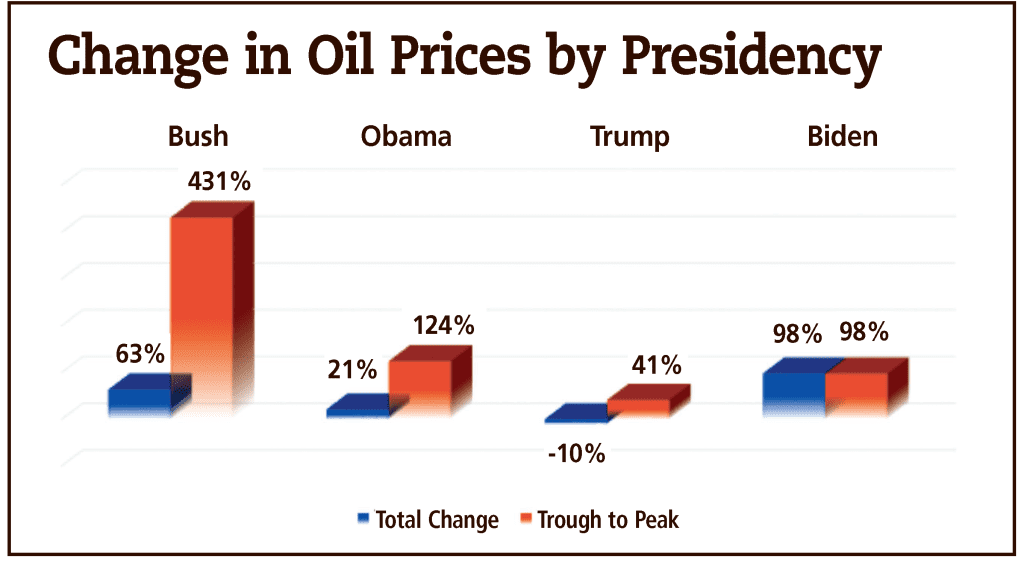
Blaming the White House for inflation is lazy. Macroeconomics are based on supply and demand, and demand is white hot at the moment. Every administration has dealt with volatile oil prices. Indeed, $100 oil is not remotely novel. Consider this: during George H.W. Bush’s term, in the throes of the Gulf War, oil hit $145 per barrel. At the end of Obama’s second term, 26 price was about $91 per barrel. Since January 2001, oil has fluctuated between a low of $27 and a high of $145 (all during George W. Bush’s presidency) but has risen steadily over the past two decades. Here are the stats: 

During the worst of the pandemic, there was a healthy supply of oil and demand fell off a cliff as global travel ceased overnight. Large oil refiners were paying to offload oil. Headlines like this one from Politico in April 2020 were common: “Oil prices go negative — and Washington is paralyzed over what to do.” And while the president has some influence via the strategic oil reserves and negotiations with OPEC, those tools only affect the supply side of the equation. 

Economics is a cycle. Investing is a cycle. Even our careers go through cycles. And we cannot know with certainty the long-term consequences of measures taken at the crisis points of any of these cycles. Politics has become so polarizing that we pick our sides and blame the other for almost any adverse event, especially when it affects our financial well-being.  

Geopolitics is hot right now because of the tensions in eastern Europe. Beyond the worry of what war brings, Russia is the third largest oil producer in the World behind Saudi Arabia and the United States. The global energy trade may see disruption, and energy prices are likely already reflecting that. It is unlikely, however, that the US consumer’s ability to spend will be dampened. The fundamentals of supply and demand will support the persistence of inflationary pressure, and the occupant of the White House, past or present, has little to do with that.


Jeff Liquori is the co-founder and chief Investment officer of Napatree Capital, an investment boutique with offices in Longmeadow as well as Providence and Westerly, R.I.; (401) 437-4730.


Wealth Management

Decisions, Decisions

By Barbara Trombley, CPA, MBA


Many employees are faced with the decision about whether to invest a portion of their paycheck in a Roth 401(k) or traditional 401(k). What is the difference and what are the implications?

First, most plans now offer both options. If your plan does not, it may be as simple as asking the plan provider if both options can be offered. One major difference between the two is how they are taxed. The traditional 401(k) gives tax benefits now. The employee can deduct their contributions from their taxes now — up to $20,500 if you are under age 50 and up to $27,000 if over. This can save thousands on your tax bill, depending upon what bracket you are in.

The Roth 401(k) does not offer tax benefits now. Contributions are made with after-tax money. Any growth on the funds is never taxed as long as the account has been held for at least five years, the distribution is qualified, and you take the distribution(s) after age 59 ½. The investment choices are usually the same as the traditional 401(k) and many people contribute to both.

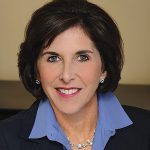
Barbara Trombley

Barbara Trombley

“If you are single and have taxable income over $215,951, incremental income is taxed at 35%. Your contributions to a traditional 401(k) plan could save you $350 on every $1000 contribution. The flipside of this strategy is that, in retirement, all withdrawals are taxed as ordinary income.”

What option is best for you? Usually, it comes down to your personal tax situation. If you are in a very high tax bracket now and expect to be in a lower bracket at retirement, it may make sense to get the tax benefits now. For example, if you are single and have taxable income over $215,951, incremental income is taxed at 35%. Your contributions to a traditional 401(k) plan could save you $350 on every $1000 contribution. The flipside of this strategy is that, in retirement, all withdrawals are taxed as ordinary income.

Additionally, investors in traditional retirement plans need to take required minimum distributions beginning at age 72. Even if the retiree does not ‘need’ the funds, the government is ready to begin collecting its taxes on the funds that were deferred in the plan. As the retiree ages, the RMD factors increase, usually resulting in larger distributions. A young employee now that continually contributes to a traditional retirement plan, may have a large balance later in life. When it is time to take RMD’s if the account hasn’t been tapped previously, the amount to withdraw may be rather large, resulting in a big tax bill.

A Roth 401(k) is subject to the same RMD requirement as the traditional 401k. If the Roth 401k is rolled over into a Roth IRA, then RMD’s are not required to be taken. The funds can be used or held at the individual’s discretion, giving more flexibility to tax planning.

Both plans can be left directly to beneficiaries, and, in most instances, the beneficiary will have 10 years to liquidate the account. Of course, leaving tax-free money to your heirs would be more desirable to them but planning should be done to see if it is the correct choice for you.

In our opinion, it is desirable for retirees to have both types of funds — pre-tax and post-tax. This could give them a lot of flexibility to properly tax plan in retirement. Consult with your financial and tax advisors to see what makes the most sense for your individual situation.


Barbara Trombley is a financial advisor and CPA with Wilbraham-based Trombley, CPA; (413) 596-6992. Securities offered through LPL Financial. Member FINRA/SIPC. Advisory services offered through Trombley Associates, a registered investment advisor and separate entity from LPL Financial.

Cannabis

Extracting a Workforce
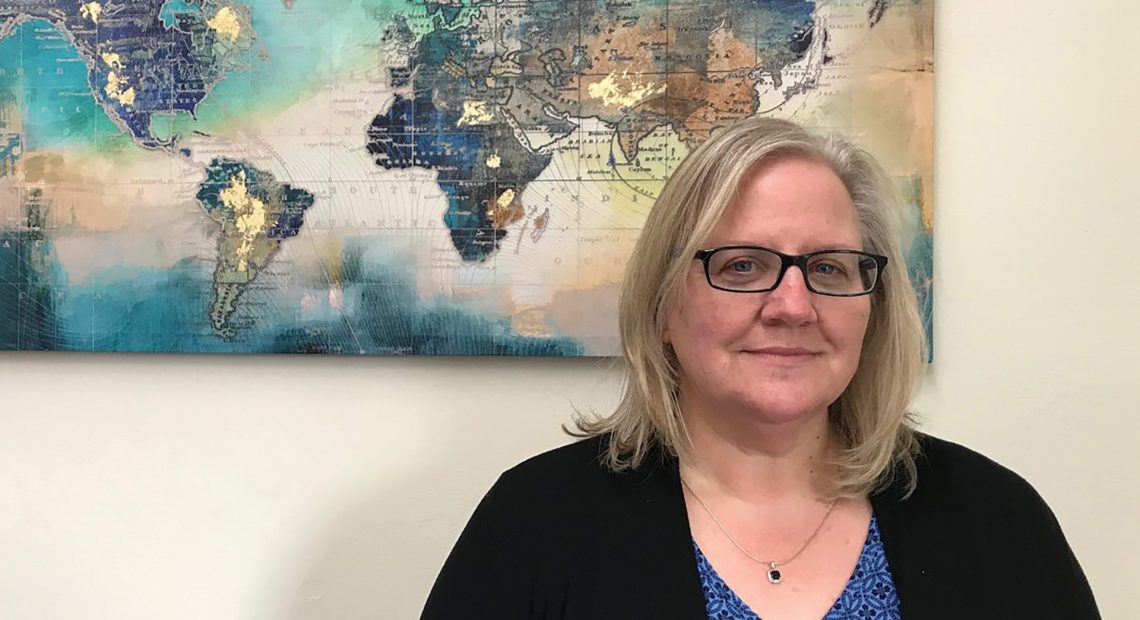
Susanne Swanker

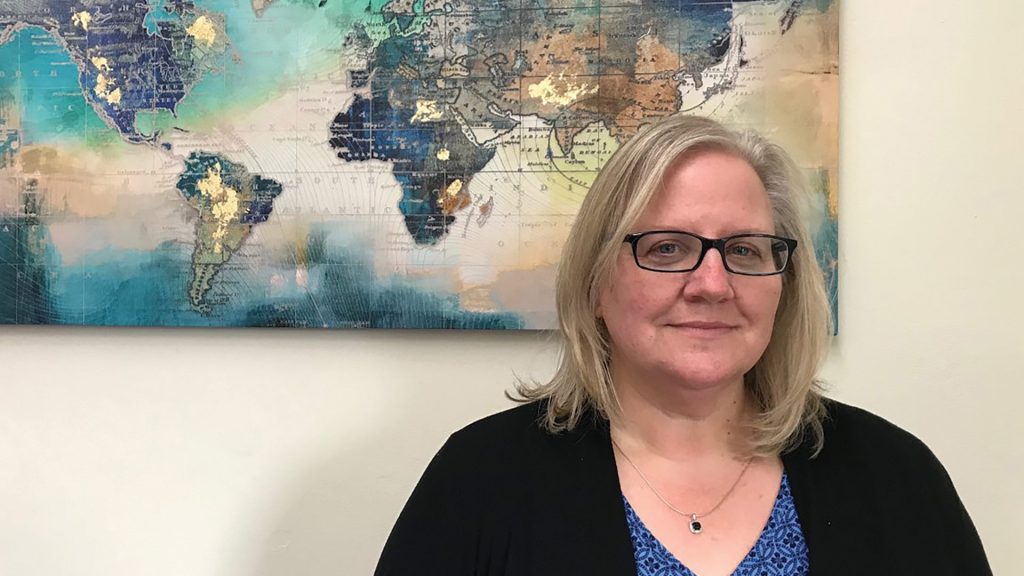
Susanne Swanker says cannabis programs at AIC are being constantly reviewed and updated to remain current and relevant


The cannabis industry — and workforce — has come a long way in just a few years, Jeff Hayden says.

“What I think is really crucial, and what we’re trying to emphasize to job seekers, is that this is a business. This is not like going to somebody’s basement and growing a couple of plants. We’re talking about a multi-million-dollar investment for some of these companies,” said Hayden, vice president of Business and Community Services at Holyoke Community College (HCC).

In that city alone, for instance, entire mill buildings have been renovated and brought back to life, bringing jobs to the community and tax dollars to city coffers, he noted.

“This is a business where they’re generating private investment, creating new jobs, and they’re also generating tax revenue. It’s been a win for Holyoke in terms of the amount of growth that’s been stimulated.”

To keep the momentum going, these new companies need employees, which is why HCC launched its Cannabis Education Center in 2020, a series of non-credit courses, in conjunction with the Cannabis Community Care and Research Network, that provide skilled workforce training to prepare participants for a career in the cannabis industry. By this spring, 120 people will have completed the core program, and many will have begun or completed another career-specific track (more on that later).

The conversation about a cannabis training program at HCC began when legal adult-use cannabis was still being debated in the Bay State. If that came to pass, Hayden and others expected, significant workforce needs would follow. And that has proven to be true.

“This is not like going to somebody’s basement and growing a couple of plants. We’re talking about a multi-million-dollar investment for some of these companies.”

Similar discussions were happening at American International College (AIC) when adult-use cannabis was legalized, which is why it launched, also in 2020, a graduate-level program in cannabis science and commerce, the first of its kind in Western Mass.

The 30-credit program is designed for individuals interested in a career in the cannabis industry and provides students with an understanding of the science, business, and legal issues associated with the cannabis industry. The program offers education in the areas of basic science, including chemistry, horticulture, cultivation, uses, and delivery systems; business management, marketing, and operations; and federal and state laws and policies.

The first cohort of the program graduated in August, said Susanne Swanker, dean of the School of Business, Arts and Sciences at AIC, and they are now being surveyed to get a sense of where they are working in the cannabis industry.

“We’ll use that information to help us make changes as necessary to the curriculum,” she told BusinessWest. “We’re only in our second year now, but over the next few months, we’ll be reviewing the program for fresh content, updating materials, and ensuring currency and relevancy in the field, making sure we’re covering the topics and content needed.”

Jeff Hayden

Jeff Hayden says that, to continue growing, the cannabis industry in the region will need a solid pipeline of qualified workers.

Last fall, AIC introduced another cannabis-education track, an undergraduate certificate program called Micro Emerging Markets: Cannabis, which offers three business courses in rotation: “Cannabis Entrepreneurship,” “Cannabis Business Operations,” and “Law and Ethics of Cannabis” — again, with the goal of channeling a pipeline of skilled workers into a fast-growing industry at a time when all sectors are struggling to secure and retain employees.

“We’re in the process of adding some additional courses,” Swanker said, including a broad overview of the history and culture of cannabis, which could be a popular general-education course. “I think we have a lot of interest from our students in that. So that’s an option.”

Five-plus years after legalization in Massachusetts, the popularity of the cannabis industry is no longer in doubt, more than justifying the decisions by HCC and AIC to add some educational fuel to the workforce.


Knowledge Blooms

Hayden explained the thinking behind the Cannabis Education Center and its multiple tracks.

“Essentially, because this was new to Massachusetts, we tried to design a process to inform people about some of the fundamentals in relation to the industry itself, so we developed a module called the core program, and we ask every participant to go through the core program,” he said.

“We’re finding many of the students enrolled in the program are already in the field working, and they’re coming to us with information and knowledge. The discussion in the classroom is that much more enriching because of the prior experience they’re bringing.”

That program requires two eight-hour Saturday sessions. Beyond that are four separate, occupation-specific tracks, typically three all-day Saturday sessions, to train for a specific area of the cannabis workforce: patient services associate (what’s commonly known as a ‘budtender’), who works directly with customers on both adult and medical use; cultivation assistant, who helps in all areas of the grow operation and requires knowledge of plant biology, soils, hydroponics, plant health, nutrition, harvesting, trimming, inventory tracking, and managing plant waste; extraction technician, who learns how to safely extract useful molecular components from cannabis and hemp; and culinary assistant, who is responsible for cooking, baking, and infusing cannabis- or hemp-based products with extracts.

“We’re in the process of creating a fifth track designed for entrepreneurs,” added Hayden, who noted that the center focuses on five key pillars: community education; social-equity training; occupational training; custom contract training to cannabis businesses, including communication, leadership, and mentorship skills; and developing different trainings that would be useful for the industry.

Scholarships are available, and each job-training program is followed immediately by an internship period with a licensed cannabis industry employer. The center has helped place graduates in full-time jobs as well, at companies like GTI, Trulieve, and Analytic Labs, and some companies have engaged directly with HCC about the kinds of skills they need.

AIC relies on industry professionals as well, as adjunct instructors to complement the college’s own business professors.

“From the onset, the program has been a collaboration of full-time faculty in business working with individuals in the field, people who own their own business as well as individuals that are working in larger operations in different parts of the country,” Swanker said. “They work together to inform the current content, what needs to be covered, and develop the curriculum.”

This professional input from outside AIC is key, she added. “They’re the ones who are experts in the cannabis field, and the ones constantly helping us update materials and discussions. Also, we’re finding many of the students enrolled in the program are already in the field working, and they’re coming to us with information and knowledge. The discussion in the classroom is that much more enriching because of the prior experience they’re bringing.”

AIC leaders were quick to recognize the coming workforce needs in cannabis when the college developed its programs, Swanker said, and also found the Cannabis Control Commission’s focus on diversity and social equity to be appealing as well. “That’s something that speaks to us as an institution and fits our mission. That was just another attractive part of it.”


High Hopes

Swanker said interest in AIC’s cannabis programs remains strong. “When we launched it, we had a tremendous number of inquiries, and that remains at a very high level, which is very encouraging.”

And why not? According to a February 2021 jobs report issued by Leafly, the world’s largest cannabis website, legal cannabis supported 321,000 full-time jobs in the U.S. at the time, and since then, tens of thousands more jobs have been created in states like Massachusetts, Florida, Michigan, Missouri, New Jersey, Ohio, Oklahoma, and Pennsylvania, making cannabis one of the most robust job-creation engines nationally. In Massachusetts, adult-use cannabis sales crossed the $2 billion threshold last year.

In short, both nationally and regionally, this fast-growing market offers plenty of employment and entrepreneurial opportunities for years to come, and for a wide range of skill sets, Hayden said.

“We’re really at the start of it. This is a new industry with new opportunities for people looking to get into a new career area or take the skills they already have and use it in this new sector. If you’re an accountant or bookkeeper or human-resources specialist, then there are job opportunties within this industry for you.”

Which is why programs to educate the next wave of the cannabis workforce are expected to multiply and expand.

“The industry has a need for high levels of sophistication in terms of business management, marketing, and the like. I think we’re going to continue to see it grow,” Hayden added. “At some point, there might be too many companies trying to start up, but not yet; right now, they’re all trying to take advantage of opportunities to get in and grow.”


Joseph Bednar can be reached at [email protected]

Cannabis

A Real “Game-changer”

By Mark Morris

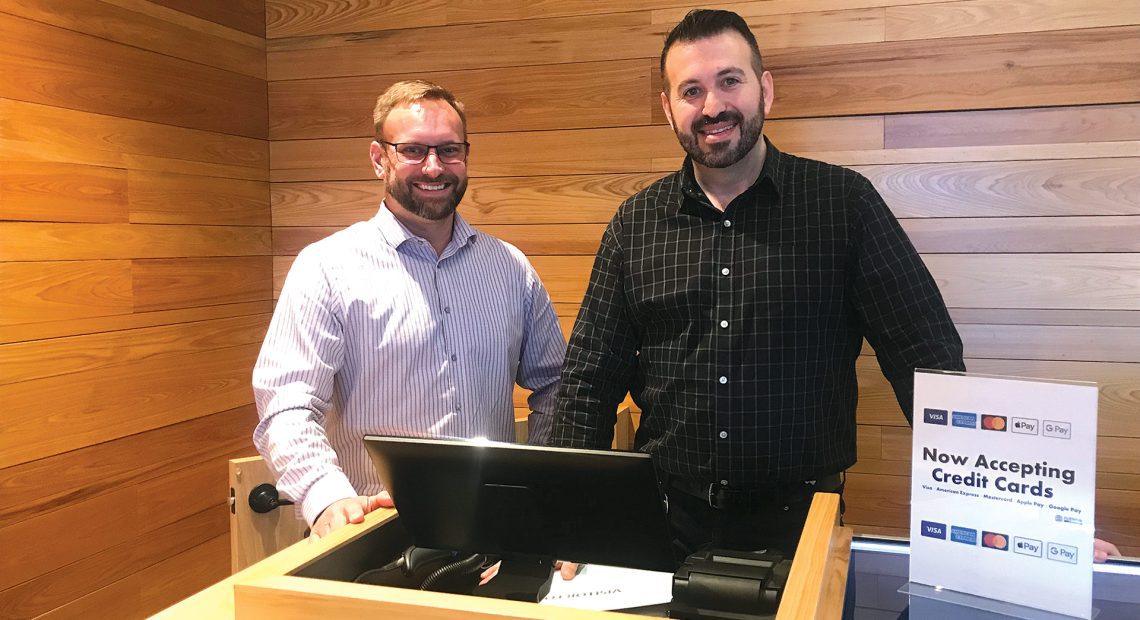
Kevin Perrier, left, and Volkan Polatol

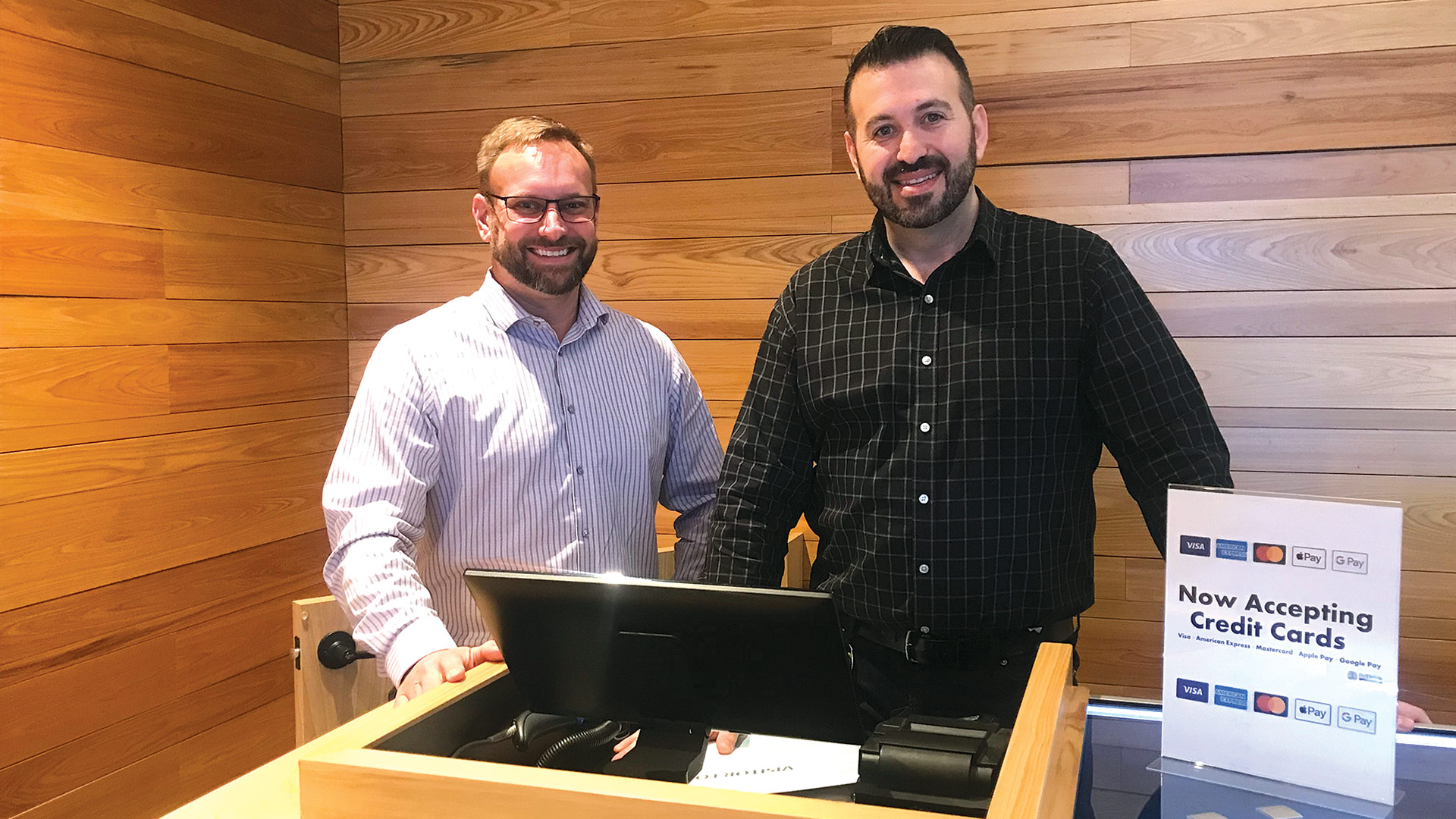
Kevin Perrier, left, and Volkan Polatol, partners at Dreamer Cannabis, are now able to offer credit card transactions at their dispensary. 

Since cannabis became legal in Massachusetts consumers have had to pay for their purchases with cash or a debit card. At a dispensary in Southampton, that has changed in a big way.

Beginning Feb. 14, customers at Dreamer Cannabis have been able to use their credit cards to purchase cannabis products.

“The term ‘game-changer’ gets thrown around a lot, but for this industry that’s pretty huge,” said Kevin Perrier, a partner with Dreamer Cannabis.

Because cannabis is legal in only 18 states, federal law prohibits credit card companies such as Visa, MasterCard, and American Express from accepting cannabis transactions in their systems.

Perrier and Volkan Polatol, his partner at Dreamer Cannabis, were exploring the idea of a cannabis delivery business when their research revealed an innovative way several cannabis companies in California were accepting payments by credit card.

“The method is similar to the way Venmo works,” Polatol said. Venmo is the peer-to-peer payment app that allows individuals to quickly exchange money with each other.

While credit card companies will not process cannabis transactions, accepting payments from third-party platforms is legal and compliant. When a Dreamer customer uses a credit card, the transaction is processed by a third-party platform which uses blockchain technology through the InterPlanetary File System (IPFS) to process the purchase. According to its website, IPFS is a peer-to-peer network that uses blockchain to make the web faster, safer, and more open. Blockchain is known for keeping data secure and for providing a permanent record of the data. For this reason, a growing number of banks support blockchain transactions.

“California has a more-developed cannabis market as they’ve been working with it much longer than any other state. Trends in cannabis seem to start there and migrate east.”

Credit card companies recognize blockchain transactions as legal and compliant, so they receive the data of the purchase through the blockchain and the consumer receives the charge on their bill.

While blockchain is often associated with Bitcoin and other cryptocurrencies, Perrier said the system use by Dreamer Cannabis is not involved in any cryptocurrency.

“Most people are not familiar with crypto, it’s complicated to use and it’s not stable,” he said. “The system we use runs on blockchain, but does not use crypto.”

Perrier said he and Polatol dug deep in their research and spoke with dispensaries in California who use this platform, eventually selecting a company from the Golden State.

“California has a more-developed cannabis market as they’ve been working with it much longer than any other state,” Perrier said. “Trends in cannabis seem to start there and migrate east.”

After looking into the viability of the payment system, the partners wanted to make sure it was legitimate.

“I was the first skeptic,” Polatol admits. “Obviously we didn’t want to introduce something that was going to turn people off.”      

Said Perrier, “I know the people who created this platform and their history. They are involved in many other reputable platforms and businesses.”

Another factor in offering credit card use involves keeping the consumer experience quick and simple.

“The ability to use a credit card makes purchasing cannabis more accessible to consumers,” Perrier said noting that using a debit card to buy cannabis is different than other debit card purchases.

For example, if a customer wants to use their debit card to make a purchase of $95.17, they take the equivalent of an ATM withdrawal through the dispensary’s system. Because it is an ATM withdrawal, they would round up to $100 to pay for their purchase and then receive the difference in cash. The customer must also pay a $3.50 transaction fee for using their debit card.

“We see a lot of head-scratching from first time customers,” Perrier said. “We’re hoping that using credit cards will make it a more straightforward and quick transaction.”    

To make the same $95.17 purchase with a credit card, the clerk will ask for the person’s mobile phone number and send them a link. The purchaser inputs their credit card information and receives acknowledgement of the purchase along with the dispensary. Added to the purchase is a 6% transaction fee to cover fees charged by the credit card company and the third-party platform. Customers can open an account with Dreamer to simplify the process. Using Apple Pay or Google Pay also requires fewer clicks to make a purchase.

“The transaction gets processed on a parallel channel and stays off the credit card networks,” Polatol said. “The purchase data is then forwarded to the credit card company from the third party, which keeps it all legal.”

Dreamer is the first cannabis dispensary in Massachusetts to accept payment by credit card. Perrier said there are a few similar efforts at other ventures across the state, but they are simply downloadable apps that tie into the person’s bank account and function like a debit card.

“All those apps really do is help the person avoid the $3.50 transaction fee,” Perrier said, adding that a debit account is only as viable as the funds that are available in it. “If you try to buy something on Wednesday and your paycheck doesn’t land in your account until Thursday, that money is not available to you until then.”

Offering the option of charging a purchase on a credit card brings huge potential for increasing business. Allowable limits of purchase still apply, of course. In Massachusetts, consumers may purchase up to one ounce of “flower,” which is the plant form of cannabis, or five grams of concentrate per day.

“We’re hoping it’s a win-win,” Perrier said. “Obviously it can boost our sales and we hope it makes purchasing cannabis easier for people.”

Ultimately, Perrier said, credit cards are part of evolving their business and staying ahead of the curve.

Meanwhile, he and Polatol have several projects on the horizon that promise to bring more innovation to the cannabis industry in Western Mass.

The first project involves the partners opening a dispensary at the former Sierra Grill restaurant in Northampton featuring products from the Honey Brand, a California-based company that makes cannabis oils that can be vaped or consumed as edibles.

Perrier and Polatol have also purchased a former Western Mass Electric Company building in Easthampton that they are converting into a canning facility for cannabis seltzer.

Finally, the two are close to unveiling a cannabis-delivery business that would allow customers to order cannabis from an app, pay for it online and have the purchase delivered to their door.

Perrier summed up their activity by joking, “If you don’t innovate, you die.”

Right now, the partners are educating the skeptics and naysayers who come into Dreamer and can’t believe credit card transactions are both safe and legal.

Perrier expects people to have questions, because it’s such a different concept for the cannabis business.

“As the first ones to offer credit cards, we have to educate the consumer,” Perrier said. “I think credit cards will be widely accepted in the coming years, but for now we just want to make it available for our customers as another way to pay for their purchases.”

In the long-term Perrier would like to see cannabis purchases become as routine as a trip to the liquor store.

“No one thinks twice about charging a liquor store purchase on a credit card,” he said adding that credit card acceptance makes it possible for cannabis purchases to eventually become more normalized and mainstream.

Business of Aging

When Memory Falters

By Mark Morris


As we age, the occasional struggle to find a word, or a sporadic lapse of memory, is hardly a cause for alarm. It becomes a concern when short-term memory or trouble finding words becomes a constant battle, because those are often signs of dementia.

Memory loss is usually observed by others and not the person who is afflicted. According to Lori Todd, executive director of Loomis Lakeside at Reeds Landing, a person tends to lose their short-term memory — such as not remembering what they had for breakfast — while their long-term memory stays sharp, and they can tell you all about what happened in 1950.

“We also see the person ask a question, get an answer, and then, 10 minutes later, ask the same question,” Todd said.

Understanding the difference between benign memory loss and early stages of dementia can be difficult for families of aging parents because confronting dementia often comes with lots of fear and denial.

“They know you are an important person in their life, and they know there is an emotional connection. Words aren’t as important as the emotions.”

Beth Cardillo, executive director of Armbrook Village in Westfield, works with families to better understand what is happening with their loved ones. Overcoming their fear and denial is the first big hurdle.

“Family members might admit that mom has a little dementia, but not Alzheimer’s,” Cardillo said. “They treat Alzheimer’s like it’s a dirty word.”

While there are more than 100 types of dementia, Alzheimer’s disease accounts for nearly two-thirds of all dementia diagnoses. Cardillo noted that it’s not unusual for someone to have Alzheimer’s as well as one or two other types of dementia.

On the last Wednesday of each month, she runs a caregiver support group that gives families a chance to hear what others are going through while caring for an aging parent.

Beth Cardillo

For loved ones of individuals with dementia, Beth Cardillo says, overcoming fear and denial is often the first challenge.

“I don’t say much; I’m simply there as a resource,” she said. “Most of the talking is done by group members who help clear up misconceptions and help others realize they are not alone.”

Cardillo called it a true support group, one that has been active for 10 years, the last two years via Zoom, and she welcomes any caregiver to join the group. “And I mean anyone because it’s a virtual group. We have family members from all over the country who join in the discussion.”


Keep Talking

Open communication with families can help them overcome some of the fear and denial that comes with seeing a loved one losing their cognitive abilities. This can also lead to better interactions.

One past practice which is now discouraged was to try to reality-orient an individual with dementia. For example, if a 95-year-old asks to see her mother, the natural tendency is to point out that her mother would have to be 130 years old. Todd recommends, instead of a rebuttal, just going with it.

“It’s an opportunity to engage and say, ‘let’s talk about your mother and all the wonderful things about her,’” she explained. “By going on that journey, it makes them feel good and improves their quality of life.”

Often, a son or daughter will insist on asking the parent with dementia to say their name and then, if they can come up with it, assume they are having a good day. Cardillo said knowing their children’s names doesn’t really matter and can cause embarrassment for the parent if they don’t succeed.

“They know you are an important person in their life, and they know there is an emotional connection,” she added. “Words aren’t as important as the emotions.”

At Reeds Landing, people with dementia live among the other residents. While resident assistants are there to help when needed, those with dementia have a daily routine and feel more included.

Lori Todd

“Concentrate on what makes them happy. Their long-term memory is still there, so it’s an opportunity to encourage talking about good memories they have.”

“We try to keep them at their highest level of functioning in more of a home-like setting rather than an institutional one,” Todd said.

People with dementia are capable of learning and in many ways remain the person they have always been, Cardillo added. “There are still moments of lucidity. Just because you have dementia, does not mean you are stupid.”

Programs that encourage a fail-free environment tend to work well for those with dementia, such as the painting program at Armbrook Village called Memories in the Making.

“Lots of conversation comes out during these sessions,” Cardillo said, recalling one resident who painted a summer scene. When she asked what that meant to the artist, she reminisced about vacations in Maine many years ago. “It doesn’t matter what they are painting; it’s really an opportunity to share their feelings and tell their stories.”

While staff at local senior communities are trained to look for signs of dementia in residents, it can be more difficult for seniors living at home. Todd usually sees an increase in phone calls after someone comes home for Thanksgiving, assuming their mom or dad is doing fine, only to discover things are not going well.

“We encourage people to talk with their parent’s physician when there has been a change in behavior,” she said. “The physician is a good resource because they know the baseline health of the parent.”


Past Meets Present

Helping people understand dementia is a constant activity for Cardillo. Seven years ago, she started the Dementia Friendly movement at Armbrook. Through a partnership with the city of Westfield, Armbrook staff train city employees, first responders, local businesses, and the public on how to recognize the signs of dementia and to better communicate with those afflicted with it.

Both Cardillo and Todd acknowledged that dementia can be frustrating for the person and their family. Because there is no cure for dementia, the emphasis then becomes on the person’s quality of life.

“Concentrate on what makes them happy,” Todd said. “Their long-term memory is still there, so it’s an opportunity to encourage talking about good memories they have.”

Music can also be an effective way to promote good memories. Cardillo referenced a study of a group of people with dementia who were suffering from depression. Researchers asked their families what music the person enjoyed when they were young and made a playlist of that music to play on headphones.

“It woke up their brains and changed their moods,” Cardillo said. “We all hear music and it brings us back to a certain time.” Because music gives most everyone fond memories, she added, it’s no surprise that music brings pleasure to those with dementia as well.

Whatever the milestones along the journey, once family members can move past their denial and fear, she noted, they can really make a difference for their parents.

“When people understand that dementia is not something to be feared, they can begin to accept it and be there for their loved ones.” u

Business of Aging

Room for Improvement

By Elizabeth Sears


Cooley Dickinson has a vintage 1973 Emergency Department — functioning well beyond its expected lifespan.

Even though this older facility has been a workhorse through the pandemic, helping support its community through what is now four waves of COVID-19, it has some obvious bottlenecks. Due to a constriction of space, those at Cooley Dickinson have found themselves getting creative, using hall beds in order to get by. However, an intriguing, $15.5 million solution is currently in the works for 2023.

The plan, “Transforming Emergency Care: Campaign for the Cooley Dickinson Emergency Department,” will include the renovation of 17,000 square feet, plus a 6,600-square-foot expansion. In 2019, Cooley Dickinson completed a master plan for facilities, and the Emergency Department was identified as an area greatly in need of expansion and and renovation.

“We looked at the entire institution, and the Emergency Department emerged as the number-one priority,” said Diane Dukette, chief Development officer at Cooley Dickinson. “Then came the pandemic, and that only further heightened that need we had to take over the endoscopy space to create a specialized respiratory Emergency Department.”

This project was delayed due to the COVID-19 pandemic; the initial plan was to start in 2020. However, this has allowed for plenty of time to plan, and those at Cooley Dickinson are feeling optimistic about the current timeline.

Diane Dukette

“We looked at the entire institution, and the Emergency Department emerged as the number-one priority.”

“The more planning you put into this, the better your construction phase is going to be, so we plan to really work with Consigli, our construction manager, to roll out a good phased-construction plan so it goes smoothly,” said Dr. Robert Redwood, an emergency-medicine specialist at the hospital.

Since this project is occurring in an endemic-COVID world, the plan is incorporating HVAC needs like filters and negative airflow throughout the Emergency Department. This will be essential for taking care of patients during an ongoing respiratory pandemic, Redwood said.

The ED expansion and renovation project continues to be the top priority of the organization. The Emergency Department is roughly 40% undersized right now for the population it serves, and that figure does not take into account the Pioneer Valley’s constantly growing population.

Due to the current space limitations in the existing ED, Cooley Dickinson’s staff strategically makes decisions every day about where to put patients. This is not ideal for anyone, but the staff is doing everything they can to ensure patient care, Dukette said.

“Our staff are spending more time doing workarounds and showing up and providing exceptional care in this space,” she told BusinessWest, adding that more space will allow them to do their jobs more efficiently.

Redwood spoke of the ‘triple aim’ in healthcare, which focuses on better outcomes, population health, and patient satisfaction. Now, there’s been considerable interest in a ‘quadruple aim.’ The Institute for Health Improvement has developed a four-part framework which includes care for the care team — something that has been key during this pandemic, he said. This factor will certainly be reflected in the upcoming project.

Dr. Robert Redwood

“We are sort of in the midst of a burnout epidemic as well during the COVID epidemic, and we want our facilities to be a place where staff feel proud to work and are able to take care of patients but also take care of themselves.”

“There’s going to be good lighting for the staff, staff respite areas and we’ll really try to take care of the people providing the care as well,” he said. “We are sort of in the midst of a burnout epidemic as well during the COVID epidemic, and we want our facilities to be a place where staff feel proud to work and are able to take care of patients but also take care of themselves.”


Space Exploration

It has been firmly established that crowding in emergency departments leads to poor outcomes, which is especially evident from the ED crowding that has been seen across the nation due to COVID-19. This has only emphasized the importance of streamlined processes where medical professionals can move their patient population through their space and get the emergencies diagnosed and stabilized in a rapid fashion, Redwood said.

“There are time-sensitive drugs,” he explained. “If you come to the emergency department with a stroke, my goal is to get you tPA — it’s called alteplase — within 60 minutes, and a key step there is getting this CT scan in a timely fashion, so the closer the CT is, when it’s co-located in the department, the quicker you can do those critical-care pathways.”

Another focus of this renovation project is creating a more geriatric-friendly facility. This includes features like large hallways, accessible bathrooms, nutrition stations, mobility aids, good acoustics, good signage, and bright lighting.

“These sound like no-brainers now, but they’re really not no-brainers,” Redwood explained. “You have to build it, you have to design it, elegantly. When patients come into the ED with dementia, they can easily have sensory overload, and then have behavioral changes due to sensory overload, so you want to have an environment that supports care for patients with dementia.”

Cooley Dickinson’s Emergency Department has received geriatric emergency department accreditation by the American College of Emergency Physicians, making it a pioneer within its larger healthcare system, Mass General Brigham. Indeed, it is the first hospital within the 13-hospital system to receive that accreditation. Other facilities in the system are going to follow suit, Redwood noted.

Another improvement to be included in this project is a larger behavioral-health pod, the need for which has only been exacerbated by two years of pandemic.

The phenomenon has been referred to as the “syndemic” — the COVID-19 pandemic plus a mental-health epidemic. Many of the support structures people have for their mental-health needs are lacking, Redwood explained, calling for improvements in behavioral-health resources.

“We’re going to have a dedicated behavioral health pod,” he said. “The current pod for behavioral health has four beds, and, for example, we have pediatric psych warding as a challenge in Massachusetts. We have two patients who have been there for well over a month in the pod, so those are beds that aren’t turning over, they aren’t readily usable. An expanded behavioral-health pod will be just really beneficial for the community.”

As noted, the price tag for the project is $15.5 million. Dr. Lynnette Watkins, president of Cooley Dickinson Health Care, recently announced a $1 million gift given by John and Elizabeth Armstrong of Amherst to contribute to the project. Additional fundraising efforts have been launched in these early stages of the project.

“What’s particularly exciting is that we had a group of individuals that came together to help us get this launched and gave us collectively a million-dollar challenge: to raise a million dollars by March 1, and then they’ll give us another million dollars,” Dukette said.

In regard to that $1 million goal, Cooley Dickinson has $117,000 left to raise over the next two weeks before it can garner the matching $1 million. Toward the end of the year, the hospital anticipates reaching out to the community for fundraising, which will coincide with when construction starts.

“This is a project that truly touches everyone in our community, and the club is honored to support the hospital,” said Steve Roberts, 2021-22 president of the Northampton Rotary Club, on the club’s recent $5,000 gift to the campaign.


Bottom Line

Redwood emphasized that, at the end of the day, what the Cooley Dickinson Emergency Department really needs is real estate.

“We need physical beds, and having an expanded footprint will allow us to really meet our community’s needs,” he said. “So we’re building an ED for 40,000 to 48,000 ED visits per year. Right now we’re around 32,000 to 34,000 visits per year, but the Valley is a popular place, it’s only growing, and we know we’re going to need that capacity.”

Both Redwood and Dukette enthusiastically stressed that this project is essential for the well-being of their community.

“We’re extremely proud of the fact that we are very inclusive, and we do everything we can to make whoever shows up in our emergency room feel welcomed and cared for,” Dukette said. “We’re a team.”

Class of 2022

The Class of 2022 to Be Announced In the May 2 Issue of BusinessWest

BusinessWest launched its 40 Under Forty program in in 2007 to recognize this region’s rising stars, and it has since become a coveted honor throughout Western Mass., shining a spotlight on individuals who have excelled professionally, but also in their service to the community.


Nominations for the 16th annual celebration have closed, and the judges are hard at work evaluating more than 150 unique nominations, an indication that the pandemic has not slowed this program’s energy or importance to the region.

The class of 2022 — which will be profiled in the May 2 issue of BusinessWest and honored at the 40 Under Forty Gala on June 16 — will, as usual, be chosen by five independent judges, who bring broad experience in entrepreneurship, business development, and civic engagement, among other traits, to their task. Here’s a quick look at each of this year’s judges.

Xiomara Albán DeLobato

Xiomara Albán DeLobato

Xiomara Albán DeLobato, a member of the 40 Under Forty class of 2021, currently serves as the chief of staff for the Western Massachusetts Economic Development Council (EDC), where she facilitates the growth and development of the regional economy by encouraging, influencing, and sustaining capital investment and quality job growth in Western Mass. She has dedicated her career and community involvement in serving as an active change agent and steadfast advocate for equitable access to economic and academic opportunities in the region and beyond. She also serves as an active board member for Girls Inc. of the Valley, the Springfield Public Forum, and trustee for Veritas Prep Charter School.

Madeline Landrau

Madeline Landrau

Madeline Landrau, one of BusinessWest’s Women of Impact in 2021, joined MassMutual in 1996 and currently works on the Community Responsibility team as a Program Engagement Manager. She oversees the MassMutual’s Home Office Giving portfolio and associated relationship management, working with nonprofit organizations primarily in MassMutual’s home office community of Springfield. She’s the lead for LifeBridgeSM, MassMutual’s free life insurance program that offers free life insurance coverage to eligible parents for the benefit of their children’s education. Active in community affairs, Landrau has a devout interest in mentoring young Latinas, providing informal mentoring and coaching, guiding them to make sound decisions, develop socially and enhance their educational skills. She is the first Latina trustee of Westfield State University, where she serves as vice chair of the Investment Subcommittee of the Finance & Capital Assets Committee.

Ryan McCollum

Ryan McCollum, a 40 Under 40 winner in 2012, is the owner of RMC Strategies, which provides full service political consulting to candidates, elected officials, nonprofits and for-profit institutions. Born in Springfield, McCollum worked for several state senators before returning to Springfield to work as a project manager in the City’s Economic Development Department under former Mayor Charlie Ryan. He returned to Beacon Hill to work as the legislative director for the Office of Housing and Economic Development under Gov. Deval Patrick. An initial founder of the Young Professional Society of Greater Springfield, he is on several area boards, including 16 Lyrics, Suit Up Springfield, Square One, Healing Racism Institute, ROCA, NCCJ and the marketing committee of the Springfield Museums. He sat on the Town of Longmeadow Coalition for Racial Justice Task Force, and also serves on the Boston based Rian Immigrant Center, which helps immigrants assimilate to our country. 

Chad Moir, president and CEO of DopaFit Parkinson’s Movement Center in Easthampton, was honored by BusinessWest with both its 40 Under Forty and Difference Maker awards in 2021. A graduate of American International College and its Public Health program, Moir created DopaFit in 2015. The company uses exercise prograns to help people stop or slow down the progression of Parkinson’s, a neurodegenerative disorder that increasingly robs the body of dopamine, which is released during exercise. Moir said he has always taken inspiration from the Muhammad Ali quote, “service to others is the rent you pay for your room here on earth.”



Amy Roberts

Amy Roberts, executive vice president and chief Human Resources officer at PeoplesBank, has more than 18 years of experience working with business leaders to develop and implement people-management and talent-development strategies. She has a bachelor of Arts in Communications from Bridgewater State University and a masters of Human Resource Development from American International College. An active member of the community, she has served on many boards including the United Way of Hampshire County, Leadership Pioneer Valley and CHD. She is a reader for the Link to Libraries program and serves on the Service Above Self Annual Luncheon Committee for the Springfield Rotary and Basketball Hall of Fame.

Opinion

Moving Toward ‘Normal.’


For more than two years now, this region and its business community have been longing for a return to something approaching ‘normal,’ or what we knew before COVID arrived in Western Massachusetts in early March of 2020.

If the pandemic has taught us anything over the past 24 months, it is that we shouldn’t take anything for granted and should never think that anything is ‘over,’ because ‘over,’ when it comes to COVID, is a relative term.

But, and this is a big but, we are starting to see some very welcome and very refreshing signs of normal. Let’s start with the Holyoke St. Patrick’s Day Parade and road race. After a long, painful two-year hiatus, these traditions are returning, and Holyoke — and the region — are poised for a huge party.

Also returning after two years on the sidelines is Bay Path University’s annual Women’s Leadership Conference, an event that brings more than 2,000 attendees to the MassMutual Center in Springfield each spring. And then, there’s BusinessWest’s Difference Makers event, another early spring tradition.

It will be back at the main ballroom at the Log Cabin on March 24. The event has been staged over the past two years, but not in its traditional fashion. In 2021, it was a virtual event, and in 2020, it became a fall happening, staged at the Upper Vista at the Log Cabin with 25 people in attendance — because that was the limit for event venues at that moment in time.

We all remember those days, and would probably like to forget them.

As we see more important signs of ‘normal’ — on our calendars, and in general — there is room for optimism that the time may soon be approaching when the pandemic ceases to rule our lives and is something we just have to live with. How soon, no one knows, but by most accounts, we’re moving much closer.

Those who spoke with BusinessWest about the Holyoke parade and its long-anticipated return, everyone from the mayor to the parade chairman to bar owners in the city, spoke about its importance from an economic perspective. Indeed, dozens of businesses benefit directly from the parade and the road race, and some generate perhaps half a normal year’s income during that one week.

But they also spoke of its importance from a civic pride perspective and how people came back to Holyoke year after year because it was the place to be St. Patrick’s Day — or the whole week. And they talked about the importance of getting back to something approaching normal.

That’s because it’s been missing from our lives for most of the past two years.

What we’ve learned since March of 2020 is that ‘normal’ is important, ‘normal’ is good for everyone.

And that point will be driven home again when the parade kicks off in Holyoke, when the speakers take to the stage at the Women’s Leadership Conference, and when the Difference Makers hear the applause they’ve earned at the Log Cabin.

Yes, we can all use a little ‘normal’ right about now.

Opinion

Putting MassSave Changes in Perspective

By Robert Rio

Massachusetts recently updated its flagship Mass Save energy efficiency program. The changes will affect businesses in areas served by an investor-owned electric or gas utility — companies such as Eversource, National Grid and UNITIL.

The changes took effect on Jan. 1. Massachusetts reviews its energy efficiency programs every three years. 

What will the changes mean to your company? Many commercial and industrial (C&I) programs will continue, some with modifications.   

Greenhouse-gas reductions are now counted in the calculations to determine energy savings 

A 2021 Massachusetts law mandated economy-wide greenhouse gas (GHG) reductions beginning 2030. As a result, the new energy efficiency programs include the social value of carbon in the cost-effectiveness analysis calculations for most measures.

The result is that previously marginally cost-effective programs may now be eligible for programs when the benefits of greenhouse-gas reductions are included. The new three-year plan is expected to reduce the equivalent of 845,000 metric tons of greenhouse-gas by 2030, equal to the emissions from about 180,000 cars. 

New emphasis on heat-pump technology 

Reducing greenhouse gases will eventually require a switch from fossil fuels to electric options for building heating, water heating and some industrial processes. The new plan will emphasize electric heat-pump technology for commercial and industrial customers, particularly for smaller businesses where residential-sized options may work.

Larger companies may have a tougher time electrifying, but electrification may still make sense in areas of your facility, particularly if you are served by delivered fossil fuels such as oil and propane.  

Most lighting rebates are eliminated

Since its inception, Mass Save has offered rebates for energy efficient lighting. Now that such lighting is often required by code and ubiquitous, rebates are not allowed, except when new lighting is paired with controllable technologies.  

Combined Heat and Power (CHP) is no longer eligible for rebates  

Combined Heat and Power systems produce electricity and recover the exhaust heat to produce heating, cooling, and process steam for manufacturing and other uses.

Many businesses have installed combined heat and power to manage their energy costs and ensure reliability. AIM has long supported this effort. The new greenhouse-gas law makes natural gas and other fossil fuels ineligible for rebates. AIM has long supported CHP and disagrees with the elimination of incentives for Combined Heat and Power.

Electricity and natural-gas costs will rise 

The Mass Save program is primarily funded by a surcharge on a customer’s electric and gas bills.

In the previous three-year plan (2019-2021), the total costs (gas and electric) were about $1.1 billion for commercial and industrial customers, representing about 40% of the total program costs. Rebates are generally sector specific, so money collected from commercial and industrial customers is mostly returned to those customers.

The new program will see commercial and industrial sector costs rise to about $1.56 billion dollars over three years. The impact on company energy bills will vary, but the increase will have a measurable impact on overall energy costs. More information will be available as programs are rolled out.


Robert Rio is senior vice president and counsel of Government Affairs for Associated Industries of Massachusetts; [email protected]