Event Galleries Healthcare Heroes Special Coverage

View the Gallery from the Oct. 27 Event

Watch the Oct. 27 Event Here

Show starts at 1:1:38

Healthcare Heroes Class of 2022

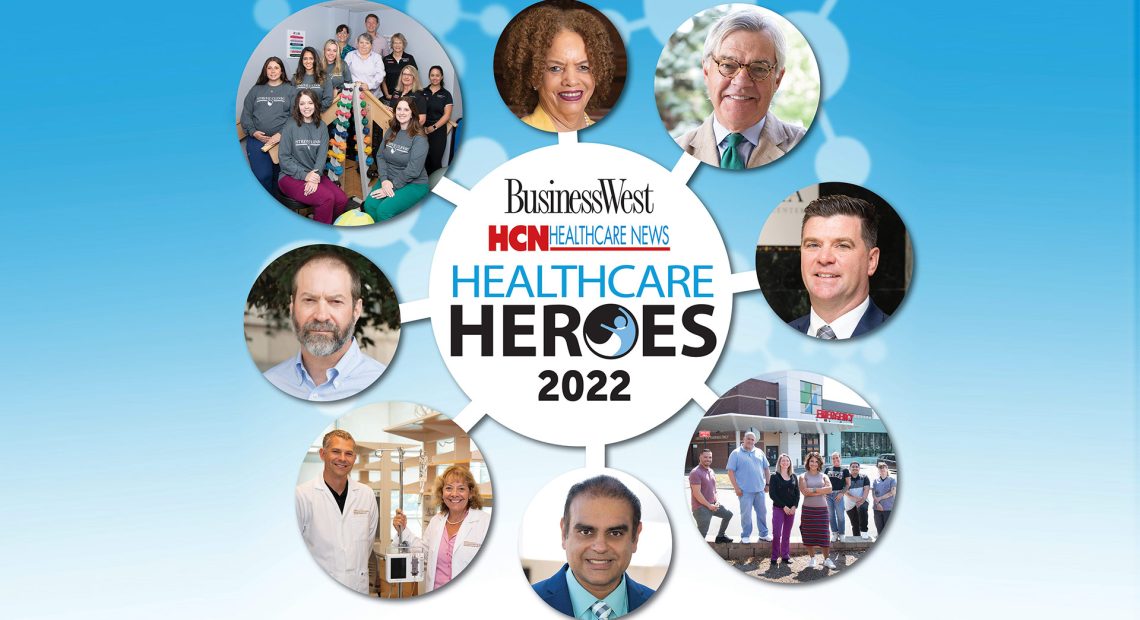
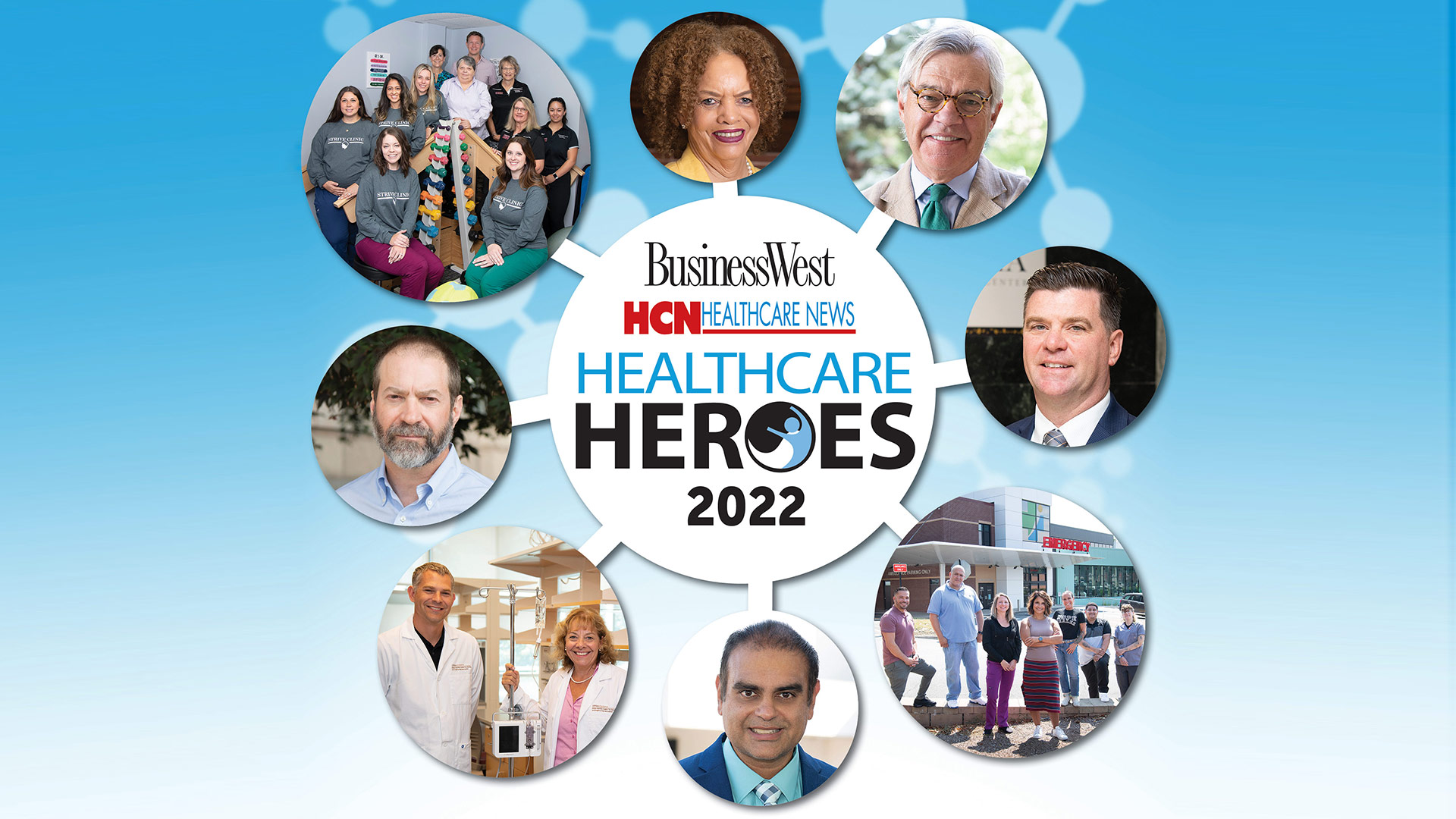
Overall, everyone who was nominated this year is a hero, but in the minds of our judges — the editors and management at BusinessWest — eight of these stories stood out among the others. The Healthcare Heroes for 2022 are (click on the names to read their stories):

Presenting Sponsors

Partner Sponsor

Daily News

EAST LONGMEADOW — Excel Dryer Inc., manufacturer of the XLERATOR hand dryer, announced that Timothy Bates has joined its growing team as senior director of Operations. He has more than 35 years of industry experience and has spent nearly 25 years in a senior management role.

“Tim brings with him great leadership experience as he makes his transition to Excel Dryer,” said William Gagnon, vice president of Sales and Marketing at Excel Dryer. “We are thrilled to have him join the team and are looking forward to collaborating on ways to build future successes.”

Bates is a graduate of the University of Massachusetts with a degree in industrial engineering. Since starting his career as an industrial engineer, he has held various positions, each with increased responsibilities, including positions such as program manager, director of operations, and general manager/vice president at organizations like Kaman Aerospace Corp. and TigHITCO. At Excel Dryer, Bates will oversee manufacturing and warehouse operations, ensuring the facility is running in a safe, efficient, and profitable manner.

“I am ready to hit the ground running and am already impressed with how efficiently Excel Dryer operates,” Bates said. “I look forward to getting to know the systems in place and working to improve quality and production while ensuring the safety of our most important asset, our employees.”

Daily News

SOUTH HADLEY — U.S. Rep. Richard Neal, chair of the House Committee on Ways and Means, joined Mount Holyoke College interim President Beverly Daniel Tatum for the announcement of a $250,000 earmark for the college’s Professional and Graduate Education department.

The allocation was made possible through congressional directed spending from the departments of Labor, Health and Human Services, and Education. Neal included funding for this project in the FY 2022 spending bill that was signed into law earlier this year.

“As a former trustee at Mount Holyoke College, I have seen first-hand the innovative and collaborative work that happens on campus,” Neal said. “Not only will this program assist teachers and school support staff here in Western and Central Massachusetts, but it will also be available to those nationwide. Mount Holyoke is once again leading the way.”

The funding will support the Teaching for Our Moment program, which is aimed at addressing the growing crisis of teacher burnout in U.S. public schools. The program kicks off on Saturday, Oct. 29 with a free, day-long conference followed by a six-month professional learning and mentorship program. The programming aims to support teacher wellness and student social-emotional learning while addressing challenges in education that are leading too many teachers to leave the profession.

“The unending pressure on teachers needs to be addressed if we want to retain passionate, talented professionals in the field of education,” Tatum said. “The Teaching for Our Moment program is designed to ensure the highest levels of success for students and higher levels of job satisfaction for teachers. We appreciate Congressman Neal’s support of education in Massachusetts.”

Daily News

NORTH ADAMS — MCLA’s Division of Graduate & Continuing Education (DGCE) will host information sessions for those interested in completing a bachelor’s degree or pursuing an MBA. The 30-minute information sessions will be available in person and online in North Adams and Pittsfield.

The community is invited to the Tuesday, Nov. 1 information session at 5 p.m., online only; Tuesday, Nov. 8 at noon at 66 Allen St.in Pittsfield; or Tuesday, Nov. 29 at 5 p.m. at MCLA’s Eldridge Hall, Room 206, in North Adams, with optional remote registration available for the latter two sessions.

MCLA’s degree-completion programs are designed for adult learners seeking accelerated, non-traditional pathways to completing bachelor’s degrees. Each program uses a cohort-style learning format, in which students begin their courses of study in groups with their peers and proceed through the program together.

Each information session will provide participants with an overview of DGCE programs, including the MBA, master of education, degree-completion programs in business administration and interdisciplinary studies, and certificate programs in accounting and cybersecurity.

Completion of a bachelor’s degree includes business administration or a bachelor of arts in interdisciplinary studies. Students in the interdisciplinary program may focus on children, families, society, leadership and business, health and human services, or an individualized plan of study, created with assistance from an advisor.

Program leaders will meet with session participants to provide an overview of DGCE’s curriculum and programs, including program locations, schedules, tuition costs, financial aid, and how to apply, transfer credit, academic support, student services, and career opportunities.

The program offers classes in the evening at MCLA Pittsfield and online one night per week to accommodate students meeting the demands of work, family, and their studies. Community members interested in pursuing a graduate degree or finishing their bachelor’s degree with evening classes at MCLA’s location in Pittsfield are encouraged to attend an information session. Representatives from each program will answer questions related to academics, the application process, education timelines, and more.

Click here for a complete schedule of information sessions and registration links. Learn more about MCLA’s DGCE programming and how to apply at www.mcla.edu.

Daily News

SPRINGFIELD — More than 250 attendees gathered at the Log Cabin in Holyoke Thursday night as BusinessWest and the Healthcare News honored their sixth annual Healthcare Heroes. If you missed out on the festivities — or just want to experience the class of 2022’s inspiring stories again — a livestream of the event is available at businesswest.com/healthcareheroes.

Honorees were also profiled in the Sept. 19 issue of BusinessWest and the September/October issue of the Healthcare News, and the stories are also available at www.businesswest.com and www.healthcarenews.com.

This year’s honorees and the categories they represent are: Helen Caulton-Harris, director of Health and Human Services, city of Springfield (Lifetime Achievement); Mark Paglia, chief operating officer, MiraVista Behavioral Health Center (Administrator); Dr. Philip Glynn, director of Medical Oncology, Mercy Medical Center (Provider); Dr. Paul Pirraglia, division chief, General Medicine and Community Health, Baystate Health (Collaboration); ServiceNet’s Enrichment Center & Strive Clinic and its partners at Springfield College and UMass Amherst (Collaboration); the Addiction Consult Service at Holyoke Medical Center (Community Health); Dr. Sundeep Shukla, chief, Department of Emergency Medicine, Baystate Noble Hospital (Emerging Leader); and the Elaine Marieb Center for Nursing and Engineering Innovation (Innovation).

This year’s Healthcare Heroes program and event were presented by Baystate Health/Health New England and Elms College, and sponsored by American International College, MiraVista Behavioral Health Center, and Trinity Health Of New England/Mercy Medical Center.

Accounting and Tax Planning

Learning Exercise

By Charles Jacques


With the rising costs of higher education, it is even more important to effectively plan for how best to finance your future goals, regardless of what level you are at or pursuing.

Qualified tuition programs (QTPs), or 529 plans, are one possible route that not only supports you in saving for education expenses, but also allows for tax incentives as established by the Internal Revenue Service (IRS).


What Is a 529 Plan?

Qualified tuition programs are established and maintained by either a state or educational institution (such as college or university) and are commonly referred to as 529 plans simply because their tax rules are governed by section 529 in the IRS code.

In short, these plans allow a taxpayer to either prepay or contribute to a savings or investment account that can appreciate in value over time, similar to a traditional IRA. When money from the account is later withdrawn by the designated beneficiary, the income will be excluded from federal income, provided, however, that these funds are being used for qualified educational expenses.

Common examples of qualified educational expenses include tuition, fees, books, and even room and board at eligible educational institutions (if at least a half-time student).

Charles Jacques

Charles Jacques

“These plans allow a taxpayer to either prepay or contribute to a savings or investment account that can appreciate in value over time, similar to a traditional IRA.”

How Do I Start a 529 Plan?

These plans can be created online or with the assistance of an investment advisor. Each state offers plans, and if you already have a relationship with a brokerage firm (Edward Jones, Vanguard, Fidelity, etc.), you can also partner with your advisor to set one up. Do keep in mind that, while the distributions are excluded from federal income, tax consequences vary by state. Make sure to research the tax rules for your state before setting up the plan.


Are the Taxpayer Contributions Tax-deductible?

Contributions to a 529 plan are not deductible for federal tax; however, some states do allow deductions. Be sure to check your state’s rules when setting up the plan.


What If the Beneficiary Doesn’t Use the Money for Qualified Educational Expenses?

The intent of these plans was to provide tax incentives to fund higher education. Distributions used for non-qualified expenses are generally treated as income, and the earnings in the account will also be subject to an additional 10% penalty (with some exceptions). It’s important to verify that the intended expense qualifies before deciding to take the distribution.


Who Reports the Income?

When a distribution is made, form 1099-Q will be issued, with information regarding the gross distribution, earnings within the account, and the type of account it is (such as a state or private plan). The individual receiving the distribution will usually be the one reporting the income, with their name on the form.


Can I Make a Gift Donation to a 529 Plan?

Yes. Keep in mind, however, that the gift amount is not exempt from the annual $15,000 gift-tax exclusion limit as established by the IRS. The IRS does, however, provide an option for taxpayers who gift up to $75,000 in a single year to split that gift in five equal parts over the next five years (as if it was actually split over those five consecutive years).

For example, if a taxpayer gifted $75,000 during the year, the gifting taxpayer can elect to report $15,000 ($75,000 / 5) in year one, and $15,000 again in the next four subsequent years, thereby not exceeding the annual limit. This election can be made for each unique beneficiary plan.


Can I Roll Over the Account Amount to Another Plan?

Yes. Perhaps the beneficiary doesn’t plan to go to college or accrue these qualified higher-education expenses in the foreseeable future. Plan benefits may be transferred from one beneficiary to another in the same family (although the IRS has a vast definition of what constitutes family) with no adverse tax consequences, with the one caveat being that you cannot roll over more than one QTP to a single beneficiary within a 12-month period.

Qualified tuition programs are an option to help fund educational goals and may be a helpful financial strategy when navigating those various costs associated.


Charles Jacques, staff accountant at Melanson, specializes in commercial tax returns and planning.

Accounting and Tax Planning

Million-dollar Question

Anew poll of Massachusetts voters conducted by Suffolk University, the Boston Globe, NBC10 Boston, and Telemundo found that 58% of respondents support ballot Question 1, compared to 37% in opposition. Question 1, on the Massachusetts ballot on Nov. 8, would create a 4% tax on the portion of a person’s annual income above $1 million and require that the funds be spent only on transportation and public education.

“Tens of thousands of educators, workers, small-business owners, parents, faith leaders, municipal officials, drivers and transit riders, and more than 500 organizations across the state are all working together to pass Question 1 in November,” said Lillian Lanier, field director for Fair Share for Massachusetts, the leading advocacy group working to pass the ballot initiative. “We’re supporting Question 1 because we know it will help improve our schools and transportation infrastructure, and only the very rich will pay more. A few billionaires are trying to mislead voters about what Question 1 does, but our grassroots supporters are having thousands of conversations every day to combat their misinformation.”

That survey result may be concerning to the Coalition to Stop the Tax Hike Amendment, the leading collection of organizations opposed to the initiative, claiming to represent more than 25,000 small businesses, in addition to thousands of homeowners, retirees, farmers, and large employers.

“If passed, Question 1 would be one of the highest tax hikes in Massachusetts history, immediately and permanently implementing an 80% tax increase and threatening small businesses across the state,” the coalition argues. “Question 1 captures tens of thousands of small-business owners who do not make more than $1 million per year and are working hard to rebuild after the negative impacts of the pandemic. At a time when we should be helping our small businesses recover, small-business owners will instead be left reeling from a new, unprecedented financial hit.”

As written, the proposed amendment to Article 44 of the Massachusetts Constitution states that, “to provide the resources for quality public education and affordable public colleges and universities, and for the repair and maintenance of roads, bridges, and public transportation, all revenues received in accordance with this paragraph shall be expended, subject to appropriation, only for these purposes.

“In addition to the taxes on income otherwise authorized under this article, there shall be an additional tax of 4% on that portion of annual taxable income in excess of $1 million reported on any return related to those taxes.

“To ensure that this additional tax continues to apply only to the Commonwealth’s highest-income taxpayers, this $1 million income level shall be adjusted annually to reflect any increases in the cost of living by the same method used for federal income tax brackets. This paragraph shall apply to all tax years beginning on or after January 1, 2023.”

The Coalition to Stop the Tax Hike Amendment argues that Question 1 impacts the tens of thousands of small businesses across the state that file taxes as pass-through entities, noting that these small businesses file their business’ revenue as personal income, even though much of it is reinvested back into their business. The coalition notes that many of these small businesses are operating on razor-thin margins and take home very little profit, yet the proposed amendment treats their business revenue as if they are a high-earning individual, threatening their business’ viability.

“Our organization represents 4,000 small businesses across the state, with a vast majority of these businesses set up as pass-through entities,” said Jon Hurst, president of the Retailers Assoc. of Massachusetts. “Many of these organizations could see their taxes nearly double under Question 1. This constitutional amendment will devastate our local economy and threaten small businesses statewide.”

The coalition also argues that Question 1 robs the nest eggs of small-business owners who are relying on the sale of their business to fund their retirement. Unlike federal taxes on personal income, this measure treats one-time gains — such as those from selling a business, home, or farm — as regular income, pushing many retirees into the new, higher tax bracket, and nearly doubling their taxes.

Among the organizations that have united against the amendment are the Massachusetts High Tech Council, Associated Industries of Massachusetts, the Western Massachusetts Economic Development Council, the National Federation of Independent Business, the Massachusetts Fiscal Alliance, the Massachusetts Farm Bureau, the Massachusetts Retail Lumber Dealers Assoc., the Springfield Regional Chamber and many other chambers of commerce, the Alliance of Automotive Service Providers of Massachusetts, the Massachusetts Seafood Collaborative, and the Massachusetts Business Roundtable.

But Question 1 does have supporters, as the Yes on Question 1 campaign has been endorsed by 87 labor unions; 72 community organizing groups; 18 faith-based groups; more than 75 businesses; 64 city councils, select boards, and school committees; 89 local Democratic town and ward committees; and 115 other social-service and not-for-profit organizations focused on housing, education, transportation, public health, and the environment.

Supporters call the amendment an opportunity for Massachusetts to improve schools and colleges, fix roads and bridges, create jobs, and boost the economy, all without 99% of taxpayers paying a single cent more.

As a tax on personal income over $1 million, Fair Share for Massachusetts argues, business taxes would not be affected, and Question 1 doesn’t apply to any business revenues. It notes that fewer than 3% of businesses owners in Massachusetts have taxable personal income over $1 million that would be subject to Question 1, and many of them are primarily investors or shareholders, not people running a business day-to-day.

“If a business is generating more than a million dollars in personal profit for the owner, even after they deduct all their business expenses, let’s be real: it’s not a small business, and that super-rich business owner can afford to pay their fair share in taxes,” said Gerly Adrien, business director of Fair Share for Massachusetts and owner of Tipping Cow Ice Cream in Somerville and Boston.