Home 2025 April
Daily News

SPRINGFIELDWestern New England University (WNE) announced Tuesday that President Robert Johnson will step down from his role, effective August 1.

The announcement was shared with the Board of Trustees earlier on Tuesday.

Johnson, who began his tenure in 2020, has guided the University through a time of significant transformation and challenge, including the COVID-19 pandemic. Under his leadership, WNE remained committed to in-person instruction, expanded mental health resources, including Mental Health First Aid training, and embraced a future-focused philosophy rooted in agility, adaptability, and lifelong learning. 

“It has been my honor to serve as president of Western New England University,” said Johnson. “Together, we have navigated unprecedented challenges and embraced opportunities that have redefined what it means to prepare students for the future of work and society. I am deeply proud of what we have accomplished and confident that WNE’s brightest days are still ahead.” 

Johnson’s accomplishments at WNE include the launch of the XR/VR Lab, the FinTech Center, the Center for Advanced Manufacturing, and the Kevin S. and Sandra E. Delbridge Career Center. Most recently, WNE unveiled the Golden Bear Discovery Curriculum — the first major revision of the general education program in 25 years — marking a bold step forward in the university’s commitment to interdisciplinary learning and academic excellence. 

During his presidency, the university has experienced steady enrollment growth, including welcoming the largest incoming class in recent history. WNE has also doubled its applicant pool and achieved a 94% job placement rate, with graduate starting salaries that rival those of top institutions. Golden Bear Athletics has flourished, celebrating multiple conference championships and national tournament appearances.

Johnson has also strengthened WNE’s community partnerships and regional presence, exemplified by his service as honorary chair of the 2023 Bright Nights Ball and his support of civic and cultural initiatives throughout Springfield and beyond. 

“On behalf of the Board of Trustees, I want to express our deep appreciation to President Johnson for his outstanding leadership and service to Western New England University,” said Board of Trustee Chair Nicholas LaPier. “His vision, energy, and commitment to student success have strengthened our institution and positioned us well for the future. While we will miss his leadership, we fully support his decision to embrace the next chapter of his journey. We are grateful for the strong foundation he leaves behind and confident in the continued momentum of the university community he has so ably guided.” 

The WNE Board of Trustees will begin planning for the leadership transition, including the appointment of an interim president and the launch of a national search for the university’s next leader. Details of the process will be shared in the coming weeks. The board’s goal is to name an interim president with time for overlap and continuity before Johnson’s departure.

Daily News

SPRINGFIELD — Peter Banko, president and CEO of Baystate Health, today announced that, as part of an ongoing “transformation” at the healthcare system, another 43 jobs will be eliminated, on top of the 7% reduction in the overall workforce that has been implemented since last fall.

In a prepared statement, Banko said the positions eliminated were “selected to minimize impact to direct patient care.” There was no further information on where the cuts will be made.

“This week we will complete one of the most disruptive components of our transformation journey in FY25 — reducing our workforce,” said Banko. “Since November 2024, we have had to make some very difficult decisions to reduce our workforce in total by 7%, and while this directly impacted a significant number of our team members, 60% of the total reductions were realized through attrition, a gradual reduction through resignations or retirements with elimination of those positions by not filling the vacancies.

“Even with this ongoing focus and disciplined approach to attrition, we did have to make the difficult decision to eliminate positions within Baystate Health this week, and as a result, 43 individuals will be leaving Baystate Health,” he went on. “Individual discussions with those impacted will be completed no later than Friday, May 2.”

Eligible team members who are not transitioned to another position in the organization will receive severance pay and other job support, including access to career transition services, he said. “We deeply understand the profound effect these transitions have on our people, their families, and our community as the anchor employer in Western Mass. We continue to aggressively recruit, hire, and retain physicians, advanced practice providers, and bed-side caregivers.”

Banko stressed that Baystate’s transformation is ongoing.

“Since launching our core operations improvement journey in October 2024, we are seeing meaningful and measurable progress — both in the success of our transformation efforts and, most important, in our progress toward long-term consistent and predictable financial resilience,” he noted. “In late February, we met with the Fitch Rating Agency — one of the “Big Three” nationally recognized rating organizations designated by Wall Street — and they affirmed our A+ credit rating with a negative outlook. The rating came as a timely, objective affirmation that Baystate Health continues to be a very high-credit-quality health system with a strong capacity to meet all our financial commitments.

“The rating also attests to the decisions we have made and the new processes we have established regarding our organizational structure, streamlined decision-making, management spans and layers, the efficiency and effectiveness of corporate functions, contract and premium labor, and external spend,” he went on. “The transformation workstreams to date — coupled with a busy respiratory season and increased emergency department volume and surgical throughput — has resulted in four consecutive months of positive operating margin and cash flow for the health system. I am so proud of a true team effort — all our incredible caregivers — individually and collectively contributing quickly to turning the corner toward a renewed, healthy, growing, and independent future for Baystate.

“We have more work to do to achieve sustainable financial transformation and re-invest more than $1.2 billion in our people, services, and technology over the next six years,” he continued. “We are currently actively working on redesigns in supply chain, pharmacy, and revenue-cycle management. This summer, we will start planning for FY26 by focusing on the physician enterprise (Baystate Medical Practices) and care management (including acute length of stay management) across the enterprise. At the same time, we will initiate an intentional implementation of Baystate Health 2030 (our new strategic plan) to grow our hospitals and service lines, integrate Health New England, and more supportively engage, retain, and develop our employees.”

Daily News

HOLYOKE — Holyoke Community College will conduct a special Registration Express event for the Summer 2025 and Fall 2025 classes on Saturday, May 3, when prospective students can apply for admission, take the college-placement test, meet with an academic adviser, register for classes, and set up financial aid — all in one day.

HCC’s Saturday Registration Express event will be held from 9 a.m. to 1 p.m., on the first floor of the Campus Center on the main campus at 303 Homestead Ave. and virtually over Zoom.  

Summer 2025 Session 1 classes begin May 27. Summer 2025 Session 2 classes begin July 14. Fall 2025 classes begin Sept. 2. HCC also has flex start dates on Sept. 15 and Oct. 27.

Registration Express will also be an opportunity for prospective students to learn about MassEducate, the state’s new program for free community college. 

“Registration Express at Holyoke Community College provides an opportunity for students to complete the admissions and registration process all in one day and all in one place,” said Mark Hudgik, director of admissions and onboarding. “Admissions, financial aid, and advising counselors will be available to help students get ready for the summer and fall.”  

Those who can’t make it in person can still participate on those days virtually through Zoom. The Registration Express Zoom link can be accessed  through a link on the Registration Express page on the HCC website: hcc.edu/regexpress 

Daily News

SPRINGFIELD — The Springfield Symphony Orchestra (SSO) will host “Variation & Virtuosity,” its Season Finale performance, on Saturday, May 3, 2025 at 7:30 p.m. at Springfield Symphony Hall.

The concert will feature guest conductor Marcelo Lehninger and Pianist Natasha Paremski and a program that spans Brazil, Russia, and closes with Beethoven’s iconic Symphony No. 7, bookending the SSO’s season opener that featured his Symphony No. 5.

Tickets are available, starting at $25, at SpringfieldSymphony.org, or by calling the SSO box office at (413) 733-2291.

The concert will feature pieces in variation structures. Conductor Lehninger’s Brazilian roots are reflected in the opening piece, Temporal Variations (Beethoven Revisited) composed by Ronaldo MirandaNext will be what is known as one of the greatest of the variation structures and one of the great compositions of the classical music literature, Rachmaninoff’s Rhapsody on a Theme of Paganini, performed by Paremski on piano. 

To close the season, the orchestra will perform Ludwig van Beethoven’s Symphony No. 7. This is a dynamic symphony that Beethoven considers one of his best compositions, and bookends the SSO’s season opener, when the Orchestra performed Beethoven’s Symphony No. 5.

“We conclude our season with what will be a stirring concert led by conductor Marcelo Lehinger with prior experience with the Boston Symphony Orchestra,” said Paul Lambert, president and CEO of the SSO. “He will be joined on stage by our own fabulous musicians and pianist Natasha Paremski who has performed around the world. It is not an exaggeration to say the season we billed as a ‘Tapestry of Music’ was among the most diverse for the SSO and we will leave our regular season on a high note.” 

Daily News

SPRINGFIELD The stage at 52 Sumner, Springfield’s newest arts and entertainment venue from Springfield Performing Arts Ventures Inc. (“SPAV”), has a stacked lineup of live performances throughout May, from rock tribute shows to community honors and classical performances.

“We are so grateful to New Valley Bank and Trust for helping us continue to bring ROCK REWIND, our fan-favorite tribute series, to the stage,” said Angela Park, co-founder of 52 Sumner. “This month we’re excited to continue the fun with three powerhouse performances.”

These are:  

  • The Beautiful Losers on May 3, a tribute to Bob Seger & The Silver Bullet Band;
  • Refugeeon May 30, “the ultimate Tom Petty experience”; and
  • Fleetwood Mackedon May 31, a tribute to Fleetwood Mac.

May 31

Also scheduled in May are the Springfield Preservation Trust Awards on May 8, and the Champlain Trio, featuring Springfield Symphony Orchestra cellist Emily Taubl, on May 18.

Tickets and showtimes for all performances are available on 52 Sumner’s website Event Listing page

Daily News

HADLEY — The Amherst Area Chamber of Commerce is partnering with Anytime Fitness Hadley for an open house event on Wednesday, 5:30 to 7 p.m. at the Anytime Fitness location at 458 Russell St. in Hadley.

This community event invites residents and local professionals to explore the club, experience its welcoming culture, and learn more about its commitment to health, wellness, and community engagement.

The open house will feature Anytime Fitness’ collaborations with other local businesses in the area, including fellow Amherst Area Chamber member Playa Bowls, which will serve complimentary protein bites and shakes throughout the event.

As a special offer, attendees who sign up for a membership to Anytime Fitness during the event will have their enrollment fee waived. Members of the business community can also learn more about Anytime Fitness’ unique offers for corporate business memberships to the gym.

“We’re looking forward to connecting with our community at Anytime Fitness and celebrating the positive energy and support this space brings to our local wellness scene,” said Jacob Robinson, executive director of the Amherst Area Chamber of Commerce. 

“This event is a great opportunity for the community to experience what Anytime Fitness is all about,” said Jeff Swanson, owner of the Anytime Fitness Hadley location. “We’re more than a gym, we’re a supportive community committed to helping our members reach their fitness goals.”

The event is free and open to the public, no RSVPs required.

Daily News

AMHERST — The Emily Dickinson Museum will celebrate the completion of the reconstruction of the Carriage House and the reopening of The Evergreens with a ribbon- cutting ceremony, hosted in partnership with the Amherst Area Chamber of Commerce and the Amherst Business Improvement District (BID).

The ceremony will take place on May 6, from 5 to 6 p.m. at 280 Main St. in Amherst.

The Emily Dickinson Museum has completed the reconstruction of the carriage house that once stood to the east of The Evergreens, the home of Emily Dickinson’s brother, Austin, and his wife Susan. Along with reconstructing the historical appearance of the carriage house, the museum prioritized sustainability with the goal of achieving passive house certification from the Passive House Institute US Inc. It is the first passive commercial building in Amherst, as well as the first passive museum building and passive historic house reconstruction in the country.

The carriage house will initially serve as a site for visitor welcome, orientation, and museum shop, while also enabling the third and final phase of the Dickinson Homestead restoration. Additionally, The Evergreens will reopen to the public on May 1, after being closed in August 2024 due to the carriage house construction project. 

“Opening the carriage house is a significant milestone in long-range goals for the Emily Dickinson Museum established more than 20 years ago,” said Jane Wald, the Jane and Robert Keiter Family executive director of the Emily Dickinson Museum. “By moving some functions into the carriage house, the museum can more quickly complete the last phase of restoring Emily Dickinson’s Homestead so that her daily life and literary legacy can be more fully presented and appreciated in the place it was created. Moreover, we couldn’t be more pleased that this commitment to passive house construction and environmental responsibility reflects Dickinson’s regard for the natural world and the inspiration she drew from it.” 

“We’re honored to partner with the Emily Dickinson Museum and the Amherst BID in celebrating this important milestone in the museum’s restoration journey,” said Jacob Robinson, executive director of the Amherst Area Chamber of Commerce. “The reconstruction of the Carriage House honors the enduring legacy of the Dickinson family in Amherst and reinforces Amherst’s role as a center for literary and cultural tourism.”

Said John Page, executive director of the Amherst Business Improvement District, “we’re thrilled to see the carriage house reconstruction completed and to support projects that celebrate our community’s cultural and historic assets. Events like this highlight the vibrancy of our local partnerships and the exciting momentum in Amherst.”

This event is free and open to the public, no RSVP required.

In addition to the ribbon cutting ceremony on May 6, the Emily Dickinson Museum will host its annual Poetry Walk through downtown Amherst on May 10, in honor of the 139th anniversary of the poet’s death. This is a free public program. To learn more about Poetry Walk, visit EmilyDickinsonMuseum.org/poetry-walk-2025/

Daily News

SPRINGFIELD — The Dakin Humane Society of Springfield recently announced its 2025 Board of Directors. The all-volunteer Dakin board represents communities from around the Pioneer Valley region.

Tracy Sicbaldi of Berkshire Bank will serve for the first time as president. Rachel Slosek-Couture of Travelers Insurance, will serve as vice president. Rob Cestola of Pope Francis Preparatory School will serve as treasurer, and Kendra O’Neill of Florence Bank will serve as secretary.

New directors beginning three-year terms on the board include Laurie Martin of Baystate Health, Keith Purcell, CPA, and Megan Rothschild of Chikmedia. They will join current members Joseph Lopez, Lindsay Manning of Dietz & Company Architects, Kelley Moloney, Esq., Alison Spafford of Halloran & Sage LLP, and Nancy Weld of Easthampton Public Schools.

“I am pleased to welcome this dedicated group of professionals who have agreed to work alongside all of us at Dakin in fulfilling our mission,” said Executive Director Meg Talbert.  “They each bring a wide variety of expertise in numerous professions and industries, and will enhance our efforts to expand our programs and services to assist animals and the people who love them in our community.”

Daily News

CHICOPEE — Elms College students will showcase their real-world experiences gained through internships, research, service work, and travel opportunities at the annual Experiential Learning Showcase on Friday, May 2.

The showcase will take place from 9:30 a.m. to 2 p.m., with the opening at Keating Quadrangle, sessions at the Mary Dooley College Center & Alumnae Library, lunch at the Keating Quadrangle, and the closing at the Alumnae Library.

The program is open to all, no need to register.

At Elms, 95% of students participate in internships, research, and service opportunities through the Dolores Donlan Noonan ‘39 Experiential Learning Program. Students have explored opportunities with many local organizations, including Way Finders, Polish Discovery Center, Holyoke Soldiers Home, Springfield Thunderbirds, Hampden County’s Sheriff’s Office, Care Center and the office of state Representative Shirley Arriaga, D-Chicopee. 

Business Talk Podcast Special Coverage

We are excited to announce that BusinessWest has launched a new podcast series, BusinessTalk. Each episode will feature in-depth interviews and discussions with local industry leaders, providing thoughtful perspectives on the Western Massachuetts economy and the many business ventures that keep it running during these challenging times.

Go HERE to view all episodes

Episode 233: April 28, 2025

Joe Bednar talks with Chris Thompson, owner of the Westfield Starfires

Chris Thompson, who already boasted a robust background in the sports business, namely hockey, took a big swing in 2019 when he and a partner launched the Westfield Starfires, a franchise in the Futures Collegiate Baseball League. It’s been a home run all around, as the team gets set to begin its seventh season at Bullens Field next month. On the next episode of BusinessTalk, Chris, now sole owner of the club, talks with BusinessWest Editor Joe Bednar about what fans can expect this season from promotions, concessions, and level of play, as well as team’s continued strong partnership with the city of Westfield and why a thriving baseball culture is so important to this region. It’s must listening, so tune into BusinessTalk, a podcast presented by BusinessWest.


Also Available On

Daily News

SPRINGFIELD BusinessWest has announced its 40 Under Forty class of 2025. This year, we honor:

  • Olivia Calcasola, tax supervisor, Meyers Brothers Kalicka, P.C.;
  • Tatiana Cole, business connector and coach, Free to Flourish, LLC;
  • Sherleen Crespo, vice president, branch manager, and mortgage specialist, Westfield Bank;
  • Chelsea Depault, vice president, commercial loan officer, Greenfield Cooperative Bank;
  • Amber Estelle, clinical director, YWCA of Western Massachusetts;
  • Paris Felogloy, school-age childcare director and camp director, Franklin County YMCA;
  • Mo Freniere, deputy director of Sales, Eastern States Exposition;
  • Koby Gardner-Levine, regional manager, Office of Congressman Jim McGovern;
  • Diana Guzman, vice president of Human Resources, YWCA of Western Massachusetts;
  • Angela Hansberry, financial planning assistant, the Jamrog Group;
  • Brenton Jenkins, founder, Vision Entertainment;
  • Tashea Jenkins, executive director, One Village Inc.;
  • Sarah Lapolice, Tax Department manager, Burkhart Pizzanelli, P.C.;
  • Shannon Lynch, assistant vice president of Compliance, Mount Holyoke College;
  • Dr. Nathan Macedo, Assistant professor of Family Medicine, UMass Chan Medical School – Baystate; associate program director, Greenfield Family Medicine Residency Program;
  • Liz Martinek, EMS coordinator, Baystate Health;
  • Mia McDonald, senior associate, Meyers Brothers Kalicka, P.C.;
  • Jessica Menard, advanced practice clinician manager of Care Delivery, Education, and Training, Commonwealth Care Alliance;
  • Kate Minifie, Farm & Food Products Program director, Western Massachusetts Food Processing Center;
  • Jason Moran, President, Morduct, LLC;
  • Dr. Divya Mudumba, practice owner, Smileworks Family Dentistry and Palmer Smiles;
  • Marc Murphy, co-owner, Lock and Key Realty;
  • Geoff Naunheim, executive director, United Way of the Franklin & Hampshire Region;
  • Brigid Owino, birth and postpartum doula and childbirth educator, Perinatal Wellness Partners;
  • Kerry Parsons, Service Operations manager, Colonial Life;
  • Jennifer Reynolds, project manager, Tighe & Bond;
  • Catherine Rioux, assistant vice president, commercial loan officer, Monson Savings Bank;
  • Lidia Rodríguez, CEO, Rewarding Insurance Agency;
  • Kashawn Sanders, president and CEO, Follow My Steps Foundation Inc.;
  • Davis Snow, program supervisor, Hampden County Sheriff’s Office;
  • Nicole Taylor, senior marketing specialist, Trinity Health Of New England;
  • Savannah Taylor, director of Editorial, EBONY;
  • Tori Thompson, vice president, head of Internal Audit, PeoplesBank;
  • Kerri Tichy, senior director of Philanthropy, Shriners Children’s New England;
  • Vadim Tulchinsky, partner, director of Acquisitions, Urbanist Development;
  • Dr. Allison van der Velden, CEO, Community Health Center of Franklin County;
  • Mydalis Vera, owner, Guerrera Writer LLC;
  • Matt Waldrip, manager, Licensing & Permitting, Eversource;
  • Elizabeth Wambui, director of Diversity, Inclusion, and Community Impact, Fontaine Brothers Inc.; and
  • Janna White, director, Five College Center for World Languages,


Their stories will be featured in the April 28 issue of BusinessWest, now published digitally at https://businesswest.com/issues/april-28-2025/#p=1

The awards gala will take place on June 19 at 5 p.m. at the MassMutual Center in Springfield. Tickets are now on sale: $135 per person, with tables of 10 available.

The 19th annual 40 Under Forty program is presented by PeoplesBank and sponsored by Mercedes-Benz Springfield, Live Nation Premium, and the Isenberg School of Management at UMass Amherst. The 11th annual 40 Under Forty Alumni Achievement Award is presented by Health New England.

For more information, call Natasha Mercado-Santana, Marketing and Events manager, at (413) 781-8600, ext. 100, or email [email protected].

Daily News

SPRINGFIELD — Hooplandia, the 3×3 basketball tourney and festival that celebrates basketball’s history in Greater Springfield, its birthplace, announced a new partnership with Kevin Garnett’s Hoop It Up that will make the 2025 tournament the most competitive installment so far.

For the first time in the history of Hooplandia, slated for June 20-22, players have access to a pro-am division for professional ballers, powered by Hoop It Up, with a $2,500 cash prize for the top-ranking men’s and women’s teams on the line.

The pro-am division serves as the ultimate battleground for top-tier talent, and it is open to men and women ages 19 and older. The winning pro-am teams will each receive a $2,500 cash prize.

Founded in 1989, Hoop It Up is recognized as the most prolific grassroots basketball tour in the world. Millions of players have participated in their premier events, which are designed for participants from all over the world and of all ages and abilities.

In 2019, the tour was acquired by Kevin Garnett’s sports management company, Big Ticket Sports. Garnett, an NBA legend and Basketball Hall of Famer, has helped the tour partner with elite NBA teams, such as the Golden State Warriors, the Milwaukee Bucks, and the New York Knicks, to create memorable 3×3 basketball tournaments and academies that introduce the FIBA format while teaching key court concepts and relevant skills to aspiring players.

Registration details can be found at Hooplandia.com.

Daily News

SPRINGFIELD — In response to recent incidents of violence in the region, the Hampden District Attorney’s office issued a statement aimed at assuring the public that its “commitment to justice, safety, and transparency remains steadfast.”

“We understand the unease that comes with such acts of violence, and we want the community to know that each of these cases is being thoroughly investigated in close coordination with our law enforcement partners,” said Hampden District Attorney Anthony D. Gulluni. “Our hearts go out to the families who are grieving.

“While online conversations around these incidents continue to grow, we urge the public to be mindful of the role that social media can play in spreading fear or misinformation,” he went on. “Unverified claims can compromise active investigations and contribute to a sense of chaos that does not reflect the full picture.

“We are actively working every lead and deploying every available resource,” Gulluni continued. “At this time, there is no indication that these incidents are connected to each other or are they a part of a larger public safety threat.

“The district attorney’s office remains in frequent contact with police departments, city officials, and community leaders to address concerns and ensure public confidence,” he went on. “We encourage anyone with information relevant to investigations to come forward. The Springfield Police Department Detective Bureau can be reached at (413) 787-6355 or through text a tip — text CRIMES (2-7-4-6-3-7) type SOLVE and your tip.”

Daily News

GREENFIELD — Greenfield Cooperative Bank has announced several promotions:

 • Brandon Lively has been promoted to executive vice president, chief technology officer. He started at GSB as a teller more than 25 years ago, and has progressively advanced through various roles. For many years, he has led the bank’s IT initiatives and will now continue to drive technological advancements in his new role;

• Jackie Charron has been promoted to executive vice president, chief banking officer. Joining GCB in 2024, Charron brought with her more than 40 years of experience in the community banking sector;

• Victor Rodriguez Sr. has been promoted to vice president, Community Engagement Mortgage officer. Since joining GCB in 2024, Rodriguez has demonstrated an unwavering passion for the community, backed by more than 20 years of banking experience;

• Matthew Donovan has been promoted to commercial lending officer. He joined GCB in 2023, bringing several years of credit experience. He has previouly served as a senior credit analyst and most recently as a commercial associate lender; and

• Ethan McCandless has been promoted to collections officer. McCandless has been with GCB since 2020, initially joining as a residential loan closer. Over the past five years, he has worked  within both the residential and Commercial Lending Departments, most recently as a credit analyst.

“These promotions recognize the hard work, dedication, and significant contributions of these individuals to Greenfield Cooperative Bank,” said Tony Worden, CEO & President of the institution. “They all embody the values of GCB, and their expertise will be crucial as we continue to serve our community and grow as an organization. We are proud to have such a talented and committed team.”

Daily News

GREENFIELD — Greenfield Cooperative Bank announced several promotions Thursday:


• Brandon Lively has been promoted to executive vice president, chief technology officer. He started at GSB as a teller more than 25 years ago, and has progressively advanced through various roles. For many years, he has led the bank’s IT initiatives and will now continue to drive technological advancements in his new role;

• Jackie Charron has been promoted to executive vice president, chief banking officer. Joining GCB in 2024, Charron brought with her more than 40 years of experience in the community banking sector;

• Victor Rodriguez Sr. has been promoted to vice president, Community Engagement Mortgage officer. Since joining GCB in 2024, Rodriguez has demonstrated an unwavering passion for the community, backed by more than 20 years of banking experience;

• Matthew Donovan has been promoted to commercial lending officer. He joined GCB in 2023, bringing several years of credit experience. He has previouly served as a senior credit analyst and most recently as a commercial associate lender; and

• Ethan McCandless has been promoted to collections officer. McCandless has been with GCB since 2020, initially joining as a residential loan closer. Over the past five years, he has worked within both the residential and Commercial Lending Departments, most recently as a credit analyst.

“These promotions recognize the hard work, dedication, and significant contributions of these individuals to Greenfield Cooperative Bank,” said Tony Worden, CEO & President of the institution. “They all embody the values of GCB, and their expertise will be crucial as we continue to serve our community and grow as an organization. We are proud to have such a talented and committed team.”

Daily News

PITTSFIELD — Impact investment platform Mill Town Capital has delivered a total economic impact of $132 million across Berkshire County from 2017 to 2023, according to a new independent analysis by the UMass Donahue Institute (UMDI).

The study highlights how Mill Town’s investments in local businesses, real estate, and infrastructure along with philanthropic programming, are generating lasting economic impact and revitalization in the region. Mill Town, founded in 2016 by Dave Mixer, strives to improve the quality of life in the community through sustainable projects and investments.

Using the IMPLAN economic modeling system, UMDI quantified the direct, indirect, and induced effects of Mill Town’s activity. Key findings include:

  • $132 million total economic impact, with $107.3 million (81%) in Pittsfield alone;
  • A 1.42x economic multiplier: Every $100 generated by Mill Town spurred an additional $42 in local economic activity;
  • 672 workers connected to Mill Town activity in 2023, up from just 3 in 2017;
  • $5.1 million in local tax revenues driven by investment and job creation.

“This report confirms the power of intentional, community-based investment,” said Tim Burke, Mill Town Capital’s CEO.  Additionally, he commented, “Our work is not just about dollars—it’s about building a stronger, more resilient Pittsfield and Berkshire County.”

To view the economic impact summary report, visit 2017-23-economic-impact-report.pdf

Daily News

SPRINGFIELDGail E. Carberry ’77 has been named Springfield Technical Community College’s commencement speaker and distinguished alumna for 2025.

The commencement ceremony and awarding of the Distinguished Alumna honor will be held May 29, at 6:30 p.m., at the MassMutual Center.

In many ways, Carberry exemplifies the transformative power of a community college education. As a Springfield Technical Community College student, she struggled with dyslexia and faced economic challenges, but found the support she needed to succeed. She earned her certificate in administrative bookkeeping from STCC and soared to great heights in the decades that followed. 

Indeed, she served in many roles at STCC, and would go on to serve as president of Quinsigamond Community College (QCC) in Worcester.

“I think, in a lot of ways, I’m very much a typical STCC graduate,” Carberry said. “I was an older student, coming from very moderate means. I’m dyslexic. Reaching this point in my life –— retiring as a college president and now being honored by my alma mater — is very meaningful to me because I am so passionate about the community college mission, having experienced it myself.”

After earning a degree in early childhood education from Worcester State University, she and her husband, Donald H. Carberry, a Vietnam War veteran, struggled to find stable employment. “We were living in subsidized housing with two small kids, trying to get on our feet after an unpopular war,” she recalled. “Teachers were being laid off, and I needed to reschool.”

It was at STCC that Carberry found her confidence. “I had gone through public school struggling, and when I got to STCC, that flipped,” she said. “People believed in me, and I began to believe in myself.”

STCC served as a launching pad for Carberry’s career. She served in several leadership roles at the college, where she worked for 28 years. Early in her career at STCC, Carberry was a grant writer — a role that would define much of her early success. She eventually rose to be the director of Grants and Institutional Development, the assistant dean of Development, and completed her career at STCC as vice president of Grants and Development, a role she held for more than 15 years.

During her tenure at QCC, Carberry continued her legacy of innovation, securing funding and expanding educational access. “I was able to build a health sciences and workforce development building in downtown Worcester without additional state funds,” she said. “We created a campus in Southbridge, and 1,300 students poured through the doors in the first year.”

Throughout her career, Carberry worked to expand access to education for underserved populations. At STCC, she played a role in launching disability services, a childcare center and a women’s center. “I was trying to push STCC into the community to reach into the lives of people, to bring them to the college and to enable some of the colleges programs to move into the community,” she said. “The transformation of lives has always been key to me, and the projects that transform the lives are the ones I’m most proud of.”

Her work in Worcester followed a similar trajectory. “My legacy is in the 10,000 students who graduated from QCC on my watch,” she said. “Nobody does it alone. I had a good team of people at both campuses working with me, and if I didn’t have them, I found them. That’s how you do it.”

Daily News

PITTSFIELD — As it celebrates National Volunteer Week, Berkshire Bank announced that Heather Hans, vice president, consumer lending compliance officer, has been named its 2025 Volunteer of the Year.

Hans, who donated more than 400 hours last year to volunteering, was selected based on the number of hours she volunteered and because she volunteers with a variety of organizations and actively participates in both company-sponsored events as well as personal activities.

Another 19 employees have been named to the company’s 2025 Volunteer Honor Roll for each having volunteered more than 150 hours in 2024.

Collectively, Berkshire employees achieved a milestone in 2024: 100% volunteered in their communities. That included more than 250 company-sponsored projects with more than 11,500 hours of service across Massachusetts, New York, Vermont, Connecticut and Rhode Island, as well as thousands more hours volunteering as individuals in their hometown communities.

Named for the X in its logo, Berkshire’s XTEAM Employee Volunteer and Giving Program is a central element of its workplace culture, providing employees with an easy way to help the company’s communities realize their full potential. 

“Our 2025 Volunteer of the Year is a shining example of Berkshire’s values in action,” said Lori Kiely, managing director of the Berkshire Bank Foundation. “Her commitment to giving back to our communities is what we mean when we say, ‘Where you bank matters.’ Supporting our communities is a key component of our culture across the organization,” she said.

“Helping others doesn’t have to be a big gesture,” said Hans, an active member of Berkshire’s Capital Region Volunteer Council. “I believe it’s the little things that make the difference and Berkshire does, too, which is why I’m so grateful to work at this organization. That’s who we are.”

Law

Collision Course

By Mark Tanner, Esq.


We help a great many people who have been involved in automobile collisions, including those who have been injured in automobile collisions through no fault of their own. One of the first questions we ask our clients is, “what insurance coverage do you have?” You would be amazed at how many people don’t know or understand their automobile-insurance coverage.

To better understand your coverage, start with your insurance broker. Ask your broker to provide you with your coverage selections page, a document that outlines the types and amounts of insurance coverage you have.

A number of different types of automobile insurance are available. Comprehensive protects your vehicle from damage caused by events other than a collision, such as vandalism and theft. Collision pays for damage to your vehicle when you collide with another car. The amount of coverage you need for these types of insurance depends largely on the value of your car.

Mark Tanner

Mark Tanner

“If you really think about it, the minimum coverage mandated by Massachusetts is probably insufficient to cover a serious auto accident. It would be smart to speak with your broker about increasing this coverage over the minimum.”

Since we’re talking about collisions, let’s discuss some important types of coverage that often come into play after an automobile accident, are highly variable, and can often be increased or decreased depending on your personal situation.


Personal-injury Protection (PIP)

PIP coverage pays up to $8,000 of your medical expenses and lost wages you suffered as the result of a collision and is mandatory in Massachusetts policies. You should know that, to reduce policy premiums, some insurers offer an $8,000 ‘PIP deductible,’ which means you have to pay the first $8,000 of PIP coverage out of pocket. This effectively means you have no PIP coverage, since you must pay the $8,000 deductible, and the coverage limit is $8,000. Think long and hard before you agree to this deductible to decrease the cost of your policy.


Bodily Injury to Others (BI)

BI coverage insures you against injuries you cause to others. In Massachusetts, the minimum BI limits are $20,000/$40,000, meaning there is $20,000 in coverage per injured person, up to a maximum of $40,000 if more than one person is hurt in the accident. This coverage pays for medical bills, lost wages, pain and suffering, and the like. If you really think about it, the minimum coverage mandated by Massachusetts is probably insufficient to cover a serious auto accident. It would be smart to speak with your broker about increasing this coverage over the minimum.


Damage to Someone Else’s Property

Property damage is coverage that insures you for damage you cause to another person’s property. In Massachusetts, the mandatory coverage is $5,000. Like BI coverage, it is possible to increase the limits of your property-damage coverage. With the ever-increasing cost of cars, and the real possibility that a serious collision might involve more than one car, a house, or who knows what, you should discuss this coverage with your broker to make sure you have adequate coverage.


Under/Uninsured Motorist Coverage (UM)

UM coverage often comes into play when we represent people injured in a collision through no fault of their own. UM coverage protects you against injuries, medical bills, lost wages, and the like caused by a driver who is uninsured or underinsured. Like BI, the minimum limits for UM coverage are $20,000/$40,000.

Here’s where it gets tricky. If you and the at-fault driver each have the minimum $20,000/$40,000 coverage, then you effectively have no UM coverage, since the amount of coverage available is determined by subtracting the at-fault driver’s BI coverage from your UM coverage. For example, if the at-fault driver has $20,000/$40,000 BI, and you have $100,000/$300,000 UM, then you have $80,000 per person (or $260,000 per collision if multiple people are injured). You can access your UM coverage once you have received the policy limits of the at-fault driver’s policy.

Given the number of drivers who carry only the mandatory $20,000/$40,000 BI coverage, it would be smart to speak with your broker about increasing this coverage.


More Words to the Wise

Make sure your car is garaged at the address shown on your insurance policy. If you have moved, or the car is regularly kept in a different location than is listed on your policy, and you do not tell your insurance company, the insurance company can deny coverage if you are in an accident.

Next, make sure anyone who regularly drives your car is named as an insured on your policy. If you don’t, and they are involved in a collision, your insurer may deny all or a portion of your claims.

Car accidents are never good and always unexpected. Reviewing and adjusting your coverages now can help make sure you are in the best possible position if you are involved in a collision. Your insurance broker can help you determine the types and levels of coverage you need. If you are in a collision, Bacon Wilson can help you navigate this complex process and make sure you receive full and fair compensation for your injuries. If you cause a collision and need help understanding your insurance coverage or need to deal with your insurer, we can help with that as well.

This article is presented for information purposes only, is not legal advice, and does not create an attorney-client relationship. Note that all mandatory coverage limits are increasing effective July 1, 2025.


Mark Tanner is a shareholder with the law firm Bacon Wilson, P.C. and chairs the firm’s Litigation department. He is an active member of the Hampden and Hampshire County bar associations as well as a board member for Community Involved in Sustaining Agriculture Inc., People’s Institute, and Franklin County Community Development Corp. He is licensed to practice law in Massachusetts and New York; (413) 781-0560; [email protected]

Law

Good Advice for Employers

By Trevor Brice, Esq.


On July 31, 2024, Massachusetts Gov. Maura Healey signed into law “An Act Relative to Salary Range Transparency” in an effort to increase equity and transparency in pay in the Commonwealth. The act puts different requirements on Massachusetts employers depending on the size of their organization.

By signing the act into law, Massachusetts joins 19 other state efforts to bring transparency to job applicants and current employees when it comes to pay in their applied-for and current roles. The states that already have such laws in place include Alaska, California, Colorado, Connecticut, Hawaii, Illinois, Kentucky, Maine, Maryland, Missouri, Montana, Nevada, New Jersey, New York, Oregon, Rhode Island, Vermont, Washington, and the District of Columbia.

While other states have different requirements regarding pay transparency, Massachusetts has its own set of requirements that must be followed, and employers must be aware of these requirements when posting positions during their hiring seasons.


Who Must File EEO-1 Reports

As of Feb. 1, 2025, Massachusetts employers with 100 or more employees who are subject to federal filing requirements must submit their most recent EEO-1 reports that were filed with the Equal Employment Opportunity Commission (EEOC) through the Office of the Secretary of the Commonwealth of Massachusetts. Employers having this requirement must submit the EEO-1 reports through an online portal, which started to accept these reports on Feb. 3 in PDF, JPEG, or PNG format.

Trevor Brice

Trevor Brice

“By signing the act into law, Massachusetts joins 19 other state efforts to bring transparency to job applicants and current employees when it comes to pay in their applied-for and current roles.”

The Commonwealth has provided clarification that information on ‘Component 2’ of the EEO-1 form that has not been collected by the federal government since 2018 is not required to be provided. This information would include W-2 income earnings data by race/ethnicity, sex, and job category. By this clarification, the state is mirroring current EEOC requirements as to the EEO-1. However, this information could be required in the future if the EEOC again requires it to be submitted.


Who Must Disclose Wage Ranges for Positions

Starting Oct. 29, 2025, the act requires employers with 25 or more employees to disclose wage ranges in job posts to applicants and to current employees upon request. If a current employee requests a wage range for a position, they are protected under the act from being retaliated against due to this request, and employees have an individual right to sue for retaliation.

The penalties for employers that do not disclose pay ranges (or do not submit EEO-1 reports as required above), are a warning for the first offense, a fine of not more than $500 for the second offense, and a fine of not more than $1,000 for the third offense; a fourth and any subsequent offense can be subject to civil citations. Within the first two years (until Oct. 29, 2027), employers are granted a two-business-day grace period to cure a violation before a fine is imposed.

The wage range that must be disclosed for employers meeting the above requirements is the annual salary range or hourly wage range that the employer reasonably and in good faith expects to pay for the position at the time of the job posting. This wage range does not include an obligation to provide a range as to other forms of compensation than base salary or hourly wages, such as bonuses, commissions, deferred compensation, stock options, or other forms of equity or benefits.

A ‘posting’ is any advertisement or job posting intended to recruit job applicants for a particular or specific employment position, whether directly or indirectly through a third party, such as a recruiter. Employers must provide the same information to an internal employee who is offered a promotion or transferred to a new position with different job responsibilities.


Takeaways

The act, while applying only to larger employers, does impose strict penalties for non-compliance and an individual right to sue for employees who feel they have been retaliated against for inquiring into a wage range. To get ahead of the disclosure requirement of the act, employers should be pulling together ranges for salary and hourly pay of all positions.

The act does provide a safe harbor for employers that have undertaken a reasonable analysis of the wages connected with a position in the last three years and either remedied the issues or didn’t identify any issues. As with any analysis, however, an employer’s analysis of pay can become public record, so employers should undertake this effort under the direction of counsel to help maintain privilege and prevent the analysis from being discoverable by the state, federal government, or private litigants.

Employers should also make active efforts to educate their management as to the retaliation provision of the act in order to avoid potential litigation.


Trevor Brice is an attorney who specializes in labor and employment-law matters at the Royal Law Firm LLP, a woman-owned, women-managed corporate law firm that is certified as a women’s business enterprise with the Massachusetts Supplier Diversity Office, the National Assoc. of Minority and Women Owned Law Firms, and the Women’s Business Enterprise National Council.

Class of 2025 Cover Story Uncategorized

40 Under Forty was launched in 2007 to honor young professionals in Western Massachusetts, not only for their career achievements, but for their service to the community. Winners hail from a host of different industries. Many are advancing the work of long-established businesses, while others have created their own entrepreneurial opportunities. 

Meet the class of 2025 and read their stories below.

You can view the interactive flipbook HERE

CELEBRATE THE CLASS OF 2025!

Join Us on June 19th at The Mass Mutual Center

Olivia Calcasola
Tatiana Cole
Tatiana Cole
Sherleen Crespo
Chelsea Depault
Chelsea Depault
Amber Estelle
Paris Felogloy
Maureen Freniere
Koby Gardner-Levine
Diana Guzman
Angela Hansberry
Angela Hansberry
Brenton Jenkins
Tashea Jenkins
Tashea Jenkins
Sarah Lapolice
Shannon Lynch
Mia McDonald
Dr. Nathan Macedo
Liz Martinek
Liz Martinek
Jessica Menard
Kate Minifie
Jason Moran
Jason Moran
Dr. Divya Mudumba
Dr. Divya Mudumba
Marc Murphy
Geoff Naunheim
Geoff Naunheim
Kerry Parsons
Brigid Owino
Jennifer Reynolds
Catherine Rioux
Lidia Rodriguez
Kashawn Sanders
Davis Snow
Davis Snow
Nicole Taylor
Savannah Taylor
Victoria Thompson
Victoria Thompson
Kerri-Lynn Tichy
Vadim Tulchinsky
Vadim Tulchinsky
Dr. Allison van der Velden
Mydalis Vera
Matthew Waldrip
Elizabeth Wambui
Elizabeth Wambui
Janna White

Presenting Sponsor:

Partner Sponsors:

Features Special Coverage

A World of Good

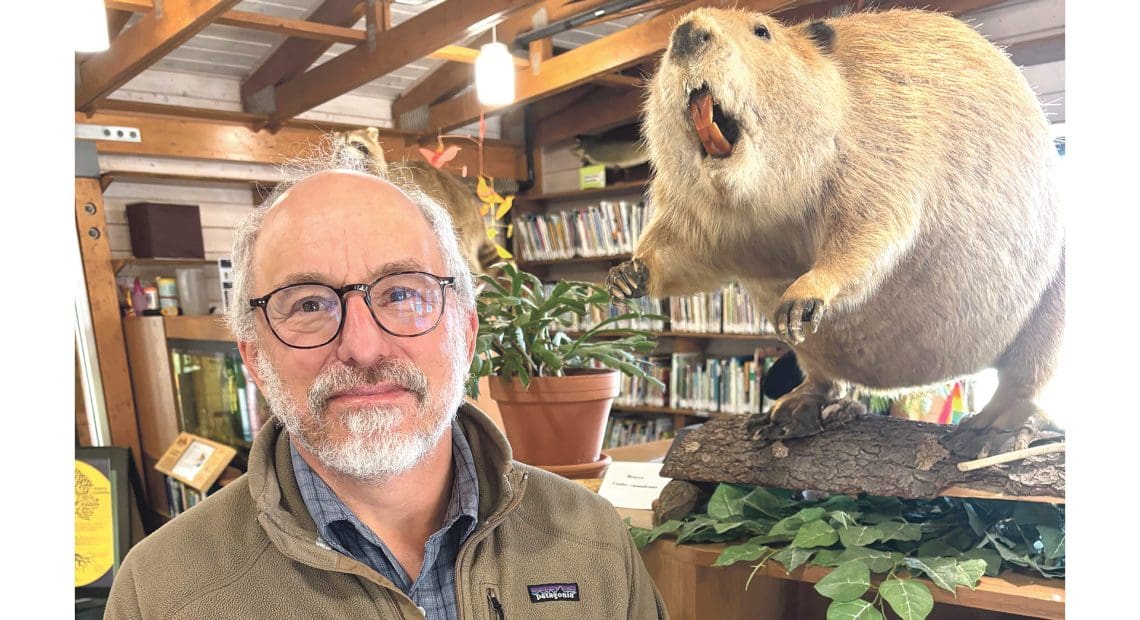
Billy Spitzer and a friend in the visitors center at the Hitchcock Center for the Environment in Amherst.

Billy Spitzer and a friend in the visitors center at the Hitchcock Center for the Environment in Amherst.


It’s called Japanese knotweed.

This is an invasive plant species of plant that, as the name suggests, comes from Asia. It is said to be one of the resilient organisms on Earth and is very difficult to eradicate once it gains a foothold.

“If you cut it down, little bits of it will stick to your mower or your cutter, and when you go to cut something else, you’ve transported it to a new home,” said Bill Spitzer, executive director of the Hitchcock Center for the Environment.

When the center staged an informational program on Japanese knotweed, the room was full of attendees from across the region, with thousands more joining virtually from around the world.

Such programming is one of myriad ways the Amherst-based center carries out a unique mission encapsulated in its tagline, “education for a healthy planet.”

Other ways include field trips for area students, after-school programs, summer camps, and trips to local schools, where students receive lessons in design, engineering, and problem solving.

“We give them these design and engineering challenges to work with, and then, when they come here, they can see how we’ve solved some of those problems at our facility,” said Spitzer, adding that the center is one of only a few dozen ‘certified living buildings’ in the world, and is a classroom unto itself.

“It’s not only about net-zero in terms of energy use, but also water conservation, using non-toxic materials, being rooted in your place and conserving the land around you, and thinking about aesthetics as well as the functional aspects of your building.”

Among other things, the Hitchcock Center achieves net-zero energy through highly efficient building strategies and a 60-kilowatt rooftop solar array; achieves net-zero water through composting toilets (which never fail to fascinate young visitors), rainwater collection storage, treatment for drinking water, and grey-water filtration through a constructed wetland; uses only chemical-free and non-toxic materials; creates landscapes that use native species to promote greater biodiversity; and uses locally sourced, salvaged, recycled, and substantially harvested materials.

The center, funded by fees for its programs, grants, and a number of corporate sponsors, including several area banks, also carries out that mission through studies and programs within the community, such as an environmental-justice project studying the connections between air quality, climate, and health.

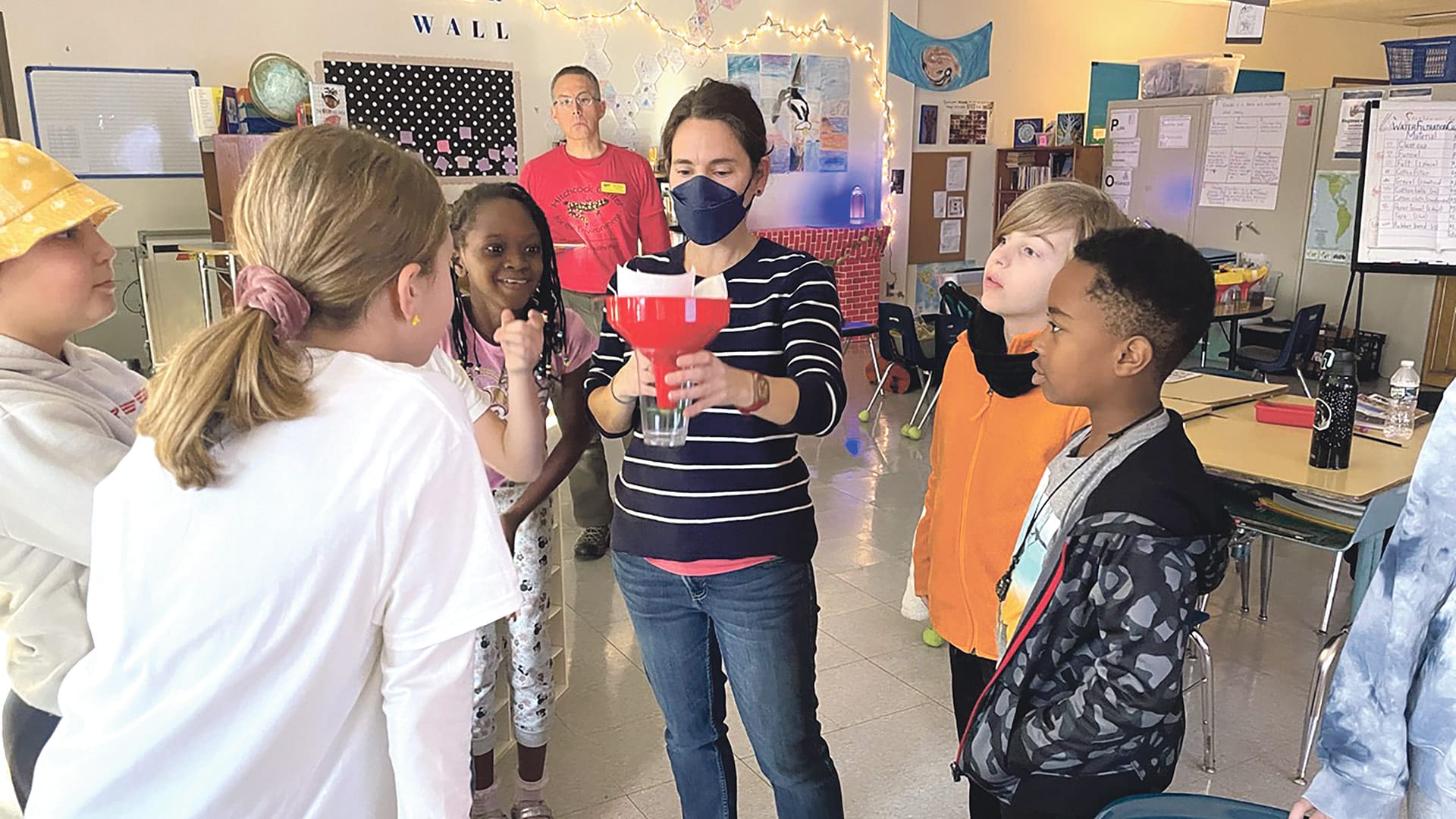
The Hitchcock Center provides a number of learning opportunities for young people.

The Hitchcock Center provides a number of learning opportunities for young people.

Funding for that study, a $500,000 grant, was recently terminated by the U.S. Environmental Protection Agency, making the Hitchcock Center one of countless nonprofits to see grants and other forms of funding cut by the Trump administration.

Spitzer said the EPA sent a letter stating that the grant was cut “on the grounds that the award no longer effectuates the program goals or agency priorities; the objectives of the award are no longer consistent with EPA funding priorities.”

The center will appeal that decision, he said, adding that roughly 400 other grants for projects across the country were terminated for the same stated reason.

“This is money that has been congressionally approved and appropriated, signed into law, and turned into grants and contracts signed between organizations like us and the federal government,” he said, adding that several other grants awarded to the agency are hanging in the balance. “It’s unprecedented to be doing anything like this — to stop all these projects already in motion.”

In the meantime, he said he’s rather proud that the agency is doing work that is in opposition to the priorities of the administration.

“This building, as a living building, is unique in that it’s really designed as a teaching building.”

“This is the kind of work we need to be doing — we need to be educating people about the environment, we need to be educating people who are disproportionately impacted, whether in its cities or in small towns, rural communities … this is the kind of work that a place like the Hitchcock Center should be doing and that the federal government should be supporting,” he said, adding that, while fighting to keep this grant and others that are imperiled, the agency will look for other sources of funding, including the state, foundations, and businesses.

For this issue, BusinessWest talked at length with Spitzer about the Hitchcock Center, its evolution over the past 60 years, and the many different ways its mission is carried out.


From the Ground Up

Chronicling the history of the Hitchcock Center, Spitzer said it can trace its roots to 1962 and a woman named Ethel Dubois, who brought children to her farm in Leverett to experience more of nature.

Seeking to formalize and perpetuate what she was doing, she created a nonprofit, called the Hitchcock Center, which, for a while, operated out of the trunk of its executive director’s car, said Spitzer, adding that the agency eventually moved to a physical site, an old carriage house owned by the town of Amherst.

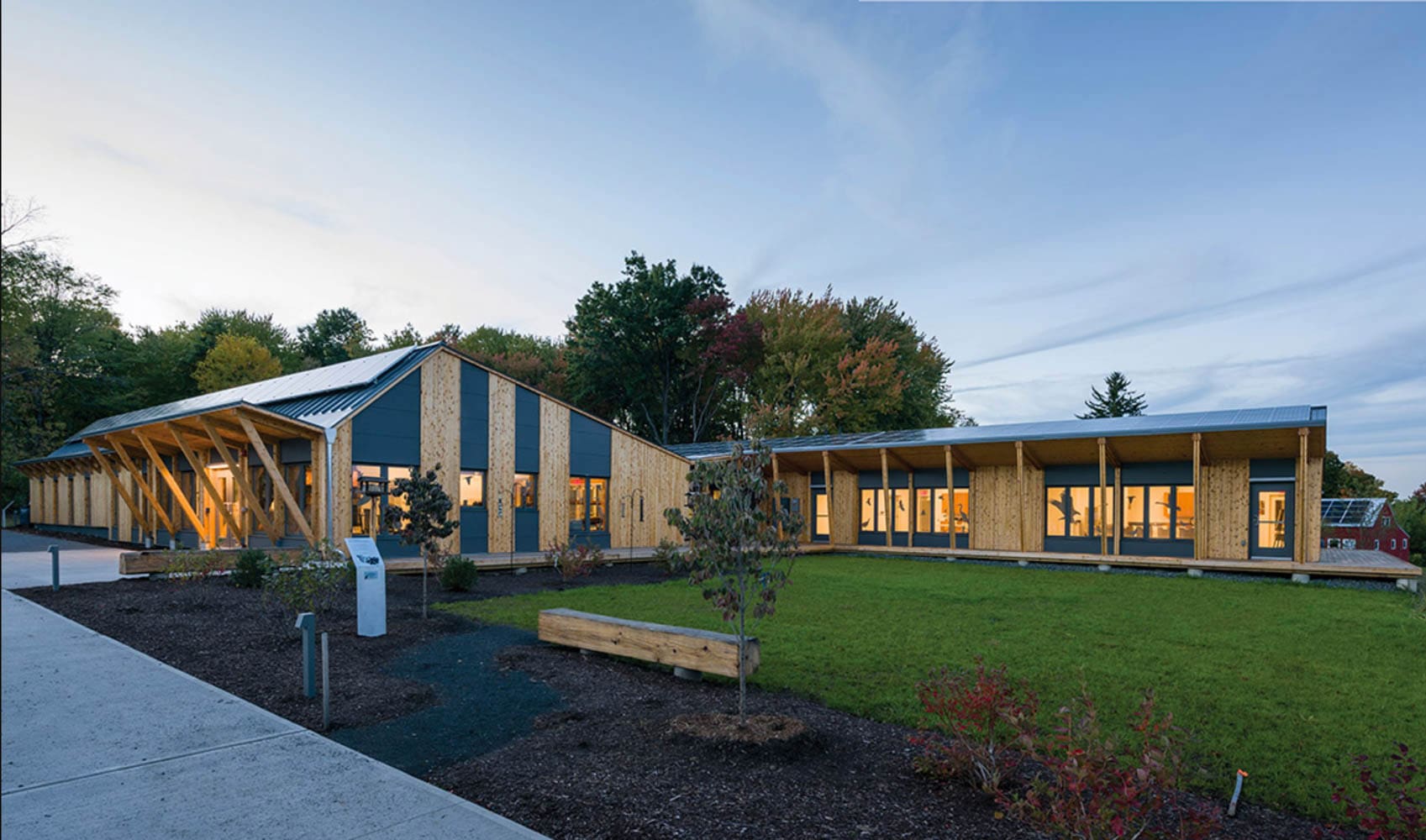
A certified living building, the Hitchcock Center is visited by grade-schoolers and college architecture students alike.

A certified living building, the Hitchcock Center is visited by grade-schoolers and college architecture students alike.

By the early 2000s, that building was showing its age, and the agency had also outgrown it, so the center’s director and board commenced a search for a new site and found one on the campus of Hampshire College. The site search coincided with the determination that, if the agency was going to build a new home, it should be a sustainable building.

“They decided to go for creating the highest level of sustainability that you could,” he said, referencing the Living Building Challenge and the fact that only three dozen structures in the world have met that challenge, with a handful in the 413, including the nearby Curran Center at Hampshire College. “It’s not only about net-zero in terms of energy use, but also water conservation, using non-toxic materials, being rooted in your place and conserving the land around you, and thinking about aesthetics as well as the functional aspects of your building.”

Overall, there are seven different domains — energy, water, materials, beauty, health and happiness, place, and equity — in which a building must achieve excellence to achieve Living Building status, Spitzer noted, adding that $7 million was raised through a capital campaign, and the center opened in 2016.

The standards are rigorous. For example, the ‘materials’ domain — focused on creating a materials economy that is local, non-toxic, and ecologically restorative — requires, among other things, that 75% of materials be sourced within 1,000 kilometers of the site. The center achieved this with salvaged insulation from Framingham, white cedar wood from Quebec, PolyWhey wood finish from Hardwick, Vt., and planting-bed soil from Agawam.

“This building, as a living building, is unique in that it’s really designed as a teaching building — all of the aspects of infrastructure and features that make it a Living Building are on display; we interpret them and give tours about them,” he noted, adding that it is visited by grade-schoolers and college architecture students alike.

This and the many other forms of education provided at the center fit nicely into his own career goals, if you will, said Spitzer, who brings a diverse background to his role. Indeed, while earning a PhD in Oceanography from MIT and Woods Hole Oceanographic Institution, he concluded that he was interested in science education as much as he was interested in science.

“Instead of following a research career, I started learning about science education, and made my way to working at the New England Aquarium in Boston,” he said, adding that he worked there for more than 20 years, handing education programs and developing exhibits.

Drawn to the problem of climate change, Spitzer worked with others to develop a training program for educators and communicators in aquariums, zoos, science centers, and museums across the country, efforts that are ongoing.

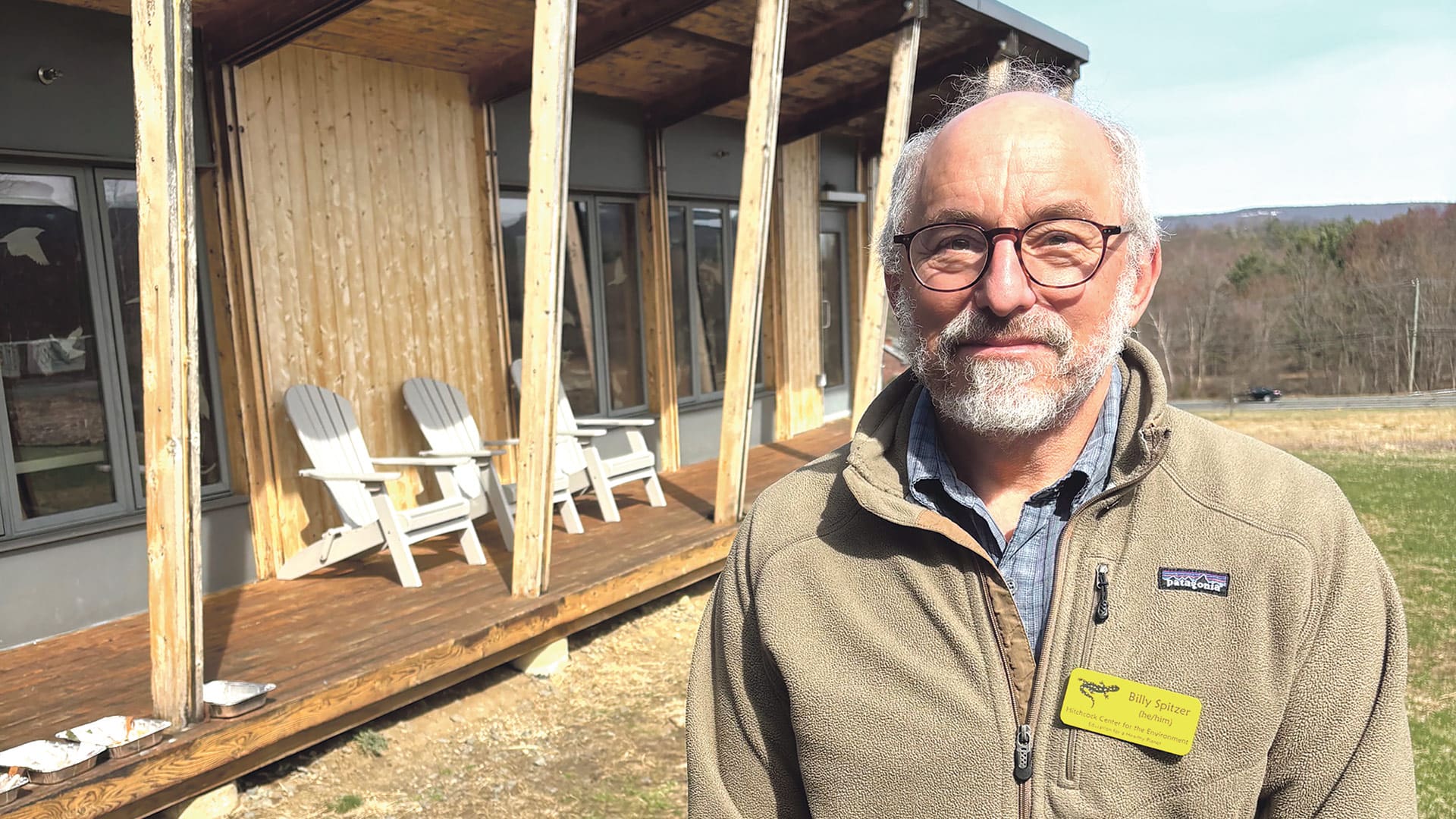
Billy Spitzer says environmental education is the kind of work organizations should be doing — and the government should be supporting.

Billy Spitzer says environmental education is the kind of work organizations should be doing — and the government should be supporting.

“I realized at some point that I wanted to spend the rest of my career working on climate education,” he told BusinessWest, adding that this realization — coupled with the Hitchcock Center’s work to develop programs consistent with the creation of a Living Building — drew him to the agency when it was searching for a new director.


Hands-on Education

He arrived in the late summer of 2021, an intriguing time for the center, which had made its way through the challenging first waves of COVID by essentially moving most of its programming outdoors, a trend that continues today.

And there are many constituencies that find their way to the property, from families to dog walkers to students from dozens of area schools.

“We provide semi-structured and sometimes unstructured outdoor-experience time, giving them a chance to do the things kids are meant to do, but often don’t get the opportunity to do as much as people did years ago,” he explained. “But we have also have kids doing joint projects, like building an igloo and imaginative play using mud and sticks and sand.”

There are lessons to be learned inside and out, said Spitzer, noting that a number of native species are planted on the grounds and tended to by a team of volunteer master gardeners. Meanwhile, the center’s staff works with young people to grow vegetables and herbs that are used in summer camp programs, making pesto, pizza, and more.

“One of the things that we focus on a lot in this building is ‘how can we be inspired by nature to build better things?’” he said. “And that’s something we also do with kids — help them understand how problems are solved in nature and how we can use some of those same principles to solve some of the problems we face.”

As an example, he cited the solar panels on the Hitchcock Center’s roof.

“One of the things this center does is capture sunlight to provide power, in the same way that trees capture sunlight on their leaves, and that’s how they power themselves,” he explained. “We have kids doing experiments with solar panels.”

Meanwhile, the center encourages outside groups to use its spaces, and many do, he said. “This is an inspiring place to work and also an inspiring place to visit, and we find that people want to do workshops here, retreats, meetings — we have groups from most of the Five Colleges come and do things here, other nonprofit groups, and more.”

The center is in the process of working on its next strategic plan, he said, adding that such planning is difficult at any time, but especially these times.

“The idea of a five-year plan doesn’t quite make as much sense as perhaps it used to, but it is really helpful,” he told BusinessWest. “If you’re on a ship, you want to have a destination, you want to have a course, a heading. But you also realize that you’re going to be affected by weather and the seas, and sometimes you have to tack this way and that way.”

This talk of tacking brings Spitzer back to that project funded by the grant cut by the EPA.

He said it’s an example of how the center moves beyond its physical building and the field trips and lectures on Japanese knotweed in efforts to improve quality of life in this region and beyond.

The project was undertaken with several other agencies, including the Public Health Institute of Western Massachusetts, which had initiated a healthy-air network in response to high asthma rates in Springfield, Holyoke, and other area communities.

“We’d been working with them to expand an educational component of this project, which gets communities monitoring air quality, understanding what the problems are, and advocating for solutions,” he explained, adding that this is a three-year project that is about one year in, with 25% of the funding spent.

“It’s hard to imagine how a grant that’s focused on clean air is not consistent with EPA’s priorities,” he said. “And even in a fairly rural place like the Connecticut River Valley, we have air-pollution problems, whether they’re from vehicle emissions or industry or from local brush fires like we had last summer, or more distant sources like the Canadian wildfires.”

The ultimate goal of the project was (and still is) “getting young people involved in understanding the issues around air quality, what we can do to protect ourselves, what we can to improve conditions and make them better, and partnering with people in community organizations up and down the Valley, whether it’s libraries or public health departments or schools, to really get the word out about air quality, why it matters, and how it’s connected to climate and what can we do about it.”

In other words, education for a healthy planet. That work will go on, no matter the fate of this grant.

Special Coverage Technology

Making IT Happen

Tricia Canavan in Tech Foundry’s new space in downtown Springfield.

Tricia Canavan in Tech Foundry’s new space in downtown Springfield.

As she walked BusinessWest through Tech Foundry’s new space on the fifth floor of 1350 Main St. in downtown Springfield, CEO Tricia Canavan expressed gratitude that the space — the former home of digital-health startup TechSpring — was available when her growing operation needed a new home.

“We never in a million years could have afforded to do this kind of buildout, but it was completely turnkey,” she noted.

But there’s plenty of other progress and momentum she’s excited about.

“We were founded 11 years ago by area employers who saw a need to build a stronger entry-level tech force in Western Mass. and, at the same time, connect low- to moderate-income people — who are underrepresented in tech — to training and support to access jobs in the technology field,” Canavan explained.

“The people who come to Tech Foundry are people with tremendous potential and tremendous assets. But there’s a reason why they’re here.”

And while the IT training program started modestly, it has grown significantly in recent years; in fact, in the fall of 2022, Tech Foundry doubled the number of students it serves, from 25 students per cohort to 50. “We’ve been able to maintain that level of funding since that time, which we’re really grateful for.”

Early in her tenure, Tech Foundry leaders discussed how they could better “professionalize” the way they were doing student coaching and mentoring, she added.

“The people who come to Tech Foundry are people with tremendous potential and tremendous assets. But there’s a reason why they’re here. Maybe the traditional college path didn’t work out for them, or the traditional career path didn’t work out for them. They may be changing careers. They may be returning to the workforce after a period of time away.”

Seeking a social-work element in the program, Tech Foundry recently partnered with EMPath, a Boston-based economic-mobility organization nationally known for its work with people who are seeking to move from poverty into more stable financial situations.

“We were fortunate to receive funding for the entire staff to become certified practitioners of the EMPath model,” Canavan said. “We use a standard system which helps us work in a more standardized way with the students to set goals and troubleshoot, and for us to share information as a team so that we can help people overcome obstacles to their success.”

Students work at these stations in the just-opened second Tech Hub location in Springfield; the first launched in Holyoke 18 months ago.

Students work at these stations in the just-opened second Tech Hub location in Springfield; the first launched in Holyoke 18 months ago.

As part of that process, Tech Foundry hired a coaching manager to tackle professional-development training, as well as some part-time coaches to work with him.

“So, in addition to the technical training that we offer through our 18-week program,” she explained, “we do significant professional-development work with the students — everything from time management to résumés to mock interview practice and networking skills.”

In the past three years, Tech Foundry has grown its staff from four people to 19, while still offering all its programs free of charge, thanks to a robust network of support from foundations, corporations, and other sources.

“I love that quote that ‘talent is universal, but opportunity is not,’” Canavan said. “That’s what drives us. And another quote: ‘vision with action can change the world.’ Those are some framing wisdom for us as we think about further growth.”


Hub of Opportunity

Recent growth has taken numerous forms. Working in collaboration with other partners, Tech Foundry launched a program called Tech Hub in downtown Holyoke in the fall of 2023. It offers basic and intermediate digital-literacy training, with an eye on enabling people to access jobs of all kinds, not just specifically in IT.

Those accessing the program have skills gaps ranging from using programs like Word and Excel to understanding the basics of using a mouse and the internet — all skills necessary for jobs in myriad fields. Tech Hub also provides computers free of charge to eligible people, as well as technical support and one-on-one troubleshooting services.

And now Tech Hub has a second location, at the new Tech Foundry location in downtown Springfield, where it can serve even more individuals, thanks to an ARPA grant through the city, as well as other funding sources.

“We knew that there was a need for digital literacy and technical support in the community,” Canavan said, noting that the initial tranche of funding for Tech Hub came through the $50 million allocation the Baker administration made to address digital literacy and digital equity in Massachusetts.

“We’ve done a ton of research, but where the rubber hits the road is the employer community — we need to ensure there are employers eager to work with these young adults, to potentially hire them into their jobs.”

“We had set a goal of serving 100 people a month at Tech Hub Holyoke. And we’ve been blowing those numbers away. I mean, the demand far exceeded our expectations, and last summer, it was so incredibly busy, we actually had to put in an appointment system because the staff was just overwhelmed. We want to serve as many people as we can, but it was standing room only there. So we are really, really pleased with the results at Tech Hub.”

In fact, she added, seven students who started at Tech Hub learned enough skills that they had the foundational knowledge to come to Tech Foundry, and now they’re starting to get jobs.

In addition to offering training and technical support to the community, Canavan noted, Tech Hub also allows Tech Foundry to provide hands-on work experience for students and alumni. “So students, who are in class down the hall, can walk down here if they’re in good standing and get service learning hours working with the team here,” she explained.

“We also have an internship program and a one-year professional digital fellowship, which is a program for Tech Foundry alumni. They’re full-time, paid employees at Tech Foundry,” she went on. “They’re practicing their skills by assisting in class, assisting with repair, assisting with technical support, and over time, they start doing more and more things on their own under the direction of our technical managers. And then, at the end of the year, they have a portfolio of work.”

One intriguing pilot program is a collaboration with the Springfield Empowerment Zone Partnership to help area high-school graduates who do not have firm post-graduation plans.

Tech Foundry’s most recent cohort of graduates celebrates at a ceremony in January.

Tech Foundry’s most recent cohort of graduates celebrates at a ceremony in January.

“I think one of the good news stories about education in Springfield is that our graduation rate has gone up tremendously in the last 10 years,” Canavan said. “But a statistic that doesn’t get looked at quite so much is the plans of those students after they graduate. These are talented students who have tremendous potential. On average, about 37% of Springfield public high-school students go to college. But a much smaller percentage of those students actually graduate — it tends to hover around 10% to 20%.”

So the question, she noted, is what are their options, and what can be done to help them? The pilot program, called Tech Bridge, will start with a small cohort of students, probably about 15, for the first year to trial proof of concept.

“This is going to be a program that focuses a ton on community building, but we’ll have two separate technical training modules,” she explained. “One will be IT-focused, based upon what we currently do.

“The second one, which will be next spring, we are still developing based upon labor-force needs. We’re looking at low-voltage electrical certification or advanced manufacturing skills. We’re still talking to a wide variety of employers to determine where the needs are. We’ve done a ton of research, but where the rubber hits the road is the employer community — we need to ensure there are employers eager to work with these young adults, to potentially hire them into their jobs.”

Canavan said the hope is that roughly half of Tech Bridge participants go to college — “we’re building significant college readiness into this program” — and half will enter good-paying jobs with certifications they earn through the program.

“We’re really trying to think about how to engage them and how to provide the support so that they can complete another year of supported education and training and go thrive, whatever that means for them,” she added. “Hopefully, the Tech Bridge program will prove the concept, and we can expand on that — because there’s an incredible need for us to do better for our young people that are on a non-traditional path.”


Forward Thinkers

Looking forward, Canavan said Tech Foundry is wrapping up its current three-year strategic plan and formulating the next one. To celebrate its 10th anniversary last year, it raised $300,000 for what it calls an innovation fund — money that will be used specifically to fuel growth opportunities.

She said Tech Foundry is also discussing what it would look like to bring its services to other communities. “We love the idea of expanding Tech Hub and Tech Foundry together — bringing those as a joint project to another community here in Massachusetts or Connecticut.”

In short, it’s an organization that thinks big — but with a focus on every individual success story.

“One of my favorite stories is our very first Tech Hub student,” she told BusinessWest. “He came on the day we opened because he saw us on the news, and he completed most, if not all, of our training programs. He had been in a manual job before, had gotten hurt at work, and was no longer able to work in a physically strenuous job. And to his credit, he was like, ‘I have to get back to work; I have to learn a different skill set.’ So he came to us, then he came to Tech Foundry, and he did really well in the program, and now he’s working in a tech job.”

It’s all part of the mission that has powered the organization since its inception 11 years ago — to help people access careers while helping employers succeed as well.

Law Special Coverage

Cooling the Drama

By Tanzi Cannon-Eckerle, Esq.

We all know about workplace investigations, right? At least from TV. Much TV these days is some form of investigation-related drama — Law & Order, Suits, Jack Reacher, and, for you history drama fans, The Law According to Lidia Poët.

And from real life as well, as nearly every organization conducts (or should conduct) investigations from time to time. Heck, technically, trying to find your missing red stapler is a workplace investigation. “Where did I last see it? Where is it supposed to be? Who used it last? Ah — there it is!” Investigation concluded.

Of course, most investigations are not quite that simple. But no matter how serious or trivial the allegation, the approach should be consistent. The scope may change — but the method should not.


What Is a Workplace Investigation?

Merriam-Webster defines “investigate” as “to study by close examination and systemic inquiry.” An effective investigation allows a company to identify and analyze workplace issues in an organized way, leading to meaningful, rule-compliant solutions.

In practice, a workplace investigation is a tool — carried out through trained investigators and appropriate policies — that helps an organization stay compliant with laws and industry regulations, maintain a safe and productive workplace, support a healthy company culture, boost employee morale and decrease employee turnover, troubleshoot efficiency and/or productivity issues, maintain a positive company brand, and, importantly, save money.


Is an Investigation Really Necessary?

As a labor and employment attorney, I often hear, “do I really need to do an investigation?” Usually, this question arises when the allegation seems minor, the employee has a history of complaints, it is a repeat issue (or the company thinks the issue has been addressed and is moot), the employee is about to quit, or all of the above.

The answer? Yes. Every time.

If there is an incident report, a complaint, or even a hallway conversation that raises concern, it should be addressed. Investigations are necessary for allegations involving harassment, discrimination, or retaliation; misconduct (such as theft or fraud); policy violations or safety concerns; whistleblower complaints; performance issues; and production mishaps.

Once an employer is on notice of a potential issue, the obligation to investigate kicks in — regardless of whether the employee stays or leaves. The company has a duty to maintain a safe, lawful, and equitable workplace.

Tanzi Cannon-Eckerle

Tanzi Cannon-Eckerle

“Beyond litigation risk, investigations signal to employees that the company takes concerns seriously, the workplace is safe and fair, and inappropriate behavior has consequences.”

The Risk of Inaction or Poorly Executed Action

Well, aside from avoiding lawsuits (kidding … but not really), a timely, impartial investigation can help resolve internal issues, prevent escalation, and demonstrate a commitment to a respectful workplace.

According to the Equal Employment Opportunity Commission (EEOC), workplace investigations are a crucial tool in addressing and preventing claims of harassment, discrimination, and retaliation. In 2024, the EEOC received more than 88,500 claims, while the Massachusetts Commission Against Discrimination (MCAD) received more than 3,500 claims (with approximately 70% of them moving beyond administrative dismissal in one form or another).

A well-executed investigation can provide a solid defense in legal matters — and even help companies avoid them altogether. Side note: 22% of the MCAD claims are retaliation claims, and 21% are disability-related. These types of issues are more preventable than most, but we can talk about that next time; there is no room in this article for me to stand on my soapbox to discuss those issues.

But beyond litigation risk, investigations signal to employees that the company takes concerns seriously, the workplace is safe and fair, and inappropriate behavior has consequences. All of this contributes to employee engagement — and engaged employees are productive employees. Conversely, failure to act can lead to chaos, disengagement, and liability.

The average cost of a workplace harassment lawsuit? About $75,000 to get to pre-trial settlement, while pre-trial to trial defense costs average $125,000 to $250,000. That does not even include a potential jury award for the plaintiff, reputational damage (64% of consumers have stopped purchasing a brand after hearing news of a company’s poor employee treatment), or regulatory scrutiny. A poorly handled (or non-existent) investigation can make matters worse, opening the company, and sometimes individual managers or executives, to further legal exposure.

So, yes, it is necessary to conduct timely investigations using skilled investigators that utilize a productive investigation process that can later be defended.


Who Should Conduct the Investigation?

Good question. The wrong investigator can create a problem all by themselves. Is the person too close to the issue? Do they have a conflict of interest? Have they been trained?

I have recently had several conversations (be still my investigator-geek heart) about who should investigate and whether hiring an outside consultant is always necessary. Some argue, “if I can run the company, I can run an investigation.” Technically? Probably.

But should the owner or a C-suite executive do it? Absolutely not. That is a recipe for accusations of bias, and also, don’t they have better things to do — like, I don’t know, running the company? Others say every investigation should be outsourced. That is a bit extreme, too. You wouldn’t hire a consultant to find your red stapler.

“Though external investigators may be more costly, the cost is likely less than a poorly handled investigation, and external experts likely have no motive for bias.”

The right answer is the classic lawyer fallback: it depends. On the issue. On the people involved. On the scope. Investigating is a learned skill. If your team is trained, and you have a solid policy and process, many internal investigations can be managed in-house.

For higher-risk matters, or for investigations that are broad in scope, bringing in an external, independent expert is often the better move. Though external investigators may be more costly, the cost is likely less than a poorly handled investigation, and external experts likely have no motive for bias. And because of their expertise, which includes being skilled interviewers, they often investigate efficiently, create less workplace disruption, and make better witnesses if a lawsuit were to be filed.

In the words of Reacher, “you do not mess with the special [external] investigators!”


What Should a Typical Investigation Involve?

Not all investigations are the same, but there should be a consistent procedure. Depending on the type of issue being investigated and the scope, some procedural steps may not be necessary, but it is best to leave that to the investigator to determine.

Generally, the company should receive and respond to the complaint or allegation; this is usually someone in human resources. At this point, the ‘timeliness’ clock starts ticking, which is important to a defense of a claim.

The initial response to the complaint should briefly state that the concern has been received, and next steps are being taken, ensuring confidentiality (to the extent practicable). Next, the company should take immediate interim action to prevent further harm, if applicable (such as separate employees, administrative leave, or temporary accommodations). It is also a best practice to remind stakeholders about the rules governing retaliation.

Then the company chooses an investigator. Once this is done, the investigator should do a preliminary review of the allegations, do initial fact gathering, and determine the scope of the investigation. At this stage, the investigator should decide whether it is necessary to use an external expert.

Next, the investigator should develop an investigation plan, outlining the objectives, scope, and timeline of the investigation. The investigator then collects evidence, such as gathering relevant documents, records, and witness statements, reasonably ensuring confidentiality and maintaining a chain of custody.

Next, impartial, thorough witness interviews should be conducted using active listening skills and open-ended questions. Then the investigator should analyze the evidence, identifying patterns, inconsistencies, and credibility issues, and draw conclusions based on the findings. Then the investigator must compile a comprehensive report detailing the findings, conclusions, and recommendations for corrective action or remedial measures.

Lastly, the investigator should counsel the company on implementing the recommended actions, and the company should ensure accountability and provide employee support. If a lawyer is used as an external investigator, the lawyer may counsel the company about legal risks and make recommendations.

Best practices include using trained, impartial investigators; avoiding conflicts of interest; maintaining confidentiality and proper documentation; being thorough and prompt; and keeping accurate records and reports that can stand up to scrutiny.

One of the most overlooked areas? Record keeping. Even the best investigation won’t help in court (or with regulators) if there is not adequate documentation. Investigators must maintain accurate and detailed records of the investigation, including notes, documents, and evidence, and must know how to draft accurate investigation reports in a manner that will withstand opposing counsel, agency, or judicial scrutiny.


Final Thoughts

Workplace investigations aren’t just for TV dramas; they are essential risk-management tools for every organization. When done right, they protect your business, your people, and your reputation. And if you happen to find your red stapler along the way? Even better.


Tanzi Cannon-Eckerle is the principal attorney at General Counsel by Cannon, PLLC, a fractional general-counsel law firm that focuses on labor, employment, and business law. She is also a certified workplace investigator and equity and inclusion officer. For more information about workplace investigations or to seek legal assistance for business matters or labor and employment concerns, schedule a free, 30-minute consultation by emailing [email protected], or visit gcbycannon.com and fill out the contact form.

Community Spotlight Special Coverage

Community Spotlight

Angela and Isaac Mass, owners of the Greenfield Garden Cinemas, one of many intriguing storylines in the city’s downtown.

Angela and Isaac Mass, owners of the Greenfield Garden Cinemas, one of many intriguing storylines in the city’s downtown.


Isaac Mass was in law school, looking for a job that would allow him to not only earn a little money but get in some studying for the bar exam as well.

He had experience working at movie theaters and remembered that life in the projection room (these were the days before everything went digital) would provide him what he was looking for.

“Once you started the movie, you had nothing to do for a couple of hours,” he said, adding that he called George Gohl, co-owner of the Greenfield Garden Cinemas, and before long, he had a job. And he wasn’t in it long before he started setting his sights higher when it came to that downtown landmark, opened in 1929.

Indeed, when Gohl and his partner, Bill Goebielle, were facing the high cost of converting to that digital technology, Mass, who by then had set up a law office in downtown Greenfield, came through with financing for that project — a deal that came with an option to acquire the theater should it come up for sale.

Which it did, in 2019.

Fast-forwarding our story a little, Mass and his wife, Angela (both are BusinessWest 40 Under Forty alumni) are now the owners of the theater, the only cinema in Franklin County. The pandemic hit just a few months after they took ownership, and that was a long and difficult storm to ride out. But they’ve done it, their operation is in the black, and they’re looking forward to a big summer, with a new Superman movie and other projected blockbusters.

“What we’re seeing right now is a kind of renaissance — a dynamic fusion of entrepreneurship, creative energy, and community investment that is strengthened by deep collaborations between business and municipal support organizations.”

Greenfield Garden Cinemas is just one of many intriguing storylines in Greenfield — others involve everything from a new Starbucks to some new housing initiatives to the anticipated start of work to reimagine the former Wilson’s department store — and just one reason why many see a surge in energy and optimism in the community.

“What we’re seeing right now is a kind of renaissance — a dynamic fusion of entrepreneurship, creative energy, and community investment that is strengthened by deep collaborations between business and municipal support organizations,” said Jessye Deane, executive director of the Franklin County Chamber of Commerce. “The city’s evolution is not just happening — it’s being shaped intentionally. Greenfield isn’t growing by accident; it’s growing because people believe in it. They’re investing here. They’re creating jobs, art, and experiences that can only happen in a place like this — where rural ingenuity meets downtown opportunity.”

Hannah Rechtschaffen, director of the Greenfield Business Assoc. (GBA), which recently moved into its own space on Main Street, agreed.

“Greenfield is in a lovely moment of revitalization,” she told BusinessWest. “A lot of pieces of the puzzle were here when I got here two years ago; they just needed a push behind the visibility, the story we’re telling, the partnerships we’re building, and getting Greenfield more visibility Valley-wide.”

While there is progress, many challenges remain, especially when it comes to the loss of manufacturing jobs, ongoing struggles to replace them, county-wide population loss, and the housing front, where some new units are in the pipeline (more on that later), but the issue of affordability is causing some concern.

Hannah Rechtschaffen shows off the new Greenfield Business Assoc. space on Main Street.

Hannah Rechtschaffen shows off the new Greenfield Business Assoc. space on Main Street.

“Housing is becoming a particular issue, both in the lack of inventory and the cost,” said Tony Worden, president and CEO of Greenfield Cooperative Bank. “Rents have increased, but even more troubling to me is the cost of single-family homes. Greenfield has always been the affordable alternative here in Western Mass. People who were priced out of other areas — particularly Hampshire County — could find reasonably priced homes here in Greenfield, but that is increasingly becoming a thing of the past.”

For this latest installment of its Community Spotlight series, BusinessWest turns its lens on Greenfield, a community where many pieces of the puzzle are coming together to make an intriguing picture — not unlike the ones shown in the cinemas.


Strong Arguments

It’s called the Strongest Towns Contest. This is a nomination-driven competition staged by strongtowns.org, with 16 communities competing in a bracket-style format similar to the recent March Madness.

Greenfield was one of those 16 towns, which are being measured essentially on how they’re faring against the complex problems facing cities and towns today. And it advanced to the Final Four, beating out Manchester, N.H. and then Silverton, Ore. to get there, with voters determining who will advance.

The city eventually lost to Harrisburg, Va., which went on to finals against Marion, Ohio, with the latter prevailing. Greenfield Mayor Ginny Desorgher was disappointed not to advance further, but buoyed by what the strong showing indicated — especially, in her view, unity and a sense of everyone pulling in the same direction when it comes to the city’s opportunities and challenges.

“People are working together,” she said, referring to everything from downtown cleanups and crosswalk-painting efforts to long-term economic-development initiatives. “So many things are citizen-led.”

Deane agreed. “Sometimes, rural communities fall into a scarcity mindset when it comes to economic development, but I’m seeing a fundamental shift in that mindset at the leadership level,” she noted. “We’re building bridges, not silos, which is critical in a county of 70,000 residents with a tax base that’s 75% residential.

“A business like ours relies upon a smart, educated workforce, and this cost of housing is worrying me for the future. Where are our employees going to live? Will there be a pool of qualified workers able to live in this area?”

“There is a palpable sense of alignment now,” she went on, adding that, last year, Greenfield secured a Massachusetts Downtown Initiative grant, which enabled the city, the GBA, the chamber, and the Crossroads Cultural District to explore opportunities for collaborative marketing and capacity building to enhance Greenfield’s regional profile.

Meanwhile, the GBA has initiated a roundtable series, which has effectively opened lines of communication between Greenfield stakeholders and re-engaged business owners and nonprofit leaders as local advocates, said Rechtschaffen, adding that these events have covered a wide range of topics, such as the return of a police substation to downtown.

“We recently started a property owners’ group to bring property owners together and get on the same page with them about new development that they’re looking to do, development that’s coming to Greenfield, best practices, lines of communication … we have a very active property-owners contingent.”

Along with this palpable sense of alignment comes several visible signs of progress, said Deane, noting, as one example, the expansion of Ja’Duke onto Main Street.

The Turners Falls-based provider of childcare services, performing-arts education (singing, dancing, and acting), and even driver education needed to expand, said owner Kim Williams, and chose a 25,000-square-foot space on Main Street in Greenfield, formerly occupied by Greenfield Community College.

Tony Worden says Greenfield has long been an affordable alternative in Western Mass., but times are changing, and it is becoming far less so.

Tony Worden says Greenfield has long been an affordable alternative in Western Mass., but times are changing, and it is becoming far less so.

“We’re excited … we believe this will be a catalyst downtown,” she said, adding that the facility, which will bring people of all ages to downtown Greenfield, is expected to increase vibrancy and stimulate economic growth. “Childcare is such a driver of economic development; if people have childcare, they can enter the workforce. Meanwhile, the arts center and drivers ed will bring more foot traffic, more vibrancy, more arts.”


Progress Report

There are other things happening in and around downtown, said Desorgher, including the reimagining of the former Wilson’s department store into a mix of street-level retail and housing on the upper floors, as well as new life for the historic Leavitt-Hovey House, the former home of the Greenfield Public Library.

The landmark, built in 1797 and vacant since the new library next door opened in the summer of 2023, was acquired by Greenfield Savings Bank, whose main office abuts the library, with the intention of housing its residential-lending program and wealth-management offices.

Meanwhile, there are some additional housing initiatives, said Desorgher, including units at the Wilson’s site and another 30 to 40 units at another site on Main Street. Meanwhile, the city is issuing an RFP for redevelopment of the Hope Street parking lot into additional housing.

That RFP has yet to be issued, but several developers have already expressed interest in the project, said Desorgher, adding that this is another indicator of positive energy in town and growing sentiment that Greenfield is a good place to land — for families, small businesses, and, increasingly, regional and national chains.

The arrival of Starbucks at the rotary off the I-91 exit — as well as the Aldi’s discount supermarket chain in that same area — provide more evidence, the mayor said.

“All this is indicative of what the future holds, and I can feel it in the fact that we haven’t even put out an RFP for the Hope Street parking lot for housing, but people have already reached out, indicating they’re interested. That’s a really good sign.”

As for the larger housing picture, she said studies indicate a need for several hundred additional units, and the projects in the pipeline will make only a small dent in overall need. But there is progress, especially downtown, which should provide a boost to existing businesses and also spark additional investment.

Greenfield at a Glance

Year Incorporated: 1753
Population: 17,768
Area: 21.9 square miles
County: Franklin
Residential Tax Rate: $19.56
Commercial Tax Rate: $19.56
Median Household Income: $33,110
Median Family Income: $46,412
Type of Government: Mayor, City Council
Largest Employers: Baystate Franklin Medical Center, Greenfield Community College, Sandri
* Latest information available

Still, there is general concern over the way home prices are rising and changing the equation in what has historically been an affordable community.

“My wife and I live in a neighborhood just off the Federal Street corridor — in close proximity to the Greenfield High School and Four Corners Elementary School — that has historically been known for its mid-sized homes and its affordability,” Worden told BusinessWest. “Over the past few years, we’ve seen a handful of homes on our street and adjacent streets sell for amounts that we used to expect from the Northampton and Amherst market.

“A business like ours relies upon a smart, educated workforce, and this cost of housing is worrying me for the future,” he went on. “Where are our employees going to live? Will there be a pool of qualified workers able to live in this area?”

Deane concurred.

“Like many communities across the Commonwealth, our growth is hindered by a shortage of available housing — and this is further exacerbated by aging infrastructure that requires significant investment,” she said. “At the same time, we’re seeing a real uptick in businesses and families looking to relocate here because the quality of life is exceptional, and at a glance, the cost of living is more manageable than in more urban markets. That growing interest is energizing, but we know we can’t grow sustainably unless we also address those foundational needs.”


Coming Attractions

As he talked about Greenfield, Bob Provost spoke with more than 75 years of experience. Sort of.

He’s the third-generation co-owner (with his sister, Robyn) of the general-contracting firm Mowry & Schmidt, which is handling the renovations of the Leavitt-Hovey House. He knows firsthand how the city has changed, and he has stories from those who managed the company before him.

“Greenfield was once a manufacturing hub back in the ’40s and ’50s, even up to the ’70s, but most all of those places have closed,” he said, adding that this has changed not only the employment equation, but the jobs mix for his company.

Indeed, Mowry & Schmidt did a good deal of work in many of the former mills — from exterior work to office renovations to millwright work, said Provost, adding that the portfolio has since shifted and now includes residential projects and more work for institutions such as the many banks in town, Greenfield Community College, Baystate Franklin Medical Center, and area private schools.

Overall, the city’s economy has largely shifted from manufacturing to service and the tourism and hospitality sector, with the latter becoming an ever-stronger force, said Deane, noting that Greenfield and Franklin County are growing as a destination, with Greenfield alone generating 6.7 million visits in 2024.

There are specific destinations and attractions, but also popular events such as the upcoming Bee Festival, during which the town celebrates its designation as the place where the beehive was invented, as well as the Green River Festival, a three-day celebration of music.

“Our marketing focus has shifted from generic outreach to specific, interest-driven storytelling — targeting Boomers who want to stay active, Millennials chasing Insta-worthy landscapes, and Gen Z looking for positivity and purpose,” Deane said. “We’ve also partnered with local event coordinators to promote bigger-ticket cultural and sporting events like Franklin County Pride, the Greenfield Winter Carnival, the Greenfield Triathlon, the Franklin County Fairgrounds, and the Green River Festival, with its great lineup of bands, coming in late June.

“Last April, the Franklin County Chamber launched an aggressive digital ad campaign promoting the Green River Festival and virtually introduced the fairgrounds and Greenfield to more than 2 million people,” she went on. “In large part to the success of this campaign, this year’s Green River Festival ticket sales saw a 13% increase over last year, with 25% of ticket buyers attending the festival for the first time.”

At Greenfield Garden Cinemas, Mass said people are going to the movies again — not quite as much as they did pre-pandemic, but the numbers are steady and even improving slightly.

And there is optimism for this summer — one of two busy times for movie theaters, with Christmas being the other — and later this spring as well. Indeed, in addition to a new Superman movie, there’s a live action Lilo & Stitch production, another Jurassic World offering, and a new Avengers movie, said Mass, adding that the cinemas cater mostly to seniors and families, so action movies don’t play particularly well.

But, overall, business is good at the cinemas, and across downtown Greenfield, where the coming attractions are, indeed, quite compelling.


Class of 2025

Director, Five College Center for World Languages: Age 39

Janna White

Janna White

In explaining the importance of her organization, Janna White noted that the Five Colleges are known for language study, but while students are interested in a diverse array of languages, not all of them draw enough interest to be offered in the classroom.

“But they still wanted to make as many languages available as possible,” she said, which is why the Five College Center for World Languages was founded more than three decades ago.

“We complement rather than compete with the languages available on campus, and students can take as many languages as possible while they’re here,” she said — about 60 in all, among the highest number offered anywhere in the country.

White directs all aspects of programming for this element of the Five College Consortium, enabling 300 students per year to study these less commonly taught languages for college credit.

It was an intriguing opportunity for White when she took the job in 2018, as she has always had a love of language. As sole proprietor of Janna R. White Content and Editing from 2011 to 2018, she offered communications products and project-management services, including editing 28 books, 21 articles, and hundreds of reports, white papers, and webpages.

“I worked with a variety of different organizations and individuals, but I really specialized in academic work — academic presses and scholars and faculty. I was really enjoying that work, and I wanted to expand on the ways in which I was partnering with academic institutions. That’s how I wound up at Five Colleges.”

From 2016 to 2018, she served as Academic Programs coordinator before her current job opened up.

“Our particular focus on less commonly taught languages is really important,” she noted. “The reason why we say ‘less commonly taught’ and not ‘less common’ is that many have millions, if not billions, of speakers, like Cantonese, Hindi, and Urdu. But it’s not common for college students to have opportunities to study those languages. So we’re really broadening access and opportunity for students.”

Active in her community, White served two terms on the Northampton Community Preservation Committee and joined the Northampton Planning Board in 2018. Elected vice chair in 2022, she will become chair this year.

“Anyone who has volunteered in the community knows it can be challenging, but it’s also incredibly rewarding,” she said. “It’s been one of the great learning experiences of my personal and professional life. I take that responsibility very seriously.”

—Joseph Bednar

Class of 2025

CEO, Community Health Center of Franklin County: Age 39

Dr. Allison van der Velden

Dr. Allison van der Velden

Like many Hampshire College students, Dr. Allison Van der Velden trod a winding path, first studying language and religion, then switching to microbiology, then landing on dentistry.

“I was interested in working with people, making a difference, working with my hands, learning a useful skill — being a doctor, but not having the same emotional load as, say, pediatric oncology. Just something where I could solve problems.”

After starting her career at Amherst Dental Group, then working in private practice, she did some part-time work Hilltown Community Health Center and immediately preferred that model of care.

“I realized the community health center movement was more my home, so I left private practice,” van der Velden said. “I really enjoy the healthcare aspect of dental. I prefer that to cosmetic dentistry. I don’t enjoy cutting down a perfectly healthy tooth and doing a treatment to look prettier for someone who was already beautiful. That never jived with me.

“What I find really satisfying is taking a person who’s afraid of the dentist, in pain, and putting them at ease and relieving their pain and discomfort and bringing them to a healthier place.”

She eventually landed at the Community Health Center of Franklin County and moved quickly up the ranks from dentist to dental director to CEO. The nonprofit, federally qualified health center provides primary medical care, dental care, behavioral health, and wraparound services like transportation, language translation, and health-insurance navigation, and recently opened its first pharmacy.

“One thing you notice in the community health center population is a lot of patients have been mistreated by the medical healthcare industry,” she explained. “They’ve been invalidated, haven’t had resources during their lives from the beginning, and have had a lot of trauma.”

Away from work, van der Velden has volunteered with numerous boards, including Amherst Survival Center, as well as Deerfield’s Capital Improvement Planning Committee and Finance Committee. At work, she leads a team that serves 9,000 people annually — a number that’s only growing in a rural region with fewer medical resources than other counties.

“I like to say community health centers are the least broken part of the healthcare system,” she said. “People face so many barriers to seeking their best quality of life and medical treatment. I’m passionate about healthcare and healthcare access and feel really good knowing I am working to be part of a solution to an enormous problem.”

—Joseph Bednar

Class of 2025

Director of Diversity, Inclusion, and Community Impact, Fontaine Brothers Inc.: Age 38

Elizabeth Wambui

Elizabeth Wambui

Diversity in construction is important for a number of reasons, Liz Wambui said, while breaking down the elements of her multi-faceted job at Fontaine Brothers Inc.

“The first piece is making sure we’re doing everything we can to be compliant with the workforce goals on every public project — and we are lucky to be building a lot of public projects,” she explained.

“Another piece is workforce development. And we’ve been very intentional about talking to not just students and educators, but anyone considering a career change about all the opportunities within the trades. We need people, and we need them yesterday.”

That’s a common refrain among contractors, especially businesses looking to grow at a time when more people are aging out of the field than entering it. “With the retirements coming up within our industry, we’ve really been spending time on that,” she said. “It’s a huge piece of my work here.”

To that end, Wambui plays a critical role leading project teams to maximize opportunities for minority- and women-owned business enterprises, as well as attracting a more diverse workforce. The firm partners with unions, trade schools, and other community partners to more actively promote and provide opportunities for local residents.

“We’ve been very intentional about is presenting the entire breadth of opportunities within the construction industry — getting to educators and caregivers and anyone in front of young folks, so they understand it,” she said. “These are life-changing opportunities.”

The third part of Fontaine’s role is executive director of the Fontaine Community Foundation, where she builds partnerships with organizations focused on the common good and connects the firm with worthy causes, especially those important to staff members.

Wambui is no stranger to accolades; in fact, she’s a rare double 40 Under Forty winner, having received that honor from the Worcester Business Journal in 2014, when she worked for the American Red Cross of Central Massachusetts. She then served as director of Advancement at Nativity School of Worcester before coming to Fontaine Brothers in 2021.

“I’ve been given so many opportunities to learn and try different things and be creative, and I like that because it definitely pushes me out of my comfort zone,” she said. “I love community engagement, to sit with an issue that affects us all and bring a lot of constituencies together to solve problems. Different perspectives are so important. We need them.”

—Joseph Bednar

Class of 2025

Owner, Guerrera Writer LLC: Age 36

Mydalis Vera

Mydalis Vera

As an author and social worker, Mydalis Vera lives an impactful life on two fronts, which often intersect.

The first is Guerrera Writer LLC, through which she provides editing and consulting services for a number of organizations, making research reports more clear, precise, and professional, and helping to develop culturally responsive educational content.

She also founded and facilitates a writing group for women aspiring to begin their writing journey. The group welcomed 34 women in 2024, with a goal of doubling that number this year.

As a social worker, she partners with agencies across Western Mass., with a special interest in the foster-care system; she has written more than 150 comprehensive adoption studies or child assessments for children in foster care, with the goal of facilitating adoptions.

“It’s a service I provide because the Department of Children and Families has been in overflow for a long time,” she explained. “So I come in and do adoption studies and assessments to make sure children can get adopted in a timely manner. Sometimes kids are in care longer than they should be because these reports are not completed in time. These reports have to be written so the judge can say this child can be adopted.

“This is my passion,” she added. “When it comes to social work and creating content, I took all the things I love and put them together.”

A dedicated civic leader, Vera has contributed to various organizations and initiatives aimed at empowering communities, including serving as a mentor and board member with Girls Inc. of the Valley, joining the board of Dress for Success Western Massachusetts, and volunteering with the O’Dell Women’s Center.

“I love working with communities,” said Vera, who draws inspiration from her mother, Mildred DeJesus. “We grew up in poverty, and I thought my mom was the smartest person I knew, but she never had the opportunity to really flourish and become what she wanted to be. And I always told myself, when I got older, I would try to give women who wanted an opportunity a chance to create that opportunity.”

That’s why much of her volunteerism centers on inspiring and helping girls and women.

“I’m trying to show women that there is possibility, that they can do it,” Vera added. “I want to demonstrate to women that there are people who care about them, and there is a way out of the darkness.”

—Joseph Bednar

Class of 2025

Manager, Licensing & Permitting, Eversource: Age 36

Matt Waldrip

Matt Waldrip

He calls it ‘Turtlepalooza.’

This is a program Matt Waldrip, manager of Licensing & Permitting for Eversource, now coordinates yearly. And, as the name suggests, it involves turtles — or turtle safety, to be more precise.

“We train our construction crews how to safely conduct their work when there are turtles present on site, so they can avoid direct harm to the species,” he explained. “And the way we do that is by training them and letting them know what to look for and methods they can use to move grass out of the way so they can see the turtles.”

That’s just one of many ways Waldrip works to bring construction and the environment together — in everything from his day job to his hobby, beekeeping.

A graduate of Westfield State University, where he earned bachelor’s degrees in environmental science and regional planning, and Fitchburg State, where he earned an MBA, Waldrip manages a team of 15 scientists responsible for licensing and permitting critical energy projects, everything from utility poles to lattice towers, to make the electric grid more reliable, resilient, and sustainable — work he finds rewarding on many levels.

“I find it interesting. I come from a family of scientists — my mom was a science teacher, and my dad is a farmer now, but he was a college professor,” he said. “I just came to realize how important the environment is, and I wanted to try to make a difference.”

He’s doing so on many levels, including in the community. He’s served, with others, as a captain for Eversource’s United Way campaign, as well as serving as an Eversource runner in a 5K race with Mass General Cancer Center and the Run for Boston Children’s Hospital.

He’s also a member of the Hadley Planning Board, chairs the energy resource committee for the Environmental Business Council of New England, co-chaired the 2025 annual conference of the Massachusetts Assoc. of Conservation Commissions, and coaches in the Amherst Youth Basketball Assoc., among other efforts.

As for the beekeeping … he had six hives, but unfortunately, a few died over the winter. He sells honey and wax to friends in what he described as an enjoyable side hustle inspired by his mother.

“She’s been a beekeeper for years,” he said. “I just got kind of hooked into it as I realized how beneficial bees are to the environment.”

—George O’Brien

Class of 2025

Partner, Director of Acquisitions, Urbanist Development: Age 39

Vadim Tulchinsky

Vadim Tulchinsky

While earning a master’s degree in real-estate development from Columbia University, Vadim Tulchinsky realized early on that he didn’t want to spend his career building skyscrapers or shopping malls.

“I wanted to find a place where I could make a difference,” he said. “And I was never super motivated by money. If I could exist in a place with a lower cost of living and make enough money to pay my mortgage, that was good enough for me.”

About 15 years ago, he visited Holyoke, explored the mill and canal area, and “it was love at first sight.”

He met two like-minded professionals, and they started discussing their vision for urban living, one that’s safe, dense, walkable, and bikeable. “We understood the value of a downtown where you can walk or bike to it; that’s the difference between a thriving place and a stagnant one.”

So they started Urbanist Development about eight years ago specifically to revitalize downtown Holyoke. Since then, they have purchased and redeveloped historically significant buildings in the High Street area, bringing them back to life with a mix of storefronts, offices, and much-needed residential units.

“The once-vibrant Holyoke downtown area has seriously gone into decline since the July 1979 opening of the Holyoke Mall,” said Helene Alderman Florio, president of the Holyoke Taxpayers Assoc., one of 14 people who nominated Tulchinsky for 40 Under Forty. “Vadim has recognized the value in getting people back into the central downtown of Holyoke.”

Tulchinsky not only serves on the board of that organization, but also on the board of directors of Holyoke Preservation Trust, and he has worked to create a business improvement district downtown as well.

An immigrant from Russia — his family fled in the early ’90s when the Soviet Union was collapsing — Tulchinsky grew up in Boston, but is gratified to be working on meaningful projects in a smaller city, projects the size of which many larger developers won’t touch.

“Somebody has to do it for these little buildings, relatively speaking, that otherwise might get torn down. It’s heartbreaking to see these beautiful assets of the city get wasted,” he said. “We have the patience, we have the wherewithal, and we feel like we can make a difference here. If all we do is turn around one block, that will move the needle. We believe we can change the perception of Holyoke.”

—Joseph Bednar

Class of 2025

Vice President, Head of Internal Audit, PeoplesBank: Age 38

Tori Thompson

Tori Thompson

Tori Thompson calls her role “the third line of defense for our bank.”

Management is the first, setting controls and policies, while the second line comprises risk and compliance, she explained. Internal audit is the third line of defense, examining the controls the bank has in place. And it’s important work.

“Her business acumen has resulted in our having successful audits and examinations, without any major findings, from a very wide variety of state compliance and regulatory agencies,” said PeoplesBank President Brian Canina, who recruited Thompson based on their prior tenures at Wolf & Co., an accounting firm in Springfield.

“I got my foot in the door there because we did a lot of financial audit statements for banks,” she explained. “It was like Banking 101; I got to see the inner working of banks.”

Thompson was selected in December as Volunteer of the Month from among 325 PeoplesBank colleagues — a notable achievement at an institution that prioritizes civic engagement.

“They’re very supportive of everyone taking time out of their day to help the community around us, and I’m proud to be part of a company that’s supportive of that,” she said.

For example, as board treasurer for the Hitchcock Center for the Environment since 2019, she chairs the finance committee and serves on the executive committee.

“Their mission is to foster environmental awareness and environmental awareness through educational programs,” she said. “They live and breathe sustainability every day and do work every day to help the community.”

Rhea Banker, president of the Hitchcock Center, noted that Thompson has “led the board and staff in working together with vital information about best working practices. In addition, she was at the forefront of redefining our investment practices, helping to sustain our critical climate education moving into the future.”

Thompson — whose family includes husband Devon and children Carter, Liam, and Ellery — has also volunteered with the Junior Achievement of Western Massachusetts Teen Reality Fair, Revitalize CDC’s #GreenNFit builds, Big Brothers Big Sisters of Western Massachusetts, Safe Passage, Girls Inc. of the Valley, Valley Educational Associates, the United Way of Hampshire County, and Gateway Youth Athletic Assoc., where she serves as board secretary.

“That’s an all-volunteer group of parents who get together, offer sports programs, and promote physical activity and teamwork among everyone,” she explained. “We want to get the kids away from screen time, active, and out in nature as much as possible.”

—Joseph Bednar

Class of 2025

Senior Director of Philanthropy, Shriners Children’s New England; Age 38

Kerri Tichy

Kerri Tichy

Kerri Tichy doesn’t see her role as senior director of Philanthropy at Shriners Children’s New England as work, instead calling it a “passion.”

Actually, it combines two passions.

One involves philanthropy, and the other involves the Shriners, its many organizations, its children’s clinics, and especially the one in Springfield, where her daughter, Kelsi, is a patient.

“My father was a Shriner, and I grew up in the daughter organization called the International Order of the Rainbow for Girls, and from that, I went into the Ladies of the Oriental Shrine of North America — the ladies with the white fezzes,” Tichy said. “Shriner’s Children’s is my passion and my purpose; it’s part of who I am.”

As for fundraising, Tichy has made it a significant part of her career.

Indeed, she worked in the private sector — for Aero Fastener Co. in Westfield and also MassMutual and Babson Capital — before joining the Community Foundation of Western Massachusetts, managing more than 430 philanthropic funds and driving strategic donor-engagement efforts.

She enjoyed that work, but when there was an opportunity to join Shriners Children’s New England, she jumped at it. And since arriving in 2022, she has excelled, while also moving up in the ranks, from Development officer to associate director to director, and now senior director.

Last year, for example, she oversaw the team that raised just over $8 million, 272% above the goal of $3 million, an achievement she attributes largely to one large, anonymous $10 million donation split with the Boston clinic, but mostly to hard work.

“There were a lot of events, a lot of speaking engagements, and meeting with donors,” Tichy said, adding that she spends most of her days hitting the pavement and spreading the word about the organization’s mission.

“When you’re mission-oriented, that speaks authentically to the donors and engages them, so it creates a deeper impact all the way around,” she said. “The other key is building on that relationship. Yes, the dollar matters, but at the end of the day, if you don’t have the rapport and the relationship with the individuals, the money isn’t going to continue.”

While doing all this, she is also active in the community, with organizations ranging from the PTO at her daughter Kelsi’s school to the Ladies of the Oriental Shrine of North America to Easter Seals of Western Massachusetts.

—George O’Brien

Class of 2025

Program Supervisor, Hampden County Sheriff’s Office: Age 37

Davis Snow

Davis Snow

It’s called the Sheriff’s Shuffle.

That’s the name given to an annual run at Ashley Reservoir in Holyoke that has raised more than $200,000 to support the YWCA of Western Massachusetts and survivors of domestic violence.

Since 2019, Davis Snow, program supervisor at the Hampden County Sheriff’s Department, has been chair of the committee that oversees the event, handling a wide array of details and contributing in myriad ways to its continued growth and success. And that’s one of many reasons why he’s a member of the 40 Under Forty class of 2025.

The primary reason is his work at the Sheriff’s Department, where he has risen in the ranks and now supervises the Employment Program, part of the department’s larger All Inclusive Support Services. In this wide-ranging role, he oversees everything from Prison Industries (work training within the jail) to the work-release program to community-based programs facilitated by area community colleges to help inmates, and others, secure work at area businesses.

It’s a three-phase program, he said, adding that it involves employment readiness, such as work with résumés, cover letters, and interview skills; a job-search program, where interviews are arranged; and employment retention.

“Not only do we help individuals get jobs, we help them hold onto those jobs,” Snow explained. “We stay in communication with them once they start working, check in with them to see how everything’s going, and check in with employers, when it’s appropriate, to see how these individuals are doing.”

Much of his work comes down to networking within the business community, talking to HR directors, business owners, and operations managers, telling them about the program and the people it serves, and, ultimately, forming partnerships.

Indeed, many have been forged, he said, adding that employers across many sectors have become involved in the program, including Baystate Medical Center, Casella Waste Management, International Container, and others.

“Davis has devoted his entire life to helping others,” wrote Elizabeth Dineen, CEO of the YWCA of Western Massachusetts in nominating him for this award. “He’s constantly challenging himself to grow and learn more about why people commit crime and how his team can help inmates redirect their lives to become contributing members of society.”

When not working, or running the Sheriff’s Shuffle, Snow likes doing things outdoors — skiing, travel, hiking, or the beach — with his wife Emily, daughter Willa, and son Cody.

—George O’Brien

Class of 2025

Director of Editorial, EBONY: Age 26

Savannah Taylor

Savannah Taylor

When Savannah Taylor was a child, she used to create her own magazines.

“Writing was my superpower,” she recalled. “I’ve always known I’d be a writer. I had faith and confidence that I could tell a great story. So part of what I’m able to do every day, in a sense, is the fulfillment of my childhood dream.”

But it’s much more than that, too, the editorial director at EBONY magazine said.

“I’ve always been passionate that storytelling and communication can bring people together, and I still believe that. And I strongly believe there’s a place for journalism, even in today’s time.”

In her role, Taylor spearheads content strategy, media engagement, and storytelling for one of the most iconic Black media brands, leading a team of writers, editors, and digital strategists at the 80-year-old publication.

As assistant editor before ascending to her current role, she was given plenty of opportunities to broaden her experience.

“We’re a small but mighty team, so I became super involved in a lot of different capacities — culture, entertainment, politics, technology. It allowed me to become super rounded, and I was able to apply that work ethic and be prepared to step into the role of director of Editorial last year.”

Beyond EBONY, Taylor’s entrepreneurial spirit — and her love of community — is evident in a number of ways, starting with her leadership of the Silhouette Brand, a platform she founded to empower Black creatives through media training, branding, and professional development.

As part of that role, she launched Field Fest in 2021, a two-day virtual conference that drew dozens of speakers and about 500 attendees across Western Mass., aimed at inspiring young people and empowering them to succeed. And last year, she was the keynote speaker for Springfield Partners for Community Action’s annual gala.

“Growing up in Springfield, my parents exposed me to a lot of different opportunities,” Taylor said. “There’s such talent in this community; you don’t have to go to Boston or New York to have access to opportunities.

“I’ve always understood Springfield has challenges, but those challenges are not unique to this city. Once I went away to college, I developed a deeper appreciation,” the Syracuse University graduate said. “There’s so much talent here, so much potential. It just needs to be underlined and highlighted in the best light and given a chance to shine. It’s just about opportunity and how we position ourselves in order to be successful.”

—Joseph Bednar

Class of 2025

Senior Marketing Specialist, Trinity Health Of New England: Age 32

Nicole Taylor

Nicole Taylor

Nicole Taylor’s primary influences come from the foundational values instilled by her family, faith, and life experiences.

While notable public figures have certainly influenced her over the years, her family gets the credit for molding her into the person she is today, guiding the way she serves her community.

Her journey began with a love for sports, earning her degree in sports and recreation management from American International College, where she also earned her MBA. Soon after graduating, she took on the role of Business Development & Special Events executive for the Springfield Thunderbirds, where she secured strategic partnerships, and, among other things, led the planning and execution of the team’s first sensory-friendly game.

In 2021, Taylor joined Trinity Health Of New England, where she serves as senior Marketing specialist. This is a broad role, involving everything from shaping the marketing strategy for both Mercy Medical Center and the Trinity Health Of New England network — particularly in the women’s health, cardiovascular, and cancer service lines — to building and sustaining high-value partnerships.

“I work on a variety of projects across these service lines, partnering with providers to thoughtfully promote their services to the community, with the goal of encouraging residents to choose Trinity Health Of New England as their preferred healthcare system,” she said.

“It’s important to be detail-oriented and have a strong understanding of people — that psychological piece of marketing,” she went on, adding that she’s applied lessons from sports and higher education to her current role.

And in this setting, as in those before it, she’s achieved results — such as marketing efforts that have led to 8,000 new patient leads, 5.5 million website visits, and 1.8 million earned media impressions.

“Nicole continuously leverages her expertise in digital marketing, community relations, and event planning to launch initiatives that not only drive business success, but also create meaningful, long-term impact,” wrote Amy Ashford, regional vice president of Marketing & Communications for Trinity Health, who nominated her for the 40 Under Forty award.

Active in the community, Taylor was instrumental in forging a partnership between Mercy Medical Center and Sigma Gamma Rho Sorority Inc. — she’s an active member of the Western Mass. alumnae chapter — to promote Black Maternal Mental Health Week in 2024. She has also spearheaded initiatives like Swim 1922, providing area residents with water-safety skills through instruction from Olympic silver medalist Maritza McClendon.

—George O’Brien

Class of 2025

President and CEO, Follow My Steps Foundation Inc.: Age 29

Kashawn Sanders

Kashawn Sanders

Kashawn Sanders says the inspiration for the Follow My Steps Foundation, the nonprofit organization he co-founded and now serves as president, CEO, and board chair, came from an experience in a class he was taking during his senior year at UMass Dartmouth.

“The professor tasked us with going out and getting an internship. As soon as the words were out of her mouth, we could hear our fellow students say, ‘I’m going to reach out to this person, or my uncle, or my cousin’ … we didn’t have any of those connections,” he said, referring to himself and classmate Tyrone Williams.

To help ensure that future generations of young people would not suffer that same experience, Sanders, a Springfield native, and Williams, from Boston, created Follow My Steps, which is dedicated to empowering youth through mentorship, career readiness, financial-literacy programs, scholarships, and more.

Summing it all up, Sanders, a financial advisor by trade, said the agency, founded in 2020 during COVID when he and Williams were thinking about what to do next and how to give back, is about providing resources to those who simply don’t have as many as those who are more fortunate.

“We created a customizable mentorship program that centers around the youth and their aspirations,” he noted. “We also work with them when it comes to financial literacy, we make sure there’s a health component that addresses both physical and mental health, and we add on additional resources, teaching them the importance of networking, the importance of getting out there early and understanding that there are people in the community they can look up to and talk to.”

Dawn Creighton, Community Outreach officer for Liberty Bank, who nominated Sanders for the 40 Under Forty, has worked with him on the agency’s Cultural Steps event, which provides participants with a diverse range of foods and introduction to various cultures, as well as a Credit for Life course, a financial-literacy module through which students embark a simulated journey through life.

She also appreciates that the mission of Follow My Steps is “personal” to Sanders.

“Having personally navigated the same challenges his organization seeks to address, he brings a lived understanding of the systemic obstacles that underserved youth face,” Creighton said.

While doing that, he spends the rest of his time reading, working out, and spending time with his partner, Kenia, and son KJ.

—George O’Brien

Class of 2025

CEO, Rewarding Insurance Agency: Age 37

Lidia Rodríguez

Lidia Rodríguez

Lidia Rodríguez and her husband, Miguel Rivera, first began selling insurance in Puerto Rico in 2009, focusing on life and health products, mainly for an older clientele.

When they moved to Massachusetts, they continued that model when they launched Rewarding Insurance Agency in 2018.

Today, as the company’s CEO, Rodríguez has spearheaded the company’s growth to serve more than 1,500 clients in multiple states with insurance, underwriting, and claims, and the main customer base remains Hispanic seniors. The agency started with life insurance, then added Medicare Advantage, and has since moved into auto, home, and business insurance.

“I also do tax preparation because it’s fun for me, something different, and I love to help my community as well,” she said. “I like to sit down and explain everything step by step.”

The company has also expanded its visibility, moving from rented space at the Greater Holyoke Chamber of Commerce to its own office and storefront on Maple Street in downtown Holyoke in 2023.

“Now we are focused on growing the agency to be more successful,” Rodríguez said. Now that we have this experience over 15 years, I’m ready to train new agents. We want to expand our agency and open new offices, maybe in Worcester or the Berkshires.”

In the community, Rodríguez is a board member with Enlace de Familias and president of the Central High School swimming and diving booster club. She also co-founded Rewarding Community Partners Corp., a nonprofit that supports families and professionals, and designed a 10-week boot-camp program that trains young professionals in sales and insurance.

Meanwhile, the Greater Holyoke Chamber honored her and Rivera as its 2024 Business Persons of the Year and Rewarding Insurance Agency as its Business of the Year in the annual Grow Holyoke Awards.

“I didn’t imagine in my life I’d be nominated for those awards. That was a surprise; I cried when I heard that,” she said, quickly adding that she and Rivera have a strong partnership. “I never in my life thought, moving from Puerto Rico to here, that it was going to be this amazing experience. And I wouldn’t be Business Person of the Year or 40 Under Forty if it wasn’t for my husband. He has always supported me.”

She added that it makes her happy when clients trust them. “You don’t create a business in one day. It takes time, and seeing the results, for me, has been extraordinary.”

—Joseph Bednar

Class of 2025

Project Manager, Tighe & Bond: Age 36

Jennifer Reynolds

Jennifer Reynolds

Growing up, Jennifer Reynolds was always interested in math and science, particularly their intersection in chemistry. But while studying chemical engineering in college, she struggled with potential career applications of that degree.

“A lot of chemical engineers go into oil and gas or even pharmaceuticals, and none of those felt quite right,” she recalled, but when she started taking classes in environmental engineering and the water and wastewater field, something clicked.

“Those are also chemistry, but applications that felt better to my heart and soul,” Reynolds said. And she never forgot that. After earning degrees at the University of Connecticut and UMass Amherst, she worked in the power industry in Washington, D.C. for a time, but when she and her husband returned to New England, she saw the projects Tighe & Bond was working on and found her true niche with the regional engineering stalwart.

As project manager and team leader of the firm’s Water Business Line, working out of its Westfield headquarters, Reynolds oversees a team of water engineers and manages several multi-disciplinary projects for municipalities and utilities across the Northeast.

Her experiences include design and construction of drinking-water storage tanks, new chemical feed systems for drinking-water treatment, and infrastructure upgrades, with expertise in treatment, distribution, and storage of clean drinking water.

“There’s a lot of variation, which is what I love,” she said. “Working with utilities just gives me so much more appreciation of the fact that water comes out of my faucet and I can drink it, and the lights come on; that’s just amazing to me. People work so hard to improve those systems and make them reliable, and I’m excited to be a part of it.”

Outside of work, Reynolds chairs the committee that organizes the annual Granby Road Race in Connecticut, which raises funds for the YMCA of Greater Hartford.

Meanwhile, as co-chair of the education and program committee for the Connecticut Section of the American Water Works Assoc., she has worked to further educational opportunities for industry professionals, including young people just starting out. The association recognized her as its Rising Star Young Professional in 2024 for efforts to train colleagues and improve their skill sets.

“Also, folks like treatment-plant operators need their coursework to maintain their licenses and make connections, which makes it easier to solve problems,” she said. Because that’s how the clean water flows and the lights stay on.

—Joseph Bednar

Class of 2025

Assistant Vice President, Commercial Loan Officer, Monson Savings Bank: Age 34

Catherine Rioux

Catherine Rioux

Catherine Rioux is a textbook example, pun intended, of how internships, at both the college and high-school level, can not only introduce young people to careers, but help businesses keep talent in the pipeline.

Rioux interned in the Human Resources department at Monson Savings Bank (MSB) while in high school as part of a class in business and entrepreneurship, an initiative called ‘work-based learning.’

The experience left her intrigued by the financial-services sector, enough to make her want to stay at the bank, even though she wasn’t old enough to even work on the teller line.

“I continued to learn and just be a part of it, and earning a little bit of money was cool, too, when I was 15,” she said, adding that she answered phones and handled other duties after school. “My grandma would pick me up from school and drop me off for my shift, and either she or my mom or dad would pick me up.”

Rioux kept working at MSB through high school and again while earning a business degree at Western New England University, leaving the company for a short time her senior year. But when she graduated, she returned to MSB as a loan servicer receptionist, then worked her way up to her current role as assistant vice president and commercial loan officer.

“I don’t want to say it just happened,” she said of her career. “It was a lot of organic growth and organic learning; I always wanted to learn more and do more and stay busy. The bank gave me a lot of opportunities because I showed the initiative to take on projects, big or small.”

Active in the community, Rioux serves on the town of Monson’s scholarship committee and the Monson Free Library committee. She has also volunteered her time to build bikes for local disadvantaged youths, fill backpacks in support of the United Way’s Stuff the Bus campaign, and work with the Revitalize Community Development Corp. program known as #GreenNFit Neighborhood Rebuild. Previously, she served as a Lighthouse advisory board member for I Found Light Against All Odds, and with the Ludlow Rotary Club Charitable Foundation.

Rioux said she’s looking forward to bringing her son with her on a #GreenNFit assignment or some of her other work so he can get involved and understand the importance of giving back. That’s another thing she learned on that internship.

—George O’Brien