Tara Brewster
Vice president of Business Development and Director of Philanthropy at Greenfield Savings Bank








Vice president of Business Development and Director of Philanthropy at Greenfield Savings Bank

Richard Michaud
HOLYOKE — Holyoke Community College (HCC) recently welcomed Richard Michaud as its director of Facilities and Engineering. He started his job at HCC on Nov. 10.
Michaud comes to HCC with decades of experience in facilities management, engineering, infrastructure, and utilities improvement projects.
Most recently, he worked as chief engineer and director of Facilities Management for Edith Nourse Rogers Memorial Veterans Administration Medical Center in Bedford, where he was responsible for facilities operations, maintenance and repair, new construction, and renovations. He previously worked for 12 years as project engineer for the VA Boston Healthcare System.
Michaud earned his bachelor’s degree in mechanical engineering at Boise State University and holds a master’s degree in business administration from Phoenix University. He served for 24 years with the U.S. Navy, including 10 years with the Civil Engineer Corps. He was honorably discharged in 2014.
“We’re excited that Richard has joined us,” said Narayan Sampath, HCC’s vice president of Administration and Finance. “His depth of knowledge and experience, both at the VA and in the Navy, will be a valuable asset to HCC. I look forward to working with him and his team in the future addressing the infrastructure needs at the college.”
WEST SPRINGFIELD — The West of the River Chamber of Commerce (WRC) and its 501(c)(3) foundation announced a charitable donation to the Partnership for Education in West Springfield, made possible through a portion of the proceeds raised at the chamber’s annual Food Fest West celebration held in November.
The donation reflects the chamber’s ongoing commitment to supporting educational initiatives that strengthen the local community and create opportunities for students, educators, and families in West Springfield.
“Each year, Food Fest West brings together businesses, residents, and community partners to celebrate the vibrancy of our region,” said Robin Wozniak, executive director of the West of the River Chamber of Commerce. “We are proud to extend the impact of this event by supporting the Partnership for Education and the important work it does to enhance learning experiences for students across West Springfield.”
The Partnership for Education provides funding, resources, and volunteer support for programs that enrich curriculum, foster innovation, and promote student success. Contributions such as this one help sustain initiatives that would otherwise be beyond the reach of traditional school budgets.
The chamber’s annual Food Fest West featured local restaurants, breweries, and food businesses, drawing strong attendance and community engagement. WRC and its foundation plan to continue supporting educational and charitable organizations throughout the region as part of their mission to strengthen the local business community and enhance quality of life in the West of the River region.
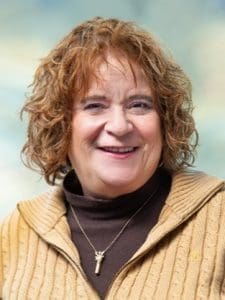
Nancy Velozo
MONSON — Monson Savings Bank announced the retirement of Nancy Velozo, assistant vice president and collections officer.
Velozo joined Monson Savings Bank in January 2014 and has been an integral part of the bank’s success for more than a decade. Through her knowledge and expertise, she played a pivotal role in maintaining low delinquency rates, strengthening the bank’s financial health and stability. Her efforts have safeguarded the institution while reinforcing the bank’s commitment to responsible and compassionate banking.
Beyond her professional achievements, Velozo has exemplified empathy, respect, and collaboration in guiding customers through challenging times. Her ability to balance care with accountability has been a hallmark of her success and a reflection of the bank’s core values.
“Nancy’s dedication and professionalism have made a lasting impact on Monson Savings Bank,” said Dan Moriarty, president and CEO. “Her work has not only contributed to the bank’s financial strength, but has also demonstrated the importance of compassion in banking. We are deeply grateful for her years of service and wish her all the best in her well-deserved retirement.”
Monson Savings Bank’s management team and board of trustees extend their heartfelt appreciation to Velozo for her years of dedicated service and commitment to the communities the bank serves.

Courtney Robbins
SPRINGFIELD — Community Bank welcomed Courtney Robbins as branch and Community Development manager of the bank’s newest Massachusetts location at 1387 Boston Road in Springfield.
Robbins will lead strategies to support branch growth and expand business opportunities, while also handling day-to-day operations and guiding staff hiring and training. She will play a key role in fostering strong, ongoing relationships with customers and community partners; delivering comprehensive personal, business, and government banking products and solutions to meet the community’s financial needs; and supporting the bank’s continued expansion throughout the Western Mass. region.
Before joining Community Bank, she was a leader at several other financial institutions, overseeing daily operations, managing staff and business development, and maintaining branch profitability.
Outside of the office, Robbins is active in the East of the River Five Town Chamber of Commerce, Randall’s Ludlow Boys and Girls Club, Rick’s Place, and Dress for Success. She earned her degree in accounting from Framingham State University.
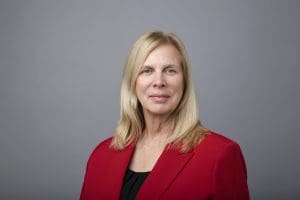
Corrine Sysun
HADLEY — UMassFive College Federal Credit Union announced that Corrine (Corky) Sysun has joined the credit union as a senior business relationship manager on the Commercial Services team.
Sysun brings more than 20 years of experience in business banking and commercial lending, most recently serving as a Business Banking officer at TD Bank. She has a proven track record of building lasting client relationships and delivering tailored financial solutions. Her expertise includes commercial real estate and commercial and industrial lending.
Earlier in her career, she spent more than a decade as a branch manager and Business Development manager, where she honed her leadership skills and consistently achieved top performance in small business lending.
In her new role, Sysun will work closely with members and community partners to grow commercial relationships, support lending initiatives, and contribute to UMassFive’s strategic goals. Her extensive expertise, commitment to service, and dedication to community engagement make her a valuable addition to the team.
“I look forward to supporting our current UMassFive business members while also building new relationships within the business community,” she said. “My goal is to demonstrate the value of partnering with UMassFive for comprehensive business services — from commercial lending to business deposit and investment solutions — delivered efficiently and with exceptional care, so our members can stay focused on running and growing their businesses.”
SPRINGFIELD — Sixteen years after the last local Cadillac dealership closed its doors, businessman Tony Ravosa is leading a community effort to bring the iconic American brand back.
Cadillac officially pulled out of the area on Dec. 10, 2009, marking the end of an era. Ravosa, who grew up riding in Cadillacs and drives one to this day, believes the time has come to restore that legacy.
To commemorate the anniversary and spark public support, he is launching a digital billboard campaign on a mobile Stand Out Truck that will be driving around all day today, Dec. 10.
From 9 to 9:30 a.m., the truck will be outside WWLP 22 News before moving to WGGB 40 from 10 to 10:30 a.m. It will be stationed outside the Republican from 11 to 11:30 a.m. and then end the day outside the MassMutual Center for the UMass Amherst vs. Boston College game in the Hall of Fame Classic from 5:45 to 6:45 p.m.
Ravosa hopes the visibility will help rally the community behind the idea.
“Cadillac is more than a car; it’s an American tradition,” he said. “My father drove one. I drive one. Springfield has a Basketball Hall of Fame, a world-class museum, and a legacy of innovation. A city with this much history and heart deserves a Cadillac dealership again.”
Ravosa’s push has already begun gaining traction among residents who want to see another dealership return to the region. He hopes the billboard effort inspires more community backing from fellow Cadillac lovers.
LONGMEADOW — Glenmeadow has been named one of America’s Best Continuing Care Retirement Communities 2026 by Newsweek, ranking in the top 10 in Massachusetts. This prestigious award is presented in collaboration with Statista, the world-leading statistics portal and industry ranking provider. The awards list was announced on Nov. 19 and can currently be viewed on Newsweek’s website.
America’s Best Continuing Care Retirement Communities 2026 have been selected through a comprehensive methodology of assessing quality resident care. The evaluation awards the leading 330 facilities in the U.S. based on four key pillars: reputation, visitor satisfaction, accreditation, and Google reviews. The analysis is based on an independent survey that included thousands of residents and acquaintances of residents living in continuing care retirement communities (CCRCs).
The award serves to reinforce that Glenmeadow is dedicated to offering high-quality care and services to older adults, including a range of living options such as independent living, assisted living, respite care, and at-home care services. Glenmeadow offers a wide range of amenities and community opportunities, including newly renovated spaces designed for connection and well-being and the annual Age of Excellence Awards, honoring older adults who inspire vitality. Glenmeadow leaders believe aging is not a retreat, but a rise, and the community’s holistic approach aims to ensure that residents feel valued, supported, and empowered to live their lives to the fullest.
“This recognition truly reflects the dedication of the entire Glenmeadow community and our unwavering commitment to delivering an outstanding experience for our residents and staff,” said Kathy Martin, president and CEO of Glenmeadow. “Being acknowledged alongside both nonprofit and for-profit continuing care retirement communities underscores that high-quality service transcends business models. Nonprofit CCRCs play a crucial role in the senior living sector, consistently providing exemplary care and services.”
SPRINGFIELD — Anticipation is rising for the eighth annual Women of Impact awards gala, hosted by BusinessWest. The sold-out event will take place tonight, Dec. 9, from 5:30 to 9 p.m. at Twin Hills Country Club in Longmeadow.
Profiles of the Women of Impact class of 2025 can be read in the Oct. 27 issue of BusinessWest and at businesswest.com. This year’s honorees are:
• Tara Brewster, vice president of Business Development and Director of Philanthropy at Greenfield Savings Bank;
• Ayanna Crawford, president of AC Consulting and Media Services;
• Tracy Friedenberg, executive director of Bacon Wilson, P.C.;
• Rania Kfuri, vice president for Philanthropy, Sales, and Marketing at Glenmeadow;
• Chelsea Kline, executive director of Cancer Connection;
• Angelina Ramirez, CEO of Stavros Center for Independent Living;
• Amanda Sanderson, executive director of Resilience Center of Franklin County; and
• Sarah Rose Stack, lecturer of Public Relations at UMass Amherst.
The event emcees are Dina McMahon, morning show co-host for the Kellogg Krew on 94.7fm WMAS; and LaTonia Monroe Naylor, chief business educator at Monroe Naylor Consulting, LLC, president and CEO of Parent Villages, and a 2024 BusinessWest Woman of Impact.
The eighth annual Women of Impact program is presented by Country Bank and TommyCar Auto Group, sponsored by Bacon Wilson, P.C., and supported by Feel Good Shop Local and 94.7fm WMAS.
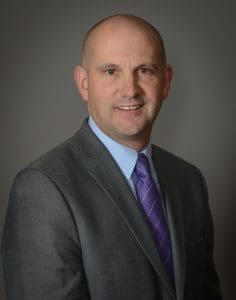
Brent Bean
WESTFIELD — James Hagan, president and CEO of Westfield Bank, announced the appointment of Brent Bean as vice president and Business Development officer.
Bean, who previously served as assistant vice president, Business Development officer, will continue to establish relationships with new and existing customers, focusing on commercial credit needs throughout Massachusetts and Connecticut.
“Brent brings a valuable mix of experience, market knowledge, and a genuine commitment to helping our region’s businesses achieve their financial goals,” said Allen Miles, executive vice president and chief Lending officer at Westfield Bank. “He works with businesses across Massachusetts and Connecticut, bringing the full power of the bank’s commercial lending capabilities to current and future customers.”
Bean joined the Bank’s Business & Government Deposit Services department in 2020 before moving to the Commercial Lending department. Prior to that, he spent many years as director of Corporate and Government Relations at Westfield State University.
He holds a bachelor of business administration degree from American International College and a master of public administration degree from Westfield State University. Active within the local community, he is currently a member of Westfield State University’s fundraising committee and has been an at-large city councilor for the city of Westfield since 2002.
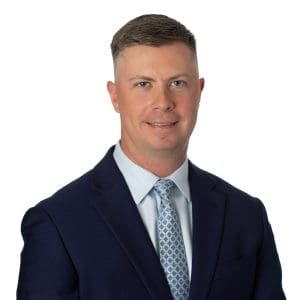
Peter Duckett
NORTH ADAMS — MountainOne Bank announced the promotion of Peter Duckett to assistant vice president, Commercial Loan officer, recognizing his contributions to the growth of the bank’s commercial lending portfolio and his commitment to clients across the region.
In this role, Duckett supports commercial lending activities through loan origination, portfolio management, financial analysis, and client relationship development. He works closely with local businesses to help them access financing that supports growth and strengthens the regional economy, reflecting MountainOne’s ongoing commitment to community and customer success.
Before joining MountainOne as a portfolio manager in February 2024, he spent a decade at Brookline Bank, where he held several positions, most recently as portfolio manager.
Duckett holds a degree in economics and business management from Assumption University. He has also completed multiple professional development programs through the Risk Management Assoc., earning certificates in lending decision process, financial statement analysis, commercial credit for lenders, and small business lending decision process. He serves on MountainOne’s communications committee, contributing to internal engagement and outreach initiatives.
“Peter’s promotion reflects his strong leadership, professionalism, and the trust he has earned from both clients and colleagues,” said Dick Kelly, senior vice president, senior Commercial Risk officer at MountainOne. “He consistently demonstrates sound judgment, attention to detail, and a true dedication to our clients’ success.”
Duckett added that “I’m proud to continue growing my career with MountainOne. This role gives me the opportunity to work directly with business owners and real estate developers to help strengthen our local economy and support long-term community growth.”

By Kristina Drzal Houghton, CPA, MST
The end of the year is often an optimal time for tax planning for both individuals and small business owners. Traditionally, the conventional tax wisdom is to accelerate tax deductions into the current year and defer taxable income until the next year. However, new tax legislation enacted in 2025 significantly complicates matters.
The One Big Beautiful Bill Act (OBBBA) — signed on the Fourth of July — is a follow-up to the Tax Cuts and Jobs Act (TCJA) enacted during President Trump’s first term. Many of the provisions included in the TCJA, particularly those affecting individuals and families, went into effect in 2018 and were scheduled to expire after 2025. The OBBBA extends most of those tax provisions, with certain modifications, and often makes them a permanent part of the tax code.
“The tax law allows you to deduct charitable donations within generous limits. However, the OBBBA adds several tax complications.”
In addition, the new law creates brand-new tax-saving opportunities, while also posing potential tax pitfalls for the unwary. In some cases, the OBBBA provisions are effective in 2025, but others do not kick in until 2026 or a later date.
This article is divided into two sections: Individual Tax Planning and Business Tax Planning.
The TCJA suspended several itemized deductions for 2018 through 2025 while boosting the standard deduction. The OBBBA generally extends these rules with some modifications.
If you expect to itemize deductions on your 2025 tax return, take advantage of several key deductions that can lower your tax bill. Consider the following:
• Donate cash or property to a qualified charitable organization (see more below).
• Pay deductible mortgage interest if it makes sense for your situation. This includes interest on acquisition debt up to $750,000 for your principal residence and one other home.
• Make state and local tax (SALT) payments up to the annual deduction limit. Under the OBBBA, the SALT cap is quadrupled from $10,000 to $40,000 for 2025, subject to a phase-out for high-income taxpayers. The cap increases by 1% annually through 2029 before expiring.
The tax law allows you to deduct charitable donations within generous limits. However, the OBBBA adds several tax complications.
For the first time ever, the OBBBA imposes a floor of 0.5% of adjusted gross income (AGI) before you can claim any charitable deduction, effective in 2026. This new rule may be especially important if you are planning to donate appreciated long-term-gain property, such as stock, that would qualify for a deduction equal to the property’s fair market value. The deduction for property is limited to 30% of AGI, but any excess may be carried over for up to five years.
The OBBBA also allows a deduction of up to $1,000 for non-itemizers, beginning in 2026. The maximum deduction is doubled to $2,000 on a joint return.
Consider bunching charitable donations in a year in which you expect to itemize. For instance, if you are itemizing in 2025, you may step up charitable gift giving before Jan. 1. As long as you make a donation this year, it is deductible in 2025 — even if you charge it in December 2025 and pay it in 2026.
If you own your principal residence, you may benefit from two types of home energy tax credits on your 2025 return.
Make energy-saving installations before the end of the year to secure credits for qualified improvements. Under the OBBBA, both credits will expire after 2025 and are not expected to be renewed.
The two credits still available before 2026 are as follows:
• Energy Efficient Home Improvement Credit: This is a 30% credit for qualified expenses like insulation, central air conditioners, water heaters, furnaces, heat pumps, biomass stoves and boilers, and home energy audits, up to a maximum of $3,200.
• Residential Clean Energy Credit: This is a 30% credit for the cost of new qualified clean energy property like solar electric panels, solar water heaters, wind turbines, geothermal heat pumps, fuel cells, and battery storage technology.
Contributions to a 401(k) plan are made by employees on a pre-tax basis and can earn tax-deferred income until withdrawals are made. Plus, your company may provide matching contributions based on a percentage of salary.
For 2025, the regular contribution limit is $23,500, but if you are 50 or older, you can add a ‘catch contribution’ of $7,500 for a total of $31,000. Even better: under SECURE 2.0, those ages 60-63 can make a ‘super catch-up contribution’ of $11,250 for a total of $34,750.
Beginning in 2026, if individuals age 50 and over earned more than $145,000 in the prior year, any of their 401(k) catch-up contributions must be made to a Roth-type account. The Roth version of the 401(k) imposes tax on amounts contributed in 2025, but future payments are generally exempt from tax.
Generally, you must begin taking required minimum distributions (RMDs) from qualified retirement plans, like 401(k) plans, and IRAs after a specified age. Under SECURE 2.0, the age threshold has been raised to 73 (scheduled to increase to 75 in 2033). The amount of the RMD is based on IRS life expectancy tables and your account balance at the end of last year.
Assess your obligations. If you can postpone RMDs longer, you can continue to benefit from tax-deferred growth. Otherwise, make arrangements to receive RMDs before Jan. 1, 2026 to avoid any penalties.
If you are a parent with young children, you may be entitled to several tax breaks designed to reduce your family’s tax burden.
For 2025, parents may claim a Child Tax Credit (CTC) of $2,200 for each qualifying child, subject to a phase-out beginning at $200,000 for single filers and $400,000 for joint filers.
The dependent care credit is enhanced for certain taxpayers with a modified adjusted gross income (MAGI) below specified levels. For high-income taxpayers, the maximum credit remains $600 for one child and $1,200 for two or more children.
Under the TCJA, parents could withdraw up to $10,000 tax-free from a Section 529 plan for higher education to pay a child’s tuition at a qualified elementary or secondary school. The OBBBA doubles the cap to $20,000, beginning in 2026.
Under the new law, employees can annually deduct part of overtime pay, up to $12,500 for single filers and $25,000 for joint filers, retroactive to Jan. 1, 2025. But the deduction is available only for the ‘premium’ of part overtime pay based on the time-and-a-half rate mandated by the Fair Labor Standards Act.
In addition, the deduction is phased out based on MAGI. The phase-out begins at $150,000 of MAGI for single filers and $300,000 for joint filers.
Similarly, the OBBBA creates a new deduction for up to $25,000 of tips received by an employee in a service industry from 2025 through 2028, subject to a phase-out above $150,000 of MAGI for single filers and $300,000 for joint filers.
A business may benefit from one of two depreciation-related tax breaks, or both, for qualified property placed in service. The OBBBA enhances those tax breaks, beginning in 2025.
Ensure that qualified property is placed in service before the end of the year. Otherwise, your business does not qualify for either tax break on its 2025 return.
• Section 179 deduction: Section 179 allows a business to currently deduct the cost of qualified property up to an annual limit, subject to a phase-out. The OBBBA permanently hikes the limit to $2.5 million and the phase-out threshold to $4 million in 2025, with future indexing.
• First-year bonus depreciation: the TCJA authorized 100% first-year bonus depreciation subject to a phase-out over a five-year period. The applicable percentage for 2025 was scheduled to be only 40%, but the OBBBA permanently restores the 100% deduction, retroactive to Jan. 20, 2025.
Regular depreciation deductions may be elected. As always, special rules may apply, such as a separate set of limits on vehicles.
Previously, the tax law permitted a company to fully deduct domestic R&E expenses in the year in which they were incurred. But the TCJA required costs incurred after 2021 to be capitalized and amortized over 60 months.
Now, the new law reinstates the prior rules, retroactive to Jan. 1, 2025. Alternatively, a business can still elect to amortize the expenses over 60 months. Due to special transitional rules for expenses incurred in 2022 through 2024, it may be beneficial to file amended returns for these years. Note: the amortization period for foreign R&E expenses remains at 15 years.
Stock up on routine supplies (especially if you expect prices to rise soon). If you buy the supplies in 2025, they are deductible this year even if they are not used until 2026.
The OBBBA imposes a 1% floor on deductions for charitable donations by C corporations, beginning in 2026. A corporation may increase its donations late in 2025 to avoid the upcoming floor on deductions.
Owners of pass-through business entities like S corporations and partnerships may adopt SALT ‘workarounds’ to qualify for state deductions or credits. The entities make the payments, and then tax benefits are passed through to individuals on their personal tax returns.
Maximize the qualified business income deduction of up to 20% for pass-through entities and self-employed individuals. Note that special rules apply if you are in a specified service trade or business. The OBBBA extends this tax break and makes it permanent.
This year-end tax-planning article is based on the prevailing federal tax laws, rules, and regulations. Of course, it is subject to change, especially if additional tax legislation is enacted by Congress before the end of the year.
Finally, remember that this article is intended to serve only as a general guideline. Your personal circumstances will likely require careful examination. You should schedule a meeting with your adviser to assist with all your tax planning needs.
Kristina Drzal Houghton, CPA, MST is a partner at the Holyoke-based accounting firm Meyers Brothers Kalicka, P.C.


An architect’s rendering of the planned Longmeadow Middle School. Construction is slated to start in the fall of 2026.
Marty O’Shea says officials in Longmeadow have been discussing what to do with the town’s two middle schools — Williams and Glenbrook — for nearly 20 years now.
The former was opened in 1959 and the latter in 1968, he noted, adding that, beyond their advancing years, the schools were designed to serve a different model of education than the district currently requires.
Charting a course for the school properties and securing funding from the Massachusetts School Building Authority (MSBA) has been a long journey with many twists and turns, said O’Shea, Longmeadow’s school superintendent, adding that, 18 years after the town first submitted both schools to the MSBA for consideration for renovation or replacement, construction is slated to begin in the fall of 2026 on a new, $151 million facility that will replace both schools.
It will be called Longmeadow Middle School, and it will provide the community not only with a state-of-the-art facility — to be built on the Williams Middle School campus — but a unique development opportunity on the Glenbrook site.
“Our education plan calls for more space that will give kids the opportunities to be involved with project-based learning and give us more opportunities to expand science, technology, and engineering opportunities for kids,” O’Shea explained, adding that the design also prioritizes supporting special education students and the arts, both the performing and fine arts.
“Our education plan calls for more space that will give kids the opportunities to be involved with project-based learning and give us more opportunities to expand science, technology, and engineering opportunities for kids.”
As for the Glenbook site, “we’ll start looking at what to do there soon, so that we don’t wait until the property is vacant to begin that process. We won’t start any construction or final plans, but we will start the community discussion,” said Town Manager Lyn Simmons, adding that the 20-acre campus could have several potential uses, including housing in a community where there are few, if any, available building lots.
Resolution of the middle school question and conjecture about the future of the Glenbrook site are just two of the many converging stories in this residential community of almost 16,000 people. Others include:
• A pending Planning Board vote in early December on a proposal to redevelop the site of a closed Church of Christ, Scientist on Williams Street, abutting the Longmeadow Shops. Plans call for demolishing the church and constructing three buildings to house retail tenants, a bank with a drive-thru, and a coffee shop with a drive-thru — a complex that would, in many ways, serve as an extension of the shops;
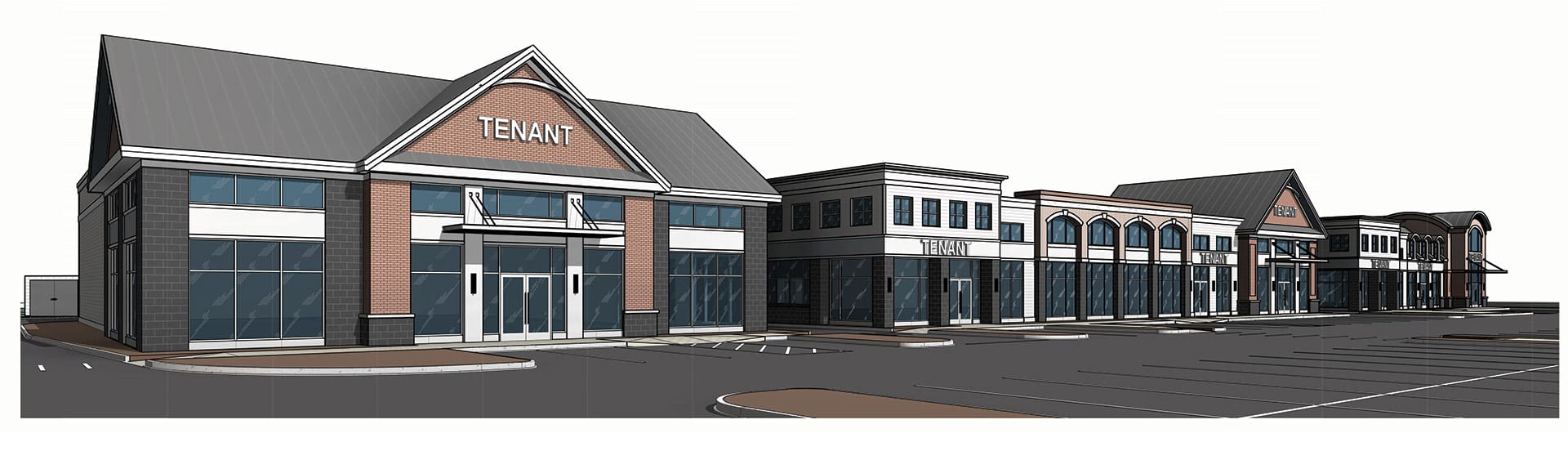
An architect’s rendering of a proposed new retail facility, to be built on the site of a closed church on Williams Street.
• Work to design improvements to the busy intersection at Williams Street, Redfern Drive, and Frank Smith Road, a project inspired by the project on the church property and made possible by a $287,000 MassWorks grant;
• Ongoing work to decide the best uses for three other town landmarks — the Community House, formerly home to some town offices and now used primarily as a polling place; Town Hall, mostly vacant since town offices were moved to the former Greenwood Park Elementary School off Maple Street; and ‘Old Town Hall’ on Longmeadow Street, vacant for many years. Simmons said a task force will be appointed to consider options for each site and determine the best course of action;
• Early-stage work to replace aging water and sewer lines (60% of which are more than 100 years old), beginning with a water line replacement project, approved at town meeting last month, that will begin with Western Drive. These initiatives have been accompanied by 40% increases in water and sewer rates, which were comparatively low and are still lower than many in the region, Simmons noted;
• A growing stable of eateries — a sushi restaurant and one specializing in Indian cuisine are two of the latest additions — that has made the town a dining destination; and
• Continued growth of a small but eclectic business community, one that is based mostly in retail and hospitality.
That list includes Twin Hills Country Club, which has enjoyed a very strong year, both on the course and with its event business, said Laura Chipouras, club manager.
She told BusinessWest that, in addition to tournaments, weddings, and showers, the club has seen a surge in business-related gatherings, everything from annual retreats to sales strategy sessions.
“We’re seeing lots of retreats, and I think that’s probably due to people returning to the office after COVID and feeling that they need to get together,” she explained, adding that, overall, business has brisk — well ahead of last year’s pace — and the bookings for 2026 have been solid.
For this latest installment in its Community Spotlight series, we take an in-depth look at Longmeadow, and some landmark decisions being made there — literally and figuratively.
Reflecting on the middle school project, O’Shea — who has been superintendent for nine years now — noted that, while discussions on the two facilities began nearly two decades ago, the town had other priorities to address, such as a new high school, senior center, and DPW facility.
With those resolved, the middle school discussions resumed, with consolidation emerging as the best option over time, as capital needs grew and enrollment in each of the schools fell to roughly 300 in recent years.
That puts them on the smaller end for middle schools, he said, adding that other communities and districts of similar size, such as neighboring East Longmeadow and the Hampden-Wilbraham School District, which he served as an administrator, have one middle school.
“We did a citizens’ survey just to find out what people wanted to see happen there, and those results were interesting. There was a lot of attachment to Community House, a moderate attachment to Town Hall, and very little attachment to Old Town Hall.”
And there are several advantages to be gained through consolidation, he noted, both on the educational side and the operations side.
“On the educational side, in a single setting, I think we’ll be able to assign staff in ways that are more efficient and also better for us educationally,” he explained. “Right now, we have staff that are, in many cases, stretched across two buildings, such as in the areas of music and oral language, library, and special education.
“We think that having all our educators under one roof will put us in a better position to serve students,” he went on, “and we’ll be able to expand programming.”
Meanwhile, the town should see substantial savings from staffing and operating one larger school rather than two older structures that are now well beyond their expected useful life and in many ways inefficient, he went on, noting that the new, 134,735-square-foot facility will be fossil fuel-free, rely on a ground-source heat exchange system for heating and cooling, and be net-zero ready, meaning it will produce as much energy as it consumes.
“You’re maintaining one campus instead of two, you’re maintaining and repairing one campus instead of two, food service — you’re running a single operation instead of two,” he explained. “On the operations side, there are some opportunities where we could see come savings.”
O’Shea and other administrators and staff have visited several communities that have constructed middle schools recently, including several built by Springfield-based Fontaine Bros., recently chosen as the general contractor for the Longmeadow project, and they’ll visit more as the design process continues and the focus shifts to furniture, fixtures, flooring, lighting, and materials used.
Year Incorporated: 1783
Population: 15,853
Area: 9.7 square miles
County: Hampden
Residential Tax Rate: $21.12
Commercial Tax Rate: $21.12
Median Household Income: $109,586
Median Family Income: $115,578
Type of Government: Open Town Meeting; Town Manager; Select Board
Largest Employers: Bay Path University; JGS Lifecare; Glenmeadow
* Latest information available
While that project moves forward, the attention of many town residents is also fixed on the church redevelopment initiative.
Simmons noted that the review process has been slowed by the need to conduct a traffic study and undertake it while school is in session. There have been several Planning Board hearings on the matter, with questions on everything from traffic to storm drainage, she said, adding that a decision is expected soon — perhaps early this month.
The project and the increase in traffic it is likely to produce will necessitate work on the traffic corridor in the area near the site, where several roads converge, said Simmons, adding that, when designs for improvements are finalized, the town will apply for a MassWorks grant round to fund construction.
While the middle school and church redevelopment projects move forward, another initiative enters its next phase.
This would be the ongoing work to determine the best possible uses for three unused or underutilized municipal facilities — the Community House, built in 1920; Town Hall, dating from 1939; and Old Town Hall, originally a one-room schoolhouse, built in 1855.
As noted earlier, a task force will be created to consider various options and perhaps suggest an action plan, said Simmons, noting that property condition reports on the three historic structures, submitted by the Springfield-based engineering firm Fuss & O’Neill in September, have unveiled lengthy lists of work needed at all three.
At the Community House, for example, the report concluded that several million dollars in repairs and upgrades are needed — everything from repointing brick to prevent further deterioration and water intrusion to an elevator for access to the second floor, to regrading and repaving the parking area to improve drainage.
There are similar lists for the other properties, she said, adding that, when summing up public sentiment on the landmarks, there are varying degrees of appetite for investment and eventual redevelopment.
“We did a citizens’ survey just to find out what people wanted to see happen there, and those results were interesting,” she told BusinessWest. “There was a lot of attachment to Community House, a moderate attachment to Town Hall, and very little attachment to Old Town Hall.”
Some possible uses were floated in that survey, she went on, adding that there was little sentiment for housing in any of the structures, with most residents preferring an arts and cultural center, a restaurant or café, or recreational programs at all three, with moderate enthusiasm for other uses, ranging from retail to co-working space to a museum.
Ultimately, much will depend on the development community, she said, adding that applications for the task force are being sought, and it is hoped that the panel can wrap up its work in a year.
As for the business community, it continues to grow, especially within the retail and hospitality sectors, said Simmons, adding that the town’s location — it’s convenient to East Longmeadow, Springfield, and Northern Conn. — has made it a retail and dining destination.
That same location has benefited the event business at Twin Hills, said Chipouras, adding that the club has several different event rooms, including a ballroom that can host up to 400, and they’re being booked for a wide range of functions — including BusinessWest’s eighth annual Women of Impact gala on Dec. 9. As noted earlier, business is up across the board, but she is especially encouraged by a rise in corporate outings.
On the day Chipouras talked with BusinessWest, for example, two of the smaller banquet rooms were being used for corporate retreats, which certainly took a back seat during COVID, and there have been several days like that over the course of the past year.
“Later this week, we have an accounting firm coming in to do a class on new tax laws, and we have a bank that’s doing a very large retreat, a learning session,” she noted. “They start early in the morning, and at the end of the day, they do cocktails and hors d’oeuvres.”
Meanwhile, there has also been a surge in proms, weddings, and holiday parties, another tradition that took a hit during the pandemic and the years that followed.
“I’m seeing them come back,” said Chipouras, adding that, while the club sees a large amount of repeat business with clients, it has added new clients to the portfolio as well.
In short, she sees positive momentum — and in this mostly residential town with a small but growing business community, she’s not the only one.
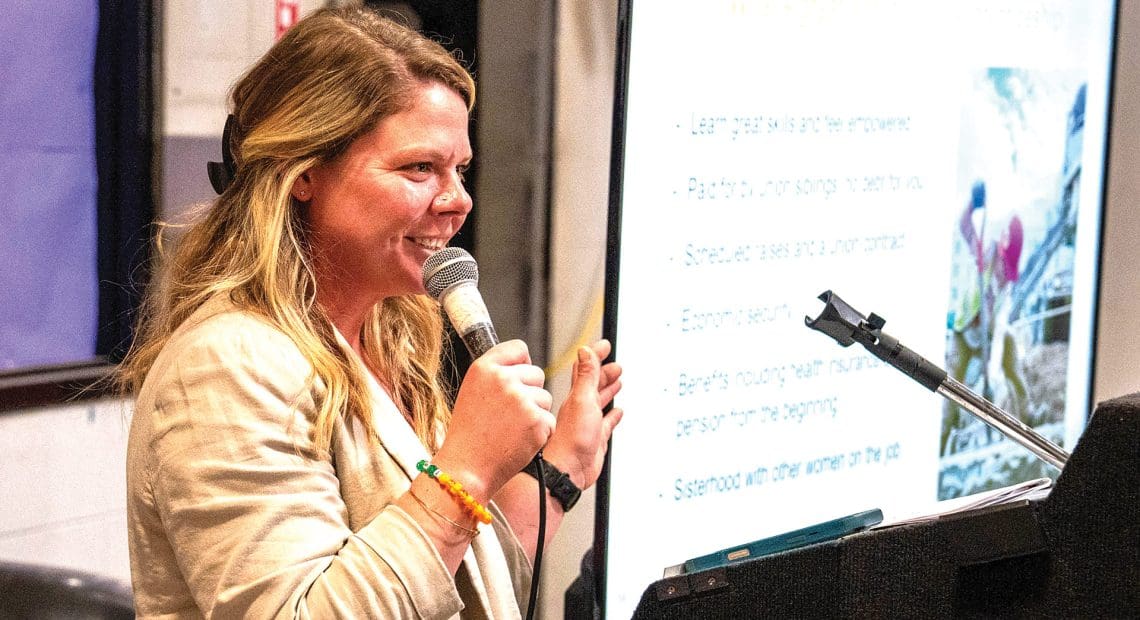

Laborers Local 596 member Chelsea Fenton shares the benefits of union apprenticeship and details her experience with students during a workshop at the recent Girls in Trades Conference.
On Nov. 20, students from 19 schools across Berkshire, Hampden, Hampshire, Franklin, and Worcester counties gathered in Holyoke to explore life-changing opportunities in the union construction industry at the 10th annual Massachusetts Girls in Trades (MA GIT) Conference and Career Fair.
These events are designed to help young women build confidence, gain hands-on knowledge, and envision themselves in careers they may never have considered before.
“Being part of Massachusetts Girls in Trades has changed my outlook completely,” said Kennedy Landers, a Worcester Tech Construction Academy student. “It’s lifted my hopes of being a girl in the trades and given me reassurance that I can do this — and that there are other girls like me.”
Massachusetts building trades unions train the vast majority of the state’s construction apprentices — 74% of all registered apprentices statewide. They also provide opportunities for those historically underrepresented in the trades: 80% of all apprentices of color and 88% of all registered tradeswomen train through union programs. Today, one in 10 union apprentices in Massachusetts is a woman, a number that continues to grow.
In total, 356 students attended this year’s western conference held at Dean Tech High School. This year’s event launched the new MA GIT alumni network, connecting graduates with mentorship and career support as they enter into the trades.
For Jaylene dos Santos, the conference represents the heart of the organization’s mission. “As the chair of the Massachusetts Girls in Trades Student Leadership Council, I have seen the positive change that we make every single day,” she said. “Our resources and support allow students to feel empowered as they enter the construction and construction-related trades. I’m incredibly proud of the work we do to build safe, inclusive spaces for all learners.”
At this year’s event, students heard directly from dos Santos as well as Holyoke Mayor Joshua Garcia and Massachusetts Building Trades Unions President Frank Callahan.
“Union apprenticeship programs are the foundation of an inclusive, world-class construction workforce here in Massachusetts. Women now comprise over 11% of all union building trades apprentices in Massachusetts, tripling the national average and representing a twofold increase since 2012,” Callahan said. “Each year, the union building trades provide a pathway to a rewarding career, with industry-leading wages and benefits, free training and skills development, the highest safety standards, and opportunities for advancement.”
In anticipation of the 2025 conference, Franklin County Technical School student Cameron Jacques said, “I’m really looking forward to this event. It’s a chance to learn not only about my own trade, but also about so many others — and to see how women can continue to thrive in a workforce that’s often male-dominated.”
Her classmate Alison George shared her energy. “I’m excited to explore all the new opportunities this conference will have to offer me,” she said. “It’s inspiring to know there are so many women in these careers, ready to share their experiences.”
The event connects girls enrolled in career and technical education programs with tradeswomen, union apprenticeship programs, and industry leaders. Each year, the conference aims to empower the next generation of tradeswomen, encouraging them to pursue high-paying, debt-free careers that build both communities and futures.
For many of these students, a career in the trades offers a debt-free path to the middle class. With starting wages of $18 to $22 per hour that rise to $35 to $55 per hour over the course of a two- to five-year apprenticeship, event organizers noted, these programs create life-changing opportunities, building skills, stability, and a more inclusive workforce.

When he came to Holyoke Medical Center as its new president and CEO in 2013, Spiros Hatiras considered it the proverbial best-kept secret.
By most all accounts, it isn’t that any longer.
“It took us a decade or so, but we’re no longer a secret,” he said, meaning that healthcare professionals have found the facility and helped make it a workplace of choice, and area residents have as well, making it their hospital of choice. “We’re in a growth mentality.”
This emergence, if you will, and lost status as a best-kept secret, has helped HMC grow in several ways over the past several years — and remain in a growth mode, even as several colliding forces have created an ultra-challenging environment for all hospitals, one that is projected to be much more daunting in 2026.
Spiros Hatiras
“It took us a decade or so, but we’re no longer a secret. We’re in a growth mentality.”
Indeed, HMC’s strong performance stands as an outlier in a year that saw continued cutbacks and layoffs within the four-hospital Baystate Health system, including, most recently, an offer of buyouts to some 1,300 employees to cut costs; apparent ongoing discussions that could result in a merger of Baystate Health and Mercy Medical Center; and, most recently, Mercy’s announcement that it is temporarily suspending maternity and newborn services at its Family Life Center, effective Dec. 8, due to what the administration there calls “significant provider and nurse staffing constraints.”
These headlines have mixed with those concerning the One Big Beautiful Bill Act (OBBBA), signed into law last summer, which is expected to have a significant negative effect, financially and operationally, on hospitals, primarily through more than $1 trillion in federal healthcare spending cuts.
Overall, the law is projected to increase the number of uninsured individuals, leading to a surge in uncompensated care costs for providers and a growing number of individuals putting off preventive care, as they did during COVID, with detrimental results that are still being felt. Meanwhile, reimbursement for the care provided to those who are insured, especially by Medicaid and Medicare, is expected to decrease and fall even further behind the continually rising cost of providing that care.
Dr. Robert Roose, president of Community Hospitals for Trinity Health Of New England, put things in perspective and talked at length about ripple effects from these cuts.
“The federal changes are going to directly impact people who get coverage through Medicaid and/or any state-based health insurance exchanges, and that impact is going to be profound for those people and their families,” he explained. “The ripple effects will be felt by all of us … the health systems and the communities we serve will feel the effects in other ways. There could be reductions in access and services, longer wait times, and potential impacts in delivering care.”
Kevin Whitney, who became president and chief operating officer of Cooley Dickinson Hospital in Northampton, a member of Mass General Brigham, last March, agreed.
“We’re concerned about the rising cost of care, especially since COVID,” said Whitney, a registered paramedic and registered nurse who was serving as vice president of Community Operations for the Mass General Brigham Community Division, as well as interim vice president of Patient Care Services and chief nursing officer for CDH, when he was chosen to be its next president and COO. “We always cite a chart showing costs rising at a much higher rate than what we’re receiving for reimbursement, and reimbursement is flat if not decreasing, especially with Medicaid within the Big Beautiful Bill.”
Elaborating, he said that, for a variety of reasons, including the aging of the population, hospitals of all sizes are seeing the percentage of patients covered by commercial payers decrease, with a corresponding rise in those covered by Medicare and Medicaid.
Dr. Robert Roose
“The ripple effects will be felt by all of us … the health systems and the communities we serve will feel the effects in other ways. There could be reductions in access and services, longer wait times, and potential impacts in delivering care.”
“What we get reimbursed by public payers really doesn’t cover the cost of delivering care,” he went on. “And traditionally, organizations have relied on commercial payers to help offset those losses and enable us to reinvest in our organization and our people.”
Quantifying the matter, he said the OBBA’s total projected impact on Mass General Brigham, when fully phased in, will be between $120 million to $300 million, with $100 million to $200 million from work requirements, and another $20 million to $100 million from Affordable Care Act cuts.
Those are big numbers, and they are expected to generate a strong ripple effect that will impact hospitals in many different ways, said those we spoke with.
For this issue, BusinessWest takes an in-depth look at the many challenges facing hospitals today — and the forecast for the year ahead.
Hatiras told BusinessWest that, while many hospitals struggled in 2025, HMC did not.
“It’s been a great year for us. We’ve grown our business, revenue is strong, we’ve done well with our workforce — it’s going to be a very strong year for us,” he told BusinessWest, noting that HMC’s fiscal year ended in September, and he didn’t have hard numbers yet.
Breaking down the year and the hospital’s performance, he said there were several factors that went into it, including redesign of the state’s waiver system — which he credited to the Executive Office of Health and Human Services and MassHealth officials — which directed more federal money to providers across the Commonwealth.
“Everyone benefited from this, some hospitals more than others,” he said, adding that HMC’s strong fiscal 2025 was also attributable to growth in primary care and outpatient services, with an expansion of the hospital’s overall footprint with new locations, as well as staff retention and the accompanying reduction in the high costs of turnover.
“If you’re struggling with staffing and temporary staffing, that’s a big hit,” Hatiras noted. “We had less of an issue with that than perhaps others did, and that’s just one of the many factors that contributed to a solid 2025.”
Maybe the biggest factor is that lost status as a best-kept secret, he went on, adding that, while area residents are finding the facility, so too are healthcare professionals.
“We see a lot of people from other surrounding facilities, knocking on our door and saying, ‘do you have any openings? We heard it’s a great place to work,’” he said, adding that, years ago, it was rare to see professionals come to HMC from competing hospitals.
Kevin Whitney
“We have to be as proactive as we can to prepare for and manage the impacts of the Big Beautiful Bill, in particular.”
“Now, it happens on a routine basis,” Hatiras said. “And it’s because of our culture; we’ve built a great culture, and people are taking note.”
Overall, while 2025 was a year of coping with challenges at area hospitals, it was also a time to move forward with several new initiatives in the broad realms of patient care and patient experience, said Whitney, listing, at CDH, everything from new, state-of-the-art MRI imaging services as its Amherst location, which opened last month, to expansion of the Emergency Department, to the resumption of no-cost shuttle service, which takes patients from CDH to Mass General Brigham destination hospitals — Mass General, Brigham & Women’s, and Mass Eye and Ear.
The eight-passenger shuttle departs promptly from the hospital’s Atwood location at 6:30 a.m., leaves the Boston hospitals at 3 p.m., and returns to Northampton around 5 p.m., Whitney noted, adding that this popular service is one of many efforts to improve convenience and overall quality of care.
As for the emergency room expansion, it includes a full imaging suite, which brings benefits for patients and staff alike.
“There’s a new CT machine that’s immediately available to our ED patients, and it’s a great support for our team because it’s right there in the department, as well as ultrasound and diagnostic imaging. So it’s a full imaging suite right there in the department, which makes it more accessible but also more efficient for patients and the team,” he explained. “Before, every patient who needed a CT scan, for example, needed to be transported, with an ED staffer, to the imaging department, which is quite a distance away.”
Such initiatives will help position CDH to better handle what could be additional headwinds in the ED, said Whitney, who, like others we spoke with, said hospitals must do what they can to prepare for what is to come and become more resilient in the wake of those forces.
“We have to be as proactive as we can to prepare for and manage the impacts of the Big Beautiful Bill, in particular. It’s about continuing to be the best of the best in quality, safety, and experience,” he said, citing the overriding goal at CDH, “and also making sure that we’re creating the best environment in which to practice, deliver care, and work and staff appropriately. The more we can retain folks, it will create more of a sense of community, but it will also help us reduce the expenses of turnover, for example.”
Roose agreed, returning to the subject of potential — even probable — ripple effects from the federal cuts, and their widespread impact.
“The emergency room is one example,” he said. “When people don’t have coverage, like Medicaid or a similar insurance product, they often can’t go to their primary care provider, so they turn to the emergency room for routine care, which can result in more crowding in emergency departments, delays, and staffing challenges that impact others.
“So that can have a ripple effect in other areas, including even cost, including the cost for those with private insurance because the system isn’t as efficient and now needs to provide care for many people who don’t have coverage,” he went on. “And that can have a ripple effect that can influence operations and staffing and finances.”
It might be several months into 2026 before the full impact of the federal legislation — many pieces of which won’t take effect in April — and those ripple effects are known, but they could be substantial, he continued, adding that it is incumbent upon health systems to prepare as best they can for what is to come.
“The impact is not insignificant, and it’s something we’re actively planning around,” Roose said. “And we won’t know the true impact until it fully plays itself out — it will be well into 2026 until we fully understand the impact.”
Meanwhile, there are many different kinds of headwinds facing hospitals and health systems, some obvious to the public and some less so, said Hatiras, citing, as one example, the state’s Paid Family and Medical Leave (PFML) program, which is certainly impacting his hospital — and, from what’s he’s heard anecdotally, others as well.
“We’re pretty good at spotting icebergs. We’re not like the Titanic; we have people out front looking at icebergs, and we’ve spotted a few in the time that I’ve been here, and this is the next big iceberg coming down — for hospitals and other large employers as well,” he warned, adding that the system has, in his view, become abused.
In the case of hospitals, it leaves them forced to fill staffing voids, often with little notice, and, in the case of nurses and other professionals, with usually expensive options.
“Prior to the PFML being enacted, on average, we had about 20,000 to 25,000 hours of leave that people would take in a year, and that was a little less than 1% of our total work hours,” he said. “Last year, we approached 500,000 hours, a 20-fold increase, amounting to 13% of our total work hours, or the equivalent of more than 230 FTEs.
“Try to wrap your brain around that number … this is out of control,” Hatiras went on, adding that this is not an HMC problem, but an industry problem, one that now has the attention of the Massachusetts Health & Hospital Assoc., which is surveying hospitals to gather information.
Elaborating, he said that, in addition to the leave being used for long-term health matters, it is being used intermittently, maybe a few days a week, for problems such as stress.
“That leaves us in the lurch,” he explained, adding that, with some positions, such as nursing, it leaves the hospital few options other than overtime or agency personnel, which increases costs significantly.
Whether it’s the many expected ripple effects from the OBBBA or growing detrimental repercussions from PFML, 2026 seems certain to be a year of intrigue and challenge for area hospitals — and the full impact of these forces and other headwinds may not be known for several months.

By Terra Carnrike-Granata and Andrew Frisbie
The ever-evolving digital world we operate in each day offers infinite opportunities for business growth and development, but it also presents many risks.
On the positive side, the artificial intelligence (AI) boom provides businesses of all sizes ways to streamline processes and operations, reduce costs, and generate revenue. On the other hand, the explosion of AI technology has created new pathways for sophisticated cybercriminal enterprises to attack.
According to a recent study from Massachusetts IT Sloan Cybersecurity and Safe Security, 80% of ransomware attacks are powered by AI-generated malware, phishing campaigns, and deepfake-driven social engineering. The study asserts that “AI has made ransomware attacks faster, more efficient, and harder to detect.”
In today’s threat landscape, hacking is a business. Sophisticated organizations operate like legitimate businesses, and their primary goal is usually financial gain through theft, extortion, and exploitation. These fraudsters have legitimate businesses of all sizes in their crosshairs.
According to a survey from Mastercard of more than 5,000 small and medium-sized business owners, 46% have experienced a cyberattack on their current business, and nearly one in five that suffered an attack later filed for bankruptcy or closed their business. Smaller businesses often do not budget for adequate cybersecurity protection and have fewer internal resources dedicated to cybersecurity, and criminals know it.
Terra Carnrike-Granata
Andrew Frisbie
“Educate your employees. A robust security program, combined with awareness of warning signs, safe practices, and responses to takeover, are crucial for protecting your company and customers.”
But even small or medium-sized businesses with limited cybersecurity budgets and resources can use these strategies to protect their assets from cyberattacks:
• Require multi-factor authentication (MFA). If your business does not require MFA, you are taking an unnecessary risk by leaving accounts and personal information unprotected and vulnerable to attack.
• Ensure all employees use strong, unique passwords, or consider passwordless options for improved security. The most important characteristic of a strong password is length, with between 12 and 21 characters recommended. Good passwords also avoid predictable patterns (such as 123456 and qwerty), and should not include personal information like birthdays, addresses, or phone numbers. Passwords should also be unique for every login. Passwordless options use passkeys or biometric identifiers in place of passwords and can be very strong if implemented properly.
• Install antivirus software on all company devices. Antivirus software protects devices from known and even suspected malware, which can steal your data, encrypt it so you cannot access it, or even erase it completely.
• Keep all device software patched and up to date. Patching is fundamental to security because fraudsters exploit known vulnerabilities. By keeping software up to date, devices receive regular security patches, which makes it much harder for hackers to exploit.
• Educate your employees. A robust security program, combined with awareness of warning signs, safe practices, and responses to takeover, are crucial for protecting your company and customers.
• Invest in third-party cybersecurity expertise. Getting outside eyes on your company’s security environment is critical to a well-rounded security posture. In most cases, the cost of an outside security consultant is reasonable when compared with the cost of a breach, including business downtime, reputational damage, a potential ransom payment, and data loss.
• Invest in adequate cyber insurance, which helps mitigate the financial impact of cyberattacks and data breaches by covering costs related to incident response, data recovery, legal fees, business interruption, and other potential liabilities.
The rise in AI usage has also spurred an increase in high-quality email impersonation attacks and business email compromise. With higher quality phishing and social engineering tactics, scam emails look more realistic, so it is important to remind employees to pause and evaluate before responding, clicking on links, or downloading attachments. Encourage employees to report suspicious emails to the network administrator to be checked for signs of trouble.
Financial institutions will never ask for personal information or account credentials in an email or text message, so it is good practice to call your bank directly if a suspicious email, phone call, or text raises concerns about your business bank accounts.
It is important to note that, even with processes and protections in place, businesses can experience cybersecurity incidents and should be prepared to respond immediately. In the event of a cyber incident, businesses should cease all activity on the network or system, contact their bank(s), and change online banking passwords. Depending on the level and seriousness of the incident, businesses may also need to file reports with local police and the FBI’s Internet Crime Complaint Center.
It is also critical to keep meticulous records of events around the incident to aid in the recovery process. NBT Bank’s Business Fraud Information Center provides a full range of resources and information as well as up-to-date fraud information and alerts to help protect your business from becoming one of the thousands victimized by scammers each year.
Terra Carnrike-Granata is senior director of Information Security at NBT Bank, where she designs and implements sophisticated controls to prevent loss and mitigate risk, while also developing innovative ways to educate consumers and businesses on cyberthreats. Andrew Frisbie is vice president and director of Information Security at NBT Bank, where he provides strategic leadership to and operational oversight of the Information Security, Cyber Operations, Third-party Risk Management, and Insider Risk Management programs.
SPRINGFIELD — MassMutual announced it has elected Michael Rollings to the company’s board of directors.
“With his extensive leadership experience at financial services companies that have a proven track record of growth and market leadership, Mike is an excellent addition to our board of directors,” said Roger Crandall, chairman, president and CEO of MassMutual. “Along with his deep financial and operational background in both insurance and asset management, Mike has an exceptional understanding of how companies can best deliver long-term value to their customers. His insights and perspectives will greatly benefit both MassMutual and our policyowners.”
Rollings most recently served as chief financial officer and managing director of Finance at the Vanguard Group, a position he held from 2016 until his retirement this past June. In that role, he led financial strategy and planning for the global asset investment manager with more than $11 trillion in assets under management and oversaw more than 1,800 people across corporate financial functions, including treasury, financial planning and analysis, accounting operations, and fund financial services. During his tenure, he served as a strategic advisor to Vanguard’s CEO, board of directors, and other key stakeholders, while also leading a transformation of the company’s corporate and fund financial operations to best support investment and shareholder return.
Prior to his time at Vanguard, Rollings held leadership roles at MassMutual for 15 years, including leading the company’s Capital Markets and Treasury Operations team and serving as chief financial officer from 2006 to 2016.
“I’m deeply appreciative of the opportunity to join the board of directors at a purpose-driven company like MassMutual, which has continued to grow, thrive, and deliver value for its policyowners and customers for nearly 175 years,” Rollings said. “I look forward to offering strategic counsel and insights in my new role, ultimately helping the company continue to fulfill its purpose of helping people secure their future and protect the ones they love.”
Rollings has served on several boards throughout his career, including the Financial Accounting Foundation, the Naismith Memorial Basketball Hall of Fame, Springfield Museums, and the Georgetown University board of regents. He earned a bachelor’s degree in business administration from Georgetown University and a master’s degree in business from Northwestern University’s J.L. Kellogg School of Management.
BOSTON — The Executive Office of Labor and Workforce Development (EOLWD) released Massachusetts unemployment and job estimates for September, with data indicating 1,200 fewer Massachusetts residents were employed, including individuals in private and nonprofit jobs plus self-employed individuals and entrepreneurs, while payroll jobs decreased by 11,100. Additionally, the unemployment rate (4.7%) and labor force participation rate (66.8%) both decreased. The labor force decreased in September as well by 2,700 for a total of approximately 3,961,000.
October state employment and unemployment news releases will not be published due to the recent federal government shutdown. November unemployment and job estimates have not been scheduled by the U.S. Department of Labor’s Bureau of Labor Statistics (BLS).
Despite a net loss in payroll jobs in September, there was some positive growth in BLS categories, including leisure and hospitality, information, and financial activities. In addition to payroll data, BLS also reports data indicating that 1,200 fewer Massachusetts residents were employed in September and 20,000 more were employed over the year. Unlike payroll data, employed residents data includes individuals who are self-employed (such as contractors, physicians, and drivers) and is not captured in payroll job data.
“The data released today tells us less about what’s happening now and more about what was happening a few months ago,” said Mark Rembert, chief economist for EOLWD’s Department of Economic Research. “The good news is that the key labor market indicators that we do have for October and November have been stable. Seasonally adjusted initial unemployment insurance claims remain relatively flat, and job posting activity has been steady.”
SPRINGFIELD — The Foundation for TJO Animals and the Thomas J. O’Connor Animal Control and Adoption Center (TJO) are celebrating a record-breaking Giving Tuesday, marked by exceptional community support, a highly successful adoption event, and an outpouring of generosity that far exceeded expectations.
To kick off the campaign, the foundation hosted a two-day adoption event in which all adoption fees were waived thanks to a $2,000 sponsorship from longtime supporters Ted and Barbara Hebert. Over the course of just 48 hours, 18 animals were adopted into new, loving homes.
“The adoption center was buzzing with people who wanted to support TJO and open their homes to animals in need. It was incredible to see,” said Janna Brown, executive director of the Foundation for TJO Animals.
The foundation initially set a Giving Tuesday fundraising goal of $20,000, with every dollar matched by supporters Jan and Bernadette Piepul. As donations surged, the goal was increased to $25,000 — and the Piepuls matched that as well. By the morning after Giving Tuesday, total donations had climbed to more than $57,000, making this one of the foundation’s most successful campaigns to date.
A significant portion of the funds came from Monarch Fore Charities, whose contribution exceeded $10,000 and helped propel the campaign to new heights.
“Our main goal for Giving Tuesday this year was to spread awareness about TJO — who we are and what we do for animals in the Pioneer Valley,” Brown said. “Money raised will go directly toward medical care for the never-ending influx of animals coming into TJO, as well as clinic supplies and a much-needed new washer and dryer — you wouldn’t believe the amount of laundry.”
The Foundation for TJO Animals extends its deepest gratitude to its donors, supporters, volunteers, and the community for rallying behind local animals in need. The funds raised will provide vital medical treatment, support adoption efforts, and enhance the overall well-being of animals throughout the region.
SPRINGFIELD — The Springfield Thunderbirds established a new franchise record by collecting 8,048 stuffed animals during the 10th annual Teddy Bear Toss presented by Teddy Bear Pools & Spas inside the MassMutual Center. All donated bears will be distributed to underprivileged youth throughout Springfield and Western Mass. ahead of the holiday season.
The avalanche of teddy bears was set in motion by Jakub Stancl’s first goal of the night, part of a three-goal performance that ignited the sellout crowd of 6,793 fans inside the Thunderdome and sent thousands of stuffed animals flying onto the ice in one of the most anticipated traditions of the season.
The celebration will continue off the ice this week as Thunderbirds players, mascot Boomer, and team staff take part in the second phase of the Teddy Bear Toss. Over the course of multiple visits, the organization will deliver bears directly to more than 15 local youth-focused nonprofits, including CHD, the Boys & Girls Club of Springfield, Martin Luther King, Jr. Family Services, the Boys & Girls Club Family Center, the Springfield YMCA, Square One, the Chicopee Boys & Girls Club, and the Ronald McDonald House of Springfield, ensuring smiles reach children and families across the region ahead of the holidays.
“Seeing how the Teddy Bear Toss has grown over the past 10 years has been incredibly meaningful for our organization,” Thunderbirds President Nathan Costa said. “What started as a simple idea in our inaugural season has become one of the most impactful traditions in our community. This time of year always brings out the generosity of our fans, and few things mean more than knowing these bears will create smiles and memories for thousands of children throughout Western Massachusetts. It’s the perfect example of what this decade of Thunderbirds hockey is all about.”
First introduced during the Thunderbirds’ inaugural season in 2016, the Teddy Bear Toss has now provided more than 40,000 stuffed animals to local charities, remaining one of the organization’s signature community initiatives and one of the most beloved holiday traditions in the Greater Springfield area.
“As a fan, sponsor, and owner of a hockey team over the years, I’ve experienced a lot of special moments, but this one truly stands out,” said Ted Hebert, Thunderbirds minority owner and founder of Teddy Bear Pools & Spas. “From the energy in the building to the perfect timing of the goal that set it all off, everything about the night reflected what the Teddy Bear Toss has become over the last decade. Watching thousands of bears hit the ice — and knowing where they’re going afterward — is incredibly powerful. We’re proud to be part of a tradition that continues to make such a lasting difference in this community.”
Charitable organizations interested in receiving teddy bears may contact the Thunderbirds by calling (413) 739-4625.
WESTFIELD — Westfield Bank announced a $5,000 donation to Revitalize CDC, a Springfield-based nonprofit that works to stabilize homes and strengthen neighborhoods across Western Mass.
“Revitalize CDC does vital work, repairing homes for veterans, older adults, families in need, and those living with disabilities to improve the health and well-being of individuals and families,” said James Hagan, president and CEO of Westfield Bank. “We’re proud to support them in making our communities better by making them healthier, stronger, and more resilient.”
Founded in 1992, Revitalize CDC has served more than 30,000 individuals and invested more than $52 million into critical home repairs, bridging food insecurity gaps through delivery of fresh foods, and providing education and support for chronic health conditions.
“Revitalize CDC is deeply grateful to Westfield Bank for their generous $5,000 contribution. Their continued partnership strengthens our mission and creates meaningful impact in the neighborhoods we serve,” said Colleen Shanley-Loveless, president and CEO of Revitalize CDC. “We especially thank Sherleen Crespo, Westfield Bank Vice president and branch manager, Revitalize CDC board member, and dedicated #GreenNFit Neighborhood Rebuild house captain, for her leadership and unwavering commitment to our work. Her hands-on support truly helps transform homes, lives, and communities,”
The donation from Westfield Bank will help fuel the organization’s efforts in home repairs, accessibility modifications, and energy efficiency upgrades, moving neighborhoods forward and supporting people who otherwise may not have access to such resources.
WILBRAHAM — On Friday, Dec. 19, the East of the River Five Town Chamber of Commerce will host a grand opening and ribbon cutting for Daniel Dias of the Magnolia Agency, located at 95 Post Office Park, Suite 9506, in Wilbraham.
“Small businesses are the lifelines of our community, and we are excited to welcome Daniel, who brings a long history in the insurance industry,” the chamber stated. “With his extensive experience in the insurance industry, the community will surely embrace the Magnolia Agency as a valuable resource.”
The Magnolia Agency is a nationally recognized insurance agency specializing in captives, insurance, and surety for construction, manufacturing, retail, and distribution, among other industries.
“I’m excited and humbled to be part of the Magnolia Agency’s opening and managing our new office location at Post Office Park in Wilbraham. They say things happen for a reason, and fortunately, I was lucky enough to meet Rich Varrato and Lou Gold, the founders of the Magnolia Agency,” Dias said. “I began my insurance journey under the wings of my grandfather, Albert Dias. It was then that I realized I had a passion for insurance and truly enjoyed meeting new people and developing long-lasting relationships.” I am excited to bring that legacy to Wilbraham with the Magnolia Agency.”
NORTHAMPTON — On Dec. 2, River Valley Co-op announced a contribution of more than $20,000 to support the Northampton Survival Center. This contribution was made through the co-op’s November Change for Change round-up donations at the checkouts in both the Northampton and Easthampton store locations.
This is the most recent and largest of the co-op’s last four monthly Change for Change contributions to local food security focused nonprofits, which totaled more than $62,000. These contributions included $13,745 for the Easthampton Community Center, $14,064 for the Food Bank of Western Massachusetts, $13,915 for Manna Community Kitchen, as well as the November contribution of $20,309 for the Northampton Survival Center.
Each time a customer shops at River Valley Co-op, they are given the opportunity to round up their purchase to the nearest dollar, with the extra cents going into the Change for Change donation fund. That fund is allocated each month to a local nonprofit organization nominated and chosen by co-op member votes.
“This cooperative, community-driven initiative turns small change from thousands of everyday grocery purchases into impactful contributions to support local nonprofits. Food insecurity is especially critical now with our federal government withholding SNAP benefits for several weeks and their announced cuts to this important food security program impacting tens of thousands of vulnerable community members and putting additional demands on our local food pantries to fill the gap,” said Rochelle Prunty, general manager of River Valley Co-op. “This enthusiastic food co-op shopper support shows the power of joining together with small acts of kindness to support each other: when we all give a little, it adds up to making a significant impact.”
The $20,309 raised will enable the Northampton Survival Center to keep up with high levels of increased demand from new and returning clients worried about food insecurity while they navigate threats to SNAP, heating assistance, and general economic instability.
“It’s heartening to know that this community wants to ensure our neighbors are fed,” said Heidi Nortonsmith, executive director of the Northampton Survival Center. “We expect to provide weekly groceries to more than 4,000 clients this year, and these funds help us do that. We encourage folks who are struggling to come to us, secure in knowing that we’ll always have groceries for those who need them. It’s thanks to our community that we’re able to follow through on that promise.”
The success of this campaign underscores River Valley Co-op’s long-standing commitment to supporting local organizations that promote food access, social justice, and community resilience. The Change for Change program has supported dozens of nonprofits across the region by pooling small donations at the register into substantial grants.
River Valley Co-op’s partnership with the Northampton Survival Center began when the store first opened in Northampton in 2008 and began weekly contributions of food. Now with stores in both Northampton and Easthampton, the combined annual contributions of food to the Northampton Survival Center and the Easthampton Community Center total 52 tons annually.
“We are grateful to all our participating shoppers and the great work every day by the staff and volunteers of the Northampton Survival Center, the Easthampton Community Center, the Food Bank of Western Massachusetts, Manna Community Kitchen, and other local organizations and people working to address food insecurity,” Prunty added. “We are so happy to be able to work together with these important nonprofits to help address food insecurity in our community.”
The co-op also offers its low-income shoppers at both stores the opportunity to sign up for its Food for All program to get a 10% discount on grocery purchases; both stores also accept SNAP.


The new Veterans’ Home at Holyoke is slated to welcome its first residents next September.

An architect’s rendering of the new facility shows its compelling design and ornate gardens.
The new Veterans’ Home at Holyoke won’t be welcoming its first residents for another nine months or so, but the gleaming, $500 million structure on a hill overlooking the Paper City has already captured the imagination of the region.
Highly visible to motorists on I-91 and to residents of Holyoke as well, the nine-story, Y-shaped building — a design one of those on the construction team said was inspired by the tricorn hats worn by Revolutionary War soldiers — serves as both a reminder of the tragedy that occurred during the early days of COVID at the structure it will replace, as well as a symbol of the state’s commitment to modernize the facility in the wake of that calamity.
Michael Lazo, executive director of the home, was a member of the National Guard unit that was dispatched to what was then called the Soldiers’ Home in late March 2020 amid a deepening crisis that would eventually take the lives of 76 residents in one of the nation’s worst COVID-19 outbreaks in a long-term care facility.
“I remember first walking in and not knowing what the heck we were walking into,” he recalled, noting that he arrived at the site on March 30, three days after the facility’s leadership made the fateful decision to combine two locked dementia units into a single undersized unit, precipitating the rapid spread of COVID. “Everything looked completely normal; you wouldn’t think anything was going on.”
Lazo would later be offered a full-time COO position at the home and eventually would be named interim director by the board of trustees and then the state. Today, he oversees all operations at the home while also preparing for the opening of the new facility, which will be called the Veterans’ Home, rather than the Soldiers’ Home, in deference to the veterans who served in other branches of the military.
“I think it just came down to money; other priorities probably stepped in and took precedence, so some of the funding this building should have received went elsewhere.”
“Especially the Marines — they’ve never liked Soldiers’ Home,” he joked, adding that he’s also finding time these days to offer tours of the building in progress — to staff, a few elected officials (more of those are scheduled to go through in the days and weeks to come), and a few media members.
BusinessWest was afforded such a tour late last month. As noted, the facility is several months from welcoming its first residents, and only a few floors are even approaching completion. But even at this early stage, it’s apparent that the complex itself is a work of art — one that will integrate the building with the surrounding landscape — and the structure will be state-of-the-art.
Indeed, building systems, designed to LEED Gold certification, include geothermal heating and cooling and facilities that are net-zero energy ready, a high-efficiency exterior envelope with triple-glazed windows, and natural ventilation. The foundation and outdoor retaining wall are made up of Goshen stone. Amenities include a great room, chapel, memory care floor, 40-person adult day health program, dental suite, salon, hobby room, four gardens, and a central kitchen.

Michael Lazo says the new Veterans’ Home at Holyoke emphasizes the privacy and dignity of residents.
Overall, said Lazo, the facility, complete with its curved brick walls, takes the form of three shells that overlap to define three inpatient neighborhoods, each of which benefits from light and views. A typical resident floor will be comprised of three ‘houses’ with 12 beds per house, nursing support, and community spaces, including dining, living, and den. A large garden anchors the complex, and in between wings are smaller, dedicated gardens.
For this issue, BusinessWest takes an early look at what will be one of the biggest stories of 2026, the long-awaited opening of the Veterans’ Home and the start of a new era of service to those who have served their country.
Lazo said he wasn’t around, so he can only speculate and reflect on what he’s been told over the years.
But he believes that, in the years preceding the COVID tragedy, the state “simply forgot about” the Soldiers’ Home in Holyoke.
One of his predecessors in the director’s role resigned over what amounted to indifference on the state’s part concerning the facility, he said, adding that, in the decades preceding the COVID tragedy, there was little investment in the facility, and little oversight as well — and it showed, especially in the broad realm of preventive maintenance, or the lack thereof.
“I think it just came down to money; other priorities probably stepped in and took precedence, so some of the funding this building should have received went elsewhere,” he said, adding, again, that he was just speculating.
The tragic events in the early days of COVID and the investigations that followed certainly put the facility front of mind, triggering significant reforms to the state’s oversight of its veterans’ homes, he said, adding that what emerged were plans for a new long-term care facility that would serve more veterans and provide them with state-of-the-art amenities.

An architect’s rendering of the new Veterans’ Home at Holyoke.
There was some talk of expanding and modernizing the current facility, he noted, but building new emerged as the more practical option. And while another site may have been considered, the state became committed to keeping the facility at its prominent hilltop location, a popular decision, but one that has presented challenges to the builders of the new facility as they squeezed it onto the site — and will present more to those that will tear down the current home.
Indeed, when finished, one corner of the new home will be just 10 feet from the current facility, which will eventually be used for parking and a garden area.
The new facility will house 234 residents, almost double the current population of 128. There will be 212 single-occupancy bedrooms and 11 double-occupancy bedrooms in those three neighborhoods mentioned earlier: North House, East House, and West House.
These neighborhoods, which will house veterans of several different conflicts (including World War II) and peacetime periods as well, represent substantial improvements over current facilities, said Lazo, especially in the realms of privacy and dignity of residents — each unit has a private bath and showers, while the current facility features common baths — as well as activities and things to do.
“Each veteran has a good-sized room, and there’s plenty of activity space, both on the first floor as well as in each individual unit.”
“The space for veterans is great,” Lazo said. “Each veteran has a good-sized room, and there’s plenty of activity space, both on the first floor as well as in each individual unit. Each floor will have a different activity; we’ll have an exercise bike or some small weights on one floor and arts supplies on the next floor, so veterans will be able to move about the building to do whatever activity they’re interested in at that time.”
And then, there will be the so-called great room, which will host large gatherings such as holiday activities and Super Bowl watch parties, he said, noting that it will be equipped with a 90-inch television.
As BusinessWest toured the second floor of the new facility and a 30-unit memory care unit under construction there, we were directed to one of the 12- by 16-foot resident rooms, complete with a large window, spacious bath and shower area, space where a 55-inch television will go, built-in storage and shelving units, a desk, and other accommodations.
As the tour continued, Tim Senecal, general supervisor with Commodore Walsh Holyoke, a joint venture comprised of Commodore Builders LLC and Walsh Brothers Inc., referenced common den areas with huge windows and sweeping views of the surrounding area, the facility’s chapel, administrative space, and the location that will become the great room.

A rendering of the planned great room.
“The higher you go, the better the views get, obviously,” said Senecal, who talked as he walked — about everything from those views to the many challenges involved with construction, from excavating for the foundation to the brickwork, made more difficult by the curved nature of the structure, to the Goshen stone retaining wall.
Some of the building’s design elements were borrowed from the new Veterans’ Home at Chelsea, a smaller facility (154 beds) that opened last year, said Lazo, adding that the overall design is distinct, with input from the staff at the current home.
As noted earlier, the first residents will not move into the new home until next September; the first group of 24 will be moved from the fourth floor of the current facility to the third floor of the new one. After that, if all goes well, veterans will move in roughly 20 at a time, with the memory care residents being the last to move. Lazo said his goal is to have all residents moved by February 2027.
That 16-month period will be the most challenging for the staff members at the facility because they will be managing two facilities at the same time, he added, noting that final project completion, including the demolition of the current home, is slated for mid-2028.
As he talked about that teardown and the logistical challenges it will present, Lazo joked that it’s likely that several staff members wouldn’t mind helping with that effort and send the tired, tragedy-scarred property into history.
But that will also be a sad time, he said, noting that several generations from the same families, including his own, lived and died in that home.
The new home, born in many ways from that tragedy of nearly six years ago, will no doubt create its own memories and its own history.
But right now, it’s creating excitement for the next chapter in the story of this fabled property — and with good reason.


With new episodes airing every other Monday, BusinessTalk features in-depth interviews and discussions with local industry leaders who offer thoughtful perspectives on the Western Massachusetts economy and the many business ventures that keep it running. BusinessTalk is sponsored and presented by Greenfield Cooperative Bank.






By George O’Brien and Joseph Bednar
It is December, time to look ahead to what might happen in the new year, but also look back, at what has been an eventful year, to say the least.
For example, Springfield has become engrossed in the search for a site for a new courthouse, the Western Massachusetts Economic Development Council has named a new director, AI is changing the landscape in all kinds of ways, and remote work is becoming more entrenched in the workplace. Then there’s the constantly changing story of tariffs, federal budget cuts that are challenging nonprofits, and an ongoing housing crisis.
As we said, it’s been an eventful year. Here’s a look back at some of the biggest stories of 2025:
“Job hugging.”
That was one of the workforce trends to unfold in 2025, a year that saw the pendulum swing from this being an employees’ market to one favoring employers. The phrase refers to people hanging onto their jobs longer amid concerns that the grass isn’t any greener elsewhere, amid forces ranging from AI to severe cutbacks within the federal government.
“People are feeling a sense of volatility and continuous change, and when you feel like that, you look for some personal anchors, and for a lot of people, their job is their personal anchor,” Allison Ebner, president of the Employers Assoc. of the NorthEast, told BusinessWest recently, adding that this is a fairly recent phenomenon dating back to last spring or early summer. “Everything in the world is changing, and they want to keep something consistent, and maybe it’s their job.”
But while people may be hugging their job, they’re still looking around, as evidenced by the strong turnout at the recent job fair staged by the MassHire Springfield Career Center. The turnout was strong on both the job seeker and employer sides of the coin, indicating that, while some sectors are seeing a slowdown, many others, especially healthcare, are still struggling to find qualified help.
This issue of BusinessWest includes the annual Giving Guide, encouraging readers to support local nonprofits. And it couldn’t come at a better time, at the tail end of a year in which federal funding for nonprofits of all types was significantly slashed.
 That has caused frustration, but also a new determination among nonprofit leaders to be more creative and collaborative in meeting the many needs of the community.
“People are reaching out, and not just with appeals for direct funding,” Denise Hurst, vice president of Community Impact and Partnerships with the Community Foundation of Western Massachusetts, told us in May. “They’re asking about opportunities to partner with one another, share ideas, and collaborate in real time to navigate these difficult times.”
Meanwhile, a coalition of local nonprofits working in farming, conservation, food security, health, and environmental justice has come together under the name Resilient Valley to respond to federal funding cuts that have slashed organizational budgets by 25% to 40% or more.
“We realized we were all telling the same story,” said Billy Spitzer, executive director of the Hitchcock Center for the Environment. “Our budgets had been gutted overnight, and the ripple effects were only beginning. We decided we couldn’t face this crisis in isolation. We needed to find strength in each other.”
President Trump ran on the promise of new, sweeping tariffs, and he has certainly followed through, announcing ‘Liberation Day’ on April 2, followed by months of trade talks, new deals, deadlines made, deadlines extended, and seemingly never-ending speculation about the impact of tariffs on prices, individual businesses, and entire sectors.
Dave Fontaine, CEO of Fontaine Bros. Inc., told BusinessWest earlier this year that tariffs will certainly impact project costs because tariffs on products, such as steel or copper, are applied not when they are ordered, but when they enter the country.
“I think it’s vitally important to bring this area back — it raises the quality of living for those living downtown, and it provides places for people to go and eat.”
“I would equate it to walking into a store … the sales tax is 6.25%, and then, while you’re purchasing the item, the sales tax gets doubled or tripled,” he explained. “That’s going to impact at the register.”
Uncertainty around tariff decisions also triggered fluctuations in the stock market this past spring — and plenty of client phone calls to investment firms. But Jeffrey Liguori, executive vice president of Bradley Foster & Sargent Inc., was one of several experts who told us it’s wise to take a longer view.
“The data is 100% in your favor. Nothing ever goes straight up. We’ve lived through most of these crises — the housing crisis, the tech bubble, the Great Recession,” he said. “All of those, time and again, have been incredible buying opportunities. It’s almost like, if there’s no pain, there’s no gain.”
The search for a replacement for the troubled Roderick C. Ireland courthouse in Springield entered an intriguing new phase when the state’s Department of Capital Asset Management and Maintenance (DCAMM) decided to let a private developer build and manage the facility and have the state lease it.
An RFP was issued mid-year, and 11 proposals were received involving a wide range of properties, from the park created by the demolition of the former Steiger’s department store to the Republican building; from the current courthouse site itself to the home of the former Mardi Gras strip club.
DCAMM is now weighing those proposals and is expected to have a decision in the first or second quarter of next year, making for a long and agonizing wait to see how the city’s landscape will be changed.
Many of the windows in the storefronts are still boarded up or covered by brown paper, but behind all this, there is some progress in Springfield’s entertainment district.
Noted attorney and developer Raipher Pellegrino, with support from the city in the form of a $2 million grant, is filling in a canvas along a city block of buildings on Worthington Street.
He envisions five restaurants in all, most with doors opening out onto Worthington Street and outdoor dining, in addition to a club and other businesses that will support each other and bring people and energy back to that corridor.
“I think it’s vitally important to bring this area back — it raises the quality of living for those living downtown, and it provides places for people to go and eat,” he told BusinessWest in June, adding that the project is a work in progress. “That was my desire with this, and it’s a much more difficult project than I think anyone envisioned, but I think we’re starting to see it evolve, and we’re seeing a lot of momentum.”
 Another intriguing story in 2025 was the opening of the Hope Center for the Arts in downtown Springfield. Created in the former CityStage space, the center is the culmination of a long-held dream of Bob Bolduc, former owner of Pride Stations and Stores and founder of the Hope for Youth and Families Foundation.
The center, which opened its doors during the summer, and created at a cost of more than $14 million, is designed as flexible learning, rehearsal, and performance space that will advance the mission of the foundation and several partner organizations focused on the arts and helping youth and families in Springfield thrive.
Bolduc said the facility is designed to educate young people, immerse them in the arts, and perhaps inspire careers in that realm.
“The arts are not just entertaining and cultural, which we need in this city; they’re also inspiring,” he told BusinessWest. “Imagine a kid who gets turned on to dance or vocals or an instrument and then goes to a good school on a scholarship … we’ve changed their life.”
Wherever artificial intelligence takes us, we’ll look back at 2025 as the year it firmly established itself as a force to be reckoned with. Businesses in sectors ranging from law to accounting to healthcare are finding new ways to utilize AI to create new efficiencies and, in some cases, trim their workforce expense.
Meanwhile, for those in the workforce, as well as those looking to enter it, the ability to use AI has rapidly become a skill they must have.
Indeed, Ebner told us, “the phrase you hear now is, ‘AI won’t replace all the people, but it will replace people who don’t have AI skills.’”
Nicole Polite, CEO and founder of the East Longmeadow-based MH Group, agreed, telling BusinessWest that employers are becoming more skills-focused in their hiring.
“I often talk to people during the interview process and ask them what training they’ve had in terms of AI and make sure they stay in front of it,” she noted, “because AI is here for the long haul, so we have to adjust to it.”
Also seemingly here for good is remote work, as 2025 saw remote and hybrid models becoming more entrenched, regionally and nationally, even as some major employers were scaling back on the practice, if not cutting it out.
Indeed, while business leaders such as J.P. Morgan CEO Jamie Dimon enforced return-to-office policies, requiring most employees to work in person five days a week — arguing “you can’t learn working from your basement” — most businesses locally have preferred to stay with hybrid schedules as a way to retain valued talent — and attract new talent.
And while the practice seems to work for most businesses and their employees, it is definitely having an impact on businesses in central business districts in cities regionally and across the country — as well as the commercial real estate owners who rely on them, not to mention the restaurants and retailers who count on people working nearby and stopping in.
An ongoing story in 2025 was the housing crisis that has enveloped the county and this region. As BusinessWest continued its Community Spotlight series, leaders in cities and towns across the 413 spoke of the need for more housing of all kinds, especially the affordable variety.
Housing is needed for many reasons, they said, from helping seniors stay in their hometowns as the cost of homes skyrockets to enabling those in the workforce to afford to live in or close to the communities where they work, a problem that is especially acute in the Berkshires, where home prices have soared.
And while new housing projects are underway or planned in several area communities, from Pittsfield and Lee to Springfield and Chicopee, in many cases, the new units will only scratch the surface when it comes to what is needed.
 They’re calling it VVM 2.0, and that’s a poignant name.
VVM is an acronym for Valley Venture Mentors, the nonprofit started to inspire entrepreneurship and provide fledging businesses with the mentorship and technical support needed to get to the next stage. The agency thrived for several years, but essentially didn’t survive the pandemic and other challenges to its existence.
Paul Silva, one of VVM’s founders, with support from the Davis Foundation and the MassMutual Foundation, recently launched a new initiative called Innovate413 that is designed to spark new tech-based startups in the region.
When asked how it would work, Silva said the initiative will provide startups with what he called “an unfair advantage,” in the form of access to potential customers, meaning large, regional employers that will talk about problems facing them and all those in their industries, and access to the latest artificial intelligence and product development techniques.
“When you’re in Silicon Valley or in Boston, you have access to that stuff, but the vast majority of the country doesn’t,” he told BusinessWest.
Rick Sullivan, president of the Western Massachusetts Economic Development Council (EDC), announced his retirement early in the year, and soon thereafter, a nationwide search for a successor commenced.
It ended this fall with the announcement that Aaron Vega, director of the Office of Planning and Economic Development in Holyoke, would assume that high-profile position in January. Vega brings a diverse résumé to his new job. Indeed, he worked for many years as a freelance film editor and also owned his own yoga studio before becoming a city councilor in Holyoke and then a state representative.
Vega told BusinessWest that his first order of business is to conduct a lengthy listening tour. Longer-term, he wants to build on progress made with developing new business sectors, such as food science, clean energy, and cybersecurity, while also being more aggressive with efforts to promote the region and tell its story.
Speaking of the EDC, it recently celebrated a major milestone for the innovation economy, with Western Mass. being designated as both a Quantum Technology TechHub and a Food Science TechHub through the Massachusetts Technology Collaborative. In addition to the two designations, funding in the form of $1 million to advance a feasibility and design study of a quantum supply chain accelerator (QSCA) was awarded to Springfield Technical Community College.
“Western Massachusetts is the only region in the Commonwealth to receive two TechHub designations, which is a testament to the strength of our innovation ecosystem and the collaboration that defines it.”
The QSCA will build on the foundation established in Holyoke at the Massachusetts Green High Performance Computing Center and the state’s first quantum computing complex launched with QuEra Computing Inc. The accelerator, which will be the first regional facility of its kind to drive commercialization, support startups, and strengthen advanced manufacturing supply chains across the Pioneer Valley, will be located at the Springfield Technology Park.
“Western Massachusetts is the only region in the Commonwealth to receive two TechHub designations, which is a testament to the strength of our innovation ecosystem and the collaboration that defines it,” said Rick Sullivan, outgoing president and CEO of the EDC. “These designations, and the $1 million dollar investment in the quantum supply chain accelerator, represent years of hard work and vision from our regional partners.”
Housing is one of the many potential new uses for the Monson Developmental Center, which is an intriguing new addition to the large portfolio of Westmass Area Development Corp.
Indeed, in July, the Commonwealth officially transferred the sprawling campus to Westmass, touting the transaction as part of ongoing efforts to utilize existing properties to build more housing in the state.
And with that transfer, Westmass, in partnership with DCAMM, will commence work to create what will be known as the Village at Sawmill Brook, named for the brook that runs through the property, which closed in the ’90s. This village will take shape over the next 10 to 20 years, said Westmass President and CEO Jeff Daley, adding that this is a large and difficult undertaking for the agency, but one laden with potential.
“It’s an imposing site, and there’s a ton of work that has to be done,” he told BusinessWest. “And there’s a lot of money that has to be invested just to make the site developable again.”
 BusinessWest continued a 30-year tradition by honoring its Top Entrepreneur in 2025, with the award going to John and Chris DeVoie, founders of the Hot Table chain of panini restaurants.
Launched in 2007, the chain has grown to 13 locations and well beyond its roots at the Brightwood Plaza — to several communities in the 413 and also Central Mass. and into Connecticut.
The past few years have been extremely busy, with the opening of five new restaurants — in Westfield, Chicopee, West Springfield, and Franklin, as well as Manchester, Conn., a time that has been followed by a period of absorbing such rapid and profound growth. Further expansion is possible, but the high costs of building has prompted the partners to hit pause while they continue to search for new opportunities.
“We always want to be nimble — the market changes quickly; that’s one of the things COVID taught us,” Chris said. “We always have our eyes open and our ears to the ground, watch what’s happening in other cities and with trends, and not chase every shiny object, especially when it comes to the menu — do what you do, and do it well.”


President Greg Bossie
Greg Bossie jokes that negative ideas around building with straw starts in childhood.
“We all grew up with the Three Little Pigs,” he said. “So people have a lot of misconceptions about the viability of straw as a building component.”
But no one’s huffing, puffing, and blowing houses down that are constructed or renovated by Rare Forms, a unique, mission-driven construction company that Bossie launched in 2020.
At the heart of the business model are what’s known as seed straw panels, which are assembled to form the exterior of a house or business.
“I really felt that I wanted to push further into a values- and mission-based structure, particularly around the use of bio-based building materials and internal structure.”
“We build a wood frame, so they are structural. We build it in a steel jig table, and then the straw gets compressed with a pneumatic press,” he explained. “So there’s no binder, there’s no lime or cement or anything like that in it. It’s just compressed straw, which performs really well in terms of the comfort and insulation of a structure.”
And straw is not hay, he added, knocking down another one of those misconceptions. “Straw is just the woody stalk of the grain plant, which could be wheat, rye, oat, rice, any grain that has a woody stalk. We use rye from Plainville Farm in Hadley.”
He explained that the hard, compressed straw, wrapped in a sealed panel, has the same base molecular structure as wood, and is not prone to decomposition, partly because of the way it’s airtight, yet ‘vapor-open,’ allowing any water entering the structure to exit quickly, preventing moisture damage.
The straw panels are also fire-resistant, whereas foam insulation is flammable, he added.
“Lots of people worry about fire, justifiably. But compressed straw, when compressed in a panel, behaves like timber, which means that, when exposed to fire, it chars on the outside and protects its inner core. With a straw panel, we can get a one- or two-hour fire rating, so it’s actually far less fire-prone than, say, any fluffy insulation that allows air movement, because you need oxygen movement to fuel fire, and when you’ve got this incredibly compressed structure that doesn’t allow any air movement through it, it’s really fire-resistant.
“Straw-based building systems have been used for millennia,” Bossie noted. “But actually encasing straw — compressing straw into a wood frame and panelizing it in this way — is really an innovation of the last maybe 12 years or so. It’s a combination of two well-worn building technologies — wood frame and straw bale building combined into one system.

Compressed straw panels, like those in this home under construction, are both structural and insulating.
“That allows us to utilize the advantages of off-site construction methodology, meaning that we can do all of this in a climate-controlled environment,” he went on, while walking BusinessWest through the shop where bales of hay are stacked, ready to be compressed and panelized.
“One of the risks of traditional straw bale building, particularly in our climate, is that, during construction, it can be exposed to a lot of moisture. Straw panels allow us to work in a controlled environment,” he noted. “We can compress the straw into these wood panels, wrap those panels in weather-resistant barriers, and then install them on site in a relatively short period of time, so that we can limit any potential water exposure during that time. Roof panels tend to take a little bit longer than wall panels, but we can basically assemble this high-performance envelope very quickly.”
Bossie went to school for architecture and worked in that field for a number of years, but when he moved to Massachusetts from California in 2011, he ended up co-owning a company called Stone Soup Concrete, which specializes in concrete countertops. Later, he was project manager for a design-build company working in the residential sector.
“That got me into building science and high-performance building. But I really felt that I wanted to push further into a values- and mission-based structure, particularly around the use of bio-based building materials and internal structure.”
That idea became Rare Forms, which was just Bossie at first, actually doing the construction before the company started to grow; it now totals about a dozen employees.
“Operational carbon is really important; it adds up over the lifetime of a building. But all of that embodied carbon happens now.”
“We were doing residential design-build, primarily retrofit and addition work to start, and then got into doing some new construction homes,” he explained. “And then, a year and a half ago, we actively pushed into the straw panel aspect of things, which had been my goal for quite a while.
“Straw panels allow us to build homes and additions that actually store more embodied carbon than they emit in the construction process,” he went on. “The construction industry has been focused on what we call operational carbon for a long time, which is energy usage — and trying to reduce our energy usage — and we’ve made incredible strides with that over the last 30 years or so.
Greg Bossie says his company’s values extend to environmental impact, homeowner health, community support, and more..
“But in the last 10 years — really, the last five to seven years — people started to seriously look at embodied carbon and realize that, in the current state of climate crisis, operational carbon is really important; it adds up over the lifetime of a building. But all of that embodied carbon happens now. And lots of buildings get built in such a way that they have an incredibly high embodied carbon footprint.”
What Rare Forms does, Bossie explained, is use bio-based building materials to substantially reduce or even invert the embodied carbon aspect of building, while also maintaining high building performance and the low energy usage. Another motivation is better indoor air quality, meaning greater comfort and health for building occupants.
“There’s a lot of asthma issues that are caused by building materials from all the foams, so we’re trying to build with completely foam-free assemblies wherever possible, which, in new construction is very achievable; with retrofits, it can be a little bit more difficult with older structures.”
While the straw to create the wall panels is sourced from Hadley, the company’s roof panels are insulated with a product called TimberHP, a wood fiber insulation product manufactured in Madison, Maine, from waste timber from that state’s sprawling timber industry.
In short, “we think about sustainability pretty holistically,” Bossie told BusinessWest. “There’s the materials side of things, which is choosing what you build the house out of. There’s also the waste management, doing as much selective deconstruction as possible, meaning saving fixtures, finishes, any building materials you can, keeping as much out of the landfill to begin with as possible, either saving materials for use in the project or donating those materials.”
Meanwhile, the company works with local sawyers to source timber locally, and also strives to reduce transportation emissions. For example, while Rare Forms mainly works in the 413, it’s currently working on a project in Peru, Vt., and has come up with a way to lessen travel impact on the environment.
“Our team meets here at the shop, and they carpool in one vehicle up there. They stay overnight during the week and then drive back so that we don’t have a team of four people each taking individual vehicles two hours each way every day,” he explained. “Trucking building materials is an incredibly high emissions aspect of building.”
The seed panel system was designed by New Frameworks in Essex Junction, Vt., one of three founding member companies — Rare Forms and Building Integrity in Columbia, Mo. are the others — in the Seed Collaborative, a partnership that aims to create a broad network of companies using local materials to build carbon-positive systems.
“The function of buildings is to provide shelter for people. Ultimately, I think that how we relate to other human beings is what defines our lives. How we take care of each other is what defines the value of a society. How we shelter people defines our culture of care.”
“We share the methodology of manufacturing straw panels, as well as other shared services — we’re sharing marketing services and business consulting services, and trying to consolidate a lot of the infrastructure of each individual business to make this endeavor more accessible from a business perspective, and also to help make the kits and panels themselves more affordable, so these homes can be more accessible to middle-class homeowners,” Bossie explained, adding that the Seed Collaborative will continue to expand across the U.S., starting with the next set of partners in Colorado, Maryland, and Washington.
Rare Forms has also carved out a niche in prefabricated accessory dwelling units (ADUs), tiny homes that blend efficiency, sustainability, and aesthetics. The company recently won an award in an ADU design competition staged by the North Adams Partnership and AARP.

Greg Bossie says Rare Forms essentially combines two well-worn building technologies, wood frame and straw bale building, in innovative new ways.
“The state is really inclined to push ADU expansion right now; it’s one way that we can increase housing density and available housing units,” he noted. “We have a housing affordability and availability crisis, and ADUs are one way that we can increase housing density in existing neighborhoods without substantially impacting the character of those neighborhoods.
“It is, unfortunately, a really expensive way to do that,” he admitted. “The cost per housing unit for ADUs is high because you’re taking essentially all of the infrastructure that you need for a 1,500- or 3,000-square-foot house and compacting it into, say, a 600- or 900-square-foot house. You’ve still got all the utilities, all the electricity, all your mechanicals and plumbing and kitchen and bath. So the cost per square foot for an ADU tends to be substantially higher than for a larger house. But we’re working hard to find ways to make them accessible to middle-class homeowners.”
The company’s values extend beyond building materials and environmental impact; they include work in the community as well. Rare Forms donates 1% of all its revenue each year to nonprofit organizations, including the Hitchcock Center for the Environment, the Connecticut River Valley Conservancy, Leave No Trace, the Venture Out Project, and Community Involved in Sustaining Agriculture.
“We focus on both donating monetarily to local organizations and also using our space to help build communities,” he noted, which includes hosting events focused on everything from building science to promoting women and people of color in the trades.
From a broader perspective, “it’s about people,” Bossie said. “The function of buildings is to provide shelter for people. Ultimately, I think that how we relate to other human beings is what defines our lives. How we take care of each other is what defines the value of a society. How we shelter people defines our culture of care.
“And I wanted to — both personally and from a business perspective — really invest in building something that can care for people, both in terms of what we build and how we build it and how we build the business as well, making sure that we are investing all of our resources back into the people that are here, employees of Rare Forms, but also our trade partners, our clients.”
So when Bossie calls Rare Forms a mission- and values-based business, he’s got a lot on his mind.
“I like people,” he said. “I also have three daughters, and, while I don’t spend a lot of time thinking about legacy, the way that I want to define the success of my own life is — like a lot of people, I think — can I leave the world a little bit better for my kids than I found it?”
Sean O’Brien says cybersecurity used to be seen as a niche issue in many business sectors, but has become a central concern.
As high-tech businesses grapple with the implications of artificial intelligence (AI) — and workers worry what that might mean for their job security — those who work in cybersecurity may have reason for optimism, Sean O’Brien said.
“Even though we’ve seen a shift, certainly, in IT careers around AI — folks getting laid off and so on — cybersecurity is still humming along. It’s one of the hot industries, essentially,” O’Brien, director of Cybersecurity at Bay Path University, recently told BusinessWest.
A few days earlier, O’Brien had led Bay Path’s 13th annual Cybersecurity Summit, where he and other experts discussed how artificial intelligence is reshaping cybersecurity, education, and workforce development, and what all that means for career paths in this quickly evolving field.
Some young people might be scared off by what they perceive as the highly technical nature of cybersecurity, but he emphasized that the field, and the work being done within it, is strikingly diverse.
“One of the reasons I keep emphasizing the non-technical nature of cybersecurity is because I think that tech can scare people,” he said. “First off, we’re talking about things that are actually scary — things that keep me up at night. But also, people don’t want to feel like they’re going to be a code monkey, so to speak, sitting at a keyboard all day. So I try to emphasize the more exciting cases, the sort of weird and interesting stuff that we can do in cybersecurity.
“Cybersecurity is wide-ranging. There are people who analyze malware — they look at what’s in our software and how it spies on people and breaks their stuff and steals their info, or even drains their Bitcoin wallet, those kinds of things. There are folks who do digital forensics work — they may be looking at evidence and preparing it for a court case or even just an investigation or an audit of an organization.”
Then there are people who work at security operations centers like the one now located at the Richard E. Neal Cybersecurity Center of Excellence in Springfield, which help organizations detect, prevent, and respond to threats.
“When people talk about AI being a threat, what they really mean is generative AI being a threat, large language models being a threat. And just like AI had been used for defensive good purposes before, we can still take generative AI and use it for good purposes as well.”
“That’s a burgeoning field, being the individual who looks at a dashboard, sees all the information coming in, and makes conclusions and reports and even post-mortem analysis,” O’Brien explained. “Even after something has gone wrong, you need the individual who’s going to say, ‘well, here’s how it went wrong,’ and provide that report to the C-suite in an organization.”
Then there are individuals moving to cybersecurity from other fields — or vice versa — and incorporating it into other disciplines.
“I want to have folks who are managers, essentially, who are able to take all of this information, come up with security plans and risk management scenarios, and talk about security architecture and those kinds of things, because those don’t change no matter what goes on with the technology,” O’Brien told BusinessWest. “In my time — and I’ve been doing this since I was a kid, essentially — I have seen technology shift so much, but the fundamentals don’t change.”
In short, it’s a field broad enough to welcome people from any discipline or interest, and that, combined with the fact that it’s certain to remain important, makes cybersecurity an attractive career option.
“You’ve got to have the hunger for it, certainly,” he added. “That’s why it’s always fun to be around other cyber folks, because they’re always energetic.”
The keynote address at the Cybersecurity Summit was delivered by Scott Shapiro, a professor at Yale Law School. O’Brien met him years ago when he worked there, and the two of them co-founded a cybersecurity lab for Yale law students.
“We took folks who are non-technical, primarily — great legal minds, certainly, but not technical people — and we got them to use the command line. We got them to do hacks on their own,” O’Brien said. “We would say, ‘here’s why strong passwords are important. By the way, here’s how to crack a weak password.’”
Now in charge of Bay Path’s cybersecurity program, O’Brien is passionate about sparking that interest in young people.
Sean O’Brien (right) conducts a ‘fireside chat’ with Yale Law School Professor Scott Shapiro about advances in cybersecurity and AI during the recent Cybersecurity Summit.
“Bay Path, an amazing program, really has an innovative approach, which is one of the reasons they recruited me,” he told BusinessWest. “They said, ‘hey, you’re doing some cool and interesting things with cybersecurity, we’re doing cool and interesting things with cybersecurity, so let’s hang out.’”
Shapiro’s address — and ‘fireside chat’ discussion with O’Brien — touched numerous times on the role of AI in cybersecurity, and why it’s not all bad news.
“The first thing is to recognize that every tool can be used for good or for bad. A gun can be used either to defend yourself and your family in your home or to hold up a convenience store. And encryption — we love encryption when it protects our private communication; we hate it when it’s called ransomware,” said Shapiro, who is also the author of Fancy Bear Goes Phishing: The Dark History of the Information Age in Five Extraordinary Hacks.
He applied the same message to AI, after a quick history lesson explaining the difference between classical AI and generative AI, which is a much more recent phenomenon.
“AI has been part of cybersecurity for such a long time. You had very basic symbolic systems that helped detect for intrusions and exploitations. In the 2010s, you could not walk through a trade show without people telling you about their AI that protects everyone, and that was machine learning that tried to correlate usage with time, with location, and try to figure out the markers of a threat.
“Now, when people talk about AI being a threat, what they really mean is generative AI being a threat, large language models being a threat. And just like AI had been used for defensive good purposes before, we can still take generative AI and use it for good purposes as well.”
The bad purposes are plenty, Shapiro said, from deepfakes to malware. But in many ways, AI is simply sharpening the sort of threats that already existed.
On the traditional internet, O’Brien told BusinessWest, “we had things called botnets. These are automated computers that are being controlled by a command and control computer somewhere. So your grandmother’s TV set or set-top box or router can be controlled by some adversary somewhere on the other side of the world. You get enough of these machines talking together, they can attack websites; they can break stuff down. Those kinds of threats have been going on for a very long time.
“I would say what’s going on right now is AI is an accelerating force,” he went on. “We still have these threats; everything old is new again. But because AI is able to sort of think on its feet, it’s able to probabilistically change direction and try certain things very easily.”
During the Cybersecurity Summit, O’Brien talked about a botnet called Aisuru that was the most highly trafficked domain in the world during November — more than Google, Yahoo, Facebook, you name it — because of the ease with which it insinuated itself into everything from routers to cameras to gaming platforms. Its goal? Distributed denial of service attacks trying to take down websites.
That sort of threat takes cybersecurity out of the business realm and makes it everyone’s concern.
“Now that everybody’s online constantly, we have devices in our pockets which are basically supercomputers. We’re surrounded by devices, cameras, thermostats, all the stuff that’s connected to the internet. Cybersecurity is now a central topic. It’s encompassed so many aspects of our life,” he explained. “Chat GPT was released to the public a few years ago, and there is a real revolution in computing, and people are starting to see how these algorithms can do incredibly useful stuff, but also incredibly dangerous stuff.”
But AI can also be a strong weapon against those dangers.
“I remember old-style viruses. We had some Macs in our elementary school that got a virus, and everything went down. But then we started having virus detection engines — they look for signatures, and they react. AI is very good at this sort of signature detection and being very agile, being able to look at some things and say, ‘this looks like activity that shouldn’t be happening in the network.’
“So those detection tools, this ability to read through long logs of text, which is what people use ChatGPT and these types of technologies for anyway, are security tools that are speeding up the pace of action and analysis and giving cybersecurity analysts a lot more detailed information a lot more quickly.”
One reason O’Brien likes being an educator is seeing what students are actually interested in, and the way they think of new threats and new applications.
“The students are coming to us with scenarios that are interesting, their own ideas about unique hacks that could be happening. I had a student, for example, demonstrate for me a hack of a Roomba. I hadn’t thought much about a Roomba, but you think about a Roomba, it moves around, and it actually has a lot of data about the physical space,” he said.
“Having that surprise at this point in my life, after I’ve thought I’ve seen everything, is a really big part of this. I’m excited to see where things go.”
And that constant learning is yet another reason why cybersecurity careers will remain attractive — and why shepherding a new generation into that work is so important.
“I think it’s going to be hard to eliminate the need for cybersecurity folks, no matter what comes around the corner technologically,” O’Brien told BusinessWest. “We’ve got to stay on our feet. We’ve got to lock our things up.”
HOLYOKE — Bueno y Sano marked the grand opening of its eighth location in Holyoke this week, a milestone event distinguished by a significant act of community support. The new restaurant, notable for being the chain’s first with a female franchise owner, Xiomara Rosa, immediately demonstrated its commitment to the city by making a donation to aid families recently affected by devastating local fires.
At the ribbon-cutting ceremony, moved by the recent tragedies that displaced more than 100 residents, Rosa announced a $500 donation to the Enlace de Familias Emergency Fund. Demonstrating a shared commitment to local well-being, Bueno y Sano corporate, represented by founder Bob Lowry, matched the contribution, bringing the total to $1,000 for families in need.
This gesture comes at a critical time for Holyoke. In the past week, two separate fires destroyed approximately 50 apartments, leaving numerous families and their pets without homes or belongings just as the holiday season begins. While the community response has been powerful, the scale of the displacement requires a sustained and collective effort.
The Greater Holyoke Chamber of Commerce now calls upon other local businesses to follow the example set by Bueno y Sano. The need for support is immense, and the business community has a vital role to play in the city’s recovery. Contributions will help provide shelter, resources, and stability for those who have lost everything. Businesses are encouraged to direct their support to the Enlace de Familias Emergency Fund to ensure aid is distributed effectively to the displaced families.

Keith Tatlock
EAST LONGMEADOW — Keith Tatlock, CFP of Command Wealth Management has earned recognition as a 2026 Signature Club qualifier by its financial solutions firm, Cambridge Investment Research Inc. The Signature Club distinction acknowledges financial professionals who demonstrate excellence in serving clients.
“Keith Tatlock embodies the dedication and independent spirit that drives Cambridge forward,” said Jeff Vivacqua, Cambridge’s president of Growth and Development. “We are pleased to recognize Keith’s achievements over the past year. Their focus on cultivating relationships and pursuing continuous improvement exemplifies the Cambridge culture and creates a positive impact for both their clients and the industry as a whole.”
The 2026 Signature Club conference in Bonita Springs, Fla. brings together qualifiers and Cambridge senior leadership for a multi-day event focused on growth, connection, and shared learning. Featuring networking opportunities, interactive educational sessions, and thought-provoking speakers, the conference offers participants the opportunity to gain fresh insight and deepen their industry expertise, empowering them to continue serving their clients at the highest level.
PITTSFIELD — Hearthway Inc. invites the community to celebrate the launch of the First, Pittsfield’s new living-room model housing resource center, featuring showers, laundry, kitchen amenities, flexible community space, on-site housing support, and permanent supportive apartments on West Housatonic and First streets. The First is a collaborative initiative led by Hearthway in partnership with ServiceNet, Zion Lutheran Church, Cathedral of the Beloved, and the city of Pittsfield.
A ribbon-cutting ceremony will take place on Wednesday, Dec. 18 at 5:30 p.m. at Zion Lutheran Church, 74 First St., home to both the First and First Street Apartments. The ceremony will include remarks from Secretary Ed Augustus of the Executive Office of Housing and Livable Communities, Pittsfield Mayor Peter Marchetti, and Erin Forbush, senior director of Shelter and Housing at ServiceNet.
Prior to the ceremony, from 4 to 5:30 p.m., guests are invited to tour three of Hearthway’s newest housing initiatives: the First and First Street Apartments, both located at 74 First St., and West Housatonic Apartments at 111 West Housatonic St.
The development of the First has been made possible through significant support from local partners and donors, led by a $300,000, two-year foundational commitment from Berkshire Health Systems, which has been instrumental in advancing the project. Contributions from Adams Community Bank, Pittsfield Cooperative Bank, Berkshire Bank Foundation, Lee Bank, MOLARI Employment and HealthCare Services, MountainOne Bank, Berkshire Taconic Community Foundation, Greylock Federal Credit Union, and individual donors have further propelled the initiative forward.
The Lee Bank Foundation’s $25,000 grant also represents the largest single donation available to local nonprofits.
“We’re proud to support the First through both grant funding and financing. This project will provide a welcoming space and a sense of community for anyone who needs it,” said Chuck Leach, president of Lee Bank. “This collaboration reflects the very best of what strong community partnerships can achieve, bringing together nonprofits, government, and private-sector resources to create meaningful change in Pittsfield.”
Together, these contributions have brought the First close to its $600,000 fundraising goal, with nearly $450,000 raised to date, reflecting the community’s shared commitment to expanding housing and homelessness resources in Pittsfield. An anonymous donor’s matching $60,000 challenge continues to double the impact of new contributions. To make a donation, visit servicenet.org/firsttodonate.
SOUTHWICK — The Jimmy Fund WMass Classic, presented by Quality Beverage and Mercedes-Benz of Springfield, celebrated its fifth anniversary this year, marking a powerful milestone of generosity, community partnership, and steadfast commitment to the lifesaving mission of Dana-Farber Cancer Institute. In its five years, the golf tournament has raised more than $500,000, fueling groundbreaking cancer research and compassionate patient care.
The Jimmy Fund WMass Classic unites sponsors, golfers, volunteers, and local businesses to support Dana-Farber’s world-renowned work. Each year, players enjoy the event’s signature ‘classic’ experience, including elevated food and beverage tastings, unique on-course activities, and carefully curated gifts, creating a day that is both memorable and meaningful.
The co-chairs of the tournament are longtime Jimmy Fund volunteers Tom Mathes and Liz Rappaport, whose leadership and dedication have been instrumental in the event’s continued growth.
“Each year, the energy at the WMass Classic grows, and every person who joins us makes a meaningful impact,” Mathes said.
Rappaport added, “Dana-Farber is a world-class institution, and we’re incredibly fortunate to have access to such groundbreaking care so close to home. Supporting their mission is both an honor and a privilege.”
This year, Mathes and Rappaport were recognized with the 2025 Jimmy Fund Ken Coleman Extra Mile Award, one of the organization’s highest honors, presented to volunteers who go above and beyond in advancing Dana-Farber’s mission. Together with the entire Jimmy Fund WMass Classic Committee, they have devoted decades of service to Jimmy Fund Golf, helping lead multiple tournaments throughout the region. Rappaport was also appointed this year to Dana-Farber’s board of trustees, further underscoring her commitment and leadership.
“Our heartfelt thanks go out to every sponsor, player, volunteer, and supporter,” the committee stated. “Together, we are defying cancer, driving progress, and bringing hope to countless families across Western Massachusetts and beyond.”
SPRINGFIELD — Following a merger with Cain Hibbard & Meyers on Dec. 1, Bulkley Richardson welcomed seven new attorneys to the firm, including five partners and two counsel.
“Integrating seven attorneys into the firm adds tremendous value to some of our strongest practice areas, including litigation, healthcare, business, family law, employment law, and real estate,” said Dan Finnegan, managing partner. “Each attorney brings a unique skillset and decades of experience to the firm, allowing us to continue to provide the highest quality of legal work, but also expand our capabilities and diversify our client base.”
Lucy Prashker, partner, counsels clients on a wide variety of business and intellectual property issues. Much of her practice is devoted to advising clients in the fields of health law, nonprofit law, and general business law, where her clients include artists and writers, manufacturers, emerging technology companies, nonprofit organizations, and healthcare providers. She is also an experienced litigator, handling complex commercial and employment cases in both state and federal courts in Massachusetts and New York.
Vicki Donahue, partner, represents businesses and individuals in the purchase and sale of businesses, commercial financing (including tax-exempt bonds and historic tax credit financing), corporate governance, and general business counseling. She has experience in solar projects, representing property owners through drafting and negotiating leases and power purchase agreements for large-scale solar installations. She also has an active residential and commercial real estate practice, including zoning analysis and permitting, environmental law, commercial real estate development, and tax abatements and tax appeals.
Dennis LaRochelle, partner, has close to three decades of experience handling complex litigation and has successfully litigated several multi-million-dollar disputes in the Massachusetts federal and state courts, earning a reputation as one of the top trial lawyers in Berkshire County. With proficiency in family law, he regularly represents clients in all aspects of domestic relationships, from divorce and child custody disputes to drafting prenuptial agreements and divorce settlements, as well as guardianships to adoptions, resolving disputes creatively and effectively.
Jennifer Carpenter, partner, is an accomplished litigator, responsible for cases in both state and federal courts. She has extensive experience representing hospitals, long-term care and residential treatment facilities, and families as they navigate the nuanced and often complex guardianship process.
Jeff O’Connor, partner, is a seasoned litigator, trial lawyer, and strategic counselor. For more than 15 years, he has guided medical and legal professionals, businesses, municipalities, and nonprofit organizations through complex civil litigation, agency proceedings, risk management challenges, and regulatory minefields.
Diane DeGiacomo, counsel, is an experienced trial and domestic relations lawyer. She has defended businesses in employment discrimination complaints statewide before the Massachusetts Commission Against Discrimination and the Equal Employment Opportunities Commission, and has tried civil cases in federal court, superior court, and probate court regularly.
Susan Herman, counsel, has more than 40 years of trial and appellate experience in both the public and private sectors. She spent much of her career with the Maine Office of the Attorney General, where she advised state agencies and represented the state of Maine in state and federal court on a variety of civil matters. In 2015, she was named division chief for the Civil Litigation Division of the Maine Attorney General’s Office, handling constitutional challenges to state laws and rules, civil rights cases, tort claims, civil appeals, amicus, and multi-state litigation.
In 2019, the attorney general named Herman chief deputy for the office, where she worked closely with the attorney general on high-priority and sensitive matters relating to client state agencies, the Governor’s Office, the Legislature, and members of the public. Four years later, she was nominated by Maine’s governor to serve as a member of Maine’s Civil Service Appeals Board, which was confirmed by the Maine Senate, and the governor appointed her chair of the board. In 2024, she was reappointed and confirmed for an additional four-year term.
WESTFIELD — James Hagan, president and CEO of Westfield Bank, announced the promotion of Michael Harrington to senior vice president and senior lender for the state of Massachusetts. This appointment recognizes his consistent and strong leadership and his impact on the bank’s growth and success.
Harrington, who previously served as senior vice president and team leader of Middle Market CRE Lending, has been promoted to senior lender and will be responsible for the bank’s commercial lending activities in the state of Massachusetts, including overseeing the bank’s Massachusetts portfolio and new business development, as well as handling his current duties.
“Michael has been instrumental in growing the bank’s commercial lending portfolio for the past 18 years,” said Allen Miles, executive vice president and chief lending officer of Westfield Bank. “His commitment, experience, and expertise, especially in commercial real estate, have made him a trusted partner to many of our customers. We’re excited to have him leading our team in Massachusetts and confident he will continue to help businesses throughout the region acquire, expand, and grow.”
With more than 33 years of banking and commercial lending experience, Harrington joined Westfield Bank in 2007. Prior to that, he served as a commercial lender and credit analyst at the former Westbank.
HOLYOKE — Daruma Japanese BBQ will celebrate its grand opening with a public ribbon-cutting ceremony today, Dec. 5, at 4 p.m. at 241 Whiting Farms Road, Holyoke. The event marks the official launch of the first Japanese BBQ establishment in Western Mass., introducing a unique dining concept to the region. The Greater Holyoke Chamber of Commerce and Holyoke Mayor Joshua Garcia will be in attendance to welcome the new business to the community.
The ribbon cutting will be a community-focused celebration, open to all, including families with children. Attendees will have the opportunity to sample a selection of appetizers, offering a glimpse into the restaurant’s distinctive menu. Demonstrating a strong commitment to the community, Daruma recently donated $1,000 to the Food Bank of Western Massachusetts through the Greater Holyoke Chamber of Commerce’s food drive.
Daruma Japanese BBQ offers an interactive dining experience where guests can grill high-quality meats and vegetables at their own tables. In addition to its signature BBQ, the restaurant features a full sushi menu. Guests can enjoy all-you-can-eat sushi with two distinct options: a regular menu including classic favorites and a premium menu offering upgraded selections for a more elevated dining experience. The owners are also in the process of securing a liquor license, which will soon complement the dining experience.

Email ‘Picture This’ photos with a caption and contact information to [email protected]
The third annual Bikes Fight Cancer Charity Ride, held on June 14, brought together more than 600 riders who raised more than $260,000, with $170,000 of that being distributed locally to organizations providing critical cancer services, care, and patient support in the Pioneer Valley. Local beneficiaries included the Mass General Brigham Cancer Institute at Cooley Dickinson Hospital (pictured below), Cancer Connection (pictured bottom), Cancer House of Hope, and Magic for Maddie. Since becoming a nonprofit in 2023, Bikes Fight Cancer has raised more than $550,000 to ease the burden of a cancer diagnosis for patients and families across Western Mass. (Photos by Bob Zemba, Simple Truth Imaging)

Mass General Brigham Cancer Institute at Cooley Dickinson Hospital

Cancer Connection
On Nov. 21, the Chicopee Chamber of Commerce presented a $3,934 donation to Haven Teen Center at the Boys & Girls Club of Chicopee from the chamber’s annual Thriller 5K held in October at Grise Funeral Home.

Pictured, from left: Ashley Batlle, owner of Beauty Batlles Lounge and chair of the chamber’s 5K committee; Lynn Morrissette, Marketing & Development director at the Boys & Girls Club of Chicopee and a 5K committee member; Jason Reed, executive director at the Boys & Girls Club of Chicopee; Melissa Breor, executive director of the Chicopee Chamber of Commerce; and Kate Riley, vice president at Riley Home Realty and a 5K committee member.
Westfield Bank recently donated $3,000 to Junior Achievement of Western Massachusetts to change the lives of young people by providing them with the tools, training, and real-world experiences they need to develop financial literacy, explore careers, and build brighter futures.

Pictured, from left: Phil Goncalves, senior vice president, chief credit officer, and Darlene Libiszewski, senior vice president, chief information officer, at Westfield Bank; and Amie Miarecki, president, and Terrell Joyner, vice chair, of Junior Achievement of Western Massachusetts.

Through Dec. 22: BusinessWest is now accepting nominations for its 18th annual Difference Makers awards. BusinessWest launched the Difference Makers program in 2009 to recognize and celebrate the work of individuals, groups, businesses, and institutions that are positively impacting the communities of Western Mass. As previous honorees have shown, there are many ways to make a difference within our community, such as working on initiatives aimed at improving quality of life; succeeding in business, public service, or education; inspiring others to get involved; and making an imaginative effort to help solve societal issues. Nominations for the Difference Makers class of 2025 are due by Monday, Dec. 22 and can be submitted at businesswest.com/difference-makers-nomination-form. For more information, call Natasha Mercado-Santana, Marketing and Events Manager, at (413) 781-8600, ext. 100, or email [email protected].
Through Dec. 31: Monson Savings Bank’s 2026 Community Giving Initiative is in full swing, and the bank is inviting the public to help decide which local nonprofit organizations will receive donations in the coming year. Voting runs through Dec. 31 at 3 p.m. Voters should visit www.monsonsavings.bank/cgi and submit the name of one nonprofit organization they would like Monson Savings Bank to support in 2026. Organizations must be nonprofit and serve within the bank’s geographic area. Each person may vote once. The 10 ten organizations with the most votes will receive donations from Monson Savings Bank. Winners will be announced in mid-January 2026.
Dec. 9: BusinessWest will celebrate its eighth annual Women of Impact cohort at Twin Hills Country Club in Longmeadow. Tickets cost $95 per person, and tables of 10 are available. To purchase tickets, visit www.businesswest.com/eventcalendar/womenof-impact-2025. The class of 2025, featured in the Oct. 27 issue of BusinessWest and at businesswest.com, includes Tara Brewster, vice president of Business Development and Director of Philanthropy at Greenfield Savings Bank; Tracy Friedenberg, executive director of Bacon Wilson, P.C.; Chelsea Kline, executive director of Cancer Connection; Ayanna Crawford, president of AC Consulting and Media Services; Rania Kfuri, vice president for Philanthropy, Sales, and Marketing at Glenmeadow; Angelina Ramirez, CEO of Stavros Center for Independent Living; Amanda Sanderson, executive director of Resilience Center of Franklin County; and Sarah Rose Stack, lecturer of Public Relations at UMass Amherst. The event is presented by Country Bank and TommyCar Auto Group, sponsored by Bacon Wilson, P.C., and supported by Feel Good Shop Local and 94.7fm WMAS.
Dec. 9: The Berkshire County Development Alliance (BCDA) will host an informal networking mixer from 5:30 to 7 p.m. at Hot Plate Brewing Co., located at 1 School St., Pittsfield. All are invited to drop by after work, grab a drink, and connect with fellow development professionals, volunteers, and community members from across Berkshire County. This get-together is a relaxed way to meet new people, share ideas, make connections, and learn about what others are working on in the area — no pitches or presentations required. The event is free to attend. Light snacks and drinks are available for purchase from Hot Plate. RSVP is requested at [email protected], but walk-ins are welcome. Visit bit.ly/4cDsUjA to learn more.
Dec. 14: Follow My Steps Foundation announced its annual gala, Stepping Into 2026, will be held at the Basketball Hall of Fame. This event will bring together community leaders, partners, supporters, and youth to celebrate the strides made over the past year and to rally support for future expansion of the foundation’s mentorship, career readiness, and financial literacy programs. The event will also introduce the Pioneers for Change Award, recognizing exemplary changemakers whose actions resonate with Follow My Steps’ mission. Guests will enjoy a catered dinner, live entertainment, and uplifting stories about the youth served by the foundation. The evening also marks the launch of a community giving campaign, aiming to raise $10,000 in individual contributions that fuel mentorship, education, and empowerment initiatives throughout the year. Early bird tickets (through Nov. 14) cost $55 for adults and $27.50 for children. General admission tickets (Nov. 15-30) cost $65 for adults and $32.50 for children. Final admission tickets (Dec. 1-14): cost $75 for adults and $37.50 for children. Visit www.followmysteps.org/steppinginto2026 to purchase tickets. Businesses and community partners are also invited to join as sponsors of the Stepping Into 2026 Gala. Five tiered sponsorship levels — copper, bronze, silver, gold, and platinum — offer meaningful opportunities to align one’s brand with youth empowerment and community advancement. Each level includes a range of benefits such as brand visibility across digital and print channels, recognition during the event, logo placement, program ads, reserved tickets, and social media promotion.
Jan. 24: Amelia Park Children’s Museum announced the return of the Penguin Plunge, to be held at 1 p.m. at Hampton Ponds State Park in Westfield. Check-in begins at 11:30 a.m. Proceeds from the Penguin Plunge will benefit the museum. Through the years, participants and sponsors of the Penguin Plunge have helped to raise more than $370,000 to support Amelia Park Children’s Museum. There are several ways to help, including taking the plunge, becoming a sponsor, encouraging others to plunge, donating to a participant, or donating online. Plunge participants may join as an individual or as a team. Each participant pledges to raise a minimum of $75 from friends and family and is encouraged to collect as many sponsors as possible. Those under the age of 18 will receive a registration discount of $25. There are monetary prizes of ‘cold hard cash’ for the top three individuals or teams that raise the most money; $300 for first place, $200 for second place, and $100 for third place. A costume contest is part of the fun, and participants are encouraged to come dressed creatively. There will be prizes for best individual costume and best team costume. People may register in advance online or on the day of the event from 11:30 a.m. to 12:30 p.m. Participants will receive a free 2026 Penguin Plunge T-shirt while supplies last. Sponsorship and donation opportunities, registration, and pledge forms are available at www.ameliaparkmuseum.org/penguin-plunge or can be picked up at the museum.


Victoria LePrevost
Pittsfield Cooperative Bank announced that Victoria LePrevost has joined the bank’s senior leadership team as chief accounting officer. She brings more than eight years of experience in public accounting to her new role, most recently serving as a senior manager in Deloitte’s Audit and Assurance practice. Throughout her career, she has worked with a wide range of clients, offering expertise in banking, securities, and capital markets. A Berkshire County native, LePrevost earned her bachelor’s degree in accounting and an additional liberal studies major in ethics and social responsibility from Bentley University. She is a certified public accountant in Massachusetts and a member of both the American Institute of Certified Public Accountants and the Massachusetts Society of Certified Public Accountants. She will oversee all accounting functions of the bank, supporting its continued commitment to sound financial management and community-focused banking.
•••••

Juliana D’Agostino
Giombetti Associates announced the addition of Juliana D’Agostino as its administrative assistant. An integral part of the team, she supports scheduling, client communications, assessment logistics, and internal operations. Before joining the team, she interned as a human resources assistant at Glenmeadow, where she helped strengthen employee recognition and marketing initiatives. She also spent five years at Big Y, building strong customer relationships and sharpening her service skills. D’Agostino loves connecting with people wherever she goes. She is a graduate of Western New England University, where she earned her bachelor’s degree, magna cum laude, in psychology.
•••••

Michael Lareau

Tolulope “Tolu” Odunsi-Nelson
UMassFive College Federal Credit Union announced the appointment of Michael Lareau as a new board member and Tolulope “Tolu” Odunsi-Nelson as a new associate director. Both bring extensive professional expertise and a strong commitment to serving the local community. Lareau is a veteran technology executive and entrepreneur with more than 25 years of experience in information technology, including guiding banks and credit unions through regulatory compliance and technology innovation. A graduate of Springfield Technical Community College with a degree in IT security, he has served on STCC’s IT advisory board since 2014. He has been a UMassFive member and advocate for more than seven years. Odunsi-Nelson is an attorney, educator, and advocate with extensive governance experience. She earned her juris doctorate from American University Washington College of Law and began her career as a trial attorney specializing in advocacy, compliance, and risk assessment. Her civil rights work has focused on addressing structural barriers to wealth and financial stability, an area closely aligned with UMassFive’s mission.
•••••
Skoler Abbott attorney Marylou Fabbo has been named a Legal Luminary by Massachusetts Lawyers Weekly. Legal Luminaries is a new program celebrating legal professionals who have shaped the community and advanced the practice of law. She will be recognized at an event on Dec. 9 for her dedication, expertise, and commitment to justice that has made a lasting impact on Massachusetts employment law. Fabbo, senior partner at Skoler Abbott, has been with the firm for more than 30 years. Skoler Abbott represents solely employers and management in employment and labor matters. For many years, Fabbo has been recognized by Boston magazine as a Super Lawyer and has been designated as one of the Top Women in Law and as a Go To Employment Lawyer by Massachusetts Lawyers Weekly.
•••••
Attorneys Michele Feinstein and Carol Cioe Klyman, shareholders at Shatz, Schwartz and Fentin, P.C., have co-authored the third edition of Massachusetts Elder Law, a definitive guide to the complexities of elder law in the Commonwealth. Published by LexisNexis, the book is an essential resource for attorneys, financial professionals, and policymakers dedicated to protecting older adults and their families. The newly released treatise provides practical, in-depth coverage of financial and medical planning, MassHealth eligibility, guardianships and conservatorships, and asset protection strategies. It offers expert commentary, forms, and step-by-step guidance for those practicing in this rapidly evolving field. Feinstein concentrates her practice in estate planning and administration, elder law, probate litigation, health law, and business succession planning, including representation of closely held businesses and physicians. Klyman focuses her practice in the areas of estate planning, long-term care planning, and special needs planning, helping individuals and families plan their affairs, minimize taxes, protect their loved ones, and navigate the complexities of long-term care and public benefits.
•••••

Christa Douaihy

Krista Ellis
Community Legal Aid attorneys Christa Douaihy and Krista Ellis have been recognized among Massachusetts’ top legal professionals. Douaihy, coordinating attorney for Community Legal Aid’s Housing Unit, was recognized on Nov. 18 by Massachusetts Lawyers Weekly as one of the 2025 Top Women of Law. She joined Community Legal Aid in 2022 as a seasoned litigator with diverse legal experience in New York and Massachusetts. She began her career in 2008 at Legal Services of the Hudson Valley, where she advocated for the civil rights of people with disabilities in cases involving housing, employment, and family law. She went on to hone her legal expertise as a civil litigator and disability rights advocate at the Bronx Defenders and in private practice. As coordinating attorney in Community Legal Aid’s Fair Housing Unit, she specializes in eviction defense, brings lawsuits under state and federal fair housing laws, provides community education and outreach, and mentors her colleagues. She serves as an adjunct professor at Western New England University School of Law, where she teaches the “Access to Justice” course. Ellis, coordinating attorney at Community Legal Aid, was honored as an emerging leader in the law by the Women’s Bar Assoc. (WBA) at the organization’s 2025 gala on Oct. 22. The WBA’s Emerging Women Leaders in the Law Award honors women attorneys who have demonstrated professional excellence or had a significant professional achievement in their first 12 years in the legal profession, and either promote the status of women in the legal profession or contribute meaningfully to the equal participation of women in a just society. A graduate of American University Washington College of Law, Ellis has worked in Community Legal Aid’s Family Law Unit since 2019. She also recently graduated from the Massachusetts Bar Assoc. 2024-25 Leadership Academy.
•••••
A new book aimed at empowering future homeowners has just hit the market. GET MOVING! A Personal Guide to Get You in TOP Home Buying Shape, written by Angela Tourville and Mike Tourville, is a timely guide designed to educate and prepare people for one of life’s biggest financial decisions — buying a home. GET MOVING!, its authors note, offers a refreshing, down-to-earth approach. The book walks readers through every stage of the journey — from qualifying for a mortgage to understanding interest rates, closing costs, and even the pros and cons of paying discount points. Each chapter includes insights, advice, and personal stories from a diverse range of local real estate professionals in Western Mass., including realtors, attorneys, loan officers, insurance agents, and financial planners. Their real-world perspectives add depth and authenticity, helping readers see how each piece of the process fits together. This book is also a family effort. Angela Tourville, co-author and branch manager at AnnieMac Home Mortgage, brings years of frontline lending experience and a passion for helping people achieve homeownership. Her co-author and father-in-law, Mike Tourville, adds his seasoned perspective as a writer and communicator, making the complex world of lending approachable for everyday readers.

SPRINGFIELD — MassMutual and its global asset management subsidiary Barings announced that MassMutual has entered into an agreement in which MS&AD Insurance Group Holdings Inc. (MS&AD) will acquire an 18% equity stake in Barings through its subsidiary Mitsui Sumitomo Insurance Co. Ltd. (MSI), a leading Japanese insurance company. As a result of this transaction, MassMutual will gain a strategic partner that shares its deep commitment to Barings’ growth and long-term success while also receiving approximately $1.44 billion in cash proceeds. MassMutual will remain Barings’ majority owner with an 82% stake and controlling governance rights, and Barings will also continue to manage the majority of MassMutual’s general investment account and remain core to the company’s asset management strategy. Barings will continue to operate as an independent subsidiary of MassMutual with no changes to its day-to-day operations, investment committees, processes, or strategy. As part of the strategic partnership, MS&AD will provide growth capital to support Barings in achieving its long-term growth strategy. In addition, Barings will expand its existing relationship with MS&AD through the management of assets within MS&AD’s general investment account, helping to strengthen and diversify MS&AD’s investment portfolio and giving it greater access to Barings’ global public and private markets capabilities. A member of MS&AD’s leadership team will also join Barings’ board of managers. The transaction is expected to close after customary closing conditions and approvals have been finalized. Goldman Sachs & Co. LLC served as MassMutual’s financial advisor on the transaction, and its legal counsel was Simpson Thacher & Bartlett LLP.
SPRINGFIELD — Cain Hibbard & Myers P.C. and Bulkley, Richardson and Gelinas LLP announced their merger, effective Dec. 1, creating a strategic alignment of two law firms in Western Mass. Together, the firms have increased capabilities to deliver premium legal services across practice areas, positioning them to better serve clients. As the largest full-service law firm in the region, this merger amplifies its impact across Western Mass. and beyond, expanding the firm’s collective geographic footprint to Springfield, Pittsfield, Hadley, and Great Barrington. Clients of both firms include businesses with operations across the Commonwealth of Massachusetts, the U.S., and abroad.
NORTH ADAMS — MountainOne Insurance Agency has again been named a Top Insurance Employer by Insurance Business America. This marks the sixth time MountainOne Insurance has earned the national recognition and the fifth consecutive year of receiving the honor. Each year, the publication identifies top insurance employers through a confidential employee survey that assesses key areas such as workplace culture, professional development, benefits, DEI practices, and overall employee experience. Organizations awarded this distinction are recognized for prioritizing employee well-being, adapting programs based on staff feedback, and fostering strong career growth pathways. MountainOne Insurance has remained a standout in the industry for its intentional approach to talent development and supportive workplace culture. Over the past several months, the agency has promoted six team members across departments and introduced a new leadership-level role to acknowledge employees who demonstrate exceptional expertise, leadership, and client service.
GREAT BARRINGTON — Feel Good Haus, a modern apothecary that aims to help people feel good physically, mentally, and emotionally, opened at 38 Railroad St. in Great Barrington on Dec. 4. The belief behind Feel Good Haus is rooted in the restorative power of small, intentional rituals that can help everyone feel good — a discovery the founder made while working full-time, parenting two children, and caring for both parents with stage 4 cancer simultaneously. Whether it’s an uplifting botanical shower, a quiet cup of herbal tea, or a soft eye pillow that aids sleep, the brand’s mission is to help find balance by curating the highest-quality, natural self-care products for body, mind, and soul while contributing to the Berkshires community as a wellness destination. The retail store features makers based in Berkshire County and Western Mass., as well as a variety of small-batch artisans from across the U.S. Future offerings include connection opportunities with local artisans and open discussions around topics such as aromatherapy, grief, menopause, and the benefits of self-care. Because acts of generosity contribute to feeling good, Feel Good Haus will partner with community organizations through its Gift to Give donation program, kicking off in February 2026 with Berkshire Pride.
WEST SPRINGFIELD — Generator Supercenter of Western Mass recently celebrated the grand opening of its new location at 1285 Riverdale St. in West Springfield with a ribbon cutting ceremony hosted by the West of the River Chamber of Commerce. The event brought together local leaders, community members, and company representatives to mark this milestone. Among the guests were West Springfield Mayor Will Reichelt, Generator Supercenter founder and CEO Matthew Metcalfe, and several other key members of the Generator Supercenter franchise team, all of whom joined in celebrating the company’s expansion into Western Mass. Generator Supercenter of Western Mass is dedicated to providing comfort and peace of mind to homeowners through reliable power solutions, specializing in home standby generators. Its team offers comprehensive services including sales, installation, maintenance, monitoring, and repair, ensuring customers are fully supported from start to finish.
LONGMEADOW — The Momentum Group with AnnieMac Home Mortgage announced the opening of its newest branch located in the historic Brewer-Young Mansion at 734 Longmeadow St. in Longmeadow. The team is led by Branch Manager Angela Tourville, who brings expertise from both loan processing and originating, giving her a deep understanding of the home loan process from start to finish. She is joined by Sales Manager Mike Tourville, who is focused on building strong community partnerships and driving growth; Prav Mathur, a seasoned professional with more than 30 years of lending experience and strong community ties; and April Towers, whose dedication and compassion for guiding families through the homebuying process make her a valued part of the team.
WARE — In response to the increasing needs of local families and seniors affected by the recent government shutdown, Country Bank announced donations of $160,000 to support food insecurity programs across Central and Western Mass. As the bank kicks off its annual “Season of Difference” campaign, it is donating an additional $25,000 to both the Food Bank of Western Massachusetts and the Worcester County Food Bank. Earlier this year, each of these food banks received $100,000 as part of a $1 million pledge. Additionally, another $55,000 is being donated to local food pantries and $55,000 to senior centers throughout the region. The “Season of Difference” campaign highlights Country Bank’s long-standing dedication to strengthening local communities through financial support, volunteer efforts, and compassionate leadership. Each year, the bank donates more than $800,000 to nonprofits that focus on food insecurity, education, housing, and community well-being.
HOLYOKE — PeoplesBank announced it will immediately increase funding to regional food banks, survival centers, and food pantries to address the growing issue of food scarcity, donating an additional $100,000 to organizations the bank has already supported this year. The bank’s executive leadership team, as well as associates throughout the bank, believed that a response to SNAP benefit disruptions and the pressures they are causing on food banks, pantries, and families warranted additional financial assistance. PeoplesBank has already begun to distribute grants of $5,000 to $10,000 to the following organizations: the Food Bank of Western Massachusetts, Connecticut Foodshare, the Care Center of Holyoke, Martin Luther King, Jr. Family Services, Rachel’s Table, Amherst Survival Center, Northampton Survival Center, Lorraine’s Soup Kitchen, Neighbors Helping Neighbors, Providence Ministries – Margaret’s Table, Salvation Army of Holyoke, Family Outreach of Amherst, Gifts of Love, Midwest Food Bank – New England Division, Hands on Hartford, Hartford Interval House, Jewish Federation of Greater Hartford, and Friend to Friend Food Pantry. Over the past year, PeoplesBank has made donations totaling $1.8 million in Massachusetts and Connecticut, and $5 million over the last three years. The bank’s associates and board members contributed matching gifts of $55,750 in addition to the 8,500 volunteer hours they contributed to the community.
SPRINGFIELD — For the seventh year in a row, Big Y has been recognized as a Forbes Best-In-State Employer in Massachusetts and Connecticut. Honorees have been identified through a survey from a vast sample of more than 160,000 U.S. employees working for companies employing at least 500 people within the U.S. More than 2 million employer evaluations were considered. Employers have neither the knowledge of which employees are polled nor the ability to influence the results in any way. Employees are also asked to give their opinions on a series of statements surrounding work-related topics such as compensation, working conditions, potential for development, and overall company image. Big Y places a strong emphasis on elevating the employee experience by prioritizing flexibility, meaningful recognition, work/life balance, and cultivating a culture rooted in care and inclusion, the company stated.
SPRINGFIELD — Springfield Technical Community College (STCC) earned six prestigious Medallion Awards from the National Council for Marketing & Public Relations (NCMPR) District 1 at the organization’s annual conference held in Pittsburgh in November. STCC was one of the most awarded colleges on the entire Eastern Seaboard and received more honors than any other Massachusetts community college. The Medallion Awards recognize outstanding achievement in design and communications at community and technical colleges across the Northeast, Eastern Canada, and the U.K. This year, STCC stood out for creative excellence across a wide range of categories, reflecting the strength and innovation of its Marketing & Communications team. STCC received the following awards: Gold Award – E-Newsletter; Gold Award – Interior Signage/Displays; Silver Award – E-Card; Bronze Award – Excellence in Writing, Short Form; Bronze Award – Outdoor Signage/Display; and Bronze Award – Audio Content.
HOLYOKE — The Connection, the official magazine of Holyoke Community College (HCC), received a first-place gold Medallion Award at the fall 2025 District 1 conference of the National Council for Marketing & Public Relations. The spring 2025 edition of the Connection took the top spot in the category of large-scale magazine, for publications of more than 16 pages. In addition to its usual campus news, alumni briefs, and class notes, the spring 2025 issue includes a cover story about the opening of HCC’s Marieb Adult Learner Success Center and Parent Learning Center (“A Family Affair”); a profile of late alum JoAnne Wrobel, who launched a free food cart for students that grew into the Thrive Center and Food Pantry, which now feeds hundreds of HCC students every year (“A Silent Hero”); and a feature story about HCC alum Brandon Towle of Westfield, who founded the first sleepaway camp in New England for stuttering youth (“Freedom to Speak”). “Freedom to Speak,” written by the magazine’s editor-in-chief, Chris Yurko, received a second-place silver Medallion Award in the category of long-form writing (stories of more than 800 words). The magazine is designed by John Devanski, owner of Guy With Glasses Design in Ware. The Connection is a 36-page magazine published two times a year by the HCC office of Marketing and Communications and distributed free to alumni, students, and friends of the college.
SPRINGFIELD — The Springfield Empowerment Zone Partnership (SEZP) was named the 2025 recipient of the Teacher Powered Schools Partnership Award, presented last month at the annual Teacher Powered Schools Conference in Ypsilanti, Mich. The national award honors partnerships between schools, districts, and teachers’ unions that exemplify the power of collaboration and shared leadership to empower educators, students, and families. Since its founding in 2015, SEZP has forged a groundbreaking partnership with the Springfield Education Assoc. (SEA) that reimagines what is possible when educators are trusted to lead. Through a series of teacher contracts — with the latest ratified by 93% of union members this past June — teachers have gained expanded decision-making power in critical areas such as working conditions, curriculum, and school design, while also receiving higher compensation than their district peers for the additional time dedicated to teacher collaboration and leadership. Central to this success are SEZP’s teacher leadership teams, school-based groups that ensure teachers have a formal, consistent voice in decisions that shape instruction, culture, and operations. Together, SEZP and the SEA have created a model of shared leadership that continues to attract national attention for its ability to combine teacher empowerment with improved outcomes for students.
SPRINGFIELD — The Springfield Thunderbirds, Wellpoint, and community partners are teaming up to connect local students and public safety officials through the return of the First Line Program. The initiative, sponsored by Wellpoint and revived from the 2017-18 season, pairs Springfield Public Schools students with Springfield and Hampden County public safety officials for an unforgettable night of hockey, mentorship, and community pride. Seven students and teachers from Kiley Prep Middle School attended the program kickoff at the Nov. 7 Thunderbirds game, where each student was paired with a Springfield police officer, firefighter, or corrections officer from the Hampden County Sheriff’s Office. The event celebrated community connection, with participants enjoying food, conversation, and hometown pride as they watched the Thunderbirds face the Bridgeport Islanders. The First Line Program will continue throughout the Thunderbirds’ 2025-26 season, with students and educators from schools across Springfield joining in future games.