Home Articles posted by Joseph Bednar (Page 19)
Community Spotlight

Community Spotlight

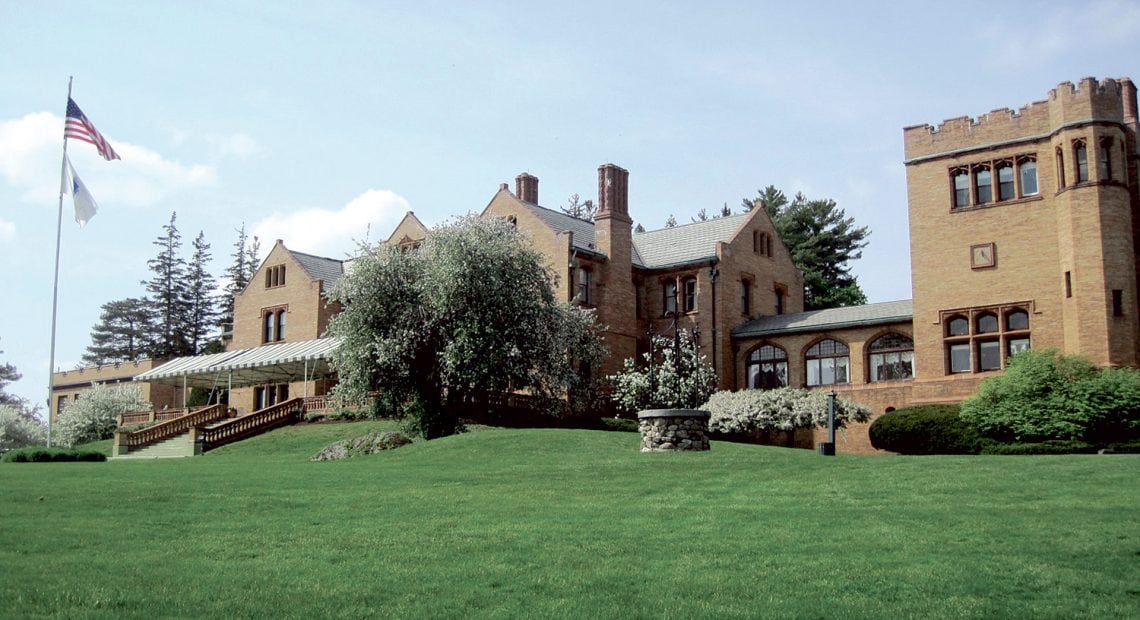
The former Cranwell Spa & Golf Resort

The former Cranwell Spa & Golf Resort is undergoing a $60 million renovation and expansion by the Miraval Group.

As its town manager, Christopher Ketchen is certainly bullish on Lenox.

“If you’re moving to the Berkshires, Lenox has clearly got to be on your radar for many reasons,” he told BusinessWest, adding that he’s one of the more recent converts. “I made the move here myself from the Boston area four years ago. I’m originally from Alford, and when I moved back to this area, I chose to live in Lenox.”

Lenox may be known mainly — and deservedly — for its cultural and recreational attractions, from Tanglewood, the summer home of the Boston Symphony Orchestra, to Shakespeare & Co., to the town’s collection of rustic inns and bed and breakfasts.

But a different sort of economic energy has been bubbling up in recent years, from the small businesses, hotels, and motels springing up along the Route 7 corridor to an ongoing, $60 million expansion and renovation at the former Cranwell Spa & Golf Resort. The Miraval Group, a subsidiary of Hyatt Hotels, purchased the property in 2016 for $22 million and plans to transform it into a high-end wellness resort.

Then there’s the new Courtyard by Marriott, which opened last year and features 92 rooms with panoramic views, an indoor pool, a large patio with firepits, a restaurant, and a 12,000-square-foot event space. Meanwhile, the 112-room Travaasa Experimental Resort at Elm Court, which straddles the Lenox and Strockbridge line, is moving forward as well.

Other projects in recent years include the relocation of Morrison’s Home Improvement Specialists Inc. from Pittsfield and its adaptive reuse of a blighted building that had been vacant for 10 years, an apartment conversion at the Walker Street Residences by the Allegrone Companies, and the construction of Allegrone’s headquarters and co-working office space using green design and technology in a building on Route 7.

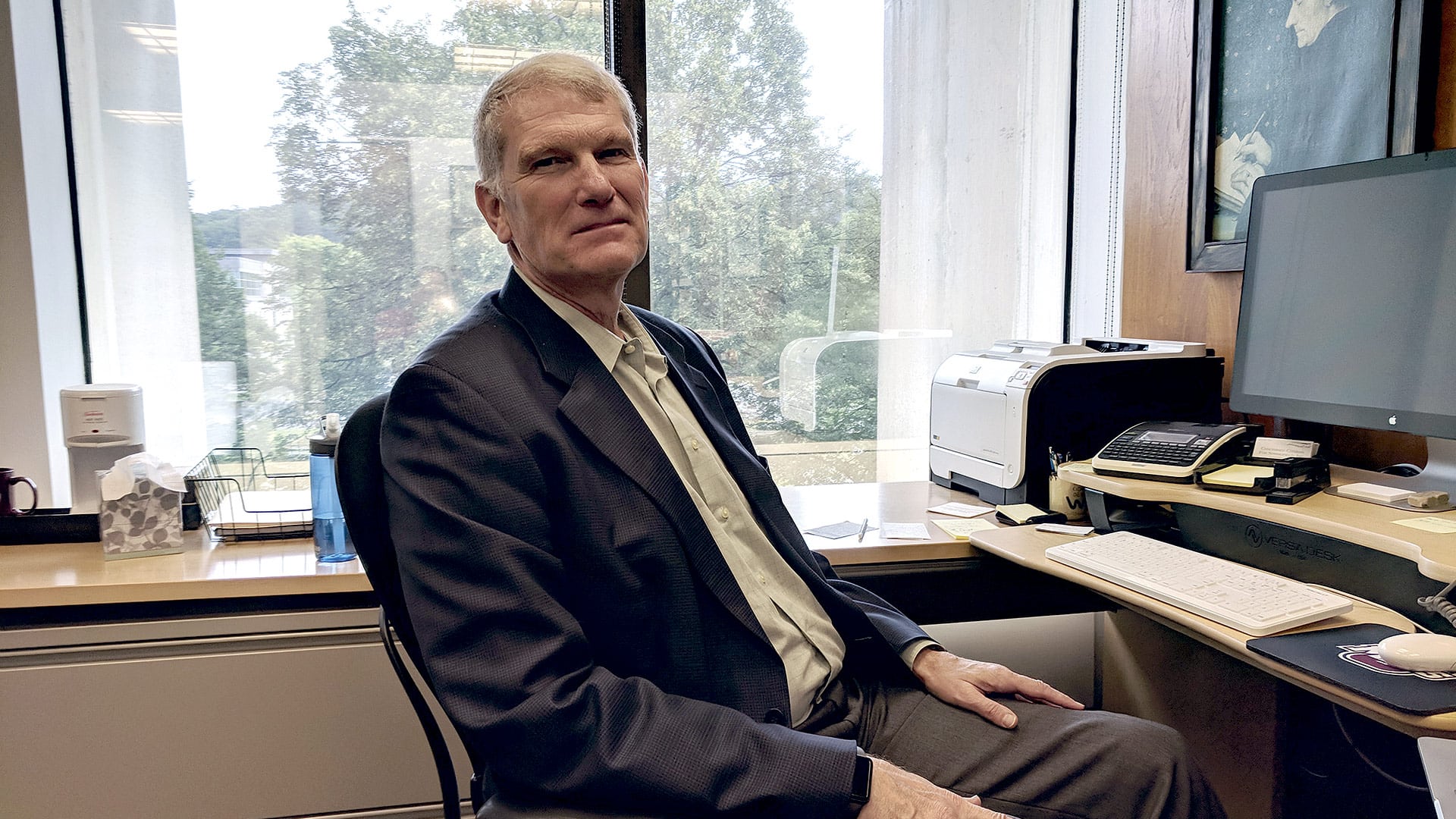
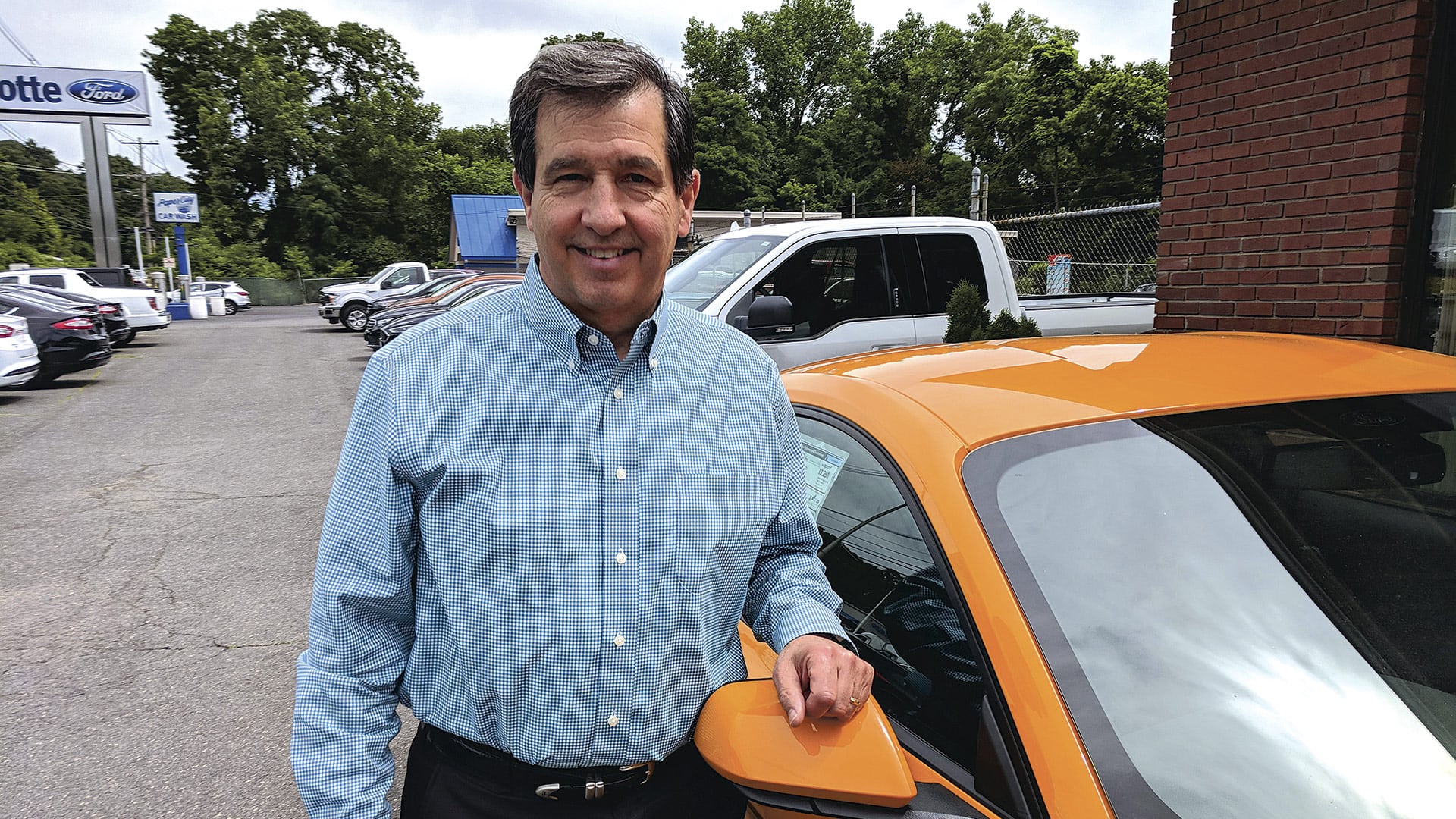
Chris Ketchen says Lenox is a draw

Chris Ketchen says Lenox is a draw because of its schools, healthy finances, cultural offerings, and a host of other factors.

“The hospitality industry is probably the biggest economic driver locally,” Ketchen told BusinessWest. “Miravar, the Cranwell development, is still in progress, Elm Court is still in progress, Marriott is up and running. As far as new projects coming in the door, there’s nothing else on that scale today, but that could change tomorrow.”

Moving On Up

In some ways, Lenox doesn’t need the kind of business growth other towns and cities do, because its strengths have long lay in both tourism for visitors and quality of life for residents.

“The town has gotten a fair amount of regional and national recognition in recent years for the schools and for the town’s financial practices,” Ketchen said, noting that Lenox is just one of two Massachusetts municipalities west of the Connecticut River whose finances have AAA ratings from Standard & Poor’s, the other being Great Barrington.

Meanwhile, “our schools are knocking it out of the park year after year in terms of their recognition at both the federal Department of Education and various statewide rankings. The high school ranked number four by U.S. News & World Report, the annual benchmark rating a lot of districts measure themselves by, so a very attractive place for families to locate and make a home.”

Lenox at a glance:

Year Incorporated: 1767
Population: 5,025
<strong>Area: 21.7 square miles
County: Berkshire
Residential Tax Rate: $12.14 
Commercial Tax Rate: $14.98
Median Household Income: $85,581
Median Family Income: $111,413
Type of Government: Board of Selectmen, Open Town Meeting
Largest Employers: Canyon Ranch, Boston Symphony Orchestra, Kimball Farms

* Latest information available

Not wanting to rest on its laurels, Lenox residents recently approved an appropriation to work with regional agencies to update the town’s comprehensive master plan. “The Planning Board is undertaking that as we speak,” Ketchen said, “and we’ve created a housing production plan through the affordable housing committee, so we’re tackling those issues in a thoughtful way moving forward.”

The state seeks 10% of housing units in any town to be affordable, but in Lenox, the current level is just over 7%, based on the 2010 Census.

The town has also been undertaking significant infrastructure improvements in recent years, the latest announcement being a $9 million, federally funded widening and improvement of a stretch of Walker Street, in addition to water and sewer improvements there.

“We’ve been investing heavily in infrastructure through aggressive capital-improvement programs,” Ketchen said.

To address an aging population — the median age of residents is 51, reflecting a trend in other towns in the Berkshires — town officials created a first-time-homebuyers program in 2016 in partnership with four banks that offers up to $10,000 in down payments to qualified applicants. They also changed zoning requirements to make it easier to build new apartments and condominiums or convert older housing stock into appealing residences, as well as adopting a Complete Streets policy that will make the town eligible for state funds to improve connectivity for pedestrians and bicyclists.

Meanwhile, to address a dearth of of market-rate apartments in Lenox, Allegrone Companies completed a renovation last year of the 1804 William Walker House, transforming it into eight market-rate apartments.

The Whole Package

To encourage companies to move to Lenox or expand, town officials have been focused on a five-year open-space plan that was adopted several years ago.

“With our proximity to employment centers in Pittsfield and also Springfield and Albany, there are options for workers who want to make Lenox their home.”

“We have an open-space and recreation plan that was really well-conceived by the Conway School in conjunction with our Land Use Department, and we’re a few years into executing that plan to preserve open space,” Ketchen said, noting projects like a major improvement to Lenox Town Beach at Laurel Lake last year. In addition, the Berkshire Natural Resources Council, the regional land trust, has been working to develop a regional trail network with a long section passing through Lenox.

Add it all up, Ketchen said, and this town of just over 5,000 residents has plenty to offer.

“With our proximity to employment centers in Pittsfield and also Springfield and Albany, there are options for workers who want to make Lenox their home — and it’s a wonderful place to make a home,” he told BusinessWest. “The town is well-managed financially. We have outstanding schools, libraries, and community center. For a town of our size, we’re providing a lot of services for residents of all ages. Our public-safety and public-works operations are some of the best in the business.”

He added that the town’s tax rates are low — $12.14 for residents and $14.98 for businesses — and relatively stable from year to year.

“Couple that with the employment opportunities and the outstanding municipal and educational programs, the arts and cultural amenities of the region, and the recreational opportunities — put that together, and you have a very attractive package.”

Joseph Bednar can be reached at [email protected]

Health Care

‘We Are a Different Place’

Shriners Hospitals for Children – Springfield is in a much healthier place than it was nearly a decade ago, when its parent organization seriously considered shutting its doors. A move in 2011 to accept third-party insurance — although free care is still provided to those who need it — stabilized the national network, and canny decisions to introduce new services have helped the Springfield facility not only survive, but thrive and grow stronger: the same goal it has for each young patient.

George Gorton recalls a conversation he had with the parent of a child who nearly drowned — and then required months of intensive rehabilitation to regain full function, both physically and mentally.

Unfortunately, the only two pediatric inpatient rehabilitation units in Massachusetts are located in Boston.

“There was nowhere in Western Massachusetts to bring him back to maximum function level,” Gorton told BusinessWest. “She couldn’t transfer her family to live in Boston for two months to get the care she needed.”

That has changed, however, with last month’s opening of a new, 20-bed Inpatient Rehabilitation Unit at Shriners Hospitals for Children – Springfield.

“Now, everyone in Western Massachusetts who needs that kind of support can come here rather than figure out how to maintain their family 90 miles away,” said Gorton, the hospital’s director of Research, Planning, and Business Development. “It made sense; we had this excess capacity and didn’t need to do a lot of renovation work. It seemed like a natural fit, so we worked to get it set up.”

That excess capacity is due to a trend, increasingly evident over the past two decades, toward more outpatient care at Shriners — and hospitals in general. But despite the space being in good shape, it still needed to be converted to a new use and outfitted with the latest equipment, and that necessitated a $1.25 million capital campaign, which wound up raising slightly more.

George Gorton, left, and Lee Kirk

George Gorton, left, and Lee Kirk say long-standing support from Shriners, their families, and community members — reflected by this display in the lobby recognizing donors — has been a major reason why the hospital provides care regardless of ability to pay.

The new unit is an example of both the community support Shriners continues to accrue and the hospital’s continual evolution in services based on what needs emerge locally.

Specifically, Gorton said, the hospital conducts a community-needs assessment every three years, and out of the 2013 study — which analyzed market and health data and included interviews with primary-care providers and leaders in different healthcare sectors — came a determination that an inpatient pediatric rehab clinic would fill a gaping hole.

When H. Lee Kirk Jr. came on board as the facility’s administrator in 2015, he and his team honed that data further, spending the better part of that year reassessing the hospital’s vision and putting together a strategic plan. They determined that continued investment in core services — from neuromuscular care and cleft foot and palate to spine care and chest-wall conditions — was an obvious goal, but they also identified needs in other areas, from fracture care to sports medicine to pediatric urology, as well as the new rehabilitation unit.

“After a traumatic injury — a brain injury, serious orthopedic injury, it could be spinal injury — a child might have some functional deficits, even though they are not in a medically acute situation,” Kirk told BusinessWest. “So they come to this program and spend anywhere from two to eight weeks with intensive rehabilitative services, which is physical therapy, occupational therapy, and speech therapy, and also physician care and nursing care.”

Under the supervision of a fellowship-trained pediatric physiatrist, patients admitted to the unit will receive a minimum of 15 hours of combined physical, occupational, and/or speech therapy per week, added Sheryl Moriarty, program director of the unit. “Using an individualized, developmental, and age-appropriate program model, our Inpatient Rehabilitation team will manage medically stable children and adolescents with a variety of life-altering and complex medical conditions.”

That evolution in services makes it even more clear, Gorton said, that the landscape is far different than it was in 2009, when the national Shriners organization seriously considered closing the Springfield hospital.

“We’re stronger in every sense of the word,” he said, “from our leadership to the quality of the employees we have to the diversity of programs we have to the financial strength behind all this. We are a different place.”

First Steps

When a boy named Bertram, from Augusta, Maine, made the trek with his family to Springfield in February 1925, he probably wasn’t thinking about making history. But he did just that, as the hospital’s very first patient.

“While Shriners opened hospitals primarily to take care of kids with polio, Bertram had club feet,” Kirk said — a condition that became one of the facility’s core services.

After the first Shriners Hospitals for Children site opened in 1922 in Shreveport, La., 10 other facilities followed in 1925 (there are now 22 facilities, all in the U.S. except for Mexico City and Montreal). Four of those hospitals, including one in Boston, focus on acute burn care, while the rest focus primarily on a mix of orthopedics and other types of pediatric care.

As an orthopedic specialty hospital, the Springfield facility has long focused on conditions ranging from scoliosis, cerebral palsy, and spina bifida to club foot, chest-wall deformities, cleft lip and palate, and a host of other conditions afflicting the limbs, joints, bones, and extremities. But that’s the tip of the proverbial iceberg.

“This is along the lines of a community service, and our athletic trainers are working with school systems and private sports clubs in the community, to participate from a preventive point of view, but they certainly can attend games as a first responder and then follow up with treatment.”

“There’s some consistency in services, but each of the hospitals has adapted to the needs that present themselves in that community,” he went on, noting specialties like rheumatology, urology, and fracture care in Springfield, as well as a sports health and medicine program that brought on two athletic trainers and is currently recruiting a pediatric orthopedic surgeon with training in sports medicine.

“This is along the lines of a community service, and our athletic trainers are working with school systems and private sports clubs in the community, to participate from a preventive point of view, but they certainly can attend games as a first responder and then follow up with treatment.”

In all, more than 90% of care provided in Springfield is outpatient, reflecting a broader trend in healthcare, Kirk added. “We have always had, and still have, the only pediatric orthopedic surgeons in Western Massachusetts.”

Jennifer Tross stands in a hallway of the new Inpatient Rehabilitation Unit.

Jennifer Tross stands in a hallway of the new Inpatient Rehabilitation Unit.

After its clinical work, he noted, the second part of the Shriners mission is education. Over the past 30 years, thousands of physicians have undertaken residency education or postgraduate fellowships at the children’s hospitals.

“We have a lot of students here in a lot of healthcare disciplines, particularly two orthopedic residents who come on 10- to 12-week rotations from Boston University and Albany Medical Center. We have nursing students, nurse practitioners, physical and occupational therapists — a whole cadre of individuals.”

The third component of the mission is research, specifically clinical research in terms of how to improve the processes of delivering care to children. That often takes the shape of new technology, from computerized 3D modeling for cleft-palate surgery to the hospital’s motion-analysis laboratory, where an array of infrared cameras examine how a child walks and converts that data to a 3D model that gives doctors all they need to know about a child’s progress.

More recently, a capital campaign raised just under $1 million to install the EOS Imaging System, Nobel Prize-winning X-ray technology that exists nowhere else in Western Mass. or the Hartford area, which enhances imaging while reducing the patient’s exposure to radiation.

That’s important, Kirk said, particularly for children who have had scoliosis or other orthopedic conditions, and start having X-rays early on their lives and continue them throughout adolescence.

It’s gratifying, he added, to do all this in a facility decked out in child-friendly playscapes and colorful, kid-oriented sculptures and artwork.

“It’s truly a children’s hospital when you look around the waiting areas and the lobbies,” Kirk said, noting that ‘child-friendly’ goes well beyond décor, to the ways in which the medical team interacts with patients. “This is a happy place, and it’s a privilege for me to be part of such a mission-driven organization. I’ve been in this business for 35 years, and this is the most mission-driven healthcare organization I’ve ever been associated with — and I think others feel that way too.”

Joint Efforts

Jennifer Tross certainly does. She’s one of the newest team members, coming on board as Marketing and Communications manager earlier this summer. “I felt the commitment as I was being recruited here,” she said. “It’s an honor to be a part of it, really.”

It’s not that difficult to uphold the hospital’s mission when one sees the results, Kirk added.

“Our vision is to be the best at transforming the lives of children and families, and that’s what we look for every single day,” he told BusinessWest. “You see how their lives are transformed, and how, regardless of their situation, they’re treated like normal kids here. That helps them to evolve and have confidence to function normally at home, at school, and in their communities.”

There’s a confidence in the voices of the hospital’s leaders that wasn’t there nine years ago, following a stunning announcement by the national Shriners organization that it was considering closing six of its 22 children’s hospitals across the country — including the one on Carew Street.

“Our vision is to be the best at transforming the lives of children and families, and that’s what we look for every single day. You see how their lives are transformed, and how, regardless of their situation, they’re treated like normal kids here. That helps them to evolve and have confidence to function normally at home, at school, and in their communities.”

In the end, after a deluge of very vocal outrage and support by families of patients and community leaders, the Shriners board decided against closing any of its specialty children’s hospitals, even though the organization had been struggling — at the height of the Great Recession — to provide its traditionally free care given rising costs and a shrinking endowment.

To make it possible to keep the facilities open, in 2011, Shriners — for the first time in its nearly century-long history — started accepting third-party payments from private insurance and government payers such as Medicaid when possible, although free care is still provided to all patients without the means to pay, and the hospital continues to accommodate families who can’t afford the co-pays and deductibles that are now required by many insurance plans.

“That was a very good strategic move,” Kirk said, noting that, regardless of the change, 65% of the care provided last year to 11,501 children was paid for by donors, the Shriners organization, and system proceeds.

If a family can’t pay, he noted, the hospital does not chase the money, relying on an assistance resource funded by Shriners and their families nationwide. “One of the largest causes of personal bankruptcy is healthcare. It’s unfortunate that all healthcare can’t be delivered in the Shriners model. But I don’t disparage my colleagues — they don’t have a million-plus Shriners and their families around the world who are incredibly passionate about raising money to take care of kids.”

As a result of this model, “Shriners Hospitals for Children is a net $10 billion business with no debt. And one of the things we try to minimize is the support we require from system proceeds, other than our endowment,” he noted. “And we’ve been very successful here. It’s kind of an internal competition — which hospital requires the least support from the system.”

In the past three years, the Springfield facility has ranked second on that list twice, and third once. And that’s despite actually growing its services significantly. In 2016, Gorton said, the hospital grew its new patient intakes by 44%, followed by 26% the following year and a projected 20% this year. “So we serve a lot more children across the diverse set of services we provide.”

He noted that the outpouring of community support in 2009 — which included a sizable rally across the street — was an awakening of sorts.

“They said, ‘hell no, don’t go, we need you; stay here,’” he recalled. “Since then, we’ve done everything we could to identify what it was that the community wanted from us and recreate ourselves in that image. I think we’ve been largely — more than largely … exceptionally — successful on that.”

The hospital saw a lot of turnover in the years following 2009, Gorton added, “but the people who stayed are committed to the mission and vision of transforming children’s lives. The people who have joined us since then sense that the one thing we don’t compromise on is our mission and our vision.”

Best Foot Forward

When asked where the hospital goes from here, Kirk had a simple answer: Taking care of more children.

That means making sure area pediatricians, orthopedists, and hospitals are aware of what Shriners does, but it also means bolstering telehealth technology that allows the hospital not only to consult with, say, burn experts at the Boston facility, but to broaden outreach clinics already established in Maine, New York, and … Cyprus?

“We go to Cyprus every year — for 37 years now,” Kirk said of a connection the organization made long ago with the Mediterranean island. “We’ll see 300 kids in four days of the clinic, and over the course of a year, 10 to 20 will come to Springfield and stay in the Ronald McDonald House here while they receive care — typically surgical care.

“We’ve had an ancient telehealth connection with Cyprus, and we’re now updating that to the latest technology, so we can have telehealth clinics with Cyprus four to six times a year in addition to going over there,” he went on. So we’re going to focus on taking care of more kids.”

That is, after all, the core of the Shriners mission.

Joseph Bednar can be reached at [email protected]

Green Business

A Hot Topic

The Center for EcoTechnology has carved out a significant legacy over the past four-plus decades by promoting green energy, waste reduction, and a host of other environmentally friendly initiatives — partly because it effectively conveys how such practices are good for not just the planet, but the bottom line. Two new solar-access projects — one for homeowners, one for businesses that use a lot of hot water — are no exception.

After decades of connecting businesses and homeowners with renewable-energy solutions, the Center for EcoTechnology in Florence keeps coming up with new ones.

Take, for example, a solar-access program specifically for middle-income homeowners, making it possible for qualifying families to procure solar panels and heat pumps with no upfront costs.

“A lot of middle-income homeowners have not been able to take advantage of owning their own solar arrays,” CET President John Majercak said. “They can make a fixed payment for electricity to somebody who owns the equipment, but there are many more benefits to owning the panels.”

To introduce more households to those benefits, CET has worked with UMassFive College Federal Credit Union on a loan product that not only makes it easier to purchase solar panels — CET actually makes the first six payments on the 10-year loan — but includes a warranty on all equipment and labor for the life of the loan.

“This product makes it possible for a homeowner to own the solar panels and heat pumps,” he explained. “We set it up to make sure what they pay on the loan is less than what they’re paying now for heating and cooling, so they see immediate savings, and after 10 years, they own the system outright, so the heating and cooling, when powered by solar panels, is essentially free after that.”

Then there’s a new program that works with businesses that use a lot of hot water — think breweries, hospitals, laundromats, and many others — and connects them with incentives for solar hot water.

Andrew Mankin (pictured) and Gary Happ recently had a solar hot-water system installed

Andrew Mankin (pictured) and Gary Happ recently had a solar hot-water system installed at their business, Barrington Brewery.

“That’s a program available to any business or farm in the state — including multi-family buildings and nursing homes — that use a lot of hot water year-round. It’s a great technology where we use solar panels to heat water, as opposed to make electricity,” Majercak explained. “For folks who use a lot of hot water in their business, it’s a really economic way to make hot water. It’s technology not a lot of people know about, compared to solar panels that make electricity. So we’re doing a lot of outreach and hand-holding, getting businesses to look at the proposals, the free technical assistance, and the incentives available from the state.”

In both cases, CET partners with state agencies like the Department of Energy Resources (DOER) and the Massachusetts Clean Energy Center (MassCEC) to bring the economic and environmental benefits of solar energy to customers who might not have considered them before.

“If we can help someone’s life be better or their business perform better at the same time we’re helping the environment, it just makes so much sense,” he said. “So we’re always pushing harder to make more of it happen.”

Home and Business

In the case of solar hot water for businesses, CET provides solar hot-water installers to get the project done, information on grants and rebates to help cover costs, and step-by-step guidance through the whole process, Majercak said, adding that other businesses that might benefit include hotels and restaurants, car washes, and community centers and resorts with large indoor swimming pools — any business, really, with year-round use of heated water in large quantities.

A solar hot-water system essentially captures heat from sunlight and circulates the thermal energy to a water tank. Solar hot-water systems reduce reliance on traditional water-heating fuels, such as oil, electricity, or propane, saving consumers money on their energy bills. These systems can provide up to 80% of domestic hot-water needs. Incentives of up to $100,000 are available for qualifying projects, Majercak said.

“The technology has been around for a long time — for decades, really — but it’s improved over the past five to 10 years, and word hasn’t really gotten out how effective it is,” he noted. “We’ve helped a variety of different businesses and been very successful saving them a ton of money — things like a multi-family building that has central hot water, or a farm that has a cheese-making factory on the side. It doesn’t cost anything to have us come out and do an assessment and see if it would be a good match for you.”

John Majercak

John Majercak presents information about CET’s impact during the organization’s annual meeting.

Business owners Majercek has spoken with are often surprised at savings they didn’t know existed, he noted.

“There’s so much information out there, but people don’t always think of their energy costs as something that’s controllable — they say, ‘oh, wow, it costs a lot of money to heat hot water, but what can I do?’ They think of it as the cost of doing business, rather than something they can improve on by using new technology.”

The same is true in the residential market, to some degree, he said, but to those who have signed on, the benefits are evident, including, again, step-by-step guidance through the program from CET, the 10-year warranty on equipment and labor, and a reduction in energy costs right from the start along with increased home value — not to mention a 30% federal tax credit and a 10% tax credit from the Commonwealth for solar installation.

While most homeowners know what solar panels do — convert sunlight into electricity to power a house without any pollution or carbon emissions — heat pumps aren’t as commonly understood, Majercek said.

Rather than burning fossil fuels to produce heating and cooling, heat pumps move heat from one place to another — bringing heat into the home in the winter and removing heat in the summer. Advancements in the technology now allow for excellent performance even on the coldest and hottest days of the year.

“This is a great new program,” he told BusinessWest. “The state specifically targeted middle-income homeowners, helping them get financial help and hands-on assistance from us to take advantage of these two technologies — solar photovoltaic panels and heat pumps, which are becoming much more commonplace.”

Even so, he said, many homeowners have been reluctant to pay the up-front costs for energy-efficient technology, which is why the loan product CET is using — ensuring that their costs don’t rise from what they’re already paying — is so attractive.

Some of those who believe in solar power but fear the initial costs sign onto power-purchase agreements with solar-panel owners, he added, “and that’s OK, but they don’t get the benefits of ownership — the tax credits, the renewable-energy credits. They’re missing out on one of the best parts. This program helps them take advantage of that, and it’s affordable for them right from the start.”

A Green Legacy

Connecting individuals and businesses with green energy solutions is a large part of CET’s mission, but that mission has taken many forms since the organization’s mid-’70s inception.

At first, CET focused on energy conservation, in particular partnering with utility companies on the relatively new concept of ‘energy audits,’ whereby a consultant visits a home or business to talk about ways in which their building or operation could be revamped to save on energy costs.

Other early initiatives included the development of a passive solar greenhouse at Berkshire Botanical Garden and Project SUEDE, a program that taught solar energy, energy-conservation theory, and carpentry to unemployed people, who then installed 31 solar space-heating systems in low-income households.

CET still conducts energy audits, helping homeowners and businesses understand the value of sustainable systems and educating them on the incentives available to make changes. But the organization has become much more, expanding its mission into a host of new opportunities, from composting to food-waste reduction.

Paulina Alenkina, a CET employee

Paulina Alenkina, a CET employee, says she’s glad she took advantage of the solar-access program.

Through a program called RecyclingWorks in Massachusetts, CET offers technical advice and assistance to companies regarding recycling and composting waste. In doing so, it has worked with companies ranging from small shops to large entities like Big Y and Titeflex.

Another success story at CET has been EcoBuilding Bargains, which began life as the ReStore in 2001 before undergoing a move and rebranding seven years ago.

In its first incarnation on Albany Street in Springfield, the ReStore dealt in recycled building materials, with the twin goals of saving builders and do-it-yourselfers money while reducing the burden on landfills. A move to Warwick Street in 2011 involved a $900,000 energy retrofit on the existing building on that site — a good example of CET practicing what it preached.

CET is also making an effort to raise up the next generation of green innovators, through a fellowship program it launched seven years ago. Five fellows per year — recent college graduates from across the U.S. — are chosen to work with CET for one year and receive training in environmental science, energy efficiency, waste reduction, and other aspects of green business. They’ve gone on to work at similarly minded nonprofits, and also corporations looking to go green.

Meanwhile, with utility incentives making energy-efficient technology more affordable for Massachusetts businesses, the Center for EcoTechnology continues to works with Columbia Gas and Berkshire Gas to help companies navigate the incentives and options available.

“The state has goals for how much renewable energy it wants to create, and it wants to address climate change and access all the benefits these technologies and services provide,” Majercek said. “Those goals align closely with our mission. We’re trying to bridge the gap between what we’d like to happen and what’s actually happening in the world.

“If we can come in and provide some education and hand-holding to make it simple for people,” he went on, “the technology can ensure that people get benefits, and the environment gets benefits, too. We’re helping people be more comfortable and save money — and saving the planet. It’s a triple bottom line.”

All Aboard

Businesses can also boost the new solar-access program for middle-income homeowners simply by letting their employees know it exists, he added. “Many businesses have lots of employees that fall into the middle-income bracket and would be able to benefit from the program. We can provide information for companies: newsletters, posters, lunch-and-learn presentations for employees and staff. Businesses can help employees go green and save money; it’s an easy thing to promote, and a win for any employee who would qualify.”

Such initiatives have been a win for CET as well, which not only reached but surpassed its program goals in the most recent three-year period.

“That’s exciting,” he said. “Everyone who works here is extremely motivated by our mission and the impact we can make.”

Joseph Bednar can be reached at [email protected]

Health Care

A Different Kind of Health Crisis
Dr. Gaurav Chawla

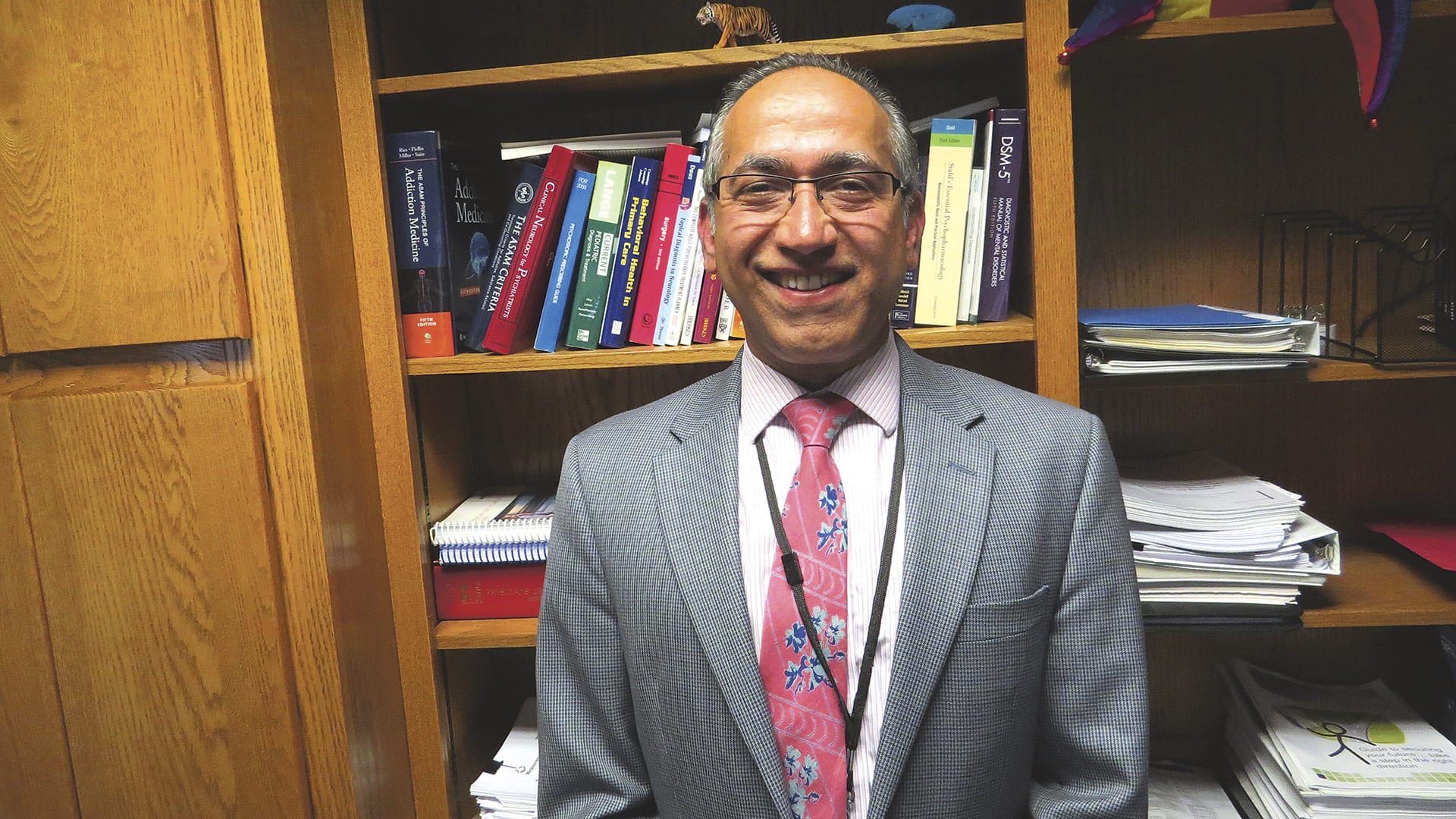
Dr. Gaurav Chawla describes suicide as “a very unfortunate, tragic outcome of a complex set of circumstances.”

It’s a common, but certainly not universal, refrain when an individual takes his or her own life.

Friends and relatives will say they didn’t see any signs that this was coming, said Kate Hildreth-Fortin, program director, Emergency Service & Mobile Crisis Intervention with Behavioral Health Network (BHN). Or they’ll say that they could not see any apparent reason for this outcome, that the individual in question seemed outwardly happy and was enjoying life.

That’s what people said about celebrity chef Anthony Bourdain, designer Kate Spade, comedian Robin Williams, and countless others, famous and not at all famous.

“But almost always, there are warning signs, and there are reasons,” said Hildreth-Fortin, one of many who spoke with BusinessWest about a subject that is timely, immensely complicated, and a true healthcare crisis probably on the same level as the one involving opioid addiction.

“If you think about the cost society pays due to undiagnosed mental-health conditions, due to emotional crises and stressors leading to loss of function and ultimately to suicide, and how many lives are directed affected by suicide … when you think about all that, this is a public health crisis.”

Timely not just because of those celebrity suicides several months ago — although they always help bring attention to the problem — and not just because of a recent report from the Centers for Disease Control and Prevention on the growing problem.

It’s timely because the numbers continue to rise, as does the overall toll from suicide, which goes well beyond the individuals who take their own life, said Dr. Gaurav Chawla, chief medical officer at Providence Behavioral Health Hospital, part of Trinity Health Of New England, who estimated that six lives are directly impacted by each suicide.

“If you think about the cost society pays due to undiagnosed mental-health conditions, due to emotional crises and stressors leading to loss of function and ultimately to suicide,” he went on, “and how many lives are directed affected by suicide … when you think about all that, this is a public health crisis.”

Getting back to the numbers, they are eye-opening and quite alarming:

• The most recent surveys show there are 45,000 completed suicides in the U.S. every year;

• That number has steadily risen since the start of this millennium, with suicides up a total of 28% since 2000;

• Massachusetts has the third-lowest suicide rate in the nation, but the rate of suicides in the Bay State has increased 35% since 1999, well above the national average;

• Women attempt suicide at a higher rate than men, but men complete suicide at a higher rate than women;

• Firearms are used in more than 50% of suicide attempts;

• Middle-aged white men (those in their 40s to mid-50s) have the highest suicide rate, particularly when they are single, but there is another peak involving individuals over 84; and

• Among individuals ages 14-34, suicide is the second-leading cause of death after accidents.

Perhaps as disturbing and frustrating as the numbers themselves are the forces behind them. They are numerous, often difficult to see, and very difficult to combat.

But there are common denominators of a sort. For starters, suicide usually results from a combination of factors, not one in particular, said Chawla, who summed things up succinctly, noting that “there is never one reason for someone to take their life; suicide is a very unfortunate, tragic outcome of a complex set of circumstances.
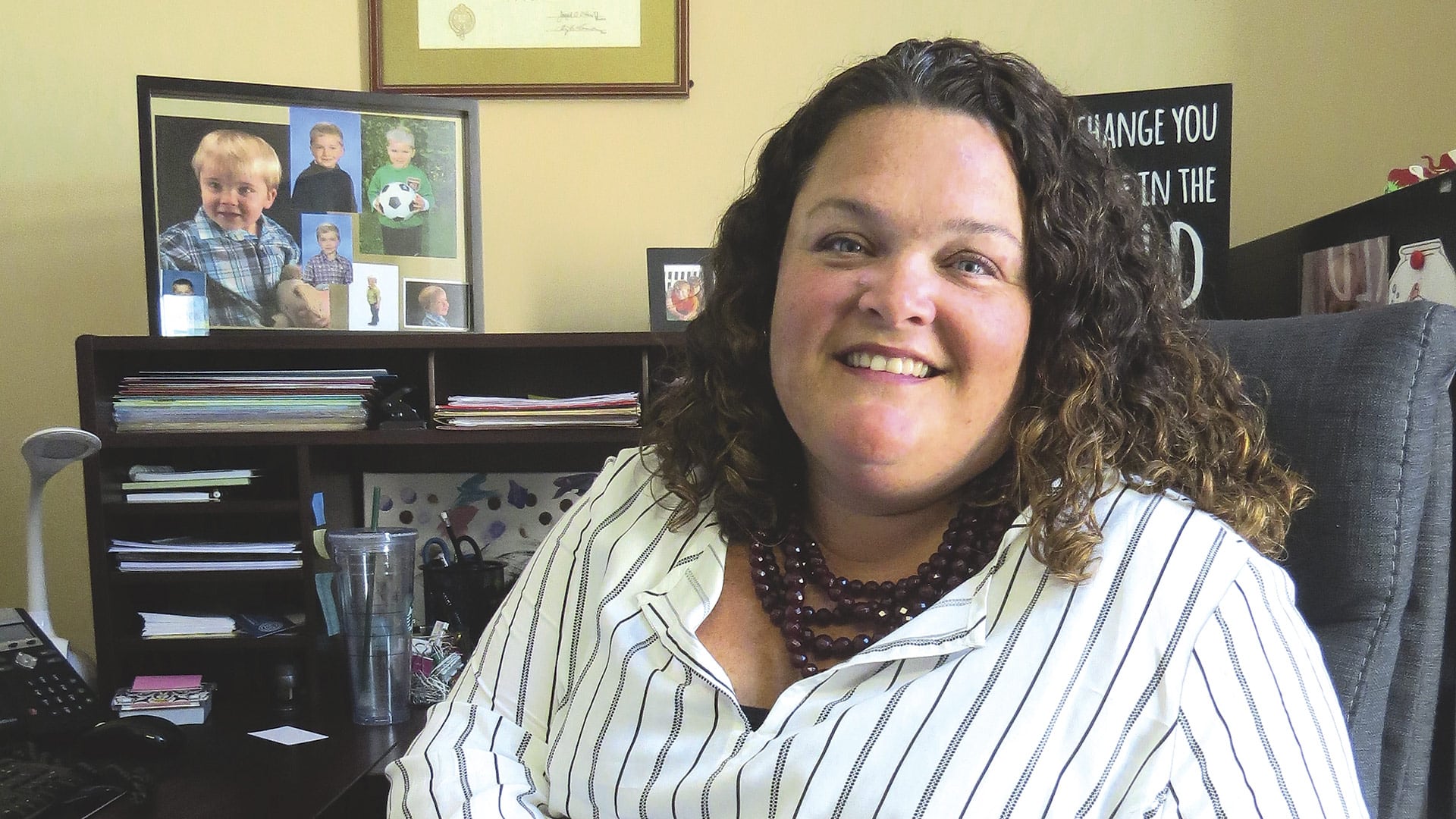
Kate Hildreth-Fortin

In almost all cases, Kate Hildreth-Fortin says, there are warning signs with someone contemplating suicide.

“You will often see the assumption that undiagnosed mental illness or inadequately recognized or treated mental illness is the cause,” he went on. “However, that is a myth; 50% of the suicides do not have a diagnosed mental illness behind them.”

As for what is behind them, that list is obviously quite long, said Hildreth-Fortin, and could include biological and genetic factors, increasing stresses of life, relationship crises, financial and occupational stressors, poor coping styles, increased substance use, and many others.

Another common denominator is that those contemplating suicide generally feel trapped in a life that does not bring them happiness or make them fulfilled, said those we spoke with, adding that this descriptive phrase can be applied to people at every age, every income bracket, and every walk of life.

Slicing through it all, such individuals need a way out of that trap and can’t find one or are unwilling to try, said Chawla.

“Suicide is a confluence of circumstances that lead one to conclude that they’re trapped in a hopeless circumstance, sometimes without purpose, in a painful existence from which there is no other way out,” he told BusinessWest.

Meanwhile, providing a way out, especially to those suffering from behavioral-health issues (and that’s a large percentage of those who contemplate or complete suicide) is made more difficult by the persistent stigma attached to seeking help for such conditions, and then finding help in a system plagued by a shortage of resources.

These are the reasons why this is a healthcare crisis, even if the same politicians who are quick to give such a label to the opioid epidemic are mysteriously reluctant to do the same with suicide.

For this issue, BusinessWest takes a long, hard look at suicide, going beyond the numbers in a quest to explain why they continue to rise, and also looking at how area professionals are helping those who are in that aforementioned ‘trap’ and need a way out.

A Failure of the System

Hildreth-Fortin, like the others we spoke with, said that, while it is somewhat regrettable that it often takes celebrity suicides like Bourdain’s and Spade’s to bring heavy media attention to the problem of suicide, she’s happy for the attention and a chance to bring the conversations to the forefront, instead of the background, where they have been for too long.

That’s because a brighter light needs to be shone on this crisis to bring about any kind of change in the current trends. With that attention, she said, there is hope that the stigma attached to mental-health issues and seeking help for them might be diminished; hope that more resources might be brought to bear to address the crisis, as has happened with opioid addiction; hope that friends and loved ones might become aware of the warning signs — what to do when they see and hear them; and hope that those feeling trapped might be more persistent in finding a way out.

That’s a lot of hoping, but in this battle, those fighting it will take whatever help they can get, especially with regard to that stigma concerning mental health.

“Suicide is a word we use every day; it’s something we deal with every day,” said Hildreth-Fortin, whose program handles roughly 1,300 assessments a month, and 70% of these individuals, in her estimation, have suicidal thoughts. “There’s a lot we can do with prevention; we need to reduce the stigma, improve education, and treat suicide the same way we would diabetes — ‘what can we do to help someone?’”

Chawla agreed, and said the stigma attached to both suicide and mental illness and seeking help for it often contributes to a lack of understanding concerning why someone commits suicide.

That is certainly the case with celebrities such as Bourdain, Williams, and others, he went on, adding that, to most of the rest of the world, these people seem happy and content with their lives.

But it’s not the world’s perception of these individuals that matters; it’s how they view themselves, and this is true of people across all income levels and social strata.

“It’s about perceptions of who you are, how you fit in your world, and how meaningful you find your existence,” he said. “That’s what ultimately leads to or doesn’t lead to such acts.”

But while suicide is seemingly an individual act, it isn’t, and each act represents more than one person choosing that tragic outcome.

“Suicide is taken as one event by one individual, and that’s not what it is,” said Chawla. “It is the final outcome of the failure of the system. Along the way, there are many lives affected, there’s a lot of loss of function, and there is opportunity that’s missed.”

Hildreth-Fortin and others at BHN agreed, and said one huge key to perhaps reducing the number of suicides is to seize opportunities rather than miss them.

And there is quite a bit that goes into this equation, she noted, listing everything from proper training of police officers, teachers, and others to being aware of the many warning signs; from knowing what questions to ask those at risk (and asking them) to knowing how to respond to the answers to those questions.

And this means not overreacting or underreacting, and, above all, connecting people at risk with services that provide help, said Hildreth-Fortin, who, like Matthew Leone, assistant program director of the crisis unit at BHN, is trained in something called QPR, which stands for question, persuade, refer — the three basic steps in suicide prevention.

“This is training given to anyone in recognizing the risk factors, how to persuade the person to get help, and how to refer that person for help,” Leone explained, adding that, in his role, he does a lot of training in the community on how to recognize suicide.

Which brings him to those warning signs. There are many to watch for, some subtle, some most definitely not, he said.

“This is training given to anyone in recognizing the risk factors, how to persuade the person to get help, and how to refer that person for help”

They could and often do include people saying ‘goodbye’ or ‘nice to know you’ on Facebook and other platforms, individuals giving away possessions, young people suddenly drawing up a will, people losing interest in things they enjoy doing, a decrease in performance at school, and many others.

“A more overt sign might be when they start stockpiling medication or another means of following through on their plan,” Leone went on, adding that, in addition to these warning signs, which are clearly red flags, there are also risk factors.

And there are many of those, he said, starting with being a middle-age male. Others include financial distress, depression, divorce, loss of a job, being given a terminal diagnosis, and, of course, a combination of some of these.

Questions and Answers

The next part of the equation is knowing what to do when warning signs are recognized, or with someone who outwardly seems at risk, said Hildreth-Fortin.

She acknowledged that having a conversation with such an individual and asking the questions that need to be asked is awkward and often very difficult (some fear that just asking the questions can help promote a suicidal act) but it needs to be done.

“A big piece of QPR training is teaching people how to ask the question, to get someone comfortable with asking someone if they’re suicidal,” she said, adding that this training is often given to first responders and educators, but parents, spouses, friends, and employers also fall into the category of individuals who need to ask questions and need to know how to ask and also how to respond.

Questions should focus on what thoughts people are having, how often they’re having them, and whether they’ve acted on these thoughts in any way before, said Hallie-Beth Hollister, assistant program director, Community Relations for BHN, adding that the answers will generally reveal just how at-risk someone might be.
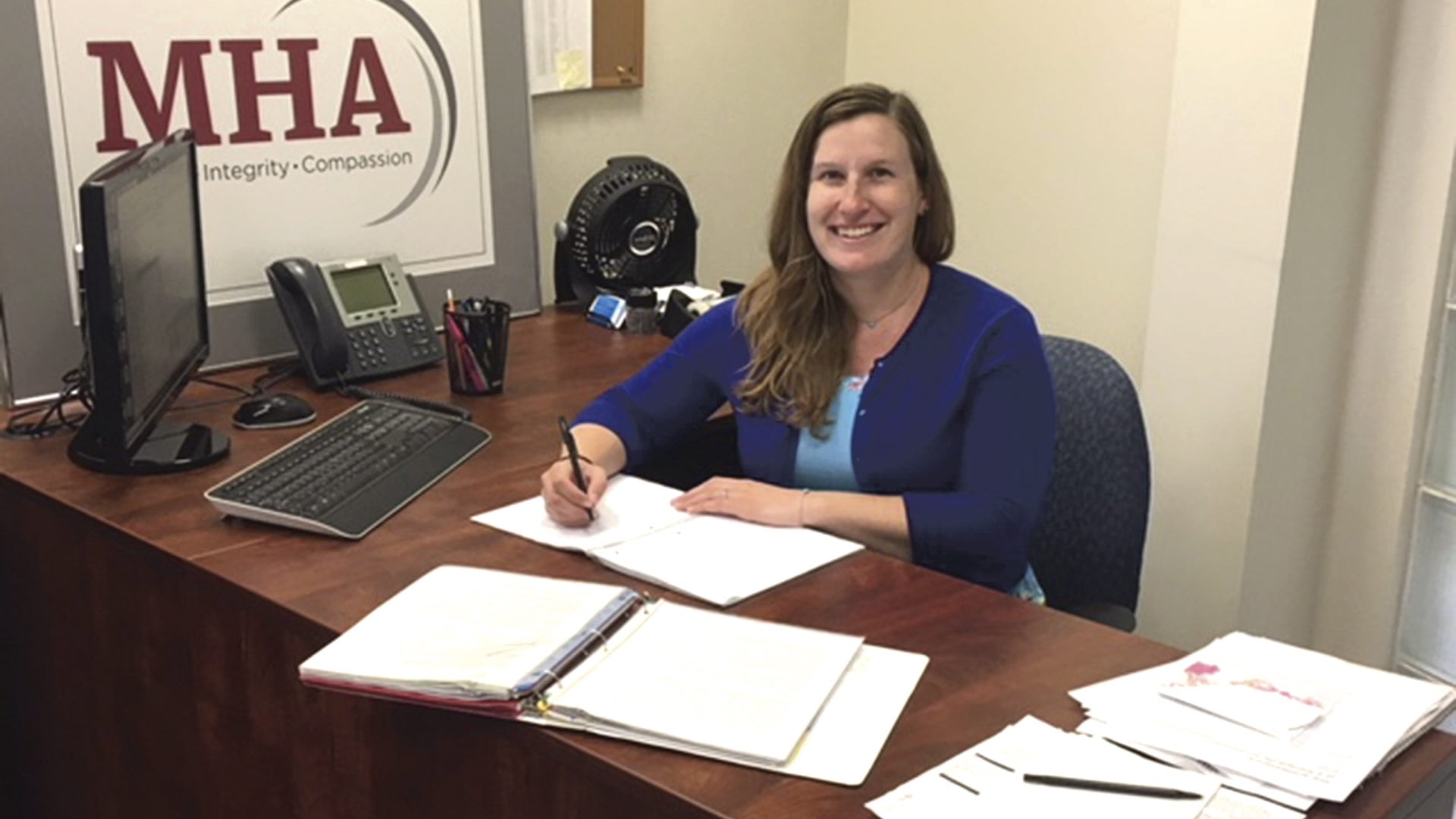
Jenni Pothier

Jenni Pothier says those working with those contemplating suicide need to create a comfortable, non-judgmental, open space for dialogue to occur.

One key, she went on, is not asking leading questions that would enable the individual to give the answers the questioner might be looking for.

“Don’t say, ‘you’re not thinking of killing yourself, right?’” she said by way of example.

But, as noted, recognizing warning signs and asking the right questions are only parts of the equation. Responding to the signs and the questions to the answers is another big part, said Leone, adding that that many people balk at asking questions, or especially difficult and specific questions, because of anxiety about the answer.

“‘What do I do if the answer is yes?’” is a question that unnerves many, he went on, adding that there’s a reason for this; the response can be complex.

“We talk with people all day who mention that they’ve having suicidal thoughts,” he explained. “Some have the intent to follow through, others do not; some have vague suicidal ideation where there’s no real plan to it.”

Which is why overreaction is possible and should be avoided.

“Many times, with suicide, when someone says they’re having those thoughts, instead of starting a conversation, it ends the conversation,” he explained. “People will jump in and say, ‘we need to get them to the hospital, we need to get them help now,’ when the person is just reaching out to talk about it for help.

“And this overreaction can have a negative effect to it because then the next time the person is experiencing those thoughts, they may not say anything,” he went on, adding that the key is generating the proper response given the individual’s risk factors, warning signs, the strength of the connections in his or her life, and other factors.

Jenni Pothier, director of the Tenancy Preservation program for Springfield-based Mental Health Associates, agreed. In the course of her work, which involves helping individuals who are at risk of homelessness — a stressful situation to say the least — the subject of suicide often comes up.

“Because we know that suicide includes risk factors like poverty, experiencing potential homelessness, and a lack of access to resources, people are in crisis,” she explained. “So we’re assessing people regularly for suicide.”

And those assessments involve asking those questions mentioned above, asking them in an effective way, and responding in the appropriate manner.

“As practitioners and clinicians in the community, you need to create comfortable, non-judgmental, and open spaces for dialogue to occur,” she explained, “so people can express to you how they’re feeling without the fear of the stigma or that you’re going to instantly call 911 to get them hospitalized if they say they’re contemplating suicide or having suicidal ideations.”

Bottom Line

As she talked with BusinessWest about suicide and, more specifically, the problems many have with asking the questions that must of asked of someone at risk, Hildreth-Fortin related the story about an educator who, during a QPR training session, admitted not only that she would have difficulty asking such questions, but also that she would be upset if someone put those questions to her child.

“I had a real hard time responding to her, because it spoke so greatly to the stigma attached to this,” she said. “If your child had a stomach ache, you wouldn’t have a problem with him going to the nurse. You talk about what hurts, what kind of pain it is … we have to treat suicide the same way we would any medical symptom. We have to talk about it.”

It will take a confluence of factors and a great deal of resources to reverse the current trends on suicide, but getting people to talk about it and respond to the talk is the big first step, said Chawla, adding that only by doing so can those missed opportunities he mentioned become real opportunities to do something about a true healthcare crisis.

George O’Brien can be reached at [email protected]

Cover Story

Lean and Green

solar canopies

These solar canopies over a parking lot are part of a massive, campus-wide photovoltaic project.

Because its region is so environmentally conscious, UMass Amherst would appear to be fertile ground for sustainable practices like green energy, eco-friendly buildings, and a buy-local ethos in food service. But it’s still remarkable how broadly — and effectively — the university has cast its net when it comes to sustainability. A national report placing the campus ninth in the nation for such efforts is the latest accolade, but UMass isn’t about to rest on its laurels.

Call it a reward for a decade of work.

When the Assoc. for the Advancement of Sustainability in Higher Education released the three-year results of its Sustainability Tracking, Assessment and Rating System (STARS), UMass Amherst earned placed ninth in the nation — a leap of 20 places from its previous rating in 2015.

That’s gratifying, said Steve Goodwin, deputy chancellor and professor of Microbiology at UMass, who has been heavily involved in efforts to make the state’s flagship campus more green. And it’s not a recognition that was earned overnight.

“Sustainability has been a focus for the campus for about 10 years,” he told BusinessWest. “There were some efforts even before that, but it really started about 10 years ago.”

When Kumble Subbaswamy became chancellor in 2012, Goodwin said, he ramped up those efforts by forming an advisory committee specifically around sustainability, which helped to raise the awareness of green issues around campus.

“Sustainability has been a focus for the campus for about 10 years,” he told BusinessWest. “There were some efforts even before that, but it really started about 10 years ago.”

“This new STARS score reflects the university’s continuing commitment to excellence in sustainability,” Subbaswamy said when the ranking was announced. “UMass Amherst is a leader in best practices for energy-efficient construction and sustainable food use, conducting world-class research, and preparing a new generation of students to be inspired stewards of our planet.”

But before any of that could be accomplished — through innovative food-service changes, solar projects, green-building techniques, and a host of other initiatives (more on them later) — there had to be buy-in from both the university’s leaders and its students.

“It gained a lot of acceptance early on because a lot of sustainability is doing what you do and meeting your mission with very high efficiency,” Goodwin said. “That’s not all of what sustainability is, but that was an appealing piece for us. A campus has a particular mission, and it has a limited set of resources to meet that mission.”

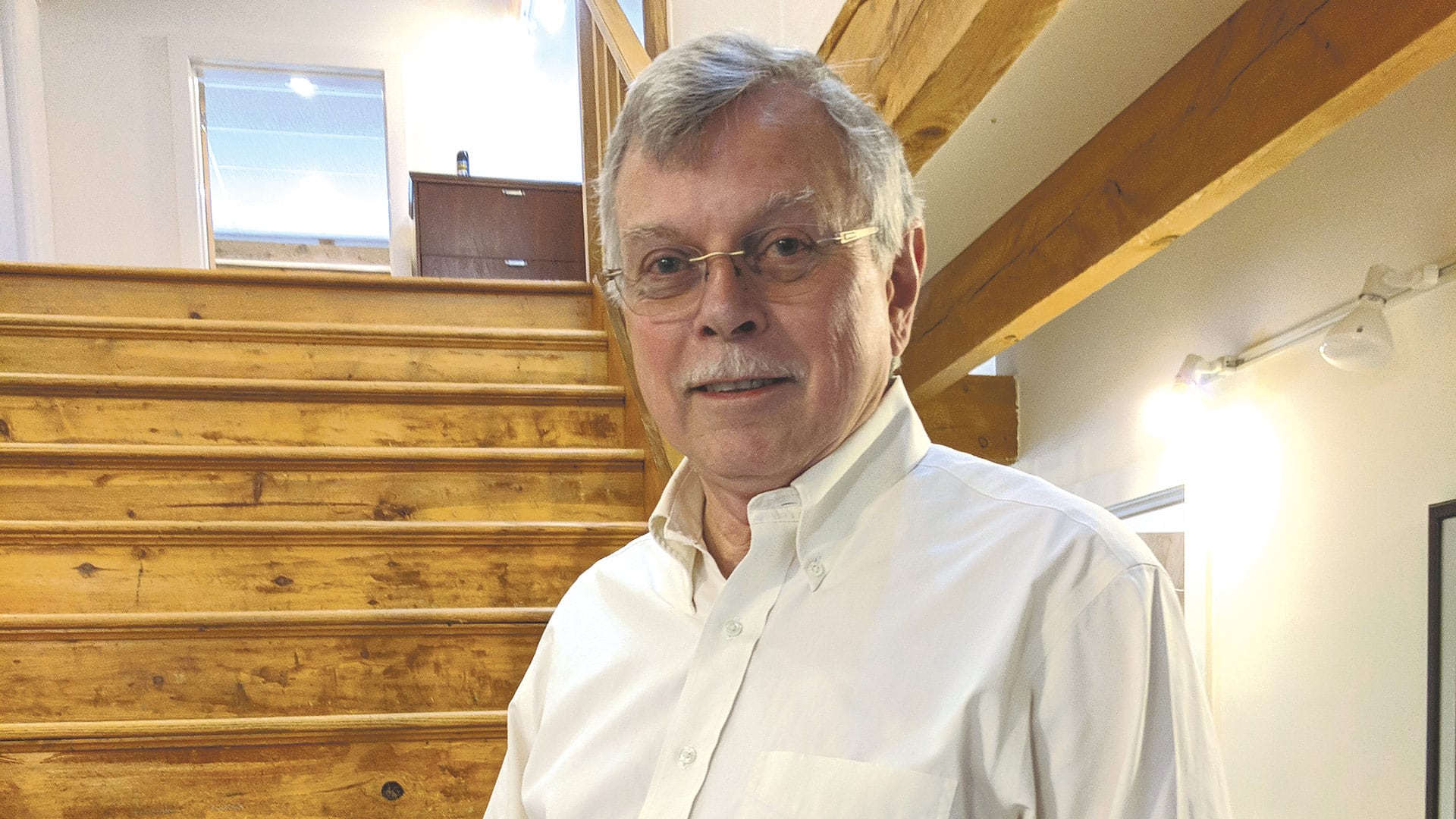
Steve Goodwin

Steve Goodwin says buy-in from students has been key to UMass Amherst’s sustainability successes.

Take, for example, the Central Heating Plant, a project completed in 2009 that replaced the campus’ 80-year-old coal-burning plant with a co-generation facility that provides electricity for 70% of the campus and 100% of the steam needed for heating and cooling buildings across the sprawling grounds — all while reducing greenhouse gases by 27%.

“That was a really big decision for the campus,” Goodwin said. “At the time, it was probably the best co-generation plant in the country. That really worked out well for us because we needed electrical power and we were heating with steam, so to get the efficiencies of co-generation was a really a big deal for the campus.”

Those early years of UMass Amherst’s new sustainability focus also saw a reduction in water use — by using recycled water where appropriate — and partnering with Johnson Controls to incorporate energy-saving devices on much of the campus lighting. And that was just the beginning.

“Since then, the sustainability committee has really taken the lead for the chancellor, and made it more of a campus-wide thing,” Goodwin said — in ways that continue to expand and raise the university’s green profile on the national stage.

Food for Thought

Early in the process, late last decade, UMass officials recognized food service as a prime area to boost efficiency and reduce waste. Not only did the sheer volume of food produced every day offer plenty of opportunity for improvement, but students were beginning to ask questions about waste.

“The initial step was to go trayless,” Goodwin said. “If you have a tray of food, it’s easier to heap a lot of food on the tray and not necessarily eat it all. But if you have to carry it all with your hands, you take less to begin with, and if you want more, you just go back.”

As a formal measure, in 2013, UMass Amherst became the largest food-service provider in the nation to sign on to the Real Food Campus Commitment, which requires participating universities’ food budgets to move away from industrial farms and junk food and toward local and community-based, fair, ecologically sound, and humane food sources by 2020. “For an institution this large,” Goodwin said, “we purchase a very large percentage of local food.”

In 2014, UMass Amherst Dining Services was selected as a gold recipient for procurement practices in the 2014 Sustainability Awards given by the National Assoc. of College and University Food Services — just one way national experts were taking notice. Around the same time, the university’s sustainability staff and faculty team from Environmental Conservation, the Physical Plant, Dining Services, and University Relations won the state Department of Energy Resources’ Leading by Example Award.

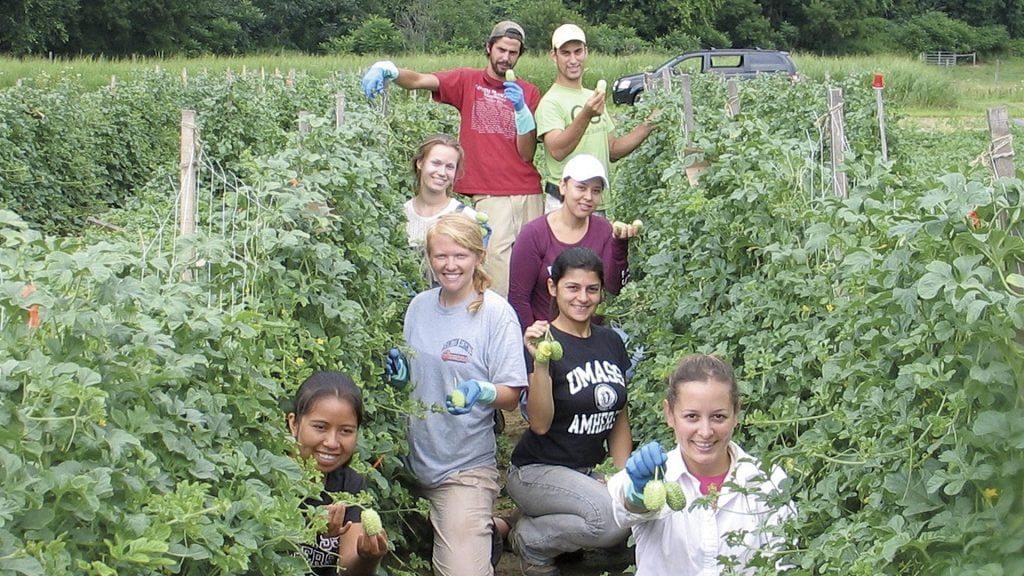
The UMass Crop and Animal Research and Education Farm in South Deerfield

The UMass Crop and Animal Research and Education Farm in South Deerfield is home to the Student Farming Enterprise, which allows undergraduates to gain hands-on experience managing a small, organic farm. Produce generated there is sold to local stores and a community-supported agriculture share program.

Building design has been another focus, a recent example being the John W. Olver Design Building, completed last year, which uses a wood-concrete composite flooring product that was developed on the UMass campus. The contemporary wood structure, which houses the Building and Construction Technology program, the Department of Architecture, and the Department of Landscape Architecture and Regional Planning, includes sustainability features such as LED lighting, motion sensors, ample natural light, electro-tinting glass, heat-recovery systems, bioswales, rain gardens, low-flow faucets, and public-transportation access.

Meanwhile, the Integrated Science Building, constructed in 2009, employs cooling systems that reuse rainwater, state-of-the-art heat exchanges and ventilation systems, passive solar collection, and extensive use of eco-friendly materials like bamboo, to name just a few features.

“Obviously building is a big chunk of where our resources go, especially energy and water resources, so building design has a big impact,” Goodwin said, noting that UMass typically aims for some level of LEED certification on new buildings.

“But we’ve also done some things that go above and beyond those certifications to try to make our buildings more suited for their particular uses,” he went on. “There’s a whole variety of passive solar issues, lighting issues, energy and water use around buildings, reclaiming ground water, those sorts of considerations.”

Textbook Examples

On an academic level, Goodwin said, sustainability has made its way into the curriculum of nearly every program on campus. “I don’t think there’s any school or college that doesn’t have something that deals with an aspect of sustainability. They range from the obvious — an environmental science course, for instance — to a social justice course where they’re making connections back into sustainability and how that impacts the way people experience their communities.”

He stressed repeatedly, however, that raising up a culture of sustainability has never been a solely top-down effort, and that students have long been engaged on these issues.

“One of the things we did early on was to establish a culture within the dormitories and among the students — in part because the students really want this. They care about these issues a lot,” he said. “So we spend a lot of time building various aspects of sustainability into the curriculum, but also extracurricular activities.”

For example, ‘eco-reps’ are students who are specifically trained around issues of sustainability and are responsible for a floor of a dorm, to help students understand the impact of their day-to-day activities. “We run competitions between the dorms — who’s going to do the most recycling or use the least water this year, those kinds of things.”

Students had a direct impact on one of the university’s most notable green decisions — to divest its endowment from direct holdings in fossil fuels in 2016, becoming the first major public university to do so.

The John W. Olver Design Building

The John W. Olver Design Building is a model for green design and operation.

A year earlier, the board of directors of the UMass Foundation voted to divest from direct holdings in coal companies in response to a petition from the UMass Fossil Fuel Divestment Campaign, a student group. Energized by that decision, the campaign staged a series of demonstrations to call for divestment from all fossil fuels, and the foundation board followed suit.

“Important societal change often begins on college campuses, and it often begins with students,” UMass President Marty Meehan said at the time. “I’m proud of the students and the entire university community for putting UMass at the forefront of a vital movement, one that has been important to me throughout my professional life.”

It’s an example, Goodwin said, of the ways university leadership and the student body are often in alignment on issues of sustainability, both locally and globally. “So it’s been a balance of having sustainability in the curriculum, having demand from the students, and also having the central administration realize the importance of sustainability university-wide.

Numerous people on campus are tasked with making sure UMass continually improves its efforts, including the creation of a new position, sustainability manager, seven years ago.

“We’re having a huge impact in the region, and we’re proud of the impact we’re having — and at the same time, we’re also proud of what the students are experiencing,” Goodwin said. “Not only are they learning about these issues, but they’re living this approach as well. They’re living within an environment in which sustainability has a higher priority, so now we hope that impact will increase as they go out into their communities and spread the impacts of sustainability.”

Green Makes Green

Last year, UMass Amherst made news on the green-energy front again, installing more than 15,000 photovoltaic panels across campus, providing 5.5 megawatts of clean electrical power for the campus to use for a heavily discounted rate. The initiative is expected to reduce greenhouse-gas emissions in the regional grid by the equivalent of 31,000 tons of carbon dioxide and cut the university’s electric bills by $6.2 million over 20 years.

“It’s a situation where doing the right thing is also a very smart business decision as well,” Goodwin said. “As time goes on, some of those challenges will get to be a little trickier. Now we’re trying to make decisions about the need to increase the amount of electricity that we’re currently generating, so we’re going to expand the base, but how, exactly, is the right way to do it that’s efficient, a good financial decision, and also a good decision for the environment? It gets very complex.”

For now, he went on, the campus has a strong foundation in decreasing its carbon footprint and decreasing the amount of carbon dioxide and other greenhouse gases being emitted — efforts that have run the gamut from large-scale energy production to UMass Amherst’s participation in ValleyBike Share.

“The campus had been trying to run an internal bike-share program with some success, but we were hoping to do better,” he noted. “Now, with ValleyBike Share, the campus is working with other communities to develop a program that will actually bring a little more connectivitity between the university and the surrounding communities. So it has multiple benefits.”

Clearly, the impact of sustainable practices on not only the campus, but potentially the world, through the continued efforts of alumni, is reward enough for the university’s broad sustainability efforts — but the STARS recognition is nice too, Goodwin admitted, as it showcases UMass Amherst in the top 10 among some 600 participating institutions.

“We’re very excited about that, but it’s a huge amount of work, to be perfectly honest, because it’s all self-reporting,” he explained. “It covers so many aspects — the academic side, the financial side and investments, energy use, and the social side of sustainability. So it’s a very wide-ranging analysis. And, of course, after you do all that self-reporting, they go and verify everything as well.”

The end result is certainly a source of pride on campus — and a little more motivation to continue and broaden these efforts. Not that UMass needed any.

“Sustainability means a lot of different things to different people,” Goodwin said. “But to me, it was always a way of thinking: ‘OK, yes, we have a set of decisions to make; let’s make sustainability a part of that decision-making process.’ And I think our students are picking up on that as well.”

Joseph Bednar can be reached at [email protected]
Retirement Planning

One Size Doesn’t Fit All

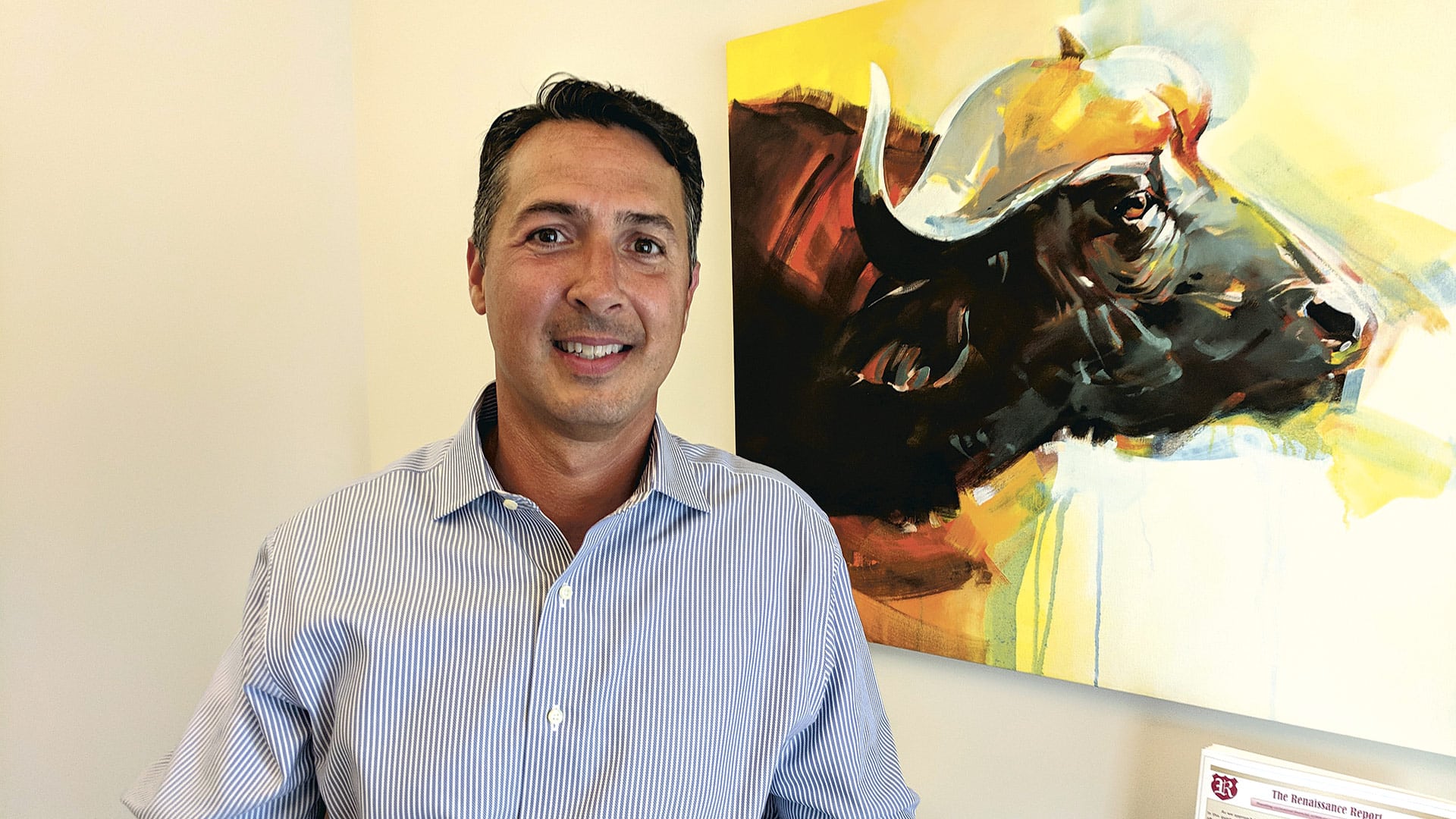
President and Chief Investment Officer Trevor Forbes

President and Chief Investment Officer Trevor Forbes

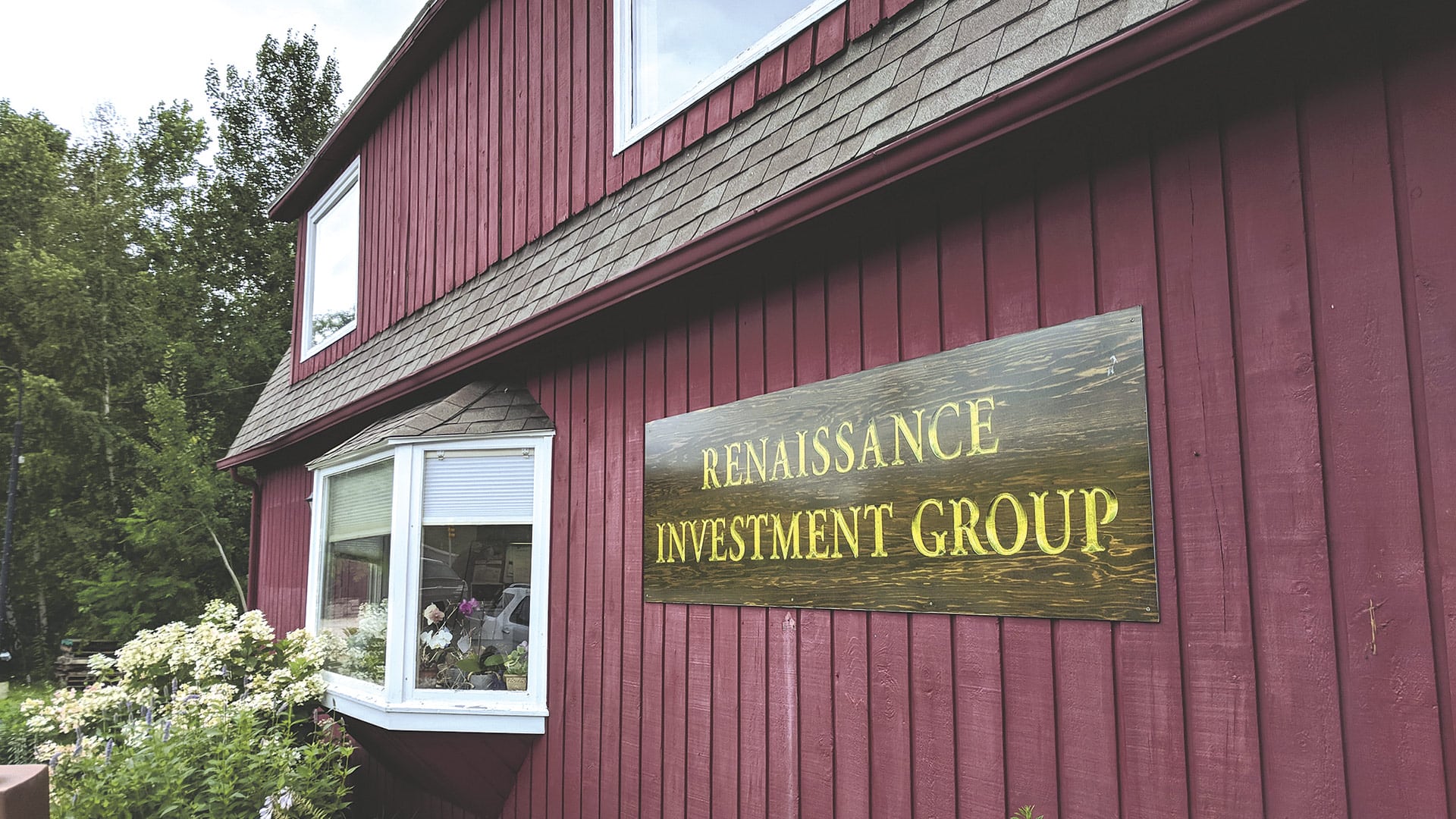
With decades of investment experience under his belt — much of it for very large companies on an international scale — Trevor Forbes decided he preferred an approach to portfolio management that emphasizes the individual. He found that model at Renaissance Investment Group, which he joined as president in 2011. Creating a completely personalized portfolio for each client takes work, he said, but it’s worth it because it creates peace of mind — in more ways than one.

It makes sense, Trevor Forbes said, that no two people would forge an identical strategy for their financial future.

“Your financial position is going to be different than someone else’s, and your ideas about what you want when you retire will undoubtedly be different. So how you deal with that retirement will be different,” said Forbes, president and chief investment officer at Lenox-based Renaissance Investment Group.

“You may be a cautious investor; you may be able to tolerate much less in the way of volatility in your investments than someone else, and we take that into account,” he went on. “We have to balance a whole range of different requirements from our clients. A lot of organizations will claim to do that, to an extent, but in most cases, they are not really set up to do it that way — certainly not for the size of clients we typically manage money for.”

Renaissance was launched in 2000 with a vision to provide tailored investment-management and financial-planning advice to individuals who were being sidelined by the centralization of the industry.

“That’s remained very much the ethos of Renaissance ever since,” Forbes said. “I joined in 2011, having had long discussions with the original founders for about 18 months prior to that, at a time when two of the original founders were seeking to retire. They wanted somebody with a similar ethos and a similar approach to investments.”

“The mission has been to provide individualized investment management and financial planning for people who otherwise wouldn’t be getting that.”

Forbes, a native of England, had worked in London for most of his career, mainly for large financial organizations on the investment side. “For example, for most of the ’90s I was the head of global equities for Citibank, which was those days based in London. I had to coordinate the investment approach of seven different locations around the world. They got me very heavily involved in asset allocation for a whole range of different types of clients. Particularly interesting to me, at that stage, was the private client side.”

Forbes left Citibank at the end of the 1990s and went into private-client wealth management; in 2007, he set up a wealth-management business “at probably one of the most inauspicious times in market history.” But over the next several years, he and his team built that enterprise from nothing to a billion dollars under management.

Still, he and his wife were looking for something different when they relocated to the Berkshires — she to open a bed and breakfast, and he to find a wealth-management firm that fit his philosophy — which he found in Renaissance just as it was looking for a successor to run the business.

Just before he came on board, the company became a wholly owned subsidiary of Berkshire Bank, but it never fit neatly into that’s institution’s mold, he said, so in 2016, he partnered with Ohio-based Stratos Wealth Enterprises, LLC to buy out the firm.

“We’ve been able to regain our independence and maintain what has been the ethos of the company all the way through,” he explained. “The mission has been to provide individualized investment management and financial planning for people who otherwise wouldn’t be getting that. That continues today.”

In most investment-advisory firms of Renaissance’s size, said Chief Operating Officer Christopher Silipigno, “you’re not getting someone to sit down and find out exactly what your situation is, what variables are in play for you, and then looking at the specific equities that best make up a portfolio that matches that. That’s pretty special.”

One thing that attracted him to the firm, he added, is its history of bringing in senior-level talent from very large institutions who now bring that experience to clients outside the ultra-high-net-worth sphere.

“You’re getting someone with Trevor’s background to sit down with you and run through all kinds of things — your investment concerns, retirement concerns, cash flow and how much you need, as well as things like passing this wealth on in a tax-efficient manner, how the funds will go to your children, even real-estate concerns.”

As an SEC-registered investment advisory firm, Silipigno noted, Renaissance has a fiduciary responsibility to clients — a term meaning, essentially, that their interests always come first.

“Most people don’t understand that, in your large broker-dealer houses, that’s not the case. They have a suitability expectation, which means the investment has to be suitable, but it could be that they’re selling you Apple because they own Apple at one price and want to sell it at another. We’re not selling our own stock, so our advice is what’s in your best interest. We’re also not pushing products, which is unique.”

Conscientious Investors

At Renaissance, the investment team is doing all its own research on individual investments, Silipigno said. “You might think that’s the norm, but it’s further and further away from the norm. Typically, research is done somewhere else and being sent into the firm, and then that research is being used to make decisions for you.”

That in-house research, he explained, extends to both national trend tracking, but also the fundamentals of each company being considered for investment. For instance, he noted, in a growing economy, oil might be a promising investment. “But maybe we see a lot of growth coming out of West Texas, and here are the companies in West Texas best poised to grow because they have the capacity to grow.

Chris Silipigno

Chris Silipigno says Renaissance has a fiduciary responsibility to clients, meaning their interests come first, not the firm’s.

“That’s the kind of specific research that’s happening here and can be brought to a client,” he said. “Maybe someone in a $15 million account somewhere can demand that kind of answer. Here, we’re bringing that to clients in much smaller accounts.”

Sometimes, an individual investment strategy will incorporate what’s become known in the industry as social-responsibility investments (SRI), or environmental, social, and governance (ESG) preferences. Take, for example, customers who may not want their money invested in petroleum.

“A lot of those clients might not want that company in West Texas. That’s fine. It’s their wealth, and they have a role to play in how that wealth is invested,” Forbes said. “So we tailor a portfolio to either exclude certain characteristics or include some of the characteristics these individuals are interested in. Then we do research into these kinds of companies.”

In addition to fossil fuels, some customers have an aversion to military spending, guns, alcohol, gambling, pharmaceutical companies, even investment banks, and don’t want their money invested in one or more of those areas, he explained. Conversely, they might have a special interest in water resources, testing equipment for water purity, solar energy, or any number of other mission-driven businesses.

“Your view of social responsibility can be much different than someone else’s view of social responsibility. So we have to take into account a very wide range of differing views,” he added, noting that such companies must also be suitable investments from a financial perspective — otherwise, there’s not much point in investing in them.

Tailoring portfolios to match a customer’s ESG preferences, Forbes said, is really just an extension of what Renaissance is already doing for clients, which is research on a client-by-client basis — a task that has become much easier in an era of technology that makes information so readily accessible. “It’s time-consuming; there’s no doubt about that, but anything you do well is going to be time-consuming.”

Forbes first became interested in ESG investing during the 1980s, when he began directing money away from South African companies that supported apartheid. Today, a commitment to ESG investments still makes sense, especially in a socially conscious region like the Berkshires.

“It’s gone from a fringe idea, a few people saying, ‘hey, I want to invest in a way that doesn’t offend my values’ to a global movement,” Silipigno said. “Every year, the growth has been exponential.”

He said many larger firms are making ESG investments, but they’re one-size-fits-all portfolios of companies the advisory firm has decided fit the ESG mold, not crafted individually for each client. “They might decide a petroleum company is OK, because a certain amount of its revenues go back into the environment. But that might not be your decision as a client; you might say, ‘I don’t want anybody that profits from fossil fuels.’”

Indeed, Forbes added, “the way you express your social responsibility will be different than someone else’s. The way we do it is more targeted, and we have the technology to achieve that.”

For people worried that investing their conscience might cost them returns on growth, Renaissance has not found that to be the case, Silipigno added. “We’re seeing that our portfolios that are ESG and SRI are tracking with the major indices. So you don’t have to have a drag on your returns to invest in a way that meets your conscience.”

Smart Approach

Renaissance takes on clients with at least a half-million dollars to invest, although that could include a group of smaller accounts — for example, in one household.

“Our average client size is bigger than that, and basically these are people who worked very hard to get their wealth, and they want that wealth to provide them with some security, particularly as they get into later life,” Forbes said. “In some cases, it’s to provide a second generation with some wealth as well, and sometimes it includes charitable giving.”

Renaissance also manages money for foundations and endowments, he added. A large portion of its client base is in the Berkshires or surrounding regions, but the firm also has many clients on the West Coast, Florida, and other points across the U.S.

“We see ourselves as the center of a team of individuals that may include an attorney, an accountant, and a whole range of people who are important in mapping out your future — and succeeding generations as well. And it has to be done on a client-by-client basis. You have to know your clients. That’s important.”

Silipigno said potential clients will come in for a financial checkup, assessing their current financial standing and where their assets are. He often finds people at one of two extremes. Some are currently exposed to a tremendous amount of risk — with money tied up in just a few stocks that have done well, but could be vulnerable to a market downturn — while others have taken an alarmingly conservative approach to their future.

The firm boasts a broad client base in and around the Berkshires, but also across the U.S.

The firm boasts a broad client base in and around the Berkshires, but also across the U.S.

For example, he recently met with a doctor, married with five kids, who had more than a million dollars, all of it tucked away in a savings account, building almost no growth whatsoever — not exactly the most ambitious retirement plan.

Clients who come on board find there’s a happy medium, he said, a way to both grow and protect their assets through a diversified approach. Forbes was quick to note, however, that he doesn’t take the approach of some houses that clients should have a little bit of everything. For example, he shies away from international investments because they’re naturally a little more volatile.

“Some of those risks may be worth taking, but I’ve got to be satisfied that they are worth taking,” he said. “I’ve never believed that you should have a little bit of this, a little bit of that, a little bit of something else just because it adds extra diversification. All of our portfolios are very diversified. But there’s nothing in the theory that suggests you should have something in emerging markets or something in high-yield debt, for example.”

In addition, he explained, “if you look at the typical way portfolio management is run here, we build everything up from the client level. So if we decide, for example, that today is the right day to buy Google, rather than saying, ‘OK, we’re going to buy 1,000 Google, you’re 0.2% of our client base, so you’re going to get 0.2%,’ we approach it differently. We’ll look at your portfolio, then we’ll look at his portfolio, and we’ll model each individual portfolio until we’ve got an aggregation of the amount of Google we want to buy.”

That’s different from how most investment houses organize their strategy, he went on. “It forces the portfolio manager to take account of your requirements at the time we’re actually trading within the account. I think that is an important factor. It is a differentiating factor between Renaissance and a lot of the industry.”

Another selling point is the firm’s transparency in terms of its fee basis. “We don’t invest in third-party funds,” Forbes said. “When you go to one of the larger investment-management organizations, they buy a mutual fund, and that mutual fund has another layer of fees within it, on top of the investment fees you’re already being charged. So your actual level of cost starts to escalate. We don’t believe in that — all our clients are invested in individual stocks and individual bonds. That provides very transparent fees. We think that’s in our clients’ best interest.”

Getting Personal

All these facets of Renaissance’s ethos — a word Forbes used several times for emphasis — certainly creates more work for the team, especially the individualized aspect of the investment process.

“Most investment managers will probably say it’s not a very cost-effective model, but fortunately, these days, we have a lot of technology at our fingertips, and rather than using that technology to determine what we’re going to invest in, we use it to actually inform our approach to investment management, from a research point of view and also from a day-to-day management point of view.”

It’s an approach that has worked for 18 years now, he said, if only because clients know their portfolio will be personally tailored to their assets, goals, risk tolerance — and, yes, even their conscience.

Joseph Bednar can be reached at [email protected]
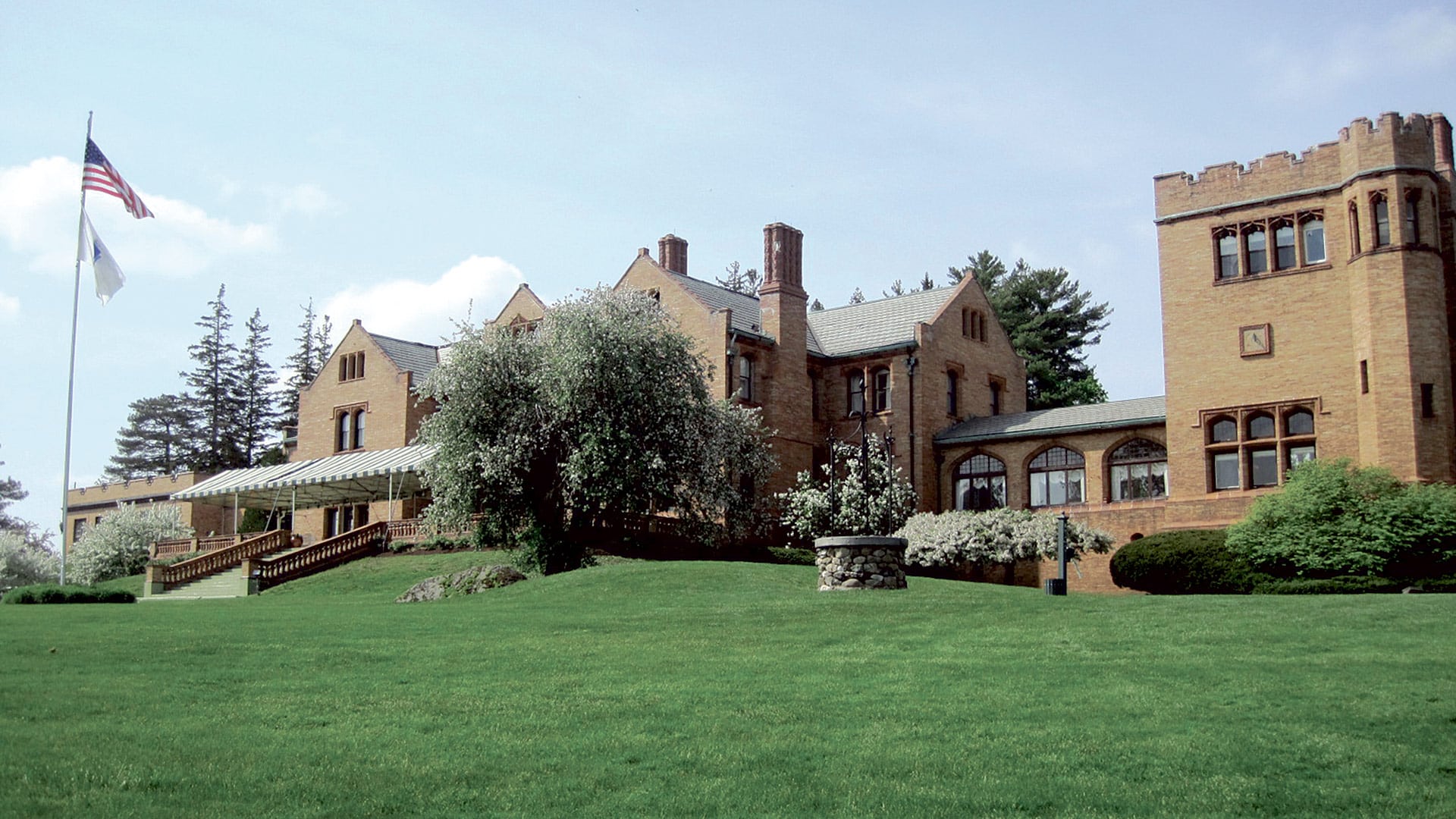
Community Spotlight

Community Spotlight: Wilbraham

Bob Boilard (left) and Jeff Smith

Bob Boilard (left) and Jeff Smith say they’d like to see more civic participation in policy discussions and planning town events.

Being pro-business, Jeff Smith says, doesn’t mean letting just any business set up shop in Wilbraham — but it does mean giving every business a fair shake.

Take, for example, Iron Duke Brewing, which is moving to town after a successful but eventually contentious stay at the Ludlow Mills. Because Wilbraham had no zoning for microbrew and brewpub establishments, the town’s Economic Development Initiative Steering Committee (EDICS) recommended a zoning change that eased the path for not just Iron Duke, but also Catch 22 Brewing, which is setting up shop at the former Dana’s Grillroom on Boston Road.

“One of the reasons why [Catch 22] said they came here was because we had specific zoning for what they wanted to do,” said Smith, the town’s Planning Board chairman, giving one example of how a zoning change can have effects beyond its initial motivation.

“One of the reasons why [Catch 22 Brewing] said they came here was because we had specific zoning for what they wanted to do.”

“When somebody comes into town and is interested in locating a business here and we don’t have specific zoning for it,” he added, “the Planning Department, the Planning Board, and the town itself take a hard look at the zoning and say, ‘is this the type of operation we’d like to see here? Maybe we should put zoning in place, and we can pitch it to the town, and if it’s not appropriate and the town agrees, they can vote accordingly at town meeting.’”

The same thing happened when the town lifted a long-time moratorium on new gas stations. As soon as that happened, Cumberland Farms bought some real estate in Post Office Park along Boston Road, with plans to open a 24-hour facility.

“We tried to have some foresight,” Smith told BusinessWest, adding that the Route 20 corridor used to have five gas stations, but that number had shrunk to two since the moratorium went into effect. “We said, ‘OK, why don’t we allow gas stations?’ It was something a previous Planning Board had put it in, but we said, ‘why? Things have changed. Maybe this is a good time to take a look at this.’ And as soon as we did, Cumberland Farms came in and located here.”

Bob Boilard, who chairs Wilbraham’s three-member Board of Selectmen, said he’s not an advocate of locking up decent, buildable land in perpetuity, or keeping out entire classes of businesses for no reason.

“There’s got to be a common-sense approach,” he said. “There are people in town that would say, ‘let’s stop now. No more building in Wilbraham.’ But you can’t do that. You have to have a tax base and controlled growth to support the town. It’s a balancing act. Open space is great, and we do a great job with that, but we have to consider each individual thing that comes before us.”

Smith added that town officials try to be both reactive and proactive, recognizing current needs but also anticipating future ones. “We want more businesses and more enterprises to locate here in our business district.”

Open for Business

Boilard said the town has worked in recent years to streamline the process for businesses to set up shop there.

“Planning and Zoning have done a great job adjusting things to make it easier for businesses to come in, and when they do come in, they complement us on the ease of communication, the ease of getting things done,” he said. “We don’t put up brick walls every so many feet for these guys; we try to make it as easy as possible to come in and do business in Wilbraham.”

Wilbraham at a Glance

Year Incorporated: 1763
Population: 14,868
Area: 22.4 square miles
County: Hampden
Residential Tax Rate: $22.64
Commercial Tax Rate: $22.64
Median Household Income: $65,014
Median Family Income: $73,825
Type of government: Board of Selectmen, Open Town Meeting
Largest Employers: Baystate Wing Wilbraham Medical Center; Friendly Ice Cream Corp.; Big Y; Home Depot; Wilbraham & Monson Academy
*Latest information available

The nine-member EDICS has been integral to that effort, Smith said. “Let’s say you’re XYZ Inc., and you want to locate your business in Wilbraham. What do you do? What’s your first step? Where do you go? How do you know if there’s zoning for your business?”

One project the group wants to tackle is creating a comprehensive section on the town’s website to answer all those questions.

“They’re proposing updating the website to a more modern platform that’s more user-friendly, and then adding a business or a ‘locating your business here’ page that would essentially have a checklist: the first step is to talk to this person, here’s their phone number, here’s their e-mail.

“That way, people come in prepared,” he went on. “As a member of town government, we hate to have somebody come in unprepared and then have to tell them, ‘hey, you’re going to have to come back to the next meeting, and that’s a month away.’ So if they can get a lot of questions answered and come prepared, it’s smoother for everybody.”

The committee is also looking into creating marketing materials, both online and in print, outlining what Wilbraham has to offer — such as its access to rail and a single tax rate — that make it appealing to locate a business here.

Not every development proposal has gone according to plan. A recent effort to allow a mixed-use development in the town center, in the area of Main and Springfield streets, failed to garner the necessary two-thirds approval at a town meeting, falling short by about a dozen votes.

“It’s a very sensitive area,” Smith said. “One thing I’ve learned in my six years on the Planning Board is that people are very hesitant to change. In the long run, I think we take our time in this town and we do things right, and the end result is good. But in the beginning, there’s an air of skepticism toward changing something — which I don’t think is a bad thing.”

But it can be tricky, he went on, when a developer wants to move forward with a proposal that could create added energy in the center, especially when other mixed-use facilities, grandfathered in when the town put a hold on others like it, already exist.

“People understand there’s some vacant buildings there, and we could make changes that would probably make them not vacant and make it more vibrant,” he explained, “but I think there’s a fear that would be a change they may not like. So we have to tread lightly and move carefully with the center of town and make sure we get as much input from the people of the town as possible.”

In the end, he said, town officials didn’t do the best job conveying why such a development would be a positive. “It was a close vote, which is good because there are a lot of people in favor of it, but at the same time it tells me we have more work to do.”

Changing Times

It’s a challenge, Boilard said, to build a more vibrant town in an age when people’s lifestyles have been altered by technology, declining school enrollment, and a host of other factors. “The generations are changing, and society changes, and that happens everywhere.”

For example, Smith said, the Boston Road business corridor was originally built around retail, but bricks-and-mortar retail establishments struggle in the age of Amazon, and the concept of what a downtown or business center looks like today has shifted immeasurably since the 1970s, or even the 1990s.

“When I was a kid, I would get on my bicycle — I lived near Mile Tree School — and I could drive to the center of town. My dentist was there, Louis & Clark filled all of our prescriptions, the gas station would fix your car or come jump your car in your driveway, my pediatrician was right on the road there, the post office was there, and the village store was there, selling sandwiches and stuff. Everything you needed was there.”

Today, he went on, “you don’t see as many kids out riding their bikes. Those things that I mentioned aren’t really there in one convenient package. Things are different. So we’re trying to put in or modify zoning, potentially bringing some mixed-use components or do something to revitalize those areas, and it’s tough to balance that with … I don’t want to say a fear of change, but there’s an apprehension toward change in the wrong direction.”

Boilard said Wilbraham remains an attractive destination for new residents, with a well-run and well-regarded school system, although real estate in town can be pricey. “It can be hard for new families to come in and be able to afford Wilbraham. I wish we could have an impact on that, but it’s the way economics and demographics are.”

That said, several new subdivisions have gone up in recent years, with a trend toward modestly sized houses, which are selling faster than larger homes, and developers are designing projects accordingly, Smith said.

“Residential growth, in my time here, has been pretty consistent — I would say slow but always moving in the right direction,” he explained. “There’s not a ton of available land in town. The last subdivision to go in was an old farm that was in a family for a long time, and it wasn’t being used as a farm anymore. So a developer purchased it and divided it up and put in a subdivision.”

Compared to other towns in the area, he went on, Wilbraham does a good job of protecting and managing open-space and recreation parcels. “Every time a parcel is brought to the town to be purchased or donated as open space, the town is seemingly in favor of those purchases.”

But controlled growth is the goal, he added, and a balance must be struck between commerce and open space. “There’s a tax base that has to be built, and we try to build it with as much business as we can. We’ve turned down pieces of open space offered to the town — ‘no, we’re all set; put it on the open market, develop the property and get some tax revenue going.’”

Getting to Know You

One area Wilbraham does need to improve, both Boilard and Smith said, is in the area of volunteerism and civic involvement.

“Town events are well-attended, and that’s great,” Smith said, citing examples like the Spec Pond fishing derby, the Run for Rice’s 5K, the Thursday night concert series, the revamped Peach Blossom Festival, and the Christmas tree lighting. “But I would love to see more participation in the planning.”

Boilard agreed. “People complain we don’t have an event, but nobody wants to volunteer to run it. It’s always the same core people stepping up to volunteer,” he said, adding that this trend applies to town-meeting attendance as well.

For example, a recent public hearing on raising the minimum smoking age in town to 21 drew mainly support from the residents in attendance. “Then the phone calls started rolling in — ‘I can shoot a bullet in the Army at 18; why are you doing this?’ I said, ‘where were you Monday night? Why didn’t you come in and talk to us?’”

Smith called the numbers at town meetings “painful” — particularly considering the work that officials put into preparing for them. “I like it when there’s an angry mob in here. That’s good. We want some feedback. But participation could be better.”

After all, he and Boilard said, engaged residents are informed residents, all the better equipped to steer Wilbraham into its next phase of controlled growth.

Joseph Bednar can be reached at [email protected]
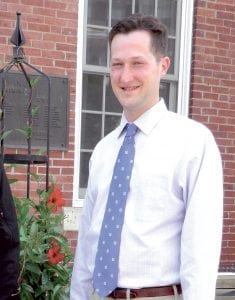
Cover Story

Tracking Progress

Springfield Train StationThe launch of the Hartford line last month, which expands rail activity from Union Station in Springfield to a host of Connecticut stops, has been a success, judging by early ridership. More important, it has municipal and economic-development leaders from Greater Springfield thinking about the potential of a Springfield-to-Greenfield service beginning next year, as well as the viability of east-west service between Boston and Springfield. It’s about more than riding the trains, they say — it’s about what riders will do once they get here.

When is a train not just a train?

Because the ones stopping at Union Station as part of the so-called Hartford line — which connects Springfield with New Haven via six other stations that roughly track I-91 through Connecticut — represent more than that, said Kevin Kennedy, Springfield’s chief Development officer.

“The simplest way to explain it is, the future is about connectivity, whether that connection is physical or electronic,” Kennedy told BusinessWest. “That’s going to be the case for the next 20 to 30 years going forward. And, in the case of rail, it’s critical that we increase our activity in Union Station.”

The reason is simple symbiosis. At a time when Springfield is preparing for an influx of visitors with the opening of MGM Springfield next month, in addition to other significant economic-development activity downtown, a train stop for several CTRail trains each day promises to make the city a more attractive destination, Kennedy said. That could have spinoffs for other regional attractions, particularly after a northern rail line is completed next year, connecting Union Station with Greenfield.

“The simplest way to explain it is, the future is about connectivity, whether that connection is physical or electronic,” Kennedy told BusinessWest. “That’s going to be the case for the next 20 to 30 years going forward. And, in the case of rail, it’s critical that we increase our activity in Union Station.”

“When they bring Greenfield and Northampton and Holyoke into the loop with new depots (all built over the past few years), that’s going to have a dramatic effect on how everyone comes and goes from Springfield,” Kennedy said. “MGM is an entertainment giant, and we’re basically going to be sharing [visitors] up and down the Valley, sending some of our visitors to MGM north to see what goes on up there, and seeing an awful lot of people come here. That’s connectivity.”

Michael Mathis, president and chief operating officer of MGM Springfield, agreed that expanded rail will benefit not just the casino, but the city and region as a whole, helping to brand it as an accessible travel destination.

“This new high-speed connection will be a welcome catalyst for business and tourism in the city and connect two important regional economic hubs,” Mathis told BusinessWest. “As awareness of the service continues to grow, we anticipate more and more people will be attracted to the area.”

To further promote exploration of the city from Union Station, MGM and the Pioneer Valley Transit Authority will launch the Loop, a free shuttle service linking downtown tourist attractions, hotels, restaurants, and arts and culture destinations. Debuting Aug. 24 as part of MGM Springfield’s opening, the Loop will connect Union Station, the Springfield Armory, Springfield Museums, the Basketball Hall of Fame, MGM Springfield, and the MassMutual Center, as well as four downtown hotels.

Rail activity in Union Station has picked up significantly

Rail activity in Union Station has picked up significantly, and expanded Springfield-to-Greenfield service next year will continue that trend.

“Any time you have a significant number of individuals coming into the city, that’s an economic opportunity,” said Rick Sullivan, president and CEO of the Western Mass. Economic Development Council. “Certainly, things are happening in the region, and downtown Springfield in particular, and it’s a big plus that it’s very walkable, or an easy commute with the MGM trolley to different venues here.”

All Aboard

Looking ahead, Gov. Charlie Baker recently announced that passenger rail service between Springfield and Greenfield will begin on a pilot basis in spring 2019. Under the agreement, MassDOT will fund the cost and management of the pilot service, which will be operated by Amtrak and conclude in fall 2021.

The pilot will provide two round-trips each day and make stops at stations in Greenfield, Northampton, Holyoke, and Springfield. Southbound service will be provided in the morning hours, and northbound in the evenings. This pilot service will leverage the MassDOT-owned rail line currently used by Amtrak’s Vermonter service.

Economic-development officials in the Pioneer Valley, and the cities connected by that future line, will likely be cheered by the early success of the 62-mile Hartford line, which began operating on June 16, with trains running approximately every 45 minutes between Springfield and several communities in Connecticut, including Windsor Locks, Windsor, Hartford, Berlin, Meriden, Wallingford, and New Haven. This expanded service is in addition to the existing Amtrak service throughout the corridor.

After two days of free rides, the line began running at regular fare prices on June 18, and in that first full week of June 18-24, ridership on the Hartford line totaled 10,719 customers, which Connecticut Gov. Dannel Malloy characterized as a success.

“I’ve spoken with scores of riders who have begun to use the Hartford Line and who are saying their commute has become much easier and less stressful,” ConnDOT Commissioner James Redeker said in a statement. “With easy access and connections with our CTtransit buses, we are opening up all kinds of options for getting around Connecticut — whether you’re going to work, to school, or simply playing the role of tourist.”

The Hartford Line connects commuters to existing rail services in New Haven that allow for connections to Boston, New York City, and beyond, including the New Haven Line (Metro-North), Shore Line East, Amtrak Acela, and Northeast Regional services.

“We know that it will take some time for this new rail service to grow to full maturity and become part of the everyday lives of Connecticut residents, but there is definitely an excitement about this long-overdue train service,” Malloy said at the time. “At the end of the day, this transit service is about building vibrant communities that attract businesses, grow jobs, and make our state a more attractive place to live, visit, and do business.”

This is precisely the model Massachusetts officials want to see replicated here — right away around Union Station, and eventually up and down the Valley as well.

“With the Loop service starting there, it will provide an opportunity to see Springfield even beyond the casino,” said Chris Moskal, executive director of the Springfield Redevelopment Authority.

The activity at Union Station has impacted other downtown development as well, Kennedy said, including Silverbrick Lofts and future market-rate apartments in the Willys-Overland building. “The 265 units at Silverbrick wouldn’t have happened without Union Station,” he noted. “They were very specific about that.”

Down the Line

Beyond north-south rail, however, are much more ambitious rumblings — and they’re rumblings from far, far down the proverbial track at this point — about east-west rail service connecting Boston and Springfield, and perhaps Albany one day.

MassDOT plans to carry out an extensive study over 18 months, analyzing many aspects and options for potential east-west passenger rail service. This will include engaging with stakeholders and evaluating the potential costs, speed, infrastructure needs, and ridership of potential passenger rail service throughout this corridor.

“Carrying out a comprehensive study on east-west passenger rail will allow us to have a rigorous, fact-based discussion regarding options for potential service,” state Transportation Secretary Stephanie Pollack said last month. “Many legislators, local and regional officials, and business leaders called for such a study, and we are pleased to take a step in advancing this planning for future service.”

Eventually, Kennedy told BusinessWest, rail service from, say, Montreal to New York and from Boston to Albany would position Springfield in an enviable spot as a central hub along both lines.

U.S. Rep. Richard Neal said as much when the Hartford line opened last month, calling enhanced rail service between Springfield and Boston a potential “game changer” for the region. “Investing in our transportation infrastructure will benefit people across the entire Commonwealth of Massachusetts.”

Between Amtrak and now CTrail, riders have several options

Between Amtrak and now CTrail, riders have several options each day to travel to and from Connecticut and beyond.

Sullivan said increasing the speed and ease of travel to a destination like Springfield, with more frequent schedule options, will open up opportunities to attract visitors from both the north and south. He’s not as optimistic about east-west rail, at least not in the next decade, since it’s not in the state’s five-year budget plan and has many logistical and cost hurdles to overcome.

“But certainly, the Connecticut line coming in gives the Convention & Visitors Bureau some travel and tourism opportunities, and it’s incumbent on those entities to sell the region hard — and they’re doing that,” he said. “It’s a significant opportunity.”

Kennedy noted that, when he travels on the eastern part of the state, each T stop is marked by renovated buildings and generally lively activity around the stations. If Massachusetts can be traversed in all directions by rail, he believes, highways could become less congested while trains bring economic energy into each city they stop in. “I see really good things ahead and significant potential,” he said. “Trains are a key component of the future.”

That’s why it’s important for Springfield to continue to grow with rail in mind, he added.

“One of the reasons for our recent success is that we planned bigger rather than smaller,” he said. “Springfield had a history of thinking too small, but certainly over the past five to eight years, we thought bigger, and it’s worked very well. We’ll continue with that big-picture thinking with Union Station as a critical node.”

Moskal agreed.

“Believe me, we’ve had an unbelievable response from people who use Union Station every day,” he said. “From what I’m hearing from people, they’ve said, ‘where has this service been?’ I’m like, ‘it’s here now.’ The spinoff potential has excited people. You can take the bus from there. The activity in and around the station is enormous. And the opportunities are only going to expand.”

Joseph Bednar can be reached at [email protected]

Workforce Development

The Heat Is On

Springfield Operations Manager Meagan Greene

The culinary world is a notoriously challenging place to forge a career, and turnover at the entry level is often high, a problem that constantly challenges restaurants, hotels, colleges, and a host of other food-service companies. Enter Snapchef, which has built a regional reputation for training those workers and matching them with workforce needs to help them get a foot in the door — and then, hopefully, kick it in.

It’s called ‘backfilling.’

That’s a concept businesses in many area industries — from financial services to marketing, from security to hospitality — have been thinking about as MGM Springfield has ramped up its efforts to hire some 3,000 people for its August opening.

Backfilling, simply put, it’s the replacement of an employee who moves on to a different opportunity, and MGM has undoubtedly caused a wave of that phenomenon locally. Because of the casino’s food-service operations, area restaurants, hotels, and other facilities that prepare and serve food have been doing quite a bit of backfilling as well.

If they can find adequate replacements, that is. That’s where Snapchef, a regional food-service training company that opened up shop in Springfield last year, can play a key role.

CEO Todd Snopkowski, who founded Snapchef 16 years ago, said the business model has proven successful in its other four locations — Boston, Dorchester, Worcester, and Providence, R.I. — and has found fertile ground in the City of Homes, where the need for restaurant workers has been on the rise.

“We train folks that are looking to make a career change,” he told BusinessWest. “And, being a staffing company, we don’t only train, we also match folks looking for work in the industry with jobs that are available. If they don’t have the skills to do a job, we actually train them, whether it be dishwashing, cooking, cheffing, you name it. We cover those bases and give them a foothold in the industry.”

As the largest culinary training and staffing company in New England, Snapchef essentially trains and provides staffing help to area food-service establishments. Clients range from large colleges and universities and hospitals to food-service corporations; from hotels and corporate cafeterias to hotels and restaurants.

We train folks that are looking to make a career change,” he told BusinessWest. “And, being a staffing company, we don’t only train, we also match folks looking for work in the industry with jobs that are available. If they don’t have the skills to do a job, we actually train them, whether it be dishwashing, cooking, cheffing, you name it. We cover those bases and give them a foothold in the industry.”

“If they come to me with little or no skills or just want to brush up, we guide individuals in that track,” said Meagan Greene, operations manager in Springfield, noting that Snapchef’s 13-week courses include fast-track culinary training, ServSafe food handling, and workplace safety, among other offerings.

“When the finish the apprentice program, we try to find them full-time jobs, where they can utilize their skills in the workforce,” she went on, noting that all of that is free. The training programs are grant-funded, while Snapchef’s partner employers pay for the hours the employee works, while SnapChef pays the employee directly, with pay depending on the position.

This isn’t culinary school, Greene stressed, but a place to learn enough to get into the culinary world, and advance career-wise from there — an idea Greene called “earning and learning.”

“We go over soups, stocks, sauces, emulsions, salad bar, deli prep. Sometimes, people will go out into the field, come back, and say, ‘hey, Meagan, I did this today at work; is there a better way to do it?’ We also do a little bit of baking, which isn’t our specialty, but you’ll learn how to make pies, quick breads, muffins, and danishes.”

The need for culinary workers, especially at the entry level, is constant, Greene noted, sometimes year-round and sometimes seasonally — for example, colleges need help between September and May, while Six Flags requires a wave of help between April and October.

“For some of the colleges, this will be their second school year with us, so they may buy out some of our employees because they liked them last year,” she told BusinessWest. “It’s kind of bittersweet for us, because the people who get bought out or move forward or find their own job — those are your keepers. Those are the ones who show up for work every day, people who are clean and on time and ready to rock. I’m like, ‘noooo!’ But it’s nice to see somebody move forward.”

Moving forward, after all, is what it’s all about once that foot is in the door.

Slow Burn

Snopkowski has grown Snapchef from its original home Dorchester into a regional force that has trained thousands of workers for potentially rewarding careers in what is, admittedly, a tough field to master, and one where good help is valuable.

Clients have ranged from individual restaurants and caterers to Foxwoods Resort Casino and Gillette Stadium, as well as large food-service corporations like Aramark, Sodexo, and the Compass Group.

Snapchef CEO Todd Snopkowski

Snapchef CEO Todd Snopkowski

“With my background, being a corporate chef, I saw the need for an organization like Snapchef 25 years ago. And I think there’s a huge opportunity down the road for even more expansion,” said, noting that MGM Springfield itself poses significant opportunity. “We’re supporting them, and for businesses suffering the loss of people taking these awesome jobs MGM has to offer, we’re there to make sure we backfill the vacancies.”

Snapchef’s growth has led to a number of accolades for Snopkowski, including the 2015 SBA Small Business Person of the Year award for Massachusetts, and the 2016 Citizens Bank Good Citizens Award. And it has inspired people like Greene, who see the value in training the next generation of food-service workers.

She works with the state Department of Labor and the Regional Employment Board of Hampden County to create apprenticeship models, teaching participants everything from basic knife skills to how to conduct themselves in a kitchen. She also helps them append their résumés based on what they’ve learned.

After studying culinary arts at a vocational high school and earning three degrees from Johnson & Wales University, she became a sous chef at Sturbridge Host Hotel, not far from her home in Warren. She loved the job — and the commute — but traded it in for an opportunity to work for Snapchef.

“To be honest, I’m never bored. I’m always doing something different,” she said, and that’s true of many of her trainees, who typically begin with temporary placements, which often become permanent. But not all are seeking a permanent gig, she added; some love the variety of ever-changing assignments.

“Some people love it because it’s a lifestyle for them,” she said. “They want to work over here, then they come back to me and say, ‘hey, Meagan, I wasn’t really liking that spot; I don’t want to go back there. I didn’t like the size of the kitchen. It was too big for me; I’m used to working in a smaller kitchen.’” I’ll say, ‘OK, I’ll try not to send you back there.’ And it’s a two-way street; clients can say, ‘I don’t want Joe Smith back.’”

Because the training is free, Snapchef offers an attractive opportunity for people who want to get a food in the door in food service.

Finishing Touches

As a company that fills a needed gap — as culinary schools aren’t typically training for entry-level positions — Snopkowski said Snapchef has made significant inroads in Western Mass. over the past year, especially working with FutureWorks Career Center to identify individuals looking to shift into the world of food service.

“Our employees don’t have to pay for transition training and all those attributes that are needed to get a foothold in the business,” he told BusinessWest. “It’s good to see that MGM recognizes it, the colleges as well.”

Speaking of financial perks, Snapchef-trained employees may access round-trip transportation from the Springfield office to their job sites across the region, for only $3 per day, Greene said. “It’s cheaper than Uber, cheaper than Lyft, and better than having your mom come pick you up and drop you off. If you live in the city and are used to taking the bus everywhere, you don’t have to worry about how to get to work.”

As for Greene, she continues to enjoy the variety of her work — a pickling enthusiast, she taught a recent class how to pickle vegetables, and they prepared 300 jars worth — as well as the success stories that arise from it, like a man trained by Snapchef who went on to further his education at Holyoke Community College and is now opening a restaurant with his daughter.

“I’ve had the opportunity to see people progress in a short period of time,” she said. “It’s nice to see someone grow so fast. I love that.”

Snopkowski has seen plenty such stories unfold in the 16 years his company has been training people for a new, challenging career, and then helping them build a foothold in the industry.

“We’ve only been able to scratch the surface; there are so many other opportunities out there,” he said. “The future is bright in culinary.”

Joseph Bednar can be reached at [email protected]
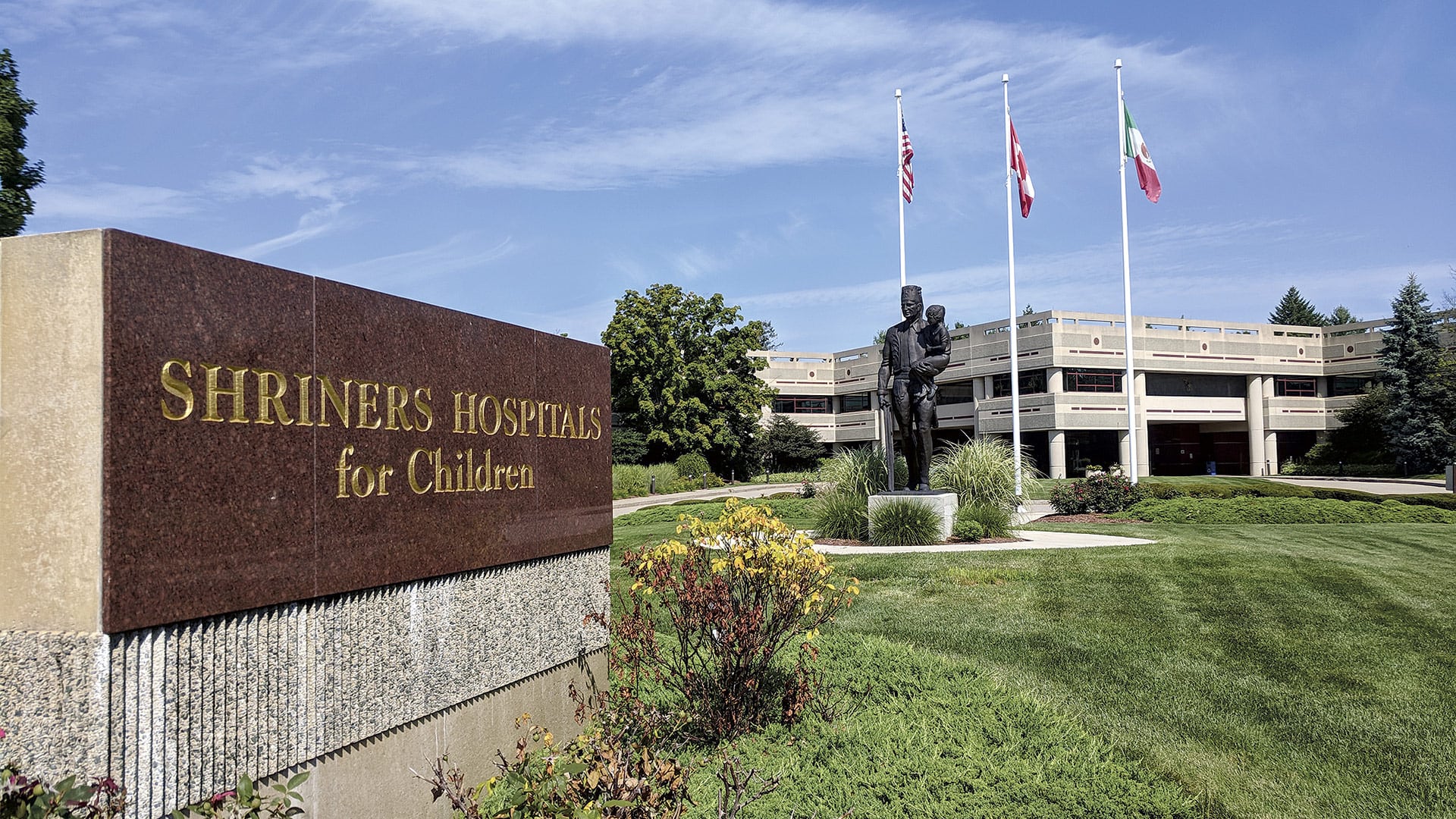
Features

Bridging the Digital Divide

Aneesh Raman says business owners think Facebook, with its 2.2 billion users worldwide, is a valuable tool — even if they don’t always know how best to use it.

According to a 2017 survey, said Raman, who manages Facebook’s global economic-impact programs, more than 60% of small businesses in Massachusetts said Facebook is essential to their business, and 76% said the social-media platform helps them find customers in other cities, states, and countries.

“That’s encouraging data, but as you talk to them, you see a need for more training,” Raman told BusinessWest. “That’s why we’re coming to 30 cities to provide training for small businesses across a range of subjects. No matter what their skill level is — whether businesses are coming online for the first time or are online already — we can help them grow their business.”

Earlier this year, Facebook announced that Springfield had been chosen as one of 30 markets where the company will host its Community Boost program, created to help small businesses, entrepreneurs, and job seekers grow their business and develop new digital skills. Facebook will be in Springfield on Sept. 10-11, presenting workshops on a host of topics yet to be determined.

“Our mission at Facebook is building strong communities, and we believe at the core of strong communities are thriving small businesses,” said Raman, who is also a former journalist who worked as an international correspondent for CNN, as well as a former presidential speechwriter. “Small businesses are the engine of local economies. For years, we have worked with them, trained them online and offline, and helped them grow their business and help them hire more employees.”

Since 2011, he noted, Facebook has invested more than $1 billion to support small businesses. Community Boost is simply a more visible and direct method of doing so, and will focus on small-business training and digital acumen in general, rather than simply promoting Facebook, Raman said.

“Small businesses are the engine of local economies. For years, we have worked with them, trained them online and offline, and helped them grow their business and help them hire more employees.”

During its visits to 30 cities — including Houston, St. Louis, Minneapolis, San Diego, Pittsburgh, and many other metro areas much larger than Springfield — Facebook representatives will take a three-pronged approach to economic development, working with local organizations to provide digital skills and training for people in need of work, advising entrepreneurs how to get started, and helping existing businesses and nonprofits get the most out of the internet.

A broad survey conducted by Morning Consult and co-sponsored by the U.S. Chamber of Commerce and Facebook suggests that small businesses’ use of social media is creating new opportunities. For instance, in Massachusetts, 62% of surveyed businesses said Facebook is essential for their business; 76% said Facebook allows them to find customers in other cities, states, and countries; and 69% said they believe an individual’s digital and social-media skills are important when hiring.

A lot of people use Facebook for business reasons, but never any kind of training how to do it. They’re on their own,” said Paul Robbins, president of Paul Robbins Associets in Wilbraham and a communications consultant for Community Boost in Springfield.

“People feel like they’ve got this tool, but they don’t know how to use it, especially small businesses,” he went on. “Here in Springfield, we’ve got a very diverse community with a lot of small businesses. Even not-for-profits can take advantage of this free seminar. Anybody can come. The idea is to help people leverage it as a business tool.”

Logging On

Facebook pledged this year to train 1 million individuals and small business owners across the U.S. in digital and social-media skills by 2020. To do that, it will expand its in-person training programs, create more local partnerships, and build more e-learning resources.

The company cites projections that a skilled-labor shortage in America could create 85.2 million unfilled jobs by 2030, and says it is committed to helping close that skills gap and provide more people and business owners with the educational resources they need to advance at work, find new jobs, or run their companies.

Details on Springfield’s Community Boost event, which is free and open to small business and nonprofits, aren’t set yet; Facebook plans to announce a place, times, and course list at www.facebook.com/business/m/community-boost as September gets closer.

“The goal of the program isn’t to come and leave, but to kick off conversations,” Raman said, noting that Facebook has been talking to businesses and economic-development leaders on a specific program that best meets identified needs for small-business and digital-skills training in the Pioneer Valley.

“Small businesses and workers know they need skills. But they don’t always have help getting those skills,” he went on. “Once we know what the professional needs are, we’ll announce the registration date and courses online.”

According to the Morning Consult research, small businesses’ use of digital tools translates into new jobs and opportunities for communities across the country. And small businesses are the key driver, creating an estimated four out of every five new jobs in the U.S.

The survey revealed that 80% of U.S. small and medium-sized businesses on Facebook say the platform helps them connect to people in their local community, while one in three businesses on Facebook say they built their business on the platform, and 42% say they’ve hired more people due to growth since joining Facebook.

Businesses run by African-Americans, Latinos, veterans, and those with a disability are twice as likely to say that their business was built on Facebook, and one and a half times more likely to say they’ve hired more people since joining the platform.

Raman said small businesses have expressed a desire to learn more about using Facebook and Instagram, the photo- and video-sharing service owned by Facebook. “But we’re teaching skills that apply to any digital platform out there.”

After all, Robbins noted, “not everyone is digitally savvy. A small business may not have the digital skills people assume everyone has. Facebook is trying to demystify it to people, so they’re not afraid of it.”

Getting Social

Increasingly, businesses are embracing 21-st century modes of building their customer base. The 2017 survey by Morning Consult found that the use of digital platforms by American small businesses is ubiquitous — in fact, 84% of small businesses in the U.S. use at least one major digital platform to provide information to customers, and three out of four small businesses use digital platforms for sales.

Yet, businesses face challenges when it comes to the internet, with 57% of small businesses saying lack of familiarity with available digital tools is a challenge.

“At Facebook, we see a big opportunity to make a difference in partnership with local organizations and local officials,” Raman told BusinessWest. “We really do think there’s a skills gap, and by closing that, we can help expand economic opportunity in Springfield and across the country.”

But it’s not just employers the Community Boost program aims to reach. For job seekers, the program will provide training to help improve their digital and social-media skills. According to the research, 62% percent of U.S. small businesses using Facebook said digital or social-media skills are an important factor in their hiring decisions — even more important than where a candidate went to school.

Community Boost will also offer entrepreneurs training programs on how to use technology to turn an idea into a business, as well as ways to create a free online presence using Facebook.

And, of course, business owners will learn how to expand their digital footprint and find new customers around the corner and around the globe. Training will also include education in digital literacy and online safety.

“We also want to teach nonprofits to be part of the programming and how Facebook can help them learn the digital skills they need to increase donations,” Raman said.

Facebook strives to evolve Community Boost based on what it’s learning in its earlier stops. For example, in St. Louis, the first stop on the tour, the company learned exactly how wide the gap is between the digital skills job seekers know they need and the skills they feel they have. In fact, according to a survey there, 93% of job and skills seekers say digital skills are important when looking for job, while only 12% rate themselves highly in this area.

Managers also see gaps in the skills they need to grow their businesses, the St. Louis survey showed. For example, the majority of managers in that city said creating a mobile-friendly interface was important to growing their business, but very few saw themselves as proficient.

Springfield — the only New England stop for Community Boost — may not have the population of the major metropolitan areas on the tour, but Raman says the needs are universal, and Facebook wants a diverse cross-section of cities represented.

“Springfield has a vibrant small-business community with a diverse population,” he noted. “We think we can make a real impact here.”


Joseph Bednar can be reached at [email protected]
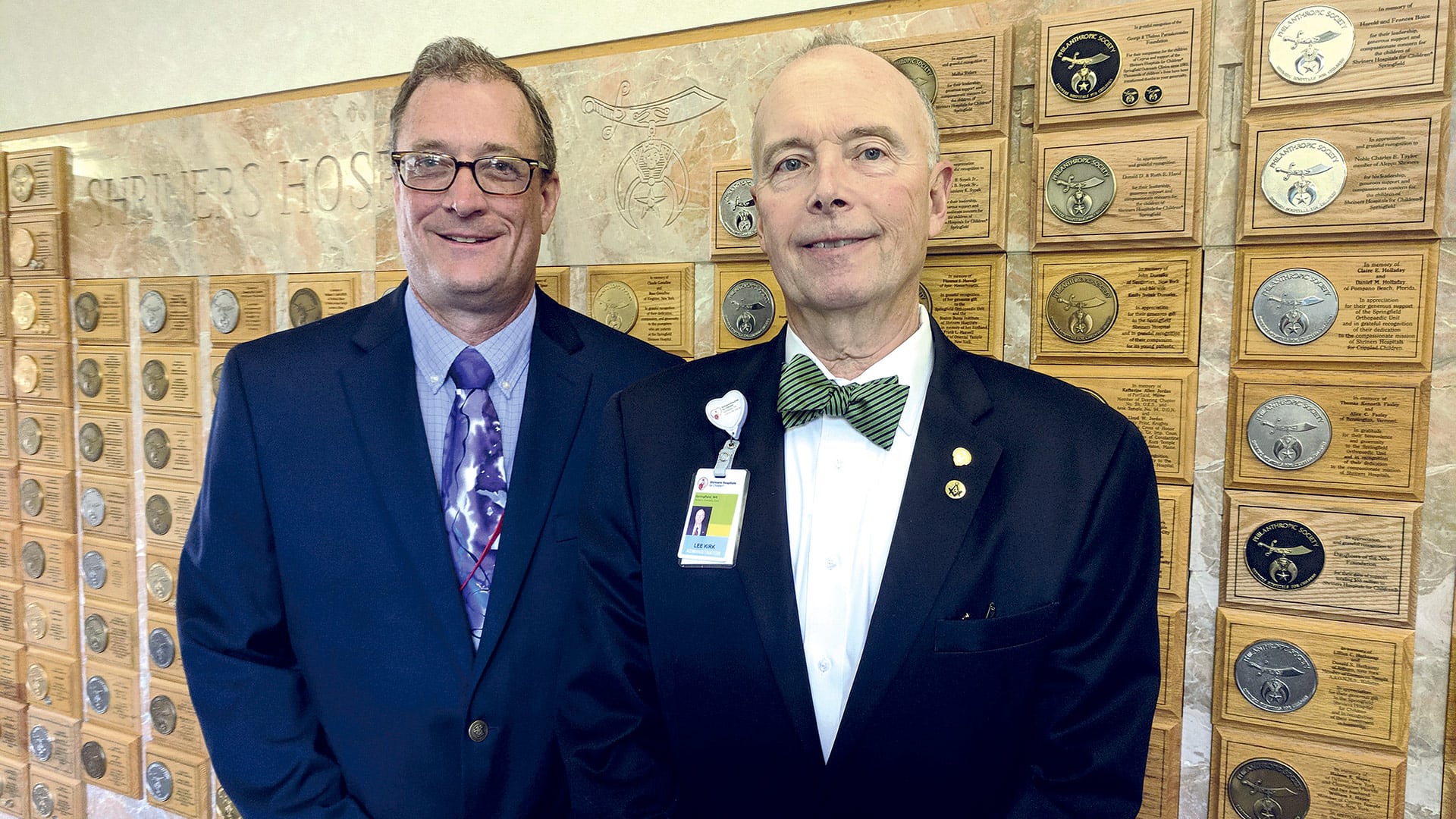
Cover Story

Creature Comforts

Executive Director Sarah Tsitso with a couple of poitou donkeys.

Executive Director Sarah Tsitso with a couple of poitou donkeys.

The Zoo in Forest Park & Education Center has seen its share of changes over the decades, and its current executive director, Sarah Tsitso, admits it’s still an underappreciated asset in Springfield. But an asset it is, she asserts, one that has honed its focus in recent years to emphasize education, conservation, and rehabilitation — and all the intriguing ways those ideas intersect.

Montana is a bobcat who used to be someone’s pet. That is, until, authorities found out and confiscated her; even out west, you can’t just go bring home a bobcat.

But since Montana had been declawed, the aging feline had no chance of survival in the wild, and needed a new home. The Zoo in Forest Park became that home.

“We’ve started working more collaboratively with other zoos, and particularly sanctuaries and rehab facilities, around the country for animal placements,” said Sarah Tsitso, who was named the zoo’s executive director last spring. “We want animals that make sense for our zoo in terms of our size, our geography, and our climate — especially animals that can’t be released into the wild, that are living in a sanctuary right now and are in need of a permanent home.”

With its 125th anniversary around the corner next year, the zoo has seen its share of evolution over the years, and that process is never-ending, Tsitso said. “We’ve been doing a lot of internal strategic thinking about the direction we want to take going forward, and one of the things we’re really focused on is moving away from that traditional zoo model and more toward education, conservation, and rehabilitation.”

The facility has been working recently with sanctuaries in Florida, Texas, Kansas, and Ohio to provide a home for animals in need of one. One example is a 1-year-old orphan coyote who was brought to a sanctuary with a broken leg. “She healed, but has never lived in the wild,” Tsitso said. “So she’s being flown in here.”

She’ll share the zoo’s four and a half acres with some 150 animal species, from timberwolf siblings Orion and Aurora to a pair of red-tailed hawks who rehabbed from injury but are not releasable in the wild, to a three-legged baby opossum who had the fourth limb amputated due to a serious injury, and is being moved from a sanctuary to its new home in Forest Park.

Then there’s a mink named Monte who escaped from a fur farm in Utah and found his way to a sanctuary, Tsitso said. “They were looking for a home for him because he’s never been in the wild; he was bred for his fur. We named him after the Count of Monte Cristo. Because of the jailbreak.”

In fact, the majority of the zoo’s animals are elderly, disabled in some way, or otherwise unable to survive in the wild, which makes the center’s focus on conservation and rehabilitation an important part of its robust educational outreach.

“Certainly, we want people to be aware that human interference has consequences,” Tsitso said. “Some of these animals have been hit by cars or are otherwise examples of nature meeting humans.”

Although a part of Forest Park for well over a century, the zoo is still an underap-preciated city asset, its executive director says.

Although a part of Forest Park for well over a century, the zoo is still an underap-preciated city asset, its executive director says.

The zoo is currently working to bring in two bald eagles, a male and female, from a wildlife sanctuary in Alaska. Neither is releasable into the wild, as one had to have a wing tip amputated, and other one had a broken wing, so neither can fly.

“They’ll provide some interesting education to the public about bald eagles and why they are a symbol of our nation and how they were once endangered and now, through all these conservation efforts, their population has stabilized, which is wonderful,” Tsitso said.

She hopes to one day tell similar stories about other threatened or endangered animals in the Zoo at Forest Park, including its ring-tailed lemurs, arctic wolves, and poitou donkeys. “We’re continuing that movement of bringing in animals that need a home, that fit with our collection, and that are educationally interesting to people.”

In the meantime, this nonprofit veteran has found her own new home in a job she loves.

“I just felt like it was my opportunity to give something back to Springfield,” Tsitso said, “and do what I could do to make sure this asset stays around another 125 years and that people know it’s it’s here, and come and enjoy what we have to offer — and we have so much to offer.”

Hear Her Roar

Tsitso told BusinessWest that Nathan Bazinet, the zoo’s interim director before she arrived, and Nunzio Bruno, then its board president, were looking for someone to come in and bring stability to this venerable nonprofit, despite the many challenges it faces.

“They wanted someone to connect it to the community and run it like a business,” she said, noting that conversations started a year before she came on board, but when she did, she fully embraced the opportunity.

“I really love the zoo,” she said. “It’s so ingrained in the fabric of Springfield and this neighborhood in particular. I really feel like I was meant to be here. I feel very fulfilled here — we have a great board, a great staff, and I love working with the animals.”

Until recently, Tsitso and her family lived in the Forest Park neighborhood — for more than 15 years, in fact.

“Our daughter was born in a house not a half-mile from here. And when she was little, we came here all the time. We’d walk from our house to here, she had birthday parties here, she loved this place. And I just really appreciated that it was here. Yet, so many people are unaware that we have this asset, this treasure, right here in the city.”

True to the zoo’s full name — the Zoo in Forest Park & Education Center — the facility focuses heavily on wildlife education, offering a variety of educational programs and special events for children and adults, from Zoo on the Go — which brings animals into schools, libraries, and senior centers — to guided tours and discovery programs for all ages, as well as Zoo Camp during winter and summer school vacations.

The zoo also offers a vibrant internship program, she said, providing students at area colleges studying animal science or veterinary care an opportunity to learn outside the classroom.

Broadening those programs is a priority, Tsitso said, for reasons that extend beyond the value of education, which is significant.

“Our biggest revenue stream is admission, and we’re only open five months of the year, and for two of those five months, it’s weekends,” she said. “So it’s very challenging to meet our budget. But we’re working on some new avenues of revenue. We’re expanding our education programs. Our Zoo on the Go and education programs run year-round, so we can really bolster those and create some new partnerships in the community whereby we can be offering those programs more consistently.”

The zoo used to receive state funding, but that ended about five years ago, although Tsitso and her team are trying to re-establish that revenue source. Meanwhile, community partnerships remain crucial, like Paul Picknelly’s recent donation of first-week proceeds at the new Starbucks at Monarch Place to fund an exhibit of African cats at the zoo.

“Those kinds of community partnerships are really what’s going to keep us growing,” she added, “and we’re really hoping that the community, as they realize all the wonderful things happening here, keep coming back.”

This wallaby is one of some 150 species of animals living at the Zoo in Forest Park.

This wallaby is one of some 150 species of animals living at the Zoo in Forest Park.

Operating a zoo at affordable admission prices — in addition to day passes, many families take advantage of $85 memberships, which are good all season for up to six family members — is a challenge, Tsitso said, especially since the zoo is not affiliated with the city and gets no revenue from other Forest Park-based events. It does benefit from a series of 25-year leases from the city at $1 per year — the current lease expires in 2035 — as well as the fact that Springfield foots its electric bill.

“We’re very grateful to the city because for a long time they have been great partners for us, but there is a differentiation between us and the city,” she said. “We’re not overseen by the city; we have our own board of directors.”

Poignant Paws

Those directors chose Tsitso — who has claimed leadership roles with nonprofit groups including Greater Springfield Habitat for Humanity, the East of the River 5 Town Chamber of Commerce, two Springfield-based Boys & Girls Clubs, and the Food Bank of Western Massachusetts — to guide the zoo through its next era of growth, but it has to be controlled growth, she said, based on its limited footprint.

“We’re four and a half acres, and we’re not getting an inch more of space. So whatever we do has to be self-contained in these four and a half acres. We’re really thoughtful about the improvements we’re making.”

That’s why she and her team are working with the animal-care staff to create a sort of wish list of what animal exhibits the zoo lacks, what it should bring in, and how it might acquire those animals.

“We’ve been pretty fortunate in working with people all around the country who are willing to help us and are looking for great placements for these animals,” she went on. “Most of them are so excited their animals are coming here.”

In many ways, the Zoo in Forest Park is not the same attraction families experienced decades ago, Tsitso noted.

“A lot of people have memories of the zoo when it was a very different place, when the monkey house was here and we had all those large animals, and it didn’t make sense for the animals. We’re very thoughtful about the kinds of animals here now. You’ll never see another polar bear. You’ll never see another black bear. You’ll never see another elephant. Those are animals we’ll never have again.”

The animals that do call Forest Park home have plenty to offer visitors, including the rush of school groups that take field trips there, averaging some two to three groups a day during the spring.

“That’s a big piece — we want to get kids in here, and we want to get them excited about nature and exposed to lots of different types of animals,” Tsitso said. “For a lot of kids, especially inner-city kids, they’ve never seen a lot of these animals. Even a goat is something that’s new and interesting to them. So it’s really fun to watch the kids come in and not just see the animals, but get to interact with some of them and get an education about them. How do they eat? How do they sleep?”

When the zoo shuts its doors to visitors for the cold months, typically around Halloween, the ones who don’t like the cold move into indoor facilities — like Oz, a spotted leopard Tsitso pointed out on a recent stroll with BusinessWest through the grounds. Oz has a large outdoor enclosure, but also a small ‘house’ that’s heated during the cold months.

It’s home to him, just as the Springfield area has long been home to Tsitso, who has found her new calling leading the zoo’s small staff — two full-time animal-care professionals, about four part-timers, and a raft of volunteers and interns — into whatever its next phase may bring.

“Springfield is very important to me. It really is the economic center of our whole area, and when Springfield succeeds, we all succeed,” she said, adding, however, that the zoo is a city asset that feels, well, apart from the city.

“One thing I love about this zoo, being inside Forest Park, is that it feels very natural in here, very close to nature, with lots of green and lots of trees. It doesn’t feel like Springfield. It really is a little sanctuary.”

Not just for her, but for those who visit the zoo — and the growing collection of animals that call it home.

Joseph Bednar can be reached at [email protected]
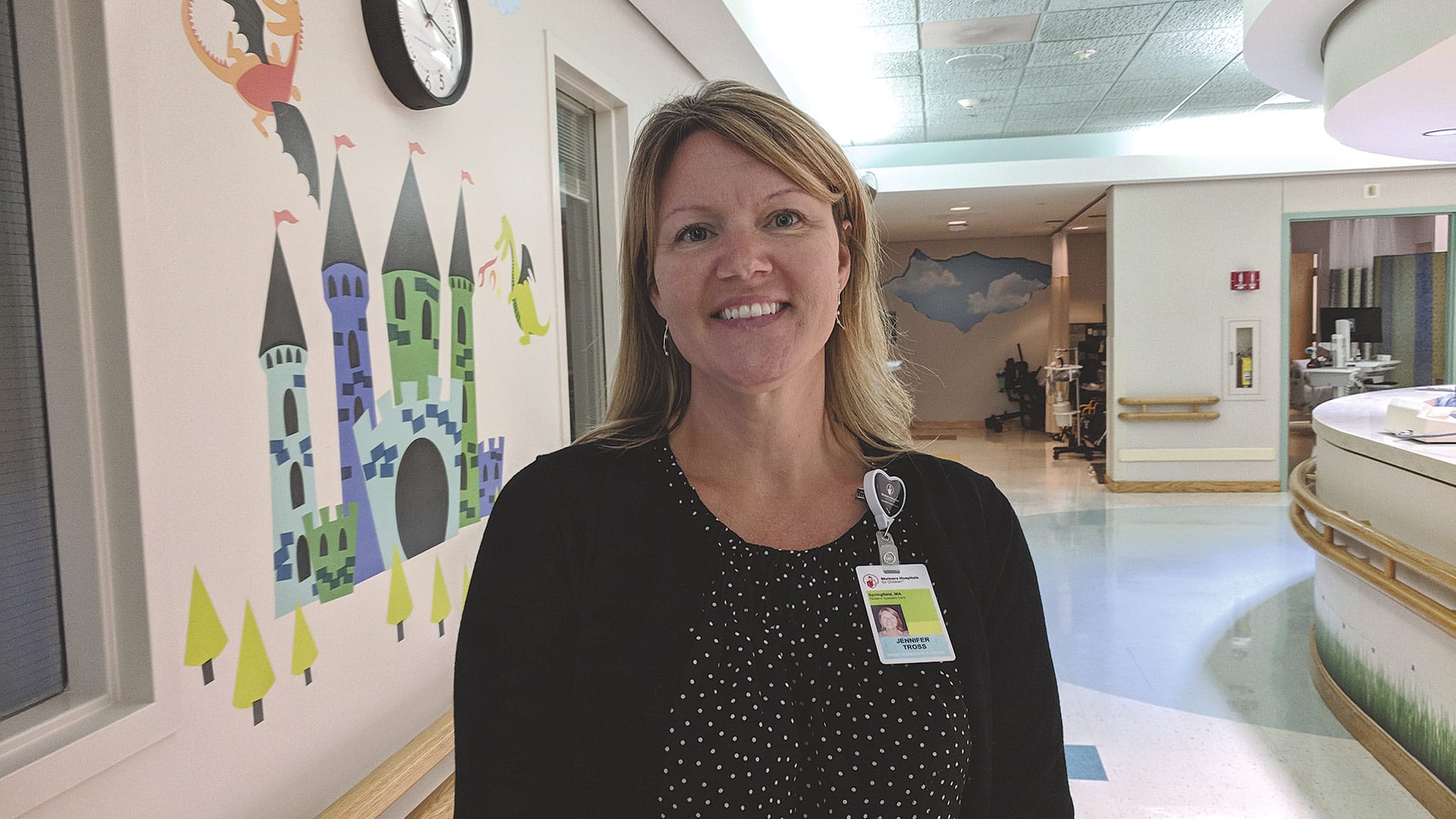
Sections

Driving Change

General Manager Mike Filomeno

General Manager Mike Filomeno

The modern auto dealership — marked by drive-in service areas, well-appointed waiting areas, and high-tech touches — have become standard in the industry, and Ford demands no less of its showrooms. Marcotte Ford, with a 50-year history on Main Street in Holyoke, was especially in need of such a makeover, and the family that owns it is set to unveil its new HQ this summer, bringing the company’s look and feel firmly into the 21st century.

When Marcotte Ford reopens its dealership on Main Street in Holyoke this summer — after a year spent in temporary digs across the street — it will be the culmination of two complementary visions: Ford’s on one hand, and the Marcotte family’s on the other.

“It’s been a long, long road to get where we are today,” said General Manager Mike Filomeno. “Obviously, Ford has a rebranding and a new look that they want, to refresh the whole facility and make it more customer-friendly. Then there are all the touch points we’re going to have — a brand-new shop, all-new equipment, indoor delivery areas for the customers to pick up their cars, all kinds of new technology to make the experience more user-friendly.

“It’s like a McDonald’s,” he went on. “Do you want to go to the old McDonald’s or the brand-new one that has the wi-fi and the TVs and the multiple drive-thru lanes? That’s the philosophy. People want to go someplace that’s new. They want new technology and a new experience.”

What both Ford and the Marcotte family are looking for is the fulfillment of two goals that seem contradictory, but really aren’t, and are being reflected in dealership remodels across all brands: to make it easier and quicker for customers to get in and out when buying or servicing a vehicle, but also making the space more welcoming during the time they have to be there.

To get to that point, Marcotte has spent the last year doing business across the street, in the former location of Gary Rome Hyundai, which relocated to a much larger lot on Whiting Farms Road in 2016.

It’s been cramped, Filomeno said, but much better than working out of temporary trailers. To ease the burden on a smaller service area, Marcotte has sent much of its heavy-duty repair work down the street to its commercial truck center, which opened in 2015.

“When this became available, we ended up buying this place,” Filomeno said. “That was perfect timing. It was empty for a while, and we reached out to Gary Rome and talked to him about renting some space, and he needed to do something as well. So we made a deal last June to move over here.”

Come this summer, the year spent in cramped quarters will have been worth it, Filomeno said, with the opening of the 40,000-square-foot, $8 million facility, which will include a 24-bay service area, including a dedicated space for vehicle inspections. As for the former Rome location, it will become Marcotte’s commercial-sales location, bringing to four (along with the neighboring Paper City Car Wash) the number of Marcotte-owned properties along a half-mile stretch of Route 5.

“We haven’t had that prime A location in the automotive world, as far as being on Riverdale Road or King Street in Northampton, where there are multiple franchises and people can go to one from another,” he noted. “But we have been a destination dealer, and we’ve done that by taking care of the customers, having good employees, and going the extra mile for people.”

New Look … and Taste

Doing all that will be easier in the redesigned Marcotte Ford headquarters, which reflects the types of features Ford demands in all its new stores, Filomeno said.

“They want to have the branding in the façade out front, and they want all the touch points to be user-friendly,” he explained. “We’ll have the indoor drive-through, where you bring in your car and drop it off, and service will come out to you to write it up. We’ll have a customer waiting area with a big TV there, and wi-fi hotspots where they can sit while they’re in the customer lounge.”

On the service side, customers have long been able to get a loaner vehicle when they bring their car or truck in for service, and Marcotte will continue with that service, he added, while employees will appreciate the state-of-the-art, climate-controlled shop decked out with new equipment.

The company is especially excited about LugNutz Café, a restaurant that existed in the former building, but will be significantly expanded in the new one.

LugNutz Café initially served breakfast two days a week for employees and customers, but will be expanding to breakfast and lunch six days a week, featuring sandwiches, wraps, soups, pizzas, and breakfast items like omelettes.

“Bryan came up with the idea, and people loved it,” Filomeno said. “With all the employees we have all day long, come lunchtime around here, we have Chinese, pizzas, and grinders being delivered here, or people going out for food. Now they’ll be able to eat right here. That’s another good service that people will enjoy — I think it’ll be a wow factor.”

Company President Mike Marcotte said customers will appreciate the new touches, from the drive-through service lane to interactive screens in the sales offices to help them quickly access information.

Marcotte expects to unveil its 40,000-square-foot renovation in August, followed by a September grand opening.

Marcotte expects to unveil its 40,000-square-foot renovation in August, followed by a September grand opening.

“The building was 50 years old, and we’ve added on, but now it was time to do a refresh,” he said. “It’s definitely more customer-oriented, with better flow and more technology.”

Filomeno said the dealership aims to be different because other Ford dealers have a similar look. “So we’re making it our own with the LugNutz and some of the other things we’re doing to make ourselves stand out.

“It’s more than the tile and furniture Ford wants,” he went on. “We’re looking forward to some new ways to do business, taking care of the customer, getting them in and out of here, both on the service and the sales side. People want to come in and buy a car in an hour and get through it. They don’t want to wait four hours. So that’s what we’re migrating toward.”

Marcotte agreed. “We feel like buying a car should be a fun experience, not stressful, even though it’s most people’s second-biggest purchase after their house,” he said.

It’s also a different sales experience than it used to be, thanks to the internet. “People do a lot more research before coming in, before they even contact us,” Marcotte noted, noting that the visit is still crucial, because vehicles today are so loaded with high-tech safety equipment and other features that customers still want someone to demonstrate everything they might be able to utilize.

The new facility will reflect those high-tech advances as well, Filomeno said. “Our vision is to have the grand opening come the fall, once we’re fully established, and have a soft opening around August. We have to get in there and get everything working.”

Family Legacy

Marcotte’s grandfather, Al, opened his namesake dealership in 1961 at a different site in Holyoke before moving to its long-time location on Route 5 in 1967. Bryan eventually joined the team, followed by Mike a generation later. Today, the dealership employs a number of other family members, including Filomeno, who married into the Marcotte clan.

It’s a company with not only family ties, but deep community roots as well, Filomeno said, noting that Marcotte Ford has supported a number of local nonprofits over the years, from Kate’s Kitchen and Providence Ministries to the baseball teams customers’ kids play on.

“You can only do so much, but we try to be as generous as we can because it does make a difference,” he added. “You’ve got to support the community you work in. So we’ve made a conscious effort to make sure we do that on a regular basis.”

With a 56-year history behind it, Marcotte said, the dealership felt it was past time to make the changes almost ready to be unveiled across the street.

“We’ve been looking at this for several years,” he said, noting that it’s a good time to reinvest, with sales — particularly the truck business and the commercial side — booming.

“Business has been good. We’re just always trying to find ways to find more business,” Filomeno noted, adding, however, that he’s unsure how people will react to Ford’s decision to discontinue some lines.

“That’s a challenge for us, because people are asking why and what’s going on, but I think they’re trying to get rid of some of the less-profitable cars and concentrate on more of the profitable items and come out with some new products. There’s a new Echo Sport, we’re going to have new Rangers, some new Broncos coming in.”

Meanwhile, people’s driving habits are different than before, with younger drivers more willing to rideshare and use public transportation — not to mention the prospect of autonomous cars, which may someday significantly impact people’s decision to even own a car. So it’s important, he said, for dealers and manufacturers to anticipate possible trends while continuing to focus on what they do well.

“There’s some uncertainty as far as what’s coming, but our bread and butter has been the truck line and SUV line, and that has been very strong,” he said. “There have been other changes in the industry, too. Right now gas is going up a little, and interest rates are going up a little. People have been spoiled for years, when we gave them 2%, 1%, 0% financing, and, that’s not always there now. You have to just adapt.”

With 142 team members across all facets of the company, there’s been plenty of adapting and moving around while the main site has been given over to construction over the past year, Marcotte said, adding, however, that employee morale has remained high during the transition.

That’s important, Filomeno added, because, while the internet has helped the company sell outside the local market, it’s still a company built on customer service.

“Although Ford has got a great product, you can’t say you’ll never have a problem with a car,” he told BusinessWest. “But if you do, we try to make that experience as positive as we can. That’s been the forte of our business model all along.”

Joseph Bednar can be reached at [email protected]

Banking and Financial Services

Tale of Two Cities

Connecticut has had its share of economic challenges in recent years, including a slow but steady outmigration of residents. Many might not be aware, however, of how stark the differences are between Connecticut and Massachusetts when it comes to long-term job recovery from the Great Recession — including Springfield’s relative strength when compared to Hartford. Farmington Bank’s economic adviser recently broke down the numbers, painting a picture that should be encouraging to those north of the border.

As an economic adviser for Farmington Bank, Don Klepper-Smith spends most of his analytical energy on Connecticut, but when he compares that state’s recent performance with its neighbor to the north, the numbers are stark.

“When we talk about Springfield and Hartford, I think the analogy ‘tale of two cities’ is appropriate,” Klepper-Smith said during a recent Farmington Bank webinar on the national and regional economy.

Since the low point of the Great Recession in 2009 — when unemployment spiked across the U.S. before the gradual recovery kicked in — the Greater Springfield area has created 32,000 new jobs, while Greater Hartford has created 37,000.

“So you’ve got close to 70,000 new jobs in the I-91 corridor between these two areas,” he noted. That’s all good. “But when we look at them in the context of our job-recovery rate, you can see Springfield is clearly outperforming Hartford — and looking a lot like the nation.”

The key takeaway is how much of the 2008-09 job losses have returned, he explained, and that’s where Springfield has really outpaced Hartford. While Hartford is now 4,200 jobs above full recovery — that is, above where the job picture stood in March 2008, before the economy collapsed — Springfield is 16,600 jobs above that line. To put it another way, Hartford has recovered 112.7% of its recession-era job losses, while Springfield has recovered 209.2%, gaining back its losses more than twice over. The national recovery figure, by the way, is 217.8%.

“When I think of Springfield, two words that come to mind are ‘stellar performance,’ with a job recovery rate that’s about twice that of Hartford,” Klepper-Smith said. “I think Hartford has its own challenges. We know the fiscal situation there has been tenuous, but I think economic-development policies are the reasons why Springfield is doing as well as it is.”

That’s good news for Springfield, which has been on a hot streak of good economic news for some time now, with the MGM Springfield casino at the forefront of that. But the numbers also reflect an overall disconnect in the way Massachusetts and Connecticut have respectively recovered from the economic downturn of a decade ago — and it’s a striking gap.

Tale of Two States

It’s hard to believe, Klepper-Smith says, that the U.S. recovery from the trough of the recession is now nine years old.

“The average postwar recovery is five years, so we’re getting a little bit long in the tooth here, and we’re looking for what could go wrong and trying to keep a positive attitude as we move through the balance of the year,” he went on. “Looking at the tea leaves and looking at the fundamentals, I’d say there’s a two in three chance we go forward with positive but slower economic growth — in the 2% to 2.5% range.”

Don Klepper-Smith

Don Klepper-Smith says economic-development policies have contributed to Springfield’s recent successes.

Yet, Connecticut continues to struggle — in fact, Hartford is among its strongest metropolitan areas in job growth, putting the rest of the state into stark relief. “State budget issues have undermined business confidence and promoted outmigration,” Klepper-Smith said, noting that the Nutmeg State has been shedding 428 people per week on average to other states.

“But as we go forward,” he said, “it boils down to consumers. Right now, what are consumers going to be doing for rest of 2018?”

Consumer confidence is rooted firmly in job creation, he was quick to note on more than one occasion. And Massachusetts job creation has been running circles around its southerly neighbor for much of the past decade.

Let’s go back to job-recovery rates, this time on the state level. Connecticut peaked at 1,713,000 jobs in March 2008, dropped to 1,594,000 by the following year — a 7% erosion — and has returned to a level of 1,687,000 jobs. That’s a recovery rate of just 78%, far below any other New England state.

“We seem to be stuck in this 80% range for job recovery, and right now we’re the only state in New England not to see full job recovery,” Klepper-Smith said of Connecticut. “I’ll be honest: I don’t see that number going above 100% any time soon. I don’t see robust job growth materializing any time soon.”

Massachusetts, in contrast, has been a model of recovery. From a 3,331,000 peak in 2008, the Bay State fell to 3,191,000 jobs at its 2009 trough — a 4.2% erosion — but now stands at 3,645,000, a whopping 322% recovery rate.

“In Connecticut, I’d have to use the word ‘lackluster’ for job recovery,” Klepper-Smith said, projecting that state likely won’t reach full recovery until 2020, several years after Massachusetts did so multiple times over.

The good news locally, he said, is that the Knowledge Corridor — the amorphous region stretching from Greater Hartford to Hampshire County — is doing well, even on the Connecticut side.

“We’ve got varying degrees of both strength and weakness. What we can say is the regional economy in the I-91 corridor is clearly performing well,” he noted, adding that the total non-farm job-growth rate is currently 0.8% in Hartford and 1.2% in Springfield, while the national figure is 1.6%. Again, Hartford pales in that comparison, but it’s behind only Danbury (1.0%) among Connecticut’s metro areas.

“I think the Connecticut economy seems to be moving sideways more than anything else, with pockets of both strength and weakness. We’re seeing signs of decelerating in many of the economic metrics we have,” Klepper-Smith said, noting that Connecticut’s gross state product ranks 49th nationally, ahead of only Louisiana.

“I’m hoping we can make some progress there as we move into 2019. We’re underperforming in job growth and income creation — and job growth will be what it’s all about. Jobs, jobs, jobs — they’re so important because of income, spending confidence, tax revenue, and all those linkages.”

National Picture

Nationally, Klepper-Smith said, the U.S. continues on a moderately positive path, growing at a seasonally adjusted annual rate of about 2.2%, though inflation — and rising costs of gas, healthcare, and home prices — are a concern.

“One of the things we can all agree on is that there are some pros and cons of living in an interconnected global economy,” he said. “And in economics, there are always tradeoffs; there’s never really a sense of clear winners and losers. Sometimes we have to wait and see how that all shakes out.

“But what we do know is what’s going on with the consumer sector,” he went on. “Consumers are so important to what’s going on because personal consumption accounts for roughly two-thirds of real gross domestic product.”

On one hand, he said, consumer-confidence measurables are strong — up 8% from last year and approaching 1990s levels, which is encouraging. But that trend could be tripped up by any number of factors.

“What we do know is that consumer fundamentals are being pressured, and risks to the current business expansion are becoming imperiled with rising energy prices, higher interest rates, and the expectation of higher healthcare costs heading into 2019. I think that’s a table setter for where we are, with the consumer feeling a little more squeezed and a little less comfortable compared to where we were back in March.”

Klepper-Smith expects the Fed to move with caution for the rest of the year. “We can now say the Fed sees rising inflationary pressures, and I honestly don’t feel they’re going to be aggressive on rate increases going forward. We’re probably not looking at more than two rate increases for the balance of 2018.”

If there’s one indicator to watch closely through the rest of the year, he said, it is, quite simply, how are consumers feeling? “One of the factors is the fact that the labor markets themselves have not shown meaningful progress. What that means is that we have not seen meaningful growth in consumer spending power.

“People ask me, ‘why doesn’t this feel like economic recovery the way I understood it in the past?’” he went on. “The answer is that we haven’t seen robust growth in consumer spending power.”

Back to Work

That comes down to jobs, of course, and Klepper-Smith admitted his dampened enthusiasm is mainly due to what he sees in Connecticut — which, again, puts Massachusetts in a very good light when it comes to its continuing recovery and expansion after the Great Recession.

“The good news is that we’ve seen job recovery in both regions, but I think that the problems that we have in Hartford are a bit more pronounced on the fiscal side, and I don’t think they’ll be going away any time soon,” he concluded.

It’s a sobering reflection of the myriad factors at play in creating an economic outlook — and a reminder that, even on the most challenging days in Massachusetts, things could be a lot worse.

Joseph Bednar can be reached at [email protected]

Sports & Leisure

Exit Strategy

Lise Lawrence

Lise Lawrence, in the study where a professor has disappeared — and visitors must learn why.

Escape Games have been growing in popularity across the U.S., but the Pioneer Valley lacked such an attraction until siblings Lise Lawrence and Tom Dahl opened Puzzled Escape Games at Eastworks in 2016. Since then, they’ve offered several levels of challenge to friends, families, and even companies that take advantage of the activity as a team-building experience. And an experience it is — one that can be as tense and unnerving as it is entertaining.

Picture this: you’re on vacation in Mexico, you visit a tequila distillery, drink too much questionable tequila, pass out, and wake up chained to the wall in a Mexican drug lord’s basement. Now, you have to figure out how to get out in just one hour, before he comes back.

That may sound awful, but plenty of people are happily signing up for the experience — well, minus the tequila.

Indeed, that story is the setup of “Escape from Escobar’s,” one of three escape-room experiences at Puzzled Escape Games, which recently celebrated its two-year anniversary at Eastworks in Easthampton.

Lise Lawrence, who launched and manages the attraction along with her brother, Tom Dahl, recently gave BusinessWest a glimse of what visitors experience on a daily basis, showing how a group of individuals are handcuffed to the wall in a dungeon set, and can’t reach each other — but each has a different perspective on the rest of the room, and they must work together to figure out how to free themselves, first from their shackles and then from the chamber itself.

“You have to communicate,” she said. “People in the front of the cell can see things the people in the back can’t.”

Lawrence, who has a background in film, and Dahl, an actor and screenwriter, established the first escape room in Western Mass. with the goal of building something different than the typical model of ‘find the clues, escape the room’ — even though there’s plenty of that.

“All these places are fun, but what we really pride ourselves on is storylines and set decoration and experience,” she said. “We want to create that real experience, where the only ones who can get you out are you and your team. If you’re alone, you can’t get out of your handcuffs; you need the other people.”

Of course, a game that starts with the claustrophobic tension of a dungeon and handcuffs might not appeal to everyone, which is why Puzzled offers two other experiences: “Find the Professor of the Occult,” and “The Lost Wand,” which appeals to the younger set.

In the former, players enter a large study lined with bookshelves, a desk, and several other items. “The professor’s gone missing, and his housekeeper heard a loud thunder noise, and she went in to investigate, and he was gone,” Lawrence said. “So you’re a paranormal investigator, and you have to figure out what happened to the missing professor.”

In each case, the scenario is introduced by a ‘game master’ who becomes part of the story before leaving the players to their own devices. “That’s another thing that sets us apart from other escape games, where it’s like, ‘OK, go in there and figure it out.’ The moment you walk in the door, you’re aleady engaged with us.”

In its two-plus years of operation, Puzzled Escape Games has engaged a steady flow of participants looking for a different type of activity. For this issue’s focus on sports and leisure, BusinessWest talks to Lawrence about why it’s fun for people to exercise their brains in this way — and why they keep coming back, only to be trapped again.

No Simple Escape

Anyone who thinks these games are easy can think again, Lawrence said — about 20% of teams manage to escape Escobar’s dungeon within the hour allotted, and about 30% figure out what happened to the professor and make their way out of his study. For the rest, well, answers are given to those who want them, while others choose to come back and try again.

“Surprisingly, people usually aren’t disappointed,” she said. “They’re like, ‘oh man, how far did we get?’ You can come back for half price if you want to play the same room again. Or we show you the rest of the tricks.”

Chalkboards outside each game celebrate

Chalkboards outside each game celebrate the teams who completed the challenge the fastest.

Dahl and a screenwriting friend based in Toronto — he and his wife are also partners at Puzzled — came up with the idea of launching an escape room after visiting several and realizing Western Mass. didn’t have such an attraction.

“They said, ‘we can create an experience without cell phones. We can have people work together and have fun using different parts of their brain,’” Lawrence recalled. “They noticed the biggest thing, when you go to other escape games, is that it’s not heavy on storyline. A lot of times, there’s not a lot of intro. We thought, ‘how could we make it a fully immersive experience?’

“That’s why, when you walk through the door, you’re immediately part of the adventure,” she went on. “The game masters are acting with you. As you’re asking, ‘oh, what does this open?’ and finding clues the puzzle, you’re also learning about what happened to the professor. Why did he disappear in the first place? You’re building the storyline. We have set designers on staff, so we’ve created a theater set, so you feel even more immersed in the experience.”

“The Lost Wand,” which opened in December, caters more to kids with its wizarding-school theme (shades of Harry Potter), but mostly draws adults, just like the other two games. It’s also easier than the other two, with a roughly 80% success rate; when kids play, certain puzzles can be switched out for easier ones, and the pass rate jumps to 100%. A wizard-themed party room adjoining the puzzle room hosts theme birthday parties and other events.

Yet, kids do surprisingly well in the other games as well, Lawrence said, especially “Find the Professor.”

“Funny enough, they do amazing in that room because it’s so academic,” Lawrence said. “I was hosting a group of 12- and 13-year-olds, six of them, and they got out. Kids that age might look for things we might not even think about.”

Still, kids dig “The Lost Wand” for the appeal of sitting in a Potteresque classroom, which sits just beyond a lobby filled with board games, tables, and quirky décor — and that’s part of the experience, too.

“It starts with our lobby. The doors are open, and sometimes people come in just to hang out and play board games,” she explained. “We have our wizarding music playing in the background, we have our fun lights, and this is a great place for people to ramp up and get ready for their game.

“Then,” she added, “the game master comes out and does the intro: ‘this is the Massachusetts Academy of Magic.’ Then the door opens, they enter, and their game experience begins.”

In all three games, teams may ask for up to three clues during the hour when they get stuck. “You agree together you’d like a clue, and you press the doorbell. Monitors are watching through cameras, so we have eyes and ears on you, and we give you the best clue possible.”

The lobby outside “The Lost Wand”

The lobby outside “The Lost Wand” is packed with games to pass the time while waiting for the main event.

Everyone gets one extra tip in “Find the Professor,” however — the hundreds of gold-colored books lining the long wall of shelves aren’t clues at all, and the game master says as much, to avoid having teams waste time on them.

“We tell people these gold books are just set decorations, and you don’t have to look in them or behind them,” Lawrence said. “Some people are like, ‘no, they lied to us.’ But we just don’t want to waste your time. Trust us, focus on other things around the room.”

You’re in the Picture

Lawrence draws on her experience creating film festivals to craft a much more interactive type of experience at Puzzled, while most of the staff have backgrounds in graphic design, painting, set design, and the like. The window in the “Lost Wand” classroom is a colorful, painted dragon’s head, and it’s illuminated at night, so visitors see it from outside Eastworks.

It’s not just families and groups of friends who take part in the games; companies have visited as team-building exercises, which is an especially good use of “Escape from Escobar’s,” with teamwork absolutely necessary to escape those initial handcuffs. “We really push to get groups and companies that want to have a fun activity that also enhances team building and communication. This is a great room for that.”

As for other visitors, they appreciate a different experience from the usual night out, even though not everyone is sold right away.

“A lot of times, there’s one person that’s dragged in, saying, ‘I would never choose to do this on a night out.’ Those are my favorite customers because they soon realize it’s not what they think. I was one of those. It took me two years before I did one because I didn’t want to get locked in a room; I didn’t want to feel stupid.

“But one moment can change all that,” she went on. “If they’re the one that finds the first clue, all of a sudden they’re part of that team. Now they’re the ones that get excited, like ‘wow, I had no idea that was going to happen.’ Most people walk out happy. This isn’t for everybody, but it’s for most.”

Because two of the games require at least four players, sometimes strangers are tossed together, depending on who shows up and when. “Those groups usually have the highest escape rate because there’s different minds in there all working together,” Lawrence said.

It’s fun to make progress on the puzzles, she added, even if the end result isn’t a timely escape — and, hopefully, it’s fun mixed with actual thrills. “In Escobar’s, people start thinking, ‘what if I really went on vacation and this happened?’ It’s freaky. People sweat because it gets intense.”

What she hasn’t sweated is launching a startup with Dahl, even after both had heard it’s not a good idea to be, well, handcuffed to one’s sibling in a business venture. But they’re close and get along well, she said.

“We both went to the performing-arts high school in Hadley, so we’re local, and it’s nice to create something artistic and bring something back to our community,” she told BusinessWest. “That’s literally the basis — how can we provide a fun, immersive experience for people? It’s a lot of work, but it’s rewarding. That’s why we do it.”

Joseph Bednar can be reached at [email protected]

Community Spotlight

Community Spotlight

Moe Belliveau says there’s strength in numbers

Moe Belliveau says there’s strength in numbers, and in collaboration, when it comes to promoting a city and its region.

As executive director of the Greater Easthampton Chamber of Commerce, Moe Belliveau has a good view of what has become one of the region’s more unique and energetic small cities.

“There’s a lot of great stuff here, different stuff,” she told BusinessWest. “I think Easthampton has a very eclectic flavor to it, and that just continues to grow. I believe the community really enjoys that about itself and embraces that part of themselves, and helps to nurture that. It’s lovely to be a part of that.”

From its well-established arts culture to its rehabilitated mill complexes to its walkable, dog-friendly downtown, she said Easthampton is, quite simply, a place residents and businesses are happy to call home. “We even have a pond in the middle of our city — who else has that?”

It’s also a community where a raft of businesses have launched recently — many of them catering to leisure time and quality of life, like arts establishment #LOCAL Gallery; restaurants like Daily Operation, a casual eatery, and Kisara, a Japanese and Korean barbecue; and additions to Eastworks like Prodigy Minigolf and Gameroom, the Coffee Mill, and Puzzled Escape Games.

“I like to say that Easthampton’s hip, cool, wow, and now — as is its chamber,” said Belliveau, who arrived to lead the body four years ago after a stint with the Westfield Business Improvement District. Since then, she has been leading a shift from simply organizing events to a more holistic, collaborative approach that brings value to chamber members and creates more vibrancy in the town’s business community.

In short, the chamber has become not only more member- and community-focused, through events like ‘listening lunches’ with area businesses, but also more collaborative with other area communities and their chambers.

“We’ve continued with our listening-lunch program because it’s a good opportunity for us to hear not only what people like, but what people are perhaps yearning for in their chamber, and how we might be able to do things differently — or even to be made aware of things we might not know about. It’s helpful.”

One development from those sessions was the chamber’s universal gift card, which is redeemable at dozens of area businesses. “The chamber gift card was a direct development from that collaboration, and that continues to grow; it’s really popular,” Belliveau said. “I’m very excited and very proud of that.”

It’s one way Easthampton’s is creating energy and buzz in its growing business community — and it’s far from the only way.

Regional Approach

Take, for example, a new partnership with the Amherst Area and Greater Northampton chambers, called the Hampshire Regional Tourism Council. Among its first accomplishments was the publication last September of the first Hampshire County Tourism Guide, a colorful, comprehensive compendium of the three communities’ restaurants and hospitality businesses, tourist attractions, recreational opportunties, shopping and wellness options, and more.

“I’m really very proud of this; I don’t know how many tourism guides actually have this look and feel,” Belliveau said. “As Easthampton continues to grow into — or already is — a destination city, it’s a really great tool that highlights who we are, what we do, and why we do it.”

The concept behind the three-city collaboration is that Easthampton, Northampton, and Amherst are all known for arts and culture, food, and a generally eclectic mix of businesses that both serve residents and draw tourists — but they’re different from each other in many ways, too, and by promoting themselves as one mini-region, the hope is that all will benefit.

Easthampton at a glance

Year Incorporated: 1785
Population: 16,059
Area: 13.6 square miles
County: Hampshire
Residential Tax Rate: $16.00
Commercial Tax Rate: $16.00
Median Household Income: $45,185
Median Family Income: $54,312
Type of government: Mayor, City Council
Largest Employers: Berry Plastics Corp., Williston Northampton School; National Nonwovens Co.
*Latest information available

“Don’t we all have our own flavor?” she asked rhetorically. “Yet, we add to each other’s energy and strengths, and we work quite well together. We enjoy partnering, and we do it quite often during the year. We’re looking to publish our second edition this coming September, so we’re currently pulling that together.”

Such collaborations, Belliveau said, have always been important to her. “I feel like we all have our own voice and our own character and identity, but I think when we come together, we add value for our members, and there’s strength in numbers.”

Another example is “The Art of Risk,” a women’s leadership conference the Greater Easthampton Chamber presented last fall in collaboration with the Greater Holyoke Chamber. It featured keynote speaker Angela Lussier, founder of the Speaker Sisterhood, a business devoted to helping women find their voice.

“That event was a sold-out success, so we’re looking to do that again,” Belliveau said, referring to the second annual conference, slated for Sept. 28 at the Log Cabin in Holyoke, featuring keynoter Valerie Young, an author and public speaker who’s also an expert on the impostor syndrome, a common psychological pattern that breeds doubt and fear in potential leaders, and keeps them from realizing their potential.

The event will also feature morning breakout sessions in “The Art of Self-promotion,” “The Art of Leadership,” “The Art of Balance,” and “The Art of Storytelling,” followed by an afternoon panel featuring local women sharing personal stories of personal or professional risk.

Other workshops organized by the chamber, both alone and in collaboration with other groups, have convinced Belliveau there’s an appetite for such outreaches, especially those that are interactive in design.

“It’s really helped me to see what kinds of information the business community finds helpful. It’s not just sitting all day listening, but adding tools to their toolbox,” she told BusinessWest.

“I like to say it’s not your grandfather’s chamber anymore,” she went on. “What’s really very exciting to me, in addition to these events, is the relationship that we’ve been able to foster and nurture with the city. We value them, and they value us as contributing partners to the economic-development team. So that’s been pretty exciting.”

Art of the Matter

Even the city’s cultural events reflect this desire for collaboration. For example, #LOCAL Gallery will open a new exhibit on July 14. The 12 artists displaying their works in “An Excursion in Color,” organized and curated with the help of color consultant Amy Woolf, will be joined by Prindle Music School owner Dan Prindle and musical guests to provide entertainment. Meanwhile, flowers from Passalongs Farm & Florist will add more aesthetic appeal to the event.

“There’s a lot of great partnerships, a lot of great collaborations going on,” Belliveau said. “A lot of nonprofits like to collaborate and work together, from the schools to the arts community. I really enjoy being a part of that.”

The city also continues see a continued reuse of old mill buildings — as one example, Erin Witmer opened the Boylston Rooms, a quirky meeting and event space, in the Keystone building on Pleasant Street last year. Meanwhile, Easthampton’s three breweries — Fort Hill, Abandoned Building, and New City — continue to grow, while Valley Paddler, launched last year, has been a success offering paddleboats for use on Nashawannuck Pond.

An eclectic mix? For sure. Bealliveau says Easthampton is a community that continues to attract residents and businesses to its navigability, the services offered by a wide range of small businesses, its focus on the arts as an economic driver, and much more. And she plans to continue bringing as many of those entities together as she can.

“Nobody needs to be out in front, if that makes any sense,” she told BusinessWest. “We’re all running in the same race. Actually, it’s not even a race. The goal is the same, and we all have our different perspectives on that, which just makes the endgame all the richer. And I’m not sure I’ve ever experienced that before. It’s exciting.”

Joseph Bednar can be reached at [email protected]

Employment

Shades of Gray

Free Speech in the WorkplaceRecent high-profile issues around free speech in the workplace — from the NFL’s new national-anthem policy to ABC’s blackballing of Roseanne Barr — have elicited much debate in the public square, with the point often made that private-sector employees have no right to free expression. But that’s not exactly true — or, at least, it’s not as black-and-white as some might believe. That fact creates uncertainty for employers, who must balance their own interests with their employees’ very human desire to speak their mind.

When NFL Commissioner Roger Goodell, backed by 31 of 32 owners, announced a new national-anthem policy last month, they hoped it would quell an issue that seemed to be dying down on its own.

They were wrong, to judge by the wave of debate — in the media, online, and among players — that followed, and promises to bleed into the 2018 season. Even President Trump, whom the NFL hoped to placate with the new policy, only intensified his tweeted attacks on players and teams — a tactic he knows plays well to his base.

The new policy removes the existing requirement that players be on the field during the playing of the national anthem, but does require that players who are on the field must stand, and authorizes the NFL to fine teams whose players violate this policy. Supporters of forcing players on the field to stand have repeatedly argued — in internet comment boards and elsewhere — that private employees have no free-speech rights in the workplace.

But is that true?

To a significant degree, it is, area employment lawyers say, but the issue is far more gray than the black-and-white terms on which it’s often debated.

“Obviously, the Bill of Rights is a constraint on government action; clearly, the First Amendment doesn’t restrict what a private-sector employer can do or not do” when it comes to establishing workplace rules, said Timothy Murphy, an attorney with Skoler, Abbott & Presser. “And, if you think about it, the vast majority of employees work in the private sector and are at will, and can be terminated for any reason, as long as it’s not illegal.”

However, he went on, according to the National Labor Relations Board (NLRB), employees are generally protected when speaking out on issues that impact the workplace. In other words, companies can’t just fire an employer over anything he or she says on social media, even criticism of the company itself — particularly if that criticism specifically targets an employee policy or the workplace environment. In fact, the NLRB has likened such talk to water-cooler chatter, only in a more public forum.

Tim Murphy

Tim Murphy says private-sector workers have far fewer free-speech rights than public-sector workers — but that doesn’t mean they have no rights.

“If you’re taking a knee because you’re concerned about police brutality, are you making a statement on an issue of mutual concern that impacts your workplace?” Murphy asked. “The NLRB does tend to take a broad view of what impacts your workplace. Would something like that be viewed as protected speech under the NLRB? I don’t know.”

Because the NFL’s anthem-policy changes were not collectively bargained with its unionized workforce, they may be susceptible to legal challenge, notes Michael McCann, a sports-law expert who writes for Sports Illustrated. But, intriguingly, free expression of this kind may find even more protection now than before, if a player chooses to file a complaint, because he could argue that kneeling is also a protest against an onerous, hastily implemented workplace policy.

“Players could argue that such a change will impact their wages, hours, and other conditions of employment,” McCann notes. “To that end, a player could insist that, while the new policy does not lead to direct league punishments of players, it nonetheless adversely affects the employment of players who do protest in ways that violate the new policy.”

It’s just one example of many of the ways in which free speech in the workplace is an amorphous beast, pulling in competing issues of discrimination, harassment, and other labor laws.

“That’s why people like me have jobs. The law provides a lot of areas for employers to get in trouble doing things that seem like common sense,” said Daniel Carr, an attorney with Royal, P.C. “It’s entirely reasonable for employers to think employees being critical of them at work are guilty of some egregious conduct, but they may not realize that criticism does contain some protected rights.”

Power to the People

Because the NLRB has established a bit of a record on this front, the issue of speaking out against an employer on social media is a bit clearer right now than other, related situations.

“Generally, if the speech is oriented toward addressing some workplace condition or benefit, if it’s targeted toward concerted activity for the mutual benefit of workers, that can have the largest amount of protection,” Carr said. “But it’s sometimes unclear where the lines are. If you say, ‘company X is awful,’ well, how are they awful? Do they treat their employees badly? That might be protected.”

Daniel Carr

Daniel Carr says employees generally have the right to speak out about work conditions, but it’s sometimes unclear where the lines are.

Even without specifics, he went on, the NLRB has often come down on the side of employees, he noted. For example, saying “the products they sell are terrible” might be protected if someone works on commission, and the product really is terrible, so they don’t sell a lot of them.

“My thinking is, if you work for company X, you couldn’t go online and say, ‘do business with company Y.’ That crosses a line,” he added. “But the NLRB does have a lot of protections for employees criticizing their own companies, and even moreso if the criticism is based on the way employees are treated, or other conditions of employment.”

What to make, then, of the NLRB’s statement in January that Google didn’t violate labor laws last summer when it fired engineer James Damore? He was terminated after distributing a memo criticizing the company’s diversity program.

He filed a complaint, and Jayme Sophir, associate general counsel with the NLRB, concluded that, while some parts of Damore’s memo were legally protected by workplace regulations, “the statements regarding biological differences between the sexes were so harmful, discriminatory, and disruptive as to be unprotected.”

Sophir made it clear that, in this case, an employer’s right to enforce anti-discrimination and anti-harassment policies permits it to restrict the kinds of speech that could lead to a hostile workplace.

“Where an employee’s conduct significantly disrupts work processes, creates a hostile work environment, or constitutes racial or sexual discrimination or harassment,” she noted, “the board has found it unprotected even if it involves concerted activities regarding working conditions.”

Indeed, Carr noted, as one example, employers are expected to grant accommodations for religious expression — certain dress codes, or short breaks for prayer — but not necessary for proselytizing to co-workers.

“There’s a lot of gray area where somebody’s religious beliefs may conflict with somebody else’s protected rights,” he said. “For example, if you have a religious belief against gay marriage, you don’t necessarily have the right to advocate for that in the workplace, where you might potentially discriminate against a gay employee. There are a few areas of anti-discrimination law where one person’s right conflicts with another person’s.”

Even clearer are employers’ rights when it comes to online speech by employees that has nothing to do with work conditions but theatens to cause the company embarrassment or reputational harm — such as ABC shutting down its hit show Roseanne last month after its namesake star, Roseanne Barr, fired off a racist tweet comparing Valerie Jarrett, a prominent African-American woman, to an ape.

Barr’s case is muddled by the fact that the public doesn’t know what stipulations she might have agreed to in her contract — and, considering her past tendencies to be controversial, such stipulations would probably be a wise move by the network.

“That certainly deals with a private employer’s ability to sanction speech it doesn’t agree with,” Murphy noted, adding that employers have much more to worry about in this realm than it did a decade or more ago. “These days, reputational damage can go viral at the drop of a hat, and employers want to be able to act to protect their brands.”

To measure the speed at which this can happen, look no further than the Justine Sacco debacle of 2013. A senior corporate communications director for IAC, an international media firm, she began tweeting travel-related jokes from Heathrow Airport while waiting to board a flight from London to South Africa. The last one was a joke intended ironically: “Going to Africa. Hope I don’t get AIDS. Just kidding. I’m white!” Then she turned off her phone. By the time she turned it back on in Cape Town, she was famous.

Although Sacco had only 170 Twitter followers, tens of thousands of angry responses to her ‘joke’ flooded Twitter, and she even became a trending hashtag, #HasJustineLandedYet — all in the space of a few hours. By day’s end, IAC had fired her. She’s certainly not the only employee to run afoul of an employer’s right to protect its brand through such a termination; Barr is just the latest in a long string of cases.

Public or Private?

It’s clear, Carr said, that private-sector employees need to be more careful about what they say than government employees, who do have greater protections.

“It is true that the First Amendment does not apply to private actors; there has to be a government actor. And there’s even some gray area in terms of what is and what is not a private employer,” he said, citing, for example, the example of a private contractor working on a government project.

“It gets tricky because these free-speech kinds of issues are often less about free speech and the First Amendment and more about labor law,” he said, citing, as one example, anti-discrimination laws that protect employees against being fired for religious reasons. “You don’t have an unfettered right to political speech in a private workplace, but there may be some overlapping and intermingling of, say, political speech with protected speech.”

For example, he noted, “the policies that political figures make do often affect the workplace, and insofar as employees have a right to engage in concerted activity, that can become a gray area. For example, somebody is advocating for a candidate that is proposing to pass anti-union legislation, then you’re clearly intermingling political speech with issues of labor law.”

Murphy noted that these issues tend to proliferate around election time, and employers often handle them on an ad hoc basis as they arise. “Employers want a civil workplace, but they don’t want to seem like heavy-handed censors. I’ve never seen a policy that deals with talking politics or the issues of the day at work; in general, employers say, ‘for everybody’s sanity, let’s try not to ratchet this up too much.’ Because these issues reflect society, and there can be a lot of hard feelings.”

On the matter of off-duty speech, on the other hand, employers are often taken aback by what the law and NLRB rulings actually say, Murphy said. “Is off-duty misconduct something employers have a right to weigh in on or sanction? Most employers say, ‘yes, we do, if it impacts our reputation or customers.’”

Some wrinkles of labor law have decades of case guidance behind them, Carr noted, while others are fairly new — social media being a prime example. “As each successive change in the law occurs, there’s a huge lag in getting guidance from judges. And for every law that’s passed, it’s impossible for us to predict all the possible eventualities. That’s what the judicial system is for — to interpret the law and define those edges.”

That said, he added, there has been a feeling in the legal world that the NLRB under the current administration may be amenable to clawing back some of the speech protections it originally granted employees.

“The pendulum is swinging back a little bit,” Murphy agreed. “They’re actually looking anew at some of those decisions and rules about employers’ handbooks and social-media policies. Generally, under the NLRB, you can speak out about matters of mutual concern among employees. But that’s fluid.”

At the end of the day, he went on, employers simply want a productive workforce and resist anything that might stir the pot, whether it’s a peaceful demonstration in favor of racial justice, an unhinged tweet that promotes racial strife, or something in between.

“There are people who say we’ve become less tolerant as a society and we’re not respectful enough of opposing viewpoints. They say, ‘get out of the bunker and listen to your employees; you don’t necessarily need to be censors,’” Murphy said. “But an employer’s primary responsibility is to protect that business and brand. That’s what they’re up against.”

Joseph Bednar can be reached at [email protected]

Creative Economy

Art and Commerce

Mary Yun

Mary Yun on the ground floor of Click Workspace’s Market Street location.

Co-working spaces — offices where members share physical work areas and office technology and supplies — have become an increasingly popular model for small, particularly solo, businesses in the region. Mary Yun, executive director of Click Workspace in Northampton, had a broader vision, helping to grow a center that brings economic energy to the city, but also builds on its cultural vibrancy through the arts. A rapidly growing roster of members testifies to the success of that vision.

Mary Yun remembers the days when fax machines were considered modern technology, and so much that has happened since — from e-mail to social media to 24-hour, mobile access to limitless information — has only served to make it easier for people to work pretty much anywhere.

“Remember telecommuting? Everyone was like, ‘that’s amazing; I can work in my pajamas.’ Everyone thought it was great,” said Yun, executive director of Click Workspace in Northampton. “But the further and further technologically advanced we get, the less human contact we have.

“That’s why co-working spaces have become so popular, because people need that,” she went on. “The more technologically advanced we get, the more we need spaces like this for people to physically gather, whether it’s for work or for other reasons.”

Yung has been a key figure in the dramatic expansion of Click, which launched in a 1,000-square-foot facility behind Sylvester’s restaurant back in 2011. An architect by trade, she created Market9.5, LLC in 2012 so she could purchase and develop a 9,000-square-foot building at 9 1/2 Market St., which Click has called home for the past two years.

Remember telecommuting? Everyone was like, ‘that’s amazing; I can work in my pajamas.’ Everyone thought it was great. But the further and further technologically advanced we get, the less human contact we have.”

“We have such a wide range of professionals here, from people who are sole proprietors, like myself, to people who work as consultants to firms in other parts of the United States and the world,” she added, referring to Click’s 98 members, soon to be 100 with two pending additions. “Then we have people of all different age groups. Right now, we have a huge amount of members with small children.”

Those tend to disperse around 4 p.m. each day, she noted, while others may work well into the night; Click is a 24-hour operation.

But why bother being a member at all, with modern communication turning any home into an office? There are a few reasons, said Sofia Nardi, Click’s member advocate.

“A lot of people don’t find themselves productive at home,” she told BusinessWest. “They see laundry, start to do laundry, and stop working. Or their TV is there. A lot of people feel that a shared space is more conducive to working. When you see other people working, you get to work.

Click has cultural force through its promotion of the arts.

Click has become not just a home to small businesses, but a cultural force through its promotion of the arts.

“The second reason,” she went on, “is that a lot of remote workers are looking for a community and looking for co-workers to talk to during the day, even if they don’t interact with them on a daily basis.”

The basic concept behind co-working is simple. It’s a workspace where people can share a table or an office; access fast Internet service and shared resources like a copier, conference rooms, and audio-visual equipment; and make the kinds of connections that inspire further growth and success.

Yun had a broader vision, however, when she came on board — one centered around the arts as an economic driver.

“When Click was founded, it was mostly geared toward entrepreneurs. I knew a couple of the founding members, and they came to me and said, ‘help us grow.’ And this building was on the market, so I said, ‘this is a perfect location. We want to stay downtown,’” she recalled.

“I also said, ‘I want to rebrand Click. I want to open it up not just for entrepreneurship but for all kinds of professionals, a broader group of users. But the bigger thing is that the rebranding involved the ability to do cultural events and welcome the community in.”

That has proved to be a critical factor in Click’s growth, simply by using the arts — gallery shows, music performances, literary events, and the like — to emphasize Northampton’s cultural heritage while exposing new faces to Click’s eclectic space.

For this issue’s focus on the creative economy, BusinessWest visits one of the Valley’s many burgeoning co-working centers to explore why it has grown so quickly in recent years, and why the shared-workspace model is so appealing to the area’s business people who plant roots there.

Out of the Ghetto

Click’s co-founders — Ali Usman, Lisa Papademetriou, and Rocco Falcone — drew inspiration from much larger projects such as the Cambridge Innovation Center and the Innovation Pavilion in Colorado, which Usman also founded. Their original space included a main room with several tables and three small offices, and growth was definitely limited.

That led to some healthy connections between members, Yun said; in fact, they couldn’t be avoided.

“That happened very easily because it was packed,” she said. “It was like a ghetto; everyone was forced to interact. We had people packed in, four to a table, working away, and you knew everyone’s business.”

Looking across Click’s main room during BusinessWest’s visit, as about a dozen members quietly worked, heads in their laptops, she noted that density has certainly decreased, which has its pros and cons.

“When we moved here two years ago, all of a sudden it was like living in the suburbs. Like, you know who lives in that house, but you don’t have to deal with them,” she said by way of analogy. “As we start our third year in this space. I’m hoping we grow in density in the open office space so that we’re an urban community — but not a ghetto. And with our open office-space membership growing, we’ll see more of that happening. The analogy of urbanism is really the best thing to describe what we’re going through as we grow into this space.”

In designing the four-story facility — with its blend of shared workspaces, private offices, and shared offices, with membership options starting at $195 per month and rising from there, depending on how much space and privacy is desired — Yun said it was important to create a place where people would want to gather, and she feels the former antique store on Market Street accomplishes that goal.

“It’s very comfortable, very intimate. We’ve tried to keep the charm of this building, which was built in the ’20s as a warehouse facility. Since then, it’s gone through various changes,” she said, pointing out the glass-walled offices designed to take advantage of the natural light from Click’s storefront.

Sofia Nardi

Sofia Nardi stands in front of the wall of company logos greeting visitors at Click’s entrance.

Nardi explained that the building is locked to outsiders, and members can give visitors a guest code to get in. Several conference rooms of different sizes are available to members for three hours at a time (longer for a small fee), and everyone has access to the shared office equipment, the basement kitchen and lounge, a shower for those who bike to work or visit a gym on the way in, and even a small room with greenscreen paint on the walls for video production.

Meanwhile, members access perks like reduced-rate gym memberships, hotel stays, and airport parking, to name a few, through area partnerships Click has forged, and member events throughout the month range from ‘Chew,’ a community lunch, to weekly yoga sessions to monthly happy hours, explained Nardi, whose roles at Click since coming on board in January include managing administrative functions, accounting, office operations, purchasing, and troubleshooting routine problems with equipment and maintenance, as well as serving as the first point of contact for all inquiries and visitors.

Art of the Matter

But what really has Yun and Nardi excited is the range of activities aimed at bringing in visitors. The space can be rented out for recitals, team-building exercises, and corporate parties, and Click maintains a steady flow of art displays through Arts Night Out events as well as music performances, with much of the ticket and art sales directly benefiting the artist.

“The first floor doubles as event space,” Nardi said. “It’s about getting people into this space and experiencing art and culture in Northampton.”

Yun said the space was designed specifically to facilitate such events.

“When we do art openings for Arts Night Out, we’ll have a guy come in to play the piano, and people walk in, and they’re surprised. It’s something you don’t necessarily expect.”

In addition, she noted, “because we have the rotating art, members that normally would not look at art are looking at art. That was one of my personal missions: trying to get more integration of culture, arts, and music into everyday life for everybody. Because it’s really disappearing.”

She explained that, when she moved to Northampton about 18 years ago, there were more small, “pocket” venues where people gathered to listen to live music. “Now it’s gotten a little more gentrified in Northampton, and those little spaces have kind of disappeared. So, having seen the evolution of that, it’s like, ‘oh my God, I don’t want Northampton to become just another New England tourist town.’”

Avoiding that fate, she said, requires a combination of professionals working downtown, not on the city’s fringes, and creating more vibrancy after hours through cultural events.

“People need that human interaction,” Yun said. “When people come for events, the first time they’re here, they’re like, ‘wow, this is amazing,’ and they might not even see it as a co-working space, since we move all this furniture out.” But when they do realize what the building has to offer an entrepreneur or creative professional, they may return during the day, asking about membership.

“I think what sets us apart from some of the other co-working spaces is that we really do have a mission to become embedded in this community,” she said, noting that renting out the conference rooms to area organizations is another way of bringing people inside. When they do, she noted, they’re immediately met by a wall of names and logos of member businesses, prominently displayed at the entrance.

“That’s the first thing they see because that’s what it’s all about. It’s a great physical space, but it’s really about the community of memberships we have,” Yun said. “If you want to keep Northampton downtown viable for anything, so that it just doesn’t become just another tourist town, you have to keep businesses here. There are towns like Northampton around, but it’s a challenge.

Part of the Whole

Click is a nonprofit organization, Yun said, but more importantly, it’s a collective and a place where professionals can collaborate — or, echoing Nardi’s observation, just hunker down in a place more conducive to working than beside the TV or a load of dirty laundry.

“If you have a membership here, you’re part of this whole community of Click, and you share all the resources. It’s totally convenient,” Yun said. “Plus, you can open a business and put all your energy into growing the business and not have to worry about the facilities. When you’re starting out, who can afford to have all the equipment, all those startup costs?”

Click has made forays into presenting professional-development events, but Yun admitted it’s more difficult these days to draw attendees, since so much information about … well, everything, really, is readily available online. “The best thing that happens here professional-development-wise is members making connections.”

Two years into the new space, Yun is glad she took on the challenge of converting an old building downtown into a bright, modern space — complete with fiber-optic service, a totally new HVAC system, and other amenities — that today’s professionals, whether remote workers, sole proprietors, or road warriors in need of a home base, can feel comfortable working in.

There’s a reason, she said, that co-working spaces — from Colab Design in Easthampton to the Writer’s Mill in Florence; from AmherstWorks to CoWork Springfield — have been popping up across the region, and succeeding. To many, that model simply makes more sense than working alone.

“We don’t compete with them,” Yun told BusinessWest. “We just make ours the best we can.”

Joseph Bednar can be reached at [email protected]
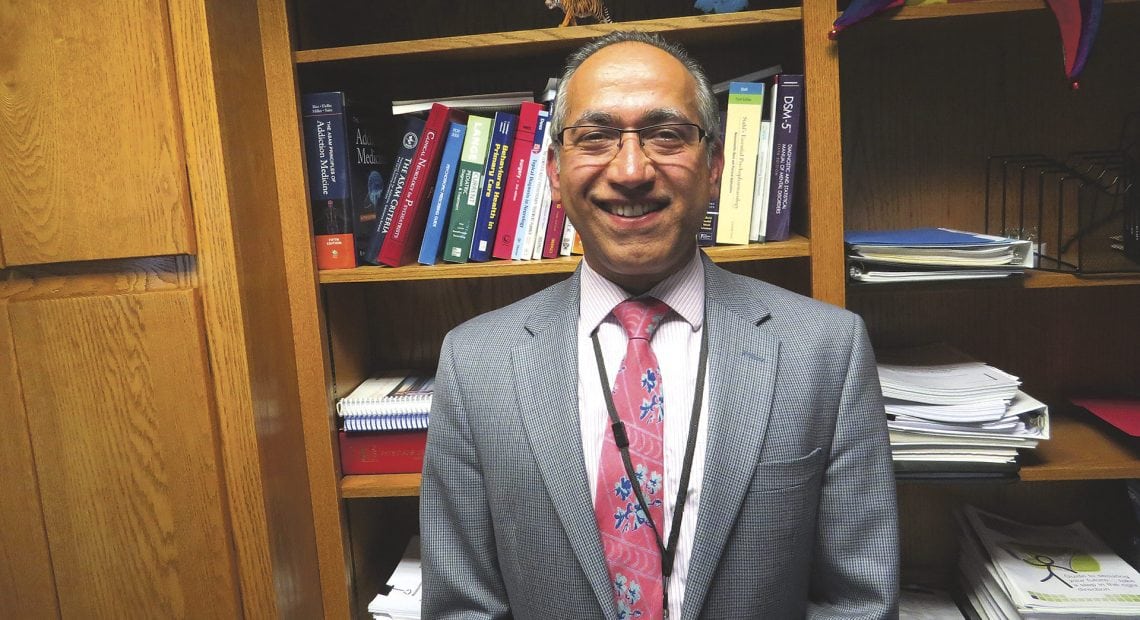
Education

Piece by Piece

Elms College Financial Aid Director Kristin Hmieleski

Elms College Financial Aid Director Kristin Hmieleski

It’s hardly news that college costs have consistently risen over the past two decades, outpacing both inflation and incomes. But there are a host of resources families can access to help bring those costs down and reduce the initial sticker shock. Still, putting the pieces together takes a combination of hustle, clear communication, hard work, and often sacrifice, all in search of what students hope will be a life-changing degree.


Bryan Gross calls them “success stories” — incoming students who weren’t sure they could afford college, but somehow manage to make it happen.

“You’ll see a lot of media attention and articles about sticker shock, the cost of tuition, fees, room, and board, and it makes families very nervous,” said Gross, vice president of Enrollment Management and Marketing at Western New England University (WNEU). “But we do work very hard to make college affordable for families, and the sticker price is not what they end up paying.”

But it doesn’t happen overnight.

“It is a lot of piecing things together,” said Kristin Hmieleski, Financial Aid director for Elms College. “We always tell students, ‘you’re not going to get this for free, so let’s look at the resources at hand. What can you get through federal and state aid? What has the institution already offered you by way of merit? What else can we offer based on need? Worst-case scenario, you may have to pay out of pocket or take on additional loans.’ It’s almost like a puzzle we put together.”’

It’s a puzzle that has become increasingly challenging over the past couple decades, as college costs have steadily risen, often outpacing inflation and average income. According to the College Board, which tracks these trends annually, tuition and fees at private, four-year instititions increased by 1.9% from 2016-17 to 2017-18, to an average of $34,740. Meanwhile, public, four-year institutions saw an average increase of 1.3%, to $9,970.

Those increases are substantially lower than the spikes seen during the Great Recession. In 2009-10, for example, private institutions raised tuition and fees by 5.9%, and public schools posted a 9.5% increase.

However, the College Board noted, students still shoulder a heavier burden this year, because even those modest price hikes outpaced grant aid and tax benefits. And that places more pressure on financial-aid officers to help families, well, assemble that puzzle.

The key, both Hmieleski and Gross said, is communication — and lots of it, starting early.

“We do open houses, and as prospective students are looking at Elms College, we talk about different resources they can look at,” Hmieleski said, noting that plenty of opportunities exist beyond the award package — based on academic merit and financial need — that the college puts together for each enrollee.

“They might not know every single website to look at, but we give them some hints about community resources they can look into,” she explained. “Do they belong to a church? Do the businesses their families work for offer scholarships? The students need to do some hunting themselves. Have they reached out to guidance counselors? They might know of some opportunities.”

It’s not an easy process, and it takes legwork and often sacrifice. But if the end result is a degree and a career pathway, families are more than willing to make the effort.

Knowledge Is Power

Gross said communicating with students starts well before they ever sit down in a classroom.

“Being a private institution, being well aware of the current state of the economic landscape, giving families direct and clear information regarding their financial-aid package is really important for us,” he said.

Bryan Gross

Bryan Gross says communication with families — both early and often — is key to helping them forge a strategy to pay for college.

To that end, WNEU started a program three years ago called Culture of Financial Wellness, which includes several components, starting with financial-aid counseling, during which officers help families navigate the process of piecing together available resources. Meanwhile, during spring open houses, financial-aid workshops are offered to inform and educate parents about the financial-aid process to help them make the right decisions for their student.

Following those are SOAR, the university’s Summer Orientation and Registration sessions, featuring presentations by Peter Bielagus, known as “America’s Financial Educator,” who provides information to parents about financing their student’s education.

The final piece of Culture of Financial Wellness continues after the student has joined the campus. The Freshman Focus program offers programming and talks to help students successfully transition to college life, including an overview session each fall on finances and spending designed to teach students about credit-card debt and making sound financial decisions in college and beyond.

“We want to educate students and help them understand the importance of living within your means,” Gross said. “That’s the circle of life — we want to help students for the rest of their lives.”

But that help begins at the financial-aid office, where the allocation of resources has been subtly shifting. This year, the College Board reports, federal loans account for 32% of all student aid, followed by institutional grants (25%), federal Pell grants (15%), tax credits and deductions (9%), state grants (6%), private and employer grants (6%), and veteran and military grants (6%).

“We put together a strategy for each student based on their academic performance,” Gross said. “We offer them scholarships, and of course federal and state grants typically get offered, and after that we have need-based grants we offer depending on their circumstances, and typically at the bottom of all that is federal work studies.”

Hmieleski said some 80 to 100 Elms students benefit from federally funded work-study jobs, 7% of which must be targeted at community-service work, such as the America Reads program administered locally by Valley Opportunity Council, in which college students tutor children after school.

“Unfortunately, federal funding has been so limited — it gets cut every year,” she said, noting that some students work at campus jobs funded by the college, while others secure part-time employment off campus.

Gross said certain enrollees benefit from special circumstances. “Veteran students are a population we work with; we help students directly apply for veterans benefits, and they might be eligible for ROTC as well.”

The bottom line, he told BusinessWest, is that students are given a full picture of what resources are available so they can figure out how to fill in the gaps, even if that means living at home.

“We want them to live on campus, but we want families to make an informed decision. It’s amazing how many families don’t even think about that,” he said. “We just don’t want families to be flat-footed when they receive their first bill.”

Beyond the Gloom and Doom

As Gross noted, he’s gratified by the success stories, but they’re not the whole story, unfortunately.

“To be honest with you, every college also has stories of families that fill out an application for federal aid, then come to us and say, ‘this is not our reality; we can’t afford to pay that.’ We work with families to come up with a plan, and it may work, but it may not work.”

In some cases, he said, students will instead opt to begin their education at a two-year community college. No matter what the outcome, though, he tries to make sure the decisions are made from a place of copious information.

“Families know that it’s not just a matter of crossing their fingers and closing their eyes, and somehow it comes together. You really have to have a plan, and you have to use college and community resources to help you through the process.”

No matter how much thought goes into a strategy, Hmieleski added, it’s impossible to de-stress the process of financial planning for college.

“No matter where you are in life, even if you have wealth, money is always stressful,” she said. “When some people hear about finances or anything involving money, their reaction is almost to shut down and not listen because they don’t feel like they’ll ever understand it.

“But we deal with a lot of first-generation, low-income students here at Elms; we are here to support those students,” she went on, noting that the college is invested not only in their ability to pay for school, but their academic success and keeping them enrolled. “OK, you’re here, you’re able to afford it — now let’s make sure you’re academically successful.”

But it begins with that first look at the unassembled puzzle, and all the decisions that go into putting it together. Hmieleski recalled one student — whose academic record was strong — that she worried about every fall, wondering if she’d be able to continue on, due to tight finances. But each year, the family somehow managed, and she graduated.

“I get goosebumps in so many situations when it looked like doom and gloom, like the student wouldn’t be able to come here, but we work on it,” she said. “And when they’re able to walk through that door, it’s a thrill.”

Joseph Bednar can be reached at [email protected]

Features

A New Experiment

umasslifesciencelabsPeter Reinhart, director of the Institute for Applied Life Sciences at UMass Amherst, said there’s a tendency in academia to think of private industry as the enemy. As one of the nation’s foremost public research institutions, however, UMass has become increasingly engaged with industry, most recently through an expansion of the institute’s core facilities with high-tech equipment that companies can use to help bring ideas to market. It’s a true win-win, UMass officials say, and an example of how public-private partnerships are changing the face of higher education.
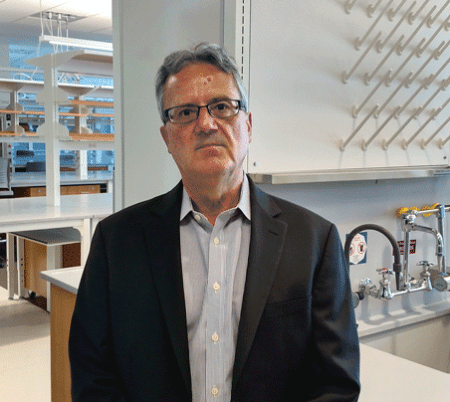
UMass Amherst may be renowned for cutting-edge scientific research, but when it comes from turning published papers into public benefits, the transition hasn’t always been smooth.

“What we don’t do well is move the results of our research into society,” said Jim Capistran, executive director of the UMass Innovation Institute. “We’re not good at that. We’re not out there working with industry.”

That’s changing, though, as some 120 representatives from advanced and precision manufacturing firms, research and development companies, commercial lenders, and community colleges learned during a recent visit to UMass Amherst’s Institute for Applied Life Sciences (IALS, pronounced aisles) to learn about how its newly opened core facilities can help them boost the state’s manufacturing economy.

We want all the precision manufacturers and related industry in the state to know that we are open for business.”

“Now, we have this pathway to commercialization, to take our research and work with industries of all sizes,” Capistran told BusinessWest. “We now have this vehicle to bring research to fruition and make an impact on society.”

Located inside the IALS building, these core facilities — now numbering 30 — and their high-tech equipment are available not only to UMass researchers, but to companies that want to rent the space and equipment.

Peter Reinhart

Peter Reinhart says the core facilities at IALS can help UMass researchers turn academic papers into public benefit, while helping companies solve problems for customers.

The four newly opened core facilities offer additive manufacturing, 3D metal and plastic printing, roll-to-roll manufacturing, device characterization, materials testing, modeling, simulation, computer-assisted design, and other analytical core research facilities that will be available for advanced manufacturers to test designs and prototypes, for example, that could lead to a new product, land a new customer, or add jobs, Capistran explained.

“We want all the precision manufacturers and related industry in the state to know that we are open for business,” he told the visitors. “Today, they can see for themselves what we have to offer.”

Among Capistran’s roles is serving a point of contact for university engagement with industry, which has become an increasing priority over the past decade, he told BusinessWest.

“All these companies have this big research institution in their backyard, but they don’t use it,” he noted, ticking off reasons why they should. “They have their limitations; they can’t buy the latest and greatest tools, and they don’t have the people to use them. As we’re getting to know these companies, they’re finding we’re approachable; we’re not mad scientists running around an ivory tower. They can come here for help with introducing them to new technologies and new ways to approach solutions.”

Manufacturers are listening; among the attendees at the open house were product designers, research engineers, and others from not only large firms such as Raytheon, Pratt & Whitney, Saint-Gobain, General Dynamics, and General Electric, but scores of smaller, local precision- and advanced-manufacturing firms.

Chancellor Kumble Subbaswamy expressed to them his commitment to partnering to with industry to support their growth, asserting that, “when Massachusetts manufacturers are successful, the whole state benefits.”

At the same time, the benefits to UMass researchers are obvious, said Peter Reinhart, IALS director. “They’re thinking, ‘I can get more than a great paper out of this.’ They may not have thought that before, but this campus is becoming more industry-friendly. They’re not the enemy. They can help us.”

Next Big Thing

IALS was created in 2013 with $150 million in capital funding from the Massachusetts Life Sciences Center (MLSC) and the university itself. Its mission is to accelerate life-science research and advance collaboration with industry to effectively shorten the gap between scientific innovation and technological advancement.

Reinhart, a veteran biopharmaceutical executive and researcher, said the institute achieves this goal through three translational centers: the Models to Medicine Center, which harnesses campus research strengths in life science; the Center for Bioactive Delivery, which seeks to discover new paradigms for the discovery of optimized delivery vehicles for drugs; and the Center for Personalized Health Monitoring, which aims to accelerate the development and commercialization of low-cost, wearable, wireless sensor systems for health and biometric monitoring.

The goal, Reinhart said, is to realize a broad range of societal benefits that are practical and accessible for the average person.

We’re generating next-generation drug delivery, so the drug itself has the ability to target the inflamed cells. For instance, instead of the drug sloshing all throughout the body, it can target just the cell types in the body that need medicine, which keeps the concentration at the target site high and low elsewhere.”

“We don’t want to develop the next $1,000 or $2,000 home-monitoring device,” he explained, “but the next $20 device that sticks on the skin and measures information about your individual, personal trajectory.”

Meanwhile, in the Center for Bioactive Delivery, “we’re generating next-generation drug delivery, so the drug itself has the ability to target the inflamed cells,” he told BusinessWest. “For instance, instead of the drug sloshing all throughout the body, it can target just the cell types in the body that need medicine, which keeps the concentration at the target site high and low elsewhere.”

In short, IALS wants to create connections between research and the marketplace, and the new core facilities that focus on high-tech manufacturing will be a key step in that process.

Kristen Carlson, president of Peerless Precision Inc. of Westfield and president of the Western Mass. chapter of the National Tooling and Machining Assoc., told open-house attendees that more than 200 precision-manufacturing firms operate in the state’s four western counties, supplying many thousands of high-quality precision parts each year to the aircraft, aerospace, medical-device, fine-finishing, and robotics industries, among others.

Jim Capistran

Jim Capistran says UMass researchers aren’t “mad scientists running around an ivory tower,” but a practical resource manufacturers can tap into.

Increasingly, this requires sophisticated design and small-batch production of customized components made on extremely high-tech equipment. Among many other services, the IALS core facilities will assist in design and testing to such standards, she added. “I cannot stress enough how beneficial it is to have such innovation centers available to us. I am thrilled to see UMass expand the resources available to us.”

Matthew Koons of Boyd Technologies in Lee said customers approach advanced manufacturers with ideas, many of which require testing and experimentation. “This kind of facility allows us to expand our ability to translate ideas into a product, and more quickly, so we don’t have to reinvent the wheel. Anything that speeds the process and allows more rapid innovation is very valuable.”

Oh-Hun Kwon, director of external relations for Saint-Gobain’s Northboro R&D Center, added that the international firm, which specializes in construction and high-performance materials, appreciates the access to new talent it finds in Amherst. “We’ve enjoyed a long-term relationship with UMass for almost 10 years now,” he noted. “We find the faculty and facilities are top-notch, and we find them a powerful partner in meeting many technical challenges.”

Getting on the Same Page

The very existence of IALS owes a lot to the concept of partnerships. Its creation was funded by $95 million from the Massachusetts Life Sciences Center, a quasi-public agency that oversees a $1 billion investment made by the Deval Patrick administration in 2007. UMass kicked in another $55 million to IALS for a total seed funding of $150 million.

“We call it the ‘triple P’ — public-private partnerships,” Capistran told BusinessWest. “We’ve been doing this in Massachusetts for a number of years, and more and more, other states are doing it as well.” For instance, he noted, the state of New York has poured billions into the SUNY Binghamton area in an effort to create another Silicon Valley, while Ohio has invested heavily in the Edison Project. And those are just two examples.

“I think we’re doing it a little bit better here,” he went on. “The state doesn’t put as much money into it because it’s a public-private partnership. The governor has said, ‘I put up money, but you put up money, too; it’s not a free ride.’ I think that’s a good idea.”

But the effort takes more than just funding; it requires an aggressive outreach to the business world.

“I think we’re doing a good job,” Capistran said. “We could do better, and I think people are realizing that we have to engage different partners early, making sure everyone is on the same page, and everyone’s interests are heard.”

Equally important, Reinhart said, is making it easy for industry partners to collaborate.

Western Mass. is much more affordable, and quality of life here is really nice, so we’re doing a lot to get more businesses to spin out from these collaborations and get them to put down roots in Western Mass.”

“We have made the process of getting access to our core facilities as easy as we can,” he told BusinessWest. “We can turn contracts around in a matter of days, not months. We’re geared toward providing access to equipment and faculty expertise in a very streamlined, fast way.”

For companies, IALS provides a key resource and equipment they might not be able to afford on their own — and it could make a difference whether they invest in Western Mass. or go elsewhere. After all, lab space in Cambridge can cost four times as much as in Amherst.

“Western Mass. is much more affordable, and quality of life here is really nice, so we’re doing a lot to get more businesses to spin out from these collaborations and get them to put down roots in Western Mass.,” Capistran explained.

He added that the university also coordinates with other innovation centers, such as the Berkshire Innovation Center in Pittsfield and the Connecticut Center for Advanced Technology in Enfield, to make sure UMass is investing in complementary equipment to what’s already available. It has also connected with vocational schools to introduce students to the latest technological advances and prime the pump of interest in advanced manufacturing.

“Whether it’s from their parents or guidance counselors, some have the perception of manufacturing as a dirty, grease-under-the-fingernails trade. It’s not like that; all these shops now computerized, high-tech, clean, and pay good money. We want to help clarify perceptions.”

Into the Future

As to what the next core facilities might be at IALS, well, it can be tough to predict years ahead.

“Ten years ago, you didn’t even hear about 3D printing,” Capistran said. “What’s going to happen 10 years from now? Technology you haven’t even heard of yet.”

As challenges go, it’s an exciting one, and he’s looking forward to seeing more breakthroughs on the UMass campus turn into real-world products, and more companies helping clients with solutions using technology they normally wouldn’t be able to access.

“Like many universities, the way we worked with industry was broken,” he said. “But we fixed that.”

Joseph Bednar can be reached at [email protected]