
Home Articles posted by Joseph Bednar (Page 18)
Community Spotlight

Community Spotlight

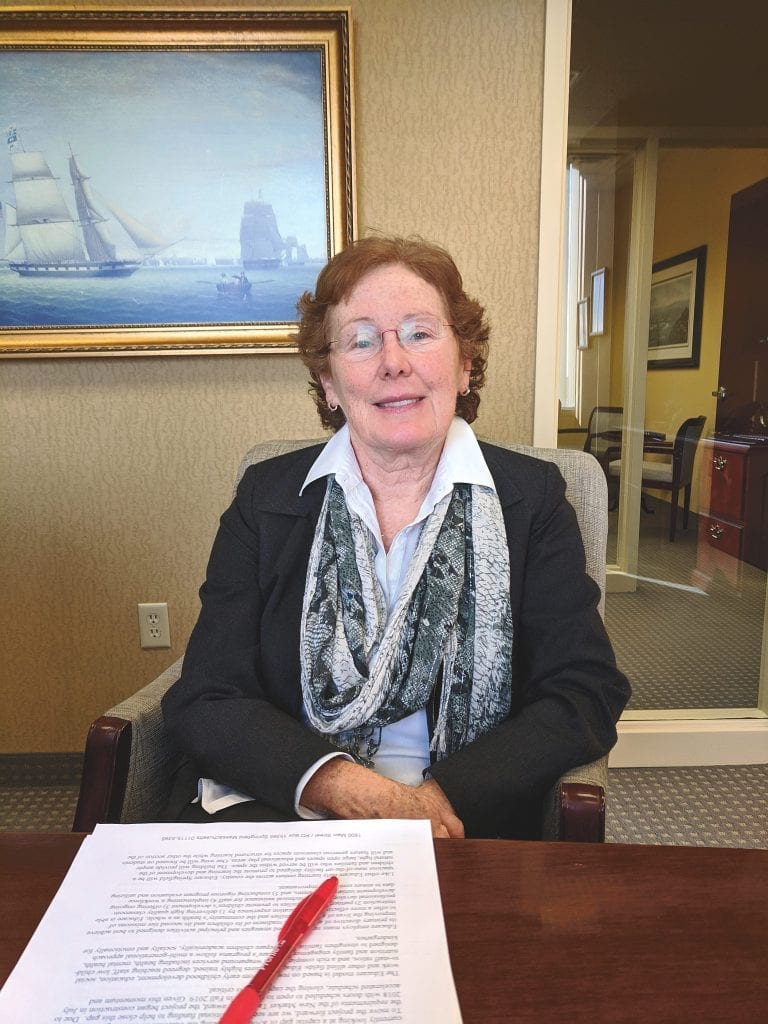
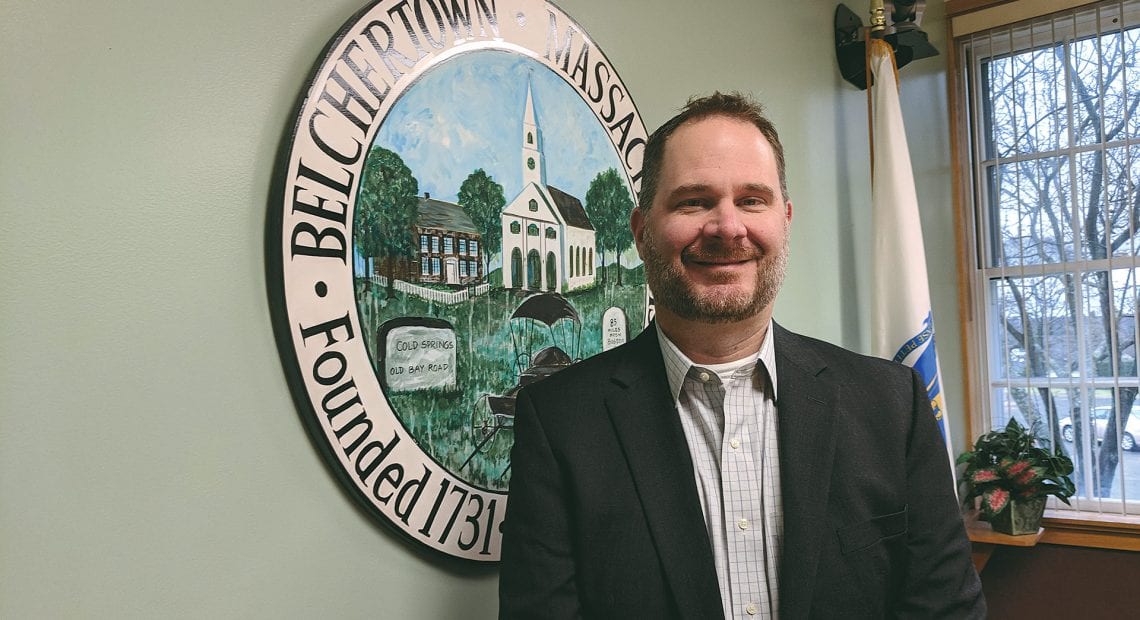
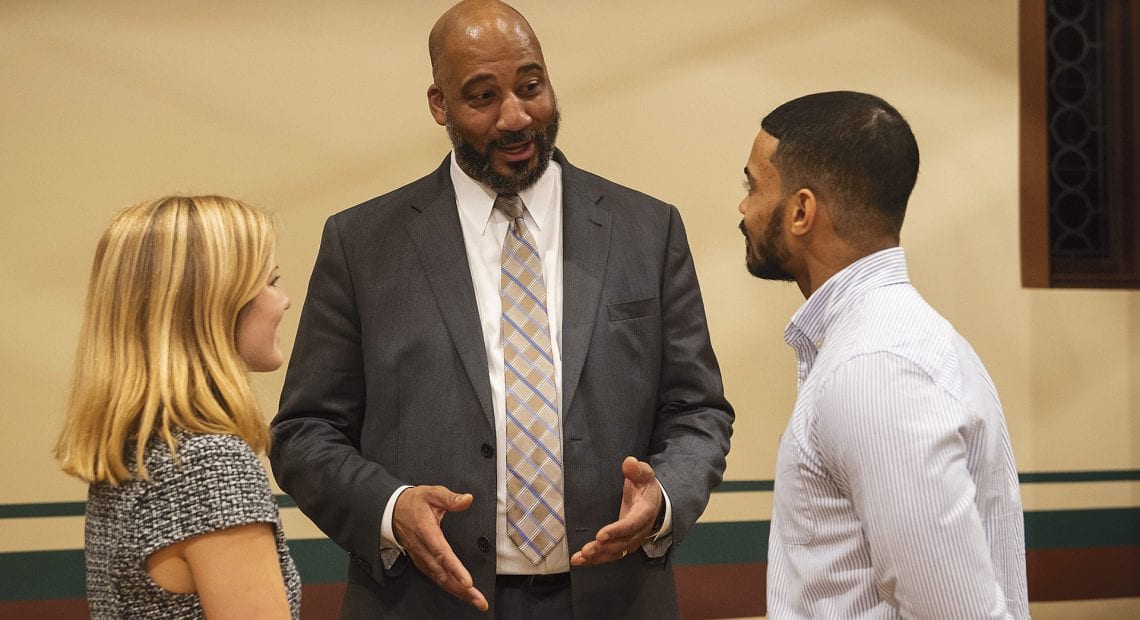
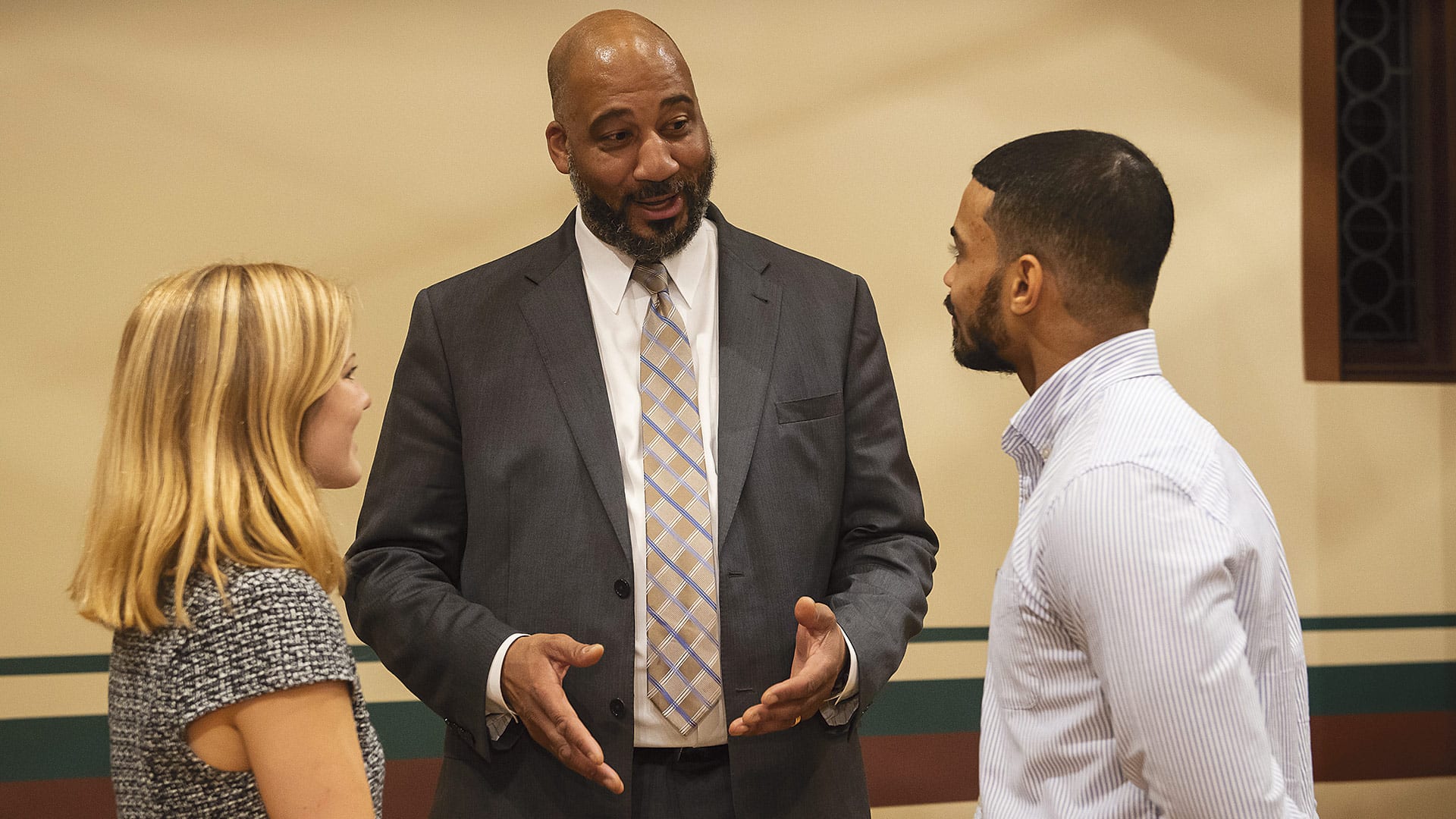
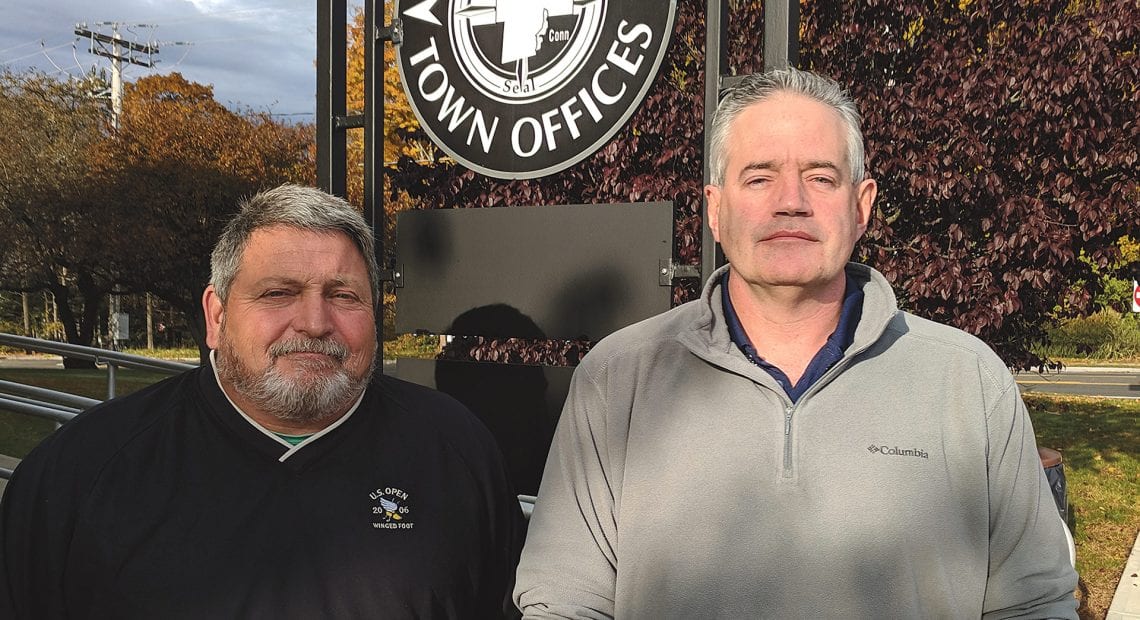
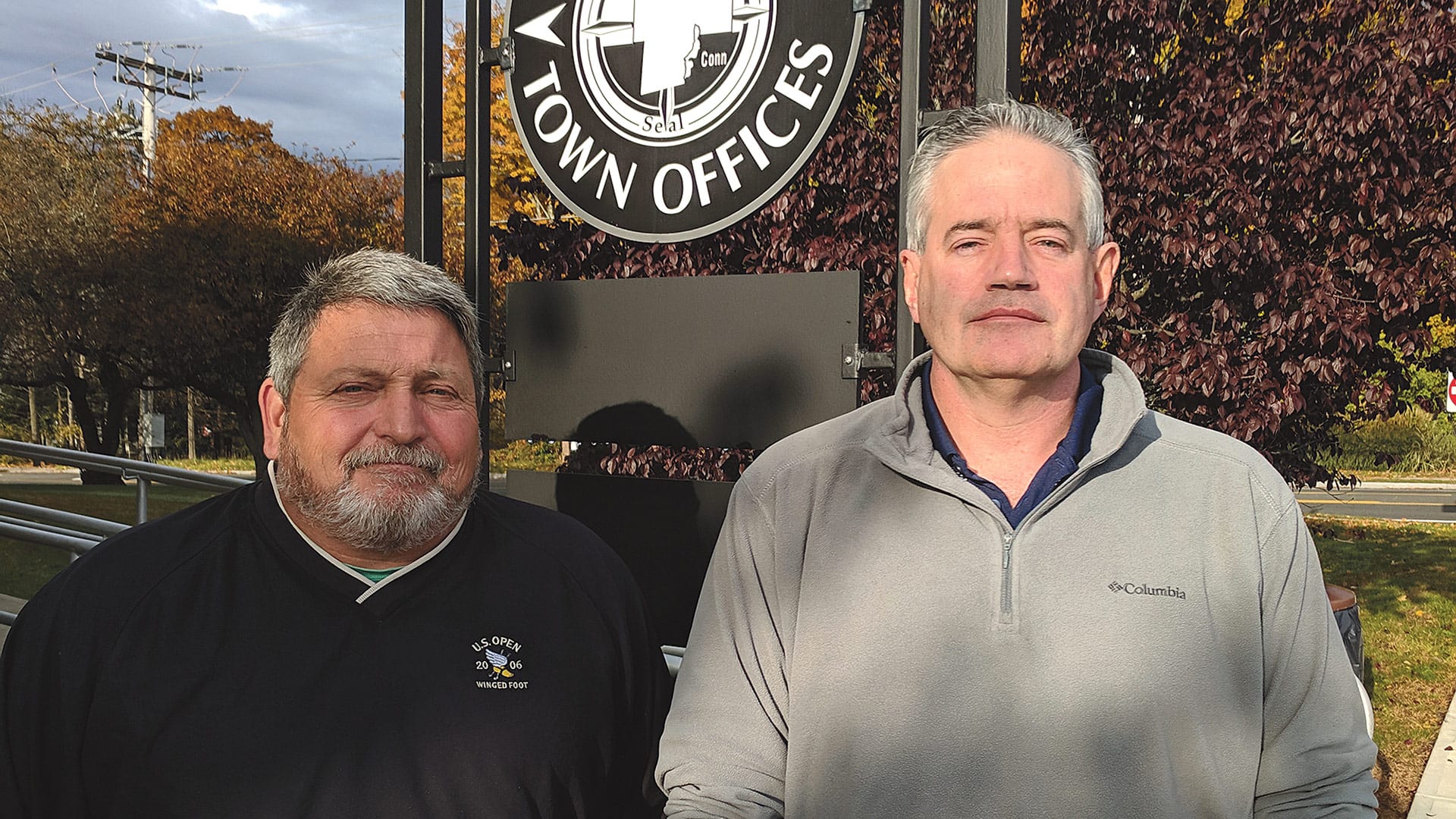
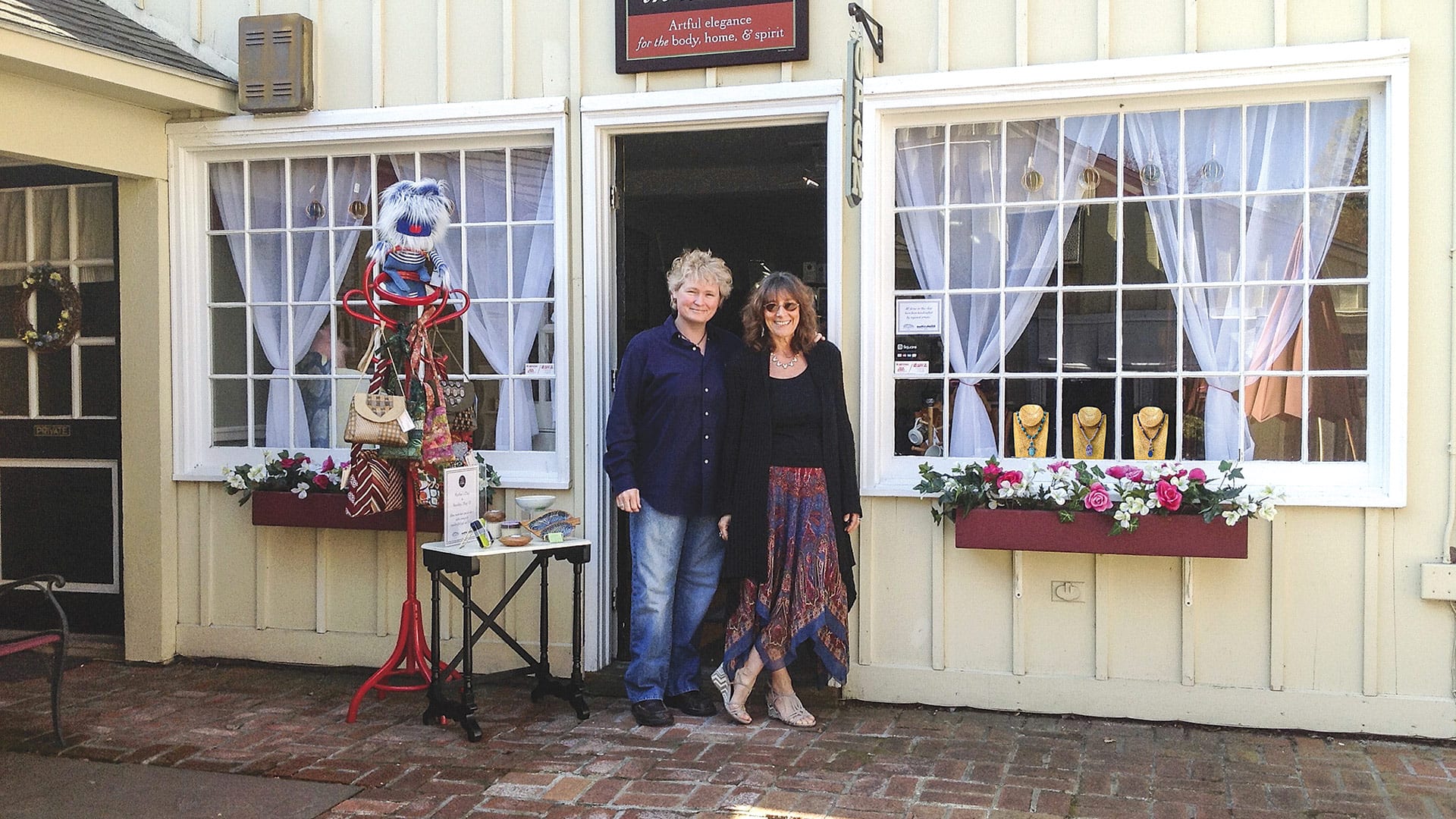
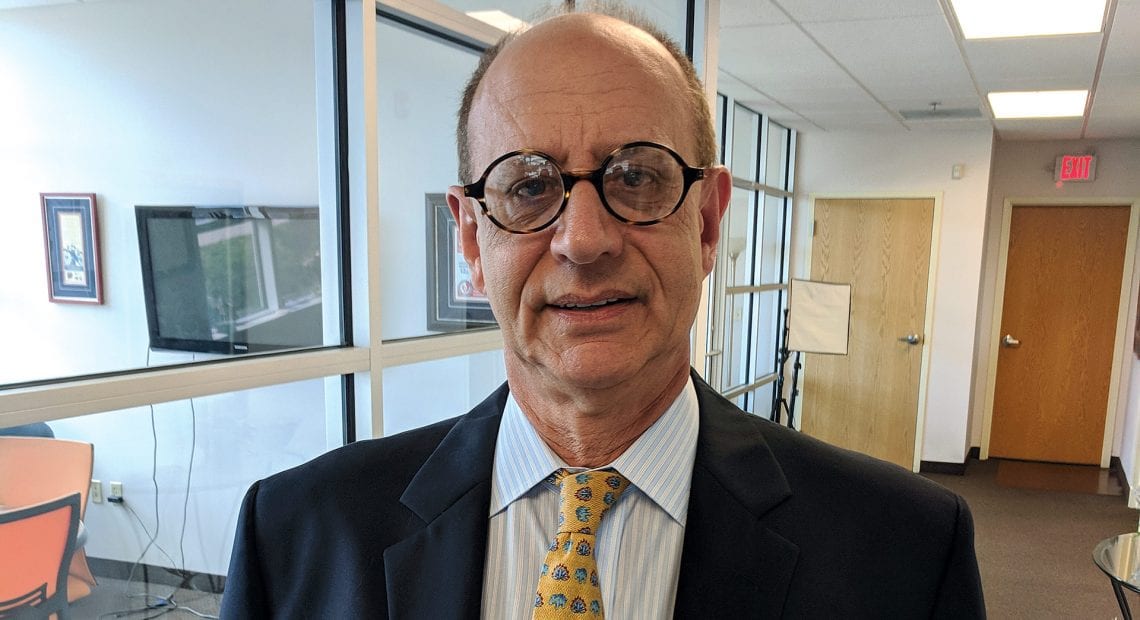
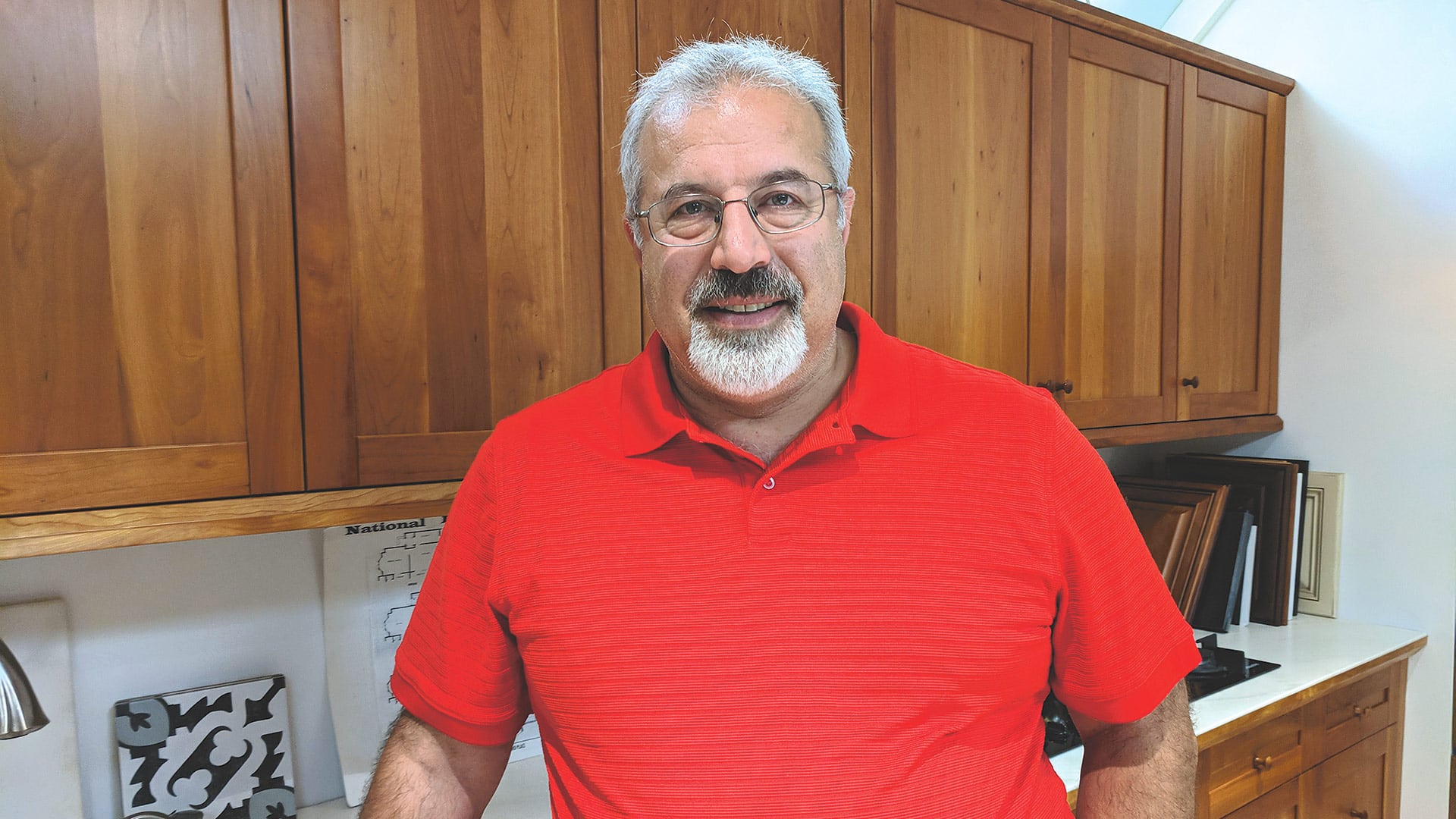
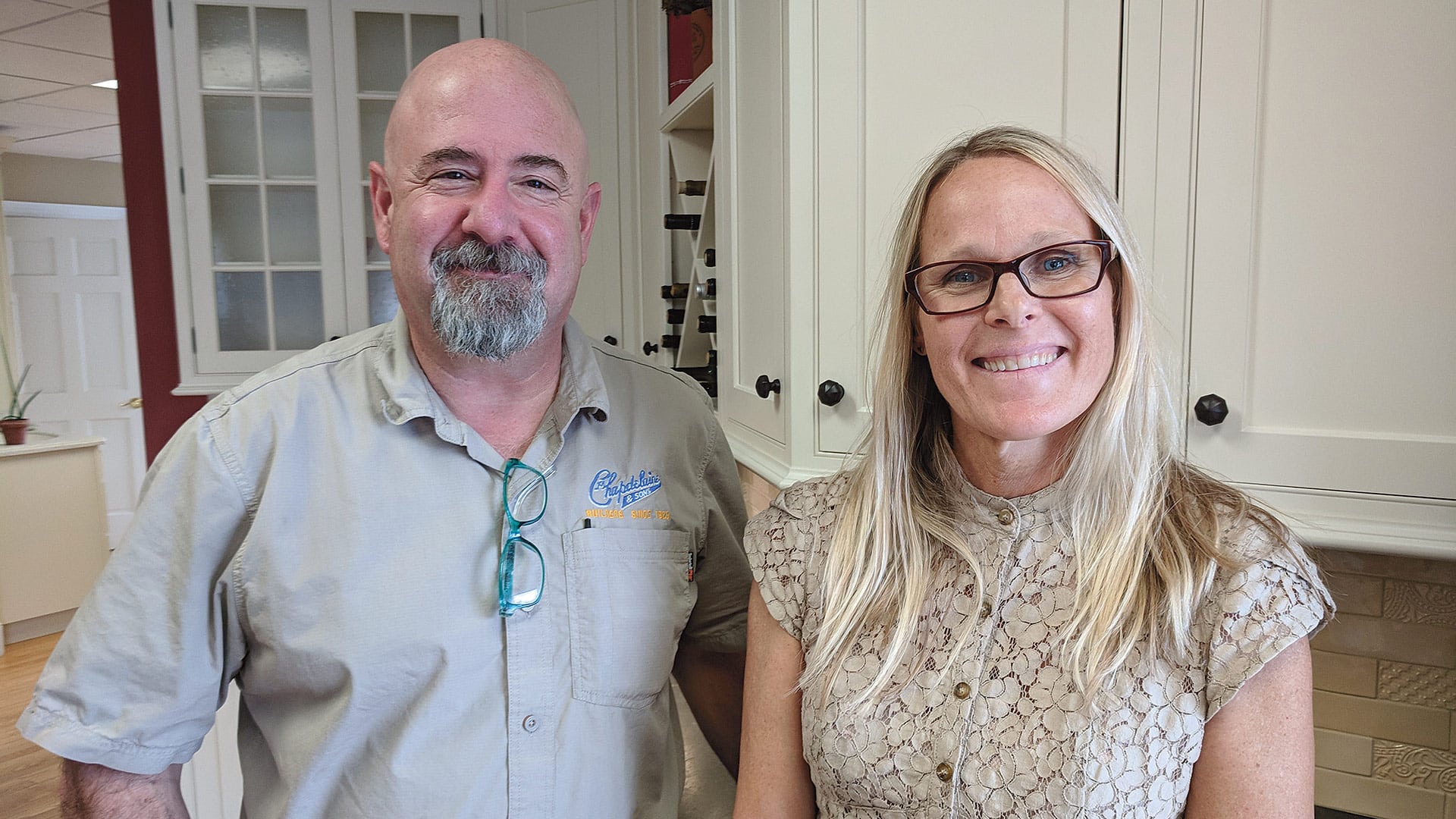
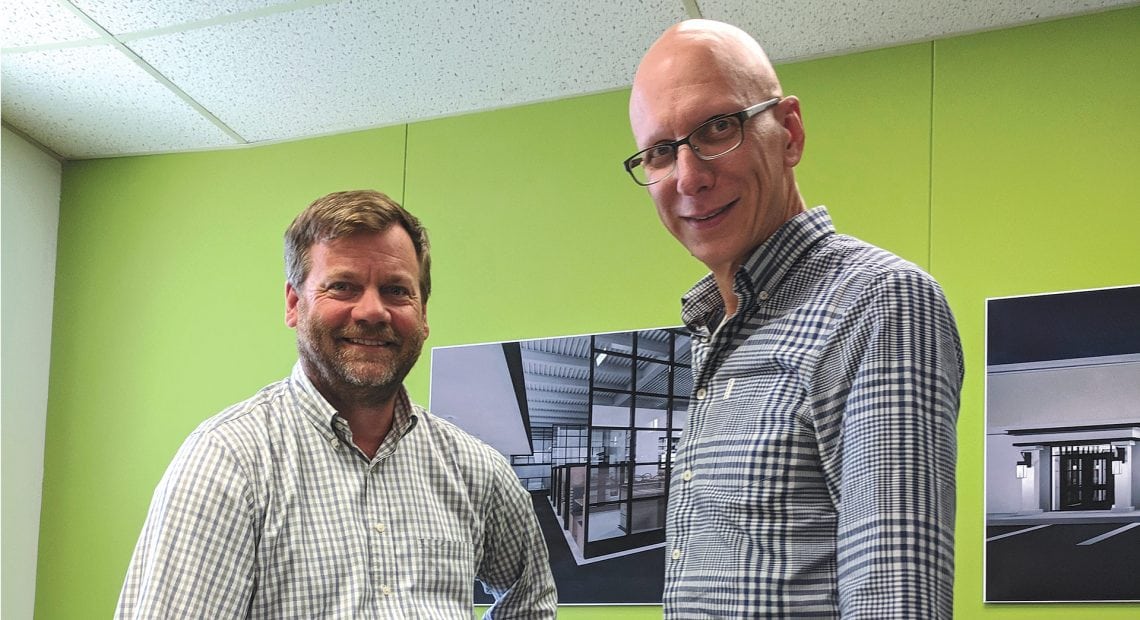
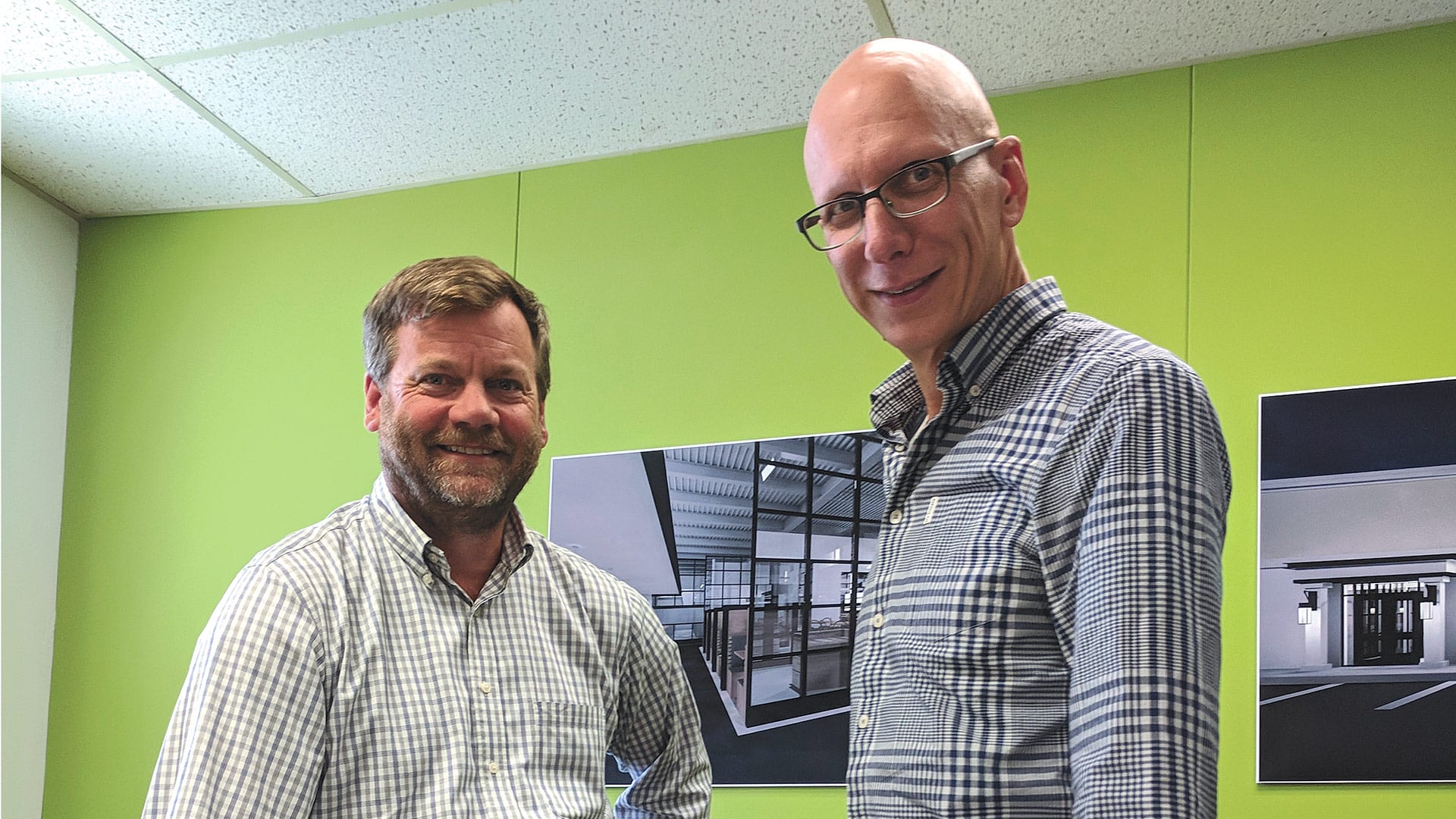
Paul Bockelman (left) and Geoff Kravitz

Paul Bockelman (left) and Geoff Kravitz say Amherst benefits in many ways from its reputation as an academic hub.

Amherst is a community in transition, Paul Bockelman says — in some positive ways.

The most notable change, obviously, was the seating of Amherst’s first Town Council last month; 13 members were elected following a change in the town charter last March that included a move away from the town-meeting form of government.

“Some people who advocated for the charter change felt the representative town meeting wasn’t fully representative of the town and wasn’t nimble enough to address the issues that were facing the town on a daily basis,” said Bockelman, Amherst’s town manager. Other people, he added, were angry after the town meeting failed to fund a new school building.

Either way, he went on, “they’re building a government from scratch. Some really smart, thoughtful people are putting a lot of effort into this council, and every decision they make is going to be precedent-setting. A lot of issues were put on hold during the transition period. Now that the council’s in place, there’s this backlog of things people want them to do, so those will start pouring through the system during the course of the year.”

But that’s not the only way Amherst is changing, said Geoff Kravitz, the town’s Economic Development director. He cited activity in the restaurant scene, which has welcomed a number of new names, including Asian eateries Chuan Jiao and Kaiju, Jake’s at the Mill in North Amherst, Share Amherst, and Shiru Café, an intriguing coffee shop and study space that offers free coffee to area students in exchange for their personal information, which is sold to job recruiters and advertisers.

“Some really smart, thoughtful people are putting a lot of effort into this council, and every decision they make is going to be precedent-setting.”

“For college students, it’s an interesting model where they get a cup of coffee every hour,” Bockelman said. “It’s really designed for college students to hang out and do their homework, and the only requirement is that you give them some data that you otherwise would give to Facebook or Twitter.”

“It’s not just for marketing,” Kravitz added, “but for recruiting for jobs out of college. Recruiting is really the model.”

Other restaurants are on their way as well, he added, and vacant properties, especially downtown, don’t remain unfilled for long.

“It’s not a stagnant town; it’s a town of transitions, and not just because we have a new form of government,” Bockelman added. “It seems that every time a restaurant moves out, a new restaurant comes in.”

Building on Progress

There’s plenty more activity on the development front as well. In September, Archipelago Investments, LLC of Amherst opened One East Pleasant, a mixed-use project featuring 135 residential units and 7,500 square feet of commercial space.

“That whole complex rented up very quickly and is full,” Bockelman said, noting that Archipelago has developed a handful of other properties in Amherst, and is planning another mixed-use project at 26 Spring St., which will feature 38 residential units and 1,000 square feet of commercial space.

Meanwhile, W.D. Cowls Inc. and Boston-based Beacon Communities are moving forward with North Square at the Mill District, a mixed-use development under construction in North Amherst, which will feature 130 residential units — including 26 affordable units for people at or below 50% of the area’s median income — and 22,000 square feet of commercial space.

Amherst is also among the Western Mass. communities enthusiastically exploring the marijuana industry as an economic driver. That’s not surprising, considering the town’s voters favored the 2016 ballot measure legalizing recreational marijuana by a 3-to-1 margin. RISE Amherst, a medical-marijuana dispensary, is currently in operation, with three other businesses working their way through the local and state licensing process.

With 33,000 students attending UMass Amherst, Hampshire College, and Amherst College, the town has also worked on educational efforts around adult-use marijuana, and has also passed a number of marijuana-related regulations, including a 3% local-option sales tax, a ban on public consumption, and capping at eight the number of recreational-marijuana establishments in town.

From a municipal perspective, the town has long been studying the potential renovation of the North Common/Main Street parking lot, Kravitz noted.

“There’s been a parking lot in front of Town Hall since at least the ’70s, if not earlier, and we’re trying to redesign it from both a drainage and ecological perspective,” he explained. “It’s sort of sloped oddly, so when it rains, all the rain coming off the streets washes it out; that was the primary purpose of looking at it.”

What to do with the space will be one of the Town Council’s issues to tackle in 2019, Bockelman added. “The biggest question coming up relatively soon to the Town Council will be, do you want to work on this project or leave it as is?”

Meanwhile, the overall vision for Amherst has long involved arts and culture. The Amherst Central Cultural District aims to leverage the offerings of the Emily Dickinson Museum, Jones Library, the Eric Carle Museum of Picture Book Art, the Yiddish Book Museum at Hampshire College, the Mead Art Museum at Amherst College, and other cultural institutions, and some of those efforts bleed into the downtown area as events, such as ArtWeek, a statewide effort taking place from April 26 to May 5.

Amherst at a Glance:

Year Incorporated: 1759
Population: 39,482
Area: 27.7 square miles
County: Hampshire
Residential Tax Rate: $21.80
Commercial Tax Rate: $21.80
Median Household Income: $48,059
Median Family Income: $96,005
Type of Government: Town Council, Town Manager
Largest Employers: UMass Amherst; Amherst College; Delivery Express; Hampshire College
* Latest information available

“We want to create more excitement about being downtown,” Bockelman said. “Downtowns today are less about retail, brick-and-mortar shops and more about entertainment and cultural events. Some of them can be sponsored by the town, but a lot of them come from individuals.”

Many of Amherst’s museums and cultural institutions have statewide, even national reputations, and the Hitchcock Center for the Environment and the R.W. Kern Center at Hampshire College are two of fewer than two dozen ‘living buildings’ worldwide — structures that meet strict standards for hyper-sustainability and net-zero energy use.

All these factors, plus the colleges and UMass, create a buzz and energy that attracts both new businesses and families to Amherst, Kravitz said.

“From a business perspective, there are very few communities of our size that boast three institutions of higher education,” he told BusinessWest. “I think that we have an incredibly educated population. People want to be around other people who have big ideas, so I think that’s part of the draw for some of the businesses — to be around other smart people. You saw that happening in Boston and Cambridge, you saw it happen in Silicon Valley, and I think that all starts with the academic institutions, whether it’s Stanford or MIT or UMass here.”

It’s Academic

The recent mixed-use developments are a welcome start to meeting housing needs in a growing town, as there hasn’t been much residential development over the previous couple of decades. In fact, a 2015 study determined that Amherst could use some 4,000 more units.

Still, Bockelman said, “I think it really is a place where people want to come to raise their family, for lots of different reasons.”

Last week, he met with a man who teaches two days a week in Washington, D.C. “He says he can leave his house at 6:15 in the morning, be in Washington by 10, and stays overnight. When he comes back, he takes the 5:00 and is back home at 8 to put his kid to bed. He chose to live in Amherst because he wanted a multi-cultural community with people who care about education, with excellent schools and an academic environment, and he found all that, plus easy access to open space. So he’s willing to make that weekly commute from Bradley. That’s kind of amazing to hear.”

That’s why it’s heartening, he added, to see how UMass Amherst has raised its profile in recent years as an internationally recognized research institution.

“It’s a big economic engine; thousands of people come in every day to work there,” he said. “Amherst is the largest community in Hampshire County, but it doesn’t read that way because it doesn’t look like Northampton, like a city. And in terms of our population, some people say the students are inflating that, but they’re here eight to nine months a year. And what that number does not count is the number of people who come into town every day because they’re employed by the two colleges or the university.”

In short, he concluded, “it’s a very vibrant community, even though it retains a certain college-town atmosphere that so many people love about it.”

That characteristic is one he and Kravitz both expect to remain steady, no matter what other transitions Amherst has in store.

Joseph Bednar can be reached at [email protected]
Banking and Financial Services

Taking Account

Matt Sosik says branches serve a different role than they used to

Matt Sosik says branches serve a different role than they used to, providing more value but less volume in the age of online and mobile banking.

In this era of rampant mobile banking, opening a physical branch is a different proposition than it used to be, Matt Sosik said. But it’s still an important one.

“At this point in the cycle of our industry, branching has fallen by the wayside a little bit,” said Sosik, president and CEO of bankESB, which recently opened its 11th branch on Sargeant Street in Holyoke — a move that, despite the declining emphasis on bricks and mortar, made a lot of sense.

“We feel we’ve been banking with the people of Holyoke for years and years, so Holyoke is a natural extension of our footprint,” he said, noting that today’s branches are smaller and more efficient than those built in the past, but still must emphasize customer service — something that Tiffany Raines, Holyoke’s branch manager, has said she will emphasize there.

Indeed, online channels do change the dynamics of a branch as a delivery channel, Sosik told BusinessWest, if only because branches simply serve fewer people in person than they used to.

“Customers, as they should, love that technology can improve their banking experience, and we really encourage our customers to use those online and mobile banking products; they’re so robust and provide so much to customers,” he noted. “That said, we’ll never lose our ability to interact with them face to face. We covet that, and when we get our customers in front of us, we certainly take advantage of that and provide guidance to them.”

“Actual in-person branch transaction volume is well off over the past 20 years, so it’s really about building the initial relationships with the customer; that’s what a branch does best in 2019.”

With that in mind, he said, the new Holyoke branch, like any new branch at most banks, is designed to provide value, not volume — a more personalized experience, in other words, for fewer customers each day.

“Actual in-person branch transaction volume is well off over the past 20 years, so it’s really about building the initial relationships with the customer; that’s what a branch does best in 2019,” he went on. “It’s more a source for originating the customer relationship than it is a delivery channel — more for acute problem resolution and consultative conversations.”

Yet, new branches also reflect growth, and bankESB is certainly growing, with $1.3 billion in assets across its 11-branch network in Hampden and Hampshire counties. Meanwhile, its holding company, Hometown Financial Group, also based in Easthampton, boasts $2.1 billion in assets and 24 branches across Western and Central Mass. and Connecticut, with further expansion to come (more on that later).

Banking today, Sosik said, is less about products and “more about how we deliver those products we’ve all become very familiar with.”

Take residential lending, for example. “The mortgage world has lent itself well to the online world, where we can efficiently process a transaction for somebody to buy what is arguably the biggest asset of their life, and we can do that almost entirely online for them — and very efficiently. That’s what technology has done — improved on products we’ve all come to know and love. That’s the difference between 2019 and, say, the 1990s.”

Dena Hall, the bank’s executive vice president and chief Marketing officer, noted that bankESB has the second-highest market share in Hampshire County at almost 22%, and the expansion into Holyoke follows growing name recognition in Hampden County, where it also maintains branches in Agawam and Westfield.

“We’ve seen an increasing level of awareness across the Pioneer Valley, up and down the 91 corridor, which is important to serve customer needs in this region,” she added. “Really, we’re all about meeting customers where they want to meet us. We want them to know we’re a viable option for them.”

Lending Thoughts

To understand the importance of face-to-face relationships in banking, Hall said, look no further than commercial lending, an increasingly important part of bankESB’s business and strategic direction. The institution added three new lenders to its commercial team in 2018, all from larger local banks, in an effort to add more resources to the division and demonstrate the capability to meet the commercial financing needs of businesses in the region. The team now has seven lenders under the direction of Executive Vice President Ryan Leap.

“When you think about how the customer has gotten physically away from us, that’s less so with the commercial business,” Sosik said. “Commercial lending has a lot to do with what we do best — customer service, face-to-face interactions, and building long-term, value-added relationships. For us, it’s a very natural customer-service direction in which to grow.”

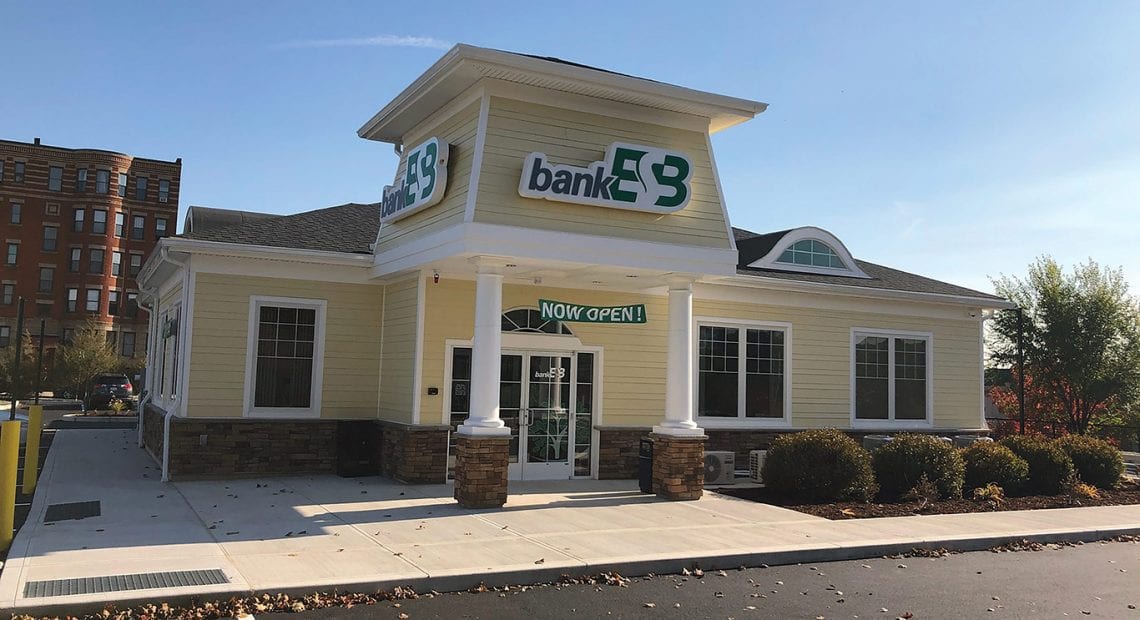
The new Holyoke branch

The new Holyoke branch is a physical extension of business that bankESB had been doing in that city for many years.

That growth comes at a time when businesses continue to invest in capital projects, he added.

“We see a lot of things going on in the economy. The economy has such a long and slow build that it’s hard to see it in motion, but take a look back at the past year and years prior, and we’ve definitely seen continuous, slow, steady growth. Thankfully for Western and Central Massachusetts, we see that growth in small and medium-sized businesses coming in and taking advantage of the economy and improvements in commercial real estate.”

At the same time, Hall said, bankESB is building its consumer divisions. “Last year, we hired a new leader for the residential mortgage and consumer loan division with several years of experience in mortgage operations and origination, most recently with Peoples United Bank,” she noted.

In addition, after a year of developing its back-office processing and underwriting area, the bank recently added two new mortgage loan originators and upgraded its online mortgage application so that customers can apply how and when they want, either in person with a loan originator or online.

“With some banks in our market pulling back on their mortgage efforts, we’re excited to make more products and sales people available to the region,” she said.

Sosik agreed. “We continue to build the depth and breadth of the team to handle our growth. That’s generally been our strategic direction when it comes to community lending.”

That’s why developing both sides of the customer-service equation — a more robust online presence and also branches focused on customer service — are equally important, Hall said.

“A lot of customers are doing research online but close the deal in the branch, and we have people ready to serve them,” she told BusinessWest. “Clients want that face-to-face interaction, and we’ve hit a nice balance of being technologically savvy with mobile offerings and very customer-service-oriented, very customer-facing. That’s a perfect fit in this market.”

Mutual Successes

Hall noted that bankESB has received some key accolades of late. In June, it was named one of America’s best-in-state banks by Forbes in a nationwide survey; of the five banks selected in Massachusetts, bankESB ranked second, and was the only bank on that list headquartered in Western Mass.

Understanding the importance of building a bank’s name, its holding company, Hometown Financial Group, continues to grow its franchise and build a separate brand presence in each region. That means three separate banks will operate under the holding-company profile: bankESB, bankHometown, and Pilgrim Bank. The latter acquisition, based in Cohasset, closes this month and adds three branches and $263 million in assets to the Hometown family.

“We have a commitment to mutuality and building those local brands, building market share in each region, then we consolidate and make efficient the back-office and operation side. We think that’s a compelling business structure going forward,” Sosik said.

“Commercial lending has a lot to do with what we do best — customer service, face-to-face interactions, and building long-term, value-added relationships.”

“We’re big believers in our mutual structure,” he continued. “First and foremost, as a mutual company, we’re not owned by stockholders. We choose to be very entrepreneurial, and we run very much like a stock company would from the business side of it. But that mutuality gives us the ability to service customers and the community in ways that stock banks cannot.”

With so many community banks operating in Western Mass., he explained, that mutual structure helps set bankESB apart. “I think that’s a real difference maker for us, showing how much we are committed to mutuality and community banking.”

At the same time, Hall said, the company’s commitment to mutuality and its holding-company structure makes it an attractive partner for other like-minded mutual banks in its current market and beyond.

“We have some exciting transactions in the works, and we hope to be able to announce those transactions within the next 30 to 45 days,” Sosik added. “I think they’re compelling; there will be market interest there. We’re really moving our company forward in a number of ways. We’re excited about that. There’s a lot going on.”

Joseph Bednar can be reached at [email protected]

Health Care

A Widening Problem

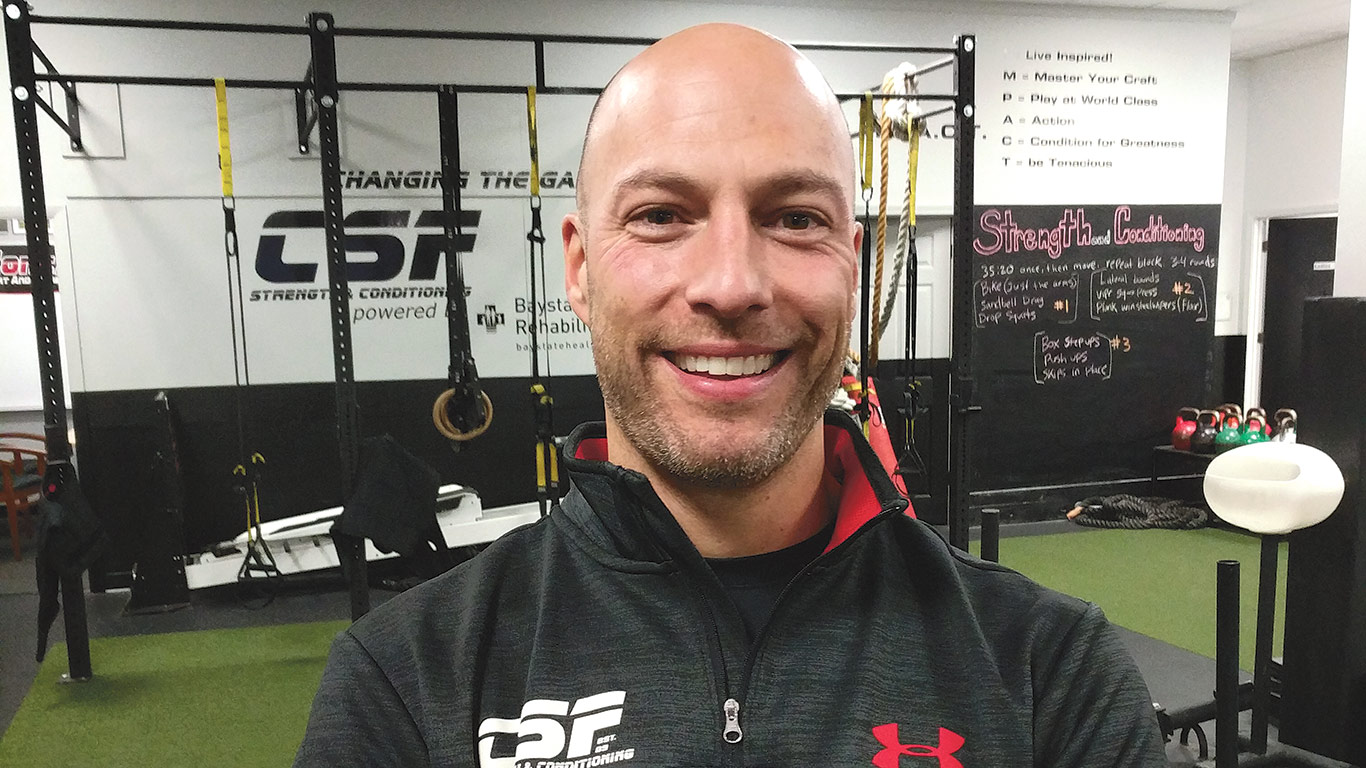
Steve Conca says it can be difficult for people to ask for help losing weight and getting fit, especially if they’re discouraged by all the attempts that didn’t work.

Steve Conca says it can be difficult for people to ask for help losing weight and getting fit, especially if they’re discouraged by all the attempts that didn’t work.

It’s gratifying, Steve Conca said, when people ask for help managing their weight — especially if nothing has worked before.

“When people come to us, they have a laundry list, and sometimes we’ll even write it on the whiteboard — ‘tell me all the stuff you’ve tried that didn’t work,’” said Conca, who owns Conca Sport and Fitness in West Springfield.

“They go on and on about different things, whether it’s a training method or a diet — you name it, they’ve tried it, and it didn’t work. And we draw the line and say, ‘we don’t to be the next thing on that list of 15 things that didn’t work. It stops right here.’”

But that’s easier said than done, he told BusinessWest, because weight loss is more than a numbers game — even when the numbers seem so overwhelming.

“It’s a lifestyle change. It’s mindset, it’s accountability, it’s exercising the right way. It’s eating healthy again and not just counting points. You’ve got to take it one step at a time and get your mind right.”

“It’s a lifestyle change. It’s mindset, it’s accountability, it’s exercising the right way. It’s eating healthy again and not just counting points,” he said. “You’ve got to take it one step at a time and get your mind right — and make sure the effort and exercise you’re going to put in are designed for you specifically, and will work for your body and your metabolism.”

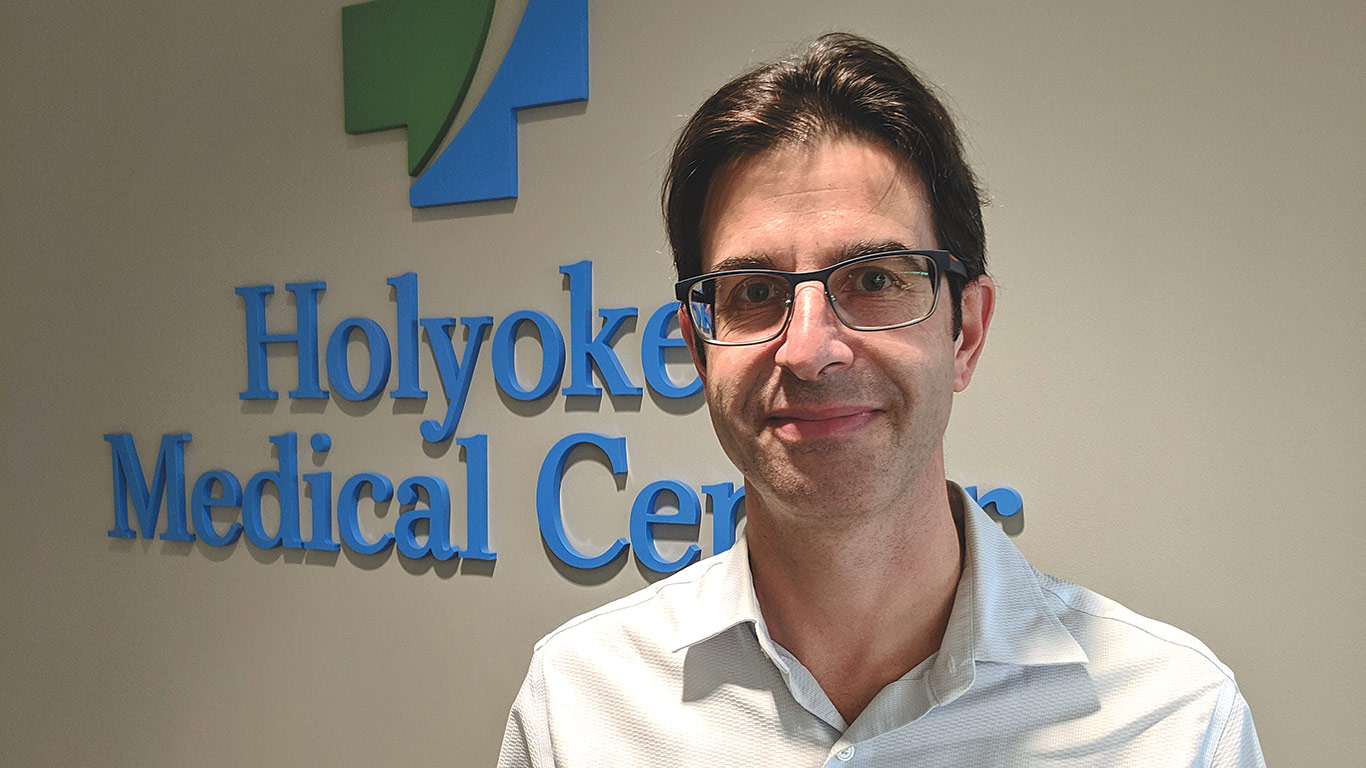
Even people who lose weight, whether through traditional diet and exercise or surgery, often have trouble in the months and years following their initial success, said Dr. Yannis Raftopoulos, director of the Weight Management Program at Holyoke Medical Center.

“The challenge is, how do they maintain this weight in the long run?” he said. “Most practices today aren’t looking to change the person. That’s what we do here, and we have a higher success rate and a better chance to maintain the weight loss. But that’s hard to do. We have seen great successes, but it’s labor-intensive, time-consuming, and a lot of resources are needed.”

And it starts with a decision to take that first step, Conca noted.

“When someone calls and says they need help, that’s a vunerable position they put themselves in. When they come in and sit down, that’s one more big step that can also be another vulnerable spot,” he said. “We take that very seriously that you’re looking to trust us with your health, fitness, and well-being. That’s a huge responsibility, and we take it seriously.”

Wrong Direction

It’s an important responsibility, too, in a country that’s been going in the wrong direction, fitness-wise.

“There’s something that’s dramatically not right,” Conca said. “As a people, we’re getting less active, and we’re eating a much poorer grade of food than we did 20 or 30 years ago.”

Those trends are starting at an early age. According to the latest data from the National Health and Nutrition Examination Survey, produced by the Centers for Disease Control and Prevention (CDC), the percentage of children ages 2 to 19 who are obese increased from 14% in 1999 to 18.5% in 2015 and 1016. In the Pioneer Valley, 25% of children are considered obese.

Dr. Yannis Raftopoulos says treatments for obesity are myriad, and crafted on a patient-by-patient basis.

Dr. Yannis Raftopoulos says treatments for obesity are myriad, and crafted on a patient-by-patient basis.

“That means they have a body-mass index that puts them at increased risk as they enter adulthood for diabetes, high cholesterol, heart disease, gallbladder disease, asthma, and bone and joint problems. Already, we are seeing more and more youngsters developing type II diabetes, which is commonly developed by overweight adults,” said Dr. Chrystal Wittcopp, medical director of Baystate General Pediatrics, who oversees the Pediatric Weight Management Program at Baystate Children’s Hospital.

“The growing rate of childhood obesity in our country is alarming. Being overweight poses a serious threat to the health of America’s children, and as a society, we must make a concerted effort to decrease its prevalence not only in the Springfield area, but across the country,” she added, noting that obesity carries psychosocial consequences that can also hinder these children academically and socially.

Of even greater concern, there was a large increase in obesity — up to 14% from 9% — in the youngest population of those 2 to 5 years of age.

“My philosophy is, I try to change the patient’s lifestyle. If you want any chance to be successful, you have to change the logistics, how they operate every day.”

Conca sees it, too. “Overall, kids are moving not as efficiently as they were years ago. When we were growing up, kids were outside crawling, jumping, running around, and their bodies developed much differently than the kids now if they’re not forced into a structured activity. Instead, many of them are glued to a phone or a tablet. It’s a generational thing, and we’re seeing it not only on the activity level but the nutrition level as well. Kids don’t appreciate their bodies as much as they should because things like exercise and sleep and nutrition aren’t talked about.”

He recalled talking to an older woman whose infant grandchild’s first word was ‘Dunkin’ Donuts’ — which isn’t as odd as it sounds because the child’s parents were always making fast-food runs.

“She’s distraight about it because it’s not the way she wants her grandkids to be raised, but it’s something that, culturally, a lot of kids are embedded in. And they’re so impressionable at that age.”

When parents choose to eat right and be physically active, Wittcopp added, children are more likely to take note and make those same healthy choices. She said families could encourage each other by walking around the neighborhood together, going on a bike ride, or playing basketball at the park, while limiting time spent in front of the TV and video games, and cooking healthy meals with fresh vegetables, fruits, and whole grains.

“The severe consequences of obesity underscore the critical importance of children and teens to participate in physical activity and to engage in healthy eating habits,” she noted. “Childhood obesity is entirely preventable, and it is up to adults to encourage these healthy habits.”

Plenty of Options

For individuals who are well past those foundational years and frustrated by an inability to get fit, there are plenty of treatment options, Raftopoulos said.

“There are different levels of obesity, and different methods are available based on that,” he told BusinessWest. “For someone mild obesity, surgical options are usually not recommended, though there are some exceptions to that.”

Less drastic options range from classic diet and exercise to medications that restrict appetite, although Raftopoulos isn’t personally keen on those, as they can be expensive, come with side effects, and are not a long-term solution.

“My philosophy is, I try to change the patient’s lifestyle. If you want any chance to be successful, you have to change the logistics, how they operate every day.”

A more dramatic, yet still non-surgical, option is a gastric balloon that is swallowed, inflates, and suppresses the appetite until it’s removed after a few months. Holyoke Medical Center is currently involved in a clinical trial of a more advanced balloon that needs no endoscopic removal, but rather passes into the stool after it deflates.

Then there are the surgical options, specifically gastric bypass and sleeve gastrectomy, both of which drastically reduce the size of the stomach. But, no matter how effective a treatment is, whether surgical or non-surgical, patients face the same challenges afterward.

“Surgery will reduce the portion of the stomach and how much you can eat, but you can gain weight even with a small stomach,” Raftopoulos said. “If surgeons don’t provide the support to change the fundamentals of the patient — if they don’t help you change how you live your life — nothing will be very effective, and you can gain the weight back.”

For people who have struggled with obesity, he noted, there’s a psychological component to maintaining a healthy weight, and one that can be frayed by the stresses of everyday life, from work schedules to parenting obligations to caring for sick parents. That’s why his team works with patients on managing their entire lifestyle — through education and support services — to stay on the right path.

“The problem with how medicine is done today is not seeing the patients holistically,” he said. “Everybody is focused on one thing — ‘oh, your ear hurts? Let’s fix the ear.’ But the ear is connected to something else. And that fragmented mentality affects the patient’s results.”

But when something clicks, Raftopoulis gets excited — not just for that one patient, but for others who may be inspired by their example.

“The more practices do this the right way, and the better results they have, the more people will believe we can help them,” he said. “We need to have more practices do the right thing because there’s a great need.”

Reaping the Rewards

Conca understands the frustration of trying to make a change, and, after a few weeks of poor results, becoming discouraged.

“What they’re doing isn’t working, and after a few weeks, they’re tired and frustrated, and they quit again. Rightly so — if you’re doing something and not getting results, you’re going to stop doing it,” he said.

That’s why he touts his practice’s ‘Fit in 42’ program, an immersive, six-week experience that aims to change not just the number on a scale, but a mindset, through both serious exercise and an emphasis on accountability through activities like daily journaling and connecting with other members, both at the gym and on a private Facebook page.

“That sense of community and connection is so powerful — it’s more powerful than anything we could throw at them exercise-wise,” he went on. “So we have the community component, plus training that works, plus nutrition — there’s no diet, you’re just going to eat good, healthy foods for your body type — and then you see results. We have to show them results.”

It’s a great feeling, he said, when someone trusts him to make a change when nothing has worked before.

“When someone comes in, they have to have a why. From a business perspective, we try to preach that as well. Why are we doing what we’re doing?” he said, before answering his own question.

“People come in, and they’re down in the dumps and just throwing in the towel, saying, ‘I just want to play catch and not hurt, or just roll around on the ground with my kids.’ And it’s really cool to give somebody that. It’s really rewarding.”

Joseph Bednar can be reached at [email protected]

Features

High Stakes

NETA’s Leslie Laurie (left), regional director for Western Mass. and director of patient services, and Angela Cheek, dispensary manager.

NETA’s Leslie Laurie (left), regional director for Western Mass. and director of patient services, and Angela Cheek, dispensary manager.

It’s been an eventful six years since voters first approved marijuana sales to treat medical conditions back in 2012. From that vote sprang New England Treatment Access (NETA) three years ago, and last month, the dispensary became one of just two stores in Massachusetts selling cannabis products for adult recreational use as well. NETA’s co-founder says the company has proven itself to be a good neighbor and an economic driver — and promises to be even more so in what is certainly a bold new era for marijuana in the Bay State.

When Kevin Fisher came to Massachusetts to help launch a medical-marijuana dispensary, he was already a veteran of the industry in Colorado, with plenty of passion to boot.

Fisher’s family, like so many others, has been struck by cancer, he said, and the idea — first as owner of Rocky Mountain Remedies in Colorado and then, starting in 2015, as co-founder of New England Treatment Access (NETA) — was always to draw in people with chronic and even terminal illness who may consider cannabis a viable therapy.

By the time NETA opened its doors in Northampton and Brookline, the anecdotal evidence for the drug’s effectiveness had been well-established elsewhere, he noted.

“We knew patients were using these therapies for a broad range of conditions,” Fisher told BusinessWest, before praising the law crafted after voters approved legalized medical marijuana in 2012.

“In Massachusetts, they got it right. Instead of legislators playing physician, the law granted physicians the freedom to make recommendations as they saw fit. It was important to maintain the sanctity of that patient-physician relationship. And we wanted to make sure we would provide quality products for patients to meet that broad range of conversations with physicians.”

Now, another law has significantly altered NETA’s business model. On Nov. 20, the company’s Northampton site, as well as Cultivate Holdings, LLC in Leicester, became the first facilities in the Northeast to sell marijuana to the public for adult recreational use.

“We call the individuals who interact with customers our ‘customer service associates.’ We require vigorous training before they’re out on their own, interacting with customers.”

At a press event after the state’s Cannabis Control Commission gave the go-ahead, Amanda Rositano, NETA’s director of operational compliance, said the shop is “beyond thrilled to be a part of this historic moment when NETA Northampton finally gets to open its doors to adults over 21 to provide safe, legal, and regulated cannabis to the people of Massachusetts.”

It’s certainly a welcome shift for many in the Valley, but it comes with challenges — concerning consumer safety, public perceptions, even traffic on Conz Street, which backed up significantly at certain times in the days following Nov. 20. But Fisher said NETA has long been preparing to meet them.

Hannah Rosenbaum, one of NETA’s patient service associates

Hannah Rosenbaum, one of NETA’s patient service associates, with some of the ‘flower’ available for purchase.

Early on, for example, the organization brought in Leslie Laurie, former head of Tapestry Health and a long-time expert in public health in Western Mass., as its regional director. “She had expertise we could benefit from, a perspective on patients’ needs in Western Mass.,” Fisher said.

The founders also assumed — correctly, as it turned out — that the progressive culture in Northampton would prove welcoming to a dispensary that first sold cannabis products to a patients with prescriptions, and, now, to any adult with an ID.

“We felt [Northampton] was the place to go, and the process was pretty smooth,” he added. “I’m thankful for Leslie; she brought a credibility to our organization and the relationships we built with government and law enforcement. And we’ve only continued to build those relationships during the adult-use licensing, because they could appreciate the solid community partners we have been.”

Opening a medical-marijuana dispensary in Brookline, however, was a “whole different beast,” Fisher noted. “There were about 100 meetings required — some open to the media and the public, many with public officials … just meeting after meeting, a lot of hand-holding and reassurance. It was a very rigorous process.”

Despite that tougher road than the Northampton one, NETA felt affirmed when its license with Brookline came up for renewal after the first year. “The town said we didn’t even need to show up for the hearing; it was guaranteed. It made us feel like we had operated in the way we had promised.”

By contrast, Northampton was always a smoother fit, and is currently the only NETA site approved for recreational sales, as the licensing process continues in Brookline.

“A significant portion of the population embraces cannabis use,” Fisher said of the Paradise City, adding that NETA has never taken that goodwill for granted. “We did recognize the traffic and public-safety issues, and the fact that those needed to be carefully managed in a collaborative way.”

Time will tell if issues arise, of course, but for now, Fisher is pleased with the business — customers are still waiting in line most days — and NETA’s continued growth as what he calls a true community partner.

The Ayes Have It

In 2016, four years after the similar vote on medical marijuana, Massachusetts residents voted to legalize recreational sales to adults age 21 years and older. If they present a government-issued ID (such as a driver’s license, ID card, or passport) for verification, customers may purchase up to 1 ounce of ‘flower’ or 5 grams of concentrate. Certain potency restrictions, including a 5 mg serving-size limit for ‘edibles,’ apply to non-medical products.

“A significant portion of the population embraces cannabis use. We did recognize the traffic and public-safety issues, and the fact that those needed to be carefully managed in a collaborative way.”

However, Fisher was quick to note that, with the introduction of recreational sales, NETA’s medical-marijuana patients will remain the shop’s priority. Patients with prescriptions have their own lines, and at least 35% of each day’s inventory is reserved for patients. In short, the customer experience has not changed for people seeking to fill scripts.

As for those waiting in line for recreational sales, Fisher said it typically takes 20 to 30 minutes to get through, but technology is available to shorten the wait NETA uses a reserve-ahead app to view the daily menu, reserve an order online, and have it ready for pickup at a certain time later that day. In addition, for people looking to gauge the wait at any given time, NETA offers continuous live wait-time updates on its website.

It has also doubled customer service staff and remodeled the stores to offer nearly twice as many service stations.

Also ramped up are efforts to educate customers about cannabis products — a key factor, considering that many users are likely to be inexperienced.

“We call the individuals who interact with customers our ‘patient service associates,’” Fisher said, noting that he prefers that over the flip industry term ‘budtenders.’ “We require vigorous training before they’re out on their own, interacting with customers.”

That training — about two months worth — includes everything from understanding the core components of cannabis products to encouraging new users to ‘start low and go slow.’

“That’s a message we drive home again and again to our PSAs and our customers. There will always be more cannabis. So find out what works for you and what doesn’t, and start easy so you don’t have negative outcomes.”

In addition to the ‘low and slow’ guidance, NETA’s consumer-education materials emphasize elements like a ‘what product is right for me’ guide; advice against driving or using heavy machinery under the influence, public consumption, and traveling across state lines; a potency and tolerance tutorial, safe storage; and recognizing substance-abuse signs and identifying resources for additional help.

Recognizing that some of the opposition to legalized marijuana came from individuals concerned about products getting into children’s hands, all NETA product packaging is child-resistant and labeled with revised warnings and clear information to ensure that people can identify edible products as marijuana-infused and not safe for children.

In addition to training staff to emphasize responsible consumption when interacting with consumers, NETA has retained a full-time training coordinator to continuously develop and manage retail-staff training.

Understanding dosage levels is is important, Fisher said, as are reminders that the effects differ between smoking marijuana and ingesting edibles. In the latter case, “you could see a delayed onset, so don’t eat that whole bag if you don’t feel it’s working. That sounds like simple advice, but it’s a big deal for us.”

As it is for the Cannabis Control Commission, which encourages prospective customers to know the law and consume responsibly.

“This signal to open retail marijuana establishments marks a major milestone for voters who approved legal, adult-use cannabis in our state,” Chairman Steven Hoffman said last month. “To get  here, licensees underwent thorough background checks, passed multiple inspections, and had their products tested, all to ensure public health and safety as this new industry gets  up and running. As patrons look forward to visiting Massachusetts stores, we hope they will do their part by first familiarizing themselves with the law and understanding what is required of responsible consumers.”

Growing Concerns

Beyond Northampton and Brookline, Fisher said, NETA’s cultivation facility in Franklin — which has nearly doubled its capacity in anticipation of adult use — continues to invest heavily in research and is developing a pipeline of products designed to improve customers’ experiences and address specific medical conditions and symptoms.

And, make no mistake, even though adults can buy cannabis products without a doctor’s prescription, he added, it still makes sense to receive and renew certification as a patient — not just because of the lessened wait to be served, but because patients also avoid the 20% tax on adult-use sales, and can access a yearly voucher program to help offset the cost of being certified.

He’s also excited about the potential in Massachusetts, considering the scientific and medical resources available locally, to continue researching the benefits of marijuana from a medical perspective. “Clearly, we’re going to get more research; we have some of the brightest minds in the world of healthcare here in Western Mass.”

NETA’s products for sale include not just smokeable flower, but marijuana-infused capsules, lozenges, lotions, chocolate, and much more.

NETA’s products for sale include not just smokeable flower, but marijuana-infused capsules, lozenges, lotions, chocolate, and much more.

Overall, Fisher is a believer in the benefits of this industry, in terms of healthcare, quality of life, and economic benefits, like taxes paid and workers hired. The company employs close to 600 people, more than 100 in Western Mass. alone.

“Billions of dollars are spent yearly in this country [on marijuana], so by regulating it, there’s economic impact that can be realized, taxes to be paid, safety measures put in place … you’re not in someone’s car in an alley.”

And for adults who have no particular health condition but simply want to partake as an escape from life’s stresses, well, he believes there are far worse alternatives for that.

“That’s not to encourage broader consumption of cannabis, but let’s normalize it so parents can talk to their kids about it,” he told BusinessWest. “In Colorado, where it’s a mature industry, the youth rates have gone down. It’s just less cool for kids. There’s more open dialogue. Parents are having more discussions about it.”

And, he was quick to add, that guy selling pot on the corner, in states where it remains illegal, doesn’t check an ID like a responsible dispensary does.

“We’re bringing it from the darkness into the light and realizing a lot of positive outcomes,” he said. “On balance, this is a good thing.”

Joseph Bednar can be reached at [email protected]
Health Care

The Eyes Have It

Dr. Camille Guzek-Latka

Dr. Camille Guzek-Latka shows a patient an image of her eye and any signs of disease that might be present.

When people think of diabetes, they might think of complications like cardiac disease, but they may not consider what elevated blood-sugar levels can do to their eyes over time. In truth, regular vision exams are a must for diabetics, who are at higher risk of certain conditions, including diabetic retinopathy, that can seriously damage one’s vision. Like diabetes itself, the key to minimizing the risk is often simply diligent lifestyle management.

It’s no secret that diabetes is a growing problem in the U.S., with more than 30 million Americans suffering from this condition that affects blood-sugar levels and leads to a host of complications, from heart disease and stroke to kidney disease, foot ulcers, and eye damage.

It’s that last one that often catches people off guard, said Dr. David Momnie of Chicopee Eyecare.

“A few red flags do go up when we examine patients with diabetes,” he said, explaining that a diabetic eye exam always includes a careful examination of the retina through a dilated pupil, looking for a condition known as diabetic retinopathy (more on that later).

“We also carefully examine the iris for tiny vessels that don’t belong there. We call this condition neovascularization. And we also also look for changes in the lens of the eye, called cataract, and for signs of glaucoma, as both of these conditions occur more frequently in people with diabetes.”

According to the American Diabetes Assoc., about one-fourth of people with diabetes are undiagnosed, which is problematic on many levels, one of which is that diabetics need to have their eyes checked more often — at least once a year — than the general population.

“What’s alarming to us is seeing more young adults and people in their 20s and 30s with type 2 diabetes. The culprit is invariably weight. It’s a global phenomenon as people are spending more time indoors and less time being physically active.”

And, as noted, it’s a condition that’s becoming more prevalent. In Massachusetts alone, diabetes incidence has risen from 3.9% of all residents 25 years ago to about 9% today.

The day BusinessWest visited Chicopee Eyecare early in the afternoon, Dr. Camille Guzek-Latka said she had already seen four patients that day with diabetes — unsurprising because, as a practice that has been around for decades, many patients are older.

“People are living longer, so it’s not surprising to see more people in their 70s, 80s and even 90s diagnosed with diabetes,” Momnie said. “But what’s alarming to us is seeing more young adults and people in their 20s and 30s with type 2 diabetes. The culprit is invariably weight. It’s a global phenomenon as people are spending more time indoors and less time being physically active.”

Yet, not all overweight people develop diabetes, he added, so there are obviously other factors involved — in some cases, there are genetic reasons why the beta cells of the pancreas stop producing enough insulin.

Dr. David Momnie says a key part of seeing diabetic patients is educating them about lifestyle factors that go into their eye health.

Dr. David Momnie says a key part of seeing diabetic patients is educating them about lifestyle factors that go into their eye health.

“Since the likelihood of developing complications of diabetes like cardiovascular, kidney, and eye problems increase over time,” he added, “young people developing diabetes are more likely to have these problems down the road.”

But with early detection, Guzek-Latka said, patients have a good chance of holding off many of the complications, including eye damage, because they can get a head start on controlling their blood sugar with medications and lifestyle changes.

“We tend to spend a little more time with our diabetic patients,” Momnie added, “because we need to have a frank discussion about lifestyle changes like weight control, a well-balanced diet, and quitting smoking.”

I Can’t See Clearly Now

When diabetes does cause eye damage, it’s often in the form of a disease called diabetic retinopathy, which is caused when too much sugar circulating in the blood damages the tiny retinal blood vessels in the retina, which is like the film of a camera.

“Elevated glucose levels cause damage to blood vessels. The most vulnerable vessels, the ones that show the earliest damage, are the smallest ones that lie farthest from the heart, such as those that supply the fingers, toes, kidneys, and eyes,” said Dr. Andrew Lam, an ophthalmologist at New England Retina Consultants, as well as an attending surgeon at Baystate Medical Center.

Diabetic retinopathy, he explained, is the leading cause of blindness in adults aged 20 to 74. “Treating this condition can be one of the most fulfilling, and frustrating, conditions that a retinal specialist encounters.”

“Elevated glucose levels cause damage to blood vessels. The most vulnerable vessels, the ones that show the earliest damage, are the smallest ones that lie farthest from the heart, such as those that supply the fingers, toes, kidneys, and eyes.”

The two most common eye problems that result from diabetic retinopathy are vitreous hemorrhage and macular edema. Vitreous hemorrhage, or bleeding in the eye, typically results from the formation of neovascular blood vessels in the retina.

“The growth of these vessels is actually the eye’s natural response to the lack of normal blood supply in diabetic eyes, but they are bad because they are apt to leak and bleed,” Lam said, noting that doctors can try to stop the proliferation of neovascular vessels with a laser treatment, and sometimes with injections of a medicine called Avastin.

“But when major bleeding in the eye does occur, it can severely affect a patient’s vision — sometimes taking away almost all the vision,” he went on. “The good news is that our techniques performing vitrectomy surgery to remove the blood are very good, and some of our most grateful patients are those whose vision has been restored after a vitreous hemorrhage has been cleared.”

Diabetic macular edema can be a more frustrating condition to treat, Lam said. This occurs from leaking blood vessels causing swelling in the macula of the eye, the part of the retina responsible for detailed central vision. This in turn causes vision loss and distortion.

Dr. Andrew Lam says diabetic retinopathy is the leading cause of blindness in adults aged 20 to 74 — and it’s increasing in prevalence.

Dr. Andrew Lam says diabetic retinopathy is the leading cause of blindness in adults aged 20 to 74 — and it’s increasing in prevalence.

“If we can reduce or eliminate the edema, the patient’s vision often improves, but this is sometimes hard to do,” he explained, noting that weapons in the battle can include eye injections with medicines such as Avastin, Eylea, or steroids, or even laser treatments.

“But the problem is that these treatments don’t always work that well, or for very long,” he went on. “Some patients respond quickly and do well, but others have persistent macular edema and blurry vision, even after repeated treatments.”

Guzek-Latka noted that 7.7 million people in the U.S. had diabetic retinopathy in 2010, a number projected to double to 14.6 million by 2050. Because diabetic retinopathy is progressive and does not cause symptoms until vision loss occurs, she stressed that annual exams are recommended, with more frequent follow-ups if retinopathy is detected. Her practice sends reports on ocular health to the patient’s primary-care physician and schedules appointments with a retinal specialist, like Lam, when necessary.

“One of our problems is that we cannot cure the underlying disease: diabetes,” Lam said. “Still, we fight diabetic retinopathy as diligently and as well as we can. I tell my patients to consider this a life-long battle that requires constant vigilance and sometimes many treatments over time. They must also strive to maintain the best blood-sugar control they can.”

Indeed, he noted, diabetic retinopathy can be managed — and sometimes vision loss can be regained — with treatments, but there is no cure because there is no cure for diabetes itself.

“Early detection, monitoring, and treatment of diabetic retinopathy certainly improve the chance that a patient will enjoy good vision throughout their lifetime,” he continued. “It is important that all diabetics have at least an annual eye exam to detect early signs of retinopathy before it becomes vision-threatening.”

Momnie and his team often use a digital retinal camera to take a picture of any diabetic retinopathy that they find, especially if it’s progressing — and not just because it’s beneficial to them in diagnosing and treating it.

“We also want to get the patient involved in managing their diabetes,” he said. “Seeing the actual damage to their retina is often an incentive to better manage their blood sugars.”

Guzek-Latka agreed. “I find it helpful to show people these pictures because, if you show a person a picture of what’s going on for them, it’s like night and day. It’s a powerful tool not only to document what they’ve got, but to educate them.”

Another instrument for tracking people with diabetic retinopathy is an OCT, which stands for optical coherence tomography, which is a scan that produces a cross-section image of the retina, so they can tell if there is any macular edema. “Any time a diabetic patient has reduced vision, we need to rule out diabetic macular edema, and the OCT gives us that information.”

Early Detection Is Key

Lam said there are many other possible manifestations of diabetes in the eye, including cataracts, neovascular glaucoma, tractional retinal detachment, and optic nerve swelling. These are treated in various ways, sometimes surgically. As the only retina practice in Western Mass., he noted, New England Retina Consultants sees many patients with diabetic retinopathy every day.

Momnie stressed that diabetic eye conditions don’t always present with dramatic symptoms at first. “There are some potentially blinding eye conditions that can develop in people with diabetes without symptoms like blurred vision. And yet, these conditions are treatable if caught early enough.”

Tight blood-glucose control is the key to significantly reducing the incidence and severity of diabetic eye disease, he went on, adding that people with diabetes should discuss with their primary-care physician how to keep their levels in an acceptable range.

Like diabetes itself, some people are at increased risk for developing diabetic eye disease, including women with diabetes who are pregnant, people who have had diabetes for a long time, and cigarette smokers those who simply don’t have their blood sugars under control. African-Americans and Hispanics are also at a greater risk of developing diabetic retinopathy.

Eye appointments for diabetic patients can run slightly over the expected time, Momnie told BusinessWest, but it’s not the exam itself that takes longer. “It’s the time we spend talking to the patient at the end of the exam. We want to discuss prevention with lifestyle changes and the importance of knowing certain numbers like their hemoglobin A1C.”

The A1C is a three-month average of a diabetic’s blood sugar; a reading between 5.7 and 6.4 typically indicates prediabetes, and higher indicates diabetes. “We don’t like to see it above 7.0,” Momnie said. “Generally, the lower the A1C, the better.”

As part of lifestyle changes, Momnie discusses with patients what is known as the glycemic index of carbohydrates, which ranks carb-laden foods by how quickly they break down into simple sugars in the body. Carbohydrates with a lower glycemic index, like oatmeal and whole-wheat pasta, take longer to break down, and are better than foods like potatoes and bread, which have a higher glycemic index. It’s all part of a series of decisions diabetics need to make, he said, to keep their numbers down and complications — like eye damage — at bay.

“Early detection, optimal glucose control, appropriate follow-up care, and timely treatment of diabetic eye disease are key to guarding against loss of vision,” Guzek-Latka said, adding that, occasionally, she will look at someone’s eyes and detect diabetic retinopathy, and then begin asking about other symptoms, and it turns out the patient wasn’t aware they were diabetic. Once they know, however, they can do something about it.

“If you know, you have so much control over what you can do,” she said. “But there are so many people that don’t know they have it that are walking around. If we can catch some of those and steer them in the right direction, that’s a big deal for that individual.”

Joseph Bednar can be reached at [email protected]
Community Spotlight

Community Spotlight

On the heels of one home run for recreation and tourism, Hartford, Conn. is hoping for another — well, not a home run, exactly. More like a goal, which is appropriate in a city that has set plenty of them in recent years.

On the heels of the Hartford Yard Goats, the double-A baseball team that’s been selling out games for two years at Dunkin’ Donuts Park, Connecticut’s capital city will soon welcome the Hartford Athletic, a professional soccer team that plays in the United Soccer League.

But it’s not just the team itself causing excitement, but the development projects surrounding it. The state invested $10 million in Dillon Stadium in the Coltsville section of the city, while an entity known as Hartford Sports Group put up $7 million toward the renovation and the team’s startup.

Mayor Luke Bronin points out that, along with the restoration of the Colt Armory complex for commercial and residential use, the Hooker Brewery tasting room, planned upgrades to Colt Park, and the designation of the Coltsville National Historic Park, refurbishing Dillon Stadium and bringing in a soccer team is yet another feather in the cap of a venerable neighborhood on the rebound.

Then there’s Front Street, the downtown entertainment and restaurant district that began to see significant development a decade ago, and is now adding even more apartments and retail. A $23 million project will add 53 apartments and nearly 11,000 square feet of shop and restaurant space. That comes on the heels of Front Street Lofts, a 121-apartment development that is largely leased, and the 2017 opening of the University of Connecticut’s new downtown campus across Arch Street.

“We’ve engaged our large corporate partners in a way they haven’t been engaged in many years. In a very short period of time, we’ve moved the ball a long way down the field toward building a really vibrant innovation ecosystem.”

In fact, a recent wave of apartment construction downtown has added almost 900 units since 2013, with hundreds more to come.

“We want to make sure we have a lovely, vibrant downtown, and the core of that strategy is getting a critical mass of residential housing downtown,” Bronin told BusinessWest. “The other piece is the targeted neighborhbood redevelopment projects, especially in the three areas of Upper Albany, Blue Hills, and Coltsville.”

Hartford at a glance

Year Incorporated: 1784
Population: 123,243
Area: 18.1 square miles
COUNTY: Hartford
Residential Tax Rate: $74.29
Commercial Tax Rate: $74.29
MEDIAN HOUSEHOLD INCOME: $20,820
Family Household Income: $22,051
Type of Government: Mayor, City Council
Largest Employers: Hartford Hospital; Hartford Financial Services Group; St. Francis Hospital & Medical Center; Aetna
* Latest information available

And Parkville, for that matter, one of Hartford’s more ethnically diverse neighborhoods, a mixed-use community on the west side that boasts a thriving artistic community, and has seen recent additions like Hog River Brewing, a brewery and taproom, among other activity.

Bronin is justifiably excited about all of that, but he’s even more intrigued by a big picture in Hartford that has been marrying economic and real-estate development to some cutting-edge workforce development — all of which has Hartford well-positioned to become a model of innovation and a true 21st-century city.

Start Me Up

“Besides the real-estate development and continuing progress and momentum here, an innovation ecosystem that has been growing in Hartford over the past 18 months,” Bronin said. “We put together a strategy that really focused on building on the strength of our core industries: insurance, advanced manufacturing, and healthcare.”

For example, Hartford InsurTech Hub is an initiative created by a group of executives from the Hartford area, including insurance carriers and other related firms, municipal officials, and community stakeholders. It was established to attract new talent and technology to Hartford and provide entrepreneurs with the support, resources, and industry and investor connections they need to help grow their business.

“We’ve engaged our large corporate partners in a way they haven’t been engaged in many years,” Bronin said. “In a very short period of time, we’ve moved the ball a long way down the field toward building a really vibrant innovation ecosystem here.”

In addition, Stanley Black and Decker moved its innovation center to downtown Hartford, partnering with Techstars on a mentorship-driven accelerator that attracts promising additive-manufacturing startups to the city.

“If you told people two years ago that Hartford would be home to both Techstars and the [InsurTech] accelerator, they would have doubted it,” the mayor added. “But those are two significant developments — and they don’t stand alone.”

“We’ve engaged our large corporate partners in a way they haven’t been engaged in many years. In a very short period of time, we’ve moved the ball a long way down the field toward building a really vibrant innovation ecosystem here.”

Launched in 2017, Upward Hartford transformed 34,000 square feet in Hartford’s iconic Stilts Building into a co-working space which soon became a community hub, home to entrepreneurs who connect and collaborate with fellow innovators and startups.

“Upward Hartford, a homegrown incubator and co-working space, has grown rapidly. They’ve brought dozens of startups through the doors in a very short time,” Bronin said. That’s impressive in itself, he said, but moreso in the potential for these young enterprises to partner with larger, more established companies, making it more likely they’ll set down roots in Hartford.

Meanwhile, Infosys, a global leader in consulting, technology, and next-generation services, will open its Connecticut Technology and Innovation Hub in Hartford and hire 1,000 workers in the state by 2022. The facility will have a special focus on insurance, healthcare, and manufacturing.

“I’ve always believed, with the strong corporate community we have and the corporate leaders in those three sectors, there’s a lot of potential,” Bronin said. “But the pace of progress has exceeded even my expectations.”

Time to Score

In short, Hartford is a city on the rise, the mayor noted, and not in a haphazard way; the developments happening in both real estate and the innovation economy spring from a carefully considered vision.

He said economic development will continue to focus increasing the number of residential units downtown, growing the number of medical and educational facilities, and adding new transportation options. The latter has been boosted by expanded commuter rail service this year between New Haven and Springfield, with Hartford one of the key stops — a boon for people who choose to live or work downtown.

One might say that’s another home run in a city that’s seen many of them lately — whether or not the Yard Goats are in town.

Joseph Bednar can be reached at [email protected]
Work/Life Balance

Cold Comfort

The holiday season that stretches from Thanksgiving into January is, in many ways, a cheerful time, one of togetherness, connection, and giving. But, in truth, many people dread the season for the stresses it brings — to finances, relationships, workload, you name it. While those stresses can’t be eliminated, they can often be managed through a combination of mindfulness, realistic expectations, and simply seeking help.

The holiday season is usually a magical time for kids — a month of anticipation, togetherness, and warm feelings they’ll remember forever.

The problem is, years later, those memories often collide with adult realities like balancing work and home responsibilities, strained finances, and relationship conflicts. In short, it’s not always the most wonderful time of the year. Rather, the holidays can rank among the most difficult.

“There’s a lot of demand that comes from expectations — from our families, or what happened last year, or what we see on TV — or simply what we want to happen. There are a lot of expectations, but the best thing is to remain mindful of the reality of family, finances, and other situations that change from year to year,” said Dr. Edna Rodriguez, a clinical psychologist with Providence Behavioral Health Hospital.

Especially challenging are the expectations people feel from the outside — whether it’s to maintain a perfect home, make appearances at gatherings when they’d rather stay home, or further tax finances already stressed by family gift purchases.

“It’s important to learn to say ‘no’ to that extra party or secret Santa or Yankee swap, which can put your budget on edge and make you feel stressed out when resources are limited,” Rodriguez noted.

Dr. Stuart Anfang, chief of Adult Psychiatry at Baystate Medical Center, agreed.

“As fun as the holiday season can be, it can also be stressful,” he said. “Lots of drinking and eating, lots of entertaining, lots of spending — it’s important to do these things in moderation. If we get too tired, if we eat and drink too much, if we’re too stressed by preparations or shopping, all of this can take a toll, both mentally and physically, that can really dampen our holiday celebrations.”

Anfang noted that increased family contact may also be stressful.

“Sometimes bringing together family members can lead to too much togetherness — fighting at the dinner table, re-opening old wounds, triggering buried conflicts,” he noted. “It can be helpful to give yourself a little space, try to de-escalate tense situations, and remember that this is supposed to be about fun and celebration.”


Dr. Stuart Anfang

Dr. Stuart Anfang

“If we get too tired, if we eat and drink too much, if we’re too stressed by preparations or shopping, all of this can take a toll, both mentally and physically, that can really dampen our holiday celebrations.”


Sometimes that means just stepping away for a few minutes, Rodriguez said.

“People have to spend time with family members — maybe family members you don’t necessarily feel comfortable with. So if you have to remove yourself from the area, do it — maybe go to the bathroom, breathe, and come back. Checking in with yourself is the most important thing.”

That ‘checking in’ applies to most stressful situations, she added, around the holidays or not.

“Research shows that, by doing that at least two minutes a day, you will have better stress management and remain more present in your day. With apps on smartphones, people can set up alarms to remind them to take a deep breath and focus on their breathing. In fact, it can be breathing or taking a walk or just taking a break from overwhelming situations.”

Business, Not Pleasure

Those holiday stresses, of course, often creep into the workplace, which has its own specific set of challenges to begin with. According to a study by Virgin Pulse, a leader in the field of employee well-being, 70% of employees are significantly more stressed during the holidays, and more than 10% said they’re between 60% and 100% more stressed.

“It’s no secret that, for many, life is getting more complex and stressful each and every year. It’s become increasingly vital that employers help their teams better manage their stress and priorities — especially during the holidays — for each person to be their best and brightest selves, at work and in life,” said Chris Boyce, CEO of Virgin Pulse. “This time of year, it’s important we help employees stay on top of their work priorities and holiday checklists. Supporting their health and happiness using tools, resources, and programs that drive all aspects of their well-being will help them better keep their stress and health under control.”

Katie Sandler, a wellness and professional coach, told Inc. magazine that it’s important to put aside time for oneself.

“Put aside 5, 10, 15 minutes a day to do something for yourself with intention,” she said, which may include taking a walk or listening to a favorite song or two. “No one ever took a few intentional minutes to de-stress and said, ‘dang, I wish I hadn’t done that.”

Rodriguez said parents often get overwhelmed spending time with family and keeping the mystery and magic of Christmas alive for their children. “Having another set of expectations at work increases stress and defeats the purpose.”


Dr. Edna Rodriguez

Dr. Edna Rodriguez

“If you have to remove yourself from the area, do it — maybe go to the bathroom, breathe, and come back. Checking in with yourself is the most important thing.”


Managers have their own set of challenges, she added. “When all your employees are getting time off and you need to handle the work, that’s when your wife, husband, or partner may be a little on edge, because you’re absent at times they wish you were present.”

That’s when drawing lines becomes important — or at least using technology and other means to get out of the office and connect with the people who matter most.

Avoiding a Blue Christmas

The American Psychological Assoc. offers the following tips to handle stress around the holidays.

Take time for yourself. There may be pressure to be everything to everyone. You’re only one person who can only accomplish certain things. Sometimes self-care is the best thing you can do, and others will benefit when you’re stress-free. Go for a long walk, get a massage, or take time out to listen to your favorite music or read a book. All of us need some time to recharge our batteries, and by slowing down, you will actually have more energy to accomplish your goals.

Volunteer. Find a local charity, such as a soup kitchen or a shelter, where you and your family can volunteer. Also, participating in a giving tree or an adopt-a-family program, and helping those who are living in true poverty, may help you put your own economic struggles in perspective.

Have realistic expectations. No Christmas, Hanukkah, Kwanzaa, or other holiday celebration is perfect. View inevitable missteps as opportunities to demonstrate flexibility and resilience. A lopsided tree or a burned brisket won’t ruin your holiday; rather, it will create a family memory. If your children’s wish list is outside your budget, talk to them about the family’s finances this year and remind them that the holidays aren’t about expensive gifts.

• Remember what’s important
. The barrage of holiday advertising can make you forget what the holiday season is really about. When your holiday expense list is running longer than your monthly budget, scale back and remind yourself that what makes a great celebration is loved ones, not store-bought presents, elaborate decorations, or gourmet food.

Seek support. Talk about your anxiety with your friends and family. Getting things out in the open can help you navigate your feelings and work toward a solution for your stress. Don’t isolate.

Holidays are also a time when people put a lot of value on materialistic things,” she told BusinessWest, which can lead to anxiety. Doing random acts of kindness can be a way to counter that — whether it’s lending an ear to neighbor or co-worker going through difficulties or contributing to a local soup kitchen.

“That keeps us grounded and focused on the true meaning of the holidays; it keeps us connected with each other, being human and being together. That’s another way to manage stress,” Rodriguez noted.

It’s true, of course, that the urge to do good deeds can be another way to create stressful expectations, but acts of kindness don’t have to be time-consuming, she said; just looking for moments in the day to show kindness is often enough.

Feeling the Loss

For many individuals — both those estranged from their families or those who have suffered a loss — the holidays can be a particularly lonely and isolating time. While it may seem like everyone else is celebrating, they’re reminded more than usual of loved ones they miss.

There’s nothing wrong with such emotions, Rodriguez said, but she added that some may find it helpful to actually schedule some time daily — even five to 10 minutes — to give themselves over to grief and reflection and even a good cry, before tackling whatever else their day brings.

Many people get ‘blue’ at this time of year, and that can be normal, Anfang added.

“It is also harder for some people when the days get shorter and colder,” he noted. “We get concerned when symptoms start causing significant functional impairment, making it harder for you to function at work and at home. Sleep disturbance, loss of appetite and weight, decreased motivation and energy, daily tearfulness, thoughts to hurt yourself or wishing you were dead — these are potential signs of clinical depression.

“If you see these symptoms in yourself or your loved ones, that’s the time to contact a primary-care provider or seek evaluation by a mental-health professional,” he went on. “Depression is very treatable, and no one should suffer in silence, especially at the holidays.”

That’s because the holidays, for many people, is a time to connect, Rodriguez said.

“It’s really about being with each other, being together. Whatever background you have, we’re all together for a reason.”

Joseph Bednar can be reached at [email protected]

Law

Navigating Change

Amy Royal

Amy Royal

Amy Royal was taking a calculated risk when she left a stable job in employment law to start her own firm at the start of the Great Recession. But those calculations proved correct, and as her firm marks 10 years in business, she reflects on how her team’s services to clients continue to go beyond legal aid into a business relationship that helps companies — and the local economy — grow.

Many employers, truth be told, don’t think the grand bargain is much of a bargain. And they have questions about how it will affect them.

“Massachusetts tends to be ripe with emerging employment issues, like the grand bargain,” said Amy Royal, referring to this past summer’s state legislation that raised the minimum wage and broadened family leave, among other worker-friendly measures.

“But that’s one of the things I enjoy — the education piece we offer to clients: ‘this is what the grand bargain looks like, and we’re going to help you plan for it. This may not seem so grand, but we’re here to help you navigate this and figure out how you’re going to work within these parameters now.’”

Royal and her team have helped plenty of employers over the 10 years since she opened her law firm, Royal, P.C., in Northampton. Since launching the business as a boutique, woman-owned, management-side-only firm in 2008, that framework hasn’t changed, but the way the team serves those clients has certainly evolved.

“Now that we’re 10 years old, we’re thinking about rebranding, thinking about growth, and how we can provide additional opportunities here at the law firm,” she told BusinessWest. “Is it continuing to market in this very discrete area or expanding beyond that?

“We obviously only represent companies,” she went on, “but in our relationships with clients, we’re being asked to handle other things for those companies apart from employment law.”

“Now that we’re 10 years old, we’re thinking about rebranding, thinking about growth, and how we can provide additional opportunities here at the law firm.”

For example, the firm represents a large, publicly traded company that recently launched a new brand and wanted help creating contracts with vendors and negotiating with other companies it was collaborating with. Another client is a large human-service agency that called on Royal to interpret regulations of its funding sources and help negotiate contracts related to those sources.

“So we’ve organically expanded over time,” she said. “We still represent companies, but we do more for them, because we’re seen as a true advisor to them. So now, at 10 years, I’ve looked at the firm and asked my team, ‘is this something we should now be marketing?’ We still are a boutique firm representing companies, but what we’re going to be rolling out in the coming year is a rebranding initiative — one that’s focused on telling the story of what we are doing here that’s more than just employment law.”

Tough Timing

Royal began her law career working for the Commonwealth, in the Office of the Attorney General, handling civil-litigation matters, which included some employment claims. From there, she went into private practice at a regional law firm that solely handled management-side labor and employment law.

Amy Royal (center) with some of her team members

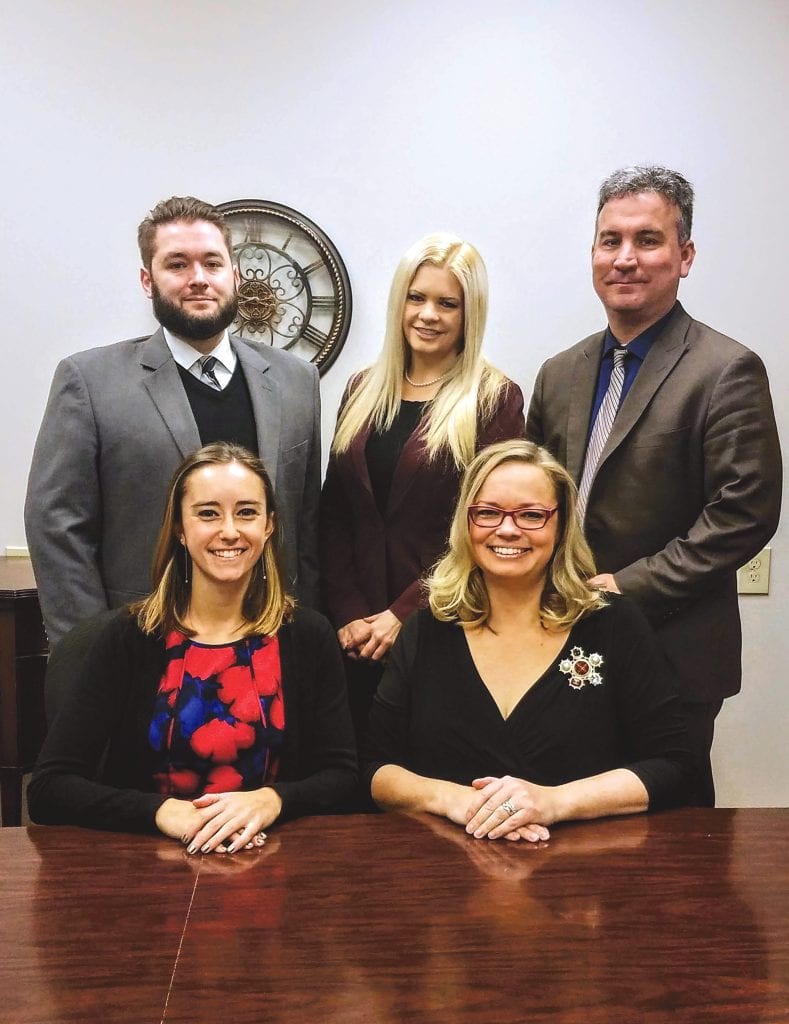
Amy Royal (center) with some of her team members, including (top) attorneys Daniel Carr and Timothy Netkovick, and (bottom) Heather Loges, practice manager and COO; and Merricka Breuer, legal assistant.

With that background, Royal sensed a desire to start her own company — which turned out to be a risky proposition, opening up into the teeth of the Great Recession.

“I obviously took a huge leap; I was at an established law firm and had been there for a long time. I had an established job, with a very young family at the time. And it was 2008, when, obviously, the economy wasn’t in good shape.”

So she understood if people thought striking out on her own might not have been the safest move.

“But given how long I’d been practicing law at the time, it felt to me like it was now or never,” she explained. “I really wanted to see if I could make a go at it, and I felt like I had the tools to develop a business. Oftentimes, law firms aren’t thought of as businesses; they’re thought of as practitioners, but not businesses. But I knew I could create a law firm in a strategic way and develop it and make a company out of it.”

At first, Royal’s wasn’t the only name on the letterhead. At first, the firm was called Royal & Munnings, with Amy Griffin Munnings as a partner, helping Royal get the firm off the ground. Later, after Munnings moved to Washington, D.C., the firm was known as Royal & Klimczuk, for then-partner Kimberly Klimczuk, who subsequently departed and currently practices employment law at Skoler Abbott in Springfield.

Currently, Royal employs four other attorneys full-time, in addition to two full-time paralegals and other support staff.

“I really wanted to take the model of a specialized, boutique practice and build upon it with a strong client base of corporations throughout our Valley and beyond — because we do represent companies in Rhode Island, Connecticut, and Vermont, as well as national corporations,” she explained.

“I believed it didn’t so much matter where we were located because we go out to our clients,” she added. “So I chose Northampton because I have really enjoyed the community — I went to Smith College, and I thought I could have an impact here and throughout the region and beyond in creating employment opportunities for people.”

That is, in fact, how Royal sees her work: by helping clients navigate through often-tricky employment issues, she’s helping those companies grow and create even more jobs in the Valley.

And while many of those thorny issues have remained consistent, they’ve ebbed and flowed in some ways, too.

“Given the employment-law landscape, there becomes hot areas at certain times, and we become sort of subspecialists in those areas,” she explained. For example, early on, she saw a lot of activity around affirmative action and dealing with the Office of Federal Contract Compliance Programs. Wage-and-hour conflicts have become increasingly prominent in recent years as well, and Royal, P.C. has handled client defense on those issues, as well as general guidance on how to avoid claims altogether.

“I do feel like we can advise clients and help them flourish,” she went on. “I’m so committed to this region, and I know there’s been a lot of work done over the last decade since our birth as a law firm, in the business community and the community at large, on how to make the Pioneer Valley an even more attractive place for people to live and earn a living and feel like they have opportunities here — that they don’t have to be in Boston to have those opportunities.”

Risk Managers

As she continues to grow the firm, Royal says it’s always a challenge to find talented attorneys who are skilled in labor and employment law and also understand her vision for the company.

“Practitioners often think, ‘here’s what the law says.’ We need to be telling clients, ‘OK, here’s what the law says you can do, but this is also a business decision, and everything is about weighing and measuring risk and deciding whether you can bear that risk or not, whether that’s a good practice or not.’”

“Given how long I’d been practicing law at the time, it felt to me like it was now or never. I really wanted to see if I could make a go at it, and I felt like I had the tools to develop a business.”

And challenges to employers are constantly evolving, whether it’s legislation like the grand bargain or issues that arise from new technology. She recalls what a hot topic portable devices, like smartphones and tablets, were in the early part of this decade.

“Now it’s like everyone has one,” she said, “but at that time, it was a huge issue for employers, who were asking, ‘where is our data going? If you’re a portable employee, what’s happening when you leave with that phone?’”

The economy can affect the flow of work as well. In the early days of the firm, as the recession set in, litigation crowded out preventive work such as compliance matters, employee handbooks, and supervisory training. In recent years, she’s seen an uptick in requests for those services again.

Sometimes, employers will call with advice before taking disciplinary action with an employee — just another way Royal aims to be a partner to clients. The firm also conducts regular seminars and roundtables, both for clients and the public, on matters — such as legislative changes and policy wrinkles — that affect all employers.

In some ways, that’s an extension of the way Royal wants the firm to be a presence in the broader community. Another is the team’s involvement with local nonprofits.

“I’ve tried to set that tone,” she said, “but it’s never been met with resistance — it’s always been met with ‘oh, yes, maybe we can do this, maybe we can do that.’ It’s been important to me to have a team that really wants to support their community.”

Meanwhile, that team has been focused, perhaps more than ever before, on what exactly Royal, P.C. is — where the firm has been in the past, what it is now, and what it wants to be going forward.

“We have a strong, viable book of labor and employment business, and what I’ve communicated to my team is, ‘we can keep going for the next 10 years, 20 years, on that book, and achieve growth.’ Or we can look at our brand and say, ‘do we want to grow beyond that? Do we tell the story of the other services we’re able to provide, and create other employment opportunities for people in the Valley?’ There’s a consensus here that that’s really the direction we should be going in.”

Joseph Bednar can be reached at [email protected]
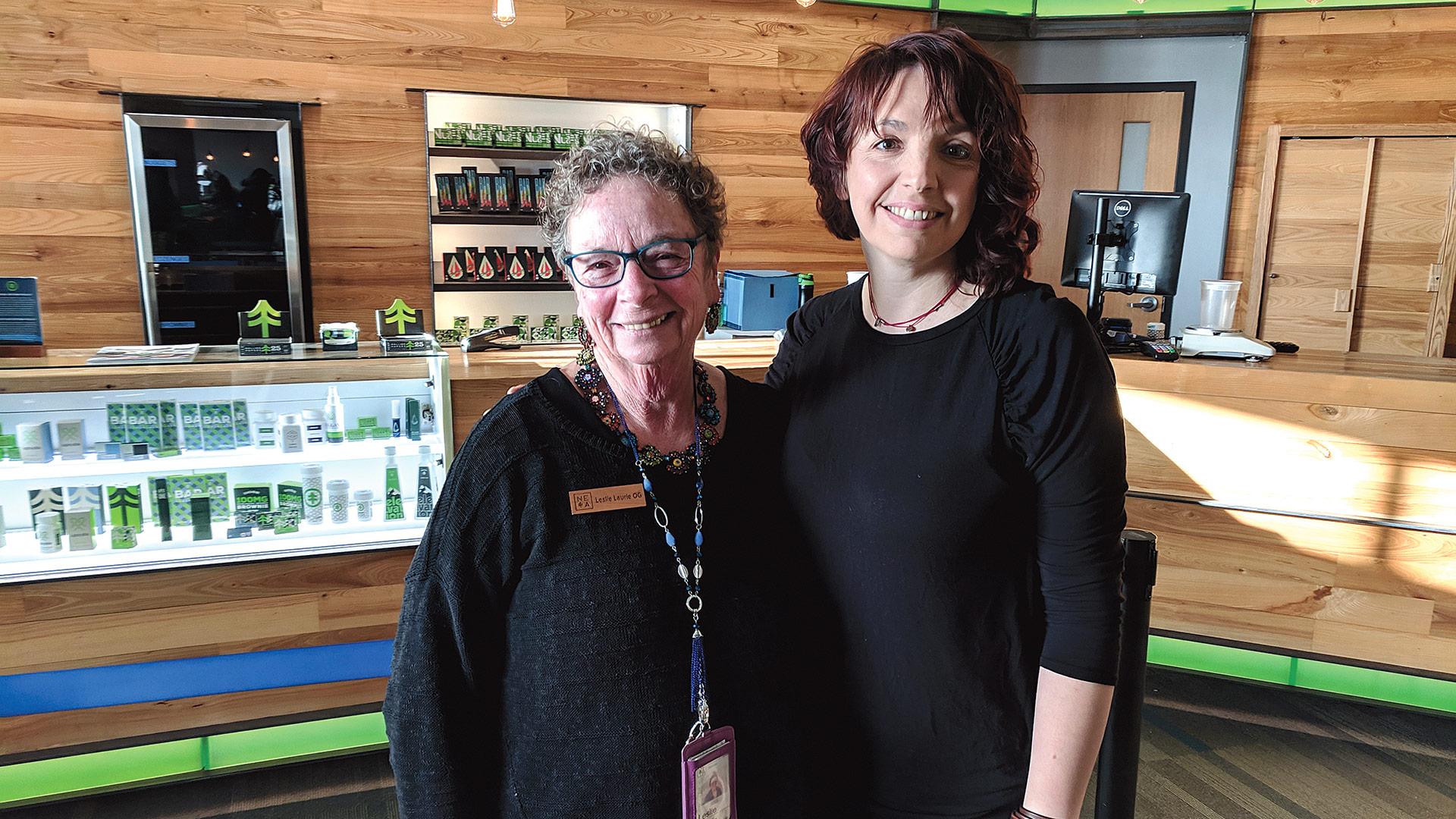
Community Spotlight

Community Spotlight

Mayor Thomas Bernard says North Adams is a small, post-industrial New England city

Mayor Thomas Bernard says North Adams is a small, post-industrial New England city with economic challenges, but has generated plenty of momentum in addressing them.

As a long-time resident of North Adams, Mayor Thomas Bernard understands the city’s reputation as a tourist destination. It’s a good reputation to have, as it puts more cars on the streets and feet in local establishments.

But North Adams — the least-populated community in the Commonwealth classified as a city — is much more than that.

“I think the untold story about North Adams — and the Berkshires in general — is that we have a robust manufacturing sector here,” said Bernard, who began serving his first term as mayor at the start of this year. “We talk about the role of culture and tourism, but we have manufacturing, too.”

And the sector is a bustling one, he added, citing Tog Manufacturing Co., which makes precision-machined parts, and is looking to expand both its space and workforce over the next few years. The company is also a good example of the workforce-development partnerships being forged in the industry locally.

“They have a really good connection with McCann Technical School, while MCLA [Massachusetts College of Liberal Arts], our great public university, has an engineering partnership with General Dynamics to meet their workforce needs. And then Crane Paper, which was bought recently by Mohawk, is talking expansion as well in the next couple years, adding a shift and adding workers,” he said. “Take those things together, and it’s a significant engine that often gets overlooked in conversations about the economy and economic development in the Berkshires, and North Adams in particular.”

That’s not to say the cultural sector isn’t important, anchored, of course, by MASS MoCA, which recently underwent a $65 million expansion, adding 130,000 square feet of gallery space and enhancing the outdoor courtyard space. The work took place on the south end of the campus of the former Sprague Electric factory, whose 16 acres of grounds and 26 buildings with an elaborate system of interlocking courtyards and passages was transformed into the museum in 1999. The facility has a regional economic impact of more than $25 million annually.

Then there are newer projects like Greylock WORKS, an ongoing transformation of the former Greylock Mill along Route 2. Salvatore Perry and Karla Rothstein of Latent Productions in New York City saw potential in the site four years ago and purchased the 240,000-square-foot property for $750,000.

“The narrative has been that, when big companies left in that wave of industrial migration in the mid-’80s and beyond, manufacturing stopped. That’s just not the case.”

The first goal was to create a large event space, and further developments have included a commercial kitchen and a specialty food marketplace; a rum distiller is the first tenant. Each business will have a small area for retail operations and also have room to conduct wholesale operations to help sustain a flow of year-round revenue. The Greylock WORKS development will eventually include a residential component as well.

Meanwhile, Thomas Krens, who was one of the driving forces behind the establishment of Mass MoCA two decades ago, proposed another project for North Adams a few years ago: a $20 million model-railroading and architecture museum in Western Gateway Heritage State Park that has a footpath directly across from MASS MoCA’s south gate.

Once completed, that project is expected to bring another 200,000 to 300,000 visitors to North Adams each year.

Those projects — far from the only ones creating energy in North Adams — are an intriguing sample of what the city has to offer. But Bernard thinks there is far more potential, and hopes to see it come to fruition.

Down on Main Street

Bernard is cheered by recent high-profile developments, but knows overall progress in any city is not an overnight proposition.

“There are persistent challenges,” he told BusinessWest. “I’m looking out my window at Main Street, 20 years after MASS MoCA happened, and we still haven’t totally cracked the code on a booming, bustling downtown.”

He compared North Adams to Shelburne Falls, which has a “really lovely, compact, interesting downtown” that people flock to, for the Bridge of Flowers and other attractions. “But you have to know Shelburne is there … you have to be intentional to go there and find it.”

And if an out-of-the-way town like that can have a thriving downtown, he went on, why shouldn’t North Adams — with a museum in MASS MoCA that draws some 250,000 visitors each year, many of them from outside town — be able to create a more vibrant downtown of its own?

“After 20 years of good intentions, and investments by the museum, the city, and the chamber, we’re still trying to figure that one out,” he said, adding that one thing that could provide a spark is more market-rate housing and mixed-use development downtown to put more feet on the streets.

North Adams at a Glance

Year Incorporated: 1878
Population: 13,708
Area: 20.6 square miles
County: Berkshire
Residential Tax Rate: $18.38
Commercial Tax Rate: $39.85
Median Household Income: $35,020
Family Household Income: $57,522
Type of government: Mayor; City Council
Largest Employers: Crane & Co.; North Adams Regional Hospital; BFAIR Inc.
*Latest information available

That would in turn create demand for more eclectic food options, specialized retail, and galleries — “the kinds of things that are equally attractive to locals who have lived here their whole lives, people who transplanted here because they love the idea of this small New England city, and tourists who are here for the day or the weekend.”

Speaking of tourists, that’s actually the name of North Adams’ newest hotel, a 48-room retreat inspired by the classic American roadside motor lodge, set on the banks of the Hoosic River.

Tourists was the brainchild of Ben Svenson, a Boston-based developer, and a team of partners. They stripped a crumbling roadside lodge down to the studs and turned it into something both retro and decked out in modern amenities.

A wooden boardwalk leads to the river, while a saltwater pool was added, and an event space was fashioned from a neighboring farmhouse. Wooded walking paths lead to a yoga pavilion, open fields, a sculpture installation, and an old textile mill. A deconsecrated church in the woods will become Loom, where Cortney Burns, a James Beard Award-winning chef, will begin creating dishes in 2019.

Manufacturing Progress

No matter what happens in the realms of tourism, dining, retail, or any number of other high-profile elements of an attractive city, Bernard understands North Adams has a strong foundation of other businesses that may not receive the same attention.

“The narrative has been that, when big companies left in that wave of industrial migration in the mid-’80s and beyond, manufacturing stopped. That’s just not the case,” he said. “I mentioned Tog — they’ve been at it for 20-30 years in the same location, employing 25-30 people. For them to be talking about facility expansion and workforce expansion that would effectively double their workforce in North Adams and the Berkshires, that’s significant. That’s a big win.”

To meet that workforce need, however, he recognizes the importance of partnerships between industry and education to provide training, retraining, and professional development to help people access career opportunities.

“To be honest and realistic, we’re still a small, post-industrial New England city, and we have our economic challenges,” he said. “While we’re paying attention to all the great development that’s happening — it’s what drives growth and progress in the future — we can’t lose sight of people who have been here all their lives and are struggling because of fixed incomes and low incomes, seniors worried about taxes, or people who don’t have the education and skills to compete for the jobs that are here.”

Bernard believes North Adams is in a good spot to meet those needs and keep growing.

“I take a lot of pride in being the mayor of the smallest city in the Commonwealth — in population, but not by stature,” he said. “We’re a world-class destination for the arts, for culture, for outdoor recreation, for tourism, and we’ve got great educational resources in the city.”

Joseph Bednar can be reached at [email protected]

Sports & Leisure

Changing Lanes

Jeff Bennett says league bowlers and casual players are looking for different amenities

Jeff Bennett says league bowlers and casual players are looking for different amenities, and facilities need to cater to both constituencies.

Jeff Bennett remembers when the Pioneer Valley was home to many more bowling alleys than exist today.

“A lot of mom-and-pop centers started to close. We had a couple around here,” he told BusinessWest. “If you didn’t put in automatic scoring, blacklight bowling, if you didn’t keep the centers updated and clean, with nice bathrooms — well, those are the centers that don’t exist anymore. If you’re going to drop 70 or 100 bucks to go out for the day, are you going to the run-down place, or the place with the upbeat music, lights, and arcade? What’s going to be a more fun atmosphere?”

Bennett, general manager of AMF Chicopee Lanes, said his business, and that of its parent company, Bowlero, which boasts some 300 facilities nationwide, is doing well and still growing year after year, but added that such success doesn’t happen on its own. “We make people want to keep coming back and having fun. That’s what we try to focus on.”

Justin Godfrey agrees. “The important thing is to give them a quality, consistent product and make sure the guest has a memorable experience and wants to come back to your facility,” said the general manager of Shaker Bowl in East Longmeadow, which is now part of the Spare Time chain. “That’s really what it boils down to — treating people right and generating return business. Word of mouth is still king when it comes to getting people in the door.”

Those who haven’t been in a bowling alley in decades may be surprised by today’s centers, where they may encounter strobe lights and black lights, disc jockeys and music videos playing on large screens, and freshly made food.

“You get different crowds,” Godfrey said. “You get families more during the day, then at night, we run the light show and get the music going. It’s a different atmosphere from the leagues, which don’t want music. It just depends on the group.”

While there are fewer bowling lanes in operation than even a decade ago, those that are still in business have increasingly turned to a model that’s not just about bowling, Bennett said, touting amenities in Chicopee like food made from scratch, a full liquor license, servers that take orders on the lanes, and more.

“If you’re going to drop 70 or 100 bucks to go out for the day, are you going to the run-down place, or the place with the upbeat music, lights, and arcade? What’s going to be a more fun atmosphere?”

“That’s what casual bowlers are looking for — they’re looking for more atmosphere. They’re not just coming in for 20 minutes to bowl a game and leave. They’re here two or three hours — it’s one-stop entertainment, where they can have food and drinks, bowl, and play some arcade games. We have games geared for kids, and some old-school games for the adults.”

Godfrey said food and beverages can account for 25% or more of a center’s business, so it’s not an afterthought. Neither is the continual effort to introduce more people to the game — and everything that surrounds it these days.

“Before, you could just open your doors and people would come in, and many still do,” he said. “But we’ve really ventured out. We have event planners; we actually have people going out to create business, and that’s been very helpful for a lot of our centers. We do a lot of corporate parties. We work with a high-school gym class twice a week — we bring carpets into the gym classes and introduce kids to the sport. If the kids like it, they say, ‘hey, mom, let’s go bowling.’”

Different Strikes

Bennett said Bowlero has different brands within the company — AMF being just one of them — and centers can be quite different from each other.

“What we term a traditional center is still heavily league-focused, and a lot of that comes from the demographics and what you have around you. We have two centers in Manhattan, and both combined don’t have a league bowler — it’s all events and retail-play driven, and those are the two biggest grossing centers,” he explained.

“But then you have a lot of our traditional centers in the Northeast that still rely on our league base, especially during the fall and winter season,” he added, noting that leagues account for about one-third of total lane use, with between 1,300 and 1,350 league bowlers showing up each week, up to 34 weeks a year.

“We’re still focused on league bowlers — Monday to Friday, we’re busy every night, all 40 lanes. And we have to do certain things for them — regular white lights, and we work on lane conditions that affect their scoring.”

But the company also put a lot of money into amenities that attract non-league bowlers, he added, including a video wall, a new audio-visual system, black lights, and a new arcade.

“On weekends, we focus on the retail or open-play bowler — casual fun for kids and adults,” he said. “We do a ton of kids’ birthday parties and corporate events on the weekends. Over the next month, quite a few businesses are going to do holiday parties. And on weekend nights, it’s mostly adults; on Saturdays between 5 and 1, we’re extremely busy.”

Justin Godfrey says today’s bowlers want a memorable experience — one that often includes more than just bowling.

Justin Godfrey says today’s bowlers want a memorable experience — one that often includes more than just bowling.


At Shaker Bowl, Godfrey has seen a shift in his 18 years there, from a league-centric model to more open bowling for kids, adults, and families. Leagues don’t attract younger people like they used to, he said, and many people don’t want to make the commitment for 30-plus weeks. To counter that reality, he’s offering a 12-week league on Sunday nights to capture interest during the colder months.

But the Spare Time chain — which also has sites in Northampton, Vernon, Conn., and Windsor Locks, Conn. — understands it’s not just about bowling anymore.

“They’re really gearing it toward other entertainment options for the guests,” he said. “In Windsor Locks, which is newly renovated, there are escape rooms, laser tag, a huge arcade, and a restaurant. It’s more of a family entertainment center than your traditional bowling center.”

There are other factors that go into a successful center, he added, from cleanliness to consistent food quality across all sites in a chain. And let’s not forget the game itself, which has been attracting families for generations due to its easy-to-learn, hard-to-master qualities.

“Anyone can do it, and we meet the needs of all age levels, too,” he said. In fact, the day BusinessWest visited, Shaker Bowl was hosting a special-needs group in wheelchairs, bowling off taller metal ramps adapted for them.

“We’ve got ramps for the kids, all different weight balls — we can accommodate people of all ages, sizes, skill levels, everything. I think that’s definitely part of the appeal.”

Something for Everyone

There used to be about eight 10-pin bowling lanes locally, Bennett noted, but now there are only a handful. The average age of bowlers at AMF Chicopee Lanes is 25 to 45, and they usually bowl at least once a week. Many are there on weekend nights, when the average age is 25 to 35.

Like Godfrey, he noted that the center offers ramps so people with handicaps can bowl, six-pound balls that can be pushed down the lanes by 3- and 4-year-olds, and bumpers in the gutters to increase their chances of knocking down pins.

“Successful centers nowadays, in most markets, have to cater to everybody and do everything,” Bennett said, noting that AMF Chicopee Lanes hosts myriad junior and adult tournaments, not to mention fund-raising events for organizations like the Make-A-Wish Foundation, Big Brothers Big Sisters, and many others.

“We need all those types of events to be successful nowadays,” he added. “Springfield has a lot of options, especially with the casino here. We were worried that would affect us a little bit, but there’s been no effect so far.”

In short, business keeps rolling along for bowling centers that understand this changing market, and craft an experience that’s about more than just strikes and spares.

Joseph Bednar can be reached at [email protected]

Law

Prepare for the Unexpected

Jack Ferriter says it’s never too early to talk to an attorney

Jack Ferriter says it’s never too early to talk to an attorney about a healthcare proxy and living will.

Medical decisions aren’t always cut and dry. The way Jack Ferriter sees it, why entrust them to just anyone?

“A healthcare proxy is someone who stands in your shoes to make medical decisions for you, but only if you’re unable to make those decisions,” said Ferriter, who practices business and estate law at Ferriter Law in Holyoke.

The term ‘healthcare proxy’ also refers to the document that specifies who will make those critical decisions for an individual if they can’t make them on their own — for instance, in a medical emergency that has them unconscious or otherwise incapacitated.

For instance, Ferriter explained, “if a surgeon says, ‘do you want this operation?’ and you can shake your head to say ‘yes’ or ‘no,’ the doctor will go with your answer. But if you’re unable to make that decision — or even if you’re unwilling, if you say, ‘I don’t know; please ask my wife, who’s my healthcare proxy’ — then the surgeon would ask your healthcare proxy whether you should have the operation.”

A 2017 study in the journal Health Affairs revealed that one-third of Americans have a healthcare proxy, which is far too low, say estate-planning attorneys and doctors.

“When somebody comes in here and they’re asking for an estate plan, we will always include a will, a power of attorney, and a healthcare proxy and a living will,” Ferriter told BusinessWest. “Everyone should have them. It’s not just for people 65 and older. Anybody could get hit by the proverbial bus and need somebody else to make medical decisions with a healthcare proxy, or financial decisions with power of attorney.”

In a recent blog post, Springfield-based law firm Bulkley Richardson noted that it examined whom its own clients had named as their healthcare proxies, and found that, not surprisingly, a spouse was most common, followed by an adult child.

“Where a child was named, gender, birth order, and whether the child was the parent’s ‘unofficial favorite’ often did not seem to matter,” the firm noted. “Geographic proximity to the parent signing the document, emotional maturity, and perceived alignment with the parent’s preferences seemed to determine who was named.  If a child was in a medicine-related profession, that was often a major factor in the selection.”

“Anybody could get hit by the proverbial bus and need somebody else to make medical decisions with a healthcare proxy, or financial decisions with power of attorney.”

Ferriter recommends that clients name two people — a primary and secondary healthcare proxy — because the designation comes into play at urgent and unexpected times.

“If it’s 2 in the morning and the surgeon is trying to reach your healthcare proxy and doesn’t have the right number, or has a home number that’s going into a machine and needs an answer, or if somebody’s out of the country, it’s always good to have a secondary healthcare proxy so the surgeon can call the secondary one and say, ‘should we do this operation or not?’”

He recommends that cell-phone numbers are used, not landlines, but even then, ringers are sometimes turned off, or phones lose their charge, and no one wants the wrong person to make life-and-death decisions because of a dead battery.

Wishes Granted

In addition to the healthcare proxy, Ferriter recommends clients prepare a living will as well.

“You go down the list and check off or initial each line — you do not wish to be resuscitated, you do not wish to be artificially fed, you do not wish to be artificially kept alive,” he noted.

However, the living will in itself is not a binding legal document in Massachusetts (however, it is in Connecticut and some other states). So why prepare one? Perhaps its greatest value comes in the guidance it gives one’s doctors and healthcare proxy.

“I find it’s a good guide for your conversation with your healthcare proxy and with your family. You go down the list and say, ‘here’s what I want, here’s what I don’t want, and even though this is not legally binding in Massachusetts, I just want you to know so that, if you are making the decisions for me, you’ll have my answers ahead of time.’”

And for those who worry about the finality of the living will, Ferriter pointed out that language on the form states that the living will is to be followed only if there’s no reasonable chance of recovery.

“I know these questions are kind of scary. If you’re 55 years old and it says ‘do not resuscitate,’ you’re afraid that if you walk out my front door and have a heart attack, they’re not going to resuscitate you. But they would, because it says ‘only if there’s no reasonable chance of recovery.’ So if you’re 105 years old in a nursing home and your heart stops, they’re probably not going to paddle you. But if you’re 55 years old and you have a heart attack outside a lawyer’s office, I’m sure they would absolutely paddle you, and wouldn’t even ask anybody.”

A third document related to critical-care decisions that has emerged in recent years is the MOLST document, which stands for medical orders for life-sustaining treatment. And, unlike a living will, MOLST is absolutely a binding document.

“MOLST differs from the most common type of palliative-care planning — advanced directive orders, which usually include a living will or other expression of wishes. Those orders generally designate a surrogate decision maker, or healthcare proxy, to act on behalf of an incapacitated patient,” the Massachusetts Medical Society (MMS) notes.

“Living-will instructions — when presented by a healthcare proxy — are generally recognized as evidence of patient preferences, but are not recognized by Massachusetts law. In contrast, a completed MOLST form travels with the patient at all times, may be faxed or reproduced, and is an official part of a patient’s medical record.”

Ferriter noted that the MOLST isn’t technically a legal document, but a medical one.

“We don’t do them here in the office because the medical orders are done with a physician or a medical professional. Those are your orders, and those are binding in Massachusetts because you’ve had advice from a physician.”

But MOLST is not typically a document prepared absent an impending, planned event, like, say, open-heart surgery.

“Typically, they happen if you are going into the hospital for some kind of serious procedure. My experience is that physicians don’t offer to do medical orders with their patients, but if you ask for them, they’ll do them, and if you’re going in for a serious operation, they may bring it up at that point,” Ferriter said. “You can’t sit at home and fill out medical orders by yourself because you’re not making an informed decision. And it’s usually your primary-care doctor who does it — someone who knows you well — even though the surgeon is doing the surgery.”

MOLST covers resuscitation efforts, breathing tubes and ventilation, artificial nutrition and hydration, and dialysis, the MMS notes.

“MOLST has priority over the healthcare proxy, because it’s your actual wish, as if you had shaken your head ‘yes’ or ‘no’ at the time of the actual procedure,” Ferriter said.

Don’t Put It Off

While many people will never have need of a MOLST, he went on, it’s hard to argue that they won’t need the other documents at some point — and the sooner, the better.

“We tell clients that as soon as you get married or buy a house, have a child, or even graduate from college, it’s not that expensive to do a will, power of attorney, healthcare proxy, and living will,” he noted. “For a single person, it’s less than $300, and for a couple, it’s less than $500.

“A lot of times, older couples will come in upon retirement,” he went on. “Most of the time, they had a previous version of these documents, but things have changed. They had it done in their 30s and 40s, now they’re in their 60s, so we update those.”

Individuals or couples with children will also want to include guardianship documents and perhaps establish a trust in case neither is around to care for them.

“When I have people in their 30s and 40s come in, it’s usually because one of the parents has passed away, or maybe a grandparent has passed away. There’s usually something that pushes them to come in,” Ferriter said, adding that, in truth, it shouldn’t take a big life change to start thinking about who will make important decisions in case crisis strikes.

When folks come in to get their estate plan done, I tell them, ‘you should sit around a dining room table with your family and have a frank coversation about what you want. It can be a difficult conversation, but it’s always better to have it at the dining-room table than around a hospital bed.’”

Joseph Bednar can be reached at [email protected]

Education

More Than a Head Start

Architects rendering of the $14 million Educare Center now under construction in Springfield.

Architects rendering of the $14 million Educare Center now under construction in Springfield.

The new $14 million Educare Center now under construction in Springfield is focused on education, obviously, but parental involvement and workforce development are key focal points within its broad mission.

Mary Walachy calls it “Head Start on steroids.”

It’s a term she has called upon often, actually, when speaking to individuals and groups about Educare, an innovative model for high-quality early education that’s coming to Springfield next year — only the 24th such center in the country, in fact.

“You have to work with a Head Start partner. That’s a requirement in every Educare site across the country,” said Walachy, executive director of the Irene E. & George A. Davis Foundation, one of the lead partners in the effort to launch the local Educare school. “The base program meets the Head Start national requirements. But then there’s a layer of extensive higher quality. Instead of two adult teachers in the classroom, there needs to be three. Instead of a six-hour day, there needs to be eight or 10. There are higher ratios of family liaisons to families.”

Then there are the elements that Educare centers have really honed in on nationwide: Parental involvement and workforce development — and the many ways those two concepts work together.

“The research is clear — if kids get a good start, if they have a quality preschool, if they arrive at school really ready to be successful and with the skills and language development they need, they can really be quite successful,” Walachy said. “However, at the same time, it’s extremely important they go home to a strong family. One is still good, but both together are a home run.”

The takeaway? Early-education programs must engage parents in their children’s learning, which is a central tenet to Educare. But the second reality is that families often need assistance in other ways — particularly Head Start-eligible families, who tend to be in the lower economic tier.

“We must assist them to begin the trajectory toward financial security,” Walachy said, and Holyoke Chicopee Springfield (HCS) Head Start has long done this by recruiting and training parents, in a collaborative effort with Holyoke Community College, to become classroom assistants, who often move up to become teachers. In fact, some 40% to 50% of teachers in HCS Head Start are former Head Start mothers.

“So they already have a model, but after we get up and running, we want to put that on a bit of a steroid as well,” she noted. That means working with the Federal Reserve’s Working Cities program, in partnership with the Economic Development Council of Western Mass., to steer Head Start and Educare families onto a pathway to better employment opportunities. “It’s getting on a trajectory for employment and then, we hope, financial security and success for themselves and their families.”

“The research is clear — if kids get a good start, if they have a quality preschool, if they arrive at school really ready to be successful and with the skills and language development they need, they can really be quite successful. However, at the same time, it’s extremely important they go home to a strong family. One is still good, but both together are a home run.”

She noted that early education evolved decades ago as a workforce-support program, offering child care so families could go to work or go to school. “We’ve shifted in some ways — people started saying, ‘wait a minute, this isn’t just child care, this is education. We are really putting them on a pathway.’ But now we’ve got to circle back and do both. Head Start was always an anti-poverty program. More recently, it’s really started focusing on employment and financial security for families.”

By making that dual commitment to parent engagement and workforce training, she noted, the organizations supporting the Educare project in Springfield are making a commitment to economic development that lifts families — and, by extension, communities. And that makes this much more than a school.

Alone in Massachusetts

The 24th Educare school in the U.S. will be the only one in Massachusetts, and only the second in New England, when it opens next fall at 100 Hickory St., adjacent to Brookings School, on land provided by Springfield College.

The $14 million project was designed by RDg Planning & Design and is being built by Western Builders, with project management by O’Connell Development Group.

Mary Walachy

Mary Walachy says that while it’s important to educate young children, it’s equally important that they go home to strong families.

Educare started with one school in Chicago and has evolved into a national learning network of schools serving thousands of children across the country. An early-education model designed to help narrow the achievement gap for children living in poverty, Educare Springfield is being funded locally by a variety of local, state, and national sources including the Davis Foundation, the Gage Olmstead Fund and Albert Steiger Memorial Fund at the Community Foundation of Western Massachusetts, the MassMutual Foundation, Berkshire Bank, MassDevelopment, the MassWorks Infrastructure Program at the Massachusetts Executive Office of Housing and Economic Development, the George Kaiser Family Foundation, Florence Bank, Capital One Commercial Banking, and the Early Education and Out of School Time Capital Grant Fund through the Massachusetts Department of Early Education and Care in collaboration with the Community Economic Development Assistance Corp. and its affiliate, the Children’s Investment Fund. A number of anonymous donors have also contributed significant funding.

Educare Springfield will offer a full-day, full-year program for up to 141 children from birth to age 5, under licensure by the Department of Early Education and Care. The center will also serve as a resource in the early-education community for training and providing professional development for future teachers, social workers, evaluation, and research.

Just from the education perspective, the local need is certainly there. Three years ago, the Springfield Public Schools Kindergarten Reading Assessment scores revealed that preschool children from the Six Corners and Old Hill neighborhoods scored the lowest among city neighborhoods for kindergarten reading readiness, at 1.1% and 3%, respectively. On a broader city scale, the fall 2017 scores showed that only 7% of all city children met all five benchmarks of kindergarten reading readiness.

Research, as Walachy noted, has proven time and again that kids who aren’t kindergarten-ready are at great risk of falling further behind their peers, and these same children, if they’re not reading proficiently by the end of third grade, are significantly less likely to graduate high school, attend college, or find employment that earns them a living wage.

Breaking that cycle means engaging children and their parents — and it’s an effort that could make a multi-generational impact.

Come Together

That potential is certainly gratifying for Walachy and the other partners.

“I think we’re really fortunate that Springfield got this opportunity to bring in this nationally recognized, quality early-childhood program,” she said, adding that the Davis Foundation has been involved from the start. “There has to be a philanthropic lead partner in order to begin to explore Educare because it does require fundraising, and if you don’t have somebody already at the table, it makes it really hard to get anybody else to join the table.”

The board of Educare Springfield, which is a 501(c)(3) nonprofit, will hold Head Start accountable for executing the expanded Educare model. Educare Springfield is also tackling enhanced programs, fundraising, and policy and advocacy work associated with the model. A $7 million endowment is also being developed, to be administered by the Community Foundation of Western Massachusetts, revenue from which will support operating costs.

“We did not want to develop a building that we could then not pay to operate,” Walachy noted, adding that Head Start’s federal dollars will play a significant role as well. “We want to develop a program kids in Springfield deserve. They deserve the best, and we think this is one of the best, and one this community can support.

“No one argues that kids should have a good experience, and that they begin learning at birth,” she went on. “But nothing good is cheap. And I will tell you that Educare isn’t cheap. But it sends a policy message that you’ve got to pay for good programs if you want good outcomes.”

Joseph Bednar can be reached at [email protected]
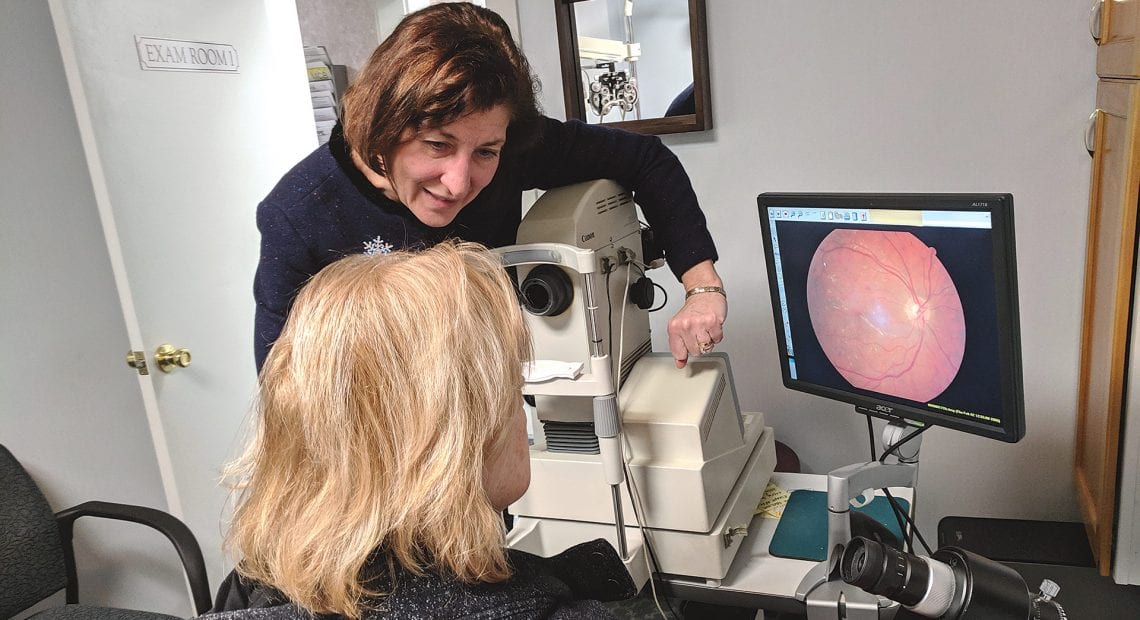
Community Spotlight

Community Spotlight

Nicholas O’Connor says recent projects have created considerable momentum in Belchertown, “like a snowball rolling down a hill.”

Nicholas O’Connor says recent projects have created considerable momentum in Belchertown, “like a snowball rolling down a hill.”

Nicholas O’Connor says there’s a generational split in Belchertown when it comes to new amenities and development in general — but that line has become increasingly blurry.

“There’s the old guard who don’t want anything to change; they want it to be a bedroom community, and they still lament the fact that we have a Stop & Shop and a Family Dollar. There’s no changing their minds, and I get that,” said O’Connor, who chairs the town’s Board of Selectmen.

“But by the same token,” he went on, “we can’t sustain the services that we provide in a town this size, with the great schools we have, without revenue, and 93% of our revenue comes through taxation. We don’t have a big business base — so, in order to have more, you need to generate more.”

And ‘more’ is a good word to describe economic activity in town, particularly along the section of Route 202 running from the town common past the Route 21 intersection to the Eastern Hampshire District Courthouse, a mile-long stretch that has become a hub of development, from a 4,500-square-foot Pride station currently under construction to a 4,000-square-foot financial center for Alden Credit Union; from Christopher Heights, an assisted-living complex that recently opened on the former grounds of the Belchertown State School, to a planned disc-golf course.

These projects, balancing town officials’ desire for more business and recreation, have been well-received, O’Connor said.

“Even among the old guard, I sense a split. There’s a large community of longtime Belchertown residents who are yearning for these things that are finally happening. I think it’s a minority of people who wish Belchertown would be like it was in 1970. That dynamic has shifted a bit.”

That said, it takes plenty of planning to build momentum for projects — not to mention state and town funding and approvals at town meetings — but he sees the dominos falling.

“We don’t have a big business base — so, in order to have more, you need to generate more.”

“With a lot of the ideas we’ve had over the past few years, shovels are finally hitting the ground. We’re really in a year when things are starting to progress.”

The 83-unit Christopher Heights has been a notable success, growing its resident list every month and exceeding its forecasts, O’Connor noted. Nearby, Belchertown Day School and Arcpoint Brewing, a veteran-owned business run by a couple of Belchertown locals, both plan to break ground on new facilities in the spring.

At the same time, Chapter 90 money came through for the renovation of that key stretch of Route 202, a project that will include new road signaling, crosswalks, sidewalks, and bike lanes, making the area more pedestian- and bicycle-friendly. Meanwhile, Pride owner Bob Bolduc will put in a sidewalk and a pull-in as part of his new building, which will accommodate a new PVTA stop.

“People will be getting out in front of his store, and that’s a win-win for everybody,” O’Connor said. “That whole road project will certainly change things from the common down the hill, all the way to the courthouse.”

The Great Outdoors

Belchertown has plenty of potential to expand its recreational offerings, O’Connor told BusinessWest. For example, a town meeting recently appropriated funds to create an 18-hole disc-golf course in the Piper Farm Recreation Area.

Belchertown at a Glance

Year Incorporated: 1761
Population: 14,838
Area: 52.64 square miles
County: Hampshire
Residential Tax Rate: $18.19
Commercial Tax Rate: $18.19
Median Household Income: $52,467
Median Family Income: $60,830
Type of government: Open Town Meeting; Board of Selectmen
Largest Employers: Hulmes Transportation Services; Town of Belchertown/School Department; Super Stop & Shop

O’Connor said disc golf has been rapidly gaining in popularity. “We’ll be clearing in the spring, breaking ground, and hoping to be throwing discs by the fall. There’s been interest growing in town, which is good because we’re going to need public effort for the clearing. I think a lot of that’s going to be done by community members and volunteers.”

He envisions the course as another piece in a day-long outing families could have in that area of Belchertown, with attractions ranging from baseball at the town’s mini-Fenway Park to Jessica’s Boundless Playground, to a 1.3-mile walking trail behind the police station that circles Lake Wallace. Meanwhile, state Sen. Eric Lesser was instrumental in securing money to tear down some tennis courts and build a splash park.

O’Connor would also like to see ValleyBike Share make inroads into Belchertown, and he wants to revisit discussion around expansion of a regional rail trail through town.

“A lot of people in town have tried these things before. The rail trail got voted down years ago,” he said. “Belchertown hasn’t always been ready for this type of progress, but we’ve had a large influx of younger families over the past 10 years or so, and different people standing up in positions of leadership. Just in the last four years, we have a new chief of police, a new Recreation director, a new Conservation administrator, a new senior-center coordinator. Not that the leadership before wasn’t doing the job, but I see new folks stepping up, and new ideas and new interests coming to the fore. That’s not a comment on the past, but it’s progress.”

And progress takes time, O’Connor said, noting that roadwork plans for 202 have been in flux for years, while Bolduc owned the future Pride site for a long time with no shovels in the ground until the assisted-living complex and other developments began to come online.

“It takes one project, and everybody starts going, ‘oh, there might be something there,’” he said. “The governor has been out here, and we’ve seen a lot of the lieutenant governor the last couple of years. Once you start brick and mortaring, now you get money for roads, you’re awarded more money for cleanup, and people really get on board. The momentum becomes attractive, like a snowball rolling down a hill. Nobody wants to go it alone, but then they see all these ancillary businesses, and it really starts to come together.”

What’s the Attraction?

To O’Connor, it’s not hard to see why businesses would want to set up shop in Belchertown. There’s the single, low property-tax rate, for starters, the well-regarded schools, and a widening flow of road projects aimed at making the town easier to navigate.

But not simply pass through, he added.

“I grew up in Amherst, and my dad lived in Wales while I was growing up, so I drove through his stretch every weekend. Then I went to UMass, and I saw them build all the hotels on Route 9,” he recalled.

“Now, I certainly don’t want to be Hadley — we want to keep our business within the character of the town; no one’s interested in a dynamic change to the town. But I thought to myself, a lot of these parents are driving home to Boston after parents’ weekend — maybe they don’t have to stay on Route 9; maybe they can stay here and take a walk on the Quabbin and hit an antique store and whatever else gets developed. I think there’s a lot to be said for us being a main thoroughfare between Boston and Western Massachusetts. Everybody gets off exit 7 and 8 to drive through here. We see a lot of cars, and it would be nice to get them to stop.”

Of course, for business owners, a lot of cars is a good thing, and the impending development of sidewalks, bike lanes, and bus routes will continue to drive traffic into what has really become the heart of activity in Belchertown.

“We love our town common, but in terms of a business center, an economic center, that’s moving down the hill. And a lot of the businesses there will benefit from the infrastructure upgrades.”

O’Connor told BusinessWest he can envision a future where Belchertown can be both the scenic, classic New England town of the past and a bustling destination. Illustrating that picture for other people can be a challenge, but he keeps trying.

“We need patience to get these things moving,” he said. “There’s definitely investment that needs to be made by business owners — not just in money, but in belief.” u

Joseph Bednar can be reached at [email protected]
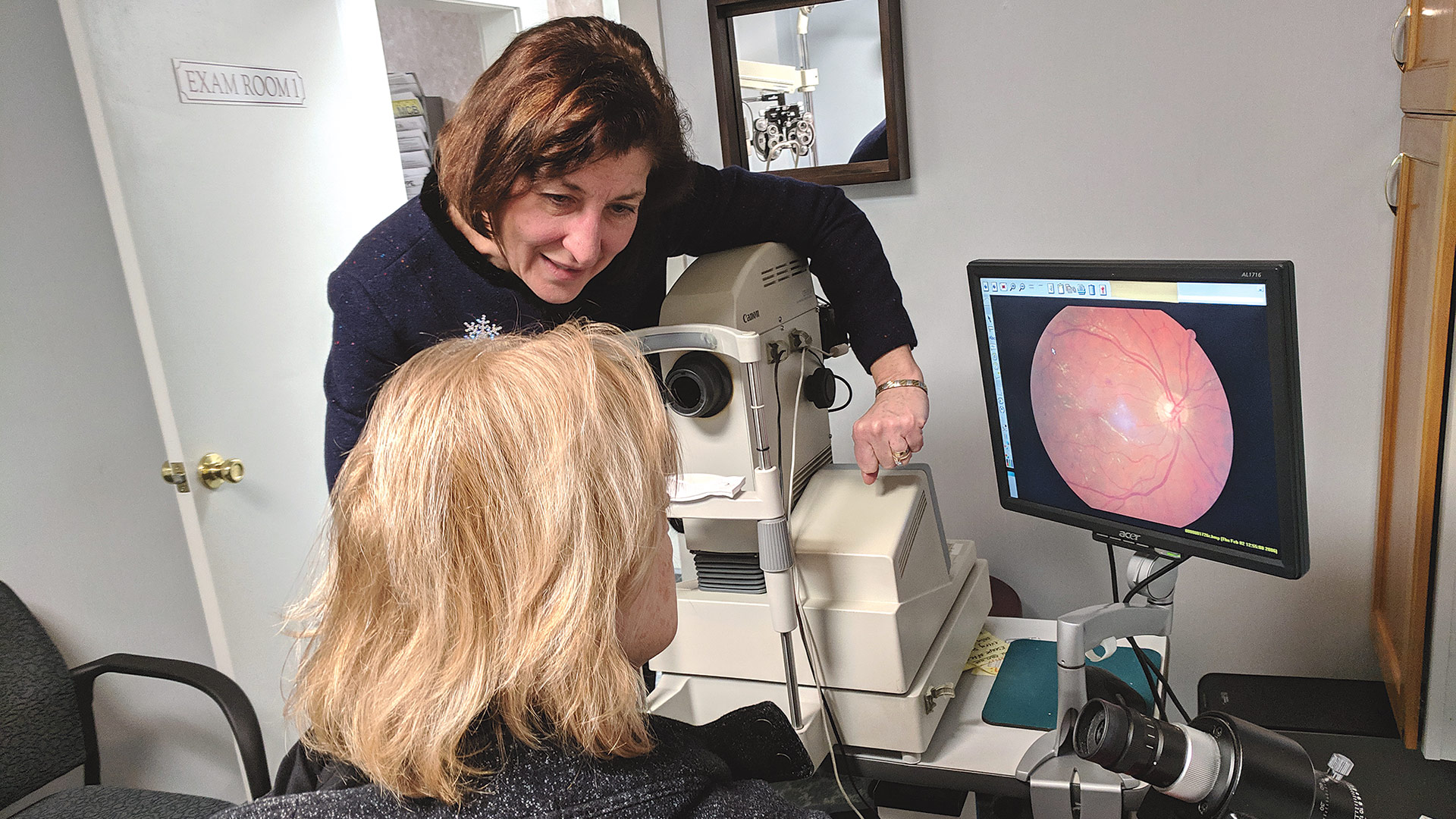
Education

Culture Shock

Emily Rabinsky guides two HCC students in a lab project.

Emily Rabinsky guides two HCC students in a lab project.

As she walked BusinessWest through one of the brand-new labs in Holyoke Community College’s Center for Life Sciences, Professor Emily Rabinsky said there’s plenty for students to appreciate.

“Our old lab space was very outdated and not very conducive to learning,” said Rabinsky, who coordinates the Biotechnology program at HCC. “There were two long bays with a tall shelf in between that made it very difficult for the students to see what the lecturer was referring to, and the equipment was very outdated.”

Not so today.

“At our recent open house, some students happened to walk by, peeked in, and said, ‘wow, this is amazing,’” she said. “I think this facility could rival many of the four-year colleges.”

Take, for example, the only certified cleanroom at any Massachusetts community college, and one of very few at any college or university in Western Mass.

Once it’s fully operational, the cleanroom will have a certification rating of ISO 8, which means air quality of no more than 100,000 particles per cubic foot. Inside the cleanroom, there will be a hooded biosafety cabinet where the sterility will increase to ISO 7, or no more than 10,000 particles per cubic foot.

“It’s pretty unique at the community-college level,” Rabinsky told BusinessWest. “It’s something commonly used in many of the life-science research areas. Students will learn how to minimize contamination and keep the space sterile for any kinds of cells they’re working with.”

Take, for example, a class she’s currently developing called “Cell Culture and Protein Purification,” which will make copious use of the cleanroom.

“We’ll be training students in the cell-culture class in how to maintain mammalian cell cultures, because they can be easily contaminated with bacteria or other microbes that are in the air,” she explained. “Mammalian cell cultures are commonly used in any kind of research studying cancer, or studying new drug therapies, so it’s a good skill to know.”

The cleanroom will also be utilized as a training facility for area professionals — for instance, in how to monitor the air for microbial content, commonly known as particle count.

“In a cleanroom, there should be fewer particles in the air because we have a special kind of filtration. So it has to constantly be monitored and verified,” she said. “Any cleanroom at UMass or any kind of industry has that monitoring done for them, so if someone wants to go into that kind of field, they could get that training here.”

So, while students are being trained in laboratory settings similar to what they will experience in industry, making them more competitive for the biotech job market, Rabinsky said, HCC serves a local workforce-development mission by training non-students as well.

“A lot of these local biotech companies that do this kind of work, they find it can be very costly for them to train new employees at their facility, and at the same time, they’re risking contaminating their facilities with these new workers that are just learning the technique, so why not do it here where it’s not such a high risk?”

On the Cutting Edge

HCC recently staged a grand-opening ceremony for the 13,000-square-foot, $4.55 million Center for Life Sciences, located on the lower level of HCC’s Marieb Building. The Massachusetts Life Sciences Center awarded HCC a $3.8 million grant for the project, which was supplemented by $750,000 from the HCC Foundation’s Building Healthy Communities Campaign, which also paid for the construction of the college’s new Center for Health Education on Jarvis Avenue in Holyoke.

“Those grants outfitted the biotechnology program but also all of the programs that fit in around it, including microbiology, general biology, and genetics,” Rabinsky said, noting that the new space includes two labs, the cleanroom, a prep room, and a lecture area.

Grant funds and donations also paid for new equipment, including a high-end, research-grade fluorescent microscope, like those used in the pharmaceutical industry; a micro volume spectrophotometer, used to measure small amounts of genetic material; and an electroporator, for genetic engineering. Meanwhile, a cutting-edge thermocycler can take a small sample of DNA and make billions of copies in an hour.

About half of Rabinsky’s students are interested in going into biotechnology, with most of those specifically interested in medical biotechnology and pharmaceuticals, as well as medical devices, an industry with strong roots in Western Mass. and the Boston area.

“I also have students who are just interested in the life sciences, interested in research, and just want to be exposed to all the different areas of biotechnology,” she went on. “A lot of these skills can be applied to many different fields. They may be interested in going into genetics, for example. I would say one of the challenges is drawing in the kids in who may not have thought about biotechnology or biology.”

To that end, in her introductory biotechnology course, she incorporates activities that students can relate to their everyday lives.

“Last week, we did a fun lab where he tested for the presence of genetic modification in things like cheese fries and Cheetos,” she explained. “Food producers aren’t required to list the presence of GMOs unless it’s above a certain percentage. So they’ll grind it up, extract the DNA, and test for the presence of GMOs. That was fun — they could have a hands-on experience and test for something that is very commonplace that we’re all aware of.”

Important Evolution

Rabinsky admitted some might not see the new center as a necessity since HCC already had a functioning facility upstairs, but said it was important to keep the college on the cutting edge and attract more students to give the life sciences a look.

“This makes them excited about the field, and it’s more a conducive space for learning, with these small tables that make working in groups much easier. Then we have newer technologies and new equipment to train students on, which are very similar to what they’ll in the field.”

Of course, it all starts with the instruction, and on that front, Rabinsky said the Center for Life Sciences will continue to prepare students to enter what is certainly a growing field from a jobs perspective.

“I’ve had students that have gone on to UMass and said that they learned things here they haven’t learned there, and that our equipment properly prepared them for graduate research,” she said. “That’s really nice to hear.”

Joseph Bednar can be reached at [email protected]

Features

Venturing Forth

Gregory Thomas says he’s energized by working with young entrepreneurs

Gregory Thomas says he’s energized by working with young entrepreneurs as the new executive director of the Berthiaume Center.

People may know the Berthiaume Center for Entrepreneurship from its public events, most notably the Innovation Challenge, where UMass Amherst students compete for seed money to turn entrepreneurial ideas into viable businesses. But the center’s new director, Gregory Thomas, wants to broaden the center’s reach and help more young people understand that the goal isn’t to win a competition — it’s to develop a true entrepreneurial mindset that will serve them well no matter where their lives take them.

On the surface, the UMass Amherst students who competed in the recent Minute Pitch at the university’s Berthiaume Center for Entrepreneurship were vying for a top prize of $1,000 and the ability to move to the next stage of competition in a program known as the Innovation Challenge.

But, on a broader level, there’s a lot more at stake.

Take, for example, the winner, an app called Find a Missing Kid, which aims to help identify missing or exploited children in public settings like schools, routine traffic stops, and public transportation. It was proposed by Grace Hall, Arta Razavi, and Cameron Harvey.

Earning second prize was Let’s Talk About It, developed by Ashley Olafsen and Thomas Leary, which seeks to provide relevant wellness-related curriculum to schools and individuals, with a focus on topics like mental health, self-esteem, consent, eating disorders, and relationships.

Third prize went to Devin Clark for Digital Mapping Consultants, with the goal of producing crop-health maps for the agricultural industry in order to guide precision agriculture to increase yields while reducing inputs throughout the growing season.

These are all with the potential to change the world — or, at least, dramatically change the lives of individuals who use them.

Gregory Thomas likes when ideas like that emerge, and are given the support to advance beyond the idea stage. And, as the new executive director of the Berthiame Center, he wants to see more of them.

“We need to figure out how to get more stuff into the funnel,” Thomas told BusinessWest. “The more ideas and more ventures we get coming through the funnel, the more we get on the other end, stimulating the economy.”

The Innovation Challenge, a four-part entrepreneurship competition that launches promising ventures to the next levels of startup, is perhaps the best-known of the Berthiaume Center’s initiatives, but Thomas is hoping to increase the center’s impact in other ways, both on campus and off — and even across the planet, through ventures that break through to market.

Grace Hall receives the top prize in the Minute Pitch

Grace Hall receives the top prize in the Minute Pitch from Gregory Thomas (left) and Tom Moliterno, interim dean of the Isenberg School of Management.

“Our mission is to teach students how to be a successful entrepreneur, how to run a venture so it’s successful — which includes knowing when to pivot and shut down an idea and find a new one,” he noted. “We also encourage curiosity — what really drives you. You may have a cool idea, but who would buy it and why? How would you make money? We have to teach those fundamentals to our ventures. Otherwise, they’re just polishing presentations to win a challenge. The challenge is the carrot to get them in the door. After that, we teach them to be entrepreneurs.”

He added that most of these students aren’t going to become the next Steve Jobs, but whether they wind up working for somebody or start their own business, entrepreneurial skills translate well to the workplace, and will always make them more effective on whatever path they choose.

That’s why he wants to broaden Berthiaume’s programs and keep students interested in them — not just those who win money to advance their ideas, but the ones who didn’t make the finals, or didn’t apply in the first place. Because those students, too, have ideas that could one day change lives.

“What can we do to help them perfect their craft and work on their ventures and keep them in our ecosystem, continue to educate them?” Thomas said. “There’s a reason why we’re not getting everything into the funnel, and that’s something I’d like to work on with key leaders on campus. How do we get more into the funnel?”

There’s plenty of room in that funnel, he said, and sufficient brainpower on campus — and well beyond it — to help students not just win a prize, but think like entrepreneurs for the long term.

Growing an Idea

Ask Julie Bliss Mullen about that. She developed an innovative technology that uses electricity for water filtration. In 2016, trying to figure out how to bring the idea to market, she filed a provisional patent with UMass and enrolled in entrepreneurship courses to further understand the commercialization process.

“The Berthiaume Center has been instrumental in making my ideas reality,” Bliss Mullen told BusinessWest. “As a Ph.D. student, I was used to conducting research, but had no clue what to do with an idea, let alone form a startup. They helped me to put things into perspective, making me think about what box I envision the water-purification device being sold to consumers even before I came up with a name for the company. This kind of thinking quickly made my idea a reality.”

The center also helped her vet potential co-founders for her business. While taking a graduate-level entrepreneurship class, she met Barrett Mully, a fellow at the Berthiaume Center who was attending the class as a teaching assistant. The two partnered up and eventually won the top award at the Innovation Challenge, claiming $26,000 in seed money to help jump-start the company, which was initially named ElectroPure and later renamed Aclarity.

Tom Moliterno (left) and Gregory Brand (right) present the third prize in the Minute Pitch competition to Devin Clark.

Tom Moliterno (left) and Gregory Brand (right) present the third prize in the Minute Pitch competition to Devin Clark.

They were accepted into the inaugural Berthiaume Summer Accelerator in 2017, and it used that experience to continue customer discovery, meet with mentors, work with the university toward converting the patent, develop a business strategy, and advance technology research and development. The company won additional seed funding — including a $27,500 prize from the Valley Venture Mentors Accelerator Awards earlier this year — and embarked on a collaboration effort with Watts Water Technologies Inc. to help bring a residential product to market.

“It was through Berthiaume that I learned how important product-market fit and developing and testing a business model is,” Bliss Mullen told BusinessWest, adding that they were introduced to investors, subject-matter experts, accelerators, grant agencies, and mentors through the Summer Accelerator. “I’ve always had a spark for entrepreneurship, but it was really Berthiaume that guided me through the unknowns and made me realize my passion.”

The Innovation Challenge, simply put, is a series of competitions designed to assist and reward UMass students and young alumni pursuing a novel business idea and developing it into a marketable product. The goal is for interdisciplinary teams to conceptualize a product with regard to its scientific and technological design, identify customers, and create a business plan for the product’s commercialization.

The first phase is the Minute Pitch, the event won last month by Find a Missing Kid. True to the name, students have 60 seconds to pitch their venture ideas to a panel of judges. No written business models or plans are required, and mentors are on site to provide feedback.

The second phase is the Seed Pitch Competition, in which participants form business models and perfect their elevator pitch. Where the Minute Pitch offers $2,500 in total awards, this second step distributes $15,000 to select teams as determined by the judges.

The third phase, the semifinal, simulates an investor boardroom experience, in which the young entrepreneurs present their venture to a panel of judges in a closed-door setting and compete for a spot in the final. During that final, the best projects vie for a total of $65,000 in seed money to move their ventures forward.

Events like that are complemented by a series of entrepreneurship classes across campus, student clubs focused on different elements of entrepreneurship, the Summer Accelerator, and partnerships with organizations across the Valley.

“The first chapter of Berthiaume was really focused on building a foundation of events and curriculum for UMass students — and, quite honestly, it has been a limited group of UMass students,” Thomas said.

While the center has distributed more than $300,000 to new ventures and built partnerships across campus and the Valley, he added, the next step will be to broaden all of that.

Thomas Leary and Ashley OIafsen took second prize in last month’s Minute Pitch.

Thomas Leary and Ashley OIafsen took second prize in last month’s Minute Pitch.

“We want to expand on campus and expand partnerships in the Valley with organizations like VentureWell, which focuses on entrepreneurship and training, and Valley Venture Mentors and the EDC. We should be building and rebuilding our connections there,” he went on. “Today, Berthiaume is a catalytic entity to stimulate entrepreneurship and entrepreneurial thinking in the ecosystem.”

Building a Network

To that end, the center has started building a “mentor network” of community leaders and social entrepreneurs, he explained. “It could be alumni and entrepreneurs who are interested in volunteering their time to coach our team, so they can get better at not just reaching out in the community, but expanding our community and growing the ecosytem.”

Thomas brings a broad base of business experience to his current role of evolving the Berthiaume Center’s mission. Most recently, he held various senior-level global manufacturing, finance, and control roles with Corning Inc. During the last five years at Corning, he was a strategist in the Emerging Innovation Group, focusing on bringing new products, processes, and businesses to market.

“There are some cool things happening here,” he said. “For a guy who graduated from Technical High School in 1986 but hasn’t lived in Springfield for 32 years, it’s very exciting for me to come home and see all that’s going on. I’ve come home to a bustling Pioneer Valley.”

He also brings experience as a consultant to nonprofit organizations, as well as being a prolific volunteer and fundraiser. A 1991 alumnus of UMass Amherst, he never lost touch with his alma mater, recently serving as president of the UMass Amherst Alumni Assoc. board.

“I’ve been involved and seen most of the progress that UMass has made,” he told BusinessWest. “Now, instead of volunteering, I’m doing everything I love and used to do as a hobby, and being paid for it.”

Meanwhile, Stephen Brand, who has taught entrepreneurship at colleges and universities across the country, was recently named Berthuame’s new associate director. Thomas and Brand join Carly Forcade, operations and student engagement specialist; Amy LeClair, office manager; and Molly O’Mara, communications, events, and constituent relations coordinator, all of whom joined the center during the past year. Bruce Skaggs, Management Department chair, serves the center as its academic coordinator, aligning curricular offerings between Berthiaume and the various departments across UMass.

Recently, Thomas visited MIT to visit with Trish Cotter, executive director of the Martin Trust Center for MIT Entrepreneurship, to exchange ideas, including how to develop a system where people are interested in investing in startups in an altrutistic way — not angel funders looking for a return, “but people who just genuinely want to help them and will volunteer some of their time to strengthen our economy and our community,” he said.

It’s just one of many ideas being kicked around by Thomas, who said he stopped drinking coffee in August, yet is enjoying a higher energy level than ever, simply because he’s energized by the potential of the Berthiaume Center to make a difference in even more lives.

“It’s hard for me to sleep. I wake up ready to go. There are so many exciting things going on,” he told BusinessWest. “Entrepreneurship affects lives — and I’m excited to be back in the Pioneer Valley, seeing the impact of entrepreneurship on lives and communities.”

Joseph Bednar can be reached at [email protected]
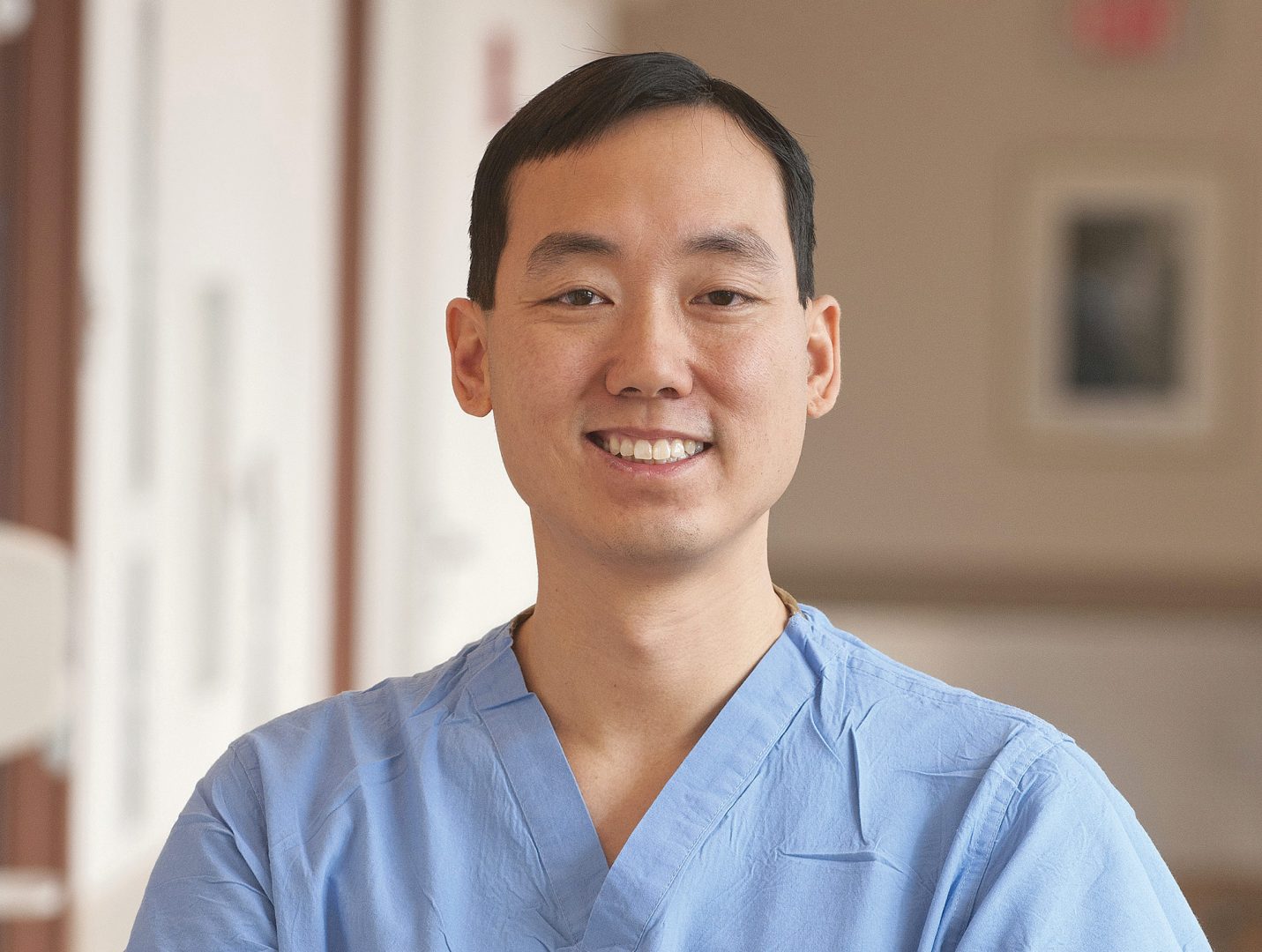
Holiday Gift Guide

Keeping It Local

Do you have Amazon or big-box fatigue, or just want to support some great local businesses? Thankfully, Western Mass. provides myriad gift-giving options this holiday season, from spa experiences to restaurants; from sporting events to concerts and museums; from art classes to an eclectic array of retail outlets. Even better, all support Western Mass. business owners and boost the region’s economy. On the following pages are just a few suggestions. Happy holidays, and happy shopping!

Cathy Cross Fashion for Women
151 Main St., Northampton
(413) 585-9398; cathycrossfashion.com

Cathy Cross is a Northampton shop that offers fashion-forward designs as well as timeless classics, with options ranging from jeans to power suits, lots of dresses, casual and contemporary wear, and constantly rotating seasonal collections that focus on current trends. Gift cards are available in any demonination, and can be purchased at the store or online.

CityStage/Symphony Hall
One Columbus Center, Springfield
34 Court St., Springfield
(413) 788-7033; symphonyhall.com

There’s always plenty of variety at Springfield’s premiere entertainment venues, which feature, this season, the Best of Boston Comedy Festival, Jim Brickman with “A Joyful Christmas,” “Moondance – the Ultimate Van Morrison Tribute Concert,” the Albany Berkshire Ballet’s performance of “The Nutcracker,” and much more. Visit the website for a full calendar and to purchase tickets.

Cooper’s Gifts
161 Main St., Agawam
(413) 786-7760; coopersgifts.com

Cooper’s is not just a store — it’s a destination,” shopkeeper Kate Gourde says. “Unlike almost anything else in retail today, Cooper’s is a shopper’s oasis, where you can select from trendy clothing, gorgeous window fashions, distinctive home furnishings, and exquisite gifts.  We are serious about style, yet you will find this shop unpredictable, quirky, and alluring. We want to be something exciting and new every time you visit.”

DIY Brewing Supply
289 East St., Ludlow
(413) 547-1110; diybrewing.com

With the popularity of home brewing on the rise, DIY Brewing Supply has everything an enthusiast would need to start making beer, wine, liquor, soda, cider, mead, and even cheese. Check out the regularly scheduled classes, too, aimed at teaching techniques to both beginners and more advanced practitioners. Gift certificates are available.

Faces
175 Main St., Northampton
(413) 584-4081; facesmainstreet.com

A downtown Northampton institution, Faces has been delighting shoppers for decades with an eclectic selection of clothing, home décor, housewares, accessories, toys, cards, bath and body products, seasonal items, and more. Whether looking for a unique outfit or hunting for a gift for a hard-to-please friend, Faces believes shopping should be fun.

Gateway City Arts
92 Race St., Holyoke
(413) 650-2670; gatewaycityarts.com

Conveniently located in the heart of Holyoke’s Arts and Innovation District, and host to a plethora of studios, galleries, and event spaces, Gateway City Arts is a co-working space for artists and creatives in a variety of disciplines. Among its many programs, the center offers art classes for the casual creator and the professional artist. Check online for the latest offerings, and give someone the gift of inspiration.

Glendale Ridge Vineyard
155 Glendale Road, Southampton
(413) 527-0164; glendaleridgevineyard.com

Glendale Ridge Vineyard is a small, family-owned winery committed to producing wines that express the land, climate, and winemaker’s vision. Visitors can taste small-batch wines, tour the inner workings of the boutique winery, or enjoy a glass of wine with family and friends in a scenic rural setting — then purchase a bottle or two from the wine shop.

Hope & Olive
44 Hope St., Greenfield
(413) 774-3150; hopeandolive.com

Hope & Olive’s owners call their establishment an “everyday-special restaurant,” one that makes the most of a rich bounty of local farms, sourcing much of its menu with nearby products. They say, “we serve inspired cocktails, have an eclectic by-the-glass wine menu, and 12 great beers on tap. We invite you to come and have lunch, brunch, dinner, or maybe just drinks, snacks, or a housemade dessert.” Or buy a gift certificate for your favorite foodie.

It’s All About Me
2 Somers Road, Hampden
(413) 566-2285; www.itsallaboutmehampden.com

Launched in 2004 in a tiny space as an eclectic gift and home décor shoppe, It’s All About Me now inhabits a spacious building on a busy corner in Hampden, and has evolved into a fashion boutique filled with women’s clothing and fashion accessories, not to mention gift items. Whether it’s an outfit for a whole new look, a unique scarf, or a fashion accessory to spice up the wardrobe, it’s easy to find something inspiring.

Jackson & Connor
150 Main St., Northampton
(413) 586-4636; www.jacksonandconnor.com

This small, unique menswear specialty shop offers a selection of eye-catching goods, from stylish suits to cozy sweatpants, ties, T-shirts, socks, vests, sport coats, accessories, shoes, hats, jewelry, care products, colognes, and more. The store also provides full tailoring services, and frequently tracks down hard-to-find items for customers through special and custom orders.

Michael Szwed Jewelers
807 Williams St., Longmeadow
(413) 567-7977; michaelszwedjewelers.com

As the area’s exclusive master IJO (Independent Jewelers Organization) jeweler, Michael Szwed Jewelers keeps up with the latest fashions and trends in fine jewelry and every other aspect of the industry, including innovative technologies. As a result, the owner notes, “we are able to offer the finest diamonds in the world at the best value.” The website features a searchable catalog.

Odyssey Bookshop
9 College St, South Hadley
(413) 534-7307; odysseybks.com

Over its 55-year history, Odyssey Bookshop has earned a reputation as an eclectic spot to look for books — and to take in a steady stream of literary events for adults and children. Odyssey also features a full-service website for ordering. “We believe that many customers need to look at, touch, and feel a book before they buy,” the owners say, “so being a ‘clicks and mortar’ store can afford them the best of both worlds.”

Pioneer Valley Indoor Karting
10 West St., West Hatfield
(413) 446-7845; pioneervalleykarting.com

The 1,000-foot track at Pioneer Valley Indoor Karting is capable of racing up to eight karts at once, with the fastest on-track speeds in Massachusetts, featuring a combination of straightaways designed for speed and sweeping corners for technical driving that will challenge everyone from beginners to experts. The track is equipped with a state-of-the-art timing system to record the individual lap times of each kart. Purchase special race packages and gift certificates online.

Refresh Whitening Spa
16 Gerrard Ave., East Longmeadow
(413) 384-5760
64 Gothic St., Northampton
(413) 779-3148; emadental.com

Emirzian, Mariano & Associates, a general, esthetic, and prosthodontics dental office, melds teeth whitening and dental hygiene with a spa-style experience. With several whitening options available, both at Refresh and at home, the team helps each customer select the best method for them. Gift certificates are available.

Renew.Calm
160 Baldwin St., West Springfield
(413) 737-6223; renewcalm.com

For the past 17 years, Renew.Calm has offered an array of both medically based and luxurious spa treatments, with services including skin care, therapeutic massage, nail care, body treatments, yoga, hair removal, makeup, and lashes. The 4,000-square-foot facility also hosts educational events, fitness classes, spa parties, and more. Multi-treatment packages make great gifts, and gift cards are available as well.

Ski Butternut
380 State Road, Great Barrington
(413) 528-2000; www.skibutternut.com

Skiing and snowboarding definitely make those New England winters more tolerable. This family-oriented ski area in Great Barrington provides 110 acres of skiing spread across 22 trails. If you are shopping for someone who loves the outdoors, a gift certificate to Ski Butternut may open the doors to a new passion. If they’re already hooked on skiing, a lift ticket may be most appreciated. Check out the website for prices and deals.

Rosewood
34 Elm St., Westfield
(413) 642-5365; rosewoodwestfield.com

Rosewood Home & Gifts is a trendsetting retail store located in the heart of downtown Westfield, offering home decor, gift items for special occasions, jewelry, apparel, and more, including many local products made in the Pioneer Valley. Rosewood also offers seasonal, interactive workshops on chalk paint and waxing, helping participants create beautiful, decor for the home and yard, using sustainable and recycled products.

SkinCatering
1500 Main St., Suite 220, Springfield
1 Country Club Road, Holyoke
(413) 282-8772; skincatering.com

SkinCatering offers a release from the hectic holidays, and after all the stress and strain, an extra-special, very personal gift may be just what the doctor ordered. Pamper someone special with a massage, facial treatment, spa and sauna package, or any number of other options. Gift certificates are available in any amount online or in person.

Springfield Thunderbirds
45 Bruce Landon Way, Springfield
(413) 739-4625; springfieldthunderbirds.com

A great deal for big-time hockey fans and folks who simply enjoy a fun night out with the family, Thunderbirds games are reasonably priced entertainment in Springfield’s increasingly vibrant downtown. The AHL affiliate of the NHL’s Florida Panthers, the T-birds play home games through April at the MassMutual Center. Purchase tickets at the box office or online.

WEBS
75 Service Center Road, Northampton
(800) 367-9327; yarn.com

A second-generation, family-owned business, WEBS, has been a destination for knitters, weavers, and spinners for more than 40 years. This Western Mass. mainstay with a national reach is known as America’s Yarn Store for a reason, with a 21,000-square-foot retail store, a robust online presence, as well as comprehensive classes and events for all skill levels.

White Square – Fine Books & Art
86 Cottage St, Easthampton
(413) 203-1717; whitesquarebooks.com

White Square – Fine Books & Art is an old-style bookshop nestled in an eclectic area of authors, artists, galleries, restaurants, and colleges on the western edge of Mt. Tom. It serves as a  literary resource for the community and a destination point for sophisticated collectors, selling books and art and hosting events and conversations with both local and national authors and artists.

Construction

Screen Test

Andy Crane, executive director of the Home Builders and Remodelers Assoc. of Western Mass.

Andy Crane, executive director of the Home Builders and Remodelers Assoc. of Western Mass.

Online learning isn’t a recent innovation, but in the world of continuing education for construction professionals, there aren’t many programs doing it — and few are doing it more effectively than the Home Builders and Remodelers Assoc. of Western Mass., says the association’s executive director. Its partnership with Holyoke Community College, he notes, is helping contractors get the training they need on a schedule that doesn’t take them off the worksite at critical times — and that benefits everyone.

Education, Andy Crane says, isn’t an afterthought for the Home Builders and Remodelers Assoc. of Western Mass. — it’s part of its mission statement.

“We get calls multiple times a day just asking questions, all over the spectrum,” said Crane, the HBRA’s executive director. “It could range from grading the soil to what you need on the roof to what kind of energy efficiency you need, and we’re expected to know that — and if we don’t, we know who to call. The fact that you can call and get an answer to your question is, I think, critical to the building trade in general. I think it validates us.”

On a broader scale, the association has long conducted continuing-education classes for construction supervisors and building professionals. The state requires 12 hours of classwork every two years, but the value of education goes beyond that, Crane said. Take, for example, a course on writing construction contracts.

“Very few people know how to do it properly, how to write a good contract,” he told BusinessWest. “There are contracts written on the back of napkins, or on lumber yard receipts. You’re collecting thousands of dollars from Mr. and Mrs. Smith, and the contractor may or may not take off, and Mr. and Mrs. Smith have no avenue to turn to. Contracts are not just one-way — they protect me, but they protect you as well. Writing the proper contract and including the right licensing and registration numbers and insurance — it’s huge.”

In recent years, the state began allowing up to six of those 12 hours of classwork to be conducted online. Crane said the HBRA wanted to get into that — but wanted to do it right. So the association approached Ken White, dean of Community Services at Holyoke Community College (HCC), to develop an online continuing-education platform that would compare favorably with any live classroom experience.

“More and more education and training is going from live classroom instruction to convenient online learning,” White said, adding that it makes particular sense in the construction world.

“We’re serving construction supervisors who are critically important individuals on the job; they’re overseeing everything that’s happening,” he explained. “To have them off site to go to a full-day program is a huge commitment of time that many times might not be in the best interest of the homeowner or the builder.

“HBRA has been doing premium classes for decades — of the six or seven home builders associations in the Commonwealth, they’re recognized by the rest of them as the best, by far,” he went on. “They asked us if there was a way to take their live instruction and create an online opportunity. That way, they can wrap their training and continuing development around their schedules, which may be weekends, evenings, and early mornings. And instead of taking it in these huge chunks of four hours or eight hours, they can do it an hour here and an hour there.”

HCC partnered with MindEdge Learning and MRW Connected to create a gateway and learning-management platform, White explained.

“We used a videographer to actually film all the live classrooms that take place here at the HBRA, with a three-camera setup. We keep the anonymity of the students because all you’re seeing are backs of heads; the focus is on the instruction. It’s filmed, it’s edited by the college to make sure it flows correctly, then it’s reviewed by the presenter, who is a builder or someone in the construction industry here in the Commonwealth. They look at it, and when it’s approved, it’s released to the public.”

The current course list is a deep dive into key construction issues: “Building an Airtight House,” “Energy Code Overview,” “Avoiding Costly Building Mistakes,” “Lead Safety Isn’t Just About Lead Paint,” and “Fall Prevention and Silica Exposure” are just a few of the topics.

“The reviews have been superlative,” White said. “They’ve picked some really great individuals who not only know their trade, but have great communication skills and keep up to date.”

He called continuing education the “lifeblood of decision making” for construction supervisors.

“On the job, if you make the wrong decision, people could get hurt, or something could leak, or something might not be up to code. They have a lot on the line. That’s why it’s important to have to be the best-educated, most experienced individuals in this profession. The college is just happy to be a part of it.”

Anytime, Anywhere

Crane said the HBRA is still teaching about 100 people a month at its headquarters in Springfield, but contractors are increasingly choosing the convenience of the online model.

“Some leave the job site and attend a live training,” White added. “But you can get an identical experience taking the same class online around your own schedule.”

Purchasing a class is as simple as logging on to the HBRA website, perusing course options, and paying for them via a secure checkout. A few minutes after payment is processed, the user receives an e-mail with a link to log onto a class at his or her convenience.

Since the online program began in the summer of 2017, it has seen 295 registrations through the portal, White noted, adding that the HBRA of Western Mass. is at the forefront of this type of education in the construction industry.

Ken White says HCC aimed to create an online platform that would be as well-received as the live classes the local HBRA is already known for.

Ken White says HCC aimed to create an online platform that would be as well-received as the live classes the local HBRA is already known for.

“They’re the only ones who have online learning that’s a live video capture of the actual classes, so what students are seeing is a very engaging, identical experience that they can take in smaller portions if they’d like. Whenever they stop, they can get back in back exactly where they left off. And at the very end, there’s a final examination with 20 multiple-choice questions they have to get right to get credit.”

Crane noted that questions need to be answered every 20 minutes or so, too, which ensures that the user actually watches the material.

“The problem with online classes, when they first came out, was that you could literally pay your fee and pay your kid five bucks to pass the test by sitting there doing this,” he said as he mindlessly pressed a button. “Because we’re considered leaders in the industry, we thought that was wrong, so we helped get the rules changed so that, if you want people to learn stuff, you have to create a platform that makes them learn. You take a certain portion of time, maybe 20 minutes, then you’re tested on that 20 minutes. When you pass, you move on to the next 20 minutes. So you get your six hours of credit, you actually have to do six hours.”

After passing the final exam, the user prints a certificate to send in to the state to renew their license.

It works well for many construction professionals, Crane added, though many still prefer to be in a live classroom.

“You can take 12 hours live or do six live and six online. Personally, I don’t like doing things online. In fact, I hate it. I first came here because they offered classes here, downstairs in our conference room. I sat here for two days — there’s no tests when you do it this way; if you’re here 12 hours, they assume you learned.”

To feel the same confidence in an online platform, he said, “we had to build a program that follows the state’s protocol to a T, and make it tough so they’re actually learning something. Our classes are $90 for three classes. For-profit businesses will run that for $29, but they don’t care what you learn. They’re willing to wait for the hammer to drop and then close down, and they don’t care; they’ll just do it to somebody else.”

White said he works with other companies to provide various types of training, both live and online. “But in terms of this particular industry, we’re not aware of anyone else doing this. And the other plus is, with live training, most folks are local supervisors and builders. Online, we have folks as far as Cape Cod, Nantucket, even Cape Coral, Florida. It allows folks, wherever they’re located, to take this and not have to drive a half-day to get here and back and deal with traffic.”

Learning Curve

Even in its live classrooms, Crane noted, the HBRA of Western Mass. has been ahead of the curve.

“If other associations do it, they go get a professor at a college or some local professional and rent a room at the Holiday Inn and run a class,” he said. “Nobody I’m aware of has an online product. We’re the only ones out of the Home Builders Association running an online program. There are bootleg courses online, being taught by people in Arkansas and Canada and California at half the cost, but the content is nowhere near as professional as ours is.”

White said he was impressed by what he saw when he first attended a class in Springfield.

“I was really blown away because it was very professional and intensive, with an incredible amount of information, a lot of interaction between student and instructor, a lot of passion, and all relevant information that helps business owners and construction professionals and supervisors in their day-to-day decision making, whether it’s dealing with OSHA or lead issues or whatever the case may be.

“When I went back to report to my vice president, Jeff Hayden, I told him the instruction is superlative. I said, ‘there’s a lot of engagement, it was interactive — this is perfect for live video capture.”

In the end, he said, HCC and the association have turned out a premium learning experience.

“And it’s due to the folks that Andy hires to teach,” White added. “They’re experts. This isn’t a sideline; it’s what they’ve been doing all their lives. They live this 365 days a year. So folks are really happy about the product the HBRA has put out, and we’re happy to have been selected to partner with them and create these models.”

Crane agreed. “This is a unique partnership that benefits consumers, clients of builders, the state — it benefits everyone who touches this product.”

Joseph Bednar can be reached at [email protected]

Community Spotlight

Community Spotlight

Joseph Deedy (left) and Karl Stinehart say Southwick strikes a healthy balance between economic growth and outdoor attractions.

Joseph Deedy (left) and Karl Stinehart say Southwick strikes a healthy balance between economic growth and outdoor attractions.

A 250th anniversary celebration, Karl Stinehart says, is an opportunity in many ways for a town like Southwick.

“It’s tourism, it’s economic development, but it’s also history — people asking, ‘where do I live, and how do I value that? What is the history of my community?’” said Stinehart, the town’s chief administrative officer. “It was once known for its agricultural base and its ice houses. Now, the branding in town is more related to recreational opportunities.”

Southwick officials and volunteers have been meeting to plan a yearlong slate of anniversary events throughout 2019, securing a $25,000 state grant, with the help of state Sen. Don Humason and state Rep. Nicholas Boldyga, to plan activities, market events, and purchase street banners and commemorative merchandise, among other earmarks.

“We have a very active main committee that is being chaired by Jim Putnam, the town moderator,” Stinehart said. “They have a series of subworking groups working on different facets, and we’ve been reaching out to all the businesses to see how they want to participate and to what extent, whether it’s donating money or being involved with a float or an event or program.”

There’s plenty to celebrate as the anniversary approaches, Stinehart said, from recreational offerings — like boating on the Congamond Lakes, motocross events at the Wick 338, and town events at the 66-acre Whalley Park — to growth on the residential front, particularly two large developments.

Specifically, work continues on 26 homes at the new Noble Steed subdivision off Vining Hill Road, with 12 of those units already sold. Meanwhile, Fiore Realty is developing 65 to 70 homes at the former Southwick Country Club site, with 16 of the 23 sites on the west side of the property already sold; another 45 or so will later go up on the east side.

“It sounds like it’s full steam ahead over there,” said Joseph Deedy, who chairs Southwick’s Select Board.

As important as residential expansion is, Stinehart added, it’s as important to develop the main economic corridor in town, which runs along College Highway. “We want to balance any residential development with economic and business development.”

For instance, Deedy said, a new O’Reilly Auto Parts store is expected to open in February. “What’s nice about those folks is they actually purchased the property, so it’s not another leaseholder where it could be vacant in two years and sits for 10. They have a stake in the community, which is nice to see.”

The town also recently executed PILOT (payment in leiu of taxes) agreements with two solar farms on Goose Pond, off Congamond Road, Deedy added, noting that they will provide fiscal benefits to the town in an unobtrusive way. “These are landlocked parcels, so it’s not something people are going to see and be inconvenienced by.”

Ramping Up the Fun

What Southwick officials do want people — residents and visitors alike — to see is the array of recreational opportunities that have made this town of fewer than 10,000 residents a destination for tens of thousands of others.

For starters, outdoors enthusiasts enjoy the Metacomet/Monadnock Trail, as well as a 6.5-mile-long linear park, or rail trail, that runs through town from the Westfield border to the Suffield border. And the town’s two golf courses, Edgewood and the Ranch — not to mention the par-3 track at Longhi’s, near the Feeding Hills line — are doing well following the closure of Southwick Country Club, Deedy said.

Meanwhile, the lakes on the south side of town — featuring two boat ramps, a fishing pier, and a town beach — provide plenty of activity for residents. A $275,000 project recently renovated the south boat ramp on Berkshire Avenue, making it more modern and handicap-accessible, and the beachfront was recently renovated as well.

Southwick at a glance

Year Incorporated: 1770
Population: 9,502
Area: 31.7 square miles
County: Hampden
Residential Tax Rate: $17.47
Commercial Tax Rate: $17.47
Median Household Income: $52,296
Family Household Income: $64,456
Type of Government: Open Town Meeting; Board of Selectmen
Largest Employers: Big Y; Whalley Computer Associates; Southwick Regional School District
*Latest information available

Stinehart said the lakes and their environs are an important aspect of Southwick’s outdoor culture and worthy of investment, being, among other things, a major destination for freshwater fishing tournaments.

“Anytime you come by at 5 a.m., they’re out there,” Deedy added.

Then there’s the Wick 338, the motocross track behind the American Legion, which abuts the Southwick Recreation Center and Whalley Park. The complex hosts the annual Lucas Oil Pro Motocross Championship — which is broadcast live on NBC and draws some 15,000 to 18,000 people to town — as well about 25 other races throughout the year and a host of other events, including Rugged Maniac New England, a challenging, mud-splattered 5K obstacle course. That continual flow of visitors to town benefits a host of other businesses, from gas stations to restaurants, Stinehart noted.

As for Whalley Park itself — which was donated to the town by the prominent Whalley family and developed using municipal and Community Preservation Act funds — it includes a full-size soccer field, baseball field, and softball field, lighting for the fields, a huge kids’ play area, and a pavilion. Deedy said the town recently put up more lights and is looking to expand its roster of tournaments and other bookings.

“It’s getting recognized as a destination for leagues,” Stinehart added, adding that the Rotary presented a series of concerts there last summer, and the town is looking to present other types of shows that would be popular community draws. “It’s getting quite a diverse number of groups. It’s between the rec center and the school complex — that’s a great collection of parcels with different uses.”

Southwick has kept busy with needed infrastructure efforts as well, including a current project to improve the roadway and drainage on Congamond Road — a key entry into town from Connecticut — aided by more than $4 million in state funds. That follows a similar project that wrapped up last year on Feeding Hills Road.

“They’re adding sidewalks, a bike lane, and it will help connectivity to the rail trail and the lakes,” Stinehart said. “Those areas will be able to come right out to the Gillette’s Corner economic area. So some of these projects are about connecting and having access to places. Any place we have a recreational area, we want to be able to connect it to a commercial area.”

The town also tapped $500,000 from the state’s small-bridges program, while leveraging some local funds, to replace the Shurtleff Brook culvert on North Loomis Street, near the Westfield line, Deedy said, noting that all cities and towns could use more such assistance.

“Every single community has certain common denominators, and those are culverts and bridges and roads — and the need for additional money.”

“Every single community has certain common denominators, and those are culverts and bridges and roads — and the need for additional money,” Stinehart added.

Ongoing efforts to preserve open space nearby are also gaining ground, as the town continues to raise money toward the acquisition of a 144-acre parcel on North Pond at Congamond Lakes. The Mass. Department of Fisheries and Wildlife awarded Southwick money to help purchase it, and the Franklin Land Trust has embarked on a fund-raising effort to make up the difference in price. The parcel is abutted by two areas owned by the Commonwealth of Massachusetts and the state of Connecticut.

Why Southwick?

Overall, Deedy noted, the town offers plenty of incentives for businesses, ranging from proximity to Bradley International Airport to a singular tax rate of $17.47 for residential and commercial properties, as well as modern schools — the complex on Feeding Hills Road that houses Woodland Elementary School, Powder Mill Middle School, and Southwick Regional High School underwent significant additions and renovations in recent years — that have the space to accommodate Southwick’s developing neighborhoods.

Not to mention a leadership culture in town that promotes volunteerism opportunities and open communication, Deedy added.

“If you do have a problem, most of the leaders have a business, and you can walk right in. It happens daily. I don’t think anyone here has a closed-door policy,” he said. “A lot of times, most of the complaints people have are a phone call away to fix. It’s all about communication.”

These days, with the 250th anniversary coming up and continued progress on the residential, business, and recreational fronts, there are plenty of positives to communicate in this small but active community.

Joseph Bednar can be reached at [email protected]

Health Care

In the Club

Adam Malmborg says kids don’t usually enjoy going to the dentist

Adam Malmborg says kids don’t usually enjoy going to the dentist, but he’d like to make the experience a little more fun.

Going to the dentist may never rise to the level of fun for most kids, but one local practice is making it a little more enjoyable, by using a point system and prizes to motivate young patients to take care of their teeth — and improve their lives in other ways as well.

Adam Malmborg was a teacher before his current role at Flagship Dental in Longmeadow, so he knows a little something about motivating kids.

“I love working with kids,” said Malmborg, the practice’s hygiene coordinator and marketing assistant, whose mother, Katie, is Flagship’s practice manager and marketing manager. “She wanted a kids club — something to get kids more interested in coming.”

So he did some research — lots of it, in fact — into what dental practices around the country were doing to motivate their young patients to get serious about their dental health — a topic that many, understandably, aren’t that enthusiastic about.

“I used to be a teacher, so I know what kids like,” he told BusinessWest. “Basically, what I created is a points system; they can earn points here in the office, at home, and even at school.”

Indeed, the Flagship Dental Young Explorers Club, as the new program is called, assigns point values to dozens of achievements, from losing a baby tooth (five points) to scoring a cavity-free visit (25 points) to coordinating a dental presentation at their school (a whopping 500 points). Every 50 points wins a $5 gift card from a store or restaurant chain of their choice.

“It helps them get excited about coming to the dentist, because I know a lot of kids are afraid to come to the dentist,” Malmborg said. “I was, too. I hated coming to the dentist. Any type of medical office, I hated even the smell of it.”

His mother, who has worked in dental offices for more than 40 years, notices the difference in attitude.

“They’re happy to come to the office, and that doesn’t always happen. It’s a good little reward for them,” Katie said. “I do the marketing for the office, but Adam has taken on the job of getting kids invested in their dental treatment and getting them motivated. They can earn points for coming in, for their report cards, and for things they can do in the community as well. It’s pretty cool.”

Since the program began in March, a few participants have already scored enough points to win a gift card — the options range from Starbucks, Red Robin, Subway, and Dunkin’ Donuts to Walmart, Target, Amazon, GameStop, and many others — while others have banked their points in a quest for a bigger reward. Either way, Malmborg said, they’re having fun making healthy choices.

“I remember being younger, and it’s like, what do I get for having great teeth?” he asked. “Really, nothing. I get a pat on the back and a new toothbrush. My mother was huge on dental care, so she was like, ‘good job, congratulations.’ But coming from a dental office, that ‘congratulations, you’ve worked really hard, we want to reward you’ makes a bigger impression.”

How It Works

Members of the Young Explorers Club are given a membership card — showing it at an appointment earns two points — and a colorful badge; wearing this to the office earns five points, and uploading a photo onto social media wearing the button at school picks up another 10.

Being on time for an appointment is worth five points, a dental cleaning earns 10 points, X-rays get 15, and, as noted earlier, a cavity-free visit earns 25. “That pushes a lot of the kids to brush their teeth and floss,” Malmborg said.

And good works outside of school are rewarded, too, such as an A grade on a report card (two points), straight As (15 points), celebrating a personal achievement by sending Flagship a photo (15 points; one patient recently snapped a picture of her new puppy), and volunteering for community service (five points per hour). And those are just the tip of the iceberg.

“I just want to show the kids we’re supporting them,” Malmborg said of the community and school aspects of the program, adding that anything that gets children thinking about the dentist in a positive way, even peripherally, is a plus.

Some Tips to Ease
a Child’s Dental Visit

Are your kids reluctant to visit the dentist? The American Dental Assoc. recommends the following tips to make the experience less like — well, pulling teeth.

• Plan ahead. “If families want to avoid the rush to go back to school in August,” said ADA spokesperson Dr. Mary Hayes, “then plan on getting appointments for the beginning of the summer.”

• Encourage age-appropriate dental habits at home. To make cleanings easier, parents should encourage their kids to brush twice a day for two minutes and floss once a day.

• Timing is everything. Avoid cramming in a dentist appointment right after school or camp. “If the child has already been exhausted or had a bad day or had tests, they just don’t have the stamina to make it through the appointment successfully,” Hayes said.

• Make one child a model. If you’ve scheduled back-to-back appointments for your children, there’s a simple way to decide who goes first: choose the child who’s had the most positive experiences at the dentist. “You generally want the ones first who are more successful because the others get to see how it goes,” Hayes said.

• Hungry doesn’t equal happy
. Feed your child a light meal before the appointment. “Hungry people are grouchy people. You want them to be comfortable,” Hayes said. Oh, and bonus points if your child brushes before an appointment. That’s just polite.

• Leave your anxiety at the door. If your heart races at the very thought of the dentist, your child can probably tell. “Kids pick up on parents’ anxiety,” Hayes said. “It’s important with kids, especially at 4, 5 and 6, because I believe the phobic adults are the ones who had bad experiences when they were that age.”

• Keep cool if your child won’t cooperate
. If your child gets upset during her visit, the worst thing you can do is swoop them out of the chair and leave. “The next visit is going to be harder. You still have to help them get through part of the visit,” Hayes said. “Give the dentist every opportunity to turn the visit around.”

He’s not done adding to the reward list, he noted; for example, he intends to add points for getting a cavity filled. The rationale? The cavity may not have been an ‘achievement’ worth celebrating, but doing something about it certainly is. “I’m just trying to give the kids more chances at points.”

During each visit, the hygienist fills out a report card based on the child’s account of school and home activities, which is used to add points to his or her total. The patient also gets a second report card, this one based on the results of the cleaning.

“Parents can take this home and have a discussion with their kids — ‘oh, I see you have moderate amounts of tartar or plaque. OK, what do you think we can do better?’” Malmborg noted. “It’s all about the communication at home between the parents and kids. It’s the same as a school report card — it’s important that parents have something to go by.”

Speaking of school, the reason coordinating a dental presentation at a school is worth so many points is because it’s an opportunity to spread these messages about proper dental hygiene to as many kids as possible.

“When we meet with the kids at school, we give kids the tools they need to properly take care of their teeth, because some kids don’t have that — they don’t know what to do, or some parents might not be focused as much on it. That’s why we go in and do that.”

Something to Chew On

The Young Explorers Club is a significant aspect of a shift at Flagship to attract more families with children — a change that’s evident just walking into the waiting room, which features a tepee to climb in, a brightly lit fishtank, an interactive selfie station, and pencil-and-crayon activities lining the walls.

“Our patients are primarily older people, and we did the waiting room with the kids in mind,” Malmborg said. “I don’t want to say they have fun going to the dentist, but we want to get kids excited.”

The activities — word searches, coloring contests, and other brain games — earn three points each, and kids are allowed to do three per visit. “It just gets them doing something in the office, because sometimes in the waiting room, anxiety happens, so as long as folks are doing something fun, they’re not as nervous.”

So far, he told BusinessWest, the points program and other kid-friendly touches are working and getting children thinking more about their dental health.

“They come in, proudly wearing their button and showing their membership card. They’re like, ‘Mr. Adam, I did this.’ I say, ‘don’t worry, I’ve got your points.’ We’ve had a couple of kids turn in their points for gift cards, and they’re already ready for their next one.”

As a program that’s fun for the younger set and keeps them focused on good decisions, Malmborg thinks Flagship has settled on a winner. And he’s glad it’s simple to manage, because, while he’s seen other practices outsource a similar program, that isn’t his style.

“It’s a lot of fun,” he said. “It’s more personable when we can communicate with the kids. This way, they’re not getting rewarded by an outside company; they’re getting it from someone they know.”

Joseph Bednar can be reached at [email protected]

Cover Story

Bargain or Burden?

With a series of employment-related ballot questions looming — on issues including paid leave, minimum wage, and the state sales tax — supporters of those measures sat down this past spring with advocates for the business community to forge what became known as the ‘grand bargain.’ The result doesn’t have employers cheering — in fact, they worry about the impact of the deal on their bottom line — but if the nature of compromise is that no one’s happy, then the process was a rousing success.
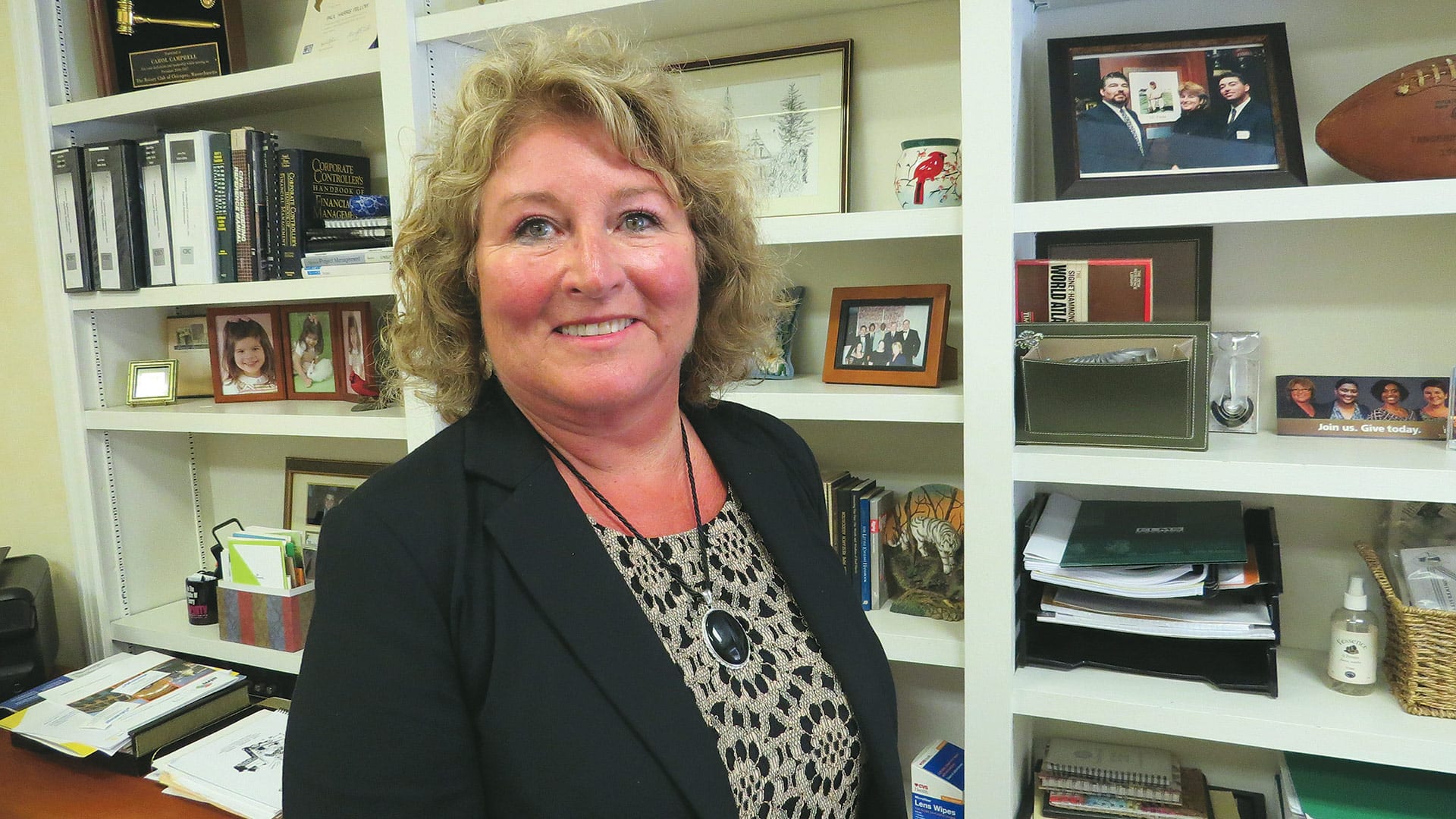
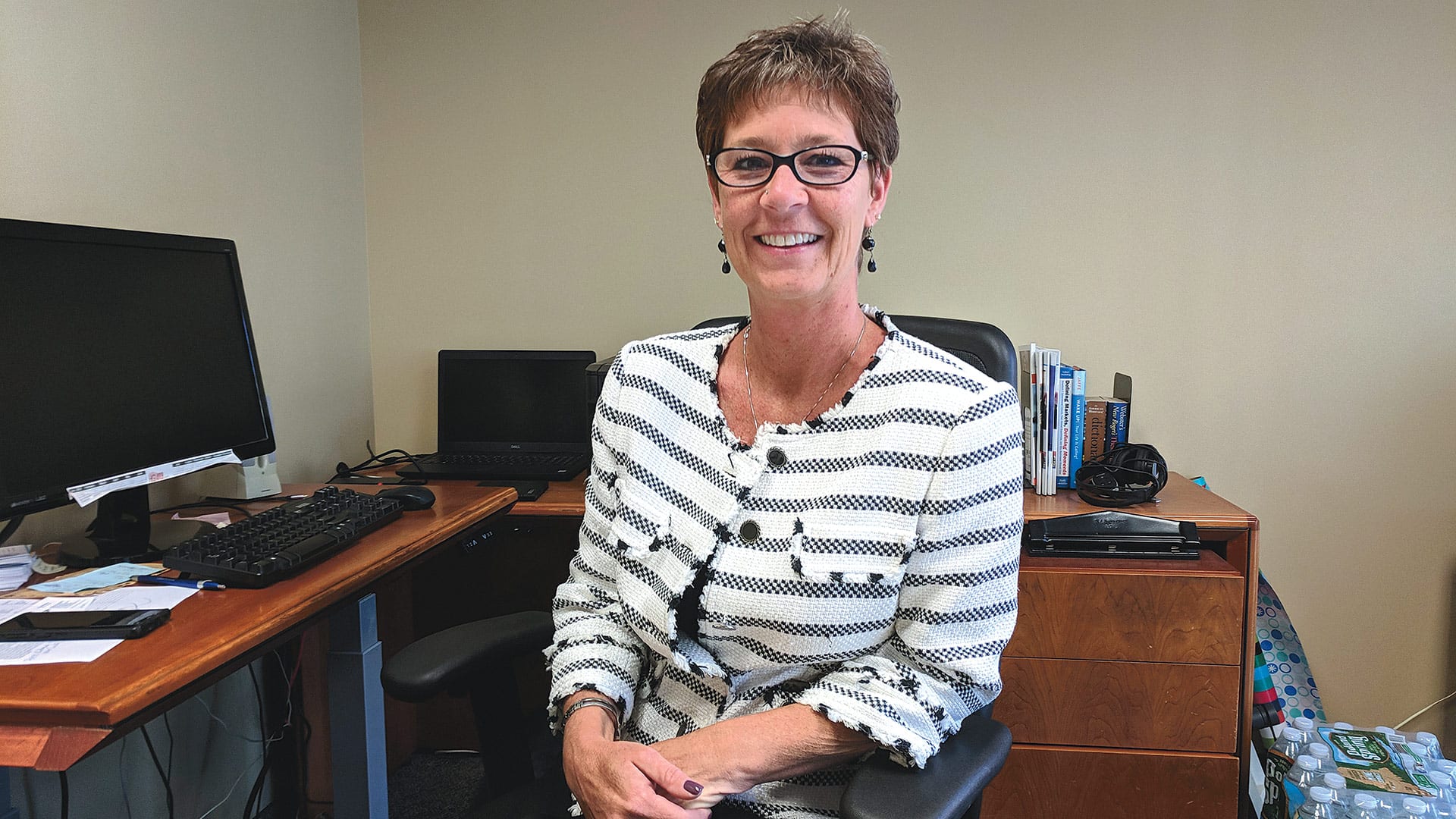

Carol Campbell, like so many other Massachusetts employers, was none too pleased when a barrage of ballot questions were set to go before voters on Election Day, one asking for increased paid leave, a second to raise the minimum wage to $15 per hour, and a third to reduce the sales tax from 6.25% to 5%.

“My first thought was that it shouldn’t have come to this,” said Campbell, president of Chicopee Industrial Contractors. “The way issues like this are supposed to be dealt with is through our legislators.”

But once those questions were approved for the ballot — and polls suggested that voters were ready to usher in these broadened employee benefits — employers and the organizations that advocate for them decided to sit down and hammer out a different strategy. A compromise.

Carol Campbell says thorny issues of employee benefits should be legislated, not subject to the whims of the ballot box.

Carol Campbell says thorny issues of employee benefits should be legislated, not subject to the whims of the ballot box.

That deal, forged by proponents of the ballot questions and employer-advocacy organizations, was passed by both chambers in the State House and signed into law by Gov. Charlie Baker in June. Known as the ‘grand bargain,’ the compromise legislation will create a permanent sales-tax holiday, increase the minimum wage over the next five years, and create a new paid family and medical leave program in Massachusetts — while the three ballot questions were removed from voters’ hands.

“I think we needed to sit down and talk,” Campbell said. “I was saying a couple of years ago, when this was bubbling, that we should begin by sitting down and talking. I do still have concerns because there are still a lot of unknowns. But I guess it’s better than letting something like family leave go to the ballot.”

Mark Adams, director of HR Solutions at the Employers Assoc. of the NorthEast, has spent time with employers anxious about putting sweeping benefit changes in front of voters.

“This was something that had to be dealt with because it was going to pass in November,” he told BusinessWest. “I talked to companies frustrated with the prospect of the ballot, saying, ‘how could this happen?’ My answer is simple: when you’re dealing with a ballot question, whoever gets more votes is going to win — and more employees vote than employers. Being able to take time off and be paid while taking time off resonates with employees — even if, in some cases, they might be on the hook for some of those costs. It certainly plays well, which is why it was going to pass in November, and why it was worthwhile to try to compromise.”

Nancy Creed, president of the Springfield Regional Chamber, was the sole Western Mass. voice on the seven-person committee that hammered out the bargain.

“The business community, with the support of the legislative delegation, realized, when we took a look at the polls, that we were going to lose the ballot questions, and everyone felt that we should need to come to the table and compromise,” she noted. “The more we explain that to our members, the more they understand it. They don’t like it, but they recognize that we had no choice but to do it.”

The Nitty Gritty

The grand bargain raises the Commonwealth’s minimum wage from $11 to $15 per hour over the next five years, with the initial increase taking effect in January 2019. Coupled with that increase will be a raise to the minimum base wage rate for tipped workers, from $3.75 to $6.75, that will also phase in over a five-year period starting in January 2019. The deal also phases out the requirement that retail workers earn time-and-a-half for working on Sundays.

The legislation also creates a permanent two-day weekend sales tax holiday, an event that was launched in Massachusetts in 2004 and held most years since, but not in 2016 or 2017. Proponents of lower taxes agreed, as part of the deal, to scrap lowering the state’s sales tax from 6.25% to 5%.

The third major component the bill introduces is a new paid family and medical leave program, which will provide employees who contribute to the program the ability to take paid leave for up to 12 weeks a year to care for a family member or bond with a new child, 20 weeks a year to deal with a personal medical issue, and up to 26 weeks to deal with an emergency related to deployment of a family member for military service.

Weekly benefit amounts will be calculated as a percentage of the employee’s average weekly wage, with a maximum weekly benefit of $850. Self-employed workers may opt into the program. And all workers who use the benefit are guaranteed they can return to their previous job or an equivalent position in terms of pay, status, and benefits.

Workers on paid leave will earn 80% of their wages up to 50% of the state average weekly wage, then 50% of wages above that amount, up to an $850 cap. The law includes a payroll tax increase of 0.63% estimated to bring in $750 to $800 million each year, to help fund the leave benefit.

Nancy Creed

Nancy Creed says the expanded family-leave benefits will challenge companies not only in cost, but in workforce management.

“Paid family leave was a beast; it is so complex,” Creed said, adding that this was one area where she was glad Western Mass. had representation in the discussion. “There’s an east-west disparity, and they do not understand the issues of the west and the fact that we have five gateway cities. We have a much poorer population, and our businesses tend to be smaller. Most of them [in the east] represented larger corporations, and corporations that weren’t necessarily doing the right thing.”

The members she speaks with want to do the right thing, she added.

“But you really have to look at what is the impact going to be. And it’s not just cost; it’s also workforce management. For a company that has 50 employees, if they lose five people on leave, how do they manage that, if they’re running two shifts, three shifts?”

The cost component is also significant, she went on, especially for companies that decide to foot employees’ share of the benefit in order to retain their talent and recruit more workers in a very competitive market.

“What that means is they won’t be able to hire, they won’t be able to expand, and, if they have vacancies through attrition, they probably won’t fill them because they just can’t afford to,” Creed said. “So, at a time when we’re trying to put people to work, it will probably mean less jobs. And I’m not sure the proponents understood what those consequences were.”

Still, the negotiations resulted in a better deal for employers than the ballot question, which called for 16 weeks of family leave and 26 weeks of personal medical leave. The compromise also includes an opt-out provision for employers that offer benefits greater than or equal to what an employee would receive in the state program.

“I have a hard time with people telling me how to run my business,” Campbell said. “We have short-term and long-term disability; we understand the importance of keeping our employees healthy; we understand the need for family-work balance. But it’s not always possible to have that balance. For us as a small business, if we have two or three people out for 26 weeks, it’s not as simple as hiring someone to replace them, although that in itself brings another financial burden to the company.”

Policy Briefs

One aspect of the legislation that has not gotten enough attention, Adams said, is the anti-retaliation aspects of the leave law.

“A lot of the coverage up to this point has been on the time off being available. There hasn’t been a lot of discussion about the retaliation provisions. If an employer is subject to any adverse actions within six months time under paid family leave law, there’s an automatic presumption that retaliation has occurred, and that employer can overcome that only through clear and convincing evidence that it’s something else.”

That means employers need to tighten up policies on performance evaluation, he added. “If people aren’t meeting standards, there has to be documentation that’s clearly communicated. If you’re on paid family leave and I discover you did something wrong before your leave occurred, if I don’t have documentation lined up before taking action, you can claim retaliation. That’s something companies will have to self-assess — whether their policies now are strong enough.”

Mark Adams

Mark Adams

“A lot of the coverage up to this point has been on the time off being available. There hasn’t been a lot of discussion about the retaliation provisions. If an employer is subject to any adverse actions within six months time under paid family leave law, there’s an automatic presumption that retaliation has occurred, and that employer can overcome that only through clear and convincing evidence that it’s something else.”

It’s just one example of unintended consequences that proponents of the original ballot questions might not have considered, Creed noted. Other elements of the grand bargain, however, were easier to hammer out.

“Minimum wage was a given, as a lot of businesses are already there or moving toward it. But we were able to negotiate that being phased in over longer period of time so smaller and medium-sized businesses have time to phase up to that point,” she told BusinessWest.

Interestingly, she added, while the minimum wage for tipped employees will be phased in over five years as well, the committee heard input from some servers and bartenders who were opposed to a dramatic change, “because they think one of the unintended consequences of that is that people now think you’re paying more, so I’m going to tip you less.”

Campbell said the minimum-wage increase won’t effect her company, which doesn’t hire anyone at that low pay level, but she argued that a sizable increase in the pay floor may harm the employment picture by shrinking the number of entry-level jobs for people with little experience. Minimum-wage jobs, she noted, are “the first step toward getting an education and getting proper training to have a career. It was never meant to be supportive of a family.”

As for other components of the bargain, dropping the sales-tax decrease was relatively straightforward, Creed said. “We already have no money to find education and transportation and all the things we need to fund, without bringing in even less sales tax. But at least we were able to get that permanent sales-tax holiday, which helps the retailers.”

The Retailers Assoc. of Massachusetts, which was pushing the sales-tax ballot question, was also heartened by a recent Supreme Court decision allowing states to collect taxes on online purchases.

According to John Regan, executive vice president, Government Affairs at AIM, who had a seat at the table for the grand-bargain talks, the negotiations were carried out against the backdrop of polls indicating overwhelming support for all three ballot questions; recent polls put support for the paid family and medical leave question at 82% and support for a $15 minimum wage at 78%.

“Experts believe that a campaign to defeat questions with those sorts of poll numbers could cost $10 million per initiative,” he added. “The ballot process is one-sided, winner-take-all. Coming to a legislative compromise avoids that by allowing a broader group of people to have input into key decisions to create policies that work for everyone.”

One impetus for bringing the Raise Up Coalition, which sponsored the ballot questions, to the table was the state Supreme Court blocking a fourth question, concerning the so-called ‘millionaire tax,’ a proposed 4% surcharge on incomes over $1 million.

“Once that came off the ballot and was deemed unconstitutional, that brought the other side to the table to realize that, ‘yeah, maybe we should compromise,’” Creed said. “Would we have liked to have seen it differently? Sure, but I think the whole definition of compromise is that no one’s happy, so we did our job. It’s much better than it could have been.”

Richard Lord, president and CEO of AIM, agreed. “While everyone gives something during a negotiation, we are satisfied and believe that our member employers are better off with a legislative compromise than with voter approval of the language of the ballot questions as drafted.”

No Winners

Adams told BusinessWest that different issues with the grand bargain will manifest themselves over time, with the 0.63% tax increase on wages being the most immediate concern, especially for larger companies. “That’s really going to put HR managers behind the eight-ball from a planning point of view.”

Still, Creed added, “a negotiation is messy, and no one really came out a winner. I think the proponents didn’t feel like they came out a winner because they had to compromise. In the end, it was much better than what the ballot questions would have provided.”


Joseph Bednar can be reached at [email protected]

Law

Hazy Picture

Just as the business and legal communities in Massachusetts were learning to deal with medical marijuana, voters kicked the door wide open in 2016 by legalizing the drug for recreational use, too. That created a tangle of issues to work out, from how to handle employees that use the drug outside work to launching a cannabis business in the face of federal law that calls the practice illegal. Some of those issues have been sorted out, but others still hang in the air, like so much smoke.
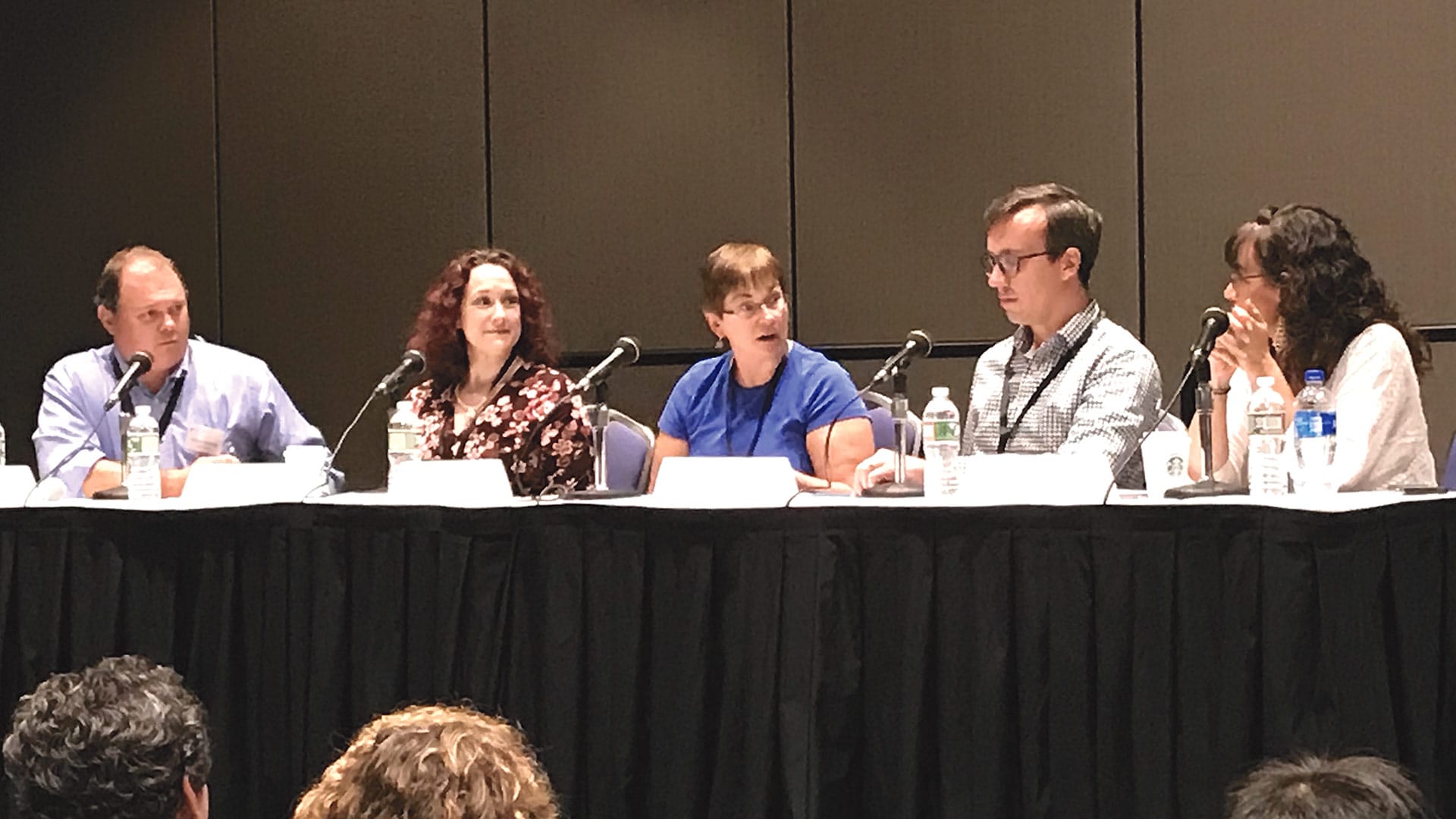
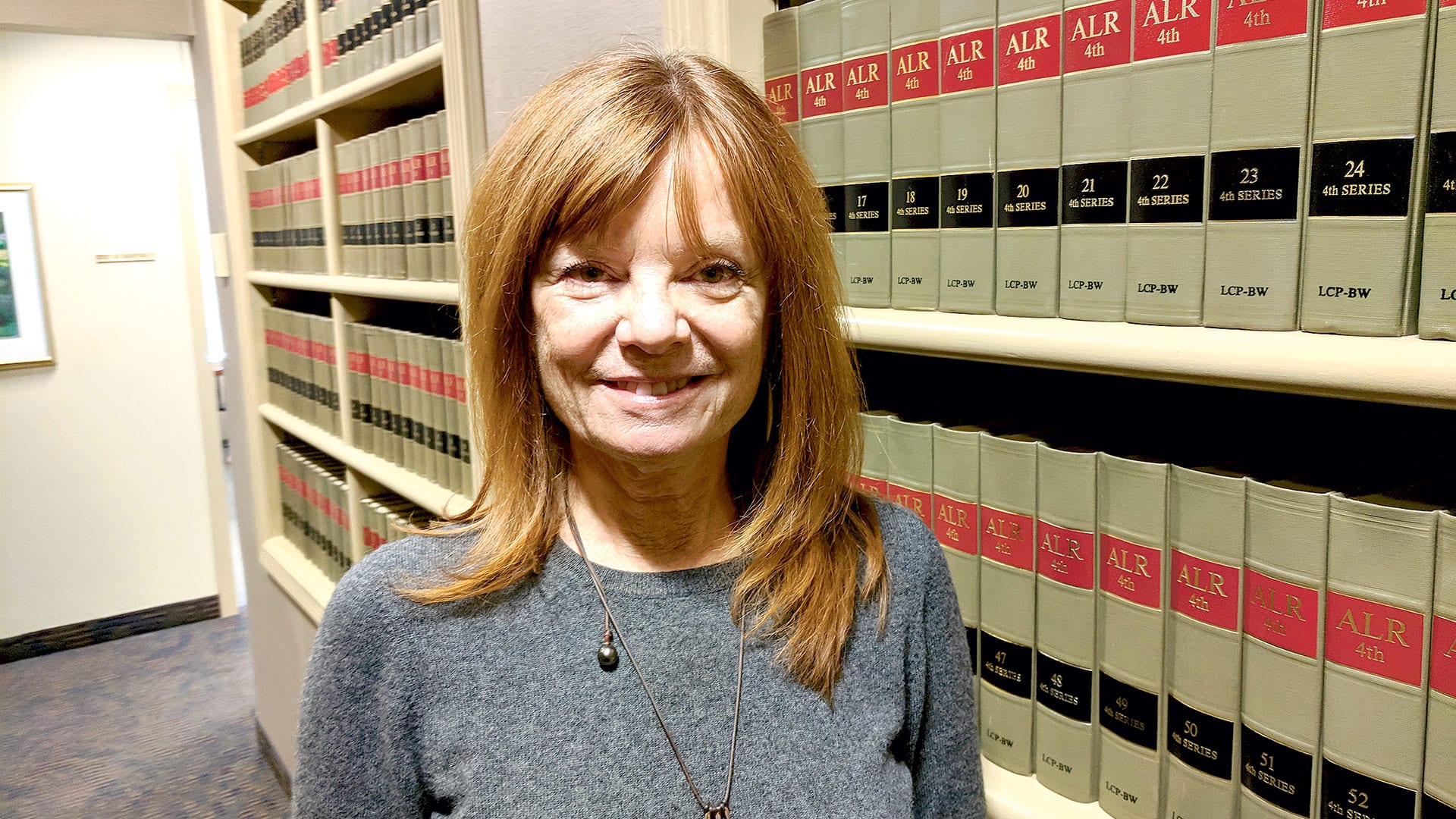

When it comes to the relationship between employers and medical marijuana, few names are as important as Cristina Barbuto.

She’s the woman who filed suit against her employer, Advantage Sales and Marketing, three years ago after being fired — after her first day on the job — for using marijuana outside of work. She was required to take a drug test, and told the employer before the test that she would fail, because she used marijuana at home to help manage her Crohn’s disease.

A supervisor said that wouldn’t be a problem, but Barbuto was dismissed from the job the next day when the drug test came back positive for marijuana. The reason? While medical marijuana was legal in Massachusetts at the time, it was still illegal under federal law.

Her complaint eventually made its way to the state Supreme Judicial Court, which affirmed her right to use medical marijuana outside work on the grounds that forbidding her — as long as she wasn’t impaired on the job — constituted disability discrimination.

“If somebody qualifies as a disabled person and they’re seeking an accommodation, the employer has an obligation to engage in a process with that person and provide a reasonable accommodation that allows them to do their job, unless they can show the accommodation would cause them an undue hardship,” said Pat Rapinchuk, a partner with Robinson Donovan in Springfield. She noted that a subsequent suit by a man denied access to a homeless shelter for his medical-marijuana use came down on the plaintiff’s side as well, on the same grounds as the Barbuto suit.

“But then comes the recreational piece,” she said. “And that’s completely different.”

Indeed, with recreational use of marijuana having been legal in Massachusetts for a much shorter time, case law has not established similar rights for such users, she noted.

“Right now, I would say the recreational marijuana user does not have the protections a medical user does,” Rapinchuk said. “You start with just the basic premise of no substances in the workplace — no alcohol, no drugs. That part’s easy. But what if I used it last week on my own time and my employer drug tests for whatever reason, and I test positive, and I don’t have a medical reason for it? Can the employer either decline to hire me or even terminate me? And I think the short answer right now is ‘yes.’”

In one case that has garnered some media attention, Bernadette Coughlin, a food service supervisor for Sodexo, was fired after being injured in a fall at work. The company required a drug test following an injury, and she tested positive for marijuana, which she admitted she used recreationally at home a few days before. She was fired, and is fighting the termination in court — but might have an uphill battle, Rapinchuk said, because she doesn’t have the disability claim that Barbuto did.

From left, Bulkley Richardson attorneys Scott Foster, Sarah Willey, Mary Jo Kennedy, Ryan Barry, and Kathy Bernardo take part in a recent cannabis panel.

From left, Bulkley Richardson attorneys Scott Foster, Sarah Willey, Mary Jo Kennedy, Ryan Barry, and Kathy Bernardo take part in a recent cannabis panel.

“You’d have to find another route to challenge that,” she added, noting that one possibility is challenging the drug test itself as an invasion of privacy. “Some courts have found such a test to be invasive, and a violation of an employee’s privacy. If they found out otherwise, like through social media, that might pass muster.”

If all this sounds amorphous, it is, Rapinchuk said, and is a field of employment law that is definitely evolving. Drug tests can detect THC, the psychoactive agent in marijuana, for days, even weeks after someone smokes or ingests it, and no tests exist to gauge whether the user is currently impaired. That leaves employers with plenty of hard questions about how they want to handle this new frontier.

Growing Concerns

But that’s not the only area of the law currently evolving in the face of legalized marijuana.

Perhaps the most significant wrinkle in marijuana law, Scott Foster says, is that it’s legal in the state but illegal federally. That drives many of the odd situations people find themselves in when they start a marijuana business, and it’s why Bulkley Richardson, where Foster works as a partner, recently launched a dedicated cannabis practice.

As one example, a marijuana business cannot use most banks.

“It’s considered to be money laundering on a federal level to run marijuana money through the banking system,” he explained. “You can’t use an ATM, you can’t use a credit card, and you can’t take the proceeds from the sale of marijuana and deposit it at a bank if they know it’s marijuana funds.”

There are two exceptions: Centurion Bank and Gardner Federal Credit Union. “We literally have marijuana clients driving $50,000 to $100,000 in cash to Boston in armored cars to deposit it at [Centurion],” Foster said, adding that the bank’s fees for the service are astronomical. “The bank is basically taking a business risk. I don’t know if it’s a good risk or bad risk, but no other big banks are taking the chance because the penalties would be devastating to them. Centurion is willing to take the chance.”

Meanwhile, people buying real estate as part of a new business typically finance 60% to 80% of the cost, he noted, but banks can’t lend for this purpose any more than they can take deposits.

“So what you end up with is a lot of very wealthy people playing in this space because you can’t finance it. You’ve got millions and millions of dollars being poured into these ventures that are growing, and nobody hears about it because it’s all private financing. That’s another area where it looks like a normal business until you ask, ‘where’s the money coming from?’”

Then there’s intellectual-property law. Most new businesses federally register their trademarks, but that’s not available for any branding involving marijuana products. “You can come up with this great brand name, this great logo, and you can’t protect it federally,” Foster said. “So now we’re going back to the state system, which does exist in Massachusetts. There is a way to protect trademarks at the state level that, until the marijuana business, nobody had done for 100 years.”

As he and Kathy Bernardo, another Bulkley partner on the cannabis team, spoke with BusinessWest, it became clear why the new practice group includes lawyers that specialize in myriad disciplines.

The disconnect between state and federal law shows up in taxation as well. Foster brought up a quirky section of the tax code that came about after the IRS went after a cocaine dealer in the Midwest for tax evasion, so the dealer filed a tax return that wrote off expenses like security and armored cars. The IRS balked, but a tax court sided with the man.

Pat Rapinchuk says some employers might avoid drug testing for marijuana

Pat Rapinchuk says some employers might avoid drug testing for marijuana as not to rule out some strong potential employees.

“Congress later added section 280E to the tax code, which essentially says if your business is in the growing, manufacture, or distribution of a federally controlled substance, you’re not allowed to take normal business deductions,” Foster explained, and then broke down an example of how that may affect a cannabis-related enterprise.

Say a business makes $100,000 and, after spending $40,000 on product, $20,000 on employees, and $10,000 on rent, claims a profit of $30,000. The owner then pays taxes on that figure; if he owes, say, 40%, he makes a profit of $18,000. But if he’s not allowed to write off expenses, suddenly he’s paying 40% on a much larger chunk of that $100,000 — and taking home much less in profit.

“The effective tax rate is two to three times the size of a normal business. And even though it’s against the law federally, you still have to pay taxes,” Foster noted. “It’s another trap for the unwary.”

Joint Enterprises

From a real-estate point a view, issues like zoning laws, special permitting laws, and host-agreement laws also come into play, Bernardo said.

“Municipalities have held the cards because they have to either accept a marijuana zoning district, or they have the ability to shelve it until we actually get the regulations out for recreational use, but that’s coming to an end, so now they have to decide whether or not they’re going to allow this in town or not.”

That depends largely on how the vote went in that particular community when the ballot question legalizing recreational pot in Massachusetts passed last November. In many Western Mass. communities where the vote was in favor, town officials have been busy putting together zoning bylaws for a marijuana district.

Kathy Bernardo

Kathy Bernardo

“Municipalities have held the cards because they have to either accept a marijuana zoning district, or they have the ability to shelve it until we actually get the regulations out for recreational use, but that’s coming to an end, so now they have to decide whether or not they’re going to allow this in town or not.”

“The people of town agreed that’s going to be there, and they’ve discussed how and where,” she explained. “A lot of towns put a moratorium on it — which was fine, they were allowed to do that, but they were only allowed to do it for a year, and now they have to come to a determination whether or not they’re actually going to have that zoning district in their municipality. But that is all steered by what the vote was in their town.”

If the town’s voters favored legalizing recreational marijuana, Foster added, it puts them in a different approval process locally than if voters were against it as a group.

“If they were against it, the city council or select board has no authority unless and until they do another ballot initiative, another referendum at the town level, to approve it,” he explained. “I don’t think anybody’s really looking, from a business point of view, to go into those towns. It’s just too much of a hurdle.”

Once permitting and zoning procedures are established, business owners have to work with the town on compliance issues, Bernardo said, “and there are a lot of intricacies that you don’t usually have with a lot of other businesses. With this, it’s completely different.”

Bulkley Richardson’s cannabis group has represented outfits ranging from farmers looking to cultivate the plant to people looking to profit on the retail end, she noted, and the cultivation aspect is one that has flown under the radar, yet is important to this region.

“A lot of the things you see in the news are about the pot shops,” Foster said. “What’s not getting picked up as much is the fact that, in order to sell something, you have to first grow it, and it’s a lot cheaper to grow things in Western Mass. than it is in Eastern Mass., in terms of the cost of the land.”

The next step is the extraction and production process, he went on, and that’s an entirely different type of business with its own nuances. “It’s not just selling the leaves, it’s extracting the THC and then putting it in something — oil, an edible, a cream, or something else. Then those products are sold. So you’ve got farming, you’ve got manufacturing, and you’ve got retail. And the farming and the manufacturing are actually happening more around here.”

Foster said his firm launched the cannabis practice because the attorneys were already working with clients in the area on these various enterprises.

“We tell people, ‘here are the ways that a marijuana business is 90% exactly like any other business, and here is the 10% where it’s just wacky different, and these are the things you have to think about.’ But it’s still real estate. It’s raising money. It’s hiring people. It’s all the regular laws which you otherwise have to comply with.”

What is certain, Bernardo added, is that marijuana is now a fast-growing (no pun intended) part of the Massachusetts landscape, and that’s not going to change any time soon.

“It’s here,” she said, “and we have to learn how to deal with it rationally, because people are getting into these businesses, and there are so many balls up in the air when they get a business running.”

Smoke Signals

But while those cannabis-related businesses continue to pop up, employers at … well, pretty much every other type of company must grapple with their employees’ use of the drug outside the workplace.

“There are no tests to determine if someone is impaired by marijuana. There’s no sanctioned way to measure the amount of THC in someone’s system,” Foster said, adding that one reason is that federal grants — here’s that separation of state and federal law again — are not available to research these tests.

“You have a whole system that works on the alcohol side that makes sense — the tests are developed, and the laws are passed that go to those tests,” he said. “None of that exists yet on the marijuana side. The research is happening, but it’s happening with private money, which means it’s subject to more influence and bias.”

Bernardo said a lot of companies that used to test for marijuana are deciding not to do so going forward, due to the uncertainty. “They’ve just eliminated it completely, unless you’re a driver or it’s a safety issue. They don’t even want to deal with it.”

That makes sense in a job market with historically low unemployment, Rapinchuk said, when aggressively testing for THC might make it tougher to compete for talent.

“Employers are trying to hire a good workforce, and they’re going to be ruling out an awful lot of potential employees if they’re going to take that position, so it is possible some employers will decide not to test for that,” she told BusinessWest.

No matter what their stance, she added, it’s probably wise for employers to review their drug-testing policy to make sure it’s clear and consistent, and doesn’t need to be modified in light of the change in the law.

Medical marijuana remains an easier field to navigate than recreational use, she stressed, citing as a recent example a young man who had a medical marijuana card and applied for a position at a local company.

“They told him, ‘we drug test everybody, not just health or safety positions,’ and he disclosed his use to the employer through the testing agency and brought his card. Sure enough, he tested positive, and there was questioning — how often he used it, who’s his doctor, what’s the prescription — but once all those questions were answered, they hired him. So they followed the advice of the Barbuto court in that case.”

Whether dealing with marijuana use by employees or actually launching a cannabis business, Foster said, this is definitely new territory for lawyers, thanks to that gaping disconnect between state and federal law.

“As a licensed group, one of our rules is that can’t help your clients commit a crime,” he said. While the Massachusetts Ethics Commission passed a ruling that allows lawyers in the Bay State to engage in such activity because it’s permitted on a state level, he added, “you still have to tell clients they’re engaging in something that is illegal at a federal level. The nuances are deep and subtle.”

“And can cause a lot of trouble,” Bernardo quickly added.

Joseph Bednar can be reached at [email protected]

Holiday Party Planner

’Tis the Season

The Bellagio ballroom at MGM Springfield

The Bellagio ballroom at MGM Springfield is among the region’s newest option for parties and banquets.

Buoyed by a strong economy, these are good days for area venues that host year-end company parties — and any other type of event, really. But with so many options, it’s a competitive environment — one that has become even more so with the emergence of MGM Springfield on the scene. Yet, new players might also be boosting interest in party bookings in general, raising the fortunes of everyone who promises to bring fun and flexibility to the season’s many gatherings.

In the eight years since she opened her event-planning business, Tanya Costigan has seen plenty of changes in corporate party planning. In fact, launching her enterprise, Tanya Costigan Events, at the tail end of the Great Recession was a challenge in itself.

“There was definitely a downshift in the year-end parties, but I do feel like they are picking up a bit,” she told BusinessWest. “I think part of it has to do with some of the new venues that are here, like GreatHorse and MGM; these heavy hitters are playing a role in getting people excited. A friend of mine was looking elsewhere, and is now thinking about a client-appreciation event at MGM next month. So I think it’s triggering some excitement in the industry in general.”

Anthony Caratozzolo is certainly excited. As vice president of food and beverage at MGM Springfield, he’s been pleased with early bookings in the casino resort’s banquet space, which encompasses the Aria and Bellagio ballrooms and can host groups from 15 to 540 people.

“Each of the ballrooms comes fully themed out with holiday décor, and we have different menus to accommodate different groups,” he said. “If they want a more reception-style event, we can accommodate that. If they want a lunch or sit-down dinner, we can do a custom menu for that. We’re very versatile. All of our ballrooms can be broken into smaller rooms to accommodate smaller parties at the same time. Most places can’t accommodate different groups as well as we can.”

As an integrated resort, MGM arrived on the scene with the aim of raising the bar for entertainment and events of all kinds, including holiday parties, because attendees can move right from a party to the casino floor, the Commonwealth Bar and Lounge, a movie, bowling, ice skating, or shopping — not to mention staying overnight at the hotel.

Tanya Costigan

Tanya Costigan said she enjoys helping clients hone their vision for a broad range of parties and other events.

“Clients can also book extracurricular activities,” he said. “If they want a suite at Topgolf or want to go bowling, they can book all that with the catering manager. They just have to figure out what they want to do with their night.”

Like other event organizers who have spoken with BusinessWest leading up to the holiday season in previous years, Caratozzolo has seen a healthy mix of party requests.

“Every group is different. Some of the companies have been around a long time and tend to enjoy a formal, sit-down dinner, while the younger generations may enjoy a reception style — and both of these are built into our catering package,” he said. “We’ve had a lot of inquiries, and we’ve had some bookings.”

At a time when businesses seem to be investing in holiday parties, MGM offers another high-profile option that, at the very least, has people talking about how they want to celebrate the season and thank their employees.

Planning for Fun

Costigan told BusinessWest that sometimes a venue brings her in to plan an event, while other times the client hires her, and she might help choose the location. Describing her job as “planning, design, and management,” she has a role to play from the initial idea through the big day, helping everything run smoothly.

“I do everything from birthday parties and weddings to holiday parties,” she noted, with recent events including Square One’s annual tea party at the Starting Gate at GreatHorse, and the Link to Libraries gala at the Log Cabin.

“I might be doing the design, the planning … there’s a wide scope of things I do,” she said, noting, as Caratozzolo did, that clients are calling for a range of styles when it comes to social gatherings.

“It does vary, but I find that a lot of the people are going for the stand-up, cocktail-hour feel, with passed apps and drinks. Sometimes they do a fun, themed signature drink. And sometimes the holiday parties are not necessarily Christmas-related — I had someone do a year-end party that had the feel of a street carnival, but it was inside the venue. It’s not always winter-themed.”

Anthony Caratozzolo

Anthony Caratozzolo says many venerable companies still prefer formal sit-down dinners, while younger clients tend to opt for reception-style events.

Reasons for holiday parties vary as well, Costigan added. “I find a lot of them are for client appreciation, but, for example, I did the Keller Williams holiday party, and it was all of their different branches coming together and having a fun party. So I think sometimes it’s a bonding thing for the employees.”

Bistro 63 in Amherst has become a popular event site for area colleges and businesses, Event Manager Alyssa Blumenthal said. Business tends to pick up starting in October, not only with the approaching holidays, but because it tends to be a hot season for convention business — and those events tend to spur further bookings. “The end of October is the busiest time of year to receive holiday party bookings. We also get a lot of reunions this time of the year — high school and college.”

Because it easily transforms from a banquet space to a nightclub — often during the same event — many business owners in the area recognize it as a place where they can complement their party with an evening of dancing as well.

“That’s been fantastic; we’ve really been working on training the staff to cross-sell services,” Blumenthal said.

Bistro 63 is also known for its elaborate — and creative — cocktail program. In addition to a rotating list of custom cocktails, the venue creates unique concoctions for specific events. For example, attendees of the International Conference on Soils, Sediments, Water and Energy at UMass Amherst, which books an event at Bistro 63 each year, recently enjoyed a ‘sediment sour,’ which was made to look like dirt garnished with rosemary.

“The soil convention group is all middle-aged men, 40s and 50s, who come up to the bar with a smirk on their face, asking, ‘what smart-aleck cocktail do you have for us this year?’ And I’ll get them to try these ridiculously frilly drinks,” Blumenthal said. “We try to have fun with our events because so many people do associate us with the nightclub.”

Caratozzolo agreed that fun should be at the heart of any party.

“MGM is all about entertainment — that’s what we do, whether it’s an elaborate party or just a small get-together,” he said. “That’s what we’re good at, what we love to do; we work with clients to find out what they want. At the end of the day, they’re our guests, and every group is different.

“We’ve had large conventions, we’ve had expositions, we just booked our first wedding about two weeks ago, and we have small association groups — maybe bridge clubs or chamber events,” he went on. “We have all the capabilities to really do anything, because we’re MGM. We can open a lot of doors.”

Reasons to Party

Likewise, Bistro 63 hosts parties of all types — holiday events, corporate dinners, cocktail parties, rehearsal dinners, reunions, and more — ranging from small gatherings to large events up to 240 people. A large room can be divided into smaller spaces, including a covered deck outside.

“Last year we had the highest number of rehearsal dinners booked, and we’re super excited to continue that trend,” Blumenthal said. Also on the rise are companies hosting recruitment and networking events for students at the Five Colleges.

“We’ve hosted Google, PwC, Newell Brands, and some other regional corporations, as well as a handful school-sponsored events this year,” she added. “More than half our staff are students — UMass, mostly — and we love hosting these events because it speaks to the strength of the academic programs in the area, and it has directly resulted in increased business for our establishment.”

But holiday parties, too, have been on the rise, with bookings increasing each year as the economy continues to chug along, she told BusinessWest.

“Many companies had annual gatherings and stopped doing it for budgetary reasons, and have since put it back in the budget,” she noted, adding that Bistro 63 markets its flexibility and quick turnaround times to plan events — and that has become a key element in its growth.

Alyssa Blumenthal says being flexible and nimble with turnaround times

Alyssa Blumenthal says being flexible and nimble with turnaround times can lead to bookings that later become repeat customers.

“Those short-notice events have lots of times turned into annual events for us. Clients say, ‘maybe we do have the budget for a small dinner for our core team,’ then it goes really well, we provide service better than they expected, and they come back year after year.”

Costigan enjoys those success stories, too, like the recent Square One tea, which boasted a vintage golf theme.

“I love the design part. The planning and management are great, but the design is my favorite part,” she said, recalling the reaction of Kristine Allard, Square One’s chief development and communication officer, to Costigan’s initial designs for the event.

“When she saw my design board for what vintage golf means to me, she said, ‘oh my God, you climbed right into my head.’ It was amazing. I love that part — as well as installing the whole design, when they’re like, ‘this is great.’”

It’s a reaction any event planner or venue hopes for, when it comes to holiday parties or any other event — because it’s those reactions that keep businesses coming back, year after memorable year.

Joseph Bednar can be reached at [email protected]

Community Spotlight

Community Spotlight

Margaret Kerswill (left) and Laureen Vizza

Margaret Kerswill (left) and Laureen Vizza in front of their Main Street shop, Mutability in Motion.

Margaret Kerswill has a couple of good views of Stockbridge’s business community. One is as president of the Stockbridge Chamber of Commerce. The other is from her storefront window on Main Street.

“I think there’s a real appeal that’s well-defined in our town’s tagline, which is ‘a quintessential New England town.’ It feels small; it feels intimate,” said Kerswill, co-owner with her wife, Laureen Vizza, of Mutability in Motion, a downtown store that sells crafts handmade by artisans from across the U.S., many of them local.

“There’s a connection between people in town,” she went on. ‘When you walk through town in the morning, just about everyone says ‘good morning’ to you. There’s a very nice atmosphere about Stockbridge.”

Still, outsiders often peg the community as a tourist destination — which is certainly is — and not much else, and are surprised to find a bustling local economy that doesn’t shut down during slow tourism seasons.

“I know being in my shop, a lot of the visitors who come, who have never been here, are often surprised to see businesses stay open year-round,” Kerswill said. “When they visit other tourist areas at the beginning and end of the season, a lot of those restaurants and shops close down. We’re a small town, so most of our foot traffic is in the summer season, but we’re still here year-round, serving local regulars.”

Still, Stockbridge relies heavily on tourism and visitorship for economic development. With a population of just under 2,000 — ranking it in the bottom sixth in the Commonwealth — the community doesn’t have a deep well of residents or businesses from which to draw tax revenue, but it does boast a widely noted series of destination attractions, from Tanglewood to the Norman Rockwell Museum; from the Berkshire Theatre Festival to Berkshire Botanical Garden.

Other attractions continue to emerge as well, including the oft-delayed Elm Court project by Travaasa Berkshire County, which will turn the historic Elm Court Estate into a resort featuring 112 hotel rooms, a 60-seat restaurant, and a 15,000-square-foot spa.

The property, which sits on the border of Stockbridge and Lenox on Old Stockbridge Road, was constructed in 1886 as a summer cottage for William Douglas Stone and Emily Vanderbilt, completed a series of renovations in 1919, and evolved into an inn in the ’40s and ’50s, hosting dinners, events, and overnight accommodations. It was eventually placed on the National Register of Historic Places.

The project to renovate it began six years ago when Front Yard purchased the estate from the Berle family, who had run a boutique, wedding-oriented hotel there from 2002 to 2009. Eight neighbors appealed the 2015 approval of the resort by the Lenox Zoning Board of Appeals, but the Massachusetts Land Court eventually ruled in favor of the developer, Front Yard LLC. This past summer, Front Yard asked the Stockbridge Select Board for — and received — an extension of the permit which would have expired last month. Construction is expected to begin in the spring.

Meanwhile, the Boston Symphony Orchestra is developing a $33 million construction project at Tanglewood, a four-building complex that will house rehearsal and performance space for the Tanglewood Music Center as well as a new education venture known as the Tanglewood Learning Institute — the first weatherized, all-season structure at Tanglewood, which the BSO plans to make available for events beyond the summer months.

“We really are an amazing cultural center here, between the visual arts and handcrafted arts and crafts,” Kerswill said. “We’ve got music, dance, and theater with amazing summer-stock casts. On one hand, we have the feel of country living, but we have the convenience of Manhattan two hours away, Albany 45 minutes away, Boston two hours away, and all the culture in our immediate area. It’s remarkable. That’s why I’m here — the culture and the arts.”

Community Ties

As chamber president, Kerswill leads a member base that’s smaller than most chambers, but “strong and loyal,” as she called it.

“We do some chamber-related functions to connect,” she said, “and we also have tri-town chamber mixers with people from Lenox and Lee, where we get together and share experiences in an informal setting over cocktails for a couple hours.”

Margaret Kerswill

Margaret Kerswill

“We really are an amazing cultural center here, between the visual arts and handcrafted arts and crafts. We’ve got music, dance, and theater with amazing summer-stock casts.”

The chamber also presents an annual event to honor members and businesses, alternating between an individual one year and a company the next. On top of that, it puts on two major events. One is the three-day Main Street at Christmas festival — slated this year for Nov. 30 through Dec. 2 — which brings thousands of people into town with activities for families and children, concerts, caroling at the Red Lion Inn, and self-guided house tours. On Sunday, Main Street closes down for several hours, antique cars are brought in, and the strip transforms into a scene straight out of a Norman Rockwell painting.

That follows a summer arts and crafts fair each August, a weekend-long event that always sells out its vendor capacity, she said. “There’s no entry fee for patrons, and people freely walk around and come and go as they please. That brings a lot of people to town, at a time when summer is winding down and there’s less traffic.”

Stockbridge at a glance

Year Incorporated: 1739
Population: 1,947 (2010)
Area: 23.7 square miles
County: Berkshire
Residential Tax Rate: $9.76
Commercial Tax Rate: $9.76
Median Household Income: $48,571
Median Family Income: $59,556
Type of government: Town Administrator; Open Town Meeting
Largest Employers: Austen Riggs Center; Tanglewood; Red Lion Inn
* Latest information available

Not wanting to rest on its laurels when it comes to its status as a desirable town for tourists and residents alike, a visionary project committee was formed by Stockbridge officials several years ago to develop recommendations that could be implemented over the next 20 years. The committee issued a report in 2016 titled “Planning a Way Forward.”

That report noted that residents value the town’s cultural institutions and historic buildings; its open space, recreation sites, and walking trails; and its downtown (although many would like to see additional shops and services, as well as more parking). Meanwhile, they want to see smart housing growth that takes into account the community’s aging population, as well as additional transportation options and better accommodation of walkers and bicyclists.

As a result, the document envisioned a Stockbridge in 2036 that mixes the traditional strengths of tourism, culture, and creative economy with green- and technology-based businesses, food production from local farmers, and agri-tourism. The ideal community would also be less auto-reliant, expanding pedestrian networks, bicycle infrastructure, and regional bus and ride-sharing services.

The report also predicts a socially and economically diverse population that provides equally diverse housing options, from apartments and condominiums to smaller single-family homes, co-housing projects, and historic ‘Berkshire cottages.’ These include a mix of sustainable new construction and repurposed buildings, including the preservation of older homes, along with an increase of people living close to the town center, including mixed-use buildings with apartments over shops to support downtown businesses.

While the overall vision may be ambitious, it encompasses the sorts of goals a town of Stockbridge’s size can reasonably set when looking to move into its next era.

Blast from the Past

Kerswill, for one, is happy she and Vizza set up shop in Stockbridge — right next to the Red Lion Inn, in fact, which is in many ways the heart of the downtown business culture.

“It’s a great experience being in downtown in Stockbridge,” she told BusinessWest. “We don’t have any chain stores or restaurant franchises. We are all independently owned, and the chances are good, when you pop into one of our stores, that you’re going to be meeting the owner. It becomes a very personal experience because of that.”

As for the Red Lion itself, “it’s cozy and intimate,” she went on, “and they’ve modernized with things that people expect, like wi-fi, but you still get a real, old-fashioned experience, and I think people really crave that. I know I do.”

Joseph Bednar can be reached at [email protected]

Banking and Financial Services

Life Goals

Gary Thomas

Gary Thomas says a diversified portfolio of investments is always a good idea, with a mix of high growth potential and stable returns.

In an ever-changing world — one in which career trends, technology, and, yes, financial markets have a way of shifting — it can be daunting to craft an investment strategy. Gary Thomas, president of the Wealth Technology Group, relishes the chance to help clients do just that, by focusing on the big picture. His job isn’t just financial planning, he says, but life planning — at least, as much as one can plan for the unexpected turns of life.

It can be daunting, Gary Thomas said, to plan for the future when no one knows what the future will look like.
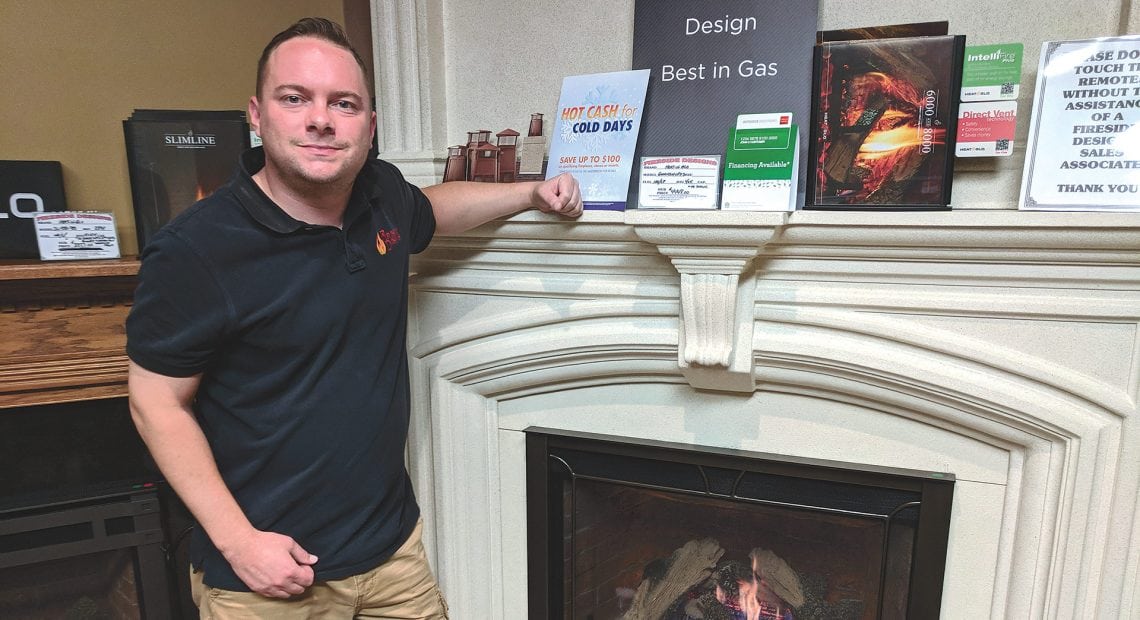
“As long as there are innovators in this country, there’s going to be change, and that change is going to create disruption. And we’ve seen it already in the jobs that aren’t there that were there 20 years ago,” he said.

That’s not a new trend, of course. “We don’t even know what we want until we see it,” Thomas went on. “Henry Ford once said that, if he’d asked his consumers what they wanted, they would have said ‘faster horses.’ You just don’t know what you want until you get introduced to an idea. You always think things will be the same as they are in this little snapshot of life. You want to hang on to the past, but technology is going to be changing. And we can’t stop that.”
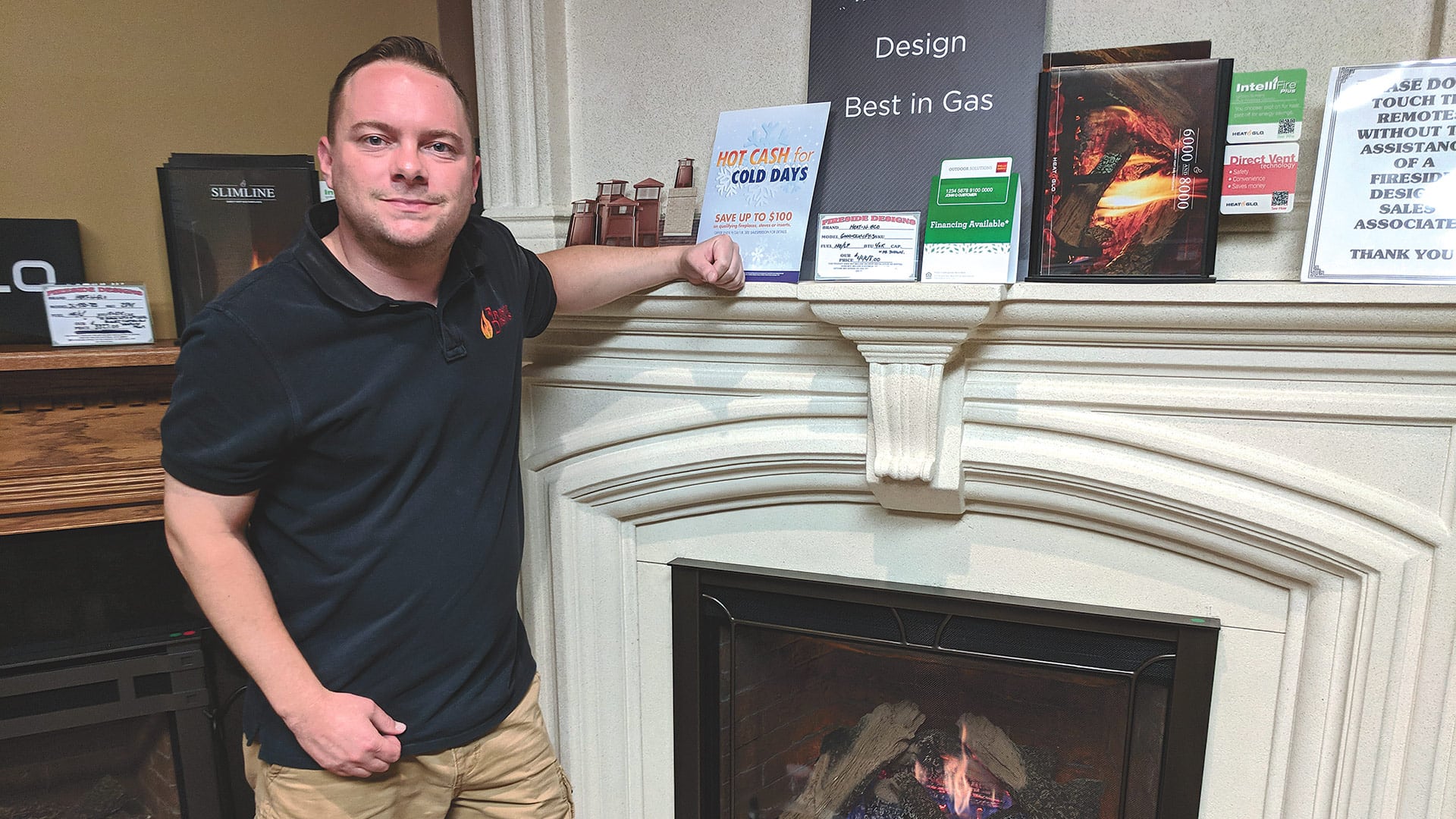

That’s the definition of progress, and that’s good for investment markets, which — despite their short-term fluctuations — have always grown over the long term, said Thomas, president of the Wealth Technology Group. “When the economy grows, everybody benefits sooner or later, but it doesn’t always go in a straight line.”

“Henry Ford once said that, if he’d asked his consumers what they wanted, they would have said ‘faster horses.'”

He shared these thoughts by way of explaining why it’s important for individuals planning for retirement — or just looking to save for college and other expenses — to diversify their investment portfolios. And, indeed, Wealth Technology Group helps clients preserve assets, lower their tax burden, and pass legacies to the next generation through a broad mix of tools, including mutual funds, managed accounts, real-estate investment trusts, energy shares, annuities, and life-insurance options — with the goal of creating financial stability in what can be a volatile world.

That means trusting the long-term record of the stock market, he went on, but also making sure to place money in vehicles with a more predictable return.

“You have to have a philosophy where you basically pay yourself first,” he said. “I almost don’t care where you put it, as long as you put it away. If you’re far enough away from retirement, you should have a pretty diversified approach in equities, but as you get close to retirement, you need to make sure you have some secure money, for when markets go down.”

In other words, investors have to be both educated and flexible — especially at a time when Americans are living longer, meaning they have to make their money last longer.

“We’re in a different situation than our parents or grandparents were. It takes a more creative approach, it takes education, and it takes some hand holding, too,” Thomas said, bringing the conversation back to the role his firm plays. He cited studies suggesting that individuals with a consistent financial advisor tend to do as much as 2% better per year than those that don’t, even accounting for fees.

“Part of it is behavioral science — and having somebody to call,” he explained. “Typically, people make mistakes by moving around too much. You’ve got to have a balanced approach, where you have some secure money and some growth-oriented money for your older years.”

Thomas doesn’t only help his clients navigate this landscape in his Westfield office. He’s been active over the years delivering workshops, seminars, and classroom lectures on financial topics, so he knows the value of educating people.

“In some ways, people are more torn these days, because trying to sort out all that information on the internet is like trying to take a sip through a firehose,” he told BusinessWest. “Everybody’s got an agenda — the posts you see on websites are often promoted content, and it’s hard to distinguish. Even if they’re not, they still represent one person’s philosophy.”

The goal, he added, is for clients to develop their own philosophy.

“Money and financial security mean different things to different people, and it plays a big role in our life whether we want to admit it or not,” he said. “At the same time, there’s just too much information out there — we’re bombarded with it — and there’s a big difference between information and knowledge, or between information and wisdom.”

So, while some investors get wrapped up in “the latest shiny thing,” like Bitcoin or gold, he said, it’s more important to save consistently.

“You can make a lot of money from being average if you don’t switch things around too much, because the market’s averages are pretty darn good,” he said. “But you also have to have that nest egg because when things go down.”

Growing Need

When Thomas launched his business around 1991, financial planning was a field on the cusp of significant evolution.

“Before that, everybody just had a stockbroker, they had an insurance agent, they had an accountant, but there wasn’t much in the financial-planning world. So, basically, we started the company, and it was more estate planning to begin with, but it just sort of evolved over time into money management and financial planning, because that’s where the need was.”

For years, he built the company’s reputation through a number of call-in radio programs around Western Mass., an approach that appealed to listeners hungry for information about financial strategies. “People were looking for straight information and not a sales job. That’s been our philosophy ever since.”

It’s a philosophy that’s also middle-of-the-road when it comes to investment risk, he added.

“If you come from an insurance background, you tend to be very conservative. If you come from a stock background, you tend to be maybe more aggressive. Well, I come from a legal background, and lawyers like to question everything. So it also made me a little skeptical about some of the products. So, basically, we took a more conservative approach to money management — not ultra-conservative, but middle of the road.”

One key message, which has become a company motto of sorts, is “it’s not what you make, it’s what you keep” — which is why he helps clients navigate tax-related pitfalls as well.

“I take more of a holistic approach because of my background; I have a master’s in tax law. And what good is it if you make a ton of money but you have to pay 40% of it back in taxes? So we try to use strategies to avoid that. It’s a total approach of, where are you going to be down the road? If you take money out, is it going to be taxable? Are you going to have some tax-free money?”

While taking a conservative approach, he remains confident in the stock market, but understands that it can be scary to obsess over its fluctuations on a day-to-day basis — and that investors need to rely on other sources for guaranteed returns.

“I take more of a holistic approach because of my background; I have a master’s in tax law. And what good is it if you make a ton of money but you have to pay 40% of it back in taxes? So we try to use strategies to avoid that. It’s a total approach of, where are you going to be down the road? If you take money out, is it going to be taxable? Are you going to have some tax-free money?”

“I’ve been around long enough to see that markets don’t always go up,” he explained, “and when the markets are down, you need a conservative piece someplace to take money from when you need it.”

That said, Thomas added, “this country’s always going to grow. No matter what happens, no matter what financial crisis there is, we’re always looking for new ideas and new ways to grow. And that’s what the market does. You think of the major companies today that are big names, which were not in existence 25 years ago, like Amazon and Google. And Apple was almost out of business.”

He shares these strategies of diversified investment with mainly clients approaching their retirement years, but also many young families that are trying to figure out how they’ll pay for college for their kids, at a time when the average sticker price for four years of education is around $200,000. “It’s a real challenge today,” he noted.

In short, there are many reasons why people walk through his door.

“We do some estate planning, too, but it’s primarily holistic, complete financial planning — helping to find the right portfolio and the right financial tools for each individual, and then we actively manage that,” he explained. “It’s not just about picking an investment. It’s got to be right for you.”

As an independent financial-services firm, the Wealth Technology Group isn’t tied to any single product, and as an accredited investment fiduciary, he’s required to keep the client’s interests at the fore.

“If someone goes into a store, and the owner says, ‘that suit looks good on you,’ maybe it does — but maybe that’s just the suit they want to push that day,” he explained by way of analogy. Fiduciary responsibility simply means the firm considers more than what’s suitable for a client, but what would best meet his or her needs. “It’s not just going to benefit me as a financial advisor, but benefit you as the owner of it.”

Getting the Word Out

Long after his radio talk-show days, Thomas still enjoys conducting seminars and workshops that promote his work in more effective ways than a short radio or TV ad. They’re a means not only to help people understand the compexities of financial planning, but to get the word out that the Wealth Technology Group helps clients from all walks of life, not just high-net-worth individuals, as some firms do.

And when he shares his perspectives, both through seminars and one-on-one, he emphasizes that financial planning is really about life planning — and people are not always emotionally prepared for the changes that retirement will bring.

“Retirement brings a change in lifestyle,” he said. “It’s like you’re going 60 miles an hour, then you retire — and it can be hard to adjust when you don’t have eight hours a day filled up. If your purpose in life was to be a journalist and you were a journalist for 35 years and all of a sudden someone told you you weren’t valued as a journalist anymore, you’d better have a purpose beyond that. So we encourage people to have interests that really excite them beyond work.”

In fact, people don’t expect to be impacted by that lifestyle change, as well as the social withdrawal that sometimes comes with it, as much as they worry about money.

“I’ve had clients in the past that have come in and said, ‘I’m only 200 more Mondays away from retirement,’ and the next time I see them, they say, ‘only 150 more Mondays.’ And I say, ‘you know, what are you going to do the day you walk out the door?’”

Sometimes, the sudden change brings about problems with drinking or eating or their marriage, he went on, noting that some of the first astronauts who went to the moon came back and ran into personal issues once they were past that exciting, challenging phase of their lives.

But you don’t have to go to the moon to feel loss, he went on, and Thomas continues to help people plan for all stages of life — not just financially, but holistically. Because money matters, but it’s not everything.

“There’s got to be something beyond that ‘200 more Mondays.’ So that’s what we encourage people to think about,” he said. “Join a senior center, do something, get involved. And don’t concentrate too much on money. That’s our job.”

Joseph Bednar can be reached at [email protected]

Business of Aging

One Step at a Time

Scenes like this one — from the 20th Rays of Hope Walk five years ago — are played out each October in Forest Park.

Scenes like this one — from the 20th Rays of Hope Walk five years ago — are played out each October in Forest Park.

Lucy Giuggio Carvalho is a tough person to say no to, as Kathy Tobin found out one afternoon 25 years ago.

“I was a health reporter for WGGB, and I was in the lobby of Baystate Medical Center to do a story,” Tobin told BusinessWest. “And this little petite thing comes walking across the lobby, points at me, and says, ‘I had a dream about you, and you’re going to help me.’ And that’s how I met Lucy.”

Carvalho — then a nurse at Baystate — had been diagnosed with breast cancer some time earlier, and, inspired by an AIDS fund-raising walk she had recently participated in, had a vision to bring something like that to Western Mass. to raise money and awareness around the cause of breast-cancer research and treatment.

A quarter-century later, it’s safe to say that Carvalho’s creation — known as the Rays of Hope Walk & Run Toward the Cure of Breast Cancer — has done just that, and a whole lot more.

As it turned out, Tobin did help her; WGGB became the media sponsor of the first Rays of Hope walk in 1994, and Tobin spearheaded a half-hour documentary special to bring attention to the cause.

“She had this overwhelming desire, not just to do this walk, but to change the way we treat breast cancer,” said Tobin, who has come full circle since then, now serving as director of Annual Giving and Events for Baystate Health, which has long overseen the Rays of Hope organization.

The first Rays of Hope event attracted some 500 walkers and raised $50,000. Today, it has raised more than $14.2 million and attracts about 24,000 walkers and runners each October. This year’s annual fundraiser, slated for Oct. 21, will once again step off from Temple Beth El on Dickinson Street in Springfield and wind through and around Forest Park.

As usual, all money raised remains local, administered by the Baystate Health Foundation to assist patients and their families affected by breast cancer. Funds support research, treatment, breast-health programs, outreach and education, and the purchase of state-of-the art equipment, as well as providing grants to various community programs throughout Western Mass. 

“Sometimes I can’t believe all that’s been accomplished,” Carvalho said. “I never would have believed we could raise the amount of money we raised; $14.2 million over the last 25 years is a lot of money, and we can do a lot of things with it — and we have. I’m really proud of Rays of Hope and all we’ve accomplished.”

It wouldn’t have happened, she added, without the continuing, loyal support from the community. “We’ve mostly accomplished what we have through individual walkers and local organizations that have supported Rays of Hope from the beginning. Most of the agencies that got involved in the early years are still involved, as well as the walkers; they come back year after year.”

Carvalho said she created Rays of Hope with a very specific vision.

“I wanted to help people that were going through breast-cancer treatment, to help them navigate the healthcare system,” she explained. “I’d found it difficult, and it was my motivation to make it easier for other people, seeing that I had such a hard time. And I wanted the money to stay local, too. That was really important for me.”

Beyond the critical funding, however, she has long recognized the importance of Rays of Hope as a bonding agent for individuals facing one of life’s most daunting challenges, and the people who love them.

Lucy Carvalho (left) and Kathy Tobin at the first Rays of Hope walk in 1994.

Lucy Carvalho (left) and Kathy Tobin at the first Rays of Hope walk in 1994.

“I think the event is very unique in that, when you’re there, it feels like there’s a big hug all around you, and that people really care about you. It’s just uplifting to be involved, and it’s something to look forward to, something that has become a tradition.”

Tobin also compared the event to a massive hug — one with a great deal of feeling behind it. “We have such a support system in place. It’s like a sorority — but I shouldn’t say sorority, because men are diagnosed, too. It’s just a network of people who care.”

Changing Times

Dr. Grace Makari-Judson has witnessed the evolution of Rays of Hope from a clinical standpoint; she was appointed medical director of Baystate’s breast program at the same time Carvalho was organizing her first walk.

“Lucy’s initial mission for Rays of Hope was not only helping breast-cancer research, but trying to provide coordinated care … a holistic approach,” Makari-Judson said — in other words, to make the journey easier for others than it was for her.

“Thinking back, it’s amazing how much we’ve been able to do with addressing those goals,” Makari-Judson went on. “Twenty-five years ago, women were having mammograms in the hospital, sharing the same waiting room with people who needed X-rays or had pneumonia. Biopsies were done in the operating room, and women got unnecessary scars.

“Today,” she went on, “we have a dedicated breast center where women go for mammograms and other breast imaging. We have needle core biopsy, which is done at the breast center and is a less invasive approach, so women go home with a Band-Aid instead of a scar. That’s the minimally invasive approach started in the mid-’90s and has since become the standard of care. It’s the whole philosophy of less is more.”

Other examples are sentinel node biopsy, introduced at Baystate in 1996, and radiactive seed localization, started in 2010. Both are minimally invasive procedures that Baystate pioneered in the region that have since become national standards of care, Makari-Judson said — and both benefited from Rays of Hope funding.

Meanwhile, Carvalho’s vision of more coordinated care has become reality as well, the doctor said.

Dr. Grace Makari-Judson

Dr. Grace Makari-Judson

“Twenty-five years ago, physicians were seeing patients all in a row — the surgeon, then the medical oncologist, then a radiation oncologist,” she explained. “And sometimes that would leave women with conflicting information. In today’s approach, we have something called a multi-disciplinary breast conference, where we get all the experts together to review radiology images and pathologist slides and come to a consensus recommendation. That has had a positive impact on care and really enhances our mission.”

It’s a model, she said, that started to coalesce around the time Rays of Hope was being launched, and it eventually spread to all Baystate hospitals and eventually became the model of care regionally and nationally.

“Everything about cancer has come such a long way,” Tobin agreed. “Women don’t have to wait days for biopsy results; they don’t necessarily have to have drastic surgeries. Everything about treatment has changed.”

“Twenty-five years ago, women were having mammograms in the hospital, sharing the same waiting room with people who needed X-rays or had pneumonia. Biopsies were done in the operating room, and women got unnecessary scars.”

Then there’s the Rays of Hope Center for Breast Cancer Research, launched in 2011 with the help of a $1.5 million Rays of Hope grant. The center brings together a group of scientists with diverse areas of expertise who work toward reducing the impact of breast cancer — for instance, understanding how obesity, diabetes, and environmental exposures interact to alter breast-cancer risk and prognosis.

It’s important work, and not something to be taken for granted, Tobin said, adding that many events like Rays of Hope eventually peter out — Avon’s national fundraiser for breast cancer isn’t continuing this year, for example — and such events require a lot of work and diligence to thrive and grow.

“Sometimes the fundraising becomes secondary,” she added. “After a while, people want to be a part of it, but they don’t remember the fundraising piece, and that’s critical to our survival. We’re trying to drive home the point that, yes, we need your involvement, but we also need your fundraising, because that’s what makes the programs happen.”

And it’s not just Baystate programs that benefit, Tobin added. Other local organizations, like Cancer House of Hope, also rely on support from Rays of Hope.

“We’re always getting new people involved,” Carvalho said. “Unfortunately, it’s often because they have breast cancer or someone close to them has breast cancer — but that passion keeps us going, and keeps us a vibrant organization. I think we’re always going to walk until there’s a cure, and we don’t need to walk anymore.”

Personal Impact

Denise Jordan was first introduced to Rays of Hope by her late friend, Tracy Whitley, and she joined its advisory board in 2008. A decade later, she’s chairing the 25th interation of the event, dedicating her service to Whitley, who succumbed to the disease last year.

Jordan calls herself an ambassador for Rays of Hope, making public and media appearances and encouraging people to take part in the Oct. 21 walk. She hasn’t found it to be a hard sell.

“I think, as long as people are affected by breast cancer, there will always be a willingness to participate in an initiative whose main focus is finding a cure,” she told BusinessWest. “Also, unlike a lot of organizations, when you give money to Rays of Hope, you can actually say, ‘the money I gave went to this person or that person; I know that because all the money stays right here in the region.’”

During her time as chief of staff for the city of Springfield, Jordan helped establish Pink & Denim Days, when city employees took up that dress code in exchange for donations to Rays of Hope. “It was really an easy ask,” she said. “Folks were very enthusiastic.”

Rays of Hope has proven to be a meaningful event for both survivors and supporters, as well as an educational experience for all ages.

Rays of Hope has proven to be a meaningful event for both survivors and supporters, as well as an educational experience for all ages.

So was Jordan, when she was asked to chair the event this year, even though she had some reservations about the time commitment. But when she thought about her Whitley, and the way she not only battled cancer but became a strong advocate for survivors, it wasn’t a hard decision.

“There’s going to be some special things happening that day,” she said of this year’s walk. “I’m pushing to get more people involved. We’ve had participants in the past who have missed a couple walks, but, this being the 25th anniversary, we’re hoping to bring a lot of folks back to the walk.”

Tobin agreed. “We’re adding some exciting elements. We’re going to tell the story of the progress we’ve made and celebrate some joyous stories of beating the disease — and remember those we’ve lost. I think there will be some special moments.”

Having been active in the walk for 25 years, Tobin has lots of stories, but likes to recount one from the event’s first year. Her 4-year-old son attended and took in the speeches, and as he settled into his car seat for the ride home, he said, ‘I’m so glad I’m not a girl.’

“My feminist self practically slammed on the brakes,” she laughed. But when she asked why, “he said, ‘because I can never get breast cancer.’

“The earnestness of this little boy took my breath away,” she continued. “I realized in that moment the impact this walk was having, and could have, if someone that young understood the seriousness of breast cancer.”

The fact that he assumed it was a girl’s disease isn’t odd; many adults think the same thing, and Rays of Hope has created plenty of teaching moments around that misconception as well.

In short, it’s hard to overestimate the impact this 25-year tradition has had on breast-cancer treatment, research, awareness, education — not to mention the giant hug of support that so many women (and men) need.

“Lucy had certainly given us a gift,” Tobin said. “She had done something incredible in that parking lot that day, and $14.2 million later, we’ve seen a lot of profound moments.”

Added Carvalho, “there’s a spirit at Rays of Hope, and I don’t know exactly how it came to be, but it’s real, and it’s powerful, and it’s heartwarming. That’s what I’m proud of — how the community has come together to make a difference.”

Joseph Bednar can be reached at [email protected]

Community Spotlight

Community Spotlight

With projects like the convenience store on Shaker Road complete, East Longmeadow is anticipating progress

With projects like the convenience store on Shaker Road complete, East Longmeadow is anticipating progress on higher-profile developments, like the health complex at the Longmeadow line and a possible mixed-use project on Chestnut Street.

Denise Menard has witnessed plenty of growth in East Longmeadow’s Town Hall since becoming the community’s first town manager two years ago, from the creation of a seven-member Town Council to the creation of a Human Resources department, a new director of Finance and director of Planning and Community Development, and the establishment of a Board of Health overseen by a full-time director.

But she says the most important change in the city offices may be the ease with which new businesses to town can navigate the permitting process.

“I see myself as a business manager for the town — a business manager that has the authority to make the kinds of decisions that need to be made to streamline the process,” she said. “Just being here day to day, helping implement the priorities of the council and all these other things, is a real a plus for the community. And in the last two years, we’ve seen a lot.”

Take, for instance, the 18,000-square-foot medical office building at 250 North Main St. constructed by Associated Builders last year for Baystate Dental Group. The dental office occupies the first floor, and the second floor is being rented for medical and office space.

“That’s a great credit to the community; they just wanted to locate in East Longmeadow,” Menard said. “We’ve been told by regional economic-development groups that we are one of the hottest communities right now to try to locate businesses in, and that’s an awesome example.”

Another, more complex project in the health realm is a joint venture with the town of Longmeadow — a medical complex that will add to East Longmeadow Skilled Nursing Center at 305 Maple St., cross town lines, and provide benefits to both communities.

“We’ve been told by regional economic-development groups that we are one of the hottest communities right now to try to locate businesses in, and that’s an awesome example.”

The project includes four structures on a 20-acre site: a 50,000-square-foot medical office building in Longmeadow that will be occupied by Baystate Health; a two-story, 25,000-square-foot office building in East Longmeadow; and an assisted-living facility and expansion of an existing skilled-nursing facility run by Berkshire Health.

“It’s really moving along,” she said, adding that the buildings on the East Longmeadow side should be up by the spring. Meanwhile, the two towns have worked together to improve road infrastructure at the site. The project encompasses three intersections on Dwight Road — two in Longmeadow and one in East Longmeadow. Longmeadow is managing the road improvements, and East Longmeadow is receiving contributions from the nursing-home developer, which will pass through to Longmeadow to offset the cost of the street improvements.

“The road improvements have been painful to say the least, but it will be such a great improvement at the end of the day,” Menard said. “It’s so nice to have a joint venture with Longmeadow, and both sides are going to win with that. Longmeadow and I are good neighbors. The two town managers really work well together.”

Major projects like these are complemented by a number of other developments in town, a trend she says was boosted by the town’s change in government two years ago.

“I’ve had developers come in and say, ‘we waited because we wanted to see what the new charter was going to be like before we decided to come to East Longmeadow,’” she recalled. “So there was a change in the philosophy of people looking in from the outside, as to what they would like to see here, and I think they’re happy with what they see now with the new government.”

Setting Down Roots

Menard said East Longmeadow has a decent stock of developable land.

“We have industrial space, and we also have agricultural land, and we’re wondering what’s going to happen with that because farming is getting more difficult. But we want to be agriculture-friendly and hope to continue down that path.”

The new director of Planning and Community Development, Constance Brawders, has been taking the land stock into consideration as part of a master plan that’s in the early stages, Menard added.

“That master plan will focus on what residents here want,” she explained, adding that a series of public forums will focus on topics like recreation, traffic, and what kind of land-use mix residents want, balancing residential neighborhoods with the need for commercial and industrial investment.

East Longmeadow
at a Glance

Year Incorporated: 1894
Population: 15,720
Area: 13.0 square miles
County: Hampden
Residential Tax Rate: $20.94
Commercial Tax Rate: $20.94
Median Household Income: $62,680
Median Family Income: $70,571
Type of Government: Town Council, Town Manager
Largest Employers: Cartamundi; Lenox; Redstone Rehab & Nursing Center; East Longmeadow Skilled Nursing and Rehabilitation
* Latest information available

“It will take a little while, but it hasn’t been updated in a long time,” she told BusinessWest. “So it’s time for us to take a snapshot of today and see what we want to look like in the future.”

It’s healthy to conduct such an exercise because society changes a lot over the years, and that affects how businesses operate and how towns cater to their needs.

“Think about the changes in the world just in the past 20 years. There are huge differences,” she said. “The big businesses that required a lot of space because they needed a lot of employees — now maybe they don’t need so many on site because a lot of them can work from home. My son works from home, and he’s part of a huge organization; they don’t require the footprint they used to.

“So a lot of things have changed since we’ve updated our plan,” she went on, “and it’ll be time to just address what we have now and what the current businesses and residents and everybody that has anything to do with East Longmeadow wants, so we can move forward. That’s really exciting.”

Some projects in the works have the potential to create vibrancy in town, such as an ongoing plan to create a mixed-use development at 330 Chestnut St., in the former Package Machinery building. The project would include commercial, retail, and possibly office space in the front part of the building, and above will be some residential apartments or condominiums.

The applicant for that project, MM Realty Partners, withdrew the proposal last winter, but they are now moving forward. The exact nature of the project is still being hammered out, but Menard says mixed use is a promising model for the site, due to the energy and foot traffic it would create.

“That’s the interesting part about it, but we’ve got to make sure it’s the right fit in the right spot for East Longmeadow,” she noted. “It certainly is an interesting concept.”

Other projects have come on line recently, including a gas station and 6,500-square-foot convenience store at 227 Shaker Road, a lot that had been empty for many years. That development was delayed when Atlantis Management Group bought out the property, but after a second round of permitting and approvals, construction went forward and was completed this year.

“The whole change in ownership delayed them applying for the permits they needed to bring it all together,” she added, “but now that’s on board, and they’re always busy.”

Attractive Mix

Part of what makes East Longmeadow attractive, Menard said, is a healthy mix of properties of all kinds, both residential and commercial.

“We have some very high-end housing, but we have some very moderate housing as well,” she noted. “We have a great Recreation Department, and our schools have a great reputation.”

Residents and businesses also appreciate that the town is conservative when it comes to taxation and spending, she added.

“Businesses see that our tax rate isn’t fluctuating up and down; it is really just gradually going to a level of what we need to address the needs of the community. And it’s a community that people are saying they want their children to grow up in. They want to own houses here.”

Employers feel the same way, she added. “In fact, we had a business come in — he was going to be leasing from somebody in East Longmeadow — and he said, ‘I want to come here because my staff, my workers, would be able to live in a nice community with good amenities and good community spirit.’”

Maintaining that culture takes planning, of course, and the woman who sees herself as a business manager is pleased that those plans will be carefully crafted — and hopefully implemented — in the coming years.

“This is a moving, growing community, to be sure,” Menard said. “We have a lot going for us.”

Joseph Bednar can be reached at [email protected]

Banking and Financial Services

Sowing Seeds

Julia Coffey brought this selection of mushrooms to a local farmers market

Julia Coffey brought this selection of mushrooms to a local farmers market. She also sells to restaurants, campus food services, and other food distributors.

Julia Coffey’s business was mushrooming — in more ways than one.

In fact, her enterprise, Mycoterra Farm, specializes in mushrooms. And when she was looking for a larger space in which to grow, she received a fortuitous phone call.

“In mushroom production, as with much agriculture, efficiency of scale is big — and we had maxed out capacity at our farm in Westhampton,” Coffey said.

She found a closed equestrian center on the market in South Deerfield that would make an ideal space, and initially pursued loans through the USDA Farm Service Agency. But she still needed more funding to get up and running on the new site.

“We were trying to figure out how to get the new farm online with a little less money than I needed, and it was Rebecca who reached out to me to see if we had any funding needs,” she recalled. “It was very timely.”

That was Rebecca Busansky, program manager for the Pioneer Valley Grows Investment Fund, or PVGrows for short, a regional investment and loan program launched in 2015 that provides financing and technical assistance to food and farming businesses in Western Mass.

“We really set out to help the whole food system. This is about farms and local food businesses and everything that makes a healthy food system,” Busansky told BusinessWest the day after the Franklin County Community Development Corp. (FCCDC), which oversees the fund, marked the project’s three-year anniversary with a celebration at Raven Hollow Winery at Koskinski Farms in Westfield.

It wasn’t just an anniversary being celebrated, but a funding milestone — $1.25 million, in fact, halfway to the fund’s original goal of $2.5 million. That money has helped more than 25 local farms and food entrepreneurs grow their businesses — and, in turn, a critical sector of the Western Mass. economy.

Mycoterra is a good example. The gourmet and exotic mushroom farm, as Coffey described it, grows “wood-loving” mushrooms indoors year-round. Mycoterra specializes in shiitake, oyster, and lion’s mane mushrooms, but experiments with many other varieties as well — and, in doing so, impacts scores of other food-related businesses.

“We market directly to farmers markets, about 50 restaurants statewide, and campus food services, and with the recent move, we’re increasing production and are working with a number of local distributors,” she noted.

John Waite, executive director of the FCCDC, said PVGrows offers an innovative, mission-driven way for community members to invest in their values by supporting and sustaining businesses that can make real changes to how food is grown, distributed, and purchased. “It takes the local movement to a whole new level. It’s beyond eating local — it’s investing locally.”

Good Idea, Naturally

To date, nearly 50 investors, including individuals, businesses, and foundations from New England and New York, have contributed a minimum investment of $1,000 to the fund, with interest paid annually, Busansky explained. These community investments are pooled together to provide the financing that farm and food entrepreneurs need to grow their businesses.

The fund grew out of existing FCCDC programs that provide technical assistance to local farms and food producers in the Valley, she added, noting that a need became evident for a funding source specifically aimed at benefiting these businesses.

Jennifer Ladd says supporting local food production brings cultural, economic, and even regional security benefits.

Jennifer Ladd says supporting local food production brings cultural, economic, and even regional security benefits.

Three foundations have been important to the fund’s growth: the Solidago Foundation, the Lydia B. Stokes Foundation, and the Henry P. Kendall Foundation, which collectively established a loan-loss reserve. A community pool was then established, accepting investments of $1,000 to $10,000 with a five-year term and a very low interest rate.

“We felt it was important to add this community-investment piece,” Busansky said. “The whole idea was to make it a minimum $1,000 to invest, which doesn’t make it completely accessible to everyone, but it’s not only open to wealthy people, either. It democratizes capital.”

Larger investments come with longer terms and higher interest rates, with the idea that investors with a little more money could be willing to take on more risk, Busansky added. But so far, there hasn’t been much risk for investors.

“We have 25 well-performing businesses borrow from us so far, and we haven’t touched the loan-loss reserve — in part because we give a lot of technical assistance.”

Coffey described the loan process as easy to navigate, but that straightforward experience wasn’t the only thing that impressed her.

The recent three-year anniversary celebration featured food provided by many of the fund’s borrowers.

The recent three-year anniversary celebration featured food provided by many of the fund’s borrowers.

“I’ve got a background in bookkeeping, so I feel I had some skill sets that some people don’t,” she said. “But they were prepared to offer technical assistance, too, for people and startups and agricultural food businesses that need it. They are a very knowledgeable resource, and it was great getting things established right away.”

The FCCDC has been involved in small-business lending for close to 30 years and has plenty of expertise in providing guidance to young enterprises, Busansky noted, from business plans to websites. So she’s not surprised the PVGrows fund has found early success in its mission. “We have a system in place that’s worked well, and now we’re ready to seek the additional $1.25 million in commitments.”

Jennifer Ladd is one of those investors. “You don’t have too be a wealthy person to invest in Pioneer Valley Grows, which I think is a wonderful thing about it,” she told BusinessWest.

“Supporting agriculture in this Valley feels like contributing to a sense of vitality. It’s the same kind of feeling I get when supporting the arts — there’s creativity, growth, collaborations between people,” she went on. “And there are multiple layers of assurance that your money will actually have an impact and be of service.”

Ladd said the low interest rates for investors shouldn’t deter anyone because most people getting involved in this do so because they believe in the value of supporting local farm and food businesses.

“I enjoy cheese, fruits, vegetables, and wine around here, and I don’t mind not getting much of a financial return,” she said. “I’m choosing low interest because that serves people just starting out. These new endeavors need time to get their roots in the ground, so to speak, and this money can help them do that. It will yield benefits in many ways.”

Some of that benefit is cultural, she added, contributing to quality of life and a certain agricultural fabric of the region, as well as a sense of connection with people who thrive off the land and wind up feeding their neighbors.

“We don’t have huge farms here, like in the Midwest, with thousands of acres of corn. This is agriculture we actually do benefit from immediately,” Ladd said. “I also feel like it’s contributing to my sense of security; with climate change and the volatility we see in the world, it’s good to have food being produced locally. So it’s a sort of regional security that has a payoff right now.”

Green Thoughts

Food and farm businesses applying for financing and business support through the PV Grows Investment Fund are vetted for mission fit by a consortium of community-lending institutions and food and agriculture specialists, Busansky explained.

Terry and Susan Ragasa, owners of Sutter Meats in Northampton, were among the early borrowers. “From start-up funds to get us open to facilitating a business consultation to get us to the next level, the PVGrows Investment Fund has been an incredibly supportive asset for Sutter Meats,” Terry noted.

Coffey has had a similar experience, as she grows a business that takes agriculture and sustainability seriously. Her mushrooms are handcrafted in small batches, and her natural methods of production accelerate decomposition, build soil, and cycle nutrients — critical processes for healthy ecosystems, she explained.

In turn, she also appreciates the financial ecosystem being created through the PVGrows investors and borrowers. She said she ran into an old friend recently who had invested in the fund, around the same time Coffey became a borrower, and it struck her how PVGrows is essentially neighbors helping neighbors — and helping a critical part of the region’s economy succeed.

“Western Mass. has a phenomenal agricultural economy, not just the producing, but the processing, and the loan program helps add layers to it,” Coffey said. “We eat really well locally, but the funding and the technical aspects of setting up a business — and setting up a business well — is something that is often overlooked.”

As the fund expands, the hope is that Mycoterra won’t be the only agricultural business in the region that’s mushrooming.


Joseph Bednar can be reached at [email protected]

Business of Aging

The Power of Movement

Chad Moir turned his resentment against Parkinson’s disease into a chance to help others fighting the disease that took his mother.

Chad Moir turned his resentment against Parkinson’s disease into a chance to help others fighting the disease that took his mother.

As they don boxing gloves and pound away, with various levels of force, at punching bags suspended from the ceiling, the late-morning crowd at this Southampton gym looks a lot like a group exercise class at a typical fitness center.

Except that most of them are older than the usual gym crowd. Oh, and all of them are battling Parkinson’s disease.

“A lot of them have never boxed before in their lives, and now they get to put on gloves and punch something,” said Chad Moir, owner of DopaFit Parkinson’s Wellness Center in Southampton. “Some are hesitant at first, but usually the hesitant ones are the ones who get into it the most.”

Tricia Enright started volunteering at DopaFit before joining Moir’s team as a fitness trainer.

“I just fell in love with the people,” she told BusinessWest. “I absolutely love my job, and I don’t think many people can say that. But you come here, and they inspire you in so many different ways — they walk in here with all these things they’re dealing with and get in front of these bags, and they’re pushing it and fighting. It’s so amazing to see. It makes me want to come to work every day, which is not something I’ve experienced before.”

Tricia Enright says she’s inspired not only by members’ physical progress, but by the support they give each other as well.

Tricia Enright says she’s inspired not only by members’ physical progress, but by the support they give each other as well.

It’s not just boxing. Members at DopaFit, all of whom are at various stages of Parkinson’s, engage in numerous forms of exercise, from cardio work to yoga to spinning, and more. On one level, activities are designed to help Parkinson’s patients live a more active life by improving their mobility, gait, balance, and motor skills.

But research has shown, Moir said, that it does more than that: Exercise releases the neurotransmitter dopamine into the brain, slowing the progress of Parkinson’s symptoms.

Moir has seen those symptoms first-hand, by watching his mother, stricken with an aggressive form of Parkinson’s, decline quickly and pass away five years after her diagnosis.

“She went through a hard diagnostic process,” he said. “There were probably about three to four years where we knew something was wrong; she was going to the doctor, but they couldn’t figure out what it was. There are symptoms of apathy and depression and anxiety that come along with Parkinson’s, and those manifested first. So they were trying to treat it as a mental-health issue, but Parkinson’s was underlying everything the whole time. Eventually she got her diagnosis, and from there she deteriorated pretty quickly.”

Moir said he took his mother’s death hard. “I fell into a bit of a depression. I hated Parkinson’s disease and everything to do with it. I didn’t even want to hear the word Parkinson’s. But one day, something clicked, and I decided I was going to use my resentment toward Parkinson’s in a positive way and start to fight back.”

He used a half-marathon in New York City to raise some money for the Parkinson’s Disease Foundation, and ended up collecting about $6,000 — an exciting tally, as it was the first time he’d ever raised money for a cause. And he started to think about what else he could do for the Parkinson’s community.

“At that point, I was a personal trainer, and the more I looked into it, the more I found out that exercise is the best thing someone with Parkinson’s can do. All the research shows that it can slow the progress of some of the symptoms of Parkinson’s, so I started researching what people with Parkinson’s could do through exercise.”

He started working with individuals in their homes, but a visit to a support-group meeting in Southwick was the real game changer. “I asked the people there if they wanted a group exercise class, and they said ‘yes,’ so I started one. I think we had four people at first.”

These days, a visitor to DopaFit will typically see around 25 people working out. “Really, it’s set up like a regular gym would be — aerobic training, running, dumbbells,” Moir said.

“At that point, I was a personal trainer, and the more I looked into it, the more I found out that exercise is the best thing someone with Parkinson’s can do. All the research shows that it can slow the progress of some of the symptoms of Parkinson’s, so I started researching what people with Parkinson’s could do through exercise.”

The difference is the clientele — and the progress they’re making toward maintaining as active a life as they can.

Small Steps

The first DopaFit gym was launched in Feeding Hills in 2015, but moved to the Eastworks building in Easthampton a year later. This year’s move to the Red Rock Plaza in Southampton was a bid for more space; ample parking right outside the door and a handicapped-accessible entrance are pluses as well.

Meanwhile, a second DopaFit location in West Boylston — Moir lives in Worcester — boasts about 20 members.

When the business was starting out, Moir was studying occupational therapy at American International College. “That’s a grueling program, so I had to make a choice — and I don’t love school as much as I love this. The deal with my wife was that I could leave the OT program, but I’ve got to finish my degree.”

Today, he’s back at AIC, working toward a degree in public health. “They’ve been instrumental and supportive of what I’m doing here, creating a business and working with this population,” he said. “Any time you’re helping the public with a healthcare need, it becomes public health.”

The Southampton gym runs classes four days a week — exercise groups on Monday, Tuesday, and Thursday, and a yoga session on Wednesday. “Most people come two or three times a week, but some come every day,” Moir said, adding that members with jobs often make time for exercise before or after their work schedule.

Individuals are referred to DopaFit by their therapists, neurologists, movement-disorder specialists, and family members as well.

“Some go to their neurologist, who says, ‘you need to exercise,’ and they find out about us, exercise here for six months, go back to the neurologist, and their scores are better than they’ve been. When the neurologist finds out they’re going to DopaFit, they reach out and start referring more people. The proof is in the pudding.

“Exercise is the best medicine,” he added. “Your pills are great because they help with the symptoms of Parkinson’s, but when the medicine wears off, the symptoms come back right away. The exercise helps prolong some of that, so you’re less symptomatic for a longer period of time.”

When they first arrive at DopaFit, members undergo an assessment of where they are physically and where they would like to be in six months. Then they’re assigned to one of two exercise groups. No Limits is made up of people who don’t need assistance getting in and out of chairs and can move about freely with no assistive equipment, like canes, walkers, or wheelchairs. The second group, Southpaw, requires a little more assistance.

“The exciting thing is, some of those people come to that class with canes and eventually come in with no canes, and eventually they’re in the next class, running and jumping around,” Moir said. “Especially for someone who’s been sedentary for a while, it really makes a huge improvement.”

He said studies have shown that Parkinson’s patients who have been sedentary can show improvement in their symptoms simply by getting up and doing the dishes or another minor task each day, just because they’re up and moving. “If you take someone sedentary and get them moving in a training facility, sometimes the outcomes are almost immeasurable.”

Not to mention that exercise can be fun, Enright said.

“You get these people on the floor with a hockey stick and a ball, it brings them back to when they were 8,” she said. “They’re spinning and jogging, and it’s just so neat to see what it brings out in them. It’s such a testament for what this does for them. They’re pretty inspiring.”

Special Connections

Between the business and his studies, Moir doesn’t have a lot of time to stand still, but he said he occasionally allows himself to step back and let the potential of DopaFit sink in.

“I’ve been so deeply involved in it that I forget how special this really is,” he told BusinessWest, and not just because of members’ physical progress, but their growing confidence.

“A lot of times, they’re leery of going out to eat because they can’t eat a bowl of soup, or their food’s going to be shaking off the fork. When they come here, they don’t have to worry about that, or they talk about that with each other and tell each other, ‘oh this is how I get around that.’ Or, ‘when I go to this restaurant, I order this because it’s easier to eat.’”

Those conversations and the social support they gain at DopaFit hopefully translate to greater confidence in other areas of their lives, Moir said. “That support system is huge, and it’s special.”

Enright agreed. “They’re such a close group, and the support they receive is as important as the exercise, and they come for that too. But the physical piece really is amazing, to watch them slow the progression of the disease because of what they’re doing here.”

She said members are excited when they visit their neurologist, and the doctor is pleasantly surprised with how they’re managing their symptoms. “Exercising gives you a lot of confidence in your physical ability anyway, so that’s really cool to watch. They’re amazing.”

In addition to the exercise and yoga, DopaFit also hosts the Smile Through Art Workshop once a month, an art program for individuals with Parkinson’s disease that’s run by Moir’s wife, Saba Shahid.

“It’s even more gratifying knowing that, every day, I get to honor my mother. What’s happening here is a living testament to the values she instilled in me.”

“It’s the only art program in the country designed specifically for people with Parkinson’s,” he explained. “We do different art projects that work on different symptoms of Parkinson’s disease, like tremors. Or we’ll do a workshop on handwriting.”

One goal of that particular class is, simply, the increased independence someone gets by being able to sign a check or do any number of other tasks that most others take for granted. “When you give that back to someone, it’s another barrier they feel they can successfully navigate in society.”

Moir has certainly navigated his own path since those days when he was so angry about his mother’s death that he couldn’t even think about Parkinson’s disease.

“It’s even more gratifying knowing that, every day, I get to honor my mother,” he said. “What’s happening here is a living testament to the values she instilled in me.”

Joseph Bednar can be reached at [email protected]

Home Improvement

Serving Up Style

Karen Belezarian-Tesini (left) and Sarah Rietberg

Karen Belezarian-Tesini (left) and Sarah Rietberg are selling plenty of white and gray tiles these days.

Professional designers can often walk into a house and tell what decade it was built in by the styles of certain rooms, and the kitchen is definitely high on that list. From the high-gloss look of the ’80s to the more neutral ’90s; from a shift back to color at the turn of the Millennium to the current embrace of whites and grays, kitchens do seem to reflect their time. But one trend of the past generation isn’t likely to change — the increased perception of the kitchen as a home’s main hub of activity.

The economy wasn’t the only thing that went flat a decade ago. So did kitchen colors.

“When the economy tanked in 2007, 2008, everything became very flat. Color was gone, along with texture, pattern, flowers. Everything became industrial and cold — no frills. And that’s how the economy was, too,” said Karen Belezarian-Tesini, manager of Best Tile in Springfield. And she’s not the only one who noticed the coinciding trends.

“It’s funny how the economy dictates the colors,” said Frank Nataloni, co-owner of Kitchens & Baths by Curio in Springfield, recalling how many kitchens of the late ’80s featured high-gloss surfaces and plenty of black and red, but when the recession of the early ’90s hit, it was all earth tones. By 2000, color had come back, but around 2008, neutrals took over again. “I don’t know what that means, but when you look back, you can clearly see it.” That decade-ago shift has stuck, however, and even intensified, he added. “Everything now is white and gray.”

While taupe is making a comeback, said Belezarian-Tesini — “I love that more than gray because it gives you an option to go either way, warm or cool” — she’s seen the white-and-gray trend intensify over the years. But better financial times might be causing a subtle style shift.

“Now that the economy is picking back up, it’s getting a little warmer — softer edges, a little more color in glass mosaic or patterns,” she said.

That would be just fine by Lisa Lindgren, designer with Kitchens by Chapdelaine in East Longmeadow.

“The most popular kitchen is white — white on white. So whenever I get a client who wants some color and wants to do something a little different, I get excited,” she told BusinessWest. “People tend to be so scared of color. A lot of it is about sellability, but we tend to encourage people to go for what you like. It’s your house.”

Frank Nataloni

Frank Nataloni says styles shifted away from bold colors when the economy tanked, and have largely remained muted since.

R.J. Chapdelaine, owner of the company, an offshoot of builder and remodeling firm Joseph Chapdelaine & Sons, agreed.

“Whenever you have someone who comes in with a little imagination, wants to have a little fun, it gets exciting,” he said. “And why not? That’s where people want to spend their time. Kitchens are getting bigger, and other living spaces are getting a little bit smaller.”

For this issue’s focus on home improvement, BusinessWest visited a few companies that deal in kitchen design to get a read on some of the hot styles — only to find that the hottest is a decidedly cool white. But they offered plenty of other food for thought as well.

What’s Your Style?

Take countertops, for instance, where white- and gray-colored quartz surfaces are in, both Lindgren and Nataloni said.

But they’ll find contrast in other places, Lindgren noted, like weathered driftwood for accent pieces or a dark wood floor — or, more commonly these days, porcelain planks designed to look exactly like wood. “That’s the most popular floor. You can’t even tell it’s not wood. It’s pretty fascinating.”

“That seems to be what everyone’s looking for right now,” Nataloni added. “With some of them, it’s amazing how much it actually looks like real wood. You can even feel the texture. That’s what people are looking for.”

And homeowners aren’t stopping in the kitchen, Belezarian-Tesini said. “When I sell those planks, I might sell 2,000-3,000 square feet at a time. They’re doing their bedrooms, they’re doing the whole house. It’s just incredible. People say, ‘oh my gosh, I love that,’ and when we tell them that it’s porcelain, they look again and say, ‘are you sure? Really?’ ‘Yeah, really.’”

In addition to the move away from tile floors into wood and wood-like porcelain, Chapdelaine noted that shiplap walls — in both vertical and horizontal patterns — are popular as well, perhaps driven by their ubiquitousness on HGTV.

As for cabinetry, while painted white tops the list right now, Nataloni said, he was working with someone recently who wants a black cabinet with a rubbed-off type of finish so there’s some wood coming through. Still, those neutral shades provide plenty of flexibility.

R.J. Chapdelaine and Lisa Lindgren say it’s fun to work with customers who have a design vision not necessarily bound by what’s currently fashionable.

R.J. Chapdelaine and Lisa Lindgren say it’s fun to work with customers who have a design vision not necessarily bound by what’s currently fashionable.

“With a white or gray cabinet, we can make it look very formal or casual in the scheme of things,” he said. “I haven’t sold a cherry kitchen in over a year, but at one time, that was probably 60% of our business. Some woods remain relatively popular, though, including walnut. “That’s the fashion part of the business, and it changes depending on who walks through the door.”

Sarah Rietberg, showroom manager at Best Tile, said all these trends amount to people seeking a clean, uncluttered look in their kitchens, which is why subway-style tile backsplashes are still common, but with a twist — different sizes, something with a little texture to it, or even lines that aren’t perfectly straight.

“Those things can add some oomph to subway tile,” she said. “People want a little movement, but nothing too crazy. They don’t want to take away from the other things going on.”

In addition, a well-placed accent color can be striking amid a sea of white, Chapdelaine said. “We just did one all-white kitchen with a hale navy blue island, and it’s a striking look.”

Indeed, Belezarian-Tesini said, many customers complement the dominance of white and gray with mosaic tile backsplashes; where once a mosaic pattern broke up the solid color of the rest of the backsplash, now it’s being used across the entire backsplash to break up the white of the kitchen.

Sometimes it’s hard to predict the next trend, she added. “If you asked me 10 years ago if glass would still be here, I’d have said no, but glass is hotter than it’s ever been. It’s the medium of choice now. People still use ceramic, and porcelain has really come up the ladder. But glass has become the decorative. It’s a 10-year trend for sure, and it’s probably going to last longer than that.”

Meanwhile, she sees metallic tile coming into its own. “As technology gets better, you’re going to see more things within the glazing. You’re even seeing crystals in the glazing, little pieces of metal, to create a true, realistic metallic. So technology advances, and the tile changes.”

Good, Better, Best

The upside of so many options in kitchen surfaces is that there’s typically something for every budget, Nataloni said.

“We have to have a good, better, and best product selection,” he told BusinessWest. “We have a product for people flipping homes that’s very current with the trends, reasonably priced, good quality, with a quick turnaround time. Then we have a semi-custom type of product that offers a lot of selection and is a little quicker than the higher-end product. That means a lot if someone is doing a home renovation, because a kitchen is not an inexpensive proposition. If you know where to save money, you can get more bang for your buck, and that’s our skill.”

Some customers arrived with a vision in mind for their kitchen, he explained, and his job is to refine it. “Then there are other people who come in and don’t have a vision, and they’re looking for me to help them create the vision. That’s why we have to be flexible in meeting the need of whoever is coming to us.”

To help people envision the end product — quite literally — Nataloni uses a virtual-reality device called ProKitchen Oculus, which uses Oculus VR goggles to allow people to walk around in the environment Nataloni has programmed into the computer.

“For people who have a hard time visualizing, it really solves that problem for them,” he said. “We create a basic floor plan in 3D, and you’re actually in the room, so you can look and walk around. They literally see what they’re going to buy, or as close as possible to what it’s going to be like.”

For example, one customer was having trouble envisioning the soffit Nataloni suggested for the top of their cabinets. “Then I showed it to them on the Oculus, and their response was, ‘oh, now I understand what you were talking about.’ For those type of people, it really helps tremendously.”

Chapdelaine also sees a healthy mix — about 50-50 — of people who know exactly what they want and customers who need a little more guidance. “And that guidance can occur through Lisa, or through decorators. We see clients occasionally bring in a decorator to help them make decisions on color, cabinetry, and tile.

Most of those are typically renovating their whole house, Lindgren added. “It doesn’t tend to happen just with a kitchen, but with a broader scope.”

Whole-home renovations are common these days, said Chapdelaine, who noted that the remodeling business has been outpacing new home building for some time. His grandfather, who first hung out a shingle in 1925, saw the value of remodeling work early on, and evolved the firm in that direction after originally focusing on new construction.

“That became an integral part of our business,” he said. “You have to evolve. I see people who just build houses or just remodel, and I’d find that difficult. You can go from building three, four, five houses at a time to building one or maybe none, and doing all remodeling.”

Open Wide

He and Chapdelaine’s father also recognized perhaps the most prominent shift in kitchen design, and one that remains dominant today — the open floor plan.

“They were building compartmentalized houses, but they rolled into a more open floor plan on the single-story executive ranches,” he recalled. “Now, there’s very little compartmentalized building. Everything is wide open, with less formal living spaces.”

Nataloni said homeowners prefer a free flow of traffic through the kitchen, and islands are desirable if they can be put in. “Gone are the days of the U-shaped kitchen or a peninsula only, unless it’s necessary. Everyone is looking to have cabinetry that creates the outside shell of the kitchen and then some kind of an island in the middle, whether it’s with seating or without.”

That’s also the style potential homebuyers prefer when they’re visiting open houses, which is one reason why hot trends — like that white and gray — remain so dominant once they take hold; people design the room not only for their own comfort, but with resale in mind.

“For many people, this is where they’re staying, but we do have a lot of people coming in saying, ‘look, I want to fix up the kitchen, and we’re not going to be here forever, so I want it saleable,’” he noted. “We get probably more of the people who are staying for the foreseeable future, and they want to enjoy it. That’s the majority of our business.

Belezarian-Tesini said most of her business at Best Tile contractor-driven — either builders putting up or remodeling houses, or homeowners shopping for product, then hiring a professional to do the work. The do-it-yourself crowd is much smaller — perhaps because the kitchen is such a critical part of 21st-century home life that people don’t want to get it wrong.

That said, “business has been fantastic,” she noted. “I’ve seen a lot of new construction over the last few years. When I started here 23 years ago, it was all new building. Then it went to remodeling, and now it’s coming back again to new construction, which is nice to see.”

So, for the foreseeable future, she’ll continue to track the design trends and help customers design the kitchen of their dreams — usually with an open concept.

“It makes for easy living, and really great entertaining,” she said. “After all, the kitchen is the heart of the home.”

Joseph Bednar can be reached at [email protected]

Community Spotlight

Community Spotlight

Folks in Western Mass. know they’re often dismissed by residents out east, Lisa Stowe says. So how does a city like Westfield make its case as a vibrant destination for a business looking to plant roots?

By working together.

That’s exactly what a handful of partners — municipal leaders, Westfield Gas + Electric (WG+E), Whip City Fiber, the Greater Westfield Chamber of Commerce, and corporate sponsor Westfield Bank — have done by launching Go Westfield, a still-evolving engine to encapsulate what makes this city a desirable landing spot, and, more importantly, tell people about it.

“We worked on this for six or eight months,” said Stowe, marketing and communications specialist for WG+E. “We want to use this opportunity to highlight what makes Westfield unique and a good place to do business. So many people think Massachusetts stops at 495, but there are a lot of things that are not so great about living in that part of the state — cost of living, high traffic, the cost of buying a piece of land. We wanted to draw attention to the things that make Westfield really attractive for people who are looking to relocate.”

The partners in Go Westfield had been doing that, to varying degrees, in their own ways, she added, but a focused partnership allows them to broadcast the message more efficiently.

“If you’re a site selector, we check a lot of boxes,” Stowe said, citing not only the city’s access to Mass Pike, an airport, and rail service, but its strong inventory of developable land — not to mention the municipal utility.

“If you’re a commercial customer, you pay 18% less than the state average for electricity, and 13% lower for gas rates than the state average,” she added. “If you’re an organization doing manufacturing, that’s significant. We feel that’s a good piece of the story to tell.”

Kate Phelon

Kate Phelon

“We really want to promote our city and the positive aspects of it. It’s an ongoing joint effort to drive the message that businesses should come look at Westfield to develop. We have quite a bit of developable land, but how do you get the word out to a company in Texas or Minnesota?”

So is Whip City Fiber, a division of WG+E that now reaches 70% of residences and businesses with high-speed internet. “The fiber project is a big deal,” she said, noting that customers like not only the speed, but the fact that service comes from a local company, not a national behemoth. “We’ve easily met the targets we had set in the business plan.”

Kate Phelon, executive director of the Greater Westfield Chamber of Commerce, said early meetings with the Go Westfield partners focused on how to promote the economic-development landscape in Westfield.

“We wanted a way to really persuade businesses to come to Westfield,” she told BusinessWest. “There are the usual assets everyone knows, like the turnpike exchange, airport, and rail, but we wanted to get a group of stakeholders together and come up with a marketing plan for all of it. We’re very excited about this initiative. There’s a local component to it, but the bigger initiative is a push outside the region to get companies to look at Westfield for commercial developments.”

The group has been discussing marketing strategies as well as ideas like industry-specific focus groups.

“We really want to promote our city and the positive aspects of it,” she said. “It’s an ongoing joint effort to drive the message that businesses should come look at Westfield to develop. We have quite a bit of developable land, but how do you get the word out to a company in Texas or Minnesota?

Westfield also boasts strong schools, a state university, and proximity to numerous other colleges, she added, as well as a chamber of commerce that continually strives to keep businesses informed of state and national trends and developments that could affect them.

In short, the Whip City has a lot going for it, and Go Westfield is just starting to broadcast that message far and wide.

Heart of the City

Meanwhile, the Elm Street Urban Renewal Plan, approved in 2013, focuses on revitalizing 4.88 acres in a two-block area in the heart of downtown Westfield running along both sides of Elm Street, the city’s main commercial thoroughfare. The city has also directed funding to revitalize the so-called Gaslight District adjacent to it.

One recent success story is the $6.6 million Olver Transit Pavilion, which opened in April 2017. The transit center was designed to both catalyze related economic development and increase the use of public transportation. The state-of-the-art center includes parking space for four buses with bicycle racks, as well as a bicycle-repair station, which speaks to the proximity of the Columbia Greenway Rail Trail only a block away.

The Westfield Redevelopment Authority also demolished a former bowling alley near the transit center, with plans to create a multi-story, mixed-use building with retail, restaurants, office space, and market-rate apartments. The city recently issued a request for proposals for the project, taking advantage of the area’s designation as an ‘opportunity zone,’ a state program that provides tax relief for people willing to invest in certain neighborhoods in need of economic development.

“The PVTA project was the first phase of renewal,” said Peter Miller, Westfield’s director of Community Development. “We’re looking for private development to get some mixed-use retail space on the ground floor, and residential space on the top floors.”

Joe Mitchell, the city Advancement officer, noted that Millennials in particular are drawn to urban, mixed-use living, one reason why such projects have popped up around the region in recent years.

“A three-bedroom house and a white picket fence on a half-acre is not what young people are looking for,” he said. “They want a coffee shop downstairs and a bike rack, and being part of a tight-knit community where there’s activity going on right at their doorstep.”

Another $25,000 in state money will soon fund a wayfinding project for downtown, not just to point visitors to destinations off the main thoroughfare but to help them access parking as well. “We have sufficient parking in our downtown, but people don’t always know where it is,” Miller said. “This infusion of money from the state will allow us to better direct people to where the parking is.”

Phelon noted that the city recently switched all on-street parking, which had been a mix of one-hour and two-hour time limits, to two hours across the board — a small change, maybe, but a good example of how quality-of-life issues can be communicated and remedied across departments.

The momentum downtown has spurred some organic growth, too, Mitchell added, noting that Myers Information Systems is relocating there from Northampton, bringing 20 software-development professionals and renovating 110 Elm St., which used to be a restaurant with industrial space above it.

“They’re moving from an urban, walkable space they’ve outgrown in Northampton to buying one of our old buildings and investing private dollars here,” he added. “It was an extremely underutilized building, and they’re converting it into modern office space. They have a real vision for it.”

He doesn’t think Myers will be the last to make that move. “One of the reasons to relocate to Westfield is that we’re at the cusp of something, and people want to be a part of it.”

Back to School

Phelon says Westfield has accomplished more in recent years because of its culture of collaboration. One example is the Westfield Education to Business Alliance, which connects the city’s schools, where students are beginning to contemplate their career paths, with companies that are eager to mine local talent.

At a time when the state is looking for public schools to forge more meaningful pathways to economic development, she added, the alliance puts the Whip City at the forefront of an important trend.

Westfield at a glance

Year Incorporated: 1669
Population: 41,552
Area: 47.4 square miles
County: Hampden
Residential Tax Rate: $19.36
Commercial Tax Rate: $36.82
Median Household Income: $45,240
Median Family Income: $55,327
Type of Government: Mayor, City Council
Largest Employers: Westfield State College, Baystate Noble Hospital, Savage Arms Inc., Mestek Inc., Advance Manufacturing Co.
* Latest information available

She said the next phase could be an adopt-a-classroom program in which area businesses could engage repeatedly with a teacher and his or her students. “I also think we need to get students and teachers into the business world on a regular basis. The work environment is changing so rapidly, with technology and robotics and social media.”

Because of this, she went on, it would benefit teachers to see what employees at area companies do on a day-to-day basis, and how. “That’s what they need to be teaching, so they need to see that.”

The Westfield Education to Business Alliance also facilitates a career fair at Westfield High School that gives students exposure to the types of career opportunities available at local companies — and, more important, what skill sets they will need to take advantage of them.

The goal of the next career fair will be to attract 75 companies, up from 51 last time, to interact with the 500 or so students who show up.

“It’s not a job fair; it’s a career fair,” Phelon stressed. “The message is twofold: for students to see what companies are here, and see that they can go away to college and come back here and get good jobs. It’s also good for these students to talk to these employees about their hiring practices, what degree do I need, should I expect a drug test or a CORI check, what are your procedures. And they could talk to students about internships and co-ops.”

The alliance one of many examples of how Westfield continues to bring people and organizations together to raise the fortunes of all.

“The mayor [Brian Sullivan] has been very supportive of these collaborations,” Miller said. “He made building bridges his theme. That’s how we’ll get the most out of the assets we have — not by operating in silos.”

Phelon agreed. “We have our individual purposes and missions, but there’s a bigger picture of working together and collaborating. It’s such a great city, and we’re fortunate to have the assets we have.”

Now it’s time to let everyone know it.

Joseph Bednar can be reached at [email protected]

Berkshire County

Creating an Ecosystem

State and local officials joined with stakeholders in the Berkshire Innovation Center to break ground on the project last week.

State and local officials joined with stakeholders in the Berkshire Innovation Center to break ground on the project last week.

Steven Boyd isn’t just the president and board chairman of the Berkshire Innovation Center; he’s a true believer that the $13.8 million facility will be a game changer for the region’s manufacturing and life-sciences economy.

“From a broad perspective, I’d say the center aims to support the legacy manufacturing base that has a long history of innovation here in the Berkshire region,” he told BusinessWest. “We’re an innovation center that is equal parts research and teaching institution and programming for private-sector businesses.”

State and local officials gathered last Tuesday at the William Stanley Business Park of the Berkshires in Pittsfield to break ground on a project that has been in the planning and fundraising stages for a decade, and is expected to open by the third quarter of 2019.

The two-story, 20,000-square-foot workforce-development center will include training facilities, lab space, clean rooms, and office and event space for small- to medium-sized companies, just to name a few amenities, with the collective goal of boosting economic growth, employment, and private investment in the region.

“The center aims to support and accelerate growth and innovation by providing access to state-of-the-art equipment like 3D printers and a microscopy suite, as well as conferencing and teaching facilities,” Boyd said, adding that the center will also be the centerpiece of the mostly underdeveloped, 52-acre business park it calls home.

“The building will have all these types of spaces combined into a very cooperative, shared maker-space type of environment,” he went on, with one goal being to bring ideas and inventions from colleges and research institutions, even those from the eastern part of the state, together with local manufacturing knowhow and the resources needed for commercialization.

“One of the things that makes Cambridge so vibrant is all the new technology that’s being researched or commercialized as a result of all the ideation happening at places like MIT,” Boyd said. “So, as part of stimulating the economy in the Berkshires, we want to promote more of that ideation and commercialization here.”

Gov. Charlie Baker said as much at last week’s groundbreaking. “Our administration is focused on boosting the Commonwealth’s thriving life-sciences sector in every corner of the state,” he noted. “Investing in the Berkshire Innovation Center will help expand the capacity and capabilities of this region’s entrepreneurial community to drive job creation, retention, and outside investment in Western Massachusetts.”

Boyd, who is also CEO of Boyd Technologies in Lee, said the Baker administration has been focused on creating a network of innovation in manufacturing and the life sciences that encompasses the entire state, and the Berkshire Innovation Center (BIC) will be a key part of it.

“They recognize all the momentum going on in Boston and see the opportunity to provide efficiencies by creating a statewide ecosystem,” he noted. “In the Berkshires, we have available space and facilities at lower cost to provide that type of efficiency. It can be invented at MIT and commercialized in the Berkshires, and you don’t have to get on a plane and fly halfway around the world to make something that’s truly innovative.”

Nearly 5,000 jobs in Berkshire Country are in the manufacturing sector, making it the fifth-largest industry in the region.

With that in mind, Housing and Economic Development Secretary Jay Ash noted that the center will serve as an anchor institution for region, “strengthening connections between the life sciences and advanced-manufacturing industries and education institutions, creating jobs, and shaping the next generation of home-grown innovators.”

Precision Endeavor

At the start of the summer, the BIC board brought on Consigli Construction Co., one of the largest general contractors in the Northeast, to oversee construction at the former General Electric site. John Benzinger, a senior project manager for Skanska USA Building Inc. of Springfield, will serve as the owner’s project manager. Skanska recently served as the project manager for Union Station in Springfield.

Resources inside in the innovation center, when it is completed, will include:

• Precision measurement and reverse engineering utilizing the BIC’s flagship platform, the Hexagon Metrology 121510 CMM with touch probe, laser scanner, camera module, and ROMER Arm;

• A rapid prototyping center featuring cutting-edge 3D printing capabilities in plastics and metals;

• Precision analysis and microscopy with the Zeiss Axio Imager 2 platform, for both life-sciences and materials research;

• Clean-room lab space to conduct research or pilot production for nanotechnology, life sciences, or other applications requiring a clean environment; and

• Wet-lab space to conduct collaborative life-sciences research or start up a biotechnology company. The lab will feature sinks, DI water, fume hoods, biosafety cabinets, autoclave, centrifuge, incubators, deep freezer, glass washer, ice machine, and lab supplies.

The center will also offer customized training programs for advanced manufacturing, access to Berkshire Community College’s engineering technology classes, and the space for companies to conduct their own proprietary training in technology-loaded classrooms.

In addition, BIC members will be able to collaborate on research with UMass Amherst, Rensselaer Polytechnic Institute, UMass Lowell, and SUNY Colleges of Nanoscale Science & Engineering, as well as develop training and internship programs with Berkshire Community College (BCC), McCann Technical School, and Taconic High School.

This broad coalition of academic partnerships sets BIC apart from other facilities, like the Institute for Applied Life Sciences at UMass Amherst, that provide cutting-edge resources for manufacturers and commercialization opportunities for innovators, Boyd said.

“When we started thinking about the business plan, we felt this area is underserved in terms of business-class conferencing and teaching areas,” he told BusinessWest. “Of course, BCC has wonderful classrooms and teaching facilities, and many companies around here have their own conference rooms, but not a place to host larger-scale strategic meeting or annual board retreats. I think it would be nice to have a local facility that allows third-party distance learning and access to state-of-the-art conferencing that is otherwise not available here.”

Steven Boyd

Steven Boyd

“We’re an innovation center that is equal parts research and teaching institution and programming for private-sector businesses.”

In fact, it’s the workforce-development aspects of the facility that have Boyd as excited as the cutting-edge technology.

“Specifically, we envision training that is very germane to industry, and at the same time we want to provide a provide a place for our fundamentals to be available for incumbent workers,” he said. “BCC will play a very central role in training — in manufacturing fundamentals, LEAN manufacturing concepts, STEM-related programs — but we also will bring in subject-matter experts to talk about things like sensors and actuators that relate to automation systems and things that provide deeper lifelong learning for the workplace out here — and, of course provide a steady stream of talent.”

Next Generation

That last aspect is key, he added — the idea that partnering with area high schools and colleges on training and internship programs will boost the pipeline of young talent into fields like biotechnology and precision manufacturing that desperately need it.

“It’s self-serving for businesses in that way,” Boyd said. “We’re preparing kids in schools today for careers that may start with a local company but end with a long career in biotech. Our point is, if you are qualified in this space and engage in a growth mindset and lifelong learning, you will have the opportunity for upward mobility, both at your specific company or at another one in the industry at large.”

Plans for the Berkshire Innovation Center were launched about a decade ago, when the city of Pittsfield received a $6.5 million earmark in then-Gov. Deval Patrick’s $1 billion life-sciences bill to construct a facility in the William Stanley Business Park. When the project moved forward in 2014, the Massachusetts Life Sciences Center provided an additional $3.2 million.

However, construction, originally scheduled to begin in 2015, was delayed after the original bids came in $3 million higher than expected. Since then, a coalition of state, local, and private-sector funding sources raised the difference, with the state coming through with the final $2.3 million earlier this year. Boyd was elected the BIC’s first president and board chairman in 2015, while Rod Jané, president of New England Expansion Strategies in Westborough, was hired as the BIC project director.

While planning the facility, the BIC has already begun developing and launching its programs, such as a speaker series that, since 2015, has conducted more than 10 speaking events on topics relevant to advanced manufacturers in the region. The featured speakers for these events have included executives from the medical-device industry, advanced equipment manufacturers, researchers from leading research universities in the region, workforce-development leaders, and career-center directors from colleges and universities.

“If you are qualified in this space and engage in a growth mindset and lifelong learning, you will have the opportunity for upward mobility, both at your specific company or at another one in the industry at large.”

Meanwhile, BIC workforce-training programs were launched in 2016, and have featured all-day training seminars on topics such as lean manufacturing and continuous improvement, thermoplastics for medical devices, and medical-device regulations. That same year, the first wave of advanced R&D equipment, acquired through grants by Berkshire Community College, and training for employees of BIC member companies on the advanced equipment has been ongoing.

Taken as a whole, Boyd said, the innovation center will essentially cast a net to attract and train the next generation for some of today’s most intriguing careers — and, in some cases, careers that haven’t even emerged yet. What is clear, he added, is that modern manufacturing jobs are a far cry from long-outdated stereotypes about factory floors.

“You don’t get dirty on the production floor,” he said. “Quite the opposite, at Boyd Technologies, they’re the cleanest spaces in the building. They’re precise and clean-room controlled and certified as such, and people that work there are mainly using computers. Of course, there are materials and all types of processes and actual manufacturing, but it requires statistics and technical reading and understanding of biocompatibility and sterilization methods. All these are things the workforce of today have to be cognizant of.”

The Berkshire Innovation Center promises to not only build that awareness, but provide the resources and partnerships to make the Berkshires a key part of a high-tech ecosystem that is no longer the exclusive domain of Boston and Cambridge.

Joseph Bednar can be reached at [email protected]

Home Improvement

Sparking Success

Jay Peloquin says gas fireplaces are especially popular at a time when natural gas is inexpensive.

Jay Peloquin says gas fireplaces are especially popular at a time when natural gas is inexpensive.


Jay Peloquin remembers the heady days for pellet stoves, back in 2008, when oil surged to more than $100 a barrel.

“When oil prices were skyrocketing, we couldn’t keep these things in stock,” he recalled. “We had people lining up out the door just to order stoves because it would save them so much money over their regular heating bills.”

Oil prices have come down significantly since then, he said, but pellet stoves remain popular, particularly for people who otherwise heat their house with electricity or propane. “For people in the right situation, it’s still a great investment — it pays for itself within a few years, and you’re using a clean energy source.”

For Fireside Designs, a family business that dates back 40 years, those economic trends have occasionally impacted sales, said Peloquin, the West Springfield store’s general manager. But more important has been a continual focus on what products — in the categories of fireplaces, heating equipment, and grills — customers want most.

In the realm of fireplaces, that tends to be gas-burning units, in addition to pellet stoves. In addition, “if you have an existing brick-and-mortar fireplace used for wood, and if you want to convert it to gas to make it more efficient and get more heat out of it, you can do a gas fireplace insert, because natural gas is one of the cheapest ways to heat right now.”

As for new construction, Fireside receives a number of calls from consumers who want a higher-end fireplace rather than the one that came with the house.

“A lot of times, builders will spec in a fireplace for a customer, and if they’re building, say, a $400,000 house and putting in a $1,000 fireplace, something doesn’t add up,” Peloquin said. “So that’s when they come to us and see what’s available for their budget and the style they want, whether they want contemporary, traditional, or something in between. Some higher-end builders do tend to spec in some of the fireplaces we carry, because we definitely are on the higher end.”

Whether a large wall unit or a smaller fireplace installed above the TV, he said, there are plenty of options for customers who want to bring the heat home.

Tools of the Trade

When Peloquin’s father, Jean, launched the company 40 years ago, its product line was a far cry from what it is today.

Back then, the elder Peloquin sold tool sets, which evolved into a small retail store on Brookdale Street in Springfield, mainly focusing on tools and glass doors. From there, around the mid-’80s, he moved into selling and installing stoves, before relocating to Riverdale Street in West Springfield, not far from the store’s current location on that same road.

“We found that during our off season, we needed to keep busy. So that was when we got into the grills, which keeps us busy during the spring and summer.”

In 2004, Jay came on board, and has seen the store grow consistently since then. But he had a long path to his leadership role of today.

“When my father brought me in, he said, ‘go sweep the warehouse. Go stock the shelves,’” Peloquin recalled. “I wasn’t treated with kid gloves by any means. My father was very hard on me, but 14 years later, I can say it was worth it. Because I started at the bottom — from stockboy to installer to salesperson to general manager — it’s been a gradual path to where I’m confident, and the employees feel confident that I can lead them, and my father feels that way as well.”

During his tenure, Fireside saw a major shift to outdoor grills as a significant part of the inventory because people weren’t seeking out home-heating products during the warmer months of the year.

“We found that during our off season, we needed to keep busy,” he said. “So that was when we got into the grills, which keeps us busy during the spring and summer, even though during that time we’re still putting in fireplaces for new constructions and additions.”

Besides the Napoleon line of grills, Fireside sells the Big Green Egg, a versatile charcoal grill that does anything a regular grill or oven does, in addition to its capabilities as a smoker, he explained.

“Those are very popular as well. They have more of a cult following, whereas they don’t advertise nationally, but if you try the food off of them once, you’ve got to have one. It’s that good,” Peloquin said. “On the internet and YouTube, you’ll find people cooking new recipes, and we have customers who come in and say, ‘this is one of the best things I’ve ever bought,’ and they use it every day.”

Grill islands are becoming more popular as well, he noted, due to the growing prevalence of outdoor entertaining spaces. “Napoleon makes modular products, and you can put in, say, a sink or some cabinets for an outdoor kitchen. It’s something that’s relatively new for us, but something we’re definitely moving toward doing more of.”

As for the wintertime work, that’s the prime season for pellet stoves — Fireside is the number-two Harman dealer in the country — and gas fireplaces and inserts. “We’re starting to expand and getting into the commercial side of fireplaces as well, and we’re working with builders that are building senior citizens’ homes and resorts,” he said.

“There are things in my father’s 40 years of experience that I haven’t experienced, so I still need to learn from him. But also with all the new products that come out, we learn together,” he went on. “Every day, it’s a new thing — it’s learning, it’s evolving, not just in terms of products, but your advertising and who you’re marketing to.”

Take social media, for instance; Fireside has a robust Facebook presence, and highlights not only products, but informational links like safety tips.

“That’s the thing about social media — it isn’t necessarily about ‘come in and see our sale and buy this,’” Peloquin told BusinessWest. “If you engage people enough to where they want to read about something that goes on in their everyday lives, I feel like that’s brand building.”

Hot Takes

Because Fireside Designs has been around a long time, there aren’t many companies with the Peloquins’ experience in the field, he noted. That’s also a long time to develop good word of mouth and repeat business, which is something the team relies on.

“We can advertise all we want, but especially in this day of social media, if you’re not treating your customer right from A to Z, you’re not going to survive,” he said. “I’m taking over [leadership] gradually, and I want to make that a priority.”

Part of that reputation is shouldered by Fireside’s in-house technicians, he noted. “If you buy something from us, you don’t have to go somewhere else if something breaks. That’s the advantage of buying from a company like ours, a fireplace specialty store, as opposed to buying fireplaces online. People go to Home Depot and buy a fireplace, and then when something happens, they come to us for service. When you buy something from us, if anything goes wrong, we take care of our customers, and we service everything we sell.”

That’s just part of being a small business with deep community roots, he added.

“As a family business, we do appreciate when customers keep their business local. That’s helped us get to where we are today. Hopefully consumers realize that when you keep your business local, it supports the community.”

If Jean Peloquin set his son to sweeping floors 14 years ago instead of a cushy job he hadn’t earned, perhaps it was a way to determine whether he had a passion for this business. As it turned out, a fire was lit — both literally and figuratively.

“I don’t really consider this a job; I consider it what I do,” Jay said. “I consider this my future. I work every day not as a 9-to-5 thing, but to improve the business as a whole. I enjoy what I do, and I enjoy the fact that my experiences — from sweeping the floors to being an installer to what I do now — all of that together has made me a leader here. And I have employees that trust me — great employees that I look forward to keeping around for a long time.”

Joseph Bednar can be reached at [email protected]

Insurance

Lines of Defense

While major data breaches at national companies justifiably make news, small businesses may not recognize that hackers target businesses of all sizes and types. But awareness is on the rise, especially as insurance companies hone their products aimed at protecting against cyber threats — and help clients understand that buying insurance is only one line of defense, and that complete protection requires in-house diligence, too.
When is cybercrime not cybercrime?

When it falls under the broad category of something called ‘social engineering,’ said Bill Trudeau, president and CEO of the Insurance Center of New England.

That term refers to a broad range of ways to manipulate people into giving up confidential information, or even money. It can include anything from phishing schemes to leaving a flash drive on the ground, hoping someone will find it and load it onto their computer out of curiosity, thereby installing malware on their company’s network.

Or say, Trudeau suggested, a CFO receives an e-mail he thinks is from the company CEO, reading, “we worked out a new deal with ABC Company. Wire them a $20,000 deposit; I’ll have full details when I return.”

“If they get your CFO to wire money to an unknown source, it’s not really theft because they did it voluntarily; it was a trick,” Trudeau said. More importantly, the loss would not be covered by typical cyber liability insurance, because it’s not technically a cybercrime, which involves the perpetrator physically hacking a network, not conning someone else into doing it. Instead, the client would need a fraud endorsement on its insurance policy.

“Social engineering is cropping up more, spreading like a pandemic,” Trudeau said. “Now, enough bookkeepers have been embarrassed or fired that, when they see an e-mail like this, they usually say, ‘wait, I’m not falling for this.’”

But the ones who do succumb to social engineering make it abundantly clear that, while cyber liability insurance is still an important part of a company’s defense against risk, just as important is a culture that trains employees in avoiding being conned.

“Social engineering is a relatively new term that refers to illegal fund transfer or diversion,” said John Dowd Jr., president of the Dowd Insurance Agency. “You can also unwittingly introduce a virus to a third party. This virus may have been put on your website by someone without you knowing it, and when people go onto your website, they get infected … and it’s your fault.”

That’s not to say cybercrime the way most people understand it — a hacker breaking in and exposing confidential data, for example — isn’t still a major problem, one that companies need to work with their insurance agents to cover. While historic breaches like Target in 2013, with 70 million customer records exposed, make headlines, the reality is that most breaches occur in businesses with 100 or fewer employees.

According to the latest report by Cybint Solutions, which provides cybersecurity education and training solutions to businesses and organizations, a hacker attack occurs every 39 seconds, affecting one in three Americans each year.

Bill Trudeau

Bill Trudeau says businesses need to take stock of exactly what data is at risk, and how damaging it would be to have it exposed, in order to craft a plan of defense.

In 2016, 95% of breached records came from three industries: government, retail, and technology. However, 64% of all companies have experienced web-based attacks, and 43% of cyberattacks targeted small businesses. Meanwhile, 62% experienced phishing and social-engineering attacks.

The threat is growing due to the increasingly interconnected nature of the world today, Cybint notes. According to a recent Symantec Internet Security threat report, there are 25 connected devices per 100 inhabitants in the U.S. By 2020, there will be roughly 200 billion connected devices.

The total cost for cybercrime committed globally has added up to $100 billion, Cybint adds. “Don’t think that all that money comes from hackers targeting corporations, banks, or wealthy celebrities,” the report notes. “Individual users like you and me are also targets. As long as you’re connected to the Internet, you can become a victim of cyberattacks.”

It’s concerning, the report notes, that only 38% of global organizations claim they are prepared to handle a sophisticated cyber attack.

“Many businesses, by and large, do not manage the threat as well as they should,” Dowd told BusinessWest. “This could be due to lack of understanding the true exposure and financial implications of a breach. Certain businesses have a greater exposure than others, but any business that stores personal information or uses a computer has the potential for a claim.”

Growing Costs

While the average cost for each lost or stolen record containing sensitive and confidential information increased 4.8% last year, to $148, according to IBM’s annual “Cost of a Data Breach” report, Trudeau said companies need to individually assess what they have at stake.

“You’ve got to look at this on a granular level,” he said. “What data do you have? What data-breach exposure do you have? Do you store information that’s a concern?”

The answer to that question could vary by quite a bit. “You might have blueprints or schematics, designs, but how critical is it? Some might shake their heads and say, ‘no one cares; it’s on the Internet, so it’s not top secret.’ But if a law firm’s files are stolen, there could be embarrassment and reputation risk. You have to decide what you’re trying to accomplish.”

Cyber liability coverage typically protects against a wide range of losses that businesses may suffer directly or cause to others, and these come in two forms: first-party and third-party losses. Third-party losses involve regulatory fines and lawsuits brought by affected customers, while first-party losses are what the business itself incurs up front, such as business-income loss, data-retrieval services, downtime, and notification of customers, to name a few.

The costs to businesses associated with a data breach, from lawsuits to regulatory fines to notification expense, can be staggering, Dowd noted, and insurance companies have responded with new policy forms that protect against many cyberthreats that customers may never have heard of.

“Policies today are much broader than they used to be out of necessity — the crooks keep coming up with unique ways to hack into your computers and steal information,” he said. “In some cases, they will charge you a ransom to return the information they stole from you. Insurance policies can cover all of the costs associated with a breach, including fines and penalties.”

When a data breach does occur, how a company responds up front — self-reporting to authorities and having a turn-key response — can reduce its liability. In fact, carriers that specialize in this type of coverage, like Beazley and Chubb, have turn-key response operations as part of the policy.

“Social engineering is cropping up more, spreading like a pandemic. Now, enough bookkeepers have been embarrassed or fired that, when they see an e-mail like this, they usually say, ‘wait, I’m not falling for this.’”

Immediately notifying victims and paying for identify-theft-prevention services can help avoid the liability costs that typically outweigh the first-party losses, Trudeau added. “You need liability coverage, but you hope you’ll never have to use that if you handle everything correctly with the victims.”

Businesses need to have not only insurance against cybercrime, but a plan of defense in case something does occur, Dowd said. “Virtually no one is immune from this danger. The laws on the books today are very strict with regard to protecting personal information, whether it is your clients or your employees.”

In response, according to the Cybint report, approximately $1 trillion is expected to be spent globally on cybersecurity from 2017 to 2021. Meanwhile, unfilled cybersecurity jobs worldwide will reach 3.5 million by 2021. Even now, more than 209,000 cybersecurity jobs in the U.S. are unfilled, and postings are up 74% over the past five year. Clearly, it’s a threat that isn’t expected to go away.

Eyes Wide Open

Employers can take a number of steps to prevent data theft, such as protecting every computer connected to the Internet or the internal network with anti-virus and anti-spyware software; installing security-software updates promptly to stay ahead of hackers; securing the company’s wi-fi network by requiring passwords or even configuring the wireless access point or router to hide the network name; securing computers and network components and requiring log-on passwords for all employees; and continually educating employees on security guidelines for computer, network, database, e-mail, and Internet usage, as well as penalties for violating those guidelines.

And, of course, training employees on how to spot a scam.

“It’s not a data breach when you fool someone into giving up data,” Trudeau said. “In the last few years, insurance providers have seen a striking increase in people voluntarily parting with their money. We need to make sure we’re having the right conversations.”

He said he’s heard of someone posing as a technician visiting a business, and asking to use the bathroom. Once out of sight, he ducks into the first empty cubicle he sees and inserts a flash drive onto a computer to upload malware.

“Certainly prevention is important. A lot of little things can happen,” he told BusinessWest. “Awareness is important, to stay fully ahead of all the shenanigans.”

Some cybersecurity-insurance carriers pose a long series of questions on their application forms about the details of a company’s exposure to data risk, and if the underwriter isn’t satisfied with the answers, they may not write the policy until certain practices have been changed and safeguards put in place. Companies may also choose to hire a third party to poke around their computer systems and challenge their operations when necessary.

“Prevention is critical because the fallout from a breach is not limited to out-of-pocket expense,” Dowd said. “You can also lose clients and sales.”

Indeed, according to an Economist Intelligence Unit consumer survey conducted in 2013, 18% of respondents had been a victim of a data breach, and, of those individuals, 38% said they no longer did business with the organization because of the breach. Meanwhile, 46% said they advised friends and family to be careful of sharing data with the breached company.

“Having a good IT firm who knows how to protect your system on an ongoing basis is critical,” Dowd continued. “Going through the application-for-coverage process is very helpful and often eye-opening because it reveals what you may or may not be doing correctly from a prevention standpoint. I will often suggest to clients that they go through the process of applying in order to educate themselves, even if they ultimately choose not to buy the insurance policy.”

After all, the best policy against becoming a victim is knowledge and vigilance. But an actual insurance policy is a good idea, too.

Joseph Bednar can be reached at [email protected]

Health Care

Deep Dive

Stacey Kronenberg (right), operations manager at Achieve TMS East

Stacey Kronenberg (right), operations manager at Achieve TMS East, demonstrates the dTMS technique with technician Sara Pittman.

With data in hand showing that its signature treatment — known as deep transcranial magnetic stimulation — has a strong track record in battling depression, Achieve TMS East has seen significant growth in the region. Now it has further reason to be excited, with the technique showing great promise in treating OCD.

Margie Pierce understands the difficulty — and, yet, the importance — of tackling the problem of depression.

“It’s the leading cause of disability worldwide right now,” said Pierce, a licensed clinical social worker and director of operations at Achieve TMS East, a fast-growing chain of behavioral-health practices that employ an innovative approach to treating depression known as deep transcranial magnetic stimulation, or dTMS.

“We’ve had people who were chronically depressed for 20 years have a fabulous response to this, and we’ve had people chronically depressed who have not had a great response,” she told BusinessWest. “We can’t pigeonhole people when they come in, whether they’re going to respond or you’re not. It’s kind of hit or miss, just like with medications. Some people respond to certain medications, and others don’t.”

That said, however, dTMS has proven remarkably effective in most people who undergo it — in many cases, people who have tried a seemingly endless string of medications and therapies with little success. That explains why the organization has grown to 11 offices across Western Mass., with broader geographic expansion planned.

“We can’t pigeonhole people when they come in, whether they’re going to respond or you’re not. It’s kind of hit or miss, just like with medications. Some people respond to certain medications, and others don’t.”

Deep transcranial magnetic stimulation, or dTMS, is a non-invasive technique that applies a series of brief magnetic pulses to the brain, by passing high currents through an electromagnetic coil placed adjacent to a patient’s scalp. The pulses induce an electric field in the underlying brain tissue and activates underactive areas in the brain associated with depression.

Dr. John Zebrun, senior medical officer with Achieve TMS East, said transcranial magnetic stimulation (TMS) was developed in Europe in the 1990s, and the first machine to receive FDA approval in the U.S. was the Neurostar machine, in 2008, which reached two to three centimeters into the brain, unlike dTMS — developed by an Israeli company called BrainsWay — which reaches six to seven centimeters in, and earned FDA approval in 2013.

“It enables you to get deeper into the brain tissue, so the volume of brain tissue is larger,” Zebrun told BusinessWest. “We don’t miss the target, ever, and there’s more stimulation in that area.”

The developers of the original TMS technique, he explained, wanted to discover if there were circuits or networks in the brain tissue they could stimulate to ease clinical depression. They targeted the left prefrontal area, which imaging scans suggested were underactive in patients with depression.

“The thought was to stimulate that area first and get it closer to a normal activity level, and that would help with depression — and it did. And that still is the primary target,” he said, noting that the device produces a magnetic field, not an electric current. “It’s getting groups of neurons in the circuit to fire together. As they get used to firing together, they’re more connected to each other.”

After a standard treatment of 36 sessions, he went on, those neurons become trained to fire normally. Treatment statistics show that 51% of patients who undergo the entire protocol get all the way to remission, while 75% get at least halfway to their goal. About one-third will need repeat, ‘booster’ treatments down the road, while two-thirds don’t.

Dr. John Zebrun says deep transcranial magnetic stimulation gets deeper into the brain than traditional TMS

Dr. John Zebrun says deep transcranial magnetic stimulation gets deeper into the brain than traditional TMS — and shows great promise for OCD as well.

In short, those are great numbers for a depression treatment, Zebrun said, and that success explains why Achieve has grown so rapidly across the region — and promises to become a more widely known name across the Northeast.

Long Time Coming

The breakthrough in TMS occurred in 1995, Zebrun said; that was when researchers first demonstrated that a magnetic field could stimulate the right neurons and get a response.

“So it’s been around a long time,” he said. “It varies from machine to machine, but they’re all operating within a certain range and certain power level to get the antidepressant effects.”

FDA approval was only one key development, however; insurances companies still needed to pay for the treatment if doctors hoped to reach a wide market. Medicare accepted it in 2015, and other payers soon came on board.

The FDA originally approved TMS for patients who had failed to find relief with another antidepressant treatment. “But insurance companies added extra layers, expecting to see about four medication and psychotherapy trials before they give this approval,” Zebrun said. “But a lot of people out there have already been through years of treatment and tried several medications.”

Dr. Thomas Bombardier, an ophthalmologist turned businessman, was involved with launching a chain of Achieve TMS businesses in California, Pierce told BusinessWest, and when he saw the benefits and how patients were responding out west, he decided to bring the model to his Western Mass. stomping grounds, teaming with two other owners to open Achieve TMS East.

Patients are referred to Achieve by their primary-care doctors, therapists, and psychiatrists, and some self-refer after hearing about the practice through social media or friends or family members.

“We’re very open to however they can get into the door to get the help they need,” Pierce said, noting that, while the majority of people who seek out tDMS are good candidates for it, some aren’t, due to medical contraindications, recent seizures, or even metal in the head that could heat up during the treatment. Everyone also gets a psychiatric consult to see if the treatment will be appropriate.

Stacey Kronenberg, operations manager at Achieve TMS East, demonstrated the dTMS technique for BusinessWest on Sara Pittman, a technician with the practice, although at a very low power level. Pittman put on a soft cap followed by the dTMS helmet, and Kronenberg set the device to a single-pulse mode, moving centimeter by centimeter until she found the motor area for Pittman’s hand, which twitched. From this process of ‘mapping,’ she could locate the right area to target for treatment.

The power setting isn’t uniform for each patient, and can be altered by the thickness of the skull, how much sleep the patient got the night before, even how much coffee they drank that morning. The process involves 36 ‘taps’ in two seconds as the neurons are stimulated, followed by a 20-second break, then another 36 taps in two seconds, then a 20-second break — a cycle repeated 55 times, totaling just over 20 minutes.

Initial treatments are run at lower power than later treatments to desensitize the patient to the sensation, which Pittman described as more of an annoyance — like a woodpecker tapping at her head — than anything. “It’s a tolerable discomfort,” Zebrun added. “I wouldn’t say it’s a breeze, but it’s tolerable.”

Margie Pierce

Margie Pierce says some people have come in after battling depression for 20 years — and finally found relief through dTMS.

Some patients pass the time by chatting with the technician, while others choose something to watch on Netflix, on the big TV hung on the wall beside the treatment chair.

“A lot of people, at the end, are like, ‘oh, I’m done already?’ They’re enjoying their conversation or their show,” Kronenberg said. “I think we should work for Netflix. A lot of people come in and are like, ‘I want to get Netflix.’”

That’s because they’re at the office often enough to binge a lot of TV — five days a week for six weeks, in fact, which is how long it takes to train the brain. “A lot of patients don’t want to leave when it comes to the end of their treatment,” she said. They tell us, “I’m so used to coming and seeing you. Who can I talk to now?’”

Beyond Depression

For starters, they can talk to their loved ones, in most cases, about how effective the treatment was. And depression isn’t the only use for dTMS. The FDA recently approved it as a treatment for obsessive compulsive disorder. In fact, dTMS has been successful in trials for OCD in ways that traditional TMS cannot be, because the target area of the brain is deeper than for depression.

“The surface coils [of TMS] would need so much energy to get that deep, it would hurt. The surface area would get too much stimulation rather than area you’re targeting, and you’d risk a seizure. That wouldn’t happen with dTMS,” Zebrun explained.

He said he hopes to reach people who don’t find standard cognitive treatment for OCD effective. “It can devastate one’s life. You can get wound up into some of these compulsions, or your mind can be so caught up and obsessed with obsessive thinking that you can’t focus on anything else. You can’t get through a planned project because there’s too many interruptions from your loops of thought that come in. There’s a wide range of those obsessions and compulsions.”

Even milder symptoms of OCD can really bother people, he added. “They wish they could get rid of these images popping into their head that started from nowhere and have no relation to anything in their lives and are disturbing to them.”

“They’ll say, ‘why wouldn’t you try this? What do you have to lose, except maybe your depression?’ … For most people, it’s going to help.”

Kronenberg also hopes dTMS makes an impact on the lives of these patients, noting that OCD is one of the most thorny issues that therapists tackle. And, much like depression, she added, OCD can be a “hidden” disease because there’s some stigma and shame associated with it.

But there shouldn’t be, Zebrun said, especially when something like dTMS exists, with its strong track record and its minimal side effects, which may include facial muscle contractions and headaches, which are both temporary. Fewer than one patient in 1,000 may experience a seizure — a risk similar to that of taking an antidepressant medication at the maximum dose.

Because it’s tolerable, he added, patients can do it before or after work, or during their lunch break, and return to their normal activities.

And maybe a normal life.

“People who for 20 years were depressed say it’s life-changing for them,” said Anita Taylor, marketing director at Achieve TMS East. “When we hear those kind of stories, we’ll ask them, ‘what would you say to someone thinking about this?’ They’ll say, ‘why wouldn’t you try this? What do you have to lose, except maybe your depression?’ It’s worth it to give it a try, go in wholeheartedly, and, for most people, it’s going to help.” u

Joseph Bednar can be reached at [email protected]

Community Spotlight

Community Spotlight

Once a dominant retail force, Enfield Square Mall has struggled in recent years.

Once a dominant retail force, Enfield Square Mall has struggled in recent years.

While Laurie Whitten doesn’t think the recent opening of MGM Springfield, a few miles north over the Massachusetts border, is a negative, neither is she convinced the incoming traffic does much for nearby Enfield, Conn. The same goes for a casino expected to open in East Windsor, Conn. in the spring of 2020.

“For the most part, casinos are pretty much on their own,” said Whitten, Enfield’s recently appointed director of Development Services. “A lot of people think if you’re across the street, you’ll get all sorts of business, but for the most part, people leave and don’t go shopping or out to eat.”

The way she sees it, any benefit to nearby towns, like Enfield, might be in housing or hotel development, as workers new to the area might be looking for somewhere to live, and casino visitors increase demand for hotel rooms. “That’s where the trickle-down would be when it comes to development.”

But Enfield isn’t looking to surrounding towns for energy, she added; instead, it’s busy creating its own — and she’s excited about the future.

Take the planned transformation of the Thompsonville neighborhood on the Connecticut River, with an intermodal transit center as the centerpiece of a walker-friendly village.

Part of this effort is a river-access project to be funded through a $3.4 million Federal Highway Administration grant. The bulk of the money is being used for riverfront improvements, including the construction of a biking and walking path from Freshwater Pond to the riverfront.

In addition, last year, Eversource signed an access agreement with the town to allow environmental site assessment work to be done to determine the extent of contamination on its North River Street property near the station. TRC Solutions is under contract to perform the work.

Depending on the results of that survey, if the site needs to be remediated or capped, the transit center could be looking at a three- to five-year timeline. In the meantime, the state will build a basic rail station, with an elevated, double-tracked platform on each side. Later on, the town will build in some parking, bus facilities, and outdoor recreation, including walking trails and overlook areas so people can enjoy the view of the river.

Enfield at a Glance

Year Incorporated: 1683
Population: 44,654
Area: 34.2 square miles
County: Hartford
Residential Tax Rate: $33.40
Commercial Tax Rate: $33.40
Median Household Income: $67,402
Median Family Income: $77,554
Type of Government: Town Council, Town Manager
Largest Employers: Lego Systems Inc., MassMutual, Retail Brand Alliance, Enfield Distribution Center
* Latest information available

“There are a lot of different things happening down there,” Whitten said. “We’re certainly working toward being prepared for a new train station and focusing on some adapted reuse of dilapidated buildings down there. We will also be adopting new regulations for downtown Thompsonville, promoting mixed use and higher densities in that area.”

Meanwhile, a Complete Streets plan with new bike paths is under consideration, and renovations at the former St. Adalbert School, which stood vacant for 12 years, are almost complete as developer William Bellock turns it into an apartment building with 20 one-bedroom units, less than a quarter-mile from Town Hall.

“When you’re developing transit-oriented development, the idea is to create higher density,” Whitten said. “Millennials, especially, like to live someplace where they don’t need a car. With high density, they can walk to the train station or ride a bike.”

Moving In

Speaking of housing, development in that sector is on the rise, Whitten noted. “We have some high-end apartments under construction on the north end, and we just adopted some new regulations to allow apartments in transition zones along the I-91 corridor — that would be the transition between commercial, industrial, and residential.”

Meanwhile, a design-district overlay was approved for the Hazardville area of town to promote some historic-style achitecture and mixed use, Whitten said. “We’re also working with developers about the reuse or expansion of some of the larger buildings in downtown, and we just approved a large industrial warehouse distribution center on the south end of King Street, in Metro Park North.”

Enfield has seen an influx of manufacturing, warehousing, and distribution businesses over the past few years, which is a positive for a town that continues to diversify away from its traditional reputation as a retail center. The corridors of Routes 220 and 190, bordering Enfield Square Mall, continue to be a bustling mix of restaurants and retail, but the mall itself, heavily buffeted by store departures over the past decade, doesn’t draw nearly the traffic it used to.

An example is Panera Bread, which was recently approved for an outbuilding in the nearby Home Depot plaza — but will be leaving the mall to get there.

“We’re going to be working diligently to promote smart growth and customer-friendly service, which will probably include some new software; we want to streamline the development process.”

Still, Enfield’s growth in the manufacturing, warehousing, and distribution sectors, as well as a strong uptick in small and sole-proprietor businesses over the past few years — reflecting an entrepreneurial wave the entire region has experienced — remain positive signs.

So are community-building events like the popular Enfield Regional Farmers Market, which runs every Wednesday from July through mid-October, featuring farm-fresh fruit and vegetables, artisan goods, musical entertainment, and a food truck.

Meanwhile, the Thompsonville Community Garden, established a decade ago by the town of Enfield, the University of Connecticut Master Gardener Program, and a grant from the Department of Energy and Environmental Protection, has been a popular program as well.

The garden features 50 raised garden beds, which are rented for the planting season; the rental includes use of tools, seeds, starter plants, compost, water, and educational sessions — and a sense of community for Enfield gardeners who want to grow their own organic vegetables.

Location, Location, Location

Organic growth is something Whitten would like to see on a town-wide basis, of course, noting that Enfield is an attractive location for a number of reasons, including its location between Boston and New York, along I-91, and close to Bradley Airport. “I think there’s a lot of potential in our location,” she told BusinessWest.

That said, she called Enfield a town in transition in some ways, especially when it comes to economic development. “We have a lot of new members on the Town Council, and there’s been a complete reorganization of the Land Use Department. They lose a lot of their top people, so we’re trying to get reorganized and get some good people in there and work as a team.”

Meanwhile, “we’re going to be working diligently to promote smart growth and customer-friendly service, which will probably include some new software; we want to streamline the development process.”

And the development potential is there, she added, pointing again to Enfield’s surplus of available land and possible reuse sites. To that end, officials will be looking at establishing some tax-abatement policies to help businesses access some of those opportunities. “We’re going to be here to help them through the process.”

With the Thompsonville transit center on the horizon and the town continuing to leverage its location and amenities, this community that lies between what will eventually be two casinos is betting big on its future as a business and lifestyle destination.

Joseph Bednar can be reached at [email protected]

Creative Economy

Dramatic Effect

the Colonial Theatre was reopened in 2006

Following a $21 million renovation, the Colonial Theatre was reopened in 2006 after more than 50 years of inactivity.

Kate Maguire was out shopping recently, wearing a shirt that proudly celebrated the 90th anniversary of the Berkshire Playhouse in Stockbridge.

“The young girl at the register — she was probably 18 — was stunned. She said, ‘that theater is 90 years old? I had no idea!’ For her, it was ancient history. But she made me realize that, yes, 90 years of theater is a long time.”

As artistic director and CEO of the Berkshire Theatre Group, which puts on performances at venues in Stockbridge and Pittsfield, Maguire has witnessed quite a bit of that history first-hand since joining the organization 25 years ago.

“The facilities represent two iconic sites,” she said. “The Colonial Theatre is the center of Pittsfield — the center of the county.” As for the playhouse in Stockbridge, also known as the Fitzpatrick Main Stage, “considering that culture is the heart of the community in the Berkshires, that is as iconic a structure as any in Berkshire County.”

But while the buildings themselves are iconic, more importantly, each campus has brought countless people to see some of the most remarkable names in the history of American theater, as well as up-and-coming talent, Maguire noted. “It has created a sort of cultural destination for artists and audiences. That’s what the buildings represent.”

They’re also an economic driver, she added, currently drawing about 75,000 visitors a year and contributing almost $4 million to the local economy annually — as well as employing some 600 people in some capacity each year.

Berkshire Theatre Group (BTG) was created in 2010 by the merger of the Berkshire Theatre Festival, housed at the main stage in Stockbridge, and the Colonial Theatre, built in 1903 in Pittsfield. One of the largest arts organizations in the region, BTG oversees the development, production, and presentation of theatre, music, and various other performing arts.

Kate Maguire says involving hundreds of children in productions each year is key to securing BTG’s future.

Kate Maguire says involving hundreds of children in productions each year is key to securing BTG’s future.

The Stockbridge campus presents work at two venues. The 314-seat Fitzpatrick Main Stage, designed by famed architect Stanford White, is a summer-only venue where classical theatre and world premieres are produced. Meanwhile, the 122-seat Unicorn Theatre, open year-round, is home for new and emerging artists, and a space where more experimental, provocative works often finds a receptive audience.

Meanwhile, in Pittsfield, the 780-seat Colonial Theatre — built in 1903 and re-opened in 2006 following a $21 million restoration — hosts family entertainment, comedy, live music, and other events year-round.

Located in the lobby of the Colonial is the Garage, a name that pays homage to its former owner, Berkshire Auto Co. This newest BTG venue, complete with a stage, lights, and sound system, is a dedicated space for local and regional music, comedy performers, and more.

In short, Maguire said, there’s something for everyone.

“I want people to know they’re welcome here,” she told BusinessWest. “They can listen to acoustic musicians or hear a really funny comedian in the Garage, sit with friends, have a drink, then go into the majestic Colonial Theatre and have a completely different experience. Or they might see a rock band on stage, and the following week see an opera performed. It’s a space where people come together from all strata and all walks of life.”

Rich History

The Colonial Theatre opened its doors on Sept. 28, 1903. Built in five and a half months, it boasted pristine acoustics and classic Gilded Age architecture. As was sometimes the custom in that day, the exterior of the theater was designed by a respected local architect, Joseph McArthur Vance, who also designed Pittsfield’s Masonic Temple, the Christian Science building, the superstructure of the Wahconah Park Stadium, Mount Greylock’s Bascom Lodge, and the Mahaiwe Theatre in Great Barrington.

“I want people to know they’re welcome here. They can listen to acoustic musicians or hear a really funny comedian in the Garage, sit with friends, have a drink, then go into the majestic Colonial Theatre and have a completely different experience. Or they might see a rock band on stage, and the following week see an opera performed. It’s a space where people come together from all strata and all walks of life.”

From its early days, the space played host to some of the most notable lights in theater, including Maude Adams, Ethel Barrymore, John Barrymore, Sarah Bernhardt, Eubie Blake, Billie Burke, George Cohan, Irene Dunne, Grace George, William Gillette, Walter Hampden, Helen Hayes, Al Jolson, Alfred Lunt and Lynn Fontanne, Julia Marlow and E.H. Sothern, Will Rogers, Lillian Russell, Ted Shawn, Noble Sissell, Ruth St. Denis, Laurette Taylor, and Ed Wynn.

the Colonial Theatre

Following a $21 million renovation, the Colonial Theatre was reopened in 2006 after more than 50 years of inactivity.

To the south in Stockbridge, the Berkshire Playhouse was founded in 1928 when Mabel Choate sold the Stockbridge Casino to financier Walter Clark. An organization called the Three Arts Society remodeled the casino’s interior by adding a stage and seating for 450 people, and christened the new theatre the Berkshire Playhouse.

In 1937, the Colonial was renovated with a new marquee, projection room, and two retail stores added to the front of the building. With cinema on the rise, the venue operated primarily for the next decade and a half as a movie theater, although some community performances continued. In 1951, the Colonial closed due to the rise of TV and the decline of touring theatrical companies — and would remain closed for more than a half-century.

Down in Stockbridge, the Berkshire Playhouse was reorganized as a nonprofit organization in 1964 and renamed the Berkshire Theatre Festival. In 1976, the playhouse was added to the National Register of Historic Places. In 1996, the Unicorn Theatre was reopened after a lengthy renovation and became BTG’s official second stage.

To the north, meanwhile, efforts to restore and reopen the Colonial were picking up in the 1990s. And organization called Friends of the Colonial Theatre Restoration was formed in 1994, and public tours in 1997 led to increased community awareness of the venue’s potential. A $2.5 million appropriation in state funding followed, and designation of the facility in 1998 as a National Historic Treasure by the Save America’s Treasures Program of the National Park Service only increased the momentum.

After years of design, planning, and community fundraising, the rehabilitation of the historic theater — and the extensive renovation of the adjacent Berkshire Auto Garage — were undertaken. In 2006, the $21 million restoration was complete, and the theater reopened. The 22-month construction process preserved and reinstalled all historically significant architectural and design features — from the vaulted, gilded entrance to the elaborately decorated boxes and balcony to the custom plasterwork — while creating a modern performance center.

“I feel it’s very important to make sure that the community recognizes the theater as their own,” Maguire told BusinessWest. “The doors were closed for 50 years, and the community got together and put in a lot of hard work and money renovate that theater.”

In a year when the Berkshire Theatre Festival marked its 90th summer season and the Colonial Theatre celebrated its 115th birthday, the community continues to show its support, she added. “We’ve been successful in fund-raising, and certainly a lot of people coming to our shows — we’re very grateful for the attendance.”

Kid Stuff

Maguire might be even more proud, though, of the way BTG engages with children, reaching about 13,000 students with cultural programs each year and putting many of them on stage in any given year; this past summer, about 100 Berkshire-area youth performed in Tarzan of the Apes at the Colonial.

“Imagine how many other kids are coming to these productions,” she said. “We are ensuring the vitality of the future of these buildings. Those 100 kids in Tarzan in the summertime — those kids are going to remember that experience, and make sure that building is here for the next generation.”

She believes that because it’s her own story. Growing up in Lowell, she used to attend performances of Boston Children’s Theatre.

“I was amazed at the quality of work, and it looked like an army of kids were working on these produtions,” she recalled. “Little did I know that, many years later, I’d have the opportunity to create such programming in the community I live in now. Every single doorway I’m walked through has been opened because of theater.”

Maguire wants to open those doors for others today — not just children who might feel a spark to follow a passion for theater, but area residents and Berkshires visitors who become part of a long, rich history every time they buy a ticket.

Joseph Bednar can be reached at [email protected]

Health Care

In Search of Empathy

Catherine Williamson

Catherine Williamson says empathy is at the heart of the dementia-friendly movement.

Empathy is a quality America can always use more of — and that’s especially true, Catherine Williamson said, when it comes to families struggling with dementia.

“What attracted me to the dementia-friendly movement is being able to help individuals adjust to what’s going on in their lives,” she recently told a group of business leaders, who met for lunch at the Student Prince in Springfield for a presentation by the Springfield Dementia Friendly Coalition.

“It’s about empathy, and some of us are not great at being empathetic,” she went on. “Our lives are fast-paced, and we’ve got a lot going on — kids, jobs, husbands and wives, volunteering. We’ve got so much going on that, sometimes, we forget to stop and think about someone else not being able to move as fast as we can, or understand things the way we can.”

Williamson, a certified dementia practitioner and gerontologist with SilverLife Care at Home, said a goal of the dementia-friendly movement is to educate the community, and even the loved ones of people with dementia, about how daily experiences differ for individuals with that condition — everything from going to the library to visiting a doctor; from having a financial-planning meeting with an attorney to simply eating out at a restaurant.

To demonstrate, she led the lunch attendees in a virtual ‘dementia experience,’ in which participants use common objects to block or hinder their eyesight, hearing, range of hand motion, and other faculties, then try to communicate with each other — again, as a way to create empathy and reinforce the need for dementia-friendly changes in society.

“People with functional limitations are dealing with this constantly,” she said. “Imagine how much this impacts their daily lives, their relationships, getting around, even wanting to be out in the community. If you felt like this all the time, in this impaired state, you’d probably want to stay home, too. We need to think about how to make our communities and businesses and public spaces a little easier to navigate.”

The business leaders at the lunch shared their professional and personal experiences with dementia and learned about what it would mean to make Springfield a dementia-friendly community — a designation that an increasing number of Massachusetts cities and towns have been pursuing, one in which businesses, municipal departments, and other entities make a collective effort that help people who are memory-challenged to function in the community and live independently for as long as possible.

“Sometimes, we forget to stop and think about someone else not being able to move as fast as we can, or understand things the way we can.”

“What can we do as a community to improve the quality of lives?” asked Anna Randall of Greater Springfield Senior Services, one of the coalition members. “Being dementia-friendly means different things to different communities, depending on their populations and what resources they already have. We’re here to ask businesses what we can do to help your clients and make this community dementia-friendly.”

At a Loss

Nearly 5.1 million Americans age 65 and older are living with Alzheimer’s disease, the most common form of dementia, and the number is expected to reach 7.1 million in the next decade. Nearly 60% of people with dementia live in their own communities, and one in seven live alone, creating an urgent need, dementia-friendly advocates say, for communities to support people with dementia and their caregivers. 

Attendees of the recent Springfield Dementia Friendly Coalition

Attendees of the recent Springfield Dementia Friendly Coalition lunch underwent a virtual ‘dementia experience’ to get a small taste of what’s it’s like to navigate the world with cognitive impairment.

Meghan Lemay, regional manager in the Springfield office of the Alzheimer’s Assoc., said Alzheimer’s disease is a true epidemic, currently the sixth-leading cause of death in the U.S. and the only major disease that has been increasing in incidence — by a 123% rate since 2000, in fact. At the same time, incidences of diseases like cancer and heart disease have been falling.

In addition, she noted, Alzheimer’s is the most expensive disease in America, expected to cost the healthcare system and caregivers some $277 billion in 2018 alone.

“It’s something we have to address on multiple fronts,” Lemay said. “We know it impacts families directly and has a significant emotional impact, but there’s also a significant financial impact for individuals and our communities.”

Springfield, in fact, is disproportionally affected, with a higher rate of dementia than other Massachusetts communities on average. Demographically, meanwhile, the condition affects African-Americans and Latinos at a higher rate than whites.

While individual communities seek the dementia-friendly designation, a state-level organization known as Dementia Friendly Massachusetts is supporting those efforts. On the community level, Randall noted, businesses who go through dementia-friendly training can then display that fact, “to say this company has gone the extra mile to show they care about their community and want to be more inclusive for people caring with dementia.”

“It’s something we have to address on multiple fronts. We know it impacts families directly and has a significant emotional impact, but there’s also a significant financial impact for individuals and our communities.”

Williamson noted that such steps by businesses could include modifying entryways, altering lighting, or changing the ways they interact with customers. And the changes don’t have to be dramatic. For example, a coffee shop in Boston became more dementia-friendly when it complemented its chalkboard menu with large-print menus at the register. “It’s little things like that — different types of things you can do.”

One attendee of the recent lunch in Springfield noted that some businesses have gone the opposite route, citing the increasing use of automated ordering kiosks at McDonald’s and the dominance of self-checkout lanes at Stop & Shop as two developments that can be problematic for certain individuals.

However, on the plus side, many restaurants have embraced the Purple Table training program designed to help visitors with dementia, autism, PTSD, hearing or vision impairment, or other conditions benefit from a more predictable environment and additional accommodations when dining out.

When families make a Purple Table reservation, participating restaurants provide accommodations that work best for that diner, along with extra patience and attention from staff who have been trained to understand different needs and how to best meet them. Those steps might differ depending on the visitor, but the underlying philosophy of empathy and understanding is the same.

Law and Order

The recent lunch gathering was funded by a dementia-friendly capacity-building grant from the Massachusetts Council on Aging under a service incentive grant from the Massachusetts Executive Office of Elder Affairs, allowing the coalition to hold focus-group meetings with local government and public officials, first responders, and members of the business community.

The goal is to make them aware of the issues facing individuals living with dementia, their friends, family, and care partners; to give an overview of the movement; and to elicit their thoughts and engagement in the initiative. In addition, the group will meet with those living with dementia and their care partners.

The coalition chair, Synthia Scott-Mitchell from Springfield Partners for Community Action, noted that “a dementia-friendly community is defined as one that is informed, safe, and respectful of individuals with dementia and their families, and provides supportive options for improved quality of life.”

But legislators can make a difference, too, and recently did, by passing a first-of-its-kind bill — subsequently signed into law by Gov. Charlie Baker — that aims to make life a little easier for individuals with dementia and their families, through a multi-pronged approach.

More than 130,000 people are currently living with Alzheimer’s disease in Massachusetts, and being cared for by more than 337,000 family and friends. According to the Alzheimer’s Assoc., in 2018, Massachusetts will spend more than $1.6 billion in Medicaid costs caring for people with Alzheimer’s.

“Alzheimer’s is the single largest unaddressed public health threat in the 21st century, and we remain on the front lines of this crisis every day here in the Commonwealth,” said Daniel Zotos, director of Public Policy & Advocacy of the Alzheimer’s Assoc., Massachusetts/New Hampshire Chapter. “This legislation follows in the tradition of Massachusetts being a national leader in healthcare, and we commend the governor and Legislature for ensuring everyone impacted by Alzheimer’s gets the quality care and support they deserve.”

Among its mandates, the bill:

• Establishes a comprehensive state plan to address Alzheimer’s disease within the Executive Office of Health and Human Services, while also establishing a permanent advisory council to help coordinate government efforts and ensure that public and private resources are maximized and leveraged;

• Requires curriculum content about Alzheimer’s and other dementias be incorporated into continuing-medical-education programs that are required for granting the renewal of licensure for physicians, physician assistants, registered nurses, and licensed nurse practitioners;

• Ensures proper notification of an Alzheimer’s or dementia diagnosis to the family or legal guardian and provides information on available resources to both the patient and family;

• Requires state hospitals to implement an operational plan for the recognition and management of patients with dementia or delirium; and

• Establishes minimum training standards for social workers in elder protective services, to ensure protection from abuse and exploitation for elders with Alzheimer’s and dementia.

Small Steps, Big Impact

When it comes to making communities more navigable and manageable for people with dementia, every effort helps, Williamson said, noting that the dementia-friendly movement also seeks to raise awareness — often through workplace presentations — of resources available to help families grapping with Alzheimer’s, when they’re not always willing to seek them out because of shame or stigma.

“If we go into your workplace and address your employees, we’re reaching folks that might need help,” she said. “It’s not just about doing the right thing for your customers, but also for your staff — folks who are taking care of their loved ones, but might not want to come forward.”

As the statistics show, those folks are legion. Increasingly, Williamson and her fellow coalition members hope, they are starting to find their communities a little friendlier, in some very important ways.

Joseph Bednar can be reached at [email protected]

Banking and Financial Services

Collaborative Culture

 President Paul Scully

President Paul Scully

When Country Bank sought to overhaul its space on South Street in Ware a few years ago — a former mill building that houses about 110 employees — its leaders banked on what they call a collaborative culture, where low cubicles, glass walls, and comfortable, casual meeting spaces all aim to promote better communication and interaction, and a work environment that appeals to the young professionals that comprise the bank’s future.

Walking down the wide main hallway of Country Bank’s headquarters in Ware, you notice certain things. The central, glass-walled café. Conference spaces with names like ‘Integrity Room’ and ‘Prosperity Room,’ reflecting the bank’s values. The occasional beach ball.

Wait, what?

“Someone said to me, ‘what’s the deal with the beach balls?’” bank President Paul Scully said. “Well, we had them at a company event, and they ended up in the hallway. And when you’re walking down the hall and someone’s coming toward you and there’s a beach ball there, what do you do? You kick it.”

It can be an icebreaker of sorts, he went on, as the roughly 110 employees who work in the former mill building on South Street — almost half of the entire Country Bank organization — don’t necessarily all know each other. But it’s also, well, kind of fun.

“For people who visit, it’s unexpected,” said Shelley Regin, the bank’s senior vice president of Marketing, who estimated about 40 such balls reside somewhere in the building. “Normally, the hallway’s full of beach balls, but they make their ways into the offices, too.”

While fun to kick around, Scully said, the balls also promote interaction, a concept which was, frankly, the driving force in a recent, multi-year renovation of Country Bank’s main office. It’s the reason cubicles were lowered, solid walls were replaced by glass, and some of the gathering spaces feature couches rather than traditional chairs.

“When we moved in here 13 years ago, everyone had a cubicle as tall as me, and you couldn’t see one another,” he told BusinessWest. “That didn’t foster good collaboration. And there was no daylight because the work stations were so tall, they blocked the daylight.”

Scully had a catchy description of what the renovation aimed to reflect — “Google comes to Ware” — and explained why that type of culture is important.

One of the casual meeting spaces at Country Bank

One of the casual meeting spaces at Country Bank, is meant to spur creative thinking in an informal setting.

“We love the fact that we are in a mill town and that we’re a flourishing business here. But how can we attract the talent we need? We’re a $1.6 billion bank with 14 locations and growing — and we need to have Millennial talent to help move it forward. And they’re not going to want to hide in a cubicle and come out twice a day, for lunch and to leave. We said, ‘let’s really look at what is happening in workspaces that’s breeding collaboration and fun, and people just working together as a whole unit.’”

Like the low cubicles, the glass promotes more openness as well, Regin said.

“They put me behind glass walls so they can keep an eye on me,” Scully joked, before noting that his office used to be tucked away in a corner, as opposed to its current spot at the end of that main hallway. “You never went there unless you had to. It didn’t do anything for collaboration, nor did it allow me really to be a part of things. Now, right here, at my desk, this is the hub.

“We’re a $1.6 billion bank with 14 locations and growing — and we need to have Millennial talent to help move it forward. And they’re not going to want to hide in a cubicle and come out twice a day, for lunch and to leave.”

“The glass just opens everything up,” he went on, “and it supports the philosophy that we’re all equal components of the organization, and it’s not like you have to be behind a closed wall to do important things. We do have shades that come down. But if you put the shades down, everyone’s going to want to know what’s going on in Paul’s office, so you might as well just have them up and let them see.”

For this issue’s focus on banking and finance, BusinessWest paid a visit to Ware to learn how Country Bank is using its thoroughly 21st-century space — and several touches of fun that go well beyond the stray beach ball — to better position itself as an employer of choice at a time when competition is high for young talent.

Milling About

When Country Bank moved its headquarters in 2005 from Main Street to 44,000 square feet of former mill space on nearby South Street, it had options to relocate in another town, but the bank’s leaders felt it important to remain an economic engine in the community it had called home for more than 150 years.

“We looked at adding onto the main office, which was a Band-Aid approach, and then this fell in our lap,” Scully said of the former American Athletic Shoe plant, famous for its ice skates. “It was a very large employer, and had maintained the building meticulously. We have a lot of space here. You could easily say we could use half of it, but it works well for us; it allows us to have a big area for innovation and technology, and we have a whole education facility as well.”

The first renovation, to make the space suitable for bank operations, took place 13 years ago, and included those high cubicles and some decidedly unattractive color schemes and décor.

“Everything was kind of a pale yellow,” Scully said. “I started to walk around one Saturday and said, ‘this is awful. The color tones aren’t energizing. You can’t see anything. Let’s bulldoze it down and make it something where people are going to come in and say it’s is a really cool space.’

“It’s a great company, too, which is more important than being a cool space,” he was quick to add. “But you have to have those two together in order to really have it become a destination.”

As opposed to 2005, however, the latest renovation, which began around 2015, took place while people were working in the building — and often shifting around to accommodate the changes. “I moved five times in a year,” Regin said.

One of the casual meeting spaces at Country Bank

One of the casual meeting spaces at Country Bank, is meant to spur creative thinking in an informal setting.

“Really, the key piece was that group that moved into the first section that was done,” Scully recalled. “They were going to make it or break it for us, because if they said, ‘oh, it’s awful,’ we were doomed. Like anything else, when you say you’re going to change something, people immediately think of 1,000 reasons why it’s not going to work. It’s like Who Moved My Cheese? — ‘you’re throwing me off, you didn’t ask my input.’

But when that first group of employees settled in, they were more than satisfied. “Within the first week, they invited everybody in the building for brunch on a Friday because they were so excited about their space. We didn’t pay them for that. I think it spoke to just how much they loved it.”

The renovation stretched over two years because of the need to work around each department. In addition to the collaborative elements, the building also features a conference center with state-of-the-art multi-media equipment, an expansive IT space, and a number of small activity rooms. A gym was considered at one point, but Scully worried that it might turn into wasted space if interest waned, and besides, there’s a gym around the corner that Country didn’t want to siphon business from.

He had reservations about the central café as well, but that has proven to be a big hit. The fridge is stocked with fresh fruit all week, and Fridays feature a brunch with pastries or a yogurt bar. Then there are the Friday-morning games, like Hangman or Pictionary, that began with a few employees sneaking away from the brunch.

“We would all be hanging in the café, and one of the departments would go in a conference room and close the doors every Friday, and that wasn’t really working with me,” Scully recalled. When he found out they were using the short morning break to play games, however, “I said, ‘how about if you do that for everybody?’ They said, ‘really? We can do that?’”

bank based in an old mill building.

Paul Scully says visitors are often surprised to see a bank based in an old mill building.

So now, employees get an e-mail telling them what that Friday’s game is, and anyone is welcome to join in. It’s as much a way to get people talking and collaborating as are the small meeting spaces decked out with couches.

“When you go into a conference room, so often people think there’s a protocol of behavior, in the way you interact with one another,” Scully said. “It’s different when you’re sitting on a couch, bouncing ideas around. That’s what we really wanted to do — have it so people can think in an innovative fashion and look at things totally differently.”

Have a Ball

If visitors and new employees are surprised by the culture being fostered inside the building, he added, the exterior can be unexpected, too.

“I had a gentleman come in last week, and I explained, ‘OK, we’re in a mill building. And you’re going to think, this can’t be it. But you’re in the right place.’ And he said to me, ‘Scully, you’ve explained to us your building before, but this is not the typical bank,’ and I said, ‘at many levels, we’re not the typical bank.’ And that’s fine with us.”

He recalled speaking with someone who had also renovated a mill some years ago. “When I explained about the beach balls, he said, ‘beach balls?’ I couldn’t decide at that time whether we had just lost his confidence in us as a bank or not. But that wasn’t the case at all. The next day, I Federal Expressed him a bunch of beach balls and got a text from him the following day saying, ‘where’s the pump?’ I have every reason to believe those beach balls are flying through the air at his office as well.”

Banking, admittedly, has a staid reputation, and it’s not necessarily a field young people get excited about, he noted. But it is an industry where the culture is changing, and banks with an ear toward what Millennials prefer — when it comes to collaboration, flexibility, and even fun — will have an edge in attracting them.

“We would all be hanging in the café, and one of the departments would go in a conference room and close the doors every Friday, and that wasn’t really working with me.”

“This isn’t about a space,” he said. “It’s about the present and the future. Clearly, my generation is the minority this building, which is great. The Scully generation can’t be the generation that dictates how we’re going to do business. We want to be able to attract young talent and then unleash them, and let them think about how to do things differently.”

In that sense, the physical space is critical, Regin said. And it’s working. “A few years ago, most of our people who worked here were very local — 20 minutes to a half-hour away — and now they’re coming an hour. When they come to this space and realize what Country Bank has to offer, they’re willing to travel that hour, or even longer.”

In a job market where banks have to compete for talent, she added, Country Bank has plenty to offer when it comes to culture. “When people walk in here and see there’s a collaborative atmosphere, that’s important. That’s what people are looking for, especially the Millennial segment — they want to be at a place where they feel valued and there’s room for growth. It’s a destination, not just a job, where they sit in their cube all day and don’t see anyone.”

Scully agreed. “It’s important to have a place where, if someone is comparing their options, hopefully they say, ‘hey we like the option of coming here.’”

Joseph Bednar can be reached at [email protected]

Architecture

Decade of Design

Kevin Shea (left, with Richard Morse)

Kevin Shea (left, with Richard Morse) says Architecture EL built its extensive portfolio of projects largely on direct-design work.

When Kevin Shea launched his own architecture firm after almost two decades working for someone else, it wasn’t exactly a great time to start a business — particularly one in a construction-related field.

It was 2008, actually, right at the start of the Great Recession, which would significantly dry up building activity for the next few years.

“We started at the bottom, but we got lucky, and we worked hard and delivered good client service — the things you want to build on as a new business,” said Shea, who has grown his firm, Architecture EL, from a solo practice to a six-person operation. “Now were seeing some of the firms that survived and hung on — some older, respected firms — start to close up or retire, which puts us in a good spot; we’re well-established at this point, and we can take on the work and fill in the gaps.”

As the East Longmeadow-based firm celebrates its 10-year anniversary in October, Shea can look back at an eclectic blend of projects, ranging from affordable housing to municipal work; from a children’s museum to a country club.

“We started at the bottom, but we got lucky, and we worked hard and delivered good client service — the things you want to build on as a new business.”

“We have a good, diverse mix of work,” he told BusinessWest. “We’ve done some restaurant work locally; we’re looking at significant renovations to Elmcrest Country Club, which had a couple of fires last year; and we’re looking at more affordable housing and some private residential.”

For example, the E. Henry Twiggs Estates, a 75-unit affordable-housing project in the Mason Square neighborhood of Springfield, is being developed by Home City Housing. “We’ve worked through phase 1 with Home City on Twiggs, and now phase 2 is almost slated to begin at the end of the year, so that’s represented a lot of our office time lately,” he said.

Two of the residences in the E. Henry Twiggs Estates, an affordable-housing development in Springfield.

Two of the residences in the E. Henry Twiggs Estates, an affordable-housing development in Springfield.

“We’ve gotten to grow with some good work in housing, especially the affordable-housing sector,” he went on, citing other upcoming work, such as a project with Community Builders, a nonprofit that has become a significant force in the affordable-housing market from Boston to New York. “We’re in the early throes of conversations to do a 70-unit multi-family renovation in Western Mass. — it’s not contracted yet, but well along in the talks. That’ll be nice.”

While developing a strong base in multi-family housing, Shea said his firm has built a diverse portfolio in other areas as well, with recent and upcoming projects including a childcare center in Monson, a fire-station addition in Hampden, and an accessibility project at Hatfield Town Hall, following more extensive design work several years ago on that town’s municipal offices.

“You never know what we’ll be up to,” said Richard Morse, a consultant at the firm — and sometimes, the work can be very outside the box. Take, for instance, a planned project to design a veterans’ memorial on North Main Street in East Longmeadow, in front of the Pleasant View Senior Center, a stone’s throw Route 83 from Architecture EL’s office.

“That’s a relatively modest commission in terms of dollars, but it’s important to us here in East Longmeadow,” Shea said. “A veterans group came to us; they have an agreement for a piece of land in the front yard of the senior center, so we’re in the early stages of a design project for a memorial.”

Morse noted that the project is in the fund-raising stages, but there have already been conversations about what it will look like.

“They came to us with a shopping list, and we’re bringing to it a sense of space and respect and contemplation — and we have to do that in front of a building along a busy street,” Shea said. “We don’t just want to build a chunk of stone; we want to create a space where people come and reflect. That’s one that we’re really honored to have a chance to with these veterans. It’s a nice project, and we’re happy to be doing it close to home, right here in town.”

Unrolling the Future

Shea has always wanted to be an architect, having told the story on occasion of seeing old blueprints lying around his house as a child and being fascinated by what they represented. Architecture ended up fitting his personality, with its blend of hands-on and creative work, mechanical and artistic skills.

So after graduating from Roger Williams University in Rhode Island, he took a job with a small architecture firm for 18 years before deciding in 2008 to strike out on his own.

Architecture EL — the acronym stands for Environment Life — was built on the idea of direct design. It’s more common than ever, in fact, to partner with owners and contractors in the design and construction of a building, whereas, decades ago, those elements were far more often bid separately.

The firm’s recent projects

The firm’s recent projects include restaurants, affordable housing, municipal facilities, and many others.

“I think the trend is toward more hands-on work, more design-build, more working with the trades in the field,” he said. “We see a little of the traditional drawing on spec and bidding to three or five contractors. But we see more of the construction-management side of things, where a developer wants to partner with us and a favorite contractor or builder and basically pull together architects, engineers, and contractors to get an efficient, affordable team.”

That has always been his preferred model, he added. “The nice thing is, you usually get to the point pretty quickly. The contractor is at the table, and you can move from design to construction pretty efficiently.”

With friendly cooperation among all parties, Morse said, “we can be the bridge between the client and the contractor because that gets kind of lopsided without our involvement. We’re able to have dialogue with the builder and come up with ways to control cost and schedule.”

The ‘EL’ in the company’s name doesn’t stand for East Longmeadow, as some may assume, but, as noted earlier, for Environment Life, concepts reflected in the types of work Shea takes on. Green building was on the rise when Architecture EL was born, but it’s become in many ways standard practice, reflected in both customer demands and Massachusetts building codes.

But Shea said he’s not interested in the bare minimum. “On the environmental side, we keep digging further into energy and good design, to deliver not just code compliance but a healthy, safe, well-constructed building. That piece never goes away.”

The ‘life’ piece is a more general idea, but it gets into the whole experience of a space and the specific ways it will benefit the lives of those who live in and use it, whether it’s residents benefiting from affordable housing; the kids who will benefit from an accessibility-improvement project at the Wilbraham Children’s Museum; or the employees of Marcotte Ford who work in that company’s commercial truck center, built in 2015, or its new headquarters, which opens this month.

“We don’t specialize in custom, single-family residential, but it seems that those who end up here need someone to help solve a problem. A lot of times, they have a house, a budget, a program, and can’t figure out how to put it all together.”

“Even a private residential project, that’s very intimate for the client,” Morse said. “You’re designing space where they’ll spend a good portion of their lives, so that always makes our work interesting and impactful.”

Shea agreed. “We don’t specialize in custom, single-family residential, but it seems that those who end up here need someone to help solve a problem. A lot of times, they have a house, a budget, a program, and can’t figure out how to put it all together. It’s nice to work with those people. Those projects can be fun.”

Answer Man

Whether designing a municipal project, a place of business, or a home — or a multi-home development — Shea has never stopped seeing his role as focusing on a client’s environment and life, and coming up with solutions that enhance both.

“We’ve been busy for quite a while, and we seem to be staying busy. Clearly the economy is moving along,” he noted. “We’ve seen a lot of smaller single-family projects creeping up, three or four at a time. These are people who aren’t just hiring a contractor, they want to make sure they get to a good solution. People are looking to invest in the design time up front.”

Morse said the team is cautiously optimistic that the good times will persist.

“We’ve been lucky, and we’ve been busy,” Shea added. “We’ve been growing steadily, though we’re not looking to grow too much. We just want to keep working hard for our clients. That’s what keeps them coming back.”

Joseph Bednar can be reached at [email protected]

Technology

Better Living Through Apps

Today’s smartphone apps are countless, with uses ranging from entertainment to enrichment. In the latter category, apps help users manage their personal finance, improve their fitness, and give their brains a workout. With that in mind, here are some of the more popular and well-reviewed apps available today.

It’s hard to imagine, but there was a time when everyone couldn’t access virtually all the world’s information in their hand at a moment’s notice. Besides the accumulated knowledge available on a smartphone, myriad apps are available to help users with a wide range of tasks, from managing their finances to tracking their fitness goals to getting an education in various topics.

For this year’s roundup of what’s hot in technology, BusinessWest checks in on what the tech press is saying about some of the most popular smartphone apps.

Money Matters

Smartphones have put a world of personal finance in people’s hands. For example, Intuit’s Mint gives users a real-time look into all their finances, from bank accounts and credit cards to student loans and 401(k) accounts. The budgeting app has attracted more than 20 million users, and it’s easy to see why, says NerdWallet, which identifies the popular service as one of the best budgeting and saving tools available.

“The free app automatically syncs to bank, credit card and investment accounts, pulling data with little effort on the part of the user, and provides free credit-score information. It’s a tool for reluctant budgeters — many people fall into that category, and they’ll be happy keeping tabs on their spending with this service.”

As its name notes, You Need a Budget, or YNAB, “makes no bones about the fact you need to manage your money rather than the other way around,” according to PC World, noting that the popular program, which started life more than a decade ago as manual-input desktop software, is now a subscription-based web app that can sync with users’ financial accounts.

“YNAB includes customizable reports that break down your income and expenses by category, account, and time frame,” the publication explains. “Its greatest strength, however, is its huge community of devout users who freely share their tips on the app as well as the larger enterprise of personal budgeting. The home site is also rich with support resources ranging from help docs to weekly videos to podcasts, all with the aim of helping you get and keep your finances in order.”

For people who find it difficult to track their expenses while trying to reach their savings goals, Wally might be able to help, by giving users a total view of their finances.

“Wally’s interface is simple and easy to navigate, which makes setting your budget and entering expenses a breeze. The app delivers plenty of features without crowding the screen,” Bankrate notes, adding, however, that “what you put into Wally is what you get out of it. The app makes it simple to track your expenses in the hope that you’ll stick to your budget and reach your goals, but it largely depends on the user being diligent in uploading every expense. If you can do that, Wally will be a tremendous aid in helping you reach your savings goals.”

Finally, Acorns is modernizing the old-school practice of saving loose change, rounding up the user’s purchases on linked credit or debit cards, then sweeping the change into a computer-managed investment portfolio.

“Acorns goes after its target market — young, would-be investors who have little money to invest — by waiving management fees for up to four years. College students are ripe for this kind of service and could wind up with a nice little pot of money after four years of rounding up,” Nerdwallet says. “We’re behind any tool that encourages mindless, automatic saving. If you don’t have to think about saving, you’re more likely to do it.”

No Pain, No Gain

What if physical wellness tops one’s priority list? No fear — there are countless apps for that, too, providing users with information on what they’re eating, how to exercise, and how to stay committed to better habits.

One of the most popular nutrition apps is MyFitnessPal, which offers a wealth of tools for tracking what and how much the user eats, and how many calories they burn through activity, explains PC Magazine. “Of all the calorie counters I’ve used, MyFitnessPal is by far the easiest one to manage, and it comes with the largest database of foods and drinks. With the MyFitnessPal app, you can fastidiously watch what you eat 24/7, no matter where you are.”

Added BuiltLean, “MyFitnessPal is not a one-size-fits-all app. Personal diet profiles can be changed to fit a person’s specific needs, whether they are on a strict diet or have certain recommendations from their doctor or dietitian. The program calculates caloric need based on height, weight, gender, and lifestyle.”

Seven-minute workout challenges have become popular for their ease of use, and the 7 Minute Fitness Challenge app is among the more popular apps promoting this activity.

“I like that the video instructions are led by both male and female trainers, and they do a great job guiding you through each exercise via video, audio, image and text,” notes a review in USA Today. “When you upgrade to the paid version, you can also track your weight and visualize your progress, which might help you stay motivated. It also shows a calendar of all of your workouts and lets you see them at a glance. I’ve had this app for three years now, and they do a great job of updating it regularly to add new exercises and respond to user requests.”

Strong offers many features found in scores of other apps — creating custom routines, logging workouts, and tracking weight over time — but does some things that are particularly useful, according to the Verge.

“Each time I start a new workout for my arms or legs, Strong notes how much I lifted the previous workout. It does so automatically, and it’s amazing how such a simple thing has had such a powerful effect on me,” the reviewer notes. “Bumping that number up over time has become a game to me, and it’s pushed me to gently ramp up the difficulty level on my exercise more than anything I’ve tried short of a personal trainer. The first time I successfully did 40 push-ups, I could scarcely believe it. Previous apps I used required me to update my routines manually; automating that has made all the difference.”

What about emotional wellness? There are plenty of meditation apps available for that. For example, “the moment you open the Calm app, you might feel a sense of … calm. Relaxing sounds of falling rain play automatically in the background, but you could also opt to be greeted by a crackling fireplace, crickets, or something called ‘celestial white noise,’” according to Mindful.

The relaxation continues with Calm’s free meditations — 16 in total, lasting from three to 30 minutes. “Like many other apps, you can set a timer for silent meditation or meditate to intermittent bells,” the site notes. “For nighttime relaxation, Calm features four free ‘sleep stories’ — bedtime stories for adults on everything from science fiction to scenic landscapes to help you transition into slumber.”

App-lied Learning

Countless popular apps focus on education and learning for all ages. For kids, the Children’s MD blog recommends Khan Academy, which collaborates with the U.S. Department of Education and myriad public and private educational institutions to provide a free, world-class education for anyone.

“It’s incredibly easy to use, there are no ads, and it’s appropriate for any school-aged child that knows how to read,” the blog reports, noting that Khan Academy started as a math-learning site but has expanded to many other subjects, from art history to economics. “My kids will spend hours looking at computer-science projects that other kids have shared and incorporating ideas into their own programs. The Khan platform combines educational videos with practice problems and project assignments.”

Meanwhile, Brainscape promises to help students learn more effective ways to study with their classmates, while helping teachers track and create better study habits for students. “This app is a very effective way of using and creating flashcards in a digital manner,” Education World notes. “It’s not much different in terms of creating flashcards and learning from them; however, one cool feature is the ability to set up study reminders, which slightly deters you from procrastination.”

However, the publication notes, the paid content “is a bit of a turnoff from the app, but not to worry — it makes up for it with the ability to create your own digital flashcards. Once the cards are created, you can go through the questions and guess the answer before revealing it, just like normal flashcards.”

Meanwhile, Photomath focuses on, well, math, and does it well, Digital Trends reports. “For high-school students who just need a bit more guidance on how to isolate ‘x’ in their algebra homework, Photomath is essentially your math buddy that can instantly solve and explain every answer. Simply snap a photo of the question (you can also write or type), and the app will break down the solution into separate steps with helpful play-by-play, so that you can apply the same principles to the rest of your homework.”

For older students and adults, The Great Courses is one of the more venerable services out there, created by the Teaching Company during the 1990s with the goal of gathering educational lectures on a video format.


“What helped the Teaching Company to grow more and more famous is their strong ethic toward a lifelong learning, meaning that, for them, learning is not only a short-term journey with an end, but more of a lifelong adventure during which anyone should keep gathering knowledge,” Gria.org notes. “Users have access to an entire online digital video library, but they also get other supports, such as CDs and DVDs or hard-copy materials such as workbooks and guidebooks.”

In short, whatever you’re looking to improve in your life, as the famous ad slogan notes, there’s an app for that.

Joseph Bednar can be reached at [email protected]