Commercial Real Estate

Commercial Real Estate
Warming Trend
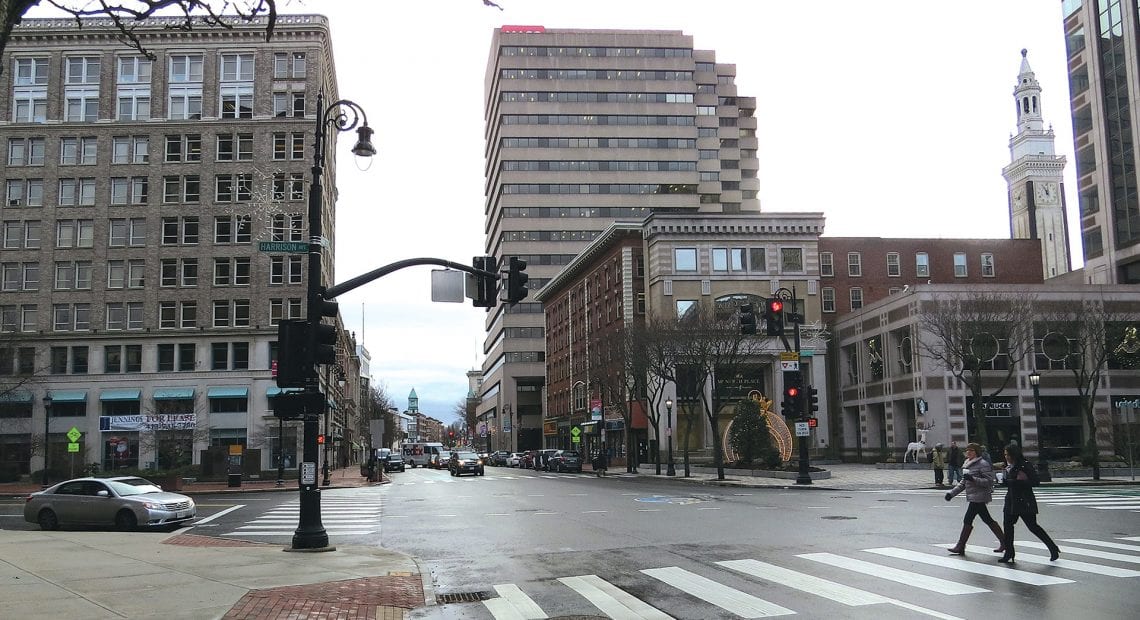
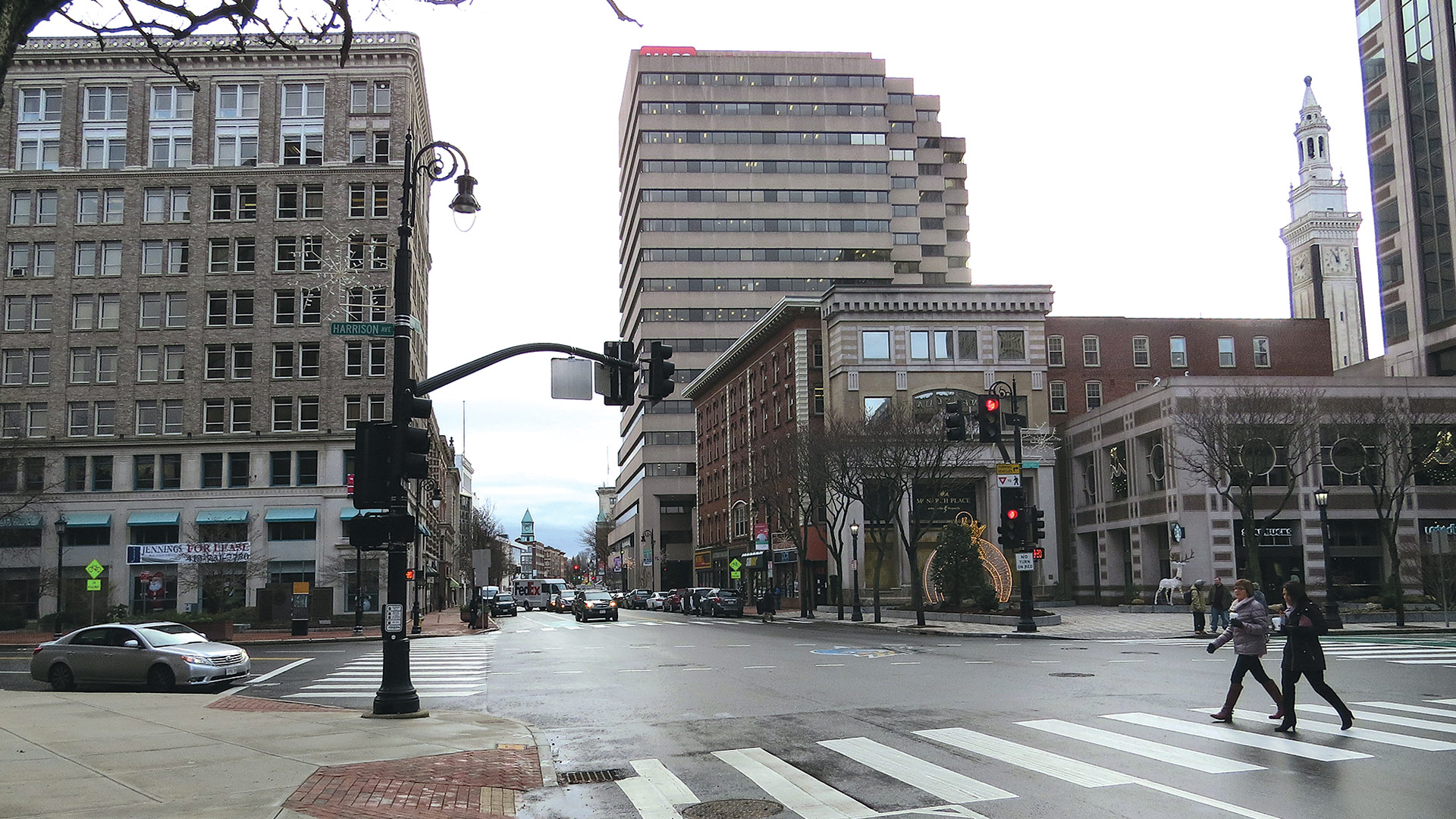 A confluence of factors — from the opening of MGM Springfield to the dawn of the cannabis era in Massachusetts — have fueled heightened interest in real estate in downtown Springfield. Brokers report that the level of activity — inquiries, showings, leases, and sales — is the highest they’ve seen in recent memory.
Freddy Lopez Jr. says there’s a rather complex algorithm, as he called it, when it comes to locating a cannabis dispensary in Springfield.
Such a facility can’t be within 500 feet of a school, he noted. Or within 300 of another dispensary. Or within 50 feet of a Class A residence. And there are many other restrictions, as well as a host of hurdles to clear locally and with the state, just to get the doors open.
But this rather high degree of difficulty doesn’t seem to be stopping many people from trying to get in the game in downtown Springfield — and at other locations within the city, said Lopez, a broker with Springfield-based NAI Plotkin.
He said he’s lost count when it comes to how many properties he’s shown to various parties, and noted that the interest is constant and only increasing, as desire to be part of the cannabis wave, if you will, intensifies.
“There’s a lot of interest across the area, but the hot spots are downtown, and especially locations near the casino,” said Lopez, who recently brokered the sale of 1665 Main St., once the headquarters of Hampden Bank, to a party (RLTY Development Springfield LLC) interested in converting it into a dispensary. “There’s a lot of competition for good sites.”

1665 Main St., recently sold to a party interested in converting it into a cannabis dispensary. Evan Plotkin, left, and Freddy Lopez Jr. of NAI Plotkin, which brokered the sale.
The Main Street property, located across from the Hippodrome and a block from Union Station, was most recently assessed at $127,600, but sold for $285,000, a clear sign of the times and an indicator of how hot the race to secure locations for cannabis facilities can, and probably will, become.
“People are jockeying for position right now,” said Lopez, adding that some parties are securing options, some are leasing, and others, like RLTY, are going ahead and buying properties in anticipation of winning a coveted license.
But the cannabis industry is only part of the story when it comes to growing interest in Springfield and especially its downtown, said Mitch Bolotin, a principal with Colebook Realty, based in the heart of downtown.
MGM Springfield has certainly had an impact as well, spurring interest in various forms of development, from retail to housing. But there have been many other positive developments as well, from the relocation of the Community Foundation of Western Mass. to a location on Bridge Street, to the renovation of Stearns Square, to an improved outlook on the part of many when it comes to public safety.
“There are a number of factors driving this,” said Bolotin late on a Friday afternoon after a day of showing various properties, referring to a surge in interest and activity in Springfield and its downtown. “I’ve been doing this for more than 30 years now, and this is the strongest I’ve ever seen it.”
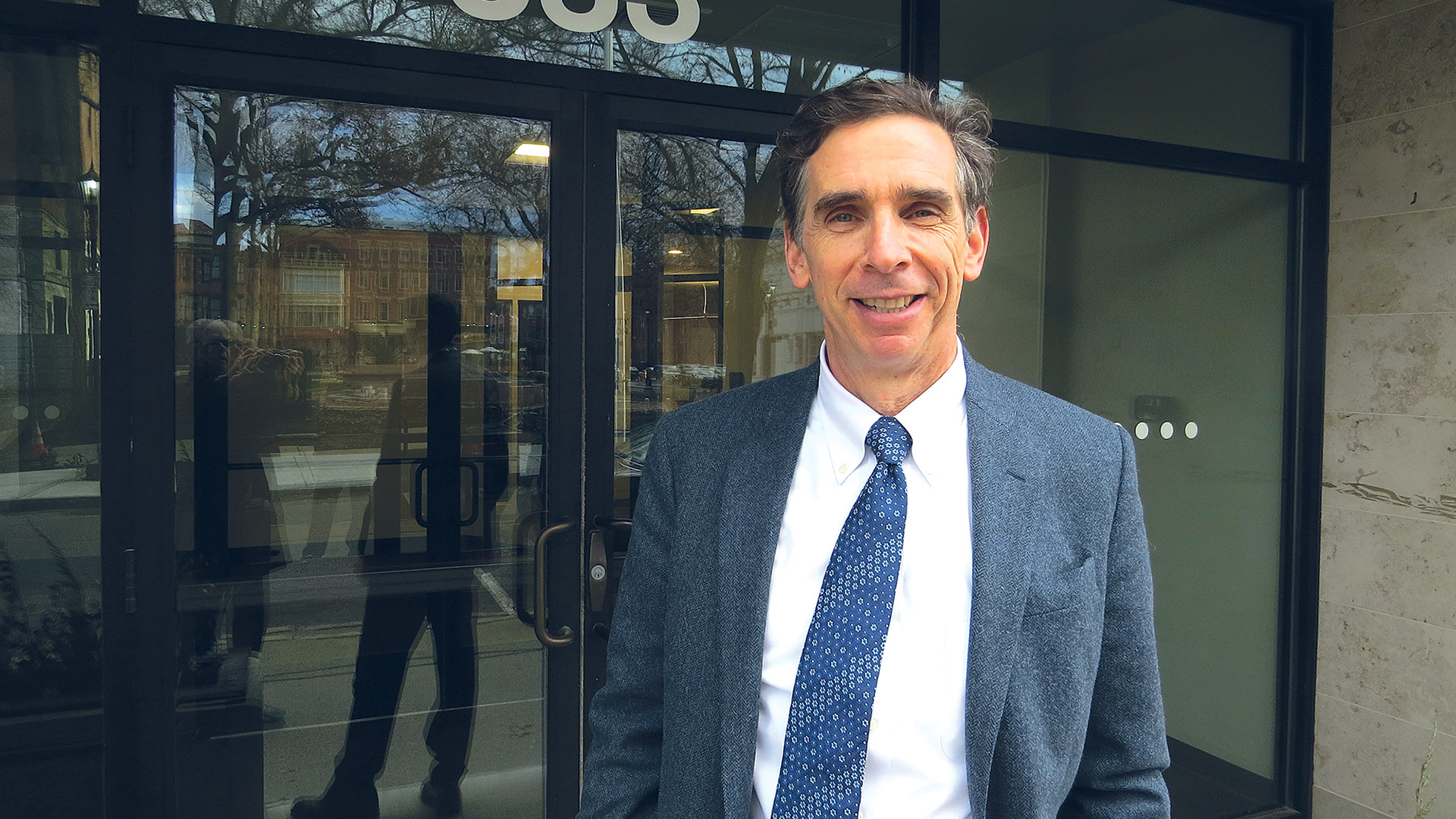
Mitch Bolotin says MGM Springfield is just one of many factors stimulating the most activity seen in the downtown Springfield market in recent memory.
Demetrius Panteleakis expressed similar sentiments. The president of Macmillan Group LLC, now based in Tower Square, said the last quarter of this year has been extremely busy, and he expects that pattern to continue.
“I haven’t seen an October-November-December period as busy as this one — this is usually a slower time,” he noted. “There is a lot of movement; things are very robust right now.”
For this issue and its focus on commercial real estate, BusinessWest looks at why things are heating up in the downtown market and what this warming trend means for 2019 and beyond.
Where There’s Smoke…
Lopez said he has a number of anecdotes that capture the soaring level of interest in Springfield and its impact on the real-estate market.
One of his favorites concerns a party calling to inquire about securing a luxury apartment in downtown Springfield. Lopez explained that the city doesn’t really have any of those, much to the disappointment of the caller.
“This person was looking to do some investing in Springfield, and I think he wanted to use this apartment as a base — he could meet people there,” Lopez explained, adding that this phone call, all by itself, speaks volumes about how the commercial real-estate market is heating up in the city, and also how widespread the interest is.
Indeed, while there are many local parties interested in investment and/or development opportunities, the callers and visitors are also coming from well outside the 413.
“We’re getting calls from developers and investors in Boston, Rhode Island, New York City, and beyond,” he said, noting that many of these calls involve potential housing developments. “People who have never set foot in Springfield now have an interest in the city, and that’s very encouraging.”
That interest comes in many flavors, said those we spoke with, adding that the cannabis industry, and a strong desire to join it, are sparking many of the inquiries.
But these robust times are manifesting themselves in many ways.
Bolotin noted that he recently secured a lease for a new food-service business on Bridge Street. He couldn’t give specifics, but said the deal involved one of the vacant storefronts on that street, damaged first by the natural-gas blast and later by explosions triggered by a water-main break.
It’s an example of the strong interest in the market that he noted earlier, arguably the most activity he’s seen in recent memory.
“We’re seeing a lot of positive signs in the marketplace in terms of activity and interest, leases, and sales,” he said, adding that this vibrancy is reflected in everything from higher occupancy rates in the buildings managed by Colebrook — and there are many in the downtown, including the TD Bank Center and the Fuller Block — to how many showings of properties he’s conducted in recent months.
Overall, Bolotin, like others we spoke with about this, said there is considerably more positive energy concerning the downtown than there has been in some time. MGM deserves some credit for this, he noted, but there are many other factors as well, from the developments on and around Bridge Street to the renovation of the Fuller Block, to less apprehension about public safety. “The attitude is much more positive than it’s ever been.”

He noted that Patricia Canavan, president of United Personnel, who moved her business onto Bridge Street, Katie Alan Zobel, who relocated the Community Foundation to that same area, Tom Dennis, owner of the Dennis Group, who purchased and renovated the Fuller Block, among other buildings downtown, and Martin Miller, general manager of WFCR, who moved his operation from Amherst into the Fuller Block, are all examples of people investing in the downtown, and through, their actions, inspiring others to do so.
Panteleakis has also seen considerable optimism and less apprehension about public safety. “You don’t hear as many concerns about safety,” he said. “Before, safety was a real issue — it kept some people from coming downtown. But you don’t hear that much anymore.”
Meanwhile, housing has become a huge area of interest, in part because of MGM and the needs of its huge workforce, but also because of rising activity levels in general and growing anticipation that the city will soon become, if it isn’t already, a landing spot for younger people and empty-nesters alike.
Evan Plotkin, a principal with NAI Plotkin and long-time champion of downtown Springfield, noted the purchase of the former Willys-Overland building in the so-called ‘blast zone’ by Boston-based Davenport Advisors LLC, and that company’s acquisition of the old Registry of Motor Vehicles site, possibly for the same use, as harbingers of things to come.
“I’m seeing a lot of developers coming in looking to develop residential,” he said. “I see tremendous potential for new developments in parts of our city that have been stagnant for a long time, including areas on the fringes of downtown and in the downtown itself.”
Joint Ventures
While interest in potential housing development grows, the cannabis industry is the source of much of the activity downtown.
The brokers we spoke with said they’ve been showing multiple sites to groups interested in all facets of this business, from cultivation to retail. And while sites across the city are being explored — as many as 15 sites might become licensed in Springfield — the downtown is becoming the focal point.
“Things have been crazy for the past two years when it comes to this business,” he said, adding that he’s brokered the sale of sites for marijuana-related businesses in Holyoke and Easthampton. “Now, the focus is shifting to Springfield and the downtown area; people are trying to line up sites.”
Lopez concurred, noting that there is a broad mix of local, national, and even international companies looking to start a cannabis dispensary or cultivation site in this region, with many focused on Springfield and an initiative known as the Opportunity Zone Program.
Created as part of the U.S. Tax Cut and Jobs Act of 2017, the program provides incentives for investment in low-income communities, like Springfield. Individuals and groups looking to develop in these designated geographic areas can gain favorable tax treatment on their capital gains, said Lopez, adding that he has worked with several owners and investors in the city’s Opportunity Zone.
The purchase of 1665 Main St. falls into this category, he said, noting that the acquisition is a good example of investors jockeying for position through options, leases, or outright purchases.
And the race for cannabis locations should provide a substantial boost for owners of properties downtown, said Plotkin, noting that prices are moving higher as interest grows, in a movement that echoes what happened when MGM Springfield and other casino-industry players jockeyed to enter this market.
“When you were dealing with a casino developer, like MGM or the other parties interested in Springfield, there was what we all referred to as the ‘casino rate,’” he explained. “They’ll pay more for real estate than the average buyer will.
“In the case of a marijuana dispensary, because the business is so lucrative, they will pay a lot more rent per square foot,” he went on, noting that a ‘marijuana rate’ is taking shape. “Rents that may have been $15 a square foot a year ago … for a marijuana shop, we’re taking about $20 to $25 per square foot, and in some cases more, depending on where it is.”
As for what the cannabis industry might mean for Springfield, Plotkin, who has traveled extensively, expressed some hope that the city might someday become somewhat like Amsterdam, a city famous for its culture, nightlife, and countless shops selling marijuana, other drugs, and related paraphernalia.
“I think Amsterdam is a great example of just how the very liberal nature of that city has led to incredible street life in that town that’s very safe,” he said. “Amsterdam is a great city, one of the most vibrant cities in the world, and maybe we can learn from its example.”
Bottom Line
Whether Springfield can become anything approaching Amsterdam — as a tourist destination or cannabis hotspot — remains to be seen.
For the time being, it is a hotspot when it comes to its commercial real-estate market.
There is interest and activity unlike anything that’s been seen in decades, and the consensus is that this pattern will likely continue and perhaps even intensify.
Springfield and its downtown have become the right place at the right time.
George O’Brien can be reached at [email protected]
For Sale, For Lease
A listing of available commercial properties
See: List of Commercial Real Estate Brokers
For Sale, for Lease
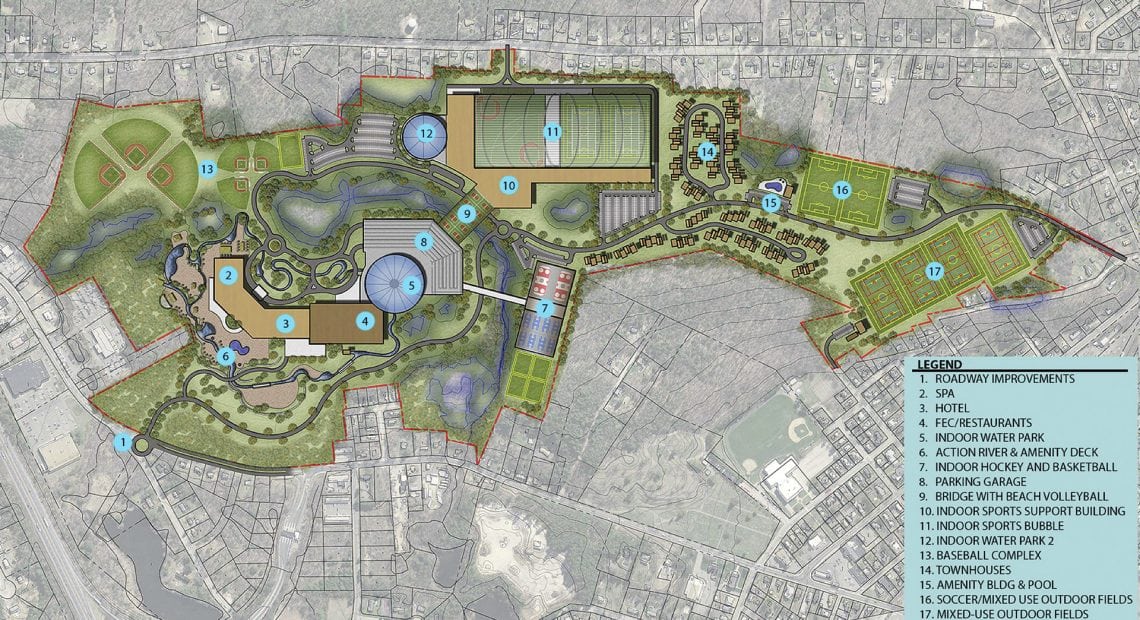
Making a Big Splash
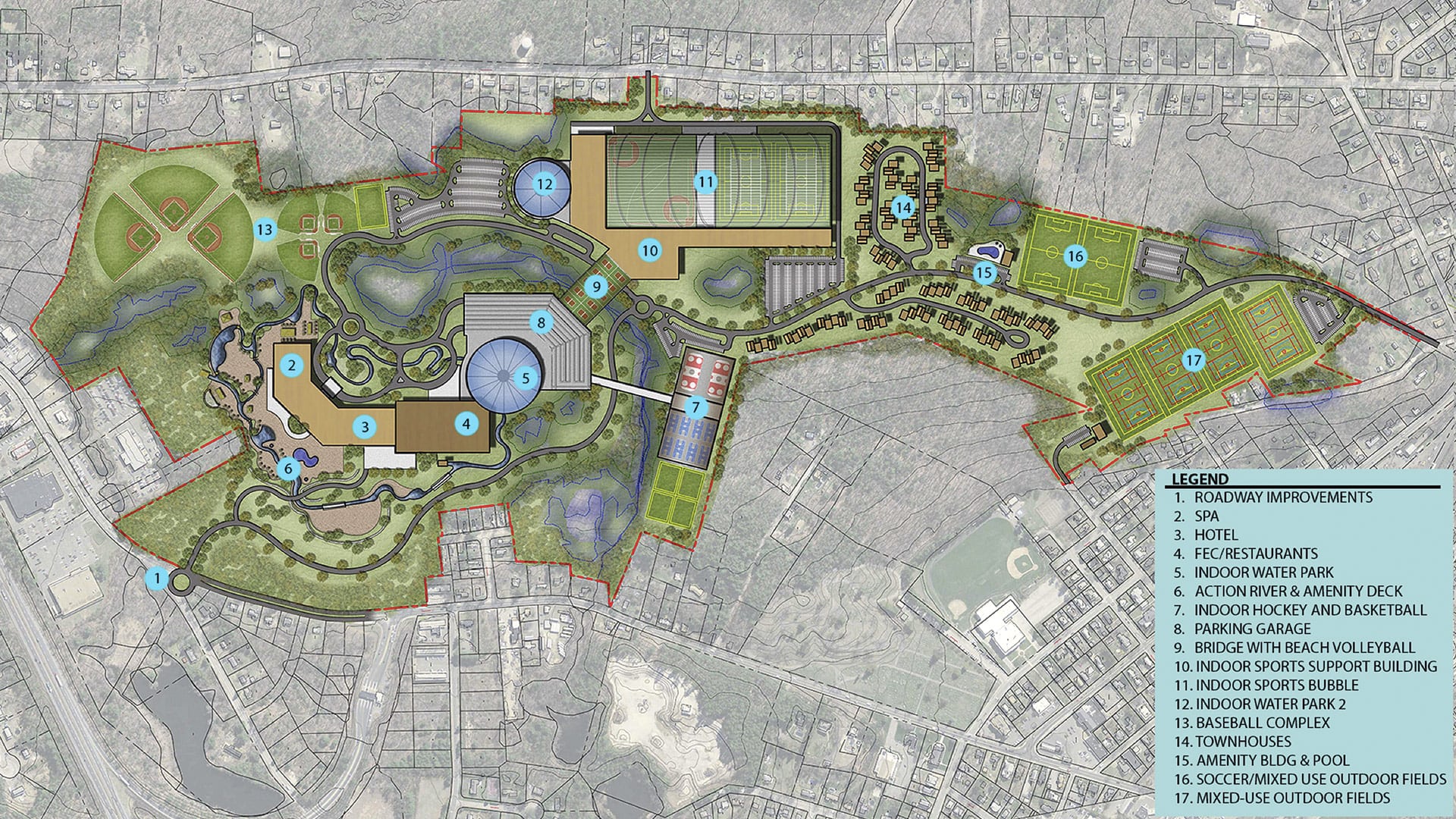
This rendering shows the many components of the planned $650 million resort and water park in Palmer.
More than five years after Palmer residents rejected a casino proposal for a huge tract of land just off Turnpike exit 8, the property is back in the news, this time as the planned site of a $650 million water park, resort spa, and sports complex.
It’s the most basic tenet in commercial real estate.
Location, location, location.
Since the Massachusetts Turnpike opened in 1957, the large tract of land sitting atop the hill overlooking the exit 8 ramp in Palmer has always possessed that coveted quality. But over the ensuing 60-plus years, little has been done to capitalize on it.
Indeed, among the more than 20 exits on the Pike, exit 8 is arguably the least developed. There’s a small gas station and attached convenience store just off the exit ramp, but one has to go a half mile left or right to find much commercial development, and even then there isn’t much.
Still, Northeast Development saw the enormous potential in the property more than 20 years ago, and first obtained an option on more than 200 acres owned by the late John Lizak — who owned several properties within the town — and later acquired it outright soon after casino-gambling legislation was passed in the Commonwealth.
An opportunity to place a casino, proposed by the owners of Mohegan Sun, at the site went by the boards in 2013, when Palmer residents rejected a casino referendum, but now the property is the focus of another high-profile initiative — one on almost the same scale as the MGM casino eventually placed in the South End of Springfield.
“I remember being at a meeting with them and hearing them say, ‘this is a hot idea — irrespective of the casino, water parks are hot commodities if they’re done right.’”
And, ironically, it’s a concept that actually became part of the rejected casino proposal — a water park.
Or a water park on a much, much larger scale, to be more specific. This would be a $650 million water park resort and spa, featuring everything from a man-made tubing river (if constructed as planned, it would be the longest in the country) to batting cages to athletic fields.
“As the casino competition started heating up, everyone was putting something new into what they were doing,” said Paul Robbins, president of Paul Robbins Assoc., a Wilbraham-based marketing and public-relations firm and spokesperson for the Palmer Sports Group. His firm has also represented Northeast Development for many years. “Doug Flutie was going to be part of Ameristar [one of the casinos proposed for Springfield], and MGM was touting its entertainment. That’s also when Mohegan introduced the concept of a water park.
“And I remember being at a meeting with them, and hearing them say, ‘this is a hot idea — irrespective of the casino, water parks are hot commodities if they’re done right.’”
Those at Palmer Sports Group obviously feel the same way.
Led by Winthop ‘Trip’ Knox, who has been involved with the design and construction of more than 3,000 water-related facilities for water parks, resorts, and deluxe hotels, and Michael D’Amato, who managed the construction of the later stages of the Foxwoods Resort Casino, including the Grand Pequot Tower, the group is thinking big.
As in very big.
Indeed, the complex will feature indoor and outdoor sports facilities, a resort hotel, and two indoor water parks, as well as an indoor hockey and basketball facility, an indoor sports bubble, a baseball complex, soccer and mixed-use fields, beach-volleyball courts, restaurants, and on-site townhomes.
There is demand for all of the above, said Robbins, adding that there isn’t anything like this in the Northeast, and the developers expect to draw visitors from a 300-mile radius and do so for at least 10 months out of the year; yes, the water in the tubing river will be heated.
“The developers believe there are 25 million people in the catchment area for this facility,” said Robbins, who used the phrases ‘Disney-esque’ and ‘think Orlando’ a number of times as he talked about just what is being proposed for the Palmer site.
Elaborating, he said there will be a large water park attached to the resort complex (again, like the Disney parks) that become part of the package of staying at that facility. There will also be second water park for day trippers, as well as a host of other facilities.
Robbins said the Palmer site, while somewhat remote (which explains the lack of development at and around the exit 8 interchange), lies roughly halfway between Springfield and Worcester and is easily accessible to several major population centers. And that has made it a hot property, as they say in this business, for some time.
“When Mohegan signed on, I had a number of meetings with them, and they absolutely loved that site,” said Robbins. “They loved it because [then-Gov.] Deval Patrick said he wasn’t thrilled about casinos going to urban areas; his vision was for a bucolic, ‘drive to the destination, stay a few nights’ type of resort, and that’s what Mohegan is. But the location is also ideal.”
So much so that Northeast pursued a number of different development opportunities for the site, but eventually returned to the concept that grew out of the casino proposal and may eventually replace it as Palmer biggest hope to replace the many manufacturing jobs that were lost there over the past few decades and bring new vibrancy to the community.
Preliminary estimates call for 2,000 jobs, said Robbins, adding that the project might well become a synergistic complement to the recently opened MGM Springfield, offering people from outside the region more reason to come to the Bay State, and specifically Western Mass., for an extended stay.
At present, there is no timetable for the development, said Robbins, adding that the Palmer Sports Group is working with town officials to secure the necessary approvals and make the project a reality.
— George O’Brien
Lots of Potential
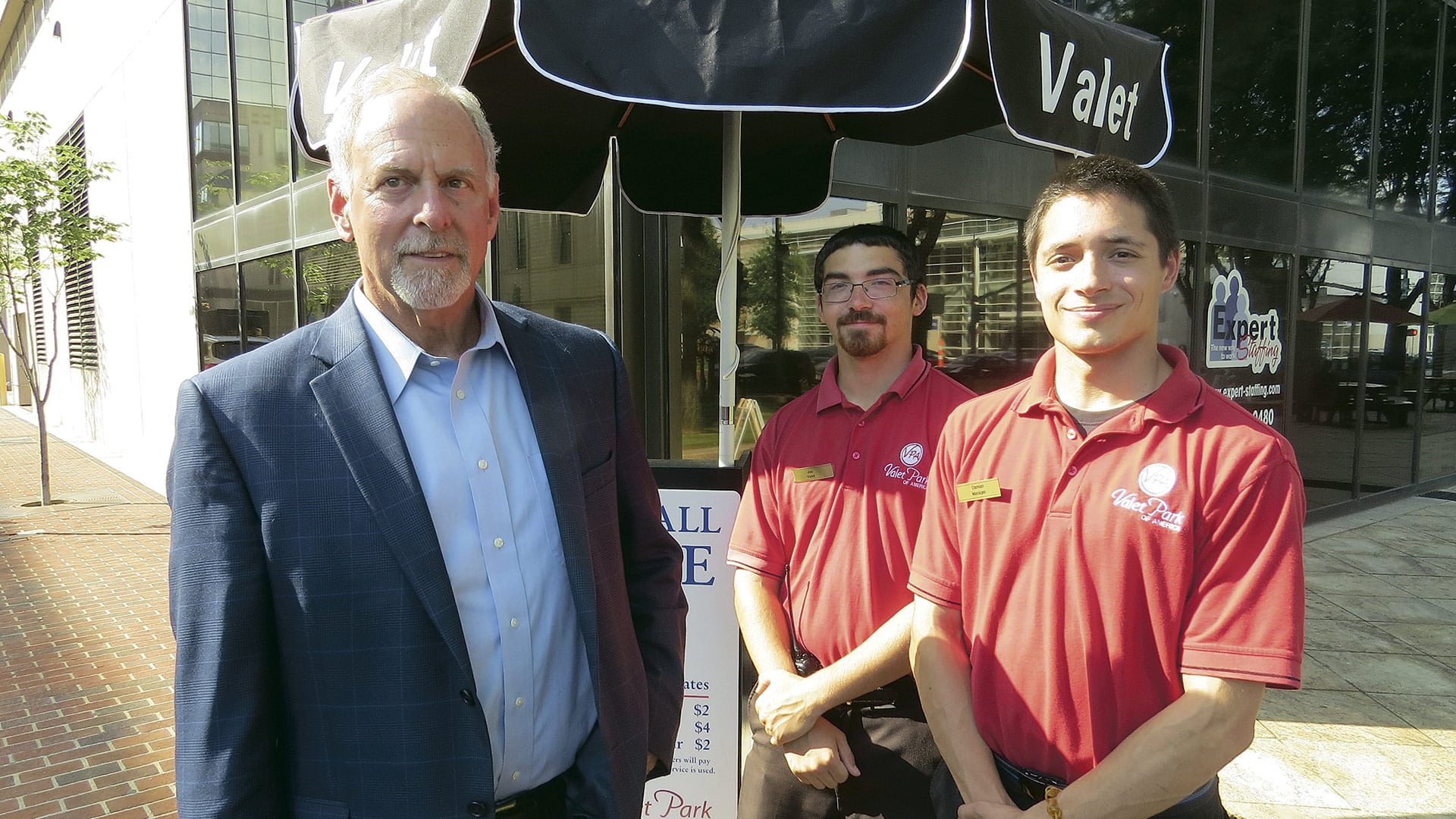
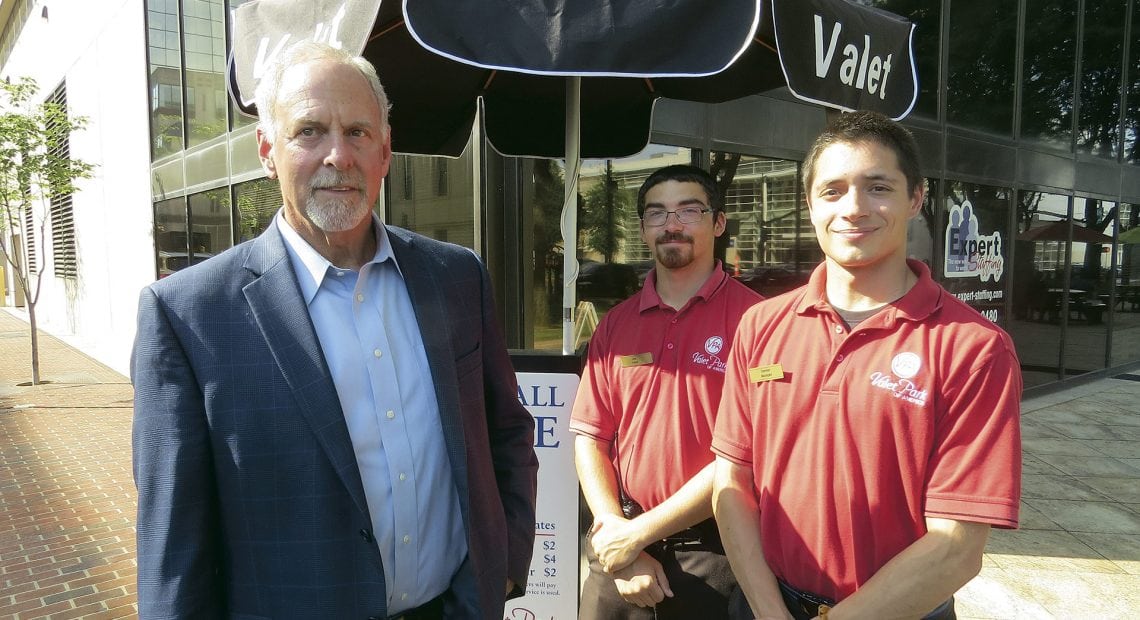
Evan Plotkin, left, with parking attendants Joe Martin, middle, and Damien Denesha at the new service just outside 1350 Main St.
Valet parking isn’t exactly a novel concept; banquet halls, restaurants, and hospitals have been offering that service for years, if not decades. But it is when it comes to downtown Springfield’s office towers. One Financial Plaza recently introduced the concept, and in a few weeks, it is living up the promise first foreseen a decade ago.
Evan Plotkin says he first conceived of the idea of instituting valet parking at 1350 Main St. in downtown Springfield — the office tower he co-owns — almost 10 years ago.
Then, as now, he thought the service would bring a needed, higher level of convenience to people visiting professionals and other tenants in the tower, take some off the rough edge off Springfield when it comes to the issues of parking and enforcement of same — matters that can keep some from even venturing into the city to do business — and be another selling point when it comes to attracting new tenants and prompting existing tenants to re-up.
So why did it take a decade for the concept to become reality and, according to early projections, fulfill all that promise?
“I couldn’t really afford it back then,” said Plotkin, who laughed as he said that but was nonetheless quite serious with his tone. But there were other reasons as well, ranging from the economy — that was the height of the recession — to some logistics (getting all the needed approvals from the city), to a vibrancy level that needed to still come up a notch for this to really work. Or two notches. Or three.
All of those issues, including the notches of vibrancy, are now being referred to with the past tense, or certainly will be when MGM Springfield opens its doors in a month. So Plotkin and the other owners of 1350 Main have made that dream from a decade ago a reality, and they’re off to a fast start, by Plotkin’s estimates, with this valet parking venture, which also serves visitors of neighboring City Hall, the county courthouse a block or so away, and other nearby facilities, at the start of this month.
Download the PDF: Listing of Available Commercial Properties
That was the Fourth of July week, as you’ll recall, so the numbers have to be kept in perspective, said Plotkin, adding that those first few days, the attendants were parking 25 to 30 cars a day. By early the next week, the numbers had doubled, and on July 12, a Thursday, they parked 73 cars.
“And I think those numbers will just continue to grow as more people become aware of the service,” said Plotkin, adding that roughly half of the customers thus far have been visitors to City Hall, more than a third have ventured to 1350 Main, and the rest have had other destinations in mind.
The service, managed by Valet Park of America, is roughly as expensive as traditional parking, said Plotkin, noting that the cost is $2 for 20 minutes or less (enough time for a quick visit to tenants at 1350 Main or offices in City Hall), $4 for visits ranging from 20 minutes to two hours (enough time to go the gym on the building’s ninth floor), and $2 for each additional hour after that. Several tenants at 1350 Main already provide vouchers to visitors to cover the cost of the service, just as they would with normal parking.
The service, operated on what’s known as City Hall Place, has a few spaces right outside City Hall, roughly two dozen more in the Civic Center Parking Garage, and more in the lots under I-91, said Plotkin, adding that, with the way the concept is catching on, more may be needed.
This isn’t exactly a novel idea — valet parking has been used by banquet facilities, restaurants, and hospitals for years now. But it is for an office tower, at least in this market, said Plotkin, adding that, as he surveyed a changing landscape downtown and pending changes, especially MGM, he decided it was time to execute that plan he first conceived all those years ago.
“We looked at what was happening downtown, and the construction for MGM and the [I-91] viaduct creates a lot of conversation about parking, and it’s always pretty negative,” he explained. “I really wanted to get ahead of all that with our building.”
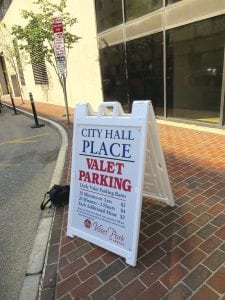
Elaborating, he said 1350 Main St. doesn’t have any structured parking (an attached garage or lot) and has historically been challenged by having to rely on nearly facilities. And with MGM set to open, that challenge, and the perception of parking issues, would only grow.
“Visitors there will utilize that garage, but they’ll also be looking for other places to park,” he noted. “And what happens is that regular people who just want to do business downtown will have this fear that it’s going to be challenging to find a space. People will say, ‘it’s a hassle; I don’t want to feed a meter all day.’”
Thus far, the service is doing just what he thought it would. It’s providing that layer of convenience for visitors, his tenants seem to like the service and consider it added value, and, in Plotkin’s mind, it’s helping to put a friendlier face on downtown Springfield.
Or at least a strong counter to the parking patrol that polices the central business district. Those individuals are just doing their jobs, he said, but they put visitors to the downtown area and his building on edge — and sometimes dent their wallet.
Valet service is “putting a positive face on parking in Springfield,” said Plotkin, who has been a tireless promoter and supporter of Springfield and especially and its downtown, and was recognized by BusinessWest as one of its Difference Makers for 2018 for those efforts. “There’s a negative connotation with those meter maids. People don’t like to get $50 tickets; they see those people coming, and they run out of the middle of a meeting or a lunch to put quarters in the meter.”
He said the arrival of MGM Springfield will certainly drive the numbers at the valet service higher and bring the business venture closer to and eventually past the break-even point he knew he couldn’t reach a decade ago.
Damien Denesha, recently named manager of this site by his employer, Valley Park of America, agreed.
“Once MGM opens, there will be a lot more people downtown, and parking will become more difficult,” he told BusinessWest. “Demand for this service will certainly grow.”
It took a decade for the concept Plotkin first put on paper to become reality. But thus far, the service seems to have, well, lots of potential, in every sense of that phrase.
George O’Brien can be reached at [email protected]
For Sale, for Lease
Making a Move

Two architect’s renderings of the planned new home of Way Finders at the site of the Peter Pan bus station.
 The nonprofit group Way Finders, formerly known as HAPHousing, has released renderings of the new 35,000-square-foot home it intends to build on the site of the soon-to-be abandoned Peter Pan Bus station. The move to the North End will bring benefits for the agency and its many types of clients, but it will also generate momentum — and economic development — at two locations, a trickle-down effect not always seen with relocations of this type.
From the start, Peter Gagliardi said, the goal was to find something on the major bus routes and, preferably, near the bus station.
Turns out, he accomplished all that and then some.
Indeed, the new home for Way Finders, formerly HAPHousing, will be the bus station — or the old bus station, to be more precise, the long-time home to Peter Pan Bus Lines. Which just happens to be across Main Street from the new bus station, the renovated, 90-year-old Union Station.
“I had really hoped that we would have a place near the bus station, but I never expected that we would buy the bus station — you can’t get any closer than that,” said Gagliardi, long-time CEO of the agency, which rebranded to Way Finders last fall in a reflection of its broadened mission.
But this ambitious, $15 million project (that’s the latest estimate) will achieve much more than added convenience for and clients served by Way Finders, many of whom don’t own cars or have reliable transportation, said Gagliardi.
It will also become an important additional component of broad revitalization efforts in downtown Springfield and especially the area just north of the Arch — and a likely catalyst for still more, he noted. It will also bring roughly 200 workers to that area, providing opportunities for service businesses already in that quadrant and those looking to expand into it. And it will give a growing, evolving agency the room and the facilities to better serve clients and continually expand its portfolio of services.
Indeed, a nonprofit that was once focused mostly on securing housing for those who could not afford it has morphed into a truly multi-faceted agency focused on everything from financial education to helping individuals buy a home to assisting them with finding employment so they can rent a home or apartment.
“Because there’s not enough housing to go around, we’re helping people avoid homelessness by becoming employed,” said Gagliardi, obviously proud of the results generated by this relatively new initiative. “We’ve placed about 560 people over the past four and half years, and at the end of 12 months, 80% to 90% of those people are still employed. We don’t have [housing] vouchers for everyone, so we tell people employment might be their best bet.”
But while this relocation will bring many benefits to Way Finders and its many clients, there will be a trickle-down effect as well, and one not always seen when a large employer leaves one home for another.

Peter Gagliardi says the new Way Finders headquarters will be a solid addition to Springfield’s North End.
Indeed, this relocation, announced late last year, is not a case of musical chairs — the commercial real-estate variety, anyway — a phrase that brokers and those involved in economic development like to use when a tenant within a property abandons it for something similar a few miles or even a few blocks away.
Such moves often don’t have a significant net impact on the real-estate market or the economy of the area in question, experts say, because the only thing that’s really changing is the tenant’s street address.
In the case of Way Finders, so much more is changing. It’s soon-to-be-former home in Springfield — the agency also has an office in Holyoke — at 322 Main St. in the South End has been acquired by Balise Motor Sales. And while no plans have been announced, it seems likely that property will be put to new and different use as Balise expands its already considerable footprint in that part of the city.
Meanwhile, Way Finders’ move to the North End, coming as Peter Pan moves its employees into Union Station, provides another shot of adrenaline for a section of the city that had been mostly dormant for years.
To borrow a phrase used often in business and politics, this move would appear to constitute a win-win-win for the South End, the North End — and specifically Union Station — and the nonprofit agency and its clients. Maybe that’s a win-win-win-win.
In any case, for this issue and its focus on commercial real estate, BusinessWest takes a look at this relocation and its many implications.
Space Exploration
As he talked about how Way Finders arrived at that press conference where its purchase of the Peter Pan property for $2.75 million was announced, Gagliardi said the seeds for that acquisition were planted quite some time ago.
To make a long story somewhat short, the nonprofit has grown significantly over the past several years as its mission has been expanded, he explained, adding that the workforce, or at least those members of it working in Springfield, outgrew the property at 322 Main St. a few years ago.
“We were comfortable at 120 people, but not at 160,” said Gagliardi as he got specific with the numbers of employees working at that site a few years ago. “It really compromised the quality of the space the staff was working in, and it also cramped the quarters we were using to work with clients; our foot traffic just kept increasing, especially with the issue of homelessness and people trying to keep a roof over our heads.
“It was getting to be untenable,” he went on, adding that parking was another issue, especially after MGM acquired the former Orr Cadillac property (Way Finders was leasing 40 parking spaces there) and converted it into the new Springfield Rescue Mission and Balise acquired an adjacent property, eliminating another 25 spaces. “The handwriting was on the wall. It was a 15,000-square-foot parcel with a 13,000-square-foot building; there wasn’t even room to put in a dumpster.”
By that time, “Balise had us surrounded,” said Gagliardi, adding that the car company had acquired several parcels around 322 Main St., and the logical step for Way Finders was to offer that building as the next addition to the portfolio, lease back office space and parking spaces, and commence a search for a new headquarters.
Which it did, while also moving about 40 employees to a large suite of offices on Maple Street, just a few blocks away.
As for that search, a request for proposals yielded several options for buying and especially leasing space, said Gagliardi, acknowledging the obvious — that a stable, growing nonprofit with roughly 200 employees would be a very attractive tenant for a number of landlords in the city.
The bus station became one of those options, he went on, adding that, after careful consideration, it became the best option, for reasons ranging from location — that first consideration in commercial real estate — to the footprint’s size and flexibility, especially with regard to parking (there will be room for 180 spaces).
Being near the new bus station, or transportation center (there is rail service at Union Station as well) was a big factor, he told BusinessWest.
“We needed a place well served by public transportation because a lot of our clients don’t have cars or don’t have reliable vehicles,” he explained. “And we have a lot of staff that live in the city and could use buses if they were convenient.”
Initially, the thought was to renovate the existing facilities at the bus station, said Gagliardi, adding that a detailed review determined that new construction would allow better utilization of the footprint and better service to clients.
“We looked at it closely, but the cost of bringing facilities up to code was substantial,” he said. “It would cost even more to do it as new, but a new building will be far more energy-efficient than we can make the old one; it will be a much more efficient use of space. The end result was that it just made more sense to do this.”
Way Finders, which recently took title to the property, is in the process of putting together financing for the project, said Gagliardi, adding that it will include New Markets Tax Credits, a tax-exempt bond through MassDevelopment, and significant fundraising, perhaps a total of $3 million to $4 million. The goal is to move in by September 2019.
As for that trickle-down effect mentioned earlier, often there isn’t much of that phenomenon with moves such as this, only that musical-chairs outcome seen in this city and many others when new properties are constructed.
“Often, with relocations like this, you’re worried about the place left behind,” said Kevin Kennedy, Springfield’s chief Development officer, adding that this thought process went through his mind even on projects like the new federal courthouse on State Street, an initiative he led as an aide to U.S. Rep. Richard Neal. The new facility changed the landscape on State Street and greatly upgraded the facilities for the court — but it also left a huge vacancy at 1550 Main St.
That property rebounded nicely and is now home to a diverse group of new tenants, but such bouncebacks don’t always occur.
With Peter Pan relocating to Union Station, the bus station would be left behind, said Kennedy, adding that Way Finders’ relocation was both a quick and extremely positive reuse of a highly visible piece of property.
“To get a brand new building there with a significant number of employees was a good result,” he said in a voice that certainly conveyed understatement, adding that the second parcel to be left behind, 322 Main St., will likely have an equally positive outcome.
“With a family like Balise that has accumulated a significant amount of property in that area, I expect a that we’re going to see a significant development there that will be good for the city and good for the tax base,” he told BusinessWest.
Room for Improvement
All that certainly constitutes a win-win-win, with maybe a few more wins as well.
It started with a desire to be near the bus station and ended with a purchase of the bus station. That wasn’t the expected route, to borrow a phrase from the transportation business, but this relocation will help several parties get to their desired destinations.
“We could have gone outside the city; we could have done something in an industrial park,” said Gagliardi. “But that wouldn’t have been good for our clients or good for the city. The idea that someone that can hop on a bus in Chicopee, take it to Union Station, and walk across the street is a good thing.
“We’d like to be part of the good stuff that’s happening this city,” he went on, adding that this relocation, not to mention the agency’s many initiatives to improve quality of life for area residents, will certainly make that a reality.
George O’Brien can be reached at [email protected]
Making a Move
Two architect’s renderings of the planned new home of Way Finders at the site of the Peter Pan bus station.
The nonprofit group Way Finders, formerly known as HAPHousing, has released renderings of the new 35,000-square-foot home it intends to build on the site of the soon-to-be abandoned Peter Pan Bus station. The move to the North End will bring benefits for the agency and its many types of clients, but it will also generate momentum — and economic development — at two locations, a trickle-down effect not always seen with relocations of this type.
From the start, Peter Gagliardi said, the goal was to find something on the major bus routes and, preferably, near the bus station.
Turns out, he accomplished all that and then some.
Indeed, the new home for Way Finders, formerly HAPHousing, will be the bus station — or the old bus station, to be more precise, the long-time home to Peter Pan Bus Lines. Which just happens to be across Main Street from the new bus station, the renovated, 90-year-old Union Station.
“I had really hoped that we would have a place near the bus station, but I never expected that we would buy the bus station — you can’t get any closer than that,” said Gagliardi, long-time CEO of the agency, which rebranded to Way Finders last fall in a reflection of its broadened mission.
But this ambitious, $15 million project (that’s the latest estimate) will achieve much more than added convenience for and clients served by Way Finders, many of whom don’t own cars or have reliable transportation, said Gagliardi.
It will also become an important additional component of broad revitalization efforts in downtown Springfield and especially the area just north of the Arch — and a likely catalyst for still more, he noted. It will also bring roughly 200 workers to that area, providing opportunities for service businesses already in that quadrant and those looking to expand into it. And it will give a growing, evolving agency the room and the facilities to better serve clients and continually expand its portfolio of services.
Indeed, a nonprofit that was once focused mostly on securing housing for those who could not afford it has morphed into a truly multi-faceted agency focused on everything from financial education to helping individuals buy a home to assisting them with finding employment so they can rent a home or apartment.
“Because there’s not enough housing to go around, we’re helping people avoid homelessness by becoming employed,” said Gagliardi, obviously proud of the results generated by this relatively new initiative. “We’ve placed about 560 people over the past four and half years, and at the end of 12 months, 80% to 90% of those people are still employed. We don’t have [housing] vouchers for everyone, so we tell people employment might be their best bet.”
But while this relocation will bring many benefits to Way Finders and its many clients, there will be a trickle-down effect as well, and one not always seen when a large employer leaves one home for another.
Peter Gagliardi says the new Way Finders headquarters will be a solid addition to Springfield’s North End.
Indeed, this relocation, announced late last year, is not a case of musical chairs — the commercial real-estate variety, anyway — a phrase that brokers and those involved in economic development like to use when a tenant within a property abandons it for something similar a few miles or even a few blocks away.
Such moves often don’t have a significant net impact on the real-estate market or the economy of the area in question, experts say, because the only thing that’s really changing is the tenant’s street address.
In the case of Way Finders, so much more is changing. It’s soon-to-be-former home in Springfield — the agency also has an office in Holyoke — at 322 Main St. in the South End has been acquired by Balise Motor Sales. And while no plans have been announced, it seems likely that property will be put to new and different use as Balise expands its already considerable footprint in that part of the city.
Meanwhile, Way Finders’ move to the North End, coming as Peter Pan moves its employees into Union Station, provides another shot of adrenaline for a section of the city that had been mostly dormant for years.
To borrow a phrase used often in business and politics, this move would appear to constitute a win-win-win for the South End, the North End — and specifically Union Station — and the nonprofit agency and its clients. Maybe that’s a win-win-win-win.
In any case, for this issue and its focus on commercial real estate, BusinessWest takes a look at this relocation and its many implications.
Space Exploration
As he talked about how Way Finders arrived at that press conference where its purchase of the Peter Pan property for $2.75 million was announced, Gagliardi said the seeds for that acquisition were planted quite some time ago.
To make a long story somewhat short, the nonprofit has grown significantly over the past several years as its mission has been expanded, he explained, adding that the workforce, or at least those members of it working in Springfield, outgrew the property at 322 Main St. a few years ago.
“We were comfortable at 120 people, but not at 160,” said Gagliardi as he got specific with the numbers of employees working at that site a few years ago. “It really compromised the quality of the space the staff was working in, and it also cramped the quarters we were using to work with clients; our foot traffic just kept increasing, especially with the issue of homelessness and people trying to keep a roof over our heads.
“It was getting to be untenable,” he went on, adding that parking was another issue, especially after MGM acquired the former Orr Cadillac property (Way Finders was leasing 40 parking spaces there) and converted it into the new Springfield Rescue Mission and Balise acquired an adjacent property, eliminating another 25 spaces. “The handwriting was on the wall. It was a 15,000-square-foot parcel with a 13,000-square-foot building; there wasn’t even room to put in a dumpster.”
By that time, “Balise had us surrounded,” said Gagliardi, adding that the car company had acquired several parcels around 322 Main St., and the logical step for Way Finders was to offer that building as the next addition to the portfolio, lease back office space and parking spaces, and commence a search for a new headquarters.
Which it did, while also moving about 40 employees to a large suite of offices on Maple Street, just a few blocks away.
As for that search, a request for proposals yielded several options for buying and especially leasing space, said Gagliardi, acknowledging the obvious — that a stable, growing nonprofit with roughly 200 employees would be a very attractive tenant for a number of landlords in the city.
The bus station became one of those options, he went on, adding that, after careful consideration, it became the best option, for reasons ranging from location — that first consideration in commercial real estate — to the footprint’s size and flexibility, especially with regard to parking (there will be room for 180 spaces).
Being near the new bus station, or transportation center (there is rail service at Union Station as well) was a big factor, he told BusinessWest.
“We needed a place well served by public transportation because a lot of our clients don’t have cars or don’t have reliable vehicles,” he explained. “And we have a lot of staff that live in the city and could use buses if they were convenient.”
Initially, the thought was to renovate the existing facilities at the bus station, said Gagliardi, adding that a detailed review determined that new construction would allow better utilization of the footprint and better service to clients.
“We looked at it closely, but the cost of bringing facilities up to code was substantial,” he said. “It would cost even more to do it as new, but a new building will be far more energy-efficient than we can make the old one; it will be a much more efficient use of space. The end result was that it just made more sense to do this.”
Way Finders, which recently took title to the property, is in the process of putting together financing for the project, said Gagliardi, adding that it will include New Markets Tax Credits, a tax-exempt bond through MassDevelopment, and significant fundraising, perhaps a total of $3 million to $4 million. The goal is to move in by September 2019.
As for that trickle-down effect mentioned earlier, often there isn’t much of that phenomenon with moves such as this, only that musical-chairs outcome seen in this city and many others when new properties are constructed.
“Often, with relocations like this, you’re worried about the place left behind,” said Kevin Kennedy, Springfield’s chief Development officer, adding that this thought process went through his mind even on projects like the new federal courthouse on State Street, an initiative he led as an aide to U.S. Rep. Richard Neal. The new facility changed the landscape on State Street and greatly upgraded the facilities for the court — but it also left a huge vacancy at 1550 Main St.
That property rebounded nicely and is now home to a diverse group of new tenants, but such bouncebacks don’t always occur.
With Peter Pan relocating to Union Station, the bus station would be left behind, said Kennedy, adding that Way Finders’ relocation was both a quick and extremely positive reuse of a highly visible piece of property.
“To get a brand new building there with a significant number of employees was a good result,” he said in a voice that certainly conveyed understatement, adding that the second parcel to be left behind, 322 Main St., will likely have an equally positive outcome.
“With a family like Balise that has accumulated a significant amount of property in that area, I expect a that we’re going to see a significant development there that will be good for the city and good for the tax base,” he told BusinessWest.
Room for Improvement
All that certainly constitutes a win-win-win, with maybe a few more wins as well.
It started with a desire to be near the bus station and ended with a purchase of the bus station. That wasn’t the expected route, to borrow a phrase from the transportation business, but this relocation will help several parties get to their desired destinations.
“We could have gone outside the city; we could have done something in an industrial park,” said Gagliardi. “But that wouldn’t have been good for our clients or good for the city. The idea that someone that can hop on a bus in Chicopee, take it to Union Station, and walk across the street is a good thing.
“We’d like to be part of the good stuff that’s happening this city,” he went on, adding that this relocation, not to mention the agency’s many initiatives to improve quality of life for area residents, will certainly make that a reality.
George O’Brien can be reached at [email protected]
Vehicle for Growth?
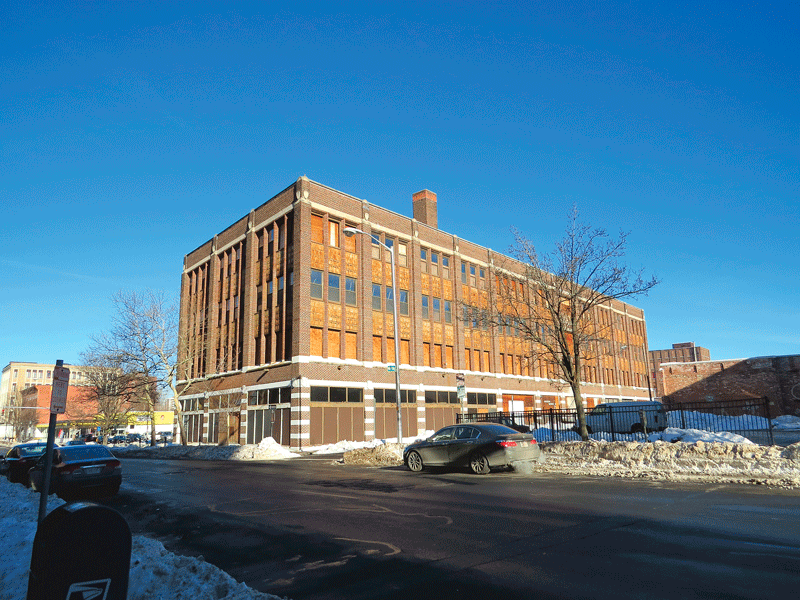
The Willys-Overland building on Chestnut Street has a proud past, and developers now believe it has an intriguing future as market-rate housing.
Chuck Irving says the property at 151 Chestnut St. in Springfield — known to the well-informed as the Willys-Overland Building because the long-defunct car maker had a showroom on its first floor and a 1,000-car garage above — caught his attention some time ago, after it was damaged and then abandoned after the natural-gas explosion in late 2012.
And he thought it had some potential.
But what really opened his eyes was the rebirth of an almost identical property in Detroit also built by Willys-Overland.
Irving recalled googling ‘Willys-Overland Lofts,’ the name of the housing complex the site was converted into (just as BusinessWest did, and you can) and seeing headlines about relatively small but well-appointed units selling for north of $500,000. And going fast.
“We started reading the articles about the same building in Detroit,” recalled Irving, a principal with Boston-based Davenport Properties. “We went online, looked at the pictures … and it was an incredibly attractive property. And so we started looking at this building, thinking, ‘if it’s structurally sound, this is a great opportunity, because it comes with parking.’”
Indeed, seeing what happened in Detroit and coupling that with what readily appears to be a growing need for market-rate housing as the countdown to MGM Springfield’s opening hits eight, maybe nine months, the Springfield property’s potential soared in Irving’s eyes.
Enough to make the 70,000-square-foot, four-story structure Davenport Property’s latest investment in the City of Homes and the region as a whole. Others include the Springfield Plaza, the Hadley Mall, and the Walmart in Westfield.
“Our company is involved with MGM,” said Irving, noting that the company considers itself MGM’s development partner in Springfield. “And we’ve been watching the employees of the company come into the area, especially the young ones, and looking at their perception of the inventory of available apartments. Through their eyes, it became really clear that there was a need for more market-rate housing in Springfield.”
Whether the Chestnut Street property in Springfield can follow the lead of its twin in Detroit is a huge question mark, one that will hopefully be answered by extensive cost-benefit analysis work in the weeks and months to come, or what Irving called “calibrating Springfield’s market rents with construction costs.”
But he believes the property is certainly a sound investment and that the building will play a key role in the revitalization of the city and especially the area that has come to be known colloquially as the ‘blast zone.’
Kevin Kennedy, Springfield’s chief Development officer, agreed. He said the Willys project, if it develops as Davenport believes it could, might become a catalyst for the blast zone, an area bordered, roughly, by Lyman Street to the north, Dwight Street to the west, Pearl and Hillman streets to the south, and Spring Street to the east.
“There are other investors looking into that area, which we’re calling the ‘next frontier’ in Springfield,” he told BusinessWest, adding that the conditions are favorable for more housing initiatives and related businesses in that zone.
These conditions include everything from MGM and other job-creating ventures in and around downtown to the revitalization of Union Station, just a block or so to the north of the Willys building, to an interest among Millennials and also some retiring Baby Boomers in what Kennedy called “urban living.”
“When you calculate all the jobs that are going to be happening in the downtown and the Springfield area in general, and also take into account the fact that urban living is making a comeback, as well as the growing entertainment options in that area … all these things make this project viable and add up to something good for Springfield,” he said.
A new life as housing would only be the latest chapter in the intriguing history of what has come to be known as the Willys-Overland Block Local Historic District, which was placed on the National Register of Historic Places in 1983.
Built in 1916 as an automobile sales, service, and garaging area, the property became part of what would later be described as an auto-industry legacy in Springfield. Indeed, the Duryea brothers created the first marketable auto in Springfield — there’s a statue depicting their creation near Stearns Square — and Rolls-Royce located a plant in the city to capitalize on its highly skilled workforce.
But Willys-Overland, like the others, did not enjoy a long history in the city. Indeed, it closed its property here in 1921 due to slumping sales, and it has seen a number of uses since.
It was a primarily a parking garage for some of the downtown hotels before they were converted into condominiums, said Irving, and after that, it served as home to a host of businesses, ranging from Square One to a construction company.
These operations were forced out by the gas explosion in late November 2012, he went on, adding that the building was completely gutted and has been vacant, with most of the windows covered with plywood, ever since.
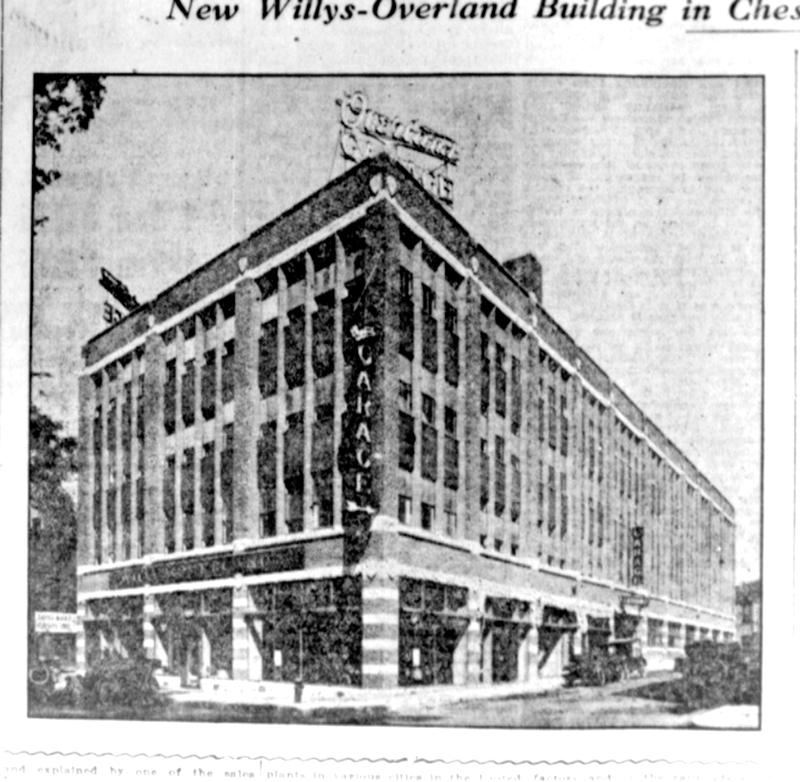
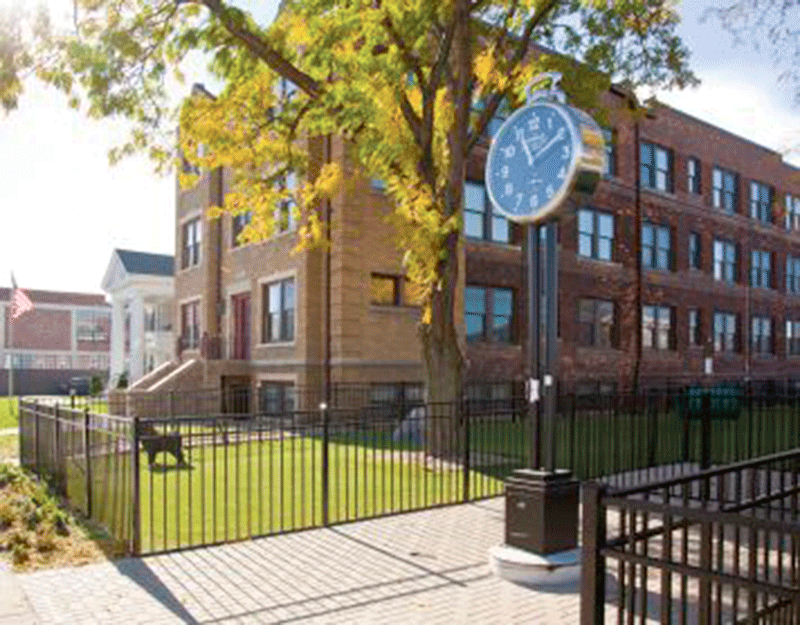
Below, a news story announces the opening of the Willys-Overland building in 1916. At right, the Willys-Overland property in Detroit, which has been transformed into lofts selling for more than $500,000.
The previous owner applied for a demolition permit in January 2015, but the city sought and won a delay of that move due to the property’s historic significance.
It was this delay that essentially gave the property a reprieve — time for more progress to take shape in Springfield, time for a recognized need for more market-rate housing to emerge, and, yes, time for the Willys-Overland Lofts project to catch fire — and catch Davenport’s attention.
As noted, the Springfield Willys-Overland property is an intriguing addition to an already large and diverse portfolio of properties in Western Mass.
Perhaps the most visible is the Springfield Plaza, which has undergone an extensive facelift and added new tenants ranging from a trampoline complex to a new home for Springfield’s Registry of Motor Vehicles office, which, said Irving, has brought a significant surge in traffic to the plaza.
The portfolio also includes a retail complex across the street from the Eastfield Mall and what’s known as Davenport Square in Springfield, at the corner of Union and Main streets across from MGM Springfield. The development will include MGM’s daycare facility as well as some retail.
As for the Willys-Overland building, the next steps in the process of writing the next chapter in its history are finalizing designs, crunching the numbers, as noted earlier, and requesting support for historic tax credits, said Irving, adding that redevelopment is dependent on such tax credits and other forms of assistance.
While the reuse plans are still in their infancy, Irving anticipates perhaps 60 units of relatively small size, with a portion of the building to be used for parking.
“It’s got great bones, and it’s absolutely perfect for apartments with the column spacing,” he noted. “What we’re trying to go after is small — really small units for young professionals who don’t want the price of having a big space.
“Our take on it is that it’s a great investment,” he went on. “We’re not certain that the market rents will support the construction costs, and we’re still verifying that. But in the long run, we think Springfield is on the upswing, so whether it’s this year or next year, we’re convinced that this will be a great residential investment.”
As for the blast zone, or Springfield’s ‘next frontier,’ as Kennedy called it, progress has come slow to that area, with the gas explosion now more than five years in the rear-view mirror.
This can be attributed to several factors, he went on, including the slow pace of insurance settlements on many of the properties in the zone (including the Willys-Overland building) and a desire among investors to see how and in what ways Springfield continued its revitalization.
But Kennedy believes the Willys-Overland project could trigger other developments in that area and other housing initiatives as well. And Irving agreed.
“The Springfield market, in our mind, is about to blossom,” he told BusinessWest. “And so, this is a good place to be on the ground level.
“This is a small project at 60 units,” he went on. “If this tests out and verifies that market rates can support new construction, then this will be a catalyst for that entire area.”
George O’Brien can be reached at [email protected]
Progress in Site
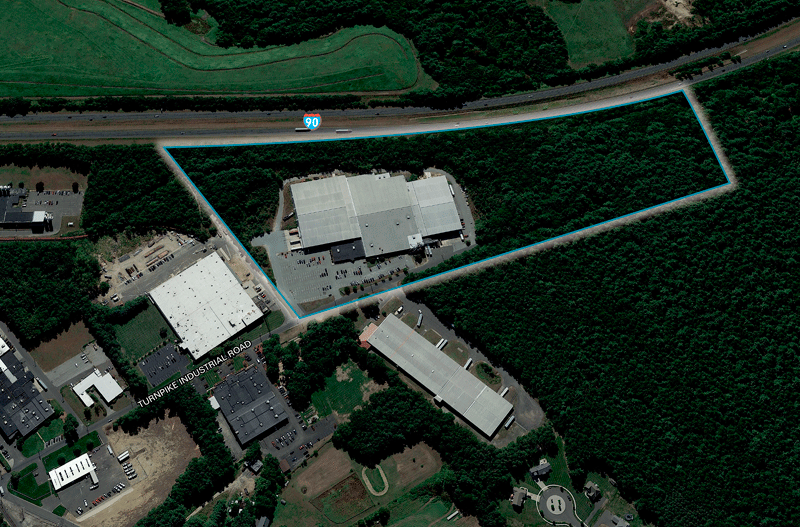
An aerial shot of 70 Turnpike Industrial Park Road in Westfield.
Michael Grossman says his New York-based firm, HMC Real Estate Partners, looks at several hundred properties in the Northeast corridor over the course of a year — at least a few per week, by his estimate.
When asked what prompts he and partners Barry Lefkowitz and Brendan Kolnick to move beyond looking — or well beyond, as the case may be — and make an addition to their growing portfolio of properties, he said there are a number of factors that go into that equation.
These include everything from that time-honored first consideration in real estate — location, location, location — to the condition of the property, the condition of the local market, demand for the type of real estate in question, and a host of other variables.
And every one of those boxes could be checked when it came to a property now marketed as 70 Turnpike Industrial Road, known to most as the National Envelope site, because that was the tenant there for a number of years before it vacated the property in 2015.
“We saw great potential for value creation,” said Grossman. “The project represents an excellent opportunity to turn a non-performing property into a productive asset for the community as well as our investors.”
Elaborating on this potential, Grossman noted that the property is located roughly a mile from Mass Pike exit 3 (you can almost see the highway from the property), and also has rail accessibility. What’s more, it has size (238,575 square feet) and flexibility in that it is suited for both production and warehousing, and is in good condition, especially following more than $1 million in work to the roof, replacement mechanical systems, and more.
Add in a strong market for manufacturing and distribution space, fostered by dwindling inventory, and a city eager to replace the jobs lost when National Envelope left the city, and it’s easy to see why HMC pursued the property and thus greatly increased its presence in the region.
Indeed, this is the company’s second major acquisition in Western Mass. in 2017; the other was the fully leased, 187,840-square-foot warehouse building in the Agawam Regional Industrial Park, home to OMG and Vaupel.
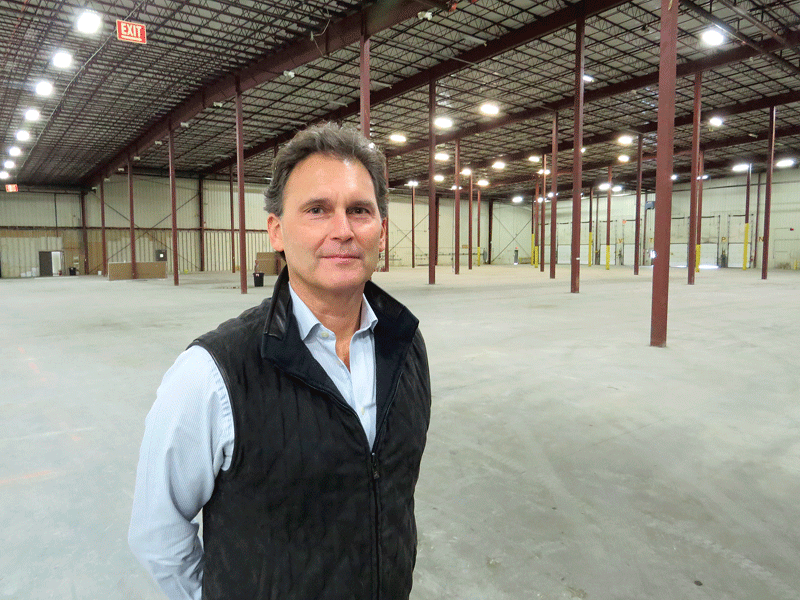
Michael Grossman says acquisition of the Turnpike Industrial Park property represents an opportunity to turn a non-performing property into a real asset for the city and the region.
The company also owns a large industrial property in New Jersey, and the portfolio now boasts nearly 1 million square feet of industrial and distribution facilities.
Grossman joined fellow industry veterans Lefkowitz and Kolnick in creating HMC in 2016, with Grossman and Lefkowitz both having left Mack-Cali Realty Corp., a public, multi-billion-dollar real-estate investment trust, to start their own company.
HMC focuses primarily on acquiring multi-tenant industrial and office-flex properties, Grossman explained, adding that the company had developed a strong working relationship with many of the top real-estate-services firms, including Cushman & Wakefield, which put the Westfield property on HMC’s radar and is now its agent.
The company’s principals saw a property that needed some work — there was a considerable amount of deferred maintenance — but also great potential in what would be a new role, that of home to multiple tenants.
And Grossman, as he offered BusinessWest a tour and pointed out its open spaces, high ceilings (up to 36 feet in some portions of the facility), and 12,000 square feet of office space, envisioned up to four tenants.
“We’re looking at assembly, manufacturing, and straight distribution,” he explained. “The building lends itself to manufacturing because of the extensive power.”
The logo created to accompany marketing materials for the property does an effective job of highlighting some of its many assets, especially that strategic location part.
Indeed, curving their way around a large ‘70’ (the street address) are four lanes of highway and some railroad track. The roadway is the Turnpike, obviously, the west-bound lanes of which are less than 100 yards from the back of the property. The railroad track signifies the potential to create a spur that would connect the property to a rail line running through the north side of the city. National Envelope never used rail service, but the potential is certainly there for future tenants to do so, Grossman said.
Potential is a word you hear early and often in reference to this property, and Grossman and his partners are confident that it won’t be long before this potential is realized.
— George O’Brien
For Sale, For Lease
A listing of available commercial properties in Western Mass.
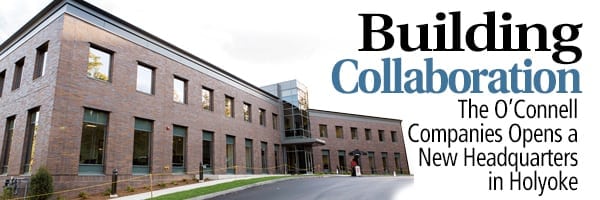
Building Collaboration
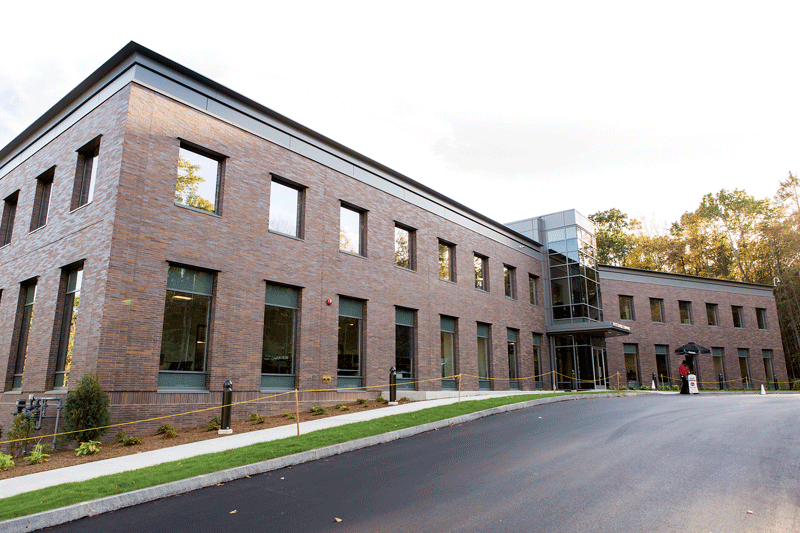
The O’Connell Companies has a new home in Holyoke (above), replacing the previous headquarters (below) of more than a century.
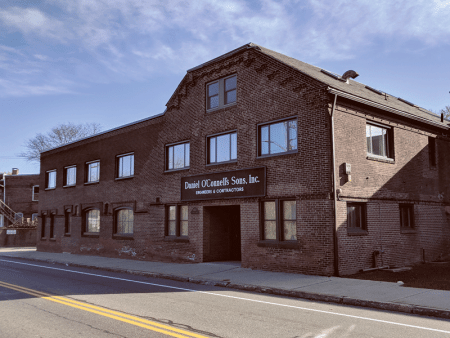
The O’Connell Companies traces its history in Holyoke back to 1879, when Daniel O’Connell founded the construction company that eventually branched into property design, management, development, and much more. For more than a century, the company was housed in limited quarters on Hampden Street, but a new headquarters on Kelly Way offers more space, amenities, and opportunities for what one of the firm’s executives called “cross-fertilization.”
In the conference room where Andrew Crystal sat down with BusinessWest recently, the only piece of artwork currently hanging up is a stylized, brightly hued BIM (building information modeling) image of the new headquarters of the O’Connell Companies, located on Kelly Way in Holyoke. On the opposite wall hangs a cutting-edge, multi-screen array for both displaying information during meetings and videoconferencing with other parties.
The room’s long, wooden table, however, is one of the only pieces brought over from the former O’Connell HQ on Hampden Street. The restored table represents some of the connective fiber between old and new that the company wanted its new home to represent, said Crystal, vice president of O’Connell Development Group.
“We’ve managed to incorporate some history,” he said, also referencing a set of century-old, meticulously handwritten balance sheets framed on the wall of another wing, where the accountants work. “The company does have a very long, interesting story, so we tried to preserve some of the history and the culture of the company. That was very important in the design of this.”
Otherwise, the new headquarters, situated on a seven-acre parcel in the woods off Bobala Road, is rife with modern touches, starting with the striking central atrium that connects the wings that house various divisions — O’Connell Development Group, Daniel O’Connell’s Sons (construction), Appleton Corp. (property management), and New England Fertilizer Co. (biosolids management).
The atrium is awash in natural light and features tables and chairs toward the back, along with a kitchen and coffee bar. “We wanted to create some space for people to mingle informally, share a meal or coffee break together, with the intent of getting to know each other and, more important, cross-fertilize, because everything we do is related,” Crystal said. “We design, develop, finance, build, and manage buildings, roads, and bridges — it’s all interrelated for me.”
One of the goals of the new building is to bring together all the company’s divisions under one roof; Appleton previously had its own space on Suffolk Street in Holyoke, while the Hampden Street facility that housed the others had long been insufficient.
“It was an old, tired building, and we had looked at renovating it,” Crystal said. “But, to continue to be a great work environment for present employees, but also with an eye toward the future, it made sense to move to a new location and to have everything under one roof. There’s nothing like being in the same building.”
Dennis Fitzpatrick, president and CEO of the O’Connell Companies, said as much when he addressed hundreds of visitors at a recent open house, noting that it’s been more than a century since the firm dedicated a new headquarters.
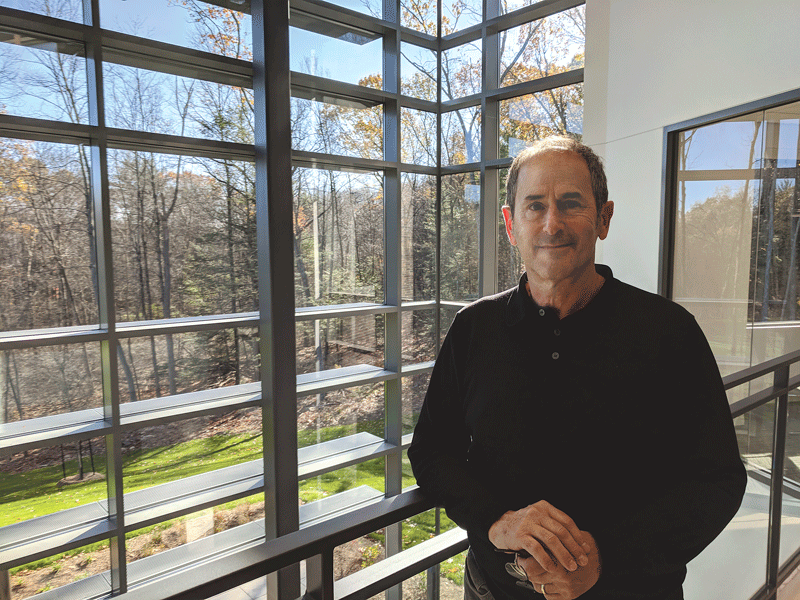
Andrew Crystal stands on the walkway overlooking the sunlit central atrium and the woods behind the property.
“When we started this project, our hope was that we could create a modern, contemporary office building where we could more effectively carry out our daily work,” he said. “We wanted improved functionality, a higher level of comfort, and we wanted a few more amenities. We hope that our new headquarters will cultivate a work environment that supports and further develops the spirit and cuture that has made this organization as successful as it has been for as long as it has been.”
For this month’s focus on commercial real estate, BusinessWest paid a visit to Kelly Way to check out the results of that effort.
Forward Thinking
The intent, Crystal said, was to house the company’s various divisions in a modern, energy-efficient, healthy environment. “We wanted to be conscientious about the environment in terms of energy efficiency and how we treated the land when we sited the building and took the trees down. And we wanted to preserve and enhance the corporate culture that exists here, which is why we created this atrium space in the middle of the building.”
He has heard of multiple incidents recently of long-time O’Connell employees meeting in person for the first time, which means the design is working.
“Part of the design is to create space and an environment that encourages people to collaborate and work together between companies,” he explained. “It was also done with an eye toward creating a great workplace for employees — not just the employees we have, but as an incentive to attract younger employees. Things like the atrium and a shared coffee bar, and a fitness room downstairs with showers — these are things that younger workers want, and it’s a competitive environment to attract talent.”
As for the subdued exterior of the building, Crystal said he had a specific vision for how the dark-bricked façade would interact with the woods around it.
“We wanted a brick building, but we wanted something that was more unique than red brick, that was an elegant blend with the surroundings,” he explained. “We went through quite a few designs, looking at various mixes of bricks. We’re very pleased with the result; whether it’s a bright, sunny day or an overcast, rainy day, the building really fits into the surrounding environment.”
The natural light that pours in from the building’s tall windows brings aesthetic appeal as well, but doubles as an energy-efficient element — one of many, he explained. “We chose not to get LEED-certified, but the criteria in LEED buildings drove a lot of the decisions around energy efficiency, water efficiency, quality of the air people breathe, and the views people have to the exterior.”
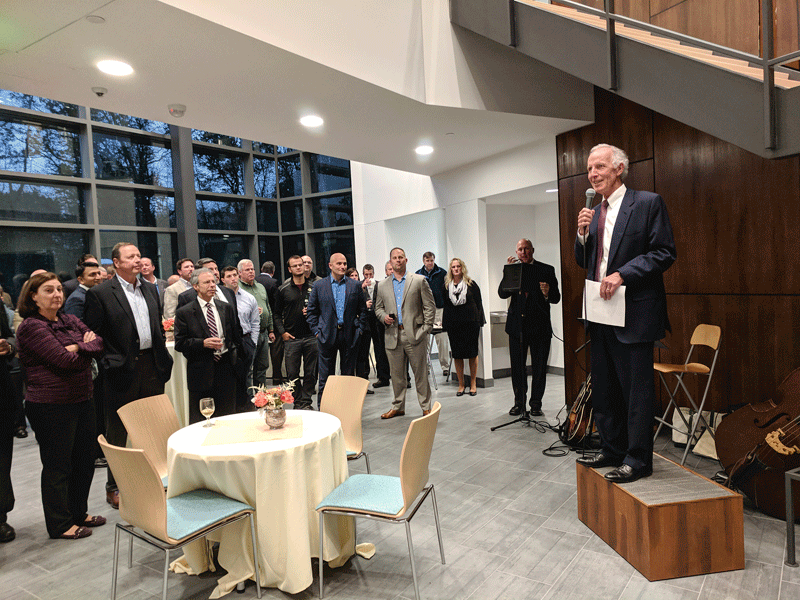
Dennis Fitzpatrick, addressing open-house attendees, said it was “high time” O’Connell’s own home reflected some of the modern design elements it was using in its clients’ projects.
For instance, he continued, “all the light fixtures are LED, and all are on occupancy sensors. We have a high-efficiency boiler for heating, and we have energy-recovery ventilation, so when air is exhausted from the building, we recover some of the energy from the air and reuse it.”
Crystal added that the environmentally friendly focus extended to the outdoors, where the building was positioned in such a way that preserved the more mature trees around its perimeter. The plan is to develop some walking trails through the wooded surroundings by next summer. For now, a large outdoor patio overlooks the grounds behind the atrium. “So if you’re on your laptop on a beautiful day, why not sit outside with the beautiful woods and do your work?”
A freshly installed bocce court is another way to help employees enjoy the outdoors during the warmer months, he added. “Again, we want to encourage people to stay after work and recreate and get to know each other. One of our goals is to create a sense of community among employees.”
Daily Impact
In short, Crystal and his development team — which included architectural firm Amenta Emma and a host of contractors and subcontractors from Western Mass. — are firm believers that a building’s design and environment affect both productivity and employee behavior.
“One goal was to encourage collaboration, innovation, and cross-fertilization,” he said, referring not only to the shared atrium, but formal conference rooms in each wing and the open layout of each division, with offices ringing a shared bank of workstations. Each wing also features a small, private room with a phone for employees in the shared space to make private calls.
A color palette heavy on light grays and whites, with a bold splash of blue ringing some walls, was designed to promote brightness and productivity, and the rainbows that occasionally appear in the glass and white-ash floors when the sun hits the atrium’s huge rear windows is “one of those unanticipated surprises,” Crystal noted.
“People seem happy,” he said. “I think the employees are happy to be here. Having a fun, modern, efficient environment to work in is an important piece of that.”
As the company’s president, Fitzpatrick certainly understands the importance of keeping everyone happy.
“Part of our culture is our people working together to come up with creative, innovative solutions to the challenges and risks that our company faces in our daily business,” he told the crowd at the open house.
“At the O’Connell Companies, we all care very deeply about the details,” he went on. “We care about what happens when plane X meets plane Y. We care about quality, and we care a lot about the feel, the sense that you have when you’re in a building, and I wanted this building to represent that. I wanted it to reflect the kind of quality that we hold ourselves accountable for when we go out and develop, build, and manage an asset for someone else. It was high time that our home reflected some of the ones that we were building.”
As Crystal walked BusinessWest past what’s called the Founder’s Room — a formal conference space on the second floor with a black walnut table built by Jonah Zuckerman of City Joinery in Holyoke — he reflected again on how the company’s history in the Paper City impacts how it does business today, and how its new headquarters fits into that history going forward.
“The real value this company has is its intellectual capital,” he said. “Yes, we own real estate, and we own equipment, but what makes the company unique is its intellectual capital, and by locating all our employees in the same building and actively promoting interactions and collaboration, I think the company benefits. That’s what we hoped to accomplish by relocating.”
Joseph Bednar can be reached at [email protected]
A listing of available commercial properties for sale, for lease
Go HERE to download the PDF

Shop Class
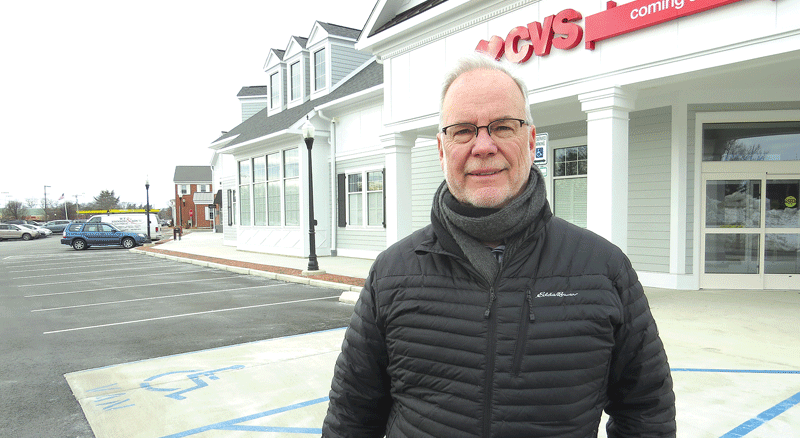
Steve Walker says the recently completed expansion at the Longmeadow Shops is an example of ongoing evolution at this retail destination.
The Longmeadow Shops recently completed an ambitious 21,000-square-foot expansion project, continuing a process of growth and evolution that has been ongoing for more than half a century.
Steve Walker says that, almost from the start, the Longmeadow Shops has had the location, the access, and a solid mix of retail that attracts both visitors and, well, more retail.
The ‘almost’ is because Interstate 91, or at least the Massachusetts portion of it, had not been completed by the time the shopping plaza, created at the east end of Bliss Road near the East Longmeadow line by Friendly’s co-founder S. Prestley Blake, opened its doors in 1963.
But even then, the location was still ideal, said Walker, partner and regional property manager for Grove Property Fund, LLC, current owner of what he called “a special piece of real estate.” That’s because the shopping complex is nestled in one of the region’s most affluent communities, sits less than a mile from the Connecticut border, and is a short ride from several other affluent suburbs, including East Longmeadow, Hampden, and Wilbraham.
I-91 simply made it more accessible, and therefore even more attractive, to a variety of retailers that are local, regional, and national in nature.
But the times have certainly changed since 1963, and the shops have changed right along with them, said Walker, citing, as examples, everything from the coming and going of Blockbuster Video to the eventual exodus of Friendly’s itself, to the demise of the Steiger’s chain of department stores, one of which was the anchor of the shops and left a gaping hole to be filled when it closed in 1994, coincidentally just a few days after Grove acquired the property.
“We got a letter two weeks after we bought the property informing us that Steiger’s was leaving,” he explained, adding that the roughly 20,000 square feet of space left vacant by Steiger’s, and other spots within the complex, have been filled in over the years, and in ways that reflect societal and retail changes.
Elaborating, he referenced developments such as gourmet coffee outlets (represented by Starbucks), specialty retail (as evidenced by several recent arrivals), and even the rise of the gourmet hamburger (embodied by the coming of Max Burger).
And the process of evolution continues today, Walker noted, citing, as exhibit A, the rise of pharmacy chains and the changing, growing needs of such enterprises.
Indeed, it was CVS’s dire need for more and better space (complete with a drive-up window and easier access) that gave rise to a recently completed, 21,000-square-foot addition to the plaza and expansion and redesign of its parking lot, said Walker.
Constructed after Grove eventually received the needed support for a zoning modification from residents at a town meeting (the process took a while), the expansion, at the east end of the property, welcomed its first tenant, J. Crew Mercantile, in late January. Verizon Wireless opened its facility just a few days ago, and CVS is expected to open its new doors on March 12, said Walker.
“It’s been a fun journey … it’s really rewarding to see our improved shopping center taking shape,” he said of the expansion effort, put on the drawing board in 2014, adding quickly that, while that project is nearing completion, the broader journey involving a constantly changing retail landscape continues.
For this issue and its focus on commercial real estate, BusinessWest takes an in-depth look at the Longmeadow Shops, the center’s evolutionary process, and how it is still ongoing.
More in Store
You might call it multi-tasking.
That’s certainly what Walker was doing as he left his office at the far west end of the shops for the walk — maybe a quarter-mile or so — to the addition at the other side.
He was getting some exercise (or more of it, to be exact; he’d already made this trek two or three times earlier in the day), posing (eventually) for some photos, giving a tour, serving up a chronology of the shops, and offering a tutorial of sorts on how retail has changed and the shops reflect those changes.

He started by pointing to Max Burger, created partially out of the old Blockbuster Video and what once was a small courtyard/garden at the shops. He cited that business as an example of an emerging trend in retail (the aforementioned gourmet burger), as well as a growing regional chain (Connecticut-based Max’s), a business that scouted several area locations before deciding the Longmeadow Shops was where the search would end, and a tenant that the shops would work to accommodate.
“We took out the garden area and put in a 1,500-square-foot addition because they needed more space than we had available at the time,” he explained, adding that there was a major expansion (roughly 12,000 square feet) to the shops in the ’70s, and several minor ones in the decades since.
The multi-tasking, and especially the lessons in the history of the shops and the evolution of retail, would continue as Walker passed the storefronts and occasionally stopped ever-so-briefly to make some points.
He did so at the former Steiger’s footprint to show how it was filled with the Gap and Gap Kids, Ann Taylor, and other shops; at Delaney’s Market, to point out another of the more recent arrivals, a store created by the owners of the Delaney House restaurant to provide high-quality meals to go; at Oksana Salon & Spa to show how there are many locally owned ventures at the shops; and at Starbucks to show how the arrival of one retailer can create momentum and attract other tenants.
“We had a CVS and a Blockbuster, and that caught the attenntion of Starbucks,” he explained. “And once we had a Starbucks, we attracted interest from the Gap, and when we got the Gap here … Ann Taylor and Chico’s would follow the Gap around.
“It’s like a domino effect — these national retailers tend to follow one another,” he went on. “And the goal from the start was to get the best local, regional, and national tenants we could find.”
Dialogue continued at the storefront that will soon house Great Harvest, a bread bakery and sandwich shop, to show that there is nearly constant change at the facility; and at the current CVS, to explain, well, why there will be a new CVS.
“We recognized that this was a busy shopping center and there were some parking issues, because of the way the lot was laid out,” he explained. We approached CVS, and there was interest from them; CVS is a very busy tenant, and they draw a lot of foot traffic, so you want them at the end of the shopping center. And they were undersized, and a community like Longmeadow should have a first-rate CVS pharmacy.”
It will get one with the new, 13,000-square-foot facility, which will nearly double the size of the current store.
Walker said the expansion of the shops was considered both a necessary step and solid investment for Grove, which owns retail properties — many of them similar in scope and even look to the Longmeadow Shops — in several states, as well as a number of industrial holdings as well.
The retail portfolio includes Old Towne Village in Charlotte, N.C.; the Wharf Building and the Corner Block, both in Edgartown on Martha’s Vineyard; Portside Center and Bowman Place in Mount Pleasant, S.C.; Drake Hill Mall in Simsbury, Conn.; and what would be considered an outlier — the Powder Horn Building in Bozeman, Mont.
There are pictures of many of those facilities on the walls of the Grove office in the Longmeadow Shops, which is considered one of the jewels in the portfolio, said Walker, because of its location, consistently high occupancy rate, and steady demand for the spaces that do become available.
This is evidenced by the fact that there is already considerable interest in the existing CVS space, which will likely be subdivided into two spaces.
“I’m waiting to hear back from a national retailer on 5,200 square feet of it,” he said, adding that he doesn’t expect any of that space to be vacant for very long, even as Grove searches not just for a tenant, but one that will help create an even better mix.
Space Exploration
As he walked back to his office, thus getting still more exercise, Walker said the owners of the Longmeadow Shops have now filled out all the land available to them.
But the process of evolution and change within that footprint will continue unabated, he said, because society and retail are always changing, as anyone who has ever been in a Blockbuster Video can attest.
It has been this way since 1963, when S. Prestley Blake had a vision, he said, and it continues to this day, because now, as then, this is a truly special piece of real estate.
George O’Brien can be reached at [email protected]
Developing Interest
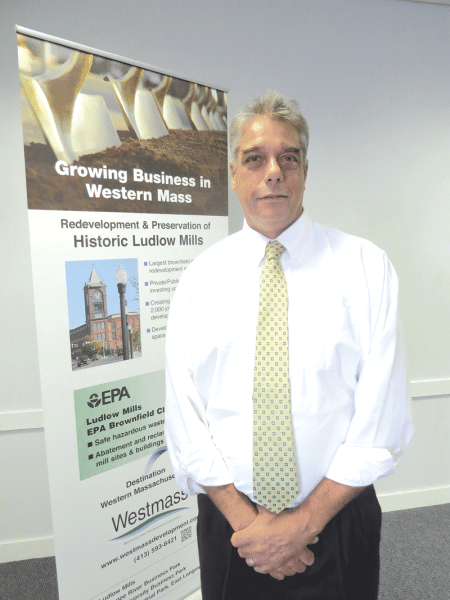
Eric Nelson
As Eric Nelson takes the reins at Westmass Area Development Corp., the agency’s ambitious Ludlow Mills project, which features economic-development opportunities on several levels, is entering an intriguing new stage. Meanwhile, Westmass is moving aggressively to answer the question ‘what’s next?’ — meaning everything from development of new sites to creation of a development-services arm to provide technical assistance to area cities and towns.
While he was pursuing his master’s degree in landscape architecture at UMass Amherst, Eric Nelson developed a keen interest in land planning and economic development, and eventually wrote his thesis on the adaptive reuse of historic mills.
Specifically, his work concentrated on the town of Uxbridge in the Blackstone River Valley south and east of Worcester, and several mills that had drawn the attention of the National Park Service, which would eventually create a national heritage corridor in the area marketed under the slogan “Birthplace of the American Industrial Revolution.”
One of Nelson’s focal points was the famed Stanley Woolen Mill in Uxbridge, which had a long history of manufacturing military uniforms, including those worn by Union soldiers during the Civil War. His work involved making recommendations to the park service on where and how to invest resources for this heritage corridor. It was rather involved work with many key considerations.
“You were looking at factors such as access, transportation, recreation, the integrity of the buildings, the opportunity for tourism, the opportunity for economic development, and much more,” he explained.
Fast-forward 25 years, and Nelson is tackling these very same issues again — this time on a much different stage and with much different stakes.
Indeed, as the recently named president and CEO of Westmass Area Development Corp., Nelson is overseeing a project with striking similarities to what he encountered in Uxbridge — the ongoing efforts to revitalize the Ludlow Mills, which Westmass acquired in 2011.
This initiative blends elements of economic development, which comes in many possible forms, as we’ll see, as well as access and recreation (a riverwalk is being created), and repurposing of a wide array of different buildings on the property.
“There are many similarities between the Blackstone Valley and Ludlow Mills — and a host of other mills in this region,” he explained. “In many instances, they’re on a river, and in a lot of cases, they’re brownfield sites; there are a great many challenges to reuse of these properties.”
But Ludlow Mills is only one piece of the Westmass portfolio, and one aspect of Nelson’s work to increase the agency’s presence in the region and its impact on overall economic development.
There are other properties to be developed, he told BusinessWest, including the Chicopee River Business Park, which has been a lingering source of frustration for Westmass and remains mostly vacant two decades after it opened. But Nelson sees reason for optimism.
“It’s a great location — it’s only two minutes from the Mass Pike, and it’s right off Route 291,” he said, adding that Westmass is considering a change to its strategic focus on the property, with a shift toward attracting potential suppliers to CRRC MA’s subway-car-manufacturing facility, now taking shape less than mile down the road.
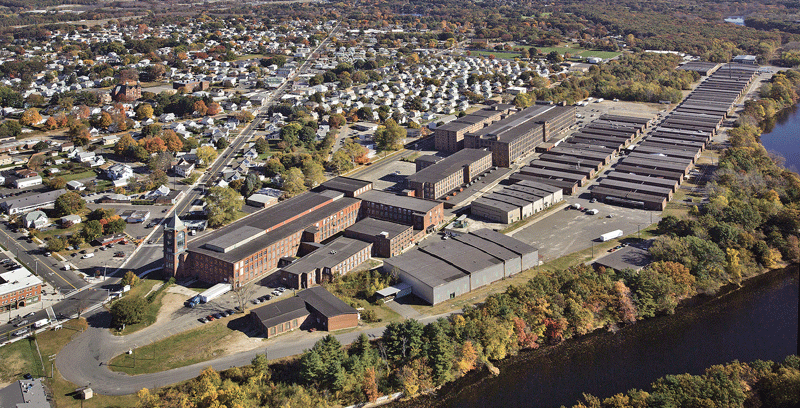
This aerial shot of Ludlow Mills shows the many different elements to this project — from mill redevelopment to river access to green acreage.
Beyond development of its properties, though, Westmass has become more aggressive, if that’s the right word, in efforts to become a resource for other agencies and entities involved in economic development, he noted.
As an example, Nelson cited the ongoing efforts to revitalize the property on Race Street in Holyoke known as the Cubit, because it takes that shape. This project has a number of players, he went on, including the state, the city, Holyoke Community College (which is relocating its culinary arts program there), and private developers. Westmass, and specifically now-former President and CEO Kenn Delude, has been lending technical assistance to bring the initiative together.
“We’re putting together what we call a development-services side of the house,” he explained. “A lot of area towns have resources, but they don’t have the staff; we can be of assistance to them with various development projects.”
For this issue and its focus on commercial real estate, BusinessWest talked at length with Nelson about his vision — for Westmass, Ludlow Mills, the Chicopee River park, and much more, and how he intends to bring it all into focus.
View to the Future
As he talked with BusinessWest in the conference room at the facilities housing Westmass at Westover Metropolitan Airport, Nelson paused to reference a stunning aerial photo of the Ludlow Mills project on one wall.
As he talked, his hand moved over various components of the project — from the land where the new HealthSouth Rehabilitation Hospital of Western Massachusetts now sits (the photo is several years old) to the mill that Winn Development will soon be converting into senior housing; from the so-called Clock Tower building, for which Winn recently announced an ambitious mixed-used project, to the dozens of small block houses, some of which have since been razed; from the intended path of the riverwalk to 47 acres of undeveloped land on the property that constitutes still another key component of the initiative.
The exercise was effective in communicating everything from the importance of the project to the region to what it represents as a career opportunity.
“This is an extremely interesting project with lots of elements and moving parts,” he said. “And it’s significant on many levels — for the town, for the region, for job creation … it’s great to be part of this.”
Nelson, who came to Westmass in 2011 specifically to move the Ludlow Mills project off the drawing board, brings to his new assignment a broad résumé of job experience, with stints in everything from education to landscaping.
He started as a public-school teacher in Amherst, a job he eventually lost to budget cutbacks, and then went into business for himself in landscape construction, specifically the installation of patios, walkways, decks, and other features.
It was that work that eventually took him to UMass and pursuit of his master’s degree. After earning it, he went to work for SVE (Southern Vermont Engineering) Associates, a professional consulting firm specializing in engineering, surveying, and landscape architecture, rising in the ranks to senior project manager and director of the Greenfield office.
He was attracted to Westmass, and a vice president’s position there, specifically by the Ludlow Mills project, which appealed to him on a number of levels, but especially the promise to exercise many of his passions — from landscape architecture to economic development — in one project.
“Westmass was looking for someone to carry the vision out,” he explained. “And the job requirements meshed well with my background, talents, and interests.”
As president and CEO of Westmass, Nelson will see his time and energy parceled in several different directions — geographically and otherwise.
Indeed, the agency owns industrial parks in Agawam, East Longmeadow, and Hadley that are full or mostly full, and Chicopee River, which remains a mostly blank canvas, but one Nelson believes could finally become filled in.
One area has already become home to a solar farm, he explained, and efforts to make a parcel near Route 291 more visible from the highway should generate some momentum.
“I think that will generate a lot of interest because people driving by there don’t realize they can site their building there,” he said of that site work. “And I think that if we can get one company in there, others will follow.”
But Ludlow Mills is getting most of the headlines — and the bulk of Nelson’s attention at the moment.
Winn’s Clock Tower building project comprised the main announcement at the recent Developers Conference staged by the Economic Development Council of Western Mass., and many other components of the project are coming together.
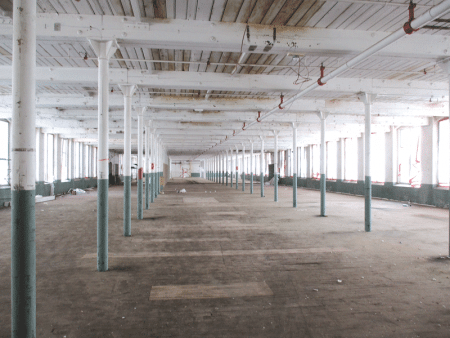
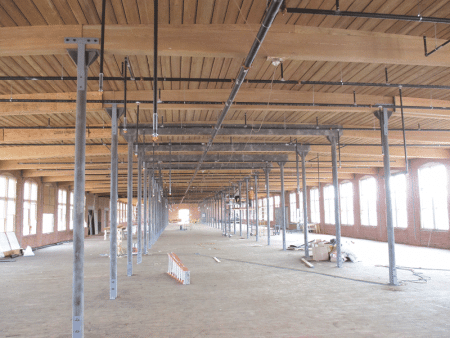
These before-and-after photos show progress being made in the work to convert one of the Ludlow Mills structures into senior housing.
The property is no longer a brownfields site from a technical standpoint — most all contaminants have been remediated — and extensive infrastructure work, including new water and sewer connections, have made the complex far more appealing to developers.
Overall, the site has enormous potential for many different kinds of development, from the senior housing already taking shape to manufacturing, office, and even retail, he explained, adding that, with its various structures and green spaces, it can handle the needs of growing enterprises.
“We have small spaces that startups can rent,” he explained, “and when they get to the point where they need a manufacturing facility, we have the opportunity to offer them a piece of property they can build on.”
Ludlow Mills is roughly five years into a 20-year redevelopment effort, said Nelson, adding that the ongoing challenge is to determine the best uses for various properties moving forward, and facilitating efforts to develop them.
As one example, he returned to the aerial photo and pointed to one of the mills, this one with low (seven-foot) ceilings, which will ultimately make redevelopment quite challenging. Perhaps the best course for that structure is to raze it and create parking for other projects, he explained, adding that this is one of many decisions that will have to be made in the years to come.
Building Blocks
As he talked about Ludlow Mills, Nelson said this project wasn’t yet on ‘auto pilot,’ a phrase he used to describe a point where most pressing issues have been resolved and matters come down to attracting the development community to the property.
But it’s getting close.
And that means more of the agency’s time and energy can be put toward the intriguing question of what comes next.
There are many components to that answer, said Nelson, who started by saying that this region will soon have more inventory of land and properties to develop.
That’s because absorption of existing buildings, a trend (one less expensive than building new) that emerged and then accelerated in the years following the Great Recession, has continued unabated. And that inventory is dwindling.
“The economics of building new were not going to pencil out, because people were able to go buy an existing building at a big discount,” he explained, adding that this fundamental shift in many ways inspired a change in strategies at Westmass, one that prompted a unique project like Ludlow Mills rather than additional industrial-park development.
Go HERE for a listing of available Commercial Real Estate properties for sale and lease in Western Mass.
But if the pendulum isn’t already swinging back, it’s apparent that it soon will, to one extent or another, he went on, adding that, while the green space at Ludlow Mills can address some of the additional demand that will emerge, more land will be needed, for projects of all sizes.
“We’re at a curve in the road,” Nelson explained. “We need to plan ahead, and we need to start aggregating sites and getting sites ready, knowing that it takes three years to get them ready for building.”
He didn’t give any specifics about where the agency is currently looking for land that could be aggregated, but did say the search is on, and, as in years past, it will be undertaken with diligence and imagination.
Meanwhile, another answer to what comes next is that aforementioned development-services arm, which Nelson believes holds vast potential — for Westmass, but especially the region and individual communities.
He circled back to the Cubit project, and Holyoke Community College’s request for Westmass’ support, as an example of what’s possible.
“The leaders at HCC do what they do well — they run a college,” he explained. “But this is not their area of expertise, so they turned to us for help in deciding which building to go into, finding an architect, negotiating a lease, and, more importantly, going for grant funding.
“This meshed well with our skills and talents, and it’s job creation,” he went on, referring to the opportunities awaiting graduates of the culinary arts program. “I see this as a model that Westmass can develop for towns that don’t have staff.”
Milling About
Nelson admits that he pretty much lost track of his master’s thesis subject, the Stanley Woolen Mills. He did some research, though, and reported that progress was being made in redevelopment of those landmarks for new uses.
He has his own project to keep tabs on now, one that is in many ways similar to those Blackstone Valley initiatives, and in all ways important to the future of this region.
What was once a project undertaken in pursuit of a degree is now essentially his life’s work, a project that is well, a textbook example of generating economic-development activity.
George O’Brien can be reached at [email protected]

Building Momentum
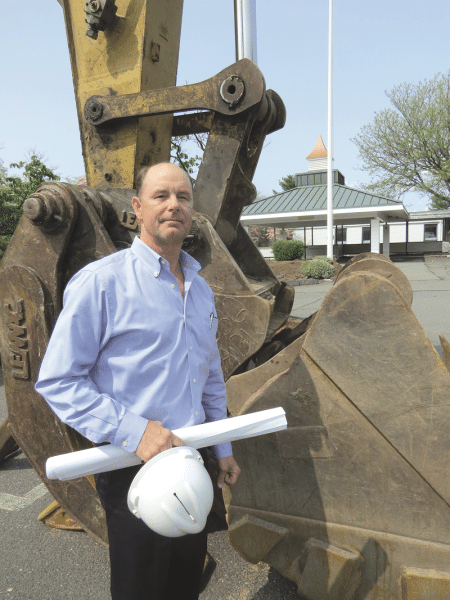
Ken Vincunas stands near the bulldozer that will soon take down the Clarion Hotel & Conference Center, which will become the site of additional office facilities.
Over the years, Agawam-based Development Associates has steadily grown its portfolio to more than 2 million square feet of space under management. Behind those numbers are some intriguing new projects, including additional development just off I-91 in Northampton at the former Clarion Hotel & Conference Center property.
The walls of Ken Vincunas’ office in Agawam Crossing, the property his company built on Silver Street, are covered with photos that he and his daughter have taken in Italy, Spain, and other travel destinations over the past several years.
The front lobby of that space is another matter. The photos there feature landmarks of a different kind, specifically some of the properties Development Associates has built over the years and now manages. There’s one of the Greenfield Corporate Center, for example, as well as 8 Atwood Dr. in Northampton, one of two 40,000-square-foot buildings at that site, known collectively as the Northampton/I-91 Professional Center.
The list of properties, and collection of photos, has grown steadily over the years, said Vincunas, adding that the goal has always been to achieve smart growth when it comes to the portfolio — and thus cover more wall space — through new ventures with sound potential.
And if things go as planned, Development Associates may need to buy some more frames in the months and years to come.
Indeed, the company, which currently has roughly 2.1 million square feet under management in Western Mass. and Connecticut, is mulling additional opportunities at the Atwood Drive complex, if you will, including the former Clarion Hotel & Conference Center, which is set to be demolished.
Permitting has been obtained for 120,000 square feet of new buildings on the north side of the property, across from the two existing 40,000-square-foot structures — 8 and 22 Atwood Dr., respectively, said Vincunas.
But depending on how, and what type, of demand emerges, plans could change, and the site might instead be used for two 60,000-square-foot business facilities.
“We have something permitted, but there is a lot of flexibility with that site, and a number of potential uses,” he said, adding that the picture will likely come into focus over the next several months.

Located just off the junction of Route 291 and the Mass Pike, the former Dow Jones warehouse is now part of the Development Associates portfolio.
Meanwhile, Development Associates recently acquired the 80,000-square-foot former warehouse property operated by Dow Jones on First Avenue in Chicopee. Located just a few hundred yards from where the Mass Pike and Route 291 come together, the site is easily accessible and well-suited for distribution and manufacturing uses, said Vincunas, adding that there has already been significant interest expressed in the site from a variety of potential users. The company also completed a purchase/leaseback of two buildings at Westover owned by Ethos Energy.
For this issue and its focus on commercial real estate, BusinessWest talked with Vincunas about his company and its ongoing efforts to expand its portfolio of properties — and opportunities.
Success Stories
As he talked with BusinessWest at the Clarion site — just a few feet from the then-idle bulldozer poised to start tearing down the long-time Northampton landmark, which was home to the restaurant Page’s Loft and many other names over the years — Vincunas pointed in a few different directions on the parcel as he talked about what could happen there next.
Click HERE for a listing of available commercial properties
He said the property, owned by Atwood Partners, an entity whose partners include members of both the O’Leary and Shumway families (the latter has owned or developed a number of hotels in the Amherst/Northampton area), has a variety of possible uses, and a tentative plan has emerged.
It calls for a smaller hotel, a restaurant, and a four-story, 80,000-square-feet office facility slated to be built on the site of famous (or infamous) domed pool on the Clarion footprint. A sign now appears in front on the property announcing that the space is for lease.
But the hotel market is becoming more crowded, he said, noting a number of recent additions, including a new facility less than a mile away on Conz Street. So a hotel may not be in the cards.
Additional office space — an expansion of the professional center complex — certainly is, though.
The planned 80,000-square-foot structure is being described as ‘professional and medical space’ — there are plenty of both types of businesses at 8 and 22 Atwood Dr. — with spaces from 2,500 square feet all the way up to 70,000 (essentially the entire building) available. It would be built on a parcel that would make it very visible from I-91, and just a few hundred yards from exit 18 off that highway.
“It would be pretty much a landmark right off the highway when it’s done,” Vincunas noted.
But development of such large properties hinges on signing one or more large, or anchor, tenants early enough in the process to justify construction, he noted, adding that the days of spec building are long over in this market. (Clinical & Support Options is an anchor at 8 Atwood Dr., while Cooley Dickinson Hospital is an anchor in both existing structures).
“In order to move forward with a venture of that magnitude, you need to have some pre-leasing on a major scale,” he explained. “And there just aren’t that many of those anchor tenants out there — they’re getting harder to find.”
He is conducting an ongoing hard search at the moment, and already has a few solid leads.
If enough demand materializes, the plans for the site may be altered to feature two 60,000-square-foot buildings, he told BusinessWest, adding that there is ample parking on the site to support such development.
While efforts to secure anchor tenants for the planned Northampton development continues, the company continues work to add tenants to existing properties, said Vincunas.
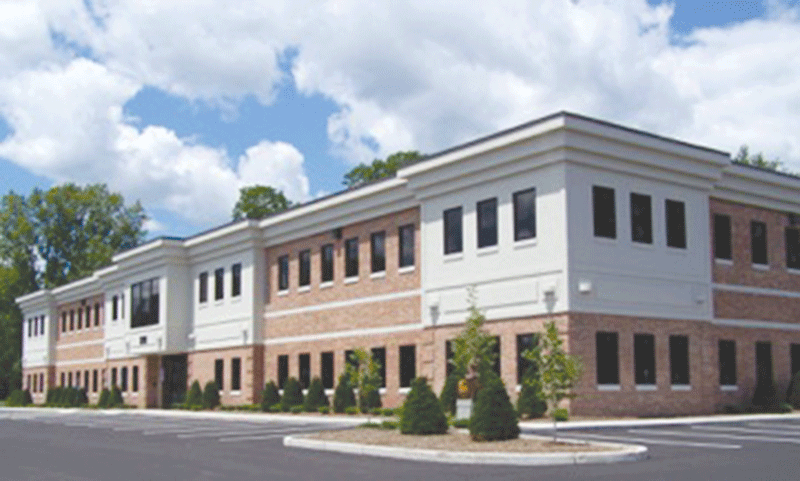
Agawam Crossing, now home to an eclectic mix of businesses, is at full occupancy.
And there are many of them, scattered across Hampden, Hampshire, and Franklin counties and into Northern Conn. The portfolio is diverse, and includes everything from what’s described as ‘industrial/flex/technology space’ in South Deerfield, now available for leasing, to ‘flexible automotive space’ at property on Palomba Drive in Enfield, Conn. — 8,000 square feet of space is available — to the 145,000-square-foot Greenfield Corporate Center, home to a number of businesses and agencies.
One of them is the Greenfield District Court, which is scheduled to relocate soon to new space downtown and become part of ongoing revitalization efforts in that central business district. That will leave Development Associates with a large vacancy to fill; however, Vincunas is confident that, with the momentum now evident in Franklin County’s largest community, the building will gain new tenants.
“This is an excellent office park setting, and we have a great deal of flexibility with the property,” he said, adding that the space is ideal for a call center, medical facility, education, and other uses.
Meanwhile, the Chicopee property represents an intriguing addition to the portfolio, he said, adding that the property has been underutilized, and could be an attractive option for businesses across several sectors of the economy, given its strategic location.
“With such a great location and a good quality building, we could either take on multiple tenants or try to get a single tenant for the whole building,” he noted. “We’re entertaining a number of proposals to try and maximize the use of that building.”
Bottom Line
Development Associates recently moved into its own new space in the Agawam Crossing building, joining Comcast Spotlight and physicians affiliated with Mercy Medical Center as recent tenants.
The company has about 2,000 square feet, with a number of private offices, a large business hub, and a sizable front entranceway that has plenty of wall space.
That’s a commodity that will surely be put to use as this company continues to expand its portfolio with new properties that are suitable for a variety of tenants — and for framing as well.
George O’Brien can be reached at [email protected]
Landmark Development

Peter Picknelly outside Hubbard Hall.
Peter Picknelly calls it the right property — and the right project — at the right time. He’s referring to Historic Round Hill Summit, a luxury-apartment complex being created at the former Clarke School for the Deaf complex in Northampton, an initiative that will bring the past, present, and future together in intriguing fashion.
Peter Picknelly says he understood, when he submitted what would eventually become the winning bid for the former Clarke School for the Deaf property in Northampton, that there would be some significant challenges standing in the way of developing the various buildings on the campus for commercial and residential purposes.
As things turned out, he didn’t know at the time just how stern those hurdles would be. But he told BusinessWest that those challenges are the same things that make the property — and his project — so unique and attractive.
Indeed, this complex of buildings is historic — Calvin Coolidge, the nation’s 30th president, and before that, governor of Massachusetts, and before that, mayor of Paradise City, once lived in one of the buildings — and most of the structures are a century or more old. Meanwhile, the views of the surrounding area are stunning, and Northampton’s eclectic, bustling downtown is about 10 minutes away by foot.
The challenge? Blending the old (while at the same time preserving it) with the new, as in modern amenities and liveability in the luxury apartments that Picknelly and several partners will carve out of two former classroom buildings.
The preserving part of that equation is the most demanding, said Max Hebert, project manager for this $10 million endeavor, noting that these two properties, Hubbard Hall and Rogers Hall, like most others on the campus, are on the National Register of Historic Places — which means each nuance of the plans must be approved by the National Park Service before work can proceed.
“That process in itself was very complicated and very lengthy — it was an educational experience and it took much longer than we thought,” said Picknelly, but overall, work is progressing on an ambitious project that be believes represents the right product at the right time, and in the right location.
The Clarke School property has a number of unique buildings being converted for residential and commercial development.
“Apartment living is becoming increasingly popular — people want to get out of their home and live in a vibrant community,” he said, noting that it has become an attractive option for both young professionals and empty nesters looking to downsize but still enjoy luxury.
As for the location, he said it’s ideal for both of those constituencies he described. Northampton is one of the region’s most walkable communities, and Historic Round Hill Summit is just minutes from a bike trail, Cooley Dickinson Hospital, Smith College, and everything downtown has to offer.
“The location is ideal, and there’s nothing else on the market like what we’re going to build here,” he said. “We think it’s an incredible mix.”
For this issue and its focus on commercial real estate, BusinessWest takes an in-depth look at that mix and how Picknelly and his partners are writing an intriguing new chapter to the already-rich history of this property.
Taking Things to New Heights
Picknelly, CEO of Peter Pan Bus Lines and the third-generation owner of that Springfield-based company, has — like his grandfather and father before him — always been entrepreneurial.
He’s picked up several businesses over the past few decades, with Springfield’s iconic Fort Restaurant, which he acquired with several partners from the Scherff family in 2014, the latest example. And, again, like his father, who famously acquired Monarch Place in 1994, he has been an aggressive player in the commercial real-estate realm.
He was a player in the bid to locate a casino in Springfield’s North End, on the Peter Pan property and adjoining parcels, for example, and the Opal Real Estate Group, which he also owns, is advancing plans to convert the former Court Square Hotel property in Springfield into a mixed-use complex blending retail, office space, and market-rate housing.
Max Hebert is seen here outside Rogers Hall, phase two of the Historic Round Hill Summit project.
The plan for Historic Round Hill Summit is much the same, but the project is moving forward more quickly, with one of the old Clarke structures, Coolidge Hall, already home to several commercial tenants, and phase one of the ambitious residential component of the work already underway.
That would be the renovation of Hubbard Hall into 22 apartments — a mix of studio, one-bedroom, and two-bedroom units — which should be ready for occupancy by summer.
As he offered a hard-hat tour of the work in progress at the 36,000-square-foot Hubbard Hall, Hebert talked about that challenge of enabling the historic elements of the property to co-exist with modern needs, building codes, and a focus on energy efficiency.
As an example, he pointed to the windows — specifically a few in one unit that offer views of downtown Northampton and the Holyoke Range well beyond.
They are large (eight feet in height), in keeping with the original design, but the glass being looked through is an energy-efficient, double-paned product.
“You still have the historic charm of the window, but you don’t get the cold draftiness,” he explained, adding that, whenever possible, the historic integrity of the property has been maintained.
Beyond the windows, there are many other examples of maintaining many of the original historic features, said Hebert, who listed everything from the chalkboards that graced the classrooms to the wood trim; from fireplaces to the original Clarke School president’s safe.
But the past will also be blended with the present and even the future in the form of transitional-style fixtures, granite and quartz countertops, in-unit laundries, energy-efficient heating and cooling systems, and a commodity that has become a luxury item in Northampton — on-site parking.
All this comes with a steep price. Indeed, these units represent the very high end of the luxury-apartment market, with units going for between $1,500 and $2,900 a month.
Picknelly believes there is sufficient demand for such a product, and the early levels of interest, and even a few deposits on units, would seem to bear that out.
“We believe there is going to be a solid market for these units given the location, the views, the amenities — the whole package,” he said, listing professionals at Smith College, Cooley Dickinson Hospital, and other companies, as well as the growing number of retirees eyeing Northampton as a suitable landing spot, as potential tenants.
The Final Word
Time will tell if he’s on target with that assessment, and if Historic Round Hill Summit becomes a sound investment.
But, at the moment, Picknelly believes he has a winning proposition.
And in a nod to Calvin Coolidge and his legendary frugality with words, Picknelly was brief and to the point when asked if he was optimistic about the next life for this historic property.
“Absolutely,” he replied.
George O’Brien can be reached at [email protected]
For Sale, for Lease
Click HERE to go to a PDF of available commercial properties in Western Mass.