Home Archive by category Sections (Page 17)

Sections

Features Special Coverage

Analysis of a Crisis


Keith Fairey says the housing crisis gripping the region, the state, and many parts of the country didn’t happen overnight.

“We got here over decades of underinvesting in housing production nationally, and not tuning that production to the needs and demographic changes of communities,” Fairey, president and CEO of Springfield-based Way Finders, noted as he summed up the problem succinctly yet effectively, before noting that a resolution to the matter won’t come overnight, either.

But, in many respects, the state — and this region — don’t have a lot of time, said Fairey and all those we spoke with on this matter, because that word ‘crisis’ is not hyperbole.

It’s real, and it’s a crisis — often called ‘the affordable housing crisis’ — that has a broad impact: everything from increases in homelessness to a decline in the overall health and well-being of the region (housing is a key social determinant of health); from a stifling of growth in cities and towns (many of which stand to benefit from a COVID-induced desire among some to leave larger metropolitan areas for a more rural place to work remotely) to a competitive disadvantage for the region and the state when it comes to business and economic development.

Indeed, employers across all sectors are trying to attract and retain talent, and their assignment is made that much more difficult if qualified applicants can’t find affordable housing. Or any housing.

“One of the things we have to do is make sure Massachusetts remains a competitive state for years to come, and one of the main indicators of whether you are competitive is ‘can people afford to live in this state?’” said state Sen. John Velis, a member of the Senate’s Housing Committee who represents the 4th Hampden District, which includes the gateway cities of Westfield and Holyoke and parts of Chicopee, as well as West Springfield, Agawam, Easthampton, and several other communities. “And the real demographic that scares me is the 20- to 35-year-olds, those who are just getting started; to that extent, that we’re having a lot of outmigration.”

Elaborating, Velis, among others, said the housing crisis involves every level of housing and many different constituencies, from renters facing steep hikes in what they have to pay every month — with many now totally priced out — to homeowners and would-be homeowners facing both shortages in every price range and prices that have skyrocketed, due mostly to those shortages of inventory.

And the situation has only been exacerbated by mortgage rates — now approaching 8% — that are prompting homeowners to stay where they are and pay 2% or 3%, rather than trade up or scale down (in the case of retiring Baby Boomers), leaving fewer starter homes and houses in the middle price range.

“We got here over decades of underinvesting in housing production nationally, and not tuning that production to the needs and demographic changes of communities.”

The full extent of the housing crisis in this region is spelled out in the Greater Springfield Housing Study, undertaken in conjunction with the UMass Amherst Donahue Institute, said Fairey, noting that it showed a housing-supply gap of 11,000 units in the Pioneer Valley projected for 2022, expected to grow to 19,000 units by 2025 “if we don’t do something.”

In most respects, the crisis comes down to the simple laws of supply and demand, said those we spoke with. There is more demand than supply, and there has been for some time.

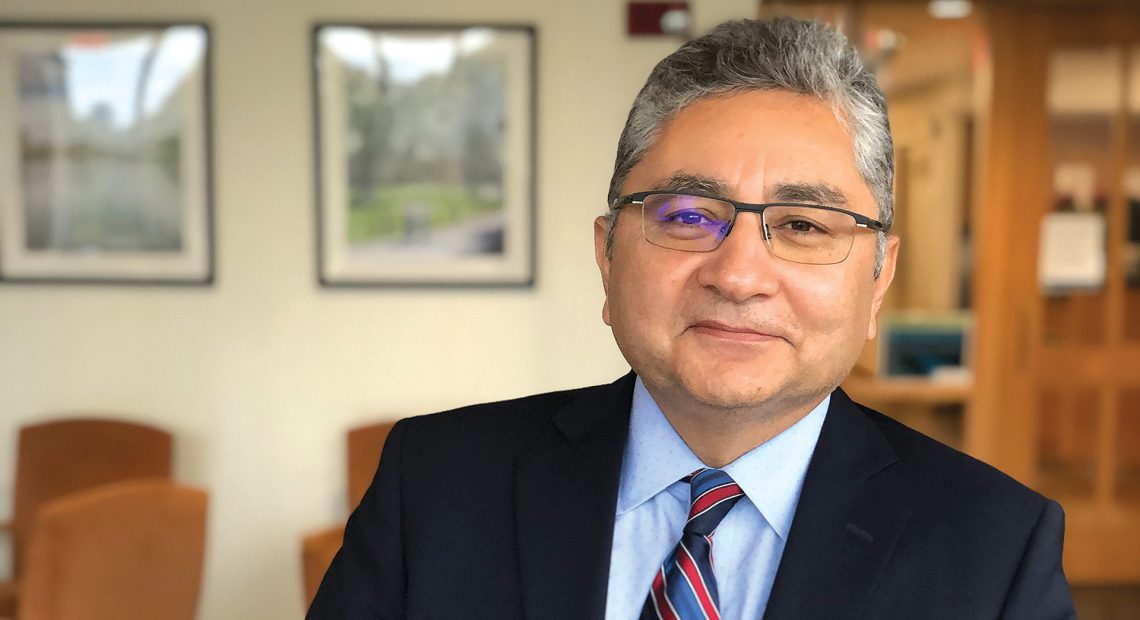
Keith Fairey

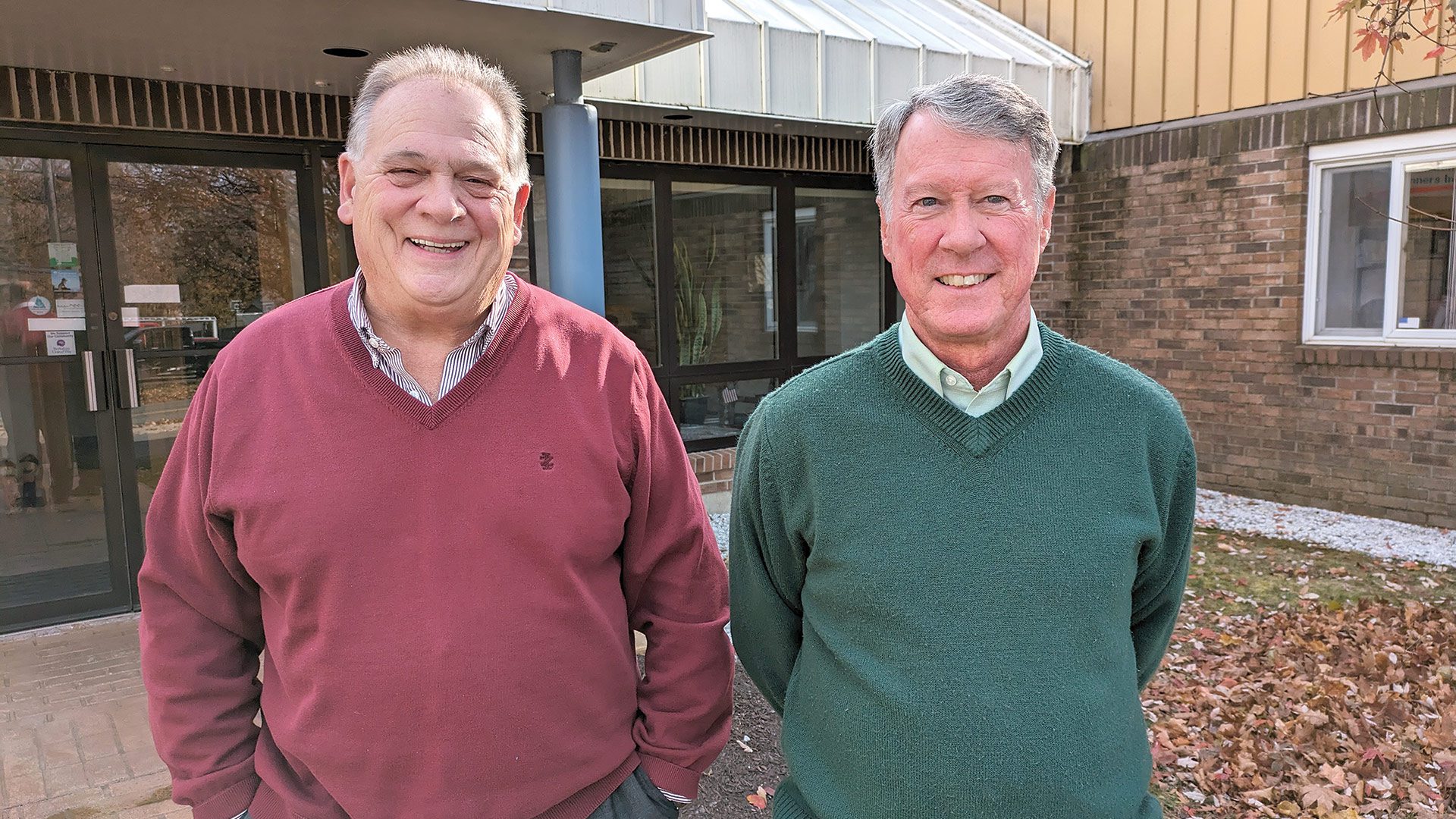
Keith Fairey says the housing crisis has been years in the making and results from several factors, including a lack of investment in new housing.

Creating more supply is challenging on many levels. Developers must be incentivized to build housing across all categories — not just at the very high and lower ends, said Velis, adding that municipalities must adjust their zoning laws to accept more housing, and these cities and towns, and those who live within them, must do more than support more housing anywhere but in their communities (more on that later).

All those we spoke with point to a pending housing bond bill as a huge factor in efforts to stem the crisis and start the pendulum swinging back when it comes to those laws of supply and demand.

The last such bill, passed in 2018, totaled $1.8 billion for what Fairey called a “market basket of programs,” including initiatives to create more workforce housing, supportive housing, public housing, and other types of inventory. This bill needs to be even bigger, he said, adding, “this is a critical moment for the state.”

“We have to make sure that this housing bond bill that we do is large enough, robust enough, expansive enough to really, really start to push back, to really build units, and to deal with all components of the housing crisis.”

Velis agreed. “We have to make sure that this housing bond bill that we do is large enough, robust enough, expansive enough to really, really start to push back, to really build units, and to deal with all components of the housing crisis,” he said, adding that there is not likely to be another housing bond bill for some time. “It has to be all inclusive to all of the challenges.”

For this issue, BusinessWest takes an in-depth look at the housing crisis, how we got here, and what needs to happen now.


The Pressure Is Building

As he talked with BusinessWest, Velis, was preparing for deployment as a National Guardsman in ongoing efforts to assist at shelters and hotels in various communities as the state struggles mightily with an influx of migrants.

Gov. Maura Healey declared a state of emergency during the summer because of the strain on the shelter system, and on Aug. 31, she activated up to 250 members of the National Guard, with Velis, a veteran of the U.S. Army Reserves and the only Guardsman currently serving in the state Legislature, being one of them.

John Velis

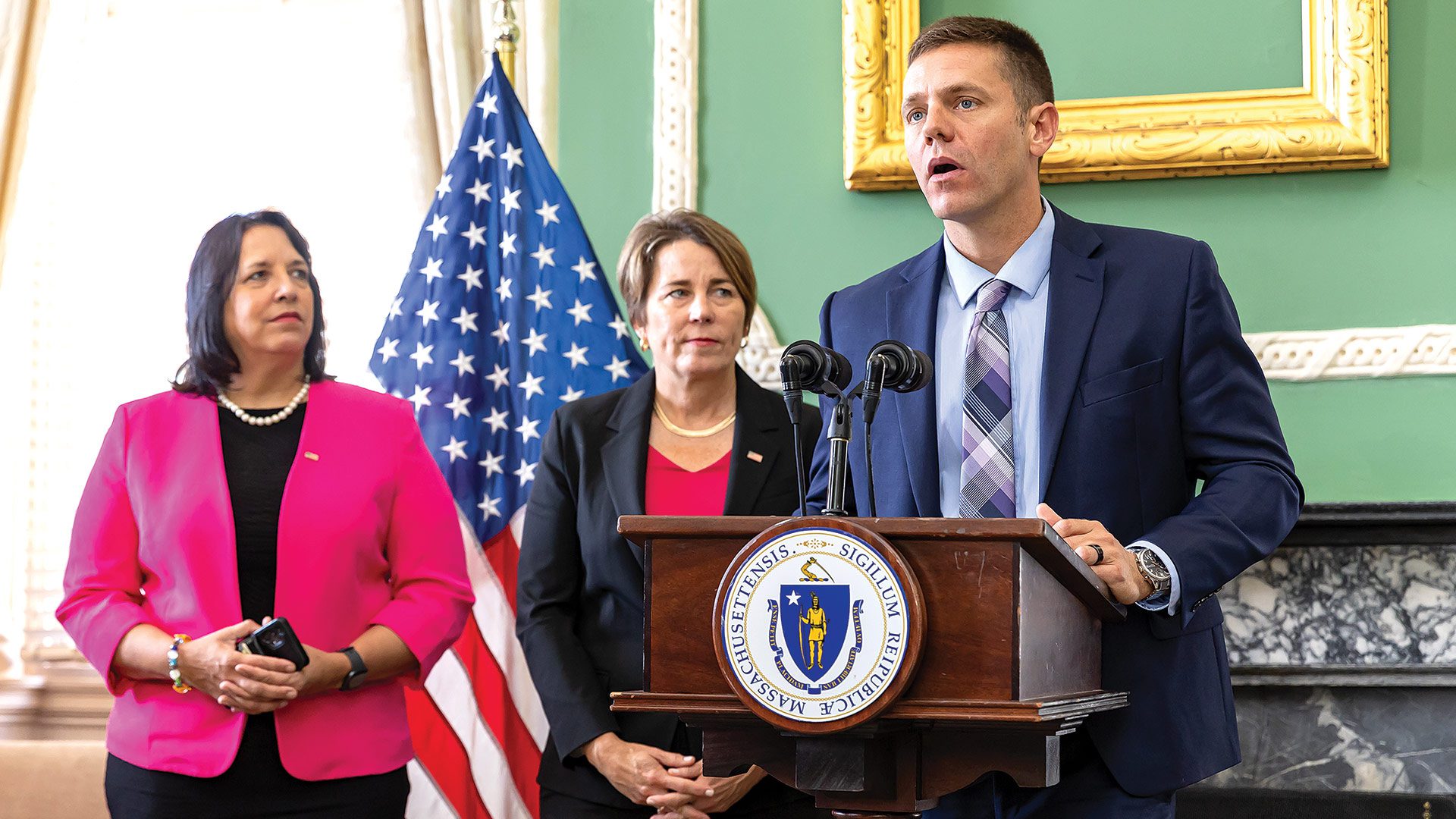
John Velis, seen here with Lt. Gov. Kim Driscoll and Gov. Maura Healey, says communities must think outside the box and be more accepting of new housing.

He wasn’t exactly sure where his assignment would take him, but he was sure the influx of migrants represents just another facet of the housing crisis and another grim reminder that solutions are needed — and soon.

“These folks [migrants] are going to hotels, they’re going to colleges and universities,” he said, with discernable exasperation in his voice. “At some point in time, someone is going to ask the question — and it’s going to be me, because I’ve already asked it — ‘when they’re done with their temporary hotels and done with their temporary shelters, where are they going? We don’t have the housing stock. Where are they going to live?’”

The question ‘where are they going to live?’ applies to more than migrants, of course. It applies to a number of constituencies and almost every community in the region, from the larger cities to the smaller towns.

Indeed, as BusinessWest continued its Community Spotlight series this year, talking with business leaders and elected and appointed officials in dozens of municipalities, housing was cited repeatedly as an area of concern — and urgency.

Holyoke Mayor Joshua Garcia was one of those elected leaders, and he reiterated what he told BusinessWest back in March — that the housing situation in his city, as in many others, is, in a word, dire.

And as he talked about it, he said the crisis extends across the full spectrum of housing. While much of the recent developments have involved affordable housing, there is still a need for more. Meanwhile, there is an urgent need for market-rate housing, such as that which exits at one of the city’s redevelopment success stories, the Cubit building, where there is a lengthy waiting list for the loft apartments, and also transitional housing for an unfortunately growing homeless population.

“It’s underinvestment, poor planning, and, truth be told, a fair amount of resistance to change and development from different towns and communities that are all about preserving character, and not thinking about what future needs will be and how to keep cities and towns vibrant.”

“Right now, Holyoke is number three, per capita, in the whole state when it comes to children enrolled in our school district that are homeless,” Garcia told BusinessWest. “It’s more than Springfield, more than Worcester, more than Boston. We have families that are in shelters looking for transitional housing; we need more of it.”

It also needs much more market-rate housing, he went on, while relating a conversation he and other city officials had with leaders at a relatively new in business in town, Clean Crop Technologies on Dwight Street, while getting a tour of the facilities.

“We asked them what they needed from us,” he recalled. “We’re thinking they’re going to say they want the roads or sidewalks better, or improved lighting, but to our surprise, they said, ‘we need housing options down here.’”

Elaborating, Garcia said that, while many people commute to Holyoke to work, many would like to live and work there, and at present, many are finding that a challenge.

Vince Jackson, executive director of the Greater Northampton Chamber of Commerce, agreed. He noted that there are many who would like to live and work in Northampton, but for far too many, only the first part of that equation is attainable.

“There’s housing available in Northampton for sale, but are they affordable for the working class and for younger people?” he asked, answering his own question by saying that, in most cases, the answer is ‘no.’

Meanwhile, there have been efforts to build more affordable housing, but many people don’t qualify to live in such units because they earn too much or too little.

Holyoke Mayor Joshua Garcia

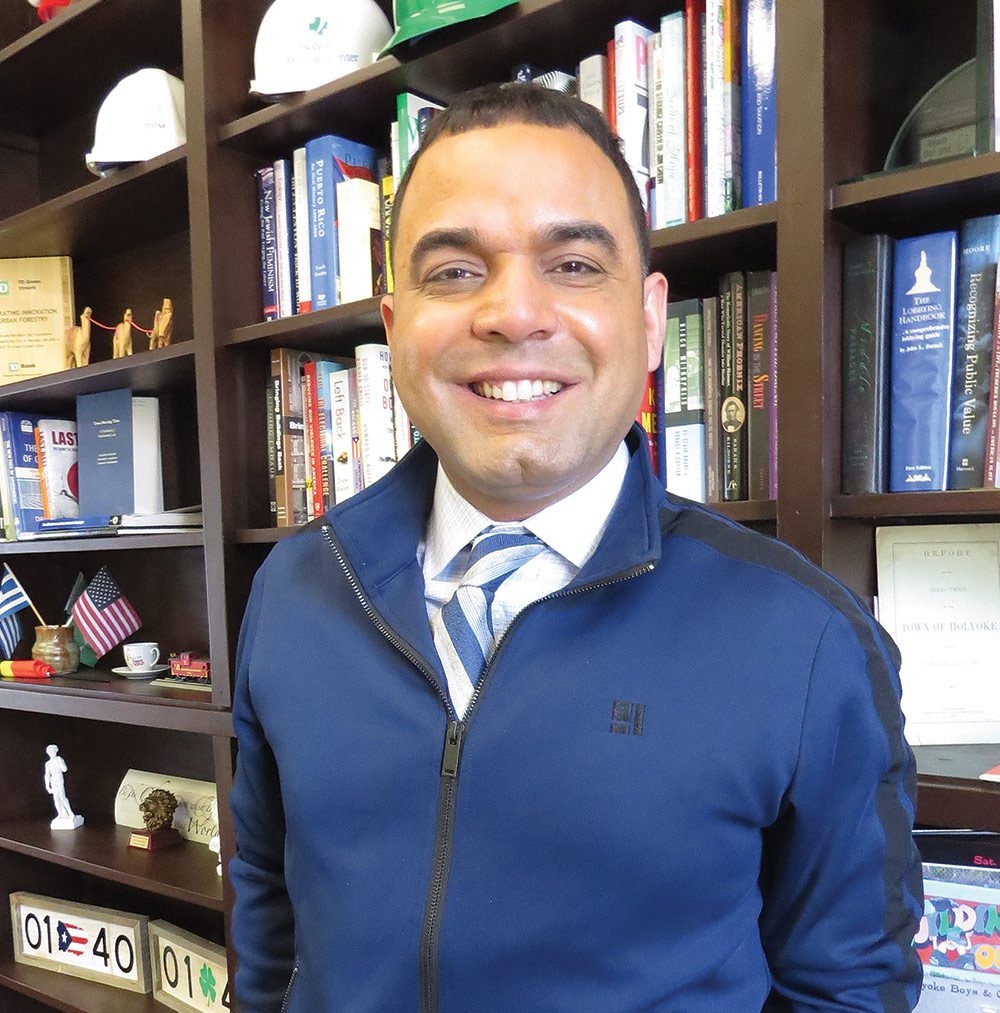
Summing up the crisis succinctly, Holyoke Mayor Joshua Garcia says that “what we need is rapid housing construction.”

“They’re never in that sweet spot,” Jackson noted. “And it takes developers months to sell these units because they go through hundreds of applications, and finding people who qualify on all fronts is a real challenge. So those properties can sit vacant.”


Addressing the Problem

Getting back to how we got here, Fairey said the state, and the nation, were essentially caught flatfooted as the Baby Boom generation continued to age, live longer, and age in place — and not build enough housing, especially affordable housing, for the Millennials and other generations to follow.

“Housing for workforce and for middle-income people hasn’t been produced, and at the same time, the cost of that production has increased very dramatically,” he explained. “So if folks look at it from an economic standpoint, they’re only going to build high-end houses because, in order to recoup your money, you need to sell at a high price. But that puts a gap in our marketplace for starter homes.

“It’s underinvestment, poor planning, and, truth be told, a fair amount of resistance to change and development from different towns and communities that are all about preserving character, and not thinking about what future needs will be and how to keep cities and towns vibrant,” he went on, adding that there are some area communities where some progress is being made — although very little of it has come quickly or easily.

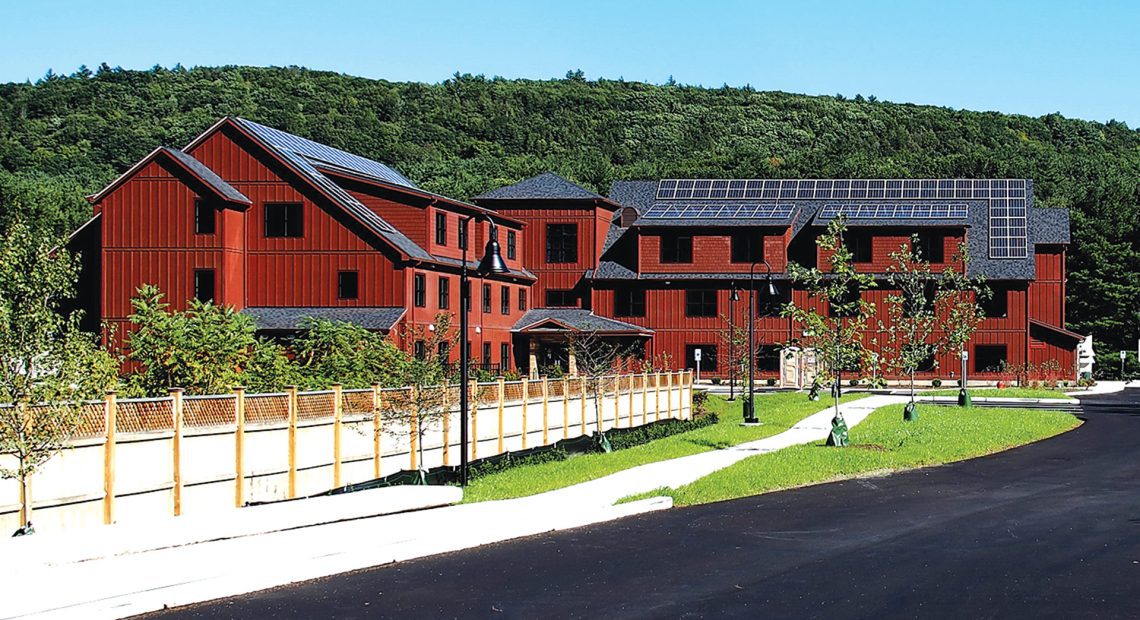
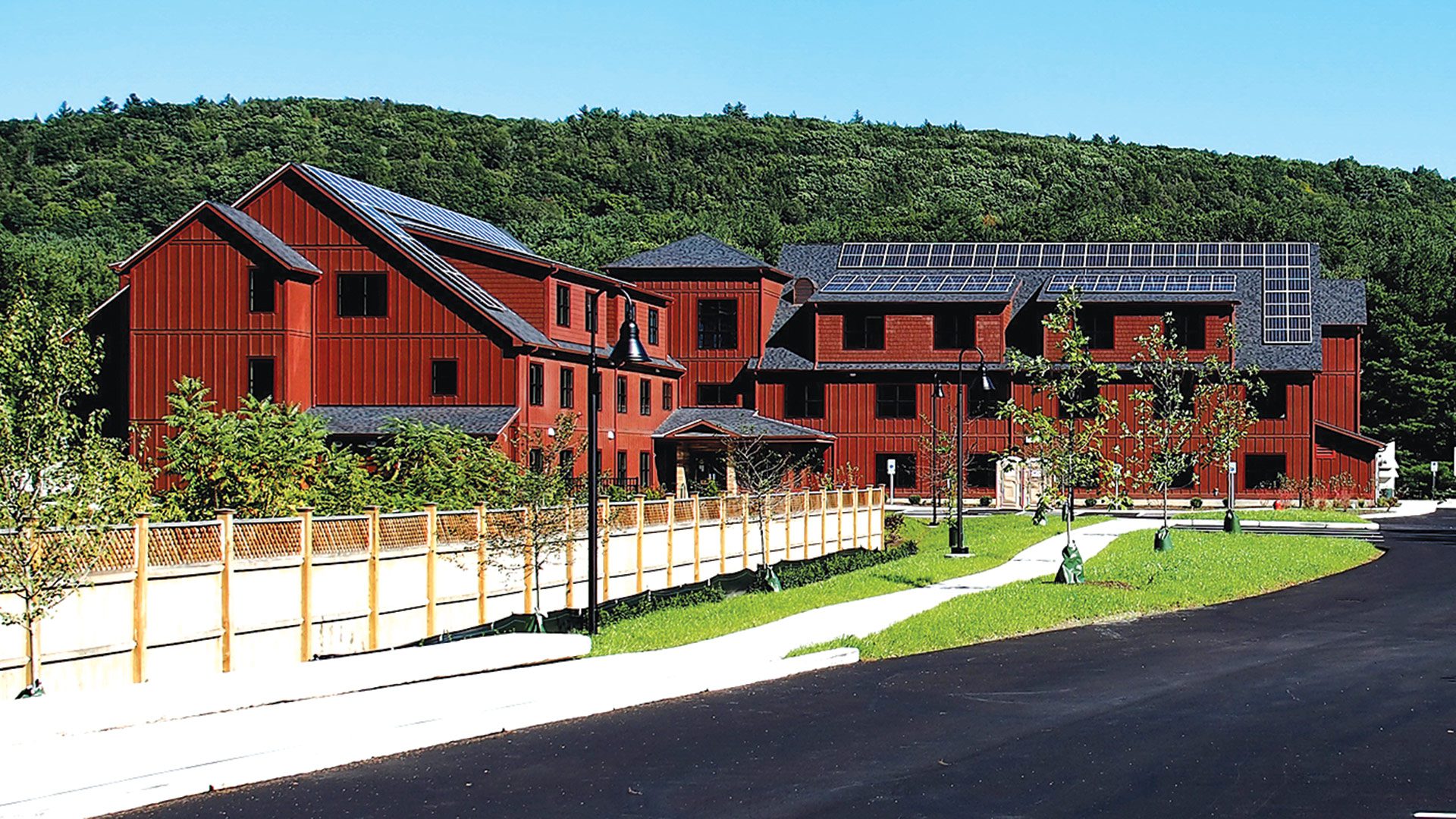
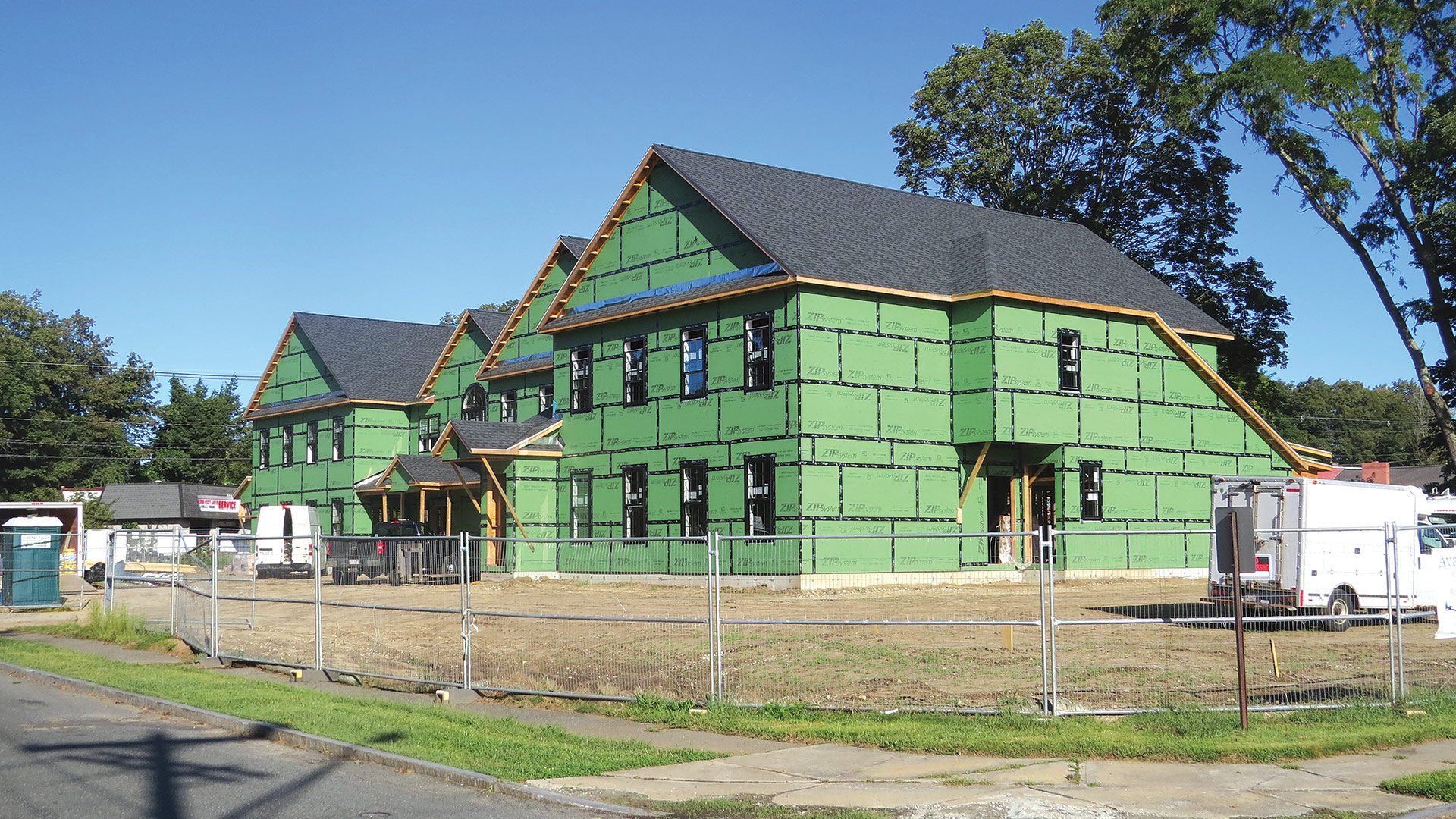
He mentioned Amherst, where Way Finders has completed — after 10 years of resistance — Butternut Farm, an affordable-housing community featuring 27 apartments in farmhouse-style buildings set on four acres. It’s described as “a quiet, rural setting with plenty of open space and easy access to surrounding communities.”

Amherst has also put out an RFP for housing in a surplus school, and it has acquired land for more affordable housing, he said, adding that the community has also created an affordable-housing trust to put more units in the pipeline long-term.

Northampton has taken similar steps, earmarking a surplus school for affordable housing, and several other communities, such as South Hadley, have created what are known as 40R zones, which promote compact residential and mixed-use developments in areas near transit stations, commercial centers, or other suitable locations, while leaving the surrounding land untouched.

“There are towns that are beginning to realize need and create opportunities for investment,” said Fairey, adding that considerably more work will be needed if housing supplies are going to approach demand.

In the meantime, if individuals and families cannot find housing they can afford, or any housing at all, in a given state or region, they will simply go somewhere else. And the outmigration statistics regarding the Bay State bear this out.

The Pioneer Institute reported recently on IRS data showing that net outmigration from Massachusetts is accelerating rapidly. Between 2019 and 2021, the state rose from ninth to fourth among all states in net outmigration of wealth, behind only California, New York, and Illinois. And while the so-called ‘millionaire’s tax’ — and high taxes in general — are cited as perhaps the biggest reason for this outmigration, soaring housing prices are also considered a key factor, especially among younger generations.

“The main demographic that’s leaving Massachusetts, that we know of empirically, is the 20- to 35-year-olds,” Velis said. “I know this is an antiquated notion, but living in that house with the picket fence, being a homeowner, is becoming more and more elusive in Massachusetts. So what we’re seeing is states like Tennessee and North Carolina really eating our lunch in this regard; we have data that they’re going there.”

Fairey agreed, noting that, while the state has many strong selling points when it comes to attracting businesses — and people — housing stock certainly isn’t one of them.

“We can talk about all the great potential we have here in Western Massachusetts — we have wonderful higher-education institutions, we don’t have the traffic and other things that you have in Eastern Mass., we have great access north-south, and we have space for both residential development and commercial development of all types. But what you can’t say to someone you’re trying to bring here is that we have enough housing for them.”

Garcia joined that chorus, saying Holyoke is in a growth mode and wants to add more businesses and more jobs, but is being hindered in that assignment by a lack of housing across the spectrum.

“We’re trying to grow our population and bring in new businesses, but we can’t achieve our economic-development objectives and move to the extent that we know we can if we don’t have more housing for all spectrums,” he explained. “Right now, we’re stuck. What we need is rapid housing construction.”


Homing In on Solutions

To stem this tide, make the state more competitive, and address the many side effects of the housing crisis, including a rise in homelessness, the simple answer is to build more housing. Only, it’s not that simple.

“We need to do everything in our power to encourage more building,” said Velis, adding that, while the state has done an adequate job of incentivizing the building of low-income housing, it has to be better at encouraging creation of more inventory in the other categories.

“The reality is that, if you’re a developer, part of your equation is to make money,” he went on. “If you’re doing a cost-benefit analysis, unfortunately, there just isn’t the money to be made in low-income housing in the same way that there is in market-rate housing and other categories.”

Velis noted that initiatives like HDIP (the Housing Development Incentive Program) — passed as part of a recent tax-reform package to generate more development of market-rate housing in gateway cities — will hopefully encourage more building in that category. Still, more must be done to encourage efforts that will bring about more inventory.

“Developers want to make money, and guess what? They’re not evil for wanting to make money; that’s their job,” he went on. “Because the pressure valve is so intense now, if you can help market-rate housing, you’ll also help low-income housing, and if you help low-income housing, you’re also going to help market-rate housing.”

Overall, HDIP is expected the lift the current cap on market-rate housing incentives from $10 million to $57 million, which Velis believes will clear the backlog of projects currently on the drawing board statewide and generate $4 billion in private investment that will create 12,500 new homes in gateway cities.

This will help, but more must be done on the state level to encourage building, he said. “I would argue that communities, in many respects, have not been given the tools they need to combat this crisis. We haven’t done a good enough job of incentivizing developers to do this kind of work.”

“We’re trying to grow our population and bring in new businesses, but we can’t achieve our economic-development objectives and move to the extent that we know we can if we don’t have more housing for all spectrums. Right now, we’re stuck.”

That said, Velis noted that more communities need to support additional housing within their borders, not anywhere but, which remains a lingering sentiment.

“Many people don’t want to acknowledge this, but NIMBY is a real-world thing,” he said. “And if everyone continues to say, ‘we need to build … just not here,’ then we have a real problem. And I would argue that we’re getting dangerously close, perilously close, to being there. If every community cites reasons why they can’t be the place for us to build new housing units, then we’re going to implode.”

He said Massachusetts needs to start thinking outside the box and perhaps adopting a new approach — or, at least, a new slant on an old one.

Indeed, for some time, the state has employed a carrot-and-stick approach when it comes to incentivizing municipalities to facilitate the building of new housing units, said Velis, adding that, if more do not agree to become part of the solution, then maybe the state needs to focus on the stick more than the carrot.

“The paradigm has changed, and if communities won’t, of their own volition, say, ‘we’re going to build this,’ even with the incentives that we’re offering, at some point in time, you can get to a point where you have two options,” he said. “One is to do nothing, and Massachusetts will become the most difficult place, the most untenable place, to live in the country from a housing standpoint. Or we can say, ‘we’ve tried every carrot imaginable to encourage building, and now, we’re going to switch it up a bit and go down the path of sticks. If you don’t want to build, that’s your prerogative, but we just want you to know that, if you’re not following the law and you’re not building, then these are the state funds that you could find yourself no longer eligible for.’”

Fairey echoed Velis’ thoughts on the pending bond bill, and how it provides real hope for reversing the trends regarding supply and demand — if it’s big enough and bold enough.

“It’s unclear what the number will be — it will be bigger than $1.8 billion,” he said. “But the needs are quite significant.”

Construction Special Coverage

Setting Their Sites

Marois Construction

Marois Construction recently converted this single-family farmhouse built around 1860 into a three-story, 30-unit housing complex (top).


Construction is a lot like the mail. Projects have to be delivered on time, regardless of the weather.

And to say it’s been a rainy year is an undertstatement.

“Weather is a common occurrence in the construction industry. And, depending on what we have going on at any particular time, we typically have to continue operations, as long as it’s not a total washout,” said Carl Mercieri, vice president of Marois Construction in South Hadley.

On one day of downpours in mid-September, he recalled, “our crews were in the field. They were tying rebar for footings for a project they were doing for the Chicopee Water Department. They braved the weather and set up some collapsible canopies.

“Our project schedules don’t take weather into consideration. So we’ve got to complete them,” Mercieri added. “And not only that, but the crews doing that job need to move on to another job. So we do the best we can with what we got to work with. And, you know, I’ve been doing this for over 40 years, and the weather is not changing here in New England.”

But plenty else has changed in construction over the past 50 years, and Marois Construction — founded by company President Joe Marois in 1972 — celebrated that half-century milestone last year. Those changes run the gamut from new technology to cutting-edge materials to modern priorities in the building world, especially around green, energy-efficient building.

Through all of it, Marois has steadily built a solid reputation, and its current workload reflects that.

“Backing up a year, 2022 was a stellar year, and in 2023, we got off to the same start,” Mercieri said “Every year is a little bit different, though. This year has been a bit quirky. We’ve had a lot on our books, but for one reason or another, we’ve had some projects that got delayed.

“And then, of course, summer is our busy season, with all the college and school work. So we were working six days a week. Typically, when September rolls around, we start to slow down, and things get back to normal,” he went on. “But when those projects that actually got started got delayed, they all came to life in September. So we’re not seeing any slowdown here, looking at the third quarter and toward the end of the year. So it looks like it’s going to be another really good year for us.”


Broad Range of Expertise

Marois performs both public and private work, both new construction and renovations, across a range of sectors, including commercial, industrial, and educational projects, Mercieri said.

“Right now we’re doing a branch bank … we’ve got a couple of schools that we’re doing, kitchen renovations in schools. We’re also building a police department for one of the local municipalities.”

Carl Mercieri

Carl Mercieri

“I’d say probably 70% of the guys in the workforce are closer to retirement age than not. So it’s extremely important that we get some of the younger people in.”

This diversity can be a positive in an uncertain economy.

“With all the ARPA money out there, there’s a lot of school work going in the public sector,” he added. “And we’re seeing a trend toward the private schools and charter schools. We’ve got one that we’re working on right now out in Stockbridge.”

In the post-pandemic world, contractors have been faced with a number of challenges all at once, from the impact of inflation to supply shortages. Mercieri said those trends are starting to subside, but not as quickly as most would like.

“We continue to see issues. There seems to be longer lead times on products,” he noted, citing doors and windows as examples. “A few years ago, before COVID, we could call in an order in the morning for hollow metal door frames and have them by in the afternoon. Now, we’re seeing a lead time of several weeks, which really impacts the schedule.

“For a while there, lumber was scarce, but lumber seems to have rebounded,” he added. “Prices have come down somewhat, but they really didn’t get back to where they were.”

And when supplies and equipment are difficult to procure or beset by delays, “it keeps the project going. You can’t close it out, even though it’s substantially complete. So one of the things that we deal with is that, going into a project, you can anticipate these delays, but you really can’t put a finger on how long the delays are going to be; it really depends on the manufacturer’s production line and what they’re doing.”

In one case this year, involving a generator, he was given a delivery date of April, and a week or two before it was supposed to ship, the date was pushed to June, then it was pushed again to August.

“We ended up getting it the first or second week of September,” he went on. “So you have no control over that, and it’s an unfortunate situation. And we don’t know where the problem lies; we don’t know if it’s a matter of materials on the manufacturer’s end or labor or a combination of both. But it has a pretty big impact on the construction industry, for sure.”

So has a persistent workforce shortage, one that has affected many industries lately. “It’s tough, but that’s been a trending issue over the years; I don’t think that’s anything new in this industry,” Mercieri said.

“Ninety percent of it is showing up every day; 10% is paying attention and learning.”

“So … we’ve adapted,” he went on. “We run our crews a bit leaner, meaning when we set up a job, rather than having a large crew over there, we’ll set up a smaller core crew at each job. And then, as a task comes up, we’ll move people around to the job and build up the crew, get them in, get them out, and then move them on to another job.”

The leadership team at Marois is certainly not alone in noting the need for more young talent in the pipeline.

“I go to these job sites, and I see our own crew, or I see our subcontractors, and … some of these guys I’ve known for 35 years,” he told BusinessWest. “I’d say probably 70% of the guys in the workforce are closer to retirement age than not. So it’s extremely important that we get some of the younger people in.”

He said the industry has been hurt over the past couple decades by a prevalent message that young people need to go to college to be successful. In fact, Massachusetts ranks among the top states in sending high-school graduates to college. At the same time, industrial-arts programs have been cut from public-school curricula, due to liability, budget cuts, or other factors, Mercieri noted.

But there is a pitch to be made, at a time when families are growing more concerned with crushing debt coming out of college, that careers in construction are attainable, with a clear path to growth, without much, if any, debt.

“Ninety percent of it is showing up every day; 10% is paying attention and learning,” he said, citing the example of someone who wants to specialize in carpentry but might not have the skills for a specific niche right off the bat. “There are multiple facets in carpentry. And you may be better at one or the other. Maybe you’re good at rough carpentry, and maybe you’re not as good at finished carpentry. But over time, you’re going to be very experienced — and you’ll probably be good at both.”


From the Ground Up

Mercieri knows what he’s talking about; he fell into construction at a young age, doing work for a friend’s father who owned a construction business.

“Basically, I was the young kid, and I got to carry all the tools for the tradespeople. I learned the electrical trade, plumbing, carpentry. I got my hands and feet wet being a helper. Then, over the years, it kind of grew on me, and the rest is history.”

He’s been in the field long enough to experience the transition from bid requests via phone calls and snail mail to digital platforms.

“And you think about the field now. Back then, there were no cell phones; there were no iPads. If something came up, a guy would run to a phone booth, or we’d set up landlines with a trailer, and they’d be calling the office. Now our guys in the field have iPads; as soon as we receive something here in the office, it goes right upstream, and they receive it out in the field.”

It’s just one of many changes Mercieri has seen over his decades in construction. And with one more year almost in the books, he’s feeling optimistic about 2024.

“We’ve got a fair amount on the books,” he told BusinessWest. “Some of the jobs that we’re doing now will run into 2024. The bidding market seems very strong. So we think we’re going to do pretty well.”

Special Coverage Work/Life Balance

More Than a Seminar


Shannon Rudder

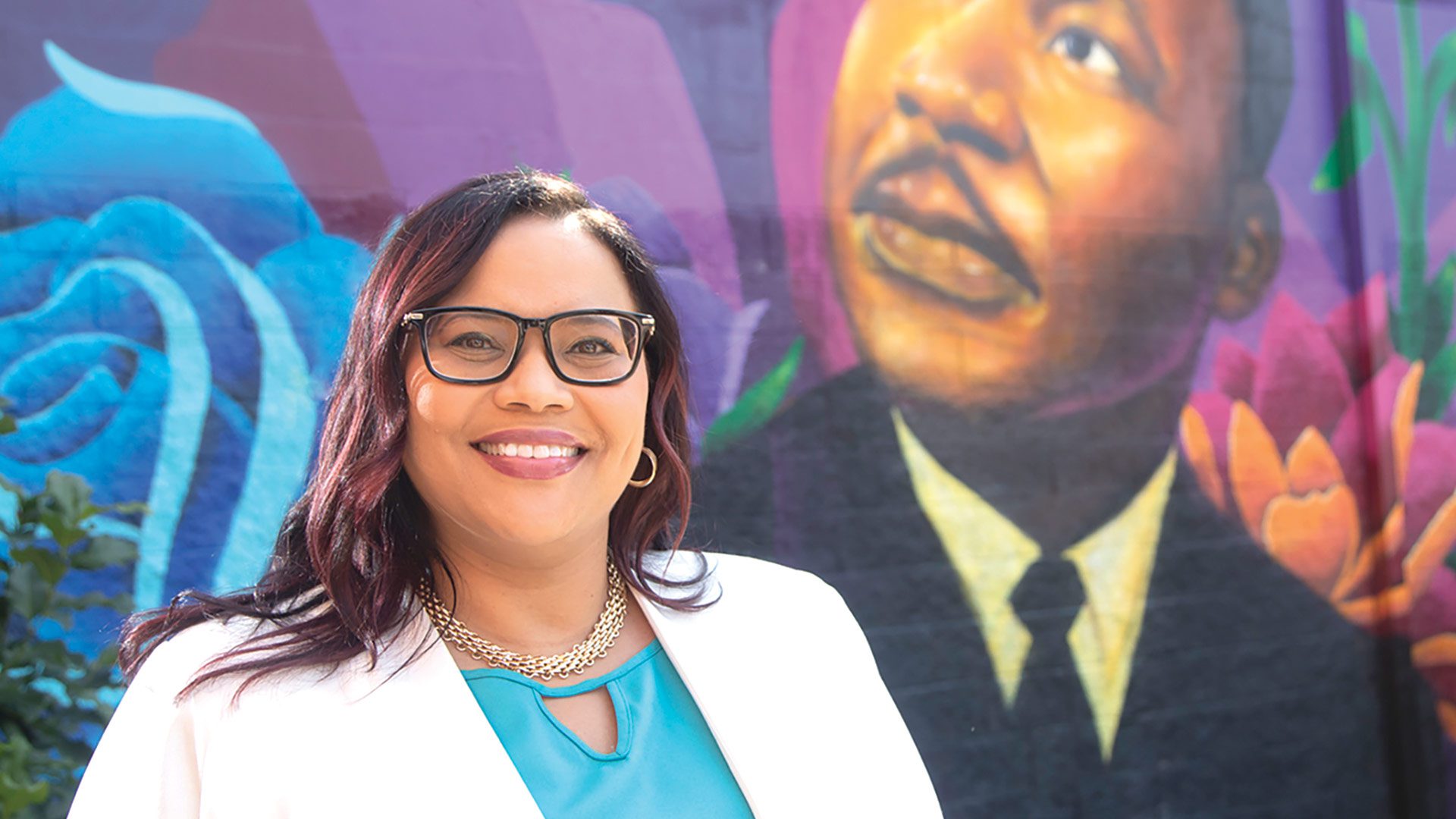
Shannon Rudder says achieving real DEI in a company begins with creating a culture of authenticity and trust.


Shannon Rudder remembers her “bad boss.” And she never wanted to be one.

“What that bad boss did, what stuck out for me, was that everybody had to cater to how he led,” she said, adding that he believed that was how to maintain a bias-free workplace. Unfortunately, that philosophy can be incompatible with an equitable workplace.

“If I’m a single mom, maybe I can meet the deadlines, but I can’t do it in the same exact way as someone who doesn’t have kids, or has kids that are grown, right?” said Rudder, president and CEO of Martin Luther King Jr. Family Services in Springfield. “So in the most rudimentary sense, when you take the -isms and race and all that stuff out of it, that’s equity.”

And it’s a concept many businesses neglect when they talk about diversity, equity, and inclusion (DEI) programs, Rudder explained. They’re focused on a diverse workplace, but neglect to create the sort of culture where everyone is seen for their unique makeup and treated not equally, but equitably.

Colleen Holmes

Colleen Holmes

“We take a whole lot of pride and pleasure in working with folks as the individuals they are. That means that we look at the whole person and not one single aspect of their identity, and that’s what DEI is about.”

She cited a cartoon often used to express the point (see below). It pictures three boys trying to watch a ballgame from behind a fence. The first panel has each standing on a single box; though they’re being treated equally, the shortest boy still can’t see the game. The second panel, by moving those boxes around, demonstrates equity — now everyone can clearly see over the fence.

The barriers are different for each member of an organization, Rudder said, and so are the proverbial ‘boxes’ they might need to stand on to do their jobs effectively. (To take it a step further, the cartoon sometimes includes a third panel, labeled ‘liberation,’ with the fence removed completely.)

“The CEO of a nonprofit is not the same as a president or CEO of a Fortune 500 company, but conceptually, we can’t sit in our positions of power and think we know what everyone’s barriers are,” she added. “I’ve got to like actually talk to people to figure out what the barriers are. So it’s about the relationships.”

Interaction Institute for Social Change / Artist: Angus Maguire

It’s also about honest discussions about privilege and internalized biases and weaving equity into every corner of the organization — and that’s not something that can be achieved with a one-off professional-development seminar on DEI.

“You’ve got to get to the heart of why there are biases, why folks aren’t being productive working together,” Rudder said. “We’re all socialized very differently. So we need to create environments where folks feel comfortable and they trust each other. You don’t want somebody to feel tokenized; you want to be able to create that authenticity, that trust, so then you can begin to understand what the real barriers are.”

Colleen Holmes understands this concept. As president and CEO of Viability Inc. in Springfield, which provides vocational training, job placement, and other supports for individuals with disabilities, she’s worked with employer partners to help them understand how a workplace can benefit from workers from all backgrounds and all abilities.

“All the services we offer are around folks having the opportunity and support to be able to build their skills and attain things that are important and meaningful to them in their lives,” she told BusinessWest. “Everything we do is very specifically geared toward helping individuals find their pathway to thriving beyond whatever their limits are. And for individuals with disabilities, those limits are considerable.”

Trevor Brice

Trevor Brice

“Is this person better-qualified? Just give justification for the decision in case you’re challenged down the road.”

But they can be overcome — if an employer is committed to equity.

“We take a whole lot of pride and pleasure in working with folks as the individuals they are. That means that we look at the whole person and not one single aspect of their identity, and that’s what DEI is about,” Holmes explained. “The aspects of our identity are layered and complex, and that’s what makes us interesting people.”

The said the word ‘accommodation’ carries some baggage because people think it’s a one-way street — that the employer has to accommodate the employee, but isn’t going to benefit from that employee beyond checking a DEI box.

“In fact, when employers learn how to think differently in their approaches to getting business objectives met, they have more humanity in their company,” she said, adding that employers who understand this — who are willing to cultivate not only a diverse workforce, but an equitable, inclusive one — have a leg up.


Questions Around Diversity

The ‘diversity’ piece of DEI has been the source of much discussion lately, as employers have grappled with whether efforts to build a racially (and in other ways) diverse workplace will run afoul of federal law, especially after the U.S. Supreme Court struck down affirmative action in college admissions this past June.

“They didn’t directly speak to private employers; it only applies to colleges and universities,” said Trevor Brice, an attorney with the Royal Law Firm in Springfield, adding, however, that there could be ripple effects. “I think the implications of the Harvard and North Carolina ruling go more to reverse-discrimination suits, people in majority groups suing over being given unfavorable treatment in relation to minority groups because of affirmative-action or DEI programs.”

To be clear, he added, hiring and firing employees based on their status in protective classes has never been allowed. “What’s almost inevitable is there are going to be challenges to employers based on these cases now.”

Dan Moriarty

Dan Moriarty

“We have a long way to go with it, but we’re trying to build something. We want to make meaningful progress — not just check a box, but make a difference.”

Mary Jo Kennedy, partner and chair of the Employment Law practice at Bulkley Richardson in Springfield, agreed that the SCOTUS ruling has no immediate impact on the legal standards that govern private employers’ DEI or affirmative-action programs, noting, like Brice, the existing prohibition against making employment decisions solely based on a person’s protected characteristics, like race or gender.

“But there is the potential that we may see more reverse-discrimination cases,” she added, before listing several steps employers can take to promote diversity within the bounds of the law:

• Avoid considering race as a basis for employment decisions or practices in a way that could be seen as granting race-based preferences;

• Review any DEI policies or programs for compliance with federal and state laws;

• Understand that it’s OK to prioritize diversity and inclusion but not OK to use race- or gender-based quotas;

• Broaden the use of the term ‘diversity,’ understanding that it’s more than just race and gender; and

• Review the company website and other public-facing documents and internal DEI materials for compliance with federal and state laws prohibiting discrimination.

Employers can also protect themselves against reverse-discrimination cases by carefully documenting the reasons behind every hiring and promotion decision. In other words, it makes sense to cast a wide net to promote a diverse applicant base, but make sure there’s a business case for each decision, and “document, document, document,” Brice said.

“Why are you making this decision? Is it solely due to race or other protected characteristics? Then it’s probably not going to stand up to a legal challenge. But high GPA, work history, things like that are fine. So, is this person better-qualified? Just give justification for the decision in case you’re challenged down the road.”

Employment-law firms already see plenty of wrongful-termination cases, he added, and there’s a feeling that the June SCOTUS decision will embolden more of them, even though that ruling applies only to higher education. “More needs to be seen. There hasn’t been a legal challenge yet, so there’s no guidance yet.”


Making Meaningful Progress

Monson Savings Bank President Dan Moriarty has been actively been involved in DEI strategy over the past year or so, not only at his own institution, but through his co-leadership of an executive council established by the Massachusetts Bankers Assoc. to promote DEI efforts across member institutions.

“Every individual and every organization is on a different path along the way to being more diverse, equitable, and inclusive in their organization,” he said. “We have a DEI committee here at the bank, and we’re trying to adopt best practices from the Mass Bankers Association for advancing our DEI program.”

That process toward a level playing field begins with understanding the dynamics of DEI and the barriers and biases that hinder it, he noted, adding that he and two other MSB leaders recently attended a seminar at the Healing Racism Institute of Pioneer Valley. “That was phenomenal. Just the awareness and deep understanding was very impactful for me personally and professionally. We all have to do more.”
“Our corporate counterparts — and I get why they do it — focus on diversity because that’s a tangible way to demonstrate, ‘we’ve got X percentage of women, we’ve got X percentage that identify as able-bodied or people of color,’ all those identities. I get why diversity comes first. But for me, it’s really centered on equity.”

Adopting some best practices recommended by Mass Bankers, Monson Savings has created a DEI commitment statement, developed and implemented a DEI program that continues to evolve, provided DEI training to board members and employees, identified and monitored key performance metrics, and conducted periodic self-assessments of the program.

In addition, he said, the bank has reviewed numerous documents, including its strategic plan, along with communications, processes, and facilities, to ensure that potential barriers are identified and removed and that DEI expectations are reflected, while also conducting outreach and expanding the bank’s relationships with key community members and organizations.

“We have a long way to go with it, but we’re trying to build something. We want to make meaningful progress — not just check a box, but make a difference,” Moriarty said. “People want to do the right thing, but they have to educate themselves and really make a concerted effort to be able to make the change. It’s not just acknowledging we need more diversity, equity, and inclusion, but we also have to take actual steps to get us to a better place.”

Viability has seen its employer partners — more than 800 of them nationwide — find that better place.

“Some employers are looking to live a philosophy of the organization around diversity, equity, and inclusion because it’s the right thing to do,” Holmes said. “And there is data out there that shows that, if companies have accessible and welcoming environments for individuals with disabilities, consumers are more likely to shop there. And this is something businesses and employers have taken notice of.

“DEI is really a no-brainer,” she added. “But it does require a cultural change within an organization.”


The Rest of the Story

“Injustice anywhere is a threat to justice everywhere.”

That’s one of Martin Luther King Jr.’s most popular quotes; just about everyone has heard it. But far fewer, Rudder said, know the rest of the quote, the words King said directly after:

“We are caught in an inescapable network of mutuality, tied in a single garment of destiny. Whatever affects one directly, affects all indirectly.”

“That’s the nutshell of how I approach the work,” she added. “Our corporate counterparts — and I get why they do it — focus on diversity because that’s a tangible way to demonstrate, ‘we’ve got X percentage of women, we’ve got X percentage that identify as able-bodied or people of color,’ all those identities. I get why diversity comes first. But for me, it’s really centered on equity.”

Rudder said she practices ‘culture humility,’ which is a commitment to constant self-evaluation by which people not only learn to understand other cultures, but also critically examine their own — and understand the privileges they enjoy.

“If we’re going to aim to be centered in equity, we have to first understand where our privilege is,” she said. “And that goes back to Dr. King’s quote; we are all mutually interconnected. It’s a journey — it’s not just, ‘let’s do this program, and let’s check the boxes.’ We’ve got to weave this into the very fabric of who we are as an organization, as a corporation.”

Community Spotlight Special Coverage

Community Spotlight

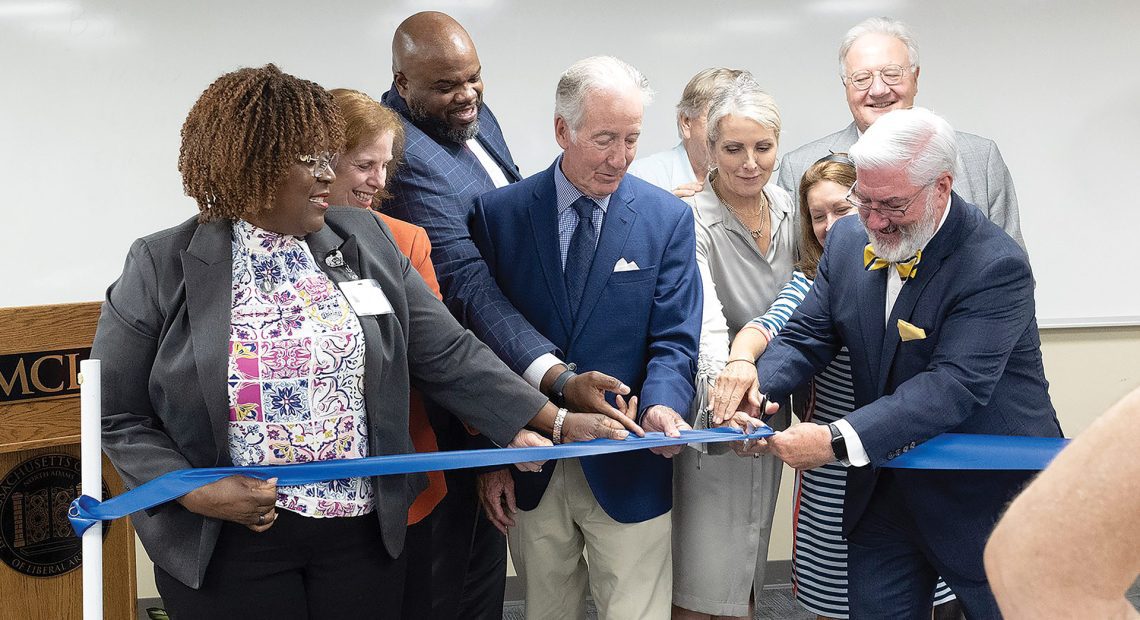
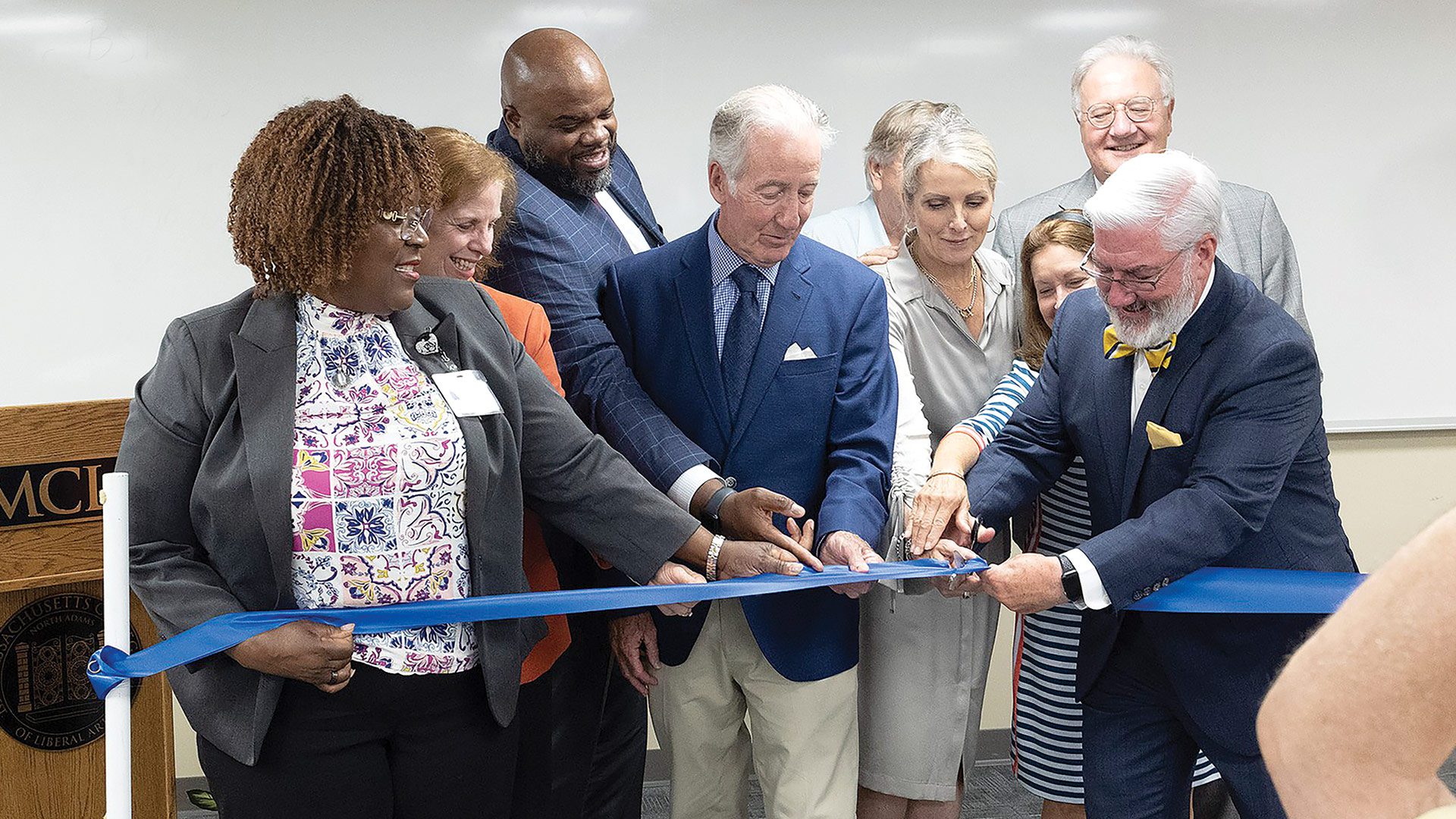
MCLA President James Birge

MCLA President James Birge cuts the ribbon at the official launch of the school’s new nursing program.


Jennifer Macksey grew up North Adams, and she’s seen some profound changes in her 50 years — and from many perspectives.

As a young girl, she remembers Thursday nights downtown, which would be bustling as the thousands of employees at nearby Sprague Electric would be out spending their paychecks in the stores, like the one owned by her parents, and restaurants along Main Street and connecting corridors. She also remembers how the landscape changed dramatically, and the vibrancy downtown all but disappeared overnight, after Sprague closed its doors in 1985.

Later, while serving in several positions in City Hall, including chief financial officer and treasurer and collector, and also at the nearby Massachusetts College of Liberal Arts (MCLA) and Southern Vermont College, and then as assistant superintendent of the Northern Berkshire Regional School District, she saw the city’s economy struggle as it also evolved, from one dominated by manufacturing to one centered on tourism and the arts, a shift exemplified, in dramatic fashion, by the transformation of the former Sprague Electric complex into MASS MoCA, the nation’s largest museum of contemporary art, which opened its doors in 1999.

Today, Macksey is mayor of the city, a post she has long coveted (more on that later), and is thus in a position to not only observe, but also shape the ongoing evolution of this city of nearly 13,000.

She reports progress on several fronts, from new stores downtown to signs of development at the long-vacant former TD Bank building on Main Street; from a cannabis-cultivation facility in the Hardman Industrial Park to a small but quite significant rise in population — part of a countywide phenomenon involving residents of large metro centers leaving for the Berkshires, where many of them are working remotely.

Jennifer Macksey

Jennifer Macksey

“We’ve brought a lot of new people into the community, but we’re also focused on getting businesses in here.”

“I’m amazed at the people who are buying property here in North Adams,” Macksey said. “We’re seeing a lot of people who are leaving larger cities and coming here to work remotely, and we’re seeing out-of-town investors buying up property, whether it be for long-term or short-term rental. So our population is starting to go up a bit.”
James Birge, long-time president of MCLA and another native of Berkshire County (he grew up in Lee), has also seen a number of signs of progress, both across the county and in North Adams. In addition to meeting its mission of providing a quality liberal-arts education and enabling students from low-income families to live “an elevated life,” as he calls it, MCLA is helping to fuel a changing Berkshires economy by providing qualified workers and also adding new programs to meet recognized need, such as its new nursing-degree program.

“While 40% of our students come from Berkshire County, 50% of our students who graduate stay in Berkshire County,” he said. “So we’re contributing to the brain gain of Berkshire County.”

The nursing program, initiated this fall, was launched in response to a request from Berkshire Health Systems to help meet an urgent need to put more nurses into the pipeline.

“We thought, ‘here is an opportunity where we can develop an academic program that would be in demand and be responsive to the needs of our community,” Birge said, adding that the program started with 20 students this fall and is expected to ultimately grow to 110-120 students. “This is the fundamental, historic purpose of public higher education — to respond to the needs of the community.”

For this, the latest installment of its Community Spotlight series, BusinessWest takes an in-depth look at North Adams and the many developing stories there.


Taking the Lead

While growing up in North Adams, Macksey said, her parents always stressed the importance of both giving back and getting involved, qualities she has embraced her whole life.

This passion, coupled with a desire to lead change in a community she said was still struggling in many ways, prompted her to run for mayor in 2021 — and to seek re-election this fall.
“I always wanted to be mayor,” she told BusinessWest. “When I left City Hall, I knew that I would come back someday, but I always said I would come back to the corner office, and that’s what I did. I’m very interested in keeping North Adams moving forward.”

Her focus is broad and covers many issues, from education to public safety, but especially economic development, she said, adding that, like all communities in the Berkshires and beyond, the most pressing need is jobs.

“We’ve brought a lot of new people into the community, but we’re also focused on getting businesses in here, and that is really the charge of my next two years in office, to build out some economic-development plans and to sell North Adams more than it has been.

“North Adams is sold on its beauty and its natural resources, but there are a lot of other things to offer,” she went on. “I’m very focused on the buildings that we do have that are empty and our industrial park and exploring opportunities to bring in some light industry.”

The Hardman Industrial Park recently became home to the Temescal Wellness cannabis growing facility, in a facility that formerly housed Crane Stationery. The facility employs between 75 to 100 people and is thus an important source of new jobs and one of many investments that have taken place in North Adams.

Others include ongoing investment in the Porches Inn at MASS MoCA on River Street and also in the Hotel Downstreet on Main Street — facilities that are catering to the steady volumes of visitors to North Adams, which has increasingly become a destination in recent years — as well as redevelopment of the former Johnson School into much-needed housing.

North Adams at a Glance

Year Incorporated: 1878
Population: 12,961
Area: 20.6 square miles
County: Berkshire
Residential Tax Rate: $17.67
Commercial Tax Rate: $37.60
Median Household Income: $35,020
Family Household Income: $57,522
Type of government: Mayor; City Council
Largest Employers: BFAIR Inc.; Massachusetts College of Liberal Arts
* Latest information available

In the downtown, most of the storefronts are now occupied, Macksey said, and the former TD Bank facility has been acquired, and redevelopment plans are being blueprinted.

“Our downtown is pretty much full,” she noted. “There were many years when it was empty, and I really applaud the owners of those buildings for hanging in there.”

But there is considerable work to be done, she added. “We’ve got a lot of things going on, but we really need to provide more jobs for our workforce here. And we hope to develop some economic-development plans that will bring some people into the city.”

Creating jobs is a process, she noted, one that involves collaboration and partnerships with business, the education sector, and workforce-development agencies, as well as that notion of more aggressively selling the city and its many types of assets and generating new investments in the community.

“We need to create some jobs that provide some on-the-job training,” she said, citing Temescal Wellness as one example of such an employer. “We also need to be collaborating with places like MassHire and other groups to create opportunities where people can learn a trade as they work.

“And we also need to be aggressive in cultivating a community, even in our high school, of students who want to work here in North Adams, be it in a trade or in an administrative position,” Macksey went on. “But most importantly, we’re looking to work with businesses that are sensitive to hiring people here in North Adams.”


Class Act

Birge told BusinessWest that he thought MCLA might fall a little in the annual U.S. News & World Report ranking on the nation’s public liberal-arts colleges, a category that includes the service academies. But it didn’t.

Instead, it held its place at number 7 — this was the third year in a row it finished in that spot and the ninth year in a row it has cracked the top 10, out of roughly 500 institutions — a measure, he said, of not only the school’s commitment to excellence, but its ability to consistently deliver on its commitment to providing a quality liberal-arts education.

As proud as Birge might be of this ranking — and he is quite proud — he is even more satisfied with the school’s rankings on U.S. News & World Report’s listing of top performers when it comes to social mobility, a category the publication initiated in 2019. This is a measure of how well institutions graduate students who receive federal Pell grants, typically awarded to students whose families earn less than $50,000, though most Pell Grant money goes to families with income below $20,000.

In this category, MCLA ranked first in the state and second in the country.

“I like this ranking a little bit more, because we’re meeting our mission — we have a mission of access,” he explained. “We want students who may not be able to afford to go to other institutions to come here and get an outstanding education and then go off and have a life that they wouldn’t have if they didn’t come to us.

“I think that’s a more important measure; we’re the highest-ranked public institution in Massachusetts and the second-highest in the nation, and we’re really proud of that,” he went on, adding that one-third of the school’s students come from families earning less than $30,000 per year, and roughly 40% of them are first-generation college students.

“The average starting salary for an MCLA alum is $46,000,” he went on. “Hundreds of students are graduating and making an average salary of $46,000, and they’re coming from families that made less than $30,000. We’re breaking the cycle of poverty for hundreds of kids in four years — we think that’s a pretty noble mission for a public higher-education institution.”

Overall, MCLA is seeing a surge in enrollment due to a roughly 15% increase among first-year students (total enrollment is largely flat), and Birge attributes this to the value the school presents at a time when value has become an ever-more-important factor among students and their parents. Indeed, one can graduate from MCLA with a fraction of the debt they may assume if they were to attend a private liberal-arts college, he said.

While on the subject of value, Birge said a liberal-arts education still holds plenty of value in this job market and in general, despite growing rhetoric questioning the relative worth of a liberal-arts degree, and some colleges and universities — Simmons and Lasell are among the latest to do so — cutting liberal-arts majors, including history, modern languages, philosophy, and literature because of low enrollment.

“I think those institutions that are cutting liberal-arts programs are not being very visionary, and I think they’re cutting off their nose to spite their face,” he added “In our world today, even more than ever, we need people educated in the liberal-arts tradition. We need people who can understand different perspectives and look at things through different lenses.”

Especially in a changing Berkshire County, he noted.

“The economy has changed; it used to be an industrial economy, and now it’s more of a creative economy, across the county,” Birge said. “And I think that has breathed life back into a lot of our communities, including North Adams. It’s a vibrant moment in the history of Berkshire County, and we try to be as participatory in that as we can.”

Community Spotlight

Community Spotlight

renovated chapel

An architect’s rendering of the renovated chapel at Wilbraham & Monson Academy, what students are calling the ‘Harry Potter dining hall.’

The students have started calling it the “Harry Potter dining hall,” and with good reason.

That’s the look that will be created by an ambitious initiative to transform the ornate but very much underused chapel at Wilbraham & Monson Academy (WMA) into a next-generation dining commons.

The undertaking, the second phase of a much larger strategic initiative that comes with an $18 million price tag, will enable the school to make far better use of not only the chapel, but the current dining hall, which will be converted into an auditorium and event space.

“This is going to be stunning,” Head of School Brian Easler said. “Because the music department is under the current dining hall, it will be a much more efficient use of space. Right now, we use the chapel once a week for 20 minutes for school meeting; other than that, it stays vacant, which is a shame because it’s the most beautiful building on the campus. So we’ll use the most beautiful building as the heart of the school.”

Perhaps the best part about all this, Easler said, is that the idea for converting the chapel into a dining hall came from a student, who was looking at a 3D scale model of the campus created by the architectural firm handing the project and put forth a powerful ‘what if?’ (more on that later).

Transformation of the chapel, the timing of which is dependent on fundraising — which is off to a solid start, according to Easler — is not the only landscape-altering development taking shape on or just off Main Street in Wilbraham.

Indeed, there’s also new construction just down the road from WMA, where, on the site of three demolished buildings, a mixed-use facility is taking shape, one that will house a brewery, an Italian restaurant, additional commercial businesses, and seven apartments.

This development, called the Center Village project — on top of other emerging and established success stories across town — is expected to spur new development in what is considered the town, or village, center, although it still doesn’t look much like a center, said Mike Mazzuca, chair of Wilbraham’s resurrected Economic Development Committee.

“We want to look at how we can create a true downtown for Wilbraham,” he said, noting that there is real potential for business to thrive beyond the Boston Road corridor.

Jeff Smith, another member of the committee and co-owner, with his wife, Amy, of one of those Wilbraham-based businesses, New England Promotional Marketing (NEPM), agreed.

“Back in the ’80s, there was a lot more going on in the town center, and it was used more,” he explained, noting, for example, that the post office was there before it was relocated to Boston Road. “Things changed, a couple of the buildings became vacant, and there was less and less activity there. Now that there will be more activity, we believe that will spur more development.”

Mazzuca added that, while one of the committee’s primary goals is to bring new commerce, vibrancy, businesses, and especially people to the town center, its larger mission is to send a message, loud and clear, that Wilbraham is ‘open for business.’

It always has been, he said, but it has also always been a mostly residential community and among the region’s unofficial ‘best places to live.’ It can still be that, he went on, while also building on a somewhat impressive portfolio of businesses — most of them small, most of them retail or service in nature, and most of them on Boston Road.

As it goes about its work, the Economic Development Committee will promote all that Wilbraham has to offer, said both Mazzuca and Smith, adding that there are many amenities on that list, starting with a single tax rate and continuing with available tax-increment financing; a vibrant business corridor (Boston Road) that boasts traffic counts of 12,000 cars a day; proximity to Springfield, Ludlow, Hampden, Palmer, and Monson; a diverse existing business base; high-speed internet; and more.

“We want to help out and be a liaison between the municipality, the permitting authorities, and the actual businesses, with the ultimate goal of getting that message across that we are open for business.”

Smith said the committee is working to parlay these assets and the current momentum in the town on Main Street, Boston Road, and beyond into new business opportunities.

For this, the latest installment of its Community Spotlight series, BusinessWest takes an in-depth look at Wilbraham and all that goes into that phrase ‘open for business.’


Food for Thought

As he recounted that now-famous session where students and the architects were discussing what should come next — and where — on WMA’s campus, Easler could hardly contain his sense of pride in the fact that one of his students had masterminded what will be the signature component of the largest building initiative at this private school in anyone’s memory.

“The architect was leading them through a brainstorming exercise, focusing on three primary questions: what do we need? Where should it go? And what should happen first?” he recalled. “We were at that part where he was asking them where things should go, and the specific question was ‘is the dining hall in the right place?’

“The kids were chatting and moving blocks around, when one of the boys said, ‘what if we made the chapel into a dining hall?’” Easler continued. “There was a nervous chuckle around the table for about five seconds, and then there was a 10-second pause where you could see the wheels turning in everyone’s head. And then there was just this ‘a-ha’ moment where everyone went, ‘that is an awesome idea.’”

And an idea that will become reality … soon, when enough money is raised to commence construction, said Easler, noting that fundraising, which involves almost exclusively alumni of the school, is progressing well, but there is a good amount still to be raised.

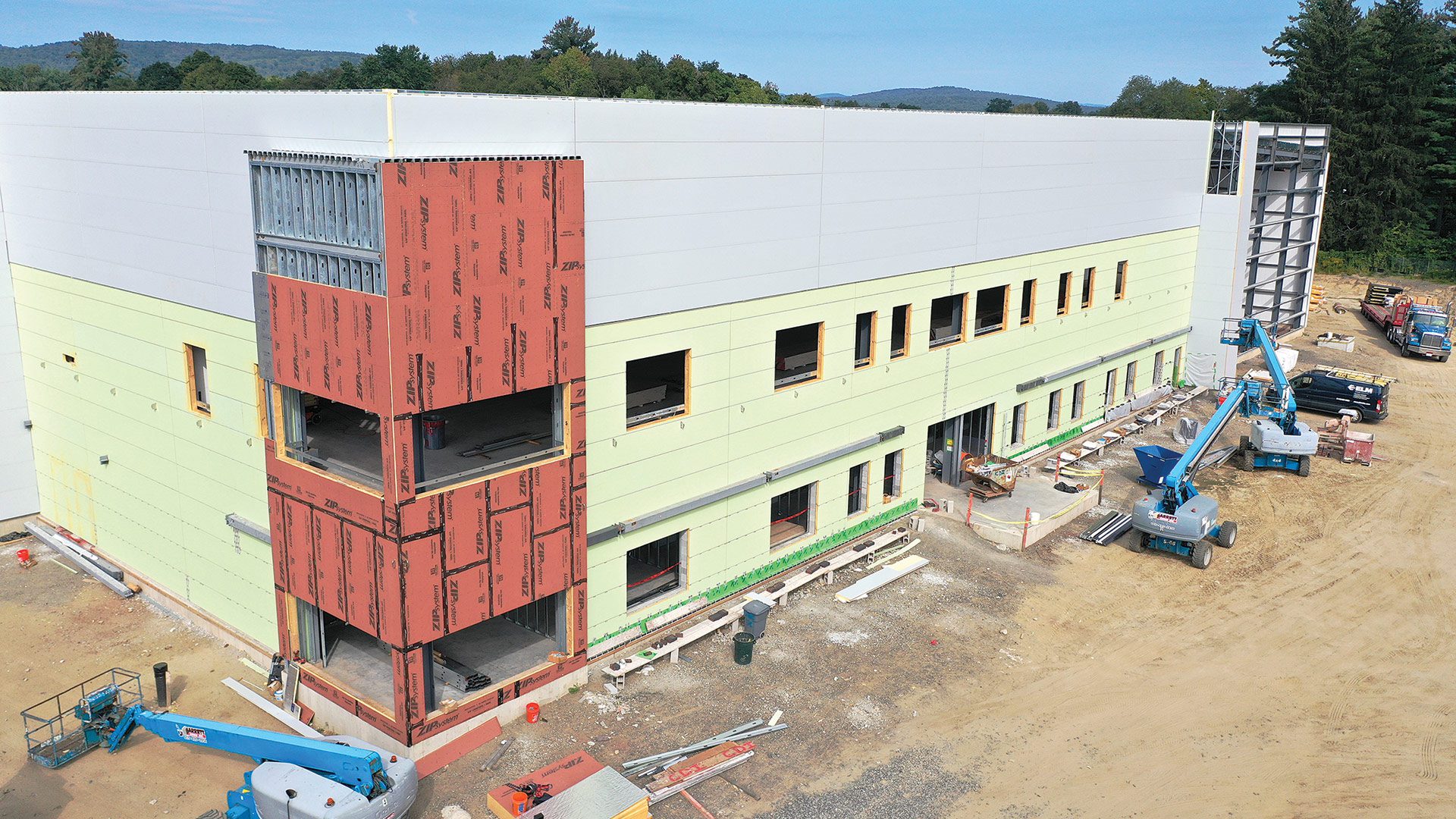
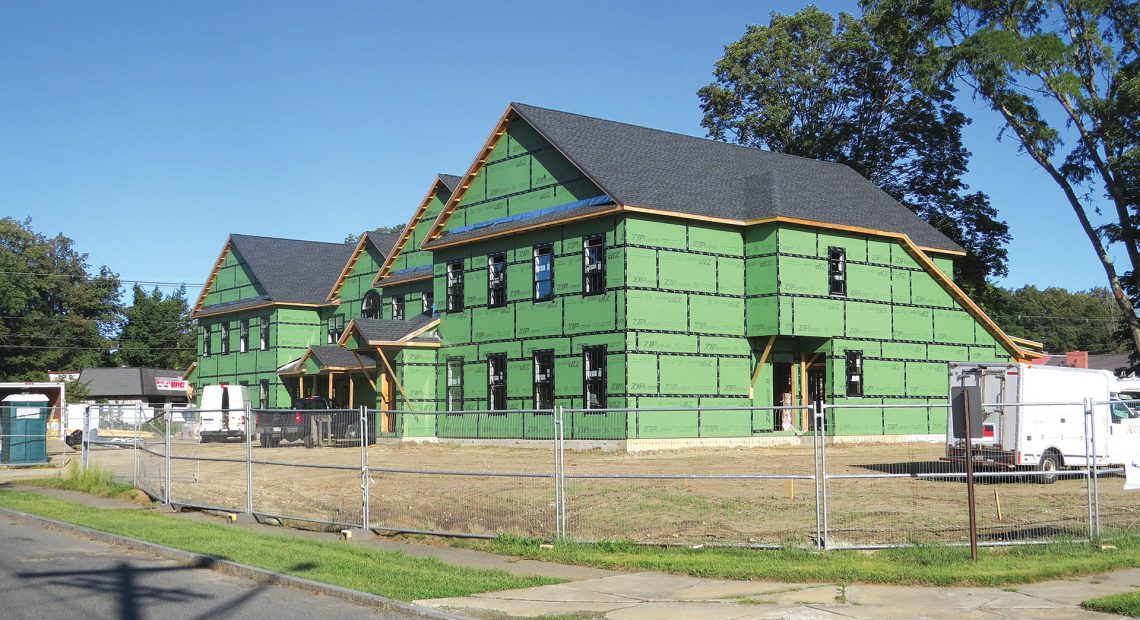
mixed-use facility taking shape on Main Street in Wilbraham

The mixed-use facility taking shape on Main Street in Wilbraham is expected to spur new development in the town center.

As noted earlier, renovation of the chapel is just part of a much larger undertaking designed to enable WMA to make better, more effective use of existing facilities, said Easler, noting that the chapel itself has served the school as a meeting place, and there simply haven’t been many meetings there.

The project also calls for the existing dining commons, on the other side of Main Street from the chapel and most classroom facilities, to be converted into an auditorium with stadium seating, with the existing kitchen to be used for back-of-house functions for that facility.

“This will have a really remarkable impact on the campus, and the town, actually — it will reduce pedestrian traffic on Main Street by about 70%,” Easler told BusinessWest, noting that dining facilities will now be on the same side of the street as classes, dramatically reducing the number of times students will have to cross the street each day.

Beyond that, it will give the arts program a functioning theater (the current dining hall), a dramatic improvement over existing ‘black box’ facilities, and the students will have the ‘Harry Potter dining hall.’

Wilbraham at a glance

Year Incorporated: 1763
Population: 14,613
Area: 22.4 square miles
County: Hampden
Residential Tax Rate: $18.70
Commercial Tax Rate: $18.70
Median Household Income: $65,014
Median Family Income: $73,825
Type of government: Board of Selectmen, Open Town Meeting
Largest Employers: Baystate Wing Wilbraham Medical Center; Friendly Ice Cream Corp.; Big Y; Home Depot; Wilbraham & Monson Academy
*Latest information available

And the school, which is currently at full enrollment, will be in an even better position to recruit young people to the campus, he said.

“Boarding school, and private school in general, is about the experience,” Easler said. “We have top-notch education, rigorous and supportive programs, lots of things people can do outside of academics … but a big reason people choose to invest in us is because it’s an experience they can’t get in a public school or a day school. And a big part of experience is having facilities like these to support it — like that dining room.”


Progress Report

There has been considerable momentum at WMA generated by several projects in recent years, including the building of a new athenaeum and conversion of the basement of the science building into a 5,000-square-foot innovation lab, and these advances constitute just some of the positive developments on Main Street and beyond in this community of around 14,600.

Michelle Buck, Wilbraham’s Planning and Community Development director, cited several signs of growth and progress across town.

That list includes several new developments on Boston Road, including a new Starbucks now under construction in front of Home Depot, once the site of a bank branch that was demolished; parking-lot expansion of the Lia Toyota dealership; a new Golden Nozzle car wash; a new fitness center called Cycle & Praise; and an outdoor dining facility for Route 20 Bar & Grille, as well as a large solar farm soon to be under construction on Three Rivers Road.

But the most visible — and most impactful — development, she said, is the emerging home for Scantic River Brewery, the ‘new’ Parfumi’s Pizza (the current version is right next door), seven apartments, and, hopefully, other small businesses. Center Village is an important development for the community, said all those we spoke with, not only because of what is planned for the site, but because of how it might make the town’s center more of a destination and spur additional development.

“It’s an exciting project that could bring more people to Main Street,” Buck said, adding that, while town leaders want to cluster most commercial activity on Boston Road, there is certainly opportunity for development in other areas of town.

Mazzuca agreed, and said bringing new businesses to Wilbraham is overarching mission of what would be called the ‘new’ Economic Development Committee, which has been working on a number of fronts simultaneously.

One has been bringing some of the businesses displaced by the closing and demolition of the nearby Eastfield Mall to the town. The committee helped secure Boston Road addresses for two of them — Mall Barbers and School of Fish — through the use of ARPA funds to help with relocation expenses.

The other major front has been ongoing work to bring more businesses and vibrancy to the downtown area, which, as Smith noted, was more of a destination 30 or 40 years ago, and can be again through developments like the Center Village project and others that might come to the drawing board because of it.

The broad goal, he said, is to create a walkable downtown and an attractive mix of businesses that will effectively serve those living in Wilbraham and surrounding communities.

“Looking north and south on Main Street, we have a farmers’ market now at the church once a week, and some activity at WMA,” he said. “So we want to look at the whole picture of the way vehicles and pedestrians interface, and revamp that. The first concern would be safety, and the second would be convenience — and it’s convenience that attracts people. There’s a snowball effect.”
He said similar efforts to revitalize town centers and downtowns are taking place in communities across the country, and those on the committee are looking at what communities of similar size and demographics are undertaking to do some benchmarking and adopt best practices.

“The ultimate goal of the Economic Development Committee is to be a liaison for businesses locating in Wilbraham,” Smith explained. “We want to help out and be a liaison between the municipality, the permitting authorities, and the actual businesses, with the ultimate goal of getting that message across that we are open for business.”


Education

After the Fire

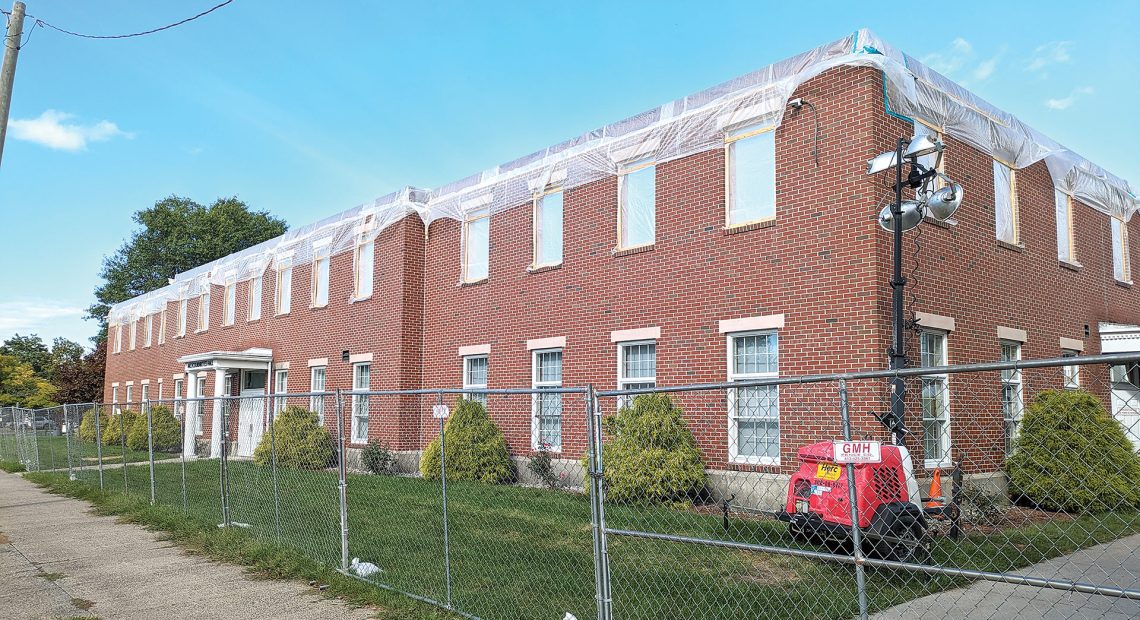
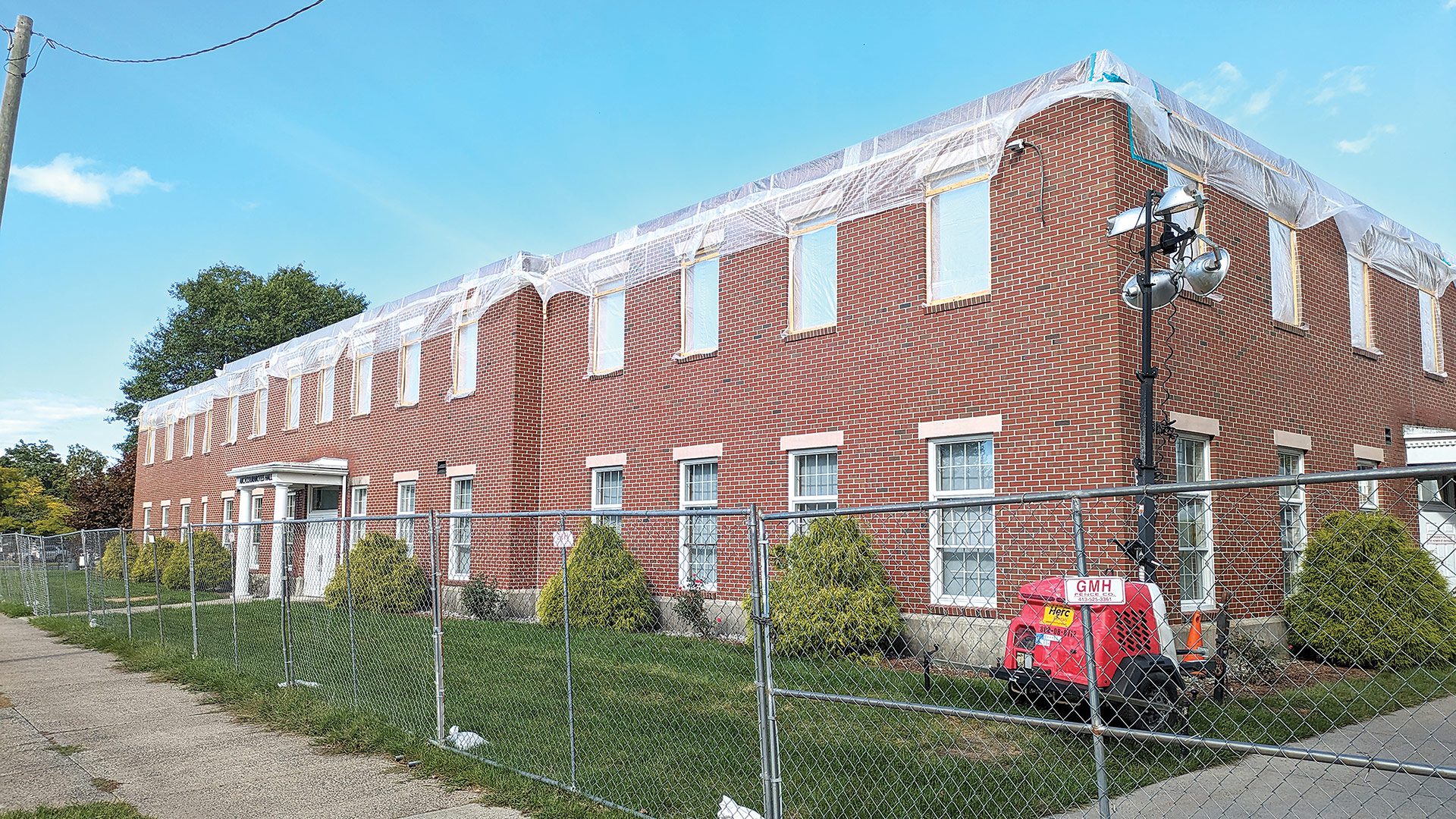
The top of Courniotes Hall is covered with plastic

The top of Courniotes Hall is covered with plastic now while AIC leaders discuss both short-term winter preparations and a long-term strategy for the building.

When a lightning strike set fire to Courniotes Hall at American International College (AIC) on July 27, the safety of everyone in the building was the paramount concern; fortunately, no one was hurt.

The longer-term concern is for the future of the heavily damaged building, and that process has only begun.

In between was one key question: what to do with all the health programs based at Courniotes and all the students and faculty who typically work and learn there — and do it before the fall semester, which was only a few weeks away.

That process has not been easy, and it’s far from over, said Karen Rousseau, dean of the School of Health Sciences at AIC. But with no programs or classes curtailed (though many have been relocated), the experience has been a valuable lesson in pivoting — and may pose opportunities to “reimagine” the design of the building once it’s repaired and renovated.

“The night of the fire was pretty devastating, but immediately the next morning, we got to work trying to figure out where to put classes that were housed in that building and how we would function,” Rousseau told BusinessWest, listing challenges from replacing the nursing program’s simulation-lab equipment to relocating cadavers and identifying new space for physical and occupational therapy labs and a large number of classrooms.

Part of the solution was finding temporary space in the Colaccino Center for Health Sciences, across State Street from Courniotes Hall, as well as other buildings on campus. Meanwhile, most of the nearby colleges and universities (and some from across Massachusetts) reached out offering space.

AIC took up one offer: from UMass Medical School – Baystate, located in Tower Square in downtown Springfield, which offered not only classroom and faculty space, but also storage for equipment and free parking for students.

“The night of the fire, we had students come to watch it, and they were concerned and sad. But we said, ‘we’re going to make sure it’s business as usual. We don’t know what it is right now, but we will make sure it’s OK for you.”

“UMass fortunately had this space that they weren’t using a tremendous amount; they use it for their accelerated baccalaureate program, but they’re mostly out on clinical placement in the fall,” Rousseau said. “So it was serendipitous that we were able to work around their schedule; primarily, it’s our junior nursing class that needed labs in the fall.”

AIC also quickly rehabbed the basement of its Amaron Hall to use as classrooms and storage for occupational therapy and physical therapy, and it will begin renovating the Lissa Building, which is attached to Courniotes Hall and also sustained damage in the fire, with the goal of opening it to students this spring; meanwhile, a building next to Lissa will be renovated to become an occupational therapy lab and training room where OT students learn how to work with patients on activities of daily living.

In short, the entire health sciences curriculum felt the weight of the fire and its aftermath, but AIC’s leaders made sure all students were able to continue their education this fall.

“I don’t want to make it sound like it was easy,” Rousseau said. “And it’s not all perfect, but it’s good. I mean, the students are receiving their education, and the faculty are happy they all have their own offices. To be able to say that, when we lost all those offices, is a miracle. And a lot of equipment from the labs had to be replaced.”

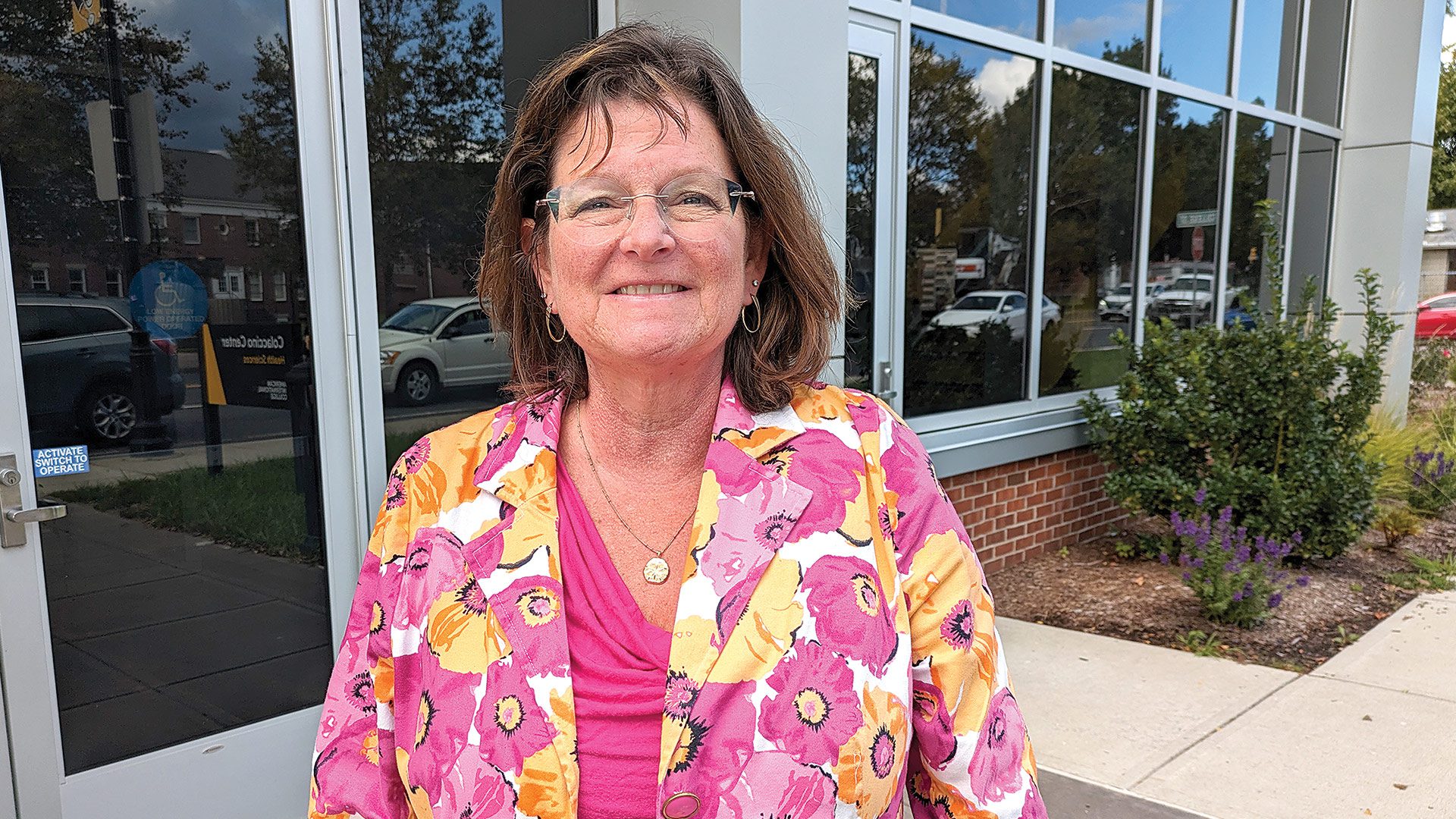
Karen Rousseau

Karen Rousseau says it hasn’t been easy, but students have been able to continue their studies following the July 27 fire.

They got creative, Rousseau added, because … well, because they had to.

“All of our [health sciences] students flowed through there. The majority nof the faculty for physical therapy was over there, and occupational therapy, and all of the nursing faculty. So all the nursing, PT, and OT students walked through there all the time. A lot of people were affected.”


No Interruptions

The reason AIC had to act quickly, and the reason so many other institutions reached out, was a shared feeling that interrupting the students’ education was unthinkable.

“This was devastating to the students,” Rousseau said. “The night of the fire, we had students come to watch it, and they were concerned and sad. But we said, ‘we’re going to make sure it’s business as usual. We don’t know what it is right now, but we will make sure it’s OK for you.’ That’s what we keep telling students: ‘it’s been OK, and it’ll continue to be OK. It will get better and better as we have more time to roll out our plans.’ But they were really nervous.”

In the longer term, AIC has engaged the services of an experienced project manager to navigate the logistics of assessment and reconstruction of Courniotes Hall.

“We haven’t had a final ruling from insurance, but it’s sounding like we will renovate and restore, maybe not in the same exact configuration, but within that same footprint — but, again, that’s not official,” Rousseau said, noting that the top of Courniotes is now covered in plastic, but some kind of temporary roof will likely need to be erected before winter sets in.

AIC’s much-discussed strategic plan for 2022-27 is called “AIC Reimagined,” and AIC President Hubert Benitez has taken to calling the future of the fire-damaged structure “Courniotes Reimagined,” sensing an opportunity to determine if the building’s current design and layout best serve students and faculty, and making changes as needed.

“He wants to pull faculty together and plan what would be appropriate for the future for that building and whether that means more space, whether we’d look to expand, and address any needs we might have,” Rousseau said. “This was OK when it was built in the ’90s, but if we had to rebuild it, we wouldn’t build it the same way. So, what would it look like? Do we want to replace it exactly the same, or do we need to make some changes? This is an opportunity. You can always use more space than what you had.”

AIC leaders are seeking engagement from students and faculty about what the building should look like for the future, she said, but stressed that the long-term planning process has only begun.

“Our focus right now is on the interim piece for the nursing lab and the occupational therapy lab; that has to come first because we want to get our students back on campus as soon as we can — hopefully for spring. We need more space for OT than what we have right now. We’re making do right now, but we need more.

“And then, with nursing, we don’t want them to have to go downtown to do their simulation and their nursing-practice skills,” she added. “And that is a bigger need in the spring for students. There are a lot more students that have to go through the lab in the spring. It’s important to us that they’re back home.”

This unusual year in AIC’s health sciences programs comes at a time when the medical world is still experiencing staffing shortages in many fields, particularly nursing, Rousseau said, but colleges nationwide have weathered a dip in enrollments in those programs.

“But enrollment across colleges in general is down for all professions, so I think it’s a symptom of the times,” she added. “A lot of people are worried about college debt, and you can go to work right away and still make an OK living wage because unemployment has been so low. There’s also the fact that we’re at that cliff where the birth rate has dropped off, so we’ve just got less people coming out of high school.”

And while nursing opportunities are still soaring — the profession has seen many older entrants who are changing careers to take advantage — there’s also lingering burnout from the pandemic, she added.

“You heard a lot of negativity around anything in healthcare. So I think that’s impacted healthcare. But it’s starting to rebound again — because then people heard about how much travel nurses make.”


Grit and Gratitude

Benitez recently expressed gratitude for the outpouring of support from the community following the fire. “I want to acknowledge the remarkable resilience and unity displayed by our faculty, staff, and students. It is this collective effort from our community that gives me confidence that we will overcome this adversity together.”

Rousseau agreed. “We wanted to reassure our students that we’re still open for business. We’re going to figure it out. And we’re trying to listen to them when there are issues.

“There are some things we can’t control, you know,” she added. “They don’t really want to be in class in a different building and not having their usual space. And the nursing faculty are farther across campus. The biggest struggle is that we’ve lost a large parking lot, so we’ve got some growing pains around figuring that out, making sure it’s OK before we start having snowbanks to deal with, too.”

But all those issues pale in comparion to the main one: ensuring that life continues at AIC, and so do the college careers of its nursing, PT, and OT students.

“We’ve tried to be thoughtful, to make sure this had the least amount of impact on students,” Rousseau said. “We’ve tried to reassure students that AIC is still here, and that we’re an equal partner in their success.”

Accounting and Tax Planning

What Does It Mean for Estate-tax Liability in Massachusetts?

By Elizabeth Dougal, Esq.


Massachusetts estate-planning clients frequently ask whether they should transfer their vacation property, typically located in Florida or New Hampshire, to a limited liability company. The answer is almost always ‘no.’

Why? Because Massachusetts does not tax out-of-state real estate held individually. However, it does tax out-of-state intangible assets. The transfer of the real estate to a limited liability company would convert that real estate to an intangible asset for purposes of the application of the Massachusetts estate tax.

Elizabeth Dougal

Elizabeth Dougal

Let’s say you are a Massachusetts resident with a vacation condominium in Florida valued at $300,000. You die with $800,000 of other assets in Massachusetts. Massachusetts imposes an estate tax up to 16% on a Massachusetts taxable estate of more than $1 million. Massachusetts does not impose its estate tax on real property held individually outside of Massachusetts. Hence, in this scenario, you would owe no Massachusetts estate tax.

What if you transferred that $300,000 Florida condominium to a limited liability company? You sometimes rent it out and want the limited liability company to decrease any liability exposure. Now, when you die, your Massachusetts estate is $1.1 million, thus subject to Massachusetts estate tax. The transfer of the condominium to the limited liability company converted it to an intangible asset includable for Massachusetts estate tax purposes. You could have managed your risk to limit potential liability through the acquisition of appropriate liability insurance instead of transferring it to a limited liability company.

You might also consider transferring your out-of-state property to an entity for probate avoidance, privacy, or ease of future transferability. For these purposes, the use of a simple ‘living’ or revocable trust might accomplish your goal. Massachusetts cannot impose Massachusetts estate tax on real property located outside of Massachusetts, whether held individually or within an arrangement that is the equivalent of individual ownership. A revocable trust is such an arrangement.

One last caveat on the example involving the Florida condominium mentioned above: Florida has no estate tax. Neither does New Hampshire. You may experience a different outcome in states with an estate tax. You will want to consult an estate tax advisor to determine if the state where the property is located has a higher estate tax rate than Massachusetts. If so, use of a limited liability company or other entity may be warranted.

Still, in general, you want to avoid dying as a Massachusetts resident with an estate over $1 million that includes real estate in a limited liability company, unless the real estate is located in Massachusetts or a state with at least an equivalent estate tax.


Elizabeth Dougal is an attorney with Bulkley Richardson and a member of the firm’s Trusts & Estates department.

Healthcare News

Critical Catch

Dr. A. Daniyal Siddiqui

Dr. A. Daniyal Siddiqui says screening is the most important factor in preventing deaths from colorectal cancer.

According to the American Cancer Society, the incidence of young-onset colorectal cancer is rising globally, with about 10% of patients with a new colon-cancer diagnosis, and 25% of patients with a new rectal-cancer diagnosis, being diagnosed under age 50.

Experts are still debating what that means, but there’s broad agreement that people need to start thinking about colonoscopies earlier than ever.

“One should not get to where cancer is diagnosed by symptoms. At that point, it’s a much more advanced stage; you want to get it when the cancer is not causing any symptoms,” said Dr. A. Daniyal Siddiqui, medical director of the Mass General Cancer Center at Cooley Dickinson Hospital and associate professor of Medicine at UMass Chan Medical School.

The statistics bear him out. While treatment of cancer has improved markedly over the decades, so has awareness of the importance of catching it at the earliest stages. In 1975, Siddiqui said, the five-year survival rate for colorectal cancer, across all stages, was 40% to 45%; today, it’s close to 70%.

And the increased incidence in younger people has caused the oncology community to further rethink screening recommendations, pushing them even younger.

The good news, Siddiqui noted, is that colorectal cancer (around 70% of which is colon cancer, 30% rectal) has been declining since the 1980s and declining even faster — between 1% and 1.8% a year — since 2009.

But at the same time, there has been an increase in incidence for younger people. In 1995, 11% of all colorectal cancer diagnoses were in patients 54 or younger; in 2019, it was 20%. For that reason, doctors now recommend starting screening at age 45, instead of the long-recognized guideline of age 50.

Siddiqui says wider adherence to screening recommendations has been impactful over the decades. “If cancers are picked up in the earliest stages, they’re more curable. So the death rate has been going down regardless of age because of better screenings. But the important thing is that incidence is increasing 1% to 1.5% per year in people under age 50. That’s why we should start screening at age 45.”

“One should not get to where cancer is diagnosed by symptoms. At that point, it’s a much more advanced stage; you want to get it when the cancer is not causing any symptoms.”

Why is a colonoscopy so critical? The answer begins with how the disease develops.

Colorectal cancer involves malignant cells that grow in the colon or the rectum, explained Dr. Aparna Parikh, medical director for the Center for Young Adult Colorectal Cancer at the Mass General Cancer Center. Often, colorectal cancers start as polyps, which are non-cancerous, but can turn into cancer over time.

According to the American Cancer Society, when a polyp — a non-cancerous growth in the lining of the colon or rectum — progresses to cancer, it usually grows into the wall of the colon or rectum, where it may invade blood or lymph vessels.

The extent to which cancer has spread at the time of diagnosis is described as its stage. The stages are described as localized (grown into the wall of the colon or rectum but not into nearby tissues), regional (spread through the wall of the colon or rectum and invading nearby tissues or lymph nodes), and distant (spread to other parts of the body, such as the liver or lung).

“Early on, when a polyp is benign, before it becomes cancer, at that point you’re talking a 100% cure,” Siddiqui said. “When you’re in stage 1, localized to the colon or rectum, you’re talking a 90% cure. The rate changes to 70% when the cancer has moved to local lymph nodes.”

And by later stages, the outlook is even worse. In fact, while it’s the fourth-most-common cancer after breast, prostate, and lung cancers, he noted, colorectal cancer is the second-leading cause of cancer-related deaths in the U.S. So it can be critical to undergo regular colonoscopies after 45 — typically once every 10 years.

“There are other screening options, including stool-based tests, but it is important to talk to your primary-care doctor about the advantages and disadvantages of different types of screenings,” Parikh said.

That said, “it’s important to note that these other screening methods are only for patients without symptoms. If you are having any symptoms, it’s important to get a colonoscopy.”


Determining the Risk

Siddiqui stressed that the new age recommendations apply only to average-risk individuals. The higher-risk group includes those with a personal history of colorectal cancer or polyp removal, family history of the disease, a history of seed radiation to the abdomen, or personal or family history of endocrine syndromes or inflammatory bowel diseases like colitis or Crohn’s.

Dr. Aparna Parikh

Dr. Aparna Parikh

“To help reduce your risk of getting colorectal cancer, eat healthy foods, including plenty of vegetables, fruits, and whole grains. Exercise regularly, limit or avoid alcohol, and maintain a healthy weight. Finally, quit smoking, or better yet, don’t even start.”

“For those individuals, there’s no black-and-white answer,” he said, explaining that recommendations of when to start screening and how often to go back are determined on a case-by-case basis: what kind of polyp was found, which hereditary factors are present, and so on.

But in general, for the average person, the guidelines start at age 45 and continue until 75, at which time it becomes a more individualized decision between a doctor and patient based on a number of lifestyle factors.

“Screening is the most important thing,” Siddiqui emphasized. “We know now, from prostate cancer and colon cancer and lung cancer, that screening works. That’s the main driving force behind death rates going down.”

The second key factor is improvement in the treatments available after colorectal cancer (CRC) is detected. Options include colorectal surgery, radiation therapy, chemotherapy, targeted therapy, immunotherapy, and access to clinical trials, Parikh noted, adding that “colorectal cancer is largely preventable and, in most cases, curable, especially if it’s detected early.”

As far as prevention strategies are concerned, some risk factors are more easily altered than others. The American Cancer Society reports that 55% of all CRCs are attributable to lifestyle factors, such as an unhealthy diet, insufficient physical activity, high alcohol consumption, and smoking.

“People have been more aware of risk factors of various cancers, and if they’re proactive in terms of reducing them through lifestyle changes, that’s the important thing,” Siddiqui said. “Age is an important risk factor, and so is family history. You can’t change those, but you can change your diet. If you’re obese, you can modify that. If you’re a smoker, you can quit smoking.”

Physical activity is an important factor as well, he added. “We know that from multiple studies with thousands of patients. I’m not saying you should start running a marathon, but simply a 25- to 30-minute walk, three to five times a week, significantly reduces the risk of colon cancer, or any kind of cancer.”

However, the strongest risk factor is a family history of the disease; people with a first-degree relative (parent, sibling, or child) who has been diagnosed with CRC have two to four times the risk of developing the disease compared to people without this family history, with a higher risk when diagnosis is before age 50 and when multiple relatives are affected, the American Cancer Society reports.

Meanwhile, up to 30% of people diagnosed with colorectal cancer have a family history of the disease, which is why these individuals should begin screening early, the organization notes. Young people with a family history should have a conversation with their healthcare provider about when to start screening.

“Everyone should know their family history, and not just colon cancer, but any cancer, especially at a young age,” Siddiqui said. “And that should be brought to a doctor’s attention because that may change the screening guidelines about when to start and how frequently.”


Changes for the Better

Dr. Xavier Lor, medical director of the Colorectal Cancer Prevention Program at Yale Cancer Center and Smilow Cancer Hospital, said recently that certain lifestyle habits associated with colorectal cancer (CRC) aren’t by themselves causing the worrisome trend of higher incidence in younger people.

“Some factors have been identified, and these increase risk, especially at older ages. Obesity, sedentary lifestyle, the western diet, and high sugar intake would only explain a fraction of these cases,” he noted.

“Genetic syndromes are also more commonly the cause for younger CRC patients than older ones, but these remain quite stable over the years and can’t explain a sudden raise in cases as we have seen in the last two decades,” he added. “It will likely boil down to environmental and dietary factors that we have not quite identified yet to explain many of these cases.”

Even absent the cancer risk, there’s nothing wrong with some healthy habits, however.

“To help reduce your risk of getting colorectal cancer, eat healthy foods, including plenty of vegetables, fruits, and whole grains,” Parikh said. “Exercise regularly, limit or avoid alcohol, and maintain a healthy weight. Finally, quit smoking, or better yet, don’t even start.”

When a CRC does develop, the symptoms can vary, she noted.

“Different people may have different symptoms of colorectal cancer, and some people may not have any signs or symptoms at all,” she said, adding that symptoms may include abdominal discomfort or cramping; bleeding from the rectum or finding blood in one’s stool; changes in how the stool looks or frequency of bowel movement; diarrhea, constipation, or increased gas; or unexplained weight loss.

“It is important to remember that these symptoms can be attributed to things that are not related to colorectal cancer,” she added, so it’s important to consult a primary-care doctor with any concerns.

But, as Siddiqui noted up top, the key is catching problems before symptoms arise at all.

“Colonoscopies can detect cancer before you have symptoms or have advanced disease. Early detection is critical,” Parikh said. “But it’s important to advocate for your own health and well-being if you have any concerning symptoms.”

Cybersecurity

Strengthening the Lines of Defense

Peter Sherlock says the numbers certainly help tell the story.

There are roughly 26,000 employed in Massachusetts today in what would be called the cybersecurity sector. And there were, at the precise moment we talked with him, exactly 18,263 openings in that realm, a number that goes up seemingly every day.

That means this sector has about two-thirds the number of qualified individuals it needs, said Sherlock, adding that the dire need to close that gap was one of the motivations behind the creation of CyberTrust Massachusetts, which he now serves as CEO.

Another motivation was to make the state’s businesses, institutions, and municipalities more cyber-secure at a time when the number of victims of cyber and ransomware attacks — like the number of job openings in this sector — keeps going up.

Peter Sherlock

Peter Sherlock

“As we put these students into these SOCs, they’re going to be working under the supervision of cyber professionals. We’re going to put them to work making cities and towns more cybersecure.”

How CyberTrust is going about these assignments, which overlap in many different ways, as we’ll see, will be among the focal points of Sherlock’s presentation at the 11th annual Cybersecurity Summit at Bay Path University, set for Friday, Oct. 13 at the Mills Theatre in Carr Hall on the school’s Longmeadow campus.

Registration for the event, which has been drawing steadily larger audiences because of the importance of the subject matter, is required. Individuals can register at baypath.edu/summit, and attend either in-person or remotely.

The working title for the program is “Who’s Next? How a Stronger Cyber Ecosystem is the First Line of Defense.” And Sherlock told BusinessWest that there are many elements that comprise this ecosystem, including the business sector, government, and education (the state’s colleges and universities, and even its high schools and middle schools). Together, they work on those twin assignments of building the workforce and making entities more cyber-secure.

At the forefront of these efforts is CyberTrust Massachusetts, a nonprofit committed to building both opportunity and security through a consortium of statewide businesses and colleges.

“CyberTrust arose out of a long-running dialogue among business and academic leaders, with some folks in government; these were discussions centered around workforce,” he said, adding that he understands first-hand the challenges of hiring — and retaining — within this sector.

Indeed, he previously served as chief operating officer of MITRE, as well as senior vice president responsible for MITRE’s defense and intelligence business.

“In my roles there, I had to worry about our annual hiring programs; trying to hire 1,000 STEM professionals every year was quite a challenge, as was retaining them,” he explained. “I would talk a lot with other executives in the Massachusetts area about the challenges of growing the pipelines in some of these technologies to keep up with the demand.

“And as the pandemic disrupted the workforce a bit more, those problems have become even more urgent,” he went on, adding that this urgency helped bring business and education together in the CyberTrust Massachusetts consortium to “move the needle,” as Sherlock put it, on not only these workforce issues, but the growing threat — in the form of cyber and ransomware attacks — to businesses of all sizes, nonprofits, institutions, and municipalities.

In his presentation at the Cybersecurity Summit, which will followed by what is expected to be a robust question-and-answer period, Sherlock said he will address a number of issues and initiatives, including the workforce challenges, efforts to activate new pathways for the talent pipeline in order to both grow and diversify and workforce, and cybersecurity approaches for municipalities across the Commonwealth.

While doing so, he will discuss how these problems intersect, and also about efforts to address them jointly, such as the security operation center, or SOC (pronounced ‘sock’ by those within this sector) that is taking shape at Springfield’s Union Station. This SOC, to be established by Springfield Technical Community College, will provide threat monitoring and other cybersecurity services for the state’s municipalities, small businesses, and nonprofits, while also creating learning opportunities for those in or seeking to join this sector at a ‘cyber range,’ a new testing lab that will mirror real-world IT environments to provide hands-on training opportunities to local companies, universities, and other cyber-focused organizations.

“We need to introduce new people to the cyber career field, whether it’s recruiting them from high school or getting adult career changers, and making non-cyber majors credentialed in cyber.”

“While focusing on workforce, we decided we could be serving another purpose at the same time,” he explained. “As we’re training our cyber learners with hands-on experiences, we could actually put them to work securing cities and towns, nonprofits, and small businesses. We put together this rather ambitious plan to set up security operations centers at a number of universities across the Commonwealth and to infuse new cyber-range technology into these colleges and universities and enlist cyber employers from across the state into this activity.

“As we put these students into these SOCs, they’re going to be working under the supervision of cyber professionals,” he went on. “We’re going to put them to work making cities and towns more cybersecure.”

Overall, Sherlock said the workforce issue requires creative, outside-the-box thinking and efforts to encourage individuals to consider this field while they are still in high school or even middle school.

“We need to introduce new people to the cyber career field, whether it’s recruiting them from high school or getting adult career changers, and making non-cyber majors credentialed in cyber,” he said. “There are a lot of different ways to get people into the field that we weren’t working at too much.”

Sherlock said he would go into much more detail at the summit, which grew out of the growing importance of cybersecurity in today’s society, the emergence of that sector, and the need to keep businesses and the community at large informed when it comes to new trends, new initiatives — and new threats, said Tom Loper, associate provost and dean in the School of Management and Technology at Bay Path.

Loper said he hopes, and expects, this year’s summit to be well-attended because of its focus on businesses and municipalities, the efforts to keep them safe from cyberattacks, and the role that they play within the emerging cyber ecosystem.


Wealth Management

Planning Is the Key

By Barbara Trombley, CPA

Does anyone like to pay taxes? Most of my clients tolerate paying taxes like eating their least-favorite vegetables. They are difficult to calculate and hard to understand, especially with a business generating uneven cash flow or an employed couple with disparate incomes.

But what if I told you there are ways to eliminate taxes in retirement or minimize federal taxes to a palliative 12% bracket?

Tax planning is an important part of retirement planning. When I ask clients what their target monthly spend in retirement is, they never consider the tax effect. For instance, a married couple may say they need to generate $6,000 per month to pay all their bills when they retire. Typically, this means the dollar amount that is deposited in their bank account.

But as a financial planner, I immediately think of the gross amount. How much do we need to generate on a gross level, before taxes, to net them $6,000? Depending on the source of funds, some of my clients may have a tax bill of zero, allowing them to draw only the $6,000 per month out of their investment account(s)!

Barbara Trombley

Barbara Trombley

“When I ask clients what their target monthly spend in retirement is, they never consider the tax effect.”

How can this be? Most retirees rely on Social Security to generate a large portion of their income. Some people pay tax on Social Security, and others do not. Whether you pay taxes or not depends upon your total combined taxable income. Combined income includes your adjusted gross income, any non-taxable interest you receive, and half of your Social Security benefits (adjusted gross income includes earnings, investment income, retirement-plan withdrawals, pension payments, and other taxable income.)

If a married couple has a combined income of less than $32,000, then none of their Social Security income is taxable on a federal level or in Massachusetts. For a single person, the limit is $25,000. Depending on the outcome of this formula, 85% of Social Security benefits could be taxable. The key to paying no federal taxes in retirement is to have other, non-taxable sources of funds.

How can you plan now to possibly pay zero taxes in retirement? A Roth 401(k) or Roth IRA is the best place to start. Most employer 401(k) plans now have a Roth option. This is when your contributions are made on an after-tax basis instead of pre-tax. If you are in a high tax bracket now, you would need to consider the tradeoffs of paying taxes now to not pay later.

In 2023, the limit for Roth 401(k) contributions is $22,500 with a $7,500 catch-up contribution for those over age 50. If you do not have a 401(k) plan at work, you can make a Roth IRA contribution of $6,500 per year, or $7,500 per year if you are over age 50. When you withdraw Roth funds after age 59½, the withdrawals are tax-free and do not impact taxable income.

Another great source of non-taxed income in retirement is investment accounts or savings outside of retirement accounts. If invested efficiently, where capital gains and interest income can be minimized, drawing from these accounts in retirement can have little effect on taxable income. Tax-efficient investing may involve putting interest-generating investments in a Roth IRA and keeping investments that generate long-term capital gains in a brokerage account.

For an example of efficient tax planning, consider client couple A versus client couple B. Both clients are married and file taxes jointly. Each of these couples would like to generate $6,000 per month in cash to spend in retirement. Each client couple generates $3,000 per month in Social Security after paying for Medicare. Client couple A each has a Roth IRA and draws the remaining $3,000 per month out of one of their accounts to meet spending needs. Since withdrawing from Roth accounts is non-taxable after age 59½, they would pay $0 in federal and $0 in Massachusetts state taxes.

Client couple B has only taxable retirement accounts. They draw the needed $3,000 from one of their taxable accounts. If there are no other factors, according to 2022 federal tax tables, they could owe approximately $4,500 in federal taxes and $1,600 in the state of Massachusetts, for a total of more than $6,000 in total income tax!

As a financial planner, I would need to generate an additional $500 per month to cover client couple B’s taxes. If client couple B withdraws a standard 4% from their retirement accounts in retirement, they would need to save another $150,000 during their working years compared to client couple A.

Proper tax planning should be a very important part of retirement planning. Many times, income taxes cannot be avoided, but they can be managed efficiently. Working with your CPA and financial planner is always a good place to start.


Barbara Trombley, CPA is managing partner at Trombley Associates. Securities offered through LPL Financial. Member FINRA/SIPC. Advisory services offered through Trombley Associates, a registered investment advisor and separate entity from LPL Financial. This material was created for educational and informational purposes only and is not intended as ERISA, tax, legal, or investment advice. If you are seeking investment advice specific to your needs, such advice services must be obtained on your own, separate from this educational material.

Cover Story Education

Change of Course

STCC students Sarai Andrades, left, and Destiny Santos

Sarai Andrades is a second-year student at Springfield Technical Community College (STCC). She’s enrolled in the health sciences program, with the goal of starting work toward a nursing degree in 2024. Her ultimate ambition is to become a travel nurse.

To pay for her first year at STCC, she had to take on $5,000 in loans because she and her husband were earning too much to qualify for financial aid. But this year, she’s going for free, essentially, because of the MassReconnect program, which enables individuals 25 and over (she’s 49) to attend one of the state’s 15 community colleges without the burden of having to pay tuition — or even for books.

For Andrades, relief from the burden of debt is, in a word, “huge.”

Indeed, she eventually decided to resign from her job so she could attend school full-time, and the debt she took on for that first year was certainly burdensome.

“Not to take out a loan, not to be in debt when there’s only one income in my family, is a big relief for us,” she said. “Before, there was worry — this is a two-year program, and to become a full-time college student with only my husband working was going to be tough. I’m ecstatic that they’re doing this for us.”

With that, she spoke for hundreds of others in similar situations — and for administrators at the area’s community colleges, who have seen dramatic, and much-needed, increases in enrollment and vibrancy on their campuses this fall, and can attribute those increases, at least in part, to the MassReconnect program.

Jim Cook

John Cook

“When you reduce this cost barrier all the way, people can now find the time and space in their lives to actually imagine themselves back here.”

“When you reduce this cost barrier all the way, people can now find the time and space in their lives to actually imagine themselves back here,” said John Cook, president of STCC, noting that the school has seen its first increase in year-over-year enrollment in more than a decade. “People really do want to make a difference for themselves and their families, and this is that thing that has really grabbed their attention and carved that space back out in their lives.”

Tim Sweeney is back on the campus at Greenfield Community College roughly 20 years after he left school to start working.

Tim Sweeney is back on the campus at Greenfield Community College roughly 20 years after he left school to start working.

MassReconnect is a program created through legislation passed earlier this year, modeled on similar, and thus far successful, initiatives in other states, including Michigan and Tennessee.

For many individuals, the burden of tuition expenses and debt has kept them from attending school or forced them to the sidelines before they could complete a degree or certificate program, said Mark Hudgik, interim dean of Recruitment, Admissions, and Financial Aid at Holyoke Community College.

“We’re definitely seeing an increase in adult students applying and enrolling who had no college before, and we think that’s a direct impact of MassReconnect,” he said. “We also see a fair number who are coming back after a break.”

Linda Desjardins, director of Student Financial Services at Greenfield Community College, agreed.

“For some, coming up with a few thousand dollars for tuition and fees, plus another couple hundred for books, was making it difficult just to get here and get through the door,” she said. “This has just really opened up a new world for these students and new opportunities, which is great for the college and great for our student body because now we all have these diverse and enriching experiences coming into the classroom and on campus.

“And to see the amount of stress that just melts away from a student who was really worried about the cost — they’re thinking, ‘I know I want to come, I’m driven to do this, I want to change my life, but I’m going to have to give up groceries to pay for my books’ — it’s really encouraging,” she went on. “Now they don’t have to do that; they can concentrate on the work at hand in the classroom.”

For this issue and its focus on education, BusinessWest takes an early look at MassReconnect and the many ways it is changing the paradigm at area community colleges. Spoiler alert: you’ll read ‘it’s huge’ more than a few times.


Class Act

Tim Sweeney is back at Greenfield Community College, roughly two decades after he spent parts of five years there going to school — sometimes full-time but mostly part-time — in pursuit of an associate degree in liberal arts.

“I almost finished up, but was at a point in my life where I needed to support myself financially and concentrate less on school,” the 44-year-old told BusinessWest. “I never had the inspiration or motivation to go back.”

Mark Hudgik

Mark Hudgik

“We’re definitely seeing an increase in adult students applying and enrolling who had no college before, and we think that’s a direct impact of MassReconnect. We also see a fair number who are coming back after a break.”

But through MassReconnect, he found that motivation, and he’s back on campus, taking the three courses he needs to complete that degree: “Gothic Literature,” “Interpersonal Communications,” and “American History, 1985 to the Present.”

His plan is … well, to graduate and then transfer to UMass Amherst to pursue a four-year degree. Beyond that, he doesn’t know … yet.

“I don’t have a particular direction yet,” he said, adding simply, “just forward — finally.”

Moving lives and careers forward is the basic motivation behind MassReconnect, which is designed to help people like Sweeney who had to put college aside, or who never got started in the first place, for any of several reasons, but often the cost of tuition — or even the cost of a semester or year’s worth of books.

For others, it is the apprehension of taking on debt, especially at a time in their lives when they have many other responsibilities — housing, children, and more — that keep them from taking an important step that might help them trade a job for a career.

But MassReconnect is about more than helping individuals and families cope with the cost of a community-college education, Cook said. It’s also about putting more individuals in a position where they can relieve some of the stern challenges facing employers in every sector of the economy when it comes to finding qualified talent.

And for community colleges, the program comes at a time when they are facing stern enrollment challenges that began before COVID and were exacerbated by the pandemic, to the point where, as Cook said, the schools had essentially reached bottom and “there was no place to go but up.”

It’s only been a few weeks since the start of the fall semester and the introduction of MassReconnect, but already there are signs that it is making an impact, though it will certainly take longer, at least a few years, before its influence on the workforce crisis is known.

For individuals of various ages and in various life situations, MassReconnect represents a chance to continue in school, or go back to the classroom, but without the financial burden. As DeJardins noted, the reduced stress is palpable, and is enabling individuals to focus all — or at least more — of their energy on what’s happening in the classroom.

That’s certainly the case for Destiny Santos, another student at STCC, now in her third semester, who has designs on being a nurse.

Solymar Fraticelli, left, and her mother, Nicole Rodriguez

Solymar Fraticelli, left, and her mother, Nicole Rodriguez, are both attending HCC, while Fraticelli’s daughter is attending daycare there.

“What MassReconnect has done for me is allow me to go into this semester without the financial burden,” she explained. “And now that I’m 26, I have more things to care of; this program has allowed me to go to school knowing that everything will be OK, and I’ll be able to succeed without the burden of paying a school bill.”

Similar tones were struck by Nicole Rodriguez, 43, a second-year student at HCC who wants to advance within the human-services field, and her daughter, Solymar Fraticelli, 27, who returned to the school this fall after a lengthy hiatus.

Without MassReconnect, Rodriguez said, she would be facing a bill of more than $7,000 for tuition, fees, books, and more. And the thought of taking on debt to cover that bill is intimidating.

“That’s a lot for me, and it would likely limit me as I look to further my education,” she told BusinessWest, adding that MassReconnect has enabled her to continue without the burden of debt and, in so doing, helped inspire her daughter and other adults — her sister-in-law and best friend among them — to return to school or get started.

It’s been nearly eight years since Fraticelli first took classes at HCC — she attended for roughly a semester and a half before having to put her education aside — and she now has a daughter as well. The time gap and her parental responsibilities were just two of the factors to weigh as she considered the risks and rewards of attending community college and pursue a career in the healthcare field.

MassReconnect made it that much easier to meet those challenges head-on.

“I thought it was a great opportunity to go back to school,” she said, adding that her daughter attends daycare around the corner from the campus. “It’s free, or almost free, and that makes it that much easier to go back.”

For Sweeney, who has been unemployed for more than a year now, going back to school seemed like a more fruitful course than trying to test the current job market.

“I wanted to advance myself educationally in order to advance myself in my career,” he said, adding that being able to do so without having to pay for those three courses listed above certainly factored into his decision.


Degrees of Change

Meanwhile, the college administrators we spoke with said MassReconnect is at least partially responsible for a surge in enrollment they’re seeing this fall.

Cook said current enrollment at STCC has risen to 4,500, up from 4,000 a year ago. That number is still a long way from the 5,000 recorded in the fall of 2019, the last September before COVID, and a long, long way from the high-water mark of 7,000 notched in 2012, just a few years after the Great Recession.

But it is an important step in the right direction.

“For the first time in a decade, we’ve had a meaningful increase in enrollment,” he told BusinessWest. “We’re up 13% to 14%, and there are a number of factors involved with that, including MassReconnect.”

Desjardins agreed. She said the overall student headcount is up by 8.6% over last fall, a significant boost for GCC, one of the smallest community colleges in the state.

At HCC, enrollment had declined close to 30% during COVID, Hudgik said, adding that this fall, the school has seen its first increase year-over-year since 2010, with a 5.5% increase in total students and a 14% climb in new students, numbers that can be attributed at least in part to MassReconnect.

Beyond these soaring enrollment numbers, though, college administrators are buoyed by the stories behind the numbers — individuals who are returning to community colleges, or finding them for the first time years, and in some cases decades, after they graduated from high school.

And they’re attending school without having to borrow money, which removes a financial burden that weighs on individuals while they’re working toward a degree or certificate program.

Desjardins noted that the amount of grant aid Massachusetts residents is receiving has increased by 32% at GCC over last year, which represents more than $243,000. Meanwhile, the amount borrowed has dropped by 35%, or $123,000.

“Applications for federal financial aid have gone up by 16%,” she noted. “It could be for various reasons, but with all the attention that MassReconnect is getting — and the word is spreading — it’s safe to assume that MassReconnect is a good generator of that increase in financial-aid application.”

Like others, she is encouraged by the manner in which the program has enabled many who were not eligible for financial aid because they exceeded wage limitations to now attend community college without the burden of paying for it directly or taking out loans to be paid back over several years.

“The thing that’s most remarkable to me, in my position, is how low- to middle-income wage earners who have been left out of receiving free dollars for college, like grants and scholarship dollars, are now eligible to get this money to attend college,” Desjardins said. “If you were someone who was 25, single, with no children, and you made a little over $30,000 … before MassReconnect, you may have been eligible for just a few hundred dollars for the entire school year; now, you’re eligible for enough free money to pay for your tuition and fees, plus give you something toward the cost of books and course materials. That’s huge. Someone who is a low- to middle-wage earner is struggling already to pay their rent, their mortgage, childcare, groceries, gas, and more.”

Hudgik agreed. “Loans are scary,” he said. “MassReconnect allows them to not have to worry about the income threshold; they know the Commonwealth will support them and minimize the amount of loan they have to take out, and bring it to zero if they want.”

And while community college is essentially free for these individuals, the administrators we spoke with said this hasn’t diminished the value of the education their schools provide or lessened the degree of grit and determination behind the decisions to go back to school or attend for the first time.

“What we know to be true about our adult students is that, when they make the decision to come, it is usually with a lot of thought behind it,” Hudgik said. “It’s a fairly big risk for someone who has been out of school for a while to try to restart their school-going mentality. If they’ve decided to come, they’ve usually been pretty serious about it.”


Bottom Line

When asked what it was like to be back on the GCC campus 20 years after he last attended a class there, Sweeney said it was strange on some levels, and there was a period of adjustment, but, overall, he’s comfortable — with both his decision and with being back at school.

“I feel like I’m a different person than I was,” he said, adding that he realizes the importance of a college degree to advancing himself professionally, and just needed some motivation to take this big step.

This is what MassReconnect is all about, and while it will take some time to effectively quantify its impact on many different levels, at the moment, to those surveying the scene, it is a qualified success.

Features Special Coverage

Fried and True

Peter Picknelly, left, and Edison Yee

Peter Picknelly, left, and Edison Yee, two of the many partners involved with the White Hut location in Holyoke.

When asked about where they might take the White Hut brand — and when, both Edison Yee and Peter Picknelly took long pauses and then looked at each other as if to say, ‘you first.’

They did so to indicate a few things — first, that they’ve obviously been thinking long and hard about that question, and second … they don’t really know the answer yet.

What they do know is that they will bring the concept beyond Memorial Avenue in West Springfield, the location that was rescued in 2020 by Picknelly, chairman of Peter Pan Bus Lines; Andy Yee, Edison’s brother; and others within the Bean Restaurant Group after founding owners the Barkett family announced it would close. And also beyond 825 Hampden St. in Holyoke, the location — a renovated former PeoplesBank branch — that opened last month.

“Our goal is to build a microbrand from this White Hut concept,” he said, using that term to describe brands with up to 10 locations, adding that locations are being scouted in Westfield and other communities, and if all goes well in Holyoke, there could easily be another location within a year.

Picknelly concurred. “We believe the White Hut is a brand that’s scalable; we’ve had overwhelming success in West Springfield — our customer count continues to grow there — and we think Holyoke is a great location,” he said. “This a solid brand, and we want to expand it out strategically.”

But both said that, at the moment, they and several co-owners in the Paper City venture, including Holyoke natives Jack Ferriter and Mark Cutting, are hard-focused on that location, the success of which might go a long way toward determining where and when this iconic (yes, that word fits here) brand and its red-and-white color scheme might next be seen.

Nathan Yee, director of Hospitality for the Bean Restaurant Group and part of the proverbial next generation of leadership at the company, believes it will do quite well.

“Our goal is to build a microbrand from this White Hut concept.”

Those involved spent considerable time scouting locations, he said, and eventually zeroed in on the Hampden Street location, which lies on a well-traveled road just a few hundred yards from an I-91 exit.

Beyond location, this site offers … well, everything that has made the White Hut brand iconic — its famous hamburgers, hot dogs, fried onions, shakes, and more — as well as new additions, including a salute to Holyoke: a breakfast sandwich called the Paper City Special, containing a scrambled egg with sausage, hash brown, American cheese, and fried onions on a Venetian water roll.

There are other new wrinkles as well, including a self-ordering kiosk for those who prefer that option, as well as a pickup option by which employees bring the customer’s order directly to their car.

Nick Yee cuts a ceremonial ribbon

Nick Yee cuts a ceremonial ribbon of hot dogs at the grand opening of the Holyoke White Hut last month.

In short, the ownership group is taking a brand that has a storied past and a rich history and bringing it into the future — changing what should be changed, and not changing anything that shouldn’t be changed, like those fried onions.

For this issue, BusinessWest takes an in-depth look at the institution that is the White Hut, the long-planned move into Holyoke, and those still-evolving plans to bring the brand elsewhere within the 413 — and likely beyond.


Relishing the Possibilities

As he talked with BusinessWest in mid-September, Edison Yee had a lot on his plate — and yes, that’s an industry term, sort of.

The Big E was going to start in a few days, and Yee and many others at the Bean Restaurant Group had considerable prep work to do get ready; the group has several locations at the fair, including the White Hut, the Wurst House, and a new addition to the portfolio, a ‘Harpoon Beer hut.’

“We sell a lot of food and lot of beer,” he said, adding that the company probably has 100 or more seasonal employees working at the fair, which has been an ever-increasing part of the business plan for the group since it first started taking part eight years ago.

Meanwhile, Oktoberfest, a huge, nearly month-long celebration at the Student Prince, is coming up fast (Oct. 8 is the official start date), and Yee was deep into the planning stages for that annual happening. And then, there’s ongoing planning and the start of work at the restaurant that will become a linchpin of the redevelopment of the Court Square Hotel on Elm Street in Springfield, another collaboration between Picknelly and the Bean Group.

But on this day, and the days before, the main focus was on the Holyoke White Hut location and making sure everything was in order for the grand opening coming up the next morning. This was an event that was maybe two years in the making, said Yee and Picknelly, noting that, not long after the West Springfield location had been saved and was successfully navigating its way through COVID, talk began to turn to where this iconic brand might go next.

And it wasn’t long at all before the focus turned to the Paper City.

But before we explore this move to Holyoke, we need some background, and some perspective on both the brand and the location in West Springfield, which, to many, has achieved landmark status, figuratively if not literally.

Our story begins in 1939, when Edward Barkett opened a small restaurant on Memorial Avenue and decided to call it the White Hut because that was the principal color.

Suceeding generations of the Barkett family owned and operated the restaurant and eventually took the brand beyond West Springfield — to Amherst, in a venture that met with only limited success, in part, Picknelly believes, because the location was not highly visible.

And while the brand is famous for the loyalty exhibited by its regulars, location and visibility are keys to the success of any restaurant, he went on.

Fast-forwarding a little, E.J. Barkett (Edward’s grandson) announced rather abruptly in 2020 that White Hut would close its doors. Picknelly and Andy Yee, both to be counted as Hut regulars, as well as serial entrepreneurs and part of the group that rescued the Student Prince restaurant in 2015 when its closure seemed imminent, stepped into the breach and saved the White Hut.

And they did so under extreme circumstances. Indeed, that rescue came at the height of COVID, when that restaurant, like all others, had to find ways to do business while also keeping people safe. It already had effective takeout service, said Picknelly, adding that this quality was one of many that enabled it to persevere during those trying times.

Another quality, obviously, was the food itself, he said, adding that another ingredient in the recipe for success was simply not to change much of anything that had made the Hut such a fan favorite.

Such diligence has been rewarded with rankings on a number of ‘best burger’ lists. In 2021, for example, White Hut’s cheeseburger with grilled onions was named the best burger in Massachusetts by Thrillist, and it has been ranked among the best burgers in the country. The Hut was profiled in USA Today in 2019, which said everything about the brand is “frozen in time,” and it’s been included by the Wall Street Journal in its “Essential Guide to America’s Best Burgers.”

That success begs the obvious question — where can this brand go? That query refers to everything from geography to the size of what would have to be called an emerging chain.


A Side of Entrepreneurship

The answer to that question begins in the Paper City and the opening of the Hampden Street location, which provides evidence that everything is no longer entirely frozen in time, as we’ll see.

“Holyoke has been on the radar for our group for a long time now,” Edison Yee said, adding that several potential sites were considered before the Hampden Street location, one strongly favored by his brother, Nick Yee, the group’s principal managing partner, became the focus of attention.

the latest White Hut location in Holyoke

From left, Bryan Graham (culinary director and partner), Nick Yee, Peter Picknelly, Edison Yee, and Nate Yee stand in front of the latest White Hut location in Holyoke.

“The traffic counts are great,” he said. “And, growing up in South Hadley, we knew that this was the main street to get onto I-91; you have all the traffic that comes from South Hadley, Granby, parts of Chicopee, and, of course, Holyoke, that are filtering through this road.”

Picknelly agreed, and noted that the traffic count is actually higher on Hampden Street than it is on Memorial Avenue in West Springfield.

Beyond steady traffic, the location provides more convenience to those who travel down I-91, Route 5, or other roads to get to the West Springfield location (and there are many in that category) while also introducing the brand to new audiences.

“We think Holyoke is a great location,” Picknelly said. “Our brand is still strong here, yet it’s far enough away that we won’t be competing against ourselves, and our customers from Holyoke, Northampton, and Granby won’t have to travel as far — that’s the essence of it.”

And while the location is expected to draw people from several area communities and, its owners presume, travelers on I-91, it is a neighborhood restaurant, one that will in some respects replace another iconic eatery, Mel’s Restaurant, which closed recently, just a few hundred feet away.

The location will offer the same menu as the one in West Springfield — and essentially the same food the Hut has offered since 1939 — but with some of those new amenities, such as the self-ordering kiosk, said Nathan Yee, which will bring another layer of convenience to customers.

“With each unit, we’ve identified some of the operational areas that we can improve on, and that’s what we’ve done with this location,” he said. “We’ve added a few new features to make it more customer-friendly.”

Renovation of the former bank branch took more than a year, he noted, and an investment, beyond the purchase of the property, of more than $1 million.

And this may the first of several initiatives to bring the White Hut brand to different cities, towns, and markets, said Picknelly and Edison Yee, noting, again, that Holyoke will be a barometer of sorts for how well the brand may ultimately travel.

“Our ultimate goal is to expand the brand,” Yee said. “This is a great test for us, being in Holyoke, and we feel strongly that, if we can get this unit to operate similarly to West Springfield in terms of metrics, we’re eager to look for another spot.”

Picknelly agreed, noting that expansion, either through owner-operated locations, such as those in Holyoke and West Springfield, or perhaps franchising, is likely if not inevitable.

“There are restaurant groups in Connecticut that have contacted us and want to franchise,” he said. “We want to expand this on our own first; we think it’s really scalable — this is our first venture to do that. Once this gets up and running, I think you’ll see the White Hut brand all over the Northeast.”

“Our ultimate goal is to expand the brand. This is a great test for us, being in Holyoke, and we feel strongly that, if we can get this unit to operate similarly to West Springfield in terms of metrics, we’re eager to look for another spot.”

Elaborating, he said could envision scenarios where there are both owner-operated locations and franchises, and there are plenty of successful models of such operations, including national brands such as KFC, Burger King, and others.


Food for Thought

Summing up the current state of this brand, Picknelly said it’s “one that the Barkett family built and the Yee family made better.”

Where can it go beyond West Springfield and Holyoke? Only time will tell, but it’s safe to assume that expansion will continue across Western Mass. and perhaps beyond. A brand that’s been called ‘simple,’ ‘tried and true,’ and, yes, ‘frozen in time’ will continue to be all those things.

But time certainly won’t stand still for the White Hut and its owners.

Accounting and Tax Planning Special Coverage

Rolling with the Changes

By Daniel Eger and Cindy Gonzalez

Tax laws are like a constantly shifting landscape, subject to periodic changes that can significantly impact your financial bottom line. Whether you’re an individual taxpayer striving to maximize deductions or a business owner who wants to optimize your financial strategies, staying informed about the latest tax-law changes is paramount.

Daniel Eger

Daniel Eger

Cindy Gonzalez

Cindy Gonzalez

In this ever-evolving tax environment, we’ll explore the essential updates that individuals and businesses need to be aware of to navigate the new tax frontier effectively. We’ll dive into the critical modifications that may influence your financial planning and tax strategies in the coming year.


TAX-LAW CHANGES IMPACTING INDIVIDUALS

In 2023, several significant adjustments have been made to tax laws that individuals should be aware of. These changes encompass a wide range of topics, from energy credits to retirement contributions, interest rates, and tax brackets. Let’s delve into some of the key changes that may impact your financial planning.


Residential Energy Credits

For individuals looking to reduce their environmental footprint and lower their tax liabilities, residential energy credits are worth exploring. These credits aim to incentivize the adoption of clean and energy-efficient technologies in homes. A notable change for 2023 is the Clean Vehicle credits, which are now effective after April 18. These credits apply to new, used, or commercial vehicles, with qualifying requirements for sellers, dealers, and manufacturers.


Interest-rate Changes for Q4 Payments

Starting on Oct. 1, 2023, significant adjustments will be made to interest rates for tax payments. In cases of overpayments, where individuals have paid more than the amount owed, the interest rate will be set at 8%. In instances of underpayments, where taxes owed have not been fully paid, individuals will be subject to an 8% interest rate.


Contributions to Retirement Savings

In an effort to help individuals save for their retirement, the IRS has raised the contribution limits for 401(k) and IRA plans in 2023. If you contribute to a 401(k) or 403(b), you can now put in up to $22,500 a year, an increase from $20,500. Those age 50 or older can make an additional catch-up contribution of $7,500. Similarly, traditional and Roth IRA contributors can now contribute up to $6,500 (up from $6,000), with an extra $1,000 catch-up contribution available for those age 50 and older.

“Whether you’re an individual taxpayer striving to maximize deductions or a business owner who wants to optimize your financial strategies, staying informed about the latest tax-law changes is paramount.”

Enhanced IRA Contribution Limits

Traditionally, there have always been strict constraints on contributions to both traditional and Roth IRAs. For the majority of individuals, the contribution ceiling stood at $6,000. However, for those age 50 and above, there was the opportunity to contribute an additional $1,000 as catch-up contributions, bringing the total to $7,000.

The exciting news for 2023 is a boost in these limits by $500, allowing Americans to now contribute up to $6,500 to their IRA. For individuals age 50 and older, this figure escalates to $7,500.

Increased Contributions to Employer-sponsored Retirement Plans

Following a similar upward trajectory, the contribution limits for employer-sponsored retirement plans have also experienced a positive adjustment. In 2022, the threshold for employee contributions stood at $20,500. However, in 2023, this limit has risen by $2,000, providing a new maximum of $22,500. For those eligible for catch-up contributions, the prospects for bolstering retirement savings have become even more enticing, with an elevated contribution limit of $30,000.

It’s important to note that, if you participate in multiple workplace retirement plans, the limitations encompass all salary deferrals and total contributions across these plans. Contributions made to other types of accounts, such as an IRA, remain separate and do not impact these thresholds. These enhanced contribution limits offer individuals and employees greater flexibility and opportunities to secure their financial future.

Health Savings Account Contribution Limits

Health savings accounts (HSAs) have become increasingly popular for managing medical expenses and as an investment vehicle. In 2023, individuals will be allowed to contribute an additional $200 per year to their HSAs, raising the maximum contribution limit to $3,850. For families, the threshold for coverage will also increase by $450, reaching a maximum of $7,750 for the fiscal year. Keep in mind that you must meet the minimum deductibles to qualify for an HSA plan, which are $1,500 for individuals and $3,000 for families.

Tax Brackets for 2023

Lastly, it’s essential to be aware of the changes in tax brackets for 2023. While there are still seven tax rates ranging from 10% to 37%, the income thresholds for these brackets have been adjusted upward by about 7% from 2022. This adjustment reflects the impact of record-high inflation, potentially placing some individuals in a lower tax bracket than in previous years.

These changes underscore the importance of staying informed about tax-law updates to make informed financial decisions and optimize your tax-planning strategy. Be sure to consult with a tax professional or financial advisor to understand how these changes may affect your unique financial situation.


TAX-LAW CHANGES IMPACTING BUSINESSES AND INDIVIDUALS REPORTING ON SCHEDULE C

In the dynamic landscape of tax laws, staying informed about changes that affect both businesses and individuals reporting their income and expenses on Schedule C is of paramount importance. In recent years, several noteworthy adjustments have been made, significantly impacting the way deductions are calculated, particularly for expenses like Section 179 deductions, bonus depreciation, and meals and entertainment. Here, we delve into these pivotal changes.

Section 179 Deduction Limits

One of the cornerstones of tax planning for businesses has been the Section 179 deduction. This deduction enables businesses to write off the cost of qualifying property and equipment in the year they are placed in service, rather than depreciating them over time.

In 2023, the Section 179 deduction limit has been raised to a generous $1,160,100 for property used 50% or more for business purposes. This marks an increase of $80,000 from the previous year. This change empowers businesses to invest in capital assets and equipment while enjoying substantial tax savings.

“While there are still seven tax rates ranging from 10% to 37%, the income thresholds for these brackets have been adjusted upward by about 7% from 2022. This adjustment reflects the impact of record-high inflation, potentially placing some individuals in a lower tax bracket than in previous years.”

Meals Deductions

The tax treatment of meals expenses has witnessed a notable transformation, with implications for businesses and individuals alike. During the height of the COVID-19 pandemic in 2021 and 2022, the IRS allowed a temporary 100% deduction for such expenses to provide economic relief and support the struggling hospitality industry.

However, starting in 2023, there has been a shift in the deductibility of meal expenses. Any deductible meal is now subject to a 50% deduction under the guidelines outlined in Publication 463. This change underscores the need for businesses and individuals to carefully document and categorize their expenses and adhere to the new rules governing these deductions.


Interest-rate Changes

Starting on Oct. 1, 2023, significant adjustments will be made to interest rates for tax payments. Corporations will experience a slightly different rate structure than individuals. For overpayments exceeding $10,000, the interest rate on the excess amount will be reduced to 5.5%. In contrast, large corporate underpayments, representing taxes owed but not fully paid, will incur a higher 10% interest rate. These adjustments in interest rates aim to ensure fairness and compliance within the tax-payment system for both individuals and corporations.


Changes to Bonus Depreciation

The window of opportunity for fully benefiting from one of the Tax Cuts and Jobs Act’s (TCJA) most significant provisions is closing rapidly. This provision allows for a 100% bonus depreciation on a broad range of assets categorized as ‘qualified property.’ Initially set to expire at the close of 2019, the TCJA extended these bonus depreciation rules for assets placed in service after Sept. 27, 2017, and before Jan. 1, 2023, increasing the deductible amount to 100%.

However, unless there are changes in the law, this bonus percentage is set to gradually decrease over the next few years, ultimately phasing out entirely (100% in 2022, 80% in 2023, 60% in 2024, 40% in 2025, 20% in 2026, and 0% in 2027).


Stay Informed

The evolving landscape of tax laws necessitates vigilant awareness and proactive tax planning for businesses and individuals who report on Schedule C. The changes to Section 179 deductions, the phasing out of bonus depreciation, and the modifications to meals and entertainment deductions can have a significant impact on tax liabilities. As such, seeking guidance from tax professionals and staying informed about these changes is crucial for optimizing tax strategies and ensuring compliance with the latest IRS regulations.

This material is generic in nature. Before relying on the material in any important matter, users should note date of publication and carefully evaluate its accuracy, currency, completeness, and relevance for their purposes, and should obtain any appropriate professional advice relevant to their particular circumstances.


Daniel Eger is a tax supervisor, and Cindy Gonzalez is an associate, at Holyoke-based accounting firm Meyers Brothers Kalicka, P.C.

Cybersecurity Special Coverage

Easy Targets


While the technology used to prevent cybercrime has certainly become more sophisticated over the years, Paul Savas has two simple words when it comes to the human side of cybersecurity.

“Be smart.”

Unfortunately, too many people simply choose not to.

“If it looks like something’s suspect, don’t open it. Don’t click on the links. So many times, these attacks happen to people who are letting their guard down,” said Savas, vice president of Comcast Business’ Western New England Region.

“How many of us get that Amazon text — ‘there’s a question about the order in your account.’ It’s a bogus text, and you should delete it right away,” he continued. “But so many people don’t. They’re curious. ‘There’s a link … I’ll click it.’ But you have to be smarter than that.”

Then there’s the problem of password laziness.

“They keep creating their own passwords. They’ll even keep a file on their desktop that says ‘passwords,’ kind of a spreadsheet. If I’m a hacker, I love that.”

“The biggest problem is common passwords,” said Sean Hogan, president of Hogan Technology in Easthampton. “So many people reuse passwords; they have a password that they’ve used forever, and they’ll do variations of that password. The problem is, once all the bots out there have that password or something close, they will figure out all your passwords within seconds.”

And he’s run into stubbornness when it comes to changing password habits.

“When I go out to see clients, it’s a constant struggle. One of our hardest adaptations is getting them to start going with password management or password vaulting. They keep creating their own passwords. They’ll even keep a file on their desktop that says ‘passwords,’ kind of a spreadsheet. If I’m a hacker, I love that.”

Allen Reed, assistant vice president and Information Security officer at Freedom Credit Union, has run into similar frustrations.

Allen Reed

Allen Reed says ‘trust, but verify first’ is a good rule of thumb for clicking email links.

“At the credit union, I’m always hammering employees: ‘don’t click that link, don’t open that attachment, don’t ever click until you have verified. Trust, but verify first.’ Yes, it’s inconvenient to make a phone call to someone: ‘did I receive an email from you?’ But that’s the world we live in.”

When he talks about cybersecurity with Freedom employees, Reed says he tries to “put a little fear in them” with examples of mistakes other businesses have made, and the financial consequences. “It gets them to think a little more clearly.”

But the topic isn’t just an occasional one at the credit union. “We institute cybersecurity-awareness training on day one of their employment. In fact, we’re audited from the federal financial sector every year to make sure every employee has had security-awareness training — at least annually, but most importantly, on day one.”

Even then, Reed regularly uses his metaphorical hammer.

“We all receive email all day, every day. And the staff has to be trained over and over,” he said. “It’s like when we were young children at the stove, and we were told, ‘don’t touch the stove.’ We had to be told a thousand times before it sunk in.”

And hopefully, the message took root before a serious burn. That’s what companies of all sizes and from all sectors are dealing with today: the possibility of being badly burned by a breach.

For this issue’s emphasis on cybersecurity, BusinessWest examines why even the best-equipped networks can be compromised because of simple human error — and what employers are doing to drive that message home.


Growing Threats

One problem, Reed said, is that cyberthreats have changed over the years.

“In 2005, you were worried about your average teenager sitting in the bedroom after school thinking about how hack into the CIA mainframe; they did it more for the joy of it, to be proud of it.

“Today, we’re talking about nation-states attacking. We’re talking about a government providing monetary resources, building out multi-story buildings, hiring their own citizens and providing them with pay, to attack other nations. That’s what we’re dealing with today. They attack 24/7/365.”

And their efforts have become savvier, Savas said.

“Don’t underestimate the bad actors, because they are so far ahead when it comes to social engineering and how to employ technology. They do research on social media, and they know things about you, like your dog’s name. That’s a pretty easy password to figure out. So don’t make it easy to guess.”

Sean Hogan

Sean Hogan

“You know the environment that the client has is pretty darn secure, but when you’re having people from the outside log in from their own equipment that is not secure, you’re really running the risk of a breach.”

Some companies have unknowingly voided their cybersecurity insurance policies because they lacked a certain level of protection — not just hardware and software, but training and compliance. “Every level of protection has a cost,” Savas added, “and some companies are gambling and not being fully protected.”

Indeed, Hogan said many advances in cybersecurity are being driven by insurance companies, which are not happy about paying out for preventable mistakes.

“They don’t want the exposure,” he went on. “And they’re going make it harder to pay off cybersecurity insurance — because that is paying out constantly. They are losing money on that; they’re realizing they sold a lot of policies where people are not doing what they should be doing. And the hackers have caught up.”

Reed noted that, going forward, most businesses will not be able to get cyber insurance coverage until they move to minimum 15-character passwords. “We moved to that four years ago because I knew it was coming.”

And not just longer passwords — or, preferably, pass phrases that are easy for the user to remember but impossible to guess — but two-factor authentication, like a code sent via text or email to the user’s phone. “You have to do that,” Hogan added. “When we install a new environment for a client, they have to do multi-factor no matter what.”

In addition, “there are paid software programs that manage passwords for you and give you different passwords you can copy and paste into the program you’re trying to log into,” Reed said.

For those who choose their own passwords, replacing letters with symbols in a recognizable word — $ for S, ! for I, etc. — makes the password exponentially safer, Savas said, adding that length is still a better safeguard than complexity.

Hogan encourages password vaulting in password generation. “I never generate my own passwords. The client shouldn’t either. So when I go to create that password, I’m going to generate a password that’s going to be random; it’s going to be extremely complex. It’s not the name of my dog. It’s not the name of my car. It’s got nothing to do with me. And it’s going to be a password just for that one website, for that one portal. And then it gets saved to a secure vault.”


Common Sense

While all these procedures are smart, Hogan went on, they only work as long as a company’s employees follow them.

“Can I ensure that everybody’s doing this? No. Can it be a procedure that you mandate? Yes, you can mandate it. But tracking it is a little different. So we add a couple more things on top of all this. Besides password management, vaulting, and multi-factor authentication, then we do the dark-web monitoring and security-awareness training.”

But a lot of cyber protection still comes down to common sense. That includes what people choose to share online, Reed said.

“If you have your entire dossier of who you are on Facebook, Twitter, Snapchat, whatever, once that dossier is out there, that’s what criminals leverage,” he told BusinessWest. “That’s what’s going to convince your grandmother that you need help, because it really sounds like you.”

Or, convince you that your CEO wants you to click a dangerous email link.

“The hackers look at people that can approve wire transfers, ACH batches, you name it,” Hogan said. “They’re looking at owners, they’re looking at CFOs, they’re looking at controllers. We call that ‘whaling’ or ‘spear phishing,’ where they actually target a certain individual. And they’re very sophisticated. They come up with real information.”

Reed agreed. “If they’re going to impersonate the president or the CEO, the only way they’re able to leverage that person, with that crafty email, is if they spend months on social media learning about that person, gathering information to formulate the email. That’s what gets employees to click — because we all want to do what the CEO wants us to do.”

Much of this behavior, from smart password creation to avoiding phishing attacks, comes down to training, Hogan noted. And sometimes, even that’s not enough.

“We can talk until we’re blue in the face, but that doesn’t mean that somebody working at that company is going to follow those procedures properly,” he said, recalling a recent incident when a remote worker for a client used his own laptop to log into the company portal from a remote site, got a suspicious pop-up, and clicked on it, allowing a cyber attacker to navigate the company’s system.

“That’s a big issue. You know the environment that the client has is pretty darn secure, but when you’re having people from the outside log in from their own equipment that is not secure, you’re really running the risk of a breach.”

And many times, Savas said, companies don’t even know they’ve been breached. “The bad actors go in, look around, see if there’s anything worthwhile, then map out a strategy. And that, to me, is scary.”

On the plus side, he believes the message is getting across, and companies are buttoning up with proper training.

“More education is happening within organizations. Attempts are being made, but it all comes down to that individual user being educated, heeding those warnings, and being smart about the things they can control,” Savas explained.

“Confidentiality of the password, not opening attachments, not clicking those links. Those are the three elements that open up an intrusion,” he added. “A lot of it is preventable. The majority is preventable.”

Special Coverage Wealth Management

Unpacking the Controversy

Presented by Jay Durand

The topic of environmental, social, and governance (ESG) investing has become increasingly popular over the last two to three years, sparking many discussions and questions. What is, at its core, a simple attempt to make better investment decisions has surprisingly caused quite a bit of controversy. So, what are we talking about when we discuss ESG investing, and what is fueling the debate?


The ABCs of ESG

First, let’s start with the basic ESG standards themselves. Environmental, social, and governance standards can certainly all be interpreted as politically oriented, but why? Taking them out of order:

• Corporate governance means being responsive to shareholders. This is what any investor should want.

• Social means taking account of a business’ impact on society. This certainly affects the appeal of that business to customers and, therefore, can also affect the financial results.

• Environmental also has a perception impact, as well as an impact on whether the business can be run sustainably over time. For example, slash-and-burn agriculture may be more profitable in the short run as long as there is always more jungle. But properly managing farmland is more sustainable — and likely more profitable over time.

ESG doesn’t replace the financial metrics, but gives a more complete picture of them. There’s nothing here that implicitly should be a problem, as they are simply analytical tools.

Jay Durand

Jay Durand

“The worry seems to be that asset managers are running their businesses with a goal to change the world in certain ways. This appears contrary to what investors see as the goal: to do whatever is maximally profitable.”

The Debate

Once we understand the basics, the question often raised is, how are these tools being used? The worry seems to be that asset managers are running their businesses with a goal to change the world in certain ways. This appears contrary to what investors see as the goal: to do whatever is maximally profitable.

Investors seem to have two complaints about ESG investing. The first one is that investors are suffering as companies are being forced by institutional asset managers to run their companies in a suboptimal way. On the contrary, asset managers typically get paid based on a percentage of the asset value they manage, so they have a significant incentive to get the highest returns they can. Those same asset managers are, as fiduciaries, subject to legal requirements to do the same. So the asset-management industry is motivated to seek out the best possible financial returns by both potential rewards and potential negative consequences.

To believe that asset managers are not trying to maximize returns is to conclude that they are willing to hurt their own paychecks and take meaningful legal risks to change the world. Does this seem likely? Think about this: with billions of dollars on the table, if there was any real evidence of asset-manager slanting, wouldn’t there already be lawsuits in play?

The second complaint is that institutional asset managers are forcing companies to drive outcomes that the investors don’t support. That’s not to say some fund managers aren’t trying to change the world; some are. But those funds are typically very explicitly marketed as such to investors looking for that kind of impact. Since those funds are looking for a specific type of investor, asset managers have a clear incentive to make their orientation obvious — and their self-interest and fiduciary requirements point very clearly in that direction.

For the remainder of the industry, ESG may be a marketing strategy or simply incorporated in their standard investment practice. This makes sense for purely financial reasons, as we noted when we covered the basic standards. Those products are out there and, for those who want them, are easy to find.


Is There Reason to Worry?

ESG investing is a set of analytical techniques designed to further inform the financial analysis and investment decision. Those tools can, of course, then be used to implement value-based judgments and to drive desired impacts from that investment, just as with other value-based investment processes. Investment managers should use all the tools available to improve their results, but they have clear incentives (both positive and negative) to disclose both how they are applying those tools and the results.

Is this something to have on your radar? Yes, for reasons both positive and negative. As always, please reach out to our office to discuss your current plan and any concerns.

This material is intended for informational/educational purposes only and should not be construed as investment advice, a solicitation, or a recommendation to buy or sell any security or investment product. Investments are subject to risk, including loss of principal.

Environmental, social, and governance criteria are a set of non-financial principles and standards used to evaluate potential investments. The incorporation of ESG principles provides a qualitative assessment that can factor heavily into the security selection process. The investment’s socially responsible focus may limit the investment options available to the investor. Past performance is no guarantee of future results. Please contact your financial professional for more information specific to your situation.


This article was authored by Brad McMillan, CFA, CAIA, MAI, managing principal, chief investment officer, at Commonwealth Financial Network, and presented by James E. Durand, CPA of MountainOne Investments, where he analyzes the financial markets and researches stocks, mutual funds, and other investments. He is also responsible for managing many of MountainOne Investments’s fee-based investment accounts. Durand holds his FINRA Series 4, 7, 24, 63, and 86 securities registrations as an investment adviser representative of Commonwealth Financial Network. He earned the Chartered Financial Analyst designation in 2003. He has also served on the board of directors for the Northern Berkshire United Way since 2005; (413) 664-4025; [email protected]


The financial advisors of MountainOne Investments offer securities and advisory services through Commonwealth Financial Network, member FINRA/SIPC, a registered investment adviser. Fixed insurance products and services offered through CES Insurance Agency. MountainOne Bank is not a registered broker-dealer or registered investment adviser. MountainOne Bank and MountainOne Insurance are not affiliated with Commonwealth. Insurance and investments are not insured by the FDIC and are not deposits or other obligations of, or guaranteed by, any depository institution. Funds are subject to investment risks, including possible loss of principal investment.

Healthcare News Special Coverage

A Holistic Approach

The infusion spaces at the cancer center were designed to be calming and comfortable.

The infusion spaces at the cancer center were designed to be calming and comfortable.

ribbon-cutting ceremony

Helen Blake, whose daughter the center was named after, speaks at the ribbon-cutting ceremony alongside Deborah Bitsoli, president of Trinity Health Of New England Medical Group, and Dr. Robert Roose.

Sometimes, opportunity is born from a flood of difficulty. Or, simply, a flood.

That was the starting point, anyway, of what has become a $6 million construction and renovation project to renovate and add 5,500 square feet to the Karen Davis Krzynowek Cancer Center at Johnson Memorial Hospital in Enfield, Conn.

“About 16 months ago, as a result of a flood that had occurred in the old cancer center, we took it upon ourselves to set out a vision for what we could do to enhance and expand oncology services for the patients in Enfield and the surrounding towns,” said Dr. Robert Roose, administrative officer for two Trinity Health of New England hospitals: Johnson and Mercy Medical Center in Springfield.

“From there, it became an opportunity for us to create a state-of-the-art facility with infusion bays with natural light, and to bring medical-office infusion, medical oncology, and radiation oncology under one roof in a newly expanded and beautiful space to better meet the needs of the patients receiving cancer care in and around this community.”

Indeed, the project brings all of Johnson’s outpatient cancer services together under one roof, allowing patients to receive multiple facets of their treatment in one location. In addition to improving accessibility for physician appointments, the project also includes new medical oncology infusion bays that feature privacy screening, personal televisions, and space to accommodate a supporting family member or friend.

“Having all those services there, and especially having our partners in radiation next door in that same building, ensures that patients don’t have to go to multiple locations to get different aspects of their care,” said Tory Murtha, director of Ambulatory Oncology.

“I think that is key for this population,” she went on. “They’re already not feeling well, they’re already stressed, and they have a lot of other things going on in their lives. If you’re telling them, ‘well, first you have to go here and here and here and here,’ I think that’s really hard. So if they can just come and see their physician, see their nurse, get their infusion, have some blood drawn, have holistic support staff with the financial navigators and the nurses and the social-work team, that helps them feel like, ‘oh, they’re looking at me from every angle, every aspect of my holistic well-being.’”

This enhanced, multi-disciplinary care will extend even to surgical services, Murtha noted.

“We’re going to be able to bring breast surgeons over to our space within this cancer center to see patients for those diseases, and have the medical oncologist there with them. That makes a huge difference when you’re a new patient and you’re able to have both physicians there from both modalities of care. And the surgical center is going to be next door. That’s huge.”

Tory Murtha

Tory Murtha

“Having all those services there, and especially having our partners in radiation next door in that same building, ensures that patients don’t have to go to multiple locations to get different aspects of their care.”

Indeed, the new Karen Davis Krzynowek Cancer Center is part of a broader, $40 million expansion and renovation project designed to create a comprehensive hub for outpatient services on the hospital’s Enfield campus. Once complete, the S. Prestley and Helen Blake Ambulatory Care Center will include an upgraded surgery center with four state-of-the-art operating rooms, recovery areas, and additional medical office space.

“You’ll notice some of the design elements between the two centers are going to match,” Roose said, “so that there’s some harmony in the appearance, very much elevating the physical space to match the care that’s provided, so that it is top-notch and really delivers on the promises we have made to meet the needs in the community.”


Under One Roof

Small changes make a difference in cancer care, medical oncologist Dr. Karishma Mehra said, noting, for example, that patients require a physical examination before they can be cleared to receive chemotherapy.

“It’s important to make receiving care as easy as possible for cancer patients. Now, with physician offices just steps away from the infusion area, patients can begin their treatment more quickly. They also have peace of mind knowing their physician is nearby.”

Other changes in the reopened center are aesthetic, aiming to boost calmness, stress reduction, and peace of mind, Murtha said.

“Having natural light coming in, even if it’s on a cloudy day, is important,” she explained, noting that multiple studies have bolstered the connection between sunlight and a positive mindset. She added that the color scheme and artwork on the walls are intended to be calming, as are amenities like heated seats and blankets in the infusion spaces. And designing large-enough rooms to sit with a family member was also important.

Helen Blake cuts the ribbon for the reopening of the Karen Davis Krzynowek Cancer Center

Helen Blake cuts the ribbon for the reopening of the Karen Davis Krzynowek Cancer Center, which is named in honor of Blake’s late daughter, who passed away after a six-year battle with cancer.

“Before, we really didn’t have that, and many times, especially going through COVID, there was not an opportunity for patients to have a family member with them,” she said. “Even if situations arise where we have to be judicious with how many people we allow in, there’s still enough space to allow caregivers and family members to be with them in their space.”

In addition, Murtha said, “it was important to ensure that, in the nursing station for the infusion area, there’s line of sight to every patient. It’s a big space, but you can still see everything, and that’s from a safety perspective, because we give a lot of medications that can have lots of reactions. So ensuring that the nurses have a line of sight to everybody was really important.”

Also, “one thing I love about the Trinity standards is making sure that everything you need is in the exam room,” she added. “So I can do your vital signs, I can take your weight, I can take your height, all in the exam room. You don’t have go to three different rooms to do different things.”

Murtha added that the employees at the cancer center, many of whom have worked there for 15 or 20 years, were gratified to return. “The people who work there, they stay because it is a family, and they do feel very dedicated to this location and to each other and to their patients.”

Enfield has been an important location for Trinity Health Of New England, Roose noted, sitting between its hospitals in Springfield (Mercy) and Hartford, Conn. (St. Francis Hospital and Medical Center).

“We recognize the needs of this community,” he told BusinessWest, “and we have prided ourself on providing great care in this community and very excited about some of the strategic expansions of services that are happening there, which include the renovation and the expansion of the Karen Davis Krzynowek Cancer Center.”

The idea, he added, was “ensuring that each individual has an environment that is comfortable, state-of-the-art, and beautiful, so that we can fully meet the biological, medical, psychological, spiritual, and social needs of each individual patient in this new space. Our mission is to be a transforming, healing presence in the community.”

Murtha added that Enfield is the health system’s fastest-growing market in the region.

“This is not a generalist model, like some smaller cancer centers. We have doctors that are dedicated to specific diseases to ensure that patients get that same level of high-level service that they would get at a large, academic cancer center.”

“Unfortunately, as people get older, we are seeing more and more cancers, and we’re also seeing a lot more cancers earlier on,” she said, partly due to more ambitious early screening recommendations.

“Even with our GI and our lung-cancer patients, we are seeing some of those a lot earlier now than we have historically. So I think it’s really important that ensure that we provide some specialized care. This is not a generalist model, like some smaller cancer centers. We have doctors that are dedicated to specific diseases to ensure that patients get that same level of high-level service that they would get at a large, academic cancer center. That’s another thing that we’ve really worked on to ensure that our patients get everything that they need in this location.”


Bottom Line

At the end of the day, Murtha said, while the building might be impressive, it’s really about the people.

“We want to make sure we’re holistically managing every patient that walks through the door, and their family members, because there’s a lot of burden on the caregivers, too. So we really do take a holistic approach when we meet each of them and ensure that we’re supporting them at every step of the way.”

Roose agreed, noting that “we are confident that these improvements will ease the cancer journey for many individuals in the greater Enfield community.”

Community Spotlight

Community Spotlight

A.J. Crane

A.J. Crane acquired the ‘carpentry’ building at Ludlow Mills with the goal of having it redeveloped, with a restaurant being the preferred use.
Staff Photo


As he led BusinessWest on a tour of what’s known as the ‘carpentry building’ at the Ludlow Mills complex, A.J. Crane walked up a deteriorated but still solid set of stairs to the second floor, and then to the row of new windows looking out on the Chicopee River, maybe 150 feet away, the riverwalk in front of it, and a stretch of land before the walk on which a patio could be built.

“Imagine the possibilities,” he said, adding that he certainly has, and that’s why he acquired the property from Westmass Area Development Corp., which purchased the mill in 2011, with the intention of renovating it and then leasing it out, perhaps to a restaurateur — the master plan for the mill complex calls for one at this location — although he doesn’t really know what the market will bear at this point.

What Crane, president of Chicopee-based A. Crane Construction Co. (and a Westmass board member) does know is that nothing can be built that close to the river today. Well, almost nothing; this property is grandfathered, so it can be developed. And that’s a big reason why he took on this risk — the property has been vacant for decades and needs a considerable amount of work for any reuse — and has invested heavily in its renovation.

But there’s another reason as well.

“I just wanted to be a part of this,” he said, waving his hand in a sweeping motion to encompass the sprawling mill in front of him.

‘This’ is the transformation of the mill complex, once home to a jute-manufacturing facility that employed thousands and played a huge role in the town’s development, into, well, a community within a community, one that is already home to residents and businesses of various kinds, and, perhaps someday, in the former carpentry shop, a restaurant.

This transformation is an ongoing process, one that was projected to take 20 years when Westmass acquired the property 12 years ago, and may take another 20 still, said Jeff Daley, president and CEO of Westmass, noting, as Crane did, that the pieces to the puzzle are coming together.

And as Daley and Jeff LeSiege, vice president of Facilities and Construction at Westmass, conducted a walking tour, they pointed to several of these pieces — from the ongoing renovation of the landmark ‘clocktower building’ (Building 8) into 95 apartments to the construction of two new parking lots; from extensive water, sewer, and electrical work to new businesses such as Movement Terrain, which boasts an obstacle course and an Astroturf arena (more on all this later).

Jeff LeSiege, left, and Jeff Daley

Jeff LeSiege, left, and Jeff Daley stop by one of two large parking lots being created at Ludlow Mills.

Then there’s the clocktower itself, which is slated for renovation, said Daley, adding that he’s not sure when the last time the clock — which is on the town seal and the masthead of the local newspaper — worked, but “it’s been a very long time.”

Transformation of the mill, which has been well-chronicled by BusinessWest over the past dozen years, is the story in Ludlow. But not the only story.

Another is a possible charter change making the community a city and changing its form of government from the present Board of Selectmen to one of several options, including a town manager/Town Council format, a mayor/City Council alignment, or perhaps a mayor/manager/council arrangement.

“I do know there is a great shortage of available land and available buildings at this time, and I think we’re going to have some good interest in the property.”

The town has hired the Edward J. Collins Center for Public Management to guide it through this process, said Town Administrator Marc Strange, adding that a charter-review committee will gather in the coming weeks and meet consistently for roughly a year, with a charter to be presented to town-meeting voters in October 2024, with a new form of government possible by the middle of 2025.

Meanwhile, there are some infrastructure projects moving forward, especially an ambitious streetscape-improvement plan for the East Street corridor, which leads into Ludlow Mills.

For this, the latest installment of its Community Spotlight series, BusinessWest takes an in-depth look at Ludlow and its many developing stories.


No Run-of-the-mill Project

Hanging on a wall on the ground floor of Ludlow’s Town Hall is a large aerial photograph of the section of town beside the Chicopee River, circa the 1920s.

Glancing at the image, the enormity of the mill complex — then even larger than it is today — comes clearly into focus, literally and figuratively.

The mills were, the many respects, the heartbeat of the community and an economic force, a supplier of jobs and vibrancy. And over the past several years, they have become that again, with new developments seemingly every year.

The latest, and most visible, of the latest developments is the ongoing renovation of the L-shaped clocktower building, including replacement of the hundreds of large windows that provided needed light for the mill workers.

Town Administrator Marc Strange

Town Administrator Marc Strange says a change of government is needed in Ludlow.

The upper floors will be converted into nearly 100 apartments on the upper floors, with 48,000 square feet of space on the ground floor set aside for commercial development, Daley said, noting that this commercial space, to be built out to suit the needs of tenants, would be appropriate for a number of uses, including as home to support businesses for the growing number of people living in the mill as well as the surrounding area.

The apartments will be available for lease next July, he added, noting that there should be considerable demand for the units given both a regionwide housing crunch and a six-year waiting list for units in nearby Building 10, the first of the mill buildings to be redeveloped into housing.

Other developments at the mills include $2.1 million to replace water and sewer piping to connect to the two dozen old stockhouses on the property, all of which are sporting new roofs, he said, as well as construction of two new, and sorely needed, parking lots.

One of these lots, with 150 spaces, is nearing completion, with landscaping and other finishing touches to be completed, while the other, located across Riverside Drive from the carpentry building and expected to feature another 75 spaces, is in the early stages of construction.

Ludlow at a glance

Year Incorporated: 1774
Population: 21,002
Area: 28.2 square miles
County: Hampden
Residential Tax Rate: $19.51
Commercial Tax Rate: $19.51
Median Household Income: $53,244
Median Family Income: $67,797
Type of Government: Town Council, Representative Town Meeting
Largest Employers: Hampden County Jail and House of Correction; Encompass Rehabilitation Hospital; Massachusetts Air National Guard; Kleeberg Sheet Metal Inc.
*Latest information available

“These parking facilities are for tenants and visitors alike,” Daley said, adding that parking is a critical need as more of the spaces within the complex are developed.

Meanwhile, work continues on the carpentry building, a 13,200-square-foot brick structure between Riverside Drive and the Chicopee River. Crane told BusinessWest it had probably been on the market for 20 years, and really came onto his radar screen four years ago.

He described it as a solid investment opportunity — albeit one requiring a large investment on his part — but also a chance, as he said, to be part of the larger story of the mill’s transformation into a community, and a destination.

“I couldn’t afford any of the larger buildings, so I bought a smaller building that I thought could be an important part of what we’re doing here,” he said. “It’s exciting to be part of this.”

Every day, he said, dozens of walkers, joggers, and runners on the riverwalk will stop and ask him about the building’s next life. He tells them he’s not sure, but he’s anxious to find out.

Crane said he has replaced the roof and is currently putting new windows in. When that work is completed, he will begin entertaining options to lease the property, with a restaurant certainly among those options.

“I’m open to … whatever,” he told BusinessWest. “I bought the building knowing you could never build that building again so close to the water.”

There are many spaces still to be developed, Daley said, including the massive (500,000 square feet) Mill 11, the largest building on the property, as well as the greenspace at the eastern end of the property given the informal name ‘the back 40’ (acres) and the formal name Millside Commercial Park. A MassWorks grant has been received to build a road and cul-de-sac through that property, and the project recently went to bid.

“That will open that back acreage for development, and we’re excited that this is moving forward as well,” he said, adding that he expects the road to be ready by June of next year.

Officially, there will be roughly 38 acres of land available to sell or lease, he went on, adding that there should be considerable demand.

“I think that, once it gets out on the street to bid, we’re going to get a lot of inquiries,” he said, noting that there will six different lots of varying sizes, including one large lot that can accommodate a 250,000-square-foot building. “I do know there is a great shortage of available land and available buildings at this time, and I think we’re going to have some good interest in the property.”

As for the preferred uses, Daley said manufacturing is at the top of that list due to the job-creation potential, but the market will ultimately determine what happens with that acreage.

“We’re focused on maximizing our downtown area, through development, through infrastructure improvements, through aesthetic improvements — however we can do it.”

“We’re certainly going to work to make sure it’s a good fit, not only to the mills, but to Ludlow,” he told BusinessWest. “We’re not just going to take anyone willing to buy it; it’s got to be a business development that fits the makeup of what we’re trying to accomplish at the mills.”


Progress Report

Strange came to Ludlow as town administrator in the spring of 2022, marking a course change for the former director of Planning and Development for Agawam and selectman in Longmeadow.

He told BusinessWest that he saw the position in Ludlow as an opportunity to take a leadership position in a community and use his various skill sets to effect change in this community of roughly 21,000 people.

“I love municipal government,” he said. “I know it sounds cliché, but it gives you a chance to impact people’s lives every day in a way that you can’t at the state level or the federal level. I just fell in love with that.

“I started thinking about opportunities to become a town manager or town administrator,” he went on, adding that he was a finalist for the same position in East Longmeadow when he was chosen as a finalist in Ludlow, and ultimately chose the latter.

“Ludow is a great fit for my personality and a great opportunity for growth, both for me and the town,” he went on, acknowledging that these are certainly intriguing times for the community, especially when it comes to a potential, and likely, change in the charter, something he believes is necessary, as well as the Ludlow Mills project and the many developments there.

“A change in government is much needed,” he said. “We’re no longer a town; we’re a 21,000-person city.”

And a growing one, he noted, adding that the mill project will continue to bring more new businesses and residents to the city, and vibrancy to that section in particular.

With that in mind, the town is blueprinting extensive infrastructure improvements to the East Street corridor, from the mills to Ludlow Country Club, Strange noted, and expanding its District Improvement Financing area, which is currently just the footprint of the mills, to East Street.

Conceptual plans are being prepared for the East Street area, he said, noting that one calls for a “modern, loud-colored concept,” one has a “more urban feel,” while another has more green infrastructure, with planters and a “more earthy feel.”

The various options will be presented to the Board of Selectmen, who will make the final decision, he said.

Overall, Ludlow is largely built out, with the notable exception of the mill complex, Strange said, adding that, moving forward, considerable energy is focused on improving what would be considered the downtown area — that section just over the Route 21 bridge connecting Ludlow with Indian Orchard — so it may better serve the growing number of residents in that area, and also perhaps serve as a destination.

“We’re focused on maximizing our downtown area, through development, through infrastructure improvements, through aesthetic improvements — however we can do it,” he said. “We do have a budding, or increasing, population of residents down at the mills; they have their condos and the riverwalk, but what kind of other amenities can we provide for them? That’s our focus and our goal right now.”


Bottom Line

As Daley noted, the clock in the famed tower hasn’t worked in a very long time.

Getting those hands to move again is one of many intriguing developments in this community, one, in many respects, whose time has come.

Home Improvement

Tracking a Turnaround


Annual expenditures for improvements and repairs to owner-occupied homes are expected to decline at an accelerating rate through the first half of 2024, according to the Leading Indicator of Remodeling Activity (LIRA) released by the Remodeling Futures Program at the Joint Center for Housing Studies of Harvard University.

The LIRA projects that year-over-year spending on homeowner improvements and maintenance will shrink by 2.7% through the first quarter of next year and by 5.9% through the second quarter, following a slowdown in growth that began in the final quarter of 2022.

“Home-remodeling activity continues to face strong headwinds from high interest rates, softening house price appreciation, and sluggish home sales,” said Abbe Will, associate project director of the Remodeling Futures Program. “Annual spending on homeowner improvements and repairs is expected to decrease from $486 billion through the second quarter of this year to $457 billion over the coming four quarters.”

Carlos Martín, project director of the Remodeling Futures Program, added that “ongoing reductions in household moves will cause a decline in the remodeling and repair activity that typically occurs around the time of a home sale. The magnitude of the impact may be offset if owners who are locked into their current homes with ultra-low mortgage rates continue to renovate to meet changing needs or take advantage of new federal incentives for energy-efficiency retrofits.”  

The Leading Indicator of Remodeling Activity (LIRA) provides a short-term outlook of national home-improvement and repair spending to owner-occupied homes. The indicator is designed to project the annual rate of change in spending for the current quarter and subsequent four quarters, and is intended to help identify future turning points in the business cycle of the home-improvement and repair industry. Originally developed in 2007, the LIRA was re-benchmarked in April 2016 to a broader market measure based on the biennial American Housing Survey.

The Remodeling Futures Program, initiated by the Joint Center for Housing Studies in 1995, is a comprehensive study of the factors influencing the growth and changing characteristics of housing renovation and repair activity in the U.S. The program seeks to produce a better understanding of the home-improvement industry and its relationship to the broader residential construction industry.

The “Improving America’s Housing 2023” report, also issued by the Joint Center for Housing Studies of Harvard University, noted that the pandemic spurred home-improvement spending that dropped once infection rates decreased and individuals were able to leave their homes and return regularly to public spaces.

“The widespread adoption of working from home, spectacular growth in home equity and saving rates, and the continued aging of the housing stock lifted the home-remodeling market to an unprecedented height of nearly $500 billion in 2021,” the report noted.

“Growth in market spending involved households at all income levels and projects of all sizes, but with disproportionate surges in home improvement among middle-income homeowners doing moderately priced projects, many of which involved their own labor.

That trend has shifted. Deane Biermeier, a housing-market expert and general contractor, recently told Forbes that the softening trend will be with us for some time.

“Homeowners spent a great deal in the past couple of years on home renovations,” he noted. “The wave didn’t have much of a chance of lasting very long. It’s not surprising … that the combination of higher borrowing costs and economic uncertainty will continue to have a negative effect on the renovation market.”

Biermeier explained that the steep increase in home renovation spending during COVID-19 was a direct result of forced time spent at home and was not an increase that would have been seen otherwise, so the slowing over the last few years is more of a leveling back to normal than a true decrease. But he is hopeful that home-renovation spending will eventually increase again.

“I don’t see home-improvement spending increasing any time soon,” he told Forbes. “My hope is that home-renovation spending will level off and stop falling by the end of 2024.”

Home Improvement

Restoring History


The National Park Service named the Pioneer Valley Planning Commission’s (PVPC) 501(c)(3) subsidiary, the Pioneer Valley Regional Ventures Center Inc., as one of only 13 awardees nationally to receive a Paul Bruhn Historic Revitalization Grant.

The $750,000 grant will allow the state-designated regional planning agency to work with the Ventures Center to develop a subgrant program and select individual projects in rural communities for physical preservation projects that will contribute to economic vitality. It is the first time a Bruhn Historic Revitalization Grant has been awarded to a Massachusetts organization.

“From our cities to our rural towns, we know economic development is often spurred when we reinvest in places that reflect the history of community and pay tribute to the people who came before us,” PVPC Executive Director Kimberly Robinson said. “We are grateful to the National Park Service and its Paul Bruhn Historic Revitalization Grant program for providing the resources necessary to reactivate historic buildings in rural towns that will create 21st-century opportunities for growth.”

Through the Pioneer Valley Regional Ventures Center, PVPC staff will provide subgrants to competitively selected preservation and rehabilitation projects on National Register-listed anchor historic buildings in 40 communities with fewer than 12,500 residents in Hampden and Hampshire counties and parts of Worcester County. The focus is on properties that are significant to the community and, when rehabilitated, will contribute to local economic development.

Subgrant awards of up to $100,000 will be given to work in compliance with the secretary of the Interior’s standards for the rehabilitation of historic properties to conduct pre-planning; roof repair or replacement; exterior rehabilitation, such as painting, repointing, or historic siding restoration; structural repairs; window and door restoration; and life and safety improvements, including fire suppression and ADA compliance.

Eligible owner-applicants may be private, public, or nonprofit. There will be no match required. Applications will be evaluated based on population, regional distribution, variety of project type, community and economic-development potential, pre-planning to determine project needs, and the capacity of the active, local working group. A preservation restriction will be required on a property that receives funding.

These grants mark the fifth year of funding for the program honoring the late Paul Bruhn, executive director of the Preservation Trust of Vermont for nearly 40 years. The Pioneer Valley Planning Commission is the state-designated regional planning agency for the 43 cities and towns of Hampden and Hampshire counties.

Banking and Financial Services

Kicking Off a Campaign


Cooley Dickinson Hospital announced last week that it has received a $100,000 gift from Greenfield Cooperative Bank to support the expansion and renovation of its 50-year-old Emergency Department. The bank’s donation also serves as the kickoff gift for a $1,000,000 challenge opportunity.

“This incredibly generous gift in support of the Emergency Department is an investment in our shared commitment to a healthy Pioneer Valley,” said Dr. Lynnette Watkins, president and chief operating officer of Cooley Dickinson Health Care. “We are honored and grateful to Greenfield Cooperative Bank for this gift of support, which will benefit their customers, our patients, and our collective communities by providing access to the region’s top providers and leading healthcare services in a newly renovated and expanded Emergency Department.”

The gift will support the $26 million expansion, reconfiguration, and renovation effort to allow Cooley Dickinson to meet the ever-evolving emergency-medicine needs of the community it serves. To accomplish this goal, the hospital has embarked on an ambitious and comprehensive fundraising campaign, with nearly $7.2 million has been raised to date.

“Cooley Dickinson Hospital is a vital part of the health of our neighbors in the Valley,” said Tony Worden, president and CEO of Greenfield Cooperative Bank. “This donation is a way for us to show our support for the hospital and the people it serves. Many of our staff, family, and friends have needed to receive care at the Emergency Department. We are grateful for the work that the hospital does, and we are thrilled to help them continue their mission.”

Worden added that “Greenfield Cooperative Bank is committed to giving back to the community, and we believe that supporting our local hospital is one of the best ways to do that. We are proud to be a part of this community, and we want to do our part to make it a healthier place.”

Diane Dukette, Cooley Dickinson’s chief Development officer, noted that the generosity of Greenfield Cooperative Bank will have a transformational impact as the kickoff gift for the $1 million Harold Grinspoon Foundation Challenge, which launched on Sept. 1.

Through Aug. 31, 2024, she noted, every new cash donation to Transforming Emergency Care: The Campaign for the Cooley Dickinson Emergency Department will be matched 50%, up to $1 million, by the Harold Grinspoon Charitable Foundation. “When successful, that means that we will raise up to an additional $2 million for this campaign.”

Cooley Dickinson is expected to serve 40,000 Emergency Department patients this year. That care will be provided in a 1970s-era building that was designed for 17,000 patients annually and is currently 40% undersized. A shortage of space means some patients are treated in hallways. The Emergency Department also needs to expand its services to care for an aging population (triple what it was just 10 years ago). In addition, the expansion will provide additional beds for people experiencing mental-health emergencies.

The two-year project calls for adding 6,600 square feet of space, including nine new patient rooms; eight behavioral-health beds, which can ‘flex’ as patient needs arise; and a family waiting area. In addition, a computerized tomography (CT) scanning machine, which provides timely access to diagnostic imaging, will be added to the Emergency Department.

“This campaign is critical to the health of our community,” Dukette said. “In the newly renovated Emergency Department, patients will see a nurse when they arrive, they will be treated in single patient rooms that allow for privacy, and a central nurses’ station means our clinicians can respond better to patient needs. Overall, this is about making the Emergency Department as efficient and up-to-date as possible to enable our talented providers to take the best possible care of their patients. We are so truly grateful for Greenfield Cooperative Bank for stepping forward and supporting Cooley Dickinson Hospital so generously.”

Features

Courses of Action


This is the third article in a monthly series examining how area colleges and universities are partnering with local businesses, workforce-development bodies, and other organizations to address professional-development needs in the region. One college will be featured each month.

Jeff Hayden

Jeff Hayden says professional-development initiatives have become an important part of the mission at HCC.

Communication. Teamwork. Networking. Listening.

Jeff Hayden acknowledged that, to many, these sound like buzzwords in discussions about the workplace and how to succeed within it — or about how companies can become more productive and achieve continuous improvement.

But in reality, these are just some the skills that individuals must possess if they want to thrive in their chosen career and move up the ladder within it. And they are the qualities that businesses large and small must stress if they want to prosper in an increasingly global, intensely competitive business climate — and if they want to successfully compete for talent and retain it.

And these are just some of the skill sets — some broad, some very specific — that help define a full roster of professional-development programs at Holyoke Community College (HCC), which Hayden serves as vice president of Business and Community Services.

“Those words, like teamwork and communication, feel like buzzwords, but in reality, those are the places where employee satisfaction and productivity find their nexus,” he said. “It’s really a unique spot where one can see the gain for the company, but also the gain for themselves.”

These touchpoints run through the portfolio of programs at HCC, the Commonwealth’s oldest community college, which include everything from a non-credit “Introduction to Bookkeeping” course to a women’s leadership lunch series; from certificate programs in residential interior design and medical interpreting to two new HR workshops on “Leveraging Assessments with the New World of Work” (more on these later).

In each case, the motivation is the same, Hayden said — to help individuals advance and enable companies to be efficient and productive, and also recruit and retain employees when businesses in all sectors are still struggling to do so.

“We put an emphasis on trying to find those occupational skills that managers, business owners, and professionals need to successfully grow their company, grow their employees, increase productivity, or increase employee satisfaction.”

“We take a broad approach to professional development at HCC,” he explained. “We do certificate and training programs in management, leadership, and IT, and then we have a number of programs aimed specifically at careers, like our introduction to bookkeeping or, in the IT field, an introduction to networks.

“We have a certificate in business communication, which is online, and also one in innovation and critical thinking,” he went on. “There are a number of areas, and depending on the needs and interests of the individual, we can accommodate many other things they may be looking for.”


Getting Down to Business

Hayden, who came to the college after many years working for the city of Holyoke in economic-development roles, said HCC — like all the region’s community colleges — plays a critical role in workforce development in the region. And that role extends well beyond providing the traditional two-year degree programs which, in the case of HCC, often lead to transfer to four-year programs.

Indeed, it extends to continuing education, non-credit programs, and initiatives that, as he said earlier, involve professional development for the individual and initiatives aimed at helping businesses of all sizes become more competitive and productive.

“Oftentimes, when we think of workforce training, especially at community colleges, we tend to focus on occupational skills,” he explained. “And although those are necessary, they’re often related to specific tasks. So we put an emphasis on trying to find those occupational skills that managers, business owners, and professionals need to successfully grow their company, grow their employees, increase productivity, or increase employee satisfaction.

“And in some sense, increasing productivity and increasing employee satisfaction are companions in that same effort,” he went on. “Sometimes we think of them as separate; when we think about how to make sure our employees are happy and satisfied, we go to the issue of compensation, instead of focusing on the issue of job satisfaction, having pride in one’s work, and ownership of the project or service they provide. So we try look at professional development as a way to broaden the scope or mindset of the employee and have them look at the picture in terms of just not making something or doing a service, but having that be part of their own career goals and pathway.”

With these goals in mind, the college has offered a women’s leadership lunch series featuring area women business leaders talking about their success formulas, Hayden said, adding that this series, staged over six lunches, will likely return in the spring of 2024.

Overall, the college is continuously monitoring the business community and the workplace, he explained, with an eye toward creating programs to address emerging needs and challenges.

Such is the case with the new HR workshops on assessments, which will be led by Lynn Turner, president of CORE XP Business Solutions Inc.

“These are designed to help organizations understand how to leverage assessments within the future of work — how to assess and evaluate employees in a way that increases productivity and increases teamwork, communication, and employee satisfaction,” Hayden said, noting that there will be two workshops, with participants having the option of signing up for one or both. They are designed for entrepreneurs, HR personnel, and managers at small companies that don’t have their own HR departments,

The first will focus on the changing dynamics of the future of work, understanding the value of assessments within a talent strategy, and gaining exposure to different assessment tools. The second will focus on best practices for assessment implementation, leveraging assessments for talent acquisition and development, driving engagement and retention through assessments, and creating a customized roadmap for leveraging assessments.

Overall, the professional-development programs at HCC are blueprinted to assist individuals as they look to enter or advance within the workforce, but also meet identified needs within the business community for specific skills, Hayden said, noting that these twin ambitions are the motivation behind such programs as a 12-hour educational cannabis core program that provides an overview of the cannabis industry in Massachusetts and is designed for individuals looking for general knowledge as they consider a career in that sector, and the non-credit “Introduction to Bookkeeping” course, the need for which has become increasingly apparent given recent trends.

“There is growing need for bookkeepers in the region, especially at smaller companies; many nonprofits, for example, are looking for people who can help on that end,” he said, adding that the program is geared toward individuals looking to enter that field, but also incumbent workers looking to acquire more skills in that realm.

There are many such programs being offered the school, he said, noting that HCC offers a number of online certificate programs, most of them focused on business management and administration, such as an offering in nonprofit management featuring a simulation component, another in business communication, and others in innovation and critical thinking, data analytics, and project management.


Work in Progress

Summing it all up, Hayden said professional development at HCC is a huge part of the school’s mission and its evolving role when it comes to both workforce development and economic development.

The portfolio of programs and initiatives is, like the business community and the workforce itself, ever-changing. But the goal remains the same: it’s about helping area employees, job seekers, business leaders, and companies get where they want to go.

Features Special Coverage

We’re All Ears

Dave Wisseman

Dave Wisseman says this year’s maze is designed to get people thinking about AI and all its implications.

“Where art and agriculture come together.”

That’s how Dave Wisseman, the soon-to-be 10th-generation owner of Warner Farm in Sunderland, described the famous corn maze that has put this operation on the map.

And he’s right. The designs that are cut by a Bobcat into the 10 acres of feed corn growing on one field at this gorgeous piece of land in the shadow of Mt. Sugarloaf certainly constitute art — whether the resulting image is of Babe Ruth, the Mona Lisa, an homage to the country’s national parks, or this year’s creation: a nod, if one can call it that, to artificial intelligence.

Or at least the discussion about AI.

But there is more coming together with agriculture than art at what has become an institution in Western Mass. and a destination that draws people from the 413 and well beyond. Indeed, there are also large doses of tourism, entertainment, innovation, inspiration, culture, and education.

And a whole lot of entrepreneurship.

They all collide at the maze, which started its annual run on Sept. 8, but has been in the planning stages for several months now, said Wisseman, who acknowledged that farms are not big on titles, but if he had one, it would be ‘business manager.’

In that role, he noted that the maze has become more than a revenue stream, although it is certainly that. It has become a huge part of the business plan at the 150-acre farm, which grows a variety of fruits and vegetables and operates CSA (community-supported agriculture) programs in Sunderland with five pick-up areas in the Greater Boston area — so much so that many other traditional fall initiatives, and the feed-corn crop itself, now take a back seat to the maze.

“For us, the corn maze is such a huge part of our business that it made sense to slow down the other things in the fall and focus on making sure the maze is the best it can be.”

“For us, the corn maze is such a huge part of our business that it made sense to slow down the other things in the fall and focus on making sure the maze is the best it can be,” he said, noting that the attraction draws more than 20,000 visitors each year, most from Hampden and Hampshire counties, but neighboring states as well. Many leaf peepers have made it part of their annual visit.

As for the images chosen each year, they are part of the evolving story of the maze, said Wisseman, noting that his father, Mike Wisseman, and local artist Will Sillin originally decided to combine talents and create what they called ‘corn art.’ The inaugural image was of the ‘Amazing Minuteman,’ as seen on the 2000 Massachusetts quarter, with subsequent designs featuring the Mona Lisa, Babe Ruth, King Tut, George Bush and John Kerry (who squared off in the presidential election of 2004), Charles Darwin, Andy Warhol’s Campbell’s soup can, and Julia Child — images seen by the world through photos taken by passing airplanes.

In 2015, Sillin essentially retired from corn art to focus on his personal artwork, and the creative development torch at what became known as Mike’s Maze was picked up by Dave Wisseman and his wife, Jess Marsh Wisseman, also an artist.

Her creations have included ‘Alice in Sunderland,’ a tribute to Alice in Wonderland; ‘Greetings from Earth,’ a celebration of the Voyager missions to explore the outer reaches of our solar system; and ‘Cornstock,’ a celebration of Woodstock a half-century after the generation-defining music event — images captured by drone and then sent to the world.

Greetings from Earth

‘Greetings from Earth’ is one the many works of art etched into cornfields at Warner Farm over the past two decades.
Photo courtesy of Mikes Maze

Getting back to this year’s theme of artificial intelligence, it exemplifies the farm’s efforts to be topical and relevant, but also go well beyond creating art in the rows of now-10-foot-high corn stalks. The larger mission is to get people to think, while also being entertained, Dave said.

Etched around the outside of the maze is the question ‘In the Age of Artificial Intelligence, What Makes Us Human?’ In the middle is the word ‘Thinking.’ The letters take on a high-tech look.

“We’re posing that question out in the maze and inviting people to answer it,” he said. “There’s a trivia game all about the different elements of artificial intelligence and robotics, and we’ll have a kids’ game, where they’ll use binary language to decode a secret message. And there will be a few stations out there where we pose some more of the deeper ethical questions about AI and ask people to consider them.

“‘Can computers think?’ That’s one of the questions we ask,” he went on, adding that the maze is designed to prompt visitors to think about technology and its place in the world.

For this issue, BusinessWest visited Warner Farm and this year’s maze to learn about how this has become much more than a place where art and agriculture come together.


Kernels of Wisdom

Tracing the history of the farm, Wisseman said it dates back to the early 1700s, when Eleaser Warner — a descendent of the family who arrived not long after the Mayflower and eventually settled in what was then called Swampfield, now Sunderland — started tilling land near what is now the center of town. (Indeed, the farm’s mailing address is South Main Street).

This is his mother’s family and and one of the founding families of Sunderland, he said, adding that, in the beginning, it was subsistence farming, and it remained that way for several generations. Over time, the farm started growing and selling potatoes, onions, and, later, strawberries.

“In the ’60s, my grandfather was introduced to the concept of pick-your-own strawberries, and we were one of the first people to do pick-your-own strawberries in the Valley, and it really took off,” Wisseman noted. “That was the first venture into the agri-tourism world and inviting people down to the farm to have that farm experience.”

Today, the farm’s main crops are strawberries and sweet corn, but it also grows tomatoes, melons, peas, green beans, peaches, and “a few apples,” he said. It sells wholesale to local stores, other farms, and other CSAs, while operating its own CSAs, including the Millstown Farm Market.

Wisseman said he grew up on the farm until he was 10, when he and his mother relocated to the Cincinnati area, and he would return to the area to work on the farm while in high school and college. He graduated from the College of Worcester in Ohio with no real intention of making the farm his career, but … his commencement coincided with the start of the Great Recession in 2008.

“In the ’60s, my grandfather was introduced to the concept of pick-your-own strawberries, and we were one of the first people to do pick-your-own strawberries in the Valley, and it really took off. That was the first venture into the agri-tourism world and inviting people down to the farm to have that farm experience.”

With few other opportunities available, he came back to the farm to work beside his father in 2010, and together they have continued and refined the many aspects of the operation, including the corn maze, which represents a dramatic (in every sense of that word) and evolving leap forward in agri-tourism.

The concept was born at a Christmas party, he said, when his father and his friend, Sillin, decided to combine their talents. The rest is history in the making.

As noted earlier, the maze has evolved over the years and in a number of ways, from the addition of elements within the maze designed to make people laugh and learn to the diversification several years ago into a separate ‘haunted’ cornfield, featuring a number of attractions, such as an ‘executioner’s chamber,’ designed to entertain and frighten those who enter.

The corn maze at Warner Farm

The corn maze at Warner Farm has become a fall institution, where visitors can see art and agriculture come together in a powerful way.
Photo courtesy of Mikes Maze

The haunted maze and an accompanying Zombie Night Patrol, while both solid additions, were also heavy with overhead, said Wisseman, adding that they were eventually discontinued, with efforts focused on the corn maze and creating an experience for those who visit it.

That experience includes a large playground featuring a drain-tube slide, a tractor-tire jungle gym, and more, as well as horse-drawn wagons, potato cannons, picking out a Halloween pumpkin, and other activities.

Meanwhile, the farm has created what it calls ‘beer mazes’ in a separate cornfield; six brewers — different ones each week — will set up stations in the maze, Wisseman explained. “It’s a brewfest in a cornfield.”


Art and Soul

The corn maze and related activities have become so popular, and such a large part of the business plan, that the farm essentially puts its full focus on that operation in the fall, Wisseman said, adding quickly that planning and execution begin months earlier.

It starts with the concept, he said, and much discussion about what the theme will be. Current events often play a role, as do round-number anniversaries, as was the case with the Woodstock theme. While other options were considered, the overwhelming amount of attention focused on AI eventually made it the logical choice for this year’s theme.

With the theme finalized, the next step is the design — in this case, the words, the font, and more — which was created by Jess Marsh Wisseman.

An Adobe file is then sent to Rob Stouffer, owner of Precision Mazes, a Missouri-based outfit that specializes in creating corn mazes. It has been handling the cutting at Warner Farm for several years now, and has a large image of the ‘Greetings from Earth’ design prominent on its website under ‘featured projects.’

Blending accurate GPS technology with advanced cornfield-cutting techniques, the company will transform a field into a message in just a few days, Wisseman said, adding that the work on this year’s maze was completed several weeks ago.

Walking through the maze, one will encounter some vast, wide-open spaces, especially where the word ‘Thinking’ has been etched, but the maze is a far more valuable revenue stream than the corn that was growing there, he said, adding that this acreage is set aside for feed corn, which is sold to other farms and also a few restaurants for the making of corn tortillas.

“We put a lot of thought into this. You want to dive into a topic, you want to make it fun and interesting, but we also like to challenge our visitors and prompt them to think about it a little bit.”

While not quite a year-round undertaking, the maze has become a huge part of this 300-year-old operation, Wisseman noted, adding that months are spent not only on the concept and design, but also the creation of learning opportunities within the maze — for children, but also people of all ages.

“We put a lot of thought into this,” he told BusinessWest. “You want to dive into a topic, you want to make it fun and interesting, but we also like to challenge our visitors and prompt them to think about it a little bit.”

Getting back to this year’s maze and the broad and now-controversial topic of AI, he said the farm isn’t making any kind of statement or forcing any opinions on visitors. Instead, it is inspiring them to think and create their own opinions.

“We’re saying, ‘hey, this is an issue that requires a little bit of thought,’” he said. “It’s easy to be like, ‘the robots are coming for us,’ but we want people to think about what computers can actually do for us; what is their greatest hope for the invention of AI and this technology? And what is their greatest fear?”

These sentiments explain what the maze has evolved into over the years. It is certainly art — the designs as seen from above are exquisite and captivating — but is so much more than that. It is now a destination and a tradition, as well as a huge part of a business that has survived for multiple generations through perseverance and entrepreneurship.

“It’s a big part of what we do,” Wisseman said in conclusion. “And it’s also just a lot of fun — it works a different part of the brain than the farming.”

The creative side.

Banking and Financial Services Special Coverage

Peaking Their Interest

Bob Fraser (left) and Matt Lauro

Bob Fraser (left) and Matt Lauro


Bob Fraser acknowledged there’s a good deal of real estate between the Berkshires and the Bay State’s South Shore. He knows because he traverses that distance regularly.

But for the somewhat unique financial-services institution known as MountainOne, which can trace its roots back to 1848, having bank branches and other facilities on opposite ends of the state, with nothing in between, really … works.

“It has worked out well for us,” said Fraser, MountainOne’s president and CEO. “In the Berkshires, we have tended to be more of a traditional retail, community-based bank, and on the South Shore, we are much more commercially oriented. We do a lot of construction lending in and around the Greater Boston markets, and we also do commercial lending; we have a pretty strong group of commercial lenders.

“In the Berkshires, we see ourselves being able to fill a void, with a high level of expertise in commercial lending within Berkshire County and surrounding areas,” he went on, adding that this void has been created through large regionals either moving their headquarters from the Berkshires (as Berkshire Bank did) or expanding in other areas — leaving what Fraser considers opportunity for his bank in their wake.

Actually, there are many things that work for MountainOne, besides these differing focal points on either end of the state, including that aforementioned strong focus on commercial lending; the diversity of the business (there is an insurance division and an investment arm); its size — large enough to handle the needs of most businesses but small enough to provide a brand of personalized service — a strong focus on technology and how to use it to better serve customers, including a new digital platform for commercial customers to go live this month; and even the name, which doesn’t tie it to one community or one region and now has strong brand recognition in the Western Mass. region, with a mascot — actually, a ‘spokesgoat’ — named Mo.

“Being headquartered in the Berkshires, we want to be seen as the go-to bank for commercial accounts and borrowers throughout Berkshire County and the surrounding areas in Western Mass.”

MountainOne, now with roughly $1 billion in assets, will continue to maximize these various strengths and qualities and work to attain greater market share in both regions it serves, especially in the Berkshires, said Matt Lauro, senior vice president of Commercial Lending, noting that, like the rest of Western Mass. — and the state, for that matter — the region is overbanked.

But it is also, in his view, underserved to some degree.

“There aren’t enough banks that are servicing large commercial clients, or commercial clients as a whole, that are really focused in Western Massachusetts,” he said. “You do have players that are primarily focused here, but there is a void resulting from the larger regionals that have tended to pull back on lending capabilities in Western Mass., and it has left C&I clients, and larger commercial-development clients, with less service than they’ve had historically.”

Added Fraser, “being headquartered in the Berkshires, we want to be seen as the go-to bank for commercial accounts and borrowers throughout Berkshire County and the surrounding areas in Western Mass.”

Both Fraser and Lauro noted that the bank’s strong roots, diversity of services, and strong track record in the Berkshires will serve it well during what can only be described as a time of challenge and uncertainty — when it comes to the economy, banks, and the foreseeable future.

Bob Fraser

Bob Fraser says MountainOne can grow as effectively through online banking as it can through geographic expansion.

“This environment we’re in … I’ve never experienced so much uncertainty as to where we’re headed,” Fraser said. “And an environment of uncertainty makes decision making so difficult, whether it’s running a bank or running your company; it’s incredibly challenging to feel confident about what the next few years are going to look like.”

For this issue and its focus on banking and financial services, BusinessWest talked with Fraser and Lauro about MountainOne and what can and should come next for this bank as its marks an important milestone.


Scaling the Heights

Team members at this institution are known as colloquially as ‘mountaineers.’

And on Sept. 19, all of the MountainOne offices will close at 1 p.m. so that the mountaineers can attend a celebration for all employees marking the bank’s 175th anniversary.

There will be much to celebrate, said Fraser, listing a rich past, and a potential-laden future, for the reasons cited earlier.

The institution can trace its roots to 1848 in North Adams, when it was known as Hoosac Bank. Fast-forwarding considerably, Fraser noted that, in 2000, Hoosac Bank and Williamstown Savings Bank came together to create the holding company to be called MountainOne Financial, which became the mutual holding company for those two banks.

“If you’re a sophisticated business owner, you understand that you don’t need a branch at the end of your street; you need a relationship manager, a loan officer who is going to be at your business when you need him, to speak with him, to work with him.”

And in 2007, South Coastal Bank, headquartered on the South Shore, merged its holding company into MountainOne’s holding company, creating what Fraser, formerly president and CEO of South Coastal, believes is the first three-bank mutual holding company.

“We’ve seen a lot more of that now, but MountainOne was the first to actually do it,” he said, adding that, over time, the three banks have been merged into one entity under the Hoosac charter and rebranded as MountainOne. Additionally, Hoosac Bank had owned two insurance agencies, which were merged under the name MountainOne Insurance Agency, while the investment division was rebranded MountainOne Investments in 2013.

Today, MountainOne has some combination of bank branches, ATMs, insurance offices, and investment offices in six communities, three on each end of the state: Quincy, Rockland, and Scituate on or near the South Shore, and North Adams, Pittsfield, and Williamstown in the Berkshires.

When asked if there was future expansion under consideration in the Berkshires region — and, if so, where — Fraser said it’s possible, but what is more likely is continued commitment to advancing internet banking capabilities that allow banks to serve customers more efficiently, with less reliance on brick-and-mortar facilities.

“The world is changing,” he explained. “You don’t need as much of a physical presence in a specific geography as you did before to manage and serve a business customer’s banking needs.”

Lauro agreed.

“If the client is in the surrounding area, we are wherever the client is,” he explained. “Wherever the client is, we are happy to be there, to work with them; that has been our opportunity, and it’s a big thing for us. If you’re a sophisticated business owner, you understand that you don’t need a branch at the end of your street; you need a relationship manager, a loan officer who is going to be at your business when you need him, to speak with him, to work with him.”

Matt Lauro

Matt Lauro says the considers the Berkshires to be overbanked but its commercial customers underserved, leaving opportunity for MountainOne.
Staff Photo

And this is what MountainOne brings to the table, Fraser said, noting that, despite the ability to serve clients through the use of technology, commercial banking is a “personal relationship-oriented service,” said Fraser, noting that MountainOne boasts lending professionals like Lauro and Richard Kelly, also a senior vice president of Commercial Lending based in Pittsfield, who are focused on the region and its economic health and well-being.

“Our vision, at the end of the day, is to help ensure the economic vibrancy of the community,” he said. “And by doing that — by supporting local businesses and entrepreneurs — we’re helping to fulfill that mission.”


Economies of Scale

As he talked physical expansion — new branches — in other communities within the Berkshires, Fraser told BusinessWest that it would be “challenging to invest in a branch location in a market that has a declining population base and is already overbanked,” and that the bank’s strategy is, as he said, geared more toward technology.

But he noted quickly that the Berkshires has seen an uptick in population in the wake of the pandemic, with some choosing more rural areas over larger cities, as well as some demographic shifts, with more young people moving to the area, and a surge in entrepreneurship, in part because of COVID and how it prompted many to pursue long-held dreams of working for themselves.

And all of these trends are certainly positive signs for the Berkshire County market and its business community.

Indeed, as they talked about the next chapters in MountainOne’s history, Fraser and Lauro noted that, independent of what is happening with the economy, interest rates, and other factors, there are many reasons for optimism when it comes to broadening the book of business and gaining additional market share.

Some of this has to do with COVID-related population surges, demographic shifts, and that aforementioned surge in entrepreneurship, the size and scope of which are still to be determined. But much of it comes down to what the bank can bring to the table beyond what all banks can provide — money.

“Hospitality is the number-one industry, and we’ve been involved in a number of projects involving hospitality-related businesses, but we also have a number of commercial accounts that involve meaningful employers and well-known companies in the Berkshires,” Fraser said. “And I think there’s a greater opportunity for us over time to continue to expand in that market as we see younger entrepreneurs establishing roots in the Berkshires. Businesses may be looking for an entity that is based in the Berkshires, is local, and obviously has a commitment to the region; we’ve been here since 1848.

“Being a mutual organization, we can look a little bit longer-term strategically than if we were a stock-owned company,” he went on. “It’s just a different business; we can be patient and look beyond the next quarter or two quarters — we have that luxury.”

Elaborating, he said MountainOne has experienced lenders who understand business and what it takes to succeed and can step into the role of adviser as well as banker.

“We’re not just a vendor that is providing you a product, which is the loan,” he told BusinessWest. “We’re also a resource. It’s a relationship, and it’s probably the most unique relationship a business will have. Anyone can sell you something — we’re the only relationship where we have to get what we sold you back.

“Another aspect of it is that we really enjoy this part of the business — it’s in our DNA,” he went on. “We love being with our customers, and we love understanding their businesses. We love talking about what we know, what we’re thinking about, and sharing those ideas.”


Mo-mentum

As for Mo the mountain goat, he’s the perfect spokesperson for the bank, as detailed in a bio on its website. “Goats are tough,” it reads. “They turn challenges into opportunities every day, and even in the most demanding, unforgiving environments, goats know how to adapt and thrive.”

MountainOne has done a lot of that over the past 175 years, and that collective work has put it in a position where it can turn challenge into opportunity and scale new heights — in all kinds of ways.

Home Improvement Special Coverage

Serving Those Who Have Served

Habitat for Humanity’s Veterans Build

Habitat for Humanity’s Veterans Build initiative has helped many veterans stay in their homes through repair and renovation projects.

Greater Springfield Habitat for Humanity (GSHFH) homeowner and local veteran Max needed help. The colonial home he purchased in the McKnight neighborhood in 2002 had become a hindrance.

Max suffers from chronic obstructive pulmonary disease (COPD) and rheumatoid arthritis, which makes climbing stairs to the second-floor bedrooms challenging. He expressed his concerns to Habitat, and together, they discovered a solution. Habitat, through its Veterans Build Home Preservation program, is building a downstairs bedroom and bathroom for the veteran and his wife, Gloria.

Veterans Build is a national Habitat for Humanity initiative that provides housing solutions and volunteer and employment opportunities for U.S. veterans, military service members, and their families. The program serves limited-income homeowners who are affected by age, disability, or family circumstances and struggle to maintain the condition and utility of their homes.

The home-preservation program provides affordable micro-loans to qualifying homeowners who need help with accessibility modifications, home weatherization, general home repairs, yard cleanup, and landscaping. GSHFH works alongside volunteers and homeowners to make repairs.

“Massachusetts has some of the oldest housing stock in the country, and many aging homeowners are unable to make needed repairs on their own,” said Aimee Giroux, GSHFH’s executive director. “We are happy to be able to help them through the repair process so they can continue to stay in their homes.”

Max, a former Marines corporal, qualified for the Veterans Build Home Preservation program and the U.S. Department of Housing and Urban Development’s Veterans Housing Rehabilitation and Modification Pilot Program. The pilot project gives competitive grants to nonprofits that serve veterans or low-income individuals. The grants can be used to rehabilitate eligible veterans’ primary residences. Purple Heart Homes is donating $15,000 while raising additional funds toward the project. Purple Heart Homes, a nonprofit charity, provides housing solutions for former military members who are disabled and/or have decided to age in place.

“Massachusetts has some of the oldest housing stock in the country, and many aging homeowners are unable to make needed repairs on their own. We are happy to be able to help them through the repair process so they can continue to stay in their homes.”

“Every act of generosity toward our veterans echoes a resounding commitment to honor their service and sacrifice. With deep gratitude, Purple Heart Homes is proud to contribute $15,000 to the Greater Springfield Habitat Humanity home-preservation project, ensuring veteran Maxwell finds solace and security in a place he can call home,” said John Gallina, CEO and co-founder of PHH. “Our mission extends beyond this gift, as we embark on a dedicated fundraising campaign to reach a goal of an additional $10,000. We believe we’re better together. In collaboration with Habitat for Humanity, we hope to build a legacy of compassion and support for those who have bravely defended our freedom.”

GSHFH is dedicated to strengthening communities by empowering low-income families to change their lives and the lives of future generations through home ownership and home-preservation opportunities. Since 1987, Greater Springfield Habitat has built or repaired 120 homes in 23 towns. This project represents the first home to utilize ICFs, which will further reduce long-term costs for the future homeowners.


Helping Other Veterans

Last month, Greater Springfield Habitat for Humanity, in association with Window World Military Initiative, Home Depot Repair Corps, and the U.S. Department of Housing and Urban Development’s Veterans Housing Rehabilitation and Modification Pilot Program, performed exterior work for former Army Specialist fourth grade Roland and his wife Jo-Ann.

The pilot project gives competitive grants to nonprofits that serve veterans or low-income individuals. Grants can be used to rehabilitate eligible veterans’ primary residences. 

The one-story Monson house, which the couple purchased in 1992, had fallen into disrepair, and Roland said his insurance company didn’t want to insure it because of the state of the siding. He knew of Habitat for Humanity from reading articles about well-known volunteer and former President Jimmy Carter and thought there might be an affiliate in Springfield. When he reached out, Giroux visited his home to help the couple complete the application process.

Window World Military Initiative donated the siding, replacement windows, a new sliding door, and gutters, while also providing volunteer support to help with installation.

“Our family is blessed and honored to live in a country that provides the freedoms that we all enjoy, and as a small family business, we are the example of the American dream,” said Grace Drost, owner of Window World of Western Massachusetts. “With that, we can’t forget that those freedoms and the American dream aren’t free, and we feel this is an opportunity to thank our veterans for the sacrifices they make so our dreams can come true. One of the core values of our company is rooted in changing lives, and this is a chance for our whole team to give back to those who make the ultimate sacrifice for our freedoms.”

Habitat also replaced the deck and repaired the shed roof and cleaned up the yard.

“Habitat is excellent,” Roland said. “I’m very pleased.”

Commercial Real Estate Special Coverage

Finding Their Place

From left, Walter Kroll, Mark Healy, and Demetrios Panteleakis

From left, Walter Kroll, Mark Healy, and Demetrios Panteleakis stand in front of the recently opened Big Y store at Tower Square.

Demetrios Panteleakis has talked often about the interview he and his partners at the Macmillan Group had with the new owners of Tower Square when they were searching for a leasing agent.

He remembers it vividly, and he refers to it often because … five years later, he’s still shocked they ultimately won the contract.

That’s because they, and especially Panteleakis, were candid — as in candid — when it came to their assessment of the state of the building, its future, and what the new owners (and future BusinessWest Top Entrepreneurs) Vid Mitta and Dinesh Patel could and should do with it. Or not do with it, as the case may be.

Indeed, the brokers who came to the interview table were telling the owners they couldn’t lease the office and retail spaces that were vacant or soon to be vacant, Panteleakis recalled, adding that Mitta and Patel were looking seriously at turning the property into multi-family housing.

“I thought I was brutally honest with them, and I had a list of 10 things they must do if they wanted to make this viable again in downtown Springfield,” he said. “It encompassed the totality of the space, how they looked at it, and how they approached it. It was one of those calls where you get off the call and say, ‘this is never going to happen — we just went in there and punched these guys in the mouth; there’s no way they’re calling us back.’”

But they did, and Panteleakis believes that’s because he and his partners, Walter Kroll and Mark Healy, didn’t tell Mitta and Patel what they wanted to hear — even if they didn’t seem too happy to hear it at first.

“With most of the responses, they didn’t like it — they didn’t like what Demetrios was telling them,” said Kroll, managing director of the firm. “They were not appreciative of the plan, but they listened.”

That strategy, if it can be called a strategy, is how the firm operates, said Panteleakis, adding that this mindset applies to clients of all sizes and questions of all kinds, especially those heard most often in commercial real estate, including ‘can you buy/lease my building?’ and ‘how much can I sell my building for?’

Too many people asking those questions are drawn to people and firms who will tell them what they what to hear, Panteleakis said, adding quickly that what they should be looking for is a firm willing to partner with them on the matter on hand, be it selling a property or leasing out the vast spaces within Tower Square.

“I have lost opportunities because I am rigid on giving the correct number to someone, more than I am giving the number that the client wants to hear and has been given to them by another broker,” he told BusinessWest.

The Macmillan Group is the latest incarnation, if you will, of the brokerage and property management firm known as Macmillan & Son. When the third-generation president of that firm, Doug Macmillan, ultimately lost his battle with cancer in 2016, the firm was in limbo, Panteleakis said, adding that he was told by Macmillan’s mother, Pat, who passed away in 2002, that Doug’s wishes were for Panteleakis to take the helm and ultimately write new chapters to the Macmillan story.

At first, he was somewhat reluctant to take that course — he already had a job working for MassMutual in its real-estate arm, and was fond of it.

He was more fond, though, of the opportunity to essentially run his own firm. And his eventual partners — Kroll and Healy — were of that same mindset.

“I have lost opportunities because I am rigid on giving the correct number to someone, more than I am giving the number that the client wants to hear and has been given to them by another broker.”

“I knew right away that I couldn’t do it myself,” Panteleakis said. “So I approached Mark and Walter, two of my closest friends, and we came together on this; we pretty much run a co-op here.”

Today, this co-op boasts a growing portfolio of clients and properties — topped by Patel and Mitta, Tower Square and the neighboring 1550 Main St., also acquired by those two serial entrepreneurs — in Western Mass., but also well beyond, as we’ll see.

Looking toward the future and what’s in the business plan for the Macmillan Group, the partners said the simple and direct goal is to continue growing the firm and the portfolio by convincing more property owners (and potential property owners) to become partners with the firm, in the same vein as those who own Tower Square.

For this issue and its focus on commercial real estate, we talked with the partners about their firm, the real-estate market in the region, and what is likely to come next for both.


Space Exploration

As they walked with BusinessWest from their offices on the mezzanine level at Tower Square to the ground floor and the ‘Dunk’ (Dunkin’ Donuts) for a coffee, the three partners pointed out many of the changes that have come to this important piece of real estate over the past five years.

These include the return of the Marriott flag to the hotel after it was lost for several years amid profound deterioration of the structure and the service provided in it, and the facility became known as Tower Square Hotel; the arrival of Big Y’s scaled-down supermarket next to the ‘Dunk’; White Lion Brewery; the Greater Springfield YMCA’s fitness center and daycare operation; and new tenants in the office tower, including Farm Credit Financial Partners, Wellfleet, and others.

Overall, Tower Square boasts a wide array of different types of tenants, which makes it ideal for the Macmillan Group and its partners, who bring different areas of expertise to the table. Panteleakis offers a diverse background, including work in succession planning, development, and construction management, but especially a strong focus on the office market through his work with MassMutual. Kroll, meanwhile, brings expertise in the retail market, while Healy has focused on the office market as well as industrial and medical.

And all three brought an understanding of this market and relationships with the brokerage community to the ‘new’ firm, as well as that mentality of partnering with clients rather than simply trying to sell or lease out their building.

This was especially true with Patel and Mitta, who were taking on a huge risk with Tower Square. Indeed, in addition to losing the Marriott flag from the hotel, MassMutual — the original owner of the building, and the primary tenant — was preparing to move out of several floors of the office tower. Panteleakis recalls that most of the talk, and speculation, was about converting the hotel, and perhaps parts of the complex, into multi-family housing.

It was with this backdrop that those two partners commenced their search for a brokerage firm.

“They interviewed every brokerage firm in Western Mass., and then it was our turn; we were the last ones,” Panteleakis recalled, adding that Kroll and Healy were face-to-face with the entrepreneurs, while he joined on a conference call. And they, and especially Panteleakis, were brutally honest.

“They didn’t like what they were hearing, but they listened,” Healy said. “And that’s why I give these guys a ton of credit.”

Kroll agreed. “With a lot of people, you talk to them and say, ‘you have to do this,’ or ‘what about this?’ and they’re insulted by it. These guys, they listened, and I think it’s because we were the first people not to tell them what they wanted to hear.”

Among other things, Panteleakis advised them to be creative when it came to leasing out the retail and office spaces, and also to be patient, and not chase tenants with attractive offers on rates, even with MassMutual set to vacate large amounts of space.

“I thought it was the most valuable building in Springfield, and I still think that,” he said. “Where others came in and told them to lower their prices, I did the opposite; I told them they needed to appropriately value the building against the competition and not chase tenants with rental rate. I advised them to establish their rate and strengthen it.”

This mindset of being honest and getting clients to listen has helped the firm grow its portfolio of clients and properties with Macmillan signs. These include Hadley Park Plaza, Palmer Plaza, the office complex at 877 South St. in Pittsfield, the Laurin Publishing Building at 100 West St. in Pittsfield, 20 Maple St. in Springfield, industrial land in Agawam, and many others.

It’s a diverse portfolio, Panteleakis said, adding that the obvious goal moving forward is to broaden and deepen it by being honest with clients and potential clients, and partnering with them to achieve whatever goals they’ve set.

Which brings Panteleakis back to those comments about numbers and projections that he and his partners give to clients, and not telling them what they think they want to hear.

“Some brokers will take the attitude, ‘don’t worry about what it actually sells for — just get the listing first, and then Mother Nature will take care of itself,” he said. “Here, we have a philosophy that this is not the kind of business we want to do. We rate success on how close we came with our assessment and analysis. Did we give that client the right information?”


Looking Ahead

As they survey the commercial real-estate landscape, and especially the local office market, the three partners at the Macmillan Group take what would be considered the optimistic view about the present and foreseeable future.

“We are past this concept of working from home — it’s losing traction,” Panteleakis said with a strong dose of conviction in his voice. “People are understanding that the productivity of their workforce is just not the same; whether it’s J.P. Morgan, Google, Apple … the trend now is ‘you have to be in the office,’ which is certainly a positive for the office market.”

Elaborating, he said corporations large and small are veering toward bringing their workers back the office, if they haven’t already, on the premise that teams of workers don’t work as effectively when some or all their players are working from home.

Persistently lower occupancy rates for office space in cities ranging from Boston to San Francisco notwithstanding, Panteleakis and his partners believe the office market locally, and especially in downtown Springfield, will withstand this post-pandemic environment and the trend toward remote work.

“What I see right now is the 3,000- to 5,000-square-foot users just starting to emerge,” Healy said. “This year has been incredibly slow, but I’m beginning to see people look to next year, for what space is available. And I think it’s going to be that way for the next 24 months.”

Meanwhile, Panteleakis noted that Regus, a leading provider of office space, co-working environments, shared space, and other products will be creating such opportunities on one floor in Tower Square, roughly 16,000 square feet, bringing more options to business owners in the wake of the pandemic and other shifts within the workplace.

Still, COVID and other factors have brought some changes to the landscape, Panteleakis said, citing law firms, a huge force within the local office market, especially in downtown Springfield, as one example. He noted there are fewer large firms, and the larger firms are getting smaller as Baby Boomers retire. Meanwhile, fewer clients are actually coming to the firms’ offices to meet with lawyers, some of whom are, in fact, working remotely. All this adds up to this segment absorbing less office space in the years to come.

Meanwhile, an even bigger challenge moving forward might be the growing number of businesses, across all sectors, that are not surviving the current generation of ownership.

Indeed, Panteleakis notes with concern that the pandemic convinced a number of Baby Boomer business owners to call it quits. Meanwhile, an alarming number of those still slugging it out have no real succession plan in place.

“They’ve put 40 years into a business, and COVID taught them that life’s too short and they really can find something else to do with their free time,” he said. “Their children don’t want their business, or they’re doing their own thing. And if they go to put the business up for sale, first you have to have entrepreneurs who are willing to take the risk and have access to capital … and when you add that kind of formula to what has happened with bank lending and interest rates, we’re seeing a lack of continuity with businesses.

“Initially, you say, ‘great, there’s so much for us to sell,” he went on. “The question is … who’s going to buy it?”

Modern Office

A New Chapter

By John S. Gannon, Esq.


Last month, the National Labor Relations Board (NLRB) issued a decision altering the standard used to determine whether employer handbook policies and work rules infringe on employee rights in the workplace. The NLRB will now use an employee-friendly test that asks whether workers could reasonably interpret the policy or rule as one that restricts rights protected under the National Labor Relations Act (NLRA), such as discussing wages and working conditions, or forming unions.

Put in plain, non-legalese terms, the decision significantly increases the likelihood that one or more of your handbook policies are unlawful in the eyes of the NLRB. It also applies to all private-sector employers — including those without a union presence. Violations can lead to federal penalties, lawsuits, and more. So now is as good a time as ever to review your existing employee handbooks and work rules in order to ensure compliance.


Background

Over the years, the NLRB has used a medley of tests when reviewing employee-handbook provisions to determine if a violation exists. Traditionally, the test shifts from employee/union-friendly to employer/management-friendly depending on whether the majority of board members are appointed by a Democrat or Republican president.

“Put in plain, non-legalese terms, the decision significantly increases the likelihood that one or more of your handbook policies are unlawful in the eyes of the NLRB. It also applies to all private-sector employers — including those without a union presence.”

For example, in 2015, the ‘Obama board’ issued decisions and guidance suggesting that common and well-accepted work rules on topics like confidentiality and civility in the workplace (like rules prohibiting ‘picking fights’ and ‘insulting’ co-workers) were problematic. Then, in 2017, under the ‘Trump board,’ the NLRB essentially undid this by establishing an employer-friendly standard that “overruled past cases in which the board held that employers violated the NLRA by maintaining rules requiring employees to foster ‘harmonious interactions and relationships’ or to maintain basic standards of civility in the workplace.”


The Work-rules Saga Continues

On Aug. 2, the NLRB issued its latest decision in this long-running saga on how to evaluate whether employee handbook provisions and work rules are unlawful. In a case called Stericycle Inc., the board, which has tilted toward the left under President Biden, adopted a new test to use when workplace rules and policies are challenged on the grounds that they interfere with or restrict employees’ rights to join together and improve terms and conditions of employment. These rights are often referred to as ‘Section 7 rights,’ as they are protected by Section 7 of the National Labor Relations Act.

The Stericycle decision expressly overrules the previous standard set forth by the Trump board in 2017, and (not surprisingly) was decided on a 3-1 basis, with the lone Republican board member (Marvin Kaplan) dissenting.

In Stericycle Inc., the majority held that the prior standard established by the Republican-dominated Trump board permitted employers to adopt overly broad work rules that chill employees’ exercise of their Section 7 rights. Under the new Stericycle standard, employers can maintain workplace rules only if they are narrowly tailored to “advance legitimate and substantial business interests” and minimize the risks of interfering with workers’ Section 7 rights (i.e., the right to act together to improve the workplace).

Similar to the old test under the Obama board, employer rules and policies can (and likely will) be ruled unlawful if the NLRB believes that an employee can reasonably interpret them as restricting their Section 7 rights. These put the following types of policies at risk:

• Restricting employee use of social-media platforms and communication;

• Demanding confidentiality of investigations and other workplace discussions;

• Restricting the use of cameras or recording devices in the workplace;

• Prohibiting negative comments or limiting an employee’s right to criticize the employer’s management, products, or services;

• Promoting civility in the workplace and/or prohibiting insubordination; and

• Restricting use of company communication tools such as email, Zoom, and Teams.

Under the Stericycle decision, an employer policy or rule is presumptively unlawful if an employee could reasonably interpret it to limits Section 7 rights. For example, if an employee reads a work rule requiring confidentiality of investigations as limiting their rights to discuss work-related issues with co-workers, it will likely be viewed as presumptively unlawful. The employer can then rebut that presumption by proving that (1) the work rule advances a legitimate and substantial business interest; and (2) the employer cannot advance that interest with a more narrowly tailored rule.

The first prong of this test does not seem particularly difficult for employers to establish, as most work rules presumably are put in place to advance a business-based interest. However, succeeding on the second prong will not be as simple. How often can it be argued that the goal of a work rule could be accomplished in a narrower fashion?

Consider a rule that prohibits workers from using video devices in the workplace. The business-based justification may be as simple as “we want to protect confidential information about how we do business from competitors.” This seems legitimate, to me, at least. But, moving to the second prong, could this goal be achieved by requiring employees to sign a non-disclosure agreement, or something of the like, that prohibits sharing confidential information or trade secrets in public domains? Probably.

As such, a handbook policy penalizing employees for taking unauthorized videos at work is probably invalid under the current ‘Biden board’ test of work rules.


Takeaways and What’s Next

In light of the new standard set forth by the NLRB in Stericycle Inc., both union and non-union businesses should expect more challenges to their work rules on Section 7 grounds. Employers and human-resources professionals should review their employee handbooks and work rules to make sure policies comply with the new NLRB standard. Businesses are also encouraged to consult with experienced labor and employment counsel, and keep an eye out for future updates.


John Gannon is a partner with the Springfield-based law firm Skoler, Abbott & Presser, specializing in employment law and regularly counseling employers on compliance with state and federal laws, including family and medical leave laws, the Americans with Disabilities Act, the Fair Labor Standards Act, and the Occupational Health and Safety Act; (413) 737-4753; [email protected]

Tourism & Hospitality

Vine Tuned

Ian Modestow and Michelle Kersberger

Ian Modestow and Michelle Kersberger have orchestrated steady growth at Black Birch Vineyard since launching the Hatfield operation in 2017.


There are not many companies that can say that the pandemic was “probably the best thing that could have happened to us.”

But that’s the phrase Michelle Kersberger summoned as she talked about those unprecedented times. And this was not hyperbole.

Indeed, while the start of the pandemic was a difficult, scary time, to say the least — Kersberger would load up her car and make deliveries to wine-club members just to bring in some much-needed revenue — by late in that summer of 2020, COVID-19 had played a major role in putting the hidden gem that was Black Birch Vineyard on the proverbial map.

“By the time August came around, we had to stop people from coming in,” she said, adding that the winery moved all its operations outdoors, and area residents starved for things to do found several at Black Birch.

“The pandemic was pandemonium. It was crazy here … people were coming from everywhere,” said Ian Modestow, Kersberger’s husband and business partner in this venture, recalling that there were COVID-related restrictions on how many people could be seated outdoors at the winery at any given time, and on more than a few occasions, he had to park his tractor at the top of the long driveway off Straits Road in Hatfield to keep more vehicles from venturing down that gravel path.

“We worked our butts off, our staff worked their butts off … we had too many people coming in, and we had to turn some away.”

Looking back on those days, Ian and Michelle said they were essentially rolling with the punches and making the very best of the opportunities that presented themselves, an MO that has defined Black Birch since they settled into this former onion farm in 2017 after selling off their share of a similar venture in Southampton.

Those opportunities range from the staging of concerts during the summer months — a tradition born from COVID, in many respects — to hosting a wide variety of events in the tasting room, to selling wool and meat generated from the 40 or so sheep that now populate this beautiful real estate.

Things have settled down a little from those crazy days of the pandemic, but business remains steady at Black Birch, and, increasingly, it is now year-round, as we’ll see.

The main businesses are growing grapes and making wine, and Black Birch now produces several different labels, from its Epic White, made from Vidal Blanc grapes, to Eloquent Red, a blend of Cabernet Franc, Blaufrankisch, and Marquette. They come in two distinct labels, white for the ‘heritage’ wines made with grapes purchased from outside growers, and black for the estate wines made with grapes grown on site in Hatfield.

This theme of rolling with the punches continues in 2023, a difficult year due to different types of extreme weather — first a killing frost that destroyed 80% of the grapes planted in May, and then incessant summer rains that will certainly impact the 20% that survived, said Modestow, noting that grapes like it dry and hot, and there simply hasn’t been a lot of that lately.

Fortunately, 2021 and 2022 were boom years for this venture, Kersberger said, adding that they have provided a cushion of sorts from the problems of this spring and summer, although the damage done by Mother Nature will certainly take a toll.

Black Birch now offers a wide array of wines

Black Birch now offers a wide array of wines featuring both its ‘heritage’ and ‘estate’ labels.

Overall, the business plan calls for moving toward producing all wines with grapes produced on site, said Modestow, adding that they’re roughly halfway to that goal, while also growing each of the various operations within this venture, from the events to the sheep’s wool.

For this issue and its focus on wineries and breweries, BusinessWest paid a visit to Black Birch to learn about how a hobby turned into a business … and a passion.


Grape Expectations

As they talked about their venture, Modestow and Kersberger were joined first by sibling cats Chardonnay, or ‘Chard’ for short, and Pinot, and later by Burmese mountain dogs Yogi and Simka, who have become part of the team, if you will, at Black Birch, a vision that first started coming into focus when the two business owners met while attending UMass Amherst in the mid-’90s.

Later, during their college journey, they traveled to the Netherlands to visit some of Kersberger’s family and took a side trip to the Loire Valley in France, famous for its wine production.

“We have a lot of repeat customers, and those customers bring new customers, and it grows from there; there’s a lot of word-of-mouth advertising.”

“Being poor college students, we had to camp, and we would camp at farms, and many of them were vineyards — mom-and-pop operations,” she explained. “It sparked our interest, and any time we traveled after that, we always made sure we visited any vineyards or wineries in the region, and our love of the culture grew from there. Everything about wine and winemaking and the community and the social aspect of it … it was always a draw for us.”

Modestow concurred. “When we traveled, we went to wine-growing areas — Burgundy, Champagne, California, Washington, Spain, even Canada and Texas.”

This interest, and burgeoning passion for wine and making wine, stayed with them as they lived in Amsterdam for a year while Ian attended school there for archaeology, and later, as they started their professional careers, with Modestow launching a dental practice in Northampton and Kersberger essentially managing that practice.

In 2011, this interest in wine started morphing into a business, with Modestow and Kersberger partnering with Mary and Ed Hamel in a venture that would become Black Birch Vineyard in Southampton. In the spring of 2017, they would take that name and their experience, equipment, and burgeoning entrepreneurial spirit to a former onion farm in Hatfield and put down some roots — figuratively, but also quite literally.

Indeed, they would move twice in two months, first to a storage facility and then to the farm in Hatfield, and eventually plant more than 12 acres with roughly 19,000 vines of several different cool-climate varietals, from Chardonnay to Riesling; Pinot Noir to Trominette. They also opened a tasting room (a transformed former onion barn) and launched a wine club.

Black Birch Vineyard

Black Birch Vineyard

Over time, Modestow would ease out of his dental practice — he is now all but officially retired from that profession — and he and Kersberger would make wine and winemaking a full-time pursuit.

They were gradually gaining some traction, and a following, for their wines, when the pandemic put them on a faster, more vibrant track. As noted earlier, it didn’t happen overnight; the first few months of the pandemic were quite scary indeed as both Black Birch and the dental practice shut down, leaving no revenue coming in.

But as area residents starting looking for things they could do, the Black Birch team saw opportunities as they moved many functions outside and kicked off their summer music series with artists who were looking for, and desperate for, places to play their music.

“We were able to open up, pivot what we were doing, and make everything work,” Kersberger recalled. “We worked our butts off, our staff worked their butts off … we had too many people coming in, and we had to turn some away.”

Those who did manage to get down that long driveway apparently enjoyed their experience, she went on, noting that there have been large numbers of repeat customers coming to Black Birch, enough to make 2021 and 2022 “banner years” for the operation.

“People have been coming back,” she said. “Maybe not as often, but they’re coming back; we really got our name out there.”

Indeed, Black Birch has settled into a groove, if you will, with its recently concluded summer concert series routinely drawing more than 200 visitors; the tasting room seeing business year-round; the facility hosting a wide array of events, from birthday parties to wedding-rehearsal parties; and the sheep generating various forms of business while also grazing the spaces between the rows of vines and providing fertilizer for the vineyard.

And what used to a two- or three-season business is now a year-round venture.

“Things have changed over the past two or three years,” Modestow said. “We’ve gone from winters being dead to winters actually being quite steady.”

Kersberger agreed, noting that the vineyard and winery now draw visitors from up and down the I-91 corridor and beyond, including Connecticut, Vermont, New York, and all across Western Mass., while also welcoming students from UMass and the other Five Colleges institutions — who are more into wine those of a generation or two ago — as well as their parents and friends.

“A huge portion of our customers are from this area,” Kersberger said. “We have a lot of repeat customers, and those customers bring new customers, and it grows from there; there’s a lot of word-of-mouth advertising.”


Bottom Line

Getting back to the business plan and the broad goal of producing only wines with those black ‘estate’ labels, Modestow said the extreme weather of 2023 has certainly set those plans back.

On one fateful night in May, the temperature dropped to 25 degrees, killing 80% of the crop at Black Birch.

The full impact of this setback won’t be known for some time, he said, but given the growing demand for Black Birch wines, the damages will certainly increase both dependence on grapes grown elsewhere and reliance on what remains in inventory from previous years.

Meanwhile, after those banner years of 2021 and 2022, when growth was “off the charts,” Kersberger said, projections are for steady, if not as spectacular, growth moving forward.

In short, those at Black Birch will do more rolling with the punches — and the weather.

That has been standard operating procedure since the first vines were planted back in May 2017, and this mindset has enabled a business — and a passion — to take root and bear fruit, both literally and figuratively.

Law

Questions of Accommodation

By Trevor Brice, Esq.


As we move out of the COVID-19 era, employees are struggling more frequently with drug and alcohol addiction. As such, it is important for employers to know that alcoholism and drug addiction can qualify as disabilities under federal and Massachusetts anti-discrimination laws.

If an employee suffers from alcoholism or drug addiction, the employer could be exposed to liability for discriminating against that employee or failing to grant the employee a reasonable accommodation for the employee’s alcoholism or drug addiction. However, alcoholism and drug addiction do not qualify as disabilities in all circumstances.


Alcoholism and Drug Addiction as Disabilities

Despite the possibility that alcoholism or drug addiction can qualify as legal disabilities, employers do not have to tolerate employees who are drunk or under the influence on the job. As such, employees cannot excuse being under the influence at work by claiming that they suffer from alcoholism or drug addiction.

Furthermore, employees cannot request to be drunk or under the influence at work as a reasonable accommodation for alcoholism or drug addiction. In these circumstances, the employee would not be a ‘qualified’ alcoholic or drug addict that would meet the definition of disability under the ADA. Consequently, the ADA does not cover those who are currently engaging in use of illegal drugs or alcohol.

In addition, an employee who is an alcoholic or drug addict can lose their qualification as a disabled individual due to low performance, as the ADA specifically provides that an employer can hold a drug-addicted or alcoholic employee to the same standards and behaviors as other employees. However, a high-performing alcoholic or drug-addicted employee can be qualified under the ADA if the employee is no longer engaging in illegal drug use or alcohol.


Reasonable Accommodations Under the ADA

Reasonable accommodations for employees who are recovering alcoholics or drug addicts can include seeking time off for inpatient treatment; time off to undergo outpatient treatment, including methadone clinics; or being excused from work events that involve alcohol. However, qualified alcoholics and drug addicts do not necessarily need to be granted accommodation every time they ask.

For example, if a drug-addicted employee requests a reasonable accommodation in response to discipline for unacceptable performance or conduct, the employer does not have to grant that accommodation if the low performance is attributable to the current use of drugs.

However, if the low performance is due to alcohol, and the employee specifically notes this in her accommodation request, it is the employer’s responsibility to engage in an interactive dialogue to determine whether or not the requested accommodation is reasonable. Absent undue hardship, the employee may have to grant the employee’s reasonable-accommodation request, such as a modified work schedule to enter treatment or to attend an ongoing self-help program.

However, another wrinkle presents itself when the reasonable accommodation is in response to a court order for an alcohol- or drug-related offense. As a recent court case (Mueck v. La Grange Acquisitions, L.P.) notes, employers do not have to grant a requested accommodation of leave in relation to a court-order DUI for a recovering alcoholic.

Further, the employer can offer the employee a “firm choice” or “last-chance agreement,” in which the employee can be terminated for future poor performance or misconduct resulting from drug or alcohol addiction. The agreement will normally state that the employee’s continued employment is conditioned on the employee’s agreement to receive substance-abuse treatment and refrain from further use of alcohol or drugs.


Conclusion

When an employer is determining whether an accommodation for disabled employees is reasonable, it is a difficult task in and of itself. When the question becomes whether the employee is actually disabled due to current or past alcohol or illegal drug use, the question for the employer becomes even harder. If an employee is seeking a questionable accommodation request for alcoholism or drug addiction, it is prudent to seek out representation from employment counsel.


Trevor Brice is an attorney who specializes in labor and employment law matters at the Royal Law Firm LLP, a woman-owned, women-managed corporate law firm that is certified as a women’s business enterprise with the Massachusetts Supplier Diversity Office, the National Assoc. of Minority and Women Owned Law Firms, and the Women’s Business Enterprise National Council.

Law

A Critical Consideration


By Amanda R. Carpe, Esq.


Planning for the future is an essential part of life, and one of the most critical aspects of this process is estate planning. Having a comprehensive estate plan ensures that your assets are distributed according to your wishes and minimizes confusion and conflicts among your loved ones after you’re gone.

While drafting a healthcare proxy, power of attorney, and will, along with creating trusts, are crucial steps, many people overlook another vital aspect: updating beneficiary designations.


Avoid Unintended Consequences

Beneficiary designations supersede the instructions laid out in a will or trust. If you’ve named specific beneficiaries on your retirement accounts, life-insurance policies, or other financial accounts and have not reviewed or updated them in a while, it’s possible that they no longer reflect your current wishes.

Outdated designations may lead to unintended consequences, such as leaving assets to an ex-spouse, a deceased individual, or someone with whom you no longer have a close relationship. You may also unintentionally exclude one or more children if the account was established prior to the birth of all your children and has not been updated.


Ensure Smooth Asset Distribution

Your estate plan is designed to provide a clear roadmap for the distribution of your assets. By keeping your beneficiary designations current, you ensure that your assets will be transferred efficiently to your chosen beneficiaries and the distributions align with the rest of your estate plan. This process can help your loved ones avoid delays, legal complexities, and potential disputes, ensuring that your hard-earned assets are put to good use without unnecessary hindrances.


Accommodate Changes in Life Circumstances

Life is ever-changing, and so are your circumstances. Major life events like marriage, divorce, the birth of children, or the passing of a loved one can significantly impact your estate plan and beneficiary designations. By regularly reviewing and updating your beneficiaries, you can adapt to these life changes and guarantee that your financial arrangements align with your current family dynamics and relationships.


Maximize Tax Efficiency

Ineffective beneficiary designations can have tax implications. For instance, certain retirement accounts may offer different tax benefits based on the age of the beneficiary. By updating beneficiaries strategically, you can maximize tax efficiency, potentially allowing your beneficiaries to benefit from tax-deferred growth or minimizing their tax burden upon inheriting your assets.


Preserve Privacy

Unlike a will, which becomes part of the public record after probate, beneficiary designations typically bypass this process and remain private. By keeping your beneficiary designations updated and accurate, you help maintain the privacy of your beneficiaries and the details of their inheritances.


Avoid Intestate Distribution

Failing to designate beneficiaries or keeping them outdated can lead to the assets falling into intestacy. In such cases, the Commonwealth’s laws will determine how your assets are distributed, which may not align with your wishes. By actively managing your beneficiary designations, you retain control over who receives your assets, ensuring your legacy is preserved according to your desires.


Bottom Line

Estate planning is a responsible and thoughtful way to ensure your loved ones are taken care of after you’re gone. To make your estate plan truly effective, it’s crucial to regularly review and update your beneficiary designations. By doing so, you’ll not only prevent unintended consequences, but also provide your loved ones with a smoother process for asset distribution and avoid unnecessary complications.

Stay proactive, meet with an experienced estate-planning attorney to develop a cohesive estate plan, and keep your beneficiary designations in line with your current wishes — your loved ones will undoubtedly thank you for it.


Amanda Carpe is an associate attorney with Bacon Wilson, where she specializes in estate planning, elder law, and estate/probate administration.

Business of Aging

Innovative Treatment


Parkinson’s disease is a brain disorder that causes unintended or uncontrollable movements, such as shaking, stiffness, and difficulty with balance and coordination. Symptoms usually begin gradually and worsen over time. As the disease progresses, people may have difficulty walking and talking. They may also have mental and behavioral changes, sleep problems, depression, memory difficulties, and fatigue.

Patients diagnosed with Parkinson’s disease and experiencing interference with their day-to-day movements may greatly benefit from Lee Silverman Voice Therapy – Big, also known as LSVT–Big, said Amanda Martins, a physical therapist at Baystate Wing Hospital. LSVT–Big is a nationally recognized rehabilitation-therapy program that has helped people with Parkinson’s disease improve upon the disease’s impact on their walking, balance, and other activities of daily living, such as writing and dressing.

“People living with Parkinson’s disease or other neurological conditions often move differently, with gestures and actions that become smaller and slower,” Martins said, noting that patients facing neurological illnesses have always been an area of interest for her and the physical therapy team at the hospital.

LSVT has two branches: ‘big’ and ‘loud.’ The treatment protocol is designed for individuals with Parkinson’s disease and other neurological conditions.

“It is designed to involve large and exaggerated movement patterns to move better, increase confidence, and improve safety.”

“Because LSVT–Big treatment is customized to each person’s specific needs and goals, it can help regardless of the stage or severity of your condition,” Martins said. “The treatment is unique and customized to each patient’s goals, targeting gross and fine motor skills.”

These skills include walking, balance, and other activities of daily living, such as writing, getting dressed, and other job-related tasks, she added.

Although the LSVT–Big program was designed for individuals with Parkinson’s disease, it has been shown to be beneficial in the rehabilitation of individuals with other neuromuscular disorders, such as stroke, normal-pressure hydrocephalus, brain injury, and multiple sclerosis.

“The program consists of 16 sessions, four days a week for four weeks, and our patients are given daily homework and carry-over homework,” Martins explained. “It is designed to involve large and exaggerated movement patterns to move better, increase confidence, and improve safety.”

Martins received a bachelor’s degree in exercise science from Westfield State University and earned her doctorate in physical therapy from American International College in Springfield. She sees an array of patients of all ages and abilities, and expresses a passion for sports and stroke rehabilitation, as well as amputee and prosthetic rehabilitation. A former soccer player, she understands the physical, emotional, and rehabilitative aspects of getting the patient back to the highest quality of life — and an athlete back in the game or on the field.

“I have worked with patients who have had strokes, spinal-cord injuries, multiple sclerosis, and Parkinson’s. I have personally found working with this population to be gratifying. It wasn’t until I had the opportunity to shadow the LSVT program and saw its positive results that I decided to take it upon myself to get certified in this special treatment.”

Modern Office Special Coverage

Critical Conversations


It’s easy to tell when someone is struggling with asthma, Krista Mazzuca said.

“If I come to work with bad asthma, you see me breathing hard. My supervisor says, ‘hey, Krista, take a minute,’” said Mazzuca, first vice president of Human Resources at PeoplesBank.

But mental distress, she noted, can be tougher to spot.

“It’s important for managers in an organization to understand how mental health impacts their employees. If I’m stressed out, you have to know how to recognize that, too, and say, ‘hey, you look stressed. Maybe take a walk. Maybe take tomorrow off.’”

Shana Hendrikse agrees. As senior advisor at Giombetti Associates, a Wilbraham-based consulting firm that specializes in building high-performance companies, she said employees’ mental wellness is a key factor in that effort, and one more companies are becoming aware of.

Shana Hendrikse

Shana Hendrikse

“While it’s gotten better, I don’t think we’re there yet. There’s more conversation and more awareness from businesses. But there’s work to do.”

“Burnout is a real thing, especially after COVID, and there’s been a definite increase in mental-health issues in the workplace,” she told BusinessWest. “We definitely touch on that a lot in our team-building conversations, our one-on-ones with managers and supervisors, making sure they create a safe space and an environment where you feel comfortable sharing what you’re feeling, which ultimately reduces the stigma around mental-health issues.”

At a time when employers across the country, and across all sectors, are still grappling with a workforce crunch that has made talent recruitment and retention more challenging than ever, many businesses say keeping their workers happy is key. And happiness is, very often, tied to mental wellness and stress reduction — hence, a greater willingness by employers to directly talk about it.

“While it’s gotten better, I don’t think we’re there yet,” Hendrikse said. “There’s more conversation and more awareness from businesses. But there’s work to do.”

One key to that work is what Pam Thornton, director of Strategic HR Services at the Employers Assoc. of the NorthEast, calls “empathetic leadership.”

“We’re in this extreme talent crunch, with not enough people to do the work, and people are stressed; they’re leaving the workforce in droves, retiring early, or leaving a full-time job and taking two part-time jobs. There’s so much pressure, and employees have so many choices.”

In such an environment, she went on, “empathetic leadership is the driving force behind retention. It’s about individualized conversations, understanding where people are. ‘Is there too much work?’ ‘Are you happy here?’ ‘Do you have balance?’ Maybe they can’t focus on work because of what happens at home. We might not have all the answers, but we may be able to make all kinds of accommodations. We need to try. At the end of the day, if we don’t make space for the things they’re asking for, we won’t be able to get our work done.”

Pam Thornton

Pam Thornton

“We might not have all the answers, but we may be able to make all kinds of accommodations. We need to try.”

And that’s the heart of the issue — employee wellness isn’t just good for the employee; it benefits the business, too, and it’s worth investing in for both reasons.

“The stress of the workplace has definitely been exacerbated over the past few years, and that stress is something employers have recognized,” said Joel Doolin, executive vice president of MiraVista Behavioral Health Center in Holyoke and its sister facility in Devens, TaraVista. He added that a positive employee experience is directly tied to a positive business outcome, so employers would do well to be open about mental and emotional wellness at work.

“It starts with the culture of an organization and buy-in from the leadership,” he explained. “Mental health is like any other employee factor. If someone has the flu, you make sure they have days off. Well, if they’re overwhelmed, they should have a mental-health day — a sick day like any other sick day. Ten years ago, talking about that was taboo; you just called in sick and did what you had to do. Now people are more open about it. Employees should still have rules and regulations, but days off for mental health are important.”


Help Is on the Way

Mazzuca cited statistics suggesting one in five people struggle with mental illness, but only about a third of them seek help. And that can be a problem at work.

“It’s a real thing, and I think it’s more present now than it’s ever been,” she said. “If you have anxiety or depression, it’s an invisible disability. But people don’t want to miss work.”

That leads to the phenomenon called ‘presenteeism,’ she noted, which connotes people who come to work but aren’t fully invested because of what else they’re dealing with, affecting both their wellness and the company’s productivity. Mental health can also affect physical health, she added, which makes the situation even worse.

There are resources companies can offer, however. At PeoplesBank, she cited a well-attended class on burnout and resilience, robust mental-health coverage in employee health plans, and free subsciptions to online resources like Calm.com, a meditation and mindfulness app, and Care.com, a resource for finding dependent care.

Joel Doolin

Joel Doolin

“If someone has the flu, you make sure they have days off. Well, if they’re overwhelmed, they should have a mental-health day — a sick day like any other sick day.”

“The important thing is, we’re trying to promote well-being,” she said, also noting that the bank has invested in its employee-assistance program (EAP). “We’ve done a lot to get people to use our EAP and give them access to mental-health professionals. The EAP is open to not only them, but their family. It’s also important that people know it’s confidential and free of charge.”

Thornton agreed that EAPs are a valuable tool to help employees with issues that company leadership might not be suited to deal with. “It’s confidential, and it provides a resource for them to connect with someone who can help them.”

Doolin noted that, while EAPs have been around for some time, he sees them getting more attention now. In some sectors, they’ve long been a key resource for employees, Hendrikse added.

“I was in banking for 25 years, and the EAP was always a thing in banking. It was part of the onboarding process,” she said, adding that companies should emphasize such resources up front, during onboarding and even recruitment, because they hold value for plenty of people.

“I don’t think a lot of companies stress that enough in terms of onboarding people. It’s important to have these conversations with people: ‘hey, we have these resources for you. If you’re feeling burned out, if something’s going on at home, here are the resources we have for you.’ It sets the tone, knowing that you’re taking a job where you can be vulnerable about what you’re going through. It reduces stigma.”

After all, Hendrikse added, while employees certainly want good pay, a solid benefits package, and paid time off, they also value a culture that recognizes the damaging effects of stress and the need for work-life balance. “It would make me feel like this company cares about me and my well-being. And I think you might get a lot more engagement from employees when they feel valued and safe. I mean, we’re all human.”

That positive engagement means having conversations with employees and building trust between the leadership and workforce, Thornton said. That might involve surveying employees on what they need and — even more critically — following up. That might mean more scheduling flexibility or mental-health days off, or recognizing when there’s just too much on an employee’s plate.

“Hearing nothing, it’s easy to keep going along and assume we’re doing everything right. You have to get feedback,” she said. “When there’s turnover, sometimes you don’t replace a person, and now there’s more on someone else’s plate. That’s a real thing.

“Without good leaders — not just at the top of the business, but good, empathetic leaders throughout the company — you won’t be successful,” she added. “You have to invest in your leaders.”


Support System

Getting back to her initial asthma analogy, Mazzuca said employees need to feel supported at work when they’re grappling with mental-health issues and stress, whether that means being allowed to take a leave of absence without penalty or being encouraged to access other resources without fear of stigma.

“People are more vulnerable to the negative impacts of stress outside the workplace if they don’t have positive relationships at work,” she said, noting that conversations around these issues — followed, again, by real action — benefit everyone. “It increases retention, and it increases productivity. It’s worth investing in helping them be their best self.”

As long as they’re not abusing the privilege and taking time off every week, Doolin said employees should be able to use paid sick time for legitimate mental-health struggles, and be open about it. And employers need to recognize that it’s tougher than ever to escape the stresses of life — at home or at work.

“Today, we have cellphones and laptops. Twenty-five years ago, you went to work and dealt with work, and then you went home and dealt with home. Now, everything follows you wherever you go. I think it’s important to recognize that and talk about how we can mitigate some of that. Maybe put in a no-email-on-vacation policy to make sure people get the rest they need. I’m a fan of technology, but it can also be a hindrance.

“Being a leader in an organization that works with people that have mental-health situations, it’s important for us to recognize the need for flexibility,” he added. “Even as a hospital, we still have situations where people can work from home — not direct-care staff, but we’ve adapted to that flexibility. We recognize that employees and employers are in it together. In order to be successful, to have great employees, we need to be able to pivot and give them what they need.”

Hendrikse said there’s often a gap between what employers think they’re providing and what employees feel like they’re getting when it comes to resources and benefits, and closing that gap often comes down to simply starting conversations.

“It’s about creating a culture where it’s OK to talk about these things,” she said. “You can have trainings and workshops, provide resources like EAPs, bring in experts. But the supervisor can also have these conversations directly with the team. Make it relatable: ‘hey, this is what I struggle with myself.’ When supervisors are more transparent with their own struggles, when they’re being vulnerable, employees will feel safer sharing.”

There has been an uptick in this vulnerability and openness in organizations since COVID, Hendrikse added, but much more common, even now, is a persistent unwillingness to share certain things with the boss.

“It’s seen as a weakness,” she said. “A lot of places are doing better with that, but I think we still have a ways to go.”

Law Special Coverage

Complex Decisions

By Michael Roundy, Esq.

Estate representatives have a variety of options for how to probate an estate. Decisions made early in the process may have long-term consequences, as reflected in a recent decision of the Supreme Judicial Court, In re Estate of Slavin.

The Massachusetts Legislature enacted the Massachusetts version of the Uniform Probate Code (MUPC) in 2008. Under the MUPC, estates may be administered under a ‘formal’ or ‘informal’ process, as ‘supervised’ or ‘unsupervised’ administrations, as a ‘voluntary’ administration, and even by appointment of a ‘special personal representative’ under some circumstances.

Sorting through all of these options may seem daunting — and mistakes made at the initial stage may have lasting impact. In Estate of Slavin, an early decision to file as a voluntary personal representative nearly prevented the voluntary PR from pursuing a wrongful-death claim on behalf of the estate.

An informal probate, under Section 3-301 of the MUPC, is possible where the proposed personal representative has priority for appointment (usually named as PR in the will), and is in possession of the original will. A petition for informal appointment in intestacy (without a will) must also attest that, after a reasonably diligent search, the petitioner is unaware of any unrevoked will or why such an instrument the petitioner is aware of is not being probated. Informal probate is overseen by a magistrate rather than a judge, and hearings are not permitted. The benefit of informal probate is that it can be a faster process than a formal probate.

A formal probate, under Section 3-402 of the MUPC, is typically heard by a judge and may involve one or more hearings. It may be necessary to file a formal probate in order to object to an informal probate if the terms of the will are unclear, if the administration needs to be supervised, if the court needs to appoint a special personal representative, or for other reasons. A formal petition may also be used to obtain a judicial determination of intestacy, and of the heirs, without requesting the appointment of a personal representative.

Michael Roundy

Michael Roundy

“Sorting through all of these options may seem daunting — and mistakes made at the initial stage may have lasting impact.”

A formal administration may be supervised or unsupervised. A supervised administration is overseen more closely by the court, which typically must approve everything the PR wants to do before he or she does it. A supervised administration may be requested by the PR or by any interested person, and may be requested while a petition to appoint the PR is pending, or after the PR has already been appointed. Where a will directs supervised administration, it will be ordered unless the court finds that the circumstances relating to the need for supervision have changed since execution of the will.

For some estates, it may be necessary to appoint a special personal representative under Section 3-614 of the MUPC for specific purposes, such as searching the decedent’s safe-deposit box for his or her will, or to preserve assets of the estate. A special PR may also be appointed for the purpose of performing an act that a general PR cannot or should not perform due to a potential conflict of interest. While a special PR can have many of the same powers as a permanent PR, the special PR is not able to sell or distribute any assets of the estate.

Small estates may be administered by a voluntary PR. Under Section 3-1201 of the MUPC, a voluntary PR may administer an estate consisting only of personal property (no real estate) that includes a vehicle owned by the decedent and other property valued up to a cap of $25,000. Although voluntary PRs are recognized as such by certification by the register of probate, they are not appointed to the role by a judge or magistrate.


Case in Point

In Estate of Slavin, the decedent’s daughter filed the necessary statement of voluntary administration, which the register of probate certified in accordance with Section 3-1201. The daughter served as the voluntary PR for more than four years before she filed a petition for formal probate, seeking appointment as a personal representative under Section 3-402. She feared, correctly, that, as a voluntary PR, she would be unable to pursue a wrongful-death claim.

Although all five of the decedent’s other children assented to the daughter’s appointment as PR under the formal petition, the Probate and Family Court judge denied the appointment. The judge noted that Section 3-108 of the MUPC prohibits filing a formal petition for appointment more than three years after the decedent’s death. Since the decedent in Estate of Slavin had at that point died more than four years earlier, the judge denied the formal petition.

“The Estate of Slavin case reflects the potentially dramatic impact of an early decision about which method to use for probating an estate.”

The daughter appealed. The Supreme Judicial Court took the case for direct appellate review and reversed the lower court’s decision. The SJC noted that one of the few exceptions in Section 3-108 to the three-year limit on filing for a formal probate appointment is “appointment proceedings relating to an estate in which there has been a prior appointment.” While the Probate and Family Court judge found that a voluntary personal representative is not a ‘prior appointment,’ the SJC disagreed, holding that the exception in Section 3-108 “does not limit the type of prior appointment that qualifies.”

It agreed that, while a personal representative in a formal or informal probate must be appointed by a judge, a voluntary PR does not need to be. However, the voluntary PR statute does permit the register of probate to “issue a certificate of appointment to such voluntary personal representative” (MUPC Section 3-1201).

Moreover, the voluntary PR has the authority to pay debts, receive and sell personal property, pay funeral expenses, and distribute any balance remaining according to the principles of intestate succession. In addition, Section 3-1201 notes, third parties delivering property to the estate are “discharged and released to the same extent as if he dealt with a personal representative of the decedent.” Finally, a voluntary PR is liable for his or her administration of the estate to the same extent as a personal representative who was appointed by the court.

For all of these reasons, the SJC held that a voluntary PR constitutes an ‘appointment’ within the scope of the ‘prior appointment’ exception of Section 3-108. Thus, the daughter could be formally appointed (more than four years after death) as PR and pursue the wrongful-death claim that she could not pursue as a voluntary PR.

The Estate of Slavin case reflects the potentially dramatic impact of an early decision about which method to use for probating an estate. Would-be estate administrators may want to seek assistance from a qualified attorney in navigating such complex decisions.


Michael Roundy is a partner at the Springfield-based law firm Bulkley Richardson.

Business of Aging Special Coverage

Before the Fall

Early in Kate Clayton-Jones’s nursing career, she was struck by the cost — both financial and personal — of neglecting preventive care.

Specifically, of the feet.

“I kept seeing a whole bunch of people getting their feet amputated or having surgeries for having fallen,” she said, “and I thought, ‘my God, this is just so preventable.’”

That thought eventually (after plenty of planning, training, and persistence) became FootCare by Nurses, a model for preventive foot care that meets clients — mostly older people — where they are, especially in their homes.

“This isn’t nursing care like, ‘let me come in every day and feed you, clothe you, whatever else,’ but nursing care that could come episodically, once a month, or once every other month, and do this much-needed work, which is taking care of the feet of older adults.”

She explained that her nurses sit on the floor and look for circulation problems, sores, and calluses, and release tension in the toes that can limit flexibility and lead to falls. They also check the fit and lacing of shoes and make recommendations about socks. “All our work is designed to improve quality of life. This is an alternative pathway for foot care from typical podiatry or nail salons that most people know.”

For those who would prefer a clinic to a home visit, FootCare by Nurses also has offices in Greenfield, Lenox, and Fitchburg.

“It can be as simple as showing someone how to lace their shoes. We have an opportunity to spend time with people to help them understand simple changes like the way their shoes and socks fit, and skin care. We do a lot with balance and trip hazards,” Clayton-Jones explained.

“Elders are getting touched, and they’re having meaningful conversations. The work we do restores dignity and quality of life. Because we come in as nurses, we can talk about other things as well, and we see them on a regular basis, not just when they have an acute incident.”

While podiatrists are medical doctors whose responsibility is to diagnose and fix problems — recommending treatments and performing procedures — she and her team are licensed nurses with extensive training in foot care, whose responsibility is to prevent problems from happening in the first place. And there is some overlap.

“We have many podiatrists who support this work, though podiatry is a medical intervention, and a lot of this is not medical; it’s basic activities of daily living, and nursing is ideally suited to take care of people in that way,” she said. “There was this gap, and a huge opportunity to do something that is so meaningful, and it’s just a delight.”

The work is important, Clayton-Jones said, because people can become embarrassed by neglected feet and neglect them further — often with dangerous and even tragic results. She was thanked recently by a man whose edema was diagnosed by FootCare by Nurses, and he got the treatment he needed before the situation grew dire.

But even beyond such critical interventions, she said, people are happy when they can simply find pain relief and be able to leave their house or walk with their loved ones.

“We support quality of life in so many ways,” she said. “We not only make a difference when we walk in, but we give them peace of mind. It’s the only type of nursing I’ve done where I’ve heard someone say, ‘I can’t wait for that nurse to come back.’ It’s just such a nice intervention.”


Finding Her Footing

Clayton-Jones didn’t start off as a nurse; in fact, she earned a business degree and was working in aviation before shifting her flight plan to nursing school.

About a decade ago, while working on various floors of Berkshire Medical Center, she encountered patients with inflamed, infected feet, or — even worse — who had broken a hip in a fall, where poor foot care had been a factor. So she asked herself, “why can’t we, as nurses, take care of feet? I can learn to do it.”

So she sought further education through the Wound, Ostomy, and Continence Nurses Society. During that time, she recalls watching a toe amputation of a Korean War veteran who had developed an infection due to ill-fitting shoes a doctor had recommended.

Kate Clayton-Jones

Kate Clayton-Jones at the American Foot Care Nurses Assoc. 2023 National Conference.

“The surgeon did a beautiful job. He was very nice and kind and connected to this man. But the man was very angry because he was losing a part of his body.”

It occurred to her that no one had checked on him and his new shoes — a simple intervention perfect for a nurse’s assessment skills. And she wondered how many other serious infections, debilitating falls, and amputations could be avoided altogether with simple, home-based foot care … by nurses.

After becoming a certified foot-care nurse, Clayton-Jones started treating people’s feet in various setttings. When met with skepticism by people who suggested clients just visit a nail salon, she had a ready answer.

“I said, ‘you don’t understand this population. They’re not able to go out. You’ll never see these people; they’ll never be on your radar, but they are costing the healthcare system an inordinate amount of money when they fall.’”

More importantly, “it gave me great joy to bring dignity and function to these humans who have put so much back into the community,” she added. “These are really incredible people. It doesn’t matter how wealthy or poor you are or where you live — your feet still need to be taken care of.”

By 2016, she had become very busy and realized she couldn’t provide all the care on her own.

“I knew, if I’m going to take on the responsibility of taking care of all these people, this needs to be a real business, with people who want to do this work,” she told BusinessWest. “I will train these nurses, but it needs to be a business that solidly sits on its own foundation.”

In doing so — the business has expanded from three employees in 2016 to 42 today — Clayton-Jones said she’s not only taking care of the community, but providing good jobs for nurses on schedules that work for them, which is especially important if they have families.

“They can start a quarter after nine, after they drop off the kids, see six or seven people, and pick the kid up by three o’clock,” she said, adding that “foot care is not an emergency — it’s prevention.” So if a snowstorm strikes, appointments can be easily moved to a different day. In short, she’s providing nursing jobs with predictable, and not burdensome, schedules.

nurse at FootCare

At right, a nurse at FootCare by Nurses teaches three new nurses how to touch and treat feet.

“I wanted to give them autonomy and responsibility and quality of life while also a joyful, meaningful job that’s not just about trimming toenails, but restoring the best function to an older foot.

“It turns out feet are really, really important,” she added, noting that 40% of cardiac flow is related to foot and leg movement, and toes are part of the body’s ‘seeing’ system for positioning itself in space, so the healthier the feet and toes are, the less likely an older person will fall.

“It’s just preventable with good foot care, good foot function, knowledge about how shoes fit. I started pulling the pieces together — what was behind everything we were doing. And we keep evolving the science.”

And as age demographics in the U.S. keep trending older, it’s a growing problem, especially among the Baby Boom generation.

“They need help — not just care at a podiatry office or a nail salon; they’re going to need this help at home because many can’t drive, or they’re cognitively impaired, or frail. They need to stay home and have care come to them,” she explained. “So the business model was not working with one visiting nurse association or one long-term-care facility — we would work with many, and I would work regionally.”


Next Steps

And the practice is still growing. Clayton-Jones — who regularly speaks on foot-care issues nationally and around the world — recently announced that three new contracts will allow FootCare by Nurses to expand its services in Central Mass., the city of Springfield, and some towns in Connecticut.

A contract with the Program of All-Inclusive Care (PACE) in Springfield will allow Serenity Care case workers to refer clients to FootCare by Nurses. The PACE program is centered on the core belief that, given a choice, most elders, the disabled, and their families would choose to receive care in their homes and communities rather than in a nursing home — so it meshes well with Clayton-Jones’s own mission.

Meanwhile, a contract with Tri Valley Elder Services will expand FootCare by Nurses’ services into the area south of Worcester. Additionally, FootCare by Nurses will take on former clients of Connecticut-based Pedi-care.

“This expansion and continued growth means adding close to 1,000 new clients and $300,000 in new revenue, which will trickle in slowly as referrals for foot care come in,” she said, adding that she plans to add two administrative positions and 10 nursing positions — and is actively hiring for them.

“At the end of the day, if you want a meaningful nursing career, this is just an excellent place. If you’re community-minded, if you like one-on-one conversations where you can make a huge difference, this is really a good career,” she said. “My nurses speak of it as the most joyous job they’ve ever had. They thank me for the autonomy and responsibility, and they get to use all their nursing skills. And they feel connected to the community that they live in, supporting other people.”

As the company grows, its mission — to redefine elder care by making evidence-based foot care central to general health — will not change, she added.

“Our mission is prevention, and our passion is caring. Feet are literally the foundation for our body; they allow us to be mobile, they pump blood back to our hearts, and they connect us to the world. Any fault in feet affects the whole body, just like faults in a foundation affect the entire structure. Yet, feet are too often ignored or neglected, while their care and well-being are essential.”

In short, Clayton-Jones stressed, FootCare by Nurses is not an aesthetic service that simply makes feet and toes more presentable.

“These people need nursing care; it’s a nationwide problem. I can’t tell you how many times I’ve seen nail polish glossing over toenail fungus or a callus or corn, and it continues to perpetuate because no one’s done preventive education,” she said.

“Nurses are educators. We teach people how to take their medications, what the side effects are … a lot of people recognize we’re the healthcare teachers out there. Our mission is prevention. Yes, we’re great at taking care of toenails, but we’re also there to prevent falls or wounds from happening — and we save lives.”

Community Spotlight Special Coverage

Community Spotlight


Mayor Will Reichelt

Mayor Will Reichelt says planning is underway for West Springfield’s 250th birthday, with anniversary-themed events slated for each month of the year.

Once the 17 days of the Big E Fair begin, Gene Cassidy settles into a routine he’s followed for years now.

His day starts early, with a few minutes in his office in the Brooks Building, before he gets into a golf cart and proceeds to his ‘other office’ in the Hampden County building. Along the way, he stops in with employees in the parking area, the ticket booths, and other areas to get a sense of how things went the day before and what would be expected in the hours to come. And to stress, again, the importance of these 17 days to the overall health and vitality of this West Side institution.

“I remind people that they can make the difference between someone who’s a patron having a good day or a bad day,” he said. “Or I’ll thank them if the day before was pouring rain … I’m very conscientious about making sure that people understand that we make 87% of our revenue in 17 days. The people who work here, they have to know how important their role is to delivering to the fairgoing public an experience that’s at the highest level it can possibly be.”

Before any of that, though, Cassidy checks the attendance numbers for the corresponding day of the fair the year before. That number becomes a target and a tone setter, he explained, adding that, if that day from the year before was a washout due to rain, there probably won’t be any trouble matching or exceeding results and moving toward the ultimate goal of improvement over last year. If it was a really good day the year prior, it’s the opposite.

Which means that, this Big E season, there will be some big nuts to crack.

“I remind people that they can make the difference between someone who’s a patron having a good day or a bad day.”

Indeed, the fair set five single-day attendance records in 2022, starting on opening day, and continuing to the second Friday, the second Saturday (when the single-day record was broken and more than 177,789 came through the gates), the second Monday, and the final day. Overall, the 2022 fair came in just shy of the 17-day record of 1,543,470 set in 2018.

“People really responded to the fair last year, and, overall, the weather was pretty good,” Cassidy said, touching on a subject we’ll get back to in some depth later. “People really came out.”

Those new standards set last year, and maybe some others as well, might fall this year, based on what Cassidy has seen in Wisconsin, which just wrapped up its annual fair, as well as Indiana and elsewhere.

Indeed, while inflation remains high, and Americans have plowed through most of the money they saved during the pandemic and are now taking on more debt, attendance at fairs like the Big E is up, said Cassidy, who believes such institutions provide what people are looking for these days.

“We represent the very best of the American way of life,” he said. “The fair is a place for family and friends and camaraderie. The Wisconsin fair recently ended, and they had amazing attendance, and Indiana is going on now, and they had a few record-setting days. People gravitate toward that which satisfies the need for human interaction. Even in years when we have high inflation, people may sacrifice a trip to Disney or a trip to Boston for a Red Sox game to get together with family at the fair.”

West Springfield at a glance

Year Incorporated: 1774
Population: 28,835
Area: 17.5 square miles
County: Hampden
Residential Tax Rate: $15.54
Commercial Tax Rate: $30.58
Median Household Income: $40,266
Median Family Income: $50,282
Type of Government: Mayor, City Council
Largest Employers: Eversource Energy, Harris Corp., Home Depot, Interim Health Care, Mercy Home Care
* Latest information available

The ramp-up to the Big E is always big news in West Springfield, and this year is no exception. But there are other developing stories, as they say, starting with the community’s 250th birthday in 2024; a major, as in major, upgrade of Memorial Avenue, the mailing address for the Big E and many other businesses; and the opening of the town’s first cannabis enterprises.

Mayor Will Reichelt said planning for the 250th is well underway, with a full slate of events set, starting early in 2024 and continuing throughout the year.

That slate includes a 250th Leap Year celebration on Feb. 29, with specifics to be determined; a 250th Ball, slated for May 18; a parade and block party in June; a golf tournament and 5K in July; a parade in August … you get the idea.

As for the massive, $26 million upgrade to Memorial Avenue, work is already underway, said Reichelt, noting tree-removal work and other initiatives, and it will ramp up considerably over the next few years, bringing improvement to a major thoroughfare, but undoubtedly some headaches as well.

For this, the latest installment of its Community Spotlight series, BusinessWest takes an in-depth look at West Springfield and the many things happening in this community, starting with the annual fair.


On a Good Run

Reichelt was among the competitors at the recent Ironman competition that wove its way through several area communities, including West Springfield — and a stretch of the Connecticut River for the swimming part of the competition.

He finished in just under seven and half hours — the top finishers came in at just over four hours — a time that he will look to improve upon next year (yes, he’s already committing to doing it again).

“Even in years when we have high inflation, people may sacrifice a trip to Disney or a trip to Boston for a Red Sox game to get together with family at the fair.”

“I bought an Ironman training guide and wrote my time for this year and my projected time for next year,” he said, adding that the target for the 2024 event is to get under six hours. “If I start training now, I think I can get there.”

The Ironman is one of many events already on the 2024 calendar — or soon to announce official dates — that will take on the flavor of the 250th anniversary, everything from St. Patrick’s Day activities to the block party, which will embody elements of a Taste of West Springfield event that was a staple in the community for many years.

Overall, planning for the 250th is ongoing and will ramp up over the coming months, said Reichelt, noting that, while the actual 250th birthday is Feb. 25, this will be a year-long celebration.

Gene Cassidy

Gene Cassidy says the Big E came close to setting a new 17-day attendance record in 2022, and if the weather cooperates, it might accomplish that feat this year.

By the time it’s over, some major thoroughfares will look considerably different, he said, starting with Memorial Avenue. By this time next year, a project that has been nearly a decade in the making will be well underway, he noted, adding that highlights of the ambitious undertaking, designed to improve traffic flow, will include a reduction of lanes from four to three along a stretch by the Big E, with reconstruction of traffic islands to allow for better turning in and out of businesses along the street. The stretch from Union Street to the Memorial Bridge will also feature a bike lane.

In addition, water and sewer mains are being replaced, and drainage systems will be improved, he said, adding that the project will take several years to complete.

Meanwhile, the city will soon commence work on another major infrastructure project in its downtown area.

It includes construction of a roundabout at the intersection of Westfield and Elm Streets, an area that has seen renewed vibrancy with the opening in recent years of new restaurants and the redevelopment of the former United Bank building into a mixed-use facility called Town Commons. Also planned are improvements to the town common, with new sidewalks, tree plantings, and more.

Beyond infrastructure, there are some new developments within the business community as well, said the mayor, noting that the town’s first cannabis dispensaries — the community was a late entry in this sweepstakes — will be opening in the coming weeks, with one on Memorial Avenue near the bridge, and the other on Riverdale Street.

Meanwhile, the town continues to work with Amherst Brewing on redevelopment of the former Hofbrahaus restaurant just off Memorial Avenue — a project that has been paused with hopes that it can be restarted — and plans are being forwarded, by the same group that redeveloped the former United Bank building, to redevelop a long-closed nursing home off Westfield Street, with housing being the preferred option.


Fair Game

As he talked with BusinessWest about the upcoming Big E, the weather, and the overall goal of matching or exceeding last year’s numbers, Cassidy got up from his desk and retrieved his notes from previous fairs.

In deep detail, he has recorded not just the attendance for a given day, but the weather and other factors that might provide deeper insight into those numbers.

Especially the weather.

Indeed, Cassidy goes much deeper than ‘rain,’ ‘sun,’ or even ‘partly cloudy’ to describe a day. Much, much deeper.

“We missed the 17-day record last year by just a little bit, and the reason we missed it is because we had five days of rain,” he explained. “I often laugh, because people will say ‘oh, the weather was great year.’ Well, it was great on the day they came.”

Running back over his notes, Cassidy revealed the level of detail given to cataloguing, if that’s the right term, each day of the fair, so that the numbers can be fully understood and put in their proper context.

“That first Sunday was a threatening mix all day; Monday and Tuesday were heavy rain; Monday, there was sun at 5 p.m.; Tuesday, there was sun at 2 p.m., and it was very hot,” he said, reading from his notes. “The first Thursday, there was heavy rain with lightning all day. And the second Monday was pleasant, but there was serious rain at 5:30, and the people ran out — although we had a very big day that day. We had a big day on the final Sunday, but it was cold and overcast.”

All this serves to show the importance of weather to the success of the fair, Cassidy said, adding that this isn’t lost on anyone at the fair, with everyone involved hoping that the seemingly constant rains that have swollen area rivers and damaged crops of all kinds will take a break in mid- to late September.

Beyond weather, Cassidy also likes to talk about what’s new at the fair, starting with entertainment, but also food.

Regarding the former, the 2023 fair will feature an eclectic mix of musical acts, including John Fogerty, Bachman-Turner Overdrive, Parker McCollum, Jimmy Eat World, Quinn XCII, Chris Young, and many more. As for the food, Cassidy teased that there is an intriguing new addition for the 2023 fair, but he couldn’t announce what it was at the moment.

What he did say is that food has come a long way — a long, long way — over the past few decades, with offerings that go well beyond traditional fair food and also beyond the ‘everything that can possibly be fried’ category as well.

“The food is so different today than it was 20 years ago, when it was more fair food,” he told BusinessWest. “There is a lot of high-quality food here, and it has nothing to do with being fried. The food today is so much more creatively put together. You can get steak tips with real mashed potatoes and fresh vegetables; no one thought you could buy that on a fairgrounds 20 years ago.

“When I first started in the fair industry, there were hamburgers and hot dogs and cotton candy and candied apples; there was a guy who made sausages,” he went on. “Today, the quality of food, the abundance of it, and the diversity of it are significantly different.”

Some of these eclectic offerings are available at a new area that made its debut in 2022 and will return this year. It’s called the Front Porch, and it promotes small businesses, many of them taking their first opportunity to showcase their brand, Cassidy said.

Last year, there were nine or 10 businesses participating, and this year, there will be seven or eight, to provide the ventures with more room to operate, he said, adding that some will be back from last year, while others will not, primarily because they’ve moved on to brick-and-mortar operations.

“It’s a fun way for people to get their feet on the ground,” he said, adding that the Front Porch has become an intriguing and popular addition to the landscape at the Big E — and one more reason for folks to show up in West Springfield … and maybe break a few more records.

Features Special Coverage

Celebrating a Legend

Sr. Mary Caritas

Sr. Mary Caritas

Sr. Mary Caritas, SP turned 100 on Aug. 22. It was a day to be celebrated in almost every respect, with one sad note, if it can be called that.

She decided that would be the day she turned in her driver’s license (it expired then, actually), saying goodbye to at least the driver’s seat of the Toyota RAV4 that she had come to know and love, and a small SUV that gave her something she’s never really had throughout her long and remarkable life — a break from being vertically challenged.

“All my life I’ve been looking up at … everything,” said the diminutive (in physical size only) Sr. Caritas, called ‘Little Sister’ by some in the Sisters of Providence over the years. “In that RAV4, I’ve been sitting on top of the world, looking down at everything; it’s been such a blessing.”

When asked why she gave up her license, she said simply, “I’m going to be sad about it, but it’s the time to do it,” and then elaborated a little.

“My balance isn’t as good as it used to be, my gait isn’t what it used to be, and my reaction time isn’t what it used to be; at 100, what do you expect?” she said in summing up her decision.

Maybe her balance is slipping, but her sense of humor, one of many enduring qualities, is as sharp as ever. Indeed, when she talked about her longevity and juxtaposed it against the knee replacement she underwent at age 97, she said matter-of-factly, “I need to live long enough to get my money’s worth.”

No one doubts that she will.

While she has given up her driver’s license and no longer sits on any external boards — “they all want younger boards these days, and I skew the age higher … much higher” — the dynamic Sr. Caritas, born Mary Geary, remains active on many levels.

She’s active with the Sisters of Providence, with matters for the diocese, such as deciding the fate of some of the buildings on the former Brightside complex still to be repurposed; on the golf course — although she’s not playing as much as she once did because others are having health issues — and as a mentor to many.

“The word that comes to me is indefatigable — no matter what the problem is, the task, or the role, she engages herself and gathers others around her.”

And if you watch Jeopardy! or the nightly news, you might catch her in a TV ad reciting the track record of Springfield Mayor Domenic Sarno, who is one of several candidates jockeying for votes in the primary coming up later this month. “I’m not out there holding signs for anyone,” she said, adding that she can’t even vote in Springfield. “But if someone asks me my option of Mayor Sarno, I’ll give it to them.”

And if you keep watching, you might see her in one of several different testimonial ads for car-dealership owner Gary Rome. “Someone put a camera in my face, asked me what I thought of Gary, and they made it into a commercial.”

She’s in these ads, presumably, because she’s extremely well-known and possesses a name, and a voice, that people trust. And when she talks, people listen. She’s earned that trust, and that willingness to listen to what she says, through roughly eight decades of service and involvement in this region, often at the highest levels.

Indeed, over the years, Sr. Caritas has been asked to do lots of things — from managing Mercy Hospital to solving the odor problems at Bondi’s Island. She’s rarely said no — when given assignments by the ministry, she really couldn’t say no — and has almost always succeeded with the task she’s been given.

In many respects, she’s risen to legend status, one of few in the 413.

“Sr. Caritas has been called a legend in her time, and that’s rare,” said Sr. Kathleen Popko, SP, president of the Sisters of Providence, who has served beside her colleague in many capacities for decades now. “From my perspective, she’s coached, inspired, and facilitated the growth of so many people and organizations. Her résumé is astounding, and the number of awards she’s received is amazing. She’s amazing.

“The word that comes to me is indefatigable — no matter what the problem is, the task, or the role, she engages herself and gathers others around her,” Sr. Popko went on, using the present tense, as we will throughout this piece. “Just think of her nickname, ‘Sr. Sludge,’ and how she dealt with the Bondi’s Island odor problem.”

For this issue, BusinessWest sat down with Sr. Caritas on the occasion of her 100th birthday to talk about her life and career — and where she found all the energy that drove her, and continues to drive her today.

Century Unlimited

On the door to Sr. Caritas’s apartment at Providence Place in Holyoke, there’s a cloth sign hanging on a hook that reads “Golf suits me to a tee.” Below that, there’s another sign featuring the ‘golfer’s prayer’ — “May I live long enough to shoot my age.”

She certainly has lived long enough, but, by her reckoning, she’s never accomplished that rare feat. Indeed, golf has always been a hobby, and sometimes a time and place to get work done. But, by her own admission, she’s never been very good, although, as most everyone knows, she has a hole in one to her credit, at the 10th hole at East Mountain Country Club in Westfield.

While golf has been a constant in her life and something that helps capture who she is, to understand her life and what she has meant to the region, one needs to take in another piece of art hanging in her apartment.

It’s a framed print of an editorial cartoon published decades ago in the Republican. It features a much younger Sr. Caritas (she was 66 at the time), then president of Mercy Hospital, sporting boxing gloves and a sweatshirt that reads, “I love a good fight! Knock out Dukakis.” Explaining the image, she said then-Massachusetts Gov. Michael Dukakis was not supporting the state’s hospitals to the degree that she and others thought he should, and the difference of opinion had turned into a real battle.

‘I love a good fight’ is not a phrase one would likely attach to a member of the Sisters of Providence, but in this case, it fits. Sr. Caritas has never backed down from a fight she thought was important, whether that involved the governor, Congress, making sure hospitals in this region were adequately reimbursed for Medicare, or her lengthy battle to win approval from the Massachusetts Department of Public Health for a cobalt unit for cancer treatment at Mercy Hospital.

These fights have earned her a number of honors and accolades over the years — too many to mention in this space — including several from BusinessWest. Indeed, she and the other Sisters of Providence were honored with a Difference Makers award in 2013, while Sr. Caritas was the first to earn a Healthcare Heroes award in the Lifetime Achievement category in 2017. And last year, she was honored by the magazine as a Woman of Impact.

The awards offer testimony to not only her fighting spirit, but other traits as well, from perseverance to entrepreneurship to innovation, all of which were on display in many settings and in many posts, most of which, as she’s fond of saying, were not of her choosing.

One that was of her choosing was nursing school, specifically the one at Mercy Hospital, this after her parents had convinced her that the best path was to become a secretary — she went to school for the vocation, but failed at it (one of the few times she’s really failed at anything) and went into nursing instead.

She started in that field in 1945 at Mercy — she was going to become a nurse in the Navy, but World War II ended before she could enlist — earning $48 a month. After joining the Sisters of Providence, she was sent to St. Vincent’s Hospital in Worcester as a nurse. But upon making her final vows after her fifth year, in 1949, she was sent back to Mercy Hospital, a move she was thrilled with until she learned that, instead of nursing, she would focus on dietary services.

After receiving a master’s degree in nutrition education at Tufts University and undertaking a dietetic internship at the Francis Stern Food Clinic at the New England Medical Center in Boston, she was assigned to be administrative dietitian at Providence Hospital in Holyoke.  After seven years in that role, she was told she would become CEO of St. Luke’s Hospital in Pittsfield, where she would eventually oversee a merger with Pittsfield General to create Berkshire Medical Center. And just as she settled into that role, she was elected to be president of the Sisters of Providence, a role she served for eight years before taking the helm at Mercy Hospital.

“Every role I’ve had in the community is the best role I’ve ever had,” she told BusinessWest. “It always came about as a surprise, and not a happy one. But it always turned out to be the best time I had.”

Sr. Popko agreed.

“She oftentimes says that we understand God’s providence only in the rearview mirror,” she said of her colleague. “She had her plans, and life, meaning God’s providence intervened. She took on those roles, she educated herself and learned how to do them, and then moved on with her own personality, courage, daring, energy, and enthusiasm, and made a success of herself — and them.” 

Still a Driving Force

Sr. Caritas told BusinessWest she had no real plans for her 100th birthday — beyond retiring her driver’s license.

There was a large party for her, hosted by members of the Tremble family (owners of Valley Communications) early this month, and hers was one of the August birthdays celebrated at Providence Place on Aug. 16. Another party will take place at Mercy Hospital in September. It will take the form of a benefit for establishing a nurse’s scholarship in her name.

“How could I say no to that?” she asked rhetorically, noting that she didn’t want a party. “Nursing was my first love.”

And it still is, some 70 years or so since she left that role to become a dietitian. There have been many positions and many settings since, but as she turns 100, Sr. Caritas displays only a few signs of slowing down. Her driver’s license is one, but that won’t keep her from being active, especially with the Sisters of Providence and its many initiatives; she currently serves as vice president of the congregation and is actively involved with the redevelopment of the former Brightside property, already home to Hillside of Providence, a low-income elderly-housing facility, where residents are part of the PACE (Program of All-inclusive Care for the Elderly) initiative.

There are several ‘cottages’ left to be redeveloped, she said, adding that their condition is deteriorating and, thus, their fate is uncertain.

“We’re in the process of selecting an architect, and hopefully we’ll be redeveloping those buildings because the walls and the roofs are fine; hopefully, we can salvage them and recondition them.”

While looking ahead, Sr. Caritas (that name translates to ‘charity’) looked back on her career and her contributions. And while noting that most everything has changed within the broad spectrum of healthcare, the most basic things haven’t. She referred to her first love, nursing, to get this point across.

“When I was at Mercy, I always used to remind people that they’re more important for who they are than what they do,” she said. “Nursing comes from the word ‘nurture,’ and you have to remember that. Even though all kinds of things have changed, the basic belief, and basic sense of being, is all about that — a nurse is not someone who does something to you; a nurse becomes part of you and becomes part of your recovery process and assists you in things you can’t possibly do for yourself.”

And while she talked specifically about nursing, she said this mindset applies to everyone who works in healthcare, a message she has tried to impart to others throughout her career.

Looking back on that career, she noted that, while she has given much, she has received much in return, especially the opportunity to work with others to change lives and improve quality of life. She said she’s grateful for being given the opportunity to use her time and talents in ways that benefit others — even now, at 100 years old.

“God has been good to me in terms of intellectual energy, and my memory is still pretty good,” she told BusinessWest. “There’s some things I forget, but … I’m blessed.”

People in this region — and well beyond, for that matter — can say the same, for her tireless use of that intellectual energy, and all her other gifts, in many consequential ways.

Make a Wish

When asked how she would get around now that’s no longer licensed to drive, Sr. Caritas said she’ll probably rely on Uber.

She joked that area business leader, philanthropist, and good friend Harold Grinspoon — a bit of a legend himself — sent her a check for $500 so she could start her own account, a check she quickly tried to divert Providence Ministries. (He told her to keep the one he sent and wrote another one of the same amount to the ministry). “All I have to do now is learn how to Uber.”

If she ever does need a ride, there are probably … oh, only a few thousand people in that broad ‘friend’ category she could call and ask for a lift. And they would all be willing to help.

That’s the kind of respect — and, yes, love — she’s earned over a century of caring.

Indeed, while Sr. Caritas celebrates a milestone birthday, the region is celebrating her — and what has truly been a wonderful life.

She’ll have to sit in the passenger’s seat now, but she will always be a driving force for progress in this region.

Features

Getting a Refresh

Diana Szynal

Diana Szynal says the Springfield Regional Chamber is refreshing many of its events, including Super 60 and its Rise & Shine breakfasts.

349.

That’s how many ‘engagements’ Diana Szynal estimates she had during her first year as president and CEO of the Springfield Regional Chamber of Commerce (SRC).

By this, she means in-person meetings, Zoom sessions, phone calls, emails, talks at networking events, and more. These engagements were with a number of different constituencies — chamber members, elected officials, economic-development leaders, directors of others chambers, and more.

And while she believes that’s an accurate number, it’s really just an estimate.

Whatever the total might be, it adds up to a lot of talking — and especially a lot of listening. Through all that listening, Szynal has determined a least a few things. The first is that there is a good deal of momentum concerning the chamber and many of its programs and events, as evidenced by the addition of 45 new members over the past fiscal year. The second is that there is room for change and, in some cases, improvement to better serve members as well as the region and its business community.

So, as Szynal begins her second year at the helm, changes are coming to everything from the chamber’s logo to its nearly 40-year-old Super 60 program; from its slate of breakfasts to its website.

Let’s start with Super 60, since it’s almost that time of year. Actually, it is that time of year, with nominations being sought for a revamped program that will honor businesses and institutions across five categories, not merely the traditional ‘Revenue Growth’ and ‘Total Revenue.’

The new categories are ‘Nonprofits,’ ‘Startups,’ and ‘Givebacks,’ a measure of how much a business gives back to the community. These additions, said Szynal, should provide new layers of intrigue and excitement for a program that hasn’t seem much change over its existence, while also bringing some new businesses to the podium for the awards ceremony.

“What we want to accomplish with these new categories is recognition that there are different measures of success,” she explained. “And it’s a way to award more members across various sectors for their success.”

Beyond Super 60, the chamber will be changing its look with a new logo and tagline, retiring ‘Connect2Commerce,’ she said, adding that this initiative is a work in progress, as is work on the website to make it more user-friendly. Meanwhile, the slate of events for the 2023-24 calendar year has been finalized, and there will be something of note each month, including themed Rise & Shine breakfasts to highlight different sectors of the business community, including sports-related ventures, hospitals, nonprofits, and manufacturers.

“Housing is really a challenge here in the Commonwealth, and particularly in Western Mass. When you think about the barriers to success, oftentimes, the roads lead back to a lack of housing.”

On the legislative side, the chamber will continue its strong track record of advocacy with its legislative steering committee, she said, adding that a housing subcommittee has been added to address an issue identified as a priority by the governor, state legislators, and all of the region’s mayors.

“Housing is really a challenge here in the Commonwealth, and particularly in Western Mass.,” she said. “When you think about the barriers to success, oftentimes, the roads lead back to a lack of housing.”

Overall, Szynal said, the chamber is focused on working to better serve, promote, and connect members, while also forging new and stronger partnerships with other area chambers and economic-development agencies, especially the Western Massachusetts Economic Development Council (EDC).

For this issue and its focus on Springfield, we take an in-depth look at the many ways the SRC is getting a refresh, and what these changes mean for the agency and the region’s business community.


Progress Report

When she talked with BusinessWest just after taking the helm at the chamber last summer, Szynal said her first year in that position would be a time to listen and learn.

And is has been exactly that.

The listening, as noted earlier, has been a constant, involving voices with many different constituencies. The learning, meanwhile, has been about Greater Springfield — Szynal, while from this region, has lived and worked mostly in Franklin and Hampshire counties — but also about chambers, this chamber in particular, and what it should be doing to better serve both its members and the region.

What has emerged from this listening and learning is a strategic plan of sorts, one with many components, starting with a focus on collaboration and building partnerships, especially with other chambers in this region, but also other agencies focused on business and economic development.

Szynal said the leaders of the Hampden County chambers now meet every other month. Collectively, they’re piecing together plans for a multi-chamber event — details to come — to take place next March.

“We’re forming really good relationships and seeing how we can work together to each provide better value to our members,” she said, adding that SRC is also working more closely with the EDC on several fronts, especially legislation and advocacy, with Szynal now chairing the EDC’s legislative committee.

“The chamber really hangs its hat on its legislative advocacy and the structure we’ve built around that,” she noted. “But then, forming a bond with the EDC and working together with them on some things will be really great for both of our memberships.”

Meanwhile, the SRC and the EDC are both involved with the recently launched Massachusetts Chambers of Commerce Policy Network, comprised of 10 members from across the state, with plans to expand to include other chambers in 2024.

“The chamber really hangs its hat on its legislative advocacy and the structure we’ve built around that. But then, forming a bond with the EDC and working together with them on some things will be really great for both of our memberships.”

The network is designed to leverage the existing impact and on-the-ground knowledge of these local chambers to provide solutions to policy challenges that hinder the success of the state’s residents, employees, and businesses, Szynal said, adding that one recent issue it addressed was the need to rebuild trust in the state’s unemployment-insurance system after an audit found that $2.5 billion in federal money had been wrongly used by the Department of Unemployment Assistance.

Changes will also be coming to the SRC’s calendar of events, aimed at freshening some traditional programs and gatherings while also boosting participation. And the full slate has been finalized at a relatively early date, giving businesses more opportunity to plan.

The Rise & Shine breakfasts, which have seen a surge in attendance over the past year, have been expanded from four to five and, as noted, will now spotlight different sectors of the economy, starting with the one in September, which will put the focus on what Szynal called the ‘business of sports,’ which is becoming a steadily growing force in the reginal economy.

“We have a quite a few sports-related members, so we’re going to really paint a picture of the impact that sports have on a city,” she said, adding that other breakfasts will turn the spotlight on Springfield-area hospitals and their wide-ranging economic impact (October), nonprofits (January), business focused on the aging of the population (February), and Hampden County manufacturers, with a focus on how things are made (April).

Overall, there will be something every month, Szynal said, listing traditional events such as Super 60 (November), the annual Government Reception (December), the Outlook lunch (March), and a bulked-up Mayors Forum, with nine individuals taking part (May), as well as the annual Fire and Ice cocktail event in May and the annual meeting in June.

Getting back to Super 60, a program with a great deal of history and tradition (it started as the Fabulous 50 and was later expanded), Szynal said that, after more than three decades, it was certainly time for a refresh.

This year’s program will still feature 60 honorees, but, as noted, they will be in five categories, not the traditional two, with the additions designed to identify different ways to recognize excellence and “performance,” she said.

The Startups category will recognize newer, growing businesses, she noted, adding that revenue growth will be the yardstick. The Nonprofits category will be based on the percentage of an agency’s budget spent on programs.

The third addition, Givebacks, will be the most subjective of the five categories, she told BusinessWest, adding that a committee of three will weigh several factors — from the estimated value of what was donated (products, services, and more) to employee engagement — and assign a score.

There will be 12 winners in each category, she said, adding that the changes, which include a streamlined nomination process that allows the work to be done electronically, should breathe some new life into the program and bring new companies and nonprofits into the spotlight.

“We’re excited about these changes and think the business community will be excited as well,” she said, adding that nominations are due Sept. 8, and the annual recognition lunch will take place on Nov. 9 at the MassMutual Center.


Bottom Line

Returning to the matter of those estimated 349 engagements from her first year at the helm of the SRC, Szynal said the number is surely higher than that.

Whatever the total is, it represents a great deal of talking and listening, conversations that have translated into a number of action steps designed to make the chamber even more visible, impactful, and responsive to the needs of its members and the community, she said, adding these initiatives are a work in progress, in every sense of that phrase.


Community Spotlight

Community Spotlight


Natasha Dymnicki, assistant manager of Big Y’s Tower Square location, shows off the new facility, which is off to a solid start, according to company officials.

As he reflected on 16 years in office and his intention to serve another four, Springfield Mayor Domenic Sarno said that, while much has been accomplished during his tenure in the corner office — the longest in the city’s history — “there is still considerable work to be done.”

And that assessment covers many different fronts — from public safety to revitalization of the city’s downtown; from working with the state to design and build a replacement for the troubled Roderick Ireland Courthouse to continuing efforts to improve neighborhoods; from schools to hospitality and tourism.

But it’s especially true when it comes to the broad issue of housing, which has been identified as a both a pressing need and a key ingredient in a formula to revitalize neighborhoods, including the downtown, and spur economic development.

Indeed, housing is at the heart of a number of projects at various stages of development in the city, from the long-awaited restoration of the former Court Square Hotel to the reimagining of the former Knox manufacturing building in the Mason Square neighborhood to the redevelopment of the former Gemini site in the South End.

“It will probably take a full year to really get settled in and fully understand all the nuances of this. It’s a different model, and we’ve been working through a lot of things like staffing and logistics.”

And housing will be at least part of the equation with several other initiatives, from the redevelopment of the Eastfield Mall on Wilbraham Road, which closed its doors last month, 55 years after it opened, to Sarno’s preferred resolution of the question of how best to replace the courthouse (more on that later).

“When you listen to Governor Healey and Lieutenant Governor Driscoll, every other word out of their mouth is housing,” the mayor said. “So, a lot of projects we’re pitching, including Eastfield Mall, have a housing component.”

Beyond housing, though, there are a number of intriguing and mostly positive developments in the city, said Sarno and Chief Development Officer Tim Sheehan, offering a list that includes:

• New restaurants in the Worthington Street/Bridge Street corridor;

• The new Big Y market in Tower Square, a unique addition to the landscape made possible by ARPA money;

• New additions to the outdoor marketing menu, also made possible by ARPA money;

• Some real momentum at MGM Springfield almost five years to the day since it opened; the past three quarters have been the best recorded by the facility when it comes to gross gaming revenue;

• An ambitious infrastructure project involving the ‘X’ in the Forest Park neighborhood, one that is designed to improve traffic flow in that area but also spur business development;

• A project to replace the Civic Center parking garage, a state-funded project that will not only provide needed parking, but also activate neighboring space and create an area outside the MassMutual Center similar to Lansdowne Street outside Fenway Park;

• Considerable response from the development community to a request for proposals to redevelop the vacant or underutilized properties across Main Street from MGM Springfield; and

• Vibrancy downtown, highlighted by a weekend in June when the IRONMAN competition coupled with performances by Bruno Mars and Tina Fey and Amy Poehler brought 50,000 people to MGM Springfield facilities.

“Downtown was alive, it was electric … you had to wait to get a seat at restaurants; this is the kind of vibrancy we want downtown,” Sarno said, adding that there have been many weekends like this over the past several years, and more to come.

The former Knox automobile manufacturing plant in Mason Square

The former Knox automobile manufacturing plant in Mason Square is one of many properties in the city being converted to housing, or to feature a housing component.

As for MGM, the mayor said the casino, the city’s largest taxpayer, has become a partner on many levels — with the city and state on projects like Court Square, and with area nonprofits on several different initiatives — and a key contributor to the vibrancy downtown. “They’ve been critically important to the nightlife of the city, and they’ve been a good corporate citizen.”

For this, the latest installment of its Community Spotlight, BusinessWest takes an in-depth look at the latest developments in the City of Homes, which is focused on many initiatives, but especially creating … well, more homes.


What’s in Store?

Reflecting on the few first months the Big Y Market has been open in Tower Square, Clair D’Amour-Daley, the company’s vice president of Corporate Affairs, said it’s going to take more than a few months for this picture to come fully into focus and this unique model to fully develop.

By that, she meant this concept is something totally new, not just for Big Y, but in the broad grocery-store realm itself — at least as far as she and others at the company can determine.

“We have nothing like it, and I’m not sure we’ve been able to model anything quite like it,” she said, adding that this is, in many respects, a scaled-down version of a Big Y supermarket, maybe one-fifth the size of a traditional store, offering many but certainly not all of the items available in one of the larger markets. It was conceptualized to address the food desert that exists downtown, and also meet the identified needs of downtown office workers, as well as people coming into the city for various events and gatherings.

“There are three basic constituents for customers,” she said. “There’s the downtown workers, and there is obviously some ebb and flow there, but we’re coming to understand that market. The second part is the tourism piece, and it has its own cadence. And then, we’re still really learning to tap into the residential community downtown, and that’s significant; we have a lot of customers tell us that they no longer have to walk or otherwise get to our store on Memorial Avenue in West Springfield.

“We want to continue to create market-rate housing, but we’ve also been successful in doing workforce-development housing.”

“We’re learning all those things and learning what types of products to put in, although we’re trying not to make radical changes just yet,” D’Amour-Daley went on. “It will probably take a full year to really get settled in and fully understand all the nuances of this. It’s a different model, and we’ve been working through a lot of things like staffing and logistics.”

Thus far, the store is off to a solid start, she said, adding quickly that, because the model is so different, Big Y is still trying to figure out how to accurately gauge results.

“There are so many variables, and we didn’t want to jump to conclusions right away,” she said. “But it’s been steady; we’re happy with where we are, and we’re just in a wait-and-see mode, waiting for things to settle.”

The Big Y project is one of many ARPA-funded initiatives aimed at helping businesses and, in this case, spurring economic development and improvements within specific neighborhoods, Sarno said, adding that, while most cities have dedicated the bulk of their ARPA funds to infrastructure work (and Springfield has done some of that), certainly, most of the more than $123 million has gone to help small businesses and individuals.

“More than 80% of the ARPA funds we’ve put out have gone to minority- and women-owned businesses,” he said. “We moved very quickly to help prime the pump and help businesses that wanted to stay open at the start of the pandemic and, in many cases, reinvent themselves.”


At Home with the Idea

As noted earlier, perhaps the biggest priority for the city moving forward, from the standpoint of both neighborhood improvements and economic development, is housing, the mayor said.

Tim Sheehan, the city’s chief Development officer, agreed, noting that housing is either being planned for, or at least contemplated, at a wide range of sites. That list includes the former School Department building on State Street as well as another project at 310 State St.; the Mardi Gras property on Worthington Street, recently sold by its owner, James Santaniello, for $2.3 million, and other properties on Worthington; the Eastfield Mall site; the properties across Main Street from MGM Springfield, including the Clocktower Building and the Fuller Block; the former Gemini Corp. factory site on Central Street in the South End; a former warehouse building on Lyman Street; and others.

This is in addition to the 90 units being built at the former Knox Automobile factory at 53 Wilbraham Road, a project being undertaken by First Resource Development Corp., which has developed a number of properties in the city, including the former Indian Motocycle manufacturing facility across Wilbraham Road from the Knox property, as well as the Court Square development (75 units), a project at 169 Maple St., and the completed redevelopment of the former Willys-Overland building on Chestnut Street as the Overland Lofts.

This housing comes in many different forms, from ownership housing at the Eastfield Mall site to various types of apartments, including affordable units and another category that is called “workforce-development housing,” Sarno explained.

“We want to continue to create market-rate housing, but we’ve also been successful in doing workforce-development housing,” he noted, referencing housing that, in the case of the Court Square project, is limited to tenants making 80% of the region’s median income. “That’s an important component of what we’re doing, and we need to do this because there’s a housing crisis in the Commonwealth and across the country.”

The mayor went on to say that these housing projects and other types of developments, including new restaurants in the downtown area, convey confidence in the city, its leadership, and its future.

“When I first came into office, people weren’t interested in Springfield — we were second, maybe third on their list,” he recalled. “People would say, ‘what can you expect from Springfield?’ Now, people say, ‘why not Springfield?’”

Sheehan concurred, noting that housing is the preferred reuse for those vacant or underutilized properties across Main Street from the casino.

The city recently issued a request for proposals for redevelopment of those properties and received what he categorized as a very solid response from the development community.

“There were five companies responding — two locals and three nationals,” he said, adding that the city expects to name a preferred developer by the end of this month.

The even better news, he said, is that the nationals were “looking for more” — as in more properties around that area to develop. And there are plenty of them.

“There is a significant amount of underutilization of property in that area,” Sheehan told BusinessWest. “There are portfolios of properties that haven’t been fully utilized for quite some time. The owners have put out pieces of their portfolios to their market, but there is much more to be developed.”


A Developing Story

Beyond housing, one of the more pressing issues confronting the city is the fate of the Roderick Ireland Courthouse, the 47-year-old structure that has taken on the name the ‘sick courthouse,’ by employees and others, because of intense breakouts of mold and other issues.

The state has vowed to address these issues, and in June, Gov. Maura Healey announced that the state will commit an initial $106 million toward replacement of the courthouse, a project that will carry a price tag of $400 million to $500 million and could take several years to resolve.

At present, there is no clear path forward, Sheehan said, noting that, also in June, the state Division of Capital Asset Management and Management issued a report identifying 13 properties (11 of them in Springfield and most of them in the downtown area) as potential sites where a new courthouse may land.

The sites were ranked according to factors like proximity to downtown Springfield, access to public transportation, and the physical capacity to accommodate the operations of several courts, and the address topping the list is 50 State St., where the courthouse currently stands. That ranking would appear to favor a plan to move the court to a temporary facility, spend whatever is necessary to renovate the existing structure (or, more likely, build a new one its place), and then move the court back to that address.

Sarno told BusinessWest that considerable time, expense, and aggravation could be saved if the state would embrace a site owned by developer — and Peter Pan Bus Chairman — Peter Picknelly, who has forwarded a proposal for a multi-use development along the riverfront that would include the courthouse, office space, housing, and a marina. The site, which combines property on East Columbus and West Columbus avenues and Clinton and Avocado streets, is on the state’s list of ranked properties, but quite far down: ninth, in fact.

“That’s a game changer,” Sarno said of the Picknelly proposal, which he believes will not only simplify the process of creating a new courthouse, but also spur new development in the city’s North Blocks area. “When I talk to the people at the court, they want to move once, not two or three times. We think we have a very viable proposal in the Picknelly site, and we’re going to continue to pursue it.”

Sheehan said the Picknelly site — or any other site other 50 State St. — would afford the city the opportunity to also redevelop the current courthouse property, which sits across State Street from MGM Springfield and is just a few hundred feet from I-91.

“You would want to have development on that site that is directly related to the anchors around it,” Sheehan said, referring to not only MGM Springfield and the MassMutual Center, but also the housing being built at Court Square and other locations, as well as the Old First Church at 50 Elm St. Built in 1810, the historic structure was sold to the city in 2008 and is currently rented out for weddings and other events.

As Springfield waits for the state to make up its mind on the courthouse, other intriguing projects are moving forward, including the redevelopment of the Eastfield Mall.

The last tenants in the facility moved out in early July, and demolition of the complex is set to begin as early as later this month, Sheehan said, adding that a mix of retail, housing, and support businesses are planned for the site.


X Marks the Spot

Meanwhile, in Forest Park, plans have emerged for major infrastructure work at the ‘X,’ the intersection of Belmont Avenue, Sumner Avenue, and Dickinson Street. This is another historic area, and a dangerous intersection, said Sheehan, noting that it has been the site of numerous accidents over the years.

The planned improvements will include modification of traffic patterns, updates to signal equipment, updates to signal coordination, the addition of five-foot bicycle lanes, reconstruction and reconfiguration of sidewalks and pedestrian facilities, accessibility upgrades, the conversion of the Belmont Avenue and Commonwealth Avenue intersection into a roundabout, and more.

“Ultimately, we’re creating a better pedestrian environment, while also looking at how those infrastructure improvements can spur more commercial activity in the area,” Sheehan said, adding that, while there are already a significant number of retail, service, and hospitality-related businesses in that area, there are obvious opportunities for more in each category.

As there are throughout the City of Homes, which stands at its own crossroads of challenge and promise.

Features

Beyond a Living Wage

This is the second article in a monthly series examining how area colleges and universities are partnering with local businesses, workforce-development bodies, and other organizations to address professional-development needs in the region. One college will be featured each month.

In explaining why Greenfield Community College is an ideal fit for the Community College Workforce Transformation & Implementation cohort, Kristin Cole, vice president of Workforce Development at GCC, pointed to a series of criteria that New America — the national public-policy think tank that launched the program — considers in judging an effective workforce program.

“Number one is labor-market outcome. Programs should link to high-quality jobs that provide at least a living wage,” she told BusinessWest. “And that’s what we ask, too. Is this preparing someone for a job that builds into a career with a sustaining wage? If the answer is no, that’s not the kind of program we want to build here. We’re creating programs to be a bridge to financial stability.”

GCC is one of just 15 community colleges in the U.S. — and the only institution in New England — chosen to participate in the cohort by New America. The selection gives GCC’s Workforce Development office unique access to best practices, tools, research, and experts to implement innovations in workforce equity.

Kristin Cole

Kristin Cole

“Is this preparing someone for a job that builds into a career with a sustaining wage? If the answer is no, that’s not the kind of program we want to build here.”

“We’re honored to have been selected to join this impressive cohort. Our inclusion means a lot to our own equity efforts at GCC but means even more to the region, as GCC can become a leader in building a more equitable workforce throughout Franklin and Hampshire counties,” Cole explained. “Working closely with regional employers and community partners like the MassHire Franklin Hampshire Workforce Board, GCC is laser-focused on accelerating the development of high-quality and affordable workforce-training programs with credentials that will lead to quality jobs and careers for all members of our community.”

The work, which will take place over the next 18 months, will assist GCC in implementing policies to better align workforce and economic development, modernize college-wide data infrastructure, and diversify the financing of workforce programs to better serve the residents and employers of Franklin and Hampshire counties, Cole noted — goals that line up with New America’s own intentions for the program.


Capacity, Data, and Funding

According to the think tank, the cohort’s first focus area is about building the capacity of colleges to meet the current economic demand in their communities while also contributing to economic development and emerging jobs in their regions. At many colleges, it notes, workforce programs are distributed across the college, and not all colleges have a senior leader with oversight over all those programs who can develop a strategic vision for economic development and align workforce programs with the needs of the community.

Some colleges, therefore, need to build out staffing models and structures, including workforce advisory boards, for broader engagement with community partners. Many colleges cite a need to grow partnerships with employers, local and federal government agencies, community-based organizations, and other entities that can provide work-based learning opportunities and job placements for students and/or funding to develop and expand in-demand programs.

Many colleges, New America notes, are focused on how their programs can better serve the economic needs of their students and communities. Some want to create new-short term credentials, and others want to expand apprenticeships and pre-apprenticeships. Others want to create more seamlessness across programs, especially allowing students to ‘stack’ programs so students who complete non-credit programs can continue in for-credit programs without starting from square one.

“We really engage our employer partners up here,” Cole said, also praising the connecting work of the MassHire Franklin Hampshire Workforce Board. “We want our learners to know that the first credential is a launching pad; it’s not the final destination. We’ll continue to help them add licensures to their résumé so their income levels will rise. New America has been focused on this work for a long time. How do we plan and deliver high-quality workforce-development programs at community colleges across the nation?”

New America’s second focus area is data — specifically, what data colleges need to understand the labor market and program outcomes, how colleges can collect this data, and how they can use it to launch programs and evaluate existing ones.

Some colleges still need to update their data systems and employ more sophisticated tools to better store and analyze their data, the organization notes. Most colleges need to gather more labor-market information, like what training is needed by employers, and they have questions about what data sources are accurate and up-to-date. They also need to better track program completion rates and information about graduates’ job placements and salaries.

The last focus area is financing: how to pay for the startup and operation of high-quality workforce programs.

“The colleges in our cohort are very interested in finding new funding streams, including state and federal funds, to diversify the financing of their workforce programs,” New America notes. “Many colleges across the country knit together many funding sources, from grant funding to state operational funding to student fees, to make these programs work, and they are very interested in finding new sources of revenue to improve their capacity and support services for students.”

It notes that the 15 cohort colleges would also like additional help to explain the value and return on investment of these programs to external audiences so they are more likely to invest in workforce programs. “Communicating how these programs have a substantial impact on the lives of graduates and the communities where they live is a vital part of creating sustainable funding models. Our colleges are particularly interested in communicating to state and federal policymakers and foundations or individuals who might donate to the college. We will also cover how to communicate the ROI to employers to leverage both in-kind and financial donations to the programs they benefit from.”

Cole said GCC has been committed to helping students succeed in ways that will lead to sustainable wages and promising careers, not just a degree or certificate, and part of that has been recognizing barriers to success.

Fifteen months ago, the college received a $735,000 state grant allowing it to offer free workforce-training programs, but also provide critical wraparound supports to learners dealing with barriers like transportation, clothing, and other basic needs.

“Our resource navigators meet with students to identify barriers that threaten their ability to persist and proceed and learn. Now we’re able to provide resources directly to students — gift cards, groceries, gas, laptops from the lending library, hotspots for homework, work clothing, like scrubs, when appropriate. We have a really strong relationship with our community partners for additional support needs.

“This direct support has been a game changer for building trust and confidence with learners,” she went on. “They know GCC is here to support them through finding sustainable employment and beyond.”


Regional Benefits

In introducing the Community College Workforce Transformation & Implementation program, New America points out that artificial intelligence is poised to disrupt work as we know it, with many jobs expected to be automated over the coming years. At the same time, the American labor market is slowing, particularly for Black Americans, with rising interest rates meant to rein in inflation.

“American workers face an uncertain future,” it notes. “To address these challenges, we need a system that supports people retraining for the jobs that are available and can sustain a family. That’s where community-college workforce programs come in.”

The 15 colleges in the initial cohort represent 12 states and a mix of rural, suburban, and urban communities. They collectively educate over 181,000 students, with the smallest (like GCC) serving around 2,000 students and the largest more than 34,000. Four of the colleges are Hispanic-serving institutions.

“The innovations that these colleges want to implement provide a window into how community colleges across the country are looking to strengthen workforce programs,” New America notes.

GCC President Michelle Schutt added that “being selected into the Community College Workforce Transformation & Implementation cohort with New America is a momentous accomplishment for Greenfield Community College. Intentional focus on workforce equitability will benefit the entire Pioneer Valley.”

Cannabis

Testing, Testing

Megan Dobro

Megan Dobro turned a passion for cannabis testing, and a clear market opportunity, into a successful lab.

When Megan Dobro earned a degree in molecular biology from Caltech, she wasn’t thinking about a career in cannabis, which wasn’t even legal in Massachusetts back then.

But life has a way of posing challenges — and opportunities. Often in quick succession.

“I was on the faculty at Hampshire College. And then, shortly after getting tenure, they announced major financial trouble, and everyone scrambled and tried to figure out what to do,” Dobro recalled. “By then, the cannabis market was legal in Massachusetts, but there were only two labs, and that was the real bottleneck of the industry. So I started consulting for labs and then got really passionate about cannabis testing.”

So much that she took what she calls “a big leap of faith” to start her own company, SafeTiva Labs, in Westfield. She founded the enterprise in 2020 and opened last fall — an indication that the licensing process for cannabis testing moves as slowly as it does for dispensaries and cultivators.

“I just had a vision. There were no labs in Western Mass.,” she said. “But there were tons of big grow facilities because building square footage out here is cheaper than in Boston. Everyone was growing cannabis here and then having to drive it across the state to get it tested every week. So Western Mass. needed something. All of that, combined with my eagerness for a new career adventure, led to this.”

Dobro raised funds, purchased a former manufacturing facility, and converted it into a laboratory with not only cutting-edge equipment, but the safety and security measures required by the Cannabis Control Commission.

That was the challenge; the opportunity was the fact that labs weren’t proliferating around the state like dispensaries were, and she believed she could stand out in a limited field — and do the job more efficiently than existing labs, especially considering the proliferation of cannabis sales.

“The labs were really jammed, and it was taking eight weeks for licensed cultivators to get their results back. And in that eight weeks, they can’t do anything with their products. They don’t know the process. They can’t start packaging it. So it was really halting the industry,” she explained. “So I built this with turnaround time in mind. Everything was built for efficiency, for automation and advanced technology.”

By the time Dobro opened SafeTiva, there were more labs in the region, but she still aims for quick response, whether her client is a large grower, a manufacturer, or even a home grower, consumer, or concerned parent looking to test a small sample.

“Everyone was growing cannabis here and then having to drive it across the state to get it tested every week. So Western Mass. needed something.”

“Turnaround times across the state have come down, but they’re still longer than they need to be,” she said. “So that’s our big badge of honor and our point of differentiation: our turnaround time is under two days. And we’re pretty consistent about that.”


Great Chemistry

Testing is a necessary facet of the cannabis trade, Dobro said. “Every 15 pounds of flower or every batch of manufactured product has to go through a third-party, licensed testing lab,” she said. “We test for pesticides, solvents, the potency of the products, that it’s labeled accurately, and for contamination, heavy metals, and other safety requirements. It’s a required step in the process.”

To show how this is done, she gave BusinessWest a tour of the SafeTiva facility, starting with a traditional chemistry lab where team members extract the specific components being tested for. “There’s a pesticide method; there’s a solvent method. We test terpenes, which affect the flavor and smells of the cannabis. So everything has its own prescribed method that our lab team will conduct here in the sample lab.”

Across the hall is a small room where samples are tested for heavy metals, like lead, mercury, cadmium, and arsenic. “Metals will survive almost anything. They’re really hard to break down,” she said. “So the goal is to get everything else out of the sample so all that’s left are the metals. We digest it at really high heat.”

Up front, samples come in through the window and have to be logged with the state’s tracking system to make sure product isn’t being diverted anywhere. “Security is very tight with this,” she said.

After the tour, Dobro sat down to talk about other challenges in the cannabis-testing realm.

“There isn’t standardization across the labs because the regulations are really vague, so every lab is doing it differently. So results are different,” she explained. “And that leads to lab shopping, where growers can send their products to the lab they choose based on the results they like. That leads to lots of complaints about things not being labeled accurately, things passing that shouldn’t have passed.

“So, for us, we always emphasize honesty and ethics in what we do, and we make sure we’re telling all of our clients, ‘these are all the ways we do our quality checks and this is how our staff are trained,’ and we’re checking all the time to make sure things are accurate,” she went on. “But the state isn’t checking on that. So there’s a range of accuracy among the labs.”

Amid those inconsistencies across the industry, Dobro wants to be known as not only an accurate and ethical lab, but a valued partner to other businesses.

“We pride ourselves on delivering a really great service and giving our clients valuable data that informs their practices,” she explained. “So we hope that our clients don’t view us just as a necessary hurdle they have to jump through to get their product to market, but that we’re a valuable part of the process that provides data for them.”

“We hope that our clients don’t view us just as a necessary hurdle they have to jump through to get their product to market, but that we’re a valuable part of the process that provides data for them.”

Steven Lynch, director of Sales and Marketing at SafeTiva, agreed. “One of our goals is to take a transactional element out of the testing process,” he said. “In the time I’ve been with the lab, I don’t want to say we’re looked at in an adversarial fashion, but I think we’re looked at as a positive resource, so they can learn how to do things better on their end from a cultivation standpoint.”

Meanwhile, testing labs feel the ongoing financial squeeze across the industry that has some dispensaries closing and others wondering if they’ll stay afloat as profits tumble (see story on page 18).

“We’re a required service, so what we do is very expensive. Between our equipment, our staff, and reagents, it’s really expensive to run a lab,” Dobro told BusinessWest. “But it’s very difficult for producers to pay for services like this when their margins are already so tight. But then, it’s necessary for consumer safety. And we don’t want to cut any corners on this end, because that’s when bad things happen.”

That said, while cannabis testing labs aren’t technically recognized as legal federally, they’re also not subject to the burdensome tax requirements of growers, manufacturers, and retailers.

“While we are plant touching, we’re not buying or selling cannabis,” she noted. “We’re in a gray area because we’re here for consumer safety. We’re a necessary part of the legal market. Without us, it’s the free for all that the black market was. So I think they want us to stay put; they don’t want to give us too much trouble.”


Confidence Boost

Dobro’s life is busy these days; she is also the owner of an event-rental and design company, the Borrowed Teacup, and is still an associate professor of Biology at Hampshire College.

But SafeTiva has occupied more of her time this past year, which has been an interesting one, to say the least, in a sector that is still rapidly evolving and, in some cases, may be starting to contract.

“I think this year is going to be very interesting. I’m hopeful that we’re going in the right direction, where the shakeout is going to benefit those who are really passionate about what they do, the local growers who make really great product and don’t cut corners. If that happens, then I think the products consumers see in dispensaries will be that much better. Those who had no business being in this industry in the first place will leave and not be here anymore.”

Despite the competition, she also senses a certain camaraderie and shared experience among Massachusetts’ cannabis pioneers. “All the time, we tour facilities and hear the passion these growers have for their product. That’s the excitement that I’m hoping sticks around for Massachusetts.”

The day of BusinessWest’s tour, Dobro was getting ready for a visit by members of the Cannabis Control Commission; she invited them for a tour because she believes in the importance of open dialogue between the commission and businesses of all kinds, including labs.

“We should all be on the same side,” she said. “We’re testing for public safety. So I’m hoping they’re listening to the labs, trying to standardize the labs, so consumers can ultimately have confidence in what’s on the label.”

Architecture Environment and Engineering

Thinking Outside the Bridge

By Daniel Holmes and Andrea Lacasse

The new modular, prefabricated truss bridge

The new modular, prefabricated truss bridge rests on the existing abutments and is secured to the reconstructed bridge seat.
Photo by Tighe & Bond

The Town of Great Barrington was faced with a substantial challenge: one of its main bridges, the Division Street bridge, connecting two state routes, had to be shut down due to deterioration and safety concerns. This created a significant detour for local traffic as well as upsetting an important truck route, causing congestion in the downtown area. The town acted quickly to find a solution that would not only be cost-effective and work within an expedited schedule, but would benefit the local communities and all who use the bridge.

The town engaged Tighe & Bond to review the Massachusetts Department of Transportation’s (MassDOT) inspection reports for all town-owned bridges crossing the Housatonic River. It soon became clear that the bridge on Division Street over the Housatonic River needed rehabilitation and potentially a complete structure replacement.

The original, 138-foot, single-span, through-truss bridge was constructed in 1950 and carried two 10-foot traffic lanes with no sidewalks or breakdown lanes. The bridge has always been a popular area for hiking, biking, walking, and fishing, as well as an important truck route connecting Route 7 to Route 41, keeping truck traffic out of downtown Great Barrington. In addition, Division Street is an important artery for local traffic and the agricultural community.

With the potential for the bridge to be closed entirely, Tighe & Bond got to work developing cost estimates for varying levels of rehabilitation and/or complete replacement of the bridge to provide the town with the most cost-effective design solutions for the bridge.

In 2019, a town meeting voted to appropriate funding to replace the bridge. Soon after, Tighe & Bond began data collection and preliminary engineering as well as a bridge-replacement alternatives analysis. However, while the replacement bridge was being designed, the due diligence of a MassDOT special member inspection and subsequent load rating report found that three structural elements were rated at zero capacity, and the bridge was closed immediately. This created a five-mile detour, causing additional congestion for Great Barrington’s downtown area.

With the bridge closed, the town requested Tighe & Bond refocus on emergency repairs to reopen the bridge as quickly as possible. Tighe & Bond and the town reached out to MassDOT to switch gears and begin the design of emergency repairs for the three zero-rated elements to reopen the bridge to local traffic as quickly and safely as possible.

“To avoid a prolonged closure of the Division Street bridge, Tighe & Bond proposed to the town a temporary superstructure replacement, which would allow the critical crossing to reopen until the permanent bridge replacement was installed.”

Through further examination of the inspection and load rating results, MassDOT indicated that the bridge deterioration had advanced to a point where rehabilitation would not be possible, and a complete replacement would be required. MassDOT then informed the town it would be able to get the bridge on the State Transportation Improvement Plan and the state would replace the bridge, but it would effectively delay the reopening of the new bridge for several years until the necessary funds could be allocated, design completed, and construction executed. The estimated reopening date was sometime in 2027.

To avoid a prolonged closure of the Division Street bridge, Tighe & Bond proposed to the town a temporary superstructure replacement, which would allow the critical crossing to reopen until the permanent bridge replacement was installed.

The town reallocated funds from the town-funded bridge replacement into an accelerated reopening of the bridge with a temporary superstructure replacement. Tighe & Bond evaluated the existing abutments for reuse to determine if they were sufficient to continue to support the same load. The team of engineers determined that the existing abutments could support the same load and could be reused for the project.

aerial view

This aerial view shows the old truss being removed by cranes.
Photo by Tighe & Bond

To accommodate the town’s request of eliminating the previous load restriction while reusing the existing abutments, Tighe & Bond engineers proposed a single-lane modular truss with a cantilevered pedestrian walkway. The single-lane traffic could be controlled with new traffic signals, effectively reopening traffic flow along this important corridor while the town awaited the permanent bridge replacement.


Logistical and Environmental Challenges

With consensus on the design approach, time was of the essence, and the design team put the agreed-upon plan into action immediately. While Tighe & Bond mobilized the design team, the town continued its public outreach effort, keeping the local community informed through Select Board meetings, social-media posts, and press releases. Tighe & Bond participated in several town meetings to provide answers to technical questions and support the town’s effort.

There were a few unique challenges the team had to work around in order to make this project a success. For one thing, the permits would need to consider the potential impacts the superstructure replacement would have on rare and endangered species. The permitting process included a proactive conversation with the Natural Heritage and Endangered Species Program to discuss the potential impacts construction methods could have on three identified endangered species — creeper mussels, brook snaketail dragonflies, and longnose suckers — as well as potential actions that could be taken to minimize impacts.

Tighe & Bond adapted the solution of keeping all construction work out of the limits of the Housatonic riverbank, removing potential impacts to the river habitat below. Although this approach created challenges during construction, it reduced the overall project schedule by one year.

Another design challenge included working around energized overhead power lines encroaching onto the job site. Tighe & Bond coordinated with National Grid to relocate the power lines to provide contractors with space to execute their demolition and erection plans while adhering to OSHA guidelines, providing at least 10 feet of clearance.

“They were able to quickly pivot design plans to meet the needs of our community in a way that allowed us to ensure safe traffic flow, save the town money, and not disrupt habitats around the Housatonic River.”

Once the design phase was complete, the demolition and construction of the replacement bridge required all hands on deck in order to reopen the bridge before the winter of 2022. Every member of the project team was integral to the success of this project. This included the town of Great Barrington, Tighe & Bond (engineer of record), and Rifenburg Contracting Corp. (contractor), along with subcontractors Seifert Associates (construction engineer), Atlantic Coast Dismantling (demolition), Acrow (truss manufacturer), and Lapinski Electric (traffic signal).

Innovative demolition techniques were put into action to avoid work within the riverbank and the energized power lines encroaching on the job site. Using cranes on either approach, Seifert worked with Atlantic Dismantling to split the truss into two pieces using thermal lancing rods, then lifting the two halves and swinging them to a temporary location outside the riverbank for disassembly before being trucked off-site. This method resulted in the removal of the bridge without impacting the endangered species’ habitats in any way.

With the existing bridge removed, it was time to install the new modular, prefabricated truss bridge. Reuse of the existing abutments not only reduced cost and time, but also kept to the team’s commitment to protect the local endangered-species habitat. The abutments were modified to receive the new truss.

The new modular bridge was then constructed on the east side of the project area and ‘launched’ toward the west abutment as it was counterweighted to allow the bridge to extend approximately halfway across the span. Once safely at rest, the crane positioned behind the west abutment connected to the end of the bridge and lifted it while an excavator on the east aided in the remaining launch by pushing the bridge the remainder of the span, where it finally rested on both abutments and was secured to the reconstructed bridge seat.

With substantial efforts by all parties, the construction project was completed on time and on budget with no change orders issued.


Future Opportunities

The collaborative partnership between the project team resulted in Division Street being open to traffic once again. In addition, the new modular, prefabricated truss bridge will remain a resource to Great Barrington going forward. Not only can the town use the new truss bridge for Division Street, once the bridge is permanently replaced by MassDOT, the town can either sell the truss bridge to help fund future projects or reuse the bridge for any future needs that may arise, saving time and money.

“Tighe & Bond and the entire team did a great job with this project. They were able to quickly pivot design plans to meet the needs of our community in a way that allowed us to ensure safe traffic flow, save the town money, and not disrupt habitats around the Housatonic River,” Great Barrington Town Manager Mark Pruhenski said. “We look forward to driving over the bridge every day.”


Daniel Holmes is a senior project manager, and Andrea Lacasse is a structural engineer, at Tighe & Bond. Contributing to this article are Emily White, proposal and content management specialist, and Regina Sibilia, marketing and communications specialist.