Home Posts tagged Departments (Page 8)
Company Notebook Departments

Bank Employees Collect Items for Soldiers
PITTSFIELD — Berkshire Bank conducted a company-wide care-package drive in mid-February through its employee-volunteer program to raise awareness of soldiers’ needs and show troops the support they have throughout Berkshire County, the Pioneer Valley, Eastern New York, and Southern Vermont. Bank officials partnered with local, service-connected organizations to distribute the care packages to soldiers serving in Iraq and Afghanistan. Customers and the public were invited to participate in the care package drive by donating non-perishable foods, travel-sized toiletries, games, and certain clothing items. Peter Lafayette, Berkshire Bank Foundation’s executive director, noted in a statement that the bank was “very proud” to again sponsor the drive to benefit soldiers from the region. Organizations partnering on the project with the bank were the USO of the Pioneer Valley and Blue Star Mothers of the Capital District.

Springfield Partners for Community Action Relocates Offices
SPRINGFIELD — Springfield Partners for Community Action’s main office at 619 State St. and its weatherization office at 284 Main St., Indian Orchard, were moved the week of Feb. 14. Staff moved into renovated office space on the second floor of 721 State St., which houses Springfield Partners New Beginnings Childcare Center on its first floor. The main office phone number, (413) 263-6500, and staff extensions will not change. Weatherization staff can also be reached at this number. Visitors to the second floor of 721 State St. should park in the lot behind the building, which can be accessed from Monroe Street. For more information, visit www.springfieldpartnersinc.com.

Big Y Plans Store in Connecticut
SPRINGFIELD — Big Y Foods Inc. recently announced plans to open a World Class Market in Meriden, Conn. The company’s proposed 55,000-square-foot supermarket will be located in the 125,000-square-foot Townline Square shopping center on North Colony Road at its intersection with South Broad Street. Big Y intends to renovate the location vacated by ShopRite when it relocated to Wallingford in 2010. The Meriden Big Y will employ between 150 and 175 people. In other news, a Big Y World Class Market is under construction in Lee, and one in Franklin is scheduled to start construction later this year. Big Y has also announced plans to develop a Big Y World Class Market in the Foxfield Plaza in Foxborough. Big Y operates markets in Massachusetts and Connecticut. The Meriden market will represent Big Y’s investment of approximately $5 million into the community. In addition, the project will provide construction opportunities for local contractors during the renovation process. A late-spring opening is planned.

Authority Approves Baystate’s New ED Plan
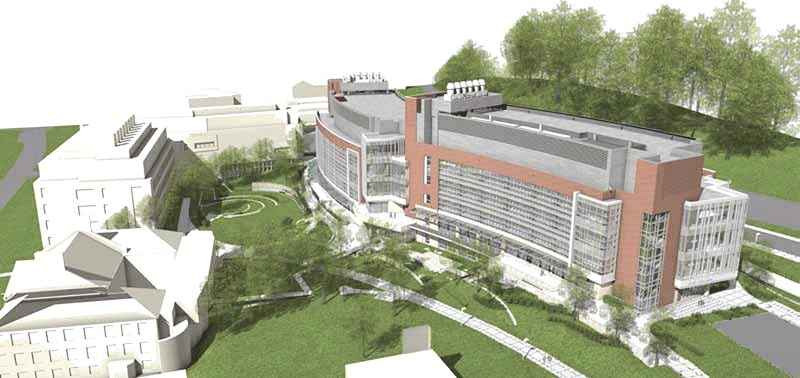
SPRINGFIELD — The Massachusetts Public Health Council recently approved Baystate Medical Center’s request to meet urgent community needs by expediting construction of a new emergency department as part of Baystate’s Hospital of the Future project now underway. The council of the Mass. Department of Public Health considers and approves or denies determination-of-need applications for health care building projects such as Baystate’s. The new ED, 70,000 square feet, nearly doubles the number of treatment areas, including a separate pediatric triage and treatment area, an urgent care center, eight rooms specifically designed for behavioral-health services, and an adjacent space for diagnostic imaging such as X-ray scanning. The new ED is scheduled to open by early fall of 2012, just a few months after the March 2012 opening of the first phase of the building project. For more information, visit www.baystatehealth.org/hospitalofthefuture.

UMass Spending on Financial Aid Rises to $130.5M
BOSTON — Illustrating its commitment to affordability, the University of Massachusetts is directing $130.5 million of its own funds to student financial aid this year, according to a recent report to the UMass Board of Trustees Committee on Administration and Finance. During the past eight years, UMass spending on financial aid has risen from $35.6 million to $130.5 million, an increase of 267%. In a statement, UMass President Jack Wilson noted that “we understand that higher education is the path to a better life for students and is critical to our future as a Commonwealth, and therefore the University of Massachusetts is doing everything it can to maintain access and affordability.” According to the report, 25,681, or 61%, of the university’s 41,947 in-state undergraduate students are receiving some amount of need-based financial aid this year.

Kindred Hospital Has Deficiency-free Survey
SPRINGFIELD — Kindred Hospital officials recently announced that its survey for Park View Rehabilitation & Nursing Center, a specialty neurobehavioral unit, was deficiency-free. The center, located within the hospital, provides services to individuals with acquired brain injuries, neuropsychiatric disorders, and other neurological/behavioral disorders. Massachusetts conducts on-site inspections that determine whether its nursing homes meet the minimum Medicare and Medicaid quality and performance standards. During the nursing-home inspection, a team evaluates whether the facility is meeting residents’ needs. Marcia B. Zimmer, executive director of the center, noted in a statement that she was “proud of the team of caregivers.” Zimmer added, “it’s an honor to have a deficiency-free survey, and I would like to thank the staff for their hard work in providing the quality care our residents deserve and expect.”

Baystate Home Infusion Opens Branch at Hospital
WARE — Baystate Home Infusion & Respiratory Services (BHI&RS) recently opened a second store at Baystate Mary Lane Hospital. Located on the first floor of the hospital, the firm offers a wide selection of medical equipment and is staffed by trained advisors. “A great advantage to the retail showroom is that customers can view many different personal-care items and also try out a wide range of medical products such as canes, walkers, crutches, hospital beds, wheelchairs, rollators, and transport chairs,” said Gisele Livingstone, customer service coordinator, in a statement. With trained Sigvaris fitters on staff, the store also offers a wide range of medically approved Sigvaris compression stockings, socks, and hosiery. The firm accepts most major insurances, and staff can work directly with customers to obtain coverage for products and services that qualify.

Easthampton Savings to Open New Loan Center
EASTHAMPTON — William Hogan Jr., president and CEO of Easthampton Savings Bank, announced that the bank will submit building plans to the city of Easthampton to construct a 28,000-square-foot loan center with a banking office at the corner of Northampton and O’Neill streets in town. This facility, which will be called the Easthampton Savings Bank Loan Center, will house the entire lending team and operations departments, as well as provide banking services with a new branch office. Thanks to the recent zone change by the city, there will be a drive-up window and a drive-up ATM at this location. The bank’s current drive-up ATM will be temporarily relocated across the street during construction. “With our expansion into this facility, we will be adding 14 new jobs in the community as well as generating approximately $60,000 annually in new tax revenue to the city,” Hogan said. “We will be constructing this building as green as possible and are currently exploring the feasibility of solar power. We will also provide bike racks to encourage customers to visit the bank from the nearby bike path.” The bank hopes to break ground this summer and be open for business in the spring of 2012. The bank’s main office is located at 36 Main St. in Easthampton.

Class of 2011 Difference Makers

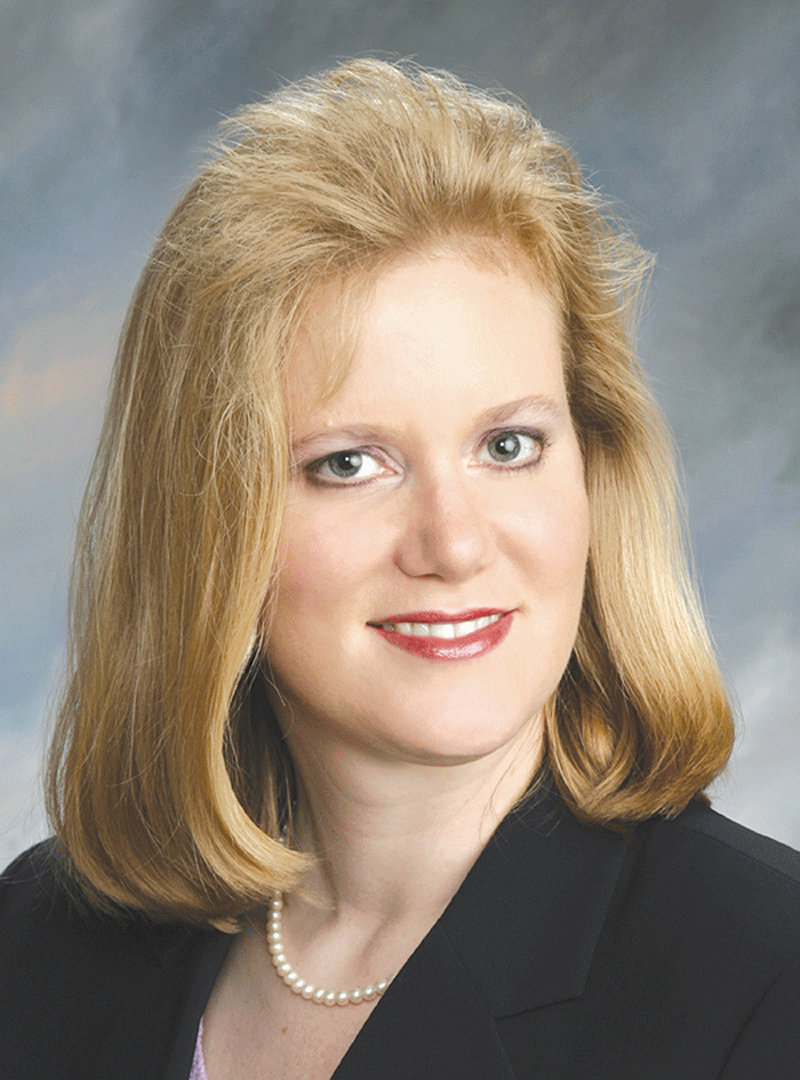
Police Chief, City of Holyoke

Anthony Scott

Anthony Scott

Anthony Scott was talking about his penchant for garnering media attention.

He insists that he’s not a publicity hound, and that newspaper headlines and broadcast sound bites “have just happened” — everywhere he’s gone, including Holyoke.

But Scott, the city’s police chief since 2001, freely admits that he tries to align himself with the press — “I meet the media on their grounds” — and use its reach to get his various messages across. “You can’t sit down and talk to 40,000 people,” he said, noting the approximate population of the Paper City, “but you can use the media to reach them.”

As for what he does with the press and how he does it, he summons a few quotes from an old Cajun friend, passed along when Scott was a young officer with the New Orleans Police Department.

“He told me to never get into a pissing contest with someone who buys their ink by the barrel, their paper by the ton, or their videotape by the mile,” Scott told BusinessWest, acknowledging that this is time-honored advice uttered by many. “He also said that, if you can’t say something kind, nice, or good, tell the truth.”

And through a 44-year career in law enforcement, that’s exactly what Scott has been doing — telling the truth. Sometimes, actually, much of the time, it comes with a little sarcasm, and more often than not it hurts those to whom he’s referring. But this certainly has never stopped the truly outspoken Scott, who will be retiring in April, from speaking his mind.

Consider these comments concerning various topics and constituencies:

On the Holyoke City Council, with which he has butted heads seemingly since the day he arrived: “It’s funny … but when an individual gets 400 or maybe 1,000 votes, they suddenly think they know more about your job than you do. I’ve only been doing this for 40-something years. I’m not trying to be a smart aleck, but I think I know a little more about law enforcement than the average politician.”

On his seemingly incessant criticism of judges for what he considers light sentences and releasing criminals on their own recognizance, and whether this campaign has made an impact: “The judiciary won’t admit it, but it has. We can see that judges are getting a little stiffer on the sentencing and bails are increasing. I’ve been a royal pain in their tuckus; they don’t like me, and personally, I don’t care. I’m here to look out for the citizens of Holyoke, and I’m going to do that until the day I walk out of this office.”

And how about this letter, which Scott wrote to the state parole board when informed that one Angel Santiago, found guilty of breaking and entering and assault on a police officer, was scheduled for a parole hearing just six days into a 60-day sentence? “Inmate Santiago hasn’t had sufficient time to adjust to the luxuries in his present surroundings within the House of Corrections before you are in a rush to push him out the door and back into the civilized community to which he has shown nothing but contempt. Once again I ask that you excuse my sense of right and wrong, but scheduling a parole hearing does not appear to be in the best interest of public safety, nor does it send a message that one must pay for the crimes they commit. Inmate Santiago is a thief, and at the young age of 21, inmate Santiago has been arraigned 11 times in the Holyoke and Springfield district courts. To even consider this rascal for parole is an insult to me, the arresting officers, and the citizens of Holyoke.”

Scott told BusinessWest that he considers such letter-writing, such telling it like it is, to be an important part of his job. He describes all of these various efforts as part of his work to be a voice for victims — and he says there are not enough of them.

“You have a lot of people out there who are very vocal about the rights of criminals, and how fairly criminals should be treated when they go to court,” he said. “There are a lot of voices out there. But not a lot of voices saying, ‘how about the victims of crime?’”

For standing up for victims and, more importantly, for making Holyoke an inhospitable place for criminals and would-be criminals, Chief Scott has made another headline, this time as one of BusinessWest’s Difference Makers for 2011.

And the chief found a little irony in the fact that he was being honored by a business publication, because he has a degree in business, and, more to the point, he approaches crime like a business.

Well, to be more specific, he says he wants to make it so criminals won’t want to do business in his city.

“If a business is operating within a city and that city continues to raise its taxes and raise its fees, and the business overhead gets to be expensive for them, they’ll relocate,” he explained. “They’ll go to another city where the taxes are lower and the fees are low enough so they can operate and make a profit.

“I look at that the same way I do at criminals,” he continued. “I try to make the overhead as high as possible; I try to wreck their drug business, I try to get fees and fines increased … and those individuals from the dark side, the attorneys, help me out a lot. They charge a great deal of money for their services. So the criminal has to pay higher attorney fees, higher fines, they lose their drugs — so they are going to seek out a city that’s not driving up the overhead. I get calls from correctional officers working in Massachusetts and Connecticut who tell me that the criminal element is telling other criminals, ‘don’t go to Holyoke — that chief is crazy.’”

Dark side?

Lawyers probably like Scott because his war on crime has created more business for them, but if they don’t, it really doesn’t matter to him. As he said, he’s told the City Council on many occasions, “I don’t do touchy-feely. My job is to remove the criminal element from the street and make the community safe.”

Scott will reach mandatory retirement age (65) in a few months, and is stepping down in April. He said his plan for life after police work — and it seems well-thought-out — is to do consulting work with police departments, handle background checks on candidates for executive positions, and similar investigatory work. He said he won’t miss the judges — and took one more shot on his way out the door, saying he’ll be extra careful in retirement “because, if I get arrested for a parking ticket, I’m going to jail” — or the city councilors. He will miss the people of Holyoke, though.

“They welcomed me into their community and made me feel at home,” he said, adding that he’s not quite sure what retirement will bring for him.

Probably more of what he’s been doing all along: telling the truth.

— George O’Brien

Sections Supplements
Know the Requirements in Order to Remain in Compliance

Bruce Fogel

Bruce Fogel

Many of us, at one time or another, have seen an IRS form titled 1099. Most of us are familiar with the more common versions of that form, including:
• Form 1099-INT, which is used to report interest paid to someone in excess of $10 per year;
• Form 1099-DIV, which is used to record dividends and/or capital-gains distributions paid to someone in excess of $10 per year;
• Form 1099-B, which is used to report the proceeds from the sale of capital assets other than real estate; and
• Form 1099-S, which is used to report the proceeds from the sale of real estate, typically other than one’s principal residence (provided the appropriate information was provided to your lawyer or other representative at the time of sale).
In each of these instances, the purpose of a Form 1099 — whatever its specific designation — is to provide information to the Internal Revenue Service so it can cross-check the same to make sure that the recipient is properly reporting the payment and/or income.
Another type of Form 1099 is the Form 1099-MISC. As you might have already guessed, this designation is intended to cover most other miscellaneous payments for which a specifically identified Form 1099 does not exist. The threshold for being required to file such a form is when payments have been made to a qualifying recipient during any calendar year (or tax year, in the case of an entity reporting information on a fiscal-year basis), in an amount totaling at least $600.
So, who is required to submit such forms to the IRS and to the payee? Anyone or any entity engaged in a trade or business, who made such payments in the course of that enterprise, is required to use 1099-MISC. But, you may wonder, what constitutes a trade or business? The instructions for this form state that you are generally considered to be engaged in a trade or business “if you operate for gain or profit.”
However, as with most IRS guidelines, the answer has exceptions. For example, those parties responsible for filing this version of Form 1099 include nonprofit organizations as well as federal, state, and local governments. Interestingly enough, through Dec. 31, 2010, the definition did not include landlords or rental-property owners. However, effective with payments beginning Jan. 1, 2011, landlords are required to join in the fun and issue Form 1099-MISC for all payments for services and/or materials reaching the $600 filing threshold.
The next logical question is, to whom or to which organizations are these forms issued? Historically, and through Dec. 31, 2010, these forms were to be issued to any individual and/or non-corporation receiving $600 or more during the year. Most corporations were excluded. However, payments were still required to be reported on the form if paid to pass-through entities, including LLCs that were not being taxed at the entity level, as well as payments made for professional fees (including doctors, lawyers, etc.), whether the professional entity was incorporated or not. However, these rules were changed for payments made after Dec. 31, 2010, such that corporations are no longer exempted from receiving these forms.
As you might expect, there are penalties for non-compliance, and not having the information necessary to complete the form is not always considered to be a valid excuse. There are also filing deadlines, other forms necessary to accompany copies of the Form 1099 to be filed with the IRS, and additional form-specific details relating to the filing requirements.
Suffice it to say, if you are subject to the filing requirements for these forms or think you might be, it is certainly better to err on the side of caution and make arrangements for their filing, or at least to check with your tax or accounting professional. Under such circumstances, it would be wise for you to take steps during the year to make sure to collect the necessary information you’ll need to file these forms from the various payees you work with. Such information would include their full and correct name, their correct tax-identification number, and their correct and current mailing address.
If necessary, there are forms available for collecting such information and receiving the payee’s certification as to the accuracy of the information.

Bruce M. Fogel is a partner with Bacon Wilson, P.C./Morse & Sacks in Northampton. He is a member of the firm’s estate-planning, elder, real-estate, and business departments. He has extensive experience in matters relating to income, gift, and estate taxes, and he focuses on the tax implications of all legal transactions. He can also be heard on the radio show Taxes and Assets; (413) 584-1287; [email protected]

Sections Supplements
Making Early Identification of Your Child’s Special Needs
Melissa R. Gillis

Melissa R. Gillis

Dennis G. Egan

Dennis G. Egan

Parents of young children, particularly children under the age of 5, often wonder whether their child is meeting all the important developmental milestones. Many guiltily admit that they want to know how their son or daughter compares to other kids their age, and they become concerned if they hear that another child can do something theirs cannot.
Sometimes these worries simply trouble loving parents who want the best for their children, and they soon realize that their child just needed a little more time to accomplish the same task. Other times, and at an ever-rising level over the past decade, the concerns of parents are justified, leaving them to wonder, ‘what do I do now, and whose attention can I bring this to?’
If this situation sounds familiar, the first step in the identification process is to bring your concerns to your child’s pediatrician. The doctor can be a very powerful influence when making the initial decision about whether to seek formal testing, and also later when determining what types of services are important and appropriate.
Between the ages of 1 and 3 (or prior to the start of preschool), your child is entitled to a free assessment/screening, typically referred by a pediatrician. This is usually performed by the infant-and-toddler program in your area. If the results of the assessment indicate and identify a need, the commonwealth will provide your child with certain services, potentially in and out of your home, free of charge.
Once your child reaches the age of 3, the types and availability of those services may change. These are the preschool years, whereby your child will receive services through an individual education program (IEP) designed just for them and administered by the early-intervention program located within your town. This IEP, subject to review and revision, follows your child into kindergarten at age 5 and beyond. Parents have a right to be involved in the contents of the IEP, and you should remain as involved as possible.
From the special-education perspective, having a child attend a private or public preschool can be pivotal. Preschool is often the first social interaction outside the home or parent-supervised playdates a child has. Because there are so many quickly changing and growing stages up until the time a child begins to read and write, there is more than one appropriate time to discover a special need.
When your child has been attending a private preschool, and you learn that early intervention is needed, you may be faced with the difficult decision of whether to take the child out of the private school, where he or she has become comfortable, and enroll them in your town’s early-childhood program. You may ponder the benefit of continuing to pay for a more expensive private school when a public alternative is available.
It is important to note, however, that the private preschool can still be used as a valuable social-skills developmental tool for continued interaction in a safe environment that your child already trusts. In those instances, the private preschool can be used in conjunction with the town program for services to ensure that your child is receiving the best overall services and is engaged in the best possible action plan to suit his or her particular need.
Prior to the preschool years, your child may not yet have been identified as having a special need for which services are required and necessary. It is important to recognize that the lack of identification is not necessarily a parental failure, but can be due to the fact that your child has not yet been placed in a situation where his or her need would be discovered. Parents should always embrace the assessment suggestion and never shy away from it. Neglecting to identify your child’s need sets them up for unnecessary difficulties in later school years. Early intervention can have a huge impact on the overall development of a child and his or her ability to succeed in school.
By way of example, a trained preschool teacher can recognize and identify issues involving hand-eye coordination, speech, and independent social interactions that may not be obvious to a parent who is with their child every day. If a teacher suggests that your child should have an assessment, it is because they have observed your child on multiple occasions having difficulties or experiencing an inability to meet a developmental stage that is imperative to continued learning and/or social development. Additionally, sometimes a need is not discoverable until kindergarten or even first grade, when a child begins to read, write, and engage in reading comprehension. A disservice is done to a child, however, if an assessment is not performed when a delay or disability is suspected.
Remember, you are your child’s strongest advocate. If you suspect your child may have a special need, show your strength and concern as a parent and get them the assistance they are entitled to.

Melissa R. Gillis, Esq. is an associate with Bacon Wilson, P.C. in the special-education, family, and real-estate departments; (413) 781-0560; [email protected]. Dennis G. Egan Jr. is an associate with Bacon Wilson, P.C, concentrating in special-education, business, and corporate law; (413) 781-0560; [email protected]

Features
This Quaboag Town Ponders Its High-stakes Future

John Morrison

Through hard work and tenacity, John Morrison has occupancy at the Palmer Technology Center at around 90%.

Susan Rutherford said that, when it comes to fostering new business ventures in Palmer, her office isn’t just rolling the dice.
The executive director for the Quaboag Valley Community Development Corp., she told BusinessWest how her office has been helping to nurture an entrepreneurial business climate for the region. And in many ways, what she has found in the 15 years of seeing business in Palmer grow is that this recession hit hard, but there are some success stories.
“Obviously the past few years have been as stressful here as elsewhere,” she said. “But then there are some sectors that are doing okay, and some that are actually doing quite well.”
The town might be making the most headlines these days for that contentious piece of property eyed as a potential home for a resort casino to be developed by Mohegan Sun. But while the fate of gambling is still undecided on Beacon Hill, Palmer is steadily gaining ground for business initiatives to capitalize on the assets that are already in place.
Lucy Carlson

Where some see Palmer as off the beaten track, Lucy Carlson saw it as a place with untapped potential.

Five years after starting her advertising and marketing business just outside of the downtown area of Depot Village, Lucy Carlson said that Palmer presents a unique opportunity due to the very reason some cite as a business obstacle. Others might say that the town’s geographic location outside of the Route 91 corridor places Palmer off the beaten track, but she says otherwise.
“I saw that the Quaboag area in general was untouched and untapped,” she explained. “There are a lot of ad agencies in Greater Springfield, and then in Northampton. But this area didn’t seem to have that. There’s a lot of potential here, and especially Palmer as the largest town in this area.”
Up the street at the headquarters of the Quaboag Valley Chamber of Commerce, president Len Weake also said that the business climate mirrors that of most everywhere else in Western Mass., and Palmer has been affected by a recession that has cut through to commercial lending.
“In the past, when people were laid off, it pushed them into new ventures,” he said. “This time, we’re not seeing that — those people with entrepreneurial drive are having trouble getting the capital to start up.”
But, not wanting to focus on the negative aspects of the current economy, he quickly pointed out that thanks to the QVCDC, it’s not all doom and gloom within his region. And he pointed out the strong mill origins of the town as a link to Palmer’s full potential. The Garabedian family, owners of Thorndike Mills braided rugs, has been in business since 1925, and Weake cited them as an example of industry that continues to this day.
However, he also told BusinessWest of two properties that had seen the rug pulled from under them when the original owners of their buildings left the area. The Mapletree Industrial Plaza, just outside of downtown, and the Palmer Technology Center (formerly Tambrands), in Three Rivers, are prime examples of adaptive reuse, with both complexes boasting nearly-full occupancy.
“They aren’t retail locations,” he said to describe both properties, “but they have a strong commercial presence here in town.”
In this latest installment of ‘Doing Business In,’ BusinessWest talks to the principals at those industrial properties and finds out how they, and others, took a gamble on Palmer — and why it was a bet that paid off.

Home-field Advantage
Carlson said the business population in the Quaboag Valley is filled with, in her words, “hidden jewels.” As a full-service marketing and advertising agency, she said her office is primed to cater to those businesses, and that is what drew her to open shop in her location on South Main Street.
She acknowledged that one problem facing Palmer, in contrast to some of the other surrounding towns, citing Monson and Belchertown as two examples, is a lack of younger generations moving in — to work or live.
But residents have a strong sense of support for the hometown mom-and-pop shops, she went on to say. And with Palmer at the center of so many different, smaller communities, a good opportunity presents itself for anyone to hang out a shingle for new ventures. “There are so many opportunities for so many types of enterprises,” she explained, “and because we are just far enough from Springfield or Northampton, the local residents would be happy to support that business.”
Located in Ware, but serving Palmer and the other towns of the Quaboag Valley, the QVCDC is the place for local entrepreneurs to start when considering a new business. Stating the goals of her operation simply, Rutherford said, “we work with small businesses, including making loans to those who can’t get them from banks, and providing training, education, and consulting to businesses.”
The QVCDC’s stated mission is to “improve the quality of life in the Quaboag Valley by addressing the economic, environmental, and social needs of its residents while maintaining the integrity and character of each community in the region.”
When speaking of the new ventures that have come through her office in the 15 years of its existence, Rutherford said that this recession has proven more challenging for individuals than any downturn in the past.
“But a lot of it goes back to the ingenuity of the owners, and their adaptability, and ability to go with the flow,” she said. “And a lot has to do with good, tight management. The businesses that are having the most troubles are the ones that were lucky before — they were doing the right thing at the right time. The ones that are doing the best now are good planners, good users of resources.”
Citing some manufacturing concerns in town, she said success stories do exist. “There are imaginative people out there,” she added, “and they are developing interesting businesses. I’d say that it is individuals, more than an entire industry, who show the success of this region.”

Mill Power
An example of that definition of success, John Morrison and his industrial complex known as the Palmer Technology Center, could be exhibit A.
He is the owner of the buildings formerly housing Otis Mills, then Tambrands, maker of Tampax products, and even though he laughed when he said that, in some form or other, “these buildings have always made me money,” there was absolute truth in his statement.
His parents both worked at the plant when it was Tambrands, and as a youth, he had a job there also. He augmented his ‘day job’ with a plowing contract for the premises, and then a scrap-metal contract, and when the building was sold to Procter & Gamble in the 1980s, the new owners liquidated the offices and manufacturing facilities, but kept him on as ’round-the-clock security.
A brokerage firm was engaged to lease the facility, unsuccessfully, and as the site coordinator, Morrison became acquainted with some of the potential players. Eventually partnering with one of those individuals, Sid Kovitch from Boston (and, later, that man’s family after he passed away), Morrison took a gamble and purchased the four-building complex.
Originally there were no tenants on the property, but through hard work and determination, Morrison said that he has secured leases from 27 businesses. Presently, he puts the occupancy at just over 90%. And while he has been an unflagging point person for the property’s management, he credits the former owners for making this a top-notch, marketable facility.
P&G invested $20 million in the buildings in the late ’80s, which means that new tenants have the benefit of weather-tight construction, a T1 connection, and full fiber optics. Mustang Motorcycle Seats uses the original fabrication building, and today is Morrison’s largest tenant. But he also cites small operations, from musical-instrument teachers needing space, to Wing Memorial Hospital’s billing and visiting-nurse departments, who together occupy a full, 18,000-square-foot floor.
And his tenants can grow without leaving the property, he said. “We’ve had a lot of people who started out small, like Halpern Titanium. He came here with a table saw and a couple tools, and now has about 20 big machines. He started out cutting pieces of titanium and selling them, and he’s a full-blown machine shop now.”
But Morrison knows that if he doesn’t have the space for a prospective tenant, he can always refer them to another complex, Mapletree Industrial Park, for example, “so that the business and the jobs still stay here in Palmer.”
John Rottman is the senior property manager at Mapletree, and he shared the sentiment that keeping jobs in Palmer is important, especially when thinking of all the employment that was lost when the Colorado Fuel and Iron Steel Mill wire factory, whose mill his firm now owns, closed shop back in 1971.
“In its heyday, there were three shifts here running around the clock, with more than 1,000 workers; some old-timers here in town say that wire here went into the construction of the Golden Gate Bridge,” he said. “When the plant closed, there were still 700 people working here. It was quite a shock to the town.”
The current owners, Presidential Realty Corp., from White Plains, N.Y., bought the property in 1973. Rottman said there were a handful of small tenants for the next decade. He worked in the management office there for six months, in 1986, and at that time a concerted effort was made to lease out the rest of the property.
“We really pushed to make it a multi-tenant facility; we have 83 tenants, presently,” he said, adding that they come in a range of sizes. “Our biggest user is New England Wood Pallet, with more than 30,000 feet. But they are winding down now, due to transportation costs, and by summer, we’ll need to find another tenant for that spot.”
While that will mean another push to find tenants, Rottman said that, because his buildings have rail access, there is a whole subsidiary of rail marketing that exists to find properties like his. In his time, he has seen adaptively reused properties like Mapletree shift from light manufacturing to high-tech to, in some cases, warehouse space for other businesses off-site.
“But I hope that’s cyclical,” he said of warehousing. “I hope we get to the point where entrepreneurs can do some startups again, do some manufacturing and distribution. But it’s hard to find capital today to make that leap, and to take that chance.
“The last two years have been challenging,” he continued, “but we continue to rent space. It’s still chugging along. There are people with good ideas out there, though; hopefully, as soon as there’s money available, they will be able to make their business work.”
And that’s a sentiment that is echoed and supported across the town line at the QVCDC. Rutherford said that the challenge is not necessarily the funding, because that is what her office works to achieve, but to continue finding the right people to turn ideas into thriving businesses.
“That’s the goal,” she said, “to find those people who have a good work ethic who also have good entrepreneurial ability.”
And, rather than a bet with long odds, so far that has proven to be a sure thing.

Sections Supplements
Innovative Business Systems Hones Its Pitch

IBS President Dave DelVecchio

IBS President Dave DelVecchio

In 20 years, Innovative Business Systems has evolved from a software-development firm to an outfit that businesses of all kinds rely on to manage their computer networks, data security, and a host of other high-tech needs. But as it celebrates this anniversary, IBS has launched a rebranding effort that aims to better-clarify what its services are, and why they are becoming increasingly necessary.

Dave DelVecchio says that the speed at which information technology advances can leave business owners confused, buffeted by buzzwords, and unsure of the value of an IT partner.
Innovative Business Systems Inc. has successfully built such partnerships for two decades, but DelVecchio, the company’s president, and his staff recently began to ask whether its customers and, perhaps more important, prospective clients really understand the need for its services.
“So many IT companies are so fixated on the ‘how’ that they can’t communicate the ‘why,’” he told BusinessWest. “We’re focused on helping businesses determine the why.”
Last year marked a 20th anniversary of sorts for this Easthampton-based IT sales and support firm (which launched in 1987 but didn’t officially incorporate until three years later). “And, as major milestones tend to be, that became a time for reflection,” DelVecchio said.
He explained that IT changes so much in a few years — “for some people, that’s a blink of an eye, but in our industry, it’s a lifetime” — that questions arose regarding how well IBS was delivering its message to the public.
“We weren’t sure we were doing an effective job communicating with prospects, clients, and the general public exactly what we do,” he explained. “Sometimes, we’re too close to it to communicate it ourselves.”
So the company launched a rebranding campaign, looking for a succinct way to communicate its range of services, and at the same time refreshing its logo. It enlisted an outside consultant for these tasks, and launched a new Web site earlier this month, presenting itself with the new tagline, “smarter technology for better business.”
“A lot of people historically have thought of companies like ours as computer repairmen, like they think of appliance repairmen or auto mechanics,” DelVecchio said. “That’s not what we do, or, it’s a very small subset of what we do.”
Rather, he said, “we help folks cut through the clutter of ever-changing technology, to find out what’s the right fit for a business, what’s applicable and what’s not, what fads stick and what’s a flash in the pan. We want to have conversations with them from a business perspective, not just a technology perspective. And we felt this tagline best encapsulates that.”

Gang of Five
Bill Tremblay began Innovative Business Systems in 1987 as a software-development outfit (more on that later), then sold the firm in 2003 to five employees — DelVecchio, Brian Scanlon, Scott Seifel, Ben Scoble, and Sean Benoit — who continue to run it today.
IBS handles PC sales, data analysis, networking, hardware and software support, repair, and maintenance services for businesses of all sizes. It built much of its business in the financial-services arena, working with banks and credit unions — both those with their own existing IT departments and those without — on issues including data access, information security, and disaster-recovery planning.
The rest of the IBS client list is comprised largely of small-to-medium-sized, privately owned businesses in a wide range of sectors, from health care to manufacturing, many of which are not large enough to have their own IT departments but view the need for constantly updated technology as a growing necessity.
“For many years, our niche was supporting banks and credit unions,” DelVecchio said. “But we’ve got multiple 10-employee companies running technology rivaling what the banks are running — remote offices, mobility suites, document imaging, hosting their own Web-based data applications, some of them being publicly accessible, and some in industries with strict security requirements.”
He said he gets annoyed when people assume that the need for the services IBS provides are always related to the size of the client. Instead, “the more technology-driven a business is, the better fit they are for us, regardless of size.”
One of the biggest issues IBS has dealt with in recent years has been access to data from various computers, company locations, or remotely. A related, and often equally important, consideration is data recovery, because it can be disastrous for a business to store information in one office only.
DelVecchio is especially excited about the company’s new data center in Marlborough, which will serve as a remote office, but, more importantly, as a disaster-recovery suite. In case of some event that renders a customer’s place of business unusable, IBS can transfer the contents of the client’s entire network to the Marlborough office, which is equipped with four workstations, in effect providing a location for that customer to continue to operate.
“From a solutions standpoint, this is huge,” he said. “In case of a localized disaster, like a fire, a flood, a sprinkler goes off at midnight and leaves the office knee-deep in water, this location is, in most cases, within an hour’s drive, so you have a place to function.”
Why Marlborough? Its distance is an asset, DelVecchio said, explaining that disaster-recovery suites should be close enough that the commute isn’t too onerous, yet far enough away to be clear of a regional disaster; 45 to 60 minutes away is ideal.
And while most businesses might never need the use of such a facility, many will, especially those in multi-tenant buildings, and should appreciate paying around $3,500 annually for a “a business continuity plan in a box,” he said.
“For tenants in a mixed-use, multi-tenant building, the odds of a localized disaster go up by a factor of 10. When you have a lot of tenants, all it takes is the tenant next door to plug up the drainpipe with grass and knock out the sprinklerhead, or put a candle too close to a curtain, to cause an issue. In multi-tenant buildings, we see this as an incredibly underused but much-needed solution.”

Down to Earth
Putting this sort of real-life face on often-complex technology is key to IBS’ new focus on communicating the big picture to clients, DelVecchio said.
He noted that Microsoft has been promoting ‘cloud computing’ — a term synonymous with Internet-based computing, whereby shared servers provide resources, software, and data to individual computers and other devices — “but if you ask 100 people what the cloud is, you get 100 different answers. The cloud can be a lot of things.”
He compared it to 15 years ago, when the commercial use of Internet technology was just exploding, and “cyber” became the hot buzzword, even though it wasn’t always used correctly. “We’ve developed our own cloud strategy to cut through that clutter.”
What businesses need to understand, he said, is what those buzzwords mean, and how the technology behind them can benefit their operations. He said some have predicted that 80% of all IT services will be cloud-based within five years, but feels that number may be a bit aggressive; he sees many firms using a hybrid approach. “Businesses might be running things like E-mail in the cloud and applications on premises, or vice versa. Determining the right mix for business is the foundation of what we do.”
No IT firm can be everything to all its clients, so IBS touts a number of ‘partners’ on its Web site — not formal partnerships, but related companies with whom IBS shares clients — that do a good job at what they do, and can benefit Innovative’s customers. “Building a strong partner network is something we take a lot of pride in; it takes a village to maintain an IT infrastructure, but we can be the hub that facilitates getting it done.”
Like companies of all sizes and in all sectors, IBS has endured a sluggish economy for the past few years, but felt it mainly in product sales, not consulting.
“In 2007 and 2008, most companies were investing in their business, with technologies like remote access and document-management solutions,” DelVecchio said. “When the economy slowed down, everyone went into a wait-and-see, maintenance mode; our revenue remained constant in 2009, but our material sales dropped 20%. People kept what they had; they weren’t upgrading. Over the course of 2010, though, we saw a consistent increase in projects.”
All the more reason to launch a rebranding effort — and make some hard decisions about the direction of the company.
“Every business has been forced to look at their balance sheet and take a look at expenses and figure out where they were getting value,” he said. “And if you’re not delivering value, should you be doing it?” In answering that question, last year, IBS phased out of the software-development business, which was the work on which the company was founded.
“Running a software-development business is a completely different model than running an IT service and consulting business,” said DelVecchio, noting that IBS’ full-time developer left the firm on amicable terms and continues to support all the clients for whom IBS had developed applications. “That allowed us to focus on our core business moving forward. After that decision, we focused creating branding for what our core business will be like in 2011 and beyond.”

Bottom Line
By all indications, that core looks healthy, he said, noting that, as clients started to order upgrades they had deferred during the recession, IBS saw a strong second half to 2010.
“Clients are back in the game,” DelVecchio said. “From a business outlook, I’m very positive about 2011. It appears that people have come out of their bunkers, and they’re ready to do business again.”
Whether in their offices, or in the cloud.

Joseph Bednar can be reached at [email protected]

Sections Supplements
Assistance Is Available to Those Who Qualify Financially

Hyman G. Darling

Hyman G. Darling

There are currently approximately 25 million veterans alive in the U.S., many of whom are not disabled. In addition, there are more than 9 million surviving spouses of veterans, many of whom will need long-term care or are currently receiving long-term-care benefits. The Veterans’ Administration has benefits available to assist veterans and their spouses with financial and other necessary services. Often these benefits allow a veteran or their spouse to remain at home rather than requiring assisted living or long-term care in a nursing-home environment.
This article will describe the various available options. It must be noted, however, that many services are available only to veterans who qualify financially and have honorable discharges.
A significant document that a veteran needs is the DD-214, or Separation from Service document. If it is missing, you are urged to apply to the Veterans’ Administration for a replacement copy so that, when the time comes that you need assistance with your care, you will have the required evidence of an honorable-discharge status.
One important benefit that you should be aware of is a service pension. The Veterans’ Administration (VA) provides a monthly cash payment to wartime veterans who meet active-duty and discharge requirements, who are either 65 years or older, or disabled. These veterans must also have a limited income or status requirement. Benefits are also available to a surviving spouse of the wartime veteran. At this time, the unmarried veteran may receive up to $985 per month while a married veteran may receive up to $1,291 per month, and a surviving spouse may receive up to $661 per month. There may be an additional payment available if the spouse is at home with dependent children. This is especially significant if there is a disabled child who is living at home and dependent on the parent for support, as this circumstance may increase the VA benefit further.
A slightly higher monthly payment may also be available to wartime veterans who are confined to their home for medical reasons. An unmarried veteran may receive up to $1,204 per month, and a married veteran may receive up to $1,510 per month. If there is a surviving spouse in the home, he or she may receive up to $808 per month, again, with additional benefits available in some cases if there are dependent children.
One of the most popular and most-frequently used benefits is called the pension with aid and attendance (A&A). This benefits veterans or spouses who require assistance to perform activities of daily living (ADL), or those residing in an assisted-living facility or nursing home. A&A offers the highest monthly payment. Usually a care manager, social worker, or admissions director at a facility will suggest that a veteran apply for this benefit. An unmarried veteran may receive up to $1,644 per month, and if married, they may receive up to $1,949 per month, while a surviving spouse may receive up to $1,056 per month. There are also additional funds available for a dependent child. It is noteworthy that this type of benefit is available to veterans who served during wartime, but did not necessarily serve directly in the war overseas, and this veteran must also be either disabled or over the age of 65.
To receive A&A benefits you also must have served 90 days of active duty, with at least 1 day beginning or ending during any period of war. After Sept. 1, 1980, the active-duty requirement increased to 180 days, and you must have been discharged under circumstances other than dishonorable. You must also be unemployable and reasonably certain that you will be unemployable in the future. In addition, you must suffer from a disability that makes it impossible for you to stay gainfully employed.
There are also additional tests to ensure that a veteran or spouse will qualify for benefits. At the current time, a married veteran and spouse may have no more than $80,000 in countable assets (this excludes a home and vehicle). A single veteran or surviving spouse must have less than this amount. This is somewhat of a guideline, and it is anticipated in the future that there will be stricter guidelines for determining eligibility.
Also, currently, there is no transfer penalty for gifting or transferring of assets for the purchase of an annuity or establishment of an irrevocable trust. However, any transfers are still countable for Medicaid purposes if you or your spouse need long-term care benefits in the future. It is very important that legal counsel is considered in this type of situation to be sure that all issues regarding gift taxes, Medicaid issues, veterans benefits, and all other estate-planning considerations are reviewed before any transfers are made irrevocably.
The veteran or the veteran’s spouse must have ‘income for veteran’s purposes’ that is less than the benefit for which you are applying. This amount, known as IVAP, is calculated by taking your gross income from all sources, less countable medical expenses. Countable medical expenses are considered those that are out of pocket and recurring on a continuous basis, and are expected to be paid throughout your lifetime. In the event that your IVAP is greater than or equal to the annual benefit amount, then you will not qualify for VA benefits.
If you or your spouse qualify for a regular pension and are housebound, your maximum allowable increases, as does the annual benefit amount. The VA defines housebound as being substantially confined to the home or immediate premises due to a disability that will likely remain throughout your lifetime. A veteran with no benefits who is housebound is eligible for benefits of up to $14,457 annually. A surviving spouse with no dependents who is housebound must have an IVAP of less than $9,696.
If the veteran or spouse is able to establish through medical evidence that they require the aid and attendance of another person to perform the ADLs, a special monthly pension may be provided. The VA defines the need for aid and attendance as:
• Requiring the aid of another person to perform at least two activities of daily living, such as eating, bathing, dressing, or undressing;
• Being blind or nearly blind; or
• Being a patient in a nursing home.
In the event that the applicant or recipient of VA benefits is institutionalized, then a substantial portion of those funds would probably have to be paid to the long-term care facility that is providing the benefits.
The application process for special monthly pension benefits from the VA may be somewhat tedious and slow. While the VA is attempting to process applications more quickly, the current delay is anywhere from six months to a year. When filing an application, be sure to submit all information on time and in a single package, maintaining copies of all documents in your own file in the event that they are misplaced by the VA.
Remember to include your discharge paper (DD-214) with medical evidence, proof of medical expenses, verifications from physicians, a death certificate of a deceased veteran, marriage certificate, and the properly completed application. Once the application has been approved, benefits may be retroactive to the month after the month the application was received.
Time is of the essence in filing an application, so benefits may begin as soon as possible. Again, it is important to consider consulting an appropriate legal advisor, usually an elder-law attorney, or possibly an attorney who has been certified through the Veterans’ Administration, as only those who are certified may file appeals on behalf of a client.

Attorney Hyman G. Darling is chairman of Bacon Wilson, P.C.’s Estate Planning and Elder Law departments. His areas of expertise include all areas of estate planning, probate, and elder law. Darling is accredited by the Department of Veterans Affairs (VA) to prepare, present, and prosecute claims for veterans before the VA. He hosts a popular estate-planning blog at bwlaw.blogs.com; (413) 781-0560; baconwilson.com

Features
Success in His Chosen Field Was No Accident

Rick Recor, owner, Rick’s Auto Body

Rick Recor, owner, Rick’s Auto Body

Rick Recor was recalling his early days as an entrepreneur, more than 35 years ago, when he hung out his shingle in the highly competitive world of auto-body work.
When asked if that venture, like the current operation on Pasco Road, put his first name over the door, he had to pause and think.
“You know … it was so long ago, I don’t even remember,” he told BusinessWest. “It must have, because I don’t recall ever naming it anything else. But when I look back, I don’t think it even had a name; I was doing almost exclusively wholesale at the time.”
So you might say that both Recor and his operation have made names for themselves in this business — and well outside it — over the past four decades. Indeed, by most standards, Rick’s has become one of the more well-known and established brands in the region, an accomplishment made possible by everything from heavy repeat business to a highly orchestrated billboard campaign that continues today, although on a much smaller scale than 10 years ago.
And now, as then, Recor is heavily involved with even the most minute of details involving all facets of this business, something he believes casual observers of his enterprise probably don’t know or understand.
“I’m not out on some island like Tahiti, which is what some people think,” he said. “I’m out there [in the shop] on production, every day. I look at every car before it goes off for delivery, and I look at it during the repair process, as well. I’m in here six days a week, and working hard; I have to — that’s the nature of this business.”
From very humble beginnings — a business with no name and just a few customers — Recor has grown his venture into one of the largest of its kind in the region, one with 40 employees, and maybe 100 cars in the shop at any given time. Rick’s will handle more than 3,000 jobs in a typical year.
Much has changed since those early days. “When I first started, it took two people to take a bumper off a car. That’s how much one weighed, maybe 200 or 300 pounds — they were all chrome; now, you can do it with one finger because everything is so light for fuel economy,” Ricor noted, citing just one example.
But the basics haven’t changed, he continued, listing solid customer service, attention to detail, and the need to generate business volume as just some of the things in that category.
For this, the latest installment in its Profiles in Business series, BusinessWest chronicles the winding road Recor took to this point in his life and career, and in the process gets a crash course in the auto-body business.

Scratching the Surface
As he talked about the ins and outs of his chosen field, Recor made repeated reference to a red Corvette parked in the back corner of the huge garage. Much of the front end had had been stripped off, and the hood was gone, revealing the powerful engine.
“The ‘BP’ written on the windshield stands for ‘blueprint,’” said Recor, referring to the battle plan for returning the car to its pre-mishap condition and the name of the technician who will carry it out — written next to those two letters. The BP follows the disassembly, or tear down, of the damaged portions of a vehicle, a process followed by the cataloguing, ordering, and checking of replacement parts, sequential steps that are carried out methodically to avoid having to do things twice, a very high priority given the low margins shop owners work under in this state (more on that later).
Recor said he gets involved in each of these steps and others that follow, including paint-shop work and final inspection before the car goes back to its owner, a regimen he describes as “orchestrating” each and every job that comes into the shop, including the longest and most expensive project to date — repairs to a Mercedes that totaled $68,000.
“There were more than 300 parts involved with that one job, when you count every nut and clip,” he said, adding that he inspected every step in that endeavor, as he has with every job, right down to a simple fender replacement.
Aside from the six months he was being treated for and recovering from throat cancer in 2005, this is the way it’s been for Recor since he first entered the world of auto body work after dropping out of high school in the early ’70s.
He started with sanding and taping duties for Boston Road Motors in Springfield, for which his father sold used cars. Later, he went to work for Central Chevrolet in West Springfield, where he painted cars and started the progression from employee to employer.
“I mentioned to (owner) Floyd Voke that I could paint a lot more cars if I had some people helping me,” he recalled. “He said that, if I split the ticket, split the compensation, I could hire people. So I did, I hired two people. They prepped the cars and I painted them, and I worked til 10 o’clock at night.”
After painting cars for a few other area dealers, he decided, in 1974, that it was time to go into business for himself.
He set up shop in a one-car garage behind Millie’s Pierogi on Broadway Street in Chicopee, and started doing work for a few auto dealers in the area.
He steadily added customers and, with his name now on the signs and work orders, grew the business into progressively larger garages. In 1997, he moved into a 40,000-square-foot facility on Pasco Road that was formerly home to Grossman’s Lumber. There, he now manages a truly family business.
Indeed, his wife, Mari Tarpinian, a long-time travel-bureau employee who was downsized when that industry shrank, joined Rick’s several years ago. She’s responsible for marketing and human resources, and handled most all of the myriad logistics, including the rugged permitting process, involved with getting the new digital sign now outside the business up and running.
Meanwhile, Recor’s sister-in-law, Susan, is the office manager, and his father-in-law, Leo, now in his 80s, picks up and drops off customers and “chases parts,” among other duties.
Not officially family members, but certainly critical to the organization, are the 40 or so other employees, said Recor, noting that many have been with him for two decades or more.

Framework for Success
As he gave BusinessWest a tour of the many departments within the sprawling shop, Recor would occasionally stop at a car, reach in an open window, pull the work order off the dashboard, and point to the line at the bottom of the page where it lists who referred the customer in question.
In each case, and not coincidentally — remember, he knows practically everything about each car in the garage — the words ‘return customer’ were stamped onto that line.
“Repeat business is very important in this field,” he explained while reaching into another window. “We have to generate volume, and to do that, we have to give people reasons to come back, not look somewhere else the next time.”
Elaborating, Recor said that he and all other players in this sector are continually challenged by the hourly rates that insurance companies are willing to pay for work done. Those rates average perhaps $37 per hour, he continued, and with the highly skilled workers he employs and his considerable overhead, there is literally no margin for error.
“We’re working with the lowest labor rate in the country, which makes it very hard to make a profit,” he explained. “To be profitable you have to be as efficient as possible, and you need to be as thorough as possible, because there’s no time to do anything twice.”
While discussing his business and how he handles its many challenges, Recor had to clear his throat often, and took repeated hits off a bottle of water. The dryness is one of the lingering effects of his throat cancer; another was the loss of roughly half his hearing.
He described his course of treatment and recovery as the most difficult time of his career, when he was left with no choice but to relinquish his orchestration duties and let someone else supervise the shop.
“It was hard, but you seem to forget about work when your health is an issue,” he explained. “It just not that important anymore.”
These days, work is paramount again, and, as always, Recor is singularly focused on the 60 or 70 cars that are in his shop and in various stages of repair. He said he enjoys riding his motorcycle when the weather allows, and likes to get away to New York City with Mari. But his first love appears to be his orchestrating at the shop. Which is good, because he’s at it maybe 60 hours a week.
“The best part of my job is that I still love what I do, and to me, that’s everything,” he said. “I’m usually one of the first people here, and I’m the last one to leave. I like it that way.”
Now 58, Recor said that while at various points in his career he thought about possibly expanding and opening multiple locations, he is content with his one shop.
“It’s too late in the game for me now; it’s always been my dream to be where I’m at, but it just took too long to get there,” he said, adding that the logistical difficulties of major expansion, as well as the problems he would have finding enough qualified help, have stifled those ambitions.
But looking back over 35 years, he can say that he’s certainly enjoyed this ride, and there are many miles still to travel.

George O’Brien can be reached at
[email protected]

Features
Karen Randall Reinvents the Family Farm
Karen Randall

Karen Randall has been willing to adapt to what customers want, which is why her business is much more than a farm today.

Maintaining a viable family farm is a pursuit subject to many different variables, Mother Nature and changing markets among the top contenders. Maintaining a successful farm store is no different, said Karen Randall, and it presents all the complexities of running a business — in addition to agriculture.
But Randall has had good ideas on how to keep both the family farm and a farm market not only viable, but a growing enterprise that has been evolving over time. It’s a tradition that she has been fine-tuning for the past few decades, but she thanks her late father, Bill, for starting the trend.
As the second-generation owner of Randall’s Farm and Greenhouse on a rural stretch of Center Street in Ludlow, she told BusinessWest how her father was not only a good farmer, but a good businessman as well.
Starting out in the 1950s, the operation was originally an egg farm, and Bill would travel the Pioneer Valley delivering his goods. “On his travels,” said Karen, “he would bring home cider, apples, asparagus, things like that, to sell with the eggs.”
Spotting the opportunity to become what Randall called a “convenience store before there were such things,” her father built a small roadside stand where he sold a little of everything.
“Everything you’d possibly imagine,” she continued, “from batteries and fuses to other convenience items. And because of the perishable nature of the produce, we were open all the time, seven days a week all year ’round. I remember on Christmas morning my dad and Uncle John would go open the store for a few hours.”
It wasn’t always her plan to take over the family business, though. After graduating from college in the 1970s with a degree in Childhood Education, she said that a tough job market plowed the way for her to help out on the farm and in the farm market, located in what is now Elsie’s Creamery, named after her mother. She stayed on, became a key employee, and, when her father passed away in 1987 after a short illness, found herself running the operation with her mother.
Life on a farm is all about adaptation, said Randall, from those variables that one can’t control to the decisions that can make or break a business. It was in the mid-1990s when the time came to face another epoch in the history of the farm, and Randall had to decide what to do next.
“I had a milestone birthday,” Randall explained, “and I thought to myself, we have outgrown our building at the creamery. We had gotten out of the recession of the late ’80s and early ’90s. So the questions were, ‘do I take this to the next level — not create a new business, but modernize what I do have and expand certain departments, expand on different ideas? Or do I get out?’”
The answer, of course, was not the latter, but rather the beautiful structure that Randall built in the winter of 1996 to expand the farmstand into an expansive greenhouse and marketplace that also incorporates a kitchen and deli.
“There were other businesses in the eastern part of the state that had done similar things,” she said of her decision to take the farm to the next level. “It was the time for agricultural businesses to grow. There aren’t a lot of them, but there had been some successful expansions, in places like Lexington and Acton.”
Randall came up with a business plan and strategy, borrowed the capital necessary for such a venture, and hired Associated Builders to handle the design and construction to realize her business goals. The 20,000-square-foot structure houses both retail greenhouse space and a post-and-beam market, and gave the business breathing room for those expanded operations, but also some new ventures entirely.
Produce and plants had always been the basis of the retail operations, and the small kitchen she built for the bakery and deli reflected that. “I thought, we’ll make a few sandwiches, sell some deli items, some pies,” she remembered. “Never would I have expected it to become the number-one department in sales for the business.”
It’s a trend that Randall’s has adapted to, she said, to reflect the changing nature of shoppers’ preferences. “People’s lifestyles have changed so much,” she said, adding that “the bakery and deli department grows in sales every year.
“And it’s not just the prepared foods, either,” she continued. “I guess I grew up cutting my teeth in a different environment. We used to sell a lot of 50-pound bags of potatoes, half-bushels of apples, and cases of produce. Well, that’s a thing of the past. We sell a lot of single potatoes now. My dad, who has been dead for 20 years, could never have imagined that we’d be selling out of cut and peeled butternut squash. And green beans already snipped, ready to go in the microwave.”
The downturn in the economy hit the retail greenhouse, Randall said, citing the discretionary nature of such purchases as houseplants. But, keeping true to the adaptive nature of this business over the past few decades, the space today not only houses flowers and plants, but gives the staff a chance to showcase seasonal products and displays.
“And it’s a great place for people to take their deli items and enjoy them all year,” she said.
From spring flowers to the homemade ice cream at Elsie’s, to the popular maze through the cornfields in autumn, to the twinkling holiday trees up now, Randall’s has continued to be a full-year business, and a testament to the success of locally-grown produce — a key concept that’s remained from the old days.
“There are times in this business where you’re selling things that spoil in just a few days,” Randall said, reflecting on the past decade. “You say to yourself, I’d rather be selling cars or refrigerators. Well, I have to say that in the past few years, I take back all of those words, and I’m happy to be selling things that people love to eat.” n

— Dan Chase

Sections Supplements
StenTel Keeps the Information Flowing

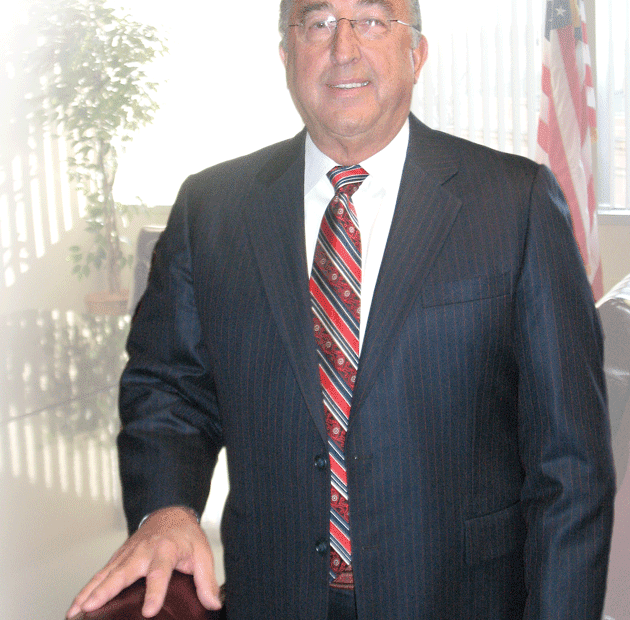
President Ray Catuogno

President Ray Catuogno

Ray Catuogno didn’t graduate high school with plans to become a court reporter. But when opportunity knocked, he ran with it, and eventually founded a company that employs about 700 people nationwide, providing transcription services for the medical, legal, law-enforcement, and insurance fields. His story is a case study in how embracing new technology, and being willing to change with the times, have continually opened doors for growth.

In the front lobby of StenTel in Springfield, several shelves are lined with decades-old typewriters, adding machines, and other outmoded devices.
One is a Dictaphone that used wax cylinders to make recordings; to erase a message and start over, the wax was simply heated and melted. Against another wall sits a Graphotype, a century-old machine that punched words onto paper from metal plates. One of the typewriters dates from the 19th century.
Among these devices, which Raymond Catuogno has collected over a lifetime in the transcription industry, is the first dictation machine he used to record court proceedings some 40 years ago. He would keypunch words onto reel-to-reel tapes, which a secretary would type onto paper. “How far we’ve come,” he said.
Indeed, Catuogno — who launched Catuogno Court Reporting in 1978 and later expanded the business to medical dictation and other fields under the name StenTel — is now president of a nationwide network of transcription services that employs the Internet and state-of-the-art communication tools to provide clients with same-day or next-day turnaround.
“We’ve grown to approximately 700 people working for the firm, across the United States,” he said. “Most of them work out of their homes, using the Internet, doing transcription for us.”
It’s a classic story of a business model that rode a wave of technological advances to grow market share. In this issue, BusinessWest examines how StenTel has continually staked out new ground on the cutting edge, and why this family business is well-positioned for the next wave of changes, particularly in health care.

Courting a Career
Catuogno’s life may have been completely different had he not taken a typing course as a teenager.
“After high school, I wanted to build skyscrapers and bridges around the world. But my father said, ‘geez, Ray, I don’t have the money to send you to college; what about joining the Navy on the GI Bill?’ I said, ‘sure, Pop, no problem, I can do that,’ and I joined the Navy.”
He ended up stationed in Key West, Fla., and because he had taken that high-school typing class, he was assigned an administrative role there. Later, his boss sent him to Newport, R.I., where he went through the Naval War College, learning about military law. After that, he returned to Florida, where he served as a court reporter for Navy court martials in Key West and similar Air Force proceedings at Homestead Joint Air Reserve Base in Miami.
“Back and forth along the Florida Keys for three and a half years … that was a really good duty,” he recalled with a smile.
After his military service, Catuogno brought his skills back home to Springfield, where he took a job as a court reporter at Hampden Superior Court, and also started picking up freelance work in courts across the region. In 1978, sensing a growing opportunity, he launched Catuogno Court Reporting, and eventually grew it to five offices, in Springfield, Boston, Worcester, Chelmsford, and Providence, R.I.
But that was only the beginning.
“Over the course of time, we ended up helping a gentleman out with medical transcription, and medical transcription was becoming a national type of business, so we started doing that, too,” Catuogno said. Transcription for insurance companies and police departments soon followed.
But medical transcription was a slower process back then, and required employees who were local.
“The way it used to be done was on tapes — cassette tapes, or even reel-to-reel tapes when we first began — and it’s changed along the way,” he said. “We went from tapes to phone dictation with 800 numbers, and then, of course, to the Internet.”
Catuogno’s son George joined the company in the mid-’80s and eventually took the reins of the medical-transcription side of the business.
“When we entered into medical transcription, we were transcribing cassette tapes for the first customers we picked up,” the younger Catuogno told BusinessWest. But even after the Internet, “we saw an opportunity to further develop that part of the business and do it well. We wanted to get the technology that would allow us to pick up and support customers anywhere in the United States, and wouldn’t be limited to the local region.
“When we went down that road,” he continued, “we saw what technology was available, and we saw an opportunity to develop our own technology.”
The breakthrough was the company’s development and patent of a system of combining audio and text in the same database, allowing doctors, police officers, or other clients to dictate information into the system and print out the transcript from the same location the next day. That technology allowed Sten-Tel to grow rapidly nationwide.
StenTel has since adopted speech-recognition technology and developed a product called Natural Language Processing, that codifies items such as problems, findings, allergies, procedures, lab tests, etc. That capability will streamline the construction of electronic medical records, which will soon be required of all medical practices in the U.S.
That federal mandate, George Catuogno said, will only make cutting-edge medical-transcription services more important, as doctors, by and large, are not going to want to keypunch their own records.
“That’s just not going to happen. In smaller markets, the low-volume guys may be willing to do that, or have their staff do some of that work,” he said, but he predicts most offices will rely on transcription professionals who can create those documents with speed, completeness, and efficiency. “In the end, time is money for these guys.”

New Opportunities
StenTel has built its client roster to more than 7,000, including some of the largest hospitals in the region, including Baystate Medical Center, Mercy Medical Center, Holyoke Medical Center, Wing Memorial Hospital, and UMass Medical Center, as well as Mass General and Brigham and Women’s Hospital in Boston.
“Police, lawyers, doctors — they use handheld recording devices, and they download those through the Internet, and thousands of reports come here daily,” Ray Catuogno said. “Transcriptionists located across the country access those reports, transcribe them in their homes, and then send them back to our mainframes.”
From his start in a one-room office on State Street, Catuogno’s Springfield operation now occupies the entire sixth floor of Monarch Place downtown. And with additional space has come new avenues for business.
“Our five New England offices are set up for attorneys to use,” he said, gesturing around the large conference room where he spoke to BusinessWest. “Lawyers come in and do arbitrations or depositions here just about every day. It gives attorneys a neutral place to go, which works well for the legal profession.”
The offices are also equipped with videoconferencing equipment, so individuals, groups, or companies can connect to some 10,000 sites around the world. “We can connect to China, Russia, Japan, South America, Europe … almost anywhere in the world.”
Like the use of StenTel offices by attorneys, this was a service that grew organically, and made sense. “It’s expensive to fly, and time-consuming,” Catuogno said. “Here, talking to someone on the TV screen, within five minutes, it’s like they’re here in the room. It’s amazing how it works.”
When asked what he enjoys most about this work, Catuogno immediately cited the relationships he has built over 45 years in the profession — with attorneys and court personnel, insurance companies and medical practices, and the public, but especially with the people his growing business employs.
“One of the things I enjoy is seeing young people come into this business and start their lives — lots of them don’t even have an apartment or an automobile — and then begin to grow,” he said. “As their lives evolve, down the road, you see them get their car, get their apartment, eventually become engaged, get married, have children, and really launch their lives.
“I call them all my family, my working family,” Catuogno continued. “I feel close to all the people here, and I love to see their successes. That’s probably my favorite part of doing this work today.”
But it’s a family business in the literal sense, too, as three of Ray’s children work in the Springfield office full-time, and another daughter, a teacher, helps out during the summer.
“That’s the exciting part,” he said. “The family being here means the business will continue for years to come and, I’m sure, become a much larger and more exciting business with all the new technologies coming on line.”
Whether it’s giving credit to the people who helped grow StenTel into a major player in transcription or proudly displaying those typewriters and dictation machines from the last century or two, Catuogno hasn’t forgotten the past as he looks to what promises to be a bright future. n

Joseph Bednar can be reached
at [email protected]

Features
UMass Wants to Raise Its Status Among Research Institutions

New Laboratory Science Building

New Laboratory Science Building

It’s called the New Laboratory Science Building, or NLSB, a $156 million, state-of-the-art facility now taking shape on the UMass Amherst campus. It’s part of a larger, nearly $300 million initiative, which also includes the Integrated Science Building opened in late 2009, to create a life sciences ‘precinct’ or ‘community’ on the campus that is being designed to greatly increase research capacity and facilitate collaborative efforts among science departments. The new facilities are expected to play a lead role in helping the university meet its stated goal of doubling its overall research volume by 2014 and climb within the ranks of the nation’s leading research institutions.

Karen Hayes says that, when it comes to word associations, many possible answers come to mind when one mentions UMass Amherst.
A beautiful suburban campus is one of them, said Hayes, who works as director of Strategic Communications and Outreach for the university, while strong undergraduate programs might be another, and service to the Commonwealth could be a third. One phrase you probably won’t hear is ‘major research institution,’ or words to that effect, she continued, adding that, while it’s certainly not written down anywhere, it’s part of her job description to change that equation.
Part of the strategy for doing so is simply telling the university’s story better and with a louder voice, she said, noting that there are currently a number of intriguing research initiatives underway on the campus, such as one she’s written about herself involving work that sequenced the first full genome of a female Hereford cow.
“We need to get our name out in the public,” she said. “When the Boston Globe or the New York Times or the national publications talk about discoveries in science, we have to be there; our name has to be out there as much as Harvard, Ohio State, MIT, the University of Michigan, or any of the other research powerhouses.”
For that to happen, the university needs to have more for those publications and others to write about, Hayes continued, and the $156 million New Laboratory Science Building, or NLSB, as it’s called, now taking shape on the campus should certainly provide a real boost for those efforts. The 310,000-square-foot facility will provide not only the physical space for additional research initiatives, but also a collaborative environment in which scientists across a number of different fields can more easily work together on projects, she said.
Mike Malone, the university’s vice chancellor of Research Engagement, agreed. He told BusinessWest that the NLSB will play a lead role in helping the university meet its ambitious goal, set in 2009, of doubling its level of federally funded research within five years.
“The NLSB will greatly increase our capacity for doing research,” he explained. “It will give us more equipment, more people, and more modern laboratories. Most importantly, though, it will bring people together in collaborative efforts.”
The NLSB is actually the second phase of a nearly $300 million initiative to create what many are calling a life sciences ‘precinct,’ or ‘community’ on the Amherst campus. The first was the university’s $114.5 million Integrated Science Building, which brings classrooms and labs for the life, chemical, and physical sciences together in one building, thus improving the prospects for collaboration.

Steve Goodwin

Steve Goodwin says the Integrated Science Building brings people in several different disciplines together to effectively solve problems.

This clustering process is part of a nationwide trend, said Steve Goodwin, dean of the College of Natural Sciences at UMass, noting that science, as well as the way it is taught, is changing, with an emphasis on integrating the various disciplines, hence the name on the new building.
For this issue, BusinessWest takes an indepth look at UMass Amherst’s emerging life-sciences precinct, how it will play a lead role in ongoing efforts to move the university to another level when it comes to research institutions, and also how the process of moving up in the ranks requires more than building more lab space.

Good Chemistry
Tom Whelan, a chemistry professor at the university, told BusinessWest that it couldn’t, or shouldn’t, print the words used by many of his students when they first glimpsed the new laboratory facilities in the ISB. “Holy sh—— was the most common refrain,” he said, not actually using the offending word in question.
That and other colorful phrases were needed to adequately put into the perspective the difference between what the students had for facilities in their former home at Goessmann Lab and what they now enjoyed at the ISB, said Whelan, noting that everything in the new science building is spacious and state-of-the-art.
“It’s great space — it’s a better learning environment, and it’s already changing the way we do things,” he said, adding that, while the ISB is bigger, it allows educators to work smaller in terms of attention to individual students. Meanwhile, it improves the flow of communication between departments that were in separate buildings and brings more opportunities for collaboration.
Goodwin agreed. As he led BusinessWest on a tour of the ISB, he said the building’s design encourages interaction among students and faculty, certainly much more so than was possible when departments were scattered around the campus in buildings as much as a century old and with outdated facilities.
He said the underlying concept for the building actually started to take shape 10 to 15 years ago, when those in the field noticed that the way science was done was changing.
“Therefore, we concluded that the way we train people should change as well,” he explained. “We realized that bringing people from multiple disciplines together to solve problems is the way things move forward. So this building was built on a teaching concept that said, ‘OK, we want to teach in the same way; we want to take the people who are taking introductory chemistry and physics and biology, bring them together in the same building, and give them opportunities to interact.’
“The exciting thing is that, over time, that notion has become more and more defined,” he continued, citing a new program initiated this fall called iCONS, short for Integrated Concentrations in the Sciences, where faculty members across several fields try to bring multiple disciplines together to solve problems.
This notion of bringing people together to work in collaboration is also at the heart of the NLSB, said Malone, adding that the facility is being designed with the goal of promoting collaboration, while also greatly upgrading the facilities in which people are performing critical work.
“Now, faculty members are typically located in individual buildings or parts of buildings that are assigned to their particular departments,” he explained. “And that makes it not impossible, but a little more difficult for their students and they themselves to get together. In this new facility, they’ll be living and working in the same environment.
“And it’s a great upgrade for our facilities,” he continued. “We have quite a backlog of deferred maintenance on campus, and this will put people who are, in many cases, from labs that aren’t state-of-the-art into a state-of-the-art facility.”
Roughly half the NLSB will be finished labs, and the rest will be shelf space, said Malone, noting that this will provide the university with cost-effective room to grow for the future.

A New Culture
And that room will eventually be needed if the university is to meet that stated goal for doubling its research volume by 2014, and then continuing a steady pace of growth. For the fiscal year that ended last June 30, the university logged $170 million in research projects from all sources, a number aided by large amounts of federal stimulus money, compared to $137.5 million for the prior year.
For fiscal 2011, the first-quarter numbers are tracking just ahead of the ’09 figures, which was expected as the level of stimulus funding drops, he continued, adding that the university wants to reach or exceed $270 million by 2014.
With that goal in mind, Malone has created a new Office of Research Development, which will work to identify funding sources and assist individuals and departments with putting proposals together.
The life sciences have been identified as a large growth area for the university, said Malone, noting that, at present, 45% of the federal funding awarded to the school is from the National Science Foundation.
“We have room to grow in areas supported by the National Institutes of Health, and some of that growth will be enabled by a collaboration with people at our medical school,” he explained. “They just got what’s called a Clinical and Translational Science Award from the NIH to support projects that link basic science with the practice of medicine — translating the results from the benchtop to the bedside. This translational area is a good one for us in terms of growth.”
And as research volume grows, and the university escalates its efforts to tell those stories regionally and nationally, UMass will make headway in its ongoing efforts to become more well-known as one of those aforementioned research powerhouses, said Hayes, noting that the story-telling process is an important, sometimes overlooked part of the equation.
“If we want to build our image with the general public and other constituencies, we need to be able to tell our story well,” she told BusinessWest. “Telling your science story well is something we haven’t done, and it’s a challenge. How can you connect the average person who doesn’t know a lot about science to what going’s on here in a way that helps them understand what’s in it for them? That’s what we have to do.”
The new science facilities on the campus will help the university raise its stature in a number of ways, said Hayes, adding that the ISB is a powerful tool in attracting students and faculty to the school.
“It’s a springboard to talk about research on campus and students’ opportunities there,” she said, adding quickly that the new facilities are all about creating more of these opportunites. “In the past, if you were a student who wanted to get research experience on campus, you had to be bold, you had to approach a faculty member, engage them directly, and take the initiative. With these new facilities and new programs that we have to connect students to research experiences, it is so much easier for them to seize opportunities.”

The Bottom Line
The NLSB is slated to open in the summer or fall of 2012. In time, and probably not much it, the facility is expected to generate those collaborations that Malone and Goodwin talked about, as well the critical momentum the university will need to take its name and reputation within the world of science to a higher level.
And perhaps sometime soon, when people do play word-association games with UMass Amherst, the phrase ‘major research institution’ will be appropriate, and widely used, vocabulary.

George O’Brien can be reached at [email protected]

Sections Supplements
A Chance for You to Advocate for Your Child

By DENNIS G. EGAN JR., Esq. and MELISSA R. GILLIS, Esq.

Dennis G. Egan

Dennis G. Egan

It is universally recognized that a child’s first five years of life are the most important in his or her overall development. As such, having your child assessed for special-education eligibility can be an intimidating and scary process.
If your child is going through the assessment process, someone — either you or your child’s teacher or day care provider — at some point questioned whether or not your child has a disability requiring special education. However, knowing the basics of the assessment process can alleviate a great deal of this fear and help equip you with the tools necessary to advocate on behalf of your child.
The federal special-education law is the Individual with Disabilities Education Act (IDEA), which dictates how municipalities and state governments must provide early intervention, special education, and related services to those children who qualify. IDEA mandates that each child receive a ‘free, appropriate public education.’ This means that state and local governments must provide such services as determined to properly meet a particular child’s needs.
The first step in the IDEA is the determination that your child should be assessed. The next step is the assessment process itself. This process involves your child and you meeting with a team of special-education professionals. IDEA provides that “the evaluation must gather relevant functional, developmental, and academic information about the child, including information provided by the parent.” As such, it is essential that you not only take part in the assessment, but also that you understand your role as a parent. Oftentimes, parents feel that they are not experts in the field and should simply leave the assessment process to the professionals. Nothing could be further from the truth.
After the evaluation process is complete, the evaluation team, including you, will determine eligibility. This point in the process is crucial in that, if the evaluation team determines that your child is not eligible for special services, the process stops and your child is placed in a traditional classroom. While a determination that your child is not eligible for special services may seem like the best possible outcome to some parents, the only better determination is that a child in need of services is eligible for those services, and ultimately receives them.
If the evaluation team determines that your child is eligible for special-education services, an Individualized Education Program (IEP) meeting is scheduled. IDEA mandates that the IEP meeting take place within 30 days of the eligibility determination. You play a very important role in the IEP process, because out of this meeting comes the IEP plan, which is a written plan outlining your child’s needs and goals as well as the strategies to be implemented to achieve these goals. Once again, your input is critical, because you are your child’s best advocate.
Once the IEP is written, it becomes the road map by which your child’s education is conducted. It is important to note that once written, the IEP is not set in stone. Instead, it is reviewed at least annually in order to ensure that your child’s educational needs are being met and his goals are capable of being attained. If it is determined that your child’s needs are not being met, modifications are made to the IEP. This provides an ongoing opportunity for you to assure that your child’s best interests are furthered.
Melissa R. Gillis

Melissa R. Gillis

It is important to note that one of the outcomes of the re-evaluation process may be that your child is no longer eligible for services under IDEA, but you must consider each step an additional opportunity to advocate on behalf of your child.
It should be noted that you hold your child’s educational rights until (1) your child reaches the age of majority; (2) parents’ rights are terminated; or (3) one parent is awarded educational decision-making rights under a divorce decree or separation agreement.
In the end, knowing your rights, as well as your child’s rights, as they apply to the special-education assessment and IEP process will alleviate a great deal of stress and confusion. As a result, your child’s needs and interests will be better served.
While the information outlined above is meant to serve as a broad overview of this very intimate and important topic, further information can be obtain by contacting an education-law attorney, special-education advocate, special-needs assessment professionals, and/or your city or town’s school department.

Dennis Egan Jr. is an associate with Bacon Wilson, P.C. concentrating his practice in business and corporate law; (413) 781-0560; [email protected]. Melissa Gillis is an associate with Bacon Wilson, P.C. in the family law and real estate departments; (413) 781-0560; [email protected]

Opinion
Creating More Jobs for Teens Is Critical

The numbers are alarming.
In 1999, more than half (52.5%) of Massachusetts teens ages 16 to 19 held paying jobs. By 2009, that number was down to 32.1%, and for the first four months of this year, it was 23.6%.
That figure will undoubtedly rise during the summer, when teen employment is traditionally at its highest, there is a trend emerging across the Bay State and it does bode well for our cities and towns: teens are just finding it increasingly difficult to find employment.
There are many reasons for this movement, the biggest being the economy and its many side effects.
While conditions have improved somewhat over the past few quarters, the recovery has been mostly a jobless one. This means that teens have competition for open jobs from thousands of unemployed individuals across the region. Meanwhile, ongoing concerns about the recovery and its relative staying power have left many business owners skittish about doing any additional hiring, even if they are part-time positions. Also, many companies learned during the downturn that could make do with fewer people in some offices or departments, and the fact that times are better doesn’t mean they’re going to become less lean.
Beyond the recession, there are certainly some other factors at play with this trend toward teen hiring. First, there are far fewer drug stores, hardware stores, and video stores for young people to work at, and fewer large businesses that have the flexibility to bring on help in the summertime. Another factor is the very real possibility that, when given the choice between hiring a retired Baby Boomer with good work habits and a desire to stay active and hiring a 17-year-old that is a largely unknown commodity, business owners are choosing the former — and who could blame them?
Whatever the reasons behind the trend, there are some real dangers to our region and its job market if it continues.
As Bill Ward, director of the Regional Employment Board, points out in the story that begins on page 6, jobs connect teens to the world of work. They introduce them to the workplace and, in most cases, compel them to become more responsible. It is while employed that young people learn the importance of showing up on time, being part of a team, and doing the best job they can — always.
But in the workplace, young people also learn from their elders. Every Baby Boomer remembers his or her first (or second, or third) job, and they recall more than the skills they acquired and the experiences they recorded, but also some life lessons from people 20, 30, 40, or more years older than they were.
All these things are missing from the equation when teens can’t gain employment.
That’s why it’s important for companies, often working in collaboration with agencies like the REB, to be diligent and imaginative in creating strategies that can create summer jobs or internship opportunities such as those created by Western Mass. Electric Co. and Big Y.
These programs not only help young people by giving them jobs, spending cash, money for college, and a chance to stay off the street and out of trouble. They also help the companies in question by introducing teens to those businesses and the career opportunities that can aspire to. They call these win-win scenarios.
This region and its business community face a number of challenges. Creating more jobs for teens may seem one that belongs far down on the page of priorities, but the reality is that addressing this problem now can lead to far fewer problems down the road.

Opinion
Region’s Colleges Are Economic Engines

Springfield Mayor Domenic Sarno calls it “playing to our strength.”
That was his way of conveying the manner in which area colleges, including all those that call his city home, are becoming more powerful forces in local economic-development efforts.
It’s not exactly a recent phenomenon — colleges have always played an important role in the region’s economic health and well-being, from their local purchases to their huge payrolls to seemingly constant new construction. But in recent years, and especially over the past 18 months or so, area schools have been front and center with initiatives that can, and probably will, have enormous benefits for area cities and towns.
Sarno was responding to news that American International College has been granted preferred-developer status for a project involving three key pieces of the Mason Square neighborhood — two sections of the massive former Indian Motocycle building and the long-vacant fire station next door. The college is looking at everything from a cyber café to a new home for its radio station in the fire station, and everything from housing options to incubator space in the Indian building.
The project is still very much in the due-diligence stage, and the college will move forward only if several funding sources can be tapped. But even if the vision for the properties doesn’t become reality, area colleges will clearly continue to be huge forces in economic-development efforts.
Start with the state university, which is playing a lead role in the efforts to bring a high-performance computing center to downtown Holyoke, a project that could change the face, and the fortunes, of the Paper City. UMass Amherst is also making its presence felt on Court Street in downtown Springfield. The university will be moving one of its departments into a building in that historic area — a project, conceived with generous amounts of encouragement and help from the city, that is expected to be the first of many that will increase the school’s visibility and impact there.
Meanwhile, Westfield State College is eyeing major investments in that city’s still-struggling downtown. WSC President Evan Dobelle helped change the landscape of some neighborhoods in Hartford when he was president of Trinity College through the creation of several public-private partnerships, and he is looking to do the same in the Whip City through a plan to put more student housing in the urban core, and thus boost existing businesses and attract new ones to the Elm Street corridor.
There are countless other examples:
• Springfield Technical Community College created a technology park in the former Digital Equipment Corp. complex across Federal Street from the campus, a gambit that has succeeded in bringing nearly 1,000 jobs to that complex of buildings. A few years later, the school opened a facility now known as the Scibelli Entreprise Center, that is both an incubator and home to agencies that help small businesses get off the ground and to the next level.
• Holyoke Community College is a partner in a project that will not only bring a learning center to a former fire station in the city’s downtown, one that will help give adults skills to succeed in the workforce, but also become another cornerstone in the revitalization of that city.
• Springfield College has, for many years, undertaken programs to improve quality of life in the neighborhoods surrounding the school, which are some of the poorest in the city, if not the state.
• Bay Path College has, for 15 years now, organized a women’s leadership conference that has imparted key lessons on life and business, and it has initiated a number of programs to help spur entrepreneurship.
• The Five Colleges in Hampshire Country have contributed in innumerable ways to the cultural and economic health of the Amherst and Northampton area.
The list goes on. Every school has stepped up, and the involvement is becoming deeper and more imaginative.
“Playing to our strength.” The mayor got it right. The area’s colleges represent perhaps its greatest strength, and cities and towns must collectively work to help find and nurture new ways to tap into that strength.

Uncategorized

Springfield Mayor Domenic Sarno calls it “playing to our strength.”

That was his way of conveying the manner in which area colleges, including all those that call his city home, are becoming more powerful forces in local economic-development efforts.

It’s not exactly a recent phenomenon — colleges have always played an important role in the region’s economic health and well-being, from their local purchases to their huge payrolls to seemingly constant new construction. But in recent years, and especially over the past 18 months or so, area schools have been front and center with initiatives that can, and probably will, have enormous benefits for area cities and towns.

Sarno was responding to news that American International College has been granted preferred-developer status for a project involving three key pieces of the Mason Square neighborhood — two sections of the massive former Indian Motocycle building and the long-vacant fire station next door. The college is looking at everything from a cyber café to a new home for its radio station in the fire station, and everything from housing options to incubator space in the Indian building.

The project is still very much in the due-diligence stage, and the college will move forward only if several funding sources can be tapped. But even if the vision for the properties doesn’t become reality, area colleges will clearly continue to be huge forces in economic-development efforts.

Start with the state university, which is playing a lead role in the efforts to bring a high-performance computing center to downtown Holyoke, a project that could change the face, and the fortunes, of the Paper City. UMass Amherst is also making its presence felt on Court Street in downtown Springfield. The university will be moving one of its departments into a building in that historic area — a project, conceived with generous amounts of encouragement and help from the city, that is expected to be the first of many that will increase the school’s visibility and impact there.

Meanwhile, Westfield State College is eyeing major investments in that city’s still-struggling downtown. WSC President Evan Dobelle helped change the landscape of some neighborhoods in Hartford when he was president of Trinity College through the creation of several public-private partnerships, and he is looking to do the same in the Whip City through a plan to put more student housing in the urban core, and thus boost existing businesses and attract new ones to the Elm Street corridor.

There are countless other examples:

• Springfield Technical Community College created a technology park in the former Digital Equipment Corp. complex across Federal Street from the campus, a gambit that has succeeded in bringing nearly 1,000 jobs to that complex of buildings. A few years later, the school opened a facility now known as the Scibelli Entreprise Center, that is both an incubator and home to agencies that help small businesses get off the ground and to the next level.

• Holyoke Community College is a partner in a project that will not only bring a learning center to a former fire station in the city’s downtown, one that will help give adults skills to succeed in the workforce, but also become another cornerstone in the revitalization of that city.

• Springfield College has, for many years, undertaken programs to improve quality of life in the neighborhoods surrounding the school, which are some of the poorest in the city, if not the state.

• Bay Path College has, for 15 years now, organized a women’s leadership conference that has imparted key lessons on life and business, and it has initiated a number of programs to help spur entrepreneurship.

• The Five Colleges in Hampshire Country have contributed in innumerable ways to the cultural and economic health of the Amherst and Northampton area.

The list goes on. Every school has stepped up, and the involvement is becoming deeper and more imaginative.

“Playing to our strength.” The mayor got it right. The area’s colleges represent perhaps its greatest strength, and cities and towns must collectively work to help find and nurture new ways to tap into that strength.

Features
AIC Becomes Preferred Developer for Mason Square Revitalization Effort
Landmark Decisions

An architect’s rendering of the potential re-use of the Mason Square fire house.

Springfield Mayor Domenic Sarno calls the architect’s rendering of the proposed redevelopment of the Mason Square fire station and adjoining structures “stunning.”

And he’s right.

Drafted by Centerbrook Architects in Centerbrook, Conn., the rendering depicts the fire station, vacant since the mid-’80s, as a center of activity and commerce. “It lights up the whole area,” Sarno said of the facility in the image, which will feature a cyber café; the American International College radio station, WAIC; and other campus facilities. “That fire station could become the iconic building that epitomizes continued redevelopment of the State Street corridor.”

Sarno, like other elected officials, knows it’s not wise to get carried away with slick renderings of redevelopment projects that may never materialize, but in this case, he’s apparently done exactly that. And he chalks it up to his excitement with what could happen in Mason Square now that AIC has been granted what’s known as preferred-developer status for a complex that includes the fire station and the adjacent former Indian Motocycle building.

The college now has 135 days to do some additional due diligence on the parcels in question and decide whether — and perhaps how — to proceed, said John Short, AIC’s vice president for Institutional Advancement, who acknowledged that it may be a while before anything remotely resembling what’s depicted in the rendering becomes reality. But he told BusinessWest that this scene could become reality if that assessment period ends with positive reports and the college is confident it can acquire the funding for the initiative.

“There’s a lot that we have to look at, and it could all come together,” he said. “We’re trying to continue what Congressman Neal has done [the federal courthouse project and extensive streetscape work along the corridor] and what the city has done in terms of revitalizing the area. I think this would be a huge step; this could be very exciting.”

The properties in question are known as Indian Motocycle A, Indian Motocycle B, and the Mason Square Fire Station, as designated in the request for proposals (RFP) issued late last fall. AIC’s was the only proposal submitted.

It calls for development of all three properties, meaning the undertaking of needed improvements to parcel A and bringing more housing units onto the market in the occupied portion of the former manufacturing complex; finding new uses for parcel B, which has some environmental issues; and brining new life to the long-dormant fire station.

MassHousing owns parcel A, while the city of Springfield controls B and the former fire station, said John Judge, chief economic development director for the city, adding that the two entities partnered in the RFP to present a larger, more-attractive development opportunity.

For AIC, the project represents an opportunity to expand and enhance its facilities, while also taking a lead role in revitalization efforts in Mason Square and the broader State Street corridor, said Short. Meanwhile, for the city, the project represents a chance to find a remedy for property that has been a source of continual frustration for nearly 30 years.

And if AIC does proceed as planned, it will represent only the latest example of how area colleges have become engines of economic development, as Sarno called them, in neighborhoods across the Valley.

“We’re playing to our strength, our colleges and universities,” said the mayor, noting that several schools, from UMass Amherst to Westfield State College to Springfield Technical Community College and others, have played pivotal roles in efforts to revitalize neighborhoods and create jobs.

Sarno said that, early in his first term (he was elected in 2007), he saw first-hand the impact Trinity College had on revitalization efforts in Hartford through public-private partnerships, and committed himself to duplicating such efforts in Springfield.

UMass Amherst’s plans to locate one of its departments in Court Square is an example of such redevelopment, he said, while AIC’s RFP submission could change the face of another neighborhood. And the real hope, expressed by all those involved, is that, if AIC’s proposal becomes reality, it spurs additional activity along the State Street corridor.

Plans are still quite preliminary, said Short, adding that they are likely to become more firm over the next few months.

Key elements of the proposal involve continuing the current mix of housing in parcel A (involving area residents and some overflow student housing) and bringing more units onto the market, especially market-rate units. In B, several options will be considered, said Judge, including more housing and perhaps incubator space that may complement existing startup space at STCC.

As for the fire station, plans for the cyber café are preliminary, said Short, citing the apparent need for such a facility — on the campus and in the community. The school’s radio station and other Communications Department programs could go on the second floor, while a host of options will be considered for the third, which features some dramatic views of of downtown Springfield and Mason Square.

Like parcel B, the fire station has some environmental issues, said Short, adding that, by the end of the due-diligence period, the school should know if they can be overcome.

Preliminary price tags are only guesstimates, Short continued, adding that the fire-station portion of the project alone could reach $4 million to $5 million.

The school will obviously need to tap into a number of funding sources to meet that cost and others associated with the project said Short, and finding those sources is part of the due-diligence process.

“What people have to remember is that we’re a college; we’re a nonprofit. We don’t have a lot of money, and we’re not a private real-estate developer,” he told BusinessWest. “One of the issues with parcel A has been companies coming in, taking large fees out on the front side of the deal, getting tax credits over a period of time, and then they stop taking care of the building; that’s happened several times over the past 25 years.

“We’re not in that position,” he continued, “so we have to do this in partnership with the city and with the state, and find sources of money that make it economically feasible for the college to do.”

In other words, no one can say with any certainty whether the architect’s rendering that has so intrigued the mayor will become reality, but it’s clear that it represents by far the best hope for the Mason Square area in some time.

Features
Officials Say City Is Positioned for a Comeback

Springfield, Mass.

Springfield, Mass.

From his office looking out on the sidewalks of Main Street in Springfield, Russell Denver can see firsthand what is happening in the downtown business district.
As president of the Affiliated Chambers of Commerce of Greater Springfield, Denver knows that a lot of work needs to happen in the city he’s called home for most of his life — and, for all but four years since 1980, where he’s worked as well. But some of the biggest points to address can’t be solved quickly by a shovel in the ground or a ribbon-cutting ceremony.
Like many others who talked with BusinessWest, he said that there’s a perception of Springfield’s safety and vitality that isn’t supported by hard evidence.
“Springfield is a big fish in a little pond,” he explained. “What happens is that the city gets magnified. For instance, do we have crime? Yes. But if those same statistics were reported in Boston, no one would even notice it.”
Addressing the empty storefronts downtown, he said, “I’m going to put a different spin on things. If you go around, you see a fair amount of vacant office and retail space. Well, that’s an opportunity, rather than a challenge. As things start to turn around, we’re going to have the locations ready so that people can move right in.”
Such glass-half-full enthusiasm is expressed by others as well.
Springfield’s chief development officer, John Judge, said that during the current down market, City Hall has been strategically addressing both strengths and weaknesses in order to make strides when the economy rebounds. He said that working toward a “21st-century downtown” is at the top of his priorities, and while the to-do list is not short for that goal, a few achievements have already been checked off as underway or complete.
In this, the latest installment of its Doing Business In series, BusinessWest takes an indepth look at the region’s unofficial capital. While there are problems shared by most every municipality across the nation after a couple of tough years, Springfield has had some of its own dark spots that are now relegated to the history books. The Finance Control Board left just under a year ago, turning the city’s red ledgers back on track, and in the recently-released budget for fiscal year 2011, Mayor Domenic Sarno unveiled plans for increased hiring in the public-safety departments and a priority for “strong and effective fiscal management,” according to the report written by Lee Erdmann, chief financial officer for the city.
Talking with various officials, a picture emerges of a city that has been maligned for what it both is and isn’t. And in the coming months, some of that will be changing, helping to drive home a important message, said Judge. “We’ve got to make sure that everything we do says that Springfield is open for business.”

The Center of It All
Denver identified one historic roadblock for business development in the city: a lack of developable real estate.
“But I think that a lot of people have done some great work, and now there is land for new construction,” he countered. “You have property at Smith & Wesson, Chicopee River Business Park, in Indian Orchard, for light industrial. So now, there’s plenty of land out there for new tenants, or for expansion and new buildings.”
Those commercial properties have been in good shape in the last year, and these pages have reported with due fanfare the addition of several big-ticket incoming businesses like Performance Food Group and the F.W. Webb Co., among others.
While those outlying properties are marketable and in the spotlight, downtown can also share some of that limelight. Denver called the four-acre York Street Jail site along the Connecticut River a “home run,” increasing developable land along what is rapidly becoming a true destination, featuring several popular restaurants bracketing the Basketball Hall of Fame.
He shifted his focus to the central business district, the area loosely defined by State Street and Court Square to the south up Main Street to the property north of the train station. “If there is only one thing that happens in 2010,” he said, “filling the vacant federal building is an absolute winner.”
Nick Fyntrilakis agrees. As the assistant vice president for Community Responsibility for MassMutual, he has been working closely on a variety of projects for the city, his hometown. He called the return of occupants to the federal building at 1550 Main Street “a key to revitalization for that section of the city.”
Plans are underway for the Springfield School Department and Baystate Health to become anchor tenants in the structure, turning the lights back on in the prominently located building that has been vacant for more than a year.
“One of the impacts from 9/11,” he explained, “is that the building was cordoned off from the street with Jersey barriers. Before that, the building was accessible via airwalks to Tower Square, it was accessible to the parking garage behind it, Uno’s was right next to CityStage, and it was a very active night spot. But all of a sudden, you lost those people that weren’t there having dinner, and the building became this real island, an air bubble of inactivity, really.
“Not only will the building in use again mean bodies downtown,” he continued, “but it flips the switch to make it another welcoming section of the city. I think the barriers and the access really had an impact on the psyche of that section of Main Street.”

Accentuate the Positive
Fyntrilakis said MassMutual is heavily invested in seven major revitalization initiatives in the city, four of which are moving “at various speeds and progressions.”
“The Corridor Storefront Improvement project is off the ground,” he continued. “Some grants were awarded last week, and you’re going to see more of that in the future. Basically any storefront along Main or State streets can receive up to $10,000 in grants, with a $2,500 match from the owners, to go toward improving their storefront — awnings, lighting, what have you. You’ll start to see pockets of those pop up.”
In addition, he mentioned projects at the former Indian Motocycle complex, market-rate housing at the building on State Street soon to be vacated by the School Department, infrastructure improvements along the State Street corridor, and the revitalization of Union Station for high-speed commuter rail.
While these are projects that will provide a much-needed boost in the right direction for retail and market-rate housing — two fundamental concepts for urban vitality — Fyntrilakis said that there are still specific, important building blocks that need to be addressed. In his opinion, the historic building at 31 Elm Street, directly across Court Square from City Hall, is a project whose importance can’t be understated.
“That property could potentially impact so much,” he said. “Moving north across Court Square, then to the MassMutual Center side, the lower part of State Street, and the beginning of the South End … getting that project online in some shape or form is absolutely critical.”
From a commercial real-estate perspective, William Low said that progress and revitalization at Elm Street “needs to happen.”
Low, senior vice president at NAI Plotkin on Taylor Street, said that, if that property is redeveloped, it will fundamentally change the landscape in downtown Springfield.
For reference, Low mentioned projects in Pittsfield that could very easily be duplicated for the vacant space, saying that, if it could happen there, Springfield can’t be far behind.
“Pittsfield has done a good job of revitalizing its downtown,” he began. “On the ground floor, you essentially just give away the real estate, just getting those spaces filled. Every time a third-tier city tries that, it works. Go to Pittsfield now and see how well it’s worked.
“Five or ten years ago,” he continued, “people in my business weren’t even considering that city. But now they are.”
Echoing just about everyone with an informed opinion, Low said that market-rate housing is of the utmost importance to foster a vibrant downtown economy. “And give them a reason to live there,” he said, counting off galleries, shops, and entertainment venues, “most of which are already here,” he added.
Citing the Quadrangle museums, Symphony Hall, Center Stage, and the MassMutual Center, he shrugged and said, “if housing has made a difference and has worked in other cities with so much less to offer, then it certainly could happen here.”
Denver said that, by realigning the income demographic for downtown with market-rate housing, the retail that consumers have long expected for the city might be a reality, but not until there are those numbers to support them.
“People complain sometimes about the type of retail that comes into downtown,” he said, “but look at the income demographics. No one should be expecting that Nordstroms will be coming to downtown — the market doesn’t support that. But should we be looking at the Gap or Old Navy types of stores, and start reaching for things like that? Absolutely.”

Eliminate the Negative
An important facet to reining in that desired demographic will be to change some perceptions concerning the downtown area. Low said that, when all one hears on the news are stories of violent crime in Springfield, the downtown becomes the symbolic hub for all of those ills.
“Sure, there’s crime in Springfield,” he said. “But it’s not in the central business district. The reality is that once you’re here, it’s nothing that you are even aware of.
“Having said that,” he added, “I would like to see more of a police presence. Every once in a while, you’ll hear talk about some kind of criminal activity, and for the next few days you’ll see police on the streets, walking around. I wish they would just stay there. That negative perception is a genuine challenge for the retail and restaurant sectors.”
From his desk at the chamber, Denver said that one of the biggest hurdles the city needs to address is the commercial real-estate tax rate, the highest in the state.
“We did a study that we handed to all city councilors last year showing that, consistently, for similarly sized properties in similarly-sized industries, you pay a higher per-foot real-estate tax than in any of the surrounding communities,” he said. “That needs to be addressed first and foremost.
He cited tax increment financing that was made available to a number of large commercial ventures in the city, among them Performance Foods, Titeflex, and Liberty Mutual. “My point to the city is that, if you can give those tax breaks — and I’m very happy you did — what about everyone else?” he asked.
Put into context, however, these hurdles don’t overshadow his feeling that the city is positioned for a comeback.
“I’m of the belief that there is a lot of good already going on downtown,” he said, “There have been nights this past winter where you had Symphony Hall sold out, CityStage sold out, and the Falcons with 5,000 people. Those people do go to restaurants, and there is the possibility that they could support strong retail.
“The product is there,” he added, “and it’s good. We need to make sure it continues to be good, and people will come.”

Uncategorized
Officials Say City Is Positioned for a Comeback

From his office looking out on the sidewalks of Main Street in Springfield, Russell Denver can see firsthand what is happening in the downtown business district.

As president of the Affiliated Chambers of Commerce of Greater Springfield, Denver knows that a lot of work needs to happen in the city he’s called home for most of his life — and, for all but four years since 1980, where he’s worked as well. But some of the biggest points to address can’t be solved quickly by a shovel in the ground or a ribbon-cutting ceremony.

Like many others who talked with BusinessWest, he said that there’s a perception of Springfield’s safety and vitality that isn’t supported by hard evidence.

“Springfield is a big fish in a little pond,” he explained. “What happens is that the city gets magnified. For instance, do we have crime? Yes. But if those same statistics were reported in Boston, no one would even notice it.”

Addressing the empty storefronts downtown, he said, “I’m going to put a different spin on things. If you go around, you see a fair amount of vacant office and retail space. Well, that’s an opportunity, rather than a challenge. As things start to turn around, we’re going to have the locations ready so that people can move right in.”

Such glass-half-full enthusiasm is expressed by others as well.

Springfield’s chief development officer, John Judge, said that during the current down market, City Hall has been strategically addressing both strengths and weaknesses in order to make strides when the economy rebounds. He said that working toward a “21st-century downtown” is at the top of his priorities, and while the to-do list is not short for that goal, a few achievements have already been checked off as underway or complete.

In this, the latest installment of its Doing Business In series, BusinessWest takes an indepth look at the region’s unofficial capital. While there are problems shared by most every municipality across the nation after a couple of tough years, Springfield has had some of its own dark spots that are now relegated to the history books. The Finance Control Board left just under a year ago, turning the city’s red ledgers back on track, and in the recently-released budget for fiscal year 2011, Mayor Domenic Sarno unveiled plans for increased hiring in the public-safety departments and a priority for “strong and effective fiscal management,” according to the report written by Lee Erdmann, chief financial officer for the city.

Talking with various officials, a picture emerges of a city that has been maligned for what it both is and isn’t. And in the coming months, some of that will be changing, helping to drive home a important message, said Judge. “We’ve got to make sure that everything we do says that Springfield is open for business.”

The Center of It All

Denver identified one historic roadblock for business development in the city: a lack of developable real estate.

“But I think that a lot of people have done some great work, and now there is land for new construction,” he countered. “You have property at Smith & Wesson, Chicopee River Business Park, in Indian Orchard, for light industrial. So now, there’s plenty of land out there for new tenants, or for expansion and new buildings.”

Those commercial properties have been in good shape in the last year, and these pages have reported with due fanfare the addition of several big-ticket incoming businesses like Performance Food Group and the F.W. Webb Co., among others.

While those outlying properties are marketable and in the spotlight, downtown can also share some of that limelight. Denver called the four-acre York Street Jail site along the Connecticut River a “home run,” increasing developable land along what is rapidly becoming a true destination, featuring several popular restaurants bracketing the Basketball Hall of Fame.

He shifted his focus to the central business district, the area loosely defined by State Street and Court Square to the south up Main Street to the property north of the train station. “If there is only one thing that happens in 2010,” he said, “filling the vacant federal building is an absolute winner.”

Nick Fyntrilakis agrees. As the assistant vice president for Community Responsibility for MassMutual, he has been working closely on a variety of projects for the city, his hometown. He called the return of occupants to the federal building at 1550 Main Street “a key to revitalization for that section of the city.”

Plans are underway for the Springfield School Department and Baystate Health to become anchor tenants in the structure, turning the lights back on in the prominently located building that has been vacant for more than a year.

“One of the impacts from 9/11,” he explained, “is that the building was cordoned off from the street with Jersey barriers. Before that, the building was accessible via airwalks to Tower Square, it was accessible to the parking garage behind it, Uno’s was right next to CityStage, and it was a very active night spot. But all of a sudden, you lost those people that weren’t there having dinner, and the building became this real island, an air bubble of inactivity, really.

“Not only will the building in use again mean bodies downtown,” he continued, “but it flips the switch to make it another welcoming section of the city. I think the barriers and the access really had an impact on the psyche of that section of Main Street.”

Accentuate the Positive

Fyntrilakis said MassMutual is heavily invested in seven major revitalization initiatives in the city, four of which are moving “at various speeds and progressions.”

“The Corridor Storefront Improvement project is off the ground,” he continued. “Some grants were awarded last week, and you’re going to see more of that in the future. Basically any storefront along Main or State streets can receive up to $10,000 in grants, with a $2,500 match from the owners, to go toward improving their storefront — awnings, lighting, what have you. You’ll start to see pockets of those pop up.”

In addition, he mentioned projects at the former Indian Motocycle complex, market-rate housing at the building on State Street soon to be vacated by the School Department, infrastructure improvements along the State Street corridor, and the revitalization of Union Station for high-speed commuter rail.

While these are projects that will provide a much-needed boost in the right direction for retail and market-rate housing — two fundamental concepts for urban vitality — Fyntrilakis said that there are still specific, important building blocks that need to be addressed. In his opinion, the historic building at 31 Elm Street, directly across Court Square from City Hall, is a project whose importance can’t be understated.

“That property could potentially impact so much,” he said. “Moving north across Court Square, then to the MassMutual Center side, the lower part of State Street, and the beginning of the South End … getting that project online in some shape or form is absolutely critical.”

From a commercial real-estate perspective, William Low said that progress and revitalization at Elm Street “needs to happen.”

Low, senior vice president at NAI Plotkin on Taylor Street, said that, if that property is redeveloped, it will fundamentally change the landscape in downtown Springfield.

For reference, Low mentioned projects in Pittsfield that could very easily be duplicated for the vacant space, saying that, if it could happen there, Springfield can’t be far behind.

“Pittsfield has done a good job of revitalizing its downtown,” he began. “On the ground floor, you essentially just give away the real estate, just getting those spaces filled. Every time a third-tier city tries that, it works. Go to Pittsfield now and see how well it’s worked.

“Five or ten years ago,” he continued, “people in my business weren’t even considering that city. But now they are.”

Echoing just about everyone with an informed opinion, Low said that market-rate housing is of the utmost importance to foster a vibrant downtown economy. “And give them a reason to live there,” he said, counting off galleries, shops, and entertainment venues, “most of which are already here,” he added.

Citing the Quadrangle museums, Symphony Hall, Center Stage, and the MassMutual Center, he shrugged and said, “if housing has made a difference and has worked in other cities with so much less to offer, then it certainly could happen here.”

Denver said that, by realigning the income demographic for downtown with market-rate housing, the retail that consumers have long expected for the city might be a reality, but not until there are those numbers to support them.

“People complain sometimes about the type of retail that comes into downtown,” he said, “but look at the income demographics. No one should be expecting that Nordstroms will be coming to downtown — the market doesn’t support that. But should we be looking at the Gap or Old Navy types of stores, and start reaching for things like that? Absolutely.”

Eliminate the Negative

An important facet to reining in that desired demographic will be to change some perceptions concerning the downtown area. Low said that, when all one hears on the news are stories of violent crime in Springfield, the downtown becomes the symbolic hub for all of those ills.

“Sure, there’s crime in Springfield,” he said. “But it’s not in the central business district. The reality is that once you’re here, it’s nothing that you are even aware of.

“Having said that,” he added, “I would like to see more of a police presence. Every once in a while, you’ll hear talk about some kind of criminal activity, and for the next few days you’ll see police on the streets, walking around. I wish they would just stay there. That negative perception is a genuine challenge for the retail and restaurant sectors.”

From his desk at the chamber, Denver said that one of the biggest hurdles the city needs to address is the commercial real-estate tax rate, the highest in the state.

“We did a study that we handed to all city councilors last year showing that, consistently, for similarly sized properties in similarly-sized industries, you pay a higher per-foot real-estate tax than in any of the surrounding communities,” he said. “That needs to be addressed first and foremost.

He cited tax increment financing that was made available to a number of large commercial ventures in the city, among them Performance Foods, Titeflex, and Liberty Mutual. “My point to the city is that, if you can give those tax breaks — and I’m very happy you did — what about everyone else?” he asked.

Put into context, however, these hurdles don’t overshadow his feeling that the city is positioned for a comeback.

“I’m of the belief that there is a lot of good already going on downtown,” he said, “There have been nights this past winter where you had Symphony Hall sold out, CityStage sold out, and the Falcons with 5,000 people. Those people do go to restaurants, and there is the possibility that they could support strong retail.

“The product is there,” he added, “and it’s good. We need to make sure it continues to be good, and people will come.”

Company Notebook Departments

FloDesign Expanding into Waltham

WILBRAHAM — FloDesign Wind Turbine Corp. recently announced plans to expand, which includes a new corporate headquarters and product-development center in the Waltham watch factory. FloDesign officials and Gov. Deval Patrick made the announcement, noting that the Mass. Clean Energy Center (MassCEC) approved a $3 million financing package for the turbine company. Financing includes a five-year, $700,000 forgivable loan that is contingent on FloDesign maintaining its corporate headquarters and primary R&D facility in the state, creating or retaining 150 jobs in the next three years, and maintaining those jobs for an additional two years. The package also includes a $600,000 convertible grant, which gives MassCEC an equity stake in FloDesign if the company receives additional financing, and $1.7 million from MassCEC’s Renewable Energy Trust to defray a portion of the cost of installing the company’s first ‘shrouded’ wind turbines at state or local public entities and nonprofit organizations. FloDesign said it is retaining its research center in Wilbraham. During the press conference, it was announced that the Massachusetts Port Authority will explore the possibility of using FloDesign turbines at Logan International Airport, at least on a pilot basis. FloDesign was founded in 2007 to develop what it calls a wind-turbine design based on jet-engine technology, and promising to deliver more than three times the amount of energy as traditional wind turbines for the same size rotor.

Balise Breaks Ground for Lexus Dealership

WEST SPRINGFIELD — Balise Motor Sales recently broke ground for a new Lexus dealership at 1385 Riverdale St., next to Balise Toyota. The new facility will be more than 27,000 square feet, and its new showroom will be state-of-the-art, including three indoor vehicle-delivery areas. Balise President Jeb Balise noted that the Lexus dealership will be “world class.” He added that the new facility is what “customers deserve and have been waiting for.” The service and parts departments will have air conditioning, and the indoor service drive-in reception area will allow customers to drop off and pick up their vehicles indoors. Customers will enjoy a warm, comfortable service reception and a spacious lounge complete with computer stations for their convenience, according to Balise. Another upgrade will be the expanded number of parking spaces available. With the new Balise Toyota next door, more than 900 parking spaces for new and used cars and trucks will be available. The construction work is being done by Associated Builders. The completion date is late September, with an Oct. 1 grand opening planned.

SC Unveils Naismith Statue

SPRINGFIELD — Springfield College (SC) officials recently unveiled a new, larger-than-life-sized bronze statue of Dr. James Naismith, permanently installed on the plaza in front of the newest building on Naismith Green, the Richard B. Flynn Campus Union. Naismith invented the game of basketball at SC in 1891 when he was an instructor in physical education. The bronze casting depicts Naismith seated upright holding a ball with two peach baskets stacked at his feet. Sculptor Eldon Tefft, a former art professor at Kansas University, spent seven years creating it. Joining SC President Richard Flynn in uncovering the statue was Rachael Naismith, great-granddaughter of James Naismith, who is also the college’s chief research librarian and an editor and authority on her famous ancestor. Other members of the Naismith family were also on hand for the unveiling, as well as Springfield Mayor Domenic Sarno. During the ceremony, Flynn noted that basketball was James Naismith’s “gift to humanity.”

Firm Named Among ‘Best Places To Work’

FARMINGTON, Conn. — For the fourth consecutive year, Kostin, Ruffkess & Co., LLC was recognized by the Hartford Business Journal as one of the 2010 “Best Places to Work” in Connecticut. In addition, the firm is the only certified public accounting/business advisory firm named in this year’s list. The statewide survey and awards program were created by the publication to identify, recognize, and honor the best places of employment in Connecticut. The 2010 list is made up of 25 companies, split into two categories — 20 small and medium-sized companies (15-199 employees) and five large companies (more than 200 employees). Companies from across the state entered the two-part process to determine the best places to work. The first part consisted of evaluating each nominated company’s workplace policies, practices, and demographics. The second part consisted of an employee survey to measure the employee experience. The combined scores determined the top companies and the final ranking. Best Companies Group managed the overall registration and survey process, and also analyzed the data and used its expertise to determine the final rankings. Kostin, Ruffkess & Co. has 140 employees with offices in Farmington and New London, Conn., and in Springfield.

StenTel and NLP International Corp. Announce Partnership

SPRINGFIELD — StenTel has acquired license of NLP International’s MedLEE™ Natural Language Processing (NLP) technology for integration with medical transcription. NLP International has created a universal SaaS portal to give medical-transcription service organizations (MTSOs) and transcription-technology platforms, like StenTel’s application service provider, access to a broad range of applications designed to support automated, low-cost health care solutions for interoperability, EHR adoption, and meaningful use. StenTel plans to jointly advance these applications in cooperation with other MTSOs to widely enable the medical-transcription industry to offer these services to inpatient and outpatient health providers and organizations. The MedLEE NLP engine codifies standard text documents for data extraction, thereby enabling discrete reportable transcription (DRT). MedLEE was developed over the course of 20 years by Columbia University in New York and is a powerful, patented NLP-processing engine that automates analytics, reporting, and alerting for outflows such as core measures, PQRI, patient summary review, coding and billing support, decision support, clinical trials, biological surveillance and more. MedLEE has been successfully tested by large hospital systems and government agencies, including New York Presbyterian Hospital, the National Cancer Institute, and the U.S. Department of Defense, and is considered the gold standard of such technologies. “We are thrilled to bring this technology to health care through the medical-transcription industry, particularly because it is superior to the few competing technologies available,” said George Catuogno, president of StenTel. “Many in the HIT community promote the notion that transcription is no longer valuable or relevant, yet narrative dictation continues to be the preferred method of data capture for physicians because it’s simple, efficient, and supports a thorough and complete record of patient encounters. It’s a pleasure to bring this important technology to all MTSOs through NLP International’s platform-neutral portal. Now, with an example such as the Verizon Medical Data Exchange, we can collaboratively demonstrate how transcription-centric technology is, in fact, a valuable and relevant driver of our national HIT initiatives.”

40 Under 40 The Class of 2010

Thomas Walsh: 34

Communications Director, City of Springfield

Thomas Walsh cares deeply about the city of Springfield. He grew up in the historic district of Forest Park and still lives there. “Springfield is a great city. We certainly have our urban challenges, but there are a lot of positive things and positive people who live here,” he said.

Walsh’s commitment to the city led him to leave his position as an attorney at a Hartford firm in 2007 and work as director of Constituent Services for Mayor Domenic Sarno, even though it meant taking a cut in pay. “I wanted to help citizens resolve problems in their neighborhoods,” he said. “I knew what it was like to call City Hall and become frustrated when I didn’t see a resolution to a problem. I want to help make Springfield a better place to live, work, and raise a family.”

Resolving quality-of-life issues is so important to Walsh that he has worked endlessly after hours to ensure that people’s concerns are handled professionally, swiftly, and courteously, with every phone call returned within 24 hours, even if he doesn’t yet have an answer to a problem.

Although he was promoted to communications director in 2008, he continues to answer calls from residents and has an enormous file of letters expressing people’s gratitude on issues they had tried to resolve for up to nine years.

Walsh has served on the board of the Forest Park Civic Assoc. for five years and spent two years as a board member of the Sector H Community Police Team.

Before working for Sarno, he was part of the Ward 6 Democratic Committee for about six years, and during his first year in law school at Massachusetts School of Law, he received the prestigious Hampden County Bar Assoc. Law School Scholarship.

He also created and oversaw Springfield’s first flex squad, through which city departments collaborate to address issues.

“I wear multiple hats because I care a lot about making Springfield a better place,” he said. “It’s very rewarding and fulfilling.”—Kathleen Mitchell

<<Back

Uncategorized
Waterfresh Helps Businesses and Individuals Get Off the Water Bottle

Carrie Garfield says her friends and family members laughed when she told them six years or so ago that she would be leaving a lucrative position as a radiation therapist to start a venture that would strive to get businesses and individuals to kick the bottled-water habit.

It’s taken a while to get this enterprise, called Waterfresh, where she wants it to be, and there have been some lean times getting to that point, but it’s quite safe to say that no one’s laughing anymore.

Indeed, Agawam-based Waterfresh is riding the ‘going green’ wave — coupled with some recent negative press about bottled water — to strong, steady growth. The company has added a number of area businesses to its client list, including Yankee Candle, all the Balise auto dealerships, Rocky’s Hardware, Hasbro, and Sten-Tel, and it is eying some still-untapped (pun intended) avenues of growth, including area colleges and hospitals.

Waterfresh rents, installs, and services customizable filtration units that allow businesses, homes, medical facilities, and municipal offices to use tap water, which, according to various estimates, is 240 to 1,000 times cheaper than bottled water. And it is also ‘green,’ said Garfield, noting that bottled water is, in many ways, not environmentally friendly, from the energy used to produce the bottles — be they 12 ounces or 5 gallons in size — to the diesel fuel consumed to deliver those bottles.

And beyond those issues, bottled water simply isn’t as safe, or as pure, as that industry has led everyone to believe, she explained.

“Our sales have been rising over the past several years, simply because more people are aware that bottled water isn’t all that it’s cracked up to be,” she explained, adding that part of her job description is educating the public about the matter. “The bottled-water industry has bypassed coffee sales and soda sales, so it has a lot of lobbying power. The regulations for testing the quality of bottled water are practically nil; with municipal water, the rules are much more stringent.”

Waterfresh is yet another of those ‘green’ stories dominating the business and health pages these days, but it’s also an entrepreneurial story, of an individual leaving a good job to take a chance on something most believed was a very long shot. For this issue, BusinessWest looks at how that story is unfolding, and what the next chapters might be.

Drop in the Bucket

The case for filtered tap water — and against bottled water — is neatly summed up in executive directive 07-05 from the desk of San Francisco Mayor Gavin Newsom, called the ‘permanent phase-out of bottled-water purchases by San Francisco city and county government.’

“More than 1 billion plastic water bottles end in California’s landfills each year, taking 1,000 years to biodegrade and leaking toxic additives such as phthalates into the groundwater,” the document reads. “Additionally, water diverted from local aquifers for the bottled-water industry can strain surrounding ecosystems. Furthermore, transporting bottled water by boat, truck, and train involves burning massive quantities of fossil fuels. All of this waste and pollution is generated by a product that by objective standards is often inferior to the quality of San Francisco’s pristine tap water.”

There are many other points in the directive, which was dated June 21, 2007, and stated that, by that year’s end, all city departments and agencies occupying either city or rental properties would have installed bottle-less water dispensers that utilized water from the Hetch Hetchy Reservoir.

That was more than three years after Garfield had left her job at Baystate Health as a radiation therapist (at least full time) to create a business around what she thought — and still thinks — would be the demise of the water bottle. When that day will come she’s not sure, but she firmly believes this matter; it’s a question of when, not if.

That’s because public officials like Newsom, business owners, and individuals are waking up to the fact that plastic water bottles are not environmentally friendly, and the water in them is not as pure as the industry has made it out to be.

In literature she leaves with prospective clients, Garfield quotes a March 1999 report from the Natural Resources Defense Council (NRDC) early and often. Titled “Bottled Water, Pure Drink or Pure Hype?” the report states that as much as 40% of all bottled water comes from a city water system, just like tap water. It also focuses on the fact that 60% to 70% of all bottled water sold in the U.S. is exempt from the Food and Drug Administration’s bottled-water standards, because the federal standards do not apply to water bottled and sold within the same state.

“Bottled-water companies have used this loophole to avoid complying with basic health standards,” the report states, “such as those that apply to municipally treated tap water. Even when bottled waters are covered by the FDA’s specific bottled-water standards, those rules are weaker in many ways than EPA rules that apply to big-city tap water.”

Armed with such information, and some entrepreneurial spirit, Garfield started Waterfresh as an offshoot of sorts of Executech, a dealer of Toshiba copiers. She admits that there were some teething troubles, especially with finding a point-of-use water-filtration system, as it’s called, that would need minimal service.

“Everyone laughed at me; here I was leaving a very well-paying job for this,” she said, pointing to one of the Korean-made units she takes with her while cold-calling on businesses. “I had never sold a thing in my life. In the back of my mind, I said, ‘if this doesn’t work, I’ll go just go back to being a radiation therapist.’ But I never believed it would fail.”

Garfield says she now has the right combination of product and anti-bottled-water sentiment to make Waterfresh a highly successful venture. With the former, she can match and almost always beat what a business is paying for water per month. And with the latter — several mayors have taken Newsom’s path, for example — she’s finding it quite easy to at least get her foot in the door.

There is plenty of competition, though, she admits, and probably more of it to emerge in the years to come. But the market is huge, and, by most estimates, far fewer than half (maybe 20%) of the businesses in the Northeast have made the switch from bottled to filtered tap water.

And while businesses ranging from Barnes & Noble to Forastiere Funeral Homes have converted, most hospitals and colleges — institutions at the forefront of the green wave — have yet to do so.

Garfield said they and others should be swayed by a number of common-sense reasons why businesses and individual residences should kick the bottled-water habit. The environment is one, she noted, adding that the move to go green is not a fad but an established trend. But there are other reasons as well, ranging from cost — which all businesses are trying to control in this still-challenging climate — to the time lost simply replacing empty water bottles, which can be excessive in large corporations.

Meanwhile, there are the workers’ compensation expenses. Indeed, people have hurt their backs lugging 40-pound, five-gallon water bottles around, and others have dropped one on their foot. “It doesn’t happen often, but it does happen,” she said.

But health and wellness also factor into the equation. The large water bottles in offices and factories must be handled by someone, and with each glass of water dispensed, such units take in air from their surroundings, which may contain any number of contaminants.

As for her entrepreneurial exploits, Garfield said those early doubts, and laughs, from friends and family only fueled her desire to succeed in business. “When someone tells me I can’t do something, I just try that much harder to prove them wrong,” she said.

And there are rewards beyond the monetary success. “I’m out of a profession where I helped people,” she said, adding that are aspects to her work with cancer patients that she misses. “But now, I’m making a difference and helping people to go green.”

Liquid Assets

The phrase ‘water-cooler talk’ has been part of the lexicon in American business for decades, and it won’t ever go out of use — even if more talk than ever does take place over the Internet.

But if Garfield (armed with the data she shares atwww.waterfresh.info) has her way, there won’t actually be a water cooler — at least not one with a five-gallon water bottle over it — left to talk around.

She’s already made such units history in many businesses and some homes, and, in so doing, ended the laughter that accompanied her entrepreneurial gambit.

George O’Brien can be reached at[email protected]

Features
Area Colleges Are Applying Imagination to Enrollment- building Efforts
Numbers Game

AIC’s Peter Miller says that colleges need to be more sophisticated than ever to reach enrollment targets.

American International College is targeting young people in China, as well as individuals who simply can’t find a seat at a four-year school in California. Meanwhile, UMass Amherst is putting added focus on out-of-state students. These are just some of the strategies being applied as area colleges seek to bolster their enrollment numbers, which have been steadily rising over the past several years.

This is the season that high-school seniors have been waiting for all year. Upcoming graduation? Guess again.

By May 1, all students expecting to go on to college this fall will need to make their decisions regarding where they will go. It’s called Candidates’ Reply Date, and for the admissions departments at area four-year colleges, this time of year is critical.

The word from local colleges is that application numbers are strong for the incoming freshman class of 2010, mirroring a trend in place for the last several years.

It has been widely reported that, during the first months of the recession, students were returning to school in record numbers. But that trend toward higher application numbers, and resulting higher enrollment sizes, are the only constants in the admissions process. In Western Mass., colleges saw their class sizes swell, but in many cases the competition for those students has led to substantive changes in the admissions process.

At American International College, Vice President for Admission Services Peter Miller said that the school is far more sophisticated than ever before in how it does its job. From national and international outreach all the way to use of social media, the role of admissions is more important than ever to secure those target numbers. Some schools go to great lengths in their use of contemporary technology, but Miller only half-jokingly said, “if I ever text-message for a prospective student, I’ve told my colleagues to shoot me!”

The numbers game for student population has changed the admissions techniques, but it also has led some schools to focus on their brand image — the goods and services that can be sold to high-school prospects.

In these highly competitive times, improved campus amenities make a big difference, said Mary DeAngelo, interim director of Enrollment Management at Springfield College. “We have recently opened two new facilities that help in making the college appealing to prospective students. We have a brand-new campus union that just opened in January. Students are thrilled with it. Last fall, 2008, we opened a new recreation and wellness facility, which is second to none.”

UMass Amherst Chancellor Robert Holub has publicly stated his goals for gradual growth of the student body to better represent the school’s status as a state flagship university. His goal has a focus on attracting out-of-state students, whose tuition money stays on campus, rather than state students’ payments, which are filtered into the state revenue stream.

There has been wide support of his initiative, but voices on campus have publicly criticized the cost of attracting such a population, and the means to make it happen. The numbers game of student enrollment has reached a critical stage for colleges attempting to keep up with years of record student populations, but some ask, when is not enough too much?

Digital Readout

DeAngelo said that the school year beginning in fall 2009 has been “very interesting.”

“I think you’ll hear that from just about any private school,” she continued. “And it was because of the economy. We were very uncertain how enrollment would turn out, even though application numbers were good, and interest was high. But families were really anxious. When they are sitting at the kitchen table on April 27, they had to ask themselves, ‘can we afford a private college?’”

Others echoed that sentiment. While the recession caused many families to take a sober look at their expenses for higher education, 2009 was a great year for the state’s flagship Amherst campus. “We set a record last year, and the year before,” said Ed Blaguszewski, director of the school’s News and Information Office.

“We have been at over 30,000 applications for the last three years for incoming freshman,” he continued, “and we believe that continues to indicate a very strong interest in the value of a UMass education, at an affordable price.”

Kathleen Wrobleski, director of Communications and Marketing at Bay Path College, called the economic downturn “a double-edged sword.” While students and families grapple with the cost of a college education, when times are tough, people historically head back to school.

With finances as a potential pitfall to prospective students, she said that is one area where Bay Path stands out. “We recognized early on that people shouldn’t have finances as a barrier to going to college. We’ve made institutional changes to make that happen. For the undergraduate program, and the Saturday program, there are more scholarships. We have a very aggressive program.”

She said that Bay Path’s method of admissions is different than most, with undergraduate, one-day, and graduate programs accepted on a rolling basis throughout the year. Every October, however, a snapshot of all three populations is offered for statistical analysis. From that perspective, Wrobleski said that Bay Path’s enrollment was at 2,000, the highest in the college’s history.

Tools of the Trade

By the time President Obama made a pledge last year that the U.S. will “have the highest proportion of college graduates in the world,” the numbers across the nation were already steadily edging toward that goal.

Statistics from the U.S. Department of Education show that, over the past 10 years, the percentage of students who go on to college within 12 months of high-school graduation has increased significantly. In 2007, that number was at 67% of the nation’s youth. Competition for those best and brightest is at an all-time peak as well, college officials say.

According to Wrobleski, Bay Path has something unique to offer as a means of driving students to their campus. “We develop programs that are very career-focused, and very responsive to the job market.”

Elaborating, she said, in its graduate program, Bay Path “has an MBA in entrepreneurial thinking and innovative practices, the only one of its kind in the area. And then we have an MS in nonprofit management. These are closely linked to many of the job opportunities in this region.”

DeAngelo said that her job is essentially the top of a pyramid that extends over the campus, with recruiting new students seen as “everyone’s job.”

“And that comes from the top down,” she continued, “which it needs to, in order to be successful. Dr. Richard Flynn has been president for 11 years, and from his first day on this campus, every time he has a chance to speak to all members of the college community at one location, he says that recruiting students is everyone’s job. What that means is we enjoy great support from the faculty, other administrators, coaches — who are a great recruiting force for us — from students, and phenomenal support from our alumni base.”

At AIC, Miller agreed that recruitment is a campus-wide endeavor. He, too, credits the school’s current administration as influential. “As our first new president in many, many years, Vincent Maniaci came in with a lot of enthusiasm and vision, and he wanted to move AIC forward.”

What that has translated into is expansion of several programs and departments at the school, both locally and far afield. New departments and majors have been coupled with an increase in athletics, and the coaching staff has been given full-time status in order to take more than one for the team.

“If we want to get to the number that we want to each year,” Miller explained, “we know that we need to rely on the football coach to recruit 75 students. We set goals for each coach, but we’ve added new teams. There’s been enormous success with a new track and field team in attracting students.”

As full-time faculty, the coaching staff operates on several levels. In addition to their ability to recruit, they are also often closely linked to the students’ performance at school. Miller said that this is an enormous aid in student retention from year to year.

“Those numbers, from freshman year on through graduation, have been improved,” he said, “by about 7% between the last years, and by 5% between the years prior.”

Go East, Young Man

Miller had just returned from a recruiting trip to China, which he said was the college’s newest focus for out-of-state students.

Parallel to the college’s accreditation process a few years back, something revisited every 10 years, was a period of self-study for the vision of AIC.

“We decided that we wanted to be more global in what we were doing,” he said. “We’ve created some pretty significant goals in internationalizing the campus, both for our current students and integrating into the classroom what international students can bring to the campus. China is a country that we’ve targeted, one obvious reason being the millions upon millions there. We wanted to be a player in that, so we set up a recruiting center there.”

And prior to setting their sights overseas, AIC had established a presence in the beleaguered California state college system.

While the Commonwealth has had its share of budget woes in the last couple of years, the California Department of Education has been faced with nothing short of a crisis: too many students, not enough vacancies, and, most importantly, not enough money. At the end of February, Jack Scott, chancellor of that state’s community colleges, said 200,000 students would be unable to return to campus this fall because there simply isn’t any space for them.

Miller said that, because access to a four-year degree for those community-college students has been made so difficult, he and Maniaci spent a week building a beachhead for students to come to AIC.

“How are we going to make ourselves attractive?” he asked. “Well, initially, we decided that we were going to offer a $10,000 scholarship to those students, anyone graduating from a community college in California. As a marketing tool, that really grabs you.

“But,” he continued, “we can’t just drop in once a year and expect that we’re going to win people over. We need an ongoing presence on those campuses. We heard that from all the schools. So we’ve hired a transfer counselor to eventually be full-time out there.”

State of Affairs

The Bay State’s budget woes are nothing to sniff at, either.

Between 2008 and 2010, Beacon Hill slashed 37% in state support for higher education, the largest percentage reduction in the country. As one means to address that, Blaguszewski said, “the state legislature has provided us an incentive over the last five or more years to work effectively in recruiting out-of-state students.

“We want to maintain access for students in Massachusetts,” he continued, “and we’re not diminishing that. But the extra spaces we’re creating are targeted at out-of-state students. Not only will that add to the dynamic aspect on campus, but it will be a revenue generator. We get to keep out-of-state tuition on this campus, whereas state tuition goes back to the state coffers.”

In a recent essay printed in the New York Times, Professor Nancy Folbre of UMass Amherst’s Economics Department likened the measure to students as “the new cash cows.”

She said the intensified marketing campaign aimed at out-of-state students is a well-meaning strategy that could backfire for several reasons.

“Administrators can feel pressure to invest in new facilities that look good on the glossy brochures … rather than improving student advising or course availability,” she wrote, and “if more students are added without increasing the number of faculty and staff, students get less individual attention and can’t get into the courses they need to graduate.

“The percentage of students taught by full-time, tenure-track faculty members per student at state universities has steadily declined in recent years,” she added.

A new plan to increase out-of-state expansion involves rewarding individual departments more adept at recruiting outside the state line, she noted. Given Massachusetts’ striking distance to the Empire State, Folbre humorously noted that a colleague “has offered to publicly renounce the Red Sox in favor of the Yankees.”

At AIC, Miller said that, in his 35 years in college admissions, the industry might have evolved, but some things will always stay the same. “What will never change, as long as I’m in this role, is the notion of relationship marketing.”

Technology, technique, and sometimes tactics might all be keeping pace with competition, but, he added, “there’s a fine balance in implementing all the things necessary for moving a student a certain way without losing sight of that student as a person.”

Features
Wing’s Center for Geriatric Psychiatry Fills a Critical Role
Acute Needs

Dr. Ricardo Mujica said Wing’s geriatric psychiatry unit has the advantage of being on a hospital campus, with the full resources of the institution available to meet whatever medical needs might arise.

It’s retirement time for the Baby Boomers.

Specifically, by 2030, more than 75 million Boomers will be age 65 or older, and the population considered elderly in the U.S. will be double what it is today — partly because this demographic is healthier and more active than past generations of senior citizens, and cutting-edge medical breakthroughs are helping them to live longer.

But as that population increases, so do the specific needs of the elderly, including behavioral-health services targeted for that age group.

That’s where Wing Memorial Hospital saw an opportunity. The Palmer-based hospital opened its Center for Geriatric Psychiatry (CGP) last September, offering 15 beds to care for older people with behavioral-health needs too acute to be managed in an outpatient setting.

“We take a comprehensive approach that includes a medical evaluation to determine whether a medical problem may be causing the psychological symptoms,” said Dr. Ricardo Mujica, a geriatric psychiatrist and director of the center. “The idea is to stabilize the acute problem and send them back to their previous environment.”

The center is designed to treat people age 55 and older, but the typical patient is at least 75, Mujica said, and most are female, since women tend to live longer. Their conditions range from mood disturbances and anxiety disorders to cognitive impairment and dementia, and they’re generally referred by long-term care facilities, primary-care physicians, family members, even the emergency room at Wing or another hospital.

“The reason we wanted a unit that focuses on the elderly population is that the demand for this treatment is growing, and as the Baby Boomer population gets older, we expect that to continue to be the case.”

Safe and Sound

To operate the center, Wing has partnered with New England Geriatrics, a Massachusetts-based organization specializing in mental-health services to residents and their families in long-term care facilities.

With its 15 beds, the center increases the number of acute-care beds at Wing from 59 to 74, an increase of 25%. To create space for the unit, Wing moved its medical/surgical unit into the hospital’s new Country Bank Pavilion in 2008.

That move was followed by eight months of work to renovate the vacated space. The $1.5 million, 11,000-square-foot project includes 11 private rooms, two semi-private rooms, an activity room, a dining room, and various other areas designed for treatment and rehabilitation purposes.

On a tour of the facility, Mujica showed off a series of security features designed to keep patients safe. For example, each entrance to the CGP is electronically monitored and access-controlled. All patients wear wrist bracelets that ensure they remain within the safety of the unit and alert staff of any patients’ attempts to wander. In addition, the center is equipped with 10 security cameras monitored by staff, who conduct safety rounds every 15 minutes.

In patient rooms, Wing also follows the safety standards set by the Mass. Departments of Public Health and Mental Health. These include secure ceiling tiles, drawerless shelving for clothes, tamper-resistant bathroom fixtures, electrical cords run with as little slack as possible, and blinds embedded between the windows — all measures to prevent patients from hurting themselves.

The medical team in the Center for Geriatric Psychiatry includes nurses, social workers who specialize in procuring follow-up care, therapists, a psychiatrist board-certified in geriatric psychiatry, and physicians who specialize in the geriatric population. But the center also has the advantage of being located within a full-service, acute-care hospital in case a patient’s medical needs change.

The unit is one of only two geri-psych programs in Western Mass. (the other is at Providence Behavioral Hospital in Holyoke), and is the only one to have on-site access to acute hospital-level medical treatment, Mujica said.

“We have our own medical team working on the floor, but all of the hospital is a medical backup,” Mujica said. “If there’s an acute problem, if we need to increase the level of medical care, we can provide other services.”

Mujica touted the unit’s dual emphasis on physical and psychological care as critical to its success in transitioning patients safely back into the community.

“Many people assume that people with mental illness don’t have other medical issues, but if you don’t look for medical reasons in mental illness, you can do a lot of harm to that individual,” he said.

The CGP also provides psychological education to family members and caregivers regarding each patient’s illness, including medication management.

“Even though, with certain conditions, we don’t have a cure — let’s say for dementia — medication can still improve the quality of a patient’s life and reduce the stress that is secondary to assorted psychiatric symptoms,” he said.

Mujica told BusinessWest that it’s difficult to express why he chose the niche of geriatric psychiatry when he selected a career path, but it was likely a variety of reasons.

“I have a good deal of respect for the elderly, and the challenges of treating frail individuals with multiple medical problems is interesting to me,” he said. “It’s also gratifying to give back to this ‘greatest generation’ that served this country and all of us.”

Still, he worries about the ability of the health care system in general to provide this type of care at a time when the need is growing, especially considering the current atmosphere of uncertainty surrounding Medicare and health reform in general. “I hope the elderly don’t get left out as they shift their focus to something else.”

Picking Up the Pieces

That concern applies to all mental-health services, said Maria Russo-Appel, Wing’s chief of Behavioral Health Services, who called the need for such resources “enormous.”

Wing’s program includes inpatient services through its 13-bed Parker North unit and outpatient mental-health and substance-abuse services through the Griswold Behavioral Health Center. Both are being strained right now, she said.

“There were two significant layoffs by the Department of Mental Health last year, and that left many patients stranded without an advocate,” she said. “The role of the DMH worker is to coordinate care for people who are disenfranchised.”

At the same time, she said, many group homes and other behavioral-health programs have been closing or changing hands (as in the case of Baystate Health’s substance-abuse programs being taken over by Behavioral Health Network). The reduction in program capacity statewide, and a general sense of uncertainty over the status of services, has programs like those at Wing feeling the pinch.

“We receive, at the Griswold Center, up to 75 calls a day for services. That far outstrips our resources,” Russo-Appel said. “We’re doing everything we can to meet the needs of the community.”

And those needs tend to grow when the economy sours, she added.

“We’re seeing more situational depression, situational anxiety syndromes, more addictions, including gambling,” she said. Meanwhile, more people are being hospitalized with behavioral-health issues, including many who can’t access outpatient services and are relying on emergency-room care instead. “The emergency rooms have become deluged with mental-health patients who can’t find resources.”

To meet these growing needs, Wing is adding two or three more psychiatrists within the next few months and is looking at programmatic changes, like new support groups targeted to specific disorders, but before it can make more wholesale changes to grow the behavioral-health program, it needs to make sure the programs it does offer are stabilized, she explained.

That’s partly why the Geriatric Psychiatry Center is so important, Mujica said. It takes pressure off the entire system and helps allows patients to access a continuum of care in the Wing system.

“The challenge with mental-health patients is that different facilities maintain their own histories, and patients tend to have a very fragmented history,” Russo-Appel said. “The advantage of Wing is that we’re able to maintain a continuity of behavioral-health care that many hospitals cannot.”

No matter how old a patient might be.

Class of 2010 Difference Makers

UMass Amherst and Chancellor
Robert Holub

Robert Holub says that, as what’s known as a land-grant institution — one of several dozen colleges and universities created on federally owned land — UMass Amherst has certain responsibilities to meet with regard to this region and its residents.

Originally, they centered on the teaching of agriculture, science, and engineering, Holub, who became chancellor of the university in the summer of 2008, explained, adding that, over the past century and a half or so, these duties have evolved and now extend beyond the realm of pure academia and into the broad area of economic development.

In recent years, and particularly since he arrived, the university has been increasingly focused on going beyond what’s been legislated, he continued, and more toward what might be expected (and more) from a school that has 25,000 students and is one of the leading research institutions in the state.

“We consider ourselves a citizen of Western Mass., and with that, we have special obligations to this region, and we’ve been trying to act on those responsibilities,” he continued, adding that such efforts involve the entire region, but especially the city of Springfield, the unofficial capital of Western Mass. and a municipality that, like many former manufacturing centers, is trying to reinvent itself.

Efforts to assist Springfield and the region come in a number of forms, and together — coupled with the hope and expectation for more in the future — they have placed the university in the Difference Makers Class of 2010. These initiatives include:

* The Pioneer Valley Life Sciences Institute, or PVLSI, a collaborative effort with Baystate Health to fuel growth in a fledgling biosciences sector;
* A recently announced project to move the university’s Design Center into one of the buildings in Springfield’s Court Square, a relocation expected to help create more vibrancy in the city’s central business district, help existing service businesses, and spur new ones;
* A planned high-performance computing center in Holyoke, a much-heralded undertaking involving a partnership that includes several other colleges and universities, including MIT and Boston University, as well as private industry. The UMass system as a whole is a lead partner in the project, said Holub, but many of those laying the groundwork for the center are based on the Amherst campus;
* The Precision Manufacturing Regional Alliance Project being undertaken with the Regional Employment Board of Hampden County and the local chapter of the National Tooling and Machining Assoc. to transfer technology from two departments at the university (Polymer Science and Mechanical and Industrial Engineering) to area precision manufacturers; and
* Work with the Springfield school system to attract talented students to UMass Amherst with the hope that they will stay in the region and contribute to its growth and prosperity.

“Instead of giving them fish, we want to give them the fishing pole,” Holub said of the initiative involving Springfield schools, one based on a pilot program now being developed with the city of Chelsea. “We would like to be able to attract the best and brightest students from Springfield to come to UMass Amherst, get an education here, and then go back to their community and assist with development.

“We are, primarily, an educational institution; that’s what we do best,” he continued. “And we think that establishing a greater pipeline with the city of Springfield will enable us to help that community more than any one single program.”

Since his arrival, a few months after Domenic Sarno was elected mayor in Springfield, there has been more communication between the university and the city, or what Holub called a true dialogue. And from those discussions came the agreement to create a presence in downtown and, specifically, Court Square.

“The mayor has engaged us in conversations since I arrived here about the revitalization of Court Square, and we see that as something that’s necessary for the city,” he said. “And we’ve tried to fit in any way we can given the budget constraints we’re facing.”

The school is already looking at ways to expand and enhance its presence within the city, he added, noting that administrators are looking to possibly move some backroom operations from Amherst and Hadley — where office lease rates are comparatively higher than in most area communities — to Springfield in moves that would help the city while also saving the university some money.

The importance of efforts to assist Springfield has been underscored by Holub’s move to appoint to John Mullin, dean of UMass Amherst’s graduate school and a regional planner, as ‘point person’ for the broad initiative. His role will be to keep the lines of communication open, make needed connections within the city, and continue the current dialogue.

“He knows what needs to be done in terms of urban development,” said Holub, adding that Mullin now dedicates a certain amount of time to the Springfield partnership, and his work has helped to move specific projects, ones that provide win-win scenarios, from the drawing board to reality.

“We’re not a granting agency — we don’t have $2 million that we can just give to Springfield,” he explained. “We have to look for areas in which there’s mutual benefit, and we’ve been able to find quite a few of those.”

And while Holub is encouraged, and excited, about current efforts taking place in the realm of economic development, region-wide and especially in Springfield, he fully expects the university to expand and diversify such initiatives when the economy improves sufficiently for it to do so.

“If we didn’t have this severe economic downturn, I certainly believe that we could be doing more than we are,” he explained. “But we are doing things, and they reflect those responsibilities we feel we have to this region.

“The proof of the pudding is in the eating, as they say,” he continued, “and we’ve tried to do things that are going to bring palpable results for the western part of the state and make some modest investments where we can to back up the talk.

“And those investments are often less in terms of actual dollars — although, with something like PVLSI, it does take an actual cut out of our budget,” he continued, “and more in terms of people and ideas, and with our own ability to lobby industries and individual companies to come here, and assist with those efforts.”

Those are the things that might be expected from such a prominent citizen of Western Massachusetts.

—George O’Brien

Uncategorized

Over the course of the past 18 months or so, business owners and managers quoted on the pages of BusinessWest have spoken with what has seemed like one voice about the Great Recession and their strategy for living through it. The exact words varied, but the general theme was the same: to make the best of a bad situation while positioning the company in question for when the recovery comes and individuals and businesses start spending again.

And by positioning, these business owners meant everything from rightsizing their operations to introducing new products and services (yes, it’s possible to do that in a recession), and keeping the company visible through effective marketing and branding — something that must be done, somehow, even when times are tough.

While appropriate for businesses of all sizes, this approach also applies to municipalities, and especially the city of Springfield, which emerged from control-board oversight last summer and is seemingly primed for a rebound — only it’s difficult to launch any kind of surge when unemployment is hovering around 10% and most business owners still lack the confidence in the economy that is necessary to take major steps such as expansion and relocation.

So Springfield finds itself in the same situation that many businesses are in — making the most of a bad situation and doing that ‘positioning’ work for when conditions improve. This, in a nutshell, is the assignment facing Mayor Domenic Sarno as he begins his second term in office (see story, page 6). He told BusinessWest that his administration isn’t sitting on the sidelines waiting and hoping for the recovery to begin; rather, it’s doing what it can in this recession, while also taking steps that may help it maximize the opportunities that should develop when that aforementioned confidence is restored.

And while progress has been made on a number of fronts, from public safety to vibrancy in the central business district, there is much work to be done, as the mayor said repeatedly. And much of this work comes in the form of branding, marketing, and addressing Springfield’s ongoing public-relations problem.

As we said, there has been some progress in many areas, such as downtown, where the quick retenanting of the old federal building, now known as 1500 Main St., kept an important structure from going dark and has the potential to help many still-struggling businesses downtown. Also, UMass Amherst has agreed to move one of its departments into a building in Court Square, the start of what could be a much larger partnership.

Meanwhile, a second tenant has been secured for the Memorial II industrial park near Smith & Wesson. FW Webb will build a distribution facility there that will bring new jobs to the city and possibly create more momentum for the park. On the marketing and branding front, city officials staged another successful developers conference late last fall, opening some eyes to potential development opportunities in the process.

Many attendees at that conference were somewhat surprised at the level of vibrancy they saw, an indication that Springfield clearly has some work to do to repair the considerable damage done to its image by years of headlines about ineffective government, financial chaos, and how the once-proud center of manufacturing and innovation was decades removed from its best days.

Indeed, the perception of Springfield as a struggling city with unsafe streets and underperforming schools is certainly Sarno’s biggest challenge moving forward, because, in many ways, perception is reality.

Which brings us back to that word positioning. To be properly positioned, the city needs to have a number of pieces in place — from sites that can be developed to schools that can produce a large, reliable workforce; from neighborhoods that people want to live in to a downtown that is alive more than eight hours each day.

If the city can continue to make progress in such areas, it can, like many of the businesses in this region, be ready to seize the moment when the Great Recession is definitely — and definitively — behind us.

Features
The Holyoke G&E Makes Some Powerful Statements

Current EventsIt was a spirit of entrepreneurship that made Holyoke into one of New England’s most vibrant industrial centers more than a century ago. Today, that spirit lives on in a place where one might not expect to find it — at the city’s 107-year-old municipal utility. The Holyoke Gas & Electric Department has initiated a number of bold steps in recent years, from purchase of the Holyoke Water Power Co., to startup and rapid expansion of its fiber-optic network, to ongoing work to build its portfolio of renewable energy. The sum of these and other ambitious steps has made the municipal utility a primary driver of economic development in the city — and BusinessWest’s Top Entrepreneur for 2009.

Jim Lavelle says 2009 was “a good water year.”

By that, the manager of the Holyoke Gas & Electric Department meant that the water levels in the Connecticut River, helped by steady rains through much of the first half of the year, were high enough to yield a significant increase in the amount of electricity produced at HG&E’s hydro power facility, one of the few in the country operated by a municipal utility.

But they weren’t too high.

“There is a law of diminishing return,” Lavelle explained. “If the water’s too high, you reach a point where production stops increasing. This year, the levels were just right.”

A number of things have been going just right for the HG&E and its various departments in recent years. They range from the successful acquisition of the various assets of the Holyoke Water Power Co. from Northeast Utilities more than a decade ago, to the launching of a fiber-optic division that provides voice and Internet service to homes and businesses in Holyoke and now well beyond, to the acquisition of land on Mount Tom for the exploration of a windpower operation and other initiatives to grow the utility’s renewable-energy portfolio.

Add it all up, and it makes for a decidedly different kind of honoree for BusinessWest’s Top Entrepreneur Award, first presented in 1996 to recognize the region’s long history of entrepreneurship and those who are carrying on that tradition.

This is not an individual manager (although Lavelle’s strong leadership since he arrived in Holyoke 10 years ago has been a strong factor). Nor is it a private company. This is a utility, one with an entrepreneurial spirit, and one that has become a driving force in Holyoke’s economic-development activities.

Indeed, it was the G&E’s ability to provide a large, reliable supply of inexpensive and ‘green’ (hydro) power that convinced a group of partners from academia and corporate America — the list includes MIT, UMass, Boston University, and Cisco — to select Holyoke as the site for a high-performance computing center in what was undoubtedly the brightest moment in an otherwise down year business-wise.

Lavelle stated repeatedly that the utility’s recent string of success stories — and its selection as Entrepreneur of the Year — are the byproduct of strong leadership from managers and large doses of teamwork. That, and a very businesslike and environmentally conscious, or ‘green,’ approach to the utility’s 107-year-old mission: “to provide reliable electricity at a competitive cost to the ratepayers of Holyoke, while providing great customer service.”

In short, the utility is not merely providing reliable and comparatively inexpensive power, said Lavelle, but it is working continuously to lower its carbon footprint in the process.

Fran Hoey, chair of Holyoke’s Municipal Light Board, used the word ‘innovative’ repeatedly as he talked about the many initiatives Lavelle and his team have undertaken over the past decade or so, and that’s a quality he says is needed in what has become an ultra-competitive and very challenging industry — and if the HG&E is going to continue to be a driving force in economic development.

“Innovation has to be part of it, and a big part of it,” he explained. “The energy market operates within a changing market, probably more so now than at any time in the past, in terms of both the regulatory requirements and the financial drivers. We need to be able to successfully navigate these challenges, while at the same time exploit the opportunities that they present.

“To sustain our position as market leaders, we really need to develop and promote an innovation-oriented culture, and that’s what our team has done,” he continued. “In this business, the status quo won’t cut it.”

BusinessWest kicks off this year as it has the previous 13, with the naming of its Top Entrepreneur, and a detailed look at why this choice is worthy of such an honor.

Dam Straight

BusinessWest has gone outside the box in its selection of previous Entrepreneurs of the Year, such as with the choice of Springfield Technical Community College President Andrew Scibelli for his work to create the Technology Park and Enterprise Center in the former Digital Equipment Corp. complex across Federal Street from the main campus.

A similar pick was Craig Melin, president of Cooley Dickinson Hospital in Northampton, chosen for leadership in efforts with everything from improving efficiency and patient satisfaction to initiating green-energy measures such as a biomass plant.

Those examples show that entrepreneurship is not confined to successful private business operations, and the HG&E provides more evidence.

And this story is similar to those at STCC and CDH in many different ways. They start with leadership, but are punctuated by teamwork and an entrepreneurial spirit that flows from the top through the entire organization, and the HG&E is no exception.

Lavelle was working as an administrator at United Technologies in its Space and Sea Division when he decided to become a candidate for the manager’s position at the G&E in 2000. He eventually triumphed over a number of other contenders, including the city’s former mayor, Daniel Szostkiewicz.

Upon arriving, Lavelle quickly determined that he had a number of challenges on his to-do list, ranging from blueprinting a growth strategy for the then-fledgling fiber-optic operation to finding new revenue streams, to developing a plan for coping with the sea changes that were taking place in the energy business.

“There were a lot of questions to be answered,” he said. “First off, we were trying to figure out how to meet growing electric demand and whether we should pursue acquisition of the hydroelectric project from Northeast Utilities. There was also the matter of what we were going to do with the telecommunications system, which at that time was just a network attached to municipal buildings in Holyoke, and how we could maximize that asset. And then we had to figure out how to fix the steam department, which had been losing money for years.”

One of his first orders of business was to assemble and task a team of managers that now includes Brian Beauregard, superintendent of the Electric Division; Timothy Shannon, superintendent of the Gas Division; Robert Gaboury, Telecommunications Operations manager; Paul Ducheney, superintendent of Electric Production; Jim Jackowski, business liaison; and Brian Richards, comptroller.

Together, and with Lavelle’s lead, they’ve injected a decidedly entrepreneurial spirit into all five of the utility’s operations — gas, electric, steam, fiber-optic, and customer service — while using the utility’s mission as a guide.

Certainly the boldest, and in many ways most controversial, gambit was the purchase of the many assets of the Holyoke Water Power Co. from Northeast Utilities, which had been, through a rather unusual set of circumstances, a direct competitor to the HG&E.

“It was totally unique … there were two sets of wires that went down a lot of streets,” said Beauregard, noting that he could recall just one other city (Cleveland) which had two utilities vying for the same business. “And it wasn’t just concentrated in downtown Holyoke; there was a line that went down by the mall and into Westfield. Northeast Utilities had about 17 or 18 miles of distribution lines and a lot of customers.

“We were literally competing head to head,” he continued. “Somebody from Northeast Utilities would go in with a proposal, and then someone from the Holyoke Gas & Electric would come in with a proposal. Whoever had the best proposal would get to serve the customer, and both sides were very aggressive.”

Amped Up

So when NU eventually agreed to sell the various assets of the water power operation to HG&E for $17.55 million in 1999 — it rebuffed an earlier attempt five years earlier and kept its operating license — the transaction provided the municipal utility with not only a solid source of energy, and renewable energy, but it also resolved what Lavelle called “legacy issues” and helped the utility streamline its operations.

The acquisition also helped set a tone within the department, Lavelle continued, one marked by creative problem-solving, innovative thinking, and entrepreneurship. And this method of doing business was employed in several departments.

Indeed, with its fiber-optic business, the HG&E took a decidedly different route from most competing in that arena. Most focus on residential customers and, on the commercial side, what Gaboury calls “low-hanging fruit.”

Instead, the utility focused on larger, enterprise customers on the commercial side of the ledger, starting in Holyoke, but quickly expanding into downtown Springfield, where the HG&E has wired three buildings — Monarch Place, Tower Square, and the TD Bank tower.

Growth has been relatively slow but steady, and at a pace that the utility can handle, said Gaboury, adding that the telecommunications component has provided the HG&E with a solid business-growth opportunity, and the city with another hard asset in its drive to spur more economic development.

The same can be said of the utility’s efforts with regard to renewable energy, said Lavelle, noting that it is working to become a leader in that realm. Thanks to the ‘good water year’ in 2009, the HG&E was able to meet roughly 75% of its energy needs through hydro, while in a normal year that number would be closer to half or 60%.

Overall, the department is committed to expanding its portfolio of renewable energy, he said, and, in the process, providing the city with an important economic-development asset. Elaborating, he said it is the right, responsible thing to do, but it also makes good business sense.

“The impact on our carbon footprint is minimized by the hydro power we produce,” he explained. “The average electric distribution company’s carbon footprint is about 1,100 pounds of carbon dioxide per megawatt hour, and ours is about half that, and a in a very good water year, it will be about one-tenth.”

Add an attractive price to this large source of renewable energy, and Holyoke now has a real asset, he continued.

“In virtually any other territory, if you want to get green energy, you pay a premium for it,” he said. “Here, we sell it off the shelf, and for less than what others charge for standard power.”

Watt’s Ahead?

Lavelle said it’s no coincidence that the sum of the utility’s many expansion initiatives in recent years have made Holyoke a more-attractive site for locating or expanding a business; this was all part of the utility’s strategic plan.

The city still has one of the highest commercial tax rates in the region (currently $35.15), but that disadvantage is offset in many ways by the reliable, inexpensive power the G&E can provide to all its customers, and even lower rates for large users, as well as high-speed Internet service.

This combination of competitive advantages, and also the fact that a large percentage of the power produced is green (hydro), quickly made Holyoke the focus of attention for those exploring the prospects for building a high-performance computing center somewhere in southern New England.

While MIT and Harvard would no doubt like to have such a facility in their backyard in Cambridge, utility costs there are currently at least twice what they are in Holyoke, said Lavelle, and the power in Cambridge isn’t green.

“This combination of inexpensive power and renewable power is becoming very attractive to developers,” he explained. “There’s no doubt that this was a huge factor in the high-performance computing center coming to Holyoke, and there will be other businesses and government agencies that will want to follow suit.”

The challenge moving forward, said Lavelle, is to scale up the utility’s green-power initiatives to ensure that the competitive edge that the city now has with regard to economic development will be there for years and decades to come.

It is this need that motivated the utility to purchase 270 acres on Mount Tom for exploration of windpower alternatives that would enhance green power supplies and enable the city to attract more businesses and institutions with a mindset to ‘go green.’

“As part of our ongoing efforts to plan for our power needs and to develop plants to satisfy our power needs, we generally start by looking in our own backyard at what assets we have and how we can extract value from those assets,” Lavelle explained. “We’re doing it with hydro — we’re looking at how we can reduce our cost and reduce our carbon footprint — and we’re also looking at Mount Tom and its viability for windpower.

Studies of that site are ongoing, he continued, adding that there are many factors that will determine if and how the utility moves forward with such a facility, including the ability to lower costs and further reduce the carbon footprint. Ultimately, though, the utility will need a larger portfolio of competitively priced renewable energy if, as Lavelle and others expect, the high-performance computing center prompts increased interest in Holyoke.

The Mount Tom acquisition was yet another bold initiative in a decade of many for the HG&E, which, through Lavelle’s leadership, had adopted an entreprenurial mindset through all its various operations. And, as Hoey noted, such a strategic approach is necessary if the utility is to effectively compete in this altered, highly competitive landscape.

Looking at the HG&E’s body of work during his 12-year tenure, and especially during Lavelle’s stint as manager, Hoey said there has been what he called a “passion” driving the various programs and expansion efforts.

“Acquiring the assets of the Holyoke Water Power Co. was a pretty bold and controversial move, but as we look back at it, it’s been a great win for the city,” he said. “Building out the fiber-optic network required vision and a certain amount of initiative, and now we’re evaluating the expansion of our renewable portfolio through small-scale hydro and community-scale wind. These initiatives are really paying off — for the G&E, but especially for Holyoke and the region.”

Power Plays

As HG&E’s managers talked with BusinessWest late last month, one of them noted that the ninth anniversary of the utility’s acquisition of the dam and hydro facility (Dec. 14) had passed rather quietly, without much fanfare within the department.

Perhaps, but the impact of that bold initiative, and many of the G&E’s other moves in recent years, certainly won’t be overlooked any time soon.

The utility is making great strides in all its various divisions, taking many bold steps with regard to producing inexpensive, green power, and playing a key role in helping Holyoke return to the vibrancy that made it one of the state’s leading industrial centers.

As Hoye said, it was an entrepreneu
ial spirit that built Holyoke form an agrarian community into the home of dozens of paper and textile mills. And that spirit lives on today, at the city’s utility.

George O’Brien can be reached

at[email protected]

Features
PMRAP Builds a Bridge Between Research at UMass and Area Manufacturers
Innovative Force

Marla Michel says the Precision Manu-facturing Regional Alliance Project has the potential to help existing companies grow market share and add jobs.

It’s called the Precision Manufacturing Regional Alliance Project, or PMRAP. That’s the long title of an initiative that one participant, a professor in UMass Amherst’s Machining and Industrial Engineering department, called a “two-way communication street” between the university and area manufacturers. That communication is expected to drive innovation that will eventually lead to growth in a vital sector of the economy — and job creation.

There were dozens of area dignitaries gathered at the new Museum of Springfield History for the Dec. 17 press conference to announce an initiative called the Precision Manufacturing Regional Alliance Project, or PMRAP for short.

Many of the speakers, from Springfield Mayor Domenic Sarno to Greg Bialecki, secretary of the state Executive Office of Housing and Economic Development, said the kinds of things one might expect as they discussed the project, funded by a $600,000 National Science Foundation grant.

They used words like ‘historic’ and ‘breakthrough’ and ‘potential’ as they discussed what amounts to a unique partnership between the region’s precision-manufacturing sector, departments at UMass Amherst, and other players, designed to foster innovation and create jobs.

But when the owners of these precision manufacturers and officials at UMass spoke, there was a different, very confident tone that wasn’t speculative in nature, noted Dave Cruise, project manager for the Regional Employment Board of Hampden County, who was one of those in attendance.

“And there was good reason for that,” said Cruise, one of the lead coordinators of the PMRAP project. “It’s because they know that this is not just talk. They can tell that it’s going to work. They’ve seen it.”

Indeed, while those representing the various parties involved in the project waited until the circumstances were right and all the major players could be assembled to stage the elaborate announcement ceremony and signing of a memorandum of agreement, the work toward forging partnerships was already well underway.

It started in late summer with the first of four so-called “technology-innovation forums,” said Cruise, referring to sessions at which area precision-manufacturing shop owners meet with faculty members at UMass to discuss ways in which they can help each other. These forums had titles ranging from ‘Non-metallic Metals — Machining and Processing Technologies’ to ‘Manufacturing Process Optimization’; from ‘Metals and Composite Interfaces’ to ‘Cryogenic Machining.’

The common denominator in each case, said Cruise, was open dialogue designed to develop ways in which research at UMass could help area manufacturers create new products; develop new, more efficient processes; or use lighter and stronger materials to better serve customers and drive innovation.

Marla Michel, director of Research Liaison & Development at UMass, put things another way. She said the innovation forums — and the PMRAP as a whole — were blueprinted to create what she called “an invisible new climate” in which technology can be transferred from the labs at the university to plants across the Valley.

Elaborating, she said that UMass faculty members and students are involved in many different types of research projects, and are conducting such work mostly unaware of how it might be applied by small and mid-sized precision manufacturers. Meanwhile, these same manufacturers are facing both challenges and opportunities with regard to existing markets and possible new ones, and without much of an understanding about how ongoing research at UMass might help them accomplish stated goals.

The PMRAP was conceived to essentially open up the lines of communication, keep them open, and build a bridge between a still-strong sector of the economy and one of the state’s leading research institutions, said Sundar Krishnamurty, a professor in the university’s Mechanical and Industrial Engineering (MIE) department, one of two that are closely involved with the project.

“I think this is a very unique opportunity for us to collaborate with small and medium-sized manufacturing facilities,” he said. “Our valley is known for its manufacturing expertise, but nevertheless, industry on the whole, and especially in Western Mass., is being challenged by increased competition globally, aging facilities and technologies, and insufficient labor.”

Krishnamurty said the PMRAP is unique in that it is focusing on smaller precision manufacturers, and also on innovation that will take place in a few years, not 10 or 20, as is the case with most such initiatives. Therefore, it has strong potential to become a model for other regions and universities, he said, noting that there are already some presentations being planned for a year from now, at which PMRAP participants will discuss how their work can be emulated.

More importantly, though, he said, the project could foster job growth, help area companies maintain market share, and increase market share.

Material Evidence

The essence of the PMRAP can be derived from language in the memorandum of agreement between the three major players — the Western Mass. Chapter of the National Tooling and Machining Assoc., UMass Amherst, and the REB — and specifically from some of the passages pertaining to what UMass effectively agrees to do:

  • Collaborate in the design and implementation of the Technology Innovation Forums that will result in identifying solution approaches to short- and long-term technology-development issues;

  • Facilitate and enable the piloting of a technology-transfer project that will demonstrate the feasibility of transferring research discovery or new-product invention from UMass to a small precision-manufacturing company;
  • Agree to support small precision-manufacturing companies in their applications for new funds to further the technology transfer between them and UMass; and

  • Liaison between the REB technology-innovation and applications engineer to ‘mine’ technologies and practices that can be shared with the precision-manufacturing companies to help the regional industry develop flexible, creative solutions, and to deliver new and better products and services in the present or new markets.
  • Breaking down these assignments and those given to the other parties involved, Cruise said it all comes back to one word: partnerships. And in that respect, the PMRAP is a perfect followup to other work being funded by a John Adams Innovation Institute Grant to make the region’s precision-manufacturing sector more visible, a better alternative for job seekers, and, ultimately, more competitive.

    Ed Leyden, president of Ben Franklin Design & Manufacturing in Agawam and current president of the Western Mass. Chapter of the National Tooling and Machining Assoc. (NTMA), said that one of the main goals of the Innovation Institute-funded initiative is to drive transfer of technology from UMass to area precision-manufacturing shops; the PMRAP will essentially piggyback that effort and ensure that such transfers take place.

    And by doing so, it will keep technology that has historically gone elsewhere inside the Commonwealth and, specifically, the 413 area code.

    “What excites me about this is that there’s so much money being spent on research and development in this state, including that $1 billion set aside for life sciences,” he said, “and my big question is, why aren’t we bringing those things to market, why aren’t we creating jobs in this state? We’re doing the research and development here, and then it’s leaving.

    “How difficult is it for us to get together,” he continued, “and keep it here, and create good quality jobs in the process?”

    The PMRAP project will help change that equation, said Cruise, adding that the initiative has a number of partners. In addition to the REB and UMass, the Economic Development Council of Western Mass., Springfield Technical Community College, Holyoke Community College, and six area vocational technical high schools are all involved.

    There are several goals and deliverables, he continued, including the far-reaching ambition of establishing something that would be called the Massachusetts Center for Advanced Precision Manufacturing Technology, which would take all of the PMRAP’s stated goals — and strategies for reaching them — to a higher plane.

    The initiative falls under the broad category of economic development, said Michel, and, more specifically, an emerging focus on the state level to help existing companies to not only stay in business but also identify ways to trigger growth and penetrate new markets.

    “In previous years, there’s been a lot of attention put on attracting new businesses here,” she explained. “But there’s been this revival, or ‘aha moment,’ that we have to make sure that the companies that are already here stay here, and grow. There’s actually been some data that shows that most of the business growth comes from companies that are already here anyway. So why not put some resources there?”

    If the project takes the course organizers believe it will, then there will be several winners emerging from the work done, Michel continued, noting that precision manufacturers win because they gain new business; researchers at UMass win because they get new and interesting problems to solve, “and that’s their lifeblood”; and the region wins because it gains jobs (in all likelihood), and an important sector becomes more vibrant.

    Parts of the Whole

    What the PMRAP does is allow small- to medium-sized manufacturers to step beyond the daily grind of survival and look at new-product discovery and development and new and better ways of doing things, Michel told BusinessWest.

    “What we know is that most of these businesses are looking day to day, how to meet the next order, how to find the next customer,” she explained, “and not necessarily looking at how to find the next process or how to find the next new material so we can find a different customer and grow our customer base.

    “That’s one of the really neat things that this project is doing,” she continued, using the present tense as she did so. “It’s allowing companies to learn about new technologies before they have customers with them, and so they can find customers with them. But it’s also allowing the faculty, the researchers, to see how the technology is used in an environment like this, as opposed to with a larger company or in a research environment.”

    Krishnamurty agreed, and said the main goal of the PMRAP is to create what he called a “two-way communications street” whereby those in the precision manufacturing industry and faculty and students at UMass can get together and discuss new and innovative ideas.

    “And not in a generic sense, but in targeted, tailored research projects,” he said, ones that will likely have an immediate impact. “A lot of the work that goes on at universities is futuristic — looking 10 or 20 years down the road and assessing how we can change things. But with this particular project, our focus is on more immediate transfer of applications.

    This, in essence, is what the technology-innovation forums are all about.

    Michel says she hasn’t been to any of the innovation forums, but she’s received enough feedback from those who have to gain a real sense of what’s happening at these events and why the exchanges bode well for the future.

    She described the sessions as “elaborate mating dances” of sorts, during which the two main parties (the MIE and Polymer Science Engineering departments at UMass and representatives of area precision manufacturers), as well as other partners, gauge compatibility and the ability to understand each other’s language. Most have gone well, but one that got off to a rather slow start showed — and perhaps better than the others — how these are going to work.

    “The fourth session [Cryogenic Machining, or the use of liquid nitrogen to cool tools] looked like it was going to be a total dud,” Michel explained. “People were getting ready to wrap up and say, ‘this is not working — we don’t have anything here,’ but then, someone said something, and things just started flowing.”

    Krishnamurty, who was one of several from the MEI Department in attendance for that session, said it was slow to yield some true results, but eventually, the give-and-take led to discussions that might eventually lead to process improvements that could improve efficiency for many area shops.

    “Cryogenic manufacturing eliminates the need for many other kinds of cooling processes, and reduces the general wear and tear on the tools,” he explained. “The challenge is how to bring the liquid nitrogen into the plant — in what shape and form does the process take, and how does it affect the machining operation?

    “Our hope and hypothesis is that it will lead to significant improvement in efficiency and cost-effectiveness for our partners,” he continued, adding that discussions on this subject will definitely continue.

    Similar developments should be expected from the other forums, both those already held and two additional ones slated for early this year, said Krishnamurty, noting that the sessions have yielded what he called “very good exchanges.”

    “These have been very conversational discussions on what our priorities should be moving forward,” he explained. “What projects are of interest to them, and what are the projects with which UMass can make the maximum contribution? We heard from the companies about their needs, and we heard from the faculty about their expertise.”

    In so doing, he concluded, the sessions helped break down what one area shop owner called a “wall” between the university and the manufacturing sector.

    Finished Product

    Several of those who spoke at the Dec. 17 press conference talked about how the history museum was the perfect setting to announce the PMRAP. Most all of the exhibits in the facility, which opened only a few months ago, are prime examples of how innovation changed everyday life — and fueled the region’s economy.

    Those in attendance were given a tour that included exhibits of Rolls Royces made in Springfield, Indian Motocycles that were invented in the City of Homes, Smith & Wesson guns, and some products made by current precision manufacturers spawned by what many consider the age of innovation in the the Pioneer Valley.

    No one can say with any degree of certainty when or if the PMRAP project will add to the exhibits in the museum. But what all those involved do know is that this initiative has enormous potential for making the precision-manufacturing sector more vibrant and a bigger force in economic development.

    They know, because they’ve already seen it.

    George O’Brien can be reached at[email protected]

    Departments

    Jiminy Peak Mountain Resort in Hancock announced that Darcy Rogers has joined the resort’s conference sales team as Sales Manager. In her new position, Rogers will be responsible for soliciting new business, managing existing accounts, and working with other departments at the resort to offer high-quality conference and meeting services to clients. She works with clients in New York, New Jersey, and Pennsylvania, with a particular emphasis on the Albany area.

    •••••

    Fuss & O’Neill, an engineering firm with offices in Springfield and several other locations, announced the following changes in senior management:
    • Jeffrey Heidtman has been elected CEO and Chairman of the Board, and is stepping down as President;
    • Peter Grose, PE will be assuming the duties of President. He is a 30-year Fuss & O’Neill employee who has directed some of the firm’s largest design and construction services programs;
    • Michael Curtis, PhD, PE has been promoted to the newly created position of Director of Strategic Initiatives; and
    • James Parry, PE has been promoted to Director of Business Development and Marketing.

    •••••

    TSM Design in Springfield announced the following:
    • Janet Bennet has joined the firm as an Account Executive. She will develop clients’ marketing communications strategies as well as manage day-to-day account activity; and
    •Michael Sjostedt has joined the firm as a Copywriter. He will be responsible for generating copy for clients’ communications.

    •••••

    Andrea Comstock-Tague has joined the staff of United Bank as a Human Resources Officer. In her new position, she will be responsible for the daily management of the bank’s human-resources functions, with an emphasis on training and development.

    •••••

    J.M. O’Brien & Co., P.B., with offices in Springfield and Easthampton, announced the following:
    • Ryan Sabin has joined the firm; and
    • Natalya Zubenko has joined the firm.

    •••••

    Karen King of the Karen King Group, Re/Max Prestige Realty in Wilbraham, has been accepted into the Allen Hainge CyberStars group, an invitation-only group of 200 top real-estate agents from the U.S., Canada, Australia, and the Bahamas. King is the only representative selected from Western Mass.

    •••••

    Elizabeth Howell has joined the All About Women Midwifery practice as a certified Nurse Midwife with the Baystate Ob-Gyn Group.

    •••••

    Anthony J. Worden recently joined Greenfield Co-operative Bank as Vice President for Commercial Lending.

    •••••

    Deborah Duncan, Senior Program Manager for the Day Treatment Program at Behavioral Health Network in Springfield, was recently awarded the Moe Armstrong Award for adult peer leadership for her contribution to strengthening the role of consumers in the mental-health and substance-abuse treatment systems by the Assoc. for Behavioral Healthcare.

    •••••

    Tighe & Bond of Westfield announced the following:
    • Elizabeth G. Baldwin has been promoted to Project Manager. Her experience lies in water resources and wastewater projects;
    • Marc J. Richards, a professional Engineer and licensed site professional specializing in environmental assessment and remediation projects, has been promoted; and
    • Antonio J. daCruz, with more than 16 years of experience in civil and environmental engineering, has been promoted.

    •••••

    James Haughey of the Behavioral Health Network in Springfield has been recognized with the Innovation Practice Award by the Assoc. for Behavioral Healthcare.

    •••••

    The Greater Springfield Convention & Visitors Bureau has appointed seven new officers and members to its Board of Directors. They are:
    • John Doleva, of the Naismith Memorial Basketball Hall of Fame, to serve as Vice Chairman;
    • Anthony Frasco of the Williams Distributing Corp.;
    • Joanne Gadoury of the MassMutual Financial Group;
    • Michael Jonnes of the Springfield Symphony Orchestra;
    • Bruce Lessels of Zoar Outdoor;
    • Anthony Maroulis of the Amherst Area Chamber of Commerce; and
    • Remo Pizzichemi of the Hampton Inn in West Springfield.
    Officers nominated to serve a two-year term include:
    • Michael Hurwitz of the American Restaurant Corp., to serve as Vice Chairman; and
    • Kathleen Anderson of the Holyoke Office of Planning and Development, to serve as Treasurer.
    Continuing as officers with terms expiring in 2010 are:
    • Greg Chiecko of the Eastern States Exposition to serve as Chairman; and
    • Robert Schwarz of Peter Pan Bus Lines as Secretary.
    Members of the board nominated to serve an additional two-year term include:
    • Bill Hess of the Springfield Marriott;
    • John Hesslein of CBS-3;
    • Matt Hollander of the MassMutual Center;
    • Shardool Parmar of the Pioneer Valley Hotel Group; and
    • Rod Warnick of the Hospitality Tourism Management Department at UMass Amherst.
    Other board members include:
    • Joseph Carvalho of the Springfield Museums Assoc.;
    • Carolyn Edwards of Prime Outlets;
    • Debra Flynn of Eastside Grill;
    • Robert Gilbert of Dowd Insurance;
    • Stuart Hurwitz of Rein’s Deli;
    • Harlan Kent of Yankee Candle Co.;
    • Larry Litton of Six Flags New England;
    • Bruce Nable of SER Expo Services;
    • Christina Pappas of Open the Door Communications;
    • William Rogolski of the Holyoke Mall at Ingleside;
    • Peter Rosskothen of The Log Cabin Banquet & Meeting House and The Delaney House; and
    • Daniel Walsh of the Columbus Hotel Group.

    •••••

    SS&C SummerWind Performing Arts Center announced the appointment of insurance executive Michael D. Rabbett to chair its Development Committee. Rabbett is owner of Rabbett Insurance in Windsor, Conn., recipient of the Windsor Chamber of Commerce 2008 Business of the Year Award, and a member of the Professional Insurance Agents and Independent Insurance Agents of Connecticut.

    •••••

    Kate Putnam, president of Package Machinery Co. Inc. in West Springfield, has been named a Top Woman Entrepreneur for 2009 by Work Life Matters magazine. She will be honored at a breakfast on Dec. 14 at Club 101 in New York City. Package Machinery Co. is a manufacturer of wrapping machinery for consumer products. Putnam has been president since the company’s inception in 1996.

    •••••

    Bacon Wilson, P.C. of Springfield announced that the following lawyers were named “New England SuperLawyers” in the November issue of Boston magazine:
    • Paul R. Salvage, Co-Chairman of the Insolvency Department;
    • Gary L. Fialky, Chairman of the Corporate Department;
    • Michael B. Katz, Co-Chairman of the Bankruptcy Department;
    • Paul H. Rothschild, Chairman of the Litigation Department;
    • Stephen N. Krevalin, Managing Partner;
    • Hyman G. Darling, Chairman of the Estate Planning and Elder Law Departments;
    • Francis R. Mirkin; and
    • Stephen B. Monsein.
    Also, in the same issue, the following Bacon Wilson lawyers were named “Rising Stars”:
    • Justin H. Dion;
    • Adam J. Basch;
    • Todd C. Ratner;
    • Mark A. Tanner; and
    • Kevin V. Maltby.

    Cover Story
    Computing Center Fuels Speculation, Optimism in Holyoke
    Cover 11/23/09

    Cover

    The high-performance computing center planned for downtown Holyoke will apparently become reality in the next 12 to 18 months. While details of that venture — to involve UMass, MIT, and many other institutions — are starting to emerge, speculation has begun in earnest about what kinds of economic-development opportunities will follow such a project. Those involved in a task force to develop something to be called the “Innovation District” in the heart of the city say much depends on the research agenda that will emerge at the center. But all signs point to an enormous opportunity for this former paper and textiles hub, and the goal moving forward is to fully leverage this asset.

    Jeff Hayden was recalling some of the Holyoke history he’s known since he was a child.

    “When the dam was first built, there were no mills — this was an agrarian community with about 3,000 people,” said Hayden, vice president of Business and Community Services at Holyoke Community College and former director of economic development for the city, as he referenced the engineering project that enabled what was then a small town to take full advantage of a 57-foot drop in the Connecticut River. “Some 35 years later, there were 36 mills, probably close to 40,000 people living here, and an industrial complex that could rival anything in the country. That’s incredible growth in a very short time.”

    He cited the chapter in Holyoke history written between 1850 and 1880 as he discussed the high-performance computing center that will now apparently become reality in the Paper City — and, perhaps more importantly, what could follow that facility in terms of economic-development potential.

    Hayden is not predicting that history will repeat itself with such profound growth, but then again, he’s certainly not ruling it out.

    Such is the power of imagination, and speculation, when it comes to the computing center, a concept that most people in this region, including many of those most-closely involved with it, are struggling to get both hands around. But optimism abounds, and there is widespread sentiment that the $50 million facility could change the landscape in this city that has been trying to reinvent itself since most of the mills closed decades ago.

    What is known is that UMass, MIT, Boston University, CISCO, EMC, and several other partners will come together and build a facility somewhere along the canals in downtown Holyoke. This much was announced at a packed press conference in late October that featured Gov. Deval Patrick. What is also known is that the computing center will be a nonprofit venture that will not pay taxes to Holyoke and will create perhaps only a few dozen jobs to start, by most early estimates.

    What isn’t known is what kind of economic development can follow such a facility. There are other so-called super-computing centers around the country, but most have been in existence only a short time, so there is no real body of evidence to show what can happen in Holyoke.

    But there is widespread speculation that government agencies, private businesses, support services, and perhaps (or probably) all of the above will want to locate around the computing center, said Kathy Anderson, director of the Holyoke Office of Planning and Development. She, like others, said that much will depend on the research agenda that emerges at the center. But there are some common denominators.

    “There is a pattern developing about the kinds of businesses that want to be located near these centers,” she said, noting that her office is conducting research on the subject. And there is ample reason to believe that many companies and institutions will want to be around this particular center, she continued, because of its uniqueness with regard to how it will be powered.

    Indeed, inexpensive hydropower will be the primary source of energy to drive and cool the computers, said Anderson, adding quickly that this is an attractive drawing card at a time when many businesses and institutions want to portray themselves as environmentally conscious. “It’s clean, it’s green, and it’s comparatively cheap,” she noted.

    Anderson will be one of the co-chairs of a task force charged with exploring development opportunities in what will be called the “Innovation District” in downtown Holyoke, where the center will be built, although the exact location isn’t known. She said the group will likely begin meeting next month, and while its specific charge hasn’t been put down on paper, it amounts to devising strategies to help enable Holyoke to leverage, and thus take full advantage of, an incredible opportunity.

    Tim Brennan, director of the Pioneer Valley Planning Commission and the other co-chair of the task force, put things a different way.

    “We’re essentially coming up with a re-use plan for a city,” he explained. “Holyoke was the first planned industrial city; now it could become the first re-planned industrial city.”

    For this issue, BusinessWest talked with many who will be directly involved with this Innovation District about what the computing center could mean for Holyoke, and how the city can capitalize on this enormous asset.

    Breaking New Ground

    Brennan acknowledged that, like many who now have ‘high-performance computing center’ as part of their vocabulary, he’s still trying to grasp the concept.

    There’s much that he doesn’t know about these facilities and the economic development that they could spur. What he does know is that nothing will happen overnight, and also that there is no clear model to follow, or anything approaching same.

    “You can’t run to the library and get books on this,” he explained. “There just aren’t any. This is brand-new territory.”

    Therefore, mapping out strategies will be challenging, but also rather exciting, he said, noting that a $50 million facility built by some of the top research institutions in the world is going to be dropped into the middle of an urban center, specifically a low-income community still struggling to gain a new identity after much of its paper and textiles mills closed down or moved south.

    That makes this still-unnamed facility rather unique and potentially attractive, said Anderson, noting that most of the existing super-computing centers are located on or near college campuses (such as Ohio State University, the University of California at San Diego, and the University of Hawaii), or in rural areas such as Rio Rancho, N.M., Fitchburg, Wis., and Butte, Mont.

    Research into existing centers reveals that most have affiliations with both universities and federal agencies or departments, she continued. The Advanced Biomedical Computing Center in Frederick, Md., for example, is affiliated with the National Cancer Institute and the National Institute of Health. The Maui High Performance Computing Center, meanwhile, has affiliations with the U.S. Air Force and the Department of Defense, and Research Triangle Park in Raleigh-Durham, N.C., has one with the Environmental Protection Agency.

    Such affiliations are usually determined by the types of research being conducted at the centers, said Anderson, noting that it is far too early in the process to determine what the institutions involved in the Holyoke project will be focused on. The possibilities are seemingly endless, and include everything from work in climate change to new developments in so-called ‘cloud computing,’ or the delivery of hosted services over the Internet, or the ‘cloud.’

    But the likely scenario, no matter the research agenda, is that government agencies will follow the computing center, and then private-sector firms doing business in (or trying to break into) the research areas that develop. There will also be support businesses to provide services to all those constituencies, as well as other businesses that want or need to locate near such a center.

    “Our goal is to essentially create a campus,” Anderson explained. “We’ll see other businesses that are not even related to a high-performance computing center that would like to be around this.

    “As the research agenda unfolds, we’ll see other researchers that will want to be around this,” she continued, “and we’ve already had calls from businesses that are not related to this kind of center but want to be near one.”

    Hayden agreed, and used research and development of cloud computing as one example of what might emerge at Holyoke’s computing center, and how such work might attract businesses and jobs.

    “One of the things they’ve talked about with this center is studying cloud computing itself and how it can be made more efficient, and green, and how it can best be utilized,” he explained. “That also incorporates things like security; if everything’s out there on the cloud, how do you keep it secure and how do you keep it proprietary?

    “There are all kinds of complex computations that will be done in terms of how to do cloud computing in a way that’s effective for business,” he continued, adding that many private businesses could potentially be involved in this research, with the goal of bringing new products to the marketplace — products that could be produced in Holyoke.

    Such scenarios echo Holyoke’s proud past, said Anderson, noting that, in many respects, history will indeed be repeating itself. It was abundant, inexpensive hydropower and an infrastructure to support large manufacturing operations that put Holyoke on the map 150 years ago, she noted, and it is these assets that are collectively bringing the computing center to the city — and fueling speculation about what will follow it.

    Plenty of Dam Attributes

    Indeed, while there are many unknowns when it comes to the computing center and the economic development it may generate, those who spoke with BusinessWest were in general agreement that Holyoke will certainly be well-positioned to capitalize on such opportunities.

    “There are a lot of things happening in this city right now that are going to make it an attractive place for businesses to want to be,” said Anderson, adding that the computing center could be the catalyst that compels business owners, federal agencies, and college presidents to look in Holyoke’s direction.

    Listing attributes and signs of progress, Anderson noted everything from the start of work on Holyoke’s Canal Walk to a large supply of former mill space that can be retrofitted to a number of uses; from an attractive location on or near several major highways to one of the lowest electric rates in the Northeast; from fast-track permitting to a strong fiber-optic backbone.

    All of this and more is captured in a recently released video designed to promote the city as an attractive home for businesses, especially those of the green variety.

    It features several players in business, industry, and economic development, including Anderson, Holyoke G&E General Manager James Lavelle, Universal Plastics President Joe Peters, and Brendan Ciecko, the 22-year-old entrepreneur who has made downtown Holyoke the home for his Web site design business Ten Minute Media.

    “It’s a great strategic location for any business,” Ciecko says in the video. “Being within two hours of New York City and being an hour and a half from Boston is very advantageous for my business. I have the majority of my clients located in New York, so if I want to meet with Mick Jagger, for instance, I can be there in two hours.”

    Summing up the content in the video and the many initiatives involving her office, Anderson said Holyoke has the wherewithal, and the creativity, needed to effectively leverage an asset like the computing center, making this city the proverbial right place at the right time for businesses in many sectors.

    “A lot of things are coming together at the right time,” she told BusinessWest, noting everything from transportation facilities — a new intermodal transportation center downtown and the potential for commuter rail — to fast-track permitting that will expedite the process of bring a business to the city. “The pieces are coming into place for Holyoke to stand out in the market, and the state has recognized that.”

    But perhaps the biggest asset is abundant, green energy, said Lavelle, noting that Holyoke’s hydropower is part of an attractive package, which also includes high-speed fiber-optic services, that is turning heads in the business community and elsewhere.

    It obviously caught the attention of those at UMass, MIT, Boston University, and other colleges, who recognized the need for a high-performance computing center, but also the need to place it a community where the huge amounts of electricity needed for such a facility would be comparatively inexpensive — and green.

    Lavelle noted that the electricity his utility would provide to a large commercial customer like the computing center (which is protected to need anywhere from six to 12 megawatts for its first phase) would currently cost about 8.4 cents per kilowatt. That’s roughly one-third lower than the rates currently charged by Western Mass Electric Co., he said, and about half what large businesses in Cambridge, home to MIT, are paying at present.

    But it’s not just the rates that are attractive, he noted, adding that roughly two-thirds of the power supplied by HG&E is from renewable sources, mostly hydropower, and the utility is currently exploring ways to increase that percentage and also provide ample ‘green’ power for all those who might want to come to Holyoke.

    “More than 80% of our power produces no carbon footprint, and that’s really attractive to entities looking to manage their growth and their carbon footprint at the same time,” said Lavelle. “And that’s not unique to high-tech and education; we’re seeing it across the board. Our challenge is going to be to scale and increase our renewable content with this growth so that we don’t dilute it.

    “We’re trying to build our renewable portfolio so that our carbon footprint is continually declining,” he continued. “We’re looking at the possibility of wind generation on Mount Tom, we’re always looking at the hydro component to get more generation out of that plant, and we’ll look at other renewable sources.”

    But the words ‘green’ and ‘renewable’ refer to more than just energy, said Anderson, referring to Holyoke’s vast inventory of old mill space and, in the larger scheme of things, its downtown as a whole.

    Just as companies and institutions may want to reduce their carbon footprint, she explained, they may also desire to be part of an effort to revitalize and reuse some of the old mills, putting them back to work for economic development.

    “I think a lot of entities would be intrigued by the possibility if reutilizing the existing resources we have here,” she explained, “taking old buildings built for manufacturing, looking at them in a different way and reusing them. That’s part of the whole green initiative, and it could be a real advantage for Holyoke.”

    Powerful Arguments

    Hayden, a Holyoke native, said the high-performance computing center is the hot topic of conversation seemingly everywhere in Holyoke, from HCC, which is already exploring creation of programs to train people who would work at the center, to the Stop & Shop, to the Dam Café on Northampton Street.

    “There’s excitement and a level of energy I’ve never seen before,” he explained. “This has captured the imagination of an entire city.”

    And it has drawn a number of references to Holyoke’s past and its meteoric rise as a manufacturing center, said Hayden, who, like Brennan and others, offered a cautionary note about the progress that could follow the computing center.

    “Things won’t happen overnight,” he said. “It will take m
    ny years for things to come into place.”

    But as he recalled Holyoke’s profound growth after the dam and canal system were constructed, Hayden said, “30 years can go by in the blink of an eye.”

    George O’Brien can be reached

    at[email protected]

    Departments

    United Personnel employee Jim Kervick was awarded the Massachusetts Staffing Assoc. Employee of the Year Award for 2009 at the MSA’s annual awards dinner at the Harvard Club in Boston. The prestigious honor, awarded to one staffing employee in Massachusetts, is given to an employee who exemplifies the five main reasons to consider temporary staffing as an employment option — jobs, flexibility, bridge, choice, and training. In his role as an On-Site Manager at two of United’s larger-volume clients, Kervick is responsible for the day-to-day communication with the on-site temporary staff and for assuring that performance standards, policies, and procedures are met. United Personnel is headquartered in Springfield, with a satellite office in Easthampton.

    •••••

    James M. Buker has joined the Insurance Center of New England as a Senior Account Executive in the Group Employee Benefits Department.

    •••••

    Springfield resident David Ewen recently released his third edition of Let’s Make It Simple, which simplifies the complexities of book publishing and marketing into easily understood steps for new and experienced authors. Ewen is an author, speaker, and college instructor. The book is available at amazon.com.

    •••••

    Attorneys Ann I. Weber and Michele J. Feinstein, Shareholders of Shatz, Schwartz and Fentin, P.C., recently spoke on “Planning for Long-Term Care: New Laws and Regulations” at the Visiting Nurse Assoc. The intensive workshop focused on a multitude of issues individuals face when planning for long-term care. Their law firm has offices in Springfield, Northampton, and Albany, N.Y.

    •••••

    Liz Washer has joined UMass Amherst as Director of External Relations, College of Humanities and Fine Arts. In this role, Washer will provide leadership for promoting the college’s ideas, events, and initiatives to advance its strategic goals, and will support and coordinate similar efforts within the academic departments and programs that report to the Dean.

    •••••

    Rob Scoble has been named the top Operational Officer for Hyde Tools Inc. of Southbridge. As Executive Vice President and Chief Operating Officer, he will oversee Hyde’s professional products and industrial blade divisions.

    •••••

    Brittney Kelleher has been promoted to Commercial Loan Officer at Westfield Bank.

    •••••

    Samuel A. Smith has joined TD Bank as Manager of its location at 178 Main St., Sturbridge. He is responsible for managing day-to-day operations at the branch, and developing and overseeing small business loans, deposit accounts, consumer lending, investments, and insurance services.

    •••••

    Bacon Wilson, P.C. of Springfield has announced that Partner Hyman G. Darling has been selected to serve as a volunteer member of the American Cancer Society’s new Nationwide Gift Planning Advisory Council. The council will be an active source of expert planned-giving and estate-planning consultation, will assist in the development of promotional strategies, and will serve as a resource for the society’s marketplace introduction to potential donors. Darling will serve a two-year advisory council term, providing guidance in estate planning law, tax, investment and wealth management, real estate, insurance, personal financial planning, and marketing. Darling is Chairman of the Estate Planning and Elder Law departments at Bacon Wilson, P.C.

    •••••

    Michael J. Schrader has joined the engineering firm of Hoyle, Tanner & Associates of Manchester, N.H. Schrader’s expertise in wastewater, water, stormwater and site-civil projects will play a key role in expanding the firm’s presence in southern New England.

    •••••

    The Mass. Society for Medical Research has recognized the following individuals for their contributions to biomedical research and education in the state and region. They are:
    • State Sen. Stephen J. Buoniconti, D-West Springfield;
    • Angela Avery, recently retired Superintendent-Director of the Norfolk County Agricultural High School;
    • Terry McGuire, Co-Founder and General Partner of Polaris Ventures; and
    • Robert Langer of the Massachusetts Institute of Technology.
    The society is a nonprofit educational and research support organization whose members are biotechnology firms, colleges and universities, hospitals and institutes, pharmaceutical companies, and others that support research.

    •••••

    Jeffrey Folkins has been promoted to Vice President of Sales at Classic Coil Co. in Bristol, Conn. He was previously the national sales manager.

    •••••

    Jill Senecal was recently named Graduate Admissions Counselor for the Office of Graduate Admissions at American International College in Springfield. Senecal will be responsible in helping the office recruit prospective students and increase enrollment.

    •••••

    Daniel J. Barrieau, Director of Respiratory Care at Cooley Dickinson Hospital in Northampton, was among 45 health care professionals from across Massachusetts who recently received the Rx for Excellence Award in a Boston ceremony.

    •••••

    Qteros announced the following:
    • Kevin F. McLaughlin has been named to the Leadership Team. McLaughlin brings 30 years of financial and operating management experience from the high-tech, biotech, and education industries; and
    • Ralph M. Lerner has been named to the Leadership Team. Lerner has industry experience in general management, business development, and strategy development and implementation in the global petrochemical and energy industry, with companies including Amoco and BP.

    •••••

    Diane France of the Karen King Group at RE/MAX Prestige in Wilbraham has earned the Certified Distressed Property Expert designation, having completed training in foreclosure avoidance and short sales.

    Sections Supplements
    How to Prevent a Potential Disaster for Your Heirs

    If you pay bills and bank online, and handle much of your financial activity there, your agents under your durable power of attorney, or the executor of your will, or the administrator of your estate must have access to that information in order to manage your financial affairs when you are no longer able to do so.

    Even something so seemingly simple as canceling a deceased person’s account on a social-networking site such as Facebook, LinkedIn, or Twitter may be extremely frustrating and heartbreaking for a fiduciary who doesn’t have the username and password combination to access that account.

    Most security officers of Web sites will allow access with proper documentation, such as a certified death certificate and certificate of appointment from a probate court, appointing someone as the fiduciary of the decedent’s affairs. However, when someone becomes incapacitated, the guardian or conservator who needs access to the information is often blocked by the Web site’s privacy officer, who may require a specific order from a judge. In fact, some credit-card companies and other vendors will also not allow a fiduciary to have access without a specific court order.

    The entire process can be quite frustrating and expensive, and it may also require the filing of separate documentation with the court. Very often, the executor or power of attorney spends countless hours tracking down information and attempting to locate and obtain access to the Web sites holding accounts of the deceased or incapacitated person.

    This may all be prevented by taking a few simple steps right now.

    In this day and age, most individuals with Internet access have login names and passwords. In fact, it is likely that you may have several passwords and/or usernames for various Web sites, as some require a combination of capital and lowercase letters as well as numbers or symbols.

    All is well so long as you are alive and healthy. Unfortunately, a problem is likely to occur upon your incapacity or death if access to your login names and passwords is not available to the person functioning as your durable power of attorney, executor, or administrator.

    Think about this. It is likely that you perform all or many of the following functions online: banking, booking flights, paying bills, and purchasing goods and services. Even Web-based e-mail programs like AOL, Gmail, Hotmail, etc. may contain vital information that will be necessary once you can’t handle your own finances any longer.

    You may not wish to share this private information with anyone during your lifetime, but in the event of incapacity or death, it is vital that this information is available to those who will handle your affairs. Certainly, with the significant issues of fraud and identity theft so prevalent, you don’t wish to share your passwords; however, it is prudent to have them documented so they can be accessed upon your death or incapacity.

    This information may remain private simply by telling whoever will be responsible for your financial affairs the login name and password for access to your computer and that there is a document there with all of the necessary information. In this manner, if passwords are changed routinely and often, then the person who will act on your behalf knows how to access the information when it is required.

    The person who is trusted with this information may be the agent under a durable power of attorney and/or the executor of your will. Often, the same person is nominated to serve as your fiduciary. If there are two separate individuals or entities serving, then both may receive it, or one could be given the information, and the other may be provided with the knowledge as to who is in control.

    Some people choose to keep this information in a safe place, such as a safe in their home or a safe-deposit box. However, when you pass away, what happens if no one knows where the key is or the combination to your safe? It is critical to trust at least one person with your sacred information regarding passwords. An often preferred option is to place this information in a sealed envelope and keep it with your original will and durable power of attorney at your attorney’s office. Because passwords are changed and new sites are added to the list, this envelope may be updated or substituted.

    In the past, when a person completed an estate-planning questionnaire for their lawyer, it required information such as names, addresses, and financial accounts. In this day and age, it is important to also have access to an individual’s e-mail, because many clients prefer to communicate through that channel, so it likely contains vital information.

    In addition, if you are self-employed, access to your Web site, personal, and business e-mail, customer service departments, orders, marketing, etc. may not be available without password knowledge. This information is private, but crucial to have available if and when you become incapacitated or die.

    Naturally, this problem is providing an opportunity for businesses to provide solutions. One such entity that will provide private storage and access to this information is Legacy Locker. This company provides family members or fiduciaries safe and secure access to account information in time of need. It maintains information including e-mail addresses, photo-sharing accounts, online auction access, and all other online information. It even allows other private information to be stored, such as memoranda regarding the ultimate distribution of tangible personal property and any special information regarding end-of-life decisions, funeral arrangements, etc.

    When opening the Legacy Locker account, you designate the ‘verifiers’ who will have access to the information upon your death or disability. This provides peace of mind regarding personal information privacy while living. Confidential information will be preserved in one place and distributed only under emergency circumstances. Fees are generally charged annually or as an upfront lump sum for your lifetime.

    It is likely that safeguarding this private information is going to be an integral part of preparing an estate plan in the future. This will provide peace of mind so you can be assured that your personal information will remain confidential until it must be accessed by someone responsible for handling your affairs. n

    Attorney Hyman G. Darling is chairman of Bacon Wilson, P.C.’s Estate Planning and Elder Law Departments. His areas of expertise include all areas of estate planning, probate, and elder law. Darling is a past president of the Hampden County Bar Assoc., teaches Elder Law at Bay Path College, and is an adjunct professor at Western New England College School of Law (the LLM program), where he teaches elder law. He is a frequent lecturer on various estate-planning and elder-law topics at both the local and national levels, and he hosts an estate planning blog at bwlaw.blogs.com; (413) 781-0560;[email protected]

    Sections Supplements
    How Mary Lane’s Chad Mullin Went from Spinning News to Making It
    Chad Mullin

    Chad Mullin says he long desired his current job, and prepared for the day when he would compete for it.

    When Charles (Chad) Mullin was manager of public relations and marketing for Baystate Mary Lane Hospital in Ware, he would often “hang out” (his words) in departments such as radiology, cardiology, the lab, the sleep program, and others.

    “I was the ‘PR guy who just wouldn’t leave them alone,’” said Mullin, adding that he was fascinated with the new technologies and procedures put to use in those departments.

    Outwardly, he was looking for story angles for the internal publications for which he would write and edit, and also for ways to generate external press for the small, 31-bed hospital he joined in 1997.

    But there was much more going on.

    He was watching, learning, and appreciating the work being done, while also setting an ambitious career goal — to one day be the one leading those departments in the position known as director of Diagnostic Services.

    The position was occupied when he set that goal, of course, but he knew that someday it would be available. And he went about making himself job-ready — by taking the knowledge he had amassed and coupling it with an MBA he earned from the Isenberg School of Management at UMass Amherst in the spring of 2008.

    The day before commencement, his father passed away unexpectedly.

    “I still walked down the aisle to get my diploma,” said Mullin, adding that he did so more out of respect for his father than anything else. And a few months later, when the director of Diagnostic Services position did in fact come open, he showed that respect again.

    “My father was always saying that, if you want something in life, just do it,” said Mullin. “When I went back to school, I just wanted to get my education and to get this job.”

    And roughly a year ago, he was given the title he long coveted. The work, as he expected, is challenging and rewarding, and he enjoys just about everything about it.

    In this issue, BusinessWest looks at how Mullen made the unusual leap from PR to hospital administration, and how he’s settled into this important role.

    Hot Off the Press

    Not long after he arrived at Baystate Mary Lane, Mullin concluded that, despite its small size, this was a hospital he wanted to stay with — although not necessarily in that position.

    “For me, it’s the people, and the fact that you’re involved in a lot of decision-making,” said Mullin, adding that, soon after arriving, he got a real feel for the sense of what he called “family” that exists at the hospital. “Patients know employees, mothers bring their daughters, and eventually those daughters bring their daughters; there’s a real community connection here.”

    Mullin got to know every corner, every aspect of the hospital in his role as manager of public relations and marketing, a job he ascended to after serving for two years as a public-relations assistant at Baystate Medical Center. He actually started as an intern at Baystate, worked briefly in public relations for the Big E, and then returned to the medical center.

    At Mary Lane, Mullin was responsible for public-relations functions; internal employee, management, and medical staff communication; and marketing activities. He also coordinated special events. In the course of doing all that, he developed a keen understanding of how the hospital and its various departments, especially the diagnostic areas, worked — and how they could work more efficiently.

    All this contributed to Mullin’s goal of someday leading the diagnostics department, a progression he admitted was somewhat unusual, and perhaps only doable at a smaller hospital like Mary Lane.

    When now-former Diagnostics Director Bill Patten announced his plans to leave for another opportunity in the summer of ’08, Mullin had a lengthy talk with Mary Lane President and CEO Christine Shirtcliff about the position and his desire to hold it. Actually, he said he had spoken to her often about his desire to be in hospital administration at some point.

    What he told her — and BusinessWest — is that, while he lacked direct experience in administration, he had a thorough understanding of the hospital, its component parts, and how to remain competitive in the local health care market.

    “I think the 12 years of working here prior to seeking this role helped prepare me for it,” he explained, “because when you work in a small community hospital, you have exposure to a lot of clinical and non-clinical work. I had a good understanding of the operations arena.”

    This level of understanding was obviously communicated to those interviewing candidates, and the message resonated with them.

    As director of Diagnostic Services, Mullin supervises roughly 65 employees working in several different departments. They include Diagnostic Radiology, Mammography, Nuclear Medicine, Ultrasound, CT, Cardiology, Laboratory, the Sleep Program, Respiratory, and Outpatient Specialty Services.

    He knows all the numbers — 29,000 radiology exams a year, 165,000 lab tests, and 280 sleep studies — but, more importantly, he knows the people behind the numbers

    There was still a learning curve for Mullin, but he said he had — and still has — a good support network to help him in what is still a career in transition.

    “I knew going into the position that I wasn’t going to be out there on an island,” he explained. “That’s because Mary Lane is so integrated with Baystate Health that I knew I had people in Springfield — in radiology, in laboratory, and in the sleep program — that I could call at a moment’s notice to help me through any challenges that came up.”

    He describes his work as purely administrative, with the clinical link being the supervisors, or the “wheels on the ground,” as he called them, running each specific department. “They’re the ones managing most of the day-to-day clinical issues.”

    When asked about what a day in his new life is like, Mullin said this is much more of a 24/7 position than his previous work; now, as then, he carries a beeper. There are more meetings, obviously, both within the Mary Lane operation, and the Baystate system. Mullin appreciates the latter, because there is a sharing of ideas that can benefit his facility and all others under the Baystate umbrella.

    “You can share information about what works at your place, and they share information about what works at theirs,” he explained. “We’re always refining the way we deliver services here at Mary Lane.”

    And Mullin says the learning process never ends.

    “I’m still learning every day,” he said. “There are many facets to this position, and there is a lot involved with each of those patient-care areas. You’ll learn different ways of doing your job and how you can help your techs do their job every day.”

    The Bottom Line

    When asked if he had to write the press release for his own promotion a year ago, Mullin laughed and said that responsibility fell elsewhere.

    Clearly, he already had new responsibilities and a new job to learn and do.

    His father had told him that, if he wanted something in life, then he should just do it. This was something he wanted, and he did it.

    George O’Brien can be reached at[email protected]

    Departments

    MassMutual Honored with Green Enterprise IT Award

    SPRINGFIELD — The MassMutual Financial Group was recently recognized as a 2009 Green Enterprise IT Award winner by the Uptime Institute. MassMutual won in the category of ‘Data Center Energy Efficiency Improvement: Joint IT and Facilities.’ The award notes MassMutual’s work in creating a green, energy-efficient, and cutting-edge data center through collaboration between the company’s IT and Facilities departments. Through the project, MassMutual has realized a savings of more than $3.1 million and roughly 8.1 million kilowatt hours of energy. The Uptime Institute’s Symposium 2009 drew applicants from more than 40 companies in 10 industrial categories to present their innovations in lean, clean, and green enterprise computing. For more information on all of the winners, visit www.uptimeinstitute.org.

    Easthampton Savings Supports Library

    EASTHAMPTON — Easthampton Savings Bank has made its first donation of $8,000 to Friends of the Westhampton Memorial Library. Friends of the Westhampton Memorial Library has raised sufficient funding to begin the Town Center Project, which will convert the Parsonage, a historic building in the center of Westhampton, into a library. The project is expected to be completed next year. The bank has pledged to donate a total of $25,000 to the Westhampton Town Center Library Project over three years.

    Quality Printing Receives Award

    PITTSFIELD — Quality Printing Co. Inc. has won a Silver Award in the 2009 National Calendar Awards for its 2009 A Closer Look at the Berkshires calendar, printed on a Komori six-color press. The award was given in the wall-calendar promotional division, with judging centered on the quality of artwork, photography, and graphics. The calendar is a 25th-anniversary edition and features a four-color process with silver metallic ink and an overall satin coat. Full-color images depicted for each month are from the company’s annual photography and art contest. The Calendar Marketing Assoc. of Wheaton, Ill., sponsors the awards contest each year.

    Goodwill Moving to Page Boulevard

    SPRINGFIELD — The Goodwill Industries facility on Dorset Street will soon become the future site of the Martin Luther King Charter School of Excellence as Goodwill moves its operations to 1125 Page Boulevard. For more than 40 years, Goodwill has used the Dorset Street site as a training and employment center for the disabled and disadvantaged and as a donation collection site.

    Chamber of Commerce Fills Backpacks

    SOUTH HADLEY and GRANBY — The Helping Hand Committee of the South Hadley & Granby Chamber of Commerce concluded its Spring Fill a Backpack Drive by recently delivering 20 cartons of school supplies to the Plains School in South Hadley and the West Street School in Granby. In the fall, youngsters will hopefully have enough school supplies so that teachers and parents should not have to be asked to provide them out of pocket, according to Mary Sudyka, chair of the Helping Hand Committee. The success of the drive was made possible by donors including Chicopee Savings Bank, Easthampton Savings Bank, Florence Savings Bank, Paul Boudreau, Gary Smith, Ira Brezinsky, The Egg & I, Bruce Pratt, Avery Dennison, Family Cuts, and Old Towne Garage. The South Hadley School administration staff, and Michael Quesnel and Debbie Buckley of the Granby School Committee also made donations to the cause.

    SPHS Launches MercyPlus.Com

    SPRINGFIELD — The Internet has become an important tool for consumers in recent years, as they research products and price before making a purchase. This new way of shopping, called ‘E-commerce,’ has experienced rapid growth in all sectors of the retail industry, including the purchase of health care-related items. To best position for this trend, the Sisters of Providence Health System (SPHS) has launched MercyPlus, a new online store that offers a wide range of health care and wellness products including specialized medical equipment and supplies, nutrition supplements, health-related books and videos, and fitness training devices. “When consumers shop for health care-related items, they want high-quality products from a trusted source,” said Mark Fulco, senior vice president of Strategy and Marketing for SPHS. “The products available through MercyPlus meet those needs, with the added benefit of shopping in the comfort and convenience of their own home. As an online hospital store, MercyPlus extends the SPHS continuum of care while furthering our ongoing relationships with patients and the community at large.” Visitors to the mercyplus.com Web site are able to browse through categories to find available products. These categories include ‘Aids for Daily Living,’ ‘Heart Health,’ ‘Mom and Baby,’ ‘Cancer Care,’ ‘Orthopedics and Therapy,’ and ‘Wellness.’ Visitors are also able to ‘Shop by Condition’ for books that provide information and products to ease the symptoms of specific medical conditions like allergies, diabetes, and sleep disorders. The Web store features special sections with products for employees, such as uniform scrubs, lab coats, protective eyewear, caps, and masks. MercyPlus shoppers may also take advantage of a loyalty program, with ‘reward’ points based on the individual’s retail purchases. These points accrue with each purchase and can be redeemed for merchandise discounts and special offers. SPHS employees are also encouraged to use their flexible spending accounts when shopping on the MercyPlus Web site.

    Sections Supplements
    Springfield’s Children’s Study Home Has Long Been a Safe Haven
    Steve McCafferty

    Steve McCafferty has a passion for working with troubled children.

    He’s the most disruptive kid in class, the worst the school has ever seen. He comes from a broken family and has gotten passed from one foster home to another. Almost every person and agency thus far has thrown up their hands at him. But if he is lucky, there’s one place left that might offer help.

    It’s the Children’s Study Home in Springfield, home to some of the Pioneer Valley school system’s toughest kids. Through its three campuses (two in Springfield and one in Falmouth), the agency offers education, residential housing, and family support to students with severe behavioral issues.

    Some of its residents have heartbreaking stories. Yet, when one drives up to the tidy lawn and flower beds that line the Study Home headquarters on Sherman Street, it’s hard to imagine any trauma exists inside. The old building has an almost homey feel. Staff members greet visitors with warm smiles that seem to indicate they’ve found something promising in the work they do.

    That’s because they have.

    Place to Live and Learn

    “You see changes in the kids,” said Steve McCafferty, explaining what he gets out of his job, which at times can be challenging. “Not in every single case, but in many, you see a lot of change.”

    McCafferty started his career with the Department of Youth Services in the Juvenile Justice System. He later spent 20 years with the Center of Human Development (CDC) in Springfield. When he got a chance to return to his first love, working with troubled children, he took it. He’s been executive director at the Study Home for 14 years now.

    Over that time, McCafferty says he’s learned that part of seeing change in young people is giving them an opportunity to believe in the future.

    That’s why education is a key priority of the Study Home. The agency has two schools on its 16-acre campus: Kathleen Thornton Elementary School and Mill Pond Middle and High School. Classrooms are small and intimate with five to seven students. Each class has one teacher and one aide who focus on education and behavior management.

    “We do a point-and-level system, and that helps kids manage their behavior effectively,” said McCafferty. “You gain points, and you move up in the system and get rewards.

    “And frankly, we build strong relationships with kids so they begin to trust us,” he continued, while also talking about the importance of self-esteem building. “We have a strong art program and do a lot of physical education. Kids who have never been able to play on a basketball team learn the discipline and the skills, which really makes them feel they are succeeding.”

    When the school bell rings, not all of the students return home to their families. Several reside on campus in one of the two Study Home residential facilities in Springfield: the Cottage for boys ages 6 to 12 and SHARP (Study Home Adolescents Residential Program) for males 12 to 18. A third facility in Falmouth, called the Cape START (Short-Term Adolescent Residential Treatment) program, serves males and females 12 to 18. Each of the three facilities houses 15 residents.

    “You can say two things about our younger kids who come here,” said McCafferty. “By and large, they’ve been subject to some pretty severe abuse and neglect, so they have horrible histories. And in some instances, they’ve gone through 12, 16, even 18 foster homes.”

    At the Cottage residential home on Sherman Street, each boy gets his own room with a bed and dresser and, in some cases, even a TV. Staff members are on duty 24 hours a day to make sure kids don’t hurt themselves or run off. There’s a kitchen, a game room, a laundry room with clothes stacked in neat little piles along a shelf with each child’s name below, and even a ‘time out’ room with carpeted walls where kids can safely blow off steam.

    The average stay at a Study Home residential facility is 12 months, but some kids remain for four to six years, because “this is really the best place for them,” said McCafferty.

    “It’s true, we have more boys than girls,” he explained. “Years ago, the program was coed, but in recent years, we weren’t getting as many female referrals. It’s part of the identification process. Boys tend to act out more, so they find their way to these programs more often than the girls do.”

    As part of its residential program, the study home also has 25 kids in foster homes. It also works closely with families to try and break cycles of abuse, so that one day kids can go home.

    Long Roots

    Children’s Study Home has been doing what it does for a long time, with roots that stretch back 140 years.

    Folks don’t think of it today, but the Civil War devastated families. With no adult males left to help on farms, women and young children traveled in numbers to nearby cities in search of help. Many widows arrived in Springfield with their young kids as what we think of today as the classic homeless family —poor, uneducated, with no skills for urban survival.

    Rather than leave them to fend for themselves on the streets, church leaders opted instead to open a shelter on Union Street, which they initially called the Springfield Home for Friendless Women and Children. It was a true charitable organization, relying on the community for donations.

    Shortly thereafter, the organization realized it needed a house for children arriving in Springfield with no parents, so it constructed its first residential facility. Throughout the 1930s, the agency’s focus shifted more and more to the needs of troubled children. No federal or state funding was available, and the organization was still largely dependent on the community.

    As the agency evolved and got noticed for its work with children, it changed its name to the Children’s Study Home in 1940. In the ’60s and ’70s, it evolved to the culture it is known for today.

    Tightening the Belt

    “Out of balance” are the words used by McCafferty to describe the Study Home’s current budget situation. The economy is of huge concern to the ongoing health of the facility.

    “Two things are happening right now,” he said. “Bad economic times are hitting families and kids, so the need for service is rising. On the other hand, the money is disappearing, so we have less funds available to pay for the services they need.”

    With a yearly operating budget of $7 million, the Study Home receives most of its funding from the state, which pays for the agency’s residential and foster-care programs. The second-largest funders are the school departments who cover the cost of each student they refer out of system to the study home.

    The facility started feeling the squeeze about two years ago, when the economy first started to falter. So far, the agency is holding steady. It hasn’t laid off any staff members yet, but it’s not adding new ones, either. According to McCafferty, the Study Home has lost seven of its 145 employees over the last year through attrition.

    Yet, it’s also juggling fewer caseloads. Schools, grappling with their own diminishing budgets, can’t afford to refer out as many kids to the Study Home as they did in the past. Now, the schools are more apt to try less-expensive options first. And kids who are sent to the facility are staying for shorter periods of time.

    Right now McCafferty has his eye on Gov. Patrick’s plan for the fiscal year 2010 budget. Still on the drawing board, the budget gets finalized in June and goes into effect in July.

    “We do have people at risk,” he admitted. “It’s hard to determine how many at this point, but we have positions at risk, and we have services at risk.” He hinted that the agency may have to make cuts as early as this July, and more in September.

    New Models

    In the midst of ongoing budget cuts, McCafferty is charting a slightly modified course for the future.

    “In the long term, the real concern is strategic,” he said. “I mean, the budget cuts are the budget cuts, and you sort of can live with that in a way. But the larger question facing all of us in social services is, can we find ways to serve children and families that are quicker, cheaper, and yet still effective?”

    The Study Home is now experimenting with new care models that provide service in the home and community, while cutting back on costly residential treatment.

    One approach involves a partnership with a for-profit mental health clinic in Springfield called Community Services Institute (CSI). CSI uses an intensive, in-home treatment program to treat families in crisis. Since insurance companies pay for the service, it doesn’t impact the Study Home’s existing budget.

    Another model is the Family Support Project (FSP), which the Study Home is trying out of its Falmouth office. Similarly to CSI, FSP provides intensive support in the home and through a community youth center, which kids visit several times a week after school.

    Even with a shrinking budget and fewer staff members, the Study Home stays committed to keeping kids safe. After all, the agency has survived a century and a half already; there’s no reason to think it can’t ride out this storm as well.

    Departments

    Ten reasons to : Hire a lawyer for domestic- relations proceedings

    1. You don’t know the law. Pro-se litigants frequently encounter roadblocks that can cost not only time and money, but missed deadlines and case dismissals.

    2. Limited assistance representation. The court has instituted a cost-effective program whereby a lawyer can represent a party in just one aspect of their case such as a court hearing or preparing a memorandum.
    3. Child support guidelines. The way child support is calculated in Massachusetts has changed dramatically. Calculations are highly complex, and there are now many built-in deviation arguments.
    4. Dealing with other attorneys can be difficult. Pro-se litigants are at a severe disadvantage. A lawyer has the knowledge and experience to manipulate facts and law to their client’s benefit.

    5. Knowing the judge. Lawyers are familiar with how judges think and are likely to rule on a particular issue, thereby enabling them to prepare accordingly.

    6. Public speaking. Courtrooms are typically open forums. Lawyers are accustomed to speaking in venues with many people present.
    7. Thinking on your feet. Presenting your case in court requires articulate on-the-spot arguments that are compliant with court rules and laws.
    8. Knowing procedural rules. Lawyers know how to serve the other party, when to bring motions, how to dismiss a case or request a continuance, and how to conduct discovery.
    9. Trying cases. It takes a highly skilled lawyer to effectively make opening and closing statements, enter evidence, elicit testimony, and propose judicial findings.

    10. ‘He who represents himself has a fool for a client.’ With the Family Court home to such emotionally charged issues, lawyers are able to think objectively.

    Melissa R. Gillis, Esq. is an associate with Bacon Wilson, P.C. She is a member of the Family Law and Real Estate departments; (413) 781-0560; [email protected]; bwlaw.blogs.com/familylawbits

    Sections Supplements
    Enhanced Protection Available for Those Needing Guardianship

    A new law will take effect in Massachusetts on July 1 relative to guardianships. This issue has been debated and discussed for more than 20 years, and this law is intended to create uniformity among all states across the country; 13 states enacted the law in 2008.

    Until now, in Massachusetts, most issues regarding the administration and legal requirements of guardianships were decided on a case-by-case basis. The new law is more than 100 pages long, and one article applies primarily to the protection of disabled people and their property.

    Most provisions of the Uniform Probate Code relating to the settlement of deceased people’s estates do not become effective until July 1, 2011. In Massachusetts, however, over the past year, changes have been made to both the ‘petition for guardianship of a person’ and the medical certificate required to be filed with the court for a finding of incapacitation. These forms were implemented in order to reflect society’s changing view of incapacitated individuals and preserve those people’s rights.

    The court has redefined the requirements to determine that a person is incapacitated when they are unable to attend to their own affairs and are in need of a guardian. In addition, some of the terminology that was utilized for many years is now going to be changed. As an example, in the past, a person who was determined by the court to be incapacitated was referred to as a ‘ward.’ This term is now reserved solely for the guardianship of a minor. Any other person who needs a guardian is determined as an ‘incapacitated person,’ a ‘person in need of services,’ or a ‘protective person.’ Court personnel, attorneys, and the public will have to learn the new terminology as well as, potentially, new forms, procedures, and standards.

    Here are some of the highlights of the measure:

    • Any petition over a protective person must be served on that person, and that individual has a right to appear at a hearing. In addition, if that person so requests, they may, but do not have to be given, a right to a closed hearing. It is uncertain how this will be conducted, but presumably, the courtroom will be closed to all parties not having an interest in that particular proceeding.
    • A person has a right to counsel. This was not always the rule in the courts regarding a civil proceeding. This right to counsel has been expanded to apply to the person in need of protection. In addition, the statute also provides that consideration should be given to that person if he or she is 14 or more years of age as to the selection of a guardian.
    • To the extent that the person has assets, then their counsel should be compensated from those until the court determines otherwise. If the person to be protected is indigent, then their counsel may be paid by the Commonwealth, but it is uncertain as to where that money will come from and at what rate or by what standard their counsel should be compensated.
    • At the current time, a person may always select their counsel, but in some cases, a person who is not competent, but thought they were, may or may not have the right to select counsel of their own choosing. As a further safeguard for the person, in the event that the court finds it necessary or beneficial, the court may appoint a guardian ad-litem who may be a lawyer, public social worker, or charitable agency to investigate the condition of the person, their affairs, living arrangements, etc., and report to the court to allow the court to make a better decision. Note that a guardian ad-litem does not advocate for the incapacitated person, but reports to the court as the ‘eyes and ears’ of an independent investigator that provides additional information.
    • A new provision provides that there is a prohibition against a person being appointed as a guardian when that person is being investigated or has charges pending for committing an assault and battery that resulted in a serious bodily injury to a minor or incapacitated person. There will presumably be a CORI investigation done to determine each petitioner’s status and ensure that they are not a prohibited party.
    • The terminology of ‘guardians’ and ‘conservators’ has been relatively interchanged for years in the probate courts. Under the new law, a guardian is charged with making decisions regarding the incapacitated person’s support, care, education, health, and welfare. A person’s financial matters are to be managed by a person who is now going to be called a conservator. Therefore, if a person is seeking to be designated as responsible for a protected person’s personal care and financial matters, this person will have to request that the court appoint them as both a guardian and conservator. Of course, these matters may be consolidated into one, but separate documentation may be required by the court.
    • While each competent person has always been encouraged to establish a health care proxy and durable power of attorney during their lifetime, it is increasingly more important to do so. The health care proxy will attend to one’s medical decisions in the event of incapacitation, while the durable power of attorney will attend to financial decisions, and thus allow either the same or different people to make decisions relative to the principal’s affairs.
    • With proper execution while competent, these two very important documents allow a person to make decisions for himself or herself and avoid the need for guardianship. Naturally, if there is disagreement within the family over decisions made by the agent under the health proxy or power of attorney, the family would be able to bring a petition with the probate court and seek to either have the agent removed or have a guardian or conservator appointed.

      However, information in prior documents must be disclosed on the petition for guardianship filed with the court so the judge will have information as to whom the protected person nominated while he was still competent.

      Under the new act, the guardian may have to request specific authority to have a protected person institutionalized in a long-term care facility. Hopefully, this special request can be made within the original petition for guardianship. If not, then after a guardianship is allowed, the guardian may need to file a separate or supplemental petition for additional authority to require the permanent institutionalization of the protected person. Naturally, this will cause additional emotion, time, publicity, and cost.

      Within the framework of the new law, there is additional language that encourages the courts to review guardianships and possibly allow one on a limited basis, rather than making a full determination that the person is incapacitated and has no rights to make any decisions regarding his or her own care and finances.

      In the past, it was the duty of a guardian to file an account with the probate court. As a condition of their bond, the new law mandates that the guardian/conservator report all assets that may be coming under their control within 60 days following their appointment and file an account on an annual basis. With the advent of new, sophisticated software, it is likely that the court will be proactive in requiring fiduciaries to file accounts.

      In the event that the guardian/conservator does not provide an account in a timely fashion, or in the event that the judge is not satisfied with the decisions that the guardian/conservator is making, then the fiduciary could be removed and a successor fiduciary be appointed by the court.

      All in all, these changes are intended to further protect the rights of anyone needing guardianship. Hopefully, the provisions of the new law will be carried out as intended and enacted.

      Attorney Hyman G. Darling is chairman of Bacon Wilson, P.C.’s Estate Planning and Elder Law departments. His areas of expertise include all areas of estate-planning, probate, and elder law. Darling hosts an estate-planning blog atbwlaw.blogs.com/estate_planning_bits; (413) 781-0560;[email protected]

      Features
      Ad Club Welcomes Nominees, Guests to 2009 ADDY Awards

      The Ad Club of Western Mass. will roll out the red carpet — literally — for area marketers at this year’s ADDY awards event, slated for Thursday, March 12 at CityStage in Springfield.

      This year’s awards are “all about ADDYtude,” said club President Alta Stark, stressing and she expects a fun, spirited celebration of local advertising and marketing creativity.

      “We want to have a little fun with this,” she said. “We’ll have a red carpet, and we’ll have some fun with people on the red carpet. We want to encourage them and have a good time, and we’ll have entertainment geared toward that.”

      The regional ADDYs recognize creative excellence in all media — radio, TV, Web, and print — and include a wide range of formats, including interactive, out-of-home, and public-service advertising. All contestants who take home a silver or gold ADDY are eligible to continue on to the national level of competition.

      The ADDYs are typically a three-tier event, with district winners advancing to regional competition, and regional winners put forward for national consideration. But the Western Mass. region has only one district, so its annual event doubles for both.

      Stark called the competition an important part of the region’s business landscape, one that entrants take seriously.

      “Agencies and creative professionals see this as a great selling tool,” she said. “What better way to attract more business than saying, ‘hey, we brought home six ADDYs; we must be doing something right.

      “Sometimes,” she added, “agencies enter works on behalf of clients, or people enter their own work. We see a lot of both.”

      The Ad Club will kicking off the festivities with a cocktail party and ‘grand buffet’ — catered by Elegant Affairs — at 5 p.m., during which time all the regional nominees will be on display. In all, 166 entries were received this year from creative firms and in-house marketing departments across the four counties of Western Mass.

      At 7 p.m., the club will announce the winners. That will be followed by dessert and coffee, with the event wrapping up by 9 p.m.

      The judges for the event are Susan Cook Adkins, president and creative director of Adkins & Associates of Benbrook, Texas; Mark Bazil, professor of Advertising at Savannah College of Art and Design in Georgia; and Gregg Steward, senior vice president of DDB in Miami.

      “All the judges are experienced on the national level,” said Stark, explaining that such judges will be looking for qualities that will succeed at the next level. “We wanted to bring in people who have experience with the national ADDYs so that these works will be judged on a similar level of competency.”

      Gold sponsors for the event are the Republican and MassLive. Hampden Bank is the silver sponsor, and bronze sponsors include New England Promotional Marketing, the Baystate Regional Sleep Program, Bidwell ID, and Del Padre Digital.

      Tickets cost $50 for club members, $60 for non-members, and $25 for full-time students. To register, log ontowww.adclubwm.org, or call (413) 736-2582.

      — Joseph Bednar

      Sections Supplements
      Entré Computer Rolls Out an Aggressive Growth Strategy
      The leadership team at Entré Computer, from left, Bob Bellamy, Andi Aigner, Robert Braceland, Liz Soticheck, and Norm Fiedler.

      The leadership team at Entré Computer, from left, Bob Bellamy, Andi Aigner, Robert Braceland, Liz Soticheck, and Norm Fiedler.

      The landscape in the computer sales and service realm has changed considerably over the past quarter-century, with ever-improving technology and an evolving field of competitors. Through it all, Entré Computer Center has remained a constant, enjoying steady growth fueled by a strong focus on the customer. As the company marks 25 years in business, it is embarking on an aggressive growth strategy, one that seeks to add customers to the portfolio and expand the roster of services provided to existing clients. President Norm Fiedler says the key to success is simply doing more of what the company has always done — provide solutions, not merely products and services.

      Norm Fiedler has been working in the technology field since around the birth of the personal computer. As president of the West Springfield-based Entré Computer Center, he works, and in many respects lives, in a world of bytes and hard drives, servers and high-speed printers.

      And while he’s well-versed in all that, naturally, what he really likes to talk about is … marbles.

      He has a large bowl full of them on the credenza in his office, along with a yellow polishing cloth. A booklet called The Marbles — which he wrote, had published, and now distributes to customers and seemingly everyone else who might want a copy — explains it all.

      “Life,” he writes, “is an accumulation of treasure, and the more abundant and brighter the treasure, the more rewarding and successful the life.” Treasure, in this case, means marbles, with each one representing someone that an individual has met in his or her life, he continued, listing family, friends, a next-door neighbor, a first girlfriend or boyfriend, schoolmates, and teachers.

      “These marbles, these relationships need to be polished,” he said, noting that co-workers and clients are also marbles, and the fact that he treats them as such explains the solid, consistent growth of this company over the past quarter-century.

      “This is the basic philosophy that has defined this company, and my life really,” said Fiedler. “We’re all about relationships … and that’s what differentiates us from our competitors.”

      And now, as the company celebrates that milestone quietly, Fiedler and his leadership team are preparing to grow that marble collection in a figurative, if not literal, sense, through aggressive expansion plans laid out over the past several months.

      That plan calls for 20% to 25% annual growth (and those are conservative estimates) over the next several years, and to meet those goals, Fielder is relying on strong teamwork and a core of leaders — specifically an expanded sales team charged with acquiring new business and essentially turning it over to account managers and customer-service representatives who will work to not only retain these additions to the portfolio but provide them with a evolving, expanding roster of services.

      Leading the team will be Robert Braceland, vice president of sales and marketing, who came to the company about two years ago. He told BusinessWest that his job boils down to customer acquisition, and he intends to do so across a wide spectrum of business sectors.

      Other members of the team are vice president Andy Aigner, accounts manager Bob Bellamy, and Liz Soticheck, director of administration and human resource management, who Fiedler described as the “glue” of the company. They all have key roles in the relationship-building process, and for this issue, they talked with BusinessWest about where they want to take this company and how they intend to reach that destination.

      Crafting a Game Plan

      Braceland called it a ‘SLED’ business.

      That stands for ‘state, local, and education,’ he explained, meaning, essentially, public-sector entities that comprise a significant niche in the technology-solutions-providing business.

      And it’s just one of many targets identified in Entré’s growth strategy. Others include the health care sector, the retail (or point-of-sale) segment of the market, large companies — meaning those with more than 500 employees — and many others.

      Adding business, or marbles, in each of these sectors, essentially comes down to taking market share from the many types of competitors in this market, said Braceland, listing everything from small technology solutions companies to national office-supply chains such as Staples. Entré will approach this exercise with an eye toward heavy emphasis on its strong customer-relations work, which he says comes down to partnering with the client to meet as many of its needs as possible.

      “‘Partner’ is an overused term these days,” Braceland acknowledged, “but that’s the best way to describe what we are and what we do. We partner with our clients to help them make the most of the opportunities that today’s technology offers them.”

      It’s been this way since Fiedler and business partner Kirk Barrell ended their search for a new, joint entrepreneurial venture back in 1983 by becoming part of a then-fledgling chain that eventually grew to 350 locations across North America (Fiedler’s was No. 53). The West Springfield facility, located on Memorial Avenue, is just one of 11 remaining privately held entities that still have the Entré name, and the only one in this region.

      “I was looking for a new opportunity,” said Fiedler, who worked for many years in sales and marketing for companies in the abrasives field. While with Bendix Corp., he met Barrell, and when the two found themselves unemployed after the company was sold, they invested significant time and energy deciding where to take their careers.

      “We were looking for something for the long term,” he explained, “and decided that the personal computer was where we wanted and needed to be.”

      Much has changed since 1983, said Fiedler, noting that many of the chains and individual companies that Entré competed against back then, such as Computerland and MicroAge, are long gone, and technology continues to improve and evolve. Meanwhile, the scope of Entré’s mission has changed as well; it began as a retail company and has evolved into a business-to-business entity focused much more on service. What remains constant, however, is the company’s resolve to be not merely a provider of products and services, but a deliverer of solutions.

      And what has fueled success has been that focus on relationships, he said, adding quickly that these come with both clients and employees, and both are equally important — and also intertwined.

      “Most of our employees have been with us for a number of years, and our philosophy has always been employees first,” he explained. “Because if employees are happy and motivated and feel good about themselves and their company, they’ll take good care of the customers.”

      It is this solid operating platform that Fiedler and other members of his team believe will support the company through its growth initiative and help it meet or exceed some aggressive goals.

      Taking Their Best Shot

      As he outlined that growth strategy for taking Entré to the next level, forged late last year, Braceland said it will have two main thrusts — acquiring new customers across all those sectors he mentioned, and providing more services to those clients, as well as to a strong core of 200 existing customers.

      These services include everything from installation to network issues; parts to printer repairs; supplies to something called ‘end-of-life’ work, meaning environmentally friendly disposition of equipment, a growing concern for ‘green’-conscious businesses of all sizes and an emerging opportunity for ventures like Entré.

      “As companies come out of older technologies, including PCs, servers, printers, and empty toner cartridges, they’re faced with the question of what to do with it,” said Braceland, adding that helping them find an answer is a relatively recent addition to Entré’s roster of services. “The worst thing they can do is take it to the landfill, first because this equipment is hazardous to the environment, and secondly, because there’s potentially confidential data sitting on those devices.

      “What we do is provide corporations with options as far as protecting their data and disposing of what’s called E-waste,” he continued, adding that Entré has been successful in adding this work on to other services ranging from hard-drive sweeping to print management.

      Describing the latter, he said it comes down to helping companies reduce their printing costs across the board and make the most effective use of the technology they’re invested in.

      Overall, said Aigner, who brings many years of experience in the food-service industry to his role at the company, Entré has shown the willingness over the years to make what he calls “investments” in the customer and service to same, and this won’t change as the company grows. What will change, though, if all goes expected, is the number of investments being made.

      Bellamy said that the main goal, and the primary challenge, for Entré is to get that proverbial foot in the door at companies and public entities like school departments. Once it does so, he’s confident that the company can get all the way in.

      “If people give us the opportunity to show what we can do, we make the most of that opportunity,” he explained. “If we get a chance, we perform, and we win. That’s how we’re going to win market share.”

      Braceland concurred. He said Entré and its sales team has been cultivating new customers and relationships for the past year or so — this is a lengthy process that usually takes several months — and that this work is starting to bear fruit. Once the company gets its foot in the door, he continued, it goes about the process of gaining the trust of the client.

      In this business, as in all others, trust must be earned, and this is accomplished by meeting and exceeding expectations, anticipating client needs, and then devising strategies to meet them.

      “Our aggressive goals for growth will be met through what I call efficient customer life-cycle management,” he explained, adding that this comes down to consistently adding services for existing customers while efficiently managing the client base.

      Time to Shine

      Summing up where Entré stands with implementation of its growth strategy, Fiedler said, “we’re at the 10-yard line, with 90 yards to go.”

      But there is no shortage of confidence that this team will reach the end zone, because of the expertise and determination it brings to the assignment.

      Not to mention that philosophy that has propelled Fiedler and other team makers for a quarter century — the notion of marbles, continually polishing them, and growing the collection.

      If all goes as planned, Fiedler may need a bigger bowl for that credenza.

      George O’Brien can be reached at[email protected]

      Sections Supplements
      Steps Taken Now Can Lighten Your Tax Burden Later

      While year-end tax planning is always and in all ways important, it is especially crucial in 2008. The time is now to apply new tax rules to secure your best tax advantages for this year and beyond.

      This is a very challenging time for individuals and businesses, a climate that demands that each of us takes a look at year-end tax planning, regardless of the level of our income, with an eye toward reducing our tax burden down the road. One or more of the following unprecedented events likely had an impact on you during 2008 and potentially for a number of years going forward: the stock-market collapse, the credit crisis, the recession, the bursting of the real-estate bubble, and/or the rise and fall of energy prices.

      What follows is a primer that will identify some of the ways in which you can take the lemons that may have been hurled at you and turn as many of them as possible into lemonade.

      Income and Deductions Shifting

      Usually the most efficient planning opportunities will grow out of the time-tested strategy of maneuvering your income and/or expenses between tax years. The two primary benefits that grow out of the opportunities for doing this are the ability to control the tax rate at which you will be assessed and the ability to control when those taxes will be paid.

      If you are in a position to control the timing and flow of income into your possession, it presents an opportunity for you to contemplate whether you are going to be in a higher marginal income tax bracket in the current tax year or the one to come. When you compare these tax brackets, you will then have the opportunity to determine in which year that income might generate the lower tax.

      The corollary to the moving of income is the timing of the payment of your deductible expenses. Combining the two presents an opportunity to generate a larger tax benefit by making those swings of taxable dollars more substantial. For example, if you are able to put off $10,000 of income into the next tax year and can accelerate $5,000 of deductible expenses into the current tax year, you will effect a $15,000 swing in your reportable income, impacting your applicable tax bracket and potentially postponing the due date for those taxes by up to 15 months.

      This particular strategy can be even more valuable in light of changes in the tax laws that have been made and those that experts anticipate coming down the pike. The importance of contemplating this strategy is significant for the tax years 2008 through 2010, inclusive, when you consider that those taxpayers who are in — or can put themselves in — the 10% or 15% tax brackets will potentially be able to take advantage of the 0% tax rate currently applicable to qualified dividend income and/or capital gains during those years.

      A more challenging situation presents itself to those whose income is above the $200,000 to $250,000 threshold identified by President-elect Obama. Although it remains unclear when the tax increase on those taxpayers will actually go into effect, the question here, for those who can anticipate remaining at those income levels during the next few years, is whether to accelerate income into 2008 in order to potentially have it taxed at the lower brackets. This same group of taxpayers should also contemplate this issue while bearing in mind the president-elect’s proposal to restore the limitations on the amount that can be claimed for either personal exemptions and/or itemized deductions.

      Bunching Deductions

      The next concept impacted by the timing of payments is for those that qualify as itemized deductions, and is generally referred to as ‘bunching.’ The strategy of bunching deductions involves consideration of the timing of your various expenditures and/or deductions, including real-estate and excise taxes, state income taxes, charitable contributions, certain interest payments, medical expenses, and the like. The underlying concept of this strategy is that your itemized deductions are typically compared against a standard deduction that varies depending on your marital status and your age.

      In some instances your itemized deductions may only be exceeding the otherwise available standard deduction by a small amount. In this case, a beneficial strategy might be to postpone some of those deductions until the next tax year and accelerate similar expenses from the following year. This will bunch all of your deductions into the middle of three years and create an amount that will substantially exceed the otherwise available standard deduction, potentially giving you better tax results over all three years.

      This calculation needs to be considered in the context of the new tax provision enacted as part of the Housing Assistance Tax Act of 2008, which allows homeowners to claim an additional standard deduction for real property tax if the taxpayer does not itemize. The additional amount is limited to $500, or $1,000 for joint filers.

      This bunching strategy also has applications in the context of higher earners who will have a reduction in their otherwise-available itemized deductions simply by virtue of their income level. Specific examples of this application include the fact that medical expenses are deductible only to the extent that they exceed 7.5% of one’s adjusted gross income; and miscellaneous itemized deductions, including the fee that you pay to your tax professional, employee business expenses, and the like, are subject to a 2% threshold.

      It is possible that some taxpayers will find that they are able to benefit from higher amounts of itemized deductions by applying this strategy of bunching.

      Loss Harvesting

      Historically, the end of the year has been the time to take a look at your investments and see where you stand relative to capital gains realized during the course of the year. It was always prudent to look at your portfolio to determine which positions you held that might generate a loss, so that you could either match your gains to your losses and/or exceed your gains by an amount of up to $3,000. That is the amount that would be available as a deduction on your income-tax return to offset other ordinary income.

      While there are sound tax reasons for considering this strategy, it is also important to remember that you need to consider the underlying investment wisdom and considerations associated with your having purchased the investment in the first place.

      However, beyond that historical strategy, there is a very important planning opportunity that this year’s stock-market collapse has presented relative to what is known as ‘loss harvesting.’ The application of the loss-harvesting concept this year extends more to the concept of stockpiling losses to be used in subsequent years, for several reasons, including the possibility of more short-term transactions or the prospect for capital-gains tax rates being increased.

      The application of this strategy would be to sell those mutual funds, stocks, and/or bonds that are now in loss situations in order to realize the capital losses.

      Assuming further that you do not wish to be out of the market altogether and would prefer not to be out of the market for any period of time during which a rebound might occur, the critical component of this strategy is to move the proceeds into comparable funds or investments in a way that will avoid the application of the ‘wash sale rule.’ Here, the IRS does not allow you to sell a stock or investment simply to generate a tax loss. For that reason you are not allowed to take a tax loss on an investment if you sell and repurchase the same within 30 days, before or after the sale.

      If this strategy is being implemented with mutual funds, you could find a comparable fund within the same mutual-fund family — and thereby avoid sales charges. For example, if you had invested in the Vanguard fund based on the S&P 500 and you sold it and moved the proceeds into the Fidelity S&P 500 fund, the underlying investments would be substantially identical, and the wash sale rule would apply. But if you are able to select mutual funds that are comparable but not substantially identical, then you should be able to recognize the capital losses.

      If the underlying investments are stocks or bonds, you must bear the wash sale rule in mind and avoid its application by not investing in ‘substantially identical’ securities. There are, however, strategies beyond the scope of this article that are available to allow you to get back into the identical security without being adversely affected by the rule. Another important component of this loss-harvesting strategy is the fact that the capital losses may be carried forward indefinitely.

      The concepts and theories set forth here represent only a few of the tax-planning opportunities that are available. It is imperative for you to remember that, in all but a very few instances, those opportunities for the calendar year 2008 will expire at the stroke of midnight, New Year’s Eve. It is important that you contact your tax professional in order to see which of these and the others might be applicable to helping you be the most efficient taxpayer you can be.v

      Bruce M. Fogel is a partner with Bacon Wilson, P.C. / Morse & Sacks in Northampton. He is a member of the firm’s estate-planning, elder, real estate, and business departments. He has extensive experience in matters relating to income, gift, and estate taxes, and he focuses on the tax implications of all legal transactions. He can also be heard on the radio show,“Taxes and Assets,” which he co-hosts Saturday mornings at 8:30 a.m. on WHMP; (413) 584-1287;[email protected];bwlaw.blogs.com/estate_planning_bits

      Departments

      Janice Ward, Esq. has been named Vice President and Trust Officer at Greenfield Savings Bank.

      •••••

      Kevin R. Day has been elected Senior Vice President/Chief Financial Officer for Florence Savings Bank.

      •••••

      Berkshire Life Insurance Company of America in Pittsfield announced the following:
      • Donna K. Owens has been named Director of Multi-Life Segment Marketing. In her role, Owens will identify strategic product, program, and service opportunities for expanding penetration into the worksite customer market by Guardian agencies and other distribution channels through Berkshire Life’s DI@Work offering;
      • Stephen J. Prunier has been named Second Vice President and Counsel. He will oversee Berkshire Life’s litigation practice, and
      • Laura B. Rosenthal, FSA, MAAA, has been named Actuary. As Actuary, Rosenthal is responsible for modeling field compensation for Berkshire’s products, as well as overseeing the integrity of experience analysis for pricing, valuation, and regulatory financial analysis.

      •••••

      Bacon Wilson, P.C. of Springfield announced that eight of its attorneys have been distinguished as New England “SuperLawyers” and another six have been distinguished as “Rising Stars” in the November issue of Boston magazine:
      • Attorney Paul R. Salvage has been named a “SuperLawyer.” He is the co-chairman of the Insolvency Department. His practice deals with bankruptcy matters, representing both creditors and individuals or companies facing financial difficulties;
      • Attorney Gary L. Fialky has been named a “SuperLawyer.” He is chairman of the Corporate Department. His practice is concentrated in business and banking law, with an emphasis on business formations, mergers and acquisitions;
      • Attorney Michael B. Katz has been named a “SuperLawyer.” He is co-chairman of the Bankruptcy Department. His practice is concentrated in business and insolvency law;
      • Attorney Paul R. Rothschild has been named a “SuperLawyer.” He is chairman of the Litigation Department. His practice is concentrated in general litigation, as well as personal injury, product liability, medical malpractice, and employer/employee disputes;
      • Attorney Stephen N. Krevalin has been named a “SuperLawyer.” He is the firm’s Managing Partner. His areas of expertise include general business matters, real estate, and domestic relations. He also has extensive experience in the area of shopping center/mall representation;
      • Attorney Hyman G. Darling has been named a “SuperLawyer.” He is chairman of the Estate Planning and Elder Law Departments. His areas of expertise include all areas of estate planning, probate and elder law;
      • Attorney Francis R. Mirkin has been named a “SuperLawyer.” Mirkin’s areas of practice include commercial and residential real estate and general business matters, as well as consistent involvement in commercial loan documentation, representing numerous area financial lending institutions and businesses;
      • Attorney Stephen B. Monsein has been named a “SuperLawyer.” He is a member of the Domestic Relations and Litigation Departments. His work is primarily concentrated on divorce cases, but he also handles personal injury cases and does OUI defense work;
      • Attorney Gina B. Barry has been named a “Rising Star.” She is a member of the Estate Planning/Elder Law Department whose practice includes estate-planning issues. Additional areas of expertise include guardianship, conservatorship, planning for long-term care, and residential real estate;
      • Attorney Justin H. Dion has been named a “Rising Star.” He specializes in insolvency, business, and financial matters. In addition to handling Chapter 7, 11, and 13 bankruptcies, he also does financial planning, conducts foreclosures, and handles collection matters for lenders;
      • Attorney Adam J. Basch has been named a “Rising Star.” He is a member of the Litigation Department whose areas of expertise include construction litigation, personal injury, general litigation, and commercial litigation;
      • Attorney Todd C. Ratner has been named a “Rising Star.” He is a member of the Estate Planning/Elder Law Department whose practice includes estate planning issues. Additional areas of expertise include commercial and residential real estate together with general business and corporate law;
      • Attorney Benjamin M. Coyle has been named a “Rising Star.” He is a member of the firm’s business and corporate, estate planning and elder, litigation, and municipal departments, and
      • Attorney Mark A. Tanner has been named a “Rising Star.” He concentrates his practice in plaintiff’s personal injury, civil litigation, and land use and zoning.

      •••••

      Lia sophia recently announced top honors for its Excellent Beginnings Program Achievers for their outstanding accomplishments. They are:
      • Michelle Gower of Chicopee, and
      • Rebecca Lafleur of South Hadley.

      •••••

      Allen J. Miles has been promoted to Executive Vice President at Westfield Bank. In addition to his responsibilities of managing the commercial department and the consumer loan area, Miles will be an active participant in helping to formulate the strategic direction of the bank.

      •••••

      The Springfield Rotary Club recently awarded seven Paul Harris Awards at its 94th Paul Harris Awards Banquet. Paul Harris recipients are:
      • Gary P. Fishlock of Westfield;
      • Susan A. Mastroianni of Agawam;
      • Brian P. Sears of Springfield;
      • Edward P. Sunter Jr. of East Longmeadow;
      • Julianne L. Dulude of Southwick;
      • Trevor J. Gay of Northampton, and
      • Springfield School Volunteers.
      A Paul Harris recognition is the highest honor a Rotary Club can bestow on an individual or group, who may or may not be a Rotarian.

      •••••

      The UMass Amherst Alumni Assoc. recently named Anna Symington its Executive Director. Symington has been serving as vice president of the alumni association’s board of directors, has served on numerous association committees, and is a life member of the association.

      •••••

      Glenmeadow Retirement recently announced its Board of Directors and Corporators as follows:
      • George C. Keady of Longmeadow, re-elected President;
      • Randall Locklin of West Springfield, re-elected Vice President;
      • Peter Landon of Longmeadow, re-elected Treasurer;
      • Mary Downey Costello of Springfield, re-elected Clerk, and
      • Mary Meehan of Longmeadow, elected board member.
      All are also corporators. Newly elected Corporators are:
      • Lisa Doherty of Longmeadow;
      • Christopher and Patty Gill of Longmeadow;
      • Howard Hausman of Longmeadow;
      • John McCarthy Jr. of Ware;
      • Kasha Novak of Longmeadow;
      • Alice Parker of Springfield;
      • Todd Ratner of Longmeadow, and
      • Ann Marie Rome of Longmeadow.

      •••••

      The Safety Council of Western New England announced the following:
      • Thomas Bonavita, safety and training manager for the Springfield Water and Sewer Commission, was elected as Chairman of the Board of Directors;
      • Maurice Lavoie, safety manager at Farmland Foods, was selected as the Vice Chairman, and
      • Alan Stratton of Solutia was chosen as Treasurer.
      Also, Dave Pasquini, Russell Fleury, and Robert Dionne were voted in as new board members. Sandi Gagner is the immediate Past Chair.