Home Posts tagged Education (Page 27)
Daily News

SPRINGFIELD — The Springfield College School of Social Work and Doggett International Center welcomed Hong Kong Baptist University social-work faculty members Petrus Ng, Dr. Hung Suet-Lin, and Dr. Fung Kwok-kin to campus the week of Nov. 30 through Dec. 5.

The collaboration is part of a two-year exchange program involving faculty and students from the Springfield College School of Social Work; the Springfield College School of Health, Physical Education, and Recreation; and Hong Kong Baptist University. Frank Fu, Hong Kong Baptist University associate vice president, funds the program.

During the delegation’s visit, they had the opportunity to collaborate with Springfield College School of Social Work faculty members, serve as guest lecturers in classes for graduate social-work students, participate in field agency visits, meet with the Springfield College School of Social Work advisory board and social-work student organization officers, present to post-master’s certificate program students, and serve as guest lecturers for the graduate social-work students in the weekend program.

The Springfield College School of Social Work has a long-standing relationship with Fu and Hong Kong Baptist University. Last year, Springfield College School of Social Work Dean Francine Vecchiolla and faculty members Walter Mullin and Ann Roy had a chance to visit with Fu when they traveled to Hong Kong Baptist University to give a presentation at the Global Social Science Conference.

A short time after the conference in Hong Kong, Fu traveled back to the Brennan Center and visited the Springfield College School of Social Work in January 2015. Fu has a strong connection with Springfield College, earning a master’s degree in 1973 and a doctorate in 1975, followed by serving as the director of the Springfield College Doggett International Center from 1978 through 1983.

An author of more than 100 journal articles and 17 textbooks, Fu has worked throughout the world in China, Canada, and the U.S. and has received several distinguished honors, including the Medal of Honor in 2009 by the SAR Government of Hong Kong.

Fu returned to Hong Kong in 1983, where he worked at the Chinese University of Hong Kong for nine years before joining the faculty at Hong Kong Baptist University. Fu has served as the head of the Physical Education department and dean of the faculty of Social Sciences at Hong Kong Baptist University before settling into his current role as the University’s associate vice president, and director of the Dr. Stephen Hui Research Centre.

For more than a century, Springfield College presidents, students, alumni, and athletic teams have traveled the globe building relationships, conducting educational and sports programs, and receiving government and humanitarian awards. Today, more than 600 Springfield College alumni reside in 65 countries outside the U.S.

Daily News

BOSTON — State Treasurer Deb Goldberg, accompanied by her Financial Literacy Task Force, released their statewide report on the status of financial education in the Commonwealth.

“I have always understood the responsibilities of the Treasurer’s office include insuring economic stability within our state,” Goldberg said. “This means building a robust financial-literacy program, which is a critical step toward strengthening economic security for everyone in Massachusetts.”

The task force, under the direction of the Treasurer’s Office of Economic Empowerment, launched a comprehensive research effort in April. The diverse group of policymakers, educators, bankers, and advocates convened for six months. Their goal was to develop a road map to resources that will empower every Massachusetts resident with the skills they need to manage their money, plan for college, save for retirement, and better understand the impact of their economic decisions.

“Implementing the recommendations of this task force will make a difference in the quality of the lives of Massachusetts citizens of all ages and backgrounds,” said former Undersecretary of Consumer Affairs and Business Regulation Barbara Anthony, who chaired the task force. “The task force work presents the vital road map for the future of financial literacy in our state.”

Some initiatives within the report include increasing accessibility to all financial education activities and programs throughout the state, promoting a public financial-education awareness campaign, communicating the family-dynamic principle to stakeholders, and incorporating it in all financial-literacy programming within the Office of Economic Empowerment.

The 31 task force members identified three key demographic groups — K-12 students, college students, and adults — for the largest scope of fiscal impact on the state. The task force’s final report serves as an action plan for Goldberg and the Economic Empowerment Trust Fund Board.

“Though we are keenly aware all adults can benefit from financial services, the adult subcommittee of Treasurer Goldberg’s Financial Literacy Task Force determined low-to-moderate income families, first-generation immigrants, women, seniors, and veterans are particularly vulnerable, and have set forth recommendations to ensure their financial well-being throughout their lifetime,” said Sylvia de Haas Phillips, subcommittee co-chair and senior vice president of United Way.

Daily News

BOSTON — Gov. Charlie Baker signed legislation yesterday establishing the Massachusetts Workforce Investment Board to improve the public workforce system and enhance regional economies around the Commonwealth by focusing on employers’ growing need for skilled workers.

“With changes to the federal workforce-investment laws, we now have an opportunity as a state to redefine and reimagine how we create skill-building programs,” Baker said. “Creating strong regional economies by designing programs that meet the demands of workers and businesses in each region is important to driving economic growth and new job opportunities for our residents.”

Required by federal law and currently defined by state statute, the Massachusetts Workforce Development Board advises the governor and the secretary of Labor and Workforce Development with the mission to build a strong workforce system aligned with state education policies and economic-development goals.

“To help people find good jobs, we are flipping the model to be demand-driven for employers, which, in turn, will help more people find jobs that suit their skill sets,” Secretary of Labor and Workforce Development Ronald Walker II said. “We need to create a system that better meets the needs of employers who struggle to find talented workers.”

The legislation, “An Act Establishing a State Workforce Development Board,” is based on a bill introduced Baker in June reconstituting the state’s Workforce Investment Board, reducing its membership from 65 members to 33, and ensuring the makeup of its membership continues to comply with federal requirements under the federal Workforce Innovation and Opportunity Act (WIOA). WIOA was signed into law by President Obama on July 22, 2014, reauthorizing the Workforce Investment Act of 1998 after more than a decade to transform the nation’s workforce system, and to invest in a skilled workforce.

The Workforce Development Board is charged with developing plans and policies, which are approved by the governor, to coordinate services through one-stop career centers and workforce boards. The board also issues policy recommendations to align the public workforce system and improve performance accountability, and will develop strategies to promote workforce participation of women, people of color, veterans, and people with disabilities across industry sectors.

Daily News

WESTFIELD — The Massachusetts Board of Higher Education formally approved Ramon Torrecilha, a lifelong educator, as the 20th president of Westfield State University (WSU). A lifelong educator, he is currently a professor of sociology at California State University Dominguez Hills.

“I am delighted by the appointment of Dr. Ramon Torrecilha as the new president of Westfield State and look forward to working with him,” said Carlos Santiago, state commissioner of Higher Education. “I want to thank the Westfield board of trustees and the search committee for delivering an exceptional pool of quality candidates, and congratulate them on an outstanding selection.”

Torrecilha will be the first Latino to serve as president in the university’s 176-year history. He is scheduled to begin his term on Jan. 25.

Westfield State’s presidential search process officially launched in January 2015, with a search committee comprising 13 members of the campus community. The pool of candidates was narrowed to a semi-finalist group of 13 in August, and on Sept. 29, the presidential search advisory committee announced three finalists: Torrecilha; Damian Fernandez, CEO and head of school at Ethical Culture Fieldston School; and Linda Vaden-Goad, provost and vice president for Academic Affairs at Framingham State University.

On Oct. 28, the WSU trustees voted to recommend Torrecilha as the final candidate, and the state Board of Higher Education approved the choice this week.

Previous to his current role at California State University Dominguez Hills, he served as provost and vice president for Academic Affairs, where he designed and implemented a cohort-based, first-year initiative to increase student retention and graduation rates. As provost, he invested in student research and supported more than 200 undergraduate research projects. He provided leadership and support to secure more than $16 million in grants and contracts and $600,000 to support faculty research and creative activity.

Torrecilha also served as executive vice president of Mills College in Oakland, Calif., during which time he served as acting president on two separate occasions. His many accomplishments at Mills include the design, implementation, and successful achievement of a capital campaign that raised more than $130 million dollars on behalf of women’s education. He also led a successful campus reaccreditation process resulting in an eight-year renewal from the Western Assoc. of Schools and Colleges and increased the alumnae participation rate by 10%.

Torrecilha earned his bachelor’s and master’s degrees in sociology from Portland State University and his Ph.D. in sociology from the University of Wisconsin Madison.

Health Care Sections

Tough Pill to Swallow

HCNcover1215ART

Causing 1,200 overdose deaths per year, the opioid-abuse problem in Massachusetts has reached crisis levels, to hear some doctors and lawmakers describe it. While the goals of those two groups are similar, their strategies for tackling the epidemic can differ. Take, for example, Gov. Charlie Baker’s recently announced bill, which seeks to sharply limit the length of opioid prescriptions and allow for the involuntary hospitalization of substance abusers deemed to be in immediate danger, to name two controversial provisions. Doctors may quibble over the details, but Baker argues that a tough problem requires equally tough solutions.

Gov. Charlie Baker knew his bill would ruffle a few feathers. That was the point.

He said as much when he reminded lawmakers last month that Massachusetts doctors, in 2014, wrote more than 4.4 million prescriptions for Schedule II and Schedule III drugs — defined as medications with high to moderate potential for dependency and abuse — totaling more than 240 million pills.

“I should remind everybody that we only have six and a half million people in the Commonwealth of Massachusetts,” Baker said. “In the same year, over 1,200 people died of opioid overdoses. Simply put, the status quo is unacceptable, and it needs to be disrupted.”

Baker was testifying before the Joint Committee on Mental Health and Substance Abuse, alongside Boston Mayor Martin Walsh and Christopher Barry-Smith, the state’s first assistant attorney general, in support of “An Act Relative to Substance Use Treatment, Education and Prevention,” a bill the governor filed in mid-October to address an opioid epidemic in Massachusetts that claims the lives of nearly four residents every day, on average.

Dr. Robert Roose, chief medical officer of Addiction Services for the Sisters of Providence Health System, was part of a 16-member working group Baker assembled earlier this year to craft a plan to combat what medical professionals have been calling a statewide crisis, and said the bill’s components — including a 72-hour limit for new opioid prescriptions and involuntary hospitalization of patients who might pose a danger to themselves or others — originated from that group.

“We took our responsibility seriously, to come up with interventions and strategies to address the epidemic in a bold way,” Roose told BusinessWest. “The premise we were operating from was that this epidemic is unlike any we’ve seen before, both in magnitude and breadth of who is impacted, and knowing the strategies we’ve attempted in the past likely would prove insufficient, we wanted to come up with bold, new strategies.

“Governor Baker’s bill does exactly that,” he went on. “These are provocative and bold ideas that have generated some discussion, if not controversy, throughout the medical community and healthcare systems, as well as, perhaps, with patients themselves and treatment advocates.”

Certainly, Dr. Dennis Dimitri is well-versed in the opioid issue, as president of the Mass. Medical Society (MMS), which has come up with its own broad series of strategies to combat the problem. He cited a recent poll by the Harvard School of Public Health showing that nearly four in 10 Massachusetts residents personally know someone who has abused prescription pain medications.

Therefore, he thanked the governor and lawmakers for their multi-pronged approach to addressing the crisis, including significantly increased funding for addiction services, insurance coverage, and enhancements to the state’s Prescription Drug Monitoring Program. “We strongly support these and other measures,” Dimitri said.

Still, not every detail of the bill — the logistics of which still need to be hammered out — will necessarily go down easy with the state’s physician community.

Drawing a Line

Take, for example, a provision in the bill limiting patients to a 72-hour supply the first time they are prescribed an opioid or when they are prescribed an opioid from a new doctor.

“Looking back over the past 20 years,” Roose said, “we have overprescribed for pain and done an insufficient job of educating patients in the community about potential risks of opioids. The medical community has been engaged with this issue increasingly over the past several years, but, clearly, what has been done is not enough.”

Dr. Robert Roose

Dr. Robert Roose says the governor’s working group on opioid abuse recognized that bold strategies were needed to combat a growing crisis.

As a member not only of the governor’s working group but the Mass. Hospital Assoc. (MHA) Substance Use Disorder Prevention and Treatment Task Force, Roose has been heavily involved in discussions of prescription limits. While the limits themselves aren’t controversial, the details are a point of contention. While Baker seeks a four-day limit in his bill, the MHA prefers a five-day limit, while the Mass. Medical Society seeks a seven-day limit, calling four days simply too onerous for many patients.

“A patient with acute pain beyond the proposed initial 72-hour treatment period would have to return to their physician’s office, obtain a paper prescription, bring it to the pharmacy, and wait for it to be filled,” Dimitri said. “An elderly or disabled or poor patient, especially one without a helping caregiver or transportation, could be left to suffer.”

Dimitri understands the rationale behind limits. Citing statistics from the Centers for Disease Control, he noted that more than 80% of people who misuse prescription pain medications are using drugs prescribed to someone else. That’s why the MMS proposed a seven-day limit last spring, which includes a sunset provision to take effect when the crisis abates, allowing prescribers to care for their patients on an individual basis.

Dimitri also encouraged lawmakers to consider allowing ‘partial-fill’ prescriptions, which, he said, would help patients “balance the need to relieve pain with an adequate supply of pain medications by only filling part of their prescription, with the ability to later go back if necessary to fill the rest.”

On the federal level, current Drug Enforcement Administration regulations prohibit partial-fill prescriptions, but the MMS has supported an effort by U.S. Rep Katherine Clark, who represents Massachusetts’ 5th District, to urge the DEA to change the partial-fill rules.

“We continue to support incorporation of clinical judgment,” Dimitri added, “fully understanding the severity of the significant challenges confronting the Commonwealth and our patients.”

Roose admitted many providers are leery about a prescribing limit as short as 72 hours, but also conceded that it might be an effective tool.

“A lot of work has been done by the medical community to recognize the risk of overprescribing or having excessive medications left around, but where do you draw the line?” he said. “On the face of it, physicians don’t want to be regulated; they don’t want to have their behavior dictated into statute. But, at this point, I think we have evidence suggesting that measures need to be taken to protect the community and the public health. We do want to reduce the availability of unused medications in the home.”

Barry-Smith agreed. “We’re confident that the Department of Public Health will work with the medical community to implement and, if necessary, refine that 72-hour limit,” he told the legislative committee, “but, as a general matter, there can be no doubt that additional safeguards on opioid prescribing are necessary.”

Added Walsh, “help means prevention, and I agree with the governor. A common-sense limit on first-time opioid prescriptions would provide an effective checkpoint to limit the flow of addictive narcotics into our homes and our communities.”

Against Their Will

Perhaps more controversially, Baker’s bill would grant medical professionals the authority to involuntarily commit an individual with a substance-abuse disorder for treatment for 72 hours if they pose a danger to themselves or others. Currently, such people can be held for treatment only through a court order — and the court system isn’t always available when a patient needs protection.

“We already have, in Massachusetts, a process of involuntary commitment for individuals in danger of substance abuse,” Roose said, noting that Baker’s proposed statute would streamline the process, recognizing that the critical moments of a substance-abuse episode can happen at any hour of the day, 365 days a year.

“Treatment is often delayed through other, voluntary routes. This could provide an avenue where individuals in immediate danger are transported to a facility, at least for evaluation by a medical professional,” he explained, adding that such a process would in no way replace or minimize the importance of available avenues for individuals and families to seek voluntary treatment.

“But it does take into consideration the fact that addiction is a disease that fundamentally impairs somebody’s control and judgment,” he went on. “While we need to, in my view, move toward decriminalizing substance abuse and offering treatment as opposed to punishment, we also need to provide treatment on demand when people need it, where they need it, and at the right level of care. This could provide another avenue for people in immediate danger to be stabilized and evaluated. That could save countless lives.”

However, Dimitri argued, addiction-medicine specialists have raised concerns that such commitment won’t work without access to more treatment resources and post-hospitalization care.

“There is a paucity of evidence that forcing hospitalization on patients not ready to make a change will be successful, and there is evidence that addicted patients released from hospitalization with no plans to pursue after-care are at higher risk for opioid overdose,” he told lawmakers. “My colleagues in emergency medicine and hospital leadership are concerned that this proposal could create a new standard of care requiring all patients who are suspected of having the potential to overdose to be involuntarily hospitalized. This will result in new demands on hospital medical and psychiatric beds that are already severely strained.”

Roose noted that increasing involuntary hospitalization could be an additional impetus for increasing additional capacity and treatment services in the state — a process that is ongoing, with dozens, if not hundreds, of new inpatient beds soon to be available in Massachusetts, including the four counties of in Western Mass.

Also, “requests for new programs have been released by the Department of Public Health in recent weeks,” he added. “I believe that the Department of Public Health and the administration recognizes capacity is insufficient and are making strides in response to that.”

Dimitri agreed, but said involuntary hospitalization might be putting the cart before the horse. “The Commonwealth has spent a tremendous amount of time and resources in trying to resolve the issue of emergency-department overcrowding, boarding, and diversion. This could further exacerbate that problem without actually benefiting patients.  New funding has become available to expand capacity; let’s see what progress we can make before adding more stress to our system.”

While the concept might be controversial to some, Roose said, the devil is in the details.

“We need to answer questions about the logitistics, our capacity for treatment, how this will end up being implemented, and potential risks to providers who choose to — or choose not to — utilize this statute,” he said. “We know right now we don’t have adequate substance-abuse treatment in this state, but that should not be a reason, in my view, to not be creative in how we treat patients.”

Watchful Eye

Other elements of Baker’s bill aren’t as controversial. For example, practitioners would be required to check the state’s Prescription Monitoring Program (PMP) prior to prescribing an opioid to a patient, and would be required to fulfill five hours of training on pain management and addiction every two years.

“Monitoring is an extremely useful tool for providers,” Roose said, noting that it’s a tool to determine what prescriptions a patient has received and prevent duplicate prescriptions through different doctors at different pharmacies.

Dimitri noted, however, the Legislature’s recent law mandating the use of the PMP the first time an opioid or benzodiazepine is prescribed.  “We believe it would be prudent to keep the existing law in place without modification at this time,” he said. “As improvements are realized with the new PMP, we can better determine optimal use.”

He also suggested enabling the PMP to ‘push’ information to physicians, indicating how their prescribing patterns compare to their peers.  “Programs such as this have successfully reduced opioid prescribing in other states, and we welcome the opportunity to work with you on developing language to allow for these concepts.”

Dimitri also used his testimony to remind the committee that the MMS launched multiple efforts of its own last spring to combat the opioid epidemic. Among them are new prescribing guidelines since adopted by the Massachusetts Board of Registration of Medicine and disseminated to every practicing physician in the Commonwealth; free continuing-medical-education programs on opioids and pain management available to all prescribers in the state; and a collaboration with the commissioner of Public Health and the secretary of  Health and Human Services to bring together the deans of  the state’s medical schools in developing  a first-in-the-nation set of core competencies for medical students in the prevention and management of prescription drug misuse.

Still, Barry-Smith said Baker’s bill is a strong additional step in the right direction.

“The bill is bold, it’s innovative, and, as the governor already stated, it makes crystal clear that the status quo will not suffice,” he argued. “Changes need to occur, and the first of those changes concerns prescribing practices.”

He cited a statistic that the U.S. has less than 5% of the world’s population but consumes 80% of the world’s opiate supply. “To address that problem, this bill puts in place education requirements for prescribers, seeks to increase the use of the Prescription Monitoring Program, and sets a general limit on most opioid prescriptions.”

Boston’s mayor testified that he supports the bill because “I know from personal experience that, to get people the help they need, we have to meet them where they are, whether it’s on the streets, in the hospitals, at home, at work, or at school.”

Walsh added, however, that healthy communities start with education, not just regulation. “This bill provides a tool to help educate parents and children about the dangers of misusing opioids.”

Stay Tuned

Roose also believes fighting the opioid crisis requires a multi-faceted, collaborative effort.

“The medical community is actively working with the administration and the Department of Public Health, addressing this issue,” he told BusinessWest. “Certainly education is a big piece of this, and this bill, as well as efforts from the Mass. Medical Society and the Mass. Hospital Assoc., will increase provider education on appropriate prescribing, addiction, and how it can be treated.”

Dimitri said the state’s physicians stand ready to aid in the effort, no matter what the outcome of Baker’s bill.

“Addiction is a chronic disease that is difficult to overcome,” he said. “Reversing this epidemic will not be easy, but I am committed, as is the medical society, to do everything necessary to continue our efforts and increase our outreach for the benefit of our patients.”


Joseph Bednar can be reached at [email protected]

Columns Sections

Finance

  By RACHEL CURRY

With year-end fast approaching, taxpayers are looking for any deduction available in order to minimize their personal income taxes. If you have young children, childcare may be one of the highest deductible expenses you will encounter.

Most individuals have a requirement to file a tax return annually, and if you have young children, the likelihood is that you have paid some form of child-care expense throughout the year. If this applies to you, then you may be eligible to enroll in an employer-sponsored cafeteria plan (also known as a Section 125 plan), or you may receive a federal tax credit against your federal tax owed at the end of the year. In order to decide which benefit would be the best option for your situation, you need to know all the details. With either option, it is important to note that, if you are married, both spouses need earned income, and the child must be 12 years old or younger and your dependent.

A cafeteria plan is a benefit that may be provided by your employer. This would allow you to contribute up to $5,000 per year of pretax earnings into a specific, employer-controlled account. This account would then be used to reimburse you for any dependent-care expenses. A cafeteria plan allows you to reduce your gross income, which in turn reduces the amount you pay in federal, Social Security, and some state taxes.

Unless your employer specifically states otherwise, the money in your cafeteria account at the end of the year will be lost. This is an important factor to think about when deciding how much to contribute into this specified account. Another consideration is the cash-flow effect. Your salary is reduced, but you must provide proof of payment of daycare expenses to receive the reimbursement. You want the total amount contributed to not exceed the expenses you pay out throughout the year. This way, you are maximizing the benefits of having this type of plan.

Since the amount you contribute to the cafeteria plan is not included in your wages, you will see a separate line item on Form W-2, Box 10 that states ‘Café 125.’ You would report the W-2 wages as seen on the form, and since you already received a pre-tax benefit from being enrolled in this plan, you may not be eligible to also receive an additional credit on your taxes for the expenses paid through this plan. You are required to file a Form 2441, which is explained later in this article.

If your employer does not offer a cafeteria plan, there is another dependent-care option available in the form of a personal federal tax credit. Similar to the cafeteria plan, this credit has specific guidelines that need to be met in order to receive the total credit. As mentioned above, you must have earned income, which includes wages, salaries or tips, and self-employment income. If you are filing a joint tax return, your spouse must also have earned income. If you are out of work for a period of time but are actively looking for a job, you may still be eligible for the credit.

If you believe the credit may apply, you should provide your tax professional with a list of all applicable expenses. Be sure to note that expenses may include day care or education costs below kindergarten. These expenses are for the care of the child. The credit is equal to 20% to 35% of the total qualified expenses. The percentage of the total expenses that you can deduct depends on your adjusted gross income. The maximum amount of qualified expenses you’re allowed to use to calculate the credit is $3,000 for one qualifying person and $6,000 for two or more qualifying persons. To claim this credit on your tax return, you must complete Form 2441: Child and Dependent Care Expenses and attach it to your Form 1040. On this form you must disclose the name, address, and taxpayer identification number of the individual or organization that is providing the care. It is important to keep supporting documentation in your records in case of an IRS inquiry. If the information is incorrect or incomplete, your credit may not be allowed.

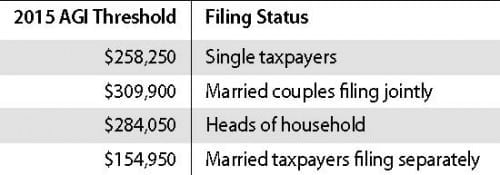
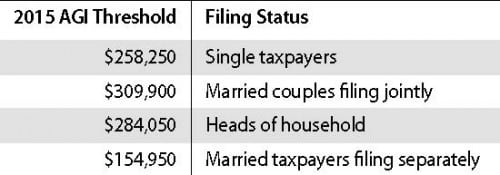
In conclusion, taxpayers with taxable income that is taxed at a rate higher than 20% (married filing joint $74,900, single $37,450) are more likely to obtain greater benefit from a cafeteria plan than taking the tax credit. Another additional benefit of the cafeteria plan is the Social Security tax savings on the amount contributed to the plan. When you receive a credit on your tax return, this also means you are reducing your tax, not receiving an actual refund.

When you are enrolled in a cafeteria plan, you are getting the benefit of reducing your taxable wages before you even begin to prepare your tax return.

If you have any questions, be sure to contact your tax professional.

Rachel Curry is a tax associate with the Holyoke-based public accounting firm Meyers Brothers Kalicka, P.C.; (413) 322-3488; [email protected]

Briefcase Departments

MGM Springfield Outlines Evolving Plans for Casino Design

SPRINGFIELD — MGM Resorts recently detailed how and why the MGM Springfield design has evolved over the last four months. In a public presentation at CityStage in downtown Springfield, MGM executives, led by President Bill Hornbuckle, walked hundreds of attendees through the enhanced design plan, highlighting changes that allow for both design and operational efficiencies. The late-afternoon forum was hosted by Mayor Domenic Sarno and his economic-development team, led by Chief Development Officer Kevin Kennedy. “We are very proud of MGM Springfield’s improved design,” Hornbuckle said. “Our commitment to the city of Springfield, the region, and the Commonwealth has never wavered. Today, I am hopeful that people will see it has only gotten stronger. We are as ready as we have ever been to help return downtown Springfield to its glory days.” The MGM team presented a detailed comparison of commitments in the May 2013 host-community agreement and the new design plan, with an amenity layout resulting in a less than 1% adjustment in square footage to be experienced by customers. While some amenities, such as the child-care facility and retail, have grown in size, other operational and back-of-the-house spaces were reduced through design efficiencies. A redesign was made public earlier this fall when MGM Springfield announced it was moving the 250-room hotel along Main Street and market-rate apartments off-site. With the changes, MGM hopes to further engage Main Street while promoting ancillary development opportunities with off-site market-rate apartments. MGM is currently negotiating the purchase of 195 State St., the former Springfield School Department headquarters, to move forward with a housing redevelopment at that property. Brian Packer, MGM’s vice president of construction and development, joined Hornbuckle on stage, giving a construction update. Packer said that the company already has spent more than $23 million on MGM Springfield construction and employed 675 construction workers. Many of those workers were involved in the renovation of the new Mission on Mill Street, providing an updated, secure facility that will house a rehabilitation program, giveaway center, and business offices. Additionally, Packer laid out a sequence of construction events that will lead up to the September 2018 opening. The company estimates it will now cost more than $950 million to open MGM Springfield. Original estimates were expected to exceed $860 million, including capitalized interest and land-related costs. “MGM Springfield is not only the largest development project Western Massachusetts has ever seen, it is starting to rival the investment of the most-talked-about about development projects in the Commonwealth,” said Michael Mathis, MGM Springfield president. “We developed this presentation to provide transparency on our process. The people of Western Massachusetts want to be excited about the once-in-a-lifetime opportunity that is MGM Springfield. We know maintaining a level of positive energy is our responsibility. Major demolition, large contract awards, and exciting opportunities to get involved are all part of the next phase, which will start very soon.” MGM is scheduled to present a comprehensive cost and design analysis to the Mass. Gaming Commission on Dec. 3. The mayor and City Council must still approve the updated site plans before MGM can go forward with its design-approval process.

Massachusetts Gains 11,000 Jobs in October

BOSTON — The state’s total unemployment rate remained at 4.6% in October, the Executive Office of Labor and Workforce Development announced Thursday. The preliminary job estimates from the Bureau of Labor Statistics indicate Massachusetts added 11,000 jobs in October. The largest over-the-month job gains occurred in the education and health services; professional, scientific, and business services; and other services sectors. Year-to-date, Massachusetts has added 62,800 jobs. The Bureau of Labor Statistics also revised preliminary job estimates for September that originally indicated Massachusetts lost 7,100 jobs. BLS revised estimates for September show the state lost 2,200 jobs. The October preliminary estimates show 3,396,900 Massachusetts residents were employed during the month, and 164,000 were unemployed, for a total labor force of 3,560,900. The labor force decreased by 8,700 from 3,569,600 in September, as 9,600 fewer residents were employed and 900 more residents were unemployed over the month. Over the year, the state’s seasonally adjusted unemployment rate fell 0.9% from 5.5% in October 2014. There were 32,000 fewer unemployed persons over the year compared to October 2014. The October state unemployment rate remains lower than the national rate of 5.0% reported by the Bureau of Labor Statistics. “Massachusetts continues to add jobs, and the labor market is strong. We frequently hear from employers that they have jobs to fill, which is a good position for the state to be in,” Labor and Workforce Development Secretary Ronald Walker II said. The state’s labor-force-participation rate — the total number of residents 16 or older who worked or were unemployed and actively sought work in the last four weeks — decreased 0.2% point to 64.7% over the month. The labor-force-participation rate over the year has decreased 0.8% compared to October 2014. The largest private-sector percentage job gains over the year were in professional, scientific, and business services; construction; other services; leisure and hospitality; and education and health services.

Company Notebook Departments

Baystate Health Announces Changes to Eastern Region Services

WARE, PALMER — A year after adding Wing Memorial Hospital in Palmer to its family of community hospitals, Baystate Health announced it is seeking regulatory approval to integrate what is now known as Baystate Wing Hospital and Baystate Mary Lane Hospital in Ware into a single-license regional hospital network. This change in status will involve a consolidation of all inpatient services to Baystate Wing and begin a transition of the Baystate Mary Lane campus into a regional outpatient services center. The transition process will formally begin in December with applications by Baystate Health to Massachusetts regulatory authorities to consolidate both facilities onto a single license. Pending those approvals, the change is expected to take place in the spring of 2016. “Providing the right care in the right place at the right time is the notion that’s driving our efforts to evolve and succeed for our patients in the era of healthcare reform,” said Dr. Mark Keroack, president and CEO of B aystate Health. “Transitioning inpatient services to a single campus allows us to provide the safest and highest-quality hospital care at a single site.” With 74 beds, Baystate Wing Hospital has the ability, with its existing capacity, to care for patients who are now hospitalized at Baystate Mary Lane, said Dr. Charles Cavagnaro III, president of Baystate Health’s Eastern Region, which includes the Palmer and Ware facilities. “On average, there are fewer than 10 patients being cared for on the inpatient unit at Baystate Mary Lane each day,” he added. “Consolidating the region’s inpatients in one location would be a more efficient use of our limited resources at a time when all healthcare organizations need to receive and deliver the greatest possible value for every healthcare dollar spent.” Particularly following an expansion of Wing’s inpatient units in 2009, adding 40 medical-surgical beds, six ICU beds, and 28 psychiatric beds, the Palmer campus is more than capable of handling additional traffic, Cavagnaro noted. “That’s one of the reasons behind this consolidation. It’s certainly more efficient to keep inpatient care in one location. It also allows us to think about how to transform healthcare to meet the future needs of the region. “Healthcare is moving increasingly away from inpatient care to outpatient care,” he elaborated. “I think everyone is trying to make do with fewer inpatient beds and pushing that care into the outpatient arena. It’s something we want to do — move away from volume-based care to value-based care, how well we’re keeping the population healthy.” That’s why the Baystate Mary Lane campus — where, even now, 80% of visits are outpatient — will remain an important part of the Baystate system, which, like all providers in the age of accountable care, is focusing more on keeping people well and out of the hospital than just treating them when they’re ill, Cavagnaro said. Therefore, Baystate Mary Lane will continue to provide outpatient services for the Ware community, and the region’s primary-care network will not be affected by the inpatient consolidation. “That piece of the business is not changing,” he told HCN. “My feeling is, whatever we’re doing now for patients in this region, we’ll continue to do for the foreseeable future, and we’ll make changes on the basis of what the community needs and what we can sustainably deliver.” The move of inpatient services will lead to a reduction of jobs at Baystate Mary Lane. While Baystate Health is still determining the eventual job impact, the consolidation is expected to affect 25 to 30 full-time positions, including management and front-line employees. The system has a workforce-transition policy that supports employees displaced by these changes in numerous ways, including offering placement into open positions within the organization for which they are qualified, Cavagnaro explained. “We are committed to a transparent process with our team members and our community throughout this period of change,” he said, “and we hope many of the affected employees will find positions within our Eastern Region or the Baystate Health system. We are grateful to all the region’s team members for their dedication and service.” In the meantime, Baystate Health will continue to monitor community needs as it determines the roles its facilities in Palmer and Ware will play. “We have a direction and a pathway forward. We kind of know the ultimate destiny, but in healthcare, it’s always going to be fluid,” Cavagnaro said. “Every year, we have a strategic plan, a community-needs assessment. It’s unfair to say, ‘this is what the future is going to be, and it’s written in stone.’ We do know we need to add more value to healthcare, and we need to keep patients healthy wherever they are, here or in their homes. And we need to do this in a way that adds sustainability and quality.”

United Personnel Ranks 17th Among Women-led Businesses in State

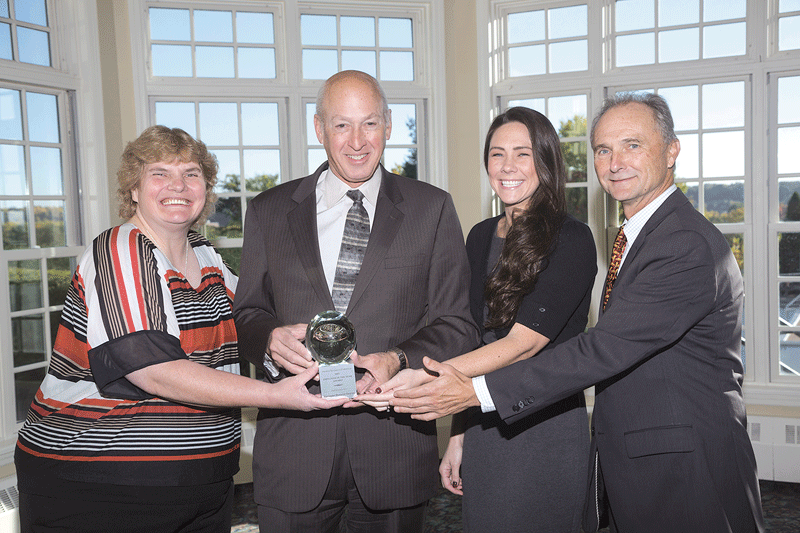
SPRINGFIELD — United Personnel was awarded 17th place out of 100 Top Women-led Business in Massachusetts, as identified by the Commonwealth Institute and Boston Globe Magazine in an awards breakfast held at the Seaport Hotel in Boston, marking the eighth straight year United Personnel was recognized on the list. The rankings represent a wide range of industries, including manufacturing, business services, healthcare, education, human services, and retail. Cumulatively, these 100 women-led companies produce $70 billion in revenue annually and employ 70,000 people in Massachusetts. These nominated companies were selected for revenue, women in leadership board and management roles, diversity among staff, and innovation for 2014. United Personnel’s ingenuity focused on improving recruitment, retention, and performance of contract employees as well as developing additional services to support the human-resources needs of clients. Additionally, United Personnel developed new search strategies to identify strong candidates for full-time hire in this tight labor market. “We are both thrilled and honored to be recognized among such a well-respected group of companies, and hope to continue our growth and innovation in order to deliver great service to our clients and candidates,” said Tricia Canavan, United Personnel president.

Bay Path Awarded Grant for STEM Education

LONGMEADOW — Thanks to a recently awarded grant from the National Science Foundation (NSF), Bay Path University will undertake a three-year project aimed at increasing the academic success, engagement, and retention of undergraduate women enrolled in bachelor’s-degree programs in biology, forensic science, and cybersecurity, particularly those students from underrepresented groups. The grant, totaling $300,300, will be awarded over a three-year span. The funding provides resources and programmatic support for student tutors and mentors, materials and stipends for student research, student travel, and guest speakers. In addition, funding was allocated for upper-level course redesign and faculty professional development around mathematics. “Providing access and support to women entering careers in the STEM (science, technology, engineering, and math) fields is one of Bay Path’s highest priorities,” President Carol Leary said. “This grant will help us nurture essential skills critical for future scientists, chemists, and biologists, ultimately increasing the representation of women in these valuable professions.” The project will strengthen STEM curricula at Bay Path, expand peer academic support, and broaden student participation in high-impact practices. These practices include early student research, mentoring by faculty and STEM professionals, academic enrichment, and career exploration through internships and other experiential learning opportunities. Project activities will be coordinated through a new academic center at Bay Path University, called the Center of Excellence for Women in STEM. Through the support provided by NSF, Bay Path faculty will implement and extend recommendations for effective teaching in the biological sciences defined by the Vision and Change in Undergraduate Biology Education Initiative, an initiative of the American Assoc. for the Advancement of Science. This initiative is being further advanced through the work of faculty fellows nationwide as part of the Partnership in Undergraduate Life Science Education (PULSE).

WNEU Ranks Among ‘Best Value’ Colleges

SPRINGFIELD — Western New England University is ranked in the top 3% of colleges and universities among the top 1,275 public and private institutions reviewed in the U.S. by the Economist. The rankings analyzed which institutions offered the best value for the education received. This new ranking formula utilizes data from the national College Scorecard released by the U.S. Department of Education in September 2015, and factors in how much college students are projected to earn after graduating versus what they actually earn. The Economist’s results showed a predicted salary for undergraduates from Western New England University of $47,947, while the reported salary 10 years after enrolling was $55,100. Western New England University over-performed by $7,153 in predicted annual salary. The data is consistent with findings recently published by the Brookings Metropolitan Policy Program, a larger and broader study, where Western New England University is ranked in the top 17% of nearly 8,000 college and universities in the U.S. “For students who want to know which colleges are likely to boost their future salaries by the greatest amount, given their qualifications and preferences regarding career and location, we hope these rankings prove helpful,” the Economist noted. “The college rankings are based on a simple, if debatable, premise: the economic value of a university is equal to the gap between how much money its graduates and former students earn, and how much they might have made had they studied elsewhere.”

SBA Massachusetts Announces 2015 Lender Awards

BOSTON — The Massachusetts District Office of the U.S. Small Business Administration (SBA) announced its fiscal year 2015 lender awards. Massachusetts District Director Robert Nelson called 2015 “an amazing SBA year in Massachusetts. It is awesome to recognize the many significant accomplishments of our lenders and small-business resource partners helping to make life-changing impacts here in Massachusetts. Congratulations to the entire Massachusetts small-business team for their continued focus on the small-business economy.” Among the banks with a Western Mass. presence that won awards:
• Easthampton Savings Bank, Q4 Lender of the Quarter;
• Santander Bank, Massachusetts Lender of the Year to Restaurants;
• NUVO Bank and Trust Co., Western Mass. 3rd Party Lender (dollars and volume);
• New England Certified Development Corp., Western Mass. 504 Lender (dollars and volume); and
• Berkshire Bank, Western Mass. 7(a) Lender of the Year (dollars and volume).
In fiscal year 2015, the Massachusetts District Office supported a total of 2,667 loans totaling $657 million through its 7(a) Loan Guaranty Program, Certified Development Company/504 Loan Program, and Microloan Program.

Daily News

SPRINGFIELD — The Springfield College International Center; the Springfield College School of Health, Physical Education, and Recreation; and the Beijing Sport University hosted a forum at Springfield College on Nov. 30 that featured multiple presentations in the areas of health and wellness.

Faculty members Wang Li and Zhang Yimin represented Beijing Sport University with their presentations highlighting research on China’s youth-sports participation and the health and physical exercise of youth in China. Li is vice chairman of the School Council and deputy dean for the School of Management at Beijing Sport University, while Yimin serves as deputy director for the university’s Teaching Laboratory Center.

Joining Li and Yimin were Springfield College faculty members Sam Headley and Elizabeth O’Neill. Headley provided some insight into his research on the effects of exercise training in people with chronic kidney disease, while O’Neill explained how various modes of exercise impact bone health. O’Neill shared research that analyzes whether certain modes of training are more effective at improving an individual’s bone health.

Springfield College has a long-standing relationship with Beijing Sport University, previously known as Beijing Institute of Physical Education. The two institutions signed their first formal agreement in 1981, and exchange visitors from China have visited Springfield College numerous times throughout the partnership. Springfield College faculty members also have made multiple international trips to visit the Beijing Sport University campus.

Daily News

SPRINGFIELD — Springfield Technical Community College (STCC) will host the opening of Springfield’s first Thrive Financial Success Center on Thursday, Dec. 3, with a ceremony in the President’s Conference Room in Garvey Hall (Building 16) at 11 a.m.

Thrive is a collaborative effort between United Way of Pioneer Valley and STCC to provide financial education and support services to students and community residents. It is supported by PeoplesBank, MassMutual, the Irene E. and George A. Davis Foundation, the United Way of Pioneer Valley, and the STCC Foundation.

“After the success of the Thrive Financial Success Centers at Holyoke Community College and in downtown Holyoke, we are thrilled to open a third Thrive Center at Springfield Technical Community College,” said United Way of Pioneer Valley President and CEO Dora Robinson. “At the United Way of Pioneer Valley, we believe basic financial literacy should be a key aspect of everyone’s education. No career goal or life’s ambition should be hindered because a person doesn’t know how to balance their checkbook or maintain a good credit rating.”

Thrive @ STCC anticipates it will serve 400 individuals in its first year of operation. Program offerings include confidential benefits screening and enrollment, a money-skills class, individual financial coaching sessions, free income-tax prepatration through the Volunteer Income Tax Assistance (VITA) program, links to workforce-development and training workshops, and LifeBridge, MassMutual’s free life-insurance program.

Thrive Centers currently operate in partnership with the United Way at Holyoke Community College and at the Picknelly Adult and Family Education Center in downtown Holyoke.

“Building financial awareness and planning skills is essential to our students’ and our community’s economic prosperity,” said STCC President Ira Rubenzahl. “Many of our students are overburdened with outside financial struggles. Coupling career guidance with access to financial coaching will assist Thrive participants to make informed decisions that will make their lives easier, allow them to remain focused on their studies, and prepare them for future employment.”

Daily News

EAST LONGMEADOW — Aaron Smith, P.C., a certified public accounting firm serving individuals and businesses in the Pioneer Valley, announced the addition of two new staff accountants, Trent Domingos and Emily Sit. Both are responsible for audits, reviews, and compilations.

“We are pleased to add two staff accountants to our team, as this allows us to maintain a high level of excellence and personal attention that our clients have come to expect,” said David Padegimas, CPA, managing director of Aaron Smith, P.C.

Domingos is a graduate of Fairfield University with a bachelor’s degree in accounting. He previously served as a tax intern at Therrien & Associates, P.C., in Wilton, Conn. At Fairfield University, Domingos was a four-year member of the varsity rowing team.

“I am excited to join the team. I look forward to growing as an accountant in this position and contributing to the distinguished reputation that Aaron Smith, P.C. has established,” Domingos said.

Sit is a graduate of the UMass Isenberg School of Management with a bachelor’s degree in business administration and accounting. She is expected to obtain her master’s degree in accounting in May. Prior to joining the team at Aaron Smith, P.C., she was employed by IBM Corporation as a financial analyst. She is fluent in English and Chinese, and enjoys gardening in her spare time.

“Aaron Smith, P.C. has an excellent track record of great customer service,” Sit said. “I am thrilled to continue my passion for accounting in a well-respected firm.”

CPAs at Aaron Smith, P.C. continually invest time and resources into furthering professional education, using state-of-the-art computer technology and developing extensive new business relationships. For more information, visit www.aaron-smith-cpa.com.

Daily News

SPRINGFIELD — Holiday shopping doesn’t have to be so stressful.

At least, not while browsing the first Rays of Hope Sip & Shop Extravaganza to be held on Saturday, Nov. 21 from 10 a.m. to 4 p.m. at La Quinta Inn & Suites on 100 Congress St. in Springfield.

The first-time holiday fund-raiser for the Rays of Hope will feature more than 20 vendors selling a variety of handmade items and specialty foods such as handbags, hand-painted ties and scarves, cooking utensils, metal artwork, Christmas ornaments, engraved wooden items, create-your-own home fragrances, organic herbs and aromatherapy teas, and more. Food vendors will include Tastefully Simple and Pop’s Biscotti & Chocolates. There will also be Rays of Hope items for sale, including hand-painted wine glasses.

The entrance fee is $10, and the first 100 shoppers through the door will receive a silver quilted tote bag with the Rays of Hope logo and a signature cocktail to sip on while shopping. There will also be a cash bar.

Since its inception in 1994, Rays of Hope has been helping women and men in the fight against breast cancer. Through the Baystate Health Breast Network, Rays of Hope provides funding for state-of-the-art equipment, breast-health programs and outreach, and education throughout Baystate Health, as well as providing grants for complementary therapies and cancer programs to community partners.

For more information on the Sip and Shop event, call Barb Turcotte at (413) 794-7737 or Michelle Graci at (413) 794-4654. For more information on Baystate Health, visit baystatehealth.org. For more information on Rays of Hope, visit baystatehealth.org/raysofhope.

Daily News

SPRINGFIELD — Berkshire Bank Foundation is investing in Baystate Academy Charter Public School’s (BACPS) new program, Project Lead the Way, a nationally award-winning high-school biomedical science curriculum.

“Berkshire Bank Foundation is committed to education in Hampden County and the region. This $20,000 grant to Baystate Academy helps deliver on the school’s promise of world-class biomedical science education for Springfield high-school students,” said Lori Gazzillo, director of Berkshire Bank Foundation.

The three-year-old, college-preparatory, public charter school in Springfield for grades 6-12 is focused on science, math, and health careers. By integrating the nation’s leading provider of STEM education, Project Lead the Way (PLTW), into its academic program, BACPS will create a path to high achievement in science, technology, math, and particularly the biomedical sciences for high-school students.

To prepare students for the global economy, the PLTW biomedical science curriculum inspires innovating thinking and collaborative learning using digital tools, and empowers students to creatively solve real-world problems. The four-year program builds understanding of the principles of biomedical science, human-body systems, medical interventions, and biomedical innovation. Baystate Academy high-school students will study physiology, biology, chemistry, and research processes, and be exposed to immunology, genetics, and other medical careers through hands-on projects and intensive learning expeditions.

Research has shown that PLTW students score higher on state math tests, are more prepared for college, attend at higher rates, and earn wages 13.6% higher than non-PLTW students. In addition, many colleges actively recruit PLTW students and offer preferred admissions, scholarships, and course credit. The intensive program includes teacher training, classroom learning, and rigorous evaluation standards.

Daily News

BOSTON — The state’s total unemployment rate remained at 4.6% in October, the Executive Office of Labor and Workforce Development announced Thursday.

The preliminary job estimates from the Bureau of Labor Statistics indicate Massachusetts added 11,000 jobs in October. The largest over-the-month job gains occurred in the education and health services; professional, scientific, and business services; and other services sectors. Year-to-date, Massachusetts has added 62,800 jobs.

The Bureau of Labor Statistics also revised preliminary job estimates for September that originally indicated Massachusetts lost 7,100 jobs. BLS revised estimates for September show the state lost 2,200 jobs.

The October preliminary estimates show 3,396,900 Massachusetts residents were employed during the month, and 164,000 were unemployed, for a total labor force of 3,560,900.

The labor force decreased by 8,700 from 3,569,600 in September, as 9,600 fewer residents were employed and 900 more residents were unemployed over the month.

Over the year, the state’s seasonally adjusted unemployment rate fell 0.9% from 5.5% in October 2014. There were 32,000 fewer unemployed persons over the year compared to October 2014. The October state unemployment rate remains lower than the national rate of 5.0% reported by the Bureau of Labor Statistics.

“Massachusetts continues to add jobs, and the labor market is strong. We frequently hear from employers that they have jobs to fill, which is a good position for the state to be in,” Labor and Workforce Development Secretary Ronald Walker II said.

The state’s labor-force-participation rate — the total number of residents 16 or older who worked or were unemployed and actively sought work in the last four weeks — decreased 0.2% point to 64.7% over the month. The labor-force-participation rate over the year has decreased 0.8% compared to October 2014.

The largest private-sector percentage job gains over the year were in professional, scientific, and business services; construction; other services; leisure and hospitality; and education and health services.

Daily News

BOSTON — In an 8-3 vote, the state Board of Elementary and Secondary Education voted Tuesday to replace the Massachusetts Comprehensive Assessment System (MCAS) test with a hybrid version that incorporates elements of a proposed replacement, known as PARCC. The new test will be administered starting in the spring of 2017.

School districts that tried out the PARCC this past spring will do so again for 2016, and districts that chose to stick with the MCAS will continue to use it unless they opt to switch to the PARCC, short for Partnership for Assessment of Readiness for College and Careers.

Massachusetts must begin administering the new test in 2017 to comply with a federal law that requires states to use a single standardized test. The state had obtained a two-year waiver to the law so districts could try out the PARCC before the vote.

According to the Boston Globe, the PARCC aims to examine how students arrived at their answers and requires more critical thinking skills than the MCAS, and is aligned with the Common Core standards adopted by the state in 2010. Just like the MCAS, students will have to pass the new hybrid test to graduate.

The Mass. Business Alliance for Education (MBAE), a supporter of the PARCC, issued a statement supporting the decision of Board of Elementary and Secondary Education, with reservations.

“We are encouraged that Board Chairman Paul Sagan clearly stated that, in developing a new test, the board does not intend to duplicate five years of investment by the state and hundreds of Massachusetts educators who developed a high-quality assessment in PARCC. We continue to believe the evidence showed PARCC was a superior assessment,” the Alliance said. “MBAE is concerned, however, that we don’t know what we’re buying, or what it will cost. Although Chairman Sagan pledged not to follow the experience of other states, the fact is that those developing a test like PARCC spent as much as $50 million or more.”

Daily News

LONGMEADOW — Thanks to a recently awarded grant from the National Science Foundation (NSF), Bay Path University will undertake a three-year project aimed at increasing the academic success, engagement, and retention of undergraduate women enrolled in bachelor’s-degree programs in biology, forensic science, and cybersecurity, particularly those students from underrepresented groups. The grant, totaling $300,300, will be awarded over a three-year span.

The funding provides resources and programmatic support for student tutors and mentors, materials and stipends for student research, student travel, and guest speakers. In addition, funding was allocated for upper-level course redesign and faculty professional development around mathematics.

“Providing access and support to women entering careers in the STEM (science, technology, engineering, and math) fields is one of Bay Path’s highest priorities,” President Carol Leary said. “This grant will help us nurture essential skills critical for future scientists, chemists, and biologists, ultimately increasing the representation of women in these valuable professions.”

The project will strengthen STEM curricula at Bay Path, expand peer academic support, and broaden student participation in high-impact practices. These practices include early student research, mentoring by faculty and STEM professionals, academic enrichment, and career exploration through internships and other experiential learning opportunities. Project activities will be coordinated through a new academic center at Bay Path University, called the Center of Excellence for Women in STEM.

Through the support provided by NSF, Bay Path faculty will implement and extend recommendations for effective teaching in the biological sciences defined by the Vision and Change in Undergraduate Biology Education Initiative, an initiative of the American Assoc. for the Advancement of Science. This initiative is being further advanced through the work of faculty fellows nationwide as part of the Partnership in Undergraduate Life Science Education (PULSE).

Cover Story Education Sections

Building an Education Hub

Downtown Colleges

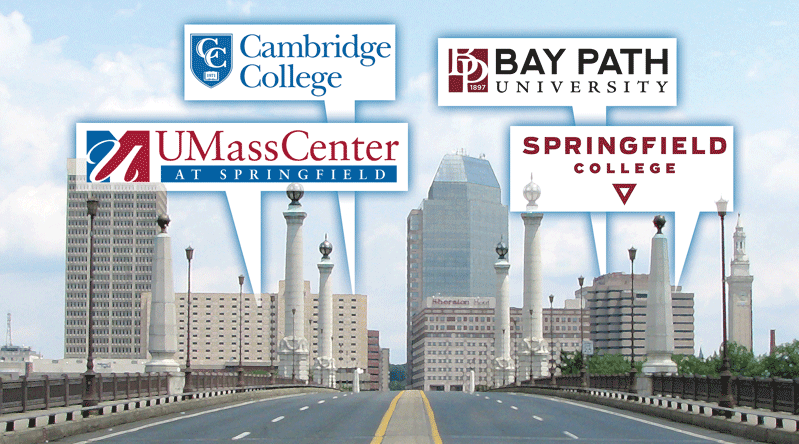
It all started three years ago, when Cambridge College, after surveying a number of potential sites for its regional campus, settled on some former retail space on the ground floor of Tower Square. Now there are four colleges and universities with what could be called a presence in the central business district. That constitutes a “hub,” according to many we talked to about this development, one that has the ability to bring additional energy and vibrancy to the downtown area.

When Supreme Court Justice Sonia Sotomayor spoke at the MassMutual Center on Sept. 9 as part of the 2015 Springfield Public Forum series, there were more than 2,500 people in the hall.

A good number of them represented the area’s many colleges and universities, including students, faculty members, administrators, distinguished alums, and supporters. Springfield College, for example, had roughly 40 people in attendance, and prior to Sotomayor’s talk, most of them were gathered at a reception in unique community space set aside for tenants and their guests on the third floor of 1350 Main St., just across the street from the convention center.

The college wasn’t officially in the building yet, said its president, Mary-Beth Cooper, but lease papers had been signed for space on the second floor just a few days before Sotomayor came to Springfield, so the school took full advantage of a huge opportunity.

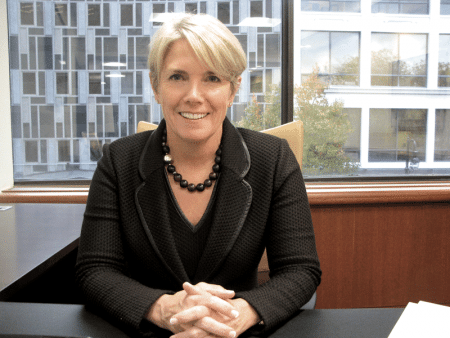
Mary-Beth Cooper

Mary-Beth Cooper says Springfield College leaders wanted to be part of the downtown revitalization in the city, so an address in the central business district made sense.

“I called and asked if we could we use that space,” said Cooper. “There’s a deck, it’s right across the street … we had a nice reception.”

Gaining the ability to host such a party wasn’t the reason why Springfield College became the fourth area institution of higher learning to add a downtown Springfield mailing address over the past few years.

But it may well have been one of the reasons.

There are myriad others, said Cooper, who told BusinessWest that, to make a somewhat long story short, the college wanted to support the city it is named after, and, perhaps more importantly, it wanted to be part of what’s happening downtown — be that a revitalization, comeback, renaissance, or whatever term may be deemed appropriate.

Thus, Springfield College is now part of what would have to be called a movement involving higher education and Springfield’s central business district.

It all started in 2012, when Cambridge College, looking for a replacement for tired and insufficient facilities for its Springfield Regional Center in an industrial building on Cottage Street, settled on long-vacant retail space on the ground floor of Tower Square. Two years later, Bay Path College, bursting at the seams on its Longmeadow campus and in search of a home for its American Women’s College, chose the spacious seventh floor of 1350 Main St. from several appealing options.

And in September of 2014, The University of Massachusetts opened the UMass Center at Springfield, a 26,000-square-foot facility on the mezzanine level of Tower Square that is now hosting classes involving roughly 700 students this fall.

By comparison to those other facilities, Springfield College’s investment is small by any measure — its offices total less than 2,000 square feet, and only a few people are actually in those offices at any given time.

But there is room for growth, and in the meantime, this latest addition only adds to what Springfield Mayor Domenic Sarno called an infusion of “positive energy and brainpower.”

“Eds and meds are an important part of economic development,” he said, using the term to connote the education and healthcare sectors. “And when you couple what’s happening with the colleges downtown with efforts to promote entrepreneurship, the innovation district we’re building, and the efforts of groups like Valley Venture Mentors, it generates additional momentum.

“Years ago, people laughed at us when we said we were going to bring colleges and universities into the downtown,” he went on, adding that no one is laughing anymore.

Instead, they’re undertaking some speculation and analysis — on the impact of all this proliferation of colleges along Main Street, and about how and in what ways this momentum can be built upon.

Lynn Griesemer, assistant vice president of Economic Development at UMass and executive director of the UMass Donohue Institute, has been doing some analysis herself. She told BusinessWest that what’s developing downtown could certainly be termed an “education hub,” one that has the potential to attract additional businesses, non-profits, people, and vibrancy to the area.

“It’s starting to create a magnet,” she said, emphasizing those words ‘starting to.’ “With patience and ongoing support from the community, the city, and the state, I think that you could see this magnet growing into something that brings a lot more vitality into the downtown.”

For this issue and its focus on education, BusinessWest looks at how this hub, or magnet, came to be, and also at what its potential forces of attraction might become.

Course of Events

Hot Table restaurant on the ground floor at Tower Square is now open until 8 p.m. on weekdays, several hours later than its old closing time.

Teresa Forte, director of Cambridge College’s Springfield Regional Center, located just a few dozen feet away, knows that prodding from her and many of the students who attend classes into the early evening played a big part in that decision.

Overall, she believes that’s only one relatively small example of the impact that Cambridge and the other colleges are having downtown, an influence she described with the same phrase Greisemer summoned.

“Whether we call it that or not, the downtown is becoming an educational hub for Springfield,” she told BusinessWest. “I’m proud that Cambridge College started the trend; the true benefactors are the students who can now use downtown as a one-stop shopping zone when they are considering educational opportunities.”

Looking back over how this hub came together, it becomes clear that, while the schools involved had somewhat different motivations and goals behind their respective decisions, the common denominator is that they reached a decision that they wanted — and in many respects needed — to be downtown.

Retracing the steps that led to Cambridge becoming urban pioneers, if you will, or at least next-generation pioneers, Forte said the school looked at a number of options as it went about the task of replacing the Cottage Street facilities, which it called home for more than 20 years.

At the time, the school wasn’t really focused on being part of a revitalization effort — although that was certainly part of the equation — as much as it was centered on making a move that simply made sense from the perspectives of visibility and convenience for all constituencies involved, and would enable the school to ultimately grow enrollment, she explained.

“I described us as the best-kept secret in higher education in Springfield — even our sign didn’t light up,” she said of the Cottage Street facility. “Our lease was up, and the decision was made to search for a new, upgraded location. After many months and many visits to locations all over Springfield, it became clear that the best options for us were in downtown.

“It would not only provide us with better transportation options for our students — on a bus line and close to 91 — but also give us an opportunity to become a stronger contributor to the Springfield community,” she went on. “The search was narrowed to three locations in downtown, and Tower Square was chosen for a few very important reasons. First, it had the street-level site available, which was important for signage. Second, it was one of the most secure locations in all of downtown.”

Elaborating, she said Tower Square has a very responsive security staff which conducts patrols on the hour both inside the mall and outside the perimeter of the building, and there are also cameras everywhere, including the garage.  Meanwhile, in terms of parking, students are given the option to park in the Tower Square garage, meaning they can take the elevator to class.

With that package of amenities, Cambridge thought it could grow its Springfield Regional Center, she continued, and in reality, that’s exactly what has happened.

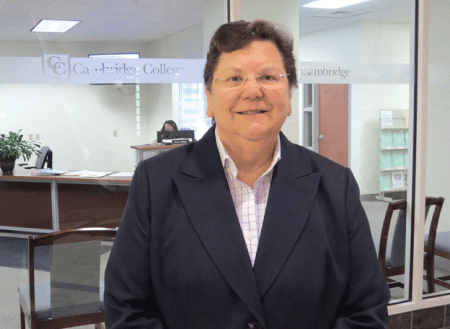
Teresa Forte

Teresa Forte says Cambridge College’s location in Tower Square — which offers students solid security, parking, and transportation amenities — has spurred an increase in enrollment.

“Cambridge College has a very unique mission — we cater to a diverse population of students for whom educational opportunities may have been limited or denied; we were one of the first colleges to specialize in assisting non-traditional students,” she explained. “And the interesting trend that has happened since we moved downtown is that we seem to be attracting a larger number of traditional students who have never been to college before. We’ve been in downtown for almost three years, and our enrollment in Springfield has been steadily rising for the past five years.”

For UMass, meanwhile, its arrival downtown, while certainly part of ongoing efforts to become more of a factor in Greater Springfield economic-development efforts, was actually sparked by a statewide study of potential growth opportunities for the university apart from its five campuses, said Griesemer.

That analysis identified several such locations, she went on, including Brockton, Southeastern Mass., Springfield, and the Marlboro area in the eastern part of the Commonwealth.

“There is a whole wedge in that area that has no higher-ed institutions — it’s between Routes 128, 495, 2, and 90,” she said of what amounts to Greater Marlboro, adding that most of the sites identified were in so-called Gateway cities (many of its existing campuses are in different ones) such as Springfield, and the university decided, after an in-depth market research study, to first pursue a project in the City of Homes.

What eventually emerged was the UMass Center at Springfield, which was announced in the fall if 2013 and opened less than a year later. It now hosts classes for several UMass Amherst programs, including the College of Nursing, the Isenberg School of Management’s part-time MBA program, the University Without Walls, and others. It also hosts programs offered by or in conjunction with UMass Boston, Springfield Technical Community College, Holyoke Community College, and Westfield State University.

Griesemer didn’t have a specific number when asked how many people are at the Springfield facility on a given day, but pegged student enrollment alone at between 600 and 700, a number that has gone up each semester.

Schools of Thought

As for Bay Path, its move downtown in the fall if 2013 was generated by a basic need for additional space for the online American Women’s College, said President Carol Leary.

“We spent a good amount of time looking at various locations, but Springfield was at the top of our list because we have our roots there going back to 1897,” she said, adding that school administrators fell in love with the culture at 1350 Main St.

And by culture, she meant everything from its focus on the arts — there are several galleries there — to its eatery to its eclectic mix of tenants.

“You have a feel, when you enter this place, that it’s more than an office building,” she explained, adding that the 11,805 square feet now in use hosts roughly 40 full-time employees.

And they are certainly contributing to the health of the local economy, said Leary, who attended college in Boston, understands and appreciates how higher education adds vibrancy to a city, and enjoys being part of that equation locally.

“I love the energy of a city, so I’ve enjoyed it, and our staff enjoys it,” she noted. “And we’re definitely pumping some money into the economy.”

Cooper said Springfield College’s ties to the City of Homes obviously run even deeper, and they certainly played a part in the school’s decision to lease some space at 1350 Main St.

She said she was having lunch downtown with trustee vice chair Jim Ross, when the discussion turned to the city, it’s central business district, and the many things happening there. “We talked about MGM, the rebirth of the city, transportation … everything,” she recalled, adding that the conversation eventually evolved into a discussion about if and how to become part of it — or a bigger part.

Actually, Cooper says she’s been asked several times since she arrived in the fall of 2013 about the school establishing a presence downtown. She was intrigued by the questions, in part because, in many ways, she thought the school was already downtown.

It is only a few miles as the crow flies from Main Street, she acknowledged, adding quickly that, through her lunch talk with Ross, she came to the conclusion that a direct presence in the CBD was an appropriate step.

Bay Path University President Carol Leary

Bay Path University President Carol Leary says the school’s space at 1350 Main St. has plenty of room for expansion.

Fast-forwarding a little, Ross and the college are now essentially sharing space on 1350’s second floor. The former conference room for a bank has been converted into a conference room and two offices, one for Cooper and one for Ross.

It’s not a big presence, certainly, and its specific uses have yet to be determined, but the college is now a part of what is becoming an increasingly larger and more impactful whole, said Cooper, who, when asked what she has in mind for the space besides receptions, told BusinessWest the same thing she told her board.

“I want people to think about the possibilities,” she said, listing everything from candidate interviews to leadership team sessions to subcommittee meetings involving the many boards she’s on.

But she wants that’s phrase ‘think about the possibilities’ to extend well beyond how the school’s physical space may be used.

Indeed, she said the expanding higher-ed presence downtown may well inspire and facilitate additional collaborative efforts involving a host of area schools, and eventually generate more opportunities to pair area students with downtown businesses through internships and other programs.

“Part of my agenda is to facilitate a move toward collaboration between the colleges and universities,” she said. “I think that would be good for individual schools, better for all our students, and better for the community.”

Class Acts

As she gave BusinessWest  a quick tour of the Bay Path suite of offices, Leary, who spends two full days a week downtown, stopped at the spacious kitchen. It is very well-stocked and outfitted with every necessary appliance.

There are also several round tables and chairs arranged café-style. They get a decent amount of use, said Leary, but many of those working at the downtown location prefer to eat out, and do so quite regularly.

Many are also members of the gym upstairs, she went on, adding that membership was paid by the landlord the first year (another perk of tenantship), but several employees are staying on even though the cost has shifted to them.

Meanwhile, Hot Table’s hours have expanded; the store that UMass operates on the ground floor at Tower Square, the UMass Marketplace, has expanded its food offerings; and Griesemer said there have been more than a few conversations lately about the lines at most downtown eateries getting longer — and how that’s a good thing.

But the more serious talk is about how the proliferation of colleges downtown will have a much deeper impact than a bottom-line bounce for downtown dining establishments.

Indeed, those we spoke with talked about the potential for more and deeper collaborations and of that aforementioned ‘magnet effect.’

Griesemer relayed some recent discussions that more than suggested that the schools are helping to foster an environment that may draw more draw more employers — and employees — to the central business district.

“We’ve had a few nonprofits say to us, ‘we’re interested in moving into downtown Springfield because you have,’” she said. “There are already several in the tower and room for many more.”

Sarno agreed, and noted that the critical mass of students, employees, and administrators created by the movement of higher education into the downtown area will only facilitate efforts to create more market-rate housing there, which is considered one of the keys to generating more vibrancy and additional retail.

“I think this will help in our push for market-rate housing,” he explained. “And the more pedestrian traffic you can have matriculating from the North End to the South End, the more beneficial it will be to bringing in spin-off businesses.”

When asked if there was a model for a larger, more sophisticated education hub that Springfield could aspire to, she said there are several, including Phoenix.

“There are examples of places where you had a single higher-education institution put down a footprint and others followed, like Arizona State,” Griesemer explained. “There is still room for considerable growth in Springfield when it comes to this hub.”

While the current picture is one defined by enthusiasm, and there is considerable optimism about what might come next, the immediate forecast is at least somewhat clouded by two concurrent, and massive, construction projects that will certainly impact access to the downtown — MGM’s South End casino and reconstruction of the I-91 viaduct.

“We absolutely are concerned about that,” said Forte, noting that accessibility is a key factor in the success of the downtown location. “But we’re also hopeful that the city and highway department will be considerate of our population and create traffic alternatives that will not cause great impact for us.”

Sarno said the city — not to mention the contractor handling the I-91 work — is certainly incentivized to do just that, and also get the project done on time.

“So far, so good — communication has been great, and they’re ahead of schedule … and there are 9 million reasons why this contractor wants to get phase one done ahead of time,” said the mayor, citing the bonus put in place by the state for accomplishing that feat. “This had to be done, and we’re hoping to keep the disruption to a minimum.”

Study in Possibilities

As she wrapped up her tour of Bay Path’s facilities, Leary spent a few moments in the cluttered, currently unused space on the seventh floor into which the school could, and likely will, expand.

“I can see us filling all of this someday,” she said, sweeping her arm across the area. “We’re not done yet down here.”

With those sentiments, she spoke for seemingly everyone that is now part of this education hub in the central business district.

In fact, by almost all accounts, those within this key sector are just getting started.

George O’Brien can be reached at [email protected]

Features

When 30 economic-development, nonprofit, and community leaders from Greater Springfield visited Chattanooga last month as part of the City2City Pioneer Valley program, they heard, over and over, about the time Walter Cronkite called it “the dirtiest city in America.” That story is clearly part of the community’s DNA — but so is 45 years of recovery and rebirth, both ecologically and economically. How Tennessee’s fourth-largest city accomplished those goals, and its challenges moving forward, provide plenty of inspiration and food for thought back home in the Bay State.

riverfront

Chattanooga’s recovery has included a cleanup of its riverfront.

In the 1960s, Ron Littlefield says, no one needed GPS to find Tennessee’s fourth-largest city.

“You could tell when you were getting close to Chattanooga because you could smell Chattanooga; it stunk,” said the former mayor, who served from 2005 to 2013. “It was an old foundry city. And when you had stormy weather, you had inversions, because we have mountains and valleys, and it would trap the smoke, and you would literally be eating smoke when you walked outside.”

City leaders were mortified when, in October 1969, Walter Cronkite came across a recent EPA study, sat down behind the news desk, looked into the camera, and declared Chattanooga “the dirtiest city in America.”

“It was so bad that people had to change their shirts in the middle of the day,” said John Bridger, executive director of the Chattanooga-Hamilton County Regional Planning Agency. “They were tough times — but tough times create opportunities.”

In truth, Bridger continued, many residents put up with the pollution because the manufacturing sector was chugging along, but Cronkite’s report jarred them out of complacency. “If not for those challenges, I don’t think we would have changed, because we were comfortable. We were the dynamo of Dixie — why change what we were doing if we were making money? But that report created an impetus for change; it brought a new perspective.”

Still, Chattanooga was no overnight turnaround. Even after efforts to clean up the waterway and better connect the riverfront with the downtown area, a downturn in the region’s manufacturing base led to mass flight from the city, which lost more than 10% of its population during the 1980s. But, as current Mayor Andy Berke points out, it was the only American city with that level of population loss during the ’80s to actually gain residents in the 1990s.

“It took a long time — a lot of people over a great period of time — to make it happen,” he said. “And it started with real investment in the core of our city.”

Rick Sullivan

Rick Sullivan, left, president of the Western Mass. Economic Development Council, chats with Nick Wilkinson, Chattanooga’s deputy administrator of Economic and Community Development.

Today, Chattanooga is a growing city (population just over 173,000, about 20,000 more than Springfield) riding a wave of entrepreneurship and high-tech innovation, and touting itself as the Gig City after building a broadband network (known as ‘the Gig’) able to connect every home and business to the Internet at 1 gigabit per second, or 50 to 100 times faster than the average U.S. Internet connection.

As part of the City2City Pioneer Valley program, 30 economic-development, nonprofit, and community leaders from Greater Springfield visited Chattanooga late last month to hear the story of how a stinking foundry city transformed itself into a beacon of innovation.

In doing so, they learned that this community on Georgia’s northwestern border is no utopia; it still faces serious education, workforce-development, and racial-gentrification issues, to name a few. But it’s also proving to be an example of how public, business, and nonprofit interests can work in concert to produce and then fund real solutions.

“There seems to be one goal with all these organizations we’ve met. They’re all doing their own things, but they’re all on the same page and have the same goal, and that’s to help all these spinning wheels move the city forward,” said Alfonso Santaniello, president of the Creative Strategy Agency in Springfield, who values his company’s downtown presence and wanted to visit a growing city with a similar emphasis on building up its central business district.

“Springfield needs to find a way to get everyone on the same page and push forward from there,” he went on. “That’s one of our biggest issues; everyone is doing great things, but why are we not doing them together?”

Chattanooga’s striking collaboration culture (more on that later) is one reason why the Gig City label is, in fact, not the top storyline there, but a way to draw national notice to everything else that’s going on.

“The technology is great,” said Enoch Elwell, founder of Co.Starters, a Chattanooga-based entrepreneuship program that has expanded nationally, including into Holyoke earlier this year. “But its biggest impact is as a rallying cry for our community, something that brings us together and draws the world’s attention.”

The City2City contingent from Massachusetts was certainly listening.

Cleaning Up Their Act

Littlefield recalls a time when Chattanooga manufacturers treated the Tennessee River like a sewer, dumping garbage directly into the waterway. “But in the ’70s, we cleaned up our water, and we began to clean up our act.”

From an ecological perspective, it actually helped when the foundries started to close, but it posed economic issues, he went on, which were partially remedied by attracting industries from the north, like textiles and automaking, with the promise of cheaper labor. But that wasn’t a sustainable strategy, and a steady population drain ensued.

John Bridger

“Ultimately, it’s not just about transportation, it’s not just about economic development, it’s not just about the natural environment — it’s about how all those things work together to create place,’ said John Bridger.

“When you lose jobs, you also lose hope, and when you lose hope, you lose your children,” he said. “They grow up and get an education and go somewhere else. We began to say, ‘we have to change this community in ways we’ve never changed it before. We’ve got to change our attitude, our way of thinking.’”

The first step was the creation of the Tennessee Riverpark Master Plan to transform the riverfront and downtown area, but only after many hours meeting with residents — many of whom had felt disenfranchised — and incorporating their concerns into the process. As Littlefield recalled, one woman told him, “this is the first time, when I said something, that someone wrote it down in my own words.”

Municipal leaders also visited other cities (notably a 1981 trek to Indianapolis) to find ideas and inspiration.

These information-gathering efforts led to the creation in 1986 of River City Co., a nonprofit tasked with implementing the master plan, a 20-year blueprint for the riverfront and downtown, initially capitalized with $12 million from local foundations and financial institutions.

“We did visioning before visioning was cool, and we found that it actually works,” Littlefield said. “So we set about to create quality of life, and that started with the river.”

Bridgett Massengill, executive director of Thrive 2055 — a more recent coalition of economic leaders tasked with creating economic opportunity in a tri-state, 16-county region surrounding Chattanooga’s Hamilton County — detailed how four area foundations took the first step to fund River City Co., and called it typical of the way the city has operated in the past 30 years.

The conversion of former industrial buildings

The conversion of former industrial buildings to retail and business space echoes myriad Pioneer Valley developments like Eastworks and Open Square.

“I have been blown away by the collaboration in this region, the way we come together, roll up our sleeves, and make it happen,” she said. “There was a will that we were going to proceed with or without federal dollars.”

That caught the attention of Katie Allan Zobel, president and CEO of the Community Foundation of Western Massachusetts.

“The success in Chattanooga has grown from public-private partnerships,” she told BusinessWest. “They keep saying how foundations have played a role in these partnerships, and it seems to me that’s something Springfield and surrounding regions should be exploring with more focus.”

She first thought, upon hearing of the role of the region’s foundations, that they must be larger and better-capitalized than those in Western Mass., but was surprised to find that wasn’t the case. “We can always do more together, and Chattanooga has been proving that for the last 25 years.”

The tax structure in Tennessee — property and sales taxes but no income tax — is a challenge for economic development, officials note. That’s why the public-private partnerships that have sprung up to support development are so noteworthy, said Beth Jones, executive director of the Southeast Tennessee Development District. “Typically, we don’t start with how much money an initiative will cost. We ask, ‘is this a good idea?’ and then we bring people together to raise the money.”

That’s part of the so-called “Chattanooga way” cited by many of the people who met with the City2City contingent. Kim White, president and CEO of River City Co., said the term essentially refers to the way leaders “get a diverse group of people together and really plan.”

Landing a Gig

The city’s successes included a complete overhaul of the riverfront, including the privately funded Tennessee Aquarium, the nation’s largest freshwater aquarium, and the pedestrian-only Walnut Street Bridge; as well as an innovation district downtown aimed at attracting both high-tech giants like Amazon (which has a presence in the city) as well as a raft of intriguing startups.

the Gig

Chattanooga’s recovery has included the establishment of a high-speed broadband network known as ‘the Gig.’

Despite the successes of the Tennessee Riverpark Master Plan, the planning process had never focused specifically on entrepreneurship or technology until the city’s power company, EPB, tapped into federal stimulus money in 2009 to launch the Gig, said Ken Hays, president and CEO of the city’s Enterprise Center and Innovation District, which followed in the wake of the massive fiber project.

Since then, an accelerator program for startups has graduated 67 companies that have raised $3.1 in combined capital. In 2012, a nonprofit called CoLab launched GigTank, an annual, 14-week summer entrepreneurship program; 40 participating companies have raised $4.37 million in capital to date. CoLab’s “Will This Float?” startup pitch competition, launched five years ago, has attracted 47 participants, and the five winners all continue to grow, with $5.5 million in capital raised to date. Then there’s Tech Goes Home, a computer-education program aimed at everyone from preschoolers to the elderly.

Chattanooga has plenty of traditional industry, of course, none more prominent than Volkswagen, which employs about 2,400 people at its only North American plant and is planning an expansion — even amidst controversy over its diesel engine — that will bring production of a new SUV to Chattanooga and boost its workforce by another 2,000, including 200 in research and development, a first for the area. Other giants, like Coca-Cola and Little Debbie, dot the landscape as well.

But economic-development leaders are focused on the Innovation District and the cultivation of small businesses that may one day grow to be the next Coca-Cola or Amazon. Efforts to do so range from Startup in a Day, a commitment to streamlining business permitting on a 24/7 basis, to the Growing Small Business program, a financial incentive offered to companies with fewer than 100 employees that hire at least five workers in a 12-month period.

“If we can subsidize their next hire and keep them afloat for another couple of months, that’s what we want to do, and it’s been pretty successful,” said Nick Wilkinson, the city’s deputy administrator of Economic & Community Development.

With the type of 21st-century businesses attracted by the Gig, however, comes the need for a culture change, or at least a greater focus on the quality-of-life issues that matter to a young, hip, tech-savvy worker base, Bridger said. In addition, the population has shifted from one dominated by two-parent families with children in 1970 to one with mostly single-income households, and that affects the type of housing — smaller and closer to workplaces — that needs to be built in the city.

“Place matters,” he said, noting that IT workers aren’t tied to their workplaces like people in more traditional industries. “So, if you want to compete economically, they’re thinking place first, jobs second. Ultimately, it’s not just about transportation, it’s not just about economic development, it’s not just about the natural environment — it’s about how all those things work together to create place.”

That’s where quality-of-life improvements like the revamped riverfront and growing arts and recreation initiatives come in. The city is obviously doing something right, with $4 billion in business investment since 2008. Now leaders are trying to keep the momentum going by developing more housing in the city — an expected 160,000 new units by 2055, in fact — and touting the success of amenities like the free downtown shuttle (cheekily known as the Choo Choo) and an extensive network of bike lanes, all to support a Millennial population that doesn’t necessarily want to rely on automobiles.

The task isn’t easy when 97% of the downtown workforce drives in from the outside, and only 1.2% of downtown zoning is mixed-use. Regional passenger rail service may be 20 years away or more simply because the surrounding counties don’t have the population density of, say, Western Mass. to support it.

“Our focus is on how to create that housing density that makes us a more 24/7 city,” White explained, noting that the next two years will see the addition of 1,500 apartments downtown, more than doubling the current number, in addition to 500 more hotel rooms and 1,300 more student units to support the 12,000-student University of Tennessee Chattanooga, which skirts the downtown area. “If you come back in three years, this will be a completely different city.”

Barriers to Progress

Some of those changes are more pressing than others. The City2City tour came in the shadow of a recent, searing report by Ken Chilton, a Public Administration professor at Tennessee State University, on the city’s ongoing racial gentrification and the challenges minorities face overcoming poverty, violence, and poor health.

The 23-page report, “The Unfinished Agenda,” examines how investment and development in certain downtown neighborhoods has come at the expense of low-income African-American families that used to live there but have been forced out by rising costs.

For example, in 1990, the downtown white population was 2,402, while the black population was 3,720. In 2013, those numbers were reversed, with 4,880 whites and 2,358 blacks living downtown. In effect, African-Americans are increasingly being pushed into poorer neighborhoods and schools mired in violence and chaos and not seeing the type of investment that characterizes the downtown and riverfront, Chilton writes.

Because some of these neighborhoods have more adult high-school dropouts than college graduates, many are forced to rely on low-paying jobs instead of the white-collar jobs that have defined the downtown renewal. As a result, 36% of blacks in Chattanooga live in poverty, compared with 14.5% of whites. In the 11 lowest-income neighborhoods in Chattanooga, where the population is 73% African-American, the average poverty rate is 63.5%. Bridger told the City2City contingent that, while the city’s unemployment rate is 5.5%, it’s about double that in the black population.

James McKissic, director of Chattanooga’s Office of Multicultural Affairs, agreed that gentrification is a problem, noting that certain neighborhoods have indeed become unaffordable for lower-income residents. But he added that several housing developments are in the works over the next few years, targeted at different income levels, in desireable neighborhoods. “We don’t want to be the next San Francisco or Austin; we want people from various income levels to live together.”

Still, he added, the heart of the issue is poverty — and the need for initiatives that will improve education and provide economic opportunity for people of all races and income levels.

The country’s largest freshwater aquarium

The country’s largest freshwater aquarium, a privately funded project that was mocked by some residents as a “fishtank” when it was proposed, is now one of the highlights of Chattanooga’s revamped riverfront.

However, public education — which is operated on the county level — hasn’t made enough strides to satisfy Chattanooga officials, a situation detailed in a 2013 Ochs Center for Metropolitan Studies report, again written by Chilton, affirming that the system’s poor, majority-black schools lag far behind schools in more prosperous — usually whiter — neighborhoods.

To compound matters, Tennessee finishes 49th in the nation in per-pupil education spending, according to the U.S. Census Bureau, but Hamilton County spending fell between 2007 and 2012, even compared to the state as a whole. Adjusted for inflation, the county spent about $321 less per pupil in 2012 than in 2007. In those years, the Hamilton County Board of Education cut about $44 million to balance budgets in the face of rising costs in health care, utilities, and salaries. “There’s a disconnect between the school system, the state Board of Education, and the real world,” Berke said.

Added Bridger, “public education is not where it needs to be, and it’s becoming a job-recruitment problem.” He noted that the rural counties surrounding Chattanooga fare even worse when it comes to graduation rates. “We’re not getting enough qualified employees to work in the jobs.”

After all, the city’s manufacturing base hasn’t disappeared; it’s just that many of today’s manufacturing jobs are high-skill, high-paying positions. Much like the situation in the Pioneer Valley, plenty of openings exist, but the Hamilton County region grapples with a skills gap between what employers require and the level of education that job seekers bring to the table. Unfortunately, Jones noted, applied-technology classes at local community colleges struggle with empty seats and a lack of interest in manufacturing as a career.

“We’ve basically taught people throughout the South and throughout the country that manufacturing is dirty, it’s not cool, it’s a sweatshop, it doesn’t pay well, the whole nine yards. I still hear that from our young people,” Jones said. “We’ve got to do a better job educating our young people that there are good jobs out there, and you can get them with certain certifications and certain degrees, and you can make more a whole lot more money than I’ve been making all my life with a four-year degree.”

Ruth Thompson, communications and outreach manager for Thrive 2055, agreed, stressing the importance of education. One notable initiative, called Tennessee Promise, pays for two years of community college, in an effort to narrow the skills gap.

“The majority of the country has about 8% of their economy driven by manufacturing. If you hear us talking a lot about advanced manufacturing, it’s because, in our region, it’s 22%. We still have a very, very heavy manufacturing base,” she said. “But previously, a 16-year-old from Trenton, Georgia could drop out of school, go work in a hosiery mill, and have a good job the rest of his life. We know that’s no longer the case. So as we work on changing the culture, we’re working in partnership with the community colleges and four-year universities to change that mindset that you don’t have to go to school.”

However, “we have other problems on top of the skills gap,” Jones added, noting that substance abuse — in another parallel to Massachusetts — keeps many people out of the workforce, while Tennessee (unlike the Bay State) ranks near the bottom of the 50 states in health metrics such as obesity and type 2 diabetes.

“We’re starting to have that culture change; people are starting to realize that education and health are both economic issues,” she said. “Before, people kept them in their separate silos. And as a state, we didn’t value education, but we’ve started moving in that regard.”

On the Plus Side

The city’s current mayor, however, chose to highlight some positive statistics, noting that property crime is down 22%, and violent crime down 5%, since last year, though well-known pockets of crime tend to skew perception. “It’s frustrating for us that people don’t feel safe.”

Berke also noted that, despite Chattanooga’s position along two major interstates, which makes it an attractive corridor for drug trafficking, the city is no worse off than others of its size. “We have drug crimes, and we have drug-related violence, of course, but nothing you’d say is unsual for similar cities.”

Meanwhile, “Thrive 2055 is trying to change the culture, helping us manage the changes that are happening to our region,” Thompson said, noting that the project is built on the pillars of economic development, natural treasures, transportation, and education and workforce.

All are important in their own way, she added; the region is, after all, a biodiversity hotspot, with the highest concentration of different freshwater fish species in the world — but also one of the top 10 shipping corridors in the U.S., leading to ‘pinch points’ of daily congestion along Interstates 24 and 75. Juggling such disparate resources and challenges is a major part of the Thrive effort.

As for the Gig, it hit a goal of 40,000 subscribers — the mark needed to achieve profitability — two years after its launch, and now boasts 75,000. It’s now the centerpiece of the city’s marketing efforts — signs at the Chattanooga’s airport greet visitors with the message ‘Welcome to Gig City’ — but, as Elwell noted, is only one part of the story.

“Some people have taken it for granted; they’ve forgotten how hard it was,” said Charles Wood, vice president for Economic Development for the Chattanooga Area Chamber of Commerce, referring to the entire 45 years of changes since Walter Cronkite’s paradigm-shifting report. “As a chamber, how do we make sure we don’t get complacent?”

Scott Foster thinks the city’s culture of collaboration will guard against exactly that.

“The emphasis from the private sector, the nonprofit sector, and the the public sector is on collaboration,” said Foster, an attorney at Springfield-based Bulkley Richardson and chairman of Valley Venture Mentors. “Sometimes the city takes an interest in something and the foundations come and support it, while other times, the private-sector guys say, ‘this is important, so we’re starting it, and we’ll see if anyone wants to join in with us.’

“That’s great,” he went on, “because you’ve got these three legs of the stool, and all three keep saying, ‘I’m going to experiment with this, and if it works, I know you guys will come along.’ There’s a trust there, and an openness to trying new things. It doesn’t matter whose idea it was; it matters that it’s a good idea, and if it’s a good idea, in Chattanooga, they’re all behind it.”

That’s an example, Foster went on, that public officials, businesses, nonprofits, and foundations can learn from in Greater Springfield and the Pioneer Valley, where much good work is happening, but not always in concert.

“If somebody’s got a good idea, let’s celebrate it and support it, not tear it down, not say, ‘well, it doesn’t quite work,’ or ‘it conflicts with what another group is doing.’ OK, fine — they can do it too. There’s no such thing as too much entrepreneurship or too much economic development. When we get to that point, then we’ll figure out that problem. But we’re not at that point.”

Looking Forward

Littlefield recalled how, when Volkswagen had to choose between Chattanooga and another city to locate its U.S. plant, the competing financial incentives were largely a wash. “But they told us, ‘We came here for the intangibles, because, at a certain point, the intangibles become tangible. And you can’t put a price on that.’”

The greatest benefit Chattanooga has seen during its impressive recovery, the former mayor continued, has been a new, prouder, more confident attitude.

“After we visited Indianapolis, someone said, ‘wouldn’t it be great if, someday, people came to Chattanooga to see how we did it? And now, here you are — and you’re one of many. We don’t claim any special knowledge, any magic — just people coming together saying, ‘we all live here, and we’re going to make sure this is a city where our children will want to raise their children.”

Joseph Bednar can be reached at [email protected]

Opinion

Editorial

Ron Littlefield, the former mayor of Chattanooga, said municipal leaders in Tennessee’s fourth-largest city haven’t been too proud to listen to others’ ideas — and steal them.

For example, in 1981, before launching a decades-long revitalization plan, Littlefield — then a city planner — and other officials visited Indianapolis to talk economic development, but also found inspiration in the recreational activities taking place along Indy’s White River. Once back at home, they launched efforts to promote recreation — kayakers, regattas, and the like — on the Tennessee River.

They weren’t done. A visit to Baltimore spurred the construction of the Tennessee Aquarium. The Creative Discovery Museum was inspired by children’s museums in Charlotte and Birmingham. And so on.

“We shamelessly stole things from all over, and we’re proud of it,” Littlefield said. “We tried to do it better than they did.”

That spirit of sharing — or stealing, as the case may be — is the driver behind City2City Pioneer Valley, a program that, every year or two, brings a host of Springfield-area leaders to a city with similar demographics and challenges; Chattanooga was the fourth such stop after visits, over the past several years, to Grand Rapids, Mich.; Winston-Salem/Greensboro, N.C.; and Allentown/Bethlehem, Pa.

And Chattanooga certainly had no shortage of ideas to chew on (see story, page 6), from its high-speed broadband network, which has drawn a number of high-tech businesses the city, to the way its public, private, and nonprofit sectors work closely together to fund projects; from its riverfront revitalization to its ambitious efforts to cultivate innovative startups. All have parallels to challenges the Pioneer Valley is facing.

So, what happens now?

That’s the big question, and one that has dogged the City2City program since its inception. The only initiative launched in Western Mass. as a direct result of a City2City visit is the Healing Racism Institute of Pioneer Valley, a Springfield-based program modeled after a similar initiative in Grand Rapids.

That’s about it. There has been plenty of talk about what Greater Springfield can do better, but little in the way of tangible changes based on these trips. That’s not to say the education, inspiration, and idea sharing that participants experience isn’t valuable; it certainly is. But what’s the next step?

After all, Springfield today has an underutilized riverfront, a waterway far cleaner than the polluted Tennessee River of the 1960s and 1970s, when efforts began to connect Chattanooga’s riverfront with its downtown district. Springfield faces the same type of manufacturing skills gap Chattanooga does, as well as similar challenges graduating students from underperforming schools.

To be fair, there are some lessons Chattanooga could take from Springfield, should their leaders ever come here. Connections between our region’s colleges and workforce-training organizations seem more robust than in Chattanooga, for instance. Leaders in Chattanooga seem hesitant to fully discuss the racial gentrification issues that beset their downtown neighborhoods. And healthcare drives economic development in far deeper ways in the Pioneer Valley than they do in Southeastern Tennessee.

It’s probably most accurate to say both cities have something to learn from each other. The challenge now, in Springfield and its environs, is to put into action what we’ve learned, and get to work turning this region into a destination officials from other cities will want to visit — and steal from.

In some respects, it’s already there.

Opinion

Editorial

Let’s be realistic; Springfield will not become Boston, Worcester, or Cambridge — or even Northampton or Amherst, for that matter — when it comes to higher education and its impact on a community’s economy, culture, psyche, or anything else.

Springfield, while it has four colleges and a university conducting classes within its borders, is not, and probably never will be, what would be considered a college town. (Worcester isn’t one, either, really, but that’s another story.)

But while the City of Homes is not a college town, the colleges based within and just outside it have certainly been major contributors to the community’s overall health and well-being, in ways ranging from educating a workforce to providing significant buying power to adding cultural and entrepreneurial vibrancy.

But in recent years, the higher-education community is making a difference in another way — by bringing people, energy, brainpower (Mayor Sarno’s term), and additional vibrancy to the city’s central business district (see story, page 21).

There are now four schools with a downtown mailing address — Cambridge College, which arrived in 2012; Bay Path University (located in Longmeadow but founded in Springfield more than a century ago) in 2013; the University of Massachusetts, through its UMass Center at Springfield, in 2014; and Springfield College, which opened the doors to a small office in 1350 Main St. just a few weeks ago.

The size and scope of these facilities vary — UMass and Cambridge are conducting classes downtown, Bay Path has 40 employees and its American Women’s College based at 1350 Main St., and Springfield College has only a few small offices — but, together, it’s becoming somewhat of a force.

The phrase ‘education hub’ was used by some of those we spoke with, and that seems like an effective assessment of what is taking shape. Because of these schools and their facilities, there are now a least a few hundred more people in the downtown on a typical day than we saw before.

They’re buying lunches, coffee, and greeting cards, and thus helping existing businesses, while helping to create a critical mass that may inspire more retailers to consider downtown.

We shouldn’t expect a return to the days before the Fairfield and Holyoke malls were built and there were a number of thriving department stores along Main Street, but we should expect progress when it comes to creating an environment in which downtown can expect the residential and commercial growth that feed off one another.

In the meantime, this proliferation of  higher education will likely stimulate more collaborative efforts between the schools, more internships involving city businesses, and more innovation and entrepreneurship.

Overall, this higher-education hub, if you will, equates to one decent-sized employer moving downtown, when it comes to additional bodies in the central business district, or feet on the street, as they say. But there is more to than that.

The colleges and universities do bring positive energy and momentum, and the promise of much more of both in the years to come.

As some of the administrators we spoke with noted, Hot Table in Tower Square is now open until 8 p.m. because of the students now taking classes in the building, and the lines at all eateries are longer.

We expect this to be just the tip of the iceberg when it comes to the overall impact of this education hub.

Education Sections

A Second Chance

Angela Gonzalez and Eboni Lopez

Angela Gonzalez and Eboni Lopez say Phoenix Academy Charter School in Springfield has helped them become successful.

Kayliana De La Cruz was quite candid as she talked about what her freshman year of school was like at Commerce High School.

“I had put a hard shell around myself and stopped caring,” said the 18-year-old from Springfield. “I kept everything inside; my face was like stone.”

Her attitude was reflected in her academic track record: she missed 100 out of 180 days and received horrible grades. “They kept me putting me in credit recovery, which meant sitting in front of a computer, and I just didn’t care,” she recalled.

Everything changed when a representative from Phoenix Academy Public Charter High School in Springfield gave a presentation at Commerce and her guidance counselor suggested she fill out an application.

She took the advice, albeit reluctantly. And although she initially found the stringent rules at Phoenix “really annoying,” today De La Cruz is — in her opinion and that of those around her — a much different person.

The transformation — very much still in progress — results from a combination of small classes, endless support, and the feeling of family generated within the school, which has has broken through her barriers and motivated her to succeed.

“Phoenix is a place where people rise from the ashes and get the chance to start again,” she told BusinessWest, as she wiped tears from her eyes and spoke about the help and personal attention that have led to her laudatory achievements.

“I’m a little softie now. I am doing really well. I’m running for student president, and I help a lot of other students,” she explained. “Everything is just coming naturally now.

“I passed the MCAS exam, and I really want to go to college,” she went on. “And if I see other students leaving the building, I tell them they better have a good excuse. Phoenix has made a real difference in my life. If I hadn’t come here, I don’t know where I would be right now.”

The teen’s high praise is mirrored in stories from other students who told BusinessWest they felt like failures and were ready to drop out before they found a safety net in the new downtown charter school, located within the Technology Park at Springfield Technical Community College.

“Our mission is to challenge students with rigorous academics and relentless support so they can recast themselves as resilient, self-sufficient adults in order to succeed in high school and beyond,” said Head of School Mickey Buhl.

He said the key to the school’s success is not just small classes, but the multi-faceted support and encouragement students receive from teachers so dedicated that many are there until 7 p.m. each night helping young people master their assignments.

“Their economic futures would be bleak without a high-school diploma, and our school creates an opportunity for them to move into a middle-class life; it’s our reason for being,” he said, adding that students cannot graduate from Phoenix until they have a letter of acceptance to a college, and groups have been taken to visit Boston University, Salem State University, UConn, Yale, and other institutions of secondary learning.

For this issue and its focus on education, BusinessWest goes inside the recently constructed walls of this unique facility to discover the reasons for its success and why it is worthy of the name on the door.

Network of Hope

The charter school, which opened its doors in September 2014 in temporary quarters, is part of the Phoenix network. Its first school was founded a decade ago in Chelsea; the second was an alternative public high school in Lawrence, which Phoenix was asked to run when the town went into receivership; and the third is its Springfield location, which serves students in Springfield, Chicopee, and Holyoke.

Students wear uniforms and are given a free Pioneer Valley Transit Authority bus pass to get to school, where the day runs from 9 a.m. to 5 p.m., with the exception of Fridays, when the hours are 9 a.m. to 1 p.m.

“We serve students ages 14 to 22 who need a second chance because they have not been successful in a traditional school,” said Buhl. “I was working today with a student who dropped out six years ago.”

He noted that many of these ‘scholars,’ which is the name given to all students, either left school or planned to due to continued failure and frustration.

Operations Director Angela Gonzalez is a graduate of Phoenix’s flagship school in Chelsea. She did well as a public high-school freshman, but lost interest in her sophomore year. Her mother was extremely strict, and once she discovered she could leave school or skip it entirely and they wouldn’t call her home, she began taking advantage of the newfound freedom.

That changed when a truant officer saw the teen on the streets. When she was taken back to school, she was told she would have to repeat the year because she had been absent 75 times, which meant she wouldn’t graduate with her class.

Gonzalez was referred to, and signed up for, Phoenix Academy, and although she had no plans to attend classes, a school official came to her house if she didn’t show up to change that equation.

“My mother would send him into my bedroom, and he told me I had 20 minutes to get up and get ready. And it worked,” she said, adding that the support she received and the knowledge that people cared so much about her was inspiring.

Mickey Buhl and Corey Yang

Mickey Buhl and Corey Yang say the support and personal attention scholars receive at Phoenix inspire them to achieve more than they thought possible.

“I could sit with the principal at lunch and share how I felt,” Gonzalez said, adding that the school’s leader was instrumental in keeping her on track when she got pregnant during January of her senior year.

“I thought I had ruined my life, but there was never any judgment — it was all about moving forward,” she recalled, adding that she is happy to be working at Phoenix, where she can give other students the same encouragement she enjoyed.

The school has a no-excuses policy, and Buhl said the staff has very high academic expectations. “We need the students to establish a new image and think of themselves as scholars,” he told BusinessWest, adding that society has labeled his students failures, and they feel that way when they arrive.

“But they do become scholars here; they are smart and have abilities and talents,” he noted. “Just because they have hard things knock them off track doesn’t mean they can’t achieve the same academic outcome as other students.”

By the Book

To meet that goal, classes are kept small by design, and many students stay after school for extra help. In addition, there is a voluntary Saturday session established by a teacher who conducts the sessions without pay.

“Our teachers really buy into the mission that we’re here to help students, and they are committed to helping them recast themselves as successful academically and personally,” Buhl said. “Our goal is to break through obstacles and change the scholar’s direction, and our teachers’ patience and extra effort are really remarkable. They invest heavily in their relationships with the kids.”

For example, many conduct home visits, even though it’s not required, and some go to appointments with students that range from court to counseling, while others take students shopping.

“We don’t succeed with every kid, but we do hold them to strict academic, behavioral, and attendance standards because we know they will have to overcome obstacles if they want to go to college and get a job to support themselves and their families,” Buhl explained. “They have to be resilient enough to overcome their pasts.”

He added that some students dropped out last year, but returned in the fall. “We tell them we will never lower our standards, but if they fail they can come back and try again.”

Community support also plays heavily into the equation.

“I have been a principal for 15 years in elementary, middle, and high school, and have never had support like this,” Buhl said. “There are at least 50 community agencies that we have partnered with to serve our scholars.”

They include organizations like the Young Parenting Program, the Department of Youth Services — some students are on probation or involved with the court system — and Springfield Public Schools. The latter works with Phoenix very effectively, and guidance counselors and principals frequently refer parents and their teens to the charter school.

Healthy Families is another nonprofit that connects with teachers and staff to coordinate services such as counseling, home support, and transportation. And the school has received a tremendous amount of help from STCC and the Technology Park.

“They’re a big reason why we are here; they wanted a school in this building, and the Technology Park has been integrally involved in our development,” Buhl said, explaining that, when Phoenix opened last year, classes were housed in a variety of rooms in the park while a building was renovated for it.

The school was completed in time for a September opening and includes its own day-care center, which is important because many students drop out because they get pregnant and have no one to watch their baby or children.

“We call it the Little Scholar Center,” Buhl said, adding that everyone in the school — staff, students, and the little scholars (if their parents choose) eat lunch together at the same time, which allows them to form close relationships.

Americorps volunteers also spend time at the school, tutoring students for the MCAS exams. And although staff members understand that the young people they are working with have a wide range of experiences, which can include being expelled or suspended from other schools, standards are rigid, and no exceptions are made.

Change of Heart

On a recent day, Anaeishly De Jesus sat in the principal’s office and proudly pulled an exam out of her book bag.

“I just got this back; it’s my history midterm, and I got an 89,” she said, wiping joyous tears from her eyes, as she spoke about her newfound academic success. “I’m getting A’s now. I was never like this before, but this school has changed me. I feel at home; the people are my family.”

It’s a far cry from where De Jesus was when she started at Phoenix; she cried bitter tears when she was told she was being sent to the charter school.

“I had been making bad choices, skipping classes, and disrupting teachers,” the 17-year-old said. “But I didn’t care because I was going to drop out.”

Anaeishly De Jesus and Kayliana De La Cruz

Anaeishly De Jesus and Kayliana De La Cruz say they are doing well in school thanks to the second chance Phoenix offered.

That changed as soon as she sat down in her first class at Phoenix. She felt comfortable and said the support since that time has been amazing. “If I do something bad, they don’t throw it in my face,” De Jesus noted, explaining, however, that students get demerits for things like chewing gum, having their phone out, or cursing.

“I didn’t ask for help at first, but my algebra teacher kept telling me she knew I could do the work,” she said. “I told her over and over that I couldn’t, but she insisted I could, and she sat down and showed me how.”

To her astonishment, she was able to follow the teacher’s instructions and completed the assignment.

“After that, I started finishing all my work, and also did my homework. It gives me energy to know that people actually care and want me to be successful in life,” she went on. “They give you a lot of chances here, and if you make a mistake, they still stand by your side. Kids can come here until they are 22, and you don’t get a GED; you get a real diploma.”

The belief that students can and will change if they are repeatedly encouraged and given another chance to do well is exemplified by Eboni Lopez, who transferred to Phoenix from Commerce High School.

“I used to skip classes, skip school, and was hanging out with the wrong crowd,” she said, adding she was going through some difficult life situations, which included being bullied.

She attended classes at Phoenix last year but remained unmotivated. However, this year, the 17-year-old has set ambitious goals for herself.

“I didn’t want to be here when I was 20, and knew I needed to change, so I put my foot down. I’m getting good grades, and my attendance is good now, too,” she said, adding that she is looking forward to graduating next year, enjoys playing soccer at school, and is interested in a career as an athletic trainer.

“I feel like I fit in this building,” Lopez said. “The people here push us to do everything we need to do. You have to meet the standards, and I don’t want to waste time. I am trying to get back on top.”

Corey Yang also attended Commerce before starting at Phoenix in September. At Commerce, he said, he was frustrated because he wasn’t making any progress and his teachers weren’t offering him extra help, even though he needed and wanted it.

The teen felt alone and unsupported, so he left school early each day or skipped it entirely, and was failing as a result. “I like learning new things, but I wasn’t getting anything out of school,” he told BusinessWest.

But that has changed since he entered Phoenix.

“I’ve met new people and am working hard,” he said, noting that he has attended the Saturday sessions because the teacher is a former wrestling coach and sets aside time for teens to wrestle under his supervision if they choose to do so, which Yang enjoys.

“I wanted to change and start trying; I wanted to see what would happen if I pushed myself,” he said.

And he has done exactly that, thanks to unprecedented support. “People want to help me with my work here and will also help get me into college,” the 16-year-old said, adding that his goal is to study computer engineering after graduation.

Expanding Opportunities

Last year, Phoenix accepted 125 students. This year, it has 175, and next year, it plans to accept 250 young people who need and want a second chance.

It’s a place where encouragement never ends. Twice a week there is a community meeting with the entire school body, and students and staff give each other shout-outs, recognize each other’s work with beads, and even publicly choose to apologize for inappropriate behaviors.

“Phoenix symbolizes rising after you have been burned, so students who have been kicked out of other schools always get a second chance here,” De La Cruz said. “To me, it’s a really amazing symbol.”

Accounting and Tax Planning Sections

Inaction by Congress Leads to a Challenging Assignment

Kristina Drzal-Houghton

Kristina Drzal-Houghton

By KRISTINA DRZAL-HOUGHTON, CPA, MST

Year-end tax planning, which always brings its own challenges, has become even more burdensome this year due to  the inaction of Congress on extending a host of expiring tax breaks, among other issues. But there are still a host of tax strategies that businesses and individuals can enact now while they wait for lawmakers to do their part.

Year-end tax planning for 2015 is particularly challenging because Congress has not yet acted on a host of tax breaks that expired at the end of 2014.

It is uncertain at this time whether the extender provisions will be extended by Congress on a permanent or temporary basis (and whether any such extension would be made retroactive). These extender provisions may be dealt with as part of a broader tax-reform effort. These tax breaks include, for individuals:

• The option to deduct state and local sales and use taxes instead of state and local income taxes;
• Educator-expense deduction;
• Deduction for mortgage-insurance premiums;
• Exclusion of gains on sale of small-business stock;
• Energy-efficiency tax provisions;
• Above-the-line deduction for qualified higher-education expenses;
• Tax-free IRA distributions for charitable purposes by those age 70 1/2 or older; and
• Exclusion for up to $2 million of mortgage debt forgiveness on a principal residence.

For businesses, tax breaks that expired at the end of last year and may be retroactively reinstated and extended include:

• A 50% bonus first-year depreciation for most new machinery, equipment, and software;
• Expanded Section 179 deduction;
• R&D tax credit;
• Section 179D energy-efficiency deductions for commercial buildings;
• Section 45L energy-efficiency credits for multifamily and residential developers; and
• The 15-year write-off for qualified leasehold-improvement property, qualified restaurant property, and qualified retail-improvement property.

TaxPlanningDPartIt’s obvious that taxpayers across the spectrum are affected by these tax provisions. The delayed action on the part of Congress has left taxpayers with questions about how to proceed.

One might think we should be fully able to plan despite uncertainty. Remember, the tax cuts enacted in 2001 and 2003 included sunset provisions, so these cuts began to expire at the end of 2010. Since then, they have been extended for one or two years at a time. On Dec. 17, 2014, the cuts were extended for the tax year 2014 and expired on Dec. 31, 2014.

Although the Senate Finance Committee has voted to extend the provisions for 2015, Congress will not address possible legislation until later in the year. Such action is anticipated, but what exactly can be concluded for this year is unknown at this point. This is not an insignificant item since the tax impact of these expired provisions is significant for millions of taxpayers.

There are those in Congress who hear the voice of the taxpayer and are attempting to address these issues sooner rather than later. There is also a contingent in the House that would make the tax cuts permanent.

The best advice for taxpayers at this point is to:

• Make good business decisions, regardless of the tax implications;
• Reject a strategy that is dependent on Congress extending these provisions;
• Be ready to act if the cuts are extended; and
• Keep in close communication with their CPA to stay abreast of any late-breaking tax developments.

If the continued uncertainty of tax breaks doesn’t have you aggravated enough, contacting the IRS for guidance has become more difficult because budget cuts have resulted in personnel layoffs and reduction in services. On the bright side, your chances of facing an IRS audit are greatly reduced.

Meanwhile, the IRS continues to send out computer-generated notices, usually from document-matching processes. Since IRS notices generated in this way are sometimes incorrect, you should consult your tax professional about the appropriate response.

Business Planning

If you’re a business owner, you are facing another year-end with more tax questions than answers.

One 2015 inflation adjustment applies to the small-business healthcare tax credit. This year the maximum credit is phased out based on the employer’s number of full-time equivalent employees in excess of 10 and the employer’s average annual wages in excess of $25,800, which was $25,400 in 2014.

Of course, a major unknown right now is whether Congress will restore expired tax provisions noted above retroactively to the beginning of 2015, providing some tax relief. Or will extender legislation get trapped somewhere between the Senate, the House, and the Oval Office?

You can’t stake the welfare of your business on possibilities, but there’s some evidence that many of the business tax provisions will be extended.

While you’re waiting for the outcome of the extenders, you need to proceed with your standard tax filings, making sure they are properly filed in a timely manner.

Important guidance to keep in mind is the recently issued U.S. Department of Labor clarification of the definition of an independent contractor, as opposed to an employee. If you are classifying workers as independent contractors to reduce your health-insurance obligations, your share of Social Security and Medicare payments, and unemployment taxes, tread carefully.

If you classify some of your workers as independent contractors who are actually employees, your business could be required to pay unpaid payroll taxes and interest and penalties. It could also be obligated to pay for employee benefits that your company didn’t previously provide, as well as federal penalties.

The basic guidance is an ‘economic realities test.’ In other words, how much control does your company have over the way workers perform their jobs? For example:

• Do the workers in question determine how they accomplish their task, or do you closely supervise them?
• Do they have other clients, or do they work full-time for you?
• Do they receive payment for each job, or do you pay them on your schedule?
• Do they own their own equipment and facilities, or does your company provide equipment, supplies, and office space?

These and other considerations are important in determining a worker’s status. If you have any questions, consult with your CPA about the proper classification of your workers to avoid additional taxes and penalties.

Individual Planning

For 2015, the personal and dependency exemptions were increased to $4,000, from $3,950 in 2014. The standard deductions for all filing statuses received a small boost of between $100 and $200 above the 2014 amounts.

The annual health flexible spending account (FSA) contribution limit increased by $50 to $2,550. Both employee and employer may contribute to this account, but the combined contribution may not be greater than the annual limit.

Taxpayers who have a health savings account under a high-deductible health plan (HDHP) have higher contribution limits this year of $3,350 per individual and $6,650 for a family. The HDHP’s out-of-pocket maximums of $6,450 per individual and $12,900 for a family and minimum deductibles of $1,300 per individual and $2,600 for a family are up somewhat from 2014.

A good tax strategy is to participate in your employer’s 401(k) plan. You may elect to contribute up to $18,000 this year before taxes, and the additional catch-up contribution for employees who are age 50 and above is $6,000. Refer to your employer’s plan to confirm that the catch-up contribution is permitted. These increased contribution limits also apply to 403(b) plans, most 457 plans, and the Thrift Savings Plan.

The IRA contribution limit was not raised in 2015. It is still $5,500, with an additional $1,000 catch-up contribution allowed for people 50 years of age or older.

But rules governing IRA rollovers have changed. As of 2015, you may make only one IRA-to-IRA rollover per year. This does not limit direct rollovers from trustee to trustee.

Whether the estate tax will be repealed is an unknown at this point. Currently, the estate-tax exemption is $5.43 million. Together, a married couple can pass an estate valued at $10.86 million to their heirs without paying federal estate tax because of the portability provision. Taxpayers will have to see what awaits them in 2016.


Go HERE for a PDF of the region’s accounting firms


Estate-tax planning is incredibly complex. It should be done in concert with a qualified financial adviser or CPA who specializes in estate- and gift-tax planning. You don’t have to be wealthy to engage in estate-tax planning. Middle-income couples have made mistakes in estate planning costing them thousands of dollars. Additionally, for Massachusetts, the minimum taxable estate is considerably lower than the federal amount.

Another inflation adjustment applies to foreign earned income. U.S. citizens and U.S. resident aliens who live abroad are taxed on worldwide income. If you worked outside of the U.S. this year, you may qualify for the foreign earned income exclusion, which means you may qualify to exclude from income for 2015 up to $100,800 of foreign earnings. This amount is adjusted annually for inflation. You may also exclude or deduct certain foreign housing amounts.

As most taxpayers are aware, federal tax law allows a deduction for charitable contributions made to qualified IRS tax-exempt organizations. Before making such contributions, however, you should become familiar with some of the laws and limitations on contributions so you can maximize the tax benefit of the deduction.

The contribution must be made by Dec. 31. A check mailed with a Dec. 31 postmark is acceptable. The organization cannot ‘hold the books open’ for a few days after the end of the year and credit those contributions to the year just ended.

There are limitations on the amount of charitable contributions that you may deduct. For individuals, the limit is 50% of adjusted gross income (AGI) or 30% of AGI if the donation is capital-gain property. Any excess may be carried over to future years.

Corporations are limited to deducting 10% of the corporation’s pre-tax net income. An S corporation carries the contribution to the individual shareholders’ returns, so they are not subject to the 10% limitation.

Beyond the laws and limitations discussed above, some strategies may be employed to maximize the benefit of the deduction. If your itemized deductions are near the amount of the standard deduction, you may wish to bunch contributions in a year in which the standard deduction amount has been exceeded.

In addition, if your AGI exceeds a threshold amount — for example, $309,900 for married filing jointly — your charitable deduction amount will be phased out to not less than 80% of the contribution. If you have unusually large income in a particular year, you may wish to defer your giving to another year to receive a greater benefit.

It is a good strategy to keep a running list of your charitable contributions so you can be prepared to speed up or delay any contributions to maximize your deductions. Along this same line, keeping tabs on your total income for the year, in case you will be subject to the phaseout provisions, will enable you to plan properly.

If you plan to contribute appreciated capital-gain property, you will achieve the maximum benefit if the property is long-term — property held for more than 12 months. You can normally deduct the fair market value of the contribution rather than the cost basis. If held for 12 months or fewer, the deduction is limited to the basis in the property.

Before making such a contribution, you should ascertain that the property does qualify for deduction of the fair market value and is, in fact, appreciated property.

Timing income and expenses can be an important tax-reduction strategy. As you consider your tax plan, determine whether you are likely to be subject to the alternative minimum tax (AMT). The AMT’s function is to level taxes when income — adjusted for certain preference items — exceeds certain exemptions, but the tax rate applied to that income falls below the AMT rate.

Before deciding to accelerate or defer income and prepay or delay deductible expenses, you need to gauge the possible effect of the AMT on these tax-planning strategies. Having a number of miscellaneous itemized deductions, personal exemptions, medical expenses, and state and local taxes can trigger AMT. Our experience is that a vast number of taxpayers in Massachusetts and Connecticut pay the AMT tax as a result of the amount of real estate and state income tax they pay.

After analyzing your specific tax situation, if you anticipate that your income will be higher in 2016, you might benefit from accelerating income into 2015 and possibly postponing deductions, keeping the AMT threat in mind.

Individuals usually account for taxes using the cash method. As a cash-method taxpayer, you can deduct expenses when you pay them or charge them to your credit card. Expenses paid by credit card are considered paid in the year they are incurred.

In addition to charitable contributions discussed earlier, you should decide whether it would be beneficial for you to prepay the following expenses:

• State and local income taxes;
• Real-estate taxes;
• Mortgage interest;
• Margin interest; and
• Miscellaneous itemized deductions.

Taxpayers usually elect to itemize deductions only if total deductions exceed the standard deduction for the year. If itemized deductions are near the standard deduction amount, grouping these deductions in alternating years is often an effective tax-planning strategy. Bunching your deductions can be particularly advantageous for taxpayers with unreimbursed medical and dental expenses, who may deduct the amount in excess of 10% of AGI. For taxpayers age 65 or older, the percentage is 7.5%, but this exception is temporary, slated to expire after Dec. 31, 2016.

TaxPlanningGRAF1115BAlso deductible are unreimbursed employee business expenses, tax-return-preparation fees, investment expenses, and certain other miscellaneous itemized deductions that together are in excess of 2% of AGI

Keep in mind that not only AMT, but the amount of itemized deductions you can claim on your 2015 tax return is reduced by 3% of the amount by which your AGI exceeds the threshold amount.

Taxpayers cannot lose more than 80% of the itemized deductions subject to the phaseout. And deductions for medical expenses, investment interest, casualty and theft losses, and gambling losses are not subject to the limitation.

Conclusion

The U.S. tax code is incredibly complex and can change rapidly, even though it may sometimes seem to be moving along at a snail’s pace. This complexity has given rise to more calls for simplification. For now, taxpayers must still live with the complexity and the changes, as simplification appears to be only a dream.

Although a majority of taxpayers have their taxes prepared by a professional, they are turning in larger numbers to self-prepared returns. Since the online program does the calculations, it seems to be an economical approach to preparing and filing taxes.

However, the program is no substitute for a qualified tax professional such as a CPA. Programs can calculate tax liability, but they cannot substitute for professional advice and guidance. As a CPA, I would equate it to watching a how-to video on YouTube and embarking on repairing my car.

With such complexity in the tax code, a CPA is better able to keep abreast of the changes and can prepare taxes in a manner that determines a taxpayer’s minimum legal tax liability. But minimizing tax liability started last week, last month, last year. Tax planning is a constant in today’s complex world.

Kristina Drzal-Houghton, CPA MST is the partner in charge of Taxation at Holyoke-based Meyers Brothers Kalicka, P.C.; (413) 536-8510.

Departments Real Estate

The following real estate transactions (latest avail­able) were compiled by Banker & Tradesman and are published as they were received. Only transactions exceeding $115,000 are listed. Buyer and seller fields contain only the first name listed on the deed.

FRANKLIN COUNTY

ASHFIELD

83 Bird Hill Road
Ashfield, MA 01330
Amount: $517,500
Buyer: Joan L. Gemme
Seller: Olaf J. Thorp
Date: 10/14/15

BERNARDSTON

6 Burrows Tpke.
Bernardston, MA 01337
Amount: $127,900
Buyer: Anthony E. Demarco
Seller: Rath, Helen M., (Estate)
Date: 10/09/15

84 Church St.
Bernardston, MA 01337
Amount: $195,000
Buyer: Johan D. Livingstone
Seller: Olsen, George, (Estate)
Date: 10/08/15

535 Fox Hill Road
Bernardston, MA 01337
Amount: $360,000
Buyer: Gary A. Hanson
Seller: Christopher Roberts
Date: 10/01/15

40 Shedd Road
Bernardston, MA 01337
Amount: $190,000
Buyer: Roger Hughs
Seller: Jonathan M. Kopera
Date: 10/02/15

BUCKLAND

104 Ashfield Road
Buckland, MA 01338
Amount: $468,332
Buyer: Benjamin J. Hay
Seller: Joseph G. Schmidt
Date: 10/16/15

CONWAY

197 Williamsburg Road
Conway, MA 01341
Amount: $142,800
Buyer: Nancy Goldsmith
Seller: Robert D. Herfurth
Date: 10/13/15

284 Williamsburg Road
Conway, MA 01341
Amount: $215,000
Buyer: Brian W. Culver
Seller: Harry Culver
Date: 10/16/15

DEERFIELD

47 Sawmill Plain Road
Deerfield, MA 01373
Amount: $230,000
Buyer: Dennis C. Lake
Seller: Chuen U. Chu
Date: 10/01/15

GREENFIELD

50 Allen St.
Greenfield, MA 01301
Amount: $150,000
Buyer: Alden H. Dreyer
Seller: Thomas H. Dion
Date: 10/09/15

36 Brookside Ave.
Greenfield, MA 01301
Amount: $229,900
Buyer: Kimberly A. Storey
Seller: David R. Norris
Date: 10/16/15

52 Chapman St.
Greenfield, MA 01301
Amount: $640,000
Buyer: PRB LLC
Seller: Mohawk Properties LLC
Date: 10/01/15

92 High St.
Greenfield, MA 01301
Amount: $171,000
Buyer: Clifford W. Andrew
Seller: Roger Hughs
Date: 10/02/15

24 Leyden Woods Lane
Greenfield, MA 01301
Amount: $9,454,551
Buyer: New Leyden Woods 1 LP
Seller: TCB Leyden Woods LP
Date: 10/16/15

14 Oak St.
Greenfield, MA 01301
Amount: $135,000
Buyer: Linda J. Blake
Seller: Pamela S. Kelly FT
Date: 10/09/15

93 Sanderson St.
Greenfield, MA 01301
Amount: $204,000
Buyer: Jonah A. Keane
Seller: Larry S. Sherman
Date: 10/16/15

259 Silver St.
Greenfield, MA 01301
Amount: $226,000
Buyer: Shawn S. Kelsey
Seller: Henry S. Hardy
Date: 10/16/15

155 Wells St.
Greenfield, MA 01301
Amount: $141,000
Buyer: James C. Rae
Seller: Robert P. Bourke
Date: 10/05/15

LEVERETT

53 Amherst Road
Leverett, MA 01054
Amount: $238,000
Buyer: Ashley E. Starsiak
Seller: Jane W. Taupier
Date: 10/09/15

331 Long Plain Road
Leverett, MA 01054
Amount: $237,500
Buyer: Jennifer Thornton
Seller: Kelly Norris
Date: 10/14/15

LEYDEN

22 Stephen Lane
Leyden, MA 01301
Amount: $170,000
Buyer: Brannon D. Pratt
Seller: Johan D. Livingstone
Date: 10/08/15

MONTAGUE

16 Bridge St.
Montague, MA 01349
Amount: $230,000
Buyer: Element Properties LLC
Seller: D. C. Curcija
Date: 10/01/15

483 Federal St.
Montague, MA 01351
Amount: $136,500
Buyer: William Aubrey
Seller: Debra L. Franklin
Date: 10/05/15

18 Highland St.
Montague, MA 01349
Amount: $192,900
Buyer: Jonathan M. Kopera
Seller: Joel C. Tognarelli
Date: 10/02/15

262 Millers Falls Road
Montague, MA 01376
Amount: $2,060,000
Buyer: Hillside Plastics Inc.
Seller: Richard G. Haas RET
Date: 10/15/15

268 Montague City Road
Montague, MA 01376
Amount: $169,000
Buyer: Scott A. Keldun
Seller: Robert A. Depalma
Date: 10/09/15

8 Norman Circle
Montague, MA 01376
Amount: $208,500
Buyer: Stanley S. Gochinski
Seller: Patricia A. Pelletier
Date: 10/01/15

75 Turnpike Road
Montague, MA 01376
Amount: $164,679
Buyer: US Bank
Seller: Terry G. Lovett
Date: 10/14/15

ORANGE

9 Adams St.
Orange, MA 01364
Amount: $115,000
Buyer: Eric M. Isrow
Seller: John Tulloch
Date: 10/02/15

45 Fountain St.
Orange, MA 01364
Amount: $155,000
Buyer: Joseph A. Leduc
Seller: William M. Golding
Date: 10/02/15

15 Oaklawn Ave.
Orange, MA 01364
Amount: $170,000
Buyer: Leo P. Melanson
Seller: Lawton, Elwyn T., (Estate)
Date: 10/15/15

SHELBURNE

16 Main St.
Shelburne, MA 01370
Amount: $273,000
Buyer: Peter R. Allard
Seller: Philip Kass
Date: 10/08/15

42 South Maple St.
Shelburne, MA 01370
Amount: $220,000
Buyer: Sweetheart Realty LLC
Seller: Mauricia Alvarez RET
Date: 10/05/15

SHUTESBURY

473 Wendell Road
Shutesbury, MA 01072
Amount: $245,000
Buyer: Debra L. Blakeman
Seller: Patricia A. Dempsey
Date: 10/09/15

SUNDERLAND

49 Garage Road
Sunderland, MA 01375
Amount: $161,000
Buyer: Daniel Scott
Seller: Bryant E. Benson
Date: 10/08/15

WARWICK

1055 Orange Road
Warwick, MA 01378
Amount: $121,000
Buyer: Robert Rivers
Seller: Edwin R. Witherell
Date: 10/15/15

WHATELY

17 Laurel Mountain Road
Whately, MA 01093
Amount: $152,000
Buyer: Paul Duga
Seller: William S. Laidlaw
Date: 10/15/15

305 Long Plain Road
Whately, MA 01093
Amount: $208,500
Buyer: Walter A. Piekarski
Seller: Stephen Pielock
Date: 10/01/15

4 Sandy Lane
Whately, MA 01093
Amount: $810,000
Buyer: Town Of Whately
Seller: Western Massachusetts Regional Library System
Date: 10/05/15

424-C State Road
Whately, MA 01093
Amount: $720,000
Buyer: Old State Road LLC
Seller: CCMS Development Co. LP
Date: 10/16/15

1 Sugarloaf St. Ext.
Whately, MA 01093
Amount: $200,000
Buyer: Maureen S. Heon LT
Seller: Kathleen A. Dunn
Date: 10/09/15

HAMPDEN COUNTY

AGAWAM

15 Allison Lane
Agawam, MA 01030
Amount: $305,000
Buyer: Nadia R. Garvey
Seller: Richard J. Zina
Date: 10/16/15

51 Belvidere Ave.
Agawam, MA 01030
Amount: $130,000
Buyer: Bank Of America
Seller: Patricia L. Tencati
Date: 10/07/15

80 Bradford Dr.
Agawam, MA 01030
Amount: $237,797
Buyer: HSBC Bank
Seller: Michelle M. Bryant
Date: 10/13/15

62 Carmen Ave.
Agawam, MA 01030
Amount: $285,000
Buyer: Brian T. Beaver
Seller: Anthony S. Grasso
Date: 10/15/15

36 Country Road
Agawam, MA 01001
Amount: $245,000
Buyer: Joel D. Barlar
Seller: George T. Hudson
Date: 10/02/15

11 Herbert P. Almgren Dr.
Agawam, MA 01001
Amount: $620,000
Buyer: Eurofins Spectrum Analytics
Seller: Spectrum Analytical Inc.
Date: 10/07/15

551 Main St.
Agawam, MA 01001
Amount: $175,000
Buyer: Zahoor U. Haq
Seller: Timothy Driscoll
Date: 10/15/15

17 Merrill Dr.
Agawam, MA 01001
Amount: $156,000
Buyer: Nicholas M. Preston
Seller: Hazel A. Egan
Date: 10/16/15

85 Monroe St.
Agawam, MA 01001
Amount: $269,900
Buyer: Jacob G. Dushane
Seller: Sandra E. Urbanski
Date: 10/08/15

57 Riverview Ave.
Agawam, MA 01001
Amount: $125,000
Buyer: John P. Kilpatrick
Seller: Timothy J. Murphy
Date: 10/06/15

22 Scherpa St.
Agawam, MA 01001
Amount: $151,900
Buyer: Dmitri Constantinov
Seller: FNMA
Date: 10/09/15

830 Silver St.
Agawam, MA 01001
Amount: $1,000,000
Buyer: Eurofins Spectrum Analytics
Seller: Spectrum Analytical Inc.
Date: 10/07/15

56 Tom St.
Agawam, MA 01030
Amount: $170,000
Buyer: Steven A. Montagna
Seller: Karen R. Mezzetti
Date: 10/14/15

20 Westview Lane
Agawam, MA 01030
Amount: $360,000
Buyer: Shannon L. Church
Seller: Deborah A. Marini
Date: 10/01/15

BRIMFIELD

35 3rd St.
Brimfield, MA 01010
Amount: $170,000
Buyer: Tammy L. Chase
Seller: Warren H. Kenyon
Date: 10/16/15

90 Oakwood Road
Brimfield, MA 01010
Amount: $182,017
Buyer: Bank of America
Seller: John L. Hastings
Date: 10/14/15

CHICOPEE

14 Bardon St.
Chicopee, MA 01020
Amount: $188,000
Buyer: Israel Vargas
Seller: CRA Holdings Inc.
Date: 10/02/15

54 Beaudry Ave.
Chicopee, MA 01020
Amount: $150,000
Buyer: Valerie I. Laplante
Seller: Paul E. Brissette

17 Cambridge St.
Chicopee, MA 01020
Amount: $153,000
Buyer: Matthew S. Valentine
Seller: Denis, Lillian B., (Estate)
Date: 10/05/15

61 Chester St.
Chicopee, MA 01013
Amount: $279,668
Buyer: Bank Of New York
Seller: Mark A. Soto
Date: 10/06/15

223 Chicopee St.
Chicopee, MA 01013
Amount: $206,000
Buyer: Lindsey S. Quinones
Seller: Fallon M. Saldo
Date: 10/09/15

295 College St.
Chicopee, MA 01020
Amount: $152,000
Buyer: FNMA
Seller: Roger A. Laplante
Date: 10/02/15

19 Debra Dr.
Chicopee, MA 01020
Amount: $207,500
Buyer: Ethem Ozturk
Seller: FNMA
Date: 10/14/15

27 Frink St.
Chicopee, MA 01020
Amount: $142,500
Buyer: Dawn Presz
Seller: Denis D. St.Laurent
Date: 10/01/15

29 Grove Ave.
Chicopee, MA 01020
Amount: $885,000
Buyer: 91 East Park Inc.
Seller: 18 Piece Chicopee LLC
Date: 10/07/15

120 Labelle Circle
Chicopee, MA 01020
Amount: $216,000
Buyer: Marek Skora
Seller: Linda A. Boucher
Date: 10/02/15

24 Langevin St.
Chicopee, MA 01020
Amount: $144,000
Buyer: Alexander T. Devik
Seller: Ronald J. Cormier
Date: 10/09/15

41 Lawndale St.
Chicopee, MA 01013
Amount: $150,000
Buyer: Michael D. Winnie
Seller: Peter J. Lawrence
Date: 10/05/15

118 Leona Ave.
Chicopee, MA 01013
Amount: $199,900
Buyer: Muriel J. Leone
Seller: Robert W. Gruszczynski
Date: 10/08/15

264 Mandalay Road
Chicopee, MA 01020
Amount: $136,000
Buyer: US Bank
Seller: Jamie M. Buiso
Date: 10/01/15

89 Mathieu Dr.
Chicopee, MA 01020
Amount: $142,000
Buyer: Zahra Younes
Seller: Robert J. Jolicoeur
Date: 10/07/15

175 Murphy Lane
Chicopee, MA 01020
Amount: $179,500
Buyer: Scott K. Larose
Seller: Michael A. Blake
Date: 10/16/15

28 Oakwood St.
Chicopee, MA 01020
Amount: $213,000
Buyer: Patrick M. Martin
Seller: Andrew T. Grybko
Date: 10/13/15

70 Orchard St.
Chicopee, MA 01013
Amount: $885,000
Buyer: 91 East Park Inc.
Seller: 18 Piece Chicopee LLC
Date: 10/07/15

75 Quartus St.
Chicopee, MA 01013
Amount: $168,000
Buyer: Philippe G. Tobin
Seller: Martin S. Niemiro
Date: 10/08/15

126 Royal St.
Chicopee, MA 01020
Amount: $124,000
Buyer: Erin Bishop
Seller: MHFA
Date: 10/01/15

500 Sheridan St.
Chicopee, MA 01020
Amount: $282,000
Buyer: Mark J. Dion
Seller: Stephen G. Theroux
Date: 10/08/15

143 Skeele St.
Chicopee, MA 01013
Amount: $151,250
Buyer: CIG 2 LLC
Seller: Alan R. Kwasnik
Date: 10/09/15

210 Stebbins St.
Chicopee, MA 01020
Amount: $885,000
Buyer: 91 East Park Inc.
Seller: 18 Piece Chicopee LLC
Date: 10/07/15

102 Winthrop St.
Chicopee, MA 01020
Amount: $165,000
Buyer: Wilmington Savings Fund Society
Seller: Albert Adomako
Date: 10/02/15

EAST LONGMEADOW

11 Betterly Lane
East Longmeadow, MA 01028
Amount: $425,000
Buyer: Mark Suse
Seller: Aaron J. Gilbert
Date: 10/02/15

169 Brookhaven Dr.
East Longmeadow, MA 01028
Amount: $345,000
Buyer: Brendan Kavanagh
Seller: Dana R. Bean
Date: 10/02/15

78 Colony Dr.
East Longmeadow, MA 01028
Amount: $200,000
Buyer: Rudolf J. Wengjen
Seller: Louis F. Arborio
Date: 10/07/15

48 Glynn Farms Dr.
East Longmeadow, MA 01028
Amount: $400,700
Buyer: Kevin G. Wood
Seller: David J. Nadeau
Date: 10/09/15

41 Rural Lane
East Longmeadow, MA 01028
Amount: $291,000
Buyer: Paul Giguere
Seller: Longtin, Doreen D., (Estate)
Date: 10/16/15

GRANVILLE

157 Hartland Hollow Road
Granville, MA 01034
Amount: $290,000
Buyer: Elizabeth J. Gouthier
Seller: Richard C. Hasko
Date: 10/09/15

HAMPDEN

379 Glendale Road
Hampden, MA 01036
Amount: $220,000
Buyer: Andrew H. Pillard
Seller: Tippett, Thomas M., (Estate)
Date: 10/07/15

93 Somers Road
Hampden, MA 01036
Amount: $151,203
Buyer: US Bank
Seller: Steven B. Roulier
Date: 10/09/15

HOLLAND

257 Mashapaug Road
Holland, MA 01521
Amount: $235,000
Buyer: John I. Mitchell
Seller: Francis A. Laplante
Date: 10/09/15

5 Pine Tree Dr.
Holland, MA 01521
Amount: $255,000
Buyer: Thomas J. Jendrysik
Seller: Brian Cameron
Date: 10/13/15

2 Sandy Beach Road
Holland, MA 01521
Amount: $295,000
Buyer: Kenneth Safft
Seller: Edward R. Dailey
Date: 10/16/15

95 Union Road
Holland, MA 01521
Amount: $267,000
Buyer: Michael McKnight
Seller: Robert A. Bergeron
Date: 10/02/15

HOLYOKE

194 Allyn St.
Holyoke, MA 01040
Amount: $200,000
Buyer: Heather A. King
Seller: Emily F. Larocque
Date: 10/02/15

42 Clayton Road
Holyoke, MA 01040
Amount: $187,500
Buyer: Kenneth M. Sicard
Seller: Maurice Laverdiere
Date: 10/01/15

2 Deer Run
Holyoke, MA 01040
Amount: $531,000
Buyer: Robert F. Borawski
Seller: Eric M. Curran
Date: 10/16/15

1395-1397 Dwight St.
Holyoke, MA 01040
Amount: $158,000
Buyer: Dacasty D. Pena
Seller: Ariceli Medina
Date: 10/01/15

24 Gary Dr.
Holyoke, MA 01040
Amount: $167,750
Buyer: Kathryn T. Brunelle
Seller: USA HUD
Date: 10/16/15

755 Homestead Ave.
Holyoke, MA 01040
Amount: $191,900
Buyer: Gregory A. Westcott
Seller: Margaret J. Averill
Date: 10/08/15

939 Homestead Ave.
Holyoke, MA 01040
Amount: $165,000
Buyer: Gladys A. Beltran
Seller: Barry W. Robinson
Date: 10/02/15

74 Knollwood Circle
Holyoke, MA 01040
Amount: $205,000
Buyer: Felicia Sloin
Seller: Melissa A. Broomfield
Date: 10/14/15

45 Lexington Ave.
Holyoke, MA 01040
Amount: $272,600
Buyer: Balbina Szalkucki
Seller: Kasprzynski, V. C., (Estate)
Date: 10/16/15

9 McMahon Dr.
Holyoke, MA 01040
Amount: $160,000
Buyer: Roger M. Reidy
Seller: Michele A. Wright
Date: 10/01/15

4 Michelle Lane
Holyoke, MA 01040
Amount: $350,000
Buyer: Elizabeth Nieves
Seller: J. N. Duquette & Son Construction
Date: 10/15/15

14 Old Rock Valley Road
Holyoke, MA 01040
Amount: $206,000
Buyer: Lynn A. Border
Seller: Terry T. Border
Date: 10/07/15

147-149 Suffolk St.
Holyoke, MA 01040
Amount: $128,000
Buyer: Carmen J. Martinez
Seller: Eduvino Cruz
Date: 10/14/15

LONGMEADOW

73 Allen Road
Longmeadow, MA 01106
Amount: $200,000
Buyer: John Perenick
Seller: Robert F. Brunette
Date: 10/06/15

129 Brookwood Dr.
Longmeadow, MA 01106
Amount: $281,000
Buyer: Marcel D. Carcea
Seller: Paul J. Rivard
Date: 10/09/15

79 Chiswick St.
Longmeadow, MA 01106
Amount: $235,000
Buyer: Tusk RT
Seller: Karolina Kearney
Date: 10/01/15

49 Eunice Dr.
Longmeadow, MA 01106
Amount: $366,500
Buyer: Claudia J. Kokaz-Muslu
Seller: Jeffrey S. Goodless
Date: 10/06/15

4 Hillcrest Ave.
Longmeadow, MA 01106
Amount: $375,000
Buyer: Richard J. Ward
Seller: Jay S. Therrien
Date: 10/14/15

110 Hopkins Place
Longmeadow, MA 01106
Amount: $195,000
Buyer: Richard P. Alvord
Seller: Jeffrey S. Alvis
Date: 10/15/15

28 Lexington Road
Longmeadow, MA 01106
Amount: $215,000
Buyer: Megan A. Fettes
Seller: Maria Neris
Date: 10/16/15

180 Pinewood Dr.
Longmeadow, MA 01106
Amount: $494,000
Buyer: Jay Therrien
Seller: Mo-Chun C. Yu
Date: 10/14/15

178 Westmoreland Ave.
Longmeadow, MA 01106
Amount: $320,000
Buyer: Douglas J. Janik
Seller: Nolan W. Pratt
Date: 10/06/15

7 Woodland Road
Longmeadow, MA 01106
Amount: $280,000
Buyer: Ann M. Zito
Seller: Wilkinson, Charles H., (Estate)
Date: 10/02/15

95 York Dr.
Longmeadow, MA 01106
Amount: $370,000
Buyer: Jay M. Talbert
Seller: Cornelius K. Sutton
Date: 10/15/15

LUDLOW

209 Alden St.
Ludlow, MA 01056
Amount: $235,000
Buyer: Scott H. Kozak
Seller: Cheryl A. Misterka
Date: 10/07/15

41 Brookfield St.
Ludlow, MA 01056
Amount: $115,000
Buyer: Antonio Sebastio
Seller: Nathan R. Witherow
Date: 10/06/15

12 Carmelinas Circle
Ludlow, MA 01056
Amount: $875,000
Buyer: MW RT
Seller: Lower Pioneer Valley Education
Date: 10/01/15

199 Clearwater Circle
Ludlow, MA 01056
Amount: $301,000
Buyer: Maureen T. Fitzgerald
Seller: John K. Ollson
Date: 10/16/15

768 East St.
Ludlow, MA 01056
Amount: $231,000
Buyer: Vieira Family Properties
Seller: Genevieve L. Ziemian
Date: 10/07/15

150 Highland Ave.
Ludlow, MA 01056
Amount: $150,000
Buyer: Michelle Elliot
Seller: Mark Cassesse
Date: 10/08/15

16 Noel St.
Ludlow, MA 01056
Amount: $243,500
Buyer: Michael Swiatlowski
Seller: Michael D. Mertzic
Date: 10/07/15

50 Poole St.
Ludlow, MA 01056
Amount: $235,000
Buyer: William H. Leab
Seller: Amber A. Hiersche
Date: 10/02/15

43 Prospect St.
Ludlow, MA 01056
Amount: $322,500
Buyer: Nelson S. Goncalves
Seller: Baltazar A. Costa
Date: 10/02/15

MONSON

47 Thompson St.
Monson, MA 01057
Amount: $157,500
Seller: Philip C. Chaffee
Date: 10/08/15

23 Woodridge Road
Monson, MA 01057
Amount: $125,000
Buyer: Curtis A. Jones
Seller: Valerie L. Young
Date: 10/07/15

PALMER

2015 Chestnut St.
Palmer, MA 01080
Amount: $169,700
Buyer: Christopher A. Davis
Seller: Norman W. Mackinnon
Date: 10/02/15

8 Summit Dr.
Palmer, MA 01069
Amount: $141,459
Buyer: Nationstar Mortgage LLC
Seller: Michael N. Burgess
Date: 10/15/15

300 Ware St.
Palmer, MA 01069
Amount: $159,500
Buyer: David Hickenbottom
Seller: Ranner, Gerald A., (Estate)
Date: 10/02/15

RUSSELL

122 Blandford Road
Russell, MA 01071
Amount: $136,660
Buyer: USA HUD
Seller: Nationstar Mortgage LLC
Date: 10/15/15

SOUTHWICK

8 2nd St.
Southwick, MA 01077
Amount: $135,000
Buyer: Amanda L. Madiera
Seller: Robert D. Morgan
Date: 10/13/15

SPRINGFIELD

18-20 Biella St.
Springfield, MA 01104
Amount: $166,000
Buyer: Mohamed Elhadi-Haya
Seller: Bruce L. Morin
Date: 10/14/15

99 Bowles Park
Springfield, MA 01104
Amount: $147,000
Buyer: Michael D. Rancitelli
Seller: Megan A. Fettes
Date: 10/16/15

34 Brewster St.
Springfield, MA 01119
Amount: $141,000
Buyer: Samantha Laporte
Seller: Roy L. Arcand
Date: 10/06/15

58 Brewster St.
Springfield, MA 01119
Amount: $125,000
Buyer: Aisha A. Pizarro
Seller: David J. Broska
Date: 10/16/15

65 Bruce St.
Springfield, MA 01119
Amount: $167,000
Buyer: Sean T. Govoni
Seller: Nilsa Molina
Date: 10/09/15

36 Buick St.
Springfield, MA 01118
Amount: $155,000
Buyer: Random Properties Acquisition
Seller: Thomas J. Kelly
Date: 10/07/15

29 Burnside Terrace
Springfield, MA 01118
Amount: $133,000
Buyer: Caitlin M. Hanley
Seller: Greta D. Oakley
Date: 10/08/15

145 Carr St.
Springfield, MA 01118
Amount: $148,000
Buyer: Jason S. Young
Seller: Brian S. Kingsley
Date: 10/06/15

229 Chalmers St.
Springfield, MA 01118
Amount: $149,500
Buyer: Paul S. Minto
Seller: Jennifer M. Elkas
Date: 10/14/15

47 Colton St.
Springfield, MA 01109
Amount: $175,000
Buyer: Eliezer Garcia
Seller: Tyburski, Davis, (Estate)
Date: 10/01/15

77 Derryfield Ave.
Springfield, MA 01118
Amount: $145,500
Buyer: Emily A. Walsh
Seller: Neil T. Childs
Date: 10/07/15

6 Dianna Dr.
Springfield, MA 01101
Amount: $231,000
Buyer: Steven W. August
Seller: Sodi Inc.
Date: 10/16/15

38 Dwight Road
Springfield, MA 01108
Amount: $125,000
Buyer: US Bank
Seller: Luigi Liquori
Date: 10/09/15

172 East Allen Ridge Road
Springfield, MA 01118
Amount: $157,000
Buyer: Tara Adhikari
Seller: Janice E. Hills
Date: 10/02/15

34 East Hill Road
Springfield, MA 01109
Amount: $120,473
Buyer: US Bank
Seller: Evelyn A. Bosfield
Date: 10/15/15

26-28 Eddywood St.
Springfield, MA 01118
Amount: $195,000
Buyer: Nikia M. Verdejo
Seller: Martin Nystrom
Date: 10/14/15

90 El Paso St.
Springfield, MA 01104
Amount: $116,000
Buyer: Deborah L. Allsop
Seller: Jane S. Best
Date: 10/01/15

74 Ellsworth Ave.
Springfield, MA 01118
Amount: $158,000
Buyer: Melissa Rodriguez
Seller: Mya Realty LLC
Date: 10/08/15

28-30 Glenham St.
Springfield, MA 01104
Amount: $174,900
Buyer: Charlie S. Melo-Perez
Seller: Sergey Savonin
Date: 10/01/15

854 Grayson Dr.
Springfield, MA 01119
Amount: $119,000
Buyer: Carol A. Dubilo
Seller: Joseph C. Lombardi
Date: 10/16/15

142 Hancock St.
Springfield, MA 01109
Amount: $235,000
Buyer: Living Water Church God
Seller: City View Property Services
Date: 10/08/15

198 Hanson Dr.
Springfield, MA 01128
Amount: $155,000
Buyer: Bradley Walker
Seller: Nicholas A. Raimer
Date: 10/02/15

173 Harkness Ave.
Springfield, MA 01118
Amount: $177,000
Buyer: Krista Gale
Seller: Daniel M. Moran
Date: 10/08/15

113 Haskin St.
Springfield, MA 01109
Amount: $125,000
Buyer: Angel C. Aviles
Seller: US Bank
Date: 10/15/15

20 Hatch St.
Springfield, MA 01129
Amount: $117,500
Buyer: Rebecca S. Odell
Seller: Natalie Solaroli
Date: 10/07/15

64 Hillside Dr.
Springfield, MA 01118
Amount: $126,000
Buyer: Jennifer L. Boucher
Seller: Mary E. Johnson
Date: 10/09/15

4 Jean Dr.
Springfield, MA 01104
Amount: $118,000
Buyer: Alison M. Weckerly
Seller: Bob Costa
Date: 10/07/15

220 Jeffrey Road
Springfield, MA 01119
Amount: $183,000
Buyer: Brett Winston
Seller: Jami B. Chrzanowski
Date: 10/01/15

35 Jonquil Dr.
Springfield, MA 01119
Amount: $160,000
Buyer: Jo-Ann St.Jean
Seller: James M. Niedbala
Date: 10/08/15

232 Laconia St.
Springfield, MA 01129
Amount: $485,000
Buyer: Laconia Enterprises LLC
Seller: Allegro Realty Inc.
Date: 10/09/15

5 Mandalay Road
Springfield, MA 01118
Amount: $121,000
Buyer: Kharga B. Gurung
Seller: Mary F. Palazzo
Date: 10/09/15

12 Maplewood Terrace
Springfield, MA 01108
Amount: $189,500
Buyer: Humberto J. Caro
Seller: Julie A. Rousseau
Date: 10/13/15

25 Marengo Park
Springfield, MA 01108
Amount: $150,500
Buyer: Wanda I. Martinez
Seller: Legacy Strategic Investments
Date: 10/06/15

18 Mary Coburn Road
Springfield, MA 01129
Amount: $163,000
Buyer: Joyce R. Cadiuex
Seller: Roger E. Petit
Date: 10/08/15

N/A
Springfield, MA 01108
Amount: $142,000
Buyer: Wells Fargo Bank
Seller: Pierre U. Solon
Date: 10/07/15

273 Newhouse St.
Springfield, MA 01118
Amount: $165,000
Buyer: Anna V. Scala
Seller: Joseph Cardaropoli
Date: 10/13/15

149-151 Oak Grove Ave.
Springfield, MA 01109
Amount: $150,000
Buyer: Home Equity Assets Realty
Seller: Home Equity Assets Realty
Date: 10/02/15

42 Olmsted Dr.
Springfield, MA 01108
Amount: $188,000
Buyer: Efrain Diaz
Seller: Oscar Velazquez
Date: 10/07/15

32 Osborne Terrace
Springfield, MA 01104
Amount: $145,000
Buyer: Lamoureux LLC
Seller: Michael D. Rancitelli
Date: 10/16/15

138 Packard Ave.
Springfield, MA 01118
Amount: $125,500
Buyer: Jason D. Beston
Seller: Jayson Fernandez
Date: 10/16/15

22 Palo Alto Road
Springfield, MA 01128
Amount: $189,000
Buyer: Paul M. Foley
Seller: Antonio M. Martins
Date: 10/13/15

20 Paramount St.
Springfield, MA 01104
Amount: $136,000
Buyer: Deutsche Bank
Seller: Anibal Rosado
Date: 10/07/15

1357 Parker St.
Springfield, MA 01129
Amount: $187,500
Buyer: Henry Mercado
Seller: Sherry A. Marchessault
Date: 10/07/15

2064 Parker St.
Springfield, MA 01128
Amount: $252,000
Buyer: Steve Ramos
Seller: Gail M. Anderson
Date: 10/07/15

46 Pasco Road
Springfield, MA 01151
Amount: $137,900
Buyer: Alice A. Jumba
Seller: Mark E. Lemire
Date: 10/06/15

25 Patricia Circle
Springfield, MA 01119
Amount: $127,900
Buyer: Irina Ovchinnikova
Seller: US Bank
Date: 10/01/15

Pendleton Ave. (NS)
Springfield, MA 01101
Amount: $235,000
Buyer: Living Water Church God
Seller: City View Property Services
Date: 10/08/15

14-16 Pequot St.
Springfield, MA 01151
Amount: $130,000
Buyer: Home Equity Assets Realty
Seller: Home Equity Assets Realty
Date: 10/02/15

35 Senator St.
Springfield, MA 01129
Amount: $184,000
Buyer: Ernest J. Nemeth
Seller: Victoria A. Vermette
Date: 10/16/15

105-107 Shawmut St.
Springfield, MA 01108
Amount: $117,500
Buyer: Kenny B. Nguyen
Seller: Susan Finerman-Bierly
Date: 10/09/15

17 Shirley Road
Springfield, MA 01109
Amount: $122,500
Buyer: Brian S. Kingsley
Seller: Shirley Park Realty LLC
Date: 10/06/15

131 Sunbrier Road
Springfield, MA 01129
Amount: $189,000
Buyer: Christopher Skora
Seller: Kenneth R. Knodler
Date: 10/09/15

87 Sunnybrook Road
Springfield, MA 01119
Amount: $145,000
Buyer: Luz Diaz
Seller: Mello, Charles A., (Estate)
Date: 10/16/15

Tremont St. (NS) #229
Springfield, MA 01101
Amount: $200,000
Buyer: Angel L. Lafargue
Seller: Bretta Construction LLC
Date: 10/02/15

49 Varney St.
Springfield, MA 01108
Amount: $155,000
Buyer: Christopher R. McMaster
Seller: Richard P. Alvord
Date: 10/15/15

67 Winding Lane
Springfield, MA 01118
Amount: $229,900
Buyer: David G. Luthi
Seller: Anna V. Scala
Date: 10/13/15

WALES

32 Reed Hill Road
Wales, MA 01081
Amount: $237,000
Buyer: Michael Mariettos
Seller: Kelly Crowley
Date: 10/14/15

112 Stafford Road
Wales, MA 01081
Amount: $295,000
Buyer: Cheryl A. Misterka
Seller: Kenneth L. Nolin
Date: 10/07/15

WESTFIELD

1095 East Mountain Road
Westfield, MA 01085
Amount: $233,000
Buyer: Susan M. Zemba
Seller: Valeriy Gumenyuk
Date: 10/09/15

78 Granville Road
Westfield, MA 01085
Amount: $482,943
Buyer: Walter G. Gummelt
Date: 10/05/15

21 Highland View St.
Westfield, MA 01085
Amount: $175,000
Buyer: Tina D. Avery
Seller: Constance M. Cramton
Date: 10/16/15

22 Janelle Dr.
Westfield, MA 01085
Amount: $355,000
Buyer: John D. Daniels
Seller: Andrea Spohr
Date: 10/16/15

10 Heggie Dr.
Westfield, MA 01085
Amount: $167,500
Buyer: US Bank
Seller: John O. Brettman
Date: 10/09/15

35 Jeanne Marie Dr.
Westfield, MA 01085
Amount: $322,500
Buyer: Ivan Panasyuk
Seller: Marc A. Yacovone
Date: 10/08/15

16 Knollwood Circle
Westfield, MA 01085
Amount: $175,000
Buyer: Irina Girich
Seller: Michaelian, Vahe, (Estate)
Date: 10/07/15

26 Lady Slipper Circle
Westfield, MA 01085
Amount: $445,000
Buyer: Tamal K. Galustov
Seller: Caroline M. Murray
Date: 10/09/15

32 Laflin St.
Westfield, MA 01085
Amount: $215,000
Buyer: Matthew R. Dellea
Seller: Pavel V. Banari
Date: 10/16/15

86 Ridgecrest Dr.
Westfield, MA 01085
Amount: $175,000
Buyer: Robert G. Gordon
Seller: Pierce, Charles P., (Estate)
Date: 10/14/15

402 Southampton Road
Westfield, MA 01085
Amount: $249,900
Buyer: 410 Southampton Road LLC
Seller: DC Cycle Accessories & Services
Date: 10/09/15

459-R Southwick Road
Westfield, MA 01085
Amount: $260,000
Buyer: Carol C. Blanchard
Seller: Jo-Ann St.Jean
Date: 10/08/15

12 Toledo Ave.
Westfield, MA 01085
Amount: $285,000
Buyer: Andrew J. Markt
Seller: Henry C. Begin
Date: 10/15/15

88 Union St.
Westfield, MA 01085
Amount: $535,000
Buyer: Pepperbug Real Estate Investment
Seller: Kathy Kim
Date: 10/07/15

40 Vadnais St.
Westfield, MA 01085
Amount: $170,000
Buyer: Cheryl A. Hawkins
Seller: Leveille, Lorraine M., (Estate)
Date: 10/01/15

23 Whispering Wind Road
Westfield, MA 01085
Amount: $525,000
Buyer: Michael D. Charland
Seller: Carol C. Blanchard
Date: 10/07/15

WEST SPRINGFIELD

61 Avondale Ave.
West Springfield, MA 01089
Amount: $165,000
Buyer: Faiz Rabbani
Seller: Michael B. Fournier
Date: 10/09/15

54 Blossom Road
West Springfield, MA 01089
Amount: $169,900
Buyer: Patrick J. Lynch
Seller: Leonard W. Anair
Date: 10/15/15

40 Bonair Ave.
West Springfield, MA 01089
Amount: $170,000
Buyer: Saif M. Aljabi
Seller: Susan L. McCarthy
Date: 10/01/15

46 Boulevard Place
West Springfield, MA 01089
Amount: $143,435
Buyer: US Bank
Seller: Thomas J. Inserra
Date: 10/15/15

51 City View Ave.
West Springfield, MA 01089
Amount: $156,950
Buyer: Jennifer Miarecki
Seller: August Martinelli
Date: 10/09/15

90 Frederick St.
West Springfield, MA 01089
Amount: $327,000
Buyer: Mark H. Harrison
Seller: Yelena Chernysh
Date: 10/02/15

58 Glenview Dr.
West Springfield, MA 01089
Amount: $180,000
Buyer: Corey R. Decker
Date: 10/15/15

139 Hillcrest Ave.
West Springfield, MA 01089
Amount: $165,000
Buyer: Stephen Leclair
Seller: Edward W. Grabowski
Date: 10/01/15

19 Houston Road
West Springfield, MA 01089
Amount: $155,000
Buyer: Donna J. McCarthy
Seller: Dorothy O. Barrett
Date: 10/08/15

129 Lancaster Ave.
West Springfield, MA 01089
Amount: $122,000
Buyer: Anthony Valentino
Seller: Patricia G. Desrosiers
Date: 10/15/15

293 Lancaster Ave.
West Springfield, MA 01089
Amount: $151,000
Buyer: Zijad Catic
Seller: Jason D. Lashway
Date: 10/02/15

177 Norman St.
West Springfield, MA 01089
Amount: $125,000
Buyer: Sunnyside Corp.
Seller: Cardinal Homes Inc.
Date: 10/14/15

42 Old Barn Road
West Springfield, MA 01089
Amount: $142,000
Buyer: William V. Guiel
Seller: Joyce Bannick
Date: 10/05/15

46 Penrose Dr.
West Springfield, MA 01089
Amount: $352,500
Buyer: Carrie R. Ingham
Seller: Walter R. Tucker
Date: 10/16/15

726 Piper Road
West Springfield, MA 01089
Amount: $143,900
Buyer: Katelynn T. Filippone
Seller: William J. Lyons
Date: 10/07/15

96 Sawmill Road
West Springfield, MA 01089
Amount: $360,000
Buyer: Michael J. Marcus
Seller: James M. Black
Date: 10/16/15

WILBRAHAM

1844 Boston Road
Wilbraham, MA 01095
Amount: $1,800,000
Buyer: 935-979 Main St. Realty
Seller: Emanuel D. Rovithis
Date: 10/02/15

1846 Boston Road
Wilbraham, MA 01095
Amount: $1,800,000
Buyer: 935-979 Main St. Realty
Seller: Emanuel D. Rovithis
Date: 10/02/15

1872 Boston Road
Wilbraham, MA 01095
Amount: $1,800,000
Buyer: 935-979 Main St. Realty
Seller: Emanuel D. Rovithis
Date: 10/02/15

15 Bradlind Ave.
Wilbraham, MA 01095
Amount: $174,000
Buyer: Michael Gagne
Seller: Christopher L. Garrow
Date: 10/16/15

68 Cherry Dr.
Wilbraham, MA 01095
Amount: $289,900
Buyer: Darlene A. Bowen
Seller: 2301 Boston Road LLC
Date: 10/02/15

2 Conifer Dr.
Wilbraham, MA 01095
Amount: $160,000
Buyer: S&C Homebuyers LLC
Seller: Gregory D. Vreeland
Date: 10/07/15

10 Dollar Ave.
Wilbraham, MA 01095
Amount: $351,000
Buyer: HLZC Holdings Inc.
Seller: Lower Pioneer Valley Education
Date: 10/01/15

9 Dudley St.
Wilbraham, MA 01095
Amount: $1,800,000
Buyer: 935-979 Main St Realty
Seller: Emanuel D. Rovithis
Date: 10/02/15

11 Dudley St.
Wilbraham, MA 01095
Amount: $1,800,000
Buyer: 935-979 Main St. Realty
Seller: Emanuel D. Rovithis
Date: 10/02/15

13 Dudley St.
Wilbraham, MA 01095
Amount: $1,800,000
Buyer: 935-979 Main St. Realty
Seller: Emanuel D. Rovithis
Date: 10/02/15

15 Dudley St.
Wilbraham, MA 01095
Amount: $1,800,000
Buyer: 935-979 Main St. Realty
Seller: Emanuel D. Rovithis
Date: 10/02/15

680 Main St.
Wilbraham, MA 01095
Amount: $185,000
Buyer: Brian M. Kibbe
Seller: Barbara W. Fitzgerald
Date: 10/15/15

10 Merrill Road
Wilbraham, MA 01095
Amount: $139,200
Buyer: Ashley E. Adamski
Seller: Aly E. Sebae
Date: 10/08/15

11 Pearl Dr.
Wilbraham, MA 01095
Amount: $300,000
Buyer: Eric D. Ganley
Seller: Mashiyat Moghaddam
Date: 10/09/15

2 Pidgeon Dr.
Wilbraham, MA 01095
Amount: $225,000
Buyer: Michelle Malafronte
Seller: Shelby L. Cook
Date: 10/09/15

11 Pleasant View Road
Wilbraham, MA 01095
Amount: $269,900
Buyer: Douglas J. Althen
Seller: John G. Singiser
Date: 10/01/15

4 Stirrup Lane
Wilbraham, MA 01095
Amount: $410,000
Buyer: Thomas R. Sheldon
Seller: Peter A. Rossi
Date: 10/02/15

2 Three Rivers Road
Wilbraham, MA 01095
Amount: $120,000
Buyer: Andrea L. Davis
Seller: Jeffrey C. Allard
Date: 10/02/15

1 Whisper Walk
Wilbraham, MA 01095
Amount: $450,000
Buyer: Patrick J. McCarthy
Seller: John M. Zeroogian
Date: 10/15/15


HAMPSHIRE COUNTY

AMHERST

129 Gray St.
Amherst, MA 01002
Amount: $225,000
Buyer: Kilerine Properties LLC
Seller: Virginia Lewis
Date: 10/05/15

72 Mechanic St.
Amherst, MA 01002
Amount: $271,000
Buyer: Eric Knyt
Seller: Mary E. Gouge
Date: 10/13/15

14 South Orchard Dr.
Amherst, MA 01002
Amount: $676,000
Buyer: Casie A. Smith
Seller: Gail Fuller
Date: 10/01/15

89 State St.
Amherst, MA 01002
Amount: $219,500
Buyer: Matthew D. King
Seller: Edward G. Lyon
Date: 10/06/15

BELCHERTOWN

170 Allen Road
Belchertown, MA 01007
Amount: $305,000
Buyer: Heather A. Plouffe
Seller: KLN Properties LLC
Date: 10/16/15

1 Bunker Way
Belchertown, MA 01007
Amount: $292,000
Buyer: Patrick Guerdon
Seller: Lynn A. Bock
Date: 10/02/15

196 Federal St.
Belchertown, MA 01007
Amount: $212,000
Buyer: Brandon J. Gonzalez
Seller: Gregory N. Normand
Date: 10/08/15

88 Gold St.
Belchertown, MA 01007
Amount: $140,000
Buyer: Michael A. Mosher
Seller: USA VA
Date: 10/16/15

25 Green Ave.
Belchertown, MA 01007
Amount: $246,000
Buyer: Nathan M. Goraj
Seller: Michael McLaughlin
Date: 10/01/15

40 Grenwich Hill
Belchertown, MA 01007
Amount: $240,000
Buyer: Robert J. Donovan
Seller: James F. Holden
Date: 10/01/15

N/A
Belchertown, MA 01007
Amount: $124,141
Buyer: FNMA
Seller: Debra L. Ducharme
Date: 10/15/15

71 North Main St.
Belchertown, MA 01007
Amount: $450,000
Buyer: Olympic RE LLC
Seller: Yih-Ming Hsiao
Date: 10/07/15

345 Rockrimmon St.
Belchertown, MA 01007
Amount: $235,000
Buyer: Lee Belisle
Seller: Michael E. Millette
Date: 10/05/15

260 State St.
Belchertown, MA 01007
Amount: $200,000
Buyer: Irene Mariettos
Seller: Michael E. Mariettos
Date: 10/14/15

16 Trillium Way
Belchertown, MA 01002
Amount: $359,900
Buyer: Linda M. Wentworth
Seller: Mark G. Jackson
Date: 10/02/15

199 Warner St.
Belchertown, MA 01007
Amount: $342,000
Buyer: Nicholas A. Raimer
Seller: Steven McCafferty
Date: 10/02/15

CUMMINGTON

24 Main St.
Cummington, MA 01026
Amount: $212,844
Buyer: Richard M. Zafft
Seller: Christopher S. Beach
Date: 10/02/15

12-B Swift River Road
Cummington, MA 01026
Amount: $326,000
Buyer: Justin J. Wiernasz
Seller: Gary P. Burt
Date: 10/16/15

EASTHAMPTON

9 Elliot St.
Easthampton, MA 01027
Amount: $235,000
Buyer: John A. Connolly
Seller: Aaron J. Stone
Date: 10/09/15

86 Holyoke St.
Easthampton, MA 01027
Amount: $235,000
Buyer: Heather Salazar
Seller: Leakhena Som
Date: 10/02/15

203 Loudville Road
Easthampton, MA 01027
Amount: $259,000
Buyer: David Jean
Seller: Elizabeth Nieves
Date: 10/15/15

15 Melinda Lane
Easthampton, MA 01027
Amount: $245,000
Buyer: Raymond E. Dinsmore
Seller: Michael P. Broussard
Date: 10/07/15

199 Park St.
Easthampton, MA 01027
Amount: $125,000
Buyer: Kevin C. Netto
Seller: Richard E. Konopka
Date: 10/07/15

5 Pinebrook Dr.
Easthampton, MA 01027
Amount: $221,125
Buyer: Felicia K. Malachite
Seller: Angelique M. Britt
Date: 10/05/15

16 Sterling Dr.
Easthampton, MA 01027
Amount: $191,363
Buyer: Veterans Affairs
Seller: Sean E. Krause
Date: 10/16/15

GRANBY

545 Amherst Road
Granby, MA 01033
Amount: $176,000
Buyer: Leanne A. Becker
Seller: Rose E. Gonzalez
Date: 10/01/15

162 Kendall St.
Granby, MA 01033
Amount: $427,104
Buyer: Bank of America
Seller: Bonnie B. Snyder
Date: 10/08/15

HADLEY

204 Middle St.
Hadley, MA 01035
Amount: $349,900
Buyer: Angelo Vissas
Seller: John Fillio
Date: 10/15/15

319 River Dr.
Hadley, MA 01035
Amount: $320,000
Buyer: Montgomery Rose LLC
Seller: D. A. Johnson
Date: 10/02/15

River Dr.
Hadley, MA 01035
Amount: $180,000
Buyer: Sweet Meadow Farm LLC
Seller: D. A. Johnson
Date: 10/02/15

HUNTINGTON

30 Pisgah Road
Huntington, MA 01050
Amount: $785,000
Buyer: Bernard P. Gawle
Seller: Julia M. Jones RET
Date: 10/09/15

MIDDLEFIELD

102 West Hill Road
Middlefield, MA 01243
Amount: $147,000
Buyer: Conservancy Nature
Seller: Richard S. Merrell
Date: 10/02/15

NORTHAMPTON

40 Berkshire Terrace
Northampton, MA 01062
Amount: $421,000
Buyer: Mark W. Erba
Seller: Robert & Heather King NT
Date: 10/02/15

20 Bridge Road
Northampton, MA 01062
Amount: $482,631
Buyer: Mark D. Hamill
Seller: Bridge Road LLC
Date: 10/06/15

60 Emily Lane
Northampton, MA 01060
Amount: $445,000
Buyer: Michael L. Kesten
Seller: Arnold D. Well
Date: 10/09/15

40 Fairway Dr.
Northampton, MA 01062
Amount: $285,000
Buyer: Hampshire Fairway TR
Seller: Lee J. Robinson
Date: 10/02/15

350 Florence Road
Northampton, MA 01062
Amount: $153,000
Buyer: Nancy E. Kirk
Seller: Delia A. Shelkey
Date: 10/09/15

7 Hampton Terrace
Northampton, MA 01060
Amount: $410,000
Buyer: Alan H. Bloomgarden
Seller: Zimmerman, George R., (Estate)
Date: 10/14/15

317 Kennedy Road
Northampton, MA 01053
Amount: $280,000
Buyer: Rachael A. Hanley
Seller: Michelle Stevens
Date: 10/05/15

38 Ladyslipper Lane
Northampton, MA 01062
Amount: $461,000
Buyer: Alexander Simon
Seller: Deborah J. Cahillane
Date: 10/09/15

67 Liberty St.
Northampton, MA 01062
Amount: $289,000
Buyer: Roger Taylor
Seller: Debra B. Costello
Date: 10/02/15

97 Mountain St.
Northampton, MA 01062
Amount: $249,900
Buyer: Peter J. Bienkowski
Seller: Christine Driscoll
Date: 10/08/15

68 Nonotuck St.
Northampton, MA 01062
Amount: $343,400
Buyer: David C. Hammer
Seller: Suzanne R. Starling
Date: 10/08/15

51 Phillips Place
Northampton, MA 01060
Amount: $569,000
Buyer: Hope M. Klein
Seller: Phillips Place LLC
Date: 10/16/15

182 Prospect St.
Northampton, MA 01060
Amount: $515,000
Buyer: Bryan Coutain
Seller: Donald J. Sonn
Date: 10/09/15

409 Rocky Hill Road
Northampton, MA 01062
Amount: $415,000
Buyer: Kira E. Jewett
Seller: Suzanne Schuster
Date: 10/07/15

Village Hill Road
Northampton, MA 01060
Amount: $300,000
Buyer: Wright Builders Inc.
Seller: Hospital Hill Development
Date: 10/15/15

61 Woodlawn Ave.
Northampton, MA 01060
Amount: $390,000
Buyer: Frank E. Antonucci
Seller: William R. Murray
Date: 10/07/15

PELHAM

9 Pine Tree Circle
Pelham, MA 01002
Amount: $265,000
Buyer: Janet Lansberry
Seller: Chastain, Frances G., (Estate)
Date: 10/07/15

PLAINFIELD

64 Old South St.
Plainfield, MA 01070
Amount: $235,000
Buyer: Christine T. Pinney
Seller: Michael R. Packard
Date: 10/02/15

386 West Main St.
Plainfield, MA 01070
Amount: $118,500
Buyer: Deutsche Bank
Seller: Peter C. Gorham
Date: 10/05/15

SOUTH HADLEY

279 Brainerd St.
South Hadley, MA 01075
Amount: $262,000
Buyer: Kristene M. Schwantner
Seller: Louise K. Haas
Date: 10/15/15

24 Brigham Road
South Hadley, MA 01075
Amount: $145,000
Buyer: Kelley F. Haigh
Seller: Debra L. Sayers
Date: 10/09/15

239 East St.
South Hadley, MA 01075
Amount: $159,000
Buyer: Jade C. Jump
Seller: Rhoda M. Donze
Date: 10/09/15

317 Hadley St.
South Hadley, MA 01075
Amount: $360,000
Buyer: John H. McCarthy
Seller: David D. Gregory
Date: 10/16/15

12 Harvard St.
South Hadley, MA 01075
Amount: $141,973
Buyer: US Bank
Seller: Robert W. Bishop
Date: 10/14/15

3 Hillside Ave.
South Hadley, MA 01075
Amount: $189,000
Buyer: Michael R. Boyle
Seller: David R. Scofield
Date: 10/08/15

29 Noel St.
South Hadley, MA 01075
Amount: $166,000
Buyer: F. H. Donovan
Seller: Mercier, Walter I., (Estate)
Date: 10/09/15

3 Ralph Ave.
South Hadley, MA 01075
Amount: $124,900
Buyer: Kasey N. Bunnell
Seller: Christopher J. Schwantner
Date: 10/15/15

SOUTHAMPTON

16 Geryk Court
Southampton, MA 01073
Amount: $525,000
Buyer: Petra 2 T
Seller: Robert H. Perrea
Date: 10/14/15

Old Harvest Road
Southampton, MA 01073
Amount: $128,900
Buyer: G&F Custom Built Homes
Seller: Triple 7 LLC
Date: 10/05/15

Old Harvest Road #4
Southampton, MA 01073
Amount: $126,900
Buyer: James F. Boyle
Seller: Triple 7 LLC
Date: 10/09/15

WARE

78 Aspen St.
Ware, MA 01082
Amount: $141,000
Buyer: Robert D. Ellithorpe
Seller: Smith, Lauretta C., (Estate)
Date: 10/08/15

36 Fisherdick Road
Ware, MA 01082
Amount: $140,000
Buyer: Paul A. Moryl
Seller: Anna Wyderka
Date: 10/07/15

16 Monroe St.
Ware, MA 01082
Amount: $135,000
Buyer: Roman Catholic Bishop Springfield
Seller: Phillip G. Vadnais
Date: 10/01/15

WORTHINGTON

47 Old Post Road
Worthington, MA 01098
Amount: $130,000
Buyer: Keith Desjardins
Seller: McGrath, John J., (Estate)
Date: 10/05/15

Agenda Departments

SRC Government Reception

Nov. 19: The Springfield Regional Chamber will hold its annual Government Reception from 5 to 7 p.m. in the Carriage House at Storrowton Tavern, 1305 Memorial Ave., West Springfield. Sponsored by Baystate Health and Comcast with support from Columbia Gas of Massachusetts and Westfield State University, the reception provides business and community leaders with the opportunity to meet socially with local, state, and federal officials following the end of the formal legislative session. Last year, more than 200 people attended the event, including members of area select boards and city councils, as well as state representatives and senators. Reservations for the event are $50 for chamber members and $70 for general admission. To reserve a spot, visit www.springfieldregionalchamber.com or e-mail Sarah Mazzaferro at [email protected].

Neuroscientist to VisitSpringfield College

Nov. 19: The Springfield College Center for Wellness Education and Research (CWER) will host world-renowned neuroscientist and nutrition and diet expert Nicole Avena at 7 p.m. in the Fuller Arts Center. Avena’s presentation, “Why Diets Fail: Because You’re Addicted to Sugar,” will focus on years of research showing that sugar is addictive, and present a science-based plan to stop cravings. The event is free and open to the public. Author of more than 50 scholarly journal articles, Avena’s research suggests that overeating of palatable foods can produce changes in the brain and behavior that resemble addiction, findings that have jump-started an entire new field of exploration and discovery related to the obesity epidemic. She has presented her research to an array of audiences, including pharmaceutical companies, diabetes-prevention groups, food-industry marketing executives, nutrition groups, and obesity-education groups, and has contributed to articles in Men’s Health, Psychology Today, Bloomberg Businessweek, and WebMD. The New York Academy of Sciences, the American Psychological Assoc., and the National Institute on Drug Abuse have honored her research achievements. Housed in the Springfield College School of Health, Physical Education and Recreation, CWER’s mission of is to serve as the region’s pre-eminent source for best practices in nutrition and physical-activity programming for young people.

Company Notebook Departments

MassMutual Reports Record $1.7 Billion Dividend Payout

SPRINGFIELD — MassMutual’s board of directors approved an estimated dividend payout of $1.7 billion for 2016 to its eligible participating policyowners — a nearly $100 million increase over 2015, and the fourth consecutive year it has reached a new record. The 2016 payout also reflects a competitive dividend interest rate of 7.1% for eligible participating life and annuity blocks of business, maintaining the same rate as both 2014 and 2015.  “Today is a special day where the commitment we’ve made our policyowners is brought to life through our annual dividend payout,” said Roger Crandall, MassMutual’s chairman, president, and CEO. “Through nearly our entire history, our policyowners have received an annual dividend regardless of what is happening in our world — whether it’s through world wars, pandemics, market crashes, and most recently, a historically low interest-rate environment where even three-month Treasury bills are yielding zero percent.” While dividends are not guaranteed, MassMutual has consistently paid them to eligible participating policyowners since the 1860s. The 2016 dividend marks nearly two decades that the company has consecutively announced an estimated dividend payout exceeding $1 billion. “As a mutual company, operating for the benefit of our policyowners and members, we are thrilled to share our collective and cooperative success,” Crandall said. “Our consistent payment of dividends is proof of the enduring financial strength and stability we provide, as well as the resiliency of our long-term strategy.” Among the key contributors to MassMutual’s dividend payout are its retirement-services and international insurance businesses, as well as its asset-management subsidiaries, such as Babson Capital Management LLC, Baring Asset Management Limited, Cornerstone Real Estate Advisers LLC, and OppenheimerFunds Inc. The estimated payout also occurs at a time when the company’s financial-strength ratings are among the highest in the industry and its total adjusted capital as of June 30, 2015 — a key indicator of overall financial stability — surpassed $17 billion for the first time in the company’s history. Of the estimated $1.7 billion dividend payout, an estimated $1.65 billion has been approved for eligible participating policyowners who have purchased whole life insurance. MassMutual had its ninth consecutive record year of growth in whole-life policy sales in 2014 with $418 million, and sales of whole life continue to be strong through the first three quarters of 2015. In addition to receiving the dividend payouts in cash, other ways whole-life insurance policyowners may use the dividends include paying premiums, buying additional insurance coverage, accumulating at interest, or repaying policy loans and policy-loan interest. “Whole life insurance enables people to plan for both the expected and unexpected events in their lives, whether it’s leaving a legacy for loved ones or using cash value to help fund a college education or fill an income gap in retirement,” said Michael Fanning, executive vice president and head of MassMutual’s U.S. Insurance Group. “We have provided millions of people with financial resources they can use to chart a course through these turbulent times, further proof that, whether bulls or bears are driving the market, policyowners have received their dividend payout from MassMutual.”

Bacon Wilson Selected Among U.S. News Ranking of Best Law Firms

SPRINGFIELD — Bacon Wilson announced the firm’s inclusion in the 2016 “Best Law Firms” rankings published by U.S. News – Best Lawyers. The full-service firm has been recognized with a Tier 1 Metropolitan designation for Springfield. Firms are selected for professional excellence, with tier rankings based on a meticulous assessment process that includes the collection of client and lawyer evaluations as well as peer reviews from leading attorneys in their fields. Achieving a Tier 1 ranking indicates both quality law practice and expansive legal knowledge. This marks the sixth consecutive such honor for Bacon Wilson. Additionally, in August, four partners were named to the Best Lawyers in America 2016 list: Paul Rothschild, Stephen Krevalin, Michael Katz, and Jeff Fialky. Bacon Wilson’s managing partner, Stephen Krevalin, noted that the latest award is “among the most significant in our field. We are pleased and gratified to be counted among the 2016 Best Law Firms. For me, Bacon Wilson’s inclusion in this publication highlights the outstanding skills of our attorneys.” Bacon Wilson, P.C. is one of the largest firms in Western Massachusetts, with a total of 42 lawyers and approximately 60 paralegals, administrative assistants, and support staff. The firm’s main office is located in Springfield, with regional offices in Northampton, Amherst, and Westfield.

Holyoke Medical Center Breaks Ground on New ED, Office Building

HOLYOKE — Holyoke Medical Center (HMC) broke ground recently on construction for a new, state-of-the-art Emergency Department that, when completed, will expand the current space from 8,500 square feet to approximately 22,000 square feet, as wel as a new, 16,000-square-foot medical office building. The project is expected to be completed in spring 2017. The Emergency Department will feature a new Crisis Center for Psychiatric Services, 40 treatment areas, multi-patient trauma rooms, advanced life-saving equipment, and a patient-navigation service. This will allow HMC to treat patients in a more efficient and dignified way. The medical office building will house a host of new services, including a comprehensive weight-loss center, sleep-apnea clinic, and other multi-specialty physician practices. These expanded services will address the current and emerging community health needs of Hampden County, including the sharp rise in obesity and diabetes rates, while also creating new jobs in Holyoke. “Today’s groundbreaking represents our strong commitment to providing tens of thousands of patients in the Pioneer Valley with access to convenient and compassionate life-saving care,” said Spiros Hatiras, president and CEO of Holyoke Medical Center and Valley Health Systems Inc. “HMC’s new Emergency Department and medical office building will offer the latest in medical technology, a broader range of emergency services, and highly skilled clinicians dedicated to serving our community.” Funding for the project is provided partially by the Commonwealth’s Health Policy Commission (HPC), through Phase 2 of the Community Hospital Acceleration, Revitalization, and Transformation Investment Program, also known as CHART, which aims to promote care coordination, integration, and delivery transformation to enhance Massachusetts community hospitals’ delivery of efficient and effective care. The $3.9 million grant supports the integration of new behavioral-health services in the Emergency Department. “Our partnership with community hospitals is a critical part of HPC’s efforts to achieve the Commonwealth’s cost-containment and quality-improvement goals,” said David Seltz, executive director of HPC. “CHART hospitals were issued a challenge: propose initiatives that will put you on a path of transformation, while meeting the critical health care needs of your community. Today, I’m pleased to report that HMC exceeded that challenge. We look forward to continuing to partner with the Holyoke community to build a more coordinated and affordable healthcare system.” HMC’s award was the highest award for a single hospital in CHART Phase 2. HMC will leverage an innovative, multi-disciplinary high-risk-care team, known as the Behavioral Health Emergency Care Service, to support all patients with behavioral-health conditions in the Emergency Department. At the same time, this coordinated initiative will introduce robust care navigation in partnership with community-based organizations to ensure that patients receive targeted interventions, including those necessary to address the high incidence of complex, challenging social issues, and are referred to the right services for successful follow-through on individualized care plans. A portion of this investment will also support HMC’s efforts to redesign its Emergency Department, and will create a separate healing and therapeutic behavioral-health space in the emergency room designed to reduce patient anxiety, streamline patient flow, and improve overall quality of care in a safe and secure environment. Additional financing partners for the total project budget of $22.8 million include Valley Health Systems, MassDevelopment, People’s United Bank, JPMorgan Chase, and A.I. Wainwright. Last year, more than 42,500 patients visited Holyoke Medical Center’s Emergency Department, and the department will continue to serve the Greater Holyoke community throughout the construction phase of the project.

Country Bank Supports Local Senior Centers

WARE — Country Bank has been assisting local senior centers since 2011 with an annual donation of $2,000 each. This gift assists them with some of the expenses that may not be covered within their regular budget. A total of $166,000 has been donated over the last five years to local senior centers. “We have heard stories of our gifts helping to fund events such as veterans breakfasts, helping to put in a new floor, or, most recently, to assist with transportation costs to out-of-town medical appointments,” said Shelley Regin, senior vice president. “One director explained that many seniors may forgo important medical appointments due to the difficulties involved with public transportation or their fear of driving in unfamiliar areas such as Springfield. We are so pleased that we can help in this way.” Country Bank serves Central and Western Mass. with 15 offices.

HAPHousing Recognized as NeighborWorks Green Organization

SPRINGFIELD — HAPHousing has been recognized as a NeighborWorks Green Organization for its comprehensive commitment to sustainable operations. To achieve this designation, HAP was required to demonstrate adherence to a set of green business practices across its operations and all of its program areas.
This is the fourth consecutive year that NeighborWorks America has recognized member organizations for their efforts to create healthier, energy-efficient environments for homeowners, renters, community residents and employees. To date, 81 of the 240 organizations in the NeighborWorks network have achieved this designation. HAPHousing’s green initiatives and programs include ensuring that its housing developments and offices are energy efficient, and distribution of information on energy conservation to clients, residents, employees, and the public. According to Peter Gagliardi, President and CEO of HAPHousing, “An increasingly vital part of our work in developing affordable housing in the region is the building and maintaining of sustainable projects and practices that are environmentally friendly. We take this designation seriously and with pride in our mission to build healthy communities where people thrive.”

STCC to Offer Certified Fiber Optics Technician Courses starting Dec. 7

SPRINGFIELD — The Springfield Technical Community College (STCC) Workforce Development office will offer three Certified Fiber Optics Technician Courses starting Dec. 7.
The courses will cover a variety of topics for both those new to the field and experienced technicians. The Fiber Optic Training class combines theory and hands-on activities to prepare students to take the Certified Fiber Optic Technician exam sanctioned by the Fiber Optics Association. The exam is administered and graded during the final class.
Students will learn how to identify fiber types; recognize various connectors used in fiber installation; and install, terminate, splice, and properly test installed fiber cable to existing standards. The program explores the history and future of fiber optics and fiber optics capabilities, and basic testing and troubleshooting.
Anyone interested in becoming a Certified Fiber Optics Technician is highly encouraged to sign up. The course fee includes study materials and text book, a CD, exam fees, plus a one year membership to Fiber Optics Association. In addition, STCC will offer Certified Fiber Optic Specialist Outside Plant (CFOS/O), Certified Fiber Optics Splicing Specialist Course (CFOS/S) and Certified Fiber Optics Specialist in Testing & Maintenance (CFOS/T).

Daily News

NORTHAMPTON — Gove Law Office, LLC announced that founding attorney Michael Gove has been chosen as a 2015 Super Lawyers Rising Star in Massachusetts.

Only 2.5% of lawyers are named to the Rising Star list after having first been nominated by their peers. Nominated attorneys are then vetted and evaluated by practice area using a rigorous, multi-phase process for their professional achievement and activities, including experience, honors, and education.

Gove is a 2001 cum laude graduate of UMass Amherst, where he received a bachelor’s degree in political science. In 2004, he earned his juris doctor degree from Boston College School of Law. He is admitted to the Massachusetts and Connecticut bars, the U.S. District Court of Massachusetts, and the U.S. District Court of Connecticut.

Gove Law Office, with offices in Northampton and Ludlow, is a bilingual firm with attorneys who can assist clients in both English and Spanish, providing legal representation in the areas of business representation, commercial lending, residential and commercial real estate, estate planning, immigration, and bankruptcy. For more information, visit www.govelawoffice.com.

Daily News

SPRINGFIELD — United Personnel was awarded 17th place out of 100 Top Women-led Business in Massachusetts, as identified by the Commonwealth Institute and Boston Globe Magazine in an awards breakfast held at the Seaport Hotel in Boston, marking the eighth straight year United Personnel was recognized on the list.

The rankings represent a wide range of industries, including manufacturing, business services, healthcare, education, human services, and retail. Cumulatively, these 100 women-led companies produce $70 billion in revenue annually and employ 70,000 people in Massachusetts. These nominated companies were selected for revenue, women in leadership board and management roles, diversity among staff, and innovation for 2014.

United Personnel’s ingenuity focused on improving recruitment, retention, and performance of contract employees as well as developing additional services to support the human-resources needs of clients. Additionally, United Personnel developed new search strategies to identify strong candidates for full-time hire in this tight labor market.

“We are both thrilled and honored to be recognized among such a well-respected group of companies, and hope to continue our growth and innovation in order to deliver great service to our clients and candidates,” said Tricia Canavan, United Personnel president.

Daily News

SPRINGFIELD — Western New England University is ranked in the top 3% of colleges and universities among the top 1,275 public and private institutions reviewed in the U.S. by the Economist. The rankings analyzed which institutions offered the best value for the education received.

This new ranking formula utilizes data from the national College Scorecard released by the U.S. Department of Education in September 2015, and factors in how much college students are projected to earn after graduating versus what they actually earn.

The Economist’s results showed a predicted salary for undergraduates from Western New England University of $47,947, while the reported salary 10 years after enrolling was $55,100. Western New England University over-performed by $7,153 in predicted annual salary.

The data is consistent with findings recently published by the Brookings Metropolitan Policy Program, a larger and broader study, where Western New England University is ranked in the top 17% of nearly 8,000 college and universities in the U.S.

“For students who want to know which colleges are likely to boost their future salaries by the greatest amount, given their qualifications and preferences regarding career and location, we hope these rankings prove helpful,” the Economist noted. “The college rankings are based on a simple, if debatable, premise: the economic value of a university is equal to the gap between how much money its graduates and former students earn, and how much they might have made had they studied elsewhere.”

There are 114 colleges and universities in Massachusetts. The Economist report placed six institutions from Massachusetts in the top 3% of best-value universities.

“As families compare institutions during the college-selection process, Western New England University understands that their return on investment is always a priority,” said Bryan Gross, vice president for enrollment at Western New England University. “A Western New England education balances academics with experiential learning and cross-disciplinary programs, which help produce graduates who are prepared for a successful career.”

For more information about Western New England University, visit wne.edu.

Daily News

On Wednesday, Nov. 4, Comcast Business will present the fifth annual Western Mass. Business Expo at the MassMutual Center in downtown Springfield, produced by BusinessWest and the Healthcare News.

The day-long event is crammed with programming designed to promote awareness of the depth and breadth of the region’s economy and help business owners and managers better navigate the myriad challenges they face.

The day will get off to an entertaining start with the Springfield Regional Chamber’s October breakfast and keynote speaker Dan Kenary, CEO and co-founder of Harpoon Brewery, who will engage in a “casual conversation” with BusinessWest Editor George O’Brien. Later, at the luncheon hosted by the Professional Women’s Chamber, Alison Lands, senior manager in Deloitte’s Strategy & Operations practice, will present a program based on a report she co-authored and edited titled “Advanced to Advantageous: The Case for New England’s Manufacturing Revolution.” She will discuss the challenges facing this resilient, innovative sector, particularly a persistent skills gap and a lack of brand awareness, and how they present real opportunities for workforce development in New England.

Throughout the day, there will be informative seminars across four tracks: Sales & Marketing, Workforce Development, Hottest Trends, and Entrepreneurship. Also slated are robotics and machine-tooling demonstrations, a Technology Corridor, a Business Support Center, the ever-popular Pitch Contest staged by Valley Venture Mentors, the day-capping Expo Social (always a great networking opportunity), and much more.

Sponsors include Comcast Business, presenting sponsor; Health New England, Johnson & Hill Staffing Services, MGM Springfield, and Wild Apple Design, director-level sponsors; the Isenberg School of Business at UMass Amherst, education sponsor; 94.7 WMAS, media sponsor; Peerless Precision, Smith & Wesson, the NTMS, and the Larry A. Maier Memorial Educational Fund, robotics and manufacturing sponsors; and Meyers Brothers Kalicka, entrepreneur sponsor. For more information, call (413) 781-8600, ext. 100, or visit www.businesswest.com.

Daily News

SPRINGFIELD — MassMutual’s board of directors approved an estimated dividend payout of $1.7 billion for 2016 to its eligible participating policyowners — a nearly $100 million increase over 2015, and the fourth consecutive year it has reached a new record. The 2016 payout also reflects a competitive dividend interest rate of 7.1% for eligible participating life and annuity blocks of business, maintaining the same rate as both 2014 and 2015.

“Today is a special day where the commitment we’ve made our policyowners is brought to life through our annual dividend payout,” said Roger Crandall, MassMutual’s chairman, president, and CEO. “Through nearly our entire history, our policyowners have received an annual dividend regardless of what is happening in our world — whether it’s through world wars, pandemics, market crashes, and most recently, a historically low interest-rate environment where even three-month Treasury bills are yielding zero percent.”

While dividends are not guaranteed, MassMutual has consistently paid them to eligible participating policyowners since the 1860s. The 2016 dividend marks nearly two decades that the company has consecutively announced an estimated dividend payout exceeding $1 billion.

“As a mutual company, operating for the benefit of our policyowners and members, we are thrilled to share our collective and cooperative success,” Crandall said. “Our consistent payment of dividends is proof of the enduring financial strength and stability we provide, as well as the resiliency of our long-term strategy.”

Among the key contributors to MassMutual’s dividend payout are its retirement-services and international insurance businesses, as well as its asset-management subsidiaries, such as Babson Capital Management LLC, Baring Asset Management Limited, Cornerstone Real Estate Advisers LLC, and OppenheimerFunds Inc.

The estimated payout also occurs at a time when the company’s financial-strength ratings are among the highest in the industry and its total adjusted capital as of June 30, 2015 — a key indicator of overall financial stability — surpassed $17 billion for the first time in the company’s history.

Of the estimated $1.7 billion dividend payout, an estimated $1.65 billion has been approved for eligible participating policyowners who have purchased whole life insurance. MassMutual had its ninth consecutive record year of growth in whole-life policy sales in 2014 with $418 million, and sales of whole life continue to be strong through the first three quarters of 2015.

In addition to receiving the dividend payouts in cash, other ways whole-life insurance policyowners may use the dividends include paying premiums, buying additional insurance coverage, accumulating at interest, or repaying policy loans and policy-loan interest.

“Whole life insurance enables people to plan for both the expected and unexpected events in their lives, whether it’s leaving a legacy for loved ones or using cash value to help fund a college education or fill an income gap in retirement,” said Michael Fanning, executive vice president and head of MassMutual’s U.S. Insurance Group. “We have provided millions of people with financial resources they can use to chart a course through these turbulent times, further proof that, whether bulls or bears are driving the market, policyowners have received their dividend payout from MassMutual.”

Briefcase Departments

Springfield Regional Chamber Merger Approved

SPRINGFIELD — The Massachusetts secretary of state has given final approval to the merger between the Affiliated Chambers of Commerce of Greater Springfield (ACCGS) and the Springfield Chamber of Commerce to officially form the Springfield Regional Chamber. At a meeting of both the ACCGS and the Springfield Chamber, the membership of the ACCGS and the Springfield Chamber voted in person and by proxy to unanimously approve the merger and create the new organization. The creation of one unified organization was the result of more than two years of discussions, comprehensive analyses, reviews of best practices, and benchmarking against chambers across the country. Under the previous model, the ACCGS served as an umbrella organization providing services and benefits to a collective of affiliate chambers: the Springfield Chamber of Commerce, the Professional Women’s Chamber of Commerce (PWC), and the East of the River Five Town Chamber of Commerce (ERC5). The new organization reflects the merger of the ACCGS and Springfield into one organization. “Our region is one economic marketplace,” said chamber President Jeffrey Ciuffreda. “This merger better reflects the regional thinking of our membership, and, as a result, we have a clearer and strengthened vision, stronger collaborations with existing regional partners, and greater opportunities for new ones. It enables the chamber to grow so that its members can grow, too.” He added that the move “also allows us to have a stronger, more unified voice to better shape policy on Beacon Hill and in Washington,” and noted that the merger also allows the chamber to have an increased regional presence to help drive growth, a more cohesive structure, operational efficiencies, and more effective and impactful use of resources. “In the end, this merger should provide for an increased level of service to our members so that we can maximize their financial investment in us.” While the ERC5 voted not to merge, the Springfield Regional Chamber will continue to provide services to these members through the remainder of their membership term. “We continue to work with the ERC5 and its leadership to identify mutually beneficial ways to work together to strengthen the region as a whole,” said Ciuffreda. Meanwhile, the Springfield Regional Chamber has debuted its new logo. According to Nancy Creed, the chamber’s vice president of marketing and communications, the new logo has a more modern look. “We wanted the logo to better reflect what we do rather than who we are,” she said. “Many still don’t understand what a chamber does, but this logo, specifically the words ‘Connect to Commerce,’ clearly reflect our purpose.” The logo, created by Creed with assistance from consultant Gary Czelusniak, centers around the number two because, as Creed noted, “partnerships take two for success — the chamber and a business, the chamber and the region, the chamber and its members, not to mention the businesses and consumers, businesses and employees, and the list goes on. Success is all about working together and building relationships.” She said the choice of colors also are significant, noting that orange represents enthusiasm, creativity, success, strength, and endurance, and is a color highly accepted among the younger generations. “Believe it or not, seeing the color orange actually increases the oxygen supply to the brain and stimulates mental activity, and people associate orange with good value.” She said grey, on the other hand, is associated with power, strength, authority, prestige without being overly formal, reliability, and stability. “Grey is also perceived as long-lasting and classic. That holds true for us since we have been connecting people to commerce for more than a century.” Springfield Regional Chamber members in good standing can use the new logo on their websites as a means of communicating to consumers their commitment and investment in the chamber. The chamber is also working on a new website, www.springfieldregionalchamber.com, and chamber staff have all transitioned to the new domain name for their e-mail addresses.

Single-family Home Sales Up in Pioneer Valley

SPRINGFIELD — The Realtor Assoc. of Pioneer Valley reported that single-family home sales in September were up 19% across the Valley compared to the same time last year. The median price is up 4.1% from $191,750 last year at this time to $199,700 this year. In Hampden County, sales were up 12.2% and median price up 7.1% from September 2014, while in Hampshire County, sales were up 45.2%, and median price was up 1.9%. In Franklin County, sales were up 15.4%, but median price was down 8.8%.

State Unemployment Drops in September

BOSTON — The state’s total unemployment rate dropped to 4.6% in September, the Executive Office of Labor and Workforce Development announced Thursday. The preliminary job estimates from the Bureau of Labor Statistics indicate Massachusetts lost 7,100 jobs in September. The job losses occurred in the education and health services; trade, transportation, and utilities; construction; and manufacturing sectors. However, year-to-date, Massachusetts has added 46,900 jobs. The preliminary estimates show 3,406,700 Massachusetts residents were employed in September, and 163,100 were unemployed, for a total labor force of 3,569,800. The labor force decreased by 21,900 from 3,591,700 in August, as 17,200 fewer residents were employed and 4,600 fewer residents were unemployed over the month. The statewide unemployment rate in August was 4.7%. Over the year, the state’s seasonally adjusted unemployment rate fell 1.0% from 5.6% in September 2014. The September state unemployment rate remains lower than the national rate of 5.1% reported by the Bureau of Labor Statistics. “The Massachusetts unemployment rate continues to decline. Although the state experienced job losses in September, the overall jobs picture is strong,” Labor and Workforce Development Secretary Ronald Walker II said. The state’s labor force participation rate — the total number of residents 16 or older who worked or were unemployed and actively sought work in the last four weeks — decreased 0.4% to 64.9% over the month. The labor-force participation rate over the year has decreased 0.6% compared to September 2014. September 2015 estimates show that 3,406,800 residents were employed, and 163,100 were unemployed. There were 35,400 fewer unemployed persons over the year compared to September 2014. The largest private-sector percentage job gains over the year were in professional, scientific, and business services; leisure and hospitality; and education and health services.

State Receives Grant for Apprenticeship Programs

BOSTON — The state’s Executive Office of Labor and Workforce Development was awarded a $2.9 million federal grant to expand apprenticeship opportunities in high-growth industries in Massachusetts. The American Apprenticeship Grant, awarded by the U.S. Department of Labor, will enable the state to help 300 residents gain apprenticeship training in industries with a growing demand for new employees, such as healthcare, technology, and advanced manufacturing. The funds will support the Massachusetts Apprenticeship Initiative (MAI) to increase the number of apprenticeship and pre-apprenticeship opportunities in those industries. There are more than 7,500 registered apprentices in the state in 2015. “As many employers in Massachusetts struggle to find the skilled labor to fill available jobs, this grant will enable training for individuals in high-demand industries and provide more job opportunities for the people of the Commonwealth,” Gov. Charlie Baker said. The U.S. Department of Labor awarded $175 million in American Apprenticeship Grants to 46 awardees across the nation to expand apprenticeships in high-growth industries. The Executive Office of Labor and Workforce Development will use the grant to build upon apprenticeship opportunities and address the skills gap for underserved residents. “Our team worked incredibly hard to be awarded one of these highly competitive grants,” said Labor and Workforce Development Secretary Ronald Walker, II, who chairs the Workforce Skills Cabinet. “These funds will help us in our mission to meet employers’ demands for highly skilled workers so they can continue to grow their businesses. Businesses cannot grow if they cannot find enough skilled workers.” Created by the governor through an executive order, the Workforce Skills Cabinet’s goal is to align education, economic- and workforce-development programs, and policies to increase opportunities for training and employment for residents while helping businesses meet their growth needs.

Governor Files Landmark Substance-abuse Legislation

BOSTON — Continuing a series of initiatives to combat the opioid epidemic, Gov. Charlie Baker unveiled legislation to provide medical personnel with the power to intervene with patients suffering from addiction, control the spread of addictive prescription opioids, and increase education about substance-use disorder for providers and in the community. The bill, titled “An Act Relative to Substance Use Treatment, Education and Prevention,” contains several additional provisions developed by the Governor’s Opioid Working Group to address prevention, intervention, treatment, and recovery. “Combating the opioid epidemic in the Commonwealth calls for a comprehensive approach, and filing today’s landmark legislation is a critical step toward creating more effective treatment pathways and better controlling opioid-prescribing practices for first-time patients,” Baker said. “Our administration has already implemented a series of the working group’s recommendations to tackle this epidemic from every angle, ranging from prevention to recovery support.” This bill calls for new requirements for practitioners, educators, and communities and amends the civil-commitment statute to specify that women committed for substance-use treatment may be sent to new secure treatment units approved by the departments of Public Health and Mental Health, and ends the practice of sending women to MCI Framingham for treatment. Further, medical professionals will be granted the authority to involuntarily commit an individual for treatment for 72 hours if they pose a danger to themselves or others. Currently, individuals suffering from substance-use disorders can be held for treatment only through an order from the courts, which are not always in session, limiting access for families and patients in need of a 24-hour ‘front door’ to treatment for a substance-related emergency. To better control opioid-prescribing practices, the legislation contains a provision limiting patients to a 72-hour supply the first time they are prescribed an opioid or when they are prescribed an opioid from a new doctor. Practitioners will also be required to always check the Prescription Monitoring Program (PMP) prior to prescribing an opioid to a patient, and will be required to fulfill five hours of training on pain management and addiction every two years.

Company Notebook Departments

International Container Co. Plans Holyoke Facility Expansion

HOLYOKE — In an effort to accommodate a growth in production, International Container Co., LLC will build an expansion to its facility and operations headquartered at 110 North Bridge St. in Holyoke. The expansion is planned with the assistance of both local tax incentives and tax credits provided through the Commonwealth’s Economic Development Incentive Program (EDIP).
International Container Co. (ICC) purchased its 150,000-square-foot facility in Holyoke in 2001 and has since made many improvements to the property. Since moving to Holyoke, business has increased each year for the company. The tax-increment financing (TIF) agreement lasts for five years and allows for a property-tax exemption on the newly created real-estate value. In return, ICC has agreed to create a minimum of five new jobs and invest between $900,000 and $1 million in the project.
The agreement has been submitted to the Holyoke City Council for approval. In addition, ICC will receive state investment-tax credits, pending review and approval of the application by the Mass. Economic Assistance Coordinating Council, based on the amount of sales generated from the expansion.
“The expansion of International Container is another indicator that manufacturing is alive and well in Holyoke,” Mayor Alex Morse said. “Our city’s manufacturers are a vital part of the community and our economy. This local incentive will ensure that this project can be brought to completion to retain and create dozens of employment opportunities in our own backyard.”
Over the last two years, ICC has made substantial efforts to expand, now servicing all of New England and selling products across the U.S. ICC currently employs 45 people, noting a growth in employment since 2013 when there were 24 employees at the facility.
“We are very excited to be working with the city of Holyoke on our expansion project,” said Joseph Searles, general manager of International Container.

Curry Printing Changes Logo to Reflect Shift in Business

WEST SPRINGFIELD — Curry Printing in West Springfield is changing its logo to better reflect its core business.
Since opening in 1976 as Curry Copy Center, the printing business has experienced a paradigm shift. “Ninety-eight percent of what we do today is print, and not copy,” owner Stephen Lang said. “In the old days, customers would come in with their camera-ready originals. We would make a plate and then run off copies. Today, those originals are electronic files sent directly as e-mail attachments or uploaded on our website. No plates need to be made; we print direct to different devices depending on the job. Blueprints, full-color brochures, reports, manuals, newsletters, banners, signs, and all kinds of collateral material go direct to print.”
To reflect this change, Curry has updated its logo. “It’s still OK to call us Curry Copy if you want; we really don’t mind,” Lang said. “But we are so much more than copies these days.”

Country Bank Contributes $7,250 to Local Schools

WARE — Country Bank surprised 29 local schools that participate in the bank’s Savings Makes Sense School Banking Program with $250 gift cards to Staples. Each school received the donation to help cover the cost of back-to-school supplies. “We know how difficult it is for the schools to have the supplies they need when budgets become tight. They are truly so grateful and appreciative of this gift,” said Jodie Gerulaitis, Financial Education officer at Country Bank, adding that teachers typically spend about $250 of their own money annually to purchase items for their classrooms. Country Bank serves Central, Western, and Eastern Massachusetts with 15 offices in Ware, Palmer, Brimfield, Belchertown, Ludlow, Wilbraham, Paxton, Charlton, Leicester, West Brookfield, and Worcester. It sponsors the Savings Makes Sense program and the award-winning Credit for Life program in its communities. For more information, visit www.countrybank.com.

A Plus HVAC Recognized

WESTFIELD — A Plus HVAC of Westfield is one of nine New England-based contractors to receive a 2015 COOL SMART award. The firm, led by owner and President Nathan LeMay, has received this honor for three consecutive years. The honors were presented recently at the annual golf tournament of the Air Conditioning Assoc. of New England. Sponsored by the Massachusetts/Rhode Island COOL SMART program, the awards are given out during the sporting event held in Stow. The winning contractors specialize in heating, ventilation, and air conditioning and are recognized for quality installation of energy-saving equipment and their overall contributions to the program. COOL SMART is a high-efficiency heating and cooling rebate program for residential customers of National Grid, Eversource, Unitil, and the Cape Light Compact. These program administrators sponsor the awards and the tournament to recognize contractors in Massachusetts and Rhode Island for outstanding service and an ongoing commitment to energy efficiency. Launched in 2004, COOL SMART promotes the purchase and installation of Energy Star-qualified and high-efficiency air conditioners, heat pumps, and water heaters. Awards are distributed annually to recognize outstanding contractors for leadership, quality work, and active program participation. “For the past decade, we have witnessed more and more contractors participating in COOL SMART,” said Kevin Parse, Unitil program coordinator. “This program is important to public health because greenhouse-gas emissions and pollution are reduced by up to 30% as a result of their outstanding work. On behalf of Eversource, we are proud to be affiliated with the program and its committed contractors throughout the region. We applaud A Plus HVAC for its third consecutive win and hope to see even more participants next year.” To learn more about becoming a COOL SMART contractor, or for general program information, visit www.masssave.com or call (800) 473-1105.

Webber and Grinnell Unveils New Look

NORTHAMPTON — Webber and Grinnell recently unveiled a new look and logo. “We felt it was time to contemporize things at the agency,” said President Bill Grinnell. “We wanted a logo that reflects our progressive culture and makes a statement to current and future clients.” Webber and Grinnell has been serving personal and business insurance clients throughout the Pioneer Valley for more than 100 years. For more information about its services, visit www.webberandgrinnell.com.

Aaron Smith, P.C. Supports United Way Day of Caring

EAST LONGMEADOW — Aaron Smith, P.C., a certified public accounting firm serving individuals and businesses in the Pioneer Valley, supplied 10 volunteers for the United Way of Pioneer Valley Day of Caring last month. The Day of Caring is the largest day of service in the Pioneer Valley, bringing more than 1,000 people together to complete community-service work throughout the region. Aaron Smith employees participated in the Day of Caring by working with a local YMCA to close up a summer camp for the season. Camp Weber, part of the West Springfield YMCA, has been serving young people for more than 150 years. Generations have enjoyed the 75 acres of wooded property located on Dewey Street, which needs a thorough cleaning at the beginning and end of each season. “It was a pleasure working with Camp Weber as part of the United Way Day of Service,” said Joanna Smigiel of Aaron Smith. “We helped by sweeping out the various buildings at the camp and cleaning refrigerators, sinks, cabinets, and washrooms. We also moved picnic tables inside for the winter, moved various supplies into an indoor storage unit, and generally cleaned up the grounds.” The Day of Caring was established to promote the spirit of volunteerism, increase awareness of local human-service organizations, and demonstrate how people working together for the common good can accomplish great things. “It’s such a rewarding experience to help an organization that brings joy, education, and life skills to our area youth,” said Scott Betsher, certified public accountant and director at Aaron Smith. “We pride ourselves on our relationship with the United Way of Pioneer Valley, knowing that what we do together really makes a difference in the communities we serve. We are not afraid to roll up our sleeves to get the job done. This is how we approach our volunteer work and how we work on your business.”

Agenda Departments

Western Mass. Business Expo

Nov. 4: Comcast Business will present the fifth annual Western Mass. Business Expo at the MassMutual Center in downtown Springfield, produced by BusinessWest and the Healthcare News. The business-to-business show will feature more than 100 booths, seminars and Show Floor Theater presentations, breakfast and lunch programs, a day-capping Expo Social, the annual pitch contest, robotics and machine tooling demonstrations, flu shots, and much more. Sponsors include Comcast Business, presenting sponsor; Health New England, Johnson & Hill Staffing Services, MGM Springfield, and Wild Apple Design, director-level sponsors; the Isenberg School of Business at UMass Amherst, education sponsor; 94.7 WMAS, media sponsor; Peerless Precision, Smith & Wesson, the NTMS, and the Larry A. Maier Memorial Educational Fund as robotics and manufacturing sponsors, and Meyers Brothers Kalicka as entrepreneur sponsor. For more information, call (413) 781-8600, ext. 100, or visit www.businesswest.com.

Senior Health Fair

Nov. 4: Baystate Franklin Medical Center and the YMCA of Greenfield will hold a Senior Health Fair and Functional Fitness Assessment from 9 a.m. to 1 p.m. at the YMCA, 454 Main St. The event, for individuals age 60 and older, will feature a variety of screenings, fitness assessments, information stations, guest speakers, and healing modalities to explore. The event is free and open to the public; lunch will be provided at noon. YMCA staff will administer the functional fitness assessment, which includes six elements: lower body strength, upper body strength, aerobic endurance, lower body flexibility, upper body flexibility, and agility and balance. BFMC departments represented will include the Emergency Department, Medical-Surgical, Birthplace, Cardiopulmonary, Physical and Occupational Therapy, Audiology, Case Management, and Baystate Home Infusion, offering various screenings (such as hearing and balance testing), information on assistive devices, heart-healthy information, and Reiki and stroke education. Participants can test their healthcare knowledge with a ‘Wheel of Health’ game. In addition to YMCA and BFMC staff, vendors from other healthcare-related services will be exhibiting at the fair. During lunch, three guest speakers will be featured: Dr. Tom Higgins, interim president and CEO of Baystate Franklin Medical Center, speaking on senior health; cardiologist Dr. Heba Wassif, on what to monitor with new medications and the side effects they can cause; and nurse practitioner Pamela McLean, on cancer prevention. The event is free, but pre-registration is encouraged. For more information or to register, call (413) 773-3646, ext. 448, or register at the YMCA Welcome Center.

Spirit of Skiing Award

Nov. 7: Cal Conniff will be honored by the New England Ski Museum (NESM) at the Log Cabin in Holyoke. The event is open to the public. NESM’s Spirit of Skiing Award is given to honor a skiing notable who manifests the motto, “skiing is not just a sport, it is a way of life,” attributed to ski pioneer Otto Schniebs. Previous winners include Olympic medalists Stein Eriksen and Penny Pitou, U.S. Olympians Tom Corcoran and Tyler Palmer, Killington Ski Resort founder Preston Smith, renowned ski instructor Herbert Schneider, and ski-show impresario Bernie Weichsel. Conniff spent his professional life working for the betterment of the ski-area industry, managing the Mt. Tom Ski Area from 1968 to 1973. He put the small facility on the national map by developing extensive night skiing and one of the earliest snow-making systems in the country in the 1960s, two innovations that were soon emulated throughout the resort industry. During his tenure at Mt. Tom, Conniff targeted the youth market, introducing thousands to the thrill of downhill skiing through numerous school programs. Conniff took over leadership of the National Ski Areas Assoc. in 1973, moving its offices from New York City to West Hartford, Conn. and ultimately downtown Springfield in 1978, where it remained until his retirement in 1990. He now lives in Wells, Maine. Conniff was an accomplished ski racer in college and won the four-way combined championships for the American Armed Forces in Europe when he was stationed in Germany in the 1950s. A graduate of American International College (AIC), he hosted a TV show on WWLP called Skiers’ Corner. He was inducted into AIC’s Athletic Hall of Fame in 2011, and to the U.S. Ski & Snowboard Hall of Fame in 1990. He is the former president of the New England Ski Museum, where an annual grants program was established in his name. Tickets to the event, which starts at 5 p.m., cost $75 and available by calling the NESM at (603) 823-7177 or visiting www.skimuseum.com/events. Proceeds support the museum’s mission to preserve the history of skiing.

Neuroscientist to Visit Springfield College

Nov. 19: The Springfield College Center for Wellness Education and Research (CWER) will host world-renowned neuroscientist and nutrition and diet expert Nicole Avena at 7 p.m. in the Fuller Arts Center. Avena’s presentation, “Why Diets Fail: Because You’re Addicted to Sugar,” will focus on years of research showing that sugar is addictive, and present a science-based plan to stop cravings. The event is free and open to the public. Author of more than 50 scholarly journal articles, Avena’s research suggests that overeating of palatable foods can produce changes in the brain and behavior that resemble addiction, findings that have jump-started an entire new field of exploration and discovery related to the obesity epidemic. She has presented her research to an array of audiences, including pharmaceutical companies, diabetes-prevention groups, food-industry marketing executives, nutrition groups, and obesity-education groups, and has contributed to articles in Men’s Health, Psychology Today, Bloomberg Businessweek, and WebMD. The New York Academy of Sciences, the American Psychological Assoc., and the National Institute on Drug Abuse have honored her research achievements. Housed in the Springfield College School of Health, Physical Education and Recreation, CWER’s mission of is to serve as the region’s pre-eminent source for best practices in nutrition and physical-activity programming for young people.

Departments Picture This

Send photos with a caption and contact information to:  ‘Picture This’ c/o BusinessWest Magazine, 1441 Main Street, Springfield, MA 01103 or to [email protected]


And the Winners Are …

HRU2HRU3HRUHRU1Human Resources Unlimited recently staged its annual employer recognition and fundraising event, which featured awards to several area businesses that help HRU carry out its multi-faceted mission.Top to bottom: HRU’s 2015 Employer of the Year Award went to Harrington Hospital.  Seen from left are: Sally Irvine of HRU’s Tradewinds program; Harrington Hospital President and CEO Edward Moore; Brittany Walker, program manager of Tradewinds; and Donald Kozera, President and CEO of HRU;  HRU’s 2015 Rookie Employer of the Year Award went to Plastipak Packaging. Front row (from left): ETS Career Services Senior Employment Coordinator Guss Ofori; Edgardo Antonmarchi, Karl Treat, and Rich Schroll, all with Plastipak Packaging; Pedro Martinez-Cruz, HRU’s ETS Career Services program; and Kozera. Back Row, from left: Paul Willridge, ETS Career Services, and Dean Kimber and Maryann Ayala of Plastipak Packaging; HRU’s 2015 Sheldon B. Brooks Employer Lifetime Achievement Award Winner was the YMCA of Greater Westfield. From left: Dan Flynn, COO for Wholesale Banking, United Bank; Dave Wunch, maintenance director, YMCA of Greater Westfield; Andrea Allard, CEO of the YMCA of Greater Westfield; and Ashley Ethier of HRU’s Forum House program; HRU’s 2015 Armand Tourangeau Volunteer of the Year Award Winner was John Ernst. From left: Timothy Marini, HUB International New England (formerly FieldEddy Insurance); John Ernst, Ernst Financial Group; Carol Tourangeau, wife of the late Armand Tourangeau; and Kozera.


Branching Out

Boys-and-Girls-Club-of-West-Springfield
Farmington Bank celebrated the opening of its first branch in western Massachusetts at 85 Elm St. in West Springfield on Oct. 15  with a ribbon cutting ceremony attended by area business, municipal and community leaders. As part of the ceremony, the Farmington Bank Community Foundation announced donations to four area nonprofit organizations, which included a $2,500 contribution to the Boys & Girls Club of West Springfield. Seen here, from left, are: Mike Moriarty, Farmington Bank senior vice president, commercial team leader, and Boys & Girls Club of Springfield board member; Dan D’Angelo, Boys & Girls Club of West Springfield executive director; John Patrick, Farmington Bank chairman, president, and chief executive officer; and John O’Farrell, Boys & Girls Club of West Springfield director of development. The Farmington Bank Community Foundation also announced donations to West Springfield Partnership for Education, Greater Springfield Habitat for Humanity; and Cancer House of Hope.


Downtown Arrival
SCdowntown

Springfield College hosted an Open House and Ribbon Cutting ceremony on Oct. 21, in recognition of its new office space at 1350 Main Street in downtown Springfield. Springfield College President Mary-Beth Cooper joined Springfield Mayor Domenic Sarno in leading the ceremony. Both Cooper and Sarno highlighted the college’s strong and rich commitment to the city of Springfield. Tours of the new office and conference room space were available for the individuals in attendance. The downtown office will assist the college in working more closely with city officials, organizations, and schools. It will provide new opportunities for experiential learning and collaborative planning. Here, from left, Springfield College Trustee Emeritus Lyman Wood, current Springfield College Student Trustee Jonathan Reidy, Cooper, Sarno, and Springfield College Trustee James Ross III help cut the ribbon.


Super 60 Celebration

Super60AwardSuper60DiasThe Springfield Regional Chamber of Commerce staged its annual Super 60 Awards Luncheon on Oct. 23. The event recognizes top-performing companies in two categories: Total Revenue and Revenue Growth. Top, Wonderlyn Murphy, center, president of City Enterprise Inc. (No. 1 in the Growth category), receives her honor from Jody Gross, director of Business Development for Health New England, and Luke Kettles, senior vice president and chief lending officer for Berkshire Bank. Bottom, keynote speakers Emily and Oliver Rich, a.k.a. the Tea Guys, talk about their Whately-based venture.


Cover Story Events WMBExpo

Wednesday, November 4, 2015
MassMutual Center, Springfield

WMBExpo 2015 LOGOWMBExpoGuide2015sponsors2

The big day is almost here.

And by big, Kate Campiti, associate publisher of BusinessWest, means big. That’s the easiest and perhaps the best way to describe the fifth edition of the Western Mass. Business Expo, produced by BusinessWest and HCN.

It will be big in terms of size and scope — more than 2,500 attendees are expected, and there will be more than 125 businesses exhibiting — and also in its impact when it comes to showcasing the region’s business community and providing the invaluable insight needed to thrive in an increasingly competitive global economy.

And, as always, it will be very big with regard to creating networking opportunities.

“We like to say this show is all about creating connections,” said Campiti. “And connections come in many forms. People can connect with other business owners, they can connect with local and state agencies that provide needed assistance, and they can connect with concepts about how to become better at what they do.”

WMBExpoGuide2015-1Go HERE to view the 2015 WMBExpo Show Guide

The show, which will kick off with the Springfield Regional Chamber’s November breakfast, featuring keynoter Dan Kenary, CEO and co-founder of Harpoon Brewery, will feature more than eight hours of programs that will be informative, educational, and inspirational, and will bring together popular elements from Expos past and introduce some new ones.

In that first category, will be informative seminars, more than dozen of them, in tracks ranging from sales and marketing to ‘hottest trends’; a popular retail corridor; a pitch contest staged by Valley Venture Mentors; and the event-capping Expo Social, one of the region’s best networking events.

In that latter category will be a multi-faceted focus on the region’s precision manufacturing sector and the workforce challenges facing it. That focus includes robotics and machine tooling demonstrations; exhibits created by area vocational students on the various tools or their trade and ongoing efforts to forge partnerships with area manufacturers; and a luncheon program featuring Alison Lands, senior manager in Deloitte’s Strategy & Operations practice.


Business Expo Looks to Build Momentum for Manufacturing


She served as a co-author and editor of the New England Council and Deloitte’s recently published report, Advanced to Advantageous: The Case for New England’s Manufacturing Revolution, and her talk will be focused on that document.

This year’s pitch contest will have a new and intriguing twist. This year’s event, which represents a partnership between VVM, the Economic Development Council of Western Mass., the Small Business Administration, and entrepreneur sponsor Meyers Brothers Kalicka, will feature the debut of the InnovateHER pitch competition.

The InnovateHER Challenge is a national prize competition aimed at unearthing products and services that impact and empower women and families through local business competitions. The winner of the Nov. 4 VVM Pitch Contest will advance to the next round of the national InnovateHER competition, with a chance to compete for $70,000 in prize money.

The five contestants at the VVM competition, who will have booths at what’s known as Startup Row and thus can be visited throughout the day, and will stage a preview of their pitches on the Show Floor Theater from 1 to 1:30 p.m., are:

• AuthenFOOD, which enables customers to order food online and reviews local chefs and bakers;
• Bhlue Publishing, LLC, which provides career guidance for young people that focuses on success without a four-year degree;
• Do+Make Business District, an online community and school for what it calls “solopreneurs escaping the 9-5”;
• Hot Oven Cookies, which promises to “deliver comfort in a cookie”; and
• Wonder Crew, a toy company that “offers boys a more expansive play experience, one where they can be strong and emotionally connected.”

Expo attendees will have the opportunity to choose which of those five they think will prevail in the competition. Those who guess correctly will win a beverage for the social.

The region’s healthcare sector will be prominently displayed at the Expo, with a designated corridor. It will be populated by Holyoke Medical Center, HealthSouth, MedExpress Urgent Care, Porchlight VNA/Home Care (which willk be offering flu shots), Ex Physical Therapy, and many other area companies.

A returning feature will be the Retail Corridor, which made a popular debut in 2014. It will feature a host of area companies featuring holiday gift items in a range of categories, from therapeutic massage to chocolate; cosmetics to jewelry; fruit baskets to Springfield Falcons tickets.

Meanwhile, new this year is the Business Support Center, which, as that name would suggest, features a number of exhibiting economic-development-related agencies that exist to support business owners and managers.

Participating agencies include the Economic Development Counsel of Western Mass., the Mass. Office of Business Development, the Kittredge Center at Holyoke Community College, the Mass. Export Center, the Holyoke Innovation District, and the Mass. Small Business Development Center, among many others.

The Expo will again be presented by Comcast Business, which has been the show’s lead sponsor since HCN and BusinessWest began producing it in 2011. Director-level sponsors are Health New England, Johnson & Hill Staffing Services, MGM Springfield, and Wild Apple Design Group. The Isenberg School of Management at UMass Amherst is the education sponsor, 94.7 WMAS is the media sponsor, Peerless Precision, Smith & Wesson, the NTMA, and the Larry A. Maier Memorial Educational Fund are the Robotics and Manufacturing sponsors, and Meyers Brothers Kalicka is Entrepreneur sponsor.

WMBExpoEventSchedule2015

Events Features WMBExpo

This year’s show to feature programs and exhibits focused on manufacturing

“Oscar’ the robot

“Oscar’ the robot will be putting talents on display at the Western Mass. Business Expo on Nov. 4.

The large team of organizers for the Western Mass. Business Expo is busy with hundreds of details, large and small, as the Nov. 4 show approaches, including creation of nametags for those in the many categories of ‘participant.’

One of those tags will require just a single word: ‘Oscar.’ That’s the name given to the robot created by a team of Agawam High School students for a FIRST (For Inspiration and Recognition of Science and Technology) Robotics Competition staged earlier this year.

FIRST, an international, K-12, not-for-profit organization founded to inspire young people’s interest and participation in science and technology, said there were more than 3,000 entries, including Oscar, for a competition, or game, called Recycle Rush. As the name suggests, these robots were programmed to stack storage totes and recycling bins; Oscar ranked 65th in New England, just missing qualifying for the NE FIRST District Championships by five points.

Oscar, created by a team called ROSIE (Recognizing Outstanding Science-inspired Education) Robotics, will be putting his various talents on display at the Expo — show attendees may actually get an opportunity to take the controls — thus playing a significant role in a multi-faceted effort to spotlight one of the most important sectors of the region’s economy, precision manufacturing, and the many challenges facing it.

Indeed, while the Expo will showcase virtually every sector of the local economy — from banking to retail; healthcare to technology; education to tourism — this, the fifth edition of the show, will feature a number of programs and exhibits focused on manufacturing and efforts to return this once-proud industry to prominence in the region.

Individual elements of this focus on manufacturing and the workforce issues it now faces include a luncheon program hosted by the Professional Women’s Chamber of Western Mass. The keynote speaker will be Alison Lands, senior manager in Deloitte’s Strategy & Operations practice. She served as a co-author and editor of the New England Council and Deloitte’s recently published report, Advanced to Advantageous: The Case for New England’s Manufacturing Revolution, which will form the basis of her talk.

It will also include participation by several area high schools, which will be spotlighting not only robotics, but also their machining programs, which play a vital role in maintaining a steady flow of workers to area manufacturers.

In addition to Agawam High School, Putnam Vocational Technical Academy and Westfield Vocational Technical High School will be taking part in the show. They will be showing off display computers, 3-D printers, and other equipment, and providing simulations of precision-manufacturing processes.

The focus on this sector is critical, said Kristin Maier Carlson, president of Westfield-based Peerless Precision Inc., who noted that many young people — and their parents, unfortunately — have a perception of manufacturing that is outdated and inaccurate.

“The view that people have is from way back when — that this is not a job to be in,” she told BusinessWest. “Actually, you need a lot of skill to be machinist, and this is a very viable alternative for those who are not looking to go to college.”

She said that, while running operations at Peerless, she’s also on a mission to help people get an accurate look at her industry and perhaps become motivated to join it. Actually, her work is a continuation of her father’s mission to achieve that same end.

Larry Maier acquired Peerless in 1997, and years later took a leadership role with the National Tooling & Machining Assoc. (NTMA) and its efforts to educate several constituencies about precision manufacturing with the goal of securing an adequate future workforce for shops here and across the country.

When her father was diagnosed with colon cancer, Maier Carlson, who said she grew up working at the shop sweeping floors and later cutting material on a band saw, returned to this region from San Diego to help determine its future course. By the time Larry succumbed to the disease, she had made up her mind not to sell the operation, but lead it to new heights.

While doing so, she is continuing her father’s work in education and building a workforce, and currently playing a leadership role at the NTMA. As part of that, she and other family members created the Larry A. Maier Memorial Educational Fund to help carry out the task of enlightening young people — especially those at the middle-school and even elementary-school levels — about the opportunities in manufacturing.

Money from that fund will be used to offset the costs associated with bringing the various high schools to the Expo and enabling them to show how their programs are both creating job opportunities and helping area manufacturers tackle the challenging workforce issues confronting them.

“Far more of our workers are closer to retirement than not,” said Maier Carlson. “We’re going to need to replace those workers, and this is an ongoing challenge. Area manufacturers need to partner with our area schools to not only educate people about opportunities in this field, but also provide the training necessary to help people become qualified to take these jobs. The Expo will showcase how these partnerships are working.”

As for Oscar, he will be one of at least two ‘competition robots’ that the ROSIE team will bring to the Expo, said Dana Henry, chief mentor for the team, adding that he expects these machines to turn some heads, impress attendees, and bring attention to careers that fall in the broad category called STEM — science, technology, education, and mathematics.

“We’ll have a half-dozen students there talking about the science, engineering, and manufacturing that goes into this,” said Henry. “We have to do all our own programming, wiring, machining, and CAD work for this — the whole ball of wax to build this 120-pound machine in six weeks. It should be very eye-opening.”

As will many other aspects of an Expo that has added a number of compelling elements to this year’s itinerary. Visit www.wmbexpo.com for more information and to register.


George O’Brien

Banking and Financial Services Sections

Guidance on Grant Guidance

By DONNA ROUNDY, CPA

Donna Roundy, CPA

Donna Roundy, CPA

Not-for-profit organizations (NPOs) make up a sizable percentage of the economy in Western Mass. A number of these organizations rely, to some degree, on financial funding from the federal government for program support for the specific clients they serve and the general public.

It is important that leadership of these organizations be aware of a significant change in the grant guidance meant to usher in grant reform, improve consistency, and focus on performance. I recently facilitated informational sessions with local not-for-profit leaders to review this guidance and identify changes that may affect their organizations. This article will cover those topics that were most significant or asked about.

The Federal Office of Management and Budget (“OMB”) oversees the various federal agencies. OMB issued guidance on various aspects of awarding, financial and program management, monitoring, and auditing federal assistance. This guidance brings together seven different grant administration circulars and cost circulars for states, local governments, institutions of higher education, and non-profit organizations into one source. This guidance is being called Uniform Guidance (UG) or the Super Circular, and is applicable to organizations that receive federal funding that is effective for new federal awards received after Dec. 26, 2014, as well as for incremental funding increases for awards granted prior to that date.

The biggest take-away is the sub-recipient and contractor monitoring as well as internal-control review that organizations will have to perform to be compliant with these new requirements. Procurement methods and policies must be updated to conform to proscribed requirements. Organizations will be required to have conflict-of-interest policies and must disclose in writing any potential conflict of interest to the federal agency or pass-through entity. There is no stated materiality in relation to this potential conflict of interest.

A few points of interest came to light in reading through this guidance:

• The definition of ‘equipment’ compares the cost of the tangible personal property to the entity’s capitalization threshold, or $5,000, which signals that the federal government considers a $5,000 capitalization threshold reasonable; an organization will want to consider perhaps increasing their threshold;

• The guidance makes reference to electronic record keeping and reporting, and states that supplies, by definition, includes computing devices.

• The term “must” signifies a task or procedures that non-federal entities are required to perform. The term “should” signifies a  recommended best practice.

• NPOs looking to pass through a portion of the federal funding and program performance goals to another entity will need to perform a risk assessment of the sub-recipient, monitor the required activities and outcomes, and perform mandatory over-sight requirement.

• In the past, awards or grants with the federal government have not always included a budget line item for management and general. This reform requires that each grant or contract awarded will include an indirect cost rate approved for the non-federal entity or a 10% deminimus indirect cost rate.

• Organizations having federal awards must have document-procurement policies that include five approved procurement methods, and must maintain records of the history of procurements. That documentation will include, among other things, the rationale for the contractor selection and rejection. Competition in procurement was also a big emphasis;

• Conflict-of-interest standards must be maintained covering employees who deal with procurement contracts. If conflicts are identified they must be reported, in writing, to the federal awarding agenc;.

• A significant emphasis is placed on recipients of federal awards to establish and maintain effective internal controls based on the guidance in “Standards for Internal Control in the Federal Government” a.k.a. the “Green Book” and the standards issued by the Committee of Sponsoring Organizations of the Tread Way Commission (COSO), as both are examples of best practices;

• Because internal-control literature in recent years has been based on the recommendations found in COSO, it’s likely that a non-profit entity’s internal control system has a foundation in COSO. As monitoring is a key factor in internal control, routinely assessing risk and reviewing processes is good practice;

• As one reads through this easy-to-read and extremely thorough administrative and cost guidance, it’s a clear take-away that the requirements are based on best practices and are an effort by the federal government to get more effective use, monitoring, and performance results for the billions of dollars expended annually;

• An audit of an organization with federal funding is called a Single Audit, and has testing and documentation requirements that exceed those for a commercial audit. Effective for fiscal years ended Dec. 31, 2015, the government has increased the threshold for an organization required to have a Single Audit from $500,000 to $750,000. This will only relieve approximately 5,000 organizations nation-wide from this stringent testing and will still provide audit coverage of over 99% of federal expenditures; and

• Federal agencies have not provided implementation guidance to their award recipients. The Uniform Guidance places additional requirements on states that pass through federal funds to provide clear information on the CFDA and amount of federal funding to NFP organizations.

As the guidance is put into practice, there are sure to be practical implementation questions that arise. Be sure to contact your organization’s CPA or financial professional with any questions you may have.

Donna Roundy, CPA is a senior manager specializing in not-for-profit organizations with the Holyoke-based public accounting firm Meyers Brothers Kalicka, P.C. (413) 322-3534; [email protected].

Features

In the 1960s, Ron Littlefield says, no one needed GPS to find Tennessee’s fourth-largest city.

“You could tell when you were getting close to Chattanooga because you could smell Chattanooga; it stunk,” said the former mayor, who served from 2005 to 2013. “It was an old foundry city. And when you had stormy weather, you had inversions, because we have mountains and valleys, and it would trap the smoke, and you would literally be eating smoke when you walked outside.”

City leaders were mortified when, in October 1969, Walter Cronkite came across a recent EPA study, sat down behind the news desk, looked into the camera, and declared Chattanooga “the dirtiest city in America.”

“It was so bad that people had to change their shirts in the middle of the day,” said John Bridger, executive director of the Chattanooga-Hamilton County Regional Planning Agency. “They were tough times — but tough times create opportunities.”

In truth, Bridger continued, many residents put up with the pollution because the manufacturing sector was chugging along, but Cronkite’s report jarred them out of complacency. “If not for those challenges, I don’t think we would have changed, because we were comfortable. We were the dynamo of Dixie — why change what we were doing if we were making money? But that report created an impetus for change; it brought a new perspective.”

Still, Chattanooga was no overnight turnaround. Even after efforts to clean up the waterway and better connect the riverfront with the downtown area, a downturn in the region’s manufacturing base led to mass flight from the city, which lost more than 10% of its population during the 1980s. But, as current Mayor Andy Berke points out, it was the only American city with that level of population loss during the ’80s to actually gain residents in the 1990s.

“It took a long time — a lot of people over a great period of time — to make it happen,” he said. “And it started with real investment in the core of our city.”

Today, Chattanooga is a growing city (population just over 173,000, about 20,000 more than Springfield) riding a wave of entrepreneurship and high-tech innovation, and touting itself as the Gig City after building a broadband network (known as ‘the Gig’) able to connect every home and business to the Internet at 1 gigabit per second, or 50 to 100 times faster than the average U.S. Internet connection.

As part of the City2City Pioneer Valley program, 30 economic-development, nonprofit, and community leaders from Greater Springfield visited Chattanooga late last month to hear the story of how a stinking foundry city transformed itself into a beacon of innovation.

Walnut Street Bridge

Many of the attendees at the foot of the Walnut Street Bridge, a pedestrian span over the Tennessee River that’s a hallmark of an extensive riverfront makeover.

In doing so, they learned that this community on Georgia’s northwestern border is no utopia; it still faces serious education, workforce-development, and racial-gentrification issues, to name a few. But it’s also proving to be an example of how public, business, and nonprofit interests can work in concert to produce and then fund real solutions.

“There seems to be one goal with all these organizations we’ve met. They’re all doing their own things, but they’re all on the same page and have the same goal, and that’s to help all these spinning wheels move the city forward,” said Alfonso Santaniello, president of the Creative Strategy Agency in Springfield, who values his company’s downtown presence and wanted to visit a growing city with a similar emphasis on building up its central business district.

“Springfield needs to find a way to get everyone on the same page and push forward from there,” he went on. “That’s one of our biggest issues; everyone is doing great things, but why are we not doing them together?”

Chattanooga’s striking collaboration culture (more on that later) is one reason why the Gig City label is, in fact, not the top storyline there, but a way to draw national notice to everything else that’s going on.

“The technology is great,” said Enoch Elwell, founder of Co.Starters, a Chattanooga-based entrepreneuship program that has expanded nationally, including into Holyoke earlier this year. “But its biggest impact is as a rallying cry for our community, something that brings us together and draws the world’s attention.”

The City2City contingent from Massachusetts was certainly listening.

Cleaning Up Their Act

Littlefield recalls a time when Chattanooga manufacturers treated the Tennessee River like a sewer, dumping garbage directly into the waterway. “But in the ’70s, we cleaned up our water, and we began to clean up our act.”

From an ecological perspective, it actually helped when the foundries started to close, but it posed economic issues, he went on, which were partially remedied by attracting industries from the north, like textiles and automaking, with the promise of cheaper labor. But that wasn’t a sustainable strategy, and a steady population drain ensued.

“When you lose jobs, you also lose hope, and when you lose hope, you lose your children,” he said. “They grow up and get an education and go somewhere else. We began to say, ‘we have to change this community in ways we’ve never changed it before. We’ve got to change our attitude, our way of thinking.’”

The first step was the creation of the Tennessee Riverpark Master Plan to transform the riverfront and downtown area, but only after many hours meeting with residents — many of whom had felt disenfranchised — and incorporating their concerns into the process. As Littlefield recalled, one woman told him, “this is the first time, when I said something, that someone wrote it down in my own words.”

Municipal leaders also visited other cities (notably a 1981 trek to Indianapolis) to find ideas and inspiration. These information-gathering efforts led to the creation in 1986 of River City Co., a nonprofit tasked with implementing the master plan, a 20-year blueprint for the riverfront and downtown, initially capitalized with $12 million from local foundations and financial institutions.

“We did visioning before visioning was cool, and we found that it actually works,” Littlefield said. “So we set about to create quality of life, and that started with the river.”

Bridgett Massengill, executive director of Thrive 2055 — a more recent coalition of economic leaders tasked with creating economic opportunity in a tri-state, 16-county region surrounding Chattanooga’s Hamilton County — detailed how four area foundations took the first step to fund River City Co., and called it typical of the way the city has operated in the past 30 years.

“I have been blown away by the collaboration in this region, the way we come together, roll up our sleeves, and make it happen,” she said. “There was a will that we were going to proceed with or without federal dollars.”

That caught the attention of Katie Allan Zobel, president and CEO of the Community Foundation of Western Massachusetts.

“The success in Chattanooga has grown from public-private partnerships,” she told BusinessWest. “They keep saying how foundations have played a role in these partnerships, and it seems to me that’s something Springfield and surrounding regions should be exploring with more focus.”

She first thought, upon hearing of the role of the region’s foundations, that they must be larger and better-capitalized than those in Western Mass., but was surprised to find that wasn’t the case. “We can always do more together, and Chattanooga has been proving that for the last 25 years.”

The tax structure in Tennessee — property and sales taxes but no income tax — is a challenge for economic development, officials note. That’s why the public-private partnerships that have sprung up to support development are so noteworthy, said Beth Jones, executive director of the Southeast Tennessee Development District. “Typically, we don’t start with how much money an initiative will cost. We ask, ‘is this a good idea?’ and then we bring people together to raise the money.”

That’s part of the so-called “Chattanooga way” cited by many of the people who met with the City2City contingent. Kim White, president and CEO of River City Co., said the term essentially refers to the way leaders “get a diverse group of people together and really plan.”

Landing a Gig

The city’s successes included a complete overhaul of the riverfront, including the privately funded Tennessee Aquarium, the nation’s largest freshwater aquarium, and the pedestrian-only Walnut Street Bridge; as well as an innovation district downtown aimed at attracting both high-tech giants like Amazon (which has a presence in the city) as well as a raft of intriguing startups.

Despite the successes of the Tennessee Riverpark Master Plan, the planning process had never focused specifically on entrepreneurship or technology until the city’s power company, EPB, tapped into federal stimulus money in 2009 to launch the Gig, said Ken Hays, president and CEO of the city’s Enterprise Center and Innovation District, which followed in the wake of the massive fiber project.

Since then, an accelerator program for startups has graduated 67 companies that have raised $3.1 in combined capital. In 2012, a nonprofit called CoLab launched GigTank, an annual, 14-week summer entrepreneurship program; 40 participating companies have raised $4.37 million in capital to date. CoLab’s “Will This Float?” startup pitch competition, launched five years ago, has attracted 47 participants, and the five winners all continue to grow, with $5.5 million in capital raised to date. Then there’s Tech Goes Home, a computer-education program aimed at everyone from preschoolers to the elderly.

Chattanooga has plenty of traditional industry, of course, none more prominent than Volkswagen, which employs about 2,400 people at its only North American plant and is planning an expansion — even amidst controversy over its diesel engine — that will bring production of a new SUV to Chattanooga and boost its workforce by another 2,000, including 200 in research and development, a first for the area. Other giants, like Coca-Cola and Little Debbie, dot the landscape as well.

Laura Masulis, left, transformative development fellow at MassDevelopment

Laura Masulis, left, transformative development fellow at MassDevelopment, and Scott Foster, right, chairman of Valley Venture Mentors, speak with Will Joseph and Enoch Elwell of Co.Starters, a national, Chattanooga-based entrepreneurship initiative that launched in Holyoke this year.

But economic-development leaders are focused on the Innovation District and the cultivation of small businesses that may one day grow to be the next Coca-Cola or Amazon. Efforts to do so range from Startup in a Day, a commitment to streamlining business permitting on a 24/7 basis, to the Growing Small Business program, a financial incentive offered to companies with fewer than 100 employees that hire at least five workers in a 12-month period.

“If we can subsidize their next hire and keep them afloat for another couple of months, that’s what we want to do, and it’s been pretty successful,” said Nick Wilkinson, the city’s deputy administrator of Economic & Community Development.

With the type of 21st-century businesses attracted by the Gig, however, comes the need for a culture change, or at least a greater focus on the quality-of-life issues that matter to a young, hip, tech-savvy worker base, Bridger said. In addition, the population has shifted from one dominated by two-parent families with children in 1970 to one with mostly single-income households, and that affects the type of housing — smaller and closer to workplaces — that needs to be built in the city.

“Place matters,” he said, noting that IT workers aren’t tied to their workplaces like people in more traditional industries. “So, if you want to compete economically, they’re thinking place first, jobs second. Ultimately, it’s not just about transportation, it’s not just about economic development, it’s not just about the natural environment — it’s about how all those things work together to create place.”

That’s where quality-of-life improvements like the revamped riverfront and growing arts and recreation initiatives come in. The city is obviously doing something right, with $4 billion in business investment since 2008. Now leaders are trying to keep the momentum going by developing more housing in the city — an expected 160,000 new units by 2055, in fact — and touting the success of amenities like the free downtown shuttle (cheekily known as the Choo Choo) and an extensive network of bike lanes, all to support a Millennial population that doesn’t necessarily want to rely on automobiles.

The task isn’t easy when 97% of the downtown workforce drives in from the outside, and only 1.2% of downtown zoning is mixed-use. Regional passenger rail service may be 20 years away or more simply because the surrounding counties don’t have the population density of, say, Western Mass. to support it.

“Our focus is on how to create that housing density that makes us a more 24/7 city,” White explained, noting that the next two years will see the addition of 1,500 apartments downtown, more than doubling the current number, in addition to 500 more hotel rooms and 1,300 more student units to support the 12,000-student University of Tennessee Chattanooga, which skirts the downtown area. “If you come back in three years, this will be a completely different city.”

Barriers to Progress

Some of those changes are more pressing than others. The City2City tour came in the shadow of a recent, searing report by Ken Chilton, a Public Administration professor at Tennessee State University, on the city’s ongoing racial gentrification and the challenges minorities face overcoming poverty, violence, and poor health.

The 23-page report, The Unfinished Agenda, examines how investment and development in certain downtown neighborhoods has come at the expense of low-income African-American families that used to live there but have been forced out by rising costs.

For example, in 1990, the downtown white population was 2,402, while the black population was 3,720. In 2013, those numbers were reversed, with 4,880 whites and 2,358 blacks living downtown. In effect, African-Americans are increasingly being pushed into poorer neighborhoods and schools mired in violence and chaos and not seeing the type of investment that characterizes the downtown and riverfront, Chilton writes.

Because some of these neighborhoods have more adult high-school dropouts than college graduates, many are forced to rely on low-paying jobs instead of the white-collar jobs that have defined the downtown renewal. As a result, 36% of blacks in Chattanooga live in poverty, compared with 14.5% of whites. In the 11 lowest-income neighborhoods in Chattanooga, where the population is 73% African-American, the average poverty rate is 63.5%. Bridger told the City2City contingent that, while the city’s unemployment rate is 5.5%, it’s about double that in the black population.

James McKissic, director of Chattanooga’s Office of Multicultural Affairs, agreed that gentrification is a problem, noting that certain neighborhoods have indeed become unaffordable for lower-income residents. But he added that several housing developments are in the works over the next few years, targeted at different income levels, in desireable neighborhoods. “We don’t want to be the next San Francisco or Austin; we want people from various income levels to live together.”

Still, he added, the heart of the issue is poverty — and the need for initiatives that will improve education and provide economic opportunity for people of all races and income levels.

However, public education — which is operated on the county level — hasn’t made enough strides to satisfy Chattanooga officials, a situation detailed in a 2013 Ochs Center for Metropolitan Studies report, again written by Chilton, affirming that the system’s poor, majority-black schools lag far behind schools in more prosperous — usually whiter — neighborhoods.

To compound matters, Tennessee finishes 49th in the nation in per-pupil education spending, according to the U.S. Census Bureau, but Hamilton County spending fell between 2007 and 2012, even compared to the state as a whole. Adjusted for inflation, the county spent about $321 less per pupil in 2012 than in 2007. In those years, the Hamilton County Board of Education cut about $44 million to balance budgets in the face of rising costs in health care, utilities, and salaries. “There’s a disconnect between the school system, the state Board of Education, and the real world,” Berke said.

Added Bridger, “public education is not where it needs to be, and it’s becoming a job-recruitment problem.” He noted that the rural counties surrounding Chattanooga fare even worse when it comes to graduation rates. “We’re not getting enough qualified employees to work in the jobs.”

After all, the city’s manufacturing base hasn’t disappeared; it’s just that many of today’s manufacturing jobs are high-skill, high-paying positions. Much like the situation in the Pioneer Valley, plenty of openings exist, but the Hamilton County region grapples with a skills gap between what employers require and the level of education that job seekers bring to the table. Unfortunately, Jones noted, applied-technology classes at local community colleges struggle with empty seats and a lack of interest in manufacturing as a career.

“We’ve basically taught people throughout the South and throughout the country that manufacturing is dirty, it’s not cool, it’s a sweatshop, it doesn’t pay well, the whole nine yards. I still hear that from our young people,” Jones said. “We’ve got to do a better job educating our young people that there are good jobs out there, and you can get them with certain certifications and certain degrees, and you can make more a whole lot more money than I’ve been making all my life with a four-year degree.”

Ruth Thompson, communications and outreach manager for Thrive 2055, agreed, stressing the importance of education. One notable initiative, called Tennessee Promise, pays for two years of community college, in an effort to narrow the skills gap.

“The majority of the country has about 8% of their economy driven by manufacturing. If you hear us talking a lot about advanced manufacturing, it’s because, in our region, it’s 22%. We still have a very, very heavy manufacturing base,” she said. “But previously, a 16-year-old from Trenton, Georgia could drop out of school, go work in a hosiery mill, and have a good job the rest of his life. We know that’s no longer the case. So as we work on changing the culture, we’re working in partnership with the community colleges and four-year universities to change that mindset that you don’t have to go to school.”

However, “we have other problems on top of the skills gap,” Jones added, noting that substance abuse — in another parallel to Massachusetts — keeps many people out of the workforce, while Tennessee (unlike the Bay State) ranks near the bottom of the 50 states in health metrics such as obesity and type 2 diabetes.

“We’re starting to have that culture change; people are starting to realize that education and health are both economic issues,” she said. “Before, people kept them in their separate silos. And as a state, we didn’t value education, but we’ve started moving in that regard.”

On the Plus Side

The city’s current mayor, however, chose to highlight some positive statistics, noting that property crime is down 22%, and violent crime down 5%, since last year, though well-known pockets of crime tend to skew perception. “It’s frustrating for us that people don’t feel safe.”

Berke also noted that, despite Chattanooga’s position along two major interstates, which makes it an attractive corridor for drug trafficking, the city is no worse off than others of its size. “We have drug crimes, and we have drug-related violence, of course, but nothing you’d say is unsual for similar cities.”

Meanwhile, “Thrive 2055 is trying to change the culture, helping us manage the changes that are happening to our region,” Thompson said, noting that the project is built on the pillars of economic development, natural treasures, transportation, and education and workforce.

All are important in their own way, she added; the region is, after all, a biodiversity hotspot, with the highest concentration of different freshwater fish species in the world — but also one of the top 10 shipping corridors in the U.S., leading to ‘pinch points’ of daily congestion along Interstates 24 and 75. Juggling such disparate resources and challenges is a major part of the Thrive effort.

As for the Gig, it hit a goal of 40,000 subscribers — the mark needed to achieve profitability — two years after its launch, and now boasts 75,000. It’s now the centerpiece of the city’s marketing efforts — signs at the Chattanooga’s airport greet visitors with the message ‘Welcome to Gig City’ — but, as Elwell noted, is only one part of the story.

“Some people have taken it for granted; they’ve forgotten how hard it was,” said Charles Wood, vice president for Economic Development for the Chattanooga Area Chamber of Commerce, referring to the entire 45 years of changes since Walter Cronkite’s paradigm-shifting report. “As a chamber, how do we make sure we don’t get complacent?”

Scott Foster thinks the city’s culture of collaboration will guard against exactly that.

“The emphasis from the private sector, the nonprofit sector, and the the public sector is on collaboration,” said Foster, an attorney at Springfield-based Bulkley Richardson and chairman of Valley Venture Mentors. “Sometimes the city takes an interest in something and the foundations come and support it, while other times, the private-sector guys say, ‘this is important, so we’re starting it, and we’ll see if anyone wants to join in with us.’

“That’s great,” he went on, “because you’ve got these three legs of the stool, and all three keep saying, ‘I’m going to experiment with this, and if it works, I know you guys will come along.’ There’s a trust there, and an openness to trying new things. It doesn’t matter whose idea it was; it matters that it’s a good idea, and if it’s a good idea, in Chattanooga, they’re all behind it.”

That’s an example, Foster went on, that public officials, businesses, nonprofits, and foundations can learn from in Greater Springfield and the Pioneer Valley, where much good work is happening, but not always in concert.

“If somebody’s got a good idea, let’s celebrate it and support it, not tear it down, not say, ‘well, it doesn’t quite work,’ or ‘it conflicts with what another group is doing.’ OK, fine — they can do it too. There’s no such thing as too much entrepreneurship or too much economic development. When we get to that point, then we’ll figure out that problem. But we’re not at that point.”

Looking Forward

Littlefield recalled how, when Volkswagen had to choose between Chattanooga and another city to locate its U.S. plant, the competing financial incentives were largely a wash. “But they told us, ‘We came here for the intangibles, because, at a certain point, the intangibles become tangible. And you can’t put a price on that.’”

The greatest benefit Chattanooga has seen during its impressive recovery, the former mayor continued, has been a new, prouder, more confident attitude.

“After we visited Indianapolis, someone said, ‘wouldn’t it be great if, someday, people came to Chattanooga to see how we did it? And now, here you are — and you’re one of many. We don’t claim any special knowledge, any magic — just people coming together saying, ‘we all live here, and we’re going to make sure this is a city where our children will want to raise their children.”

Joseph Bednar can be reached at [email protected]

Health Care Sections

Critical Juncture

Hector Pope (right) says Attain Therapy’s Bridge program helped him

Hector Pope (right) says Attain Therapy’s Bridge program helped him recover from knee-replacement surgery much faster than expected.

People who have had surgery or injure themselves often don’t know what to do when their physical-therapy sessions end. They want to continue making progress, but are often at a loss regarding how to reach their personal goals, since they don’t want to reinjure themselves and lack knowledge about what exercises they can do safely, given their limitations.

In fact, said Donna Durocher, it’s a common problem. “Insurance companies often limit the number of sessions a person can attend,” explained the senior physical therapist and clinic manager at Attain Therapy + Fitness in East Longmeadow. “We provide patients with as much education as possible before they are discharged and tell them it’s very important to continue to work on their strength and mobility. But when they get home or go to a gym, many are unsure about what they should do or avoid doing.”

Attain has created a unique program to address that gap. It’s called the Bridge, and allows people to continue to improve and get into shape.

“It offers the next level of care after physical therapy to ensure continuation on the road to recovery,” Durocher said. “It’s a good transition to help people move to the fitness level they hope to achieve.”

The program consists of six sessions and costs $150, which begins with a comprehensive screen to determine the person’s fitness level. When that is complete, the trainer works closely with the patient and their physical therapist to tailor a program that meets their needs and ensures they reap optimal benefits and can meet their goals.

Attain co-owner Terry Ditmar says every trainer at Attain has a master’s degree either in strength and conditioning or exercise physiology, and is well-versed in working with the post-rehabilitation population, which sets them apart from many of their peers.

Indeed, Stephanie Davsky says the Bridge program made a significant difference after she had bunion surgery last February. “I was turning 50, and when I finished physical therapy, I was feeling sorry for myself. I wanted to lose weight and get in shape, but didn’t want to go to a gym,” she said, adding that she was leery of reinjuring her foot and had never worked out before.

When her physical therapist suggested she enroll in the Bridge program, she decided to try it, and it proved so beneficial, she has continued to work with a personal trainer in the East Longmeadow facility.

“They take all of your limitations into consideration,” she said. “They made sure I did exercises to strengthen my foot without hurting it, and helped me with a diet. They also make you feel really good about yourself and work with you to accomplish everything you want to do. If I hadn’t gone through the program, I might have tried doing a little exercise at home, but that would have been it.”

For this issue and its focus on fitness and nutrition, BusinessWest takes an in-depth look at the Bridge program and how it certainly lives up to the name it’s been given.

Joint Sessions

Hector Pope has participated in the Bridge program twice, and also continues to work with an Attain personal trainer. He underwent knee-replacement surgery in the summer of 2014 and a second procedure last spring.

His surgeon told him it was important to strengthen the muscles around the knee prior to the first surgery. “So I did a pre-Bridge conditioning program at Attain and met twice a week with a personal trainer,” said the 64-year-old Baystate Medical Center emergency-room doctor, adding that, although he and most other people who have knee replacements typically have very limited motion before surgery, “anything you can do ahead of time makes it easier.

“It’s all about preparation before, therapy afterwards, then continuing to be active; you need to build up your muscles again,” he noted, explaining that he didn’t realize just how important pre-conditioning and post-surgery (Bridge) training were before he had his knees replaced.

The Bridge program made recovery easier and got him in the habit of doing strengthening and flexibility exercises. “I could have gone back to work in nine weeks instead of usual 12. You have a partner helping you, and everyone here puts themselves in the client’s shoes,” he said. “It made all the difference and opened up a whole new world to me, and because I am older and don’t want to reinjure myself, I am going to continue this for the rest of my life.

“Most people need some guidance, and it’s worthwhile to have weekly reinforcements,” he went on. “You need to keep exercising if you want to maintain your range of motion and have a good outcome.”

Although Pope and Davsky have chosen to continue with one-on-one training at Attain, many Bridge graduates leave and resume their normal lifestyle, while others choose group classes in the facility or return to their own gyms after gaining confidence and strength.

The program was conceptualized in 2008 after Attain took over a large space in East Longmeadow that had been used by a national sports-performance franchise. It had AstroTurf fields, a basketball court, and an indoor, 60-meter track, and initially the programs appealed to the athletic population. But the fact that East Longmeadow is not close to a major metropolitan area with a sizeable population of athletes made it difficult to continue to offer performance programs on a large scale, Ditmar said.

“We realized the majority of the general population who really needed guidance had other issues keeping them from their fitness or activity goals, such as back pain, knee problems, or chronic diseases like diabetes,” he told BusinessWest. “So we began providing medically guided programs for patients who had exhausted their insurance or were graduating from physical therapy and wanted to continue their progress and maintain a healthy lifestyle.

Terry Ditmar (left) and Trevor Dorian

Terry Ditmar (left) and Trevor Dorian say exercise physiologists in the Bridge program work closely with physical therapists to come up with a specific exercise plan for each client.

“We learned that people were often overwhelmed when they went to the gym on their own, even if they had some help from trainers,” he went on. “And our blend of physical therapists, strength coaches, and exercise physiologists provided something not found elsewhere.”

He added that, although Attain’s Bridge program is offered at all of its locations, the East Longmeadow facility has the fitness equipment needed to conduct group classes, programs, and personal training.

The program starts with the aforementioned functional-movement screen, which is conducted by a strength coach.

“We look at how well the person can perform basic movements, such as a squat, which is needed in everyday life to sit and stand up,” said Trevor Dorian, head strength and conditioning coach. “If someone can’t do basic movements well, they will compensate on a daily basis, which can lead to imbalances or an acute injury.”

When the assessment is complete, a specific program is developed to target the client’s needs, and he or she attends five 30- to 60-minute sessions, with the length dependent on how much they can tolerate. During each meeting, they do exercises specifically chosen for them, based on recommendations and input from their physical therapist combined with the person’s goals.

“Sharing information about someone’s health condition is important to the success of this program. It’s not always easy to do in this day and age, but because we work with our own physical therapists, for us it’s seamless,” Ditmar said.

He added that Bridge participants range from young people to senior citizens. For example, high-school athletes have become clients after undergoing ligament surgery and completing physical therapy.

“But there’s a big difference between being able to walk and run and going onto an athletic field where you have to function at 100% and may fall, get bumped, or get hit,” Ditmar noted. “The Bridge program allows them to move to the next level.”

Elders also often take advantage of the program. “Someone may have an arthritic knee, and even though their pain is brought under control, they don’t know what exercises they should do. And it can be overwhelming for them to go to a gym,” he told BusinessWest. “But by the end of five sessions, they are confident enough to continue training on their own. It’s especially important for this population because seniors who give up exercising can lose their strength and independence. But this can help prevent that from happening.”

Other Options

Attain also offers small-group classes with six to 10 participants. The personal attention, key to the Bridge program, continues in each class as trainers keep a close eye on each person.

“We correct their form and keep them motivated,” Dorian said. “What makes us different than a regular gym is that everyone is supervised. We don’t have a lot of machinery and are focused on proper biomechanics, so when a coach demonstrates a technique, no one else does the exercise at the same time. We deal with all types of limitations and can regress or make adjustments to someone’s prescription, even if it’s in a group setting. People can also e-mail or call us if they tweak their back or do something bothersome at home. We want to make sure that they are exercising correctly to minimize the risk of injury.”

“Safety is a high priority,” Ditmar agreed. “But our coaches are educated and have a great deal of experience working side by side with physical therapists. They’re members of a team.”

He added many people live with chronic pain that could be alleviated.

“They don’t realize, if they worked with a physical therapist, then transitioned to a strength coach, they might be able to get rid of it,” he explained, noting people can call and make an appointment to get an assessment done, which in some cases has led to physical therapy or one-on-one training.

But no matter how or why they get started, the focus is always on the individual’s lifestyle and situation.

“Our Bridge program is a way to extend the progress you have made and give you confidence to continue exercising independently in a way that keeps you safe,” Ditmar said, “so you can progress to the next level.”

Daily News

SPRINGFIELD — Dr. Heidi Ellis and Dr. Stoney Jackson of the Computer Science and Technology Department at Western New England University recently received a grant of $389,569 from the National Science Foundation program titled OpenPath — Improving Student Pathways to Computing Professions via Humanitarian Free and Open Source Software.
This funding is part of a nearly $1 million collaborative grant initiative with Nassau Community College in New York and Drexel University in Pennsylvania.
The OpenPath program will improve undergraduate computing education by developing a shared pathway through the computing curriculum. It will encourage input and feedback from students and faculty to address key challenges of computing education, by using proactive online learning in small groups with an authentic and exciting framework.
The pathway will consist of course materials and activities that require the students to utilize Humanitarian Free and Open Source Software (HFOSS), throughout their entire undergraduate education. This intention and collaborative effort builds on collaborative relationships with the Red Hat University Outreach team, the GNOME Accessibility team, and the OpenHatch project, all of which promote and support the use of educational open-source software.
“OpenPath will connect students directly with many Humanitarian Free and Open Source Software professionals from around the globe,” remarked Ellis. “These professionals have already developed an effective academic-industry collaboration that many students do not have the opportunity to experience. OpenPath will help close that gap.”
As it unfolds, OpenPath will help build a globally competitive workforce by exposing students to a unique community of international developers, and allow them to experience computing as a social activity with societal benefits. By giving students opportunities to positively impact society, OpenPath can also engage and motivate traditionally underrepresented minorities and women to pursue careers in computing.”