Home Posts tagged Education (Page 26)
Daily News

SPRINGFIELD — According to a Commonwealth Corp. report, significant gaps exist between the skills and education of the Massachusetts workforce and the labor-market demands of employers. While Massachusetts may have the most highly educated workforce of any state in the country, its labor market is aging out, and the emerging workforce is neither large enough nor well-educated enough to replace the retiring talent. As a result, employers are struggling to find skilled workers to meet their growing demands.

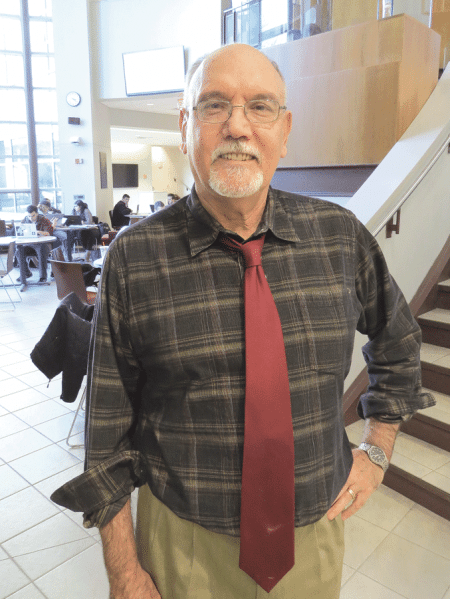
David Cruise, president and CEO of the Regional Employment Board of Hampden County (REB), will discuss this issue and new federal and state policies aimed at creating a demand-driven workforce-development system at the Springfield Regional Chamber Lunch ‘n’ Learn on Wednesday, Feb. 10 from 11:30 a.m. to 1 p.m. at La Quinta Inn & Suites, 100 Congress St., Springfield.

“We hear all the time from our members that they need skilled workers specific to their industries, and the REB is at the forefront of this issue, working with state and federal leaders to create a demand-driven focus of workforce development,” said Springfield Regional Chamber President Jeffrey Ciuffreda.

Cruise will also discuss the Massachusetts Workforce Investment Board created by Gov. Charlie Baker last year and its role in building a strong workforce system which responds to the labor needs of the region’s economy. The board is tasked with developing plans and policies with an eye towards investing in a skilled workforce, closing the gap that exists between available jobs and the skills of workers, and meeting the labor demands of the 21st century, all while recognizing and developing strategies specific to the state’s various regions.

Reservations for the Lunch ‘n’ Learn are $25 for members, $35 for general admission, which includes networking, lunch, presentation, and question-and-answer session. Reservations may be made online at www.springfieldregionalchamber.com or by e-mailing Sarah Mazzaferro at [email protected].

Daily News

AMHERST — The Isenberg School of Management’s online MBA program at UMass Amherst ranks among the best online MBA programs in the country, according to U.S. News & World Report’s “Best Online MBA Programs.” The Isenberg MBA is ranked 12th out of 221 institutions ranked by the publication.

“We continue to lead the pack in an increasingly competitive online educational landscape,” said Mark Fuller, dean of the Isenberg School. “This confirms what thousands of Isenberg students and alumni have known for over a decade: Isenberg’s online program goes beyond case studies and textbooks to drive students to real success.”

The U.S. News ranking is based on five factors: student engagement, admissions selectivity, peer reputation, faculty credentials, and training and student services and technology.

Unlike many of the other programs that recently entered the online space, Isenberg has offered its MBA in a 100% online format for more than 13 years, making it one of the oldest accredited online MBA programs in the nation. Enrollment approaches 1,300 students, making it the largest out of the top 25 schools ranked by U.S. News.

“We continue to attract a high number of highly educated, highly successful professionals because we have a team of experienced professors and advisors who really understand how these students learn best,” said John Wells, associate dean of professional programs. “Despite our long tradition of outstanding online education, we continue to innovate with a variety of new approaches and technologies to connect students in our online format, new opportunities for in-person connections, and more diversity in our class offerings, including business analytics and sport management.”

Daily News

BOSTON — The Executive Office of Energy and Environmental Affairs (EEA) is now accepting nominations for its annual Secretary’s Awards for Excellence in Energy and Environmental Education until March 30.

EEA Secretary Matthew Beaton will present awards this spring to Massachusetts teachers and students involved in school-based programs that promote environmental and energy education.

“I am proud to recognize the teachers and students leading and inspiring their communities as they tackle critical energy and environmental issues,” Beaton said. “It is important to engage students early in issues like energy, recycling, conservation, and wildlife, and they have so many fresh ideas to offer.”

All public and private Massachusetts schools (K-12) that offer energy and environmental education programs are eligible to apply for the awards. In 2015, schools and nonprofit organizations from 22 communities across the state were recognized for their work on issues including recycling, energy conservation, ocean science, wildlife conservation, and alternative fuels.

The Secretary’s Advisory Group on Energy and Environmental Education will review applications through mid-April. Qualified entrants will be invited to attend a formal award ceremony with Beaton at the State House later in the spring.

Daily News

SPRINGFIELD — On Monday, Feb. 1, Goodwill Industries of the Pioneer Valley will open a self-directed Resource Room equipped with computers, telephones, printer, copier, fax machine, Internet access, and WinWay Resume software. The Resource Room will be open to the public for job-related activities.

The Resource Room at 570 Cottage St. in Springfield will be open from 9 a.m. to 2 p.m., Monday through Thursday. Workshops and access to the Resource Center are offered at no cost for job-related activities. Some job-search services will be available by appointment.

A series of free workshops related to preparing for, searching for, finding, and maintaining employment is also offered. A monthly calendar of workshop topics, dates, and times is available at www.ourgoodwill.org.

Goodwill Industries of the Pioneer Valley offers employment and training programs, adult foster care, and community-based day services, and operates nine retail stores in Hampden and Hampshire counties.

“Our mission is to create a better community through partnerships in employment, education, and life enrichment,” said Steve Mundahl, president and CEO. “Helping people through the Resource Room is in keeping with that mission.”

Daily News

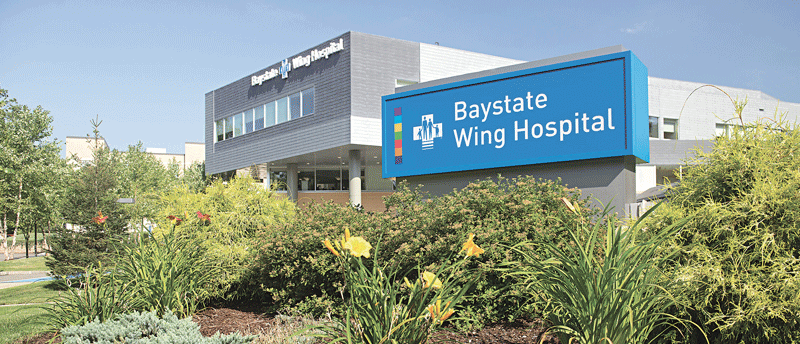
PALMER, WARE — Baystate Health announced changes and consolidations in leadership positions in its Eastern Region.

Effective Jan. 29, Michael Moran will become the interim president and chief administrative officer for the Baystate Health Eastern Region. Moran has been at Baystate Health for 14 years and currently serves as the organization’s vice president for Clinical, Facilities and Guest Services.

Moran’s new role combines the responsibilities of two current positions in the region, the president and the chief operating officer. The region’s current president, Dr. Charles Cavagnaro III, will depart Baystate Health to pursue other opportunities. Before joining Baystate Health, Cavagnaro served as president and CEO of Wing Memorial Hospital and Medical Centers for 15 years.

The region’s current chief operating officer, Dr. M. Shafeeq Ahmed, will return to practicing medicine full-time at Baystate Health. Ahmed has been a physician-leader at Baystate Health since 2003. Dr. David McGuire will become the region’s chief medical officer.

“Our goal, in considering these changes, is to ensure that our Eastern Region can successfully deliver care that matters to the community in a responsible and sustainable way,” said Nancy Shendell-Falik, senior vice president of Hospital Operations for Baystate Health. “To survive and thrive in the contemporary world of healthcare, we continue to make changes that ensure long-term stabilization, system integration, and a consistent model for delivering quality, safety, patient experience, and value.”

Added Dr. Mark Keroack, president and CEO of Baystate Health, “Drs. Cavagnaro and Ahmed have made major contributions to the integration of Wing into Baystate Health and to our organization as a whole. We thank them for their leadership, and we wish them the very best.”

Three other management positions in the region are being eliminated and their work consolidated into other positions.

“As we continue our efforts to integrate our Eastern Region for the greatest safety, efficiency, and effectiveness in care, these changes in leadership structure keep us aligned with national best practices,” said Shendell-Falik.

At Baystate Health, Moran has been responsible for a broad spectrum of services including cancer, behavioral health, neurosciences and rehabilitation, food and nutrition, facilities, and more. Moran is known for building high-performing teams, fostering engagement, and serving as executive leader for Baystate Medical Center’s complex heart and vascular and emergency-room expansion projects. He led the building of the orthopedic surgery and cancer centers in Springfield and the surgical center under construction at Baystate Franklin Medical Center. He has co-led the health system’s largest and most complex Lean project, which saved more than $5 million and improved patient flow at Baystate Medical Center.

Moran brings 27 years of experience in multiple industries, including the military, recreation, hospitality, education, and healthcare. His community involvement includes service to several boards and committees throughout Western Mass.

“I’m thrilled to have this opportunity to lead our team in the Eastern Region,” said Moran. “I’m looking forward to engaging with our caregivers and with our community as we take on the challenges of the current healthcare environment, and continue our efforts to further improve the quality and value of our care across the Eastern Region.”

Features

Entry Point

Dawn Creighton

Dawn Creighton says ‘Foot in the Door’ was inspired by recognized needs within the business community and among women looking to become part of it.

They informally named the program ‘Getting a Foot in the Door,’ because that’s exactly what it can provide to area women who find themselves defined by those terms ‘unemployed’ and ‘underemployed.’

And while this initiative was conceptualized by officers with the Dress for Success (DFS) Western Massachusetts, it represents a broad and intriguing partnership between area institutions that provide an array of services to such women, train them — or someday might employ them.

Some of these institutions include DFS, early-education provider Square One, the YMCA, and employers such as Baystate Health, MassMutual, Columbia Gas, and others, who have agreed to collaborate in an effort to put more qualified individuals, specifically women facing a host of different challenges, in the local workforce pipeline.

Many of these women already have a job, or two, or even three, said Dawn Creighton, Western Mass. regional director for Associated Industries of Massachusetts and president of the DFS Western Mass. chapter, noting that several part-time positions are often needed to make ends meet. But what they don’t have is a career, a plan for how to forge one, or the skills necessary to even, well, get that foot in the door.

“The majority of women who will take part in this program hold low-paying and unstable employment, with a definite lack of upward mobility,” she explained. “What we want to do is help women look at long-term goals, not short-term goals, and realize that there are career paths, not just jobs.

“We want to empower women to look at a career trajectory,” she went on. “We want them to understand that, just because they start as a receptionist, they don’t have to always be a receptionsist.”

The unique program that begins later this month will address all that, said Jennifer Endicott, senior vice president for Strategy and External Relations at Baystate Health, adding that it won’t qualify individuals for technical positions that require a particular skill set. But it will help provide them with the soft skills and confidence that many area employers say are lacking in individuals they’re otherwise willing to train for those positions.

“It’s not really the technical skills that these individuals need — once they’re brought into our organization, or Smith & Wesson, MGM, or anywhere else, we’ll teach them the technical skills,” she explained. “They tend to fail on the soft skills, and a lot of programs out there will provide those soft skills, but no one’s really bringing it together in some kind of a comprehensive program.”

Bringing things together is the broad goal of this initiative, which is designed to improve the employability of participants, introduce them to resources across the region, and provide the tools for greater self-sufficiency.

Dawn DeStefano

Dawn DeStefano says the Foot in the Door program will provide women with something that has eluded many of them — a chance.

Here’s how it works: individuals chosen for one of 25 seats in the program will take part in a 12-week course of study that will yield a National Career Readiness Certificate through the Training & Workforce Options (TWO) program developed by Holyoke Community College and Springfield Technical Community College. Participants who earn that certificate are guaranteed an interview with a preferred employer, including Baystate, MGM, Smith & Wesson, and Columbia Gas, which made the pilot program possible with a $14,000 grant.

The interview is the only thing that’s guaranteed, said Dawn DeStefano, who spent 25 years with the YWCA and recently joined Square One as director of Resource Development, adding quickly that it’s often the break that can start someone down the road to a fulfilling career.

“What we’ve heard loud and clear from marginalized women, people who are just trying to make it in this world, is that they can’t get a call back — they don’t even know how to get an interview,” she said. “This program will provide an opportunity, a connection to employers in this area.”

Getting a Leg Up

Creighton told BusinessWest that DFS, while noted more for supplying clothes and shoes for women in need than for providing a foot in the door, has always had a workforce-development component within its mission statement.

But this pilot program represents a significant escalation of those efforts, she went on, adding that it was fueled by need — and on several levels.

For starters, there are the basic needs of the many who find themselves defined by those workforce terms ‘unemployed’ and ‘underemployed,’ she said, adding that there are many individuals who fall into these categories, despite vacancies at many companies, because they lack both hard and soft skills.

Elaborating, Creighton said the program will target two groups of women — those trying to re-enter the workforce and achieve a measure of work-life balance, and those who are juggling two or three jobs to make ends meet.

Meanwhile, there is a need for qualified help at businesses large and small, in seemingly in every sector of the economy, and at many levels, including ‘entry.’

The Foot in the Door program will address these issues through its 12-week program, the first of which — organizers are already undertaking the search for funding to ensure that there will be more — will begin Jan. 23, with classes at Square One’s facilities in Springfield.

Summing up what participants will learn, Creighton said “essential life skills.” By that, she meant everything from the basics on the responsibilities of being an employee to some technical skills and primers on the many resources available to them.

As for what the program will ultimately provide for its participants, organizers listed everything from a needed dose of confidence to an even-more-needed job interview.

“For a lot of these women, what they really need is a chance,” said DeStefano. “And we’re hoping to give that to them.”

As for area employers, the program should help fill a wide variety of entry-level positions, an overlooked but still-important piece of the current workforce puzzle, said Endicott, who gave Baystate’s perspective.

“Baystate has a number of pipelines for what I would call the professional trades — nurses, doctors, lab techs, medical assistants,” she explained. “But for that entry-level workforce, there’s no real, established pipeline, and we’re getting ready, in the not-too-distant future, to compete for that same workforce with MGM.”

Endicott said there are a number of positions program participants can interview for across several fields, including clerical, food and nutrition, environmental services, and transportation, among others.

And from there, well, there are certainly opportunities to advance within a system that employs more than 10,000 people across the region.

“Baystate is very committed to developing talent and promoting from within,” she explained. “We have a goal as an organization for 60% to 65% of promotions to be from within. So once they’re in Baystate and they develop the technical know-how, they can access all sorts of different programs to help them advance their career.”

And while it will obviously take some time to determine how successful this program is accomplishing its many goals, it is already drawing praise for the manner in which a number of diverse entities have come together in a way that expands each of their roles and also addresses a recognized need.

“This initiative is trying to take the good work that a lot of organizations are doing, like Square One, the YWCA, and Dress for Success, and bring them together to build a program that would create a workforce pipeline,” said Endicott, “and connect the programs in a more collaborative way than has been done in the past.”

Getting Pumped

A few weeks ago, Dress for Success Western Massachusetts received national recognition for the donations it logged during #GivingShoesDay on Dec. 1. Indeed, the group placed eighth in the country for total donations, and one of its contributors, the Westfield News Group, was the second-highest individual donor worldwide, with 200 pairs.

While obviously proud of that accomplishment, the DFS chapter has much bigger goals in mind. By partnering with a number of area groups, it wants to do much more than put a shoe on a foot.

It wants to get that foot in the door. And if this collaborative effort is successful, the area’s business community will take some real steps forward.

George O’Brien can be reached at [email protected]

Health Care Sections

Waking Up to a Problem

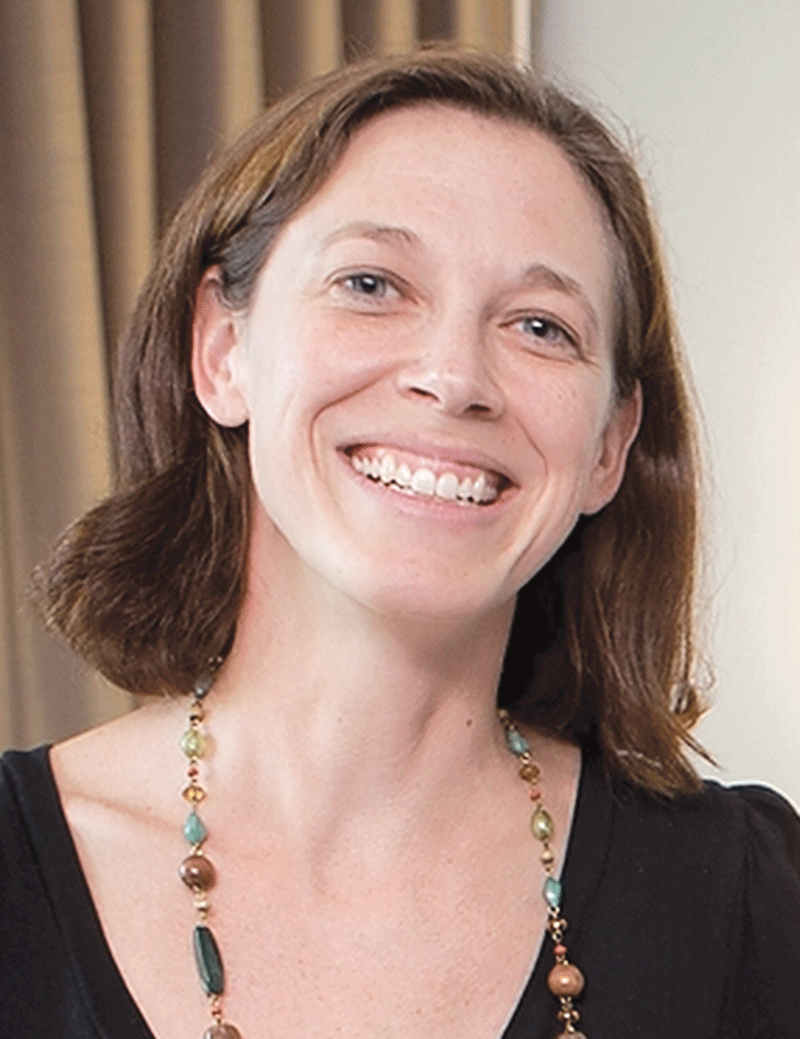
Dr. Wendy Chabot

Dr. Wendy Chabot says lack of sleep can cause behavior problems in children that range from temper tantrums to a lack of impulse control to hyperactivity.

Experts say many children and adolescents don’t get enough sleep.

The reasons vary from family to family, but since parents often work long hours and evening meetings range from Girl Scouts to sporting events, it can be difficult to establish and maintain the same bedtime every night.

But research shows that a lack of sleep or a schedule that is out of sync with the child’s natural biological rhythms can lead to short- and long-term problems that include behavioral difficulties such as acting out in school, as well as academic issues such as poor grades or an inability to remember as much as their well-rested peers.

“Kids are really not getting enough sleep, and this has significant consequences for their mental and physical health. It’s not an optional activity; it’s essential because it is the third leg on the stool to optimal health, which includes exercise and eating a healthy diet, ” said Dr. Wendy Chabot, pediatric coordinator for Sleep Medicine Services of Western Mass. in Amherst and Springfield.

She cited research that shows it only takes a sleep deficit of 30 to 60 minutes each night to affect behavior and result in poor thinking skills and problems with attention, memory, decision making, organization, and creativity.

“When I talk to parents and kids, I tell them sleep is important if they really want to bring their ‘A’ game to life, whether they are learning to walk or play the piano. I can’t think of any aspect of a child’s life that isn’t affected by lack of sleep, and although many people get by on less than they need, if it becomes routine, they do so at their own peril,” Chabot continued, adding that sleep restores the body and the mind.

Rebecca Spencer agrees. “Sleep is important for memory,” said the assistant professor of Psychological and Brain Sciences at UMass Amherst, who conducts studies on sleep and cognition. “Our research shows if you teach preschoolers something in the morning and they take a nap, they remember all of it later on. But if they don’t have a nap, they forget 15% of what they learned. The same argument can be made for adolescents; the more sleep they get, the more they remember what they learned the previous day.”

She added that the law regarding naptimes for preschoolers in Massachusetts was modified recently, and children are now required to have a 45-minute “rest opportunity.”

“There used to be stronger language, and some preschool directors have told me the requirement used to be two hours,” Spencer continued, adding that the Montessori School in Amherst has a “no-nap room” for children who don’t want to sleep, and the Jewish Community Center Preschool in Springfield offers swimming or French lessons for children who don’t nap.

“The preschool curriculum has become very competitive, and there is not enough time for them to do everything they want, so they find ways to get around naptimes,” she told BusinessWest.

But napping — or not, as the case may be — at preschool is just one of many issues involved with the larger issue of children and sleep.

“If a child is sleep-deprived, they tend to have behavior problems; they may have frequent temper tantrums or be non-compliant and have poor impulse control,” said Chabot. “In younger children, the signs and symptoms of a lack of sleep resemble the signs of ADHD, and many children who are diagnosed with it actually have an underlying sleep disorder, which is their main problem.”

Chabot conducts sleep studies on children as young as age 3 when there is reason to believe they may have obstructive sleep apnea. The potentially serious disorder occurs when the person is sleeping and involves 10- to 20-second pauses in breathing that occur frequently throughout the night due to some type of airway blockage or obstruction, such as enlarged tonsils or adenoids.

“Although we used to think it was really rare in children, studies are showing it’s not uncommon in kids age 5 and older,” Chabot told BusinessWest.

She added that children who don’t get enough sleep are more likely to sleepwalk or have night terrors or nightmares, in addition to unwanted behaviors during the day.

The Rest of the Story

Experts say most adolescents are sleep-deprived.

“They live in a state of persistent jetlag,” said Spencer, adding that they need nine to 10 hours of sleep each night, but a 13-year-old’s biological clock isn’t set to allow them to fall asleep before midnight.

So even though they may have a 10 p.m. bedtime, their circadian clock won’t allow them to fall asleep that early, which bumps up against the time they need to start school.

“However, studies show if the school start time is delayed and they get more sleep, their grades improve,” she went on, adding that such data has led some school districts, including Northampton and Amherst, to hold discussions about having a later start time.

Rebecca Spencer

Rebecca Spencer says sleep is important for memory, which affects how well students retain what they learn in school.

But Spencer said many teachers don’t like the idea, and it can be difficult to implement due to sports schedules, although some cities, including Worcester, have made the change.

Williston-Northampton School in Easthampton also switched its start time, and students now begin classes a half-hour later than they did in the past.

“A year after they made the change, they reported more students were eating breakfast and taking medications they need,” Spencer said, explaining that since 50% of students live on campus, they need to get to the nurse’s office before school starts to get any drugs that have been prescribed for them.

Getting more sleep for adolescents is critical because research shows that those who don’t get enough also have less control over their emotions.

“They’re more temperamental, and it’s easier to set them off,” Spencer noted. “Plus, we also know that teens who sleep six hours are more likely to get the flu or colds than those who sleep eight hours, and as we get into cold and flu season, it makes a pretty big difference.”

Chabot concurred, and said sleep is more than a time for the body to heal and fight off infections; studies show young adults don’t respond as well to vaccines when they are sleep-deprived.

“Teens who miss out on one to two hours of sleep a night during the week can’t make up for it on the weekends; they need nine to nine and a quarter hours of sleep, but most get only seven hours, so they would have to sleep almost all weekend to make up the difference,” said Cabot. “There just aren’t enough hours in the day, and if they try to do it, their biological clock will get out of sync.

“When the biological clock keeps getting reset, it’s as if the teens have traveled to California and back,” she went on. “They have ‘social jetlag,’ which makes you irritable and causes headaches and stomachaches. But a lot of teens live like this.”

However, there are things that parents can do to help children get enough sleep, which is important, because habits formed at a young age often continue into adulthood.

The place to start is with learning how much shuteye your child should get.

Toddlers ages 1 to 3 need between 11 and 13 hours of sleep a night; preschoolers ages 3 to 5 need between nine and 11 hours of sleep; children ages 6 to 12 need between 10 and 11 hours of sleep; and adolescents age 13 to 18 need between nine and 9 ¼ hours of sleep.

Consistency is critical, and once a bedtime has been set, it shouldn’t differ more than an hour each night, whether it’s a weeknight or weekend.

“Many parents let adolescents go to bed super late on weekends and free sleep in the morning,” said Spencer. “But if they sleep from 2 a.m. to 10 a.m., when Monday morning arrives, the shift will be difficult for them, and they will feel jetlagged all day.”

Chabot agreed. “There are two main things that control sleep — one is the biological clock, and the other is called sleep drive, which simply means the longer you are awake, the greater your drive is to sleep,” she explained.

Experts say exercise can help children and adolescents fall asleep more easily, but exercising within a few hours of bedtime can interfere with a person’s ability to fall asleep, which is an unavoidable problem for teens who have sports practices and games in the evening.

Caffeine should be avoided late in the day, and children and adolescents shouldn’t go hungry, although eating a full meal an hour before bedtime is not a good idea either.

Maintaining a good sleep environment is also important. An ideal setting is a comfortable, dark, quiet, cool room. In addition, experts advise parents not to put TVs or computers in their children’s rooms because late-night television viewing, playing computer games, Internet use, and text messaging can result in problems falling and staying asleep.

“It’s important to have a media curfew,” Chabot said, explaining that, when there is a lack of bright light, the body begins to release the hormone melatonin, which helps the body sleep.

In the morning, shades or blinds should be pulled up right away because getting as much access to sunlight as possible stops the body from continuing to release melatonin and allows people to wake up.

As for preschoolers and changes in policies on napping, this is troublesome, said those we spoke with, because it plays into some of the myths surrounding sleep. For example, parents often assume that, if their child isn’t voluntarily taking a nap, they don’t need one.

“But research shows that if preschoolers are encouraged to take a nap, they will, and it’s important because many are not getting enough sleep at night,” Spencer noted.

Many parents also mistakenly think that, if their child takes a nap, they won’t be able to get to sleep at night, but research doesn’t support that belief. Spencer said the key is consistency: it’s only when naps are sporadic that it makes a difference, and if a child takes a nap at the same time every day, they will fall asleep as easily at night as they would without one.

“The extra sleep is so important, and it’s beneficial to memory, although it’s not something many parents are aware of,” she added.

In addition, young children who nap exhibit more control over their emotions than those who stay up all day.

“If they haven’t gotten enough sleep, they can become defiant and switch between being grumpy to aggressive. They can also become hyperactive and giddy due to a lack of sleep,” Spencer said, adding that children differ from adults, who tend to get lethargic when they are tired.

Field of Dreams

Chabot said sleep studies are relatively new in the field of medicine, and it was only after the first EEGs were performed in the ’50s that researchers began to realize that sleep is an active time for the brain.

“It’s taken a long time for knowledge to filter down into medical education and training,” she told BusinessWest, adding that, when she was in medical school at Tufts University between 1980 and 1984, the curriculum did not contain a single lecture about sleep.

But in subsequent years, research has shown there are consequences to not getting enough shuteye, which include increased risk for type II diabetes, obesity, depression, and anxiety.

“It’s important for families to make sleep a priority if they want their children to function at their best,” Chabot said, adding that it can be prudent to have a child cut down on activities if their schedules are really busy.

There’s an easy way to tell if your child is getting enough sleep, she continued.

“They should wake up on their own at the same time every day without an alarm clock, get out of bed right away, and be in a good mood and feel rested,” she said. “If you need to drag your child out of bed, they are not getting enough sleep.”

It’s a simple measure that’s easy to follow for parents who want to increase their child’s chances of excelling in all aspects of their life.

Briefcase Departments

Pittsfield to Welcome MassDevelopment TDI Fellow

PITTSFIELD — MassDevelopment has selected Pittsfield, Brockton, and New Bedford for its second round of Transformative Development Initiative (TDI) fellows to advance local redevelopment visions in those cities’ TDI districts. The fellows, who will have experience in city planning, community partnership building, real estate, and economic development, will work in their host districts for three years in collaboration with local partnerships. These fellows follow the successful initial placements earlier this year in Springfield, Haverhill, and Lynn. “This grant is another recognition that Pittsfield is moving forward,” said state Sen. Ben Downing (D-Pittsfield). “Support through the TDI program will help revitalize the Tyler Street corridor and build on the great work of local business and community organizations.” MassDevelopment is accepting qualifications for these new fellows positions, which will begin in spring 2016, on its website. Staff members from Peabody and Worcester will participate in this round as adjunct fellows, joining cohort activities such as monthly meetings, skills building, site visits, and regional leadership development. Brockton, New Bedford, and Pittsfield are three of the 10 Gateway Cities selected in December 2014 as the pilot TDI districts in development, along with Haverhill, Holyoke, Lynn, Peabody, Revere, Springfield, and Worcester. As a part of the program, each will receive a range of real-estate-development services to support local visions for redevelopment, and to catalyze and leverage investments and economic activities. Everett and Malden are receiving directed regional planning and implementation assistance to advance their districts’ TDI visions. “The first three fellows have quickly become indispensable parts of the economic-development communities in Haverhill, Lynn, and Springfield by partnering with local organizations to create redevelopment opportunities,” said MassDevelopment President and CEO Marty Jones. “We look forward to the new faces that will arrive in Brockton, New Bedford, and Pittsfield to support those cities’ visions.”

State Adds 19 to Green Communities List

BOSTON — The Baker-Polito administration announced that 19 more cities and towns have been designated Green Communities by the Department of Energy Resources (DOER) and will receive more than $3.1 million for local clean-energy and energy-efficiency projects. The Western Mass. communities added to the list, and their funding, include Adams ($166,865), Bernardston ($131,290), Egremont ($138,570), Stockbridge ($139,625), West Springfield ($222,765), and Windsor ($137,880). “The Green Communities program demonstrates state and local governments can work together to save energy and taxpayers’ money, while making the Commonwealth a healthier place to live,” said Gov. Charlie Baker. “These 19 communities will be able to invest in energy efficiency and renewable energy, reducing energy costs and reducing their carbon footprints.” Added Lt. Gov. Karyn Polito, “helping cities and towns reduce their energy consumption allows them to channel their financial savings into other municipal needs, like public safety, education, and municipal buildings. These grants further reiterate the Commonwealth’s ability to work with municipalities to ensure Massachusetts continues to be a leader in clean energy and energy efficiency.” The 155 Green Communities are cities and towns of all sizes that range from the Berkshires to Cape Cod and are home to 54% of Massachusetts’ population. All Green Communities commit to reducing municipal energy consumption by 20% over five years. “Through the Green Communities program, DOER is able to work with municipalities to find clean-energy solutions that reduce long-term energy costs and strengthen local economies,” said Energy and Environmental Affairs Secretary Matthew Beaton. “The commitment and hard work of these 19 communities to reduce their energy use and undertake clean-energy projects will help Massachusetts continue its leadership in energy efficiency, renewable energy, and emissions reductions.”

Holiday Sales Up 7.9% This Year

WASHINGTON, D.C. — The holiday shopping season isn’t quite over yet — many of those who received gift cards have yet to hit the stores — but a study has shown that it is already a solid one for retailers. Indeed, retail sales were up 7.9% between Black Friday and Christmas Eve compared to the same period a year ago, according to MasterCard SpendingPulse, which studies transaction and survey data on purchases made with credit cards, cash, and checks. The report found that e-commerce provided crucial holiday momentum this holiday season, with sales up 20% in that realm.

Defense-contract Work Contributed $20B to State Economy in FY 2013

AMHERST — The Commonwealth’s defense-contract work supported more than 88,000 workers and contributed more than $20 billion to the Massachusetts economy, while Massachusetts military installations directly or indirectly supported more than 57,000 jobs with a total economic contribution of more than $13 billion, in fiscal year 2013, according to two new UMass Donahue Institute reports. Massachusetts companies exemplifying the connections between the defense sector and small businesses include Holyoke’s Meridian Industrial Group, which does machining for portable MRI equipment; Southampton’s J&E Precision Tool, which produces components for Black Hawk helicopters, periscopes, and F-22s and F-35s; and CPI Radant Technologies Division in Stow, which develops components for military aircraft. “The Commonwealth’s six bases and defense-related firms continue to have a major impact on the Massachusetts economy, both in terms of jobs and dollars,” said Gov. Charlie Baker. “Academia, business, and technology — three of the Commonwealth’s top sectors — play a role in our installations and defense contracts, helping this industry serve as an economic driver. We look forward to their continued growth and contribution to Massachusetts.” The Massachusetts Military Asset and Security Strategy Task Force and MassDevelopment commissioned the reports. The first studied the impact of the Commonwealth’s six military installations — Barnes Air National Guard Base, Fort Devens Reserve Forces Training Area, Hanscom Air Force Base, Joint Base Cape Cod, U.S. Army Natick Soldier Systems Center, and Westover Air Reserve Base — and the Massachusetts Army National Guard and the U.S. Army Reserve. The second report studied the defense industry’s contribution to the New England economy, finding that, in fiscal year 2013, New England defense contracting generated nearly $49 billion and more than 218,000 jobs.

College Farm Market Project Launched with $25,000 Grant

GREENFIELD — The Rural Community College Alliance has awarded a $25,000 grant to Greenfield Community College (GCC), Community Involved in Sustaining Agriculture (CISA), and the Franklin Community Co-op (FCC) to fund a new collaborative College Farm Market Project (CFMP). GCC farm and food systems and business majors will work as interns with CISA and FCC to enhance and expand on existing opportunities with farmers’ markets in the Pioneer Valley. The project’s goal is to develop a replicable model for coordinating food- and farm-focused education, marketing, and sales that support the growing sustainable farm movement in Western Mass. The RCCA grant will fund six three-credit paid internships for GCC students while the costs of the credits earned are covered by other grants the college has won. Three interns will work at FCC, and three will work at CISA. The grant also provides funds to defray some of the partner-agency staff time needed for this project and for staff to attend national and regional conferences to share information about the project with other colleges and organizations. This grant brings together three organizations that have significant impact on regional farm and food systems and will enhance coordination around food justice and development of farmers’ markets. The internships housed at FCC will continue the work of fall 2015 GCC interns to create a mid-week farmers’ market in Greenfield, seeing its development from its opening this spring through the remainder of the summer and fall. At CISA, the GCC interns will focus on broader regional issues that affect farmers’ markets in general, further food justice and SNAP matching efforts, provide replicable templates for building market business structures, and expand the customer base for locally grown foods that promote sustainable models for farm viability. Staff and administrators from the three organizations will meet regularly to develop long-term structures for interorganization collaboration for strengthening agricultural cooperative supports in the region. “This project enhances the learning of our students in farm and food systems and in business through work experience in which they can apply their academic work,” said Christine Copeland, SAGE assistant and internship coordinator at GCC. “It’s great for their career prospects, and they also make professional contacts and network with people in their field.”

State Issues Grants to Three Area Farms

BOSTON — The Baker-Polito administration recently announced that five Massachusetts farms with land permanently protected from development through the state’s Agricultural Preservation Restriction (APR) Program — including three in Western Mass. — have been awarded $400,000 in grant funding for infrastructure improvements. “These agricultural investments help create jobs and make Massachusetts’ farms more competitive in the national and global marketplace,” said Gov. Charlie Baker. “Our administration is committed to supporting Massachusetts’ vibrant agriculture industry, which provides fresh, healthy food for the Commonwealth’s residents.” The local grantees include Burnett Farm in Adams, $50,000 for barn expansion; Luther Belden Farm in Hatfield; $100,000 for dairy infrastructure improvements; and the Kitchen Garden in Sunderland, $75,000 for produce packing and storage building. The APR Improvement Program, established in 2009, is funded by the federal Farm and Lands Protection Program and is administered by the Department of Agricultural Resources. The program also provides recipients with technical and business-planning assistance to identify the best use of funds to improve farm infrastructure and productivity. Since 2009, AIP has provided more than $3.5 million in total grants (average $66,509 per farm) and $330,150 in technical assistance (average $6,229 per farm) to Massachusetts APR farms that own a combined total of more than 7,000 acres of protected farmland.

Company Notebook Departments

Adam Quenneville Replaces Roof for Boy Scouts of America

SOUTH HADLEY — Adam Quenneville Roofing, Siding and Windows had the honor of replacing a roof for the Boy Scouts of America at the Moses Scout Reservation in Russell. Once the summer home of Horace Moses, the Manor House and the 1,200 acres of property were donated to the Boy Scouts of America Western Massachusetts Council in 1945, after its previous campsite was destroyed by a hurricane. The building is about 100 years old and is one of many buildings on the property. “The Manor House has not been used in about eight years,” said David Kruse, scout executive and CEO. “Thanks to Adam Quenneville and his team, we are excited to get it back up and running for this year’s summer camp.” The Manor House is just one of the many buildings on the Boy Scout property in need of repairs. With the help of community and volunteer donations for supplies, Quenneville — owner of Adam Quenneville Roofing, Siding, and Windows — was able to do his part by donating the labor to replace the roof. “As a father of three, two of which are young boys, this project was very important to me,” he said. “The Boy Scouts teach boys self-confidence, ethics, and leadership skills, which I believe are the foundation for great leaders.”

Elms College Athletics to Add Men’s, Women’s Outdoor Track Teams

CHICOPEE — The Athletics Department at Elms College will add men’s and women’s outdoor track teams in 2017. “I’m excited about the prospect of adding this new sport to the 15 other men’s and women’s sports we already sponsor,” said Ellen McEwen, director of Athletics at Elms. “This addition to our Athletics Department can be very successful in this geographical area, especially under the leadership of our cross-country coach, Matt Dyer, who has a very strong background in the area of track. He put together the program proposal for us, and will be coaching both the men’s and women’s teams.” The team will be about more than sport, according to Dyer. “We really care about giving back and carrying out the mission of Elms College and the Sisters of St. Joseph,” he said. “Our cross-country team does a multi-day, overnight service trip each fall, and I’m sure we will continue some similar mission and service work with our track programs. We really love and enjoy the process of working hard and growing together not only as students and athletes, but as people trying to serve a higher cause.” Dyer has just completed his fourth season as head coach of the men’s and women’s cross-country programs at Elms. Hired in August 2012, he has helped direct both teams to successful finishes in the New England Collegiate Conference; the women’s team came in second in 2013 and 2014, and the men’s team was third in 2015. He was named NECC Women’s Coach of the Year in 2013.

WNEU Engineering Students Finish Strong in Solar Decathlon

SPRINGFIELD — Engineering students from Western New England University (WNEU) traveled to the campus of the University del Valle in Cali, Colombia, in late November to complete construction of team PANAMASS’ 800-square-foot, fully solar-powered home, as part of the inaugural Solar Decathlon Latin America and Caribbean 2015 competition. Team PANAMASS’ entry is called the SMART house, which is based on five characteristics in its design: sustainable, modular, recyclable, aesthetic, and tropical. After 10 days of intense evaluation by a several panels of judges, the SMART house was awarded first place in Energy Efficiency and third place in Energy Balance. This competition, sponsored by the U.S. Department of Energy and the Colombian government, challenges university student teams around the world to design and build sustainable houses based on innovation and clean-energy technologies. Team PANAMASS is a partnership made up of students and faculty from Western New England University and Universidad Tecnológica de Panamá. There were 15 teams representing nine countries, including Panama, Peru, Mexico, Colombia, Uruguay, Spain, Germany, England, and the U.S. WNEU was the only participant representing the U.S. Five Western New England University students and Engineering Professor Kenneth Lee were in Colombia for the construction phase of the house. Students include civil engineering senior Andres Otero and juniors Brian Wodecki, Jhonatan Escobar, Gabby Fosdick, and Katrina DiGloria. This competition provided the students with a unique international experience to work alongside with faculty and students from Tecnológica de Panamá and to experience Colombian culture for two weeks. This solar decathlon embraced a theme of social-justice housing and encouraged designs built for tropical climates in high-density urban locations, and the use of recycled materials, affordability, optimal energy production, and maximum efficiency. The SMART house is built with recycled shipping containers and includes three bedrooms and one bathroom.

DiGrigoli School of Cosmetology Honored by Modern Salon

WEST SPRINGFIELD — Modern Salon has named the 2015 class of Excellence in Education honorees in its sixth annual program recognizing leadership and best practices among cosmetology schools. DiGrigoli School of Cosmetology was chosen to represent excellence in the category of Community Involvement, Marketing Innovation, School Culture. “We received applications from cosmetology schools across the country and look forward to celebrating all the 2015 Excellence in Education honorees and sharing their stories. It is truly a great time to pursue a beauty education and career, and the program at DiGrigoli School of Cosmetology exemplifies that fact,” said Modern Salon Editorial Director Michele Musgrove. Paul DiGrigoli, president and CEO of the DiGrigoli School of Cosmetology, added, “I’m so grateful to have such a stellar faculty and team. They have supported and created an environment of positivity and energy that constantly and continuously helps take our students’ minds and careers to another altitude. I am proud to say that the future professionals who graduate from the DiGrigoli School of Cosmetology have received jobs from some of the best salons in our area. We will continue to reach for greater heights to provide all of our students with higher education, and we are so honored to be receiving this prestigious award for the fourth year in a row.”

Departments People on the Move

The Sisters of Providence Health System (SPHS) announced that three physicians have been named to expanded leadership roles for Mercy Behavioral Health Care and Providence Behavioral Health Hospital (PBHH) in Holyoke.
• Dr. Maria Russo-Appel, who has served as the chief medical officer of PBHH for the past year, has been appointed to the position of vice president of Mercy Behavioral Health Care. In this role, Russo-Appel will lead the psychiatric care and behavioral health service lines, including PBHH, for SPHS;
• Dr. Robert Roose, who has been serving as chief medical officer of Addiction Services of SPHS for the past the two and a half years, will have expanded responsibilities in a dual role as CMO/vice president of Addiction and Recovery Services, Mercy Behavioral Health Care, and will assume both medical and administrative leadership responsibilities for all addiction-treatment and recovery-service lines; and
• Dr. Gaurav Chawla, who has been serving as chief of Psychiatry, will assume the role of chief medical officer, Mercy Behavioral Health Care, and lead new SPHS initiatives in behavioral health, such as integration of behavioral health in both primary care and integration into population health management.

•••••

Partners for a Healthier Community (PHC) has confirmed Jessica Collins as its executive director. Collins is a nine-year veteran of the Springfield-based nonprofit, where she previously served as interim executive director and deputy director. She will be leading the institute’s expansion of services in research and evaluation, coalition building, and policy advocacy. “Communities of color, members of the LGBT community, and people with disabilities face significant disparities in health in our region,” Collins said. “Our mission is to address these inequities so that all people will have what they need to lead healthy lives.” PHC was recently awarded the contract to lead the Community Health Needs Assessment for the 10 regional hospitals in Western Mass. in collaboration with the Pioneer Valley Planning Commission and the Collaborative for Educational Services. “This assessment documents the existing health needs of each community and provides the data necessary to develop effective strategies to address health inequities,” Collins said. Added Rev. Karen Rucks, PHC’s board chair, “having a local public-health institute to serve Western Mass. is invaluable. The staff of Partners for a Healthier Community bring an understanding of the context and communities in our region to their services. They are committed to building capacity in our region to better understand how to use data and to collect and report on specific issues that are worthy of collective attention.” Prior to coming to PHC, Collins led community-based participatory research projects including the Shape Up Somerville program focused on the prevention of childhood obesity in Cambridge and Somerville. Other nationally recognized community-health initiatives led by Collins include efforts to address substance abuse and suicide prevention, as well as preschool oral health. In addition, Collins announced the hiring of Jessica Payne as senior research associate. Payne brings 25 years of experience in program development, evaluation, and needs assessment. She has extensive knowledge of regional communities and public-health initiatives, and collaborates with partners and informants of varied backgrounds relative to age, gender, socioeconomic status, race, ethnicity, occupation, and region. Since 1988, her company, Jessica Payne Consulting, has provided research and evaluation services in the healthcare, education, community-development, marketing, and culture and arts industries.

•••••

Jules Gaudreau, president of the Gaudreau Group in Wilbraham, was recently inducted as president of his industry’s national trade organization, the National Assoc. of Insurance and Financial Advisors (NAIFA). “It will be a great privilege and responsibility to lead an association of over 42,000 professionals who help American families achieve financial security,” Gaudreau said. “I look forward to advocating on their behalf in Washington and throughout the country as I have done for over 25 years here in Massachusetts.” One of the nation’s oldest and largest associations representing the interests of insurance professionals and financial advisors, NAIFA is the only organization that serves and represents insurance and financial advisors regardless of the products they sell or the focus of their practice. Members include insurance agents, financial advisors, multi-line agents, and health-insurance and employee-benefits specialists. NAIFA’s mission is to advocate for a positive legislative and regulatory environment, enhance business and professional skills, and promote the ethical conduct of its members.

Daily News

HOLYOKE — The Baker-Polito administration recently announced the availability of $9.2 million in Skills Capital Grants for vocational-technical equipment investments to improve the quality of education and vocational training, provide career technical training to increase program capacity, and enable students to improve their skills to meet the needs of employers in the Commonwealth.

“The skills gap is real across the country, and many companies cannot find the talent they need to fill positions and further develop their local economic impact,” said Gov. Charlie Baker. “By investing in capital equipment at vocational and technical schools that are focused on training, we will ensure more residents get the skills they need to get good-paying jobs in growing industries across the Commonwealth.”

State officials announced the availability of the Skills Capital Grants at the future site of Holyoke Community College’s (HCC) Center for Culinary and Hospitality Excellence, located in the heart of the Holyoke Innovation District, which is experiencing significant investment and growth. The center is being funded by a $1.75 million capital grant from the former Manufacturing Training Equipment Grant program, which is being combined with the Vocational Opportunity Challenge Grants to create the new Skills Capital Grant. The Holyoke grant was awarded from a prior funding round. High demand for career training programs like Holyoke’s led to the creation, and expansion in scope, of the Skills Capital Grant program.

“We are proud and excited to see the expansion of Holyoke Community College’s Culinary Arts program into a larger center which will provide critical skills to our residents for jobs available that are available now,” said Holyoke Mayor Alex Morse.

Added HCC President William Messner, “Holyoke Community College is committed to continuously improving our academic program offerings. We have invested $20 million in such efforts over the past few years in areas directly related to regional employment opportunities, including this culinary center, as well as healthcare, STEM fields, and adult literacy. We are pleased to be able to expand our culinary and hospitality program at a critical time for the region and look forward to increasing the educational opportunities for hundreds of local residents.”

The Skills Capital grants will range from $50,000 to $500,000, and while the grants do not require a match, applicants are encouraged to demonstrate cash and/or in-kind matches.

Eligible applicants include Massachusetts schools, institutions, and organizations that provide career/vocational technical education programs, including all Chapter 74-approved vocational tech schools, community colleges, and providers of training programs that meet the federal Perkins Act definition of career and technical education. Grant applications must be submitted by Jan. 29.

Cover Story Sections Top Entrepreneur

Big Y Marks 80 Years of Ideas and Innovation
D'Mour Family

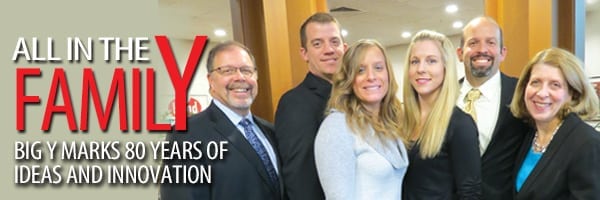
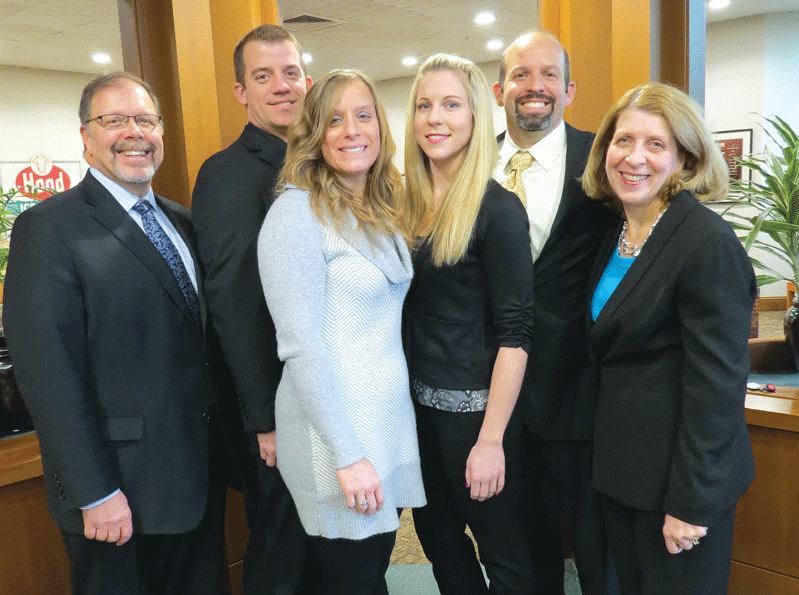
From left, Charlie D’Amour, Matt D’Amour, Nicole D’Amour Schneider, Maggie D’Amour, Michael D’Amour, and Claire D’Amour-Daley.

Roughly 80 years ago, Paul D’Amour, a delivery man for Wonder Bread, was told in fairly uncertain terms that he couldn’t advance in that company because of his name and religion. With this knowledge that doors would not open for him, he made his own door in the form of a small market in Chicopee. We know it today as Big Y. It’s now a $1.7 billion enterprise managed by the second and third generations of the family, a company defined by many adjectives, but especially entrepreneurial. To recognize that legacy, BusinessWest has named the members of all three generations its Top Entrepreneurs for 2015.

They call it the ‘Nice Try’ award.

Big Y Foods started presenting it annually a few years ago, said Claire D’Amour-Daley, vice president of Corporate Communications for the soon-to-be-80-year-old company and member of its second generation of leadership.

It goes, she went on, to an individual or group that conceptualized an idea that looked good on paper, as they say, but just didn’t pan out for one reason or another.

“It’s an honor … but you don’t want to win it too often — one’s enough,” said Michael D’Amour, executive vice president of the company and oldest member of the third generation of leadership as he explained its purpose, relevance, and unique place within the company.

Maggie D’Amour, a store manager in training and another member of that third generation, agreed. “They tried changing the recipe for jelly donuts one year, and the customers really didn’t like it at all. Someone won it for that.”

Overall, the ‘Nice Try’ award, as Michael implied, was conceived as something to be proud of, noted D’Amour-Daley, who said Big Y is a company that puts a premium on innovation, entrepreneurship, ideas, and always looking for better, more efficient ways of doing things. And ‘Nice Try’ embodies all of that and more.

“We honor mistakes because that’s how we learn,” she explained, “and it’s important to learn from your mistakes.”

Founders Gerry, left, and Paul D’Amour

Founders Gerry, left, and Paul D’Amour set an entrepreneurial tone that has defined Big Y throughout its 80-year history.

The award and the philosophy behind it explains why Big Y is still here 80 years after Paul D’Amour, with assistance from his much younger brother, Gerry, and, later, sisters Ann Marie, Yvette, and Gertrude, opened the Y Cash Market in Chicopee. They also explain why the company now logs $1.7 billion in annual revenues; how it’s gone from one 30-foot-wide corner market to 63 supermarkets in Massachusetts and Connecticut; why it continues to expand into new business realms, such as convenience stores with its acquisition of several O’Connell Convenience Plus gas stations; and why it was recently named one of the Best Places to Work by the Employers Assoc. of the NorthEast.

And also why the members of three generations in this family have been named BusinessWest’s Top Entrepreneurs for 2015. (See previous BusinessWest Top Entrepreneurs HERE)

“Since this award was conceptualized 20 years ago, it has gone to companies that have made significant strides over the previous year or two,” said BusinessWest Associate Publisher Kate Campiti, “and also to companies that have displayed a strong entrepreneurial character throughout their existence.

“When it comes to Big Y, it’s a lot of both,” she went on. “This company continues to take bold entrepreneurial steps, such as the purchase of the convenience stores, but it has a legacy of entrepreneurship that goes back eight decades and has been constant throughout this company’s existence.”

Explaining the roots of that legacy, Don D’Amour, CEO of the company and the oldest member of that second generation, again relayed the story of how his father, Paul, a Canadian emigrant, left a decent job delivering Wonder Bread to start his own venture in the middle of the Great Depression.

But this time — he’s told this story often — he provided some keen insight into why.

“At some point, a gentleman at Wonder Bread pulled him aside and said, ‘you’re never going to be promoted in this company — you’ve got the wrong last name, and you’ve got the wrong religion [Catholic],’” he noted. “My dad went home, talked to my mom, and told her pretty much what this guy said. Later, he found there was a small market for sale in Willimansett. He talked to my mom some more and decided to take the plunge.”

His brother would eventually take it with him, after serving in the military, and also after conveying serious doubts about the viability of this business venture in a letter home to his family (more on that in a bit).

In the decades to come, the second generation, and then the second working alongside the third — just as the first worked beside the second — would take plunges of their own, none perhaps as risky as that original leap, but all of them constituting business gambles.

Some have been relatively minor — such as the introduction of in-store floral shops — while others have been considerable in scope, including forays into new markets, new geographic territories, and new ways of doing business.

Summing it all up, Charlie D’Amour, Claire’s brother and the company’s president, said that, despite this company’s proud history, its operating manual has one simple instruction: Look forward, never back.

Marketplace of Ideas
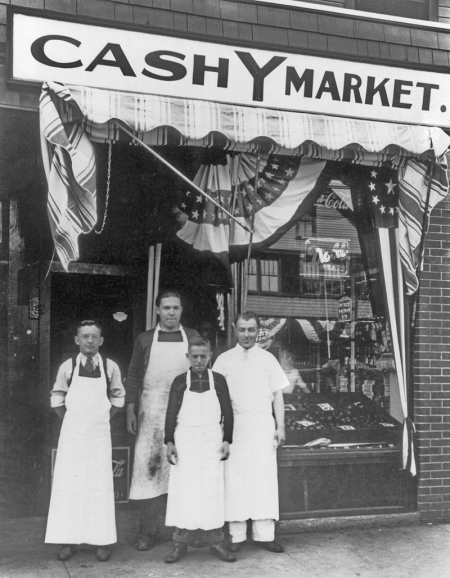
photo of founder Paul D’Amour and co-workers

This photo of founder Paul D’Amour and co-workers in front of the original Y Cash Market is one of a precious few in the archives from the early days.

As they talked about the exploits of their father (Gerry) and uncle, Claire and Charlie decided to move the conversation from inside a replica of the original market at the store’s headquarters on Roosevelt Avenue in Springfield to a nearby wall that holds a photo of Paul D’Amour and a few co-workers standing in front of the Y Cash Market.

They did so to point out, literally, just how tiny that original storefront was. But soon the subject matter shifted to how few items like this one there are in the company’s archives.

In fact, the early history of the venture is so incomplete that the month of the company’s opening in 1936, much less the exact date, is not known. Thus, significant anniversarie tend to be year-long events, and the 80th will be even more so.

Explaining this phenomenon, Charlie D’Amour said it came down to the simple fact that his father and uncle were too busy scripting their story to summon the time or energy needed to record it. As a result, there are few papers and photographs to display or refer back to.

One notable exception is that letter Gerry sent home to his family while in the service. It revealed, in not-so-glowing terms, his thoughts on the prospects for his brother’s entrepreneurial plunge.

“He really had his doubts about the business,” said Charlie while summarizing the missive from memory. “He thought Paul might be wasting his brains and talents on that market.”

Still, Gerry agreed to join the venture after returning from duty, and the rest, is, well, better-recorded history — at least the past half-century or so. And while Gerry was eventually proven wrong in his assessment of the venture’s potential, those first few years amounted to nothing less than a struggle for survival.

“There were a lots of ups and downs — more downs than ups, for sure,” said Don D’Amour. “They almost went bankrupt a few times, but they stuck with it.

“It was a very entrepreneurial start to be sure, and the company has always been entrepreneurial over the years,” he went on. “There’s always been a desire to innovate and try new things.”

Charlie agreed.

“One of the things that Paul and Gerry passed on to all of us was that they were restless in their desire to improve,” he explained. “They were continuously trying to find a better way to do things, and trying to evolve and change as the business evolved. And that continues today; this is a very, very dynamic business. It’s always changing; it’s never the same. We’re certainly not doing business in 2016 the same way were a year ago, let alone five years ago or 80 years ago.”

Being dynamic and entrepreneurial isn’t simply desirable, family members said repeatedly and in different ways, but is quite necessary in a retail landscape that is constantly changing and becoming ever more competitive.

Indeed, while a few decades ago, the company was doing battle largely against other grocery chains, most of them national and international giants, now it is also competing with the likes of Walmart, Costco, online ventures, and pharmacy chains that now have huge frozen-food aisles.

“There’s been a blurring of the channels,” said Charlie as he explained the ongoing shift involving retail outlets. “And that’s made for a much more competitive landscape.”

But, as the timeline above reveals, the company has always been aggressive in seeking new business opportunities and, as Charlie said, better ways of doing things. That chronology highlights everything from the first supermarket to movement into beer and wine sales; from growth through expansion of several smaller grocery chains to expansion into Connecticut and then Eastern Mass.; from the introduction of the World Class Market to expansion into pharmacies.

A common thread with each development has been improving the customer experience, said Charlie, adding that this is another philosophical trait passed down from the first generation.

And while what the company has accomplished is noteworthy, the how is perhaps an even more intriguing story. It comes down, said all those we spoke with, to creating an environment where ideas — including those that wind up earning someone a ‘Nice Try’ award — are encouraged, listened to, and often acted upon.

Making the Sausage

This brings us to the concept of strategic planning, which has greatly evolved itself over the years.

In the beginning — and for several years, actually — this was Paul and Gerry’s assignment, and it was done, in large part, on the fly, Charlie explained. Today, it is much more sophisticated and involves dozens if not hundreds of players.

The mindset is essentially the same, though: looking down the road as far and effectively as one can, anticipating need, envisioning business opportunities to meet those needs, and then making them happen.

This is essentially a 24/7, company-wide activity, but there are organized sessions as well, as two-day corporate retreats, staged every 18 months. These are staged off-site, but instead of exotic locales, the company has opted for local venues such as the Basketball Hall of Fame and downtown Stockbridge.

“We can’t afford a fancy resort — that’s not in the budget,” said Mike, one of several third-generation family members now with a seat at the table at these gatherings.

He noted that these sessions feature lively, open discussions, and egos are, as the saying goes, checked at the door, and titles and last names are not an issue.

“At these meetings, everyone’s basically CEO of the company; everyone’s on the same level,” he explained. “No topic is off-base, there are no sacred cows, and we take a nice, honest check of who we are, what we’re doing, and where we need to be.

“We’ll challenge each other in nice ways,” he went on. “And we’ll sit there, listen, take it all in, and try to understand where everyone’s coming from to make sure that, when we walk out of that room in a day in a half, we’re all in 100% agreement on what we’re doing. We don’t want half the room split or doing something just because my father says we’re going to do it or because Charlie says we’re going to do it. We’re doing it because it’s the right thing for everyone.”

Big Y’s second supermarket

Big Y’s second supermarket, in Northampton, represented one of many entrepreneurial leaps for the company.

Beyond the regular retreats, there are quarterly board meetings and twice-monthly team meetings, said Claire, adding that these and other vehicles are used to help ensure that ideas flow downhill and there is solid follow-up so concepts don’t get left behind.

Charlie agreed, and said there is one more level of management meetings, those involving family members.

“We are a family business, so it’s important that the family understands the role of the family in the business,” he explained. “Another of the things that Paul and Gerry taught is that the business doesn’t serve the family — the family serves the business.”

The various strategic-planning initiatives, as well as a recently penned vision statement, have helped provide the company with another important asset, one often missing at family-run ventures, said Matt D’Amour, another member of the third generation of management and the company’s senior director of Real Estate & Store Development: Alignment.

“One of the benefits of the big meetings is alignment and focus,” he explained. “Everyone is working toward common goals, and having that alignment has been key to our success.”

Mike agreed.

Big Y’s expansion into in-store pharmacies

Big Y’s expansion into in-store pharmacies represented one of many steep learning curves taken on by different generations of the D’Amour family.

“I think we have more alignment now in this company than perhaps we’ve ever had,” he explained. “People understand the vision, they believe in it, and they embrace their role within it. And that’s why I think this is an exciting time for us; we do have that alignment, and we can get a lot accomplished with everyone moving in the same direction.

“People have seen our sales the past few years, which have been stronger than others in the industry, and everyone’s asking what we’re doing,” he went on. “Well, it’s a lot of little things. There’s no silver bullet in this industry; it’s a lot of little things that have worked out over the past several years.”

Seeds of Progress

While Big Y’s story can be summed up as 80 years of entrepreneurial drive, it can also be categorized as the ongoing education of the D’Amour family in the grocery business — all three generations.

“Actually, it’s closer to five, because of the way the generations are staggered,” said Matt, noting the age differences among members of the same generation and how this wide spread of ages represented by family members has helped the company stay relevant.

And generate some humor. Indeed, Paul was 14 years older than Gerry, and subsequently, his son, Don, is significantly older than his cousins, Claire and Charlie — so much so that Charlie likes to joke (although Don certainly doesn’t laugh) that many people think the company’s CEO is his father. Likewise, Don’s daughter, Nicole D’Amour Schneider, says some believe Claire is her sister, not her second cousin.

Whether it’s three or five, there’s been a lot of one generation teaching the next, or older members of one generation teaching younger representatives. And that brings us to Charlie’s often-told story about how one of his many, early, and pointedly unglamorous jobs with the company was delivering produce, specifically watermelons. And as he retold it, he expounded on the philosophy that defined such learning opportunities, and still does, but maybe to a lesser extent.

“I had just gotten my driver’s license; I was 16,” he recalled. “And we needed to have some produce deliveries made. Don said, ‘meet me at our produce warehouse on Avocado Street in Springfield, and be there early.’

“I showed up, Donald put me in the truck, and it was a standard,” he went on. “I said, ‘I don’t know how to drive a standard.’ Then he said, ‘get in, and I’ll show you.’ He drove me around the parking lot once and sent me on me on my way. That was the extent of the training we had back then.”

Big Y’s latest entrepreneurial leap

Big Y’s latest entrepreneurial leap is into the convenience-store realm. This is a rendering of one of the Big Y Express stores in Pittsfield.

Things have changed considerably over the years — Charlie noted that his daughter Maggie’s current training to become a store manager is exponentially more involved than what he experienced in the mid-’70s — but the company’s approach is still grounded in the basic ‘sink-or-swim’ mentality espoused by the company’s founders — or similar phraseology that Charlie summoned.

“You can’t learn to swim by sitting at the side of the pool,” he told BusinessWest, adding that this mindset pertains to not only employees, including (or especially) family members, taking on new responsibilities, but the company taking new plunges, if you will.

As an example of the former, he gestured across the conference room table toward Nicole, who was minding her own business and handling a number of functions for the company, including training of store managers and administration of its formal ideas program, when it was essentially decided four years ago that she would manage the company’s new pharmacy division.

“I knew nothing about running pharmacies, so there was a real learning curve,” she explained. “It was a matter of coming in and running it as a business and taking that perspective, but also breaking down the silos between pharmacy and all the other departments and working more collaboratively together so we were presenting our customers with a one-stop experience.”

When asked what she’s learned over the past four years, Nicole joked that she can now pronounce the names of countless medications she never knew existed. She then turned serious and said that pharmacy, like all other departments in the store, requires a strong customer-service element, as well as an element of entrepreneurship.

“Today, in retail pharmacy, you have to innovate and change in order to survive,” she explained. “We’ve worked hard at getting our folks in the pharmacies to understand that and approach their jobs in a completely different manner. They’re not just pill counters; they really have to engage with our customers and provide unique services.”

As for the latter half of that sink-or-swim mentality, the new-business-opportunities side of the equation, family members cited the expansion into convenience stores and the recent acquisition of the O’Connell facilities.

This represents largely uncharted waters for the company — although the second Big Y supermarket in Northampton had a gas station attached to it in the ’60s, said Charlie — but taking the ship in such directions is certainly nothing new, going back to 1936 and most of the developments that have happened since.

“We took another look at it because a lot of our competitors were getting into it, and as we looked at it, we said, ‘that business has changed,’” he noted, adding that, where once those who frequented such facilities also wanted convenience items, now they’re also interested in eating on the run.

And, given other changes in society, they’re looking to eat healthier than hot dogs turning on a warmer. This plays into one of Big Y’s strengths, Charlie noted, adding that this venture could amount to an opportunity for growth — or the next opportunity, to be more precise.

What’s in Store?

As for what happens next — in the grocery business in general and Big Y in particular — members of both generations offered a collective shrug of the shoulders.

“Where do we see this industry going? It’s going in a few directions, such as to online business, mobile payments, and maybe drones dropping your grocery bags at your front door at some point,” said Mike, adding, as others did, that there will always be a need for the bricks-and-mortar supermarket.

And whatever the future brings, this company will more than likely be ready for it, or out ahead of it, he went on.

One would expect nothing else from an enterprise that honors innovation, ideas, and, yes, those nice tries.

A Big Y Timeline

• 1936: Paul D’Amour, with the help of his younger brother, Gerry, opens the Big Y Cash Market in Chicopee and delivers groceries by bicycle.

• 1947: Paul and Gerry team up as equal partners and incorporate as Y Cash Super Markets.

• 1952: The first Big Y Supermarket opens at 790 Memorial Dr. in Chicopee.

• 1960: Fine wines and beer are added to the supermarket in Northampton, the company’s second.

• 1963: The company buys a second Northampron location and opens Big Y Wines & Liquors.

• 1968: Big Y doubles in size with the acquisition of Jumbo Supermarkets.

• 1970: Big Y expands self-distribution to include everything from bread to bananas.

• 1971: Big Y introduces new technology such as scanning cash registers.

• 1984: The company expands its operations into Connecticut with the acquisition of a supermarket in Stafford Springs. Big Y also purchases the Adams Supermarket chain.

• 1986: As the company turns 50, it boasts 21 stores and 1,600 employees.

• 1990: Express Savings Club program starts, an industry first, to exchange paper coupons with electronic ones.

• 1998: The company’s Store Support Center moves to 2145 Roosevelt Ave. in Springfield, bigy.com is launched, and Big Y Wines & Liquors becomes Table & Vine.

• 2001: The first Big Y Pharmacy & Wellness Center opens in the Longmeadow store.

• 2003: There are now 51 stores, including one in Walpole, the company’s first in the Greater Boston area.

• 2006: Fresh Acres opens in Springfield.

• 2013: Big Y Express opens as the first gas and convenience store.

• 2016: As the company celebrates 80 years, it has grown to 66 locations in Massachusetts and Connecticut and more than 5,600 employees.


George O’Brien can be reached at [email protected]

Banking and Financial Services Sections

Continuing the Momentum

Glenn Welch

Glenn Welch says the community-focused culture at Freedom Credit Union is similar to what he experienced in his previous president’s role at Hampden Bank.

Under 12 years of Barry Crosby’s leadership, Freedom Credit Union dramatically expanded its assets, employee base, membership, lending reach — pretty much all the metrics by which a financial institution is measured. So former Hampden Bank President Glenn Welch, recently chosen to succeed the retiring Crosby, is taking the reins at a time of significant momentum for Freedom. He says the institution will continue to seek out growth opportunities, while maintaining its emphasis on commercial lending and community involvement.

Glenn Welch’s move from Berkshire Bank to Freedom Credit Union wasn’t very far geographically — just a half-mile north on Main Street in Springfield — and, to hear him tell it, perhaps even less of a move culture-wise.

“One of the things I heard before coming here — from at least four people who used to work at Hampden Bank was that Freedom reminded them very much of Hampden with its community orientation,” said Welch, a 17-year veteran of Springfield-based Hampden Bank and its president from 2013 until its acquisition by Berkshire Bank last year.

“You can’t just take people’s money and make loans these days,” he added. “If you’re a community institution, you have to be involved and doing things in the community. That’s how you generate goodwill and increase your customer base.”

After the Berkshire merger, Welch stayed on for several months as executive vice president. But after Freedom Credit Union President Barry Crosby announced his retirement last June and Freedom hired a Boston-based recruiting firm to find the institution’s next president, Welch was among the names chosen as possibilities.

“It was a long process, and we were very thorough,” said Lawrence Bouley, who chairs Freedom’s board of directors. “We brought other candidates forward as well, but found Glenn best fits with our organization, with the commercial background he has, as well as being a local banking leader; he knows the area and knows its people.”

Welch, who spoke with BusinessWest on Jan. 4, his first day on the job at Freedom, agreed that the match is a good one. “Fortunately, I was the one they chose,” he said. “Freedom Credit Union is a very community-minded organization, the same as Hampden Bank was. Plus, they’ve had a real push forward into business lending.”

Specifically, its designation as a low-income credit union allows it to avoid the cap on commercial lending — 12.5% of assets — that most credit unions must adhere to. This, and an aggressive commercial-loan push in recent years, has seen the institution recognized as a top SBA lender in the region, a shift that mirrors Hampden Bank’s commercial-loan growth during Welch’s days at the reins there. “With a real focus on commercial loans here,” he said, “it seemed like a good fit on both sides.”

Specifically, Crosby added, in the past five and a half years, Freedom has gone from no commercial loans to more than $36 million. “It has been slow, steady growth. We’ve grown the department from one individual to five positions.”

That reflects the overall growth of the credit union during Crosby’s tenure. When he came on board in 2003, the bank had one office and 38 employees; today, it boasts 11 locations and 135 employees. Meanwhile, membership has grown in the past 10 years from roughly 16,000 to more than 27,000.

Steady Growth

That growth came both organically and through a series of strategic acquisitions. The credit union’s second branch, in Northampton, came about through a merger with Franklin Hampshire Building Trades Credit Union in May 2004, followed by the opening of a Chicopee branch that November. The following year, a merger with Four Rivers Federal Credit Union brought Freedom offices to South Deerfield and Turners Falls.

Two more branches — in Greenfield and Feeding Hills — opened in 2009, and expansion to Easthampton followed in 2010. A year later, a second Springfield branch opened in Sixteen Acres, and 2012 saw the tenth site open in Ludlow. The most recent office is located in Putnam Academy in Springfield, and is staffed in part by high-school students, many of whom, once they graduate and move on to college, return to work there over winter break. Currently, 12 Freedom employees are Putnam students or graduates.

“With the continued consolidation in the industry,” Welch said, “Freedom having branches up and down I-91 provides a lot of opportunity across the Valley for local decision making.”


Go HERE to download a PDF chart of area credit unions


The broader resources that come with being a larger institution also make it easier to introduce retail and commercial products, Crosby added, from the Freedom@Home online banking platform to a program known as CUPs, or Credit Union Partners, which offers local businesses and organizations a no-cost benefit package for their employees and retirees, including special promotions for checking and savings accounts and several types of loans.

Freedom has placed much importance on financial education as well, educating area youth at schools and colleges from Springfield to Greenfield through its youth-banking and financial-literacy programs.

For each elementary school in the youth-banking program, employees visit schools to accept deposits, review monthly statements, and explain the fundamentals of saving. Meanwhile, high-school students learn about topics like the importance of maintaining good credit and the process of getting a car loan. Freedom also participates in area Credit for Life financial-literacy fairs — a collaborative effort with other institutions — that teach teens about budgeting and making life decisions with their finances.

The credit union has also conducted new-homebuyer seminars through the Puerto Rican Cultural Center and the New North Citizens Council. Welch again pointed out similarities with Hampden Bank’s activities during his tenure, which included Credit for Life and new-homeowner seminars, among other financial-education efforts.

Deep Roots

Freedom Credit Union was chartered in 1922 as the Western Mass. Telephone Workers Credit Union.  From a small office in the telephone company building on Worthington Street in Springfield, the institution grew until it had to find a new, larger home on Main Street.

As a result of telephone-company downsizing and reorganization, the credit union eventually expanded to include select employee groups. But growth was incremental until January 2001, when the institution applied for a community charter, and membership eligibility was expanded to include anyone who lives or works in Hampden, Hampshire, Franklin, or Berkshire county. In January 2004, just after Crosby took over as president, the membership voted to change the name to Freedom Credit Union.

Barry Crosby, left, and Lawrence Bouley

Barry Crosby, left, and Lawrence Bouley agree that Glenn Welch’s experience, community ties, and commercial-lending acumen make him a good fit to lead Freedom.

“When I took over as president 12 years ago, we were still the Western Mass. Telephone Workers Credit Union, but we changed the name to reflect the broader community, and we are now known up and down the Pioneer Valley,” Crosby said.

Indeed, deposits in Franklin County grew from $10 million to $66 million in that time, and from $17 million to $75 million in Hampshire County. Today, Freedom is a $522 million institution.

“We’ve more than doubled our assets and membership in that time,” he went on, emphasizing the importance of a physical presence in communities, even in an age when online banking is extremely popular. “In my opinion, you need brick and mortar in key locations in the market you want to be in. You cannot just do everything online. Even Millennials need to see bricks and mortar to recognize your name.”

He cited the example of Realtors Federal Credit Union, which launched in Maryland as an online-only enterprise. “It didn’t succeed. They thought they’d run that place with 20 people nationwide, but you can’t replace bricks and mortar in key locations.”

Welch agreed. “When the Internet became popular, some people at Hampden thought we didn’t have to build any more branches. But we doubled our branches to 10. People want to come into a bank and recognize the person behind the counter and know the branch manager. Finance is very personal for people. When you don’t have a high level of touch, it just doesn’t work.”

Efforts to broaden that ‘touch’ at Freedom include financial education targeted at the region’s expansive Hispanic population — Springfield is 38% Hispanic, and Holyoke 48%, and the numbers are larger in the school systems — with efforts like Spanish-language financial-literacy articles in regional Latino publications as well as targeted messaging on TV and radio.

Future Look

Welch, who earned his bachelor’s degree in finance at Western New England University and his MBA from UMass Amherst, held a number of positions at Hampden Bank before becoming president there, including chief operating officer, executive vice president, and senior vice president of business banking. Before that, he served as vice president of the Middle Market Banking Group at Fleet Bank.

His deep roots in the region are also reflected by his civic volunteerism in the Pioneer Valley, including serving on the boards of HAPHousing, the Assoc. for Community Living, the Business School Advisory Board at Western New England University, DevelopSpringfield, and Springfield Business Leaders for Education.

He arrives at a growing credit union that continues to expand its services and recently put its staff through additional training to help them better identify member needs and match them with available products and services — an effort to create more members for life.

“We’ve built a great base for the future,” Crosby said. “We have strong capital, we’re regulatory-compliant, and we see great opportunities over the next few years.”

For his part, Welch said Freedom will continue to examine potential expansion of its geographic footprint while broading its commercial-lending reach and cross-selling services to its existing membership base.

“We see a lot of opportunity here,” he told BusinessWest — and a likelihood of continuing more than a decade of strong momentum.

Joseph Bednar can be reached at  [email protected]

Health Care Sections

A Patient-focused Leader

Nancy Shendell-Falik

Nancy Shendell-Falik says her role comes down to helping the care teams within the Baystate system focus “on what matters most to patients.”

Nancy Shendell-Falik was recently promoted to president of Baystate Medical Center and senior vice president for Hospital Operations at Baystate Health. That’s a long title and a lot to fit on a business card. It’s also a big job, one she boiled down to leading efforts to continually improve quality and consistency across the expanding Baystate system and maintaining a laser focus on the patient experience.

Patients and family members walking in the Daly Entrance at Baystate Medical Center are greeted by a large sign that reads: ‘Identify Your Caregivers by the Colors They Wear.”

Those words appear beside a picture of a smiling nurse wearing royal-blue scrubs, the color chosen to designate the men and women in that profession. Meanwhile, those in radiology wear black, orderlies wear dark brown, those in rehab wear light gray, and so on.

This program involving standard attire, now in use across the Baystate Health system — which also includes Baystate Franklin Medical Center, Baystate Mary Lane Hospital, Baystate Noble Hospital, and Baystate Wing Hospital — was essentially the brainchild of Nancy Shendell-Falik, although she quickly added that there was a large team that brought the concept to fruition.

Motivation for the standard colors was simple, said Shendell-Falik, recently named president of Baystate Medical Center and senior vice president for Hospital Operations at Baystate Health, who used a few anecdotes to get her main points across about the system’s desire to improve the overall experience for the patient and his or her family.

“One story that struck me concerned a father in the PICU [Pediatric Intensive Care Unit] who was waiting to speak to the surgeon who operated on the child,” she recalled. “A person in OR blue scrubs came in at 6 or 6:30 in the morning, and the father thought, ‘oh my gosh, I’m going to get my questions answered,’ and the person proceeded to empty the garbage. This individual said how challenging it was to determine who was coming in and going out.”

She remembers that there was some minor resistance to the color-coding plan, mostly from individuals concerned about losing some of their individuality. She also remembers how almost all those with angst quickly came around on the concept.

“Now that they’ve lived it, a few have come back to say, ‘I totally get it,’” she told BusinessWest. “Patients now understand who’s coming out in and out, and this provides a less-stressful environment, and employees understand that is how we support what our patients need.”

In many ways, the standardized-colors initiative and the reasons for it speak to Shendell-Falik’s preoccupation with the patient experience — and also effectively sum up a rather broad job description.

When asked to elaborate on it, she said her role comes down to helping the care teams at the system’s five hospitals and other operating platforms “focus on what matters to patients.”

Elaborating, she said this assignment is both an art and a science, and at its core it involves perhaps the most important — but often forgotten skill — in healthcare: listening.

“Rather than just tell people what to do, we want to partner with patients to help them understand their options and respect their wishes,” said Shendell-Falik, who for the previous two years served in a dual position at Baystate Health as senior vice president/chief operating officer and chief nursing officer. “We’re really working on listening, and have been training people across our system on appreciative inquiry. So we’re focused on asking questions so we understand what’s really important and so we can connect with people on a personal level.

“This is a journey for us,” she went on. “We have a goal to be a ‘top 20% in patient experience’ hospital by 2020, and the way to get there is to focus on that human connection, respect what patients want, and treat them as individuals.”

And by doing so, she intends to build a stronger, more flexible system able to respond quickly and effectively to the many changes coming to this industry.

“We are looking to work as a team that is united and aligned, and making decisions that are really building the strength of Baystate Health,” she explained. “We’re looking at how we can create the most sustainable future for Baystate, and how we should reinvest in our organization.”

For this issue, BusinessWest talked at length with Shendell-Falik about her new roles and, more specifically, about her hard focus on the patient experience and how it manifests itself beyond the colors of the scrubs worn by the system’s employees.

Background: Check

By the time she arrived at Baystate in July 2013, Shendell-Falik already knew a good number of the people she was working beside — because they interviewed her for the job she was seeking.

“I must have interviewed with 50 people,” she said with a voice that resonated with pride and a sense of accomplishment. “Mark Tolosky [then president and CEO of Baystate Health] said I might have hit a new record.”

And that intense interviewing process left her not only with a sense of confidence — something that comes when you impress several dozen people enough to win a position that attracted hundreds of well-qualified candidates from across the country, if not around the world — but also a good dose of inspiration.

“I was really inspired by the people I met through that interviewing process,” she explained. “When I came out to Western Mass., I saw how Baystate had been very progressive in building the enterprise from ambulatory sites, physician practices, multiple hospitals, an insurance company [Health New England] … and was really forward-thinking about how we move from a fee-for-service world into an environment that values population health.”

Nancy Shendell-Falik takes leadership roles

Nancy Shendell-Falik takes leadership roles at a hospital that has recently seen significant expansion and a health system that continues to broaden its reach in Western Mass.

In October, Shendell-Falik was promoted to a position — president of Baystate Medical Center — that has traditionally been held by the president of the Baystate system, including the current holder of that title, Dr. Mark Keroack. However, with the recent expansion within the system, the need for this administrative change became apparent, she said.

“As we added two more hospitals, the system is now five hospitals,” she explained. “And with that came the belief that integration across all of the enterprise is really essential, and there needs to be a senior leader focused on that.”

Shendell-Falik brings to the position nearly 35 years of experience in the healthcare sector, both in direct patient care as a nurse and in administration. She has spent much of the past 20 years in leadership roles within the broad and ever-changing realm of patient-care services.

She began her career at Newark Beth Israel Medical Center as a staff nurse in pediatrics. She quickly moved on to roles as head nurse in that department, head nurse of the Young Adult Unit, patient care coordinator of the Young Adult & Independent Care Units, and director of Nursing in the Maternal-Child & Pilot Nursing Unit.

She then went to Robert Wood Johnson University Hospital in New Brunswick, serving over the next seven years in a series of roles, culminating with assistant vice president of Nursing and Patient Services, which she held until 1998, before being recruited back Newark Beth Israel Medical Center.

There, over the next 11 years, she served as vice president of Nursing, then president and senior vice president of Patient Care Services.

She held that same title — as well as chief nursing officer — at Tufts Medical Center in Boston, where she arrived in 2009 in an effort to “expand her horizons,” as she put it, after spending 22 years at Newark.

At Tufts, she led a number of initiatives to improve clinical quality, patient safety, and the patient experience. Among many other accomplishments, she implemented a system of performance scorecards across departments, served as executive sponsor of the Tufts Patient and Family Advisory Council, and sponsored a unique, cutting-edge leadership-education program.

A change at leadership at Tufts in 2012 and that facility’s continued struggles in the ultra-competitive Boston market — “they’re truly the underdog there” — prompted her to seek a change, as well as a specific role.

“Having been a chief nurse for 15 years at that time, I wanted to go to a place that was progressive enough to embrace a chief nursing officer and chief operating officer role,” she told BusinessWest. “That place turned out to be Baystate.

A Healthy Outlook

Actually, Baystate was the first facility to reach out to her — through an executive search firm, said Shendell-Falik, adding that, as a result, this wasn’t a lengthy search for a new opportunity.

That’s because of what holding those two titles together would likely mean in terms of implementing needed change and progress — especially in a welcoming environment like Baystate.


Click HERE to download a PDF chart of hospitals in Western Mass.


“This was the first time Baystate combined the chief nurse and the chief operating officer,” she recalled. “And I think that change resulted from the philosophy that, when you look upon your product as patient care, and excellence in patient care is what you’re striving to achieve, it really helps when everyone is aligned — not only the clinicians, but the support services as well. And that role really helps promote that.”

But to serve in that role, she first had to navigate all those interviews.

If she did, in fact, set a record for most inquisitors, it was because that new position involved so many stakeholders — from dozens of direct reports to the physicians she would be working with day in and day out.

“I was physically back here three times, and two of them were multi-day episodes,” she recalled, adding that there were a number of group interviews.

Over the past two years — during which, as COO and CNO (chief nursing officer), she became the first nurse to sit on the system president’s cabinet —  Shendell-Falik has worked with those who interviewed her to implement a number of changes and new programs, the so-called ‘standard attire’ initiative being the most visible, both literally and figuratively. Those efforts resulted in Baystate Medical Center being named to an elite group of high-performing hospitals by U.S. News and World Report for 2015-16.

Looking ahead, she said the now-larger system — it has added Wing and Noble since she arrived — has to keep a continued focus on patient services and how to improve them, because despite Baystate’s growing presence, patients ultimately have choices about where they go to receive care.

To bring area residents to Baystate’s hospitals, she went, the system has to focus on consistency across the network, quality of care, and that all-important quality — value.

Shendell-Falik said her 35 years of experience on the front lines, in administration, and, specifically, in patient-care services have helped ready her for work leading Baystate Medical Center and the entire system through this period of profound change within the healthcare universe, a time, as she said, marked by movement away from the fee-for-service model that has been in place for so long and toward population health.

She noted that many of those she’s working with, including Keroack, have similar backgrounds with direct patient care followed by years of leading others providing such care.

“It’s an easy conversation to help explain what you need people to do or how you create a vision, because you understand what it takes to care for patients,” she said of her diverse background and that enjoyed by so many others now in healthcare administration. “The years I had as a hands-on provider will always be near and dear to me. And they really created my value system of being a very patient-centered leader.

“I think you also gain credibility when you are able to understand the work of providing direct patient care — and also ask people to be good stewards of the organization,” she went on, “whether that’s ensuring the most effective utilization of our resources or helping people understand that the patient experience is extremely important today, and it’s not something that sits on a back burner.”

Forward Progress

As she talked about her new role — as well as her old one — at Baystate, Shendell-Falik recalled a conversation she had with one of the medical center’s nurses at a donor reception.

“She came up to me and said, ‘I’ve worked at Baystate for more than 40 years; I can now retire because I know there is a nurse at the president’s cabinet table.”

Now, that nurse not only has a seat at the table, but an even more prominent seat as president of the medical center. She intends to use it to create consistency across the system’s many platforms and continue the needed focus on the patient experience.

That includes the colors of the uniforms being worn by the various departments, but that’s only a small part of the story.

George O’Brien can be reached at [email protected]

Daily News

NORTHAMPTON — Richard Venne, president and CEO of Community Enterprises Inc., announced the election of new officers to one-year terms at the recent board of directors meeting.

Elected to officer positions for one-year terms are William Donohue, chair, Children and Family Law, Springfield; Donald Miner, vice chair, Loomis Communities, South Hadley; Joanne Carlisle, clerk/secretary, Stop & Shop Inc., Springfield; and Brittney Kelleher, treasurer, Westfield Bank, Springfield. Deborah Omasta-Mokrzecki, Amherst College, was elected as a new member for a three-year term.

Existing members elected to additional three-year terms include Donohue; Carlisle; Miner; Mary Beth Davidson, Travelers, Hartford, Conn.; Kate LaMay-Miller, Multi-Media Impact, Hadley; and Albert Lognin, HARC, Hartford, Conn.

Community Enterprises is a human-service organization that provides employment, education, housing supports, and day supports for people with disabilities. It is headquartered in Northampton and maintains 27 service locations throughout Massachusetts, Connecticut, New York, Oklahoma, Rhode Island, and Kentucky. The nonprofit organization, which started as a small program at Northampton State Hospital, has grown to a $22.5 million business.

Daily News

CHICOPEE — The MBA program at Elms College has been accredited by the International Assembly for Collegiate Business Education (IACBE). This accreditation also includes a reaccreditation for the college’s undergraduate business program.

“This is exciting because IACBE accreditation not only validates the quality of our business education and our commitment to program excellence, but also enhances the employability of our graduates and offers significant value to their employers,” said Kim Kenney-Rockwal, MBA program director at Elms College.

IACBE accreditation of a higher-education institution is mission-driven and outcome-based, and indicates the business program’s effectiveness. The process of accreditation involves a comprehensive self-study in which the school demonstrates that it meets the IACBE’s evaluation criteria. Following the self-study, an independent team of professional peer reviewers conducts a site visit, and then the IACBE’s board of commissioners reviews the site-visit report and delivers its decision.

Only eight schools in all of Massachusetts are IACBE-accredited. These schools demonstrate “a commitment to continuous improvement, excellence in business education, and advancing academic quality,” according to the IACBE website. “Accreditation means that the academic business unit’s programs are sufficiently strong to be considered as high-quality programs, and that the academic business unit is functioning effectively (e.g., is producing excellent student-learning outcomes).”

Walter Breau, vice president of Academic Affairs at Elms, noted that “our undergraduate business and MBA programs are already recognized in the community as student-centered with a focus on quality, rigor, and ethics. IACBE accreditation of all of our business programs — accounting, management and marketing, sport management, healthcare management and the MBA — reinforces that reputation.

The business programs at Elms College will be eligible for reaccreditation in seven years, Kenney-Rockwal said. “During that time, we will submit interim progress reports on what we are changing and enhancing every couple of years.”

Daily News

WARE — Country Bank recently sponsored an educational presentation called “The Brain Show.” Students from Ware Middle School, Charlton Middle School, Knox Trail in Spencer, and Converse Middle School in Palmer were asked to participate in a game-show-like presentation which tested the students’ knowledge in history, math, science, art, music and financial education.

“The Brain Show presentation allowed us to promote financial education as well as many other subjects in a way that speaks directly to students, all while working together as a team,” said Jodie Gerulaitis, financial education officer at Country Bank. “Principals and students acknowledged this show as the most exciting presentation they had seen in years. Students were not the only ones dancing and learning; the teachers had a blast too.”

Country Bank also sponsors the Savings Makes Sense program and the award-winning Credit for Life program in area communities.

Daily News

BOSTON — Gov. Charlie Baker and the Mass. Department of Public Health (DPH) announced that $700,000 will be awarded to police and fire departments in 40 communities heavily impacted by the Commonwealth’s opioid epidemic, facilitating the purchasing, carrying, and administering of the opioid-overdose-reversal drug naloxone.

“This grant will help save more lives as our administration continues to pursue new and wide-ranging tools to combat the opioid epidemic, including the ability for medical personnel to intervene with those who have overdosed,” Baker said. “We look forward to continuing to work with the Legislature to pass meaningful reforms, and are pleased to support our first responders’ access to immediate, life-saving resources.”

Last year, the administration established a bulk purchasing fund allowing first responders in municipal entities to access the state rate for naloxone purchases and, when available, receive an additional discount. Baker has also filed legislation to provide medical personnel with the power to intervene with patients suffering from addiction, control the spread of addictive prescription opioids, and increase education about substance-use disorder for providers and in the community.

“Today’s announcement, along with the creation of the bulk purchasing fund, will increase the amount of naloxone available in hot-spot communities where it is needed most,” said Lt. Gov. Karyn Polito. “These resources will help ease the costs of medication, enabling our firefighters and police officers to save more lives.”

Grants for $10,000 to $50,000 are being awarded to the following communities: Attleboro, Barnstable, Beverly, Boston, Brockton, Chelsea, Chicopee, Everett, Fall River, Falmouth, Fitchburg, Framingham, Haverhill, Holyoke, Lawrence, Leominster, Lowell, Lynn, Malden, Medford, New Bedford, North Attleboro, Peabody, Pittsfield, Plymouth, Quincy, Revere, Salem, Saugus, Somerville, Springfield, Stoughton, Taunton, Waltham, Wareham, Westfield, Weymouth, Winthrop, Woburn, and Worcester.

“There is no faster and more effective way to reverse an opioid overdose than to administer naloxone,” said state Health and Human Services Secretary Marylou Sudders. “It is imperative we do everything we can to counteract the epidemic of opioid addiction by providing as many first responders as possible the opportunity to use this life-saving medication.”

Daily News

SPRINGFIELD — Partners for a Healthier Community (PHC) has confirmed Jessica Collins as its executive director.

Collins is a nine-year veteran of the Springfield-based nonprofit, where she previously served as interim executive director and deputy director. She will be leading the institute’s expansion of services in research and evaluation, coalition-building, and policy advocacy.

“Communities of color, members of the LGBT community, and people with disabilities face significant disparities in health in our region, Collins said. “Our mission is to address these inequities so that all people will have what they need to lead healthy lives.”

PHC was recently awarded the contract to lead the Community Health Needs Assessment for the 10 regional hospitals in Western Mass. in collaboration with the Pioneer Valley Planning Commission and the Collaborative for Educational Services. “This assessment documents the existing health needs of each community and provides the data necessary to develop effective strategies to address health inequities,” Collins said.

Added Rev. Karen Rucks, PHC’s board chair, “having a local public-health institute to serve Western Mass. is invaluable. The staff of Partners for a Healthier Community bring an understanding of the context and communities in our region to their services. They are committed to building capacity in our region to better understand how to use data and to collect and report on specific issues that are worthy of collective attention.”

Prior to coming to PHC, Collins led community-based participatory research projects including the Shape Up Somerville program focused on the prevention of childhood obesity in Cambridge and Somerville. Other nationally recognized community-health initiatives led by Collins include efforts to address substance abuse and suicide prevention, as well as preschool oral health.

In addition, Collins announced the hiring of Jessica Payne as senior research associate. Payne brings 25 years of experience in program development, evaluation, and needs assessment. She has extensive knowledge of regional communities and public-health initiatives, and collaborates with partners and informants of varied backgrounds relative to age, gender, socioeconomic status, race, ethnicity, occupation, and region. Since 1988, her company, Jessica Payne Consulting, has provided research and evaluation services in the healthcare, education, community-development, marketing, and culture and arts industries.

Daily News

GREENFIELD — The Rural Community College Alliance has awarded a $25,000 grant to Greenfield Community College (GCC), Community Involved in Sustaining Agriculture (CISA), and the Franklin Community Co-op (FCC) to fund a new collaborative College Farm Market Project (CFMP).

GCC farm and food systems and business majors will work as interns with CISA and FCC to enhance and expand on existing opportunities with farmers’ markets in the Pioneer Valley. The project’s goal is to develop a replicable model for coordinating food- and farm-focused education, marketing, and sales that support the growing sustainable farm movement in Western Mass.

The RCCA grant will fund six three-credit paid internships for GCC students while the costs of the credits earned are covered by other grants the college has won. Three interns will work at FCC, and three will work at CISA. The grant also provides funds to defray some of the partner-agency staff time needed for this project and for staff to attend national and regional conferences to share information about the project with other colleges and organizations. This grant brings together three organizations that have significant impact on regional farm and food systems and will enhance coordination around food justice and development of farmers’ markets.

The internships housed at FCC will continue the work of fall 2015 GCC interns to create a mid-week farmers’ market in Greenfield, seeing its development from its opening this spring through the remainder of the summer and fall. At CISA, the GCC interns will focus on broader regional issues that affect farmers’ markets in general, further food justice and SNAP matching efforts, provide replicable templates for building market business structures, and expand the customer base for locally grown foods that promote sustainable models for farm viability. Staff and administrators from the three organizations will meet regularly to develop long-term structures for interorganization collaboration for strengthening agricultural cooperative supports in the region.

“This project enhances the learning of our students in farm and food systems and in business through work experience in which they can apply their academic work,” said Christine Copeland, SAGE assistant and internship coordinator at GCC. “It’s great for their career prospects, and they also make professional contacts and network with people in their field. Not least, they work in the farm and food sector, about which many of them feel passionately.”

Daily News

BOSTON — The Baker-Polito Administration announced that 19 more cities and towns have been designated Green Communities by the Department of Energy Resources (DOER) and will receive more than $3.1 million for local clean-energy and energy-efficiency projects.

The Western Mass. communities added to the list, and their funding, include Adams ($166,865), Bernardston ($131,290), Egremont ($138,570), Stockbridge ($139,625), West Springfield ($222,765), and Windsor ($137,880).

“The Green Communities program demonstrates state and local governments can work together to save energy and taxpayers’ money, while making the Commonwealth a healthier place to live,” said Gov. Charlie Baker. “These 19 communities will be able to invest in energy efficiency and renewable energy, reducing energy costs and reducing their carbon footprints.”

Added Lt. Gov. Karyn Polito, “helping cities and towns reduce their energy consumption allows them to channel their financial savings into other municipal needs, like public safety, education, and municipal buildings. These grants further reiterate the Commonwealth’s ability to work with municipalities to ensure Massachusetts continues to be a leader in clean energy and energy efficiency.”

The 155 Green Communities are cities and towns of all sizes that range from the Berkshires to Cape Cod and are home to 54% of Massachusetts’ population. All Green Communities commit to reducing municipal energy consumption by 20% over five years.

“Through the Green Communities program, DOER is able to work with municipalities to find clean-energy solutions that reduce long-term energy costs and strengthen local economies,” said Energy and Environmental Affairs Secretary Matthew Beaton. “The commitment and hard work of these 19 communities to reduce their energy use and undertake clean-energy projects will help Massachusetts continue its leadership in energy efficiency, renewable energy, and emissions reductions.”

Education Sections

HCC enhances the learning experiences for students in a number of programs

Michelle Sherlin

Michelle Sherlin with ‘Noelle,’ the obstetrics simulator at Holyoke Community College’s new Center for Health Education.

They named her Noelle.

She is the “obstetrics simulator” used by students at Holyoke Community College, and by Michelle Sherlin’s count, she’s given birth 16 times this semester, give or take a few deliveries.

Noelle has long been part of the curriculum, if you will, for students in various health and science tracks at HCC, but since she and the Health Sciences Department moved into the former Grynn & Barrett Studios building on Jarvis Avenue, she’s been playing a bigger part.

Indeed, in the new facility, Noelle has her own spacious hospital bed (a significant upgrade over her previous digs), which is visible from a larger, better-equipped screening room, from which students’ performance can be watched and assessed.

The simulator is now more mobile, said Sherlin, a registered nurse and simulation specialist within HCC’s Health & Natural Sciences Division. By that, she meant that it’s easier for Noelle to get to students and for students to get to Noelle, which means she can take part in more learning experiences — from those aforementioned deliveries to a late-term X-ray administered recently by students in the Radiologic Technology program.

In many respects, Noelle’s story captures the essence of the Health Science Division’s move into the 22,000-square-foot facility, acquired by the college in late 2012 and repurposed through a $7.6 million initiative that culminated in a ribbon cutting last fall.

There is more room, yes — considerably more room, and that’s a big part of the story. And there’s also new equipment, more than $600,000 worth it, which is usually defined with the term state-of-the-art.

Kathy Hankel

Kathy Hankel says the new Center for Health Education has greatly enhanced the educational experience for HCC students.

But the real story, said Kathy Hankel, dean of the Health Sciences Department, is how all of the above has enhanced the learning experiences for students in a number of programs, and how it has made HCC better able to compete for students seeking entry into the region’s large and diverse healthcare sector.

“We’ve been able to greatly enhance the educational experience for our students,” she explained. “We simply have the ability to do so much more than we could before.”

When the Grynn & Barrett building went on the market in 2012, Hankel said, college administrators saw a tremendous opportunity to substantially upgrade the Health Sciences facility then housed in the Marieb Building, one of the original structures on the HCC campus.

To describe those quarters, Hankel first summoned an adjective, then an adverb for some additional effect.

“It was cramped — horribly cramped,” she explained. “We did a lot of things over there (at Marieb) with our labs and simulators, but it was so difficult for all the students to get the true benefit of the simulation and lab experience we offered because we were so cramped.”

The new Health Sciences Center now houses the school’s two-year RN program, its LPN program, the Medical Assistant program, and the “Fundamentals in Health” class that has served as a feeder program for the various health disciplines.

The building houses staff offices and conference facilities, as well as a wide array of simulation rooms — all equipped to mirror what would be found in a hospital — as well as classrooms, labs, screening rooms, and more.

To say that the new quarters would retire that term ‘cramped’ is an understatement. Indeed, four months after officially moving in, Holly Martin-Peele, program chair of the Radiologic Technology Department, says she’s still having a hard time getting used to all the space.

Indeed, as she gave BusinessWest a tour of her facilities, she referenced a classroom; a radiology simulation room, or mock X-ray room, as she termed it, which recreates what would be found in a hospital; the so-called QC area, or ‘image-critique’ facility, which also doubles as a lab and study area; and a storage room.

“Before, in the old building, we had basically a big classroom that had a couple of antique X-ray machines in back that we couldn’t find parts for anymore,” she explained. “We can do so much here.”

Sherlin concurred, and successfully quantified the improvements in addition to qualifying them.

She said there are now eight simulators in use at the facility, double the number at Marieb, and more students are using them, and in myriad ways.

“We’ve done more than 360 simulations since the beginning of September,” she explained. “Previously, that was about what we did in a year and half; we did as many simulations in one semester as we used to do in three.”

More important than those numbers are what they mean in terms of the learning experiences of those performing the simulations.

“The quality of the educational experience has grown dramatically,” she told BusinessWest, “because students are really able to get comfortable with the technology, deepen their skills, and do a lot of critical decision making, because of simulation, that they didn’t have the ability to do before, because there was just no space.”


— George O’Brien

40 Under 40

10 Years of Inspiration
40under40SMALL

Ten years. Four hundred names. Incalculable impact.

When BusinessWest unveils the 40 Under Forty class of 2016 in April (nomination form HERE), it will celebrate 10 years of introducing readers to the most accomplished and inspiring young professionals in Western Mass. — with no end in sight to that pipeline (40 Under Forty Past Honorees HERE).

“I’m totally impressed by how many young leaders are here,” said Jeffrey Sattler, president of NUVO Bank & Trust Co., one of five judges of last spring’s class of 2015. “Many are not necessarily known in the community, but they’re doing incredible things.”

The judges’ jobs have become increasingly difficult over the years; the past two groups of nominees were the largest in the program’s first nine years, and BusinessWest hopes for — and expects — a similar surge of interest for the class of 2016.

“I was amazed at how many applicants there were last year,” Sattler said. “The judges were from different walks of life, with their own perspectives — I’m from a finance background, while someone else may have been from the nonprofit world — but we came to similar conclusions on a lot of people.”

One of the strengths of the program, said Peter Ellis, president of DIF Design in Springfield and a member of the class of 2011, is that it focuses on all sectors of the economy, from the trades to white-collar careers to nonprofits. “This is a highly talented region, and this showcases that. There’s a certain level of prestige being known as part of the 40 Under Forty; it really propelled my personal brand and the brand I represent.

“It was flattering,” he said of his selection almost five years ago. “It wasn’t the first year, and by then it was considered a prestigious honor. People were aware of what the award was, so it was great to be part of that class.”

As president of the Young Professional Society of Greater Springfield (YPS) — which counts dozens of members among the past decade’s honorees — Ellis can testify that being named to the 40 Under Forty is a coveted prize.

“YPS is the perfect demographic for this, not only from an age perspective, but where they are in their careers and the energy and vision they carry with them,” he said. “The winners are obviously from different backgrounds, but there’s a synergy to what our mission is at YPS and how we serve our membership.”

Continued Excellence

This year will also mark the return of the Continued Excellence Award, the winner of which will be unveiled at the 40 Under Forty gala on June 16.

Last year, BusinessWest inaugurated the award to recognize past 40 Under Forty honorees who had significantly built on their achievements since they were honored. The five finalists for that award last year were Kamari Collins, Jeff Fialky, Cinda Jones, Kristin Leutz, and the eventual winner, Delcie Bean IV.

“So many 40 Under Forty honorees have refused to rest on their laurels,” said Kate Campiti, associate publisher of BusinessWest. “We wanted to honor those who continue to build upon their strong records of service in business, within the community, and as regional leaders. Last year’s five finalists have certainly done that, and we expect this year’s nominees to be equally inspiring.”

Whether nominating someone for the 40 Under Forty class of 2016 or for the Continued Excellence Award, however, Sattler was quick to note the importance of thoughtful, complete nomination forms.

“Some forms last year lacked enough information for me to judge them higher; they lacked meat,” he said. “Because we’re assessing so many candidates, someone might be hurt if their application is either incomplete or doesn’t provide enough detail.

“If they’re going to take the time to nominate someone,” he went on, “bring out as much information as possible — not just their education and work experience, but what they do in the community and who they are as a person. This might be a great business résumé, but what else do they do? There are so many different ways to look at a candidate that might help a judge.”

Campiti agreed. “That’s where it starts, with the nomination,” she explained. “It needs to be complete, it needs to be thorough, and it needs to essentially answer the question, ‘why is this individual worthy of a 40 Under Forty plaque?’”

The nomination forms for both awards request basic information, said Campiti, and can be supported with other material, such as a résumé, testimonials, and even press clippings highlighting an individual’s achievements in their profession or service to their community. Nominations must be received by the end of the business day (5 p.m.) on Feb. 12 for the class of 2016, and April 1 for the Continued Excellence Award.

Separate panels of independent judges will score nominations for both awards. The 40 Under Forty class of 2016 and the five Continued Excellence Awards finalists will be notified by mail by the end of February.

This year’s group of 40 will be profiled in the magazine’s April 18 edition, then toasted at the June 16 gala, always a can’t-miss, standing-room-only event, Campiti said. The identity of the Continued Excellence Award winner will be kept under wraps — even from the honoree — until that date as well.

Delivering Promise

Sattler said the diversity of the nominees was perhaps what impressed him the most when tasked with judging close to 150 entries last year.

“We looked at males, females, from a number of industries — it’s a true picture of how our business climate is developing, and it’s impressive,” he said, placing particular emphasis on the many entrepreneurs honored over the years, and the types of challenges they had to overcome to launch and sustain their enterprises — which, again, should be part of the story told in the nomination packets.

“Many people don’t realize what it takes to be successful; they impressed me,” he said of last year’s class. “I’d be proud to have any of these 40 working with me on a board of directors. And I hope they provide added motivation to others to become leaders in the community.”

Joseph Bednar can be reached at [email protected]

Architecture Sections

Purposeful Design

Kevin Rothschild-Shea

Kevin Rothschild-Shea at a residential project site.

Kevin Rothschild-Shea launched his architecture firm seven years ago, just as the economy was starting to sour. But, though a combination of diversity, flexibility, and a commitment to service, he has seen his business not only survive, but grow. It helps that he’s got a number of what he calls “socially responsible” jobs under his belt, as he has a passion for working with clients who serve people in need.

Kevin Rothschild-Shea has designed buildings for a wide variety of residential and commercial clients, but he takes particular pride in projects with a social benefit.

Take the child-care center his firm, Architecture EL, designed in Chicopee for the Valley Opportunity Council. “They’re very excited to see a new building replacing a very small, old, out-of-date structure,” he said of the partially state-funded project. “For us, it’s a nice little job, but for them, it’s a big project that’s been a long time coming.

“It involved creating a space that’s bright and clean — not just a room, but a room that creates an opportunity for learning and positive experiences,” he went on. “For some of these kids, it’s the nicest place they’ll get to go all day.”

He also cited the E. Henry Twiggs Estates, a 75-unit affordable-housing project in the Mason Square neighborhood of Springfield. The client, Home City Housing, is a “great organization with the goal of maintaining affordable housing for people in the area. That’s a really significant project that we’ll be drawing through the wintertime, and we hope to start construction in late spring or early summer.”

Meanwhile, “we did some work with the Community Survival Center in Indian Orchard — space planning, space analysis,” Rothschild-Shea explained. “They’re an organization that continues to grow and provides a great service to people in need. I feel fortunate I’ve been able to work with them.”

Rothschild-Shea uses the word ‘fortunate’ often, occasionally applying it to the success of his own company, which he launched in 2008, into the teeth of an economic meltdown, followed by a lengthy recession. But he says he’s happy to be very busy today.

“The economy is typical of Western Massachusetts — there seem to be hot spots,” he said. “I’ve been busy while other people have been slow, and I’ve been slow while I’ve seen others swamped. It’s hard to get a read on it. So maybe I should just keep working.”

That said, “we’ve been pretty fortunate. We’ve had a good variety of work and great clients, and we were fortunate to survive the recession, and not only survive, but we managed to grow,” he went on, noting that the company has expanded from a two-person operation in 2013 to five employees today, and recently moved into new offices that effectively doubled its physical space. “That’s a good sign of our growth and the work we have on our plate.”

Bold Beginnings

Rothschild-Shea has told the story of how he loved helping out around the house as a child, which inspired him to pursue a creative, hands-on career. After graduating from Roger Williams University in Rhode Island, he took a job with a small architecture firm for 18 years before deciding to strike out on his own. “I just jumped in feet first and said, ‘let’s get to work.’”

A rendering of the new Valley Opportunity Council early-education center in Chicopee.

A rendering of the new Valley Opportunity Council early-education center in Chicopee.

Architecure EL — the acronym stands for Environment Life — was built on the idea of direct design. It’s more common than ever, in fact, to partner with owners and contractors in the design and construction of a building, whereas, a decade ago, those elements were bid separately. “The construction-management type of partnership atmosphere is much more common than we saw in the past.”

Setting up shop in East Longmeadow, he said, many customers assume the EL is an acronym for the town, “but the reality is, we want to be environmentally friendly, energy-efficient, and design the best space we can that’s comfortable to work and live in.”

Meanwhile, the industry — reflected in both customer demands and Massachusetts codes — is increasingly making green-friendly building the standard, not the rule, he said. “The codes require pretty high-performing buildings as a baseline. But from there, we always want to do better.

“When we were starting out, our simple approach was to do good design that was responsive to our environment, sensitive to the world we live in, whether that means making homes energy-efficient or salvaging materials and recycling building products.”

That’s the ‘E’ in a nutshell. The ‘L’ stands for life, and is a more amorphous idea, but just as important. “That’s the whole experience — making a space comfortable, whether it’s your house or office or truck-repair center. The core is making it rewarding to work or live in that space.”

Rothschild-Shea has weathered varying economic climates, he said, by focusing on personal service — working closely with clients from design conception through construction and occupancy — but also on flexibility and diversity, taking on most any type of proposal.


Download a PDF chart of area architecture firms HERE


“We are pretty diverse for a small practice — everything from small studies and accessibility projects and single-family additions and renovations right on up to significantly scaled commercial and residential work,” he said.

For example, this past year saw the completion of Marcotte Ford’s commercial truck center in Holyoke, a 17,000-square-foot, 160-bay facility unlike any in Western Mass., he noted. “It can handle pretty much any vehicle — a lot of municipal and police work, SWAT vehicles, ambulances, right on up to big transport vehicles like retirement homes have.”

As part of the Ford’s ‘landmark design’ program, Rothschild-Shea’s firm will also handle Marcotte’s next job, which is giving its main showroom a facelift, expanding some office space, and completely renovating the service center.

“We’re also continuing to do small office improvements for the Insurance Center of New England,” he noted. “We worked with their Agawam branch a year or so ago, and now we’re doing some improvements at an office in Gardner.”

A rendering of one of the affordable-housing units

A rendering of one of the affordable-housing units at the E. Henry Twiggs Estates, a Springfield project set to begin construction in 2016.

Architecture EL also designed Hatfield’s town offices, with an opportunity to bid on additional work coming up in the next year or two. The firm designs plenty of residential work as well, including a recent project on the Connecticut River for a retired couple, replacing a small cottage.

Whatever the job, Rothschild-Shea said, “the core of it is good service. Being small, we’re able to be responsive and efficient and more economical with our time than perhaps a larger company.”

Problem Solver

When asked what drives him the most, Rothschild-Shea paused for a moment before answering simply, “the problem solving.”

“For me, whether I’m designing a house or a service center, success lies in coming up with solutions — whether it’s creating an economical space, or one that’s energy-efficient, creative, comfortable, whatever. It’s taking the physical constraints and the site constraints and massaging that into a successful solution.

“That’s the core of what we do,” he went on. “All the imagery and design and final product are byproducts of solving a problem. That’s the core of good service — understanding the problem and solving it in a creative architectural fashion.”

It’s easier to focus that passion on each job now that the economy has improved, the construction industry is warming up, and architects are focused on more than survival.

“We’re seeing some great municipal work happening recently — maybe not as many schools as before, but there’s a fair amount of public work out there,” he said. “The economy seems to be strong and moving, and we’re looking forward to more of that socially responsible work we’ve been fortunate enough to do. We’re certainly looking forward to expanding on that, whether it’s affordable housing or things like the Survival Center.”

Meanwhile, phase two of the Twiggs project is coming online as well — just one more opportunity for Rothschild-Shea to do well for clients that are doing good.

“I’m fortunate I get to jump on board with these organizations that existed long before I did, and help support their missions,” he told BusinessWest. “There are still a lot of gaps in the economy, and so many people continue to struggle, and it’s nice to help fill in those gaps.”

After all, “people have to live and work in what we draw,” he went on. “So it’s a responsibility on a lot of levels; it’s not just a contract, per se. It is a nice feeling, like we’re making a difference.”

Joseph Bednar can be reached at [email protected]

Briefcase Departments

MGM Springfield Wins Final License Approval

SPRINGFIELD — MGM Springfield announced it has received its final state license approval from the Mass. Gaming Commission (MGC), clearing the way to begin construction. The MGC specifically found that all feasible measures have been taken to avoid or minimize impacts of the project and damage to the environment. “We are grateful to the MGC commissioners for their detailed deliberations and patience with this process,” said Michael Mathis, MGM Springfield president. “This comprehensive review has helped MGM Springfield evolve into the most community-facing and integrated property MGM Resorts has ever built.” Separately, the proposed design changes must still be approved by the city and the MGC. Updated MGM Springfield design plans were made public in September, and company executives appeared at a public presentation in Springfield in November to outline the design plan, highlighting changes that allowed for both design and cost efficiencies, as well as to provide a new project cost estimate of more than $950 million. “This approval has been a year in the making,” Mathis said. “We are eager to bring this back to Springfield and work with the city to get final signoff for impactful demolition and construction.” The Springfield City Council is expected to discuss and vote on a casino overlay district on Monday, Dec. 21. MGM Springfield representatives will be at the meeting. The new year will be busy for MGM with the commencement of active construction. MGM Springfield construction-management representatives will host ongoing information sessions with interested minority-, women-, and veteran-owned businesses, and the opening of the relocated MGM Springfield Community Office.

Massachusetts to See Income-tax Decrease

BOSTON — Gov. Charlie Baker and Lt. Gov. Karyn Polito announced that the final economic trigger was met in order to lower the state’s income tax from 5.15% to 5.10%. The income-tax cut for all Massachusetts residents will become effective on Jan. 1. “Meeting the requirements needed to reduce the income-tax rate is a sign that the Massachusetts economy remains strong,” Baker said. “Allowing citizens across the Commonwealth to keep more money in their pockets will allow the state’s economy to continue growing in 2016.” Added Polito, “the will of the voters has persevered. It’s been 15 years since the voters first made this decision, and every chance we get to provide more discretionary income is a good day for the Commonwealth and the taxpayers.” Kristen Lepore, secretary of the Executive Office for Administration and Finance, noted that “the fiscal year 2016 budget revenue assumed effects of the lower tax rate to 5.10% and has been accounted for in the balance sheet. This is good news for the taxpayers with no new impact on the state’s fiscal outlook.” A ballot initiative passed in 2000 called for the state’s income tax to be reduced to 5% over time. Legislation was passed in 2002 that tied reducing the tax rate by 0.05% each tax year (until the Part B income tax rate is 5%) to certain economic triggers. First, the inflation adjusted growth in baseline tax revenues for the preceding fiscal year has to exceed 2.5%. The second trigger, completed on the 15th of each month between September and December, certifies that the inflation-adjusted growth in baseline tax revenues over the previous three months of the current calendar year compared to the same periods of the prior calendar year is greater than zero. Once the statutory triggers are met, the rate is lowered by 0.05% until it reaches 5% percent. The charitable deduction will be restored the year after the tax rate is lowered to 5%. The last time all growth thresholds were met was in 2014.

DevelopSpringfield Issues Grants for Façade Improvements

SPRINGFIELD — DevelopSpringfield recently awarded several façade-improvement grants through the Corridor Storefront Improvement Program (CSIP), which provides grants of up to $10,000 per storefront for exterior improvements to first-floor businesses located on State and Main streets in Springfield. A grant of $30,000 was provided to Boynton Property Group for work related to its rehabilitation of the shopping plaza located at 666 State St. in the city’s Mason Square area. Funds provided were allocated toward new signage, enhanced lighting, and new windows to the plaza, home to a restaurant and beauty salon. Silverbrick Group has been making major renovations to the former Morgan Square property at 1593-1607 Main St. The project includes redevelopment of the apartments, creating Silverbrick Lofts as well as renovations to first-floor commercial space. A grant of $60,000 was provided to support installation of new, energy-efficient windows and doors for six units on the ground floor. This contribution augmented the substantial investment by the project’s developers which, in addition to the newly refurbished apartments, also includes major repairs to masonry work on the upper stories of the property. Silverbrick is located in Springfield’s downtown Innovation District, a priority redevelopment area. Finally, as a part of Nadim’s Mediterranean Grill’s recent redesign, DevelopSpringfield provided a $10,000 grant to aid in the façade enhancement, including new windows, signage, and awning. The restaurant, located at 1380-1390 Main St., has undergone a major redesign inside and out. Nadim’s made further investments to improve the inside dining room as well as the patio dining experience. “DevelopSpringfield is pleased to support these Springfield businesses in their efforts to make lasting improvements, which impact not only their own activities, but also benefit neighboring businesses as well,” said Jay Minkarah, president and CEO of DevelopSpringfield. “We are proud to be among the partners working to support and strengthen longtime and new business ventures in our city.” DevelopSpringfield’s Corridor Storefront Improvement Program was established in 2009 with the support of the city of Springfield and other private funders, to enhance the visual appeal of State and Main streets while providing assistance to businesses making investments in these two key corridors within the city. For more information on CSIP, visit www.developspringfield.com and click on ‘programs,’ or contact Minkarah at (413) 209-8808 or [email protected].

More Than 140 Become U.S. Citizens at Ceremony in Springfield

SPRINGFIELD — U.S. Citizenship and Immigration Services (USCIS) recently presented more than 140 candidates for naturalization to the U.S. District Court for the District of Massachusetts. U.S. Magistrate Judge Katherine Robertson administered the Oath of Allegiance to America’s newest citizens during a naturalization ceremony at the UMass Center at Springfield. Guests and speakers included Robertson; Springfield Mayor Domenic Sarno; Daniel Montagna, director of Operations at the UMass Center at Springfield; and Luis Chaves, director of the USCIS Lawrence Field Office. The citizenship candidates originate from the following 44 countries: Azerbaijan, Belarus, Bhutan, Brazil, Canada, China, Colombia, Dominican Republic, Egypt, El Salvador, Estonia, Germany, Ghana, Guyana, Haiti, Honduras, Iraq, Israel, Jamaica, Kazakhstan, Kenya, Lithuania, Moldova, Morocco, Nepal, New Zealand, Nigeria, Pakistan, Peru, Philippines, Poland, Portugal, Russia, Somalia, South Korea, Sri Lanka, Sudan, Sweden, Tanzania, Trinidad and Tobago, Turkey, Ukraine, United Kingdom, and Vietnam. For more information on USCIS and its programs, visit www.uscis.gov.

State Legislation Establishes Workforce Investment Board

BOSTON — Gov. Charlie Baker recently signed legislation establishing the Massachusetts Workforce Investment Board to improve the public workforce system and enhance regional economies around the Commonwealth by focusing on employers’ growing need for skilled workers. “With changes to the federal workforce-investment laws, we now have an opportunity as a state to redefine and reimagine how we create skill-building programs,” Baker said. “Creating strong regional economies by designing programs that meet the demands of workers and businesses in each region is important to driving economic growth and new job opportunities for our residents.” Required by federal law and currently defined by state statute, the Massachusetts Workforce Development Board advises the governor and the secretary of Labor and Workforce Development with the mission to build a strong workforce system aligned with state education policies and economic-development goals. “To help people find good jobs, we are flipping the model to be demand-driven for employers, which, in turn, will help more people find jobs that suit their skill sets,” Secretary of Labor and Workforce Development Ronald Walker II said. “We need to create a system that better meets the needs of employers who struggle to find talented workers.” The legislation, “An Act Establishing a State Workforce Development Board,” is based on a bill introduced Baker in June reconstituting the state’s Workforce Investment Board, reducing its membership from 65 members to 33, and ensuring the makeup of its membership continues to comply with federal requirements under the federal Workforce Innovation and Opportunity Act (WIOA). WIOA was signed into law by President Obama on July 22, 2014, reauthorizing the Workforce Investment Act of 1998 after more than a decade to transform the nation’s workforce system, and to invest in a skilled workforce. The Workforce Development Board is charged with developing plans and policies, which are approved by the governor, to coordinate services through one-stop career centers and workforce boards. The board also issues policy recommendations to align the public workforce system and improve performance accountability, and will develop strategies to promote workforce participation of women, people of color, veterans, and people with disabilities across industry sectors.

Unemployment Rates Down in Massachusetts

BOSTON — Seasonally unadjusted unemployment rates are down in all labor markets in the state, as measured by the Bureau of Labor Statistics compared to October 2014, the Executive Office of Labor and Workforce Development reported. During the month of October, seasonally unadjusted unemployment rates went down in eight labor market areas, increased in six areas, and remained the same in 10 other areas of the state. Twelve areas added jobs over the month, with the largest gains in the Boston-Cambridge-Newton, Springfield, Brockton-Bridgewater-Easton, and Worcester areas. The Lowell-Billerica-Chelmsford area had no change in its jobs level over the month, while seasonal losses occurred in the Barnstable and Lynn-Saugus-Marblehead areas. In order to compare the statewide rate to local unemployment rates, the Bureau of Labor Statistics estimates the statewide unadjusted unemployment rate for October remained at 4.5%. Last week, the Executive Office of Labor and Workforce Development reported the statewide seasonally adjusted unemployment rate was 4.6% for the month of October. The unemployment rate is down 0.9% over the year. The statewide seasonally adjusted jobs estimate showed an 11,000-job gain in October and an over-the-year gain of 80,600 jobs. Meanwhile, the New England Information Office of the U.S. Bureau of Labor Statistics released New England and state unemployment numbers for October 2015. The New England unemployment rate was unchanged at 4.6% in October. One year ago, the New England jobless rate was higher, at 5.6%. The U.S. jobless rate was essentially unchanged from September (5.0%).

Departments People on the Move
Christopher Casale

Christopher Casale

Chicopee Savings Bank recently welcomed Christopher Casale to its Financial Services Center as an investment services sales associate. Casale has been advising clients on investments and insurance as a registered representative for more than 30 years. In 1982, he started his career with E.F. Hutton & Co. and most recently worked at United Bank, where he served as a personal banker and assistant vice president of investments. Casale has earned his Series 7, 63, and Investment Advisor Representative designation through LPL Financial as well as his license in life, accident, and health insurance. He graduated in 1982 from American International College with a bachelor’s degree in business administration.

•••••

John O’Rourke III has been appointed to the position of controller at Bay Path University. O’Rourke will work closely with Vice President for Finance and Administrative Services Michael Giampietro and the staff of the university’s Business Office to account for and manage its financial assets. His responsibilities include overseeing payroll, accounting, receivables and payables, grant accounting and compliance, and the Bursar’s Office. “John O’Rourke is highly skilled in financial analysis, auditing, and strategic planning,” Giampietro said. “We are excited to have him join the university staff.” O’Rourke brings to the university more than 15 years of experience in finance and accounting. Prior to joining the Bay Path staff, he served as comptroller for Holyoke Community College, and has additional experience as an investment accountant for MassMutual Financial Group and staff accountant for Lester Halpern & Co. He holds a master’s degree in business administration from UMass Amherst.

•••••

The Gray House recently inducted five new board members to three-year terms.
• Jan Rodriguez Denney is director of Elder Affairs for the city of Springfield. She holds a bachelor’s degree in early childhood education from UMass and a master’s degree in human resources development from American International College. She serves on the board of Partners for a Healthier Community, Springfield Food Policy Council, Regional Employment Board, YWCA, Incorporated Emerson Wright Foundation, Greater Senior Services Inc., and Springfield College Board.
• Sean Ditto is a project executive with Consigli Construction Co. in Hartford, Conn. He has a bachelor’s degree in civil engineering from Norwich University.
• Karen Garcia is a family specialist with the New England Farm Workers Council. She works with the homeless to help them address their issues so they are able to sustain affordable housing.
• Sr. Catherine Homrok is one of the founders of the Gray House. She entered the Sisters of St. Joseph in 1959 after graduation from St. Jerome High School in Holyoke. She received her bachelor’s degree from Elms College and her master’s degree from Emerson College. Currently, she serves the Roman Catholic Diocese of Springfield as its director of Pastoral Ministries.
• Tina-Marie Quagliato is director of disaster recovery and compliance for the city of Springfield. She has been employed by the city for almost 11 years, with varying roles in housing, community development, and neighborhood stabilization. She is on the board of trustees for the Martin Luther King Jr. Charter School of Excellence in Springfield and the board of directors for the United Way of Pioneer Valley, Emergency Food and Shelter Program. She has volunteered with Keep Springfield Beautiful, Habitat for Humanity, Open Pantry, and the Mattoon Street Arts Festival.
The Gray House is a small, neighborhood human-service agency located at 22 Sheldon St. in the North End of Springfield. Its mission is to help neighbors facing hardships to meet their immediate and transitional needs by providing food, clothing, and educational services in a safe, positive environment. For more information, visit www.grayhouse.org.

•••••

Corina Belle-Isle has joined Gage-Wiley & Co. Inc. in a dual role, serving as a financial advisor and also holding a new position the investment firm recently created: director of business development. In her leadership position, Belle-Isle will work with President Christopher Milne to set firm and wide objectives and identify methods to reach these goals. She also will have a responsibility to develop, coordinate, and implement plans designed to increase existing business and capture new opportunities. “Creating this new leadership position represents one more incremental step in our long-term goal of advancing Gage-Wiley as a comprehensive boutique wealth-management firm mand ensuring we are well-positioned to support the growing and complex needs of our clients,” Milne said. Belle-Isle’s varied background includes experience in financial services, real estate, corporate sales and marketing, small-business ownership, and nonprofit development. Rounding out her business knowledge and experience are her creative pursuits; last year, she served as the principal and curator of the Quinn Marin Gallery Project in Rockport. “The common thread among all her experiences is a demonstrated success in business development and building strong relationships,” Milne said.

•••••

Berkshire Bank announced that Kathryn Dube has joined the bank as first vice president and wealth business development leader. Dube brings more than 30 years of banking and financial-management experience to her new role. She has held progressively responsible positions in retail banking and wealth management in the Western Mass. and Connecticut markets. Prior to joining Berkshire Bank, she served as senior vice president of private banking at TD Bank, where she was responsible for sales of wealth products and services and generating new assets. She served as senior vice president, regional retail market manager for TD Bank as well, managing a network of 35 stores and $2 billion in deposits. Dube holds Series 7 and 66 FINRA licenses. She attended the University of Connecticut, New England College of Finance, and Bryant College. Involved in numerous community endeavors, she is the current chair of the United Way Women’s Leadership Council in the Pioneer Valley, a member of the organization’s board of directors, and co-chair of the Endowment Committee for the United Way. Having previously served as chair and vice chair for the United Way of Pioneer Valley, she was selected as the organization’s Volunteer of the Year in 2014.

•••••

Phillips Insurance Agency Inc. announced that account executive Sam Fortsch has earned the prestigious accredited adviser in insurance (AAI) designation. This degree was earned after he successfully completed the Liberty Mutual Commercial Lines Producers School, an intensive, six-month training program that included multiple classes and nine exams. Fortsch joined Phillips Insurance in July 2014 after four years of active-duty service in the U.S. Army. He left the Army as a captain after two tours of duty in Afghanistan with the 101st Airborne. He holds a bachelor’s degree from UMass. Fortsch has developed a strong expertise in the energy, automotive, technology, and craft-brewing industries in a short time, said Joseph Phillips, president of Phillips Insurance. “The same level of commitment that he brought to serving his country, he has brought to serving his clients.” Fortsch is servicing existing clients and cultivating new business opportunities throughout New England. Phillips Insurance Agency, established in 1953, is a full-service risk-management firm with a staff of 23 professionals. The agency handles the personal and commercial insurance needs for thousands of individuals and businesses throughout New England.

•••••

Richard Venne, president and CEO of Community Enterprises Inc., announced the appointment of Gary Daniele as director of Greenfield Community Employment and Training Programs. He is responsible for the effective management of all aspects of employment and training services in Greenfield, and will implement the organization’s mission and values by supporting individuals to make positive changes in their lives. Daniele was previously employed by the state of Oregon as a branch manager for vocational rehabilitation. He has more than 25 years of experience in employment, vocational, and residential supports for individuals with disabilities, and was awarded the Department of Human Services Director’s Excellence Award in 2014. He received his bachelor’s degree in psychology from Roger Williams University. Community Enterprises is a human-service organization that provides employment, education, housing supports, and day supports for people with disabilities. Headquartered in Northampton, it maintains 27 service locations throughout Massachusetts, Connecticut, New York, Oklahoma, Rhode Island, and Kentucky. The Massachusetts offices include Springfield, Holyoke, Pittsfield, Greenfield, Worcester, Salem, Gloucester, and Somerville. The nonprofit organization, which started as a small program at Northampton State Hospital, has grown to a $22.5 million business.

•••••

Yvonne Diaz

Yvonne Diaz

Ramon Financial Services announced that Yvonne Diaz is joining the company as a benefits consultant. She will design and service employee-benefit programs for new and existing clients. Diaz brings 16 years of industry experience, including 10 years as an account executive at Health New England. She received her bachelor’s degree in liberal studies from Bay Path College and is currently a member of Leadership Pioneer Valley’s Class of 2016.

•••••

AFC Doctors Express announced the appointment of Dr. Vincent Meoli as regional medical director. With 10 years of experience, Meoli will be responsible for developing clinical guidelines for treatment of patients, assisting in recruitment of new medical staff, coordinating patient care with administrators and medical assistants, and developing ongoing teaching programs for all medical staff. “I am thrilled to join AFC Doctors Express as the new regional medical director,” Meoli said. “I have seen the company develop over the past few years as a leading healthcare resource, and I am excited to bring my passion for patient-oriented healthcare to this emerging source of collaborative medicine.” Meoli completed his emergency-medicine residency program at Albert Einstein College of Medicine in 2006 and received his doctor of medicine degree from Boston University School of Medicine in 2002. He is an active member in the American College of Emergency Physicians, an organization that works to promote high-quality emergency care and continuing-education opportunities. Meoli is also involved in the American Academy of Emergency Medicine, a program that promotes access to superior emergency care by emergency-care specialists. “Our mission is to deliver high-quality healthcare and provide an exceptional experience for patients who are sick, injured, or who just need to see a doctor,” said Rick Crews, president of Medvest, LLC. “After a long search, we have found the best candidate that not only shares in our dedication to patients, but is also talented.”

Departments Picture This

Send photos with a caption and contact information to:  ‘Picture This’ c/o BusinessWest Magazine, 1441 Main Street, Springfield, MA 01103 or to [email protected]


Opening Pitch

Farmington Bank

Former Red Sox knuckleball pitcher Tim Wakefield (back row, center) joined Farmington Bank executives and employees during the grand-opening celebration of the bank’s new branch at 61 North Main St., East Longmeadow. Wakefield — Farmington Bank’s new celebrity spokesperson — signed baseballs and posed for photos as part of the bank’s Family Day of activities. The East Longmeadow branch is the second office Farmington Bank has opened in Western Mass., following 85 Elm St. in West Springfield.


A Cut Above

Modern Salon

Modern Salon recently named the 2015 class of Excellence in Education honorees in its sixth annual program recognizing leadership and best practices among cosmetology schools, and DiGrigoli School of Cosmetology was chosen to represent excellence in the category of Community Involvement, Marketing Innovation, School Culture. “We received applications from cosmetology schools across the country and look forward to celebrating all the 2015 Excellence in Education honorees and sharing their stories. It is truly a great time to pursue a beauty education and career, and the program at DiGrigoli School of Cosmetology exemplifies that fact,” said Modern Salon Editorial Director Michele Musgrove. Paul DiGrigoli, president and CEO of the DiGrigoli School of Cosmetology, added, “I’m so grateful to have such a stellar faculty and team. They have supported and created an environment of positivity and energy that constantly and continuously helps take our students’ minds and careers to another altitude. I am proud to say that the future professionals who graduate from the DiGrigoli School of Cosmetology have received jobs from some of the best salons in our area. We will continue to reach for greater heights to provide all of our students with higher education, and we are so honored to be receiving this prestigious award for the fourth year in a row.”


Community Spotlight Features

Community Spotlight: Ware

Stuart Beckley

Stuart Beckley says Ware is on the cusp of a rebirth.

“Ware is somewhere worth investing in.”

That’s the new tagline for this Hampshire County community of nearly 10,000 people. That statement is already true, said town officials who spoke with BusinessWest, but a host of initiatives are underway to make it even more so, and to make the slogan resonate with those who hear or read it.

Indeed, major efforts are underway in Ware to stimulate growth and economic development, projects focused on everything from increasing access to higher education to expanding public transportation.

“There’s a lot going on, and it’s an interesting story, but no one entity is responsible; it’s a core effort aimed at revitalization,” said William Braman, president of the Ware Business & Civic Assoc., or WB&CA.

Tracy Opalinski agreed, and said several initiatives were initiated or advanced last year, when the Edward and Barbara Urban Charitable Foundation decided it wanted to do something to make a significant impact in the town.

Opalinski, a trustee of the foundation, told BusinessWest it gave the town $45,000 to hire community marketers to provide a visioning statement, community branding, wayfinding, and economic-development services, and since that time, the foundation has donated another $50,000 for execution of the wayfinding system, which includes logos and new signage.

Progress began after the initial donation was made, and Arnett Muldrow & Associates Ltd. was chosen via a request-for-proposals process.

“They’ve done this for more than 180 mill towns in the country,” Opalinksi noted, adding that the firm mailed a survey to business owners and got a 65% response, held 15 focus groups, and conducted 50 interviews with a cross-section of people from the community that included representatives from businesses and industries, youth, retired residents, outdoorsmen, and artists, to discover what they wanted and needed in terms of services.

Arnett discovered an untapped potential for new and expanded restaurants to make $24 million and small to medium-sized businesses to make $139 million in sales each year.

“They found a need for a small, independent furniture store, a family and women’s clothing store, and an outdoor store,” Opalinski said, adding that Ware is a hub for the surrounding 15 towns in the Quaboag region.

The project was completed in April, and one of the most significant suggestions involved establishing a community-college satellite program, since education and workforce development are critical to economic stability and growth. Coincidentally, the WB&CA had begun working on the same goal four months earlier.

“Their initiative included the Ware Literacy Group, the Ware Business & Civic Association, Country Bank, the Behavioral Health Network, Quabbin Wire, Baystate Mary Lane Hospital, the town, the Franklin and Hampshire Regional Employment Board, Pathfinder Vocational Technical High School, and, most importantly, the Quaboag Valley Community Development Corporation in Ware, which helps businesses start, stabilize, and grow,” Opalinski said.

She added that the WB&CA has a number of teams, including one that does advocacy work for businesses, and another group focused on helping property owners on Main Street fill empty space. That subcommittee contacted Greenfield Community College, Quinsigamond Community College in Worcester, and Holyoke Community College, and asked if they were interested in establishing a satellite site in Ware.

The reaction was positive, and since Ware falls under HCC’s geographic territory, it has taken a lead role in the project, although the other two schools and Springfield Technical Community College are involved and contribute to what will be known as the Community College Educational Incubator.

“This is the first time in history that four Massachusetts community colleges have worked together on a project like this,” Opalinski said, noting that many businesses have contributed to the effort, and the facility will open in February in a space donated by a business in a prime location on Main Street.

“Businesses in this area are starved for qualified employees, so we’re trying to create our own feeder program and build a base so people can live and work locally instead of having to move far away or commute to find employment,” she noted.

For this, the latest installment of its Community Spotlight series, BusinessWest looks at the many initiatives taking place in Ware and how, collectively, they make that new marketing slogan ring true.

Solid Growth

As officials in Ware noted, progress is being made on a number of fronts.

Town Manager Stuart Beckley noted that an international manufacturing firm known as G&G Medical Products recently purchased an underutilized mill that was owned by American Disposables and is investing about $1 million in the building.

He said the structure was run down, and the town just approved a 10-year tax break for the company to rehabilitate it and move in. That equates to about $6,500 each year, in addition to assistance the company will receive from the state.

“The purchase took about a year,” Beckley noted. “We worked closely with the company, and they told us they plan to add 70 employees over the next five to 10 years, which is huge for Ware.”

He added that workforce development is a primary focus for officials.

“This is a working-class town with lower incomes than most of Hampshire County, so jobs are important,” Beckley said, adding that some businesses are in the process of downsizing. For example, Kanzaki Specialty Papers recently put in a new treatment plant that allows for more efficient operations.

“Over time it will set them up for new products, but it has cost us 25 jobs in the last year,” he noted.

In addition, Baystate Mary Lane Hospital may move its inpatient services to Baystate Wing Hospital in Palmer, which would eliminate 35 more jobs.

However, hospital officials have approached the town and are working with them and local service agencies to identify other potential uses for that space.

“We hope that, since Baystate owns other hospitals, it will bring its services here or enhance the emergency room in Ware; it’s very important to the town as well as to the other 15 communities in the Quaboag region,” Beckley continued, explaining that Ware is one of the major commercial and service hubs for these small, outlying towns.

While efforts are being made to retain and create jobs, other initiatives, and especially the program involving area community colleges, are designed to help ensure that a qualified workplace is in place.

Initial offerings will include free basic education classes and workshop-training certificate programs in culinary and hospitality, which will run for eight to 12 weeks. Organizers hope to add a certified nursing assistant program in the spring, along with a bank of computers next fall that people can use to register for college or to take classes, since not everyone in the region has access to a computer.

“The goal is to offer coaching, enrollment, and certificate programs to students in the Quaboag region because towns such as Hardwick and West Brookfield have the same transportation issues as Ware. It’s located at the outermost corner of Hampshire County, so there is no viable transportation between Springfield or other cities aside from a car,” Braman said.

Opalinski added that many working people already travel a half-hour or more to get to work and are unlikely to drive an additional hour back and forth to college classes in the evening, even though it could improve their lives. Meanwhile, although people can take online courses, only 30% of students complete programs on their own. However, studies show that adding an instructor and fellow students, which will happen in Ware, pushes the graduation rate to 90%.

Meanwhile, other forms of economic development are taking place. As one example, efforts are being made to market Ware as a place with great recreational opportunities, since the access points to the southern portion of Quabbin Reservoir are in town.

“We plan to stage a fishing tournament in 2017 in partnership with the Quabbin Reservoir; it’s a hidden jewel and has been named the 37th-best spot in the country for bass fishing,” Beckley noted, explaining that the tournament is one of a number of activities on the drawing board that will focus on the outdoors and scenic beauty of the town.

“Ware is a great place to live; housing is very affordable, and our public schools are about to get a very positive accreditation. The report will show how much has been done in the past five years in terms of creating quality education,” he continued, explaining that, in the past, Ware lost many students to regional school systems due to a lack of programs, but that is expected to change due to the addition of new technology, advanced-placement courses, and strengthening of basic coursework.

In addition, new streetscape and infrastructure improvements are planned for 2019. “We’ll repave roads and install new lighting and sidewalks on Main Street,” Beckley said.

Future Outlook

The town manager describes Ware as a “community that cares,” which is highlighted by the amount of effort residents and businesses are putting into current revitalization efforts. “There is a lot of local pride and belief that the community can and will grow,” he said.

Along with measures taken to create a new master plan for the town, which is expected to be complete next year, marketing the Quabbin Reservoir as an ideal place for recreation that includes fishing, hiking, hunting, and boating will continue.

“Ware regularly celebrates the Quabbin’s history, and two years ago we held a 75th Anniversary Ball commemorating its creation,” Beckley said.

Improving public transportation is also a recognized priority. “There’s also an effort underway to collaborate with a group called Growing Transit & Growing Communities that is made up of businesses and municipal leaders from the 15 towns in the Quaboag region,” Opalinski said, adding that the Quaboag Valley Community Development Corp., Ware Business & Civic Assoc., Behavioral Health Network, Citizens for Palmer Rail Stop, and two regional planning commissions have banded together to improve and add to public transportation offerings and meet on a regular basis with the state Department of Transportation Rail & Transit Division to explore existing models and develop unique solutions for transportation.

“Ware is a special place that’s about to undergo a rebirth and blossom,” Beckley said as he summarized all that is taking place and might transpire in the years to come.

Opalinski concurred. “People and groups were doing good things on their own, but now we are supporting each other and working together,” she said. “As a result, Ware is poised for tremendous growth and development.”

Ware at a glance

Year Incorporated: 1775
Population: 9,872 (2010)
Area: 40.0 square miles
County: Hampshire
Residential Tax Rate: $19.65
Commercial Tax Rate: $19.65
Median Household Income: $36,875
Family Household Income: $45,505
Type of Government: Open town meeting
Largest Employers: Baystate Mary Lane Hospital; Kanzaki Specialty Papers; Walmart; Quabbin Wire & Cable Co Inc.
* Latest information available

Education Sections

Rock Solid

Head of School Brian Easler

Head of School Brian Easler

Growing up, Brian Easler said he was anything but the proverbial ‘prep-school guy.’ He attended public high school and then went into the Army, serving in Desert Storm. But he always had what he called a fascination with the private-school life, or the world presented in Dead Poets Society. Today, as head of school at Wilbraham Monson Academy, a role he assumed after 16 years in various posts at the school, he’s leading roughly 500 students, faculty, and staff now living that life. More importantly, he’s working diligently to keep the school on a long run of growth, increased diversity, and vibrancy.

There’s an intriguing tradition at Wilbraham Monson Academy.

It’s called the ‘senior stone,’ and it dates back to when this 211-year-old institution was known as Wilbraham Academy, and with the class of 1947.

It was with those individuals, all young men (the institution went co-ed years later), that the school began the practice of giving each graduating senior a stone, which would then be placed in the Rubicon, a stream that runs through a portion of the campus, where it remained until it was soft enough for the student to chisel his name and class year on it. The stone would then be placed atop one of the many stone walls on campus.

In recent times, maybe the past 20 years or so, students have taken to trading that soaking and chiseling work for bringing their stone to a professional engraver for some more elaborate messages, noted Brian Easler, head of school at WMA, adding quickly that the old method is still practiced by some and, by most accounts, is staging what amounts to a comeback.

“Over the past four years, there’s been a real movement back to people chiseling their own stones,” he said, “to the point where the dean’s office has set up a half-dozen canvas tool bags with a hammer, a chisel, and safety goggles, and students can sign out a kit.”

Both engraving practices are certainly in evidence along the low wall placed across the front of Rich Hall, the main administration building named for one of the school’s early trustees, Isaac Rich. There, one will find simple names or even initials obviously hand-chisled, as well as detailed, professional engravings, many mixing words with ornate images.

In many ways, that front wall, and the Senior Stone tradition itself, speaks to how this respected preparatory school balances tradition with changing times, technology with time-honored practices, and evolution with history.

In most respects, it is a delicate balancing act, one that Easler has led since becoming head of school in 2014, and been a part of since arriving on campus 17 years ago to lead alumni affairs and the school’s annual fund.

He would quickly move on to the role of dean of students, and later add the title associate head of school. When Rodney LaBrecque announced he was stepping down from the corner office, a search for a successor commenced. It wasn’t a long search — or as long as most — because the movement to place Easler in that position took on a life of its own.

Indeed, a Facebook page created by a member of the class of 2000 called ‘Brian Easler for WMA headmaster’ had more than 1,200 members within three days. “That roughly accounts for almost every student who graduated during my time as dean of students,” he noted. “And also some of the kids I kicked out.”


Download a PDF chart of the region’s private schools HERE


Roughly 18 months into the job, Easler admits that he’s still growing into it, something he certainly didn’t expect (more on that later). And as he sliced through his many responsibilities and worked to sum them all up, he said the assignment comes down to simply maintaining what has been a lengthy and healthy run of growth, continued diversity in all its forms, increasingly global reach, and overall vibrancy at WMA.

But there’s nothing simple about that broad task.

Indeed, this is in many ways a challenging time for prep schools and colleges alike, as they grapple with declining populations of young people, immense competition for top students, global economic turmoil, and the need to maintain high standards of quality when it comes to admissions in the wake of these issues.

Couple these factors with ever-rising tuition costs, and the mission for WMA and all schools like it is to make sure value is among the assets it has to offer.

“We know that birth rates are declining, and that means school populations are declining, which means that competition is getting tougher for schools,” he said in describing the current operating climate. “And we’re also in an environment where tuition is going up. In order for us to balance what we cost with the value of what we provide, we need to have the most effective and most intentional financial plan — and focus on our mission — that we can.”

For this issue and its focus on education, BusinessWest talked at length with Easler about the many kinds of balancing acts going on at this institution, and his vision for this school with a future that appears, well, rock solid, and in a number of ways.

School of Thought

Easler has taken a rather intriguing path to the large office at Rich Hall assigned to the head of school, one that he probably couldn’t have imagined when he was in high school himself. And that’s because that setting was at the opposite end of the spectrum from where he is now.

“I went to public school in Maine, and was not a private-school guy,” he explained, adding quickly that, for a variety of reasons, he became fascinated, for lack of a better term, with the private, boarding-school realm.

The senior stone

The senior stone has been a tradition at Wilbraham Monson Academy since 1947.

“My first experience with private schools came when I was lifeguarding at the University of Maine,” he explained. “There was a gentleman who came in to swim every day who graduated from Eaglebrook (in Deerfield). He would tell me stories about his middle-school days there, and that created this fascination for me with boarding schools.”

It would later be fueled by Dead Poets Society, the movie starring Robin Williams about the fictitious Welton Academy, and other factors, including a chance encounter with the WMA campus while Easler and his wife were travelling from their new home in Springfield to Palmer.

But despite this evolving fascination, Easler seemed in no way destined for the career that would eventually take shape.

Indeed, upon graduation from high school, he joined the Army and was assigned to the 101st Airborne Division’s Long-range Reconnaissance and Surveillance Detachment. As a Ranger team leader of a six-man squad, he would be awarded the Bronze Star for actions while engaged in combat operations behind enemy lines during Desert Storm.

After his stint with the Army concluded, he attended the University of Maine at Farmington, where, in a nod to Dead Poets Society perhaps, he majored in literature and minored in philosophy.

Easler noted that he first applied to Wilbraham Monson to be an English teacher — at the suggestion of one of the school’s retiring English teachers, who became the subject of one of his assignments at Springfield College, where he earned a master’s degree in Education.

He didn’t get the job, he explained, at least in part because he seriously lacked the skills necessary to coach field hockey, which was part of the job description.

But he certainly made some kind of impression. That became obvious a while later, as he was mulling where to go next, when the phone rang.

“It was the head of school, Richard Malley,” said Easler. “He said, ‘have you ever considered serving education in a role other than teaching?’ — and I had no idea what he was talking about.”

What Malley had in mind was the job as director of alumni affairs and running the annual fund, a job Easler wasn’t sure he could handle, but accepted anyway.

“He took a chance on me because I had no experience, and I took a chance because I didn’t know how to be alumni director,” he explained, adding that, 17 years later, he’s still at WMA because, as he put it, “I never had any desire to leave.”

As mentioned earlier, he would soon be promoted to dean of students, and in 2005, he became assistant head of school. He told BusinessWest that he thought those positions and their myriad responsibilities — everything from creation of a new evaluation system for teachers to leading students on educational trips to the Amazon jungle, to working with the town to install a new street-crossing light system — would adequately prepare him for his new role.

It turns out he was right. Well, sort of.

“I felt like I knew the job, that I had it all figured out,” he told BusinessWest. “As it turned out, I had no idea.”

School of Thought

What Easler said he’s learned over the past year and a half is that this job entails wearing many hats and assuming many roles.

“In one day, I can be dealing with parking-lot-assignment issues, auditors and lawyers, happy parents, billionaire alumni, and international dignitaries,” he said, adding that those in that latter category are often also alums. “At various times, you have to play the role of counselor and mayor, judge, priest — not in a particularly religious sense, but in terms of providing counsel to people when they’re at a time of need — and more.”

He’s taken on all those roles and others as he’s undertaken the twin challenges of maintaining the recent momentum at WMA and coping with the myriad challenges facing all private schools at this time. And they are, of course, interrelated.

“Our student body has grown in size and quality to the point where we’re full,” he said, describing his tenure at the school specifically. “And our school culture has changed significantly over the past 14 years.”

Elaborating, he said there are now students from 31 different counties and 11 states, escalation of a pattern — one that has earned WMA the nickname ‘the global school’ — that began in 1854, when the school became the first institution of its kind to admit a Chinese student.

International students now comprise one-third of the current student population of 420, which is a percentage the school embraces. But the term ‘diversity’ applies not only to countries of origin, Easler stressed, but other realms as well, including socio-economic status.

And maintaining this diversity is critical because it provides a rich learning experience that goes well beyond the classroom, one that students appreciate long after their stone is placed into a wall, he explained.

“It’s very important to the students to have a diverse campus because, when they come back from college, they tell us that even their college communities are not as diverse and inclusive as ours,” he explained. “My guess would be that this perception of theirs is not a statistical perception — the breakdown of the student populations are not dissimilar to ours. But the perception of it is different, because we’re much smaller.

WMA

Brian Easler says WMA provides students with diversity and an opportunity for “social engineering” that that they miss when they move on to college.

“On a college campus, they have more of everyone, so it’s much easier to isolate yourself with whoever’s like you or whoever’s from where you’re from,” he went on. “We’re such a small community that that becomes virtually impossible. What students experience here is like social engineering or forced inclusivity, so that students, by nature of our program, and in a totally healthy way, find it necessary to engage with others who are not like them. And what they learn from it as a result is that they enjoy this, and they miss it when they go to college.”

Moving forward, the mission is obviously to continue this social engineering while also providing students with a high-quality education, and overall experience, that will prepare them not only for college but everything that life can throw at them afterward, said Easler.

And, in these times of declining populations of young people, heightened competition for top students, and rising tuition rates, schools like WMA are challenged to maintain their high standards, become ever more efficient, and focus their resources on programs and initiatives that will advance the institution and improve the overall student experience.

And this brings Easler back to that word ‘value.’

“It’s all about aligning ourselves, our mission, and our expenses so that our budget reflects our mission,” he told BusinessWest. “You can tell what an institution’s real mission is by looking at it’s budget; people spend their money on what’s important to them — and so do institutions.”

And at WMA, what’s important is the learning experience, he went on, adding that, over the past two years, as part of what could be described as strategic planning, the school has identified what’s important and adjusted the budget accordingly.

“We’ve become more lean and efficient as an institution, and more responsive to our parents and alumni,” he explained, adding that the school has boiled what’s important down to three basic criteria: the student experience, the mission, “and what keeps us attractive to our current or potential customers.”

No Stone Unturned

Looking ahead, and far down the road, Easler said WMA has plenty of sidewalks and roads near which to build walls to display the stones of graduating seniors for decades to come.

Beyond that, it has the other necessary ingredients as well — history, tradition, diversity, a willingness to adapt to changing times, and the ability to balance all of the above.

That, and a head of school who may not have been a prep-school guy growing up, but has forged a successful career leading and mentoring those who are.

That’s one reason, from nearly all accounts, why this venerable institution will weather the many challenges facing it and remain rock solid.

George O’Brien can be reached at [email protected]

Education Sections

A New Front Door

Bill Fogarty

Bill Fogarty shows off the water-collection apparatus in G-313.

The number outside the door is G-313. But everyone knows it as the ‘digital video studio.’

It’s a well-equipped facility — done over as part of a $2 million renovation of the media center in Holyoke Community College’s campus center in 2008 — and, in most respects, it looks like a modern classroom.

Except for the black tarpaulin positioned just below the ceiling near the middle of the room.

This is an elaborate apparatus, actually, with the tarp hung so that the water leaking from the ceiling flows down and to the center, where it then passes into a hose that empties into a five-gallon bucket sitting on the floor.

“Pretty attractive, huh?” asked Bill Fogarty, HCC’s vice president of Administration and Finance as he offered a tour of the campus center, something he’s done quite often lately, but not for the reason he’d like.

Indeed, he’s certainly not showing off the facility, also known as Building G, hence G-313. Instead, he’s pointing out what the HCC community has had to put up with since … well, pretty much since the day the sloping, concrete facility opened its doors in 1980.

Fogarty’s not sure what month or day that was, but from what he’s heard anecdotally, the building has leaked since just after the ceremonial ribbon was cut — or at least the first day it rained.

Efforts to remediate the problem have continued for the past 35 years, mostly with stopgap measures like those in G-313. Funding for a permanent solution has come only after innumerable tours offered by Fogarty and others and countless “dog-and-pony shows,” as he called them, featuring color photos of the digital video center and several other facilities with water-collection systems of varying levels of sophistication.

The wait (for funding, anyway) finally ended last summer, when the state announced it was awarding $2.5 million for a massive renovation effort, the final monetary piece needed for what will be a $43.5 million project that will — in 30 months or so, according to current estimates — lead to tours of a much different kind.

When it’s over, the project to square off the campus center, thus eliminating the angles contributing to the water-damage problems, and add roughly 8,000 square feet will yield a facility that is in many ways state-of-the-art, student-friendly, and doesn’t leak.

It will in many ways give the school a new feel — and entry point, said its long-time president, Bill Messner.

“This will allow for a front door, which is something we’ve never had before,” he explained, adding that, despite its importance, the campus center is accessible only from a series of stairs leading down from the Frost Building, the main administration building, or from the adjoining Kittredge Center for Business & Workforce Development.

Plans call for an elaborate makeover of the dining-services facilities; a new home for the campus bookstore, which is currently housed in cramped, and, yes, leaking space on the ground floor; a new admissions office; and improved traffic flow to all those facilities.

The renovation project will create some headaches and logistical challenges — books will be sold only online for the length of the construction project, and dining facilities will be temporarily relocated to the already-crowded Frost Building next door, for example.

But the end result will be a facility that will certainly help the college as it works to attract students — HCC competes across many programs with Springfield Technical Community College, only eight miles away — and greatly enhance the experience for those who choose to attend.

Leaking Information

The campus-center project is the latest in a number of projects over the past decade or so that have in many ways transformed an HCC campus that first opened in the mid-’70s, and has been showing its age in many respects.

The 57,000-square-foot Kittredge Center, which opened in 2006, was a major addition to the campus, as was the new Center for Health Education, which opened its doors this past fall in the former Grynn & Barrett Studios building on Jarvis Avenue, just a few hundred yards from the campus (see story, page 22).

In the planning stages is a major renovation of the Marieb Building, which will house the HCC Center for Life Sciences on its first floor.

These and other projects have been undertaken to improve the student experience, create new learning opportunities, and improve student-recruitment efforts, said Messner, adding that the campus-center renovations were blueprinted for all the same reasons.

But at its core, this project was undertaken — and it’s been years, if not decades in the making — to eliminate design flaws, and thus water-infiltration issues and resulting building-material failures, that have plagued the building literally since the day it opened.

Indeed, as he offered his tour of the campus center, the last of what’s considered the “original” buildings on the campus, Fogarty showed BusinessWest several facilities with leaks and various forms of water-collection equipment, including other classrooms, the storage area in the bookstore, and a room just off the dining-services facility which, because of persistent leaks, has been used only for storage over the past several years.

“It’s been a chamber of horrors,” said Fogarty, adding that the college community has essentially had to live with the problem. And in recent years, that became increasingly difficult, creating a sense of urgency that culminated in more of those dog-and-pony shows, which helped prompt the state to include $2.5 million for the project as part of a larger package for capital projects. The balance of the cost is being funded through state bonds.

In a nutshell, the project calls for, well, building a new nutshell.

Holyoke Community College

Officials at Holyoke Community College say the campus center has leaked since the day it opened in 1980.

“To solve the problem, we’ve explored a number of options,” Fogarty explained. “And it’s been determined that the best way to approach this is not to simply over-clad the building, but to square it off — to actually build a new exterior of the building.

“The idea is to square it off and have it look more like the Kittredge Building,” he went on. “That’s because the campus center is not a very attractive building. And while it’s more consistent with the rest of the campus, it’s the building that’s in the worst shape.”

Construction is scheduled to begin in the spring of 2017, and it will require closing down the structure for the duration of the project. That reality will force some imaginative responses, said Fogarty, because the campus is already cramped.

But the end product will be well worth the inconveniences, he went on, because it will give the college a campus center that is far more welcoming, student-friendly, and easy to access.

“We’re trying to make it as easy as possible for new students and new families coming to the campus to find this parking lot and then have a straight shot to admissions,” said Fogarty, citing just one example of how the renovated Building G will represent a substantial improvement over existing conditions.

Messner agreed. “Admissions is currently buried down on the second floor of this building [Frost, the main administration facility], and it’s a very unappealing situation,” he explained, “particularly when you’re trying to attract and impress and serve potential new students.

“So this is not only going to be much more attractive and conducive to a welcoming environment,” he went on, “it’s also going to cluster an array of services around admissions that lend themselves to serving potential new students — the testing, the advising, and more.”

Another example would be the plans for the new bookstore, to be relocated from its current basement home.

“Right now, you have to make an effort to find the bookstore; it’s just not conveniently located,” said Fogarty. “What we want to do is bring the bookstore to the second floor, and have that facility, the dining services, and the student-activity services all on the same floor, and all opening up to a common corridor.”

Dry Subject Matter

Fogarty said he’s essentially done giving tours of the campus center — at least for the next two and half years or so.

But he expects he’ll doing a lot of them afterward, showing off a facility that will be modern, accessible, easy to use, and, best of all, dry.

Indeed, G-313 will look like a modern classroom — without the water-collection apparatus.

George O’Brien can be reached at [email protected]
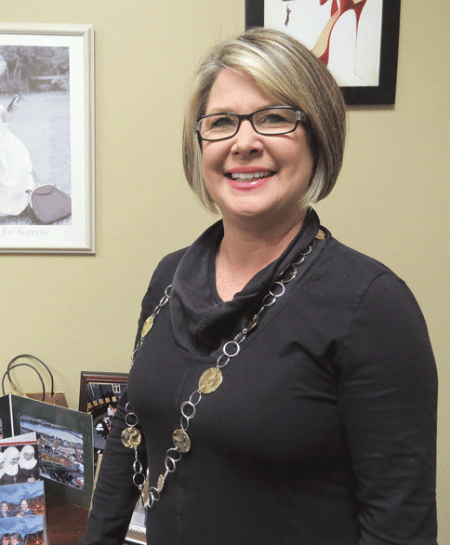
Daily News

SHEFFIELD — Berkshire Taconic Community Foundation announced the first round of deadlines for competitive grants in fiscal year 2016. Covering the period from January through March, the winter cycle of deadlines is open to regional nonprofits, students, and schools.

For Nonprofits

• Harvard Business School’s ‘Strategic Perspectives in Nonprofit Management’ program (SPNM) is an intensive six-day program for nonprofit CEOs, presidents, or executive directors who are responsible for shaping the direction, policies and major programs of their organizations. Applications are due March 1 and the program runs in July.
• The Green Pastures Fund supports nonprofit organizations or public entities that encourage or preserve small, community-based agricultural ventures. Grants range from $1,000 to $3,000. Applications are due March 1.
• The James and Robert Hardman Fund for North Adams supports nonprofit groups, community organizations or public agencies that support the residents of North Adams and the neighboring communities of Florida and Clarksburg, Mass., and Stamford, Vermont. The fund prioritizes projects that support disadvantaged residents or enrich the cultural and natural environment. Grants range from $500 to $3,000. Applications are due March 1.
• The Fund for Williamstown supports innovative projects and services that benefit the residents of Williamstown. Letters of intent describing projects and their purpose are due March 15. Grants range from $500 to $2,500. Full grant applications are due April 15.

For Students

• The Alice and Richard Henriquez Memorial Fund /Youth World Awareness Program provides grants to students ages 14-22 for international travel and service. Grants range from $500 to $1,500 for individual applicants; larger grants may be considered for groups. Applications are due Feb. 1.
• The Simple Gifts Fund awards grants to young people ages 13-21 for participation in cultural or creative summer programs. Grants range from $200 to $800. Applications are due March 30.

For Schools

The James C. Kapteyn Endowment Fund honors excellence in teaching with a $10,000 prize for study or travel. Nominations from school principals or chief administrators are due Feb. 2.
The Lenox Education Enrichment Foundation supports projects that enhance the educational experience of students and teachers in the Lenox public schools. Grants range from $100 to $1,000. Applications are due Feb. 28.
Grant application forms for all the funds are online and can be found at www.berkshiretaconic.org/SearchGrants.

Daily News

WEST SPRINGFIELDModern Salon has named the 2015 class of Excellence in Education honorees in its sixth annual program recognizing leadership and best practices among cosmetology schools. DiGrigoli School of Cosmetology was chosen to represent excellence in the category of Community Involvement, Marketing Innovation, School Culture.

“We received applications from cosmetology schools across the country and look forward to celebrating all the 2015 Excellence in Education honorees and sharing their stories. It is truly a great time to pursue a beauty education and career, and the program at DiGrigoli School of Cosmetology exemplifies that fact,” said Modern Salon Editorial Director Michele Musgrove.

Paul DiGrigoli, president and CEO of the DiGrigoli School of Cosmetology, added, “I’m so grateful to have such a stellar faculty and team. They have supported and created an environment of positivity and energy that constantly and continuously helps take our students’ minds and careers to another altitude. I am proud to say that the future professionals who graduate from the DiGrigoli School of Cosmetology have received jobs from some of the best salons in our area. We will continue to reach for greater heights to provide all of our students with higher education, and we are so honored to be receiving this prestigious award for the fourth year in a row.”

Daily News

GREENFIELD — Richard Venne, president and CEO of Community Enterprises Inc., announced the appointment of Gary Daniele as director of Greenfield Community Employment and Training Programs. He is responsible for the effective management of all aspects of employment and training services in Greenfield, and will implement the organization’s mission and values by supporting individuals to make positive changes in their lives.

Daniele was previously employed by the state of Oregon as a branch manager for vocational rehabilitation. He has more than 25 years of experience in employment, vocational, and residential supports for individuals with disabilities, and was awarded the Department of Human Services Director’s Excellence Award in 2014. He received his bachelor’s degree in psychology from Roger Williams University.

Community Enterprises is a human-service organization that provides employment, education, housing supports, and day supports for people with disabilities. Headquartered in Northampton, it maintains 27 service locations throughout Massachusetts, Connecticut, New York, Oklahoma, Rhode Island, and Kentucky. The Massachusetts offices include Springfield, Holyoke, Pittsfield, Greenfield, Worcester, Salem, Gloucester, and Somerville. The nonprofit organization, which started as a small program at Northampton State Hospital, has grown to a $22.5 million business.

Daily News

SPRINGFIELD — The Gray House recently inducted five new board members to three-year terms.

• Jan Rodriguez Denney is director of Elder Affairs for the city of Springfield. She holds a bachelor’s degree in early childhood education from UMass and a master’s degree in human resources development from American International College. She serves on the board of Partners for a Healthier Community, Springfield Food Policy Council, Regional Employment Board, YWCA, Incorporated Emerson Wright Foundation, Greater Senior Services Inc., and Springfield College Board.

• Sean Ditto is a project executive with Consigli Construction Co. in Hartford, Conn. He has a bachelor’s degree in civil engineering from Norwich University.

• Karen Garcia is a family specialist with the New England Farm Workers Council. She works with the homeless to help them address their issues so they are able to sustain affordable housing.

• Sr. Catherine Homrok is one of the founders of the Gray House. She entered the Sisters of St. Joseph in 1959 after graduation from St. Jerome High School in Holyoke. She received her bachelor’s degree from Elms College and her master’s degree from Emerson College. Currently, she serves the Roman Catholic Diocese of Springfield as its director of Pastoral Ministries.

• Tina-Marie Quagliato is director of disaster recovery and compliance for the city of Springfield. She has been employed by the city for almost 11 years, with varying roles in housing, community development, and neighborhood stabilization. She is on the board of trustees for the Martin Luther King Jr. Charter School of Excellence in Springfield and the board of directors for the United Way of Pioneer Valley, Emergency Food and Shelter Program. She has volunteered with Keep Springfield Beautiful, Habitat for Humanity, Open Pantry, and the Mattoon Street Arts Festival.

The Gray House is a small, neighborhood human-service agency located at 22 Sheldon St. in the North End of Springfield. Its mission is to help neighbors facing hardships to meet their immediate and transitional needs by providing food, clothing, and educational services in a safe, positive environment. For more information, visit www.grayhouse.org.

Cover Story Economic Outlook Sections

Questions About Sustainability Cloud the Picture for 2016

Outlook 2016

By most accounts, the state’s economy — and area businesses — had a solid 2015. Performance didn’t match pre-recession levels, but it was an improvement over the previous three or four years. The question looming over 2016 is whether that performance can be sustained, and there are enough doubts, or reservations — created by everything from a stronger dollar to still-falling oil prices to uncertainty about who will win the White House next November — to keep confidence in check.

Dan Flynn calls it “soft confidence.”

That simple, two-word phrase goes a long way toward explaining the current state of the local and national economy and the general attitude concerning it among business owners.

Elaborating, Flynn, executive vice president and chief operating officer of Wholesale Banking for West Springfield-based United Bank, said many of the institution’s commercial clients are doing well — not as well as before the so-called Great Recession that started in 2008, but performance has been solid. Some even recorded their proverbial ‘best year ever’ in 2015, he noted, adding that most saw at least improvement over 2014.

Dan Flynn says many area businesses had a solid 2015

Dan Flynn says many area businesses had a solid 2015, but the question moving forward is whether that performance can be sustained.

But — and this is an important ‘but’ — these business owners are not at all sure that such performance is sustainable given a host of factors that are almost all well beyond their control. These range from global and domestic violence to still-spiraling healthcare insurance costs to extreme uncertainty about who will prevail in the 2016 presidential election — and what he or she might do after getting elected.

Thus, existing confidence is, well, soft.

“For most business owners, their inventory backlog or their job backlog is building, but they don’t have the confidence that this will sustain itself in 2016 or 2017,” Flynn explained. “They think it will, but it’s not like that flat-out ‘we’re confident, we’re going to hire a couple of extra people, we’re going to add a second shift.’ They’re not that confident.”

John Patrick agreed. The CEO of Farmington Bank, which recently made a foray into the Western Mass. market with locations in West Springfield and then East Longmeadow, said there is some optimism about the year ahead, but there are also serious doubts, enough to keep confidence from becoming deep or profound.

“The economy, especially the local economy, is all about confidence,” he noted. “And I wouldn’t say there is strong confidence in the marketplace relative to everything that’s happening around them.”

And by ‘everything,’ he meant factors ranging from terrorism in Paris and California to the ever-rising cost of health insurance.

Bob Nakosteen concurred, summoning another word to describe the current picture and outlook for 2016: ‘fuzzy.’

He would go into much greater detail, obviously, but Nakosteen, professor of Economics at the Isenberg School of Management at UMass Amherst and co-editor of MassBenchmarks, the quarterly publication devoted to analysis of the Bay State economy, said that one word pretty much does the job.

Indeed, the outlook is fuzzy, as in not sharp, not clear, and, for the most part, not predictable.

“The picture is fuzzy, and through the fuzziness, we see a lot of positives, but we also see some risk,” he explained. “There’s a lot of internal strength in the U.S. economy, and it is going to overcome various weaknesses, and that means this state is going to do well. It’s a mixed picture, but the overall trend is positive. But do I have 100% confidence in what I just said? Absolutely not.”

That’s soft confidence personified.

“We’re in the middle of a slowdown … it’s not anywhere near a recession, but we’re definitely seeing some slowing,” Nakosteen went on. “The economy has been growing at 2% or a little less, and that’s not vibrant.”

John Patrick

John Patrick says a number of area manufacturers have seen exports impacted by the weakening of many foreign currencies.

Moving beyond ‘fuzzy,’ Nakosteen, like Flynn and others we spoke with, said there are a number of factors impacting the state and national economy — everything from a weak Canadian dollar, which is hurting exports to that country, to the fact that most Americans are not putting the money they’re saving at the gas pump back into the economy, to impressive job growth in the Commonwealth (if not Greater Springfield). Together, they make predicting what will come next an even more difficult assignment than it generally is.

Most observers are expecting growth to remain right around that 2% level, but it could go higher or lower depending on how matters evolve, especially that critical confidence level among business owners.

Money Matters

As he talked with BusinessWest about 2015 and what will likely happen in the year ahead, Nakosteen said there are certainly plenty of reasons to look at the glass and declare it at least half-full.

“Within the lack of clarity that we’re seeing, there lies a solid core of economic strength,” he explained, adding that the Bay State continues to match or outperform the nation overall, but it is very much dependent on the relative health of this country, as well as international markets, for its success.

As evidence, he cited some recent data showing that Massachusetts is experiencing an economic expansion in many ways reminiscent of the late ’90s, though without the impetus of the tech bubble that drove that cycle, meaning that this one is more well-rounded.

Gross state product is growing robustly, he went on — 7.1% for the second quarter compared to national GDP growth of 3.7% — and employment growth is steady, although limited geographically. The unemployment rate remains low by historical standards, and has been below the national rate since — and even before — the Great Recession.

“The current expansion appears to be on firm footing — the economy in the state has slowed down recently, but it’s still been a really good year,” he said while offering the global view.

“We’re expecting strong growth over the year or so,” he went on, using ‘we’ to mean the editors at MassBenchmarks. “It might be as strong as what we had up to the second quarter of this year, but pretty solid growth. How much of it makes its way out to the western part of the state remains to be seen.”

Flynn agreed.

“Overall, clients performed better over the past 12 months than the previous three to four years,” he said while generalizing the comments of business owners within the bank’s portfolio. “As a whole, they’re not seeing the same rate of return as before the recession, but they’re doing better than they were a year ago.

“And it’s across the board,” he went on. “You can take retail, manufacturing, wholesalers … generally, companies are performing better than they had.”

Given all that, though, the question looming over 2016 is whether that performance — by individual companies and the economy as a whole — can be sustained. And strong doubts about whether it can have led to heavy use of phrases such as ‘soft confidence,’ ‘fuzzy picture,’ ‘mixed signals,’ and the always-popular ‘cautiously optimistic,’ which Flynn said he’s heard repeatedly.

That’s because most all of the factors that will decide the fate of 2016 come complete with ‘ifs,’ ‘buts,’ question marks, and both points and counterpoints.

Take the jobs picture, for example. The nation’s economy added another 211,000 jobs in November after a gain of nearly 300,000 in October, a solid boost by most accounts that exceeded almost all expectations and propelled the stock market to a more than 2% gain the day the figures were released.


Click HERE to download a PDF chart listing the region’s largest employers


But do those numbers and the stated 5% national unemployment rate reflect real progress in what’s happening locally? The short answer is ‘no’ or ‘probably not.’

“I was in New York recently, and I heard a nationally respected economist who said that, if you really take a look at the numbers, unemployment on a normalized basis is closer to 9% when you take into consideration all the people who are unemployed and those working part-time who would prefer to be working full time,” said Patrick.

Like others, he noted that, overall, many employers have not yet reached — and likely won’t reach for some time — that threshold of confidence needed to add back some of those employees trimmed during extensive efforts during and after the recession to become more efficient and rightsize.

“Businesses are a little apprehensive about continuing to make significant investments in people, technology, and franchise, because they’re just unsure about what’s going to happen,” Patrick told BusinessWest. “And there many businesses that, because of the cost of healthcare, don’t want to go over that 50-employee number, and they’re trying to manage their business accordingly.”

Meanwhile, Nakosteen said, despite the start of work on the Springfield casino and a host of other construction projects across Western Mass., the employment needle has “barely budged” in the city of Springfield, meaning the jobless rate is still hovering around 9%, in sharp contrast to what’s happening elsewhere in the Commonwealth.

Bob Nakosteen says the Bay State added jobs at an impressive clip in 2015

Bob Nakosteen says the Bay State added jobs at an impressive clip in 2015, but by and large, those gains did not extend to Western Mass.

“Employment in the state has really grown at an amazingly fast clip over the past year to 18 months, but it’s not the same in Western Mass., as is usually the case,” he explained, adding that the Bay State has added 50,000 to 60,000 jobs over the past year, most of them in technology-related sectors, although healthcare and education remain solid contributors to such growth.

“A different picture emerges out here,” he went on, talking from his office on the UMass Amherst campus. “Springfield has added a few jobs but not many — at least it hasn’t gone down. The picture is better in the larger metropolitan area, but all the construction is in Springfield, so that’s where it should be recorded, but so far we’re not seeing it.”

Dollars and Sense

Another factor that is contributing to uncertainty is the stronger U.S. dollar. It certainly benefits those traveling overseas and has provided a huge boost for airlines and cruise lines, but overall, a strong dollar hurts exporters, including the many precision manufacturers that call the Knowledge Corridor home.

“I think many of the manufacturers in this region got off to a good start in 2015 and had good backlogs,” said Patrick, referring to companies on both sides of the border. “But companies within that corridor are usually producing a product that has export potential, and because of the strong dollar internationally, they’ve seen a lot of the orders slow down and some of them put on hold, with the buyer saying, ‘what we’ll do is wait for the dollar to drive down in value a bit.’”

There was some movement in that direction in early December, he noted, but overall, the dollar remains quite strong against all other currencies, and until a pattern of weakness occurs, exports will continue to suffer.

Nakosteen agreed, and said one country often overlooked when it comes to currency rates is Canada. It is a big trading partner, and at the moment that country’s dollar, also known as the ‘loonie,’ is in a hard spiral fueled by a host of factors, including falling energy prices and questionable monetary policy.

“Canada is our most important trade partner; a year ago, it was about one U.S. dollar to one Canadian dollar; now, a Canadian dollar is worth about 70 cents,” he explained. “What that means is for Candians, U.S. products are much more expensive, and you can see it in the export numbers — they’ve really dropped over the past year.”

As for falling oil prices, which analysts say will remain low for the foreseeable future, they are not producing a surge in consumer spending, as some had predicted, and in the meantime, they are taking a hard toll on the energy industry, which is having a ripple effect, in this country and elsewhere.

“We have not seen the surplus from lower gas prices turn into consumer spending — it’s going into savings or to reduce debt,” Nakosteen said. “It has not created the bump that was expected by everyone, including me.

“From everything I’m reading in the energy industry, low gas prices are here for a while,” he went on. “So it will be interesting to see if, over time, consumers start behaving a little differently and take this surplus and spend it.”

Still another factor is interest rates, which, after that strong November jobs report, are almost certain to rise after roughly seven years of stagnancy. The projected 0.25% increase, though minor, will finally bring some measure of relief to investors who have focused on low-risk options, such as bonds, which have yielded marginal returns. But the hike will also make borrowing more expensive, and this may slow the economy somewhat.

Cliff Noreen, president of Springfield-based Babson Capital, told Bloomberg News Radio recently that he welcomed the U.S. interest rate hike — “I think it’s about time; it’s been seven years, and we’ve been living with manipulated rates for that long, and we should go back to a more normal rate environment.”

“I think the biggest victims today are retirees — they retired with the assumption five or 10 years ago that they would earn a risk-free rate of 4%, 5%, or 6%; now, the risk-free rate is zero,” he told Bloomberg. “So they have to take more risk to make their return to live on, and they’ve been forced to invest in higher-risk assets like high-yield bonds and stocks, and they’ve had to adjust their asset allocation to make up for the zero-percent rate environment we’re in globally.”

CurrenciesChartCommoditiesChartOverall, Noreen said there were several surprises in 2015 — from falling commodities prices to spiraling foreign currencies (see charts) to gasoline prices that could have fallen further than they did — and all signs point to these conditions (and the negative impact and uncertainty they bring) continuing into 2016.

“We expect lower-than-normal investment returns for all asset classes,” he noted, “and slow economic growth globally, although things have been stabilizing, and continued very, very low interest rates that are in the process of rising.”

And there are still other factors to consider looking ahead, said Noreen, listing everything from a slowing of the growth rate in China to slowing corporate-profit growth in this country, and historically low yields on bonds, with many European countries, including Germany, France, Belgium, and the Netherlands, gaining status in what Noreen called the “negative-rate club.”

As for the upcoming presidential election, Nakosteen noted that, while elections themselves typically don’t have an impact on the economy and individual presidents don’t often dictate fiscal policy, elections do generate anxiety, which has its own trickle-down effect.

Bottom Line

Speaking from experience, Patrick agreed, noting that the one commodity business owners dislike the most is uncertainty.

And because there is no lack of it at the moment — not just because of the election but all those other issues mentioned above — there is a corresponding shortage of perhaps the most important element for at least the short-term health of the regional and national economy: confidence.

There is confidence that the progress measured in 2015 can be sustained, but, as Flynn noted, it is soft confidence.

And as long as that condition remains, the picture for 2016 will remain fuzzy.

George O’Brien can be reached at [email protected]
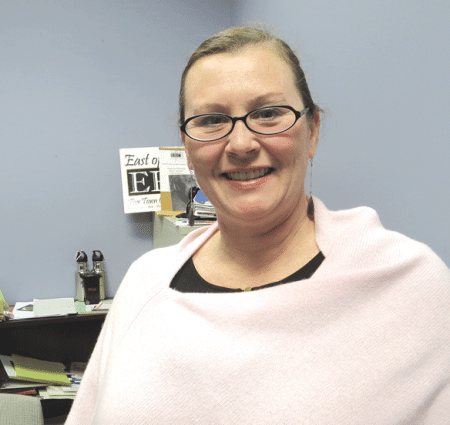
Law Sections

Law and Disorder

StressDPartLaw2Many lawyers say they entered the legal field to help people with their problems — often very difficult, serious problems. The danger is internalizing those problems and making client stress a permanent part of one’s psyche. That pitfall, and other stressors common to lawyers, from time pressures to sometimes-adversarial work relationships, contribute to unusually high levels of burnout, depression, substance abuse, and even suicide in the legal field. One challenge, experts say, is to recognize those dangers before they take root.

To many who aspire to the field, being a lawyer is a job to die for.

Unfortunately, many do, far too young. According to the Centers for Disease Control, lawyers are more likely than almost any other type of professional to commit suicide —  ranking behind only doctors and dentists — and are 3.6 times more likely to suffer from depression, a common trigger for suicide. Others deal with poor health due to overwhelming stress.

“A lot of lawyers are dissatisfied with their work, for reasons including long hours, conflicting demands on their time and energy, and the exacting and confrontational nature of the work,” said Linda Benoit, a licensed clinical social worker with Lawyers Concerned for Lawyers (LCL), an organization dedicated to helping legal professionals navigate the pitfalls of career stress — and worse. “Many lawyers are leaving the profession, and it appears job burnout is implicated in the exodus.”

Benoit spoke at a recent seminar at Western New England University School of Law titled “Stress Management for Lawyers: Building Resilience and Avoiding Burnout,” talking with lawyers and law students alike about the health problems, physical and emotional, common to their field, and how to tackle — or, better, avoid — them.

“Realistically, you could plug a lot of occupations in — you could say the same thing about elementary-school teachers or social workers — so take it with a grain of salt,” she said about the general topic of job stress. “Yes, some things are unique to each profession, but there are more likely to be commonalities.”

Still, an American Bar Assoc. survey suggests that more than one-third of lawyers are dissatisfied and would choose another profession if they could, and 15% to 18% suffer from some measure of substance abuse, compared to 10% of the general population, so something is clearly going on.

“If these things are particular to the legal field, why is that?” Benoit asked. “There’s something called an addictive personality … is there a legal personality?”

She cited several common characteristics of lawyers, including a need for achievement, extroverted and sociable — yet competitive and aggressive — personalities, a focus on the economic bottom line and material concerns, and, perhaps as a result, a higher incidence of psychological distress and substance abuse.

According to CNN, at least seven state bar associations have become so concerned about suicides that they took measures to stop the pattern, adding a mental-health component to mandatory legal continuing education.

“One of the things we have to guard against is unhealthy ways to alleviate stress,” said Eric Gouvin, dean of the WNEU School of Law. “It’s easy to get caught up in short-term alleviation of stress through drugs and alcohol, which only makes things worse in the long run.

“This has always been an issue in the legal profession,” he went on. “The only profession with a higher rate of alcoholism is the clergy, which has the same dynamic of folks trying to help people deal with their problems. Those problems are not trivial; they can get to you. And if you find a release with a drink at the bar, that could easily become three, four five drinks.”

“You have to learn how to talk yourself off the ledge,” said Barbara Bowe, another licensed clinical social worker with LCL. “And if you can’t do that, you had better have some people in your life you can call to help talk you off.”

A Question of Empathy

Benoit pointed out that most stress is psychological; while many people think of stress as something that attacks them, they bring their own beliefs to it. She cited the famous Anais Nin quote, “we don’t see things as they are; we see them as we are.”

As an example, she recalled a client who was upset that his wife frequently yelled at him. But he wasn’t responding to her only; he had been severely ridiculed and yelled at growing up, “and he was responding and filtering and exaggerating it based on his own history.”

How does that apply to lawyers? Basically, Gouvin told BusinessWest, they are constantly saddling themselves with the feelings and concerns — often negative — of others, which warps the way they see the world.

“People generally come to lawyers because they’ve got problems, and lawyers tend to get into this line of work because they want to help people solve their problems. It’s easy for lawyers to take on clients’ problems as if they were their own, and that’s where the stress comes in,” he explained.

Linda Benoit, left, and Barbara Bowe

Linda Benoit, left, and Barbara Bowe say Lawyers Concerned for Lawyers is a response to a very real tendency for attorneys to succumb to stress, depression, substance abuse, and even suicide.

“Most successful lawyers, over the long term, are able to get a little professional distance between their clients’ problems and their own individual life,” he added. “But sometimes folks need to be reminded of ways to take care of themselves and their mental health. They get so wrapped up in these issues, and if they don’t take a minute to step back every now and then and find a way to center themselves, the stress will accumulate over time and cause psychological and physical damage.”

Indeed, Benoit said, chronic, unmanaged stress is implicated in 50% of all illnesses, contributing to atherosclerosis, hypertension, weight gain, memory impairment, decreased immune-system functioning, increased blood-glucose levels, and mental-health and substance-abuse problems.

“In spite of all this,” she noted, “almost half of all adults say they’re not sure they’re doing enough to manage stress, and one in five Americans say they do nothing to manage stress.”

And managing the stress of others makes it even worse, Bowe said. She spoke about one of her past clients, a lawyer on the cusp of retiring from decades of solo practice. His wife, a teacher, had recently retired herself, so they planned on getting a boat and setting sail into their leisure years. “But he presented with a lot of anxiety, a lot of panic. He lost sleep, he lost weight, he couldn’t swallow. He had talked to his doctor about his blood pressure and cardiac levels.”

And then, she discovered the core issue. It turned out her client’s father had “gone down the rabbit hole” after retirement, dealing with issues that landed him in a psychiatric hospital. He ended up killing himself when her client, the one now approaching retirement, was 18 years old.

“He was afraid he would wind up like his old man, even though that wasn’t his story at all,” she said. “So whenever his wife talked about retirement, he broke into a panicked sweat, sweaty palms, wondering, ‘if I retire, what will become of me?’ He had the sense, because of what happened to his father, that would be his future, too.”

While that’s not the same as empathizing with a client, Bowe sees some similarities between that man and lawyers so emotionally involved with their clients that they bury their own needs, and make their clients’ worries their own.

“You need to have the ability to step outside of that,” she explained. “Maybe you put your best case together and things don’t go as planned. So many things are out of your control. How do you manage that?

“As a laywer,” she went on, “you can always do more, and clients expect you to do more. At some point, internally, you have to say, ‘I’ve dotted my Is, I’ve crossed my Ts. I’ve done what I can do, although someone thinks I could have done more.’”

Though attorneys see themselves as problem solvers, Bowe said, there have to be limits. “You have to figure out your own level of stress. If your satisfaction is based on what the client says, you’re in trouble. It’s never going to be perfect, so you have to decide for yourself what is good enough. It’s never going to be 100%. That’s not the nature of law.”

Change the Tapes

Benoit was quick to point out that not all stress is negative; sometimes, it can serve as a motivator. “Any kind of stress can have beneficial benefits, depending on the strength of the stressor and how an individual deals with it.”

She pointed out the difference between ‘eustress’ — stress that provokes a positive response, from enhanced performance to improved mood to sharper memory — and ‘distress,’ which produces a negative cognitive response, like nervousness, anxiety, fatigue, and depression.

Most jobs have stress triggers, she added, from lack of communication in the office to unrealistic expectations and time demands; from lack of appreciation to job insecurity. Lawyers have specific stresses on top of those, including billable-hour pressures, the sometimes-adversarial nature of their working relationships, perfectionist tendencies, student-loan debt, and a sometimes-poor public image of the profession.

It’s important, she said, to take control of one’s thoughts when those pressures start to overwhelm. “What is your cognitive response? Are you able to visualize a positive outcome, or do you dwell on catastrophic, worst-case thinking?”

Bowe referred to the importance of “changing the tapes” that play in one’s head.

Eric Gouvin

Eric Gouvin says people often become lawyers to help others, but tend to make those problems their own.

“You have that power. It doesn’t mean the cognitive fairy will come to your house and change everything, but you can work to develop a pattern of visualizing and assessing a situation from a more positive standpoint, and ask, ‘what kinds of resources do I need to draw in to do better on this?’” she explained. “Some lawyers put their head down and keep moving, even though it’s not necessarily in a positive direction.

“You can definitely bring a different mindset to a situation to influence an outcome,” she went on. “But you have to have the desire and want to do it.”

Benoit agreed. “The stress isn’t going to go away,” she said, “but it doesn’t have to be this constant negative thinking. When you do that, you’re doing violence to yourself. Why would you want to participate in that?”

Building resilience against factors that trigger stress can come in many forms, she went on. “If you’re in a toxic or hostile work environment, you may have to cut your losses and leave. If you’re in a solo practice, maybe hire someone to help you develop or redesign career goals.”

Other tips include taking firmer control of one’s schedule by rigidly prioritizing tasks, getting away from the desk once in a while by taking short breaks, avoiding unpleasant colleagues as much as possible, educating clients about the process of law (to counter unrealistic expectations), and avoiding workaholism.

“Set limits, and don’t put all your well-being eggs — how you feel about yourself — in your work basket,” Benoit said. “You’re more than your occupation. Make time for yourself and your relationships every day.”

And, overall, be realistic. “You don’t have to be perfect, or read every journal article,” she said. “Remind yourself that you can’t solve all your clients’ problems, even though they will want you to. Remind yourself that you can’t save everybody.”

Finding Purpose

Obviously, clinical depression, substance abuse, and suicidal thoughts aren’t issues people can defeat through positive thinking, and LCL offers resources to lawyers struggling with those demons.

But for everyday stresses, a little mindfulness doesn’t hurt. Some of Benoit’s stress-reduction tips are applicable to many fields, such as finding humor in situations, setting aside time for rest and leisure, avoiding drugs and alcohol, maintaining good nutrition and sleep habits, setting small, achievable goals, and having two specific friends: “one friend you can vent with, and one you can’t.”

It also helps, she said, for lawyers to remember their purpose and passion. She cited a mission statement from the American Bar Assoc. that touches on concepts like defending liberty and pursuing justice, and said lawyers should step back once in a while and reassess why they chose the career to begin with.

“Is it being a defender of rights? A commitment to social justice? Being a protector of human dignity, or a crusader against discrimination? Maybe there are some bigger things that will re-energize you. You can change the system.”

Joseph Bednar can be reached at [email protected]
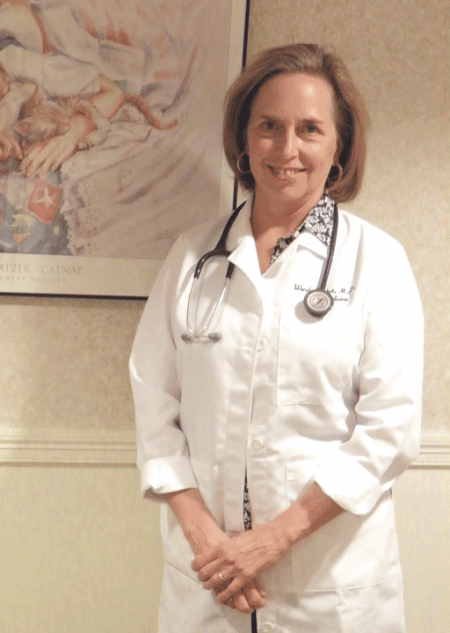
Briefcase Departments

Business Confidence Up, Manufacturing Challenged

BOSTON — The Associated Industries of Massachusetts (AIM) Business Confidence Index rose 1.3 points in November to 56.9, almost exactly where it stood a year before (56.8). “The story here is less the monthly gain than the longer-term pattern,” said Raymond Torto, Chair of AIM’s Board of Economic Advisors and lecturer at Harvard Graduate School of Design. “Over the past year, the index rose nicely for five months and then started a fitful decline back to where it was last November. The hidden trend behind that pattern is a divergence in confidence levels between manufacturers and other employers.” He added that “our state’s manufacturing sector, which relies heavily upon international demand for its world-class products, is up against a strong dollar and weak conditions in all its major export markets — China, Japan, Canada, and Western Europe. Domestic demand is down as well because of global conditions and large inventories. In March, manufacturers were almost as confident as other employers, but the confidence gap has grown significantly since then.” Torto noted that the manufacturing sector is overrepresented in AIM’s survey, but that it plays a vital part in the Massachusetts economy. “If the sector continues to struggle in 2016, other sectors will feel the repercussions, especially in regions of the state with concentrations of manufacturing industries.” AIM’s Business Confidence Index has been issued monthly since July 1991 under the oversight of the Board of Economic Advisors. Presented on a 100-point scale on which 50 is neutral, the index attained a historical high of 68.5 in 1997 and 1998; its all-time low was 33.3 in February 2009.

State Issues Financial-literacy Report

BOSTON — State Treasurer Deb Goldberg, accompanied by her Financial Literacy Task Force, released their statewide report on the status of financial education in the Commonwealth. “I have always understood the responsibilities of the Treasurer’s office include insuring economic stability within our state,” Goldberg said. “This means building a robust financial-literacy program, which is a critical step toward strengthening economic security for everyone in Massachusetts.” The task force, under the direction of the Treasurer’s Office of Economic Empowerment, launched a comprehensive research effort in April. The diverse group of policymakers, educators, bankers, and advocates convened for six months. Their goal was to develop a road map to resources that will empower every Massachusetts resident with the skills they need to manage their money, plan for college, save for retirement, and better understand the impact of their economic decisions. “Implementing the recommendations of this task force will make a difference in the quality of the lives of Massachusetts citizens of all ages and backgrounds,” said former Undersecretary of Consumer Affairs and Business Regulation Barbara Anthony, who chaired the task force. “The task force work presents the vital road map for the future of financial literacy in our state.” Some initiatives within the report include increasing accessibility to all financial education activities and programs throughout the state, promoting a public financial-education awareness campaign, communicating the family-dynamic principle to stakeholders, and incorporating it in all financial-literacy programming within the Office of Economic Empowerment. The 31 task force members identified three key demographic groups — K-12 students, college students, and adults — for the largest scope of fiscal impact on the state. The task force’s final report serves as an action plan for Goldberg and the Economic Empowerment Trust Fund Board. “Though we are keenly aware all adults can benefit from financial services, the adult subcommittee of Treasurer Goldberg’s Financial Literacy Task Force determined low-to-moderate income families, first-generation immigrants, women, seniors, and veterans are particularly vulnerable, and have set forth recommendations to ensure their financial well-being throughout their lifetime,” said Sylvia de Haas Phillips, subcommittee co-chair and senior vice president of United Way.

Standard & Poor’s Affirms State’s AA+ Bond Rating

BOSTON — In a communication to the Commonwealth, Standard & Poor’s Ratings Services shared that it has affirmed Massachusetts’ AA+ credit rating on its general obligation bonds, while also providing notice that it is changing the Commonwealth’s outlook to ‘negative’ due to concerns about a multi-year trend on spending and the use of reserve funds. “While we have retained our current AA+ rating, we recognize and acknowledge the areas of concern raised today by Standard & Poor’s revised outlook,” Treasurer Deb Goldberg said. “I will continue to emphasize the importance of building our reserves, and I look forward to working with the administration and Legislature to establish the path to a healthier, stronger reserve balance for Massachusetts.”

Company Notebook Departments

STCC, United Way Open Financial Success Center

SPRINGFIELD — Springfield Technical Community College (STCC) opened Springfield’s first Thrive Financial Success Center on Dec. 3, with a ceremony in the President’s Conference Room in Garvey Hall. Thrive is a collaborative effort between United Way of Pioneer Valley and STCC to provide financial education and support services to students and community residents. It is supported by PeoplesBank, MassMutual, the Irene E. and George A. Davis Foundation, the United Way of Pioneer Valley, and the STCC Foundation. “After the success of the Thrive Financial Success Centers at Holyoke Community College and in downtown Holyoke, we are thrilled to open a third Thrive Center at Springfield Technical Community College,” said United Way of Pioneer Valley President and CEO Dora Robinson. “At the United Way of Pioneer Valley, we believe basic financial literacy should be a key aspect of everyone’s education. No career goal or life’s ambition should be hindered because a person doesn’t know how to balance their checkbook or maintain a good credit rating.” Thrive @ STCC anticipates it will serve 400 individuals in its first year of operation. Program offerings include confidential benefits screening and enrollment, a money-skills class, individual financial coaching sessions, free income-tax prepatration through the Volunteer Income Tax Assistance (VITA) program, links to workforce-development and training workshops, and LifeBridge, MassMutual’s free life-insurance program. Thrive Centers currently operate in partnership with the United Way at Holyoke Community College and at the Picknelly Adult and Family Education Center in downtown Holyoke. “Building financial awareness and planning skills is essential to our students’ and our community’s economic prosperity,” said STCC President Ira Rubenzahl. “Many of our students are overburdened with outside financial struggles. Coupling career guidance with access to financial coaching will assist Thrive participants to make informed decisions that will make their lives easier, allow them to remain focused on their studies, and prepare them for future employment.”

Berkshire Bank Launches ‘Season of Giving’ Effort

PITTSFIELD — Berkshire Bank has launched its fourth annual “Season of Giving” campaign, which runs through the end of the holiday season. Through the campaign, bank employees will complete a variety of community-service projects throughout cities and towns that Berkshire Bank serves. Berkshire Bank employees are also inviting the public to join with them to support local children and families in need during this holiday season to further expand the collective impact. More than 200 Berkshire Bank employees will participate in the effort, with all of the service projects benefiting nonprofit organizations and families across Massachusetts, New York, Connecticut, and Vermont. In addition to these local efforts, Berkshire Bank has teamed up with the American Red Cross to participate in their annual Mail for Heroes program, through which bank employees will send holiday cards to service men, women, and veterans who cannot be with their families during the holidays. In the Pioneer Valley, all Berkshire Bank branches and Berkshire Insurance Group offices have teamed up with the state Department of Children & Families to collect gifts for local families in need. Donations are being accepted at any Berkshire Bank location in Hampden, Hampshire, and Franklin counties. The public is invited to stop by their local office to see which items are needed from the ‘giving tree.’ Bank employees will also volunteer their time with a variety of local nonprofit organizations during the holiday season, including Wreathes Across America and the Salvation Army. Berkshire Bank Foundation, the charitable arm of Berkshire Bank, also plans to contribute grants to local nonprofit organizations.

WNEU Offers Free Small-business Legal Assistance

SPRINGFIELD — The Western New England University Small Business Legal Clinic is now accepting applications from entrepreneurs and small-business owners seeking legal assistance for the spring 2016 semester. Under faculty supervision, law students assist clients with legal issues including choice of entity, employment policies, contract drafting, regulatory compliance, and intellectual-property issues relating to trademark applications and copyright. This is a free service available to local businesses. The Small Business Clinic at Western New England School of Law has assisted more than 300 small businesses, and is a solid resource for entrepreneurs who lack the finances to retain an attorney. By using the clinic’s services, businesses can avoid problems by getting legal issues addressed early and correctly. It also provides students with an opportunity to gain real-world experience. The Small Business Legal Clinic asks small-business owners to submit their applications by Thursday, Dec. 31. Applications received after that date will be considered if additional resources are available. Students will begin providing services in mid-January. For more information, call the clinic at (413) 782-1469 or e-mail [email protected].

Departments People on the Move

The Massachusetts Board of Higher Education formally approved Ramon Torrecilha, a lifelong educator, as the 20th president of Westfield State University (WSU). A lifelong educator, he is currently a professor of sociology at California State University Dominguez Hills. “I am delighted by the appointment of Dr. Ramon Torrecilha as the new president of Westfield State and look forward to working with him,” said Carlos Santiago, state commissioner of Higher Education. “I want to thank the Westfield board of trustees and the search committee for delivering an exceptional pool of quality candidates, and congratulate them on an outstanding selection.” Torrecilha will be the first Latino to serve as president in the university’s 176-year history. He is scheduled to begin his term on Jan. 25. Westfield State’s presidential search process officially launched in January 2015, with a search committee comprising 13 members of the campus community. The pool of candidates was narrowed to a semi-finalist group of 13 in August, and on Sept. 29, the presidential search advisory committee announced three finalists: Torrecilha; Damian Fernandez, CEO and head of school at Ethical Culture Fieldston School; and Linda Vaden-Goad, provost and vice president for Academic Affairs at Framingham State University. On Oct. 28, the WSU trustees voted to recommend Torrecilha as the final candidate, and the state Board of Higher Education approved the choice this week. Previous to his current role at California State University Dominguez Hills, he served as provost and vice president for Academic Affairs, where he designed and implemented a cohort-based, first-year initiative to increase student retention and graduation rates. As provost, he invested in student research and supported more than 200 undergraduate research projects. He provided leadership and support to secure more than $16 million in grants and contracts and $600,000 to support faculty research and creative activity. Torrecilha also served as executive vice president of Mills College in Oakland, Calif., during which time he served as acting president on two separate occasions. His many accomplishments at Mills include the design, implementation, and successful achievement of a capital campaign that raised more than $130 million dollars on behalf of women’s education. He also led a successful campus reaccreditation process resulting in an eight-year renewal from the Western Assoc. of Schools and Colleges and increased the alumnae participation rate by 10%. Torrecilha earned his bachelor’s and master’s degrees in sociology from Portland State University and his Ph.D. in sociology from the University of Wisconsin Madison.

•••••

Eight lawyers from Bulkley Richardson have been named to the 2015 Massachusetts Super Lawyers list of top lawyers in the state, and two lawyers from the firm have been named to the 2015 Massachusetts Rising Stars list of top up-and-coming lawyers. No more than 5% of lawyers in Massachusetts are selected for the Super Lawyers list, and no more than 2.5% are selected for the Rising Stars list. The following Bulkley Richardson lawyers were named to the 2014 Massachusetts Super Lawyers list:
• Francis Dibble Jr., whose practice areas include business litigation, health law, and antitrust litigation;
• J. Patrick Kennedy, whose practice areas include business litigation, banking and intellectual property litigation;
• Kevin Maynard, whose practice areas include business litigation, general litigation, and nonprofit;
• David Parke, whose practice areas include business/corporate and mergers and acquisitions;
• John Pucci, whose practice areas include criminal defense (white collar);
• Donn Randall, whose practice areas include banking and business litigation;
• Ellen Randle, whose practice focuses on family law; and
• Ronald Weiss, whose practice areas include mergers and acquisitions, closely held business, and estate planning and probate.
The following Bulkley Richardson lawyers were named to the 2015 Massachusetts Rising Stars list:
• Michael Roundy, whose practice areas include business/commercial litigation, tax appeals, and medical malpractice (defense); and
• Kelly Koch, whose practice areas include family law and estate planning and probate.
Super Lawyers, a Thomson Reuters business, is a rating service of outstanding lawyers from more than 70 practice areas who have attained a high degree of peer recognition and professional achievement. The annual selections are made using a patented, multi-phase process that includes a statewide survey of lawyers, an independent research evaluation of candidates, and peer reviews by practice area.

•••••

Kenneth Albano

Kenneth Albano

Bacon Wilson, P.C. announced that attorney Kenneth Albano was recently honored with the Esteemed Service Award from Behavioral Health Network Inc. (BHN). Albano was presented with the award during BHN’s annual meeting, in recognition of his 20-plus years as a member of BHN’s board of directors and his related board service. “I am grateful to BHN for this recognition,” Albano said. “The services BHN provides are essential to the wellness of so many in our community who may be struggling with addiction or other life crises. I am honored by this award, and it has been my honor to serve this excellent organization for so many years.” Behavioral Health Network is a growing non-profit, community behavioral-health service organization, and has served the needs of children, adults, families, and communities in Western Mass. since 1938, offering tools and treatments for those with mental illness, substance-use disorders, or intellectual disabilities. Albano is a senior partner with Bacon Wilson and a member of the firm’s corporate, commercial, and municipal practice groups. In addition to his work with BHN, he has worked with the American Cancer Society, Make-A-Wish, and the ALS Assoc., and he serves as board chair of the March of Dimes Western MA Division and on the board of the New England Chapter of the March of Dimes. In June, Albano was honored with the Mass. Bar Assoc. Community Service Award in recognition of his exceptional volunteer work.

•••••

Country Bank President and CEO Paul Scully announced that Eric Devine has been promoted to first vice president, Information Technology. Devine has been with Country Bank since 2006 in the IT Department, working most recently as the Information Technology Services officer. “Eric is a dedicated and driven member of our team. I am pleased to have the opportunity to recognize him for his outstanding leadership over the last few years,” Scully said. Devine studied at Sacred Heart University with a concentration in information technology and graduated from New England School for Financial Studies in 2012. He is very active in the community, serving on the program advisory committee for Porter and Chester Institute, working on the annual SIDS Road Race committee, and supporting the Griffin’s Friends Children’s Cancer Fund as a runner and charity fund-raiser. In addition, he served as the 2015 Springfield grand parade marshal for the annual St. Patricks Day Parade in Holyoke. He was elected to BusinessWest’s 40 under Forty in 2015.

•••••

Aaron Smith, P.C., a certified public accounting firm serving individuals and businesses in the Pioneer Valley, announced the addition of two new staff accountants, Trent Domingos and Emily Sit. Both are responsible for audits, reviews, and compilations. “We are pleased to add two staff accountants to our team, as this allows us to maintain a high level of excellence and personal attention that our clients have come to expect,” said David Padegimas, CPA, managing director of Aaron Smith, P.C. Domingos is a graduate of Fairfield University with a bachelor’s degree in accounting. He previously served as a tax intern at Therrien & Associates, P.C., in Wilton, Conn. At Fairfield University, Domingos was a four-year member of the varsity rowing team. “I am excited to join the team. I look forward to growing as an accountant in this position and contributing to the distinguished reputation that Aaron Smith, P.C. has established,” Domingos said. Sit is a graduate of the UMass Isenberg School of Management with a bachelor’s degree in business administration and accounting. She is expected to obtain her master’s degree in accounting in May. Prior to joining the team at Aaron Smith, P.C., she was employed by IBM Corporation as a financial analyst. She is fluent in English and Chinese, and enjoys gardening in her spare time. “Aaron Smith, P.C. has an excellent track record of great customer service,” Sit said. “I am thrilled to continue my passion for accounting in a well-respected firm.” CPAs at Aaron Smith, P.C. continually invest time and resources into furthering professional education, using state-of-the-art computer technology and developing extensive new business relationships.

•••••

Ruth’s House, the assisted-living residence at JGS Lifecare, announced the appointment of Samantha Panniello as dining services coordinator. As an experienced executive and catering chef, she brings a new dimension to the facility’s signature kosher dining and banquet menus. Panniello brings more than 10 years of experience to Ruth’s House. Formally trained at the Connecticut Culinary Institute, where she was recognized for excellence and graduated at the top of her class, she worked as a chef for both Springfield College and UMass Amherst before becoming kitchen manager of the Federal in Agawam and Vinted in West Hartford, Conn. where she was named head chef. While at Vinted, the restaurant received a rave review by the New York Times, praising its “rich tastes on small plates.” Panniello also landed an executive chef position at Lego in Enfield, Conn., and most recently served as head chef of Marketplace/Back Street Bistro in Springfield. “We’re proud to welcome Samantha to coordinate our dining services. She brings tremendous talent, enthusiasm, and experience to our culinary team,” said Joelle Tedeschi, executive director of Ruth’s House. “Our residents are in for a treat.”

Daily News

SPRINGFIELD — On Dec. 21, 1891, a physical-education instructor named James Naismith introduced a new game to a class of young men in an otherwise unremarkable gymnasium at the YMCA International Training School in Springfield.

The objective of this game seemed simple: throw a round ball into a round basket tacked to a balcony 10 feet above the floor. The pace of the game was slow and its origins humble, but the new pastime spread quickly, and by 1894, basketball was being played in France, China, India, and more than a dozen other countries.

On Dec. 21, 2016, the Naismith Memorial Basketball Hall of Fame and the basketball community will celebrate 125 years of basketball, and will precede that date with a year of special activities and events.

“The Naismith Memorial Basketball Hall of Fame is proud to promote and preserve the game we love,” said John Doleva, president and CEO of the Naismith Memorial Basketball Hall of Fame. “The game has reached far more people than Dr. Naismith could have ever imagined, and we look forward to commemorating his legacy and the great game of basketball during this momentous anniversary.”

Beginning in 2016, the Hall of Fame will recognize the 125 best basketball venues, ranging from high-school gymnasiums to NBA arenas. Beginning this spring, the official Basketball Hall of Fame Twitter account (@hoophall) will host a number of basketball-themed countdowns, such as the top 125 basketball shoes of all time and the top 125 moments in the history of basketball. Fans are encouraged to use the hashtag #naismithday to share their special basketball moments and memories.

Aug. 19, 125 days before the 125th anniversary, will serve as the official countdown date for the 125th-anniversary auction on www.hoophall.com. Basketball fans will have the opportunity to bid on 125 collectibles of the game, including autographed enshrinement memorabilia from the Hall of Fame’s private collection.

The festivities will culminate with a one-day event on Dec. 21, 2016. Additional special events may be unveiled throughout 2016.