Home Posts tagged Education (Page 34)
Daily News

SPRINGFIELD — The Springfield College Strength and Conditioning Graduate Program has again received acceptance into the National Strength and Conditioning Assoc. (NSCA) Education Recognition Program (ERP) for the next three years.

“The graduate strength and conditioning program provides challenging academic coursework combined with internship opportunities that in many instances lead to student employment,” said Tracey Matthews, dean of the School of Health, Physical Education, and Recreation. “Dr. Brian Thompson has built a stellar program, and this achievement is evidence of the commitment and passion our faculty place in our graduate programs. We are extremely proud of this recognition. This further affirms the strength of our program.”

A new benefit of having ERP acceptance will be the opportunity for Springfield College to host an Exam Prep Live Clinic providing students a comprehensive review of information most relevant to the certified strength and conditioning specialist (CSCS) and the national strength and condition association-certified personal trainer (NSCA-CPT) exams. As a NSCA Exam Prep Live Clinic host school, Springfield College students would be able to take advantage of a discounted rate when registering for the exam, as well as discounted rates on all CSCS and NSCA-CPT exams.

Additional benefits for the college resulting from the ERP acceptance include a strong presence on the NSCA’s official website, a listing in the NSCA membership newsletter that is distributed to professional and associate members, and the opportunity for the college to receive up to three complimentary career postings on the nsca.com career-resources page for the three-year period.

The Springfield College Strength and Conditioning Graduate Program prepares students to work with athletes as strength and conditioning coaches in secondary-school, collegiate, professional, and private settings. Students develop the skills and knowledge needed to design physiologically sound programs that enhance athletic performance, as well as the coaching skills needed to implement the programs. Coursework is both practical and research-based, and all students will complete multiple field-work experiences.

Employment Sections
TWO Program Is Honored for Closing Workforce Skills Gaps

WorkforceDPart“The economic imperative for aligning the workforce needs of Massachusetts with the needs of students attending community colleges is powerful and growing. Massachusetts is at a crossroads in its capacity to compete — and the ability of its residents to fully participate in the current economy and the rewards that employment brings. For the Commonwealth to flourish going forward, a high priority must be placed on training the workforce that is needed by the industries that are driving the Massachusetts economy. That responsibility falls squarely on the Commonwealth’s public higher-education system, most predominately the 15 community colleges.”

That was one of the more hard-hitting bits of analysis and commentary contained in a blistering 2011 report issued by the Boston Foundation, a document that essentially called out the state’s community colleges for not doing enough to help train a workforce to meet industry needs, while making some controversial suggestions about how to bring about change, such as a centralization effort that would do away with local boards of trustees at the schools.

Bill Messner — now, as then, president of Holyoke Community College — remembers his reaction to that report. His initial response was that its authors didn’t do enough research — at least when it came to the schools west of Worcester — and missed some key evidence that community colleges in the 413 area code were, in fact, being imaginative and somewhat effective in efforts to close so-called skills gaps within the workforce.

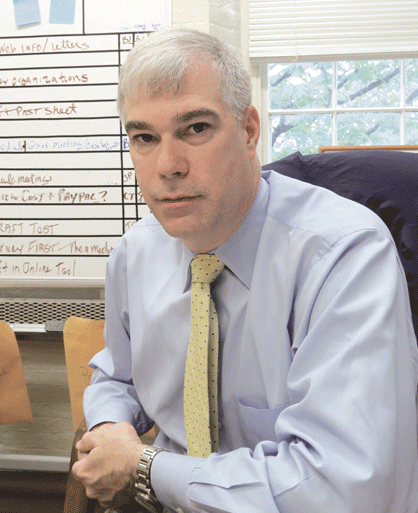
Bill Messner

Bill Messner says the Boston Foundation report in 2011 caught the attention of area schools and prompted initiatives like TWO.

Still, Messner and others, like his counterpart at Springfield Technical Community College, Ira Rubenzahl, chose not to shoot the messenger — although they were highly critical of those suggestions to centralize the community-college system and put it under one board — and heed calls from the Boston Foundation, as well as the Commonwealth Corp. (which issued its own report with similar findings at that time) to do more to partner with businesses and workforce-development agencies to properly align their training programs with the specific needs of industry sectors.

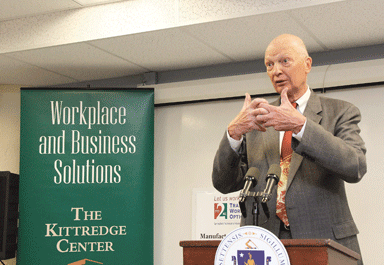
So it was with a large dose of pride that HCC and STCC learned that, together, they had won the first Deval Patrick Award for Community Colleges, named after the former governor and funded by the Boston Foundation, for work undertaken through a program called TWO (Training & Workforce Options), an acronym that is now resonating throughout the local business community.

The cash prize, to be split by the schools, is $50,000 — a small amount, especially when budget cuts of nearly 10 times that number were announced by the Baker administration for both schools the same week the award was presented. But the rewards go well beyond the money (which will go into both schools’ general operating funds), said both Messner and Robert LePage, vice president of Foundation and Workforce Training at STCC and the school’s TWO point person.

Indeed, the award will bring recognition to the program, said LePage, adding that with that exposure might come support from other state agencies as well as more participation among area businesses and thus more progress in combatting regional workforce issues.

“Recognition from a group like the Boston Foundation is the kind of endorsement that can get others to invest in you — I hope this is something we’re able to leverage,” he explained. “People want to see a good return on their investment, so I’m hopeful that this will bring some eyes to Western Mass., prompt others to appreciate the work we’re doing here, and cause people to say there are things happening here that they can adopt.”

In many ways, the Boston Foundation report validates TWO’s mission and underscores the success stories authored in its first three years, said LePage, adding that there have been many of them.

For example, TWO has partnered with Baystate Health to create a regional ICD-10 (medical coding) incumbent worker training academy and is working with regional employers to launch an advanced hospital medical coding academy that will prepare workers for the many changes coming to that important realm within healthcare. Meanwhile, it has worked with MassMutual and a host of other employers to develop a new advanced call center and customer service certificate, a program that has succeeded in placing a number of individuals in jobs within that emerging sector.

Meanwhile, TWO has taken the lead in training individuals for the gaming industry that will soon become a force in this state through the creation of the Mass. Casino Careers Training Institute.

For this issue and its focus on employment, BusinessWest looks at how TWO has managed to impress far more than the Deval Patrick Award judges and, in the process, has enabled more individuals to join the workforce and helped area businesses thrive.

Work in Progress

Increasingly, Messner noted, groups such as the Boston Foundation are creating cash awards, like those attached to the Deval Patrick Award, as incentives to prompt groups and individuals to respond to their various initiatives and calls for action.

And in many instances, such tactics are working, he said, adding quickly that, with the Patrick Award, there was little fanfare, and many administrators at the state’s community colleges, himself included, were not even aware of the award until a call for applications was issued last fall.

The much more profound incentive to respond to the 2011 report and others like it, said Messner, was a recognized need for a regional response to a skills gap that goes a long way toward explaining still-high regional unemployment rates at a time when many businesses are struggling mightily to fill key positions — a phenomenon that has in some ways stifled economic growth.

“While we didn’t agree with everything in the report, it certainly got our attention,” said Messner, using ‘we’ to mean both community colleges. “And we responded accordingly with TWO.”

Slicing through the 2011 Boston Foundation report and summing up its main points, the authors’ main contention then was that the state’s community colleges were not working collaboratively (or working enough) with employers, industry groups, and workforce-development-centered agencies to identify needs, close skills gaps, and create opportunities for those challenged in their attempts to enter the state’s knowledge-based workforce.

So TWO, which was already in its formative stages when the report came out, was designed to change that equation, create a host of partnerships, and incorporate a far more proactive approach to workforce issues and challenges than what existed prior to the program’s existence.

TWO’s mission — and its operating philosophy — are summed up nicely in this passage from the joint application submitted by HCC and STCC for the Deval Patrick Award:

“Prior to community college reforms, the two colleges often worked in a reactive form and in competition with one another,” the application authors wrote. “This often led to an inefficient and duplicative approach to workforce development and employer engagement in Hampden and Hampshire counties. With the formation of Training and Workforce Options, the two colleges have formed a cohesive and proactive sales and training approach and have effectively broadened the reach of both colleges. TWO has provided HCC and STCC a stronger and unified voice and further positioned the colleges to provide a deeper and wider leadership role in serving regional workforce needs that serves as a catalyst to support economic-development success.”

It has assumed this leadership role through engagement with the business community and agencies ranging from area Regional Employment Boards to one-stop career centers to economic-development-related agencies to identify needs and develop programs to address them.

Through its so-called ‘business-discovery model,’ LePage said, TWO has met with more than 200 businesses in five key industry sectors — financial services/customer service, healthcare, hospitality and culinary, IT, and manufacturing — to validate employer needs.

Bob LePage

Bob LePage says the Deval Patrick Award will garner recognition for TWO, prompting more participation and attempts to emulate its success.

And program partners run the gamut, from major employers such as MassMutual, Baystate Health, Smith & Wesson, Six Flags, and MGM to smaller operations such as Mustang Seats, the Three Rivers-based company that makes replacement motorcycle seats for Harley Davidson, Honda, BMW, and other brands, and Ludlow-based Chemi-Graphic, which manufactures nameplates, labels, and other products for a wide range of customers.

Input from these businesses has helped spawn several direct responses in the form of new programs and training initiatives.

At Chemi-Graphic, for example, TWO has provided a host of services, from assessing workforce needs to direct training programs to advice on how to secure state workforce-training grants, said LePage, adding that the manufacturer is in many ways representative of the businesses TWO was created to assist.

“They’re the kind of company we’re looking for, because they have 50 to 60 employees, so they’re not large enough to have a training arm, per se,” he explained. “And they have a niche business, one that’s doing well, but is now facing the retirement of all those Baby Boomers, and they need to replace those workers. They’re really what we’re looking for — we want to help as many of those small and mid-size companies as we can because they are the heartbeat of this region.“

Answering the Call

Overall, TWO’s most profound impact has been with closing those aforementioned gaps between the skill sets that the current workforce possesses and the skills that are needed within certain industries and for specific jobs.

Two of the better examples of how TWO has operated are the ICD-10 incumbent worker training academy and the advanced call center and customer service certificate.

ICD-10, as that name would suggest (at least to those in the industry), is the 10th revision of the International Statistical Classification of Diseases and Related Health Problems, or ICD, said Jason Pacheco, a senior workforce-planning consultant for Baystate Health. And it represents a significant change from ICD-9.

“ICD-9 has around 9,000 or 10,000 codes, while ICD-10 has roughly 60,000 codes,” he explained, adding that this nearly exponential increase is projected to generate a decrease in productivity — primarily because it already has in countries where ICD-10 is being used. As a result, said Pacheco, healthcare providers and medical practices will either have to bring on more employees or outsource more work.

To widen the pool of potential job candidates, TWO is partnering with Baystate, the Regional Employment Board of Hampden Country, and other players on worker training initiatives that have, to date, involved more than 50 companies.

“The concept to fill the gap in the labor pool was to come up with a development program,” said Pacheco. “What Training and Workforce Options has been able to do is work with those two community colleges to help align the students and their curriculum toward flexible workforce arrangements that meet employers’ needs.”

And that’s just one example, he said, of how Baystate and others in the healthcare sector have partnered with TWO to identify and close gaps involving several specific positions, including sterile-processing technicians, medical lab technicians, pharmacy technicians, and others.

That list includes call-center employees, he went on, adding that Baystate is one of many area employers, large and small, that have participated in the Advanced Call Center & Customer Service Training program.
To date, three cohorts of students have produced more than 55 graduates, with roughly 80% of those individuals placed in companies like MassMutual, PeoplesBank, Health New England, and many others, thus meeting a growing need for such specialists.

“There are quite a few call centers in the region if you start to add them up, and they’re across many sectors of the economy,” said Nick Fyntrilakis, vice president of Community Involvement for MassMutual, which has hired several of those graduates. “And a growing challenge for everyone with a call center was finding qualified applicants; different companies have different needs, but there are some foundational pieces that run across the whole spectrum.”

TWO, working in conjunction with those employers and the Regional Employment Board, developed a curriculum, identified solid candidates for the program, established a call-center simulation center, and developed a formal employer-engagement process to improve student placement, he went on, adding that these various steps have all helped ensure success and sum up what the program is all about.

“To us, that’s the kind of work that community colleges were designed to do,” said Fyntrilakis. “That’s what they were built to do — to plug into the workforce needs of the community and tailor programs that identify people that have a skills gap or require additional training or education, and then help connect them to those careers.”

And that’s exactly the type of work that the state’s community colleges were not doing, at least according to the Boston Foundation.

Bottom Line

Messner told BusinessWest that, while he had confidence in the joint submission for the Deval Patrick Award, he wasn’t exactly expecting the two Western Mass. schools to prevail in that competition.

“I was more than a little surprised by this, because we assumed that the Boston Foundation, being a Boston foundation, might be inclined, especially for this first award, to stick closer to home,” he said, adding quickly that, beyond geography, he wasn’t surprised by the choice.

That’s because of TWO’s quickly amassed track record and the promise to add to its portfolio of success stories.

The Deval Patrick Award might help with all that, and, as Messner, LePage, and others mentioned, that’s a far bigger prize than a pair of $25,000 checks.

George O’Brien can be reached at [email protected]

Commercial Real Estate Sections
Renovation of Former Federal Building Creates Momentum Downtown

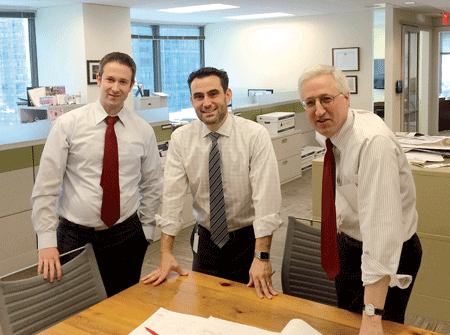
Jonathan Weaver, Zach Greene, and Richard Henderson

From left, Jonathan Weaver, Zach Greene, and Richard Henderson say the renovation of 1550 Main St. has spurred investment and economic development downtown.

In 2006, prospects for the federal building at 1550 Main St. in Springfield were grim.

A new federal courthouse was under construction on State Street, and many people were afraid that the prominent building in the central business district of the city would become a vacant eyesore after the court and other tenants vacated.

“The market for office space was very weak at the time, and it was feared that the building could become a blank in the downtown fabric,” said Richard Henderson, executive vice president of real estate for MassDevelopment, the state’s finance and development authority, which eventually assumed ownership of the property. “No one in the private sector seemed to have any interest in it, and owners of other buildings thought it should be closed. It was never attractive to begin with and looked worse after jersey barriers were installed in front of the plaza after 9/11. Plus, it was in poor shape, and the bricks on the exterior were falling off.”

Zach Greene agreed, and told BusinessWest the jersey barriers had been painted an unsightly brick orange, and although flower boxes had been stationed on top of them, the effect was far from pleasing.

“The building was not only unattractive, it was uninviting. It had a flimsy canvas awning outside, and when people entered the doors, they were greeted by metal detectors,” said Greene, MassDevelopment’s senior vice president of asset management, adding that, to make matters worse, visitors who parked in the Columbus Center garage behind the building had to walk down Bridge Street in inclement weather to get to the entrance because the back doors were locked for security reasons.

However, at the behest of city leaders, the Urban Land Institute, a national organization that disseminates experts to study challenging real-estate and land issues, sent a panel to Springfield for five days to determine, among other things, the best use of the property.

“They did extensive interviews with city officials, business leaders, and people in the neighborhoods, and concluded the building was key to downtown revitalization and should be made a priority,” said Henderson, noting that it had been built in 1980 and was one of a handful of newer office buildings downtown.

In 2007, MassDevelopment partnered with city administrators and the Finance Control Board, which was running Springfield at the time, and began what would become an $11 million acquisition and renovation of the building’s public spaces, which would take four years to complete.

However, the agency’s first step was to determine how to use it. After homeless and veterans’ groups, who had the first option on the building, failed to express interest, other possibilities were explored.

“We considered moving the police headquarters into it as well as using it as a place for higher education, similar to the new UMass facility that recently opened in Tower Square,” Henderson said.

But after a few years, the city, the Commonwealth, the U.S. General Services Administration (GSA), U.S. Rep. Richard Neal, and Baystate Medical Center put together a plan that included pre-leasing the building to private and public tenants. The Springfield School Department would occupy 56,989 square feet on the first and second floors, Baystate agreed to bring support staff into downtown for the first time and lease the entire fifth floor, and a number of federal agencies would remain in their space on the fourth floor.

“The School Department really needed to move; they didn’t have any air conditioning in their building and were way over capacity,” Henderson said, explaining that the move, which was strongly defended by Mayor Domenic Sarno, incited controversy in the City Council.

1550-main-before

1550 Main St

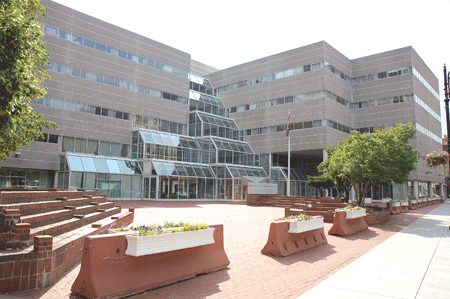
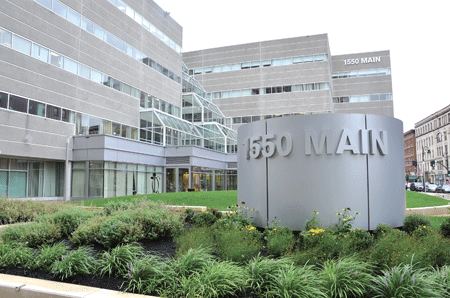
The property at 1550 Main St. before its makeover, left, and after it, right.

But in the end, the commitment by the School Department and Baystate made the project possible, and thanks to help from Neal and Kevin Kennedy, who was a member of his staff at that time, MassDevelopment purchased the building for $2.5 million in September 2009 from the GSA and renamed it “1550 Main.”

Its redevelopment has become a success story on many levels, and, according to some, an inspiration for more initiatives downtown, such as the UMass project.

“After we made our commitment, the Dennis Group purchased and renovated the Fuller Block across the street, and radio station WFCR has moved in,” Henderson said, as he listed a number of new downtown ventures.

“The Morgan Square Apartment block down the street has been acquired by a group from New York and is undergoing a major renovation and will become the Silver Brick Lofts,” he went on. “UMass has a new facility in Tower Square, and new investment is taking place in the surrounding area, with more to come. One thing builds on another, and what could have been a negative or a poorly redeveloped building has led to a lot of positive consequences.”

Complex Undertaking

Renovating 1550 Main was no simple feat, but the School Department did its own work and moved into the space in June 2010, which allowed MassDevelopment to focus on the plaza and exterior of the building.

“We wanted the tenants to be able to use the outside areas, but a large portion of the plaza was over an underground parking deck, which made removing and redoing it very tricky,” Henderson said.

The jersey barriers were removed in the fall of 2009, and high planter walls that blocked views from the street were taken down in the spring of 2010, making way for new landscaping.

Outdated glazed-brick flooring and planters in the atrium were also removed, along with an extra stairway inside the lobby that connected the first and second floors.

“Taking out the stairway allowed us to create a public walkway that people could use to get to CityStage and the parking garage,” Henderson said, noting that a $3 million Growth Districts Initiative Grant, secured with the help of the city, was used to make improvements to the public plaza, building entrance, and atrium.

All of the elevators were also replaced, and although there was not enough money to gut the bathrooms, the tiling was sanded, and new lighting and plumbing fixtures were installed. “We had to do the work in a way that didn’t disturb the tenants who had remained in the building. The Internal Revenue Service office was on the first floor, and we pulled up the entire floor of the lobby while they were working,” Henderson said.

Cosmetic improvements were also made on every floor, including new lighting and paint. “Many of the walls were painted an antiseptic green that had been offset by fluorescent pink lighting, so it really made a difference,” Greene said.

Since the federal offices were on the fourth floor, officials agreed that the metal detectors could be relocated there, which allowed MassDevelopment to install an attractive security desk in the entrance of the building.

“The back doors no longer had to be locked, so people who parked in the garage were able to come directly into the building without going outside,” Greene said. “We also installed a security system to make sure people who rented the space felt comfortable in the building.”

Baystate moved into the renovated space in May 2011, and since that time, the building’s 128,000 square feet of rentable space has been close to capacity, Henderson said. “Baystate has renewed its lease, and at present, the building is 98% occupied.”

Michael Moran, vice president of Clinical, Facility and Guest Services for Baystate Medical Center, said the healthcare provider has enjoyed being part of the redevelopment.

“Baystate Health is fully invested in carrying out its charitable mission of not only supporting the health and well-being of the community, but its economic viability as well,” he explained. “Our commitment to renting space for information-technology staff on the fifth floor of the former federal courthouse building back in 2009 was designed to help spur the city’s economy and brought a further presence for Baystate Health in downtown Springfield.”

Although some of the federal agencies have moved out since that time, new tenants were found to take their place, and the fourth floor is now home to offices for U.S. Sens. Ed Markey and Elizabeth Warren, as well as a law firm that occupies 4,100 square feet. In addition, private tenants have taken advantage of the first-floor space formerly used as military recruiting stations.

Since the time the building reopened, Greene said, it has been a source of pride. “Visitors have said they can’t believe the transformation, and the building has earned a number of awards,” including Outstanding Building of the Year in 2012 and 2013 by the Building Owners and Managers Assoc., and its Middle Atlantic Award Winner in 2013 in the Government Building category. In addition, in April 2013, the building earned the Environmental Protection Agency’s Energy Star Certification.

New Lease on Life

Today, 1550 Main St. hosts a series of lunchtime concerts held outside on the plaza in the spring and summer, and its lobby is used to showcase public and private art exhibits.

The new entrance has become an inviting gateway to the public atrium, which is open to the public and used for a variety of gatherings, including appreciation events held by Springfield School Department.

Overall, the property’s transformation has become one of many positive developments downtown and a gleaming example of a public-private partnership that has created momentum and additional success stories.

“My mother grew up in Springfield, and it’s been rewarding to help bring life back downtown and renew the vitality that existed there years ago,” said Greene. “We are happy to help it get back on track.”

DBA Certificates Departments

The following Business Certificates and Trade Names were issued or renewed during the months of January and February 2015.

AGAWAM

Auto Point Motors
1039 Springfield St.
Anthony Lafromboise

Beauties to Behold
238 Maple St.
Jasmine Brewer

Eileen Oak’s Supplies
430 Main St.
Eileen Perez

Patton Financial
15 Plumtree Way
Michael Pelletier

Professional Upholstery
1443 Main St.
Juan Ayala

Shye Ann Photography
159 Main St.
Shye Ann Brown

Therapeutic Behavioral Intervention
159 Main St.
Kristen Kocot

CHICOPEE

G & P Home Improvements
21 Forest St.
Alex Perevala

Fairview Pediatrics, LLC
1176 Memorial Dr.
James Bell

Hallmark Dental Laboratory
63 Main St.
Laura Gustafson

Heat Exchange Systems
278 Britton ST.
Howard Schwalm

Lucky Cheng’s Restaurant
920 C. Meadow St.
Ching Cheng

Millie’s Pierogi
129 Broadway
William Kerigan

Oquendo Driving School
527 Grattan St.
Jorge Oquendo

Naz Trucking
139 Nonotuck Ave.
Tomasz Nazim

Newark Paperboard Products
70 Better Way
Wayne Kelch

Prime Printing
46 Newbury St.
Marc Crescione

Rollin Rock Tavern
258 Exchange St.
Richard Ferus

St. Laurent Photography
195 Oiko Circle
Gregory St. Laurent

Tapp Construction
300 Schoolhouse Road
Jeffrey Tapp

GREENFIELD

Antonio’s Pizza
201 Main St.
Clayton Cardian

Brad’s Place
353 Main St.
Daniel Devine

Manna House
27 Bank Row
Dwight Zeager

HOLYOKE

Champ Law
330 High St.
Adam J. Basch

La Vega Grocery
518 High St.
Manuel A. Gomez

Nasty Habit Crossfit
68 Winter St.
David J. Vooris

Rendevouz
50 Holyoke St.
Chang H. Kim

PALMER

C & S Services
8 Crest St.
Marie A. Day

Friendly’s
1519 North Main St.
Catharine Senith

SPRINGFIELD

A.C. Services
657 Cooley St.
Alexa M. Cale

Aivir Value Consulting
23 Westernview St.
Joseph F. Otero

B & S Trucking Company
63 Stocker St.
Benito Santiago

Basics Plus Mini Mart
91 Main St.
Nadeem Saeed

Brian’s Barber Shop
346 Orange St.
Brian Miranda

C.R. Medical Management
405 Armory St.
Charity M. Robbins

Capuanomall.com
18 Edendale St.
Maria L. Capuano

CKG Designs
205 Tamarack Dr.
William Patrick

D2D Localtrepreneur
287 Walnut St.
Frankie J. Mozell

Desert Tales
45 Willow St.
Yassine Zian

Devine Designs Beauty Salon
428 Springfield St.
Micheline A. Martin

Doggy Dooz
1512 Allen St.
Paula L. Cox

Draintech
145 Porter Lake Dr.
Joshua M. Moses

Elegant Hair Design
473 Boston Road
Maureen Brown

WESTFIELD

A Touch of Vintage
71 Elm St.
Marilyn Arroyo

Daniel Rollend Electrician
28 Belleview Dr.
Daniel D. Rollend

Ezra’s Mercantile
34 Elm St.
Ezra’s Mercantile

Goodgoth
77 Mill St.
Marianne Deidolori

Michon Associates
102 Northridge Road
Sandra M. Michon

Ryan’s Package Store
31 Franklin St.
Anderson Family Enterprise’s

Veto Cleaning Services
15 Susan Dr.
Donald G. Veto

WEST SPRINGFIELD

Icarus Boutique
677 Westfield St.
Julian Toledo

James Maxwell Real Estate
776 Westfield St.
James Maxwell

Kristen Walters Photography
1346 Elm St.
Kristen Jeanne

Lilo’s Tire
2 Elizabeth St.
Angel Rivera-Torres

Lower Pioneer Valley Education
174 Brush Hill Ave.
Andrew Churchill

Marlene of Hair East
306 Westfield St.
Marlene Lohmeyer

Taco Bell
298 Memorial Ave.
Taco Bell of America

Welcome Inn
2041 Riverdale St.
Patel Pravinbhai

Company Notebook Departments

WSU Advances Presidential Search
WESTFIELD — Upon recommendation of its presidential search committee, the Westfield State University board of trustees has officially ratified Diversified Search of Philadelphia to help manage the search process for the selection of the university’s 20th president. Diversified Search is woman-owned, top-10 executive-search firm with specialties in the areas of education and not-for-profits. Throughout the firm’s 40-year history, Diversified has always sought leaders that have not only strong character and credentials, but also different perspectives and views. The presidential search committee met on Jan. 5 to review proposals and conduct search-firm interviews, and selected Diversified from among four firms who submitted a request for proposal. “Diversified Search was the strongest choice due to its extensive experience in higher education,” said Steven Marcus, co-chair of the search committee. “Diversified will help the search committee, the board of trustees, and the entire Westfield State community develop the values, characteristics, and alignment of purpose needed to conduct a successful search.” With the search firm approved, a timeline will be developed, and meetings with the members of the campus community will be convened to share their opinions on what traits and characteristics the next Westfield State president should possess. Two days of open forums, moderated by Diversified Search, are scheduled for Feb. 11 and Feb. 12. “Developing a timeline and criteria will be critical for this search. We do not want the search to drag on, but we do want to take the time we need to select the very best candidate possible,” said Terrell Hill, co-chair of the presidential search committee.

MassMutual Partners with Colleges on Women in Data Science Program
SPRINGFIELD — In an effort to create a strong pipeline of qualified women professionals in the rapidly growing field of data science and related subjects, MassMutual announced it is partnering with Mount Holyoke College and Smith College to pilot a groundbreaking, higher-education initiative: the MassMutual Women in Data Science program. Aimed at providing a deep undergraduate education in an increasingly in-demand specialty, the partnership furthers MassMutual’s efforts to create and implement a comprehensive data-science curriculum, and underscores the company’s commitment to developing a strong core of data-science capabilities in the Pioneer Valley. The field of data science draws on statistical methods to answer questions in an array of disciplines in the sciences, social sciences, and humanities. Graduates work in fields ranging from medicine and environmental science to actuarial professions and statistics. “This initiative speaks volumes to the importance we place on developing smart, new talent in the emerging field of data science,” said Roger Crandall, chairman, president, and CEO of MassMutual. “MassMutual is proud to partner with these two outstanding colleges to further the advancement of women in this exciting and important discipline.” The $2 million, four-year program, which will begin in the fall of 2015, will be funded exclusively through MassMutual, and will provide Mount Holyoke and Smith with resources to hire five visiting faculty positions, as well as support the development of a data-science-focused curriculum. The faculty would teach in such areas as natural language processing, machine learning, behavioral economics, applied statistics, and various computer science specialties. Additionally, students in either of the two colleges will be able to take courses with any of the associated professors. Instructors at both Mount Holyoke and Smith noted that students at liberal-arts colleges who are pursuing studies and research in fields such as computer science, mathematics, and statistics are increasingly seeking to connect their technical skills directly to real-world challenges and events. “Mount Holyoke College is committed to educating a talented and diverse group of future women leaders, and to innovation in this emerging field, a field that is all about asking the right questions, identifying patterns, generating narratives from those patterns, and responding ethically to the challenges posed by data,” said Sonya Stephens, Mount Holyoke’s vice president for Academic Affairs and dean of Faculty. “This partnership with MassMutual offers a tremendous opportunity to connect liberal learning and the Data Science initiative at the college to opportunities that exist in both the academy and the workforce.” Added Smith College Provost Katherine Rowe, “Smith has long been known for educating women who lead in the science, technology, engineering, and mathematics fields. This collaboration will enable Smith to explore new directions in an emerging discipline where we are seeing increasing excitement among students. It creates opportunities for Smith students and will significantly expand the pool of talented women leaders in this field.”
 
ESB Reports Solid 2014; Assets Now Exceed $1B
EASTHAMPTON — At Easthampton Savings Bank’s recent quarterly meeting, President and CEO Matthew Sosik reported that the bank’s total assets surpassed $1 billion at the end of 2014. Also, Bozena Dabek, senior vice president and CFO, reported that the bank’s assets were up $37 million from a year ago, an increase of 3.7%. “Easthampton Savings Bank continues to be one of the most highly capitalized banks in the area, with a capital ratio of 12.9%,” she added. Dabek noted that total loans increased $47 million over the last quarter and now stand at just over $773 million, and that the bank’s deposit growth was more than $40 million, or 5% from a year ago. Deposits were up $18 million for the quarter, and total deposits are now $869 million, she added. Said Sosik, “2014 was another in a long line of profitable and successful years for the bank. We met and exceeded all of our goals for asset growth and earnings, as well as our goals for charitable giving within the communities we serve. Overall, 2014 was just a great year and was the result of a lot of hard work and dedication from our board and staff.”

Braman Termite and Pest Elimination Turns 125
AGAWAM — Braman Termite and Pest Elimination, a leading provider of pest-management services in Southern New England, is celebrating 125 years in business. The business, originally founded in Boston in 1890, moved its headquarters to Agawam in 1980. “In 1890, pest control was usually done at night or when no one was around,” said Jerry Lazarus, third-generation owner of Braman Termite and Pest Elimination. At the time, pest control was primarily done with kitchen-sink concoctions made with ingredients like arsenic, which has a very distinct and unpleasant smell. “The common view was that, if it didn’t stink, it didn’t work. Nowadays, if it stinks, you have a problem,” said Lazarus. “Pest-control product development has come so far that they can be done in very controlled environments without displacement — we can even treat hospital rooms without moving patients, if needed.” Meanwhile, technology like e-mail, cell phones, bar-code scanning, and global positioning systems have helped Braman continually provide fast, efficient, and customer-centered service. “Technological advancements have been adopted by the pest-management industry to better communicate with customers and create efficiencies to help us be competitive and profitable,” said Lazarus.

Jones Whitsett Architects Awarded GCC Child Care Center Project
GREENFIELD — Greenfield-based Jones Whitsett Architects has been chosen to design Greenfield Community College’s new Child Care Center. The Mass. Division of Capital Asset Management and Maintenance (DCAMM) selected Jones Whitsett to design a state-of-the-art facility that will combine a healthy, creative educational setting with maximum environmental efficiency. Jones Whitsett, led by Principal Architect Margo Jones, is an award-winning architectural practice with three decades of experience providing architectural services on municipal, cultural, and historic-preservation projects. Over the past two decades, school design has become the largest part of Jones Whitsett’s portfolio. The new Child Care Center will be the first on-campus child-care center at GCC since GCC’s Head Start program ended 15 years ago when renovation began on the College’s main building. The new center will be built on the college’s main campus and will serve the families of GCC staff, faculty, and students, as well as families from throughout the community. It will also serve as the ‘lab school’ for students in GCC’s Education programs to do their field work. “The competition for this project was stiff, with many good architects from throughout the state eager to take on the work,” said GCC President Bob Pura. “We are especially pleased that the DCAMM Review Board chose Greenfield-based Jones Whitsett Architects to design GCC’s new Child Care Center. Margo Jones’ understanding of GCC is long-standing. This brings an added dimension and understanding of this community to the design of the center. Knowing that Jones Whitsett is designing the center elevates our excitement about the project. We are hopeful that children, teachers, parents, and GCC’s students will be entering the new Child Care Center by January of 2017.” Responding to DCAMM’s decision, Jones said, “Jones Whitsett Architects is truly thrilled to have been selected as the design firm for this important project. It is a very exciting project, which will utilize many of our strengths and passions — healthy, creative educational environments, cutting-edge sustainable design, participatory and reclamation landscape architecture, and early-childhood design that will be state of the art. Certainly, affordable, high-quality child care for GCC is needed, and will be a huge resource for the college and its community. We are especially honored to be chosen to follow in the footsteps of the previous design team, who, in partnership with GCC and DCAMM, made beautiful improvements to the main building at the campus. We have every confidence we can meet and possibly exceed this very high bar for interactive, accessible architecture.” Reflecting on the need for the Child Care Center, Professor of Education Kate Finnegan noted that, “in order to flourish as younger human beings, children need loving care, food, shelter, heat, clothing, and education. In addition, educational programs like those that will be housed in the new Center offer protection, foster resiliency, and create opportunity.” Working on the Child Care Center design along with Jones Whitsett will be Keith Miller of Miller Design LLC, which has designed more than 100 child-care centers in the U.S. and abroad. “We are excited to be part of the design team with Jones Whitsett Architects,” Miller said. “We look forward to sharing our expertise with the team and community in creating a building that will in turn shape the future of the community through the children, faculty, and students.”

Berkshire Bank Announces $2 Million in Philanthropic Grants
PITTSFIELD — Berkshire Bank Foundation awarded a total of $1,518,133 in grants to nonprofit organizations in Massachusetts, New York, Connecticut, and Vermont during 2014. The grants supported important education and community development initiatives as well as health, human-service, and cultural programs. In addition, Berkshire Bank provided $500,622 in community sponsorships, raising its total contributions in the community to over $2 million. “We are so pleased to continue providing critical funding to hundreds of nonprofit organizations across our footprint,” said Lori Gazzillo, vice president and director of the Berkshire Bank Foundation. “Our 2014 grants have supported programs and projects that are enhancing economic opportunities and improving the quality of life for members of our communities. On behalf of our entire Berkshire Bank team, we are honored to be able to give back in such a significant way.” The bank’s charitable foundation and bank sponsorships fund nonprofit organizations and programs in communities that Berkshire Bank serves. While the foundation’s funding priorities are education and community and economic-development projects, it also supports youth, cultural, and human-service organizations. The bank also maintains an annual scholarship program for high-school seniors, which recently launched for 2015. Meanwhile, recognizing that being a good corporate citizen and community partner is about more than writing a check, Berkshire administers an employee volunteer program called the X-Team, which provides employees with paid time off to volunteer during regular business hours. Through the program, more than 70% of Berkshire Bank’s employees donated in excess of 40,000 hours of service to benefit community organizations across the bank’s footprint. Berkshire Bank’s philanthropic and community volunteerism efforts were honored in 2014 with the Capital Region Community Impact Award, the United Way Agar Volunteerism Award, two New England Financial Marketing Awards, and being named by the Boston Business Journal as one of Massachusetts’ Most Charitable Companies for the second consecutive year. Berkshire Bank accepts requests for financial support at www.berkshirebank.com/giving. All requests must be submitted through the online system in order to be considered. Organizations interested in seeking funding are encouraged to read the foundation’s funding guidelines prior to applying for support. Complete guidelines for those seeking grants or bank community sponsorships are available on the website.

Departments People on the Move

United Personnel announced the promotion of two staff members, as well as the addition of a new senior staffing consultant:

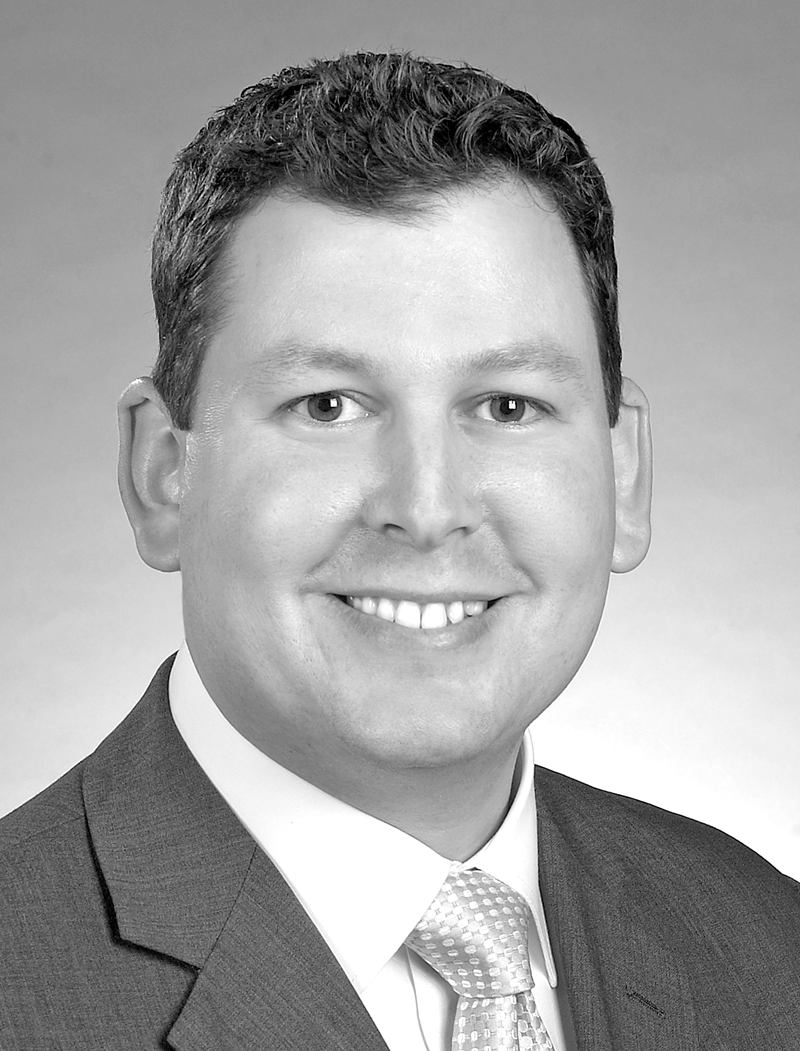
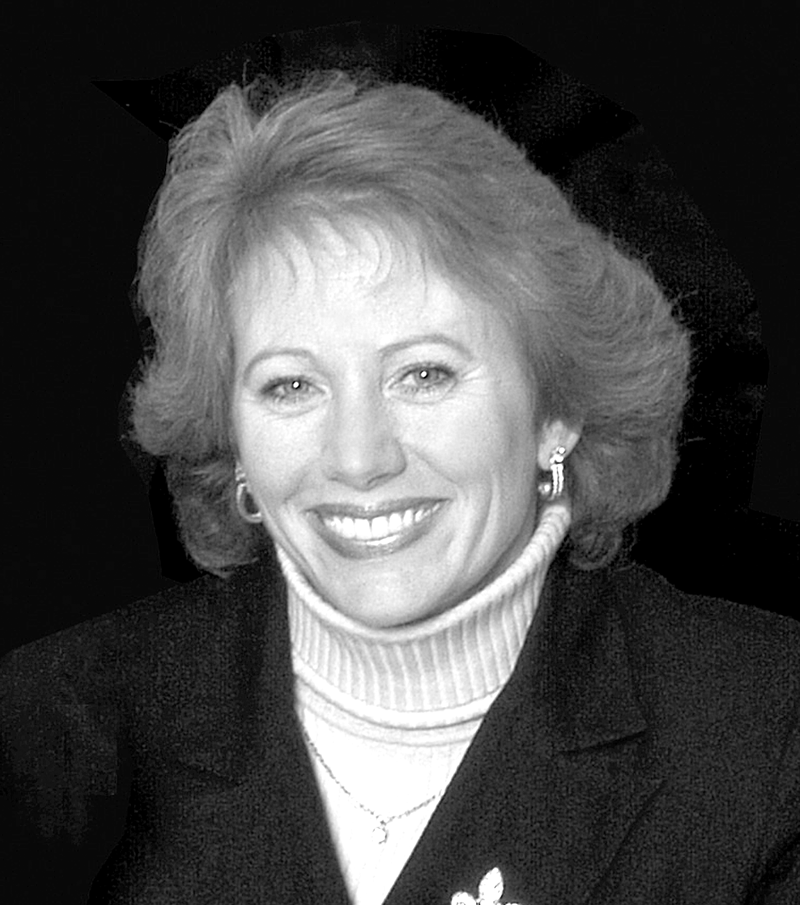
Jennifer Atwater

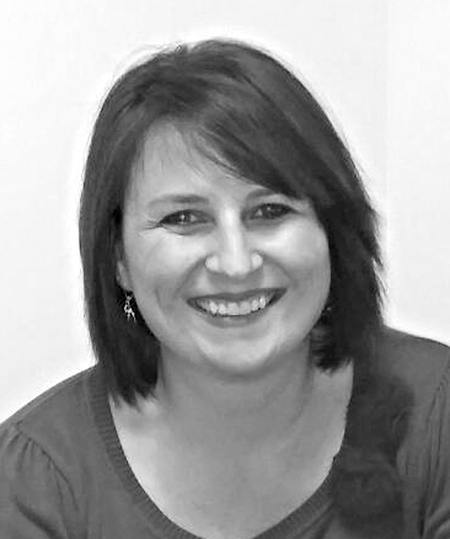
Jennifer Atwater

Jennifer Atwater, Assistant Vice President of Operations for Hampshire and Franklin counties, has been promoted to Vice President of Operations for these regions plus Berkshire County. A graduate of Massachusetts College of Liberal Arts, her duties will include staff management, client and candidate relations, recruitment, and business development. As a member of the United Personnel team for 15 years, Atwater brings a wealth of human-resources knowledge and recruiting expertise to her new role. In addition to her work at United Personnel, she serves as an ambassador to the Holyoke Chamber of Commerce and is a member of the Human Resources Roundtable for Associated Industries of Massachusetts;

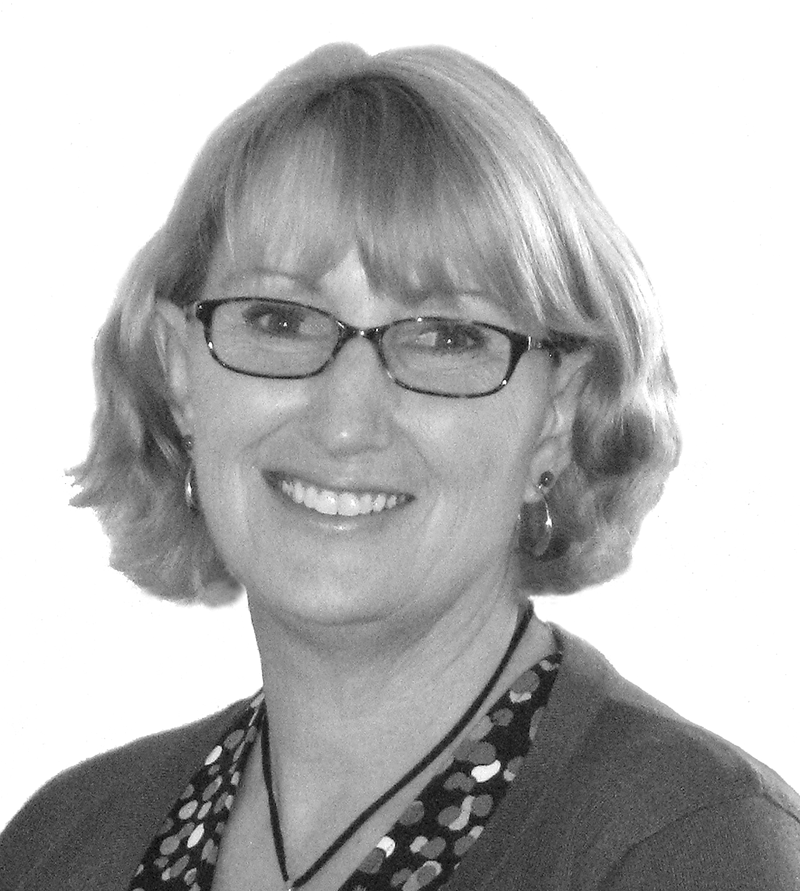
Becky Ramah

Becky Ramah

• Assistant Vice President of Information Technology Becky Ramah has been promoted to Vice President of Information Technology and Communications. Ramah has been with United Personnel for 21 years in a variety of progressively responsible roles, including recruitment, placement, and on-site project management. Ramah’s new role encompasses all information-technology operations as well as social media and marketing. She is a graduate of UMass and serves on the board of directors of Womanshelter/Companeras; and


Halina Dumas

Halina Dumas

Halina Dumas joins the team as a Senior Staffing Consultant. Dumas, a graduate of UMass Amherst, has 15 years of staffing-industry experience in professional, accounting, and administrative placement for a national firm. She will be overseeing placements for both large and small clients in Hampden, Hampshire, and Franklin counties.
•••••
Dr. Charlotte Boney, a nationally recognized pediatric endocrinologist and physician educator, has been named to the position of Tufts University School of Medicine chair of Pediatrics at Baystate Health and vice president of the Pediatric Service Line at Baystate Children’s Hospital. Before coming to Baystate Children’s Hospital, Boney was director of the Division of Pediatric Endocrinology in the Department of Pediatrics at Hasbro Children’s Hospital in Providence, and professor of Pediatrics at Warren Alpert Medical School of Brown University. “I am thrilled to be joining Baystate. Baystate Children’s Hospital has a proven track record in delivering state-of-the-art clinical care, but it is the department’s commitment to serving the community’s children and their families, and to training future pediatricians, which really attracted me to this position,” she said. Boney attended the University of the South in Sewanee, Tenn. and the University of Tennessee College of Medicine in Memphis, where she was a member of the Alpha Omega Alpha Honor Medical Society. She completed her internship and residency at Johns Hopkins Hospital in Baltimore and a fellowship in pediatric endocrinology at the University of North Carolina at Chapel Hill. She joined the faculty at Brown University in 1994 and became program director of the fellowship in Pediatric Endocrinology in 2003 and director of the Division of Endocrinology in 2005. She received numerous teaching awards at Brown, including the Dean’s Teaching Excellence Award every year from 2004 to 2011 and again in 2013. Boney also has a distinguished research career, supported by National Institutes of Health funding, during which she focused on the biology of adipocyte (fat-cell) development. She has also conducted clinical research in pediatric obesity and diabetes. Additionally, she has served on numerous hospital, university, regional, and national committees. Boney’s professional memberships include the Endocrine Society, the Pediatric Endocrine Society (for which she served on the board of directors), the Society for Pediatric Research, the Obesity Society, and the American Pediatric Society. She recently joined the sub-board in pediatric endocrinology at the American Board of Pediatrics. She has also authored some 40 scholarly publications, including peer-reviewed journals and abstracts, and is the author of several textbook chapters. She also serves as a member of the editorial board of the American Journal of Physiology, Endocrinology and Metabolism. “It is my hope in my new role at Baystate Children’s Hospital to expand clinical programs, strengthen education programs, and generate new knowledge in pediatric medicine,” she said.
•••••
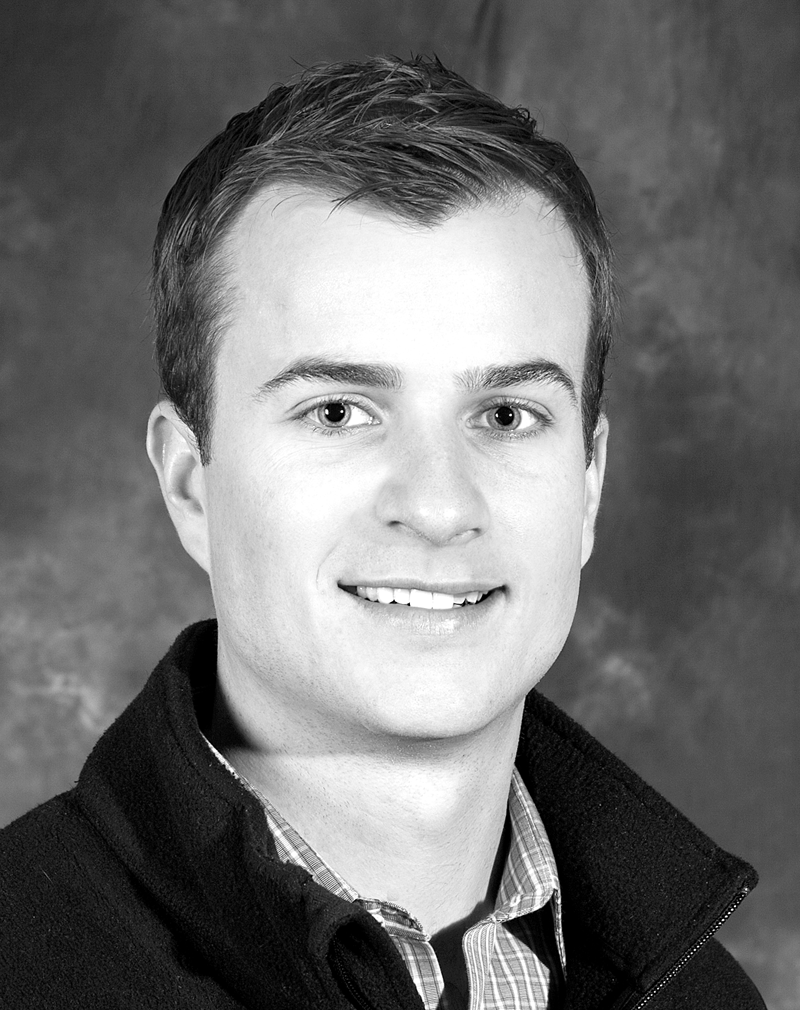
Kevin Joyce

Kevin Joyce

After a stint working as a senior member of IBM’s Business Analytics Division in the Boston area, Holyoke native Kevin Joyce has returned to the Pioneer Valley and taken a position at Webber & Grinnell Insurance. Joyce began his insurance career in 2005 with Phillips Insurance of Chicopee. In his five years at Phillips, he built a significant book of business comprised of property owners, manufacturers, restaurants/hospitality, contractors/sub-contractors, and technology operations. “I’m very excited to be back in the community I love, working with a great firm and clients that I’m passionate about,” Joyce said. Added Mathew Geffin, vice president of Business Development, “we are very excited that Kevin is joining the team at Webber & Grinnell. Kevin is a son of the Pioneer Valley and understands the values and needs of our business community.” As one of the largest insurance agencies in Western Mass., Webber & Grinnell currently serves more than 5,000 automobile and homeowner policyholders, and insures nearly 900 businesses throughout the region.
•••••
Mark Goggins has joined Ostberg & Associates, the Northampton-based financial-services and insurance firm. Goggins brings more than 20 years of experience in the mortgage business with Mortgage Master and Applied Mortgage Services, as well as earlier work history with John Alden Insurance and Goggins Real Estate. “We couldn’t be more thrilled to bring Mark to our team,” said company President Robert Ostberg. “Mark’s integrity, his reputation for building and maintaining personal and professional relationships, and his deep commitment to the community will help Ostberg & Associates continue to provide exceptional service to our clients and our community.” Goggins graduated from UMass with a degree in political science. He has served as a coach with the Northampton Recreational Department and the Suburban Basketball league, and is currently on the board of Nonotuck Resource Associates.
•••••
Monson Savings Bank has announced the following:
Carolyn Weeks

Carolyn Weeks

Carolyn Weeks has been promoted to Branch Manager of the Wilbraham office. Weeks began her career at Monson Savings in 2007 as a part-time customer service associate while still in college. In 2009, she came back to the bank and has risen through the ranks to customer service associate supervisor, assistant branch manager, and now branch manager. She is a UMass graduate with a bachelor’s degree in business administration; and


Anthony Jianaces has been promoted to Branch Manager of the Hampden office. Jianaces joined the bank in 2012, also as a part-time customer service associate. He has since been promoted to assistant branch manager and now branch manager. He is a registered financial representative and holds his series 7, series 66, and insurance licenses. He is a graduate of Stonehill College with a bachelor’s degree in business administration. “I am extremely pleased to announce these promotions,” said Steve Lowell, president of Monson Savings Bank. “Carolyn and Anthony are both very talented and impressive young professionals who have already made significant contributions to the success of Monson Savings.”
Anthony Jianaces

Anthony Jianaces

Agenda Departments

ACCGS Outlook 2015
Feb. 27: Massachusetts Gov. Charlie Baker will give his first major address to the Greater Springfield business community at the Affiliated Chambers of Commerce of Greater Springfield’s (ACCGS) Outlook 2015 from 11:30 a.m. to 1:30 p.m. at the MassMutual Center, 1277 Main St., Springfield. Outlook is the area’s largest legislative event, attracting more than 700 guests and presenting expert speakers on local, state, and federal issues. Area elected officials will also be in attendance to participate in this discussion of front-burner issues. The event is presented by Health New England and sponsored by the Eastern States Exposition, MassMutual Financial Group, and United Personnel. Program/reception sponsors include the Sisters of Providence Health System, Comcast, Western Massachusetts Electric Co., and the Republican, with support from Chicopee Savings Bank and BusinessWest. Baker was inaugurated on Jan. 8 as the 72nd governor of the state. Over the course of his career, he has been a highly successful leader of complex organizations in business and in government. As a cabinet secretary under Gov. William Weld and Gov. Paul Cellucci, Baker helped lead efforts to reform and modernize state government. During his time as CEO of Harvard Pilgrim Health Care, Baker turned a company on the brink of bankruptcy into the nation’s highest-ranked healthcare provider for six straight years. As a member of the Weld and Cellucci administrations in the 1990s, Baker helped turn a billion-dollar deficit into a surplus, create a half-million jobs, and enact an ambitious education-reform agenda. First asked to serve as Secretary of Health and Human Services in 1992, Baker led efforts to make Massachusetts’ social-service system more humane, cost-effective, and responsive to the needs of the Commonwealth’s residents. In 1994, Baker was appointed Secretary of Administration and Finance, overseeing a number of cost-saving reforms, modernizing state government, and making it more efficient. Baker will be joined at the Outlook program by U.S. Rep. Richard Neal, who will remark on events at the federal level, including his thoughts on the 114th Congress and the topics that the new Congress may review. “As a senior member of the powerful House Committee on Ways and Means and ranking member of its Select Revenue Measures subcommittee, Congressman Neal serves in a critically important capacity in Washington for our area, our state, and the entire country,” said ACCGS President Jeffrey Ciuffreda. Tickets are $50 for ACCGS members and $70 for general admission. Reserved tables of 10 are available. Reservations must be made by Feb. 20, and may be made online at www.myonlinechamber.com or by contacting Member Services Director Sarah Mazzaferro at [email protected]. No walk-ins will be accepted, and no cancellations will be accepted once the reservation deadline has passed.

PAWSCARS Fund-raiser
Feb. 28: Dakin Humane Society will present a fund-raising event at the MassMutual Center in Springfield that will affectionately spoof Hollywood, the Oscars, and red-carpet fashion. Dubbed “The PAWSCARS & Red Carpet Fashion Parade,” the show will be emceed by Ashley Kohl and Seth Stutman, hosts of Mass Appeal on WWLP-22News. Beginning with a VIP Reception at 6 p.m. and a plated dinner at 7 p.m., the evening will also include a red-carpet fashion parade featuring local people of prominence, accompanied by rescue dogs (among them former Dakin dogs, now adopted). Short videos of animals recreating iconic moments in cinematic history, created by members of the public, will also be screened during the evening. “We’re looking forward to presenting a one-of-a-kind event with the PAWSCARS,” said Dakin Executive Director Leslie Harris. “We’re blending fashion, fun, and film with a healthy dose of humor for an unforgettable night. Plus, as our major fund-raising event of the year, it will be a terrific opportunity for our supporters to come together and enjoy themselves while providing much-needed aid for the many animals in our care.” With a targeted audience of 500, The PAWSCARS is Dakin’s most ambitious fund-raising event in its 45-year history. Tickets for the event are available at www.dakinhumane.org for $125 per person (dinner and show) or $50 (show only). Visit www.dakinhumane.org for more information about the event.

Lecture Series
March 12: BusinessWest and the Healthcare News are pleased to announce a new lecture series presented by Comcast Business. This series of lectures, panel discussions, and presentations will address timely and important business information, and is an ideal opportunity to meet industry leaders and network with area business professionals. The first event in the series, called “Technology Has the Power to Change Healthcare,” will be hosted by La Quinta Inn & Suites, 100 Congress St., Springfield. Panelists include Neil Kudler, vice president and chief medical information officer for Baystate Health; Michael Feld, CEO of VertitechIT and acting chief technology officer of Baystate Health and Lancaster General Hospital; and Delcie Bean IV, CEO, of Paragus Strategic IT. Registration begins at 7:15 a.m., followed by breakfast and networking at 7:30 a.m. and the panel discussion from 8 to 9 a.m. Admission is free, provided by Comcast Business, but RSVP is required by Thursday, March 5. Sign up online at BusinessWest.com/lecture-series, or call (413) 781-8600, ext. 10, for more information.

‘Acting Skills for Real Life’
March 19 to April 16: The Division of Graduate and Continuing Education at Westfield State University will offer a class called “Acting Skills for Real Life: How to Connect and Communicate” on Thursday nights, March 19 through April 16, from 6 to 8 p.m. Students will learn about basic acting skills and theories, and how they can be applied to everyday situations such as job interviews and social settings, in addition to performances and public speaking. Course content includes vocal, movement, and imagination warmups and theatre games; improvisations around a specific set of circumstances, including real-life situations and role reversal; developing stage presence; and, if the class chooses, rehearsal and class performance of a brief scene or monologue as a rehearsed reading or ‘off book.’ The course will be taught by Nadia Creamer, who has a long career as a performer and a teacher of performing arts. Creamer was co-artistic director of Impulse Theatre and Dance for 28 years in New York, where she received more than 60 grants for her work. She was also a faculty member at New York University, Russell Sage, College of St. Rose, and Columbia-Greene Community College. The cost of this course is $80. Registration will be accepted until the first night of class. For more information and to register, contact Brandon Fredette at (413) 572-8033 or [email protected].

Mini-Medical School
March 19 to May 7: Baystate Medical Center’s Mini-Medical School, which begins its spring session on March 19, will give area residents a reason to come out of hibernation from the long, cold, snowy winter and join others interested in the expanding field of medicine. Mini-Medical School program is an eight-week health education series featuring a different aspect of medicine each week. Classes this spring will include sessions on various medical topics, such as surgery, emergency medicine, anesthesiology, pathology, and several others. Many of the ‘students,’ who often range in age from 20 to 70, participate due to a general interest in medicine and later find that many of the things they learned over the semester are relevant to their own lives. The goal of the program, offered in the hospital’s Chestnut Conference Center, is to help members of the public make more informed decisions about their healthcare while receiving insight on what it is like to be a medical student — minus the tests, interviews, and admission formalities. Each course is taught by medical-center faculty who explain the science of medicine without resorting to complex terms. Baystate Medical Center is the Western Campus of Tufts University School of Medicine and is the region’s only teaching hospital. All classes are held Thursday nights starting at 6 p.m. and run until 8 or 9 p.m., depending on the night’s topic. No basic science knowledge is needed to participate. Each participant is required to attend a minimum of six out of eight classes in order to receive a certificate of completion. Among the topics and speakers slated for the spring semester are:
• March 19: “Hey, I Finally Got into Medical School!” with Dr. Michael Rosenblum, director, Internal Medicine Residency Program (includes a general tour of the medical center).
• March 26: “Surgery,” with Dr. Richard Wait, chair, Department of Surgery (includes a tour of the Baystate Simulation Center and the Goldberg Surgical Skills Lab).
• April 2: “Cardiac Surgery,” with Dr. John Rousou, chief, Cardiac Surgery.
• April 9: “Pathology,” with Dr. Richard Friedberg, chair, Department of Pathology (includes a tour of the lab).
• April 16: “Anesthesiology,” with Dr. Michael Bailin, chair, Department of Anesthesiology.
• April 23: “Psychiatry,” with Dr. Benjamin Liptzin, chair, Department of Psychiatry.
• April 30: “Stroke/Rehabilitation,” with Dr. Edward Feldmann, vice president and medical director, Neurosciences & Rehabilitation.
• May 7: “Emergency Medicine,” with Dr. Joseph Schmidt, vice chair and chief, Emergency Medicine (includes a graduation ceremony).
Tuition is $95 per person and $80 for Senior Class and Spirit of Women members. Register for the spring semester of Mini-Medical School by calling (800) 377-4325. For more information, visit www.baystatehealth.org/minimed.

Difference Makers
March 19: The sixth annual Difference Makers award program, staged by BusinessWest, will be held at the Log Cabin Banquet & Meeting House. Difference Makers is a program, launched in 2009, that recognizes groups and individuals that are, as the name suggests, making a difference in this region. The class of 2015Katelynn’s Ride, MassMutual Financial Services, Judy Matt, Valley Venture Mentors, and the new ownership group of the Student Prince and the Fort — was profiled in the Feb. 9 issue. Tickets cost $60 per person, and reserved tables of 10 are available. To order tickets, call (413) 781-8600, ext. 100, or e-mail [email protected].

40 Under Forty
June 18: The ninth annual 40 Under Forty award program, staged by BusinessWest, will be held at the Log Cabin Banquet & Meeting House. Details on the event, which honors the region’s most accomplished and civic-minded professionals under age 40, will be published in upcoming issues. The class of 2015 will be revealed and profiled in the April 20 issue.

Community Spotlight Features
In Amherst, Public, Private Investments Bear Fruit

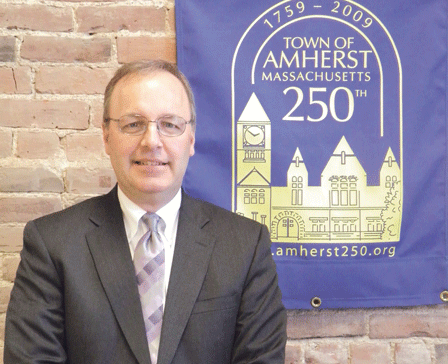
John Musante

John Musante says development projects that include incubator space bode well for the town’s future.

Town Manager John Musante says a plan to position downtown Amherst as a center for innovation is gaining momentum.

“One of the keys is to make it an attractive place where people can live, play, and start and grow a business,” he told BusinessWest, adding that the town is doing all it can to redevelop its downtown and strengthen its relationships with UMass Amherst, Amherst College, and Hampshire College.

A recently released report from the 24-member Town Gown Steering Committee, titled “The UMass/Town of Amherst Housing and Economic Development Plan,” outlines strategies, interventions, and recommendations to enhance the overall desirability and affordability of living and working in Amherst. The report is based on an analysis conducted by consultant U3 Advisors that cites the need for an increase in quality housing for UMass students, faculty, and staff that will lead to a stable balance and strengthen neighborhoods, as well as an expansion of the tax base, which could be achieved by encouraging entrepreneurial and research endeavors and targeting opportunities to support the business sector.

The special committee formed by UMass Amherst and the town of Amherst to address the common housing and economic-development opportunities delivered its final recommendations only two months ago. But a number of significant public and private investments over the past year have already led to change that will help bring the plan to fruition.

“Overall, 2014 was a breakthrough year for Amherst,” Musante said, citing examples of how public funding and private investment have worked together to pave a pathway to success.

Last October, the town was awarded a $1.5 million MassWorks Economic Development Grant to bury the utility lines in the north end of its downtown, which will allow investors maximum use of any available property.

Meanwhile, Archipelago Investments LLC in Amherst has become a major player in that neighborhood and has ambitious plans to build two major, mixed-use, LEED-certified buildings there. The first is a five-story structure called Kendrick Place, which is under construction on a vacant lot on the corner of Triangle and East Pleasant streets across from Kendrick Park.

The ground floor will contain commercial space and a café, while the upper stories will house 36 luxury apartments with floor-to-ceiling glass, white-oak hardwood floors, stainless-steel appliances, and views of UMass and Amherst College. “We are tremendously excited about Kendrick Place,” Musante said.

The project is expected to be complete in August and is the second of its kind in Amherst by developers Kyle Wilson and David Williams, who invested $4 million into Boltwood Place, which opened in 2012 in the back of Judie’s Restaurant, featuring 12 loft apartments in a LEED-certified, award-winning, mixed-use building with 650 square feet of retail space on the ground floor.

Two months ago, Archipelago received approval from the planning board to build a third mixed-use, five-story building called One East Pleasant near Kendrick Place, on the site of the old Carriage Shops, which have been deteriorating for some time.

Plans call for demolition of the 52-year-old structure originally built as a motel before it was converted into shops in the 1970s, along with two additional buildings that house the Loose Goose Cafe and the law offices of Seewald, Jankowski & Spencer.

One East Pleasant will contain commercial and retail space on the ground floor and about 80 apartments on the upper stories. “The permits for the building have been approved. There is one ongoing appeal which will result in a short delay, but the goal is to have it built and occupied by 2017,” Musante said.

Both Kendrick Place and One East Pleasant will contain incubator and maker space on their ground floors.

“It’s an exciting component, and the developer is working with the town, the university, and the Business Improvement District to attract research and development spinoffs,” Musante said, adding that the report generated by the Town Gown Steering Committee shows UMass spent $194 million on research in FY 2013, and although 24 patents and 21 license and option agreements were issued, little of this potential was realized locally. Reasons cited include Amherst’s lack of space for startups, along with a lack of community among those that do exist.

Musante believes having incubator space close to the UMass campus in buildings where people can also live and play has real potential for the town, and free wi-fi and Internet service available downtown will also help to position it as an innovation district.

Sarah la Cour agreed. “Combining business and social space will make it easier for spinoffs coming out of the university,” said the executive director of the BID, as she explained that the business community is doing its part to promote downtown as a walkable, livable center.

Variety of Undertakings

The town adopted an innovative master plan in 2010, and Musante said one of its primary focuses is to concentrate on development downtown and in the village centers of North Amherst, East Amherst, Pomeroy, and Atkins Corner. “The plan contains an anti-sprawl, smart-growth strategy.”

La Cour concurred, saying this is important because the town wants to preserve its farmland.

“We want to balance and protect our natural resources while creating more density downtown and in our village centers, and the types of projects envisioned in the Town Gown report follow the same principles as the master plan,” she noted. “And we are seeing that vision begin to take shape. Things have really moved forward in the last year or two, and since zoning was passed in 2012 to increase density downtown, we’ve seen private investment that will create incredible opportunities for an innovation district on the doorstep of the Commonwealth’s flagship campus.”

Private investment is also occurring in North Amherst, and W.D. Cowls Kamins and Jones Group Realtors have been seeking partners to build what they are calling the ‘Mill District’ in a one-block radius on the commercially zoned 10-acre former sawmill and Trolley Depot site in hopes that it will become a center for arts and entertainment.

Developer Cinda Jones built and opened the Trolley Barn there in December. It contains retail space on the ground floor and four large apartments above.

“The commercial space is completely occupied, and a salon and breakfast place in the Trolley Barn have become part of the village,” Musante said. “Jones Library has a branch in the Mill District, and there is a recreation area within walking distance. As a result, more and more people are becoming excited about its potential as a gathering place for families and young people.”

He added that Atkins Farm Market plans to open a satellite location in the former Cow Barn there this summer after it finishes renovating the formerly vacant structure. “There are also other opportunities available within the footprint.”

But ultimately, Amherst is a college town, he continued. In addition to UMass, it is also home to Amherst College and Hampshire College, and Musante said they are all making investments in the future, which include the two new science buildings UMass has put up over the past five years. “There has been a lot of positive momentum under the leadership of Chancellor Kumble Subbaswamy, and the university has been working collaboratively with the town,” he said. “Amherst College, which sits at the edge of town, has also been active in the BID and is an incredibly ambitious partner. They are planning to build a $200 million state-of-the-art science center and have some residential housing under construction.”

In addition, Hampshire College President Jonathan Lash is an internationally recognized expert on practical solutions to global sustainability, climate change, and development challenges. “He has really been positioning the college as a leader in environmental education and sustainability,” Musante said.

Hampshire’s R.W. Kern Center, which is under construction, is one of only a handful of buildings in the country that meet the rigorous requirements of the Living Building Challenge. “Jonathan is re-imaging the campus, and this will become the portal building,” said Musante, noting that it will house the admissions office.

The 50-year-old Hitchcock Center for the Environment in Amherst is also active in town and is in the middle of a capital campaign to build a new facility on the Hampshire College campus, which will be another Living Building.

Solid Ground

Musante said the development projects that were a dream when the master plan was created five years ago are beginning to be realized.

“Two studies completed in 2013-14 show pent-up demand for housing, and the new projects by Archipelago Investments will meet that demand,” he told BusinessWest. “Kendrick Place will become the gateway to our downtown, and we are expecting a wide range of tenants: college and university faculty and staff members, young retirees, and some students. We are a college town, so having more residential units in the center is key to strengthening the entire BID, as it will increase foot traffic downtown.”

The Town Gown Steering Committee recommended creating a University-Town of Amherst Collaborative to continue their combined efforts, and also suggested the town would benefit from hiring an economic-development director.

Musante said he and Subbaswamy will announce the next steps they will take in the weeks ahead, and he included funds to pay for an economic-development director in his budget recommendation.

“We are working to build relationships and strengthen our partnerships and have all the permitting processes we need to bring great concepts and ideas to reality,” Musante said in conclusion. “Amherst and its downtown are really on the way to becoming an innovation hub. We plan to leverage the research and development spinoffs from UMass, and we have a road map for the town to reach its full potential. The momentum here is palpable; it’s a tremendously exciting time.”

Amherst at a glance

Year Incorporated: 1759
Population: 37,819 (2010)

Area: 27.8 square miles

County: Hampshire

Residential Tax Rate: $20.54
Commercial Tax Rate: $20.54
Median Household Income: $53,191
Family Household Income: $96,733
Type of government: Select Board, Town Meeting
Largest Employers: UMass Amherst; Amherst College; Delivery Express; Hampshire College
* Latest information available

Daily News

CHICOPEE — Elms College President Mary Reap has appointed Dr. Elizabeth Hukowicz dean of the newly established School of Graduate and Professional Studies.

Hukowicz has been the associate academic dean of the Division of Graduate Studies and Continuing Education since 2005. Under her leadership, the number, scope, and complexity of programs in her department has increased tremendously. In recognition of this growth, the division has been restructured into a school, with Hukowicz appointed as the first dean.

“The new school will serve our non-traditional and adult learners, and also highlight the importance of these programs to the strength and vitality of the institution,” said Walter Breau, vice president of academic affairs.

Added Hukowicz, “this restructuring will allow the school to offer a broader array of degree options and services for adult learners on and off campus. The adult learner is at the core of what we do, and we will provide increased opportunities to better serve the adult learner in and out of the classroom, wherever and however that may be. We will continue to find new and better ways to make students successful.”

Elms College offers graduate-degree programs in accounting, applied theology, autism-spectrum disorders, education, healthcare leadership, management, and nursing. The college also offers certificates of advanced graduate study in autism-spectrum disorders, communication sciences and disorders, and education.

“I am humbled as I assume this position, and grateful to our Elms administration, staff and faculty who work so hard to serve our students on campus, off campus and online,” Hukowicz said. “We have a culture of service at the core of what we do in and outside the classroom. I look forward to working with Elms faculty and staff to provide more convenient, affordable degree options for adult learners at all levels.”

Daily News

SPRINGFIELD — The Springfield Technical Community College (STCC) Foundation’s Not Just Business as Usual (NJBAU) event is one of the premiere networking events for business leaders in Western Mass. This annual celebration, in its sixth year, is a celebration of innovative thinking which gives participants the opportunity to learn from business experts while raising significant funding for the STCC WORKS scholarship program.

The event will be held at the Naismith Memorial Basketball Hall of Fame on April 30. A cocktail and networking reception will be held from 5:30 to 7 p.m., with dinner and the keynote speaker, Google Engineering Director Steve Vinter, to follow from 7 to 8:30 p.m.

Vinter has overseen the growth of Google’s Cambridge site from 15 software engineers in 2007 to more than 900 today. He is responsible for developing digital-publishing products such as Google eBooks, Google Play Newsstand, and Play for Education, and has over 20 years of industry experience working in the Boston area, focusing on building products and services for hundreds of millions of users of mobile and cloud computing. He also is the co-founder of MassCAN, a partnership of organizations which collaborate to inspire and educate students in Massachusetts to learn computing and prepare them to lead and innovate the future economy, which will be driven by computer technology.

This year, NJBAU will feature interactive workstations featuring the STCC Mobile SIM and Engineering program. Tickets and sponsorship opportunities are now available. Tickets are $100 each, and sponsorships begin at $1,500. For additional information or to become a sponsor, contact Christina Tuohey, STCC director of Annual Giving and Alumni Relations, at (413) 755-4475 or [email protected]. To purchase tickets online, visit www.stcc.edu/njbau.

Daily News

SPRINGFIELD — The roots of Baystate Medical Center date back to the formative years of the modern American hospital, when, under the name of Springfield City Hospital in 1873, it was one of only 178 acute-care hospitals in the country. Today, that number has grown to more than 5,000, and along with it can be counted a number of contributions from Baystate Medical Center, which are now considered critical elements of everyday healthcare, including fast-track cardiac surgery and an innovative chronic-care floor.

Now those accomplishments and more are highlighted in a newly published history book, titled Baystate Medical Center. It traces the people, buildings, and events that form the basis of Baystate Medical Center and the important role it has played in the evolution of the healthcare industry from the 19th century through today.

Written by Dr. Thomas L. Higgins, vice chair of the Department of Medicine at Baystate Medical Center, and Linda Baillargeon, manager of the hospital’s Internal Medicine Residency Programs, the book features vintage images and facts that capture bygone times and help bring to life the people, places, and events that defined Baystate Medical Center and the Springfield community.

Published in December by Arcadia Publishing — the leading local history publisher in the U.S., with a catalog of more than 9,000 titles in print — the book is part of its Images of America series. Since its inception in 1993, the series has preserved and shared the history of hundreds of individual communities throughout the country. The Baystate Medical Center history book features more than 200 images, beginning from the late 1800s, gathered from hospital archives at the Lyman and Merrie Wood Museum of Springfield History and at Baystate Medical Center.

“The book was originally envisioned to be only about the Department of Medicine at Baystate. It was going to be a gift that we would give to our medicine residents to remember us by,” said Higgins. “As our research delved deeper into the department and the hospital, we discovered there were so many more stories worth telling, and the book grew in scope.”

He added, “during our research, I was inspired by the philanthropic history behind the establishment of Springfield Hospital, with major donations by Chester and Dorcas Chapin and monies from Daniel and Cynthia Wesson to support both the Hampden Homeopathic and Wesson Maternity hospitals. I was also fascinated with the architectural history of the buildings that make up Baystate, including the fact that the original Springfield Hospital is still standing as part of the medical center.”

Baystate Medical Center was established in 1976 with the merger of the Medical Center of Western Massachusetts and Wesson Memorial Hospital. Baystate’s long history can be traced back to its earliest origins as Springfield City Hospital, which was renamed Springfield Hospital in 1883 and later moved to its current location on Chestnut Street in 1889.

The book, priced at $21.99, is available at the Marketplace at Baystate Medical Center, as well as on amazon.com, or directly from the publisher at www.arcadiapublishing.com. All proceeds will benefit the hospital’s Internal Medicine Residency Education & Research Fund. For more information about Baystate Medical Center, visit baystatehealth.org/bmc.

Daily News

WESTFIELD — In honor of Black History Month, Westfield State University will collaborate with UMass Libraries, St. John’s Congregational Church, Beta Sigma Boule, and Springfield Public Schools to hold a tribute for W.E.B. Du Bois at St. John’s Congregational Church in Springfield on Sunday, Feb. 22 at 3 p.m.

William Edward Burghardt (W.E.B.) Du Bois was born in Great Barrington on Feb. 23, 1868. He grew up to become a pioneering civil-rights leader and visionary of equality and democracy. He was the first African-American to earn a doctorate from Harvard University and a pioneer in the fields of sociology and history. A founding member of the NAACP, Du Bois was also a playwright, poet, novelist, and cultural critic.

The event includes a performance of the play W.E.B. Du Bois: A Man for All Times, by the Pulse Ensemble Theater group from New York City.

Event organizer Brooks Fitch, consultant to UMass Libraries, said the tribute and the play share a message. “Knowledge is not enough, we must act. There are a lot of lessons that W.E.B. Du Bois gave. Du Bois is a man of all times. That template of what he did and how he did it is relevant to today.”

In addition to St. John’s Music Ministry and the play, there will be performances by WSU’s Chorus, Gospel Choir, and So Seductive Step Team. Each performance will reflect the theme of W.E.B. Du Bois’s life and elements of Black History Month.

Fitch said the event will appeal to adults and kids alike. “We hope to provide aspirational modeling for young people in particular to encourage them to go to further their education. The tribute lets adults see all that all aspects of the community, college students, etc., have a common focus.”

The event will be held at St. John’s Congregational Church because of its significance to Du Bois and what he stood for. Abolitionist John Brown was a member of the church when he lived in Springfield, and Springfield became a hub of the Underground Railroad due to the activities of St. John’s. Du Bois also attended the church on occasion. The W.E.B. Du Bois event is free and open to the public. For more information, visit www.westfield.ma.edu/bhm.

Daily News

AMHERST — The Amherst Area Chamber of Commerce announced its call for nominations of individuals, businesses, and organizations throughout the Amherst area that have made a positive difference. The Annual A+ Awards are set to be given at the A+ Awards Dinner, presented by PeoplesBank, on Oct. 1 at the Hadley Farms Meeting House. In 2010 the Amherst Area Chamber of Commerce introduced the A+ Awards.

The awards — formerly the Millicent H. Kauffman Distinguished Service Awards and the Janet & Winthrop Dakin Community Service Citations, and renamed to extend the chamber’s new branding initiative — are designed and named to reflect the chamber’s mission “to create, maintain, and promote a vital, thriving business climate throughout the Amherst area, and to initiate and support the civic, education, recreational, and economic well-being of the Amherst area.”

A+ Awards are given in the following categories: Legacy, Most Valuable Player, Community Service, and Lifetime Achievement in Business. The Legacy Award is given to an individual that has made an outstanding contribution to the Amherst area and has changed the lives of its citizens and for future generations. The Most Valuable Player Award is given to an individual that has gone above and beyond the call of service in aiding, assisting, and promoting the chamber. The Community Service Award seeks to recognize an individual, nonprofit, or business that has made a positive change in the lives of the citizens of the Amherst area through community work and outreach. Finally, the Lifetime Achievement in Business Award seeks to honor and recognize a chamber-member business that has made a truly exceptional difference in the Amherst community. Additional award categories are periodically added as needed.

“The A+ Awards are the most prestigious honor the chamber can bestow upon its recipients,” said Amherst Area Chamber of Commerce Executive Director Don Courtemanche “As you look through the list of past winners, you get an overwhelming sense of just how special this community is. This year’s crop of nominations will be no exception.”

Nominations may be made by e-mailing Courtemanche at [email protected]. Nominations must include the nominee’s name, short bio, and relevant facts that the awards committee should know regarding the nominee. Nominations are due to the chamber office by March 13.

Daily News

SPRINGFIELD — In an effort to create a strong pipeline of qualified women professionals in the rapidly growing field of data science and related subjects, MassMutual announced it is partnering with Mount Holyoke College and Smith College to pilot a groundbreaking, higher-education initiative: the MassMutual Women in Data Science program.

Aimed at providing a deep undergraduate education in an increasingly in-demand specialty, the partnership furthers MassMutual’s efforts to create and implement a comprehensive data-science curriculum, and underscores the company’s commitment to developing a strong core of data-science capabilities in the Pioneer Valley. The field of data science draws on statistical methods to answer questions in an array of disciplines in the sciences, social sciences, and humanities. Graduates work in fields ranging from medicine and environmental science to actuarial professions and statistics.

“This initiative speaks volumes to the importance we place on developing smart, new talent in the emerging field of data science,” said Roger Crandall, chairman, president, and CEO of MassMutual. “MassMutual is proud to partner with these two outstanding colleges to further the advancement of women in this exciting and important discipline.”

The $2 million, four-year program, which will begin in the fall of 2015, will be funded exclusively through MassMutual, and will provide Mount Holyoke and Smith with resources to hire five visiting faculty positions, as well as support the development of a data-science-focused curriculum. The faculty would teach in such areas as natural language processing, machine learning, behavioral economics, applied statistics, and various computer science specialties. Additionally, students in either of the two colleges will be able to take courses with any of the associated professors.

Instructors at both Mount Holyoke and Smith noted that students at liberal-arts colleges who are pursuing studies and research in fields such as computer science, mathematics, and statistics are increasingly seeking to connect their technical skills directly to real-world challenges and events.

“Mount Holyoke College is committed to educating a talented and diverse group of future women leaders, and to innovation in this emerging field, a field that is all about asking the right questions, identifying patterns, generating narratives from those patterns, and responding ethically to the challenges posed by data,” said Sonya Stephens, Mount Holyoke’s vice president for Academic Affairs and dean of Faculty. “This partnership with MassMutual offers a tremendous opportunity to connect liberal learning and the Data Science initiative at the college to opportunities that exist in both the academy and the workforce.”

Added Smith College Provost Katherine Rowe, “Smith has long been known for educating women who lead in the science, technology, engineering, and mathematics fields. This collaboration will enable Smith to explore new directions in an emerging discipline where we are seeing increasing excitement among students. It creates opportunities for Smith students and will significantly expand the pool of talented women leaders in this field.”

The MassMutual Women in Data Science program follows closely the August 2014 creation of the Amherst-based MassMutual Data Science Development program. The cutting-edge effort furthers the company’s commitment to the advancement of data science, with a particular emphasis on building a critical mass of this talent in the five-college area, which, in addition to Smith and Mount Holyoke, includes Amherst College, Hampshire College, and UMass Amherst.

The current MassMutual data science program looks to hire between five and 10 recent graduates annually from top colleges in the fields of math, computer science, and statistics. Over a three-year period, the new employees are provided a combination of coursework, applied projects within MassMutual, and training, all of which are the equivalent of a post-graduate degree. Professors sponsored as part of the Women in Data Science program will support this program by teaching various related courses to the development group.

“Our long-term goal is to develop a team of data scientists in the region, leveraging the already-strong programs these schools have in place in math, statistics, and computer science,” said Sears Merritt, chief data scientist for MassMutual. “Through our partnership with Mount Holyoke, Smith, and other schools in the region, we are confident that the Pioneer Valley will be a tremendous source of young, talented data scientists.”

Daily News

GREENFIELD — Pediatrician Dr. Ariel GallantBernstein has joined the staff of Baystate Medical Practices – Greenfield Family Medicine.

GallantBernstein is a graduate of Wellesley College, where she earned a bachelor’s degree in music. However, pivotal experiences during a college-related trip to West Africa changed her career path from music to medicine.

“During that trip, the traditional midwives in rural areas of Ghana showed me how important the health of women and children truly is in helping create positive change in the world,” she said.” When she returned to the U.S., she focused on acquiring the skills needed to “join that crusade.” She added, “I always have enjoyed working with children; their innocence and resilience is inspiring. I couldn’t imagine serving a more worthy group.”

Following her newfound mission, GallantBernstein continued her education at the University of Vermont’s post-baccalaureate premedical program, then earned her doctor of medicine degree in 2011 from the University of Vermont College of Medicine. She completed her pediatric residency at Baystate Children’s Hospital in July 2014.

GallantBernstein practices a policy of “inclusion and completeness” in her patient care. “I do my best to actively listen and be present to the needs of my patients and families, and I use any tool I can to help address their concerns,” she said. “Wellness is achieved by establishing a sincere and honest relationship that allows the real issues to be addressed and opens the door for creative solutions in which everyone — including my patients, their families, and me — is included.”

GallantBernstein is currently accepting new patients at her office at Baystate Medical Practices – Greenfield Family Medicine, 48 Sanderson St., Greenfield. For more information or to make an appointment, call (413) 773-2022.

Daily News

WESTFIELD — The Division of Graduate and Continuing Education at Westfield State University will offer a class called “Acting Skills for Real Life: How to Connect and Communicate” on Thursday nights, March 19 through April 16, from 6 to 8 p.m.

Students will learn about basic acting skills and theories, and how they can be applied to everyday situations such as job interviews and social settings, in addition to performances and public speaking. Course content includes vocal, movement, and imagination warmups and theatre games; improvisations around a specific set of circumstances, including real-life situations and role reversal; developing stage presence; and, if the class chooses, rehearsal and class performance of a brief scene or monologue as a rehearsed reading or ‘off book.’

The course will be taught by Nadia Creamer, who has a long career as a performer and a teacher of performing arts. Creamer was co-artistic director of Impulse Theatre and Dance for 28 years in New York, where she received more than 60 grants for her work. She was also a faculty member at New York University, Russell Sage, College of St. Rose, and Columbia-Greene Community College.

The cost of this course is $80. Registration will be accepted until the first night of class. For more information and to register, contact Brandon Fredette at (413) 572-8033 or [email protected].

Daily News

SPRINGFIELD — Massachusetts Gov. Charlie Baker will give his first major address to the Greater Springfield business community at the Affiliated Chambers of Commerce of Greater Springfield’s (ACCGS) Outlook 2015 on Friday, Feb. 27, from 11:30 a.m. to 1:30 p.m. at the MassMutual Center, 1277 Main St., Springfield.

Outlook is the area’s largest legislative event, attracting more than 700 guests and presenting expert speakers on local, state, and federal issues. Area elected officials will also be in attendance to participate in this discussion of front-burner issues.

The event is presented by Health New England and sponsored by the Eastern States Exposition, MassMutual Financial Group, and United Personnel. Program/reception sponsors include the Sisters of Providence Health System, Comcast, Western Massachusetts Electric Co., and the Republican, with support from Chicopee Savings Bank and BusinessWest.

Baker was inaugurated on Jan. 8 as the 72nd governor of the state. Over the course of his career, he has been a highly successful leader of complex organizations in business and in government. As a cabinet secretary under Gov. William Weld and Gov. Paul Cellucci, Baker helped lead efforts to reform and modernize state government. During his time as CEO of Harvard Pilgrim Health Care, Baker turned a company on the brink of bankruptcy into the nation’s highest-ranked healthcare provider for six straight years.

As a member of the Weld and Cellucci administrations in the 1990s, Baker helped turn a billion-dollar deficit into a surplus, create a half-million jobs, and enact an ambitious education-reform agenda. First asked to serve as Secretary of Health and Human Services in 1992, Baker led efforts to make Massachusetts’ social-service system more humane, cost-effective, and responsive to the needs of the Commonwealth’s residents. In 1994, Baker was appointed Secretary of Administration and Finance, overseeing a number of cost-saving reforms, modernizing state government, and making it more efficient.

Baker will be joined at the Outlook program by U.S. Rep. Richard Neal, who will remark on events at the federal level, including his thoughts on the 114th Congress and the topics that the new Congress may review. “As a senior member of the powerful House Committee on Ways and Means and ranking member of its Select Revenue Measures subcommittee, Congressman Neal serves in a critically important capacity in Washington for our area, our state, and the entire country,” said ACCGS President Jeffrey Ciuffreda.

Tickets are $50 for ACCGS members and $70 for general admission. Reserved tables of 10 are available. Reservations must be made by Feb. 20, and may be made online at www.myonlinechamber.com or by contacting Member Services Director Sarah Mazzaferro at [email protected]. No walk-ins will be accepted, and no cancellations will be accepted once the reservation deadline has passed.

Law Sections
Law Helps the Disabled Gain Greater Control of Their Financial Lives

By HYMAN G. DARLING, Esq.

Hyman G. Darling

Hyman G. Darling

The House and Senate, together with President Obama, recently passed the ABLE (Achieving a Better Life Experience) Act of 2014.

This new law will allow a disabled individual to establish a tax-free savings account while preserving government benefits. The ABLE savings account is modeled after the so-called 529 College Savings Plan, where funds are contributed on an annual basis, and the income earned is free from tax.

ABLE accounts allow the beneficiary to contribute $14,000 per year, provided the account balance does not exceed $100,000. Based on current tax rates, income-tax savings are minimal. The appeal and protection of the new law is that the individual can have a savings account without jeopardizing Social Security, Medicaid, and other benefits.

Unlike conventional savings accounts, all funds in an ABLE account are subject to payback, meaning that, if the ABLE account’s beneficiary passes away, then the state is entitled to reclaim benefits paid, up to the amount of the account at death. The intention, therefore, is that the funds will be spent on the individual’s needs and expenses, and not saved for a rainy day.

If a disabled person receives a lump sum — for example from an inheritance, divorce settlement, tort injury, retroactive Social Security Benefits, etc. — up to $14,000 may be contributed to an ABLE account without affecting other benefits. In this way, the ABLE account may eliminate the need to set up a special-needs trust or contribute the funds to a pooled trust.

The disabled individuals who will benefit most from the ABLE Act of 2014 are primarily those who do not have significant assets. A number of disabled people may also have ‘third-party’ special-needs trusts, which do not require payback. In this way, trust funds can be preserved for other beneficiaries, while ABLE account funds may be used only for the ongoing needs of the disabled person. ABLE account funds may be used for education, healthcare, transportation, and housing, among other expenses. ABLE accounts will have no impact on Medicaid eligibility.

Many worthy organizations worked for the passage of this bill, including the National Academy of Elder Law Attorneys, the Special Needs Alliance, and the National Down Syndrome Society. The ABLE Act, however, does contain some significant restrictions, including the provision that the disability must have been present before age 26. The act, nevertheless, was passed with overwhelming support from both Democrats and Republicans. The House passed it with a vote of 404-17, and the Senate approved the bill by a vote of 76-16. President Obama signed the bill into law before leaving for the 2014 winter holidays.

Disabled persons can start setting up ABLE accounts in 2015, if they can find a bank, broker, or agency to establish the account. While the ABLE Act changes federal law to allow for the savings accounts, each state must now create its own regulations. At this time, it is anticipated that the same banks or brokerage firms who offer 529 College Savings Plans are likely to offer the new ABLE accounts as well.

Living with a disability can be both time-consuming and expensive. There are approximately 58 million individuals with disabilities in the U.S. Given its restrictions, the ABLE Act of 2014 will affect a relatively small portion of those individuals and their families. The act is, however, an important step toward disabled individuals gaining greater control of their financial lives.


Attorney Hyman G. Darling is chair of Bacon Wilson, P.C.’s Estate Planning and Elder Law departments. His areas of expertise include all areas of estate planning, probate, and elder law. He is a frequent lecturer on various estate-planning and elder-law topics at local and national levels; (413) 781-0560; [email protected]

Company Notebook Departments

Financial-success Center to Open at Holyoke Community College

HOLYOKE — Thrive, a one-stop financial-success center for local college students and residents, staged a grand-opening celebration on Feb. 4 in the Frost building at Holyoke Community College. Thrive, a collaborative effort between HCC, PeoplesBank, and United Way of Pioneer Valley, will offer financial literacy and coaching, workforce-development services, and public-benefits screening and enrollment. Thrive will provide a valuable support system for anyone in the community (along with necessary skills to achieve long-term financial goals), but especially college students, who may be experiencing financial independence for the first time in their lives. “I don’t think it’s any secret that most college students don’t have a lot of money and that those who choose to attend community college often do so because of its affordability and their own financial limitations,” said HCC President William Messner. “What we see, year after year, is that managing money is a huge challenge for students. That financial anxiety is an issue that often impedes their academic performance and sometimes even leads them to drop out of school. Anything we can do to eliminate or at least reduce those financial concerns is going to help our students succeed in the classroom. Healthy financial skills will aid them not only during their college days, but also after they move on, so we are very happy to provide this new resource here at HCC not only for our students, but for members of the community who might also be facing financial issues.” PeoplesBank has been working to increase financial literacy for years by supporting seminars in the community and teaching personal finance in area public schools. “Academic excellence and community vibrancy are core principles of our corporate-responsibility efforts,” said Douglas Bowen, president and CEO of PeoplesBank. “Supporting Thrive gives us the opportunity to expand on our financial-literacy education efforts. It also provides our associates with another way to volunteer to improve the community and help our future workforce by teaching classes at Thrive.” Financial literacy is also one of the four impact areas that United Way of Pioneer Valley focuses its fund-raising efforts on, because of the long-lasting results that can be attained with the proper skills and training. “We’re here to help hardworking families build assets for a successful future,” said Dora Robinson, president and CEO of United Way of Pioneer Valley. “Our partnership with HCC and PeoplesBank has made it possible for our community to ‘Thrive.’”

First Connecticut Bancorp Reports Q4 Earnings
FARMINGTON, Conn. — First Connecticut Bancorp Inc., the holding company for Farmington Bank, reported net income of $3.1 million, or $0.21 diluted earnings per share, for the quarter ended Dec. 31, 2014, compared to net income of $2.5 million, or $0.17 diluted earnings per share, in the linked quarter. Diluted earnings per share were $0.07 for the fourth quarter of 2013. The bank had net income of $9.3 million, or $0.62 diluted earnings per share, for the year ended Dec. 31, 2014, compared to net income of $3.7 million, or $0.24 diluted earnings per share, for the year ended Dec. 31, 2013. “Despite the low-interest-rate environment which continues to apply pressure to the margin, we continue to generate improved earnings based on our organic growth strategy, coupled with our strategic steps of reducing operating cost through process improvement initiatives,” said John Patrick Jr., First Connecticut Bancorp’s chairman, president, and CEO. “I am extremely proud of our team for their efforts in 2014, as we have once again prudently grown our asset and deposit base, deepening our market share where we operate. Their effort is evidenced in the improvement in our operating efficiency and annual EPS growth of 158%. We continue to be pleased with the progress of our expansion into Western Massachusetts, and will be opening two branch offices in that market in 2015, as previously announced.” Also in the fourth-quarter report, net interest income increased $410,000 to $16.4 million in the fourth quarter of 2014 compared to $16.0 million in the linked quarter, and increased $2.1 million or 14% compared to fourth quarter of 2013. On a core basis, net interest income increased $160,000 in the fourth quarter of 2014 compared to the linked quarter. Strong organic loan growth continued during the quarter, as total loans increased $88.4 million to $2.1 billion at Dec. 31, 2014 and increased $318.7 million or 18% from a year ago. Non-interest expense to average assets was 2.39% in the fourth quarter of 2014 compared to 2.46% in the linked quarter and 2.80% in the fourth quarter of 2013. Tangible book value per share was $14.57 compared to $14.56 on a linked quarter basis and $14.11 at Dec. 31, 2013. Checking accounts grew by 2.8% or 1,242 net new accounts in the fourth quarter of 2014 and by 13.1% or 5,248 net new accounts compared to Dec. 31, 2013. Asset quality improved, as loan delinquencies 30 days and greater decreased slightly to 0.75% of total loans at Dec. 31, 2014, compared to 0.78% at Sept. 30, 2014 and 0.85% at Dec. 31, 2013. Non-accrual loans represented 0.72% of total loans, compared to 0.76% of total loans on a linked quarter basis and 0.81% of total loans at Dec. 31, 2013. The allowance for loan losses represented 0.89% of total loans at Dec. 31, 2014 compared to 0.91% at Sept. 30, 2014 and 1.01% at Dec. 31, 2013. Finally, the company paid a cash dividend of $0.05 per share on Dec. 15, 2014, and paid a cash dividend of $0.17 per share for the year, an increase of $0.05 compared to the prior year. This marks the 13th consecutive quarter the company has paid a dividend since it became a public company on June 29, 2011.

Two Local Banks Boost Capital Campaign for Sr. Caritas Cancer Center
SPRINGFIELD — Mercy Medical Center announced that Westfield Bank and Chicopee Savings Bank Charitable Foundation have pledged gifts of $150,000 and $100,000, respectively, to “Transforming Cancer Care,” the capital campaign for the Sr. Caritas Cancer Center. Westfield Bank’s gift is particularly significant because it reflects the largest corporate gift in the history of the bank. “Whether we like it or not, every one of us will be touched by cancer, directly or indirectly,” said James Hagan, president and CEO of Westfield Bank. “As an employer and as a community member, I recognize the importance of outstanding hospital care for the health of our community. Supporting this expansion is the right thing for economic, humanitarian, and personal reasons. We’re proud to be a part of this worthy project and encourage other area businesses to support the expansion as well.” Added Chicopee Savings Bank President Bill Wagner, “Chicopee Savings Bank and its charitable foundation have consistently supported the Sisters of Providence Health System and their various efforts. We have long been impressed by the organization’s mission to serve all members of our community. Cancer affects people across the socio-economic spectrum. This expansion will lift the level of care at Mercy to an even higher level, while expanding Mercy’s ability to meet the growing cancer-care needs of this community.” Mercy Medical Center recently launched a capital campaign to support the $15 million expansion of the Sr. Caritas Cancer Center at Mercy Medical Center. Specifically, the funds will be used to consolidate all cancer services into a single, unified space and meet increased demand for outpatient cancer services. In the past two years, the number of patients receiving chemotherapy at the Sr. Caritas Cancer Center has increased by more than 200%. By 2022, the need for outpatient cancer services is expected to grow by 26%. “Through the years, the banking community has been at the forefront of supporting the Sisters of Providence Health System,” said Diane Dukette, vice president of Fund Development for the Sisters of Providence Health System. “Once again, they are among the first to step forward to support a critical community need. We are grateful for their ongoing generosity and commitment to the people we serve.”

United Financial Bancorp Announces Q4 Results
GLASTONBURY, Conn. — United Financial Bancorp Inc., the holding company for United Bank, announced results for the quarter and year ended Dec. 31, 2014. These results represent the second full fiscal quarter as the combined United Financial (merger of Rockville Financial Inc. and legacy United Financial Bancorp Inc.). Rockville was the legal acquirer in the merger of equals with legacy United in a transaction that closed on April 30, 2014, and Rockville changed its name to United Financial Bancorp Inc. at that time. The company had net income of $1.4 million, or $0.03 per diluted share, for the quarter ended Dec. 31, 2014, compared to Rockville’s net income of $1.8 million, or $0.07 per diluted share, for the quarter ended Dec. 31, 2013. Operating net income for the fourth quarter of 2014 was $8.3 million (non-GAAP), or $0.16 per diluted share, adjusted for $10.6 million (pre-tax) of expenses related to the merger, $3.4 million (pre-tax) net positive impact of the amortization and accretion of the purchase accounting adjustments (or fair value adjustments) as a result of the merger, $2.6 million (pre-tax) net adjustment for the company’s announced branch-optimization program, and $59,000 (pre-tax) net loss on sales of securities. Operating net income for the quarter ended Sept. 30, 2014 was $10.4 million (non-GAAP), or $0.20 per diluted share, adjusted for $4.5 million (pre-tax) of expenses related to the merger, $3.8 million (pre-tax) net positive impact of the amortization and accretion of the purchase accounting adjustments (or fair value adjustments) as a result of the merger, and $430,000 (pre-tax) net gains on sales of securities. Operating net income for the prior-year period was $3.3 million (non-GAAP), or $0.13 per diluted share, adjusted for $2.1 million (pre-tax) of expenses related to the merger. Net income for the year ended Dec. 31, 2014 was $6.8 million, or $0.16 per diluted share, and declined from $14.2 million or $0.54 per diluted share for the year ended Dec. 31, 2013. Operating net income of $26.7 million (non-GAAP), or $0.62 per diluted share for the year ended Dec. 31, 2014 increased from $16.3 million or $0.62 per diluted share for the year ended Dec. 31, 2013. Adjustments to operating net income from GAAP net income are largely related to the merger with legacy United and are itemized in the reconciliation of non-GAAP measures. “As we close the books on 2014, I am pleased to announce that we reported impressive organic loan growth, successfully completed the conversion to one core operating system, and have materially achieved the company’s objectives related to eliminating redundant expenses by the end of the fourth quarter,” said William Crawford IV, CEO of United Financial Bancorp Inc. and United Bank. “Looking forward to 2015, the operational environment will be challenging; however, I am confident that our strategy to reduce expenses and improve efficiency will enhance long-term shareholder value while maintaining superior service for our customers.”

Family Legacy Partners Expands to Northampton

NORTHAMPTON — Karen Curran, CFP and Molly Keegan, CPA are announced the opening of a Northampton office of Family Legacy Partners Inc., an established financial-advisory firm headquartered in Greenfield. The new office is located in a historic property on Round Hill Road. Family Legacy Partners is an independent financial-services firm offering financial planning and investment management. Securities are offered through Bolton Global Capital Inc. in Bolton, Mass. Advisory services are offered through Bolton Global Asset Management, a SEC-registered investment advisor.

Ludlow Mills Riverwalk to Begin Construction
LUDLOW — The Westmass Area Development Corp. announced that it will begin Phase I of its riverwalk project this month, part of the approved Ludlow Mills Preservation and Redevelopment Comprehensive Master Plan. Westmass will begin construction on the riverwalk with a planned completion of Phase I this July. The initial phase of construction will cost $600,000 and is being funded through a partnership between HealthSouth and Westmass. The riverwalk is one of the early commitments that Westmass made to the town of Ludlow and its residents to promote public health and recreation along the river. The riverwalk will offer public space for pedestrian use and passive recreation, opening up the Chicopee River to the Ludlow Mills businesses and to residents of the community. Westmass has selected a local contractor, Gomes Construction Co., for this phase of the project. Phase I will feature a loop design and will start near Center Street, just east of the Town Common, run along the river toward the new HealthSouth Hospital, and then return through the proposed future park and reconnect with the recently installed municipal sidewalk system on State Street. The length of this phase of the riverwalk will span 3,575 feet and will incorporate the use of recycled brick materials, historic timeline markers and river observation areas along the walk. Together, the proposed riverwalk and future public park will cover approximately 52 acres, or nearly one-third of the Ludlow Mills site. Westmass seeks to convey that open space to the town so that it will remain in protected public use. The open space is intended to integrate the Ludlow Mills project into the neighborhood and community as well as support the many existing and new businesses that are attracted by the revived vibrancy of the Ludlow Mills.

UMassFive Opens Branch at Mercy Medical Center
SPRINGFIELD — UMassFive College Federal Credit Union introduced its newest branch location at Mercy Medical Center in Springfield. As of January, the Credit Union of the Providence System (CUPS) has formally merged with UMassFive College Federal Credit Union, and has transitioned former CUPS members to be UMassFive members. With this merger, current employees of the Sisters of Providence Health Systems and their immediate family members are now eligible for UMassFive membership. Along with this merger, there is a new location for this credit-union branch at the Weldon Rehabilitation Hospital at Mercy, 233 Carew St., in Room 110. This space has been completely renovated to provide members with an efficient place to do their banking and gives access to all credit-union products and services, including checking, auto loans, home-equity loans, mortgages, credit cards, and investment guidance. As with other branch locations, members at this new branch will have access to free financial workshops on topics such as budgeting essentials, home buying, identity theft, and paying down debt. The branch design has a modern and inviting feel and allows flexibility of use for both members and staff. Rather than a traditional teller line, the credit union has introduced teller pods, which both take up less space and increase the ability of tellers to move throughout the area, assisting members wherever they are in the branch. A touchscreen kiosk will provide online information about UMassFive. The hours for this new branch are: Monday, Tuesday, Wednesday, and Friday, 8:30 a.m. to 4:30 p.m.; and Thursday, 7 a.m. to 4:30 p.m.

Departments People on the Move

Robinson Donovan, P.C., announced the promotion of two attorneys to Partner: Jeffrey Trapani, Esq. and Michael Simolo, Esq.

Jeffrey Trapani

Jeffrey Trapani

Mike Simolo

Mike Simolo

Trapani, who joined the firm in 2007, concentrates in civil litigation, including insurance defense, employment law, municipal liability, business litigation, and professional malpractice. He also represents landlords in summary-process actions and housing-discrimination claims, and insurance companies in unfair-settlement claims and coverage issues. “Jeff is highly deserving of this designation,” said Nancy Pelletier, Esq., head of the Litigation Department at Robinson Donovan. “His expertise in civil litigation — both in the courtroom as well as in mediations and arbitrations — is a true asset to our firm.”
Simolo, who joined the firm in 2009 and specializes in corporate and business counseling, estate planning, and litigation, plays a number of roles at Robinson Donovan, including supervising the organized transfer of wealth from clients to their beneficiaries. “Michael has deep knowledge of our shared practice areas and is a constant source of insight,” said Jeffrey Roberts, Esq., managing partner at Robinson Donovan. “He forms great relationships with his clients, getting to know their circumstances and helping them develop the kind of foresight that is beneficial for them in the long run.”
•••••
Monson Savings Bank recently announced three promotions:
Robert Chateauneuf

Robert Chateauneuf

Corinne Sawyer

Corinne Sawyer

Robert Chateauneuf has been promoted to Vice President, Commercial Loan Officer. He joined Monson Savings Bank in 2012 as assistant vice president and is a key member of the bank’s commercial-lending team. He possesses indepth knowledge of the Western Mass. small-business marketplace and is a trusted advisor to business customers. He is a member of the 2014 class of BusinessWest’s 40 Under Forty, and is a graduate of UMass Amherst;
Corinne Sawyer has been promoted to Vice President, Business Development Officer. She joined Monson Savings Bank in 2001 and was promoted to assistant vice president in 2007. She works with the bank’s business customers to optimize cash flow, financial workflow, and efficiency using the bank’s deposit, cash-management, and eBanking products. She serves on the board of directors of the East of the River Five Town Chamber of Commerce and is a graduate of Elms College;
Dodie Carpentier

Dodie Carpentier

Dodie Carpentier has been promoted to Human Resources Officer. She joined Monson Savings Bank in 2006 as assistant branch manager and was promoted to branch manager in 2008. In 2012 she assumed a dual role as branch manager and education coordinator. With her growing interest in training and HR, she obtained certification in Supervision in Banking and Human Resources Management from the Center for Financial Training. She was awarded the position of human resources officer after an extensive search to replace her predecessor, Elaine Grimaldi, who retired last year.
•••••


Matthew Boilard

Matthew Boilard

The local, family-owned-and-operated supplier of building supplies A. Boilard Sons Inc., announced that Matthew Boilard has joined the family business. His appointment as Sales Associate continues a legacy of family leadership, now in its fourth generation. “This company has always been a part of my life, and I look forward to adding my own outside perspective to the business,” he said. “I’m proud to have an opportunity to be part of a family business, and my goals are to grow the business and look for new opportunities to help it succeed.” Boilard is a 2011 graduate of Bentley University, where he earned a bachelor’s degree in corporate finance and accounting.
•••••
Jewish Geriatric Services has named Anne Thomas Vice President of Residential Services and Administrator of the Leavitt Family Jewish Home. Thomas brings more than 25 years of diverse experience in elder healthcare to this position. She will be responsible for the day-to-day management of the Joint Commission-accredited, 200-bed, long-term-care and short-term-rehabilitation facility located in Longmeadow, and will also oversee management at Ruth’s House Assisted Living and Genesis House. Before joining the nursing home, Thomas served as the executive director and administrator of Hebrew Senior Life in Dedham, the largest provider of elder care in the Boston metropolitan area. In this role, she oversaw the day-to-day operations of more than 500 employees and 268 residents and their families, and was responsible for all aspects of financial and clinical outcomes. She also spearheaded the opening of a state-of-the-art healthcare center in the small-house model of care, which honors resident choice and quality of life. Prior to this, Thomas served as vice president/assistant administrator of Schervier Nursing Care Center, a member of the Bon Secours Health Care system, in Riverdale, N.Y.; and director of Chelsea Adult Day Health Care Center in New York City. Thomas is a member of Leading Age Massachusetts, the American College of Nursing Home Administrators, and the Assoc. of Health Care Executives. She holds a master’s degree in social work from Hunter College in New York, and a bachelor’s degree in social work from Providence College in Rhode Island. She is licensed as a nursing-home administrator and social worker, and is certified as a yoga instructor.
•••••
Dr. Holly Michaelson

Dr. Holly Michaelson

Dr. Holly Michaelson of Cooley Dickinson Medical Group General Surgical Care was among 1,640 initiates from around the world who recently became fellows of the American College of Surgeons (FACS). Michaelson received a medical doctorate from Temple University Medical School and completed a general surgical residency at Drexel University College of Medicine. She earned board certification from the American Board of Surgery in 2005, and is the director of minimally invasive and robotic surgery at Cooley Dickinson Hospital. Michaelson has a strong professional interest in advanced minimally invasive procedures, particularly surgeries of the colon and gastrointestinal tract as well as breast surgery. She holds membership in the Alpha Omega Alpha Honor Medical Society. The American College of Surgeons honored new initiates during its convocation ceremony at the college’s 2014 annual Clinical Congress in San Francisco. By meeting the college’s stringent membership requirements, fellows of the college earn the right to use the designation FACS (Fellow, American College of Surgeons) after their names. An applicant for fellowship must be a graduate of an approved medical school; must have completed advanced training in one of the 14 surgical specialties recognized by the college; must possess certification by an American surgical specialty board or its Canadian equivalent; and must have been in practice for at least one year at the time of his or her application. Before admission into fellowship, the surgeon must further demonstrate ethical fitness and professional proficiency, and his or her acceptance as a fellow of the college must be approved by three-fourths of its board of regents. The American College of Surgeons is a scientific and educational organization of surgeons that was founded in 1913 to raise the standards of surgical practice and to improve the quality of care for the surgical patient.
•••••
The Gray House inducted Teresa Spaziani to a three-year term on its board of directors at its January board meeting. Also elected were four new officers for one-year terms:
Michael Walsh, President;
David Chase, Vice President;
Paul Mitus, Treasurer; and
Candace Pereira, Secretary.
Spaziani is a quality-assurance manager at the Children’s Study Home in Springfield. She has held that position since February 2014. Previously, she was its community relations and outreach manager. Spaziani holds a bachelor’s degree in business administration from Western New England University, graduating magna cum laude in 2012. Walsh was the current board president and was re-elected for another one-year term. He is an adjunct instructor in Political Science at Westfield State University and a consultant and legal advisor at MIRA Associates. Chase has more than 20 years of banking experience. He is a vice president and commercial lender at Hampden Bank in Springfield. Mitus previously served as vice president. He has 25 years of banking experience and is currently a portfolio manager at Hampden Bank. Pereira has more than 10 years of banking experience. She is a commercial-portfolio loan officer for Farmington Bank in West Springfield. The Gray House is a small, neighborhood human-service agency located at 22 Sheldon St. in the North End of Springfield. Its mission is to help neighbors facing hardships to meet their immediate and transitional needs by providing food, clothing, and educational services in a safe, positive environment.
•••••
The American Assoc. of Community Colleges has selected HCC professor emerita, alumna, and major donor Elaine Marieb for its 2015 Outstanding Alumni awards. Marieb taught anatomy and physiology at Holyoke Community College for 25 years after receiving her Ph.D. in zoology from UMass. While teaching, she enrolled in HCC’s Registered Nursing program, earning her associate degree. Her teaching and education led her to write a series of anatomy and physiology textbooks that have gone on to become international bestsellers. Last year, Marieb donated $1 million toward HCC’s Building Healthy Communities fund-raising campaign, which is supporting two building projects at the college, a new Center for Health Education on Jarvis Avenue, and the Center for Life Sciences on campus. The AACC award recognizes community-college alumni for their career achievements, philanthropic contributions, and inspirational impact.

Daily News

HOLYOKE — Holyoke Health Center is celebrating Children’s Dental Health Month by hosting a two-day event called “Dental Adventure” on Feb. 17 and 18 to raise awareness for Pediatric Oral Health. The American Dental Assoc. recognizes the month of the February as National Children’s Dental Health Month (NCDHM) to increase awareness of the importance for children’s oral health. The Dental Adventure event will be held on all floors of Holyoke Health Center from 9 a.m. to 4 p.m. on the two days.

The event will include activities that engage participants in oral-health education, dental exams, and creative oral-health crafts. The health center will provide pediatric dental services including oral exams, X-rays and imaging, sealants, and fluoride treatments. Throughout this event, young participants will get the opportunity to experience all the dental-health services provided at Holyoke Health Center by participating in a scavenger hunt throughout the facility, with tasks including oral-health education, dental-themed crafts, and an oral exam, with prizes and giveaways for completing each task.

“At our health center, we are proud to offer affordable medical, dental, pharmacy, behavioral-health and community programming,” said CEO Jay Breines. “Our approach is to look at the whole health of the person and their life beyond the walls of our health center. By focusing on prevention and partnering with local, community-based organizations, we can give our patients the right tools to stay healthy and productive, and out of the hospital.”

To learn more about Holyoke Health Center, visit www.hhcinc.org.

Daily News

GREENFIELD — Greenfield-based Jones Whitsett Architects has been chosen to design Greenfield Community College’s new Child Care Center. The Mass. Division of Capital Asset Management and Maintenance (DCAMM) selected Jones Whitsett to design a state-of-the-art facility that will combine a healthy, creative educational setting with maximum environmental efficiency.

Jones Whitsett, led by Principal Architect Margo Jones, is an award-winning architectural practice with three decades of experience providing architectural services on municipal, cultural, and historic-preservation projects. Over the past two decades, school design has become the largest part of Jones Whitsett’s portfolio.

The new Child Care Center will be the first on-campus child-care center at GCC since GCC’s Head Start program ended 15 years ago when renovation began on the College’s main building. The new center will be built on the college’s main campus and will serve the families of GCC staff, faculty, and students, as well as families from throughout the community. It will also serve as the ‘lab school’ for students in GCC’s Education programs to do their field work.

“The competition for this project was stiff, with many good architects from throughout the state eager to take on the work,” said GCC President Bob Pura. “We are especially pleased that the DCAMM Review Board chose Greenfield-based Jones Whitsett Architects to design GCC’s new Child Care Center. Margo Jones’ understanding of GCC is long-standing. This brings an added dimension and understanding of this community to the design of the center. Knowing that Jones Whitsett is designing the center elevates our excitement about the project. We are hopeful that children, teachers, parents, and GCC’s students will be entering the new Child Care Center by January of 2017.”

Responding to DCAMM’s decision, Jones said, “Jones Whitsett Architects is truly thrilled to have been selected as the design firm for this important project. It is a very exciting project, which will utilize many of our strengths and passions — healthy, creative educational environments, cutting-edge sustainable design, participatory and reclamation landscape architecture, and early-childhood design that will be state of the art. Certainly, affordable, high-quality child care for GCC is needed, and will be a huge resource for the college and its community. We are especially honored to be chosen to follow in the footsteps of the previous design team, who, in partnership with GCC and DCAMM, made beautiful improvements to the main building at the campus. We have every confidence we can meet and possibly exceed this very high bar for interactive, accessible architecture.”

Reflecting on the need for the Child Care Center, Professor of Education Kate Finnegan noted that, “in order to flourish as younger human beings, children need loving care, food, shelter, heat, clothing, and education. In addition, educational programs like those that will be housed in the new Center offer protection, foster resiliency, and create opportunity. As children flourish and mature into adulthood, they begin their unique journey into the larger world. GCC welcomes the children and their families who will be served by the programming delivered at the new facility on GCC campus. A majority of the parents of children served by child-care programming at the new GCC facility will be, in all likelihood, GCC students. When GCC’s previous child-care program closed years ago, 75% of the children’s parents were also GCC students.”

Working on the Child Care Center design along with Jones Whitsett will be Keith Miller of Miller Design LLC, which has designed more than 100 child-care centers in the U.S. and abroad. “We are excited to be part of the design team with Jones Whitsett Architects,” Miller said. “We look forward to sharing our expertise with the team and community in creating a building that will in turn shape the future of the community through the children, faculty, and students.”

Daily News

SPRINGFIELD — Dr. Charlotte Boney, a nationally recognized pediatric endocrinologist and physician educator, has been named to the position of Tufts University School of Medicine chair of Pediatrics at Baystate Health and vice president of the Pediatric Service Line at Baystate Children’s Hospital.

Before coming to Baystate Children’s Hospital, Boney was director of the Division of Pediatric Endocrinology in the Department of Pediatrics at Hasbro Children’s Hospital in Providence, and professor of Pediatrics at Warren Alpert Medical School of Brown University.

“I am thrilled to be joining Baystate. Baystate Children’s Hospital has a proven track record in delivering state-of-the-art clinical care, but it is the department’s commitment to serving the community’s children and their families, and to training future pediatricians, which really attracted me to this position,” she said.

Boney attended the University of the South in Sewanee, Tenn. and the University of Tennessee College of Medicine in Memphis, where she was a member of the Alpha Omega Alpha Honor Medical Society. She completed her internship and residency at Johns Hopkins Hospital in Baltimore and a fellowship in pediatric endocrinology at the University of North Carolina at Chapel Hill. She joined the faculty at Brown University in 1994 and became program director of the fellowship in Pediatric Endocrinology in 2003 and director of the Division of Endocrinology in 2005. She received numerous teaching awards at Brown, including the Dean’s Teaching Excellence Award every year from 2004 to 2011 and again in 2013.

Boney also has a distinguished research career, supported by National Institutes of Health funding, during which she focused on the biology of adipocyte (fat-cell) development. She has also conducted clinical research in pediatric obesity and diabetes. Additionally, she has served on numerous hospital, university, regional, and national committees.

Boney’s professional memberships include the Endocrine Society, the Pediatric Endocrine Society (for which she served on the board of directors), the Society for Pediatric Research, the Obesity Society, and the American Pediatric Society. She recently joined the sub-board in pediatric endocrinology at the American Board of Pediatrics. She has also authored some 40 scholarly publications, including peer-reviewed journals and abstracts, and is the author of several textbook chapters. She also serves as a member of the editorial board of the American Journal of Physiology, Endocrinology and Metabolism.

“It is my hope in my new role at Baystate Children’s Hospital to expand clinical programs, strengthen education programs, and generate new knowledge in pediatric medicine,” she said.

Daily News

DARTMOUTH — UMass trustees formally launched the system’s search for a new president by creating a 21-member presidential search committee to oversee what it said would be a wide-ranging and comprehensive search process. The committee was created at a special board of trustees meeting held at the UMass School of Law.

“We will ask this committee to conduct a national search that is open and thorough — a process that will give any and all candidates the opportunity to come forward and offer their ideas and make their case,” said Victor Woolridge, board of trustees chairman. “This board is wholeheartedly committed to conducting a search that is inclusive and transparent, with the goal of attracting the outstanding candidates that a top-tier university like UMass deserves.”

Woolridge described the committee as “distinguished and diverse,” adding, “I believe we’ve found the right people at the right time to handle the very important task of finding an outstanding new leader for the university system that means so much to the Commonwealth and its people.”

The search committee includes faculty members from all five UMass campuses, three students, community and business leaders, and members of the UMass board of trustees, including state Secretary of Education James Peyser. The presidential search committee will be chaired by Robert Manning, chairman of MFS Investment Management and former Chairman of the UMass board of trustees.

“It is my goal and the search committee’s goal to conduct a search that is thorough and wide-ranging,” said Manning, who is a graduate of UMass Lowell. “We will seek to attract and assess the very best candidates and are confident that our committee will meet its charge, which is to recommend outstanding finalist candidates.”

The search committee will make its recommendations to the UMass board of trustees, which hopes to make the final selection of a new president by July 1.

“As a UMass system graduate, I take great pride in the fact that our university has enjoyed such significant progress in recent years and is now recognized as the top public university in New England and as one of the 100 best universities in the world,” Manning said. “Many factors feed into this surge of success, and strong presidential leadership certainly plays a prominent role — and, thus, we must find a leader who can keep us on our upward trajectory. As I am confident we will.”

The new president will succeed current UMass President Robert Caret, who has announced he will assume the chancellorship of the university system of Maryland on July 1. Caret has served as president of the five-campus UMass system since July 1, 2011.

“Under President Caret’s leadership, the University of Massachusetts has achieved increased national and international recognition and has made significant progress in many key areas,” Woolridge said, adding that Caret’s tenure at UMass has been marked by his strong advocacy for the university, a focus on controlling student cost, and an emphasis on accountability and efficiency.

Class of 2015 Difference Makers
Company’s Contributions to the Region Extend Well Beyond Check Writing
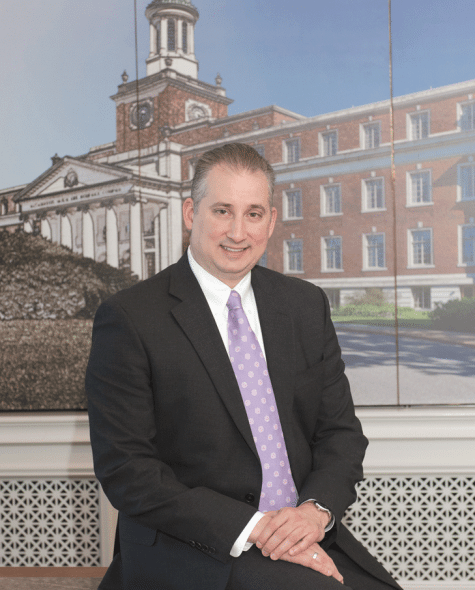
Nick Fyntrilakis

Nick Fyntrilakis, the company’s vice president of Community Responsibility.
Photo by Denise Smith Photography

Nick Fyntrilakis certainly wasn’t around for what’s known in local lore as the Great Flood of ’36, when the Connecticut River, swollen by large amounts of melting snow and persistent rains, spilled over its banks in mid-March, breaching dams, knocking bridges off their foundations, and destroying homes and businesses.

But he’s heard the stories — and seen some of the photos — related to how MassMutual Financial Group, the company he now serves as vice president of Community Responsibility, opened its purse strings, not to mention its doors (quite literally), to help Springfield residents weather that disaster.

“We sheltered people in our home office on State Street because they didn’t have any place to go — we had people sleeping on cots in a gymnasium that we had at that time,” he told BusinessWest, adding that he references that story often because it helps explain the company’s long history of community involvement and the many different forms it has taken.

Actually, that history goes back well before 1936, he said, adding that it is his unofficial job description to help write more chapters and also create new ways to support area cities and towns (especially Springfield, its home base) and improve overall quality of life.

And in recent years, he and others at the company have added to the portfolio of community involvement in some intriguing — and what many would consider non-traditional — ways, from the many layers of support provided after the devastating tornado in 2011, to several forms of assistance to the nonprofit agency DevelopSpringfield, which grew out of a State Street revitalization initiative and is now involved in a wide range of economic-development-related activities, to multi-tiered support for Valley Venture Mentors and other groups and initiatives created to foster and nurture entrepreneurial activity and, ultimately, create jobs.

These come on top of more traditional forms of support, such as scholarships for high-school students, mentoring and internship programs, funding of cultural institutions such as the Springfield Symphony Orchestra (SSO) and CityStage, and continued support for the many events staged by the Spirit of Springfield, including its annual Fourth of July fireworks display.

Add it all up, and it becomes apparent that MassMutual, a Fortune 100 company (number 96 in the last compilation, with more than $33 billion in annual revenue) is making a huge impact in the community, one that certainly epitomizes the phrase Difference Maker.

The numbers certainly support such a designation:

• In 2014, MassMutual supported 109 Springfield-area entities, spreading $4.8 million among them;
• The company’s aggregate support of DevelopSpringfield from 2008 to 2014 totals more than $4.3 million, including a $1.6 million contribution toward planning and rebuilding following the tornado;
• This past year, MassMutual awarded $1.6 million to Valley Venture Mentors over the next three years to support an accelerator program and created the $5 million Springfield Venture Fund;
• Over the past five years, the company has granted internships to nearly 500 high-school and college students. Job offers were extended to 23 of the participants, and 17 are still with the company; and
• Company employees mentor roughly 35 Springfield high-school students each year, and has had 175 mentor matches since the 2010-11 school year.

But such statistics tell only part of the story. Indeed, Fyntrilakis, as well as representatives for some of the agencies supported by MassMutual, say the company’s involvement goes well beyond check writing, and is part of broad strategy to strengthen the Greater Springfield area and position it for a better economic future.

Jay Minkarah, president and CEO of DevelopSpringfield, called it a “holistic approach,” one that he believes separates MassMutual from most other corporate donors.

“One of things that distinguishes MassMutual’s support for initiatives like ours is that these are not just a nod toward giving back to the community or a feeling that the company should support charitable endeavors,” he explained. “These are different. These are strategic investments in the community.”

Summing up the company’s philosophy involving community involvement, Fyntrilakis said it mirrors its corporate outlook as well, meaning a focus on the longer term.

“We make decisions that are 50-year decisions — we don’t worry about the next quarter or what the stock price is going to look like in two days; we’re worried about how our company is going to be faring 50 years from now so we can deliver on the promises we make to our policy holders,” he explained. “And as a result, that translates into the way we engage our community and our corporate responsibility. We want to ensure that our region is strong into the future so that we can have a workforce that can deliver on the things that we need for our policy owners, and we want to continue to thrive as an organization. As goes our community, so goes our ability to do things.”

In Good Company

Springfield Mayor Domenic Sarno told BusinessWest that any community fortunate enough to have a Fortune 100 company headquartered within its boundaries should certainly expect that employer to be a solid corporate citizen.

Springfield’s fireworks

Springfield’s fireworks display now bears MassMutual’s name as lead sponsor — one of the company’s many examples of philanthropy in the category of community vitality.

But he and others are of the opinion that what MassMutual has done over the past 164 years goes above and beyond what could — and should — be expected.

“From the beginning, this city has always been able to count on MassMutual,” said Sarno, who has been in the corner office through a number of natural disasters and economic initiatives that the company has responded to. “It’s been a source of jobs, a force on economic development, and a philanthropic monster. And it should never, ever be taken for granted, because not every city has a MassMutual — and every city would love to have one.”

Fyntrilakis said the contributions made within the community are part of a corporate culture. “We are responsive and engaged and committed to serving our community,” he said, adding that, as the company has grown over the decades and expanded physically within other communities, that philosophy has followed.

“We support other communities where we have a presence,” he explained, “including Enfield, Phoenix, Memphis, and now Boston, where we have an office. We are engaged there as well.”

But the level of engagement is much higher in Springfield, he said, and for obvious reasons. The company traces its roots here, to 1851, when Caleb Rice, then an insurance agent working for Hartford-based Connecticut Mutual Life, decided to open a similar company — one owned by its policy holders — in Massachusetts. The company’s growth mirrored the nation’s — in other words, it expanded west, opening offices in several Midwestern states, and eventually reached the West Coast in 1868.

But it has always had Springfield has its base, with several headquarters facilities, including the current home on State Street, opened in 1927. Along with Smith & Wesson (because of that company’s strong brand recognition), it is the corporate entity most associated with the City of Homes.

“We have a much deeper involvement in Springfield, both from a financial perspective as well as a human-engagement perspective,” said Fyntrilakis, “in the sense of me serving on boards of directors, having our employees volunteer in the community on various things, and employees being generous with their own dollars to causes that we support or drives that we have for food or toys or things of that nature.

“It’s pretty special — it’s a meaningful degree of support,” he went on. “It goes along with being a Fortune 100 company, but it’s not just about how big we are or what people think we should do. It’s about what we think we should do and our own commitment.”

Fyntrilakis told BusinessWest that the phrase ‘corporate responsibility’ cuts across most all aspects of the company and includes employees in many departments and on many levels. Examples include everything from environmental responsibility — an important consideration for a company with such a large footprint, and one embodied in such initiatives as solar panels on the roof of the company’s headquarters and electric-car-charging stations in the parking lot — to employee benefits and training initiatives.

But perhaps the most visible component of corporate responsibility is the many actions that fall into the broad category of philanthropy or community involvement.

Historically, there are three main categories for this involvement, he said: education, economic development, and what the company calls ‘community vitality,’ and there are many examples of each.

School of Thought

Before elaborating on each area, Fyntrilakis first went into more depth about the philosophy that governs decisions on community involvement, because doing so helps explain directions taken by the company.

“We’re not ashamed to say that it’s important for our charitable activity to align with our business strategy,” he explained. “Because, in order for us to support charitable activity, our business needs to be strong.”

And one of the keys to achieving that strength (again, for the long term) is through a quality workforce and effective means of attracting and recruiting talent. Thus, many of the philanthropic initiatives within the realm of education involve initiatives that would help better train a workforce locally and also introduce young people to the company and its myriad employment opportunities. Meanwhile, initiatives within the area of community vitality are aimed at improving quality of life, but also to make the region more attractive to potential job candidates.

On the national level, he went on, many initiatives, such the LifeBridge and FutureSmart programs, are designed at enhancing the corporation’s brand and reputation, as well as empowering more Americans to become educated financially, which ties into MassMutual’s core business.

LifeBridge is a unique, free life-insurance program that helps children of income-eligible families pay for their education expenses if their insured parent or guardian passes away during the term of the policy, while the FutureSmart Challenge, conducted in conjunction with select NBA teams, stages interactive seminars at which students learn the importance of savings, career choices, staying in school and going to college, and how each has a profound impact on their future financial success.

Locally, within the category of education, said Fyntrilakis, the emphasis is on grades 6-12, with a focus on academic achievement and career pathways. Individual initiatives involve grants to specific programs to improve academic achievement, scholarships, mentoring students at the Springfield High School of Science and Technology and Putnam Vocational Technical High School (both located nearly across State Street from the company’s headquarters building), internships, job-shadowing programs, and others.

“Our hope is that we can create a pipeline for some of those young people to come and work at MassMutual,” he explained. “Many of our initatives are aimed at prompting the diverse, talented young people that we have to think about a career at MassMutual, and have a progression and a way that they can do that.”

MassMutual’s support to Springfield

MassMutual’s support to Springfield after the 2011 tornado came in many forms, from a $1.6 grant toward the rebuilding effort to a loaned executive to help draft a recovery plan.

In the realm of community vitality, support is directed toward those events and institutions that will attract people to the city of Springfield and the region as a whole, said Fyntrilakis. That list includes everything from the recent Spalding Hoophall Classic, which brought top high-school basketball players from around the country to the City of Homes for a three-day tournament, to Bright Nights, the Fourth of July fireworks, and other events staged by the Sprit of Springfield; from the SSO to CityStage and the Springfield Museums.

As with programs in the realm of education, MassMutual’s initiatives in community involvement usually go well beyond simply writing checks.

Indeed, Audrey Szychulski, outgoing executive director of the SSO, said the company’s contributions to that institution go well beyond its sizeable season sponsorship (a six-figure gift). Indeed, several officers of the company sit on the orchestra’s board, including Chief Marketing Officer John Chandler, the current chair.

“Besides funding, MassMutual has a core group of people who interact with us on a regular basis,” she explained, adding that the company has also assisted with strategic planning, marketing initiatives, introducing the SSOP to young professionals new to the region, and even a complete IT analysis. “And when it comes to a donation of that size, it’s really an investment in our general operating needs to ensure that we really can serve our community. To them, it’s not just about the concert, but the whole experience and helping to ensure that we can touch as many people as possible through outreach initiatives.”

Response to the tornado of 2011, as well as the flood of 1936 and other natural disasters, does not fall neatly into any of the three main categories of community involvement, but it does reflect the company’s sense of responsibility to the city and its residents.

“It was an extraordinary event, and we certainly wanted to step in,” Fyntrilakis said, adding that support took forms ranging from an immediate $100,000 donation to the American Red Cross to a $1.6 million contribution to DevelopSpringfield for its Rebuild Springfield Fund, to a donation of his time and energy to co-chair the rebuilding effort.

Fueling Entrepreneurship

But if the tornado does fit into a category, it would likely be economic development, said Fyntrilakis, adding this is a relatively new classification of community involvement for the company — but one that has garnered most of the headlines in recent months.

The sharpened focus on this realm dates back roughly to 2008 and the Great Recession, he told BusinessWest, noting that the company recognized a need to reach out and help the city, which was, like many former manufacturing centers, struggling to reinvent itself and stimulate new job growth.

“We stepped back and we decided that we really needed to help the community leverage the assets it had and really take advantage of opportunities to grow and strengthen its economy,” he explained. “It’s great for us to be able to do lots of things charitably, but the reality is, the better the economy is, and the better the opportunities for people to get jobs and for the tax base to grow — that’s really what’s going to help strengthen the community a lot more than charitable contributions that aren’t going to facilitate that.”

This emphasis on economic-development-related support has taken more forms, starting with a State Street Corridor initiative that remains a work in progress. As part of that endeavor, the company helped facilitate creation of DevelopSpringfield, which Fyntrilakis called a “bricks-and-mortar organization” charged mostly with developing and repurposing underutilized properties, thereby revitalizing many of the city’s neighborhoods.

Current projects include several on State Street, including development of a supermarket, reuse of the former River Inn, razed in 2013, and redevelopment of the so-called Gunn Block. Other initiatives include renovation of the Ansel Phelps House on Maple Street and DevelopSpringfield’s commitment to build an innovation center in two long-vacant buildings on Bridge Street.

That facility will become the new home to Valley Venture Mentors (VVM), another of the Difference Makers for 2015 (see related story, page A28) and one of the focal points for MassMutual’s multi-pronged efforts to promote entrepreneurship and encourage businesses to locate within Springfield.

Overall, the company is investing $6.5 million in that realm, with $1.5 million going to VVM over the next three years for a startup accelerator — the first cohort of 30 companies started its six months of programs in January — and $5 million for creation of the Springfield Venture Fund, which will invest in startups located in Springfield or willing to relocate there.

In December, video-game developer HitPoint Studios became the first company to receive an investment ($500,000) from the fund, relocating from Amherst to a suite in 1350 Main St. in Springfield.

“We kept hearing how entrepreneurs were chasing capital, and capital was dictating where folks were locating — Boston, Cambridge, and San Francisco were putting money on the table and driving people to those communities,” said Fyntrilakis as he discussed how and why the fund came about. “Those are great cities with wonderful entrepreneurial ecosystems, but we felt that we had, through VVM and others, a good entrepreneurial ecosystem in Springfield, but the early-stage capital just wasn’t available, and folks were leaving to pursue capital elsewhere.”

By providing that early-stage capital, as well as other forms of support for entrepreneurship, MassMutual is taking a somewhat bold step in the arena of community involvement, one that should pay huge dividends down the road, said Jay Leonard, a board member at VVM and one of those who helped guide it though its formative years.

“MassMutual’s support of both the accelerator and the fund has been critical,” said Leonard, who serves as an economic researcher for one of the company’s subsidiaries, Babson Capital Management, and has served as a go-between of sorts for VVM and the corporation. “The best way to provide economic development is to invest in companies that are going to be successful, and MassMutual’s doing that.”

Minkarah agreed, and returned to that word ‘holistic’ to describe the company’s community involvement, especially with entrepreneurship initiatives.

“The company has provided support for the Springfield Innovation Center and Valley Venture Mentors, and it created the Springfield Venture Fund, and you can’t just look at any of these in isolation,” he explained. “When you look at that total package, here are very well-thought-out strategic investments designed to create a physical place that will support and foster innovation and entrepreneurship, support an organization that can actually run the program, and provide funding to support startups and high-growth companies that are innovative and entrepreneurial themselves.

“These are investments that MassMutual is making in the long-term economic health of the community,” he went on, “because they believe these are strategically positioned initiatives that can have a catalytic effect.”

Flood of Memories

It’s unlikely that anyone was using the word ‘catalytic’ with any degree of frequency back in 1936.

And that term probably wouldn’t be used to describe people sleeping on cots in MassMutual’s gymnasium because the flood leveled their homes.

But times change, in some ways, and that word is certainly appropriate now.

That’s because, while the company is basically continuing a 160-year-old tradition of community involvement, it is finding new, dynamic, and in some ways groundbreaking ways for it to evolve.

And that’s one of many reasons why it is a Difference Maker.

George O’Brien can be reached at [email protected]

Opinion
Early Education Is a National Priority

By JOAN KAGAN

All of us in the broad field of early-childhood education and care were elated to hear our vital services underscored as a priority in President Obama’s State of the Union Address late last month.

As executive director of Square One, which has been providing these services since 1883, I believe the president’s remarks to a joint session of Congress shows us that our leaders are willing to spend political capital to acknowledge the value of investing in our young and vulnerable citizens.

The president stressed that child care is something that’s not merely good to have, but something that middle-class and low-income families must have. It is a message that Square One, together with our colleagues in the field, has been sharing for years, and we are ecstatic to know that the most powerful people in Washington have decided it is worthy of discussion on a national stage.

Universal child care is not a new idea. During World War II, the young men went off to war. Having women in the workforce was a national priority, and this country responded by providing universal child care. Today, in much the same way, enabling middle-class and low-income parents with young children to work and support their families has to become a national economic priority. Even as our economy continues to recover and grow stronger, families where both parents work are more prevalent than ever. And in the case of single-parent households, every parent in the family works.

A stronger economy has been good news for ‘Mary,’ who was overjoyed at finding her first professional job. Mary, who had been homeless and on welfare, first came to Square One as a participant in our Mom Squad program. This innovative model helps mothers who receive aid from the Department of Transitional Assistance engage in volunteer service at community agencies, including Square One. By performing a minimum of 30 hours per week of community service, participants can get voucher assistance to enroll their children in high-quality early-education and care programs.

While Mom Squad members work without pay to gain on-the-job training in a supportive, nurturing environment, their child is cared for at Square One. It is a great model. However, there is a problem that arises when someone like Mary ‘graduates’ from the Mom Squad and applies the skills she learned to get a real job earning a decent wage. She lifted herself and her family out of homelessness and dependency on welfare. So what is the problem? Now that she has a job, she is no longer eligible for a child-care subsidy, and she needs child care in order to work. Mary has confided in her Square One social worker that, if she cannot find a child-care solution, she may end up back on welfare.

Quality child care for five days a week often costs more than a month’s rent. Over a year, quality child care can cost as much as it costs to attend community college. A quality early-education and care experience for our children is costly when quality is (and should be) maintained. Research-based materials, professional development for teachers, a stimulating learning environment supplemented with developmentally appropriate supplies, and activities to support a child’s early learning do not come cheap.

It is a labor-intensive industry, despite the fact that child-care workers are among the lowest-paid professionals nationwide. The cost of care is particularly difficult for low-income working parents, like Mary.

Access to affordable, high-quality early education and care is a national priority if we want to help more middle-class and low-income families get ahead or avoid welfare assistance, and if we value giving every child an opportunity to enter kindergarten ready to learn. In the president’s words, child care is no longer nice to have; it’s a must-have.

Joan Kagan is executive director of Springfield-based Square One; (413) 732-5183.

Daily News

AMHERST — The Amherst Area Chamber of Commerce announced a donation of $3,517 to Amherst Regional High School’s Business Education Program. This money was raised at the annual Chamber Golf Tournament held in July 2014 through donations from local businesses.

The chamber also announced the expansion of its successful ARHS scholarship program in collaboration with Cooley Dickinson Health Care. For the past 11 years, Cooley Dickinson and the chamber have funded two $1,000 scholarships to deserving ARHS seniors who plan to study business at UMass Amherst. This year, the scholarship program will be expanded to include ARHS seniors who will pursue a healthcare-related degree at UMass.

“We are thrilled to receive this significant donation from the chamber, which directly supports and positively impacts many ARHS students who are interested in business and entrepreneurship,” said Kimberly Stender, director of Community Partnerships and Volunteers for Amherst-Pelham Regional Public Schools.

Daily News

WESTFIELD — Upon recommendation of its presidential search committee, the Westfield State University board of trustees has officially ratified Diversified Search of Philadelphia to help manage the search process for the selection of the university’s 20th president.

Diversified Search is woman-owned, top-10 executive-search firm with specialties in the areas of education and not-for-profits. Throughout the firm’s 40-year history, Diversified has always sought leaders that have not only strong character and credentials, but also different perspectives and views. The presidential search committee met on Jan. 5 to review proposals and conduct search-firm interviews, and selected Diversified from among four firms who submitted a request for proposal.

“Diversified Search was the strongest choice due to its extensive experience in higher education,” said Steven Marcus, co-chair of the search committee. “Diversified will help the search committee, the board of trustees, and the entire Westfield State community develop the values, characteristics, and alignment of purpose needed to conduct a successful search.”

With the search firm approved, a timeline will be developed, and meetings with the members of the campus community will be convened to share their opinions on what traits and characteristics the next Westfield State president should possess. Two days of open forums, moderated by Diversified Search, are scheduled for Feb. 11 and Feb. 12.

“Developing a timeline and criteria will be critical for this search. We do not want the search to drag on, but we do want to take the time we need to select the very best candidate possible,” said Terrell Hill, co-chair of the presidential search committee.

Daily News

PITTSFIELD — Berkshire Bank Foundation awarded a total of $1,518,133 in grants to nonprofit organizations in Massachusetts, New York, Connecticut, and Vermont during 2014. The grants supported important education and community development initiatives as well as health, human-service, and cultural programs. In addition, Berkshire Bank provided $500,622 in community sponsorships, raising its total contributions in the community to over $2 million.

“We are so pleased to continue providing critical funding to hundreds of nonprofit organizations across our footprint,” said Lori Gazzillo, vice president and director of the Berkshire Bank Foundation. “Our 2014 grants have supported programs and projects that are enhancing economic opportunities and improving the quality of life for members of our communities. On behalf of our entire Berkshire Bank team, we are honored to be able to give back in such a significant way.”

The bank’s charitable foundation and bank sponsorships fund nonprofit organizations and programs in communities that Berkshire Bank serves. While the foundation’s funding priorities are education and community and economic-development projects, it also supports youth, cultural, and human-service organizations. The bank also maintains an annual scholarship program for high-school seniors, which recently launched for 2015.

Meanwhile, recognizing that being a good corporate citizen and community partner is about more than writing a check, Berkshire administers an employee volunteer program called the X-Team, which provides employees with paid time off to volunteer during regular business hours. Through the program, more than 70% of Berkshire Bank’s employees donated in excess of 40,000 hours of service to benefit community organizations across the bank’s footprint.

Berkshire Bank’s philanthropic and community volunteerism efforts were honored in 2014 with the Capital Region Community Impact Award, the United Way Agar Volunteerism Award, two New England Financial Marketing Awards, and being named by the Boston Business Journal as one of Massachusetts’ Most Charitable Companies for the second consecutive year.

Berkshire Bank accepts requests for financial support at www.berkshirebank.com/giving. All requests must be submitted through the online system in order to be considered. Organizations interested in seeking funding are encouraged to read the foundation’s funding guidelines prior to applying for support. Complete guidelines for those seeking grants or bank community sponsorships are available on the website.

Daily News

SPRINGFIELD — Baystate Medical Center’s Mini-Medical School, which begins its spring session on March 19, will give area residents a reason to come out of hibernation from the long, cold, snowy winter and join others interested in the expanding field of medicine.

Mini-Medical School program is an eight-week health education series featuring a different aspect of medicine each week. Classes this spring will include sessions on various medical topics, such as surgery, emergency medicine, anesthesiology, pathology, and several others. Many of the ‘students,’ who often range in age from 20 to 70, participate due to a general interest in medicine and later find that many of the things they learned over the semester are relevant to their own lives.

The goal of the program, offered in the hospital’s Chestnut Conference Center, is to help members of the public make more informed decisions about their healthcare while receiving insight on what it is like to be a medical student — minus the tests, interviews, and admission formalities. Each course is taught by medical-center faculty who explain the science of medicine without resorting to complex terms. Baystate Medical Center is the Western Campus of Tufts University School of Medicine and is the region’s only teaching hospital.

All classes are held Thursday nights starting at 6 p.m. and run until 8 or 9 p.m., depending on the night’s topic. No basic science knowledge is needed to participate. Each participant is required to attend a minimum of six out of eight classes in order to receive a certificate of completion. Among the topics and speakers slated for the spring semester are:

• March 19: “Hey, I Finally Got into Medical School!” with Dr. Michael Rosenblum, director, Internal Medicine Residency Program (includes a general tour of the medical center).
• March 26: “Surgery,” with Dr. Richard Wait, chair, Department of Surgery (includes a tour of the Baystate Simulation Center and the Goldberg Surgical Skills Lab).
• April 2: “Cardiac Surgery,” with Dr. John Rousou, chief, Cardiac Surgery.
• April 9: “Pathology,” with Dr. Richard Friedberg, chair, Department of Pathology (includes a tour of the lab).
• April 16: “Anesthesiology,” with Dr. Michael Bailin, chair, Department of Anesthesiology.
• April 23: “Psychiatry,” with Dr. Benjamin Liptzin, chair, Department of Psychiatry.
• April 30: “Stroke/Rehabilitation,” with Dr. Edward Feldmann, vice president and medical director, Neurosciences & Rehabilitation.
• May 7: “Emergency Medicine,” with Dr. Joseph Schmidt, vice chair and chief, Emergency Medicine (includes a graduation ceremony).

Tuition is $95 per person and $80 for Senior Class and Spirit of Women members. Register for the spring semester of Mini-Medical School by calling (800) 377-4325. For more information, visit www.baystatehealth.org/minimed.

Daily News

WEST HATFIELD — Dr. Teresa Pianta has joined Cooley Dickinson Orthopedics & Sports Medicine and the Cooley Dickinson Hospital medical staff. Pianta, who is certified by the American Board of Orthopedic Surgery, joins a team of physicians, surgeons, and therapists who treat musculoskeletal problems, including management of spine disorders, joint replacement, trauma, sports medicine, hand and arthritis care, and pain management.

Pianta earned her doctorate of medicine from the University of Rochester School of Medicine. She completed her orthopedic-surgery residency at the University of Connecticut and her hand-surgery fellowship at the Philadelphia Hand Center at Thomas Jefferson University. Her medical interests include orthopedic surgery with specific training and interest in hand surgery, including the operative and non-operative management of hand and upper-extremity conditions in children and adults, including trauma, fractures, arthritis, carpal tunnel, and tendinitis.

“No one seeks the care of a surgeon because they are feeling well; they are injured, in pain, and often anxious and scared,” Pianta said. “People who come to see me want the benefit of my expertise as a surgeon, but they also need reassurance that I can heal their injuries, relieve their pain, and quell their fears. I do my best to carefully explain diagnoses and describe the range of appropriate treatment options, both surgical and non-operative. More broadly, however, I work to treat the whole person by making patient education and open dialogue a central part of my practice.”

In addition to the 4 West St., West Hatfield location, Hampshire Orthopedic & Sports Medicine physicians see patients at 35 Turkey Hill Road, Belchertown; the UMass Amherst Clinic; 33 Riddell St., Greenfield; and 65 Springfield Road, Westfield. Pianta welcomes new patients at Cooley Dickinson Orthopedics & Sports Medicine. For information, call (413) 586-8200.

Daily News

SPRINGFIELD — Massachusetts Gov. Charlie Baker will give his first major address to the Greater Springfield business community at the Affiliated Chambers of Commerce of Greater Springfield’s (ACCGS) Outlook 2015 on Friday, Feb. 27, from 11:30 a.m. to 1:30 p.m. at the MassMutual Center, 1277 Main St., Springfield.

Outlook is the area’s largest legislative event, attracting more than 700 guests and presenting expert speakers on local, state, and federal issues. Area elected officials will also be in attendance to participate in this discussion of front-burner issues. The event is presented by Health New England and sponsored by the Eastern States Exposition, MassMutual Financial Group, and United Personnel. Program/reception sponsors include the Sisters of Providence Health System, Comcast, Western Massachusetts Electric Co., and the Republican, with support from Chicopee Savings Bank and BusinessWest.

Baker was inaugurated on Jan. 8 as the 72nd governor of the state. Over the course of his career, he has been a highly successful leader of complex organizations in business and in government. As a cabinet secretary under Gov. William Weld and Gov. Paul Cellucci, Baker helped lead efforts to reform and modernize state government.

During his time as CEO of Harvard Pilgrim Health Care, Baker turned a company on the brink of bankruptcy into the nation’s highest-ranked healthcare provider for six straight years. As a member of the Weld and Cellucci administrations in the 1990s, Baker helped turn a billion-dollar deficit into a surplus, create a half-million jobs, and enact an ambitious education-reform agenda.

First asked to serve as Secretary of Health and Human Services in 1992, Baker led efforts to make Massachusetts’ social-service system more humane, cost-effective, and responsive to the needs of the Commonwealth’s residents. In 1994, Baker was appointed Secretary of Administration and Finance, overseeing a number of cost-saving reforms, modernizing state government, and making it more efficient.

Baker will be joined at the Outlook program by U.S. Rep. Richard Neal, who will remark on events at the federal level, including his thoughts on the 114th Congress and the topics that the new Congress may review.

“As a senior member of the powerful House Committee on Ways and Means and ranking member of its Select Revenue Measures subcommittee, Congressman Neal serves in a critically important capacity in Washington for our area, our state, and the entire country,” said ACCGS President Jeffrey Ciuffreda.

Tickets are $50 for ACCGS members and $70 for general admission. Reserved tables of 10 are available. Reservations must be made by Feb. 20, and may be made online at www.myonlinechamber.com or by contacting Member Services Director Sarah Mazzaferro at [email protected]. No walk-ins will be accepted, and no cancellations will be accepted once the reservation deadline has passed.

Daily News

HOLYOKE — Thrive, a one-stop financial success center for local college students and residents, will conduct a grand-opening celebration on Wednesday, Feb. 4, at 10 a.m. in room 309 in the Frost building at Holyoke Community College.

Thrive, a collaborative effort between HCC, PeoplesBank, and United Way of Pioneer Valley, will offer financial literacy and coaching, workforce-development services, and public-benefits screening and enrollment. Thrive will provide a valuable support system for anyone in the community (along with necessary skills to achieve long-term financial goals), but especially college students, who may be experiencing financial independence for the first time in their lives.

“I don’t think it’s any secret that most college students don’t have a lot of money and that those who choose to attend community college often do so because of its affordability and their own financial limitations,” said HCC President William Messner.

“What we see, year after year, is that managing money is a huge challenge for students. That financial anxiety is an issue that often impedes their academic performance and sometimes even leads them to drop out of school. Anything we can do to eliminate or at least reduce those financial concerns is going to help our students succeed in the classroom. Healthy financial skills will aid them not only during their college days, but also after they move on, so we are very happy to provide this new resource here at HCC not only for our students, but for members of the community who might also be facing financial issues.”

PeoplesBank has been working to increase financial literacy for years by supporting seminars in the community and teaching personal finance in area public schools.

“Academic excellence and community vibrancy are core principles of our corporate-responsibility efforts,” said Douglas Bowen, president and CEO of PeoplesBank. “Supporting Thrive gives us the opportunity to expand on our financial-literacy education efforts. It also provides our associates with another way to volunteer to improve the community and help our future workforce by teaching classes at Thrive.”

Financial literacy is also one of the four impact areas that United Way of Pioneer Valley focuses its fund-raising efforts on, because of the long-lasting results that can be attained with the proper skills and training.

“We’re here to help hardworking families build assets for a successful future,” said Dora Robinson, president and CEO of United Way of Pioneer Valley. “Our partnership with HCC and PeoplesBank has made it possible for our community to ‘Thrive.’”

Daily News

MONSON — Monson Savings Bank recently announced three promotions. Robert Chateauneuf has been promoted to vice president, commercial loan officer; Corinne Sawyer has been promoted to vice president, business development officer; and Dodie Carpentier has been promoted to human resources officer.

Chateauneuf joined Monson Savings Bank in 2012 as assistant vice president and is a key member of the bank’s commercial-lending team. He possesses indepth knowledge of the Western Mass. small-business marketplace and is a trusted advisor to business customers. He is a member of the 2014 class of BusinessWest’s 40 Under Forty, and is a graduate of UMass Amherst.

Sawyer joined Monson Savings Bank in 2001 and was promoted to assistant vice president in 2007. She works with the bank’s business customers to optimize cash flow, financial workflow, and efficiency using the bank’s deposit, cash-management, and eBanking products. She serves on the board of directors of the East of the River Five Town Chamber of Commerce and is a graduate of Elms College.

Carpentier joined Monson Savings Bank in 2006 as assistant branch manager and was promoted to branch manager in 2008. In 2012 she assumed a dual role as branch manager and education coordinator. With her growing interest in training and HR, she obtained certification in Supervision in Banking and Human Resources Management from the Center for Financial Training. She was awarded the position of human resources officer after an extensive search to replace her predecessor, Elaine Grimaldi, who retired last year after a long and successful career in banking and as vice president of Human Resources for Monson Savings. Carpentier is a board member of River East School to Career.

“We are extremely pleased to announce these well-deserved promotions,” said Steve Lowell, president of Monson Savings Bank. “Rob, Corinne, and Dodie are important contributors to our success.”

Briefcase Departments

Applications Sought for 2015 Leadership Institute
SPRINGFIELD — Applications are now being accepted for the 2015 session of Leadership Institute, Rethinking Leadership: Sharpening Skills for Organization and Community Service, sponsored by MassMutual Financial Group with scholarship support from the Irene E. and George A. Davis Foundation. The Leadership Institute is a unique collaboration between the Affiliated Chambers of Commerce of Greater Springfield (ACCGS) and Western New England University (WNEU) aimed at teaching mid- and upper-level managers the crucial thinking and problem-solving skills needed to enable them to be effective leaders in service to the community and in their workplaces, and designed to develop high-energy and high-involvement leadership. Since 1982, the program has developed members of the business community for volunteer service to community organizations. Institute alumni represent many accomplished and distinguished leaders in business, education, government, and nonprofit communities, including U.S. Rep. Richard Neal; former state Sen. and Hampden County Clerk of Courts Brian Lees; Henry Thomas, president and CEO of the Urban League of Springfield; and MassMutual Financial Group Vice President Carol Demas and Community Responsibility Consultant Glenn Davis. Directed by WNEU Dean of the College of Business Julie Siciliano and Executive-in-residence Jack Greeley, Leadership 2015 will challenge participants to think in new ways and to analyze their own strengths and organizational challenges within a dynamic economy. Taught by Western New England faculty, participants will focus on problem solving, learning to ask the right questions, and implementing creative solutions for both nonprofit and for-profit organizations. Participants will actively explore best practices of leaders; analyze their own leadership, learning, and problem-solving styles; and experience the synergies that come from high-performing teams. Emphasis will be on experiential activities that identify, develop, and refine skill sets for effective leadership. The Leadership Institute runs for seven consecutive Thursdays from 1 to 4:30 p.m., Feb. 12 through March 26. The Feb. 12 opening session will be held at the Sheraton Springfield, One Monarch Place, Springfield, with the remaining sessions held at the TD Bank Conference Center, 1441 Main St., Springfield. The program culminates in April with the ACCGS Beacon Hill Summit, the chamber’s annual trip to Beacon Hill, and a graduation ceremony and dinner. Tuition is $885 per participant and includes all materials, several learning and personality inventory tools, the summit, and the graduation ceremony and dinner. Not-for-profit organizations interested in participating may apply for scholarship funding provided by the Irene E. and George A. Davis Foundation. Interested participants must complete an application, obtain a letter from a sponsor supporting the application, and provide a written letter of interest with background. Information and applications are available by contacting Kara Cavanaugh at the ACCGS at (413) 755-1310 or [email protected]. The deadline for applications is Wednesday, Feb. 4.

Rebuilding Together Unveils New Name, Expanded Services
SPRINGFIELD — The Commonwealth of Massachusetts and the Massachusetts Assoc. of CDCs recently certified Rebuilding Together as a community-development corporation. In addition, the organization has officially changed its name to Revitalize Community Development Corp., or Revitalize CDC for short. Its focus will continue to be making meaningful improvements to homes that help reduce energy use, save money, and create a safe, healthy, and sustainable living environment for their residents and the community. Revitalize CDC also announced expansion of its services with a Small Business Technical Assistance Program targeting the underserved Latino community in the city. Leslie Belay, senior program manager at Massachusetts Growth Capital Corp., awarded new funding to Revitalize CDC to build out the program. 

State Announces $30M Solar Loan Program
BOSTON — Gov. Deval Patrick’s administration announced the final design of a $30 million residential solar loan program to complement the nation-leading solar market in Massachusetts. The Mass Solar Loan program, designed to make it easier for homeowners to finance solar-electric projects on their homes, will work with banks and credit unions to expand borrowing options through lower-interest-rate loans, while encouraging loans for homeowners with lower incomes or lower credit scores. “Solar installations provide important economic and environmental benefits to Massachusetts,” said state Secretary of Energy and Environmental Affairs Maeve Bartlett. “The Mass Solar Loan program will provide opportunities for homeowners to control and reduce their energy costs and for local banks and credit unions to offer a new business product.” The program, which has been in development since early 2014, follows a Department of Energy Resources (DOER) study that demonstrates lifetime net benefits to homeowners 10 times greater for direct solar ownership relative to third-party ownership. Beginning in early 2015, local lenders will be able to sign up to participate in the program, which is scheduled to begin providing loans in the spring of 2015. “Massachusetts has seen incredible growth in the solar market, with installations in 350 of the Commonwealth’s 351 cities and towns,” said DOER Commissioner Meg Lusardi. “The Mass Solar Loan program will ensure that this growth continues at the local level, increasing opportunities for homeowners to take their energy future into their own hands.”

Company Notebook Departments

Doctors Express Forges Partnership with Large Practice Group
WORCESTER — Doctors Express, the largest independent urgent-care provider in the Commonwealth, announced a partnership with one of the largest independent cooperative physician groups, the Central Massachusetts Independent Physicians Assoc. (CMIPA). This first-of-its-kind partnership will offer more resources for patients, better communication between providers and patients, as well as continuity of care. Doctors Express operates under parent company Medvest, LLC, which serves as the master developer of the urgent-care franchise throughout Massachusetts, Maine, New Hampshire, and Vermont. In particular, this will be an opportunity for patients in Worcester to find accessible and affordable care. Doctors Express and CMIPA plan to launch their first site in Worcester (115 Stafford St., late spring) and another Worcester location (address and date to be announced shortly). This announcement comes on the heels of a successful partnership between Doctors Express and the Steward Health Care System, based in the Greater Boston area. Through the partnership, urgent care provided by Doctors Express is now available to all Steward patients. As Doctors Express continues to grow with more locations, affiliations between urgent-care providers and major medical systems is the way of the future, said Jim Brennan and Rick Crews, CEO and president, respectively, of Medvest, LLC. “Our partnership with CMIPA continues the objective at Medvest to redefine how patient care is delivered,” said Brennan. “We are partnered with Steward Health Care System, the largest fully integrated community care organization and community hospital network in Eastern Massachusetts, and now CMIPA, one of the largest physician cooperative groups in the Commonwealth of Massachusetts.” Existing urgent-care locations have not completely satisfied the need for affordable and accessible care, said Gail Sillman, CEO of CMIPA. “We thought about setting up our own urgent-care center while evaluating our options. We even hired a consultant and became familiar with all the urgent-care providers nationally and locally.” With the help of a consultant, Sillman identified Doctors Express as the most viable option. “Together we saw the benefits of a true partnership where other urgent-care providers did not,” she said. “Doctors Express will honor our patient relationships and extend patient care on nights and weekends for a true, mutually beneficial partnership. Furthermore, Doctors Express has the name brand and market recognition that we were looking for, largely due to the quality of their patient care.” Doctors Express currently has Massachusetts locations in Braintree, Burlington, Dedham, Malden, Marlboro, Natick, North Andover, Saugus, Springfield, Waltham, Watertown, and West Springfield, with several new locations in development. In addition to the two Worcester locations to be opened this year, the company plans to open a location in New Bedford later this month. The Marlboro location is the most recent addition to the Massachusetts-based operations of Doctors Express, having opened on Dec. 5 under the leadership of Managing Director Bing Yeo.

UMass Amherst, Amazon.com Create Virtual Bookstore
AMHERST — UMass Amherst has contracted with Amazon.com to replace its traditional on-campus textbook store with a virtual bookstore expected to save students about 30% compared with current prices on course materials and provide free, one-day shipping to the campus and nearby communities. This will be Amazon’s first online university store in the Northeast and its third nationwide, with potential annual savings of $380 per student. “We know students struggle with the high cost of textbooks and other course materials, and they have been moving to online purchasing. We are delighted to help them get the most competitive prices and first-rate service,” said James Sheehan, UMass Amherst’s vice chancellor of administration and finance. “By seamlessly linking our online campus information system to Amazon, we will make it convenient as well as economical for students to get the items they need for their classes, delivered in one day with no shipping charge to campus and nearby addresses.” Beginning in May, students will be able to order new, used, rental, and digital textbooks and other course materials through Amazon or through personalized links in SPIRE, the university’s online student-information system. To make finding UMass textbooks easier for students, Amazon will integrate relevant course and section information on customized Amazon product pages. In June, Amazon will also open a staffed customer pick-up and drop-off location in the Lincoln Campus Center. For several years, students have been turning from traditional textbook stores to online sources to save money. The university’s five-year contract with Amazon will accelerate the online-purchasing trend and save UMass Amherst students money, particularly through free shipping either to campus or to addresses in Amherst, Hadley, Northampton, Pelham, South Deerfield, and Sunderland. UMass Amherst officials said Amazon was chosen from six companies that submitted proposals because of its low prices and its ability to deliver superior customer service. Based on a sample of more than 1,500 course materials used in UMass Amherst classes during the 2014 spring semester, Amazon estimates it can offer UMass students a savings of 31% versus current bookstore prices, or around $1.4 million based on sales of textbooks at the existing UMass Bookstore. The College Board estimates that a student at a four-year state university spends $1,225 per year on textbooks and supplies, but that number varies across courses of study. Based on this rough estimate, UMass Amherst students could save about $380 annually.

Atlantic Fasteners Moves to Larger Facility
AGAWAM — Atlantic Fasteners has moved to a 44,500-square-foot facility in Agawam, bringing all employees under one roof. The 100%-employee-owned company, which sells industrial and aerospace fasteners and supplies nationwide, previously operated out of three locations in neighboring West Springfield. The new facility has the capacity to hold four times the company’s current inventory and accommodate 25% more office employees. It includes a 22-foot pickup counter, complete with 17 technical fastener wall charts to help customers with measuring fasteners, identifying head styles, and other important information. The ISO 9001:2008 and AS9120-certified firm was founded by Western Mass. businessman Patrick O’Toole in 1981. He sold the company to his employees in 2005.

WSU Online Programs Lauded by U.S. News
WESTFIELD — Westfield State University led Massachusetts’ state universities and placed in the top 30% out of 214 schools in U.S. News & World Report’s 2015 “Best Online Education Programs” rankings. Westfield State’s official ranking was 58 out of 214 in the category of online-education bachelor’s programs. “We are committed to finding new ways to expand access to a high-quality college education,” said Elizabeth Preston, president of Westfield State University. “Offering online access to our academic programming allows us to support the needs of students who might not otherwise be able to take advantage of the educational opportunities we offer.” Westfield State has offered online classes since 2002 and currently offers six online bachelor’s-degree-completion programs, in business management, criminal justice, liberal studies, history, sociology, and psychology. Evolving the program has been key to its success and expansion. Last year, Westfield State signed the MassTransfer Plus agreement that allows students who have completed an online associate’s degree at Holyoke Community College (HCC) to transfer to the university’s online bachelor’s-degree program, making it possible for them to complete a four-year degree fully online. The MassTransfer Plus agreement builds on the growing number of fully online degree programs available at HCC and Westfield State, as well as the institutions’ determination to make it easier for Massachusetts residents to obtain an education and move into higher-paying, in-demand career fields.

VertitechIT Launches New, Interactive Website
HOLYOKE — With sales at an all-time high, a modern headquarters, and a new, national business alliance focused on IT network infrastructure and unified communications, VertitechIT is celebrating with the launch of its new, interactive website, www.vertitechit.com. The site uses humorous, black-and-white photography and poignant headlines to draw in visitors, poking light fun at what can be a very staid and highly technical profession. “IT industry websites tend to be rather formulaic,” said VertitechIT Principal Partner Greg Pellerin. “It was important for our new site to reflect our corporate culture, one that promotes fun and creativity along with cutting-edge technical expertise.” The privately held company, which caters to the business and healthcare industries, just concluded its most successful year ever and recently moved into its new national headquarters in a converted 19th-century paper mill in Holyoke. VertitechIT also recently announced the formation of a national IT-solutions coalition with Microsoft platform provider Software Logic and unified communications expert Partner Consulting. The new Stability Alliance (www.stabilityalliance.com) is focused on building IT network infrastructures that allow businesses and healthcare systems to increase capacity, reduce costs, and improve efficiency.

SC Recognized for Community Engagement
SPRINGFIELD — Springfield College has been recognized by the Carnegie Foundation as one of a select group of colleges and universities throughout the country to earn its community-engagement classification. This classification recognizes Springfield College for its curriculum, which involves students and faculty addressing community needs, as well as outreach and partnerships that benefit the external community and the campus community. “This classification is highly respected and valued by the higher-education community,” said Springfield College Provost and Vice President for Academic Affairs Jean Wyld. “The essence of a Springfield College education is preparing students for careers and personal lives that improve the lives of other people, and this classification attests to that mission.” Springfield College is one of 361 institutions that now hold the community-engagement classification. This honor represents a higher-education institution’s excellent alignment among mission, culture, leadership, resources, and practices that support dynamic and noteworthy community engagement.

Springfield JCC Receives Grant for Wellness Project
SPRINGFIELD — The Springfield JCC Kehillah Special Needs Department’s Fitness Buddies Program is the recipient of a $10,000 grant from Ronald McDonald House Charities of Connecticut & Western Mass. for a wellness project that will significantly improve quality of life for young people with special needs. Recognizing the need in the Greater Springfield area for a fitness center with adapted equipment for teens with special needs, the JCC established a Fitness Buddies program with seed money from the Doug Flutie Foundation in 2013. As the popularity of the program increased, additional specialized equipment was needed to accommodate individuals with Down syndrome, Williams syndrome, and autism-spectrum disorders. Ronald McDonald House Charities stepped in to underwrite the cost of two Expresso S3Y youth bikes, which are safer than a conventional treadmill or elliptical machine. This type of bike is also being used in a pilot program with Harvard School of Public Health. Adding modified equipment puts special-needs individuals on a par with their friends and gives them access to aerobic and fitness equipment that otherwise would be excluded from their workout. “Innovations such as these accessible bikes for teens and young adults with special needs opens up yet another opportunity for profound self-development — in this case, exercising in a typical fitness center,” said Stocky Clark, executive director of Ronald McDonald House Charities of Connecticut & Western Mass. “RMHC is honored to partner with the JCC to bring this innovation to individuals with a range of special needs participating in the Kehillah Special Needs Department of the JCC.” Increased social interaction between the special-needs community and general members helps create healthy relationships and empowers individuals with special needs. Best Buddies matches teens and young adults who have social challenges with teens and adults in the community. Together, they work out at the Springfield JCC, and participants make new friends while learning healthy habits. Research shows that exercise yields a range of physical and mental-health benefits for children. The Springfield JCC serves the Greater Springfield and Northern Conn. communities, offering hundreds of programs for all ages with a strong commitment to individuals with special needs.

WMECo to Rebrand as Eversource Energy
SPRINGFIELD — Western Massachusetts Electric Co. (WMECo) announced it will undergo a corporate rebranding, complete with a new name, Eversource Energy. The change will become official on Feb. 2. All subsidiaries of Hartford-based Northeast Utilities will take the new name, including WMECo, NSTAR, Connecticut Light and Power Co., Public Service Co. of New Hampshire, and Yankee Gas Services Co. Tom May, chairman, president, and CEO of Northeast Utilities, stated in a press release that “consolidating our brand was the obvious next step for us as we continually strive to improve energy delivery and customer service to our 3.6 million electricity and natural-gas customers across the region.”

Real Pickles Wins Good Food Award
GREENFIELD — Dan Rosenberg and Addie Rose Holland of Greenfield-based Real Pickles joined top artisan food producers from around the country on Thursday for the Good Food Awards ceremony at the Palace of Fine Arts in San Francisco. Real Pickles was awarded a top honor at the event for its organic beet kvass, a fermented beverage traditional to Eastern Europe. “One of our goals at Real Pickles has always been to promote the flavor and health benefits of fermented foods,” said Rosenberg. “Receiving a national honor like the Good Food Award helps us get this message out.” Real Pickles uses the traditional pickling process — without vinegar — to make its line of fermented vegetables. The organic beet kvass is made with certified organic vegetables from northeast family farms, as are all of the company’s products. The kvass is available by the bottle from area retailers, including Green Fields Co-op Market in Greenfield, River Valley Co-op Market in Northampton, and Whole Foods Market in Hadley. The Good Food Awards are given to artisan producers in five regions of the U.S. in 11 categories — beer, charcuterie, cheese, chocolate, coffee, confections, honey, oil, pickles, preserves, and spirits — and highlight outstanding American food producers who are making food that is exceptionally delicious and supports sustainability and social good.

MassMutual to Continue Sponsorship of Hampden County Legal Clinic
SPRINGFIELD — The Hampden County Bar Assoc. announced that MassMutual will be continuing its sponsorship of the Hampden County Legal Clinic for 2015 with a grant of $20,000. The grant will help carry on the expansion of pro bono activities as well as the promotion of the clinic. MassMutual has been the Hampden County Legal Clinic’s exclusive sponsor since 2012, not only providing financial support but also taking a leadership role in developing new pro bono opportunities and encouraging its in-house lawyers, paralegals, and staff to participate in the clinic’s programs. “Sponsoring the Hampden County Legal Clinic enhances access to justice for a significant number of local residents, ultimately benefiting the Greater Springfield community as well,” said Mark Roellig, executive vice president and general counsel. “We are proud to continue this relationship and hope to see growing numbers of legal volunteers donating their time through the clinic’s programs.”

Departments People on the Move

William Crawford IV, CEO of United Financial Bancorp Inc. and United Bank of Glastonbury, Conn., announced that United Bank has recruited the following bankers from People’s United Bank to cover the Greater Springfield region:
Dan Flynn, Executive Vice President and Chief Operating Officer for Wholesale Banking. Flynn will report to David Paulson, executive vice president and head of Wholesale Banking. His primary role will be to drive numerous enterprise-wide commercial-banking functions for United’s wholesale-banking team. He will have oversight of United’s Greater Springfield commercial banking operations, as well as management responsibilities for the bank’s shared-national-credit business and all business-banking teams. Most recently, Flynn was senior vice president and market manager at People’s United Bank, primarily for Western Mass., for seven years, where he was responsible for managing and coordinating all aspects of C&I lending activities. In his previous roles at People’s United, he held similar responsibilities for managing and coordinating all aspects of a significant C&I portfolio in the Central Mass., Western Mass., and Vermont markets. Before People’s United acquired Bank of Western Massachusetts, Flynn was executive vice president and senior lender from 1989 to 2009 for the Bank of Western Massachusetts.
Tony Liberopoulos, Senior Vice President and Commercial Banking Regional Executive. Liberopoulos, who will be directly responsible for United Bank’s commercial-banking practice in Greater Springfield, brings 27 years of commercial-banking experience, most recently holding the position of senior vice president and regional manager for People’s United Bank in Springfield. He also spent more than a decade at Fleet Bank and BayBank in various positions, including underwriting, loan resolution, and lending.
Rick Rabideau, Senior Vice President and Commercial Banking Team Leader. Rabideau also comes to United from People’s United Bank, where he most recently served as senior vice president and team leader. He will take on a dual responsibility with United as a commercial banking officer, focusing on developing and growing commercial-banking opportunities as well as a player-coach role in leading and mentoring other teammates on the commercial team. Rabideau’s career in banking started in 1986 with Shawmut Bank, where he was a commercial banker from 1988 to 1996. He then joined First International Bank/UPS Capital, eventually ascending to senior vice president with the key responsibility of managing 10 lenders who made up the Springfield and Hartford market lending units. In 2008, he joined People’s United Bank.
Sheryl McQuade, Senior Vice President and Massachusetts Senior Credit Officer. McQuade has more than 25 years of corporate and commercial banking experience, most recently serving as senior vice president, commercial regional leader for Berkshire Bank, where she was responsible for all commercial teams and production in Connecticut. She worked for Bank of America and predecessor banks in a variety of senior production and credit roles for the business-banking, middle-market, and corporate-banking divisions.
•••••

Nancy Buffone

Nancy Buffone

The Amherst Area Chamber of Commerce announced the election of Nancy Buffone, Executive Director of External Relations and University Events for UMass Amherst, as President of the organization. Buffone assumes leadership of the chamber following the two-year term of Lawrence Archey of Hampshire College. Julie Marcus, principal of New England Environmental, has been elected Vice President of the chamber. The chamber also announced the election of six community leaders to join the chamber’s board of directors:
Robin Brown, Lord Jeffery Inn;
• Sean Cleary, Amherst Copy and Design Works;
• Heidi Flanders, Integrity Development;
• Katelyn Lockhart, Big Brothers Big Sisters of Hampshire County;
• April Williams, J.F. Conlon and Associates; and
• Peter Vickery, Esq., attorney at law.
The chamber also acknowledged those stepping off the board after years of dedicated service to the organization:
Kathryn Grandonico-Chiavaroli, Lincoln Real Estate;
• John Kokoski, Mapleline Farm;
• Reza Rahmani, Moti Restaurant; and
• Meredith Schmidt, UMass Campus Center.

•••••
Christopher Neronha

Christopher Neronha

Christopher Neronha, an attorney with extensive experience in higher education, has been named General Counsel at Springfield College. Neronha will provide legal counsel and guidance to the leadership of the college and will serve as secretary to its board of trustees. He will be a member of the president’s senior leadership team. Neronha has 19 years of experience as an in-house corporate attorney, nine of those as a senior in-house attorney for Roger Williams University in Bristol, R.I., where he previously was employed since 2006, as the associate general counsel and executive director of risk management. Prior to Roger Williams, Neronha was assistant general counsel and assistant secretary at National Life Insurance Co. in Montpelier, Vt., where he provided legal support for all company operations. He is an attorney licensed in the federal and state courts of the Commonwealth of Massachusetts and the states of Connecticut, Rhode Island, and Vermont. A graduate of Providence College with a bachelor’s degree, summa cum laude, in political science, Neronha received a juris doctor, magna cum laude, from the University of Notre Dame Law School.
•••••
FieldEddy Insurance Inc., which recently became a division of HUB International New England, LLC, a leading global insurance broker, has announced several appointments:
Olga Tracy

Olga Tracy

Olga Tracy has rejoined the agency as the newest Personal-lines Account Manager in the Monson office. She will be responsible for educating and ensuring that clients have the proper insurance coverage;
Marylou “Lou” Rosner

Marylou “Lou” Rosner

• In the East Longmeadow office, Karen Britt has accepted a promotion to Middle-market Account Manager, Heather Fleury has been named Small-business Account Manager, and Peggy Grundstrom will be a part of the quality-control team.
The agency also recognized Marylou “Lou” Rosner upon her retirement. She leaves FieldEddy with more than 29 years of devoted customer care.
•••••
Main Street Hospitality Group announced a new addition to its management team, appointing sommelier Dan Thomas to the position of Wine and Bar Director. Main Street Hospitality Group is a hospitality-management company based out of Stockbridge. The group owns and manages the Red Lion Inn in Stockbridge, where Thomas has held the role of sommelier since 2007. Over his seven years at the inn, Thomas has expanded the wine list to include more than 400 selections and 50 half-bottle selections, with a focus on international artisan producers and local and regional wines. The Red Lion Inn was awarded the Wine Spectator Award of Excellence for the 16th consecutive year in 2014. Thomas possesses an extensive knowledge of oenology and has completed the first level of the Court of Master Sommeliers.

Community Spotlight Features
Spirit of Innovation Is Taking Hold in Pittsfield

Mayor Dan Bianchi

Mayor Dan Bianchi says the new Berkshire Innovation Center will be a boon to local businesses and will draw attention to the western part of the state.

The city of Pittsfield has a new project in the planning stages that Mayor Daniel Bianchi calls “amazing.”

It is the Berkshire Innovation Center, which is so innovative that it qualified for funding from a $1 billion investment the Commonwealth is making in projects that further the life sciences.

“We’ve been working with the Massachusetts Life Sciences Center in Boston on this for the last few years,” Bianchi said, adding that when he heard about the state’s plan to invest in the field, he thought about how Pittsfield could become part of it.

His initial idea was to build an incubator that would draw entrepreneurs from the Boston area to Pittsfield, which is home to many small, applied materials and plastics companies that make products such as sutures and suturing equipment.

But when it became clear that this concept was not feasible, a new plan was formulated that led to a $9.7 million capital grant from the Life Sciences Center to build the Innovation Center in the William Stanley Business Park on the grounds of the former General Electric complex that dominated this city’s business community for decades.

The new, non-profit facility will enable shared research between local companies and educational institutions; early-stage production and commercialization of products; and workforce training at the site.

Bianchi said officials toured Rensselaer Poly-technic Institute and Hudson Valley Community College’s new science centers, which have been very successful, to help them formulate the plan.

Local manufacturing companies, including General Dynamics, SABIC and Crane & Co., as well as regional educational institutions such as the State University of New York’s College of Nanoscience, MassMEDIC, the UMass campuses in Amherst and Lowell, Berkshire Community College, McCann Technical School, and Massachusetts College of Liberal Arts have already expressed interest in becoming affiliated with the center. 

“We’ve received more than 20 letters of interest,” said Bianchi, adding that the center will give local companies access to training and advanced technology, including a clean room, 3-D prototype printers, and laboratories with reverse engineering capabilities that will allow them to make new products or improve existing ones. “There are some pretty creative companies in this area, but in order to grow they need this type of facility. A company making complex compounds will be able to work with researchers at UMass Lowell as well as at the Nanotechnology Center in Albany.”

The center will also contain incubator space for entrepreneurs. “It will be unique, and people at the Life Sciences Center are really excited about it,” the mayor said, noting that the facility will be sustainable and generate income through tiered memberships, usage and rental fees on equipment, training, and sponsorships from regional companies.

Ground will be broken this winter, and Bianchi said that if meaningful relationships can be created, it will mean “great things for local companies.”

Meanwhile, other forms of economic development are taking place in this former mill city, everything from new investments in the community’s burgeoning downtown, to more steps to bolster an already thriving creative economy,

For this, the latest chapter in its Community Spotlight series, BusinessWest talked at length with Mayor Bianchi about what’s next for the largest city in Berkshire County.

Downtown Transformation

Among the many new developments in Pittsfield is a boutique hotel taking shape within a building on 273 North St. that dates back to the 19th century. The 68,000-square foot, $14 million project will include 42 unique rooms, three conference areas, an atrium with a skylight, a bar, a revolving door, and a marquee sign with “Hotel” spelled out in lights over the entrance.

“They’re keeping the old windows as well as the 8-by-8 posts in the building, and no two rooms will be the same,” said Bianchi in a voice brimming with anticipation. “It’s very exciting because Berkshire County needs more hotel space, and it will really jazz up this part of North Street. The Crown Plaza and area bed and breakfasts are booked solid all summer, so the owners of the property believe it will be a great destination.”

The popular Spice Dragon Restaurant, which was located in the building, has closed, but a new eatery, which is yet to be determined, will take its place.

“The hotel is only a couple of blocks from the Barrington Stage Company and is right behind City Hall,” Bianchi said, adding that it will be a boon to business travelers as well as tourists.

Other improvements are also being made to North Street via a streetscape plan, and the city was able to procure money from the state much earlier than it planned to complete it.

“The work began about six years ago and we expected it would take two more funding cycles to finish it,” Bianchi said, noting that the first phase of the project ran from the corner of East Housatonic Street to Columbus Avenue and included new lighting, sidewalks, and plantings.

“But we were able to leverage the massive investment made by Berkshire Medical Center and private investors,” he continued, adding that the hospital’s new day-surgery center, parking garage, and wound clinic, combined with the boutique hotel and renovation of the Frank Howard Building (more about that later) played into the equation and convinced state officials to grant the city $4.5 million to complete the streetscape work along an additional three blocks. “We received the money six months ago and we hope the infrastructure improvements will lead to an increase in private investments.”

To that end, work on The First Street Common downtown will also be completed in the spring. “It’s one of our largest urban parks and dates back to the early 19th century,” Bianchi said. “It’s a two-minute walk from City Hall and is very important. It has a new spray park and a performance center, and Shakespeare and Co. will stage events there this year.”

Market-rate housing is being built in the Frank Howard Building as part of an historic redevelopment plan that will convert the underutilized structure into 14 apartments, with 10,000 square feet of storefront retail space on the ground floor.

In addition, the Anota Building will also be converted into 25 units of housing with commercial space on the first floor.

“The work will begin in the spring, which is wonderful, because we can’t seem to keep enough market-rate housing downtown,” Bianchi said. “Eleven new units were completed in the old Notre Dame Elementary School at the end of 2013 and they were immediately rented. Encouraging people to live downtown is part of our master plan, because there are 6,000 jobs in the downtown area. So, our downtown is being completely transformed.”

A complete analysis of every street in Pittsfield was also recently undertaken by the engineering firm Kimley-Horn Associates Inc. “It will help us take a scientific approach on how to expend our limited resources,” Bianchi told BusinessWest as he spoke about how the condition of each roadway, coupled with information on when utility work will be done, will make it possible for officials to prioritize work and avoid resurfacing roads that will be torn up a year later. “The overall condition of our streets is good, but the study is important because streets are something everyone notices, whether they live here or are just driving through the city.”

Planning for the Future

The city is also building a new, comprehensive high school. “It’s in the design stage and will have a huge vocational element,” Bianchi said, adding that when he first became mayor and began talking to small business owners, he was reminded that years ago high school students in the vocational track spent every other week working at local companies, which helped them advance their skills and benefitted local companies.

“The school has had an internship program, but the limited number of hours students spend at local businesses does not give them much exposure to their trade, and provides very little value to companies,” he noted. “So we’re framing a new educational model that will benefit students and our small businesses. There has to be a rigorous academic component to it, but there are waiting lists in the state for vocational schools.”

The goal, he continued, is to create a system that will prepare students who don’t want to pursue higher education to go directly into the workforce after graduation.

Courses of study will range from plastics and applied materials to early childhood education, and since Berkshire Medical Center is a large area employer, Bianchi surmises that students who enroll in the latter field of study may decide to become a nurse or pediatrician.

“Vocational education shouldn’t be a limitation, and the high school has to encompass a lot more than a new building. It has to offer a new model of education,” he said, adding that a program in horticulture could plant seeds of interest in farming, which is a growing venture that is being embraced by young adults in the Pioneer Valley again. “I think we can offer our young people some wonderful opportunities, which will also help small and medium-size companies to grow.”

In addition, Pittsfield is creating a partnership with Berkshire Community College that will allow students to complete courses and earn college credits while they are still in high school.

The mayor told BusinessWest that Pittsfield offers a wonderful quality of life, and the hope is that the Berkshire Innovation Center, new high school, and growth downtown will help attract people to the city and advance economic growth.

“We are too small not to have every move integrated, so every project has to have an economic development connection, whether it is housing, entertainment, educational or a new hotel. But we can offer young people a wonderful middle class life and a nice home can be purchased here for $175,000,” he said.

And with the spirit of innovation and change taking place in the city, Pittsfield’s hopes are likely to become reality.

Pittsfield at a glance

Year Incorporated: 1891
Population: 44,057 (2013)

Area: 42.47 square miles

County: Berkshire

Residential Tax Rate: $17.15
Commercial Tax Rate: $35.17
Median Household Income: $42,114
Family Household Income: $56,896
Type of government: Mayor; City Council
Largest Employers: BHS Management Services Inc.; Berkshire Medical Center; BMC Hillcrest Campus; Sabic Innovative Plastics

* Latest information available

Features Opinion
Free Community College: A Worthy Concept

President Obama proposed plans for providing a free community-college education for many students at his State of the Union address last week. The proposal, “America’s College Promise,” which would benefit an estimated 9 million students annually, is still very much in the formative stages, and there are a number of rather sizeable hurdles to be cleared before this concept can advance, let alone become reality, but we believe the proposal should be given full consideration and at least a chance to succeed.

Why? Because, as we’ve said on many occasions, the key to economic growth and prosperity for this region — and one of the keys to closing the huge income gap between the haves and the have-nots in this state and across the country — is education, and free community college for those who qualify is a possible place to start.

Not everyone who attends community college goes on to graduate — in fact, far more than half don’t — or get a good-paying job, and these facts won’t change if such an education suddenly becomes available free of charge. But such a development could have enormous potential to prompt more people to start college and finish it. And since one needs a high-school diploma, or the equivalent, like a GED, to get into a community college, it makes sense that providing that option free would inspire more people to stay in school.

And that’s important in communities like Springfield and Holyoke, where high school drop-out rates are sky high and a major contributor to poverty and a growing skills gap within the workforce.

But let’s back up a minute. Free community college as a national policy is certainly a long shot. The principal problem is funding it. Under the plan the president is proposing, estimated to cost $60 billion over a decade, states would have to pay roughly 25% of the cost.

Well, this state, according to Gov. Charlie Baker, is facing a budget gap of roughly $765 million, and none of the options for closing that gap are particularly attractive. And there are many states in that same boat.

Beyond the fiscal challenges, though, there are some stern logistical challenges as well. Can community colleges like the four in this region handle a surge in their student populations? Perhaps, but not easily and not without expansion of current infrastructure and the hiring of more teachers and administrators, which would greatly increase the program’s price tag.

Also, whenever something is provided free, it tends to lose some of its value. This can’t be allowed to happen in this case, and to ensure that it doesn’t, strict eligibility guidelines must be attached to a free community-college education. In the case of the president’s plan, there are such rules — students must attend at least half-time, maintain a grade point average of at least 2.5, and make “steady progress” toward graduating.

And there are philosophical and political challenges to overcome as well. Indeed, some lawmakers simply don’t believe it is the government’s — and, ultimately the taxpayers’ — responsibility to be providing a free college education. Garnering necessary political support will be difficult.

But as we said earlier, Obama and his administration should fully explore this concept. Many governments around the world subsidize or partially subsidize higher education, and they do so because they view such expenditures as a sound investment in their future.

We should have the same attitude here. It should be clear to everyone by now that, while one could become a member of the middle class decades ago without a college education, or even a high-school education, the odds of doing so now are much slimmer.

And while there are many reasons why individuals don’t enter or finish college, financial wherewithal is easily the biggest.

Providing a free community-college education is a bold, challenge-filled proposition, but it’s a concept that holds great promise and should be pursued.

Opinion
Education Reform: More Work to Do

By PAUL REVILLE

When the education reform bill was enacted in the early 1990s, its main goal was to educate all students to high levels. And all meant all. Many reforms and investments were implemented, and the state is now the national leader in student achievement. Still, there are deep, persistent achievement gaps and inequality of opportunity that don’t meet our goal of “all means all.’’ Too many students leave school unprepared for college or a career. Until this is addressed, we cannot consider our prodigious reform efforts and investments successful.

Since the early 1990s, education reform has been a collaborative effort between leaders in the public and private sectors and educators. This has allowed the state to avoid many of the “education wars” that have embittered the climate in other states. To be sure, there have been fierce and healthy policy disagreements here, but opposing parties have usually kept their eyes on the consensus goal of education reform: all students learning at high levels.

Education reform is always a work in progress, requiring regular changes in policy, strategy, and practices. And now, after more than two decades of good work, we must admit that our strategies — regardless of their comparative success — have failed to achieve our overall goal of all students learning at high levels. We need to ask once again: What more needs to be done? How do we customize education to meet each child’s needs so that every child achieves success?

Looking ahead, one of the major challenges is obviously the budget. Current and anticipated budget shortfalls will pose serious threats to progress. Of course change in education doesn’t always have to cost more money, but it’s clear that we will eventually have to spend more on specialized services, including early childhood education, extended school days, summer learning, tutoring, and health and human service supports. We also need to reduce the cost of higher education.

Another challenge will be to avoid distractions and debilitating conflicts. Extremists would happily drive us into full-blown warfare over their favorite causes — whether safeguarding a sacrosanct version of standards and tests or tearing down the reform architecture of the past 20 years. For example, extremists in the charter school war want us to do continuous battle over whether charters are the “silver bullet” salvation of the public schools or the scourge of public education. We have fought these battles many times before and they are costly distractions from the business of formulating effective, long-term strategies for improving the education of our students.

There are a number of strategies that the state needs to develop over the next few years, including early childhood education, expanded learning time, career pathways, increased turnaround work, the better utilization of education technology, expanded access to top quality charter and innovation schools, higher education reform, and improved quality of teaching.

This is an enormous agenda. No single player could begin to accomplish it. Collaboration will be essential. Innovation will be vital. Making progress will depend on the cooperative efforts of the state and local elected officials, educators, unions, business leaders and the media, as well as students and their families. Education is vital to our success as a people, as a state, and as a nation. Getting to “all means all” would be an unprecedented achievement, but Massachusetts is still very well positioned to make a run at such an ambitious and historic goal.


Paul Reville is professor of practice of policy and administration at the Harvard Graduate School of Education, where he also leads the Education Redesign Lab. He is a former Massachusetts secretary of Education.