Home Posts tagged Entrepreneurship (Page 7)
Chamber Corners Departments

AFFILIATED CHAMBERS OF COMMERCE OF GREATER SPRINGFIELD
www.myonlinechamber.com
(413) 787-1555
• Oct. 25: Super 60 Luncheon, 11:30 a.m.-1:30 p.m., at Chez Josef, Agawam. Celebrate the region’s top-performing companies. Now in its 24th year, this awards program celebrates the success of the fastest-growing privately owned businesses in the region that continue to make significant contributions to the strength of the regional economy. Presented by Health New England with support from Hampden Bank, Sullivan Hayes & Quinn, the Republican, and WWLP-TV 22. Reservations are $50 for members, $70 for general admission. Reservations may be made online at www.myonlinechamber.com or by contacting Cecile Larose at (413) 755-1313.
• Nov. 6: Business@Breakfast, 7:30- 9 a.m., at the Western Mass Business Expo, MassMutual Center, Springfield. Keynote speaker: Jim Koch, founder of the Boston Beer Co. and maker of the Samuel Adams family of beers. Hear the story of how Koch took his generations-old family recipe and changed the beverage landscape forever. Sponsored by the Regional Employment Board of Hampden County, MassMutual Center, United Personnel, and Frigo’s Foods. Reservations are $25 and may be made online at www.myonlinechamber.com or by contacting Cecile Larose at (413) 755-1313.
• Nov. 13: ACCGS After 5, 5-7 p.m., the TD Bank Building. Sponsored by TD Bank. Tickets are $5 for members, $10 for general admission. Reservations may be made online at www.myonlinechamber.com or by contacting Cecile Larose at (413) 755-1313.
• Nov. 21: ACCGS Government Reception, 5-7 p.m. at the Carriage House, Storrowton Tavern, West Springfield. A great opportunity to meet socially with your local, state, and federal officials. Sponsored by Baystate Health, Columbia Gas of Massachusetts, and United Personnel. Tickets are $50 for members, $70 for general admission, which includes complimentary beverages and hors d’oeuvres. Reservations may be made online at www.myonlinechamber.com.
• Nov. 26: ACCGS Pastries, Politics, and Policy, 7:30-9 a.m. Reservations are $15 for members, $20 for general admission, and includes complimentary beverages and hors d’oeuvres. Call (413) 755-1313 for more information. Reservations may be made online at www.myonlinechamber.com.
• Dec. 4: ACCGS Business @ Breakfast, 7:15-9 a.m., at the Colony Club, Springfield. Topic: “The Value of Volunteerism.” Sponsored By Masiello Employment Services. Tickets are $20 for members, $30 for general admission, which includes complimentary beverages and hors d’oeuvres. Reservations may be made online at www.myonlinechamber.com.

AMHERST AREA CHAMBER OF COMMERCE
www.amherstarea.com
(413) 253-0700
• Oct. 18: Legislative Breakfast, 7:15 – 9 a.m., at the Lord Jeffery Inn. Sponsored by Western Massachusetts Electric Co. Admission: $15 for members, $20 for non-members.
• Nov. 20: Chamber After 5, 5-7 p.m., at the Amherst Survival Center. Sponsored by SciDose LLC. Admission: $10 for members, $15 for non-members.

CHICOPEE CHAMBER OF COMMERCE
www.chicopeechamber.org
(413) 594-2101
• Nov. 3: November Salute Breakfast, 7:15-9 a.m., at the Castle of Knights, 1599 Memorial Dr. in Chicopee. Admission: $20 for members, $26 for non-members.

GREATER EASTHAMPTON CHAMBER OF COMMERCE
www.easthamptonchamber.org
(413) 527-9414
• Oct. 21: Celebrity Bartenders Night, 6-9 p.m. at Opa-Opa Steakhouse & Brewery, 169 College Highway, Southampton. Join us for a night of fun with local celebrities mixing your drinks! Your tips benefit the chamber’s holiday lighting fund. Raffles and fun. Admission is free.

GREATER HOLYOKE CHAMBER OF COMMERCE
www.holycham.com
(413) 534-3376
• Oct. 22: Social Media with Constant Contact Workshop, 8:30-10:30 a.m., at the Greater Holyoke Chamber of Commerce, Executive Conference Room, 177 High St., Holyoke. Sponsored by PeoplesBank and the Republican. This information-packed seminar offers a basic review of the essential strategies and best practices a business or organization should understand to successfully get started with social-media marketing. Admission is free. Presented by Constant Contact. For reservations, call the chamber office at (413) 534-3376.
• Oct. 30: Manufacturing Breakfast, 7:30-9:30 a.m., at the Wherehouse, 109 Lyman St., Holyoke. For reservations, call the chamber office at (413) 534-3376.

GREATER NORTHAMPTON CHAMBER OF COMMERCE
www.explorenorthampton.com
(413) 584-1900
• Oct. 22: Business to Business Marketing Workshop, 3:30-5 p.m., at the Greater Northampton Chamber of Commerce. “In a Flash: On-the-spot Marketing Tips for Growing Your Visibility.” Struggling to gain visibility with your target audience? Are your marketing materials producing tangible results? Are your best messaging ideas living only in your head? The chamber has help on the way. Three women business owners — Janice Beetle, Ruth Griggs, and Maureen Scanlon of the Creative, a marketing and communications collaboration in Northampton — will lead a B-to-B flash-marketing workshop. They will meet with fellow business owners at our conference room table, listen to your marketing and communications concerns, and help you brainstorm practical, professional solutions on the spot. Learn more about how to strategize, advertise, brand, and promote your business, reach the media, and maximize your message in person, in print, and online. The workshop is free, but pre-registration is required, and space is limited. To register for this workshop, contact Jasmin Tomic at (413) 584-1900 or [email protected].
• Nov. 6: Arrive@5 Chamber Networking Event, 5-7 p.m., at the World War II Club. Sponsors: Homeward Vets. Catered by Big Kats Catering. We’ll be collecting donations for Homeward Vets. A list of needed donations will be posted on the website. Tickets are $10 for members, $15 for non-members. RSVP to Esther at [email protected].
• Nov: 19: “The Art of Consulting,” 8:30-10 a.m. at the chamber office. This special program is a collection of the guiding principles of consulting that sum up the lessons presenter Don Lesser he has learned over the past 30 years. Each topic is summarized in a short, often humorous saying, which is followed by a longer explanation. In this session, Lesser, who has been a consultant and run a business that uses consultants for more than 30 years, will cover some of the basics of being a consultant, including “The Three Laws of Consulting,” “What Have You Done for Me Lately?” “Rules for Good Client Management,” and “Discount Sushi, or How Much Should You Charge?” The workshop is free, but pre-registration is required, and space is limited. To register, call (413) 584-1900, or e-mail www.explorenorthampton.com.

GREATER WESTFIELD CHAMBER OF COMMERCE
www.westfieldbiz.org
(413) 568-1618
• Nov. 4: Mayor’s Coffee Hour, 8-9 a.m., at the Genesis Spiritual Life and Conference Center, 53 Mill St., Westfield. Have coffee with Mayor Daniel Knapik, who will share information about what’s happening in the city. For more information or to register, contact Pam Bussell at the chamber office at (413) 568-1618.
• Nov. 6: 2013 Annual Meeting & Awards Dinner at the Westwood Restaurant, 94 North Elm St., Westfield. More information to come as this event date approaches.
• Nov. 13: WestNet, 5-7 p.m., the Cove, 90 Point Grove Road, Southwick. Come and meet chamber members and bring your business cards for a great networking opportunity. Cost: $10 cash for chamber members, $15 cash for non-members. Payment can be made in advance or at the door.  Walk-ins are welcome. Call the chamber at (413) 568-1618, or e-mail Pam Bussell at [email protected] for more information. Your first WestNet is always free.

MASSACHUSETTS CHAMBER OF COMMERCE
(413) 525-2506
• Nov. 12: Massachusetts Chamber of Commerce Annual Meeting & Awards Luncheon, 9 a.m. registration, at the Double Tree, Westborough. For more information on ticket sales and sponsorship opportunities, call the chamber office at (413) 525-2506 or e-mail [email protected].

NORTHAMPTON AREA YOUNG PROFESSIONAL SOCIETY
www.thenayp.com
(413) 584-1900
• Nov. 14: November Networking Social, 5 p.m., at the Northampton Brewery. Community involvement, networking, business and professional development. NAYP is excited to host its first event at the famed Northampton Brewery. Enjoy delicious beer and savory hors d’oeuvres. Cost: free for members, $10 for non-members. RSVP on Facebook.

PROFESSIONAL WOMEN’S CHAMBER
www.professionalwomenschamber.com
(413) 755-1310
• Oct. 24: A Chocolate Affair, 6-9 p.m., at Chez Josef, Agawam. Indulge yourself in chocolate, shopping, and networking. Presented by the Professional Women’s Chamber, an affiliate of the ACCGS. Exhibitor space is $70. Reservations to attend are $40. Reservations may be made online at www.myonlinechamber.com or by contacting Cecile Larose at (413) 755-1313.
• Nov. 6: November Luncheon at the Western Mass. Business Expo, at the MassMutual Center, 11:30 a.m.-1 p.m. Keynote Speaker: Kathrine Switzer, first female Boston Marathoner in 1967. More than 40 years later, Switzer’s story continues to capture the public’s imagination. Reservations cost $35 members, $40 for non-members, and may be made at www.myonlinechamber.com or by contacting Cecile Larose at (413) 755-1313.

WEST OF THE RIVER CHAMBER OF COMMERCE
www.ourwrc.com
413-426-3880
• Oct. 23: West of the River Chamber of Commerce Business to Business Expo, hosted by WRC, North Central CT Chamber, Bradley Regional Chamber, and East Windsor Chamber, 4:30-7:30 p.m. at the Holiday Inn, Enfield. For more information, contact the chamber office at (413) 426-3880 or e-mail [email protected].

YOUNG PROFESSIONAL SOCIETY OF GREATER SPRINGFIELD
www.springfieldyps.com
• Oct. 31: The Young Professional Society of Greater Springfield and Northampton Area Young Professionals are co-producing a special October CEO Panel Luncheon, 11:30 a.m.-2 p.m., at Sláinte restaurant, 80 Jarvis Ave., Holyoke. Led by moderator George O’Brien, editor of BusinessWest magazine, the panel will explore the question, what steps can the Pioneer Valley take to foster entrepreneurship and cultivate talent? Lunch and networking, 11:30 a.m. to 12:15 p.m; panel, 12:15 to 2 p.m. Sponsored by Adam Quenneville Roofing and Siding and BusinessWest.

Manufacturing Sections
Savage Arms Continues a Tradition of Entrepreneurship, Innovation

Al Kasper

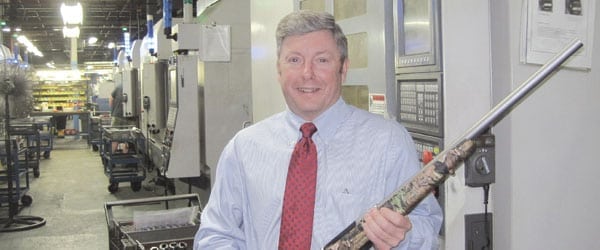
Al Kasper says a passionate team focused on innovation and lean manufacturing is the key to success at Savage Arms.

Al Kasper says there are three business fundamentals that have made 119-year old Savage Arms, the world’s largest manufacturer of hunting rifles and shotguns, so successful since its well-documented recovery from Chapter 11 bankruptcy two decades ago.
The first is a dedicated and passionate leadership team, one that has been hand-picked over the past 20 years. The second is a focus on lean manufacturing that was decidedly missing for most of the ’70s and ’80s, one of the main reasons for the company’s financial turmoil. And the third is a practice of innovative product development, enabled by a company-wide philosophy of not only listening to customers and industry experts, but also responding proactively to what they’re saying.
Kasper — who took the helm as president and CEO after ATK, an aerospace, defense, and commercial-products company, completed its acquisition of Savage in June — said those traits were instilled by his predecessor, Ronald Coburn, who is credited with rescuing the company from bankruptcy.
And today, they are taking Savage to the top of a highly competitive shooting-arms industry, with more than $200 million in annual sales, said Kasper, adding that the lessons learned then still apply today.
“Ron, himself, went out and sold,” recalled Kasper, who joined Savage 1996 as Coburn was staging the comeback. “Coming out of bankruptcy, the company didn’t have a lot of resources, so he literally went customer to customer — Wal-Mart, Kmart, and others — and was successful getting our rifles into those stores at the time.”
The efforts brought much-needed revenue to the company and gave it the time and breathing room to create a culture defined by innovation and entrepreneurship.
Indeed, while fixing what wasn’t working from an operations standpoint, and putting the company on a sound fiscal footing, were Coburn’s primary missions at first, he later created — and continued to inspire — new-product development and continuous improvement in production efficiency that caught the attention of the world.
Looking back, Kasper pointed to the year 2001, what he called ‘the renaissance’ of Savage Arms, and what followed, which was the growing popularity of the model 110, the flagship rifle of the company, and important innovations such as the AccuTrigger and AccuStock (more on them later) — key developments in taking the company to where it is today.
While talk of more stringent gun-control measures is driving sales of guns and ammunition to new heights in this country, Kasper said the lessons learned years ago and the ability to stay on the cutting edge of innovation are the real driving forces behind Savage’s continued success.
For this issue and its focus on manufacturing, BusinessWest toured the cavernous, 350,000-square-foot Savage Arms plant in Westfield to get a first-hand look at how the entrepreneurial spirit that originally defined the company and then enabled its historic comeback is still very much in evidence.

Taking Their Best Shot

The famous Savage Arms Indian head logo

The famous Savage Arms Indian head logo is on display in the company’s museum-like front lobby. It was a gift from Chief Lame Deer to company co-founder Arthur Savage in 1919.

Tracing the company’s history, Kasper said the story begins with Arthur Savage, inventor of the model 99 hammerless lever-action rifle, and Joshua Stevens, inventor of the .22-caliber long rifle cartridge, two entrepreneurs who struggled to get their own ventures off the ground, but persevered and came together to launch the Savage Arms Company in Utica, N.Y.
“Arthur Savage was a prolific inventor — he started with a rifle and built the company from that point,” said Kasper as he showed BusinessWest the expansive front lobby at the plant, which serves as a museum of sorts, showcasing hundreds of rifles, handguns, and some of Savage’s other developments, including an upright washing machine invention and the world’s first motorized lawnmower.
By 1919, Savage and Stevens were manufacturing high-powered rifles, .22-caliber rifles, pistols, and ammunition. Their products caught the attention of Cheyenne Indian Chief Lame Deer, who struck a deal for lever-action rifles in return for Indian-reservation support and endorsement — as well as the imagery that became the Indian head Savage Arms logo, which remains in use today.
Savage passed away as World War II was beginning, but the company provided a variety of weapons for that conflict, including something called the Savage-Halpine torpedo, as well as machine guns for planes and ground forces.
The company moved to the Westfield location in 1959 and continued to grow, said Kasper, but between the early ’60s and late ’80s, several public and private corporations owned and sold Savage Arms.
“These owners were conglomerates and/or private-equity holders that just continually took cash out and put no cash in,” said Kasper, adding that the slide that ended in the Chapter 11 bankruptcy filing was a two-decade-long decline characterized by inefficient operations — to the point where the cost of making some products exceeded their sales price — and an overall lack of passion in the leadership of the company. With no new-product development and no advancement in equipment, the quality of the products plummeted, and the company fell on very hard times.
Enter Coburn as president and CEO in 1989. Kasper said he analyzed the production line and determined that the only product being made profitably was the lowest-volume product, the model 110 bolt-action rifle.
“Ron did a phenomenal job of taking the corporation from bankruptcy in 1988 and righting the ship, positioning the company to begin a growth path,” said Kasper. “He simplified the right products, stayed the course, and started putting a team together.”
Indeed, Coburn halted all production and, once his analysis was complete, began to focus on lean manufacturing of that one product.
By 1995, Coburn raised enough money to purchase Savage Arms and took it private, later hiring Kasper to assist him with the financials and operations of the company.
In the years to come, the company would put its name on a number of landmark innovations, including the SNAIL, a Savage-designed and patented environmentally friendly shooting-range system that has since been adopted by the NRA, FBI, numerous special forces, all major firearms manufacturers, police, military, and private shooting clubs in the U.S. and 14 other countries.
Meanwhile, in 1998, a hunting handgun called the Striker Rimfire was introduced through a newly acquired factory in Canada, and in late 2000, Savage developed the world’s first smokeless muzzleloader and introduced a number of short magnums to complement its Centerfire rifle series.
While Coburn may have started the rebirth of Savage Arms through independent retailers and national giants like Wal-Mart, in recent years, the rise of mega-specialty sporting-goods stores, like Dick’s, Cabela’s, and Bass Pro Shops, gave Savage even more effective points of sale. Featuring Savage Arms products in an atmosphere that is almost Disney-like for hunting and target-shooting enthusiasts, the manufacturer rose to prominence and caught the attention of ATK.
On June 24, ATK announced that it had completed the acquisition of Savage Sports Corp., allowing Savage’s products to be natural complements to ATK’s existing hunting and shooting sports ammunition and accessories business. Ron Johnson took over briefly as Savage’s CEO after Coburn’s retirement until the sale with ATK, then moved on to head up Savage’s BowTech Archery brand, which ATK did not acquire.
“The Savage acquisition adds tremendous capability to our hunting and shooting sports portfolio,” said Jay Tibbets, ATK Sporting Group president. “Their current offerings are well-positioned as affordable, high-quality products, and Savage Arms will help make us a more valued supplier to our customers.”
Kasper praised ATK’s flexible integration plan and its understanding that, with limited resources, and business being as healthy as it is, shipping products on time and keeping customer service at a high are main focuses.
The company now boasts 468 employees in the Westfield plant, and another 158 split between the Ontario, Canada plant and the Suffield, Conn. sales and marketing office.

High-caliber Innovation
Returning to the Coburn legacy, Kasper explained that the former CEO and the team he was building had no qualms about reaching out and seeking advice from experts and those who love hunting and target shooting, and this willingness to reach out has become another key element in the company’s success.
Bill Dermody, director of marketing for Savage, calls this practice “corporate humility,” while quickly acknowledging that this is his term for outreach.
“At Savage, if we want to get into a certain market — long-range target shooting, for example — we don’t assume we know everything,” Dermody told BusinessWest. “We’ll go out and find experts on that topic and bring them in and have them advise us on how that product needs to be.”

But simply soliciting feedback isn’t enough, said Kasper.
“It’s whether you listen to them or not that matters most, and we know our competitors are hearing the same things and seeing the same things in the marketplace,” he said.  “Yet, we’re the first to be there and address the issue with a particular product.”
In addition to calling upon experts, listening to customer opinions is a company policy, and commentary is solicited via e-mail and phone, and at more than 70 consumer events and 85 private gun clubs per year in the U.S. alone. Such outreach has been a driving force in the company’s new-product development, strategic plan, and pattern of innovation in recent years.
For instance, the model 110, the former staple of the company during the 2001 renaissance period, is now obsolete. “That gun today has no common components to what Ron was peddling in the ’90s,” Kasper said with a laugh.
The reason is the AccuTrigger.
It was developed by the company in early 2003, and it became the answer to a nagging problem within the industry — the need for a better, crisper trigger that would prevent discharge from jarred or dropped guns. The trigger problem was inadvertently supporting an already established, and quite aggravating, after-market industry of custom gunsmithing, known as ‘trigger jobs,’ that brought an additional expense to gun owners.
“So we looked at these things that gunsmiths were doing to customize rifles and said, ‘how can we do that on a manufacturing basis?’” said Dermody. “How do we give the end user what he wants right up front as a final product?”
The AccuTrigger did more than just solve a safety and accuracy issue for all rifles; it set a new standard in the industry and put Savage back on the map.
“AccuTrigger made people that had never considered buying a Savage want to pick up a Savage and check it out,” said Dermody. So significant was the development that it pulled customers from major competitors like Ruger and Remington.
“If imitation is the sincerest form of flattery, we’re the most flattered gun company out there,” Dermody added. “And it took everybody [competitors] about five to six years to figure out a way around the patent.”
Not content to rest on its laurels — another trait instilled by Coburn and his leadership team — the innovators at Savage looked for the next problem to solve. They found that, due to the market moving from wood stocks, which would scratch, warp, or dent, to synthetic stocks, which were lighter and less rigid, a new problem had arisen: heat and stress would cause the stock to flex ever so slightly, causing the bullet to fly off line.
The solution, eventually named the AccuStock, was an aluminum-rail system molded into the stock, engaging the action three-dimensionally along the rifle’s entire length.
Both the AccuTrigger and AccuStock are textbook examples of how Savage Arms has stayed on the cutting edge of technology in the industry and how its tradition of innovation has generated visibility and, more importantly, sales.
Today, Savage Arms offers more than a dozen gun models, but there are more than 1,000 SKUs to customize each product. The biggest seller now is the Axis bolt-action mounted rifle, designed and developed to be a low-cost, high-value, entry-level hunting and sporting rifle, offered in a number of calibers.

Triggering Results
The front lobby at Savage has always been a tribute to the past, and for a few decades, that’s all it was, because the past was all the company could celebrate.
But today, the pieces on display, including some of the innovations of the past few decades, are symbols of an ongoing tradition of excellence and innovation, and a clear indication that this company isn’t done with creating products that can change an industry.
“The most important part of Ron’s legacy is the team he built here,” Kasper said. “We’re not short on ideas; there are exciting opportunities that lie in front of us.”

Elizabeth Taras can be reached at [email protected]

Entrepreneurship Sections
Valley Venture Mentors Stays Focused on the Big Picture

VVMecosystemScott Foster says there are many ways to qualify and quantify the physical growth and escalating impact of Valley Venture Mentors (VVM) since it was launched more than two years ago as a unique support system for entrepreneurs looking to start a venture or take one to the next level.

For starters, there’s the rising number of applications for six-month mentorship programs — there are now more than 30 for the six to eight slots that will comprise this fall’s cycle — as well as the fact that many of these are from individuals and groups outside the 413 area code, “because they don’t have something like this where they are,” said Foster, a business-law attorney with the Springfield-based firm Bulkley Richardson.

Scott Foster

Scott Foster says VVM has drawn increasing interest from the region’s economic-development leaders.

There’s also the ever-greater interest being shown by economic-development leaders in VVM and its potential for spurring job growth in the region and state. Greg Bialecki, state Secretary of Housing and Economic Development, has described it as a “catalyst” organization in speeches he’s made. Meanwhile, representatives of the Economic Development Council of Western Mass. have been regular attendees of VVM’s monthly meetings.

And then, there’s acknowledgement among VVM’s leaders that this organization, like many of the ventures being mentored, is having some growing pains of its own. Indeed, said Foster, there are ongoing discussions about VVM hiring its first paid staff and moving into a permanent facility; it currently does most of its business in the spacious Bulkley Richardson boardroom.

Steve Willis, a VVM co-founder and mentor, and an entrepreneur who has launched several high-tech firms, said the organization is, in many ways, similar to the startups it serves.

“It has a small group of people who had an ambitious idea, and it was grown very carefully,” he explained. “It’s now ready for another round of financing to scale the business out. We have a set of ambitious plans in place, and it’s time to have a strategy and a business plan to grow this out.”

All of this is part of what Foster calls “creating an entrepreneurial ecosystem.”

And he used that phrase — which isn’t technically accurate, because ecosystems exist only in nature — to describe an environment in which entrepreneurship (and the economic development and jobs that ensue) is encouraged and given an opportunity to thrive.

“The entrepreneurial ecosystem in the region is nascent, and it needs to grow,” he explained. “There’s a lot of passion for entrepreneurialism in the Valley, both on the mentoring side and the entrepreneur side, and what there wasn’t before was a community that this spirit could tap into in a cohesive, consistent way.

“What we’ve heard back from people involved in the program is that VVM has created the right atmosphere,” he continued, “one that allows people to come out, allows them to interact with one another, and drives them to want to build the ecosystem and make it stronger.”

Jess Dupuis

Jess Dupuis says VVM has been instrumental in helping her map out plans for taking her beauty products venture to the next level.

Jess Dupuis is one of the many entrepreneurs expressing such opinions.

In 2010, she started a business called Olive Natural Beauty, which manufactures and distributes a line of olive-oil-based beauty products, now sold through 20 retail partners.

Dupuis said she applied to VVM earlier this year because, while her business seemed to be on the right path, she knew she needed to focus on the proverbial big picture, and needed some help doing so.

“Up to this point, I’ve been really flying by the seat of my pants in that I’m still a young business person and I’ve never been an entrepreneur before, so there are a lot of things I’m learning by trial and error,” she said, adding that what she’s received from her mentors and VVM as a whole amounts to real-time feedback.

“I wanted some guidance and feedback, especially on how to scale my business and take it to the next level, because up until now, it’s been 100% me,” she went on. “And it’s been an amazing experience; I’ve had the chance to speak with industry professionals and people who have gone through it.”

For this issue and its focus on entrepreneurship, BusinessWest looks at how VVM has grown and evolved since its creation, and to where the organization wants to go next as it works to create that ecosystem that Foster described.


Venturing Forth

When BusinessWest talked with Foster and VVM co-founder Paul Silva just after the initiative was launched in early 2011, they used a number of words and phrases to describe their organization, its mission, and its MO.

It was described as a “halfway house between the classroom and the real world,” a vehicle for providing “nourishment” to startups and next-stage companies, and a group dedicated to help entrepreneurs eliminate the “rookie mistakes” that often set a venture back or keep it from getting off the ground.

As she talked about her experiences with VVM, Dupuis said it has been all of those things. Elaborating, she told BusinessWest that her business is at a critical crossroads in terms of growth and development, with some important decisions to be made on everything from marketing to whether she needs to bring on a manufacturer and a distributor for her products.

“And before I take some of these steps, I wanted to talk with experts about what their thoughts are,” she said. “I want to be able to take those ideas and that feedback and use it as I put things down on paper into a formal plan.”

VVM’s entrepreneurial community

VVM’s entrepreneurial community provides what one of its mentees calls “real-time feedback.”

Here’s how the mentorship program works: first, VVM issues what amounts to a call for applications to what are now two cycles of mentorship, one in the fall and the other in the spring. Two tracks are now necessary, simply because the volume of applications has grown considerably, mostly due to the positive experiences of participants and word-of-mouth referrals.

“These individuals are talking about their experiences to other parts of the community — and by community, I mean beyond just the Pioneer Valley,” said Foster. “We’re getting applications from Providence, the Greater Boston area, Connecticut … people who are interacting with the program are going back and talking to other entrepreneurs, their friends, other mentors, and they’re realizing that this is unique in the way it’s delivering advice, the scope of the mentoring, and the openness of the community.

“We’ve structured something that allows an excellent exchange of ideas and support from the mentors, and also from the entrepreneurs to each other,” he continued. “The feedback we get from the teams that have been through it, and the mentors as well, is that it’s an excellent environment.”

The deadline for the next cycle is Sept. 1, said Foster, adding that there will be a “pitch camp” a few weeks later, followed by formal auditions later in the month. This multi-stage process, which will ultimately identify the six to eight ventures chosen for mentorship, was designed to create “good fits” — matches that work for both the companies and VVM.

And there are many reasons why an applicant may not constitute an effective fit, said Willis, listing such things as geography — a New Jersey-based individual or group might find it difficult to attend monthly sessions in Springfield — and the fact that some applicants simply might not be far enough along to benefit from mentorship.

“The fit is two ways,” said Willis. “Can we provide adequate service to them? And on their side, can they commit the time? Will they listen? Is this a good fit? It’s not necessarily about the business, but about the team and the people.”

Applications come in a number of flavors, said Foster, noting they range from “an idea that’s been well-thought through to a company that’s up and has a minimally viable product, and they’re looking to take it to the next level.”

When it comes to choosing applicants for participation, Foster said VVM and its mentors are what he called “generalists,” meaning they don’t focus on specific sectors, such as technology or the biosciences, and this quality has helped the initiative grow.

“There aren’t many generalist programs out there, and there are many advantages to having that quality,” said Foster, adding that ideas and business concepts that have come before the mentors have been both high-tech and low-tech, ranging from a complicated algorithm for engaging in currency hedging to a device that would monitor the natural gas entering a home or commercial building. “We’ve found that this leads to some great dialogue among the mentors and the teams that are there; they learn differently from each other, and they realize that, no matter what their sector is, they all have some similar challenges they’re going to have to face — how to hire people, how to staff up, how to raise money, how to communicate with people about your idea. Those are themes that reach across all the different kinds of businesses.”


Getting the Idea

Jess Greene’s venture is on the high-tech side of the ledger, but it also involves the arts.

In 2011, she created the website seekyourcourse.com, which is focused on “helping adults be more creative, and making it easier for adults interested in engaging their creative or artistic side in a class.”

Originally, the site, based on an advertisement-revenue model, was designed to host a database of educational opportunities for adults in the arts, she said, adding that it has undergone a host of changes since, and is now more focused on its blog, which boasts 26 regular contributors who post everything from tutorials to stories of their own creativity.

The venture remains a work in progress, a site devoted to engaging the strong online creative community, she went on, adding that the mentors at VVM have been instrumental in helping her shape a vision and business plan for what she called “seekyourcourse 2.0,” which will have more of a community focus and take the business concept to the next level.

She gathered ideas for this concept while on a four-month, 15,000-mile trip around the country, during which she met many of the people she communicated with online and welcomed their thoughts on what people might want and need from her site. And she’s shared that data with her mentors and also other mentees, like Dupuis. Through all those resources, she’s gained insight into everything from branding to revenue generation to driving traffic to her site.

“It’s great to suddenly have this community of people who have all this expertise,” she told BusinessWest while explaining how and why VVM has worked. “It’s a great environment.”

Dupuis agreed, and said VVM has been of considerable help with many aspects of her business, from hard financials to marketing to the challenging task of scaling a business and making it much bigger than it is.

Foster summed it all up by saying that VVM’s broad goal in her case was to make her a “smarter businesswoman,” and that this is the assignment with all the entrepreneurs it works with.

“No one is attempting to make these decisions for her,” he said, referring to business steps such as adding employees, ramping up or outsourcing production, or bringing on a distributor. “We just make sure that she has the information she needs to look at her business and figure out what makes the most sense for her as she tries to get to the next level.”

Dupuis cited proper branding of her line of products as just one of the many often-complex business-plan matters that VVM and its real-time feedback have helped her address.

“I graduated summa cum laude with a degree in marketing communications, so this is what I would consider my area of expertise,” she explained. “But VVM has really helped me hone in and think about how I want to brand these products. Do I want this to be a CVS-type brand, or is this a more luxurious brand that should be sold in Whole Foods? If you’re in one store, you may not be able to market to the other.”

Some important decisions will be made in the months to come, she went on, adding that VVM has given her plenty to think about.

Moving forward, the organization would like to do that with more individuals and teams, which brings Foster and Willis back to VVM’s own plans for taking itself to the next level.

Such ramping up could — and likely will — involve everything from hiring staff to establishing a physical presence with an office and meeting facility, to creating entrepreneurship competitions that will bring people to Greater Springfield and help strengthen that entrepreneurial community Foster described.

“This is moving from being an all-volunteer organization to one that will need staff,” he said. “We think we should be growing, and we’re still figuring out where our space should be in terms of an office and a co-working space that’s open to the teams. We know there’s a need for more educational programs, either offered by us or by others, that are targeted at this group of entrepreneurs.”

Funding will obviously be needed for all of this, he went on, adding that VVM is currently finalizing two grant applications that spell out the organization’s plans for growth and the many reasons why such development is important for the region. One is a response to a request for information from the Mass. Technology Collaborative, which has a mandate from the state to encourage mentorship programs across the Commonwealth, said Foster, adding that VVM was asked by that organization to submit information about its mission, programs, and successes to date.

“We’re making sure we have the right plan, and we’re looking at fund-raising,” he said, adding that the latter is going on mostly behind the scenes, but soon, the process of ramping up VVM will become much more public.


In Good Company

Looking at the present and possible future for VVM, Willis drew more analogies between the organization and the ventures seeking mentorship.

“We are, in a way, growing this the way we think startups should grow,” he explained, “and we have very similar issues to what small businesses are seeing.”

Coping with those issues is now a big part of that process of building an entrepreneurial ecosystem, an ongoing endeavor that is capturing the attention and imagination of economic-development leaders and business owners alike.

VVM has come a long way in two short years, and the future looks exceedingly bright for an organization that is getting down to business — in every way that  phrase can be used.


George O’Brien can be reached at [email protected]

Entrepreneurship Sections
Stinky Cakes Founder Mychal Connolly Has a Passion for Entrepreneurship

Mychal Connolly

Mychal Connolly has turned his entrepreneurial success with Stinky Cakes into a vibrant speaking and writing career.

Several years ago, with his second son on the way, Mychal Connolly and his wife already had many of the items normally given at showers.

“We just wanted diapers — my son already had a crib and a playpen,” he recalled. “I said, ‘could we please have diapers?’”

As it turns out, no. Not as a gift, anyway. “Even though diapers were a practical gift, people want to give a fun gift; it’s not a one-sided experience.”

He found the solution to that dilemma in Stinky Cakes, the product he launched in 2009 with the express purpose of making diaper giving fun.

“My wife and I both love marketing, and we thought about how we could get baby-shower folks buying diapers,” he told BusinessWest. “We started thinking about what we could do to make diapers match the baby-shower theme, and one common item all baby showers have is a cake. So we thought, ‘OK if we made diapers look like a cake, it could be part of the theme.’”

The couple spent a few months trying to make the idea — essentially a bunch of diapers arranged in the shape of a cake and wrapped with decorative ribbon — work. When they had produced a prototype, they showed it to Connolly’s mother-in-law, who promptly bought one as a gift. When she returned from the party with several more orders in hand, Connolly knew he was onto something.

When they officially launched a business under the striking name Stinky Cakes — “people either love the name or hate the name,” he said, but they certainly remember it — the couple had two young boys and no reserve funds to tap, so they moved forward by making hard budget choices. “Instead of buying fancy clothes, we bought a website. Instead of going out to movies and restaurants, we bought business cards that sent people to the website. Eventually we saw revenue coming in from the website.”

Not knowing anything about media buying — and, again, with little initial money to work with — Connolly went to WMAS and worked out a deal for radio spots, and that helped, too. “We just worked our butts off. Most people who start business ventures quit after they don’t see any results, but the problem is not the product. It’s not the area. It’s not the consumers. It’s the entrepreneur.”

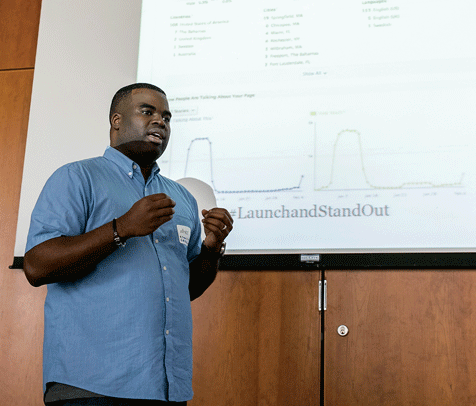
Launch&StandOutCoverTo say Connolly is passionate about entrepreneurship is an understatement. Beyond his business selling Stinky Cakes, he has written two books on entrepreneurship and regularly speaks to audiences on the topic — both in person and through a pervasive social-media presence, including a blog centered on starting and running a business.

He’s not convinced anyone can be an entrepreneur, but “if it’s in you, it can be nurtured. Entrepreneurs see the world differently. They don’t see a problem, just something that hasn’t been solved yet. They solve the problem, and then plug people in to keep that system going.

“Entrepreneurship is a mindset that creates systems to solve problems,” he reiterated. “That’s what entrepreneurship is. If you don’t create systems, don’t call yourself an entrepreneur.”


Candy Crush

Growing up in the Bahamas, Connolly probably didn’t call himself an entrepreneur, but he certainly had the mindset.

“My stepfather had a little pest-control business,” he explained, and as a child, he’d tag along on jobs. “I’m very analytical, and I paid attention, and I saw that, in wealthy people’s homes, their coffee tables always had business publications.”

He started watching finance shows on television even though the concepts weren’t exactly pitched to kids. “I’d watch the shows with the ticker, and I didn’t understand what people were saying, but I knew I wanted to. That’s how I started falling in love with entrepreneurship.”

Then, at age 9, he started a candy company “by mistake.”

He recalled that his grandmother would go to Florida and return with “loads and loads” of candy that was unavailable on his island, and he shared it with his friends. But he eventually grew tired of people hounding him for treats, so he started saying they were for sale, not free, just to get them off his back. “Instead of leaving me alone, they said, ‘how much?’”

He knew about concepts like price markup from those business magazines, so he started earning money selling the candy and chilly treats he’d make by freezing Kool-Aid. “My grandmother had no idea this stuff was going on,” Connolly recalled — but soon after she found out, the two teamed up in the business, and she eventually left her own job to sell candy — and did so until her death in 2005.

He had caught the sales bug, and already recognized that his mind was suited to identifying needs and meeting them. “If you told me 25 years ago when all this was happening that I’d be in Western Mass. doing this, I’d say you’re crazy,” he said. “But I always knew I would be an entrepreneur; I just didn’t know what the product would be.”

Fast-forward to 2009, the first full year in the diaper business, and early sales were strong. But the following year raised some serious issues that had nothing to do with baby gifts.

“I ended up working so hard on the company that I wasn’t sleeping, and I was eating really badly,” Connolly said, noting that his weight, which had been around 220, shot up 70 pounds, and he ended up becoming diabetic, with high blood pressure and high cholesterol to boot.

He sought help — and it’s a good thing he did. “The ICU doctor said that, if I hadn’t come in, I would have ended up in a diabetic coma. I could have died. Fortunately, I survived, and that made me grow up mentally as an entrepreneur. I always had this goal that, when I was done [building a company], I would start a foundation to help kids become entrepreneurs. But when I was staying in the ICU, I realized time is really precious, and tomorrow is guaranteed to no one.”

So for the next year and a half, he took his foot off the gas and “let Stinky Cakes run on autopilot” while he instead focused his energies on working with young people through Westover Job Corps, teaching them entrepreneurship, marketing, and leadership skills, among other things.

Many of the questions they asked him became part of his book Launch + Stand Out, in which he breaks down 23 different business ideas and discusses how he would apply the Stinky Cakes model to each of them. Throughout, he never loses focus on the importance of marketing.

“It’s not about the diapers; it’s about marketing and branding; that’s where it all happens,” he said. “Companies don’t go out of business because of lack of capital; they go out of business because of lack of sales.”


Changing Times

But Connelly is a natural marketer, expressing his passion for entrepreneurship through various forms of media, old and new, and, by extension, keeping his identity as Mr. Stinky Cakes at the forefront.

His blog — mrstinkycakes.com, of course — is one mode of communication. Others include an active social-media presence (and a book, Going Viral Unlocked, about using social media to grow a business), his public speaking through the Empact Connect network, and his role as entrepreneurial correspondent for The Engine, a radio show on WHYN 560-AM launched by Junior Achievement.

Connolly emphasizes financial literacy on the show, noting that people often don’t realize its importance. “If you give an entrepreneur $1 billion to start a company but he’s not financially literate, be prepared to give him another billion in a year.”

And it’s still not something adequately addressed in schools, he added. “We go to school to learn to read and learn to write, but where do you go to learn how to make money? Nowhere.”

He said guiding young people toward their own self-created success stories is especially gratifying.

“That’s the reason I’m a spokesperson for Junior Achievement, being able to help a kid who wants to be an entrepreneur, when no one is able to answer his questions for him. He’s got a mindset that most people are never going to understand, and when I see the lightbulb go on — when he thinks, ‘I can do this’ — that’s the best feeling.”

He recalled another satisfying moment, this one before an adult audience at Holyoke Community College. “When I was done talking, this lady comes up to me, crying. I said, ‘why are you crying?’ She said, ‘because what you said about overcoming fear — that’s the same thing my grandfather used to tell me.’ I said, ‘that’s not me talking, and it’s not your grandfather talking. That’s the successful version of you telling you where you need to go.’

That said, “not everyone is built for the fast track. I think the best entrepreneurs see the path from point A to point B and follow it; they don’t allow any noise or distractions to deter them.”

Again, whether it’s an e-commerce venture or any other type of business, “honestly, the key to it is marketing, marketing, marketing,” Connolly told BusinessWest. “There’s a market for everything. There are grandmothers blogging and writing books on knitting and making $1 million, because they have 50,000 people buying their $20 book.”

It makes sense that he’d come back to grandmothers, since his own played such a key role in his development as an entrepreneur.

“I don’t have an MBA, none of that stuff,” he said. “But I had that 9-year-old entrepreneurship moment with my grandmother, so I knew it worked. If I didn’t have that moment, I don’t think I would have started Stinky Cakes.”


Living the Dream

Connolly was quick to add, however, that entrepreneurship isn’t easy, even for those who grow up with that passion.

“Entrepreneurship is a lonely, dark place at times,” he said. “You speak a different language, and if you’re not around people who speak the same language, you have to have a mindset where you know where you’re going, and just keep moving forward.”

Even as his writing and speaking roles continue to grow, Stinky Cakes will continue to be a big part of Connolly’s life, although he has shifted the business model to emphasize the residual income streams developed by forging partnerships with other companies.

“That’s my baby; that’s why I call myself Mr. Stinky Cakes,” he said. “But I’m a serial entrepreneur; I love being involved with fun startups and companies that are growing. To me, that’s like breathing.”


Joseph Bednar can be reached at [email protected]

Law Sections
New WNE Law Dean Says Schools Must Adjust to a Changed Climate

Eric Gouvin

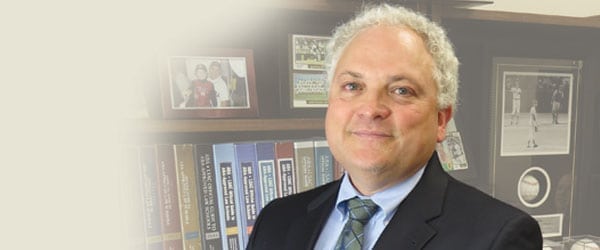
Eric Gouvin says the consensus among those in legal academia is that the nation’s law schools have been “making too many lawyers for too long.”

Eric Gouvin was asked to comment on the challenges moving forward for all law schools, but especially the one at Western New England University (WNE), which he now serves as dean.

But to do so properly, he said he first needed to discuss the recent past and touch on some trends and statistics that define a changed landscape, one that came about due to many factors that he summed up by saying, “we’ve been making too many lawyers for too long.”

The ‘we’ in this case is the nation’s 201 American Bar Assoc.-accredited law schools, said Gouvin, who took the helm at WNE Law on July 1 following a short search in which he was the only real candidate (more on that later). He said these institutions readily accepted large numbers of students until quite recently, and considered such an action a responsible reply to then-long-standing laws of supply and demand when it came to the legal profession.

But those laws were changing through the first decade of this century, he went on, with a profound adjustment coming after the economy turned south in dramatic fashion just over five years ago. Over the past 10 years, and especially the past five, increasing numbers of law-school graduates have encountered difficulty finding work in their chosen profession, and this development has led to swift and profound changes in the numbers of people applying to law schools — and the numbers accepted — as would-be candidates increasingly question the return on investment in a juris doctor degree.

At WNE, for example, the school was accepting roughly 150 individuals into its day (full-time) program each year until recently, said Gouvin, noting that the number for this fall will be around 90, 40% fewer than that previous benchmark. This decline (reflective of what’s happening nationally) brings fiscal challenges for the school, prompts a host of questions about what could — or will — happen next, and even invites speculation about for how long there will still be 201 ABA-accredited law schools.

How all this came about is the subject of a compelling, if somewhat controversial, book called Failing Law Schools, authored by Brian Tamanaha, a law professor, former law-school dean, and legal theorist who admits he did some of the things he now criticizes. In a nutshell, Tamanaha contends that, in the wake of the Great Recession and its significant impact on graduates and, subsequently, law school applications, there is now solid evidence to support what many had believed for some time — that law schools, many of them desperate for high rankings in U.S. News & World Report, were luring applicants to their campuses with false promises of employment and high salaries, leaving them in considerable debt and, overall, creating “a systemic mismatch between graduates and jobs.”

Gouvin has read the book, as most in legal academia have, and doesn’t necessarily disagree with some of its main arguments — or its broad assessment of what law schools must do now.

In the current climate, he said, law schools in general, and his in particular, must do something about that mismatch by focusing on making fewer lawyers (until the market dictates otherwise), and lawyers better prepared to succeed in the marketplace.

“Law schools, in general, have not done a great job of preparing their graduates to enter the profession,” he explained. “They learn a lot of law, and that’s handy, because lawyers should know the law. But there’s so much more to being a lawyer than knowing the law.

“We want to have a graduating class that’s matched more closely to the realistic prospects for employment,” he went on, “but also a class that is graduating with the tools necessary to practice law.”

Meanwhile, in response to the fiscal challenges presented by declining enrollment, the school will implement strategies to hone or create what Gouvin called “degrees that people who won’t practice law might find useful.”

Elaborating, he said that WNE already has in place some master of law degrees (LLMs), including a popular offering in estate planning and elder law, and another in closely held businesses. These are designed for practicing lawyers looking to gain expertise in those areas, he said, adding that the school is looking to build on these offerings with new master of jurisprudence degrees. Now in the planning stages, they would be designed for professionals in non-law areas who could benefit from knowing some law.

For this issue and its focus on law, BusinessWest talked at length with the new dean at WNE Law about his strategic plan for the future and how to position the school for success in what are clearly changing times.


Making His Case

In 2001, the last time Western New England went about conducting a search for a law-school dean, Gouvin, who joined the institution’s faculty in 1991, chaired the committee that eventually chose Arthur Gaudio, then with the University of Wyoming School of Law.

This time, Gouvin made a committee unnecessary.

Retracing the events of the past several months, he said that, by late this past winter, he was being recruited by several law schools searching for deans. He eventually became a semi-finalist for the post at the University of New Mexico and one of three candidates invited for a final interview at Northern Kentucky University. He came away from that session thinking he had cinched a new professional mailing address.

“I thought it went so well that they were going to offer me the job on the way to the airport,” he recalled with a laugh.

That didn’t happen, and while NKU was still mulling its options, faculty members at WNE, wary of losing Gouvin, were talking to Gaudio about accelerating his announced intentions to join them in the classroom.

This set in motion a chain of events — including interviews and a formal presentation to administrators at WNE — that had Gouvin canceling further out-of-town interviews and eventually moving his many books, including Failing Law Schools and several biographies of Henry Ford, and an impressive collection of 1975 Boston Red Sox memorabilia, down the hall instead of halfway across the country.

As he talked with BusinessWest while still in the process of moving into his new office, he said there are a number of items on his to-do list. The first is introducing, or re-introducing, himself to the law school’s many constituencies — students, faculty, alums, and community partners — in his new capacity, which he likened to being the CEO of a company.

“Anything that someone who runs an organization is responsible for — from personnel to finance to keeping the lights on and the doors open — that’s all on my desk,” he explained. “I’m responsible for making all the pieces come together — alumni functions, career services, admissions, compliance, the academic piece, and all the other moving parts.

“When you’re sitting in the dean’s seat, you have a different perspective on how everything is or should be, as opposed to when you’re looking at it from a faculty member’s point of view,” he continued. “You begin to see the bigger picture and how it all has to fit together.”

There are several other matters at hand, he said, including annual discussions about classes and potential additions, and the honing of programs, such as the university’s Center for Innovation and Entrepreneurship, which he led prior to becoming dean.

But the most pressing matter, obviously, is crafting a comprehensive response to the dramatically altered landscape he described, an assignment facing the leaders of virtually every law school in the country, he said, stressing, again, that this is a nationwide phenomenon.

The severity of the situation is driven home by statistics showing that, in 2004, there were 100,000 applications to those 201 law schools, and during this most recent admissions cycle, the number was roughly half that — 54,000, with only speculation about when and even if that figure will start trending upward.

The reasons for this precipitous decline are many, and they come back to ROI, say industry analysts, noting that, in recent years, college students and those in many professions have become increasingly skeptical about whether a law degree is a ticket to success (a dramatic change in outlook from 40 or even 20 years ago), especially when many graduates are towing huge amounts of debt as they leave the commencement stage.

The situation resulted mostly from what observers have called ‘overproduction,’ or too much supply, of lawyers. And this became a vicious cycle at many schools. Desperate for high rankings in U.S. News & World Report, which were determined in large part by per-pupil spending, Tamanaha charges, many law schools greatly increased tuition and continued to accept large numbers of students, putting graduates heavier into debt and injecting them into a job market they couldn’t crack.

Thus, changing current perceptions about a JD is among the many challenges facing law schools, said Gouvin, adding that this can come about only with direct evidence that the employment landscape is changing, and for WNE, this means enabling more graduates to thrive in the job market.


Giving Testimony

In this altered environment, law schools must change and adapt, and for many this will be a tall order, said Gouvin, who believes WNE is better positioned to handle that assignment than many others, primarily because it has already started the process, and has historically been at or ahead of the curve when it comes to preparing graduates for the workplace.

Part of the equation is simply limiting enrollment, he noted.

“Finding jobs for 90 people is a lot easier than finding jobs for 150,” he explained, adding that, if he’s right in this thinking, both the graduating students and the law school will benefit. “Law schools are going to be judged by how well they’re placing their students, and that’s why we have to make sure we’re doing as much as we can to support our students.”

Eventually, the job market will improve and demand for a law degree will increase, he went on, citing factors that include everything from the rising U.S. population, which will likely create the need for more legal services and professionals who can provide them, to the simple fact that many of those who joined the profession when it was exploding in the early and mid-’70s, will soon be retiring.

In the meantime, though, law schools must contend with the present challenge of making graduates better able to put their law degree to effective use.

“I want to make us even more focused on what we’ve always done,” Gouvin told BusinessWest, “and that’s prepare students to enter the practice of law, mostly at small to medium-sized firms in small to medium-sized cities in the Northeast.

“I think we can do better at making students practice-ready — a lot of law schools don’t even try,” he continued. “And they’re only now starting to come around to it.”

One key to making graduates more prepared for the workplace is experiential learning opportunities, which WNE provides in a number of ways, said Gouvin, adding that more than 75% of graduates take advantage of these opportunities, and he wants to push that number higher.

Programs include internships, externships, and clinics, he said, adding that the school has the strategic advantage of being the only law school in Western Mass. that gives its students solid opportunities to work with area judges at all levels of the judicial system, from district to federal.

Meanwhile, there are several clinics, or programs that give students the opportunity to work with area residents and businesses under the guidance of legal professionals and professors. The current roster includes clinics in small business, housing, real estate, international human rights, and other areas.

“We do take seriously the idea that students ought to know what lawyers do and why they do it,” he said, “and we’re going to make even more changes to enforce that message.”

While working to improve the job prospects of students, WNE Law and its new dean must also devise strategies for coping with the sharp reduction in tuition revenue that comes when incoming classes are 40% smaller than they were only five years ago.

“That’s a real challenge — tuition is a huge driver,” said Gouvin, noting that, after scholarships and other forms of direct aid are subtracted, most students are paying roughly $25,000 to attend the school.

Cutbacks to faculty have been minimal because of a few recent retirements, he said, but long-term, the school needs to replace at least some of the lost revenue, and one strategy is to create more and better programs that will attract those who don’t intend to practice law but can benefit from some of the skills imparted on those who do.

Those aforementioned master of jurisprudence degrees are another emerging trend, he noted, adding that several law schools, such as the one at Drake University in Iowa, have added such programs, and more are exploring similar options.

WNE is in the early developmental stages of such programs, said Gouvin, who was reluctant to offer details but did say they represent opportunities for the law school to broaden its student base.

“There are a number of professionals in non-law areas, such as insurance, financial planning, and accounting, who need to know quite a bit of law, but they’re not going to practice law,” he noted. “We’re exploring options to provide something of value to these individuals.”


Final Arguments

Looking ahead, Gouvin said the questions hanging over every law school in the country concerns when the situation regarding supply and demand will improve, and to what degree.

“Demand was artificially depressed during the downturn — this was a period of unprecedented economic disaster. As the economy improves, I think we’re going to find what we always find when the economy improves — that we’re going to need more attorneys.”

Until that time comes, though, law schools must be diligent, creative, and ever more focused on helping graduates succeed.

And the new dean at WNE believes the school is certainly up for that challenge.


George O’Brien can be reached at [email protected]

Departments People on the Move

Eric Gouvin

Eric Gouvin

University President Anthony Caprio recently announced the appointment of Eric Gouvin as the Dean of the Western New England University School of Law, effective July 1. Caprio praised Gouvin for having excelled as a faculty member and administrator at the law school since 1991. “Dean Gouvin brings a wealth of experience to the position — not only in the classroom, but also in the Springfield-area community, having worked in partnership with area entrepreneurs and small businesses as director of the University’s Center for Innovation and Entrepreneurship,” he said. The appointment from within helps assure a smooth transition from the leadership of Arthur Gaudio, who returned to the faculty after 12 years of service as Dean of the School of Law, said Caprio. Over the past two decades, Gouvin has served as Associate Dean for External Affairs and Associate Dean for Academic Affairs. Most recently, he served as Professor of Law and Director of the Center for Innovation and Entrepreneurship, which serves as a catalyst for small-business development in the region, drawing on resources from across the university to provide assistance to entrepreneurs. Gouvin’s scholarly writings cover a range of financial topics, including entrepreneurial policy, corporate law, banking, and international issues. He has taught internationally at the Universite Paris La Defense, Vytautas Magnus University in Lithuania, and the Southwest University of Political Science and Law in Chongquing, China as a Fulbright Specialist. As the practice of law is changing, Gouvin said his mission as Dean is to put even more focus on the students. “Western New England University School of Law has always had a student focus, and I want to redouble that. I want us to be always reminding ourselves that what we’re offering, what we’re teaching, and how we’re teaching it is geared toward the students, and geared toward the students becoming not just scholars but legal professionals.” Gouvin earned a bachelor’s degree from Cornell University, a master’s degree from Harvard’s Kennedy School of Government, and J.D. and LL.M. degrees from the Boston University School of Law.
•••••
Monica Curhan

Monica Curhan

Monica Curhan has been named Senior Vice President and Marketing Director for Florence Savings Bank (FSB). Curhan joined FSB in June, having worked previously at Citizens-Union Savings Bank in Fall River.  She attended Saint Anselm College in New Hampshire, where she earned a bachelor’s degree in English, and holds the Certified Financial Marketing Professional designation from the Institute of Certified Bankers, a nonprofit organization sponsored by the American Bankers Assoc. in Washington, D.C. She is also a member of the New England Financial Marketing Assoc. and the Harland North East Users Group.


•••••
Jeffrey Vocatura

Jeffrey Vocatura

United Fresh Foundation’s Center for Leadership Excellence recently chose Jeffrey Vocatura, Big Y World Class Market Produce and Floral Sales Manager in Stratford, Conn., as one of five top grand prize winners for its 2013 awards. Vocatura accepted the honor in San Diego, among 25 outstanding produce managers representing 21 different supermarket chains, commissaries, and independent retail stores within the U.S. and Canada. Vocatura, who has almost 16 years of supermarket experience, the past nine with Springfield-based Big Y, was the only United Fresh Retail Produce Manager Award winner from New England. In addition to several chain-wide sales and merchandising awards, he was also chosen to attend Driscolls University’s whole berry operation in California.
•••••
The Environmental Business Council of New England (EBC) recently elected Francis Hoey, senior vice president at Tighe & Bond, to the organization’s Board of Directors. Hoey leads Tighe & Bond’s efforts in the renewable-energy, real-estate-development, education, and healthcare markets. Already active in EBC, he is a member of the EBC Renewable Energy Committee Leadership Team, as well as a member of the EBC Connecticut Chapter Leadership Team. Hoey holds professional registrations in both civil and structural engineering, and has more than 20 years experience in the industry. The EBC is a nonprofit organization that was established in 1990, the first in the U.S., by environmental and energy-company executives who began meeting on a regular basis to exchange ideas and share experiences.
•••••
Kirk Smith

Kirk Smith

Kirk Smith, president and CEO of the YMCA of Greater Springfield, has joined the Board of Directors for Leadership Pioneer Valley (LPV). Formed in 2010 to build a network of emerging and existing leaders to address the challenges and opportunities of the entire Pioneer Valley, the LPV program is designed to raise awareness of the needs and challenges that affect the region, and enhance individual leadership skills. Smith took on his leadership role at the YMCA of Greater Springfield in 2011, and since then, he has committed himself to providing greater opportunities for youth development, healthy living, and social responsibility for youth, teens, families, and seniors throughout the Greater Springfield region. Smith also serves on the Board of Directors for the Springfield Chamber of Commerce and the Executive Committee for the Alliance of YMCAs of Massachusetts, and serves as head coach for the YMCA of Greater Springfield Buckeyes, a U16 AAU basketball team.

Entrepreneurship Sections
Former Ballplayer Shifts to Another Field — Entrepreneurship

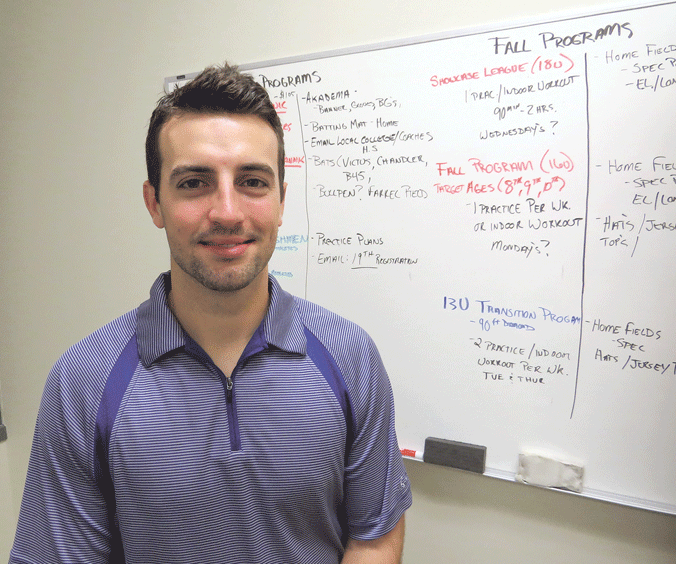
Peter Fatse says his entrepreneurial venture is focused on all aspects of the development of student athletes.

Peter Fatse says his entrepreneurial venture is focused on all aspects of the development of student athletes.

Peter Fatse remembers having an interesting mix of emotions as he officially ended his professional baseball career several months ago.
An undersized utility player who could handle several positions on the diamond, Fatse, who starred at Minnechaug High School and later the University of Connecticut before being drafted by the Milwaukee Brewers in 2009, spent a few seasons shifting between the lower minor leagues and Independent League rosters. He did, however, get one at-bat in the majors.
That was during spring training in 2010, against the Arizona Diamondbacks. He has the baseball commemorating that event, and the ability, as most athletes do, to recall all the details. “I was the last out of spring training, I went up in the ninth inning and struck out,” he told BusinessWest. “It was against Chad Qualls; I started fouling pitches off, and then he threw me a breaking ball and it was over.”
Fatse would later be signed by the Baltimore Orioles, and continued to work out last fall and early this year in anticipation of maybe getting another phone call from a team looking to see what he could do. Such a call never came, however, and Fatse decided to call an end to his baseball career and launch another one in business.
“You sign these retirement papers to make it official, and it’s kind of depressing” he recalled. “You sit back and think of all the times when all you ever wanted to do was play, and it’s like, ‘wow, you’re not playing anymore.’ But I wouldn’t have done it if I wasn’t comfortable with the decision.”
And that comfort level was created, in large part, by the realization that he could now devote all or most of his energy (he’s also a hitting coach for the Holyoke Blue Sox) to a potential-laden entrepreneurial venture he’s been developing over the past few years.
It’s called Advanced Performance Player Development, and while those first two words are in all caps and a larger type size on Fatse’s business card and signage, and form the company’s acronym (AP), emphasis is on the terms ‘performance’ and ‘development.’ The former speaks for itself, mostly, but the later needs some clarification.
Indeed, with this venture it refers to everything from help with hitting a curveball off a lefthander, as dialed up by the operator of the company’s new, state-of-the-art pitching machine, to making the transition from little leagues to high school ball; from help with deciding which college might make the best fit for a player weighing several scholarship offers, to advice on dealing with prospective agents.
“I offer individualized instruction, including a lot of video analysis, and we offer a high-level baseball instruction,” Fatse said of the venture operating in a large space, complete with artificial turf and batting cages, in the former home of Maybury Material Handling in East Longmeadow. “But what we’re moving toward is more player-development based.”
Elaborating, he displayed a poster for one of AP’s upcoming initiatives, called the Rising Freshman program, in which he and others will help 13- and 14-year-olds make the transition — athletically and academically — to high school.
“The focus will be on baseball instruction, but we’ll also bring in an academic advisor and speakers to talk to the kids about the many responsibilities of being a student athlete — focusing on such things as how to handle yourself, coach/teacher communications, managing study skills, and more.”
Meanwhile, for older youths, the company is finalizing a college-development program, during which high school underclassmen will receive similar assistance with the transition to their next level.
Overall, this range of services, the potential to work with clients over several years of development, and the prospects for eventually adding more sports to the mix, gives AP strong growth potential, said Fatse, adding that it is currently working with roughly 125 athletes from a wide geographic area and looks to greatly increase that number in the years to come.
An early measure of AP’s success is the number of caps mounted on one wall in Fatse’s office and the collection of baseballs on a nearby bookcase. These items were sent along by players who have trained at the facility or taken part in some of its programs. And the collection will certainly grow this summer and fall as ‘clients’ (that’s one of many terms Fatse uses to describe those he serves) move onto college or pro ball, as in the case of Mike Ahmed, the East Longmeadow and Holy Cross product who was selected in the 20th round of the recent draft by the Los Angeles Dodgers.
For this issue and its focus on entrepreneurship, BusinessWest takes an in-depth look at an intriguing new venture, and how its founder is swinging for the fences — from a business perspective.

Working the Count
On a wall near a few of AP’s batting cages are two boards featuring a number of playing cards. Before taking their swings, hitters try to quickly find the cards as they are called out by one of the instructors.
“It’s an exercise designed to build eye-hand coordination,” said Fatse. “It helps gets your eyes loose, and for the younger players, it helps show that there’s things you can do without a bat in your hand.”
The playing-card exercise is one of many instructional tools used at AP, said Fatse, adding quickly that his business is not a baseball camp like many others conducted by current and past players. Nor is it a purely instructional facility, along the lines of the famous (or infamous) Tom Emanski videos hyped in those commercials on ESPN showing players trying to throw balls into barrels from the outfield to improve accuracy.
Instead, it is a business focused on the myriad aspects of developing scholar athletes, said Fatse, adding that this entrepreneurial venture was driven by a need he recognized — from both personal experience and watching dozens of young people, and their parents, struggle with the complicated process of entering, and then thriving in, professional baseball.
Fatse said his own career was typical of many players from the Northeast. He was a 24th round draft pick, which meant he was in many ways a long shot to make it to the major leagues, and he thrived in that underdog role.
“Getting into pro ball was something I always wanted to do,” he explained, “and I guess I had a knack for proving people wrong my whole life because I was undersized.”
He was drafted as a second baseman, but played mostly outfield in the minors, rising to what’s known as ‘high A ball’ with the Brewers and Double A with the Orioles.
He remembers all through his career that his family and coaches encouraged him to pursue a baseball career, but also be prepared for life after the game — whenever that transition was destined to occur. And he told BusinessWest that he always had some entrepreneurial tendencies and was in many respects ready for the day when he hung up his spikes.
“I had always done some lessons, some modest work with some of the local guys,” he explained. “But this past off season, I got an office and started putting together a business plan for something that would be different. I started to see how much I enjoyed doing this kind of thing, and I’m enjoying the transition into business.”
And when asked to describe that business, he said it’s a combination of a number of things, including technical instruction and, perhaps more importantly, mentorship.
“I always talked to my coach at UConn Jim Penders, who was an unbelievable coach,” he recalled. “I always liked his approach to how he did things, and it wasn’t until perhaps my fourth professional season that I realized the value of what he brought to the table. And I started thinking to myself that if I could bring some of that to the guys around here, at a younger age, I think it will help them out tremendously, especially those who want to pursue playing at the next level.”
As he mentioned earlier, AP is developing into a company focused on much more than technical instruction, although that’s a big part of the operation.
Fatse has plans to create programs designed for both athletes and their families, and on subjects ranging from how to handle the college-recruiting process to deciding if and when to turn pro.

Covering All the Bases
As he talked about the science of hitting a baseball, Fatse provided some insight into both the complexity of that task and the art of teaching people how to do it better.
“I try to work on their mental approach to hitting and utilize as much of their athleticism as possible,” he explained. “We want them to use their athleticism in a controlled swing pattern. How they do it — the rhythm techniques they use — vary, and that’s why we use video analysis so much. We like to look at what some of the best in the game are doing, and there are checkpoints in every swing that I try to replicate, such as with the hips and how the hands work.
“I didn’t have a fantastic approach until I really started learning how to hit in my third year in pro ball,” he went on, using his own experiences to get some of his points home. “I use the phrase ‘give a little to get a little’ — seeing pitches, seeing arm action, studying pitchers, and writing charts. The more I became aware of the mental part and how much being a student of the game mattered, the better I became.”
Overall, he said, there is a process to becoming a better player, one that focuses on both the mental and physical aspects of the game. And it is this process that is at the heart of AP’s business plan, which is still very much a work in progress.
But the building blocks are coming together, he told BusinessWest, adding that they are centered around helping those who come to AP’s facilities focus on what he called “complete player development.”
And by this he meant everything from what happens on the athletic field and in the classroom, to properly representing one’s community.
“Probably the most important thing I tell guys is that they’re representing a lot when they put that uniform on — themselves, their families, their school, their community — and it’s a privilege.”
Complete player development is what amounts to a business model for AP, one that Fatse believes is quite unique — in this region and nationally — and that’s why he’s confident that this venture will be a major league success.
Already, he’s drawing athletes from communities across this region, but also well outside it, with clients from Vermont, New Hampshire, and other regions of Massachusetts. The portfolio has grown mostly through word-of-mouth referrals, and he expects that process to continue and accelerate, especially as the company expands into other programs, such as the Rising Freshman initiative.
Meanwhile, there are growth opportunities from expanding into other sports, he said, listing lacrosse and hockey as possible additions to the roster.
“My vision is for a place where kids can come and get their work in, but also watch video, do their homework, and maybe meet with an academic advisor,” he said. “They could get their athletic training and academic work done in the same place, be around good, positive role models, and be the best they can be.”

Expert in His Field
In addition to the caps and baseballs in his office, Fatse is also working on a uniform collection for his conference room.
There are now three framed and on the walls — one of his from his UConn days, and one each from the Ahmed brothers, Mike and his older brother, Nick, currently in the Arizona Diamondbacks’ system.
They serve as reminders of what can happen when one can effectively blend hard work with determination, patience, the proper attitude, and sound decision-making.
These are things that Fatse will try to teach his clients — along with how to hit that curveball from a left-hander. It’s a business model he believes is loaded with potential, and one that will give him an opportunity to strike out on his own — this time in a very positive way.

George O’Brien can be reached at [email protected]

Entrepreneurship Sections
Clark Paint & Varnish Endures In the Shadow of the Big Boxes

Andy Raker

Andy Raker attributes his family business’s success to a focus on the basics and doing what the big-box stores can’t.

In the 1960s, Andy Raker’s mother took a request to have a specific color of paint mixed for the set of the former StageWest theater (the predecessor to CityStage) to match the famous violet eyes of the star of the next show — actor Robert Goulet.
Raker, now the president of the Clark Paint & Varnish Company — the West Springfield-based family business that his grandmother and mother were running at the time — told BusinessWest that while it was one of the more unique requests over the past 67 years, on any given day it’s not unusual to see customers hauling doors or pieces of dining room furniture into the Union Street store to find a matching stain or paint color.
And while matching paints seems to be all the rage in many home décor outlets, Raker calls color matching an art; a combination of computer-assisted color analysis and ‘eyeballing,” the term he uses to describe use of the naked eye to compare colors in different light settings.
How Raker came to be a practitioner of this art is an intriguing story of entrepreneurship, creativity, and, most importantly, survival of this rather small-box enterprise in a retail world increasingly dominated by big boxes.
Indeed, having just finished high school and starting his first semester at American International College in 1978, Raker found himself, and his family business, in a serious situation.
Backing up a bit, he said that after his grandfather, Milford Raker, who had purchased the business from original owner Fred Clark, passed away unexpectedly in 1963, his grandmother, Ruth, and mother, Marcia, were thrust into the roles of owner and operator, and with no real experience to handle them.
For 15 years, they and the existing staff managed the operation, but when the slow, steady exodus of that staff left the two women alone to run the store, Andy was forced to put school aside and take a leadership position in the family business.
“I had worked at the store in the summers but I never learned how to make paint, and I remember when the last guy (employee) to leave handed me the keys,” recalled Raker.
Once management was thrust upon him, he said it was refreshing on one hand, realizing that he was going to be able take the company in a direction that he thought was going to be positive. “But it was scary; it definitely was with mixed emotions,” he recalled. “It was either sink or swim.”
A loyal customer base of mostly retail and apartment-building owners kept the company alive as the young Raker spent the next two years learning the paint and stain trade and took advantage of new technology as it came, asking for help from paint chemists, and especially raw chemical salesmen.
“All these raw material people will supply you with information to help sell their materials,” explained Raker. “And back then it was pretty competitive and everybody had chemists on staff so when they wanted to sell me their titanium dioxide (white pigment), I’d say, ‘well, I need some help formulating it.’”
And as he continued to learn on the job, the formulas for Clark paint brand continued to improve. Experimenting with different recipes in batches with a blender, he produced small samples, took some chemistry classes, and, through trial and error, learned how to make quality paint, just like his grandfather, who’d never had the chance to teach him.
Raker would create starting formulations with various colors that had better flow and level, would cover better, save money, and have lower VOCs (volatile organic compounds). And as everything in the paint industry went ‘greener,’ so did Clark Paint.
For this and its focus on entrepreneurship, BusinessWest talked at length with a business owner who likes to mix things up — in more ways than one — and has the bases covered in an extremely competitive sector.

Brush Strokes
Clark Paint & Varnish’s success over the past two decades stems from a mixture of Raker’s late-teen ‘take charge’ attitude in the face of multiple adversities and his ability to learn on the job. While friends were experiencing the independence and adventure of college, Raker was experiencing a different type of independence, one that was more survival at first, than anything else.
And when asked how he’s scripted this survival story, he said it’s been through a focus on the basics, and doing things some of the discount giants can’t.
With the arrival of those big boxes, and especially the Home Depot in the nearby Riverdale Shops in the early 1990s, most would have thought that a small, family owned paint business like Clark would have taken a good shellacking, and a few stores in the area did — including West Springfield Hardware — which eventually ceased operations.
Clark’s retail paint business took a sizeable hit — roughly 30% by Raker’s estimate. While this was a large setback, a solid industrial customer base carried the company through the next couple of years as Raker made the decision to adjust his sales focus and target more commercial business, a move that helped redefine the company for good.
Attrition of some of Clark’s competition due to Home Depot’s opening presented the opportunity for Raker to add national brands such as Pratt and Lambert and Benjamin Moore to his own, well-respected Clark label, and with the addition of an outside sales person to help secure new commercial business, Clark Paint now had more clout to compete for all markets, he said.
“That move broadened our line even more,” he said, “and brought more people into the store because those brands have a lot of dedicated customers in this area.”
And new retail customers in turn created more need for that aforementioned expertise in  color matching.
“Everybody has computers to match, but it’s only a starting point; it never matches perfectly,” Raker said, adding that a trained eye is still key. “And we’ll dry the paint, because wet paint is different than dry, and actually take the samples out in the daylight as opposed to just florescent lights because it’s not a true rendering of the color.”
But with stain and varnish matching, there is no computer to do that analysis. “It’s also part of our reputation and it’s all experience and by eye,” added Raker.  “A lot of other stores don’t have the capability, the expertise, or even the pigments to make certain stains.”
Clark has a whole line of dye stains and a line of lacquer, called M. L. Campbell for cabinetmakers, furniture, and display manufacturers. The line, Raker explained, is more for industrial use on harder woods and offers far more depth of color, than the popular Minwax brand found in many stores.
Another key to the company’s success has been its ability to adjust to changes within the industry, and especially a strong focus on ‘green’ — not the color, but the movement toward more environmentally friendly products and processes.
Before the younger Raker took over, the advent of polyurethane, a plastic-based compound in the late 60s and 70s changed the landscape of varnish. Now mildew resistance is a controversial buzzword in the paint industry, and the cheap, readily available, but harmful lead — used as a white pigment and to prevent mildew — has been replaced by titanium dioxide and other environmentally safe additives, a result of federal VOC laws that also eliminated solvents in paint. As Raker has ridden the evolving technology wave, he has seen more genuine customer concern for health and environment.
“Everybody is looking for a more sterile, cleaner environment, and technology is catching up fast, but it wasn’t like that at first,” Raker explained to BusinessWest.  “Originally when the first paints came out that had to be ‘green,’ they weren’t quite as good, but now the technology is there.”
While those same raw chemical vendors were selling the same formulas to his competitors, Raker told BusinessWest that because Clark is a small manufacturer of paint, he could learn to make the greener formulas quickly, and keep his cost per can or container down due to a lack of shipping and distribution costs and third party middle men. “From the raw materials to out the door, we’re able to offer a better product at less money.”

Satin Finish
Raker hasn’t been called upon to create a paint to match a Hollywood star’s eyes in recent decades, but he admits that there have been intriguing challenges with that aspect of his work.
The biggest challenges, though, have been stepping in and then stepping up to take this family business to places that might not have been envisioned in 1978, or later, when the competitive playing field changed dramatically.
This is an inspiring story of entrepreneurship and perseverance. What will happen in the coming chapters isn’t known yet, but one thing is certain — they will be colorful, and in every way imaginable.

Elizabeth Taras can be reached at [email protected]

Green Business Sections
Gold Circuit E-Cycling Carves Out a Unique Niche

Matt Pronovost

Matt Pronovost says the mission at Gold Circuit E-Cycling is controlled growth.

Matt Pronovost calls it his “museum wall.”
It’s little more than a few wooden shelves in the back of the room cluttered with what could only be described as electronic artifacts, especially if you’re under age 40. There are a few 8-track players in the mix, two movie projectors, a ’60s-era console television (a model that sat on the living room floor), a turntable, an old Atari system, several beta camcorders and transistor radios, and maybe a half-dozen rotary telephones of various colors and shapes.
And then, there are the computers, most with brand names and model numbers that achieved fame (or infamy) but disappeared from the landscape decades ago. A Commodore 64 sits between a Digital UT102 and a Radio Shack TRS-80 Model III microcomputer. All three probably came out of the box 30 years ago, and they certainly look their age.
Pronovost said it takes something really unique to make the wall these days — like the old washboard and basin that came in a few weeks ago — partly due to the fact that he’s just about out of display space. But it’s mostly because he’d rather devote his time to the 99.9% of the stuff that comes in his door that he doesn’t even think about keeping.
This is what Gold Circuit E-Cycling is really all about.
This bin of circuit boards

This bin of circuit boards is one of many crowding the floor at Gold Circuit E-Cycling.

It’s a three-year old enterprise devoted to the recycling of computers and electronic equipment, an intriguing and fast-growing venture now occupying roughly half of one of the dozens of buildings comprising the sprawling Ludlow Mills complex. And it would seem to be the right business in the right place at the right time.
Indeed, as technology advances at a rate so rapid that it seems like a 40-inch flatscreen TV or five-year-old PC might soon be candidates for the museum wall (and there are more than a few of both on the floor waiting to be dismantled and recycled), area business owners and residents are increasingly challenged by the question of what to do with yesterday’s electronics as they acquire tomorrow’s products.
And Gold Circuit was created to provide an answer.
“Increasingly, people are realizing that there’s a solution to their problem, and it’s not the garbage can,” said Pronovost, adding that the business of e-cycling, as it’s called, is not exactly new, but it is picking up steam in the Northeast after migrating from the West Coast (as many trends do) a decade or so ago. “We’re here to help people make the responsible choice when it comes to unwanted electronic equipment.”
This venture, which recorded 25% growth in its first full year in business and will likely double its volume this year, collects or ‘demanufactures’ computers, electronics, batteries, home appliances, lawn equipment, metal furniture, copiers, printers, medical equipment, power tools, tires, fluorescent bulbs, styrofoam, pellet-fuel bags, and more, and sells the parts and material for scrap, thus keeping such items out of the waste stream.
There are charges for some products that are dropped off at the facility — anything with glass or refrigerant, for example, and tires as well — but many items can simply be left free of charge. And the company is making it even easier by staging collection events, such as one held recently at East Longmeadow High School.
Several dozen pieces of equipment arrive at the Gold Circuit facility each day, meaning the company is already essentially at full capacity in a 15,000-square-foot location it moved into just last year after outgrowing its original, 6,000-square-foot home in the Ludlow Mills complex.
When, how, and where the company next expands is a critical question, said Pronovost, adding that at present, the goal — and the challenge — is controlled, smart growth.
“I don’t want to grow too fast because expenses can really take off if you’re not careful,” he explained. “Like any business, we have to stay within ourselves and expand in a smart way.”
For this issue and its focus on green business, we look at a company that is certainly larger than the sum of all those parts amassed on the Gold Circuit floor.

Here’s the Breakdown
As he gave BusinessWest a tour of his facility, Pronovost stopped briefly at the museum wall — he tried, unsuccessfully, to find a date on that washboard — but quickly moved on to several large cardboard boxes, each destined for a vendor that would recycle the material in question and/or extricate the more valuable materials from them.
There was one for clean (as in unpainted) aluminum, a material that will fetch 65 cents a pound, he said, and another for ribbon wire, most of it from PCs. Three boxes contained low-grade, medium-grade, and high-grade circuit boards, respectively, designations that indicate that amount of gold in each one. And there were others for everything from transformers (separated by size) to plastic (one for lighter colors and one for black).
Meanwhile, there was a huge box filled with Styrofoam that was used to keep many of these products safe in their boxes. Sold by the bale, this material has a number of potential future uses, said Pronovost, especially as a composite material used in everything from furniture to picture frames.
How he came to be an expert on the future lives of such materials — and to create a business focused on e-cycling — is an intriguing story based on the most basic principles of entrepreneurship: seeing a need and creating a service to meet it.
“To be honest, I pretty much fell into this,” he explained, while retracing a career that started with work supporting those using computers, not breaking them down into component parts.
He started in what he called the “desktop-support field,” working at MassMutual for a few years before moving to a firm in Connecticut where he handled hardware setup and configuration work, as well as equipment auditing. As that company was repeatedly sold to larger corporations, with each transaction accompanied by a change in equipment, Pronovost segued into resale of the old hardware and, eventually, into selling parts and material for scrap, an operation carried out in-house.
“I had the right background to distinguish whether the parts I was looking at had value outside of scrap — whether they could be wholesaled out or brokered out, whether we tear it down or not tear it down,” he noted, adding that he quickly moved up the ranks within this division. “I made the transition from technician into sales, and was doing well with generating revenue.”
However, the Great Recession changed the equation quickly, he went on, adding that he was one of many to be laid off and forced to settle on a new career path. His was entrepreneurship.
“I decided to do it myself,” he said, with the ‘it’ being e-cycling. “I could see that there was a lot of opportunity, especially here in Western Mass.”
Elaborating, he said that there were, and still are, national outfits that would work with large corporations, such as MassMutual and Aetna, to help them scrap electronic equipment, but such operations historically haven’t had much interest in small businesses or residents. Meanwhile, some communities had collection operations (most of them pricey) at their transfer stations, he went on, but there was a definite void in service to large portions of the local market, and this was the need he set out to address with Gold Circuit.
He opened the doors in October 2010 and started small, handling the bulk of the work, including most of the demanufacturing, himself. Growth, he noted, has come through awareness — of both his company’s services and the need to seek out earth-friendly ways of dealing with yesterday’s electronic devices.

Hard-driving Entrepreneur

Employees at Gold Circuit

Employees at Gold Circuit ‘demanufacture’ a wide array of computers and electronics, with parts and materials sold as scrap.

Using an old laptop as an example, Pronovost said there is a good deal of scrap value in such devices, and his company has become adept at squeezing every cent from them.
“The screen, if it’s unbroken, can be torn down and reused,” he told BusinessWest. “The main [circuit] board probably has the most scrap value in that laptop, but the hard drive comes out to be shredded, and there’s a lithium battery — and right now, lithium is one of those commodities that’s sought after. Everything has scrap value.”
On the day BusinessWest visited the operation, there were several dozen old laptops awaiting their fate. A few of them might actually be sold to resellers if they are in very good condition, said Pronovost, as will the various pieces of equipment — computers, printers, VCRs, phones, air conditioners, toaster ovens, and more — crammed into the 20 or so large boxes on the shop floor.
This is a busy time of year — good weather inspires people to clean out their homes and businesses, apparently — and the floor is crowded with “inventory,” he went on, adding that Gold Circuit currently has several days worth of devices to demanufacture, and more comes in every day.
Pronovost has tweaked his original business plan slightly, but for the most part, the document’s projections for volume, or weight (400,000 pounds of material in 2012), revenue, growth, and employment have been on the money.
They were based on a number of factors, but mostly the incredibly fast pace of progress with computers, cell phones, and other electronic equipment, and the market for used items — or the lack thereof, as the case may be.
Indeed, he said that PCs more than seven years old, and some much younger than that, have little value other than as scrap when their owners decide to upgrade. And the same is largely true for today’s televisions.
“The older ones, those 20 or 25 years old, are still working,” said Pronovost with a laugh. “The newer HD models … they don’t work. And when they break, you generally have to replace them.”
This phenomenon is one of the many factors contributing to the company’s impressive growth rate, he continued, adding that others include everything from a lack of competition locally to strong word-of-mouth referrals, to heightened efforts in recent years to market the company.
But much of it comes down to partnerships, or working with a host of constituencies, from individual communities to area colleges and universities, to encourage responsible disposal of unwanted electronic items.
When the town of Longmeadow opened its new high school, Gold Circuit took roughly 12,000 pounds of old computers and other electronic equipment from the old one free of charge, said Pronovost, adding that another example of such partnership-building was the recent collection drive at Holyoke Community College to benefit a scholarship fund at the school. Participants paid a small fee to organizers to have everything from an old cell phone to a garage-cluttering air conditioner hauled away by Gold Circuit.
Such events are win-win-wins, said Pronovost, noting that the scholarship fund grows, the planet benefits because such items don’t wind up in area landfills, and Gold Circuit gains some invaluable exposure.
Looking ahead, he said the company, which now has four full-time employees, and several part-timers, will continue its efforts to chart steady but controlled growth.

Parting Thoughts
Pronovost said his museum wall often generates interest and conversation.
“People will say, ‘holy smokes, a Commodore 64 — I had one of those back in…,’ and they start adding up in the years,” he said, adding quickly that, while nostalgia is fine, it’s not what this business is all about.
Instead, it’s about meeting a growing need among area businesses and communities, and a desire to do the right thing when it comes to disposing of old equipment, styrofoam, and more.
“People are learning … they’re understanding that you can’t just throw things like this away,” he said, sweeping his hand across the shop floor. “And we’ve become an answer to their problem.”

George O’Brien can be reached at [email protected]

40 Under 40 The Class of 2013
Director of Franchise Support & Development and Field Consultant, Fitness Together; Owner, Elements Therapeutic Massage, age 34

Pantera-JohnIt would be an understatement to say that John Pantera achieved business success, while also satisfying an entrepreneurial urge, as an operator of two new franchises for the Fitness Together chain in Eastern Mass. As a certified fitness trainer with a nutrition license and an MBA in Finance and Economics from UMass Amherst, he helped position Fitness Together on Entrepreneur magazine’s Franchise 500 list in 2007, its Fastest Growing Franchises compilation in 2007 and 2008, and on America’s Top Global Franchises magazine’s list in 2007.
But like most successful entrepreneurs, he was ready, willing, and able to aim higher. He sold his franchises, moved to Western Mass., and opened an East Longmeadow franchise of Fitness Together’s sister operation, Elements Therapeutic Massage, in 2009. But when he did so, the fitness-club side of the corporation wasn’t ready to see Pantera go.
A new position was created just for him to direct the network of 54 locations (globally, there are 300) in New Hampshire and Massachusetts that deliver more than $20 million in annual revenues. Pantera now supports operators in their sales, marketing, customer service, and employee relations.
Meanwhile, at Elements Therapeutic Massage, Pantera oversees 25 employees, 19 of whom are therapists, in one of the largest massage spas in the region. He said the extremely high and deeply personal level of customer service required by both the personal-fitness and therapeutic-massage industries is a perfect fit for his personality and style of business management.
“Think about it … we’re basically asking perfect strangers to come in, get naked, and trust us that we will provide them with a high level of professionalism and service,” he said. “So the delivery of the service has to be a perfect 10.”
He’s also an adjunct professor of Entrepreneurship at Western New England University, his alma mater, and is involved with the Young Professional Society of Greater Springfield and Rotary International.
While doing all that, Pantera has found time to write a book titled All Diets Die: How to Win and Be Thin (for Life). “No matter your age or what condition you’re in, there are some foundational basics of a healthy lifestyle that can be permanent,” he said of the basic message. “And this is how to go about doing it.”
Balancing business acumen with a passion for wellness, Pantera is keeping plenty of balls in the air.

— Elizabeth Taras

Opinion
What Would Horace Moses Do?

At one time, Horace Moses may have been best known as the president of the Strathmore Paper Co. in West Springfield, but his legacy is much bigger than that.
In 1919, Moses founded Junior Achievement, the worldwide financial training program for young people. Growing up on his family’s farm, Moses acquired the habits of fiscal responsibility and entrepreneurship. He not only worked the fields, but networked with a variety of business owners to sell the farm’s products.
Moses was quick to learn that through hard work, determination, and ambition, one can achieve the American Dream. His philosophy wasn’t limited to personal gain, however. Moses donated his time and wealth to a variety of worthwhile causes. One initiative close to his heart was ensuring that children develop the skills to secure their own economic success. It was this goal that led Moses and Theodore Vail, president of American Telephone & Telegraph to found Junior Achievement right here in Western Massachusetts.
Today, JA is the world’s largest organization dedicated to educating students about workforce readiness, entrepreneurship, and financial literacy through experiential, hands-on programs. Although born of humble beginnings on the Big E fairgrounds, JA reaches more than 4 million students each year across the United States, and another 6 million in countries around the world. JA’s volunteer-delivered K-12 programs help prepare students for the real world by showing them how to effectively manage their finances, generate wealth, and help build robust communities.
Moses and Vail realized the importance of teaching young people that thrift, economy, and industry are necessary to sustain the American vision. Almost 100 years later, nothing has changed.
Each year, roughly 1.3 million students drop out of school. Each dropout costs society approximately $200,000 in lost tax revenue and government expenditures over his or her lifetime. The personal cost of dropping out of school isn’t just economic — there’s a psychological price, as well. As someone who’s gone from high school dropout to college graduate, I can tell you that being a dropout can be debilitating. The lack of skills eventually damages your self-confidence, resulting in a social paralysis. You feel trapped in your situation. You want to work, to achieve, but lack the foundation and support system to overcome your circumstance.
Horace Moses knew that it doesn’t have to be that way, and that by investing in our children we could help them become productive participants in our national economy.
Addressing the dropout population is only part of the solution. Approxinately 45% of today’s college graduates don’t have the skills to advance past an entry-level job. Managers at more than 53% of large companies and 67% of small companies say it’s difficult to recruit employees with the skills, training, and education their companies require. In time, this skills gap will invariably weaken our ability to compete in the global marketplace. Helping our children aspire to succeed is not only imperative to their own well-being, but to our own economic and entrepreneurial survival.
What would Horace Moses do in the face of today’s problems? He would commit his resources to find a solution. That’s why he co-founded Junior Achievement. JA supports youth development by fostering the spirit of entrepreneurship, and by instilling and modeling key business and work-readiness concepts such as leadership, teamwork, and critical thinking.
I encourage you to join me in following his example by making an investment in the youth of Western Mass. We don’t need to dedicate the time or resources Moses had at his disposal. We already have a structure, it just needs caring professionals, community leaders, and supporters. Find out how you can empower students to stay in school, develop the skills necessary for economic success, and live the life each of us hopes for for our own children.
Get involved with Junior Achievement of Western Mass., your local school system, or other worthwhile cause. You can change the direction of a generation. That’s what Horace Moses would do.

Thom Fox is the community outreach director at Cambridge Credit Counseling and vice chairman of Junior Achievement of Western Massachusetts. He also serves as a start-up mentor at Valley Venture Mentors, member of the National Academy Foundation STEM-21 Advisory Board at Sci-Tech, and member of the Financial Stability Network of Hampden County; (413) 330-5254; [email protected].

Commercial Real Estate Sections
Northampton Commercial Real Estate Market Remains Resilient

Patrick Goggins

Patrick Goggins, owner of Goggins Real Estate, says the resiliency of the Northampton commercial real estate market is no accident — it results from the city’s welcoming atmosphere.

John Williamson says Northampton has a magnetic quality that draws a broad spectrum of people to its businesses, restaurants, retail shops, and entertainment venues. And that quality has allowed commercial real estate not only to weather the economic downturn, but register unprecedented growth over the past two years.
“It’s so far and away from other markets, there really is no comparison,” said the president of Williamson Commercial Properties LLC in Springfield.
Steve Jasinski agrees. “The Northampton area seems to have been isolated from the downturn in the economy, it didn’t suffer the same pitfalls that occurred in other areas,” said the broker at Delap Real Estate LLC in Northampton and Amherst, explaining that the city’s economic and social diversity, strong employment base, and unique character of its downtown have provided a formula for success that is reflected in the value of commercial property.
But Patrick Goggins, owner of Goggins Real Estate in Florence, who has been in this business for more than 40 years, says the steadiness of the market is no accident. Instead, it results from a collective commitment on the part of business owners who have devoted time, energy, and thought to creating an atmosphere that is personal and welcoming to visitors.
He told BusinessWest the reason for Northampton’s success is fairly simple. “People are doing their own thing, but many businesses on Main Street are run and managed by owners who are here day in and day out. It adds a personal touch, which brings with it personal attention and gives them a better chance of succeeding and understanding the community and its needs. They know that connecting the dots is important, so they are a very active group, and when they see something is needed, they pitch in.”
Officials at Smith College have also joined forces with business owners to keep downtown vibrant, and have played a significant role in its financial success. “The town and gown works well here,” Goggins said, adding that the college has supported the Chamber of Commerce, Business Improvement District, Academy of Music, the new fire station under construction, and other organizations that play a role in the city’s unfalteringly robust economic climate.
Brokers John Williamson, left, and Steve Jasinski

Brokers John Williamson, left, and Steve Jasinski say downtown Northampton offers people a place to shop and dine in an intimate, personal setting.

Jasinski said the five colleges and the fact that many Smith College graduates choose to return to the area, adds to the vitality.
“People leave here and talk about the diversity of Northampton — we’re known throughout the country and you can go to different parts of the world and mention the city and people recognize the name,” he noted. “But people have been key to its success and keep the economy going.”
Downtown and King Street are home to most of the commercial real estate, and two new banks, three car dealerships and other businesses recently opened their doors or are under construction on King Street. “It’s our commercial strip,” Jasinski explained. “And it isn’t just growing, it’s booming.”
Williamson agrees, and points to new developments such as Northampton Crossing, (the former Hill and Dale Mall), which sat vacant for about 20 years, but was purchased two years ago and is being re-developed into medical offices and retail shops. “King Street plays an important role in the balance of the Northampton commercial market,” he said.
Signs of vitality can also be seen at the gateway to the city, which officials designate as the area off Exit 18 from I-91 near the Clarion Hotel. A new 30,000-square-foot office building was completed there about a year ago.
“It was fully leased three months later,” said Williamson, adding that a second, similarly sized building is under construction. “There is not another office market anywhere in Western Mass that has this amount of positive absorption.”

New Frontiers
Goggins said that when he was a student at UMass Amherst, the businesses in downtown Northampton existed to serve the needs of the local community.
“In the late 60s, there were five men’s clothing shops and five hardware stores downtown,” he recalled, adding that the marketplace catered to men.
Fast forward to the early ’70s, when Fitzwilly’s restaurant opened and proved that it was possible to have a business that could cater to both college students and their parents.
“It was a new marketing concept for the area,” Goggins said, noting that it was the catalyst that changed the complexion of the downtown landscape. “But the interesting part is that it was not something that was promoted or orchestrated. There was no magic plan; it just evolved naturally through entrepreneurship. But it took people with nerve to open businesses here.”
In time, it became fashionable to have an office downtown, which led to a demand for housing there, Goggins recalled.
Jasinski said the large number of residences in and around Main Street contribute to the economy and strength of the city. “One of the key components to the success of downtown is that it is a neighborhood,” he told BusinessWest.

However, Goggins said the character of the buildings has remained the same for generations. He noted that in the mid ’70s the city council voted 5-4 against urban renewal at a time when other communities were embracing it and knocking down buildings in blighted areas.
“It was a very, very important vote and presented the base from where we have grown,” Goggins said. So, although apartments and condominiums were carved out of underutilized space on the upper floors of buildings, “they never changed architecturally, although they have been enhanced.”
He cites education as the primary economic driver in the city and said it has been a steadying force.
Jasinski concurs, and adds healthcare to the conversation. “We have great employers here, and jobs create a strong economy,” he said, as he talked about the five colleges and Cooley Dickinson Hospital. “And anyone who comes to Northampton seems to fall in love with the city due to our diversity, uniqueness, and the warmth of the community. You can walk down Main Street to Smith College and go through the gardens and greenhouse and around Paradise Pond. There is a lot to do and people are key to the success of the economy as they keep it going.”
It is also significant that rents have not risen significantly. “I am renting some spaces for the same price per square foot that they went for 10 years ago,” Goggins said.
But that doesn’t mean they are low. Downtown rents range from $25 to $40 per square foot, with locations closest to Thornes Market on Main Street capturing the high end of the market.
“The average is about $25 per square foot, which is comparable to what you would find in much larger cities,” Goggins said. “There isn’t even a close comparison anywhere else in the area.”

Changing Landscape
King Street is experiencing rapid commercial growth due to zoning changes instituted two years ago. “It was the only area where there was available land, but it was not conducive to commercial development so in the past people couldn’t take advantage of it,” Goggins said.
The change resulted from efforts on the part of the City Planning Department, the chamber, a group of residents, and a number of individuals, including Goggins, to position that area for growth.
Since that time, auto dealerships and other businesses have sprung up and continue to grow. “There are really only two parcels left that are right for development,” Goggins said. “The growth there has been a real eye opener for people.”
Williamson said King Street plays an important role in the balance of Northampton’s commercial market and allows institutions such as banks to have drive-up windows, something that’s not possible downtown. “There are two new auto dealerships under construction and Baystate Medical Center plans to have a medical clinic at Northampton Crossing. Most of the space there has already been pre-leased,” he said.
Another development that has been well received is the River Valley Co-op at the extreme north end of King Street. “It does a really bustling business,” Williamson said.
Goggins told BusinessWest that the city Planning Department is also interested in developing the corridor off Exit 18 on I-91. Cooley Dickinson Hospital is one of the primary tenants in the new office building there, and he expects the site that is under construction to be dominated by medical offices.
Meanwhile, property on Village Hill, built on the grounds of the former Northampton State Hospital, has also been in demand. L-3 KEO (formerly Kollmorgen) relocated there from King Street, a boutique hotel is being created in a building that once housed male attendants at the state hospital, and 9,000 square feet in a new 12,000-square-foot office building under construction are already under lease.
Goggins played a role in the revitalization, and said 150 of the 300 housing units planned for the site are complete and there are plans for several more buildings, which will contain a combination of office, industrial, and retail space.
The site is only three quarters of a mile from downtown, and although most tenants and building owners have been downtown for a long time, real estate opportunities do exist. The building on Main Street that housed the Mountain Goat is for sale, and a building across the street was recently sold to an individual who plans to renovate it.
“There is a lot of demand for property to lease as well as buy,” Jasinski said, adding that businesses often open on side streets, then add a second location on Main Street or eventually move there.
But real estate doesn’t come cheap. “A high end multi-tenant building in downtown Springfield that was fully occupied recently sold for $41.25 per square foot, where a similar building in Northampton would cost in excess of $200 per square foot,” Williamson said. “That really illustrates the difference between the Northampton market and other central area district markets. But the amount of availability is just about perfect, and there is just the right amount of churn. There is not so much vacancy that it is a deterrent to the market, but there is enough to satisfy the requirements of businesses as they come into Northampton for the first time.”

Bright Outlook
Williamson said the demand for commercial space indicates there will be a need for additional construction in the city. “The future bodes well for continued office development, and people can expect to see the announcement of other developments in the next year. Plus, values on Main Street will continue to appreciate at very respectable rates,” he predicted.
Goggins agreed. “The image of Northampton is consistent as it is an oasis that people like to come to,” he said. “So, the value of property has held up, which is an indication of how solid the community is. It has been able to prosper and ride out the cyclical downturns because the real estate market is directly related to the perception of Northampton from the outside in.”
Which continues to be a magnetic force that lures visitors from the local area and beyond.

Agenda Departments

Obamacare and Employers
April 24, May 2, May 9: Royal LLP — a law firm specializing exclusively in management-side labor- and employment-law litigation and preventative practices to avoid litigation — will join experts on the Patient Protection Affordable Care Act (known as Obamacare) in presenting an informational series of workshops that will provide an interactive, step-by-step analysis of how the act applies to both small and large employers, including what employers should be doing now to prepare for the 2014 mandates. All sessions will be held at the Hu Ke Lau in Chicopee. Session 1, which will be held on April 24, will provide a general overview of the law, including key components, potential implications, and impact on employers. Session 2, which will be held on May 2, will address the shared responsibility requirements. Session 3, which will be held on May 9, will detail the impact of the law. For more information, contact Ann-Marie Marcil at (413) 586-2288 or [email protected].

Elevator Pitch Competition
April 24: Five local community banks will sponsor a live elevator pitch competition at the awards banquet for the Harold Grinspoon Charitable Foundation’s Entrepreneurship Initiative, starting at 5 p.m. at Log Cabin in Holyoke. Representatives from each bank — Berkshire Bank, Country Bank for Savings, First Niagara Bank, PeoplesBank, and United Bank — will also serve as judges. An elevator pitch is an overview of an idea for a new business. The name reflects the fact that an elevator pitch can be delivered in the timespan of an elevator ride. The term is used when an entrepreneur pitches an idea to a venture capitalist to receive funding. The competition will feature a student representative from each of the participating local colleges: American International College, Amherst College, Bay Path College, Elms College, Greenfield Community College, Hampshire College, Holyoke Community College, Mount Holyoke College, Smith College, Springfield College, Springfield Technical Community College, UMass Amherst, Western New England University, and Westfield State University. The judges will choose the top three students, who will receive cash awards. All participants will receive a stipend for participating. This is the eighth year that an elevator pitch competition will be held at the event. Other program highlights include keynote speaker Stanley Kowalski, founding CEO and chairman of the board of FloDesign in Wilbraham; an Entrepreneurs & Awardees Exhibit featuring 59 student entrepreneurs from area colleges; and the announcement of the Grinspoon, Garvey & Young Alumni Spirit Award. For more information about the banquet, e-mail Cari Carpenter at [email protected].

Strategic Investments in Owner-Operated Companies
April 25: Peter Doyle, chief investment strategist at Kinetics Mutual Funds, will deliver a presentation titled “A New Paradigm: Strategic Investments in Owner-operated Companies” at 4 p.m. at the Colony Club in Springfield. The event, sponsored by Martinelli Discenza Investment Counsel, was postponed from its original date of Feb. 25. Owner-operators are broadly defined as corporate management teams that have considerable personal wealth invested alongside their shareholders. The actions of these management teams over the past several years — actively allocating capital into attractive opportunities and engaging in various actions to enhance shareholder value — stand in stark contrast to those of agent managers, who have focused on cost-cutting measures to maintain margins at the possible expense of future growth. To RSVP for the event, call Lisa Kozak at (413) 567-8411.

EANE Management Conference
April 25: The Employers Association of the NorthEast will hold its ninth annual management conference, “Leadership and Mentorship in Action,” at the Holiday Inn in Enfield, Conn. The conference will address the direct impact of mentoring and leadership development on the growth and success of organizations. Keynote speaker Doug Dvorak, a contributing author to the bestselling book The Masters of Success, will present his popular program “The Magic of Mentoring.” Additional presenters include Ravi Kulkarni and Lynn Turner of ClearVision Alliance. A panel of representatives from area companies will discuss next-generation mentoring. Conference breakout sessions include “Leadership Behavior and Employee Engagement,” “Building Effective Teams,” and “DiSC Work of Leaders.” For more information about the conference, contact Karen Cronenberger at (877) 662-6444 or [email protected]. To register, call (877) 662-6444 or visit www.eane.org.

A Heart Healthy Toast
April 26: Whether you’re a seasoned wine enthusiast or a recreational wine drinker, you will find something pleasing to your palate at “A Heart Healthy Toast,” sponsored by the Holyoke Hospital Auxiliary Assoc. from 6 to 8 p.m. at Hamel’s Summit View Banquet House in Holyoke. The tasting will spotlight a variety of wines from around the world that have been carefully selected by Liquors 44. Everyone attending will be provided with a personal program booklet where notes can be taken for each wine, noting likes and dislikes. Vendor representatives will be available to give their tips for using all the senses to taste wine and how to call out subtle variations. The funds raised will be used toward the “Extreme Makeover” of the Work Connection located at Holyoke Medical Center. The Work Connection is an occupational health clinic located at the medical center that provides health services to local businesses in the area. Tickets for the wine tasting are $40 per person and will include a selection of Hamel’s hot and cold appetizers, fruit, and cheeses. Call Deborah Long Smith at (413) 534-2568 to order tickets.

EASTEC 2013
May 14-16: EASTEC, the premier manufacturing exposition in the Northeast will be held at the Eastern States Exposition in West Springfield on May 14 and 15 from 9 a.m. to 5 p.m. and on May 16 from 9 a.m. to 3 p.m. The event will offer a variety of exhibitors, educational offerings, tours of nearby facilities, and much more. For more information and to register to attend, visit www.easteconline.com.

40 Under Forty
June 20: BusinessWest will present its seventh class of regional rising stars at the annual 40 Under Forty gala at the Log Cabin Banquet & Meeting House in Holyoke. The event will feature music, lavish food stations, and introductions of the winners, who are profiled at length in this issue. Look for event details in upcoming issues of BusinessWest, or call (413) 781-8600, ext. 100 for more information.

Western Mass Business Expo 2013
Nov. 6: Planning is underway for the Western Mass Business Expo 2013, a day-long business-to-business event to take place at the MassMutual Center in downtown Springfield. This fall’s show, the third edition of the Expo, which is again being produced by BusinessWest, will feature more than 100 exhibitors, seminars on timely issues of the day, special Show Floor Theater presentations, breakfast and lunch programs, and the wrap-up Expo social, which has become a not-to-be-missed networking event. Details of the specific programming will be printed in upcoming editions of BusinessWest, and can also be seen online at www.wmbexpo.com or www.businesswest.com. For more information on the event or to reserve booth space, call (413) 781-8600, ext. 100.

Company Notebook Departments

V-One Founder Wins Entrepreneurship Award

HADLEY — Valley Vodka Inc., a Western Mass.-based company, announced that Paul Kozub, owner and founder of V-One Vodka, was one of three winners of the Entrepreneur of the Year award at the 2013 Nightclub & Bar show in Las Vegas. Nightclub & Bar Media Group announced the winner of the first annual Nightclub & Bar show in late March. The national awards program celebrates emerging small businesses producing innovative products for the nightlife industry. Nightclub & Bar set out to find the next big company to take off in 2013. The Entrepreneurs Program is a unique opportunity for new companies to be recognized for their outstanding innovation and awarded with a complimentary booth at the 2013 Nightclub & Bar Convention and Trade Show, which took place in Las Vegas March 19-21. Companies that qualified submitted their brand, company, product, or new innovation to a panel of industry judges for review. “This is our first event outside of the New England market, so I was thrilled to be recognized on a national level,” said Kozub. “The Nightclub & Bar Show is the largest of its kind, with over 900 exhibitors. We are very humbled to be chosen out of this elite group of companies. The three winners are shining examples of originality and innovation in today’s tough marketplace.” The winners will be profiled on nightclub.com and highlighted in the BarIQ e-newsletter. V-One Vodka was started by Paul Kozub in 2005 as a way to honor his recently deceased Polish grandfather and his entrepreneurial father, who passed away a few months after Paul graduated from college. The V-One recipe was developed in the basement of his Hadley, home. V-One is now produced exclusively by Polmos Lublin in Poland. It is the only vodka made solely from 100% organic spelt wheat, the rarest and most expensive grain in the world. Today, a small amount of this wheat is grown in Hadley, while the majority is grown in Poland. BusinessWest named Kozub a 40 Under Forty honoree in 2007.


Greenough Packaging Certified as Minority and

Woman-owned Enterprise

WEST SPRINGFIELD — Greenough Packaging & Maintenance, a leading regional distributor of shipping, safety, break-room, janitorial, cleaning, and facility-maintenance supplies, was recently certified as a Minority and Woman-owned Business Enterprise by the Mass. Supplier Diversity Office of the Commonwealth’s Operational Services Division. The OSD’s standard of certification is a rigorous process that includes an in-depth review of the business as well as a site inspection. The certification process is designed to confirm that the business is at least 51% owned, operated, and controlled by a minority or woman. Greenough became a woman-owned business when controlling interest in the company was acquired by Sandy Cassanelli in 2003. As the majority shareholder and CEO of Greenough, Cassanelli provides strategic direction to the organization and oversees operations and accounting. “I am delighted that Greenough has been certified as a woman-owned business enterprise,” she said. “The certification will enable us to both expand our business and create new jobs as well as to better serve our customers by helping them meet their supplier-diversity initiatives.” By including woman-owned businesses among their vendors, corporations and government agencies demonstrate their commitment to fostering diversity and the continued development of their supplier/vendor diversity programs. The Mass. Operational Services Division (OSD) is the Commonwealth’s central procurement and contracting office. In 2010, Gov. Deval Patrick signed Executive Order 523, establishing a Small Business Purchasing Program (SBPP) in Massachusetts. The mission of the SBPP is to support the existence and growth of small businesses by directing state spending for non-construction goods and services to SBPP-participating vendors. The OSD is responsible for SBPP development and implementation, including policies, training, capacity building, and annual benchmarks. Greenough serves customers from a broad range of markets throughout the U.S., including manufacturing, education, property management, retail, medical, food processing, fulfillment, commercial cleaning, and distribution. In addition, it provides custom-packaging and food-packaging solutions.


People’s United Awards $5,000 to Gray House

SPRINGFIELD — The People’s United Community Foundation, the philanthropic arm of People’s United Bank, announced that it has awarded $5,000 to the Gray House in Springfield. The Gray House, a human-services agency, encourages neighbors in transition to achieve a more stable, safe, and productive life through education and community service. The grant from People’s United Community Foundation will support the Kids’ Club after-school and summer programs, which provide a safe, caring environment where children are served nutritious meals and participate in educational and creative activities. “The Gray House is honored to receive this grant from People’s United Community Foundation and continue our partnership,” said Dena Calvanese, executive director of the Gray House. “People’s United Community Foundation’s support helps us provide children opportunities to learn, engage in constructive activities, and have fun.” Timothy Crimmins Jr., officer of People’s United Community Foundation and president of the Massachusetts Division of People’s United Bank, said the Gray House is a valuable resource in the community. “We are proud to contribute to their success,” he continued. “By working together, we can truly build a better tomorrow for kids. The Gray House enhances the early-educational experience for many local children and supports the efforts of parents and caregivers in the community.” Established in 2007, People’s United Community Foundation was formed to help support programs and activities that enhance quality of life for citizens in the communities that People’s United Bank serves. It places special emphasis on programs designed to promote economic self-sufficiency, education, and improved conditions for low-income families and neighborhoods. The funding priorities of the foundation include community development, youth development, and affordable housing.


NAACP Backs Casino Plan

of MGM International

SPRINGFIELD — The general membership of the Greater Springfield NAACP voted recently to ratify the recommendation of its executive committee concerning a proposed casino in Western Mass. “Given the recent statements by city officials that they intend to only put one applicant on the ballot and intend to name that applicant in the coming weeks, this is the appropriate time to release our recommendation,” the organization stated in a release. While the branch did not vote to support gaming, it did take a position that the plan advanced by MGM International provides the best opportunities for African-Americans and other communities of color to be included in construction work, professional-services contracts, and employee hiring should it be selected to build a facility in the region.

Agenda Departments

James Kitchen Art Exhibit

April 8-25: Like the unusual and disparate metal objects from which they are forged, James Kitchen’s thought-provoking sculptures stand at the intersection of art, science, technology, business, literature, pharmacy, mathematics, physics, history, sustainability, and the human desire to create. His goal is to integrate art into public life with works that evoke emotion or inspire innovation. Kitchen’s sculpture “Einstein’s Onion” will be exhibited outdoors on the campus of Western New England University as the featured piece of his WNEU Art Gallery exhibit; it is the first large Kitchen sculpture to be displayed at a college or university in the region. The unveiling of “Einstein’s Onion” is slated for April 8 at 12 noon on the Campus Mall area, near the gazebo. The Art Gallery exhibit of Kitchen’s work will follow on April 14-18. A related Art Gallery talk is slated for April 25 at 7 p.m. at Sleith Hall, Room 100. For more information about Kitchen and his work, visit www.jameskitchen.com.


HRU Fund-raiser

April 11: Human Resources Unlimited (HRU) will stage its annual recognition and fund-raiser event at Springfield Country Club in West Springfield from 7:30 to 9 a.m. This breakfast event is by invitation only and is limited to the first 200 registrants. HRU will recognize local employers that have distinguished themselves this past year through their commitment to hire individuals with a disability. In addition, the organization annually honors a special volunteer who has given of their time and talent to help advance HRU in achieving its mission. Two employers will be honored: the Holiday Inn Express & Suites in Westfield is receiving the agency’s Employer of the Year Award, and the Sturbridge Host Hotel is being recognized with the Rookie Employer Award. Jeff Lander of Appilistic will receive the Armand Tourangeau Volunteer of the Year Award for his efforts on behalf of HRU’s Westfield Service Forum House. Gold Sponsors for the event include FieldEddy Insurance and Meredith Management. The media sponsor is BusinessWest. Sponsorships for this event are still available and welcome. Annually, Human Resources Unlimited assists more than 1,200 individuals living with developmental disabilities, mental illness, or other disadvantages to increase their skills, return to work or school, and become productive, contributing members of the community. Sponsorships and donations assist the organization in advancing its mission. For further information or to make a reservation, contact Lynda at (413) 781-5359 or [email protected]. The suggested minimum donation is $100.
 

STCC Diversity Series

April 11: Steven Pemberton, business leader and child advocate, will speak at Springfield Technical Community College at 11 a.m. in Scibelli Hall (seventh floor). Pemberton is the chief diversity officer and divisional vice president for Walgreens and was named one of Fortune’s top 20 chief diversity officers in corporate America, as well as one of Savoy’s top 100 influential African-Americans in corporate America. He is the author of a memoir, A Chance in the World: An Orphan Boy, a Mysterious Past, and How He Found a Place Called Home, which chronicles his difficult path through foster care and determined search for his family. According to author and educator Stedman Graham, “Pemberton’s beautifully told story is a rags to riches journey — beginning in a place and with a jarring set of experiences that could have destroyed his life. But Steve’s refusal to give in to those forces, and his resolve to create a better life, shows a courage and resilience that is an example for many of us to follow.” The event is free and open to the public, and copies of Pemberton’s book will be on sale. For more information, contact Myra Smith at (413) 755-4414 or visit www.stcc.edu/diversity.


DevelopSpringfield Gala

April 12: DevelopSpringfield will be hosting its 2nd annual gala in celebration of Springfield, the many accomplishments the community has achieved over the past year, and the exciting new initiatives underway. The gala will take place at the MassMutual Center in Springfield. Festivities will include a cocktail reception, silent auction, dinner, dancing, and more. All proceeds will support DevelopSpringfield’s redevelopment initiatives, projects, and programs. An anticipated 400 attendees — including federal, state, and city officials; leaders from the business and nonprofit communities; and local residents — will come together in support of ongoing efforts to advance development and redevelopment projects, stimulate and support economic growth, and expedite the revitalization process in the city. Sponsorship packages as well as individual ticket opportunities are available. For more information, visit www.developspringfield.com, or contact Diane Swanson at (413) 209-8808 or [email protected].


Bankruptcy Seminar

April 16: As part of its series of free information sessions on business-law basics, the Center for Innovation & Entrepreneurship at Western New England University will present a session on bankruptcy, featuring attorneys George Roumeliotis of Roumeliotis  Law Group, Justin Dion of Bacon Wilson, and Kara Rescia of Eaton & Rescia. The event will take place from 5 to 7 p.m. at the WNEU School of Law, in the Blake Law Center. It is free and open to the public, and light refreshments will be provided. To learn more about upcoming events hosted by the Center for Innovation & Entrepreneurship, visit www.wne.edu/cie.


STCC Open House

April 18: The public is invited to Springfield Technical Community College’s open house slated for 1-4 p.m. in the Scibelli Hall gymnasium.
The open house is the perfect opportunity to learn about the variety of career and transfer programs available at STCC. This event is free and open to the public, and registration is not required. Guests will have an opportunity to meet with representatives from academic programs, admissions, athletics, financial aid, and student-support services.
The open house will feature a variety of career-exploration demonstrations from programs including architecture, automotive technology, biotechnology, computer information technology, energy-systems technology, engineering, fine arts, law enforcement, massage therapy, nursing, occupational therapy, and many more.

“Our hope is to give prospective students an opportunity to not just see the campus but explore career pathways and options,” said Dean of Admissions Louisa Davis-Freeman.
Founded in 1967 and located on 35 acres of the Springfield Armory National Historic Site, STCC is the only technical community college in Massachusetts, with an annual enrollment of more than 9,000 day, evening, weekend, and online students. For more information about open house, call (413) 755-3333 or visit www.stcc.edu.


Human Service Forum Breakfast

April 18: Michael Widmer, president of the Massachusetts Taxpayers Foundation, will provide an overview of state finances in the wake of the global recession and efforts to close the federal deficit when he delivers the keynote address of the Human Service Forum Breakfast, from 8 to 9:30 a.m. at the Log Cabin in Holyoke. Widmer will comment specifically on Gov. Deval Patrick’s tax proposal and the House Ways and Means budget that will be released the week prior to the breakfast. The foundation’s analysis of Patrick’s tax proposal shows that the elimination of the personal income-tax exemptions and the additional corporate taxes account for most of the $1.9 billion in new revenues. The analysis also summarizes the 44 personal income-tax exemptions and deductions that he has proposed to eliminate. Widmer has been president of the foundation since 1992. The event cost is $25 for Human Service Forum members and $35 for non-members. Those interesting in attending may register online at www.humanserviceforum.org.


Creating Better Organizations

April 19: Disorganized, unproductive meetings … unclear roles and accountabilities … politics and poor decision-making. Does this describe your workplace? Is there an alternative? Experience and explore a real-world-tested social technology for agile and purposeful organizations at a ‘taster event’ sponsored by Leadership Pioneer Valley, UMass Family Business Center, and Bredenberg Associates, from 1 to 5 p.m. at the UMass Continuing and Professional Education classroom at 100 Venture Way, Hadley. This thorough and experiential introduction to ‘Holacracy,’ by the pioneer of the method, Brian Robertson, is a fast-paced, concise ‘taste’ in a single session. Holacracy is an organizational operating system that concretely embodies the new capabilities called for by many organizational thought leaders today. It radically changes how an organization is structured, how decisions are made, and how power is distributed. In this half-day training — designed for business leaders, consultants, boards of directors, and community organizers — participants will experience a transformative governance process that creates clear roles and accountabilities, even when dynamically evolving. Learn more by visiting holacracy.org.


EANE Management Conference

April 25: The Employers Association of the NorthEast will hold its ninth annual management conference, “Leadership and Mentorship in Action,” at the Holiday Inn in Enfield, Conn. The conference will address the direct impact of mentoring and leadership development on the growth and success of organizations. Keynote speaker Doug Dvorak, a contributing author to the bestselling book The Masters of Success, will present his popular program “The Magic of Mentoring.” Additional presenters include Ravi Kulkarni and Lynn Turner of ClearVision Alliance. A panel of representatives from area companies will discuss next-generation mentoring. Conference breakout sessions include “Leadership Behavior and Employee Engagement,” “Building Effective Teams,” and “DiSC Work of Leaders.” For more information about the conference, contact Karen Cronenberger at (877) 662-6444 or [email protected]. To register, call (877) 662-6444 or visit www.eane.org.


EASTEC 2013

May 14-16: EASTEC, the premier manufacturing exposition in the Northeast will be held at the Eastern States Exposition in West Springfield on May 14 and 15 from 9 a.m. to 5 p.m. and on May 16 from 9 a.m. to 3 p.m. The event will offer a variety of exhibitors, educational offerings, tours of nearby facilities, and much more. For more information and to register to attend, visit www.easteconline.com.


40 Under Forty

June 20: BusinessWest will present its seventh class of regional rising stars at the annual 40 Under Forty gala at the Log Cabin Banquet & Meeting House in Holyoke. The event will feature music, lavish food stations, and introductions of the winners. Look for event details in upcoming issues of BusinessWest — including the must-read April 22 issue in which the class of 2013 will be profiled — or call (413) 781-8600, ext. 100 for more information.

Departments Picture This

Send photos with a caption and contact information to:  ‘Picture This’ c/o BusinessWest Magazine, 1441 Main Street, Springfield, MA 01103 or to [email protected]


Bold Undertaking

0237_BayPath-0619_BayPath-0583_BayPath-0840_BayPath-More than 2,000 people crammed into the MassMutual Center on March 22 for the18th annual Bay Path Women’s Leadership Conference, which promotes skill building and personal growth. The theme for this year’s event was”Be Bold,” a tone reflected by the keynote speakers, including musician, author, actress, and entrepreneur Queen Latifah and those presenting educational breakout sessions. From top: morning keynote speaker Susan Cain, author of Quiet: The Power of Introverts in a World That Can’t Stop Talking. Queen Latifah (fourth from left) with the Bay Path team that produces the event, from left, Stephanie Bradshaw, former assistant to the vice president for Planning & Student Development; Caron Hobin, vice president for Planning and Student Development; Briana Sitler, director of Special Programs; Stacey Perlmutter, assistant to Hobin; and Kendrah Bitgood, class of 2014, conference student assistant. Peggielene Bartels, known as ‘King Peggy’ — who in 2008 inherited the position of King of Otuam, Ghana, Africa, a position that for centuries had always been held by men — speaks to the packed house. Carol Leary, Bay Path College president, presents Queen Latifah with a school sweatshirt.


Table Top Talking

IMG_5308IMG_5323IMG_5322IMG_5317IMG_5316The 19th Annual Table Top Exposition & Business Networking Event took place at the Log Cabin Banquet & Meeting House on March 20, hosted by the chambers of commerce of Greater Holyoke, Greater Chicopee, Greater Easthampton, and Greater Northampton.  Almost 200 vendors showcased their products and services to hundreds in attendance. From top: Susan Seaver, assistant vice president at People’s United Bank, left, and Grace Dias, broker/realtor and owner of Grace Group Realty. Patience Waah, right, owner, and Mashaa Westbrook, office support, represent Victory Home Healthcare in Holyoke. Sarah Etelman, left, development coordinator for Girls Inc. of Holyoke, speaks with Patty Delisle, a Bay Path College intern. Joel Morse, associate director of Corporate Support at WGBY, is flanked by Karina Schrengohst, left, and Melanie Skroski, associate attorneys at Royal LLP. Michelle St. Jacques, left, property manger of Open Square in Holyoke, and Peg Boxold, president of Elegant Affairs and the Electric Café at Open Square.


Business Basics

YPS-5289Eric Gouvin, attorney, professor of Law, and the founder of both Western New England University (WNEU) School of Law’s Small Business Clinic and the Center for Innovation & Entrepreneurship, was the March speaker for the Young Professional Society of Greater Springfield’s CEO Luncheon. The luncheon, a perk of YPS membership, allowed an intimate group of YPS members to learn about Gouvin’s experiences with WNEU’s Entrepreneurial Speaker Series, Extreme Business Makeover, and Basic Business Law for Small Businesses information sessions. Speaking with Gouvin after the presentation is Megan Brady, customer advocate at Farm Credit Financial Partners Inc. in Agawam.


Cutting the Ribbon

_NAN0142Accountable Care Associates (ACA) recently relocated its corporate headquarters in Springfield from Birnie Avenue to Monarch Place. Part of a growing trend in accountable-care organizations of doctors, hospitals, and other healthcare providers, the company gives highly coordinated care to patients with the goal of avoiding unnecessary duplication of services and preventing medical errors to improve patient outcomes. ACA brings more than 100 employees to the downtown area and projects 30 more within the next year. Cutting the ribbon in the company’s 10th-floor headquarters are, from left, Paul Picknelly, president of Monarch Enterprises; Springfield Mayor Domenic Sarno; and Dr. Philip Gaziano, chairman and CEO of ACA.


Day of Reading

mem-school-4mem-school-2Fourth-grade students at Memorial Elementary School in West Springfield joined Paul DiGrigoli, owner and CEO of DiGrigoli Salon and DiGrigoli School of Cosmetology, on March 1 to celebrate Read Across America Day. The National Education Association’s Read Across America Day is celebrated annually on or around the birthday of Dr. Seuss, the beloved children’s author. In support of the nation’s largest reading celebration, DiGrigoli read Dr. Seuss’s Happy Birthday to You! to the students. At left, left to right, are Russell Johnston, West Springfield school superintendent; Donna Calabrese, Memorial Elementary School principal; Susan Jaye-Kaplan, Link to Libraries co-founder; DiGrigoli; and Susan Landry, Link to Libraries project director.


Agenda Departments

Understanding Financial Reports

March 29: The Massachusetts Small Business Development Center Network’s Western Regional Office will present “Understanding Financial Reports” from 9 a.m. to 12 noon at PeoplesBank, second-floor conference center, 330 Whitney Ave., Holyoke. The workshop will be presented by Robb Morton of Boisselle, Morton & Associates, LLP. If you are in business, financial statements are an essential tool. Knowing how to read your financial statements can help you understand what happened last year in your business and what is likely to happen this year. The cost is $40. To register, call (413) 737-6712 or visit www.msbdc.org/wmass/training.html.


Not Just Business as Usual

April 4: The Springfield Technical Community College (STCC) Foundation will host its fourth annual Not Just Business as Usual event at the Naismith Memorial Basketball Hall of Fame. A cocktail and networking reception will be held from 5:30 to 7 p.m., followed by the dinner program and keynote speaker from 7 to 9 p.m.
This year, in celebration of 40 years of excellence in nursing at STCC, speakers include ‘The Three Doctors’ — Drs. George Jenkins, Rameck Hunt, and Sampson Davis — who are well-known for their work delivering messages of hope and inspiration. As teenagers growing up on the inner-city streets of Newark, N.J., the three friends made a pact to stick together, go to college, graduate, and achieve their dreams of becoming medical doctors. They have been lauded by Oprah Winfrey as being “bigger than rock stars” and have been featured as medical experts on the Tom Joyner Morning Radio Show and CNN. The Three Doctors received the Essence Award in 2000 for their accomplishments and leadership, and a BET Honors Award in 2009. Over the past two years alone, the Not Just Business as Usual event has provided the STCC Foundation with more than $100,000 to support college and student needs. Funds help to provide STCC students with access to opportunities — through scholarships, technology, and career direction — to be successful future employees and citizens. A variety of sponsorship opportunities are available. Individual tickets cost $175 each. If your business is interested in purchasing a table, contact Robert LePage at (413) 755-4477 or [email protected].


Live Comedy Night

April 6: Smith & Wesson will host a live comedy night to benefit to support two local children’s charities, the Shriners Hospitals for Children and the Ronald McDonald House. The event will begin at 6 p.m. at the Cedars Banquet Hall, 419 Island Pond Road, Springfield, and includes a cash bar, raffles, games, music, and hot and cold hors d’oeuvres prior to the show. The laughs begin at 7:15 p.m. with Teddie Barrett of Teddie B Comedy emceeing the show and introducing comedians Mark Scalia, Chance Langton, and Mike Whitman. Scalia began his stand-up career in Boston in the early 1990s and is now an international headliner. Langton is a nationally known comedian, musician, actor, writer, and basketball player who has been entertaining in comedy clubs for more than 20 years. Whitman was voted Boston’s Best New Comedian in 2008. Tickets cost $30 and may be purchased in advance by contacting Elaine Stellato at Smith & Wesson, (413) 747-3371; Karen Motyka at Shriners Hospital, (413) 787-2032; or Jennifer Putnam at Ronald McDonald House, (413) 794-5683.


HRU Fund-raising Event

April 11: Human Resources Unlimited (HRU) will stage its annual recognition and fund-raiser event at Springfield Country Club in West Springfield from 7:30 to 9 a.m. This breakfast event is by invitation only and is limited to the first 200 registrants. HRU will recognize local employers that have distinguished themselves this past year through their commitment to hire individuals with a disability. In addition, the organization annually honors a special volunteer who has given of their time and talent to help advance HRU in achieving its mission. Two employers will be honored: the Holiday Inn Express & Suites in Westfield is receiving the agency’s Employer of the Year Award, and the Sturbridge Host Hotel is being recognized with the Rookie Employer Award. Jeff Lander of Appilistic will receive the Armand Tourangeau Volunteer of the Year Award for his efforts on behalf of HRU’s Westfield Service Forum House. Gold Sponsors for the event include FieldEddy Insurance and Meredith Management. The media sponsor is BusinessWest. Sponsorships for this event are still available and welcome. Annually, Human Resources Unlimited assists more than 1,200 individuals living with developmental disabilities, mental illness, or other disadvantages to increase their skills, return to work or school, and become productive, contributing members of the community. Sponsorships and donations assist HRU in advancing its mission. For further information or to make a reservation, contact Lynda at (413) 781-5359 or [email protected]. The suggested minimum donation is $100.
 

DevelopSpringfield Gala

April 12: DevelopSpringfield will be hosting its 2nd annual gala in celebration of Springfield, the many accomplishments the community has achieved over the past year, and the exciting new initiatives underway. The gala will take place at the MassMutual Center in Springfield. Festivities will include a cocktail reception, silent auction, dinner, dancing, and more. All proceeds will support DevelopSpringfield’s redevelopment initiatives, projects, and programs. An anticipated 400 attendees — including federal, state, and city officials; leaders from the business and nonprofit communities; and local residents — will come together in support of ongoing efforts to advance development and redevelopment projects, stimulate and support economic growth, and expedite the revitalization process in the city. Sponsorship packages as well as individual ticket opportunities are available. For more information, visit www.developspringfield.com, or contact Diane Swanson at (413) 209-8808 or [email protected].


Bankruptcy Seminar

April 16: As part of its series of free information sessions on business-law basics, the Center for Innovation & Entrepreneurship at Western New England University will present a session on bankruptcy, featuring attorneys George Roumeliotis of Roumeliotis Law Group, Justin Dion of Bacon Wilson, and Kara Rescia of Eaton & Rescia. The event will take place from 5 to 7 p.m. at the WNEU School of Law, in the Blake Law Center. It is free and open to the public, and light refreshments will be provided. To learn more about upcoming events hosted by the Center for Innovation & Entrepreneurship, visit www.wne.edu/cie.


EANE Management Conference

April 25: The Employers Association of the NorthEast will hold its ninth annual management conference, “Leadership and Mentorship in Action,” at the Holiday Inn in Enfield, Conn. The conference will address the direct impact of mentoring and leadership development on the growth and success of organizations. Keynote speaker Doug Dvorak, a contributing author to the bestselling book The Masters of Success, will present his popular program “The Magic of Mentoring.” Additional presenters include Ravi Kulkarni and Lynn Turner of ClearVision Alliance. A panel of representatives from area companies will discuss next-generation mentoring. Conference breakout sessions include “Leadership Behavior and Employee Engagement,” “Building Effective Teams,” and “DiSC Work of Leaders.” For more information about the conference, contact Karen Cronenberger at (877) 662-6444 or [email protected]. To register, call (877) 662-6444 or visit www.eane.org.


EASTEC 2013

May 14-16: EASTEC, the premier manufacturing exposition in the Northeast will be held at the Eastern States Exposition in West Springfield on May 14 and 15 from 9 a.m. to 5 p.m. and on May 16 from 9 a.m. to 3 p.m. The event will offer a variety of exhibitors, educational offerings, tours of nearby facilities, and much more. For more information and to register to attend, visit www.easteconline.com.


40 Under Forty

June 20: BusinessWest will present its seventh class of regional rising stars at the annual 40 Under Forty gala at the Log Cabin Banquet & Meeting House in Holyoke. The event will feature music, lavish food stations, and introductions of the winners. Look for event details in upcoming issues of BusinessWest — including the must-read April 22 issue in which the class of 2013 will be profiled — or call (413) 781-8600, ext. 100 for more information.

Agenda Departments

St. Patrick’s Breakfast

March 13: The St. Patrick’s Business Breakfast of the Greater Holyoke Chamber of Commerce will be held at 7:30 a.m. at the Log Cabin Banquet & Meeting House. The event, sponsored by PeoplesBank and Holyoke Mall at Ingleside, will begin with the serving of a full Irish breakfast. Attorney Jay Driscoll of Resnic, Beauregard, Waite & Driscoll will serve as greeter.  He will be introduced by Jeffrey Sullivan of United Bank, who will preside, and Holyoke Mayor Alex Morse will kick off the program with a special St. Patrick’s Day welcome. The Holyoke St. Patrick’s Parade, to be held on Sunday, March 17, will be in the spotlight, along with the Parade Committee and all winners of committee awards. Also recognized will be the chamber’s new members: Dean Nimmer Arts, Easthampton Savings Bank, Eco-Tints Expert Window Tinting, EmbroidMe of Holyoke, Hobby Lobby, South Street Laundromagic, S. Pierce Photography Studios, VertitechIT Inc., and Victory Home Healthcare Inc.  Guests will have an opportunity to purchase The Irish Legacy, the first book in the Republican’s new Heritage series, as well as the chamber’s “Luck of the Irish” raffle tickets. Breakfast tickets are $25 and may be obtained in advance by contacting calling (413) 534-3376 or by ordering online at holyokechamber.com.


Business Plan Basics

March 14: The Massachusetts Small Business Development Center Network’s Western Regional Office will present “Business Plan Basics” from 9:30 a.m. to 12:30 p.m. at the Mass Venture Center, Room 113, 100 Venture Way, Hadley. The workshop — to be presented by Lyne Kendall, the office’s senior business analyst — will focus on management fundamentals from startup considerations through business-plan development. Topics will include financing, marketing, and business planning. The cost is $25. To register, call (413) 737-6712 or register online at www.msbdc.org/wmass/training.html.


Women’s Fund Celebration

March 14: The Women’s Fund of Western Massachusetts will celebrate its 15th anniversary by honoring 16 local women with the first-ever Standing on Her Shoulders Awards. The celebration, at the MassMutual Center in Springfield, begins at 5 p.m. with a cocktail hour and photographic exhibit of the award recipients and a showcase of the Women’s Fund grantees. The dinner begins at 6:30 p.m. with a musical performance, presentation of the Standing on Her Shoulders Awards, and a speech by Luma Mufleh, founder and coach of a soccer team called the Fugees, short for refugees.  An immigrant from Jordan and a Smith College graduate, Mufleh has created several businesses to employ refugees and immigrants in her community. That will be followed by an after-party and dancing from 8:45 to 10:30 p.m. Tickets cost $100. RSVP by March 7 to Julie Holt at (413) 529-0087, ext. 10, or register online at www.womensfund.net. The Women’s Fund is a public foundation that has reached over 80,000 people through $2 million in grant awards. More than 100 women have participated in the Women’s Fund Leadership Institute for Political and Pubic Impact. The 16 Standing on Her Shoulders Award recipients include Elaine Barkin, Ethel Case, Claire Cox, Verda Dale, Ruth Hooke, Vera Kalm, Gail Kielson, Susan Lowenstein Kitchell, Gloria Lomax, Ruth Stewart Loving, Ruth Moore, Venessa O’Brien, Lorna Peterson, Linda Slakey, Marlene Werenski, and Angela Wright.


Mother/Daughter Night

March 15: Cooper’s Commons, located at 159 Main St. in Agawam, will host a Mother & Daughter Night Out from 6 to 8:30 p.m. to benefit the Children’s Miracle Network at Baystate Children’s Hospital while also highlighting local businesses. For a $10 donation, each mother-daughter duo will enjoy 10%-off shopping in Chasam Boutique, Sweet September Baby & Children’s Boutique, and Cooper’s Gifts, Curtains & Furnishings. In addition, guests will be treated to complimentary carnations from Floral Concepts by Tom, hot beverages from Squire’s Bistro, hair updos from Shear Techniques, nail-polish changes at the Skin Salon, and chair massages at Knots Kneaded. Mother-daughter duos are also invited to visit LHQ Danceforce to sign up for one free dance class for each, and mother-daughter portraits will be available from photographer Paula Tingley. “We are looking forward to a wonderful night of pampering, shopping, and fun, all for a terrific cause,” said Kate Gourde, owner of Cooper’s Commons, which was recently renovated and subdivided into many specialty shops and services. “The Children’s Miracle Network at Baystate Children’s Hospital has special meaning to all of us.” Tickets are available in advance at any business within Cooper’s Commons, or at the door the night of the event. If the weather is inclement, the event will be postponed to March 22.


Difference Makers 2013

March 21: The annual Difference Makers award program, staged by BusinessWest, will be held at the Log Cabin Banquet & Meeting House starting at 5 p.m. Difference Makers is a program, launched in 2009, that recognizes groups and individuals that are, as the name suggests, making a difference in this region. This year’s honorees include Springfield’s C3 Policing program; John Downing, president of Soldier On; Bruce Landon, president and general manager of the Springfield Falcons; the Sisters of Providence; and Jim Vinick, senior vice president of investments at Moors & Cabot Inc. Their stories were told in the Feb. 11 issue of BusinessWest and may also be read online at www.businesswest.com. The March 21 gala will feature butlered hors d’oeuvres, lavish food stations, introductions of the Difference Makers, and remarks from the honorees. Tickets cost $55 per person, and tables of 10 are available. For more information or to order tickets, call (413) 781-8600, ext. 100, or visit www.businesswest.com. Event sponsors include Baystate Medical Practices, First American Insurance Agency, Health New England, Meyers Brothers Kalicka, Northwestern Mutual, Royal LLP, Sarat Ford Lincoln, and Six-Point Creative Works.


Understanding

Financial Reports

March 29: The Massachusetts Small Business Development Center Network’s Western Regional Office will present “Understanding Financial Reports” from 9 a.m. to 12 noon at PeoplesBank, second-floor conference center, 330 Whitney Ave., Holyoke. The workshop will be presented by Robb Morton of Boisselle, Morton & Associates, LLP. If you are in business, financial statements are an essential tool. Knowing how to read your financial statements can help you understand what happened last year in your business and what is likely to happen this year. The cost is $40. To register, call (413) 737-6712 or register online at www.msbdc.org/wmass/training.html.


Not Just Business as Usual

April 4: The Springfield Technical Community College (STCC) Foundation will host its fourth annual Not Just Business as Usual event at the Naismith Memorial Basketball Hall of Fame. A cocktail and networking reception will be held from 5:30 to 7 p.m., followed by the dinner program and keynote speaker from 7 to 9 p.m.
This year, in celebration of 40 years of excellence in nursing at STCC, speakers include ‘The Three Doctors’ — Drs. George Jenkins, Rameck Hunt, and Sampson Davis — who are well-known for their work delivering messages of hope and inspiration. As teenagers growing up on the inner-city streets of Newark, N.J., the three friends made a pact to stick together, go to college, graduate, and achieve their dreams of becoming medical doctors. They have been lauded by Oprah Winfrey as being “bigger than rock stars” and have been featured as medical experts on the Tom Joyner Morning Radio Show and CNN. The Three Doctors received the Essence Award in 2000 for their accomplishments and leadership, and a BET Honors Award in 2009. Over the past two years alone, the Not Just Business as Usual event has provided the STCC Foundation with more than $100,000 to support college and student needs. Funds help to provide STCC students with access to opportunities — through scholarships, technology, and career direction — to be successful future employees and citizens. A variety of sponsorship opportunities are available. Individual tickets cost $175 each. If your business is interested in purchasing a table, contact Robert LePage at (413) 755-4477 or [email protected].


HRU Fund Raiser

April 11: Human Resources Unlimited (HRU) will stage its annual Recognition and Fund Raiser event at Springfield Country Club in West Springfield, from 7:30 to 9 a.m. This breakfast event is by invitation only and is limited to the first 200 registrants. HRU will recognize local employers that have distinguished themselves this past year through their commitment to hire individuals with a disability. In addition, the organization annually honors a special volunteer who has given of their time and talent to help advance HRU in achieving its mission. Two employers will be honored: the Holiday Inn Express & Suites in Westfield is receiving the agency’s Employer of the Year Award, and the Sturbridge Host Hotel is being recognized with the Rookie Employer Award. Jeff Lander of Appilistic will receive the Armand Tourangeau Volunteer of the Year Award for his efforts on behalf of HRU’s Westfield Service Forum House. Gold Sponsors for the event include FieldEddy Insurance and Meredith Management. The media sponsor is BusinessWest. Sponsorships for this event are still available and welcome. Annually, Human Resources Unlimited assists more than 1,200 individuals living with developmental disabilities, mental illness, or other disadvantages to increase their skills, return to work or school, and become productive, contributing members of the community. Sponsorships and donations assist the organization in advancing its mission. For further information or to make a reservation, contact Lynda at (413) 781-5359 or [email protected]. The suggested minimum donation is $100.
 

DevelopSpringfield Gala

April 12: DevelopSpringfield will be hosting its 2nd annual gala in celebration of Springfield, the many accomplishments the community has achieved over the past year, and the exciting new initiatives underway. The gala will take place at the MassMutual Center in Springfield. Festivities will include a cocktail reception, silent auction, dinner, dancing, and more. All proceeds will support DevelopSpringfield’s redevelopment initiatives, projects, and programs. An anticipated 400 attendees — including federal, state, and city officials; leaders from the business and nonprofit communities; and local residents — will come together in support of ongoing efforts to advance development and redevelopment projects, stimulate and support economic growth, and expedite the revitalization process in the city. Sponsorship packages as well as individual ticket opportunities are available. For more information, visit www.developspringfield.com, or contact Diane Swanson at (413) 209-8808 or [email protected].


Bankruptcy Seminar

April 16: As part of its series of free information sessions on business-law basics, the Center for Innovation & Entrepreneurship at Western New England University will present a session on bankruptcy, featuring attorneys George Roumeliotis of Roumeliotis  Law Group, Justin Dion of Bacon Wilson, and Kara Rescia of Eaton & Rescia. The event will take place from 5 to 7 p.m. at the WNEU School of Law, in the Blake Law Center. It is free and open to the public, and light refreshments will be provided. To learn more about upcoming events hosted by the Center for Innovation & Entrepreneurship, visit www.wne.edu/cie.


EASTEC 2013

May 14-16: EASTEC, the premier manufacturing exposition in the Northeast will be held at the Eastern States Exposition in West Springfield on May 14 and 15 from 9 a.m. to 5 p.m. and on May 16 from 9 a.m. to 3 p.m. The event will offer a variety of exhibitors, educational offerings, tours of nearby facilities, and much more. For more information and to register to attend, visit www.easteconline.com.


40 Under Forty

June 20: BusinessWest will present its seventh class of regional rising stars at the annual 40 Under Forty gala at the Log Cabin Banquet & Meeting House in Holyoke. The event will feature music, lavish food stations, and introductions of the winners. Look for event details in upcoming issues of BusinessWest — including the must-read April 22 issue in which the class of 2013 will be profiled — or call (413) 781-8600, ext. 100 for more information.

Agenda Departments

Business-law Basics

March 12, April 16: Get the business-law basics that every small-business owner and entrepreneur needs to know from the legal experts at the Center for Innovation & Entrepreneurship at Western New England University. This series of free information sessions is focused on key topics to help plan and grow a small business. Sessions will be held from 5 to 7 p.m. at Western New England University School of Law, in the Blake Law Center. The events are free and open to the public. Light refreshments will be provided. The dates, topics, and presenters are: March 12, “Intellectual Property Law Basics,” with attorneys Peter Irvine of Peter Irvine Law Offices, Leah Kunkel of the Law Offices of Leah Kunkel, and Michelle Bugbee of Solutia Inc.; and April 16, “Bankruptcy,” with attorneys George Roumeliotis of Roumeliotis  Law Group, Justin Dion of Bacon Wilson, and Kara Rescia of Eaton & Rescia. To learn more about upcoming events, visit www.wne.edu/cie.


Women’s Fund Celebration

March 14: The Women’s Fund of Western Massachusetts will celebrate its 15th anniversary by honoring 16 local women with the first-ever Standing on Her Shoulders Awards. The celebration, at the MassMutual Center in Springfield, begins at 5 p.m. with a cocktail hour and photographic exhibit of the award recipients and a showcase of the Women’s Fund grantees. The dinner begins at 6:30 p.m. with a musical performance, presentation of the Standing on Her Shoulders Awards, and a speech by Luma Mufleh, founder and coach of a soccer team called the Fugees, short for refugees.  An immigrant from Jordan and a Smith College graduate, Mufleh has created several businesses to employ refugees and immigrants in her community. That will be followed by an after-party and dancing from 8:45 to 10:30 p.m. Tickets cost $100. RSVP by March 7 to Julie Holt at (413) 529-0087, ext. 10, or register online at www.womensfund.net. The Women’s Fund is a public foundation that has reached over 80,000 people through $2 million in grant awards. More than 100 women have participated in the Women’s Fund Leadership Institute for Political and Pubic Impact. The 16 Standing on Her Shoulders Award recipients include Elaine Barkin, Ethel Case, Claire Cox, Verda Dale, Ruth Hooke, Vera Kalm, Gail Kielson, Susan Lowenstein Kitchell, Gloria Lomax, Ruth Stewart Loving, Ruth Moore, Venessa O’Brien, Lorna Peterson, Linda Slakey, Marlene Werenski, and Angela Wright.


Mother/Daughter Night

March 15: Cooper’s Commons, located at 159 Main St. in Agawam, will host a Mother & Daughter Night Out from 6 to 8:30 p.m. to benefit the Children’s Miracle Network at Baystate Children’s Hospital while also highlighting local businesses. For a $10 donation, each mother-daughter duo will enjoy 10%-off shopping in Chasam Boutique, Sweet September Baby & Children’s Boutique, and Cooper’s Gifts, Curtains & Furnishings. In addition, guests will be treated to complimentary carnations from Floral Concepts by Tom, hot beverages from Squire’s Bistro, hair updos from Shear Techniques, nail-polish changes at the Skin Salon, and chair massages at Knots Kneaded. Mother-daughter duos are also invited to visit LHQ Danceforce to sign up for one free dance class for each, and mother-daughter portraits will be available from photographer Paula Tingley. “We are looking forward to a wonderful night of pampering, shopping, and fun, all for a terrific cause,” said Kate Gourde, owner of Cooper’s Commons, which was recently renovated and subdivided into many specialty shops and services. “The Children’s Miracle Network at Baystate Children’s Hospital has special meaning to all of us.” Tickets are available in advance at any business within Cooper’s Commons, or at the door the night of the event. If the weather is inclement, the event will be postponed to March 22.


Difference Makers 2013

March 21: The annual Difference Makers award program, staged by BusinessWest, will be held at the Log Cabin Banquet & Meeting House starting at 5 p.m. Difference Makers is a program, launched in 2009, that recognizes groups and individuals that are, as the name suggests, making a difference in this region. This year’s honorees include Springfield’s C3 Policing program; John Downing, president of Soldier On; Bruce Landon, president and general manager of the Springfield Falcons; the Sisters of Providence; and Jim Vinick, senior vice president of investments at Moors & Cabot Inc. Their stories were told in the Feb. 11 issue of BusinessWest and may also be read online at www.businesswest.com. The March 21 gala will feature butlered hors d’oeuvres, lavish food stations, introductions of the Difference Makers, and remarks from the honorees. Tickets cost $55 per person, and tables of 10 are available. For more information or to order tickets, call (413) 781-8600, ext. 100, or visit www.businesswest.com. Event sponsors include Baystate Medical Practices, First American Insurance Agency, Health New England, Meyers Brothers Kalicka, Northwestern Mutual, Royal LLP, Sarat Ford Lincoln, and Six-Point Creative Works.


Not Just Business as Usual

April 4: The Springfield Technical Community College (STCC) Foundation will host its fourth annual Not Just Business as Usual event at the Naismith Memorial Basketball Hall of Fame. A cocktail and networking reception will be held from 5:30 to 7 p.m., followed by the dinner program and keynote speaker from 7 to 9 p.m.
This year, in celebration of 40 years of excellence in nursing at STCC, speakers include ‘The Three Doctors’ — Drs. George Jenkins, Rameck Hunt, and Sampson Davis — who are well-known for their work delivering messages of hope and inspiration. As teenagers growing up on the inner-city streets of Newark, N.J., the three friends made a pact to stick together, go to college, graduate, and achieve their dreams of becoming medical doctors. They have been lauded by Oprah Winfrey and been featured as medical experts on the Tom Joyner Morning Radio Show and CNN. The Three Doctors received the Essence Award in 2000 for their accomplishments and leadership, and a BET Honors Award in 2009. Over the past two years alone, the Not Just Business as Usual event has provided the STCC Foundation with more than $100,000 to support college and student needs. Funds help to provide STCC students with access to opportunities — through scholarships, technology, and career direction — to be successful future employees and citizens. A variety of sponsorship opportunities are available. Individual tickets cost $175 each. Businesses interested in purchasing a table may contact Robert LePage at (413) 755-4477 or [email protected].


Live Comedy Night to

Help Children’s Charities

April 6: Smith & Wesson will host a live comedy night to benefit to support two local children’s charities, the Shriners Hospitals for Children and the Ronald McDonald House. The event will begin at 6 p.m. at the Cedars Banquet Hall, 419 Island Pond Road, Springfield, and includes a cash bar, raffles, games, music, and hot and cold hors d’oeuvres prior to the show. The laughs begin at 7:15 p.m. with Teddie Barrett of Teddie B Comedy emceeing the show and introducing comedians Mark Scalia, Chance Langton, and Mike Whitman. Scalia began his stand-up career in Boston in the early 1990s and is now an international headliner. Langton is a nationally known comedian, musician, actor, writer, and basketball player who has been entertaining in comedy clubs for more than 20 years. Whitman was voted Boston’s Best New Comedian in 2008. Tickets cost $30 and may be purchased in advance by contacting Elaine Stellato at Smith & Wesson, (413) 747-3371; Karen Motyka at Shriners Hospital, (413) 787-2032; or Jennifer Putnam at Ronald McDonald House, (413) 794-5683.


DevelopSpringfield Gala

April 12: DevelopSpringfield will host its 2nd annual gala in celebration of Springfield, the community’s recent accomplishments, and the exciting new initiatives underway. The gala will take place at the MassMutual Center in Springfield. Festivities will include a cocktail reception, silent auction, dinner, dancing, and more. All proceeds will support DevelopSpringfield’s redevelopment initiatives, projects, and programs. An anticipated 400 attendees — including federal, state, and city officials; leaders from the business and nonprofit communities; and local residents — will come together in support of ongoing efforts to advance development and redevelopment projects, stimulate and support economic growth, and expedite the revitalization process in the city. Sponsorship packages as well as individual ticket opportunities are available. For more information on the event, visit www.developspringfield.com, or contact Diane Swanson at (413) 209-8808 or [email protected].

EASTEC 2013

May 14-16: EASTEC, the premier manufacturing exposition in the Northeast will be held at the Eastern States Exposition in West Springfield on May 14 and 15 from 9 a.m. to 5 p.m. and on May 16 from 9 a.m. to 3 p.m. The event will offer a variety of exhibitors, educational offerings, tours of nearby facilities, and much more. For more information and to register to attend, visit www.easteconline.com.


40 Under Forty

June 20: BusinessWest will present its seventh class of regional rising stars at the annual 40 Under Forty gala at the Log Cabin Banquet & Meeting House in Holyoke. The event will feature music, lavish food stations, and introductions of the winners. Look for event details in upcoming issues of BusinessWest — including the must-read April 22 issue in which the class of 2013 will be profiled — or call (413) 781-8600, ext. 100 for more information.

Agenda Departments

Dress Down for Animals

Feb. 15: Employers, are you looking for a fun way to engage your staff while helping local shelter animals? By participating in Dress Down for Animals Day, your business can help provide life-saving care to dogs, cats, and other small animals at the Thomas J. O’Connor Animal Control and Adoption Center in Springfield. Through this program, employees will make a minimum donation of $5, $10, or whatever level the employer sets for the privilege of wearing whatever they wish to work on Feb. 15, with proceeds donated to the shelter. Prizes will be awarded based on donation total and number of employees participating. Businesses can compete for a a chair yoga session for up to 50 employees, a catered dessert party, a chance to introduce a business to 7,000 people on the Thomas J. O’Connor Facebook page, and more. To request a form to fill out and return with donations, call (413) 533-4817 or e-mail [email protected]. For more information about the adoption center, visit www.tjofoundation.org.


Business-law Basics

March 12, April 16: Get the business-law basics that every small-business owner and entrepreneur needs to know from the legal experts at the Center for Innovation & Entrepreneurship at Western New England University. This series of free information sessions is focused on key topics to help plan and grow a small business. Sessions will be held from 5 to 7 p.m. at Western New England University School of Law, in the Blake Law Center. The events are free and open to the public. Light refreshments will be provided. The dates, topics, and presenters are: March 12, “Intellectual Property Law Basics,” with attorneys Peter Irvine of Peter Irvine Law Offices, Leah Kunkel of the Law Offices of Leah Kunkel, and Michelle Bugbee of Solutia Inc.; and April 16, “Bankruptcy,” with attorneys George Roumeliotis of Roumeliotis  Law Group, Justin Dion of Bacon Wilson, and Kara Rescia of Eaton & Rescia. To learn more about upcoming events hosted by the Center for Innovation & Entrepreneurship, visit www.wne.edu/cie.


Women’s Fund Celebration

March 14: The Women’s Fund of Western Massachusetts will celebrate its 15th anniversary by honoring 16 local women with the first-ever Standing on Her Shoulders Awards. The celebration, at the MassMutual Center in Springfield, begins at 5 p.m. with a cocktail hour and photographic exhibit of the award recipients and a showcase of the Women’s Fund grantees. The dinner begins at 6:30 p.m. with a musical performance, presentation of the Standing on Her Shoulders Awards, and a speech by Luma Mufleh, founder and coach of a soccer team called the Fugees, short for refugees.  An immigrant from Jordan and a Smith College graduate, Mufleh has created several businesses to employ refugees and immigrants in her community. That will be followed by an after-party and dancing from 8:45 to 10:30 p.m. Tickets cost $100. RSVP by March 7 to Julie Holt at (413) 529-0087, ext. 10, or register online at www.womensfund.net. The Women’s Fund is a public foundation that has reached over 80,000 people through $2 million in grant awards. More than 100 women have participated in the Women’s Fund Leadership Institute for Political and Pubic Impact. The 16 Standing on Her Shoulders Award recipients include Elaine Barkin, Ethel Case, Claire Cox, Verda Dale, Ruth Hooke, Vera Kalm, Gail Kielson, Susan Lowenstein Kitchell, Gloria Lomax, Ruth Stewart Loving, Ruth Moore, Venessa O’Brien, Lorna Peterson, Linda Slakey, Marlene Werenski, and Angela Wright.


Difference Makers 2013

March 21: The annual Difference Makers award program, staged by BusinessWest, will be held at the Log Cabin Banquet & Meeting House starting at 5 p.m. Details on the event will be published in upcoming issues of the magazine. Difference Makers is a program, launched in 2009, that recognizes groups and individuals that are, as the name suggests, making a difference in this region. Several dozen nominations for the award were received this year, and the winners have been chosen. They will be announced in the magazine’s Feb. 11 issue. For more information, call (413) 781-8600.


Not Just Business as Usual

April 4: The Springfield Technical Community College (STCC) Foundation will host its fourth annual Not Just Business as Usual event at the Naismith Memorial Basketball Hall of Fame. A cocktail and networking reception will be held from 5:30 to 7 p.m., followed by the dinner program and keynote speaker from 7 to 9 p.m.
This year, in celebration of 40 years of excellence in nursing at STCC, speakers include ‘The Three Doctors’ — Drs. George Jenkins, Rameck Hunt, and Sampson Davis — who are well-known for their work delivering messages of hope and inspiration. As teenagers growing up on the inner-city streets of Newark, N.J., the three friends made a pact to stick together, go to college, graduate, and achieve their dreams of becoming medical doctors. They have been lauded by Oprah Winfrey as being “bigger than rock stars” and have been featured as medical experts on the Tom Joyner Morning Radio Show and CNN. The Three Doctors received the Essence Award in 2000 for their accomplishments and leadership, and a BET Honors Award in 2009. Over the past two years alone, the Not Just Business as Usual event has provided the STCC Foundation with more than $100,000 to support college and student needs. Funds help to provide STCC students with access to opportunities — through scholarships, technology, and career direction — to be successful future employees and citizens. A variety of sponsorship opportunities are available. Individual tickets cost $175 each. If your business is interested in purchasing a table, contact Robert LePage at (413) 755-4477 or [email protected].


40 Under Forty

June 20: BusinessWest will present its seventh class of regional rising stars at the annual 40 Under Forty gala at the Log Cabin Banquet & Meeting House in Holyoke. The gala will feature music, lavish food stations, and introductions of the winners. Look for event details in upcoming issues of BusinessWest — including the must-read April 22 issue in which the class of 2013 will be profiled — or call (413) 781-8600 for more information.

Agenda Departments

HP Vendor Showcase

Feb. 5: Entre Computer and vendor partner Hewlett Packard (HP) will exhibit the latest technologies and products for 2013 from 4 to 9 p.m. at the Naismith Memorial Basketball Hall of Fame in Springfield. The event, hosted by Hewlett Packard and strategic partners, will introduce new information from Entre, Intel, and Microsoft, who will all be present to discuss the latest innovations from their companies, including the new HP Business Tablet featuring Windows 8 and Intel technology, HP point-of-sale products, and digital signage. The event will highlight HP’s innovation in personal computers and printing. Some of the educational topics covered will include mobile computing, Microsoft Windows 8, and a host of leading-edge solutions, followed by dinner and a partner technology exposition. Entre Computer invites all qualifying customers, businesses, healthcare providers, manufacturers, banks, and retailers to the exhibit, and all are welcome to a complimentary, self-guided tour of the Hall of Fame at the conclusion of the program. Attendance and seating are limited, and pre-registration is required by visiting hpbroadband.com. For additional information, contact Entre Computer at (413) 736-2112 or e-mail [email protected].


Essence Editor to Speak

Feb. 5: Susan Taylor of Essence magazine will speak at Springfield Technical Community College at 11 a.m. in the Scibelli Hall gym as part of the STCC Diversity Council Event Series. The presentation, which coincides with Black History Month, is free and open to the public. Taylor’s name is synonymous with Essence magazine, the brand she built as the magazine’s fashion and beauty editor, editor in chief, and editorial director. For nearly three decades, Taylor has been the driving force behind one of the most celebrated black-owned businesses of our time and a legend in the magazine-publishing world. For 27 years, Taylor authored one of the magazine’s most popular columns, “In the Spirit.” She is the only African-American woman to be recognized by the Magazine Publishers of America with the Henry Johnson Fisher Award, the industry’s highest honor, and the first to be inducted into the American Society of Magazine Editors Hall of Fame. Taylor also is the recipient of the NAACP President’s Award for visionary leadership and has honorary degrees from more than a dozen colleges and universities.
A fourth-generation entrepreneur and the author of four books, she supports a host of organizations dedicated to moving the black community forward, but her passion and focus today is with the National Cares Mentoring Movement, a call to action which she founded in 2006 as Essence Cares. The National Cares Mentoring Movement (www.caresmentoring.org) is a massive campaign to recruit 1 million able adults to help secure children who are in peril and losing ground. Taylor’s presentation is sponsored by PeoplesBank, Hampden Bank, the STCC Diversity Council, the Springfield Department of Health and Human Services, Baystate Health, Health New England, MassMutual, and the United Way of Pioneer Valley.


Business-law Basics

Feb. 5, March 12, April 16: Get the business-law basics that every small-business owner and entrepreneur needs to know from the legal experts at the Center for Innovation & Entrepreneurship at Western New England University. This series of free information sessions is focused on key topics to help plan and grow a small business. All sessions will be held from 5 to 7 p.m. at Western New England University School of Law, in the Blake Law Center. All events are free and open to the public. Light refreshments will be provided. The topics and presenters are: Feb. 5, “Legal Issues in Finance,” with attorneys Scott Foster of Bulkley Richardson and Michael Sweet of Doherty, Wallace, Pillsbury and Murphy; March 12, “Intellectual Property Law Basics,” with attorneys Peter Irvine of Peter Irvine Law Offices, Leah Kunkel of the Law Offices of Leah Kunkel, and Michelle Bugbee of Solutia Inc.; April 16: “Bankruptcy,” with attorneys George Roumeliotis of Roumeliotis  Law Group, Justin Dion of Bacon Wilson, and Kara Rescia of Eaton & Rescia. To learn more about upcoming events hosted by the Center for Innovation & Entrepreneurship, visit www.wne.edu/cie.


40 Under Forty Reunion

Feb. 7: BusinessWest will stage a reunion featuring the first six classes of its 40 Under Forty program at the Log Cabin Banquet & Meeting House in Holyoke. The event, open only to 40 Under Forty winners, event judges, and sponsors, will begin at 5:30 p.m. and feature a talk from Peter Straley, president of Health New England, about leadership and community involvement. For more information on the event, call (413) 781-8600 or e-mail [email protected].


Dress Down for Animals

Feb. 15: Employers, are you looking for a fun way to engage your staff while helping local shelter animals? By participating in Dress Down for Animals Day, your business can help provide life-saving care to dogs, cats, and other small animals at the Thomas J. O’Connor Animal Control and Adoption Center in Springfield. Through this program, employees will make a minimum donation of $5, $10, or whatever level the employer sets for the privilege of wearing whatever they wish to work on Feb. 15, with proceeds donated to the shelter. Prizes will be awarded based on donation total and number of employees participating. Businesses can compete for a $590 advertising package from Reminder Publications, a chair yoga session for up to 50 employees, a catered dessert party, a chance to introduce a business to 7,000 people on the Thomas J. O’Connor Facebook page, and more. To request a form to fill out and return with donations, call (413) 533-4817 or e-mail [email protected]. For more information about the adoption center, visit www.tjofoundation.org.


Difference Makers 2013

March 21: The annual Difference Makers award program, staged by BusinessWest, will be held at the Log Cabin Banquet & Meeting House starting at 5 p.m. Details on the event will be published in upcoming issues of the magazine. Difference Makers is a program, launched in 2009, that recognizes groups and individuals that are, as the name suggests, making a difference in this region. Several dozen nominations for the award were received this year, and the winners have been chosen. They will be announced in the magazine’s Feb. 11 issue. For more information, call (413) 781-8600.

Sections Women in Businesss
For Some Businesswomen, Roller Derby Has Become a Big Hit

The women competing in the growing sport of roller derby

The women competing in the growing sport of roller derby say the benefits are many, from camaraderie to hard work to empowerment.

Malea Rhodes called it “love at first bruise.”

That’s how she chose to describe her introduction roughly four years ago to the sport of roller derby — no, not that roller derby that Baby Boomers would remember watching on their Zeniths in the ’60s and ’70s, an activity that was more stage production than actual sport.

This is so-called flat-track roller derby, said Rhodes, and it’s real, and she and other members of an outfit called the Pair O Dice City Rollers (they broke off from a squad in Northampton, hence the name), have the bruises to prove it. But they also have some other things as well, she told BusinessWest, listing everything from a heightened sense of empowerment to the camaraderie that comes from both going into battle and the hours of practice and scrimmaging it takes to be ready for a bout.

“It’s a great sport because, in roller derby, everybody matters — it’s a total team effort,” said Rhodes, the team’s captain, who by day owns a pottery studio in Northampton and still works part-time at Webs America’s Yarn Store in Northampton, but when she puts on her skates becomes ‘Halle Pain Yo.’ “It really empowers everyone and gives them way more self-esteem than before they started.”

Words to this effect are being spoken by a growing number of women, from across many sectors of business and levels of entrepreneurship, who have discovered or rediscovered this sport in recent years. Some are invited by friends who have already learned how to hit and be hit, while others see the ads for something called ‘Fresh Meat Recruitment Night’ and show up, usually having no idea what they’re going to find.

Greta Shaver falls into the former category. She’s a sales associate and website assistant at Webs, who took up Malea on her invitation to check out roller derby. That was two years ago, and she’s still at it, serving the Rollers as a blocker or the player designated as the ‘swing,’ a more versatile blocker. “The swing’s job is to do everything in her power to get in the other team’s way,” she explained. “When I’m on the track, I’m looking around and usually trying to hit everything that’s not in a purple jersey.”

Meanwhile, Katie Stebbins is in the latter group.

“I showed up to fresh-meat night never thinking that I would love it almost as much as my children,” she joked. “I went to see what it was all about and how legitimate it was, and from the very first night when I hit the track and met the women and saw the seriousness they brought to this, I was hooked. I was completely hooked.”

Elaborating, Stebbins, who spent a decade working as a city planner in Springfield and currently has her own consulting firm as well as an online publication (more on that later), originally looked at roller derby from purely an economic-development standpoint. “My first reaction wasn’t necessarily that I wanted to skate for them; it was ‘what a great economic-development opportunity this is for the city — here’s this fast-growing sport that’s all over the world, and Springfield has a group of women dedicated to developing a team for the city.’”

But she’s passed the first two levels of training needed to get into game action, and is now anxious to hear her playing name (Springfield 413) heard at one of the Rollers’ tilts.

Her first opportunity may come on Feb. 17 in a game against the Baystate Brawlers, out of Worcester, at Interskate 91 South. Like other contests, this one will benefit a specific charity, still to be chosen. Previous bouts have benefited groups and causes ranging from the Westfield Boys & Girls Club to activities involving area Shriners, to something called Stupid Cancer, a nonprofit group that supports young adults battling the disease.

“There are many programs for kids battling cancer, and quite a few for older people, but not much for those in between, so we did something for them,” she said, adding that games have been attracting about 200 spectators on average, and she anticipates that this number will go up as the sport continues to gain acceptance.

For this edition and its focus on Women in Business, we take a break from the traditional issues and challenges facing this constituency and talk at length with some roll players — puns and plays on words are huge in this sport — about some of their greatest hits.


Jam Sessions

The Pair O Dice City Rollers

The Pair O Dice City Rollers draw women from all walks of life who are up for a challenge — and a good time.

The playing names on the Pair O Dice City roster speak volumes about the mindset of those who play this sport — or at least about their efforts to intimidate the opposition.

There’s ‘Reckless B Havior,’ ‘Eve N. Meaner,’ Olive R. Twisted,’ ‘Meryl Creep,’  ‘Donny Brook,’ and ‘Killer Krush,’ among others. Stebbins acknowledged that ‘Springfield 413’ probably won’t scare anyone, but she took that name to convey her passion for the City of Homes, not frighten the other team.

“My derby name is ‘Springfield,’ because I’m doing it for the city and for myself,” she explained. “Plus, Springfield’s a pretty badass city with all the natural disasters it’s had.”

Choosing a roller-derby name is maybe the last thing Stebbins thought she’d be doing as she navigates her way through life in her early 40s, but she’s certainly not alone with that task as the sport continues to pick up more participants and fans.

For those not familiar with the sport — and there are still many in that category — roller derby is played by two five-player teams skating in the same direction around a track. (The tracks used to be banked decades ago, but they are flat in most cases now). Games, or bouts, consist of a series of short matchups called ‘jams,’ during which a team’s designated scorer, called a ‘jammer,’ will attempt to lap the opposition.

Players on the track essentially play offense and defense at the same time — helping their own jammer while opposing the other team’s — although some play more of one than the other.

For each of the nearly two dozen people on — or nearly on — a Pair O Dice City roster, there is a different story about just how they came to be involved in this unique sport and its current resurgency worldwide.

Malea remembers watching the movie Whip It — which is about a teenager who joins a roller derby team, but Malea saw the poster featuring a girl in a helmet and figured it was about horseracing — and seeing a good deal of herself in one of the characters.

“Three-quarters of the way through the film, one of the main characters makes this comment, ‘I’m 36, and this is the first thing I’ve been good at,’” she recalled. “I’m 38 now … I thought that was pretty cool, so I put on some skates and went skating with some friends to make sure I still could, and later I saw a flyer to join roller derby.”

She told BusinessWest that roller-derby leagues — and there are now several of them across the region — are attracting a diverse mix of women of all ages, many of them professionals. When she first got involved with the Northampton team, there were a few lawyers, some nurses, and several schoolteachers on the roster. At present, the Rollers roster is most dominated by teachers and librarians, she said.

They will play several bouts over the next several months against teams from Maine, New Hampshire, and other parts of the Bay State.


Turn for the Better

Stebbins certainly wasn’t thinking about joining the ranks of those who are taking up the game when she saw the notice for fresh-meat night. Indeed, she was already juggling a few different career ventures.

One is her consultancy business, which currently involves a contract to be the project manager of Holyoke’s fledgling Innovation District. In that capacity, she manages the various opportunities involving economic investment around the Massachusetts Green High Performance Computing Center, which opened its doors late last fall. “I’m working with others to make sure that center isn’t an island, but is instead relevant to the rest of the community.”

And then, there’s her online publication, called byofamily.com, which Stebbins calls a “parenting lifestyle e-zine” focused on Holyoke and Springfield. She cashed out her retirement account to get it off the ground, but has never looked back.

“It’s Springfield’s first lifestyle magazine for families,” she explained, adding that it has enjoyed steady growth since it was launched nearly a year ago. “It’s not, ‘you should love Springfield; don’t be afraid of it’ — it’s not hit-you-over-the-head stuff. It’s 15 articles a month about people raising their families in Springfield and Holyoke.

“Being an entrepreneur is a pretty exciting adventure,” she went on. “I have ambitions to expand the magazine into Worcester and Albany, and eventually move it into several post-industrial cities on the Eastern Seaboard and then west.”

Stebbins never imagined adding at least two nights of roller-derby practices and scrimmages a week to what was an already-crowded schedule, but she found herself drawn in by the sport, its team atmosphere, the camaraderie, opportunities to compete, and even the hitting.

“I went from thinking, ‘I want to help this team become a part of Springfield’s economic-development future’ to ‘I want to skate for this team,’” she told BusinessWest. “I’ve never played team sports before like this, so it was whole new experience — working together as a team to accomplish a common goal.”
Shaver tells a somewhat similar story.

“I was a little intimidated at first, because sometimes you walk in and see a bunch of girls who look really tough,” she explained while recalling her first encounter with the sport and those who play it. “However, it turns out, when you join a roller-derby team, it’s like joining a family of 30 or 40 people; everyone is really supportive of one another, and that’s one of the big reasons why I’ve stuck with it for more than two years now and have no intention of stopping anytime soon.”

Elaborating, she said she graduated from Smith College, a women’s school where there was an “intense atmosphere of sisterhood,” something she missed after getting her diploma. Roller derby fills the gap in many ways.

“I really enjoy having a close-knit group of female friends who really support one another,” she explained. “We play hard on the track, we play hard at the after party, and we just have a great time.”


Taking It on the Shin

Shaver told BusinessWest that Rollers players and others who have taken up the sport usually make sure to tell family members, co-workers, the boss, and anyone else they’re close to just what they’re up to.

Doing so helps explain bruises, assorted injuries, and other things that can happen to the body, she said with a laugh.

“One time, a friend got hit in the face, and she had to go into work with a shiner,” Shaver explained. “All you have to do is say ‘roller derby,’ and people get it.”

Saying those two words means much more to those who have discovered this fast-paced activity, who now enjoy a good track record — in more ways than one.


George O’Brien can be reached at [email protected]

Cover Story
Doctors Express Franchisees Are Our Top Entrepreneurs for 2012

Neither Rick Crews nor Jim Brennan remembers many of the specific details from that lunch they had together at Max’s Tavern in the late fall of 2009.

What they do recall is that, by the time the check came, they had a plan — or at least the resolve to begin the process of putting one together.

And it was certainly an ambitious plan.

Indeed, instead of going into business together and operating a single franchise of a growing national chain of urgent-care centers called Doctors Express — which was one of the options they discussed at that lunch — they decided instead to become what’s known as master franchisees, overseeing not a location of this chain, which offers an alternative to crowded emergency rooms and the primary-care physician’s office when it’s closed, but a region, in this case most of New England.

Taking that step would be a radical career departure for both Crews, who was essentially downsized from his job running the Springfield office for the financial-services giant UBS and looking for his next opportunity, and Brennan, who owned an investment-management company bearing his name that specialized in small-business investment, mezzanine financing, and commercial real estate.

But they believed they had the necessary ingredients — from entrepreneurial drive to trust in one another’s instincts and abilities — to take the plunge.

“The enthusiasm that we both showed for the idea was a big factor in allowing us to move forward,” said Crews. “We both saw a great opportunity, and we were on the same page on a lot of different things; we had, and still have, a shared vision of where we can go.”

Fast-forward roughly two and a half years from when they opened the doors to their first location on Cooley Street in Springfield. The two partners now have two locations locally (the other is in West Springfield), with plans for others in the formative stage. They also have two locations in the Greater Boston area (with three more on the way) opened as part of a large initiative funded by a capital raise in 2011, as well as five other Eastern Mass. sites now operated by franchisees. And there are plans being considered to take the brand into a number of other markets, from Central Mass. to New Hampshire and Maine.

Brennan said the goal is to have perhaps 30 locations throughout their New England territory within two or three years.

Beyond the physical expansion, though, what has been equally impressive is the trailblazing nature of this enterprise, which operates in a field, urgent care, that is still a relative unknown in some parts of the state and the New England region. The two partners have become a model operation for others exploring the Doctors Express franchise with regard to everything from marketing and generating press to finding new and different ways to improve the patient experience.

These include everything from high-definition TVs in examination rooms at some locations, to help ease the wait for the physician, to water bottles and cookies for all patients.

In recognition of the speed and efficiency with which Crews and Brennan have taken the Doctors Express brand across the state, and for the aggressive yet calculated way in which they carried out the plan they outlined over lunch, Crews and Brennan have been named BusinessWest’s Top Entrepreneurs for 2012.

Thus, they are the latest recipients of an award the magazine initiated in 1995 to pay homage to this region’s long history of entrepreneurship and to recognize those who are adding to that legacy and writing new chapters for an ongoing story. They join an eclectic roster of winners that includes Balise Motor Sales President Jeb Balise, former Springfield Technical Community College President Andrew Scibelli, Maybury Material Handling President John Maybury, Cooley Dickinson Hospital President Craig Melin, the Holyoke Gas & Electric Department, and last year’s honoree, Herbie Flores, director of the New England Farm Workers’ Council and aggressive investor in downtown Springfield.

“Rick Crews and Jim Brennan embody the true spirit of entrepreneurship,” said BusinessWest Publisher John Gormally. “They’ve dared to dream big and, in the process of doing so, have assumed a great deal of risk. They’re ambitious, confident, and imaginative, but above all else, they’re determined to succeed.

“And their impressive track record to date and promise for continued expansion makes them worthy recipients of our Top Entrepreneur award,” he went on. “Together, they’re a great addition to a long list of inspiring entrepreneurs and those who run their organizations with a decidedly entrepreneurial mindset.”

For this issue, BusinessWest takes an indepth look at how far Crews and Brennan have already taken their joint venture, and where they want to take it next.


Taking the Pulse of a Business

The front lobby of the West Springfield Doctors Express location was crowded on this Friday afternoon, with most of the two dozen chairs occupied by people of different ages and with varying degrees of discomfort.

Most were exhibiting flu-like symptoms, said Brennan as he sat down with BusinessWest for this interview. Both he and Crews would then go on to quote both newspaper articles and medical-industry reports about what was already a heavy flu season and would likely get worse as the winter wore on.

“With this epidemic of the flu, we’ve had to adjust our staffing model and put on more providers and healthcare staff,” said Brennan. “These are things that weren’t planned on and forecasted, but they’re part of doing business in healthcare today; you adjust to the need that’s out there.”

This subject matter is a world or two away from what Crews and Brennan knew professionally only four years ago. It’s certainly a far cry from what they might have been talking about had things gone differently when Crews took his search for a new career path to a higher level in the summer of 2009 after opting to leave UBS and take a severance package rather than go from full-time to part-time.

By then, he had logged several meetings with Steven Rosenkrantz, owner of the local office of a franchise called Entrepreneur’s Source, which, as the name suggests (sort of), matches aspiring entrepreneurs with franchises.

“I was looking for something where I could be the boss, and also run a business where people would leave happier than when they came in — those were the two priorities,” said Crews, adding that Rosenkrantz put a number of possibilities in front of him, from Cartridge World, a toner-cartridge sales enterprise, to Sports Clips, a haircutting chain. He even looked at opening a sports bar in South Hartford.

“I’m really glad I didn’t go that route,” he told BusinessWest, adding that Rosenkrantz eventually put Doctors Express, a chain started in Baltimore by an emergency-room physician, on the table for consideration.

Actually, there were two proposals — a single location of that franchise, or the master-franchisee designation, which would involve Massachusetts, Vermont, New Hampshire, Maine, and a portion of Connecticut.

“I liked the master-franchisee concept, but I’d knew I’d need a partner to do that, and Jim was the first person I thought of,” Crews explained, while setting the scene for that aforementioned lunch on Springfield’s riverfront.

The two had known each other for years by then and done some business together, and there was also the requisite comfort level and shared vision needed to create a business partnership.

“He coached my son in basketball, and I coached his son in baseball,” said Crews. “We had a good friendship prior to this, and we would often talk about going into business together someday.

“We got along, and we had a lot in common,” he continued. “We’re great dads, good husbands, we’re family-oriented and community-oriented … we coached sports. We made for a good team.”

Equally important, though, were the things they didn’t have in common, said Brennan, noting that their vastly different business skill sets have meshed nicely.

“Rick has been with a Fortune 500 company and managed 30 type-A personalities plus administrative staff, and that’s not my forte,” he explained. “I’m more independent, and while I don’t want to say I’m more creative, my skill set would be creative financing, expansion of a growing business, mezzanine financing, real estate, and small-business speculation. Having these skills and putting them together with Rick’s has made for an outstanding relationship, and that’s the key to our success.”


In the Right Vein

As they talked about all that’s happened since they became business partners, Brennan and Crews said that, while success has seemingly come quickly and easily, there have been some intriguing learning curves and growing pains to contend with, and that process is ongoing.

It has involved everything from honing the art and science of choosing locations — the basic theory is to choose a site with 50,000 people within three miles of the front door, but it’s far more complex than that — to the process of educating patients and healthcare professionals about the emergence of urgent-care facilities, especially in the Boston area, where it is still very much a foreign concept.

And then, there was simply the matter of learning the business of providing healthcare itself, which was outwardly daunting, because neither had anything approaching experience in medicine.

Crews took on that assignment aggressively and creatively, making himself chief administrator of the Cooley Street location for the first nine months of its existence. When asked what he learned on that job, he glanced toward the ceiling, offered a heavy sigh, and said, “what didn’t I learn?”

As he explained, “I wanted to learn the ins and outs of the business, and what better way to do that to actually run the center? I learned about healthcare — about insurance companies, coding, billing, staffing, scheduling challenges, working with doctors … how to run an urgent-care center.

“It was challenging, but it was also fun,” he continued. “Every day I was learning something new.”

Tracing the progression of their venture, or franchise territory, Crews and Brennan said that, even as they were cutting the ribbon on the Cooley Street location, there were discussions taking place about where to go next.

And ultimately, those decisions involved both ends of the state. Locally, after consideration of several locations, the decision was made to expand into West Springfield, with a facility that could draw residents from several neighboring communities, including Agawam, Westfield, and Holyoke; that location opened in 2012.

Meanwhile, only a few months after the Springfield facility opened its doors, the partners embarked on a capital raise aimed at netting $4 million to fuel a push into the Greater Boston area. That offering attracted the attention of investors locally, but also from across the country, said Brennan, adding that the first location funded by that group opened in Saugus early last month. Another, in Dedham, will open soon, and a letter of intent for a third, in Arlington, was recently inked. Eventually, there will be five sites sprung from that Boston offering, for which Crews and Brennan are general partners, with a 50% stake.

In addition, the partners operate a management company with five Boston-area franchisees under it. Those locations are in Braintree, Natick, Waltham, and North Andover, with another facility to open soon in Watertown.

This growth has necessitated expansion of the company’s corporate offices in Longmeadow, said Crews, adding that the team now includes Project Manager Melissa Nelson, charged with helping franchisees get their operations off the ground and running efficiently, as well as Controller Tim Sterett, who helps the partners plan and forecast for the future.

There are also people on the ground in various markets, including Western Mass., but especially the Greater Boston area, educating various constituencies about urgent care, how it is cost-effective for those who seek it, and how it can reduce congestion in the emergency room while also becoming a feeder service for hospitals.

“We have a business-development manager who is out in the community every day talking about urgent care,” said Crews. “We’ve also formed a co-op amongst all our franchisees, with the money to be spent monthly on advertising. Starting in a week, we’ll be doing our first TV commercials in Boston; we’ve been doing radio for the past month.”


Charting Results

Together, the team that Crews and Brennan has put together is scouting new locations in several areas of Massachusetts and a few bordering states, while also continuing that process of educating the public and the healthcare community about the concept of urgent care, and also striving to constantly improve the patient experience.

Which brings Crews back to those TVs in the examination rooms — now standard equipment in the Boston-area facilities and likely to be added at local locations.

“When someone goes into an exam room, they don’t like to wait for a doctor,” he explained. “So we have a policy that no one is supposed to wait more than 10 minutes for a doctor. However, depending on what you’re there for, you could be in the exam room for a long period of time. Having a TV in there helps to distract them from thinking about how long they’ve been there, and that’s especially true if you have children; it’s nice if they can put on Spongebob or the Disney Channel.”

Such attention to detail and the patient experience has helped Doctors Express gain acceptance and solid word-of-mouth referrals, said Brennan, adding that, from a big-picture perspective, success has come by creating relationships and making connections on a number of levels.

“When we go into a market, it’s important for us to create relationships not only with the primary-care physicians and hospitals, but also the medical groups in those areas,” Brennan explained. “There’s a new world of ACOs [accountable-care organizations] out there, and it’s important that we stay in contact with them and provide our services to those groups.

“Whether it’s Boston or Worcester, or wherever we go, one of the first things we do is reach out,” he continued. “We need to explain our story and what our plans are, and to date, we’ve been received very well. Originally, it was ‘who are you guys?’ because no one had ever heard of us, not just in our marketplace or in Boston, but in general. Now, most people have at least heard of Doctors Express.”

Looking ahead, the two partners said they are exploring a number of growth options. Locally, they’re looking for a location north of Springfield, perhaps in Chicopee. Meanwhile, they’re eyeing the Worcester market as the next possible expansion point, but also looking at potential opportunities in New Hampshire and Maine.

And from a bigger-picture perspective, they’re considering the possibility of taking their territory public, a move that would provide the infusion of capital needed to place dozens of proverbial push pins on a map of New England.

“That’s an aspiration, and there’s a way to get there,” said Brennan. “It all starts with the success we’re having, and we need to keep growing — it’s a snowball effect. I don’t think we’re there yet, though; we need to expand our business and get a good handle on what our revenues will be. If we continue to grow the way we are, maybe in a year we’ll know a lot more about whether that’s something we want to do.”

But the success of this venture can’t be measured simply by how many, and how quickly, locations can opened, said Crews, adding that there must be a balance between physical growth and maintaining high standards of quality in the locations already up and running. And the partners work hard to achieve that balance.

“You can’t just open center after center after center,” he told BusinessWest. “You have to make sure each location is successful and doing things properly, and that the service you’re providing is consistent and excellent. So there’s a lot of detail involved with every center that we open, and we also have to make sure our franchisees are opening with the same level of detail, service, and everything else. You have to spend the time and make sure you’re doing it right with each one — and it does take time.”
“And that’s the great thing about the master-franchisee concept,” he went on. “We can bring in great people under us to replicate exactly what we’re doing.”

Evidence that they are doing things right comes from the steady stream of phone calls from current and potential Doctors Express franchisees looking for advice and guidance about everything from marketing to staffing levels.

“I think I field at least two calls a week from people around the country, either current franchisees or potential franchisees,” said Crews. “They’re interested in what we’re doing, how we’re doing it, and why we’re so successful.”

Added Brennan, “with continued success, opportunities arise. Our goal is just to keep moving forward, continue growing, and keep our focus on what has made us successful and not deviate from that.”


Polishing the Script

Looking back, both Crews and Brennan are quite happy that they didn’t take the Cartridge World route or open that sports bar in Greater Hartford — not that they wouldn’t have been successful with either entrepreneurial gambit.

They just believe that, in Doctors Express, they’ve found a perfect match between a potential-laden business opportunity and their own talents and entrepreneurial drive.

“There hasn’t been a day when I haven’t gotten out of bed and looked forward to going to work — I love it,” said Crews. “I love the challenges — getting pulled in a million directions is where I thrive, and as we get bigger and busier, I get pulled in more directions. Yes, there are a lot of challenges that we face, but it’s exciting to work through them.”

Listening to that, it’s clear that the prognosis is continued progress for BusinessWest’s Top Entrepreneurs for 2012.

Previous Top Entrepreneurs

• 2011: Heriberto Flores, director of the New England Farm Workers’ Council and Partners for Community
• 2010: Bob Bolduc, founder and CEO of Pride
• 2009: The Holyoke Gas & Electric Department
• 2008: Arlene Kelly and Kim Sanborn, founders of Human Resource Solutions and Convergent Solutions Inc.
• 2007: John Maybury, president of Maybury Material Handling
• 2006: Rocco, Jim, and Jayson Falcone, principals of Rocky’s Hardware Stores and Falcone Retail Properties
• 2005: James (Jeb) Balise, president of Balise Motor Sales
• 2004: Craig Melin, president and CEO of Cooley Dickinson Hospital
• 2003: Tony Dolphin, president of Springboard Technologies
• 2002: Timm Tobin, then-president of Tobin Systems Inc.
• 2001: Dan Kelley, then-president of Equal Access Partners
• 2000: Jim Ross, Doug Brown, and Richard DiGeronimo, then-principals of Concourse Communications
• 1999: Andrew Scibelli, then-president of Springfield Technical Community College
• 1998: Eric Suher, president of E.S. Sports in Holyoke
• 1997: Peter Rosskothen and Larry Perreault, co-owners of the Log Cabin Banquet and Meeting House
• 1996: David Epstein, president and co-founder of JavaNet and the JavaNet Café


George O’Brien can be reached at [email protected]

40 Under 40
Nominations Are Now Open for the 40 Under Forty Class of 2013


Since BusinessWest launched its 40 Under Forty program in 2007, we have recognized 240 young professionals who have made their mark across Western Mass. — not only for their career success, but their commitment to their communities. Several winners who later made the transition to judge — last year, that meant poring over a thick stack of almost 120 nominations — say that dual perspective gives them an even greater appreciation for the depth and breadth of talent that continues to make 40 Under Forty a coveted badge of distinction in this region.

Five years ago, Hector Toledo was chosen for an exclusive fraternity in Western Mass. — the BusinessWest 40 Under Forty.

Three years later, he relived the experience from the other side, when he was asked to be one of the judges selecting the class of 2011.

“It was pretty difficult,” said Toledo, vice president and retail sales director at Hampden Bank. “So many of them had multiple nominations, and it was tough, not having been through the process before, to get a sense of what was exceptional and what was ordinary.”

Fortunately, he said, the ‘exceptional’ side was well-represented. He was especially struck by the quality of very young talent in the region — those honorees who are nowhere close to pushing 40. Indeed, while many winners over the past six years had been in the professional world for a decade or more, some were just starting out when BusinessWest came calling.

For instance, in 2008, Toledo’s fellow honorees included both 20-year-old Brendan Ciecko, president of Ten Minute Media; and 21-year-old Delcie Bean, president of Valley Computer Works, now known as Paragus Strategic IT. Perhaps more strikingly, in 2011, the year Toledo served as a judge, the class included 16-year-old Stephen Freyman, whose volume of community service sets a high bar for other high-school students to match.

“That was fascinating to see,” Toledo said of the region’s youth movement. “This area is just so full of high-quality young individuals, it gives you a lot of hope for Western Mass.”

Each year’s nominations — typically well over 100 — are carefully examined by an independent panel of judges. Over the years, several of those have come from the ranks of former winners, like Toledo.

Jaimye Hebert, an honoree in 2011 and a judge last year, said she looked for nominees with a strong work-life balance.

“That was the biggest thing — someone with success in their career, maybe raising a family, but also contributing to their community on top of that,” said Hebert, vice president at Monson Savings Bank.

She noted that she was impressed by people equally committed to where they live and work — “for example, somebody who lives in Belchertown and works in Springfield, and they’re not just involved in Springfield because they work there, but also involved in the town where they live.

“I’m also big on helping children, community sports, things like that,” said Hebert, who counts coaching soccer among the many ways she stays invested in others. “I think it was really apparent, looking at the nominations, which people are really putting themselves out there, which is fantastic.”


We Are Young

The 40 Under Forty program was launched in 2007 as a way to spotlight the accomplishments of younger professionals throughout Western Mass. — not only their on-the-job achievements, but their often-extensive volunteer work with organizations that benefit their communities.

There were many motivations for creating the program, said BusinessWest Editor George O’Brien, listing everything from a desire to identify rising stars to encouraging individuals to get involved in the community and, in short, do the things needed to become a 40 Under Forty winner. And while the bar was set high, expectations have been exceeded, he said, noting that there was a record number of nominations last year, and the annual June gala to salute winners has been sold out well in advance for the past several years.

“In six short years, 40 Under Forty has become a brand, as well as a goal for many young people in the business community, nonprofit sector, and public-service realm,” said O’Brien. “It’s become a benchmark, if you will, a symbol of excellence that, above all, identifies someone as a leader.”

Over the years, the program has highlighted individuals from a wide range of businesses and industries, including nonprofits. In addition, a healthy number of honorees each year are true entrepreneurs, individuals who have taken risks, developed their own business plans, and built companies that in turn create jobs.

Fairly ranking each nominee was a challenge, Hebert said, but one she welcomed.

“I did a three-part process,” she explained. “The first night, I read everything — every single page. The second night, I scored them all. Then, on the third night, I rescored them to make sure the scores were consistent. I know how important it is to a lot of people. It’s an overwhelming honor and a distinguishing mark people want on their résumé. So I took it very seriously.”

Toledo took his time as well. “I had to go through a few times to make sure everyone got a fair shake,” he recalled, noting that he’d be impressed by an entry, then would have to go back and adjust his scale when he saw the “extraordinary” work of nominees further down the pile.

Toledo said community service was a very important factor in judging nominees. “I was really impressed with some of the individuals who were doing things before work, after work, on the weekends … spending time doing things they were passionate about, that often have little or nothing to do with their jobs.”

Toledo’s own involvement in the community — he serves on multiple boards and committees — was noted when he was honored in 2008, and he’s gratified to see that so many young professionals share the same enthusiasm.

“I do a good amount of nonprofit activities, some work-related and some that’s important to me on a personal level,” he told BusinessWest. “That means a lot to me, so it’s good to see so many people giving up their private time, their family time, to help out in the community.”
Michael Vann, a 2007 honoree who judged nominations for the class of 2011, said he built a spreadsheet to rank nominees according to the criteria that mattered most to him, including leadership and entrepreneurship.

By taking a completely objective approach, Vann,  president and CEO of the Vann Group, was surprised when some nominees he was familiar with — and that he assumed would rank high — were surpassed in his ratings by others he was just learning about. “I didn’t play favorites,” he noted.
 

Set the World on Fire

Although he enjoyed his experience as an honoree six years ago, “I actually enjoyed being a judge even more,” Vann said, comparing it to being asked to be a baseball Hall of Fame voter.

Indeed, others who have transitioned from winner to judge say they took on the challenge partly because they’re proud of their association with the region’s most prestigious award for young professionals.

Hebert is especially gratified that not many financial-services professionals were chosen for her 40 Under Forty class in 2011, a year when, instead, many individuals from the nonprofit sector were chosen. Indeed, the makeup of each class is very different, but there’s usually at least some representation from fields including education, law, finance, media, medicine, creative arts, nonprofits, government, retail, restaurants, and green business, among others.

“We definitely have an abundance of talent, and we have a great network of people coming up in this area, who have chosen to stay here and really contribute to this region as a whole,” she added. “That’s huge; not every region in the country has that, so we’re fortunate here.”

As with the past six installments of 40 Under Forty, this year’s winners — chosen, again, by a judging panel of area business leaders and previous honorees — will be profiled in the April 22 issue of BusinessWest (always a must-read edition) and toasted at the annual gala reception on June 20.

The nomination form can be found HERE. It will appear in upcoming issues as well. The deadline for entries is Feb. 15.


Joseph Bednar can be reached at [email protected]

Sections Women in Businesss
Unity First’s Janine Fondon Mixes Diversity and High-tech Savvy

Janine Fondon

Janine Fondon says she’s always managed to stay atop trends in communications.

In the spring of 1946, Irene Morgan, a black woman, boarded a bus in Virginia headed to Baltimore. She was ordered to sit at the back of the bus, as Virginia state law required, but she objected, saying that, since it was an interstate bus, the law did not apply. Morgan was arrested and fined $10.

Attorney Thurgood Marshall and the NAACP took on the case … and won, thus striking down Jim Crow laws in interstate travel. In 1955, Rosa Parks refused a bus driver’s order to move for white riders on a city bus, which initiated the Montgomery Bus Boycott and eventually a precedent-setting win in the Supreme Court.

Irene Morgan — whose bravery and tenacity paved the way for Rosa Parks to become an icon of the Civil Rights movement — was Janine Fondon’s aunt.

Fondon is now the successful president and CEO of Unity First Direct Inc., a marketing and public-relations consultancy business, which she founded with her husband, Tom Fondon, in 1996. That business was soon followed by its website counterpart, UnityFirst.com — a national distributor of diversity-related e-news — that grew, as the world grew, with the explosion of workplace computer technology and the burgeoning Internet.

Her ability as a young African-American woman to forge a career in what are mostly male-dominated industries stems from that same bravery and tenacity that her Aunt Irene demonstrated more than 65 years ago. With each new position, all involving communications of some form, Fondon has deepened her public-relations and communications abilities, while picking up emerging technology skills.

Looking back at her family history and career, she noted that, somewhere along the road, she realized she’d been ahead of the curve at almost every point. A persistent focus on the future and an ever-growing skill set that she acquired in various positions — and a particular interest in computers, which she repeatedly referred to as ‘fun’ — ensured that she showed up at the doorstep of each new opportunity with confidence.

For this issue’s focus on women in business, BusinessWest spoke at length with Fondon about her intriguing background. Her keen eye for concrete workplace skills, mixed with an awareness of different cultures and human behavior, has enabled her to launch a small consultancy group that has evolved into a growing, diversity-focused web destination targeting African-Americans and others seeking information of interest to multicultural communities.


Right Time, Right Place

Straight out of Colgate University, young New York native Janine Fondon landed her first job with ABC-TV New York in the public relations department as a broadcast analyst. In that position, she would hear viewer responses about programming content, news personalities, and sports analysts, and report back to the network.

“Working for ABC Sports … every time they mentioned things like ‘Hail Mary’ passes, the Catholic Church would not be too happy,” Fondon laughed. But strong miniseries like ‘The Winds of War’ and docudramas with controversial topics were great introductions to a broad variety of perspectives — and watchdog groups that were concerned about how the network was representing women, culture, or some specific issue, Fondon said. WJLA in Washington, D.C. helped expand her work in large metropolitan areas, especially the promo coverage she did in January 1987 when the space shuttle Challenger exploded after takeoff, just one of the milestones that helped her hone her writing skills.

“Those days of writing good stories, getting to the heart of the message … it was really exciting figuring out what the real story was,” she explained. “Those positions made me think how I might pursue something else in the communications field, and honestly, that field has changed every two years since I’ve been involved in it.”

A move to Boston for a PR job with the Unitarian Universalist Assoc. wasn’t a great fit, but with the New England area going though high-tech growth, she was thinking, as always, of the future. She targeted Digital Equipment Corp. and landed in its Corporate Communications department as the associate editor of Digital’s worldwide internal publication, Decworld.

“At Digital, we were communicating internally and with the world, much like we do with Facebook and other forms of communication today, but we were doing it before the mainstream,” Fondon told BusinessWest.

The jump from religion to technology wasn’t an issue. “This was a global company, and I would be able to see what it was like to build this global effort,” she said. Later, with the eventual demise of Digital, her communications and technology skills made her a solid fit in the financial industry which was entering a new age of online sharing of highly confidential financial information.

Working for BankBoston, she was writing not only for the internal print magazine but online vehicles as well — the early development of online communications for the masses. People were using WordPerfect, and everyone still wanted hard copies, and her co-workers were resistant to online bulletin boards and new computer programs. Fondon thought they were great. “I don’t know about you, but IBM Selectric was not my idea of fun, so anything that made it easier, I was all for it,” she laughed.

“Everybody was asking, how are we going to deal with all this change — change in management, change in technology, and the efforts to bring more women into the workplace?” she continued. Meanwhile, she was experiencing major changes in her own life — a husband who came from the world of IBM, and a baby daughter, had her reevaluating her path.


Worldwide Change

Fondon can remember people saying that newsrooms weren’t diverse. “I said, ‘if you think newsrooms aren’t diverse, you should enter into corporate communications!’”

Merging her past positions, her skills, and what she saw as a need in all workplaces, Fondon created a small consulting company that she named Unity First Direct. Her husband, Tom, with his IT skills, joined her soon after. She kept busy with magazine writing, brochures, reports, and the like, and within that same year, she and her husband noticed that diversity really was becoming a buzzword, and more venues for community outreach were needed.

So she launched the Unity First newspaper and built a small following, but discovered a growing need for different avenues of diversity awareness. Through e-marketing, outreach, and public relations, Fondon could help clients engage new audiences and build their brands with diverse, emerging markets, including people of all backgrounds, experiences, and geographic locations.

“As we moved from being a print publication to online, and more diversity consulting,” she said, “we saw companies had all the pieces, so we would work to help them connect the dots.”

Eric Gouvin, director of the Center for Innovation and Entrepreneurship at Western New England University, has worked with Fondon on many occasions, having used her as an expert panelist and through co-sponsored events. “We’ve had diversity events that focus on inclusive management,” he said. “Your workforce has its own sets of traits and properties: the way you manage young folks versus old folks, women versus men, people of color versus other races … there are ways of handling all that, not heavy-handed, but sensitively.”

As Fondon described this aspect of her work, “if a company has a project and they want to develop it to meet this 21st-century approach through demographics, content, and tone, then we can help them shape that project.

She explained what she means by ‘tone.’ “Companies that are trying to position themselves in today’s workplace need to reflect diversity inclusion in their internal communications, external communications, community relations, and media approach, and they need people like us to help them sharpen those skills.”

She prefers to not spend energy on the negative, which includes all the things that can happen when a proper approach to tone is ignored — everything from diminishing one’s culture to lawsuits — but to focus on positive outcomes, the companies that make a respectful and educated difference and, thus, enhance their own success.

Today, UnityFirst.com is a growing voice on the Internet and one of the most in-depth resources for connecting with diverse communities and press across the U.S. and beyond. Engaging more than 2 million readers from corporations and boards to cross-cultural business leaders striving for new bottom-line success, the site is a content driver of news, with more than 4,000 national press members, including top mainstream business publications; television, Internet, and radio sources; and press from the African, African-American, Caribbean, Hispanic/Latino, and Native American communities.

In addition, UnityFirst.com delivers content to ForbesDiversity.com, an outgrowth of Forbes.com that offers special sections with comprehensive subject matter from different perspectives.


Driven to Success

In addition to a multitude of speaking engagements, Fondon is an adjunct professor at Baypath College and Westfield State University. She and Tom are also targeting young local middle- and high-school students through two projects, the Digital Ambassadors Program and the Common Ground Leadership Forum and Awards.

“It’s our initiative to work with young people around the technology and diversity topics,” said Fondon. “Both programs emphasize the importance of digital learning, inclusion, and leadership.”

Part of her work with students is to keep the dialogue applicable to young people’s interests. Considering the speed at which technology and young people’s interests evolve, Fondon said, “as a teacher, when you think you’re making it relevant and interesting, revisit what that means, because either you got it right, or you didn’t.”

Gouvin agrees, and praises Fondon’s ability to consult with employers. “If you want to be effective, you’ve got to find a way to connect with the people who are working for you,” he said. “It’s not a matter of being PC [politically correct], or doing it because that’s what everyone’s doing; there is sense to it. Janine has always made a case for diversity that is compelling.”

Along with her tenacious and pioneering qualities — like those that spurred her Aunt Irene to such groundbreaking action — Fondon will continue to assist clients with marketing, educate communities about diversity awareness through digital, print, and verbal communication, and help individuals and corporations realize their full potential.

In short, she’s keeping them ahead of the curve.


Elizabeth Taras can be reached at [email protected]

Education Sections
WNEU’s Mini Law School Program Helps Small Businesses Avoid Pitfalls

Eric Gouvin

Eric Gouvin said the Mini Law School program is meant to provide area business owners with a working understanding of many aspects of the law.

It’s called ‘Mini Law School.’

And while that name doesn’t exactly say it all, it says more than enough.

It aptly describes a program created by Western New England University Law School to provide area business owners with a working understanding of many aspects of the law.

And by ‘working,’ Eric Gouvin, professor of Law and director of the Center for Innovation and Entrepreneurship at WNEU, meant basic knowledge of the legal system and many aspects of the law — enough to help business owners hopefully stay out of trouble, especially with the many complex aspects of employment law, and also to help them decide when it is appropriate to invest in legal assistance.

“Sometimes, people in business are very cost-conscious; they’re a little reluctant to call an attorney,” said Gouvin. “So one of the things we hope this series does is give people a sense of when making that call is probably money well-spent, because it can add up.”

Patterned after a decade-old initiative created by Baystate Health called Mini Medical School, which provides the general public with a very basic understanding of the human body, the WNEU program consists of seven two-hour sessions (presented free of charge) spread over two semesters. Those sessions feature panels of area legal experts who not only present information, but also engage participants in discussion on the points addressed.

Gouvin told BusinessWest that the program brings a legal focus to a series of informational sessions being offered by the school called “The 1, 2, 3s of Financial Literacy,” with classes focused on subjects ranging from accounting to marketing to banking relationships.

Trinda Nehmer, a freelance designer of children’s apparel, textiles, and fabric designs for more than 30 years, was one of the recent attendees of Mini Law School. She took in the October session, primarily because of its title — “Current Tax Issues Facing Small Businesses and How to Handle an Audit” — and some issues she was facing.

She’d heard about the series from a friend, and having received a letter from the Internal Revenue Service a few years ago that had her questioning her next moves tax-wise, she knew she needed to be more “up” on areas that could become problems for her business.

“It turned out not to be an issue, but at the time I wasn’t sure if I should get legal advice or at least listen to how other small businesses would handle such a matter,” said Nehmer of her motivation for attending the session.  “Because I get a 1099 at the end of the year, not a W-2, I feel I have to keep myself educated in all areas.

“I really enjoyed listening to Paul Mancinone [of Paul L. Mancinone Co., P.C.] because he was to the point and extremely helpful,” she continued. “He explained very simply all the new tax laws, and he was very thorough. Over the years, I found I had to go back and get up to speed on some of these tax issues because I’d been getting a little lax in the tax area; this was a great way to educate myself.”

From hiring to firing and everything in between, there’s an important legal dimension to all aspects of running any size business. For this issue’s focus on education, BusinessWest takes a closer look at WNEU’s free Mini Law School program and how it can make a vast difference in the busy day-to-day life of a small business owner.


Cutting Through the Clutter

The stated mission of Mini Law School is to give small-business participants enough understanding of the law that they don’t make some common mistakes that can land business owners in court and cost them hundreds or thousands of dollars in fines.

Having offered the ‘small-business clinic,’ as it’s known in-house, for 10 years, and serving more than 250 business owners, Gouvin and his team understood the needs and concerns of the business community, and clearly saw both a need for a program specifically focused on legal issues and an opportunity to meet it.

The next matter at hand was determining a curriculum, he continued, adding that current events and prevailing issues within the broad spectrum of business law would essentially set the tone.

“There are a million things that we could be talking about in law,” said Gouvin. “But we’ve been working with small businesses long enough to see recurring patterns and things that crop up over and over again, and we identified our focus areas for these sessions based on that need.

“They almost always have problems with choices of entity, intellectual property, problems with employees,” he continued, “and the sad fact of life is that some of these businesses will fail.”

Thus, the April session of Mini Law School was devoted to bankruptcy issues, a depressing but necessary topic for discussion.

“Good planning would require that you at least think about it,” Gouvin said of bankruptcy relief, “because things that you do early on might affect how painful the process is or how productive it is.”

He added that, while he and his team know what areas are most relevant to small businesses, matters such as securities law, anti-trust law, mergers and acquisitions, and issues that pertain more to much larger companies might be touched upon during some of the sessions, but will not be a hard focus of the Mini Law School.

One thing that all businesses must be concerned with, regardless of size, is employment law, and as a result, the November session was devoted to many aspects of that broad speciality, and was, as expected, very well-attended.

The program focused on many timely issues, especially the often-complicated matter of classifying workers as employees or independent contractors, a question that has caused headaches for many employers.

“A lot of people think they know, but in Massachusetts it’s very hard to be an independent contractor,” said Gouvin. “That’s a sad fact, or an awakening moment for many owners when they think they can just give someone a 1099 and hope that nobody challenges them, because if they are challenged, under Massachusetts state law, they’ll owe back all that withholding they haven’t done, and all the interest and penalties — and it typically unfolds in a very unpleasant scenario.”

Gouvin added another, intriguing layer to the discussion by offering the example of a perceived independent contractor being in an accident and seriously injuring another person. That injured party will probably find out the connection to the business owner and then seek damages from the employer, he explained, adding that, at that point, it doesn’t matter what the business owner wants to call the worker; in the eyes of the law, if the worker really is an employee, not an independent contractor, serious problems will ensue.


Not Lost in Translation

Gouvin said the overriding goal of the program is not to throw information at participants, but to have them understand it and use to run their businesses more efficiently and in a manner that will keep them out of the courts.

“To go it alone, without having someone looking over a business owner’s shoulder, can be a very scary situation,” he said, adding that legal matters are often complex. And Mini Law School Law school was created to give business owners power through knowledge.

And that’s why the experts providing information and initiating discussions are instructed to do so using simple, straightforward language that participants can comprehend, which is one of the keys to avoiding legal problems.

Gouvin added that some of the participants are law-school students, who can benefit from hearing experienced legal professionals giving this type of talk.

“It’s different from the way they are used to hearing a law professor talk,” he noted. “But it’s a skill that any good lawyer should develop: the ability to translate legalese into English in a way that they can really communicate and connect with their future clients.”

Response to the simplicity and direct nature of the Mini Law School has been one of gratitude and a literal wipe across the forehead for some.

“People are always expressing thanks that they got so much information delivered in a way that is no fooling around,” said Gouvin. “The information is not legalese, but in a list form — ‘you need to know this, this, and this’ — and if you’re someone just trying to focus on running a business, the legal things are just a pain in the neck.”

With 32 participants for the November session on employment law, up from the 20 attendees at the October tax-issues session and the handful in attendance for the September class on risk management and legal entities, Gouvin told BusinessWest that the series does appear to be growing.

“The trend is that we are building an audience, and while we’d be very happy with 25 to 30, we can handle up to 60.”

Organizers also found that the timing in the spring, on Tuesdays from 4 to 6 p.m., was not conducive to busy business owners, so the time has been adjusted this year to the same day but later by an hour, from 5 to 7 p.m.


Justice Served

Gouvin said the plan moving forward is likely to involve rotating Mini Law School with the financial-literacy program on an annual basis. Such a schedule would give participants needed updates on legal matters, which they could then follow-up with a curriculum he described as “self-education.”

But he’s already seen enough to convince him that this program is needed, worthwhile, and certainly capable of meeting its primary mission — to help business owners avoid trouble, rather than rely on legal help after they get into trouble.


Elizabeth Taras may be reached at [email protected]

Features
42 design fab Puts on a Display of Entrepreneurship

Todd Harris, left, and Jack Kacian

Todd Harris, left, and Jack Kacian look over one of 42 design fab’s many creations, this one an ‘alien life form’ for the company’s booth at a trade show.

It’s called the “walk-in tree,” and that name pretty much explains what this exhibit would be.

“This is a tree that people could literally walk inside,” said Todd Harris, co-owner of 42 design fab in Indian Orchard, who came up with the concept while working as a consultant for a company called the Holbek Group on a master-plan project for the Harry C. Barnes Memorial Nature Center in Bristol, Conn. “People could learn about a tree from the inside out — how the tree works, the insect life, and much more.”

The Barnes Center hasn’t created the walk-in tree yet — it is still exploring funding options for this and many other items in the plan — but it has contracted with 42 design fab, the company Harris started with model builder Jack Kacian (formerly with the Holbek Group), on several other projects, from outdoor signage shaped like a broken tree to the gift shop.

And these items have become part of a growing portfolio that includes everything from displays for the Basketball Hall of Fame (such as the ‘vertical leap’ exhibit and a tribute to Bob Cousy) to trade show booths for Fortune 500 companies. Expanding and diversifying that portfolio are the top priorities for Harris and Kacian as they look to take this unique design-and-fabrication company — hence the name — they started together in 2010 to the next level.

And to do so, they’ll attempt to maximize their own talents and those of the six other team members now working in a large space on the fourth floor of the Indian Orchard Mills.

Harris, who was a CAD program instructor at Holyoke Community College years ago, has extensive background in strategic planning and project management, working as an independent consultant for nearly two decades on everything from SAP implementation to a large Y2K initiative, to the building of a few chemical plants in Saudi Arabia. Kacian, meanwhile, is an artist and designer who has been involved in several signature projects in the area, including the so-called Money Tree in Greenfield — an ATM built into a 25-foot-high artificial tree that was designed and fabricated by the Holbek Group for Greenfield Savings Bank — and the model of a GeeBee airplane, built in Springfield in the late ’40s, that now sits in the Springfield History Museum after residing for years in the Visitors Center near the Hall of Fame.

Todd Harris

Todd Harris stands beside one of the many exhibits 42 design fab has created for the Basketball Hall of Fame.

Together, the two partners look to shape a winning business strategy grounded in finding solutions for clients and creating new and different ways to convert their imagination and skills into reliable revenue streams.

“We want to be the most creative, most versatile design-fab shop around,” Harris said, “whether it’s custom furniture or trade-show items, restaurant interiors, or corporate offices.”

For this issue, BusinessWest goes behind the scenes — both literally and figuratively — at a company that certainly has designs on continued growth and an international reputation for imaginative solutions.


In the Right Mold

As he talked about some of the work 42 design fab has done for natural-history museums and facilities like the Barnes Center, Harris went over to a bookcase filled with some of the sculpted flora and fauna that have become part of various dioramas and exhibits.

There’s a giant slug that’s much larger than what actually appears in nature, a centipede (again, much larger than real life), the top half of a chipmunk (this one was coming up out of the ground), and a large eel built for the Shelter Island Nature Conservancy on Long Island, which went to great lengths to make sure the item was anatomically correct.

“They actually brought up a dead eel and said, ‘we want it to look just like this,’” said Harris, adding that the company was able to comply with that request, which is one of the keys to earning the repeat business and referrals that are the lifeblood of the business.

How Harris and Kacian joined together to design and fabricate eels, insects, trees, and Hall of Fame exhibits in this business venture is an intriguing story that blends elements of entrepreneurship, timing, and market opportunities.

Harris told BusinessWest that he enjoyed his consulting work, but certainly not the long hours and time away from home that his assignments demanded. “It was tough being a road warrior … you lose a bit of yourself with every job,” he explained, adding that, on the positive side, his consulting work introduced him to what he called “the museum world,” largely through work with Tor Holbek, an exhibit designer and former student of his at HCC who eventually started the Holbek Group and hired Kacian as his art director.

“Over the years, as a consultant, designer, and engineer, when I was between other gigs, I would stop and stay in touch with Tor,” said Harris. “I’d help him out with design projects here and there. It was interesting work — you never think about where things come from in a museum, but someone has to design and build them.

“Museum work fascinated me, and I got to know Jack over the years … and one thing just led to another,” he continued, fast-forwarding through some intervening years during which he worked on some project-management initiatives at museums and art galleries, and became increasingly drawn to that little-understood business.

When asked if his consulting work was lucrative, Harris joked, “more lucrative than starting a design and fabrication company in the middle of a recession.”

What propelled him forward, despite those challenges, was that aforementioned fascination he had with the museum realm, as well as confidence that he and Kacian, with whom he had worked on several projects, and who had by then won acclaim nationally for his model-building exploits, could mold an effective business model.

The Money Tree project in Greenfield helped shape Kacian’s reputation — it earned headlines in many different kinds of publications — as did the GeeBee initiative, undertaken by the city of Springfield. Kacian remembers working on a shoestring budget and stretching his imagination to make the model as authentic as possible while also controlling cost.

“That was a great job for me because it involved something I was really interested in,” he explained, adding that he did extensive research on the plane, which included a few trips to the attic of the widow of the man who built the original plans and blueprints. “The challenge was to build it as realistic as possible, and I used every trick in the book I could think of to fabricate it.

“I used a lot of foam, including with the wings,” he explained. “We sanded them and covered them with craft paper soaked with white glue, which gave it stiffness and a nice, smooth finish. The fuselage itself was built like a big model airplane.”

Kacian remembers installing the 400-pound model in the Visitors Center, taking instruction from a city official driving back and forth on I-91 via cell phone. “She kept saying, ‘pull it up a little in front,’ or ‘take it down a little in the back,’ trying to get the angle just right so people could see it from the road.”

Eventually, Harris, who desired a second career, and Kacian, who was looking for a setting in which he could better flex his design muscles, came together in a venture they called 42 design fab, with 42 being “the answer to the ultimate question of life, the universe, and everything” in Douglas Adams’ The Hitchhiker’s Guide to the Galaxy.

Since the start, their hope has been to make their company the ultimate answer for a wide array of museums and companies who need something visual — and educational — to inform people and promote themselves.

The Shape of Things to Come

More than two years later, a team is in place, and a game plan is coming together.

It calls for the company to exploit its uniqueness as a firm that handles both design and fabrication (most do one or the other), and create the portfolio diversity that is necessary to maintain steady cash flow and survive fluctuations in the economy.

A look at one wall in the office area of the company’s facilities at the mill reveals that it is making solid progress with those goals.

On it are images from various projects, both completed and in progress.

That latter list includes some recent initiatives undertaken for the Basketball Hall of Fame, including new exhibits to tests visitors’ rebounding skills and gauge their wingspan — the distance between the fingertips when one’s arms are spread apart.

Over the past few years, the company has undertaken a number of projects for the Hall of Fame, including the Cousy exhibit, the display dedicated to Dennis Rodman after his enshrinement in 2011 — one that showcases one of the many dresses he’s worn over the years — and a large display called the “MAAC Experience,” which tells the story of the Metro Atlantic Athletic Conference.

There’s also work for former Boston Celtic Ray Allen’s Rays of Hope Foundation — specifically, his ‘Wall of Hope,’ a display of his sneakers meant to inspire young people to realize their full potential — as well as contributions to a Department of Homeland Security campaign.

A few photographs capture projects undertaken for various natural-history museums, such as a diorama chronicling the life of an acorn. Meanwhile, there are drawings for a new trade-show booth for the Harold Grinspoon Foundation.

Overall, projects have been undertaken for a host of museums and institutions, ranging from the Puget Sound Naval Museum — one of the company’s first clients — to to the Quadrangle in Springfield.

The Basketball Hall of Fame and the Environmental Learning Centers of Connecticut (ELCCT) are both good examples of the type of client the company wants to attract and add to its portfolio, said Harris, noting that, in each case, there is an ongoing relationship and opportunities to handle a wide range of work.

The ELCTT operates two facilities — the Barnes Nature Center and the Indian Rock Nature Preserve, both located in Bristol. For the former, 42 design fab has created designs for many potential new exhibits — with names like “Interactive Wetland Diorama,” “Everything About Beaks and Feet,” “Nest and Egg Educational Module,” and the aforementioned walk-in tree — and has already completed several interior and exterior projects, including the signage and new gift shop.

And for the Indian Rock facility, it has a created, among other items, a waterfall that essentially camouflages an elevator shaft. Built in three sections, the waterfall reaches the top of the 18-foot ceiling in the center’s Great Hall and comes complete with fish, turtles, and seats for visitors.


Imagination — on a Large Scale

The projects undertaken for both the hall of fame and the ELCTT are also good examples of how 42 design fab works with the client to help it achieve specific and long-term goals, said Harris, returning to the Barnes Center once again, and the desire among administrators there to create learning opportunities on a number of levels.

“They balance funding availability with educational objectives,” he said, adding that the company works in partnership with the center to maximize its resources and create a number of different learning experiences.

As an example, he cited a planned magnetic wall within the center that would have several teaching curricula on it.

“An educator would stand there and work with a class of students on subjects like water cycles,” he explained. “They might put clouds up here to show how rain comes down and flows here. They can show what happens next, or what results if the rain doesn’t happen. There are many things you can do with a wall like this.”

Looking forward, the two partners say their primary objectives are to build their portfolio through strong word-of-mouth referrals while also diversifying, in terms of both the type of project and the size.

And they see some potential opportunities on the horizon for accomplishing both.

One is the casino industry, which will, in all likelihood, be coming to the Bay State and, more specifically, Western Mass., within the next few years. Harris said casino builders are known for incorporating elaborate designs into everything from their main entrances to their themed restaurants, which could add up to opportunities for the company.

“If there’s any casino action, we’d like to get a piece of that,” he said, “whether it’s the tree or rock work, or, if not, the retail and dining areas. Maybe they’ll want a western-themed saloon or restaurant; that’s something we could get into.”

Another potential source of new business is a different kind of gaming industry — the video-game sector, which is also known for creating imaginative workspaces.

“We’d like to see some of those kinds of projects through,” he said, “where you have a successful, fast-paced, super-creative startup that wants a custom space.

“If someone comes in and says, ‘I want my office to look like a submarine interior,’ we can do that,” he continued, citing an actual case he heard about in California, adding, “we’re just dying to find the clients out here who will do it.”

One of the company’s broad goals is to optimize its design-fabrication workflow through digital fabrication, said Harris, thus quickening the pace of taking something from the drawing board to the museum floor or trade show floor, bringing benefits for both the company and its clients.

“The faster we can go from a digital model in the computer to the CNC routers and efficiently fabricate the core of the components, the better it will be for us,” he explained. “We need to get better at that game because that lets us free up the high-value artistic labor to do the final touches.

Another broad goal is to create steady revenue streams — perhaps year-round or at least steady production of various lines of furniture — to smooth out some of the ebbs and flows that are part and parcel to the kind of project work the company handles.

“We’re looking down the road at ways to manufacture inventory,” he explained. “There has to a be a mix, because when you’re a project-oriented company, it’s either feast or famine. As one of our colleagues in the industry says, ‘you’re exactly one of two sizes in this business — you’re either too big or two little; one project coming in is not enough to keep the lights on, and three will kill you.”


Numbers Game

When asked to describe their transition to business owners, both Harris and Kacian used the phrase ‘learning experience’ to describe their first few years.

There’s irony there, because that’s exactly what the company also creates, whether it be for Hall of Fame visitors looking to measure how high they can jump, or grade school students paying a visit to something approximating the forest floor at the Barnes Center.

It all comes back to that number that’s now on the company’s letterhead, said Harris, referring again to a host of literary and cultural references.

“While we don’t know what your challenge is,” he told BusinessWest, “we know the answer is 42.”


George O’Brien can be reached at [email protected]

Features
Latino Chamber Continues to Expand Its Programs

Deborah Roque

The Massachusetts Latino Chamber of Commerce helped Deborah Roque channel her entrepreneurial spirit; she now owns two small ventures.

In the years after she emigrated from Puerto Rico to Western Mass., Deborah Roque took work where she could find it, and eventually found a groove in the warehouse sector, rising to manager of a facility in South Windsor, Conn.

But she always had a desire to be in business for herself, and today, she has not one, but two entrepreneurial ventures that vie for her time. Most of the hours are devoted to Roque Neighborhood Tax Services, which provides bookkeeping, payroll, notary, and other services to individuals, small businesses, and a few larger corporations. On weekends, though, she commits significant amounts of time and energy to Aponte-Roque’s Shoes & Accessories, an online store that promotes itself with the slogan “Where the fashion is always notable.”

Roque’s tax service is located at 1655 Main St., Suite 505 in Springfield. That’s one of the offices within an incubator facility operated by the Massachusetts Latino Chamber of Commerce (MLCC), which opened its doors in 2004. Since it was launched three years ago, the incubator has helped dozens of small, minority-owned businesses get off the ground, said Carlos Gonzalez, president of the MLCC.

And that’s just one of a host of services the organization now offers, he said, listing everything from advocacy to technical assistance for small businesses; from networking events to programs designed to help area companies connect with — and do business with — the large and growing minority population in Western Mass.

Such efforts are part of what Gonzalez called “bridge-building work” between the Anglo (majority) population and the region’s minority groups.

“As the Latino community continues to grow, it needs to recognize that the Anglo community is an economic opportunity,” he explained. “And the Anglo community obviously needs to recognize that the growth of the Latino community is definitely an economic opportunity. So we need to bridge those gaps.”

Carlos Gonzalez

Carlos Gonzalez says that fostering entrepreneurship has become one of the highest priorities for the Latino Chamber.

The MLCC now boasts more than 700 members statewide (more than half are in Western Mass.), with offices in Springfield, Holyoke, Boston, and Lawrence, and another planned for Worcester, said Gonzalez, who splits his time among all of those locations but keeps his main office in downtown Springfield, just around the corner from Roque.

He told BusinessWest that, while the name is the Latino chamber of commerce, the organization serves a number of “minority” groups, including women, African-Americans, and a growing number of Asians and Russians in the Greater Springfield area. And he expects the MLCC’s role within the state’s business community to continually expand, as those minority populations increasingly become the majority, which they already have, by most all accounts, in Springfield, and were long ago in Holyoke, Lawrence, and other communities.

“Our membership has started to change … we’re becoming more of what I would call an ethnic chamber, or minority chamber,” he explained. “We have many women-owned businesses, many non-Latino, and even non-minority owned business owners coming to our seminars and networking events.”

He attributes this growth and diversification to the strong lineup of educational programs offered by the MLCC, as well as the myriad success stories it has helped script.

For this, the latest segment of the Getting Down to Business series, BusinessWest turns the spotlight on the MLCC and the many programs it offers to a diverse population that is becoming an ever-more-powerful force in the regional and state economy.


Work in Progress

Gonzalez told BusinessWest that there are many within the Latino community — and other minority groups — that share Roque’s entrepreneurial drive.

For some, business ownership is a dream, a passion they’ve pursued for years, he explained, noting that, for many others, it is simply their best option for making a living.

“Considering the unemployment crisis and the lack of job opportunities in this region, the only way to find economic solutions for many people in the inner city, particularly within the minority population, is for people to start their own businesses,” he explained. “And every small business is potentially creating revenue for 1.5 people.”

Helping individuals take business ventures from their kitchen table to the incubator in downtown Springfield, and often well beyond, has become one of the signature services provided by the MLCC, which has certainly grown and evolved since it was launched nearly a decade ago.

It was a vision cultivated by Gonzalez, who had spent years in government (specifically, the Springfield mayor’s office as an aide) and also in business — he operated a Spanish-speaking radio station. The simple goal at first was to create an organization that would help combat poverty by assisting members of the Latino community and other minority populations succeed in the modern workplace, as employers and especially as business owners.

“I saw a lot of people, particularly in the Latino community, with a strong interest in entrepreneurship, but there were few resources to meet their cultural and language necessities,” he said by way of explaining the genesis of the MLCC. “The minority population was growing in Springfield, and entrepreneurship was a key area that no one was targeting.”

The plan — one that has largely been adhered to — was to start in Springfield and expand into areas, especially urban centers, where the Latino community was growing or already sizeable. Holyoke and Lawrence were natural landing spots, said Gonzalez, adding that Worcester is the next logical point of expansion, with a facility due to be operating by the end of this year.

In each community where the MLCC has established a presence — and in all the communities it serves through those offices — the emphasis has been providing members and those served with the tools to succeed, whether that be in the workplace or a business owner, and education has been at the heart of those efforts.

“Education and training was, is, and will always be the heart and soul of our chamber,” he told BusinessWest, “We’re not only a chamber that does networking — we actually do education and training on site.”

Over the years, the MLCC has greatly expanded its roster of services, always with the goal of providing the necessary tools for success, whether it be in the workplace or, increasingly, with small entrepreneurial ventures. Offerings now include:

• Small-business technical assistance, which comes in many forms, with programs tailored to the needs of specific constituencies and provided in conjunction with a host of partners, including other chambers and economic-development-related agencies;

• Lending to Success, a business-lending technical-assistance program that offers loan assistance, business plans, financial plans, and marketing strategies to successfully access capital for startups and growing businesses. The MLCC provides mentoring in legal, accounting, and marketing activities to support businesses through the growing process;

• The Alliance/Alianza Contractor Development Program, which helps foster procurement, contracting, and employment opportunities in the construction trade industry between women and minority small businesses and government and corporate entities;

• The Estes Conectado Technology Program, a full-service computer laboratory that provides technology education to help participants become more proficient in the use of technology, especially as it relates to business operations, reducing costs, and improving time management;

• The La Academia Program, a workforce and skill-development program that provides an introduction to making musical instruments, cabinetmaking and refinishing, sewing, basic computer skills, conversational Spanish classes, management training, and more;

• Advocacy on policy issues that effect the business community, such as local, state, and federal procurement regulations, taxes, small-business programs, and other areas; and

• Youth and leadership programs, including a Leaders of Tomorrow program that provides leadership training for youths through mentoring, public speaking, and community involvement, as well as a business seminar for young people ages 7-16, at which they can learn about everything from basic banking skills to starting a small business to keeping financial records.


Taking Flight

But arguably the most successful initiative has been the small-business incubator center, which offers office space, conference rooms, an Internet computer lab and training room, and, most importantly, mentoring and other forms of assistance to help businesses get off the ground and to the proverbial next stage.

Gonzalez told BusinessWest that the current list of 20 registered businesses that share space in the incubator includes everything from Roque’s tax-service operation to a few accountants and lawyers; from photographers to a pizza restaurant located on the ground floor of the building. And while most are Latino-owned, there are some started by African-Americans, Russians, and other ethnic groups.

The common denominators are an entrepreneurial spirit and a need for physical space and technical assistance that will enable that spirit to flourish.

Roque took a path that would be considered typical among those who have participated in the program, said Gonzalez, adding that she started her venture in her home, moved into shared space in the incubator, and now occupies her own office at 1655 Main St.

“I always wanted to own my own business,” she told BusinessWest, adding that the MLCC helped her make the transition from her home, where she worked for several years to establish a client base, to her downtown Springfield facility.

Today, many of her clients are small-business owners themselves, people who know the specific field they’ve chosen, but usually not the payroll, bookkeeping, and other duties that are part and parcel to owning a business, so they’ve turned to her for assistance. “It’s very rewarding work, and each day is different,” she said, dispelling some perceptions about the work she does. “I enjoy working with small businesses.”

While the incubator in Springfield has been the scene of many success stories, the MLCC has helped inspire and then write entrepreneurial success stories in many other communities with large minority populations, including Holyoke and Lawrence, where MLCC efforts have helped that city, in which 80% of the population is Latino, gain statewide recognition as a minority business hub.

In the Paper City, the chamber has been working closely with Mayor Alex Morse and his administration to help get many new businesses off the ground and, in so doing, create momentum and fill vacant storefronts and office space at the same time.

Among the initiatives is what Gonzalez called a “healthy-food restaurant” to be opened downtown that will also serve as a training ground for entrepreneurs across the area looking to get into the food industry.

“Mayor Morse has been very supportive of new approaches to entrepreneurship and training,” said Gonzalez. “We’re looking to fill empty storefronts with a new entrepreneurship spirit that’s being cultivated by the mayor, the data center, and a new arts center going in the downtown, and an urban-renewal plan that’s been designed to connect the Latino-populated neighborhoods with the core of the city.

“We’re excited about what’s going on in Holyoke right now,” he continued. “They’re really thinking outside the box, and they’re allowing entrepreneurship to be part of the overall solution to bringing back Holyoke.”

Minority Report

As he talked about the MLCC’s work in the many urban areas it serves, Gonzalez mentioned some new initiatives. They include work in Holyoke to help entrepreneurs leverage the Massachusetts Green High Performance Computing Center, which will open its doors soon; efforts in Springfield to prepare minority populations for the coming of the casino era; and programs in several communities involving business opportunities in the emerging ‘green’ energy and biosciences sector.

They provide clear evidence that, while the Latino Chamber’s basic role hasn’t changed, the specific ways in which that mission is carried out will continue to expand and evolve.

And they will always be centered on people like Deborah Roque, who have dreams and aspirations — and the need for some assistance when it comes to making them reality.


George O’Brien can be reached at [email protected]

Opinion
Not All Jobs Are Created Equal

We heard the presidential candidates discuss their views again at the most recent debate, and it is clear that they agree on at least one thing: jobs and job-creation policies are critical to the future of the economy. Yet, like many politicians, policy makers, and pundits, the candidates continue to gloss over what both men certainly know to be true: not all jobs are created equal.

Based on our work at the Martin Trust Center for MIT Entrepreneurship, we see two clear and distinct routes to new job creation.

There are small and medium-sized companies created to offer traditional goods and services to a local or regional market. Think ‘mom-and-pop’ operations. They include your yoga studio and the pizza place down the street. While valuable to the economy in general, these companies are not large enough to serve as a growth engine for the entire economy. They do, however, offer important opportunities for employment and provide valuable services.

The other route to job creation comes from exploiting new technological advances to create businesses that aim to compete in a global market. Think of a large pharmaceutical company or biotech firm.

Both small companies and innovation-driven enterprises create jobs, but the types and numbers of jobs they create are remarkably different.

Small businesses are a vital part of our economy, particularly for individuals with relatively lower levels of education and skills. They give people the opportunity to work independently and to use their skills, particularly in times when large, established companies are laying off workers. Unfortunately, many small businesses employ only the founder and spouse or just a handful of workers. These companies create jobs, but they typically provide lower-than-average wages and poor benefits.

Contrast these companies with the innovation-driven enterprises. These companies seek to address global markets — offering goods and services based on some kind of substantial innovation linked to a clear understanding of a specific market.

These companies generally employ individuals with high levels of education and training. New biotechnology companies, for example, are usually founded, led, and staffed by physicians or individuals with MBAs or PhDs in molecular biology. As these companies grow, they also create a wealth of high-quality, auxiliary employment for those with lower skills — laboratory technicians, manufacturing staff, hospital workers, etc. The Massachusetts governor’s office has calculated that for every high-level biotechnology job created, five lower-level jobs are also created.

Yet politicians and policy makers often fail to make a distinction between jobs created by small ‘mom-and-pop’ enterprises and innovation-driven enterprises. It is a critical mistake. They are different, and the policies to support them differ.

Small-business creation is an important part of job creation, but it is only a part of what is needed to create large transformations in the economy. Innovation-driven companies generate many more new jobs and exports than small business.

If job creation and economic prosperity are the goals, innovation-driven entrepreneurship must be a major element of government strategy and policymaking. Not all jobs are created equal, and we need both kinds of companies in order to create the vibrant economy both candidates are seeking and voters are demanding. As a result, separate and equitable organizations need to be set up, with different programs and mindsets. From training programs and tax incentives to business accelerators and mentoring activities, entrepreneurial support programs must be designed differently for innovation-driven enterprises and small-business entrepreneurs.

Policies and politicians who lump both sorts of entrepreneurs together are likely to fail. Going forward, both candidates need to address job creation in a way that recognizes the distinction between the two types of organizations.


Bill Aulet is managing director at the Martin Trust Center for MIT Entrepreneurship and senior lecturer at the MIT Sloan School of Management. Fiona Murray is faculty director of the Martin Trust Center for MIT Entrepreneurship and professor of Management of Technology at the MIT Sloan School of Management.

Features
Greater Westfield Chamber Is in the Business of Making Connections

Kate Phelon (left, with Pam Bussell, administrative assistant)

Kate Phelon (left, with Pam Bussell, administrative assistant) says these welcome bags for new members are only the first of many connections the chamber aims to forge with local businesses.

Kate Phelon is passionate about what she calls the ‘power of connection.’

“Technology has a role in business, but face-to-face meetings not only allow people to promote themselves, but also find out what the other person needs and how they can help each other,” said the executive director of the Greater Westfield Chamber of Commerce.

Her belief, reinforced by events that facilitate interactions, are at the heart of the Westfield chamber’s success. The organization hosts 10 ‘mayor’s coffee hours’ each year at different venues; the gatherings give business owners the opportunity to voice opinions and ask questions of the city’s chief executive on issues that are important to them. The chamber also works closely with city officials to ensure that specific needs of business owners are heard and recognized.

“The chamber, the city, the Westfield Business Improvement District (WBID) and Westfield on Weekends are a cohesive group,” Phelon said. “We are all supportive of each other because we are working collectively to promote and develop our community.”

Complementing this is her personal mission to link new members with established business owners and help companies grow their customer bases.

The chamber serves Blandford, Chester, Granville, Huntington, Montgomery, Russell, Southwick, Tolland, Westfield, and Woronoco, and the majority of its members are small businesses with four employees or fewer.

Stevens 470 Marketing and Creative is included in that demographic. “The chamber has helped us get to know other businesses,” said Principal and Creative Director Tina Stevens, who serves on the chamber’s board of directors. “The businesses here are related, and there is a real sense of community. It’s important for us to know and become connected with each other because it makes it easier to decide who you want to work with, as well as the nonprofit organization that is the best fit for your volunteer efforts. Westfield may be a city, but it has a small-town feel.”

Phelon said there is a growing entrepreneurial spirit within the community that has led to a plethora of new business openings in Westfield over the past year.

“Things are happening here, and it’s an exciting time for the city. Entrepreneurship is a risk, but these businesses are the backbone of our community.”

The chamber takes a multi-pronged approach to supporting this backbone, and a number of new initiatives for the upcoming year are in the planning stages.

“We’re implementing quarterly workshops aimed at helping small businesses,” Phelon told BusinessWest, noting that, thus far, seminars on social media, online advertising, succession planning, and retirement benefits are in the works and will be offered free of charge to members. “These are all tools that businesses need to stay vibrant and young and thrive.”

She said the workshops were sparked by members who approached her, wanting to share their knowledge and expertise with others. She hopes to increase the number of programs as time goes on and include topics members will find beneficial.

“Our buzzwords this year are information, education, and advocacy,” she said. “We will promote this heavily in 2013 to provide additional value to members. What makes us different is that it doesn’t matter if you are a one-person show or the largest company in Westfield; we recognize the value of every business.”

One way this is accomplished is via a legislative committee that works to resolve local issues. “And we are the voice of our members when it comes to influencing the City Council and setting commercial and industrial tax rates,” Phelon noted.

She plans to invite all members to a public hearing in November on that issue, and believes a strong presence will make a difference. “Westfield is in transition, and we are hoping to get the tax rate lowered this year.”


Strategic Growth

Phelon was hired as executive director 20 months ago, and said she is thrilled to work in the city she has lived in for 35 years.

“I was a member of the chamber when I had my own business, and now I’m trying to convince businesses to join,” she said, adding that she has long been active in the city, and was the first female president of the Rotary Club of Westfield.

Her diverse background gives her insight into the benefits of membership as well as the need to promote the city and surrounding area.

“Economic development is part of our mission,” she explained. “We help to develop and foster a prosperous business environment and take it to another level by participating in all ribbon cuttings that we know of, as well as talking to our business owners.”

New members are given a package of benefits that include free admission to a chamber breakfast and WestNet gathering (an after-5 event), as well as a table top at a signature event to help them gain visibility. This is important since Phelon’s goal is get as many business owners as possible to meet each other in person.

“You never know who can help your company,” she explained. To that end, she is implementing an ambassador program that will match a new member with an existing one who will act as mentor for a year.

Business advice and encouragement coupled with networking are critical to the success of small ventures, she continued, adding that the chamber wants the city to become a destination, and improvements to the downtown infrastructure will help that happen.

She points to ongoing work on Elm Street in the heart of downtown and planned improvements in the so-called Gaslight District, with work slated to begin next spring.

“The city development officer reached out us to us, and several chamber representatives sat down with people from HDR Engineering Inc., who are in charge of the market and transportation analysis,” she said of the Elm Street initiative, explaining that city officials have been seeking input on what members felt would make the area successful. Ideas included new eateries, specialty retail shops, and professional offices, along with market-rate housing.

“We are excited about improving the downtown area,” Phelon noted, “because, when you make improvements to it, you bring foot traffic to existing and new businesses.”

Recently there have been some important additions to the business landscape, including Armbrook Village (a senior-living complex) and a major addition at the Gulfstream facility at Barnes Municipal Airport. In addition, Walmart is expanding and will soon become a superstore.

The first phase of the city’s rail trail has been completed, and Phelon says the economic impact it will hold in the future is considerable, because it will be of one of four elevated rail trails in the country with a large number of access points to businesses.

She said she receives many calls from people inquiring about retail space downtown, and directs them to the WBID.

She said the chamber acts as a facilitator, making connections between entrepreneurs and officials in City Hall, Westfield Gas & Electric, and other entities to help pave the way for new business ventures and expansions. Such was the case with the Westfield School of Music, which recently opened its doors.

The chamber recently finished its strategic plan for the coming year, which includes a plan to host more events in the small towns it serves.

“In the past, most events were held in Westfield or Southwick,” Phelon said. “There hasn’t been enough outreach for members in outlying towns, and it will be interesting for people to learn about the businesses there. It’s exciting to reach out to them, and we want to have a greater presence in the hilltowns so they can make connections.”

The WestNet events have also been transformed, and participation has increased dramatically due to venues that are fun and interesting. New members are introduced and get to pitch their products or services, and those who work on the event are recognized.

A recent gathering was staged at Maple Brook Alpaca Farm, where participants watched a shearing demonstration, while another took place in Pioneer Valley Railroad’s dining car, and a third was held at YMCA’s Camp Shepard beneath a pavilion near its new swimming pool.

“Some business owners would never get the opportunity to see these places; our WestNets are fun, and you can feel the synergy,” Phelon said, adding that one business owner introduced people to her company by singing a song. “We are very creative and want to provide events that are different.”


Supportive Environment

In August, Phelon attended the annual meeting of American Chamber of Commerce Executives in Louisville, Ky., where the theme was “Limitless Possibilities” and how they can be fostered.

For her, the answer was clear and came down to the recognition that each business has a personality and mission important to the Westfield region.

“Whether you are a sole proprietor or a large employer such as Westfield State University or Noble Hospital, our chamber treats you the same way,” she told BusinessWest. “We make a real effort to make people feel comfortable. My philosophy is that the chamber should help members thrive, so I get excited when people meet and connect. Not only is it part of our mission, the bigger picture is that it can help businesses grow.”

Which happens when they are educated, informed, and supported by their peers, Phelon said. “It’s a domino effect, and we will continue to foster economic development through personal connections.”

Nonprofit Management Sections
Colleges Tout the Value of Degrees in Nonprofit Management

Melissa Morriss-Olson

Melissa Morriss-Olson says nonprofits increasingly recognize the need to be more business-savvy.

“No money, no mission.”

That’s a commonly heard saying in the Nonprofit Management and Philanthropy graduate program at Bay Path College, a catchphrase repeated by professors and absorbed by students, many of whom already work for nonprofit organizations.

“You have to be able to manage the bottom line to fund your mission,” said Melissa Morriss-Olson, a professor in the program and Bay Path’s provost and vice president for Academic Affairs. “If you lose sight of that, all the good you want to do is not going to happen. You can’t have one without the other.”

Nonprofit organizations face tough sledding these days — with the economy sluggish and societal needs on the rise, fund-raising and program implementation is more difficult than it used to be (see story, page 16), and nonprofits increasingly realize that to compete and thrive in this environment, they have to run like for-profit businesses. One way that trend manifests itself is a proliferation in college degree programs centered on nonprofit management.

“I had founded a similar program in Chicago, one of the first academic centers for nonprofit management in the country,” Morriss-Olson said. “At the time, there were maybe 30 graduate programs in that field, and now there are well over 100 — and more than 300 colleges offer some kind of course in nonprofit management.

“That increase reflects a growing awareness of the nonprofit sector,” she continued. “It used to be that you fell into a job in the nonprofit sector; now it’s a much more well-defined career path for people who want to work in the sector. It’s everywhere in our country; in this area alone, probably once a month, a new nonprofit is starting.”

Kathryn Carlson Heler, director of the Master of Business Administration (MBA) program at Springfield College, said such programs are attractive not only to executives and employees of nonprofits who want to advance their skills and improve their organizations, but young people and older career changers alike who are looking to launch new enterprises or take roles in established ones.

“It’s a wonderful time for people to get an education in the nonprofit world because there are so many upcoming openings in the field,” she noted. “So many of the executives are looking forward to retirement, and there’s no one behind them.”

That said, “I’ve found that a business background is a perfect background for people in the nonprofit realm, because a nonprofit is a business — a business with a mission — and having the knowledge and skills to run a business is so important.”

Bay Path and Springfield are two area schools that have created graduate programs in nonprofit management, launching their efforts in 2006 and 2010, respectively. In this issue, BusinessWest examines the different shades of such programs — and why nonprofits, and those who lead them, are starting to take notice.


Different Flavors

Bay Path actually offers two separate degree programs for nonprofit professionals and those who want to get into some aspect of that world.

“One is an MS in Nonprofit Management and Philanthropy, and one is an MS in Strategic Fundraising and Philanthropy,” Morriss-Olson said. “They are distinct, both in the type of student who enrolls and the careers that each leads to.

The MS in Nonprofit Management and Philanthropy, she noted, is geared toward those who see themselves in a management role, such as executive director, director of operations, or chief financial officer. “It gives you a really good foundation for understanding the unique management and operating context that nonprofits have.

“When I came here,” she explained, “rather than just taking the Chicago program and dumping it at Bay Path, we convened a group of about 30 nonprofit leaders in the region. We invited them to campus and discussed what they saw as the more critical leadership needs of their organizations. We took that and turned it into an advisory group, and the courses are a direct response to what those leaders told us.”

Class topics range from board governance to strategic management; from finances to law and policy matters.

“One of the biggest issues we heard is the need to know how to manage a double bottom line — being not only financially viable, but also effective in realizing the mission,” Morriss-Olson said. “In the business world, you just worry about the bottom line, but in the nonprofit world, that’s not enough. You need to be mission-driven but also smart from a financial perspective.”

That unique perspective, she explained, informs the foundation of all the courses offered. “That emphasis is the focus of every single course you take, so when you graduate, you really are schooled in management issues through the lens of that unique operating context.”

Bay Path’s other track in nonprofit education is an MS in Strategic Fundraising and Philanthropy, and it was developed after the first degree program after students began requesting more coursework in fund-raising,” she explained. The program certainly provides that, with classes in communication and relationships, donor behavior, grant writing and foundation relations, capital campaigns, planned giving, and more. “Fund-raising and getting revenue is so critical for these organizations, and they want to know as much about it as they can.”

Springfield College included Nonprofit Management as a concentration in its MBA program launched just two years ago. The track is attractive to people eyeing opportunities in health care, recreation, youth, the arts, sports, and as fund-development officers, to name just a few possible career paths.

In creating a two-pronged MBA program, “we looked at what areas would be common between a for-profit business and a nonprofit, and we have a number of courses that both types of students take,” Carlson Heler said. “Those include courses on entrepreneurship, financial management, accounting, economics, and marketing. And then there are a couple of areas that are very specific to nonprofits; one is fund-raising and philanthropy, and another is governance of an organization, so we developed courses that focus on those.”

The overlap is natural, she said, at a time when nonprofits need to become more bottom-line-driven to survive.

“Foundations and corporations that donate are beginning to say, ‘we want the nonprofits who receive our money to be run like a business; we don’t want our money to be wasted,’” she noted.

Citing the research of Dennis Young of Case Western Reserve University in Cleveland, Carlson Heler noted that there are two different classes of nonprofits. One comprises bodies that come together to meet an immediate need over a finite period of time; the groups that responded to Springfield’s tornado destruction last year are a good example.

“Then there’s the nonprofit that’s a real business. They need all those business skills because they’re competing not only for dollars, but also for customers.”

Even colleges that don’t specifically offer nonprofit management degrees recognize the overlap. David Stawacz, assistant vice president for Marketing and External Affairs at Western New England University, said MBA programs in general are valued in the nonprofit world.

“It’s the most recognized degree,” he said. “The skills you pick up in an MBA are readily transferable to running a nonprofit — strategic planning, qualitative analysis, leadership, finance, marketing, even organizational behavior. It’s not the same as running a for-profit business and going to shareholders, but you still need to have all those pieces of the puzzle in place.”

WNEU has seen the interests of the business and nonprofit communities interlock in other ways, too, including its eight-week Leadership Institute offered from February through April each year in conjunction with the Affiliated Chambers of Commerce of Greater Springfield.

“A lot of our MBA faculty teach the workshop. Once a week, people take one afternoon off a week and go downtown and focus on leadership and strategic thinking,” Stawacz said. “It’s open to all, and it was geared in the beginning toward business, but a lot of nonprofit organizations found it valuable, and it has grown quite popular with some of the nonprofits.

“It has a lot of the same principles behind an MBA, but in a much shorter time, with a much broader view of things,” he added. “In eight weeks, you can only accomplish so much, but there are definitely a lot of skills you can take back to a business or nonprofit. It also helps with networking opportunities between the nonprofit world and the business world.”


Moving On Up

Morriss-Olson said many nonprofit employees see a degree in philanthropy studies as a sort of career ladder.

“We get a lot of people, in both degrees, who have worked their way up, then got to the point where they realized they needed a graduate degree to jump to the next level. And we have executives who may not need the degree, but want to add to their experience,” she said, adding that they’re finding it to be a worthwhile endeavor.

“They tell me, ‘finally I’ve got a vocabulary to help me understand the work I’ve been doing all these years.’ The coursework has helped them frame their own experiences in a way they find very helpful.”

It also helps them develop new strategies for dealing with the myriad demands placed on nonprofits today.

For many just entering the field, she said, “what surprises them is how much time and attention they have to spend managing constituencies, whether it’s community leaders, board volunteers, donors, client families — it goes on and on. We have a course in the curriculum on board governance and volunteer management; it focuses on how to recruit and then effectively manage a board, but also how to effectively deal with the volunteers who will help you with your mission.”

But it’s not only established professionals who are signing up for the degree. “A number of our students want to start nonprofit organizations, and they’ve found that enrolling in this program is a great way to get help doing that,” she continued. “One of the wonderful things about our country is, if you have an interest and want to do some good, it’s very easy to get together and get state and federal recognition for your cause,” she said.

In either case, Morriss-Olson said, it helps that many courses are taught by actual nonprofit executives who bring real-world experience to the classroom. “That’s helping us marry theory to practice.”

Carlson Heler said enrollment in the nonprofit side of Springfield College’s MBA program is low, but growing steadily. “As I go around and talk about it, more and more individuals are interested in the degree and see its worth,” she said, adding, however, that efforts to boost the numbers encounter two problems.

“One is that the nonprofit world has, in the past, relied heavily on workshops and conferences to pass along the knowledge that is needed to run a nonprofit,” she explained, “and people have the attitude of, ‘well, I can just go to a workshop on how to do an audit, or a workshop on how to market my program,’ instead of thinking, ‘hey, how about a degree?’

“The second thing,” she continued, “is that it costs money to get a graduate degree. It can be expensive, and a lot of nonprofits do not have the funds to send their people back to school.”

She hopes that’s changing. “I have a wonderful student out of Connecticut who is an executive director; her board is paying her whole way because they do see the benefit.”

As those benefits become more apparent, expect enrollment to rise — not only locally, but across the country. After all, knowledge is power, and nonprofit organizations fighting for every dollar can never have too much of that.


Joseph Bednar can be reached at [email protected]

Cover Story
Entrepreneur Matches People with Business Opportunities

BW0812bCOVER
More than a decade ago, after the downsizing of his family’s business, Serv-U, Steve Rosenkrantz was trying to decide what to do next. He knew he wanted to run his own business, but didn’t know exactly which path to take. He enlisted the help of a company called Entrepreneur’s Source, which links clients with franchises — and the franchise they linked him with was Entrepreneur’s Source. Since then, he’s helped dozens of couples and individuals take charge of their lives and turn dreams into reality.

Tim Scussel still has many good things to say about the McDonald’s corporation.
“They were great … they made me an owner when I had no money,” said Scussel, who would eventually go on to operate three outlets for the fast-food chain — one at Mercy Medical Center in Springfield and the others in Enfield.
But things didn’t end well between Scussel and the company. Indeed, frustrated by what he considered unreasonable demands for him to essentially tear down and rebuild one of the Enfield locations — among many other things — the franchisee eventually sold out and commenced a search designed to identify what he would do next in terms of business ownership.
He didn’t know exactly what he wanted, but he had some parameters. He wanted to remain the kind of hands-on operator he was at McDonald’s — “I was at the stores every day; I was behind the counter working most days,” he said. But he also wanted a franchise, or corporate parent, that was more supportive and less combative. Meanwhile, he and his wife and full business partner, MaryAnn, desired fewer hours, a considerable drop in the number of times their beepers went off, and, overall, far greater control of their own destiny.
And Steve Rosenkrantz managed to find all that for them in an outfit called The Maids Home Services.
As the name suggests, this is a company that provides cleaning services, in this case for mostly residential clients. The Scussels now manage two such franchises, one serving Western Mass. and the other in the Greater Hartford area.
They arrived at this stage thanks to a process that Rosenkrantz, himself a franchisee with a company called Entrepreneur’s Source, describes with a number of words, phrases, and acronyms (like ILWE — income, lifestyle, wealth, and equity — more on that later), but boils down succinctly by saying that he helps people take charge of their lives.

Judy and Peter Yaffe

Judy and Peter Yaffe had never worked with seniors or the disabled before taking over a franchise of Homewatch Caregivers.

And by that, he meant that he often helps people transition from the corporate world to the realm of entrepreneurship. Put another way, he said he provides people with the resources to take a dream and make it reality.
Elaborating, he described his role as being not that of a consultant, but rather much more like a life coach and business coach combined. “People tell me what they want their life to be like,” he told BusinessWest, adding that, through an exhaustive process that could last from a few months to several years, he helps them find that life.
“We call ourselves coaches, not consultants,” he explained. “I think of a consultant as someone who’s an expert in a certain area, brought in to fix something; they get compensated, and they leave. A coach, quite simply, puts up guardrails on the highway and lets the client steer the car. We provide the inspiration.”
And very often, it’s with a business they would never have imagined being in.
Such was the case with the Scussels, and also with Jim Brennan and Rick Crews, two local businessmen, neither with anything approaching a background in health care, who wound up starting a Doctor’s Express franchise and now have several locally and in the Boston area.
And it was that way with Peter and Judy Yaffe, who had never worked with seniors or the disabled, but now operate a franchise of Homewatch Caregivers based in West Springfield. Over the course of roughly a decade in business, they’ve expanded into larger quarters twice, and now have eight office employees and about 100 caregivers in the field, who provide non-medical services to more than 80 clients a week, on average. And like most who have made the transition from employee to employer, they thoroughly enjoy that status.
“It was really a rush at the beginning — I really enjoyed the idea of not working for anyone else,” said Peter. “It was a complete and utter change for me, a 180-degree shift from what I had been accustomed to, and I loved it. I loved the free expression and the independence, and the idea of not needing a committee of people to agree with what I wanted to do. It was extremely exhilarating and stimulating.”
For this issue, BusinessWest takes an indepth look at Rosenkrantz’s entrepreneurial gambit, taken just over a decade ago, and how he assists others when they arrive at what he called the “career crossroads.”

Franchise Players

Tim and MaryAnn Scussel

Entrepreneur’s Source helped Tim and MaryAnn Scussel find a career that offers them far greater control over their own destiny.

As part of his efforts to market himself and stay in touch with clients and potential clients, Rosenkrantz sends out a number of company-produced correspondences that blend words and pictures to get some messages across — and remind people that he’s there and available for free consultation. Together, they pretty much tell the story of what he does and, to a large extent, how he does it.
There’s one with three portable toilets on the front and the headline, “you don’t have to love a product or service to capitalize on it.”
“Some people think you have to have an emotional connection to a business to be successful; the reality is, successful people are ‘in the business of business’ — they don’t have a love affair with the product of service,” it reads on the back. “The type of business you choose is less important than its ability to get you where you want to be.”
There’s another with that time-honored image of a needle in a haystack, with the headline “finding new career directions can be a little daunting.”
“On their own, most people find themselves wasting time, looking in all the wrong places,” it reads on the back. “They hunt for the business that will make them successful. But the business doesn’t make you successful: you make yourself successful. The business is just a vehicle.”
And then, there’s the one with a monster under a child’s bed and the one-word headline “boo!” On the back, the card explains what Rosenkrantz calls the FEAR (false evidence appearing real) factor. “Fears need a reality check,” the missive explains. “Exploring change can be uncomfortable, stirring up feelings like fear. But just because you have a feeling doesn’t mean events will bear it out. Give yourself permission to dream a little. We’ll take care of the monsters.”
In essence, what Rosenkrantz has been doing for the past 11 years is putting a strong touch of reality to all that hyperbole and, in the process, encouraging people to dream a little and help make their dreams real. Perhaps it’s best summed up with one more of those correspondences, the one with a closeup of a doorknob and the simple message, “you can’t open new doors with a closed mind.”
Opening minds to the full range of franchise opportunities has become an art and a science for Rosenkrantz, a process he knows intimately, because he went through it, from the other side of the desk — figuratively speaking, because most of his work is now carried out virtually, and there is no desk.
The story starts with the dramatic downsizing of what was once a chain of Serv-U hardware and home-improvement stores, owned and managed by Rosenkrantz and five cousins. When most of those pieces were sold off — a locksmith operation and decorating center remain — Rosenkrantz commenced a search for what to do next and turned to Entrepreneur’s Source for some guidance.
Like many of the people he now helps, he was intent on being in business for himself, and in an interesting twist of fate, one of the franchise opportunities put in front of him to consider was Entrepreneur’s Source.
“I was a model client; I went through the whole process in 2001,” he explained. “And I liked it so much that I said to my Entrepreneur’s Source coach, ‘I want to do what you’re doing.’ And he said that, coincidentally, one of the opportunities he had for me was that company.”
Over the past 11 years, Rosenkrantz, who is paid by franchisors when successful matches has made, has helped script many transition stories for individuals and couples, following those axioms printed on the company’s correspondences, especially the ones about keeping an open mind and finding opportunities in places that one wouldn’t expect.
And as he talked about what he does, he returned to that notion of being a life coach and business coach rolled into one.
“We are very empathetic about our clients,” he explained. “We get to understand what their emotions are, where they’ve been, and where they want to go to. It’s more than just looking at a résumé; it’s understanding the whole personal and family dynamics to be the best of our ability, to then fit the right business culture to their personality and what drives them. We don’t just throw ideas at them … we find out what makes them tick.”
And with that, he summoned that acronym (or phrase) ILWE, which pinpoints the four things he works to help people find.
“What we tell people is that you can have a great job and get the first two — income and, if it’s the right kind of job that gives you flexibility and autonomy, the lifestyle as well. What you generally can’t build as easily in the working-for-someone-else corporate world are the last two, wealth and equity.
“Building equity is about something of substance that you call yours,” he continued. “It’s your business to sell, or hand down to your children, to do what you want. Often, the first thing people say to me is, ‘the appeal to me of owning a business is that I want a clear, 10-year exit plan on my terms, not someone else’s.’”

At Home with the Idea
Many of these factors came into play with the Yaffes, who together launched a search for a business to run after Peter parted ways with Casual Corner in the fall of 2001 after a 20-year stint in which he served in many roles, including director of merchandise control.
Finding a job, especially one with the salary and benefits he was earning, wasn’t easy in the downturn that followed 9/11, said Yaffe, who told BusinessWest that his search took on a different complexion after he took in a PowerPoint presentation given by Rosenkrantz at a meeting involving the outplacement group he was involved with.
“I had never owned a business, but my background was a really good background for owning one,” he explained. “I just didn’t understand the product or service — but you can learn the product or service more easily than you can gain the financial background.”
The next step was a host of questions that comprise a big part of what Rosenkrantz calls the “discovery process.” Such questions cover everything from personal and financial background to the type of business the potential client believes he or she would be suited for and like to pursue.
“He has 500 franchises in his database, and he came up with five he wanted me to validate,” said Yaffe, adding that, while a few of these sparked some interest, he eventually asked for five more. That first batch included a paint business, a stained-glass operation, and a health-and-wellness outfit with a name that escaped him.
“Inches Away … Pounds Away … something like that,” he recalled, adding that, while he and Judy gave this option some real consideration, they ultimately concluded that the price — and the opportunity — were not quite right.
Somewhere along the way, Yaffe started thinking about home care, and while one of the companies he researched wasn’t in the Entrepreneur’s Source database, Rosenkrantz included a different company, Homewatch Caregivers, in the next batch of five.
Making a long story somewhat shorter, Peter Yaffe said he did some extensive research on the Denver-based company, and found it to be the match that the couple was looking for. It wasn’t something they knew a lot about from a business perspective, but they understood from personal experience both the importance of the service and its vast potential at a time when people are living longer and, in many cases, desiring to remain in their homes.
“The key to buying it was that we saw the potential for helping all these people because we had gone through it ourselves,” she said, noting that her mother needed some forms of assistance in the home, which she and others provided, and Tim’s parents also needed care. “We saw the potential for a business that would grow.”
So while Judy stayed on at a job as program director of the Hatikvah Holocaust Education Center in Springfield to secure needed benefits (she would join the venture roughly a year later), Peter leased a small space in West Springfield and commenced the process of getting the business off the ground.
The learning curve was fairly significant, he said, while echoing some of Rosenkrantz’s literature when he said that it’s not necessarily the type of business one gets into that determines success, but the skills and drive that one brings to the table.
“I never felt frightened,” said Peter. “I felt determined, and there was no question that I would be successful; failure never entered my mind — I wouldn’t allow it to enter my mind.”
As they talked with BusinessWest, the Yaffes stopped to offer a quick tour of their new offices — larger quarters in the same professional building on Union Street in West Springfield they’ve been in from the beginning. They’ve occupied the new space for several weeks now, but wall art and other forms of décor still sit in boxes waiting to be hung — testimony to how busy they’ve been and how successful their business has become.
It’s also an indicator of how well Rosenkrantz’ process works, and how people with the right skill sets and requisite measure of resolve can succeed in a business they probably couldn’t have imagined being in.

A Clean Break
Rosenkrantz, who said that he’s typically working with 30 or 40 people at a time and at all of the various stages of the process, told BusinessWest that his clients’ stories vary widely, but a common denominator is that they’re going through change — loss of a job, divorce, and relocation are just some of the triggers — and figuring out what to do with their lives.
And while he works with people of all ages, he says most of his clients are in their 40s, 50s, and 60s and might have achieved the first two parts of the ILWE equation (that’s might have), but are probably still searching for the others. And they possess many of the attributes necessary to be in business for themselves.
“They have good street smarts — they have some common-sense skills,” he said of those who have successfully made the transition. “They’ve lived a life, they understand personal and family battles and career battles, and they’ve persevered in many ways. Franchising really tends to embrace these people, while the corporate world, while it can’t say anything, generally doesn’t embrace that 63-year-old male.”
Franchising certainly embraced Tim Scussel. Indeed, as he talked about his relationship with McDonald’s, he noted that it lasted 35 years — and for roughly 33 of them, things were generally good.
But those last two … well, he summed them up with an anecdote or two that effectively conveyed his frustration with the corporate giant.
“They wanted me to rebuild the Enfield Street location, which I did,” he recalled. “A few years later, they said they wanted me to knock down the Elm Street location and rebuild it. I told them there was nothing wrong with it — it had all the latest equipment. When I said ‘no,’ they harassed the heck out of me for two years every single day, to the point where I finally said, ‘I’m done.’”
Long before he officially parted ways with the company, Scussel began the search for what would come next. He knew Rosencrantz from his days at Serv-U and counted him as a customer in a small swimming-pool cleaning-and-maintenance business he also operated.
“I was working on his pool one day and said to him, ‘Steve, it’s time to talk; what is out there for other businesses?’ I knew I was leaving McDonald’s — the train was leaving the station, and there was nothing I could do to stop it, short of knocking a building down. It was time to move on.”
After a lengthy period of discovery — ascertaining what the Scussels wanted from their next business venture — Rosencrantz presented them with several options, including a dry-cleaning outfit, a picture-framing operation, and The Maids. None seemed particularly appealing, Tim Scussel recalled, but he did copious amounts of homework on each, eventually had several conversations with the owner of The Maids, and liked what he saw and learned.
The couple started with the Hartford location and expanded into Western Mass. with what Tim called a satellite operation in 2006. The Great Recession certainly took its toll — maid service would, in most cases, anyway, fall into the category of discretionary spending — but they rode out the storm and are climbing back to something approaching pre-downturn business volume.
Meanwhile, they also have the lifestyle and supportive franchise that were both missing from the equation years ago.
“The culture here is to support the franchisee, not criticize,” he said. “The focus is on helping people grow their business, which is a breath of fresh air for me. That’s one of the things I was looking for, and I was able to find it.”

Taking Ownership of the Situation
A quick look around the Scussels’ facility in West Springfield reveals that they’ve traded golden arches for all things yellow and blue (mostly yellow)  — the corporate colors of The Maids Home Services.
The walls, marketing materials, uniforms for field employees, and business cards all feature that scheme, and they even have a bright yellow station wagon, decked out with the company name and logo, with which to visit clients and travel between the two locations.
But beyond the new colors, they also have a new and different relationship with their franchisor, and, in many respects, a different and better lifestyle. It came about through a unique business matchmaking process, which is both an art and a science, said Rosenkrantz, and a method by which people can truly take charge of their lives.

George O’Brien can be reached at [email protected]

Education Sections
The Many Flavors of the Region’s MBA Programs

In an ever-more-competitive career marketplace, educational degrees don’t always carry the weight they used to.
“At the turn of the 20th century, if a person had a high-school education, that was fantastic,” said Kathryn Carlson Heler, director of the MBA (master of Business Administration) program at Springfield College. “Remember, most people finished eighth grade and were out working at age 14.”
In the years following World War II, she explained, the G.I. Bill and other factors boosted college attendance, and a bachelor’s degree became the ticket to a secure career. But, in many cases, that’s not enough anymore.
“Most professionals now are saying, ‘hey, what’s the next step?’ And I think the master’s has become an important step — and who knows if it’s going to go further?” she said. “Look at nurses, for example; most of them have bachelor’s degrees, and some hospitals prefer to hire people with their master’s. And in the business world, the MBA has become the degree to have.”
Others who spoke with BusinessWest agree. “The MBA does carry an awful lot of weight in the workplace,” said Tom Barron, director of the MBA program at American International College. “It can affect opportunities for promotion, raises, and the like.
“The MBA allows you to really look at other aspects of a business, not just your own area of expertise,” he further explained. “You end up seeing how your area impacts the other areas of a business, so you’re a lot more comfortable developing company-wide solutions. Many people who get MBAs consider changing career fields, exploring areas they wouldn’t have been able to before, because they now have a wider cross-section of knowledge and expertise.”
Mo Sattar, who directs the MBA program at Bay Path College, is another believer in the strength of the degree.
“It helps to create leverage: how can I be a little bit better than the next person or the next business? Knowledge creates power,” he said. “I believe in teaching students how to learn, how to be life learners. That really matters, especially in the MBA world.”
For this issue’s focus on education, BusinessWest sits down with administrators from six area institutions — Western New England University, Elms College, and UMass Amherst are the others — to talk about the elements of a vibrant MBA program, and how the schools are tailoring their offerings to a very diverse group of degree seekers.

Matt Fox

Matt Fox says WNEU’s MBA program, like many regional offerings, allows students to finish in a year or longer, working on campus or online.


Time Trials
Some undergraduates intend to continue on to an MBA program right after finishing their bachelor’s degree, while many MBA students are longtime professionals returning to school to enhance their career prospects — and don’t necessarily have time to tackle a full-time course load or daytime classes. That’s why many colleges offer online courses, evening classes, or a blend of options.
For example, Springfield College’s 4+1 program “is an opportunity for our undergrads to stay a fifth year and earn their MBA,” Carlson Heler said. “What they do is take two classes in the summer after they earn their undergraduate degree and eight classes over the next two semesters.
“We have also attracted professionals from the community. Some of them have done the program in one year, working full-time and also going to school full-time,” she said. “But most of my professionals who join our program do it on a part-time basis, and do about two classes a semester.”
Similarly, the MBA program at UMass Amherst, part of its Isenberg School of Management, also stresses flexibility — to pursue a degree full-time on campus, completely online, or in a blended format at any satellite campus location.
Katherine Piedra, the director of the full-time program, has a unique perspective on that track, having graduated from it in 2004; now, she handles admissions, acceptance procedure, and operations, among other roles.
“The format hasn’t changed much from when I was here eight years ago,” she said, noting that most of the core coursework is completed during the first year, with field work highlighting the second year.
“We get a gamut of people, and we want a diverse class — not just in the traditional diversity sense, culturally, but across the board. We have about 35% international students in our class,” Piedra said.
Having both full-time and online options provides needed flexibility for the differing needs of students, she added. “The full-time program tends to have more people who are career changers. With the online program, it’s people who want their MBA to stay within their company, but want that boost. The online students tend to be older on average, too.”
She noted that, over the years, online degree seekers have multiplied, with a corresponding decline in those pursuing the full-time program. So the playing field has changed, with a lot more entrants into the online market.” Piedra said
Like most regional offerings, AIC’s MBA program can be finished in under two years, although some students, largely working professionals, may spread it out over three to five years, Barron said. “We have an interesting mix, with students coming from undergraduate programs as well as people who have been in the workforce 5, 10, 20-plus years.”
Western New England University also offers a blended online and evening degree program. “Right now, we primarily serve working professionals,” said Matthew Fox, director of Recruiting and Marketing for Graduate Studies and Adult Learning. “But the traditional student coming right out of college with a bachelor’s degree, that’s growing.”
This fall, WNEU will launch a full-time, accelerated day program in addition to its existing track. “We see that as a great opportunity to cater to a growing international student body,” Fox said. “They’re clearly looking for an experience where they can be immersed in their studies and have that continuous, face-to-face interaction with the faculty, as opposed to the existing model that blends online and in-classroom time.”
In any case, he added, “we emphasize to students, whether they’re traditional students or working professionals, they can accelerate their studies and finish the program in as little as a year, or they can take longer. It’s quite flexible.”

What’s Your Niche?
Students are also finding flexibility in the focus of the region’s various MBA programs.
For example, the Elms, which launched its MBA program only last year, offers three areas of study — health care leadership, accounting, and management — in a fast-track, hybrid format that pairs online and on-campus courses, said Kerry Calnan, director of the program.
“We’re the last to the market, and it’s a saturated marketplace,” she noted, adding that the school’s leaders took to heart a study conducted recently at Harvard called “Rethinking the MBA.”
“When we were getting ready to launch, we talked about the old-school model of MBA programs and how we needed to change if we wanted to add value, so that people who go through our program are valuable in the marketplace. We want to make sure we’re fitting what the market needs.”
In doing so, Elms staff interviewed some two dozen senior-level business leaders in the region and asked them what they’d like to see in an MBA program that they’re not getting from current MBA graduates.
“We developed our program by listening to what they had to say,” Calnan said, adding that the program taps area professionals to participate in course instruction, to lend more real-world credibility to the program. In fact, the five core courses in each track are delivered by a team comprised of an academic and a professional.
Springfield College, another recent entry into the MBA market with a program that started in 2010, offers two concentrations: one in for-profit management, and one in nonprofit management. The latter is attractive to people eyeing opportunities in health care, recreation, youth, the arts, sports, and as fund-development officers, to name just a few possible career tracks.
In both its general management and nonprofit concentrations, Springfield College offers a one-year, 30-hour degree program that’s tailored for professionals, Carlson Heler said.
“It’s a very doable degree; our classes are offered in the late afternoon and evening so that students can work during the day and take classes at night,” she noted. “And the size of our classes is very small, so students get to know their professors, and the professors get to know them.”
As with the Elms, it’s important that the SC program involve area professionals in the courses, “so students have an opportunity to tap into their experience.”
And the benefits of those exposures go both ways, Carlson Heler noted. One executive involved in the program told her, “‘I get to know the younger generation, and they will be my future employees — or, in some cases, my future boss. I get to know how they think and how they view the world, and it’s very important for me to have that opportunity.’
“I think it’s important.” she added, “that we reach out to the business and nonprofit community and ask them, ‘what should our students learn? What is important for them to be successful, and for your company or organization to have the best employees it can?’”

Mo Sattar

Mo Sattar says Bay Path’s MBA program helps students “connect the dots” and understand how all aspects of business work together.

AIC offers both a traditional MBA program and a ‘high-performance’ degree, with concentrations available in health care management, operations management, international business, strategic marketing, workforce and leadership development, fraud and financial crimes, green business, and management and sustainability.
“AIC had the first MBA program in Western Mass.,” Barron said. “One thing that’s unique is our strong entrepreneurship program. In our capstone course, the final course, students are actually required to go through and develop a business plan they can use to start their own business.”

Going Global
One theme that surfaced repeatedly in discussing area MBA programs is a focus on international business — reflective of what has become a global marketplace.
“Throughout the history of AIC and its MBA program, we have always had a strong international base in all key studies,” Barron said. “When we’re going through, asking about finance, economics, operations, we’re always going through what’s happening from a global perspective.”
That distinction has become crucial over the past two decades with the emergence of the Internet as a business tool, he added.
“If you look at a business that wants to operate out of a home, 20 years ago, the geographic area was the area around the house. Today, with the Internet, you’re literally doing business and delivering products around the world,” he noted. “So, how do we take this knowledge from all these subjects and not only apply it to local industry, but learn how to deal with it on a global basis?”
UMass provides overseas opportunities for its MBA students by means of exchange programs in Sweden, China, India, Brazil, Denmark, and South Korea.
“We’re working in a global economy,” Piedra said. “Anyone with international work experience in their MBA program has an edge going out into the work world, because of that experience working with people from other cultures and other countries.”
Sattar emphasized the way a strong MBA program “connects the dots” throughout the content, giving students a broad perspective on business.
“Our program starts with a business introduction where students learn about business models and strategy models and start to analyze some case studies and use analytical tools, like Excel,” he explained. Once students are grounded in that foundation, they move on to specifics like marketing, organizational behavior, business law and ethics, and the like, always being pushed to see the overlap between all of these disciplines.
“We learn about the important building blocks in business and how to connect them together, how to synthesize and optimize and maximize them,” Sattar said. “I find that, sometimes, people working in one area don’t understand what’s happening in the next cubicle or the next office.”
The idea, he said, is to produce professionals who understand the big picture within the company they work for — or, in many cases, who are able to launch their own enterprises.
“The value they get is not just that they truly understand marketing, finance, and legal issues,” he stressed. “The value is seeing how they are all connected. It’s more like a symphony than individual pieces of music, and the value comes in connecting everything together.”

Value Proposition
That word ‘value’ was another concept that area administrators kept returning to.
“I’ve been working with the graduate office for approximately five years, and I have found that the number of students seeking their MBA has definitely increased, whether it’s for an entry-level position or to enhance their prospects within their organization, or even to secure their present job,” Fox said.
“I think the value of an MBA has held, and if anything, the interest has increased from students seeking their MBA. We’ve seen our enrollments more than double in the last four years. Yes, we’re dealing with smaller numbers than some other schools, but it’s significant for us. That, to me, is a positive sign.”
Even a recently established program like the one at Springfield College is reporting positive returns in the single most critical area — post-degree employment.
“In our first class, the class of 2011, all of my students found good jobs within six months,” Carlson Heler said. “With the class of 2012, half of them have jobs, and the other half are interviewing, and it looks really good.
“The jobs are out there,” she continued. “People talk about the economy, but my students are finding jobs — maybe not all in the Pioneer Valley, unfortunately, which we would love, but the jobs are definitely out there for the MBA graduates.”

Joseph Bednar can be reached at [email protected]

Features
A Passing of the Torch at the Greater Holyoke Chamber of Commerce

Kathy Anderson, right, has taken the reins of the Greater Holyoke Chamber from the retiring Doris Ransford.

Kathy Anderson, right, has taken the reins of the Greater Holyoke Chamber from the retiring Doris Ransford.

Doris Ransford was looking back on her 26 years as director of the Greater Holyoke Chamber of Commerce when she paused for a short while at one of the seminal moments in her tenure — the chamber’s 100th anniversary in 1990.
This was a time of celebration, but also a chance to reflect on the many changes that had come to the community over that century, said Ransford during an interview in her last week on the job before stepping into retirement, adding that the pace of change has only accelerated since that milestone.
“I was looking over a special supplement we did as part of the 100th anniversary,” she recalled. “We honored all the companies that were over 100 years old, and there were a lot of them, mostly manufacturers. And, sadly, the majority of them aren’t here anymore.”
But while the complexion of the Holyoke business community has changed markedly over the past several years and the manufacturing base that put the city on the map has dwindled, there have been many positive developments as well, said Ransford, listing everything from new retail to a host of new small businesses to successful revitalization efforts downtown.
And the chamber has played a significant role in many of them.
Some of its most significant contributions, she said, have been in the broad realm of workforce development, a key issue in a community where business owners have long struggled to find employees with the requisite skill sets. The chamber has taken a leadership role in such initiatives as the creation of the one-stop career center CareerPoint, continuation of programs administered by the Mass. Career Development Institute after scandal there a decade ago, and a host of training and placement programs.
“Companies had job openings, but couldn’t find skilled workers,” she recalled, adding that the challenge persists today. “For many years, we were actually placing people into jobs from this office.”
Meanwhile, the chamber has been involved in other endeavors, ranging from the transformation of the old central fire station into a multi-modal transportation center and adult-education facility, to the advancement of plans for the return of rail service to the center’s downtown.
And while doing all this, the organization has been steadfast in its primary mission — providing effective service to its membership, said Ransford just a few days before she turned over the keys to her successor, Kathy Anderson, a veteran economic-development leader in the city, serving most recently as director of the Holyoke Office of Planning and Development.
Looking ahead, Anderson said she plans to continue building on the foundation created by Ransford and those who came before her, while also broadening the organization’s focus somewhat to include more work to assist and mentor fledgling entrepreneurs and small business owners.
“I’d really like to find ways to support small businesses that aren’t part of a chamber, and don’t have a lot of outside contact with others they can network with or learn from with regard to running their business effectively,” Anderson said. “We have to better understand the needs of the young entrepreneurs, and then help meet those needs.”
For this, the latest installment of its Getting Down to Business series, BusinessWest uses the leadership change at the chamber as an opportunity to look at where this venerable organization has been, and where it wants to go next.

History in the Making
The walls in many of the rooms of the Greater Holyoke Chamber office on High Street are covered with portraits of past board chairs. When asked if her likeness would eventually join them, Ransford laughed and said, “I seriously doubt it.”
But even if her picture doesn’t end up on the wall, there is no doubting Ransford’s impact on the chamber, Holyoke’s business community, and the city itself. Indeed, while many of the jokes at a testimonial staged at the Delaney House on May 29 concerned the length of Ransford’s tenure — Mayor Alex Morse noted that he wasn’t alive when she started, and state Sen. Mike Knapik recalled that he was still in college — there was also high praise for a long list of accomplishments.
And also recognition of a career in chamber work that spans more than 45 years and assignments in the region’s two largest cities.
Ransford started working for the Springfield Chamber of Commerce in the  late 1960s, and eventually held a number of positions with that organization, eventually rising to senior vice president. She handled a number of responsibilities as well, from public relations to program development to running two affiliates, in Agawam and West Springfield.
When the director’s position came open in Holyoke in 1986, Ransford saw it as an opportunity to lead her own chamber, while also taking a leadership role in a city undergoing significant change as it continued the process of reinventing itself from its legacy as the country’s first planned industrial city.
During her lengthy tenure, she has presided over a number of initiatives, from support of Greater Holyoke Inc.’s efforts to revitalize downtown to the creation of a fall trade show that involved a partnership with the Chicopee Chamber. But perhaps the most noteworthy accomplishments came in the broad realm of workforce development.
Indeed, in addition to being one of five agencies that collaborated to create CareerPoint in the mid-’90s, the Holyoke Chamber was one of six chambers to receive grants for workforce efforts through a partnership involving the U.S. Chamber of Commerce, the National Assoc. of Manufacturers, the Ford Foundation, and the Annie E. Casey Foundation.
“That enabled us to put someone on staff and work with companies that were needing employees,” she explained. “We were doing a lot of work with employers at that time, especially in manufacturing and health care.”
Ransford, who announced her retirement several months ago, has spent the past several weeks working on transition issues with Anderson, who told BusinessWest that she sought the chamber job because it would enable her to continue working on many of the issues that have occupied her time and energy for the past 13 years, but also narrow what had been a very broad focus to local businesses and how to assist them.
“I saw this as a great opportunity to continue to work with the business community and support it in a different way than I did before,” said Anderson, who worked in the mayor’s office in Holyoke for several years before moving on to the Office of Planning and Development, where she succeeded Jeffrey Hayden as director in 2006.
Looking ahead, Anderson said she wants the chamber to continue to take active roles in economic-development and workforce-development initiatives. These include everything from support programs for young entrepreneurs and small-business owners to efforts to introduce young people to possible career paths and jobs within the city through summer internships and other programs.
She noted that the city has indeed lost many older, larger employers over the past several decades, and that one of the many strategies for replacing those lost jobs is to encourage entrepreneurship while also providing support and educational opportunities for small businesses with the hope that some will remain in the city and achieve solid growth.
“It comes down to understanding the needs of this new generation of entrepreneurs,” she said, “and try to tailor workshops, breakfast meetings, or speakers to help them understand how to run their businesses more effectively so they can grow.
“Also, funding is always an issue for businesses, especially small, startup businesses,” she continued. “The first part to get started is easy, but the next round, the one they need to grow their business, is much harder to attain, so I would like to put together programs that would help them understand their options for getting funding.”
Another priority is to continue work Ransford started to get city businesses more involved in the school system in what can be a mutually beneficial partnership.
“I’d like to get kids into internships, summer-job-placement programs, shadowing, and more,” she said, “so they can see what types of jobs are available here in Holyoke, and to get them thinking, ‘I can do that,’ and have have a focus, or goal, of getting back to that company to work someday.”
Overall, Anderson sees a number of positive developments in Holyoke, from the High-performance Computing Center to infrastructure projects such as the Canal Walk, to the plans for restoring rail service. These, coupled with a changing population that includes more young professionals and members of the creative economy, have many thinking positively about the city’s future.

Epilogue
Returning to that 100th anniversary celebration and all that’s happened since, Ransford said that, while looking back can be a somewhat painful exercise, it doesn’t have to be.
“There’s always been a ray of hope in this city, and people have always worked hard to make a difference,” she told BusinessWest. “So while people look back and see all that’s been lost, a lot has been gained, too; I think this is quite a different city from when I first came here.”

Ransford is one of those who made a difference, and because of what she and others have been able to accomplish, Anderson and the chamber can indeed look forward with optimism.

George O’Brien can be reached at [email protected]

Departments Picture This

Send photos with a caption and contact information to:  ‘Picture This’ c/o BusinessWest Magazine, 1441 Main Street, Springfield, MA 01103 or to [email protected]

Entrepreneurship Initiative

DSC_1036
DSC_1137
DSC_3467
DSC_3430The 9th annual Harold Grinspoon Charitable Foundation Entrepreneurship Initiative Awards Ceremony and Banquet was staged April 25 at the Log Cabin in Holyoke. More than 45 students from area colleges were recognized for their entrepreneurial contributions during the event, which featured an elevator-pitch competition sponsored by six area community banks, a tabletop competition, and the announcement of the Grinspoon, Garvey & Young Alumni Spirit Award. The participating schools are American International College, Amherst College, Bay Path College, Elms College, Greenfield Community College, Hampshire College, Holyoke Community College, Mount Holyoke College, Smith College, Springfield College, Springfield Technical Community College, UMass, Western New England University, and Westfield State University. From top: Kissa Owens of Bay Path College with her son, Da’Din Davis, was one of three tabletop winners at the event for her venture, the Platinum Kids Health Center, which specializes in helping obese and overweight children; Zongfang Lin, a student at the UMass Isenberg School of Management and a tabletop winner for her company, KinVi Products, talks with Joe Bohan of SciDose LLC; elevator-pitch winner Abby Duncan explains her Daddy Go-To Kit; Katelyn Nadeau of Holyoke Community College holds up a sign for her venture, Razzle Dazzle.


DSC_3637
DSC_3396
DSC_3527More scenes from the the 9th annual Harold Grinspoon Charitable Foundation Entrepreneurship Initiative Awards Ceremony and Banquet. Left, Mark Chamberlain addresses the audience of more than 500 people during the elevator-pitch competition. Middle, Sam Tulimat, a student at Mount Holyoke College, won a tabletop award for a venture he created, an online campus market business called Bizarit. Bottom, Harold Grinspoon, shares a laugh with UMass student Zongfang Lin.

Opinion
40 Reasons to Feel Good About the Future

When BusinessWest started its 40 Under Forty Program just over five years ago, there were expectations — and also some trepidation.
We knew we could identify some rising stars in the region’s business, nonprofit, and entrepreneurship realms, but there were always whispers — and sometimes loud doubts — about just how deep the talent pool was.
As we introduce the sixth class of 40 Under Forty winners, it’s clear that the pool is quite deep — and also very inspiring. For those looking for positive signs that this region will have the young leadership it will need to grow and take on the many challenges facing municipalities in this global, information-based economy, the profiles beginning on page A6 should provide them.
Each of these stories is unique, but there are many common denominators, especially the twin desires to excel and make a difference in the community. Here are just a few examples:
• Carla Cosenzi, the high scorer among the more then 100 nominees. In business, she and her brother, Thomas, are not only continuing the legacy established by their father in the automobile industry, but they’re building upon it with the addition of a Volkswagen dealership in Northampton. In the community, she’s continuing another tradition — the Thomas E. Cosenzi Driving for the Cure charity golf tournament (named after her father, who succumbed to cancer several years ago), which has to date raised more than $200,000 in support of brain-cancer research;
• Ben Einstein, the serial entrepreneur who is devoting considerable time and energy to the cause of helping others get businesses off the ground and to the next level though his involvement with the Idea Mill conference, which is likely to become an annual event in this region;
• Eric Hall, the Westfield police sergeant who became the first law-enforcement officer to join a 40 Under Forty class. His passions are fighting and preventing crime, and helping young people make smart choices. He can often be seen sharing lunch with elementary-school students, and is now chairman of the board at the city’s YMCA;
• Jason Tsitso, who has helped R&R Windows battle back from the rough patch resulting from the Great Recession and its crippling impact on the construction sector. In the community, he took his passion for bicycling and channeled it into a fun — and highly successful — fund-raiser for Habitat for Humanity called Trails for Nails.
• State Sen. James Welch, one of the few public-sector leaders to become a 40 Under Forty winner. He has mastered the art and science of constituent service, especially in the wake of the June 1 tornado, the path of which closely approximates the district he represents.
• Sheila Moreau, who, with her mother, has helped shape MindWing Concepts into one of the more intriguing entrepreneurial success stories in recent years. What’s more, she’s making good on a commitment to serve the community in a number of ways, especially as a volunteer with the Holyoke St. Patrick’s Day parade. She even sings the national anthem at sporting events and community gatherings.
The other 34 stories are equally compelling, but these are representative of this year’s class. You won’t find the word in every profile, but the trait these young men and women share is passion — to achieve excellence, to innovate, to help others within our community, and, most importantly, to lead.
After reading these stories, you should feel at least a little better about the future of this region. Thanks to them, it looks very bright.

40 Under 40 The Class of 2012
Principal, Brainstream Design

Einstein-BenBen Einstein says it takes “a certain kind of crazy” to work as he does.
And by that, he means the life of a combination serial entrepreneur and inventor, someone who has worked on virtually every aspect of product development, from concept initiation and refinement to prototyping; from small-scale production to full-scale manufacturing.
He does all this through a venture called Brainstream Design, which, Einstein says, brings ideas to life. Such concepts, developed in collaboration with clients looking to bring products to the marketplace, have included everything from a folding chair and ottoman inspired by pop-up books to something called the Unity Remote, a smartphone accessory that, as the name implies, allows people to operate a host of devices with a single remote. And then there’s the Wine Bottle Table, which is sold as a single piece of acrylic with no legs. It is the user’s responsibility to drink wine and to decide how to create their own table.
And Einstein is taking his entrepreneurial flair to another level with a new business venture called Bolt, a Boston-based accelerator program that will focus exclusively on entrepreneurs who want to design physical products, rather than Internet-related concepts.
Einstein cultivated his passion for entrepreneurship and inventing at the Hampshire College Lemelson Center, which focuses students on art, design, and “innovation for social change,” through concentration in such areas as applied design, social entrepreneurship, and art and technology. Einstein said this project-based learning process appealed to him and helped get Brainstream, now based in Northampton, off the ground.
And while he’s made his own serious strides in entrepreneurship, Einstein is also committing large amounts of time and energy to helping others get their start and promoting a culture of innovation in the region. Indeed, he’s taken a lead role with a program called Idea Mill, a conference staged last fall that showcased emerging young businesses and attracted more than 300 attendees from across the Northeast.

Many of them, like Einstein, have that aforementioned certain kind of crazy, which is good for a region striving to become an innovation leader and create jobs.
— George O’Brien

40 Under 40 The Class of 2012
Author, Motivational Speaker, and Playwright, 4King Edward Enterprises Inc.

Dodds-KeshaunWhen Keshawn Dodd was 18, his best friend died from cancer. The loss was severe and catapulted him into what has become his life mission.
“I want people to understand that life is precious,” said the educator, community activist, life coach, husband, and father. He also wants them to know that, no matter what someone’s situation is, “there are people who believe in you, and your faith will carry you through.”
His career has included teaching in two Springfield elementary schools as well as working as an aide for former Springfield Mayor Charles Ryan. He is director of Greek organizations and advisor for the Student Government Assoc. at American International College. He is also a motivational speaker and author of three books and a play titled Who Is On My Side, which are produced through his company, 4King Edward Enterprises Inc.
“My focus with 4King is to develop the minds of youth in education, entrepreneurship, and life,” Dodds said. “I want to make sure today’s young people become better than our current generation. I am big on growth.”
His personal mantra, which he recites daily, “you are better than what you think you are.” He encourages others to adopt it, too.
“It helps me to put things in perspective and know that I can handle anything that comes my way,” he said.
His friend’s death propelled him to write his first book about a character (himself) who morphs into a superhero with overwhelming responsibilities and battles an evil character (the cancer). He read the manuscript to students at Homer Street School when he was teaching there, and their response was so enthusiastic, he ended up publishing it and writing additional manuscripts.
Dodds has been extremely active in civic affairs, is keeper of records for the Springfield Alumni Chapter of Kappa Alpha Psi Fraternity, and has won a bevy of awards, including the 2012 Springfield Cultural Council Artists Fellowship, the Springfield Public Schools Beacon Award, and the Boston Globe All Scholastic Award.
— Kathleen Mitchell

40 Under 40 Cover Story The Class of 2012
The Young Business and Community Leaders of Western Massachusetts

In 2007, BusinessWest introduced a new recognition program called 40 Under Forty. It wasn’t unique — business journals across the country have similar initiatives — but it was new to this region.

It was designed to enlighten the region and introduce it to 40 rising stars in the realms of business, nonprofit management, and community service. It was also created to inspire others to become leaders and find their own ways to join the ranks of 40 Under Forty winners. Five years later, the program continues to succeed on all levels, and a 40 Under Forty plaque has become a coveted prize across the four counties of Western Mass.
It has become a symbol of excellence, an honor that speaks to the energy, drive, passion, and commitment to help others that all the winners share.
With that, we introduce the Class of 2012, a diverse group that includes entrepreneurs, professionals, nonprofit managers, a state senator, and a police sergeant. The stories are all different, but the common denominator is that these young men and women possess that most important of qualities: leadership.

2012 40 Under Forty Winners:

Allison Biggs
Christopher Connelly
Scott Conrad
Erin Corriveau
Carla Cosenzi
Ben Craft
Michele Crochetiere
Christopher DiStefano
Keshawn Dodds
Ben Einstein
Michael Fenton
Tim Fisk
Elizabeth Ginter
Eric Hall
Brendon Hutchins
Kevin Jennings
Kristen Kellner
Dr. Ronald Laprise
Danielle Lord
Waleska Lugo-DeJesus
Trecia Marchand
Ryan McCollum
Sheila Moreau
Kelli Ann Nielsen
Neil Nordstrom
Edward Nuñez
Adam Ondrick
Gladys Oyola
Shardool Parmar
Vincent Petrangelo
Terry Powe
Jennifer Reynolds
Jessica Roncarati-Howe
Dan Rukakoski
Dr. Nate Somers
Joshua Spooner
Jaclyn Stevenson
Jason Tsitso
Sen. James Welch
Karen Woods

Photography for this special section by Denise Smith Photography

Meet Our Judges

This year’s nominations were scored by a panel of five judges, who accepted the daunting challenge of reviewing more than 110 nominations, and scoring individuals based on several factors, ranging from achievements in business to work within the community. BusinessWest would like to thank these outstanding members of the Western Mass. business community for volunteering their time to the sixth annual 40 Under Forty competition. They are:
40u40Judges2012

• Scott Foster, partner in the Business & Finance Department of the law firm Bulkley Richardson, develops practical, cost-effective legal strategies that complement the goals of the business and the business owner. His clients range from startups seeking venture capital to established businesses preparing for a transition to the next generation or a transfer to new owners. Foster, a member of the 40 Under Forty Class of 2011, is the co-founder of Valley Venture Mentors, an organization that provides critical mentoring to early-stage, pre-seed companies. He also serves on committees of local organizations focused on growing the business and entrepreneurial community in the Pioneer Valley.
• Jaimye Hebert is currently a vice president of Commercial Lending at Monson Savings Bank. Previously she worked for People’s United Bank (formerly known as the Bank of Western Massachusetts) as a vice president of Commercial Lending and various other positions, including credit officer and portfolio manager. A graduate of Springfield Technical Community College and Western New England University and a 40 Under Forty honoree in 2011, Hebert is a lifelong resident of Western Mass. and serves on the STCC Foundation board of directors. She is also actively involved with local organizations, including the American Cancer Society Relay for Life and the Pioneer Valley Junior Soccer League.
• Lynn Ostrowski is the director of Brand & Corporate Relations at Health New England. Her role includes oversight of brand, marketing and advertising, graphic design, communications, community relations, sponsorships, public relations, and government affairs. She recently joined the faculty of Elms College, appointed program coordinator for the Health Services Administration undergraduate degree. She earned her bachelor’s degree in Health Fitness and her master’s degree in Health Promotion & Wellness Management from Springfield College, and her doctorate in Health Psychology from Capella University.
• Kirk Smith is president and CEO of the YMCA of Greater Springfield, a position he took just over a year ago. He has been an operator of residential facilities and a nonprofit executive, minister, and motivational speaker for more than 17 years in Ohio, Florida, and Massachusetts. Smith holds a bachelor’s degree in Science of Human Services and a master’s in Organizational Management and Leadership from Springfield College. Smith has been featured on several national and local television shows and in news publications and magazines discussing YMCA work in urban communities and professional staff development.
• Jim Theroux is the Flavin Professor of Entrepreneurship at UMass Amherst. He had a business career in the cable-TV industry that began with Time-Warner Cable. After several years there, he went out on his own by raising $20 million in venture capital to start a new cable company. That company was sold in 1991, at which time Theroux joined the faculty at UMass Amherst. There, Theroux has partnered with scientists to form new companies. He is a co-founder of two biotech ventures and a food-science company. In addition to angel investing, Theroux is an advisor to many area businesses. He received his MBA at Harvard University and his doctorate in Educational Technology at UMass.

Sponsored by:
Manufacturing Sections
Chamberlain Group Has Become a Model of Success

Lisa and Eric Chamberlain

Lisa and Eric Chamberlain say their immersion in all things anatomy-related was like going to medical school.

They were working in Hollywood special effects when someone suggested that they take their model-making talents and put them to use making lifelike body parts for medical training. That’s how Eric and Lisa Chamberlain entered an exciting new field with a world of growth potential. They’ve become a leader in that realm because of something they’ve taken from their days working on Arnold Schwarzenegger movies — what Lisa called a “propensity for invention.”

It’s called the ‘bullet-time effect,’ a term that has come to describe a filming technique that goes way, way beyond simple slow motion.
Perhaps the best-known example of this effect are the sequences in the movie The Matrix, where, for example, the character played by Keanu Reeves leaps in the air and appears to suspend there while the point of view rotates 360 degrees around him to reveal a series of improbable, hyper-slow-motion activities, such as bullets flying at and past him.
Eric and Lisa Chamberlain were part of the team that designed the camera system for those sequences, and, as it turned out, this was to be their last real work in Hollywood special effects. Indeed, by that time (1998), their talents with model making — on display in several other movies, including Judge Dredd, Eraser, and Starship Troopers — had caught the attention of someone in a completely different field: the making of physical models (body parts) for medical training.
That individual, Mark Curtis, a subcontractor who did staff training for medical-device makers, eventually gave the Chamberlains a few projects, such as one to build a human leg on which individuals could practice saphenous vein dissection. Before long, the two were hooked. And soon, they saw this emerging industry as a way to trade the erratic lifestyle of a special-effects artist — “it’s OK if you’re willing to live like a gypsy,” said Lisa, noting an inconsistency in work and thus cash flow — for something more potentially stable. Meanwhile, it was also as a way to remain in the Berkshires, a region they had come to love.
Fast-forwarding through the ensuing 12 years — and a steep learning curve on the broad subject of anatomy (more on that later) — the Chamberlain Group, the company formed by the couple, has become an industry leader in physical model making. Its customers include medical-device makers such as Johnson & Johnson, Boston Scientific, and Intuitive Surgical, as well as medical care providers ranging from Johns Hopkins to the Lahey Clinic to Baystate Medical Center.
The company currently does business in 48 states and 50 countries, supplying customers with everything from entire hearts (some that beat) to a synthetic bowl product, called Tactility, developed in collaboration with Baystate for use in the training of residents.
And when asked how this success was accomplished, both Eric and Lisa Chamberlain went back to their days with The Matrix and several Arnold Schwarzenegger movies to help find answers.
“When you work in special effects, you have a propensity toward invention,” said Lisa. “You’re essentially recreating something from scratch, without relying too much on the work you’ve done before. Doing something new was just part of the game, and that has kept us very open-minded to learning and developing.”
This open-mindedness, coupled with film work involving three dimensions, has transferred nicely to the making of body parts, said Eric, noting that the team at Chamberlain Group, like special-effects artists, are, in a nutshell, problem solvers and solution finders.
“Each project is different and has its own set of challenges,” he said, while drawing comparisons to his previous line of work. “You’re just diving in each time; the learning curve is different with every project.”
Lisa Chamberlain did not disclose sales figures, but growth for the Chamberlain Group has been steady, and the outlook is positive, despite predictions made years ago that the medical field would, like aerospace, come to rely on computer simulation for much if not all of its training.
For this issue, BusinessWest takes a look at what goes on inside the Chamberlain Group facilities in Great Barrington, and why the company’s operating slogan, “Bringing Practice to the Practice of Medicine,” has become a formula for success.

Body of Evidence
There’s a framed copy of the poster from the first Ghostbusters movie hanging on a wall just off the front lobby of the company’s headquarters. It’s one of many mementos from the days when the Chamberlains were working for R/Greenberg Associates in New York, where they met.
Eric was head of physical effects for the production company, specializing in miniature models, mechanical effects, and motion controls, while working on pictures ranging from Ghostbusters to Tootsie, while Lisa worked more on the promotions end, working on posters (like the one on the wall), trailers, and other forms of advertising.
Seeking to get away from the bustle of Gotham, the Chamberlains and others at R/Greenberg headed for the Berkshires to join a budding special-effects house called Mass Illusion, where they created a memorable explosion scene in Eraser, among many other credits.
By 1997, however, a number of circumstances were colliding to bring the couple into the medical field. Mass Illusion was in the process of migrating to the West Coast, Mark Curtis was starting to feed projects to the freelance model makers, and the Chamberlains were looking for more stability in their careers.
At first, they had no idea of what they were getting into with medical models, understanding only that it was work — which they needed.
“We said, ‘sure, what’s that?’” noted Lisa, when recalling Curtis’s initial inquiries. “We were like all good freelancers — you take the work first and figure it out after.
“Eventually, we saw this as a way to take our talents and put them to a different end, we felt, and a more meaningful end,” she said. “And the anatomy part became very attractive to us, so much so that we thought that, from an intellectual-curiosity standpoint, this would be a great opportunity, and from a wanting-to-stay-in-the-Berkshires standpoint, it would potentially make for a more even-keeled life.”
Near the end of 1998, the two had made up their minds to take their careers in this new direction — and they took several Mass Illusion artists along for the ride.
But first, they had to learn anatomy. Actually, they learned it as they went, burying their noses in Gray’s Anatomy and other 3-inch-thick volumes, while also asking myriad questions of physicians and even attending several surgical procedures to observe first-hand how and why physicians do what they do.
Eric joked that they thought about taking a college course or two on the subject, but couldn’t find the time because their business was growing so fast. “Anatomy was a real learning curve,” he said. “It was almost like going to med school.”
Lisa agreed. “There was a huge amount of learning,” said the college English major, who can now recite the names of hundreds of surgical procedures or the corresponding acronyms. “We learned a procedure, an anatomical sequence at a time, and we always tell our clients, ‘teach us as if you were teaching a resident or a physician about your new device.
“We know our stuff — because we have to,” she went on, “And we’re pleased when we hear surgeons say, as one did last week, ‘boy, you guys really know a lot of anatomy.’”

In the Right Vein

Lisa Chamberlain, seen here with one of the many heart models

Lisa Chamberlain, seen here with one of the many heart models made by the company, says a “propensity for invention” has helped drive consistent growth.

They’ve heard that phrase, or words to that effect, many times over the years, as they’ve introduced new products and added new lines to the client list, a process that gained some serious momentum after the Chamberlains attended a medical-device convention for the Society of Thoracic Surgeons in Fort Lauderdale in the winter of 2000.
“We went there essentially to see who the competition was, and what we found was that there was very little competition,” Lisa explained. “We got very excited and said, ‘there’s real potential here to make a business. We passed out business cards — we had no real sales/marketing plan or any experience in those areas — and started a contact at a time, and a project a time.”
Much of the early work was with hearts, which led to the development of several different models, including one that beats, as well as accompanying component parts such as small blood vessels for bypass-surgery training, radial arteries for harvesting, and many others. Eventually, though, the company branched out into other areas of the anatomy, and in each case, the products involved what she called “involved interaction.”
The basic operating strategy, she continued, is to “wait for the phone to ring” with requests from medical-device makers and health care providers for specific (and sometimes very specific) training aids.
Such was the case with Baystate and Tactility, she explained, noting that the product, developed in conjunction with Baystate with the help of a $150,000 grant from the John Adams Innovation Institute, represents a significant improvement over the pig intestine that had been used in resident training.
There is no catalog, per se, although several products are listed on the Web site, said Chamberlain, because the company believes it serves its customers better by engaging them in what they desire to purchase.
“Not every piece of anatomy is designed to do what it is that you want to do with it,” she explained, choosing the words carefully. “So we try to engage our clients to find out what their needs are, and then meet those needs.”
The company produces perhaps 100 different models of the heart, she continued, all with some standard equipment, but with variations on the theme depending on the intended subject matter for training.
When it comes to making trainers for medical-device makers, said Lisa, the company usually starts with a prototype sent by the manufacturer with the purpose of familiarizing Chamberlain Group artisans with the device’s use and “tissue interaction,” which she called a critical part of the learning process when it comes to manufacturing useful tissues that behave like the real thing.
This is part of what she called a “knowledge-extraction process” the company goes through with clients, and while discussing it, she again drew comparisons to movie special-effects work, and specifically those aspects of creating things from scratch — and working tirelessly to create a solution.
“We’re serious people taking a serious approach,” she explained. “You don’t get to the top of the industry in visual effects by working a 9-to-5 job. That was never our mode, and it’s not our mode today.”
One of company’s early clients (and still a steady customer) is Intuitive Surgical, maker of the da Vinci surgical robot, said Lisa, noting that, about a decade ago, the Chamberlain Group developed something called the ‘robotic trainer kit,’ a simple skills kit that has enabled the company’s products to reach markets around the world, and remains one of its best-selling items.
Word-of-mouth referrals, coupled with a high degree of mobility within the medical-device-manufacturing industry, have certainly helped the Chamberlain Group, she went on. “People move around a lot from company to company, and as they’ve moved, people who have had good experiences with us have brought us with them as a resource for their new company.”

A Leg Up on Competitors
As he talked about how the company’s products are taken from a phone call to conception to the training facility, Eric Chamberlain, who handles the design and development aspects of the business, stared at his computer, equipped with 3-D design software.
There, he demonstrated for BusinessWest how a model begins to take shape digitally, with scanned images from CT scans or MRIs. And he used, as an example, actual patient data, specifically an individual with an abdominal aortic aneurism, or AAA, as it’s known in medical circles, for use in creation of a kit to train people in how to treat that condition.
“It occurs when … the aorta passes through the diaphragm, and down lower it bifurcates into the fenurals,” said Eric, exercising some of that knowledge of anatomy he has absorbed over the years. “Right at that bifurcation, the aorta loses its resiliency, and it bulges, and depending on how much it bulges it can be very dangerous, because it can burst.”
As he deftly manipulated his mouse, Chamberlain was able to isolate the bulging aorta and create a 3-D view of it. This piece can then be exported, he explained, and the company can make a mold for it, machine it with milling equipment, or 3-D print it using state-of-the-art technology that uses thousands of thin layers of powder which adhere together.
Using these processes, the company has created the ‘liliac artery approach training model for AAA stenting, with replaceable aorta’ and several hundred other kits involving individual body parts and systems that look and feel like the real thing, and, more importantly, provide invaluable hands-on learning opportunities for those who will use them.
And to ensure that the products provide those experiences, the company works closely with its clients — and immerses itself in a learning process — to gain the complete understanding of the anatomy, mechanical interface, and procedure subtleties necessary for the product to fulfill its intended mission — that aforementioned involved interaction.
Lisa Chamberlain told BusinessWest there is no five-year plan for this business, primarily because the industry, the technology, and the needs within the medical community are changing at much too rapid a pace for that, as their first 12 years in business have clearly shown.
“The industry has changed tremendously — the whole field of what is called health care simulation is in its infancy still, but it’s a whole lot bigger infant than it was when we got involved; it was really embryonic in the early days, and it’s now emerged as a whole new field in health care education, and we were just lucky enough to be a part of it.”
And because this pace of growth is expected to only accelerate as the infant continues to grow, the Chamberlains see a bright future for their venture, in work for both medical-device makers — who will need trainers on which residents and physicians can become proficient with their instruments and robots — and health care facilities that want to train individuals in an environment that is as close to the real thing as possible.
Which brings Lisa Chamberlain back to the subject of virtual-reality simulators, and her contention that they have only limited application in the health care field. “This is a pedal-hits-the-metal problem,” she explained. “When you have an instrument in your hand and you are touching tissue, if you don’t have appropriate haptic feedback [software that gauges applied force], you can negatively train.”
Harkening back to the Chamberlains’ special-effects background one more time, she said their experience in that industry revealed to them the limitations of computer graphics, something that fuels optimism about their future in business.
“So when the industry said that all this will go computer-based,” said Lisa, gesturing to the work being done in their shop, “we didn’t really think so, and in fact there is a shaking out of that process that’s going on right now.”
Drawing an analogy to the architectural field, she said that, while computer animation is allowing those in the profession to see and understand how a building will look and function long before it’s built, many in that profession still draw by hand on drafting tables.
“Traditional apprenticeship-oriented professions, such as architecture, such as medicine, have had an inherent resistant to change,” she explained, adding that this phenomenon — coupled with the rapid pace of innovation in surgical technique and, therefore, the need to continually train physicians and residents — adds up to opportunities for those making physical models.

Roll the Credits
Beyond the Ghostbusters poster, there are few reminders of the Chamberlains’ “other life,” as Lisa called it, creating special effects for Hollywood.
On one wall, there’s a map of the world with push pins in every country and state the company has penetrated. Meanwhile, other wall space is devoted to images of anatomy more likely to be found in a physician’s office.
But while they’ve left the movie business behind, they’ve taken many important lessons with them, especially that “propensity for invention” that Lisa mentioned.
It has served them well, and helped create a model of entrepreneurship and business success — in more than ways than one.

George O’Brien can be reached at [email protected]