
Home Posts tagged exclusive (Page 14)
Features
Despite Rough Start in Division I, Optimism Abounds for UMass Football
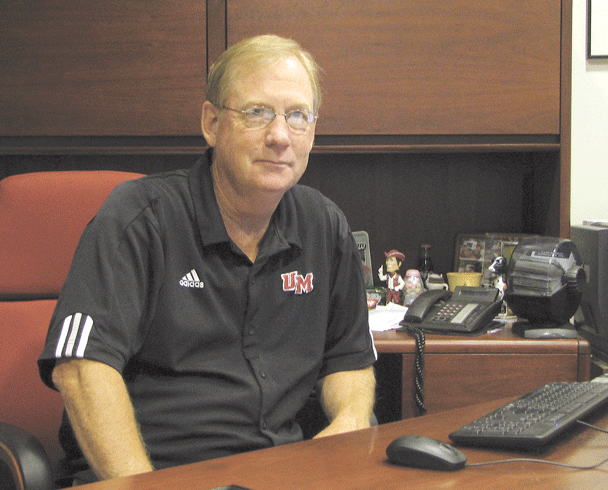
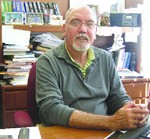
John McCutcheon

John McCutcheon says the move to Division I doesn’t come without risk, but the potential rewards are great.

One win, 11 losses.

That’s not a record many football teams would celebrate, but the UMass Minutemen see the 2012 campaign differently: as a floor from which there’s nowhere to go but up.

After all, this was a squad coming off a down year in 2011, then moving to the Mid-American Conference (MAC) and competing for the first time in the Football Bowl Subdivision (FBS), also known as Division I.

It was a move, John McCutcheon said, that was a long time coming.

“The level at which we participate in football has been talked about on this campus for probably 25 years,” said McCutcheon, athletic director at UMass Amherst. “Several studies were done, all of them, for the most part, saying the same thing: as the state’s flagship campus, UMass football should be positioned at the highest level, just like we’ve done with basketball, hockey, and other sports.”

To accomplish that goal, he went on, the school had to find the right conference, tackle some significant facility improvements which sent the team to Gillette Stadium in Foxboro for home games (more on that later), and put together a long-term financial model that made sense.

“As with any decision of this magnitude, many agreed with this — obviously, we presented it to the trustees, who supported it unanimously — and some didn’t,” McCutcheon said. “We understand that, and that’s a healthy process. There are folks following this who want to see how we are doing with this transition. We take that seriously. It’s a big move for us and does not come without risk. Our job is to make sure we manage this as efficiently as possible, and that’s what we’re trying to do.”

John Sinnett, assistant athletic director, added that UMass is widely known for its educational offerings and research prowess, and the rest of its athletic department is regarded at a similar caliber. “To have football stuck in the I-AA level wasn’t accomplishing much for the mission of the university.”

The move to Division I, he noted, offers income streams that don’t exist at the I-AA level, specifically bowl and television revenue. Meanwhile, “with all the conference realignment that has gone on, this move is also geared toward the next 20 years, not just right now. It could lead to an opportunity to be in a larger conference that has more financial benefits for the university. So this is a multi-layered, multi-decade project.”
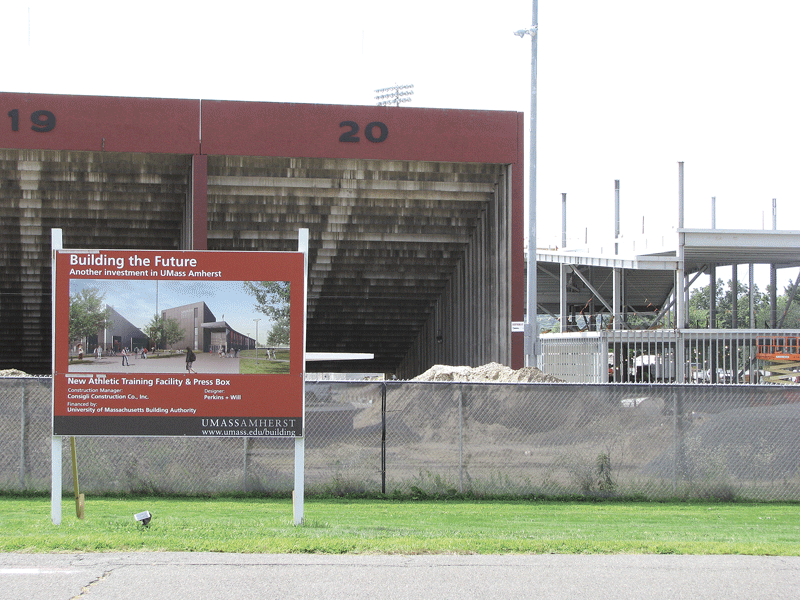
McGuirk Stadium on the UMass campus

McGuirk Stadium on the UMass campus will be ready for Division I play in the fall of 2014, when home games will be split between Amherst and Foxboro.

Right now, however, Head Coach Charley Molnar’s team has more immediate goals, such as improving on that one-win season and drawing larger crowds to Gillette while the on-campus McGuirk Stadium continues to undergo extensive renovations. As BusinessWest discovered, hopes are high on both fronts.


Playing Catchup

Moving the Minutemen to the FBS made so much sense, McCutcheon said, that many casual sports fans thought they already played at that level.

“The irony is, outside of Massachusetts, most people in the country thought we were Division I already, and they were surprised when they learned we were I-AA, because of the perception of our men’s basketball presence. And being the state university for Massachusetts, it’s probably where we should have been.”

The team slated its non-conference schedule ambitiously, but regional rival UConn shut the Minutemen out 37-0 in week one, followed by 45-6 and 63-13 losses, respectively, to the Big Ten’s Indiana and Michigan, the latter a top-20 power. The games got more competitive during the MAC portion of the schedule, including a 22-14 triumph over winless Akron, but the final tally was still 1-11.

Sinnett noted that, while FBS universities can offer 85 football scholarships, compared to 64 in I-AA, the only players specifically recruited as Division I prospects were freshmen in 2012. Over the next few years, that number will rise, while each class of FBS recruits gains in experience, so, theoretically, the team should show marked improvement each year.

“You’re going to have a culture of athletes who understand what it takes, understand what the competition is like, who are better-suited mentally and physically to play at that level of competition,” he said. “But there’s still a learning curve.”

“Remember,” added McCutcheon, “those scholarships go to incoming freshmen. In football, it takes awhile for a freshman to mature physically and contribute on the field.”

He added that Molnar has made an effort to recruit from both inside and outside the Commonwealth.

“Charley has put great emphasis on recruiting the state of Massachusetts; he’s doing a great job keeping players close to home. But we know that, for any program to compete at the national level, you have to reach beyond the immediate boundaries. That’s true for all schools. Kids from New Jersey don’t necessarily want to stay in New Jersey, and Massachusetts kids don’t always want to stay in Massachusetts. Some recruits are looking for a more urban situation, and some, a more rural situation. We all have strengths and weaknesses, and for each recruit, we’re trying to match up with their needs.”

Sinnett said the program will do a better job meeting its financial projections this year as well, because for the first time, it will share in bowl and television revenue from the MAC, and road games against Wisconsin and Kansas State will reap the program $900,000 and $750,000, respectively. Other high-profile, big-payout road games have been scheduled for the next several seasons as well, including Penn State in 2014 ($850,000), Notre Dame in 2015 ($1 million), and Florida in 2016 ($1.25 million).

“Any time you do long-range forecasting, you have to make adjustments as you go along which reflect real life,” McCutcheon said, noting that TV and bowl revenues and the aforementioned road payouts will be higher than originally anticipated, while corporate support of the program has some room for improvement. “Our projections of increased revenues are significant, and I think that, overall, we have a very solid financial plan for the future.”


Travel Plans

Plans to improve home-game attendance, meanwhile, are equally crucial, if not moreso.

UMass struck a five-year deal with Gillette to host games there to accommodate the McGuirk renovations, which include a new press box, visitor boxes, training facilities, and handicapped-access upgrades, all required by the NCAA for Division I programs. McGuirk will be ready for action in 2014, and for that season through 2016, home games will be divided between Amherst and Foxboro.

“The concept was originally misunderstood by many,” McCutcheon said. “Some people thought we were leaving [McGuirk] and never coming back. That was never the intent.”

But playing home games 100 miles from campus posed real issues last season, when attendance at Gillette averaged under 11,000 per game. That’s a concern, because the NCAA requires FBS schools to average 15,000 spectators per home game at least once every two years; if it doesn’t meet that goal, the school is ineligible for a bowl game the following year and is placed on probation for a decade.

But there is reason to believe average attendance will reach 15,000 this season, Sinnett said. For one thing, UMass was stuck last year playing the day after Thanksgiving — a MAC tradition, but a tough draw. The Minutemen played in front of just 6,000 fans that afternoon, but they will not host a Black Friday game this year, which should boost their per-game average.

Also, he noted, “we have more name-brand teams — we’re bringing in Vanderbilt, an SEC team which went to a bowl game last year. People will be excited to see that. Maine will bring in a lot of people. And I think the team will be better this year, which helps.” Group sales, corporate partnerships, and season-ticket sales are all on the upswing, he added.

Looking down the road, “we feel pretty confident in future home games against UConn and BC. Those regional rivalries will help attendance,” Sinnett added. In fact, UMass would like to develop a tradition of playing non-conference games against those regional players, as well as New Hampshire and Rhode Island, to cultivate a culture of New England football that will benefit all the schools.

Meanwhile, McCutcheon praised the atmosphere and amenities at Gillette. “The facility itself is state-of-the-art; you’re not going to find a better venue. Also, it’s very close to a large percentage of our alumni base. More than 100,000 alumni live within a half-hour of Gillette, while 20,000 live within a half-hour of Amherst. We’re basically getting closer to our alumni.

“The challenge is, a lot of these folks haven’t been engaged with our program, being in the eastern part of the state, so we’re trying to make them more aware of what we’re doing, more invested in the program,” he continued. “It takes some time to get into people’s heads. We realize the Boston market is a tough market — it’s traditionally pro-oriented — and we’re going to have to pick away at it and carve out a niche.”

Sinnett agreed, noting that “people who went to games at Gillette really enjoyed the experience. People who sat in the club seats really loved that atmosphere.”

When the games start rotating in 2014, he noted, UMass football will be serving two distinct fan bases — Boston-area alums and fans who enjoy visiting Gillette, and students and fans in and around Amherst who love the pageantry of on-campus games and the tradition of McGuirk.

“Having that flexibility will really help us,” he told BusinessWest. “Say we have a big game against UConn or BC; we can do that at Gillette, and we can shoot for 30,000 to 40,000 fans. If it’s a midweek game on ESPN against a team from the MAC, we can play that at McGuirk. I think families in Eastern Mass. will love the games at Gillette, love the amenities, love the experience, while Western Mass. fans might not want to travel to Gillette, because that’s a long day. It adds a lot of flexibility for fans.”


Winning Spirit

McCutcheon repeatedly emphasized that, from a timing perspective, the move to the FBS was a good decision.

“An opportunity with the MAC came forward, Gillette solves our immediate facility needs, and we felt, looking at all those things, the financials made sense for us,” he said. “The road we are on now is more challenging. We never said football would be 100% self-supporting; no sports are. But we felt that it would be more self-supporting [in Division I] than it would be otherwise.

“We think it was the right move to make,” he concluded. “I still believe that 100% today. But it’s going to take some time and effort. Coach Molnar is making progress, but it takes a little time; it doesn’t happen overnight. There are no shortcuts. You have to stay committed, stay focused, but I do think, in the long run, it will be a great opportunity for our university.”

Joseph Bednar can be reached at [email protected]

 

Features
Expo Seminars to Identify Paths and Obstacles to Growth

Duane Cashin says the Internet has — or should have — changed the way people approach selling.

“These days, when people want to buy something, they enter that process with a ton of information,” said Cashin, owner of Hartford-based Cashin & Co. and a noted expert in the areas of prospecting, sales process, and sales management. “With the Internet, people can thoroughly research things — consumers are more informed than ever, and that impacts the way people should sell.”

This development is one of many that Cashin will discuss in a program he calls “The Future of Sales and the Adjustments You Need to Make” — although he acknowledged that, in many ways, the future is now.

His talk is one of a dozen seminars now on the slate for the Western Mass. Business Expo, set for Nov. 6 at the MassMutual Center in downtown Springfield, an event expected to draw more than 150 exhibitors and 3,000 visitors.

Other topics to be explored include everything from immigration law to cold calling; from the emerging workforce in this country to raising a company’s profile through YouTube.

And then, there are the “Emdees.” That’s the name that Amesbury-based McDougall & Duval Advertising Agency has given to a program — in the form of an awards ceremony — involving examples of the best and worst uses of social media.

“There are many issues and challenges involved with operating a business, large or small, today,” said Kate Campiti, associate publisher of BusinessWest, which is once again presenting the Expo. “And as we approached this year’s event and its educational component, which is an important part of the show, we wanted to address some of these challenges and give business owners and managers information they could take to the office or the plant the next day.”

The seminars, which will run from 9:15 a.m. to 4 p.m., are grouped into three tracks — Sales & Marketing, Social Media, and Business Management — and are designed to be as interactive as possible, said Campiti, adding that the roster of programs was compiled after careful consideration of several dozen submitted proposals.

The full schedule of seminars is currently posted on the show’s website, www.wmbexpo.com. The programs to be presented include:

• “How TV and Social Media Have Affected Media Consumption,” presented by representatives of Comcast Spotlight;

• “Beyond an Entrepreneur,” presented by Paul DiGrigoli, president of DiGrigoli Salons and a noted motivational speaker;

• “Make an Impact with Multichannel Marketing,” presented by Tina Stevens, president of Stevens 470;

• “Leading Change,” presented by Lynn Whitney Turner and Ravi Kulkarni, principals with Clear Vision Alliance;

• “Am I Wasting Money and Time Doing Social Media?” presented by Paul Stallman, owner of Alias Solutions; and

• “Branding Bootcamp,” to be led by Meghan Lynch, president of Six-Point Creative Works.

Campiti said additional components of the Expo program, including breakfast and lunch speakers and other presentations, are being finalized, and will be announced in future issues of BusinessWest and posted on the website.

The day-long event will conclude with the Expo Social, which has become a not-to-be-missed networking opportunity since it was first staged at the 2011 Expo.

Comcast Business is once again the presenting sponsor for the Expo. Other sponsors include ABC 40/Fox 6, Health New England, and Johnson & Hill Staffing Services. Additional sponsorship opportunities are still available.

Fast Facts:
What: The Western Mass. Business Expo
When: Nov. 6
Where: The MassMutual Center, Springfield
Highlights: Breakfast and lunch programs; keynote speakers; educational seminars; Expo Social; more than 150 exhibitors
For More Information: Visit
www.wmbexpo.com or call (413) 781-8600.
 

Sections Travel and Tourism
Area Vintners Are Seeing the Fruits of Their Labor

Larry Godard

Larry Godard says a close-knit network of vintners has sprung up organically across the region.

Larry Godard acknowledged that he considers them somewhat backhanded compliments. But he loves hearing them anyway.

“They’ll taste one and look at me and pause and say, ‘this is really good,’ and they emphasize the ‘really good’ part as if they are surprised at the high quality,” said Godard, referring to comments about the labels, including Red Hen Red, he’s now producing at Mineral Hills Winery at the Red Hen Farm in Florence.

Elaborating, he said that many of the growing number of visitors to Mineral Hills are from Connecticut and New York. They are wine connoisseurs, and they’ve been to many small wineries across the Northeast. But Western Mass. is a relatively new destination for many of them, and this is one of the reasons behind many of those ‘really good’ comments.

And Godard’s not the only one hearing them.

Gary and Bobbie Kamen

Millennials are a promising new customer base for Gary and Bobbie Kamen at Mount Warner Winery.

Indeed, he is the sole proprietor of one of a growing number of what could be called start-up vineyards and wineries across the Valley, including Black Birch Winery down the road in Southampton, Amherst Winery in Amherst, Mount Warner Winery in Hadley (which overlooks the UMass Amherst campus), Pioneer Valley Vineyard in Hatfield, Les Trois Emme Vineyard & Winery in New Marlboro in the Berkshires, and several others.

They are all part of something called the Massachusetts Wine & Cheese Trail, overseen by the Mass. Farm Wineries and Growers Assoc. (MFWGA), to which Godard belongs, but could eventually comprise a separate wine trail in the four western counties.

In the meantime, Godard and others like him — individuals with a passion for wine and the means and the inclination to go into business making and selling it — are creating what could be described as a community of vintners, and a close-knit one at that.

“A wine trail is already happening by default,” Godard said, explaining that he’ll send his guests to Black Birch and Amherst Winery, and they will in turn send their visitors along to the other wineries in the area. “We have a nice little cluster right here. In fact, Ian Modestow [partner with Black Birch Winery] came over one day to borrow a cup of yeast, like a neighbor borrowing a cup of sugar.”

Mary Hamel, a partner with Black Birch Winery, also noted the fellowship among the region’s wine makers. “That’s one thing about the wine industry that I think is very cool,” she noted. “You don’t feel like you’re in competition with anyone because we support each other, and the more wineries there are, the better it is for all of us.”

More wineries would seem to be a likelihood in every state because demand is growing, and there are many aging Baby Boomers eyeing wine making as a bridge to full-time retirement. According to the 2012-13 “State of the Wine Industry” report by Silicon Valley Bank, a California financial institution specializing the U.S. wine industry, Millennials and Baby Boomers are the two largest sectors of wine consumers, and consumption rates are growing most rapidly among Millennials and men.

And while a burgeoning wine trail will help the region’s vintners, an official trail will certainly be a boon to the Greater Springfield Convention & Visitors Bureau (GSCVB).

Michele Goldberg, director of marketing for the GSCVB, told BusinessWest that, while the Connecticut Vineyard and Wine Assoc., with its established wine trail, is a longtime member, Western Mass. wineries fall perfectly into the emerging ‘farm-to-table’ movement in the tourism industry.

Ed and Mary Hamel

Ed and Mary Hamel of Black Birch Winery have doubled their visitation for wine tastings through great word-of-mouth referrals.

“From a tourism perspective, wine tasting is incredibly popular with groups and for ‘girlfriend getaways,’ and a future wine trail would be a welcome addition to our diverse list of things to do in the Pioneer Valley,” said Goldberg, adding that the tourism bureau is constantly fielding inquiries from meeting planners looking for unique after-hours activities for convention attendees.

For this issue and its focus on tourism, BusinessWest visited with several area vintners to talk about their businesses and their outlook on how wine can become a prominent part of the region’s economy and tourism sector.


Heard It Through the Grapevine

The stories beyond the wineries taking root in the Valley all vary, but there are many common denominators.

They were started, in most cases, by professionals who decided to turn a hobby into a business venture. These entrepreneurs had some struggles getting things both in the ground and off the ground, but they’re now seeing the fruits of their labors — in more ways than one. And they all will inevitably use the phrase ‘an art and a science’ to describe the process of making a fine wine.

Godard, former vice president at MassMutual, with his wife, Susan, a schoolteacher, is a great example of today’s vintner whose passion for making wine became his ‘second-life’ business.

They established their 60-acre Mineral Hills farm in 1984, and for years they had a well-established honor-system farm stand offering apples, blueberries, cider, and honey products from Susan’s bees. Soon their hobby grew to include a variety of flavors of wine made from apples, blueberries, and grapes. It was only after Godard retired from MassMutual in 2009 that he decided to “go pro,” as he called it, and turn the winemaking hobby into a full-time venture, launching Mineral Hills Winery in the fall of 2010. Godard now produces wines from French-American hybrid grapes, but also imports European vinifera grapes from California for his reds.

At Black Birch Winery, two couples share various duties to run one of the newest wineries in the area. Florence dentist Ian Modestow is the vintner, while construction and home-inspection-company owner Ed Hamel manages the two acres of new vineyards, with five more acres soon to be cultivated.

Modestow’s wife, Michelle Kersbergen, and Hamel’s wife, Mary Hamel, both dental hygienists, manage the marketing and outreach, but all four partners pitch in wherever needed.

Because the vineyards at Black Birch were planted in 2010 and are young (they still have about two years of maturity until they can be harvested), the proprietors currently source their grapes from Southeastern Mass. or the Finger Lakes region of New York.

Since June 2012, they’ve doubled their visitation, from 650 tastings to 1,480 this August, with wines priced between $16 and $20.

Hamel was one of the many who put ‘art’ and ‘science’ in the same sentence as she talked about wine making. “That’s why Ian is so good at it, because that’s what dentistry is, too,” she explained. “A dentist has to know the science, but has to be an artist to get your tooth to look exactly as it did before.”

The owners of Mount Warner Winery in Hadley — Gary Kamen, a UMass professor of Kinesiology who is in ‘phased retirement,’ and his wife, Bobbie, a strategic planner with AARP — agreed.

“I think the reason I enjoy grape growing and making wine is because they are both part art and part science, probably because of my science background,” said Gary Kamen. “Each person who gets into this business enters it with a different perspective.”

Like Godard and the partners at Black Birch, the Kamens started growing grapes with six cuttings, or vines, in their field in 2000. Soon they were making wine, and, like Godard, they decided to ‘go pro’ in 2010, opening their winery in June 2012. Now, with 725 vines per acre, they have six wines, including two dessert wines priced between $14 and $20.

Les Trois Emme Winery in New Marlborough, owned and operated by Wayne and Mary Jane Eline, is located just south of Ski Butternut in Great Barrington and minutes from the Norman Rockwell Museum and Tanglewood. While the rural town has a residential population of 1,400, it swells to more than 3,000 with tourists and second-home residents from New York.

Wayne Eline is a former chemistry teacher and high-school principal who, like Godard, took his hobby to a whole new level after retirement in 1999. The Elines set their first vines in the dirt in 2000, and by 2003, they were open for business.

“If you’re going to get into it, you’ve got to make it into a real business, rather than just playing games. It didn’t take long to go from where it was to where it is now,” he said, adding that he has tripled his yield over the past decade due to “getting really earnest” about the business in 2009.

The venture now produces 11 to 13 wines, with Stingy Jack Pumpkin, a white wine with a fusion of pumpkin spices, emerging as the most popular.


Age-old Tradition

Godard described wine tasting as a very personal experience — for both the taster and the winemaker — and something he’s getting used to as visitation numbers continue to climb.

But he admits that some comments, including those spiced with ‘really good,’ leave him amused and often surprised.

He recalled one visitor from California who commented, “your wines aren’t like our wines,” to which Godard jokingly replied, “that’s like saying your chicken isn’t like our duck.”

The difference, he said, is between French hybrid grapes that grow best in the Northeast, and European vinifera grapes that area vintners source from California, and the two very different climates in which they grow.

“Our wines are different, and they [people from California] should have learned their lesson, because they were treated the same way by the French until the French had their eyes opened when the California wines started taking gold medals at international wine competitions. And that’s happening here now.”

All four wineries have won awards regionally for their wines, and this is perhaps one reason why they’re seeing and meeting a number of avid wine lovers from Connecticut, venturing past that state’s wine trail.

To help bolster visitation, the MFWGA has been promoting the annual Massachusetts Wine Passport Program, which offers a $2 passport to 15 participating wineries in the state. Once the visitor has all 15 unique passport codes from each winery, they are eligible to enter a drawing to win a cellar full of Massachusetts wine.

For Goldberg and the GSCVB, anything that promotes regional ‘buy-local’ efforts is beneficial, and a Western Mass. wine trail would certainly help bring more people to the western counties.

“Eventually, having a number of successful wineries could lead to a Pioneer Valley Wine Trail, wine festivals, and harvest festivals,” she noted.

Western Mass WineriesA number of wineries already feature their labels at area farmers’ markets, thanks to the Massachusetts Farm Winery Bill, backed by the MFWGA, which allows vintners in the Commonwealth to sell their wine at such venues.

Keeping with the theme, the Kamens’ philosophy is to make wine only from grapes and fruit that they grow.

“We intend to make a Massachusetts product out of a Pioneer Valley product.” he said, adding that his winery regularly attends the Amherst and the South Hadley farmers’ markets, while Hamel said Black Birch Winery has seen definite growth and awareness of their wines through their appearances at the Northampton Farmers’ Market.


Juicy Futures

Just this summer, the Wine Marketing Council, working with the Nielsen Co., released its annual statistics regarding the global wine market, and found that Baby Boomers spend the most on wine, but with more than 15,000 Millennials coming of age per day, a new target market is emerging. Bobbie Kamen is definitely seeing more young people at Mount Warner Winery.

“Millennials are very eager to try a lot of different things; it’s an exploration for them,” she said.  “And if they like it, they’ll buy it.”

Hamel said Black Birch also sees a number of Millennials, which she considers somewhat surprising, but very promising for the future. “On our Facebook likes, the Millennials age group is the biggest,” she said, adding that, while they may not yet have the disposable incomes that Baby Boomers do, they appreciate fine wine and are establishing themselves as solid customers for decades to come.

While advertising will be important, trust in the valued word-of-mouth endorsement will become even more important to this younger generation in learning about the next new thing in wine.

“Word of mouth is really important for us no matter what age, because, yes, we’re in the business of wine,” Hamel stated, “but we’re also in the business of giving people a great experience.”

And at the moment, this is a business laden with potential — not only to spur economic development and jobs, but also to provide a big boost to a host of efforts to put Western Mass. on the map for many different types of visitors.

In other words, when it comes to wine and wineries, the region’s producers have grape expectations.


Elizabeth Taras can be reached at [email protected]

Cover Story
Headwinds Continue to Impede the Recovery

CoverBW-0813aIt was Ronald Reagan who, while trying to unseat incumbent Jimmy Carter in the heated 1980 presidential race, famously asked Americans if they were better off than they were four years earlier.

Enough answered ‘no,’ either literally or figuratively, to put him in the White House. And since then, countless politicians have borrowed or slightly amended the phrase in an effort to advance their cause.

But economists have taken to employing that line as well, and many are asking that question today, although with a slight twist.

Indeed, people in virtually every region of the country can answer ‘yes,’ because four years ago was the height — or the nadir, depending on how one chooses to look at things — of the Great Recession, with national employment at or just above 10%. So the questions being asked today, especially in Western Mass., are ‘just how much better off are you than four years go?’ and, increasingly, ‘why aren’t we better off than we are?’

There are many factors that play into that latter query, ranging from persistent uncertainty on the part of business owners regarding the short and long term, to the emerging matter of sequestration and its impact on many sectors, from healthcare to precision manufacturing; from economic turmoil halfway around the globe to the simple fact that companies continue to find ways to do more with the same number of people (or fewer); from the expiration of the payroll-tax holiday, which has taken money out of the pockets of consumers, to widespread uncertainty about the effects of Obamacare.

Bob Nakosteen

Bob Nakosteen

Put it all together, and it adds up to a recovery that Bob Nakosteen, professor of Economics at UMass Amherst, called “surprisingly mediocre.”

Others we spoke to for this hard look at the economy and the prospects for real improvement used other words and phrases to describe the recovery (or lack thereof) to date, ranging from ‘painfully slow’ to ‘uneven’; ‘essentially jobless’ to ‘less than robust.’

That last, somewhat tongue-in-cheek offering was given by James Barrett, managing partner at Meyers Brothers Kalicka, P.C., who has prepared and analyzed second-quarter numbers for dozens of clients, and believes they speak to ongoing trends concerning companies in this region.

Jim Barrett

Jim Barrett

“Businesses are spinning faster than they used to, and they’re basically staying in place,” he told BusinessWest in what would be the first of several attempts to convey the opinion that businesses are working harder to merely stay at something approaching an even keel. “I haven’t talked to anyone, except in a few isolated cases, that has a June 30 year end that is hitting it out of the park. Companies are working harder, but they’re not necessarily seeing it on the bottom line.”

To be sure, there are some sources of optimism regionally, said Mary Burke, a senior economist with the Federal Reserve Bank of Boston, putting a surging housing market and its many ancillary benefits at the top of that list.

“The housing recovery is certainly one significant bright spot — prices are going up, people feel wealthier, they feel like things are moving in the right direction, they don’t feel stuck in their homes,” said Burke, adding that demand for housing has given the region’s construction sector its first real boost in years. “All that’s positive news, and it seems to be providing some momentum.”

Other encouraging developments include a record-busting stock market (indexes were up another 4% or more for July), long-awaited improvement in household balance sheets, and growth in some emerging business sectors, such as technology and the biosciences, she added, noting that the big question moving forward is whether these upward-arrow elements can overcome the considerable counterproductive pull of sequestration, rising interest rates, falling confidence among business owners, and other factors.

But the “$64 billion question” concerns if and when employers will begin hiring again, said Burke, noting that jobs, or the lack of them, has been the primary reason why the recovery has been defined by those aforementioned adjectives, with more discouraging news coming recently: July was the slowest hiring month since March.

“We still have a very elevated unemployment rate” of 7%, she noted. “It’s come down from the worst, but it’s still quite high.”

And it won’t be until a real, meaningful, and sustained dent is made in the jobless rate that more positive terms can be used to describe this recovery.

Getting Right Down to It

The lackluster state of the recovery is spelled out in the latest issue of MassBenchmarks, the journal of the Massachusetts economy published by the UMass Donahue Institute in collaboration with the Federal Reserve Bank of Boston.

It recaps a significant slowdown in the second quarter that was not unexpected, due to factors such as sequestration and the employment-tax hike mentioned above, but was nonetheless troubling.

Real gross domestic product in the state grew at an annual rate of 0.8%. That’s in contrast to the 1.7% GDP growth nationwide for the same quarter, and the 2.8% logged in the state in the first quarter of this year. Meanwhile, state payroll employment, which grew at an annual rate of 3% in the first quarter, stalled in the second quarter, declining by 0.1% on an annualized basis, a number that has analysts concerned.

“The recent rise in unemployment is particularly disconcerting,” wrote Alan Clayton-Matthews, MassBenchmarks senior contributing editor and associate professor of Economics and Public Policy at Northeastern University, noting that overall unemployment rose from 6.4% in March to 7% in June. “It appears that unemployment rates increased for both men and women, and those increases were concentrated among youth — those less than 25 years old, and those with less than a high-school education. However, unemployment rates also rose for those between the ages of 25 and 54, and for those with a high-school diploma and some college but less than a bachelor’s degree.”

Burke concurred. “It looks like we’re going in the wrong direction,” she noted, adding that the numbers were down in almost every metropolitan area in the state, and this consistency is, in and of itself, alarming. “For a while, it looked like Western Mass. was weaker, and Boston has been doing very well, for the most part, in this recession, so I’m really surprised that Boston had an increase in unemployment.”

Nakosteen, who also serves as the executive editor of MassBenchmarks, said that employment numbers for the Springfield metropolitan area, which includes part of Connecticut, were lower than they were a year ago — 286,000 for 2013 versus 290,000 for 2012.

“And that’s really not a good sign for a recovery,” he told BusinessWest, “because that’s been the pattern. Every month, employment is lower than it was a year ago — not by much, but enough. What these numbers tell me is that the recovery is experiencing some headwinds.”

He didn’t add the word ‘again,’ but it was certainly implied, and with good reason, because there always seems to be some impediment to real improvement, from the fiscal cliff to turmoil in a host of European countries.

And when asked to look behind the numbers and identify these headwinds, those we spoke with said federal policy moves are starting to take the toll that many predicted they would.

Indeed, sequestration is starting to have an impact on overall federal employment, said Burke, and there is mounting evidence that major defense contractors in Rhode Island and Connecticut are reducing their workforces or, at the very least, being wary about new hiring or replacing those who leave or retire.

“Growth has been quite tepid for the year, and some believe sequestration is having an impact, taking perhaps as much as a percentage point off GDP growth, according to one estimate I’ve seen,” she noted. “That is definitely having effects across the country because it affects how much money flows to the state governments from the federal government. State-government jobs have been falling in the region, and federal-level government jobs that are situated in the region have been falling as well.”

Locally, Dave Smith, president of Tell Tool in Westfield, which logs 55% to 60% of its parts-manufacturing business from the military, said company officials talked about sequestration as a business risk, and there was verbiage to that effect placed in the strategic plan. Accordingly, a flat year was projected, and that’s what has transpired.

“We haven’t seen a reduction in orders,” he explained. “I wouldn’t describe them as strong, but they’re stable.”

Elaborating, he said that, apart from a slowdown in orders for the F-35 joint strike fighter, for which Tell Tool makes several parts, sequestration hasn’t had a deep impact — yet.

And as he speculated on why, Smith said that, while military aircaft (such as those at Westover or at Barnes Municipal Airport in Westfield) are not in the air as much, they’re on the ground being serviced, which thus far has led to more orders for parts.

Overall, the manufacturing sector on the whole has been off by about 1% across the country, said Burke, noting that a big reason for this has been a decline in due in exports to spiraling economies in China and elsewhere.

As for the payroll tax increases, or the elimination of the tax holiday, Burke said there are no hard numbers available yet to quantify its impact, but there is plenty of anecdotal evidence that people are spending less.

“Retailers say they’re seeing consumers being stingy again, and they noticed that it started happening after the payroll-tax increase,” said Burke, noting that, while the policy change to the FICA tax represents a loss of $1,000 to $2,000 annually for most families, those amounts are enough to take a toll.


Hire Power

Another factor contributing to the decline in employment and sluggish second quarter is waning confidence among employers, said Burke, noting that the Business Confidence Index (BCI), as measured by Associated Industries of Mass., fell below neutral on its 100-point scale in June to 48.9 after a drop of 3.2 points from May.

June swoons are not uncommon for the BCI — it fell 8.5 points during that month a year ago — but this decline is perhaps yet another indicator that business owners are troubled by the slowdown in the first half of this year and are likely still concerned about will happen — or not happen — next.

“Confidence has been quite volatile,” she explained. “It’s always volatile, but even moreso in this recovery. There have been so many times when we might think we’re out of the woods, and then some other roadblock happens.”

Barrett agreed. “Although we’ve heard that things are bottoming or turning around,” he noted, “I don’t think people have seen enough of a turnaround to get moving. They haven’t seen the growth — and I don’t think they have the confidence yet — to start financing expected future growth long-term.”

Looking ahead, though, those we spoke with said they can find some reasons for optimism, and they don’t have to look very hard.

The housing market is certainly one of those factors, said Burke, who noted that this sector is stronger in the eastern part of the state, but things are improving in the 413 area code as well. Analysis she’s seen indicates that the market could certainly weather the 1% increase in interest rates that many are predicting.

Meanwhile, household balance sheets are improving, which puts people in a position to spend more, said Burke, noting that, while interest rates have increased somewhat, they are still at historically low levels.

Bill Sullivan, senior vice president of Commercial Lending at Holyoke-based PeoplesBank, concurred, noting that this is a time for companies to be proactive and ready for when the skies are considerably brighter.

He said the phrase ‘cautious optimism’ is quite overused and he didn’t want to contribute to that phenomenon, but he did anyway.

While doing so, he looked back to the recession of the early ’90s — which was like the current cycle in terms of how slow the recovery was — for what amounts to inspiration.

“You try to find a point in time where that recession turned around,” he said, “but to me, it just seemed like one morning, people woke up and said, ‘hey, we’re still in business. We have sales, though not at the level we like; let’s move forward.’

“I don’t know what moves that rock forward,” he went on, “but I think it starts with confidence; people are pessimistic, and they have to be, and they really have to believe it before they make a capital investment or hire employees.”

Those we spoke with said the best-case scenario is that the economy can work its way through these latest headwinds and start to pick up some speed. But there are many questions concerning when and if that will happen.

“We definitely have to get through these tax increases,” said Barrett, noting that policy changes that will impact wealthier Americans will start to be felt later this year. “And it takes a while for them to work their way through the economy; it’s the same with sequestration.”

While the impact of those steps is still taking shape, there will be another round of Congressional action to deal with matters such as the deficit and the debt ceiling, he continued, adding that anticipation about what will happen could heighten levels of uncertainty.

The key, again, is jobs, and unfortunately, recent history is showing that recoveries are becoming increasingly jobless, and most signs indicate that this trend will continue.

“We’ve been having these jobless recoveries, and there’s a lot of work going on to try and figure out why that is,” said Nakosteen. “The recession in the early ’90s, the one in the early 2000s, and this one … they’ve been not entirely jobless, but that’s the phrase that’s been attached to them. Economists don’t fully understand why that is, but jobs don’t seem to be generated as quickly as economies recover anymore.

“I’m pretty optimistic about the next two or three years,” he went on, “but I just can’t understand why we can’t get there more quickly.”

The Bottom Line

In comments to the Boston Globe made in reference to the sluggish second quarter recorded in the Bay State, Nakosteen seemed to sum up the frustration felt by many with regard to the recovery.

“I’ve never seen a report when the economy is supposed to be growing that’s so somber,” he said. “It’s so deflating in a way.”

Deflating, because even though the Great Recession cut deep and the impact was felt across the country and in every business sector, actual recovery, which has often seemed close and real, has instead proven to be slow and quite elusive.

“The kind of recession we had, a financial-crisis recession, has historically had very slow and painful recoveries,” said Nakosteen. “I’ve been surprised by just how slow and painful this one has been, even though I’ve read the history.”

George O’Brien can be reached at [email protected]

Entrepreneurship Sections
Valley Venture Mentors Stays Focused on the Big Picture

VVMecosystemScott Foster says there are many ways to qualify and quantify the physical growth and escalating impact of Valley Venture Mentors (VVM) since it was launched more than two years ago as a unique support system for entrepreneurs looking to start a venture or take one to the next level.

For starters, there’s the rising number of applications for six-month mentorship programs — there are now more than 30 for the six to eight slots that will comprise this fall’s cycle — as well as the fact that many of these are from individuals and groups outside the 413 area code, “because they don’t have something like this where they are,” said Foster, a business-law attorney with the Springfield-based firm Bulkley Richardson.

Scott Foster

Scott Foster says VVM has drawn increasing interest from the region’s economic-development leaders.

There’s also the ever-greater interest being shown by economic-development leaders in VVM and its potential for spurring job growth in the region and state. Greg Bialecki, state Secretary of Housing and Economic Development, has described it as a “catalyst” organization in speeches he’s made. Meanwhile, representatives of the Economic Development Council of Western Mass. have been regular attendees of VVM’s monthly meetings.

And then, there’s acknowledgement among VVM’s leaders that this organization, like many of the ventures being mentored, is having some growing pains of its own. Indeed, said Foster, there are ongoing discussions about VVM hiring its first paid staff and moving into a permanent facility; it currently does most of its business in the spacious Bulkley Richardson boardroom.

Steve Willis, a VVM co-founder and mentor, and an entrepreneur who has launched several high-tech firms, said the organization is, in many ways, similar to the startups it serves.

“It has a small group of people who had an ambitious idea, and it was grown very carefully,” he explained. “It’s now ready for another round of financing to scale the business out. We have a set of ambitious plans in place, and it’s time to have a strategy and a business plan to grow this out.”

All of this is part of what Foster calls “creating an entrepreneurial ecosystem.”

And he used that phrase — which isn’t technically accurate, because ecosystems exist only in nature — to describe an environment in which entrepreneurship (and the economic development and jobs that ensue) is encouraged and given an opportunity to thrive.

“The entrepreneurial ecosystem in the region is nascent, and it needs to grow,” he explained. “There’s a lot of passion for entrepreneurialism in the Valley, both on the mentoring side and the entrepreneur side, and what there wasn’t before was a community that this spirit could tap into in a cohesive, consistent way.

“What we’ve heard back from people involved in the program is that VVM has created the right atmosphere,” he continued, “one that allows people to come out, allows them to interact with one another, and drives them to want to build the ecosystem and make it stronger.”

Jess Dupuis

Jess Dupuis says VVM has been instrumental in helping her map out plans for taking her beauty products venture to the next level.

Jess Dupuis is one of the many entrepreneurs expressing such opinions.

In 2010, she started a business called Olive Natural Beauty, which manufactures and distributes a line of olive-oil-based beauty products, now sold through 20 retail partners.

Dupuis said she applied to VVM earlier this year because, while her business seemed to be on the right path, she knew she needed to focus on the proverbial big picture, and needed some help doing so.

“Up to this point, I’ve been really flying by the seat of my pants in that I’m still a young business person and I’ve never been an entrepreneur before, so there are a lot of things I’m learning by trial and error,” she said, adding that what she’s received from her mentors and VVM as a whole amounts to real-time feedback.

“I wanted some guidance and feedback, especially on how to scale my business and take it to the next level, because up until now, it’s been 100% me,” she went on. “And it’s been an amazing experience; I’ve had the chance to speak with industry professionals and people who have gone through it.”

For this issue and its focus on entrepreneurship, BusinessWest looks at how VVM has grown and evolved since its creation, and to where the organization wants to go next as it works to create that ecosystem that Foster described.


Venturing Forth

When BusinessWest talked with Foster and VVM co-founder Paul Silva just after the initiative was launched in early 2011, they used a number of words and phrases to describe their organization, its mission, and its MO.

It was described as a “halfway house between the classroom and the real world,” a vehicle for providing “nourishment” to startups and next-stage companies, and a group dedicated to help entrepreneurs eliminate the “rookie mistakes” that often set a venture back or keep it from getting off the ground.

As she talked about her experiences with VVM, Dupuis said it has been all of those things. Elaborating, she told BusinessWest that her business is at a critical crossroads in terms of growth and development, with some important decisions to be made on everything from marketing to whether she needs to bring on a manufacturer and a distributor for her products.

“And before I take some of these steps, I wanted to talk with experts about what their thoughts are,” she said. “I want to be able to take those ideas and that feedback and use it as I put things down on paper into a formal plan.”

VVM’s entrepreneurial community

VVM’s entrepreneurial community provides what one of its mentees calls “real-time feedback.”

Here’s how the mentorship program works: first, VVM issues what amounts to a call for applications to what are now two cycles of mentorship, one in the fall and the other in the spring. Two tracks are now necessary, simply because the volume of applications has grown considerably, mostly due to the positive experiences of participants and word-of-mouth referrals.

“These individuals are talking about their experiences to other parts of the community — and by community, I mean beyond just the Pioneer Valley,” said Foster. “We’re getting applications from Providence, the Greater Boston area, Connecticut … people who are interacting with the program are going back and talking to other entrepreneurs, their friends, other mentors, and they’re realizing that this is unique in the way it’s delivering advice, the scope of the mentoring, and the openness of the community.

“We’ve structured something that allows an excellent exchange of ideas and support from the mentors, and also from the entrepreneurs to each other,” he continued. “The feedback we get from the teams that have been through it, and the mentors as well, is that it’s an excellent environment.”

The deadline for the next cycle is Sept. 1, said Foster, adding that there will be a “pitch camp” a few weeks later, followed by formal auditions later in the month. This multi-stage process, which will ultimately identify the six to eight ventures chosen for mentorship, was designed to create “good fits” — matches that work for both the companies and VVM.

And there are many reasons why an applicant may not constitute an effective fit, said Willis, listing such things as geography — a New Jersey-based individual or group might find it difficult to attend monthly sessions in Springfield — and the fact that some applicants simply might not be far enough along to benefit from mentorship.

“The fit is two ways,” said Willis. “Can we provide adequate service to them? And on their side, can they commit the time? Will they listen? Is this a good fit? It’s not necessarily about the business, but about the team and the people.”

Applications come in a number of flavors, said Foster, noting they range from “an idea that’s been well-thought through to a company that’s up and has a minimally viable product, and they’re looking to take it to the next level.”

When it comes to choosing applicants for participation, Foster said VVM and its mentors are what he called “generalists,” meaning they don’t focus on specific sectors, such as technology or the biosciences, and this quality has helped the initiative grow.

“There aren’t many generalist programs out there, and there are many advantages to having that quality,” said Foster, adding that ideas and business concepts that have come before the mentors have been both high-tech and low-tech, ranging from a complicated algorithm for engaging in currency hedging to a device that would monitor the natural gas entering a home or commercial building. “We’ve found that this leads to some great dialogue among the mentors and the teams that are there; they learn differently from each other, and they realize that, no matter what their sector is, they all have some similar challenges they’re going to have to face — how to hire people, how to staff up, how to raise money, how to communicate with people about your idea. Those are themes that reach across all the different kinds of businesses.”


Getting the Idea

Jess Greene’s venture is on the high-tech side of the ledger, but it also involves the arts.

In 2011, she created the website seekyourcourse.com, which is focused on “helping adults be more creative, and making it easier for adults interested in engaging their creative or artistic side in a class.”

Originally, the site, based on an advertisement-revenue model, was designed to host a database of educational opportunities for adults in the arts, she said, adding that it has undergone a host of changes since, and is now more focused on its blog, which boasts 26 regular contributors who post everything from tutorials to stories of their own creativity.

The venture remains a work in progress, a site devoted to engaging the strong online creative community, she went on, adding that the mentors at VVM have been instrumental in helping her shape a vision and business plan for what she called “seekyourcourse 2.0,” which will have more of a community focus and take the business concept to the next level.

She gathered ideas for this concept while on a four-month, 15,000-mile trip around the country, during which she met many of the people she communicated with online and welcomed their thoughts on what people might want and need from her site. And she’s shared that data with her mentors and also other mentees, like Dupuis. Through all those resources, she’s gained insight into everything from branding to revenue generation to driving traffic to her site.

“It’s great to suddenly have this community of people who have all this expertise,” she told BusinessWest while explaining how and why VVM has worked. “It’s a great environment.”

Dupuis agreed, and said VVM has been of considerable help with many aspects of her business, from hard financials to marketing to the challenging task of scaling a business and making it much bigger than it is.

Foster summed it all up by saying that VVM’s broad goal in her case was to make her a “smarter businesswoman,” and that this is the assignment with all the entrepreneurs it works with.

“No one is attempting to make these decisions for her,” he said, referring to business steps such as adding employees, ramping up or outsourcing production, or bringing on a distributor. “We just make sure that she has the information she needs to look at her business and figure out what makes the most sense for her as she tries to get to the next level.”

Dupuis cited proper branding of her line of products as just one of the many often-complex business-plan matters that VVM and its real-time feedback have helped her address.

“I graduated summa cum laude with a degree in marketing communications, so this is what I would consider my area of expertise,” she explained. “But VVM has really helped me hone in and think about how I want to brand these products. Do I want this to be a CVS-type brand, or is this a more luxurious brand that should be sold in Whole Foods? If you’re in one store, you may not be able to market to the other.”

Some important decisions will be made in the months to come, she went on, adding that VVM has given her plenty to think about.

Moving forward, the organization would like to do that with more individuals and teams, which brings Foster and Willis back to VVM’s own plans for taking itself to the next level.

Such ramping up could — and likely will — involve everything from hiring staff to establishing a physical presence with an office and meeting facility, to creating entrepreneurship competitions that will bring people to Greater Springfield and help strengthen that entrepreneurial community Foster described.

“This is moving from being an all-volunteer organization to one that will need staff,” he said. “We think we should be growing, and we’re still figuring out where our space should be in terms of an office and a co-working space that’s open to the teams. We know there’s a need for more educational programs, either offered by us or by others, that are targeted at this group of entrepreneurs.”

Funding will obviously be needed for all of this, he went on, adding that VVM is currently finalizing two grant applications that spell out the organization’s plans for growth and the many reasons why such development is important for the region. One is a response to a request for information from the Mass. Technology Collaborative, which has a mandate from the state to encourage mentorship programs across the Commonwealth, said Foster, adding that VVM was asked by that organization to submit information about its mission, programs, and successes to date.

“We’re making sure we have the right plan, and we’re looking at fund-raising,” he said, adding that the latter is going on mostly behind the scenes, but soon, the process of ramping up VVM will become much more public.


In Good Company

Looking at the present and possible future for VVM, Willis drew more analogies between the organization and the ventures seeking mentorship.

“We are, in a way, growing this the way we think startups should grow,” he explained, “and we have very similar issues to what small businesses are seeing.”

Coping with those issues is now a big part of that process of building an entrepreneurial ecosystem, an ongoing endeavor that is capturing the attention and imagination of economic-development leaders and business owners alike.

VVM has come a long way in two short years, and the future looks exceedingly bright for an organization that is getting down to business — in every way that  phrase can be used.


George O’Brien can be reached at [email protected]

Conventions & Meetings Sections
Blantyre Takes Its Guests to Another Place and Period

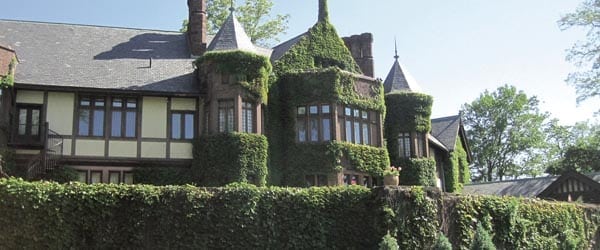
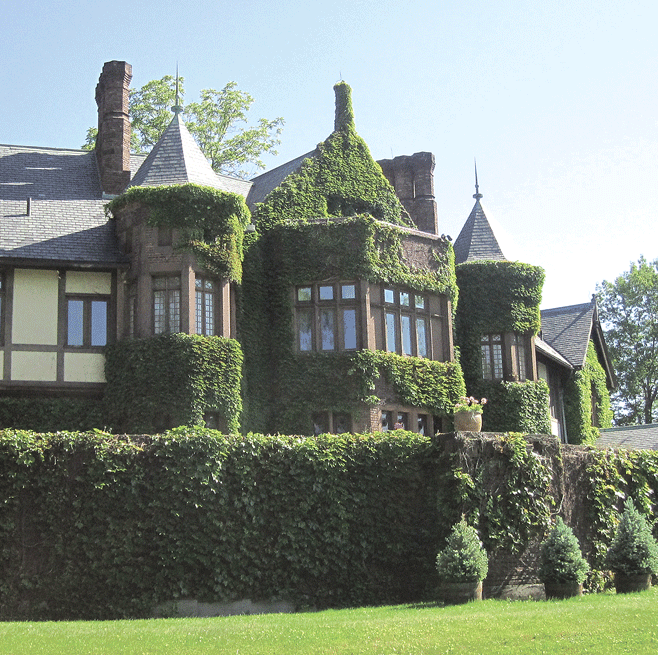
BlantyreWhile there are many words and phrases that have been used to describe Blantyre, the Gilded-age mansion in Lenox that is now a luxury resort coveted by business and leisure travelers alike, the most common refrain is that a visit there is like ‘going back in time.’

And guests will use such language to convey many different thoughts.

Commonly, it’s used in reference to the time, a century or more ago, when the Berkshires became the summer home for many of the affluent Americans who gave the Gilded Age its name and its lore, and ‘cottages’ like Blantyre dotted the landscape. Meanwhile, for the many fans of the PBS series Downton Abbey, a visit to the resort hotel provides an opportunity to see and taste the opulence and lifestyle of the Earl and Countess of Grantham — but without all the drama.

For those who know the story of Ann Fitzpatrick Brown, proprietress of the stately retreat for the past 33 years, a stay at Blantyre also provides a window into her childhood.

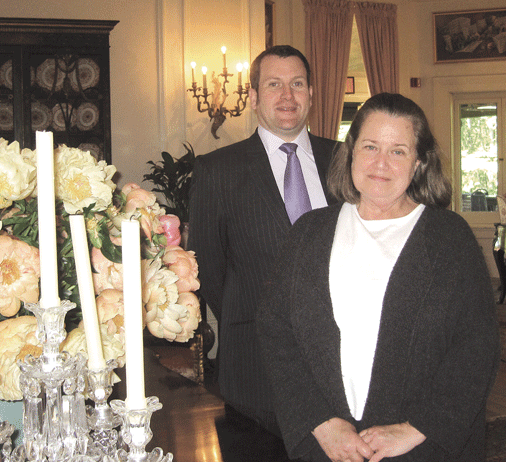
Ann Fitzpatrick Brown and Simon Dewar

Ann Fitzpatrick Brown and Simon Dewar have positioned Blantyre as a destination for discerning travelers and groups.

Due to the success of her entrepreneurial parents, John Fitzpatrick and Janes Hayes Pratt Fitzpatrick, Ann and her sibling had the opportunity to see the world when they were young, and their visits come to life through more than 2,000 novels and picture books shelved in Blantyre’s many rooms.

“My father was a traveler, and we always went to beautiful places,” Fitzpatrick Brown recalled of her childhood. “I remember as a very young child going to Italy and the Hotel Spendido in Portofino, and I saw those white canvas umbrellas [on the esplanade]; every June we’d go to a place in Ireland, and when I was 10, I went to school in Switzerland.”

Beyond travel, Fitzpatrick Brown also developed passions for art, books, music, and fine cuisine early in life, and Blantyre reflects all of those interests — through everything from the décor to the menu to the wine list.

And while visiting the past, guests at Blantyre are certainly enjoying the present. Indeed, the resort enjoys the distinction of being one of four Forbes 5-star hotels in the Bay State, and the only one not in Boston. It is also in the globally elite category of hotels known as Relais et Chateaux properties, which must pass the most stringent standards for excellence in the hospitality industry.

Such accolades — but mostly the track record for fine service that earned them — have made Blantyre a popular, and repeat, landing spot for corporate and leisure travelers and accepted destination for business meetings and family gatherings.

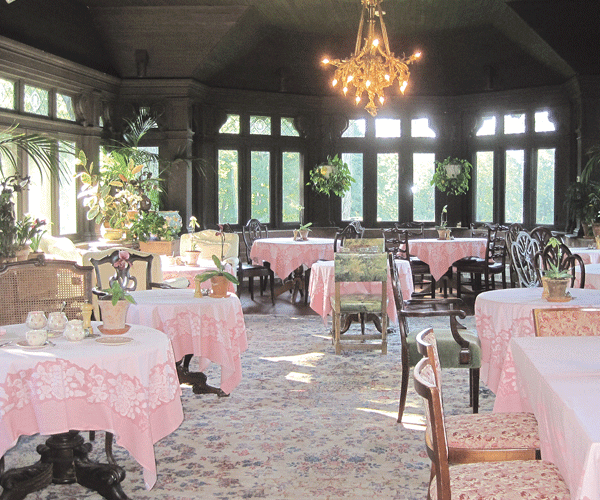
The octagonal breakfast room

The octagonal breakfast room is one of many opulent and intriguing spaces at Blantyre.

And when a business or group books the retreat, it books the entire retreat for what Fitzpatrick Brown calls “full-property takeovers,” meaning all 100 acres and every facility.

Corporate meetings and events at Blantyre include, well, everything. True to her strict rule of privacy, Fitzpatrick Brown would not say which corporations have taken their business there, but admitted they are “major” and usually in the Fortune-100 category.

The large music room is turned into a boardroom with the requisite AV equipment, large U-shaped table, and plush leather chairs, and the grounds and all amenities are available for the company’s daily use.

Aside from corporate meetings, there are also unique gatherings of the well-to-do. One example she cited, with very limited details, is that of a wealthy woman who flies her friends to exotic places every year to have their book-club meeting.

“Like her, our guests can go anywhere in the world, but they choose to come to Blantyre,” said Fitzpatrick Brown. Instead of, say, the French Riviera or the Swiss Alps, the book club will return for a second year to Blantyre.

As her vague comments suggest, guests also enjoy something else — privacy, before, during, and after their stay, something coveted by this discerning constituency.

“That’s the rule, said Fitzpatrick Brown, who was given the assignment of restoring the abandoned and derelict mansion when her father acquired it in 1980, and has considered it a labor of love.

For this issue and its focus on meetings and conventions, BusinessWest visited Blantyre and talked at length with Fitzpatrick Brown and others about what makes this resort a true destination that guests return to year after year.


History Lessons

Blantyre’s main house was built at the height of the Gilded Age in 1902 by Robert Paterson, an association of the Vanderbilts. The mansion was built on the site of a more modest home known as Highlawn, an estate that included a carriage house and potting shed that were retained by Paterson and are still part of the current Blantyre complex.

The patio off the music room

The patio off the music room offers guests a place to enjoy Blantyre’s finest wines before dinner.

For more than 10 years, the mansion was the site of fabulous parties and opulence, but with the introduction of the income tax in 1913, the curtain came down on the Gilded Age. For the next 60 years, Blantyre went through several transitions in ownership and eventually fell into serious physical decline.

But while the historic mansion was falling into disrepair, the Fitzpatricks were writing a number of business stories.

The first was the now-famous Country Curtains window-treatment boutique, which they launched in 1955. As that business grew, the Fitzpatricks acquired the failing Red Lion Inn in Stockbridge, moved Country Curtains there, and restored the inn to its former glory. The family also acquired the Porches Inn next to Mass MoCA in North Adams.

Fitzpatrick Brown was a vice president at Country Curtains in 1980 when her career took a dramatic turn after her parents decided to take on another reclamation project.

“My father was at a bank meeting, and Blantyre, which had gone bankrupt for a second time, came up for sale,” Fitzpatrick recalled. “He said, ‘I’ll buy it.’”

The purchase price was $257,000, but the family knew that it would have to invest millions to bring it back to its former elegance.

Fitzpatrick Brown and her mother would invest more than money in this venture — they would also inject their imaginations and collective love of the arts, travel, music, and more.

Fitzpatrick Brown, who was formerly trained in sculpture — she earned a bachelor of arts from the University of Colorado —  said Blantyre has become her canvas.

“A room to me is a piece of sculpture, and every room is all about not having one focal point,” she explained of her decorating style. “Some people like to decorate with one focal point, but I think it’s more relaxing to have all the rooms just flow together.

“Not everyone is going to like Blantyre, décor-wise. Minimalists will go running — they’ll run out the door quickly,” she went on, adding that perhaps the one word she would use to describe Blantyre is ‘romantic.’

Using a few more words, Travel and Leisure magazine called Blantyre the ‘Best Value over $550’ in 2007. Fitzpatrick Brown said she and her guests laughed at that designation, because a stay at the resort is very expensive, starting at $600 and ranging up to $2,000 a night year-round (two-night minimum), not including dinner.

But Fitzpatrick Brown and Simon Dewar, the resort’s general manager, say there is value that comes in many forms at this destination — from the no-tipping policy to the depth of the wine list,to the elaborate dinner menu.


Advice — on the House

When Blantyre opened year-round in 2005, the addition of a new spa in the 19th-century Potting Shed made Blantyre a more attractive option for the meeting and leisure travel industry, said Fitzpatrick Brown, noting that it has played host to a number of corporate retreats.

Guests can choose from among 21 opulent rooms, eight in the elaborate main mansion (many with fireplaces), 10 in the quaint Carriage House, and three more in cottages.  The main house has a lavish music room with its Steinway piano, used for corporate meetings and weddings, in addition to the glass-enclosed conservatory and the octagonal breakfast room. Blantyre is adorned with fresh flowers in every room, every day, and is known for its award-winning French cuisine and deep wine cellar.

“Everyone says that they feel like they’ve been transported back in time to a bygone era of gentler times; romance and elegance,” said Fitzpatrick Brown, noting that, since Downton Abbey made its debut in 2011, she’s heard many guests compare the resort and its amenities to that stately English manor.

“What that show has done is give us a category to compare to,” she said with a laugh, adding that the point of reference has become another marketing strategy in some respects, although Blantyre thrives almost entirely through word-of-mouth referrals.

Meanwhile, Dewar’s British accent and engaging personality help put guests in that Downton Abbey state of mind.

He became general manager in March 2012 after retiring as a British Army major, ending a career that included duty in the Falkland Islands, Northern Ireland, the Balkans, and other stations around the world.

He oversees a staff of 70 full- and part-time employees in the summer, and one that is somewhat smaller in the winter, and told BusinessWest that it’s not a stretch to go from the business of the military to the hotel industry.

“It’s not that dissimilar from commanding and managing soldiers, perhaps a few less bullets and grenades, and no need to wear a helmet every day,” he said jokingly. “And guests are demanding; they expect a very high level of service.”

Dewar’s foray to a new career in retirement led him to a culinary school in Connecticut and work at Blantyre, but Fitzpatrick Brown saw the leadership qualities that fit the resort perfectly.

Dewar joins the husband-and-wife team of Arnaud Cotar, Blantyre’s executive chef, who has been with the hotel for several years and focuses his French cuisine on local fruits and vegetables, and his wife, Christelle, who started as a server and is now the sommelier.

When the retreat opened year-round, the wine became important as a marriage to the food, said Fitzpatrick Brown, adding that Cotar’s extensive knowledge of wine, through her past education in Europe, led her to her current position.

Now with a 12,000-bottle wine cellar, Blantyre’s select vintages have taken center stage, and have prompted well-attended wine-tasting dinners that have introduced many people to the landmark and given it another source of business growth.

Fitzpatrick explained that some of those events in winter include outdoor ice skating in the ‘rink’ that is created by flooding the four Har-Tru tennis courts, and the “Sno Bar-B-Q,” which offers oysters on snowballs and shrimp cocktail, with Cointreau hot chocolate marshmallow floats.

In summer, when not visiting Tanglewood, the Norman Rockwell Museum, or walking to the Mount, guests can enjoy the heated outdoor pool or play on the formal, whites-required tennis courts and tournament-rated croquet lawns.

Parting Gifts

Fitzpatrick Brown said she’s never felt competition, locally or otherwise, because Blantyre is so different.

“We’re a house more than a hotel,” she said. “And that’s one thing my parents always lived by, because you can’t always be watching the other guy; it’s so destructive. So you just go full force, do the best you can, and it works out.”

It has worked out at Blantyre for many reasons — from that wine list to the views of the Berkshires; from the cuisine to the works of art created by Fitzpatrick Brown as she put her stamp on every room.

But mostly because a trip to this resort really is a journey back in time.


Elizabeth Taras can be reached at [email protected]

Sections Technology
VizConnect Takes Mobile Marketing to New Heights

Ed Carroll, co-founder of VizConnect

Ed Carroll,
co-founder of VizConnect

Ed Carroll says businesses, salespeople, or entrepreneurs who are not advertising on mobile devices are losing customers, and his claim is backed up by many studies, including a survey showing that more than 86 million people sought business information last year via their smartphones.
The co-founder of VizConnect in Springfield first became aware of the trend in 2004 when he was working as a television newscaster and Facebook began to gain in popularity. “I saw a paradigm shift taking place away from mainstream media, and one night I began thinking about how businesses could use it because they are completely underserved in that area,” said Carroll, who eventually came up with the idea for the high-tech company he started in 2011 with sales and marketing guru Brian Dee.
The company’s product, a video-based mobile marketing platform, is designed to help small companies or businesspeople keep pace with changes in the way products and services are marketed today.
“Large companies have staffs and people who keep track of trends, but 80% of the economy is small businesses, and they don’t have the budget to do what they need to do to compete in the mobile scene,” Carroll told BusinessWest. “There has been a huge shift to mobile marketing, and everyone in business needs to think about how to get their message onto a mobile device.”
VizConnect has grown quickly, and today is operated by a team of partners who oversee more than 400 distributors. The product they sell has been test-marketed and improved since it was introduced to the marketplace, and most of the distributors came on board in the last six months when the company took steps to grow its sales force, due to enthusiasm about the software.
When people scan a VizConnect QR code or text message a keyword with a code, they come face to face with options that allow them to watch a video, download a coupon, view items on sale or a customer testimonial, learn more about a product or service, communicate directly with the seller, or buy the product. They can access these with a simple click, and after they watch a video, their screen changes, giving them the option of clicking again to share it on Facebook, Twitter, or LinkedIn; calling the company; making a purchase; or anything else the business elects.
“Right now most QR codes go to a static website; we have made them more dynamic,” Carroll said. “Our platform was designed to be a call to action.”
He explained that what comes up on the screen after someone texts to a keyword or scans a QR code can make or break a sale. “Research shows it takes the human mind about six seconds to decide whether to stay or go. It’s a yes or no,” Carroll said.
He added that businesses that fail to use simple techniques to engage customers on mobile devices will soon be left behind. “This is the 21st century, and it’s all about mobile.”
Dee agrees. “Studies show that people never get more than three or four feet away from their mobile devices, and where they get their information drives their decisions,” he said.
VizConnect’s platform costs $60 a month and allows clients to market their products or services in different ways to different audiences, which can include messages in more than one language.
The common denominator is that a customer is immediately given choices. They can click on a window that says ‘see more inventory,’ one that says ‘call,’ or another that prompts them to take a different action.
These options are customized and linked to up to 10 QR codes that can show different videos or display different information. “We have simultaneous multi-messaging so people can target a mailer to a Spanish- or English-speaking demographic. It’s a very versatile platform,” Carroll said, adding that it allows companies to capture the cell-phone numbers of people who visit their site.
“They can legally market to them until they text the word ‘stop,’” he explained, as he used his smartphone to demonstrate the sequence of events.

Menu of Options

Brian Dee

Brian Dee says the company is adding distributors across the U.S. and is eyeing global expansion.

When the VizConnect video platform was first created, the text-messaging option did not exist. “The first year, we only had QR and video,” Dee explained.
But as text messaging grew in popularity, they integrated it into the software. “It allows consumers to have a choice,” Carroll said, adding that the majority of people choose the text-messaging option.
Dee agreed, noting that “QR codes have a place, but the jury is still out on them.”
However, they do serve a purpose. Since they can be created in color, many companies are using them as part of their brand. “We suggest that our customers use a QR code with their logo and the words ‘scan or text to’ a designated code next to it,” Dee said.
The text message prompt and/or QR code can be put on a business card, billboard, refrigerator magnet, T-shirt, or the menu a pizza shop staples onto a box. “The menu could sit in someone’s house for a year, and they could scan it every night to get the dinner special,” Carroll said. Codes can also be saved on a smartphone.
And if a QR code is scanned by just one person, then relayed to any form of social media, it can lead to a great deal of exposure. “If a code gets scanned once, it could be viewed more than 1,000 times by someone who has more than 1,000 Facebook friends,” Carroll said.
However, the texting option is far more popular. “It’s absolutely a key concept of our business and the one the majority of people are using,” Dee said, adding that each customer gets 10 QR codes that are married to a keyword and a short code that goes along with each of them.
Whether the customer sends a text message or scans the QR code, it takes them to the same interface. “Texting is an everyday part of American life, so it’s the perfect bridge for a small business to reach their customers on their smartphones,” Carroll continued, reiterating that it can drive them to a coupon, video, or whatever message or video the company or salesperson wants to project.
In addition, these messages can be changed on a daily basis as VizConnect gives clients the tools to deliver, manage, and store an unlimited amount of video.
“Video engages. It creates a response. It works,” Carroll said. “It’s the most engaging medium that has ever been created because it hits all the senses and invokes an emotion whether someone is visual, auditory, or kinesthetic. Everyone who watches will be stirred to do something. It’s easy to create and doesn’t have to be long to be effective.”
Videos can be created at no cost with the client’s smartphone, and even a six-second video is effective.
“The longer it is, the more boring it becomes. And if you don’t like it, it’s easy to redo,” Carroll said as he picked up his smartphone to make a short video of himself talking. “If you have a restaurant and sell cheeseburgers, you can grab your phone and shoot a high-definition video and tell people it’s a great buy. Or you can serve one to someone and have them say, ‘this is delicious. You have to try it.’ Testimonials are the best way of getting new business, as they give you credibility.”

Spreading the Word
Carroll and Dee sold their product door to door for more than a year, all the while ironing out kinks and improving its efficacy. They also chose a select number of people to help them.
But after incorporating texting into the software, they made the decision to go public last November and offered people a way to join the company by becoming distributors.
They hold informational seminars every Tuesday at 7 p.m. in their offices on the 14th floor of the Sovereign Bank building on Main Street in Springfield for potential customers and salespeople, along with team-building conferences and training seminars.
“We have a direct selling platform, and in this economy, people thinking about starting their own business or developing a way to generate extra income can join us,” Carroll said, adding that they have plumbers, firefighters, and law-enforcement officers working for them.
The company also has six partners — four who are local and two in San Francisco. Carroll, an Associated Press and Emmy-award-winning on-air personality, has appeared on local television newscasts throughout New England as well as CBS Evening News, and spent many years producing and appearing in weathercasts, news features, and special programs.
Dee, the company’s secretary and chief sales officer, spent 20 years in sales, with a focus in sports marketing. His career includes managing credit-card marketing programs for MBNA America and Bank of America in conjunction with the Red Sox, Celtics, Bruins, and Patriots, along with many major college sports teams.
President Paul Coleen was a former bond trader on Wall Street, while attorney James Henderson is treasurer and provides the company with legal counsel.
And they say news about VizConnect is spreading fast. Accolades include the fact that the company was named one of the top five technology start-ups to watch by Mass. High Tech and the Boston Business Journal last year.

Moving Forward
As the smartphone industry explodes, Carroll and Dee expect their business to continue growing. “It’s comes down to this: smartphones are where people go to get information to make a decision,” Carroll said.
Dee concurred. “We’re excited about the future as we continue to add distributors across the U.S. and eventually look forward to international expansion.”
Which makes perfect sense, with multilingual options and a product designed to keep pace with the times.

Autos Sections
Outlook Brightening for Auto Makers, Dealers

Mike Balise

Mike Balise says manufacturers are building more cars than consumers will buy, which will benefit car shoppers by deflating prices.

The highways are getting a little shinier.

The Great Recession hit many industries hard, and auto dealers were no exception. As consumers put non-necessary expenditures on hold and hung onto their clunkers a little longer, the average age of cars on the road soared past 12 years.

But they couldn’t put off those trade-ins forever, and with the economy showing signs of life and consumer confidence inching up, carmakers and dealers are reaping the benefits.

“New-car sales are hot,” said Mike Balise, vice president of his family’s regional chain of dealerships. “The overall trend in the industry is up; they’re making 16 million cars again.”

In fact, just five years ago, that was the standard number of vehicles rolling off North American assembly lines. But after dropping below 16 million in 2008 for the first time in 10 years, new-car production bottomed out at around 8 million a couple years later. The fact that manufacturers are producing with confidence again bodes well for dealerships in Massachusetts and everywhere else.

According to the Fabricators & Manufacturers Assoc., manufacturers have curtailed production and instead focused on keeping their operations lean while still meeting the rising demand for auto parts — another result of aging cars on the road. They note that the increased production, expected to top 16.7 million units in 2015, will result in higher employment in auto manufacturing as well.

It will also impact the used-car market, Balise said. “You saw used-car values peak in the spring, and they’re starting to come down faster than they normally would because the new-car manufacturers are coming on stronger; they’ll suppress the market in terms of transaction prices.

“As these manufacturers ramp up capacity,” he explained, “they’re building too many cars. They’re talking about building 16 million, and that is true, but they’re only going to retail 14.5 million. The other 1.5 million will go to Enterprise, Hertz, Avis, your fleets, and they only use them six to 13 months. So there are going to be lots of 5-, 6-, 10,000-mile current-year used cars going to auction.”

In short, he said, “new-car sales are brisk, prices are going down, because the capacity to make cars is still greater than the marketplace, and that will lower the prices of cars and lower the value of late-model used cars.”


Lease of Their Concerns

Gary Rome, president of the Hyundai store in Holyoke and the Kia dealership in Enfield that bear his name, said he has not yet experienced a huge spike in business stemming from the new manufacturer confidence. “But our service and our parts sales have increased dramatically — about 28%.”

Leases are soaring too, he added.

“That’s the other thing — we’ve seen an increase in leasing from a lot of folks,” he said, noting that, on average nationally, leases account for around 11% of all new-car transactions. At Gary Rome, the number currently approaches 35%.

“People are looking to get more car for less money, which they can do with a lease,” he said, noting that the popularity of the option tends to ebb and flow according to how aggressively car makers are pushing special lease programs. “When manufacturers have inventory and they want to move it, they’ll incentivize the leasing to make it more enticing for customers. And customers are responding to that — interest rates are lower, payments are lower, with little or no money down.”

Retail incentives to buy have steadily decreased since peaking during the heart of the recession, when 0% financing was all the rage.

“In general, the car companies have shown some restraint in discounting,” writes Jim Henry in Forbes. “In fact, average actual transaction prices hit a record [in May] of $28,921, according to J.D. Power and Associates. That is what consumers actually paid, net of incentives. In May 2008, that number was $24,404.”

What they want to pay for, Balise said, hasn’t changed much.

“Mileage, reliability, and safety tend to dominate everything,” he told BusinessWest, noting that gas has hovered close to $4 per gallon for so long that people have made gas mileage a permanent part of their car-buying priorities.

“I think it’s always in people’s minds; they’re always considering it. Even my friends buying things like Denalis and Explorers — one guy in particular tows a racecar, and he was very conscious about a three-mile difference between two choices. For most people, it’s very top of mind, and certainly the manufacturers are producing models with better mileage than ever, lots of great choices.”

That enthusiasm has not, however, crossed over to electric vehicles.

“In general, I think that the tendency toward electric cars is going at a very slow pace,” Balise said, noting that GM has lowered the price of its Volt about 20%.

“Those cars seem to be more peripheral. No one bought the Volt except a few people who wanted to be at the cusp of that technology.  Everyone else, if Chevy showed you a Malibu and a Volt and then showed you the price, 99 out of 100 people are going to choose the Malibu all day long.”

The U.S. government has attached tax incentives to electric cars, but Balise said consumers simply haven’t been responsive to them. “The government is trying to create a market that doesn’t exist. Who wants a car you have to recharge, and that takes three or four hours to recharge?”

Analysts have noticed the same trend. “Increased sales are in store for fuel-efficient cars and trucks, especially compact cars, subcompact cars, and hybrids. Despite fairly steady gas prices, consumers are finally ready to commit to these segments for longer than the length of a gas price spike,” noted Colorado-based Accurate Auto Body in its blog.

“They are not eager to commit to all-electric vehicles, though, so automakers will increasingly concentrate their efforts on plug-in hybrids and hybrids. And for those consumers desiring hybrid technology without the hybrid cost, additional hybrid features will be found in more economical conventional cars as manufacturers upgrade their efforts to meet the government’s corporate average fuel economy (CAFE) standards.”


Smart Shoppers

Meeting consumer demands has become more challenging at a time when shoppers are showing up at dealerships with more information and research than ever at their fingertips, Rome said. But he considers that not a negative, but an opportunity to meet their questions with knowledge and attentive service.

“We know that 90% of our customers are going on the Internet to do research, and our job is to provide them with efficient responses that are informative. It’s not unusual for customers to be on the lot at our dealership while using their smartphones to look elsewhere or verify information, to make sure they’re getting a good deal, to look at reviews, to make sure they’re doing business with the right dealership. It’s actually good to see.”

That’s because the Holyoke dealership recently won the Hyundai President’s Award for customer satisfaction, ranking sixth out of 812 dealers in the country. “We’ve seen stability, even in a down market, because of the way we treat our customers,” Rome said, which extends to the company’s charitable involvement in the community. “We have a mantra that we use here: people today come to expect more, so extraordinary is the new ordinary, and people have come to expect an extraordinary experience.”

Across the country, car buyers are increasingly seeking those experiences. According to more than 70 economists and analysts from business, academia, and government who participated in the Chicago Fed’s annual Automotive Outlook Symposium in May, the nation’s economic growth is forecast to be solid this year and strengthen somewhat in 2014; they expect that to translate to 15.3 million new-car sales this year and 15.8 million in 2014, after bottoming out at 10.6 million in 2009.

Truck sales are a particular bright spot. Kenny Veith, partner with Americas Commercial Transportation Research Co., noted at the symposium that, while heavy-duty truck sales are forecast to decrease from 278,700 units in 2012 to 262,300 units in 2013, they are expected to surge to 300,900 units in 2014, while medium-duty truck sales are projected to grow from 188,400 units in 2012 to 197,600 units in 2013 and 213,700 units in 2014.

“For domestic brands, rising pickup truck sales are expected to be another significant factor,” adds Henry in Forbes. “Pickup sales are an important sign of recovery in the housing market. They’re also big-ticket, highly profitable sales in a product segment where the domestic manufacturers still dominate. J.D. Power said it expects full-size pickups to account for 11.4% of industry retail sales, up from 9.7% in May 2012.”

Balise has seen that activity at his own dealerships. “It’s been a really good year for most manufacturers, and trucks are as hot as they’ve been in a long time,” he said.

Rome is confident enough in the industry outlook that he plans to renovate his Holyoke dealership, following a recent renovation of the Kia store in Enfield. “We’re going to reinvest,” he told BusinessWest.

In other words, he keeps rolling along — just like the industry as a whole.


Joseph Bednar can be reached at [email protected]
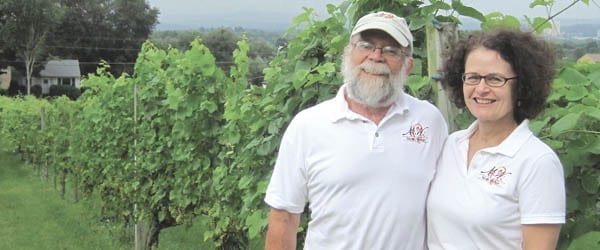
Cover Story
Resilience Drives Belmont Laundry for More Than a Century

Cover-BW0713cWhen Gaetano “Tommy” D’Amato was about 14, his mother became ill, and around that time, she began using Belmont Laundry to do the family’s heavy washing.

The centenarian, who celebrated his 100th birthday on May 8, remembers a horse and buggy — or horse and sled, depending on the weather — that came to pick up the family’s sheets from their home on the corner of Oakland and Orange streets in Springfield. “There weren’t any phones back then, but they told us they would be back every third day,” he said, adding that they couldn’t afford to have the laundry dried, so it was delivered wet, and his sister hung it on the clothesline. Over the years, D’Amato met many people who worked for the company, including one who retired after 47 years.

April McCarthy

April McCarthy, who runs the Belmont Laundry Wilbraham Road store, shows off a 1912 wringer washing machine used when her great-grandfather ran the business.

The laundry was founded in 1907 by Harry Samble, who emigrated to the U.S. with his family from Scotland. It has withstood the test of time, an achievement that has taken Herculean resolve due to deaths, a devastating fire, and dramatic changes in the industry and economy.

The tragedies began when Harry died unexpectedly. At the time, his son Robert was 14, and his wife, Corrine, was forced to run the business. History repeated itself a generation later, when Robert, who had taken over the business, died at age 43 and his wife, Dorothy, had to run the laundry. Ironically, their son, Robert Jr., was also 14.

Today, 89-year-old Dorothy still spends Friday mornings at the business on 333 Belmont Ave., which is run by her son Robert (Rob) Jr. and his children, Matthew, Derek, and April McCarthy. The company has expanded and has two branches: Belmont Laundry and Custom Dry Cleaners, which has four storefronts — two in Springfield, one in Longmeadow, and one in West Springfield — as well as the Belmont Linen and Uniform Rental service, which comprises the majority of the business.

“There is a lot to this, and you have to be good at many things to survive, grow, and remain strong, because there is always something that needs attention and improvement,” Rob said. “But we have not only kept up with things, we’ve been pioneers in the latest advances.

Robert Samble, left, with his son Matthew

Robert Samble, left, with his son Matthew, says the 106-year-old business has persevered through tragedy and calamity by keeping a constant focus on innovation.

“At one point, we were the only ones in the world using radio frequency identification chips with bar codes in our garments and entrance mats. We were also the first in the Northeast to put in spot cooling for our employees,” he told BusinessWest, noting that his sons spent an entire summer installing thousands of electronic chips in the mats used by area businesses.

“Every new idea that comes out gets evaluated, and if it’s feasible, we jump on it,” Rob continued, adding that Belmont is a green company and has recycled 23.5 million gallons of water over the past five years, recovered thousands of BTUs of energy, recycled thousands of hangers and garments each year, and uses environmentally friendly detergents and chemicals.


In the Beginning

Harry’s business began as a home-based operation. “The laundry was picked up on bicycles, washed in a tub in a barn behind the house, and brought back to people while it was still wet,” Rob said.

As the customer base grew, Harry graduated to a horse and wagon, then an electric truck, and, later, a gas-powered vehicle.

His wife Corrine ran the business after his early death, until the couple’s oldest son, Harry Jr., took over. He was joined by his younger brother Robert (Bob) when he returned from serving as a fighter pilot with the Army Air Corps during World War II. “By the early ’60s, my father had become president,” Rob recalled, explaining that his dad took the helm when Harry Jr. retired.

Competition had always been stiff, as there were more than 20 laundries in Springfield, but many of the owners were friends, and Bob’s cronies included Russ Dale of Dale Brothers Laundry on Union Street and Bill Hamilton of Royce Superior Laundry.

When Maytag began running coin-operated laundromats in low-income neighborhoods in 1958, they all signed on to the program. “They thought they would get rich,” Rob said. “But the laundromats were left open 24/7 without any supervision, which proved to be a bad idea.”

He remembers accompanying his father in the middle of the night when windows were shattered or money was stolen from coin boxes. It wasn’t long before Maytag’s experiment failed, and when the company switched gears and began selling washing machines to the public, many local laundries went under. The D’Amato family was one of millions who purchased a washer, which meant they could do their own laundry.

“The last nail in the coffin came when polyester was introduced, as it didn’t need ironing,” Rob said. “By the early ’70s, there were only two commercial laundries left in Springfield.”

As a child, he wanted to follow in his father’s footsteps. But during his teens, his interests shifted, and after graduating from high school, Rob attended Springfield Technical Community College for six months, worked as an auto mechanic, then moved to Arkansas, where he revived and ran a catfish farm.

In time, he returned to Springfield and was working as a refractory mason when his mother told him she was tired of running the struggling laundry. The year was 1974, the economy was floundering, and she said he either had to take over or the business would be sold. So Rob entered the family enterprise at a time when other laundries were closing their doors.

“I had held things together for eight years,” Dorothy said. “My youngest son was only 8 when my husband died. He was killed on Saturday, and I went to work the following Tuesday. It was a crazy time. I had had nothing to do with the business when my husband was alive, but my dad gave me advice, and everyone there was friendly and worked very hard.”

She also received help from her mother-in-law, who was in a nursing home. She was still very interested in the business and wanted to see an itemized expense sheet every week. “She had been treasurer at one time and signed all the checks,” Dorothy recalled. “I signed them too, once I took over, but the place was much smaller then. It was homey, and a lot of ladies worked there. I knew everyone by name.”

When clothes came into the laundry, they went to a ‘marker,’ who put a number on every garment. Each family was assigned their own number, which ensured they got their laundry back. “We used to wash wool blankets and hang them over a big board suspended from the ceiling, because they couldn’t go into the dryer. It was so different back then. Everything was done by hand. Now we use pulleys, lifts, and belts,” Dorothy said.

Although it was all she could do to keep the laundry operational, her husband had purchased new machines and rebuilt the structure before he died.

Rob said the company’s expansion began when his grandfather sought and received a variance to put an addition onto his building, which was in a residential zone. His father purchased adjacent properties as they became available, but by the time Rob became vice president, some of them had been sold to meet expenses.


New Ventures

The business took a new spin when Dorothy sent Rob to the National Institute of Dry Cleaning in Joliet, Ill. He returned with new ideas, but the manager immediately shot them down.

However, a short time later, the man had a stroke, and the trustees at Security National Bank named Rob vice president. “I was only 21 at the time,” he said.

His first coup was landing a contract after union workers walked off the job at the Worcester State School. “One day, the school showed up with a 53-foot trailer filled with sheets,” he said, adding that the Worcester operation also did the laundry for the Belchertown and Northampton state hospitals.

Belmont also served as a backup for Baystate Medical Center’s laundry and “they always had work for us,” Rob said. “The revenue we made from those accounts allowed us to grow into the textile-rental business.”

That venture was in line with the training he had received at the Institute of Dry Cleaning, because it did the laundry for a nearby prison. Rob’s work as an auto mechanic also came into play as he purchased old equipment and rebuilt it to keep up with the expanding business, which soon grew more competitive.

Large, national firms began vying for hospital accounts, and as a result, Belmont lost its contracts. But the company was already branching out into new territory, and in 1980 Rob hired two salesmen for the textile business. One didn’t last, but Ernest Gagnon, who stayed with the company for 20 years, helped make Belmont Laundry a recognized name in the uniform- and linen-rental industry.

The family laundry storefront also remained open, and in 1977, when Dale Brothers Laundry closed, Rob purchased its routes and customer list. “It was a good decision because we had done family laundry for so long, we were on automatic pilot, so although it was a dying industry, we were able to keep up with it,” he said. However, the business was threatened as one-hour cleaners were coming into vogue and Rob’s competitors were going bankrupt.

The next blow came in 1981 when Belmont Laundry was devastated by a fire. “We lost our offices and the store, but were so efficient, we delivered laundry and dry cleaning the next day,” Rob said.

He set up a temporary office and “scrimped and saved” until he had enough cash to build again, which was possible because he served as general contractor. “I only had enough money for a down payment and went back into debt. But I was able to rebuild with help from friends in the trades, who guided me,” he told BusinessWest.

In 1988, Rob purchased the Shea/Flair Dry Cleaning chain. “It made us the market leader in dry cleaning. We took over three plants with stores, which brought up us to seven locations. Then, in 1989, the economy tanked, and although we continued to invest in the stores and plants, it was a futile effort,” he said.

Today, four of those stores are still open, including one on Wilbraham Road in Springfield, which is run by Rob’s daughter, April McCarthy. The Main Street store is being used as a storage facility, and the former Flair location at the ‘X’ in Springfield, as well as another store, were sold.

“But our rental business continued to grow — we specialize in uniforms, sheets, and patient gowns,” Rob said, adding that the company’s accounts include restaurants and auto dealerships.

Rob’s sons began working at Belmont when they were about 10, and Matthew, now vice president, recalls straightening out hangers, then manning the counter when he was in high school. Derek, who is the dry-cleaning division manager, said he and Matt painted the roof of the building when he was 12.

They have followed the family tradition of implementing change. “I pushed for green cleaning, and by 2009, we were totally green; it was the right thing to do,” Derek said, adding that the company needed new machines, and he felt it was ready to handle more business.

“We put in a new shirt department and revamped it twice within five years,” he said. “Technology is changing so quickly, and I wanted to have the highest level of quality for our customers. The market has slowed, but we’ve held our own. We have tried different styles of marketing and spent time learning how to implement new ideas. I spend about 55 hours a week here and look forward to coming to work every day.”

April began working in the Longmeadow store when she was 14. “I had a lot of responsibility,” she said, adding that she closed the store at the end of the day.

When she went to Westfield State University, she worked in the West Springfield store, and although she earned degrees in elementary education and psychology, “I could never leave. I’ve been here almost 22 years, and it’s a great business. We depend on each other and have customers who have been coming to us since I started working as a teen. This is such a part of my life.”


Forging Forward

Matt and Rob plan to visit a laundry in Davenport, Iowa in August to evaluate the operation and see what they can learn from it. “We have to work to stay ahead of things. There are a lot of different angles to the business,” Matt said.

Rob agrees. “I’ve made mistakes, but it was diversity that put us on the map in the rental business, and it’s diversity that allowed us to stay in the retail business. We have a good product and take care of our employees. They are very good to us, and if it wasn’t for them, we wouldn’t be here today. They take care of our customers, who can rely on a consistent product.”

Which is exactly what D’Amato experienced when the centenarian called them a month ago for the first time in about 25 years. “They still do a good job,” he said.

Law Sections
New WNE Law Dean Says Schools Must Adjust to a Changed Climate

Eric Gouvin

Eric Gouvin says the consensus among those in legal academia is that the nation’s law schools have been “making too many lawyers for too long.”

Eric Gouvin was asked to comment on the challenges moving forward for all law schools, but especially the one at Western New England University (WNE), which he now serves as dean.

But to do so properly, he said he first needed to discuss the recent past and touch on some trends and statistics that define a changed landscape, one that came about due to many factors that he summed up by saying, “we’ve been making too many lawyers for too long.”

The ‘we’ in this case is the nation’s 201 American Bar Assoc.-accredited law schools, said Gouvin, who took the helm at WNE Law on July 1 following a short search in which he was the only real candidate (more on that later). He said these institutions readily accepted large numbers of students until quite recently, and considered such an action a responsible reply to then-long-standing laws of supply and demand when it came to the legal profession.

But those laws were changing through the first decade of this century, he went on, with a profound adjustment coming after the economy turned south in dramatic fashion just over five years ago. Over the past 10 years, and especially the past five, increasing numbers of law-school graduates have encountered difficulty finding work in their chosen profession, and this development has led to swift and profound changes in the numbers of people applying to law schools — and the numbers accepted — as would-be candidates increasingly question the return on investment in a juris doctor degree.

At WNE, for example, the school was accepting roughly 150 individuals into its day (full-time) program each year until recently, said Gouvin, noting that the number for this fall will be around 90, 40% fewer than that previous benchmark. This decline (reflective of what’s happening nationally) brings fiscal challenges for the school, prompts a host of questions about what could — or will — happen next, and even invites speculation about for how long there will still be 201 ABA-accredited law schools.

How all this came about is the subject of a compelling, if somewhat controversial, book called Failing Law Schools, authored by Brian Tamanaha, a law professor, former law-school dean, and legal theorist who admits he did some of the things he now criticizes. In a nutshell, Tamanaha contends that, in the wake of the Great Recession and its significant impact on graduates and, subsequently, law school applications, there is now solid evidence to support what many had believed for some time — that law schools, many of them desperate for high rankings in U.S. News & World Report, were luring applicants to their campuses with false promises of employment and high salaries, leaving them in considerable debt and, overall, creating “a systemic mismatch between graduates and jobs.”

Gouvin has read the book, as most in legal academia have, and doesn’t necessarily disagree with some of its main arguments — or its broad assessment of what law schools must do now.

In the current climate, he said, law schools in general, and his in particular, must do something about that mismatch by focusing on making fewer lawyers (until the market dictates otherwise), and lawyers better prepared to succeed in the marketplace.

“Law schools, in general, have not done a great job of preparing their graduates to enter the profession,” he explained. “They learn a lot of law, and that’s handy, because lawyers should know the law. But there’s so much more to being a lawyer than knowing the law.

“We want to have a graduating class that’s matched more closely to the realistic prospects for employment,” he went on, “but also a class that is graduating with the tools necessary to practice law.”

Meanwhile, in response to the fiscal challenges presented by declining enrollment, the school will implement strategies to hone or create what Gouvin called “degrees that people who won’t practice law might find useful.”

Elaborating, he said that WNE already has in place some master of law degrees (LLMs), including a popular offering in estate planning and elder law, and another in closely held businesses. These are designed for practicing lawyers looking to gain expertise in those areas, he said, adding that the school is looking to build on these offerings with new master of jurisprudence degrees. Now in the planning stages, they would be designed for professionals in non-law areas who could benefit from knowing some law.

For this issue and its focus on law, BusinessWest talked at length with the new dean at WNE Law about his strategic plan for the future and how to position the school for success in what are clearly changing times.


Making His Case

In 2001, the last time Western New England went about conducting a search for a law-school dean, Gouvin, who joined the institution’s faculty in 1991, chaired the committee that eventually chose Arthur Gaudio, then with the University of Wyoming School of Law.

This time, Gouvin made a committee unnecessary.

Retracing the events of the past several months, he said that, by late this past winter, he was being recruited by several law schools searching for deans. He eventually became a semi-finalist for the post at the University of New Mexico and one of three candidates invited for a final interview at Northern Kentucky University. He came away from that session thinking he had cinched a new professional mailing address.

“I thought it went so well that they were going to offer me the job on the way to the airport,” he recalled with a laugh.

That didn’t happen, and while NKU was still mulling its options, faculty members at WNE, wary of losing Gouvin, were talking to Gaudio about accelerating his announced intentions to join them in the classroom.

This set in motion a chain of events — including interviews and a formal presentation to administrators at WNE — that had Gouvin canceling further out-of-town interviews and eventually moving his many books, including Failing Law Schools and several biographies of Henry Ford, and an impressive collection of 1975 Boston Red Sox memorabilia, down the hall instead of halfway across the country.

As he talked with BusinessWest while still in the process of moving into his new office, he said there are a number of items on his to-do list. The first is introducing, or re-introducing, himself to the law school’s many constituencies — students, faculty, alums, and community partners — in his new capacity, which he likened to being the CEO of a company.

“Anything that someone who runs an organization is responsible for — from personnel to finance to keeping the lights on and the doors open — that’s all on my desk,” he explained. “I’m responsible for making all the pieces come together — alumni functions, career services, admissions, compliance, the academic piece, and all the other moving parts.

“When you’re sitting in the dean’s seat, you have a different perspective on how everything is or should be, as opposed to when you’re looking at it from a faculty member’s point of view,” he continued. “You begin to see the bigger picture and how it all has to fit together.”

There are several other matters at hand, he said, including annual discussions about classes and potential additions, and the honing of programs, such as the university’s Center for Innovation and Entrepreneurship, which he led prior to becoming dean.

But the most pressing matter, obviously, is crafting a comprehensive response to the dramatically altered landscape he described, an assignment facing the leaders of virtually every law school in the country, he said, stressing, again, that this is a nationwide phenomenon.

The severity of the situation is driven home by statistics showing that, in 2004, there were 100,000 applications to those 201 law schools, and during this most recent admissions cycle, the number was roughly half that — 54,000, with only speculation about when and even if that figure will start trending upward.

The reasons for this precipitous decline are many, and they come back to ROI, say industry analysts, noting that, in recent years, college students and those in many professions have become increasingly skeptical about whether a law degree is a ticket to success (a dramatic change in outlook from 40 or even 20 years ago), especially when many graduates are towing huge amounts of debt as they leave the commencement stage.

The situation resulted mostly from what observers have called ‘overproduction,’ or too much supply, of lawyers. And this became a vicious cycle at many schools. Desperate for high rankings in U.S. News & World Report, which were determined in large part by per-pupil spending, Tamanaha charges, many law schools greatly increased tuition and continued to accept large numbers of students, putting graduates heavier into debt and injecting them into a job market they couldn’t crack.

Thus, changing current perceptions about a JD is among the many challenges facing law schools, said Gouvin, adding that this can come about only with direct evidence that the employment landscape is changing, and for WNE, this means enabling more graduates to thrive in the job market.


Giving Testimony

In this altered environment, law schools must change and adapt, and for many this will be a tall order, said Gouvin, who believes WNE is better positioned to handle that assignment than many others, primarily because it has already started the process, and has historically been at or ahead of the curve when it comes to preparing graduates for the workplace.

Part of the equation is simply limiting enrollment, he noted.

“Finding jobs for 90 people is a lot easier than finding jobs for 150,” he explained, adding that, if he’s right in this thinking, both the graduating students and the law school will benefit. “Law schools are going to be judged by how well they’re placing their students, and that’s why we have to make sure we’re doing as much as we can to support our students.”

Eventually, the job market will improve and demand for a law degree will increase, he went on, citing factors that include everything from the rising U.S. population, which will likely create the need for more legal services and professionals who can provide them, to the simple fact that many of those who joined the profession when it was exploding in the early and mid-’70s, will soon be retiring.

In the meantime, though, law schools must contend with the present challenge of making graduates better able to put their law degree to effective use.

“I want to make us even more focused on what we’ve always done,” Gouvin told BusinessWest, “and that’s prepare students to enter the practice of law, mostly at small to medium-sized firms in small to medium-sized cities in the Northeast.

“I think we can do better at making students practice-ready — a lot of law schools don’t even try,” he continued. “And they’re only now starting to come around to it.”

One key to making graduates more prepared for the workplace is experiential learning opportunities, which WNE provides in a number of ways, said Gouvin, adding that more than 75% of graduates take advantage of these opportunities, and he wants to push that number higher.

Programs include internships, externships, and clinics, he said, adding that the school has the strategic advantage of being the only law school in Western Mass. that gives its students solid opportunities to work with area judges at all levels of the judicial system, from district to federal.

Meanwhile, there are several clinics, or programs that give students the opportunity to work with area residents and businesses under the guidance of legal professionals and professors. The current roster includes clinics in small business, housing, real estate, international human rights, and other areas.

“We do take seriously the idea that students ought to know what lawyers do and why they do it,” he said, “and we’re going to make even more changes to enforce that message.”

While working to improve the job prospects of students, WNE Law and its new dean must also devise strategies for coping with the sharp reduction in tuition revenue that comes when incoming classes are 40% smaller than they were only five years ago.

“That’s a real challenge — tuition is a huge driver,” said Gouvin, noting that, after scholarships and other forms of direct aid are subtracted, most students are paying roughly $25,000 to attend the school.

Cutbacks to faculty have been minimal because of a few recent retirements, he said, but long-term, the school needs to replace at least some of the lost revenue, and one strategy is to create more and better programs that will attract those who don’t intend to practice law but can benefit from some of the skills imparted on those who do.

Those aforementioned master of jurisprudence degrees are another emerging trend, he noted, adding that several law schools, such as the one at Drake University in Iowa, have added such programs, and more are exploring similar options.

WNE is in the early developmental stages of such programs, said Gouvin, who was reluctant to offer details but did say they represent opportunities for the law school to broaden its student base.

“There are a number of professionals in non-law areas, such as insurance, financial planning, and accounting, who need to know quite a bit of law, but they’re not going to practice law,” he noted. “We’re exploring options to provide something of value to these individuals.”


Final Arguments

Looking ahead, Gouvin said the questions hanging over every law school in the country concerns when the situation regarding supply and demand will improve, and to what degree.

“Demand was artificially depressed during the downturn — this was a period of unprecedented economic disaster. As the economy improves, I think we’re going to find what we always find when the economy improves — that we’re going to need more attorneys.”

Until that time comes, though, law schools must be diligent, creative, and ever more focused on helping graduates succeed.

And the new dean at WNE believes the school is certainly up for that challenge.


George O’Brien can be reached at [email protected]

Education Sections
Colleges Increasingly Rely on Social Media to Interact with Students and Alumni

Janet Garcia

If colleges aren’t active in social media, Janet Garcia says, they’re not on prospective students’ radar.

In the age of smartphones and social media, Janet Garcia says, people are constantly on the lookout for information. College students are no different; in fact, they might embody that cultural shift more than anyone.

“This generation of students is on the Internet constantly,” said Garcia, director of Marketing at Westfield State University. “If you’re not on the Internet, you’re not on their radar screen.”

No worry of that at WSU, however, which uses Twitter as an information-sharing resource, LinkedIn as an alumni networking tool, and Facebook for — well, just about everything else.

“These social-media tools, are tremendously valuable to me from a marketing perspective because we’re able to engage with audiences while letting people know what’s going on and what’s coming up more efficiently,” said Garcia. “For us, it’s a great value that adds to the scope of our marketing.”

But while traditional marketing, advertising, or recruitment efforts have historically been one-way conduits, social media is, by definition, a back-and-forth effort, she noted. And that has turned the way colleges communicate with their various constituencies upside down.

“One of the best things about social media is that it facilitates a dialogue among groups that wouldn’t easily be in conversation with each other — current students, prospective students, alumnae, parents, friends of the college,” said Laurie Fenlason, vice president for Public Affairs at Smith College. “That lends authenticity and immediacy, which helps students considering Smith get a full and vivid picture of what life will be like in college and after college.”

She, like Garcia, emphasized the concept of engagement in describing her institution’s active use of Facebook, Twitter, Instagram, LinkedIn, and YouTube, as well as its lesser presence on Tumblr, Pinterest, and Foursquare.

Nancy Farrell

Nancy Farrell says the Elms is active on many social-media channels, but the common denominator is engagement.

“At Smith, we have an active social-media program that engages all of our key constituencies,” Fenlason said, including alumni, current and prospective students, parents, faculty, and staff among those groups. “Our goals are not only to maximize our followers, but to create engagement and dialogue.”

For example, “a Tweet or Facebook post about a Smith graduate’s achievements can go a long way toward making the case for Smith to a prospective student and her family; they can see an actual, vivid example of the value of the education we provide,” she explained. “And videos or Instagram images give prospective students a sense of what it feels like to be on our campus — what it feels like to be a Smithie — even if they’re half a world away.”

Nancy Farrell, director of the Office of Institutional Marketing at Elms College, also used that word engagement in noting why her school is active on Facebook, Twitter, YouTube, and Instagram. “Each one serves a unique function in our messaging, but the one commonality they have is engagement, which is the whole concept behind social media.

“The really important thing to understand is the behavior of this generation of students,” she added. “They want things immediately. You have to instantly respond and stay connected to them — to operate where they are, and work in their environment.”

For this issue’s focus on education, BusinessWest logs on to the world of social media, and how colleges have increasingly come to rely on it to inform, stay in touch, and, yes, engage.


Click Like

Take, for example, WSU’s comprehensive strategy for Facebook.

“We use it in a lot of different ways,” Garcia said. “Our admissions staff has their own Facebook presence and use that for their own purposes, for prospective students, to keep them apprised of what’s going on, let them know deadlines, open houses, things like that.

“We also create pages for each incoming class. For example, the 2017 page was just created this year. We invite prospective students to join the page and communicate with them,” she went on, noting that the college helps with planning and tries to increase their comfort level. “Then they use that page for four years here to communicate with their classmates, share information, talk about classes, sometimes try to sell books, and talk about events they’re going to and try to get their friends to go. It’s a real communication tool.”

It’s one that continues after graduation, only as an alumni page, she added. Meanwhile, the athletic department manages a page to keep students and the public up to date on games and athletes, while individual academic departments set up pages based around those students’ interests.

And, of course, “the university has a general Facebook page to keep the public engaged,” Garcia explained. “We provide information about events and keep people engaged with what’s happening on campus — everything from infrastructure changes to a faculty member getting a grant, that kind of thing … anytime we’re in the news. We really have quite a Facebook presence.”

The Elms also encourages a vibrant Facebook culture, said Karolina Kilfeather, web manager. She said today’s college-age generation doesn’t respond to traditional messaging like their predecessors did, but are looking for something more sincere — and, again, communication that runs in both directions.

“So we’re careful about not policing what students say, even if it’s something negative,” she told BusinessWest. “We do keep our eye out for inappropriate things, like bullying or being wantonly aggressive. But beyond that, we do the best we can to respond to complaints or negativity, but never try to shut anyone off. We don’t discourage students from being honest, and because of that, they stay engaged with us.”

In short, she said, colleges need to realize there’s been a seismic shift in the way young people communicate. “It has become much more of a dialogue. The hardest thing to learn is coming down from the mountain. The audience wants a two-way channel now.”

It’s gratifying, Garcia said, when that audience spans generations. “It’s interesting because we’ll have alumni go to a class page to talk to current students about when they were here, things they did, how much things have changed. That cross-generational communication happens on Facebook a lot.”


Press Play

Kilfeather said the Elms has certainly recognized the shift, using social media to make sure people know what’s happening on campus. “It’s been very instrumental getting crisis information out, if we have potential snow days … students look for information on Facebook and Twitter. We’ve learned we get a quick response to questions on social channels.”

Meanwhile, she said, Twitter has been a positive place to engage prospects, while YouTube is useful to showcase some of the campus programs with short videos, including footage of a cafeteria flash mob and a music video created by the field hockey team.

“These were student-driven, their idea, they came up with it, and for the most part, they produced it,” said Doug Scanlon, publications manager at the Elms. “It was organic.”

Social-media moments like that are useful in projecting a different side of campus life than someone might encounter in an official college publication, Kilfeather said.

“We have a reputation for a serious image, and this is an opportunity to use a lot more humor and candor and a more conversational tone. People have responded positively to that; students look for content after events, they want to see more videos, they want to see more photos. It has changed the tenor of the relationship between colleges and students.”

And they’re not waiting until they get back to their rooms, but living in virtual connectivity 24/7, Scanlon said. “These students all have smartphones, and they’re always checking in. It’s something that’s a part of their lives now.”

Managed correctly, Kilfeather said, social media can definitely pay dividends for a college, and that includes making sure the college’s website is not only accessible from various social-media sites, but optimized for smartphones and tablets. “Facebook and Twitter are very proactive about making sure they are successful on mobile devices. No longer does somebody have to be at the computer to interact with your message.”

As a result, “our percentage of mobile traffic to the website has more than doubled every year for the past five years,” she noted. “We know we have to be available that way, to make it easy to access and share that way. Mobile devices are certainly not going away.”

Neither, most marketing professionals seem to agree, is social media, and the constant challenge is learning how to use it and what platforms to adopt.

“It’s not about putting information out the way a lot of companies do when they get on the social-media bandwagon; they think of it as just another way of pushing, pushing, the way we use traditional marketing channels. This is very different,” Farrell said.

“As technology advances and different forms of social media come out,” she added, “we have to be very cognizant whether it’s the right move for us. Just because it’s there doesn’t mean we have to use it. That’s probably our biggest challenge moving forward: to carefully choose channels that work for us as an institution.”

That’s a challenge worth undertaking at Smith, Fenlason said, because colleges that don’t take social media seriously will find themselves at a competitive disadvantage.

“It’s vital to meet prospective students where they are, on the channels and devices they value,” she said, “with content that is truly social — visual, immediate, engaging, and real.”

Joseph Bednar can be reached at [email protected]

Elder Care Sections
Mercy Life Aims to Keep Seniors in Their Homes

PACESenior citizens with health needs have plenty of options, running the gamut from home care to assisted living to nursing-home care.

But what about individuals who are struggling at home alone, but feel they’re not quite ready for residential care?

For such people, PACE — Medicaid’s Program of All-inclusive Care for the Elderly — could fill the gap.

“PACE is a program that’s designed for folks who would normally be living in a nursing home long-term, and provides everything they need to keep them at home,” said Joseph Larkin, executive director of Mercy Life, the PACE program recently established by the Sisters of Providence Health System (SPHS).

“The overall goal of PACE is to align the financial incentives of the PACE organization with the patient’s life goals — namely, to stay home and stay as independent as they possibly can be,” he explained, adding that the program relies on lower-cost preventive care to avoid higher-cost inpatient care. “The idea is to spend more money on preventive things and thereby avoid more expensive medication, hospital stays, and nursing-home placement.”

SPHS envisions Mercy Life — which will be housed, along with Mercy Home Care and Mercy Hospice, at the former Brightside for Children and Families campus in Holyoke — as a bustling facility, staffed by a host of medical professionals, where seniors can go to meet basic wellness needs. At the same time, PACE also provides in-home care when necessary.

Simply put, PACE programs serve individuals with long-term-care needs by providing access to the entire continuum of health services — preventive, primary, acute, long-term, and end-of-life care included. The model is centered around the concept that it’s better for the well-being of elders with chronic-care needs, and their families — to be served in the community whenever possible.

“PACE is a niche program,” Larkin said. “People who are doing well with home care or visiting nurses, or doing well with traditional adult day health programs, those aren’t necessarily good PACE enrollees.” On the other hand, people who find their needs aren’t fully met by such programs, yet don’t necessarily need to be in nursing-home care, are more likely to thrive in PACE.

Joe Larkin (right, with Chris McLaughlin)

Joe Larkin (right, with Chris McLaughlin) says Mercy Life will provide services both on site in Holyoke and in clients’ homes in an effort to keep them healthy and independent.

Christopher McLaughin, chief operating officer of the Mercy Continuing Care Network — which boasts a number of independent-living, assisted-living, and skilled-nursing facilities, as well as home-care, hospice, and adult day programs — says Mercy Life will fit well in that continuum when it opens later this year. “This gives seniors new options they have not previously had.”


Team Approach

Larkin noted that enrollment is open to anyone 55 or older who lives in the service area of a PACE organization, and who is also screened by Medicaid and determined to be eligible for nursing-home placement. An open house for Mercy Life coincided with a groundbreaking ceremony on June 17.

“People who enroll assign their Medicare and Medicaid benefits to PACE,” he said, “and the PACE organization provides everything they need, from hospitalizations to primary care to medications to help in the home — home modifications, pretty much anything the organization thinks makes sense to help people stay in their homes.”

Each client is typically served by an interdisciplinary team made up of a primary-care physician, the PACE center manager, a nurse, a social worker, a physical and/or occupational therapist, a home-care coordinator, a pharmacist, a dietitian, a transportation manager, a personal-care attendant, and other caregivers as appropriate.

If that sounds a lot like an accountable-care organization, it should, Larkin said, noting that PACE program fits well into the growing ACO movement in the healthcare industry, in which patient care is overseen by a similarly diverse group of providers.

The difference — and it’s a significant one — is who makes coverage decisions. While an ACO is still bound by payment limitations, PACE has none. In short, because the organization serves as both provider and insurer, the care team decides not only what services the patient needs, but which ones to pay for. There is no fee-for-service concept, as PACE takes on all the risk.

“That’s a huge difference from everything else; there’s not anything else I know of where that’s the case,” Larkin said, adding that PACE programs rely on a small-scale model of care, so enrollment is limited. “Once you get over 100, 120 patients, it’s harder. You need to know these people intimately to know what’s going to work for them. If you don’t, you underserve them, and they fail, or you overserve them, and PACE goes out of business. So it’s a real balancing act, and you have to know your patients well in order to strike that balance.”

But he emphasized that PACE does not scrimp on preventive services, which have been proven to save money over time. “Many times, the PACE organization pays for things that other insurance companies won’t pay for,” he noted, citing the example of a client whose dog’s flea dip was covered, because dealing with the health effects of fleas in the house would have been more expensive.

“The organization gets really creative in terms of what they do for people,” Larkin said. “They decide what is covered for each participant; there aren’t decision politics like you typically have with insurance. Decisions about what they pay for are made on a case-by-case, individual basis.”

To qualify, clients must dis-enroll from any managed-care programs and must meet Medicaid financial eligibility, or pay privately for that portion. They may also dis-enroll from PACE at any time, and PACE coordinates their insurance reinstatement.


Day and Night

During the day, Mercy Life will feature a host of wellness activities and morning and lunchtime meals, as well as offering treatments ranging from infusions to complex dressings, as well as routine medical appointments with doctors and nurses. “On average, people come to a PACE center 2.2 times per week — some every day, and some once a month,” Larkin said.

And sick people are welcome, he noted. “In adult day care, if you’re not feeling well, they tend to ask you to stay home. In PACE, if you’re not feeling well, that’s all the more reason to come in; they want to see you, to be able to help you.” In many cases, he added, “aides will go into the home, help people wash up, and bring them to the center.”

Indeed, “PACE also provides a lot of services in the home, as well as transportation,” Larkin said, adding that drivers often serve a critical role in observing and reporting clients’ unmet needs. And the level of services can change often; “there are no hard and fast rules, so it’s a negotiated process.”

PACE is not hospice care, he emphasized, but it’s a better fit for people who are focusing more on quality of life than for individuals who demand copious medical tests and workups for every physical symptom that arises. “It does tend to be people in the last four, five, six years of life who have made a decision to take this different approach. Having said that, there’s no limit to how long you can be with PACE.”

Clients are typically referred to PACE programs from a variety of sources, including healthcare providers, discharge materials, marketing materials, and word of mouth. “Some are people who have been calling their doctor with vague, non-specific complaints, and they’re lonely and scared,” Larkin said.

“Once people in a community get to know PACE, a lot of providers embrace it. It’s an opportunity to help those people providers know they’re not able to help anymore” in their current living situation, he added. “It’s an alternative to nursing-home placements for people who, if they just had a little more help, they could go on living in their own homes, where existing programs are not enough to fill that gap.”

Currently, Larkin said, there are 92 PACE organizations throughout the U.S., serving just over 200,000 people. “It actually started in the 1970s in San Francisco, where it was called On Lok,” he explained. “They did it as a charity, and then PACE regulations were developed, and by the ’90s, we started to see other PACE organizations. It’s really catch as catch can where you see PACE programs; there are six in Massachusetts, but none in Connecticut.”

McLaughlin said the Sisters of Providence — with its 140 years of local history — sees itself as a critical provider of senior care. Meanwhile, “our corporate parent, Catholic Health East, is the largest single provider of PACE programs in the country, so we had corporate support for this,” he added.

“When we think about this program, we think it complements other services we hold near and dear to us,” McLaughlin told BusinessWest, while also reflecting the Sisters’ philosophical emphasis on the dignity of the individual and the “spark of the divine” in each client.

“We feel this program does a really nice job providing services to people where they need it and respects their desire to live at home,” he said. “Basically, it allows them to live the fullest and most enriching type of life they can.”


Joseph Bednar can be reached at [email protected]
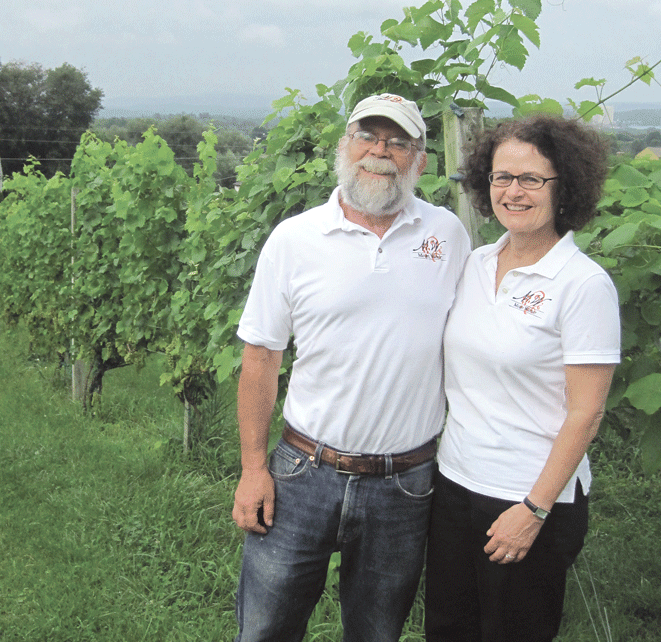
Cover Story
Summer Jobs Initiative Provides Much More Than Paychecks

CoverBW0713bRupert Daniel grew up in the projects in the Boston suburb of Roxbury.
Family life wasn’t working out very well, he recalled, adding that he used the ample amounts of free time he had to get into trouble. He eventually wound up in the first in a series of group homes, where he learned a lesson that would change his life — although he certainly didn’t know it at the time.
“In the group home, you got a weekly allowance of 50 cents, but if you did extra chores like helping to clean the house or the bathrooms, you got $5 a week. I said, ‘OK … if you work, you get money’ — I put that together,” he said, adding that this realization would later help compel him to become a participant in one of this region’s first summer jobs programs in the early ’70s.
And through the process of applying for and then getting work at Forest Park, Emerson Wright Park, and other locations, he learned everything from how to present himself at job interviews to why it’s important to show up every day, on time.
And he learned some other things as well.
“When you’re working like that, you’re around all kinds of people,” he explained. “On the streets, you have your peers, but when you came into the summer jobs program, you had college students, and people involved who were successful. And you ask, ‘what makes them successful?’

Rupert Daniel, now a Springfield Police lieutenant

Rupert Daniel, now a Springfield Police lieutenant, said getting a summer job was in many ways a life-changing experience.

“I came to realize that a lot of it was hard work and education, and as I started getting older, I said, ‘I have a choice — do I want to hang out with these knuckleheads that are still getting into trouble, or do I want to be like these guys?’” he continued, adding that he chose the latter. And he’s been given every job he’s applied for in a career that has included work in corrections, the military (two tours of duty in Iraq and two more in Afghanistan), and 27 years with the Springfield Police Department, which he currently serves as a lieutenant, spending countless hours trying to keep young people from landing in the kind of trouble that he did.
Scripting more stories like Daniel’s is not the official mission of the summer jobs initiative administered by the Regional Employment Board of Hampden County (REB), but it might as well be, said Bill Ward, the organization’s long-time executive director, who said that the jobs program is designed to introduce young people to the world of work and assist them with making some of those important decisions that Daniel made about life and his career.
“This is our future workforce, and if these kids don’t develop solid work habits early on, then when it’s time for them to go to work, they just don’t really have it,” said Ward, using that tiny word to represent the sum of what it takes to thrive in what most would call the ‘real world.’
And with that, he summoned the phrase ‘attachment to the workforce’ to describe the program’s essence — and what it provides to conscientious participants.
“From a big-picture perspective, we’re giving young people an opportunity to learn good work habits,” he explained. “We tell kids that the soft skills are the hard skills — and before long, they know what we’re talking about.”
Brianna Davis certainly knows. Now roughly three weeks into a job with the REB through the summer jobs initiative, she told BusinessWest that she handles filing, copying, reception-desk work, and other duties, for which she is paid $10 an hour. Perhaps more important than the paycheck, though (that’s perhaps), she said she’s getting her first experience working in an office and with other people.
“This is a lot quieter than what I’m used to,” she said with a laugh, adding that her most recent gainful employment has been waitressing. “It’s a lot more focused work — sitting down and completing one task at a time or multi-tasking and getting things done — and I’m learning every day.”
For this issue, BusinessWest takes an in-depth look at the REB’s summer jobs program and the many reasons why those who support it describe it as an investment in its participants — and in the region’s future.

In the Right Mold
Joe Peters says he virtually grew up in the company his father started in Chicopee, Universal Plastics, which he now serves as CEO. And one thing he’s always remembered has been the importance his father placed on summer jobs for young people.
“Every summer, he made it a point to make sure that we were definitely employed,” he said, referring to himself and his siblings, “and that even some of our friends were employed.
“His philosophy was that there were always these things that needed to get done and never got done during the year, and summer was a great time to do them,” he went on. “And to have young people doing those things was important to him; it gave those kids something to do, it gave them some spending money, it taught them how to work with others — it was great experience.”
And Peters has continued that tradition, putting his six children (and some of their friends) to work during the summer, while also, and especially in recent years, becoming a strong supporter of the REB’s initiative.

Mark Miller, president of U.S. Tsubaki Automotive LLC, with Tom Portenstein

Mark Miller, president of U.S. Tsubaki Automotive LLC, with Tom Portenstein, who is now spending his second summer working at the Chicopee plant.

When asked why he became involved, Peters referenced a recent report authored by Andrew Sum, director of the Center for Labor Market Studies at Northeastern University, whom he’s heard speak a number of times on the subject of the importance of employment opportunities for young people. He said Sum’s message has always been consistent — and strong.
“The statistics show that a kid who’s employed during the summer … his chances for success going into life are so much better, because that job becomes a foundation for what work is all about,” said Peters. “They learn how you deal with an employer, how you save a little money … the things you need to learn.”
Ward said the Sum study — subtitled “The Case for Increased Youth Workforce Development” — verifies the importance of creating job opportunities for young people, and especially those who are at risk, while offering some chilling statistics about how the numbers of such opportunities are going down when they need to go up. Among the main findings:
• “The labor market for teens in Massachusetts and the nation remains extraordinarily depressed,” Sum writes. “Last year [2012], only 27% of the teens ages 16-19 in our state were employed during an average month. This is the lowest teen employment rate in our state’s history over the past 45 years. Twice as many teens worked in 1999 as in 2012 (54% vs. 27%).
• “Despite job growth in our state and the nation over the past few years, teen employment has continued to decline,” he went on. “From 2010 to 2012, approximately 56,000 more working-age residents became employed in our state, while teen employment fell by 15,000. Across the nation, total employment increased by 5.05 million between the fourth quarter of 2009 and the first two months of 2013, while teen employment fell by 12,000 over the same time period.
• “While all demographic and schooling groups of teens have experienced steep drops in their employment rates over the past decade,” he went on, “the youngest teens, males, blacks and Hispanics, and high-school students, especially low-income students, have fared much worse.”
These statistics are verified by the fact that, for every individual who gets a job through the REB’s initiative, there are probably two others who are on the outside looking in, said Ward, adding that, when young people don’t have employment opportunities, they and the region as a whole both suffer. Young men and women don’t get a chance to learn some of the lessons Rupert Daniel did, and the region is impacted long-term when it comes to the quality of the workforce that will be in place years and decades down the road.
Realizing this, state officials, and especially Gov. Deval Patrick, have been aggressive in support of programs to employ young people, he went on, adding that the Commonwealth’s YouthWorks initiative pumps $10 million annually into creating summer employment opportunities, and the $1 million awarded to the REB will fund roughly half of the 1,000 jobs it hopes to create this summer.
Overall, public support will finance nearly two-thirds of the jobs created this summer, he went on, while breaking down the program’s many components.
Close to 500 jobs will eventually be funded by the YouthWorks program, he said, and offered through vendors that include the New England Farm Workers Council (NEFWC) in Springfield, CareerWorks in Holyoke, the Valley Opportunity Council in Chicopee, and Westfield public schools. Meanwhile, another 130 jobs will be funded by the federal Workforce Investment Act and created through a host of vendors, including the NEFWC, the New North Citizens Council in Springfield, the Greater Springfield YMCA, Pathfinder Regional Vocational Technical High School, and Holyoke public schools.
Another 100 jobs will be funded by other public initiatives, said Ward, while 35 will be generated through corporate-sponsored programs that involve the MassMutual IT Academy, Baystate Health, U.S. Tsubaki, and other companies, and another 285 will be created at other private-sector worksites through vendors CareerPoint and FutureWorks. (Companies can fund a position through a donation of $1,000 to the REB.)
The summer program targets youths from low-income families — there are income restrictions that must be met — and individuals who don’t have the skills and/or connections that are traditionally needed to secure employment, said Ward, adding that more than half the participants are African-American, and another 40% are Hispanic.

The Job at Hand
Tom Portenstein is back for his second summer of work at U.S. Tsubaki’s Automotive Division in Chicopee, where he handles a variety of office functions, including data entry and work with human-resources administrators.
A recent graduate of Sacred Heart University in Connecticut, where he majored in marketing and sport management, he said he wants to eventually work in sports, but for the moment is keeping his options open. He said his involvement in the summer jobs program has provided learning experiences on many levels.
“I’ve never worked in an office setting before, and this [opportunity] has shown what you have to do,” he said. “You have to be there every day, five days a week, ready to work; you have to be accountable.”
Over the years, U.S. Tsubaki has provided a number of similar opportunities — in its plants and at other locations — through monetary donations to the REB, said Mark Miller, president of U.S. Tsubaki Automotive LLC and a member of the agency’s board of directors. And like others, he describes that support as an investment in the region and its future workforce.
“The Springfield area is hurting from an economic-development standpoint,” he told BusinessWest, “and whatever we can do to bolster these kids, whether they stay in this region or go somewhere else, is worth doing. We can help keep them off the streets and help them to learn some work habits and discipline — things that will serve them well later on in life.
“If you talk to some of the kids who have been in the program for a couple of years, in some cases it’s been very effective in turning their lives around,” he went on. “For the ones who get the opportunity and then take full advantage it, it makes a difference to them.”
For Brianna Davis, the opportunity to work for the REB represents a chance to earn more than she would waitressing (she’s done that at a local 99 restaurant, and therefore knows that summer opportunities — and hours — are limited) and also gain what she considers more valuable experience as she continues pursuit of a career in journalism at UMass Amherst after recently graduating from Holyoke Community College.
“Through this experience, I’m learning how to work independently, but also in the group context,” she explained, noting, again, that this is a new dynamic for her. “I’m putting my communication skills to work, as well as my group and individual working skills, and I’m gaining confidence in my ability.”
Looking back more than 30 years, Daniel said he took away many of the same things from his experiences, and these are some of the points he drives home when he talks to young people about the importance of staying out of the trouble that often found him in his youth. The general message he leaves is that, to avoid trouble, youths need to stay busy, and this is a need he works to address in many ways, from a boxing program he coordinates to efforts to convince kids to seek out summer employment opportunities, such as those offered through the REB, and then do what’s required to get and keep a job.
“One of the things I like about being a police officer is that you can influence people positively — you can get in there and fix things, or try to fix things,” he explained, noting that he puts his work to encourage people to secure summer jobs in that category.
“I see a lot of kids with the same issues I had when I was a kid, and I’ll flash back and think about what helped me out, and summer work was at the top of that list,” he went on, adding that a few of his boxing charges are now in the REB or trying to get in, and he’s determined to see that they make the most of those opportunities. “I know what it did for me, and I’m going to stay on them and make sure they go to work, and hopefully things will work out for them.”
And while the young people involved in the summer jobs initiative obviously benefit, said Peters, the region and its business community do as well, and in ways that reinforce the notion that support of the jobs program is an investment that will pay dividends.
“It’s good for our future, because we’re going to need employees five years from now, 10 years from now, and 20 years from now,” he told BusinessWest. “And if we don’t get them on the right track, we’re the ones that are going to pay a price down the road.”

Check, Please
Summing up the summer jobs initiative, Ward said there are a number of immediate benefits from the public and private funding of these employment opportunities.
“There’s a huge economic impact — young people now have disposable income, and they use it to buy things for school and for home; that money goes right into the economy.”
But the more significant rewards will come years down the road, he went on, when the region’s employers, and society in general, will benefit from having thousands of young people gain work-readiness skills as well as a greater understanding of what it takes to succeed in the workplace — and in life.
That’s a lesson Rupert Daniel learned while on his first summer job back in the ’70s, and something he’s committed his time and energy to helping others learn ever since. He discovered as a child that work puts money in your pocket — but it also does so much more.
And that’s why he, Ward, Peters, and others say the investments in summer jobs must continue.

George O’Brien can be reached at [email protected]

Business Management Sections
Executive Coach Helps Clients Get to the Next Level

Anne Weiss

Anne Weiss says that, while she sometimes helps clients affect change, more often, she is engaged in “tweaking” their habits and thought processes.

Amy Jamrog remembers the first time she met Anne Weiss — and coming away both impressed and more than a little scared, which, in this case, was a good thing.
“She thinks really, really big,” recalled Jamrog, a wealth-management adviser and principal with the Jamrog Group, affiliated with Northwestern Mutual, adding that her career in financial services was then about five years old and at what could only be described as a crossroads, which is why colleagues had referred her to an executive coach and, specifically, Weiss.
“If you mention that someday, one day, you hope to accomplish ‘X,’ she’ll want to get that done in the first year,” said Jamrog while elaborating on what she found scary about her new coach. “And that’s what we did; I told her my three-year vision for my practice, and she said, ‘why don’t we do that in 12 months?’
“She’s synonymous with ‘tough love’ — if you say this is what you want to accomplish, she will not let up in seeing that you do,” Jamrog went on, adding that, overall, what Weiss helped her find professionally were consistency, accountability, and a calendar that consistently generated a proper work/life balance as her circumstances changed.
And because she’s been able to do that for a number of clients, she’s considered one of the most successful executive coaches in this area.
Over the years, she’s grown her client portfolio to include bank presidents, lawyers, accountants, architects, executives with large corporations, owners of small businesses, and even some business consultants.
They all have specific needs, and all were at some kind of proverbial crossroads when they decided to seek out her services, said Weiss, but there is a simple and basic pattern to the client-coach relationship, one that she has mastered to the point where she now counts nearly 20 clients from both inside this region and well outside it.
“It starts with both parties being clear about the result that they want to be accomplished,” she said, “and then creating a plan to have that goal accomplished, and then holding people to account for accomplishing it.”
Sometimes, this accountability process requires a phone call a week, other times one lengthy meeting each month, she went on, adding that, in general, having a coach makes them more effective, gives them peace of mind, or both.
She said her coaching role, which is a huge part of her consulting practice, involves working with clients on any number of issues or challenges, from teaching them how to network (a critical skill when it comes to building a business) to advising them on setting and reaching goals, to enabling busy professionals to effectively learn how to say ‘no’ to some of those requests for their invaluable time.
“A lot of times, I don’t have the answer,” she said as she said as she talked about her work. “But in talking with the client, we come up with something that would be an answer, and then we say, ‘this is good — let’s go for it.’”
Overall, Weiss said, while she sometimes brings about real change in people, more often she is “tweaking” their style when it comes to everything from how they interact with people to how they manage time to how to become more punctual.
“Sometimes people need to change, and other times people need to be tweaked, but even tweaking can often make a profound difference,” she said, referring to both an individual’s career and a company’s bottom line.
For this issue and its focus on business management, BusinessWest talked at length with Weiss about executive coaching and how she uses that tough love Jamrog described to help get through the crossroads and into the fast lane when it comes to personal and professional growth.

Getting Down to Business

Amy Jamrog

Amy Jamrog says Anne Weiss helped her with many aspects of career and business development, the most significant being the ability to work consistently.

Weiss told BusinessWest that executive coaching is certainly not a recent phenomenon — people have been doing it for decades, and in recent years, as in many fields, it has become a specialized profession, with individuals developing niches in sometimes quite specific aspects of business management.
What might be considered new, she went on, is a realization among a growing number of business owners and managers that, while they may know their industry and vocation, they don’t know everything about succeeding professionally.
And this is why her client list has grown steadily over the years, with the notable exception of the peak years of the Great Recession, when many executives decided that, despite apparent need, they felt they just couldn’t afford a coach during those lean times.
The portfolio is now larger than it was prior to the crash of 2008, said Weiss, adding that this is both a good barometer when it comes to the economy and an indication that a growing number of professionals are becoming comfortable with the concept of hiring a coach.
When asked how someone will know when they’re ready for that step, she said simply, “when you need to produce something you can’t produce on your own.”
And in the business world today, that’s most people, she went on, adding that a coach can provide such individuals with a unique, outside perspective not available from a mentor, per se, or from someone inside a company or organization.
“I’m not their advisory board, and I’m not their board of directors,” she explained. “So there’s a level of accountability and understanding, so they’re free to be able to say, ‘here’s what’s working, and here’s what’s not working.’”
Weiss brings a broad range of experience to her role as coach. Earlier in her career, she worked in sales and marketing, and eventually segued into consulting, with a heavy emphasis on executive coaching. In the mid-’90s, she partnered with two others in a venture called TLD Consulting, which was based in New York, but has been on her own for the past 16 years.
Most all of her business comes from referrals, she noted, adding that she works with individuals in a wide array of sectors, including financial services, education, and manufacturing, and has assisted a number of entrepreneurs as they have struggled to take ventures to the next level or juggle several initiatives simultaneously.
As she elaborated on what she does and how she does it, Weiss came back repeatedly to the phrase “holding people accountable” for meeting or surpassing the goals they have set for themselves.
And she does so with a passion that that prompted Jamrog to summon not only that word ‘scary’ but also ‘intimidating,’ and another business owner to note in an online testimonial that she has “ruthless compassion,” which sounds like a synonym for tough love.
“She asks really hard questions and then waits for you to figure out the answer,” said Jamrog, adding that, shortly after becoming a client, she developed a strong desire not to disappoint the coach.
“When I had to be accountable to her, and pay her, that became a real motivator for me — when I told her I was going to do something, I didn’t want to let her down,” she said. “And that made it an interesting relationship, different from anything I’d had before. She wasn’t my boss, she wasn’t my mom, she wasn’t even a colleague, but I wanted to do what I said I was going to do, because she was counting on me. The coaching relationship is very interesting like that.”

Accounting Lessons
When asked what problem, or professional weakness, Weiss was most helpful with, Jamrog said it was consistency in her work.
“I would work really hard, then I wouldn’t, then I’d work really hard again, and then I wouldn’t,” she explained. “It was a very inconsistent — and also very stressful — way to work. She helped me really build in consistent practices that became habits over time.”
But that proved to be simply one of many ‘projects’ the two would work on over a coaching relationship that would last eight years and ended only because Jamrog had reached a point professionally where she was comfortable and simply didn’t want to take on any more projects.
Weiss said her clients have different motivations for seeking out her services. Many, like Jamrog, had reached a point in their career where they realized that to get to the next level — whatever that might be — they would need some help getting there. Others, meanwhile, don’t feel accomplished in their career, despite a decent level of success, and need help reaching that station. And still others understand that, while they may be good at what they do professionally, they need a coach to help them to maximize their potential, set the bar higher, and then clear the bar.
Sometimes clients simply need some help with those people skills that are often as important as technical ability when it comes to growing a book of business.
“It’s not the same dynamic anymore,” she said of business in general. “What used to be a handshake now requires a contract, and what used to be an old-boys kind of network isn’t like that anymore. Being in business requires a lot more networking, and one of the trends I’ve seen is that people need to be trained in how to network, in how to grow their business.
“Lawyers went to school to practice law; they didn’t know that they were going to have to be accountable for going out and growing their business,” she continued. “Architects thought their job was just to draw and build. Instead, they need to be the ones on the street meeting with facility managers and learning that there’s a new job at Smith College, and that company should get it.”
Beyond these hard lessons and the broad assignments of holding clients accountable for their stated goals for themselves or their company, Weiss said she also helps with that ‘tweaking’ she described earlier, noting that, quite often, seemingly small changes in style and performance can bring about significant impact in both the efficiency of an operation and how a leader is perceived by employees, customers, and the business community in general.
“If someone alters some way that they act — they’re on time, they answer e-mails, they return phone calls — those little things will matter in how people interface with that individual and how they respond to that person,” she said. “If you show up to a meeting with an agenda, start it on time, and end it on time, there’s a respect that people will have for you, and as you keep doing that, people will start to respond very positively.”
As an example of such tweaking, Weiss cited a local banking executive who was consistently late for appointments and, more importantly, not feeling accomplished professionally.
“So we took apart his entire job to find out why,” she explained. “And what we found is that he had said ‘yes’ to more requests to be on boards, to be on committees, to be on subcommittees to committees … it’s no wonder he couldn’t handle it all. He said ‘yes’ to way too many things, so we had to unravel and undo and revoke some of the things he had said ‘yes’ to and replace him on some of those boards and committees, while keeping him on in the things that mattered most to him.”

Coach Class
Weiss noted that, while her work can at times be frustrating — over the years, a few clients have eventually been deemed ‘uncoachable’ — it is usually quite rewarding.
That’s because people come to her when they realize that they need to produce something and can’t produce it on their own, she said, adding that helping them get there by asking the hard questions, working with them to find answers, and then holding them accountable for results is very fulfilling work.
This is the essence of tough love, or “ruthless compassion” in the business world, and Weiss has it down to a science.

George O’Brien can be reached at [email protected]
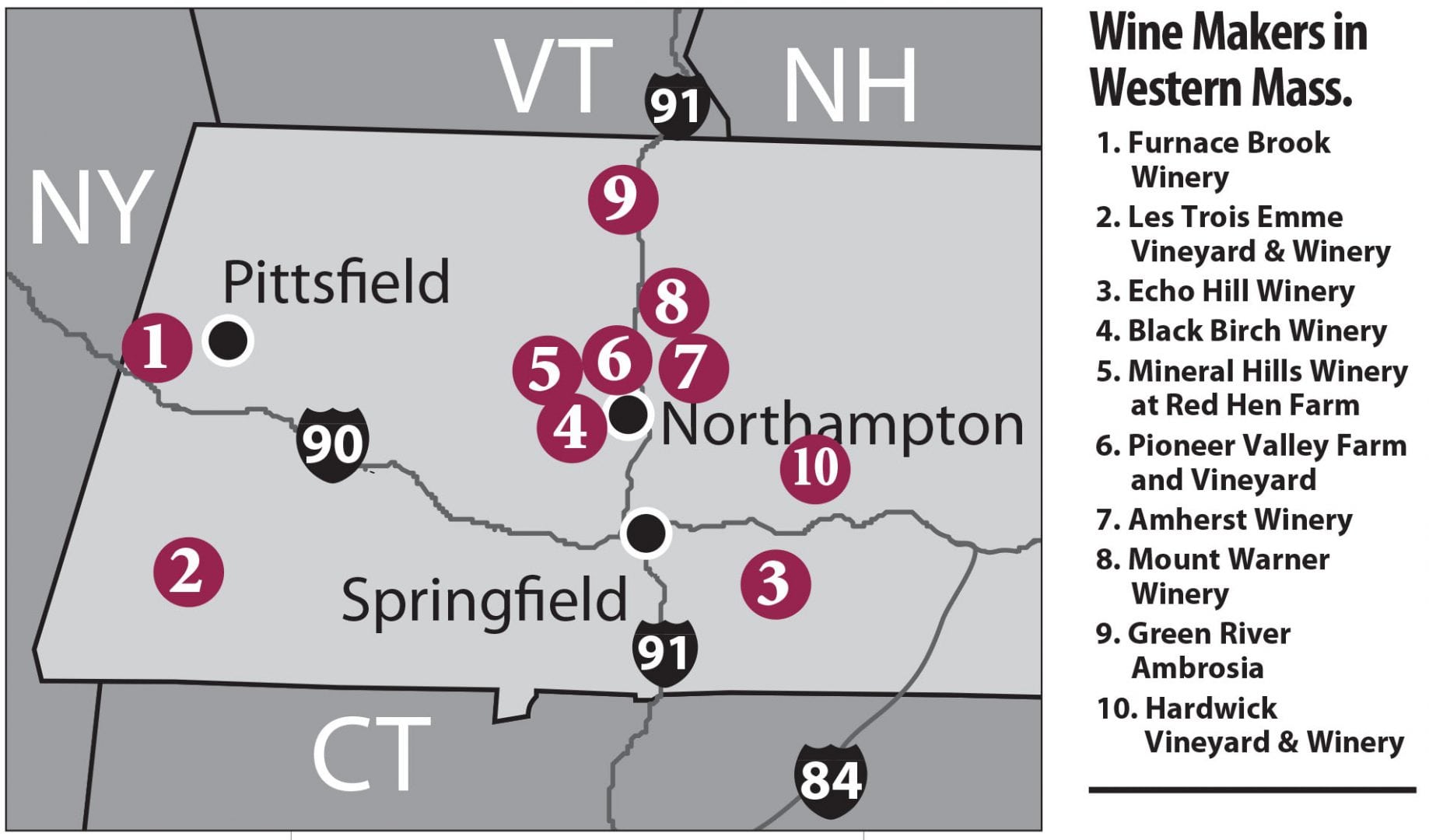
Construction Sections
Rebuilding Together Helps Transform a Springfield Neighborhood

Frank Nataloni

Frank Nataloni says the energy created on Tyler Street and the way the project brought people together was a gratifying benefit.

Frank Nataloni compared the bustling scene to a film set. But what the throngs of people created was far more impactful than a lively matinee.
“It was like a movie,” he said of the day in April when more than 1,000 volunteers descended on Tyler Street, in Springfield’s Old Hill neighborhood, to renovate, repair, and refurbish 25 homes there. The ‘cluster rebuild’ was a project of the Springfield affiliate of Rebuilding Together, a wide-reaching organization that promotes a National Rebuilding Day every spring.
According to Nataloni, owner of Curio Kitchens & Baths in Springfield and president of the local Rebuilding Together board, the organization had long participated in that event by helping dozens of needy homeowners around the city on a single day to repair their homes. But the group had never tackled an entire street at once.
“This was the first time we had tried this,” he told BusinessWest. “The reality was, it went far beyond what we anticipated. And we feel like it’s something we will continue to do.”
Colleen Loveless, executive director of Rebuilding Together Springfield — which restores houses year-round, including 71 in 2012 — said the project was modeled after a similar effort in another part of the Northeast.
“The Philadelphia affiliate did an excellent job the year prior. We’d gone and attended a conference training on cluster rebuilds, and it really made a lot of sense to revitalize a neighborhood,” she explained. “I know we do it house by house, but with a cluster, you can have a sustainable, profound impact on the entire community. And by really focusing on one block, we were able to leverage funding and volunteers, and increase our economies of scale and savings.”
Nataloni agreed. “I think it was probably one of the best ideas we’ve had in quite awhile because it promoted a lot of energy. Before, we’d fix a house, but it was still in an area where the next house could have been twice as bad. When we did one street, all of a sudden, it changed the neighborhood.”
Rebuilding Together Springfield referred to the project as a Green-N-Fit Neighborhood Cluster Rebuild, emphasizing a goal of creating energy-efficient and healthy homes, not just better-looking ones. Major renovations included the conversion from oil heat to natural gas, with street hook-ups as part of an in-kind donation by Columbia Gas and A-Plus HVAC, as well as new and proper insulation of homes and apartments.
About 70 area businesses donated resources to the project, which included new roofs, energy-efficient windows and doors, proper ventilation, mold remediation, pest control, painting, ‘age-in-place’ modifications, electrical and plumbing repairs, smoke and carbon-monoxide detector installation, deadbolt locks, vinyl siding and ramps, and yard cleanup, fencing, landscaping, and planting of shrubs and flowers.
“We focused on healthy and energy-efficient homes, and also reduced the carbon footprint, which helps everyone, not just the people in the neighborhoods,” Loveless said. “We did the full gamut of work, from exterior to interior — repairs, modifications, making things handicapped accessible, age-in-place modifications. We really improved people’s quality of life.”

Meeting a Need

Before-and-after shots

Before-and-after shots of 171 Tyler St. represent one of the 25 Old Hill homes that benefited from the recent ‘cluster rebuild.’

After deciding to do a cluster rebuild — which was totally funded by private businesses, organizations, and individuals — the question became where.
“We spoke with the city and also MassMutual, our largest sponsor,” Loveless said. “Old Hill is the poorest neighborhood in Springfield; it may be the poorest in Massachusetts. As far as median income, it’s in the bottom 15% nationwide. We were able to reach out to plenty of people; we have a good base of volunteers and a good board of directors who supported this effort financially.”
She noted that several homeowners in the neighborhood had benefited in the past from restoration and rebuilding projects funded by HAPHousing, Springfield Housing Services, and Habitat for Humanity, but plenty of opportunity remained. “People had lived there 35, 40, 45 years, through some hard times, and their neighborhood has seen its struggles. These people were in need. A lot of senior citizens there are on Social Security, and the cost to repair or replace a roof, for example, was really prohibitive, something they could not afford.”
Rebuilding Together has been assisting homeowners since the early 1990s, one at a time, all over the city and throughout the year, but the idea of a one-street cluster revitalization appealed to the organization, said Nataloni, noting that the choice of street was a good one, and not just for its economic demographics.
“In hindsight, it was perfect. It’s a long, level street,” he explained, adding that it was easy to establish a staging area to coordinate volunteers and deliveries. Meanwhile, residents from Tyler and surrounding streets regularly walked down the street to see what was going on, generating palpable energy in the neighborhood. “It was such a good thing. When I think about all the work we did, some of the houses were in tough shape, and we were able to improve them. It’s a modest-income area, and now that’s one concern they don’t have to have.”
Loveless said volunteers were able to close down the whole street to traffic. “That was helpful, because we were able to bring our deliveries up and down the street, dump large piles of mulch and topsoil on the street. Volunteers came up with wheelbarrows and planted shrubs and flowers.”
The neighborhood benefited in other ways as well. Volunteers spruced up a neighborhood playground on nearby Pendleton Avenue and created a community garden for growing fresh fruits and vegetables. They also made improvements to the Old Hill Neighborhood Council office on Eastern Avenue and Quincy Street, and to the Masonic Lodge on Tyler Street. “We put black fencing in and actually gave the neighbors a whole new look right down the street.”
Loveless said about 80% to 85% of the work was completed on that one April day, which was followed by a week of ‘punch-list’ activity in June, featuring volunteers from the New England Lutheran Synod Church, the United Methodist Action Reach-Out Mission by Youth, and Liberty Mutual.
“It was a true community effort — church groups, individuals, community centers, the neighbors themselves,” she told BusinessWest. “So many were involved, along with businesses and organizations throughout Massachusetts and even outside the state. It made such a profound impact, and we were able to get so many resources to people.”

Raising All Boats
Rebuilding Together is no stranger to amassing resources; it enlisted 5,000 volunteers last year in rebuilding 71 homes — in the process earning the Booz Allen Hamilton Management Excellence Award as the top affiliate of the year among some 200 Rebuilding Together chapters nationwide.
“When I first got involved with this, I was looking for something to put some energy into that would make an impact,” Nataloni said. “My business is on Boston Road in Springfield, and I know the needs in the city, so to me, this was a good fit.
“The people that we help, we’re happy to be involved with them,” he added, citing examples like a woman who simply needed to replace her windows to keep her home insulated, but couldn’t because of health and financial issues. Nataloni also finds it gratifying that so many people from the area are willing to lend a hand. “We had kids from the Western New England football team, kids from Springfield College … they’re in the city, and this helps the entire city. It’s a really good feeling.”
He said the cluster rebuild impacted Tyler Street in social ways as well. “There were a lot of residents who never knew who their neighbors were, never talked to them,” he noted. “One gentleman, who hadn’t been on his front porch for five years, actually came out and introduced himself to the others. It went beyond my wildest dreams. I couldn’t have planned that. Even in situations where the house was a rental and the landlord wasn’t participating in the total program, the tenants came out on their own and fixed up their yard. You can’t buy that. That’s the type of impact; it was just exponential, really.”
Rebuilding Together tracks the impact of its work every year, and much of it is fiscal. For instance, the 71 home projects in 2012 — 37 of them damaged by the June 2011 tornado — generated $75,500 in tax revenue for the city when 23 homeowners paid back taxes prior to work being completed on their homes, and another $49,000 in property taxes from 14 homeowners who were able to remain in their homes after repairs were completed.
“All year long, we work on houses throughout the city, depending on what funding comes through,” Loveless said, noting that those funds are typically leveraged so that every dollar spent generates $4 in the local economy.
“Every single month of the year, we’re working on homes, although some months are busier than others,” she said, noting that volunteers are generated through schools, churches, businesses, and old-fashioned word of mouth.
“A lot of people hear about us and say, ‘hey, I’d like to participate,’” she said. “It’s great because we do a full range of volunteer work on homes, so you don’t have to have special skills; you can plant trees, lay down mulch, help paint a house, do cleanups, things like that. Then there’s skilled work like installing kitchens and new roofs.”
Nataloni said the goal was to impact as many homes at once as possible, but the individual stories resonate. For instance, one of the repaired homes is owned by Oscar and Carol Granado, who have lived in their home for 32 years and raised their children there. Oscar is a U.S. Marine Corps veteran who still works full-time at age 72 to provide good health insurance for his wife, who is undergoing treatment for breast cancer. For families like this, home repairs — including efforts to simply make their residences healthier — often fall by the wayside.
“Go down the list: there’s all kinds of issues, big and small, and, again, you’re doing something and seeing an immediate impact,” Nataloni told BusinessWest, again explaining why he values the hands-on nature of Rebuilding Together. “It’s not like, ‘OK, here’s a check,’ and you don’t know where it goes.
“One thing I’ve heard throughout all this is that, in our country, we spend billions of dollars all over the world and do a lot of great things in a lot of great places,” he said. “But the reality is, there are a lot of things that need to be done right here that fall under the current of what people are aware of. That’s why I enjoy being a part of Rebuilding Together.”

Joseph Bednar can be reached at [email protected]

Banking and Financial Services Sections
Mobile Banking Is the Hot Trend in Personal Finance

MobileBankingDPartMore than ever, Susan Wilson says, people aren’t content to just get around. They want to get things done, even while moving from place to place.
“Everyone is on the go, and everyone’s got some kind of mobile device, whether it’s an iPad or an iPhone,” said Wilson, vice president of Corporate Responsibility at PeoplesBank. “Take a look out the window and watch people walking down the street.”
Indeed, smartphones and tablets have made it possible for individuals to e-mail and text friends, engage in social media, and play games while on the move. And, increasingly, get a little banking done.
“Right now, we have a mobile browser and mobile apps for both iPhone and Android,” said Mike Raposo, eChannel product manager at PeoplesBank. “They can use it for transaction history, transfers, and bill payments, and we have some graphs to track their expenses; these are the main components of the mobile app right now.”
Five years after introducing mobile products to customers, the bank has witnessed a dramatic rise in their use, he noted. “We typically see about 50% growth in mobile users each year, and that’s pretty consistent with what we’re forecasting going forward.”
Joan Klinakis, senior vice president of Operations at United Bank, said her institution also launched mobile banking about five years ago and has seen a steady increase in its use.
“It is definitely becoming more and more popular,” she told BusinessWest. “We have an app customers can use; you can find it in the iTunes app store or the Google Play shop if you have an Android.” Like most banks, United also has a text offering, where customers can text a code to check information like balance transfers.
The ubiquitous nature of mobile devices has most banks following suit, including Florence Savings Bank, which introduced what it considers a ‘basic’ mobile suite in March, said Becky Lynch, eproduct manager.
“The customer can either use the browser on their cell phone, use our app if they’re running iPhone or Android, and also do SMS texting to do basic functions like account history and transferring funds, as well as get the bank’s locations and that type of information.”

Becky Lynch says Florence Savings Bank will soon expand on its recently launched mobile platform.

Becky Lynch says Florence Savings Bank will soon expand on its recently launched mobile platform.

Increasingly, a smartphone culture is becoming more accustomed to moving functions once performed on desktops to the computers they carry in their pockets and purses. Rohit Sharma of Virtusa Corp., an information-technology consulting firm, recently wrote at banktech.com that mobile devices have already displaced desktop-based Internet access and will soon become the preferred vehicle for carrying out banking activities.
In fact, as far back as late 2010, according to research by Google, more consumers were using smartphones to access the Internet than PCs, and that trend has only accelerated. “As such,” Sharma said, “the tipping point for smartphones has already arrived.”
And banks, increasingly, are responding to that shift.

Smart Response
Klinakis said use of United’s mobile platform continues to grow every month, a direct result of people becoming more reliant on their smartphones and tablets. “That seems to be where everyone is going; we see a steady increase month after month in adoption rates.”
And the shift seems to be occurring across all age groups, not just the younger generations who were the first to embrace online banking a decade ago. “It doesn’t seem to be age-related any longer,” she told BusinessWest. “It may have started out that way, but these devices are popular across the board, and everyone is following suit.”
United is no stranger to technological change, having delivered online-banking options since 1997. “Back then, we still had to mail floppy discs to customers,” Klinakis said with a laugh. “I think mobile is still something that’s still up and coming; it hasn’t plateaued yet. It’s still moving in a forward direction.”
Raposo agrees. “As more and more mobile phones and tablets get in people’s hands, the age doesn’t really matter. Whoever has mobile devices use them for their banking,” he said. “Especially over the last few years, people are feeling more secure using mobile devices for everything.”
Data security is, of course, a concern, but it’s one that customers are less anxious about, according to the banks we spoke with.
In fact, “they say nothing. They just forge ahead and use these services,” Lynch said. “We have a level of trust with them. We consider mobile part of our online channel, even though it’s not Internet-based, because the service goes through all the same security reviews and risk assessment that our online banking does. Customers don’t ask about it because they know we’re securing their online banking session, and they think of them similarly.”
Wilson agreed, noting that, “based on our adoption rates, we would say it’s not a primary concern.”
Those rates, she added, have been strong. “We’ve seen tremendous growth. We started this journey in 2008 when we introduced the mobile app, and since then we’ve been adding to it. Last year we introduced the mobile triple play,” which is a combination of browser, app, and text services on one platform.

Joan Klinakis

Joan Klinakis says growth in mobile banking is largely related to Americans’ increasing reliance on their smartphones.

Although customers turn to mobile banking for a number of uses, Wilson noted, transferring funds seems to be one of the most popular, based on the bank’s internal statistics. “Sometimes people are making some sort of impulse purchase and want to transfer the funds to make sure they’re available.” Meanwhile, she added, mobile bill payment is on the rise as well.
Lynch said the majority of users of Florence Savings Bank’s mobile services check balances and transfer funds. “If you need to pay a bill, you can move money from one account to another to avoid fees. You can set up alerts based on low balance and any other kind of activity. You can move money into savings, that kind of thing.”

Making Connections
Chrissy Kiddy, eChannel specialist at PeoplesBank, told BusinessWest that even mobile users who don’t want to download an app can engage in commerce on their smart devices through a ‘responsive website.’
“In the past, PeoplesBank has always prided itself on offering customers the tools they need to be financially successful. In the case of mobile devices like smartphones and tablets, we’ve taken it upon ourselves to launch a new, responsive website that really optimizes to whatever mobile device you’re on, which makes navigation much simpler for our customers.”
The issue with many websites is that they’re optimized to be viewed on a PC screen, not on the smaller screen of a mobile device, but PeoplesBank has customized its website to be easily readable and navigable on any device.
“Whether they have a smartphone or tablet or desktop, they’re able to see all the information they need to see in order to make the transaction — do online banking, view products, view rates,” Kiddy explained. “No longer do customers have to pinch and zoom on mobile devices. Our customers are now able to receive accurate online information and view it on their mobile devices.”
She cited a report at mashable.com suggesting that many mobile users would rather use their browsers than an app, so providing both makes sense. “We’ve now optimized our website and app to cover all customer bases.”
Klinakis agreed that many customers still want to use a browser, and the banktech.com report suggested that online banking on desktops isn’t going away anytime soon.
“Smartphones are predominately used for transactional or quick access, such as looking up restaurants, products, or transit information. A consumer is more likely to use a tablet or a desktop for more analysis-based activity,” Sharma said. “In terms of banking, one can think of transactions being completed through mobile devices, but budgets or financial planning will still be done on desktops, potentially to be replaced by tablets.”
Klinakis added that more mobile features could be in the works, including the ability for customers to snap a photo of a check and send the image to the bank to deposit it. “That’s one of the key things I hear everyone moving toward. In general, customers seem to like that feature.”
As for Florence, it’s relatively new mobile platform won’t stay ‘basic’ for long.
“We will continue to enhance it, to offer solutions that will allow for some bill payments and mobile alerts — account alerts you set up yourself to deliver to your cell phone,” said Lynch. “You’ll eventually have the ability to deposit checks using the camera on your cell phone — what we refer to as ‘consumer deposit capture.’ That’s really kind of a next step. Big banks have been doing it for awhile. For us, we’re just trying to analyze risks and costs, and we’ll more than likely have more solutions soon.”

Rolling It Out
With only a few months under its figurative belt, Florence’s suite of mobile services are being used by only some 5% of customers, and the bank has tried to roll it out quietly as it evaluates user response and gauges what needs to be done next. But if the accounts of other banks hold true, the user rate won’t remain in the single digits for long.
“It really goes hand in hand with smartphone adoption, which isn’t surprising,” Lynch said. “If people are comfortable with a smartphone, they’ll want to get their banking done as well.”

Joseph Bednar can be reached at [email protected]

40 Under 40 Events The Class of 2013
Celebrating the Class of 2013

untitled-40
IMG_0121More than 650 people flocked to the Log Cabin Banquet & Meeting House on June 20 to celebrate BusinessWest’s 40 Under Forty Class of 2013 and the many accomplishments of its members. Attendees enjoyed picture perfect weather, fine food, and perhaps the best networking event of the year. On the pages that follow, we offer a photographic look back at a memorable evening for all those in attendance, but especially those who walked out with the 40 Under Forty plaques, seen at left, just prior to the start of the gala.


The event was sponsored by:


Check out the intro video from Viz-Bang!


untitled-17From left, Robert Hogan, quality control supervisor for U.S. Tsubaki, and his wife Samalid Hogan, senior project manager for the City of Springfield, with her fellow Class of 2013 honoree, Annamarie Golden, manager of Community Relations and Community Benefits, Baystate Health, and husband Hunter Golden, owner of Write Stuff Copywriting.

untitled-10
Elizabeth Beaudry, senior commercial credit analyst and information technology administrator, and Shonda Pettiford, assistant director of Commonwealth Honors College at UMass Amherst, two members of the Class of 201,3 share a moment before the awards ceremony.


untitled-26Xiaolei Hua, credit analyst at PeoplesBank and fellow Class of 2013 honoree Geoffrey Croteau, financial advisor and managing associate sales manager at MassMutual Charter Oak Insurance and Financial Services network during the VIP hour in the Grand Edna Ballroom.


untitled-28Representing one of the evening’s sponsors, Hampden Bank, is Nora Braska, assistant vice president and training officer; Peg Daoust, branch manager; and Amy Scribner, assistant vice president and senior marketing administrator.


untitled-35From left, Jose Hernandez, machine operator for Rockbestos-Suprenant Cable Corporation; Alejandro Cameron, John Rivas, and Zydalis Zayas, WGBY-TV community engagement associates; Class of 2013 honoree, Vanessa Pabon, director of community engagement for WGBY-TV; Pabon’s daughter, Shayla Burge, and mother, Milta Franco, a case manager for Brightwood Health Center; and Veronica Garcia, WGBY community engagement assistant.

untitled-30Emily McArdle, left, physical therapist and Jeanne Coburn, audiologist, both of Baystate Rehabilitation Care, one of the evening’s sponsors.


untitled-37From left, Danielle Nicklas, an attorney with Cooley Shrair, and Jim Tinker, senior tax accountant, Burgess, Shultz & Robb, network with Amy Scott, president of Wild Apple Design Group, and Jennifer Schimmel Stanley, executive director of Greater Springfield Habitat for Humanity, both members of the 40 Under Forty Class of 2011.

untitled-36From left, Patrick Leary, Class of 2007, shareholder and vice president of Moriarity & Primack, P.C., an event sponsor, networks with Gwen Burke, senior advertising consultant with BusinessWest, her husband Chuck Burke, president of Action Marine and Water Sports, and Damon Cartelli, member of the Class of 2010, and president and general manager of Fathers & Sons, also an event sponsor.

untitled-38The team at UMass Amherst Isenberg School of Management, an event sponsor, gathers before the awards ceremony. From left, Trista Hevey, program information specialist; Michelle Rup, office manager; Jennifer Meunier, director of Business Development; Kyle Bate, academic advisor and program developer; Melissa Garrett-Preston, academic advisor; Allison Furkey, media PR liaison; and Rachel Trafford, director of Organizational Metrix.

untitled-39The NUVO Bank & Trust Company team supported Class of 2013 honoree, Elizabeth Beaudry (fifth from left), senior commercial credit analyst and information technology administrator. Front row, from left, Michael Buckmaster, vice president, commercial lending; Leslie Ross Lawrence, senior vice president/CCO and SOO; Beaudry; Jackalyn Guenette, loan deposit operations agent; Sue Fearn, assistant vice president, client sales and service; back row; Jay Caron, president and CEO, Bee-Line Corp., and NUVO board of director; Jeff Sattler, president and senior loan officer; Denise Perkins, corporate secretary; Dale Janes, CEO; Jay Seyler, vice president, commercial loan division; and Eric Jalbert, credit analyst.

IMG_0139Gary Popovich, left, and Daniel Duncan, accounting associates, chat with Rebecca Connolly, audit manager, all of Moriarty & Primack, one of the event sponsors.


untitled-22Brenna Murphy McGee, Holyoke city councilor and member of the Class of 2013, with her husband, Todd McGee, Class of 2011, director, E&B Planning at Mass Mutual, and fellow Holyoke city councilor.


untitled-45Delcie Bean, Class of 2008 and founder and CEO of event sponsor Paragus IT, spoke to the audience of more than 650 people about the need for a computer technology-mentoring program that will benefit local youths, create jobs, and attract businesses to the Pioneer Valley through the reorganization of Valley Technology Outreach. Here, Bean is assisted by children from the Westfield Boys and Girls Club, who demonstrated the national numbers that underscore the need for more educational support through computer technology.

untitled-7Caitlin Casey, occupational therapist with Hartford Healthcare, and husband Jeremy Casey, assistant vice president and commercial service officer, Westfield Bank, celebrate his standing as a member of the Class of 2013.


IMG_0122From left, Darren Couture, painting contractor; Erin Couture, Class of 2013, vice president and commercial loan officer, Florence Savings Bank; Jeremy Leap, Class of 2013, vice president of commercial lending for Country Bank; and Andy Robb, Class of 2013, president, Burgess, Schultz & Robb, P.C.


untitled-19Timothy Brunelle, employee of L-3 KEO, and wife Erin Fontaine Brunelle, realtor, Century 21 Hometown Associates, founder, co-chair of Buy Holyoke and a member of the Class of 2013.


IMG_0145From left, Evan Alberts, practice manager and financial services professional, MassMutual Charter Oak Insurance and Financial Services; Ian Vukovich, Class of 2010, director of product delivery, MassMutual-USIG; Erin Kates, Baystate Health; Matt Geffin, Class of 2011, vice president of business development, Webber and Grinnell Insurance; and Danny Kates, Class of 2013, managing associate, MassMutual Charter Oak Insurance and Financial Services.

IMG_0154From left, Michael Hayden, owner, Springfield Motors; Ashley Bernard, speech pathologist, Springfield Public Schools, Nick Zajac, loan officer, Top Flight Financial; Carla Cosenzi, Class of 2012, and Tommy Cosenzi, Class of 2013, co-owners of TommyCar Auto Group; Amanda Douglas, esthetician at Puffers Day Spa and Salon; and Trevor Wood, engineer, City of Westfield.

IMG_0146From left, Melissa Mattison, clinical assistant professor, Western New England University (WNEU); Kim Gallo, staff Assistant, WNEU College of Pharmacy; Kam Capoccia, Class of 2013, associate professor of pharmacy practice, WNEU; and Jill Popp, Department of Research, Connecticut Children’s Medical Center, network in the Southampton Room.


IMG_0155Chris Thompson, left, Class of 2009, vice president, business development, Springfield Falcons Hockey, networks with Jill Monson, Class of 2010, CEO, Inspired Marketing; and Alex Morse, mayor of Holyoke.


IMG_0160From left, John Roberson, vice president, Children & Family Services; Ja’net Smith, program director, Juvenile Programs, both with the Center for Human Development; Jennifer Root, Class of 2013, clinical director for the Center for Human Development; and Kate Blachfield, manager, HP Hood.


IMG_0171From left, Joe Bednar, senior writer, and Elizabeth Taras, staff writer at BusinessWest, co-introducers of the Class of 2013, and George O’Brien, the magazine’s editor, await the next winner’s walk to the stage to receive their plaque.


Check below for all photos from the event:

Cover Story
25 Ways to Enjoy Everyone’s Favorite Season

SummerInTheValleyIt’s officially summer in the Pioneer Valley, an exceedingly enjoyable, if all-too-short time marked by a seemingly endless variety of diversions. Some of these — Six Flags, Tanglewood, and Jacob’s Pillow come to mind — are well known, or should be. But others fall into that ‘best-kept-secret’ category, and shouldn’t. These include everything from the Holyoke Blue Sox to the Nash Dinosaur Tracks in South Hadley; from one of the few remaining drive-in movie theaters (located near the New Hampshire border) to the often-overlooked Quabbin Reservoir. For this issue, BusinessWest offers 25 intriguing suggestions for how one can devote some time during this summer in the Valley. There are myriad more, but these provide a good indication of what this region has to offer during everyone’s favorite time of the year.

Berkshires Arts Festival

www.berkshiresartsfestival.com
Ski Butternut, 380 State Road, Great Barrington, MA
(845) 355-2400
Schedule: July 4-6 and July 12-14
Admission: $5-12

The Berkshires Arts Festival has proven to be so successful in its 12 years of existence that organizers have expanded the event into a second week. The festival attracts hundreds of acclaimed artists and big-time collectors from across the country for two consecutive weekends, transforming Butternut from a ski lodge into an outstanding art gallery. And while the artwork is the main focus, the festival also provides musical entertainment from renowned local, national, and international acts. Visitors can also participate in fun, interactive events like a puppetry and storytelling workshop. Besides, it’s hard to turn down tented AC and free parking.

Berkshire Botanical Garden

www.berkshirebotanical.org
5 West Stockbridge Road, Stockbridge, MA
(413) 298-3926
Schedule: May 1 to Oct. 14, 9 a.m. to 5 p.m. daily
Admission: Free for members; adults, $15; seniors, $12; students, $12; children under 12, free

If the flora indigenous to, or thriving in, the Berkshires of Western Mass. is your cup of tea, try 15 acres of stunning public gardens at the Berkshire Botanical Garden in Stockbridge. Originally established as the Berkshire Garden Center in 1934, today’s not-for-profit, educational organization is both functional and ornamental, with a mission to fulfill the community’s need for information, education, and inspiration concerning the art and science of gardening and the preservation of the environment. In addition to the garden’s collections, among the oldest in the U.S., visitors can enjoy workshops, special events, and summer-guided tours on Wednesdays, Fridays, and Saturdays at 10 a.m., from June 15 through Sept. 1.

Blandford Fair

www.theblandfordfair.com
10 North St., Blandford, MA
Schedule: Labor Day weekend, Aug. 30 to Sept. 2
Admission: $5-10

Not much appears to have changed in the 145 years of the Blandford Fair, but that’s what makes it so charming. This Labor Day weekend, at the 146th edition of the event, fairgoers can witness the classic rituals of the giant pumpkin display, the pony draw, and the horseshoe tournament. Most likely not seen in the earlier days is the fantastically loud but always-intriguing chainsaw-carving demonstration and the windshield-smashing demolition derby, both highlights of this year’s fair. With many more exhibits and attractions to offer, a weekend at the Blandford Fair is a wonderful way to close out the summer.

BridgeOfFlowers

Bridge of Flowers

www.bridgeofflowersmass.org
Shelburne Falls, MA
Schedule: April 1 to Oct. 30
Admission: Free
Where can you find Siberian Iris and Iris Germanica (the bearded beauties, of course), Wild Wings, Ghost Train, Fire Breather, or False Indigo? The Bridge of Flowers, of course. With interesting names, and even more amazing flowers, this once-abandoned trolley bridge is now a garden pathway, cared for by the Shelburne Falls Area Women’s Club Bridge of Flowers Committee for more than 80 years. While advances in transportation doomed its original use, the bridge eventually bloomed as a tourist attraction, and from bulb season to Dahlia season, and every bloom season in between, it welcomes flower followers from all over the country.

Brimfield Antique Show

www.quaboaghills.com
Route 20, Brimfield, MA
(413) 283-6149
Schedule: July 9-14, Sept. 3-8 (Tuesday-Sunday); open from sunrise to sundown
Admission: Free
Call it tkotchke heaven, or adopt the old phrase ‘one man’s junk is another man’s treasure.’ But whatever your connection to this wide variety of aged items, you’ll find folks flocking to a mile-long stretch of antiques and collectibles along Route 20 in Brimfield during six days in July, rain or shine. The annual Brimfield Antique Show labels itself the “Antiques and Collectibles Capital of the United States,” and it’s hard to disagree when, during the course of three events a year — in May, July, and September — the shows attract 6,000 dealers who buy, sell, and trade items from bygone eras to more than 130,000 antiques aficionados from around the world.

Green River Festival

www.greenriverfestival.com
Greenfield Community College
One College Dr., Greenfield, MA
(413) 773-5463
Schedule: July 20-21
Admission: $65-75; weekend pass, $90; children 12 and under, free

The Green River Festival remains the Pioneer Valley’s one-stop option for fans of both hot-air balloons and eclectic musical acts. Located on the Greenfield Community College campus, the festival began in 1986 as purely a hot-air-balloon affair, but quickly integrated musical entertainment into the event. Now, the festival features a packed weekend lineup including acclaimed musicians drawn from an assortment of traditional as well as unconventional genres such as ‘high-intensity gypsy swing’ and ‘adventurous folk.’ Sore from the high-intensity dancing, visitors can sample the local cuisine, try their hand at a crafts workshop, or check out all the action from above in a colorful balloon.

HancockShakerVillage

Hancock Shaker Village

www.hancockshakervillage.org
1843 West Housatonic St., Pittsfield, MA
(413) 443-0188
Schedule: Through Oct. 27
Admission: $8-18

In 1774, a small group of persecuted English men and women known as the Shakers — the name is derived from the way their bodies convulsed during prayer — landed in New York Harbor in the hopes of securing religious freedom in America. Nearly 250 years later, their utopian experiment remains available to the public in the restored 19th-century village of Hancock. Through 20 refurbished buildings and surrounding gardens, Shaker Village successfully illuminates the daily lives of its highly productive inhabitants. After spending a day in the recreated town, visitors will surely gain a greater appreciation of the Shakers’ oft-forgotten legacy in the region.

2013BlueSoxOpeningDay

Holyoke Blue Sox

www.holyokesox.com
MacKenzie Stadium, 500 Beech St., Holyoke, MA
(413) 533-1100
Schedule: June 6 through early August (playoffs Aug. 4-12)
Tickets: $4-6; children 5 and under, free; group rates available

Valley residents do not have to trek out to Boston in order to catch a Sox game this summer. The Holyoke Blue Sox, members of the New England Collegiate Baseball League, play close to home at MacKenzie Stadium in Holyoke. These Sox may not have David Ortiz batting cleanup, but they do feature a roster comprised of elite collegiate baseball players from around the country, including some who have already been drafted into the major leagues. Frequent promotional events like postgame fireworks and numerous giveaways help make every game at MacKenzie Stadium a fun, affordable event for the whole family.

JacobsPillow

Jacob’s Pillow Dance Festival

www.jacobspillow.org
358 George Carter Road, Becket, MA
(413) 243-0745 (box office)
Schedule: June 15 – Aug. 25
Admission: $22 and up

As the 81st season of Jacob’s Pillow opens this summer, the annual dance festival finds itself firmly rooted as one of the premier venues for dance in the U.S. The picturesque, 220-acre campus in the Berkshires is a national historic landmark, and was recently awarded a National Medal of Arts by President Obama. Dance enthusiasts will surely marvel at the 350 free and ticketed recitals performed by celebrated companies from around the world, but any devotee of the arts will enjoy Jacob’s Pillow’s other offerings of photography and art exhibits, seminars, discussions, and film screenings, many of which come at no cost.

Lady Bea Cruise Boat

www.brunelles.com
1 Alvord St., South Hadley, MA
(413) 315-6342
Schedule: May through early October
Admission: $10-20; season passes available

Western Mass. residents should be reminded that Interstate 91 is not the only direct thoroughfare from South Hadley to Northampton. The Lady Bea will take you up and back on daily cruises along the Valley’s other major highway: the Connecticut River. If you don’t feel like sharing the 75-minute narrated voyage with others, rent the boat out for a private excursion. Or take advantage of the entertainment and themed cruises that feature local artists. Just like your car, the Lady Bea is climate-controlled and chock full of amenities, though your Honda Civic doesn’t come equipped with a full bar.

LupaZoo

Lupa Zoo

www.lupazoo.org
62 Nash Hill Road, Ludlow, MA
(413) 583-8370
Schedule: 10 a.m. to 5 p.m. daily
Tickets: $6-10

Lupa Zoo brings the African savannah to Western Mass. residents. The late Henry Lupa fulfilled his lifelong dream of creating a zoo right next to his Ludlow house, filling it with hundreds of animals and instilling a warm, familial atmosphere. At Lupa Zoo, you can be entertained by monkeys, feed giraffes on a custom-built tower, or marvel at the bright colors of tropical birds. In addition to offering animal shows and animal-feeding programs, the staff at Lupa Zoo promotes conservation and sustainability, so if you’re thinking about heading to the zoo, grab your bike from the garage and start pedaling.

MASS MoCA’s Bang on a Can

www.massmoca.org
1040 MASS MoCA Way, North Adams, MA
(413) 662-2111
Schedule: Museum summer hours: 10 a.m. to 6 p.m. daily. Bang on a Can: July 15 to Aug. 3, weekdays, 1:30 p.m. and 4:30 p.m.; Saturdays, 4:30 p.m.
Admission: Adults, $15; students, $10; children 7-16, $5; children 6 and under, free; members, free

MASS MoCA has a big-bang theory that large-scale, contemporary art isn’t the only interesting reason to venture to the northwest corner of the Commonwealth. So at MASS MoCA, the former 19th-century factory buildings turned art galleries, the annual Bang on a Can music series turns the whole campus into a spontaneous combustion chamber for music from talented students and renowned guest conductors. Daily gallery recitals offer an extra measure of creative expression during a visit to the multiple buildings housing contemporary forms of art. Bang on a Can recitals are free with museum admission.

Mountain Park at Mount Tom

www.iheg.com/mountain_park_main.asp
Mountain Park Access Road off Route 5, Holyoke, MA
(413) 586-8686 (box office)
Schedule: July 27 and Aug. 16; 8 p.m.
Admission: $31-75

Tucked inside dense woods near the base of Mount Tom is one of the Valley’s hidden gems. What began as a recreation area near a trolley station more than 100 years ago became a popular amusement park in the early to mid-1900s, only to fade from the landscape in the late ’80s. Reconstituted as a concert venue in 2009, Mountain Park is back in favor and playing host to established musical groups in a summer concert series. This summer, jam to English prog-rockers Yes (July 27) and Boston punk stars Dropkick Murphys (Aug. 16) at the park’s scenic amphitheater.

MtSugarl;oaf

Mount Sugarloaf State Reservation

www.mass.gov/dcr/parks/central/msug
300 Sugarloaf St., South Deerfield, MA
(413) 665-2928
Schedule: May through October, dawn to dusk
Admission: Free

If you really want to commemorate your summer of 2013, then you might want to drive or climb the steep road up Mount Sugarloaf in South Deerfield to take some photos with the family at one of the most picturesque locations in Western Mass. Indeed, the view from the Observation Tower atop the peak, overlooking the curved, tree-lined Connecticut River far below, is the most brochure-worthy, and published, image of this region. The state reservation, which consists of two summits, North and South Sugarloaf, boasts more than 500 acres of land for picnicking, picture taking, and hiking the many trails.  Be warned, some of the trails will be quite challenging … and provide some of the most stunning views of the Connecticut River Valley.

Nash Dinosaur Track Site and Rock Shop

www.nashdinosaurtracks.com
594 Amherst Road, South Hadley, MA
(413) 467-9566
Schedule: Thursday through Monday, 10 a.m. to 4 p.m.; Sunday, noon to 4 p.m.
Admission: Adults, $3; children, $2

Walk where the dinosaurs walked, literally. It’s hard to believe that the first documented dinosaur tracks found in North America were on the shores of the Connecticut River, near today’s site of Nash Dinosaur Track Site and Rock Shop in South Hadley. Originally uncovered in 1802 by a farmboy plowing his family farm, the findings weren’t officially called dinosaur tracks until the 1830s. Over the years, thousands of dinosaur tracks have been discovered; many were sold to museums and private individuals all over the world, but many more can be seen due to the extensive work of Carlton S. Nash. Visit the site and learn about some of this region’s earliest inhabitants, and also about the geology of the area.

NoprthfieldDriveIn

Northfield Drive-In

www.northfielddrivein.com
981 Northfield Road, Hinsdale, New Hampshire
(603) 239-4054
Schedule: Fridays and Saturdays at dusk, rain or shine
Admission: Adults, $9.50;
children under 12, $5.50

Take a trip back in time to the Northfield Drive-In and experience summer movie watching like your parents used to do … under the stars. Serving Massachusetts, New Hampshire, and Vermont for 65 years, the venue welcomes families to gather for a summer Friday or Saturday evening of clean, fun-filled entertainment, which includes two or three first-run movies. And don’t forget the hot dogs, pizza slices, and hot, buttered popcorn from the snack bar, of course.

Quabbin

Quabbin Reservoir

www.mass.gov/dcr/parks/central/quabbin
485 Ware Road, Belchertown, MA
(413) 323-7221
Schedule: Open dawn to dusk, year-round
Admission: Free

If you love the outdoors, there is nothing but pure nature on more than 25,000 acres overlooking the man-made, 412-billion-gallon Quabbin Reservoir. A warm summer day can be filled with hiking, biking, picnicking, nature photography, fishing, and wildlife watching, especially the growing population of resident eagles. After flooding five towns, the Commonwealth created the Quabbin during the 1930s as the main drinking-water source for the city of Boston. It has since become the ‘accidental wilderness’ due to the thousands of acres of protected watershed area. Be sure to visit the Quabbin Interpretive Services Program in the Quabbin Visitor Center to learn more about this carefully regulated, yet open-to-all, park.

SixFlags

Six Flags New England

www.sixflags.com/newengland
1623 Main St., Agawam, MA
(413) 786-9300
Schedule: Six Flags: weekdays, 10:30 a.m. to 9 p.m., weekends, 10 a.m. to 10 p.m. Hurricane Harbor: weekdays, 11 a.m. to 6:30 p.m.; weekends, 11 a.m. to 7 p.m.
Admission: $45-55; advance tickets and season passes available

Summer doesn’t have to be filled with lazy days. Consider a free-fall through a 250-foot enclosed waterslide at Six Flags New England called the Bonzai Pipeline. Just launched this summer, the all-new, 65-foot tall waterslide complex is in Hurricane Harbor water park and joins numerous rollercoasters boasting foreboding names like Scream, Mind Eraser, and Cyclone — and, of course, the world-famous Bizarro coaster, the centerpiece ride of the popular theme park. But fear not: the park has attractions for everyone along the stomach-queasiness spectrum. The carousel and bumper cars are significantly closer to sea level, as are the two giant wave pools in Hurricane Harbor. No matter what type of ride you prefer, Six Flags will provide many smiles — or screams — on a summer day.

stearnschristine

Stearns Square Concert Series

www.springfielddowntown.com
Worthington and Bridge streets
Springfield, MA
(413) 781-1591
Schedule: Thursdays, July 11 through Sept. 12; opening bands, 6-7:30 p.m.; headline bands, 8-9:30 p.m.
Admission: Free

The sounds of guitars, saxophones, and drums bouncing off the buildings in downtown Springfield tells you it’s summer in the city when the Stearns Square Concert Series makes its run from July 11 to Sept. 12. What started 13 years ago as the coolest free Thursday-night summer concert series to liven up the cerntral business district has become the hottest outdoor spot to catch a diverse range of live music, people watch, and marvel at the spectacle of motorcycles parked along the park that have given the successful series a secondary moniker — ‘Bike Night.’ This year’s slate of performers includes internationally acclaimed musicians Ana Popovic (Aug. 8), Springfield native Taj Mahal (July 18), and returning favorites FAT (Aug. 22), Roomful of Blues (Aug. 29), and Georgia Satellites (Sept. 5), to name a few.

Tanglewood

Tanglewood

www.bso.org
297 West St., Lenox, MA
(617) 266-1200
Schedule: June 23 through Sept. 1
Admission: $21 and up

For outdoor music, Tanglewood represents the best of what Western Mass. has to offer. This beautiful campus in Lenox has been the summer home of the Boston Symphony Orchestra since 1937, and has been drawing visitors from around the country for just as long. Pack some sandwiches for a picnic, throw a blanket and folding chairs in the car, and take in a magical evening of music on the lawn. While Tanglewood always puts forth its fair share of classical programs with superb concert soloists, it also offers performances by contemporary groups, like this summer’s shows by the Steve Miller Band and Guster, for those more inclined to the Beatles than Beethoven.

Western Mass. Vineyards and Wineries

www.masswinery.com
Various towns in Western Mass.
Schedule: Check websites
Admission: Free

Western Mass. is the perfect place to ‘wine’ down with friends at a winery, and there are several to choose from. Consider Green River Ambrosia in Greenfield (ever heard of honey wine?); or Mount Warner Vineyards in Hadley, open by appointment; or the Black Birch Winery in Southampton, which offers summer wine tastings on weekends. If you’re still thirsty for more local variety, try the Amherst Farm Winery in Amherst, Les Trois Emmes Winery & Vineyard in Hadley, or the Pioneer Valley Vineyard in Hatfield, which all have retail shops to explore as you’re sipping the fruits of the past year’s labor.

Williamstown Theatre Festival

www.wtfestival.org
1000 Main St., Williamstown, MA
(413) 597-3400
Schedule: June 26 through Aug. 18
Admission: $20 and up; some events free

For 58 years, the Williamstown Theatre Festival on the campus of Williams College has been offering Tony Award-wining theater in the Berkshires. During that time, the theater venue of the Main Stage and Nikos Stage has attracted such performers as E.G. Marshall, Blythe Danner, Colleen Dewhurst, and Christopher Reeve, and the summer of 2013 will be no different. The festival will present a range of both classical and original productions, late-night cabarets, free theatre, and other special programs like the Family Friday Workshops, from 4 to 6 p.m. from July 5 to August 9.

Yidstock

www.yiddishbookcenter.org/yidstock
Yiddish Book Center
Hampshire College, 893 West St., Amherst, MA
(413) 256-4900
Schedule: July 18-20, 7 p.m.; July 21, noon, 2, 4, and 7 p.m.
Admission: $8-38; festival pass: $135 for members or $175 general admission; pass includes admission to all concerts, lectures, and workshops

Forget Woodstock; discover the best in klezmer and new Yiddish music at the 2nd annual Yidstock. Set on the stage at the Amherst-based Yiddish Book Center, the weekend will offer an engaging glimpse of Jewish roots and jazzy soul music through popular Yiddish bands like the Klezmer Conservatory Band, Klezperanto, Margot Leverett & the Klezmer Mountain Boys, and the Yidstock All-Stars. Come early on Friday for a lecture on lost Hebrew musical treasures or learn Yiddish folk dance.

ZoarOutdoors

Zoar Outdoor

www.zoaroutdoor.com
7 Main Street, Charlemont, MA
(800) 532-7483
Schedule: Through Oct. 15
Admission: Varies; family packages available

This summer it may be time to cancel that Netflix account and take advantage of the many outdoor opportunities found at Zoar Outdoor. Zoar offers virtually every option available to the adventurous soul in Western Mass.: kayaking, rock climbing, white-water rafting, canoeing, and ziplining in the trees down a mountain that overlooks the Deerfield River. Zoar offers on-site camping and lodging to those itching to escape the pressures of the city and suburbia. For those inclined to get really close to nature and experience the Berkshires in the trees and on the water, the staff at Zoar also lead overnight rafting and zipping tours into the wilderness.

The Zoo in Forest Park and Education Center

www.forestparkzoo.org
Forest Park, 302 Sumner Ave., Springfield, MA
(413) 733-2251
Schedule: Weekdays, 10 a.m. to 4 p.m.; weekends, 10 a.m. to 5 p.m.
Admission: $4-8.50

Located in Springfield’s historic Forest Park, the Zoo and Education Center offers a number of exhibits and educational programs to the Valley’s animal lovers. Visitors to the zoo can behold the power of an African lion and alligator, or determine for themselves whether the Madagascar hissing cockroach lives up to its name. Children can be especially engaged at the Zoo in Forest Park through Zoo Camp and the Crew in Training volunteer program. End the visit with a train ride through the grounds.