Home Posts tagged Law (Page 14)
Daily News

SPRINGFIELD — Western New England University will confer doctoral, law, pharmacy, and master’s degrees during its 2016 Graduate Commencement Ceremony on Sunday, May 22 at 2 p.m. in the Alumni Healthful Living Center on campus. Degree candidates will receive their diplomas and traditional degree hoods.

Lisa Bachmann, executive vice president and chief merchandising and operating officer for Big Lots Inc., will provide the keynote address to the graduating class. Big Lots is a non-traditional discount retailer operating more than 1,400 stores in 47 states.

Bachmann is a 1983 graduate of Western New England University and received her MBA from the college in 1990. She began her career in accounting and finance at Casual Corner, one of the country’s largest specialty clothing retailers. She rose through the ranks to vice president of Planning and Allocation, overseeing the Casual Corner, August Max, and Petite Sophisticate brands. She later served as a senior vice president for Ames Department Stores.

In 2002, Bachmann accepted a position as senior vice president for Merchandise Planning and Allocation for Big Lots. Her role was later expanded to include responsibility for information technology in all areas of the company, as well as Distribution and Transportation Services.

Today, as chief merchandising and operating officer, she provides the strategic direction for the organization’s merchandising and corporate infrastructure, which includes building the company’s buying organization, improving execution, overseeing operational management, and creating shopping excitement.

Western New England University will provide live streaming video of the commencement ceremonies. The feed will be available at wne.edu/commencement.

Court Dockets Departments

The following is a compilation of recent lawsuits involving area businesses and organizations. These are strictly allegations that have yet to be proven in a court of law. Readers are advised to contact the parties listed, or the court, for more information concerning the individual claims.

HAMPDEN SUPERIOR COURT

David E. Ritchie v. Balise Ford of Wilbraham
Allegation: Unfair and deceptive trade practices in sale of vehicle: $14,589
Filed: 3/4/16

Global Tranz Enterprises Inc v. East Baking Co. Inc.
Allegation: Complaint to enforce foreign judgment: $12,152.44
Filed: 2/24/16

Petro Mirisis v. Affordable Home Repair and Scott Roth
Allegation: Failure to complete project and negligent workmanship: $50,000
Filed: 3/2/16

Santandor Bank, N.A. v. Batteries Included Inc. and Adam D. Berman
Allegation: Non-payment of promissory note: $43,034.66
Filed: 3/8/16

United Bank v. MS Motors Inc.
Allegation: Breach of promissory note: $53,000
Filed: 3/1/16

HAMPSHIRE SUPERIOR COURT

David G. Rocah and Sons Inc. v. Ryco Excavating Contractor Inc. and Ryan Vlaco
Allegation: Seeking damages for purchase of replacement materials and costs for delays: $135,000
Filed: 2/10/16

Jake and Ashley Blake v. Marcotte Ford Sales and Ford Motor Co.
Allegation: Breach of warranties under Magnuson-Moss Act: $27,636.88
Filed: 3/11/16

NORTHAMPTON DISTRICT COURT

Franklin County Community Development Corp. v. Grow, LLC
Allegation: Breach of contract and failure to pay amounts due on promissory note: $25,099.33
Filed: 3/2/16

Hampton Flooring Co. Inc. v. James J. Welch and Co. Inc.
Allegation: Non-payment for labor, equipment, and materials: $24,818.60
Filed: 2/25/16

Daily News

SPRINGFIELD — Robinson Donovan, P.C. announced that attorney Kevin Chrisanthopoulos has been appointed to the Hampden County Bar Assoc. board of directors.

Founded in the same decade as Robinson Donovan more than 150 years ago, the Hampden County Bar Assoc. represents the interests of lawyers in Hampden County. This volunteer organization of attorneys serves lawyers, the justice system, and the public by providing support, education, and networking opportunities. Its purpose is to maintain the honor of the profession, promote the administration of justice, and encourage overall cooperation and goodwill among the members of the bar.

“Kevin is not only an outstanding litigator, but a natural leader,” said attorney Jeffrey McCormick, a senior partner at the firm and past president of both the Hampden County Bar Assoc. and the Massachusetts Bar Assoc. “We are very proud that he has taken on a leadership role at the Hampden County Bar Association. Kevin’s steadfast commitment to the preservation of justice will make him a valuable addition to the board of directors. He will be carrying on a decades-old tradition at Robinson Donovan of bar-association service.”

Chrisanthopoulos exclusively practices litigation. He earned his bachelor’s degree from Western New England University and his juris doctor at Roger Williams University School of Law. He is also very active in his community, serving as an advisor to the board of directors for the Amelia Park Arena and Memorial Garden, past president of the Westfield Youth Hockey Assoc., assistant coach for the St. Mary’s High School hockey team, and a Massachusetts Bar Assoc. mock-trial judge. He is also a member of the Board of Bar Overseers disciplinary hearing committee and has been listed as a Massachusetts Super Lawyer since 2014.

Daily News

PIONEER VALLEY — Mary Dee and Cyndi Stewart from Wealth Preservation Group Inc./WPG Advisory Group, LLC, and elder-law attorney Abbe McLane from McLane Law, will present a discussion titled “Empowering Women for a Successful Retirement” on May 9, 11, and 17.

Women face unique challenges when planning for their retirement, including longer expected lifetimes, financial impacts from divorce or the death of a spouse, and legacy planning issues. Women who are married, single, widowed, or divorced are invited to hear about what they need to know to address these issues and more.

The times and locations are as follows: Monday, May 9, 6 p.m., Westfield Athenaeum, 6 Elm St.; Wednesday, May 11, 6 p.m., East Longmeadow Senior Center, 328 North Main St.; and Tuesday, May 17, 6 p.m., Holyoke Community College, Kittridge Center/PeoplesBank Room, 303 Homestead Ave. (use parking lot D).

Reserve a seat by calling (800) 769-0735, and use reservation code WPG3.

Features

A Y’s Guy

Scott Berg

Scott Berg

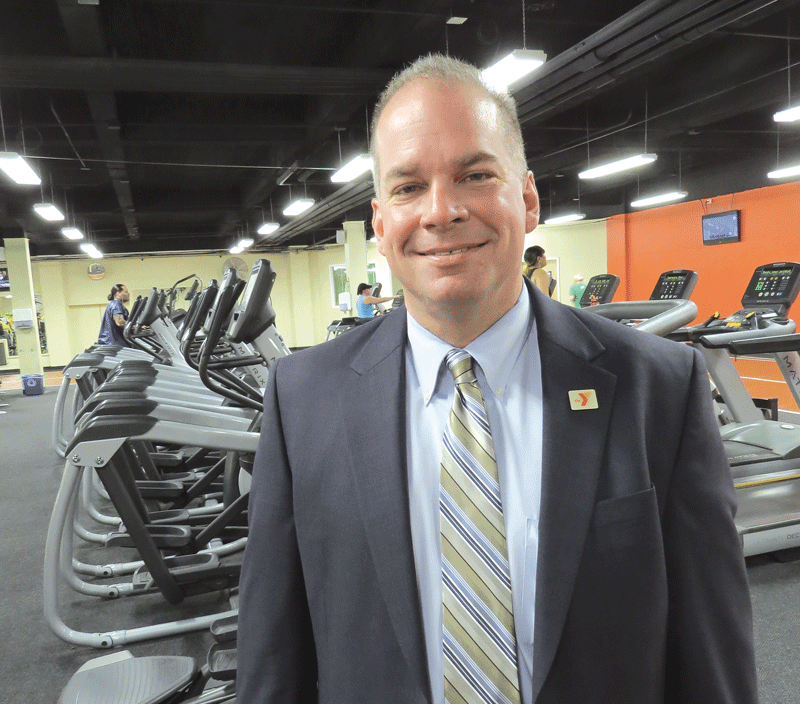
Scott Berg has a long history with both the institution of the YMCA and the Greater Springfield Y, the second-oldest in the country. Thus, he has a firm understanding of the many challenges now facing the local agency and the need for strong partnerships, or connections, as he called them, to bring about a more solid financial footing.

Scott Berg was certainly no stranger to the Greater Springfield YMCA when he walked through the doors of its Chestnut Street facility that day in January, his first as president and CEO.

In fact, one could make a strong argument that no one knew this organization, launched nearly a full decade before the first shots were fired during the Civil War — not to mention the myriad challenges it was now facing — better than he did.

Indeed, he first started working at the facility more than 20 years ago, when then-director Steve Clay tapped him to be senior program director of the organization’s youth and camping services. He would go on to play the lead role in the development and chartering of the Scantic Valley branch of the Springfield Y in Wilbraham, and then direct all aspects of a $6.5 million capital campaign to build a home for that branch and renovate other YMCA facilities.

And after he left the Y’s employ to pursue other career opportunities, including key development roles at both Springfield College and Western New England University, he remained involved with the organization, especially as a long-time board member.

So he certainly knew his way around the Chestnut Street offices when he arrived in January as successor to Kirk Smith — especially the route to a small conference room of sorts that he fashioned out of an old administrative office that, decades earlier, had served as what amounted to the front desk when the Y operated a hotel-like operation on its upper floors.

“I knew we needed a better place to have meetings — a quiet place where we could brainstorm,” said Berg of his small-scale renovation project.

And there has been quite a bit of that brainstorming over his proverbial first 100 or so days in office. Meetings in that new conference room have involved everything from the difficult but necessary decision to shut down the branch the Y opened in Agawam only 18 months ago due to membership levels far below those projected, to a desperately needed refinancing of the Y’s debt — a deal negotiated with a half-dozen area financial institutions led by Monson Savings Bank, to the ongoing saga involving the Dunbar Community Center.

“I came into this with my eyes wide open,” Berg said of his career decision, noting that these are some of the more challenging times this organization has seen in its long history.

They are in many ways similar to the perilous financial straits the Y maneuvered through during his time in the mid-’90s. What enabled the organization to navigate that whitewater, he explained, was a combination of imagination, determination, and the ability to both forge new partnerships with the broad community the Y serves and connect people with the institution. And he expects that same formula will propel the Springfield institution to better, far more solid footing.

Chestnut Street

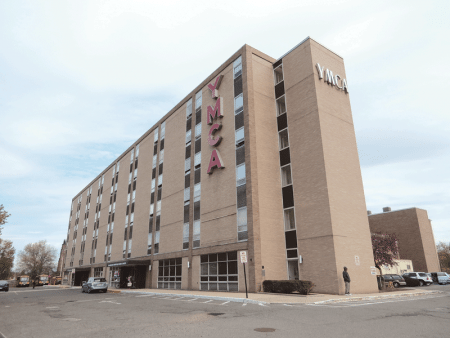
When Scott Berg talks about a “new YMCA,” he’s not necessarily talking about replacing the building on Chestnut Street, opened in 1968.

“What I want to do with the team is address the most pressing challenges — financially and programmatically — that face us now,” he explained. “We have to look at the problems that will be confronting us over the next two or three years, but at the same time determine where we want to see ourselves past that three-year mark moving forward.”

Looking ahead, he noted that, as the Y prepares to mark its 165th birthday, the facility on Chestnut Street — part of a huge urban-renewal effort in Springfield’s North End — will approach the half-century mark itself, a milestone that has already prompted considerable talk of a ‘new Y.’

Berg uses that term himself, but not necessarily in the context of a replacement for the aging Chestnut Street facilities — a step he acknowledges is still many years away. Instead, he uses it to refer to the organization as a whole and if and how it should be reshaped to better serve constituencies ranging from its members to the larger community.

“The YMCA is not a building,” he insisted. “The Y is a mission, and we need to go where the people are. The Y can go anywhere and be anywhere.”

For this issue, BusinessWest sat down with Berg in that new meeting room he created to talk about the organization, its challenges, its future, and how he considers himself fully equipped to lead the organization to better times.

A Good Fit

As he walked through the Y after his interview with BusinessWest on his way to the fitness center for some pictures, Berg stopped to talk with several individuals.

They ranged from an obviously pleased teen sitting in the front lobby who had just that morning secured his driver’s license, to an elderly gentleman in the locker room who has been coming to the Chestnut Street facility since the day it opened in 1968, to a Springfield-based lawyer walking some laps on the fitness center’s track, something he’s been doing for decades.

If he seemed totally at ease in those surroundings and with such people, it was with good reason. Indeed, Berg said he’s been around and, in many ways, part of YMCAs his whole life, dating back to when his mother was a volunteer at the original Agawam branch back in the ’70s.

He took part in a number of its programs, including what was known then as Y Indian Guides with his father.

For Berg, the Y shifted in nature — from being something he participated in to something he aspired to do for his career — when he worked as a staffer at Camp Sloper in Southington, Conn. while in high school and college.

As things turned out, he was far from the only future YMCA director working or staying at the camp during his tenure; there were several, in fact, and they remain in touch today, said Berg, talking about everything from their respective families to common challenges facing their Ys.

Berg started his career with the Y organization in 1991, a year after earning a degree in English at Boston College, as youth and family director of the Waltham Family Branch of the YMCA of Greater Boston.

In 1994, Clay, whom Berg had met while both were working for Ys in the eastern part of the state, offered him a somewhat similar opportunity in Springfield, as youth and camping services program director, and he accepted it.

“It was really good timing,” he recalled. “He was looking for a youth and camping director, and I was a youth and family director. At the time, we were just starting a family … it was a great opportunity.”

Over the next decade, he would hold several titles with the YMCA of Greater Springfield, but was most noted for his work with the creation of the Scantic Valley branch — a name that stems from the river that runs through several communities in that area.

It all started with Clay deciding to act upon multiple requests he’d received for a teen center in Wilbraham, an assignment he gave to Berg. Over time, Y leaders saw a need for additional YMCA programming, he noted, adding that this led to the eventual creation of a new Y branch that provided services through partnerships with, and facilities at, Wilbraham Monson Academy, Healthtrax, area schools, and other sites.

Growing participation in such programs led to a feasibility study that concluded there was ample demand for a full Y branch in the Wilbraham area, said Berg, who led the efforts to raise money to build the current facility in Post Office Park on Route 20.

Berg ran that Y for a few years before leaving for different opportunities. After a brief stint with Action Fire Restoration in Chicopee, which he served as general manager, Berg would shift his career path and segue into higher education and, more specifically, development efforts.

At Western New England University, he served as director of Major Gifts & Planned Giving and, among others, took a lead role in the capital campaign to expand the institution’s law school. And at Springfield College, he was assistant vice president for Development, managing a team that raised an a average of $4.5 million each of the five years he was in that role.

When Clay retired from the Y, Berg said he thought briefly about seeking the president’s role, but quickly determined that the job, which can be something approaching a seven-day-a-week proposition — “it’s a lifestyle more than it is a job,” he noted —  was not the right opportunity at that time, given the young age of his four children.

But Berg, who had been serving on the Y’s board since 2007, stepped down from that panel in 2011 to seek the director’s position when James Morton left to lead the YMCA of Greater Hartford. He did not prevail in that search, but again put out his name in for consideration last fall, because of what he called “devotion to the YMCA” — a phrase he used to reference not only the Greater Springfield operation — the second-oldest in the country — but the institution as a whole.

“I’m a Y person by nature and by birth — this has always been near and dear to my heart,” he said, while noting that the phrase ‘dream job’ doesn’t exactly fit the description for his new position. Instead, he chose to say it’s the right job at this time in his life — and a stern challenge he’s willing to accept.

The Shape of Things to Come

Leaning up against one wall in the new meeting room Berg created is a board honoring the groups and individuals that donated to the so-called Growing Together campaign he led to not only build the Scantic Valley YMCA, but also purchase and renovate Blessed Sacrament Church into the North End Youth Center.

He recalls this as a time when the community rallied behind the Y — one of countless times it has done so during its history — and help propel it to new heights. And also as a tremendous learning experience for him on a number of levels.

“The Y gave me the gift of being able to be a capital-campaign director, and I learned it all, soup to nuts,” he explained, adding that his experiences conceptualizing and then building the new Y branch helped him in those roles at Springfield College and WNEU. “That’s where I cut my teeth on serious fund-raising; we had hundreds of volunteers, there were timelines, expectations … it was really interesting because you have some great conversations, and you never really know where people’s interests are. That was an unbelievable experience.”

He had some others with the two colleges, he said, adding that what he learned from all that work is what he considers the most important lesson concerning development.

“It’s not about asking for money,” he told BusinessWest. “It’s about developing relationships and seeing if people have an interest in supporting the cause; it becomes super effective if you can connect people to your mission. And if you believe in what you’re doing, it’s much easier to get that support.”

Believing in what he’s doing certainly won’t be an issue for Berg in his new role, given his passion for the Y organization and the Greater Springfield institution. And he hopes to use that passion — which permeates the agency, he said — to connect more people to its broad-based and ever-evolving mission.

“We have a great story to tell in terms of the number of young people we serve, the number of teens we serve, and the people we assist who have low and moderate incomes; last year, we gave out more than $750,000 in financial aid,” he explained. “We need to tell that story better and make sure we’re in the businesses that we should be in.”

Moving forward, one of those businesses should include a strong focus on wellness and prevention, he went on, adding that this is one of the recognized needs within the community as the population ages, and the direction in which healthcare, in general, is moving.

“Moving forward, there’s more and more need at YMCAs across the country, including ours, to look at the health-and-wellness component as people age,” Berg explained. “How can we be part of their family and part of their lifestyle and partner with their medical providers and their families to make sure they get the care they need?”

Seeking Fiscal Fitness

More and stronger connections and partnerships will be needed in the months and years to come, he said, because this Y is facing some stern fiscal challenges and difficult decisions.

branch in Agawam

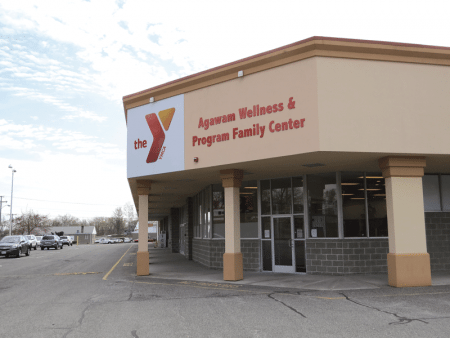
The fiscal problems facing the YMCA of Greater Springfield have prompted many difficult decisions, including the one to close the branch in Agawam, opened in 2014.

One of those decisions has already been made with the announced closing of the 10,000-square-foot Agawam branch at the end of May, closing the book on an operation that looked good on paper, but never lived up to expectations.

“The members there really love it, and they’re wonderful people,” he told BusinessWest. “We just didn’t have enough of them.”

But the Agawam branch’s failure to reach the break-even point is just one factor contributing to the difficult budget situation, he went on, adding that, as expenses have grown over the years, revenues have struggled to keep pace and, in general, have failed to do so.

Dunbar is an example. The Mason Square institution, which has been operating under the dark cloud of foreclosure for more than two years, turned over operations to the Y in 2011.

Those operations have been expensive, said Berg, who summoned the phrase “turning the corner” to describe them from the standpoint of breaking even. The city of Springfield recently threw a lifeline to Dunbar when it announced it would pursue purchasing of the facility, and Berg said the Y might emerge as the winner of a search for an entity to run the operation — hopefully in a more cost-effective fashion.

The mounting financial challenges have forced the organization to do what all businesses and nonprofits do when they reach such a point — take steps to bring the two sides of the ledger, revenues and expenses, into better balance.

Closing the Agawam branch was one step, Berg noted, while another was the refinancing of the Y’s accumulated debt. Several institutions have come together to assist the Y in this endeavor, he said, adding that it should help the $12 million operation with cash flow.

As for the future, and that ‘new Y’ he referenced, Berg said a replacement structure for the Chestnut Street is always something in the back of his mind, but something simply not realistic now or in the foreseeable future.

But, as he said, the Y is not a building, so a ‘new Y’ doesn’t mean a new structure.

“Once we get through our immediate challenges, we need to examine what the Y facility of the future looks like, or should look like,” he said, adding that this means everything from the facilities to the programming. “We need to anticipate what the needs and demands will be over the next 25 to 50 years and then look at how to meet them.”

View to the Future

Aside from providing convenient space for meetings, that renovated office at the Y also offers a great view of the side entrance to the facility, said Berg.

And that allows those conducting business to maintain a focus, figuratively but also quite literally, on what — and whom — they’re in business to serve.

“We can just look out there and see what we’re here for,” he said, adding that this vantage point should help the team at the Y not only weather the current storm but hone its mission to effectively meet changing societal needs in the years and decades to come.

“I look at the Y as a lifestyle — it’s not something you join, it’s something you live,” he said in conclusion, adding this is especially true for him, and this attitude fully explains why he’s now looking out the window every day.

George O’Brien can be reached at [email protected]

Employment Sections

Hire Education

By SARAH LEETE TSITSO

Maria Cokotis

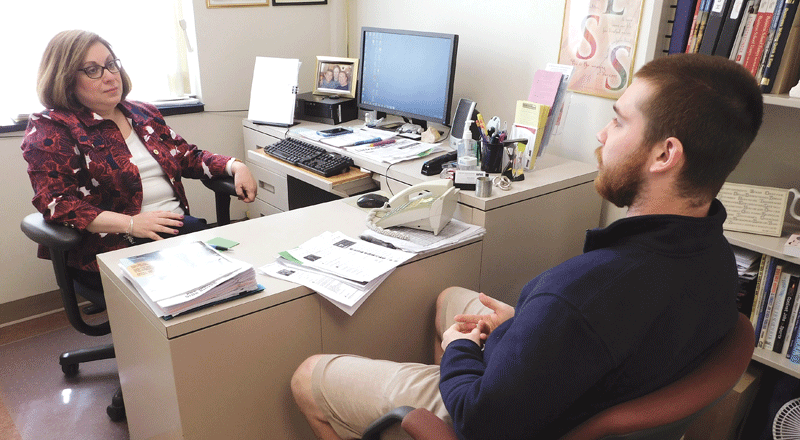
Maria Cokotis, assistant director of Career Development for the College of Business at Western New England University, helps Michael Jednak, a senior finance major, prepare for a job opportunity at a company in Boston.

Within weeks, the job market will be flooded with newly minted college graduates clutching both diplomas and dreams of the perfect job — or at least a solid opportunity with which to begin their chosen career.

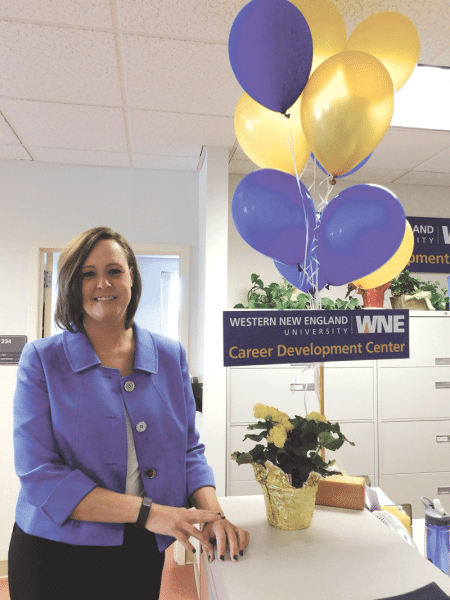
Andrea St. James, director of the Career Development Center at Western New England University, said most young professionals will fare well in their pursuits given the current economic climate — particularly those who have completed their degrees in subject areas where there is high demand for trained, qualified candidates.

And that description certainly pertains to sectors including information technology, computer science, information management, accounting, actuarial science, and business analytics.

Candice Serafino, interim director of UMass Amherst Central Career Services, agrees that many of the technical majors are seeing high rates of employment upon graduation. For some students at UMass, job offers have been coming for several months now.

“There is high demand for all of the STEM [science, technology, engineering, and math] majors,” said Serafino. “For many of these jobs, firms are recruiting students in the fall semester. These students are faring quite well, and already have their jobs lined up well before graduation. Employers are looking for the analytical and problem-solving skills these students possess.”

The ability to creatively solve problems is a common theme for this year’s graduating seniors, with career counselors crediting this skill with their success in the job market.

Andrea St. James

Andrea St. James says career-services professionals and students need to have frank, honest conversations about which jobs are hot — and which are not.

“Employers are finding that this cohort of students is filled with lifelong learners who use their critical-thinking skills to approach problem solving,” said Serafino. “Our students are looking at problems from a big-picture perspective, communicating at a high level, and working as part of a team to achieve results. They are motivated, hardworking, upwardly mobile, and resourceful. All of this makes them very appealing to employers.”

St. James agrees, noting that the 2016 graduates are comfortable sharing their opinions, are willing to take calculated risks, and have a desire to work for innovative entrepreneurs.

“Employers are going to see young professionals who are hungry to gain experience while, at the same time, making a difference in their communities,” she said. “They are a creative bunch who are ready to add value to organizations across the board.”

Laurie Cirillo, executive director of career and life planning at Bay Path University, told BusinesWest she believes this generation is sometimes “misunderstood,” with some employers believing these young professionals want high salaries and accolades without putting in the requisite work.

“That’s just not true,” she said. “The work ethic is there — when employers are able to find what motivates them. My experience with this generation is that they are pushing hard to excel and achieve. They take risks and are not afraid to try something new. Employers can catch this wave and cultivate some pretty extraordinary talent.”

Entrepreneurial thinking is a skill many of these young professionals have cultivated, which means more are looking for outside-the-box opportunities when it comes to employment.

“We’re seeing students who want to create their own machine instead of being a cog in someone else’s,” said Serafino. “Students are interested in innovative startups and niche jobs.”

Finding Their Niche

When it comes to niche professions, Cirillo noted that providing new, cutting-edge majors is critical for students’ long-term success.

She said areas like healthcare and information technology are booming, with high levels of job placement for graduates.  Total enrollment at Bay Path has grown 42% since 2011, with 100% growth in graduate programs since 2001, primarily in Occupational Therapy, Physician Assistant, Clinical Mental Health Counseling and Accounting.

She added that 96% of the 2015 graduates from the university’s traditional-student programs are employed, enrolled in graduate school, or both. She also noted that the state’s unemployment rate for March was 4.4%, well below local and national average, another benefit for job seekers. Overall, she attributes the success of Bay Path graduates to strategic decisions to offer programs and majors that reflect hiring trends and needs within the workforce.

“We build our programs and majors around where we see job growth,” Cirillo said, citing Bay Path’s new cyber security major as just one example.

Laurie Cirillo

Laurie Cirillo says she believes the current generation of students is largely “misunderstood” by employers.

Serafino said UMass takes the same approach. This year, the university noted an increase in employer interest in its life-sciences programs, so it held a career fair specifically for those students and prospective employers. “It was hugely successful, and we plan to expand on it next year.”

But if some fields are at various levels of ‘hot,’ others are cooling off, having reached a saturation point in today’s competitive job market. St. James said she’s seen a “leveling off” in law, education, communications, and marketing, for example.

And such trends warrant frank discussions between career-services professionals and students pursuing degrees in those fields, she went on.

“When we have students pursuing a major where we’re noticing a market saturation or fewer potential jobs, we’re poised to have an honest conversation with them, advising them to look at different opportunities where they can still utilize their skills and be successful,” said St. James. “In these cases, students need to look at what else they can do to diversify and translate their skills [into a career]. We want them to be ready when the economy shifts or new innovations change the marketplace.”

Serafino agrees that jobs in certain creative fields are experiencing a slowdown. However, she notes that technology and other innovations have shifted the demand to new niches. For example, the need for social-media professionals is opening up a whole new area of career opportunities for graduates.

Degrees of Success

Another challenge many college graduates are facing is the need for advanced degrees. Having a bachelor’s degree is often required, but in many industries it is becoming just as important to have a master’s or other advanced degree.

“You can still get a position in your field, but if you want to move up, master’s degrees are becoming the new bachelor’s degree,” said St. James. “We are also seeing an increased need for certificates and advanced study for certain professions, which is creating a niche market for specific areas of expertise.”

At Bay Path, where some of the most popular majors are science-based, advanced degrees are a necessity. Areas of study with high rates of students seeking advanced degrees include occupational therapy, physician assistant, accounting, clinical and mental-health services, and education (special education in particular).


Click HERE for a list of Western Mass. Employment Agencies


Even though some careers are now requiring a higher level of education, Serafino said she is still seeing many undergraduates who are able to secure great jobs. The question is, how are they doing it?

All three career-services professionals agree that there are several ways graduating students can get a leg up on their competition in the open market.

The first is by connecting early and often with career counselors. This includes attending job fairs, being paired with mentors who have experience in the student’s chosen field, and job-shadowing opportunities.

St. James noted that Western New England University is part of the College Career Centers of Western Massachusetts, along with American International College, Bay Path University, Holyoke Community College, Elms College, Westfield State University, Springfield College, and Springfield Technical Community College. Together, this collaborative recently hosted a career fair that helped cross-promote the colleges while also providing a one-stop shop for prospective employers.

“Hosting a career fair that is open to eight colleges really allows businesses to see the breadth and depth of the candidates we have here in Western Mass.,” said St. James. “We had a number of large employers in attendance who really got a chance to see a range of candidates from a wide variety of majors and schools.”

Serafino said UMass also hosted a number of job fairs this year, bringing more than 500 employers to that campus.

In terms of providing students with the information and guidance they need to prepare for the workforce, St. James said it is important to have career counselors with real-world experience in a specific industry.

“Our career counselors need to be able to connect students with professionals in the industry so those students can have real conversations and experiences with innovators who are working in the trenches,” she said.

Cirillo said career exploration is built directly into the curriculum at Bay Path, from the student’s first year until they complete their course of study.

“We want every student to have a plan for the future before they cross that stage on graduation day,” she said. “We spend four or more years preparing them to make connections, continuously think about and modify their education and life plan, and take the steps they need to be empowered and successful in whatever career they have chosen.”

Second, internships are more crucial than ever. Bay Path University requires internships for nearly all of its undergraduate students, for example.

Cirillo said studies have shown that employers are more likely to hire a candidate if he or she has a grade point average above 3.0 and has experience in the field. Internships provide that experience and, for many prospective employees, enable them to make connections within their industry that can lead to permanent positions. Internships help students feel confident in their chosen career path, as well as provide them with experience that often translates into higher starting salaries.

At Western New England University, students are eligible for an academic internship in their junior year. St. James noted that some majors require an internship, while others do not. That said, St. James said her career counselors always recommend internships, whether or not the student receives course credit for the experience.

“For most students, they have never done any real work in that career field,” she said. “Internships help students determine if they really want to do such work and if that career is right for them. Experiencing it first-hand, as early as possible, either reaffirms their career choice or enables them to redirect their efforts.

“When our students take that first step into the workforce, it can be a scary experience, especially if they have no knowledge or realistic expectations about work in the field,” she went on. “That can make the transition into the workforce much more difficult.”

Serafino said internships are a win/win proposition, often ensuring that talented young professionals stay in the area. She noted that employers like hiring students who have interned with their company, because those interns have a better understanding of that organization’s needs and culture.

At UMass, Serafino said a recent survey showed that close to 65% of seniors in the class of 2015 participated in some type of experiental learning, whether it was a formal internship, community-service opportunity, or job shadowing.

Cirillo also noted that internships can keep talent local.

“Employers who offer internship opportunities are cultivating their own pipeline,” she said. “It helps keep talent here in our region.

Balancing Act

As students celebrate their graduation, they are also experiencing anxiety.

Debt is front of mind for many, and so is the desire for that elusive work/life balance. As St. James noted, students want to work for companies that are socially responsible and that offer opportunities for employees to volunteer in the community. Some students want to wear a suit every day, but some don’t.

This duality is challenging for employers looking to attract and retain young talent. One commonality is a desire for mentors, and the development of strong relationships among co-workers.

“Those relationships are important to this generation of employees,” said St. James. “They need to like and value their jobs and the people around them. For them, it’s about more than a paycheck. It’s about forming relationships that have value, making a difference, progressing within their chosen field, and building a strong network. That’s what our students are looking for as they enter the job market.”

Employment Sections

Don’t Try to Disprove Evolution

By Peter Vickery

Peter Vickery

Peter Vickery

Is a hospital allowed to terminate a Muslim employee who refuses to be vaccinated on religious grounds, or would termination constitute unlawful discrimination?

That was the question confronting the U.S. District Court for the District of Massachusetts when Leontine Robinson sued Boston Children’s Hospital under Title VII of the federal Civil Rights Act and Chapter 151B of Massachusetts General Laws. The short answer? The hospital was entitled to summary judgment, meaning Robinson lost. But as for the reasons why she lost, employers should take note of the many steps the hospital took in an effort to accommodate Robinson, steps that in combination amounted to a ‘reasonable accommodation’ sufficient to fend off her claim of discrimination.

Need the hospital have gone to the trouble of taking those steps for fear of a lawsuit? The well-reported cases of the past few years send mixed messages. Some suggest that many judges are deaf to pleas for religious liberty, while others have ears to hear. On one hand, the U.S. Supreme Court has held that hijab-wearing job applicants have a right to be hired by Abercrombie & Fitch despite the company’s no-headwear policy and that Hobby Lobby has the right to refrain from paying for its employees’ abortifacients despite the dictates of the Patient Protection & Affordable Care Act.

On the other hand, unless the Supreme Court rules otherwise, the federal Department of Health and Human Services — with the approval of six different federal courts of appeal — will continue insisting that the nuns of the Little Sisters of the Poor must pay for contraceptives. Similarly, after a Catholic prep school (Fontbonne Academy in Milton, Mass.) rescinded its job offer to a man when it learned that he was married to another man, the Superior Court for Norfolk County held that the school had discriminated against him unlawfully.

Notwithstanding the fact that Fontbonne based its decision on a religious objection to same-sex marriage, it was not entitled to any sort of dispensation from the state. Incidentally, the school would have been on firmer ground had it limited its enrollment and employment to Catholics, but by welcoming people of all faiths and none, it ran afoul of the Commonwealth’s anti-discrimination law (yes, you read that correctly).

So, given the experience of Little Sisters of the Poor and Fontbonne Academy, one could be forgiven for thinking that, when a children’s hospital — by definition, a place for the treatment of children who are ill, some of them very seriously — instructs its employees to get vaccinated against influenza, it would be perfectly all right for the hospital to respond to a simple ‘no’ with an equally simple ‘goodbye,’ even if the employee cites religious grounds. That is not the current state of our Commonwealth’s anti-discrimination law, however. Boston Children’s Hospital demonstrated admirable wisdom and foresight in not immediately directing Robinson to the door marked ‘exit.’

The case began in 2011 when, in accordance with recommendations from the American Academy of Pediatrics and the Mass. Department of Public Health, the hospital adopted a policy requiring those employees working in patient-care positions to be vaccinated against the influenza virus. Robinson refused. She was often the first employee to come into contact with patients, and her job involved touching them and sitting close to them. She also happens to be a Muslim, more specifically an adherent of the Nation of Islam, and initially she said the basis for her refusal was the presence of pork byproducts in the influenza vaccine.

At this juncture, although it is not relevant to the legal analysis of Robinson’s claim of religious discrimination, readers may wish to note that, within Islam as a whole, on this issue at least, the Nation of Islam is a bit of an outlier. In 1995 (coincidentally, the year Robinson started working at Boston Children’s Hospital) the Islamic Organization for Medical Sciences ruled that the series of chemical reactions by which porcine products turn into gelatin is transformative, so much so that the resultant gelatin is not ‘judicially impure’ but ‘lawful and permissible.’ Therefore, according to the Islamic scholars who authored the 1995 statement, observant Muslims are allowed to receive vaccinations via gelatin that, prior to its transmogrification, contained pig tissue.

But the Nation of Islam takes a different view of vaccines, as do some Scientologists, a few minor Christian denominations such as End Time Ministries, and Robert F. Kennedy Jr.  The year after the Islamic scholars issued their statement, the Nation of Islam’s minister of health declared all vaccines suspect and recommended a “moratorium for all African-American members of the Muslim faith.” Although it was issued in 1996, Robinson only learned of this recommendation in November 2011.

From that point forward, she foreswore all vaccines, possibly regretting the tetanus shot she had received in September. Nevertheless, so far as the hospital was concerned, the loneliness of the Nation of Islam’s anti-vaccine position among Muslims in general and the fact of Robinson’s prior vaccines were not trees worth barking up: judges are loath to assess the sincerity and bona fides of a litigant’s religious professions.

To recap, Robinson, an employee at a children’s hospital, refused a mandatory influenza shot on religious grounds that it was pig-based, and even though mainstream Muslim opinion holds that the vaccine is permissible, the hospital did not simply fire her. Rather, in order to accommodate her religious objection (the initial one), the hospital offered Robinson a pig-free version of the influenza vaccine. But by that stage, Robinson had learned of the Nation of Islam’s moratorium on all vaccinations, so she refused that too.

Again, instead of firing Robinson, the hospital attempted to accommodate her. Human resources arranged an interview for a clerical position, a job that did not involve direct patient care, but for which Robinson was not chosen. After that, she did not apply for any other positions in the hospital. After that, the hospital not only granted Robinson a two-month leave of absence to look for work, but also assigned an HR employee to help her.

When the two months were up and Robinson had not found new employment, the hospital gave her two more weeks. Finally, when the additional two weeks expired, it categorized Robinson’s separation from the hospital as voluntary so that she could apply for other positions. In February 2014, Robinson sued the hospital for religious discrimination.

At summary judgment, the court assumed that Robinson could show that her vaccine refusal was based on a sincerely held, bona fide religious belief, so the burden shifted to the hospital to show either that it had offered her a reasonable accommodation or that a reasonable accommodation would be an undue burden. The court found in the hospital’s favor on both counts: the hospital had offered a reasonable accommodation (see the preceding paragraph), and the accommodation Robinson requested would have been an undue hardship (her working in a patient-care position without vaccination would increase the risk to the hospital’s already-vulnerable patients).

What should Massachusetts employers take away from this case? First, that Title VII and Chapter 151B prohibit discrimination on the basis of religion. Second, challenging the bona fides of an employee’s professed belief is a fool’s errand. As the court stated. “although inconsistencies between a person’s conduct and her professed religious beliefs may suggest insincerity, they may also reflect an evolution in the person’s religious views.” Do not try to disprove evolution.

Third, on the bright side, an accommodation is not reasonable if it would generate undue hardship, which in turn means that the employer does not have to create a new job for the religious objector.

Fourth, and perhaps most importantly, as a practical matter, an employer should bear in mind the burden-shifting formula and prepare to demonstrate two things in detail: (1) that it attempted to accommodate the employee’s religious objection, and (2) precisely how the particular accommodation that the employee requested would cause undue hardship.

Peter Vickery practices employment law in Amherst; (413) 549-9933.

Employment Sections

A Transition in the Law

By Karina L. Schrengohst, Esq. and Jennifer Butler, Esq.

Discrimination based on transgender status or gender identity is a developing area of the law.

Recently, there has been considerable debate on the local, state, and national levels over access to bathrooms for transgender individuals. As the public debates this issue, legislators, administrative agencies, and courts are shaping the law that prohibits gender discrimination, including discrimination against transgender individuals.

In light of this, businesses that are open to the public should understand how to navigate through the legal landscape of an evolving area of discrimination law.

Karina L. Schrengohst

Karina L. Schrengohst

Jennifer Butler

Jennifer Butler

In 2012, with the passage of An Act Relative to Gender Identity (also known as the Transgender Equal Rights Bill), Massachusetts added gender identity as a protected class under the state’s anti-discrimination law, which defines gender identity as “a person’s gender-related identity, appearance, or behavior, whether or not that gender-related identity, appearance, or behavior is different from that traditionally associated with the person’s physiology or assigned sex at birth.” Massachusetts law prohibits discrimination against an individual based on that individual’s gender identity, transgender status, or perceived nonconformity with gender stereotypes in the context of employment, housing, education, and credit.

Massachusetts public-accommodation law, however, currently does not explicitly prohibit discrimination based on gender identity or transgender status. Massachusetts law prohibits discrimination in a place of public accommodation based on race, color, national origin, ancestry, religious creed, sex, sexual orientation, and disability.

A place of public accommodation is essentially any place open to the general public. This includes, for instance, hotels, restaurants, bars, retail stores, theaters, sports stadiums, museums, libraries, parks, gyms, swimming pools, beaches, laundromats, gas stations, and public transportation. In other words, this means that, for example, it is unlawful for a restaurant to refuse service or a movie theater to refuse entry to an individual based on his or her gender.

Gender identity will likely soon be a protected class under Massachusetts public-accommodation law. In fact, a bill is now under review by the state Legislature that seeks to add the term ‘gender identity’ to the existing law to expressly prohibit discrimination against transgender individuals in the context of places of public accommodation. In addition, the proposal specifically aims to increase the scope of anti-discrimination law to explicitly grant transgender individuals access to public areas legally separated by gender, like bathrooms and locker rooms, consistent with their gender identity.

The proposed legislation has gained an increasing amount of support from the business community. Earlier this month, more than 40 businesses supporting the public-accommodations bill joined Attorney General Maura Healey in an open letter to lawmakers, urging them to take a favorable vote on the bill.

In the meantime, even in the absence of an explicit prohibition on discrimination based on gender identity, business owners should understand that denying access to transgender individuals could result in a lawsuit based on gender discrimination, which is explicitly prohibited by Massachusetts public-accommodation law.

In the employment context, federal law does not explicitly prohibit discrimination based on gender identity.  Despite this, federal courts and the Equal Employment Opportunity Commission have recognized that discrimination based on gender identity or transgender status is a form of unlawful gender discrimination. A lawsuit could similarly be brought in the context of public-accommodation law.

Because change is on the horizon, and considering the current trend of interpreting gender-discrimination law, to reduce the risk of litigation, business owners would be wise to take steps to ensure that their policies and practices do not deny access and otherwise discriminate against individuals based on gender identity, transgender status, or perceived non-conformity with gender stereotypes.

Additionally, as most places of public accommodation are subject to employment-discrimination law, business owners should educate their employees that discrimination based on gender identity is unlawful and will not be tolerated in the workplace. Because this is a developing area of the law, business owners should consult with counsel with any questions concerning transgender-discrimination law.

Karina L. Schrengohst, Esq. and Jennifer Butler, Esq. specialize exclusively in management-side labor and employment law at Royal, P.C., a woman-owned, boutique, management-side labor and employment law firm, which is certified as a women’s business enterprise with the Massachusetts Supplier Diversity Office, the National Association of Minority and Women Owned Law Firms, and the Women’s Business Enterprise National Council. Schrengohst can be reached at (413) 586-2288 or [email protected]. Butler can be reached at (413) 586-2288 or [email protected].

Employment Sections

Distance Learning

By Stefanie Renaud, Esq.

Stefanie Renaud

Stefanie Renaud

Telecommuting is one of the fastest-growing employment trends in the U.S., up 103% since 2005. Today, more than 3.7 million employees telecommute at least half the time. Undoubtedly, that number will continue to grow, because 85% of Millenials, who make up the largest generation in the workforce, would actually like to telecommute full-time.

Although research shows that telecommuting improves morale, increases productivity, and improves employee quality of life, there are many legal issues for employers that may complicate this popular work arrangement.

The Fair Labor Standards Act

The federal Fair Labor Standards Act (FLSA) and parallel Massachusetts law require employers to pay their employees properly. These statutes categorize employees in two ways: exempt and non-exempt. For non-exempt employees, the vast majority of the workforce, the employers must keep detailed records of hours worked and wages paid, pay the overtime rate of time and half for all hours worked over 40 per week, and pay employees minimum wage.

Exempt employees are just that: employees who are exempt from these record-keeping and overtime requirements. Thus, telecommuting for exempt employees does not implicate wage/hour law. However, employers should take great care before classifying employees as exempt. The FLSA and Massachusetts law lay out a few narrow exceptions with specific job and salary requirements. To ensure you are properly classifying your exempt workers, consult with an employment attorney before classifying employees as exempt.

Record-keeping Requirements

For non-exempt telecommuting employees, the employer must keep accurate time records and pay the employee for all work performed. How does an employer keep records for an employee it never sees?

Employers may utilize an electronic time-keeping program that requires employees to punch in and out, or rely on paper time cards. Regardless of form, the employer should provide time sheets for employees to use when recording their work hours. Employees should also ‘sign off’ on their time sheets, either electronically or in paper form.

According to the 11th Circuit Court of Appeals, the employer is responsible for providing the time sheets, but the employee is responsible for accurately keeping their time records. Thus, the telecommuting policy should emphasize that the employee is responsible for accurately recording their work hours.

Employers should also provide telecommuting employees with information to help them independently determine what working time is compensable. For non-exempt employees, compensable time is any time spent engaged in ‘principal activity.’ Commuting time may also be compensable. If employees complete principal activity at their home or office, then travel to the other workplace and complete principal activity there, then their commuting time is compensable. Consult with employment counsel to help define principal activity and to untangle the many complicated issues surrounding compensable time under wage/hour law.

Proper and Timely Payment of Wages

Regardless of the telecommuting employee’s status as exempt or non-exempt, the employer is responsible for complying with all state and federal wage laws. Employers must know where telecommuting employees will be working because state law governs many facets of the employment relationship, including meal and rest breaks and how often employees must be paid.

In Massachusetts, employees are entitled to a 30-minute meal break when working six or more consecutive hours, and wages must be paid on either a weekly or biweekly basis.

Location is also particularly important to comply with minimum-wage laws, because some states and municipalities, such as San Francisco, have higher minimum-wage rates than federal law. In Massachusetts, the minimum wage is currently set at $10 per hour, with another increase scheduled for Jan. 1, 2017. Consult with your employment counsel to ensure compliance with state and local laws.

Overtime Managed

Keeping accurate time records not only aids in tracking employee eligibility for federally mandated benefits under the Family Medical Leave Act and the Affordable Care Act, but also in the proper calculation of overtime compensation. How can an employer control overtime for employees who telecommute? The telecommuting policy should clearly prohibit overtime, unless authorized in advance.

The policy should be consistently enforced, with proper remedial action taken after each violation. However, regardless of the employer’s overtime policy, a non-exempt employee must be paid overtime compensation, at the time-and-a-half rate, for all hours worked over 40 per week.

Even so, some overtime does not have to be paid — if the activity is de minimis.  De minimis activity is an insubstantial or insignificant period of time, beyond the normal work hours, that cannot practically be precisely recorded for payroll purposes. Business realities will determine if an activity is de minimis, so consult with your employment counsel on any question about whether overtime pay is due or not.

The Best Policy

The best telecommuting policy is one that is well-thought-out and extremely clear. The policy should clearly define what it means to work, what is ‘principal activity,’ which activities are compensable, and how to request authorization for overtime. The policy should also be clear as to when employees are not expected to work, what breaks should be taken, and that the employee is responsible for accurately recording their work hours.

The best policy will not only give employees important information, but get important information in return. Because state and local laws differ, employers should obtain information about the legal obligations in the specific state where their employee will be based.

Employers may wish to test their telecommuting policy by running a pilot program. A test run can help identify potential problems and allow for proactive solutions to be incorporated into the final policy. Because of the legal complexity of this area, employers should carefully consult with employment counsel when developing and implementing a telecommuting policy and program.

Finally, as with any policy, the telecommuting policy must be clear about which employees are eligible to telecommute. The policy should be consistently followed, as inconsistent awarding of telecommuting privileges could expose the employer to liability for discrimination.

Stefanie Renaud, Esq. is an associate with the law firm Skoler, Abbott & Presser, P.C., which exclusively represents management in labor and employment matters. She is admitted to practice in Massachusetts; (413) 737-4753; [email protected]

Daily News

NORTHAMPTON — Green Miles Lipton, LLP announced that attorney Nicole Bercume has joined the firm as an associate. She most recently was in private practice in Hadley.

After graduating from Florida Atlantic University with a bachelor’s degree in marketing and management, Bercume pursued her law degree at Ave Maria School of Law. During her time there, she was a senior editor on the Ave Maria Law Review while working in various positions for Collier County.

Bercume is admitted to practice law in Massachusetts and Florida. Her areas of practice are land use, zoning and planning, landlord/tenant, real estate, business formation, estate planning, consumer protection, and personal injury.

40 Under 40 The Class of 2016

President, Rediker Software Inc.; Age 32

Andrew Anderlonis

Andrew Anderlonis

Andrew Anderlonis spent six years in the U.S. Navy — his obligation in exchange for the scholarship awarded him to attend George Washington University — and admits to occasionally thinking about making the Navy a career.

But he majored in international business and management information systems at GW, and admitted that this was where his passion really lay. And he wound up putting those talents to work in a setting he probably wasn’t thinking about while helping to put the USS George H.W. Bush, a Nimitz-class supercarrier, through its paces several years ago.

That would be Rediker Software, the venture started by the man who would become his father-in-law, Rich Rediker.

Indeed, while the founder is still quite active in the business, which specializes in creation of software programs for school systems, Anderlonis now serves as president, a broad role that involves everything from long-range strategic planning to new-product development, and to finding new and different ways for the company and its employees to make a difference within the community.

“I really act as COO, CTO, and CIO,” he said, using all those letters — the ‘t’ stands for technology, and the ‘i’ for innovation — to convey the message that he does a little bit of everything. (His wife, Amy, serves the company as marketing director.)

And he enjoys all aspects of that job description, particularly the community-involvement element.

Within that realm, he conceptualized the company’s internship program, which gives local high-school and college students the opportunity to develop, launch, and distribute new educational technology products to schools locally. He also launched the company’s volunteer initiative known as Rediker Cares, which gives employees the ability to give back to the local community.

Through that program, Anderlonis has ramped up the company’s already-considerable commitment to Link to Libraries (LTL), which, since its creation nearly a decade ago, has donated more than 500,000 books to area schools and nonprofits.

Rediker has for some time donated space at its Hampden headquarters for LTL’s warehouse, but Anderlonis has become directly involved by joining the agency’s board.

And while he’s serious about all that, he says he’s most passionate about what he calls a “full-time dad.”

“One of the big reasons I left the Navy was that I wanted to be around to see my child grow up and be there for him,” he explained, referring to 2-year-old Tyler.

In short, his life story has already had some intriguing plot twists, but some of the best chapters are still to be written.

— George O’Brien


Photography by Leah Martin Photography

40 Under 40 The Class of 2016

Associate Attorney, Skoler, Abbott & Presser, P.C.; Age 37

John Gannon

John Gannon


John Gannon says employment law is an intriguing field, even for non-lawyers, because of its universal impact compared to, say, divorce law or criminal law.

“Everyone has had a job, so everyone can relate,” Gannon said. “Unfortunately, people may have lost their job or know someone who has, so they have a first-hand perspective on the issues we deal with on a daily basis.”

However, the legal world wasn’t Gannon’s first career choice. He first went into marketing and advertising, but found that wasn’t as compelling to him as, well, arguing.

“I was always getting into arguments — not because I had to be right; I just enjoyed discussing legal or other issues with people. I like to get their perspective, especially if it’s someone I respect, because they’re often able to shed light on aspects of the argument I wasn’t even looking at. But I really do like arguing, and what better place to do that than in the legal field?”

He said legal work sometimes resembles another passion, tennis. “You’re on one side of the net, and another lawyer is on the other side. There’s a lot of rallying back and forth.”

He says this is an exciting time to be in employment law — the specialty of his Springfield-based firm — particularly because of all the issues related to emerging technologies, from social media to working remotely to bring-your-own-device rules governing laptops, tablets, and smartphones at work.

Meanwhile, he has successfully defended employers against claims of discrimination, retailiation, harassment, and wrongful termination, as well as emerging issues ranging from Massachusetts’ new earned-sick-time law to changes in the Fair Labor Standards Act related to overtime exemptions.

“These changes impact a lot of employees,” Gannon noted. “A significant part of our experience is just counseling employers when they have questions and seek advice related to compliance.”

Outside the office, he’s cultivating important relationships as well, such as his pro bono legal-aid work with the Springfield District Court Lawyer for a Day program, and especially as a board member with Educational Resources for Children, an Enfield nonprofit that provides after-school services for kids.

“In today’s world, a lot of children have two working parents, and these types of programs are becoming more and more important,” he said. “Parents want to feel confident knowing that, every day, their children are involved in rich academic and recreational activities after school.”

After all, the work world — with all its legal complexities — will arrive soon enough.

— Joseph Bednar


Photography by Leah Martin Photography

40 Under 40 The Class of 2016

Associate Attorney, Doherty, Wallace, Pillsbury & Murphy, P.C.; Age 37

Jesse Belcher-Timme

Jesse Belcher-Timme


Jesse Belcher-Timme says that, long before he set out in pursuit of his juris doctor at New England School of Law, he envisioned himself joining the legal profession.

As for becoming a litigator and spending most of his time in the courtroom arguing cases before a judge and jury … well, that was another matter.

“I was always interested in the law,” he told BusinessWest, “but I was pretty sure I didn’t want to do trial work; it definitely intimidated me at the beginning — that public-performance aspect of it and being in front of a judge.”

But he said it’s his style to not back away from those things that intimidate him, and instead address them head-on. “That’s my response when I’m nervous about something — to bite the bullet and just do it.” And that’s what he did with his career, with some impressive results.

Indeed, he’s now a rising star at Springfield-based Doherty, Wallace, Pillsbury, & Murphy, P.C., handling cases across a broad spectrum of the law, from insurance defense to municipal issues to complex commercial disputes.

“Many lawyers practice in a subject matter, and they sort of get comfortable with that,” he said while explaining his work and why he enjoys it. “When you’re a trial attorney, your subject matter is going to court, so while the nature of the cases changes, what you’re doing is the part you know best — the process, the procedure, and the strategy; you’re always learning something new.”

And he now talks about litigation using phrases like this: “the more you do it, the more of a rush you get from that kind of performance, and that’s part of the draw at this point.”

While making a name for himself in courts across the region, Belcher-Timme has also been active in the community, especially the city he calls home — Easthampton. There, he serves as chairman of the Planning Board, representative on the Pioneer Valley Planning Commission, and trustee of the Hilltown Cooperative Charter Public School.

The rest of his time gets devoted to what he described as his two passions: these would be his family — wife, Becky, son, Jack (11), and daughter, Ella (9) — and the sport of hockey.

He played it at New York University, and still plays it in area men’s leagues, while also coaching it and directing the Nonotuck Valley Hockey Assoc.

So you might say that, both inside and outside the courtroom, he’s netting some real results.

— George O’Brien


Photography by Leah Martin Photography

Opinion

 By CHRISTOPHER GEEHERN

Massachusetts employers oppose by a wide margin a pending ballot question that would legalize the recreational use of marijuana in the Commonwealth.

Sixty-two percent of 180 employers responding to the special question on the March Associated Industries of Massachusetts (AIM) Business Confidence Index survey said they would vote ‘no’ on the pot-legalization referendum due to appear on the Nov. 1 ballot. Thirty-eight percent were in favor.

The proposed ballot law would authorize individuals 21 and over to possess up to one ounce of marijuana outside of their home and up to 10 ounces of marijuana in their residences. It calls for taxes on marijuana sales and creates a Cannabis Control Commission to handle regulation and licensing. If approved, the new law would take effect on December 15.

AIM opposes the question because the legalization of marijuana in Massachusetts would create considerable uncertainty for employers relative to their legal rights and obligations, particularly with workplace drug policies. These employers would operate in an environment in which state law permits private use of marijuana, while federal law, which is often the overriding jurisdiction in employment scenarios, prohibits marijuana use.

“We’re not surprised by the poll results given the concerns being expressed to us by member employers,” said John Regan, AIM’s executive vice president of Government Affairs. “How will an employer respond to a worker operating heavy equipment on a job site under the influence of marijuana? Many jobs, particularly those in safety-sensitive fields like transportation or manufacturing, must adhere to federal regulations that still prohibit the use of any substance that creates impairment.”

Another issue is that many companies receive favorable workers’ compensation insurance rates by declaring themselves to be drug-free workplaces. That status may be substantiated only through drug-testing employees. Even if employees are, on their personal time, using drugs legal in their state, if those drugs are indicated on their drug tests, their workplace would lose those favorable insurance rates.

Recent surveys have indicated an increase in general marijuana use when states approve the legalization of marijuana. According to the National Survey on Drug Use and Health, between 2012 and 2013 (when marijuana was legalized but states had yet to implement a regulatory framework), the percentage of adults who reported using marijuana jumped by more than 20% in Washington and Colorado.

Marijuana legalization is among a handful of November ballot questions with implications for employers. AIM favors a proposal to lift the cap on charter schools and opposes questions that would end the use of Common Core educational standards and impose de-facto government price controls on hospitals. AIM also opposes a proposed constitutional amendment, which could reach the ballot by 2018, that would impose a 4% surtax on income of more than $1 million.

Christopher Geehern is executive vice president of Marketing & Communication at Associated Industries of Massachusetts.

Court Dockets Departments

The following is a compilation of recent lawsuits involving area businesses and organizations. These are strictly allegations that have yet to be proven in a court of law. Readers are advised to contact the parties listed, or the court, for more information concerning the individual claims.

CHICOPEE DISTRICT COURT

FedEx Techconnect Inc. v. Spectrum Crafts Inc. f/d/b/a The Jannlyn Corp.
Allegation: Non-payment for shipping services: $11,520.28
Filed: 2/22/16

HAMPDEN SUPERIOR COURT

Christopher Lopez v. Sonic Velocity and Ali Ozan Koseoglu
Allegation: Misclassification as independent contractor and non-payment for services: $25,000+
Filed: 2/22/16

Dominic Santiniello, a minor, by and through his mother as next friend, Lori Santiniello v. Longmeadow High School
Allegation: Wrongful suspension of student: $25,000
Filed: 2/24/16

Red Technologies v. Safe Environment of America Inc
Allegation: Non-payment of waste-removal services: $48,667.94
Filed: 2/22/16

United Bank v. Hilltop Holding, LLC and Thomas Engwer, III
Allegation: Default on loan payment: $70,412
Filed: 2/24/16

Valerie Greene v. Fathima, LLC d/b/a Corner Convenience and Gas and Zahoor Haq
Allegation: Negligent maintenance of premises causing ankle fracture: $2,946.94
Filed: 3/11/16

HAMPSHIRE SUPERIOR COURT

Gustafson Electric Inc. v. O’Leary Group Inc., American River Inc., and TwoThree27, LLC
Allegation: Breach of third-party beneficiary contract and unjust enrichment: $127,614.85
Filed: 3/16/16

Valley Home Improvement Inc. v. SunEdison, LLC
Allegation: Non-payment for services rendered: $37,771.69
Filed: 3/18/16

NORTHAMPTON DISTRICT COURT

United Bank v. Grow, LLC and Jodie Castanza
Allegation: Breach of promissory note: $10,379.74
Filed: 2/22/16

PALMER DISTRICT COURT

Aramsco Inc. v. Accutech Insulation and Contracting Inc.
Allegation: Non-payment of goods sold and delivered: $14,088.23
Filed: 3/25/16

Daily News

HADLEY — The Pioneer Valley Chinese Immersion Charter School (PVCICS) is asking the state Board of Elementary and Secondary Education to reconsider Commissioner Mitchell Chester’s decision to deny the expansion of its authorized enrollment to 968 students.

“Currently we are serving 430 students in grades K through 11, and we will be expanding into the 12th grade next year,” said PVCICS Executive Director Richard Alcorn. “We need authorization now to provide planning time to find and develop a facility suitable for a robust and economically sustainable high-school experience for our students.”

PVCICS is offering all its students the two-year International Baccalaureate (IB) Diploma Programme in 11th and 12th grades. PVCICS wants to build a high school similar in scale to other academically and economically successful Eastern Mass. IB charter high schools with a variety of course offerings and extracurricular options.

Opened in 2007, PVCICS is the state’s first and only Chinese-language-immersion public charter school. It serves a racially, ethnically, and socioeconomically diverse student body. Nationally, language immersion programs are gaining in popularity and demonstrating educational success.

Alcorn recently testified before the state Joint Committee on Education telling lawmakers that Massachusetts — and the New England region — are behind the national curve in adopting language-immersion programs. “State law should reflect the fact there is no single school model that is the best for all students, and it should support innovation and choice with a variety of quality alternatives.”

Alcorn submitted specific requests for changes to the charter-school law to Senate President Stanley Rosenberg for consideration by the Senate charter school working group, including authorizing charter schools to create special-education and two-way language-immersion schools. He also plans to reach out to Gov. Charlie Baker to solicit support.

Last fall, PVCICS was named the top-performing high school among public schools by the Boston Business Journal. In December, the school received the 2015 Confucius Classrooms of the Year Award, which is presented to 10 schools across the world for excellence in teaching and learning, curriculum, cultural richness, community engagement, and extracurricular activities. Only three schools in the U.S. received the award.

Daily News

BOSTON — Gov. Charlie Baker, House Speaker Robert DeLeo, and Senate President Stan Rosenberg issued statements this week in recognition of the 10-year anniversary of universal access to healthcare in Massachusetts.

“Ten years ago, Massachusetts led the country by creating a landmark healthcare coverage law, and today we are pleased that 96.4% of the state’s population is insured,” Baker said. “Through our state-based marketplace, individuals and families have the ability to choose their best coverage options, and while there is still more work to be done to increase accessibility and transparency for consumers, we have taken many steps in the right direction.”

Added DeLeo, “at the time, I think everyone in the Legislature knew that bill would be a big deal. But it’s amazing to look back at it 10 years later and think about how in hindsight our efforts became the model for the country’s universal healthcare law. In Massachusetts, we often say that we lead the way for the rest of the nation. This bill is proof of that notion.”

Rosenberg noted that “healthcare reform began in Massachusetts 10 years ago and has increased access to high-quality healthcare for our residents. The evolution of its passage serves as a reminder of how cooperation between political parties can produce meaningful public policy that makes a real difference in the lives of millions of people. It now serves as the model for our national healthcare law, which is bringing people, some for the first time in their lives, access to healthcare across the country. As we move forward, our focus now is to bring down costs and produce better outcomes for our residents.”

Daily News

NORTHAMPTON — Navigating wage-and-hour law, particularly in the restaurant industry, is a complicated minefield, and it’s easy to make an inadvertent mistake. What’s more troubling is that violations of wage-and-hour laws in Massachusetts can be extremely costly.

Royal, P.C. will present a round-table-style seminar on Thursday, May 5 discussing some of the most important wage-and-hour laws, and offering timely and practical advice, methods, and strategies to help ensure that organizations are up to date and in compliance with these laws. Attorney Jennifer Butler will address topics such as tipped workers and minimum wage, overtime, earned sick time, and child labor.

The seminar runs from 8 to 9 a.m. at Royal, P.C., 270 Pleasant St., Northampton. The cost is $30 per person. Seating is limited, and advance registration is required. To register, mail a check — payable to Royal, P.C. — to 270 Pleasant St., Northampton, MA 01060, or e-mail Ann-Marie Marcil at [email protected] with questions about the event or to register.

Daily News

HOLYOKE — Attorney Karen Jackson of Jackson Law will teach a series of three classes on elder law and estate planning at Holyoke Community College on Mondays, May 2, 9, and 16 from 6 to 8 p.m.

Jackson, an elder-law attorney, will address hot topics in Medicare law, supplemental-needs trusts, and new developments in community and nursing-home-care payment programs. She will also focus on other current and significant elder-law issues.

Through stories and real examples, Jackson will highlight the core estate plan and the importance of each document in it. She will discuss the problems that can occur when proper documents are not prepared before a loss of mental capacity, and she will explain the different types of trusts that can be considered, including supplemental-needs trusts, revocable trusts, and irrevocable trusts.

Jackson will also address the probate-court process and explain how to determine which assets must go through probate after a death. In addition, she will discuss various Medicaid programs that provide financial assistance for community and long-term skilled nursing care.

Couples are encouraged to attend the class. To register, call Holyoke Community College at (413) 552-2500 or visit www.hcc.edu/bce.

Daily News

NORTHAMPTON — Gove Law Office announced it has moved its Northampton office into larger space at the historic Old School Commons Building located at the corner of New South Street and Main Street in Northampton.

“With this move to the Old School Commons, Gove Law gains an office identity that reflects our strong Hampshire County presence and accommodates our recent and future growth plans,” said Michael Gove, founder and owner of Gove Law Office. “Both geographically and architecturally, this stunning new space supports the firm’s leading practice areas.”

Gove Law Office, with offices in Northampton and Ludlow, is a bilingual firm with attorneys who provide guidance to clients in the areas of business representation, commercial lending, residential and commercial real estate, estate planning, probate and family law, criminal and civil litigation, personal-injury law, and bankruptcy. For more information, visit www.govelawoffice.com.

Features

Coming of Age

Peter Ellis, president of YPS, with Ashley Clark, vice president.

Peter Ellis, president of YPS, with Ashley Clark, vice president.

The region’s growing number of young professional groups were all created to fill a void in the region, a recognized need for an organization devoted to people of generally the same age and facing mostly similar challenges, professionally and personally. This void-filling role has included a good deal of evolution and expansion that goes well beyond networking, and into the realms of education, professional development, philanthropy, and stemming that problem known as the brain drain.


If all goes well — and admittedly, a lot will have to go well for this to happen — by roughly this time next year, the Young Professional Society of Greater Springfield (YPS) may be in the Guinness Book of World Records for hosting the largest single-day dodgeball competition on the planet.

The organization had approximately 350 participants for this year’s event, staged a few weeks ago at Springfield College, and is looking to do least as well next spring. If it can get that performance authenticated (and there’s a lot that goes into that, including a $10,000 cost, which the agency is trying to get underwritten), then it will become the record holder.

While that wouldn’t exactly put YPS on the map, it would be a marketing tool of sorts, said the group’s president, Peter Ellis, the so-called “czar of first impressions” (that’s really what it says on his business card) at Springfield-based DIF Design, and a source of bragging rights.

Or another source, to be more precise, he told BusinessWest, adding that, in nine years that went by in a real hurry, the group has succeeded in morphing from a networking group (or partying group, depending on who’s choosing the adjective) into a regional resource on many levels.

A resource, specifically, that has developed programming on everything from helping members become better public speakers to assisting them with that ultra-broad challenge of balancing life and career; from providing information on how to reduce stress (much of it from trying to achieve that balance) to familiarizing members with the people and issues on an upcoming election ballot.

This evolutionary process in many ways mirrors the one that has taken place at Northampton Area Young Professionals, or NAYP. Now boasting 200 active members across the region, the organization has moved well beyond networking, said its president, Christopher Whalen, collections officer at Florence Bank.

Actually, NAYP has always had a strong focus on philanthropy that in some ways differentiates it from many similar organizations, he went on, adding that, from the start, with an event called ‘Party with a Purpose,’ the group has always done more than simply get together.

Its monthly gatherings have always had a designated nonprofit beneficiary, he explained, and NAYP has worked diligently to connect members with opportunities to serve nonprofits, through board fairs and other steps.

Meanwhile, Young Professionals of Amherst (YPA) hasn’t really had any time to evolve. Launched in 2014 and now boasting more than 80 members, it essentially represents what the other young professional groups have developed into, said co-president and co-founder Kate Lockhart, development director of Big Brothers Big Sisters of Hampshire County.

She told BusinessWest that, while the group creates a host of networking opportunities, its mission comes down to creating connections — a term used by all those we spoke with.

For the Amherst group, and the others as well, this means connecting members to each other, connecting them to opportunities, and, most importantly, connecting them to the community with the goal of getting them actively involved.

But there’s another piece to this picture, and Lockhart, echoing sentiments expressed by others, summed it up nicely by saying that these groups give young professionals something they’ve never really had — a voice.

“We want to enable young people to be part of the conversation,” she explained, adding that many people within this constituency don’t believe they have the knowledge or experience to make their feelings known. YPA is not only helping to cure them of such sentiments, it is providing the platform for speaking out.

Kate Lockhart

Kate Lockhart, co-president of Young Professionals of Amherst, says the YP groups give their members something they’ve lacked — a voice.

“Our group is working hard to get people involved,” she went on, “and feeling that what they have to say is really important, and that they’re a crucial part of economic development here in Amherst and across this region.”

For this issue, BusinessWest talked with leaders of several area young professional groups about the ongoing evolution of their missions, rosters of programming, and business plans, and how such work benefits members, but especially the region.

Young Ideas

Those who spoke with BusinessWest said the YP group they now lead was created essentially out of an unmet need, or, even more specifically, a desire to fill a void in a particular region for a group devoted to people of generally the same age and facing mostly similar challenges, professionally and personally.

As Whelan explained, the local chamber of commerce, Rotary Club, Kiwanis Club, and other groups in a similar vein are all fine organizations, and many YP members are also involved with those groups as well, especially the chambers. But they can’t provide all of what a young professional group can — meaning those commonalities and connecting points.

“There was a need for something that went beyond the chamber,” he explained, “a need for a group of professionals at a similar stage in their careers, with common interests and challenges.”

And that’s why, collectively, the officers we spoke with say they stopped counting how many times Baby Boomers have told they them they wished they had something like this to join 20 or 30 years ago, because the number was getting so high.

In Amherst, said Lockhart, there are many groups and initiatives focused on the thousands of college students in that community, and a good number dedicated to older individuals, especially the rising number of retirees who have made the town their home. But the young professionals have been a traditionally overlooked constituency, she went on, and that’s why she and a few others decided to step up and do something about that.

“There’s a gap — there’s the college students, and then the older professionals with their networks, but there was really nothing for us,” she explained. “So a few of us tried to figure out how to make a network for this age group and their specific needs, and, by doing that, build a sense of community in the town we’re living in and working in.”

So, with the goal of filling those voids, YPS and NAYP were launched in 2007, and YPA in the fall of 2014. In each case, the words ‘young,’ ‘area,’ and ‘Greater’ are certainly relative terms. Indeed, while most members are in their 20s, 30s, or early 40s, there are some exceptions. And, in NAYP’s case, for example, the ‘area’ extends well beyond Paradise City and the communities that surround it.

In the beginning, at least with YPS and NAYP, the focus was — and still is, to a large degree — on networking, or bringing people together.

For YPS, the chosen vehicle was named Third Thursday, and it has become a day of the month event planners from other organizations have looked to avoid, at least if they want a large number of young people in attendance. NAYP also chose Thursday, and calls its gathering simply the ‘networking social.’ In Amherst, a town known for doing things differently, Wednesday was the chosen night for what are called ‘after hours events.’

There were, and are, many goals for networking, and most of them involve the professional, career side of the spectrum, said Ashley Clark, YPS vice president and, by day, cash management officer at Berkshire Bank. She noted that she owes her current job to the one she had before it at TD Bank, which she attained (or at the least scored the interview at which she made a suitable impression) through an encounter at a Third Thursday.

“I met the individual who runs all the retail branches in this area, and let him know I was looking for a different position. I met with him, and got the job,” she said, adding that this same scenario has played itself out many times.

But she was quick to note that most of the individuals she now counts as good friends were met through those same YPS events, and this is evidence of the large social aspect of this organization as well.

Ellis agreed, and went on to say that YPS, which counts as members law-firm partners, bank tellers, and everyone in between, can provide different things to people in different professions and stages of their career — be it opportunities for jobs, the ability to solicit new clients, or to build their own “professional network,” as he called it.

And networking remains a huge part of the equation, said Chicopee City Planner Lee Pouliot, the self-described “NAYP elder” (he’s been a member for five years), adding that many members have broadened their business portfolios or gained career opportunities as a result of those monthly get-togethers.
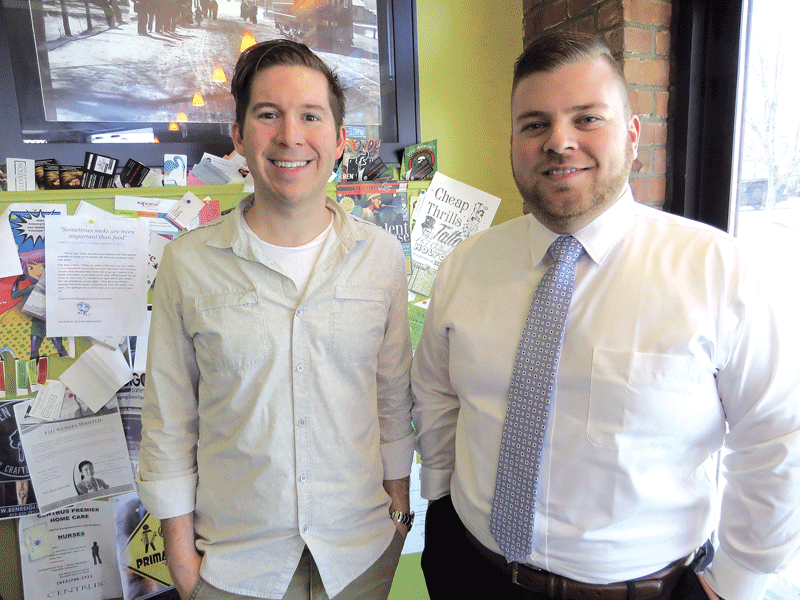
Northampton Area Young Professionals

Chris Whelan, right, president of Northampton Area Young Professionals, with Lee Pouliot, vice president.

But the networking always had a purpose beyond the mere exchanging of business cards, he said, adding that, over the years, he’s seen members also exchanging and advancing ideas for getting more involved in the community and also for coping with the many challenges facing this generation of young professionals.

Ellis agreed, and said he’s noted how his networking, and that of others in the group, has changed as their career progressed and their needs evolved.

“Early on, I would go to gatherings, people would say, ‘you need a web site or some design services, let me connect you to a guy,’” he said, noting that he was the guy in question. “Later, I was introducing people to others and creating connections. You become the locomotive, and it’s as if you’re returning the favor.”

Youth Is Served

Over time, the YP groups’ missions and programming have continued to expand and evolve, bringing into sharper focus those terms ‘resource’ and ‘connections.’

All those we spoke with noted that their organizations are looking to broaden their impact in the region, as well as their membership ranks, by partnering with various entities — other YP groups, a host of business and economic-development agencies including the chambers of commerce, area colleges, and even BusinessWest.

“One of the things we’ve identified from a strategic perspective is the need to identify and develop stronger partnerships,” said NAYP’s Whelan. “That includes our chamber, but also other chambers, Leadership Pioneer Valley, MassMutual’s Employee Resource Group, and others. We want to find ways we can collaborate with one another in ways that are mutually beneficial.”

Meanwhile, the groups are also launching new initiatives that fall into the broad categories of education, awareness, and professional development.

At YPS, the group has added something called the work/life balance committee, which, as that name suggests, concentrates on an area almost every young professional struggles with to one degree or another.

Another committee, focused on professional development, hosts, among other things, CEO luncheons (where participants dine with a CEO, hear him or her talk about their work, and then ask questions) and quarterly breakfast meetings featuring seminars on subjects ranging from stress reduction to public speaking, or, to be more specific, the need for developing strong verbal skills.

“These are little things that strike a chord with members,” Ellis said. “These are issues they’ve identified as important to them.”

NAYP also offers some professional-development programming for its members, said Whelan, adding that this is one area the group is looking to expand in the years to come with initiatives such as a webinar series and other vehicles.

Beyond professional development and work/life balance, though, the YP groups are also finding new ways to provide that voice for young people mentioned earlier.

“We want our members to feel that they should be at the table with everyone else,” said Lockhart, “and not think that, because they’re young, they shouldn’t have a voice.”

While most of the YP groups’ efforts are focused on their members, some are aimed at a different constituency that will hopefully become members in a few years — the area’s college students.

Indeed, the groups are now starting to develop and hone programming designed to curb the so-called brain drain in this region by introducing students to area employers and, in general, trying to convince them that they don’t have to leave this region after getting their diploma to find what it is they’re looking for.

Clark said YPS is looking to develop a pilot program that would help area college students develop the so-called soft skills needed to join the workforce, while also introducing them to potential career opportunities within the 413 area code.

“We want them to attend some of our networking sessions,” she said, “so they can meet the people who can say, ‘listen, you’re going to graduate in three months; I have a job for you.’ That’s an example of how we like to say that it’s not networking, but the business of connecting people.”

Lockhart said YPA is doing something similar in the Amherst area, and while the motivation for such programming was already obvious, her own experiences while attending UMass Amherst crystalized this recognized need.

“We’re trying to get the students who are graduating involved with us,” she explained. “We want them to understand that this doesn’t just have to be a stop on their journey; this can be where they live and work — there are opportunities here.

“I graduated from UMass Amherst in 2013, and I never thought about staying here until someone asked me,” she went on, noting that she came to Amherst from the eastern part of the state for her education. “I said, ‘oh, wow, there are opportunities here? I never knew that.’ There’s a huge misperception among students about this region, and we need to address that.”

A New Age

Looking forward, Ellis and Clark said YPS has reached the point in its existence where a full- or even part-time paid executive director is needed to ease the workload of the board members and, more importantly, to put an even sharper focus on all those elements in the mission statement.

But as with that line in the Guinness Book of World Records, a lot of things will have to go right for that to happen, they said, adding that the group will need to ratchet up its cash flow for an executive director to become reality.

In the meantime, however, the area’s YP groups are making many things go right, for their members, for area college students, and for the region as a whole.

In short, they are coming of age, in every sense of that phrase.

George O’Brien can be reached at [email protected]

Law Sections

Stop, Collaborate, and Listen

Lauran Thompson

Lauran Thompson says the practice of law, especially for solo practitioners, lends itself to co-working spaces.

Co-working spaces — where solo practitioners ply their trade in a common area to share expenses and collaborate with other business owners — is not a new concept, but it has been slow to catch on in the Western Mass. legal arena. That’s surprising, says Lauran Thompson, considering how many lawyers work alone but could benefit from the dynamics of co-working. That’s why she launched Dockit in January, hoping the downtown Springfield space attracts a mix of new and experienced lawyers intrigued by the benefits of collaboration, idea sharing, and simple convenience.


Joan Williams is a well-established defense attorney, having maintained a solo practice in the region since since 2005.

She worked from an office in Northampton, but after she and her family moved to Connecticut, she found she didn’t relish the hour-long commute, so she opened a new office in Springfield. But she found the space bland and was looking for a change. That’s when she heard about — and became quite intrigued by — a new venture called Dockit.

“It’s the complete package,” Williams said of the new co-working space for lawyers that opened in January in downtown Springfield, a five-minute walk to the Hampden County Hall of Justice. “It’s a nice space. I don’t have to go out and buy furniture or pay for Internet service, and I don’t have to worry about finding conference space.”

Lauran Thompson — a paralegal who had managed her family’s law office, Thompson & Thompson, for 15 years — recognized the value of co-working as well, and saw opportunity in a model popular among law professionals out west and in Boston, but sorely lacking in Western Mass.

“Managing a law office, I’ve seen first-hand how important collaboration is,” she said, adding that her firm was looking for ways to be more collaborative with other attorneys. “I started looking into finding a workspace where we could do more collaborating, and I happened upon this new co-working movement. My research showed there’s a movement in the legal community toward shared space.”

The business she started, Dockit — located just off Main Street, in the pedestrian walkway between Harrison Street and the MassMutual Center known as Market Place — provides exactly that, with plenty of amenities to boot. Members don’t have their own desks or offices, but can work or meet with clients in a number of shared spaces, from open seating areas in the central area to three small, private conference rooms. The modern layout contrasts with the dark wood and exposed brick of the renovated building, creating a vibe that seems to suit the Millennials that will likely comprise the bulk of the facility’s ever-changing membership.

“We’re reaching out to solo practitioners spread out all over the county, offering a space to come and meet with people and share ideas,” she told BusinessWest. “We have WiFi, desktop computers, printing, faxing, scanning, videoconferencing, and a nice kitchen area where we keep lunches.”


Go HERE to download a chart of Law Firms in Western Mass.


Co-working is not a new concept in the Pioneer Valley; business incubators in particular are known for their use of shared space and collaboration. But in legal circles, Dockit is filling a gap regionally. Although lawyers of all types are welcome at Dockit, Thompson said defense attorneys will comprise the majority of members, in part because of a quirk in the system.

“It’s particularly important for people who are working as bar advocates,” she explained. “There’s a requirement for them, if they want to be on the list for Hampden County, if they want to be assigned a case, to have an address in Springfield. That’s for the benefit of the client, so the client doesn’t have to trek around to meet them.”

A quiet space near, but separate from, the courthouse makes sense in other ways, Thompson went on, noting that the courthouse is packed with district attorney’s office staff, judges, clerks, criminal defense lawyers, bar advocates, and others in close proximity, and there’s not much room to discuss matters privately. “Imagine putting both football teams in the same locker room. We give them space to come and collaborate.”

Suiting Their Needs

Dockit offers several tiers of membership with different price points, depending on how often a member needs the space, ranging from five days a month to five days a week. That flexibility is valuable, Thompson said, for lawyers who use the space for an array of reasons, from everyday work to an occasional need for collaboration with fellow attorneys.

“A cornerstone of co-working is co-workers,” Erin Sperger, a legal research and writing attorney in Seattle, wrote in the New Yorker recently. “For single-lawyer firms, it is great to be able to discuss ideas and cultivate relationships with attorney co-workers. When compared to a traditional law office environment, the kind of conviviality found in a co-working space can be a breath of fresh air.”

She warned of privacy issues that can arise by using shared equipment and speaking to clients in an open area, but said common sense and caution eliminates most of those.

“For me, the advantages of co-working far outweigh any possible risk,” she wrote. “It is more than just office space; it’s a rich source of mentoring, referrals, and an opportunity to collaborate by co-counseling with other attorneys. Co-working spaces attract people who like the idea of collaborating and sharing resources — generally a pretty great batch of people.”

Dockit’s location

Dockit’s location along Market Place in downtown Springfield gives it easy access to the Hampden County Hall of Justice.

Thompson said Dockit isn’t likely to be anyone’s permanent home, and the membership model — it’s renewed monthly, with no long-term leases — means lawyers can come as long as the facility benefits them. Some members, she added, are established attorneys with separate offices seeking the collaboration, continuing legal education (CLE) programs, and convenience offered through co-working — all summed up by Dockit’s slogan, “the firm alternative.”

“A lot of attorneys come out of law school, and to take appointments from the the court, they have to have a mailing address in town. But it can be difficult signing a two- or three-year lease, so we provide a place where they can meet with clients without that lease.”

Thompson would like to see Dockit expand its offerings as well.

“We’ve started doing some e-mail surveys to see where there’s interest in social events after hours — showing movies or doing docket discussions,” she explained, adding that events could center around current hot topics in the legal world, such as the current controversy over a Supreme Court nomination, or some new ruling that may be impactful to the Greater Springfield legal community. “We might talk about it, what kinds of motions we need to draft, what we need to do.”

Others who maintain home offices far away from the courthouse may use Dockit to help their work-life balance, she added. “They’re not going to close their home office, but this gives them an element of professionalism, where they can put their name on the door and have a place where they can meet clients that isn’t Dunkin’ Donuts or Barnes & Noble. There are a lot of benefits.”

Williams appreciates all of them, but came back to one in particular.

“For me, the biggest thing is having people I can bounce things off of. As solo practitioners, we sometimes don’t get that back-and- forth around issues. It’s good to have this space where people can come in and ask questions.”

Case Study

While bringing in more CLE opportunities and expanding awareness of Dockit, Thompson hopes the idea expands in Western Mass., just as co-working has in other industries.

“Within the co-working movement, the legal community is certainly a niche group,” she said. “I’d say we cater mostly to the defense community. We’re open to other types of lawyers, but we cater our CLE events to the defense community, which tends to be a community that doesn’t get a lot of these resources. We want like-minded people to be able to share information, while, at the same time, we’re really conscious of client confidentiality.”

It’s a balance, just like the work-life balance that Millennials — a generation known for not only collaboration, but a mobile lifestyle — crave. “They don’t want to carry the anchor of a five-year lease commitment. If you make that kind of commitment, you feel like you have to be in that space.”

On the other hand, because of its tiered plans, lawyers can make Dockit a space that works for them, not the other way around.

“What’s going to happen with the co-working movement is exactly what we’re doing — it’s starting to branch into niche groups,” Thompson said. “This is the wave of the future with Millennials. They don’t want to sit in the office all the time. Here at Dockit, we cater to that.”

Joseph Bednar can be reached at  [email protected]
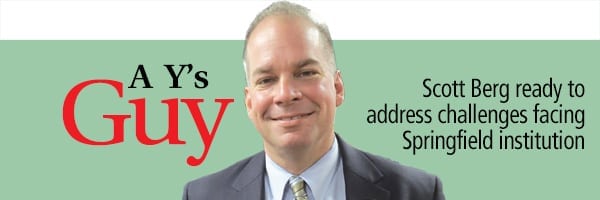
Law Sections

Employers, Prepare Now

By KARINA SCHRENGOHST

This year, the Department of Labor (DOL) is making some significant changes to the regulations governing which executive, administrative, and professional employees (white-collar workers) are exempt from the Fair Labor Standards Act’s (FLSA) minimum wage and overtime pay protections — and employers need to be ready.

Karina L. Schrengohst

Karina L. Schrengohst

Under FLSA, ‘non-exempt’ employees are entitled to overtime pay while ‘exempt’ employees are not. The largest category of exempt employees is white-collar workers, who generally fall within the exemption only if the following three requirements are met:

• The employee is paid a predetermined, regular, fixed amount, without regard to the number of days or hours he or she works;
• The employee earns a minimum salary of $455 per week, or $23,660 per year; and
• The employee’s duties involve certain tasks, authority, or training.

With respect to the third requirement (duties), the regulations provide some specific guidance. ‘Professional’ employees generally include those in the learned professions. An ‘executive’ employee regularly supervises others, is primarily involved in management duties, and has the authority to hire or fire. Finally, the ‘administrative’ exemption includes employees who exercise independent judgment, and whose primary duty involves office or non-manual work that is directly related to management or business operations.

The new DOL rule, which is anticipated in the spring or summer, increases the current salary threshold for exemption from $455 per week ($23,660 per year) to $970 a week ($50,440 a year), and will also implement automatic annual increases to the salary threshold, tied to certain economic indices.

In order to remain compliant with the regulations and avoid potential litigation, employers must identify those employees whose status may be affected by the anticipated salary-threshold revisions. Now is the time to conduct an internal wage-and-hour audit to assess your employees’ FLSA classifications. This assessment should become an annual practice.

When evaluating your employees’ status, keep in mind that not every employee who receives a salary is automatically exempt — they must also perform exempt duties. You should assess an employee’s day-to-day duties in order to determine whether or not those duties fall within the parameters of the regulations. You may find that a few employees fall into the gray area between exempt and non-exempt status. In such cases, it is prudent to err on the side of non-exempt status, bearing in mind that the employer bears the heavy burden of proving that an employee clearly falls within the terms of an exemption.

With careful review and early preparation, your company can be equipped to act when these sweeping changes to the law go into effect. If you have any questions about the FLSA or the white-collar exemptions, contact any of the attorneys at Royal, P.C.

Karina L. Schrengohst, Esq. is an attorney at Royal, P.C., a woman-owned, boutique, management-side labor and employment law firm. Royal, P.C. is a certified women’s business enterprise with the Massachusetts Supplier Diversity Office, the National Assoc. of Minority and Women Owned Law Firms, and the Women’s Business Enterprise National Council; (413) 586-2288; [email protected]

Company Notebook Departments

SBA Honors Chamberlain Group, Berkshire Bank

BOSTON — A handful of Bay State businesses were recently honored by the Small Business Administration (SBA) as part of National Small Business Week, including two Western Mass.-based companies. The Chamberlain Group, LLC in Great Barrington, represented by Lisa Chamberlain, vice president and managing partner, was named Small Business Exporter of the Year. Meanwhile, Berkshire Bank, represented by Peter Rice, senior vice president, business banking, was recognized as Financial Services Champion. “We are extremely excited to honor a truly amazing line up of small business owners and champions this year,” said Bob Nelson, SBA’s Massachusetts district director. “It is so important to recognize our small businesses in the Commonwealth, as they are the job creators, innovators, and the fabric of our local communities.” This year, National Small Business Week will be celebrated May 1-7 with national events planned across the country. The slate of leading small businesses in the Commonwealth will be honored at the annual Small Business Week Awards Luncheon at the Doubletree in Westborough on Wednesday, May 4.

Country Bank Offers Scholarship Program

WARE — Country Bank will honor 15 high-school seniors who exemplify a commitment to community spirit and volunteerism through its Country Bank for Higher Education Scholarship Program. Fifteen awards of $2,000 each will be presented to high-school seniors who will be attending a two- or four-year college in the fall. Applications and complete rules are available at guidance offices of public high schools in the Country Bank market area, as well as at www.countrybank.com/about-us/community-scholarship-program, or at any of the bank’s 14 branches. A selection committee will review each entry, and winners will be notified by mid-May. Any questions should be referred to Deb Gagnon, Corporate Relations officer, at [email protected] or (413) 277-2236.

GCC Foundation Kicks Off 2016 Annual Campaign

GREENFIELD — The Greenfield Community College Foundation’s 2016 annual campaign, Opening Doors to the Future, will kick off on March 31 with campaign co-chairs Rich Fahey and Nicole Fahey at the helm. Rich Fahey is returning as co-chair, while daughter-in-law Nicole is joining the campaign for the first time this year. Greenfield Community College serves 5,500 students in five locations throughout Franklin and Hampshire counties. The 2016 campaign has established a goal of $825,000 by May 31 in support of students and programs at the college. “Our nation’s higher-education system is increasingly replicating the great divide of our nation’s economic system. Social and economic mobility has all but disappeared — so too the middle class,” said GCC President Bob Pura. “But GCC, our foundation, alumni, and community have created a contradiction to that national narrative. We all help keep the doors to education and a better life open for all who are eager to work hard to achieve it.” Rich Fahey, retired Advertising director for the Greenfield Recorder, noted that “many believe the cost of a higher education is becoming too expensive for many families. What we are doing in support of GCC is helping keep the doors open for all who come to the college to better themselves and enter into the middle class. I didn’t hesitate when I was asked to return for a third year helping out with the GCC Foundation annual campaign. My wife, daughter, and daughter-in-law are just a few whose lives were changed by GCC, and many generations into the future will continue to benefit from our work today.” Nicole (Duprey) Fahey, a clinician at the Franklin County House of Corrections, enrolled at GCC at age 16 as an early-entrant student from Pioneer Valley Regional School in 2000, marking the start of a focused and accelerated educational journey from high-school sophomore to recipient of a master’s degree in just five years. “My GCC experience laid the groundwork for a career that I love,” she said. “Everybody at the college — teachers and classmates — opened their doors and were so welcoming. And attending classes at GCC, with the range of ages and experiences each classmate represented, was humbling and inspiring. Witnessing their hard work to effect positive change encouraged me to direct my life’s work to helping do the same for others.” For more information about the GCC Foundation and supporting the annual campaign, visit www.gcc.mass.edu/give or contact Regina Curtis, executive director of Resource Development and the GCC Foundation, at (413) 775-1600.

Court Dockets Departments

The following is a compilation of recent lawsuits involving area businesses and organizations. These are strictly allegations that have yet to be proven in a court of law. Readers are advised to contact the parties listed, or the court, for more information concerning the individual claims.

GREENFIELD DISTRICT COURT

West County Equipment Rentals, LLC v. RN Landscaping and Robert Possiel
Allegation: Breach of rental agreement: $3,922.35
Filed: 1/13/16

HAMPDEN SUPERIOR COURT

John G. Kudlic d/b/a Bear Realty v. Western Mass Electric Co.
Allegation: Negligence and breach of duties causing electrical fire: $147,346.01
Filed: 1/29/16

Clines Cobham v. Walgreen Eastern Co. Inc.
Allegation: Negligence in preparing and dispensing of prescription causing permanent injury: $47,422
Filed: 2/2/16

HAMPSHIRE SUPERIOR COURT

Megan Komosa v. Hulmes Transportation Services
Allegation: Negligent operation of wheelchair-assist lift causing the lift to be lowered onto the plaintiff’s foot: $67,373
Filed: 2/16/16

PALMER DISTRICT COURT

Natalie Cowles v. W&I Construction Inc., John Johnson, and John Nadolski
Allegation: Non-payment of services rendered: $3,000+
Filed: 2/18/16

SPRINGFIELD DISTRICT COURT

Alves Fuel Inc. v. Anderson Services Inc.
Allegation: Non-payment of fuel-delivery services: $33,798.68
Filed: 2/10/16

Polep Distribution Services v. A.S.H Traders, LLC d/b/a Sav More And Mushtaq Yusuf
Allegation: Non-payment of goods sold and delivered: $10,847.10
Filed: 2/26/16

Rubner Enterprises Inc. v. R.A. Morra Construction and Rama Development, LLC
Allegation: Non-payment of materials and services rendered: $9,783.95
Filed: 3/1/16

Thurston Foods Inc. v. Elmcrest Inc. d/b/a 19th Hole and John Haberern
Allegation: Non-payment of goods sold and delivered: $10,898.48
Filed: 2/23/16

WESTFIELD DISTRICT COURT

Charles Kraiza v. Prifti Motors Inc. and Don Prifti
Allegation: Negligence in truck repair causing entire job to have to be redone by another mechanic : $7,000+
Filed: 1/9/16

Jalbert Drywall v. Russo Construction
Allegation: Breach of contract and monies owed for services rendered: $7,200
Filed: 2/10/16

Safe Home Security Inc. v. 1st Stop Cafe Inc.
Allegation: Amount owed resulting from cancellation of service contract: $2,709.60
Filed: 2/10/16

Daily News

BOSTON — Gov. Charlie Baker signed bipartisan legislation passed unanimously by both branches of the Legislature to ease the transition for those convicted of drug offenses to re-enter society, hold employment, and care for their families by repealing the automatic suspension of drivers licenses and a subsequent $500 reinstatement fee for all drug convictions.

“As the Commonwealth takes important steps to battle substance abuse and re-examine our criminal-justice system, I am pleased to sign legislation providing opportunities for those convicted of drug offenses and who have served their time to re-enter society, find and keep a job, and support their families,” Baker said. “Removing this significant barrier to re-entry reduces the prospects of recidivism as individuals continue treatment or recovery and gives them a better chance at getting back on their feet.”

The legislation provides certain exceptions for drug-trafficking convictions and takes effect immediately.

“We are proud to support this legislation that would ensure those who have paid their debts to society for drug offenses have the means to be productive citizens, capable of supporting themselves and their loved ones,” said Lt. Gov. Karyn Polito. “I’m proud of our administration’s efforts and collaboration with the Legislature to counter opioid addiction, and ending the automatic license suspension is a reform that will help put people on a path that keeps them out of our criminal-justice system.”

Departments People on the Move
Attorney Kenneth Albano

Attorney Kenneth Albano

Bacon Wilson announced that Attorney Kenneth Albano will assume the role of Managing Shareholder, effective Jan. 1, 2017. For the remainder of 2016, he will share the role with Bacon Wilson’s current managing shareholder, Stephen Krevalin, who has led the firm for the past 15 years, during which time Bacon Wilson has become one of the largest regional, full-service law firms in Hampden and Hampshire counties. “I am thrilled at the choice of attorney Albano as my successor,” Krevalin said. “Ken was the unanimous choice among the shareholders, and I have every confidence that he will do a phenomenal job as the firm’s next managing shareholder.” Albano is a senior partner and a member of the firm’s corporate, commercial, and municipal practice groups. In addition to his legal practice, he is active in the community, chairing the board of the March of Dimes Western Mass Division and serving on the board of the New England Chapter of the March of Dimes. He is a board member with Behavioral Health Network, where he has served for over 20 years. He also works with the American Cancer Society, Make-A-Wish, and the ALS Assoc. Last June, Albano was honored with the Massachusetts Bar Assoc. Community Service Award in recognition of his volunteer work. Bacon Wilson, P.C. boasts total of 43 lawyers and approximately 60 paralegals, administrative assistants, and support staff. The firm’s offices are located in Springfield, Northampton, Amherst, Holyoke, and Westfield. For more information, visit www.baconwilson.com.

•••••


Elyse Merrigan

Elyse Merrigan

Sevane Khatchadourian

Sevane Khatchadourian

Mila Renkas

Mila Renkas

Meyers Brothers Kalicka, P.C. (MBK) announced the hiring of three new associates: Elyse Merrigan, MSA, Sevane Khatchadourian, and Mila Renkas.
Merrigan is an Associate in the Tax department. She previously held a career as a trial paralegal with a regional law firm. However, based on her strong aptitude with numbers, she decided to pursue the necessary advanced education that would allow her to transition into the field of public accounting. She is a graduate of the Commonwealth College at UMass Amherst and recently earned her master’s degree in accounting from Western New England University. She joined the Mass. Society of Certified Public Accountants (MSCPA) and the American Institute of Certified Public Accountants (AICPA) as a student during her graduate studies and is currently a candidate to sit for the CPA exam.
Khatchadourian is beginning her career in public accounting in the Audit and Accounting (A&A) practice at MBK. As an A&A Associate, she will help service a wide variety of A&A clients throughout the year. She graduated from Westfield State University in 2015 with a bachelor’degree in business management with a concentration in accounting, and is currently pursuing her master’s degree in accounting at the same school. As a current graduate student, Sevane is a student member of the MSCPA and AICPA.
Renkas, who is also an A&A Associate, brings five years of bookkeeping experience and fluency in three languages to her new position. She earned a bachelor’s degree in accounting from Elms College in 2015 and is currently pursuing her master’s degree in accounting at Westfield State University. She has been recognized for her significant academic achievements though her membership with various honors societies and scholarships, including the Western Mass Women magazine scholarship.

•••••

Stuart Jones

Stuart Jones

Springfield College announced the hiring of Stuart Jones as Vice President for Enrollment Management, effective April 1. An enrollment-management professional in higher education for more than 20 years, Jones was vice president for Enrollment Management at Trine University in Angola, Ind. since 2013. Prior to that role, he was vice president for Enrollment Management at Averett University in Danville, Va. and dean of Enrollment and executive director of the Student Success Center at Manchester University in North Manchester, Ind. At Springfield College, Jones will work to further strengthen the college’s competitive position through enrollment growth in traditional undergraduate and graduate programs. He has a bachelor’s degree in interpersonal and public communications from Purdue University, a master’s degree in divinity and theology from the Christian Theological Seminary in Indianapolis, and a Ph.D. in higher education leadership from Northcentral University in Prescott Valley, Ariz.

•••••


Toby Grader

Toby Grader

Bob Pion Buick GMC recently welcomed Toby Grader to the team. Grader has worked in the auto industry for more than 25 years and is a GM certified service manager. He took time off to open his own restaurant, but is now excited to start a new chapter at Bob Pion Buick GMC. “I enjoy the challenge of working in the auto industry. Helping people find the car of their dreams and making them happy is very rewarding,” he said. “Being in the auto industry for over 25 years, you make a lot of friendships. It makes the hard work worthwhile.”

•••••


Jennifer Butler

Jennifer Butler

Attorney Jennifer Butler has joined Royal, P.C., the management-side only labor and employment law firm, and will focus her practice in labor law and complex employment litigation. With her experience, Butler counsels companies on the multitude of state and federal employment laws impacting them, including employment discrimination and harassment, wage-and-hour law, disability and leave law, workplace safety, OSHA, affirmative action, and contract negotiations. Her other preventive work includes drafting employee manuals; preparing non-disclosure, non-solicitation, and non-compete agreements; and conducting management training. Butler is a graduate of Norwich University and Western New England University School of Law.

•••••

Monson Savings Bank (MSB) announced the following:
Kylie LaPlante has been promoted to branch manager of the bank’s Ware office. She began her career at Monson Savings in 2011 as a customer service associate in Wilbraham and quickly rose to customer service associate supervisor. In 2015, she moved to the Ware branch as assistant branch manager and now to branch manager. She is a graduate of Assumption College with a bachelor’s degree in business management;
Clare Ladue has been promoted to Commercial Loan Officer. Ladue, formerly one of MSB’s retail banking officers, has more than 20 years of experience in banking. She is a graduate of the Mass Bankers New England School of Financial Studies, holds numerous professional certifications, and is active in several community organizations.

•••••


Keith Nesbitt

Keith Nesbitt

Keith Nesbitt has joined the Springfield office of NUVO Bank as Regional Commercial Credit Officer. Nesbitt, joins NUVO, a division of Merchants, bringing a vast wealth of knowledge with 11 years of experience in commercial lending, portfolio management, and credit administration in regional and community banking institutions. He received his undergraduate degree from the University of Georgia, his master’s degree from Georgia State University, and his MBA from Keller Graduate School of Management. He is also a candidate for the chartered financial analyst (CFA) designation and will sit for the CFA Level III exam in June. Nesbitt is a high-school and college football official and a member of the Western Massachusetts Football Officials Assoc. and the Eastern Assoc. of Intercollegiate Football Officials.

•••••


Margo Jones

Margo Jones

The 2016 Jury of Fellows from the American Institute of Architects (AIA) elevated 149 AIA members to its prestigious College of Fellows, an honor awarded to members who have made significant contributions to their profession. Margo Jones, principal of Jones Whitsett Architects (formerly Margo Jones Architects), was nominated and elected to the College of Fellows in recognition of her leadership in the field and her service to the communities of Western Mass. Jones, who holds a master’s degree in architecture from Massachusetts Institute of Technology, has practiced architecture in Greenfield for more than 30 years. As principal of her own design firm since 1984, she has designed numerous award-winning schools, public projects, and significant historic-preservation projects, including Sanderson Academy in Ashfield, several projects at the Bement School in Old Deerfield, renovations to the Ted Shawn Dance Theater at Jacob’s Pillow in Becket, and, most recently, the renovation of Colegrove Park Elementary School in North Adams, a project currently being considered for a Massachusetts Historic Commission Preservation Award. Jones has also served on the board of directors of the National Council of Architectural Registration Boards, the Massachusetts Board of Registration of Architects, and the board of directors of the Western Mass. chapter of the American Institute of Architects. Out of a total AIA membership of nearly 88,000, fewer than 3,200 members are distinguished with the honor of fellowship. Jones will be honored at an investiture ceremony at the AIA convention in Philadelphia in May.

•••••

J. Polep Distribution Services announced the promotion of Eric Polep to Executive Vice President and Chief Operating Officer. Polep has been with the company since 2002, most recently as director of sales. Over the past 14 years, he has worked his way up through the company, working in warehouse-control positions, cutting and stamping cigarettes, warehouse inventory, and as equipment delivery representative, field sales representative, and district manager. He has also played a key role in building and transforming J. Polep’s technology marketing and sales capabilities, in the process simplifying store managers’ everyday duties.

•••••

Name Net Worth announced the hiring of Pam Thornton as Chief Operating Officer. Thornton has had an extensive career in the human-resources field, beginning in 1996 with LEGO Systems Inc. in Enfield, Conn. There, she was able to acquire hands-on experience with recruitment, interviewing, and training of year-round and part-time field personnel. Additionally, she was responsible for employee relations, benefits administration, and staff performance management. She also served in a management role with K2 Sports, where she hired a field merchandising staff of 100 employees. She was also business development manager for United Personnel, a woman-owned staffing firm in Springfield, and most recently served as a member of the HR legal team with the Employers Assoc. of the NorthEast. Name Net Worth, a startup app launched by Jeremy Casey and currently in beta testing, is a connective platform that leverages trusted relationships to measure and strengthen personal and professional networks, allowing the ability to measure the success of connections and easily manage follow-ups. The company was accepted to the Valley Venture Mentors accelerator program and has received investment capital.  Thornton serves on the board of directors for the Human Resources Management Assoc. of Western New England and leads its membership effort. She is a past president and served on the board of directors for the Young Professional Society of Greater Springfield. She has also held her Professional in Human Resources (PHR) certification from the Society for Human Resource Management since 2003.

•••••

Cumulus Springfield announced that Bridget Lynott is back in radio and on 94.7 WMAS weekdays from 10 a.m. to 2 p.m. She is also the promotion director for 94.7 WMAS and 1450 WHLL. “I’ve been in love with music for as long as I can remember … that love of music brought me to radio,” said Lynott, whose previous stints on the region’s airwaves include time at 1250 WARE, 560 WHYN, and 97.9 WPKX. “Growing up a shy kid, it was a shock for others to hear me on the air … but like an actor that delivers lines every night without fear, radio is my stage, and I love it. It is such an exciting time to be back on the air in the Springfield market and working with an incredible team.”

Court Dockets Departments

The following is a compilation of recent lawsuits involving area businesses and organizations. These are strictly allegations that have yet to be proven in a court of law. Readers are advised to contact the parties listed, or the court, for more information concerning the individual claims.

GREENFIELD DISTRICT COURT

Andrew Santiago v. Target Corp.
Allegation: Negligent maintenance of entryway and doors: $13,457.28
Filed: 2/11/16

HAMPDEN SUPERIOR COURT

Lori Jose v. Munich Haus Inc. and Center Group
Allegation: Negligent maintenance of property causing bodily injury: $44,500
Filed: 1/25/16

Sherquita Thomas v. Ambiance HR & Laser Center
Allegation: Negligence during laser treatment causing permanent scarring to face: $400,000
Filed: 2/10/16

TD Bank v. Sandy Bay Service Center Inc., John P. Porter, and Cathy L. Porter
Allegation: Non-payment on promissory note: $114,332.68
Filed: 1/29/16

PALMER DISTRICT COURT

Waniewski Irrevocable Reality Trust and Karen White, Trustee v. DB Properties, LLC, Daniel Branco, and Elizabeth Branco
Allegation: Breach of purchase and sale agreement: $14,000
Filed: 2/29/16

SPRINGFIELD DISTRICT COURT

Kamp USA Inc. v. Salisbury Sales Inc.
Allegation: Non-payment of goods sold and delivered: $19,469.50
Filed: 2/22/16

San Mar Corp. v. Joshua Kelsey d/b/a Design the Line Custom Clothing
Allegation: Non-payment of goods sold and delivered: $7,968.57
Filed: 2/22/16

Tiffany Nugent v. F.P.S. Inc.
Allegation: Negligence in preparation and sale of food at Burger King causing broken teeth: $23,103
Filed: 2/26/16

U.S. Food Inc. v. Fondue Fusion Inc., d/b/a Sticks & Stones, Anne Brensley, and Sandra Squillante
Allegation: Non-payment of goods sold and delivered: $3,397.83
Filed: 1/19/16

WESTFIELD DISTRICT COURT

Karen Johnson v. Johnson’s Painting Service
Allegation: Breach of contract and negligence in services rendered and quality of work: $5,588
Filed: 2/3/16

LM Payroll Services Inc. d/b/a Ryan Associates v. Yogi Brothers Inc.
Allegation: Non-payment of services rendered: $5,687.30
Filed: 2/11/16

St. Luke’s Greek Orthodox Church v. O’Donnell Paving & Landscaping Inc.
Allegation: Negligence in work performance and breach of contract: $5,252.16
Filed: 2/8/16

Daily News

SPRINGFIELD — Michael Schneider has been named a shareholder at Doherty, Wallace, Pillsbury & Murphy, P.C. His practice is focused on corporate law, mergers and acquisitions (including international business transactions), land use, and commercial real estate. He is a member of the Massachusetts and Connecticut bars.

Schneider is a past member of the Longmeadow Conservation Commission and past vice president and director of the Children’s Chorus of Springfield Inc. He was also a BusinessWest 40 Under Forty honoree in 2014 and a judge for the 40 Under Forty class of 2015. He earned his law degree, magna cum laude, from Suffolk University Law School in 2007. He earned his bachelor’s degree from Dickinson College in 1997.

Doherty, Wallace, Pillsbury & Murphy, P.C. is one of the largest law firms in Western Mass., providing a wide range of legal services including litigation, corporate, probate, real estate, taxation, estate planning, and intellectual property law.

Daily News

GREENFIELD — The Greenfield Community College Foundation’s 2016 annual campaign, Opening Doors to the Future, will kick off on March 31 with campaign co-chairs Rich Fahey and Nicole Fahey at the helm. Rich Fahey is returning as co-chair, while daughter-in-law Nicole is joining the campaign for the first time this year.

Greenfield Community College serves 5,500 students in five locations throughout Franklin and Hampshire counties. The 2016 campaign has established a goal of $825,000 by May 31 in support of students and programs at the college.

“Our nation’s higher-education system is increasingly replicating the great divide of our nation’s economic system. Social and economic mobility has all but disappeared — so too the middle class,” said GCC President Bob Pura. “But GCC, our foundation, alumni, and community have created a contradiction to that national narrative. We all help keep the doors to education and a better life open for all who are eager to work hard to achieve it.”

Rich Fahey, retired Advertising director for the Greenfield Recorder, noted that “many believe the cost of a higher education is becoming too expensive for many families. What we are doing in support of GCC is helping keep the doors open for all who come to the college to better themselves and enter into the middle class. I didn’t hesitate when I was asked to return for a third year helping out with the GCC Foundation annual campaign. My wife, daughter, and daughter-in-law are just a few whose lives were changed by GCC, and many generations into the future will continue to benefit from our work today.”

Nicole (Duprey) Fahey, a clinician at the Franklin County House of Corrections, enrolled at GCC at age 16 as an early-entrant student from Pioneer Valley Regional School in 2000, marking the start of a focused and accelerated educational journey from high-school sophomore to recipient of a master’s degree in just five years.

“My GCC experience laid the groundwork for a career that I love,” she said. “Everybody at the college — teachers and classmates — opened their doors and were so welcoming. And attending classes at GCC, with the range of ages and experiences each classmate represented, was humbling and inspiring. Witnessing their hard work to effect positive change encouraged me to direct my life’s work to helping do the same for others.”

For more information about the GCC Foundation and supporting the annual campaign, visit www.gcc.mass.edu/give or contact Regina Curtis, executive director of Resource Development and the GCC Foundation, at (413) 775-1600.

Daily News

HOLYOKE — On March 14, Holyoke Mayor Alex Morse was joined by city and state officials to mark the official start of the demolition and cleanup of the former Parsons Paper in preparation for the expansion of Holyoke manufacturer Aegis Energy Services.

The announcement capped a multi-year effort to remediate the site and make it ready for development. The expansion of Aegis Energy Services will entail a private investment of approximately $7 million, the retention of 65 job,s and the creation of at least 30 new jobs, as well as the creation of up to 4 megawatts of renewable energy, making it the city’s largest manufacturing expansion in years.

“This is a significant milestone in our city’s revitalization that should be celebrated and praised. Redevelopment of the Parsons site has been an extremely difficult challenge, bringing with it significant legal, environmental, and financial constraints that have impeded progress for years,” Morse said. “The staff in the Office of Planning and Economic Development and the Law Department should be applauded for their efforts as they’ve worked diligently with the Redevelopment Authority and a cross-collaboration of public and private partners to make this project a reality. I’d be remiss if I did not offer my sincere appreciation to Lee Vardakas of Aegis Energy for his commitment to Holyoke; we are fortunate to have this innovative company stay and grow in our city, and I thank him for his investments and contributions.”

Located at 84 Sargeant St. between the first and second level canals, the 4.7-acre Parsons Paper site has been unused and vacant since 2004. In 2008, a fire significantly destroyed a majority of the structures, and the city officially foreclosed on the property and took ownership in 2012 for failure to pay taxes. In 2014, the Redevelopment Authority engaged Tighe & Bond to undertake environmental assessments, specifications for demolition and cleanup, and project permitting to prepare the site for reuse.

Many sources of funds are being used to make the demolition and cleanup phase of the project possible and have been amassed through the HRA, including $250,000 in funds from an agreement with Eversource Energy (formerly Northeast Utilities) as part of a mitigation payment associated with cleanup of contaminants in the Connecticut River; $2 million from the state Brownfield Fund through MassDevelopment; $1 million in capital investment by Holyoke Gas & Electric, which secures an easement on the site for potentially 2.5 MW of hydroelectric generation; and a $400,000 capital loan from the Holyoke Economic Development and Industrial Corp., to be paid from the sale proceeds of the land to Aegis Energy Services. The city also provided its most aggressive tax-incentive schedule in its history: a 100% property-tax exemption for 10 years.

“This is an incredibly challenging site and a costly endeavor, one that would have been very difficult for the city to do by itself,” said Marcos Marrero, director of Planning & Economic Development for the city, as well as executive director for the Holyoke Redevelopment Authority. “Consequently, the financing framework for this project is probably the most complex that Holyoke has seen in decades. The implications a year from now will be significant: blight reduction, building reuse, job creation, expansion of manufacturing, more renewable energy, and improved property values in the neighborhood.”

Added MassDevelopment President and CEO Marty Jones, “cleaning up and redeveloping this highly visible site in downtown Holyoke will positively impact surrounding businesses, residences, and the city’s innovation district. This project illustrates the vital role the Brownfields Redevelopment Fund plays in transforming parcels around the Commonwealth, and I applaud Holyoke for its commitment to this property.”

The contractor for the work is McConnell Enterprises Inc., which will begin work on the site immediately in order to take advantage of the regularly scheduled canal draw-down on Maech 22-24. Demolition and cleanup is projected to be completed by August, after which the site will be taken over for redevelopment by Aegis Energy Services, rehabilitating one 40,000-square-foot building — a 200% expansion of the company’s square footage — and adding at least 30 new jobs, an approximate 50% growth in the company’s employment.

Daily News

BOSTON — Yesterday at the State House, Gov. Charlie Baker signed landmark legislation into law to address the deadly opioid and heroin epidemic plaguing the Commonwealth.

He was joined by a group including Health and Human Services Secretary Marylou Sudders, Senate President Stanley Rosenberg, House Speaker Robert DeLeo, Attorney General Maura Healey, Auditor Suzanne Bump, members of the Legislature, law enforcement, healthcare providers, community leaders, individuals in recovery, and others.

The bill, titled “An Act Relative to Substance Use, Treatment, Education, and Prevention,” passed with unanimous votes in both legislative chambers and includes numerous recommendations from the Governor’s Opioid Working Group, including prevention education for students and doctors and a seven-day limit on first-time opioid prescriptions.

“Today, the Commonwealth stands in solidarity to fight the opioid and heroin epidemic that continues to plague our state and burden countless families and individuals,” Baker said. “I am proud to sign this legislation marking a remarkable statewide effort to strengthen prescribing laws and increase education for students and doctors. While there is still much work to be done, our administration is thankful for the Legislature’s effort to pass this bill and looks forward to working with the attorney general and our mayors to bend the trend and support those who have fallen victim to this horrific public health epidemic.”

Added Lt. Gov. Karyn Polito, “today, we take another step forward by passing landmark legislation that will help the individuals and communities affected by the deadly opioid and heroin epidemic. We are grateful for the Legislature’s progress and for the partnership of Attorney General Healey, our mayors, and several others as we continue pursuing aggressive reforms to combat this crisis from the Berkshires to the Cape.”

The bill includes the first law in the nation to limit an opioid prescription to a seven-day supply for a first-time adult prescriptions and a seven-day limit on every opiate prescription for minors, with certain exceptions. Other provisions from the governor’s recommendations include a requirement that information on opiate use and misuse be disseminated at annual head-injury safety programs for high-school athletes, requirements for doctors to check the Prescription Monitoring Program (PMP) database before writing a prescription for a Schedule 2 or Schedule 3 narcotic, and continuing-education requirements for prescribers, ranging from training on effective pain management to the risks of abuse and addiction associated with opioid medications.

Several measures were passed to empower individuals and update current prevention efforts. Patients will receive access to non-opiate directive forms and the option of partially filling opioid prescriptions in consultation with doctors and pharmacists. Schools must annually conduct verbal substance-misuse screenings in two grade levels and collaborate with the departments of Elementary and Second Education and Public Health (DPH) around effective addiction-education policies. To reduce the prevalence of unused medication, manufacturers of controlled substances in Massachusetts must participate in either a drug stewardship program or an alternative plan as determined by DPH.

This bill strengthens access to insurers and the bed-finder tool website; requires that patients receive information on FDA-approved, medication-assisted therapies after being discharged from a substance-use treatment program; and ensures civil-liability protection for individuals who administer Narcan.

The opioid epidemic continues to impact every community in Massachusetts. According to the most recent data, it is estimated that there were nearly 1,200 unintentional and undetermined opioid deaths in 2014. The estimated rate of 17.4 deaths per 100,000 residents for 2014 is the highest ever for unintentional opioid overdoses and represents a 228% increase from the rate of 5.3 deaths per 100,000 residents in 2000. And the trend isn’t slowing. Preliminary data estimations show there were over 1,100 opioid deaths between January and September 2015.

Court Dockets Departments

The following is a compilation of recent lawsuits involving area businesses and organizations. These are strictly allegations that have yet to be proven in a court of law. Readers are advised to contact the parties listed, or the court, for more information concerning the individual claims.

CHICOPEE DISTRICT COURT

FedEx Techconnect Inc. v. Spectrum Crafts Inc., f/d/b/a the Janlynn Corp.
Allegation: Outstanding fees for shipping services: $11,520.28
Filed: 1/5/16


HAMPDEN SUPERIOR COURT

Barbara A. Greco and Patrick A. Barnett v. East Coast Home Inspections, LLC and Mark Steven Roy
Allegation: Negligent performance of home inspection and failure to observe, discover, and report problems in the home: $180,000
Filed: 1/21/16

Frederick Revaz v. Smith & Nephew Inc.
Allegation: Defective manufacture and design of product: $165,882.16
Filed: 1/21/16

JL Construction Corp. v. Applied Underwriters Inc.
Allegation: Breach of contract: $55,400+
Filed: 1/20/16

Tammy Brown v. the Horace Mann Cos. and the Gomes Co.
Allegation: Breach of insurance policy contract for death benefits: $640,000
Filed: 1/14/16

HAMPSHIRE SUPERIOR COURT

Commonwealth of MA v. TC, LLC d/b/a Route 9 Diner, Chris Karabestos, Argiris Sideris, Steven Kwak, and Dimitrios Demos
Allegation: Employment discrimination and sexual harassment: $20,000+
Filed: 2/1/16

Connie Going v. Olde Tyme Stuff and Ronald G. Auteuil
Allegation: Non-payment of services and materials: $30,000
Filed: 12/28/15

Global Tech Talent Inc. v. Ready Electronic Data Exchange and Associates Inc., Charles J. Forest, and Andres J. Juarez
Allegation: Suit to recover amounts owed under a credit agreement: $104,855.25
Filed: 1/8/16

NORTHAMPTON DISTRICT COURT

Cole Cabinets Co. Inc. v. James J. Welch and Co. Inc. and Berkeley Regional Insurance Company
Allegation: Non-payment of services, labor, and materials: $12,400
Filed: 1/6/16

Marcia Nickerson v. J.C. Penney Corp.
Allegation: Negligent maintenance of property causing injury: $6,371.54
Filed: 12/8/15

Patrick Presto v. Overlook Industries Inc.
Allegation: Violation of wage-and-hour law: $22,423.13
Filed: 1/20/16

PALMER DISTRICT COURT

Matthew Matroni v. Liberty Mutual Insurance Co.
Allegation: Failure to pay plaintiff’s medical payments coverage: $8,224.12
Filed: 12/17/15

SPRINGFIELD DISTRICT COURT

Broadcast Music Inc. v. Pearl Street Nightclub
Allegation: Balance owed on music license agreement and arbitration award: $11,250
Filed: 1/8/16

Daily News

NORTHAMPTON — Attorney Jennifer Butler has joined Royal, P.C., the management-side only labor and employment law firm, and will focus her practice in labor law and complex employment litigation.

With her experience, Butler counsels companies on the multitude of state and federal employment laws impacting them, including employment discrimination and harassment, wage-and-hour law, disability and leave law, workplace safety, OSHA, affirmative action, and contract negotiations. Her other preventive work includes drafting employee manuals; preparing non-disclosure, non-solicitation, and non-compete agreements; and conducting management training.

Butler is a graduate of Norwich University and Western New England University School of Law.

Daily News

SPRINGFIELD — Bacon Wilson announced that Attorney Kenneth Albano will assume the role of managing shareholder, effective Jan. 1, 2017.

For the remainder of 2016, he will share the role with Bacon Wilson’s current managing shareholder, Stephen Krevalin, who has led the firm for the past 15 years, during which time Bacon Wilson has become one of the largest regional, full-service law firms in Hampden and Hampshire counties.

“I am thrilled at the choice of attorney Albano as my successor,” Krevalin said. “Ken was the unanimous choice among the shareholders, and I have every confidence that he will do a phenomenal job as the firm’s next managing shareholder.”

Albano is a senior partner and a member of the firm’s corporate, commercial, and municipal practice groups. In addition to his legal practice, he is active in the community, chairing the board of the March of Dimes Western Mass Division and serving on the board of the New England Chapter of the March of Dimes. He is a board member with Behavioral Health Network, where he has served for over 20 years. He also works with the American Cancer Society, Make-A-Wish, and the ALS Assoc. Last June, Albano was honored with the Massachusetts Bar Assoc. Community Service Award in recognition of his volunteer work.

Bacon Wilson, P.C. boasts total of 43 lawyers and approximately 60 paralegals, administrative assistants, and support staff. The firm’s offices are located in Springfield, Northampton, Amherst, Holyoke, and Westfield. For more information, visit www.baconwilson.com.

Opinion

Opinion

By Paul Peter Nicolai

The public needs a more complete and honest discussion of the likely costs and benefits of commuter rail service between Springfield and Greenfield.

Most of the advertised benefits for commuter rail service come from a 2009 feasibility study done to justify rebuilding the rails from Springfield to Brattleboro. Like most of these studies, the projections come from computer models. I was on the committee that issued the study.

Because we got money to rebuild the rails, we have actual numbers. The first phase of the feasibility study happened.  The Vermonter now runs on the line.  We can compare what is actually happening to what the computer model said might happen. It turns out the computer model projections are not even close:

• The ridership projection is 73% off;

• The projection of how many new people would be riding as opposed to how many people would be using trains instead of other transportation is 99.4% wrong; and

• The study’s capital cost projection was only 20% to 50% of the actual bill.

The study said moving the Vermonter to the new track would increase ridership by 98 passengers a day. The actual number is 26 passengers a day.

The study made assumptions about how many of the additional riders would be new riders — people new to the market.  These new-rider numbers are the basis for projections on how many additional people would live in the towns on the line, how many additional new jobs would be created in those towns, and how many millions of dollars of new economic activity those towns would see.

What actually happened is there are practically no new riders. While the Vermonter picked up 788 new passengers a month, private-sector bus services lost 761 passengers a month. This means the actual number of new people is 27 a month.

When you use actual numbers to inform the computer-generated projection, what we could reasonably expect is commuter rail service would have 540 riders a day, not the projected 2,000. When you apply the experience of what is happening with people getting off other travel means and onto trains, we should reasonably expect about three new riders a day.

Three new riders a day have no economic impact. The 537 riders who stop using other transportation to use the trains do not create new economic impact. They are already here.

On the cost side, even at 2,000 riders a day, it’s projected that between $3 million and $4 million in tax dollars will have to be paid annually to run the trains. That is after $100 million in tax dollars to buy them.

Because we now know ridership is much more likely to be about 25% of the computer-generated projection, the tax dollars needed to support these trains is much more likely to be around $4.5 million a year.

The MBTA is going to run these trains. MBTA is funded by a combination of state money and contributions from communities where MBTA stations are located.  When you apply what MBTA does in the rest of the state to this new service, Springfield, Holyoke, Northampton, and Greenfield will have to contribute a total of around $1.7 million in property-tax dollars a year — somewhere around 7% of their total DPW budgets.

So, the bottom line is that Springfield/Greenfield commuter rail will:

• Have actual ridership of about 25% of what was projected;

• Create no new economic activity. It may actually be negative when you count the bus drivers and maintenance people who will lose their jobs; and

• Require an operating subsidy about 150% of what was originally projected, including $1.7 million a year from local property taxes.

Is it worth spending $100 million to buy trains and then $4.5 million a year to run them so an additional 90 people a month are attracted? Aren’t there more important things to do with scarce tax dollars?

Paul Peter Nicolai is president of the Springfield-based Nicolai Law Group; [email protected]

Banking and Financial Services Sections

New Rules of the Road

By BOB CUMMINGS

Although many provisions of the Affordable Care Act (ACA) have already been implemented, a few major ones are still to come. None are as far-reaching as the proposed ‘Cadillac tax’ on employer-sponsored health benefits.

Originally scheduled to take effect in 2018, the Cadillac-tax implementation was recently pushed off to 2020. If implemented, the IRS will impose a 40%, non-deductible excise tax on certain employer-sponsored health benefits that exceed a dollar threshold of $10,200 for an individual and $25,500 for a family. Health-insurance companies and self-insured plan sponsors will have to pay the tax on excess dollar amounts for benefits provided above this threshold. After 2020, the limits are to be adjusted for future changes in the consumer price index.

The thresholds will be increased in certain situations if the majority of covered employees are engaged in specified high-risk professions such as law enforcement and construction, and for group demographics including age and gender. For pre-65 retirees and individuals in high-risk professions, the threshold amounts are currently $11,850 for individual coverage and $30,950 for family coverage.

The Obama administration has stated that the purpose of the tax is to reduce the tax-preferred treatment of employer-provided healthcare benefits and raise revenue to help finance the expansion of subsidized health coverage under the ACA. Most experts believe that, contrary to what the name might imply, the Cadillac tax is going to directly impact the majority of employer-sponsored plans.

Many union plans and municipal plans could be impacted right out of the gate, and employers in high-healthcare-cost states like Massachusetts are going to be hit hard if the law goes into effect in its current form. If you thought your healthcare benefit plans were just a Chevy or a Buick, you are in for a big surprise.

As written, the tax is 40% of the cost of health coverage that exceeds these predetermined threshold amounts. Cost of coverage includes the total contributions paid by both the employer and employees, but not cost-sharing amounts such as deductibles, co-insurance, and co-pays when care is received.

Unfortunately, it’s not just the premiums for the employer health plans that are counted toward these thresholds, either. Currently, the Cadillac tax would also include contributions under certain pre-tax, account-based plans such as flexible spending accounts and health-savings accounts or health-reimbursement arrangements, as well as most wellness programs.

The calculation includes any contributions made by the employer or employees pre-tax. Employers are going to be responsible for calculating the total dollar value of benefits for each employee on a month-by-month basis and apportioning this among the benefits providers.

Cadillac-tax payments are not deductible for federal tax purposes. Consider what this might mean for an employer offering a health plan with a flexible spending account (FSA) or health-savings account (HSA) with the average total cost of coverage at $12,000 per year for self-only coverage. A $12,000 individual plan would pay an excise tax of $720 per covered employee: $12,000 – $10,200 = $1,800 above the $10,200 threshold; $1,800 x 40% = $720.

The tax on family coverage could be even higher. A $32,000 value of benefits provided to employees with family coverage would pay an excise tax of $1,800 per covered employee: $32,000 – $27,500 = $4,500 above the $27,500 threshold; $4,500 x 40% = $1,800.

On Feb. 23, 2015, the Internal Revenue Service issued a notice covering a number of issues concerning the Cadillac tax and requested comments on possible approaches that could ultimately be incorporated into proposed regulations. No new regulations have been issued to date.

How are employers responding to these looming changes? Many have yet to digest the impact, but the biggest trend is the migration to high-deductible health plans (HDHPS), and health-savings accounts. Recent statistics show that 60% of employers are contemplating or already have moved to implement new high-deductible health plans with companion HSAs. These HDHP plans have upfront deductibles of at least $1,300 single and $2,600 family and out-of-pocket cost sharing of up to $6,550 for a single and $13,100 for a family in 2016. As compared to traditional health-benefits plans, HDHP plans typically have dramatically lower premiums, as much as 40% lower.

Employees covered under a qualified HDHP plan can contribute (as can the employer) to an HSA either through pre-tax payroll or a direct, tax-deductible contribution to an individually owned tax-preferred accumulation account that can be used to pay for any qualified out-of-pocket health expenses during one’s lifetime with tax free dollars.

While downgrading health benefits to higher upfront deductibles is not the most popular solution for all employees, if paired with a health-savings account including some employer contributions into the HSA, it could be more palatable. This next-generation ‘consumer-directed healthcare’ is forcing consumers to assume more risk and responsibility in how they spend money on healthcare decisions.

While there is a growing movement in Congress and among business groups to repeal or significantly amend the Cadillac tax before it takes effect, we can be certain that no action will be taken until well after the 2016 election. However, given the broad-based impact, this is a topic that will likely stay high on the radar for Congress and our next president.

Bob Cummings is president of Northampton-based American Benefits Group; (413) 727-7211.

Daily News

SPRINGFIELD — Skoler, Abbott & Presser, P.C., a leading labor and employment law firm serving employers in the Greater Springfield area, announced that attorney Marylou Fabbo was appointed by the Wilbraham Board of Selectmen to the Wilbraham Commission on Disabilities.

The commission provides information, referral, and technical assistance to individuals, businesses, and organizations in all matters pertaining to disability. The commission acts as an advocate for disabled people, family members, and caregivers. The commission also advises and assists Wilbraham businesses and municipal officials in ensuring compliance with disability laws. Fabbo’s involvement on the commission will include promoting awareness of disability-related issues and assisting in compliance with the Americans with Disabilities Act and state disabilities laws.

Fabbo, a partner in the Springfield office of Skoler, Abbott & Presser, joined the firm in 1995. As head of the firm’s litigation team, she practices in all areas of employment litigation. She provides counsel to management on taking proactive steps to reduce the risk of legal liability that may be imposed as the result of illegal employment practices and defends employers who are faced with lawsuits and administrative charges filed by current and former employers.

Fabbo is a frequent speaker on employment-related topics. She conducts extensive management training, is a published author, and has repeatedly been included on the list of Super Lawyers by Boston magazine.

“I am honored to be given this opportunity to work with the residents of Wilbraham and address the challenges that face disabled individuals,” she said. “My goal is to work with committee members to make sure that the proper accommodations are being made throughout our community.”

Daily News

HOLYOKE — Meyers Brothers Kalicka, P.C. (MBK) announced the hiring of three new associates: Elyse Merrigan, MSA, Sevane Khatchadourian, and Mila Renkas.

Merrigan is an associate in the Tax department. She previously held a career as a trial paralegal with a regional law firm. However, based on her strong aptitude with numbers, she decided to pursue the necessary advanced education that would allow her to transition into the field of public accounting. She is a graduate of the Commonwealth College at UMass Amherst and recently earned her master’s degree in accounting from Western New England University. She joined the Mass. Society of Certified Public Accountants (MSCPA) and the American Institute of Certified Public Accountants (AICPA) as a student during her graduate studies and is currently a candidate to sit for the CPA exam.

Khatchadourian is beginning her career in public accounting in the Audit and Accounting (A&A) practice at MBK. As an A&A associate, she will help service a wide variety of A&A clients throughout the year. She graduated from Westfield State University in 2015 with a bachelor’degree in business management with a concentration in accounting, and is currently pursuing her master’s degree in accounting at the same school. As a current graduate student, Sevane is a student member of the MSCPA and AICPA.

Renkas, who is also an A&A associate, brings five years of bookkeeping experience and fluency in three languages to her new position. She earned a bachelor’s degree in accounting from Elms College in 2015 and is currently pursuing her master’s degree in accounting at Westfield State University. She has been recognized for her significant academic achievements though her membership with various honors societies and scholarships, including the Western Mass Women magazine scholarship.

“MBK is excited to have the opportunity to welcome such a diverse and academically achieved group of women to our firm,” said MBK Partner Howard Cheney. “We work hard to find and attract the best and brightest to our firm because we know that the key to sustained, quality service for our clients is having great people at every level in our organization. We are proud that Elyse, Sevane, and Mila have chosen to pursue their careers in public accounting with MBK.”

Features

An Opportunity That Suits Him

Kevin Kousch

Kevin Kousch says there’s still demand for formal business attire, and he believes he can meet that need.

Kevin Kousch believes the reports concerning the death of the suit have been, as Mark Twain famously said, greatly exaggerated.

And he’s willing to bet what he described as “a decent chunk of my retirement savings” that he’s right with that assessment relating to what men are wearing to work — and will wear in the years to come.

Kousch, the former manager of the formal-attire department at Yale Genton, went into business for himself with a tuxudo-rental business after that Springfield-area landmark closed at the beginning of 2008. Over the past eight years since opening Formal Affair Tuxedos in West Springfield, he’s done fairly well, with lots of ups and downs, in his estimation. But he concluded late last year, after considerable reflection, that it was time to make a change and expand both his horizons and product offerings.

Thus, beginning sometime next month, he’ll be selling suits, sport jackets, and pants from his location on Route 20 in West Springfield — and, in so doing, fill a void he believes has gone largely unfilled since Yale Genton closed its doors.

“There are some stores that provide higher-end products, and there are others that cover the lower end,” he explained without naming names. “But there’s really nothing in the middle, and that’s where I’m going to be.”

By ‘middle,’ he meant suits and jackets in the $299 to $499 range, price tags he feels are appropriate for this market and that reflect what most men want to spend to dress professionally.

Kousch acknowledged that this business-expansion effort is somewhat of a risk — there is still competition in the market, and he’s observed that casual Friday has given way to ‘casual Monday through Friday’ in many settings, even banks and law offices. But he believes it’s a calculated risk worth taking.

“The young people today are dressing up — they want to wear those slim-fit suits,” he explained, adding that there were other factors involved with his decision, including a decline in the tuxedo-rental business — weddings are smaller, among other things — and a trend toward suits rather than tuxes for weddings and even proms.

Meanwhile, and perhaps more importantly, this gambit is a test drive of sorts for what could be a much larger undertaking at the planned MGM Springfield casino in the city’s South End. Indeed, Kousch said he has a memorandum of understanding with the casino giant that he will be an on-site vendor of tuxedos for the gaming complex.

If his current foray into retail, selling suits and jackets, establishes that there is a viable market for such products and he can command a good share of that market, then his facility in the casino, if it in fact becomes reality, may offer similar product lines.

“What we’ve decided to do is start here small and see if there’s a need,” he explained. “This is the preliminary for the bigger store and MGM.”

As he talked about his latest entrepreneurial foray, Kousch said it’s one he’s thought long about, and regrets not undertaking when he initially went into business for himself.

“I should have done it at the start,” he explained. “There was a need for it, and over the years, people have constantly asked me if I sold suits.”

Upon hearing that he didn’t — actually, the answer was usually that he could order something out of a catalog if a customer wanted to go that route — many encouraged him to do so.

It was those forms of affirmation, along with his own reading of the local market and what it needed, that prompted Kousch to branch out into a market segment he knows well.

Extensive renovations are currently underway at the West Springfield location, which, while not large, provides ample room to display several different brands and styles. Those brands will include Bertolini Mantoni, Enzo, and London Fog, which recently ventured into suits, among others.

The operation will also employ an in-house tailor, Zeza Santos, who has built a steady portfolio of clients since she started leasing space in Kousch’s shop several years ago.

If all goes well, and Kousch expects that it will, his expanded operation will prove to be a good fit for the region — in more ways than one.

— George O’Brien