Home Posts tagged Law (Page 13)
Daily News

­WARE — On June 27, more than 80 people turned out for the Quaboag Hills Community Coalition (QHCC) Substance Use Task Force community dinner held at United Church in Ware. The event provided a forum to discuss the opioid epidemic with treatment providers, a member of the clergy, public health professionals, and Northwestern District Attorney David Sullivan. The open discussion covered substance use, harm reduction, treatment options, barriers to care, recovery, and prevention.

Sullivan handed over a donation of $1,500 to Michelle Holmgren, Public Affairs and Community Relations manager for Baystate Health Eastern Region, Baystate Mary Lane Hospital, and Baystate Wing Hospital, and also a member of the board of directors for the QHCC and its Substance Use Task Force. The funding supports the ongoing efforts by the task force to combat the epidemic.

Sullivan also detailed an educational collaboration between his office and Baystate Health to teach student athletes, coaches, parents, athletic directors, and school officials about the interplay between sports injuries, dental work, and pathways to addiction.

Dr. Zachary Marowitz from the Baystate Health Behavioral Health Neuropsychology Department and Dr. Darius Greenbacher, medical director of BMP Sports and Exercise Medicine, will present at mandatory preseason sports meetings for parents and athletes about the impact of concussion and how to deal with it within sports contexts.

In addition, Sullivan’s office commissioned production of a video titled “Athletes, Opioids, and Addiction,” featuring local physician and addiction specialist Dr. Ruth Potee. The 17-minute film aims to educate student athletes, their parents, and coaches about issues of concern when opioids are prescribed for things like sports injuries or dental surgery. The video will be available for screening at the mandatory preseason meetings. Greenbacher and Marowitz will provide education on concussion and answer questions that might arise.

The community forum was sponsored by the Quaboag Hills Community Coalition, Hampshire HOPE, Baystate Health, Behavioral Health Network and the Carson Center at Valley Human Services in Ware, and the Northwestern District Attorney’s office. United Church of Ware provided the venue for the event, and Baystate Health provided the food.

The Quaboag Hills Substance Use Task Force is a diverse group of representatives from public safety, law enforcement, schools, early-childhood programs, businesses, healthcare, clergy, treatment providers, town officials, civic leaders, youth organizations, and families affected by addiction. With funding from Baystate Mary Lane Hospital, the group meets monthly in Ware and welcomes community participation. For more information, visit www.qhcc.weebly.com or e-mail [email protected].

Daily News

SPRINGFIELD — Springfield College President Mary-Beth Cooper has been appointed by Gov. Charlie Baker to serve on one of three special commissions created under the landmark opioid legislation signed into law earlier this year.

Cooper and the other appointees to the commission were sworn in by the governor on Thursday at the State House. Cooper will serve on the special commission to study the incorporation of safe and effective pain treatment and prescribing practices into the professional training of students that may prescribe controlled substances.

This special commission is tasked with developing recommendations to ensure future prescribers have an understanding of certain fundamental issues relative to the opioid epidemic, including pain treatment, pain-treatment planning, safe prescribing practices, and prescription monitoring. The appointed commission will submit recommendations on or before Dec. 1.

“I’m honored to serve on this commission, representing our outstanding health care preparation programs at Springfield College,” said Cooper. “I’m excited about the diversity of the commission, which includes family members of those who have struggled with opioid use, current health care providers, other educators, and committed community members all wanting to be apart of solutions to the opioid crisis.”

Joining Cooper as appointees to the special commission are Todd Brown, vice chairman of the School of Pharmacy at Northeastern University; Nitigna Desai, MD, director of Addiction Psychiatry at Bedford Veteran Affairs Medical Center and director of Substance Abuse Service Line at New England Healthcare; Myechia Minter-Jordan, MD, president and CEO of the Dimock Community Health Center; Brad Ulrich, regional vice president for The Walgreen’s Company; and Joan Vitello-Cicciu, dean of the University of Massachusetts Graduate School of Nursing.

Daily News

SPRINGFIELD — Following a hearing held June 28, and upon the recommendation of Licensing Director Attorney Alesia Days, Mayor Domenic J. Sarno, who holds statutory authority over entertainment licenses, has issued severe sanctions against Show Bar.

The establishment received a suspension for a period of 60 days, with 15 days to serve from July 1-15, 2016. The balance of 45 days will be held in abeyance for one year. If there are additional violations committed by Show Bar during the period of abeyance, the 45 days would be served in addition to any penalty imposed as a result of any new violation.

In addition to the suspension, Sarno has ordered that the licensee is required to submit an application for approval for a new manager of record and security plan to the License Commission prior to reopening on July 16. Upon Show Bar reopening on July 16, Sarno further imposed a rollback of hours to closure at 1 a.m., as opposed to its regular closing time of 2 a.m., for a period of 30 days.

The adult entertainment club, located at 240 Chestnut Street in Springfield, was found in violation of various charges resulting from an assault that occurred on March 18.  Show Bar is also facing charges relating to a pending complaint involving the club’s hiring of an underage dancer. That matter is being reviewed by state and local Law Enforcement agencies and a hearing will be held once such a review is complete.

The License Commission will hold a special hearing regarding Show Bar today (June 30) at 4:30 p.m. in Room 220 at City Hall.

Daily News

Hampden County Sheriff Michael J. Ashe Jr., honored by BusinessWest as one of its Difference Makers for 2016, issued a statement to the press Tuesday announcing that he was exploring the possibility of staring a foundation to continue his life’s work.

“Like most anyone else facing retirement, I find myself contemplating what I want to do with the rest of my life,” he said. “I know that despite being in my mid-70s, I still have great intensity and energy. The fire still burns in me for my life’s work of 42 years — assuring that offenders have the best possible likelihood of re-entering the community as law-abiding, productive, positive citizens, ‘giving to,’ rather than ‘taking from’ the lives of others. That life’s work would be hard for me to completely walk away from when I still feel vital and useful and passionate about its value to others.

“One of the scenarios that I’ve contemplated,” he continued, “is to continue that life’s calling in a new framework is to create a local foundation, with myself as its unpaid chief administrator, to enhance our community’s effort to successfully re-enter offenders.”

Ashe said he’s far from having an exact blueprint regarding specific ways that such a non-profit might help, and he’s not yet completely certain that starting and heading-up such a philanthropic foundation is where he can be of best service in retirement. But he did say it’s an idea worth exploring.

“Although I am not far enough along to have detailed the specifics of the structures of such a possible foundation, I would want any such foundation to be marked by simplicity and integrity.,” he explained. “One model that I would use is the local charity Griffin’s Friends, which was founded to bring moments of joy to courageous kids at Baystate Medical Center, and which minimizes administrative costs and maximizes direct service to those it seeks to help.”

Ashe said one reason he’s thinking aloud and publicly about this is to put the word out to others who might be likewise interested in founding such a new non-profit to let him know of their interest in helping to build what could be “an inspired addition to the edifice that we’ve labored so tirelessly to build during these last 42 years – a community corrections system driven by a vision of social justice, integrity and public safety.”

Court Dockets Departments

The following is a compilation of recent lawsuits involving area businesses and organizations. These are strictly allegations that have yet to be proven in a court of law. Readers are advised to contact the parties listed, or the court, for more information concerning the individual claims.

CHICOPEE DISTRICT COURT

Emmanuel Pena v. Fitness Associates Inc.
Allegation: Negligent maintenance and deficient inspection of equipment causing injury: $1,500+
Filed: 4/25/16

HAMPDEN SUPERIOR COURT

Kurt Bricault v. Brian Sarisley Construction
Allegation: Failure to perform construction job pursuant to a written contract: $40,000
Filed: 4/26/16

Ricky Shink v. Gigi Inc. d/b/a Shakago
Allegation: Negligence in ability to keep patrons safe and employees failure to act when plaintiff was stabbed by another patron: $275,558.34
Filed: 4/29/16

St. John’s Congregational Church v. PAR Church Builders Inc. and Aaron Burgess
Allegation: Breach of construction contract for services, labor, and materials in the design and construction of a new church: $25,000+
Filed: 5/24/16

HAMPSHIRE SUPERIOR COURT

Arabella Mutual Insurance Co., as subrogee of Davyn McGuire and Rebecca White v. Traditional Painting Co.
Allegation: Negligent disposal of cigarettes by employees causing fire and loss of home: $1,041,069.54
Filed: 4/21/16

Direct Capital, LLC v. First Transportation and Repairs, LLC
Allegation: Breach of master equipment finance agreement: $42,618.46
Filed: 4/12/16

PALMER DISTRICT COURT

Computer Optimization Specialists Inc. d/b/a Post Computer v. Visual Changes Inc. and Mark Maruka
Allegation: Non-payment for goods and services rendered: $10,105.13
Filed: 4/28/16

SPRINGFIELD DISTRICT COURT

Reallinx Inc. v. Spoleto Management Group Inc.
Allegation: Breach of contract for services rendered: $3,855.96
Filed: 4/28/16

WESTFIELD DISTRICT COURT

Ruth Dickinson-Burquist v. Ronald Albee Contracting
Allegation: Breach of home-remodeling contract: $10,000
Filed: 4/29/16

Jonathan Tooker v. C&M Builders and Real Estate, LLC
Allegation: Breach of contract: $3,034
Filed: 5/11/16

Law Sections

By Jennifer Butler

Jennifer Butler

Jennifer Butler

Nonprofit organizations face a multitude of compliance issues every day, and keeping up with them can be a challenge. Because compliance failures may result in the loss of funding, organizations need to know what the current applicable regulations are and make sure their programs conform to them.

For providers of home and community-based services, that means understanding the Centers for Medicare and Medicaid Services’ (CMS) updated regulations and ensuring their programs comply with them. Referred to collectively as the ‘community rule,’ the CMS regulations are intended to provide individuals receiving long-term services and supports with full access to the benefits of community living and the opportunity to receive services in the most integrated settings possible.

All providers who operate home and community-based services (HCBS) programs under sections 1915(c), 1915(i), and 1915(k) of the Medicaid statute, in both residential and non-residential settings, are subject to the rule.

While much of the community rule focuses on states’ responsibilities, providers are responsible for bringing their programs into compliance with the regulations in two key areas: settings requirements and person-centered planning. Providers who operate residential programs must also ensure that their programs satisfy the additional requirements specific to provider-owned or -controlled residential settings.

Home and Community-based Settings Requirements

All HCBS providers must ensure their programs meet certain settings requirements outlined in the community rule. The goal of the rule’s settings requirements is to maximize participants’ access to the benefits of community living and enable them to receive services in the most integrated setting. Per the rule, HCBS settings must:

• Be integrated in and support full access to the greater community;
• Allow the individual to select the setting from among setting options, including non-disability specific settings and an option for a private unit in a residential setting;
• Provide individuals with opportunities to seek employment and work in competitive integrated settings, engage in community life, and control personal resources;
• Ensure the individual receives services in the community to the same degree of access as individuals not receiving Medicaid home and community-based services;
• Ensure the individual’s rights of privacy, dignity, respect, and freedom from coercion and restraint;
• Optimize individual initiative, autonomy, and independence in making life choices; and
• Facilitate individual choices regarding services and supports, and who provides them.

Additional Requirements for Provider-owned Residential Settings

In addition to the general settings requirements, the community rule imposes further requirements on providers operating programs in provider-owned or -controlled residential settings. Per the rule, residential settings must:

• Provide the individual with a lease or other legally enforceable agreement providing similar protections;
• Ensure the individual has privacy in their unit, including lockable doors, choice of roommates, and freedom to furnish or decorate the unit;
• Allow the individual to control his or her own schedule, including access to food at any time;
• Provide that the individual can have visitors at any time; and
• Be physically accessible.

Any modification of the additional requirements for residential settings must be supported by a specific assessed need and justified in a person-centered service plan. For example, if the provider determines that it would be unsafe for a particular individual in its care to have lockable doors, the provider must document that need in the service plan.

Person-centered Planning

Finally, the community rule requires that service plans be developed for all program participants through a person-centered planning process which results in a plan that reflects his or her unique goals and preferences.  The person-centered planning process must:

• Be driven by the individual;
• Include people chosen by the individual;
• Reflect cultural considerations and use plain language;
• Offer choices to the individual regarding services and supports the individual receives and from whom;
• Include strategies for solving disagreement;
• Provide a method to request updates;
• Identify the strengths, preferences, needs (clinical and support), and desired outcomes of the individual; and
• Include individually identified goals and preferences related to relationships, community participation, employment, income and savings, healthcare and wellness, and education.

Additional planning-process requirements, as well as specific requirements for person-centered service plans, are also outlined in the rule.

All providers of community-based programs should carefully review them to make certain they fully comply with the community rule. Some requirements of the rule, such as the provision regarding leases, may raise complex legal issues that are best addressed by an attorney. Providers are encouraged to consult with counsel if they have any questions about bringing their HCBS programs into compliance with the community rule.

Jennifer Butler, Esq. specializes exclusively in management-side labor and employment law at Royal, P.C., a woman-owned, boutique, management-side labor and employment law firm, which is certified as a women’s business enterprise with the Massachusetts Supplier Diversity Office, the National Assoc. of Minority and Women Owned Law Firms, and the Women’s Business Enterprise National Council; (413) 586-2288; [email protected]

Employment Sections

Careful Culling

John McGlew

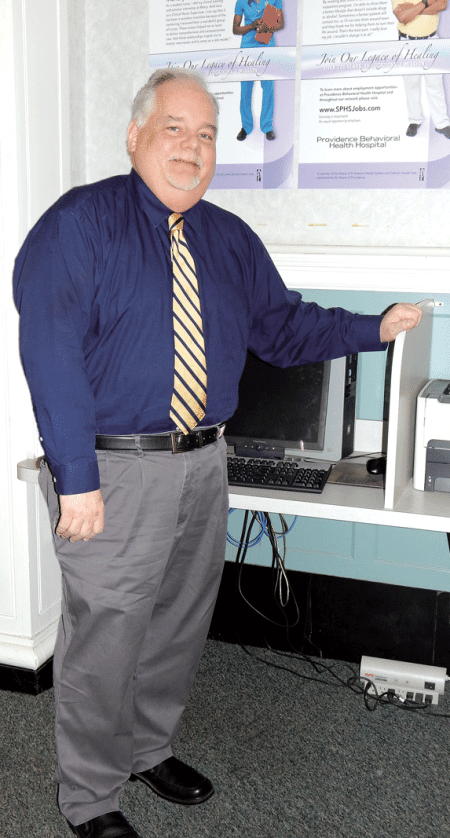
John McGlew says the best predictor of future success on the job is past behavior, which can be gleaned during the interview process and by checking references.

Interviewing job candidates is an art and a science that many small and mid-size employers don’t have the time to perfect. But knowing what to ask job candidates and how to interpret their answers is important, because hiring the wrong person is a waste of time and money and can lead to difficulties later on.

John McGlew says it’s critical for employers to do their homework before they sit down and begin interviewing job candidates.

The director of Employment and Employee Relations for the Sisters of Providence Health System noted that he was interviewed by 21 people before he was hired, and he has developed a program for his managers that teaches them how to use behavioral questions to find the person most suited for a particular job.

“Good interviewing practices and thorough vetting of candidates is critical to any business trying to hire the right person,” he explained. “It includes getting proper references and employment information, but you need to do a lot to get prepared for the actual interview.”

Michele Cabral, who hired many employees in her former position as CFO and COO of Farm Credit Financial Partners in Agawam and now helps employers with the process through her company, CFO On the Go, agrees that the work should begin long before applicants are actually interviewed.

“Most companies have a culture, but they fail to take it into account when they write a job description,” said the Holyoke Community College professor of Business, explaining that it is important for new hires to be invested in a company’s success as well as its mission.

McGlew agrees, and considers this so important that he tells managers to convey the Sisters of Providence mission to candidates and explain how the job advertised will relate to it, and says every business should have a clearly articulated mission statement that it shares.

Shannon Levesque concurs, but adds that interviewers also need to have a list of clear and measurable goals that get conveyed to everyone they interview.

“The person not only needs to be a good cultural fit, but you need to be realistic, honest, and up front about what will be expected to eliminate any surprises for the candidate,” the director of talent acquisition for Baystate Health told BusinessWest. “A small or mid-sized business also needs to know what makes the company attractive; an interview is a two-way street, and if you want to hire talent, it’s important to sell your company.

“Good people always have options, and even more so if they are already working, so there has to be an incentive,” she continued, noting that this may mean taking on a new challenge or having the ability to use newly acquired education. In any case, the interviewer needs to understand what is driving the candidate to apply for the position.

Experts say it’s not difficult to assess someone’s technical skills, but knowing how well they work in a team environment and how they will handle difficult customers, people, or situations can be equally or even more important.

“The best predictor of future success is past behavior. But in order to get this information, you need to be able to elicit responses about how the person has behaved in workplace situations in the past,” McGlew said.

For this edition and its focus on employment, BusinessWest looks at methods that seasoned interviewers use in their own hiring, so business owners can employ them and assess a candidate’s ability to do a job.

Essential Measures

Although there are many ways to conduct an interview, Cabral says most people fail to ask the right questions.

“The wrong candidates are often hired because the interviewer didn’t dig deep enough during the interview,” she noted.

Michelle Cabral

Michelle Cabral says people applying for managerial positions should to be able to inspire others and have standards in place, while employees at lower levels need to be able to manage their workload.

She measures five core competencies: leadership, management, communication, technical skills, and analytical skills, or the ability to solve problems, and says interviewers need to assess each of these areas while the candidate is in front of them.

“At the highest level, you need someone who can create a vision, understand the environment they are working in, and navigate their way through it. The person needs to be articulate verbally and in writing,” she said. “At the lowest level, the new employee needs to understand the vision, but interpret it for themselves as it relates to their job. They also need to know when to use different communication skills, such as e-mailing versus speaking to someone.”

She added that people applying for managerial positions should be able to inspire others and have standards in place, while people at lower levels need to be able to manage their workload. They should also be able to identify problems, come up with ways to solve them, and be able to discuss these options with their manager.

She suggests conducting a 15-minute phone interview with candidates whose résumés align with job requirements, and recommends getting people out of their comfort zone right away.

For example, if someone says they answer the phone frequently at their current job, the interviewer should ask them to cite an example of how they handled a customer who was rude to them.

“The phone interview helps you determine how articulate the person is and also assess their listening skills and whether they answer questions appropriately,” she said.

McGlew agrees that asking a person how he or she dealt with a challenging customer or phone call, as well as what steps they took toward service recovery, can reveal how they will handle stressful situations in the future.

“You want someone who takes steps to effectively resolve a difficult situation and restore the relationship for the company,” he noted.

Indeed, experts say the ability to communicate can be more important than technical skills, because most people can be taught to do new things. “But they need to be able to communicate when they are struggling and not be too embarrassed to ask for help,” he said.

Levesque told BusinessWest that problems sometimes arise because interviewers fail to differentiate between what is needed and what is preferable, which should be clearly defined in the job description. And if no one in the company has time to spend to help a new hire become proficient in a new skill, it may be a moot point.

“If you are taking a chance on someone’s potential to learn something, you need to structure training in a way that gets them up to speed quickly,” she said.

McGlew says interviewers should write down the qualifications the applicant must have before conducting the interview. In addition to technical skills, requirements can range from the ability to complete work within a given time frame to the ability to collaborate well, be knowledgeable about cultural diversity, or anything else that is pertinent to the job.

These things are important because, if soft skills are missing, a new hire’s interactions can become problematic. “It may be important for a security officer to know the law, but if the person has a brusque way of dealing with others, their interactions may become a problem,” Levesque said.

McGlew tells managers to come up with 20 to 25 behavior-based questions and then prioritize them. Although they are unlikely to get through all of them during an interview, asking candidates the same questions evens the playing field and allows interviewers to compare their answers.

But the candidate should do most of the talking. “You need to spend twice as much time listening as you do asking questions,” Levesque said.

Her interviews begin with a welcome, followed by behavioral questions. And there is always a defined closing, with time allotted for the candidate to ask questions and for her to assess their interest.

She said some interviewers aren’t used to using open-ended questions and may need to practice interviewing team members. But it makes a difference because open-ended or behavioral questions require candidates to give examples that include details related to their past performance, which allow the interviewer to understand the situations they have encountered, what their response was, and what they learned.

“You have to probe; it’s absolutely essential, but you also have parrot back what you heard and ask for elaboration,” Levesque said.

However, interviewers should avoid asking candidates to talk about their strengths or weaknesses. “They have already done their bragging on their cover letter and résumé,” Cabral said.

More useful questions can include, “if I called your manager today, what would he or she say about you?”; “tell me about a time when you were communicating a message and you were misunderstood?”; “tell me what gets you out of bed in the morning?”; and “tell me about a time when your employer needed you to stay late at work and you couldn’t?”

“You need to remain quiet after the person’s initial response,” Cabral advised. “And once they start sharing, you need to keep digging. If they couldn’t stay late when their boss needed them to, you want to know what happened and how they handled the situation or got the work done.”

Details That Matter

Although some employers seek well-rounded employees who can bring unique perspectives to problems, lifestyle can play a role in determining whether a candidate is suitable for a job. For instance, if the person says they love to ski and do so every weekend, it is appropriate to ask if it will present a problem if they are occasionally asked to work weekends.

Shannon Levesque

Shannon Levesque says interviewers need to know which technical skills are critical and which ones are preferable and can be learned after the person is hired.

And although young candidates may not have a job history or be able to provide examples of handling difficult workplace situations, they can be asked what led them to believe the job they are applying for is the right career, Cabral said, adding that gauging a candidate’s honesty is important. They can also be asked to supply references that include professors, members of the clergy, or people at places where they have volunteered.

Obtaining proper references and an employment history does play a role in choosing a new hire, but experts say busy interviewers can hire an outside service to do this.

However, McGlew suggests asking the person for past-performance appraisals. They may need to give their supervisor permission to share the information, but it can prove invaluable.

People conducting interviews who are not familiar with employment law also need to brush up on what they can and can’t ask.

“Don’t get into the person’s personal life. If someone starts talking about their family, change the subject,” Cabral advises.

Salary or hourly pay should also be discussed. Although it doesn’t need to be definitive, it’s important to divulge how much the organization or business is willing to pay a new hire.

McGlew told BusinessWest that, if the person won’t or can’t accept the dollar figure, it is a waste of time to continue the interviewing process.

“You also have a duty to give people a clear idea of the benefits you plan to offer,” he went on. “Salary and fringe benefits are definitive economic decisions, and if you don’t meet a person’s requirements, they may choose to keep looking or stay at their present position.”

Levesque agrees, and says there is nothing more disappointing to both parties than to offer someone a job, then find out they can’t afford or are unwilling to accept the pay. And when an interview nears the time allotted for it to end, it’s important to identify and set expectations about what will happen next.

“You should ask about their job search and whether they have any offers pending; an employer needs to know where a candidate is in the process,” Levesque said. “We have an obligation to treat job seekers with respect and understand their goal is to find gainful employment that is rewarding, challenging, and fits their career goals. Nothing is more painful to a candidate than to be in a black hole and not know where they stand or what to expect.”

Cabral understands that employers can get exhausted looking through hundreds of résumés, but warns against taking short cuts simply to fill a vacancy with someone.

“Some rush to get a job filled when they know in their gut they are hiring the wrong person,” she explained. “But if a new hire is not working out, you need to have an honest conversation. It’s OK to provide a soft landing and give them several months notice, but if the job is not getting done, you need to find the right person for it.”

However, experts say that situation can be tempered by hiring a person on a probationary basis. “But the person really needs to understand that there will be a formal assessment period,” McGlew said, adding that, when a person is being interviewed or hired, the words “permanent position” should never be used.

Instead, the interviewer should refer to a job as a “full-time opportunity,” which can prevent legal problems later on, he said, even though the Massachusetts Employment at Will statute allows employers to terminate an employee at any time, barring a contract.

Final Decisions

Cabral says hiring is an art and a science, and employers need to know the art is important in helping them make a decision. “At the end of the day, 80% of a decision is based on gut feel and attitude.”

McGlew agrees. “A lot is subjective and has to do with judging whether the person’s values and priorities are in line with the organization’s values,” he said. “But there is no foolproof methodology to interviewing, and sometimes the person who shows up for work is not the person you interviewed.”

Still, knowing what to ask and being well-prepared goes a long way toward keeping that from happening.

“It can be difficult to separate personality from competency, but if you ask questions in the right way, you will be surprised what people tell you,” Levesque said. “Good interviewers accept what they see, then probe for validation. And it’s a win-win if you get it right.”

Employment Sections

For Good Measure

By Jeffrey J. Trapani, Esq.

Jeffery Trapani

Jeffery Trapani

Earlier this month, the Commonwealth’s House of Representatives began considering H.4323, titled “An Act Relative to the Judicial Enforcement of Non-competition Agreements,” the content of which reflects a compromise between parties advocating for and against the existence of such agreements.

The bill does not bar non-competition agreements, but places certain limitations on them. H.4323 provides that these agreements should be in writing and, regardless of whether the agreement commences before employment or during, that it inform the employee that he or she has 10 days to seek counsel. It limits such agreements to protecting trade secrets, confidential information, and goodwill.

The bill also limits the restrictive period to one year, unless the employee engages in certain forms of misconduct, in which case the restrictive period can increase to two years. The bill also requires that the restrictive area be reasonable in geographic reach and scope, and ties the reasonableness of these restrictions to a two-year look-back period.

During the one-year restrictive period, the former employee is not to be considered a former employee. The bill, however, provides a former employee with ‘garden leave,’ which requires the employer to pay 50% of the employee’s annualized base salary over the one-year restrictive period in the usual course and subject to the protections afforded under wage and hour laws (including treble damages if not paid properly).

The bill also makes non-competition agreements unenforceable against non-exempt employees as defined under the Fair Labor Standards Act (FLSA), certain students, employees who have been laid off or terminated without cause, or employees age 18 and younger. Also, unlike the present practice in the courts, which allows a judge to reform or modify a non-competition agreement so as to make it enforceable, H.4323 invalidates any non-competition agreement that does not strictly conform with the provisions of the bill. Finally, the bill, as presently drafted, would go into effect July 1, 2016.

H.4323 also addresses employers’ concerns about protecting their business information by adopting the Uniform Trade Secret Act (UTSA). The adoption of the UTSA brings Massachusetts in line with 47 other states, and by agreeing to adopt the act, legislators appear to be acknowledging that much of the concern about employee movement is inextricably linked to an employer’s interest in protecting its business information from competitors.

Thorny Issues

As of this writing, the House has not yet debated H.4323, and some of its provisions will be the focus of intense debate. First on this list is the garden-leave provision, which was first introduced to the conversation when House Speaker Robert DeLeo signaled his support in March 2016 for passing legislation restricting non-competition agreements. While DeLeo included it when describing the potential legislation, the exact terms of the provision were not known until recently.

Continuing with the plant theme, the House will also need to address the ‘tree line’ for employees who may be subject to non-competition agreements. The momentum for passing a bill was due, in part, to testimony from employees working in low-paying and seasonal jobs, such as camp counselors and fast-food workers, who were forced to sign non-competition agreements. In addition to precluding younger employees and students from signing one of these agreements, H.4323 eliminates non-competition agreements for employees classified as non-exempt under the FLSA.

Until recently, employees earning less than $23,660 could not be considered exempt from the minimum wage and overtime provisions of the FLSA. Recently, however, the federal government revised the regulations under the FLSA and doubled the salary amount to $47,476.  This means employees earning less than that amount cannot be considered exempt from the minimum-wage and overtime provisions of the FLSA. These regulations were also revised to automatically increase this threshold every three years. These changes under the FLSA will likely require that the House debate whether to continue to tie the prohibition on noncompetition agreements to the FLSA, to identify an independent threshold, or to exclude certain jobs.

Critics of H.4323 will also likely ask the House to revise the provision that requires courts to invalidate a non-competition agreement where the agreement includes, but does not strictly conform with, the law. This is a clear change from current precedent that could result in employers having no protections because of a non-material, technical error in the written agreement.

Broad Approach

When DeLeo signaled his support for passing legislation that would restrict non-competition agreements in Massachusetts earlier this year, employers and employees alike were put on notice that the end of a years-long debate was imminent. H.4323 takes a broad approach to addressing employers’ concerns about protecting their business information by adopting the UTSA and by retaining what many employers consider to be an effective way to prevent an employee from taking a business’ trade secrets or goodwill. The bill also appears to address what employee advocates and entrepreneurs see as abuses of the system.

While there is still much debate to be had on the more controversial aspects of the bill, the support of Speaker DeLeo shows a desire by at least the House to get these protections on the books sooner rather than later.

Jeffrey J. Trapani, Esq. is a partner at Robinson Donovan. He concentrates in civil litigation, including insurance defense, employment law, municipal liability, business litigation, and professional malpractice. He also represents landlords in summary process actions and housing-discrimination claims, and insurance companies in unfair settlement claims and coverage issues; (413) 732-2301; [email protected]

Accounting and Tax Planning Sections

Driving Home Some Points About This Intriguing New Business

AccountingDPlayersARTThe rise of Uber and similar transportation services like Lyft have been a boon for people looking to make some extra money on their own schedule. But they have also given rise to a number of taxation issues. For anyone looking to turn their personal vehicle into a part-time taxi service, here’s a handy guide to IRS rules for tax filing, expense deductions, and more.

By Sean Wandrei

You know your city has arrived when a transportation network company is operating in town.

Uber has been in the Springfield area for some time now. Uber has been in major U.S. cities since 2011 and is now in 66 countries and 449 cities worldwide. New companies, such as Lyft, are also popping up in these markets (Lyft is now in Boston). With the casino arriving in 2018, it is safe to assume that this industry could be expanding locally.

For those of you who do not know what Uber is, here is a quick crash course. Uber is a transportation service that allows passengers to connect with drivers in the area via a smartphone app. Prices are predetermined before the transaction occurs, and all fares are paid via the app with a credit card. Generally, no cash is exchanged. Uber is basically a taxi service where the driver uses his or her own automobile.

Of course, since transactions are occurring, there are tax ramifications for the driver. An Uber or Lyft driver is not an employee of Uber or Lyft. The drivers are independent contractors who are considered self-employed individuals. Drivers have to calculate their taxable income and pay federal and state income and self-employment tax on the profits.

Generally, drivers report income and expenses on Schedule C of IRS Form 1040. While most taxpayers will file as a self-employed individual on Schedule C, some may want to think about limiting the liability that they could be exposed to.

The taxpayer could file paperwork to make the entity a single-member limited-liability corporation (SMLLC). While there are additional costs (that are deductible) to create and maintain the SMLLC, it could be worth it for the liability protection in case of an accident or lawsuit. The IRS does not recognize a SMLLC for tax purposes, so a self-employed taxpayer would file Schedule C if it was an SMLLC or not.

Uber drivers earn revenues from the fares they collect from driving passengers. All the fares that a driver receives have to be reported as revenue even if no tax documents (1099-Misc or 1099-K) are received. As of this writing, Uber issues tax documents to all drivers no matter the fares earned. Lyft only issues 1099-K if the total fares are $20,000 or greater and there are 200 or more transactions (the minimum threshold set by the IRS).

Since most of these transactions occur with a credit card, form 1099-Misc would not be issued since that form is for cash payments in excess of $600. Any cash tips that are received should also be reported as a part of gross income. Ordinary and necessary business expenses, which are defined as common and accepted in the general industry or type of activity in which the taxpayer is engaged, can be deducted from the revenues to arrive at the taxable net income which is subject to both income and self-employment tax.

Driver Deductions

Let’s take a look at some of those expenses that an Uber driver could deduct. The first, and most obvious, expense is for the automobile driven. There are two deduction methods available for automobile expenses — the standard mileage method (the easiest to calculate) and the actual vehicle expenses. The taxpayer has a choice of what method to use.

Generally with expenses, you are going to select the method that will generate the largest deduction. One thing to note about the method choice: if the taxpayer elects to use the standard mileage method, he or she must do so during the first year the automobile is placed in service.  Under the standard mileage method, the taxpayer determines the expense by multiplying the business miles driven during the year by the standard mileage rate (54 cents per mile for 2016). The tax form that Uber issues lists the miles driven while on fare, but those probably would not be the total business miles driven during the year. There are miles driven while not on fare that would be considered business miles, such as miles driven searching for the next fare, which could be deducted.


Click HERE for a list of Accounting Firms in Western Mass.


Proof of these miles must be maintained in a daily log listing the business miles driven during the year. The other method for deducting automobile expenses, the actual vehicle expense, is more record-intensive. All actual business-use expenses incurred to operate the automobile during the year can be deducted. These expenses usually include gas, tires, repairs, maintenance, insurance, registration, and depreciation. Only the expenses directly related to the business can be deducted. The deductible costs are calculated by multiplying the actual costs incurred by the percentage of business use of the automobile.

Some other expenses that may be overlooked that could be deducted are car washes, USB and mobile-phone chargers, wireless plans, commissions paid, tolls, parking fees, floor mats, spare tire, flat-tire kit, jumper cables, AAA membership, supplies, music apps like Spotify, ice and snow scrapers, mobile routers such as a MiFi, and food and drink for passengers (limited to 50% deduction by law).

Only the portion of these expenses related to the driving business can be deducted. Any portion of an expense related to personal use is not deductible. Any expenses that are not listed above that are ordinary and necessary for the business could be deducted as well.

Some other expenses that could be deducted, which are not that common, include the home-office deduction and any health insurance paid for the driver and his or her family. The rule with deductions is that the taxpayer must prove the expenses were incurred, so all receipts from the expenses should be saved in case the IRS audits the tax return.

As sole proprietors, drivers are responsible for both income and self-employment tax on the profits. So it’s important to make sure all of the business deductions incurred are properly deducted.

While driving for Uber or Lyft can be a fun and easy way to make some extra cash, it is important to understand the tax issues that could arise from being a driver. As always, you should see your tax professional if you have any tax questions.

Sean Wandrei is a lecturer in Taxation at the Isenberg School of Management at UMass Amherst. He also practices at a local CPA firm; [email protected]

Daily News

GREENFIELD — Michael Tucker, president and CEO of Greenfield Cooperative Bank and its parent company, Greenfield Bancorp, MHC, recently announced today the operating results of the bank’s latest fiscal year. Tucker reported that the first year of the combined Greenfield Cooperative Bank and its Northampton Cooperative division was successful, and the bank achieved its first-year goals with minimal disruption and no layoffs. In fact the bank has added two new commercial lenders and a commercial analyst since the merger. Other results included:

• The bank’s financial performance for the fiscal year ended March 31, 2016 saw total assets grow by 6.64% to $559,975,000. This was an improvement over the 5.06% annual asset growth of GCB during the five-year period before the merger with Northampton. Asset growth included 5.83% growth in total loans $338,769,000. In 2015, GCB originated more than $102 million in loans of all types, including $52 million in commercial lending,
 $34 million in residential mortgages,
 $13.7 million in home equity loans and lines,
 and $1.1+ million in MassSave® ‘’zero-interest” energy loans

• GCB had an increase of $33 million in deposits over the past year. Total deposits increased by 7.56% compared to an average annual growth of 5.74% for the prior five years.

• Total equity grew 4.78% to $65,180,709. GCB’s Tier 1 Capital to average assets is 11.7% and Total Capital to Risk-Weighted assets is 22.3%. The bank is considered “well capitalized” by all regulatory definitions.

• Greenfield Cooperative Bank and its employees contributed more than $133,000 to more than 100 charities, community groups, school events, youth teams and cultural events throughout both Hampshire and Franklin County during the past fiscal year.

• The pre-tax operating income for Greenfield Cooperative Bank was $2,231,000 for the first year ended March 31, 2016 and the net income after taxes was $1,520,000. This was an increase of 5.18% over the average net income of GCB alone for the 5 years prior to the merger year.

In other news, the following seven directors were re-elected to three-year terms as directors of the bank and Greenfield Bancorp, MHC:

•Attorney Robert Carey, a principal in the Greenfield law firm of Curtiss, Carey, Gates & 
Goodridge, LLP. He was re-elected as clerk of the bank;

• Kevin O’Neil, president of Wilson’s Department Store in Greenfield, re- 
elected chairman of the board;

• Keith Finan, chief financial officer of Deerfield Academy;

• Attorney Daniel Graves, owner of the Law Offices of Daniel Graves located in Greenfield.

• Attorney Peter MacConnell, principal in the law firm of Bacon Wilson, P.C. He was also re- 
elected as a corporator for a 10- year term;

• John Kuhn, principal in the firm of Kuhn-Riddle Architects in Amherst. He was also re-elected as a corporator for a 10-year term;

• Robb D. Morton, CPA, principal in the accounting firm of Boisselle, Morton & Associates, LLP located in Hadley. He was also re-elected as a 
corporator for a 10-year term.

Re-elected to 10-year terms as corporators of Greenfield Bancorp, MHC were: Barry Roberts, president of Roberts Builders Inc; Margarita O’Byrne Curtis, head of School at Deerfield Academy; and Douglas Clarke, retired after many years with Western Massachusetts Electric Co., now Eversource.

Daily News

SPRINGFIELD — Bacon Wilson announced that attorney Kevin Maltby is now president of the Hampden County Bar Assoc. (HCBA) after taking the oath of office Wednesday in front of his partners and peers at the association’s annual meeting and membership dinner at the Springfield Sheraton.

“I am enormously grateful to the members of the Bar Association for their confidence in me, and gratified to follow in the footsteps of my partners at Bacon Wilson, including past presidents Paul Rothschild, Hyman Darling, and Michael Ratner,” Maltby said. “I consider it an honor to be counted among their ranks. So many Bacon Wilson attorneys have, over their lengthy careers, given their time and legal skills to serve the Hampden County Bar.”

Also in attendance was attorney Michael Katz, who took office as chair of the bar’s Bankruptcy Section, while attorneys Michael Ratner and Paul Salvage were each honored for their 50 years of membership.

Maltby has a long history of service and involvement with the Hampden County Bar Assoc. He has served on the bar’s board of directors each year since 2012. He was honored with the HCBA’s Access to Justice Pro Bono Publico Award for 2012 for his vision and implementation of the Springfield District Court Lawyer for the Day program. Additionally, in 2013, he received the Community Service Award from the Mass. Bar Assoc.

Maltby is a member of the Massachusetts Supreme Judicial Court’s Standing Advisory Committee on Professionalism. He has extensive jury-trial and courtroom experience, and is a former prosecutor for the Northwestern District Attorney’s Office. He is also an adjunct professor of Legal Studies at Bay Path University in Longmeadow, where he teaches litigation, advanced litigation, criminal law, and evidence. He earned his law degree from Suffolk University Law School in 2001, and his undergraduate degree, cum laude, from UMass in 1998. In 2014, he was a recipient of BusinessWest’s 40 Under Forty distinction, and has been a named a Super Lawyers Rising Star for seven years, since 2009.

Daily News

CHICAGO — The American Medical Assoc. (AMA) adopted new policy last week recognizing the public-health benefits of paid sick leave and other discretionary time off. Citing a growing body of evidence that lack of access to paid sick leave results in the spread of infectious diseases, as well as delayed screenings, diagnoses, and treatment, the new AMA policies support paid sick leave, as well as unpaid sick leave, for employees to care for themselves or a family member.

“With both dual-earner and single-parent households on the rise in the United States, it is increasingly challenging for workers to juggle family and work,” said former AMA board chair Dr. Barbara McAneny. “Workers without paid sick days are more likely to work sick and are more likely to delay needed medical care, which can lead to prolonged illness and worsen otherwise minor health issues. Lack of paid leave also has a ripple effect across a worker’s family. Paid sick leave has been shown to aid children’s health, shorten hospital stays, and reduce the risk of disease transmission by allowing parents to stay home with sick children. Paid sick leave keeps our homes, offices, and communities healthier while ensuring the family’s economic security.”

The U.S. is the only industrialized nation without a federal family-leave law that guarantees workers may receive pay while taking time to care for themselves or their family. Although the Family and Medical Leave Act mandates that companies provide leave, the law does not require that it be paid.

The AMA also reaffirmed existing policy supporting voluntary leave policies that provide employees with job security and the continued availability of health-plan benefits in the event that leave becomes necessary due to medical conditions.

Daily News

SPRINGFIELD — American International College (AIC) senior Alexander Clark is putting his summer to good use. Clark was afforded the opportunity to intern with the Hampden County District Attorney’s office and is gaining valuable real-life experience while being mentored by AIC alumnus Antonio Simmons, the office’s director of Community Safety and Outreach.

At a recent press conference, Hampden County District Attorney Anthony Gulluni announced the formation of the Hampden County Addiction Task Force (HCAT), a collaboration of community resources including local and state law-enforcement personnel, healthcare institutions, service providers, schools, and community coalitions whose goal is to focus on a county-wide approach to address drug addition, overdose, and prevention.

HCAT lists five primary objectives, including the development of consistent messaging for addiction and addiction-related issues. Clark was tasked with creating a social-media plan in support of HCAT’s efforts. On June 15, he presented his plan to members of the task force. “Social media will help give the campaign a face and communicate a consistent message throughout the community as well as promote events that are taking place around these issues,” he said.

Clark suggested a three-pronged approach to the social-media campaign using Facebook, Instagram, and Twitter to get the word out while utilizing Hootsuite to manage all three sites, schedule posts, and provide analytics. “Facebook will be the primary go-to site,” he explained. Everybody uses Facebook, including my father, my grandmother, and my great-grandmother.”

Clark supported the use of Instagram to best reach his constituents, adults 18 to 30 years. “It’s where I get most of my news. It’s heavy with images which engage my age group.” Twitter “stirs conversations,” he added, and will do so relative to discussions around opioid addiction and prevention in the community.

Clark identified growing online followers as “our biggest challenge.” In an effort to further promote his social-media plan, he offered to personally attend community events that will help educate and engage the community about HCAT.

His supervisor and mentor, Antonio Simmons, said he is impressed with Clark’s contributions to the team. “Alex gives HCAT that input needed from a youth’s perspective. His knowledge of social media will be very helpful. Alex has very good communication and leadership skills that will be an asset to the team. I am impressed with his drive and determination to get involved and make a difference.”

When Clark returns to the AIC campus for his senior year, community outreach will continue to be a priority, as it has been since beginning his college career. Clark served as a representative to AIC’s student government his freshman year and president his sophomore and junior years. He continues to serve as the legislative chair for AIC’s Model Congress, the oldest of its kind in the country. He is an executive board member for POWER, a non-partisan political-activism organization on campus whose mission is to raise awareness regarding current issues and get students thinking about politics and the world around them.

Clark is one of 137 students selected nationally (only three from Massachusetts) to participate in College Debate 2016, a national, non-partisan initiative to empower young voters to identify issues and engage peers in the presidential election. The group met in Los Angeles this spring to strategize and will reconvene there in September. He is doing all this while he pursues his undergraduate degree in political science and works two jobs to help put himself through school. “My parents were excellent role models for working hard,” he said.

Daily News

SPRINGFIELD — On May 18, the U.S. Department of Labor released its new rule regarding overtime exempt status, which raises the salary threshold and could extend overtime pay to more than 4 million workers who are currently ineligible.

The rule doubles the salary level at which full-time salaried workers are eligible for overtime and increases the salary level for ‘highly compensated employees,’ which could impact more than 83,000 workers in Massachusetts alone.

Timothy Murphy, partner with Skoler, Abbott & Presser, P.C. and member and former chair of the Springfield Regional Chamber’s legislative steering committee, will explore the impact of the rule at the Springfield Regional Chamber Lunch ‘n’ Learn on Tuesday, June 28 from 11:30 a.m. to 1 p.m. at Lattitude, 1388 Memorial Ave., West Springfield.

Murphy will break down the new rule, explain the impact on the region’s employers, provide guidance for nonprofits and higher-education institutions, outline what area businesses need to know to be compliant, and discuss strategies to lessen the impact to the bottom line.

Murphy joined Skoler, Abbott & Presser in 2001 after serving as general counsel to an area labor union. He represents and advises both union and non-union employers in a wide range of labor and employment matters. He regularly represents employers in matters before state and administrative agencies and courts. His work includes assisting employers to remain union-free, defending unfair labor practices, negotiating collective-bargaining agreements, and handling grievance arbitrations.

He is a graduate of Western New England Law School, where he has subsequently taught courses in employment law. He is a frequent contributor to business and human-resource publications and a contributing author to the Massachusetts Employment Law Letter. He is a past Super Lawyers Rising Star and was named among the Best Lawyers in America.

Reservations for the June Lunch ‘n’ Learn cost $25 for Springfield Regional Chamber members and $35 for general admission. Registration includes lunch and one-on-one discussions with Murphy. Reservations may be made online at www.springfieldregionalchamber.com.

Daily News

CHICOPEE — Elms College and Western New England University School of Law will execute a ‘3+3’ agreement this month that allows students to apply for admission to the law school and begin their legal education during their senior year at Elms College. This could shorten the time for students to earn both their bachelor’s and juris doctor degrees from seven years to six years.

This agreement is not limited to criminal justice or legal studies majors — any undergraduate student, regardless of major, can earn credits toward law school under this program.

“This is a significant opportunity for students in all majors who are interested in attending law school,” said Assistant Professor Kurt Ward, director of Criminal Justice and Legal Studies and director of ABA Paralegal Education at Elms College.

The 3+3 program agreement signing will be held on Wednesday, June 22 at the WNEU School of Law. Representatives of both WNEU and Elms College will be in attendance.

Law Sections

Work to Do

By Susan G. Fentin, Esq.

SUSAN G. FENTIN

Susan G. Fentin

On May 18, the Department of Labor (DOL) finally released its highly anticipated revisions to regulations governing the Fair Labor Standards Act (FLSA). Under the FLSA, employees who are considered exempt under one of the so-called ‘white-collar’ exemptions are not entitled to be paid overtime if they work more than 40 hours in a workweek.

The threshold salary level for exempt status is currently $455 per week, which is equivalent to an annual salary of $23,660. However, under the revised regulations, on Dec. 1, the new minimum salary threshold will go up to $913 per week, annualized at $47,476. Any employee who is not making the minimum salary threshold will automatically lose their exempt status and be entitled to overtime pay. It’s estimated that 86,000 Massachusetts workers would then become entitled to overtime pay.

Fortunately, employers have time to decide how to handle this huge change. The first step is to conduct a wage/hour audit by identifying those employees whose minimum salary level falls below the new threshold. Employers should ask those employees to begin tracking their hours of work. Decisions about how to handle these workers will depend, in part, on whether the employee currently works more than 40 hours in a workweek and, if so, how many hours the employee generally works.

At the same time, companies should be reviewing their exempt employees’ job responsibilities to determine whether the job descriptions for these workers truly qualify them for exempt status.

In a recent case, Marzuq v. Cadete Enterprises, the U.S. Court of Appeals for the First Circuit ruled that store managers’ claims for unpaid overtime could proceed to trial. In that case, one of the store managers, Gassan Marzuq, earned $825 per week, or $42,900 per year, in 2012, only slightly less than the new minimum salary level. So in Marzuq’s case, Dunkin’ Donuts might have sought to preserve his exempt status by raising his salary to the new minimum threshold.

But even if the manager’s salary meets the new minimum, that does not mean that he will pass the test for exempt status. Dunkin’ Donuts store managers spend a substantial amount of time substituting for crew members who miss their scheduled shifts, serving customers, and cleaning, in addition their other responsibilities, which include calibrating equipment, handling cash, training and supervising employees, and substantial paperwork. In his lawsuit, Marzuq claimed he had been misclassified as exempt and was therefore entitled to overtime pay whenever he worked more than 40 hours in a workweek.

Under the DOL regulations, a manager can be considered exempt even if he is serving customers at the same time that he is supervising employees. The issue is whether the manager’s exempt duties are his primary duty. Marzuq claimed that he spent most of the time, perhaps as much as 90%, performing non-exempt work. Courts reviewing exempt status will look at a number of factors, including the amount of time spent performing exempt work. Time alone, however, is not the determinative test; it is the ‘overall character’ of the employee’s position that determines whether exempt or non-exempt work is the employee’s primary duty.

The court found that, since the managers spent a large portion of their days performing manual labor normally assigned to a non-exempt worker, it was questionable how much time was actually spent in management roles.  The court concluded that a jury should decide whether the managers’ work was truly exempt. It noted that, in addition to their work in non-exempt roles, administrative tasks were a relatively small portion of the workweek, store managers’ authority to problem solve or terminate an employee was apparently limited, and taking into consideration the number of hours worked by each manager each week and the fact that the non-exempt employees could receive tips, the non-exempt staff might actually make more per hour than their managers.

Looking at the overall character of the managers’ primary duty, the First Circuit determined that a jury should decide how many hours the managers regularly worked, how much time they spent in non-exempt work, and the portion of that non-exempt time in which they were performing both exempt and non-exempt duties. In addition, the court found there might be a jury question as to whether the managers had a substantial role in decisions affecting their crew members.

The bottom line here is that, even for those employees whose salaries are close to the new minimum, raising their wages to meet the new threshold won’t solve the problem if their job duties do not qualify for the exemption. So the court’s analysis here is significant for all exempt workers, even for those whose salary level may not need to change after the DOL’s final regulations are issued.

As a result, the time is ripe for employers to re-evaluate their exempt/non-exempt classifications. If you are concerned that some of your exempt workers may be misclassified, the new regulations will give you a reason to revise the classification without necessarily creating liability for past wages. Consult experienced labor and employment counsel if you need guidance on how to properly classify your exempt workers.

Attorney Susan G. Fentin has been a partner at Skoler, Abbott & Presser since 2004. Her practice concentrates on labor and employment counseling, advising large and small employers on their responsibilities and obligations under state and federal employment laws, and representing employers before state and federal agencies and in court. She speaks frequently to employer groups, conducts training on avoiding problems in employment law, and teaches master classes on both the FMLA and ADA; (413) 737-4753; [email protected]

Briefcase Departments

FutureCity 2026 Presents Development Strategy

SPRINGFIELD — An executive summary of the FutureCity 2026 economic-development strategy was presented to about 120 business and community leaders and stakeholders at CityStage last week. FutureCity is a joint initiative by DevelopSpringfield, the Springfield Regional Chamber of Commerce, and the city of Springfield’s Office of Planning and Economic Development. Its purpose is to build on the strategies identified in earlier studies such at the Urban Land Institute study of 2006 and the Rebuild Springfield Plan of 2012 — both of which identified tangible goals that continue to be the focus of public and private economic-development strategy in Springfield. Both plans recommended the importance of developing a long-term strategy for economic growth in the city that would ultimately benefit the entire region. “The goal of this project was to pinpoint and leverage the city’s attributes, including geographic location, infrastructure, workforce, and industries, and align these existing characteristics, assets, and conditions with pillars of realistic current and prospective market opportunities,” said Jeff Fialky, an attorney with Bacon Wilson and co-chair of the FutureCity initiative. “The objective was to develop an approach based upon realistic market opportunities that is obtainable rather than merely aspirational.” The FutureCity strategy was prepared by the nationally recognized real-estate and economic-development consulting firm Newmark Grubb Knight Frank, guided by a steering committee representing a broad spectrum of businesses and organizations over the course of a nine-month period. The consultants were charged with an ambitious scope of work which took place over nine months to include the following: assess existing conditions, analyze target industries, assess logistics and supply-chain capabilities, assess talent-development strategies, develop a list of recruitment opportunities for target industries, and identify strategic initiatives and an implementation plan with measurable deliverables. Newmark conducted over 100 interviews, which included city and state leaders, economic-development agencies, large employers, young professionals, elected officials, nonprofits, workforce-development organizations, real-estate and creative-economy experts, and more, in addition to deep dives into relevant data, peer-city comparisons, and several site visits to Springfield. Major themes emerging from the study include site and space readiness, centralization of small-business resources, development of a multi-generational workforce plan, development of a unified marketing and messaging plan, fostering collaboration and connectivity, strategically unifying economic-development efforts, collaboration, and a focus on Springfield’s unique strengths. “This was a very pragmatic exercise that shows there are many more pros than cons as we continue to market Springfield,” said Mayor Domenic Sarno. “As we have done with the Urban Land Institute and our Rebuild Springfield plans, we will follow through with this one, too. Now is our time. We will continue to capitalize on the synergy of our public and private collaborations and keep the momentum going as the ‘can-do city.’” Added Jay Minkarah, DevelopSpringfield president and CEO and co-chair of the FutureCity initiative, “the FutureCity economic-development strategy is designed to be a guide to action, not simply a plan to sit on a shelf. The plan includes over 170 specific recommendations along with metrics for measuring success, estimated costs, potential impact, and priorities, and identifies the parties responsible for implementation.” Funding was provided by the Irene E. and George A. Davis Foundation, the Community Foundation of Western Massachusetts, the U.S. Economic Development Agency, the Springfield Regional Chamber, Smith and Wesson, and DevelopSpringfield. A link to the presentation can be found at www.developspringfield.com. Over the next few weeks, an executive summary and detailed report will be made available through DevelopSpringfield, the Springfield Regional Chamber, and the city of Springfield’s Office of Planning and Economic Development.

Springfield, Pittsfield Each Given $475,000 in Working Cities Challenge

BOSTON — The Federal Reserve Bank of Boston announced that Springfield, Pittsfield, Haverhill, Lowell, and Worcester will each receive $475,000 in the second round of the Working Cities Challenge, a competition for smaller cities in New England focused on building collaborative leadership, which is shown to be a critical element in economic growth for struggling post-industrial cities. The five communities put forward initiatives focused on neighborhood revitalization, workforce development, and improving access to economic opportunity. The cities will work on these initiatives over a three-year period, accompanied by technical assistance and a learning community for best-practice sharing. “I want to congratulate the winners of the Working Cities Challenge. Collaborative leadership is at the heart of this competition, and these five cities demonstrated significant capacity to reach across sectors and advance efforts on behalf of low-income residents in their communities,” said Boston Fed President Eric Rosengren. “I look forward to following the progress in the communities in the coming months and years.” Added Gov. Charlie Baker, “together with our partners in the private, philanthropic, and nonprofit sectors, we are proud to leverage greater resources to support and prepare communities for success. The Working Cities Challenge elevates local leadership, amplifying solutions from the community level to increase cross-sector collaboration and improve economic outcomes for low-income residents.” Last fall, 10 Massachusetts communities were each awarded $15,000 design grants through the Working Cities Challenge to strengthen their bids to the competition. The five winning cities were selected after a six-month design-grant period, which saw the cities refining proposals and adding partners from across their community. The Springfield Works Initiative will advance the city’s economy by enhancing and strengthening the connectivity between employers who need qualified workers and low- income Springfield residents who need meaningful employment. It aims to achieve this goal through an innovative collaboration between employers, educational institutions, service providers, community leaders, community-based organizations, government, and residents. The Springfield Works Initiative core team includes the Western Mass. Economic Development Council, the Springfield Office of Planning and Economic Development, the Regional Employment Board of Hampden County, MGM Springfield, Partners for Community Action, HAPHousing, Springfield Technical Community College, Western MA National Machine and Tooling Assoc., the Community Foundation of Western Mass., Tech Foundry, United Personnel Services, United Way of Pioneer Valley, and DevelopSpringfield. The Pittsfield Bridges: Transformative Movement (PBTM) initiative will support the journey from poverty to sustainability by collaboratively building community resources and removing barriers. The effort’s vision is for all people in Pittsfield to experience a just, thriving, and safe community. The PBTM’s goal is to improve individual, institutional, and social fairness and respect in the community and thus support individuals moving out of poverty. The PBTM’s core team includes Central Berkshire Habitat for Humanity, the city of Pittsfield, the Berkshire Regional Planning Commission, Berkshire Community College, BerkshireWorks Career Center, Berkshire United Way, Goodwill Industries, Berkshire Children and Families, Berkshire Health Systems, Berkshire Community Action Council, Downtown Pittsfield Inc., Pittsfield public schools, the local NAACP chapter, Pittsfield Community Connection, West Side Neighborhood Initiative, First United Methodist Church, Heart 2 Heart Ministry, Manos Unidas, Brien Center for Mental Health, Multi-Cultural Bridge, and Girls Inc. For more information on the Working Cities Challenge, visit www.bostonfed.org/workingcities.

Celia Grace Wins $50,000 at VVM Accelerator Awards

SPRINGFIELD — Twelve area startups won a total of $252,000 at the Valley Venture Mentors (VVM) Accelerator Awards on May 26, led by Celia Grace, whose founder, Marcelia Muehlke, calls her company a fair-trade, ethical wedding-dress seller that gives back and empowers women around the world. Muehlke, who won $50,000 at the ceremony at the MassMutual Center, launched the company several years ago after searching, fruitlessly, for a maker of fair-trade wedding dresses. Sensing both a need and an opportunity, she set about creating such a company. She traveled to Asia and set up a supply chain that could create high-quality garments that she and her clients could feel good about. She then began working with a group of women in a sewing group in Cambodia, contracted with a designer in New York, and got her business — and her dream — up and running. Today, Celia Grace sells dresses across the country and in Europe. The VVM award is just one in a long line of accolades, including a Grinspoon Entrepreneurial Success Spirit Award in 2011, a finish in the money at the UMass Pitch Competition in 2012, and a second-place finish at Valley Venture Mentors’ pitch contest during the Western Mass. Business Expo in 2012. About 500 people attended the May 26 ceremony. The other 11 winners of VVM Accelerator Awards, and their prize money, include:
• Homebody Holistics ($45,000), a maker of all-natural, hand-crafted, herbal cleaning solutions using no harsh chemicals or additives;
• Scout Curated Wears ($32,000), a designer, curator, and producer of thoughtful women’s accessories;
• DaVinci Arms ($21,000), a designer and manufacturer of firearms suppressors and accessories for mission-critical applications;
• Treaty ($21,000), a nanotechnology company whose flagship product is FogKicker, a biodegradable anti-fog solution made from nanocellulose;
• Prophit Insight ($19,000), a software company that helps healthcare providers identify and acquire unique sources of physician referrals;
• Livingua ($18,000), an app that connects travelers to locals who know the language and culture wherever and whenever they want;
• Name Net Worth ($15,000), a connective platform that leverages trusted relationships to measure and strengthen a user’s personal and professional networks;
• iRollie ($9,000), a niche-market phone-case manufacturer and online retailer featuring the rolling tray phone case;
• Need/Done Inc. ($9,000), instant help for kids at home from people their parents trust;
• Sumu ($7,000), which works with property managers and landlords to post fee-free apartments to help users find their next home; and
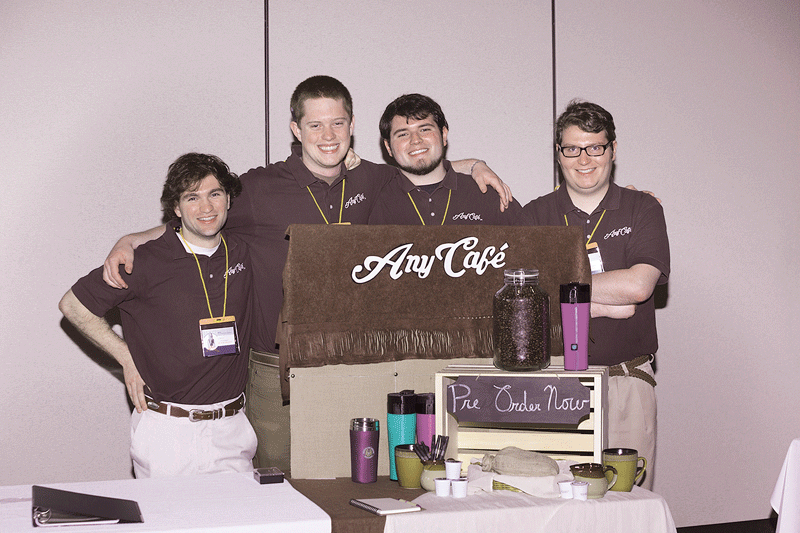
• AnyCafé ($6,000), a developer of hot beverage solutions for the future, including the Travel Brewer.

Legislation Filed to Cap Sick-time Accrual

BOSTON — Gov. Charlie Baker and Lt. Gov. Karyn Polito recently introduced “An Act to Reform Sick Time,” aimed at limiting sick-time accruals that have led to exorbitant payouts upon retirement from state government. The legislation would cap accrual of sick time for state employees in the Executive Department at no more than 1,000 hours, equivalent to six months of work. The bill grandfathers in approximately 5,800 current state employees who already have more than 1,000 hours accrued. Those employees would be capped at their current earned amount as of the date of enactment. Once the legislation is passed, the policy will take effect immediately. “Sick leave is a benefit designed to offer employees a way to deal with health and family issues, not a retirement bonus,” Baker said. “Bringing the Commonwealth’s sick-leave-accrual policy in line with other private- and public-sector employers just makes sense and is the fiscally responsible thing to do.” Added Polito, “this legislation ensures the use of sick time remains consistent with its intended purpose. Benefits for Executive Department employees will remain competitive while we implement an accrual policy that is fair to Massachusetts taxpayers.” Under current law, employees can accrue a maximum of 15 sick days per year, and those employees who retire are permitted to cash out 20% of unused sick time. In FY 2015, 378 employees had an accrual of more than 1,000 hours upon retirement. While this represents only about one-third the number of retiring employees, the cashouts for these employees accounted for nearly 80% of the total cashout cost. Based on the last three fiscal years, if fully implemented, a 1,000-hour cap on accruals would have saved an average of $3.5 million in cashouts per year. “Sick days serve an important purpose, but they must be used in an appropriate and accountable way for our compensation system to have the integrity and transparency taxpayers deserve,” said Senate Minority Leader Bruce Tarr. Added House Minority Leader Bradley Jones Jr., “recent media reports highlighting excessive sick-leave payouts in the public higher-education system clearly demonstrate the need to crack down on these types of abuses. The reforms proposed by the Baker-Polito administration will help to provide greater transparency and accountability to the state’s taxpayers.”

Habitat for Humanity Partners with Faith Organizations

SPRINGFIELD — Greater Springfield Habitat for Humanity (GSHFH) announced an upcoming Circle of Faith build on 479 Allen St. in Springfield. This project is a partnership between GSHFH and 11 local faith communities who have come together to raise the funds for a Habitat home, and who will also contribute volunteers, in-kind materials, and amenities for the project. As an intentionally interfaith project, this build incorporates Christian, Islamic, and Jewish communities. These 11 faith communities include First Church of Christ in Longmeadow, Sinai Temple in Springfield, St. Mark’s Episcopal Church in East Longmeadow, St. Andrews Episcopal Church in Longmeadow, the Islamic Society of Western Mass. in West Springfield, Christ the King Lutheran Church in Wilbraham, East Longmeadow United Methodist Church, Mercy Medical Center and the Sisters of Providence Health System in Springfield, St. Cecilia’s Parish in Wilbraham, and Foster Memorial Church in Springfield. Ellen Tougias, the point person for First Church of Christ in Longmeadow, says her church is “proud to be a part of the Circle of Faith Build for Habitat. We have committed to this project as part of our 30th-year celebration. It is one way that we have chosen to give back to our community in honor of this special year.” Mohammad Bajwa of the Islamic Society of Western Mass. referenced a piece of Scripture in relation to the project: “cooperate with one another, for doing good deeds and righteousness … surely God’s mercy is upon the good doers.” To kick off this partnership, the Circle of Faith communities and GSHFH hosted a “House Wrapped in Love” event at the Islamic Society of Western Mass. on June 1. The family-friendly event invited kids to paint what home, family, and love means to them on sheets of plywood that will then be used to build the walls of the new habitat house at 479 Allen St. Following this event will be several days of building on the job site, where the exterior walls of the home will start to take shape.

Unemployment Drops Across State in April

BOSTON — Local unemployment rates dropped in all labor market areas in the state during the month of April, the Executive Office of Labor and Workforce Development reported. All 15 areas added jobs over the month, with the largest gains in the Springfield, Boston-Cambridge-Newton, Barnstable, Worcester, and Lowell-Billerica-Chelmsford areas. From April 2015 to April 2016, 14 areas added jobs, with the largest percentage gains in the Haverhill-Newburyport-Amesbury, Brockton-Bridgewater-Easton, Taunton-Middleborough-Norton, and Barnstable areas. In order to compare the statewide rate to local unemployment rates, the Bureau of Labor Statistics estimates the statewide unadjusted unemployment rate for April is 3.9%, down 0.7% from the March rate. Last week, the Executive Office of Labor and Workforce Development reported the statewide seasonally adjusted unemployment rate dropped to 4.2% for the month of April. The unemployment rate is down 0.8% over the year. The statewide seasonally adjusted jobs estimate showed a 13,900-job gain in April and an over-the-year gain of 73,500 jobs. The unadjusted unemployment rates and job estimates for the labor market areas reflect seasonal fluctuations and therefore may show different levels and trends than the statewide seasonally adjusted estimates. The estimates for labor force, unemployment rates, and jobs for Massachusetts are based on different statistical methodology specified by the U.S. Department of Labor’s Bureau of Labor Statistics.

Leadership Pioneer Valley, Women’s Fund Partner on Alumni Discount

SPRINGFIELD — Effective immediately, Leadership Pioneer Valley (LPV) and the Women’s Fund of Western Massachusetts will begin offering alumni of their programs a mutual 20% discount — just one part of a new effort between these organizations to strengthen and coordinate learning opportunities for emerging leaders in the region. Both LPV’s core program and the Women’s Fund’s Leadership Institute for Political and Public Impact (LIPPI) program seek to empower up-and-coming leaders and, ultimately, strengthen the region as a whole. However, each program has unique content and perspectives that, if taken subsequently, provide a comprehensive leadership experience. Graduates of the LPV program can apply for LIPPI at womensfund.net; graduates of LIPPI can apply for LPV at leadershippv.org. “The Women’s Fund is thrilled to participate in this collaborative effort with Leadership Pioneer Valley,” said Elizabeth Barajas-Román, CEO of the Women’s Fund. “We think this is a natural partnership for our organizations, as we both invest in creating strong communities through leadership development. Together, our participants will become the civic and business leaders of tomorrow who will help the region thrive.” Added Lora Wondolowski, executive director of Leadership Pioneer Valley, “this partnership makes so much sense as we feel our curriculums are complementary. Together, we are building a cadre of leaders who are making a difference in their careers and communities.” LPV is a nonprofit that works to identify, develop, and connect diverse leaders to strengthen the region. LPV’s core program challenges and engages emerging leaders from all sectors of the community from throughout the region. The curriculum consists of both classroom and hands-on, experiential learning that builds leadership skills, enhances regional understanding, and creates broader networks. The Women’s Fund is a public foundation that connects donors with the lives of local women and girls through strategic grant making and leadership development. Its signature, non-partisan program, LIPPI, is designed to address the need to provide women with the tools, mentors, and confidence they need to become powerful and effective civic leaders and elected officials. Further information on each program can be found at leadershippv.org and womensfund.net.

Local Farmers Receive Awards Totaling $117,500

AGAWAM — Recognizing that farming is essential to the region, the Harold Grinspoon Charitable Foundation and Big Y awarded 47 local farmers from the Berkshires to the Pioneer Valley $2,500 each to make physical infrastructure improvements to their farms. Along with the support of sponsors Harvard Pilgrim Health Care Foundation and MGM Springfield, farmers have already put to use the awards for farm-improvement projects. This represents a 42% increase in awards from the 2015 inaugural year. With the collaboration of local agriculture advocacy organizations Berkshire Grown and CISA (Community Involved in Sustaining Agriculture), the applications selected for the Local Farmer Awards were announced in December. More than 120 farmers submitted applications describing their improvement projects. The award recipients are diverse: 32% have been farming for more than 20 years, and 23% for five years or fewer; and more than 40% of the farms have sales of more than $100,000, while another 30% recorded sales of less than $49,000. A winner from 2015 and 2016, Julia Coffey of Mycoterra Farm in Westhampton said, “we are thrilled to be a Local Farmer Award recipient. The projects that these awards have helped fund are making our farm more viable.” This year, Coffey is purchasing equipment required for outfitting a commercial kitchen that will allow the farm to begin manufacturing value-added food products with unsold fresh mushrooms. Jennifer Salinetti, owner of Woven Roots Farm in Tyringham, will install a permanent vegetable wash station which will directly impact the farm’s productivity. Gideon Porth of Atlas Farm in Deerfield will install a pump system for a new well to increase the supply of potable water for the farm’s packing house and greenhouses, which will double its current watering abilities. Harold Grinspoon, founder of the Harold Grinspoon Charitable Foundation, who launched the Local Farmer Awards in 2015, noted that “farmers don’t typically ask for help. They are genuinely appreciative of these awards and use the money in creative ways for projects to help their businesses.” Charlie D’Amour, president & COO of Big Y, added, “through our partnership with the Grinspoon Foundation, we are providing one more way to help local growers thrive in our community.” The goal of the Local Farmer Awards is to strengthen farmers’ ability to compete in the marketplace so the region benefits from the environmental, health, and economic advantages of local farming. A farmer appreciation event is held yearly for all applicants and awardees to honor and recognize farmers and promote the importance of local farming.

Chamber Corners Departments

AMHERST AREA CHAMBER OF COMMERCE

www.amherstarea.com

(413) 253-0700

• June 16-19: Taste of Amherst, on the Amherst Common, Thursday, 5-9 p.m.; Friday, 5-10 p.m.; Saturday, noon-10 p.m.; and Sunday, noon-4 p.m. This is a wonderful way to showcase your restaurant or business. Come join in the fun with more than 20,000 attendees throughout the weekend.
 For more information, contact the chamber office at (413) 253-0700 or [email protected].

• July 18: 13th annual Golf Tournament, at Hickory Ridge Golf Course, Pomeroy Lane, Amherst. Schedule: 10 a.m.: full-swing pro clinic; 10:30 a.m.: registration, putting contest, light lunch; noon: shotgun start, scramble format; 5 p.m.: social hour, cash bar; 6 p.m.: dinner, awards ceremony, live auction. Hole-in-one, longest drive, closest-to-pin contests. Cost: $135 per player, $540 per foursome.

GREATER CHICOPEE CHAMBER OF COMMERCE

www.chicopeechamber.org

(413) 594-2101

• June 16: Mornings with the Mayor, 8-9 a.m., at the Arbors at Chicopee, 929 Memorial Dr. Free for all members.

• June 18: 5K Road Race and 2-Mile Walk, 9:30 a.m., starting at the Portuguese Club. Cost: $25, which includes race fee, T-shirt, and lunch at Munich Haus Biergarten after the race.

• June 22: Three-chamber Networking Event, 5-7 p.m., at Hadley Farms Meeting House, 41 Russell St., Hadley. The Greater Chicopee Chamber of Commerce, Greater Westfield Chamber of Commerce, and South Hadley & Granby Chamber of Commerce will host “A Networking Night in the Tropics,” featuring island/beach music by Rum & Steel. Taste the food of the islands. Cost: $15 for members, $20 cash for non-members. For more information, call the chamber at (413) 594-2101.

GREATER EASTHAMPTON CHAMBER OF COMMERCE

www.easthamptonchamber.org

(413) 527-9414

• June 17: Second annual Speaker Breakfast, 7:30-9 a.m., at Williston Northampton School, 19 Payson Place, Easthampton. The keynote speaker is U.S. Rep. Richard Neal. How are your local business concerns being discussed at the federal level? Register online at easthamptonchamber.org or call the chamber at (413) 527-9414

• July 14: Networking By Night, 5-7 p.m., at the Oxbow Marina Sports Center, Old Springfield Road, Northampton. Register online at easthamptonchamber.org or call the chamber at (413) 572-9414.

• July 29: 32nd annual Golf Tournament at Southampton Country Club, 329 College Highway. Shotgun start at 9 a.m. Sign up early and save. Register online at easthamptonchamber.org or call the chamber (413) 527-9414.

GREATER HOLYOKE CHAMBER OF COMMERCE

holyokechamber.com
(413) 534-3376

• June 15: Chamber After Hours, 5-7 p.m., at the Renaissance Manor on Cabot, 279 Cabot St., Holyoke. Mix and mingle with your friends and colleagues at this casual networking event. Refreshments and 50/50 raffle. Cost: $10 for members, $15 for non-members and walk-ins. Sign up at holyokechamber.com.

• July 13: Chamber Coffee Buzz Morning Networking, 7:30-8:30 a.m., at Ruwac Inc., 54 Winter St., Holyoke. Jump-start the day with this opportunity to meet business and community leaders while enjoying coffee and a light breakfast at this respected world leader in industrial vacuum systems. This event is free to members of the business community and is sponsored by Lyon & Fitzpatrick LLP.

GREATER NORTHAMPTON CHAMBER OF COMMERCE

www.explorenorthampton.com
(413) 584-1900

• July 13: July Arrive@5, 5-7 p.m., at Cooley Dickinson Hospital. Joint event with Northampton Area Young Professionals. Sponsors: Brain Analysis & Neurodevelopment Center, Highview of Northampton, the Healing ZONE Therapeutic Massage.

 GREATER WESTFIELD CHAMBER OF COMMERCE

www.westfieldbiz.org
(413) 568-1618

• June 13: “Wage & Hour Law Compliance” workshop, at Holiday Inn Express, 39 Southampton Road, Westfield. Registration/networking, 8:30 a.m.; workshop, 9-10 a.m. Presented by Karina Schrengohst, attorney with Royal, P.C. Refreshments will be served. Cost: free to chamber members, $30 for non-members. To register, call the chamber office at (413) 568-1618.

• June 17: June Chamber Breakfast, at the the Ranch Golf Club, 100 Ranch Club Road, Southwick. Registration, 7 a.m.; breakfast, 7:20, a.m.; program begins, 7:50 a.m. Keynote Speaker: Hampden County District Attorney Anthony Guilluni. Platinum sponsor: Mestek Inc.; gold sponsor: Berkshire Bank; silver sponsor: First Niagara Bank; coffee bar sponsor: Spherion Staffing. Golf Special: chamber members who are registered for the breakfast can golf for $45 with a cart following the breakfast. Call the golf shop to reserve your spot and mention that you are a chamber member. 50/50 raffle to support two Citizen’s Scholarships. Tickets: $25 for members, $30 in advance for non-members. To register, call the chamber office at (413) 568-1618.

• June 22: Three-chamber Networking Event, 5-7
p.m., at Hadley Farms Meeting House, 41 Russell St., Hadley. The Greater Chicopee Chamber of Commerce, Greater Westfield Chamber of Commerce, and South Hadley & Granby Chamber of Commerce will host “A Networking Night in the Tropics,” featuring island/beach music by Rum & Steel. Taste the food of the islands. Cost: $15 for members, $20 cash for non-members. To register, call the chamber office at (413) 568-1618.

SOUTH HADLEY & GRANBY CHAMBER OF COMMERCE

shgchamber.com
(413) 532-6451

• June 22: Three-chamber Networking Event, 5-7 p.m., at Hadley Farms Meeting House, 41 Russell St., Hadley. The Greater Chicopee Chamber of Commerce, Greater Westfield Chamber of Commerce, and South Hadley & Granby Chamber of Commerce will host “A Networking Night in the Tropics,” featuring island/beach music by Rum & Steel. Taste the food of the islands. Cost: $15 for members, $20 cash for non-members. For more information, call the chamber at (413) 532-6451.

SPRINGFIELD REGIONAL CHAMBER

www.myonlinechamber.com
(413) 787-1555

• June 28: Springfield Regional Chamber Lunch ‘n’ Learn, 11:30 a.m. to 1 p.m., hosted by Lattitude, 1388 Memorial Ave., West Springfield. “The New Overtime Rule — What Is It, and How Will It Impact Me?” Guest Speaker: Timothy Murphy, attorney with Skoler, Abbott & Presser, P.C. Cost: $25 for members, $35 for general admission. Reservations may be made online at www.springfieldregionalchamber.com.

• July 28: Chamber Golf Tournament, at the Ranch Golf Club, 65 Sunnyside Road, Southwick. Registration/course-side lunch: 11 a.m. to noon; shotgun start: 12:30 p.m.; dinner immediately following. Sponsored by Columbia Gas of Massachusetts, Florence Bank, Chicopee Savings Bank, and the MassMutual Center. Cost: $600 per foursome, $160 per individual golfer. Reservations may be made online at www.springfieldregionalchamber.com.

WEST OF THE RIVER CHAMBER OF COMMERCE

www.ourwrc.com
(413) 426-3880

• June 23: Annual Meeting, 7-9 a.m., at Chez Josef, Agawam. The event will kick off with the welcoming of new chairman Brian Houle and the incoming WRC board of directors. Guest speaker: Lt. Gov. Karyn Polito. Cost: $35 for chamber members, $40 for non-members. For more information and for tickets, contact the chamber office at (413) 426-3880 or e-mail [email protected].

Agenda Departments

‘Leverage Technology to Do More with Less’

June 15: Comcast Business will present “How to Leverage Technology to Do More With Less,” part of the BusinessWest/HCN Lecture Series, at the Lyman & Merrie Wood Museum of Springfield History, 21 Edward St., Springfield. Registration will begin at 7:15 a.m., followed by breakfast and a panel discussion from 7:30 to 9 a.m. The panelists — influential minds in the IT field — will discuss issues that every business IT department is being forced to deal with, including rising demands to make changes to existing systems, increasing efficiency and improving security, and how budget restrictions impact IT. Panelists include Michael Feld, CEO, VertitechIT, and interim CTO, Baystate Health and Lancaster General Hospital; Frank Vincentelli, chief technology officer, Integrated IT Solutions; and Patrick Streck, director, IT Services, Baystate Health / Information & Technology. Admission is free. To register, visit HERE  or call (413) 781-8600 for more information.

Summertime Pops Concert

June 15: Shriners Hospitals for Children – Springfield will welcome the Old Post Road Orchestra for a free summertime pops performance on the hospital lawn from 7 to 9 p.m. The Old Post Road Orchestra (OPRO) is enjoying its 30th concert season as a volunteer community orchestra based in Wilbraham. OPRO’s mission is to provide quality symphonic music at convenient locations in and around Western Mass., and to offer people of all ages the opportunity to play their instruments in a friendly, community-based orchestra. This summertime pops performance will feature a guest vocalist, Anita Anderson Cooper. Trained at Westminster College and Boston University, she has worked as a professional musician, conductor, and teacher. Career highlights include solo performances at Carnegie Hall; leading roles with various opera, Broadway, and regional theater companies, and solo appearances through the Hampshire Choral Society. Recent conducting roles were with the Green Mountain District in Vermont and the Quabbin Valley Music Festival. Cooper has been a recipient of a National Endowment for the Humanities grant and studied Mozart’s music in Vienna, Austria. She currently teaches three choirs, music theory, and jazz at Amherst Regional High School; conducts the New Valley Singers in Holyoke; and is the soprano soloist for South Church, Springfield. Her Chorale recently won the WGBY television series Together in Song, and WGBY produced a special about the group. Light refreshments will be available at the concert. Lawn chairs are permitted, but alcohol, smoking, and pets are not. For more information, contact Lee Roberts at (413) 755-2307 or [email protected]. For more information about OPRO, visit www.opro.org/content/about-us.

Estate-planning Conference

June 16: Shatz, Schwartz and Fentin, P.C. announced that attorney Michele Feinstein will lead a full-day Massachusetts Continuing Legal Education (MCLE) symposium at the Hotel Northampton. With game-changing case decisions and new emerging regional trends, this day-long conference will provide attorneys with an in-depth update on Massachusetts estate planning. The event, running from 9 a.m. to 4 p.m., will explore how the governor’s budget has potential to influence elder-law planning in conjunction with Medicaid. MCLE is a nonprofit corporation that provides hands-on educational programs and reference materials for attorneys. This continuing-education program arranges more than 250 presentations annually in a variety of in-person and online formats. Feinstein concentrates her practice in the areas of estate planning and administration, elder law, probate litigation, health law, and corporate and business planning, including all aspects of planning for the succession of business interests, representation of closely held businesses and their owners, and representation of physicians in their individual and group practices. She is a cum laude graduate of the Western New England University School of Law, and earned her bachelor’s degree and master of laws in taxation at Boston University. To register for the conference, visit mcle.org/store/cart. MCLE will offer a new-lawyers discount for attorneys who were admitted after 2013 and law students.

40 Under Forty

June 16: The 10th annual 40 Under Forty award program, staged by BusinessWest, will be held at the Log Cabin Banquet & Meeting House in Holyoke, honoring 40 of the region’s rising stars under 40 years old. An independent panel of judges chose the winners, and their stories were told in the pages of the April 18 issue. The event is sponsored by Northwestern Mutual and Paragus Strategic IT (presenting sponsors), EMA Dental, Health New England, Isenberg School of Management at UMass Amherst, Moriarty & Primack, United Bank, and the Young Professional Society of Greater Springfield. This event is sold out.

Oral Health Drive

June 18: The Women’s Way, a program of United Way of Franklin County, is holding a community Oral Health Drive from 8 a.m. to 12:30 p.m. at the Greenfield Town Common. The Women’s Way volunteer group will be collecting items related to oral health, including toothbrushes, toothpaste, dental floss, and travel-size mouthwash, to help address the lack of access to oral-health screenings and services. Collection of items will also be accepted at various local businesses and at the United Way office, 51 Davis St., Suite 2, Greenfield, from June 1 to June 20. Some 48 million children and adults in the U.S. live in areas without enough dentists to provide routine oral healthcare. Millions more can get to a dentist but cannot afford to pay for dental care. Children without access to dental care use emergency-room services more often and face worsened job prospects as adults compared to their peers who do receive care. In Franklin County, access is even more limited for those who are low-income and receiving MassHealth dental benefits. Many dentists in the area do not accept MassHealth, and the dental benefits have been recently cut back. Just as the mouth is part of the body, oral health is a part of overall health. People cannot be healthy unless they have access to the dental services they need. Utilizing United Way’s Day of Action, the Women’s Way, working with the Health Care for All Oral Health Advocacy Task Force, is expecting to make a bigger impact in 2017 with an Oral Health Fair, in collaboration with service providers, providing services to area residents for free. “We’re very excited to be working with Health Care for All, Women’s Way, and area providers in anticipation of next year’s Day of Service. It is important to our mission and the community to ensure people have adequate access to basic dental services,” said Sandy Sayers, executive director of the United Way of Franklin County. “This year’s Oral Health Drive by the Women’s Way is just the beginning of addressing the community’s need and access to quality oral health care, as well as building awareness for next year’s Dental Fair.”

Sunbeam Social Club

June 20: Sunshine Village is introducing its Sunbeam Social Club, designed for people with memory loss and their family members. Sunshine Village has a long history of providing innovative programming for people with cognitive disabilities. Sunbeam Social Club will provide a safe, supportive, and engaging environment for people who often have fewer opportunities for socializing and fun. The debut of Sunbeam Social Club coincides with Alzheimer’s Awareness Day on Monday, June 20, the longest day of the year. The day is designed to shine a light on the millions of people living with memory disorders. The gathering will be held from 10 to 11:30 a.m. in the Community Room at the Emily Partyka Central Library at 449 Front St. in Chicopee. Group and individualized activities are planned, and refreshments will be served. Volunteers from Sunshine Village’s Community Based Day Program will be on hand, as well as local professional resources. “We are thrilled to introduce the Sunbeam Social Club,” said Sunshine Village Executive Director Gina Kos. “This program is intended to provide joy to both people with memory disorders and their care partners. People with vascular dementia, Alzheimer’s disease, and other memory disorders are all invited to attend with their family members.” For more information or to register for the June gathering of the Sunbeam Social Club, call Sunshine Village at (413) 592-6142.

Frankel-Kinsler Classic Golf Tournament

June 20: JGS Lifecare will host its 36th annual fund-raising golf tournament, the Frankel-Kinsler Classic, at Twin Hills Country Club in Longmeadow to raise money for the purchase of a new wheelchair-accessible van and to fund employee scholarships. The Frankel-Kinsler Classic is named in memory of the late Michael Frankel, former chairman of the JGS Lifecare board of directors, and the families of Raymond and Herman Kinsler, longtime leaders and supporters, for their exemplary commitment to those served by JGS Lifecare. The Frankel-Kinsler Classic will include a barbeque luncheon at 11 a.m.; an 18-hole bramble; a pickle ball tournament; bridge, canasta or mah jongg tournaments; poolside fun; and an awards dinner ceremony. The pickle ball tournament, held at the Enfield Tennis Club, begins at 10 a.m.; poolside fun begins at noon; the shotgun start tee-off is at 12:30 p.m.; and the bridge, canasta, or mah jongg begins at 1 p.m. A cocktail reception begins at 5:45 p.m. with awards and dinner following at 6:30 p.m., with music provided by the Blood Brothers. Event sponsors include Harry Grodsky and Co. Inc., Astro Chemicals Inc., Berkshire Bank, Bolduc’s Apparel, Chicopee Savings Bank, Daniel Goodman, D.A. Sullivan & Sons Inc., Epstein Financial, Kaste Industrial Machine Sales Inc., Meyers Brothers Kalicka P.C., Michael and Martha Kinsler and family and Sue Ann (Kinsler) and David Spahr and family (in honor of Richard Kinsler), NEFCO, Simione Consultants LLC, and TD Bank. Additional sponsorships and raffle opportunities are still available. Members of the community are also invited to attend dinner at $60 per guest. For more information on the Frankel-Kinsler Classic, call Kimberley Grandfield at (413) 567-3949, ext. 1610, or e-mail [email protected].

‘Building Your Exit’

June 22, 23: The Vann Group will present “Building Your Exit: The Owner Succession Planning Process Defined,” part of the BusinessWest/HCN Lecture Series, on Wednesday, June 22 at the Student Prince/the Fort in Springfield, and Thursday, June 23 at Hadley Farms Meeting House in Hadley. Registration both days will begin at 7:15 a.m., followed by breakfast and a panel discussion from 7:30 to 9 a.m. One of the largest challenges facing business owners today is the question of how to get out of their business. These seminars will present a step-by-step breakdown of the succession-planning process and what to expect along the way, including the many benefits to transitioning business ownership. Panelists include Kevin Vann and Michael Vann of the Vann Group and Charlie Epstein of Epstein Financial Services and Epstein Financial Group. Admission is free, but RSVP is requested by June 14 for the first seminar and by June 15 for the second. To register, go HERE or call (413) 781-8600 for more information.

Court Dockets Departments

The following is a compilation of recent lawsuits involving area businesses and organizations. These are strictly allegations that have yet to be proven in a court of law. Readers are advised to contact the parties listed, or the court, for more information concerning the individual claims.

CHICOPEE DISTRICT COURT

Vincent Cole v. Wilson’s Paving & Construction Inc.
Allegation: Negligence in paving and installation of driveway: $5,800
Filed 5/4/16

HAMPDEN SUPERIOR COURT

Alan Zaleski v. Paul Davis Restoration and Remodeling of Western Massachusetts
Allegation: Fraudulent practices and negligent repairs causing property damages and personal injury: $418,000
Filed: 4/13/16

John Lemke v. Corey Colonial Atrium Property Services Inc.
Allegation: Sewer system failure causing backup into plaintiff’s condominium: $188,000
Filed: 4/29/16

Luis Rodriquez v. Fountain Plating Inc.
Allegation: Plaintiff was not paid for time worked: $300,000
Filed: 4/28/16

Shaw Industries Inc. v. AMS Floors, LLC
Allegation: Non-payment of goods sold and delivered: $45,170.65
Filed: 4/26/16

HAMPSHIRE SUPERIOR COURT

Ondrick Materials and Recycling v. O’Leary Group Inc., American River Nutrition Inc., TwoThree27, LLC
Allegation: Breach of construction contract: $53,133
Filed: 5/3/16

Valley Home Improvement Inc. v.  Sun-Edison, LLC
Allegation: Non-payment of services rendered: $37,771.69
Filed: 4/18/16

NORTHAMPTON DISTRICT COURT

Pioneer Landscapes Inc. v. O’Leary Group Inc. and American River Nutrition Inc.
Allegation: Breach of contract and failure to pay for services rendered: $34,408.62
Filed: 5/2/16

Time Payment Corp. v. Topitz, LLC
Allegation: Suit on previous judgment: $9,035.27
Filed: 4/7/16

PALMER DISTRICT COURT

Country Homes Construction v. Joe Roth Contracting
Allegation: Non-payment of supplies and services rendered: $5,154.50

Rosette Garcia v. Orchard Imports
Allegation: Cost for repair of vehicle: $1,250
Filed: 4/28/15

SPRINGFIELD DISTRICT COURT

Perkins Paper Inc. v. The First Chandler Corp. d/b/a/ Betsy’s Diner
Allegation: Non-payment of goods sold and delivered: $27,102.98
Filed: 5/16/16

WESTFIELD DISTRICT COURT

Will Spath v. Van Pelt Precision Inc.
Allegation: Non-payment of loan: $31,207.90
Filed: 4/8/16

Marian Duggan-Markos v. The Bon Ton Stores Inc.
Allegation: Negligent maintenance of property causing severe injury when dressing room door came off hinges and fell on plaintiff: $6,028.18
Filed: 4/4/16

John Liptak, CPA v. Michael’s Towing Inc.
Allegation: Non-payment of accounting services rendered: $4,492.44
Filed: 5/4/16

Rebecca Davidson and Arthur Thomason v. Quabbin Valley Pool & Patio
Allegation: Breach of contract for installation of pool liner: $7,150
Filed: 5/11/16

Departments Picture This

Email ‘Picture This’ photos with a caption and contact information to [email protected]

Accelerating the Process

Valley Venture Mentors staged its second annual Accelerator Awards banquet on May 26 at the MassMutual Center. The event, which celebrates entrepreneurship across the region, spotlighted companies that took part in the second accelerator program, and presented checks (as determined by a panel of judges) to this year’s finalists to help them advance their venture. A total of $252,000 was awarded to 12 finalists. From top to bottom: Devin (left) and Kevin Murray, the father-son team behind better.bike, stand beside one of their prototypes; Scott Foster, co-founder of VVM, addresses the audience of more than 500 people; the team at Any Café, which is trying to market a product that will allow the user to brew a cup of coffee any time, anywhere, poses with its concept; Lora Fischer-DeWitt, founder of Scout Curated Wears, a maker of jewelry, proudly displays her check for $32,000; Raymond Berry, founder of White Lion Brewery and a finalist in the first accelerator cohort, addresses the audience. With him is the company’s mascot. The top prize winner, Marcelia Muehlke, founder of fair-trade wedding-dress maker Celia Grace, talks about her company and what she plans do with the capital she won in a story HERE

BetterBike-VVM
SpeakerVVM
whiteLionSpeakerVVM
AnyCafe-VVM
ScoutCuratedWearsVVM

Giving Back

Robinson Donovan, a law practice based in Springfield and Northampton, is celebrating its 150th anniversary. The firm’s founder, an important political figure and instrumental businessman for the town of Chicopee, was a true public servant. As such, the firm will be donating to a nonprofit each month this year. The first few recipients have been chosen, including Providence Ministries Service Network, Friends of the Homeless Inc., the Food Bank of Western Massachusetts, and Bay Path University.

From left, James Martin, partner at Robinson Donovan; Kathleen Bourque, vice president at Bay Path University; and Michael Giampietro, CFO at Bay Path University

From left, James Martin, partner at Robinson Donovan; Kathleen Bourque, vice president at Bay Path University; and Michael Giampietro, CFO at Bay Path University


Shawna Cobb, accounts payable/receivable at Robinson Donovan; Kathleen Lamoureux, legal secretary at Robinson Donovan; Andrew Morehouse, executive director at the Food Bank of Western Massachusetts; and Michael Simolo, partner at Robinson Donovan

Shawna Cobb, accounts payable/receivable at Robinson Donovan; Kathleen Lamoureux, legal secretary at Robinson Donovan; Andrew Morehouse, executive director at the Food Bank of Western Massachusetts; and Michael Simolo, partner at Robinson Donovan


Karen Blanchard, left, executive director at Providence Ministries Service Network, and Carla Newton, partner at Robinson Donovan.

Karen Blanchard, left, executive director at Providence Ministries Service Network, and Carla Newton, partner at Robinson Donovan.

Donut Day Doings

National Donut Day was June 3. The Salvation Army uses that day to bring attention to its programs and encourage contributions to help it carry out its mission. Among the local offices visited by donut-bearing representatives of the Salvation Army was BusinessWest, represented here by senior writer and donut enthusiast Joe Bednar (far right). Representing the Salvation Army are, from left, Laura Stopa, Market Mentors; Elaine Massery, Salvation Army board member; Keith Barrow, Salvation Army staffer, and Amanda Moyer, Market Mentors and Salvation Army board member.

National Donut Day was June 3. The Salvation Army uses that day to bring attention to its programs and encourage contributions to help it carry out its mission. Among the local offices visited by donut-bearing representatives of the Salvation Army was BusinessWest, represented here by senior writer and donut enthusiast Joe Bednar (far right). Representing the Salvation Army are, from left, Laura Stopa, Market Mentors; Elaine Massery, Salvation Army board member; Keith Barrow, Salvation Army staffer, and Amanda Moyer, Market Mentors and Salvation Army board member.

Cover Story Sections Women in Businesss

Body of Work

Dani Klein-Williams

Dani Klein-Williams says her soon-to-be released book (inset) will bring more exposure for her company and its unique niche.

When Dani Klein-Williams started her own photo studio, she had only enough confidence to seek a month-to-month lease. Fast-forward nearly 20 years, and she’s occupying 1,300 square feet on the second floor of Thornes Marketplace in Northampton. This sea change has come about through an abundance of confidence forged through a blend of sound business practices, cutting-edge work in the field, and development of intriguing niches, such as the genre known as boudoir.

Dani Klein-Williams was only half-kidding when she joked that photographers don’t even like to look back at work they did a few months or even a few days earlier because of how much they feel their talents have grown since and how they could have done things better.

And that explains why she offered a wry smile and gazed skyward as she thought back to the time she took what would be considered her first boudoir photograph.

That was roughly 12 years ago, she recalled, noting that it came about because a client, a soon-to-be bride, wanted a different kind of wedding present for her fiancé — “beautiful, tasteful, but sexy” photographs.

“She felt that she had been working out harder than at any time in her life, she looked the best she ever had, she’d been getting facials … she felt really beautiful, and said, ‘30 years from now or 50 years from now, I want to have these pictures,’” said Klein-Williams, adding that those last few sentiments comprise a form of common denominator for those who hire her for such work.

Looking back, she said the subject of that first boudoir photo shoot was in some ways more comfortable with what was going on than she was, and that she was certainly learning by doing.

“Photographers don’t even like the work they did the day before,” she said while explaining that sentiment noted above. “Usually, you’re critical, and you improve … thinking about a boudoir session I shot 10 years ago is, well, kind of scary.”

Fast-forward to today, and Klein-Williams has certainly retired ‘scary’ while fashioning boudoir photography into one of the cornerstones of a business she has taken from the ground up.

boudoir photography

Dani Klein-Williams says boudoir photography, misunderstood by many, is now a huge part of her business.

Indeed, her large studio in Northampton’s Thornes Marketplace is outfitted with, yes, a queen-sized bed, among other things, for such photographs. Only it doesn’t get used as much as it used to, because she’s doing much more of this work on location, as they say in this business — at clients’ homes, in hotels in various cities, and even on a farm just outside Boston.

Klein-Williams now shoots several hundred such photos a year, and that number is perhaps not the most surprising thing about this niche. She points out that the average age of the subjects is roughly 45 by her estimate (one of them was 69), and many, if not most, would fit that diplomatic description ‘plus-sized.’

Klein-Williams has become so adept at this art that she’s written the book on it — quite literally. It’s called Real. Sexy. Photography: The Art and Business of Boudoir. This is, as she described it, a cross between a coffee-table book and how-to manual (there are specific instructions on how to replicate each shot). It will be out in August, and she expects it will sell reasonably well, but also, and perhaps more importantly, raise awareness of her business and the niche she has developed.

Just as a recent article about her career in the online version of Forbes has. It came out about a month ago and has already generated some business, as well as a new way to reference her venture.

“It has really helped us secure some jobs,” she said of that exposure. “We had sent a proposal for a big job — shooting 40 attorneys for a Manhattan law firm — and hadn’t heard back. I forwarded them a link and said, ‘you want to go with the Forbes photographer, right?’ And they said ‘yes’ — they called back and booked.”

Between the book, the Forbes piece, and a growing portfolio of clients and assignments, Klein-Williams, who started this business just a year out of high school, feels she’s ready to take the next step (if she hasn’t already taken it) and move into high-end, even very high-end, wedding, corporate, and boudoir photography.

And she feels ready not simply as a photographer, but as a business person, because she works equally hard at both facets of this enterprise.

“I feel like I’m a business owner, and I’m in the business of photography,” she said while noting that most in this profession don’t have quite the same take. “I love photography; it’s a passion of mine. But I’m a business person first and a photographer a close second.”

For this issue and its focus (that’s an industry term) on women in business, we zoom in (there’s another one) on an intriguing business and its body, or bodies, of work.

Learning Curves

As mentioned earlier, Klein-Williams put her name on a business card when she was 19, when most of her peers were deciding which college courses to add or drop or trying to land a summer job.

So one might assume she’s always possessed an abundance of confidence — and assume incorrectly.

“When I rented my first space in the Eastworks building [in Easthampton], I went month-to month,” she said in an effort to make a point. “I said, ‘I think I can make the rent … I’m pretty sure. But I don’t really want to sign anything because I don’t know for real.’”

Dani Klein-Williams

Dani Klein-Williams says one of the goals in her business plan is to add more high-end destination weddings to the portfolio.

But like expertise in boudoir photography, confidence has come with experience, and today, Klein-Williams doesn’t lack for either, especially confidence.

Indeed, consider this comment when she was asked about the competition for boudoir work — she doesn’t believe there is much — and the other types of work she does.

“I think the biggest mistake you can make is caring what someone else does,” she explained, adding that she believes this applies to not only her business, but all others as well. “I think that it’s a waste of energy; if you spend any time thinking about what the competition’s doing, you’re not focused on what you’re doing.

“And I always think that I want to be one step ahead of everyone else, doing the latest, greatest thing,” she went on. “And I want to be constantly reinventing myself and constantly honing my craft. The second I stopped caring about what anyone else was doing … that’s when my business improved.”

Reaching this state hasn’t come easily, though, and it’s been achieved though large amounts of perseverance, entrepreneurial guile, and, yes, some luck, as we’ll see.

Our story begins, more or less, with her decision (made just before the semester was to begin) not to go to college, but instead attend the Hallmark School of Photography in Turners Falls.

That decision didn’t exactly sit well with her parents, but it did with her; she had been intrigued by photography since her youth, and, despite her parents’ reservations, she decided to follow her passion.

The 10-month program offered a quality education, she recalled, adding that it provided her with technical skills and the requisite amount of confidence needed to pursue photography as a career.

She started out working with and for two different — and much older — photographers, one of whom was in his early ’70s and essentially easing his way into retirement. And here’s some of that luck that was mentioned earlier.

“He was just feeling really done, ready to retire,” she recalled. “And he offered me an opportunity. He said, ‘I don’t really feel like being in my studio; do you want to sit here and answer phones? Anyone who calls, and I’m not here, you can take the work.’

“And he went one better — he said I could use his studio,” she went on, adding that she took full advantage of this opportunity to essentially launch her own business. “It was the best-case scenario; I had nothing to lose, I was still working for him photographing weddings, and he would let me take any spillover.”

Eventually, Klein-Williams had enough of her own clients to start her own studio, and set up shop in Eastworks in 2001 — paying month to month, as she noted, while also holding down a few retail jobs and handling jobs for other photographers.

“There was a lot of luck involved, as well as hard work and some really generous people,” she said of her start in business, adding that, in 2003, she and her husband, Keith, got engaged and together decided to devote all their energies to making the photography business work.

“We lived off his salary for a while, and I threw every dollar I made back into the business,” she explained. “It didn’t take long, and once I went full-time, I said, ‘why didn’t I do this years ago?’ Soon after, I hired my first employee and just went for it.”

As with all entrepreneurs, she had to take her talent and meld it with business acumen, something that happened over time and through the requisite trial and error.

“I tried everything, and when it worked, I stuck with it, and when it didn’t work, I moved on, and it worked out,” she said, adding that one of her forays that fell into that first category was boudoir.

Developing Interest

But as she thought back on her first session in that genre, Klein-Williams noted there was really nothing about it that even hinted of everything that was to come over the ensuing dozen years.

“I started to do this this very quietly,” she noted, putting heavy emphasis on the adjective in that sentence. “I was strictly a wedding photographer, a portrait photographer, and here and there I would do a boudoir session or two.”

Things changed, though, when the subject of one of those shoots invited Klein-Williams — or almost dared her — to put one of the shots out in her studio as a way to perhaps intrigue other brides and prompt them to pose.

She did — and, to make a long story short, many brides did as well, and a lucrative niche was born.

“I put out one or two pictures sort of in the background, not the forefront of the studio,” she explained. “People started to notice and ask about it; things started off slowly, to be sure.

“Then, we had a client come in who said, ‘if you’re using her pictures, I want you to use my pictures — you can put them on your website,’” she went on. “Then Facebook came out, and people started to say, ‘put my photos there if you want — I feel good about them, I feel beautiful, I feel powerful.’”

represent more than a third of her annual workload

Dani Klein-Williams says boudoir photographs, like this one, now represent more than a third of her annual workload — and revenues.

It got to the point where some women would call and ask why one of their photos wasn’t displayed on the website.

And those sentiments, not to mention that desire among many women to put their photos out where the public, not merely their fiancé, can see them, helps explain why this niche has grown so much over the years, said Klein-Williams, from 30 sittings a year to more than 300. The women are proud of what the camera has captured, and, in some ways, they find the experience empowering.

As she talked about her niche, Klein-Williams said this is serious business, one many people don’t fully understand, or want to.

“I think people have misconceptions about what boudoir is,” she told BusinessWest. “It’s very beautiful, very tasteful — people are generally more covered than you would see at the beach. Also, many think this is just for the size-2 supermodel, and it’s not.”

While many don’t understand this photograph genre, it’s clear that a growing number do, she went on, adding that, while she still markets herself and this specific niche at trade shows and other venues, many of those whose pictures wind up on her website and her walls find her. Many of them are from well outside the 413 area code, and, in another surprising statistic, some are repeat customers.

“When we started doing this, we thought these would be one-and-dones; we’re not going to do repeat business for boudoir,” she explained. “But people have so much fun that they end up coming back, sometimes by themselves, but often with their sister or their best friend to keep them company, so we see a lot of clients repeatedly.”

But boudoir photography, as healthy and intriguing a niche as it is, is just one component of Klein-Williams’ growing portfolio — and business.

Indeed, she now has eight employees and several photographers on her staff and, as mentioned earlier, appears poised to take that leap to the next level in terms of prominence, the size and price tag of assignments, and sales revenue (she’s looking to crash through the $1 million mark this year).

Weddings comprise a large portion of the business, and Klein-Williams is devoting much of her time and energy to building this segment of the portfolio. Much goes into this, and the actual photos that wind up in an album or on one’s walls are only part of the equation.

Indeed, there is a huge amount of customer service involved with this work, she explained, adding that it involves getting to know the bride and groom (but especially the former), what’s important to them, and what they want captured not only on their wedding day, but the day or two before, in many cases.

“People hire me because they trust I’ll do right by them,” she explained. “I will create beautiful images that will bring back the emotions of their day. It’s not just a recording of what they did — now they cut the cake, now they do the first dance.

“I really get to know my clients; I meet with them a lot,” she went on. “When they choose a florist or someone like that, this vendor is not going to be with them all day. But I’m with them throughout the day, for all their important moments. So when they make the decision to hire us, that has to be something that they’ve really thought through and that they’re comfortable with.”

These sentiments reflect what she said earlier about competition and how she doesn’t dwell on it.

“I don’t think of other photographers as competition at all,” she explained. “I feel that what I offer is unique and what they offer is unique, and when you’re hiring someone for boudoir, a wedding, or anything else, you’re hiring them based on making sure that you have the same artistic vision, but even more than that, that you have the same personality.

“You’re hiring someone for your wedding day that you really get along with and that has the same vision that you do,” she went on. “And it’s the same for boudoir.”

A Shooting Star

As she talked about her soon-to-be released book (one can pre-order it on Amazon), Klein-Williams acknowledged that this how-to could, in some ways, create competition for her down the road within that boudoir niche.

But she shrugged off that potential threat in a manner that shows how far she’s come since those days of not making sure she could make the rent.

“Before we release our secrets, we’re always on to the next thing,” she said. “That’s what a successful business person does; I’m not worried about competition.”

Such confidence shows why she’s moved to the top of the profession locally, and why this business she started when she was only 19 continues to develop and gain an ever sharper focus on growth.

George O’Brien can be reached at [email protected]

Law Sections

Left to Their Own Devices

Whether or not a company explicitly allows it, employees in all fields are increasingly using their own laptops, tablets, and smartphones as part of their jobs. This practice, known as ‘bring your own device,’ or BYOD, certainly has its benefits, from flexibility to employee satisfaction to decreased IT costs. But it also brings risks — data security is a major one — and potentially thorny legal questions concerning company information being stored on private equipment. There may be no one right answer for all businesses, but well-written, clearly communicated policies are a good start.Whether or not a company explicitly allows it, employees in all fields are increasingly using their own laptops, tablets, and smartphones as part of their jobs. This practice, known as ‘bring your own device,’ or BYOD, certainly has its benefits, from flexibility to employee satisfaction to decreased IT costs. But it also brings risks — data security is a major one — and potentially thorny legal questions concerning company information being stored on private equipment. There may be no one right answer for all businesses, but well-written, clearly communicated policies are a good start.

Jeffrey Trapani understands the appeal of personal devices like laptops, tablets, and smartphones.

“Everyone’s grown accustomed to having these devices; it’s sort of an expectation,” said the partner with the the Springfield-based law firm Robinson Donovan, while pointing to his own phone. “I find myself sometimes looking at that instead of the giant screen next to me.”

In fact, in an ever-more mobile society, the lines defining the workspace are blurring, and more Americans find themselves using their personal devices, rather than — or in addition to — company-owned equipment, so they can access their work no matter where they are.

All good, right? Well, yes and no.

Certainly, the bring-your-own-device (BYOD) movement offers real benefits, from increased employee satisfaction — they can work more flexibly and tend to be more comfortable and productive on their own devices — to cost savings for employers, who don’t have to spend as much money on hardware, software, and maintenance.

“There are two competing schools of thought whether this would be a good practice,” said Amy Royal, founding partner of employment-law firm Royal, P.C. “Proponents point to the ease and comfort of using your own personal device. And I understand the convenience. If I have employees who are comfortable with their own device, smartphone, laptop, or tablet, they’re more productive, it’s easier for them to navigate their device, and it creates more employee satisfaction.

Amy Royal

Amy Royal says it may be wise for a company to require personal devices used for work to be checked by IT staff periodically.

“Plus, it’s kind of annoying if I have duplicative devices — a work phone and a personal phone — and there’s cost savings to the company if they’re not responsible for furnishing those devices. Those are good things,” she went on.

However, the concerns the BYOD trend raises for employers are serious ones, she told BusinessWest. “You want to delve into the different considerations. Opponents would say it creates potential legal and security risks, and confidentiality and security issues.”

The key issue is not necessarily employees using their personal devices at work, said John Gannon, an associate attorney with employment-law firm Skoler, Abbott and Presser — it’s allowing employees to access the company’s secure network and sensitive data with those devices.

“It’s a broad area of concern,” he noted. “If employees want to do it, an employer will want to have specific policies geared toward people’s personal devices and accessing the employer’s network from those personal device, whether it’s a mobile phone, tablet, or laptop.”

The reason the BYOD question is so pervasive, said those who spoke with BusinessWest, is that even companies that forbid the use of personal devices for work purposes often find employees are doing it anyway. By establishing and clearly communicating policies surrounding personal devices, employers have a better chance of avoiding disputes, legal trouble, and security issues down the line.

Safe and Secure

It wasn’t difficult for Royal to quickly tick off a number of pitfalls made possible by transferring workplace data to a laptop or tablet.

“It poses significant risks to confidentiality when we have somebody using a personal device to access work on the company network and store information — proprietary information — on that personal device,” she said. “What if there’s a data breach? Or the employee could lose it, and the device could end up in someone else’s hands. Or, they could share their device with family members, and that could be a problem.”

Furthermore, she suggested, what happens when an employee leaves the company, which doesn’t always happen on the happiest of terms? They’re obligated to leave company-owned equipment at work, but what is the terminated employee’s responsibility when it comes to client or customer data left on their own device?


Go HERE for a list of Law Firms in Western Mass.


One solution is crafting policies — agreed to as a term of employment — that either forbid the storage of proprietary information on a personal device, or allow the company access to the device to wipe it clean, Trapani said, courses of action that touch on sensitive issues of balancing data security and employee privacy.

“The concern with these personal devices is what kind of data winds up on these things, and are you enabling the employee, if they’re leaving, to take it with them,” Gannon added. “Another big concern is if they lose the device. So, if you’re going to allow employees access to the network through their personal devices, you should have some way to log into those devices and wipe them clean if they’re lost or not returned after employment.”

With all the concern around what employees can take off the company network, perhaps equally important is what they can put on it.

“If you have a personal device you’re connecting to the company network, there’s a risk with that. It might not be supported with updated malware protection,” Royal said, noting that businesses backed by a strong IT department typically don’t have to worry about that on company-owned equipment.

“It’s important to iron out these considerations before allowing people to use their devices in the course of the job,” she added. “You want to develop a clear policy. Maybe personal devices need to go to IT periodically. You can set some kind of timetable in that regard, as well as who can access the device.”

John Gannon

John Gannon says storing sensitive company data on personal devices can be cause for concern — especially if they lose the device or leave the firm.

Gannon agreed. “The primary concern is data security, and personal computers that are in the office, that don’t go anywhere, typically have antivirus software that’s regularly updated by either internal IT people or IT management companies that come in and remotely monitor what’s going on the computers.

“If someone has their own device, they could be using it at home, where they may not have the same level of antivirus protection that networked computers have, and they may install something unknowingly, some virus or malware,” he went on. “Malware is a big one — something inadvertently downloaded to your computer that stays dormant, then, say, when you access a banking website, tries to steal your login credentials. It’s pretty dangerous stuff, and if you install that on your laptop, bring that to work, and connect to the network, there’s a chance of infecting the systems on the network.”

Where Does the Time Go?

Security issues are only one piece of the BYOD puzzle, however. Another piece involves wage-and-hour issues, particularly for non-exempt employees getting paid by the hour. Say an employer e-mails workers after hours, Trapani suggested, and an hourly employee responds to that e-mail at home, rather than opening it the following morning.

“Is there an expectation that’s something you have to compensate them for? You can lock yourself into a claim if you don’t.”

Gannon agreed, recalling a study claiming the average American checks their phone 150 times a day, and many of those checks come after work hours, but could involve work issues.

“If you do have non-exempt employees, you have to pay them for all their working time. And if they’re going home and accessing the network to check e-mails or take phone calls, technically that is working time,” he explained. “If that’s a couple e-mails a day over the course of a week, we’re talking about potentially a half-hour, 45 minutes of work. Over a year, that could cause problems. Employers find it difficult to track that time, so it’s a significant challenge for employers who want to give employees freedom to do things from home.”

Gannon said companies can address this challenge in one of several ways: Not allowing non-exempt employees to connect to the network remotely, or allowing only exempt employees to use their personal devices for work purposes, or allowing employees to work from home, but clearly delineating in the company handbook how to accurately report that time, or allowing overtime only with prior approval from a supervisor.

“It gives the employer some protection if the employee leaves, then claims to have worked all these hours, and you didn’t know about it. If you have a policy that requires them to seek approval beforehand, you may not have to pay for that time.”

Then there’s the question of reimbursing employees who use their own device — and, if companies choose to go this route, what legal ramifications it raises, Trapani said. For instance, is the business liable if an employee gets into a motor-vehicle accident while texting? Or, if a company is involved in a lawsuit, what is the employee’s obligation to surrender data on their phone or laptop in the discovery phase?

“Sometimes employers can get dragged into a lawsuit and want to see information on various devices,” Gannon noted. “You’ll want to have some kind of language in your bring-your-own-device policy that the information on that device could belong to the employer.”

In that circumstance, it would actually benefit an employer to reimburse the employee, or pay for a device that can be used for work and personal time, he went on. “If the employer pays for and provides these devices to the employee, it’s less of a privacy issue. If employees are using their own device, mostly for personal use, but for some work use, getting that information can be more challenging.”

Finally, Trapani said, there’s the age-old concern — updated for this high-tech era — of employees killing time while on the clock, and whether using their personal devices at work makes it easier. “There are performance issues. If you have a handheld device in front of you instead of a giant screen, are you looking at Facebook, or doing what you should be doing?”

Clear Communication

In the end, Royal told BusinessWest, the BYOD trend has been a net positive at many companies, but there’s risk in allowing it — risk that nonetheless can be managed with well-constructed, clearly communicated guidelines.

“It’s a collaborative effort involving a number of people, like IT, HR, your legal team, and also accountants — are you reimbursing your employees a certain amount for using personal devices, and what are the tax implications of that? You want to have a team looking at this practice before you roll it out.”

Trapani agreed. “Communication is important, not only so employees know what’s expected of them, but also so the people in charge understand the implications of new technology.

That said, Gannon noted, it’s difficult to craft a general BYOD policy, as a lot of it depends on the industry. For example, medical businesses bound by HIPAA from disseminating health information need to be more vigilant than some other industries about which employees can access sensitive data, and on what devices. But there are some universal recommendations.

“Certainly, you want to have a policy that sets out authorized and unauthorized use. And sometimes, the policy lets employees use their own device only if the IT people install software updates and an antivirus program, and gives them remote access if they need to clean out the device.”

A strong BYOD policy, at the very least, puts all employees on the same page, knowing exactly how their devices can be used and what happens when they leave the firm.

“Even if you don’t want to replace company devices by allowing the use of personal devices, you still want to tackle these kinds of issues,” she said. “Employees are probably using their personal laptop or smartphone for some business. That’s the reality.”

Joseph Bednar can be reached at [email protected]

Daily News

SPRINGFIELD — Last month, the U.S. Department of Labor released its much-anticipated rule regarding overtime exempt status which raises the salary threshold and could extend overtime pay to more than 4 million workers who are currently ineligible.

The rule doubles the salary level at which full-time salaried workers are eligible for overtime and increases the salary level for ‘highly compensated employees,’ which could impact more than 83,000 workers in Massachusetts alone.

Attorney Timothy Murphy, partner with Skoler, Abbott & Presser, P.C. and member and former chair of the Springfield Regional Chamber’s legislative steering committee, will explore the impact of the rule at the Springfield Regional Chamber Lunch ‘n’ Learn on Tuesday, June 28 from 11:30 a.m. to 1 p.m. at Lattitude, 1388 Memorial Ave., West Springfield.

Murphy will break down the new rule, explain the impact on the region’s employers, provide guidance for nonprofits and higher-education institutions, outline what area businesses need to know to be compliant, and discuss strategies to lessen the impact to the bottom line.

Murphy joined Skoler, Abbott & Presser in 2001 after serving as general counsel to an area labor union. He represents and advises both union and non-union employers in a wide range of labor and employment matters. He regularly represents employers in matters before state and administrative agencies and courts. His work includes assisting employers to remain union-free, defending unfair labor practices, negotiating collective bargaining agreements, and handling grievance arbitrations.

Murphy is a graduate of Western New England Law School, where he has subsequently taught courses in employment law. He is a frequent contributor to business and human-resource publications and a contributing author to the Massachusetts Employment Law Letter. He is a past Super Lawyers Rising Star and was named to Best Lawyers in America.

Reservations for the June Lunch ‘n’ Learn cost $25 for Springfield Regional Chamber members and $35 for general admission. Registration includes lunch and one-on-one discussions with Murphy. Reservations may be made online at www.springfieldregionalchamber.com.

Daily News

SPRINGFIELD — Robinson Donovan, P.C. announced that attorney Michael Simolo will co-chair and present at the Cutting Edge Issues in Western Massachusetts Estate Planning Conference held at the Hotel Northampton on Thursday, June 16 from 9 a.m. to 4 p.m.

“This conference is a great forum to learn about the latest in estate-planning trends, especially at the local level,” Simolo said. “I am honored to be part of an event where our region’s most experienced practitioners come together to discuss how these developments can help us better serve our clients.”

The event will have an in-depth focus on Western Massachusetts estate planning and topics that have a large impact on the advice lawyers provide to clients. The full-day conference also will offer various panel discussions, dialogue about major case decisions, full question-and-answer sessions, and support and take-away materials. Registration can be found at mcle.org or at the door the day of the event.

Simolo’s background in estate planning ensures smooth framework and organized transfer of wealth from his clients to their beneficiaries in order to minimize taxes and other expenses. He is a graduate of Hobart College and Cornell Law, and a member of the Pioneer Valley Estate Planning Council, the Hampden County Estate Planning Council, and the National Academy of Elder Law Attorneys. In addition, he won the Super Lawyers Rising Star award in 2011-12 and 2014-15.

Daily News

SPRINGFIELD — Robinson Donovan, P.C., a full-service law firm representing individual and business clients throughout Massachusetts and New England, is celebrating 150 years in business. To commemorate this milestone, and to demonstrate the firm’s commitment to the future of the Greater Springfield region, it plans to make a series of donations to local nonprofits.

“Robinson Donovan has a rich history,” said attorney James Martin. “The firm’s roots are traced back to former Gov. George D. Robinson, who began practicing law in the Springfield area prior to serving as a member of the Massachusetts House of Representatives and the Massachusetts Senate.”

Robinson’s contributions to the Springfield region extend beyond his appointments to public office. He was also the principal of Chicopee High School and a founding member of Chicopee Savings Bank, both of which are still in operation today in addition to his law practice, which is now known as Robinson Donovan.

“George Robinson was a true public servant,” said attorney Carla Newton. “That is why we are choosing to celebrate our 150th anniversary, and honor our founder, by supporting local nonprofits. The worthy organizations we will announce throughout the year will each receive one donation. Nonprofits are vital to the fabric of our communities, and we hope to raise awareness for their causes and support important initiatives that benefit us all, which continues the legacy of our founder and our firm.”

For the months of January through April, Robinson Donovan elected to donate to Providence Ministries Service Network in Holyoke, Friends of the Homeless Inc. in Springfield, the Food Bank of Western Massachusetts in Hatfield, and Bay Path University in Longmeadow.

Providence Ministries Service Network, founded in 1980, serves the Holyoke community by providing food, clothing, and housing to those in need. The organization empowers clients and fosters self-sufficiency. Among its many programs is Kate’s Kitchen, which, in addition to serving food to 85 to 200 people daily, also offers an opportunity for job training. Students participate in a 10-week culinary training program that provides the skills needed for employment in a variety of food-service positions as well as the opportunity to earn needed certification.

Friends of the Homeless serves the Greater Springfield region with the goal of ending homelessness. It meets the immediate needs of the homeless by operating the largest emergency shelter for adult individuals in Western Mass. The organization also focuses on long-term solutions through case management aimed at obtaining and maintaining permanent housing, running a resource center, and operating low-income housing.

The Food Bank of Western Massachusetts provides individuals facing hunger with the food they need to survive and leads communities toward long-term solutions to the problem of hunger in the region. Serving the four counties of Western Mass., the Food Bank is the leading provider of emergency food that reaches individuals and families with lower incomes.

Bay Path University was founded in 1897. With locations in Longmeadow, East Longmeadow, Sturbridge, and Burlington, Bay Path’s goal is to give students confidence in the fundamentals of their chosen field, the curiosity to question the ordinary, the leadership to show initiative, and the desire to make a difference.

Daily News

HOLYOKE — The Valley Blue Sox announced their promotional calendar, which will feature more than 22 events at Mackenzie Stadium in Holyoke this summer.

Most notable will be the return of two popular promotions: Friday Night Fireworks (June 24, July 1, July 22), and Star Wars Nights (June 18, July 16). Staples such as Military Appreciation Night (July 24), Fan Appreciation Night (Aug. 1), and Wally the Green Monster (July 31) will also be returning.

The team will include several new promotions this season as well, including a foam-finger giveaway (June 12), a Teacher Appreciation Night (June 29), Super Hero Night (July 13), and a team poster giveaway (July 23).

In addition to nightly promotions, the team will also feature themed weekly promotions to correspond with each day of the week. They include Sunday Family Four Packs ($25 for four tickets, four hot dogs, and four sodas), Guaranteed Win Wednesdays (if the Sox win, fans get a ticket for another 2016 Blue Sox home game courtesy of Champ Law), Thirsty Thursdays (a different craft beer will be available to taste test at the park every Thursday night this season; must be 21 or older), and Baseball Card Giveaway Saturdays (500 sets of Blue Sox baseball cards will be given away each Saturday courtesy of Damn Yankees BBQ).

For a complete promotional calendar for 2016, click here.

Daily News

MONSON — Monson Savings Bank (MSB) will present a free workshop titled “Straight Talk on Estate Planning, Medicaid Qualification, and Medicare Pitfalls” on Tuesday, June 7, featuring attorney Karen Jackson of Jackson Law in Holyoke.

The event, set for 5:30 to 7 p.m. at the bank’s corporate offices, 107 Main St., Monson, is designed to help people understand why an estate plan is important and what is needed for it to be effective. Jackson will explain the ‘big 5’ of estate planning — will, durable power of attorney, healthcare proxy, HIPAA release, and living will or advance directive. She will also address some significant issues with Medicare and Medicaid that too often cost people unnecessary money. The event is free and open to the public, and refreshments will be served.

“Understanding estate planning, Medicaid, and Medicare can be daunting,” said Steve Lowell, president and CEO of MSB. “This workshop will simplify the steps needed to create an effective estate plan so that people may better protect themselves, their families, and their assets.”

Seating is limited. To RSVP, call Anna Calvenese at (413) 267-1221 or e-mail [email protected].

Features

Elite Eight

It’s a crowded field of nominees for this year’s Continued Excellence Award.

After a panel of independent judges considered dozens of submitted nominations and scored each one, a logjam for the final slot pushed the field of finalists past the planned five. Now, they’ll meet to discuss the merits of all eight finalists and choose an ultimate winner for the second annual crowning next month.

BusinessWest launched the Continued Excellence Award last year to recognize past 40 Under Forty honorees who have built on the business success and civic commitment that initially earned them that honor, Associate Publisher Kate Campiti explained.

“We wanted to single out for recognition those who have built upon their strong records of service in business, within the community, and as regional leaders. And, like last year’s finalists, these eight individuals have certainly done that.”

The winner of the second annual Continued Excellence Award will be announced at this year’s 40 Under Forty Gala, slated for June 16 at the Log Cabin Banquet & Meeting House in Holyoke.

The finalists, as determined by scores submitted by three judges — James Barrett, managing partner of Meyers Brothers Kalicka, P.C.; Delcie Bean, president of Paragus Strategic IT and last year’s Continued Excellence Award winner; and Janine Fondon, president and CEO of UnityFirst.com — are, in alphabetical order:

Dr. Jonathan Bayuk

Dr. Jonathan Bayuk

Dr. Jonathan Bayuk

Bayuk, president of Allergy and Immunology Associates of Western Mass. and chief of Allergy and Immunology at Baystate Medical Center, was named to the 40 Under Forty class of 2008 after establishing himself as a strong advocate for families dealing with food allergies, creating the Western Mass. Food Allergy Network. He has also served on the boards of the New England Allergy Society and the Mass. Allergy and Asthma Society, and is currently president-elect of both.

But he has since dedicated a tremendous amount of time and philanthropic support to other causes as well, including Homeward Vets, an organization that helps homeless veterans transition to self-sufficiency, and Team Henry, a group that promotes childhood wellness through exercise and nutrition. He also continues to coach several sports, serve on the board of Northampton Little League, teach medical students and residents, and organize events to help the region’s homeless.

Michael Fenton

Michael Fenton

Michael Fenton

When Fenton was named to the 40 Under Forty in 2012, he was serving his second term on Springfield’s City Council and preparing to graduate from law school. He was also a trustee at his alma mater, Cathedral High School, where he dedicated countless hours to help rebuild the school following the 2011 tornado.

Today, Fenton is City Council president and an associate at Shatz, Schwartz & Fentin, P.C., practicing in the areas of business planning, commercial real estate, estate planning, and elder law. He received an ‘Excellence in the Law’ honor from Massachusetts Lawyers Weekly and was named a Super Lawyers Rising Star in 2014. Meanwhile, in the community, he is a founding member of Suit Up Springfield, a corporator with Mason Wright Foundation, a volunteer teacher at Junior Achievement, a member of the East Springfield and Hungry Hill neighborhood councils, and an advisory board member at Roca Inc., which helps high-risk young people transform their lives.

Jeff Fialky

Jeff Fialky

Jeff Fialky

Another member of the 40 Under Forty Class of 2008, Fialky was recognized an an associate attorney at Bacon Wilson in Springfield and for his volunteer work with numerous area organizations. He has since added a number of lines to that résumé. For starters, in 2012, he was named a partner at Bacon Wilson, and is active in leadership capacities with the firm. But he has also become a leader within the Greater Springfield business community.

Former president of the Young Professional Society of Greater Springfield, Fialky currently serves as chair of the Springfield Chamber of Commerce, and is also on the board of trustees of the Springfield Museums. In his capacity with the chamber, he has spent the past several years working with city officials and community organizations to foster economic development in the city and advance a 10-year economic strategic plan for Springfield.

Dena Hall

Dena Hall

Dena Hall

Hall was an inaugural Forty Under 40 honoree in 2007, two years after joining the senior management team at United Bank, leading its marketing and public-relations team as well as investor relations for United Financial Bancorp Inc.

Since then, she has been promoted at United seversal times, first to senior vice president during a series of acquisitions that significantly expanded the bank’s footprint. Her role expanded further in 2013 when the bank merged with Rockville Bank and she was promoted to executive vice president and chief marketing officer for the now-$5 billion organization. Today, she is regional president for the Western Mass. area and continues to serve as president of the United Bank Foundation for Massachusetts and Connecticut, overseeing more than $10 million in assets and helping distribute $1 million monthly to nonprofits in the two states. Meanwhile, she continues to volunteer with numerous nonprofit boards and civic organizations.

Amanda Huston Garcia

Amanda Huston Garcia

Amanda Huston Garcia

When she was named to the 40 Under Forty class of 2010, Huston Garcia was vice president of operations for Junior Achievement (JA) of Western Mass. Meanwhile, she was active in myriad community organizations, including various chambers of commerce, the Young Professional Society of Greater Springfield, and various boards at Elms College and Springfield High School of Science and Technology.

In 2011, she left her position with JA — but still plays numerous roles in the organization — and became a full-time professor at Elms, where her passion for teaching young people about entrepreneurship and financial literacy remains strong. In addition to helping create the Elms MBA program, she developed a partnership between Elms and JA, recruiting more than 60 college students each year to teach JA programs. She also forged a classroom partnership between Elms and Putnam Vocational Technical Academy and is working on a program to help Putnam students earn college credits.

Amy Jamrog

Amy Jamrog

Amy Jamrog

Another member of the inaugural 40 Under Forty class of 2007, Jamrog was honored as owner of the Jamrog Group, ranking among Northwestern Mutual’s top 3% of all financial advisors; she had also been recognized twice with Northwestern Mutual’s Community Service Award for her business success and community involvement.

Since then, the Jamrog Group has grown substantially, now advising more than 500 families and businesses while sponsoring a number of community organizations. Jamrog also teaches workshops and speaks at conferences about connecting money and values. She’s also a trustee of the Community Foundation of Western Mass. and chairs its philanthropic services committee. She helped secure several major gifts to the foundation through her financial planning with clients, served on a task force to determine the organization’s future direction, and helped promote Valley Gives. She has also been heavily involved, with the Women’s Fund of Western Mass., including a stint as board chair.

Alex Morse

Alex Morse

Alex Morse

Morse’s story is well-known, being elected Holyoke’s youngest mayor at age 22 in 2012 — reason enough to be named to the 40 Under Forty class of 2014. He’s since then won re-election twice, time enough to put his leadership in perspective.

On his watch, investments in downtown Holyoke total more than $30 million. He has overseen more than $2 million in streetscape improvements, new and renovated parks, ongoing rehabilitation of the mill buildings, a partnership with the Greater Holyoke Chamber of Commerce to launch the SPARK entrepreneurship program, and several new development projects, including the Canal Walk, new apartments in the former Holyoke Catholic building, and the new train platform in downtown Holyoke. During his terms, community policing strategies have led to drops in crime, property values have gone up, and the unemployment rate has dropped. As a result, the Popular Mechanics recently named Holyoke the sixth-best ‘startup city’ in the nation.

Meghan Rothschild

Meghan Rothschild

Meghan Rothschild

Rothschild, then development and marketing manager for the Food Bank of Western Mass., was named to the 40 Under Forty class of 2011 mainly for her tireless work in melanoma awareness. A survivor herself, she began organizing local events to raise funds for the fight against this common killer, and launched a website, SurvivingSkin.org, and TV show, Skin Talk, that brought wider attention to her work.

Since then, Rothschild has been exceptionally busy, transitioning from a board seat with the Melanoma Foundation of New England to a job as marking and PR manager, where she’s the face of the organization’s “Your Skin Is In” campaign. She has testified in Boston and Washington, D.C. in support of laws restricting tanning beds. Meanwhile, she hosts a community talk show, “The 413,” on 94.3 FM, and co-founded chikmedia, a marketing firm that specializes in nonprofits and fund-raisers — all while supporting a raft of area nonprofit organizations with her time and resources.

Business of Aging Sections

Into the Light


Dr. Katherine White

Dr. Katherine White says tanning can be a difficult habit to break, due to the way it makes people look and feel.

In recent years, many teens have turned to tanning beds to enhance their looks on prom night and graduation day. But that practice is no longer possible, due to a new state law that Gov. Charlie Baker signed in February that bans anyone under the age of 18 from using a tanning bed.

Prior to passage of this measure, Massachusetts allowed teenagers between the ages of 14 and 17 to visit tanning salons with consent from a parent or legal guardian, and those under age 14 to tan if a parent or guardian was present.

However, research by the American Academy of Dermatology, the Melanoma Research Foundation, the American Assoc. for Cancer Research, and other prestigious groups have led to legislation in 42 states prohibiting young people from using tanning beds due to studies that prove exposure to artificial ultraviolet light before the age of 35 increases the risk of melanoma by up to 75%.

Melanoma is not only the deadliest form of skin cancer, it is the most common form of cancer in young adults 25 to 29 years old, and the second-most common form in young people 15 to 29 years old. It is also the leading cause of cancer death in women aged 25 to 30 and the second-leading cause of death in women between the ages of 30 and 35. In addition, ultraviolet radiation emitted by tanning beds can lead to basal-cell and squamous-cell cancer and cause wrinkles, lax skin, brown spots, and other signs of premature aging.

Dr. Catherine White, a dermatologist and founder of Hampshire Dermatology and Skin Health Center in Northampton, said dermatologists have been advocating for changes in the law for years, and herald the newly passed legislation, as well as the fact that the U.S. Food and Drug Administration proposed two new rules last year regarding tanning beds. The first would not only restrict use of sunlamps in salons to individuals 18 and older, but also mandate that users sign a certificate before their first tanning session and every six months thereafter acknowledging they have been informed of the risks to their health.

The second proposal would require sunlamp manufacturers and tanning facilities to take additional measures to improve the overall safety of their devices. Suggestions include improving eye safety by limiting the amount of visible light allowed through protective eyewear; improving labeling on replacement bulbs to ensure tanning facility operators are using the correct bulbs, which would reduce the risk of accidental burns; preventing the installation of stronger bulbs without recertifying and re-identifying a device with the FDA; and requiring all sunlamp products to have an emergency shut-off switch that users can easily find and identify by touch or sight.

Artificial tanning has become a $2.5 billion industry, so these measures are deemed critical to people’s safety. Approximately 7.8 million adult women and 1.9 million adult men in the U.S. tan indoors, and reports show that 35% of American adults, 59% of college students, and 17% of teens have used a tanning bed.

White acknowledges that most tanning salons are small businesses that are often owned by women and add vibrancy to local communities, and says it’s important to recognize that fact, but agrees with other experts that medical information regarding tanning beds must be transmitted to clients in a clear way that outlines the risks.

“The World Health Organization has said that ultraviolet light is a known human carcinogen,” she told BusinessWest. “Using a tanning bed is a dangerous activity and increases the risk of developing basal-cell cancer, squamous-cell cancer, and potentially life-threatening melanoma.”

Overcoming Obstacles

Dr. Richard Arenas, chief of Surgical Oncology at Baystate Medical Center, has seen patients in their early 20s with melanoma, and says researchers believe the intensity and type of ultraviolet radiation emitted by tanning beds may be forcing changes at an accumulated rate in cells. Environmental factors may also be at play, and some people may be more sensitive to UV light than others and have family histories that could predispose them to getting skin cancer.

Dr. Richard Arenas

Dr. Richard Arenas says the incidence of melanoma, which is a life-threatening cancer, is on the rise in young people.

“But the biggest challenge is determining at what age a person is capable of making a decision to acknowledge the potential risk of using a tanning bed,” he explained, adding that there has not been enough publicity about the dangers and the fact that the rate of melanoma is on the rise, especially in young Caucasian women.

White concurs, and says education needs to be ongoing, especially since tanning is part of youth culture; college students often rent limos and go tanning as a group, and she has heard of cheerleading coaches who bring their teams to a tanning salon prior to a meet.

“The light and warmth may feel good, and there may be social benefits, but the fact is, when ultraviolet light hits the skin, it damages genetic material,” she noted. “A tan is an emblem of injury, and is the body’s last-ditch effort to prevent DNA damage and protect against damage to the cells. Sometimes the body can repair the damage, but it’s not always possible.”

Still, most human beings love the sun, and the reasons for visiting tanning salons are complex and include societal reinforcements — people often tell others with a tan they look great — and many women consider going to a tanning salon a way to pamper themselves.

But the dangers that have come to light are clear, and the Commonwealth’s new legislation mirrors similar laws in California, Delaware, the District of Columbia, Hawaii, Illinois, Louisiana, Minnesota, Nevada, New Hampshire, North Carolina, Oregon, Texas, and Vermont that ban the use of tanning beds for all minors under 18.

However, experts say tanning not only is it a difficult habit to break, it can be addictive, which was documented in studies released in 2013 that show ultraviolet light increases the release of endorphins or feel-good chemicals that relieve pain and generate feelings of well-being.

“People like to tan. It’s calming, relaxing, and something that they may regard almost like a treat. And although most adults know it’s not a good thing to do, they have the right to visit a tanning salon. But they need information about the risks spelled out clearly,” White said, adding that dermatologists hope the FDA’s proposal to have adults sign consent forms acknowledging the risks of tanning beds will be adopted nationwide.

As for the addictive nature of the habit, researchers often compare tanning to cigarette smoking. “Both industries can injure customers, and it is to their benefit to start people young before they are able to make informed decisions. And both have an addictive quality which make them difficult to break,” White told BusinessWest.

Misconceptions also exist that range from benefits associated with ultraviolet light and vitamin D — experts say taking supplements is safer — to the fact that some people believe it’s a good idea to get a base tan in the winter before going to a sunny locale such as Florida or the Caribbean.

But that is indeed a myth. “There is nothing protective in going to a tanning salon before a trip, because each exposure increases the risk of developing skin cancer, especially in young people,” White said. “We know that intense ultraviolet exposure is more dangerous early in life than it is later on, and people with a history of childhood sunburns are at greater risk for cancer.”

Prevention is Key

Ultraviolet radiation is made of UVA and UVB wavelengths, or rays. UVA rays cause aging of the skin, while UVB rays are short, more powerful, and can lead to cancer.

The sun delivers both, but Arenas says tanning beds deliver a more significant dose of both UVA and UVB.

“The damage caused at a young age can carry forward for the rest of a person’s life. Tanning beds are an unnatural source of UV radiation and are dangerous,” he noted, adding that the propensity for problems may be exacerbated if people are fair-skinned, sport red hair, or have a lot of moles. In addition, the fact that people are living longer means they will have more exposure to the sun, so putting oneself in harm’s way at a young age is even more dangerous than it may have been generations ago.

Arenas urges people to be their own advocates when it comes to skin cancer, and said everyone should get a full skin checkup each year.

“Insist that your doctor examine your entire body, including the cracks and crevices,” he told BusinessWest, explaining that skin cancer can occur on the palms of the hands and bottoms of the feet, as well as in the genital and anal areas. “You really need to have respect for your skin. We can’t avoid the sun, but people need to appreciate the fact that it causes changes that could lead to skin cancer.”

White says people who love the look of a tan can achieve the same result with spray tans, bronzers, and gradual self-tanners, and since many salons offer spray tans, clients who have purchased tanning packages should ask to have their sessions converted to spray tans. She also advises people using tanning as a means of pampering themselves to think of other ways to reward themselves that they find equally relaxing.

“The bottom line is that skin cancer can be prevented, and the new laws will help,” Arenas said. “All it takes is good judgment.”

Briefcase Departments

Tishman Construction, Fontaine Brothers Win MGM Garage Contract

SPRINGFIELD — MGM Springfield, the urban announced it has awarded a construction contract to Tishman Construction, a wholly-owned subsidiary of AECOM, in partnership with Springfield-based construction manager Fontaine Brothers Inc. Together these companies will be responsible for erecting the seven-level, 3,400-space parking garage structure. Construction is set to begin this month and be completed in approximately 20 months. “We are delighted about our continuous progress toward building MGM Springfield. Today’s announcement is yet another example of how we are engaging top global companies and local businesses to develop this tremendous project,” said Michael Mathis, president and COO, MGM Springfield. “We are excited to see construction on the garage move forward as the foundation is poured and we watch this structure rise out of the ground over the coming months.” MGM Springfield is expected to open in fall 2018, and is currently the largest construction project under development in Western Mass. The resort will feature a luxury hotel and a variety of entertainment offerings, including dining, shopping, gaming, and amusements, expected to attract millions of visitors and locals to downtown Springfield. “We are thrilled to be part of another iconic MGM Resorts development and excited to continue our work with the city of Springfield, Pioneer Valley Building Trades, and Fontaine Brothers Inc. to bring the vision of MGM Springfield to life,” said Edward Cettina, COO of AECOM’s building construction group. MGM Springfield is committed to engaging the community and maintaining diversity across its workforce, partners, and supply chain. In alignment with this commitment, Tishman Construction will host information sessions for diverse companies interested in working as subcontractors on the project. Tishman is partnering with Fontaine Brothers to manage the parking-garage project, including solicitation of subcontractors and other procurement efforts. Fontaine Brothers is a local, fourth-generation, family-owned construction firm. In Springfield, Fontaine is best-known for its work on major construction and renovation projects including Symphony Hall, the MassMutual Center, Hilton Garden Inn, and dozens of educational institutions. “Fontaine Brothers is elated to partner with Tishman Construction and MGM Springfield on this exciting project,” said David Fontaine Jr., vice president, Fontaine Bros. “We are thrilled to join this world-class team and to play an active role in the continuing revitalization of the city we call home. We look forward to working with Tishman to manage the construction effort while continuing to help the team connect and partner with talented contractors based here in Western Massachusetts.”

Business Leaders Purchase South Hadley Plaza

SOUTH HADLEY — South Hadley Plaza, located at 501 Newton St., is officially under new ownership. The new owners are a triumvirate of local business leaders: Rocco Falcone of Rocky’s Hardware, Peter Picknelly of Peter Pan Bus Lines, and the Yee Family, whose other South Hadley businesses include Johnny’s Bar and Grille, Johnny’s Taproom, and IYA Sushi & Noodle Kitchen. The plaza is home to Rocky’s Hardware, Friendly’s, Dunkin’ Donuts, General Cleaners, and Mandarin Gourmet. There are currently vacancies in the former Movie Gallery and Big Y locations. That is due to change under the new ownership. “We’re in a great position to attract a mix of local and national businesses,” Falcone said. “This is a vibrant community, and we want to deliver some exciting options and breathe new life into South Hadley Plaza. The former Big Y site in particular, with its 60,000 square feet of space, is a unique offering that we’re exploring some interesting ideas for.” The new owners bring the resources and pedigree to draw new business and connect with the South Hadley community. Rocky’s Hardware has 31 stores in New England and four in Florida. Meanwhile, this will be the second collaboration for Picknelly and the Yee Family, who purchased and revitalized Springfield’s historic Student Prince restaurant in 2014. “It’s essentially three family businesses coming together — big families with big businesses, but families all the same,” Falcone said. “We look forward to expanding the horizons of this space and being a great resource for the community.”

State Unemployment Drops to 4.2% in April

BOSTON — The state’s unemployment rate dropped to 4.2% in April from the March rate of 4.4%, the Executive Office of Labor and Workforce Development announced. The preliminary job estimates from the Bureau of Labor Statistics indicate Massachusetts continues to gain jobs, with 13,900 added in April. The April gain follows March’s revised gain of 6,600 jobs. From December 2015 to April 2016, Massachusetts has added 35,600 jobs. In April, over-the-month job gains occurred in the professional, scientific, and business services; leisure and hospitality; trade, transportation, and utilities; education and health services; other services; information; financial activities; and manufacturing sectors. The April state unemployment rate remains lower than the national rate of 5.0% reported by the Bureau of Labor Statistics. “We see continued strong job gains in many of the traditional economic drivers for the state,” Secretary of Labor and Workforce Development Ronald Walker II said. “The strong job gains in April are on the heels of 6,600 jobs added in March and 13,900 jobs added in February.” The labor force increased by 15,400 from 3,581,500 in March, as 19,000 more residents were employed and 3,500 fewer residents were unemployed over the month. Over the year, the state’s seasonally adjusted unemployment rate dropped 0.8% from 5.0% in April 2015. There were 27,100 fewer unemployed people and 404,000 more employed people over the year compared to April 2015. The state’s labor force participation rate — the total number of residents 16 or older who worked or were unemployed and actively sought work in the last four weeks — increased 0.3% to 65% over the month. The labor-force participation rate over the year has decreased 0.3% compared to April 2015. Over the year, the largest private-sector percentage job gains were in construction; professional, scientific, and business services; other services; information; and education and health services.

State Launches Campaign for Good Samaritan Law

BOSTON — Gov. Charlie Baker and Attorney General Maura Healey announced a new public-information campaign to encourage people to call 911 for emergency medical services at the first signs of a drug overdose. Along with Health and Human Services Secretary Marylou Sudders, Department of Public Health Commissioner Monica Bharel, and members of the law-enforcement community, state officials launched the $250,000 Make the Right Call campaign to promote the Massachusetts 911 Good Samaritan Law. This law provides protection to individuals seeking medical assistance for themselves or someone else experiencing a drug-related overdose, including opioid-related overdoses, without the risk of charges of possession of a controlled substance. “Today we’re proud to announce, along with the attorney general, a partnership for a $250,000 campaign to encourage people to call 911 at the first sign of a drug overdose,” Baker said. Added Healey, “what the Good Samaritan Law says is that, if you see someone overdosing, or if you’re with someone who is overdosing, call 911. Get them help. And if you do call 911 to save that person’s, life you will not be prosecuted for drug use or possession.” Sudders noted that addiction is a disease, and “just like if we saw someone on the side of the street who had collapsed from a heart attack, we would stop, and we would call 911, and that is what this campaign is about.” Baker added that “this 911 Good Samaritan Law, will reinforce to bystanders and first responders alike that the most important step to take when someone is having an overdose is to save their life, and that someone shouldn’t face legal consequences for taking that step.”

Chamber Corners Departments

AMHERST AREA CHAMBER OF COMMERCE

www.amherstarea.com

(413) 253-0700

• June 8: New-member reception, 5-7 p.m. at the Courtyard by Marriott, 423 Russell St., Hadley. This is an opportunity to showcase your own business, learn from new members, and network with a variety of individuals from other businesses. Enjoy an evening with music, light fare, and cheer while you get acquainted with more than 60 new members. Tickets: free for new members who joined between January and June 2016, $10 for other members, $15 for non-members.

• June 16-19: Taste of Amherst, on the Amherst Common, Thursday, 5-9 p.m.; Friday, 5-10 p.m.; Saturday, noon-10 p.m.; and Sunday, noon-4 p.m. This is a wonderful way to showcase your restaurant or business. Come join in the fun with more than 20,000 attendees throughout the weekend.
 For more information, contact the chamber office at (413) 253-0700 or [email protected].

• July 18: 13th annual Golf Tournament, at Hickory Ridge Golf Course, Pomeroy Lane, Amherst. Schedule: 10 a.m.: full-swing pro clinic; 10:30 a.m.: registration, putting contest, light lunch; noon: shotgun start, scramble format; 5 p.m.: social hour, cash bar; 6 p.m.: dinner, awards ceremony, live auction. Hole-in-one, longest drive, closest-to-pin contests. Cost: $135 per player, $540 per foursome.

GREATER CHICOPEE CHAMBER OF COMMERCE

www.chicopeechamber.org

(413) 594-2101

• June 3: Lunch & Learn: Protecting Your Data, 11:45 a.m.-1 p.m., at the Residence Inn by Marriott, 500 Memorial Dr., Chicopee. Have some lunch from Hamel’s Catering and learn about protecting your data. Patrick Lostaglia, owner of Data Safe Guard, will discuss backup disaster recovery plans, why your data should be encrypted, what is PCI and why you should be compliant, basic law and compliance for the data you use, why anti-virus is not enough, and how to avoid cybercriminals. Cost: $15 for members, $20 for non-members.

• June 22: Three-chamber Networking Event, 5-7 p.m., at Hadley Farms Meeting House, 41 Russell St., Hadley. The Greater Chicopee Chamber of Commerce, Greater Westfield Chamber of Commerce, and South Hadley & Granby Chamber of Commerce will host “A Networking Night in the Tropics,” featuring island/beach music by Rum & Steel. Taste the food of the islands. Cost: $15 for members, $20 cash for non-members. For more information, call the chamber at (413) 594-2101.

GREATER EASTHAMPTON CHAMBER OF COMMERCE

www.easthamptonchamber.org

(413) 527-9414

• June 6: Move the Mountain networking event, 5-7 p.m., at Holyoke Country Club, Country Club Road, Holyoke. Networking collaboration between the Greater Easthampton and Greater Holyoke chambers. Refreshments and door prizes. Cost: $10 for members in advance, $15 for non-members and walk-ins. Tickets are available through the Greater Easthampton Chamber of Commerce at 33 Union St., Easthampton, (413) 527-9414 (or register online at easthamptonchamber.org); or the Greater Holyoke Chamber of Commerce at 177 High St., Holyoke; (413) 534-3376.

• June 17: Second annual Speaker Breakfast, 7:30-9 a.m., at Williston Northampton School, 19 Payson Place, Easthampton. The keynote speaker is U.S. Rep. Richard Neal. How are your local business concerns being discussed at the federal level? Register online at easthamptonchamber.org or call the chamber at (413) 527-9414

• July 14: Networking By Night, 5-7 p.m., at the Oxbow Marina Sports Center, Old Springfield Road, Northampton. Register online at easthamptonchamber.org or call the chamber at (413) 572-9414.

• July 29: 32nd annual Golf Tournament at Southampton Country Club, 329 College Highway. Shotgun start at 9 a.m. Sign up early and save. Register online at easthamptonchamber.org or call the chamber (413) 527-9414.

GREATER HOLYOKE CHAMBER OF COMMERCE

holyokechamber.com

(413) 534-3376

• June 3: Holyoke Chamber Day with the Valley Blue Sox, Mackenzie Stadium, Beech Street, Holyoke. Stop by the chamber office at 177 High St., Holyoke to pick up complimentary tickets.

• June 6: Move the Mountain networking event, 5-7 p.m., at Holyoke Country Club, Country Club Road, Holyoke. Networking collaboration between the Greater Easthampton and Greater Holyoke chambers. Refreshments and door prizes. Cost: $10 for members in advance, $15 for non-members and walk-ins. Tickets are available through the Greater Holyoke Chamber of Commerce at 177 High St., Holyoke, (413) 534-3376; or the Greater Easthampton Chamber of Commerce at 33 Union St., Easthampton, (413) 527-9414.

• June 8: Greater Holyoke Chamber of Commerce Annual Meeting and Business Person of the Year Awards, 5:30-9 p.m., at the Yankee Pedlar, 1866 Northampton St., Holyoke. Board elections, networking, food stations, announcement of 2016 Business Person of the Year and the Volunteer Award winner, and celebration of local legacy businesses. Cost: $35 for members, $40 for non-member guests. The public is invited to attend. Register online at holyokechamber.com.

• June 15: Chamber After Hours, 5-7 p.m., at the Renaissance Manor on Cabot, 279 Cabot St., Holyoke. Mix and mingle with your friends and colleagues at this casual networking event. Refreshments and 50/50 raffle. Cost: $10 for members, $15 for non-members and walk-ins. Sign up at holyokechamber.com.

• July 13: Chamber Coffee Buzz Morning Networking, 7:30-8:30 a.m., at Ruwac Inc., 54 Winter St., Holyoke. Jump-start the day with this opportunity to meet business and community leaders while enjoying coffee and a light breakfast at this respected world leader in industrial vacuum systems. This event is free to members of the business community and is sponsored by Lyon & Fitzpatrick LLP.

GREATER NORTHAMPTON CHAMBER OF COMMERCE

www.explorenorthampton.com

(413) 584-1900

• June 1: June Arrive@5, 5-7 p.m., at Fort Hill Brewery. Sponsors: Advanced Restoration Group, Czelusniak Funeral Home, Delap Real Estate, Lia Chrysler Jeep Dodge Ram of Northampton, New England Public Radio.

• June 3: “Microsoft Excel: Tips, Tricks & Shortcuts” workshop, 9-11 a.m., at Greenfield Savings Bank, 325A King St., Northampton. Presented by Pioneer Training. Cost: $35 for chamber members, $45 for non-members.

• June 9: “QuickBooks 101” workshop, 9-11 a.m., at Greater Northampton Chamber of Commerce, 99 Pleasant St., Northampton. Presented by Pioneer Training. Reservations: Cost: $25 for members; $35 for non-members.

• July 13: July Arrive@5, 5-7 p.m., at Cooley Dickinson Hospital. Joint event with Northampton Area Young Professionals. Sponsors: Brain Analysis & Neurodevelopment Center, Highview of Northampton, the Healing ZONE Therapeutic Massage.

GREATER WESTFIELD CHAMBER OF COMMERCE

www.westfieldbiz.org

(413) 568-1618

• June 2: “Everyday Ways to Protect Your Body from Disease” workshop, 8:30-10 a.m., at the Holiday Inn Express, 39 Southampton Road, Westfield. Presented by John Hoime, owner-practitioner, Alternative Health, Southwick. Refreshments will be served. Cost: free to chamber members, $30 for non-members. To register, call the chamber office at (413) 568-1618.

• June 6: Mayor’s Coffee Hour with Mayor Brian Sullivan, 8-9 a.m., at Tekoa Country Club, 459 Russell Road, Westfield. This event is free and open to the public. To register, call the chamber office at (413) 568-1618.

• June 8: After 5 Connection, 5-7 p.m., at Westfield Bank, 141 Elm St., Westfield. Don’t miss out on this great opportunity to network, and bring your business cards. Refreshments will be served. Cost: $10 for members, $15 for non-members. To register, call the chamber office at (413) 568-1618.

• June 13: “Wage & Hour Law Compliance” workshop, at Holiday Inn Express, 39 Southampton Road, Westfield. Registration/networking, 8:30 a.m.; workshop, 9-10 a.m. Presented by Karina Schrengohst, attorney with Royal, P.C. Refreshments will be served. Cost: free to chamber members, $30 for non-members. To register, call the chamber office at (413) 568-1618.

• June 17: June Chamber Breakfast, at the the Ranch Golf Club, 100 Ranch Club Road, Southwick. Registration, 7 a.m.; breakfast, 7:20, a.m.; program begins, 7:50 a.m. Keynote Speaker: Hampden County District Attorney Anthony Guilluni. Platinum sponsor: Mestek Inc.; gold sponsor: Berkshire Bank; silver sponsor: First Niagara Bank; coffee bar sponsor: Spherion Staffing. Golf Special: chamber members who are registered for the breakfast can golf for $45 with a cart following the breakfast. Call the golf shop to reserve your spot and mention that you are a chamber member. 50/50 raffle to support two Citizen’s Scholarships. Tickets: $25 for members, $30 in advance for non-members. To register, call the chamber office at (413) 568-1618.

• June 22: Three-chamber Networking Event, 5-7 p.m., at Hadley Farms Meeting House, 41 Russell St., Hadley. The Greater Chicopee Chamber of Commerce, Greater Westfield Chamber of Commerce, and South Hadley & Granby Chamber of Commerce will host “A Networking Night in the Tropics,” featuring island/beach music by Rum & Steel. Taste the food of the islands. Cost: $15 for members, $20 cash for non-members. To register, call the chamber office at (413) 568-1618.

SOUTH HADLEY & GRANBY CHAMBER OF COMMERCE

shgchamber.com

(413) 532-6451

• June 22: Three-chamber Networking Event, 5-7 p.m., at Hadley Farms Meeting House, 41 Russell St., Hadley. The Greater Chicopee Chamber of Commerce, Greater Westfield Chamber of Commerce, and South Hadley & Granby Chamber of Commerce will host “A Networking Night in the Tropics,” featuring island/beach music by Rum & Steel. Taste the food of the islands. Cost: $15 for members, $20 cash for non-members. For more information, call the chamber at (413) 532-6451.

SPRINGFIELD REGIONAL CHAMBER

www.myonlinechamber.com

(413) 787-1555

• June 1: Business@Breakfast, 7:15-9 a.m., at Springfield College, Flynn Campus Union, 263 Alden St., Springfield. Honoring the 2016 Richard J. Moriarty Citizen of the Year, Patrick Leary. Featuring motivational speaker Norm Bossio. Celebrating the successes of the Springfield Regional Chamber’s 2015-16 year and electing chamber board of directors. Sponsored by MGM Springfield and United Personnel. Coffee bar sponsor: Wolf & Co., P.C. Cost: $20 for members in advance ($25 at the door), $30 for general admission. Reservations may be made online at www.springfieldregionalchamber.com.

• June 28: Springfield Regional Chamber Lunch ‘n’ Learn, 11:30 a.m. to 1 p.m., hosted by Lattitude, 1388 Memorial Ave., West Springfield. “The New Overtime Rule — What Is It, and How Will It Impact Me?” Guest Speaker: Timothy Murphy, attorney with Skoler, Abbott & Presser, P.C. Cost: $25 for members, $35 for general admission. Reservations may be made online at www.springfieldregionalchamber.com.

• July 28: Chamber Golf Tournament, at the Ranch Golf Club, 65 Sunnyside Road, Southwick. Registration/course-side lunch: 11 a.m. to noon; shotgun start: 12:30 p.m.; dinner immediately following. Sponsored by Columbia Gas of Massachusetts, Florence Bank, Chicopee Savings Bank, and the MassMutual Center. Cost: $600 per foursome, $160 per individual golfer. Reservations may be made online at www.springfieldregionalchamber.com.

WEST OF THE RIVER CHAMBER OF COMMERCE

www.ourwrc.com

(413) 426-3880

• June 1: Wicked Wednesday, 5:30-7:30 p.m., at Storrowton Tavern, 1305 Memorial Ave., West Springfield. Free for chamber members, $10 for non-members. Event is open to the public; non-members must pay at the door. Wicked Wednesdays are monthly social events, hosted by various businesses and restaurants, that bring members and non-members together to network in a laid-back atmosphere. For more information, contact the chamber office at (413) 426-3880 or e-mail [email protected].

• June 23: Annual Meeting, 7-9 a.m., at Chez Josef, Agawam. The event will kick off with the welcoming of new chairman Brian Houle and the incoming WRC board of directors. Guest speaker: Lt. Gov. Karyn Polito. Cost: $35 for chamber members, $40 for non-members. For more information and for tickets, contact the chamber office at (413) 426-3880 or e-mail [email protected].

Court Dockets Departments

The following is a compilation of recent lawsuits involving area businesses and organizations. These are strictly allegations that have yet to be proven in a court of law. Readers are advised to contact the parties listed, or the court, for more information concerning the individual claims.

CHICOPEE DISTRICT COURT

Arnold’s & Eddie’s Foods Inc. v. Papps Bar & Grill and John P. Slattery
Allegation: Non-payment of goods sold and delivered: $1,568.05
Filed: 4/15/16

GREENFIELD DISTRICT COURT

Kathleen Tomaus Catering v. J.S. Builders and Jereck Smith
Allegation: Breach of contract for services: $7,000
Filed: 3/31/16

Robert Dash, in his capacity as President of Commons of Deerfield Condominiums v. Staelen’s Masonry and David Staelens
Allegation: Negligence in installment of sidewalk: $4,450
Filed: 3/25/16

HAMPDEN SUPERIOR COURT

Ernest Mungen v. Federal National Mortgage Assoc.
Allegation: Breach of contract: $40,000
Filed: 4/5/16

Kristina Pieczara v. CVS Health Corp.
Allegation: Failure to maintain safe environment for customers: $32,500
Filed: 4/12/16

Ryder Transportation Services v. Richard Kikule d/b/a Faith Tech Sound
Allegation: Breach of lease agreement: $19,493.65
Filed: 4/18/16

PALMER DISTRICT COURT

Christopher P. Shallow d/b/a Country Homes Construction Co. v. Joe Roth Contracting
Allegation: Non-payment for supplies and services: $5,154.50
Filed: 4/25/16

SPRINGFIELD DISTRICT COURT

Amica Mutual Insurance Co. v. CDA Roofing & Siding Contractors, LLC
Allegation: Breach of contract and cost of roof replacement: $9,500
Filed: 3/31/16

Pride Convenience Inc. v. Lansal Inc. d/b/a Hot Mama’s Inc. and Matthew D. Morse
Allegation: Non-payment of goods sold and delivered: $8,901.91
Filed: 4/4/16

Daily News

SPRINGFIELD — Shatz, Schwartz and Fentin, P.C. announced that attorney Michele Feinstein will lead a full-day Massachusetts Continuing Legal Education (MCLE) symposium at the Hotel Northampton on Thursday, June 16.

With game-changing case decisions and new emerging regional trends, this day-long conference will provide attorneys with an in-depth update on Massachusetts estate planning. The event, running from 9 a.m. to 4 p.m., will explore how the governor’s budget has potential to influence elder-law planning in conjunction with Medicaid.

MCLE is a nonprofit corporation that provides hands-on educational programs and reference materials for attorneys. This continuing-education program arranges more than 250 presentations annually in a variety of in-person and online formats.

Feinstein concentrates her practice in the areas of estate planning and administration, elder law, probate litigation, health law, and corporate and business planning, including all aspects of planning for the succession of business interests, representation of closely held businesses and their owners, and representation of physicians in their individual and group practices. She is a cum laude graduate of the Western New England University School of Law, and earned her bachelor’s degree and master of laws in taxation at Boston University.

To register for the conference, visit mcle.org/store/cart. MCLE will offer a new-lawyers discount for attorneys who were admitted after 2013 and law students.

Daily News

SPRINGFIELD — On Thursday, June 9 from 5:30 to 8 p.m., the Student Prince at 8 Fort St., Springfield, will host a celebrity bartender event to benefit the Gray House. All tips and a portion of food and drink proceeds will be donated to the Gray House.

Fifteen community leaders will volunteer their time to serve drinks and help the Gray House raise money through their tips. Bartenders will work in 30-minute shifts. They include:

• 5:30-6 p.m.: District Attorney Anthony Gulluni; Melinda Phelps, Bulkley Richardson; Ellen Freyman, Shatz, Schwartz & Fentin, P.C.;

• 6-6:30 p.m.: State Rep. Carlos Gonzalez; Vanessa Otero, Partners for Community; Tony Cignoli, A.L. Cignoli Co.;

• 6:30-7 p.m.: Kateri Walsh, Springfield City Council; Dan Walsh, city of Springfield; Michael Fenton, Shatz, Schwartz & Fentin, P.C. and Springfield City Council;

• 7-7:30 p.m.: Mark Dupont, Diocese of Springfield; Michael Kogut, Kogut Law, P.C.; Tom Ashe, Springfield City Council;

• 7:30-8 p.m.: Peter Ellis, DIF Design; David Chase, Freedom Credit Union; Jeremy Casey, Name Net Worth.

The Gray House is a small, neighborhood human-service agency located at 22 Sheldon St. in the North End of Springfield. Its mission is to help neighbors facing hardships to meet their immediate and transitional needs by providing food, clothing, and educational services in a safe, positive environment. For more information about the celebrity bartending event, visit grayhouse.org/celebrity-bartender-event or contact Dena Calvanese, Gray House executive director, at (413) 734-6696, ext. 100, or [email protected].

Daily News

BOSTON — This week, Gov. Charlie Baker and Lt. Gov. Karyn Polito introduced “An Act to Reform Sick Time,” aimed at limiting sick-time accruals that have led to exorbitant payouts upon retirement from state government.

The legislation would cap accrual of sick time for state employees in the Executive Department at no more than 1,000 hours, equivalent to six months of work. The bill grandfathers in approximately 5,800 current state employees who already have more than 1,000 hours accrued. Those employees would be capped at their current earned amount as of the date of enactment. Once the legislation is passed, the policy will take effect immediately.

“Sick leave is a benefit designed to offer employees a way to deal with health and family issues, not a retirement bonus,” Baker said. “Bringing the Commonwealth’s sick-leave-accrual policy in line with other private- and public-sector employers just makes sense and is the fiscally responsible thing to do.”

Added Polito, “this legislation ensures the use of sick time remains consistent with its intended purpose. Benefits for Executive Department employees will remain competitive while we implement an accrual policy that is fair to Massachusetts taxpayers.”

Under current law, employees can accrue a maximum of 15 sick days per year, and those employees who retire are permitted to cash out 20% of unused sick time. In FY 2015, 378 employees had an accrual of more than 1,000 hours upon retirement. While this represents only about one-third the number of retiring employees, the cashouts for these employees accounted for nearly 80% of the total cashout cost. Based on the last three fiscal years, if fully implemented, a 1,000-hour cap on accruals would have saved an average of $3.5 million in cashouts per year.

“Sick days serve an important purpose, but they must be used in an appropriate and accountable way for our compensation system to have the integrity and transparency taxpayers deserve,” said Senate Minority Leader Bruce Tarr.

Added House Minority Leader Bradley Jones Jr., “recent media reports highlighting excessive sick-leave payouts in the public higher-education system clearly demonstrate the need to crack down on these types of abuses. The reforms proposed by the Baker-Polito administration will help to provide greater transparency and accountability to the state’s taxpayers.”

Daily News

HOLYOKE — Hampden County Sheriff Michael J. Ashe Jr. will be honored with a Distinguished Service Award at the Holyoke Community College (HCC) commencement on May 28.

In a letter informing Ashe of the award, HCC President William Messner wrote, “your tireless work on behalf of inmates to bring greater educational opportunities over the past 30 years is a shining example for the region.”

The Education Program of the Hampden County Sheriff’s Department offers comprehensive educational services in its various facilities and in community-based education centers. More than 4,600 offenders in the custody of the Hampden County Sheriff’s Department have earned their GED/HiSET high-school equivalency diplomas during Ashe’s tenure as sheriff.

“One of the characteristics of the profile of the typical inmate who is brought to us is poor educational attainment,” Ashe said. “We offer the challenge and opportunity for them to better themselves educationally, in the same way we do with substance-abuse issues, job readiness, anger management, victim impact awareness, etc. What we are always seeking to do is lessen the baggage that is holding people down so that they can reach their potential as positive, productive, law-abiding citizens.

“I accept this honor not really for myself,” he went on, “but for the people of Hampden County who have supported our education program; the staff who has labored so passionately, unheralded, to bring educational opportunity to those in our custody; and for all the men and women who have risen to the challenge and opportunity of our education programs to better themselves and their lives.”

Departments People on the Move
William Fisher

William Fisher

Springfield College School of Social Work Professor and Director of Field Education William Fisher is the lead author of a recently released report titled “Findings from the 2015 State of Field Education Survey: A Survey of Directors of Field Education on Administrative Models, Staffing, and Resources.” Guided by Fisher’s leadership, this national survey of social-work field directors sought information on a number of important issues related to how field education programs are organized. The research also analyzed who is leading the programs and how the programs respond to unique student needs. Additional in-depth reports based on the findings are planned for the future. The research was conducted with the support of the Council on Social Work Education (CSWE), the accrediting body for social-work programs in the U.S., and the Council on Field Education, which is part of CSWE’s governance and policy-recommending structure. CWSE has designated field education as the ‘signature pedagogy’ of social-work education, meaning that it is through field experiences and practice in the real world, in conjunction with classroom and project-based learning, that students learn to be social-work professionals. Fisher has more than 25 years of experience in the social-work field, with emphasis in mental-health and substance-abuse counseling, community organizing, and community mental-health program development.

•••••

Robinson Donovan, P.C. announced that attorney Kevin Chrisanthopoulos has been appointed to the Hampden County Bar Assoc. board of directors. Founded in the same decade as Robinson Donovan more than 150 years ago, the Hampden County Bar Assoc. represents the interests of lawyers in Hampden County. This volunteer organization of attorneys serves lawyers, the justice system, and the public by providing support, education, and networking opportunities. Its purpose is to maintain the honor of the profession, promote the administration of justice, and encourage overall cooperation and goodwill among the members of the bar. “Kevin is not only an outstanding litigator, but a natural leader,” said attorney Jeffrey McCormick, a senior partner at the firm and past president of both the Hampden County Bar Assoc. and the Massachusetts Bar Assoc. “We’re very proud that he has taken on a leadership role at the Hampden County Bar Association. Kevin’s steadfast commitment to the preservation of justice will make him a valuable addition to the board of directors. He will be carrying on a decades-old tradition at Robinson Donovan of bar-association service.” Chrisanthopoulos exclusively practices litigation. He earned his bachelor’s degree from Western New England University and his juris doctor at Roger Williams University School of Law. He is also very active in his community, serving as an advisor to the board of directors for the Amelia Park Arena and Memorial Garden, past president of the Westfield Youth Hockey Assoc., assistant coach for the St. Mary’s High School hockey team, and a Massachusetts Bar Assoc. mock-trial judge. He is also a member of the Board of Bar Overseers disciplinary hearing committee and has been listed as a Massachusetts Super Lawyer since 2014.

•••••


Shauna Ziemba

Shauna Ziemba

Shauna Ziemba, business manager for McKenna Orthodontics, was recently appointed to the board of directors of New England Dental Office Managers, a study group comprised of dental administrative professionals who meet to learn, network, exchange experiences, share knowledge, discuss challenges, and provide support and encouragement. As a new board member, Ziemba represents the Pioneer Valley Chapter. She has been actively involved in dental-office administration for 17 years, and offers the group proven expertise in office administrative solutions. As business manager of McKenna Orthodontics, she is responsible for handling office procedures and systems of the three office locations in Longmeadow, Feeding Hills, and Chicopee.

•••••

Northeast IT Systems Inc. welcomed Tony Shepard to the team as a Systems Administrator. Shepard found his initial passion with IT and electronics by building his own speaker cabinets. When the car audio craze came along, he designed and built high-end car systems. After that, he focused on computers. His favorite part of the job is the challenge. “There is always something different to do,” he said, “and you learn something new every day.” His certifications include A+ certification, MCP certification, a license to teach in the state of Massachusetts, and certificates in electronic technology. He also has experience as Dell field engineer, IT manager, networking instructor, and systems field engineer.

Court Dockets Departments

The following is a compilation of recent lawsuits involving area businesses and organizations. These are strictly allegations that have yet to be proven in a court of law. Readers are advised to contact the parties listed, or the court, for more information concerning the individual claims.

CHICOPEE DISTRICT COURT

Daigle’s Truck Master Inc. v. Orchard Car Co. and Dimitry Belyshev
Allegation: Non-payment of services rendered: $1,418.37
Filed: 4/15/16

FRANKLIN SUPERIOR COURT

Veronica Mard v. Valley Medical Group, P.C., Patricia Iverson, and Robyn Ann Ralicki, N.P.
Allegation: Failure to report MRI results: $25,000
Filed: 2/29/16

GREENFIELD DISTRICT COURT

Cynthia Foster v. Kostanski Funeral Home
Allegation: Improper distribution and disposal of ashes/remains and breach of contract: $4,000
Filed: 3/9/16

Pure Pro Massage Oils v. Suite-K, LLC
Allegation: Breach of contract: $17,000+
Filed: 4/11/16

HAMPDEN SUPERIOR COURT

Magdalene Kelly v. Marcotte Ford Sales Inc.
Allegation: Breach of implied warranties and Magnuson-Moss Act: $14,236.44
Filed:4/5/16

Ronald McHale v. Structural Associates Inc.
Allegation: Negligence on worksite causing injury: $1,551,264
Filed: 3/31/16

PALMER DISTRICT COURT

Aramsco Inc. v. Acutech Insulation & Contracting Inc.
Allegation: Non-payment of goods sold and delivered: $14,088.23
Filed: 3/28/16

SPRINGFIELD DISTRICT COURT

Marr Scaffolding Co. v. Resurrection General Contracting and Richard A. Young
Allegation: Non-payment of rental equipment: $5,432.28
Filed: 4/18/16

Pamela Chesboro v. Balise Motor Sales Inc. d/b/a Balise Hyundai
Allegation: Unfair and deceptive conditions in sale of motor vehicle: $15,319.96
Filed: 4/7/16

Springfield Florists Supply Inc. v. Bertelli’s Holdings Inc. f/d/b/a Langones Florist and Greenhouse
Allegation: Non-payment of goods provided: $10,445.03
Filed: 4/7/16

Departments Incorporations

The following business incorporations were recorded in Hampden, Hampshire, and Franklin counties and are the latest available. They are listed by community.

AMHERST

Step Toward Justice, Corp., 35 Newell Ct., Amherst, MA 01002.  Molly Ryan Strehorn, same. Advocates for the rights of convicted indigent people living in the Commonwealth of Massachusetts by filing briefs and motions in the trial courts and appeals court. Most clients are currently serving sentences in the house of correction or state prison but some are no longer incarcerated yet still dealing with the collateral consequences of the past conviction. Step toward justice promotes networking opportunities by meeting, connecting, and communicating with other advocates who are working in the same legal area.

BLANDFORD

Watson Pond Productions Inc., 152 Kingsley Road, Blandford, MA 01008. Bradley Eugene Johnson, same. The development and production of television program.

CHICOPEE

Pioneer Valley Standards Inc., 126 Amherst St., Chicopee, MA 01013. Yasser Mahdy, same. Purchases, renovates, manages, and sells real estate.

RP Painting Group Inc., 100 Caddyshack Dr., Chicopee, MA 01020.  Rayner Paulino, same. Painting services.

DALTON

Rio Cleaning Corp., 213 Park St., #4, Dalton, MA 01226. Vania Sobral Pimentel, same. General cleaning and janitorial services.
 
FLORENCE

Raredon Resources Inc., 30 North Maple St., Florence, MA 01062. Jason Lucas, 319 Stebbins St., Belchertown, MA 01007. Design and fabrication of architectural components.
 
GRANBY

Springfield Mandolin Orchestra Inc., 185 West State St., Granby, MA 01033. Edward Robert Maxwell Jr., 57 Red Bridge Lane, South Hadley, MA 01075. An organization that provides unique educational opportunities for mandolin enthusiasts of all ages and levels of expertise located in Western Massachusetts. These educational opportunities are accomplished through free concert performances and classroom demonstrations.

HADLEY

Restore Physical Therapy and Wellness Center Inc., 220 Russell St., Hadley MA 01035. Patricia Young, same. Physical therapy office.

HOLYOKE

Valley Voces General Inc., 300 High Street, Holyoke, MA 01040. Andrew Melendez, same. To acquire, own, develop, operate, sell and manage interests in real property and to acquire, construct, rehabilitate, lease, finance, and dispose of housing or commercial facilities, or any other interest in real or personal property, debt security, equity security or loan, and to be either a general partner or limited partner in any business entity, or to enter into a joint venture with others for any of the above purposes; to enter into and carry out contracts for any and all of the aforesaid purposes; to borrow money or otherwise incur indebtedness or liability for any of its corporate purposes; to do all things necessary, appropriate, or reasonably ancillary to the conduct of general realty holding and development business; and to carry on any business permitted by the laws of the Commonwealth of Massachusetts to a corporation organized under chapter 156d; and to refinance, mortgage or grant security interests in real or personal property.
 
LEE

WAM Theatre Inc., 440 Spring St., Lee, MA 01238. Ashley Berridge, 63 Francis St., North Adams, MA 01247.  Non-profit theatre to benefit women and girls.
 
NORTHAMPTON

Royal, P.C., Amy Royal,  270 Pleasant St., Northampton, MA 01060. Amy B. Royal, 270 Pleasant St., Northampton, MA 01060. Professional law firm.
 
OTIS

Tonlino Excavating Inc., 1678 Monterey Road, Otis, MA 01253. John B. Tonlino III, same. Excavation services.
 
SPRINGFIELD

Quadmed Medical Clinics of Wisconsin, S.C., 262 Cottage St., Springfield, MA 01103. David Severance, N53 W24700, Corporate Circle, Sussex, WI 53089. Medical office.
 
Seeds of Feather Inc., 467 Beacon Circle, Springfield, MA 01119. Kevin Green, same.
 
Webster Square Tire & Auto Service Inc., 1264 Union St., Springfield, MA 01603. Peter Kearing, 960 Longmeadow St., Longmeadow, MA 01106. Tire sales and auto service.
 
Women Recovery Project Inc., 225 Norfolk St., Springfield, MA 01109. Wilhamenia Allen, same.

WENDELL

Windhorse Naturopathic Inc., 13 lady Slipper Lane, Wendell, MA 01379. Emily Maiella, same. Naturopathic consultation services.