Cover Story Restaurants Sections
Area Landmarks Serve Up History — and Much More

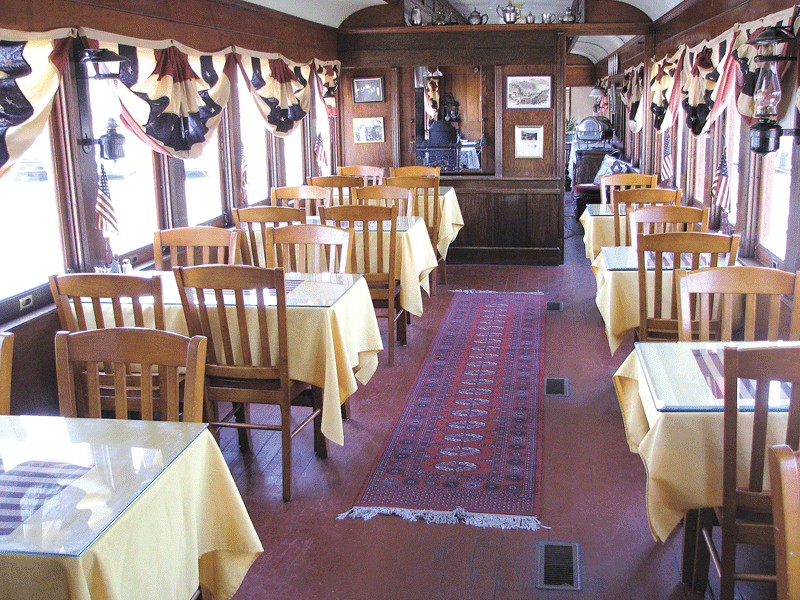
BW0513aCovWhile all restaurants are destinations in many respects, some locations are unique, not just for the food prepared in the kitchen, but because of the rich history of the setting in question. For this special section, the 2013 Restaurant Guide, we venture to three establishments that could truly be called landmarks.


Inside:
Not Your Typical Haunt

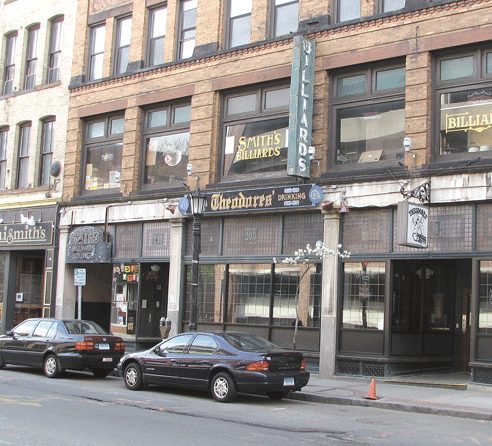
Theodores’ Thrives with Its Blend of Music, Barbecue, and Tradition

All Aboard

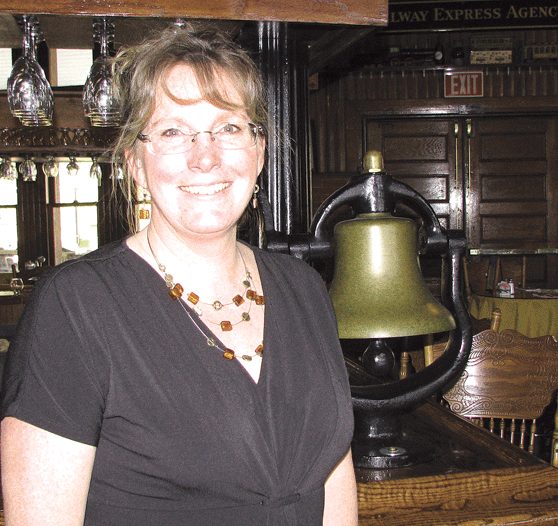
Steaming Tender Mixes Hearty Food and Railroad Culture

Center-stage Cuisine

The Whately Inn Has Come a Long Way Since it Hosted Burlesque

Off the Menu

A list of the region’s finest restaurants

Law Sections
A Well-drafted Operating Agreement Is Critical for Success

Michael Simolo

Michael Simolo

Limited Liability Companies (LLCs) have in many cases become the preferred choice of entity for passive income investments, particularly rental real estate. In addition, LLCs are a valuable tool for facilitating family ownership of valuable property, such as vacation homes.  While LLCs are often not the best choice for operating entities, there are exceptions, and LLCs can and do serve this role.
In short, LLCs are an increasingly popular alternative to the traditional corporate structure, and there are many reasons for this, as this article will explain.
First, it is helpful to first consider why LLCs continue to increase in popularity among business owners and holders of income producing real estate. There are several reasons, but here are the three most prominent:
• First, LLCs offer their owners liability protection. In fact, in many states, LLCs with multiple owners offer greater liability protection than corporations due to additional protections against the creditors of co-owners;
• Second, LLCs permit significantly greater flexibility than corporations in structuring the financial arrangements and rights of owners; and
• Third, LLCs can serve as a ‘pass-through’ entity for tax purposes without the need to qualify for so-called S corporation status. (S corporations incur no tax at the corporate level, with all income being taxed to the shareholders.)
The default rule is that LLCs are taxed as partnerships, meaning that income taxes are applied only at the partner level. In keeping with the general flexibility of LLCs, however, an LLC may elect to be taxed as a corporation, including as an S corporation (the taxation of which differs siginficantly from partnerships, nothwithstanding that both are pass-through entities). Such an election may be preferable if the LLC is an operating entity.
These benefits may be unavailable if the LLC’s governing document — the operating agreement — fails to properly address the numerous issues that can arise with any ongoing business. The operating agreement, while similar in some ways to the bylaws of a corporation, is an agreement among the owners that allows for nearly unlimited flexibility in the governance of the LLC. As a result, operating agreements should always be narrowly tailored to address the unique characteristics of each business.
In particular, the operating agreement should be used to address issues that are not covered by the applicable state’s LLC statute, or to override provisions in the LLC statute that are inconsistent with the owners’ objectives. For example, the Massachusetts LLC statute provides owners with the right to resign from the LLC upon six months notice and have their interest bought out by the LLC at fair value (i.e., not discounted). For obvious reasons, owners may wish to override this provision through an operating agreement.
Crafting such an agreement requires both detailed knowledge of the underlying LLC statute for the state in which the LLC is formed and a thorough understanding of the intentions and concerns of the LLC’s owners. For these reasons, use of a form LLC operating agreement can often do more harm than good.
Here is a partial list of 11 common issues that should be addressed in virtually all operating agreements:
1. Under which state’s law should the LLC be formed?
2. How many classes of ownership interests will the LLC have? Will different classes of owners have different rights (i.e. voting) and preferences (i.e. return of capital)? Does the underlying state LLC statute allow for different classes of ownership?
3. Who will manage the day-to-day affairs of the LLC? Which decisions will be made by the manager, and which will be put to a vote of the owners?
4. What types of fiduciary obligations will the owners and managers have to each other? Under what circumstances will managers and/or owners have a right to sue the LLC (i.e. derivative action) or the other owners or managers?
5. Upon what terms (if any) will owners be required to contribute additional capital to the LLC?
6. Upon what terms (if any) will owners be entitled to be paid back their contributions to the LLC?
7. How will the LLC’s profits, losses, and cash flow be allocated to the owners?
8. How will distributions be allocated among the owners? Under what circumstances will the LLC be required to make distributions to owners (i.e. to pay income taxes on LLC income, liquidation, etc.)?
9. Will owners be permitted to transfer their ownership interests? If so, to whom?  What happens if an owner dies?
10. Will the LLC and/or other owners have the right to redeem or purchase the owner’s interest prior to such transfer?  If so, how will the purchase price of the owner’s interest be determined?
11. How will the entity be taxed (i.e. sole proprietorship, partnership, subchapter S-corporation, etc.)? Note that the validity of certain tax elections may hinge on a properly drafted operating agreement being in place. This is particularly true if the LLC desires S-corporation tax status.
More complicated arrangements may require additional terms, such as non-compete clauses, indemnification provisions, ‘tag-along’ and ‘drag-along’ rights, call-and-put options, and others.
A look at these issues reveals that the flexibility offered by LLCs is the proverbial double-edged sword. On one hand, the entity can be structured in virtually any manner to address its purpose and the goals of its owners. On the other, reliance on the LLC statute — or, perhaps worse, a form operating agreement improperly tailored to the entity it governs — can result in significant consequences, including the premature liquidation of the entity or an ownership interest being seized by a co-owner’s creditors.
A well-drafted operating agreement can eliminate these risks and prevent disputes among owners from leading to litigation.

Michael Simolo is an attorney with the law firm Robinson Donovan, P.C., specializing in estate planning, estate and trust administration, business law, and fiduciary litigation; (413) 732-2301. Nicholas P. Lata, Esq. assisted in drafting this article.

Law Sections
Like the Iceman, Jan. 1, 2014 — a Big Day for Obamacare — Cometh

ROSEMARY J. NEVINS

Rosemary J. Nevins

By now, employers have more likely than not been inundated with reminders that, come Jan. 1, 2014, the shared-responsibility provisions,” a/k/a the ‘play or pay mandate’ under the Patient Protection Affordable Care Act, a/k/a ‘Obamacare,’ go into effect for applicable large employers.
The law defines ‘applicable large employers’ as those employers who have employed 50 or more full-time employees (employees who on average work at least 30 hours per week during a month, or 130 hours per month) during the preceding calendar year, which means this year (2013).
While the number of full-time employees may be readily calculated by many employers, the determination of employer status is somewhat more complicated for those employers who, for example, employ several part-time employees (whose aggregate number of hours worked may render them ‘full-time equivalents’) or are part of a controlled group as defined under the Internal Revenue Code and, as a result, may cross the line between being considered a small employer and being classified as an applicable large employer. That determination is germane to determining whether the above mandate applies to them.
Equally important for applicable large employers is the need to decide whether they want to play or pay, and understanding the implications and results of such decisions. Because the law has been implemented prior to the publication of final-rule notices by the federal agencies responsible for overseeing the implementation of the law (e.g., the IRS), employers are reminded that they may rely on the interim regulations for the year 2014 for guidance. Those regulations are complicated and include transitional as well as ‘safe-harbor’ provisions.
Employers need to be aware of which penalties apply and, more importantly, how to assess the cost of such penalties to determine whether it is less expensive to offer coverage as defined by the law or pay the penalties.
Adherence to the law also necessitates employers to review existing employer-sponsored health plans to determine whether they comply with the law’s affordability and minimum-value requirements, should employers decide to play. In addition, self-funded plans, multi-employer plans, and grandfathered plans are among the types of coverage plans employers need to review to determine if and whether the law requires any changes to those plans.
Finally, an employer who decides to play and use some of the applicable safe harbors relative to determining and treating employee status with regard to ongoing, new non-variable-hour, variable-hour, and seasonal employees, along with issues such as breaks in service, should be preparing now not only with regard to training, but also by consulting with those whose services are relevant to various portions of the act, such as healthcare issuers and/or providers, counsel, accountants, etc.
Royal LLP is conducting two practical workshops on June 6 and June 13 designed to provide employers with an interactive, step-by-step analysis of Obamacare, including what employers must be doing now to obtain coverage under the safe-harbor provisions and to prepare for the mandates. For more information about the workshops, contact Ann-Marie Marcil at [email protected].

Rosemary J. Nevins, Esq. specializes exclusively in management-side labor and employment law at Royal LLP, a woman-owned, SOMWBA-certified, boutique, management-side labor and employment law firm; (413) 586-2288; [email protected]

Law Sections
That’s the Basic Mission When Weighing Business Exit Strategies

Michael Gove

Michael Gove

When starting a business venture, owners of a closely held business entity (i.e., shareholders, partners, members, etc.) do not usually think about what will need to occur when dissolving the business, or when one owner decides (or is forced) to step away from the business.
But if not properly planned for, sudden changes like these may put the business at risk or threaten the value of the owners’ interests in the entity. As you think about planning for inevitable changes in ownership, here are some things to keep in mind.

Control Your Emotions
Many small-business owners find the thought of no longer owning, operating, or being a part of their business hard to comprehend. Requiring an inordinate amount of time, commitment, and personal attention, a small business can envelop the identity of its owners, and thinking about losing that identity can be difficult.
Sometimes, when owners work closely together on their business, grievances or complaints can arise, making it even more difficult to think about fairly splitting up their interest in the business. Nonetheless, it’s important to put these emotions aside so that you and your co-owners can be clear about what each of you expect if you were to leave, involuntarily or not.

Start a Discussion Now
The dissolution of a business can be a potentially emotional time, which is a good reason to have this discussion now. Another good reason is that an owner could become disabled or otherwise unable to continue work at any time. Making these decisions when there is no crisis, and there are no immediate consequences to each choice, allows the parties to look at the business — and its operation, management, assets, and liabilities — dispassionately.
This will make it easier for each owner to evaluate and discuss his or her needs, or to agree on the value of (or method of valuing) business assets, in case their situation changes and dissolution becomes necessary.

Discuss Your Plan with Advisors
After you have an initial discussion with your co-owners, contact your business advisors, including your accountant, insurance agent, and attorney, so they can help you find the most effective way to reach your goals.
You may need to determine the valuation of business assets, put in place insurance or disability policies to help fund the planned actions, or draft buy-back or buy-sell agreements to ensure that the business interest can be transferred with a minimum of disturbance.

Put Your Agreement Into Writing
Once you have settled on a plan for dissolution, have it written up by your attorney and incorporated within your business records. This will ensure that the plan is accessible and clear whenever it may be needed. Intend to review the plan every three to five years to ensure that it continues to reflect the needs of the business and each owner.

Michael S. Gove is an attorney with Cooley, Shrair P.C. focusing his practice on assisting clients in the areas of corporate/business, banking, and bankruptcy law; (413) 735-8037; [email protected]

Departments Picture This

Send photos with a caption and contact information to:  ‘Picture This’ c/o BusinessWest Magazine, 1441 Main Street, Springfield, MA 01103 or to [email protected]


Legacy Luncheon

CTL-4305pic this 0513a 2pic this 0513a 3The Sisters of Providence Health System’s annual Continuing the Legacy Luncheon was staged recently at the Sheraton in Springfield. At the event, which is the annual fund-raiser for SPHS, the Sisters of Providence were also honored for their 140 years of service to the region. Nearly 500 people attended the event, which educates, updates, and impassions members of the community about the mission of the health system, its services, and recent advancements. Top: Dan Moen, SPHS president and CEO, addresses guests. Middle: Longmeadow resident Betty McCann tells the gathering about her positive experience at the Mercy Hearing Center. Bottom: members of the Sisters of Providence congregation gather for a photo; seated, from left: Srs. Mary Horgan, Caroline Smith, Joan Manning, and Priscilla St. Pierre; standing, from left: Srs. Mary Caritas (vice president), Ceil McGrath, Mary Martin de Porres, Geraldine Noonan, Ruth McGoldrick, and Kathleen Popko (president).

Building Permits Departments

The following building permits were issued during the month of April 2013.

AGAWAM

Agawam-Silver, LLC
604 Silver St.
$20,000 — Division of tenant space

Genesis Healthcare
61 Cooper St.
$150,000 — Renovations in shower area

Sander Family, LLC
77 Springfield St.
$10,000 — Renovations

AMHERST

25-35 University Dr., LLC
25-35 University Dr.
$24,000 — Divide single tenant space into two spaces

CIL Realty of MA
36 Longmeadow Dr.
$445,000 — Construction of R-3 group home

Friends of Hospice House Inc.
1165 North Pleasant St.
$9,000 — Interior office renovations

Good Ole Dave’s, LLC
219 Amity St.
$5,000 — New roof

CHICOPEE

Gotpat, LLC
13 Center St.
$15,000 — Strip and re-roof Munich Haus

Istar Bowling Center, LP
291 Burnett Road
$144,000 — Interior renovations to restrooms, lanes, bar/lounge

O’Leary-Vincunas, LLC
2160 Westover Road
$8,000 — Restroom renovations

Paul Gallagher
1643 Memorial Dr.
$3,500 — Install wheelchair ramp

US Tsubaki, Inc.
106 Lonczak Dr.
$112,000 — Construct 492-square-foot enclosure for new fire pump

HADLEY

Chamisa Corporation
31 Campus Plaza Road
$50,000 — Renovate 928 square feet of tenant space

Pearson Hadley, LLC
380 Ryssel St.
$688,000 — Add working stations to State Street Corp. on second floor

HOLYOKE

161 Lower Westfield Road, LLC
161 Lower Westfield Road
$375,000 — Construct charter school classrooms and offices

Wycoff Associates, LLC
233 Easthampton Road
$50,000 — Masonry wall and floor renovations

NORTHAMPTON

Cosenzi Automotive Realty, L.P.
361 King St.
$2,612,000 — Construction of a 18,421-square-foot Volkswagon car dealership

Northampton Lodge #997
17 Spring St.
$47,500 — Construct 40×80 pavillion

Smith College
23 Elm St.
$400,000 — Upgrades to data center

Smith College
79 Elm St.
$5,963,000 — Renovation

SOUTH HADLEY

Mount Holyoke College
5 Faculty Lane
$18,500 — Window remodel

SPRINGFIELD

Baystate Health
759 Chestnut St.
$556,000 — Renovation of existing patient pod

BFRC
1666 Boston Road
$61,750 — Remove existing roof and install new

City of Springfield
200 Birnie Ave.
$449,000 — Renovations at the Gerena School

Friendly’s Ice Cream, LLC
1809 Boston Road
$4,100 — Remove siding and install new

Springfield Group, Inc.
376 Bernie Ave.
$425,000 — Interior fit out for new tenant

Urstadt Biddle Property
380 Cooley St.
$53,500 — Install bar and seating area for restaurant/bar

WESTFIELD

2nd Congregational Church
487 Western Ave.
$6,000 — Add restroom on first floor

Chalmers & Kubeck
24 Elise St.
$500,000 — Rebuild office space

WEST SPRINGFIELD

Andrew Cohen
95A Ashley Ave.
$206,000 — Renovate existing space

Boys & Girls Club
615 Main St.
$24,000 — Re-roof

Jiffy Lube
780 Memorial Ave.
$300,000 — Renovate 244 square feet of commercial space

Departments Real Estate

The following real estate transactions (latest avail­able) were compiled by Banker & Tradesman and are published as they were received. Only transactions exceeding $115,000 are listed. Buyer and seller fields contain only the first name listed on the deed.

FRANKLIN COUNTY

CHARLEMONT

48 Main St.
Charlemont, MA 01339
Amount: $175,000
Buyer: William J. Schaefer
Seller: Herbert H. Fitzrey
Date: 04/01/13

DEERFIELD

105 Plain Road West
Deerfield, MA 01373
Amount: $324,000
Buyer: Greenfield Savings Bank
Seller: Scott A. Higgins
Date: 03/29/13

623 River Road
Deerfield, MA 01342
Amount: $154,500
Buyer: Joel T. Monette
Seller: Stephen A. Anderson
Date: 03/25/13

791 River Road
Deerfield, MA 01342
Amount: $120,100
Buyer: Amie L. Panek
Seller: Jasmin, Emma, (Estate)
Date: 03/29/13

ERVING

11 Holmes St.
Erving, MA 01344
Amount: $140,000
Buyer: Nathaniel D. Rindone
Seller: Moore, Virginia G., (Estate)
Date: 03/26/13

GREENFIELD

94 Beacon St.
Greenfield, MA 01301
Amount: $185,000
Buyer: Brenda J. Davis
Seller: Melody A. Root
Date: 03/27/13

325 Wells St.
Greenfield, MA 01301
Amount: $115,301
Buyer: Beneficial MA Inc.
Seller: Pamela J. Avery
Date: 04/02/13

14 West St.
Greenfield, MA 01301
Amount: $217,250
Buyer: William B. Noyes
Seller: West Street Properties Inc.
Date: 03/29/13

LEYDEN

64 Coates Road
Leyden, MA 01301
Amount: $185,000
Buyer: Birch Mountain Farm TR
Seller: Sharon A. Vinten RET
Date: 03/27/13

MONTAGUE

97 East Taylor Hill Road
Montague, MA 01351
Amount: $220,000
Buyer: Young K. Westort
Seller: Deborah J. Picking
Date: 04/01/13

154 Montague City Road
Montague, MA 01301
Amount: $186,500
Buyer: Thomas J. Demers
Seller: William J. Doyle
Date: 03/28/13

NORTHFIELD

59 Highland Ave.
Northfield, MA 01360
Amount: $212,000
Buyer: Alexander G. Loud
Seller: Richard P. Rly
Date: 03/25/13

ORANGE

41 Lake Ave.
Orange, MA 01364
Amount: $117,767
Buyer: FHLM
Seller: Elizabeth Philbin
Date: 03/29/13

SHELBURNE

120 Bridge St.
Shelburne, MA 01370
Amount: $365,000
Buyer: Carol Angus
Seller: Caleb Kissling
Date: 04/01/13

SHUTESBURY

69 Pratt Corner Road
Shutesbury, MA 01072
Amount: $280,000
Buyer: Robert B. Hayes
Seller: Jeffrey M. Davis
Date: 03/26/13

WENDELL

19 Old Stage Road
Wendell, MA 01379
Amount: $158,000
Buyer: Angela M. Ferris
Seller: Robert T. Rosser
Date: 03/27/13

HAMPDEN COUNTY

AGAWAM

176 Barry St.
Agawam, MA 01030
Amount: $225,000
Buyer: Jennifer L. Tretheway
Seller: Justin T. Howes
Date: 03/26/13

43 Elbert Road
Agawam, MA 01001
Amount: $153,000
Buyer: Lynn Griffin
Seller: Charles C. McCobb
Date: 04/03/13

24 James Ave.
Agawam, MA 01001
Amount: $200,000
Buyer: Muhammad A. Razzaq
Seller: Charles A. Calabrese
Date: 03/25/13

89 Katherine Dr.
Agawam, MA 01001
Amount: $229,900
Buyer: Mahmut Alkan
Seller: Harry M. Orell
Date: 03/29/13

10 Robin Lane
Agawam, MA 01030
Amount: $210,000
Buyer: Danielle M. Pineau
Seller: Concetta S. Bruno
Date: 04/05/13

30 Stanley Place
Agawam, MA 01001
Amount: $215,000
Buyer: Nathan Kibbe
Seller: James L. Kopcinski
Date: 03/28/13

BRIMFIELD

273 Dunhamtown Palmer Road
Brimfield, MA 01010
Amount: $155,000
Buyer: Adam C. Bradway
Seller: Robert F. Nelson
Date: 03/26/13

CHICOPEE

29 Armanella St.
Chicopee, MA 01020
Amount: $165,000
Buyer: Rachel A. Uhlig
Seller: Vitaly Dzhenzherukha
Date: 03/29/13

38 Asselin St.
Chicopee, MA 01020
Amount: $157,500
Buyer: John T. Rivest
Seller: Paul M. Heyl
Date: 03/28/13

94 Clarendon Ave.
Chicopee, MA 01013
Amount: $156,850
Buyer: Wieslawa Mikula
Seller: Stephen A. Krupczak
Date: 04/05/13

93 Frink St.
Chicopee, MA 01020
Amount: $205,000
Buyer: Scott L. Stefanowich
Seller: Sean P. Welch
Date: 03/26/13

1177 Granby Road
Chicopee, MA 01020
Amount: $400,000
Buyer: WRZMM LLC
Seller: Kayrouz Realty LLC
Date: 03/29/13

33 Hansen St.
Chicopee, MA 01020
Amount: $179,000
Buyer: Matthew W. Picard
Seller: Geoffrion, Jeannette, (Estate)
Date: 03/29/13

66 Haven Ave.
Chicopee, MA 01013
Amount: $146,000
Buyer: Lucinda Vega
Seller: Richard A. Obara
Date: 04/04/13

23 Jackson St.
Chicopee, MA 01020
Amount: $135,000
Buyer: Kristal Douglas
Seller: Robert P. Langevin
Date: 03/28/13

58 Marlborough St.
Chicopee, MA 01020
Amount: $182,000
Buyer: Lawrence A. Roberson
Seller: Roger A. Bonneau
Date: 03/29/13

317 Montcalm St.
Chicopee, MA 01020
Amount: $190,900
Buyer: MKAA LLC
Seller: John P. Tarka
Date: 03/28/13

674 Montgomery St.
Chicopee, MA 01020
Amount: $149,900
Buyer: Arsim Abdullahu
Seller: Sonoski, Genevieve J., (Estate)
Date: 03/28/13

107 Moreau Dr.
Chicopee, MA 01020
Amount: $157,500
Buyer: Jody M. Bixby
Seller: Michael T. Boucher
Date: 04/01/13

32 Oliver St.
Chicopee, MA 01020
Amount: $194,000
Buyer: Marcin G. Jandzis
Seller: Tonya M. Perron
Date: 03/26/13

85 Park St.
Chicopee, MA 01013
Amount: $150,000
Buyer: William J. Stetson
Seller: Steven R. Etheridge
Date: 04/03/13

65 Sampson St.
Chicopee, MA 01020
Amount: $172,000
Buyer: Andrea L. French
Seller: Viktor Savonin
Date: 03/29/13

32 Terrance St.
Chicopee, MA 01013
Amount: $149,999
Buyer: Edward J. Maldonado
Seller: Dion, John A., (Estate)
Date: 03/27/13

92 View St.
Chicopee, MA 01020
Amount: $245,000
Buyer: Nunes Ventures LLC
Seller: 92 View Street LLC
Date: 04/03/13

162 Wildermere St.
Chicopee, MA 01020
Amount: $206,000
Buyer: Kurt A. Wajda
Seller: Currin L. Walz
Date: 03/29/13

51 Willow St.
Chicopee, MA 01020
Amount: $256,000
Buyer: Jennifer M. Pete
Seller: Melanie M. Sutton
Date: 03/26/13

EAST LONGMEADOW

15 Angela Lane
East Longmeadow, MA 01028
Amount: $375,000
Buyer: Lynn M. McColgan
Seller: Diane Robertson
Date: 03/28/13

19 Day Ave.
East Longmeadow, MA 01028
Amount: $195,000
Buyer: Elizabeth K. Hobaica
Seller: Kathleen T. Kerrigan
Date: 03/26/13

135 Elm St.
East Longmeadow, MA 01028
Amount: $193,000
Buyer: John J. Needham
Seller: Kevin Czaplicki
Date: 03/29/13

33 Granby St.
East Longmeadow, MA 01028
Amount: $202,000
Buyer: Strider Dev. Inc.
Seller: John P. Ford
Date: 04/05/13

227 Kibbe Road
East Longmeadow, MA 01028
Amount: $280,000
Buyer: Laplante Construction Inc.
Seller: William E. O’Connor
Date: 03/29/13

16 Melwood Ave.
East Longmeadow, MA 01028
Amount: $195,000
Buyer: Brian D. Murray
Seller: Linda S. Fijal
Date: 04/01/13

56 Oak Brook Dr.
East Longmeadow, MA 01028
Amount: $225,000
Buyer: Oleg Anisimov
Seller: Henry J. Wawrzonek
Date: 03/25/13

283 Parker St.
East Longmeadow, MA 01028
Amount: $197,000
Buyer: Cheryl A. Mandirola
Seller: Michael J. Molinari
Date: 04/03/13

9 Parker St.
East Longmeadow, MA 01028
Amount: $235,000
Buyer: Mark E. Deehy
Seller: Jose B. Guimaraes
Date: 04/01/13

439 Porter Road
East Longmeadow, MA 01028
Amount: $243,500
Buyer: Enrique Rosado
Seller: Winterberry LLC
Date: 04/04/13

40 Rogers Road
East Longmeadow, MA 01028
Amount: $266,000
Buyer: Robert Hanson
Seller: Heather J. Bliss
Date: 03/27/13

HOLYOKE

353 Chestnut St.
Holyoke, MA 01040
Amount: $130,000
Buyer: Kelly A. Maher
Seller: Holyoke Housing Authority
Date: 03/29/13

24 County Road
Holyoke, MA 01040
Amount: $268,000
Buyer: Michael C. Carriveau
Seller: Mark D. Mills
Date: 03/29/13

55 Francis Ave.
Holyoke, MA 01040
Amount: $154,000
Buyer: Brian T. Johnson
Seller: Gary Godbout
Date: 04/02/13

38 George St.
Holyoke, MA 01040
Amount: $177,500
Buyer: Jeffrey J. Judge
Seller: US Bank
Date: 03/29/13

29 Laura Lane
Holyoke, MA 01040
Amount: $244,169
Buyer: MetLife Home Loans
Seller: Mar C. F. Marinello
Date: 04/04/13

4 Loomis Ave.
Holyoke, MA 01040
Amount: $264,000
Buyer: Brian A. Lamirande
Seller: Laurence P. Cournoyer
Date: 03/29/13

33 Raymond Ave.
Holyoke, MA 01040
Amount: $200,000
Buyer: Sean C. Mangano
Seller: Michael Cauley
Date: 03/28/13

281 Rock Valley Road
Holyoke, MA 01040
Amount: $142,500
Buyer: Stephen L. Johnson
Seller: Bruce R. Gloutak
Date: 03/29/13

LONGMEADOW

45 Ardsley Road
Longmeadow, MA 01106
Amount: $400,000
Buyer: Louis P. Krzeminski
Seller: Joseph F. Partyka
Date: 03/28/13

96 Birnie Road
Longmeadow, MA 01106
Amount: $192,800
Buyer: Michael Gralia
Seller: Maria C. Pritchard
Date: 03/29/13

69 Chiswick St.
Longmeadow, MA 01106
Amount: $255,000
Buyer: Timothy Giguere
Seller: Dennis C. Spring
Date: 03/27/13

104 Crestview Cir
Longmeadow, MA 01106
Amount: $320,000
Buyer: Stephen Crane
Seller: Reidy, Madeline F., (Estate)
Date: 03/25/13

108 Dover Road
Longmeadow, MA 01106
Amount: $425,000
Buyer: Jo Ann W. Davis
Seller: John W. Davis
Date: 03/29/13

LUDLOW

14 Acorn Lane
Ludlow, MA 01056
Amount: $242,000
Buyer: Lisa G. Urban
Seller: William R. Ayers
Date: 03/27/13

46 Bowles Ave.
Ludlow, MA 01056
Amount: $150,000
Buyer: Evette M. Rodrigues
Seller: HAP Inc.
Date: 03/28/13

1459 Center St.
Ludlow, MA 01056
Amount: $280,000
Buyer: Brian A. McDaniel
Seller: Diane D. Cousineau
Date: 03/28/13

1229 East St.
Ludlow, MA 01056
Amount: $263,000
Buyer: Rui A. Pereira
Seller: Gordon G. Grimes
Date: 03/28/13

146 Highland Ave.
Ludlow, MA 01056
Amount: $160,000
Buyer: Kevin J. Schwerdtfeger
Seller: Schwerdtfeger, M. M., (Estate)
Date: 03/26/13

134 King St.
Ludlow, MA 01056
Amount: $286,000
Buyer: Kimberly A. Chase
Seller: Michael A. Florio
Date: 03/28/13

73 Laroche St.
Ludlow, MA 01056
Amount: $148,000
Buyer: Katie L. Schebel
Seller: Anna M. Casagranda
Date: 03/27/13

5 Marion Circle
Ludlow, MA 01056
Amount: $196,500
Buyer: Pierre R. Bertrand
Seller: Cynda M. Rosenbaum
Date: 03/28/13

Olivia Circle
Ludlow, MA 01056
Amount: $125,000
Buyer: Shannon M. Chaves
Seller: Rosewood Meadows Inc.
Date: 03/26/13

Pinewood Road
Ludlow, MA 01056
Amount: $426,430
Buyer: Maria A. Lavoie
Seller: Manganaro Home Builders
Date: 03/29/13

57 Tilley St.
Ludlow, MA 01056
Amount: $235,000
Buyer: Westover Metropolitan Development Corp.
Seller: Kimberly A. Chase
Date: 03/26/13

314 West St.
Ludlow, MA 01056
Amount: $149,000
Buyer: Melissa A. Moret
Seller: Marion M. Surprenant
Date: 03/29/13

MONSON

84 Bogan Road
Monson, MA 01057
Amount: $360,000
Buyer: Claudette Jean Girard
Seller: Gerlad T. Davies
Date: 03/29/13

243 Moulton Hill Road
Monson, MA 01057
Amount: $199,683
Buyer: Bank of New York Mellon
Seller: Jennifer M. Toelken
Date: 03/28/13

17 Stafford Road
Monson, MA 01057
Amount: $225,000
Buyer: Rachael K. McDonald
Seller: Timothy C. Lavoie
Date: 03/28/13

PALMER

1501 North Main St.
Palmer, MA 01069
Amount: $245,000
Buyer: Lazy River Housing Co. LLC
Seller: JEEJ Real Estate LLC
Date: 04/04/13

371 Rondeau St.
Palmer, MA 01069
Amount: $200,000
Buyer: George L. Ortiz
Seller: Mark A. Stebbins
Date: 03/29/13

37 Saint John St.
Palmer, MA 01069
Amount: $271,402
Buyer: FNMA
Seller: Donald J. Williamson
Date: 04/02/13

SPRINGFIELD

Allen St. (SS)
Springfield, MA 01101
Amount: $160,500
Buyer: Den V. Thai
Seller: Donald W. Lomascolo
Date: 03/28/13

35 Angelica Dr.
Springfield, MA 01129
Amount: $244,000
Buyer: Delva M. Campbell
Seller: Steven M. Leone
Date: 04/01/13

598 Armory St.
Springfield, MA 01104
Amount: $132,000
Buyer: Oscar A. Lopez
Seller: Global Homes Properties LLC
Date: 03/26/13

135 Bartels St.
Springfield, MA 01128
Amount: $175,500
Buyer: Joseph M. Paixao
Seller: Daniel J. Molta
Date: 04/05/13

80 Bevier St.
Springfield, MA 01107
Amount: $189,665
Buyer: USA HUD
Seller: BA C. Home Loans Servicing LP
Date: 04/01/13

436 Boston Road
Springfield, MA 01109
Amount: $330,000
Buyer: 436 Boston LLC
Seller: JAH Commercial Inc.
Date: 03/29/13

14 Carew Terrace
Springfield, MA 01104
Amount: $115,000
Buyer: Maria Lugo
Seller: Luis A. Cruz
Date: 03/29/13

24 Chilson St.
Springfield, MA 01118
Amount: $164,000
Buyer: Kimberly A. Kirkland
Seller: R. A. Fetterroll
Date: 03/29/13

276 Cottage St.
Springfield, MA 01104
Amount: $329,800
Buyer: Omicron Investments LLC
Seller: Inland American CFG Portfolio
Date: 03/28/13

87 Denver St.
Springfield, MA 01109
Amount: $157,608
Buyer: FNMA
Seller: Christopher Senior
Date: 04/03/13

29 Donbray Road
Springfield, MA 01119
Amount: $158,900
Buyer: Laurie S. Ratkiewicz
Seller: Douglas C. Phelps
Date: 03/28/13

245 Fair Oak Road
Springfield, MA 01128
Amount: $143,000
Buyer: Kelly J. Keenan
Seller: Edward J. Haluch
Date: 03/28/13

79 Fox Hill Road
Springfield, MA 01118
Amount: $185,772
Buyer: FNMA
Seller: Joseph K. Jorgensen
Date: 03/25/13

446 Franklin St.
Springfield, MA 01104
Amount: $115,000
Buyer: Michael P. Crean
Seller: Juan Medina
Date: 03/28/13

265 Gresham St.
Springfield, MA 01119
Amount: $148,000
Buyer: Jamilette A. Reyes
Seller: Quetszy A. Cruz
Date: 03/29/13

90 Hartwick St.
Springfield, MA 01108
Amount: $125,000
Buyer: Michael J. Regan
Seller: Nelson R. Colon
Date: 04/03/13

252 Lake Dr.
Springfield, MA 01151
Amount: $141,000
Buyer: Adilen Negron
Seller: Barry, Joseph T., (Estate)
Date: 03/28/13

63 Loretta St.
Springfield, MA 01118
Amount: $144,000
Buyer: Natacha Nieves
Seller: Colleen M. Danahey
Date: 03/29/13

201 Overlook Dr.
Springfield, MA 01118
Amount: $183,000
Buyer: Alfredo B. Vivenzio
Seller: Judith J. Heit
Date: 03/27/13

42 Marquette St.
Springfield, MA 01104
Amount: $122,500
Buyer: Aileen Ramos
Seller: CDM Properties LLC
Date: 04/05/13

120 Odion St.
Springfield, MA 01118
Amount: $145,000
Buyer: Jeffrey J. Thornton
Seller: David A. Starr
Date: 04/04/13

1569 Parker St.
Springfield, MA 01129
Amount: $119,091
Buyer: FNMA
Seller: Justine A. Finn
Date: 04/01/13

332 Parkerview St.
Springfield, MA 01129
Amount: $149,900
Buyer: Nicholas M. Tangredi
Seller: Katherine M. Tangredi
Date: 03/28/13

15 Plumtree Circle
Springfield, MA 01118
Amount: $125,000
Buyer: Judith A. Garrett
Seller: Armando Rodriguez
Date: 04/05/13

21 Rita St.
Springfield, MA 01118
Amount: $144,500
Buyer: Tuyen Nguyen
Seller: Henrietta R. Ehrlich
Date: 04/04/13

28 Roosevelt Ave.
Springfield, MA 01118
Amount: $144,229
Buyer: Debra A. Griffith
Seller: John Martin
Date: 03/29/13

148 Shefford St.
Springfield, MA 01107
Amount: $161,000
Buyer: Marco P. Carreira
Seller: Todd C. Emmons
Date: 03/29/13

15 Signal Hill Circle
Springfield, MA 01118
Amount: $235,000
Buyer: Campagnari Construction LLC
Seller: Irene A. Jansen
Date: 04/04/13

41 Westbank Ct.
Springfield, MA 01118
Amount: $155,900
Buyer: Deborah A. Kelly
Seller: Danielle Prendergast
Date: 03/26/13

332 White St.
Springfield, MA 01108
Amount: $128,000
Buyer: Luis Berrios
Seller: Rose Talbot-Babey
Date: 04/04/13

143 Woodlawn St.
Springfield, MA 01108
Amount: $129,000
Buyer: Miguel Gonzalez
Seller: James W. Fiore
Date: 03/26/13

33 Worthy St.
Springfield, MA 01104
Amount: $123,822
Buyer: Nationstar Mtg. LLC
Seller: Marion C. Larese
Date: 04/04/13

SOUTHWICK

9 Coyote Glen
Southwick, MA 01077
Amount: $543,500
Buyer: Sherri Digiacomo
Seller: Craig Digiacomo
Date: 03/28/13

307 North Loomis St.
Southwick, MA 01077
Amount: $237,020
Buyer: Cornelia R. Jacquier
Seller: Marcia L. Jester
Date: 03/27/13

WEST SPRINGFIELD

105 Albert St.
West Springfield, MA 01089
Amount: $140,000
Buyer: F. W. Maroni
Seller: Jerolyn L. Lareau
Date: 04/02/13

129 Apple Ridge Road
West Springfield, MA 01089
Amount: $313,000
Buyer: Joseph M. Turner
Seller: Guiel, Annette R., (Estate)
Date: 04/01/13

17 Neptune Ave.
West Springfield, MA 01089
Amount: $129,000
Buyer: Suraya Kapitonova
Seller: Joseph Desmarais
Date: 04/05/13

597 Amostown Road
West Springfield, MA 01089
Amount: $149,000
Buyer: Velvet Stamand
Seller: Cynthia M. Kennedy
Date: 03/29/13

36 Bonnie Brae Dr.
West Springfield, MA 01089
Amount: $210,000
Buyer: Cynthia A. Kennedy
Seller: Joyce J. Niedzialkowski
Date: 03/29/13

56 Cynthia Dr.
West Springfield, MA 01089
Amount: $400,000
Buyer: Carmino J. Santaniello
Seller: Roman Szarek
Date: 03/29/13

148 Dorwin Dr.
West Springfield, MA 01089
Amount: $267,900
Buyer: Pamela J. Mott
Seller: Kevin R. Dowd
Date: 03/26/13

86 Garden St.
West Springfield, MA 01089
Amount: $157,500
Buyer: Sean M. Duclos
Seller: Christopher S. Hjaftmann
Date: 03/29/13

110 High St.
West Springfield, MA 01089
Amount: $250,000
Buyer: First Slavic Pentecostal
Seller: Slavic Pentecostal Church
Date: 03/29/13

404 Massachusetts Ave.
West Springfield, MA 01089
Amount: $173,000
Buyer: Donna Jones
Seller: John H. Jackson
Date: 03/25/13

22 Pleasant St.
West Springfield, MA 01089
Amount: $250,000
Buyer: First Slavic Pentecostal
Seller: Slavic Pentecostal Church
Date: 03/29/13

254 Rogers Ave.
West Springfield, MA 01089
Amount: $400,000
Buyer: Matthew W. Disbrow
Seller: Keith E. Harvey
Date: 03/29/13

22 Sprague St.
West Springfield, MA 01089
Amount: $205,000
Buyer: Paul R. Ehrlich
Seller: Clarissa M. Young
Date: 03/29/13

9 Timber Ridge Road
West Springfield, MA 01089
Amount: $417,500
Buyer: Costas D. Anamisis
Seller: John S. Ciborowski
Date: 03/29/13

68 Vincent Dr.
West Springfield, MA 01089
Amount: $149,000
Buyer: Larry A. Wood
Seller: Sheridan, Norma A., (Estate)
Date: 03/27/13

WESTFIELD

78 Dana St.
Westfield, MA 01085
Amount: $212,000
Buyer: James Laverty
Seller: Matthew T. Beattie
Date: 03/29/13

42 Daniel Ridge
Westfield, MA 01085
Amount: $350,000
Buyer: Mark J. Ankstitus
Seller: Luke Demoracski
Date: 04/03/13

16 Deepwoods Dr.
Westfield, MA 01085
Amount: $220,000
Buyer: City Of Westfield
Seller: Alison Brule
Date: 04/05/13

77 George St.
Westfield, MA 01085
Amount: $176,000
Buyer: Valentin Bidyuk
Seller: Anatoliy Panchelyuga
Date: 03/29/13

156 Joseph Ave.
Westfield, MA 01085
Amount: $175,000
Buyer: James R. Dufraine
Seller: Judith A. Maunsell
Date: 03/27/13

35 Knollwood Dr.
Westfield, MA 01085
Amount: $192,900
Buyer: Mary B. Bates
Seller: Barbara J. Sadler
Date: 04/03/13

76 Long Pond Road
Westfield, MA 01085
Amount: $247,500
Buyer: Terrie J. Campbell
Seller: Richard, Kevin M. (Estate)
Date: 04/01/13

84 Otter Point Road
Westfield, MA 01085
Amount: $193,000
Buyer: Vincent Cross
Seller: Hampton Ponds Realty LLC
Date: 03/26/13

129 Ridgecrest Dr.
Westfield, MA 01085
Amount: $325,000
Buyer: William F. Hoarle
Seller: Robert P. Hoernig
Date: 03/29/13

109 Ridgeway St.
Westfield, MA 01085
Amount: $170,000
Buyer: Jean M. Ford
Seller: Fedora, Paul D., (Estate)
Date: 03/29/13

1232 Russell Road
Westfield, MA 01085
Amount: $235,000
Buyer: Brian Duggan
Seller: Pagliaro & Sons Dev. LLC
Date: 04/04/13

1244 Russell Road
Westfield, MA 01085
Amount: $235,000
Buyer: Brian P. Duggan
Seller: Pagliaro & Sons Dev. LLC
Date: 04/04/13

266 Southwick Road
Westfield, MA 01085
Amount: $187,500
Buyer: Diane E. Dipietro
Seller: Rodman Financial Corp.
Date: 03/27/13

32 Violet Circle
Westfield, MA 01085
Amount: $369,000
Buyer: Mark W. Sadler
Seller: Scarfo Construction Inc.
Date: 04/03/13

36 Whispering Wind Road
Westfield, MA 01085
Amount: $440,000
Buyer: Matthew E. Kessler
Seller: Rheal R. Duquette
Date: 04/02/13

WILBRAHAM

3 Blacksmith Road
Wilbraham, MA 01095
Amount: $209,000
Buyer: John R. Turcotte
Seller: Manjit Sikka
Date: 04/01/13

940 Glendale Road
Wilbraham, MA 01095
Amount: $163,000
Buyer: Shawn R. Osmani
Seller: Monson United Methodist Church
Date: 03/29/13

358 Springfield St.
Wilbraham, MA 01095
Amount: $170,000
Buyer: Amanda A. Bennett
Seller: Donald Dean
Date: 04/05/13

HAMPSHIRE COUNTY

AMHERST

218 Alpine Dr.
Amherst, MA 01002
Amount: $349,900
Buyer: Alyson D. Miller
Seller: Joel W. Wolfe
Date: 03/29/13

155 Farmington Road
Amherst, MA 01002
Amount: $229,500
Buyer: Elizabeth E. Powers
Seller: John A. Root
Date: 03/28/13

207 Glendale Road
Amherst, MA 01002
Amount: $224,000
Buyer: Diana A. Navarro
Seller: Pinkham Joan, (Estate)
Date: 04/01/13

32 Hickory Lane
Amherst, MA 01002
Amount: $284,900
Buyer: George G. Watson
Seller: 145 State St. Partners LLC
Date: 04/04/13

46 Hop Brook Road
Amherst, MA 01002
Amount: $485,105
Buyer: Deborah R. Neubauer
Seller: Timothy R. Hampson
Date: 04/04/13

1190 North Pleasant St.
Amherst, MA 01002
Amount: $495,000
Buyer: East Pleasant St. Partners LLC
Seller: Watroba, Chester E., (Estate)
Date: 04/04/13

Old Farm Road
Amherst, MA 01002
Amount: $205,000
Buyer: Amherst Village Inc.
Seller: Bank of America
Date: 03/27/13

Old Farm Road #1-5
Amherst, MA 01002
Amount: $372,500
Buyer: Tofino Assocs. Inc.
Seller: Bank of America
Date: 03/27/13

166 Summer St.
Amherst, MA 01002
Amount: $163,000
Buyer: Domeni C. J. Sebben
Seller: Judith Verchot
Date: 03/27/13

BELCHERTOWN

248 Amherst Road
Belchertown, MA 01007
Amount: $229,203
Buyer: FNMA
Seller: Larry J. Saccamando
Date: 03/29/13

12 Canal Dr.
Belchertown, MA 01007
Amount: $280,000
Buyer: Leonard F. Delorenzo
Seller: Richard T. Collins
Date: 03/29/13

60 Canal Dr.
Belchertown, MA 01007
Amount: $295,000
Buyer: Dennis M. Liptak
Seller: Frank A. Cowdrey
Date: 03/29/13

Crestview Dr.
Belchertown, MA 01007
Amount: $272,000
Buyer: Stephen Rose
Seller: Crestview Acres Inc.
Date: 04/02/13

45 Juckett Hill Dr.
Belchertown, MA 01007
Amount: $295,000
Buyer: Juliana Vanderwielen
Seller: Allen D. Forsythe
Date: 03/29/13

12 Ledgewood Dr.
Belchertown, MA 01007
Amount: $146,299
Buyer: Prop Enhancement LLC
Seller: Deutsche Bank National
Date: 04/01/13

86 North Washington St.
Belchertown, MA 01007
Amount: $268,000
Buyer: Patrick Loftus
Seller: Paul Lapinsky
Date: 03/28/13

4 Park St.
Belchertown, MA 01007
Amount: $500,000
Buyer: Andres LLC
Seller: Mario Sotolotto
Date: 04/01/13

17 Pine Brook Dr.
Belchertown, MA 01007
Amount: $115,000
Buyer: Jeremy A. Dunn
Seller: David M. Guy
Date: 04/03/13

EASTHAMPTON

212 East St.
Easthampton, MA 01027
Amount: $212,399
Buyer: Kristin E. McLaughlin
Seller: Josephine A. Przada
Date: 03/29/13

119 Holyoke St.
Easthampton, MA 01027
Amount: $126,000
Buyer: K&A LLC
Seller: Deutsche Bank National
Date: 04/04/13

GOSHEN

Cape St. #9
Goshen, MA 01032
Amount: $185,000
Buyer: Rawlings Excavation Services
Seller: Mountain Stream Inc.
Date: 03/26/13

GRANBY

20 Pinebrook Circle
Granby, MA 01033
Amount: $177,000
Buyer: Justin P. Beaupre
Seller: Carlos Gutierrez
Date: 03/29/13

HADLEY

27 Breckenridge Road
Hadley, MA 01035
Amount: $343,000
Buyer: Sean A. Mackin
Seller: Raymond G. Sylvain
Date: 04/05/13

4 Hawks Meadow
Hadley, MA 01035
Amount: $135,000
Buyer: Alan Sthilaire
Seller: Tomlinson Builders Inc.
Date: 04/01/13

226 Russell St.
Hadley, MA 01035
Amount: $329,900
Buyer: DGG Realty Partnership
Seller: Creative Properties LLC
Date: 03/29/13

HATFIELD

25 Elm St.
Hatfield, MA 01038
Amount: $340,000
Buyer: Northeast Ent. Realty
Seller: Elizabeth A. Porada
Date: 03/29/13

15 Main St.
Hatfield, MA 01038
Amount: $204,573
Buyer: Thaddeus L. Kabat
Seller: Suzen J. Maxwell
Date: 03/25/13

11 Scotland Road
Hatfield, MA 01038
Amount: $335,000
Buyer: Thomas P. Morse
Seller: Marie A. Chmura
Date: 03/29/13

255 Straits Road
Hatfield, MA 01038
Amount: $198,500
Buyer: Kara A. Jagodzinski
Seller: Cynthia L. Streker
Date: 04/05/13

NORTHAMPTON

152 Bridge Road
Northampton, MA 01062
Amount: $205,000
Buyer: Michelle L. Bouleyu
Seller: Lotus P. O’Connor
Date: 04/01/13

72 Crosby St.
Northampton, MA 01060
Amount: $120,000
Buyer: W. Marek Inc.
Seller: Kumiega, John S., (Estate)
Date: 04/05/13

578 Elm St.
Northampton, MA 01060
Amount: $161,000
Buyer: US Bank
Seller: Fola Fagade
Date: 04/05/13

22 Finn St.
Northampton, MA 01060
Amount: $400,000
Buyer: David P. Goldstone
Seller: Delisi, Leborio G., (Estate)
Date: 03/29/13

83 Forest Glen Dr.
Northampton, MA 01062
Amount: $178,000
Buyer: Richard A. Saalfrank
Seller: Cindy Turner
Date: 03/29/13

40 Maple St.
Northampton, MA 01062
Amount: $819,969
Buyer: Melodie P. Turner
Seller: David S. Turner RET
Date: 03/29/13

68 Prince St.
Northampton, MA 01060
Amount: $425,000
Buyer: Stuart B. Warner
Seller: James W. Holden
Date: 03/29/13

451 Rocky Hill Road
Northampton, MA 01062
Amount: $205,000
Buyer: Richard P. Ely
Seller: Kyle P. Maurer
Date: 03/26/13

12 Sylvan Lane
Northampton, MA 01062
Amount: $390,000
Buyer: Jonathan S. McFadden
Seller: Judith A. O’Brien
Date: 03/25/13

125 State St.
Northampton, MA 01060
Amount: $300,000
Buyer: Sullivan Real Estate LLC
Seller: American National Red Cross
Date: 04/02/13

48 Sterling Road
Northampton, MA 01062
Amount: $230,000
Buyer: Kendra A. Dahlquist
Seller: Clifford, Eileen D., (Estate)
Date: 04/04/13

53 Strawberry Hill
Northampton, MA 01062
Amount: $665,000
Buyer: Matthew D. Curtis
Seller: Richard N. Norris
Date: 04/02/13

SOUTH HADLEY

45 Michael Dr.
South Hadley, MA 01075
Amount: $275,000
Buyer: Christopher M. Havlak
Seller: Adam J. Bartlett
Date: 03/29/13

11 Pittroff Ave.
South Hadley, MA 01075
Amount: $230,000
Buyer: Oliver O. Akamnonu
Seller: Cheryl L. Bisson
Date: 03/28/13

SOUTHAMPTON

15 Freyer Road
Southampton, MA 01073
Amount: $330,000
Buyer: Daniel E. Fried
Seller: Stephen L. Johnson
Date: 03/29/13

Strong Road
Southampton, MA 01073
Amount: $586,823
Buyer: Triple Seven LLC
Seller: Edwin F. Goral
Date: 04/02/13

11 South Main St.
Williamsburg, MA 01096
Amount: $213,570
Buyer: Village Center Apts. LLC
Seller: Raymond M. Rice
Date: 04/03/13

WORTHINGTON

461 Old North Road
Worthington, MA 01098
Amount: $122,500
Buyer: William M. Powers
Seller: Sylvia J. Howes
Date: 03/25/13

215 Thayer Hill Road
Worthington, MA 01098
Amount: $200,000
Buyer: Noreen F. Ryan
Seller: John D. Ryan
Date: 03/27/13


Bankruptcies Departments

The following bankruptcy petitions were recently filed in U.S. Bankruptcy Court. Readers should confirm all information with the court.

Alamed, Marie C.
42 Arnold St., Apt. 20
Westfield, MA 01085
Chapter: 7
Filing Date: 03/29/13

Biza, Stephanie L.
19 Crestwood Circle
Westfield, MA 01085
Chapter: 7
Filing Date: 04/05/13

Bousquet-Hiller, Gail A.
73 Euclid Ave.
Springfield, MA 01108
Chapter: 7
Filing Date: 03/30/13

Brien, James E.
64 High St.
Monson, MA 01057
Chapter: 7
Filing Date: 04/01/13

Conlin, Daniel A.
Conlin, Janice L.
418 Meadow St., Unit E3
Agawam, MA 01001
Chapter: 7
Filing Date: 04/02/13

Cox, Sharon L.
36 Chateaugay St.
Chicopee, MA 01020
Chapter: 7
Filing Date: 04/02/13

Crafts, John E.
41 Glenmore St.
Springfield, MA 01129
Chapter: 7
Filing Date: 03/29/13

Cymer, Peter
661 Belmont Ave.
Springfield, MA 01108
Chapter: 7
Filing Date: 04/01/13

David, Luz Maria
193 Oak St.
Holyoke, MA 01040
Chapter: 7
Filing Date: 04/03/13

Dawson, Joshua N.
Dawson, Rebecca V.
a/k/a Hayes, Rebecca V.
23 Lee Road
South Deerfield, MA 01373
Chapter: 7
Filing Date: 04/05/13

Gonzalez, Damaris
a/k/a Gonzalez-Nieves, Damaris
72 Biddle St.
Springfield, MA 01129
Chapter: 7
Filing Date: 04/03/13

Hiller, Mark W.
Hiller, Rachel A.
35 King St.
Agawam, MA 01001
Chapter: 13
Filing Date: 03/30/13

Hyson, Lucienne
22 South Main St.
Belchertown, MA 01007
Chapter: 7
Filing Date: 03/30/13

Kane, Thomas Sylvester
40 South Cross Road
Gill, MA 01354
Chapter: 7
Filing Date: 04/02/13

LeClair, Kathleen A.
19 Orchard Terrace
North Adams, MA 01247
Chapter: 7
Filing Date: 03/29/13

Ledford, Ian D.
63 7th St.
Turners Falls, MA 01376
Chapter: 7
Filing Date: 03/31/13

Lefevre, Stephen Anthony
26 Phelps Ave.
North Adams, MA 01247
Chapter: 7
Filing Date: 03/29/13

Lefkowitz, Jane A.
296 Connecticut Ave.
Pittsfield, MA 01201
Chapter: 7
Filing Date: 04/02/13

Lilley Pro Cleaner
Locklear, Patrick Andrew
Locklear, Cindy L.
4 Linda Dr.
Westfield, MA 01085
Chapter: 7
Filing Date: 03/29/13

Maddox, Dennis J.
46 Montrose St.
Springfield, MA 01109
Chapter: 7
Filing Date: 03/29/13

Magri, Kevin R.
36 Reed St.
Pittsfield, MA 01201
Chapter: 7
Filing Date: 04/04/13

McCabe, Josh A.
21 Sunset Ave.
Lenox, MA 01240
Chapter: 7
Filing Date: 04/04/13

McClellan, Frances Lee
a/k/a Peterson, Frances L.
5 Treehouse Circle, Apt. 2
Easthampton, MA 01027
Chapter: 7
Filing Date: 04/02/13

Miner, Eric M.
2020 Palmer Road
Three Rivers, MA 01080
Chapter: 7
Filing Date: 04/04/13

Murphy, Jonathan P.
Murphy, Kathy E.
73 Harrison Ave.
Williamstown, MA 01267
Chapter: 7
Filing Date: 04/03/13

Preece, Curtis
PO Box 1723
Cotuit, MA 02635
Chapter: 7
Filing Date: 03/30/13

Redlund, David P.
37 Highland Ave.
Agawam, MA 01001
Chapter: 7
Filing Date: 03/30/13

Renaud, Angelia Renee
6 Keith St.
Turners Falls, MA 01376
Chapter: 7
Filing Date: 04/03/13

Reynolds, Jeffrey W.
Reynolds, Susan L.
39 Foch Ave.
Westfield, MA 01085
Chapter: 7
Filing Date: 03/29/13

Sanderson, Lee R.
40 Coombs Ave.
Orange, MA 01364
Chapter: 7
Filing Date: 04/03/13

Slattery, Cynthia J.
a/k/a Houle, Cynthia J.
61 Garfield Ave.
Easthampton, MA 01027
Chapter: 7
Filing Date: 04/03/13

Tardy, Jason M.
Tardy, Laura M.
10 Riverview Terrace
Chicopee, MA 01013
Chapter: 7
Filing Date: 04/01/13

Taylor, Beverly J.
265 Williams St.
Pittsfield, MA 01201
Chapter: 7
Filing Date: 04/05/13

Voisine, Carl B.
Demicheli, Johanna V.
16 Lockhouse Road
Westfield, MA 01085
Chapter: 13
Filing Date: 04/02/13

Webb, Steven W.
Webb, Joyce E.
a/k/a Dyer, Joyce E.
a/k/a Jacques, Joyce E.
182 Hope Street
Greenfield, MA 01301
Chapter: 7
Filing Date: 04/01/13

Whitney, Jenifer K.
a/k/a Wilson, Jenifer
34 Oakman St.
Turners Falls, MA 01376
Chapter: 7
Filing Date: 03/31/13

Wilczynski, LynnAnn
a/k/a Harrington, LynnAnn
9 Cady St., Apt 7
Ludlow, MA 01056
Chapter: 7
Filing Date: 04/03/13

Wilson, James J.
78 David St.
Springfield, MA 01104
Chapter: 7
Filing Date: 04/05/13

Winters, Michael D.
Winters, Deborah A.
a/k/a Arbo Winters, Deborah A.
197 Lyons Hill Road
Athol, MA 01331
Chapter: 13
Filing Date: 03/30/13

DBA Certificates Departments

The following Business Certificates and Trade Names were issued or renewed during the month of April 2013.

AGAWAM

Kieffer Real Estate
181 Tobacco Farm Road
Rosemarie Kieffer

Main Street Automotive
395 Main St.
Brad Collins

Sisters Daycare
204 Line St.
Shannon McKay

AMHERST

College Pizza
150 Fearing St.
Basem Fam

Learning Lab for Resiliency
93 Southpoint Dr.
Stephanie J. Kent

Shake It Off
218 Harkness Road
Amika Wiemokly

South Amherst Veterinary Hospital
660 West St.
Marci Lowi

White Birch Massage
479 West St.
Cameron Gallant

CHICOPEE

East Street Cleaners
423 East St.
Chong K. Choi

El Chicharron Restaurant
108 West St.
Rafael Marte

HGT Child Development & Learning Center
660 Broadway St.
Leroy Stovall

M, E, & A Investment
90 Fernhill St.
Miguel A. Roldan

Royal Maintenance & Cleaning
78 Rimmon Ave.
Artur Poplawski

Unlimited Landscapes
167 Dale St.
Jameson Glanville

HADLEY

Bibliotechnica
119 Middle St.
Robie Grant

Intsitute of Human Res.
108 Russell St.
Ileaba Miranda

Midas Muffler
397 Russell St.
Barry Drucker

River Valley Chiropractic
245 Russell St.
Spencer Burling

Ronkese Insurance
245 Russell St.
Christopher Ronkesa

Vital Milk
245 Russell St.
Dawn Kennedy

HOLYOKE

Avinu Property Management
24 Lawler St.
Rebecca Rivera

Cake Detailing
1384 Dwight St.
Charles Benard

Cavanaugh, Sale, and Associates
114 Hillview Road
Daniel P. Cavanaugh

Dr. Vonnahme & Associates
98 Lower Westfield Road
Hans J. Vonnahme

Journeys
50 Holyoke St.
Danette Garrett

Lumbra & Lumbra
15 Shepard Dr.
Jon D. Lumbra

Quilt Works
37 Clark St.
Martha J. May

Umbrella Roofing
80 Hitchcock St.
Joseph Sarkoff

Uno Chicago Grill
50 Holyoke St.
Steven J. Hurwitz

NORTHAMPTON

Credit Market Intelligence
109 High St.
Ali Usman

Gnomon Education
55 Lincoln Ave.
Meg Eisenhauer

Hampden Zimmerman Electrical Supply
440  Pleasant St.
U.S. Electrical Services Inc.

J.J.’s Tavern
99 Main St.
Jonathan Neumann

Lia Kia
263 King St.
Michael Lia

Ocana Consulting
68 Ridgewood Terrace
Stephanie J. Arvai

PYFB Properties
98 Nonotuck St.
Marnie Ryan

SOUTHWICK

Bruce’s Masonry
51 Will Palmer Road
Bruce Iglesias

Cities in Ruin
50 Berkshire Ave.
Brian Dagostino

Southwoods Media
148 Hillside Road
Nelson Caron

Ted’s Property Services
200 Berkshire Ave.
Terrance Mountain

SPRINGFIELD

7 Eleven
425 Springfield St.
Scott Sphon

Artistik Cypher, LLC
836 St. James Ave.
Kya Petris

Balise Chevrolet Buick
440 Hall of Fame Ave.
Michael J. Dubois

Bizzy Landscaping
95 Cliftwood St.
Berge Bernadeau

Bonilla and Company
15 Driftwood Road
Wilfred I. Bonilla

Bounce King, LLC
181 Chestnut St.
Arthur W. Cheney

BWF Inc.
354 Main St.
Joseph M. Pafumi

C12 Hi-Fi
147 Hancock St.
Ethan G. Contaste

Chinese Qi Gong Tui Na
1655 Boston Road
Shao H. Chen

Clayton Commons Management
7 Clayton St.
Ernest D. Harris

Coleman’s Cleaners
62 Adams St.
Donald Coleman

Cupcake A Licious
223 Fernbank Road
Roxanie M. Cabrera

D & P Repair
424 Albany St.
Cesar Del Rio

Denise & Friends Salon
908 Belmont Ave.
Denise C. Olszewski

Destiny Auto Detailing
284 Lexington St.
Miguel Garcia

Economy Motor Sales Inc.
824 Berkshire Ave.
Robert Pafumi Jr.

Ed’s Custom Muffler Shop
100 Verge St.
Edwin O. Garcia

Edward J. Parent Photography
1655 Main St.
Edward J. Parent

Edwards Computer Repair
1923 Page Blvd.
Thomas E. Carney

Ennis Bell & Associates
166 Tamarack Road
Cornell W. Lewis

Erich Mann Design
204 Abbott St.
Erich Mann

Final Cleaning Services
68 Euclid Ave.
Lee Antoinette

Flynn’s Auto Sales
813 Berkshire Ave.
Gregory A. Skinner

Geg Auto
145 Michon St.
Gil Gomes

Hayes Development Service
1441 Main St.
Maureen C. Hayes

I Can Help You
99 Grover St.
Donald E. Fredman III

Ivan Hot Diggity Dogs
68 Cleveland St.
Ivan E. Arroyo

J & R Auto Sales
201 Berkshire Ave.
Jose M. Rijo

Jennifer Nieves
876 Sumner Ave.
Jennifer Nieves

Kevin’s Painting & Wallpaper
10 Rollins St.
Kevin Dowe

KM Operations, LLC
405 Armory St.
Kim McCarthy

La Marketa Fruit Grocery
306 Belmont Ave.
Ruddy Reynoso

Lawn Works Mowing Services
116 Cherokee Dr.
Heriberto Rodriguez

WESTFIELD

Affordable Affairs
166 Hillside Road
Linda Ligsukis

Andrea York Photography
52 Murray Ave.
Andrea J. York

Community Substance Abuse Centers
125 North Elm St.
Steven Kassels

Permagraphics Inc.
35 Orange St.
James Burek

Pete’s Handyman Service
163 Franklin St.
Peter Newman

Trendy Right Now
91 Ely St.
Robert G. Boyd

WEST SPRINGFIELD

Absolute Fire Protection
87 Lowell St.
David Knapik

American Home Care Association
440 Main St.
Svetlana Gorovets

Cross Point Clinical Services
117 Park Ave.
Rodney Allen

Dmemanual
1111 Elm St.
Jon S. Jasperson

Faith Transportation
65 Craig Dr.
Peter N. Gitau

GBS Brows & Skincare
1313 Riverdale St.
Pramod K. Sarraf

Gospel Music Studio
407 Park St.
Anatoly Atamansky

West Side Pet Sitting, LLC
75 Kelly Dr.
Alexandra Irish

Departments Incorporations

The following business incorporations were recorded in Hampden, Hampshire, and Franklin counties and are the latest available. They are listed by community.

AGAWAM

Showtime Inc., 1664 Main St., Agawam, MA 01030. Diane Demarco, 778 Springfield St., Feeding Hills, MA 01030. Bar.

AMHERST

Notch Consulting Inc., 535 West St., Amherst, MA 01002. Paul Ita, same. Market research and consulting.

BELCHERTOWN

Tian Yi Inc., 330 Chauncey Walker St., Belchertown, MA 01007. Fan Du, same. Food services.

CHICOPEE

Prescription Associates Corp., 90 Hendrick St., Chicopee, MA 01020. Brian O’Neil, same. Consulting services, including prescription information and patient counseling.

EAST LONGMEADOW

Richard Doleva & Associates Inc., 180 Denslow Road, Suite 7, East Longmeadow, MA 01028. Richard Doleva, same. Accounting and tax preparation.

EAST LONGMEADOW

The Greater United Aweil Reconstruction and Development Inc., 58 Wellington Dr., East Longmeadow, MA 01028. Adim Malek, same.

Transfluenci Edu Inc., 46 Center Square, East Longmeadow, MA 01028. Barbara Rodriguez, 71 Spruceland Road, Enfield, CT 06082. Provides educational services, including translation and interpretation.

Zanetti Electric Inc., 126 Parker St., East Longmeadow, MA 01028. Glenn Zanetti, same. Electrical services.

EASTHAMPTON

Riffs Inc., 116 Pleasant St., Suite 150, Easthampton, MA 01027. Richard Lyman, 22 Hannumbrook Dr., Easthampton, MA 01027. Food service.

FEEDING HILLS

Repairs Plus Inc., 22 Oroile Dr., Feeding Hills, MA 01030. Kelly Nadeau, same. Mortgage field services and home inspection.

GRANBY

Thomas Hill Inc., 118 Munsing Ridge, Granby, MA 01033. Thomas Hill, same. Tavern

GREENFIELD

Tea & Taxes Company, 473 Main St., Greenfield, MA 01301. Wendy Marsden, same. Provide accounting, business and financial services.

HAMPDEN

Timber Heights Tree Service Inc., 12 Genevieve Dr., Hampden, MA 01036. Ryan Morton, same. Tree services.

LONGMEADOW

Pack Solutions Inc., 794 Frank Smith Road, Longmeadow, MA 01106. William Klein Jr., same. Packaging services.

HADLEY

Skip Lunch Inc., 84 Russell St., Hadley, MA 01035. Delcie Bean, IV, same. Product distributorship.

HOLYOKE

Rock Valley Enterprises Inc., 215 Mountain Road, Holyoke, MA 01040. Scott Sattler, same. Real estate management and renovations.

Venice Pizza Inc., 420 High Street, Holyoke, MA 01040. Erol Kumas, 47 James Ave., Agawam, MA 01001. Pizza restaurant.

W & E Accounting and Tax Service Inc., 56 Suffolf St., Suite 607 Holyoke, MA 01040. William Rosario, 26 Scott Hollow Dr., Holyoke, MA 01040. Accounting and tax services.

PALMER

T R Stone Trucking Inc., 30 Lawrence St., Palmer, MA 01069. Thomas Stone, same. Over-the-road long haul trucking.

PITTSFIELD

Third Goat Inc., 11 Swan Street, Pittsfield, MA 01201. John Michalski, same. Property maintenance.

Veronica De Yeso, MD, P.C., 261 South St., Pittsfield, MA 01201. Veronica Deyeso, MD, 8 Webster Road, Tyringham, MA 01264. Full of range medical services by a licensed physician.

Yummy Treasures Inc., 98 Stratford Ave., Pittsfield, MA 01201. Elizabeth Carpenter, same. Retail and wholesale sales.

SOUTH DEERFIELD

Wilcox Builders Inc., 7 Porter St., South Deerfield, MA 01373. Matthew Wilcox, same. Residential and commercial construction and develop.

SOUTHAMPTON

Ted’s Creative Jewelry Inc., 15 College Highway, Southampton, MA 01073. Theodore Blais, 5 Old Country Road, Southampton, MA 01073. Jewelry design, creation sales and repair.

SPRINGFIELD

RRI Consulting Group Inc., 1655 Main St., Suite 504, Springfield, MA 01103. Efrain Medina, 142 Pleasant St., Apt. 2 Southbridge, MA 01550. Business consulting services.

Tyler John Inc., 28 Verge St., Springfield, MA 01129. Samuel Wilson, same. Sales of beer, wine, and liquor.

Yigit Inc., 139 Dwight St., Springfield, MA 01103. Maryem Turan, 322 Meadow Street, Apt. 15, Agawam, MA 01001. Pizzeria.

WESTFIELD

Sound Cleaning On-Site Inc., 54 Hampden St., Westfield, MA 01085. Brian Zych, 25 Hampden St., Westfield, MA 01085. Window treatment, cleaning, and installation.

WEST SPRINGFIELD

One on One Fit Studio Inc., 176 South Blvd., West Springfield, MA 01089. Peter Samberg, same. Physical fitness studio.

Stuti Vending Services Inc., 1150 Riverdale St., West Springfield, MA 01089. Roht Teji, same. Vending machine services.

WESTHAMPTON

Paradox Surfaces Inc., 250 Southampton Road, Westhampton, MA 01027. Brendan Kavanaugh, same. Construction services.

Company Notebook Departments

UMass Amherst Launches $300 Million Campaign
AMHERST — UMass Amherst recently announced the launch of a $300 million fund-raising campaign, the most ambitious in its 150-year history. Called UMass Rising, the campaign is designed to help the school reach new heights as a leader in the nation’s innovation economy, said campus officials. “With UMass rising, we are redefining the future by focusing on innovation and impact in the way we teach students, conduct research, create a diverse and inclusive community, and play a national role in fashioning a sustainable future,” said Chancellor Kumble Subbaswamy. More than $163 million — roughly 60% of the goal — has already been raised, said school officials, noting that the campaign began with its ‘quiet phase’ in 2010 and will conclude in 2016.

CHD Joint Replacement Center Earns Accolades
NORTHAMPTON — Blue Cross Blue Shield of Massachusetts (BCBS) has again recognized Cooley Dickinson’s Joint Replacement Center as a Blue Distinction Center for Knee and Hip Replacement for its work meeting strict criteria to improve patient safety and clinical outcomes. “Research confirms that Blue Distinction Centers like Cooley Dickinson demonstrate better quality and improved outcomes for patients, with lower rates of complications and readmissions than their peers,” said Dr. Tony Dodek, vice president of Medical Quality and Strategy and associate chief medical officer at Blue Cross Blue Shield of Massachusetts. Added Dr. Mark Novotny, CDH’s chief medical officer, “achieving this designation means Cooley Dickinson’s Joint Replacement Center has met objective, best-practice criteria for knee and hip replacement. For our patients, this designation reinforces Cooley Dickinson’s commitment to a high-quality, coordinated program with outcomes that are among the best in the nation.” Cooley Dickinson’s Joint Replacement Center was first recognized in 2010 among 21 facilities. For 2013, Blue Cross Blue Shield recognized eight facilities. “The healthcare market is changing rapidly, and the cost of care is continuing to rise,” said Scott Serota, president and CEO of BCBS. “It is now more important than ever to equip providers, consumers, and employers with helpful information to assist them in making important healthcare decisions.

Greater Holyoke YMCA Opens Teaching Kitchen
HOLYOKE — The Greater Holyoke YMCA unveiled its new Teaching Kitchen, located on the Beech Street side of the facility, on April 30. As a leading nonprofit strengthening the Greater Holyoke community through healthy living, the Y’s Teaching Kitchen will support families’ wellness goals and inspire a lifetime love of healthy eating. “At a time when one in three children in the U.S. are overweight or obese, according to the Centers for Disease Control and Prevention, developing healthier eating habits that include nourishing food is more important than ever,” said the Y’s Associate Executive Director Jennifer Gilburg. The Teaching Kitchen will include educational programming for both Y members and the community. Membership staff will be available during the grand opening to give tours of the Y. The Teaching Kitchen was funded in part by grants from the Holyoke Food and Fitness Policy Council and the United Way.

Urgent Care of Wilbraham Opens on Boston Road
WILBRAHAM — Urgent Care of Wilbraham is open and providing professional medical care without an appointment at 2040 Boston Road in Wilbraham, across from the Big Y. The facility is owned and operated by Drs. Richard Freniere and Rock Jean-Guillaume, both board-certified emergency medicine physicians. The clinic is equipped to handle a wide range of health-related issues, including aches and pains, allergies, asthma, bites and burns, bone injuries and fractures, cuts and laceration repairs, earaches, fevers, infections, pediatric illnesses, sprains and strains, sore throats, upper respiratory illnesses, vomiting and diarrhea, and other urgent illnesses and injuries.

Briefcase Departments

DevelopSpringfield Acquires Historic Property
SPRINGFIELD — DevelopSpringfield recently acquired a deteriorating historic property at 83 Maple St. in Springfield for rehabilitation in keeping with its historic significance.  A property to the rear at 234 Union St. was also acquired and will be developed as a part of the project. The Greek revival-style home was originally built in 1841 for Solymon Merrick, the inventor of the monkey wrench. It has been considered an important component of a group of 19th-century buildings located at the corner of Union and Maple streets. Later it was owned by Ansel Phelps, the fourth mayor of Springfield, and was commonly known as the Ansel Phelps House. The property has been included on the Springfield Preservation Trust list of endangered historic properties of Springfield, which highlights 10 threatened properties of architectural and historical significance. The house has fallen into disrepair and will require significant stabilization in preparation for restoration and reuse. The goal of DevelopSpringfield with this project is to eliminate a blight on the neighborhood while saving an important historic property and to ensure its rehabilitation to an appropriate use. “Our first priority is to stabilize the exterior of the building by repairing or replacing windows, porches, and pillars and taking other steps to prevent further deterioration, and to improve the physical appearance of the property,” said Jay Minkarah, president and CEO of DevelopSpringfield. The organization plans to work closely with the Springfield Preservation Trust, the Historic District Commission, and the city’s Planning and Economic Development Department regarding redevelopment of the site to ensure that restoration and reuse plans are consistent with city and neighborhood goals and compatible with surrounding uses. The Springfield Preservation Trust owns the buildings at 77 Maple St., offering an opportunity for collaboration. “This is a property of great importance historically, and it is located on a major gateway to downtown. It cannot be lost to disrepair,” Minkarah added. “Once restored, however, it will become a tremendous asset once again for our city.”

Labor Report Mixed Across Commonwealth
BOSTON — The Executive Office of Labor and Workforce Development recently reported that, according to the Bureau of Labor Statistics, seasonally unadjusted unemployment rates for March were down in eight areas, up in seven areas, and unchanged in seven areas over the month.  Over the year, the rates were down in 14 areas, up in five areas, and unchanged in three areas. Statewide, the seasonally unadjusted unemployment rate remained unchanged over the month at 6.8% and 11,300 jobs were added in March. Over the year, the statewide unadjusted rate edged down by 0.1% from the 6.9% rate posted for March 2012, and Massachusetts added 32,400 jobs. In March 2013, over-the-month job gains occurred in 11 of the 12 areas, the largest of which were in the Boston-Cambridge-Quincy, Worcester, Barnstable, Springfield, and Framingham areas. The Leominster-Fitchburg-Gardner was the only area to record a job loss. Over the year, eight of the 12 areas added jobs, with the largest-percentage gains in the Barnstable, Haverhill-North Andover-Amesbury, and Peabody areas. The seasonally adjusted statewide March unemployment rate, released on April 18, was 6.4%, down 0.1% over the month and down 0.2% from the 6.6% rate recorded in March 2012. The statewide seasonally adjusted jobs estimate showed a 5,500 job loss in March following a loss of 800 jobs in February. Unadjusted unemployment rates and job estimates for the labor-market areas reflect seasonal fluctuations and therefore may show different levels and trends than the statewide seasonally adjusted estimates.

Home Sales Down, Prices Up in March
BOSTON — Massachusetts home sales slowed in March while prices kept going up, prompted by a shortage of properties on the market. Statewide, 3,100 single-family homes were bought in March, a 3.6% decline compared with the same time in 2012, according to Warren Group, a Boston company that tracks real estate. For the first three months of the year, sales fell 2.1% to 7,849, compared with the first quarter last year. Condominium sales also dropped off in March, by 2% to 1,211. Sales for the first quarter declined about 1%, compared with the first three months of 2012. At the same time, buyers were having to pay more. The median price for a single-family house rose to $285,000 in March, 8% higher than during that month last year. During the first quarter, the median value of a home swelled by 10.6% to $282,500, compared with the first three months of 2012, according to the Warren Group. Condo prices rose less dramatically to $261,000 in March, by 1.5%. For the first three months of 2013, the median price of a condo hit $250,000, a 1.6% increase from the year-earlier period. The data suggest that there are not enough homes for sale to meet the demand of buyers, who are motivated by low interest rates, rising prices, and an improving economy. The inventory of single-family homes eroded by 29.8% in March, compared with March 2012, marking the 12th consecutive month of decreases, according to the Massachusetts Assoc. of Realtors. Inventory for condos fell 34% in March, compared with that month in 2012. “Low inventory is plaguing housing markets all over the country, and Massachusetts is no exception,’’ said David Harris, editorial director of the Warren Group. “There is definitely concern that such steep price spikes will cause an affordability issue.” Meanwhile, Kimberly Allard-Moccia, broker-owner of Century 21 Professionals in Braintree and president of the Mass. Assoc. of Realtors, said she is happy that so many people are interested in buying a home, but she wishes more sellers would embrace that optimism about the housing market and list their properties. “A good supply of homes for sale is the only thing we’re missing from a sustainable housing recovery,’’ she said.

Departments People on the Move

The Springfield-based law firm Bacon Wilson, P.C. recently announced the addition of associate attorneys:

Thomas Reidy

Thomas Reidy

Spencer Stone

Spencer Stone

Kathryn Crouss

Kathryn Crouss

• Thomas Reidy is a member of the litigation and real estate and zoning teams, and earned his J.D. from Western New England University (WNEU) School of Law and his BA from Assumption College;
• Spencer Stone is a member of the bankruptcy and reorganization, real estate, and business and corporate departments. He earned his J.D. magna cum laude from WNEU School of Law and his BA from UMass Amherst; and
• Kathryn Crouss is a member of the litigation department and earned her JD cum laude from WNEU School of Law and her BA from Allegheny College.
•••••
Ronald Maniscalco, P.E., recently joined Tighe & Bond Inc. as a Senior Electrical Engineer in the Westfield-based firm’s expanding electrical and mechanical engineering team. With more than 20 years of experience in electrical and telecommunication design for both public and private clients, Maniscalco’s expertise includes designing, specifying, and reviewing power, lighting, technology, instrumentation, lightning protection, fire detection, security, video surveillance, as well as telephone and instrumentation systems. He also provides electrical energy-efficiency studies and electrical-services surveys to establish equipment condition and National Electrical Code compliance, and electrical arc flash analyses with overcurrent protective-device coordination studies are a specialty. Maniscalco earned his BS in Electrical Engineering from the Rochester Institute of Technology and is a registered professional electrical engineer in 12 states.  He is a member of the National Council of Examiners for Engineering and Surveying, the Illuminate Engineering Society, and the American Society of Mechanical Engineers.
•••••
Louis Abbate, retiring President and CEO of Willie Ross School for the Deaf, was presented the Member Emeritus Award by the Mass. Assoc. of 766 Approved Private Schools. The award was created in 2004 by the association’s directors to recognize those individuals who have made outstanding contributions of voluntary leadership and professional expertise to the association and its member schools. Abbate began his tenure at Willie Ross as executive director in 1985 and is responsible for numerous capital improvements and the development of the Partnership Campus with East Longmeadow, a model program that has been recognized throughout the nation. Abbate will retire in June.

Agenda Departments

Co-op Power Sustainability Summit
May 11: Co-op Power will host its ninth annual Sustainability Summit at Hampshire College from 9 a.m. to 6:30 p.m. Keynote speaker Halina Brown, of Clark University and the Sustainable Consumption Research and Action Initiative, will lead a session on “Transitioning to the New Economy,” an exploration of the interface between material consumption, human fulfillment, lifestyle satisfaction, and technological change. Attendees will connect with activists, thinkers, green professionals, and organizations involved in promoting justice and sustainability. The summit will feature workshops on a diverse array of topics, from cooperative development to sustainable heating options. Workshops include “Connecting to Small Business Success,” “Investing Your IRA Funds Locally,” and “Equity as a Key Issue in Sustainability.” The summit will also feature an exhibitor area with live music and representatives from green businesses and grass-roots organizations. Lunch, snacks, and beverages will be provided. The cost is $45 for the general public, $35 for Co-op Power members, and $15 for students and low-income individuals. This year, Co-op Power’s annual meeting/potluck will take place as part of the summit from 4 to 6:30 p.m. Members will make decisions about cooperation and autonomy among the decentralized network of local organizing councils. All are welcome to attend. Register online at www.cooppower.coop or call (877) 266-7543 or e-mail [email protected] for more information.

EASTEC 2013
May 14-16: EASTEC, the premier manufacturing exposition in the Northeast will be held at the Eastern States Exposition in West Springfield on May 14 and 15 from 9 a.m. to 5 p.m. and on May 16 from 9 a.m. to 3 p.m. The event will offer a variety of exhibitors, educational offerings, tours of nearby facilities, and much more. For more information and to register to attend, visit www.easteconline.com.

Life Is a Cabaret
May 18: HospiceCare in the Berkshires will hold its Annual Gala on May 18 at the Pittsfield Country Club. This year’s theme, “Life is a Cabaret,” reflects HCIB’s commitment to helping families and patients live the best and fullest life possible in the time they have remaining. Cabaret Performers at this year’s Gala include Dr. Marcella Bradway, Jeff Cook, Mary Farley, Gary Freifeld, Pam Rich, and Laurie Schiff, led by Artistic Director Sherri James Buxton and Music Director Bob Shepherd. Proceeds from the event will be used to expand and continue community programs of bereavement services, complementary therapies, and care coordination. Tickets cost $125 per person and may be ordered by calling the HospiceCare office at (413) 443-2994 by May 10. For more information about HospiceCare in the Berkshires, visit www.hcib.org.

Wine Gala and Auction
May 18: Berkshire Museum’s ninth biennial Wine Gala and Auction will be held at 5 p.m. This festive evening of wine tastings, live and silent auctions, and a sumptuous dinner is a fund-raiser for the museum’s education programs, which last year provided more than 16,000 educational experiences for students and teachers from the wider Berkshires region. The event is a highlight of the Museum’s 110th-anniversary celebrations. “The Berkshire Museum Wine Gala and Auction only happens every other year, and the wine lots and lifestyle packages at the auction have been attracting collectors and enthusiasts for nearly two decades,” said Van Shields, Berkshire Museum’s executive director. “The event is a marvelous opportunity to acquire some great and rare wines as well as enjoy good company and an excellent dinner. It’s a classic kickoff to summer in the Berkshires.” The evening’s guest of honor is Riccardo Illy, owner of the Mastrojanni Winery in Tuscany, Italy, and president of the Illy Coffee Co. of Europe. Auctioneer Marie Keep of Skinner Wine Auctions will lead the live auction of more than 30 lots of rare and fine wines, unique vacations, and exclusive dinners. Sponsorships and tickets are now available. For more information or to make reservations, call (413) 443-7171, ext. 37, or visit www.berkshiremuseum.org/2013winegala.

40 Under Forty
June 20: BusinessWest will present its seventh class of regional rising stars at the annual 40 Under Forty gala at the Log Cabin Banquet & Meeting House in Holyoke. The event will feature music, lavish food stations, and introductions of the winners, who were profiled at length in the April 22 issue. Look for event details in upcoming issues of BusinessWest, or call (413) 781-8600, ext. 100 for more information.

Western Mass. Business Expo 2013
Nov. 6: Planning is underway for the Western Mass. Business Expo 2013, a day-long business-to-business event to take place at the MassMutual Center in downtown Springfield. This fall’s show, the third edition of the Expo, which is again being produced by BusinessWest, will feature more than 100 exhibitors, seminars on timely issues of the day, special Show Floor Theater presentations, breakfast and lunch programs, and the wrap-up Expo social, which has become a not-to-be-missed networking event. Details of the specific programming will be printed in upcoming editions of BusinessWest and can also be seen online at www.wmbexpo.com or www.businesswest.com. For more information on the event or to reserve booth space, call (413) 781-8600, ext. 100.

Chamber Corners Departments

CHICOPEE CHAMBER OF COMMERCE
www.chicopeechamber.org
(413) 594-2101.
• May 15: Salute Breakfast, 7:15-9 a.m., at Elms College, 291 Springfield St. in Chicopee. To reserve tickets, contact the chamber at (413) 594-2101 or [email protected].
• May 22: Business After Hours, 5-7 p.m., at Berkshire Bank, 1339 Memorial Dr. in Chicopee. For more information, contact the chamber at (413) 594-2101 or [email protected].

GREATER EASTHAMPTON CHAMBER OF COMMERCE
www.easthamptonchamber.org
(413) 527-9414
• May 9: Networking by Night Business Card Exchange, 5-7 p.m., at Amy’s Place Bar & Grill, 80-82 Cottage St., Easthampton. Sponsored by Easthampton Savings Bank; hors d’ouevres; door prizes; cash bar. Tickets are $5 for members, $15 for future members.
• May 17: Wine & Microbrew Tasting,  6- 9 p.m., at Wyckoff Country Club, 233 Easthampton Road, Holyoke. Enjoy more than 50 wines and microbrews, fine food, and an extraordinary raffle. Major Sponsor: Easthampton Savings Bank; Event Sponsor: Five Star Building Corp.; Wine Sponsor: Westfield Spirit Shop; Microbrew Sponsor: Big E’s Supermarket; Food Sponsor: Log Rolling @ The Log Cabin/Delaney House. Tickets are $35 in advance, $40 at door. Call (413) 527-9414, or visit or www.easthamptonchamber.org.

GREATER HOLYOKE
CHAMBER OF COMMERCE
www.holycham.com
(413) 534-3376.
• May 10: Ask a Chamber Expert Series: Hiring the Right Talent, 8:30- 10 a.m., at the Greater Holyoke Chamber of Commerce Conference Room, 177 High St. Join us for our second ACE (Ask a Chamber Expert) event with guest speaker Peter Brunault, senior professional in Human Resources (SPHR) of Employers Association of the NorthEast. Admission: $10 for members, $25 for non-members. Price includes a continental breakfast. Call the chamber at (413) 534-3376 to sign up or register at holyokechamber.com.
• May 15: Legislative Luncheon featuring State Treasurer Steven Grossman, starting at 11:30, at the Log Cabin Banquet & Meeting House, 500 Easthampton Road. Sponsored by Dowd Insurance and Goss & McLain Insurance. Admission: payment in advance, $30; payment at door, $40. Open to the public. For reservations call the chamber office at (413) 534-3376, or register online at holyokechamber.com.
• May 20: 45th Annual Chamber Cup 2013 Golf Tournament, at Wyckoff Country Club, 233 Easthampton Road, Holyoke. Registration and lunch at 10:30 a.m. Tee off at noon (scramble format); dinner following the golf with elaborate food stations catered by the Log Cabin. Cost is $125 per player, and includes lunch, 18 holes of golf, cart, and dinner. Dinner only, $25. Winner awards, raffles, and cash prizes follow dinner. Tournament Sponsors: Log Cabin and PeoplesBank. Corporate Sponsors: Dowd Insurance, Goss & McLain Insurance Agency, Holyoke Gas & Electric, Mountain View Landscapes, Holyoke Medical Center, People’s United Bank, and Resnic, Beauregard, Waite & Driscoll. For reservations call the chamber office at (413) 534-3376 or register online at holyokechamber.com.
• May 21: Chamber Business Connections, 5-7 p.m. Sponsored and hosted by Sovereign Consulting, 4 Open Square Way, Suite 307. If you are in the architecture, engineering, or development industries, attend as the chamber’s guest, Cost is $10 for chamber members, $15 for non-members. Presented by the Greater Holyoke Chamber of Commerce Ambassadors Committee. Join your friends and colleagues for this informal evening of networking.
• May 29: Greater Holyoke Chamber of Commerce Annual Meeting, starting at 5 p.m. at the Delaney House in Holyoke. Program followed by a grand reception, including Fifield Awards. Sponsored by the Greater Holyoke Chamber Corporate Leaders. Cocktails from 5 to 5:30 p.m.; annual meeting at 5:30 p.m. Dinner begins at 6. Admission: payment in advance, $30; payment at door, $40. Open to the public. The chamber will also honor chamber member retirees, Rosalie Deane, Holyoke Housing Authority; David Dupont, superintendent of Holyoke Public Schools; and John Kelley, Peoples United Bank.

MASSACHUSETTS
CHAMBER OF COMMERCE
(413) 525-2506.
• July 22: Massachusetts Chamber of Commerce Golf Tournament at Tekoa Country Club, Westfield. Shotgun start at 11 a.m. Cost: $100 per golfer.
For more information on registration and sponsorship opportunities, contact the chamber office at (413) 525-2506, or e-mail to [email protected].

PROFESSSIONAL WOMEN’S CHAMBER
www.professionalwomenschamber.com
(413) 755-1310.
• June 6: Women of the Year Banquet, 5:30-8 p.m., at the Cedars Banquet Hall, 375 Island Pond Road, Springfield. Join us as we honor our Woman of the Year, Jean Deliso, Deliso Financial & Insurance Services To reserve tickets, contact Cecile Larose at [email protected].

WEST OF THE RIVER
CHAMBER OF COMMERCE
www.ourwrc.com
(413) 426-3880
• August 19: West of the River Chamber of Commerce 10th Annual Golf Tournament at Springfield Country Club, West Springfield. Cost: $125 per-golfer. For more information on registration and sponsorship opportunities, contact the chamber office at (413) 426-3880, or e-mail to [email protected].

GREATER WESTFIELD
CHAMBER OF COMMERCE
www.westfieldbiz.org
(413) 568-1618.
• May 6: Mayor’s Coffee Hour, 8- 9 a.m., at the Holiday Inn Express, 39 Southampton Road, Westfield, MA 01085. Join the chamber and Mayor Dan Knapik for a meet-and-greet about the city. Free and open to the public. To register, call Pam at the chamber office at (413) 568-1618, or e-mail to [email protected].
• May 8: May WestNet Connection, 5- 7 p.m., at Amelia Park Children’s Museum, 29 South Broad St. Sponsor: Westfield YMCA. Cost: Members, $10, non-members, $15cash at the door. To register, call Pam at the chamber office at (413) 568-1618, or e-mail to [email protected].
• May 13: Greater Westfield Chamber of Commerce’s 52nd Annual Golf Tournament, at the The Ranch Golf Club, 65 Sunnyside Road, Southwick.
Schedule: 10 a.m., registration/lunch; 11 a.m., shotgun start; 11 a.m.-5 p.m., on-course refreshments; 4 p.m., cocktail hour; 5 p.m., dinner Great Sponsorship opportunities still available. Cost: foursome with dinner, $600; tee sign, $150; dinner only, $35. For sponsorship opportunities, to register or to donate a raffle, contact Pam at the Chamber office at (413) 568-1618, or e-mail to [email protected].

YOUNG PROFESSIONAL SOCIETY OF GREATER SPRINGFIELD
www.springfieldyps.com
• May 16: May ‘Third Thursday,’ 5-7 p.m. at Lattitude Restaurant, 1338 Memorial Ave., West Springfield.

Law Sections
Why the Employee Stock Ownership Plan May Be a Sound Alternative

By Steven J. Schwartz, Esq. and David K. Webber, Esq.
When evaluating the various alternatives for an exit strategy, a business owner should consider a sale to an employee stock ownership plan (ESOP). In order to determine whether an ESOP is the best strategy, it is necessary to become familiar with its elements.
An ESOP is a qualified defined-contribution retirement plan established under §§ 401(a), 409 and 4975 of the Internal Revenue Code. Unlike other qualified plans, an ESOP is designed primarily to invest in shares of a closely held corporation, referred to in the code as ‘employer securities.’ The sponsor company may transfer the shares of common stock as a qualified contribution, or the ESOP may purchase shares from shareholders or the sponsor company. In a ‘leveraged’ ESOP, the company takes out a bank loan to fund the purchase, then lends the funds to the ESOP to finance the purchase of shares. A 100% sale of shares to an ESOP may require a series of smaller transfers because 100% bank financing is unlikely.
The selling  shareholder may receive cash as partial or complete consideration for the shares. In the alternative, or in addition to cash, the selling shareholder may self-finance a portion by accepting a note as partial payment. As the note is paid off in installments, the plan trustee transfers shares to each of the employees’ accounts, eventually vesting all the stock in employee accounts in accordance with the terms of the plan.

How It Works
The ESOP sale transaction has several moving parts. The following example illustrates a hypothetical leveraged ESOP transaction.
Assume Frank started a widget company 20 years ago, and now owns all 30,000 shares of Optimistic Manufacturing Inc. The company is doing well. It has 30 employees and a fair market value of $10 million. Frank is also the sole officer and director of the company. Key employees manage the day‑to‑day operations of the company and are qualified to run the company without the current shareholder.
Frank is 60 years old and wants to provide liquidity to benefit his family. He wants to protect his employees and to continue working for the indefinite future. He realizes that a strategic purchaser will likely pay more and pose less risk to him than a sale to an ESOP. He will accept installment payments in order to make a 100% sale of his shares.
The success of the ESOP transaction will depend on the employees’ ability to carry on the company without Frank. It is not uncommon for a business owner to do all the planning for an ESOP with a resulting decision not to proceed, because of the inability of the management team to convince Frank and the company’s bank that they can successfully manage the business.
For the purposes of this hypothetical, assume the company’s bank agrees to partially finance the transaction and lends the company $6 million on a six-year note. Frank accepts a promissory note for the remaining $4 million of the purchase price. The bank loan is secured by the assets of the company. Frank receives a junior lien on the assets.
The company receives the bank funds and lends the proceeds to the ESOP on the same terms. The ESOP uses the entire bank-loan proceeds to buy 18,000 shares (60%) of the company’s shares from Frank. In addition, the ESOP issues a $4 million, six-year promissory note directly to Frank in exchange for the other 12,000 shares (40%). This makes the ESOP the sole owner of the company. The company guarantees the obligation due Frank and secures it with the company’s assets.
Each year for six years, the company makes a tax-deductible contribution from earnings to the ESOP, which the ESOP uses to repay the notes to the company and to Frank. The company then pays the bank loan. During this time, the ESOP holds the shares in a trust ‘suspense account’ and releases them for allocation to participant accounts as the debt is repaid. In this six-year example, approximately one-sixth of the shares (5,000 shares) will be released to the accounts of the employee participants each year.
The ESOP is overseen by trustees. Frank may serve as a trustee.  Frank may retain his position as president of the company. Each employee votes the shares that have been allocated to them, and the trustee votes the remaining unallocated shares.
There will be three sets of documents required to complete the transaction: the sale documents (purchase-and-sale agreement, consents, etc.), the bank loan documents, and the ESOP plan documents. Approval will be needed from the Internal Revenue Service. In addition, the parties will usually need to employ a qualified appraiser and a third-party administrator to ensure that the ESOP plan complies with ERISA requirements. The agenda may be a bit long, but that should not be a reason not to consider an ESOP, because a sale to a third party may require as extensive an agenda.

Tax Ramifications
In structuring the transaction, there will be tax ramifications to consider. At the time of the transaction, the parties will need to decide whether the company will be a C-corporation or an S-corporation. If it will be a C‑corporation, the seller may reinvest the proceeds tax-free in qualified investments, including corporate bonds and common and preferred stock. In order for the seller to receive a tax-free investment, the ESOP must be the owner of 30% of the shares of the company. In addition, for a C‑corporation, the company will be able to contribute up to 25% of qualified employees’ compensation to the ESOP plan, plus the amount of interest the ESOP paid on the loan.
S‑corporations pose special difficulties, because ordinarily a trust such as an ESOP cannot own shares in an S‑corporation. The above-described tax benefits are not available for S‑corporations. However, if the plan is the sole shareholder of an S‑corporation, there will be no federal income tax on the earnings. If sales are less than $6 million, there will be no Massachusetts tax. If annual sales exceed $6 million, the company will be required to pay Massachusetts corporate excise tax.
Valuation of the company is very important. There may be discount issues for the stock transfers with respect to sales of minority interests. Transforming the shares of a C‑corporation into preferred shares with a dividend rate can enhance their value. (S‑corporations can only have one class of stock, so preferred shares are not an option). The company will need a professional appraisal of the stock value each year. Despite the complexity of an ESOP, it has unique advantages that must be considered by a business owner who is considering an exit strategy.  Unlike any other form of exit plan, it offers a realistic, tax-advantaged means for employees to purchase a company.
ESOPs are appropriate only under specific circumstances. The company must be a corporation, not an LLC or partnership; it must have earnings sufficient to support the ESOP debt payments; and the seller may need to be willing to accept a lower payment than one offered by a strategic purchaser, and usually an installment sale to permit the company to pay in cash for the shares over time, rather than simply walking away as might happen with a third-party sale.
Most importantly, it is critical to have smart, experienced employees to form the new management team.

Attorney Steven J. Schwartz, a shareholder with Shatz, Schwartz and Fentin, P.C., concentrates his practice in the areas of family-business planning, mergers and acquisitions, corporate law, and estate planning. Schwartz’s practice involves representation of principals in family-business planning (including exit planning for business owners), representation of individuals and corporations in the purchase and sale of business enterprises, strategic planning for the future of clients’ businesses, and providing advice as to alternatives in financing through loans and venture capital; (413) 737-1131. Attorney David K. Webber is an associate at Shatz, Schwartz and Fentin, P.C., and practices in the areas of business transactions, estate and succession planning, taxation, and nonprofits. Webber was appointed a note editor by Western New England Law Review; (413) 737-1131.

Law Sections
Morrison Mahoney Adds Estate-planning Attorney to Its Roster

John Shea, right, consulting here with Brad Martin

John Shea, right, consulting here with Brad Martin, brings another specialty to Morrison Mahoney LLP.

When the Springfield office of Morrison Mahoney LLP added business-law specialist Brad Martin Jr. in 2006, the firm, which focused on litigation, and especially medical-malpractice defense and other work involving the healthcare industry, took a step closer to providing what partner Dennis Anti called “one-stop shopping.”
Elaborating, Anti said that the addition of Martin enabled the firm to assist clients not only with medical-malpractice cases, but also with myriad business issues, ranging from corporate filings to the addition of a shareholder within a physician group; from employment-law matters to regulatory issues.
But there was still one more big step the firm needed to take if it was to effectively serve all the needs of its clients, said Anti, citing the broad realm of estate planning and asset protection, which are critical matters for physicians.
And that gap was closed with the recent addition of John Shea, who concentrates his work in estate planning, wills, durable powers of attorney, healthcare proxies, revocable and irrevocable trusts, and related services.
“This is a logical extension for us — asset protection is very important for people in the medical field, and estate planning is important for everyone,” said Anti. “We’ve always had to outsource this to other firms because we haven’t had the expertise to do it.”
And much of that outsourcing went to Shea, who has spent the bulk of his career in private practice, with offices on Yarmouth on Cape Cod. He told BusinessWest that, while his arrival at Morrison Mahoney brings benefits for the firm, it should help him build his book of business as well.
“The resources and the reach of the firm are obvious advantages for me,” he said, citing its many locations and a wide service area. “The firm has a very large client base that we can pull [estate-planning] work from.”
Retracing the steps that led to the firm’s latest addition, Anti explained that, as the frequency of requests for asset-protection and estate-planning services increased, discussions about expanding the staff and bringing such work in house intensified. And there have been many inquiries about such services, he noted.
“Many of these come from younger physicians who have never been sued before,” he explained, referring to medical-malpractice cases that come to the firm. “After we discuss the case, the first question they ask me is, ‘how can I protect my assets going forward?’ This has been a huge wake-up call for many of these physicians.
“And for years, we would tell them, ‘yes, there is a way to protect your assets and develop an estate plan,’ which is a good idea anyway, irrespective of whether there’s been a medical-malpractice claim,” he went on. “But until now, we’ve had to outsource that work.”
He related the specific story of an individual who was sued for medical malpractice as a resident. “She called me and said, ‘I know this happened to me as a resident, and I’m sure it’s going to happen to me again — that’s what the statistics regarding my specialty tell me — and I have a young family, and I want to be set up now.”
When asked about what the addition of Shea means for the firm, which has more than 160 attorneys in nine offices, Martin said it obviously brings the practice much closer to that one-stop shopping designation — divorce is essentially the only service it doesn’t provide, and it has no intention of entering that realm — that many clients are looking for.
“Many of the physician groups like the fact that it’s all contained in one firm,” he said. “And it’s especially attractive to people just launching a new business; one firm can handle all the aspects of them getting started.”
Meanwhile, this most recent addition gives the firm direct access to a growth area laden with potential.
Indeed, in addition to younger professionals in healthcare realizing the importance of estate planning and asset protection, there are many older physicians now approaching retirement who have not fully addressed matters concerning their estate, said Martin.
“People would be surprised at the number of individuals who don’t have anything,” he noted, “or don’t have anything close to what they really need.”
To capitalize on this potential, the firm intends to be, in a word, proactive about this latest addition to its suite of services, as well as the full package it offers, Anti told BusinessWest.
Elaborating, Anti said that many young professionals in the healthcare field will wait until something happens — like that first medical-malpractice suit against them — to realize the importance of asset protection and estate planning. The firm will be more outspoken about not waiting for such incidents, he went on.
“We have a lot of young professionals as clients — new doctors, for instance — who are just starting out and are really focused on doing a great job and building their practice,” he said. “It is critical that we help them protect their current assets, as well as future earnings, through proper estate planning. It might not be on their radar screen, but we intend to be proactive with them.”

— George O’Brien

Law Sections
Federal Judge Michael Ponsor Reflects on an Eventful Career

Judge Michael Ponsor

Judge Michael Ponsor

When Michael Ponsor was 8 years old, he wrote to Harvard Law School and said he wanted to enroll.
The registrar actually wrote him back, saying he looked forward to entertaining his application someday. As it turned out, that prediction wasn’t too far off; Ponsor actually attended Harvard as an undergraduate and then went to Yale Law School. That’s still a remarkably prescient career plan for a second-grader.
“I’m not sure why,” he told BusinessWest, trying to explain his early attraction to law. “I think, like most kids, I had a strong interest in what was fair and what wasn’t fair, and I had a vague sense that’s what the law was about. And I think I was right — that is what the law is about, trying to do what’s fair.”
Ponsor did more than parlay his childhood dream into a law career; he eventually ascended to the federal bench, and has served as a district judge in the U.S. District Court in Springfield for almost 20 years.
In a broad, candid conversation with BusinessWest at the twilight of his career, Ponsor — who began his career in criminal defense — kept coming back to that notion of giving everyone a fair shake.
“The goal is to give both sides a truly fair trial, and that is not easy,” he said, comparing his philosophy to Ralph’s Pretty Good Grocery in Garrison Keillor’s A Prairie Home Companion, with its motto, “if you can’t get it here, you can probably get along without it.”
“I feel like I could put a sign out on the courthouse: ‘Ponsor’s Pretty Good Justice,’” he said in a bit of self-effacement. “I feel like pretty good justice is pretty darn hard, and human beings have struggled in the 10,000 years of recorded history to develop systems that deliver pretty good justice.
“I don’t have any illusions that I’m perfect; I think it’s important to be proud of our system of justice but also honest about its limitations,” he continued. “If anything, I would like people to remember me as a good, fair judge. I would like prosecutors and defense attorneys to remember me that way, people representing corporations and people suing corporations. That’s the most important thing.”
As a lengthy search for Ponsor’s successor continues — he announced his intention to semi-retire in 2010 (more on that later) — he sat down with BusinessWest to discuss his long journey in law, one bookended by a precocious child’s letter to Harvard and the novel he wrote nearly 60 years later.

Something Different
That work of fiction, published just last week, is called The Hanging Judge and deals with a drive-by shooting in Holyoke that evolves into a federal case.
“Like many first novels, it’s somewhat autobiographical in content; it’s about a judge who sits in Springfield,” he explained. And he hopes it won’t be the only novel in what may become an intriguing second career; he’s already at work on a follow-up.
But his first love has always been the law.

Ponsor’s first novel

Ponsor’s first novel — he hopes it isn’t the last — was published at the end of April.

Ponsor, a native Chicagoan whose family moved to Minnesota during his childhood, didn’t establish Massachusetts roots until attending Harvard. During those years, he fed a sense of adventure and a desire to do something different by spending a year in Kenya, teaching at a training institute in Nairobi.
“It was an exciting place,” he said. “When I arrived in 1967, Kenya was only three years post-independence. There was such an extraordinary sense of hope. It would be like coming to the U.S. in 1800. I had a terrific year there, but I also saw a lot of poverty, and I had a chance to get to know a culture different from mine.”
After Harvard, he spent two years in England on a Rhodes scholarship before returning to New England to study law at Yale — during which time he developed an interest in mental-health law and joined a project to provide legal aid to patients at the state mental hospital in Middletown, Conn. “The legal rights of people who are labeled with mental disabilities has always been an area of interest for me,” he explained.
After law school, Ponsor clerked in Boston for federal judge Joseph Tauro for a year, then took a job with a small firm in the city, focusing exclusively on criminal defense.
“I wanted to be Perry Mason,” he said with a laugh, but then I decided I wanted to be Atticus Finch [the lawyer in To Kill a Mockingbird] and move to a smaller environment.” So, two years later, he began working at a firm in Amherst, blending his criminal-defense activity with other types of civil litigation and domestic work.
Soon after, in 1979, Frank Freedman, who was then the federal district judge in Springfield, tapped him to be a court monitor for a consent decree involving Northampton State Hospital.
“A lawsuit had been brought on behalf of patients, and the heart of the lawsuit was that there were many people institutionalized who could do just as well or better in the community, in smaller settings,” Ponsor explained. “The state of Massachusetts agreed, and the remedy was the creation of a community-based mental-health system.”
The plan was to move people from Northampton State Hospital to community facilities — residential centers, day programs, and other facilities — and Ponsor was charged with overseeing those transitions.
“That was very interesting work, and there was a nice mesh there; I had a real interest in that area of the law,” he said of the mental-health emphasis. “There were difficulties, and some bumps in the road with that process, but on the whole it was a good development, and a much more humane approach to dealing with people with mental disabilities.”

Donning the Robe
In 1984, Ponsor underwent his own transition, when he was appointed to the district court in Springfield as a magistrate judge — essentially the lowest echelon among federal judges.
Magistrate judges, he explained, oversee civil litigation but not criminal cases, although they do handle the preliminary phases of criminal work, such as conditions for prisoner release.
“Those decisions have to be made quickly, and sometimes you don’t have a lot of information,” he said, recalling the very first decision he had to make as a judge. “I was just getting used to wearing a robe and having people stand up when I walked in the courtroom. It was a new criminal case, and the question was, should the defendant be detained or released back to his home?
“There were very good arguments on both sides,” he continued, “and I remember thinking, ‘in about a minute now, the lawyers are going to stop talking, everyone’s going to look at me, and I have to make a decision, and I have no idea what that decision is going to be.’ The family was sitting in the courtroom, and the agents waiting to take him away were in the courtroom; there were strong feelings on both sides. The emotions were like a rollercoaster ready to go over the top, and I had to make the best decision I could under the circumstances.”
Notably, Ponsor doesn’t recall what that decision was; it’s the emotion of the moment that has stuck with him — the gut-churning realization that he had moved from arguing before a judge for a certain decision to having to make that decision himself, and that the calls he made would affect people’s lives in very real ways. That’s a responsibility, he said, that he’s taken seriously ever since.
“Even though you might have an inclination of what you’re going to do, it’s cheating to decide early; you have to come into the courtroom with an open mind and give both sides a chance to persuade you,” he said. “That relatively small bail decision was a kind of window into what I would be doing for the next 30 years.”
One of his most important cases as a magistrate judge involved the closure of the York Street Jail and the construction of the Hampden County Correctional Center in Ludlow, he explained. “The York Street facility was horribly overcrowded, and there had been litigation pending for some time which was coming to a head, and the litigants consented to have the case handled by me.”
Ponsor made the decision to cap the population of the York Street Jail, which posed a serious conundrum because the Ludlow facility hadn’t been completed, and there were more people being sent to jail than could be accommodated. “That created a difficult and, to some, extent, frightening situation. People were getting out of jail early,” he recalled, while other criminals whom judges wanted to send to jail were being set free.
“I remember being quite concerned that some prisoners would be released early and do some terrible thing, and the community would be very offended and upset at what went on. By good luck, that never happened,” he continued. But it stands as an example of issuing a difficult ruling under the limitations of reality — not always a clear-cut call. “We had to work with both sides and make a firm decision and be sure it was complied with.”

Senior Status
After a decade as a magistrate judge, Ponsor was nominated by U.S. Sen. Ted Kennedy — and eventually confirmed — to succeed Freedman as the federal district judge in Springfield.
“At that point, I began doing more criminal work,” Ponsor said. He pointed to two developments in particular — one a specific case, the other an overarching trend — that have especially impacted him.
The case was the first death-penalty action in Massachusetts in more than 50 years, the five-month trial in 2000 and 2001 of Kristen Gilbert, who was accused of murdering several patients at the Veterans Affairs Medical Center in Northampton. She was found guilty, but avoided the death penalty.
“I felt a particularly heavy responsibility in that case to ensure that both the government and the defense got a fair trial,” Ponsor said. “Ms. Gilbert had done terrible things, and the families of the victims were heartbroken and looking to the legal system to provide a process for weighing her guilt or innocence. At the time, the consequences of the trial were pretty stark, and it was important that the defense got a fair trial. In the end, I’m satisfied that both sides got a fair trial. She’s serving life without parole in the federal Bureau of Prisons.”
The trend he cited was the movement toward mandatory minimum sentences for criminal convictions — in cases involving drugs, guns, and other matters — which started to gain steam during the 1990s.
“There were times when I felt the sentences were too harsh,” Ponsor said. “There is very little more painful for a judge than having to impose a sentence he knows is unjust and excessive, but, unfortunately, I was put in the position of having to impose sentences I didn’t agree with fairly regularly.
“That was part of the job, and I respected the role of Congress in determining these sentences and making sure judges imposed them,” he continued, “but during this time, we saw the prison population expand hugely, to where the U.S. is now, by far, the biggest jailer of its people of any country in the world. I think that’s excessive. There have to be better ways to deter crime and protect the public, but also bring people back into the mainstream and turn them into productive citizens, instead of just warehousing people.”
Ponsor said he’s been able to do some creative things in sentencing — and he wishes judges had a freer hand to dispense justice with the right blend of firmness, compassion, and case-specific context — but says his hands were tied far too often. “The criminal-justice system, not just in federal court but in the states as well, has meted out a number of excessive sentences, and that’s very disturbing. And I have a sense that’s something people are rethinking now.”

Winding Down
In 2010, Ponsor wrote to President Obama and told him he planned to take ‘senior status’ in August 2011 when he turned 65, a precursor to stepping back and ceding his seat to a new federal judge. But the wheels of justice turn slowly in the U.S. Senate, where the politics of federal judgeships can delay confirmations for years. That’s the case now; after one nomination was rescinded last year, U.S. Sens. Elizabeth Warren and Mo Cowan are interviewing candidates for a new nomination.
The delay has made Ponsor more anxious to get on with partial retirement; originally ambivalent about stepping back, he’s now ready to begin the next phase of his life — which will include more traveling and other leisure activities with his wife, as well as more writing — with no regrets.
“There are a lot of really good attorneys in Western Mass. who can do this job and do it well,” he said. “Once my successor is appointed, I’ll probably cut back to about a 25% load. I still love the work, but I want to spend more time writing fiction. My whole life, I’ve had a deep interest in writing.”
Meanwhile, by taking senior status, he has been able to cut back to about 80% of his former load. That means he’s shuttling more cases to Boston while being more selective about the work he accepts. For instance, “I have decided to take no more child-pornography cases,” he noted. “The images you’re forced to look at as a judge in these cases are so appalling and so sickening … I’ve been compelled to do it enough.”
But the positives of being a federal judge far outweigh the negatives, Ponsor said, and have included triumphant moments such as the 2009 completion of a new District Court building on State Street.
“That’s one of the things that I’m proudest of in my 29 years here,” he said. “The court facility on Main Street was totally inadequate, so, in the late 1990s, we began the process of building a new courthourse.”
More than 90 architects submitted ideas; Ponsor was on the team of five who chose the design — by Moshe Safdie — from among those entries, and he participated in the project development and site selection. A sketch of the courthouse, drawn by Safdie seven years before it was actually completed, hangs in Ponsor’s office.
“For many years, I came here at least once a week to walk around the courthouse as it went up,” he said. “When it began to take shape and I saw how beautiful the two trees are in front, I was so excited. It’s an efficient, well-designed, beautiful facility. I love this building, and I hope the people of Western Mass. love it too.”

Another Day
No matter how slowly the succession process plays out in Washington, Ponsor has no plans to leave his post before a new appointment is made; doing so would shift his entire caseload to judges in Worcester and Boston, which he believes is unfair to them while shortchanging the citizens of Western Mass.
“I am so deeply fond of Western Mass. and its people,” he told BusinessWest. “I don’t want to abandon them until someone is here to do the job.”
And that, Garrison Keillor might say, is a pretty good attitude.

Joseph Bednar can be reached at [email protected]

Restaurants Sections
Theodores’ Thrives with Its Blend of Music, Barbecue, and Tradition

Keith Makarowski, left, and Keith Weppler

Keith Makarowski, left, and Keith Weppler say Theodores’ has become many things to many different kinds of customers.

The institution on Springfield’s Worthington Street known as Theodores’ is noted for many things — from the blues played on its stage to the barbecue smoked in its kitchen, to the pool hall upstairs where some of that food is enjoyed, said to be the oldest continuously operating billiards establishment in the country.
But lately, it seems the real story is the ghost, or ghosts, that some employees and a few odd patrons say they’ve heard or felt wandering the century-old landmark in the heart of the city’s entertainment district.
There were enough of those stories going around to prompt the producers of the TV show Ghost Hunters to stop by, take a look around, and get some readings back in 2008, roughly a decade after Keith Makarowski and Keith Weppler, who once worked together at Houlihan’s in Connecticut, acquired the place.
“They picked up some noises in the basement and also picked up some heat sensors from what they feel were apparitions,” said Makarowski, referring to the show’s team of experts. “There was some evidence, I guess, of random spiritual bodies.”
While not entirely in the believers’ category when it comes to the purported poltergeists, Makarowski and Weppler can’t dismiss the notion, either. They’ve both heard enough to create doubts.
“We were downstairs counting out the money one time; it was probably 2 or 3 in the morning,” said Weppler as he and his partner talked with BusinessWest at a table in the pool hall. “A few staff members from Theodores’ and the two bartenders from up here came down. We heard someone walking around, and we also heard some stools moved across the floor. We thought the door was unlocked and someone had gotten up there, but when we went to investigate, there was no one, and all the chairs had been set up on the tables for the next day.”
Said Makarowski, “I’ve never seen anything, but I’ve been here when some odd things that just can’t be explained have happened  — like things crashing, and then there’s no mess, and footsteps when there’s no one in the building.”
While the partners will find a few minutes to dwell upon the possible paranormal activity, they acknowledge that it’s somewhat old news. And besides, they’re generally much too busy tending to what is now a multi-faceted business operation.
Indeed, in 2002, the two acquired the pool hall (Smith’s, or Smitty’s, as it’s often called, named after the original owner of the property, Fred Smith), and purchased J.T.’s sports bar on Main Street a year later, giving them a sizable presence in downtown Springfield, where, said Weppler, business owners have to take advantage of every opportunity given to them, and ride out the many challenges.
At Theodores’, the former category involves everything from the business crowd at lunch and after work (which has been steady over the years) to the families that come downtown for Falcons and Armor Games and assorted Disney shows, to the eclectic constituency that gathers in the entertainment district on Thursday ‘bike nights’ in the summer. And then, there are those who want to hear some blues, as offered by the likes of Johnny Winter, Rod Piazza, Luther Allison, and countless others over the years.
Opportunity even came in the form of the freak October snowstorm in 2011, said Makarowski, noting that many cooped-up area residents needed a break from their four walls and found that at Theodores’, as well as working outlets with which to charge their electronic devices.
As for challenges, they include everything from the natural gas explosion last fall, which shut down the club for roughly a day and half during Thanksgiving weekend, one of its busiest of the year, to ongoing, yet unsuccessful to date, efforts to close downtown clubs at 1 p.m.
“It’s all part of doing business,” said Weppler, referring to items in both categories. “We tend to focus on all the great things that downtown can offer and try to key on those positives and build sales from the events that are already happening downtown. You just have to adapt, change, stay focused, and do the best you can to give people a great experience.”
For this, BusinessWest’s annual Restaurant Guide and its focus on landmark institutions, we look at an establishment that certainly isn’t your typical haunt in any way, shape, or form.

The Spirit Moves Them

Built in 1902, the building housing Theodores’

Built in 1902, the building housing Theodores’ has a lot of history — and a number of ghost stories — that only add character to the menu.

As he talked with BusinessWest about the property on Worthington Street, built in 1902, Weppler got up from his seat, went behind the service counter at the pool hall, and reached down for a dust-covered, framed photograph.
“That’s the Smith bowling team,” he said, motioning to a group of a half-dozen men standing and sitting around some bowling pins who practiced their craft on the fourth and fifth floors of the building, where there were alleys for more than a half-century. (Some of those aforementioned ghost stories involve hearing balls rolling down a lane decades after the alleys closed.)
There was no date on the photograph, but further commentary offered some hints.
“This was bowling before electricity,” said Makarowski. “You would bowl, and I would set up the pins and roll the ball back to you, and I’d bowl, and you’d set up up the pins.”
There is quite a bit of history to discuss when it comes to this property — and science (well, sort of), if you count the ghosts — but Makarowski and Weppler are far more interested in talking about the present and future in downtown Springfield, and, more specifically, their future.
They believe they’re well-positioned to take advantage of the positive developments that have taken place downtown and specifically in the entertainment district, and are withholding most comments about whether a casino will change the equation in the central business district if one goes there — and even if one is built in West Springfield or Palmer.
At Theodores’, they’re concentrating on taking full advantage of the establishment’s location, tradition, and ability to serve a host of constituencies.
“Theodores’ wears a lot of different hats for a lot of different people,” said Weppler, taking a phrase generally reserved for individuals and applying it to a restaurant and blues club. “For many business people, it’s a place to come for lunch, or after work, or for celebrations. For families, it’s a place to go before events at the MassMutual Center, and for other people, it’s a place to get great barbeque or listen to music. We’re a lot of things, and that’s what makes us successful.”
It had been this way since the late ’70s when it opened, and Weppler was well aware of all this as he became a consistent customer while working at the former Spaghetti Warehouse, just a few blocks away on Congress Street, in the mid-’90s.
Eventually, Weppler took on some shifts bartending at Theodores’, and as the restaurant’s owner, Teddy Rauh, closed in on retirement, he picked up more managerial assignments. When one attempted sale of the property fell through, the two commenced discussions about Weppler taking it over.
He approached Makarowski about going into business together, and the two acquired the restaurant and the property in 1999.
The blues music served up five nights a week is a huge part of Theodores’ identity and a major contributor to its success — it was named best blues club in the country  by the Memphis-based Blues Foundation in 2004 — but there are many ingredients in this recipe for success, as indicated by the main marketing slogan, ‘booze, blues, & BBQ.’
The menu is broad, with everything from burgers to steaks; jambalaya to chicken and sausage étouffée; sandwiches to salads. But the barbeque dominates the discussion.
And the process for smoking meat — from chicken to brisket, as well as the signature ribs, which come in three varieties — is much more of an art than a science, said Weppler.
“It’s never the same from one day to the next,” he said of the task of smoking a wide array of meats. “From the amount of the wood to the weight of the meat … it’s different every single day.
“Pork and brisket take 12 hours to smoke, and we’re literally putting it in every night and taking it out every day,” he went on. “We only smoke a limited amount of stuff, so when we run out, we run out.”
There is even a warning, of sorts, about these limited quantities right on the menu. “It is likely that on most days we will run out of certain items,” it reads. “Get here early or leave hungry.” Most regulars understand, and heed those instructions.
Meanwhile, the pool hall is now a big part of the mix, said the partners, noting that, while that descriptive phrase still works, the large room is not exactly that anymore.
That’s because there are simply fewer people playing that sport than decades ago, a statistical reality that explains why they have taken several tables out (seven remain, which they say is more than enough) and added such games as darts and foosball, brightened things up a bit, and made the second floor a venue for after-work gatherings, Christmas parties, and other get-togethers.
“When we first purchased it, this was an old-style Color of Money- or The Hustler-like pool hall,” said Makarowski, referring to two billiards-focused Paul Newman movies. “It was dingy, with a lot of classic players. But as those guys got older and pool fell off, we had to change and adapt and give it a fresh look and feel.”
Smith’s now focuses on craft beers — there are a few dozen on tap every day — and providing an atmosphere conducive to that wide array of events. Overall, it has become an important part of the bigger picture, said Weppler.

And on that Note …
As noted earlier, Weppler and Makarowski are not entirely believers when it comes to the many ghost stories concerning their establishment.
But they are firm believers in their landmark’s place not only in Springfield’s history, but in its future, thanks to the many hats it wears and the many constituencies it serves.
“We’ve always focused on just trying to have good food, good service, and good atmosphere,” Weppler said of the operating philosophy at Theodores’. “As long as we take care of the customers, we’ll have customers.”

George O’Brien can be reached at [email protected]

Restaurants Sections
Steaming Tender Mixes Hearty Food and Railroad Culture

Robin Lamothe says the Steaming Tender is a destination.

Robin Lamothe says the Steaming Tender is a destination.

Robin and Blake Lamothe like to dig through history — literally. And 26 years ago, they came across a historical project they couldn’t pass up.
“My husband was a general contractor; he restored historic homes and buildings, and he was also an antique restorer of Model A cars,” Robin Lamothe said. One day, while driving through Palmer, he discovered a Romanesque-style train station, built in 1884 based on a design by renowned architect Henry Hobson Richardson.
In 1987, the run-down station was “a hodgepodge of businesses — a diner, a pool hall, a judo studio, a mechanic shop,” she told BusinessWest. “It didn’t look too pretty, but, being a restorer, he could see the inner beauty of the building and its potential. Then he saw the for-sale sign.”
So they purchased the building, intending to convert it to an antique co-op. “We had done our research, and because this was a historical property, we thought we could get some grant monies,” Lamothe said. “But in the late ’80s and early ’90s, those programs were getting cut, so we were left to do it ourselves. That’s why it took so long.”
She referred to the 17 years it took to restore and reopen the station — not as an antique store, but as the Steaming Tender restaurant, a railroad-themed eatery tucked alongside an active rail line.
“Neither one of us has a restaurant background,” she said. “As I said, my husband is a general contractor, and my background is in the marketing and advertising business; I was an event planner and coordinated events.”
Those backgrounds, however, meshed well for their current endeavor. The restaurant, which opened in 2004, is a mix of hearty American food and rail culture; train-related artifacts and antiques line the walls throughout, from the large bell overhanging the bar to a stack of century-old luggage near the entryway — not to mention the vintage train cars sitting outside.
“We’re consistently trying to reinvent ourselves, so that our customers come in and always find something new,” said Lamothe, who runs the day-to-day operations at the Steaming Tender. “We’re always being creative. If we find antiquities that we feel would fit with the restaurant, we bring them in.”
It’s all part of what the Lamothes hope will be not just a meal for patrons, but an experience. “People travel in from Boston, New York … they make it a trip. We’re a destination restaurant.”

Training Their Sights

The restored 1909 parlor car

The restored 1909 parlor car on the property is used for special events, from company meetings to bridal showers.

It was a destination of sorts for the couple as well, who lived in the Worcester area when they discovered the property in 1987.
“We lived in Spencer at the time, commuting back and forth, and that was getting hard, so we found a house and moved here,” Robin said.
The property they bought was filled with antiques — much of which she characterized as “junk” — but it had potential. So they started selling items out of the old station to help fund the restoration. “It was flashlight shopping, and we had no water line. And it rained in here more than it rained outside.”
As the restoration progressed, including major roof and structural work, they intended to continue the antique sales as a business model. “But it slowly evolved into a restaurant,” Lamothe said. They first planned to lease the property to a restaurateur, “but nobody could envision the dream we had, so we ended up doing it ourselves.”
But the journey to that point was a long, 17-year slog. “We didn’t want the work to interfere with the integrity of the building,” she said, noting that Blake preserved much of the original floors and original brickwork. That’s the kind of pace that might turn frustrating, but Lamothe said they didn’t get discouraged.
“We always had a goal. It was taking a lot longer than we thought, but we never gave up,” she said. “Today, sitting in the dining room, I still can’t believe we’ve done this. It’s amazing. People come in and say they appreciate all the hard work we’ve done. This was a blank canvas for us. We did as much research as we could.”
That research left some gaps. But when their design choices — a style of window used in the interior, a paint color — later turned out to be historically accurate, the Lamothes considered it a sign that they were destined to take on this project.
The first iteration of the restaurant, in 2004, was an outdoor-seating, counter-service-only model, which allowed restoration work to continue uninterrupted inside. “It was a little kitchen with fried seafood, pub-style food,” she said. In the fall of 2005, the Steaming Tender converted to an indoor, sit-down establishment.
Lamothe described the cuisine at the Steaming Tender as “American flair” with a few ethnic styles mixed in, adding that “I’m open to anything that tastes good.” Baked lobster macaroni and cheese is a house favorite, a dual nod to the extensive pasta and seafood sections of the menu. Diners will also find a broad selection of salads, sandwiches, steaks, pork, and poultry, as well as plenty of appetizer and dessert options.
The highlight of the latter is the whiskey bread pudding, a staple from the early days that customers keep coming back for, Lamothe said. “We like watching their expressions: ‘oh my God, this is the best.’ It’s a phenomenal dessert. We sell pans of it around the holidays, and it’s becoming a tradition for some of the families.”
The key to the food quality, she said, is freshness. “We’re open five days a week, and we have seafood delivered three of those days. I’m always bringing in new product, keeping it fresh. I get trucks in every day, so I can keep the meats and produce fresh.”
Cleanliness is important too, she said. “We close on Monday and Tuesday, and those days are for maintainance, rethinking, cleaning, inventory, everything else … I probably work longer hours on Monday and Tuesday than when we’re open.”
And the bathrooms are not only clean, but works of art in their own right; each is adorned with hundreds of antique photos, mounted like a timeless, room-size scrapbook.

Off the Rails
Every aspect of the establishment, however, is dominated by trains. “Everything is railroad-themed,” Lamothe said, from the setting amid active rail lines to the antiques inside, to the overalls and red bandannas worn by the waitstaff.
With about 40 trains passing by each day, the Steaming Tender prints a schedule each morning, and Lamothe said the long, windowed wall parallel to the track is considered choice seating. “People want to know the schedule, so we have it on our website and give it as a handout. The peak time is between 1:30 and 3, when Amtrak passes, and the conductor gets off and does the track switching and maneuvering … it’s good for the rail fan.”
The Lamothes are always looking to buy old locomotives and cars to add to the ambiance outside the station, she added. “We bought a 1915 Porter steam locomotive as a marketing piece, and we bought a 1909 parlor car to hold private events and meetings. We do a lot of company meetings, bridal showers, and wedding rehearsal dinners in there.”
The restaurant’s location isn’t the most visible, at the terminus of the dead-end Depot Street off Route 20. “Many people still don’t know where we are, and we’re always tapping into new customers. That’s where my marketing background comes in. We’re always trying to get our name out there.”
Those efforts include a plethora of special events every month, from comedy shows to educational programs involving working trains. “Last week, we had a meet-the-engineer event. People got up close and touched the engine — we had about 60 people for that event. Another event, coming up on May 7, is a presentation my husband and I do on the history of the station. We have about 100 people signed up for that.”
The Lamothes have landed the occasional high-profile coup, like the day Good Morning America stopped by to film there. Other media outlets have done stories as well over the past decade. But mainly, marketing the Steaming Tender means constantly building buzz and positive word of mouth.
“We’re still getting the word out — about the architecture, the trains, the food,” she said. “There are a lot of positive things going on for us, and we play up all the components and build on that.”
For example, “we do holidays right here. Christmas is huge,” Lamothe said of the extensive decorations the staff puts up. “People have compared us to Disney World; we have music pumping out of the engine, and people feel like they’re coming somewhere special.”
Last year, that atmosphere included hundreds of nutcrackers on the tables and throughout the building, most purchased at Christmas Tree Shops, where store employees must have wondered who these shoppers were clearing out the entire stock, she recalled with a laugh.
This summer will feature a new draw to the old station: the restoration of the park and grotto originally designed by noted 19th-century landscape architect Frederick Law Olmsted.
“We’re down in an industrial area. This will never be manicured gardens, but we’re almost there,” Lamothe said. “We did some research and found out it was a Frederick Olmsted park buried in gravel. After about 20 years, we finally bought the piece from the railroad, and three years ago, we began excavating and restoring this park. We’ve uncovered the grotto, and we’ve got some granite curbing to shape the park, and we’re in the midst of laying topsoil now so we can get some nice grass.”
It’s a natural progression, she said, from the fact that locals already come out on the weekends to sit along the roadway and watch the trains pass. “Having a park will enhance that whole concept here.”

Rolling Along
Even as she recognizes the Steaming Tender’s somewhat nondescript location, Lamothe said she’s pleased that new customers are continually coming on board.
“Starting from nothing, being on a dead-end road, it’s amazing how much awareness there is out there,” she told BusinessWest. “And once people find us, the next thing you know, three days later, they’re back with a whole group of friends, wanting to show it off to people. People come in and say, ‘I can’t believe I’m in Palmer.’”

Joseph Bednar can be reached at [email protected]

Restaurants Sections
The Whately Inn Has Come a Long Way Since It Hosted Burlesque

Chip Kloc

Chip Kloc says the fire in 1984 was disruptive, but it ultimately proved to be an important turning point for the Whately Inn.

Stephen “Chip” Kloc III, chef and owner of the Whately Inn, remembers cooking dinner for his regular Wednesday-evening crowd back on Sept. 13, 1984.
The date is etched into his mind because what happened that night was unforgettable, and what’s happened since has become another important chapter in the long and intriguing history of this landmark establishment and family business.
“I noticed the ceiling — the paint was bubbling,” he recalled. “So I poked it, and a hole formed. I’m looking up, and all of a sudden it sounded like a train going through once the air got to it.”
‘It’ was a small fire that broke out in rafters dried by the intense heat generated by the broiler located below. The blaze went straight up a dormer, ignited the roof, and then proceeded to burn down from the second floor.
“There were probably 30 people in here at the time,” recalled Chip’s father, Steve, who followed his father, Steve Sr., into the restaurant business and eventually inspired the third generation to do the same. “But over the years, about 500 people have said they were at the inn that night.
“No one wanted to leave,” he continued, adding that there was a remarkable sense of calm amid the calamity. “Some people were saying, ‘oh, the fire’s just in the kitchen; it’ll be fine.’”
Several patrons left, but took their plates with them, said Chip, adding with a laugh that most people did, in fact, pay their bill.
With help from several fire departments, the first-floor kitchen, bar, and dining area were saved, but the entire second floor, except for the porch deck, was a loss. A renovation that took more than a year to complete provided a new, 75-seat second-floor banquet room where there had been none.
Though devastating for the Klocs, the fire turned out to be a pivotal turning point for the inn, which today focuses much more on quality cuisine and banquets and weddings — a far cry from its former role as a home for burlesque shows that played out on a stage that is now part of the dining room (more on that later).
These days, the excitement is in the delectable flavor and value of traditional American cuisine with French influences that Chip Kloc has perfected over his three decades learning and working alongside his father.
From the rack of lamb dijonaise to the broiled jumbo shrimp Francoise to the house specials of broiled filet mignon, beurre noisette, and prime rib, fine cuisine now takes center stage.
For this Restaurant Guide’s focus on landmark institutions in the Pioneer Valley, BusinessWest toured the historic inn that markets itself with the slogan ‘eat greatly at the Whately,’ and spoke with this father-and-son team about the establishment’s evolution and the family’s ability to capture and keep a following that is hungry and loyal, no matter the state of the economy.

Back in the Day

The Whately Inn’s historic dining room

The Whately Inn’s historic dining room features a stage area that showcased burlesque dancers in the 1950s and 1960s.

To help him provide a history lesson, Chip Kloc summoned a yellowed print advertisement for the Whately from January 1966. It hyped floor shows, including burlesque entertainment with comedians as emcees, as well as dinner and dancing in the the Rainbow Room. Boiled lobsters were priced at $1.50.
In addition to underscoring the rate of inflation over the past 47 years, the clipping begins to tell the story of how much has changed at this landmark on Chestnut Plain Road.
Popular from the 1860s to the 1940s, burlesque featured bawdy comedy and female striptease in cabarets and clubs, as well as theatres, and the Whately Inn was one of the few in the region to present the spicy form of amusement.
Chip was 6 in the mid-1960s and can remember the crowds.
“I used to sell the girls towels for 25 cents as they were coming off the stage,” he said with a laugh, noting that this stage still stands in the main dining room, next to the historic fireplace. “It sure was a destination back then.”
To explain how it became one, the Klocs went back further in time, to the years just after World War II ended, when Steve Sr. made his foray into the hospitality industry with two restaurants — the Williams House in Williamsburg and the Rainbow Club in Haydenville. The latter, which was destroyed by fire in the mid-’50s, was in many ways an inspiration for the Whately Inn, which the elder Kloc acquired later that decade.
“People used to come in here [to the Whately Inn] and say how much they loved the Rainbow Club,” said Chip, adding that this affection was spawned by the food and the entertainment, both of which were brought to the Whately by his grandfather and father.
Steve Jr. cut his teeth in the business at a popular restaurant and dance hall on the Connecticut River in South Hadley called the River Lodge, later renamed the Riverboat. He would essentially recreate that establishment’s menu at the Whately, which was sold by his father in 1969, beginning more than a decade of sharp decline for the landmark in terms of both its physical state and popularity.
Steve Jr. watched this downward spiral from afar, as co-owner (with his father and others) of other restaurants, including the Captain’s Table in Northampton. “The roof over the stage had collapsed because of snow,” he recalled, adding that, by the mid-’70s, the inn was in terrible condition.
“It was awful,” added Chip, “but the second owners after my grandfather sold it fixed it up a bit and restored it. The bar, the chandelier, and the front door are all handmade from trees in Whately.”
These owners were not able to turn the eatery’s financial fortunes around, however. And when they put the landmark on the market in 1980, Steve Kloc Jr. saw an opportunity to turn back the clock while also focusing on the future.

Holding Steady
While the fire in September 1984 was in most ways a setback, Chip and Steve both described it as a blessing in disguise because it pushed them to make updates to decades-old electrical wiring, put in four larger hotel rooms where there had originally been six, and add a second-floor banquet room.
When it reopened in 1985, the inn was a more flexible and responsive player in the hospitality sector, with fine dining, a banquet facility, and a hotel. And it has taken full advantage of this attractive mix of services.
With most customers coming from within a 50-mile radius, the inn has thrived through its regulars, those who have heard about it though word-of-mouth referrals and want to experience it, and a growing banquet business. The main key to its success is repeat business.
“Many people come at least once a month, and one couple has been coming every Sunday since the fire,” said Chip, noting that, during the recession, when other hospitality-related businesses were suffering or closing, the Whately Inn held steady.
“There was a decline, but nothing that seriously affected us,” Chip explained. “We’ve built this business consistently over the years, and we’ve been growing little by little every year. After the fire, there was maybe a little bit of a rush, but overall it’s been consistent growth.”
Since the recession, however, Steve has seen customers give more attention to the value they are getting with everything they buy.
“Some people look at our menu and say we’re expensive,” he said, “but if you look at what you get, we’re very reasonably priced.”
Specifically, what the Whately Inn is known for, besides its popular French-American traditional-style cuisine, is a five-course, prix fixe dinner, including appetizer or soup of the day, salad, potato, vegetable of the day (usually in season, fresh, and local), gourmet entrée, choice of dessert, and coffee.
Historically, the two most popular dishes have been the 12-ounce filet mignon and the 18- to 24-ounce prime rib for $30.95. Meanwhile, there is one item generally not found anywhere else — frog legs from Bangladesh and Thailand.
“We sell 30 pounds per month,” said Chip. “No one sells them anymore so we have them for the customers that want them.”
“We’ve had the same menu since day one,” Steve added. “We add daily and weekend specials every week, but the old menu has been good for us; it’s what brings the people back.”
The dining room holds 120, and on an average Saturday night, Chip and his staff will serve between 250 to 300 patrons. On holidays, reservations are made months in advance, and a typical Thanksgiving, Mother’s Day, or Easter will attract 600 to 700 diners.

Just Desserts
In addition to consistent, quality cuisine, Chip said the Whately Inn’s employees are another key to success. One staffer has been with the Klocs since he was in high school, dating back to the Captain’s Table days in the 1970s. Chip’s mother, Fran, manages the bar, while his wife, Lisa, manages the dining room and schedules the waitstaff and any reservations. Chip’s brother Gary helps out as a waiter, and various other family members have pitched in over the years.
While Steve ‘officially’ retired this past January, when not in Florida, he still can be found helping out in the kitchen.
In his new role as the president of the family business, Chip said the goal is to keep the last three decades of fine dining and value steady, so loyal customers can continue to ‘eat greatly at the Whately.’

Elizabeth Taras can be reached at [email protected]

Features
Accountable Care Associates Continues to Expand Its Reach

Dr. Philip Gaziano

Dr. Philip Gaziano

As Dr. Philip Gaziano and his partners were incorporating the company they would call Accountable Care Associates in 2010, the consultants hired to advise them on the venture told them they should be ready for what would likely be rapid and profound growth.
As things turned out, they might actually have been understating the growth potential of this management-services organization, a spin-off of Hampden County Physicians Associates (HCPA) that markets itself as “national pioneers and leaders in managed-care tools and services.”
“We and they [the consultants] were looking at the changes taking place in healthcare delivery and saying, ‘this might be just the right recipe,’” said Gaziano, referring to the company’s suite of products and services, and adding that those words have certainly proven to be prophetic.
Indeed, in late 2010, ACA, as it’s called, counted 120 primary-care physicians (PCPs) as clients, and 17,000 members (patients) being managed by its systems. By January of this year, ACA networks, which are set up for global capitation programs, have grown to include roughly 2,000 PCPs and 20,000 physicians, and about 100,000 members. The company also boasts 20 partner hospitals and medical systems, including Mercy Medical Center, and is now doing business in 10 states, with more territorial expansion planned for this year.
ACA, which moved its main operations center from Birnie Avenue in Springfield to the 10th floor of downtown Monarch Place roughly a month ago, is effectively doubling its size every four to six months, said Gaziano, who told BusinessWest that such growth is certainly no accident.
Instead, it’s a function of having the right mix of products and services — specifically an IT infrastructure and a comprehensive support system behind it — at the right time, when the healthcare system is moving from the traditional fee-for-service delivery and payment model to what’s known as an accountable-care organization model, which Gaziano describes with the broad phrase ‘population management.’
This is not necessarily a new term in healthcare, but until very recently, it was used by, and in reference to, those on the insurance side of this sector. Now, it is increasingly being used by providers, he explained.
“Under these new systems of care delivery and payment delivery, the management functions are shifting to the providers,” he told BusinessWest, adding that these providers generally can’t manage this shift by themselves. “They need a support system, and we became one of the best in the country at providing that support.”
Gaziano described ACA as a “Swiss Army knife” type of service provider, offering everything from management support to technology and data; care management to provider education and training.
On the data side, the company’s products facilitate collection, sharing, and analysis of relevant information, he explained, which enables providers to tailor high-quality care programs more effectively. ACA’s data warehouse, for example, offers a comprehensive view of each patient’s medical history, offering providers real-time access to the details of when, where, and why patients receive care. This information is used to generate regular reports on patient care, allowing those providers to identify areas of improvement.
ACA, which now employs more than 140 people in three offices (the others are in Auburn, Mass. and Connecticut) and is in what Gaziano describes as a “nearly constant” hiring mode, is one of several business success stories unfolding in downtown Springfield. It is also a venture on the cutting edge of change in healthcare, enabling providers to reduce costs, improve quality of care, and help improve the overall health and well-being of communities.
In this issue, BusinessWest takes an indepth look at why those consultants were predicting such profound growth for ACA, how it came about, and also how the company was not only ready for that growth, but is primed for much more.

Off-the-charts Success
The home page on ACA’s website includes imagery showing light coming from the end of a tunnel.
It’s a simple yet powerful way of communicating what the company provides for its many different kinds of clients — help with finding that light, said Gaziano, adding quickly that the changes now taking place within the healthcare sector, while obvious and irreversible, are nonetheless confusing to some and daunting to many.
In the simplest of terms, ACA is a support system created to help providers navigate these changes and, while doing so, implement methods to improve outcomes in the most efficient ways possible, said Gaziano, adding that ACA is essentially taking the success first enjoyed by HCPA to a much larger stage.
Tracing that history, Gaziano started with his own career shift, from work as an internist, geriatrician, and teacher into population management in the mid-’90s.
“At that time, the first Medicare Advantage [managed Medicare] contracts were coming out here from the Boston area,” he explained. “They had started in L.A. in the late ’80s, moved up and down the East Coast and then to Boston by the early ’90s, and then worked their way out to Springfield.
“I applied my geriatric and internal-medicine training to managing 1,000 seniors in the valley,” he went on, adding that HCPA started to record solid outcomes, meaning improved quality and reduced cost to Medicare, and eventually achieved national best-practice ratings. And when the other six physician groups in the county decided to try and follow suit, but couldn’t because they didn’t have the IT infrastructure, they came under HCPA management, growing the network from 1,000 members to 5,000.
For a decade, that network served seniors, but in 2005, the membership base broadened significantly when Blue Cross Blue Shield approached HCPA about entering into a global payment contract.
“Blue Cross came to us and said, ‘we’d like to start this alternative quality contract,’ which is a globally managed commercial plan for young people,” Gaziano explained. “They said, ‘we know you’re among the best in the country with outcomes regarding quality and cost-saving outcomes for Medicare, but can you do it commercially as well?’ And I said, ‘I think we can.’”
Success with that contract eventually led to requests for support systems for groups outside the Pioneer Valley, first in Central Mass. and more of New England, and eventually to other parts of the country. With territorial expansion came a broadening of services, beyond Medicare Advantage and alternative quality contracts, to also include a growing number of accountable-care organizations (ACOs) as done for Medicare.
ACOs are essentially groups of caregivers — doctors, nurses, specialists, therapists, case managers, nutritionists, and assorted others — who collectively take on patients for a set fee. The model aims to curb unnecessary tests and procedures, saving money, but with patient safeguards built in — if they don’t achieve healthy outcomes, no one gets paid.
It’s a challenging new paradigm, and ACA is setting up these organizations in 10 states, with more to follow, and, in the process, is expected to add 1,000 to 3,000 new PCPs by the end of July. It is now managing more than 100,000 members, half of whom are Medicare, and the other half families.
The company’s success can be traced back to that notion of being in the right place at the right time, and with the right mix of products and services, said Gaziano, adding that this means both clinical-support systems and tools — such as case management, disease management, training of the medical director and the hospitalist, among others — as well as data tools, which can assist PCPs even if they’re still using paper charts or simple forms of electronic medical records (EMR) and are not integrated with anyone else.
“Our data tools give them web access to manage an entire population that they couldn’t otherwise,” he explained. “Because we have a combination of clinical and data support, we’ve never had a group, no matter how big or small, not be successful in population management.”
Physician groups don’t have to be large to become part of an ACA network, or have an extensive EMR system in place, or even have any managed-care experience, said Gaziano, adding that the only real prerequisites are an open mind and a willingness to trust a company with a proven track record.
“What we need are physicians — and it could be a sole practitioner or a 1,000-member group — to be willing to take a chance and turn our tools on,” he noted. “If they’re willing to try and let us work together, then we can bring these new groups of providers into this new age of population management, with better outcomes, better satisfaction of the members we serve, and better satisfaction among physicians and their office staff, because the system rewards them and pays them for some of that management function.”

The Bottom Line
Looking ahead, Gaziano said that ACA, because it was prepared for the strong growth curve that has ensued, is well-positioned to continue its current rate of expansion.
The company is currently operating in Massachusetts, Connecticut, New York, New Jersey, Pennsylvania, Illinois, West Virginia, Ohio, Iowa, and California, he said, and is eyeing opportunities in other states. Meanwhile, ACA will physically expand, he said, adding that plans are being developed to open an office on the West Coast.
The only real barrier to growth is a lack of knowledge about what the company does and how it can help a provider, regardless of size, he noted, and building such awareness is one of the priorities moving forward.
“What holds providers back is a lack of knowledge of how it works, and fear that the system may change again,” he explained, adding that ACA has a firm grip on what may change down the road.
And it can also provide a path to that light at the end of the tunnel, which is perhaps the best, and simplest, way to sum up this burgeoning success story.

George O’Brien can be reached at [email protected]

Features
East Longmeadow Is on a Growth Trajectory

ELongmeadow Community ProfilesMAPRobyn Macdonald says East Longmeadow’s popularity is growing, offering untold opportunities for businesses. “It’s a sleepy little town that’s starting to wake up,” said the town’s Planning, Zoning Board, and Conservation director.
George Kingston agrees, and says business plays an integral role in the economy. “When people think of East Longmeadow, they think of big houses with big lawns. We have those, but there are also important parts of the town that most people never see,” said the chair of the Planning Board. “And the voters recognize the importance of business and industry in supporting the tax base.”
The town has proved attractive to residential and industrial developers in recent years and has experienced a fair amount of growth. But its bucolic atmosphere, which dates back to its agrarian days, still remains, and even its Industrial Garden District and Deer Park Industrial Center are places where manicured lawns and flower gardens belie the scope of the commercial and manufacturing ventures there.
However, most businesses are small and located in and around the town center on Shaker Road and North Main Street. “The majority are owned by people who either live in East Longmeadow or live very close to town,” Kingston noted, adding that the wide variety of shops and services allow residents to get most of their needs met without leaving the town’s 13 square miles.
“We have grocery stores, 10 dental practices, Hampden County Physicians, a lot of salons, and many after-school programs, so people who move here can have a house on a half-acre and only travel a half-mile to take their kids to dancing or gymnastics. If they want to go out at night, they have their choice of 25 restaurants.

Robyn Macdonald

Robyn Macdonald calls East Longmeadow a sleepy little town that’s starting to wake up.

“And people can also work here,” he said, naming firms with sizeable workforces, such as Lenox, which is undergoing an expansion.
Maintaining the town’s pastoral atmosphere is something officials have put time and thought into, so a bylaw prohibits big-box stores. “Retail establishments are limited to 65,000 square feet, and drive-thrus with products for human consumption are not allowed,” Macdonald said.
But homes and building lots are in high demand, and a number of residential developments are under construction or have been built over the past two years. So, although the town felt the effects of the downturn in the economy that began in 2008, “businesses and residents dug in their heels and rode out the storm. And now, you can absolutely see that things are improving,” Macdonald said. “East Longmeadow is an up-and-coming community with a lot of new families. And the school system is tops, which is why a lot of people move here.”

Business Opportunities
Center Square was built in recent years on property that had sat vacant for decades. Today, it is filled with a variety of shops and eateries which include upscale clothing stores, Spoleto’s restaurant, Starbucks, Sleepy’s, a dry cleaner, a card shop, and a law office on the second floor of one of the retail strips. There is also a Walgreens and a Webster Bank branch on the property, which boasts Rocky’s Ace Hardware as an anchor.
Macdonald said the first permits for the complex were taken out in 2004, but it took several years before construction began. “But it has really enhanced the center,” she told BusinessWest, adding that Bentley’s Bistro had just opened within walking distance on North Main Street.
Kingston concurs. “There is lots of parking, and businesses in Center Square are doing really well,” he said. In addition, La Fiorentina bakery and Zonin’s deli opened in late December after renovations on a building a short distance down the street were complete. Their main locations are in Springfield, but Kingston said the town’s uniform tax rate makes moving or expanding to East Longmeadow an attractive prospect.
Large commercial ventures are concentrated in the Industrial Garden District, made up of 530 acres that were former cornfields. When it was originally designed, town officials wanted to preserve its natural beauty, so parcels must be at least 75,000 square feet and must have 250 feet of frontage for every 75,000 square feet they occupy.
The area has been marketed in conjunction with Westmass Area Development Corp., and about 30 companies and commercial manufacturers have settled there, including Milton Bradley (Hasbro), Rubbermaid, and Suddekor.
But although a decided effort has been made to separate commercial and residential areas, there are a number of older industries located along what used to be the railroad, including a wood-processing plant and a large metal-fabrication facility. “But newer industry goes into the industrial park,” Kingston said, adding that there are a few vacant buildings ready for tenants, along with vacant land, particularly in the Deer Park area, which was added to the complex in the late ’80s and early ’90s.
The Arbors Kids recently received Planning Board approval to locate in the district, and will offer day and after-school care as well as a summer camp. “They will take over a vacant industrial building and have plans to renovate the interior; it’s a large facility and will have athletic fields and a swimming pool,” Macdonald said.
In addition to the space in the industrial park, Kingston noted, there are a few other parcels that town officials would like see developed. However, they have some challenges, including the former Package Machinery plant on Chestnut Street, made up of 41 acres and a large building, as well as the former Community Feed property, which contains about three acres and is within walking distance of Center Square. “It has great potential and is a great place for retail development. But there could be traffic problems in the morning and evening.”
He told BusinessWest that the town has also seen an “explosion” of home-based businesses over the past five years, which many people are operating via the Internet. “They don’t have any impact on our residential areas, but are everywhere in town,” he said. “And there are a number of businesses who do things like pet grooming at other people’s homes.”

Steady Evolution
After World War II, the Speight Brothers built hundreds of Cape Cod-style homes in an area that ran from Blackman’s Pond on North Main Street to the town center. The development brought young families to the community, which is a trend that continues today.
However, Macdonald would like to see more affordable-housing complexes built for seniors who have lived in town all their lives, but no longer need large homes.
Some developers have moved to fill the niche. Bluebird Estates, an independent-living facility, was built in 2006 on 11 acres of former Bluebird Acres farmland on the west side of Parker Street. And a new assisted-living facility is being built on acreage across the street. “East Longmeadow Senior Living is under construction,” Macdonald said, adding that its 89,287 square feet will contain 71 assisted-living suites and 32 for people with memory loss.
In addition, the Fields at Chestnut, built by Roulier Associates as an over-55 community with plans for 120 high-end, single family dwellings, is in its final building phase.
“But we still need more projects to satisfy the empty-nester needs of people 55 and over,” Macdonald said, adding that three farm properties for sale in residential districts could be developed.
Younger homeowners have more choices, and the demand for expansive homes has spurred recent growth. “We have seen a pickup in housing builds — there are several new subdivisions started and others being talked about,” Kingston said. “There are also plans for new houses on fill-in lots where homeowners divided their land and are putting up a second house.”

George Kingston

George Kingston says the Industrial Garden District boasts about 30 companies, including Suddekor.

In addition, builders are purchasing older homes and renovating them. “A lot of people want to live in East Longmeadow, and land values are very high here,” Kingston said. “So, despite the housing slump, we have seen continued growth.”
The new Bella Vista Estates development contains 30 35,000-square-foot single-family lots with plans to build five-bedroom homes on each of them.
There is also a three-year-old development on Black Dog Lane, where six of the seven lots have been sold. “And Wisteria Lane, with six lots off of Somers Road, was just approved,” Macdonald said.
In addition, six lots on Winterberry Lane in the northeast corner of town have also been  approved. “They are large and range from 25,000 to 40,000 square feet,” she noted. “The town continues to grow, as people love to live in East Longmeadow.”
While the homes being built are expensive, the town has become more upscale, added Kingston, and the new developments reflect an ongoing movement.

Bright Outlook
Macdonald said companies looking to move or expand should consider East Longmeadow. “We still have plenty of room, and the opportunities here are great. The town welcomes large and small businesses, and our Industrial Garden District is a beautiful area which is easy to get to from I-91.”
But despite continuing growth, officials say, East Longmeadow will not lose its beauty. “We work hard in planning to try to maintain a good quality of life, but also make sure we have tax generation so we can fund our schools, infrastructure, and services,” Kingston said. “And East Longmeadow has achieved a pretty good balance.”

Opinion
Springfield Makes Smart Choice with MGM

EditorialBWlogoEndeavors to place a casino in downtown Springfield have a long way to go — the process is really only in stage one — but the city is off to what would have to be considered a very solid start.
Indeed, it chose the right development to take to the next stage — MGM’s proposal for the South End — and it negotiated smartly, securing a host-community agreement that benefits the city and region in a number of ways, but without putting too great a financial burden on the company.
That agreement includes everything from annual payments to the city totaling $25 million to improvements for Riverfront Park; from support for local entertainment venues, including the MassMutual Center, Symphony Hall, and CityStage, to so-called community-impact payments that have the potential to greatly improve overall public safety downtown. There’s even a provision for MGM to finance construction of a pavilion at Franconia Golf Course, one that will, in theory, enable the course to host more events and the city to net more revenue.
The challenge now is to continue working with MGM to shape a project that will not only win the favor of voters in the city and then the Gaming Commission — although both of those are critical — but also succeed in the broad and complex goal of transforming the South End neighborhood.
And it is that piece that ultimately makes this project the far better option for Springfield than Penn National’s proposal to build in the city’s North End.
That plan, which did have some merit, would have relocated two large businesses — Peter Pan and the Republican —  thus creating what the developers called a ripple effect that would boost downtown (the Republican would have relocated there), Union Station (Peter Pan would have moved there), and an East Springfield industrial park (the newspaper’s printing operations would have gone there).
But those developments cannot be considered game-changing in stature. Those involving the city’s South End neighborhood are definitely worthy of that descriptive phrase, although it must be said that the game can be changed in many ways, and the jury is still very much out on whether a casino can positively transform a severely challenged urban area.
For now, though, this is clearly the right pick for Springfield.
The MGM plan could take a neighborhood that has, for the most part, been down and virtually out since the construction of I-91 fractured it, and give it the catalyst for progress that has been missing for four decades.
The MGM proposal, focused more on entertainment than it is on pure gaming, would bring people to the South End who would ordinarily avoid that part of town. And while doing so, it brings the promise of deeper change — new businesses, market-rate housing, momentum, and a real sense of hope.
When BusinessWest traveled with the City 2 City contingent to Bethlehem, Pa. last November, we heard from officials there who were determined not to simply put a casino within the city where it made sense from a traffic and parking perspective — although those matters figured into the equation. Instead, they focused on locating the casino where it would make a real difference — in that case, the site of the former steel mill that once gave the city its identity but then sat lifeless for years.
Today, there is plenty of life on that site, from new arts venues to fledgling businesses to new work/live projects that are bringing young people to Bethlehem and hope for the future. And little, if any, of it would have happened without the casino.
Springfield needs — and deserves — a project that can do the same thing. The MGM proposal has the vast potential for being the catalyst this city desires, and we’re encouraged by the fact that it is the last Springfield proposal standing.
As we said, there is a long way to go in this process, but the city is, to borrow a phrase from the industry, riding the right horse.
Now it has to get it to the finish line.

Opinion
Public Debt and Economic Growth

By Robert Reich

In the election of 1952, my father voted for Dwight Eisenhower. When I asked him why, he explained that ‘FDR’s debt’ was still burdening the economy — and that I and my children and my grandchildren would be paying it down for as long as we lived.
I was only 6 years old and had no idea what a ‘debt’ was, let alone FDR’s. But I had nightmares about it for weeks.

Yet, as the years went by my father stopped talking about FDR’s debt, and since I was old enough to know something about economics, I never worried about it. My children have never once mentioned FDR’s debt. My 4-year-old grandchild hasn’t uttered a single word about it.
By the end of World War II, the national debt was 120% of the entire economy. But by the mid-1950s, it was half that.
Why did it shrink? Not because the nation stopped spending. We had a Korean War, a Cold War, we rebuilt Germany and Japan, sent our GI’s to college and helped them buy homes, expanded education at all levels, and began constructing the largest public-works program in the nation’s history — the interstate highway system.
FDR’s debt shrank in proportion to the national economy because the national economy grew so fast.
I was reminded of this by the recent commotion over an error in a research paper by Carmen Reinhart and Kenneth Rogoff.
The two Harvard economists had analyzed a huge amount of data from the U.S. and other advanced economies linking levels of public debt to economic growth. They concluded that growth turns negative (that is, economies tend to collapse into recession) when public debt rises above 90% of GDP.
That finding, in turn, fueled austerics, who insisted that the budget deficit (and debt) had to be cut in order to revive economic growth.
But Reinhart and Rogoff’s computations were wrong, and average GDP growth in very high-debt nations is around 2.2% rather than a negative 0.1%.
Recently, the two offered a defense in an op-ed in the New York Times, asserting “very small actual differences” between their critics’ results and their own.
Regardless, Reinhart and Rogoff seem to be correct in one basic respect: economic growth does seem to be lower in very high-debt countries. But the entire debate over their paper’s flaws begs the central question of cause and effect.


Is growth lower because of the high debt? That would still make the austerics’ case, even without the magic 90% tipping point. Or does cause and effect work the other way around? Maybe slow growth makes debt burdens larger. There’s evidence to suggest this is the case.
If so, government should be fueling growth through, say, spending more — at least in the short run. As we should have learned from what happened to ‘FDR’s debt,’ growth is the key.

Robert Reich is co-founder of the American Prospect.

Architecture Sections
Architects Are Seeing the Light — and So Are Their Clients

Kevin Chrobak

Kevin Chrobak feels that the public is increasingly motivated by the industrial design of products from companies like Apple and manufacturers with a high design aesthetic.

Kevin Chrobak, principal architect for Juster Pope Frazier LLC, doesn’t have a single light on in his conference room, or in his spacious office area that seems to ooze creativity. He doesn’t need any on a bright day.
His Northampton-based studio, located in a former brick mill building dating back to the 19th century, has the large full-story windows reminiscent of a time when the workday was governed by the sun.
“A lot of the concepts of this building, and others like it, was that you wanted a lot of daylight and a lot of volume of space, so the notion of ‘day lighting’ was a concept from before 1900,” said Chrobak. “For example, its 8:30 in the morning and there’s not a single light on, and it’s perfectly adequate.”
Day lighting, a new buzz term in the architectural realm but a concept that actually grew out of the Industrial Revolution, is back in vogue. But not just because of the cool aesthetics; rather, designers are drawn to the reduced costs for lighting, heating, and cooling when advanced, energy-efficient windows replace those that are more than 100 years old — which, in Chrobak’s case, they did.
Greg Zorzi, left, and Christopher Novelli

Greg Zorzi, left, and Christopher Novelli see a return to city living in downtown structures, prompted by the younger generation’s demand for intelligent use of existing resources.

In addition to redesigning old or historic structures, Jonathan Salvon, principal at Kuhn Riddle Architects Inc. in Amherst, has seen a trend toward more-modern design styles. His firm is known for designing the new UMass Amherst marching band building, the Amherst Police Department headquarters, and the new broadcast facility for New England Public Radio (NPR) in the Fuller Block on Main Street in downtown Springfield.
“Organic forms, in general, are currently quite popular at the moment with generally modern architecture,” said Salvon. “And I mean modern with a capital ‘M.’
He was speaking of a rebirth of architectural Modernism, which roughly spanned the time between World War I and the early 1970s, and is generally characterized by simplification of form and an absence of applied decoration.
While Chrobak doesn’t see a specific ‘look’ today, he does see imitation, and more client attention to the carefully designed look of popular commercial products.
“There’s a saying that some of the best ideas out there are stolen, but you do see influences start to creep from one project to another,” said Chrobak. “There certainly is influence that runs from magazine to magazine, and I think the public is becoming more cognizant of design as being important in their lives.”
This, he feels, is motivated by the industrial design of products from companies like Apple, and manufacturers that have a very high design aesthetic. “That has helped to bring higher awareness of design in all different disciplines.”
Other advances have taken the act of designing architecturally to a whole new level. The advanced technology of computer-aided design, more affordable green-building products, urban awareness, and understanding new work/life behaviors have all contributed to expanding the choices that today’s architects have to make, both in form and function.
As the construction industry claws its way back from the most severe recession in decades, BusinessWest talked with area architects about the trends, and attitudes, shaping their industry. Overall, they are invigorated to see the public more demanding of creative design and energy-efficient function, which is giving way to a new generation of sustainable and smart structures that will reshape Western Mass. buildings, and even cities, in the years to come.

Trickle-down Effect
Any talk these days of architecture or construction will immediately become a conversation about green building. Leadership in Energy and Environmental Design (LEED) is a voluntary, market-driven program that provides third-party verification of green buildings. It provides building owners and operators with a framework for identifying and implementing practical and measurable green-building design, construction, operations, and maintenance solutions.
Even locally, as with every new program, costs eventually do come down, due to competition and becoming an industry standard.
“There was a time when doing a LEED building was a premium cost, but the industry has ramped up to meet the demand,” said Salvon. “So it’s not the premium that it used to be.”
Greg Zorzi, president of Studio One Inc. in Springfield, agreed.
“We’ve done a couple of LEED projects recently, and I don’t think there was a substantive percentage more that the owner paid to get a LEED building,” he said. “And if they did pay a bit more, they’re going to achieve that back in the energy savings.”
Globally, on the leading edge of the green-building movement is a strategy called biomimicry: using patterns in nature, particularly in biological systems, to inspire innovative and more-efficient designs within architecture and engineering. While global interests are not immediately adopted by those in the Western Mass. area, or even the New England region, the efforts are important.
Christopher Novelli, an architect at Studio One, sees biomimicry at this juncture as more limited to what he called ‘paper architecture’ — student work or architects’ projects that are mostly experimentation with the design of buildings that will never get built.
But design movements have to start somewhere, and there’s a trend, Salvon said, toward more attention to organic design or, rather, more care toward natural materials in either the form of the building or in the materials within. His examples: bamboo flooring, grass or bark-like wall coverings, and unique ceiling products that mimic outdoor scenery.
But to get some of those designs takes experimentation and advancements in technology, specifically computer-aided design and computer-driven routering that didn’t exist a decade ago.
Zorzi told BusinessWest that the future emergence of unique types of biomimicry, or new organic-design products, requires students and architects to write computer code and bypass the traditional design process. Thus, the design is then carved out from large-scale computer-aided machines.
“The computer code has its parameters and sort of creates itself, but that opens the door to experimenting with new forms, which find their way into more traditional building here,” Novelli added.
“Where the more experimental buildings tend to be constructed,” Zorzi added, “is based on where the money is — Dubai, Tokyo, Singapore, for example.”
Salvon agreed. “Some of the newer elements are due to high-end computer-modeling software with deep-pocketed backers, and allow for fabrication that is different than conventional construction.”
While this extremely advanced technology has not yet entered into mainstream architecture and construction, it is an emerging technology that will change the way architects and contractors work in the future, Zorzi added.
“But, yes, computers are influencing everything,” said Chrobak, whose firm is known for its designs of the unique Eric Carle Museum in Amherst and the Elms College Center for Natural and Health Sciences, which is currently under construction in Chicopee.

Staying Power
“A common theme in our market is that a lot of work is renovation work — so how do you take a new design aesthetic and work it into an existing building that may be more than 100 years old?” Salvon asked rhetorically, as many of his clients have as well.
“Not just design, but sustainability has become extremely important, maybe moreso due to the downturn of the economy; folks want their building to be more efficient,” he said.
One of the more obvious energy-efficiency products has been glass.
Its usage has typically been a symbol of energy inefficiency, as heat exchange in large, translucent surfaces is higher than in insulated walling. But new glass systems are changing that.
As an example, Zorzi noted ‘curtain-wall’ systems that are the essence of the high-performance envelope. While not a new concept, what the systems are made of, and what they do now, certainly is.
“Years ago, you wouldn’t be able to achieve having full walls of glass,” he said. “There would be so much heat loss or gain, and as stylish as it is, it wouldn’t be functional.”
A glass wall today would have a ‘double-skin’ system — two layers, filled with a gas that allows the building to passively cool itself. But the quality of the glass, the curvature, and the ability to withstand wind and hold snow loads, said Zorzi, is what makes him marvel at buildings such as Springfield’s new federal courthouse on State Street, which makes heavy use of glass.
In his work, Chrobak also sees a lot of adaptive reuse, and he feels it is motivated by clients’ project costs.
“If you’re building with a shell, it’s often cheaper than building from scratch, so the concept of ‘reuse and recycle’ applies to buildings as well.”
Cities, in general, are seeing an enormous amount of reuse of former manufacturing buildings as well as old apartment buildings.
Both Zorzi and Novelli see a return to city living in those structures, prompted by the younger generation and their awareness of, and demand for, intelligent use of existing resources and the environment.
“Some people think that suburbs are the next ghettos,” said Zorzi.  “When you see that return back to the city and how it relates to architecture in a single building, you have to shift your design focus to create more multi-purpose spaces, mixed-use, and live/work spaces.”
An example is more office and retail on bottom floors and living spaces above. Technology allows people to work from anywhere, and many companies are allowing employees to work from home, which has increased overall demand for office areas in new designs, regardless of the client’s age. “So the designs that we’re doing have to relate to that,” said Novelli.
But city living involves not just the redesign of one building these days, said Zorzi, but entails the entire urban environment around that building, which is a demand of the public.
“I think a good local example of that is the proposed casino,” Zorzi told BusinessWest. “We have MGM Springfield with an outward-facing real urban focus with livened streetscapes and retail shops, and bringing in the local businesses is part of that flavor. Then you had Penn National with an inward-facing focus. You look at the traffic patterns — the traffic comes in, gambles, and leaves.”
“The MGM proposal is very indicative of the trends that we’re seeing, more of a focus on the urban element, rather than the one isolated building,” Novelli pointed out.

Creative Economy
Jonathan SalvonWhat the future holds for architects is a series of new challenges and opportunities.
The American Institute of Architects has put forth the 2030 Challenge, which Novelli described as a step-by-step pledge for architects to design ‘net-zero’ buildings, or those that literally produce their own energy through mini-turbines, solar power, high-performance building products, and, of course, smart design.
“There are always new materials and new approaches,” said Salvon. “And a lot of manufacturers are putting a lot of money into R&D to develop new materials to either meet existing demand or create new demand.”
And as the competition heats up for more sustainable products for both new construction and adaptive reuse, the prices will flatten out and the heyday of those net-zero buildings is nearer than ever.
In the meantime, architects continue to have designs on continued growth in an industry where the future is as clear as a glass wall.

Elizabeth Taras can be reached at [email protected]

Architecture Sections
Architecture EL Seeks a Balance Between Beauty and Function

Kevin Shea

Kevin Shea says his firm has stayed busy in its first five years with a very diverse roster of jobs.

Kevin Shea says many kids grow up watching their dad build a garage or repair a shed. In his case, helping out around the house inspired him to pursue an equally hands-on career.
“I remember seeing old blueprints, and that was of interest to me,” said Shea, owner of Architecture EL Inc. in East Longmeadow. “Architecture actually ended up fitting my personality, that blend of hands-on and creative, mechanical and artistic. It worked out to be a good balance.”
After graduating from Roger Williams University in Rhode Island, he took a job with a small architecture firm for 18 years before deciding in 2008 to strike out on his own.
“I grew up in the Hampden-Wilbraham area, so this is pretty much my region,” he said. “Basically, we’re a small office built on the idea of direct design. The final product is never far from my hands.”
Architecture EL — the acronym stands for Environment Life — is essentially a two-person operation, though the firm will contract to bring on a handful of others for big jobs. “We’re trying to grow to the point where we can bring in some additional staff,” Shea said. “It’s just a matter of waiting for the economy to stabilize.”
In fact, the company has never operated in a thriving economy, launching in 2008, just before the financial crash kicked off the Great Recession, from which the region and nation are still trying to recover. But Shea — who repeatedly used the word ‘fortunate’ to describe the past few years while speaking to BusinessWest — said he has kept consistently busy, with dozens of projects on the docket now, albeit most of them small.
“Our work is commercial, municipal, residential … in Western Mass., most architects are jacks of all trades. And with the economy the past few years, you do whatever comes along.”

Built for Success
Shea has weathered an uncertain economic climate, he said, by focusing on personal service — working closely with clients from design conception through construction and occupancy — but also on that flexibility and diversity he mentioned.
“Historically, my base was strongly commercial. It started with medical and multi-family residential projects,” he said, adding that Architecture EL will take on most any type of proposal. “We’re small, so we’re pretty fortunate to have a nice volume of work and some good diversity.”
He detailed some of the firm’s recent and ongoing work to demonstrate that variety, from a demonstration center alongside the jet-engine fabrication facility at Pratt & Whitney in Middletown, Conn. to the Wilbraham Grange building on Main Street, which is being retrofit into a single-family residence.
In addition, “we’re currently bidding for improvements to the Hatfield Town Hall; we’re expanding their primary town offices and meeting rooms, and we also did a study for an elevator and accessible entry throughout the building. We also did a study for the Historical Society in hopes of fitting out the upper level for a museum.”
He also cited work for the Westfield Museum, which is moving into a historically registered building that once housed a whip manufacturing company. “We’re in the first phase — building envelope improvements, masonry restoration, windows, slate roof — and heading toward the next phase, which will really define the museum space. There’s a mix of historical elements, and it has its own host of issues, but it’s a neat little project.”
Almost all the firm’s assignments come from direct referrals, “people who are actually interested in doing the work, not just guys fishing.” The project log is mostly private work, but there are some public projects as well.
“It’s something different all the time,” he said, “but, at the end of the day, it’s all about solving a problem. Sometimes it’s the budget, sometimes it’s technical, sometimes it’s historical or accessibility … the reality is, it’s all about solving problems with a design solution.
“I think we do a pretty good job pulling everything together — the artistic and the technical sides,” Shea added, noting that some firms specialize in the technical side of the industry, while others were trained at universities that stress esoteric design concepts over functionality.
“My background is strongly rooted in creative design, but also supported by buildability and what will serve the client,” he explained. “And, of course, we look to be as forward-thinking as possible in energy-efficient design solutions.”
‘Green’ design is, of course, a hot trend in architecture and construction these days, but not only on large projects. For instance, homeowners and small businesses affected by the freak weather events of 2011 were also looking to rebuild in greener ways.
“There was a definite uptick with the hurricanes, tornadoes, and snowstorm; people were looking at better insulation, generators, better fuels; solar is certainly making inroads.”
The firm designed a few rebuilding jobs in Monson after the twister devastated that community, Shea recalled. “I felt fortunate to help people rebuilding their house or their business. Those were great jobs because people were really struggling, fighting with their insurance companies, and I felt good coming in and helping them, being part of the solution rather than part of the problem.”

Early Inspiration
As he works to meet client needs and eventually grow Architecture EL into a larger company, Shea recalled that his early life inspired not just his career choice, but his work ethic in general.
“Growing up, we were a small family that lived modestly. We used to fix everything that broke; we didn’t call people,” he said. “If we needed something built, we built it. Now, everyone hires someone to mow their lawn.”
He said a “Berkshires can-do mentality” was instilled in him early on. “It helped me all the way through my career. In college, I worked construction in the summer. They told me I was the first college kid who knew how to work. I’ve been working all my life, building and fixing things, very hands-on, and that just translated to how I tackle my business.”
And that work ethic is paying dividends today. “We get hired based on who we are, our experience, and our contacts,” he said. “We provide a great level of service and quality control. That’s what people are looking for.”

Joseph Bednar can be reached at [email protected]

Education Sections
At Veritas Prep, College Isn’t a Goal — It’s an Expectation

Veritas Preparatory Charter School Executive Director Rachel Romano

Veritas Preparatory Charter School Executive Director Rachel Romano

Everywhere one looks at the Veritas Preparatory Charter School in Springfield are not-so-subtle reminders concerning what this place is all about — preparation for college.
For starters, there are old-fashioned pennants, representing dozens of schools from across the country, adorning several walls in the cafeteria and the hallways by the front office. “We got started by ordering a bunch of them,” said Rachel Romano, the school’s founder and executive director. “People will come in and say, ‘where’s my college?’ and we’ll tell them they have to get us a flag.”
Meanwhile, the three classrooms are named for schools attended by some of the faculty members — Bryant, Depaul, and Chicago (short for the University of Chicago) are currently in use. And there are large banners for UMass Amherst — the alma mater of many staff members — and Syracuse, where Romano majored in broadcast journalism, but ultimately, and obviously, took another career path.
These visual displays are designed to keep both students and staff focused on what could be considered a goal, but what Romano would prefer to consider something more — an expectation.
And that distinction is one of a host of things that separates Veritas Prep, which currently has a fifth-grade class but will eventually serve grades 5-8, from other middle schools in Springfield, where close to half the individuals who start high school don’t finish it.
Many of the others can be learned through a discussion of one of Romano’s more imaginative programs, called ‘scholar dollar paychecks.’ It’s an initiative designed to introduce students to the world they’ll eventually be joining, a professional world in which they’ll take home a paycheck.
The checks they’ve been issued since last September, when the school opened, are based on an initial ‘salary’ of $100 in phony currency. The amount on the actual weekly check is determined by how well a student lives up to the many Veritas Prep expectations (there’s that word again) for conducting oneself.
There are ways to earn bonuses, through work that exemplifies the school’s unofficial slogan: DRIVE (determination, responsibility, integrity, vision, and enthusiasm). But there are also deductions that come in many flavors and denominations.
There are $3 assessments, for example, for things like not sitting up straight after a reminder to do so, talking out of turn, and having a ‘fixable uniform violation,’ such as having one’s shirt untucked. And then, there are $10 hits for things like disrespect toward staff or a student, swearing or inappropriate language, or even “consuming candy, gum, soda, energy drinks, sports drinks, or juices of minimal nutritional value” during school hours.
At Veritas, the school day is roughly two hours longer than at most public schools (7:20 a.m. to 4 p.m., with after-school activities that keep many in this former nursing home until 6), the school year is 10 days longer, and students leave each afternoon with at least an hour of homework to do. There are many reasons for this, said Romano, but the most obvious is that these students need the extra time in the classroom and the extra work.
Indeed, most all of them came in last August behind grade level for all subjects — in some cases, well behind, she said, citing one student who didn’t even know the alphabet, but was nonetheless in the fifth grade.
He’s getting caught up, slowly but surely, she told BusinessWest, adding that the first assignment for the staff is to get all students back up to grade level. And from there, the goal is get them ready — and motivated — to do all the work needed to attend one of those places represented by all those pennants and banners.
For this issue and its focus on education, BusinessWest takes an in-depth look at this unique charter school, where a different banner in the cafeteria tells the story. “Home to the hungriest students in Massachuetts,” it reads, with Romano adding, “they’re hungry for the knowledge to send them to college.”

Grade Expectations
When asked how she wound up essentially handling payroll for 81 fifth graders, among myriad other duties as executive director, Romano eased back in her chair and offered a look that would suggest that this was to be a long story.
And it was, but one worth telling.
It starts, in most respects, on 9/11 and the days that followed, but to relate the saga properly, she went back further, to some career decisions upon graduating from Syracuse with that broadcasting degree.

banner in the cafeteria at Veritas Prep

This banner in the cafeteria at Veritas Prep tells the story about what this unique school is all about.

“I soon realized that I didn’t love the career enough to move to Steubenville, Ohio and make $15,000 a year, which is probably what I would have had to do in 1999,” she said, using sarcasm to describe the flight path of most who choose that career route, adding quickly that she opted for media sales (radio and Internet advertising) instead of journalism, and was soon doing pretty well with that pursuit.
So well, in fact, that, by the summer of 2001, she was able to move up from an apartment at 53rd and 9th streets that she shared with two others to a place of her own downtown, just a block from the World Trade Center.
Sept. 11 was the Tuesday after a Monday night football game featuring the New York Giants. Romano, who watched with some co-workers until the end, was running just a little late that morning, but enough to become trapped in her apartment building while the Twin Towers were attacked, eventually to collapse, just a few hundred yards away. It was a sequence of events she could generally hear — “when the towers fell, that was the loudest noise I ever heard” — but couldn’t see (there was no television because power was out), which was a real problem.
“I didn’t know what was going on; I thought my building was on fire,” she recalled. “I heard the towers had collapsed, but you can’t process that information unless you actually see it. I definitely thought I was going to die that day; I actually called my mother to say goodbye — I thought it was over.”
She was eventually hustled into the building’s basement, where she and others stayed for hours, but later that afternoon was bused uptown. She eventually found her way to Grand Central Station, and, with nothing but the clothes on her back, got on a train to New Haven, where her very relieved mother picked her up and took her home to South Hadley.
Unable to return to her New York apartment for three months, she stayed in Western Mass. for a while and soon grew tired of people asking her to relive the events of that infamous day — so tired that she took a job substitute teaching in her hometown.
And that’s where the story really starts to turn.
Romano found the work tedious — she was subbing at South Hadley High School, after all — but in many ways rewarding. But she quickly came to the conclusion that, if she was going to make a seismic career shift into education, it should be in a place “where it mattered.”
And by that, she meant the ability to change the course of a student’s life, something she was quite sure she wasn’t going to do in South Hadley, but thought she could do in Springfield.
“Kids in South Hadley or Longmeadow … they’re going to be fine, in spite of school; they’re probably going to go to college, and if they don’t, they’ll make another choice, but they’ll be fine,” she told BusinessWest. “Kids in Springfield need school to be successful in this world, and, unfortunately for kids in Springfield, the schools they’re getting aren’t preparing them to be successful in this world.
“If I was going to teach,” she continued, “it was going to be in a place where I could make a difference in someone’s life.”
Fast-forwarding a little, she got a job teaching sixth grade at Duggan Middle School. And while she enjoyed the work, she didn’t feel it offered her enough opportunity to make an impact, so she segued into leadership and became an assistant principal.
“I embraced the challenge and eventually became obsessed with it,” she said. “First it was my classroom for three years, and then it was like, ‘I have to help fix this broken school.’ I eventually came to think that it didn’t really matter what I did as a sixth-grade teacher — I can give kids one great year, but that doesn’t change the trajectory of their lives.”

Spelling It Out
Still desiring a way to broaden her impact in the community through work in education, Romano started conceptualizing a new charter school for Springfield, one she envisioned to be much more of an equalizer than other facilities in the city.
But the timing wasn’t right, and for many reasons. For starters, she thought she wasn’t quite ready professionally for such a venture. And, more to the point, charter schools were capped at that time, and they were starting to lose favor in many communities due to poor results. “Charter schools haven’t been very big in this region, and, quite frankly, they haven’t been very successful; we’ve seen some of these schools close.”
So Romano took a job as principal with a charter school in Framingham, where she grew professionally and found a number of best practices to borrow, but still felt the environment wasn’t what she was looking for. “I went home every night thinking, ‘these kids are going to go to college no matter what I do.’”
Eventually, the cap on charter schools was lifted in communities with the 10 lowest-performing school districts (and Springfield certainly fit in that category), and Romano went about making her dream a reality.
She recruited a board of directors, which included many area business leaders, and, after considerable editing, whittled her plan for what would become Veritas down to the maximum 155 pages, as directed by the state Board of Education.
Beyond the plan was an attitude. “I wanted to bring to Springfield a school that would get results, a school that would be a game changer for the city,” she noted. “The last thing Springfield needed was another underperforming school.”
The school’s reason for being is effectively conveyed in this paragraph from its executive summary:
“Veritas Prep’s mission and educational program are created in response to the compelling need in Springfield for a public middle school that prepares students to achieve in high school and college,” Romano writes. “With a high-school graduation rate of 54%, Springfield students are not prepared with the skills and competencies they need to move forward. Long before high school, Springfield students begin the process of dropping out of their education — and the promise of their and our future — prior to the successful conclusion of 12th grade. The source of this process for many of our most underachieving students has its roots in the middle school years.”
Summarizing the school’s approach to changing the equation for its students, Romano said it “sweats the little things” as it teaches students how to be Veritas Prep scholars, and that phrase applies to both education and behavior.
“At Veritas, we have incredibly high expectations for both academics and behavior,” she explained, “and a lot of support so they can meet those expectations.”
The first week of school amounts to orientation, she went on. “And we start from scratch, almost as if they’ve never attended school before. We teach them how to sit up at their desks, which we call being ‘in slant.’ They have to listen, and they show they’re listening by asking and answering questions, nodding their head, and tracking the speaker.
“That sounds like a very basic expectation,” she went on, “but if you, as a fifth-grader, have always sat at your desk with your head on your hand looking out the window, that’s hard to do.”
The same approach is taken with everything from morning greetings — Romano gives each student a professional handshake — to the dress code. “When they come here, they’re here to be a student, and there are expectations to be met.”

A Stern Test
As for learning in the classroom, the basics apply there as well, said Romano, adding that the initial goal is to have students learning at grade level, which is challenging, because most of these fifth-graders entered the school year last fall at what was basically the third-grade level.
In a nutshell, the approach is not to dwell on what’s happened — or not happened, as the case may be — in the past, but to focus on steady improvement that will get the student back up to where he or she needs to be. And in a charter-school environment, faculty members can focus on individual students’ needs.
“The teachers here have the flexibility and nimbleness to adapt their program to the needs of their students,” she explained. “So if Ray needs more math tutoring this week than he does reading, that’s what he can get. Being able to really differentiate our students based on their needs is so important, as is the ability to respond to the data we get from assessments.
“They’re learning to think, which is not something many of them are used to doing,” said Romano in summing things up. “It’s been hard, but we have seen considerable progress with getting them to talk, to discuss, and write thoughtfully.”
Praise and recognition are big parts of the equation at Veritas, said Romano, adding that students are singled out for earning large paychecks, making considerable improvement over the last paycheck, attendance, homework completion, and a host of other things.
Such praise is often directed at a student’s resilience, she went on, adding that this is another trait the school works to emphasize.
“One of the things we also teach kids is how to bounce back from a deduction,” she said. “We tell them that they make choices, and every choice earns them a reward or a consequence. They either choose to do the right thing, follow the rules, and keep their scholar dollars, or they choose to do the wrong things and lose them. But it’s important to bounce back and learn from those mistakes.”
Those scholar dollars can be used to ‘buy’ trips (college campus visits on Saturdays) and extra curricular activities (such as movie night at school), and supplies at the school store. Students can also use their earnings to bid on items at the ‘scholar dollar auction.’ which happens at the end of each trimester. Coveted auction items include things like being the school leader for a day, teaching one’s favorite subject for a day, hiking with a teacher, playing chess with a teacher, getting a violin or ukulele lesson, movie night with 10 friends, and a day for your entire class to be out of uniform (that one usually gets the highest bids). These exercises enable students to learn about financial literacy, said Romano, or, more specifically, about not spending more than they earn.
Summing up the basic philosophical difference between Veritas and most Springfield public schools, she once again went back to that word expectations.
“There are so many excuses that people make about why kids in Springfield, or any urban area for that matter, don’t achieve as well as others,” she said. “We know what the challenges are. We know that these families are struggling and the parents may not have educations themselves. But I really think it comes down to expectations.
“The first question I’ll ask teaching candidates, after we’ve screened them and asked them to answer a set of essay questions, is, ‘do you believe our students can achieve at high levels?’” she continued. “After explaining that most of our students come to us several grade levels behind, I ask candidates, ‘do you think we should hold these students to the same expectations at the end of the year as the fifth graders in Longmeadow, for example?’
“It’s usually a very gut reaction — people say ‘absolutely’ or ‘absolutely not,’” she went on. “And I know, if you say ‘absolutely not,’ what you’re telling me is that it doesn’t matter if you show up to work every day — these kids will never be where those children are, and we can’t have that attitude here.”
Romano noted Veritas is still only nine or so months old, and there are myriad challenges ahead — from finding talented faculty members as the school adds grades in each of the next three years, to finding or building a gym (physical education is currently limited to what students can do outdoors or in the hallways), to getting students’ parents more engaged in their education.
But she can already feel a strong sense of accomplishment.
“It’s been a lot of work, a real grind,” she said of the process of conceptualizing the school, making it a reality, and then carrying out its mission every day. “But it’s been the most remarkable thing I’ve ever done.”

Degree of Difficulty
While payroll bonuses are highly prized, the most coveted honor at Veritas at present is the so-called Golden Toilet Seat.
It goes to the team — boys or girls — that has the cleanest restroom, as determined by rigorous weekly inspections.
“It’s a big deal. We do a drum roll and everything: ‘and the winner of the Golden Toilet Seat is …,’” said Romano. “I think some of them of them still believe it’s real gold, although a few might be catching on.”
By the time they move on from Veritas, the students will be firmly focused on a much bigger prize — a college education. Time will tell how many of them will get there, but all indications are that their odds will be greatly improved by attending this unique facility.
That’s because, here, college isn’t a goal. It’s an expectation.

George O’Brien can be reached at [email protected]

Education Sections
College Admissions Officials Face Host of New Challenges

Kevin Kelly

Kevin Kelly says a student’s grades and the difficulty of his or her high-school courses are the best predictors of college success.

Despite popular opinion that one exists, there is simply no magic formula for colleges and universities to use when deciding which candidates to admit, decline, or put on a waiting list.
Instead, there is a mix of quantitative and qualitative analysis, say those who work in the field known as enrollment management, and, in the end, a search for the right fit, however it is defined.
“It takes a combination of good grades and good courses, and the best predictor of future success is the degree of success students have had in high school,” said Kevin Kelly, director of undergraduate admissions at UMass Amherst. “We are looking for students who have taken the most challenging curriculum they can find and done well with it.”
And though this usually grueling process has always been like this, some changes in the procedures, coupled with a rise in student and parental expectations, have transformed the climate and created an atmosphere that is challenging for everyone involved.
Teens in high school are exploring options as early as their freshman year because taking the right courses can result in acceptance at a number of quality institutions.
“We’re seeing more and more families who start the process earlier,” said Charles Pollack, vice president for enrollment management at Western New England University. “We’re giving tours to high-school freshmen and holding open houses for juniors.”
Mary DeAngelo, director of enrollment at Springfield College, concurs. She said the school recently held seven programs for juniors in three weeks. “The whole process is accelerated as students narrow down the schools they’re interested in,” she noted.
However, even when students who have been accepted attend open houses, they are asking questions about job opportunities, internships, and experiential learning that will lead to employment at the end of their college career. “Families are much more proactive in seeking out information,” she went on.
During a recent event at Springfield College, a panel of graduates addressed potential freshmen and spoke about what the school had done to help them transition into careers. “Believe me, people were paying attention,” DeAngelo told BusinessWest. “In the past, students weren’t worried about the end of the experience, but now they are definitely thinking about it before they even start.”
Julie Richardson, dean of admissions and financial aid at Hampshire College, has been in the field for more than 20 years and agrees there has been a climate change. “I love helping students figure out how to get into the right college and pay for it. But students are applying to more colleges than ever before,” she said, adding that many have submitted applications to 10 or more colleges. As a result, students with good grades are often accepted at a number of institutions, which can make it confusing and difficult to decide where they really want to go.
Kelly said UMass Amherst set a new record with almost 36,500 applicants this year, and the numbers have been rising since 2006. As a result, the review process has become a double-edged sword, as admission officials cull through a growing tide of applications, then find themselves having to compete for candidates from the 98% of 18.6 million high-school graduates who have applied or will be applying to institutions of higher learning next fall. And until a student actually begins classes, nothing can be taken for granted.
“Some students go to an orientation during the summer, then change their mind about the college they have chosen,” Pollack said, adding that WNEU receives late applications as a result and admits students at the last minute whenever possible.
DeAngelo said that’s why it’s important for high-school students and their families to visit schools and talk to people on campus in advance to determine the best fit from an academic, co-curricular, and financial standpoint.

Numbers Game

Charles Pollack

Charles Pollack says he’s seeing families start the college-application process earlier than ever before.

The Common Application for Undergraduate College Admission, first established in 1975, provides a standardized form for students, and is used today by close to 500 colleges across the country as well as two international institutions. And, thanks to the Internet, it has become easier than ever for students to apply to a multitude of schools using this format.
Last year almost 2.5 million applications were submitted online, and many colleges depend exclusively on the Common Application.
But it creates an overwhelming amount of work, because students’ credentials must be examined on an individual basis. “The Common Application makes it so easy for students to apply that it can be difficult to tell who has the most interest in your college,” said DeAngelo, adding that Springfield College does not use the format.
Last year, WNEU had 6,400 applicants and admitted 906 students. Pollack said the institution’s name change — from college to university — yielded an increase in applicants from across the country as well as overseas. “At one time, our students were predominantly from the Northeast. But now they are from states ranging from Florida to Hawaii.”
In 2005, UMass Amherst admitted 80% of applicants, while last year the number shrunk to 63%. “We are being more selective,” Kelly said. “But we did admit 1,500 more students for the fall of 2013 than last year.”
When asked how the school goes about deciding which students to admit, Kelly said the process is both an art and a science, with some math thrown in as well.
Indeed, many schools recalculate a student’s grade point average and use only college-preparatory courses to determine that number, although honors and advanced-placement courses are given extra weight.
“We’re looking for trends such as whether the student started out well, then tapered off in their senior year,” Kelly said.
It’s also critical for students to have taken the necessary prerequisites for their majors. “But there is no rating system; we judge each student on their own merits, although there are differences in high schools,” he explained, adding that, even though he and other officials look at extracurricular activities, academic qualifications are far more important than anything done outside of the classroom.
SAT and ACT scores are also considered, but many schools don’t pay attention to the written portion of the exam because it is subjective and doesn’t have a direct correlation to college writing assignments.
DeAngelo said Springfield College considers how much students know about their school, but their personal statement and whether they have demonstrated leadership in high school can be a deciding factor. “Many of our applicants have a pretty strong record of community service, which is important to us because we have a lot of opportunities for students to continue that work. Our small community makes it easy for students to get involved in clubs and organizations, and we have several hundred who are volunteering in the community.”
Personal recommendations also play heavily into the equation at Springfield College, especially in physical therapy, occupational therapy, and physican assistant programs, where spots are very limited. “We have a lot of students who are very strong academically, so we need other factors to look at,” DeAngelo said, noting that interest continues to grow in all health-related professions due to the future job outlook.
But, in the end, it all boils down to grades.
“Participation in clubs, sports, and co-curricular activities makes a student well-rounded, and we like to see it, but it is secondary to their academic record. We analyze every transcript, but only look at college-preparatory classes,” Pollack said. “Many students don’t understand what our coursework will involve, and attending college is first and foremost an academic pursuit, although our students are also exposed to leadership skills to prepare them for graduate school or the world of work.”

Stiff Competition
Hampshire College is one of the many schools using the Common Application. “It makes it so much easier for students. The college search process is fraught with enough tough decisions and stress,” Richardson said. However, Hampshire asks students to submit an additional page that contains information about recent books they have read, other campuses they have visited, and why they believe Hampshire is a good fit for them.
This is critical since the school doesn’t have grades or majors, but encourages interdisciplinary work. “We want to make sure they know about our model and have taken steps to research us. We’re looking for students who are inquisitive and articulate, and we want to know what they are interested in,” she said. “A lot of students we admit are interested in sustainability or want to make the world a better place.”
Although Hampshire admits two out of every three applicants, last year it set a record with a 20% increase in applications, which has continued this year.
And despite the fact that the Common Application contributes to the growing tide of applicants, local admission officials are quick to cite the merits of their schools as a contributing factor.
Pollack said the number of students WNEU admits is carefully calculated due to space restrictions, because it doesn’t want more than two students in a dorm room, and most live on campus.
“But we also pride ourselves on personal attention and don’t have any teaching assistants, even in our labs. It is not our intention to ever become a large institution,” he told BusinessWest. However, he points with pride to the school’s new professional degree programs in pharmacy and civil engineering, which account for the largest recent growth areas.
“And there is more and more recognition of the depth and breadth of our programs, which are attracting students from overseas,” he continued, adding that there is strong interest in the business program, which has attained accreditation from the Association to Advance Collegiate Schools of Business, granted to fewer than 5% of business programs.
In some schools, such as UMass Amherst, students may not be admitted to their first program choice, especially in the fields of management, nursing, or engineering. But many are offered another track, even though they may not be able to switch to their desired major within a given time period.
Still, Kelly said every application is carefully reviewed, and every candidate has to submit at least one letter of recommendation and an essay. “There is no pre-screening done by the computer. We read them all,” he said, adding that the University subscribes to what many schools call a ‘holistic’ review process.
State colleges and universities can cost less than private institutions, but Kelly said it’s not the only reason students want to enter UMass. “It’s our academic reputation, the quality of our majors, and the overall value we offer.”
But any student’s decision about which school to attend can be tenuous. “In the end, it becomes like the tiger chasing its tail, because the more students a school tries to bring in, the more students they have with the possibility to go elsewhere,” Richardson said.

Future Outlook
The competition to attract high-quality students has intensified in recent years, and the Internet will continue to allow families to research institutions and their requirements more carefully than they ever did in the past.
“Students are trying to get a leg up on what they need to do to become competitive, and they want to make certain that they are making solid choices,” DeAngelo said.
In the end, however, it’s all about the right fit.
“The most important thing families can do is to be really judicious about the schools their children apply to,” Richardson said. “They should stretch their dreams and apply to the schools that really meet their needs.”

Education Sections
A Crash Course in the Options Available to Parents and Students

Doug Wheat

Doug Wheat

By any measure, college is expensive and continues to rise rapidly in cost. How to pay for college is one of the biggest financial concerns for today’s parents, no matter what their income level.
The parents’ concern is enhanced by the uncertainty of college costs and financial aid, the complexity of the application process, and the desire to provide the best education for their children. With a long-term plan that carefully balances savings, borrowing, and college selection, parents can help their children reach their dreams without bankrupting their retirement.
According to the College Board, for the 2012-13 school year, the average cost of one year of tuition, fees, room, and board was $17,860 for public in-state students and $39,518 for nonprofit private college students. These costs were up nearly 4% from the previous year. Locally, a year at UMass Amherst costs $23,000, Springfield College costs $46,000, and Amherst College costs $59,000.
The cost of college is having an increasing impact on the selection of schools. According to the Higher Education Research Institute, in 2012, 43% of college freshman reported that the cost of attending their school was important, compared to only 31% of college freshman in 2004. In addition, 13% of students were unable to afford their first-choice college.
An important tool now available on most colleges’ websites is called the ‘net price calculator.’ These calculators let you have an idea of the type of cost you might be expected to pay at specific schools depending on your specific financial resources.
There are six primary sources of funding for college: grants and scholarships, federal tax credits and grants, current income, savings, student borrowing, and parent borrowing. A comprehensive plan for school financing will try to balance these factors along with school selection to match a student with the school that fits his or her education goals.

Grants and Scholarships
While we all would like our children to get grants and scholarships to cover the full cost of college, the truth is that these will cover only a portion of the costs for most students. The amount a student receives from a college will depend on a combination of the financial resources of the family, the resources of the college, and the attractiveness of the student to the college.
Some students may qualify for ‘merit’ assistance from the college based on their academic or other accomplishments. But most students will require need-based financial aid. Need-based assistance starts with the expected family contribution (EFC), which is calculated after filing the federal FAFSA aid form and CSS Profile aid form for a small group of elite colleges.
The need for financial aid will be determined by subtracting the expected family contribution from the total cost of attending a college. If the cost of attendance is more than the EFC, the student will qualify for need-based financial aid, which may come in the form of grants, scholarships, loans, and work study. The more desirable a student is to the college, the more likely their need-based ‘aid package’ will be more desirable.
Since the EFC is the primary driver of financial aid, parents may be able to increase their award by understanding how the EFC is calculated. For example, some parents that have control of their income may try to decrease their income in the year leading up to college in attempt to show they need additional aid. Parents may also want to understand how colleges use student and parental assets in the aid formulas to determine their best college funding strategy, which will be discussed below.

Federal Tax Credits and Grants
There are two federal tax credits available to help pay for college, but you can only utilize one at a time. The Federal Opportunity Tax Credit provides a $2,500 credit per student for the first four years of post-secondary school. This credit (formerly known as the Hope Credit) is phased out for higher income levels (married couples with incomes above $160,000).
The Lifetime Learning Credit is worth up to $2,000 as a credit per tax return toward education expenses.
Pell grants are available for up to $5,550 per student. Students with family incomes up to $60,000 are eligible to apply, but the majority of awards go to students with family incomes below $30,000.

Current Income
Most parents would find it impossible to pay $60,000 per year out of current income. But by cutting corners and planning in advance, it is possible for many families to make a significant contribution to college costs from their current paychecks, which will help them avoid having to rely overly on debt.
One strategy parents might consider is to pay off their mortgage and other debt before their children get to college. This strategy will help free up cash flow while the student is in school, help the family adjust to living on a smaller budget, and reduce the amount of savings that might be used to determine the expected family contribution.
Income does have the largest impact on the financial-aid calculations that will ultimately determine the expected family contribution. The more you make, the less likely your children will qualify for need-based financial assistance (even if you have little savings).

Savings
Many parents have mixed emotions about saving for college. On one hand, they know college is expensive and they will be expected to pay a portion of the costs. On the other hand, they do not want to spend years saving for college only to have the financial-aid package from the prospective school reduced as a direct result of their savings.
To parents, it is not fair that they receive less aid for saving than a family of similar means that was not as prudent.
While the issue of fairness may nag at parents, it is important for them to take the long view and make sure they position themselves and their children in the best possible financial circumstances. To do this, the number-one priority for parents is to fully fund their retirement. Parents need to understand how much they need to save annually to pay for their retirement. The second priority for parents is to start saving early in the most advantageous types of accounts.
A 529 college savings account is generally the best savings vehicle, since these plans allow for tax-free growth and are considered parental assets for financial-aid purposes. The federal aid formula expects parents to contribute 5.6% of their savings to college costs each year. Accounts in the name of a student, such as UTMA accounts, are assessed by the federal aid formula at 20% per year. Since there is no tax deduction in Massachusetts for contributions to a 529 plan, residents are free to choose the plans with the lowest cost and best investment selections. In Connecticut, the state tax deduction for contributions means residents will want to participate in the CHET 529 plan.
Some people may find saving for college in a Roth IRA account advantageous if they are already fully funding their retirement in 401(k) or 403(b) plans. A Roth account’s advantages include being excluded from the federal aid formula, the ability to take penalty-free withdrawals to pay for qualified higher education, and withdrawals do not count as income. But withdrawals may limit your ability to take the Lifetime Learning tax credit, and there are rules that apply to withdrawals if the account is newer than five years old and you are under age 59 1/2. Be sure you understand all of the rules about Roth accounts and be sure your retirement savings are adequate before you use them as a college savings vehicle.
While few people can afford to save the $1,100 per month per child for 18 years that it takes to accumulate adequate savings for an elite private school, most people can save something each month. Undoubtedly, you will be glad to have saved as much as you can when it comes time to start paying college tuition bills.

Student Borrowing
Student borrowing has become one of the main sources of college funding as the cost of school has increased and the amount of government assistance has decreased. Dependent students may currently borrow up to $27,000 in subsidized and unsubsidized Stafford loans for four years of school. The interest rate for subsidized loans is currently 3.4%, and the interest does not start accruing until after the student graduates. Subsidized loans are available based on need. Unsubsidized loans have a current interest rate of 6.8%, and the interest starts accruing immediately.
Students should also check with their college to see if Perkins loans are available if they have extraordinary financial need.
Borrowing beyond the direct student lending amount of $27,000 will in most cases require parents to co-sign the loans and may come with higher interest rates. Many personal financial advisors recommend that students try to limit their loans to the amount that they can personally take out in order to make sure they do not enter the workforce straddled by too much debt. It is important to remember that student loans can rarely be discharged through bankruptcy, and this debt will stay with a student until it is paid off.

Parent Borrowing
Parents have the ability to take Parent Plus loans or private loans to make up the difference between the cost of attendance and any financial aid their son or daughter receives from a college.
Even if students qualify for need-based assistance, some schools may not have the ability or willingness to provide that aid (each school reports on the percentage of students whose ‘need’ is met). Filling a missing gap often results in parents being asked to take out huge college loans. Taking out tens of thousands of dollars or even hundreds of thousands of dollars in loans to pay for college may not be a wise financial step for parents.
It is important for parents to make sure they do not jeopardize their own retirement by paying for the college education of their children. Parents can inadvertently do this by taking out a large amount of debt only to see their ability to pay it back diminished by losing a job. For older parents, they might consider that they do not have many earning years left to pay back the loan if the parents are in their 60s when their children graduate from college.
For people with equity in their homes, taking out a home-equity loan to pay for school is currently attractive since home-equity rates are currently lower than the 7.9% Parents Plus loan interest rate. But before mortgaging their house to pay for college, parents should carefully consider their ability to pay off the debt. Maybe a less expensive school is a better choice for the family.

Know Your Contribution Limits
It is possible for nearly every person who wants a college degree to find a combination of school selection and financial resources that will allow them to attend. Today many families prefer to find less expensive options for attending school to help make college affordable. For example, a year of classes at Holyoke Community College costs less than $2,500, and you can attend Westfield State University for less than $10,000 per year if you live at home.
Regardless of where your children ultimately decide to attend college, be prepared to know what you can afford to contribute from tax credits, savings, income, and loans. By knowing the limits of your contributions up front, it can help guide the selection of the best colleges academically and financially for your children.

Doug Wheat, CFP is manager of Wealth Management for Holyoke-based Meyers Brothers Kalicka; (413) 536-8510; www.fwmgt.com

Court Dockets Departments

The following is a compilation of recent lawsuits involving area businesses and organizations. These are strictly allegations that have yet to be proven in a court of law. Readers are advised to contact the parties listed, or the court, for more information concerning the individual claims.

HAMPDEN SUPERIOR COURT
Alhamrah Corp. v. Irfan Raheel, Infi Wholesale, Imran B. Raheel, and Novelty Plus
Allegation: Non-payment of goods sold and delivered: $96,049.94
Filed: 4/13/13

Crocker Building Co. Inc. v. Gaston Realty, LLC
Allegation: Non-payment for construction services provided: $47,220.72
Filed: 3/25/13

Jozev Products Inc. v. Safcol USA Inc.
Allegation: Sale of defective goods: $250,000
Filed: 3/27/13

Shameka Hackman v. Hampden County Visiting Nurse and Homecare Services Inc.
Allegation: Wrongful termination: $30,000
Filed: 3/7/13

Xerox Corp. v. John Roma d/b/a Vida Latina Magazine a/k/a Roma Marketing Group
Allegation: Breach of lease: $41,572.08
Filed: 3/25/13

HAMPSHIRE SUPERIOR COURT
John F. Edwards v. Valley Industries, Inc. d/b/a Armstrong Nautical Products
Allegation: Product liability: $44,321
Filed: 2/13/13

Kenneth I. Laprade v. Cooley Dickinson Hospital, Kindred Hospital Parkview, and Alvah Hinckley, M.D.
Allegation: Plaintiff was confined to bed for over one month, claiming false imprisonment: $483,600
Filed: 3/13/13

NORTHAMPTON DISTRICT COURT
Credit Cash NJ, LLC v. Priority Payment Systems, LLC
Allegation: Breach of agreement: $13,211.06
Filed: 2/25/13

Easthampton Savings Bank v. B&B Waste Services, Brian and Laura Maziarz
Allegation: Default on revolving line of credit: $17,049.72
Filed: 3/19/13

PALMER DISTRICT COURT
Verizon New England Inc. v. F&J Construction Co. of Ludlow
Allegation: Defendant damaged Verizon equipment while excavating: $18,011.82
Filed: 2/13/13

SPRINGFIELD DISTRICT COURT
International Container Co., LLC v. National Equipment Associates Inc.
Allegation: Non-payment of goods sold and delivered: $37,419
Filed: 3/6/13

Joseph Kling v. Construction Services of Branford, LLC
Allegation: Negligence in equipment safety causing injury: $56,000
Filed: 3/2/13