
Features
AIM Action Plan Strives to Make the Commonwealth More Competitive

AIM coverChris Geehern says he didn’t contrive the phrase (or this particular application of it) — attribution belongs to a Baystate business owner requesting anonymity — but he certainly puts it to work liberally as he talks about the Commonwealth’s innumerable business regulations and the manner in which they are enforced.

“He called it the ‘bad-waiter syndrome,’” Geehern, executive vice president for the Associated Industries of Massachusetts (AIM), said of the individual in question. “He said doing business in Massachusetts is like going to a restaurant where you really like the food, the atmosphere is terrific, and the dessert and drinks are just what you wanted. But the whole experience gets ruined because the waiter is rude and doesn’t really care about whether you like the place or not.

“What we’ve heard repeatedly from employers is that it’s less about the regulations themselves,” he continued, “and much more about the way they are interpreted and enforced — which drives companies crazy.”

Bringing attention to this bad-waiter syndrome and actually doing something about it are two of the many stated goals in a document titled “Blueprint for the Next Century,” the drafting of which is one of several ways — and perhaps the most meaningful — AIM has chosen to mark its 100th anniversary this year.

Composed following extensive polling of the organization’s 4,500-odd members, the blueprint identifies four major public-policy issues, or areas of concern, that members say must be addressed if the state is to remain competitive in an increasingly global economy.

In addition to the need to establish what the report’s authors call a “world-class state regulatory system … that meets the highest standards of efficiency, predictability, transparency, and responsiveness,” these are:

• “Workforce,” meaning a system for educating and training workers and providing them with the skills necessary for companies to succeed;
• “A uniformly strong business climate.” Roughly translated, this involves taking the stunning success enjoyed by the Greater Boston region and expanding it to the rest of the Commonwealth, while also providing opportunity to all business sectors; and
• “Health insurance and energy costs” and the need to lower them to make the state more competitive.

AIM President and CEO Rick Lord, seen here with Gov. Charlie Baker

AIM President and CEO Rick Lord, seen here with Gov. Charlie Baker, says workforce issues are by far the number-one concern among the state’s employers.

None of these areas of concern would in any way be considered news, especially to anyone doing business in Western Mass., said AIM President Rick Lord, and collectively they will defy quick or easy resolution.

“None of these have easy solutions,” he noted. “But we hope to have a second release of this blueprint at the end of this year that will include recommendations that will hopefully move us forward.”

To illustrate these concerns, or challenges, and the threats they pose to the future of the state’s economy, AIM presents the example of a Western Mass. company, Northampton-based MachineMetrics.

Led by Eric Fogg, Bill Bither, and Jacob Lauzier, the venture has created a cloud software solution that improves the productivity of manufacturing facilities by collecting, analyzing, and visualizing data from machines, parts, and people. In many ways, its future is dependent on the health of the state’s manufacturing sector, its ability to attract and retain qualified help, and its proficiency with navigating the state’s costly and highly regulated business environment.

“MachineMetrics is the kind of company that may ultimately determine the ability of Masachusetts to build upon an economy that in many ways remains a paradox — an international center of technology, innovation, medical research, financial services, and higher learning near Greater Boston, but a more traditional, amorphous economy just outside of Route 128,” write the report’s authors. “Fogg, Bither, Lauzier, and innovators like them hold the unique promise of joining the ‘eds and meds’ economy of the 617 area code with existing industries struggling to create jobs for residents in the rest of the state.

“It is a promise that will be played out against a vibrant and unforgiving global economy in which investment, resources, jobs, people, and capital flow at blinding speed to the most competitive environments,” they go on. “States, regions, and nations no longer have the luxury of taking their job bases for granted — failure to nurture the business climate not only impedes the growth of existing companies, but also leads to a silent and corrosive flow of job expansions to other locations that provide employers with the best opportunities for success.”

For this issue, BusinessWest takes an indepth look at “Blueprint for the Next Century” and the challenges and opportunities it identifies for the Bay State moving forward.

History Lessons

Lord said AIM traces its roots to 1915, perhaps the apex of the state’s manufacturing sector, when 27 manufacturers came together in the belief that their interests would be better served by a statewide organization charged with advocating on their behalf.

“They felt they needed an organization that would be their voice in the State House,” said Lord, adding that several of those original 27 members were from the western part of the state, and four — Crane Paper in Dalton, Package Machinery in Holyoke, Hampden Papers in Holyoke, and GE, which had several locations, including a huge complex in Pittsfield — are still paying dues a century later.

AIM remained an association of manufacturers until 1989, when membership was opened to all business sectors and the entity became an employers’ association. Today, there are more than 4,500 members, with roughly 30% of them in the manufacturing sector.

AIM will mark its first 100 years of service in a number of ways. The celebration began, unofficially, with the organization’s annual meeting in May, and will climax with a huge gala slated for Nov. 16 (close to the actual anniversary date) at the Boston Convention Center.

Between now and then, there were will be ceremonies in different regions of the state, staged to mark the centennial but also to honor companies and individuals that have made major contributions to the state’s business community and the cities and towns in which they are based.

One such ceremony will take place in Springfield, in the Lyman & Merrie Wood Museum of Springfield History, on June 15. The honorees will be MassMutual, Yankee Candle founder and Kringle Candle co-founder Michael Kittredge, and the Hampden County Sheriff’s Department’s vocational training program.

Meanwhile, in Dalton, on June 11, AIM honored Onyx Specialty Papers, Berkshire Health Systems, and SABIC Innovative Plastics.

But the most significant aspect of the centennial celebration is “Blueprint for the Next Century,” which attempts to not only identify the challenges facing business owners of all sizes, but also take on the much more difficult task of pinpointing potential solutions.

And this brings Lord and Geehern back to MachineMetrics, which, as they said, embodies both the promise of the future and the considerable obstacles to achieving that promise.

To put things in perspective, the report’s authors presented MachineMetrics’ case and asked a number of poignant questions that apply to most ventures doing business in the Bay State or looking to do so:

• Will the advanced-manufacturing companies to which they want to sell their idea survive in the relentlessly high-cost, high-regulation environment in Massachusetts?
• Will MachineMetrics find the skilled, educated, and motivated people it needs to grow and to develop new iterations of the company’s software?
• Will young companies located in Western Mass. and other areas outside the Cambridge/Boston innovation beltway develop the critical mass needed to extend opportunity throughout the state?
• Will the MachineMetrics platform make manufacturers so efficient that they will be able to increase business without creating new jobs?
• Will government regulators encourage the growth of companies like MachineMetrics, or will they set up bureaucratic impediments like the one that recently convinced a neighboring software company in Amherst to move to Texas?
• Finally, will the government research money that built Massachusetts into a world-class center of higher education, medical science, biotechnology, and defense technology continue to flow or slow to a trickle?

How the state — meaning its business leaders and especially its elected leaders — answer these and other questions will go a long way to determining how the next century, or at least the next few decades, will unfold, Lord said.

Help Wanted

There is probably no issue where the answers are more important than the broad issue of workforce, he went on, adding that virtually every business sector, and every individual business, will be challenged in the years to come with the task of attracting and retaining individuals with the skills needed for that business to succeed.

“This was by far the number-one concern among Massachusetts employers,” said Lord. “We heard it in all geographic areas of the state, from Boston to Western Mass., and we heard it in all industries — particularly, and quite loudly, in manufacturing.

“That’s because the age of the workforce is high — 50% of the sector’s workforce will retire in the next 10 years,” he went on. “So they’re facing a crisis in filling jobs that will become available.”

But the reality is that the word ‘crisis’ is not restricted to that industry, he told BusinessWest, adding that solutions to it lie mostly in the ability of the business community and the state’s education system — meaning preschool to college — to work together to ensure that businesses will have qualified workers.

Specific recommendations include, among other things, taking better advantage of the opportunities provided by the Workforce Innovation and Opportunity Act of 2014; elevating the role of vocational education; renewed emphasis on the fundamentals, such as math, science, and communications skills; and expanding performance-based funding for the state’s community colleges and public four-year institutions.

Beyond workforce issues, though, there are other issues challenging business sectors and individual ventures, said Lord and Geehern, adding that one of the most critical is the matter of creating a uniformly competitive structure across all industries, geographic regions, and populations.

Elaborating, Lord said that what the state has done in recent years amounts to picking winners and losers. And this phrase applies to both geography and business sectors.

“We’ve heard from a lot of companies that they believe we need to promote economic opportunity uniformly across the state,” he explained. “The Greater Boston area survived the recent economic downturn pretty well, but other areas of the state suffered more significantly, so economic opportunity is unevenly spread throughout Massachusetts. In addition, over time, the state has adopted policies or incentives that favor certain industries over others. The sense is that economic opportunity ought to be more evenly distributed.”

Geehern agreed, noting that state government, in general, has a tendency to chase whatever the ‘sexy’ industry might be at the moment. In the ’80s, it was personal computers, and at the start of this century, it was Internet-based ventures, he went on, adding that, in recent years, it’s been biotech, a focus punctuated by former Gov. Deval Patrick’s commitment of $1 billion to that sector, an expenditure that primarily benefits the eastern part of the state.

“What we’re trying to say with this [blueprint] is that you can’t just chase after the cool industry, whatever that might be at the moment,” he continued. “You have to think about what industries match up with the skills that are available in Massachusetts and do your best to encourage business growth throughout — meaning throughout all industries and throughout all regions.”

As with the workforce initiative, however, stating the problem and finding solutions to it are two completely different things, they acknowledged.

The blueprint recommends a number of steps, but especially increased focus on the state’s so-called gateway cities, older manufacturing centers, including several in Western Mass., such as Springfield, Holyoke, Pittsfield, and Westfield.

“A lot of this inequity exists in our older, urban areas,” said Lord. “There has been some focus on the gateway cities, but I think there’s more that can be done there; I think the Baker administration will try to do some creative things.”

By Any Measure

Another major issue for the state moving forward is both the number of regulations on the books and the manner in which they are enforced, said Geehern, who drew upon the example of that aforementioned software company in Amherst — the one compelled to relocate to Texas — to get his point across.

“During their first few years in operation, companies usually lose money, and this one was no exception,” he explained. “And the Department of Revenue required them to file their return electronically. That’s fine, but the DOR would not let this company use any of the typical, commercially available online platforms to submit those returns.

“Instead, they had to go out and buy this specialized piece of software that I believe cost about $2,500,” he went on. “Things like this prompted this company — which was a medical software company run by an M.D., so it’s exactly the kind of company that’s in the wheelhouse of Western Mass. — to move to Texas. And when the founder sells in five or 10 years for lots and lots of money, all those capital gains are going to Texas, rather than Massachusetts, not to mention all those jobs.”

Such stories are hardly isolated incidents, said Geehern and Lord, adding that they are a key element in the prevalence of that bad-waiter syndrome described earlier.

“There’s a sense that Massachusetts is just a tough place to do business because of the multitude of government regulations that impact companies in all sorts of ways,” said Lord, adding that, by AIM’s count, there are roughly 2,200 of these regulations, and they are often not reviewed in anything approaching a systematic fashion.

Which is why business leaders were encouraged by the Baker administration’s imposition of a 90-day moratorium on new regulations (since extended) as well as a comprehensive review of all existing regulations announced in April.

“All agencies are in the process of looking at the regulations that their agency has promulgated, and they have to justify whether they should be kept, amended, or repealed,” said Lord. “And we’re soliciting input from our members to help in this process.”

The desired result, he said, are regulations and enforcement policies that protect society, but don’t punish businesses.

But while companies must cope with a highly regulated environment, they must also deal with high costs, especially when it comes to energy and health insurance, said Lord, adding that, as with the other public-policy initiatives, these do not constitute a recent phenomenon.

But they are becoming more of a factor, he said, adding that the Commonwealth now boasts (if that’s the right term) the second-highest per-capita healthcare costs in the nation (15% higher than the national average) and the third-highest electric rates.

“And these put us at a competitive disadvantage to lower-cost places, both in the United States and around the world,” said Lord, adding that relief from these costs will not come easily.

Steps toward progress outlined in the report include, for healthcare, everything from maintaining the current definition of ‘full-time employee’ — the state’s benchmark is 35 hours, while federal reforms put the number at 30 — to repealing the medical-device tax under federal health reform.

As for energy costs, the report recommends steps such as new pipelines to transport natural gas into the Commonwealth and reorganization of the Mass. Department of Public Utilities.

Getting a Tip

Ridding Massachusetts of the ‘bad-waiter syndrome’ is not an assignment for the faint of heart. Such perceptions about the Commonwealth and its general attitude toward business have existed for most all of the time AIM has been in existence.

Real progress is the goal, and AIM is striving to achieve some by not only stating the problems, but eventually providing a road map for finding improvement.

And if that destination can be reached, then this century-old organization will really have something to celebrate.

George O’Brien can be reached at [email protected]

Bankruptcies Departments

The following bankruptcy petitions were recently filed in U.S. Bankruptcy Court. Readers should confirm all information with the court.

Alfama, Cynthia A.
a/k/a Hall, Cynthia A.
1 Ernest St.
Webster, MA 01570
Chapter: 13
Filing Date: 05/01/15

Amburn, James A.
165 Pecks Road
Pittsfield, MA 01201
Chapter: 7
Filing Date: 05/10/15

Baker, Adam E.
71 Third St.
Pittsfield, MA 01201
Chapter: 7
Filing Date: 05/06/15

Bouffard, Roger S.
51 Osborne Terrace
Springfield, MA 01104
Chapter: 13
Filing Date: 05/05/15

Cochrane, William C.
Cochrane, Lucy Ann
48 Fremont St.
Springfield, MA 01105
Chapter: 7
Filing Date: 05/05/15

Crane, Karin S.
a/k/a Obegenski, Karin
24 Paul Revere Dr.
Feeding Hills, MA 01030
Chapter: 7
Filing Date: 04/30/15

Davidson, Jayrold Cruz
Perez-Cruz, Bernice
66 Orchard St.
Springfield, MA 01107
Chapter: 7
Filing Date: 05/07/15

Denis, Todd P.
76 Loudville Road
Easthampton, MA 01027
Chapter: 7
Filing Date: 05/07/15

Folten, Kenneth
57 Pine St.
Warren, MA 01083
Chapter: 13
Filing Date: 05/05/15

Fuentes, Mildred
a/k/a Reyes, Mildred
69 Lyman St.
Holyoke, MA 01040
Chapter: 13
Filing Date: 05/13/15

Gaughan, Kevin
18 Day Ave.
Westfield, MA 01085
Chapter: 13
Filing Date: 05/06/15

Gonzalez, Yaritza K.
30 Jardine St
Springfield, MA 01107
Chapter: 7
Filing Date: 05/04/15

Hanibal Technology, LLC
830 Silver St.
Agawam, MA 01001
Chapter: 11
Filing Date: 04/30/15

Heidel, Frances A.
166 Sunset St.
Pittsfield, MA 01201
Chapter: 13
Filing Date: 05/14/15

Hersey, Daniel Allen
Hersey, Amy Jean
157 Maxwell Road
Monson, MA 01057
Chapter: 7
Filing Date: 05/04/15

Kerr, James W.
27 Cambridge Ave.
Pittsfield, MA 01201
Chapter: 13
Filing Date: 05/06/15

Labato, Paul N.
187 West St., Apt. 1
West Hatfield, MA 01088
Chapter: 7
Filing Date: 05/08/15

Lamb, Selina P.
P.O. Box 1644
Stockbridge, MA 01262
Chapter: 7
Filing Date: 05/08/15

Lozinski, Christopher J.
Konieczny, Susan Marie
a/k/a Clark-Konieczny, Susan M.
47 Amostown Road
West Springfield, MA 01089
Chapter: 7
Filing Date: 05/06/15

Mena, Carmen
691 Carew St.
Springfield, MA 01104
Chapter: 13
Filing Date: 05/07/15

Millers Falls Gun Shack
Burek, Michael Patrick
29A East Main St.
Millers Falls, MA 01349
Chapter: 7
Filing Date: 05/11/15

Moorhouse, Michael P.
Moorhouse, Michele L.
9 Otis Ave
Ware, MA 01082
Chapter: 7
Filing Date: 05/01/15

Mortimer, Thomas P.
26 Richelieu St.
Chicopee, MA 01020
Chapter: 7
Filing Date: 05/14/15

Paquette, Leon O.
104 Johnson Road, Unit 408
Chicopee, MA 01022
Chapter: 7
Filing Date: 05/10/15

Parker, Meagan A.
a/k/a Borden, Meagan A.
P.O. Box 4
Adams, MA 01220
Chapter: 7
Filing Date: 04/30/15

Pellerin, Carol A.
69 Goss Hill Road
Huntington, MA 01050
Chapter: 7
Filing Date: 05/11/15

Polk, Antonio V.
Polk, Kathy M.
a/k/a Wilson, Kathy
195 Arnold Ave.
Springfield, MA 01119
Chapter: 7
Filing Date: 04/30/15

Ranzoni, Candace A.
207 Houghton St.
North Adams, MA 01247
Chapter: 7
Filing Date: 04/30/15

Rodriguez, Paul
PO Box 354
Orange, MA 01364
Chapter: 7
Filing Date: 05/07/15

Rupprecht, William J.
92 Cummings Ave.
Pittsfield, MA 01201
Chapter: 7
Filing Date: 05/12/15

Spectrum Analytical Inc.
830 Silver St.
Agawam, MA 01001
Chapter: 11
Filing Date: 04/30/15

St. Denis, Lisa M.
16 Knollwood Dr.
East Longmeadow, MA 01028
Chapter: 7
Filing Date: 05/04/15

Warren, Allen
Warren, Lois
15 Cityview Road
Westfield, MA 01085
Chapter: 7
Filing Date: 05/10/15

Warren, Thomas J.
80 Morris Dr.
North Adams, MA 01247
Chapter: 7
Filing Date: 05/12/15

Wilson, Wayne A.
78 Sparrow Dr.
Springfield, MA 01119
Chapter: 7
Filing Date: 05/05/15

Wood, Sheila G.
49 Taylor Ave.
Westfield, MA 01085
Chapter: 13
Filing Date: 04/30/15

Wright, Charles D.
1307 North St.
Pittsfield, MA 01201
Chapter: 7
Filing Date: 05/0

DBA Certificates Departments

The following Business Certificates and Trade Names were issued or renewed during the month of May 2015.

AGAWAM

Mannahatta
270 Main St.
Carlos Garcia

Rondinelli Tax Services
11 Memory Lane
Anthony Rondinelli

Uplifted Vapor & Smoke Supplies
499 Springfield St.
Christian Henriques

GREENFIELD

J & M Futon
108 Federal St.
Jeffrey Ainsworth

Minglewood Arts
15 Congress St.
Caitlin V. Schmidt

Wood & Barrel Company
2 Meade St.
Anthony Derricotte

HOLYOKE

Cajun Café & Grill
50 Holyoke St.
Koang C. Yam

Golden China
455 South St.
Dan J. Pan

High Street Jewelry Gift & Video
445 High St.
Juan Morales

Holyoke Tax Service
20 Sydney Ave.
David Yos

Kendall Landscaping
233 Homestead Ave.
Jarrid Kendall

SPRINGFIELD

Cinq
45 Margerie St.
Anna Perez

Commonwealth Community
79 Thompson St.
Paul Jones

Daniel Trimboli
46 Middlebrook Dr.
Daniel Trimboli

Dickinson Deli
248 Dickinson St.
SEM Convenience

Garcia Deli Mini Market
142 Dickinson St.
Olga Vasquez

GC Films and Photography
32 Mobile Home Way
Carlos Monet

Gianna Salon
1209 Parker St.
Tammy Shepard

Harmony Landscapes
163 Parkerview St.
Vincent Restivo

Hughes Fencing
52 Hardy St.
Michael T. Hughes

J.W. Mini Market
693 State St.
William M. Martinez

Michael Frazee
1441 Main St.
Michael Frazee

Michael James Photography
24 Puritan Road
Michael Mettey

Minh Tai, Inc.
308 Belmont Ave.
Tony Tai

Perfect Sound Stage
300 Albany St.
Jareau L. Pitts

Petra Café
270 Worthington St.
Yazan Asad

Pioneer Valley Painting
150 Manchester Terrace
Michel Petit

WESTFIELD

GPS Builders, LLC
48 Marla Cir.
Gregory P. Strattner

Kelleher Brothers Landscaping
270 Prospect St.
Kevin M. Kelleher

Pro Cutters Environmental Timbering
135 Susan Dr.
Brian R. D’Agostino

Teyko Construction
990 Russell Road
Andrey Bateyko

Zuber Landscaping
86 Falley Dr.
Jonathan Zuber

WEST SPRINGFIELD

ACF New England
720 Union St.
Coverall Floors Inc.

Creative Nights, LLC
80 Brush Hill
Christina Udas

Elsafi Market
532 Main St.
MHA Corporation

La Dunphy Photography
26 Neptune Ave.
Karen LaPlante

Park West Auto Sales
326 Park St.
Anthony Calabrese

Quick Stop Convenience Store
464 Main St.
Budihman Subedi

TNT Visions
74 Elm St.
Emilio Velez

West Side Inn
1032 Riverdale St.
CN Son, LLC

Departments Incorporations

The following business incorporations were recorded in Hampden, Hampshire, and Franklin counties and are the latest available. They are listed by community.

Indian Orchard

American Legion Auxiliary, Indian Orchard Unit 277 Inc., 379 Oak St., Indian Orchard, MA 01151. Mary Ellen Seiffert, 102 Monrovia St., Springfield, MA 01104. To uphold the constitution of the United States of America.

Longmeadow

Hindley Creative Inc., 202 Captain Road, Longmeadow, MA 01106. Stephen Hindley, same. Advertising and marketing.

Longmeadow Legal Associates, P.C., 908 Shaker Road, Longmeadow, MA 01106. William G. Scibelli, same. General practice of law.

Safehand.org Inc., 930 Longmeadow St., Longmeadow, MA 01106. Jeffrey Wint, same. To promote and publicize hand safety and to prevent hand injury in the home and industry.

Ludlow

Gavoni Construction Corp., 800 East St., Ludlow, MA 01056. Michael A. Gavoni, same. Construction.

Seabra Foods VIII Inc., 40 East St., Ludlow, MA 02056. Antonio Seabra, 574 Ferry St., Newark, NJ 07105. Retail supermarket.

Southampton

Diamond Comfort Inc., 102 Valley Road, Southampton, MA 01073. Laurie Nulph, same. Home services heating and cooling.

Southwick

Bushee Enterprises Inc., 619 College Highway, Southwick, MA 01077. Christopher S. Bushee, same. Construction and landscaping.

Springfield

Aliz Enterprises Inc., 27 Bronson Terrace, Springfield, MA 01108. Ali Elzinji, same. Convenience store.

Association of Black Business and Professionals Inc., 21 Dunhill Avenue, Springfield, MA 01151. David Maynard, same. To encourage, foster, and stimulate commerce, trade, business, and finance amongst black professionals.

Brax Freight Management Inc., 61 Tioga St., Springfield, MA 01128. Shaun Blanchard, same. Transportation management and support.

West Springfield

Club Camel Inc., 1452 Memorial Ave., West Springfield, MA 01089. Annese C. Rinaldi, same. Health and fitness club.

US Trucking Express Inc., 56 Lathrop St., West Springfield, MA 01089. Andrei Mineev, same. Trucking company.

Wilbraham

Medical-Legal Consulting Inc., 7 Hemlock Circle, Wilbraham, MA 01095. Therese Margaret Quinn, same. Consulting, case management, and life-care planning.

Williamstown

Merit Dental of Massachusetts, P.C., 182 Adams Road, Williamstown, MA 02167. Jeffrey W. Moos, 680 Hehi Way, Mondovi, WI 54755. Dental practice.

Briefcase Departments

MGM Springfield Could Seek Delay in Opening
SPRINGFIELD — City officials confirmed Tuesday that MGM Springfield may coordinate its $800 million casino project in the South End with the reconstruction of the Interstate 91 viaduct through the city’s downtown, which could delay the casino opening until 2018. The original target date was late 2017. “While the actual opening date is subject to the approval by the Massachusetts Gaming Commission, the city recognizes that changes may be required to the schedule set forth in the host-community agreement to coordinate with the viaduct construction schedule,” said City Solicitor Ed Pikula. “The city intends to work cooperatively with MGM, the Massachusetts Department of Transportation, and the Massachusetts Gaming Commission to hold MGM to the promises it made in the host-community agreement, while allowing for the flexibility required to assure a successful opening.” An MGM Springfield spokesman said the company plans to bring the discussion before the Gaming Commission. Its host-community agreement with Springfield sets financial penalties for opening more than 33 months after licensing, which occurred on Nov. 7, 2014. The I-91 viaduct project is expected to last until the summer of 2018, but financial incentives for an early finish could see it completed by February 2018.

DCR Seeks Applications for Park-improvement Effort
BOSTON — The state Department of Conservation and Recreation (DCR) is now seeking applications for the first phase of the fiscal year 2016 Partnerships Matching Funds Program from park-advocacy groups, civic and community organizations, institutions, businesses, municipal governments, and dedicated individuals with an interest in improving the Commonwealth’s natural, cultural, and recreational resources. Through the program, DCR will allocate $1.25 million in matching funds to finance capital projects at the agency’s parks, beaches, and other facilities. Past projects include the design and construction of a new playground, repairs to historic buildings, trail and path enhancements, and landscape improvements. “The Partnerships Matching Funds Program is a great example of how DCR works together with residents and stakeholder organizations to improve our public resources,” said DCR Commissioner Carol Sanchez. “We are proud to continue to build upon the success of the Partnership Matching Funds Program, which has been responsible for a combined investment by the Commonwealth and public and private partners in trails, green spaces, historic structures, and water resources of more than $10 million since 2004.” Applications for DCR’s matching-funds program must provide a match of non-state funds for capital projects at the agency’s parks, beaches, and facilities to be considered. Projects that require more than one year to plan and complete will be under consideration. Once approved, DCR will manage the implementation of the projects in close consultation with the partners making contributions. The agency will match projects dollar for dollar and will also consider providing a two-to-one match in certain instances. For more information on the program, and to receive an application, call (617) 626-4989 or e-mail [email protected]. Information and applications are also available at www.mass.gov/dcr; click the ‘Get Involved’ tab, then click on ‘Partnerships.’

Business Confidence Falls Again in May
BOSTON — The Associated Industries of Massachusetts (AIM) Business Confidence Index fell 1.8 points in May to 57.3, its second consecutive monthly decline after reaching a 10-year high in March. “We’re up 2.5 points from last May, but coming off an upward surge from August through March, business confidence seems to have lost momentum,” said Raymond Torto, Chair of AIM’s Board of Economic Advisors (BEA) and lecturer at Harvard Graduate School of Design. “The index performed well during the first quarter of this year, when the national economy barely grew, but now it is weakening even as growth appears to be picking up.” Torto noted that economists’ forecasts for expansion in 2015 have moderated. “Our survey does reflect lower expectations for the six months ahead. We also see lagging confidence among manufacturers, whose exports are hurt by the strong dollar, and among mid-size companies.” AIM’s Business Confidence Index has been issued monthly since July 1991 under the oversight of the Board of Economic Advisors. Presented on a 100-point scale on which 50 is neutral, the index attained a historical high of 68.5 in 1997 and 1998; its all-time low was 33.3 in February 2009. The sub-indices based on selected questions or respondent characteristics almost all declined from April to May, though all were up from a year before. The U.S. Index assessing national business conditions lost 3.7 points to 50.1, and Massachusetts Index of conditions within the Commonwealth was off 2.7 at 55.9. “It is now six full years that the state indicator has led its national counterpart,” said BEA member Katherine Kiel, professor of Economics at the College of the Holy Cross. “Our state’s favorable industry mix and skilled workforce have enabled it to perform relatively well economically during a period of recovery and slow growth.” The Current Index, tracking employers’ assessment of existing business conditions, was down 0.9 to 57.4 points, while the Future Index, measuring expectations for the next six months, lost 2.8 points to 57.1. “These results indicate that Massachusetts employers do not foresee better business conditions over the period ahead,” Kiel said. “The readings are solidly positive, but expectations for marked improvement have faded.” Two of the three sub-indices related to survey respondents’ own companies lost ground in May: the Company Index, which assesses the situations of their own operations, was off 0.8 to 60.2 points, and the Sales Index dropped 1.7 points to 60.0. The Employment Index, meanwhile, added 0.7 to 58.0 points, “its highest reading since September 2005,” noted Michael Goodman, executive director of the Public Policy Center at UMass Dartmouth. “Employment expectations for the next six months are particularly strong, as 37% of responding employers plan to add staff, while 14% expect reductions. This compares favorably to a 23%-12% split for the past six months.”

State Announces $10M Energy-storage Initiative
BOSTON — The Baker-Polito administration announced the launch of a new, $10 million initiative aimed at making Massachusetts a national leader in energy storage. The Energy Storage Initiative (ESI) includes a $10 million commitment from the Department of Energy Resources (DOER) and a two-part study from DOER and the Massachusetts Clean Energy Center (MassCEC) to analyze opportunities to support Commonwealth storage companies, as well as develop policy options to encourage energy-storage deployment. “The Commonwealth’s plans for energy storage will allow the state to move toward establishing a mature, local market for these technologies that will, in turn, benefit ratepayers and the local economy,” said Gov. Charlie Baker. “Massachusetts has an exciting opportunity to provide a comprehensive approach to support a growing energy-storage industry with this initiative’s analysis, policy, and program development.” Added EEA Secretary Matthew Beaton, “Massachusetts is nationally recognized for energy efficiency and clean-energy job growth. This Energy Storage Initiative will ensure the Commonwealth continues to be on the forefront of advancing innovative clean technology. Through this initial $10 million announcement and the subsequent studies, Massachusetts is primed to leverage the expertise of the storage industry to reduce barriers to project implementation, ultimately advancing a crucial component of modernizing our electric grid.” Massachusetts’ $10 billion clean-energy industry already supports a promising energy-storage cluster, said MassCEC CEO Alicia Barton. “By launching the Energy Storage Initiative and fostering this sector at home, Massachusetts will position itself to grab a disproportionate share of the economic opportunities arising out of the fast-growing global markets for storage technology.” The worldwide market for grid-scale energy storage alone is estimated to reach $114 billion by 2017, according to an analysis by Lux Research. Common methods of energy storage include batteries, flywheels, compressed-air energy storage, pumped storage, hydrogen storage, and thermal-energy storage. The two-part study will start by analyzing the industry landscape, economic development, and market opportunities for energy storage, while also examining potential policies and programs that could be implemented to better support energy-storage deployment in Massachusetts. The second part of the study will provide policy and regulatory recommendations along with cost-benefit analysis for state policymakers. In parallel, DOER will leverage $10 million in Alternative Compliance Payments (ACPs) to establish and support the Commonwealth’s energy-storage market. DOER will work to identify and evaluate the appropriate value of the services energy storage can provide to ratepayers and the grid through a market signals assessment, while funding demonstration projects from the utility to residential scales. DOER will work with MassCEC and key market players, in state and across the country, to assist in the development of innovative projects in the Commonwealth. Through this initiative, Energy and Environmental Affairs will hold several forums to engage experts and industry in storage-policy opportunities in the coming months. “Massachusetts continues to play a leading role in creating solutions for a more flexible and resilient grid,” said Matt Roberts, executive director of the Energy Storage Assoc. “These investments … will undoubtedly spur continued advancement in the industry.”

DevelopSpringfield, ReGreen Springfield to Plant on Pine Street
SPRINGFIELD — DevelopSpringfield announced a collaborative project with ReGreen Springfield to provide plantings to help spruce up a vacant DevelopSpringfield-owned lot on Pine Street in the Maple High Six Corners neighborhood. ReGreen Springfield collaborates with a variety of community organizations, businesses, and government agencies to promote reforestation in Springfield. Founded following the 2011 tornado, the organization has since planted nearly 2,000 trees across the city and provided educational programming throughout its neighborhoods. “DevelopSpringfield is pleased to support and partner with ReGreen Springfield on this project. Like ReGreen, we are committed to encouraging sustainable redevelopment, especially in tornado-impacted areas, and we always strive to collaborate with other aligned nonprofit organizations. Working with ReGreen Springfield is a natural fit,” said Jay Minkarah, president and CEO of DevelopSpringfield. In 2013, DevelopSpringfield purchased several residential lots in the Central Street corridor with a goal of preparing them for redevelopment into owner-occupied housing. Some of the properties are currently under redevelopment. The Pine Street location will be among the lots available for a future development. In the meantime, the plantings will create an attractive, environmentally sustainable backdrop that will help jumpstart tree growth in the neighborhood in advance of site redevelopment. For more information on DevelopSpringfield, visit www.developspringfield.com.

MMS Launches Website on Opioid, Prescription Abuse
WALTHAM — The Mass. Medical Society (MMS) announced the launch of the Smart Scripts MA website (www.massmed.org/smartscriptsma) as part of a comprehensive effort to reduce prescription-drug abuse in the Commonwealth. The website is the cornerstone of the campaign announced last month by the physicians’ group to educate doctors and patients about safe prescribing and the storage and disposal of prescription pain medications. “There are two groups that perhaps more than any others can help to reduce prescription drug abuse. They are the physicians who write the prescriptions and the patients who take the medicines,” said Dr. Dennis Dimitri, president of the Mass. Medical Society. “This new website reaches out to both groups. By helping physicians ensure that opioids are available only to patients who truly need them, and by educating patients about the proper storage and disposal of prescription drugs, we believe we can make a big impact on the Commonwealth’s opioid crisis.” The medical society’s campaign consists of three components: guidelines for prescribers, free educational courses for prescribers, and information on storage and disposal of prescription drugs. The new website establishes all three components in one, easily accessible location. The prescriber-education section includes the MMS’ recently released Opioid Therapy and Physician Communication Guidelines for physicians. The section also contains links to its continuing medical-education courses, offered free to all prescribers until further notice, Dr. Dimitri said, “to remove as many barriers as possible to prescriber education.” Courses include those on managing pain, identifying drug dependence, opioid prescribing, and principles of palliative care. Five courses are currently available, with more to be added later this month. Recognizing the critical importance of proper storage and disposal of prescription medicines by patients, Smart Scripts MA includes separate sections on medication storage and medication disposal. According to the Centers for Disease Control, more than 80% of people who misuse prescription pain medications are using drugs prescribed to someone else, and the MMS believes patient education must be a key component of any effort to reduce prescription abuse. The website also includes content from the Partnership for Drug-Free Kids, a nonprofit organization founded in 1987 and dedicated to reducing teen substance abuse and helping families impacted by addiction, and a link to the Medicine Abuse Project, a five-year campaign by the Partnership that aims to prevent a half-million teens from abusing medicine by the year 2017. “Opioid abuse has become a public-health crisis affecting every community,” Dimitri said. “Physicians and patients can make a real difference in reducing the abuse of prescription drugs. We believe our effort can help both groups do just that — make a difference — because people’s lives depend on it.”

Company Notebook Departments

Baystate Announces Workforce Reduction
SPRINGFIELD — Baystate Health recently announced a reduction in its workforce in response to current fiscal challenges and changes in the provision of health care. On June 4, 24 Baystate employees received notifications that their employment in their current positions will end in 30 days, and 17 employees are seeing their hours reduced. An additional 45 open positions at Baystate Health are being eliminated, effective immediately. Driving the decision to eliminate these positions is a current budget shortfall, across Baystate Health, of about $22 million. The shortfall represents the difference between Baystate Health’s budget for the year — the financial performance required to enable the organization to re-invest in its services, facilities and technology in the coming year — and current projections for its yearly financial results. All the affected positions are Springfield-based, mainly at Baystate Medical Center. No bedside nurses or physicians are losing their employment. The jobs include management positions. “We take any decision to end any person’s employment very seriously, and we regret the necessity of it,” said Nancy Shendell-Falik, chief operating officer of Baystate Medical Center. “We will do everything possible to help those affected find new opportunities, either within or outside Baystate Health.” Affected employees will receive severance pay and extension of benefits in accordance with their tenure of service, and job placement assistance. Baystate’s actions are part of a multi-faceted effort to reduce costs and return the system to its budgeted operating margin, including work underway in supply chain, process improvement, energy efficiency and other areas.  Every dollar of positive margin at the end of a fiscal year is re-invested into Baystate’s facilities, technology, programs and services. Improvements such as the renovation of operating rooms at Baystate Franklin Medical Center and construction of the MassMutual Wing and Davis Family Heart & Vascular Center at Baystate Medical Center, as well new clinical technologies and equipment and the development of new clinical programs, are funded primarily by that margin. “Like many healthcare providers, we are facing a need to adjust our human, material and financial resources to adapt to the rapidly changing healthcare environment,” said Shendell-Falik. “Difficult decisions such as these make it possible for us to continue to invest in the services we’re able to provide our patients, whether it’s a new program, a new or renovated facility, surgical supplies or a CT scanner.” Baystate Medical Center is one of the largest providers of Medicaid services in Massachusetts, and provided more than $112 million in unreimbursed care in 2014. “We are committed to providing these services in line with our charitable mission; unfortunately the reimbursements we receive for providing Medicaid services are well short of our costs, typically between 70 and 80 cents on the dollar,” said Shendell-Falik. Baystate Medical Center remains the lowest-cost teaching hospital in Massachusetts. 
 
MBA, Five Banks Launch ‘Common Cents’ Program
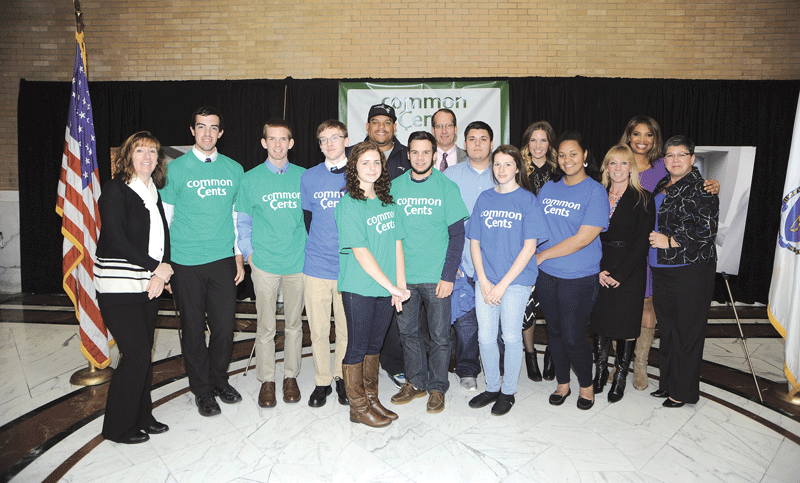
BOSTON — The Mass. Bankers Assoc. (MBA) and five banks, including Holyoke-based PeoplesBank, have launched Common Cents, a financial-education competition with participating high-school students from around the state. The program is featured online at www.masscommoncents.com. Recorded last autumn, Common Cents is a quiz-show competition hosted by the MBA and the five bank partners located around the Bay State: Bank of America, BayCoast Bank, Cape Cod Five Cents Savings Bank, PeoplesBank, and the Savings Bank. The 80 high-schoolers compete for prizes and learn about important financial-education concepts and practices along the way. The schools include Barnstable High School, Barnstable; Madison Park High School, Boston; Chicopee Comprehensive High School, Chicopee; Chicopee High School, Chicopee; Lynnfield High School, Lynnfield; Natick High School, Natick; Gateway to College Program, Fall River; Dennis-Yarmouth Regional High School, South Yarmouth; and Wakefield High School, Wakefield. Common Cents is being introduced to every Massachusetts high school with a guide and special classroom instructions that can also be found on the website. In addition, a video of the program has been sent to public-access television stations across the Commonwealth, encouraging both students and the general public to engage and embrace the important financial information highlighted in the competition. The 2015 Common Cents program, the third of its kind, was produced in support of the Financial Literacy Pilot Program established by the Massachusetts Legislature in 2012. This three-year pilot in 10 high schools in gateway cities throughout the Commonwealth is designed to test the potential viability of installing required financial-education programs in all Massachusetts high schools. Hosted by New England Cable News anchor Latoyia Edwards, radio celebrity Ashlee Feldman of JAM’N 94.5, and financial expert Jeffrey Fuhrer, executive vice president of the Federal Reserve Bank of Boston, the program also features a special guest appearance by former New England Patriot Jermaine Wiggins. For more information and to view the program, visit www.masscommoncents.com.

Dowd Holds Open House at Renovated Location
INDIAN ORCHARD — The Dowd Insurance Agencies staged an open house to celebrate its newly renovated space on Main Street in Indian Orchard on May 20. The open house featured a ribbon cutting with the Affiliated Chambers of Commerce of Greater Springfield (ACCGS) and provided customers and neighbors the opportunity to tour the new office space. Moskal-Dowd and Orchard-Dowd recently moved to 485 Main St., Indian Orchard, to provide more services under one roof. Moskal-Dowd was originally acquired by the Dowd Insurance Agencies in 2009; Orchard-Dowd was acquired in early 2014. The new location offers easier access to agents in one convenient location. “In an era when online and 800-number agencies proliferate, we remain what we have been since 1898: a community-based company committed to insurance professionalism with local service,” said John Dowd Jr., president and CEO of the Dowd Insurance Agencies. “Our new facility will allow us to provide more personalized attention to our valued customers.” The benefits of the new office include ample parking, a large conference room for meetings, and, most important, a larger staff to provide customers a broader range of service. Services available at the new Indian Orchard location include personal insurance, including auto, homeowner, boat, RV, and umbrella insurance; commercial insurance for businesses of all sizes; and life insurance and employee benefits.

Baystate Announces Leadership Changes After Bradley Steps Down
GREENFIELD — Dennis Chalke, senior vice president of Community Hospitals for Baystate Health, announced that Steven Bradley, president of Baystate Franklin Medical Center (BFMC) and Baystate Health’s Northern Region, is stepping down from his position to deal with unexpected and urgent family-related issues. Dr. Thomas Higgins, chief medical officer of BFMC and the Northern Region, will take on the additional role of interim president of the hospital and the region, effective immediately. “Steven played a major role in moving forward BFMC’s project to modernize and renovate its operating rooms, and over the years strengthened Baystate Health’s relationships with many community-based organizations. We thank him for those contributions, and we wish him well in his future endeavors,” said Chalke. In his prior role at Baystate Health, as vice president of Government and Community Relations and Public Affairs, Bradley was a crucial contributor to Baystate’s work to bring healthcare out of the hospital and into the community, advocating for social justice and public health and partnering with community-based organizations across Western Mass. Higgins is a graduate of Boston University with a bachelor’s degree in medical science; he continued at BU to earn his medical degree. He completed his internship and residency in internal medicine at the Cleveland Clinic. He completed a residency in anesthesiology, was chief resident, and completed a fellowship in critical care at Massachusetts General Hospital. He also earned an MBA at the Isenberg School of Management at UMass Amherst. Higgins joined Baystate Health in 1996 as chief of Baystate Medical Center’s Critical Care Division. Since 2012, he has served as vice chair for Clinical Affairs in the Department of Medicine and as interim chief in the Division of General Medicine/Community Health. He is a professor of Medicine, Surgery, and Anesthesiology at Tufts University School of Medicine. “Serving as the chief medical officer for BFMC and the Northern Region — and seeing for myself the ways a community hospital can influence a community’s health — has inspired me,” Higgins said. “I’m eager to accept this new challenge and continue the work of advancing our mission in Franklin County.”

UMass System Issues Faculty Awards Totaling $1.17 Million
BOSTON — Describing faculty research and scholarship as work that “distinguishes us as a university and is essential to our quest for a better and richer future,” UMass President Robert Caret announced the awarding of $1.17 million in grants to faculty members. The awards will fund work ranging from a project that will see faculty members engage with industry partners in the development of a big-data research center in Amherst, to a project aimed at bringing local history to life for Lawrence school children. Caret made the announcement as the board of trustees’ committee on academic and student affairs held its quarterly meeting in Boston. The grants are being made available via two programs established to spur research, scholarship, and outreach throughout the UMass system. The President’s Science and Technology Initiative Fund this year is awarding $914,000 to support nine promising research projects. Including this year’s awards, this fund, created in 2004, has provided $11 million in funding for nearly 90 projects that have helped to accelerate research on all five UMass campuses. The UMass presidential funding has helped to attract more than $245 million in federal and private funding. The President’s Creative Economy Initiatives Fund this year provides nearly $260,000 for nine projects aimed at enhancing the quality of life in communities across the Commonwealth. Including this year’s awards, the fund has, since 2007, distributed more than $2 million for 82 projects and has contributed to historical preservation, artisan cooperatives, music, theater, and many other projects. Trustee Alyce Lee, chair of the Committee on Academic and Student Affairs, said both programs support the trustees’ strategic priority of strengthening the university’s research enterprise and “contribute to the economic and social well-being of the Commonwealth.”

Departments People on the Move

Marie Bowen has been appointed assistant vice chancellor for human resources at UMass Amherst following a nationwide search. Bowen, who will join the university administration in August, will serve as the chief human-resources officer for the campus. She will be responsible for developing human-resources policies and strategies, and will advise Chancellor Kumble Subbaswamy and the Campus Leadership Council on human-resources policies, procedures, and regulations. James Sheehan, vice chancellor for administration and finance, said, “we are excited to have someone of Marie Bowen’s caliber join the UMass Amherst community. She brings a wealth of human-resources experience to this key position, most recently serving as the associate dean and chief human resource officer at the Harvard Law School. Prior to that, she served as the director of human resources at the Massachusetts Port Authority. We look forward to working with Marie in her new role and on new initiatives that will continue to make UMass Amherst an employer of choice for faculty and staff.” Bowen graduated cum laude from Harvard College and received a master’s degree from Simmons College and a juris doctor degree from the University of Virginia School of Law. She is also certified as a senior professional in human resources.
•••••
Florence Bank announced that Rachel Dionne has been named to the President’s Club for 2015. Employees nominate their peers for the President’s Club honor, which recognizes superior performance, customer service, and overall contribution to Florence Bank. Dionne, a commercial credit analyst who has been with the bank since 2011, was nominated by numerous colleagues. Dionne is a graduate of American International College, where she received a bachelor’s degree in accounting and her master’s degree in nonprofit management. Her numerous volunteer endeavors include serving as a board of trustees member with the Pioneer Valley Performing Arts Charter Public School in South Hadley; she is also a member of the school’s finance committee. In addition, she is a youth ministry group volunteer, eucharistic minister, and lector at Our Lady of the Blessed Sacrament Church in Westfield. “We received so many comments about Rachel — everything from ‘I was amazed at how much work she was able to accomplish on a project and still maintain her regular workload’ to ‘she always goes well above what is expected of her,’” said John Heaps Jr., president and CEO of Florence Bank. “Rachel’s remarkable work ethic and sincere desire to contribute make her an outstanding member of the President’s Club.”
•••••

Brian Risler

Brian Risler

Farmington Bank announced the appointment of Brian Risler as assistant vice president, mortgage sales manager for the Western Mass. region. Risler will lead Farmington Bank’s efforts in building a team of residential loan specialists serving the Western Mass. market. In addition, he’ll originate first mortgages in concert with Farmington Bank’s commercial-lending team in Western Mass. and the bank’s future branch offices opening later this year in West Springfield and East Longmeadow. “We are thrilled to have Brian join our growing team of experienced, local banking professionals serving Western Massachusetts,” said John Patrick Jr., chairman, president, and CEO of Farmington Bank. “We look forward to Brian’s leadership, expertise, and local decision-making skills in creating and servicing mortgages for our customers.” Risler has more than 15 years of experience in residential mortgage banking in Massachusetts. He comes to Farmington Bank from Residential Mortgage Services Inc., where he served as branch manager for its Easthampton office. Since 2005, Risler has served as an affiliate member of the Realtor Assoc. of Pioneer Valley (RAPV) and serves as the co-chair of RAPV’s Education Fair & Trade Expo Task Force. In addition, Risler serves on the Government Affairs/Realtor Political Action Committee, which promotes the legislative agenda of the Massachusetts Assoc. of Realtors; as president of the Mill River BNI, a networking group of area businesses; and as a member of both the Greater Easthampton and Greater Northampton chambers of commerce. He received a bachelor’s degree in business administration/finance from Stonehill College. Farmington Bank is a full-service community bank with 22 branch locations throughout Central Conn., offering commercial and residential lending as well as wealth-management services in Connecticut and Western Mass. For more information, visit farmingtonbankct.com.
•••••
Heidi-Jo Kemp

Heidi-Jo Kemp

North Brookfield Savings Bank (NBSB) announced that Heidi-Jo Kemp has joined the bank as vice president and residential loan officer. “Heidi-Jo is an excellent and valued addition to our lending team,” said North Brookfield Savings Bank President and CEO Donna Boulanger. “Her experience and expertise are well-known in the area, making her a wonderful asset to our growing customer base and expanding Mortgage Center. I am confident that she will be a great benefit to our current and future customers wishing to purchase or refinance a home.” Kemp is a graduate of the New England School for Financial Studies at Babson College. She began her banking career at Country Bank in 1988 and was a standout performer for 27 years, receiving numerous awards and being active in many community organizations. She joins NBSB’s Mortgage Center team, comprised of a group of skilled mortgage professionals led by mortgage expert Donna Tiso, senior vice president and retail lending manager. “I’m very excited about joining North Brookfield Savings Bank,” Kemp said. “Donna Tiso has assembled a very capable and strong retail lending team at the NBSB Mortgage Center, and I’m very proud to be a part of it. I look forward to helping people navigate the home-buying process, so that individuals, couples, and families can finance the home of their dreams.” Kemp is a member of several community organizations, including the Central Mass. South Chamber of Commerce, the Quaboag Hills Chamber of Commerce, the Worcester Regional Assoc. of Realtors, and Woman in Business Inc. North Brookfield Savings Bank is a mutual savings bank with full-service branches in North Brookfield, East Brookfield, West Brookfield, Ware, Belchertown, Palmer, and Three Rivers. To contact Kemp for assistance purchasing or refinancing a home, call (774) 452-3918 or e-mail [email protected]. For residential-loan information, contact the Mortgage Center at (508) 867-1302 or [email protected].

Chamber Corners Departments

AMHERST AREA CHAMBER OF COMMERCE
www.amherstarea.com
(413) 253-0700
 
• June 24: After 5, 5-7 p.m., hosted by J.F. Conlon, 29 University Dr., Amherst. Sponsored in part by J.F. Conlon & Associates. Cost: $10 for members, $15 for non-members. Register online at www.amherstarea.com or call the chamber office at (413) 253-0700.
 
GREATER CHICOPEE CHAMBER OF COMMERCE
www.chicopeechamber.org
(413) 594-2101
 
• June 17: Breakfast & Health Fair, American Red Cross Blood Drive, hosted by Castle of Knights, 1599 Memorial Dr., Chicopee. Exhibitor space available: $125 per table for members, $175 for non-members.
• June 18: Mornings With the Mayor, 8-9 a.m., hosted by Willimansett Center West, 546 Chicopee St., Chicopee. Free for chamber members.
• June 24: Business After Hours, 5-7 p.m., hosted by Wireless Zone, 601E Memorial Dr., Chicopee. Cost: $10 for members, $15 for non-members. 

GREATER EASTHAMPTON CHAMBER OF COMMERCE
www.easthamptonchamber.org
(413) 527-9414

• June 18: Speaker Breakfast, 7:30-9 a.m., hosted by Williston Northampton School, 19 Payson Ave., Easthampton. Join us for breakfast and educational discussion with keynote speaker Tim Brennan, Pioneer Valley Planning Commission executive director, regarding the regional impact and importance of the North South Rail Project. Register online at www.easthamptonchamber.org or call Denise at (413) 527-9414.
 
GREATER HOLYOKE CHAMBER OF COMMERCE
www.holycham.com
(413) 534-3376
 
• June 19: 125th Anniversary Gala Ball, hosted by the Log Cabin, 500 Easthampton Road, Holyoke. Cocktails at 6 p.m., dinner at 7 p.m. Enjoy an elegant meal and dance to the music of the Floyd Patterson Band. Join Marcotte Ford as one of the major event sponsors by calling (413) 34-3376. Event is open to the public, More details to follow.
 
GREATER NORTHAMPTON CHAMBER OF COMMERCE
www.explorenorthampton.com
(413) 584-1900
 
• June 25: 2015 Workshop: “Taking Control of Your Energy Costs: Money-saving Strategies for Businesses,” 9-10 a.m., hosted by Greater Northampton Chamber of Commerce, 99 Pleasant St., Northampton. Join the Hampshire Council of Governments Electricity Department to learn about easy strategies for reducing the amount you spend on electricity each year. Learn about local, state, and utility resources for financing energy-saving projects and how to evaluate offers from electricity suppliers — and much more. Admission is free. Pre-registration is required; space is limited. To register, visit [email protected]
• June 26: 2015 Workshop: “Microsoft Excel: Tips, Tricks & Shortcuts in Microsoft Excel,” 9-11 a.m., hosted by Greater Northampton Chamber of Commerce, 99 Pleasant St., Northampton. Presented by Pioneer Training. This workshop will present our favorite tips, tricks, and shortcuts that we have collected and developed over 15 years of teaching and using Microsoft Excel. Participants are encouraged to bring laptops and follow along with the instructor, but this is not required. Admission: $20 for members, $30 for non-members. Pre-registration is required; space is limited. To register, visit [email protected]
 
GREATER WESTFIELD CHAMBER OF COMMERCE
www.westfieldbiz.org
(413) 568-1618
 
• June 19: Chamber Breakfast, 7:15 a.m. to 9:00 a.m. Hosted by The Ranch Golf Club, 65 Sunnyside Road, Southwick. Platinum sponsor: Mestek. Golf sponsor: Berkshire Bank. Silver sponsor: First Niagara and Prolamina. Cost: $25 for members, $30 for non-members. Golf special: Registered attendees of the breakfast can golf at a discounted rate of only $65 at the Ranch Golf Club following the breakfast. Call Bill Rosenblum, golf pro, to register at (413) 569-9333, ext. 3. To register, call Pam at the chamber at (413) 568-1618.
• June 22: Social Security Workshop: “Make Social Security Work for You,” 4:30-5:30 p.m., hosted by Holiday Inn Express, 39 Southampton Road, Westfield. Sponsored by Renaissance Advisory Services, LLC. Guest speaker: William Sheehan, district manager (retired), Springfield Social Security Office. Before you retire, ask questions: when should I begin Social Security? Do I plan to keep working? Will all my expenses be covered? What will my beneficiaries receive?  Learn about Social Security strategies that may fit into your overall plan. Cost: free for chamber members, $30 for non-members.
 
WEST OF THE RIVER CHAMBER OF COMMERCE
www.ourwrc.com
413-426-3880
 
• June 18: Annual Breakfast Meeting, 7-9 a.m., hosted By Chez Josef, Agawam. Sponsored by OMG, Ormsby Insurance, and Development Associates. Event will kick off with the welcoming of new chairman Chuck Kelly and the incoming WRC board of directors. Cost: $25 for chamber members, $30 for non-members. For more information and for tickets, call the chamber office at (413) 426-3880 or e-mail [email protected].

Agenda Departments

Workshop on Retirement Planning, Social Security
June 16: Monson Savings Bank is holding a complimentary workshop titled “Social Security: The Choice of a Lifetime.” It will be presented by Kevin Flynn, regional vice president of Nationwide Financial, and an expert on retirement planning and helping people to understand Social Security and how to optimize their benefits. The event is designed to give people a comprehensive understanding of the rules and details regarding when and how to file for Social Security. It will be held from 5 to 6:30 p.m. at the Hampden Senior Center at 104 Allen St. in Hampden. The free event is open to the public. “This workshop is back by popular demand,” said Steven Lowell, president of Monson Savings Bank. “Knowing when and how to file for Social Security can have a big impact on retirement income. We have offered this workshop before, and those who attended were very appreciative of the information.” Those interested in attending should call Anna Driscoll at (413) 267-1221 or e-mail [email protected]. Seating is limited. Refreshments will be served.

EANE Workshop
June 17: The Employers Assoc. of the NorthEast in Agawam will host a workshop, “Six Secrets for Promoting Products and Services with Confidence,” from 8:30 a.m. to 4:30 p.m. This program, presented by Lyn Murphy, will provide participants with proven strategies and practical tools to feel more comfortable and ultimately become more effective at suggestive selling. It is targeted toward business owners, consultants, lawyers, accountants, architects, and customer-service representatives whose positions include sales goals. Attendees will learn how to enhance their personal presence and build rapport with current and potential clients, discover tools to avoid feeling pushy or rejected when promoting products and services, use tools to identify and adapt to prospects with different communication and behavioral styles, and learn strategies to positively influence sales outcomes. The $285 fee includes the electronic DiSC Sales Assessment. To register, visit www.eane.org/six-secrets-for-promoting-products-and-services-with-confidence.

ERC5 Annual Meeting
June 17: The East of the River Five Town Chamber of Commerce will hold its annual meeting from 11:30 a.m. to 1:30 p.m. at Blake Commons Dining Hall, Bay Path University, Longmeadow. The keynote speaker will be talk-show host and bestselling author Howie Carr, discussing politics, crime, and entertainment. A member of the Radio Hall of Fame, Carr’s evening drive show can heard on more than 20 stations throughout New England. He is also a columnist for the Boston Herald and a contributor to Breitbart.com. Carr’s bestselling books include The Brothers Bulger and Hitman. Crime boss Whitey Bulger was so infuriated by Carr’s groundbreaking reporting that he once put out a murder contract on Carr, a story detailed on 60 Minutes. At his 2013 trial on murder and racketeering charges, Bulger tried to have Carr banned from the courtroom by calling him as a defense witness. Now imprisoned for life in Arizona, the crime czar still says his greatest regret was not murdering Carr when he had the chance. Bulger’s story will be featured in the upcoming film Black Mass, starring Johnny Depp. To register, visit www.erc5.com or contact Amanda Brodkin at the chamber. The cost is $45 for chamber members, $55 for non-members.

Clinical Notes Concert

June 18: Baystate Franklin Medical Center’s Clinical Notes, a hospital-based women’s a cappella chorus, will perform a free summer concert, “Good Ole — and New — a Cappella,” from 5:30 to 6:30 p.m. in the hospital’s Conference Rooms B and C. Under the direction of Kathryn Aubrey-McAvoy, the group will perform a variety of selections, including classical, jazz, traditional, and rock. Individual members of the group will be featured as soloists. Hospital staff, patients, visitors, and the public are invited to attend. Guests should feel free to come and stay for the whole concert or for a short time, as time allows. Clinical Notes was formed in 2003 by Phyllis Stone and Annginette Anderson, who shared a love of a cappella singing. Though members have come and gone over the 12 years, most of the singers have been in the group since its inception. The group performs two formal concerts yearly (during the holidays and at the beginning of summer), and sings at various hospital-related functions, such as the annual Valentine’s Day Chocolate Festival, Nurses’ Week, and other celebrations. They have also performed during the Relay for Life Sacred Gathering, the Hospice of Franklin County Tree Lighting, and the United Way A Cappella Festival. For more information, contact Stone at (413) 773-2573 or [email protected].

40 Under Forty
June 18: The ninth annual 40 Under Forty award program, staged by BusinessWest, will be held at the Log Cabin Banquet & Meeting House the evening of June 18. The event honors the region’s most accomplished and civic-minded professionals under age 40, and this year’s class was profiled in the April 20 issue. This year’s winners represent virtually every sector of the economy — from financial services to manufacturing; retail to healthcare; technology to nonprofit management; education to law. They also show the seemingly innumerable ways people can give back to the community. This year’s event will feature a new award — the Continued Excellence Award, presented to the previous honoree who has most impressively built upon their track record of excellence (see nominees HERE). Always one of the most anticipated events and best networking opportunities on the calendar, the gala, which is sold out, will feature lavish food stations, entertainment, and the introduction of this year’s class. The 40 Under Forty program and gala are sponsored this year by Northwestern Mutual (presenting sponsor), Paragus Strategic IT (presenting sponsor), Fathers & Sons, the Isenberg School of Management at UMass Amherst, Moriarty & Primack, and United Bank.

Leadership Conference
June 19: Springfield Technical Community College (STCC) School of Business & Information Technologies will host a free Leadership Conference from 8 a.m. to 2 p.m. at the Scibelli Hall (Building 2) Theater at STCC. This one-day event will feature a variety of guest speakers, including Rebecca Corbin, president and CEO of the National Assoc. of Community Colleges for Entrepreneurship; Alden Davis; Robert Hensley, president of Robert Hensley & Associates, LLC; Nicole Murdoch, small-business owner; Gail Ward Olmsted, STCC professor and department chair in the School of Business and Information Technology; Rob Parslow, Accounting director at American Express; Ira Rubenzahl, STCC President; Diane Sabato, STCC professor of Business Administration; Kirk Smith, president and CEO of the YMCA of Greater Springfield; and Paul Thornton, STCC professor of Business Administration. The event will include interactive group discussions and opportunities for networking. Lunch will be provided. For more information or to register, call (413) 755-4008 or e-mail [email protected].

ACCGS Panel on Health-plan Changes
June 23: The Affiliated Chambers of Commerce of Greater Springfield (ACCGS), in collaboration with the Greater Chicopee, Easthampton, Holyoke, and Westfield chambers of commerce, will present a panel discussion on health-plan changes associated with the Affordable Care Act (ACA) from 3 to 4 p.m. at the UMass Center at Springfield, 1500 Main St., Springfield. Sponsored by the Regional Employment Board of Hampden County, Massachusetts Assoc. of Health Plans (MAHP) President and CEO Lora Pellegrino and Senior Vice President Eric Linzer will present “The State of the Massachusetts Marketplace.” Despite the Commonwealth’s 2006 Health Care Reform Law serving as the model for the ACA, according to MAHP, Massachusetts faces significant challenges five years after its passage. Massachusetts employers, particularly small and mid-size companies, will need to confront significant changes to the marketplace, which, MAHP says, will have a substantial impact on health-care costs, including the expansion of the small-group market to include companies with up to 100 employers and the elimination of the state’s rating factors. Pellegrino and Linzer will discuss the current state of the health-plan market, what the ACA changes mean for employers, how employees can address the impact of the ACA changes, how mandated benefits and other changes at the state level may exacerbate the challenges employers face, and what employers can do to get involved. The cost is $10 for members of the participating chambers and $15 for general admission. To register, visit one of the chambers online or e-mail Kara Cavanaugh at [email protected].

Berkshire Region MITS Summer Institute
July 6-10: Berkshire Museum will host the Berkshire Region Museum Institute for Teaching Science (MITS) summer session for middle- and high-school teachers. This year’s theme is “Going with the Flow: Using Inquiry Methods to Teach Watershed Science.” The Berkshire Museum is the lead educational partner for MITS in the Berkshires. The program is presented with instructing partners Housatonic Valley Assoc., Flying Cloud Institute, and American Rivers. This exciting professional-development program will focus on the ecology and history of local rivers and watersheds. Participants will learn from experts about what is affecting water quality in the rivers that flow through area communities and how scientists effectively measure watershed health using principles of ecology, engineering, and robotics. The week-long institute includes outside exploration of local rivers and time indoors at the museum for hands-on, inquiry-based projects. Institute participants will build and use a SeaPerch underwater remotely operated vehicle (ROV) and then take it back to their classrooms. The SeaPerch ROV is used to take videos of underwater ecosystems and collect water samples. SeaPerch curriculum serves as an introduction to basics in engineering, ship and submarine design, and an exploration of ways that engineers have been able to explore places that are too dangerous or unreachable for humans to visit. The educators will explore a variety of methods to test water quality. They also will build miniature urban landscapes to prototype methods for remediating runoff in an exploration of low-impact-development solutions to non-point source pollution. Participants will learn from experts about the science and politics of dam removal that have been affecting New England rivers, and they will hear the story of PCB pollution and removal in the Housatonic River watershed and examine issues surrounding urban and agricultural runoff into rivers and aquifers. Throughout the course, participating educators will try out, develop, and implement inquiry-based approaches and project ideas for use in the classroom that amplify the concepts covered in the course and that will encourage students to become critical, inquisitive thinkers. Throughout the institute, the educators will be working with proven methods of assessing student learning. Educators who complete the institute earn professional development points and/or graduate credits from either Massachusetts College of Liberal Arts or Cambridge College, based on a teacher’s chosen level of participation. All activities will be linked to Massachusetts Common Core state standards and STEM (science, technology, engineering, math) initiatives. All teachers from grades 5 to 12 are welcome to attend. Online registration for the institute is available at www.mits.org. There will be an orientation on June 20 before the July 6-10 session. The deadline to guarantee a spot is June 1; late sign-ups will be accepted based on space availability. The registration fee, which includes the cost of the SeaPerch kit, is $400 for individual participants and $375 for two or more participants from same school district. Meghan Bone, Berkshire Museum’s School and Teacher Program specialist, can answer questions about the program; she can be reached at (413) 443-7171, ext. 332, or [email protected].

Valley Fest
Aug. 29: White Lion Brewing Co. announced that it will host its inaugural beer festival, called Valley Fest, at Court Square in downtown Springfield. MGM Springfield will be the presenting sponsor. The festival is poised to be White Lion’s signature annual event, introducing the young brand to craft-beer enthusiasts throughout New England and beyond. White Lion Brewing Co., the city of Springfield’s only brewery, launched in October 2014. Founder Ray Berry and brewmaster Mike Yates have released three selections under the White Lion brand and have been busy promoting their efforts in venues all over Massachusetts and other New England states. “Valley Fest will have the best of the best local, regional, and national beer and hard cider brands,” Berry said. “Even in our inaugural year, Valley Fest will be the largest one-day beer festival in Western Massachusetts. We expect to draw up to 2,000 enthusiasts from throughout New England. We are very excited to showcase the fourth-largest city in New England and all of its amenities.” Berry anticipates that more than 50 breweries and many local food vendors will converge on Court Square for two sessions. Enthusiasts will have an opportunity to sample more than 100 varieties of beer and hard cider alongside pairing selections by local chefs. A number of sponsors have already committed to the event, including MassMutual Financial Group, the Young Professional Society of Greater Springfield, the Dennis Group, Springfield Sheraton Monarch Place, Paragus Strategic IT, Williams Distributing, and the Springfield Business Improvement District (BID). “We are honored to sponsor Valley Fest and look forward to it being an annual event that shares in the facilitation of growth within the downtown community,” said Chris Russell, executive director of the Springfield BID. Visit www.valleybrewfest.com for event details, ongoing updates, and sponsorship opportunities. A portion of Valley Fest proceeds will support several local charities.

Western Mass. Business Expo
Nov. 4: Comcast Business will present the fifth annual Western Mass. Business Expo at the MassMutual Center in downtown Springfield, produced by BusinessWest and the Healthcare News in partnership with Go Graphix and Rider Productions. The business-to-business show will feature more than 100 booths, seminars and Show Floor Theater presentations, breakfast and lunch programs, and a day-capping Expo Social. Details about tevents, programs, and featured speakers will be printed in future issues of BusinessWest. Sponsors include MGM Springfield, presidential and Expo Social sponsor; the Isenberg School of Business at UMass Amherst, education sponsor; Johnson & Hill and Health New England, director level sponsors; and 94.7 WMAS, media sponsor. Additional sponsorship opportunities are available. Exhibitor spaces are also available; booth prices start at $750. For more information on sponsorships or booth purchase, call (413) 781-8600, ext. 100.

Court Dockets Departments

The following is a compilation of recent lawsuits involving area businesses and organizations. These are strictly allegations that have yet to be proven in a court of law. Readers are advised to contact the parties listed, or the court, for more information concerning the individual claims.

CHICOPEE DISTRICT COURT
Thames Insurance Co., as subrogee of Robert and Elaine Peterson v. Bennett Properties, LLC
Allegation: Negligent disposal of smoking materials by employee of Bennett Properties, causing roof fire and substantial damage to plaintiff’s home: $22,106.13
Filed: 4/21/15

FRANKLIN SUPERIOR COURT
Patrick Buchanan v. J.L. Raymaakers and Sons Inc.
Allegation: Negligent construction work performed by the defendant during a sewer rehab project in the town of Greenfield: $50,000
Filed: 4/28/15

HAMPDEN SUPERIOR COURT
Gregory and Laurie Pyles v. Jean Duquette and Son
Allegation: Defendant breached a contract for construction of plaintiff’s home: $70,000
Filed: 5/18/15

PALMER DISTRICT COURT
Medeiros Real Estate Investments v. Chef Lou’s Gourmet Foods, LLC and Luis Maravilha
Allegation: Non-payment of rent and utilities: $38,713.50
Filed: 5/1/15

SPRINGFIELD DISTRICT COURT
Connecticut Valley Artesian Co. v. Cherokee Enterprises d/b/a Cherokee Environmental
Allegation: Non-payment of services rendered: $20,634.04
Filed: 5/13/15

Perkins Paper, LLC v. Diamond Gourmet Meat and Deli, LLC
Allegation: Non-payment for goods sold and delivered: $2,022.66
Filed: 4/23/15

WESTFIELD DISTRICT COURT
Simplicity Engineering N.E. Inc. v. Wood Waste of Boston Inc.
Allegation: Non-payment of rental machinery: $4,785.00
Filed: 4/15/15

Departments Picture This

Send photos with a caption and contact information to: ‘Picture This’ c/o BusinessWest Magazine, 1441 Main Street, Springfield, MA 01103 or to [email protected]

LTL-2LinkToLibraries

Exciting Chapters

The nonprofit group Link to Libraries (LTL) continues to expand its presence in the region and write new chapters in its success story. Above, students at Bowie School in Chicopee and librarian Joyce Hogan thank LTL for a literacy and technology grant the agency awarded to the school. It will be used to purchase library programs and headphones for the students at the school. Meanwhile, on June 4, LTL celebrated its end of year with a volunteer ice-cream social and make-your-own-sundae party. More than two dozen volunteers turned out to enjoy a sweet evening of social fun. Included were volunteers from Westfield, West Springfield, Longmeadow, Wilbraham, Monson, Springfield, Hampden, and Holyoke.

UTCA-Image-BUTCA-Image-A

UTCA Celebrates Milestone

Unemployment Tax Control Associates Inc. (UTCA), a national unemployment-insurance service provider based in Springfield, with offices in Boston and Houston, recently celebrated a quarter-century in operation with an Anniversary and Client Appreciation Party on May 27. The event, held at One Financial Plaza in Springfield, included a distinguished guest list comprised of clients, business owners, presidents, and CEOs of several local and national companies. At right, Suzanne Murphy (left), founder and CEO of UTCA, celebrates with her first client, Barbara Pilarcik, executive director of the Assoc. for Community Living in Springfield.

PB-Chicopee-Comp.-High-SchoolPB-Chicopee-High-School

Common Cents

PeoplesBank sent two Chicopee High School teams to Boston recently to compete in Common Cents, a program hosted by the Mass. Banking Assoc. (MBA). The bank supported participating students from Chicopee High School and Chicopee Comprehensive High School at the statewide competition last fall at the State House. At top, the Chicopee Comprehensive High School team is seen with, from left, Mary Paleologopoulos, teacher at Chicopee Comp; Jermaine Wiggins, former New England Patriots player; Jeffrey Fuhrer, executive vice president, Federal Reserve Bank of Boston; Ashlee Feldman, radio personality, JAM’N 94.5; Karen Volpe, branch manager, PeoplesBank Fairview office; Latoyia Edwards, anchor, NECN; and Donna Wiley, regional manager, PeoplesBank. Below, the Chicopee High School Team with, from left, Wiggins; Shavon Diaz, teacher, Chicopee High School; Fuhrer; Feldman; Edwards; Volpe; and Wiley.

PictureThisMercy

Transforming Care

Mercy Medical Center announced that ProShred Security and Convergent Solutions Inc. (CSI) have joined together to pledge a gift of $25,000 to Transforming Cancer Care — the Capital Campaign for the Sister Caritas Cancer Center. The campaign was launched to support the $15 million expansion of the Sister Caritas Cancer Center at Mercy Medical Center. These funds will be used to consolidate all cancer services into a single, unified space and meet the increased demand for outpatient cancer services. The $25,000 contribution reflects a joint gift from two Wilbraham-based companies: ProShred Security, owned and operated by Joseph Kelly and Barry Sanborn, and Convergent Solutions Inc., owned and operated by their wives, Arlene Kelly and Kim Sanborn. Both couples are longtime supporters of the Sisters of Providence Health System (SPHS) and Brightside for Families and Children. From left, Daniel Moen, president and CEO, SPHS; Barry and Kim Sanborn; Joseph and Arlene Kelly; and Diane Dukette, vice president of Fund Development, SPHS.

Daily News

SPRINGFIELD — Two Baystate Medical Center physicians were honored recently by the Massachusetts College of Emergency Physicians (MACEP) for advancing excellence in emergency care.

Dr. Sunny Mani Shukla received the Emergency Medicine Fellow of the Year award, and Dr. Lauren Westafer received the Emergency Medicine Resident of the Year award, during MACEP’s recent annual meeting.

The Emergency Medicine Resident and Fellow of the Year awards recognize an outstanding emergency-medicine resident and emergency-medicine fellow in Massachusetts, whose combination of clinical promise, leadership, ability to think outside the box, and commitment to patients and emergency medicine separate them from others.

Westafer earned her doctor of osteopathic medicine and master of public health degrees from Nova Southeastern University College of Osteopathic Medicine in Fort Lauderdale, Fla. Blogging on emergency medicine even before her residency, today she co-hosts an educational podcast and frequently tweets and blogs about important and interesting articles, keeping her colleagues up to date on the latest in emergency medicine.

Westafer regularly takes on additional tasks as part of her residency, including providing statistical mini-lectures to colleagues. An adjunct assistant professor at Western New England University College of Pharmacy, she lectures pharmacy students preparing to enter the field of medicine. She has also been recognized as a Knowledge to Action Fellow by the Emergency Medicine Residents’ Assoc. (EMRA) and the New York Academy of Medicine.

“Dr. Westafer is an incredibly talented physician with the potential to contribute greatly to academic emergency medicine. Her ability to review the current literature and distill it into an easily digestible format is incredibly valuable and will make her a strong contributor in the future,” said Dr. Niels Rathlev, chair of the Department of Emergency Medicine at Baystate.

Shukla, who received his medical degree from Manipal University in Karnataka, India, completed a residency in emergency medicine at Baystate. He participated in MACEP’s Leadership & Advocacy Fellowship Program in 2014, and recently designed the Baystate Emergency Department’s Administrative Fellowship.

He was also selected by the EMRA as one of 10 residents nationwide to receive an EDDA scholarship, which provides financial assistance to resident leaders to attend the Emergency Department Directors Academy, designed to help them develop leadership skills that will advance their careers, their local emergency departments, and the specialty of emergency medicine.

Shukla, who provides emergency care at Baystate Franklin Medical Center in Greenfield, was also the second-place winner in the Emergency Medicine Physicians’ emp.com third annual Video Challenge, allowing residents to show off their residency program in a creative way. As secretary/newsletter editor for the American College of Emergency Physicians’ Emergency Medicine Practice Management and Health Policy Section, he also uses his talents to mentor residents in writing scholarly articles.

“Dr. Shukla has tremendous potential as a future leader in healthcare,” Rathlev said. “He has a particular interest in administrative matters and is currently obtaining his MBA at UMass Amherst. He is an active contributor to important patient-care and safety initiatives at Baystate Health.”

Daily News

SPRINGFIELD — The Springfield College Sports Communication Department was recently recognized by the American Volleyball Coaches Assoc. (AVCA) for its successful efforts in the advancement and promotion of the sport of volleyball. The college earned NCAA Division III Sports Information Director Women’s Volleyball Regional Honors for the New England area and also NCAA Division III Sports Information Director Men’s Volleyball Conference Honors during the announcement of the annual AVCA Grant Burger Media Award.

Led by Director of Sports Communication Brian Magoffin and Assistant Director of Sports Communication Jonathan Santer, Springfield College was the only institution in the country across NCAA Division I, II, and III, as well as the NAIA, to be recognized by the AVCA in both men’s and women’s volleyball. Their efforts included traditional releases and statistical coverage, in addition to enhanced web and video efforts to promote the success of the men’s and women’s programs, including highlight packages, postgame interviews, and features throughout the season.

“Brian and Jonathan have a knack for capturing the essence of what it means to be a student-athlete,” said Springfield College Director of Athletics Cathie Schweitzer, who will be retiring at the end of June after 15 years in her current role. “Our sports-information team creatively thinks of ways to keep Springfield College athletics at the forefront, and the coverage they provide promoting players, coaches, and the volleyball programs is unparalleled.”

During the 2014-15 season, the men’s volleyball team advanced to the national championship match for the seventh time in the past eight years, concluding the campaign with a 25-7 record. Springfield has captured nine Division III national championships as a men’s volleyball program, including winning the previous three NCAA Division III Championships after claiming the crowns in 2012, 2013, and 2014.

“All of our athletic teams at Springfield College are so fortunate to have the level of support and communicative expertise that Brian Magoffin and the Sports Communication office offer us — not only in marketing our teams, but the information we get from Brian’s office is second to none,” said Charlie Sullivan, men’s head volleyball coach. “Brian and his office make our job much easier, and we appreciate their level of support.”

The women’s volleyball squad finished with a 20-11 record this past season and made its fifth consecutive trip to the NCAA Division III Championship, the longest such streak in the program’s history.

“Brian Magoffin, Jon Santer, and the entire Sports Communication office are the gold standard of volleyball coverage in New England,” said Moira Long, women’s head volleyball coach. “They work tirelessly to support and represent Springfield College volleyball in the best ways possible: in game stats, postgame statistical breakdown, web streaming, postgame interviews, and feature pieces on the program. We are so fortunate to have such dedicated professionals at Springfield College who not only support Springfield College volleyball, but volleyball as a whole.”

The AVCA Grant Burger Media Award recognizes members of the media who have been involved in the advancement of the sport of volleyball, whether through consistent coverage in all mediums (sports information, print, broadcasting, web content, college student reporting, and social media), production of volleyball-specific publications, or extensive radio and/or television exposure.

Daily News

CHICOPEE — At a tree-planting ceremony at Fredericks Park in Revere, state Energy and Environmental Affairs Secretary Matthew Beaton announced an initiative to expand the Greening the Gateway Cities Program (GGCP) to include the cities of Chicopee and Revere. The program, which targets the Commonwealth’s 26 gateway cities, is designed to utilize tree plantings as a way to reduce energy use in urban neighborhoods and lower heating and cooling costs for residents and businesses.

“By extending the Greening the Gateway Cities Program to include the communities of Revere and Chicopee, our administration continues its commitment to work closely with cities and towns across the Commonwealth to provide resources that benefit municipalities and improve the state’s environment,” said Lt. Gov. Karyn Polito.

Added Beaton, “increased tree canopy will provide our communities with the first, and best, line of defense from excessive urban summer heat and the biting winds of winter. In addition to benefiting the Commonwealth in terms of energy efficiency, the Greening the Gateway Cities Program will provide the residents of Revere and Chicopee with cleaner air and water, reduced noise pollution, and the beatification of homes and neighborhoods within their community.”

With a defined goal of a 10% increase in urban tree canopy in selected neighborhoods within gateway cities, the increase in tree cover is expected to reduce heating and cooling costs in the selected areas by approximately 10%, with an average homeowner saving approximately $230 a year, once the trees reach maturity. Over their lifespan, the trees are expected to lead to $400 million in energy savings for residents and businesses.

Aimed at improving the often-low tree canopy found in the Commonwealth’s gateway cities due to their urban character and history of manufacturing, the program’s benefits are not isolated to energy efficiency. By planting trees, communities will see a reduction in stormwater runoff, higher air quality, an increase in property values and tax receipts, and a safer, healthier environment for residents.

Under the program, the Department of Conservation and Recreation (DCR) is spearheading tree-planting efforts and is in the process of planting up to a combined 15,000 trees in Holyoke, Chelsea, and Fall River. Agency staff, working in partnership with local municipalities and grass-roots organizations, have developed a successful approach to planting the number of trees required to have an energy impact, focusing on high-density urban neighborhoods, where planting on average 10 trees per acre will provide benefits to 15 to 25 households. Planting this number of trees will increase canopy by an estimated 1% in eight years, and 10% in 30 years.

“The Greening the Gateway Cities Program is not only an important tool in our overall urban forestry plan, but will be an engine for job creation and energy sustainability in these communities,” said DCR Commissioner Carol Sanchez. “DCR is proud to continue the long-standing partnership between the Bureau of Forestry and the cities of Chicopee, Revere, Chelsea, Holyoke, and Fall River. With the help of local community and grass-roots organizations, GGCP will pay dividends in these high-density urban communities where green space is needed most.”

To implement the expansion of the Greening the Gateway Cities Program, the DCR will partner with the city governments of Chicopee and Revere and community groups to plant approximately 100 trees this June, and thousands more to come. The program will also benefit the cities’ local economies by creating jobs for residents. DCR will hire local workers for tree-planting teams in each city, and every tree will be purchased from Massachusetts nurseries.

“The City of Chicopee greatly appreciates the Commonwealth’s commitment to our city and its neighborhoods by providing us with a number of replacement trees,” said Chicopee Mayor Richard Kos. “As a gateway city, positive impact on neighborhoods and our community as a whole will be measured.”

Added state Sen. James Welch (D-West Springfield), “Greening the Gateway Cities is a great fit for Chicopee, and I am pleased that its residents will benefit not only from the energy-saving and environmental aspects of the program, but also from the beautification of their neighborhoods as the tree planting progresses.”

Departments Real Estate

The following real estate transactions (latest available) were compiled by Banker & Tradesman and are published as they were received. Only transactions exceeding $115,000 are listed. Buyer and seller fields contain only the first name listed on the deed.

FRANKLIN COUNTY

BUCKLAND

37 Elm St.
Buckland, MA 01338
Amount: $240,000
Buyer: Aaron Tieger
Seller: Paul Hellmund
Date: 05/07/15

COLRAIN

123 Foundry Village Road
Colrain, MA 01340
Amount: $225,579
Buyer: Bayview Loan Servicing
Seller: Kevin J. Lesieur
Date: 05/04/15

DEERFIELD

642 Greenfield Road
Deerfield, MA 01342
Amount: $185,000
Buyer: Stephen M. Cullen
Seller: Walter T. Griffin
Date: 05/15/15

GREENFIELD

6-8 Lincoln St.
Greenfield, MA 01301
Amount: $180,000
Buyer: Robert L. Broussard
Seller: Joshua N. James
Date: 05/15/15

16 Lincoln St.
Greenfield, MA 01301
Amount: $172,000
Buyer: Danae Dinicola
Seller: Robert L. Broussard
Date: 05/15/15

24 Pine St.
Greenfield, MA 01301
Amount: $132,000
Buyer: Caroline P. Jennings
Seller: Richard M. Scott
Date: 05/08/15

145 Silver St.
Greenfield, MA 01301
Amount: $150,000
Buyer: Samantha Torres
Seller: Joann W. Tirrell
Date: 05/06/15

218 Wisdom Way
Greenfield, MA 01301
Amount: $155,500
Buyer: Justin P. Purinton
Seller: Michelle D. Demers
Date: 05/15/15

HAWLEY

21 Forget Road
Hawley, MA 01339
Amount: $167,000
Buyer: Lauri Donelson
Seller: William Guild
Date: 05/15/15

LEYDEN

670 Greenfield Road
Leyden, MA 01301
Amount: $255,000
Buyer: David J. Morgan
Seller: Albrecht H. Kummerle
Date: 05/14/15

MONTAGUE

18 Carlisle Ave.
Montague, MA 01376
Amount: $164,900
Buyer: John M. Martineau
Seller: Francis P. Hanley
Date: 05/15/15

9 Dell St.
Montague, MA 01376
Amount: $155,000
Buyer: Donald T. Brooks
Seller: Betty McCabe
Date: 05/08/15

66 South Prospect St.
Montague, MA 01349
Amount: $127,000
Buyer: David M. Wilson
Seller: Mary G. Provost
Date: 05/05/15

30 X St.
Montague, MA 01376
Amount: $154,000
Buyer: William Steffen
Seller: Tami R. Banas
Date: 05/08/15

NEW SALEM

10 Neilson Road
New Salem, MA 01355
Amount: $168,000
Buyer: William A. Lane
Seller: Reita L. Oliver LT
Date: 05/15/15

NORTHFIELD

160 Main St.
Northfield, MA 01360
Amount: $275,000
Buyer: Jayant D. Singh
Seller: Louise E. Hoff
Date: 05/15/15

ORANGE

41 James Lane
Orange, MA 01364
Amount: $168,531
Buyer: FNMA
Seller: Robert L. Fortier
Date: 05/15/15

SHUTESBURY

16 Wendell Road
Shutesbury, MA 01072
Amount: $250,000
Buyer: Mark J. Stetz
Seller: John Darby
Date: 05/11/15

376 West Pelham Road
Shutesbury, MA 01072
Amount: $165,000
Buyer: Robert D. Novick
Date: 05/07/15

WENDELL

118 Locke Hill Road
Wendell, MA 01379
Amount: $145,000
Buyer: Thomas M. Arnold
Seller: Liberty, Barbara J., (Estate)
Date: 05/06/15

WHATELY

31 Grey Oak Lane
Whately, MA 01093
Amount: $386,500
Buyer: Amy Altadonna
Seller: Roy J. Giangregorio
Date: 05/15/15

191 State Road
Whately, MA 01093
Amount: $120,000
Buyer: Norman E. Young
Seller: Sharon H. Young
Date: 05/12/15

HAMPDEN COUNTY

AGAWAM

91 Barney St.
Agawam, MA 01001
Amount: $321,000
Buyer: Kevin P. Malloy
Seller: Thomas Kilbride
Date: 05/14/15

40 Cherry St.
Agawam, MA 01030
Amount: $283,055
Buyer: FNMA
Seller: Mark T. Pfau
Date: 05/12/15

102 Halladay Dr.
Agawam, MA 01030
Amount: $227,500
Buyer: David P. Whitehead
Seller: Cory R. Heiden
Date: 05/15/15

880 Main St.
Agawam, MA 01001
Amount: $223,000
Buyer: Paula R. Proulx
Seller: Penn Stegall
Date: 05/06/15

25 Melrose Place
Agawam, MA 01001
Amount: $143,000
Buyer: Dewayne Raynor
Seller: Oslon, Nadine F., (Estate)
Date: 05/07/15

15 Rhodes Ave.
Agawam, MA 01030
Amount: $159,900
Buyer: Timothy S. Sabin
Seller: Craig A. Dore
Date: 05/11/15

557 South West St.
Agawam, MA 01030
Amount: $217,000
Buyer: Andrew Boisvert
Seller: Gina M. Page
Date: 05/12/15

BLANDFORD

88 Chester Road
Blandford, MA 01008
Amount: $220,000
Buyer: Leonard W. Ferst
Seller: Nancy E. Barry
Date: 05/15/15

CHESTER

12 Allman Dr.
Chester, MA 01011
Amount: $163,500
Buyer: Lisa L. Diluzio
Seller: Wayne D. Fuller
Date: 05/15/15

CHICOPEE

2-8 Beaudoin Court
Chicopee, MA 01020
Amount: $550,000
Buyer: CIG 3 LLC
Seller: Chicopee Grove Realty Assocs.
Date: 05/15/15

40 Bernard St.
Chicopee, MA 01013
Amount: $145,000
Buyer: Adam M. Dymnicki
Seller: Laura Risher
Date: 05/15/15

16 Chapman St.
Chicopee, MA 01013
Amount: $550,000
Buyer: CIG 3 LLC
Seller: Chapman Street Realty Assocs.
Date: 05/15/15

22 Chateaugay St.
Chicopee, MA 01020
Amount: $195,000
Buyer: Angel D. Lajara
Seller: Marlin Investments LLC
Date: 05/13/15

483 Chicopee St.
Chicopee, MA 01013
Amount: $165,000
Buyer: Frank A. Signorile
Seller: Bator, Frances M., (Estate)
Date: 05/08/15

910 Granby Road
Chicopee, MA 01020
Amount: $175,000
Buyer: Michael T. Loudon
Seller: Robert E. Chouinard
Date: 05/04/15

517 Grattan St.
Chicopee, MA 01020
Amount: $186,000
Buyer: David Graham
Seller: Slawomir Urbanek
Date: 05/14/15

21 Mill St.
Chicopee, MA 01013
Amount: $143,000
Buyer: Fidel Sierra
Seller: Anne L. Jalbert
Date: 05/06/15

171 Nelson St.
Chicopee, MA 01013
Amount: $174,500
Buyer: Leonid Zamotayev
Seller: Barbara E. Belden
Date: 05/07/15

10 Roberts Pond Lane
Chicopee, MA 01020
Amount: $179,500
Buyer: Peter M. Charpentier
Seller: George A. Benson
Date: 05/15/15

75 Roy St.
Chicopee, MA 01013
Amount: $150,000
Buyer: Emily R. Boronski
Seller: Matthew D. Macbrian
Date: 05/04/15

25 Stedman St.
Chicopee, MA 01013
Amount: $125,000
Buyer: Robert P. Deprey
Seller: FNMA
Date: 05/04/15

124 Summit Ave.
Chicopee, MA 01020
Amount: $130,000
Buyer: Anson C. Botas
Seller: Perusse, Sally L., (Estate)
Date: 05/07/15

115 Watson St.
Chicopee, MA 01020
Amount: $205,000
Buyer: Stephen L. Nyarko
Seller: Ralph J. Appleton
Date: 05/12/15

160 Woodcrest Dr.
Chicopee, MA 01020
Amount: $187,000
Buyer: Stanley M. English
Seller: Mary E. Pegus
Date: 05/14/15

EAST LONGMEADOW

15 Heritage Circle
East Longmeadow, MA 01028
Amount: $385,000
Buyer: Kevin Brusseau
Seller: David M. Hodge
Date: 05/14/15

135 Lasalle St.
East Longmeadow, MA 01028
Amount: $173,000
Buyer: Sara M. Drake
Seller: Frisino, Samuel S., (Estate)
Date: 05/11/15

1 Millbrook Circle
East Longmeadow, MA 01028
Amount: $345,000
Buyer: Daniel F. Morrill
Seller: Caroline A. Tougas
Date: 05/08/15

30 Millbrook Dr.
East Longmeadow, MA 01028
Amount: $198,000
Buyer: Daniel H. Reynolds
Seller: Matthew Maurer
Date: 05/14/15

118 Orchard Road
East Longmeadow, MA 01028
Amount: $372,500
Buyer: Peter J. Borrello
Seller: John B. Yahres
Date: 05/14/15

126 Parker St.
East Longmeadow, MA 01028
Amount: $325,000
Buyer: Thomas F. Kennedy
Seller: Glenn R. Zanetti
Date: 05/08/15

25 Rankin Ave.
East Longmeadow, MA 01028
Amount: $180,000
Buyer: Robert K. Parker
Seller: Hyun J. Park
Date: 05/15/15

16 Winterberry Lane
East Longmeadow, MA 01028
Amount: $382,500
Buyer: Ronald M. Parlengas
Seller: Winterberry LLC
Date: 05/08/15

71 Woodbridge Road
East Longmeadow, MA 01028
Amount: $412,500
Buyer: Benjamin A. Lorentzen
Seller: Kevin K. Labrie
Date: 05/13/15

HAMPDEN

412 Main St.
Hampden, MA 01036
Amount: $253,994
Buyer: FNMA
Seller: Sherry Starrett
Date: 05/13/15

1697-1699 Northampton St.
Hampden, MA 01036
Amount: $204,000
Buyer: Stanley Hill
Seller: Matthew L. Donohue
Date: 05/05/15

24 Stony Hill Road
Hampden, MA 01036
Amount: $255,000
Buyer: Erin L. Rhindress
Seller: Michael Fois
Date: 05/14/15

HOLLAND

3 Castonguay Lane
Holland, MA 01521
Amount: $201,000
Buyer: Eric J. Hawk
Seller: Linda S. Anderson
Date: 05/15/15

322 Mashapaug Road
Holland, MA 01521
Amount: $435,000
Buyer: Joseph A. Pucci
Seller: Roger S. Davis
Date: 05/14/15

HOLYOKE

133 Allyn St.
Holyoke, MA 01040
Amount: $160,590
Buyer: FHLM
Seller: Robert T. Chaput
Date: 05/11/15

Canal St.
Holyoke, MA 01040
Amount: $508,000
Buyer: HR Holyoke LLC
Seller: Kevin Cruz
Date: 05/13/15

15 Francis Ave.
Holyoke, MA 01040
Amount: $150,000
Buyer: Andrea Marion
Seller: Nelly M. Velez
Date: 05/08/15

50-52 Hitchcock St.
Holyoke, MA 01040
Amount: $175,000
Buyer: Deutsche Bank
Seller: Iris Alvarez
Date: 05/11/15

221 Lacus Dr.
Holyoke, MA 01040
Amount: $260,000
Buyer: Jessica L. Quinn
Seller: Andrew Himmen
Date: 05/06/15

69-71 Linden St.
Holyoke, MA 01040
Amount: $168,000
Buyer: Jeffrey E. Jean-Charles
Seller: Betsy I. Bonilla
Date: 05/15/15

660 South Bridge St.
Holyoke, MA 01040
Amount: $508,000
Buyer: HR Holyoke LLC
Seller: Kevin Cruz
Date: 05/13/15

454 Westfield Road
Holyoke, MA 01040
Amount: $132,344
Buyer: US Bank
Seller: Robert W. Moreau
Date: 05/05/15

LONGMEADOW

681 Converse St.
Longmeadow, MA 01106
Amount: $245,224
Buyer: FNMA
Seller: Esther D. Lucia
Date: 05/08/15

83 Duxbury Lane
Longmeadow, MA 01106
Amount: $625,000
Buyer: Craig Werder
Seller: Wendy G. Kaplan
Date: 05/12/15

137 Laurel St.
Longmeadow, MA 01106
Amount: $325,000
Buyer: Jennifer A. Jester
Seller: Jack V. Grassetti
Date: 05/06/15

64 Viscount Road
Longmeadow, MA 01106
Amount: $409,500
Buyer: Eric Klanderman
Seller: Stanley T. Winer
Date: 05/14/15

109 Wild Grove Lane
Longmeadow, MA 01106
Amount: $636,000
Buyer: David Lipke
Seller: David Fontaine
Date: 05/11/15

55 Wildwood Glen
Longmeadow, MA 01106
Amount: $330,000
Buyer: William M. Fiore
Seller: Victoria F. Ahrens
Date: 05/15/15

603 Wolf Swamp Road
Longmeadow, MA 01106
Amount: $362,000
Buyer: HL Holdings LLC
Seller: Kathleen S. Collins
Date: 05/14/15

LUDLOW

27 Americo St.
Ludlow, MA 01056
Amount: $225,000
Buyer: Sharon R. Roy
Seller: Atwater Investors Inc.
Date: 05/15/15

1621 Center St.
Ludlow, MA 01056
Amount: $277,000
Buyer: Shelley V. Moreau
Seller: Joseph W. Francis
Date: 05/08/15

24 Crescent Dr.
Ludlow, MA 01056
Amount: $300,000
Buyer: Helena C. Santos
Seller: Edward J. Dill
Date: 05/08/15

13 Essex St.
Ludlow, MA 01056
Amount: $165,000
Buyer: Michael Zina
Seller: Helena N. Ferreira
Date: 05/15/15

88 Oakridge St.
Ludlow, MA 01056
Amount: $265,000
Buyer: Sandra E. Barrows
Seller: Jean M. Henriques
Date: 05/15/15

65 Richmond Road
Ludlow, MA 01056
Amount: $207,000
Buyer: Jeffrey M. Paquin
Seller: Mitchell Dobrzycki
Date: 05/15/15

126 Southwood Dr.
Ludlow, MA 01056
Amount: $400,000
Buyer: Eugene L. Martins
Seller: Kenneth M. Guyott
Date: 05/15/15

149 Waverly Road
Ludlow, MA 01056
Amount: $294,000
Buyer: John S. Lovely
Seller: Marianne Waszkelewicz
Date: 05/05/15

12 Wenonah Dr.
Ludlow, MA 01056
Amount: $172,000
Buyer: Maria Michelakis
Seller: William R. Silvia
Date: 05/08/15

106 Woodland Circle
Ludlow, MA 01056
Amount: $335,000
Buyer: Jared L. Olanoff
Seller: John L. Murphy
Date: 05/04/15

202 Woodland Circle
Ludlow, MA 01056
Amount: $375,000
Buyer: John W. Burton
Seller: Bank of New York Mellon
Date: 05/11/15

MONSON

57 Crest Road
Monson, MA 01057
Amount: $220,000
Buyer: Charles R. Summers
Seller: Patricia A. Niedermeier
Date: 05/15/15

PALMER

1 Lariviere Ave.
Palmer, MA 01080
Amount: $2,300,000
Buyer: Naviah Investments LLC
Seller: Ketna Inc.
Date: 05/15/15

16 Memory Lane
Palmer, MA 01069
Amount: $214,000
Buyer: Jeffrey Marciniec
Seller: Deborah Norcott
Date: 05/15/15

24 Squier St.
Palmer, MA 01069
Amount: $225,000
Buyer: Jin Gao
Seller: Michael J. Davis
Date: 05/11/15

SPRINGFIELD

87 Bellwood Road
Springfield, MA 01119
Amount: $121,500
Buyer: RHL Properties LLC
Seller: Santander Bank
Date: 05/14/15

111 Berkshire St.
Springfield, MA 01151
Amount: $156,000
Buyer: Warren Wint
Seller: Rhona G. Haye-Elliston
Date: 05/08/15

71 Clearbrook Dr.
Springfield, MA 01118
Amount: $180,000
Buyer: Clifford Burnett
Seller: David K. Weiner
Date: 05/15/15

377 Cottage St.
Springfield, MA 01104
Amount: $900,000
Buyer: Red Lab Realty LLC
Seller: Francis Properties LLC
Date: 05/07/15

67 Derryfield Ave.
Springfield, MA 01118
Amount: $176,000
Buyer: Rachel M. Lareau
Seller: Keith A. Mumblo
Date: 05/15/15

93-95 Edgeland St.
Springfield, MA 01108
Amount: $190,626
Buyer: FNMA
Seller: Rafael P. Fernandez
Date: 05/05/15

95 Entrybrook Dr.
Springfield, MA 01108
Amount: $127,000
Buyer: Yesenia Mendez
Seller: Ryan M. Duffy
Date: 05/11/15

59 Fox Hill Road
Springfield, MA 01118
Amount: $208,133
Buyer: Peoples Bank
Seller: Linda Fieldhouse
Date: 05/08/15

84 Francis St.
Springfield, MA 01104
Amount: $143,836
Buyer: Bayview Loan Servicing
Seller: Stephanie E. Gouin
Date: 05/04/15

35 Gail St.
Springfield, MA 01108
Amount: $116,600
Buyer: Bayview Loan Servicing
Seller: Bradley P. Hayward
Date: 05/07/15

86 Granby St.
Springfield, MA 01108
Amount: $199,900
Buyer: Jonathan A. Diaz
Seller: Stephanie Brusseau
Date: 05/14/15

162 Hartford Terrace
Springfield, MA 01118
Amount: $175,000
Buyer: Matthew R. Lillibridge
Seller: Jodi-Lyn Manning
Date: 05/15/15

41 Indian Leap St.
Springfield, MA 01151
Amount: $148,000
Buyer: Wieslaw Winkiewicz
Seller: Reynolds A. Adams
Date: 05/07/15

170 Lucerne Road
Springfield, MA 01119
Amount: $135,000
Buyer: Shavonne M. Lewis
Seller: Jason D. Doxtater
Date: 05/13/15

133 Manchester Terrace
Springfield, MA 01108
Amount: $154,900
Buyer: Michael B. Gallagher
Seller: Frances M. Capone
Date: 05/15/15

88 Margerie St.
Springfield, MA 01109
Amount: $125,000
Buyer: Juan Deluna
Seller: Jesenia Santiago
Date: 05/07/15

16 Mayfield St.
Springfield, MA 01108
Amount: $165,250
Buyer: Fabio Montefusco
Seller: Ian M. Phelps
Date: 05/15/15

30 Montrose St.
Springfield, MA 01109
Amount: $119,539
Buyer: Yellowbrick Property LLC
Seller: Yellowbrick Property LLC
Date: 05/14/15

36 Orpheum Ave.
Springfield, MA 01118
Amount: $116,000
Buyer: Monica W. Fogarty
Seller: Margaret M. Johnson
Date: 05/15/15

1247 Page Blvd.
Springfield, MA 01104
Amount: $115,500
Buyer: R2R LLC
Seller: JJS Capital Investment
Date: 05/11/15

1130 Parker St.
Springfield, MA 01129
Amount: $145,000
Buyer: William Womeldorf
Seller: Simmons Ventures LLC
Date: 05/15/15

100 Parkerview St.
Springfield, MA 01129
Amount: $130,000
Buyer: Tyra K. Varner
Seller: MYA Realty LLC
Date: 05/05/15

117-119 Parkside St.
Springfield, MA 01104
Amount: $131,000
Buyer: Anhar Bakth
Seller: Evangelia Mirisis
Date: 05/06/15

37 Pearson Dr.
Springfield, MA 01119
Amount: $234,900
Buyer: Jonathan Moore
Seller: Jason G. Perreault
Date: 05/06/15

686 Plumtree Road
Springfield, MA 01118
Amount: $175,000
Buyer: Joel B. Rivas
Seller: Christopher Bedinelli
Date: 05/15/15

27 Riverview St.
Springfield, MA 01108
Amount: $145,000
Buyer: Crystal D. Lamb
Seller: Maxy U. Anamonye
Date: 05/06/15

236 Russell St.
Springfield, MA 01104
Amount: $225,000
Buyer: George L. Johnson
Seller: Sodi Inc.
Date: 05/13/15

8-12 Stearns Square
Springfield, MA 01103
Amount: $500,000
Buyer: Holy Christian Orthodox Church
Seller: 8-12 Stearns Square LLC
Date: 05/08/15

31-33 Thetford St.
Springfield, MA 01119
Amount: $155,000
Buyer: Lynzi A. Gayle
Seller: Francis Joseph
Date: 05/11/15

17 Washington Road
Springfield, MA 01108
Amount: $125,000
Buyer: Joseph P. Cox
Seller: Clothilde A. Lang
Date: 05/15/15

25 Wexford St.
Springfield, MA 01118
Amount: $170,000
Buyer: Jin Q. Chen
Seller: Amy L. Mackey
Date: 05/15/15

SOUTHWICK

1 3rd St.
Southwick, MA 01077
Amount: $347,857
Buyer: JP Morgan Chase Bank
Seller: Diana D. Tardiff
Date: 05/08/15

18 Feeding Hills Road
Southwick, MA 01077
Amount: $175,000
Buyer: Matthew Welsh
Seller: Jeffrey P. Horkun
Date: 05/05/15

35 Granville Road
Southwick, MA 01077
Amount: $200,000
Buyer: Michael J. Torte
Seller: Charles J. Allessio
Date: 05/05/15

North Longyard Road
Southwick, MA 01077
Amount: $325,000
Buyer: Longyard Laro LLC
Seller: Stetson W. Arnold
Date: 05/15/15

1 Nicholson Hill Road
Southwick, MA 01077
Amount: $320,000
Buyer: Mark Seymour
Seller: Johnathan P. Chapman
Date: 05/15/15

WALES

7 Lake George Road
Wales, MA 01081
Amount: $210,000
Buyer: Kyle A. St. Marie
Seller: Kimberly A. Mandeville
Date: 05/15/15

167 Union Road
Wales, MA 01081
Amount: $152,501
Buyer: FNMA
Seller: Michael R. Lenahan
Date: 05/07/15

46 Union Road
Wales, MA 01081
Amount: $275,000
Buyer: James Spera
Seller: Robert A. Spera
Date: 05/05/15

WEST SPRINGFIELD

158 Circle Dr.
West Springfield, MA 01089
Amount: $200,000
Buyer: Marjorie G. Koretz
Seller: Anthony T. Sbalbi
Date: 05/12/15

31 Paucatuck Road
West Springfield, MA 01089
Amount: $268,000
Buyer: Terrence M. Leahy
Seller: Marjorie G. Koretz
Date: 05/07/15

150 Pine St.
West Springfield, MA 01089
Amount: $258,000
Buyer: William R. Guevremont
Seller: Mary-Anne Diblasio
Date: 05/08/15

125 Sweetfern Dr.
West Springfield, MA 01089
Amount: $312,500
Buyer: John Mitchell
Seller: Patricia C. Cain
Date: 05/11/15

WESTFIELD

1 Allen Ave.
Westfield, MA 01085
Amount: $210,000
Buyer: Jenna K. Biscoe
Seller: Sergey Kulyak
Date: 05/08/15

65 Christopher Dr.
Westfield, MA 01085
Amount: $276,900
Buyer: Rosa E. Avery
Seller: Michael B. Valente
Date: 05/15/15

18 Colony Circle
Westfield, MA 01085
Amount: $287,500
Buyer: Jared M. Carey
Seller: Steven A. Legere
Date: 05/08/15

18 Country Club Dr.
Westfield, MA 01085
Amount: $232,000
Buyer: Jason E. Trembley
Seller: Denise J. Calvo-Berndt
Date: 05/15/15

69 Court St.
Westfield, MA 01085
Amount: $1,704,000
Buyer: VanDeusen Apts. LLC
Seller: Bruce Enterprises LLC
Date: 05/14/15

29 Day Ave.
Westfield, MA 01085
Amount: $209,000
Buyer: Prakash Darjee
Seller: Anne M. Kaminski
Date: 05/04/15

297 Falley Dr.
Westfield, MA 01085
Amount: $187,522
Buyer: FNMA
Seller: Michael G. Scott
Date: 05/14/15

71 Massey St.
Westfield, MA 01085
Amount: $365,000
Buyer: Mark K. Mutti
Seller: RSP Realty LLC
Date: 05/15/15

73 Northridge Road
Westfield, MA 01085
Amount: $224,900
Buyer: Kristen A. Michaelian
Seller: Wade C. Avery
Date: 05/15/15

41 Pinewood Lane
Westfield, MA 01085
Amount: $135,000
Buyer: James D. Adams
Seller: Judith A. Graham
Date: 05/06/15

Sackett Road
Westfield, MA 01085
Amount: $119,500
Buyer: William J. Oleksak
Seller: Northwest Realty LLC
Date: 05/04/15

27 Saint James Ave.
Westfield, MA 01085
Amount: $170,000
Buyer: Jeffrey A. Thomson
Seller: Jennifer L. Torres
Date: 05/15/15

77 South Maple St.
Westfield, MA 01085
Amount: $153,000
Buyer: Gina M. Avery
Seller: Joanne C. Girolamo
Date: 05/13/15

Southampton Road
Westfield, MA 01085
Amount: $250,000
Buyer: Flannery J. Wiemer
Seller: Jared D. Conlin
Date: 05/07/15

96 Skyline Dr.
Westfield, MA 01085
Amount: $160,000
Buyer: Yuriy Solokhin
Seller: John E. Pearson
Date: 05/13/15

460 Southampton Road
Westfield, MA 01085
Amount: $224,500
Buyer: Gregory A. Liberis
Seller: David W. Leduc
Date: 05/15/15

1277 Southampton Road
Westfield, MA 01085
Amount: $150,000
Buyer: Hanok M. George
Seller: Joan Corell
Date: 05/15/15

558 Western Ave.
Westfield, MA 01085
Amount: $189,900
Buyer: Joshua R. Almeida
Seller: Mary J. Bosley
Date: 05/08/15

WILBRAHAM

12 Inwood Dr.
Wilbraham, MA 01095
Amount: $246,000
Buyer: Sean M. Mahoney
Seller: Charlene Lonczak
Date: 05/05/15

10 Longfellow Road
Wilbraham, MA 01095
Amount: $395,000
Buyer: Keith A. Mumblo
Seller: John A. Evon
Date: 05/15/15

80 Main St.
Wilbraham, MA 01095
Amount: $175,000
Seller: Erving J. Laware
Date: 05/04/15

252 Main St.
Wilbraham, MA 01095
Amount: $233,000
Buyer: Sharon L. Kipetz
Seller: Eileen M. Scoles
Date: 05/12/15

Melikian Dr.
Wilbraham, MA 01095
Amount: $225,000
Buyer: Jennifer A. Ackley
Seller: Kevin C. Shaw
Date: 05/15/15

4 Pease St.
Wilbraham, MA 01095
Amount: $390,000
Buyer: Eric K. Seymour
Seller: Rickey S. Willard
Date: 05/08/15

18 Red Gap Road
Wilbraham, MA 01095
Amount: $459,000
Buyer: David E. Clark
Seller: Ronald M. Parlengas
Date: 05/14/15

5 West Colonial Road
Wilbraham, MA 01095
Amount: $289,000
Buyer: James M. Kane
Seller: David E. Clark
Date: 05/14/15

HAMPSHIRE COUNTY

AMHERST

35 Bayberry Lane
Amherst, MA 01002
Amount: $555,000
Buyer: Carly R. Speyer
Seller: Karen Sheingold
Date: 05/07/15

24 Chestnut St.
Amherst, MA 01002
Amount: $485,000
Buyer: Bogdan O. Prokopovych
Seller: Alexander W. Hiam
Date: 05/05/15

15 Laurel Lane
Amherst, MA 01002
Amount: $320,000
Buyer: C. E. Dawson
Seller: Christina F. Neiman
Date: 05/13/15

44 Overlook Dr.
Amherst, MA 01002
Amount: $120,000
Buyer: Town Of Amherst
Seller: B&G Zenon RT
Date: 05/06/15

74 Wildflower Dr.
Amherst, MA 01002
Amount: $490,000
Buyer: Rolf E. Jentoft
Seller: Corrado R. Poli
Date: 05/15/15

18 Windridge St.
Amherst, MA 01002
Amount: $438,000
Buyer: Maura E. Mahon
Seller: Charles F. Hopkins
Date: 05/15/15

BELCHERTOWN

46 Daniel Square
Belchertown, MA 01007
Amount: $150,000
Buyer: Jared D. Conlin
Seller: Catherine E. Sabbagh
Date: 05/07/15
61 Deer Run
Belchertown, MA 01007
Amount: $385,000
Buyer: John R. Schelb
Seller: Gregg A. Ublacker
Date: 05/08/15

459 Franklin St.
Belchertown, MA 01007
Amount: $335,000
Buyer: Kelly O. Galster
Seller: Dahlia Development Ltd
Date: 05/11/15

138 River St.
Belchertown, MA 01007
Amount: $230,000
Buyer: Jennifer Benoit
Seller: Pioneer Valley Custom Homes
Date: 05/14/15

CHESTERFIELD

92 North Road
Chesterfield, MA 01012
Amount: $1,600,000
Buyer: Northampton Farm LLC
Seller: Edith M. Mehiel
Date: 05/14/15

CUMMINGTON

94 Berkshire Trail
Cummington, MA 01026
Amount: $274,900
Buyer: Mark E. Williams
Seller: James P. Turati
Date: 05/15/15

EASTHAMPTON

16 Davis St.
Easthampton, MA 01027
Amount: $210,000
Buyer: John Darby
Seller: Karen L. Foster
Date: 05/11/15

9 Elliot St.
Easthampton, MA 01027
Amount: $137,000
Buyer: Aaron Stone
Seller: FNMA
Date: 05/15/15

204 Loudville Road
Easthampton, MA 01027
Amount: $290,000
Buyer: Mattitiyahu S. Zimbler
Seller: Jason N. Brunt
Date: 05/15/15

96 Lovefield St.
Easthampton, MA 01027
Amount: $121,000
Buyer: Ryan H. Allen
Seller: FNMA
Date: 05/06/15

22 Pleasant St.
Easthampton, MA 01027
Amount: $160,000
Buyer: D&H Property Management
Seller: Michael A. Dugas
Date: 05/15/15

14 Robin Road
Easthampton, MA 01027
Amount: $271,000
Buyer: Deutsche Bank
Seller: David Price
Date: 05/07/15

15 Summit Ave.
Easthampton, MA 01027
Amount: $124,250
Buyer: Sandra L. Kobylarz
Seller: William C. Macrae
Date: 05/14/15

GOSHEN

Route 9
Goshen, MA 01032
Amount: $152,500
Buyer: Michael G. George
Seller: Jon G. Adams
Date: 05/13/15

Williams Dr.
Goshen, MA 01032
Amount: $152,500
Buyer: Michael G. George
Seller: Jon G. Adams
Date: 05/13/15

GRANBY

36 Cold Hill Dr.
Granby, MA 01033
Amount: $384,000
Buyer: Benjamin Garvey
Seller: Jessica L. Quinn
Date: 05/06/15

HADLEY

5 Frost Lane
Hadley, MA 01035
Amount: $305,000
Buyer: Kevin D. Burt
Seller: Jernigan FT
Date: 05/14/15

HATFIELD

26 Bridge St.
Hatfield, MA 01038
Amount: $382,500
Buyer: Kathleen Z. Zeamer
Seller: Daniel K. Edwards
Date: 05/15/15

28 Elm St.
Hatfield, MA 01038
Amount: $398,000
Buyer: Ronald N. Paasch
Seller: Elizabeth A. Porada
Date: 05/15/15

33 Elm St. #A
Hatfield, MA 01038
Amount: $410,000
Buyer: Charles F. Hopkins
Seller: Northeast Enterprise Realty Partnership
Date: 05/15/15

179 Pantry Road
Hatfield, MA 01088
Amount: $275,000
Buyer: Lynn D. Lovell
Seller: Chirgwin, Linda M., (Estate)
Date: 05/15/15

356 West St.
Hatfield, MA 01038
Amount: $220,000
Buyer: Sharon L. Taylor
Seller: Symanski, William A., (Estate)
Date: 05/07/15

HUNTINGTON

2 Sampson Road
Huntington, MA 01050
Amount: $226,000
Buyer: Amy R. Walker
Seller: Kathy A. Helems
Date: 05/07/15

NORTHAMPTON

19 Drewsen Dr.
Northampton, MA 01062
Amount: $207,500
Buyer: Susan B. Doyle
Seller: Gregory R. Haas
Date: 05/15/15

53 Ford Xing
Northampton, MA 01060
Amount: $150,000
Buyer: Kent Pecoy & Sons Construction
Seller: Hospital Hill Development
Date: 05/15/15

50 Musante Dr.
Northampton, MA 01060
Amount: $150,000
Buyer: Kent Pecoy & Sons Construction
Seller: Hospital Hill Development
Date: 05/15/15

82 Musante Dr.
Northampton, MA 01060
Amount: $150,000
Buyer: Kent Pecoy & Sons Construction
Seller: Hospital Hill Development
Date: 05/15/15

69 Pine Brook Curve
Northampton, MA 01060
Amount: $150,000
Buyer: Chuanyu Lin
Seller: Juan Cornejo
Date: 05/11/15

249 Sylvester Road
Northampton, MA 01062
Amount: $125,000
Buyer: Daviau & Hathaway Development LLC
Seller: Kathleen E. Lavalley
Date: 05/14/15

24 Water St.
Northampton, MA 01053
Amount: $268,800
Buyer: Joseph W. Garland
Seller: Lisa A. Morrison
Date: 05/15/15

67 Winterberry Lane
Northampton, MA 01062
Amount: $555,000
Buyer: Edith M. Mehiel
Seller: Elinor I. Lipman
Date: 05/14/15

PELHAM

346 Amherst Road
Pelham, MA 01002
Amount: $185,000
Buyer: Samantha Zachs
Seller: Dale M. Jones
Date: 05/08/15

210 Daniel Shays Hwy.
Pelham, MA 01002
Amount: $180,000
Buyer: Stephen J. Sikes
Seller: Alice P. Suprenant
Date: 05/06/15

25 South Valley Road
Pelham, MA 01002
Amount: $340,000
Buyer: John W. Larsen
Seller: Roger R. Booth
Date: 05/15/15

SOUTH HADLEY

52 Amherst Road
South Hadley, MA 01075
Amount: $197,000
Buyer: John E. Piskor
Seller: A. J. Haley Melnic RET
Date: 05/15/15

19 Berwyn St. Ext
South Hadley, MA 01075
Amount: $202,400
Buyer: Thomas J. White
Seller: Richard Labonte
Date: 05/13/15

12 Elm St.
South Hadley, MA 01075
Amount: $172,000
Buyer: Erik D. Towns
Seller: Margaret Kennedy-Mercier
Date: 05/12/15

10 Grandview St.
South Hadley, MA 01075
Amount: $170,000
Buyer: Rhyan Belisle
Seller: FNMA
Date: 05/05/15

19 Magnolia Terrace
South Hadley, MA 01075
Amount: $259,847
Buyer: FNMA
Seller: Green Tree Servicing LLC
Date: 05/12/15

SOUTHAMPTON

127 Fomer Road
Southampton, MA 01073
Amount: $235,000
Buyer: Katherine M. Browne
Seller: Duane D. Prucnal
Date: 05/15/15

16 Katelyn Way
Southampton, MA 01073
Amount: $495,000
Buyer: Ryan L. Geeleher
Seller: Kimberly Bither LT
Date: 05/06/15

WARE

18 Clinton St.
Ware, MA 01082
Amount: $117,500
Buyer: Wendy Simonds
Seller: Bruce A. Martins
Date: 05/05/15

WESTHAMPTON

300 Main Road
Westhampton, MA 01027
Amount: $172,000
Buyer: Ann M. Williams
Seller: Joseph T. Massimino
Date: 05/15/15

WILLIAMSBURG

27 Fairfield Ave.
Williamsburg, MA 01062
Amount: $178,000
Buyer: Sarah Crawford
Seller: Cheryl L. Bucala
Date: 05/06/15

Building Permits Departments

The following building permits were issued during the month of May 2015.

AMHERST

Open Field Foundation Inc.
593 South Pleasant St.
$93,000 — Add bathroom and utility room to existing office

Saremi, LLP
256 North Pleasant St.
$2,000 — Replacement windows

W D Cowles Inc.
29 Cottage St.
$76,000 — Strip existing roof and install new shingles

GREENFIELD

Green River School
62 Meridian St.
$1,005,890 — Replace roof and windows

Northeast Sustainable Energy Associate
50 Miles St.
$78,000 — Interior renovations

Roman Catholic Bishop of Springfield
133 Main St.
$14,000 — New fire alarm system

Roman Catholic Bishop of Springfield
133 Main St.
$317,000 – Renovation of the upper church

Stoneleigh School
574 Bernardston Road
$477,000 — Exterior and interior repairs

Syfeld Greenfield Associates
259 Mohawk Trail
$32,000 — Renovate existing space

LUDLOW

American Tower Corporation
31 Ravenwood Dr.
$9,000 — Cell-tower alterations

PALMER

Baystate Wing Hospital
40-42 Wright St.
$4,000 — Interior renovations

Gaston Lafleur
80 Stimson St.
$15,000 — Install three newer technology cell antennas

Richard Crowley
West Ware Road
$200,000 — Construct new pre-engineered bath room and shower building

SOUTH HADLEY

Stephen H. Doyle
654 New Ludlow Road
$10,000 — Interior renovations for offices

William E. Chapdelaine
130-138 College St.
$10,000 — Install non-bearing walls and build office

SPRINGFIELD

Springfield Redevelopment Authority
55 Frank B. Murray St.
$34,294,847 — Construction of a new bus depot

F.L. Roberts Company
235 Albany St.
$14,500 — Renovate two existing offices

WESTFIELD

City of Westfield
45 Noble St.
$159,000 — Fire sprinkler system in new senior center

Rock Steady Real Estate
815 North St.
$15,000 — Renovations for new offices

WEST SPRINGFIELD

Bertera Fiat
657 Riverdale St.
$33,000 — Add new wall for sound reduction

Features
Continued Excellence Award Finalists Are Announced

40under40continuousExcellenceAwardOnlineThe judges have cast their ballots, and their scores have determined the five finalists for BusinessWest’s first Continued Excellence Award, or CEA.

And, as with the 40 Under Forty competition that inspired this new recognition program, the defining element for the list of finalists is diversity.

Indeed, those with the highest scores among nearly 40 nominees for the CEA include a serial entrepreneur, an attorney, one of the forces behind the region’s hugely successful Valley Gives program, the current president of one of the state’s oldest family-run businesses, and an administrator in the region’s large and prestigious higher-education sector.

“We created the Continued Excellence Award to recognize 40 Under Forty honorees who have done anything but rest on their laurels,” said BusinessWest Associate Publisher Kate Campiti. “We wanted to single out for recognition those who have built upon their strong records of service in business, within the community, and as regional leaders. And these five finalists have certainly done that.”

The winner of the inaugural CEA will be announced at this year’s 40 Under Forty Gala, slated for June 18 at the Log Cabin Banquet & Meeting House.

The finalists, as determined by scores submitted by three judges — Carol Campbell, president of Chicopee Industrial Contractors; Eric Gouvin, dean of the Western New England School of Law; and Kirk Smith, former director of the YMCA of Greater Springfield — are:


Delcie Bean IV

Delcie Bean IV

Delcie Bean IV

A member of the 40 Under Forty Class of 2008 at age 21, Bean is the founder of Valley Computer Works, now known as Paragus Strategic IT. Since that time, he’s gone on to be named BusinessWest’s Top Entrepreneur for 2014, seen Paragus grow 450% and earn status as one of Inc. magazine’s fastest-growing companies on several occasions, and recently have his company earn the Top Employer of Choice Award from the Employers Assoc. of the NorthEast. He’s also started a second business venture, Waterdog Technologies, a technology-distribution company.

Meanwhile, within the community, Bean started the nonprofit Tech Foundry, an organization that provides training and workplace skills to high-school students. He’s also been active with Valley Venture Mentors, River Valley Investors, and DevelopSpringfield; is a board member for Up Academy Springfield; and serves as a board member for the Mass. Department of Elementary & Secondary Education’s Digital Literacy and Computer Science Standards Panel.

Kamari Collins

Kamari Collins

Kamari Collins

When nominated for the 40 Under Forty Class of 2009, Collins was an academic counselor at Springfield Technical Community College and an individual devoted to helping young people get on the right path — and stay on it. Over the ensuing years, he’s built upon his professional résumé and become involved in many different programs aimed at providing guidance and mentorship.

Collins was promoted to director of Academic Advising at STCC in 2012, and in 2014, he was named dean of Academic Advising and Student Success, and currently leads a staff of more than 25 professionals.

Within the community, he lends his time, energy, and imagination to several organizations, including the Children’s Study Home, the Urban League of Springfield Inc., the Community Foundation Education Committee, the Pioneer Valley AHEC/Reach Advisory Board, and the Lower Pioneer Valley Career and Technical Education Center’s Building and Property Maintenance Advisory Board.


Jeff Fialky

 Jeff Fialky


Jeff Fialky

Another member of the 40 Under Forty Class of 2008, Fialky has added a number of lines to the résumé that helped him earn that distinction.

For starters, in 2012, he was named a partner at the Springfield-based law firm Bacon Wilson, which he joined as an associate, and is active in leadership capacities with the firm. But he has also become a leader within the Greater Springfield business community.

Former president of the Young Professional Society of Greater Spring-field, Fialky currently serves as chair of the Springfield Chamber of Commerce, and is also on the board of trustees of the Springfield Museums. In his capacity with the chamber, he has spent the past several years working with city officials and groups such as Valley Venture Mentors to foster economic development in the city and advance a 10-year economic strategic plan for Springfield.

Cinda Jones

Cinda Jones

Cinda Jones

When she placed among the highest scorers in BusinessWest’s inaugural 40 Under Forty competition in 2007, Cinda Jones was noted mostly as the ninth-generation president of Cowls Lumber Co. (one of the oldest family-owned businesses in the nation) and as president of the Amherst Area Chamber of Commerce. Over the past eight years, she has built upon that résumé in many ways.

Indeed, she has expanded the Cowls business in several directions, but primarily through an initiative to convert the company’s sawmill into a multi-purpose arts and entertainment facility called the Mill District. One multi-use building, the Trolley Barn, hosts the Lift Salon and Bread & Butter Café, along with several residential units, and additional development is planned on the sprawling site.

While entrepreneurial, Jones is also a staunch protector of the environment. In 2011, for example, she brokered and closed the state’s largest-ever private conservation project, the Paul C. Jones Working Forest, a 3,486-acre conservation restriction in Leverett and Shutesbury named for her recently deceased father.

Kristin Leutz

Kristin Leutz

Kristin Leutz

A member of the 40 Under Forty Class of 2010, Leutz has added to an impressive list of business accomplishments and initiatives within the community over the past five years.

As vice president of Philanthropic Services for the Community Foundation, she played a leading role in efforts to bring Valley Gives from a concept on a drawing board to a hugely successful three-year pilot program that raised more than $5 million for hundreds of nonprofits across Western Mass.

Within the community, meanwhile, Leutz, who has started several businesses, has become a mentor to other entrepreneurs, donating time and energy to Valley Venture Mentors and contributing to the launch of its Accelerator program.

She has also been involved with a number of nonprofit groups, including the Women’s Fund of Western Mass., and often meets with nonprofit leaders, volunteers, and staff to coach them, especially with regard to fund-raising and organizational development.

Community Spotlight Features
South Hadley Falls Rebound Gathers Momentum

Michael Sullivan says the newly opened Texon Mill Park in

Michael Sullivan says the newly opened Texon Mill Park in South Hadley Falls features a walking trail with beautiful views.

The village known as South Hadley Falls was the center of life and commerce in the town of South Hadley for more than a century. But over the past 60 years, major employers downsized or moved, and as buildings and lots were left vacant and underutilized, the village slowly lost its vitality.

But ‘the Falls’ is undergoing a revitalization, one that is a central feature of the community’s master plan. And efforts by town officials to realize a vision outlined in a report titled “The Rise of the Falls” are coming to fruition.

“When we first started down this path, we wanted to draw attention to South Hadley and the Falls,” said Town Administrator Michael Sullivan. “We are at the point where we are seeing some results, but talks with developers have pointed out other needs and opportunities, so the plan is evolving and changing.”

Indeed, officials are taking a holistic approach that includes a variety of measures. For example, several weeks ago, the South Hadley Redevelopment Authority, established last year, unveiled concepts aimed at changing the traffic pattern at the intersection of Main and Bridge streets and Main and Lamb streets. The SHRA would like to see roundabouts created, which Sullivan says are often referred to as “traffic-calming devices,” because they slow down traffic and improve pedestrian safety, while allowing vehicles to flow in an orderly manner.

In addition, the Redevelopment Authority is evaluating the use of several properties that are highly visible to drivers who enter South Hadley Falls from Holyoke via the Vietnam Veterans Memorial Bridge.

“Two are vacant, and two are occupied by businesses, but that may not be their highest and best use; there might be suitable and available space for them to move into elsewhere in South Hadley,” Sullivan said, adding that this would have to be negotiated, but one site contains an auto-repair shop that is an eyesore due to distressed vehicles sitting outside.

“We want to use these properties to make a statement. First impressions count, and they are on adjoining lots that encompass 7.3 acres,” the town administrator told BusinessWest, as he talked about the importance of how people view the Falls.

Another part of the redevelopment plan that plays into the way the area is viewed is abating vacant and blighted buildings, and combined efforts by the Planning Board, selectmen, and Redevelopment Authority to eliminate the problem have yielded some success.

Sullivan said the town was successful in its bid to get Mohawk Paper to open a new, 120,000-square-foot envelope manufacturing and distribution facility in the Falls in the former James River Graphics building, which had been vacant for more than 10 years. South Hadley competed against Chicopee for the business, but Mohawk chose the Falls and invested $2.5 million to retrofit the building. “They opened May 15, added 35 jobs, and told us they plan to add another 35 next year,” he said.

In addition, Presstek consolidated the manufacturing side of its New York and New Hampshire plants and expanded its business in South Hadley via a $2 million upgrade of machinery and improvements. “They also added 25 employees,” Sullivan said.

Expanding Horizons

These investments, coupled with the growth of other businesses, led town officials to realize they need more housing and transportation options if they expect to attract new residents to South Hadley Falls.

“We need to redouble our efforts to provide workforce housing,” Sullivan said, explaining that the hope is that new hires in South Hadley or the environs will want to move to the village.

Progress in that arena is already taking place. Via the tax-title process, the town took ownership of a home on 8 Graves St. that was in deplorable condition, and is hoping to auction it off at the end of the month.

South Hadley officials also worked with the Attorney General’s office to get the owner of an abandoned home on 10 Canal St. to sell it. They were successful, and it was purchased, renovated, then resold to a family that is now living there.

“We’re using a variety of tools to try to improve housing and are really positioning South Hadley for the new millennium,” Sullivan said.

The town’s efforts have been aided by developer Nicholay Dipon, who plans to construct three new buildings that will contain 12 condominiums on an empty lot owned by the town situated across the street from the new, $7.7 million South Hadley Public library on 2 Canal St., which opened in August.

The selectmen have also approved Dipon’s plans to convert the decommissioned library building on 27 Bardwell St. into six market-rate apartments, and Sullivan said all of these units will be steps away from the newly opened, $12 million Texon Mill Park, which features a 3.4-mile looped walking trail with breathtaking views of the Connecticut River and the Holyoke Electric Dam.

In addition, South Hadley applied for a 40R designation from the state, which would allow the town to substantially increase its supply of housing and decrease its cost by expanding zoning for dense housing. Sullivan said officials expect to find out if their bid was successful in the next few months, adding that, if South Hadley receives the designation, it will give the town access to grants and low-interest loans to meet the goal.

“But we’re trying to give thoughtful consideration as to where we would put any new housing,” he told BusinessWest, explaining that the town recently received a $15,000 Planning Assistance Toward Housing Grant, which will be matched by $21,000 from town coffers to determine how to improve the available housing stock and increase density while keeping the Falls safe from crime.

Access to recreation is important to young professionals, and the town appropriated $30,000 to have the Pioneer Valley Planning Commission determine the best way to establish a pedestrian/bicycle path that would connect the Village Commons to the Falls.

Sullivan said the path is necessary because the housing market has changed dramatically over the last decade, and graduate students and young professionals are looking to rent apartments of 900 square feet or less in walkable neighborhoods where they can recreate as well as live and work.

“They can climb the Mount Holyoke Range at one end of town and canoe or kayak on the river at the other end,” he said. “But young people today don’t want to put a bike rack on their car. They are very active and will want a bike path, so we’re trying to find a way to tie in the amenities we have and offer diverse recreational opportunities, which include things such as golf.”

Public transportation is another critical component that appeals to young professionals, and the new Holyoke rail platform slated to open in September is within a mile of the Falls.

Although residents will be able to bike or walk to the train when service begins, South Hadley officials realized they needed to offer alternate ways to get there. To that end, they worked closely with Pioneer Valley Transportation Authority and created a ‘Tiger Trolley,’ which will allow residents to use the bus to get to the high-speed train when service begins without having to use a vehicle, and travel to Big Y, the Village Commons, restaurants, and other attractions in town.

The trolley began operating in February and runs from the Mueller Bridge in Holyoke into the Falls, before looping through South Hadley to the Village Commons. In addition to regularly scheduled stops, there is a transit-access-point, or TAP, program, which allows people to get picked up at any one of eight additional stops if they call a half-hour in advance or use a smartphone app to schedule a stop. Five of the pickup points are in South Hadley, and three are in the Falls, and Sullivan noted that, once the high-speed rail service starts, it could eliminate the need for residents of the Falls to own a vehicle.

“The Tiger Trolley transportation system is the first of its kind in the state, and we plan to increase the number of stops as demand increases,” he said, explaining that people who are on the bus can ask the driver to drop them off at any of the access points.

Work in Progress

Town officials are doing all they can to make South Hadley Falls into a walkable, vibrant neighborhood, and will continue to expand their plan to realize that goal.

“We want to build on our strengths as we head into the future,” Sullivan said, “and although we are positioned well as a cradle-to-grave community, there is still room for improvement.”

South Hadley at a glance

Year Incorporated: 1775
Population: 17,961

Area: 18.4 square miles

County: Hampden

Residential Tax Rate: $19.38 to $20.26

Commercial Tax Rate: $19.38 to $20.26

Median Household Income: $46,678 (2010)

Family Household Income: $58,693 (2010)

Type of government: Town Meeting; Board of Selectmen
Largest Employers: Mount Holyoke College; Exopack Advanced Coatings; Big Y World Class Markets; Pioneer Valley Performing Arts School
* Latest information available

Opinion
Make the State More Business-friendly

The ‘bad-waiter syndrome.’
We’re not sure which Bay State business owner used that descriptive phrase to capture what it’s like to run an enterprise within the Commonwealth (see story on AIM’s centennial celebration, HERE), but whoever it was really hit the nail on the head.

The proverbial bad waiter is the one who takes your money without really caring about whether you’re happy with the service — which means you generally are not happy. And in the end, it’s not only the bad waiter who suffers — no tip or a very small one — but also the restaurant in question, because the patron is unlikely to come back, as much as he or she might have liked the food and the atmosphere.

So it is with the state of Massachusetts. There’s a lot to like about this state from a business perspective — especially the workforce and many of the communities that give the Commonwealth its unique flavor, if you will. But a persistent anti-business attitude that prevails in most regions of this state leaves business owners and managers with, well, a bad taste in their mouths.

And that leaves many to take their business elsewhere — quite literally.

Which is why we’re encouraged by AIM’s recent initiative — part of its 100th birthday celebration — to compel change that might eventually make the state more business-friendly. The employers’ association has released a document called “Blueprint for the Next Century,” which identifies key concerns, or public-policy initiatives, and possible courses of action.

The four key focal points are workforce (meaning quality and quantity), creating what the authors call a ‘uniform business climate,’ promulgating efficient regulation (the lack of which is perhaps most responsible for the bad-waiter analogy), and reducing health insurance and energy costs.

Taking on such issues is admirable — and a more lasting way to mark 100 years in operation than honoring specific companies and business owners, such as Yankee Candle founder Michael Kittredge, which AIM will also do this year — but these are problems with deep roots and no easy solutions.

The workforce problem, for example, is one that virtually every business organization and economic-development agency has seen coming, and dire warnings have been issued as the Baby Boom generation nears retirement. Our guess is that the matter won’t really be taken seriously (in most quarters, anyway) until it is very real and not just something that’s coming. And we’re not quite there yet, at least in most sectors.

As for healthcare and energy costs … good luck with those. It might be easier to broker peace in the Middle East or end poverty. And a uniform business climate? Perhaps something can be done to improve the lot of the state’s gateway cities, the older industrial centers like Holyoke and Fall River that have struggled to reinvent themselves. But it’s unrealistic to think that Greenfield can ever be on anything approaching a level playing field with Cambridge or that state leaders will cease falling in love with whatever the ‘hot’ industry is at a given time (it’s currently biotech).

But one area where progress can and must be achieved is with the number of regulations imposed on business and the seemingly irresponsible way they are enforced.

‘Inefficient’ is one way to describe the current system. We would prefer punitive, a word we’ve heard from constituencies ranging from real-estate developers to manufacturers to farmers.

And as long as that adjective continues to apply, this state will be at a distinct competitive disadvantage with states and countries that don’t just say they’re business-friendly, but back up those words with actions.

The Baker administration currently has a moratorium on new regulations and is undertaking a review of everything currently on the books. We hope such actions can yield a more conducive environment for new and existing businesses.

If AIM’s action plan can generate significant improvement with the state’s regulatory nature, as well as progress in those other areas of concern among business owners, then the state may actually be able to rid itself of the bad-waiter syndrome.

That would be a milestone even more worthy of celebration.

Opinion
UMass Needs Continued Support

By ROBERT CARET

Over the past two years, Massa-chusetts has been a national leader in providing support for its public research university — boosting funding for the five-campus UMass system by an eye-catching $100 million.

And the state’s financial investment translated into something truly remarkable: the average net cost of attending UMass declined for the first time in recent memory, decreasing by more than $200 per student for the academic year just completed. Our leaders on Beacon Hill should take a bow — and I know that students and their families breathed sighs of relief.

Looking ahead, the state budget for 2015-16 has not been finalized, so we don’t know how much money UMass will receive, but it will be between the House’s $519 million and the Senate’s $537 million. Either would represent an increase over the current $511 million, but neither is enough to spare UMass its first fee increase in three years, so an increase of some magnitude seems inevitable.

Although Massachusetts has been at the head of the funding class over the past two years, we had a lot of catching up to do, since funding for UMass had been flat for more than a decade leading up to this period.

My hope is that the Commonwealth, dealing with budget problems of its own, regards this as a one-year retreat from a long-term major fiscal commitment to UMass and will not slip back into an era of relative inattention. Over the years, UMass has demonstrated that it is very good at doing more with less, but ‘more with less’ is not a good long-term strategy for a state that builds its economy on a foundation of brainpower.

I leave my post as president of UMass at the end of this month to become chancellor of the University System of Maryland. I will oversee a public university system where the flagship campus at College Park this past year received a state subsidy of $15,860 per student. Looking further south, the subsidy at the University of North Carolina Chapel Hill was $16,595 per student.

But here in Massachusetts, even after our $100 million increase, state funding per student for our flagship campus in Amherst during the past year was $9,025 — dramatically less than the level we see in North Carolina and Maryland, two states that compete head to head with Massachusetts in the global innovation economy. This is not a good position for Massachusetts, which will be going into battle against states that are spending dramatically more to arm their flagships.

Having seen the University of Massachusetts take major steps forward over the past four years, I fervently hope that UMass will receive the support it deserves and needs in the years to come — as an investment in UMass truly is an investment in the Commonwealth and its future.

Robert L. Caret is president of the UMass system.

Cover Story

Cover June 15, 2015

Our Annual Guide to Summer Fun in Western Mass.

Vacations are highlights of anyone’s calendar, and summertime is, admittedly, a perfect time to get away. But it’s also a great time to stay at home and enjoy the embarrassment of riches Western Mass. has to offer when it comes to arts and entertainment, cultural experiences, community gatherings, and encounters with nature. From music festivals and agricultural fairs to zoos and water activities — and much more — here is BusinessWest’s annual rundown of some of the region’s outdoor highlights. For a more comprehensive list go HERE. Have fun!


Music, Theatre, and Dance

Jacob’s Pillow Dance Festival
358 George Carter Road, Becket
(413) 243-0745; www.jacobspillow.org
Admission: $19 and up
June 13 to Aug. 30: Now in its 83rd season, Jacob’s Pillow has become one of the country’s premier showcases for dance, featuring more than 50 dance companies from Cuba, the Netherlands, Germany, France, Canada, and across the U.S. Participants can take in 200 free performances, talks, and events; train at one of the nation’s most prestigious dance-training centers; and take part in community programs designed to educate and engage audiences of all ages. Never Stand Still, the acclaimed documentary about Jacob’s Pillow, will be screened on Aug. 30 at 4:30 p.m.
JacobsPillow

Tanglewood

297 West St., Lenox
(617) 266-1200; www.bso.org
Admission: $12 and up
June 19 to Sep. 5: Tanglewood has been the summer home of the Boston Symphony Orchestra since 1937, and like previous years, it has a broad, diverse slate of concerts in store for the 2015 season, including the Festival of Contemporary Music on July 20, the String Quartet Marathon on July 29, Chamber Music Concerts on Sundays throughout July and August, and a roster of popular-music shows featuring Sheryl Crow with the Boston Pops, Diana Krall, Huey Lewis and the News, Tony Bennett and Lady Gaga, and Idina Menzel. To celebrate its 75th anniversary, Tanglewood has also commissioned some 30 new works for performance during the 2015 season.

Wilco’s Solid Sound Festival / Bang on a Can Plays Art / Fresh Grass Festival
1040 MASS MoCA Way, North Adams
(413) 662-2111; www.massmoca.org
Solid Sound: Festival pass, $149; individual days, $65-$99
Bang on a Can Plays Art: Festival pass, $75; individual concerts, $5-$24
Fresh Grass: Festival pass, $93
The Massachusetts Museum of Contemporary Art is known for its roster of musical events during the summer. Wilco’s Solid Sound Festival (June 26-28) returns with three days of music — from the festival’s namesake band plus dozens of other artists — and an array of interactive and family activities. The Bang on a Can Summer Music Festival, a residency program for composers and performers, is highlighted by Bang on a Can Plays Art (July 25 to Aug. 1), a weeklong series of shows culminating in a blowout finale on Aug. 1. Finally, the Fresh Grass Festival (Sep. 18-20) showcases more than 20 bluegrass artists and bands over three days. Whatever your taste in music, MassMOCA delivers all summer long. And check out the galleries, too.MassMoCA

Williamstown Theatre Festival
1000 Main St., Williamstown
(413) 597-3400; www.wtfestival.org
Admission: $35 and up
June 30 to Aug. 23: Six decades ago, the leaders of Williams College’s drama department and news office conceived an idea: using the school’s theater for a summer performance program with a resident company. Since then, the festival has attracted a number of notable guest performers, including, this summer, Kyra Sedgwick, Blair Underwood, Cynthia Nixon, Eric Bogosian, and Audra McDonald. This season will spotlight a range of both original productions and plays by well-known writers such as William Inge and Eugene O’Neill, as well as a number of other programs, such as post-show Tuesday Talkbacks with company members.

CityBlock Concert Series
Worthington and Bridge streets, Springfield
(413) 781-1591; www.springfielddowntown.com/cityblock
Admission: Free
July 2 to Aug. 27: The Stearns Square Concert Series reverts to its original name this year, but the Thursday-night lineup remains studded with national touring acts and local lights, including Jane Monheit (July 2), Jon Butcher Axis (July 9), Willie Nile (July 16), Cinderella’s Tom Keifer (July 23), Dwayne Dopsie and the Zydeco Hellraisers (July 30), Denny Laine of Wings (Aug. 6), Dana Fuchs Band (Aug. 20), and FAT (Aug. 27). The 6:30 p.m. shows will be preceded at 4:30 p.m. by a new Local Music Showcase on a second stage, featuring up-and-coming acts. The series is sponsored by the Springfield Business Improvement District.

Green River Festival
Greenfield Community College, One College Dr., Greenfield
(413) 773-5463;
 www.greenriverfestival.com
Admission: Weekend, $99.99; Friday, $19.99; Saturday, $59.99; Sunday, $59.99
July 10-12: For one weekend every July, Greenfield Community College hosts a high-energy celebration of music; local food, beer, and wine; handmade crafts; and family games and activities — all topped off with four hot-air-balloon launches and a spectacular Saturday-night ‘balloon glow.’ The music is continuous on three stages, and this year features Steve Earle & the Dukes, Punch Brothers, Tune-Yards, Preservation Hall Jazz Band, J Mascis, and more than three dozen other artists. Children under 10 can get in for free, and they’ll want to, as the family-friendly festival features children’s music performers, a kids’ activity tent, games, circus acts, a Mardi Gras parade, and other surprises.

Springfield Jazz & Roots Festival
Court Square, Springfield
(413) 303-0101; springfieldjazzfest.com
Admission: Free
Aug 8: The second annual Springfield Jazz & Roots Festival celebrates the emergence of Springfield’s Cultural District and promotes an arts-driven, community-oriented, and sustainable revitalization of the city. The event will offer a festive atmosphere featuring locally and internationally acclaimed musical artists, dance and theater workshops, local arts and crafts, and plenty of food. More than 5,000 people are expected to attend and enjoy the sounds of jazz, Latin jazz, gospel, blues, funk, and more. The festival is produced by Blues to Green, which uses music and art to celebrate community and culture, build shared purpose, and catalyze social and environmental change.

Community Gatherings

WorthyCraftWorthy Craft Brew Fest / Valley Fest
Worthy Craft Brew Fest: 201 Worthington St., Springfield, MA
(413) 736-6000; www.theworthybrewfest.com
Valley Fest: Court Square, Springfield, MA
(413) 303-0101; www.valleybrewfest.com
Admission (both): Free
If you like craft beer, you’re in luck this summer, with two events coming to downtown Springfield. On June 20, Smith’s Billiards and Theodores’ Booze, Blues & BBQ, both in the city’s entertainment district, will host some 20 breweries, with music by General Gist and the Mexican Cadillac. The event will also feature a home-brew contest; Amherst Brewing will make the winner’s beer and serve it at next year’s Brew Fest. Then, on Aug. 29, White Lion Brewing Co. will host its inaugural beer festival, called Valley Fest, at Court Square. MGM Springfield will be the presenting sponsor. More than 50 breweries and many local food vendors will converge downtown, and attendees will have an opportunity to sample more than 100 varieties of beer and hard cider alongside pairing selections by local chefs.

Springfield Dragon Boat Festival
121 West St., Springfield, MA
(413) 736-1322; www.pvriverfront.org
Admission: Free
June 27: The third annual Springfield Dragon Boat Festival returns to Riverfront Park. Hosted by the Pioneer Valley Riverfront Club, this family-friendly festival features the exciting sport of dragon-boat racing and will include music, performances, food, vendors, kids’ activities, and more. Watch the dragon-boat races, starting at 9 a.m., and stay for a day of fun along the riverfront. The festival is an ideal event for businesses and organizations looking for a new team-building opportunity, and provides financial support for the Riverfront Club as it grows and strengthens its presence in Springfield and the Pioneer Valley.

BerkshiresArtsBerkshires Arts Festival
Ski Butternut, 380 State Road, Great Barrington
(845) 355-2400; www.berkshiresartsfestival.com
Admission: $6-$13; children under 10, free
July 3-5: Now in its 14th year, the Berkshires Arts Festival has become a regional tradition. Thousands of art lovers and collectors are expected to descend on the Ski Butternut grounds to check out and purchase the creations of more than 175 artists and designers, as well as experiencing theater and music from local and national acts. Founded by Richard and Joanna Rothbard, owners of An American Craftsman Galleries, the festival attracts top artists from across the U.S. and Canada. Visitors can also participate in interactive events like puppetry and storytelling, all the time enjoying a respite from the sun under tents and in the ski resort’s air-conditioned lodge.

Monson Summerfest
Main Street, Monson
(413) 267-3649; www.monsonsummerfestinc.com
Admission: Free
July 4: In 1979, a group of parishioners from the town’s Methodist church wanted to start an Independence Day celebration focused on family and community, The first Summerfest was held at the church, featuring food, games, and fun activities. With the overwhelming interest of nonprofit organizations in town, the event immediately grew, and relocated onto Main Street the following year. With the addition of a parade, along with booths, bands, rides, and activities, the event has evolved into an attraction drawing more than 10,000 people every year. The festivities will be preceded this year by a town fireworks display on June 27.

BrimfieldAntiqueBrimfield Antique Show
Route 20, Brimfield, MA
(413) 283-6149; www.quaboaghills.com
Admission: Free
July 14-19, Sep. 8-13: What began humbly — when a local auctioneer decided to hold open-air auctions on his property, and grew into a successful flea market — eventually began including neighboring properties as it grew. It expanded in the ’80s and ’90s to a one-mile stretch of Route 20 on both sides, and these days, the Brimfield Antique Show is a six-mile stretch of heaven for people to value antiques, collectibles, and flea-market finds. Some 6,000 dealers and close to 1 million total visitors show up at the three annual, week-long events (the first was in May). The Brimfield Antique Show labels itself the “Antiques and Collectibles Capital of the United States,” and — judging by its scope and number of visitors — it’s hard to disagree.

Iron Bridge Dinner
Iron Bridge over Deerfield River, Shelburne Falls and Buckland, MA
(413) 625-2526; www.mohawktrail.com
Admission: TBA
Aug. 16: Local restaurants and food providers will prepare an elegant, one-of-a-kind dinner on the Iron Bridge for ticket holders at sunset. Seating is at 5:30 p.m., and dinner begins at 6 p.m. Athletes from the Mohawk Athletic Assoc. will serve the meal, while local musicians serenade the diners. The Iron Bridge spans the towns of Buckland and Shelburne, and this event, modeled after a similar community dinner in France, celebrates all the connections there are between the two communities. Held rain or shine. Tickets go on sale July 17.

Agricultural Fairs
Various locations and admission costs; see websites:
www.thewestfieldfair.com; www.cummingtonfair.com; www.3countyfair.com; www.theblandfordfair.com; www.fcas.com; www.belchertownfair.com
Starting in late August and extending through September, the region’s community agricultural fairs are a treasured tradition, promoting agriculture education and science in the region and supporting the efforts of local growers and craftspeople. The annual fairs also promise plenty of family-oriented fun, from carnival rides to animal demonstrations to food, food, and more food. The Westfield fair kicks things off Aug. 21-23, followed by the Cummington Fair on Aug. 27-30, the Blandford Fair and the Three County Fair in Northampton on Sept. 4-7, the Franklin County Fair in Greenfield on Sept. 10-13, and the Belchertown Fair on Sept. 18-20, to name some of the more popular gatherings.

History and Culture

HancockShakerHancock Shaker Village
1843 West Housatonic St., Pittsfield, MA
(413) 443-0188; 
www.hancockshakervillage.org
Admission: $8-20; children 12 and under, free
In 1774, a small group of persecuted English men and women known as the Shakers — the name is derived from the way their bodies convulsed during prayer — landed in New York Harbor in the hopes of securing religious freedom in America. Nearly 250 years later, their utopian experiment remains available to the public in the restored 19th-century village of Hancock. Through 20 refurbished buildings and surrounding gardens, Shaker Village successfully illuminates the daily lives of its highly productive inhabitants. After spending a day in the recreated town, visitors will surely gain a greater appreciation of the Shakers’ oft-forgotten legacy in the region.

Yidstock
Hampshire College, 893 West St., Amherst
(413) 256-4900; www.yiddishbookcenter.org/yidstock
Admission: Concert pass, $160; tickets may be purchased for individual events
July 16-19: Boasting an array of films, concerts, lectures, and workshops, Yidstock 2015: The Festival of New Yiddish Music lands in Amherst in mid-July. The fourth annual Yidstock festival will bring the best in klezmer and new Yiddish music to the stage at the Yiddish Book Center. The festival includes concerts, lectures, and music and dance workshops.
The weekend will offer an intriguing glimpse into Jewish roots and jazzy soul music through popular Yiddish bands like the Klezmatics, Klezperanto, Sklamberg & the Shepherds, and more. The festival pass is sold out, but four-day concert passes and tickets to individual events are still available.

Glasgow Lands Scottish Festival
Look Park, 300 North Main St., Florence, MA
(413) 862-8095; www.glasgowlands.org
Admission: $16; children 6-12, $5; under 6, free
July 18: This 22nd annual festival celebrating all things Scottish features Highland dancers, pipe bands, a clan parade, sheep herding, spinners, weavers, harpists, Celtic music, athletic contests, activities for children, and the authentically dressed Historic Highlanders recreating everyday life in that society from the 14th through 18th centuries. Inside the huge ‘pub’ tent, musical acts Albannach, Soulsha, Prydein, Jennifer Licko, Charlie Zahm, and the Caseys will keep toes tapping in the shade. Event proceeds will benefit programs at Human Resources Unlimited and River Valley Counseling Center.

Pocumtuck Homelands Festival
Unity Park, 1st St., Turners Falls, MA
(413) 498-4318; www.nolumbekaproject.org
Admission: Free
Aug. 1: This celebration of the parks, people, history, and culture of Turners Falls is a coordinated effort of the Nolumbeka Project and RiverCulture. The event features outstanding Native American crafts, including baskets, pottery, jewelry, and demonstrations of primitive skills; Native American food; and live music by Native American flute maker Hawk Henry, Medicine Mammal Singers, Urban Thunder Singers, and the Visioning B.E.A.R. Singers. Attendees may also take part in craft activities, storytelling, and traditional dances. The Nolumbeka Project is dedicated to the preservation of regional Native American history through educational programs, art, history, music, heritage seed preservation, and cultural events.

OldSturbridgeOld Sturbridge Village Family Fun Days
1 Old Sturbridge Village Road, Sturbridge, MA
(800) 733-1830; www.osv.org
Admission: Adults, $24; children, free
Sep. 5-7: Bring the whole family to Old Sturbridge Village on Labor Day weekend, when the largest outdoor history museum in the Northeast opens its doors to children for free (normally, youth admission is $8). Guests are invited to play baseball the way early New Englanders did, make a craft, join a game of French & English (tug of war), meet the oxen in training, try their hand at marbling paper, see a puppet show, watch a toy fire-balloon flight, visit the Freeman Farm, stop and see craftsmen at work, and much more. In addition, the weekend will feature appearances by Bob Olson, performing 19th-century magic, as well as the Old Sturbridge Village Singers and the Old Sturbridge Village Dancers. Let your kids step back into the 1830s and enjoy the last summer weekend before school.

Glendi
St. George Cathedral, 22 St. George Road, Springfield, MA
(413) 737-1496; stgeorgecath.org
Admission: Free
Sep. 11-13: Every year, St. George Cathedral offers thousands of visitors the best in traditional Greek foods, pastries, music, dancing, and old-fashioned Greek hospitality. In addition, the festival offers activities for children, tours of the historic St. George Cathedral and Byzantine Chapel, various vendors from across the East Coast, icon workshops, movies in the Glendi Theatre, cooking demonstrations, and a joyful atmosphere that the whole family will enjoy.

Old Deerfield Craft Fair
10 Memorial St., Deerfield, MA
(413) 774-7476; www.deerfield-craft.org
Admission: $7; children under 12, $1
Sep. 19-20: With New England in its autumnal splendor, the village setting for the Old Deerfield Craft Fair couldn’t be more picturesque. This award-winning show has been recognized for its traditional crafts and fine-arts categories, and offers a great variety of items, from furniture to pottery. And while in town, check out all of Historic Deerfield, an authentic, 18th-century New England village, featuring restored museum houses with period architecture and furnishings, demonstrations of Colonial-era trades, and a world-famous collection of Early American crafts, ceramics, furniture, textiles, and metalwork.

More Fun Under the Sun

Berkshire Botanical Garden
5 West Stockbridge Road, Stockbridge, MA
(413) 298-3926; www.berkshirebotanical.org
Admission: $15; children under 12, free
If the flora indigenous to, or thriving in, the Berkshires of Western Mass. is your cup of tea, try 15 acres of stunning public gardens at the Berkshire Botanical Garden in Stockbridge. Originally established as the Berkshire Garden Center in 1934, today’s not-for-profit, educational organization is both functional and ornamental, with a mission to fulfill the community’s need for information, education, and inspiration concerning the art and science of gardening and the preservation of the environment. In addition to the garden’s collections, among the oldest in the U.S., visitors can enjoy workshops, special events, and guided tours.

BerkshireEastBerkshire East / Zoar Outdoor
Berkshire East: 66 Thunder Mountain Road, Charlemont, MA
(413) 339-6617; www.berkshireeast.com
Zoar Outdoor: 7 Main St., Charlemont, MA
(800) 532-7483;
 www.zoaroutdoor.com
Admission: Varies by activity
Neighbors and friendly rivals in Charlemont, Berkshire East and Zoar Outdoor don’t shut down when ski season ends in early spring; they morph into hubs for warm-weather fun. Berkshire East touts its 5,450-foot mountain coaster, as well as three different zipline canopy tours, whitewater rafting and ‘funyaking’ on the Deerfield River, and other activities. Meanwhile, Zoar Outdoor also offers plenty of options for the adventurous soul, from kayaking, whitewater rafting, and canoeing on the river to rock climbing and ziplining in the trees down a scenic mountain. The staff also lead overnight rafting and zipping tours into the wilderness.

Lady Bea Cruise Boat
1 Alvord St., South Hadley, MA
(413) 315-6342;
 www.brunelles.com
Admission: $10-$15; kids 3 and under, free
Interstate 91 is not the only direct thoroughfare from South Hadley to Northampton. The Lady Bea, a 53-foot, 49-passenger, climate-controlled boat operated by Brunelle’s Marina, will take boarders up and back on daily cruises along the Valley’s other major highway: the Connecticut River. If you don’t feel like sharing the 75-minute narrated voyage with others, rent the boat out for a private excursion. Amenties include a PA system, video monitors, a full bar, and seating indoors and on the sun deck — but the main attraction is the pristine water, sandy beaches, and unspoiled views along the river. Summer cruises generally run Thursday through Sunday.

Lupa Zoo
62 Nash Hill Road, Ludlow, MA
(413) 583-8370; www.lupazoo.org
Admission $8-12; children under 2, free
Lupa Zoo brings the African savannah to Western Mass. residents. The late Henry Lupa fulfilled his lifelong dream of creating a zoo right next to his Ludlow house, filling it with hundreds of animals and instilling a warm, familial atmosphere. Visitors can be entertained by monkeys, feed giraffes on a custom-built tower, and marvel at the bright colors of tropical birds. In addition to offering animal shows and animal-feeding programs, the staff at Lupa Zoo promotes conservation and sustainability.

Nash Dinosaur Track Site & Rock Shop
594 Amherst Road, South Hadley, MA
(413) 467-9566;
www.nashdinosaurtracks.com
Admission: Adults, $3; children, $2
Walk where the dinosaurs walked, literally. It’s hard to believe that the first documented dinosaur tracks found in North America were on the shores of the Connecticut River, near today’s site of Nash Dinosaur Track Site and Rock Shop in South Hadley. Originally uncovered in 1802 by a farmboy plowing his family farm, the findings weren’t officially called dinosaur tracks until the 1830s. Over the years, thousands of dinosaur tracks have been discovered; many were sold to museums and private individuals all over the world, but many more can be seen due to the extensive work of Carlton S. Nash. Visit the site and learn about some of this region’s earliest inhabitants, and also about the geology of the area.

Six Flags New England
1623 Main St., Agawam, MA
(413) 786-9300; www.sixflags.com/newengland
Admission: $59.99; season passes, $66.99
Continuing an impressive run of adding a new major attraction each spring, Six Flags New England recently unveiled the Wicked Cyclone, converting the 1983 wooden coaster into a wood-steel hybrid with overbanks, corkscrews, and plenty of air time. Other recent additions include the 409-foot-tall swings of New England Sky Screamer, the 250-foot Bonzai Pipeline enclosed waterslides, and the massive switchback coaster Goliath — in addition to a raft of other thrill rides, like the award-winning Bizarro coaster. But fear not: the park has attractions for everyone along the stomach-queasiness spectrum, from the classic carousel, bumper cars, and two kiddie-ride areas to the giant wave pools and lazy river in the Hurricane Harbor water park, free with admission.

Valley Blue Sox
MacKenzie Stadium, 500 Beech St., Holyoke
(413) 533-1100; www.valleybluesox/pointstreaksites.com
Admission: $4-$6; season tickets, $89
Through Aug. 1: Western Mass. residents don’t have to trek to Boston to catch quality baseball (and this year, that’s especially true). The Valley Blue Sox, members of the New England Collegiate Baseball League, play close to home at MacKenzie Stadium in Holyoke. These Sox feature a roster of elite collegiate baseball players from around the country, including some who have already been drafted into the major leagues. Myriad food options, frequent promotional events like postgame fireworks, and numerous giveaways throughout the season help make every game at MacKenzie a fun, affordable outing for the whole family. Play ball!

Joseph Bednar can be reached at [email protected]

Accounting and Tax Planning Sections
Stay on the Right Side of the IRS and Minimize Your Tax Liability

By JAMES BARRETT

TaxAccountingDPartTax planning for 2015 is a venture in uncertainty.

Last December, Congress passed legislation extending a number of expired tax provisions. Unfortunately, they were extended only until Dec. 31, 2014. At this point, we don’t know their status for 2015 and beyond.

There has been a great deal of talk about tax simplification, but currently, it appears to be all talk with no substance and little momentum for achieving true reform.

On April 16, the U.S. House of Representatives voted to repeal the estate tax, but this was seen as a largely symbolic gesture because the U.S. Senate does not appear to have enough votes to pass the legislation. Even if the bill were to survive the Senate, President Obama is likely to veto it. The House is apparently attempting to keep the issue in the forefront with an eye to repeal in 2017.

Rules regarding IRA rollovers have changed. As of 2015, taxpayers may make only one IRA-to-IRA rollover per year. This does not limit direct rollovers from trustee to trustee.

James Barrett

James Barrett

It should also be pointed out that the penalty for failure to maintain qualifying health insurance takes a big leap in 2015. The penalty is the greater of $325 for each adult and $162.50 for each child (but no more than $975) or 2% of household income minus the amount of the taxpayer’s tax-filing threshold.

Dealing with the IRS has become more difficult as a result of budget cuts that make it difficult to reach IRS personnel by phone or in person at most offices. On the flip side, the chances of being audited by the IRS are at the lowest they have been for years. However, the IRS remains quite proficient at sending out computer-generated notices, usually from document-matching processes.

Inflation Adjustments

As usual, there are some adjustments to a number of tax-related amounts for 2015.

The personal and dependency exemptions were increased by $50 per individual. The standard deduction for all filing statuses increased between $100 and $200, while the additional standard deduction for taxpayers who are age 65 and over or blind increased $50 for both married statuses but did not increase for head-of-household or single filers.

Tax brackets, along with phase-out ranges for itemized deductions, personal exemptions, the AMT exemption, IRAs, and several credits, were increased slightly for inflation.

The personal exemption and itemized deduction phase-out threshold for married filing jointly is now an adjusted gross income of $309,900. For single filers, it is $258,250.

The itemized-deduction phase-out reduces otherwise-allowable itemized deductions by 3% of the itemized deductions exceeding the threshold amount. The reduction cannot reduce itemized deductions below 80% of the otherwise deductible amount.

Certain itemized deductions are not subject to the phase-out — medical expenses, investment-interest expense, casualty and theft losses, and gambling losses.

Business mileage increased Jan. 14 to 57.5 cents a mile, while the deduction for medical or moving mileage dropped by a half-cent to 23 cents. The deduction for charitable mileage remains unchanged at 14 cents.

The new limits for some of the major items are outlined in the accompanying table.InflationAdjusted2015TaxProvisions

Timing of Deductions

As the standard deduction continues to increase each year, fewer and fewer taxpayers are finding that they can itemize deductions.

Statistically, only about one-third of all taxpayers use Schedule A, Itemized Deductions. In addition to the inflation factor, some other influences make itemizing a less attractive option.

First is the increase in the threshold for deducting medical expenses. This threshold had remained at 7.5% of adjusted gross income for a number of years. However, for most taxpayers, the threshold has increased to 10% under the Affordable Care Act.

Another factor affecting itemizing is the decrease in interest rates. As interest rates have declined, so has the amount of interest taxpayers are paying. As a result, the mortgage-interest deduction has declined. Many taxpayers are now finding they no longer have enough deductions to itemize.

When taxpayers find themselves in a situation where they are close to the itemization threshold, they can often decrease their tax liability through the timing of their deductions. This strategy simply involves speeding up or delaying certain deductions, bunching them as much as possible in a particular year.

For example, in a year in which the taxpayer has enough medical expenses to deduct, a good strategy is to pay as many of these bills as possible in that year to take advantage of greater medical deductions.

Another area open to the timing of the deduction is charitable contributions. By delaying or speeding up such contributions, taxpayers can bunch them into one year for maximum benefit. While regarding charitable giving, do not overlook the tax benefit to be derived from non-cash charitable contributions.

Depending on the local property tax laws, it may be possible to pay two years of property tax bills in one calendar year to get maximum benefit from the deduction. However, be aware of early-payment discounts and late-payment penalties that would wipe out the benefits from taking the itemized deduction.

Another related strategy is to consider if you are in the itemized-deduction phase-out area for the current year. If you have an unusually large amount of income in the current year, it may be beneficial to maximize itemized deductions in the following year, when you are not subject to the phase-out.

Keep in mind that the items in question can be deducted only in the year in which they are considered paid. You cannot choose which year to deduct the item if it has been paid.

Bills paid with a credit card can be deducted in the year in which the credit card is charged, not when the amount is paid to the credit-card company. If the provider of the goods or services has been paid, you may take the amount as an itemized deduction.

Non-cash Contributions Can Be Money in Your Pocket

We live in a throwaway society. We buy something, use it, and then discard it when it no longer suits our needs.

Frequently, these items are in good condition and can be useful to others. Making a contribution of these items to a qualified tax-exempt charitable organization is a win-win-win situation. The organization benefits from the revenues generated by the contribution, the donor gets a tax deduction, and someone gets a usable item at a good price.

The accompanying table illustrates the process of deducting the contribution on Form 1040. It is a fairly simple reporting model, with increasing requirements as the dollar value of the contribution increases.NonCashCharitableContributions

If the contribution exceeds $5,000 in value, an appraisal must be obtained. The cost of this appraisal is deductible as a miscellaneous itemized deduction subject to the 2% limitation. The appraisal requirement does not apply to registered securities.

If the donated item is a vehicle, boat, or airplane, the recipient organization is required to issue the donor a Form 1098-C, and the deduction amount will be the proceeds the organization received from the sale of the vehicle or the Blue Book value if it was retained for use in the organization.

Securities and certain other capital assets that have been held for more than 12 months can be donated, and the donor can take a deduction for the fair market value of the asset instead of the donor’s basis. This can yield a large deduction at little cost for assets that have significantly increased in value.

When donating household items, many people have a tendency to stuff their goods into a large garbage bag and tell the tax preparer that they donated “three bags of clothing and household goods, and here’s my receipt from the organization.” This haphazard approach will not stand up to an IRS audit. The taxpayer is required to have an itemized list of the items donated.

Valuing the items that are donated can be a problem and somewhat time-consuming. But a little time can pay significant rewards. Both the Salvation Army and Goodwill publish a valuation guide for donated items, which may be downloaded for free from their respective websites.

Another approach is to use computer programs. Intuit offers It’s Deductible, which is free online at www.itsdeductible.com.

There is also a mobile app for Apple. You simply input information about the charity, proceed to list your donated items, and let the program value them for you. The IRS generally accepts the values assigned by these guides or programs.

Using one of the above methods, a simple spreadsheet or some other system will help keep your donation records up to date and simplify your document gathering at tax time. An organized list may mean a larger deduction for you.

Capital-gain Rates and Net Investment Income Tax

If someone were to ask, “what is the capital-gain tax rate?” the best answer would have to be: “it depends.”

First, you should determine whether the sale is subject to taxation at the ordinary income rate or at the preferred capital-gain rate. A capital asset must be held for more than 12 months to qualify for capital-gain treatment. Otherwise, it is taxed at ordinary income rates, which vary from 10% to 39.6%.

Even if the sale of the asset meets the criteria for capital-gain treatment, the rate can be zero, 15%, 20%, 25%, or 28%. Then there may be an additional 3.8% net investment income tax levied on top of those rates.

It should be noted that the capital-gain rate is a rate that substitutes for the ordinary income rate. The sale is not subject to both regular income tax and the capital-gain tax.

Generally, a capital gain arises from the sale of investment property or real estate. In addition to gains from the sale of capital assets being subject to the capital-gain rate, qualified dividends are taxed at that rate but are not capital gains. The highest capital-gain rate is 28%, levied on gains from the sale of collectibles or qualified small-business stock. Next would be the tax on unrecaptured Section 1250 gains at 25%.

This brings us to the more common capital-gain rates, which are applied to most capital asset sales. This rate varies.

Taxpayers in the 39.6% (highest) bracket will be subject to a 20% capital-gain rate. Those not in the highest bracket but in the 25% or higher bracket must pay at the 15% rate. Taxpayers in the 10% or 15% brackets have a zero capital-gain rate applied.

These rates can be somewhat misleading since some taxpayers will be subject to the 3.8% net investment income tax. This is a surtax on taxpayers whose modified adjusted gross income exceeds $250,000 for married couples filing jointly ($125,000 for married filing single and $200,000 for everyone else).

Estates and trusts are subject to this tax, which can be significant. They will be subject to this tax on the lesser of:

• Undistributed net investment income; or
• Adjusted gross income over the amount at which the highest tax bracket for a trust or an estate begins (currently $12,300).

This tax makes the effective capital gain rate as high as 23.8%.

However, estates and trusts can avoid the tax by making income distributions to the beneficiaries. Since the threshold subject to the tax is significantly higher for individuals, this option could eliminate the tax altogether.

The net investment income tax is levied on income in addition to capital gains. Net investment income includes most dividends, interest, annuities, royalties, rents, and the taxable portion of gains from the sale of property. The regulations defining net investment income take 159 pages to define the term, so consult with your CPA regarding your liability for this tax.

A separate tax was enacted as a part of the Affordable Care Act that also applies to individuals with high incomes. The 0.9% additional Medicare tax is levied on earned income in excess of certain threshold amounts. The thresholds are the same as the ones for the net investment income tax.

However, collecting the tax is somewhat complex. If an individual has wages in excess of $200,000, the employer is required to withhold the tax on earnings in excess of that amount. If neither spouse exceeds the $200,000 threshold but they have a combined earned income in excess of $250,000, they must pay the tax when they file their Form 1040.

As with the additional Medicare tax, taxpayers are advised to consult with their CPA to take steps to mitigate this tax — or at least to be prepared for it.

Home-office Safe Harbor

If your business operates out of your home, the IRS will allow you to take a tax deduction for your home office.

To qualify for the deduction, you are required to:

• Have an area in your home that is exclusively and regularly used as a home office; and
• Use the home as your principal place of business.

If you are an employee, you are subject to these same two criteria. In addition, your home office must be for the convenience of the employer. An employee cannot rent a portion of the home to the employer, use the rented portion to perform services as an employee for that employer, and take a home-office deduction.

The home-office deduction is based on the portion of the home that is used for business. A percentage of many home expenditures can be allocated to the cost of the office. In addition, a depreciation deduction may be included in the cost.

The IRS now offers a simplified safe-harbor option for deducting home-office expenses. Rather than determining the actual expenses incurred in the home, taxpayers may simply deduct $5 per square foot used as an office for the deduction. Keep in mind that using the safe-harbor method means there will be no depreciation recapture when the home is sold.

A taxpayer may choose either deduction method each year. The election is made by filing the return using the method of choice for that year.

Home-office Deduction for a Corporation

The home-office deduction is designed for a sole proprietorship filing a Schedule C. Business owners who choose to incorporate their businesses will lose the advantage of deducting the expenses of a home office because the corporation and the taxpayer become two separate, distinct entities at the time of incorporation.

Three alternatives can be chosen that would allow a home-office deduction in these situations. First, assuming that corporation owners are also employees of their corporations, they could take the employee home-office deduction on their Schedule A as a miscellaneous itemized deduction.

However, this approach has two disadvantages. First, the deduction is subject to the 2% limitation on miscellaneous itemized deductions, potentially eliminating some or all of the deduction. Secondly, taxpayers who do not itemize cannot obtain a home-office deduction.

The second choice is for corporations to pay rent to their owners for use of a home office. This rent is deductible by the corporations, and the owners must report the rent on their Form 1040, Schedule E.

However, an owner can set the amount of rent equal to the expenses associated with the home office and show no gain or loss on the rental activity on the Form 1040. Using this method, the owner can create some personal cash flow since deducting depreciation on the office is an allowable expense.

The third alternative is to have the corporation pay the owner for any out-of-pocket costs of a home office under an accountable plan. Reimbursed expenses must be actual job-related expenses that the owner must substantiate by providing the corporation with receipts or other documentation.

These expenses can include a portion of mortgage interest, property taxes, utilities, insurance, security service, and repairs. They would be reimbursed based on the percentage of the home that is represented by the office area.

These last two methods require some rigorous record keeping. But the bottom line is that either of these approaches can yield benefits to the taxpayer and the corporation.

Tangible Property Regulations

New tangible property regulations went into effect on Jan. 1, 2014. These regulations are far-reaching and designed to guide taxpayers in determining whether an expenditure can be classified as an expense or must be capitalized and depreciated.

In many cases, the answer is clear. Routine ‘ordinary and necessary’ business expenses are normally expensed. These include supplies, payroll, purchased inventory (when sold), small tools, insurance, licenses and fees, and routine maintenance.

At the other extreme are items that are clearly long-lived assets and must be capitalized and depreciated — vehicles, machinery and equipment, buildings, etc. Companies may use a de minimis safe-harbor election to simplify accounting records. This amount is $5,000 if the company has an applicable financial statement (AFS), and $500 otherwise. Expenditures below these amounts may be expensed. An AFS is generally an audited statement filed with the SEC or with a government agency.

Where the major issues come into play is in considering whether a repair can be classified as an improvement to the asset. Under IRS regulations, property is improved if it undergoes a betterment, an adaptation, or a restoration. If it is an improvement, it should be depreciated.

Betterment:
• Fixes a ‘material condition or defect’ in the property that existed before acquisition of the asset;
• Results in a material addition to the property; or
• Results in a material increase in the property’s capacity.

Restoration:
• Returns a property to its normal, efficient operating condition after falling into disrepair;
• Rebuilds the property to like-new condition after the end of its economic life;
• Replaces a major component or substantial structural part of the property;
• Replaces a component of the property for which the owner has taken a loss; or
• Repairs damage to the property for which the owner has taken a basis adjustment for a casualty loss.

Adaptation:
• Fits a unit of property to a new or different use.

The definition of the unit of property (UOP) is critical. It helps determine whether an expenditure should be capitalized or expensed.

For example, a building may be defined as a UOP, or each of the enumerated building systems may be defined as a UOP. For non-buildings, the UOP is defined by the IRS as all components that are functionally interdependent, unless the taxpayer used a different depreciation method or recovery period for a component at the time it was placed into service.

There are two additional safe harbors — an election for small taxpayers and a routine-maintenance safe harbor.

Conclusion

Tax laws change at an amazing pace. It is estimated that more than 5,000 changes to federal tax laws have been made since 2001. That’s an average of more than one change per day. The Internal Revenue Code was 73,954 pages in 2013, which makes War and Peace look like a short story.

The information contained in this article was current at the time it was published. However, it is by no means certain that it will remain current for the rest of 2015.

Why bring this up? Simply to emphasize how incredibly complex our tax laws have become. Tax planning is necessary in today’s complex world so that you can stay on the right side of the IRS and minimize your tax liability.


James Barrett is managing partner of Meyers Brothers Kalicka in Holyoke; (413) 536-8510; [email protected]

Accounting and Tax Planning Sections
FASB Proposes Major Accounting Changes for Nonprofits

By KATRINA OLSON

Katrina Olsen

Katrina Olsen

The Financial Accounting Standards Board (FASB) announced in April several proposed changes to reporting for nonprofit organizations nationwide that will impact the approximately 24,000 nonprofits currently registered with the Massachusetts Attorney General’s Office.

The proposal represents the first major overhaul of nonprofit reporting requirements in more than two decades.

FASB, formed in 1973, serves as the standard-setting body that establishes accounting rules governing the preparation of financial reports by non-governmental entities, including nonprofit organizations.

Changes are expected to be widespread, affecting all areas of the financial statements. Here are a few of the significant changes.

Net Assets

With multiple proposed changes on the table, the greatest impact calls for elimination of the three classes of net assets, the reserves of a nonprofit organization — unrestricted, temporarily restricted, and permanently restricted. If passed, nonprofits would have to report two classes of net assets, ‘net assets with donor restrictions’ and ‘net assets without donor restrictions.’

The current distinction between permanent restrictions and temporary restrictions has become blurred in recent years due to changes in state laws. Many states allow nonprofits to spend from permanently restricted endowment funds under certain circumstances.

FASB hopes simplifying the number of classes of net assets will improve understandability and reduce complexity.

Income Statements

Another significant change would impact the statement of activities, which presents a nonprofit’s income and expenses. The proposed rule would require all nonprofits to report net income or loss from operating activities separate from non-operating activities. This would more clearly show the income and costs directly related to accomplishing the mission of the organization.

Non-operating activities, such as investment earnings or losses, can distort the operating bottom line. This makes it difficult for an interested party to distinguish the financial performance directly related to the nonprofit’s mission.

Cash Flows

A change likely to stir the most controversy among nonprofit accountants is the proposed overhaul of the statement of cash flows, which identifies the organization’s sources and uses of cash. The cash-flow statement is often cited as the most misunderstood statement.

Key stakeholders frequently gloss over the statement of cash flows, considering it unreadable. The FASB’s proposed change would present the statement using the direct method, requiring the reporting of cash receipts from key revenue sources as well as disbursements to suppliers versus employees for wages. It’s anticipated that this change would provide a clearer presentation of cash in and out related to operations.

Proponents argue that the change to the cash-flow statement would provide more useful information to key stakeholders, although some nonprofit advocates take issue with any change that would cause even greater disparity between reporting requirements of nonprofit organizations versus for-profit businesses.

Bottom Line

What’s the bottom line? Truth be told, these reporting changes will require an investment of time for nonprofits and their accountants to implement. Whenever there is any change to accounting rules, there are both benefits and costs.

FASB’s proposal comes at a time when stakeholders have increasingly complained that improvements are needed to the financial-statement presentation for nonprofits to provide better information for decision makers regarding a nonprofit’s financial performance, service efforts, need for external financing, and stewardship of donor funds.

The proposal has been years in the making, dating back to late 2009 with the formation of the Not-for-profit Advisory Committee (NAC) — a group formed to work with FASB to focus on financial-reporting issues affecting the nonprofit sector.

A handful of nonprofit-accounting rule changes have passed in the years since the formation of the NAC; the current proposal represents the most sweeping modification to nonprofit reporting requirements thus far.

Nonprofits and accountants may view these changes as extra work in the short term; however, we can only hope nonprofits will reap the anticipated benefits of providing better information to decision makers.

The FASB-proposed changes are expected to be effective for 2017. In the meantime, FASB invites individuals and organizations to weigh in on them before Aug. 20. To comment, visit the FASB website at www.fasb.org and click on ‘Exposure Documents Open for Comment,’ or email [email protected].

You might notice a comment from me as well.


Katrina Olson is an audit manager with Whittlesey & Hadley, P.C., with offices in Hartford and Holyoke. She specializes in audits of nonprofit organizations.

Sections Women in Businesss
Jo-Ann Davis Becomes First General Counsel for Baystate System

Jo-Ann Davis

Jo-Ann Davis says her office will handle matters ranging from bond financing to mergers and acquisitions to labor negotiations — and much more.

When Baystate Health administrators decided last fall to move ahead with plans to hire the system’s first chief general legal counsel, they asked Jo-Ann Davis, serving then as Baystate’s vice president of Human Resources Consulting and Employee Relations, if she would serve on the search committee that would evaluate candidates for that important post.

She agreed to take on that assignment, but not long afterward came to the conclusion that she was at least as qualified for this position, if not more so, than the applicants she would be screening.

“I started to scratch my head and say, ‘I think that I could actually do this … I’d like to throw my hat into the ring,” she told BusinessWest, adding that, by sharing this observation with those same Baystate administrators, she went from being an assessor of candidates to a candidate being assessed.

Fast-forward a few months, and Davis now has what she considers to be the best job within what would be considered the region’s legal community.

Her new business card identifies her as senior vice president and chief general counsel, which means she’s responsible for overseeing the handling of all legal matters involving a system that now includes four hospitals (Baystate Medical Center, Baystate Franklin Medical Center, Baystate Mary Lane Hospital, and Baystate Wing Hospital — with negotiations underway for a fifth, Noble Hospital in Westfield), more than 11,700 employees, and nearly $2 billion in net revenues.

This is a multi-faceted position, she said, one that involves everything from labor contracts to real-estate matters; from regulatory compliance to litigation management. She will also serve as primary legal advisor to the chief executive and the president’s cabinet, and chief legal officer to the board of trustees.

“This involves planning, overseeing, and managing all legal services for the system,” she said, reading directly from the lengthy job description that came with that business card, adding this is a professional challenge she fully embraces.

“I’m very excited about this for a lot of reasons,” she explained. “One, we need this role and function here. Two, there’s an excitement for me when it comes to building a department and starting from scratch, and as a professional woman, I’m very proud of the fact that Baystate, when it had the opportunity to hire its first senior leader and general counsel, they chose a woman for the position.”

Jo-Ann Davis says her office will handle matters ranging from bond financing to mergers and acquisitions to labor negotiations — and much more.
[/caption]Davis said one of the first items on her to-do list is to assemble a staff — one that she believes will eventually consist of several lawyers (perhaps five to eight) and several support staff, including paralegals. And before deciding the size and makeup of that staff, she said she must first itemize, if you will, the system’s legal needs and then decide how best to meet them.

Historically, the system has contracted with several area firms to handle matters ranging from bond financing (for the massive, $353 million Hospital of the Future project, for example) to mergers and acquisitions to labor negotiations. And it will continue to do so with the new general-counsel structure, although more matters will now be handled in house.

Davis said the Baystate system has long considered adopting the general-counsel model — one used by most major corporations and health systems — and new President and CEO Mark Keroack, who took the helm 11 months ago, made it one of the priorities of his administration.

“As the system grows and expands, and as healthcare and health law become increasingly complex, you need to have in-house counsel so you have that expertise at your fingertips,” she explained, adding that, while the system is expecting to lower its overall legal bills through this model, the primary motivation is to more effectively manage (that’s a word she would use often) the myriad legal services required by a system of Baystate’s size.

For this issue, BusinessWest talked at length with Davis about her new role and all that entails.

Offering Testimony

Davis began her law career in 1982 as a human-resources consultant for the Springfield-based law firm Sullivan & Hayes, where she landed after earning first a bachelor’s degree in political science at Wheaton and then a master’s in education at Harvard.

She would add a juris doctor to her educational résumé in 1988, graduating from Western New England University, and became an associate with Sullivan & Hayes that year. She made partner in 1994 and remained with the firm until 1998, when she joined Springfield-based Skoler Abbott & Presser, becoming a partner in 1999.

At Skoler Abbott, she worked with a wide range of clients, developing strategies with regard to the many aspects of employment and labor-law matters, and representing them in federal and Massachusetts courts and before such bodies as the Equal Employment Opportunity Counsel (EEOC), the Mass. Commission Againt Discrimination (MCAD), and the National Labor Relations Board. Baystate wasn’t one of her clients (although the firm did some work for it); however, the system became the next line on her résumé.

She came on board as director of Employee Relations in 2003, and became director of Human Resources Consulting and Employee relations in 2009, and vice president overseeing that department in 2012.

In those latter roles, she built, developed, and managed the department, supervising six HR directors system-wide and leading a staff of 25. She also handled the full gamut of employment and labor-related matters, including employment litigation in state and federal courts, before the EEOC, MCAD, and other bodies.

It was the breadth and depth of her experience with the system, and also in private practice, that convinced her she was capable of handling the general counsel’s role — and not merely coordinating the search for that individual — and those who did conduct that search eventually came to the same conclusion.

Indeed, Davis, who prevailed over a host of candidates from across the country, took on her new role in late March. And she’s spent the past two months undertaking that aforementioned analysis of the system’s legal needs.

“A big part of my role is to build the department,” she explained, adding that this means analyzing how much is spent (she said she was still getting her arms around the budget), where it’s spent — in business transactions or employment and labor matters, for example — and then determining what types of lawyers should be hired (meaning which aspects of the law they specialize in) as well as which work will be handled in-house and which assignments will be contracted out.

“This analysis is typical of what any general counsel’s office would do,” she went on. “You have to decide what your bread and butter is — what you can handle internally — and what is too complex and sophisticated, where you really need specialists.”

This will be an involved analysis, she continued, adding that she expects it will take several months to determine the size and character of her staff and fill those positions.

When it’s staffed and operating, she expects that the general counsel’s office will bring more efficiency to the task of managing the system’s legal matters, simply because those individuals are in house and employed by Baystate.

“I sit on the president’s cabinet, and when we meet weekly, there isn’t an issue or strategy or business imperative, or any discussion around patient care, that doesn’t involve or have legal implications,” she explained. “To have that expertise sitting at the table, in the moment, is invaluable.”

Using the Hospital of the Future as an example, she said that huge project involved everything from bond financing to regulatory compliance matters to construction issues. Outside counsel was used for each aspect of that initiative, but with the general-counsel model, many, though certainly not all, of these matters can be handled in house.

“Areas that are very sophisticated, that are not done on a day-to-day basis … you still want to contract those out,” she explained. “But things internally that we’ll be doing include general contract review, employment and labor relations, physician contracting, professional-services agreements, and much more.”

Summary Judgment

As she talked about why she left private practice and a partnership with one of the region’s leading employment-law firms to join Baystate a dozen years ago, Davis said there were many motivating factors, but primarily a desire to represent one client, not a portfolio of them.

“When you work for a private firm, a lot of it becomes marketing your own services instead of practicing law,” she explained. “I got to the point where I wanted to represent one client; you form deep relationships with that one client, and you have a vested interest in the success and opportunities of that one client.”

Today, she’s not only representing that client, but representing it as general counsel. That role represents a host of responsibilities, but a tremendous opportunity as well. “As a lawyer in this community, I have the best job,” she said.

Not bad for someone who was originally asked to weigh the candidates for that job.

Sections Women in Businesss
Fast-growing, Women-led Company Aims to Clarify Health Information

Stacy Robison, left, and Xanthi Scrimgeour

Stacy Robison, left, and Xanthi Scrimgeour saw a need for clearer health information, and turned that need into a fast-growing, multi-faceted business.

There’s a gap, Stacy Robison says, between the ability of the public to understand the copious amounts of health data they encounter, and how effectively that information is communicated.

But six years after she and Xanthi Scrimgeour launched CommunicateHealth in Northampton, that gap is narrowing — as quickly as their company is growing.

“We both come out of traditional public-health backgrounds,” Robison said of Scrimgeour, her partner in both life and business. “Xanthi was doing some health-education work for one of the bureaus for the state Department of Public Health. I did a lot of work at the federal level. I was doing some policy work around health literacy, looking at how people understand health information.”

On both levels, she said, “public health is historically underfunded. They don’t traditionally get cool design, creativity, technology.”

At the same time, data showed that people were increasingly struggling with health information at a time when society in general is shifting the burden, more than ever before, onto individuals to manage their health and seek relevant information.

“The other part of the equation is how poorly designed and poorly written information in public healthcare can be — it was a huge gap,” she told BusinessWest. “So that was really the vision for the company: let’s fill this gap. There was clearly a business case for this.”

So, in 2009, the two left their jobs and launched a startup business from their attic, with the goal of developing and rewriting health-information documents in a way that would be clear and engaging for all readers. By 2011, CommunicateHealth, as they called it, was approaching $1 million in revenue annually; it ended 2014 with just over $6 million. Meanwhile, a three-person operation six years ago now boasts a staff of 36 in Northampton and a second office in Rockville, Md. The Women Presidents’ Organization recently ranked the enterprise 44th on its list of fastest-growing women-owned companies.

That rapid success might surprise Robison and Scrimgeour, but only to a point. After all, they knew the vast health-information industry had a need for professionals who could clean up and redesign often-confusing communications.

“We consider ourselves a mission-based company,” Robison said. “We asked ourselves, ‘can we do this? Can we bring some creativity and new technology to a field that hasn’t had a chance to benefit from it? That’s really the mission — what can we do to make people’s lives better by simplifying the complexity of the public-health system? And, obviously, it was a good business model. We’ve done really well.”

Plain Speaking

Robison has been rewriting poorly presented health information since her previous career working with federal public-health agencies, and that was initially the bread and butter of CommunicateHealth. But as the startup has grown, it has also expanded its scope of services, moving from a subcontracting role to that of a prime contractor.

“We started doing content — focusing on how we can write this information more clearly. Since then, ‘plain language’ has become a buzzword in the federal arena. So we would do that and hand it off to a designer, and it was out of our our hands. But then we’d see it and say, ‘this is horrible.’ You can simplify the language, but if you put it in a 10-point Times New Roman font crammed onto a page with no pictures, you haven’t succeeded.”

So she and Scrimgeour introduced a design element into the firm, starting with one graphic designer and boasting four today, and will typically handle both content and design. Meanwhile, web-based health information was becoming more prominent — moving “beyond the brochure,” as Robison put it.

“It became more apparent that, if we’re going to do this well, we need to know how to make this interactive and work with technology, so we brought web developers onto the team,” she went on. “As we brought more and more resources in house, the business model expanded and became more full-service.”

With any project, Robison said, the team starts with determining who the audience is and how best to deliver the material, whether it’s pandemic information from the Centers for Disease Control and Prevention or childhood-obesity messages from the American Academy of Pediatrics, to name two past clients. And the process of determining the direction of a project is one that sets CommunicateHealth apart.

“One thing that makes us really different is our testing process. We involve the end users of our materials in the development process,” she said, using the example of a health-information app to explain. “Before we design a new app, we’ll go out and interview focus groups, ask what features people like, how they feel about this type of information. Once we get a prototype, we put it back in front of people. ‘Are we right on track? Would you use an app like this?’ Then we test it again, and ask, ‘did we accomplish what we wanted to accomplish?’ That process creates better products, but it also really connects us with people who will use them.”

Government agencies comprise about 70% of CommunicateHealth’s client base, with private entities, from large health plans to small health-information startups, making up the rest.

“We run a huge gamut,” Robison said. “One project right now is for parents of young children who may be worried their kids have some kind of motor delay or developmental delay. We’re looking to create information for parents that’s supportive but not overwhelming, and also really accurate.”

Part of that project involves creating web-based GIF animations to demonstrate what it means when a toddler has a wobbly gait or some other movement impairment. “Parents reading this online can see this is what it looks like. We’re testing it with parents, all in hope of delivering a tool that’s supportive and easy and clear — nothing that’s too complex.”

The company will also be handling some communications around upcoming dietary guidelines for Americans, which are updated every five years. “We’ll be supporting that work, so we’re doing a lot of work right now with surveys, focus groups, and background work,” Robison said of the federal-level project.

The ‘Show Me’ app developed by Communi-cateHealth

The ‘Show Me’ app developed by Communi-cateHealth helps people with hearing or language barriers ‘talk’ to first responders.

Meanwhile, on the state level, she and Scrimgeour took on a project for the Mass. Department of Public Health, developing an app for individuals with communication challenges, from deafness to language barriers, to use to ‘talk’ to first responders in emergencies.

“That’s our favorite kind of project, because it was a blank slate — there was nothing like it,” Robison said. “So it allowed us to do our process, talk to people, figure out what’s going to work. We ended up with a simple app, all icon-based. That was a fun project.”

Give and Take

Robison, in fact, kept coming back to that back-and-forth dialogue with end users and its importance to every project, whether it’s taking an agency’s jargon-filled content and simplifying it for public consumption or creating something brand new, as in the case of the emergency app.

She also gets plenty of input from editorial boards and educational review boards, who help ensure accuracy and consistent messaging, but even then, research gathered from the public can sway content. “They’ll inevitably push back on everything, but we can show them the user testing — that we put [the original material] in front of people, and they didn’t understand it. We say, ‘you have a choice — and if you’re going to communicate, this is how you do it.’”

To private companies like health plans, clear communication can affect the bottom line as well, she added.

“Large health plans sometimes bring us on to improve communication with their members. We’ll take a look at a handful of their communications — transactional letters about co-payments, welcome guides, enrollment materials — and work with them to create a voice that’s more appropriate for consumers. We’ll test it to find out what’s working and what’s not.”

Overall, Robison said, it’s rewarding to be a business owner with such a wide array of projects, so no one gets stuck in a rut. “We’re a mission-based company. The people who come to work here, come to work because of the mission. They ultimately care about the end product; they want to deliver high-quality products.”

At the same time, she and Scrimgeour have also experimented with work-life arrangements inspired by Silicon Valley that fosters employee growth, autonomy, and satisfaction, including an unlimited time-off policy. Also, Friday afternoons are mandatory “creative time,” where everyone gathers to brainstorm ideas and sometimes help fellow employees stuck at a critical point in a project.

“It has been interesting for us to find those models,” Robison said. “How can we engage people and do things differently, treat our employees differently? There are a lot of traditional business models, but not a lot of people shaking it up.”

CommunicateHealth has risen to prominence at a time when healthcare in general is being shaken up by shifts in how care is delivered and paid for — and when consumers are increasingly anxious about the issues they’re dealing with, and just want some clear answers.

At the same time, Robison and Scrimgeour have become active supporters of the National Women’s Chamber of Commerce in its efforts to increase the share of federal contracts awarded to women-owned businesses. The goal? Five percent of the tens of billions of dollars available. “So, yeah,” Robison said, “we haven’t evened out that playing field yet.”

Still, the continued growth of CommunicateHealth serves as an inspiring example of two women who turned a passion into a business plan, which then became a local success story with a national reach.

“If you’d asked me years ago if I’d be a business owner, I’d have said never in a million years,” Robison said. “But it’s really nice for us to be this mission-based company and do well, which ultimately means we can do well for our employees and be a provider of jobs and training and good things like that. There are not a lot of models for this in public health, so to be able to do this is really gratifying.”

Joseph Bednar can be reached at [email protected]
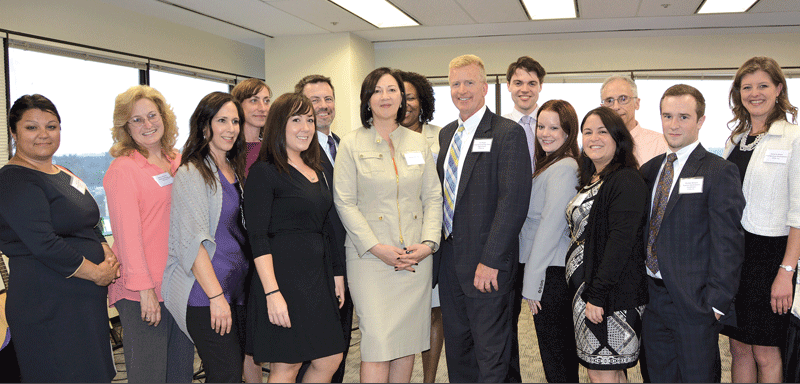
Autos Sections
Truck Sales Accelerate Due to Several Driving Forces

Jeff Sarat

Jeff Sarat says businesses that held onto their trucks during the recession are now upgrading their fleets.

Jeff Sarat predicts Sarat Ford Lincoln in Agawam will sell more trucks in 2015 than in any year since it opened in 1929.

That’s a bold statement, but he’s more than prepared to make it.

“Normally our busiest time of the year is October to December because companies make year-end purchases. It drops off to nothing from January to March, but this year there was no lull; we slowed a little, but sales are so high, we have doubled our inventory of super-duty trucks,” said the general sales manager, noting that a high percentage of buyers are businesses that put money into maintenance during the recession rather than replacing their fleets. But the combination of reduced gas prices and an upswing in the economy has changed that trend, and business owners and managers are finally trading in vehicles and buying new ones.

But they’re not the only ones creating this historic run on trucks.

Bill Peffer says most people want to own the largest and most expensive vehicle they can afford, and in today’s world, that translates to a truck.

“I can’t think of a better time in the past 10 years to buy one,” said the president and COO of Balise Motor Sales, as he listed interest rates, incentives, and lease options. “The industry has certainly returned to the level of pre-recession sales, the market is robust because the economy is getting healthier, interest rates are low, there is easy access to credit, and the option of leasing at an affordable cost have combined to drive truck sales.

“Passenger cars have limitations,” he added. “And part of the fabric of America is to utilize a vehicle in a way that fits your lifestyle.”

National reports show truck sales began climbing about two years ago and quickly gained traction. Manufacturers have introduced new models that are fuel-efficient, quiet, comfortable, and have room for a family, yet offer the versatility and utility that a truck with a towing package can provide.

“Trucks have come a long way, and the new ones ride like a Rolls-Royce — some models will even parallel-park themselves with a push of a button,” Sarat said, adding that industry forecasts predict more than 16 million new vehicles will be sold this year, and a significant percentage will be trucks.

Brett Starbard, sales manager for Metro Chrysler Dodge Jeep Ram in Chicopee, said the new, redesigned Ram 1500 was named Motor Trend’s Truck of the Year in 2014, and better technology and design have fueled demand.

Bill Peffer

Bill Peffer says the rise in truck sales has led to a highly competitive market, which translates into good deals for buyers.

“Our truck sales have gone up by 50% since we started carrying Chrysler Rams a few years ago,” he noted. “We’re seeing an increase in people who want a truck, but don’t necessarily need one. Gas prices are down, and people live on a budget; if they are spending $50 less a month on fuel, they can afford $50 more on a new car payment.”

Ed O’Grady, sales manager for Central Chevrolet in West Springfield, said 60% of the dealership’s new truck business can be attributed to the fact that they are a bargain. Used trucks are retaining their value, and the manufacturer is offering $3,600 discounts that, in the past, were available only to employees who worked for suppliers, such as US Tsubaki in Holyoke, which sells timing chains. “Another $6,250 in incentives and rebates brings the savings on new trucks to $10,000,” he noted.

In addition, the cost of leasing has come down. “We have 2015 Silverado double cabs with four-wheel drive that are leasing for as low as $259 a month,” O’Grady said. “Leasing protects the consumer from depreciation; if the value goes down in three years, they can drop the vehicle off without taking a loss. But if a person does choose to purchase a truck, they can get a better price on a new one than on a two-year-old model due to all of the incentives.”

Starbard says Metro leases the majority of its new trucks. “Our average MSRP is $40,000 to $45,000, so the payments on a five-year loan would be $600 to $700 monthly. A lease is about half of that because the residual [remaining value] when the lease ends is as high as 60 to 70%, which means the person who leases only has to pay 30% over the term. Plus, there is no cost for maintenance,” he explained, noting that trucks have retained their value as sales were slow throughout the recession, so there are fewer used trucks on dealer’s lots, which leads to higher demand.

Body of Evidence

Although most businesses kept their trucks when gas prices reached $4 in the summer of 2008, Sarat said, many of his customers who didn’t need them took them off the road and purchased vehicles that get good gas mileage, such as a Ford Focus, which averages 40 miles per gallon.

However, other dealers report that many people took real losses by trading in their trucks for fuel-efficient cars. “People were very concerned with operating costs and some made irrational decisions as they traded in trucks for something that was far more fuel-efficient,” Peffer said.

Ed O’Grady

Ed O’Grady says it often costs less to lease a new truck than to purchase a used one.

Starbard recalls contractors who begged him to take their truck on a trade-in. “It wasn’t a smart thing to do, and they took huge losses, but if they had a job 100 miles away and were getting 10 miles a gallon, they were spending more on gas than they were making,” he told BusinessWest. “Gas prices are cyclical, like stocks, and I advised people not to sell when prices got high, but many of my customers didn’t feel they had an alternative when gas went over $4 a gallon.”

O’Grady said the government’s Cash for Clunkers program helped fuel trade-ins, and the prospect of getting an additional $4,500 for a vehicle that got poor gas mileage motivated many people to get rid of their trucks between 2008 and 2010.

“But now that fuel prices have dropped, they want their trucks back, and they are buying models that are more fuel-efficient than ever before,” he said, adding that the new Silverado with a V-8 engine gets 18 miles per gallon around town and 21 to 22 miles on the highway.

Sarat concurred. “There is definitely a pent-up demand, and as the economy continues to get better and businesses expand, we expect them to add more trucks,” he said, citing the example of a man who bought a van last year and added another this year as his business is flourishing.

Manufacturers such as Ford are also doing whatever they can to motivate prospective buyers, which includes offering 0% financing or rebates of up to $4,000 for certain vehicles. And although leasing is popular at some dealerships, Sarat said the majority of his customers purchase new trucks.

“They tend to retain their value so well that sometimes people find they can get a new truck for about the same price as a used one,” he noted. “People hold onto their trucks, so it becomes an issue of supply versus demand. Since vehicles get more expensive every year, it makes it easier to sell a new truck when you can offer really good money for a trade-in.”

Trucks have become all-around vehicles, and people today want trucks with four doors and ample interior cabin space to accommodate a family.

“Ten or 15 years ago, most trucks had regular cabs, but you don’t see many of those today; they make up less than 5% of my inventory,” Starbard said. “Today, a gentleman who owned an SUV can replace it with a pickup with full-size doors; plus, the RAM can be purchased now with a six-cylinder diesel engine that is much better in terms of fuel economy.”

Another factor that attracts people to trucks is the fact that they can customized with accessories that range from running boards to side steps, different types of wheels, exhaust systems, bed covers, and cover liners. “The average truck buyer spends $1,000 to $2,000 in accessories after the purchase,” Starbard said.

New Models

Although there are five main competitors in the truck market, which Peffer lists as Ford, Chevy, Ram, Toyota, and Nissan, new products are coming on the market because manufacturers seek to attract new buyers and retain customers looking to upgrade.

“They don’t want to lose market share, so they have become very competitive, which is good for the consumer,” Peffer said. “For some buyers, a truck is a tool of their trade, but for a growing segment, it’s a want more than a need, and luxury features such as leather seats and navigation systems appeal to a wider audience.”

Ford recently introduced a new Econoline cargo van with a choice of three engine options. “You could never stand up in them before, but now they come in two lengths and three heights, and you can stand in the medium and large models,” Sarat said. “They are a phenomenal addition and have been very popular. We have been selling several every week, and demand is starting to pick up, so we are taking in as much inventory as we can get.”

Ford also introduced an all-aluminum F-150 this year that is fuel-efficient, Chevy brought a new Silverado model to market last year, and Nissan will introduce a new Titan in the next few months.

Chevrolet stopped producing small trucks in 2012, but demand is skyrocketing for its new 2015 Colorado, which gets 27 miles per gallon on the highway and was named Motor Trend’s 2015 Truck of the Year.

“It comes with a four- or six-cylinder engine, but can tow 7,000 pounds, and every dealership across the country is taking orders,” said O’Grady. “They sell the day they arrive.”

He noted that the trend is moving from trucks with clamshell doors to four doors, and Chevrolet’s offerings convince buyers to purchase new trucks. They include a five-year, 100,000-mile power-train warranty with two years of free maintenance; wi-fi Internet connectivity that comes in every 2015 Silverado; and Remote Link, a smartphone app that allows people to lock and unlock doors remotely, view tire pressures, and send directions to their truck with their phone, which are announced via OnStar navigation.

“Sales have been on the rise for the last few years, and we believe the numbers are sustainable,” O’Grady went on, explaining that GM used to stockpile vehicles to keep people working, but have stopped that practice and now fill orders.

Still, many dealers say leasing is the best deal available, due to the fact that trucks hold their value. “More vehicles are leased in New England than in any other part of the country,” Peffer said. “There are a lot of advantages, and manufacturers recognize it as an opportunity to grow or maintain market share.”


Revving Up

Sarat Ford’s truck sales continue to grow, and several years ago it expanded its service department to help its commercial truck customers.

“We added six new bays, and as we continue to sell more big trucks, we continue to need more room,” Sarat said. “This year our sales are up by 10% over last year, and the truck business is pushing the increases.”

O’Grady has been in the auto industry for 23 years and says this is “an exciting time for truck sales.” He pointed to a study conducted by Chevy last year with focus groups representing all ages and income brackets. Participants were shown two photos taken in the same location; the only difference was one had a man in front of a truck, and the other had him standing in front of a car. The groups rated the guy in front of the truck as more handsome, rugged, dependable, resourceful, and someone they would want to date their daughter.

Whether that image plays into the increase in sales is unknown, but Peffer says stiff competition makes it a great time to buy a truck.

“We are seeing an acceleration of people trading in all types of vehicles,” he noted. “There is a propensity to shift to a truck, and there have never been more product offerings and choices in the market.”

Autos Sections
Market Factors Create a Surge in Used-car Sales Volume

As the economy gains strength, Rob Pion says, many people are trading in older cars and trucks for new and pre-owned vehicles.

“The car market as a whole is strong right now, but it’s especially true for used vehicles,” said the general manager of Bob Pion Buick GMC in Chicopee, noting that sales have changed significantly in recent years due to Internet advertising, which gives shoppers endless choices and the ability to locate and purchase a pre-owned, certified car or truck with an excellent warranty.

“We’ve had buyers fly here from Indianapolis and Las Vegas to pick up a vehicle,” he noted. “We shipped a used car to a buyer in Louisiana, and last year, a couple drove a 50th-anniversary Corvette here from Minnesota, traded it in for a 60th-anniversary model, then drove it back home.”

Other auto dealers note the same trend, and Carla Cosenzi says a variety of factors play into the popularity of pre-owned vehicles.

Robert Pion

Robert Pion says certified vehicles offer warranties that equal or exceed those of a new car or truck.

“The used-car market has changed dramatically over the past few years,” said the president of TommyCar Auto Group, which includes Country Nissan in Hadley, Country Hyundai in Northampton, Patriot Buick GMC in Charlton, and Northampton Volkswagen. “Vehicles are made better, and their overall quality and durability has increased. They are built to last, so people don’t have to sacrifice reliability and condition to get a great deal, which makes purchasing a pre-owned vehicle more attractive.”

She agreed that the Internet broadens customers’ options because it allows them to peruse and compare vehicles within a 100-mile radius or more, via websites such as Autotrader.com or Cars.com. “It gives people a reliable, easy way to shop, and allows them to feel confident that they’re getting a good price,” Cosenzi said.

But Pion said price doesn’t matter if a person is not happy with their purchase, and although customers have bought vehicles from his dealership based solely on Internet pricing and photos, it’s important to look a car or truck over carefully, sit in it, and take it for a test drive before making a final decision.

“Two vehicles of the same make and model with the same mileage can drive very differently,” he told BusinessWest. “The vehicle with the best price may not be in pristine condition, so you really have to look at what you are buying. I remind people that it’s a huge purchase, and they need to be sure they are happy, or the price won’t matter.”

Brian Yarrows, general manager of Bertera Chevrolet in Palmer, says there are pros and cons to buying used vehicles.

“The perception is that they are more affordable, but that’s because people budget a certain amount for a payment,” he noted. “However, they fail to factor in the cost of maintenance, and since a vehicle that has between 60,000 and 70,000 miles typically costs $1,000 or more a year to maintain, people need to budget another $100 each month for repairs.”

It’s one reason why leasing is such a good option, he continued, explaining that the monthly payments can be less for a new, leased car than for a used one with 50,000 to 60,000 miles when it is paid for over a period of 75 months, which has become standard for auto loans. “In the 1700s, Ben Franklin said, ‘Lease what depreciates, and buy what appreciates,’” he continued, adding that Franklin was speaking about machines, farm equipment, and horses and buggies used for travel. “If you pay off a loan over 75 months and spend $4,000 in maintenance along the way, a lease may make more sense, as there is no maintenance cost.”

However, people who purchase a pre-owned vehicle should buy it in Massachusetts, Yarrows added. “In Connecticut, New Hampshire, Vermont, and Rhode Island, dealers can sell a used car ‘as is’ — all it has to do is pass inspection. But the Commonwealth has the strictest warranty policy for pre-owned vehicles in the nation, which can extend up to 90 days depending on the year and age of the model. It’s one of the reasons people come here from all over New England to purchase pre-owned vehicles, and as a result, it’s not uncommon for us to spend more than $1,000 before the customer takes a car or truck home.”

Check Point

Auto dealers say there are many advantages to buying a pre-owned, certified vehicle instead of a new one. They cost less; have warranties that sometimes exceed that of a new car, SUV, van, or truck; and often come with low interest rates.

Cosenzi said certification guidelines are stringent and include testing everything from the brakes, transmission, heating and air conditioning, tire tread, steering alignment, horn, seatbelts, radiator, exhaust system, lug nuts, upholstery, and body, to a myriad of other factors.

“If there is a small tear in the fabric, the vehicle doesn’t qualify,” she explained. “Certified cars can be a little more costly, but the benefits far outweigh the difference, and they provide people with the same peace of mind they would get if they purchased a new vehicle.”

Pion said his dealership strives to certify every used vehicle on its lot, using General Motors standards set by the factory. “The vehicles must be less than five years old and have under 70,000 miles,” he said, noting that, if trade-ins don’t meet these standards, they are disposed of at an auto auction or sold to another dealer.

However, those that qualify undergo GM’s 172-point inspection, which includes any needed reconditioning. Buyers receive a vehicle history report and Sirius XM Satellite Radio4 and OnStar5 trial offers, along with a three-day, 150-mile customer-satisfaction guarantee, as well as a 12,000-mile or 12-month warranty.

Pion, who includes two years of factory maintenance, oil changes, and tire rotation, has a lot of demo models right now and is expecting more because GM began leasing vehicles about three years ago, and the terms are expiring. “Most of them have between 30,000 and 45,000 miles,” he said.

Other reasons to purchase pre-owned vehicles include the fact that the excise tax is lower than a new vehicle, and they have already depreciated.

“Typically, the first owner takes the biggest loss, so if you can buy a used vehicle for $10,000 less than a new one, it’s a substantial savings,” Pion said.

Brian Yarrows

Brian Yarrows says it’s important for people to check the Carfax history and test drive a pre-owned car or truck before purchasing it.

Yarrows agrees. “Pre-owned certified vehicles are amazing buys,” he said. “General Motors offers lower interest rates on them, along with 24-7 roadside assistance that includes fixing flat tires and towing, and they come with a full year warranty on top of any warranty that remains. A car that is certified is worth $2,135 more than the same non-certified vehicle, but we don’t add that to the price.”

Still, people want options, so most dealers try to stock a range of different pre-owned vehicles.

“We like to have a wide selection for people so they can shop multiple lines and drive cars that are similar, such as a Buick Regal and a BMW3 series,” Pion said.

He explained that, although 90% of shoppers know what they want when they arrive, they often see something attractive and decide to take it for a test drive. “It can start discussions and lead to trials of different vehicles.”

Although Yarrows manages a Chevrolet dealership, it sells makes and models that range from Acuras to Volvos. “Most dealerships try to stay within their line, but we have seven acres here and run the gamut of every make and model,” he told BusinessWest, pointing to a row of cars that included a Volkswagen Beetle, two Cadillacs, a Chevrolet, a Chrysler, a Nissan, a Kia, a Hyundai, and other selections.

In fact, Bertera keeps 300 pre-owned vehicles on its lot, but has access to more than 11,000 through its 10 dealerships. “People may come here with a predetermined idea of what they want, but are actually looking for something that will meet their needs, which is why we call our salespeople ‘solution specialists,’” Yarrows said, adding that customers often get behind the wheel of far more vehicles than they initially planned to drive.

But Cosenzi said it is becoming more difficult to keep a large number of certified vehicles in stock, because owners are keeping them longer. The industry average is 10 years, and Yarrows said he’s seeing an unprecedented number of trade-ins with 100,000 miles or more. However, even vehicles with much lower mileage need to be compared carefully, which includes looking at the Carfax report in detail and noting maintenance that has been undertaken.

“Owners can be classified into three categories: those who do preventive maintenance, those who change their oil on a regular basis, and those who do nothing but drive the car and put gas into it,” Yarrows said, explaining there is a grading system at auto auctions which ranges from 1 to 5, which dealers can pay for.

“It’s based on a number of factors, including previous paintwork and repairs, the tire depth, whether there are gouges in the wheel, how clean the interior is, and a number of other things,” he explained. “It’s a very intricate system which runs in increments of 0.1, and some dealers focus on purchasing below-average vehicles so they can meet a price point.”

Ideal Conditions

Bob Pion’s sales are up from what they were at this time last year, and the expectation is that the numbers will continue to climb.

“The roads are clear, the cars are clean, and it’s not too hot or too cold outside,” Rob said. “We’re definitely expecting another good year.”

TommyCar Auto Group is also on an upward trajectory. “The winter was tough, but we had a great March, an even better April, and an unbelievable May, and on the fourth day of June we are off to a good start at all of our stores,” Cosenzi said. “Interest rates are still really low, but people know they may not stay that way, so they are taking advantage of them. It’s a great time to purchase a new or pre-owned vehicle, as dealers are more aggressive than ever with their Internet pricing.”

Bertera Chevrolet is up a whopping 48% in their overall sales from last year, despite the fact that the winter was terrible.

“I’m very excited about this year,” Yarrows said. “The economy is getting, better, businesses are hiring, people have more money in their pockets and are more comfortable spending than they were a few years ago. They are finally coming out to trade in their used cars, and there are incredible deals available on all types of vehicles.”

Especially those with some miles on them.

Daily News

SPRINGFIELD — On Sunday, July 26, from 9 a.m. to 3 p.m., the Springfield Museums will present their sixth annual Indian Motocycle Day, the continuation of a long-standing tradition honoring the classic motorcycles that were manufactured in the city from 1901 to 1953.

Last year, more than 1,000 people attended the event, which featured more than 60 classic, Springfield-built Indians owned by local collectors, The event is sponsored by the Sampson Family and AAA Pioneer Valley; the media sponsor is Rock 102 WAQY. MassMutual is the 2015 premier sponsor of the Springfield Museums.

The museums re-established the Indian Day tradition in 2010 after a five-year hiatus. From 1970 to 2005, the event was held at the now-closed Indian Motocycle Museum on Hendee Street in Springfield. Esta Manthos, together with her late husband Charlie, were the owners of the former museum. In 2007, Manthos donated her extensive collection of Indian Motocycles, artifacts, and memorabilia to the Springfield Museums, where it is now on view in the Lyman & Merrie Wood Museum of Springfield History.

This year’s Indian Day will pay tribute to Bob’s Indian of Etters, Pa., for its many years of supporting the heritage of classic Indian cycles. The original dealership was founded in the 1950s by Bob and Kay Markey, and has been a treasure trove of motorcycle history for over half a century.

In addition to the motorcycles on display, there will be a variety of vendors, food and beverages, music provided by Rock 102, and the awarding of trophies for the best Indians in a variety of categories. Commemorative T-shirts will be available for purchase. Anyone bringing a pre-1953 Indian will receive a free admission pass plus a commemorative Indian Day button. Exhibitors, and especially vendors, are encouraged to pre-register by calling (413) 263-6800, ext. 304.

Admission to the event is $10 for adults and $5 for children ages 3-17. For those wishing to attend the event and tour museum buildings, general admission is $18 for adults, $12 for seniors and college students, and $9.50 for children ages 3-17. Admission to the event and the museums is free for members of Springfield Museums; free museum admission is available for Springfield residents after 3 p.m.

For information, call (413) 263-6800, ext. 304, or visit www.springfieldmuseums.org.