Home 2021 (Page 11)
Daily News

SPRINGFIELD — MGM Springfield’s Free Music Friday concert series will move inside to the Aria Ballroom beginning Oct. 15 at 7:30 p.m. Doors are scheduled to open at 7 p.m.

The upcoming lineup includes LA’s BackStage Pass (Oct. 15), Beyond Purple (Oct. 22), Raise Your Hands: Bon Jovi Tribute (Oct. 29), and Trailer Trash (Nov. 5).

“We are thrilled to continue offering this free concert series to our community featuring some of our most talented local artists,” said Chris Kelley, MGM Springfield’s president and chief operating officer. “Based on the success of the summer program, it makes perfect sense to bring the fun inside to one of our fantastic MGM Springfield venues.”

Beer, wine, and non-alcoholic beverages will be available during the shows. Guests also can enjoy MGM Springfield’s diverse food and beverage offerings before or after the concerts, including the Chandler Steakhouse, Tap Sports Bar, and South End Market.

For additional details on the Free Music Fridays concert series, including lineup updates, click here.

Daily News

AGAWAM — New England Business Associates (NEBA) created its Learn to Earn program both to help address the critical, growing need for employees in the manufacturing sector and to provide candidates with the tools and support they need for successful careers in this industry. Governors America Corp. (GAC), a veteran-owned, Massachusetts-based global manufacturer of innovative engine-control products, participates in this program and recently hosted six local students for a day of learning.

“We are passionate about helping the next generation sustain successful careers in the manufacturing sector,” Governors America Corp. President Sean Collins said. “Not only is this essential for the future of our communities and our country, but it opens career pathways for those who want to work in a hands-on field that can be very fulfilling.”

The goal of Learn to Earn is to place candidates in manufacturing positions that will allow them to earn a sustainable income, eliminate the need for public assistance, and foster growth and future promotions in the field.

During the five-hour event at GAC, students had the opportunity to tour the facility, speak with staff in a variety of roles, and learn about the various opportunities available within manufacturing. They saw how different manufacturing metal-cutting machines work and followed the process from raw material to finished part, then did a class metrology with the part. They also participated in developing a new process for packing using Lean manufacturing methodology.

“Our guests were all extremely enthusiastic about the experience, noting that it reinforced their training and the principles they are learning,” Collins said. “This was the first time for all of them visiting a manufacturing environment, and they expressed surprise at how pleasant a place it was, not noisy or dirty as they had imagined.”

Through Learn to Earn, students receive training in basic manufacturing skills from MassMEP, including shop math, blueprint reading, metrology, quality inspection, and shop-floor safety. They also receive employment support as needed.

“We are committed to helping to grow our future workforce,” said Marlene Woods, Human Resources manager at GAC. “In addition to participating in programs such as Learn to Earn, we have a robust internship program and hire people without experience and provide on-the-job training.”

Daily News

WEST SPRINGFIELD — The Big E closed out its 17-day fair with a bang this past weekend, drawing 177,238 patrons on Saturday, Oct. 2 — the largest single-day attendance in the event’s history — followed by 118,582 on Sunday, Oct. 3, bringing the total 17-day attendance to 1,498,774.

That fell short of the all-time mark of 1,629,527 set in 2019, but was certainly robust enough to calm the fears of event organizers who worried about COVID-19 infection numbers, driven by the surge of the Delta variant, as mid-September approached.

“I have a fear … that the long arm of the government can suddenly change our lives — we lived through that in 2020, to be sure,” Big E President Gene Cassidy told BusinessWest in August, referring to last year’s first cancellation of the fair since World War II. “And the Eastern States Exposition is surviving on a very thin thread; we cannot withstand being shuttered for another fair because the vacuum that would occur in our economy is nearly three quarters of a billion dollars, and there’s no way that anyone is going to able to replace that.”

Signs were good, however, that attendance would be strong; Cassidy noted at the time that 2021’s advance ticket sales were running 80% higher than in 2019.

This year’s fair set attendance records on three other days as well; Sept. 21 drew the best first-Tuesday crowd ever (56,769), Sept. 26 was the best-ever second Sunday (136,512), and Oct. 1 was the best-ever third Friday (113,827).

Daily News

SPRINGFIELD — The Springfield College Division of Finance and Administration announced that Lt. Joseph Tiraboschi has been promoted to Springfield College deputy chief.

Tiraboschi has been a member of the Springfield College Police Department since 2017, most recently serving as administrative lieutenant, where he supervised more than 40 personnel members, including officers and dispatchers. In addition, he managed all crime statistics, managed certification in accordance with the Massachusetts State Police, and directed all department policies and procedures.

“Although I’ve been working directly with Public Safety since July, I’ve had the chance to observe Joe’s work during my time in Student Affairs and was very impressed with his dedication, care, and commitment to students and the greater community,” Springfield College Associate Vice President for Administration Patrick Love said. “Now that I work more closely with him, I can see just how hard he works and his excellent leadership capabilities. His promotion is well-deserved, and Public Safety will benefit tremendously with having him in this position.”

Prior to his role as administrative lieutenant, Tiraboschi worked as detective sergeant, overseeing all criminal and non-criminal investigations, while also taking on the responsibilities of background investigator, internal-affairs investigator, and sexual-assault investigator. In addition, he was responsible for enforcing all U.S. Constitutional laws, Massachusetts General Laws, and Springfield College bylaws.

A 2013 graduate of the Massachusetts State full-Time Police Academy, Tiraboschi transitioned from a Springfield College Police Department dispatcher to a full-time police officer in 2013. He earned his bachelor’s degree in criminal justice from Springfield College in 2010, and he is currently on pace to earn his master’s degree in counseling from Springfield College in 2022.

Daily News

LENOX — Renaissance Investment Group, LLC is joining the growing business community in downtown Lenox with a new office at 45 Walker St. The group will leave its current building in the Lenox Commons and plans to move into the Walker Street space in November. Mill Town Capital is the new owner of the building, acquiring the property last week.

“We are thrilled to bring life and energy to this property and be a part of Mill Town’s revitalization efforts in the area,” said Christopher Silipigno, CEO and managing director of Renaissance Investment Group. “We have viewed the downtown Lenox area as an extension of our office for some time and jumped at the opportunity to relocate there.”

Renaissance and Mill Town have agreed on a 10-year lease during which Mill Town will serve as the landlord for the building and will fund property improvements. Mill Town also owns and operates the Gateways Inn and Restaurant at 51 Walker St.

“This acquisition was an opportunity to expand our footprint in the area and create a meaningful relationship,” said Tim Burke, CEO and managing director of Mill Town. “We are excited to have the team at Renaissance Investment Group as a tenant and partner.”

Mill Town, an impact-investment firm based in Pittsfield, owns and operates numerous properties in the Berkshires as part of its efforts to expand and improve quality of life in the area. The firm focuses on making impactful business investments and community-development efforts.

“I’d like to commend Chris and Tim for their joint endeavor in putting this relationship together between two firms that care deeply about the Berkshires,” said Trevor Forbes, president of Renaissance Investment Group. “This building is a great location for Renaissance to build many years of successful growth and reinforces our commitment to Lenox and the Berkshires over the long term.”

Daily News

SPRINGFIELD — Professional Drywall Construction Inc. (PDC), a commercial drywall company headquartered in Springfield, raised $35,000 during its fifth annual PDC Charity Golf Tournament, which was held on Sept. 9 at Wyckoff Country Club in Holyoke. All proceeds from the tournament were donated to Baystate Children’s Hospital.

“We were so excited to get back out on the links and raise money for an honorable cause like Baystate Children’s Hospital,” PDC co-owner Nick Shaink said. “Last year, things were a little different due to the pandemic, but this year we were able to have a full house come spend the day with us for a great cause.”

The tournament, which featured an 18-hole round of golf, lunch, and a dinner reception, drew 120 participants.

“PDC has always been about giving back in our own backyard, and no one deserves it more than the children in our community,” PDC co-owner Ron Perry said. “We hope the funds we were able to donate will assist with Baystate’s important work with the youth in our area.”

Business Talk Podcast Special Coverage

We are excited to announce that BusinessWest, in partnership with Living Local, has launched a new podcast series, BusinessTalk. Each episode will feature in-depth interviews and discussions with local industry leaders, providing thoughtful perspectives on the Western Massachuetts economy and the many business ventures that keep it running during these challenging times.

Episode 82: Oct. 4, 2021

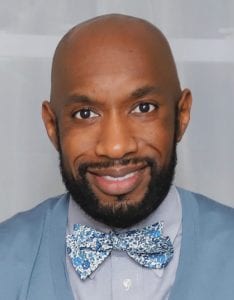
George Interviews Lenny Underwood, owner of Underwood Photography and Upscale Socks

BusinessWest Editor George O’Brien has a lively, wide-ranging discussion with Lenny Underwood, owner of Underwood Photography and Upscale Socks. The two talk about both of those intriguing businesses — especially his ever-expanding sock line — and also about the ups and downs of entrepreneurship, especially in the middle of a global pandemic. It’s must listening so join us on BusinessTalk, a podcast presented by BusinessWest in partnership with Living Local.


Sponsored by:

Also Available On

Daily News

SPRINGFIELD — Western New England University (WNE) College of Engineering Assistant Professor of Biomedical Engineering Dr. Andrea Kwaczala has been named an Engineering Unleashed 2021 Fellow by the Kern Foundation. The honor recognizes faculty for their contribution to engineering education, specifically entrepreneurial engineering.

“Dr. Kwaczala is truly an ambassador of excellence for your institution and is distinguished both through a Fellows Project and through interactions with the greater Engineering Unleashed community,” said Douglas Melton, program director for the Kern Family Foundation.

This grant will support the Making with Purpose Workshop Series. These are monthly hands-on events running throughout this academic year. The workshop is intended to introduce students to the entrepreneurial mindset in an inclusive community within the makerspace facilities within the College of Engineering. Some activities align with Kwaczala’s research in assistive technology, such as building rapid prototypes of body-powered prosthetic devices and low-tech assistive technology to improve activities of daily living. Other activities are geared toward understanding a product’s marketspace and learning about manufacturing in scale-up, such as glowing LED pumpkins for Halloween decor and laser-cut jewelry to sell at the holidays. The projects are intended to promote technical skills and coach students to use a growth mindset.

“I want to create a technical space on campus that is welcome to all people, designed specifically towards underrepresented people,” Kwaczala said. “I try to create a place where students can take risks, ask questions, and learn technical skills like soldering, using power tools, and constructing physical devices. I believe, when we use our skills to focus on products that make a difference in society, we can improve students’ engineering self-efficacy and help them to persist in engineering.”

Engineering Unleashed is a community of 3,800 faculty members from 160 institutions of higher education, powered by KEEN, a 50-partner collaborative that shares a mission to graduate engineers with an entrepreneurial mindset who are equipped to create societal, personal, and economic value. The Engineering Unleashed faculty-development workshops are elements of KEEN’s multi-institutional activities. Kwaczala is one of 27 individuals from institutions of higher education across the country to receive this distinction.

“Being named an Engineering Unleashed fellow shows Dr. Kwaczala’s passion for learning, teaching, and practicing the entrepreneurial mindset,” said Dr. Rob Gettens, chair of the Biomedical Engineering Department at Western New England University. “Dr. Kwaczala’s enthusiasm for engineering design and the Making with Purpose series is genuinely infectious. As a leader, Dr. Kwaczala teaches our students to be leaders themselves, gaining confidence in practical engineering and ‘making’ skills, and then spreading the entrepreneurial mindset beyond the university. Dr. Kwaczala is indeed a leader and innovator in engineering education.”

Through their home institutions, fellows are awarded a $10,000 grant that may be used in a number of ways: to advance their project/module, develop a new product/module, participate in conferences, support undergraduate student assistants, or pay for part of their salary.

The nomination and naming process began with Kwaczala’s initiative to participate in one of the many Engineering Unleashed faculty-development workshops. These workshops are designed and delivered by a collaborative group of subject-matter experts who serve as faculty members at more than 25 institutions. They attract faculty participants from across the country, focusing on the development and application of an entrepreneurial mindset whether in teaching and learning, research, industry, or leadership.

Daily News

SPRINGFIELD — Junior Achievement of Western Massachusetts (JAWM) announced the hiring of a new development director, William Dziura. He will work to plan and evaluate fundraising campaigns and activities; secure financial support from individuals, foundations, and corporations; and develop further relationships with the community.

“We are thrilled to have William joining our team,” said Jennifer Connolly, president of JAWM. “We offer our programs at no cost to schools and community groups, meaning our fundraising efforts are paramount to our success, making this position a vital role within our organization. I believe, with his unique background and experience in education and giving, William will be very successful in this role.”

Dziura earned a bachelor’s degree in English and history from Elms College and a master’s degree in English literature from Trinity College. Most recently, he held the position of director of Annual Giving at the Elms, while simultaneously working as an adjunct professor. Prior to his career in fundraising, he worked as an eighth-grade English teacher at Mater Dolorosa School in Holyoke, and director of Student Engagement and Leadership at the Elms.

“I am excited to help Junior Achievement of Western Massachusetts realize a bold, 21st-century vision to benefit the children and young adults of Western Massachusetts,” Dziura said. “We owe it to today’s students to provide comprehensive workforce readiness, entrepreneurship, and financial-literacy education. I am honored to be a part of an organization with over a 100-year track record of bringing these valuable programs to the local community.”

Daily News

WEST SPRINGFIELD — Uvitron International Inc., a designer and manufacturer of high-performance UV light-curing systems and accessories, recently received ISO 9001 certification after demonstrating it met international standards of quality management and quality assurance.

“Since we were founded in 1993, we have earned a reputation for manufacturing and selling a quality product supported by a high degree of product knowledge,” said Eugene Mikhaylichenko, Uvitron’s Sales and Marketing director. “This certification underscores our efforts to continue to build on this strong foundation.”

Uvitron was established as a developer and manufacturer of switch-mode power supplies for light-curing systems, developing the first electronic arc lamp power supply. The company has since evolved into a total solutions provider of light-curing systems and accessories.

“We have distinguished ourselves in the industry as a dynamic and support-oriented company,” said Mikhaylichenko. “The electrical, optical, and mechanical design of all our products is performed in-house. Our experienced team includes engineers, programmers, technicians, and professional sales executives, all of whom are committed to providing our customers with a high degree of expertise.”

ISO (International Organization for Standardization) is an independent, non-governmental, international organization that develops standards to ensure the quality, safety, and efficiency of products, services, and systems. ISO 9001 standards are based on seven quality management principles: customer focus, leadership, engagement of people, process approach, improvement, evidence-based decision making, and relationship management.

Daily News

FLORENCE — Florence Bank will host a Zoominar on Monday, Oct. 18 from 3 to 4 p.m. for nonprofits in Hampden County to introduce them to the bank’s Customers’ Choice Community Grants Program in hopes of helping them gain votes — and funds.

With branches located in West Springfield, Springfield, and Chicopee, bank leaders want organizations in Hampden County to be better acquainted with the innovative grant program so the bank can collaborate more fully in all the communities it serves.

“We want to help organizations get the most out of our program,” bank President and CEO Kevin Day said. “We are excited, too, about celebrating our 20th anniversary in 2022 and want to spread the word about how to help people in our midst.”

Leaders of nonprofits are invited to register for the event by Oct. 12 by e-mailing Erin Defoyd, Marketing Communications manager/officer, at [email protected]. Only those who have registered will receive the Zoom link to attend the webinar.

In 2020, almost 7,000 votes were cast through Customers’ Choice, and 32 nonprofits accepted a grant award in May; a total of $100,500 was handed out. Over 20 years, the bank has awarded $1.3 million to area nonprofits.

To qualify for a community grant, organizations must receive at least 50 votes from Florence Bank customers. The bank has a kit at www.florencebank.com/customer-choice-kit that nonprofits can use to strategize how to gain votes. The kit contains an information sheet on Customers’ Choice, a sample flyer to display, and a press release leaders can adapt and send to the media.

“We want to offer another layer of support to our neighbors in Hampden County, who may be unaware of the program, hence the idea to host the Zoominar,” said Monica Curhan, senior vice president and Marketing director at the bank. “We have some great tips for getting enough votes to qualify for a share of the $100,000 grant money, and we want to share them with organization leaders.”

Hampden County nonprofits who attend the Zoominar will be listed in a promotional piece to be handed to customers in the Hampden County branches from Nov. 1 to Dec. 31, thereby increasing awareness of their organization and earning them more potential votes from Florence Bank customers.

Daily News

SPRINGFIELD — Smith & Wesson Brands Inc., one of the nation’s oldest firearms manufacturers, announced today that it is moving its headquarters and significant elements of its operations to Maryville, Tenn. in 2023. Smith & Wesson has been based in Springfield since the company was incorporated in 1852.

“This has been an extremely difficult and emotional decision for us, but after an exhaustive and thorough analysis, for the continued health and strength of our iconic company, we feel that we have been left with no other alternative,” said Mark Smith, president and CEO.

He specifically cited legislation recently proposed in Massachusetts that, if enacted, would prohibit the company from manufacturing certain firearms in the state. “These bills would prevent Smith & Wesson from manufacturing firearms that are legal in almost every state in America and that are safely used by tens of millions of law-abiding citizens every day exercising their constitutional Second Amendment rights, protecting themselves and their families, and enjoying the shooting sports. While we are hopeful that this arbitrary and damaging legislation will be defeated in this session, these products made up over 60% of our revenue last year, and the unfortunate likelihood that such restrictions would be raised again led to a review of the best path forward for Smith & Wesson.”

Smith indicated that the company vetted a number of cities and states and, after careful consideration, made the decision to relocate 750 jobs and its headquarters to Maryville, Tenn. The key factors in the decision included support for the Second Amendment, a business-friendly environment, quality of life for employees, cost of living and affordability, access to higher-education institutions, availability of qualified labor for its operations and headquarters functions, and a favorable location for efficiency of distribution.

“The strong support we have received from the state of Tennessee and the entire leadership of Blount County throughout this process, combined with the quality of life, outdoor lifestyle, and low cost of living in the Greater Knoxville area, has left no doubt that Tennessee is the ideal location for Smith & Wesson’s new headquarters,” Smith said. “We would like to specifically thank Governor Lee for his decisive contributions and the entire state legislature for their unwavering support of the Second Amendment and for creating a welcoming, business friendly environment.”

Smith & Wesson will also close facilities in Connecticut and Missouri as part of consolidating in Tennessee. This process will result in the company reducing the number of locations it maintains from four to three and will significantly streamline its manufacturing and distribution operations.

The company emphasized that the move will not begin until 2023 and will not have an impact on employees’ jobs until then. “Our loyal employees are the reason for our success and are always our number-one priority,” Smith said. “We are deeply saddened by the impact that this difficult decision will have on so many of our dedicated employees, but in order to preserve future jobs and for the viability of our business in the long term, we are left with no choice but to relocate these functions to a state that does not propose burdensome restrictions on our company.

“We are making this announcement now to ensure that each employee has the time to make the decision that is right for them and their families,” he went on. “We are firmly committed to working on an individual level with each and every one of those who will be affected. We will assist any affected employee who is willing and able to move with financial and logistical relocation assistance. However, we also fully realize that this is simply not feasible for some. Therefore, for any affected employee who cannot move with us, we will offer enhanced severance and job-placement services. We understand that this announcement will be very difficult for our employees, and we will do everything we can to assist them during this transition.”

Some key points from today’s statement:

• The facility in Springfield will be reconfigured but will remain operational.

• Smith & Wesson will keep some of its manufacturing operations in Springfield, including all forging, machining, metal finishing, and assembly of revolvers, and will continue to have over 1,000 employees in the state.

• The new facility in Maryville, Tenn. will comprise the company’s headquarters, plastic injection molding, pistol and long-gun assembly, and distribution.

• Total investment in the project is estimated at $120 million, will be funded from cash on hand, and is expected to be accretive to EPS by $0.10 to $0.12 per year once fully operational.

• Construction in Maryville is expected to begin in the fourth quarter of 2021 and be substantially complete by the summer of 2023.

• About 750 jobs will move from Springfield; Deep River, Conn.; and Columbia, Mo. to Maryville.

• The company’s plastic injection molding facility in Deep River, which services both Smith & Wesson as well as a significant number of external customers, will be sold. The Smith & Wesson portion of the operations will be moved to the new facility in Maryville; however, the external customer business will remain in Connecticut and will be divested.

• The company’s distribution operations in Columbia will be moved to the new facility in Maryville, and the Columbia facility will be marketed for sublease.

• The relocation will have no impact on the company’s operations in Houlton, Maine.

Daily News

GREENFIELD — The Franklin County Community Development Corp.’s Western Massachusetts Food Processing Center (FPC) was named Manufacturer of the Year in the Hampshire, Franklin, Worcester state Senate district.

The FPC was nominated to receive this award by state Sen. Jo Comerford through the Legislature’s Manufacturing Caucus, of which she is a member.

Located in Greenfield, the FPC was established in 2001 and will be celebrating its 20th anniversary in October. The center serves as an incubator space for new and growing specialty food businesses to manufacture their products. The FPC team has helped local businesses prototype and launch a wide variety of different products, including sauces, toppings, salsas, dips, syrups, and frozen meals. It has a wide variety of specialized equipment to help local farms add value to their produce. Additionally, the FPC provides one-on-one counseling and technical assistance to support business planning, product development, regulatory compliance, and more.

“The entire team at the Western MA Food Processing Center is so honored to receive this award,” said Liz Buxton, director of Operations. “We take great pride in the products we manufacture here, both for local farms and food entrepreneurs. Throughout the last 20 years, we have become an integral part of the local food system, and we hope to continue to grow in our role for years to come.”

Currently, the FPC has 50 clients and employs eight full-time staff. During the busy harvest season, it employs several part-time staff, including individuals through the re-entry program of Hampshire County House of Corrections. This harvest season, the FPC team made value-added products, like pickles, pestos, and salsas, for 18 farms and offered dry and cold storage services to another eight farms. The FPC is also home to Valley Veggies, as well as the only individual quick-freeze machine in New England, which processes local vegetables for schools, institutions, and retail. The Food Processing Center is continuously improving its manufacturing capabilities by investing in specialized food-processing equipment, much of which is funded by state and federal grant programs.

“The Food Processing Center is an innovative and inspiring operation,” Comerford said. “It’s an integral part of our local food system helping our region’s farmers expand the reach of their nutritious food and grow their food businesses. As it happens, the FPC also processes many food items that are beloved in our valley, including many in my home right now. COVID-19 caused unprecedented shifts and disruptions to our local food systems, and I’m grateful to the FPC for its steadfast efforts in the face of tremendous adversity.”

Daily News

SPRINGFIELD — The eighth annual Dragon Boat Festival, featuring dragon-boat races, food trucks, and Asian-themed entertainment, will return to Springfield on Saturday, Oct. 2 from 9 a.m. to 1 p.m. at North Riverfront Park, 121 West St., Springfield. The event was cancelled in 2020 due to the pandemic.

A special flower ceremony for breast-cancer survivors and their loved ones, a dragon-boat tradition, will be held around noon. Entertainment by lion dancers and taiko drummers will also be part of this year’s festival.

Thirteen teams from throughout New England are registered to participate in this year’s dragon-boat races, including the Springfield First Responders team, which will be defending its title from the 2019 Dragon Boat Festival.

The Springfield Dragon Boat Festival, which has been hosted by the Pioneer Valley Riverfront Club since 2013, attracts hundreds of participants and spectators to the banks of the Connecticut River for a day of competition, festivities, and community support. The festival is an important fundraiser in support of breast-cancer survivors and community programming at the Pioneer Valley Riverfront Club.

Hundreds of paddlers from New England participate in the festival races. A team is comprised of up to 24 paddlers who race against other teams in 200-meter races on the Connecticut River. Each race lasts about one minute, and each team races at least three times on the day of the festival. Dragon boating originated in China 2,000 years ago and today is one of the world’s fastest-growing team water sports. The festival makes it easy for anyone to participate and spectate.

Admission to the festival is free for spectators, and free parking is available nearby at 77 West St. or along Avocado Street. The festival can also be reached by the Connecticut Riverwalk Bikeway. For more information, visit www.pvriverfront.org or call (413) 736-1322.

Daily News

SPRINGFIELD — Five area students were each awarded a $1,000 Gerard L. Pellegrini Scholarship to advance their education by the law firm that bears his name.

The Gerard L. Pellegrini Scholarship is awarded annually to a union member affiliated with the Western Massachusetts Area Labor Federation or their spouse or dependent. Applicants are asked to submit their high-school or college transcripts, written recommendations, a recital of recent community service, and an essay detailing the importance of the labor movement to their family.

Winners of this year’s awards are Emma Cowles of Wilbraham, Samantha Franciosa of Granby, Emma Hayward of Pittsfield, Antonia Perakis of West Springfield, and Elizabeth Sarnacki of East Otis.

“This scholarship provides a yearly opportunity for the firm to demonstrate its commitment to helping union members and their families improve their lives through education,” said Earl Seeley III, a partner at Pellegrini, Seeley, Ryan and Blakesley, and grandson of Gerard Pellegrini. “My grandfather was a fierce advocate for worker’s rights and fought on behalf of injured workers for over 50 years — but before that, he was a working-class kid whose life was changed for the better by education. He never forgot that.”

Attorney and Partner Michael Cardaropoli, a member of the firm’s scholarship committee, added that “these students represent excellence in the pursuit of education and are illustrative of how unions can positively influence family life.”

Daily News

NORTH ADAMS — MCLA’s Division of Graduate and Continuing Education (DGCE) will hold a series of virtual information sessions this fall for community members interested in the college’s MBA program, graduate certificate in business administration, master of education program, Leadership Academy, and bachelor’s-degree completion programs.

Information sessions will take place at noon and 5 p.m. on Tuesdays, Oct. 5, Nov. 2, and Nov. 30. These sessions are free and open to the public. To register, visit mcla.edu/infosession or e-mail DGCE Administrative Assistant Betty LeSage at [email protected] for more information.

Community members interested in pursing a graduate degree, or finishing their bachelor’s degree with evening classes at MCLA’s location in Pittsfield, are encouraged to attend. Representatives from each program will answer questions related to academics, the application process, education timelines, and more.

Learn more about MCLA’s DGCE programming and how to apply at www.mcla.edu.

Daily News

HOLYOKE — After a four-year search, Girls Inc. of the Valley unveiled what will become its new home on Tuesday — the former ‘O’Connell building’ on Hampden Street in Holyoke.

At an elaborate, well-attended press conference, Girls Inc. leaders announced that the nonprofit had acquired the property and has mapped out extensive renovation efforts and plans to open the new facility perhaps as early as a year from now.

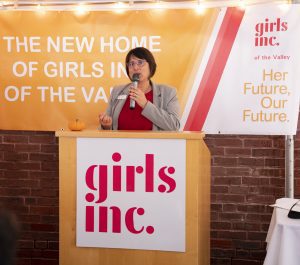
Girls Inc. Executive Director Suzanne Parker (photo by Adam Belson Photography)

Girls Inc. Executive Director Suzanne Parker told those assembled that, as part of a strategic plan created more than four years ago, the nonprofit has sought a new home that will bring all its programs together under one roof and facilitate growth that will enable it to serve more girls in the Pioneer Valley. The search for such a facility has been a long and sometimes difficult undertaking, she noted, one that eventually brought Girls Inc. to the Hampden Street property, which was the longtime home to the O’Connell Companies, and later law offices after O’Connell built a new headquarters on Kelly Way in Holyoke.

“In many ways, the pandemic has helped make this possible,” said Parker, noting that the law firm’s plans to attract office tenants to the property were certainly impacted by changes in how and where people work.

Girls Inc. closed on the property earlier this month, acquiring it for $790,000 with financing from PeoplesBank, said Parker, noting that extensive renovations to many portions of the property will bring the price tag for the project to roughly $3.5 million. A capital campaign — the Her Future, Our Future campaign, which has an overall goal of $5 million — was launched more than a year ago, she said, adding that funds raised through that campaign will be used to cover those costs.

A rendering by Kuhn Riddle Architects of the future front entry of the Girls Inc. facility

The site brings a number of benefits, said Parker, listing a 55-space parking lot and ample room — 16,000 square feet over two floors — for facilities that will include a cutting-edge STEM makers’ space, library, two multi-purpose rooms, a teen lounge, a kitchen and dining area, administrative offices, and more.

The press conference included remarks from Holyoke Mayor Terry Murphy and several Girls Inc. leaders and alumna, including Cynthia Medina Carson, board member and co-chair of the Her Future, Our Future campaign, who remembers becoming involved with Girls Inc. when she was just 5.

“What we need now is the next-generation place for Girls Inc. — a location that enables our programming to match up to where we want and need to be, for girls,” she said.

Daily News

WARE — The Boston Business Journal has once again named Country Bank an honoree in its annual 2021 Corporate Citizenship Awards, recognizing the region’s top corporate charitable contributors.

The magazine annually publishes this list to highlight companies that promote and prioritize giving back to their communities. During this year’s virtual celebration held on Sept. 9, 98 companies qualified for the distinction by reporting at least $100,000 in cash contributions to Massachusetts-based charities and social-service nonprofits last year. This year, the honorees include companies from healthcare, technology, financial and professional services, retail, professional sports, and more.

Country Bank, which ranked 55th, employs 215 staff members within Hampden, Hampshire, and Worcester counties. Staff members actively promoted the bank’s mission of giving back to the communities they serve by volunteering to a variety of nonprofits.

“The Boston business community has always been committed to helping the people and organizations in need, and 2020 was an extraordinary year,” Boston Business Journal Market President and Publisher Carolyn Jones said. “Given the many challenges we all faced, it is a true testament to the companies and the people who have given so much of their resources, money, and time to help others and keep our community moving forward. We at the BBJ are grateful to have the opportunity to recognize companies large and small for the example they set for us all to do good.”

Paul Scully, president and CEO at Country Bank, added that “we are honored to be recognized by the Boston Business Journal for Country Bank’s philanthropic efforts. As a community bank, it is our mission to help make a difference in the lives of others.”

Daily News

HOLYOKE — Attorney Karen Jackson, an elder-law and estate-planning attorney at Jackson Law, will teach a two-part class highlighting the latest developments in elder law and estate planning at Holyoke Community College (HCC).

The four-hour course, called “Elder Law and Estate Planning: What You Need to Know,” will be presented in a pair of two-hour sessions, on Mondays, Oct. 18 and 25, from 6 to 8 p.m. The cost is $99.

“The course will explain the basic building blocks of an estate plan,” Jackson said. “From that foundation, we will also consider the various specialized trust documents that support this planning. I will clarify the probate court process and what it means to probate a will. And I will explore current MassHealth issues in the event of a nursing-home stay.”

In the first session, Jackson will explain each document in the core estate plan — the will, power of attorney, healthcare proxy, Health Insurance Portability and Accountability Act (HIPAA) release, and advance directive. She will discuss the problems that can occur when proper documents are not prepared before a loss of mental capacity or physical health or before sudden loss of life. In the first session, she will also cover the different types of trusts — the revocable trust, irrevocable trust, and special-needs trust — and the reasons for creating each kind of trust.

During the second session, Jackson will explain the various tools and techniques to save the home and other assets from the nursing home bill: gifting, the Medicaid qualified annuity, pooled trusts, caregiver child exception, and Medicaid qualified trusts.

For participants who may be able to attend only one session, the full course fee is still required.

Holyoke Community College’s main campus in Holyoke is at 303 Homestead Ave. To register, call HCC at (413) 552-2500 or register online at www.hcc.edu/bce.

Daily News

SPRINGFIELD — The American International College (AIC) Admissions office will offer in-person and virtual open houses and information sessions for prospective undergraduate- and graduate-degree program applicants during October.

Timed to coincide with Homecoming weekend, the undergraduate open house will take place on Saturday, Oct. 16 from 9 a.m. to noon, giving interested students an opportunity to catch the AIC Homecoming football game beginning at noon, along with other athletic events.

An undergraduate information session will take place earlier in the month, on Saturday, Oct. 9 at 9:30 a.m. Information sessions provide an opportunity for attendees to speak with Admissions counselors to learn more about the admissions process, available programs, financial aid, and more.

Numerous graduate information sessions, offered virtually, will be held during October for interested applicants in the areas of business, arts and sciences, education, and health sciences, including a specialized session dedicated to the doctor of physical therapy program. An open house for all graduate-level programs will take place on Saturday, Oct. 30 at 11 a.m.

Interested participants are invited to visit www.aic.edu/visit for a complete list of dates, times, and to register. To learn more about undergraduate- and graduate-degree programs available at American International College, visit www.aic.edu or call (413) 205-3700.

Daily News

PROVIDENCE, R.I. — Citizens Financial Group named Lisa Murray its Massachusetts president, succeeding Jerry Sargent, who will continue to oversee New England and upstate New York as Citizens’ Northeast Region executive.

Murray, who has been at Citizens for 24 years, leads a team that provides strategic and financial advice to not-for-profit organizations and professional-services clients such as legal, accounting, and consulting firms. As Massachusetts president, she will represent Citizens in an official capacity across the Commonwealth and continue to report to Sargent.

“Massachusetts is a very important market for Citizens, and I am looking forward to having Lisa play a greater role in our leadership team here,” Sargent said. “She already serves as a tireless advocate in the community and as a trusted advisor to her clients. It is a very exciting time for Citizens as we continue to grow and add capabilities to better serve our clients.”

Murray has been working with the Pine Street Inn, the largest homeless-services provider in New England, for more than 20 years and is currently a member of its board of directors. She is also a member of the Massachusetts Business Roundtable and the Mass Taxpayers Forum, and is on the board of the Economic Development Advisory Committee in her hometown of Lexington. She is a graduate of the University of Connecticut.

Cover Story

Setting Some New Goals

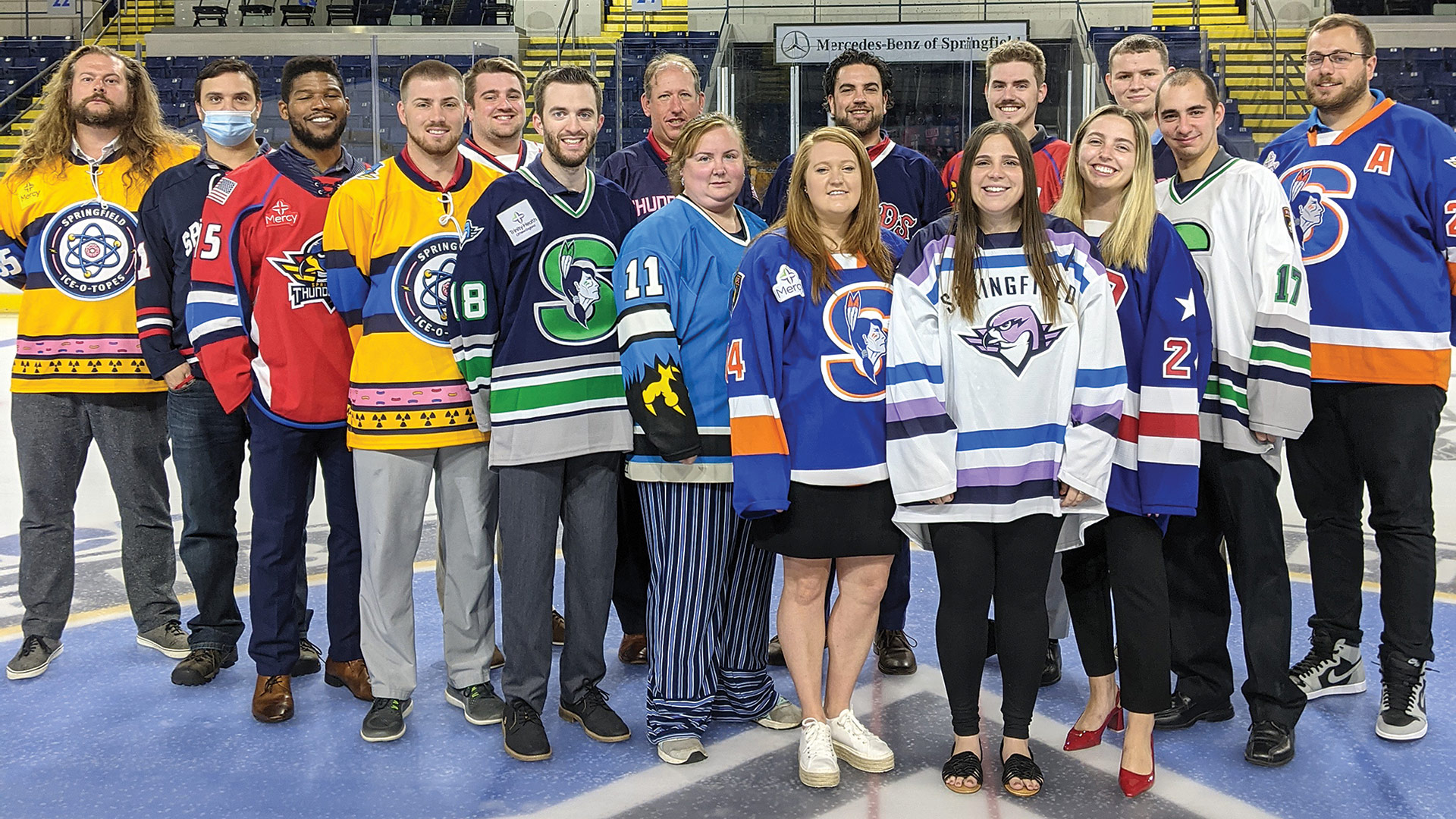
Team President Nate Costa (back row, fourth from right) with the front-office staff

Team President Nate Costa (back row, fourth from right) with the front-office staff

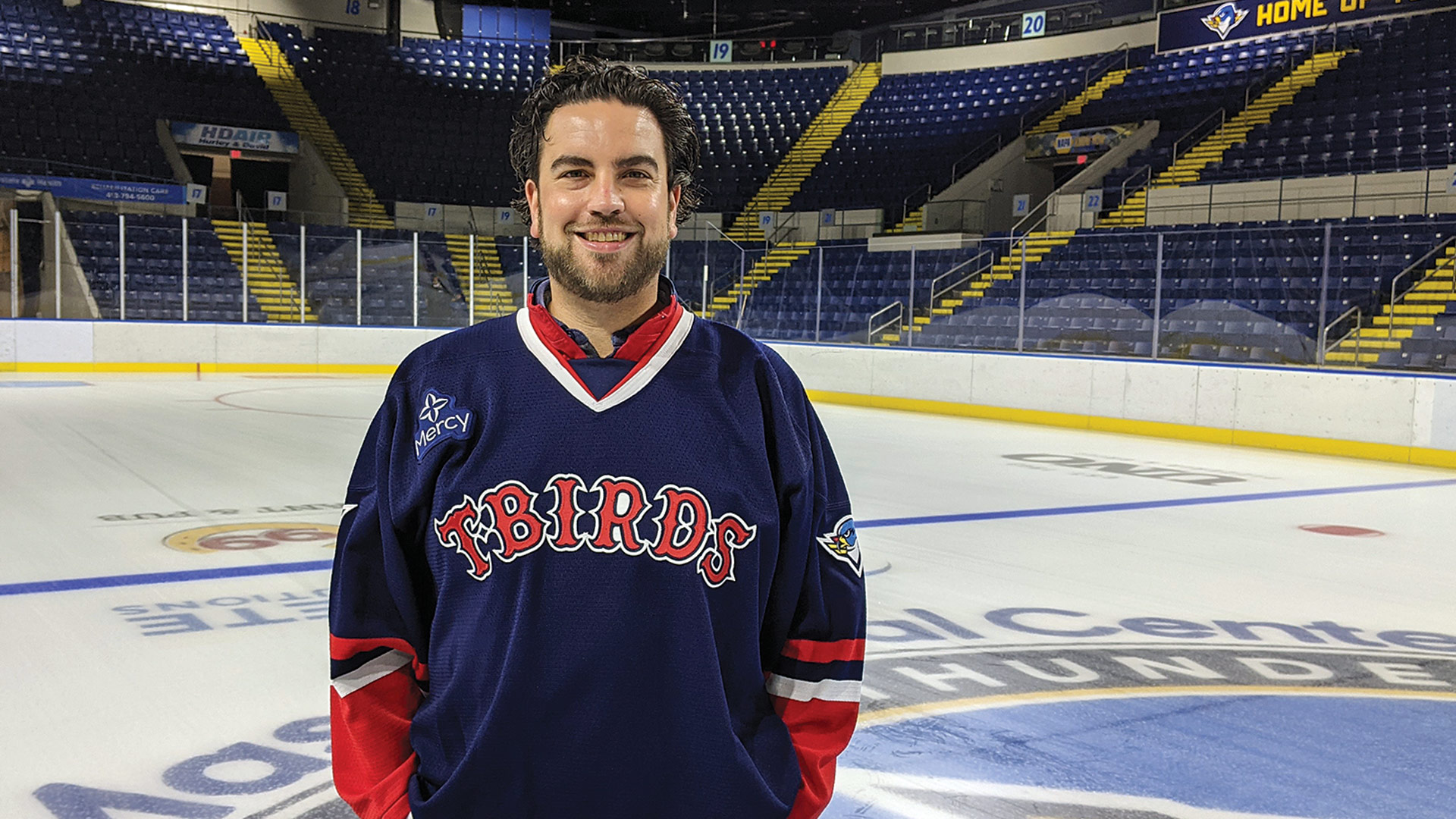
For team President Nate Costa and Springfield Thunderbirds ownership, it has been a frustrating year and a half — but not a quiet one, even with the cancellation of the 2020-21 season. Indeed, the organization has been busy staying connected to the community through a host of programs and providing value to its supporters, while preparing for a 2021-22 season of great promise — season-ticket sales remain high — but also great uncertainty. It’s a season, Costa said, that not only the team, but its city desperately needs.


For Nate Costa, launching a hockey season after skipping the previous one might feel like starting from square one, but it isn’t, really. Because he was at the real square one, tasked by the Springfield Thunderbirds’ ownership group with fielding a team just four months after luring it from Maine to Western Mass.

“This is a completely different challenge because at least then you didn’t have COVID surrounding you,” he said. “But the processes are very similar.”

To be sure, while no hockey was played in Springfield during the 2020-21 season, ‘skipping’ may not be the right word. Because keeping the franchise relevant and in the public eye was a daily challenge.

“Unfortunately, we had to make some really hard decisions last year in terms of staffing,” said Costa, the team’s president. “We did our best to get through the year, but we had limited staff on reduced hours, and a lot of our staff had opportunities to get jobs elsewhere.”

With eight newcomers on this year’s front-office staff of 17 — about half the crew — “it’s both challenging and exciting,” he went on. “But I tend to hire young because we like to bring people in and teach them how we do things. We find you don’t have a lot of bad habits that come with those individuals — a lot of them have really good energy, and that’s what’s happened. They’ve energized me and the entire staff.”

Nate Costa has high hopes for the season based on robust season-ticket sales and loyalty among corporate sponsors.

Nate Costa has high hopes for the season based on robust season-ticket sales and loyalty among corporate sponsors.

As he’s noted in the past, he can look to 2016, the year he and his ownership group brought the team to Springfield a month after the departure of the Falcons, for a blueprint of sorts. While the team has a new NHL affiliate in the St. Louis Blues, the core front-office group, including all of last year’s department heads, are back.

“That’s huge because you’re not really starting from scratch,” he said. “You’ve got institutional knowledge, people who know how to do this. So we’ve got a lot of confidence there.”

The team leadership has drawn on that confidence while facing a series of roadblocks and unknowns since shutting down the 2019-20 season early and making the decision to ride out the following season without any gameplay. Even now, the Delta surge that has brought back mask mandates is one more unexpected wrench in a long line of them.

“Our industry is obviously reliant on people coming together in large groups, and that’s the hardest thing.”

“It seems like we get hit with something different every day,” Costa told BusinessWest. “And you just have to be able to be nimble and pivot. It is what it is. Everyone’s dealing with it — not just us, not just our industry.

“But we’re kind of in the public eye,” he went on, “and our industry is obviously reliant on people coming together in large groups, and that’s the hardest thing. Even in the summer, [COVID] was moving in a different direction. So we’ve had to pivot and change things even since the summertime. But at the end of the day, we want to get back to doing what we do.”

One piece of good news is that public support hasn’t wavered. In March 2020, the team had 1,109 full season-ticket holders, the first Springfield hockey team to reach that milestone, he noted; the Falcons had been at 325 before they left town. Right now, the number is 989, and Costa expects that number to easily surpass 1,019 and set a new franchise high. He hopes to set a new attendance mark, too, after the AHL scheduled 29 of the team’s 38 home games on Friday and Saturday nights.

The 2021-22 promotional schedule is filled with favorites

The 2021-22 promotional schedule is filled with favorites like the Teddy Bear Toss, which collects stuffed animals for local charities.

“People are supporting us, and I think people are ready to come back out and do things and get back to some normalcy,” he said. “And hopefully, we won’t need to wear masks all season.”

Costa supports the city’s mask mandate and said the most visceral opposition to it on social media comes from people who don’t have tickets and aren’t likely to support the team anyway. Most people, he believes, understand what it will take to stage a season that won’t have to shut down.

“We are in an industry that relies on packing buildings, getting large gatherings together,” he said. “I think we have a responsibility to do the right thing. And we’ll work through it.”

“At the end of the day, we realize that the last thing we want to have happen is to not have a season again. And everybody recognizes that, and everybody understands that.”

In a wide-ranging interview conducted a few weeks before the season opener on Oct. 16, Costa told BusinessWest what the franchise has been up to over the past 18 months, what fans can expect this season — and why he feels a responsibility to stay connected to the community as more than just its local hockey team.


Safety First

But first, he talked about safety, and what it will take to achieve it as COVID continues to be a threat.

“It’s a lot of moving parts, but they’re necessary,” he said. “At the end of the day, we realize that the last thing we want to have happen is to not have a season again. And everybody recognizes that, and everybody understands that. So, internally, it hasn’t been that tough.”

To that end, the entire staff is required to be vaccinated, and everyone associated with the Blues is vaccinated as well. “The AHL has protocols that anybody that’s going to be within six to 12 feet of players is required to be vaccinated, and the St. Louis organization is having their players vaccinated.”

That’s critical, Costa added. “With the close quarters our guys are in, and being on buses together and all that, it’s imperative that we have the guys vaccinated.”

As noted earlier, he’s a believer in the city’s current mask mandate as well. “I’ve been keeping my thumb on the pulse of what’s going on for the last year and a half, and I feel like I’m a de facto COVID expert at this point,” he said, adding that requiring masks at the arena is simply a social responsibility to the city, mandate or not.

During the pandemic, the Thunderbirds partnered with local restaurants

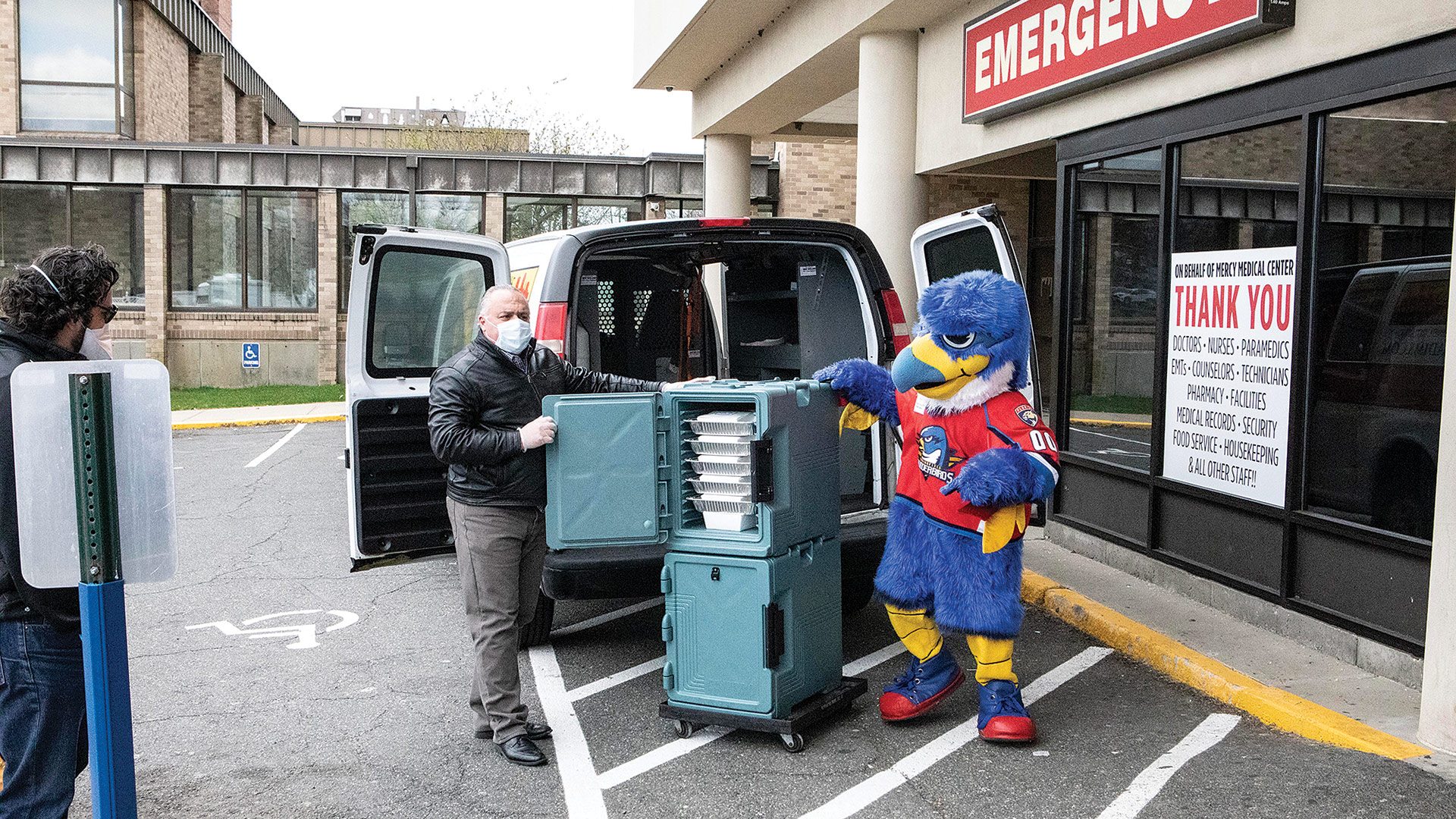
During the pandemic, the Thunderbirds partnered with local restaurants, including Nadim’s Downtown Mediterranean Grill, to donate meals to frontline workers

“We want to sell the place out opening night, and we want to be socially responsible. We felt like it was probably coming at some point that we were going to have some kind of mandate, whether that was going to be mask or vaccination, and I think the mask mandate is perfectly acceptable, because then you don’t have to get into conversation of who’s vaccinated and who’s not. Everyone who comes to the rink will wear a mask, except to eat or drink.”

He admitted it’s an extra challenge to enforce that behavior among fans. “We don’t like wearing masks as much as the next guy. But it’s our livelihood. We’ve committed our resources so much to doing this the right way and bringing the sport back. Last year was really such a blow to me personally just because the last thing I wanted to do is not play. So we’ll do whatever we need to do to get back on the ice and get back to some normalcy.”

One change this year is an absence of high-profile promotions like previous years’ visits from the likes of David Ortiz and Pedro Martinez. Those are expensive investments, and with no guarantees all games will even be played, the Thunderbirds will focus on more locally based promotions — and there are a lot of them, including returning favorites like a throwback jersey night (the Falcons this time, instead of the Indians), the Teddy Bear Toss, a Military Appreciation Night, the Pucks ‘N’ Paws pet night, and Pink in the Rink, which supports the fight against breast cancer. Every Friday night brings a Deuces Wild concessions deal, with sodas, hot dogs, and cups of Coors Light selling for $2 each.

“Last year was really such a blow to me personally just because the last thing I wanted to do is not play. So we’ll do whatever we need to do to get back on the ice and get back to some normalcy.”

“While we’re not investing in huge promotions, there’s still a good foundation of promotions and themes,” Costa said. “We want to re-establish ourselves, get through this year, and hopefully have this in the rear-view mirror next year and really blow it out.

“We always want to provide value and not get complacent,” he added. “And I think we’re providing as much value as anyone in the American Hockey League. I’ll put our stuff up against anybody’s; I take a lot of pride in that. But it’s still a fraction of what we normally do. We have a long-term vision, and that means getting back on the ice first.”

Many of the promotions will support causes and groups of people, like Frontline Fridays, in which healthcare workers, first responders, and other frontline workers who serve the public will be honored.

“I wanted to make sure it was a season-long thing, not just one night,” Costa said. “A lot of people in our community stepped up and did the right thing, working through COVID, and we want to say ‘thank you,’ and it’s really on behalf of the season-ticket members.”

That’s because, with seven home dates left in the curtailed 2019-20 season, most season-ticket holders, instead of demanding refunds, donated the tickets back to the team, and that formed the foundation of the Thunderbirds giving those tickets away to the frontline honorees every Friday this year.

“I feel really good about what we’re doing — not only the fun stuff, but we have a community piece to it as well that will hopefully give a break to some people who have been working hard, give them a chance to come out.”

It wasn’t only season-ticket holders that stayed loyal, Costa said. All the corporate sponsors are back as well, and even though they lost those seven games of exposure, he was able to show them that the team overdelivered on attendance for the other 31 home dates. The team has also included sponsors in its social-media and community activities during the pandemic.

29 of 38 home games scheduled for Friday or Saturday night

With 29 of 38 home games scheduled for Friday or Saturday night, the team is hopeful for plenty of sellouts.

“We genuinely feel like people like us and want to support us,” he added, noting that the team ranks at the top of the league, among like-sized markets, in sponsorships and full season-ticket sales. “At the end of the day, that speaks volumes about who you are as an organization. So the biggest thing was doing right by the people who have done right by us for the first four years of our franchise.”


Silver Lining

Costa said the goal last year was to stay visible, even for just a few hours a week. That meant donating meals to frontline workers, trotting out mascot Boomer at community events, and teaming up with the Massachusetts Lottery to spotlight first responders.

“It was important to keep the community aspect front and center,” he noted, adding that the Springfield Business Improvement District stepped up with cash, allowing the team to activate more community promotions and just “keep our lights on and keep our people engaged and keep the business moving forward.”

His goal was simply to be sustainable during a difficult time with little revenue. “I didn’t want to go to ownership and ask for cash. Not that they wouldn’t support it, but I felt we had a duty to do our best, and I think we did better than we ever could have expected.”

The silver lining to all this has been growing demand for the activity for which the team exists — actually playing hockey.

“Obviously, we wanted to play last year. But what do they say — absence makes the heart grow fonder, right? I think that happened a little bit,” Costa told BusinessWest. “I think there’s a real pent-up demand for just having fun in an exciting environment, and just doing things again with our friends and family. We’re hearing from people who can’t wait to get out and cheer on the team and hopefully see us have some success on the ice.”

Still, the past 18 months have reiterated Costa’s view that the Thunderbirds are more than a hockey team, and more than a business.

“I invest my heart and soul into this thing. Sometimes people say, ‘it’s just an AHL hockey team.’ For me, it’s much more than that. I feel like we’re the lifeblood of the community. We’re at the centerpoint. Our whole marketing campaign is going to be around ‘we are 413.’ And we feel that. We want to be that type of organization.

“We genuinely feel like people like us and want to support us. At the end of the day, that speaks volumes about who you are as an organization. So the biggest thing was doing right by the people who have done right by us for the first four years of our franchise.”

“The last year and a half, it’s been, ‘how to we get through this and get back to what we do really, really well?’ There’s no playbook to get you through this stuff. You’re doing things on the fly and trying to make the right decisions, but you don’t know the outcome of certain things.”

He called decisions on what staff to keep, furlough, or cut back hours two springs ago were “gutwrenching,” especially because they came so quickly and unexpectedly.

“The Saturday before shutdown, we had our ninth sellout — tied for most ever, and we had three Saturdays left,” Costa said. “The next week, I had to furlough half the staff. And none of it was their fault. I mean, the week before that, we were on cloud nine. None of us thought this would happen. It completely changed our organization. And you just have to work through it.”

That said, “our goal is to get back to normalcy as quickly as possible, but also do it responsibly and do it the right way,” he noted — even if that means wearing masks a little (well, hopefully just a little) longer. “It’s going to take some time, but we’re really well-positioned as an organization to come out of this strong.”


Joseph Bednar can be reached at [email protected]

Features Special Coverage

Putting the Pieces Together

It’s called a ‘hyper-scale data center.’ That’s the name attached to a $2.7 billion proposal planned for a 155-acre parcel in Westfield. The complicated project, now entering the local-approval phase, has cleared perhaps the biggest hurdle — the aggregation of a site that can check a unique set of boxes, including accessibility to huge amounts of power and data. If it comes to fruition — and there are still many challenges to overcome — the project could make the region a player in the emerging sector known as Big Data.
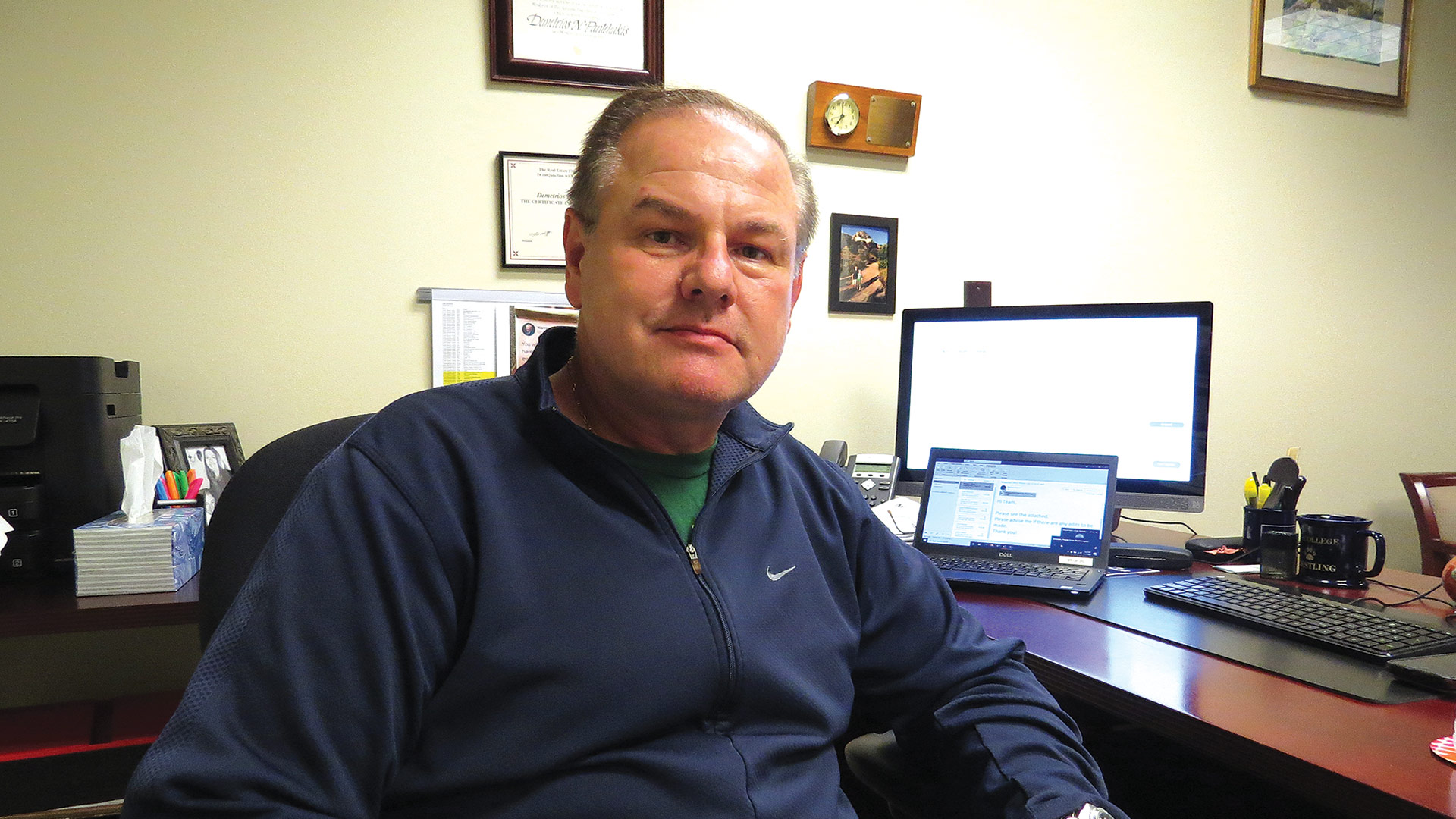
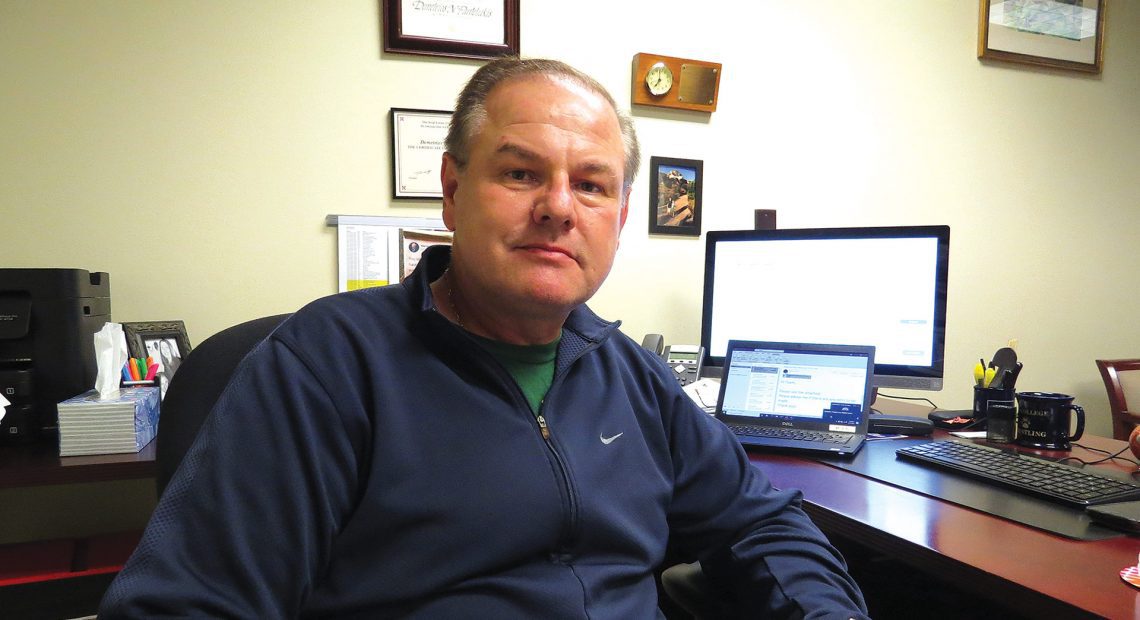
Demetrios Panteleakis

Demetrios Panteleakis


Demetrios Panteleakis says he spent a good part of the winter, spring, and some of the summer walking through all 150 acres of mostly raw land in the northwest corner of Westfield.

“I probably know every inch of it by now,” Panteleakis, the principal commercial broker with Springfield-based Macmillan Group, who was charged with assembling the parcel, told BusinessWest, adding that he’s been through it in every type of weather imaginable. “I think my family thought I had gotten into hiking and the outdoors.”

These walks in the woods — and wetlands — were a necessary part of a complicated process to aggregate land for what could be the largest private development the region has ever seen and one of the largest initiatives of its kind anywhere — a $2.7 billion proposal to build a massive data center (a ‘hyper-scale data center,’ as it’s called) that will attract the likes of Amazon, Google, and Facebook.
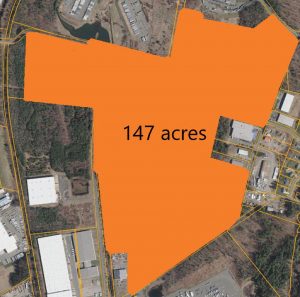
Plans call for constructing 10 buildings totaling 2.7 million square feet over the next 12 to 18 years, said Erik Bartone, CEO of Servistar Realty, the project’s developer. He told BusinessWest he hopes to obtain local approvals by the end of the year and state approvals by mid-2022, and break ground in 2023.

It’s a daring project, one that comes complete with all kinds of large numbers and adjectives (like hyper-scale) that connote size and scope affixed to everything from acreage to the projected cost of the initiative to the number of landowners with which Panteleakis and the Servistar had to negotiate.

That last number would be 11, just one indicator of the level of complexity involved with getting just this far, said Panteleakis, adding that finding a location and assembling the land are perhaps the biggest hurdle for a project that will face many of them — everything from required approvals for a tax-incentive plan to steps to protect endangered species, such as the eastern box turtle.

As for securing a site … a project of this nature and scope requires that a number of unique boxes be checked, said Panteleakis. These include the ability to draw power, and large amounts of it, straight from the grid — two recently upgraded 115 kV high-transmission lines run through the center of the site — as well as access to a reliable, high-speed fiber communications network. Competitive cost of doing business is also high on the list, as is a skilled workforce and easy access to major markets.

“Finding the right location in New England for a hyper-scale data-center development is difficult.”

When all is said and done, it certainly isn’t easy to find a parcel — or parcels that can be aggregated — that can check all those boxes.

“Finding the right location in New England for a hyper-scale data-center development is difficult,” Bartone said. “Access to the electric transmission grid, robust fiber communication network, sufficient land, and the ability to develop the project in an environmentally responsible manner are all very important issues that must be fully evaluated before proceeding with a particular location.”

As noted, the proposal still has many hurdles to clear, but it’s not too early to speculate on what this could mean for the city and the region.

Rick Sullivan, who can speak about the project from a number of perspectives — he’s president and CEO of the Western Mass. Economic Development Council, but also former mayor of Westfield and a current city councilor — said it represents an opportunity to show what the region can do for the emerging sector known as Big Data — and perhaps do more of.
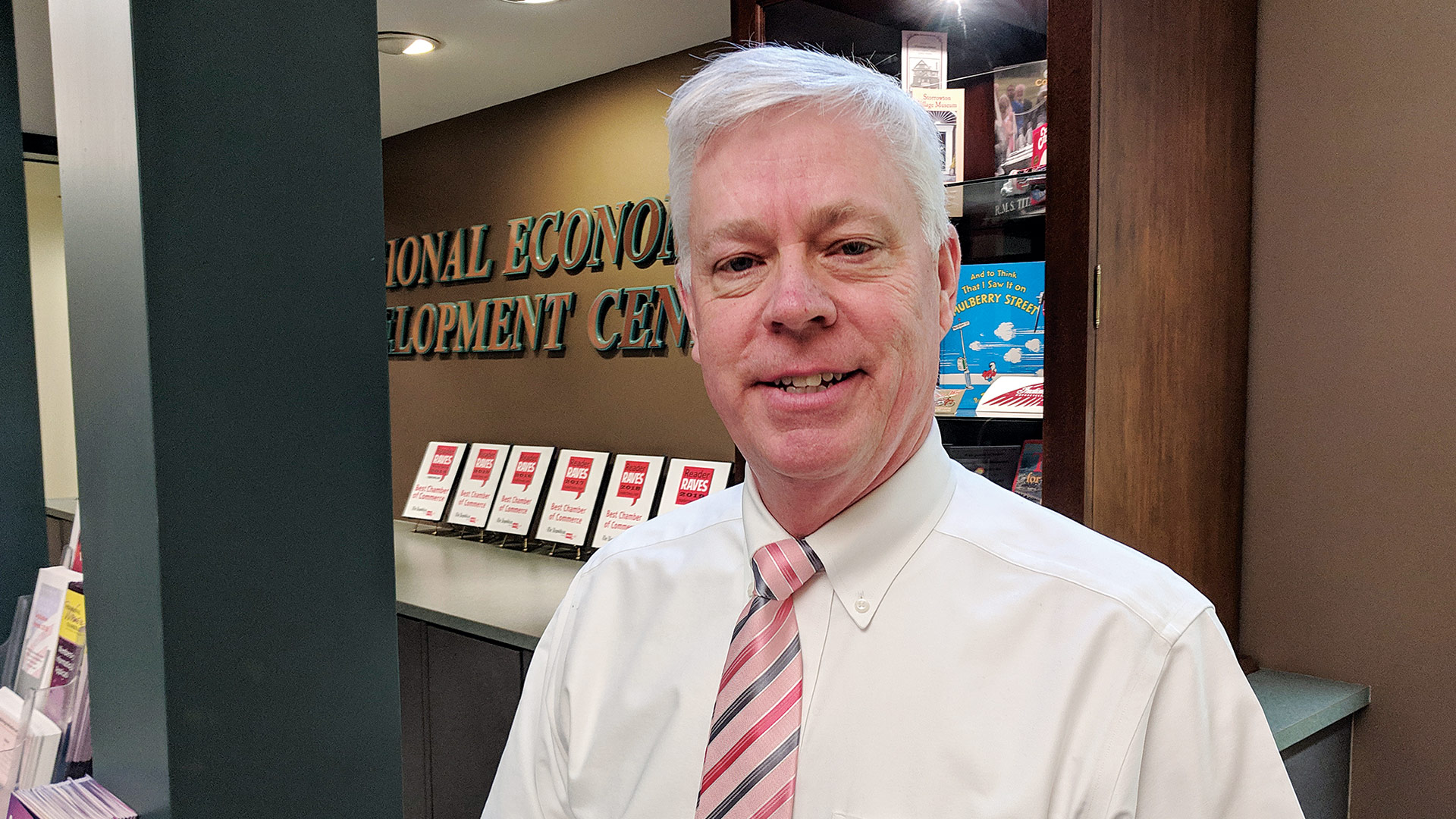
Rick Sullivan says the Westfield data-center project

Rick Sullivan says the Westfield data-center project, if it becomes reality, could open the door to new opportunities in the realm known as Big Data.

“This is somewhat of a new sector for us, so I think there’s an opportunity to get attention,” he explained. “Sometimes, getting that first development in a sector is the hardest thing, and then, once that happens, the others do take notice.”

Jeff Daley, president and CEO of WestMass Area Development Corp., which has been hired as a consultant on the Westfield project, agreed.

“It’s an exciting project — this is a game changer,” he said. “If we get this project across the goal line, it opens up an entire industry; we would have the potential to bring other data centers here.”

As for Panteleakis, the data-center project represents another bullet point on a résumé complete with a number of big projects with complicated logistics, something he’s becoming known for within the development industry.

Indeed, when he was not walking the Westfield property and negotiating with all those owners, he was flying to Miami to put the final touches on a massive, $1 billion project that combines residential living with transportation, retail, and office space.

“This is somewhat of a new sector for us, so I think there’s an opportunity to get attention. Sometimes, getting that first development in a sector is the hardest thing, and then, once that happens, the others do take notice.”

The two projects offered a number of different challenges, with COVID presenting new and different issues to contend with, he said, adding that they epitomize what has come to be one of his trademark talents — putting the many pieces together on complicated real-estate puzzles.

For this issue, BusinessWest takes an in-depth look at how this complicated Westfield project came together and how this initiative could change the landscape — in all kinds of ways.


Big Bytes

Panteleakis told BusinessWest that, on many of his flights to and from Florida, he didn’t have much company on the airplane.

“I was on a 747 out of Boston — because you couldn’t fly out of Bradley to Florida — that had two other people on it,” he said. “It was weird. Logan was a ghost town, Miami International was a ghost town; it was very strange.”

That was how things were as he was working on two massive projects on opposite ends of the Atlantic seaboard.

The Miami initiative was a complicated matter of putting the pieces together for a project called Virgin MiamiCentral, a nine-acre living center in the heart of the city that includes 3 million square feet of commercial, office, and retail space, capped with twin residential towers, each more than 40 stories high, sitting atop a train station and retail hub.

Jeff Daley says the data-center project could be a game changer for the region.

Jeff Daley says the data-center project could be a game changer for the region.

Meanwhile, what is now known as the Westfield data-center campus became a very complicated matter of aggregating property that could meet all those unique requirements listed earlier.

In most all cases, the land required for such projects doesn’t come in one parcel, but several of them, which means negotiations on acquiring options — as in quiet negotiations — have to take place with a number of parties simultaneously.

Panteleakis, who compared it to cutting the Gordian knot, tried to put it in perspective for BusinessWest.

“We worked with about four or five different brokers in Western Mass. who represented some of the 11 owners, which at times made things easier, but a predominance of the owners self-represented,” he explained. “And that included people who had ongoing businesses, and it was very arduous and long and, of course, highly confidential.

“It was heavy lifting,” he went on, “and to see it at this stage is very gratifying.”

Overall, it took roughly 14 months to put the parcel in place to the point where the developer could move forward, he said, adding that the site, while challenged by wetlands and environmental issues, provides the size, location, and direct access to the grid needed by Servistar and its eventual clients.

“There’s currently nothing of this scale in the region due primarily to very high retail electricity costs, high property taxes, and significant regulatory challenges.”

The company has a considerable amount of experience with such projects, said Bartone, adding that Servistar has been in the electricity-procurement and energy- management business for 30 years, supporting large-scale commercial and industrial clients, including data and IT service clients.

“Our firm has provided advisory services to several data-center clients, including the management and procurement of their wholesale electricity requirements,” he told BusinessWest, adding that the company currently represents a hyper-scale data-center client that is looking to enter the New England market once local approvals are obtained for the Westfield project.

Elaborating, he said there are several smaller-edge data centers in New England, including in the Boston area, but there are currently no hyper-scale data centers in New England, and for several reasons.

“There’s currently nothing of this scale in the region due primarily to very high retail electricity costs, high property taxes, and significant regulatory challenges,” he explained. “Our firm specializes in the wholesale electricity-procurement markets along with the integration of innovative load-management strategies to proactively reduce the electricity costs for data centers and large power users. 

“This is a key cost driver for the industry and critical to making the hyper-scale data-center project feasible,” he went on. “Electricity expenditures typically represent 50% to 60% of the operating costs of a data center. Property taxes typically represent 10% to 15% of operating expenses. These two operating cost components, along with local regulatory approvals, are the primary drivers to locate hyper-scale data centers to New England.”

Bartone said Servistar reviewed numerous sites in Connecticut, Rhode Island, and Massachusetts before focusing on Westfield, a community that emerged in this search roughly 18 months ago.  

“We identified various parcels in the city’s industrial zones that met the requirements for the site, but the area is challenging to develop due to wetlands and endangered species, including the eastern box turtle,” he noted. “So we needed a substantial amount of land that would support the 10 data-center building development while also allowing us to minimize environmental impacts.”

Beyond meeting the energy, fiber, and property-tax requirements, the site is also centrally located between Boston, New York City, Providence, Albany, and Hartford, said Bartone, thus providing access to more than 34 million people in the Greater New York metropolitan area and New England. It is also in close proximity to the Westfield-Barnes regional airport with corporate service, only 20 miles from Bradley International Airport, and approximately 100 miles from Logan International Airport.

“Boston also has a high-tech, information-based economy that is an attractive market for corporate offices of companies locating to Westfield for their IT services,” he said, adding that this concentration of trained tech workers was still another selling point.


Powerful Statement

As he talked about the project and its prospects for becoming reality, Sullivan turned to the often-used analogy of getting over the goal line.

He said this project isn’t in the proverbial red zone yet, but it is certainly past midfield and making steady progress.

“There’s still a long way to go, but once they have options on the property and they’re doing work around wetlands and having discussions with the electricity suppliers, you’re past midfield, but you’re not home yet,” he explained. “I don’t think you can have a higher, better use of that property.”

Daley said the next important step is approval of what’s known as a 121A, or PILOT (payment in lieu of taxes) property-tax agreement that locks in the assessed value of the property, with built-in annual increases in property-tax payments. Westfield officials have said the project would bring in $1.2 million in tax payments within three years, making the campus the largest taxpayer in the city.

A joint public hearing between the Planning Board and City Council on the proposed agreement is slated for early October, said Daley, adding that there are other approvals, on both the local and state levels, that must be secured in the coming months.

“We’re hoping to have all local permits in hand by the end of the year,” he explained. “Shortly thereafter, we’d begin work on designs and infrastructure; it would be about 18 to 24 months from go date to being operational.”

Meanwhile, speculation continues about what this project could mean for Westfield and the region. That discussion takes place on many levels, starting with immediate, tangible benefits.

That list includes 1,800 construction jobs, 1,200 indirect jobs that will result from creation of the center, and what is projected to be 400 jobs that will pay between $85,000 to $100,000 at the entry level.

“When people in economic development talk about job creation, these are the kinds of jobs that you’re looking to create,” Sullivan said. “These employees will live in our communities, they’ll invest in our communities, they’ll shop in our communities, and they’ll support the charities in our communities, as will the companies.”

There’s also the tax revenue; Servistar has negotiated a 40-year property-tax agreement with the city that is expected to produce more than $350 million in direct property-tax payments over the term of that agreement. 

Beyond these direct benefits, though, is that opportunity Sullivan and Daley mentioned for the region to not only get in the game when it comes to Big Data, but become a player in that sector, which would appear to have almost unlimited potential.

“If you look in the crystal ball, this is a sector that’s only going to grow,” Sullivan said. “And of you overlay data storage and data transmission and all the issues that are somewhat related, such as cybersecurity and other Big Data, I think there’s a real opportunity for us in Western Massachusetts to grow and in some ways lead, if you will, in this sector.

“We have out colleges, especially Bay Path and the University of Massachusetts, that are doing a lot of cutting-edge work in cybersecurity and Big Data, and others will certainly follow,” he went on. “And this will help train a workforce, which is always significant as these companies look to grow.”

As for some of those other boxes that need to be checked, Sullivan acknowledged that the cost of doing business in this state is not as low as in some other areas of the Northeast, but Western Mass. is certainly more cost-friendly that Boston and other metropolitan areas. “Developing in New England may not be the cheapest, but we’re still competitive.”


Bottom Line

Panteleakis — who, as noted, has been involved in large development projects in many areas of the country — said the Westfield data-center campus project represents the type of development that all regions are striving for.

“I’ve done a lot of work in Florida and Texas, and this is how they drive economic development for the 21st century in their areas; they’re focusing on new sectors and technologies,” he explained. “This project will have a tremendous impact on quality of life in Westfield and across the region. It will have a very broad impact.”

As those we spoke with noted, there are still many hurdles to overcome before this proposal becomes reality. If it can clear those obstacles, it could be transformative in many different ways.


George O’Brien can be reached at [email protected]

Education Special Coverage

Continuing Education

Matthew Scott says the double protection of vaccines and masks

Matthew Scott says the double protection of vaccines and masks are a good start to keeping AIC’s campus safe.


After a year when colleges offered a wide variety of learning options during the pandemic, from in-person to remote to a blend of both, the vast majority have opened their classrooms, residence halls, and athletic fields for a true on-campus experience this fall. But they’re doing so with caution, both internally — in the form of vaccine requirements — and backed by municipalities that are issuing broad mask mandates. The bottom line through all the changes? The idea that young people need the full college experience, and no one wants to risk a disheartening retreat to Zoom.


Everyone is tired of pivoting, Matthew Scott said. But, by now, they’re good at it, too.

“We’ve learned that our students are adaptable. They don’t always want to be, but they’ll go with the flow and make it happen. And our staff members have just rolled up their sleeves and said, ‘what needs to be done?’”

As vice president for Student Affairs and dean of students at American International College (AIC) in Springfield, Scott is just one of countless higher-education administrators who have spent the past 18 months adapting to one unexpected development after another when it came to COVID-19 and how students could best learn and interact during the pandemic.

“You want to plan in times when you aren’t in the middle of a crisis, so that you’re ready to use that plan when a crisis occurs,” he said. “But when you’re thinking through your crisis-planning process, you’re thinking of things like a fire or a hurricane coming through. Nobody planned for a pandemic. We had protocols for a specific outbreak, but not something like this.”

The lesson? “We learned that we need to be agile. You might spend weeks planning something, and then one order comes through from the local or state government, and you need to pivot.”

The latest pivot for AIC, one similar to what most colleges and universities are doing, involves students living and learning on campus, with residence halls open and clubs and sports in full swing. But a facemask requirement is back, too, at least indoors. And AIC is also requiring students and employees to be vaccinated against COVID.

“We learned that we need to be agile. You might spend weeks planning something, and then one order comes through from the local or state government, and you need to pivot.”

“At last count, we were at 98%, which is a phenomenal number to get to,” Scott said, noting that religious and medical exemptions are being given, but those people are required to be tested weekly, and their quarantine and isolation protocols in the case of infection differ from those of a vaccinated individual. “So far, the vaccination rate has been helping us quite a bit.”

Elms College in Chicopee has also mandated both masks indoors and vaccination for everyone (students, faculty, and staff) without a legitimate exemption.

“Last year, masks were required everywhere. Now, they are not required outdoors if you don’t have anyone within six feet of you,” President Harry Dumay said. “We don’t have distancing in the clasrooms like last year. But we’ll be functioning with a campus that is fully vaccinated.”

While students could choose to take classes in person or remotely last year, Dumay said the college is asking all undergraduates to be in classrooms this year, although remote capabilities are in place in case someone needs to quarantine.

President Harry Dumay says Elms College not only has a plan

President Harry Dumay says Elms College not only has a plan for this fall, but “a backup to the plan and a backup to the backup.”

“We thought this year would be completely free of all these things, but what we’re seeing in the region and on campus are a lot of breakthrough cases, and Delta is more contagious than the original virus,” Dumay said.

When asked about pushback from students on the vaccine mandate, he said he wouldn’t use that word, exactly. “We certainly had quite a few inquiries from parents, saying, ‘is that necessary?’ Or from staff or employees asking, ‘so what does that mean if I don’t do it?’ I don’t know if anyone resigned on our campus or decided not to come because of the vaccination. There might be one or two cases, but I haven’t heard that.”

Scott said students tend to understand that vaccines not only prevent COVID in many cases, but reduce its severity in others.

At the same time, however, “college-age people are not particularly concerned about hospitalization or death because, for the vast majority of them, they’re able to weather the storm and get through it. But part of the education process is making sure they understand it’s not just about them, it’s about the people around them who might have underlying conditions they might not know about.”

If there has been any pushback, he noted, it has taken the form of questions about why both vaccines and masks are necessary.

“We thought this year would be completely free of all these things, but what we’re seeing in the region and on campus are a lot of breakthrough cases, and Delta is more contagious than the original virus.”

“We’d say, ‘yes, you’re vaccinated, and yes, that probably means there’s a lower likelihood of you contracting COVID, but if you do, you might not know you have it, and you might pass it on to somebody else — maybe a child who can’t get a vaccine, or maybe someone who’s immunocompromised,’” he explained. “For the most part, people get it. More than 1,000 U.S. colleges are requiring vaccines, so we’re among many at this point.”


Taking Their Shot

Holyoke Community College President Christina Royal said HCC balanced the desire among many students to get back to in-person learning with the constantly changing health metrics around the Delta variant. “So we decided to open with about a third of classes in person, face to face; a third online; and another third blended of some sort.”

The original plan earlier this summer called for about 25% of classes in person, she explained, “but as those classes were filling up, we heard students wanted more of them, so we added some additional sections. Then we increased class sizes, which were lowered during the pandemic.”

Now 15 students are allowed in a class, still small enough to allow for social distancing, Royal said.

At the same time, “we were also hearing from other students who were not comfortable coming back in, given the conditions in the world. So that’s where we are this semester — we wanted to have a range of options for students so we can match whatever their comfort level is.”

HCC has had a mask mandate on campus since the start of the pandemic and has never lifted it. The college also modified its ventilation systems. “We have several classrooms that don’t have windows, and we wanted to make sure people felt comfortable in the learning spaces.”

In addition, the campus added protective barriers in many places and signage reminding students about masks, social distancing, and hand washing, as well as the need to get vaccinated.

Holyoke Community College President Christina Royal

Holyoke Community College President Christina Royal says the state’s community-college presidents are unified in their support of a vaccine mandate.

That is more than a nudge now, as all 15 community colleges in Massachusetts instituted a vaccine mandate last week for all students, faculty, and staff, which must be fully met by January.

“During the last 18 months, the Massachusetts community colleges have prioritized the health and safety of our communities while also recognizing that many of our students have been disproportionately impacted by the COVID-19 pandemic,” the presidents said in a statement shared with their campuses. “While a significant number of students, faculty, and staff are already vaccinated or are in the process of becoming vaccinated, the 15 colleges are seeking to increase the health and safety of the learning and working environment in light of the ongoing public health concerns and current guidance from the Centers for Disease Control and Prevention.”

In her own message to the HCC community, Royal noted that, “while there is no ironclad defense against coronavirus, extensive public-health research has shown that vaccination greatly reduces the risk of hospitalization and death.”

While the UMass system has not yet instituted a vaccine mandate, UMass Amherst is strongly advising shots for all students and employees. “The science is clear that vaccination is the best way to stop COVID-19 from spreading, and our best way to continue protecting each other’s well-being,” an official statement reads.

In the meantime, individuals who are not vaccinated are required to participate in the university’s asymptomatic testing program.

UMass Amherst is also back to in-person learning, but is following public-health guidelines for wearing masks indoors and distancing where possible.

“If we need to do more education and bring some public-health experts in to reduce misinformation and allow for people to get the facts, then we’ll certainly do that as part of our strategy.”

“The use of indoor masks, required on campus and in the town of Amherst … reduce the spread of infection, said Ann Becker, Public Health director, and Jeffrey Hescock, executive director of Environmental Health and Safety, in the campus’ Public Health Promotion Center, in a statement. But they also laid out the stark facts when it comes to vaccination.

“Our data shows that, among our vaccinated population, only 1.7% have tested positive. Among the approximately 500 individuals who have received religious or medical exemptions from vaccination, 10.05% have tested positive. We urge those not yet vaccinated to consider doing so.”

They noted, however, that positive cases have been predominately among undergraduate off-campus students connected to unmasked social activities. “We have not seen any spread in academic settings. Most cases continue to be of short duration, resulting in mild to moderate illness.”

UMass makes vaccine clinics readily availabe on campus, as do the 15 community colleges. HCC offers free COVID-19 vaccinations for four hours every Tuesday, as well as COVID-19 testing six days a week on campus through the Holyoke Board of Health.

Royal was adamant that a vaccine mandate was the right call.

“I think this is in our collective best interest, for our community colleges and for our region as well,” she told BusinessWest. “At this point, the vaccines have been shown to be effective when we’re talking about preventing disease or reducing hospitalizations and deaths.”

She recognizes that people have many different perspectives that should be respected, but that the college has a duty to combat misinformation.

“If we need to do more education and bring some public-health experts in to reduce misinformation and allow for people to get the facts, then we’ll certainly do that as part of our strategy.”


Life of the Campus

In some ways, it has been a frustrating start to the semester, Dumay said, noting that the general feeling earlier in the summer was that masks would be optional, let alone vaccines, as COVID gradually retreated. While it hasn’t, he noted that it’s important for students to safety enjoy the full Elms experience.

“One of the distinctive features of an Elms College education … is that it offers a vibrant and nurturing environment, and not just with the instruction that happens in the classroom,” he said. “It’s all the interactions and how people behave with one another.”

College leaders believe important personal growth occurs through that interaction, he added.

“You can’t really do that with an online model. You can approximate it, but it’s not ideal. So to the extent we can, we’ll take the steps that are necessary so we’re safe and have an on-campus education, particularly for young people who are at that stage in their life where they’re forming their character.”

Like Scott, Dumay said the key lesson from the pandemic has been that it’s good to have a plan, but one thet can be modified at any given time. “We have a backup to the plan and a backup to the backup. We’re prepared to shift as the environment changes.”

The second lesson is the importance of transparent communication, he noted, because without it, people tend to fill the gaps with misinformation.

“We’re not pretending the pandemic is over by any means,” AIC’s Scott said. “We’re complying with the Springfield mask mandate right now and requiring masks indoors and outdoors when you can’t maintain the six feet. But we still have a tent set up outside; we’re trying to drive people outside as much as possible, just as an extra layer of protection.

“But the 98% vaccination rate, along with masking — I don’t want to give people a false sense of security where you don’t have to be vigilant, but we’re feeling pretty confident that we’re doing what we need to do to keep people safe.”

If a pocket of infection arises, the campus is ready to bring in more testing supplies and trigger quarantine protocols, but Scott feels like the double protection offered by vaccines and masks are the best way to keep that possibility at bay.

“There’s no one to be mad at,” he added. “I’m not mad at the mayor for putting in a mask mandate; he’s doing what needs to be done to keep the people in the community safe. But is it frustrating when you think you have a plan and the pandemic doesn’t cooperate? Of course, but a virus doesn’t cooperate.”

What makes all the planning and inconveniences worthwhile, he said, was seeing the energy of the students as they moved back onto campus a month ago.

“It was kind of a heartwarming moment seeing some of these returners … they left in March of 2020, and they didn’t come back until the beginning of this September. So when they see each other in person for the very first time in a long while, you can see it, you can feel it. They want to be with each other.

“We believe in the on-campus experience,” he added. “They’re coming here for all these things — to participate in athletics, to live in the residence halls, to eat in the dining commons. We’re on an online campus in this moment.”

Dumay saw the same energy at the Elms — and doesn’t want to do anything that might threaten to snuff it out.

“The first week, seeing students back on campus, was fantastic,” he said. “They’re happy to be here. They don’t want to be sent back to Zoom. They’re happy to be with each other. And we’re happy to see them.”


Joseph Bednar can be reached at [email protected]

Business of Aging Special Coverage

Pivoting … Again

By Mark Morris

David Ianacone says infection-control expertise

David Ianacone says infection-control expertise in the skilled-nursing world predates COVID by far.

Just when it seemed COVID-19 was getting under control, the Delta variant of the virus took hold — and has encouraged many communities in Western Mass. to once again mandate wearing masks indoors.

With the variant showing no signs of slowing, BusinessWest checked in with several companies that serve seniors in the area — through home care, assisted living, and skilled nursing — to ask how they are navigating this stubborn virus that won’t go away.

They all have different stories, but one constant stands out: all of them have kept safety protocols in place that exceed the requirements of state and local mandates.

For David Ianacone, administrator at the Center for Extended Care and Rehabilitation at Amherst, rigid protocols are in place at all times to prevent infection problems.

“In the nursing-home business, we’re experts in infection control,” he said. “Long before the virus, we’ve had protocols in place known as ‘universal precaution.’”

Indeed, everyone who enters the facility must get their temperature taken and fill out a health questionnaire. Masks are required for staff and visitors at all times. Ianacone said 99% of the patients are fully vaccinated, and he estimated that 92% of the staff have received the vaccine.

“We have around 15 unvaccinated staff, most of whom work in the office or dietary area and are not in direct contact with patients,” Ianacone said. “They are tested every day before their shift begins.” If the test comes up positive, they have to leave.

The protocols have certainly been working; since January, when one patient at the center contracted the coronavirus, no staff or patients have tested positive.

This clean bill of health has allowed visitors to once again see their loved ones in person, but Ianacone pointed out there are restrictions based on the visitor’s vaccination status.

“If they are vaccinated and their loved one is also, they can meet with them closely in their room,” he explained. “But if a visitor is not vaccinated, we have a special room where they can visit in private, but they must maintain social distancing.”

Visitors to Cedarbrook Village at Ware have also returned to restricted visits with residents due to the resurgence of the virus.

Before Delta, Executive Director Kelly Russell said, families could visit with loved ones in their apartments and take meals with them. Since the resurgence, only a few guests can meet with the resident in a designated area that is disinfected after each visit.

“We’re actually going above and beyond what the CDC is recommending for our community,” she noted.

Before the Delta variant, the assisted-living facility was starting to return to normal activities like outings and even a trip to MGM Springfield.

“The residents had a great time at the casino, but we had to stop all trips like that because of the variant,” she said. “We also had to cancel the one-year anniversary of our opening that we had planned for September.”

Russell said her focus is now on “out-of-community risks,” meaning staff and residents out in public, residents coming out of acute settings, and visitors. Protocols are in place to mitigate risk in all these areas.

Patricia-Lee Baskin-Scholpp says she requires her home-care staff to be vaccinated to protect senior clients.

Patricia-Lee Baskin-Scholpp says she requires her home-care staff to be vaccinated to protect senior clients.

With vaccination rates among Cedarbrook staff at nearly 80%, the next challenge will be a state mandate that takes effect on Oct. 31 requiring everyone who works with seniors to be vaccinated.

“We have a responsibility to keep the residents in our community safe,” Russell said. “If there are still some people who refuse to get vaccinated, there’s a good chance they will not be able to work here.”


Girding for Battle

Patricia-Lee Baskin-Scholpp isn’t waiting for the state to act. The owner of Caring Solutions, a home-care company based in West Springfield, will not hire anyone who is not vaccinated. And, while 98% of her current staff is vaccinated, home care is an industry with lots of turnover.

“It’s already hard to find candidates, and by requiring a vaccination, the pool becomes that much smaller,” Baskin-Scholpp said. “Despite that, I won’t put my seniors at risk.”

A nurse by training, she discussed the reason she is passionate about vaccinations to prevent the spread of the coronavirus. “When you hold someone’s hand who is dying of COVID, it changes something in you.”

Baskin-Scholpp also believes we are in a war against COVID, and that one battle strategy worth embracing is wearing a mask. “I have N95 masks in many colors so our staff can make them part of their wardrobe,” she said. “We have to wear a mask anyway, so let’s own it.”

After several months without them, residents at Cedarbrook are back to wearing masks when they leave their apartments. For most, Russell said, it’s simply retraining.

“We opened at the height of COVID when many of our residents moved in. At that time, they had their masks with them at all times. Now they just need occasional reminders.”

“We opened at the height of COVID when many of our residents moved in,” she recalled. “At that time, they had their masks with them at all times. Now they just need occasional reminders.”

Because the virus is prone to change, Ianacone said he and his peers at other long-term-care facilities have an open communication stream with the Massachusetts Department of Public Health and the state office of epidemiology. “From time to time, they will recommend new protocols for us to implement to keep everybody safe.”

State health officials had raised concerns when several nursing homes discovered cases of the Delta variant. Ianacone pointed out that the protocols to protect against the Delta variant are the same as protecting against the original coronavirus, so staying consistent in COVID-prevention practices works.

“Because our patients are vulnerable, we always go the extra mile in our safety measures,” he added.

Baskin-Scholpp and her staff of 70 caregivers routinely go the extra mile based on a simple principle.

“If you treat people the way they want to be treated, it works,” she said. “We believe people should be able to stay in their own home and shouldn’t have to pay a fortune to do so.”

She named her company Caring Solutions because she believes every challenge has a solution, even COVID.

“This virus isn’t going anywhere right now, so let’s do everything we can to keep everybody safe,” she told BusinessWest. “It’s really less about individual rights and more about protecting each other.”

As a new facility, Cedarbrook still has apartments available for new residents. When the pandemic first hit, many seniors and their families were fearful of moving into a senior community.

Since that time, as everyone gains more knowledge about the virus, Russell and her staff have continued their diligence with cleaning and safety protocols, which have helped many of those fears to subside.

“People are still able to take tours, and we simply follow a cleaning schedule after the visit,” she said. “As a result, we’re seeing four to six move-ins a month, which is great.”


Life on the Front Line

Reflecting on the past 18 months, Ianacone said he appreciates how grateful the families of his patients have been during a time of constant adjustment.

“Hearing from the families is very warming to us staff members because they feel we are doing a good job taking care of their loved ones and keeping them safe.”

While these senior service professionals wage their fight against a stubborn virus, they continue to succeed in keeping seniors in our community safe. Baskin-Scholpp may have summed up the reason for everyone’s dedication.

Simply put, she said, “I am very passionate about our seniors.”

Community Spotlight

Community Spotlight

By Mark Morris

Amy Cahillane says the city is in a better place

Amy Cahillane says the city is in a better place than it was a year ago, but staffing remains a problem for businesses.

As Northampton works through the various stages of the pandemic, one term best describes any discussion about looking ahead.

“I’ve used the phrase ‘cautiously optimistic’ hundreds of times in the last several weeks, never mind the last year and a half,” said Amy Cahillane, executive director of Downtown Northampton Assoc. (DNA) — cautious because the city reimposed mask mandates before many other communities did, and optimistic because, despite all the challenges, Northampton can point to many successes.

Janet Egelston, owner of Northampton Brewery, said the last 18 months have been an ongoing process of pivoting, adapting, and learning, adding that “we call what we’re going through ‘pandemic university.’”

Northampton enjoys a long tradition as a dining destination. With more than 100 places to eat in the city, restaurants are a key sector to Northampton’s economy. Vince Jackson, executive director of the Northampton Chamber of Commerce, said economic studies have shown that, when restaurants are thriving, other business sectors do, too.

“Every job a restaurant creates results in another job in the community,” he explained. “Think about a typical date night — go out for dinner, go see a show, and then maybe a drink at the end of the evening.”

That’s why the pandemic, and the business restrictions that have accompanied it, have been so disruptive to the city’s economy. And the disruptions have come in waves; earlier this spring, when vaccines became widely available and COVID-19 infection numbers began to decrease, Northampton, like many communities, was able to relax masking requirements. Once vaccination levels began to plateau and the Delta variant of the virus kicked in, infections began to trend back up.

And when the city’s Health Department found several breakthrough cases that forced a couple restaurants to close for testing and quarantine, Mayor David Narkewicz made the decision to bring back indoor mask mandates.

“We are very fortunate to have this outdoor space, but it wasn’t as simple as opening the doors.”

“It’s never easy to be out front and be the first, but since we brought back masking, the communities around us have followed suit,” he said, adding that the city’s priority is keeping everyone safe and healthy. “We need businesses open for customers. Otherwise, the engine that drives Northampton isn’t going to run.”

The return to wearing masks was an easy change for Egelston’s staff at Northampton Brewery.

“In the restaurant business, we often make quick adjustments,” she said. “We also have a box of masks at our entrance for customers who arrive without one.”

In 2020, when the first wave of the pandemic closed all kinds of businesses for several months, Egelston delayed her reopening until Aug. 10, the 33rd anniversary of the brewery. Even though outdoor dining has always been a part of the restaurant, with two levels of rooftop decks, she still had to retrofit the space for the times.

“We installed plexiglass barriers and socially distanced our tables outside as if we were inside. We are very fortunate to have this outdoor space, but it wasn’t as simple as opening the doors,” she said, adding that all employees are vaccinated. “It’s our policy.”

Janet Egelston says she is “eternally optimistic”

Janet Egelston says she is “eternally optimistic” despite 18 months of pivoting and persistent staffing challenges.

Since reopening last August, the brewery has operated at a lower capacity, not due to mandates, but because of trouble finding enough staff.

“The core staff who work here are great,” Egelston said, adding that, while there is always some amount of turnover, she hasn’t received many applications in the last several months. “That’s starting to improve, but we’re not yet ready to go to full capacity.”


Workforce Crunch

While the city is in a better place than it was a year ago, Cahillane said, staffing remains a challenge for most businesses.

“When everyone is hiring, it perpetuates the issue further because employers are all looking for the same people,” she noted. “They are also filling positions at every conceivable level, from dishwasher to front of house to store manager.”

Despite the staffing challenges, Jackson said most businesses in Northampton had a great summer. In talking with business owners in the restaurant, retail, and construction sectors, he said many reported success at pre-pandemic levels.

“A caterer I spoke with has 200 events booked through the end of the year,” he said. “One restaurant owner said her numbers are better than they’ve been in a long time.”

Northampton at a glance

Year Incorporated: 1883
Population: 28,483
Area: 35.8 square miles
County: Hampshire
Residential tax rate: $17.37
Commercial tax rate: $17.37
Median Household Income: $56,999
Median Family Income: $80,179
Type of government: Mayor, City Council
Largest Employers: Cooley Dickinson Hospital; ServiceNet Inc.; Smith College; L-3 KEO
* Latest information available

‘Summer on Strong’ was a successful effort to close an entire section of Strong Avenue to traffic and turn it into an outdoor dining pavilion shared by a few different eateries. Narkewicz credited local restaurants for suggesting and leading the effort. When ideas like this were proposed, the mayor said the city would “move mountains” to streamline the permitting process to make them happen.

“Northampton is a regional magnet for people who want to come here for entertainment, arts, dining, and the vibe of a walkable city where people like to hang out,” he noted.

The city lost businesses during the pandemic, including Silverscape Designs, which closed at the end of 2020. Despite the optics of that vacancy in the middle of downtown, Cahillane said a mix of new businesses have been opening at an encouraging pace.

“Between Northampton and Florence, we had roughly 18 businesses that left,” she noted. “And nearly 17 new places opened.”

The return of students to Smith College and campuses in the surrounding towns marked a sign of life before the pandemic. Cahillane said the students brought a needed emotional lift. “There has been a noticeable lightening and brightening downtown since the students have come back. Their return is what Northampton usually feels like in the fall.”

The return of events this summer has also provided a boost to Northampton. Cahillane said it’s satisfying to look at a calendar and see events scheduled once again. “The Arts Council held several concerts this summer, we recently started Arts Night Out, and the Jazz Festival is coming back the first weekend in October.”

Jackson is “cautiously optimistic” that momentum from the summer will continue into fall leaf-peeping season. In this area, Indigenous Peoples Weekend marks prime time for leaf peepers.

“One hotelier told me if you don’t book early for that weekend, you won’t find a place to stay,” he said, adding that he’s hopeful activities in November and December will also bring people to the city and surrounding towns.

This fall will be different for Narkewicz, as he will not seek re-election as Northampton’s mayor. Looking back on his 10 years in office, he discussed several areas in which he’s proud of his administration’s achievements, such as improving the fiscal health of the city and being one of the first communities to stand up for the important role immigration plays in the U.S.

“We stand up for equality for all our residents,” he said. “We’ve received high marks for our commitment to LGBTQ folks and have been doing more work around racial equality.”

For the next few months, he hopes to develop a blueprint for the next mayor. “My goal is to provide a map of the immediate needs and available resources, so the next administration can work with stakeholders in the community to make sure we see a strong, equitable recovery to COVID.”


Keep Moving Forward

Among many in Northampton, the consensus is to keep moving forward, but also stay safe.

“I don’t know what’s going to happen, but I am eternally optimistic,” Egelston said. “It’s the only way I’ve been able to be in the restaurant business for so many years.”

Jackson said having events return to the city, sometimes in different forms, went a long way to giving people reasons to come to Northampton. “I won’t say this is a new normal, but it feels right for this moment.”

Features

Doing More with Less


At a recent virtual seminar, Delcie Bean asked attendees to think back 20 years and ask themselves, did they foresee a time when phone books and yellow pages would not be a thing?

After all, he asked, every home had one, and they were the primary way small businesses advertised and shared their contact information with the public.

Now, “look at what’s happened to that world,” said Bean, president of Paragus Strategic IT. “That’s the pace at which technology is changing. These things we took for granted, that we felt were never going to change, that were part of the fabric of our ecosystem, have changed. And it’s not just phone books. Think of all the landfills that are chock full of technology that, at one point in time, we didn’t think we could live without.”

And it’s not just tools, but the way we do business, he said, pointing out the short jumps between dominant communication methods over the past century. That idea was one jumping-off point for Bean’s virtual seminar on Sept. 15, titled “Automation: the Time Is Now,” and subtitled “How Automation Can Streamline Your Business and Offset the Labor Shortage.”

At this event, presented by BusinessWest and Comcast Business, he said everyone should ask themselves a simple question: “What’s my phone book? What’s the thing in my business that is still antiquated and should have been replaced by now?

“What’s my phone book? What’s the thing in my business that is still antiquated and should have been replaced by now?”

For example, he went on, “do I have employees entering data into a system that could easily be automated? Am I still doing things on paper forms that then need to be scanned into a system or, God forbid, typed in manually into another system? Do I have antiquated processes that require people to get manual approval and shuffle things around and put things in inboxes and outboxes, and do I still have tasks being done manually that are just ripe to automate?”

The 60-minute presentation focused on the benefits of automation and the ways it can be utilized to save businesses time, trouble, and expense — anything from onboarding a new employee or client to gathering information when someone signs up for something on a website, to the steps involved in the approval process when employees want to request a new computer. All of this, and more, can be automated, Bean said.

One common tool helping businesses do that today is the Microsoft 365 platform, an evolution of the Microsoft Office suite that offers subscription tiers and features including secure cloud storage, business e-mail, advanced cyberthreat protection, and the popular Microsoft Teams program.

“Microsoft has made a very deliberate, very intelligent decision to be the leader in small-business workforce automation, and they have invested infinite money in trying to do that,” Bean said. “And it’s actually paid off.”


Perfect Storm

The need to streamline processes through automation impacts most businesses and, as such, is a timely topic of discussion, Bean said — “maybe more than we’d want it to be.” And that’s partly because of the unique set of economic stressors that have emerged over the past 18 months.

“We’re probably all feeling busier right now than we’ve ever felt,” he said. “I know there’s a lot going on that’s causing us to have a lot more on our plates, a lot more challenges to solve, a lot more obstacles to overcome than we’ve had to in the past. So why are we taking time out of our day to have this conversation?”

Well, first of all, businesses are being forced to do more with less. Roughly 3.5 million Americans are not in the workforce but used to be — largely because of the pandemic, but not totally. Population growth has slowed, and the massive exodus of Baby Boomers from the workforce has accelerated somewhat.

“That has a huge impact on the ecomomy, one we cannot minimize,” Bean noted — and one that will continue to ripple throughout organizations of all sizes at a time when everyone seems to be wearing more hats than before, juggling more tasks, and trying to keep up with less help. And that leads to more stress in the workforce.

“We’re seeing more employees comment that they feel overwhelmed, people are leaving their jobs, looking for new jobs, changing industries,” he said. “Or they’re managing the working-remote, working-in-the-office challenges, healthcare challenges … it’s a lot of stress and pressure on the workforce that’s still working.”

On the other hand, the workforce crunch has also created a talent shortage and one of the best-ever markets for job seekers, who have more leverage than before, Bean said, making it harder to hire and retain employees.

Wage growth has accelerated, and so have employee demands regarding everything from remote work to more autonomy to relaxed dress codes, he noted. “Employers are working really hard to try to manage and keep up with those demands while also managing the business.”

It’s an incredibly difficult economy, he added, and just for small employers; the situation is really trickling up to larger and higher-paying employers as well. “It’s not ignoring anybody.”

And it comes, Bean explained, in the midst of what’s known as the Fourth Industrial Revolution, which builds on the third (which began in the mid-20th century and was known as the digital revolution, marked by the rise of computerization). This fourth revolution is melding technologies like artificial intelligence, robotics, cloud computing, augmented reality, smart sensors, 3D printing, and many other advances, and promises to transform the way people live and work.

“There’s a lot going on right now that is digitizing and changing the way we interact with pretty much every aspect of our life,” he said. “And it’s happening at a rate we are very unaccustomed to handle.”

As noted, businesses trying to adapt to this fast-changing world are doing so amid all the recent challenges stemming from the pandemic and the labor situation. Small businesses also lament the growing culture of acquisition, and find it difficult to compete with larger companies with more resources, more innovation, and the ability to pay more for talent.

“All in all, it makes you feel like, if you’re a small firm, you’re in a race that’s a losing battle,” Bean said. “Exhausted? I don’t blame you.”


No Standing Still

But exhaustion is no excuse for inaction, he argued, before refuting the common myths around automation: that it’s too expensive, too complicated, and takes too long to implement. All are untrue, he explained during the virtual seminar, and again during a sit-down with BusinessWest Editor George O’Brien during a recent edition of the magazine’s podcast, Business Talk (businesswest.com/blog/businesstalk-with-delcie-bean-ceo-of-paragus-strategic-it).

In other words, there’s no excuse for any business to avoid this conversation any longer.

“We don’t want to be the next Blockbuster,” Bean told the seminar attendees. “We don’t want to be the company that could see that things were changing, stuck to our guns, hung on, and ultimately worked their way into oblivion.”


—Joseph Bednar

Education

Access and Opportunity


The University of Massachusetts recently announced it will receive a cash gift of $50 million from Robert and Donna Manning. The gift, the largest of any kind in the university’s history, is aimed at increasing access and opportunity across the five-campus university system.

The first distribution of the $50 million will be $15 million to endow the UMass Boston Nursing program, which will become the Robert and Donna Manning College of Nursing and Health Sciences. The funds will be focused on supporting student diversity and ensuring that the new cohort of nursing professionals are champions of equitable patient care.

Donna Manning’s 35-year career as an oncology nurse at Boston Medical Center inspired the decision to focus the gift on nursing at UMass Boston. Known for her dedication to patients, Manning donated her salary to the hospital each year.

“For the majority of my career in Boston, I was struck by the fact that most of the nurses looked like me, while most of the patients didn’t,” she said. “UMass Boston plays a critical role in supporting diversity in Boston, and I have seen firsthand how diversity in the nursing workforce can improve patient care and address health inequities. We look forward to actively working with the college on these important goals.”

The College of Nursing and Health Sciences is the fastest-growing college at UMass Boston and offers the only four-year public programs in nursing and exercise and health sciences in the Greater Boston area. The undergraduate and graduate population of approximately 2,100 students in the college is 19% black, 12% Latinx, and 11% Asian-American/Pacific islander.

“This transformational gift from Rob and Donna comes at the right time and the right place and for a beautiful cause: to foster a culture of healing and health equity in Boston and beyond. It will enable UMass Boston to take the education of the next generation of nurses nobly serving as caregivers to the next level of excellence and engagement,” UMass Boston Chancellor Marcelo Suárez-Orozco said. “Amidst a pandemic, rampant medical disinformation, nursing shortages, and the heroism of healthcare workers, we at UMass Boston are more committed than ever to cultivating extraordinary nursing talent. The Mannings’ historic gift will be put to use to nurture the next generation of health and wellness scientific expertise, but also the humane heart, the empathy and cultural awareness that define caregiving in its truest sense.”

In the coming months, the Mannings plan to announce distributions from the overall gift to improve access and opportunity on the other UMass campuses in Amherst, Dartmouth, Lowell, and Worcester.

“Donna and I are at a point in our lives where we want to make a real difference, and this was the best way to do that because we know what UMass does for students — it transforms lives,” said Robert Manning, who is chairman of MFS Investment Management and the long-time chair of the UMass board of trustees. “We firmly believe that UMass is the most important asset in the Commonwealth and that the greatest thing we can do to support the Commonwealth is to support the UMass campuses and UMass students.”

The $50 million gift from the Mannings is a transformational moment for the UMass system and would represent the largest-ever commitment received by the university even if it were not an upfront, cash gift.

“The significance of this gift cannot be overstated,” UMass President Marty Meehan said. “Rob and Donna are two of our own. As first-generation college graduates, they experienced the transformational impact UMass has on students’ lives. Rob and Donna have always led by example in their philanthropy, and this remarkable gift is a call to action to the philanthropic community. It says that UMass is a good investment and an opportunity to have direct and immediate impact on the future of the Commonwealth. On behalf of the five campuses, we thank the Mannings for their incredible generosity and commitment to students.”

The Mannings are Methuen natives and were high-school sweethearts. They both commuted to UMass Lowell, with Robert receiving a degree in information systems management from UMass Lowell in 1984 and Donna receiving a nursing degree in 1985 and an MBA from UMass Lowell in 1991. They each received an honorary doctorate of humane letters from UMass Lowell in 2011.

Immediately after graduating from UMass Lowell, Robert Manning began working at MFS Investment Management as a research analyst in its high-yield bond group, and credits his UMass education with giving him a competitive edge. Over his career at MFS, he rose to become president, CEO, and then chair. Under his leadership, MFS has grown to manage more than $670 billion in assets annually. He will retire this year. Donna Manning retired from Boston Medical Center in 2018. The couple plans to be heavily engaged in the UMass programs their gifts will support.

The Mannings were already among UMass’ greatest supporters, having committed more than $11 million to UMass Lowell, where the Manning School of Business bears their name. On the Lowell campus, they have endowed several faculty chairs, sponsored a nursing-simulation lab, and established the Robert and Donna Manning Endowed Scholarship Fund. The Manning Prize for Excellence in Teaching is awarded to faculty on all five UMass campuses for high-impact teaching.

Education

Dollars and Sense

By Mark Morris

From left: Square One’s Dawn DiStefano, Melissa Blissett, and Kristine Allard; and FP Investment Group’s Flavia McCaughey, Flavia Cote, and Peter Cote.

Given the scope of Square One’s work for children and families, it’s not unusual for the organization to receive contributions to support its efforts.

But recently, FR Investment Group offered a donation that goes far beyond writing a check.

“Instead of making a monetary donation, we’ve chosen to do something harder,” said Peter Cote, president of FP Investment Group. “We’re giving our time and services to help Square One clients and staff improve their financial literacy.”

Dawn DiStefano, Square One’s executive director, had seen similar attempts at financial education fizzle out, despite good intentions. This latest proposal was different.

“The FR group wanted to understand who we are and what we want for our clients and staff,” she said. “They were curious, inquisitive, and showed us they valued our expertise as well.”

The Empower Financial Literacy program is now a monthly offering at Square One. Flavia Cote, executive vice president of FR Investment and Peter’s wife, runs the session each month with FR staff, including her daughter, Flavia McCaughey, a vice president with FR.

McCaughey presented the idea to her parents that working with families at the lowest income levels to help them understand the basics of finance could have a huge impact on those families — and also on the community at large. The Cotes supported the idea but also offered some sage advice.

“My parents told me to be prepared that maybe only one person would show up to the meeting,” McCaughey said. “I discussed that possibility with the team, and we decided if the program makes a difference in even one person’s life, it’s worth it.”

Instead, 14 people have signed up for the program, with eight or nine regularly attending the monthly sessions.

“Given that we’re still dealing with COVID and that everyone has busy lives, I’m excited about 14 sign-ups,” DiStefano said. “The program will be here when they’re ready. It’s not a one-and-done.”

“Instead of making a monetary donation, we’ve chosen to do something harder.”

Far from it. Peter has committed his firm to running the financial-literacy program for the next 30 to 50 years.

“That’s how long it’s going to take to make real change in the financial well-being of our community,” he said. “You have to be on the ground and commit to the long term.”


Changing the Narrative

This kind of commitment is necessary to break what DiStefano called a self-fulfilling prophecy of bad outcomes.

“Those who grew up in a family where they worried about how they were going to eat and get to school often end up creating that same unstable environment for themselves when they are adults,” she said. “They’re not surprised when they lose an apartment or don’t care about their credit score because they feel they couldn’t buy a car anyway.”

Just like savings, tough situations also have a way of compounding and growing. DiStefano gave an example of someone who lost a job, and in order to receive housing assistance, they had to be in arrears on their rent, which would then negatively affect their credit score. “This is what people are dealing with,” she said.

Melissa Blissett, vice president of Family Support Services at Square One, asks people what’s going on that prohibits them from living a better life and uses a tool called the family-goal plan to help them.

Flavia McCaughey leads a financial-literacy session at Square One.

Flavia McCaughey leads a financial-literacy session at Square One.

“The FR folks speak the same language we use with our families, and we both use the SMART goal approach,” Blissett said. SMART, a popular goal-setting technique, is an acronym for specific, measurable, achievable, relevant, and timely.

Flavia Cote said her team encourages people to set a goal such as buying a reliable car, and the FR staff breaks it down to the actions needed to eventually reach the goal.

“We encourage people to try to save at least $10 a month,” she said. “Even if they can’t save $10 next month, they have started to think about saving.”

To prevent being overwhelmed by a large goal, Peter suggests taking it one step at a time. “I don’t want people to think about years from now — just think about the next 24 hours. When you bring it down to 24 hours, you help people see an attainable goal.”

In their monthly sessions, the FR staff help people with figuring the numbers and, more importantly, understanding the emotions that come with handling finances.

“If someone can’t save for one month, we encourage them to set the goal for next month,” Flavia said. “We want to bring hope and make finance simple enough for people to achieve some sort of financial independence.”

Like dedicated saving, positive actions can also have a compounding effect. Recently, a class-action case involving overdraft fees at a regional bank reached a settlement for several million dollars. Once all the claimants received their share, $23,000 remained. This final amount is usually provided to a nonprofit program in alignment with the core theme of the case and is known as a ‘cy pres,’ from a French phrase meaning ‘as near as possible.’

The plaintiff’s counsel, Angela Edwards, learned about the Square One program from Flavia Cote and thought it sounded perfect. “I recommended the cy pres for Square One, the defense counsel agreed, and the judge approved it.”


Making Progress

Peter Cote sees his main job not as a financial person, but as a champion for others. “We’re dealing with people who have a variety of financial challenges, and we are their champions to let them know it will be OK.”

When people attend the sessions at Square One, Flavia said, they show they are ready to make progress with their lives. “We try to help people understand their situation is not permanent and there is a way to change it.”

While a term like financial literacy might sound academic, Peter offered a few different terms that might better describe the course.

“You could call it financial well-being, or Life 101,” he said. “Maybe Figuring It Out 101.”

Business of Aging

An Impactful Gift


Allison Vorderstrasse says the $21.5 million gift from the Marieb Foundation

Allison Vorderstrasse says the $21.5 million gift from the Marieb Foundation will allow the nursing program to move forward with its mission more rapidly.


Transformative.

Allison Vorderstrasse acknowledged that this is a powerful word with specific meaning; it is not, or should not be, used arbitrarily.

But when it comes to the $21.5 million donation from the Elaine Nicpon Marieb Foundation to UMass Amherst, and, more specifically, its College of Nursing — the largest single gift ever given to the school — that descriptive adjective certainly fits.

“We know that, in order to transform care, we must first transform education,” said Vorderstrasse, dean of the school of Nursing, noting that the school will now bear the name of the woman who graduated with a master’s degree from the program in 1985 and passed away in 2018. “As a center of discovery — and true to our namesake — the Elaine Marieb College of Nursing will inspire individual and collective growth as we help prepare tomorrow’s leaders and advance the field.

“This gift will support multiple areas of our mission that align so well with Elaine Marieb’s legacy,” she went on. “It will certainly allow us to move forward in those areas in a more rapid fashion than we could without it.

These areas include the university’s Center for Nursing and Engineering Innovation, said Vorderstrasse, adding that the gift will also impact how the school delivers its curriculum and programs, enable enhanced use of simulation, and, perhaps most importantly, put more nurses in the pipeline at a time when they are desperately needed.

“There is a demand for nurses, obviously, and for us to be able to provide a program that can facilitate nurses coming into the profession, especially here in Western Massachusetts, where we’ve seen an even more dramatic nursing shortage, is an important part of our mission.”

When asked about the gift, how it came about, and what it means for the university and its Nursing program, Vorderstrasse started by talking about the message it sends and the trust it implies, something that’s very important to her.

Elaine Marieb

“What was really exciting to me was the enthusiasm at the foundation about honoring Elaine Marieb’s legacy in this way, and the faith and the trust that they had in us as an institution and a college to really make this gift transformative,” she explained. “They truly felt that the work we were doing was innovative, exciting, and, in many ways, unique, and this meant it was a good fit with her legacy and that they would see the impact of that gift. It was very exciting to hear the degree of enthusiasm that they had for what we do.”

For this issue, BusinessWest talked at length with Vorderstrasse about the many ways her program, and the university, intend to honor that trust and put this gift to work in ways that have far-reaching implications.


Paying It Forward

The gift from the Marieb Foundation, announced on Sept. 16, is only the latest significant donation to come to UMass in recent months.

It comes after a $50 million gift from Rob and Donna Manning aimed at increasing access and opportunity across the five-campus university system (see story on page 28), and a $170 million gift from the Morningside Foundation to UMass Medical School, further positioning the university as a leading public education institution in the nation.

Together, these donations provide growing evidence that the system and its individual programs are growing in stature and reputation and are “well-positioned to advance education, research, and access for students at scale in the Commonwealth,” said UMass President Marty Meehan in a prepared statement.

Vorderstrasse echoed those sentiments and noted that this latest gift — again, the largest ever given to UMass Amherst — creates more momentum, enthusiasm, and exposure for the school at a pivotal time in its history.

“It’s such an exciting time for the whole university to see this come in,” she said, “because it says that the foundation and others who have been good friends of the university for a long time really do feel that this is a pivotal time to support UMass.”

Meanwhile, the $21.5 million gift is only the latest of many from Marieb and the foundation she created to area schools. Previously, she had made gifts of more than $2 million for campus-wide scholarships at UMass Amherst. She and the foundation have also made several gifts to Holyoke Community College and its Center for Life Sciences, which now bears her name.

Marieb, a Northampton native, died in 2018 at age 82, and ranks among the nation’s most influential nursing educators. As noted, she earned a master’s degree from UMass Amherst’s College of Nursing in 1985 with a specialization in gerontology. Prior to that, she received a Ph.D. in zoology from the College of Natural Sciences at UMass in 1969. She also held degrees from Holyoke Community College, Fitchburg State College, Mount Holyoke College, and Westfield State College. Her distinguished career included time teaching at Springfield College and Holyoke Community College.

Ultimately, Marieb became the author or co-author of more than 10 bestselling textbooks and laboratory manuals on anatomy and physiology after she started writing textbooks to address complaints from her nursing students that the materials then available were ineffective. Her work has been read by more than 3 million nurses and healthcare professionals practicing today.

Marieb’s impact on nursing education will only become more profound with the foundation’s latest gift, said Vorderstrasse, adding that it comes after six to nine months of collaborative discussions with foundation leaders about nursing education, the UMass program, and its mission moving forward.

In many ways, the nursing engineering program, launched last January, became a catalyst for the gift. Seed-funded by other donors and friends of the School of Nursing, the initiative was conceptualized to support graduate students in their research training and experience at UMass across various disciplines, Vorderstrasse explained.

“It functions at that nexus of healthcare, engineering, and healthcare professionals, especially nurses, and the development and application of new technologies or even existing technologies — how we apply those in an ethical manner and develop them in such a way that takes into consideration patients and the people who will use them, as well as nurses who are on the front lines using these technologies.

“We hope that it will evolve into a center that collaborates not only on our campus, but with industry partners, because Massachusetts is a hub for healthcare technology,” she went on, adding that the grant from the Marieb Foundation will fund research at the center, especially new initiatives and pilot programs that need seed funding to get off the ground.

Meanwhile, the gift will be used to help expand the nursing programs and put more nurses into the pipeline, she said. Plans call for student scholarships to be expanded to improve access for underrepresented students, and to link scholarships to academic and professional success.

Elaborating, Vorderstrasse said the traditional bachelor’s-degree program graduates roughly 65 students each year and sees more than 2,000 applicants for those seats.

Expansion of that program will be incremental, perhaps eight to 10 students at a time, she told BusinessWest, adding that a program like this cannot, and should not, double in size overnight. But over a period of years, growth can be achieved that will make a significant impact in the number of nurses entering the field.

Growth is also projected for what’s known as the second-degree nursing program, for individuals who have a degree in another field and want to venture into nursing, said Vorderstrasse, adding that this program currently graduates roughly 90 students each year.


Bottom Line

Getting back to the word transformative, it is saved for those occasions when someone or something can bring about profound, meaningful change.

The someone in this case, Marieb, has already done so much to change the landscape when it comes to nursing education. The something is a gift, the latest of many, that will accelerate the pace of growth and progress for the Nursing program and enable more people to earn degrees there.

As Vorderstrasse said, that adjective ‘transformative’ certainly fits in this case.


George O’Brien can be reached at [email protected]

Business of Aging

Regaining Control

By Kimberley Lee


In addition to community-based programming, Nigel Cooper serves as program coordinator for one of nine residences MHA operates as part of its New Way division in the Greater Springfield area for individuals with acquired brain injury.

The division, which also includes a day component, serves those whose brain injury is severe and acquired after birth as the result of a trauma or medical condition. Impairments can range from the physical to the cognitive to the behavioral.

“Our residents were not born with their disabilities,” Cooper said. “Some are college graduates, some have had jobs, some have wives, husbands, children. Something happened in their lives, could be an accident, they could have had a stroke, something that causes the brain not to function as well as it did.”

The specialized care an acquired brain injury patient might need often results in a nursing-home placement, something Cooper calls “unfortunate,” as “some are 30 years old, 50 years old, and find themselves living their life out there. A week or month or days before, they were going through their everyday life in their community.”

This is when New Way, under division Vice President Sara Kyser, can help those referred by the state, after assessment by a skilled-nursing facility, transition from that facility into one of its neighborhood residences.

“Basically, we are transitioning them back to life. They may not have the same life as they had before, but we try to make it as close to that as possible.”

“We interview the individuals and find a good fit for them in one of our homes,” Cooper said. “Basically, we are transitioning them back to life. They may not have the same life as they had before, but we try to make it as close to that as possible.”

His determination and respect for New Way residents mirror how staff engage with them and the programming that includes both rehabilitation and outreach. Services are aimed at helping residents integrate back into their community life, be it through work, volunteer opportunities, or participation in the Resource Center, a New Way program that is also open to those with a disabling medical condition.

“Yes, we provide care, but what I like to say is that we provide support — the difference being that, whatever our residents can do, we approach them to keep on doing that,” he explained. “That is where we meet them; that is where we start our work with them.

“We don’t want people to get discouraged because they need support,” he went on. “There can be depression and a lot of anxiety. So, if someone can cook, we encourage that. If someone can wash their clothes, we encourage that. If someone can bathe themselves, we encourage that.”

The goal, he said, is “to build an independent life for them as far as we can with their injuries.” In the case of one resident in his 30s whose memory was greatly impacted by a drug overdose, this meant getting the support need to be matched with a job, finding his own way over time to and from certain destinations, and eventually moving from a four-bed New Way residence into a less supervised two-bed home.

“We helped move him out of a nursing home and recreated a life that would work for him and his injury,” Cooper said.

For another resident, it has meant regaining the ability to eat without assistance and working toward being able to stand and walk again with less help. “We push 150% to get the residents in all our homes into the communities they live in — reuniting them with family members, keeping them involved in activities outside the residences.

“We are not into just housing people,” he added. “We want to get people out and into society to do whatever they want to do. We are not just ‘housers’ of our residents.”

One key to success, he said, is the trust that develops between staff and residents.

“The job is about making relationships and being motivators, getting people to invest back in themselves — helping them to understand their situation happened, but it is not the end of the world. There is life, there are resources, there is a way you will now live that is different from before, but you will eventually get to a point where you can enjoy your life.”

He added, “I tell staff all the time that the house will get clean, the floors will get swept.”

Cooper noted that “what we need to build is relationships through consistency and being there. We are the people the residents see every day and depend on and trust for support. Once a relationship is built, residents will go to appointments with you, allow you to do personal care and take suggestions. They understand you are in this with them.”

Richard Johnson, who works under Cooper as a site manager, echoed his comments.

“We are all about making the residents feel comfortable,” said Johnson, whose job includes coordinating volunteer opportunities for residents such as cooking and serving meals for the homeless or preparing and distributing COVID hygiene packages for seniors.

He also arranges for residents to attend events like Springfield College’s recent “Be the Change” presentation that was held to promote community service. Staff and residents attend events together but without any indication of their association.

Johnson said such outreach is about the residents continuing to “build relationships” on their own terms and improving their integration skills.

“One of the residents who attended the Springfield College event told me that it was the most comfortable he has felt in years in terms of being out in the community and talking to people,” he noted. “Everything was free, and he just liked being able to go up to a vendor, get nachos and a drink. That engagement on his own was important to him in building a sense of normal for himself.”

Johnson said he builds relationships with the residents through “really hard, honest conversations through which I learn how to navigate and pick up on what they like and what they want to do.”

He noted that transitioning into more active community engagement is not always easy for residents with their disabilities, but he enjoys helping them make that transition and working with Cooper to find related opportunities.

Cooper added that it is this “giving someone a chance to have possibilities and control in their life again” that gives him job satisfaction.

“A lot has been taken away from our residents,” he went on. “The life they were used to living is no longer. They are not living with their families. They can’t just go out to the store or into the kitchen to make what they want to eat or jump on an airplane and travel. What makes me feel good is to see some sort of normalcy return to their lives and for them to get to a certain level where they have control.”


Kimberley Lee is vice president of Resource Development & Branding at MHA.

Features

2021 Women of Impact Judges

Soon, BusinessWest will unveil its Women of Impact for 2021, our fourth annual celebration of area women who are accomplishing great things, standing out in their field, and doing impactful work in the community. As in past years, we’ve asked a panel of three independent judges to read and review dozens of nominations to determine the class of 2021. They are:

Michele Cabral is interim executive director of Professional Education and Corporate Learning at Holyoke Community College and director of Training & Workforce Options. She started her career as a CPA for KPMG Peat Marwick, graduated from the Leadership Development Program at CIGNA Insurance Companies, and joined Farm Credit Financial Partners Inc. as CFO and COO. At HCC, Cabral has held positions as an Accounting professor, then dean of the Business and Technology Division, and she currently leads the HCC Women’s Leadership Series.

Dawn Fleury is the first senior vice president of Corporate Risk at Country Bank in Ware. In her current role, she oversees the bank’s comprehensive risk-management programs. Before joining Country Bank, she had a 21-year career with the FDIC as a commissioned senior bank examiner in the Division of Supervision. Fleury serves on the board of Christina’s House in Springfield, which provides transitional housing for women and their children, as well as educational programming as families transition from homelessness to permanent, stable living environments.

Ellen Freyman is a shareholder with Shatz, Schwartz and Fentin, P.C. in Springfield. Her practice is concentrated in all aspects of commercial real estate: acquisitions and sales, development, leasing, permitting, environmental, and financing. She has been recognized for her community work and was named to Difference Makers and Women of Impact by BusinessWest, Massachusetts Lawyers Weekly Excellence in Law, and the Professional Women’s Chamber Women of the Year. She also earned a Pynchon Award from the Ad Club of Western Massachusetts.

Sports & Leisure

Swinging in the Rain


When it hasn’t been raining, Mike Fontaine notes, this has been a very solid year for the region’s golf courses.

When it hasn’t been raining, Mike Fontaine notes, this has been a very solid year for the region’s golf courses.


Mike Fontaine has been working in the golf business for more than three decades now. As the general manager at the Ledges Golf Club in South Hadley, he speaks from experience when he says this season has been unlike anything course owners and managers have seen in a long while, if ever.

The rain has been almost constant, bringing with it lost rounds, lost days, damage to fairways and greens, logistical problems when it comes to all that has been postponed, additional expense on the course-maintenance side, and … well, you get the idea.

“It’s been a challenge at best,” said Fontaine, with a heavy dose of understatement in his voice. “In all my years in golf, this weather pattern has been the toughest I’ve seen. It was probably the wettest July on record, and August brought the humidity and more rain. And with no one wanting to work and it being very difficult to find people in all departments, not just food and beverage…”

His voice tailed off, but he got his key points across: 2021 has been a struggle, in every way.

But it hasn’t been a lost year by any means. Indeed, it’s been a solid season for many golf operations, especially those that are membership-based or are mostly private but allow public play. That’s because a good number of those who took up the game, or rediscovered it, during the pandemic, when there was seemingly nothing else to do, stayed with it.

At least … when the weather would allow them to.

“When we were open, it lived up to the expectations we had at the start of the year,” said Kevin Piecuch, head pro at Country Club of Greenfield, a quasi-public operation, noting that, based on last year’s strong numbers, the bar was set fairly high for 2021. “It wasn’t quite as busy as last year, but it has still been a solid year, although the weather has certainly hurt us.”

Fontaine concurred. “When it’s not raining, we’ve been packed.”

E.J. Altobello, head pro at Springfield Country Club, a private club in West Springfield, went further. He said that, despite the rain, which has taken five whole days from the calendar, by his count, and parts of countless others, the club is doing nearly as well as it did last year, and much better than the years immediately preceding the pandemic.

“When we were open, it lived up to the expectations we had at the start of the year.”

“We didn’t reach 2020 numbers, but we surpassed all our 2019 numbers,” he noted. “And we destroyed 2018 numbers — absolutely clobbered them.”

Like Fontaine and Piecuch, Altobello said the surge the game witnessed in 2020 appears to have staying power, manifesting itself in everything from those impressive numbers of rounds to a waiting list for membership, something this club, and most area clubs, haven’t seen in quite a while.

“We’re back to an initiation fee at the club, for the first time in 15 years or more,” he noted. “Every category is filled up. We’re still taking some social memberships and things like that, but everything else is full; we have 20 people on a waiting list trying to get in for 2022.”

The hope, of course, is that the rain subsides for the last few months of this year and courses continue to build momentum for 2022. But as everyone has seen this past summer, forecasting can be difficult.


Clouding the Issue

The 8th hole at Greenfield is a fairly short par 5, while the 9th is a stout par 4 of nearly 400 yards. There were times this year, though, when the former was a par 4 and the latter a par 3, because portions of those fairways were just too wet for play and adjustments had to be made, said Piecuch, who also has 30 years of experience under his belt and can say with hesitation that he’s never seen this much rain.

“We’ve had to flop some holes around and take some other steps,” he said, adding that there has been some shuffling of the schedule as well, especially with league play, which has seen a number of cancellations.

There have been adjustments like this at many area clubs over the course of the year, with the relentless rains taking their toll on courses that were soft most all of the time and waterlogged a good deal of the time.

At many courses, carts were not permitted on some days, and were only permitted on the cart paths on many others. Some holes were simply unplayable, and others had to be shortened. And those were some of the minor steps to be taken.

Indeed, following some of the many heavy downpours, especially those accompanying Hurricane Ida just before Labor Day weekend, courses had to close and dry out.

Fontaine, like others in the business, has kept careful count of the days, and rounds, lost to the weather. “It rained parts of 19 days in July, enough for us to lose revenue each one,” he said, adding that there were other days when it didn’t rain but the course was closed, at least part of the day, because it wasn’t playable.

“There was standing water on holes where we don’t have cart paths, or the cart paths were impassable, or trees came down,” he told BusinessWest, adding that, overall, the couse has held up well through it all.

Often, the rain came with heavy winds. Altobello said a rare microburst took down 17 trees on the Springfield Country Club property in late August.

The rain became more poignant, and even more of a story, because, as noted, this was supposed to be a big year for area courses, a time to build on the momentum gained last season, when, because almost everything done indoors was closed, golf saw a resurgence. It wasn’t like 1997, when Tiger Woods was fueling almost unprecedented interest in the game and new courses — like the Ledges — were conceptualized and built to capitalize on that surge.

But it was certainly, well … greener times for courses in a region that had seen some tracks close — Southwick Country Club and Hickory Ridge in Amherst, for example — and many private courses struggle to find members and actively market themselves (something rarely seen in years past) in search of more.

And while it would have been much better in a normal weather year, 2021 was decent in many respects. Those we talked with said it didn’t rain much on weekends, their most important days, and the clubs were able to salvage at least part of the most of the days when it did rain.

“On most all days, we were able to salvage half a day — play in the morning, get rained out in the afternoon, for example,” said Altobello, noting that, even at private clubs, rounds matter because they add up to cart and food and beverage revenues. “For the amount of rain we received, we did way better than we could have.”

Perhaps more important than the number of rounds recorded this year is the evidence collected that the resurgence the game saw in 2020 might have some legs.

“There’s a ton of interest — people who quit the game for years have gotten back into it,” he said, adding that this interest is across the board, young and old, men and women. “They’re still using it as a way to get out and spend time with people they like or love without being in an indoor setting.”

Piecuch agreed. He said that, as challenging as 2021 has been — and it has been a challenge — it has certainly maintained and in some ways built upon the momentum gained in 2021.

“We rely on our membership, and our membership is up 15% — it’s the highest it’s ever been,” he noted, adding that the pandemic certainly had something to do with this. “We’ve had a solid year overall, despite everything, and I think that bodes well for the future.”


When It Rains…

Looking ahead to next year, Fontaine said area courses will likely have considerable work to do to make sure fairways, tees, and greens are in good shape for the spring given all the rain in 2021.

“I think everyone is a little nicked up, a little banged up from all the sitting water on the fairways — when the sun comes out, that just burns the turf,” he explained. “So I’m sure most courses will be overseeding and praying for recovery; there’s going to be extra fertilizer put down and a lot of grass seed planted over the next few weeks.”

Meanwhile, a different kind of seed — a pandemic-fueled resurgence in the game — seems to have already taken root in this region. And it continues its growth spurt despite weather patterns that haven’t been seen in decades, if ever.

And that’s why the future of this business seems, well, sunny.


George O’Brien can be reached at [email protected]

Opinion

Editorial


The proposal to create a data center on aggregated land in the northwest corner of Westfield is big in every respect.

Big as in the pricetag — $2.7 billion, almost three times larger than the MGM Springfield project — and also big in terms of the number of buildings (10), the number of square feet (upward of 2 million), the amount of energy that will be used, the number of total jobs it will create … the list goes on.

Where this project (see story on page 6) also comes up big is in the realm of opportunity. Just how big an opportunity we don’t know yet, but there is certainly potential for this project to be perhaps merely the first such facility to serve the needs of the sector known as Big Data.

Granted, sites like the one in Westfield, which can check a wide array of boxes pertaining to everything from power to fiber to highway access, are extremely rare. But this region does hold the potential to be more of a player in the world’s quest for data and ways to store and provide it, and this project might be a catalyst for more development down the road.

Before we get to that, let’s address the Westfield project itself. In many ways, it seems like the perfect development initiative for the city and the region. It is proposed for industrially zoned land that is difficult to develop and has gone begging for a new use for decades now.

Most of the other proposed uses involve large amounts of truck traffic (warehouses) or power production, neither of which sit well with residents. The data center would be almost invisible to the community and would provide needed jobs, tax revenue, and potential support businesses.

It would be like the Massachusetts Green High Performance Computing Center in Holyoke on a much, much larger scale.

This is the kind of development the region has been looking for. Granted, the number of jobs involved is not as high as some would like, especially when we’re talking about a development that will be spread out over about 90 acres of a 155-acre parcel. But these are the proverbial good jobs at good wages — starting salaries will be in the $85,000 to $100,000 range — that all communities have been looking for, those that are better in most all ways than those in distribution, retail, and tourism and hospitality.

And the best part about all this is that the jobs will be in a relatively new and emerging sector, one with almost unlimited growth potential. Not every region or every community has a chance to break into this sector, but the 413 now does.

There aren’t enough suitable parcels to create several centers like the one proposed for Westfield. In fact, this could be one of a kind — and would be one of the largest such facilities in the country. But there is potential for smaller-scale facilities given this region’s abundance of land, relatively inexpensive power (especially communities with their own utilities, such as Holyoke and Westfield), comparatively low cost of living, and many institutions of higher learning, several of which offer cybersecurity and related programs.

The Westfield project still has a number of hurdles to clear. While it has some momentum and many likable qualities, projects on this scale do not come together easily.

But if it does come to fruition, it could open the door to more. Maybe much more.

It might be the start of something big.

Opinion

Opinion

By Eduardo Crespo


President George H.W. Bush proclaimed the first Hispanic Heritage Month on Sept. 14, 1989 to honor the achievements of Hispanic-Americans.

Sept. 15 was chosen as the date of commemoration because it is the anniversary of the independence of five Hispanic countries: Costa Rica, El Salvador, Guatemala, Honduras, and Nicaragua, all of which declared independence in 1821. In addition, Mexico, Chile, and Belize celebrate their independence days on Sept. 16, 18, and 21, respectively.

Hispanic Heritage Month celebrates the accomplishments of Hispanic-Americans, who have enriched our culture and society and helped make America into the incredible country it is today. Hispanic-American men and women embody the American values of devotion to faith and family, hard work, and patriotism through their countless contributions as leaders, innovators, entrepreneurs, and members of our Armed Forces.

They have in the process helped to build a better future for all Americans.

Hispanic-Americans also continue to support our economy and society as business owners, professionals, teachers, and public servants. We should recognize their achievements and contributions to our national story.

The Hispanic market has shown unprecedented income growth in the U.S. even as Hispanic-Americans have become an important sector of the workforce. It’s what I call ‘the Hispanic Opportunity,’ a unique phenomenon in U.S. history in which Hispanic demographic growth is ascending rapidly while the white population is declining.

These developments have together created immense opportunities in the marketplace.

Indeed, progressive, market-driven brands and employers are creating new paradigms incorporating Hispanics as part of their core business strategies and corporate culture. Marketing campaigns today must be culturally relevant and linguistically appropriate, not merely translations of content developed for other audiences.

Only consumer brands that cater to Hispanics will achieve meaningful success.

Also, one out of four residents under the age of 18 is Hispanic, meaning the future of America depends on how well they do in terms of education, work, and achieving the American dream.


Eduardo Crespo, an immigrant from Ecuador, is a bilingual/bicultural professional and founder and CEO of Hispanic Market Solution in Lawrence. This article first appeared on the Associated Industries of Massachusetts blog.

Picture This

Email ‘Picture This’ photos with a caption and contact information to [email protected]



Supporting Healthy Kids

The Enterprise Holdings Foundation recently donated $12,143 to Square One in support of its Campaign for Healthy Kids, part of its broader commitment to donate $55 million over five years to organizations that advance social and racial equity. The Campaign for Healthy Kids is a multi-year fund-development initiative focused on Square One’s commitment to providing healthy meals, physical fitness, social-emotional well-being, and a healthy learning environment.


Helping Women Get Back to Work

State Sens. Eric Lesser and Adam Gomez and state Reps. Carlos Gonzalez and Orlando Ramos recently joined Margaret Tantillo, executive director of Dress for Success Western Massachusetts, and her team to announce $25,000 in funding for the organization’s workforce-development program. As lead budget sponsor, Lesser secured this earmark in the FY22 budget that was passed by the Senate and House and signed into law by Gov. Charlie Baker in July. Dress for Success’ workforce-development programs and services improve the employability, employment placement, and self-sufficiency of women who are unemployed and seeking to enter or re-enter the workforce. 


Fore a Good Cause

The Royal Law Firm was the signature cocktail sponsor of the CHD Cancer House of Hope golf tournament held on Sept. 13. The Royal foursome included, from left, Joe Eckerle, Tanzi Cannon-Eckerle, BusinessWest Editor George O’Brien, and Tim Netkovick.


Court Dockets

The following is a compilation of recent lawsuits involving area businesses and organizations. These are strictly allegations that have yet to be proven in a court of law. Readers are advised to contact the parties listed, or the court, for more information concerning the individual claims.

HAMPDEN SUPERIOR COURT

Wendy Reyes v. PRRC Inc. d/b/a Price Rite
Allegation: Negligence; slip and fall causing personal injury: $31,935
Filed: 8/11/21

Russell Barbour v. Steven Gelb, M.D.; John Romanelli, M.D.; Lauren Westafer, M.D.; Sean Devanney, M.D.; Hynoukai Lyfoung, M.D.; Patrick Lee, M.D.; Greig Chasen, M.D.; Andrew Litwin, M.D.; Elizabeth Santone, M.D.; Timothy Morley, M.D.; Amanda Rabideau, M.D.; Parth Sharma, M.D.; Jay Kuhn, M.D.; and Ruchi Thanawala, M.D.
Allegation: Medical malpractice: $2,820,309.28
Filed: 8/12/21

Mark Racine and Janice Racine v. Kihan Francis Lee, M.D.; Marian Matheiu, RN; Lynn Thompson, CSFA; and Holyoke Medical Center
Allegation: Medical malpractice
Filed: 8/12/21

Platinum Protection Systems, LLC v. Heka Inc.
Allegation: Breach of contract, unjust enrichment: $51,488.46
Filed: 8/13/21

Reginald Miller v. City of Springfield
Allegation: Employment discrimination: $50,000+
Filed: 8/17/21

Eileen Andreassi v. Riverside Park Enterprises Inc. d/b/a Six Flags New England
Allegation: Negligence; slip and fall causing personal injury: $95,016.99
Filed: 8/17/21

Carmen Hernandez v. 170 Central Street Condo Holdings, LLC
Allegation: Negligence; slip and fall causing personal injury: $33,043.27
Filed: 8/23/21

Jayden Boni, a minor by and through his mother and next friend Ayaba Ezin v. Robert Wool, M.D.; Katelyn Sullivan, D.O.; Rakhsita Satyarthi Malhotra, D.O.; Women’s Health Associates of Western Mass. Inc.; and Baystate Health Inc.
Allegation: Medical malpractice: $1,000,000+
Filed: 8/25/21

Patricia Zubini Weiss v. Baystate Pediatrics, P.C.
Allegation: Failure to pay wages, failure to pay overtime, breach of contract: $28,300
Filed: 9/1/21

Agenda

HCC Women’s Leadership Luncheon Series

Sept. 29, Oct. 27, Nov. 24: Holyoke Community College (HCC) will continue its monthly Women’s Leadership Luncheon Series this fall. During each session, participants will join prominent women leaders for discussions on relevant topics and ideas to help their leadership development. They will also have the opportunity to form a supportive network to help navigate their own careers. The fall dates and topics are:

• Sept. 29: “Do Something Every Day that Scares You” with Pattie Hallberg, CEO of Girl Scouts of Central and Western Massachusetts;

• Oct. 27: “Just Go for It,” with Helen Gomez Andrews, co-founder and CEO of the High End; and

• Nov. 24: “Journey to and from Exit Zero,” with Sharale Mathis, vice president of Academic and Student Affairs at HCC.

The cost of each session is $25, with the exception of the three-part Vision Board class with Turner, which costs $99. The cost for the full, six-session series is $120. Cost, however, will not be a barrier to participation. If pricing is an issue, contact Michele Cabral, HCC’s executive director of Business, Corporate and Professional Development, at [email protected]. Space is limited, and advance registration is required. To register, visit hcc.edu/womens-leadership.


Northampton Jazz Festival

Oct. 1-2: The Northampton Jazz Festival will kick off on Friday, Oct. 1 with a Jazz Strut in downtown Northampton, and free performances are scheduled that first weekend of October in the event’s return after a pandemic-year hiatus. The headliner for this year’s event is the Art Blakey Centennial Celebration, performing at the Academy of Music on Saturday, Oct. 2 at 7:30 p.m. Festival attendees will be required to wear masks, following pandemic protocols as per the city of Northampton. In a collaboration between the Northampton Jazz Festival and the Downtown Northampton Assoc., patrons sporting a new Jazz Fest tote on Saturday, Jazz Fest Day, will receive a discount at participating downtown merchants; totes will be available for purchase at all festival performance venues on Oct. 2. The Oct. 1 Jazz Strut will run from 5 to 10:30 p.m., starting at Pulaski Park. Local and regional trios and quartets will perform at the following venues: Wursthaus, 6:30 p.m.; the Dirty Truth, 7 p.m.; Spoleto, 7:30 p.m.; Progression Brewing Co., 8 p.m.; and the Deck Bar, 8:30 p.m. Each band plays for two hours, and the schedule is subject to change without notice. The full lineup of festival performances on Oct. 2 is as follows: the Alex Hamburger Quartet, 11:30 a.m. to 1:30 p.m. at Northampton Center for the Arts; Sullivan Fortner Solo Piano, 11:30 a.m. to 1:30 p.m. at CLICK Workspace; Northampton Expandable Brass Band, 1:30 to 1:55 p.m., marching from Bridge and Market Streets to Pulaski Park; Manduca Sexta, 2 to 3 p.m. at Pulaski Park; the ZT Amplifiers Artist Showcase, 2:30 to 4:30 p.m. at Northampton Center for the Arts; Lioness, 3 to 5 p.m., First Churches of Northampton; Cocomama, 5 to 6:30 p.m. at Pulaski Park; and the Art Blakey Centennial Celebration, the only ticketed event, 7:30 p.m. at the Academy of Music, $15 to $50 at aomtheatre.com. The festival’s headliner, the Art Blakey Centennial Celebration, is a multi-generational ensemble of musicians led by members of Art Blakey’s Jazz Messengers. The five messengers, and the eras they performed in the group, are: alto saxophonist Bobby Watson (1977-81), tenor saxophonist Bill Pierce (1980-82), trumpeter Brian Lynch (1988-90), trombonist Robin Eubanks (1987-88), and bassist Essiet Okon Essiet (1989-90). Joining them are pianist Zaccai Curtis and drummer Jerome Gillespie, the latter with the responsibility — and talent — to ‘channel’ Blakey, according to the ensemble’s bio.


Free Educational Webinar for Businesses

Oct. 5: The Springfield Regional Chamber (SRC) will partner with MassHire BizWorks, a division of the MassHire Department of Career Services’ Executive Office of Labor and Workforce Development, to offer a free educational webinar for businesses. From 8:30 to 10 a.m., participants will meet leading authorities and learn how the state’s economic-development programs can be applied to their businesses. SRC will offer the webinar in collaboration with all chambers throughout Western Mass., and the webinar will outline the tools and resources that are available through MassHire BizWorks and local chambers of commerce to assist business owners. Since its inception in 2012, MassHire BizWorks has enhanced and aligned the resources and services available to businesses throughout Massachusetts. BizWorks partners with agencies in workforce development, economic development, and education to help businesses grow and thrive. The BizWorks model offers assistance to employers for every stage of the business cycle. Services are available for business growth, expansion, maintenance, and downsizing. Ken Messina, of both BizWorks and the Department of Labor’s National Rapid Response Workgroup, will lead the webinar’s presentation. To register, visit dev.springfieldregionalchamber.com/events/details/bizworks-6144.

People on the Move
Sudha Setty

Sudha Setty

Western New England University School of Law Dean Sudha Setty has been named 2021 Human Relations Award winner by the National Conference for Community and Justice (NCCJ), a human-relations organization whose mission is to champion social justice for all; fight bias, bigotry, and racism in all forms; and work toward building strong and inclusive communities. Each year, the NCCJ presents the Human Relations Award to individuals or corporations that have actualized in their daily lives the values and mission of the organization. These individuals and companies have demonstrated their commitment to fostering social justice and cooperation among all races, religions, cultures, genders, abilities, and sexual orientations. Setty became dean of the School of Law in 2018 and has served on the faculty since 2006. She is the author of National Security Secrecy: Comparative Effects on Democracy and the Rule of Law and the editor of Constitutions, Security, and the Rule of Law, and has written dozens of articles on national-security law and policy. In July 2018, she was elected to membership in the American Law Institute. Her leadership of the School of Law has been characterized by a commitment to social justice; diversity, equity, and inclusion work; and supporting excellence in teaching, learning, and research. In May 2019, the School of Law founded the Center for Social Justice, which has quickly grown to be a regional hub of research, advocacy, education, and activism. In April 2021, the faculty of the School of Law adopted an anti-racism and cultural-competency graduation requirement, making it the first law school in the region to do so. Setty is also a founder of the Workshop for Asian-American Women in the Legal Academy, with its inaugural workshop being held in 2021, an effort to support current and aspiring members of the legal academy and to diversify its ranks. She was recognized on the Lawyers of Color Power List in 2020; was recognized as part of Massachusetts Lawyers Weekly’s Top Women in the Law in 2019; was awarded Western New England Law School’s Catherine J. Jones Professor of Year Award in 2009, 2016, and 2018; received the 2017 Tapping Reeve Legal Educator Award from the Connecticut Bar Assoc.; and was recognized in 2015 as a Trailblazer by the South Asian Bar Assoc. of Connecticut.

•••••

Elms College announced the retirement of Kathleen Scoble, dean of the college’s School of Nursing, effective Sept. 10. The college has been conducting a national search for Scoble’s successor since she notified the college of her retirement this past January. When Scoble joined Elms College in 2003, the Division of Nursing consisted of one baccalaureate program with 100 students. In the 2020-21 academic year, there were nearly 500 nursing students enrolled in the 12 programs that now comprise the School of Nursing. Scoble established several forward-looking programs, such as the Doctor of Nursing Practice and the Master of Science in Nursing programs, as well as the Accelerated Second Degree program. In March 2019, she helped create a unique partnership with the Episcopalian University of Haiti to offer a continuing-education certificate program that prepares the future Haitian nursing workforce to deliver competent, patient-centered care within their communities. In recognition of her stewardship of the School of Nursing, Scoble has been named dean emerita of the School of Nursing, becoming the first Elms College dean to receive this distinguished title. The college has also created the Kathleen B. Scoble Leadership in Nursing Award, which will be presented each year to the nursing student who best exemplifies the ideals of servant leadership, as demonstrated by Scoble, through academic excellence and the individual’s impact on the School of Nursing, Elms College, and the greater community. On Sept. 13, Teresa Kuta Reske — associate dean of Graduate and Doctoral Studies for the School of Nursing and director of the Doctor of Nursing Practice program — became interim dean of the School of Nursing and will remain in that role until a new dean is hired.

•••••

Christopher Myhrum

Christopher Myhrum

Best Lawyers in America recognized attorney Christopher Myhrum in the categories of environmental law and litigation – environmental. He has received this prestigious recognition every year since 1991. Since it was first published in 1983, Best Lawyers in America has become universally regarded as a definitive guide to legal excellence. The nationwide list of attorneys included in the upcoming 28th edition is based on more than 4.3 million confidential and detailed evaluations from more than 41,000 leading attorneys on the legal abilities of other lawyers in their practice areas. Myhrum works with environmental consultants; federal, state, and municipal officials; and other lawyers seeking opportunities for learning and collaboration rather than acrimony and contention. He is a magna cum laude graduate of Boston College Law School and a cum laude graduate of New York University. He is a board member of Westmass Area Development Corp., where he serves as a director and land inventory committee member.

•••••

Ariel Clemmer, director of the Western New England University School of Law Center for Social Justice, was named a 2021 Emerging Women Leader in Law by the Women’s Bar Assoc. (WBA). The award honors women attorneys who have demonstrated professional excellence or had a significant professional achievement in their first 12 years in the legal profession, and promote the status of women in the legal profession or contribute meaningfully to the equal participation of women in a just society. The university’s Center for Social Justice works toward advancing social justice through research, advocacy, education, innovation, and public engagement. It is designed to strengthen collaborative efforts between the School of Law and the region to work toward a more just, equitable, and inclusive society. In addition to providing services like a Consumer Debt Initiative and a Sealing and Expungement initiative to the community, the center has conducted Know Your Rights trainings, provided financial support for initiatives that seek to measure and mitigate the legal fallout from COVID-19, and hosted nationally recognized speakers like Evan Wolfson, the legal architect of the marriage-equality movement. Clemmer is among six to receive this prestigious award. The 2021 awardees will be celebrated and honored at the WBA’s annual gala on Monday, Oct. 25.

Company Notebook

Area Colleges, Univerties Recognized in U.S. News & World Report Listings

WESTERN MASS. — Several area colleges and universities were recognized recently in U.S. News & World Report’s annual rankings.

• Elms College was named to the list of Best Regional Universities – North. The college moved to 85th out of 171 other northern regional colleges and universities, up from 93rd in 2021. On a new list of Undergraduate Nursing Programs, Elms College School of Nursing ranked 288th out of 694 schools. On the Top Performers on Social Mobility list, Elms ranked 11th among 86 northern regional colleges and universities. This category measures the extent to which schools enrolled and graduated students who received federal Pell Grants (those typically coming from households whose family incomes are less than $50,000 annually).

• For the seventh consecutive year, Springfield College is ranked in the top 30 in the Best Regional Universities – North category. The college is also ranked 16th in the Best Value category of the report, up 10 spots from last year. The consistent ranking in the top tier is spurred by improved graduation rates and improved retention of first-year students.

• Massachusetts College of Liberal Arts rose to seventh on the list of Top Public Colleges, and to 21st as a Top Performer on Social Mobility, first in Massachusetts. MCLA also continues to appear on the list of Top National Liberal Arts Colleges, and has appeared on the list of Top Public Colleges for nine of the past 11 years.

• Western New England University has been ranked fourth in Top Performers on Social Mobility among National Universities in Massachusetts. The university improved its overall ranking to 213th in the nation this year, moving up 14 places from last year. Western New England University College of Engineering continues to be top-ranked in the Undergraduate Engineering (no doctorate) program category.

• Finally, Bay Path University is ranked 26th in Social Mobility, increasing its standing by 42 spots from last year. Bay Path also ranks ninth, moving up three spots, on the list of Most Innovative Universities in the North Region. In 2020, 58.3% of Bay Path’s traditional undergraduate students were identified as Pell-eligible.


The Dowd Agencies Acquires Wilcox Insurance Agency

HOLYOKE — The Dowd Agencies, a leading insurance provider serving New England for more than 120 years, has acquired the Wilcox Insurance Agency, founded in 1923. The two organizations have merged their operations and will now be known as Wilcox-Dowd Insurance. This acquisition adds two more branches in Westfield and Feeding Hills, expanding Dowd’s locations throughout the Pioneer Valley to eight offices. Wilcox Insurance Agency was founded as Westfield Mutual Insurance Agency in 1923 by Raymond Wilcox, who was eventually joined by son Malcolm, grandson Scott, and great-grandson Robert, who now leads the agency under the Dowd Agencies umbrella. The offices in Westfield and Feeding Hills are full-service insurance agencies providing personal, commercial, wealth-management, and employee-benefits products and services.


Hampden Papers Building Sold to Green Thumb Industries Inc.

HOLYOKE — Colebrook Realty Services Inc. announced the sale of the 326,664-square-foot industrial mill building at 100 Water St. in Holyoke from Hampden Glazed Paper + Card Co. to Green Thumb Industries Inc., a cannabis grower and retailer. Green Thumb Industries (GTI) is a national marijuana producer headquartered in Chicago with various brands and business units to its name. The company, which has 13 manufacturing locations and 97 retail sites across the U.S., is growing its footprint in Holyoke. The company was established in 2014 and boasts more than 2,300 employees. The acquisition of 100 Water St. reflects its continued plans for expansion and the positive environment the city of Holyoke has created for cannabis growers, manufacturers, and retailers. The 100 Water St. property was the headquarters of Hampden Papers, a 140-year-old family business that sold in 2020. The company specialized in specialty coated, laminated, printed, and embossed paper products. The mill complex is comprised of five interconnected industrial buildings, some multi-level and others single-story warehouses with high ceilings and several loading docks. The property features convenient access to major interstates, including the Mass Pike and I-91. Mitch Bolotin, vice president of Colebrook Realty Services, represented the seller, and Kevin Jennings of Jennings Real Estate represented the buyer.


Western New England University to Launch Women’s Wrestling Team

SPRINGFIELD — The Department of Athletics at Western New England University (WNE) recently announced the addition of women’s wrestling to its athletics program. This will be the University’s 21st varsity sport and the first NCAA DIII women’s wrestling team in New England. The women’s wrestling program is planned to begin its inaugural season in the fall of the 2022-23 academic year with Mike Sugermeyer, head coach for men’s wrestling, tasked with recruiting the first official class. The university will hire a women’s head coach prior to the start of the season. There are currently only 25 women’s wrestling programs at the NCAA DIII level. WNE will be the first in Massachusetts, compared to the 140 high-school programs in the state.


Hazen Holography Brings to Life Basketball Hall of Fame Dome

HOLYOKE — The cover of the 2021 Basketball Hall of Fame enshrinement ceremony yearbook appears electrified, the projection-LED-illuminated nine-story dome lit three-dimensionally on the page. To distinguish its ninth time producing the yearbook cover, Hazen Paper Co. used custom holography to illuminate the iconic symbol of the Naismith Memorial Basketball Hall of Fame. Hazen’s edgeless Hazen-Lens technology was used to create the pulsating play of light in front of a brilliant radial burst of two-channel holography, which refracts ambient light to generate the impression of movement as the book is opened. In front of the dome, the Basketball Hall of Fame logo is rendered three-dimensional with holography that emphasizes the basketball’s pebbled texture, juxtaposed with the sleek, reflective sphere of the dome. The back cover also features a custom hologram to telegraph the excitement of the Mohegan Sun Arena, mimicking the strobe-like effect of lighting washing over the audience in color from the concert stage. Detailed custom holography requires precise registration to deliver a crisp final product through the printing process. The unique Hazen Holography for both sides was registered to a tolerance of 1/16” for near-perfect alignment during printing. Hazen originated the holography completely within its vertically integrated facility. The custom holograms were created in Hazen’s holographic laser lab, then micro-embossed and transfer-metallized onto smooth, 12-point WestRock Crescendo C2S using Hazen’s environmentally friendly Envirofoil process. The yearbook cover was designed by agency GO of Hartford, Conn., and printed and individually numbered for authenticity on an HP Indigo digital press by Starburst Printing of Holliston.


PeoplesBank Recognize in Reader’s Choice Survey

HOLYOKE — Thousands of voters chimed in recently for the Daily Hampshire Gazette’s Readers’ Choice consumer polls, and PeoplesBank was named a winner in several categories, including Best Local Bank, Best Local Online Banking, Best Mortgage/Home Loan Provider, Best Green Business, and Best Place to Work. PeoplesBank has made significant investments in customer service in recent years, adding new digital and contactless banking opportunities such as VideoBankerITMs as well as expanding its banking-center network in Northern and Central Connecticut. In each market it serves, the bank is well-known for its charitable and civic support. Meanwhile, at the other end of Massachusetts, the Boston Business Journal named PeoplesBank a Top Corporate Charitable Contributor again in 2021.


Rachel’s Table, Food Bank Join Forces to Fight Hunger

SPRINGFIELD — Rachel’s Table, the food rescue and redistribution program of the Jewish Federation of Western Massachusetts, and the Food Bank of Western Massachusetts are joining forces to fight hunger. Rachel’s Table, with its 200 volunteer drivers, will transport food directly from designated grocery stores to Food Bank agencies, filling the gap where agencies lacked transportation or when its volunteers were needed elsewhere. Rachel’s Table’s partnership with the Food Bank began pre-pandemic in Westfield and has become revitalized during the past several months. Together, Rachel’s Table and the Food Bank are serving seven agencies, with 13 volunteer drivers from Rachel’s Table rescuing nutritious food from eight donors in Hampden, Hampshire, and Franklin counties. Starting slowly but deliberately, more than 15,000 pounds of healthy meat, produce, and dairy have been delivered since the program began, and there is more to come. People interested in driving for Rachel’s Table, or who know of food from a local restaurant, bakery, or grocery store that is going to waste, can contact the organization at www.rachelstablepv.org.


American Eagle Donates $5,000 to Hampden County Organizations

EAST HARTFORD, Conn. — American Eagle Financial Credit Union (AEFCU) announced $5,000 in total donations for two organizations based in Hampden County. The Ronald McDonald House of Springfield and Springfield Partners for Community Action have each been selected to receive $2,500 grants from American Eagle’s donor-advised fund at the Hartford Foundation for Public Giving. “The Ronald McDonald House of Springfield and Springfield Partners for Community Action provide tremendous assistance, care, and resources to Hampden County families,” said Dean Marchessault, president and CEO of AEFCU. “It’s our hope these grants will bolster their efforts and serve as a reminder of our team’s admiration for the organizations.”