AMHERST — UMass Amherst maintains its designation as a R1 research institution, a top-tier national ranking by the Carnegie Classification of Institutions of Higher Education that recognizes universities with the highest level of research activity and doctorates awarded.
Established in 1973 by the Carnegie Commission on Higher Education, the Carnegie Classification is a framework used to categorize U.S. colleges and universities based on their research activity and institutional characteristics. It has become a key benchmark for assessing the research impact and academic mission of institutions.
As an R1 institution, UMass Amherst is among colleges and universities that spend an average of at least $50 million on research and development and award at least 70 research doctorates per year. UMass Amherst’s research covers a wide range of disciplines and areas of expertise, including outstanding contributions to food science and agriculture, the study of human diseases and interventions to improve human health, issues of justice and public policy, and computational sciences and engineering.
According to data collected by the American Council on Education, in FY 2023, UMass Amherst research expenditures were $268.6 million, and it awarded approximately 300 research doctorates from 2020 to 2023. In FY 2024, UMass Amherst was the recipient of $251.3 million in research awards and placed top in New England for public universities in awards from the National Science Foundation.
“This designation as an R1 reaffirms our campus’ excellence as well as our commitment to the generation of new knowledge,” said Laura Vandenberg, associate vice chancellor and vice provost for Research and Engagement. “R1 universities are those that produce a significant number of doctoral graduates and bring in significant federal funds that allow us to sustain our research, including many innovative projects that advance our understanding of the world around us. R1 universities are also committed to the education and preparation of the next generation of researchers, and UMass Amherst has long been dedicated to these efforts.”
UMass Amherst has been longtime member of the R1 Carnegie Classification, added Mike Malone, vice chancellor for Research and Engagement. The university maintains its status in 2025 under an updated methodology intended to better account for the multi-faceted, wide-ranging research landscape of higher education institutions in America.
The university’s researchers have been recognized for their inventions and collaborative discoveries, such as the first images collected of a black hole, ways to advance AI while reducing energy consumption, entrepreneurship in the context of the arts, public-health interventions focused on social determinants of health, and understanding the toxicity and potential for remediation of water pollutants like PFAS ‘forever chemicals.’
“Work at the university aims to generate fundamental knowledge and information about the human body, the world around us, and the universe more broadly,” Vandenberg added. “In short, our research continues to advance the common good.”
EASTHAMPTON — The WillPower Foundation, a source of support for Western Mass. individuals and families with different abilities, announced its new spring fundraiser, Sip, Bid & Boogie. This event will take place on Thursday, April 3 at the Jupiter Club, nestled in an historic Easthampton mill building, offering an evening of entertainment, community, and philanthropy.
Founded on the belief that every individual deserves access to life-enhancing resources, the foundation provides $40,000 annually in grants to families supporting individuals with special needs across Western Mass. These grants help cover critical expenses that are often not covered by insurance, easing financial burdens and empowering individuals of all abilities to thrive. With the support from the community, WillPower aims to continue to expand this impact even further.
Sip, Bid & Boogie will be a swanky soirée featuring handcrafted cocktails from the Jupiter Club, elevated bites by Blue Door Gatherings, live music by Mister Brilliant, and a silent art auction showcasing a diverse collection of artwork from artists of all abilities. The event will be emceed by the legal duo Ryan Alekman and Rob DiTusa, corporate donors who have supported WillPower since its inception. They will guide guests through an evening of fun, surprises, and a celebration of community.
The art auction is a reflection of the WillPower Foundation’s mission to celebrate unique talents and different abilities. The collection will feature paintings, sculptures, digital art, mixed media, and more, highlighting the power of artistic expression and the importance of inclusivity.
WillPower invites individuals, families, and businesses to make a difference by purchasing tickets, becoming an event sponsor, or making a donation. Tickets cost $60 per person, $100 for two tickets, or $400 for a party pack of eight. Sponsorship opportunities range from $250 to $15,000, offering local businesses the opportunity to align their brand with a nonprofit making a tangible impact. Additionally, the WillPower Foundation is accepting donations of artwork for the silent auction.
To purchase tickets, donate art, or learn more about sponsorship opportunities, visit www.willpowerfoundation.org or email [email protected]. Those who cannot attend are asked to consider making a donation to support this cause.
Chelsea Russell has been promoted to Audit & Accounting senior manager. She began her career with MBK as an intern in 2015 and has been working full-time in the Audit and Accounting department since June 2016. In her role as manager, she primarily focuses on not-for-profit, commercial, and employee benefit plan engagements. She is a member of the Massachusetts Society of Certified Public Accountants (MSCPA) and the American Institute of Certified Public Accountants (AICPA). Russell received a bachelor’s degree in accounting from Westfield State University and a master’s degree in accounting from Bay Path University. She is licensed as a certified public accountant in Massachusetts and also co-leads the firm’s community-outreach program.
Ryan Sabin has been promoted to Tax senior manager. He has been in public accounting since 2009, with a specialty in commercial audit and review engagements for private companies, 401(k) plans, and corporate, partnership, individual, and private foundation tax returns with a keen expertise in multi-state tax issues. He received his bachelor’s degree in business management with an accounting concentration, bachelor’s degree in economics, and master of accountancy degree from Westfield State University. He is also a member of AICPA and MSCPA.
Mallory Beauregard has been promoted to Audit & Accounting supervisor. She began her career with MBK as an intern and has been a valuable member of the team since. She works on a diverse range of engagements, including not-for-profit, commercial audit, review, and compilation engagements. She received a bachelor of business administration degree in accounting from UMass Amherst and her MBA at UMass Lowell. She is also a member of AICPA and MSCPA.
Briana Doyle has been promoted to Audit & Accounting supervisor. She serves as a supervisor in the Audit and Accounting department. She holds a bachelor of business administration degree and a master’s degree in accounting from Nichols College. She is also a member of AICPA and MSCPA.
Chris Soderberg has been promoted to Audit & Accounting supervisor. He is well-versed in the diverse niches that MBK offers, particularly in audit areas, where he leads pension, nonprofit, and commercial engagements. He is also skilled in managing complex individual tax returns. He graduated from Elms College with a bachelor’s degree in accounting and management and an MBA with a concentration in financial planning. He is also a member of AICPA and MSCPA.
Peter Kravetz has been promoted to Tax supervisor. He has been a dedicated practitioner of public accounting since 2007. He received his bachelor’s degree in business from UMass Amherst and his master’s degree in accounting from Western New England University. He is also a member of AICPA and MSCPA.
Francine Murphy has been promoted to Tax supervisor. She joined MBK in 2013, with significant tax-preparation experience and a special focus in tax preparation for not-for-profit organizations and individuals. She will be taking on a larger leadership role with the firm’s tax-exempt clients, preparing larger 990 returns and reviewing smaller tax-exempt clients. She holds an associate degree in accounting from Holyoke Community College and recently completed her bachelor’s degree in accounting from Westfield State University. She is also a member of AICPA and MSCPA.
Samantha Calvao has been promoted to Tax senior associate. She began her career in public accounting in 2021 in Springfield. She specializes in taxation, audit, and assurance, with a particular focus on taxation and bookkeeping. She holds an associate degree in accounting from Holyoke Community College, a bachelor’s degree in accounting from the University of Southern New Hampshire, and an MBA from Fitchburg State University. She is also a member of AICPA and MSCPA.
Andrea Latour has been promoted to Tax senior associate. Her main focus lies in client bookkeeping and write-up tasks, encompassing monthly reconciliations, accounts payable, accounts receivable, payroll, quarterly payroll returns, and tax filings (including meals and sales tax). She obtained her associate degree from the certified paralegal program at Becker College. She is also a member of AICPA and MSCPA.
Jonathan Lemoine has been promoted to Audit & Accounting senior associate. He began his career in public accounting in 2019. He holds a bachelor’s degree in business management with a concentration in accounting and a master’s degree in accounting from Westfield State University. He is also a member of AICPA and MSCPA.
Nicholas Mishol has been promoted to Audit & Accounting senior associate. He holds an associate degree in business administration from Holyoke Community College and his bachelor of business administration degree from UMass Amherst. He is also a member of AICPA and MSCPA.
WINDSOR LOCKS, Conn. — The Connecticut Airport Authority (CAA) announced that Breeze Airways is adding a new route from Bradley International Airport.
Beginning June 6, Breeze will begin summer seasonal service between Bradley and Greensboro-Winston-Salem, N.C. The flight will operate twice a week on Mondays and Fridays.
“Over the course of nearly four years, Breeze has seen a tremendous amount of growth since its arrival at Bradley International Airport and continues to offer new, non-stop routes to more destinations,” said Michael Shea, executive director of the Connecticut Airport Authority. “We greatly appreciate Breeze’s continuous investment at Bradley International Airport and the growing non-stop options they offer our travelers.”
David Neeleman, founder and CEO of Breeze Airways, added that “Hartford is one of our largest bases, and we continue to see growing demand for more service from Connecticut. With Breeze’s great product offering and added affordability, we’re excited to continue offering travelers in Connecticut premium and convenient travel options to popular destinations like Greensboro.”
EASTHAMPTON — bankESB and its employees recently made donations of $50,000 to the United Way of the Franklin and Hampshire Region.
Employees pledged more than $15,000 of their own funds in the bank’s United WabankESB banky workplace campaign. Combined with the bank’s dollar-for-dollar match and additional corporate contribution, the campaign total of $50,000 will be donated to the United Way of the Franklin and Hampshire Region. The campaign lets employees donate and direct funds, advocating for causes that are most important to them.
“bankESB and our employees are proud to support the United Way in its mission to unlock the full potential of our friends, neighbors, and communities in need throughout Western Massachusetts,” bankESB President and CEO Matthew Sosik said.
As a long-time contributor, the bank and its employees have donated more than $740,000 to United Way organizations in Western Mass. in the last 13 years. The United Way is a volunteer-driven organization that serves residents through its own programs and services as well as those of its partner agencies. The organization works to advance the common good by focusing on the building blocks for a good life: education, financial stability, health, and basic needs.
BOSTON — Commonwealth Corp., a quasi-nonprofit under the Executive Office of Labor and Workforce Development, has launched two requests for proposals (RFPs) for partnerships focused on improving workforce outcomes for young adults with disabilities in Massachusetts. Approximately $275,000 in grant funding is available through the Employment Program for Young Adults with Disabilities (YAWD).
Commonwealth Corp. is seeking applications from partnerships led by community-based organizations that have demonstrated success in preparing young adults with disabilities for employment and supporting job retention, as well as grant applications from organizations planning to apply for a YAWD implementation grant in the future.
The Employment Program for Young Adults with Disabilities is funded through a general appropriation act in the FY 2025 state budget. For more information and to access the RFP, visit commcorp.org/funding. Applications are due by 5 p.m. on Friday, April 4.
WEST SPRINGFIELD — Owner Peter Rosskothen announced the opening of a Delaney’s Market store located at 334 Park St. in West Springfield. The grand opening and ribbon-cutting celebration is scheduled for Tuesday, Feb. 25 at 11 a.m.
“We are proud to be opening our next Delaney’s Market in the hometown of my daughter and her husband,” Rosskothen said. “We look forward to welcoming the local community into our newest location and we invite the press, supporters, and friends to join us for this special event presided by Mayor [Will] Reichelt.”
Delaney’s Market is an independent company offering fresh, local, chef-made, heat-and-serve meals for individuals or families who want to eat a quality lunch or dinner at their home or office without the hassle of long prep times and high costs. It is the latest venture from Rosskothen, former owner of the Log Cabin and Delaney House.
This is the fifth Delaney’s Market store. The original, located at the Longmeadow Shops, has been open since 2016. Wilbraham and Westfield locations opened in 2019, and a South Hadley location, which features the chef’s kitchen, opened in 2023.
“We are excited to have a presence in the West Springfield community, and we are very grateful for the warm welcome and assistance given by the city officials and residents,” Rosskothen said. “And, of course, we would not be here without the support of our customers and the Delaney’s Market team, led by Executive Chef Rich Poggi and Director of Operations Roberta Hurwitz. We live in a great place with great people.”
MONSON — Monson Savings Bank recently announced the promotion of Olivia O’Connor to assistant Monson branch manager.
“Olivia is valuable member of our team, and we are thrilled to see her take on this new leadership role,” said Dan Moriarty, president and CEO of Monson Savings Bank. “Her dedication to exceptional customer service makes her a perfect fit for this position. We look forward to her continued success at Monson Savings Bank.”
In her role as assistant branch manager, O’Connor will provide support to her entire team and be the ‘encyclopedia’ of the Monson branch. She will also be responsible for assisting customers with banking transactions, including account and HELOC openings.
O’Connor has worked in customer service for more than eight years. Prior to joining Monson Savings Bank a little more than three years ago, she worked at Rice Fruit Farm and Springfield Technical Community College as a tutor. O’Connor holds an associate degree in general studies from Springfield Technical Community college, where she earned a near-perfect grade point average.
Her career in banking began in 2021 when she was hired as a customer service associate at the bank’s Hampden Branch. From there, she quickly proved herself to be a trusted and capable team member. She excelled in the bank’s branches and was promoted to CSA supervisor, then briefly served as the East Longmeadow branch’s assistant branch manager before her most recent role.
“I am excited to continue my banking journey at Monson Savings Bank,” O’Connor said. “Serving the Hampden, Monson, and East Longmeadow communities has been an incredibly rewarding experience, allowing me to build strong relationships and gain valuable insight into our customers’ needs. This new role presents even more opportunities for growth, and I look forward to expanding my knowledge while continuing to provide exceptional service to our community.”
PITTSFIELD — Berkshire Film and Media Collaborative (BFMC) has been awarded a $9,000 operating grant from the Massachusetts Cultural Council.
According to BFMC Executive Director Diane Pearlman, “this funding will help the Western Massachusetts nonprofit to strengthen its operations, expand programming, build new partnerships, and continue to support the growing film and media industry in Western New England.”
Pearlman also announced that Berkshire Film and Media Collaborative has moved its offices into 1Berkshires’ new space in the Crawford Square Building at 137 North St., Suite 200, Pittsfield.
“Sharing office space with 1Berkshire strengthens our partnership and deepens our connection to the region’s creative and business communities,” she said. “The new location provides opportunities for collaboration and positions us to better support filmmakers, students, and media professionals throughout the Berkshires.”
EAST LONGMEADOW — Excel Dryer Inc. was recently recognized as a double winner in the 2024 Sustainability Awards, hosted by Business Intelligence Group, which honors organizations worldwide that make sustainability a core part of their business practices.
The D|VERSE Sink System featuring the XLERATORsync hand dryer was recognized as a Sustainability Product of the Year, and Excel Dryer’s Healthy Office Oasis received the Sustainability Initiative of the Year award. Excel’s ThinAir hand dryer with electrostatic HEPA (eHEPA) filtration was also selected as a finalist in the Sustainability Product of the Year category.
“We are thrilled with these recognitions, which are a testament to Excel’s unwavering commitment to the environment,” said Joshua Griffing, director of Marketing and International Sales for Excel Dryer. “We are dedicated to advancing the industry while ensuring that everything from our workplace to our products reflect our values of sustainability and wellness.”
The D|VERSE Sink System featuring the XLERATORsync hand dryer with eHEPA is a collaboration between commercial product designer D|13 Group and Excel Dryer, integrating the elements of proper hand washing and drying in a cohesive, 30-inch unit.
Excel Dryer’s energy-efficient, sustainable office expansion at its LEED-certified headquarters was guided by the WELL Building Standard and incorporates beauty, health, wellness, and sustainability — from a reception desk that limits the introduction of air pollutants to carpet fibers made from recycled fishing nets.
“Forget greenwashing — Excel Dryer puts sustainability at the heart of everything it does,” said Russ Fordyce, CEO of Business Intelligence Group. “We’re inspired by their dedication and excited to showcase the incredible work they’re accomplishing.”
GREENFIELD — Greenfield Savings Bank (GSB) reported that 2024 marked a significant milestone in contributions and volunteer initiatives.
Last year, the bank invested more than $1 million in local communities through donations, event sponsorships, and underwriting. More than 275 nonprofit organizations received support for critical-cause areas, including health and human services, education, food security, community development, and the arts. Key recipients included the Treehouse Foundation, Cancer Connection, Community Action Pioneer Valley, Hampshire and Franklin County YMCAs, and the United Way of the Franklin Hampshire Region, each playing a vital role in improving lives across the region.
Beyond financial contributions, Greenfield Savings Bank employees dedicated more than 3,650 volunteer hours to local initiatives, including Pioneer Valley Habitat for Humanity, mobile food banks, financial-literacy workshops, community clean-up efforts, and youth-mentorship programs. With a 35% increase in volunteer hours, employees remain deeply committed to supporting and strengthening the community.
GSB has provided community leadership with dozens of employees participating in more than 50 boards. These vital leadership roles support the growth of many organizations and communities across Franklin and Hampshire counties.
One of the standout moments of the year was Greenfield Savings Bank’s full support of the 21st annual Hot Chocolate Run for Safe Passage. The bank hosted a one-day donation match event, resulting in a record-breaking fundraising day for the Hampshire County organization dedicated to addressing domestic violence. Additionally, employees showed up in full force, with more than 40 volunteers and participants, raising more than $15,000 in peer-to-peer fundraising to support Safe Passage’s mission.
“Giving back is at the core of who we are as a community bank,” said Tom Meshako, president of Greenfield Savings Bank. “Whether through financial contributions or rolling up our sleeves to volunteer, we are committed to making a real difference in the lives of those we serve. Our team is a part of the community; they live here, volunteer here, and support organizations and business that we serve. This is about more than writing checks.”
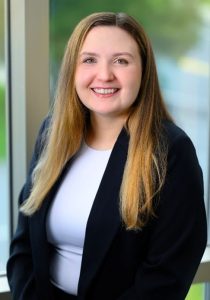
SPRINGFIELD — Doherty, Wallace, Pillsbury and Murphy, P.C. (DWPM) announced that the firm has hired a new attorney, Kevin Engel, to serve as an associate in the business practice.
Engel joined the firm in October after graduating from the University of Maine School of Law, and is admitted to the Bar of the Commonwealth of Massachusetts and the Bar of the State of Maine. He is also a member of the Hampden County Bar Assoc. and the Massachusetts Bar Assoc.
Engel’s law practice includes general business and corporate law, business formation and planning, financing, mergers and acquisitions, and a variety of other business and real-estate matters.
While in law school, he worked at Jackson and MacNichol, a law firm in South Portland, Maine, with a main practice in veterans’ disability law. Prior to law school, he attended Syracuse University and graduated with a bachelor’s degree in sports management. While at Syracuse, he worked for a soccer team in the United Soccer League in business development.
“We are thrilled to have Kevin join us, and we welcome him as an associate in the business practice,” said W. Garth Janes, managing partner at DWPM. “Kevin has hit the ground running and has developed interest and experience in the areas of business-entity formation and planning and real-estate financing. Kevin will be a vital and important part of the growth and future of Doherty, Wallace.”
SPRINGFIELD — The African Hall Committee of the Springfield Museums is seeking nominations for the prestigious Ubora Award and Ahadi Youth Award, which recognize African-American people from Greater Springfield who have demonstrated an extraordinary commitment to community service, education, science, humanities and/or the arts.
Nomination forms are available at springfieldmuseums.org/ubora. The deadline is Monday, March 31. Nominations may be submitted online, or forms can be downloaded and mailed to African Hall Committee, Springfield Museums, 21 Edwards St., Springfield, MA 01103.
“This is a wonderful opportunity to honor the pioneers of our community who go above and beyond to make a difference in the lives of others,” said Terry Powe, chair of the African Hall Committee, which is a volunteer group comprising educators, businesspeople, and community leaders from the African-American community.
Named for the Swahili word meaning ‘excellence,’ the Ubora Award has been awarded annually since 1992; in 2024, the recipient was Rosemary Tracy Woods, executive director of Art for the Soul Gallery.
The Ahadi Youth Award has been given since 2009 to an African-American student (age 19 or younger) who embodies the Swahili word for ‘promise’ and excels both in academics and service to the Greater Springfield community. The student must be currently enrolled in grade 10, 11, or 12. Last year’s recipient was Jackson Counsel-Watkins, a graduate of Central High School who is now a freshman at UMass Amherst.
The Ubora and Ahadi Awards will be presented on Saturday, Sept. 20 at the Springfield Museums. For more information or to become an event sponsor, email [email protected]. MassMutual is the season supporter of the Springfield Museums.
SPRINGFIELD — The STEM Center at Springfield Technical Community College (STCC) will host two events featuring mental-wellness expert Jordan Friedman, also known as the ‘Stress Coach.’ Both events are free and open to STCC students, faculty, staff, and community members.
Friedman, a leader in stress and anxiety reduction for nearly three decades, will speak at STCC on Monday, Feb. 24 and Wednesday, Feb. 26 in the Scibelli Hall (Building 2) auditorium from 12:15 to 1:15 p.m. each day.
The Feb. 24 event, called “The Chill Factory,” will introduce attendees to stress-reducing techniques that Friedman has successfully implemented at colleges nationwide. Light refreshments will be served.
At the Feb. 26 event, called “Stress Coach U,” Friedman will provide in-depth training on stress-management strategies for faculty, staff, and students, equipping them with practical tools to use in their daily lives.
Friedman, the former director of Columbia University’s Health Education Program, is widely recognized for his Stressbusters program, which has benefited students and faculty on college campuses since 1995. He is the author of The Stress Manager’s Manual, hosts “The Chill Factory” podcast, and is currently developing a mobile app designed to help STCC students monitor and manage stress using the techniques he will introduce during his visit.
“We are thrilled to bring Jordan Friedman to STCC,” said Lara Sharp, dean of the School of STEM at STCC. “His expertise in stress reduction will provide valuable tools for our students, faculty, and staff to navigate the pressures of academic and professional life.”
The events are hosted by the STEM Center at STCC, which provides academic support, career exploration, and mentoring for students pursuing science, technology, engineering, and mathematics disciplines. The STEM Center offers tutoring, professional-development workshops, and hands-on learning opportunities to help students succeed in their studies and prepare for careers in high-demand fields.
HOLYOKE — Businessman and entrepreneur Cesar Ruiz has acquired the Wyckoff Country Club in Holyoke for $2.8 million.
The 109-acre property, which includes an 18-hole golf course and clubhouse, including the Daniel Ross Course restaurant, will remain a country club and golf course under Ruiz’s ownership. The restaurant and clubhouse will undergo an approximately $250,000 modernization and renovation. New golf carts will also be acquired, replacing the existing fleet.
“I am thrilled to announce the acquisition of Wyckoff Country Club, a cherished landmark in Holyoke,” Ruiz said. “This 120-acre gem will continue its legacy as a premier country club and vibrant social hub. I look forward to working with the community in Wyckoff’s next growth phase.”
The new Wyckoff is projected to generate jobs and attract existing and new members annually to the once-thriving course. Ruiz said he views the redevelopment of Wyckoff as a complement to an Olympic-styled sports corridor in Holyoke that he envisions with volleyball as a centerpiece. The Wyckoff property will not be used to house or host any of the non-golf sporting activities and facilities. The present staff will remain.
HARTFORD, Conn. — Cirque du Soleil will present OVO on March 13-16 at the XL Center in Hartford. Click here to purchase tickets.
“OVO is a headlong rush into a colourful ecosystem teeming with life, where insects work, eat, crawl, flutter, play, fight, and look for love in a non-stop riot of energy and movement. The insects’ home is a world of biodiversity and beauty filled with noisy action and moments of quiet emotion,” the company explains.
“When a mysterious egg appears in their midst, the insects are awestruck and intensely curious about this iconic object that represents the enigma and cycles of their lives. It’s love at first sight when a gawky, quirky insect arrives in this bustling community and a fabulous ladybug catches his eye — and the feeling is mutual.
“OVO is overflowing with contrasts,” the show description continues. “The hidden, secret world at our feet is revealed as tender and torrid, noisy and quiet, peaceful and chaotic. And as the sun rises on a bright new day, the vibrant cycle of insect life begins anew.”
HARTFORD, Conn. — Low-fare carrier Frontier Airlines has launched non-stop service from Bradley International Airport to Miami International Airport. The service, operating twice per week, brings the airline to five destinations served non-stop from Bradley. To celebrate, the airline is offering fares as low as $49.
“For both Hartford-area consumers looking for adventures in the Sunshine State and for Floridians excited to explore New England, this new service will be a game changer in both convenience and affordability,” said Josh Flyr, vice president of Network and Operations Design at Frontier Airlines. “We can’t wait to show consumers the next chapter of the new Frontier this year, providing exceptional value and a more seamless and comfortable journey.”
Mike Shea, executive director of the Connecticut Airport Authority, offered “thanks to Frontier Airlines for introducing more low-cost flights at Bradley International Airport. We welcome the addition of Frontier’s new, non-stop service to Miami and their continued partnership in connecting our passengers to exciting destinations at affordable fares.”
WEST SPRINGFIELD — On Thursday, March 6, Greater Springfield Habitat for Humanity (GSHFH) will introduce its newest series, “Savvy Seniors,” which is designed to empower seniors with the knowledge and tools to navigate technology and financial matters with confidence. Each session will tackle a different topic to help protect against scams and fraud, ensuring that attendees stay informed, secure, and in control.
“Savvy Seniors” will be held at the West Springfield Public Library, 200 Park St., at 2 p.m. Light refreshments will be served. There is no cost to attend, but participants are required to sign up. Click here to register.
“This is geared only for the senior population or to help parents and grandparents,” said Olga Callirgos, GSHFH Homeowner Programs coordinator. “They are our most vulnerable population and not always up-to-date with technology or aware of the scams out there.”
Classes will be taught by Sue Zielenski, who manages the day-to-day operations at the Bank of America Holyoke Lincoln Financial Center. Spanish speakers are welcome to come, and a Spanish-speaking representative will be in attendance to help with language barriers.
We are excited to announce that BusinessWest has launched a new podcast series, BusinessTalk. Each episode will feature in-depth interviews and discussions with local industry leaders, providing thoughtful perspectives on the Western Massachuetts economy and the many business ventures that keep it running during these challenging times.
Joe Bednar talks to Emma deVillier, owner of deVillier Designs
Emma deVillier was just 19 when she launched her own event-planning business. Today, six years later, she creates both impactful moments and lasting memories with weddings, showers, parties of all kinds, and corporate events, with a growing list of major clients in and well beyond Western Mass. It’s the kind of success story born from being attuned to details small and large, and passionate about the end result. On the next episode of BusinessTalk, deVillier talks withBusinessWestEditor Joe Bednar about the challenges her enterprise, deVillier Designs, has faced along the way, how she continues to evolve the business and its geographic footprint, and more. It’smustlistening, so tune into BusinessTalk, a podcast presented by BusinessWest.
GREAT BARRINGTON — The W.E.B. Du Bois Center for Freedom & Democracy announced the appointment of John Lloyd as its interim director. A seasoned executive with more than two decades of leadership experience in the nonprofit sector, Lloyd brings a wealth of expertise in organizational strategy, financial management, and community engagement to this role. As interim director, he will oversee the center’s strategic initiatives, strengthen partnerships, and continue to advance the legacy of W.E.B. Du Bois by promoting scholarship, civic engagement, and social-justice advocacy.
Lloyd is the principal of Agile Consulting Group, a management consulting practice specializing in nonprofit strategy, financial management, board development, and executive-transition services. Throughout his career, he has successfully guided numerous organizations through periods of transformation, stabilizing leadership teams and fostering sustainable growth.
His interim leadership roles at organizations such as Community Healing Network, InReach, and Domestic Violence Ended have showcased his ability to enhance operational efficiency and advance mission-driven objectives. His leadership approach is deeply rooted in fostering collaboration, driving mission-driven impact, and enhancing operational efficiency to support long-term organizational success.
A Massachusetts native, Lloyd holds a doctorate in organizational learning and development from the University of Pennsylvania, an MBA from Bentley University, and a bachelor’s degree from Plymouth State University. He also serves as an adjunct faculty member at Bentley, where he teaches strategic management and human dynamics in organizations. His commitment to education and leadership development is further reflected in his extensive experience in training and facilitation for nonprofit boards and executives.
“We are thrilled to welcome Dr. John Lloyd as interim executive director for the W.E.B. du Bois Center for Freedom & Democracy, here to lead the way as we take a deep dive into our organization and plan for the future,” said John Speer, president of the center’s board. “John has a stellar reputation for effective leadership, and we know that he is the right choice for this next phase of growth. We’re looking forward to the journey ahead.”
BOSTON — The Massachusetts Senate passed legislation to allocate $425 million to support emergency housing assistance for unhoused families across the Commonwealth. The bill adds cost controls and reporting mechanisms to ensure the state responsibly uses taxpayer dollars, while continuing to fund a system that serves Massachusetts mothers, fathers, and children in crisis.
The bill aims to provide safe shelter and supportive services for unhoused families, establish eligibility requirements and time-limited benefits, and ensure program accountability to help protect Massachusetts residents.
“Today we struck a balance between our fiscal responsibility to Massachusetts taxpayers and our moral obligation to moms, dads, and kids who are in a difficult moment,” Senate President Karen Spilka said. “We prioritize Massachusetts families in need, ensure transparency in the program, and lay the groundwork for long-term solutions to homelessness.”
Sen. Adam Gomez added that “our Commonwealth’s Emergency Assistance (EA) shelter system is designed to provide families facing homelessness across the state a feasible pathway to regain stable housing. This piece of legislation bolsters our critical EA shelter system infrastructure while also maintaining our responsibility to taxpayers. I’m proud to collaborate with my colleagues in the Senate to deliver sound policy for some of our most vulnerable residents.”
The legislation enhances the existing residency requirements for families in the shelter system, ensuring assistance is received by those who are Massachusetts residents. Those in shelter would be able to stay for up to six months, and those families with young children, a pregnant person late in their pregnancy, or in other vulnerable circumstances would be able to receive hardship exemptions to increase their length of stay.
The bill requires verification of personal details to confirm that shelter residents are eligible for benefits. It ensures fiscal responsibility by including new guidelines for implementation of the shelter system intended to control costs and increase safety, and it funds temporary respite sites for families in crisis for up to 30 days and requires adult applicants for emergency housing assistance to disclose prior criminal convictions before placement into housing. The bill would also limit or exclude individuals with serious crimes from receiving assistance.
A previous version of this bill having passed the House of Representatives, the two branches will now reconcile the differences between the bills before sending it to the governor’s desk.
SPRINGFIELD — The Springfield Alumnae Chapter of Delta Sigma Theta Sorority Inc. will host “Brothers That Cook,” a culinary showcase celebrating the talents of local chefs, both amateur and professional. It takes place Saturday, Feb. 22 from 1 to 4 p.m, at Putnam High School, 1300 State St., Springfield.
Attendees can expect an afternoon of food, family-friendly fun, and community connection. They will enjoy a variety of entrees, sides, and desserts prepared by talented local chefs, as well as raffles and prizes, and proceeds from the event will help fund the Springfield Alumnae Chapter’s community programs and initiatives.
The cost is $35 for adults, $15 for children ages 5 to 12, and free for children under 5. For more information, tickets, or to participate as a chef, call Rhonda Jacobs at (413) 250-7900.
NORTHAMPTON — Through March 1, Herrell’s Ice Cream is asking customers to join in its “What’s Your Flavor Idea?” contest. This contest will run in both the 83 Cowls Road, North Amherst, and 8 Old South St., Northampton locations.
According to owner Judy Herrell, “one winner will be chosen from each location on March 1, and Herrell’s will make their ice-cream concept.”
To enter, all a customer must do is come into Herrell’s, fill out an entry slip, and put it in the box (only one idea per entry slip). The winning flavor ideas will win a quartet (four jars) of Herrell’s Hot Fudge, a Herrell’s T-shirt, and bragging rights.
“I can’t wait to see the innovative local genius flavors suggested to create new and exciting trends,” said Rose Ritter, Herrell’s kitchen and ice-cream production manager. “We really love our community engaging with us to make flavor history.”
SPRINGFIELD — Doherty, Wallace, Pillsbury and Murphy, P.C. (DWPM) announced that the firm has elected L. Alexandra Hogan as a new shareholder.
Hogan, who was previously a partner with Sabella Hogan, P.C. in Springfield, became a firm shareholder as of Jan. 1. She brings extensive experience in representing businesses, receivers, insurance companies, and individuals across a variety of legal disciplines. With a strong background in business law, civil litigation, and commercial real estate, she has built a reputation providing strategic, results-oriented advice in complex legal matters.
Hogan’s practice includes civil litigation, such as shareholder disputes, derivate claims, contract enforcement, employment claims, land disputes, commercial evictions, bankruptcy contested and adversary proceedings, federal and state receiverships, will contests, and fiduciary disputes. Her general business practice includes formation, contract negotiations, leases, licensing, financing, and real-estate transactions.
Hogan earned her juris doctorate from Western New England University School of Law in 2008 and her bachelor’s degree in legal studies from Bay Path University. She is licensed to practice in Massachusetts and Connecticut.
“I am excited to join DWPM and work alongside such a talented and dedicated team of professionals,” Hogan said. “The firm’s commitment to providing exceptional legal services and building long-term relationships with clients aligns perfectly with my own values, and I look forward to contributing to the continued success and growth of the firm.”
W. Garth Janes, managing partner at DWPM, added that “we are proud to welcome Alex as a shareholder at Doherty, Wallace. She is a vital part of our business, litigation, and commercial real-estate practice. Alex has added a depth of knowledge and experience to our practice.”
PITTSFIELD — 1Berkshire announced its 2025 slate of newly re-elected board members and officers, as well as the addition of new board members.These individuals will each help support the work of 1Berkshire as the region’s marketing and economic-development organization. All these officers and board members were voted in and welcomed at 1Berkshire’s annual meeting on Dec. 12, 2024.
“I am delighted to welcome such a strong group of new and returning board members, and I’m also very pleased that Lori Gazzillo Kiely will continue to lead the board as our board chair for 2025,” said Jonathan Butler, president and CEO of 1Berkshire. “The board’s extensive knowledge and leadership experience will add tremendous value to the organization, and I am excited about the path ahead. I look forward to working with each of them in the coming year.”
The officers include Lori Gazzillo Kiely (chair), vice president and director of Berkshire Bank Foundation; Jonathan Butler (president), president and CEO of 1Berkshire; Colleen Taylor (vice chair), partner at Bay State Hospitality Group; Peter Stasiowski (vice chair), director of Communications at Interprint Inc.; Margaret Keller (treasurer), executive director of Community Access to the Arts; and Jesse Cook-Dubin (clerk), partner at Cohen Kinne Valicenti & Cook.
New board of directors members include Jesse Cook-Dubin, partner with Cohen Kinne Valicenti & Cook; Ellen Kennedy, president of Berkshire Community College; Harry Monti, president of Berkshire Life Insurance Co. (Guardian); Yina Moore, founder and artistic director of Adams Theater LLC; and Gina Puc, special assistant to the president at Williams College.
HOLYOKE — In partnership with the nonprofit CanCode Communities, Holyoke Community College (HCC) is offering a free, six-week computer training course starting Feb. 25.
The real-time, instructor-led online classes will run Tuesdays and Thursdays from Feb. 25 to April 3, from 5:30 to 8:30 p.m.
The program is aimed at helping individuals build essential computer skills for both personal and professional development. Participants will explore the Microsoft Office (Microsoft 365) suite of programs (Outlook, Word, PowerPoint, Excel, and OneDrive), learn how to create résumés and presentations, manage calendars and tasks, create spreadsheets, send email, and organize and share documents using cloud storage.
“This course is perfect for those with basic computer skills looking to level up their Microsoft 365 knowledge for work, school, or personal use,” said Arvard Lingham, executive director of Community Education and Corporate Training at HCC.
Tuition assistance is available for qualified Massachusetts residents 18 and older. Limited seats are available. Laptops and WiFi hotspots for internet access will be provided for students who need them. Funding for the program comes from the Western Mass Alliance for Digital Equity.
To sign up for classes, email [email protected] or visit cancode.org/apply-now.
SPRINGFIELD — Throughout 2024, Freedom Credit Union contributed financial support to dozens of local charitable organizations throughout the four counties of Western Mass., donating more than $194,000. Additionally, Freedom employees recorded more than 600 hours of volunteer time in 2024.
“Our members and staff are passionate about supporting our community,” Freedom Credit Union President Glenn Welch said. “In 2024, we were proud to increase our donations over 2023. This year, we’re asking our members to deepen their engagement by nominating local charitable organizations for us to support.”
The 2024 total donated includes more than $130,000 through corporate giving initiatives, more than $11,000 in member and employee donations through Freedom’s Month of Giving campaigns, and more than $53,000 through local branch and department discretionary fund donations.
Supported organizations include Alzheimer’s Assoc.; Baystate Foundation – Rays of Hope; Baystate Health; Boys and Girls Clubs of Chicopee, Ludlow, and Springfield; Children’s Advocacy Centers – Franklin County and Hampden County; Clinical Support Options (Friends of the Homeless); Cooley Dickinson Hospital; Elms College; Food Bank of Western Massachusetts; Gándara Center; Gray House; Greater Springfield and Pioneer Valley Habitat for Humanity; Greenfield Community College; Make-A-Wish; Miracle League of Western Massachusetts; National MS Society; New North Citizens Council; Ronald McDonald House; Shriners Children’s New England; Spirit of Springfield; Springfield Jazz Fest; Springfield Museums; Springfield School Volunteers; Stanley Park of Westfield; Town of Ludlow 250th celebration; Town of West Springfield 250th celebration; Western New England University; Westover Galaxy Community Council; and YMCAs in Springfield and Greenfield.
“Freedom was founded on a cooperative, not corporate, spirit,” Welch said. “We know that the financial health of our members is entwined with the financial health of our community, so our charitable efforts remain ongoing. In January, we raised funds for the Massachusetts Coalition for the Homeless, and throughout the month of February, we are asking the community to support two Pioneer Valley animal shelters — the Foundation for TJO Animals and Franklin County Regional Dog Shelter — in their work for our furry and feathered friends. Stay tuned for more opportunities all year long.”
By Amelia J. Holstrom, Esq. and John S. Gannon, Esq.
Last year, Massachusetts joined a growing list of states with pay-transparency laws when Gov. Maura Healey signed “An Act Relative to Salary Range Transparency” into law. The law, which takes effect in various stages this year, will require many Massachusetts employers to disclose salary and pay ranges in all job postings and advertisements. The law also requires larger businesses to file certain wage data and information with the Commonwealth of Massachusetts.
According to the state Office of Labor and Workforce Development, the pay-transparency law is aimed at eliminating gender, racial, and other wage disparities, as well as boosting employee loyalty and improving morale. Here is what employers need to know.
Beginning Oct. 29, all businesses in the Commonwealth with 25 or more employees will be required to:
• Disclose pay-range information in all job postings and/or advertisements. This includes “any advertisement or job posting intended to recruit job applicants for a particular and specific employment position,” regardless of whether the employer recruits directly or utilizes a third party for such purposes;
• Disclose pay-range information to current employees who are transferred or promoted to a new position for the new position; and
• Upon request, provide pay-range information to employees for the positions they hold and applicants for the positions to which they applied.
The law defines pay range as the “annual salary or hourly wage range that the covered employer reasonably and in good faith expects to pay for that position at that time.” The statute also prohibits employers from retaliating against any employee, or applicant, who requests pay-range information. Employers who violate the new pay-transparency law can be fined by the Massachusetts attorney general. Conceivably, violations could also trigger a larger inspection of the employer’s pay practices.
Larger Employers Required to File Wage Reports
In addition to the new pay disclosure obligations discussed above, employers with 100 or more employees in the Commonwealth who are subject to the federal EEO-1, EEO-3, EEO-4, or EEO-5 reporting requirements will be required to file certain workforce demographic data with the Commonwealth of Massachusetts on an annual or every-other-year basis. Currently, EEO reports contain workforce demographic and pay data categorized by race, ethnicity, sex, and job category.
As of this past Feb. 3, employers with 100 or more employees in the Commonwealth subject to the EEO-1 reporting requirements were required to file a copy of their EEO-1 data report with the Commonwealth of Massachusetts. The law requires this to be done annually for EEO-1-covered employers on Feb. 1 or the next business day.
On the same date, employers subject to the EEO-3 (covered unions) and EEO-5 (covered schools) reporting requirements were required to file a copy of those reports with the Commonwealth. EEO-3 and EEO-5 reports need to be filed every other year. Likewise, employers subject to the EEO-4 (covered state and local governments) reporting requirements will need to file a copy of those reports every other year, beginning on Feb. 1, 2026.
Recently, the Massachusetts Executive Office of Labor and Workforce Development published a set of frequently asked questions designed to help employers determine if they are covered by the new filing requirements and, if so, what they need to do to comply. The FAQs can be found at www.mass.gov/info-details/workforce-data-reporting-faqs.
The reports submitted by employers will not be public records under Massachusetts law. In other words, members of the public will not be able to request and receive copies of these records. The Commonwealth, however, will use the data submitted by employers to publish aggregate wage and workforce data on the Department of Labor and Workforce Development’s website no later than July 1 of each year, beginning in 2025. These aggregate reports will be broken down by industry.
Next Steps
Needless to say, if you have more than 100 employees in Massachusetts and are subject to EEO reporting requirements, and you have not filed your wage-data report with the Commonwealth of Massachusetts, you need to act fast. As for the salary-range disclosures, although Oct. 29 may seem far away, employers should start preparing now to comply with the deadlines. If not already in place, employers need to start developing pay ranges for each position in their workforce.
Employers also need to consider how and to what extent posting pay ranges in job postings will impact morale in the workplace. For example, consider a scenario where your business places an advertisement for an entry-level position at $28 per hour. Now, let’s assume someone with your company has been working in that role (or a similar job) for a few years, and is earning the same wage. That current employee is likely to learn about the advertisement and question why they are not making more money. Employers need to be prepared with a communication strategy should this situation unfold.
Businesses may also want to consider conducting a pay-equity audit to ensure there are not any pay disparities, as employees will now be able to request and discuss this information in the workplace. There are other important benefits to conducting a pay-equity audit under the Massachusetts Equal Pay Act. For starters, it may help identify if you have any potential pay-equity liability in your workplace. Also, employers who conduct good-faith self-evaluations of their pay practices may have an affirmative defense against a pay-equity lawsuit.
If you plan to conduct a pay-equity audit, you should strongly consider working with your employment counsel to preserve the attorney-client privilege, which may prevent certain information from being disclosed in any subsequent litigation.
Amelia Holstrom and John Gannon are partners with the Springfield-based law firm Skoler, Abbott & Presser, P.C., a law firm exclusively practicing labor and employment law for more than a half-century, focusing on litigation avoidance, employment litigation, and labor law and relations; (413) 737-4753.
In January 2025, President Trump issued the “Ending Illegal Discrimination and Restoring Merit-based Opportunity” executive order, which significantly impacts private employers, particularly those that implement diversity, equity, and inclusion (DEI) programs. This order aims to curtail employment practices that provide preferential treatment based on race, sex, or other protected characteristics, reinforcing a strict adherence to merit-based hiring and advancement.
For private employers, especially federal contractors and organizations with established DEI initiatives, understanding the legal implications of this order is essential to ensure compliance while mitigating potential liabilities.
Key Legal Implications for Private Employers
• Revocation of affirmative-action mandates for federal contractors. The order revokes prior mandates, including Executive Order 11246, which required federal contractors to adopt affirmative-action programs to address historical disparities in hiring. The revocation effectively eliminates federal obligations for contractors to develop workforce diversity plans or set hiring goals based on demographic representation.
• Regulatory scrutiny of employment practices. Federal agencies, particularly the Department of Justice (DOJ) and the Equal Employment Opportunity Commission (EEOC), have been directed to investigate employment policies that could be deemed discriminatory under the new legal framework. Employers must ensure that any DEI initiatives remain neutral and do not grant or deny opportunities based on race, gender, or other protected classifications.
• Merit-based employment enforcement. The executive order underscores the importance of meritocracy, requiring employers to justify employment decisions strictly based on qualifications, experience, and performance. Organizations implementing hiring quotas, targeted recruitment efforts, or employee resource groups may need to re-evaluate these programs to avoid potential litigation risks.
• Compliance audits and investigations. The attorney general is tasked with formulating an enforcement plan that includes identifying employers whose DEI initiatives may conflict with federal non-discrimination laws. Employers should anticipate increased oversight, potential audits, and legal challenges if their policies include race- or gender-conscious hiring, promotions, or training programs.
Compliance Strategies for Employers
Given the legal uncertainties surrounding this order, private employers must take proactive steps to avoid violations and potential legal repercussions.
• Conduct an internal policy review. Employers should undertake a comprehensive audit of all DEI programs, training materials, hiring practices, and workplace policies. Any language or initiatives that suggest preferential treatment based on race, gender, or ethnicity should be reassessed to ensure alignment with the updated legal framework.
• Emphasize equal opportunity and non-discrimination. To remain compliant, companies should reaffirm their commitment to equal opportunity without the use of race- or gender-based preferences. Employee training programs should be reviewed to ensure they focus on compliance with federal anti-discrimination laws rather than implicit bias or identity-based initiatives.
• Monitor federal guidance and legal challenges. Since the implementation of this order may lead to litigation and policy revisions, employers should stay informed of further legal developments from the DOJ, EEOC, and other regulatory bodies. It is advisable to consult employment-law attorneys to navigate these changes effectively.
• Prepare for increased scrutiny and potential investigations. Employers, particularly those with government contracts, should be prepared for potential audits and legal reviews. Documentation demonstrating that hiring and promotion decisions are based solely on qualifications and performance will be crucial in defending against any claims of discriminatory practices.
Conclusion
The repeal of affirmative-action mandates and the increased focus on merit-based employment and advancement signal a substantial shift in workplace compliance requirements for private employers. Organizations that have historically engaged in DEI initiatives must carefully reassess their programs to ensure they do not run afoul of federal regulations. While diversity efforts are not outright prohibited, any policies that confer advantages or disadvantages based on protected characteristics may expose employers to legal liability.
To mitigate risks, employers should prioritize objective hiring and promotion criteria, eliminate race- or gender-based preferences, and stay informed on regulatory updates. Consulting legal experts and conducting internal audits will be critical steps in ensuring compliance with this evolving legal landscape.
Krupa Kotecha is an attorney who specializes in labor and employment-law matters at the Royal Law Firm LLP, a woman-owned, women-managed corporate law firm that is certified as a women’s business enterprise with the Massachusetts Supplier Diversity Office, the National Assoc. of Minority and Women Owned Law Firms, and the Women’s Business Enterprise National Council.
In a recent decision, the Massachusetts Supreme Judicial Court (SJC) created new legal precedent surrounding the return of engagement rings when the engagement ends and the planned wedding does not ensue. The court’s ruling in Johnson v. Settino abolishes a six-decade-old, fault-based analysis, paving the way for a more contemporary standard for ownership in such cases.
In 1938, Massachusetts took its stance on the extent to which courts would resolve disputes arising from private relationships. Massachusetts enacted the Heart Balm Act, which prohibited plaintiffs from seeking compensation for emotional damages stemming from the end of a romantic relationship. Specifically, breaches of contracts to marry will not be causes of action recognized by courts in the Commonwealth (M.G.L. c. 207, §47A).
Alexandre P. Pereira
“A failed engagement that prevented in what all likelihood would have been a failed marriage is not a situation where a court should be required to impute blame to one party.”
In 1959, the case of De Cicco v. Barker marked a significant moment in this legal landscape. De Cicco held that engagement rings were, in essence, “pledges given on the implied condition that the marriage take place,” meaning that the Massachusetts Heart Balm Act would not preclude actions for the recovery of an engagement ring. The decision was rooted in principles of equity, aiming to prevent the person who received the ring from becoming unjustly enriched when the engagement fails. De Cicco created a fault-based analysis, allowing the donor to reclaim the ring only if the engagement ended without any fault of their own.
Over the years, jurisdictions across the country have shifted away from the fault-based approach. Until recently, Massachusetts had not revisited this standard — until the SJC took up Johnson v. Settino.
The facts of Johnson v. Settino embody the tumultuousness of modern relationships. In the summer of 2016, Johnson began dating Settino. Over the course of their relationship, he showered her with lavish gifts of jewelry, clothing, shoes, and handbags. A year later, Johnson proposed to Settino with a $70,000 diamond engagement ring.
In November 2017, Johnson discovered text messages on Settino’s phone indicating an intimate relationship with another man. Following this discovery, he terminated the engagement. Johnson subsequently sought the return of the diamond engagement ring and wedding bands.
At trial, the judge ruled that Johnson had given the rings on the condition of marriage but held him at fault for the breakup due to his unfounded suspicions of infidelity. Settino was awarded the engagement ring and wedding band. After an appeal to the Massachusetts Appeals Court, the trial court’s judgment was reversed after holding that ending an engagement does not inherently assign blame to that party. The Appeals Court concluded that Johnson’s actions were reasonable, and the case was ultimately heard by the Massachusetts Supreme Judicial Court.
The SJC’s ruling in Johnson v. Settino overturned the fault-based standard that stood firm for the better half of a century. Although the standard was equitable in theory, time has shown the standard to be less practicable. Engagements often fail without clear fault by either party. An engagement period can be, and perhaps should be, viewed as a time to test the permanency of a relationship prior to marriage.
A failed engagement that prevented in what all likelihood would have been a failed marriage is not a situation where a court should be required to impute blame to one party. The court argued that assigning fault in such circumstances contradicts the equitable principles the analysis was meant to promote.
Additionally, the SJC pointed out that the fault-based standard is largely irrelevant in Massachusetts divorce proceedings. Likewise, the justices determined that fault should not be a relevant consideration in the termination of engagements.
The court ultimately ruled in favor of Johnson, the plaintiff, marking a notable shift in Massachusetts law. Engagement rings are gifts contingent on marriage. When the marriage does not occur, the ring is to be returned to the donor, irrespective of fault.
Alexandre P. Pereira is an attorney with the law firm of Bacon Wilson, P.C. He is a member of the Hampden County Bar Assoc. and the Estate Planning Council of Hampden County, and concentrates his prapracticectice in the areas of elder law, estate planning, long-term-care planning, probate, and special-needs estate planning; (413) 781-0560; [email protected]
WILBRAHAM — The freezing temperatures and icy roads are no match for the third annual Ride to Remember INSIDE Ride. Members of the community are encouraged to register for this year’s event, taking place on Sunday, March 2 at the Scantic Valley YMCA in Wilbraham.
Registration for the event is $45, which includes a 45-minute spin class, commemorative T-shirt, and light refreshments. Click here to register. Space is limited, so early registration is recommended.
“This is a great opportunity for our region’s spinning community to show support for the Ride to Remember and the impact that this ride has on so many,” said retired Springfield Police Sgt. John Delaney, ride director. “This event is all about coming together, raising awareness, and honoring our region’s first responders.”
All proceeds from The INSIDE Ride will benefit Ride to Remember XIV. Founded in 2012, Ride to Remember is an annual outdoor cycling event to commemorate fallen first responders. Led by Delaney and a team of volunteers, the event began as a tribute to fallen Springfield Police Officer Kevin Ambrose, who was killed in the line of duty. To honor his memory and pay respect to his loved ones, 180 cyclists made the 100-mile trek from Springfield to Boston.
Since then, the ride has grown to nearly 500 riders and honors all first responders, including police, firefighters, corrections officers, and ambulance workers. Over the years, the ride’s route has included treks to Boston, Worcester, and Hartford, as well as regional rides around Western Mass. The mission of the ride is to honor fallen first responders by raising funds to support their families and community organizations that work to make our neighborhoods safer and healthier for the families who live here.
Proceeds from the ride have supported Christina’s House, On-Site Academy, Square One, multiple police and firefighter memorials, several neighborhood playgrounds and soccer fields, and other community-based initiatives.
Delaney was honored by BusinessWest this month as one of its 2025 Difference Makers for his long-time leadership of Ride to Remember.
SPRINGFIELD — American International College (AIC) appointed Elizabeth (Beth) Norris Neu as vice president for Finance. With more than 15 years of leadership experience in the nonprofit and education sectors, Neu brings a forward-thinking approach to financial management that aligns with AIC’s mission of access and opportunity.
In her new role, Neu will focus on strengthening the college’s financial position by enhancing financial controls, processes, and efficiencies. Her efforts will ensure that AIC maximizes its resources in support of students while maintaining long-term fiscal stability.
“Beth’s leadership and expertise will be invaluable as we continue to strengthen AIC’s financial foundation,” said Nicolle Cestero, interim president. “Her commitment to collaboration and financial stewardship will help ensure the college’s long-term success in serving our students.”
Neu most recently served as chief financial officer at Project Adventure Inc., where she played a pivotal role in stabilizing the organization’s finances and achieving break-even performance. She was also part of the team that led the organization to year-end surpluses. She also held positions as director of Development and director of Finance at Project Adventure and previously worked as a middle- and high-school science and math teacher.
Neu holds an MBA, a master’s degree in information systems, and a certificate in nonprofit management from Boston University Questrom School of Business. She earned a bachelor’s degree in biology from Brown University and holds a Six Sigma Green Belt certification.
“I am so excited to join the AIC team and be a part of Pathway to Progress,” Neu said, referring to AIC’s new organizational business plan. “I’m inspired by the mission and impact AIC has on young people in both their personal and professional lives.”
ENFIELD, Conn. — Andrew Associates, a certified woman-owned direct-marketing company, is celebrating its 40th anniversary this quarter. Founded in 1985 by Judith Knapp in Wilbraham, the company started in a garage with just one employee. Today, Andrew Associates has grown into a respected leader in the direct-marketing industry, partnering with Fortune 100 companies, nonprofit organizations, higher-education institutions, and government agencies.
From its state-of-the-art, 45,000 square-foot sustainable facility in Enfield, Conn., Andrew Associates employs 45 dedicated professionals who provide clients with a full suite of services, including data management, modeling and analytics, direct mail, printing, fulfillment, and creative marketing solutions.
In 2008, recognizing the unique needs of nonprofit organizations and educational institutions, Andrew Associates launched a specialized nonprofit division focused on enhancing fundraising and communication efforts. This division has since helped local, regional, and national nonprofits improve their donor database management, annual giving campaigns, planned giving initiatives, and capital campaigns.
Looking back on Andrew Associates’ journey, President Graeme Bazarian reflected on the company’s achievements and future goals.
“Celebrating 40 years is a testament to the hard work and dedication of our team. From our humble beginnings to becoming a trusted partner for some of the nation’s leading organizations, we’re proud of what we’ve built and excited for the future. As we look ahead, our focus remains on providing innovative, results-driven solutions for our clients.”
AMHERST — Kuhn Riddle Architects and Designers announced that three of its architects have achieved the prestigious designation of PHIUS certified passive house consultant, reinforcing the firm’s commitment to sustainable and energy-efficient design.
Thom Barry, Brad Hutchinson, and Ruoqi Zhong recently completed the rigorous training and certification process required by the Passive House Institute United States (PHIUS).
Passive house design principles focus on dramatically reducing energy consumption while maximizing indoor comfort and air quality. These high-performance buildings will also meet the Massachusetts stretch and opt-in energy codes.
By integrating passive house principles into residential, commercial, and institutional projects, Kuhn Riddle is at the forefront of designing cutting-edge, high-performance buildings that are both environmentally responsible and cost-effective in the long term.
“We are thrilled to have Thom, Brad, and Ruoqi join Garrison Piers-Gamble as our growing team of certified passive house consultants,” said Aelan Tierney, president of Kuhn Riddle. “Their expertise will help us push the boundaries of energy-efficient architecture and deliver sustainable solutions to our clients.”
Difference Makers was launched in 2009 to recognize and celebrate the work of individuals, groups, businesses, and institutions that are positively impacting the communities of Western Mass. As our winners have shown, there are many ways to make a difference within our community.
Join Us Wednesday, April 9th at The Log Cabin in Holyoke
THANK YOU TO OUR PARTNER SPONSORS!
Jennie Adamczyk
Executive Director, Providence Ministries
Jennie oversees programs that include a soup kitchen, a pantry, sober homes for men, and a warming shelter. She does all this and more with determination, imagination, and a focus on identifying and meeting critical needs.
Sheryl has built a wide-ranging nonprofit that includes four veterinary hospitals and a range of support services that help more than 56,000 animals each year and, just as important, keep families and their pets together.
Andrea is the leader of a successful healthcare emergency field-service response organization but also the leader of numerous initiatives that bring people together, create dialogue, build community, and help people become the best versions of themselves.
Mychal is a serial entrepreneur and successful owner of a unique marketing business, but also a mentor, role model, and true inspiration to aspiring entrepreneurs, particularly young people, helping them get off the ground or to the next level.
John helped create what has become one of the region’s premier bicycling events — not a competitive ride, but a communal one that has raised awareness of fallen heroes and money for a host of important charitable causes across the region.
President and CEO, Naismith Memorial Basketball Hall of Fame
John has led the Hall over the past two decades through myriad challenges, while also becoming greatly involved in the Western Mass. community, especially with programs involving young people and sports.
The Michael J. Dias Foundation has grown out of tragedy — the deaths of several young men due to drug addiction — into a series of sober homes where individuals in recovery can develop resilience, responsibility, accountability, and a chance to move on to a successful life of independence.
Dan likes to use sports metaphors involving the importance of teamwork. But he practices what he preaches and leads by example, and has built a strong team committed to getting involved and giving back to the community.
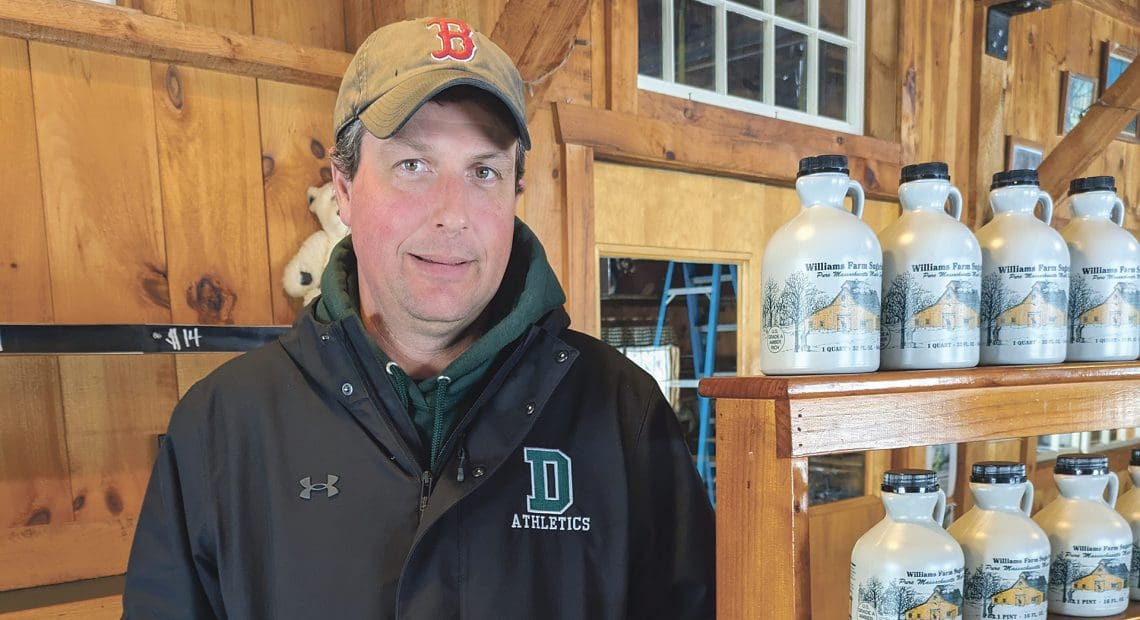
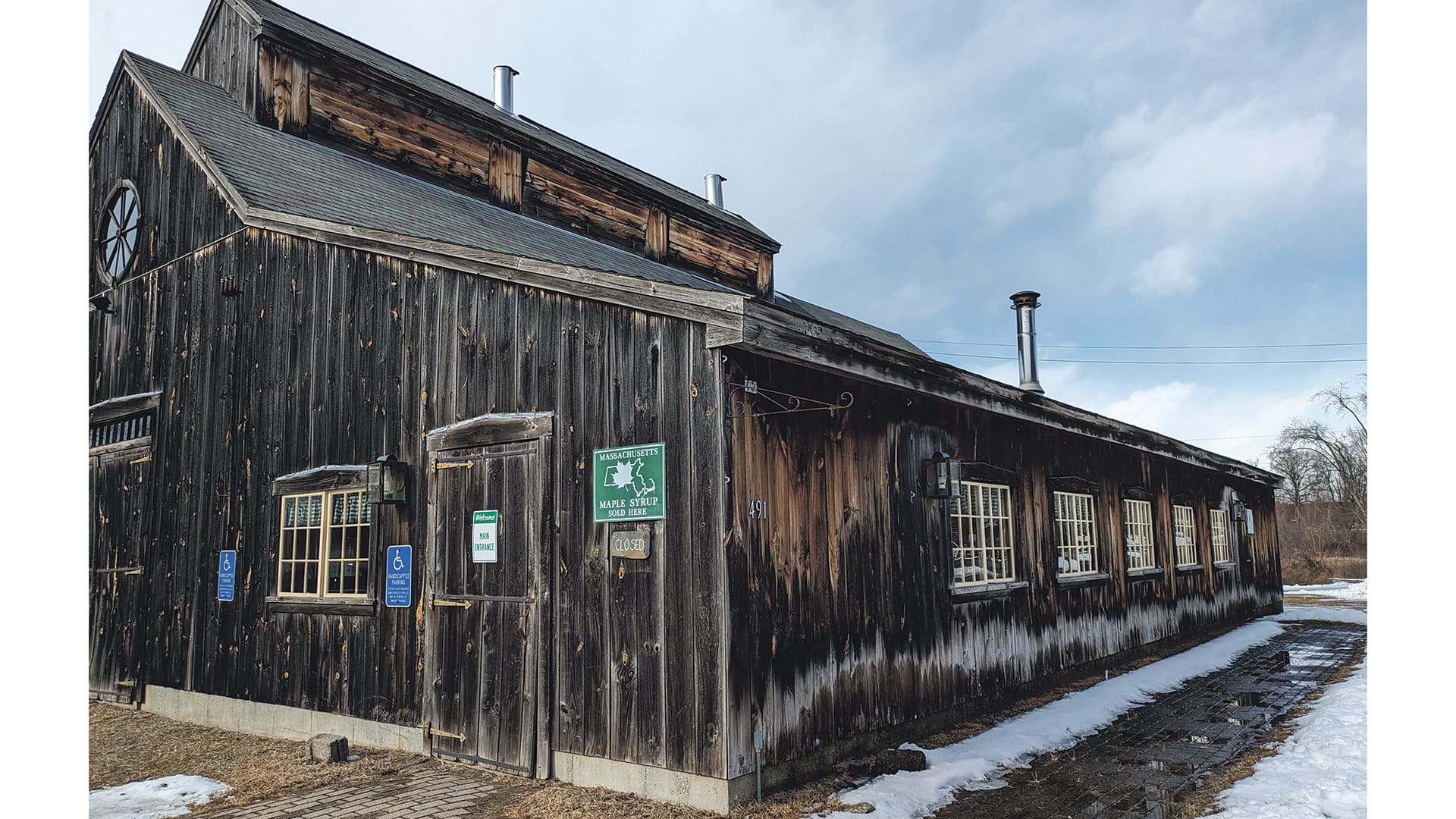
Chip Williams (pictured) and his sisters represent the fifth generation making maple syrup at the family’s sugarhouse.
Chip Williams has his eye on the weather reports around Deerfield. He’s not looking for long stretches of mild weather, or cold, for that matter. He wants both. Every day.
That’s because sugar maple trees in this region are tapped beginning in late February, and temperatures are critical for sap production — specifically fluctuating temps, with the ideal conditions being nights in the low 20s followed by days in the 40- to 45-degree range. This freeze-thaw cycle is necessary because, as the temperature warms, the ice inside the trunk melts, and the ice-compressed gases expand, forcing the sap out of the trunk.
“It’s all temperature-dependent. We need the right weather, and when I say right weather, it’s the freezing and thawing cycles. If we have that for an extended period of time, we’ll have a decent season,” said Williams, who is part of the fifth generation operating Williams Farm Sugarhouse, which starts selling maple syrup — and breakfast — to the public on Feb. 21.
“What often happens is a week of warm and then a week of cold, longer cycles of ups and downs,” he noted, “but we really want a freeze at night, warm during the day, freeze at night, warm during the day, and not so much warm for a week and then cold for a week.”
The reason, he said, is that the sap flows only on a warm-up. “So, after a freeze, that next day, when it warms up, it’ll flow, but it’ll only flow for a certain amount of time before you need it to freeze again. If it warms up and stays warm, it’ll run for a little while, and then you won’t get anything.”
That thermometer watching is just one of many challenges he and his sisters, Kelly Scofield and Casey Williams, take on when they work at the sugarhouse every spring. They all have regular jobs — Chip is the athletic grounds supervisor at Deerfield Academy, while Kelly and Casey work in hotel management in Eastern Mass. — but the maple-syrup season is a labor of love for the siblings, who are also joined by their father, Sandy, who comes up from Florida during tapping and boiling season.
“After a freeze, that next day, when it warms up, it’ll flow, but it’ll only flow for a certain amount of time before you need it to freeze again. If it warms up and stays warm, it’ll run for a little while, and then you won’t get anything.”
It’s also a tradition for plenty of local families as well, in a region that boasts a number of sugarhouses, few with as long a history as this one. The facility is open Friday through Sunday for pancakes, french toast, waffles, and more, all topped with that fresh maple syrup. And if they like what they taste, they can bring home syrup, maple cream, maple candy, and more from the store.
“We see a lot of the same families every year,” Chip said. “And when we’re boiling, we invite people to come back and ask questions, and we’ll explain the process. It’s really interesting to get people’s feedback — a lot of people have no idea how you even start making maple syrup, and people are amazed you take this product that looks like water and make it into this all-natural sweetener.”
It’s a product that has brought some sweet times for the Williams family since Milton Hubbard Williams began the syrup tradition in the mid-1800s, followed by his son, Kenneth Sanderson Williams. The original Williams sugarhouse was one of 13 located on Mount Toby in Sunderland.
The Williams Farm Sugarhouse has been at its current location along Route 5 since 1994. Staff Photo
In his diary, Hubbard Williams wrote, “March 6, 1853, commenced sugaring. March 25, 1853, traded sugar for coat and pants in Amherst.” Thirty-six years later, he was still sugaring, and on April 1, 1889, he wrote, “Gathered 20 bls [barrels] sap for four successive days. Had the best week I ever knew … syrup sells readily.”
In the mid-1960s, amid growing success and realizing the need for a better retail location, Kenneth Williams Jr. and his brother, Milton, moved the third-generation sugarhouse off the mountain to Route 47 in North Sunderland. The final move came in 1994, when the family, led by fourth-generation operator Sandy Williams, built a sugarhouse on Route 5 in Deerfield, near its sweet-corn farm.
“The reason we moved here is our farm was just right up the road in Old Deerfield,” Chip said. “We would drive over to Sunderland every day to operate the sugarhouse during the sugaring season, so when this property here came up for sale, my family bought it, and we were able to move everything closer to our operation.”
“When we’re boiling, we invite people to come back and ask questions, and we’ll explain the process. It’s really interesting to get people’s feedback — a lot of people have no idea how you even start making maple syrup.”
In Sunderland, they served coffee, donuts, ‘sugar on snow,’ and the like, but the move to Deerfield saw the food-service operation expand to serving meals — first on weekends, then seven days a week for a while, and currently three days a week. They stopped growing corn up the road 2012, but the sugarhouse — and its almost two centuries of tradition — lives on.
From Tree to Plate
Some years are weaker than others because of the uncertainty of the weather, Williams said. Last year wasn’t particularly strong for sap production, but 2010 was much worse, with only about 20% of the normal crop.
“It just warmed up around the middle of March, and it never froze again. It just stayed warm. So we didn’t get any more sap,” he explained, adding that an early start to those cold-warm cycles are important. “Here at our sugarhouse, if we don’t make any syrup in February, a lot of years it’s hard for us to have a really good year; we find that whatever we miss early, we never make up on the other end.”
When tapping a sugar maple, it’s best to drill a taphole that can provide an ample amount of sap while maintaining the long-term health and sap production of the tree. In a good year, one tap can yield around 10 gallons of sap, or almost one quart of syrup. Sap is, on average, about 2% sugar, and it takes about 45 gallons of sap to make one gallon of syrup.
Sap flows best from the trees when freezing nights are followed by warm days. Staff Photo
The traditional method of gathering sap is to hang four-gallon buckets below the tap to catch the drip. The process is very labor-intensive, and buckets must be gathered and emptied up to once a day. The Williams Farm enterprise hangs about 3,000 buckets each season, tapping more than 1,000 trees in Deerfield and Sunderland.
A less labor-intensive way of collecting sap is through a tubing pipeline, which utilizes gravity to gather sap into holding tanks that are positioned lower than the trees or at a slope. While the initial cost of setting up lines is greater than that of buckets, once lines are established, they can hold for 15 to 20 years. The farm has about 1,000 taps on pipelines, but is looking to expand that number in the future.
As noted earlier, the sap gathered from a sugar maple tree is not the same as what’s poured on pancakes. Sap has a large concentration of water and a small concentration of sugar, and the additional water must be boiled off in an evaporator.
In the sugarhouse, sap is continuously fed into the evaporator, where it flows through a series of troughs. The sap is boiling the entire time, and when it reaches the proper density at 219 degrees, it can then be called syrup. The more water that is boiled away from the syrup, the thicker it gets. Products like maple cream, candy, hard blocks, and granulated sugar are all made by further reducing the syrup at higher temperatures.
Williams noted that the team starts boiling as soon as they begin to get sap into the sugarhouse, and the sap is processed at its freshest in order to ensure the highest-quality syrup.
They always try to boil on weekends so the visiting public can witness the process, although, because sap flow is so dependent on the weather, they can’t guarantee they will be boiling on any given day, so for customers who want to see the process, it’s best to call ahead or check the website for projected boiling times.
“We like to get started in February, but it doesn’t always pan out. We’re just at the mercy of Mother Nature,” Williams told BusinessWest. “That’s some of what makes it interesting too — you don’t know. People will ask, ‘how’s this year going to be?’ And it’s like, ‘well, we don’t know until April, once it’s all over.’ We almost always make enough syrup for our customers, and it’s always good syrup. So, any year we can do this is a good year.”
Sweet Moments
Williams said he looks forward to this season for a number of reasons, including being close to nature.
“As the days get longer and it starts to warm up a little bit, it’s nice just getting out in the woods and working on the lines. I don’t get to be out as much as I did when we were farming full-time. I’d be out all the time, if not for my full-time job, so we have some people that help us.”
The sugarhouse is open to the public from late February into early April, and those dates aren’t set in stone so much as dependent, as noted earlier, on the weather and the frequency of that freeze-thaw cycle.
“Traditionally, we would always start right around the week of school vacation. Growing up, I remember having that February break, going out with the guys tapping,” he recalled, adding that sugaring season has long been a community tradition as well. “Because this craft is native to this region, it seems like people really have a tradition of visiting these houses and looking forward to it.
“And it’s important to my sisters and me to keep the tradition going,” he added, noting that he has three sons of his own. “Obviously, I don’t want to put any pressure on them doing this, but they love it here, and they help out. My 11-year-old likes to run the register up front.”
Williams Farm Sugarhouse does some wholesaling as well, selling syrup to local farmstands and maple candy to Richardson’s Candy Kitchen, right across the street. There are online sales as well, “but that’s tricky; you’re just a small fish in a big ocean. But once you make a few sales and people like your product, they’ll keep buying.”
And the family will keep tapping, boiling, and serving breakfast.
“There are times, like on a busy Sunday toward the end of the year, when we’re just dragging, but it’s fun,” he said. “We have three generations of family helping us out, too, so that’s great. Everyone kind of chips in to get it done.”
By Julie A. Dialessi-Lafley, Esq. and Britaney N. Guzman-Bailey, Esq.
The Massachusetts Parentage Act (MPA), a new law that went into effect on Jan. 1, revolutionizes how parentage may be legally recognized in the Commonwealth.
The MPA replaces outdated language with inclusive, gender-neutral language so that its provisions reflect the great diversity of families in Massachusetts. For example, ‘paternity’ is now ‘parentage,’ ‘mother and father’ is now ‘parents,’ and the statute is now titled “Non-marital Children and Parentage of Children” rather than “Children Born Out of Wedlock.”
Parentage is the legal relationship between a child and a parent of the child. Establishing parentage is important for the well-being of a child because the relationship is the foundation of various rights and responsibilities for the parent and child alike, including access to educational and medical records, tax benefits, health insurance, government benefits, inheritance rights, financial support, custody, and parenting time.
The MPA does not make changes to custody, parenting time, or child support. The changes pertain to who can be the legal parent of a child and how parentage can be established. Pathways to parentage include giving birth, executing a voluntary acknowledgement of parentage (VAP) with the birth parent, adoption, assisted reproduction and surrogacy, obtaining an adjudication of parentage, de facto parentage, and presumptions of parentage.
A VAP is a simple form that parents can sign in the hospital or later to voluntarily establish parentage. VAPs were previously available only to genetic parents. Now, the act codifies that, in addition to genetic parents, presumed parents and intended parents can establish parentage through a VAP.
This means that a person who utilizes assisted reproduction when building their family, or a person who does not have a genetic relationship with the child but receives the child in their home and openly holds out the child as their own, has new options to establish parentage.
New Protections
As a VAP is an equivalent to a court decree of parentage, this change is particularly important for the security of LGBTQ families who often face discrimination and worry about the status of their parent-child relationship. Prior to the MPA, LGBTQ families routinely relied on confirmatory adoptions, or second-parent adoptions, to establish parentage.
Julie Dialessi-Lafley
Britaney Guzman-Bailey
“As a VAP is an equivalent to a court decree of parentage, this change is particularly important for the security of LGBTQ families who often face discrimination and worry about the status of their parent-child relationship.”
Although a VAP may now be an easier route for LGBTQ families to establish parentage, it is important for individuals to speak with an attorney regarding the specific facts surrounding their family to obtain advice on whether a confirmatory adoption is still recommended as an additional level of protection.
A de facto parent is a parent that does not have a biological relation to the child but has meaningfully participated in the child’s life as a family member. Although Massachusetts courts have long acknowledged de facto parenthood, the common-law doctrine only permitted de facto parents to seek parenting time. The MPA now includes persons who establish de facto parentage within the legal definition of ‘parent,’ therefore permitting de facto parents to petition for all rights and responsibilities that may stem from the parent-child relationship. Accordingly, de facto parents may now obtain custody of their child if a court determines doing so is in the best interest of the child.
The person seeking to establish de facto parentage must demonstrate seven requirements: they resided with the child as a regular member of the child’s household for a period determined by the child’s age, they engaged in consistent caregiving of the child, they undertook full and permanent responsibilities of a parent of the child without expectation or payment of financial compensation, they held out the child as their own child, they established a bonded and dependent relationship with the child that is parental in nature, the child’s parent(s) consented to the bonded and dependent relationship, and adjudicating them to be the child’s parent is in the child’s best interest.
Consent can be implied when a parent has not engaged with the child directly or participated in decision making or provided regular financial support for at least two years. Notably, a parent cannot bring a de facto parentage action against another to request child support under the MPA; the act only authorizes the alleged de facto parent to commence the action.
The act also authorizes the court to adjudicate a child to have more than two parents if doing so is in the best interest of the child. This can happen when more than two people have competing claims to parentage of a child. The court will consider the child’s age, the length of time each parent has assumed the role of parent, the nature of the parent-child relationship, the basis for each person’s claim to parentage, the harm to the child if the relationship is not recognized, and any other factor arising from disruption of the relationship between the child and each person.
Further Implications
Assisted reproduction is a method of causing pregnancy other than sexual intercourse, including but not limited to artificial insemination; intrauterine, intracervical, or vaginal insemination; donation of gametes or embryos; IVF; and transfer of embryos. The MPA provides that a person who consents to assisted reproduction shall be a parent of the child.
Consent can be shown through a record signed by the birth parent and the intended parent on or after the birth of the child. If there is no written record, consent can be established through a finding by the court that, prior to conception or the birth, the parties agreed that they would be parents of the child, or the person who seeks to be a parent of the child, together with the person giving birth, voluntarily participated in and consented to the assisted reproduction that resulted in the conception of the child.
Now, a person who becomes a parent through assisted reproduction can obtain a pre-birth judgment declaring them to be the parent of the child immediately upon the birth of the child, ordering that parental rights and responsibilities vest immediately upon birth, and designating them as the parent on the child’s birth certificate.
Finally, the MPA provides clear instruction on the requirements of and enforceability of surrogacy agreements. Parties to a surrogacy agreement must be at least 21 years old. The surrogate must have previously given birth to at least one child and must undergo a medical evaluation and a mental-health consultation. The intended parent(s) must also undergo a mental-health consultation. The agreement must be signed by the surrogate, their spouse if applicable, and the intended parent(s), and all parties to the agreement must be represented by counsel.
The requirements relative to when the agreement is signed, and enforceability and validation of the surrogacy agreement by the court, depend on whether the surrogacy is a gestational surrogacy or genetic surrogacy. It is therefore important to consult with an attorney prior to attempting conception through surrogacy to ensure the requirements are met and for assistance in drafting the agreement.
The MPA offers families long-overdue rights and protections by providing updated paths to parentage, and is a critical step toward parentage equality for all.
Julie A. Dialessi-Lafley is a shareholder with the law firm Bacon Wilson, P.C. and chairs the firm’s Family Law department. She is a certified family law mediator and a member of the Springfield Women’s Leadership Council, and is licensed to practice law in both Massachusetts and Connecticut; (413) 781-0560; [email protected]
Britaney N. Guzman-Bailey is an associate with the law firm of Bacon Wilson, P.C. She is a member of the Hispanic National Bar Assoc., the Hampden County Bar Assoc., and the Massachusetts LGBTQ Bar Assoc. She concentrates her practice in the areas of domestic relations and family law; (413) 781-0560; [email protected]
Amid the wildfires that ravaged Los Angeles last month, the U.S. Department of the Treasury’s Federal Insurance Office (FIO) released the most comprehensive data on homeowners’ insurance in history, along with a report showing that homeowners’ insurance is becoming more costly and harder to procure for millions of Americans as the costs of climate-related events pose growing challenges to insurers and their customers alike.
The report draws data from more than 330 insurers and more than 246 million homeowners’ insurance policies. That data was collected through a first-of-its-kind effort by the National Assoc. of Insurance Commissioners, state insurance regulators, and FIO.
Among the report’s key findings:
• Homeowners’ insurance costs are rising quickly across the nation, although with significant variation by region and ZIP codes. Average homeowners’ insurance premiums per policy increased 8.7% faster than the rate of inflation from 2018 to 2022, according to the data analyzed. Some consumers faced substantially larger premium increases than the national average.
• Homeowners in communities affected by substantial weather events are paying far more than those elsewhere. From 2018 to 2022, consumers living in the 20% of ZIP codes with the highest expected annual losses to buildings from climate-related perils paid $2,321 in premiums on average, 82% more than those in the 20% lowest climate-risk ZIP codes.
• Policy non-renewal rates also are higher in areas with the highest expected losses from climate-related perils. Consumers in the highest-risk ZIP codes faced higher policy non-renewal rates, with average non-renewal rates about 80% higher than those in the lowest-risk ZIP codes. Moreover, average non-renewal rates increased more in the highest-risk areas than in the lowest-risk areas over this period, which indicates that consumers faced decreasing availability.
• Climate change is making it more costly for insurers to operate. Insurers’ costs in the 2018-22 period were higher in areas with the highest expected losses from climate-related perils. The paid loss ratio, which reflects how much insurers paid for claims relative to what they received in premiums, was highest in the highest-risk ZIP codes. These areas had a higher frequency of claims and severity of claims, about $24,000 on average compared to an average of about $19,000 for lowest-risk areas.
Storm Brewing
In a recent article about insurance trends and changes in 2025, Lisa Eugin, manager of Marketing and Administration at Encharter Insurance in Amherst, noted that costs due to increased frequency of natural disasters will likely continue to impact homeowners’ insurance premiums.
“The climate-related disasters are so large that insurance companies will spread the increased costs across the entire country, and this will affect us here in New England. Many companies will be introducing stricter underwriting guidelines or higher deductibles,” she wrote.
“In many cases, we may advise you to leave your policy with the current insurer to avoid a new company inspection with stricter guidelines leading to either cancellation or higher-than-expected pricing,” she added. “On a positive note, many insurers are expanding discounts for smart-home technology, such as security systems and water-leak detectors, which help mitigate risk.”
Financial Preparation Saves Time, Money, Heartache
Wildfires in California. Hurricanes in Florida. While natural disasters like these are less common here in Western Mass., blizzards, tornadoes, fires, and more still pose threats. The experts at Freedom Credit Union shared some advice to help residents prepare in advance to save time, money, and heartache if disaster strikes.
Glenn Welch
“Disaster, whether personal or widespread, can strike anytime,” Freedom Credit Union President Glenn Welch said. “The more you can prepare now, the better off you’ll be later. Just as you stock up on salt, shovels, and other supplies before a blizzard, you should anticipate your financial needs in an emergency, so you have what you need on hand.”
Compiling important documents and storing them in a safety deposit box at your financial institution — or another safe place that is waterproof and fireproof — is the first step. This includes:
• Savings and checking-account numbers;
• Tax statements;
• Insurance policies;
• Debit- and credit-card information;
• Pay stubs; and
• Legal documents, including birth, marriage and adoption certificates, deeds and titles, Social Security cards, military service records, wills, and other estate-planning documents.
Include a list of important contacts and phone numbers, such as your mortgage representative, landlord, healthcare providers, insurance agent, lawyer, and others you might need to reach in an emergency if you didn’t have access to your mobile phone.
“It’s also wise to have cash set aside in case you don’t have access to banks or ATMs,” Welch advised. “Think about what you might need to ensure you can access food and other necessities easily in a time of crisis.”
He added that photos and videos of valuables can also help make insurance claims proceed more quickly after a disaster. “Record a video of your home and its contents, and take pictures of items of special value. Store all the documents, contacts, cash, and images you gather in a single, safe place where you can easily access them if needed. Be sure to add a reminder on your calendar to review all the materials once a year and make any necessary updates.”
Homeowners insurance is important to U.S. consumers, the economy, and the financial system. For many Americans, their home is their largest financial asset, and the cost and availability of adequate homeowners’ insurance has a direct impact on housing expenses and the value of homes. The cost and availability of insurance can also have significant consequences for local governments whose tax bases rely on property values.
Moreover, homes are increasingly vulnerable to natural disasters. The National Oceanic and Atmospheric Administration reported that, from 2018 to 2022, 84 billion-dollar disasters (excluding floods) cost more than $609 billion, and costs for such disasters have continued to rise since then.
Last month’s report considers homeowners’ insurance costs in the context of nine types of climate-related perils, explicitly excluding flooding (which is not typically covered by homeowners’ insurance policies) and non-climate-related disasters like earthquakes.
Insurance in the U.S. is regulated at the state level. In March 2024, FIO announced it was engaging in a first-of-its-kind partnership with the National Assoc. of Insurance Commissioners on behalf of state insurance regulators to collect data on the homeowners’ insurance market. The NAIC shared a subset of the collected data with FIO, with regular meetings between both to collaborate, review, and assess the data.
This latest report and the data-collection effort complements the efforts that states and local communities are undertaking to understand and address market challenges from the higher costs of climate-related disasters and other factors weighing on homeowners’ insurance markets.
Weather or Not
A new study by First Street Foundation called “Property Prices in Peril” analyzes the effects of climate change on real estate, noting at the outset that residential real estate, valued at around $50 trillion, is the bedrock of the U.S. economy, nearly double the country’s $27.4 trillion GDP.
That said, the report noted that climate risk is reshaping real-estate fundamentals, transforming the U.S. housing market through two forces: soaring insurance costs and shifting consumer preferences.
Specifically, First Street estimates that unrestricted risk-based insurance pricing would drive a 29.4% increase in average premiums by 2055 — comprising a 18.4% correction for current underpricing and an 11% increase from growing climate risks.
Meanwhile, by 2055, 70,026 neighborhoods (84% of all census tracts) may experience some form of negative property-value impacts from climate risk, totaling $1.47 trillion in net property-value losses due to insurance pressures and shifting consumer demand.
These trends reach well beyond the U.S. According to a report from the Canadian Broadcasting Co., the Insurance Bureau of Canada recently reported that, as a result of events like that country’s Jasper wildfire and flooding in Eastern Canada, 2024 set a record for insurance payouts in Canada, at $8.55 billion.
This will inevitably lead insurers to raise rates as they try to manage the broader risk. But as premiums rise and some regions become uninsurable, it could have a cascading effect that could lead to a financial crisis, Gary Yohe, Huffington Foundation professor emeritus of Economics and Environment at Wesleyan University in Connecticut, told the CBC.
“What’s happening now is that the really, really dark [climate events] are just catastrophic and all in one place, happening at the same time,” Yohe said, adding that, in terms of insurance, “it creates a societal problem, not just an individual problem.”
In the last 12 months, Deerfield has attracted more than 1.1 million visits, with 48.5% of all visitors classified as tourists, with their home residence more than 50 miles away. Staff Photo
While Deerfield is home to Yankee Candle Village, Historic Deerfield, the Magic Wings Butterfly Conservatory, and other tourist attractions, its economy is broad, covering sectors ranging from agriculture and manufacturing to retail, restaurants, and the arts.
That diversity is an asset, said Jessye Deane, executive director of the Franklin County Chamber of Commerce, which is based in Deerfield. And the community continues to add assets, thanks to a series of developments over the past few months.
Like the Golf Club, a new, 24/7, membership-based indoor golf simulator.
“I’m an avid golfer,” owner Frank Messana explains on his website. “When COVID forced-retired me from Comcast due to downsizing, I realized I wasn’t ready to sit around all day. So I decided to chase a dream I’ve had for many years of opening a state-of-the-art driving range when I retired.
“Then, I thought, what golf in this area really needs is a great place to go when the courses (and us golf nuts) are freezing cold for too many months. You know how it goes … spend all the warm months playing, practicing, and improving only to have to start at square one after the long, cold layoff from the game we love. I want to help golfers of all skill levels stay sharp over the winter season, when those bitter nor’easters keep us off the course.”
On the municipal front, development plans continue around the town campus, a collection of buildings including the current Town Hall, two churches, and a former elementary school.
Last month, the Zoning Board of Appeals granted the what’s known as the 1888 Building — that’s the former school, at 67 North Main St. — a variance to allow the structure to exceed the town’s 35-foot height limit. That clears the way for the 136-year-old building to be converted into a modern town hall, with a full renovation and a 2,600-square-foot addition. The $8 million project, funded by $3.8 million in Community Preservation Act money and a $4 million federal earmark, is expected to begin construction this summer.
Meanwhile, Deane said, “Tilton Library is being renovated and is a very involved, very impressive project.”
The project at 71 North Main St. will nearly triple the building’s space to 12,784 square feet and include expanded teen and children’s rooms, meeting and co-working spaces on the second floor, and what’s being called a ‘nighttime suite,’ which will be accessible after library hours and feature meeting spaces, a small kitchen, and bathrooms.
“Tree House Brewing is expanding their outdoor music concert series, and it has generated foot traffic.”
Nearby, Rivermoor Energy recently completed a new electric-vehicle (EV) fast-charging hub in downtown South Deerfield, in partnership with the town and the Federal Highway Administration. The project was funded by a $2.46 million federal Charging and Infrastructure grant, made possible by the Bipartisan Infrastructure Law. The EV-charging hub, located at 59 North Main St., is open to the public.
“This project is not only an impactful one for the environment and the advancement of clean energy, but it’s also a boost for the economic backbone of our town,” Town Administrator Christopher Dunne said at the opening. “With the added accessibility, climate-change mitigation, and new pedestrian walkways leading to downtown businesses, Deerfield can continue to thrive and serve its local business owners and attract new customers to our business community.”
Speaking of downtown development, a just-announced, $500,000 Complete Streets grant will fund the construction of a 10-foot-wide, shared-use path with plantings on the north side of Elm Street and a crosswalk on the south side. Other improvements will include curb ramps, flashing beacons, and bicycle racks.
Music in the Air
Just up Route 5, Tree House Brewing Co. has become a destination unlike any other in town — not only as a thriving brewery, but as host to a summer outdoor concert series that’s drawing big crowds to see some big names.
While the venue did generate some neighborhood noise complaints toward the end of its 2024 season, Tree House Compliance and Business Development Manager Allison Masley assured residents at a hearing last month that the venue has been trying to readjust the way its stage faces in an effort to mitigate the issue.
Attendees gather early for one of Tree House Brewing’s summer concerts last year.
But, at the same time, Tree House Director of Finance Mark VanAtta noted that, with 62% of concertgoers living at least 50 miles away, the business generated about $8 million in revenue to the community, while Tree House itself contributed $137,000 in taxes and another $35,000 in meal taxes, as reported in the Greenfield Recorder.
“Not only are people coming and spending money at Tree House, but these are people that are coming from different communities to this community to spend money to have a good time,” VanAtta said.
Deerfield at a Glance
Year Incorporated: 1677 Population: 5,090 Area: 33.4 square miles County: Franklin Residential Tax Rate: $13.25 Commercial Tax Rate: $13.25 Median Household Income: $74,853 Median Family Income: $83,859 Type of Government: Open Town Meeting Largest Employers: Yankee Candle Co., Pelican Products Inc. * Latest information available
The chamber sees the concert series as a definite plus, Deane noted. “Tree House Brewing is expanding their outdoor music concert series, and it has generated foot traffic.”
Indeed, over the last 12 months, Deerfield has attracted more than 1.1 million visits. By the state’s definition, 48.5% of all visitors can be classified as tourists, meaning their home residence is more than 50 miles away.
During that time, Tree House’s South Deerfield location attracted 240,500 visits from 145,500 visitors. Of those visitors, 23.3% had a household income of $200,000 or more, 37.9% of all Tree House tourists stopped at least one local business before going to Tree House, and 42.9% visited a local business after their visit.
Meanwhile, back at the chamber, Deane said many Deerfield businesses are participating in a redesigned, relaunched Franklin County gift card, another reason for visitors to head to this town of just over 5,000 residents.
“Through our work as both Franklin County’s Chamber of Commerce and Regional Tourism Council, we are especially attuned to the critical role Deerfield plays in Franklin County’s economy, thriving on a diverse economic base and hosting businesses ranging from retail to advanced manufacturing,” Deane said. “With attractions like Historic Deerfield, Sugarloaf Mountain, Yankee Candle, Clarkdale Fruit Farms, Berkshire Brewing Company, Tree House Brewing Company, and more, Franklin County is fortunate to benefit from Deerfield’s vibrant mix of industries and a steady stream of visitors who contribute to our regional economy.”
Dan Moriarty will be the first to acknowledge that he goes heavy on the sports terms and comparisons between the athletic field and the workplace, especially when it comes to the power of teamwork.
Make that really heavy.
But it’s understandable, and for many reasons.
Moriarty was a star athlete at Monson High School and later at Providence College, excelling at soccer. And he remains an athlete; he’s competed in several marathons and half-Ironmans (including the one in this region), as well as a full Ironman, which involves a 2.4-mile open-water swim, a 112-mile bike ride, and a 26.2-mile run (a full marathon). A few years back, he bicycled some 60 miles between Monson Savings Bank’s seven locations, a trek he called the ‘Tour de Branches.’
In the small-world department, he and Mike Rouette, executive vice president and chief operating officer at MSB, were teammates on the Monson High soccer team. In fact, they both scored goals in a 2-1 win over Monument Mountain in a 1984 game that propelled the team to the regional finals.
So, Moriarty certainly comes from a sports background.
And with that experience, he knows the full value of teamwork and understands that it’s more than a catchphrase managers will use to get employees to pull in the same direction.
Indeed, Moriarty stresses that, whether on the athletic field or in the workplace, individuals can excel and score goals (either figuratively or literally), but teams win games and accomplish great things together.
“Mike and I will sometimes maybe overuse the analogies from sports, but the best teams are the ones that have the best teamwork, and not necessarily the best players,” he said, adding that this the mindset he works to instill from the top, while also acknowledging that he has some pretty good players.
In keeping with this mindset, when called to inform him that he had been named a Difference Maker for 2025, he said simply, “I’m honored, but I’d rather give it to the team here.”
It is this ability to promote teamwork, while fostering a philosophy of giving back and getting involved, that makes Moriarty worthy of this award.
“Dan exemplifies a culture of support and community giving,” said Dodie Carpentier, first vice president and Human Resources officer at MSB, who nominated Moriarty for the Difference Makers award. “Leading a community-focused bank, he has overseen contributions of approximately $230,000 to local nonprofits this year, with bank staff collectively volunteering around 1,700 hours of their time. Over the past five years, MSB has supported 420 organizations, donating more than $1 million, and collectively volunteering more than 10,500 hours of time.
“Dan himself sets a powerful example, dedicating approximately 200 hours annually to nonprofit work, embodying the bank’s commitment to community involvement,” she went on. “As a member of the bank’s community outreach and community reinvestment committees, he actively fosters initiatives that align with the needs of the local community, encouraging his team to engage deeply and give back. His leadership reflects a genuine dedication to building stronger, more supportive communities.”
Claire Clini, owner of Professional Paralegal Services and a long-time MSB board member, and, before that, a corporator, agreed.
“Mike and I will sometimes maybe overuse the analogies from sports, but the best teams are the ones that have the best teamwork, and not necessarily the best players.”
“He’s a caring, compassionate individual, and he’s perhaps not the stodgy model of a bank president of years ago,” she explained. “He’s very transparent with the board and other employees relative to discussing his ideas, and certainly with the board, he encourages conversation relative to the strategy and the broad mission of serving the local community and the customers. I find that open communication to be refreshing, interesting, and very positive given what’s going on in the world today.
Like his former Monson High soccer teammate (and now colleague at Monson Savings Bank) Mike Rouette, left, Dan Moriarty says he understands, and preaches, the importance of teamwork. Photo by Bob Zemba, Simple Truth Imaging
“He’s always willing to give his time and his talent with a lot of local organizations, including several nonprofits,” she went on. “And I think that’s a quality to be admired by others.”
These comments explain why Moriarty will invariably use ‘we’ instead of ‘I’ when talking about anything at the bank, why he’s looked upon as a mentor and role model, and why he’s a true Difference Maker.
Goal Oriented
You might say that sports — and community involvement — run in the family.
Indeed, the soccer field at Monson High, home to the Mustangs, is named in honor of Moriarty’s grandfather, Robert.
“He was a great educator and coach in Monson; he started sports in Monson, so he was well-respected in a small community,” he said. “He was a coach from the ’20s to the ’60s, and he was an inspiration because he gave everyone an opportunity to succeed, and with the students and athletes who needed help, he would spend more time with them; he was their first real mentor.”
Moriarty said he has tried to follow his grandfather’s — and parents’ — lead throughout his professional career, which started at the accounting firm Coopers & Lybrand, now PWC, where he stayed a few years before coming to a realization.
“You have to let your team know that, even though there are people in positions that may have more responsibility, it’s still a team effort — no one’s better than anyone else here at the bank.”
“I felt like public accounting just wasn’t my style because you’d just go into a company for two or three weeks and do audit and consulting work with them, and then you would move on,” he explained. “You never really had a chance to help contribute to the business.”
His career took him to a few private companies, including Aetna and what was Rehab West, now HealthSouth, and then Unicare.
“But I kept feeling the same thing — that I wasn’t contributing to the overall success of an organization,” he went on, adding that, when he saw that Monson Savings Bank was looking for an account manager, he saw an opportunity to change that equation.
Unfortunately, he didn’t get the job. Fortunately, the woman who did — who, coincidentally, worked with him at Unicare — became frustrated as the bank went through a conversion and decided to leave, letting Moriarty know the job was open again.
“I told her, ‘it doesn’t sound like a great role if you’re leaving.’ But it was my hometown, so I decided to take a chance,” he recalled.
Over the years, he moved up in the ranks, with titles ranging from controller to senior vice president and chief financial officer, and eventually, president in 2020, followed by president and CEO in 2021.
As he discussed how he manages, Moriarty described himself as a servant leader.
At Monson Savings Bank, Dan Moriarty has fostered a culture of teamwork and giving back.
“I’ll do anything from the menial task of cleaning the vestibule, blowing out leaves, to leading the executives on complex situations, loan opportunities, and market-expansion opportunities,” he said, adding that, in all cases, he tries to lead by example and set a tone.
Elaborating, he said he sets this tone by being transparent and empathetic while also helping employees with the challenging assignment of balancing work and life.
“I try to set reasonable goals and expectations, but also let them know that I support them in any way I can, without getting in their way of accomplishing what they want to do,” he said, crediting his wife with reminding him, early and often, that he needs to listen and be open to new ideas.
“And that’s an enjoyable part of my job,” he went on. “I work with tremendously intelligent people who have great ideas, which makes it a really good team environment here.”
He Knows the Score
Throughout his tenure, Moriarty has stressed community involvement, said those who know him, and he has set the tone personally.
Indeed, he has been involved with many nonprofits, causes, institutions, and industry groups. The long list includes his church, St. Patrick’s in Monson, and the Monson Free Library. It also includes several nonprofits, including Link to Libraries (LTL), I Found Light Against All Odds, and the Community Foundation of Western Massachusetts, as well as Baystate Wing Hospital, the East of the River Five Town Chamber of Commerce, the Western Massachusetts Economic Development Council, and the Massachusetts Bankers Assoc. He was also recently asked to be on the board of the Healing Racism Institute of Pioneer Valley.
As he talked about them, he used ‘I’ and ‘we’ interchangeably, meaning there is often not a distinction between himself and the bank. That’s especially true with nonprofits such as LTL and I Found Light, where he plays a role himself, but the bank supports those causes as a company.
Moriarty said he says yes to requests to get involved whenever he can, and often, these yeses involve organizations focused on food insecurity, education and literacy, financial literacy, healthcare, and more.
And while giving back and fostering a culture where others do as well, he is always working to take the good players he has at the bank and create an ever-better, ever-stronger team.
When asked how he does that, he said there are many things that go into that assignment.
“You have to let your team know that, even though there are people in positions that may have more responsibility, it’s still a team effort — no one’s better than anyone else here at the bank,” he explained. “And you must stress that we all celebrate when we achieve things, but we all have to take responsibility for our actions and show appreciation, the best that we can, to the organization and the employees.
“You can’t have silos in your organization, where one department thinks it’s better than another department,” he went on. “You remove one department in the organization, and the organization is going to be weak.”
He put an exclamation point on his comments about teamwork and teammates by saying, “it’s a team effort. I couldn’t achieve any of this without the incredible team at Monson Savings Bank. Their unwavering dedication inspires me to strive for excellence. It’s their deep commitment to our communities and customers that keeps me focused and driven.”
When asked what he thinks about biking 56 miles, running 13 miles, and swimming just over a mile (a half-Ironman), Moriarty said his mind will wander in several directions.
“I think about a lot of things — family, friends, business — but then, when you get toward the end, it’s a soul-searching experience; you’re pretty close to God at that point.”
He also thinks about how to be a better manager and leader, and often comes back to his wife’s reminders about communicating and, especially, being a good listener.
He’s already good at that, but he’s committed to becoming better, which makes him a good teammate — yes, there’s that word again. And it’s just one of the things that makes him a Difference Maker.