Home 2025 November (Page 4)
Daily News

HOLYOKE — PeoplesBank announced it will immediately increase funding to regional food banks, survival centers, and food pantries to address the growing issue of food scarcity, donating an additional $100,000 to organizations the bank has already supported this year.

The bank’s executive leadership team, as well as associates throughout the bank, believed that a response to SNAP benefit disruptions and the pressures they are causing on food banks, pantries, and families warranted additional financial assistance.

“We felt it was important to act quickly and address a significant need in our communities, and we hope that others will do the same,” said Amy Roberts, executive vice president and chief administrative officer at PeoplesBank. “Already knowing these community-based food pantries and soup kitchens, and their service to vulnerable populations, we believe they are best positioned to deliver immediate, measurable impact to help people.”

PeoplesBank has already begun to distribute grants of $5,000 to $10,000 to the following organizations: the Food Bank of Western Massachusetts, Connecticut Foodshare, the Care Center of Holyoke, Martin Luther King, Jr. Family Services, Rachel’s Table, Amherst Survival Center, Northampton Survival Center, Lorraine’s Soup Kitchen, Neighbors Helping Neighbors, Providence Ministries – Margaret’s Table, Salvation Army of Holyoke, Family Outreach of Amherst, Gifts of Love, Midwest Food Bank – New England Division, Hands on Hartford, Hartford Interval House, Jewish Federation of Greater Hartford, and Friend to Friend Food Pantry.

“With a 30% surge in demand, we’re deeply concerned about meeting every client’s needs while maintaining the quality of care and support we strive to offer,” said Shannon Rudder, CEO of Martin Luther King, Jr. Family Services. “Families are feeling more vulnerable than ever, and the emotional toll is growing. When community leaders like PeoplesBank step forward in partnership, it’s more than a donation — it’s a powerful act of solidarity. This support helps us respond to the overwhelming need, and when we come together like this, we remind our neighbors that they’re not alone.”

Over the past year, PeoplesBank has made donations totaling $1.8 million in Massachusetts and Connecticut, and $5 million over the last three years. The bank’s associates and board members contributed matching gifts of $55,750 in addition to the 8,500 volunteer hours they contributed to the community.

Daily News

CHICOPEE — As part of International Education Week, Elms College will host a Gaelic football scrimmage on Sunday, Nov. 16 between club teams from UMass Amherst and the University of Connecticut. The game is scheduled for 1 p.m. at Leary Field. Admission is free.

Gaelic football, one of Ireland’s national sports, has roots dating back to the 14th century. The sport has been played in America since the arrival of the first Irish immigrants. It is a fast-paced, high-scoring game combining elements of soccer, basketball, and rugby. The afternoon will provide an opportunity to learn about Irish culture and heritage.

Elms College, under the direction of Irish Fulbright Foreign Language Teaching Assistant Michaela Burke, launched its own Gaelic football club this fall as a fun way to expose students to Irish culture.

International Education Week is a joint initiative of the U.S. Department of Education and the U.S. Department of State, and is part of efforts to promote programs that prepare Americans for a global environment and to attract future leaders from abroad to study in the U.S.

Daily News

STOCKBRIDGE — A holiday tradition continues at Berkshire Botanical Garden (BBG) on Friday, Saturday, and Sunday, Dec. 5-7, with Holiday Marketplace, featuring a preview party and Gallery of Wreaths.

The festivities begin Friday evening, Dec. 5, in BBG’s Center House from 5 to 7 p.m. The party includes early wreath-buying opportunities, live music, hors d’oeuvres and a raw bar, and festive libations. This is a pre-registered event. Admission is $75 for members and $100 for non-members.

The Marketplace runs Saturday and Sunday, Dec. 6-7, from 10 a.m. to 4 p.m. and will feature artisan vendors from throughout the region as well as a collection of one-of-a-kind designer wreaths, an assortment of holiday-blooming amaryllis and paperwhites in decorative and clay containers, succulent arrangements, garlands, hanging terrariums, and other gift items. The weekend festivities will include live music, s’mores around a campfire, and hot drinks from the Best Damn Espresso coffee truck.

Established in 1934 as the Berkshire Garden Center and revered as one of the older public display gardens in the Northeast, Berkshire Botanical Garden, located at 5 West Stockbridge Road in Stockbridge, is a not-for-profit, membership-supported educational organization encompassing 24 acres of land at the intersection of Routes 102 and 183.

Cover Story

A Time to Re-energize

Michael Treash


“This is complicated, but it’s not that complex.”

That’s how Michael Treash chose to describe the challenges he faces as he takes the helm at Health New England, and there are many of them, including those common to all health plans — everything from the rising cost of healthcare to the poor image of this industry to integrating technology (and paying for it).

But his most immediate challenge involves re-energizing a company that was due to be sold by its parent, Baystate Health, before that sale was terminated, and creating a growth plan for the short and long terms. And here’s where it’s not that complex, he told BusinessWest.

“We’re going to have to focus on growth and on opportunities,” he said, noting that the vast majority of these lie within Medicare and with small-business groups. “We can focus on a handful of things, most of them quality-driven, where we can change the narrative and change the game.”

Elaborating, he said doing this comes down to listening, responding, and providing value to members, and Treash firmly believes that provider-based health plans, like Health New England, are uniquely positioned to create needed trust and generate value for members.

“The beauty of provider-based health plans, the integrated system, is that we can work with our clinical partners to craft messages,” he went on. “Let’s be honest — when you list what industries you trust the most, rarely do you see health insurers on this list; we’re just above tobacco companies, usually. People trust their physician and their pharmacist more than they trust us. We can craft a really meaningful message, and that is our opportunity; that’s how we transfer power to the consumer.”

Treash most recently served as chief operating officer and senior vice president at Health Alliance Plan in Detroit, and his previous leadership roles include vice president of Enterprise Operations at Priority Health in Grand Rapids, Mich., interim CEO of Missouri Health Care Cooperative, COO of the Outsource Group, and executive vice president and COO at Mercy Health Plans in Chesterfield, Mo.

“You can actually work with physicians and nurses and people who are on the front lines, and not many people who work with insurers can say that. That’s what attracts me. It’s a unique space — I can stay close to the customer; I can stay close to the clinician. That’s how you innovate; that’s how you influence the customer experience. I wouldn’t give up this space for anything.”

Treash’s appointment comes just a few months after that planned sale of Health New England to Point32Health was effectively terminated. When asked if the company lost momentum, in all its various forms — from workforce morale to making needed investments in technology — during the lengthy sale process, and how much, Treash didn’t answer that question directly, opting instead to focus on what will happen next, and also what happened at Health Alliance Plan.

“I got there right after an acquisition didn’t go through. The organization needed an energy boost, and it needed to get re-engaged with its parent, similar to where we’re at,” he explained. “Eight years later, we were an organization where people wanted to come to work for us, we were making money while the rest of the insurers in the state were losing money, and we were growing.

“We can do it here,” he went on, adding that he intends to draw on his vast experience with provider-based plans to generate growth, as he did at Priority Health, which is in many ways similar to Health New England and served a region comparable to this one.

“It was owned by a large provider system, it’s a mid-sized city, the competitive landscape is pretty darned similar,” he explained. “When I was there, we had incredible growth; we went from 700,000 members to 1.1 million, and we did that by focusing on Medicare, we focused on quality, we focused on the customer experience.”

The plan will be to do the same at Health New England, where there will be a hard focus on Medicare and certain segments within it amid the ongoing open enrollment period.

“Age 65 — that is our sweet spot because they’re new to Medicare and they’re making decisions,” he said, while explaining one example of broad and emerging strategies to grow membership, currently at about 164,000. “We have to get in front of them and illustrate that we can offer a different experience.”

“There’s an adage in this industry … if you just do the basics well, you can really get ahead,” he went on. “I believe that, but things are changing; I don’t think doing the basics well is good enough anymore — we really have to use our data assets and use our collective insights into the patient experience, and we need to morph that into something which is tangible.”

“When I say, ‘this is where we’re going to head,’ so far, what I’ve heard is, ‘that’s great; how fast can we go?’”

For this issue, BusinessWest talked at length with Treash about his plans for re-energizing the company and achieving the kind of growth he’s generated elsewhere.


Making Connections

Treash said he has spent almost his entire career with provider-based health plans and described this as a “unique space,” one he enjoys working within.

“You can actually work with physicians and nurses and people who are on the front lines, and not many people who work with insurers can say that,” he explained. “That’s what attracts me. It’s a unique space — I can stay close to the customer; I can stay close to the clinician. That’s how you innovate; that’s how you influence the customer experience. I wouldn’t give up this space for anything.

“The provider space itself … we’re constantly in marriage counseling between the two of us; when we’re aligned, it is remarkable what we can accomplish,” he went on. “I’ve been with provider-based health plans in competitive markets such as Detroit and St. Louis, and I’ve also been in smaller cities and rural areas in Texas and West Michigan. It’s different challenges; in competitive markets, like Boston, it’s a challenge — you have competitive health systems; you have competitive health plans. It’s very different in a market like this, where you have a unique opportunity to connect with the community, and part of our challenge here is that we are — and we can be more of — a driver of the local economy.”

Treash arrived in Springfield in mid-October and immediately commenced what he called a comprehensive listening tour, one that will continue for some time and involve a number of constituencies, including local officials, business leaders, those in the healthcare community, and, especially, his own employees, who have been through a challenging time for the company and the industry.

“They’ve been through the ringer, and right now, they want direction,” he explained. “I’m getting good responses, though. When I say, ‘this is where we’re going to head,’ so far, what I’ve heard is, ‘that’s great; how fast can we go?’”

As noted earlier, he didn’t want to talk about the sale that was terminated and what was lost during that process. “If I had a time machine, I’d go back and try to change that narrative, but I can’t do that right now — the only thing I can speak to is where we go from here.

“Right now, we’ve got to get energized, and where we can get energized is by focusing on Medicare, because we have opportunities there to change the experience of Medicare. We have opportunity to grow; we have opportunity to recapture revenue which is leaving Western Mass. — these are things I can change.”

“And right now, we’ve got to get energized, and where we can get energized is by focusing on Medicare, because we have opportunities there to change the experience of Medicare. We have opportunity to grow; we have opportunity to recapture revenue which is leaving Western Mass. — these are things I can change.”

Assessing the current landscape for providers, Treash acknowledged the obvious — “in this business, scale is our enemy.”

“We have to do the same things that United does, Aetna does, Cigna does, Blue Cross of Massachusetts does, but we don’t have 5 million members to spread those fixed costs across,” he explained, adding that, despite this size disadvantage, the company can compete by making full and effective use of technology and data.

“We’re at an inflection point in this industry right now,” he said. “The game is about data and insights, using your combined data assets to drive insights, and that’s not very capital-intensive; that’s about training your leaders and asking your leaders, mid-career, to shift and enter the gray area.

“Most of my folks, if you ask them — and if you go to any insurer and ask the people who have fancy titles — ‘on your résumé, do you have anything about how you use data to grow the business, improve the business, and improve the customer experience?’ you will not see a single hand go up.

“Then, if you ask them, ‘do you think you need to add that to your résumé to advance your career in the next decade?’ every hand would go up; they get it,” he continued. “That is the equalizer for us. We’ll use our data assets to create a new way to compete through customer experience.”


Healthy Discussions

As he talked about where he wants to take the company, Treash related a recent experience at Austin Airport and Southwest Airlines.

“There was this big digital board, and they’ve got, ‘Gate A13 — Better Hurry Up.’ ‘Gate A14 — You Have Time for a Cup of Coffee.’ ‘Gate A15 — You Can Grab Breakfast.’ I thought, ‘that’s great because that’s what I really wanted to know.’ They thought ahead to what the consumer was thinking.

“That’s our opportunity,” he went on. “Our opportunity is to see craziness and the things that go off the rails before you do and get in front of it. And if something does go off the rails, acknowledge it; I don’t want to make you have to call me.”

Such thinking will help drive the growth strategy for Health New England, the blueprint for which will emerge in the months to come, he said, emphasizing that the opportunities are in Medicare and small-employer groups.

With the latter, he acknowledged that small businesses are certainly the mainstay of the regional economy, and thus there is obvious potential for growth.

But there is also considerable competition for that segment of the market, he said, adding that he faces a learning curve when it comes to this specific market and its needs, as well as the broker community that plays a vital role in this process.

With Medicare, the basic strategy calls for segmenting the market and responding to the needs of the various segments, he explained.

“That creates real opportunities when we engage with providers because now we look at Medicare differently,” Treash noted. “As an insurer, we need to have a mix — we need to have folks out there who are going to supplement the folks who are sick, and you need to have those people who have a lot going on in their lives healthcare-wise, because we’re a nonprofit organization, and we have a fiduciary responsibility to serve everyone; you have to balance it out.”

As an example of these segments, he mentioned younger seniors new to Medicare.

“It takes us a couple of years to get them engaged and get them to the point where we have a meaningful, engaged relationship,” he noted. “If we lose them in that first two years, we’ve lost a lot of effort. We have to get people to year two, which means engaging them on a personal level, reminding them why they enrolled in Health New England and getting their physician partners involved and doing outreach.

“If we get them to year two, they become more comfortable with us because it’s a very price-sensitive market, and price elasticity is sky-high,” he continued. “Once we get them to year two, we’ve done our job engaging them in a meaningful manner, the price elasticity goes down, and we’ve created that stickiness.”

Meanwhile, within all segments, the company must work hard to understand how to meet and communicate with them, Treash told BusinessWest.

“How you connect with someone who’s going through cancer is very different from how you connect with someone dealing with pulmonary disease and learning how to live with that on an ongoing basis,” he said. “We have to figure out how we message those individuals and where we message them. We don’t want to see providers texting people with a cancer diagnosis, but there are certain things you want to hear from your provider on your time.

“The folks aging into Medicare right now are digital junkies,” he went on. “If you are not present with them both on an individual basis — taking their phone calls and being willing to have one-on-ones with them — and if you’re not willing to meet them on their iPad, you’re falling down.”

Rather than fall down, Treash wants Health New England to move up, grow membership, become an employer of choice, and broaden its overall impact in the community.

And as he said, the path to get there is complicated, but not that complex.

Business Talk Podcast Special Coverage

With new episodes airing every other Monday, BusinessTalk features in-depth interviews and discussions with local industry leaders who offer thoughtful perspectives on the Western Massachusetts economy and the many business ventures that keep it running. BusinessTalk is sponsored and presented by Greenfield Cooperative Bank.

Go HERE to view all episodes

Episode 246: November 10, 2025

Joe Bednar talks with Chelsea Kline, Executive Director, Cancer Connection: Leading with Empathy and Impact

Chelsea Kline has long had a passion for helping people who are struggling, and found the perfect outlet for that as executive director of Cancer Connection, the Northampton-based nonprofit that offers a raft of services — from support groups to integrative therapies to the all-important model of ‘befriending’ — to people dealing with a cancer diagnosis, as well as their families and caregivers. On the next episode of BusinessTalk, Chelsea talks with BusinessWest Editor Joe Bednar about the many community connections that make it all happen, her committed team at Cancer Connection, the many ways people can support the mission, and why it’s so gratifying to be named to BusinessWest’s Women of Impact class of 2025. It’s must listening, so tune into BusinessTalk, a podcast presented by BusinessWest on both audio and video platforms, and sponsored by Greenfield Cooperative Bank.

Sponsored by:

Also Available On

Banking and Financial Services Special Coverage

Lending Perspective

Matt Garrity says declining interest rates are typically good for the consumer and good for business.

Matt Garrity says declining interest rates are typically good for the consumer and good for business.

The Federal Reserve’s decisions to lower its federal funds rate by a quarter-point in September, then another quarter-point in late October — landing at 3.75% — were good news to consumers and borrowers.

“A declining interest rate is good for the consumer and good for business; a business that’s borrowing on a regular basis for working capital can enjoy lower costs from that,” said Matt Garrity, president of Florence Bank. “A higher rate is more difficult for consumers.”

But the story is more complicated than that for banks themselves. The interest rate environment tends to be a mixed bag for financial institutions, impacting their core profitability, demand for loans, and the value of their balance sheets.

The primary mechanism for this calculation is net interest margin, the difference between the interest income banks earn on assets (loans and securities) and the interest expense they pay on liabilities (deposits and borrowed funds).

In a rising interest rate environment, banks’ profitability often increases, particularly in the short term. They can increase the interest rates they charge on new variable-rate loans more quickly than they raise the interest rates they pay on customer deposits, which widens the net interest margin. Meanwhile, yields on new loans and short-term securities increase, boosting overall interest income.

“When there’s a lot of volatile movement, like a couple of years ago, when the rates went up 400 basis points in a very short time, that causes a lot of problems because the market is moving too fast, and it’s hard for banks to rightsize, and it usually causes volatility on the lending side of things.”

At the same time, however, as borrowing becomes more expensive, consumers and businesses may be less willing to take out new loans for major purchases, which can slow loan growth.

Conversely, in a falling interest rate environment, bank profitability tends to be challenged, especially over the medium to long term. The rates banks earn on new and existing variable-rate assets fall faster than the rates they can cut on deposits, squeezing net interest margins.

“Banks are impacted in different ways when the Fed reduces interest rates. Most banks use the Federal Home Loan Bank, which borrows based on fed fund rates, so as the Fed reduces rates, those costs go down for banks,” Garrity said, while revenue falls for variable-rate loans.

Meanwhile, borrowers are more likely to refinance existing high-interest loans into new, lower-interest loans, which reduces the bank’s expected interest income on its existing portfolio.

However, lower interest rates make borrowing cheaper, which encourages consumer spending and business investment, increasing the volume of loans and potentially offsetting some of the margin pressure. “Certain investments make more sense with the lower rate,” Garrity said.

PeoplesBank President Brian Canina noted that, “when the Fed adjusts rates, it has a more immediate impact on deposit rates. On the loan side, it’s typically based off of a long-term rate. For example, a 30-year fixed rate more typically correlates with a 10-year treasury rate. There are some exceptions to that with credit cards and some home equity lines of credit; those are going to be more tied to the fed funds rate. But for the most part, when there’s a spread between the fed funds rate and the 10-year point of the treasury curve, that’s what drives profitability for the bank.”

Whether interest rates are high or low, Brian Canina says, what bankers are looking for is stability.

Whether interest rates are high or low, Brian Canina says, what bankers are looking for is stability.

What banks don’t like, he said, is a situation in which short-term rates rise faster than long-term rates, causing a flattened or inverted yield curve, which is what happened when rates shot up in 2022. “Banks were challenged by these underwater rates, but over time things normalize, and profitability comes back.”

Essentially, Canina added, what bankers are really looking for is stability in the interest rate environment.

“When there’s a lot of volatile movement, like a couple of years ago, when the rates went up 400 basis points in a very short time, that causes a lot of problems because the market is moving too fast, and it’s hard for banks to rightsize, and it usually causes volatility on the lending side of things. Essentially, more of a stable environment in interest rate changes, whether that be increases or decreases, and maintaining a steepness in the yield curve is ideal for a banker.”


Home Sweet Home

Interestingly, mortgage rates rose in the wake of both Fed fund cuts, jumping from 6.13% to 6.33% in the hours around the Oct. 29 Fed meeting. The reason is that the bond market had already priced in a cut, and commentary from Fed Chair Jerome Powell tamped expectations for another rate cut in December.

In fact, typically, when a fed funds rate cut is anticipated, mortgage rates usually fall in the weeks leading up to the meeting, but don’t necessarily continue to decrease afterward. In 2024, mortgage rates fell sharply throughout August and early September as people expected the Fed to lower its rate at its September meeting, but they stopped decreasing significantly after the meeting, a trend repeated after two additional rate cuts later that year and, as noted, twice again in recent weeks.

Mortgage rates remain problematic for a number of reasons.

“Folks who are currently paying a lower interest rate don’t want to give that up for what could be a higher rate, which causes lower inventory — people are not putting their homes on the market, and that impacts affordability.”

“We’ve seen, across the country and in our region in the last few years, how it’s impacted folks and led to lower inventory on the market because folks who are currently paying a lower interest rate don’t want to give that up for what could be a higher rate, which causes lower inventory — people are not putting their homes on the market, and that impacts affordability,” Garrity explained.

Canina agreed. “What’s causing fewer homes to be available for purchase is that so many of them are tied to a sub-3% mortgage,” he said, a situation that took many years to develop.

Essentially, when interest rates cratered after the Great Recession (and fell again in the immediate wake of the pandemic), many homeowners refinanced to take advantage. And many of them who might otherwise looking for a new home don’t want to trade in that rate for something around 7%, so they’ve been sitting on their homes, reducing inventory in the market.

“I don’t know how long it’ll take before that changes, because so much of the banks’ books are now 3% on 30-year mortgages,” he explained, and the refi market has been non-existent.

“Once you get below 6% mortgages, you could start seeing an increase in residential lending refinancing, as people with 7% mortgages might want to refinance to, say, 5.5%,” he added — but that won’t be immediate. “Typically, you have a delay. No one wants to jump in immediately, and we don’t know what the inflection point will be to spur increased demand.”

“It’s been steady. I think, because of general uncertainty, you’ve got people sitting on the sidelines. I wouldn’t say it’s robust market, but it’s not a stalling market. There is activity going on; it’s just modest.”

Still Canina stressed that, “for new mortgages, the demand is not being driven by an interest rate; it’s being driven by the availability of homes in the market” — which causes prices to soar, creating another barrier for people to get into homeownership.


Broad View

Overall, banks are generally optimistic about the current environment, after struggling with profitability following those sharp rate increases in 2022 and 2023 and building back from that ever since.

“As we move through this environment, it’s been a very good year for us,” Garrity said. “We continue to grow customers, and we’re growing and expanding our footprint, opening a new branch in Holyoke early next year. It’s been a successful 2025 for us, and it’s looking to be a successful 2026 as well.”

On the lending side, Canina noted, “it’s been steady. I think, because of general uncertainty, you’ve got people sitting on the sidelines. I wouldn’t say it’s robust market, but it’s not a stalling market. There is activity going on; it’s just modest.”

He believes lending activity will respond to clearing skies, however, and lowering rates won’t hurt.

“The uncertainty is due to what’s happened and what’s going to continue to happen in the economy. People don’t want to make a commitment because they’re unsure where the Fed’s going to go, where the economic indicators are going, where the administration is going with tariffs. When that finally gets played out and there’s more stability, we’ll see what will happen. We could end up with lower rates in lending, but not an increase in economic growth because a lot of that could be potentially from refinancing.

“Anytime you have a very low interest rate environment — for example, coming out of the Great Recession or coming out of the pandemic, when interest rates were at all-time lows — you then have a period of significant increases in refinancing loans, and mortgage financing goes way off,” Canina elaborated. “Even on the commercial side, we will always have a lot of borrowers coming back to the table looking to see if they can refinance. If rates go up, it’s going to have an opposite effect.”

For now, interest rates seem to be on the decline — not to those post-pandemic levels, but lower than the past few years — which comes as good news for borrowers, and an optimistic yet still complicated picture for banks.

Special Coverage Workforce Development

‘Weird’ and ‘Confusing’

 

“Confusing.”

That’s the one word that Kevin Lynn, executive director of MassHire Springfield Career Center, chose when asked to describe the current jobs market and put into perspective what he’s seeing and hearing.

Elaborating, he referenced the center’s job fair at the Basketball Hall of Fame on Oct. 6, the latest of dozens of such events in recent years. In the weeks leading up the fair, organizers were worried about having a critical mass of companies seeking applicants — a nod to a slowing in overall hiring across the 413. But then, over the final few days of registration, there was a rush to sign up.

“We had 64 businesses — we literally did not have room for another company — and that was very surprising to us,” Lynn said.

Meanwhile, on the job seekers side of the equation, organizers were expecting what they’d seen in recent fairs — anywhere between 200 and 350 people — or maybe a few more. Instead, 617 turned out.

“That’s both good and concerning — that’s the busiest job expo we’ve had since before COVID,” he noted, adding that, while the numbers generate confusion on some levels, on another level, they make sense, because some sectors are hiring, but also still struggling to find talent with the requisite skills. Meanwhile, a variety of factors, from tariffs to turmoil in Washington, are leaving many people with jobs feeling less certain about the security of those jobs, and this helps explain the fair’s large turnout.

Allison Ebner

Allison Ebner

“They’re feeling like there’s enough uncertainty around … they’re hearing about layoffs with the larger companies and AI taking jobs — and there’s so much buzz about all that, the job market seems unstable.”

“I’ve talked to people who say they’re in businesses that are seeing a slowdown, and people are getting a little concerned,” said Lynn, listing manufacturing in that category, and adding that, overall, the pendulum has swung, and what was a buyers’ (job seekers’) market maybe as late as nine months ago has now shifted to employers, with an abundance of candidates for many positions and, overall, fewer job opportunities.

Allison Ebner, president of the Employers Assoc. of the NorthEast, agreed, but noted that the higher levels of uncertainty and anxiety — in Washington, the job market, and everywhere else — are key contributors to the latest trend (and buzz term) in employment circles: ‘job hugging.’

“Folks are staying put; they’re giving their job a hug,” she explained. “They’re feeling like there’s enough uncertainty around … they’re hearing about layoffs with the larger companies and AI taking jobs — and there’s so much buzz about all that, the job market seems unstable.

“People are feeling a sense of volatility and continuous change, and when you feel like that, you look for some personal anchors, and for a lot of people, their job is their personal anchor,” she went on, adding that this is a fairly recent phenomenon dating back to last spring or early summer. “Everything in the world is changing, and they want to keep something consistent, and maybe it’s their job.”

But just because people are staying put in many cases that doesn’t mean they’re necessarily happy or that they aren’t looking, Ebner went on, adding that wages are stagnant after a period of upward movement in the years after COVID, and, in some cases, companies — especially smaller ones — are making do with fewer or the same number of employees, which often adds up to more work.

Overall, she had her own word for the current job market — ‘weird’ — meaning that there are many forces pushing and pulling at people and businesses (from tariffs to general uncertainty to AI) that are creating a confusing landscape.

nicole Polite

Nicole Polite

“Companies are running a little bit leaner, so they may not have the capacity to train like they used to, so they need someone who already has the skill base to come in and hit the ground running a little faster than before.”

As for AI, it is impacting everything from job availability in some sectors — everything from hospitality to computer technology — to candidates being overlooked because they don’t have those skills.

“It’s definitely a skill set that they want to stay ahead of,” said Nicole Polite, CEO and founder of the East Longmeadow-based MH Group, adding that this is part of a larger trend she’s seeing toward skill-based hiring rather than focusing on whether someone has a requisite degree.

“The degree requirement isn’t as strong as it once was, and employers are really focusing on the skill base,” she told BusinessWest. “And the reasoning for that, in many cases, is the ability to train. Companies are running a little bit leaner, so they may not have the capacity to train like they used to, so they need someone who already has the skill base to come in and hit the ground running a little faster than before.”


Hire Powers

Lynn told BusinessWest that the job fair, as it played out, presented an accurate snapshot of what’s happening in the employment market — at least when it comes to the companies turning out to recruit and the makeup of that crowd of 617 people.

With the former, there were businesses across the spectrum, he said, but certain sectors were better-represented, including healthcare (although much of it is on the lower end, with CNAs and home health aides), area schools, and the broad realm of government, where there are jobs — with water and sewer operations and public works departments, among other realms — but fewer takers, especially among the younger generations.

“They don’t see any future in it,” he said, adding that many area cities and towns are struggling to fill such jobs.

As for the job seekers, or those simply exploring options, there was a good cross-section, said Lynn, noting that there were professionals, “people in suits — which we haven’t seen a lot of lately,” as well as a mix of young people, some mid-career types, and “significant amounts of gray hair.”
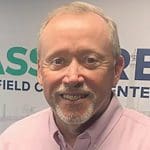
Kevin Lynn

Kevin Lynn

“Part of the problem is that the people doing the hiring are much younger than the people looking for work, and they don’t have a clear understanding of the skill sets that the older worker brings.”

This diversity points to the across-the-board nature of a softening job market and the restlessness of those with jobs, but also the plight of older workers.

“There’s a lot of ageism that people have to deal with,” he explained. “And part of the problem is that the people doing the hiring are much younger than the people looking for work, and they don’t have a clear understanding of the skill sets that the older worker brings.

“One of the best things about older workers is they show up every day, and they’re very task-oriented — you can plug them in, and they’ll just go,” he went on, adding that this attribute is often overlooked amid perceptions that older workers struggle with technology. “There are all these assumptions being made that often don’t let the older worker get past the first cut, the résumé screening.”

As for those at the other end of the spectrum — recent college graduates and those wrapping up degrees — the overall job market remains solid, but some areas have slowed, said Cheryl Brooks, associate provost, Career and Professional Development at UMass Amherst, who put jobs in technology, life sciences, and, understandably, the federal government at the top of that list.

Tiffany Appleton, associate director of Employer Relations for the university’s Office of Career Development & Professional Connections, agreed, noting that jobs with the federal government are fewer in number than many other sectors, but they cross many degree programs at the school.

“It’s a bigger number that many people would think,” she told BusinessWest. “I know there were a number of people from the class of 2025 who had offers they had accepted for government jobs early in the spring of 2025, and by the time they graduated, those offers had been rescinded. They had to restart their job search, and many of them have been successful with finding jobs elsewhere.”

Brooks said it will be early next year before she has hard data on how the class of 2025 has fared, but anecdotally, she believes it has fared well, with those notable exceptions, and also with lingering questions about whether some international students will be able to obtain OPT (optional practical training, a temporary work authorization for F-1 student visa holders in the U.S. directly related to their field of study) or work visas.

As for this fall and the class of 2026 and beyond, she said turnout among employers at job fairs staged at the school, such as those for engineering, life sciences, and building and construction technology, is down slightly (8% to 10%, by her estimate) from previous years, but companies are turning out in good numbers, looking for both employees and interns.

Appleton concurred. “The vast majority of employers I’m talking to are still moving forward with their recruitment plans,” she noted. “They’re actively coming to campus, posting jobs, interviewing and extending offers to start after graduation.

“There’s only been a little bit of a decline, and if there’s a decline, it’s more like, instead of hiring 20 students into this entry-level job, they’ll hire 15 — and I haven’t seen much of that.”


The AI Factor

Overall, job seekers across the board are seeing fewer opportunities, at least in some sectors, as companies cope with uncertainty, tariffs and threats of tariffs, and other forces by being “more careful” in their hiring, Ebner said.

This phrase applies to both the numbers of people being hired and the skills they bring to the table, noted Polite, adding that, overall, companies are taking their time — because they have it, whereas they were far more under the gun a few years ago — and sharply focused on getting it right.

“They’re fine-tuning what they’re looking for,” she went on. “And since demand has changed in terms of the job seeker pool, they’re able to have more leverage and recruit in a different manner than they did post-pandemic.

“We saw post-pandemic that employers had positions they needed to fill immediately,” Polite continued. “This didn’t allow them the capacity to do some of the more intensive skill-set requirements that they’re doing now. So it’s definitely a different market in terms of what they’re looking for — and holding the line for.”

This is one of many forces contributing to job hugging, said Ebner, adding that this trend is both good and bad for employers.

“Even though people may not be jumping ship as quickly as they had been over the past few years, people are still unhappy where they are,” she noted. “They are looking, they’re out there, they’re seeing what’s out there, so it doesn’t necessarily mean that people are staying put and they’re more productive.

“It means they’re staying put, their job search is probably quieter, but they might be looking,” she went on. “Depending on their industry and whether they feel they might have more exposure to a layoff or job reduction — depending on whether they’re being impacted by tariffs or AI — they might be a little more motivated to search.”

As for AI, it is one of the more powerful forces impacting the job market and the plight of job seekers. In the broad realm of computer technology, for example, some jobs are being lost to AI, but others are being, created, Brooks said.

“It’s like a net-zero in terms of overall jobs, because it’s changing a bit,” she explained. “Some of the jobs are going away, but others are being created. It’s hard to parse out exactly what the numbers are, but we’re definitely seeing a decline this year, and who knows if that will level off this year.”

Ebner agreed. “Software development … that was the hottest gig in town 10 years ago, 15 years ago,” she said. “And now, AI is doing a lot of that work.”

Meanwhile, AI is having a growing impact on other sectors, including hospitality.

“Go visit the McDonald’s at Bradley Airport — there are no people,” Ebner said. “There are people making your food, but there are no people at the counter; it’s all kiosks. These are the pockets where we’re seeing technology replace people.

“But most industries are looking at how they can bring AI in, not to replace the people, but to use it to enhance the work that humans are doing,” she went on, adding that AI skills are increasingly becoming a determining factor is whether a candidate can land a specific job.

“The phrase you hear now is, ‘AI won’t replace all the people, but it will replace people who don’t have AI skills,’” Ebner explained, adding that this new reality crosses the broad employment spectrum.

Both Lynn and Ebner said their agencies offer training in AI and that, overall, there are an abundance of opportunities to gain these skills, and job seekers need to take full advantage of them.

Polite agreed. “I often talk to people during the interview process and ask them what training they’ve had in terms of AI and make sure they stay in front of it,” she noted, “because AI is here for the long haul, so we have to adjust to it.”


Healthcare News Special Coverage

Empathy and Engagement

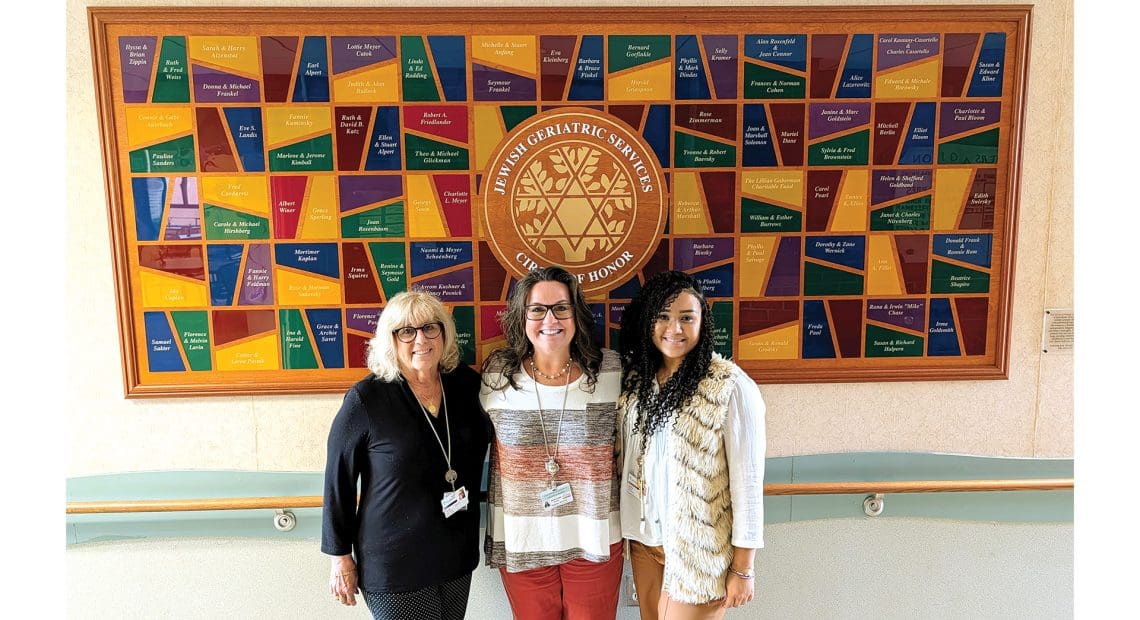
From left: Beth Cardillo, Mary-Anne Schelb, and Dalila Jones of JGS Lifecare.

From left: Beth Cardillo, Mary-Anne Schelb, and Dalila Jones of JGS Lifecare.

While explaining the many ways in which JGS Lifecare folds memory care into all its services, Delila Jones noted that she’s a certified trainer in the Virtual Dementia Tour, a process that every employee on the campus goes through, no later than day two.

“We put our staff in the shoes of someone who has dementia. That’s done by providing external stimuli and an environment to replicate what would be confusion, anxiety, neuropathy, lack of dexterity in your fingers, visual limitations,” said Jones, Life Enrichment director at JGS.

“We do all those things as kind of a crash course into what it would feel like to be in the shoes of someone with dementia for a total of eight minutes — and that’s really all it takes. Eight minutes, and staff members cry. They come out changed because they’re getting an understanding, on a personal level, of what it feels like to be out of control. It allows us to reach the heart of what it’s like and then give them the compassion and empathy they wouldn’t receive if they didn’t go through the experience.”

Beth Cardillo, a long-time regional leader in the memory care field who now works part-time at JGS as a geriatric social worker in the Leavitt Family Jewish Home, a skilled nursing facility, has plenty of experience with the Virtual Dementia Tour, which simulates the physical and sensory challenges of dementia using special goggles, headphones, and gloves that distort vision, hearing, and touch. And she understands its impact.

“This is a truly unique experience. One of the takeaways we hear from everybody when we ask, ‘what did you get from this eight-minute experience?’ is ‘slow down, slow down your life, slow down the way you talk to people.’ It takes 90 seconds for somebody with Alzheimer’s to process what you say to them. Normally, we talk so fast and we’re so busy and really haven’t learned to slow it down. And it just makes a huge difference.”

Jones agreed. “I kind of measure the success of our training with how many people cry because I feel like you’ve got to touch the heart. You have to reach the heart in order to really get that point driven through — because, unfortunately, dementia breaks hearts. So in order for us to care properly, we have to kind of have a broken heart for them.

Beth Cardillo

Beth Cardillo

“It takes 90 seconds for somebody with Alzheimer’s to process what you say to them. Normally, we talk so fast and we’re so busy and really haven’t learned to slow it down. And it just makes a huge difference.”

“And it’s truly effective,” she went on. “Just this week, we did our dementia training, and I had two or three CNA staff say, ‘we were CNAs for years, we know that we’re good staff, but I need to up my game. I didn’t realize that I can improve.’ And to have someone reach a point where they’re evaluating themselves and looking to improve because of this training, because they’re learning something new about what it’s like to have dementia, I think that’s a success.”

The Garden, a separate, secure neighborhood in the Ruth’s House assisted living facility on the Longmeadow campus, specifically caters to individuals with increased cognitive and physical limitations, including Alzheimer’s and other forms of dementia. But JGS has, over the years, incorporated specific memory-care training across its continuum of services, from Legacy Lifecare VNA & Hospice to Wernick Adult Day Health Care; from the Leavitt Family Jewish Home (where 80 of 200 beds are secure) to the Sosin Center for Rehabilitation.

That’s because the memory-care population is on the rise as Americans live longer than ever — and early-onset dementia in younger people is ticking up as well. So the model JGS has adopted, making sure all the points along its continuum of services can handle different levels of dementia, has become dominant in the world of senior living and care.

“I really work hard with families to help them understand that their loved one is in the right place, and that we are going to do everything for that experience to be as purposeful as possible,” Cardillo said.

“People just feel an incredible amount of guilt: ‘my mother took care of me, but I can’t take care of my mother at home anymore.’ But at some point, things change. ‘I promised my mother she would never go into a nursing home.’ Well, at some point those negotiations are off the table. You just can’t do it,” she added, explaining the transition so many families experience when choosing a residential memory care situation, whether assisted living or skilled nursing.

“The nursing home is more of a medical model. We’re more equipped to deal with medication changes and things like that more quickly,” she said. “And the training with the staff is called a habilitation model, where, unless it’s a safety issue, the resident is always right. We want to avoid conflict. We want to make it as engaging as possible.

“I really work hard with families to help them understand that their loved one is in the right place, and that we are going to do everything for that experience to be as purposeful as possible.”

“Do I care if someone thinks it’s Friday, and it’s Tuesday? No. Whatever he thinks, unless it’s safety, I don’t care. Make it Friday, make it Christmas, make it whatever. All good,” she went on. “And I think we work hard at promoting that. It’s all about relationships that we develop with our residents in the nursing home. They can read your mind. They know if you’re on your game that day or not. And it’s up to us to provide the best relationship we can with each person.”


Home and Garden

Then there’s Ruth’s House, the assisted living facility with its own dedicated memory neighborhood, the Garden, where employees are specifically trained to care for this population.

“When it comes to caring for those who have memory issues, we adapt to them, as opposed to someone who may not have those issues, and are able to communicate their needs properly and efficiently,” Jones said.

“When it comes to someone who’s living with dementia, we are the ones that have to adapt. We are the ones that have to become the detectives and be purposeful in everything that we do for them. We are more sensitive and gear everything toward how they may respond. We are more fluid. It’s more organic,” she went on.

“When we are facilitating programs, we’re also seeing how this person feels today. It’s very important that all of the staff are trained and educated to work with those living with various forms of dementia because it’s a whole different world. It’s a whole different way of communicating.”

In that setting, Jones said, the staff makes sure to provide a daily schedule of activities that engage the whole person — physically, emotionally, socially, and spiritually — while also communicating with families who may be anxious about their loved one’s experience.

“The families are pivotal in the care of the seniors. So, we must maintain a very healthy relationship with the families.”

“We take the same approach we’d have toward all the seniors [at JGS Lifecare], which is compassionate care, understanding, empathy, making sure that their feelings are validated, and then working together as a team to accomplish a goal together collectively,” she explained. “That’s really important when it comes to families as well — because we are that bridge to connect the families to these seniors living with various forms of dementia. The families are pivotal in the care of the seniors. So, we must maintain a very healthy relationship with the families.”

Families — often with the help of the resident — also fill out what’s called a resident profile, a kind of life story including a social history, background, education, interests, hobbies, and more. “It allows us to have the information and the tools to have a personalized approach to care as they join us in living here,” Jones said. “With that information, if I know Mary was a teacher, then I can definitely tap into that, no matter what stage of dementia she’s in.”

Tapping into personal history is important across the campus, even outside the dementia neighborhood. One five-year resident of Ruth’s House, Johnny Scalia, affectionately known as “Johnny Rocket,” is a DJ with infectious energy who has shared his musical mixing skills with residents and families over at the Leavitt home. “I’m living my best life here,” he said. “The music keeps me going — and I love making people happy.”

Mary-Anne Schelb, regional director of Business Development at JGS, told BusinessWest that care at any of the JGS facilities is “really a matter of meeting people where they are.”

The Garden at Ruth’s House also features a sensory room, highlighted by a high-definition projector that shows soothing scenes on a wall — think ocean, nature, and the like.

“It’s so soothing and calming and inviting,” Jones said. “Just recently, for a resident who is on hospice and who has a hard time connecting in certain programs, we played a classical symphony through this projection. It was like you were there. And his caretaker was in tears, seeing how he was able to enjoy that moment with something that he passionately loved.”

Schelb added that the room is also used to de-escalate if somebody gets a little bit agitated or is sundowning. “It’s a very calm space that is utilized to decompress or kind of level them out. And it’s been very, very successful.”


Growing Need

About 7 million Americans live with Alzheimer’s disease, a number projected to rise to nearly 13 million by 2050, according to the Alzheimer’s Assoc., mainly due to the aging of America and the soaring over-65 population. That makes it critical for senior living communities to offer specific care to people with memory issues.

“However, I would like to point out the advent of new medications and infusions that are happening now,” said Cardillo, who serves on the executive leadership committee of the regional Alzheimer’s Assoc. chapter. “In the last five years, we have some medications that are actually looking at getting rid of the amyloid plaque in the brain, not just treating the symptoms. We have some new medications for people that are in the beginning stages, and it’s promising — I think it’s a springboard for better medications to come.”

What that means, she believes, is that “we are going to see the first survivor of Alzheimer’s in our lifetime.”

In the meantime, JGS Lifecare will continue to take care of those living with dementia locally.

“We genuinely want to take care of the person as a whole, and we’re providing various forms of engagement and opportunities to provide quality of life to our seniors,” Jones said, noting, as one example, a staff member who helps residents use an Oculus Quest headset to allow residents to access virtual reality experiences, “to walk through an ocean or get an experience on a different side of the world. And this is all thanks to the technology that we have today.

“So we’re growing; we’re expanding. We’re providing quality of life with just crayons and paper, if that’s something that they enjoy, or paint. But we’re also transforming for the current age, moving forward with technology, and I’m pretty proud of where we’re going.”

“And,” Cardillo was quick to add, “we’re not just treating our residents — we’re treating our families.”

Community Spotlight Special Coverage

Community Spotlight

The infamous rotary in East Longmeadow, as seen in this Google Earth image, with its seven converging streets.

The infamous rotary in East Longmeadow, as seen in this Google Earth image, with its seven converging streets.

Tom Christensen says most East Longmeadow residents have learned to live with — and drive through — the infamous rotary in the center of town.

And some even take a small bit of pride in that it once owned a line in the Guinness Book of World Records for having seven converging streets, several of which carry heavy volumes of traffic, with no traffic lights, making it — unofficially, of course — the most dangerous intersection in the world. The rotary has been featured in Ripley’s Believe It or Not! for the same reason.

“We seem to wear this Ripley’s Believe It or Not! as a badge of honor, but I believe that list is for things that shouldn’t exist in nature,” said Christensen, town manager since 2023 and, before that, deputy director of Public Works. “It’s one of the most inefficient intersections ever devised, and while, at some point, it wasn’t so cumbersome due to the number of cars — and it wasn’t even cars at the beginning — now, with the traffic we have … we need to do something.”

He’s not alone in this thinking, which helps explain why, as the town makes progress on several different fronts — from ongoing construction of a new high school to a new fiber optic network to an emerging blueprint for development in the town’s center — there is renewed interest in trying to fix this seemingly most difficult and stubborn of problems.

Indeed, the rotary has been studied, and studied, and studied some more, said Christensen, adding that there is building momentum for finally finding a practical, affordable solution.

“There’s a lot of logistics and a lot of money, but for the health of the community and the future of the community, we have to do something to make this intersection more efficient.”

It won’t come tomorrow, and will likely take 10 to 15 years, he said, but a fix involving a reduction in the number of streets converging on the rotary — maybe to four — is in the earliest of stages.

“We want to take a look at reimagining this intersection. Obviously, it handles all area traffic, not just East Longmeadow traffic, and we need to figure out how to make it more efficient,” he said. “We have this traffic problem that expands out from the hub, but it all starts in the center, where everything grinds to a halt at least a few times a day.”

As for those other projects mentioned above, most are much further along, especially the high school, which is on track to open for the start of school next September.

The new school and adjoining natatorium (which will be open to the public), with a combined price tag of nearly $200 million, will make one of the region’s more attractive communities to live and own a business even more so, said Tanzi Cannon-Eckerle, who owns two businesses in town, a law firm and a craft brewery.

She noted that a modern high school (the current structure opened in 1960) is one of the few missing pieces in a town that boasts a large industrial park, a strong and diverse business community, attractive neighborhoods, and land for new development.

“If you don’t have a fairly new high school, are you going to lose residents to the next town?” she asked rhetorically. “Maybe, maybe not, but it’s good to keep up with the latest technology; this new high school is a great asset for the community.”

Tom Christensen says that, while a fix for the rotary is 10 to 15 years away, more immediate progress is evident on many fronts in town.

Tom Christensen says that, while a fix for the rotary is 10 to 15 years away, more immediate progress is evident on many fronts in town.

Another missing piece, if you will, is a solution for the eyesore that is the long-dormant site of the former Package Machinery manufacturing plant and warehouse on Chestnut Street.

Developers who had proposed a 560,000-square-foot warehouse, a plan that met with considerable opposition from abutters and was ultimately rejected by the Planning Board, recently submitted new plans calling for four warehouses totaling roughly 450,000 square feet.

That plan is still before the Planning Board, said Christensen, adding that the area in question is considered part of the town’s industrial garden park zone — with that section of Chestnut Street being its northern border — and warehouses are therefore a permitted use.

For this latest installment of its Community Spotlight series, BusinessWest takes an in-depth look at the many storylines that are, like the roads in the center of town, converging.


Round About

As he talked about the town’s rotary, Christensen acknowledged it’s a complicated engineering challenge and a problem that has defied a solution for several generations of residents.

Locals have gotten used to it, but are still put off by it, he said, adding that, for non-locals, it can be harrowing.

“I have people come to visit, and they come to my house, and their face is all white,” he said. “And they’re like … ‘you have to yield in that intersection?’ I tell them that conventional wisdom says they have the right of way, but not in our town.”

“It would be great to have that area cleared up in the form of a new development in any form, and get the property back on the tax rolls for the community. It’s hard to drive by that every day and see a derelict property of that size.”

The problem won’t fix itself, and it will only get worse as the town continues to grow and, hopefully, add more jobs, Christensen noted, adding that advances in intersection and rotary design could yield a solution.

“Many studies have been done over the years, and the design parameters were too excessive — we’d have to do some takings and knock down buildings,” he said, referring to the area around the current rotary and the size of a circle needed to accommodate seven streets. “Now, all over the region, they’re popping in rotaries and intersections that you didn’t think were feasible.

“There would be some combination of reconfiguring to a traditional circle, with only four roads coming into it,” he said of the likely fix. “The latest idea is to sort of dog-ear some of these streets into other streets before they got to the rotary by way of a stop sign; we have to figure out some way to get some of those entrances out of the circle to make it work.”

East Longmeadow at a Glance

Year Incorporated: 1894
Population: 16,430
Area: 13.0 square miles
County: Hampden
Residential Tax Rate: $19.28
Commercial Tax Rate: $19.28
Median Household Income: $62,680
Median Family Income: $70,571
Type of Government: Town Council, Town Manager
Largest Employers: Lenox; Cartamundi; CareOne at Redstone; East Longmeadow Skilled Nursing Center
* Latest information available

As he noted, this will be a lengthy process, and a solution with a steep price tag — at least $10 million, by his estimate.

“It takes a long time to even come up with a schematic; it’s going to take a long time to design, and then to come with the funding for this or for us to get on a list with MassDOT is going to take some time,” he said. “There’s a lot of logistics and a lot of money, but for the health of the community and the future of the community, we have to do something to make this intersection more efficient.”

While that project plays itself out into the next decade, there is progress on other fronts, and potential progress (depending on one’s point of view) with others.

The latter is certainly true with 330 Chestnut St., an address where industrially zoned land and residential neighborhoods abut.

The public hearing process on the newest proposal, which has included questions on everything from traffic volume to noise and pollution to whether trucks can and should navigate nearby intersections, is continuing, said Christensen, adding that the area has been an eyesore for decades now.

“It was a great idea when the town decided to move all of its industry into that corner of town in the form of the industrial garden park, but naturally, there are places it abuts that are residential,” he said. “You have to work hard to make sure that the impact is not great on any of the surrounding areas.

“It would be great to have that area cleared up in the form of a new development in any form, and get the property back on the tax rolls for the community,” he went on. “It’s hard to drive by that every day and see a derelict property of that size.”


New School Thinking

Meanwhile, crews are keeping to an aggressive timetable for the new high school, he noted, adding that the project also includes not only the natatorium, but new athletic fields, tennis courts, and improvements to the football stadium area.

“There’s obvious excitement in the community for the new school — it’s a glorious campus,” said Christensen, who graduated from ELHS in 1997 and brings that perspective to the project. “It’s really exciting on so many levels, obviously for the school system, but also for the community to have this wonderful new space.”

And as that project moves forward, the town is also working toward creating a center town district and bylaws for development in that area.

A $22,000 grant from the Massachusetts Office of Energy and Environmental Affairs will be used to hire a consultant to help with the planning of the district, said Christensen, adding that the Town Council has voted not to create the district under the state’s Chapter 40R regulations, which would make the town eligible for state funding, but also bind it to meet specific requirements for housing, including affordable housing.

“The community decided it didn’t want to be beholden to the state, so we have decided to create our own district with our own guidelines, free of any 40R requirements,” he noted. “Depending on how the final parameters of how our bylaw shake out, it could have the parameters of 40R; it just won’t be eligible for that reimbursement to the developer and/or town, because it won’t carry that designation.”

Elaborating, Christensen said that, with all industry moved to the southwest corner of town, several properties in the town center, including the former Carlin Combustion site on Maple Street, could be redeveloped for other uses, including housing. And the development community has interest in that area for that purpose.

The next step in the process is likely to be Planning Board public hearings on the district, he said, adding that he is expecting “robust conversations in a public setting” about what residents want to see regarding density, building heights, and other matters.

“We’re looking at a comprehensive study on not only what the town can handle, but what developers are willing to build,” he went on. “We want to find that happy medium so the bylaws are feasible for all.”

As that project plays out, the community is proceeding with plans to address the lack of broadband competition by building a town-owned fiber optic project with Whip City Fiber, the rapidly growing broadband arm of Westfield Gas & Electric.

“We have a design done, and we’re working with the utilities to get their make-ready costs so that we can formulate a plan on how to roll out this initiative, which we’re really excited about,” Christensen said. “Currently, the town is only served by Spectrum, and residents have long been calling for some competition in town.

“It’s a long process, and a lot of infrastructure has to be put in place,” he went on, adding that the project gives the town the ability to improve services to residents while also generating revenue, which can be put back into the community.

It’s a community that is business-friendly and does a good job of balancing business growth with quality of life for residents, said Cannon-Eckerle, whose craft brewery, Brew Practitioners, is celebrating 10 years.

“They do a really good job of asking questions and doing all the legwork up front,” she said of the Planning Board, Town Council, and other panels that consider plans from businesses. “But then, they take the time to take in the concerns of the residents; they do a very good job of listening to both sides. East Longmeadow does a good job of doing it by the book.”

Daily News

WEST SPRINGFIELD — On Oct. 20, Eastern States Exposition (ESE) and the town of West Springfield visited the West Springfield Boys & Girls Club to present a check for $6,000 that afforded the club an all-new technology lab for the students it serves. This donation comes from the ESE-West Springfield Trust, funded by ESE.

The trust began in 1994, which was the year the Big E grew from five days to 17 days in length. Annually, ESE donates 1% of its gross operating revenue to the town to support and maintain the ESE-West Springfield Trust. The donation funds grants awarded to various community organizations selected by a committee comprised of ESE President and CEO Gene Cassidy, attorney Mary Powers, and West Springfield Mayor Will Reichelt.

This year, ESE’s donation to the ESE-West Springfield Trust totaled $370,970, the not-for-profit organization’s largest donation to date. Since the trust’s inception, ESE has contributed more than $5 million. In 2025, 34 local organizations benefited from the trust, including sports teams, food rescues, places of worship, veterans’ outreach services, and more. The Boys & Girls Club of West Springfield was among these recipients.

The grant funded the club’s newest initiative: the Plugged In program and technology lab. This state-of-the-art lab is equipped with computer-aided design tools, 3D printers, advanced software, comfortable gaming chairs, and more. The goal of the program is to allow children to explore technological skills and prepare for the workforce.

“On behalf of the West Springfield Boys & Girls Club and our club kids, we are incredibly grateful to Eastern States Exposition and the town’s collaborative trust,” said Dan D’Angelo, executive director of the club. “The new technology lab — along with the program opportunities in coding, robotics, aviation, content creation, drone navigation, and more — gives our members the chance to explore, create, and learn with the latest technology.

“These are the skills that will prepare them for tomorrow,” he continued. “This support ensures our kids stay ahead of the curve and have every opportunity to succeed in an increasingly digital world.”

Daily News

SPRINGFIELD — Elena Gervino, senior vice president at Travelers Insurance Co., has been named chair of the Western New England University (WNE) board of trustees.

With nearly four decades of experience spanning law, education, and corporate leadership, she brings a combination of strategic insight, operational excellence, and commitment to community impact to her role. A respected leader in the insurance industry, Gervino aims to guide the university’s continued growth and innovation at the intersection of business, technology, and social responsibility.

“I am honored to serve my alma mater at such an exciting time,” she said. “Western New England shaped my life and career. Its focus on innovation, leadership, and community impact mirrors what we strive for at Travelers — empowering people to learn, grow, and make a difference.”
At Travelers, Gervino serves as senior vice president for Claim Shared Services (CSS). Her portfolio spans 10 business units within Claim and CSS, including Behavioral Science, Claim University, CSS Business Intelligence and Analytics, CSS Operations, Claim Legal and Staff Counsel Product, Claim Regulatory Compliance, Claim Contact Centers, Subrogation, Business Process Improvement, and QuantumSubro by Travelers Inc.

“Elena’s career embodies the very qualities we strive to instill in our students — innovation, integrity, and service,” said Michael Alexander, interim president of Western New England University. “Her professionalism and experience leading large, data-driven teams at one of the nation’s top insurers is invaluable as WNE continues to prepare graduates who are ready to lead in dynamic, technology-enabled industries.”

A cum laude graduate of the Western New England University School of Law, Gervino served as Notes editor of the Law Review and was named Outstanding Woman Law Student of the Year. Her longtime support as a law school alumna earned her the Dean’s Alumni Excellence Award in 2020. Gervino joined the WNE board of trustees in 2021 and has served on the governance, academic affairs, development, student affairs, investment, and finance committees. In 2025, she received the university’s Benefactors Award in recognition of her commitment to WNE and her exemplary record of leadership.

Beyond the boardroom, Gervino’s leadership reflects a lifelong dedication to service. She has held board positions with Horizons Inc., TRUE Colors, and Nutmeg Big Brothers Big Sisters, advancing opportunities for youth and individuals with disabilities.

Daily News

David Gadouas

WESTFIELD — James Hagan, president and CEO of Westfield Bank, announced the appointment of David Gadouas as assistance vice president and branch manager at the bank’s 599 Memorial Dr., Chicopee branch.

Gadouas joins the bank with nearly two decades of banking experience. In his new role, he will be responsible for leading and managing the branch, including customer service, retail and business product sales, employee development, and overseeing general branch operations.

Gadouas has held various officer and management positions at both community and national banks across the local area. Throughout his banking career, he has been recognized for his significant contributions to employee development and advancement. He is an alumni of Westfield State University with a bachelor’s degree in Mathematics.

“I am very excited to welcome Dave to Westfield Bank,” said Kelly Pignatare, first vice president and manager of Retail Banking and Business & Government Deposit Services. “He brings valuable experience, a strong commitment to employees and customers, and an impressive track record of success. As a Chicopee native, he knows the market and community well, and is already making an impact.”

Daily News

SPRINGFIELD — Girls on the Run Western Massachusetts will host its annual fall 5K event on Sunday, Nov. 23 at Western New England University and is expecting more than 3,000 people to turn out.

Girls on the Run is a physical activity-based, positive youth development program that uses fun running games and dynamic discussions to teach life skills to girls in grades 3-8. During the eight-week, 16-lesson program, girls participate in lessons that foster confidence, build peer connections, and encourage community service while they prepare for an end-of-season celebratory 5K event.

This fall season, Girls on the Run has 775 participants in 52 sites in all four Western Mass. counties, with 210 volunteer coaches that bring the curriculum to life — the largest fall season since the start of the organization 10 years ago.

The run starts at 10:30 a.m., but the group warm-up will begin at 10 a.m., with participants arriving for fun events at 9:30 a.m. Participation in the 5K event is open to the public, and all proceeds from the event will benefit Girls on the Run Western Massachusetts.

Registration cost is $25 for adults and $10 for youth under age 12 and includes a 5K shirt for the first 1,000 registered. Early arrival is suggested. Registration opens at 8:30 a.m. on Nov. 23 for day-of registration.

The 5K event will also include a food drive. Participants can bring a non-perishable food item to the 5K, and the collection will go to a local food pantry.

Girls on the Run Western Massachusetts is also looking for volunteers for the event. For more information about the event, how to register, and volunteer opportunities, visit www.girlsontherunwesternma.org.

Daily News

SPRINGFIELD — In the spirit of community, the Springfield Symphony Orchestra (SSO) announced a limited one-day ticket offer today, Nov. 7, with all tickets for the “Fiesta Sinfonica” concert on Saturday, Nov. 8 priced at $30 or less.

The discounted tickets are in response to the current economic hardships faced by families in light of the government shutdown, and the SSO hopes concertgoers will also contribute to Lorraine’s Soup Kitchen in partnership with American International College’s baseball team by bringing canned goods to the performance.

The discounted tickets can be purchased on the SSO’s website, springfieldsymphony.org, with the discount code SPFLD, throughout Nov. 7. Tickets can also be purchased by calling the box office at (413) 733-2291.

“This is more than a ticket offer — it’s a reflection of what we’re all feeling right now,” said Heather Caisse-Roberts, president and CEO of the SSO. “The world feels heavy. People are struggling — with the cost of living, with the constant bad news, with just trying to hold it together. There’s a real sense that joy has become harder to find. So for one night, we’re making it easier for everyone to join us. We’re offering a one-time, deeply discounted ticket opportunity so more people can come experience what live music does. It recharges you, it reminds you of beauty, and it connects us back to each other.

“Music has always been about connection, about lifting spirits, about reminding people that they’re not alone,” she added. “We can’t fix everything happening in the world, but we can create a moment where people come together, where they feel inspired, and where kindness still feels possible.”

The November concert is sponsored by the Ruiz Family Foundation and Wyckoff Country Club. As part of that dual sponsorship, hundreds of tickets were donated to local schools in Springfield, West Springfield, Holyoke, and Chicopee through the SSO’s Beethoven’s Buddies program.

The SSO is asking concertgoers to bring non-perishable food items for Lorraine’s Soup Kitchen in partnership with AIC baseball. Concertgoers can also make donations to Square One’s holiday wish list as part of the giving-back effort.

Saturday’s concert features the return of the Mambo Kings and Camille Zamora to Springfield for “Fiesta Sinfonica: A Symphonic Celebration,” sure to heat up Symphony Hall with everything from tangos and mambos to Latin jazz hits and pop music standards. “Fiesta Sinfonica” will also welcome master trumpet player Herb Smith as guest conductor.

Also added to the concert offerings, the Hispanic-American Library will have a table in the Mahogany Room prior to the concert with Juan Falcon, founder and executive director of the Hispanic-American Library.

Daily News

Hector Suarez

WESTFIELD — James Hagan, president and CEO of Westfield Bank, announced the appointment of Hector Suarez as retail banking officer and branch manager, and Jeffrey Lomma as business specialist, both at its 1342 Liberty St. office in Springfield.

Suarez, who joins the bank with more than 30 years of banking experience, is responsible for leading and managing the branch, including customer service, retail and business product sales, employee development, and overseeing general branch operations. He has held various officer and management roles for several national banks in the Greater Springfield area and has been recognized throughout his banking career for sales and service excellence. He has been very active with financial literacy, most recently with first-time homebuyer seminars for the Holyoke Housing Authority.

Jeffrey Lomma

A familiar face to customers and coworkers, Lomma returns to the bank, where he previously served in business development and management roles, including in the Springfield market. In his new role, he is responsible for servicing existing and developing new business relationships, community development within Springfield, and supporting the branch as needed.

Lomma originally joined Westfield Bank in 2006, departing to be the Member Services director for the Springfield Regional Chamber of Commerce. He holds a bachelor’s degree in business administration from Western New England University and is deeply involved with the local community, currently serving as a board member for the West of the River Chamber of Commerce and as treasurer and board member of the Asnuntuck Community College Foundation.

“I am very excited to welcome Hector and welcome back Jeff to Westfield Bank,” said Kelly Pignatare, first vice president and manager of Retail Banking and Business & Government Deposit Services. “Hector and Jeff bring a combined 41 years of banking experience, including strong management and business development expertise. Complemented by their knowledge of and commitment to the Springfield market, they are well-positioned to deliver better banking and drive growth in our Liberty Street branch.”

Daily News

PITTSFIELD — 1Berkshire is again offering the Berkshire Leadership Program (BLP), an opportunity empowering Berkshire County residents to develop essential skills, expand their networks, and gain insights from top industry leaders. Participants will only sharpen their strategic thinking and decision making, but also build the confidence to lead teams and drive impactful change.

BLP seeks, prepares, involves, and sustains individuals from diverse backgrounds who are committed to and competent in addressing community challenges and improving quality of life in the Berkshires. Close to 700 community-minded individuals have graduated from the program since its inception in 1997.

The class of 2026 will kick off with a two-day retreat on Friday and Saturday, April 24-25, which includes training in many facets of leadership, problem-solving techniques, and networking. The retreat is followed by weekly sessions held on Thursdays, April 30 to June 25, focusing on areas of economic development, healthcare, tourism, creative economy, education, and community involvement.

The Berkshire Leadership Program is coordinated by 1Berkshire with the support of the volunteer BLP steering committee, composed of professionals from across the region who commit their time and expertise to develop and facilitate the entire program.

“The Berkshire Leadership Program is one of the most comprehensive ways to learn about the community and a great opportunity for additional professional development,” said Christine Hoyt, 1Berkshire’s director of Member Services and BLP coordinator.

“The Berkshire Leadership Program changes how you see yourself and your community,” added Abigail Allard, chair of the BLP steering committee. “Each cohort brings together emerging and established leaders from every corner of the Berkshires to learn, problem-solve, and build relationships that last well beyond the program. Creating a network that opens doors, with scholarships to help make participation possible. If you’re ready to grow your impact, this is the place to start.”

Class of 2026 applications are open. The deadline to apply is Wednesday, Jan. 7, 2026 at 4 p.m. The cost of tuition is $800; some scholarship dollars are available. Click here for the application and a full program schedule. Email [email protected] with any questions.

Daily News

SPRINGFIELD — Today, the Western Massachusetts Economic Development Council (EDC), along with regional partners, celebrated a major milestone for the innovation economy as Lt. Gov. Kim Driscoll and Secretary of Economic Development Eric Paley announced that Western Mass. has been designated as both a Quantum Technology TechHub and a Food Science TechHub through the Massachusetts Technology Collaborative.

In addition to the two designations, funding in the form of $1 million to advance a feasibility and design study of a quantum supply chain accelerator (QSCA) was awarded to Springfield Technical Community College (STCC).

The QSCA will anchor the next phase of the Commonwealth’s quantum strategy, building on the foundation established in Holyoke at the Massachusetts Green High Performance Computing Center (MGHPCC) and the state’s first quantum computing complex launched with QuEra Computing Inc. The accelerator will be the first regional facility of its kind to drive commercialization, support startups, and strengthen advanced manufacturing supply chains across the Pioneer Valley.

The accelerator will be located at the Springfield Technology Park, a quasi-public entity affiliated with STCC, which is the only technical community college in Massachusetts and has a legacy for producing graduates who work in precision manufacturing, engineering, photonics, and information technologies in support of the emerging quantum and adjacent sectors. Current enrollment at STCC is more than 6,200 — a talent pipeline that gives Western Mass. a distinct competitive advantage as the region advances in this rapidly emerging field.

“Western Massachusetts is the only region in the Commonwealth to receive two TechHub designations, which is a testament to the strength of our innovation ecosystem and the collaboration that defines it,” said Rick Sullivan, president and CEO of the EDC. “These designations, and the $1 million dollar investment in the quantum supply chain accelerator, represent years of hard work and vision from our regional partners. The EDC was proud to lead both applications and bring these opportunities home for our communities.”

The Food Science TechHub designation recognizes the region as a national leader in food innovation and highlights UMass Amherst’s world-renowned Food Science program. The university’s researchers and facilities are driving advances in sustainable food processing, safety, and nutrition, while expanding partnerships that strengthen regional food manufacturing, commercialization, and career pathways across Western Mass. The EDC will receive a $100,000 planning grant to continue working with UMass and regional partners on identifying commercial, business, and workforce opportunities within the food science sector.

“The dual designations and this new investment show that Western Massachusetts is ready to lead the Commonwealth into the next generation of innovation,” said Xiomara DeLobato, vice president at the EDC. “The EDC’s role has been to connect vision with action and ensure that quantum and food science grow as inclusive economic engines that create opportunity across our region.”

State and regional partners with the EDC and STCC include the Pioneer Valley Planning Commission (PVPC), UMass Amherst, the city of Springfield, the city of Holyoke, and members of the Pioneer Valley Quantum Innovation Hub, working closely to develop these initiatives. The Western Mass. legislative delegation also voiced strong bipartisan support for the project, emphasizing its potential to create more than 1,400 direct jobs and demonstrate the Commonwealth’s commitment to growing innovation economies in every part of the state.

“As the only technical community college in the Commonwealth, we are leveraging the capabilities of STCC and our assistance corporation to bring the vision of a quantum supply chain accelerator to reality,” STCC President John Cook said. “With this unique investment in a region well-known for precision manufacturing, STCC looks forward to creating new job opportunities in quantum and related industries.”

PVPC Executive Director Kimberly Robinson added that “we look forward to a quantum accelerator that provides jobs and startup opportunities for residents across our communities. It is for this reason that we have launched a Quantum Training Academy that strives to include individuals who have been historically deprived of opportunities in technology investment.”

The Quantum and Food Science TechHubs are part of Massachusetts’ broader strategy to strengthen advanced manufacturing, research, and innovation capacity across the state. With this recognition, Western Mass. is now positioned as a vital partner in the Commonwealth’s innovation corridor from the eastern research centers to the western manufacturing base.

“I am grateful for this state investment in quantum and its potential to boost the Springfield economy,” Springfield Mayor Domenic Sarno said. “The city of Springfield is excited to give local firms and quantum startups a chance to attract new talent, including technicians and entry-level employees, to build a more innovative quantum sector in the region.”

Added Gov. Maura Healey, “the opportunity for a quantum accelerator in Springfield only strengthens the case that Massachusetts is a destination location for quantum innovation. Our industrial strengths and research capabilities in quantum make Massachusetts a top hub for quantum globally.”

Daily News

SPRINGFIELD — As the government shutdown continues to impact the stability of families throughout the region, Square One is providing relief to those enrolled in its early education and care programs. Using a reserve fund previously gifted by Health New England, Square One will waive all parent fees for child care for the month of November.

“Seventy-five percent of Square One families receive SNAP benefits,” said Dawn DiStefano, Square One president and CEO. “With families currently receiving half of what they qualify for food assistance, we did not want to put our families in a position to have to choose between feeding their children and paying their childcare fees. We hope this gesture brings a bit of relief to our families during these challenging times.

“We are grateful to our wonderful partners at Health New England for recognizing the need for an emergency reserve fund gifted previously to be used to at a time when families need it to meet their basic needs,” she added. “Their gift came at an ideal time.”

As part of its mission to provide a healthy foundation for all children, Square One has an unwavering commitment to ensuring that its children receive healthy breakfasts, lunches, and snacks every day while they are in care. All meals include fresh fruit and vegetables. The agency partners with community organizations including Rachel’s Table, Gardening in the Community, the Food Bank of Western Massachusetts, and others to ensure that all families have access to food supplies.

Daily News

AGAWAM — Allied Flooring & Budget Cabinets announced the results of its second annual Charity Golf Tournament, raising a total of $31,385 to benefit two local nonprofit organizations, Sunshine Village and Project New Hope.

In Agawam on Oct. 29, the leadership team presented Sunshine Village with a donation of $15,692.50 to support the organization’s programs for adults with developmental disabilities throughout Western Mass. Then on Oct. 30 in Leominster, they presented the remaining $15,692.50 to Project New Hope, a nonprofit dedicated to providing veterans and their families with support programs, retreats, and community resources designed to help them rebuild their lives after military service.

“We are incredibly proud of what our team, sponsors, and community accomplished together,” said Jorge Morgado, owner of Allied Flooring & Budget Cabinets. “These organizations do so much to uplift others, it’s an honor to be able to give back in a meaningful way.”

The annual tournament, held in September at Chicopee Country Club, brought together more than 100 golfers, dozens of sponsors, and community partners for a day of friendly competition and fundraising. The event’s success reflects Allied Flooring and Budget Cabinets’ ongoing commitment to supporting local causes and building strong community connections beyond the showroom.

“Our golf tournament is more than just a fun day on the course — it’s a way to make a real difference,” said Becky Tedeschi, president of Allied Flooring & Budget Cabinets. “Seeing those checks handed over to Sunshine Village and Project New Hope reminds us that small businesses can have a big impact when the community comes together.”

Plans are already underway for the third annual Allied Flooring & Budget Cabinets Charity Golf Tournament, with hopes of raising even more funds in 2026.

Daily News

SPRINGFIELD — American International College (AIC) is helping students facing food insecurity with the launch of the Buzz Stop, a new campus food pantry. According to government data, approximately 3.8 million college students nationwide, or about 23%, face food insecurity. Many do not receive Supplemental Nutrition Assistance Program benefits due to application barriers or lack of awareness.

The pantry, located in the Student Affairs office on the upper level of the Schwartz Campus Center, offers both perishable and non-perishable foods as well as basic academic supplies. Students can fill a shopping basket once per week without restrictions, ensuring they have access to essential nutrition while pursuing their studies.

“This initiative makes essential resources more accessible for students worried about their next meal,” said Melisa Loa, dean of students. “With the Buzz Stop, they can concentrate on their studies without the added stress of food insecurity.”

Since December 2024, AIC has been preparing an unused office on the upper level of the Schwartz Campus Center to host the Buzz Stop. The renovated space includes shelves stocked with non-perishable items, a refrigerator for perishable foods, and basic academic supplies. Students can find supplies like canned goods, fresh produce, snacks, macaroni and cheese, and more with items available on a rotating inventory.

AIC partnered with the Food Bank of Western Massachusetts to stock the pantry, with support from an anonymous donor. Michelle Geoffroy, the Food Bank’s agency relations manager, noted that “we look forward to supporting their efforts to provide nutritious food to students.”

The college will continue refining the Buzz Stop based on student feedback to ensure it meets evolving needs. Students are already responding positively. Junior Blake Latham, who learned about the pantry through a college Instagram post, said it “will have a big impact on the school.”

Daily News

Linda Chavers

HOLYOKE — Holyoke Community College (HCC) recently welcomed Linda Chavers as the inaugural director of its new office of Restorative Practices and Mediation.

A published writer, educator, and consultant, Chavers has spent her career examining structures of institutional inequality and reimagining what justice can look like in the field of education. She brings to HCC a specialization in restorative practices in the workplace, including crisis management, curriculum design, diversity support, and organizational development.

Most recently, she has been working as a nonprofit leadership consultant and a national executive search consultant. Prior to that, she spent 15 years in higher education, serving as co-director and English professor at the Clemente Course in the Humanities in Dorchester; resident dean, assistant dean, and lecturer at Harvard College; and assistant professor of Instruction at Temple University in Philadelphia. She also was an instructor of English at Phillips Exeter Academy in Exeter, N.H.

Chavers holds a Ph.D. in African and African American studies from Harvard University, a master’s degree in English from Harvard, and a bachelor’s degree in cultural studies from New York University. She began her role at HCC on July 30.

“I am honored to join Holyoke Community College as the inaugural director of the office of Restorative Practices and Mediation,” Chavers said. “This role is designed to be a first point of contact for workplace concerns at HCC, and my goal is to provide an accessible, safe entry point where concerns can be heard, options explored, and relationships strengthened.”

The office of Restorative Practices and Mediation is part of HCC’s division of People, Culture and Equity. In her position, Chavers works closely with the office of People and Talent (human resources) and the college’s chief impact officer (affirmative action and Title IX) to ensure HCC approaches its work with care, accountability, and a commitment to equity.

“This office represents a bold step forward in our commitment to cultivating a campus culture rooted in healing, accountability, and relational justice,” said Marlowe Washington, vice president of People, Culture and Equity. “We are pleased to welcome Dr. Chavers to HCC. She brings with her a rare blend of scholarly depth, lived experience, and visionary leadership.”

Daily News

SPRINGFIELD — Best Lawyers, in partnership with U.S. News and World Report, ranked Bulkley Richardson as 2026 Best Law Firm in the Springfield region in the following 14 practice areas: banking and finance law, bankruptcy and creditor debtor rights / insolvency and reorganization law, business organizations (including LLCs and partnerships), commercial litigation, corporate law, criminal defense – general practice, criminal defense – white collar, employment law – individuals, employment law – management, litigation – labor and employment, medical malpractice law – defendants, personal injury litigation – defendants, real estate law, and trusts and estates law.

To be eligible for a ranking, a law firm must have at least one lawyer included in the list of Best Lawyers. Bulkley Richardson has 12 lawyers included on the 2026 Best Lawyers list, and Mary Jo Kennedy was named 2026 Springfield-area Lawyer of the Year for both employment law (management) and litigation (labor and employment). Rankings are based on a rigorous evaluation process that includes the collection of client and lawyer evaluations and peer reviews from leading attorneys in the field.

Daily News

TURNERS FALLS — The beloved red-headed orphan is returning to Franklin County this November as JaDuke Theater revives the musical Annie for a two-weekend run beginning Friday, Nov. 7. The show, which was one of the first productions to grace the JaDuke Theater stage in 2019, marks a full-circle moment for the community arts hub located in Turners Falls’ industrial district.

“This is one of the greatest and most beloved family musicals JaDuke has done in a very long time,” director Nick Waynelovich said. “It’s one of my favorites, and we know you will love it too.”

Local talent takes center stage, with the title role being shared by two young performers — Turners Falls’s Molly McCarthy (Nov. 7, 8, and 9) and Bernardston’s Madison Bernard (Nov. 14, 15, and 16) — both of whom have grown up in JaDuke’s youth arts programs. They’re joined by veteran cast members from across Franklin County, including Briggs Doxzen as Oliver Warbucks and Sara Paige as the scheming Miss Hannigan. The musical features iconic songs like “Tomorrow,” “It’s the Hard Knock Life,” and “Maybe,” along with a canine co-star, Sandy, Annie’s loyal sidekick, and a crowd favorite.

In addition to offering award-winning productions, JaDuke is deeply committed to youth arts education in Franklin County through its theater, dance, voice, and music programs.

“We’re so proud that this production features so many young people who have honed their performance skills right here at JaDuke,” said Kimberly Williams, producer and executive director of JaDuke Inc. “The captivating music and timeless story are perfect to kick off the holiday season.”

Theatergoers can also take advantage of the JaDuke Café, which offers a wide variety of concession options available before the show and during intermission. In keeping with JaDuke tradition, audience members may send ‘performer perks’ backstage to cast members during the performance, a popular gesture that adds to the community camaraderie of the production.

Performances of ‘Annie the Musical’ will be held Fridays and Saturdays, Nov. 7, 8, 14, and 15, at 6 p.m.; and Sundays, Nov. 9 and 16, at 2 p.m., at JaDuke Theater, 110 Industrial Blvd., Turners Falls. Tickets are available now at jaduketheater.com or at the box office.

Daily News

Jason Urban and Bob Szklarz

SOUTH HADLEY — Colonial Carpentry Innovations Inc. announced the addition of Jason Urban as consultant and production manager.

Urban brings more than two decades of experience in the custom woodworking industry, cabinetry design, and home improvement to the Colonial team. Known for his strong communication skills, organizational excellence, and steady leadership, he has built a career centered on craftsmanship, collaboration, and genuine customer care.

“Jason has a hands-on approach and a real respect for the craft,” said Bob Szklarz, owner of Colonial Carpentry Innovations. “He shares our belief that a successful project isn’t just about materials or measurements — it’s about creating spaces that make people feel at home.”

Urban’s experience includes years with Michael Humphries Woodworking, where he worked closely with architects, builders, and homeowners. He earned accolades while working at rk MILES, where he served clients throughout the Pioneer Valley. He built his career helping homeowners and builders alike find creative, practical solutions that balance beauty and durability.

As a U.S. Army National Guard Veteran, he was awarded the Army Commendation Medal for Meritorious Service. His background instilled a strong sense of discipline, responsibility, and teamwork — qualities that continue to shape his professional approach today.

“Joining Colonial Carpentry Innovations feels like coming home,” Urban said. “This company has built its reputation on honesty, quality, and relationships. I’m proud to be part of a team that values people as much as the finished product.”

Daily News

Nick DePalma

CHICOPEE — Notch Mechanical Constructors announced the retirement of Steven Neveu, who has served as president for the past 28 years, and the appointment of Nick DePalma as the company’s new president, effective Oct. 1. This leadership transition marks a new chapter for Notch, continuing its long-standing commitment to quality, safety, and innovation across New England’s industrial mechanical construction industry.

“As [Neveu] begins his well-earned retirement, the company expresses its deepest gratitude for his decades of guidance and vision that helped shape Notch into what it is today,” the company stated. He will continue to serve in a limited capacity as director and board chairman.

Stepping into the role of president, DePalma brings extensive experience and a deep understanding of Notch’s operations, clients, and values. Having served as executive vice president for the past three years, he has played an integral role in driving strategic growth and maintaining the company’s reputation for excellence in mechanical contracting.

“His leadership ensures that Notch will continue to deliver exceptional results while fostering a culture built on teamwork, integrity, and safety,” the company stated.

Founded in 1972, Notch Mechanical Constructors specializes in the construction and maintenance of mechanical systems for clients in the energy and industrial manufacturing sectors across Southern New England from its two locations in Chicopee and Hudson. Notch became 100% employee-owned in 2020, a leadership transition developed to ensure continuity, stability, and ongoing success for clients, partners, and employee owners.

Daily News

FLORENCE — Florence Bank recently announced a gift of $73,520 to the United Way of the Franklin and Hampshire Region. Florence Bank provided direct support of $50,000, and its employees pledged an additional $23,520 as part of the bank’s annual workplace campaign. The combined gift will be used to support the annual Diaper Drive, food insecurity efforts, the Ski United event, and several event sponsorships.

“Once again, our team members stepped up and showed how much they care about helping their fellow neighbors,” said Matt Garrity, president and CEO of Florence Bank. “I’m humbled by their generosity and proud of their dedication to help those less fortunate.”

In addition to financial support, Florence Bank will help lead the United Way’s 2026 annual campaign, which kicked off on Oct. 9. Garrity will serve as campaign co-chair along with Eric Mills, vice president of Sales and Marketing at Mayhew Tools in Turners Falls.

“I’m excited to be out in the community, supporting the United Way and asking organizations and individuals to join us in supporting such a great organization,” Garrity said. “The need in the community is real, and supporting our neighbors is integral to Florence Bank’s mission, vision, and values.”

Holly Martineau, United Way’s director of Development, said the financial goal is to increase giving as much over the $1.2 million raised in 2025 as possible, and to encourage organizations and individuals to double their gifts from last year.

“Our efforts this year are to have as many people double down as possible,” Martineau added. “We’re trying to do as much as we can as an organization to support our partners in the community who do so much for individuals in need. Our partners are being asked to do so much more with much less. The social safety net is diminishing every day.”

Geoff Naunheim, executive director of the United Way of the Franklin and Hampshire Region, said he hopes Florence Bank’s commitment will encourage other organizations and individuals to consider increasing — or doubling — their pledges.

“It’s early in the campaign, but we’re already seeing an increase in employee giving,” Naunheim said. “People know it’s a hard time. They’re helping us support a healthier, more resilient community.”

Daily News

Frank Robinson

SPRINGFIELD — Revitalize Community Development Corporation (CDC) announced the election of two new members to its board of directors: Frank Robinson, retired vice president and Public Health officer at Baystate Health, and Nikki Gleason, vice president and branch manager at Florence Bank in West Springfield.

Nikki Gleason

Robinson has made decades of contributions to public health, education, and community development across Western Mass. and beyond. Early in his career, he advanced health equity through leadership roles in the Massachusetts Department of Mental Health and the Northeast Ohio Developmental Center. He went on to serve as the founding executive director of Partners for a Healthier Community and director of Community Health Planning at Baystate Health, where he championed upstream approaches to community well-being.

Moyah Smith

From 2015 to 2024, as vice president and Public Health officer at Baystate Health, Robinson played a pivotal role in establishing the Baystate Academy Charter Public School and the Baystate Springfield Educational Partnership, both designed to empower Springfield students through academic excellence and college readiness. He also led regional initiatives such as the Anchor Collaborative and the Alliance for Digital Equity, and in 2023, he secured a $5.1 million grant from the Massachusetts Broadband Institute to expand digital literacy and public connectivity.

Robin Youmans

Gleason brings more than 25 years of experience in commercial and community banking to the board. As vice president and branch manager at Florence Bank, she is known for her dedication to helping businesses and individuals achieve financial stability through personalized, relationship-driven service. She has also demonstrated her long-standing commitment to community revitalization by volunteering for more than a decade as a Revitalize CDC #GreenNFit Neighborhood Rebuild house captain, helping transform homes and neighborhoods across Springfield.

The organization also announced new board leadership with Moyah Smith, owner of B-Side Entertainment & Memories Matter, elected as board chair, and Robin Youmans of the Center for Human Development elected as board clerk. Smith, who has served on Revitalize CDC’s board for 10 years, succeeds John Robinson, who led the board for the past five years and will continue to serve as a member after more than two decades of volunteer leadership.

“We are thrilled to welcome Dr. Robinson and Ms. Gleason to our board, and to have Moyah and Robin step into new leadership roles,” said Colleen Shanley-Loveless, president and CEO of Revitalize CDC. “Their experience, dedication, and shared commitment to equity and community empowerment will strengthen our ability to make homes and lives healthier, safer, and more energy-efficient across Western Massachusetts.”

Daily News

SPRINGFIELD — The O’Dell Women’s Center Foundation announced the release of $100,000 in emergency funding to support food pantries across Springfield. This rapid response effort comes in light of recent SNAP benefit reductions and the ongoing federal government shutdown, both of which have left many families struggling to access basic necessities.

“Women and families are resilient, but many are now facing impossible choices between food, rent, and other essentials,” said Margaret Tantillo, executive director of the O’Dell Women’s Center Foundation. “We cannot stand by while our neighbors go hungry. This emergency funding is a first step — but it will take all of us, as a community, to meet the growing need.”

The O’Dell Women’s Center Foundation’s emergency funds will help ensure that local food pantries can purchase and distribute food to families experiencing hardship.

“The O’Dell Women’s Center Foundation was created to be a catalyst for hope and action,” said Keely Krantz, founder and president of the O’Dell Women’s Center. “At moments like this, our mission — to uplift women and families toward stability and economic security — demands an immediate and compassionate response.”

The foundation also encourages the public to make financial contributions to their local food pantry or to the food distribution partners it has supported, including All Nations Church, the Care Center, Christina’s House, the Gray House, Martin Luther King, Jr. Family Services, Open Pantry Emergency Food Program, Salvation Army Springfield Citadel, S.M.A.R.T. Pantry at Spring Meadow Apartments, St. John’s Congregational Church, and United Way of Pioneer Valley.

Daily News

Alison Tower

EASTHAMPTON — bankESB announced the promotion of Alison Tower to senior vice president of Enterprise Risk Management and Legal Services.

In her new role, Tower will lead enterprise risk management initiatives, ensuring rigorous compliance and legal oversight across all business lines at bankESB and the family of banks that comprises Hometown Financial Group, including bankESB; bankHometown; North Shore Bank; Abington Bank and Colonial Federal Savings Bank, divisions of North Shore Bank; and Hometown Mortgage. With an extensive background in risk and legal services, she has been instrumental in shaping strategic approaches that strengthen the bank’s risk posture.

Tower joined bankESB in 2015, bringing with her a wealth of experience from running her own law practice in Amherst. She earned her juris doctorate from Western New England University School of Law, an MBA in finance from UMass Amherst, and a bachelor’s degree in gender studies from Bard College at Simon’s Rock.

“Alison has been an exceptional leader and trusted advisor within our organization,” said Matthew Sosik, president and CEO of bankESB. “Her deep understanding of both the legal and operational sides of our business, combined with her unwavering commitment to integrity and sound governance, make her ideally suited for this expanded leadership role.”

Beyond her professional accomplishments, Tower is deeply committed to community service. She currently serves as president of the board of directors for Easthampton Community Center, an executive committee member for Brockton Housing Partnership, and a finance committee member for Pioneer Valley Habitat for Humanity. She also contributes her expertise as a review board member for the Western Massachusetts Mortgage Loan Review Board and on the loan committee for Worcester Community Housing Resources.

Daily News

SPRINGFIELD — Western New England University School of Law announced the launch of JD Access, a part-time evening online juris doctor program designed to expand access to legal education for working professionals, non-traditional students, and individuals whose life circumstances make attending on-campus programs difficult. The first cohort will begin in the fall of 2026.

Fully accredited by the American Bar Assoc. (ABA), JD Access is among only about 20 ABA accredited online JD programs nationwide. The program offers an innovative blend of synchronous online classes, asynchronous coursework, and limited in-person residencies, giving students the flexibility to pursue their law degree while balancing work, family, and other commitments.

“JD Access embodies our mission to advance justice, expand opportunities, and educate lawyers who make a difference,” said Zelda Harris, dean of the School of Law. “This program opens doors to legal education for students who might otherwise be excluded because of geography or life circumstances, without sacrificing the academic excellence and personal connection that define WNE Law.”

The part-time evening structure is ideal for working professionals, with short, required residencies designed to foster connection and collaboration. The program also provides opportunities for meaningful pro bono and community engagement through the Center for Social Justice at Western New England University. Students can complete the program in three and a half or four years, with optional summer courses available, and the program is open to students across the country, regardless of where they live and work.

Daily News

SPRINGFIELD — MGM Springfield will usher in the holiday season on Friday, Nov. 28 with its annual tree lighting ceremony, marking the opening of Holiday Winter Wonderland on Armory Square, featuring the city’s only outdoor skating rink.

Festivities kick off at 5:15 p.m. with special appearances by the New England Patriots cheerleaders, Pat the Patriot, Red Sox mascot Wally, the Springfield Thunderbirds’ own Boomer, and Santa Claus himself.

At 5:30 p.m., MGM Springfield will welcome Westfield native and The Voice semifinalist Madison Curbelo as she performs holiday favorites from the Armory Square Stage.

Visitors can enjoy a hot chocolate or festive adult beverages available in our outdoor Lion’s Den winter cabin, located next to the skating rink. Local favorite Jeannie’s Weenies will be serving up its signature all-beef hot dogs with fresh toppings, plant-based options, and sweets.

A brief welcome program will begin at 6 p.m., led by the MGM Springfield team and Springfield Mayor Domenic Sarno. The official tree lighting and grand opening of the skating rink will immediately follow.

Throughout the season, MGM Springfield invites guests to enjoy a festive experience at Armory Square, including a coordinated holiday tree light and music show with magical snow, that will be on display every hour, on the hour, from 2 to 10 p.m., seven days a week. This season, the ice skating rink will remain open until Jan. 4, 2026. Tickets for the ice rink can be purchased in person.

Daily News

BOSTON — The Healey-Driscoll administration announced $2.1 million in Grants for Registered Apprenticeship Opportunities in Workforce (GROW) to 34 organizations to train and place more than 300 apprentices and pre-apprentices across the state.

The grants, which include contract renewals and new awards, leverage nearly $2 million in state funding complemented by support from federal funds to train apprentices in high-growth industries like healthcare, manufacturing, clean energy, and life sciences.

Registered apprenticeship provides individuals with paid work experience including classroom instruction and on-the-job training combined with securing nationally recognized credentials, progressive wage increases, and economic mobility and advancement.

“The GROW grants are an effective way to expand registered apprenticeship opportunities that connect people to good jobs and help build a skilled workforce,” Gov. Maura Healey said. “Through these investments, our administration is helping more residents access pathways into growing industries while supporting employers who are ready to train and hire.”

The Division of Apprentice Standards (DAS) within the Massachusetts Executive Office of Labor and Workforce Development administers the Commonwealth’s registered apprenticeship programs. DAS serves more than 500 active programs with more than 10,000 active apprentices. Construction and building trades apprenticeships comprise the majority of programs, with nearly one-quarter of registered apprentices represented by expansion industries such as healthcare, education, and manufacturing.

“Expanding and growing registered apprenticeship in Massachusetts is an important part of our workforce agenda,” Secretary of Labor and Workforce Development Lauren Jones said. “The GROW awards are part of the administration’s efforts to build workforce pipelines in our in-demand industries while increasing access and opportunity for our residents to pursue a career, gain industry-recognized credentials, and secure meaningful wages and benefits.”

Among the 34 grant recipients, four are based in Western Mass.:

• Eternal Light of Hope in Mankind in Adams will receive $20,000 to develop registered apprenticeships in workforce development;

• Franklin Hampshire Employment and Training Consortium in Greenfield will receive $19,500 to develop an outdoor recreation apprenticeship and hire and train six apprentices;

• Holyoke Community College will receive $20,000 to design one or more apprenticeships or pre-apprenticeships for solar, construction, and electrical firms; and

• MassHire Hampden County Workforce Board in Springfield will receive $217,500 to train and place 30 apprentices in healthcare, manufacturing, and behavioral health.

Daily News

PITTSFIELD — As chilly weather returns to the Berkshires, the PJ Library Pajama Drive conducted by the Jewish Federation of the Berkshires also returns to help the many local children who may lack the comfort of warm sleepwear.

Last year’s effort collected hundreds of pairs of pajamas from individuals, groups, and local businesses, and the federation hopes to build on that success. It has again teamed up with Carr Hardware and Where’d You Get That!? to offer drop-off sites for brand-new pajamas (sizes newborn to teen) at these locations across Berkshire County:

• Carr Hardware, 256 Main St., Great Barrington;

• Carr Hardware, 489 Pittsfield Road, Lenox;

• Jewish Federation of the Berkshires, 196 South St., Pittsfield; and

• Where’d You Get That!?, 100 Spring St., Williamstown.

The Pajama Drive runs through Dec. 3. Monetary donations toward the purchase of pajamas are also welcome. Questions may be directed to Paige Wright at (413) 442-4360, ext. 14, or [email protected].

Donations will be received by the Massachusetts Department of Children and Families in Pittsfield and distributed to local families during the holiday season.

Daily News

SPRINGFIELD — Market Mentors, LLC, a fully integrated marketing, advertising, and public relations agency with offices in Massachusetts and Florida, announced it has raised $5,000 for Rays of Hope, the Baystate Health Breast Network initiative supporting breast cancer patients, survivors, and research since 1994.

Each October, during Breast Cancer Awareness Month, the agency creates specially designed items to raise funds and awareness. This year’s featured travel mug delivers the simple, life-saving reminder: “Check them early, check them often.” The campaign reminds men and women alike to take small, proactive steps that can make a big difference in their health.

“Breast cancer touches so many people, and we’ve seen how awareness can save lives,” said Michelle Abdow, president and CEO of Market Mentors. “We are so thankful to all our generous friends and partners who contributed to our collection this year. With every travel mug donation, we’re keeping a life-saving message on the go while supporting Rays of Hope’s critical work.”

Since its founding, Rays of Hope has raised more than $17.2 million, with every dollar staying in Western Mass. to fund research, patient care, state-of-the-art equipment, educational programs, and community grants.

Daily News

LONGMEADOW — Bay Path University will host its 13th annual Cybersecurity Summit, “Cyber Pathways 2025: AI, Innovation, and the Future of Security,” on Friday, Nov. 14 from 9 a.m. to noon in Breck Suite in Theinert Hall on the university’s Longmeadow campus.

This year’s summit will explore how artificial intelligence is reshaping digital defense, education, and workforce development. Hosted by Bay Path University and led by Sean O’Brien, director of Cybersecurity Programs, the event will highlight new directions in cybersecurity, from emerging AI-driven threats to the opportunities shaping tomorrow’s careers.

The program will feature a live demonstration of app malware, a panel on cyber career pathways, and a fireside chat with Professor Scott Shapiro, the Charles F. Southmayd professor of Law and professor of Philosophy at Yale Law School, and author of Fancy Bear Goes Phishing: The Dark History of the Information Age, in Five Extraordinary Hacks (2023).

Shapiro’s scholarship spans the philosophy of law, international and criminal law, cybersecurity, and artificial intelligence. His commentary has appeared in the Washington Post, the New York Times, the Guardian, and Foreign Affairs. At Yale, he founded the Yale Documentary Project, which provides legal counsel to independent filmmakers, and co-founded the Yale Legal AI Lab, focusing on the automation of legal reasoning. He also co-founded the Yale Cybersecurity Lab, which provides cutting-edge cybersecurity and information-technology teaching facilities. From 2024 to 2025, he served as special assistant for AI Ethics to the chief AI officer at the Cybersecurity and Infrastructure Security Agency within the U.S. Department of Homeland Security.

To encourage broad participation and dialogue, the “Cyber Pathways 2025” summit will be offered in a hybrid format, allowing guests to attend in person or join online. Registration is required. Click here to reserve a seat or register for the virtual option. Online participants will receive login details before the event.

Daily News

Kim Lynch

EAST LONGMEADOW — Excel Dryer Inc. announced the addition of Kim Lynch as its new director of Marketing, effective Oct. 20.

Lynch brings more than 15 years of experience in marketing and advertising across a range of industries, including electrical wholesale, retail, finance, and industrial. She has a proven track record of building and leading high-performing teams, developing strategy-driven campaigns, and strengthening brand visibility across multiple platforms.

A graduate of Westfield State University with a bachelor’s degree in mass communications and managerial marketing, Lynch offers extensive expertise in marketing technology and analytics tools and platforms. She is also highly skilled in brand management, digital strategy, and creative development.

“We are thrilled to welcome Kim to the leadership team,” said William Gagnon, executive vice president and chief operating officer at Excel Dryer. “Her strategic mindset, collaborative approach, and exceptional depth of marketing experience align perfectly with our growth goals. Kim’s ability to bring brand vision to life while driving measurable results makes her an invaluable addition to the organization.”

In her new role, Lynch will oversee the development and execution of Excel Dryer’s brand and marketing strategy, support business development initiatives, and continue to elevate the company’s position in the commercial restroom and hand hygiene industry.

“I’m excited to join a company that has not only led its industry with innovation, but has also continued to evolve its brand with intention and purpose,” Lynch said. “Excel Dryer has a powerful story rooted in quality, sustainability, and forward-thinking design, and I look forward to helping expand its reach and impact in the marketplace.”

Daily News

SPRINGFIELD — Caring Health Center (CHC) announced the appointment of Dr. Abraham Thomas as its new chief medical officer, effective immediately.

Thomas brings more than two decades of distinguished clinical and executive leadership experience, including past positions as system chair of Medicine at Baystate Health, chief medical and quality officer at Central Maine Healthcare, and chief of Medicine at NYU Lutheran Medical Center. His track record of transforming care delivery, improving patient outcomes, and leading innovative population health strategies makes him a tremendous asset to the future of Caring Health Center, said Tania Barber, president and CEO.

“As a physician-leader deeply committed to equity, quality, and innovation, Dr. Thomas exemplifies Caring Health Center’s mission to provide culturally responsive, comprehensive, and community-focused healthcare,” Barber added. “His background reflects our commitment to delivering accessible care and promoting health equity for the communities we serve. Dr. Thomas’s unique ability to lead with vision and empathy will enhance our clinical excellence while supporting the well-being of our diverse patients.”

Thomas’s leadership spans major health systems and federally qualified health centers. He has significant experience managing teams, driving quality improvement, and overseeing clinical services. He led growth and safety programs at Baystate Health and advanced performance at Central Maine Healthcare.

He is also a former chair of the U.S. Food and Drug Administration’s endocrinologic and metabolic drugs advisory committee and holds certifications in lean healthcare, human-centered design, and executive leadership from institutions such as Harvard and the University of Michigan.

Thomas holds a doctor of medicine degree from Columbia University College of Physicians and Surgeons, a master of public health degree from Harvard School of Public Health, and is a candidate for an MBA from the University of North Carolina’s Kenan-Flagler Business School.

“I’m honored to join Caring Health Center at this pivotal moment,” he said. “As a mission-driven organization rooted in community impact, CHC offers an extraordinary opportunity to expand access, improve health equity, and deliver high-quality care to the patients who need it most.”

Daily News

SPRINGFIELDBusinessWest is now accepting nominations for its 18th annual Difference Makers awards.

BusinessWest launched the Difference Makers program in 2009 to recognize and celebrate the work of individuals, groups, businesses, and institutions that are positively impacting the communities of Western Mass. As previous honorees have shown, there are many ways to make a difference within our community, such as working on initiatives aimed at improving quality of life; succeeding in business, public service, or education; inspiring others to get involved; and making an imaginative effort to help solve societal issues.

Nominations for the Difference Makers class of 2025 are due by Monday, Dec. 22. They can be submitted by clicking here.

For more information, call Natasha Mercado-Santana, Marketing and Events Manager, at (413) 781-8600, ext. 100, or email [email protected].

Daily News

PITTSFIELD — Pittsfield Cooperative Bank announced a new partnership with Brown & Brown, one of the nation’s leading insurance brokerages. Together, the two organizations will offer customers and community members throughout the Berkshires access to a wide range of insurance products backed by local service.

Unlike national call centers or impersonal online platforms, this partnership brings together two organizations with deep ties to Berkshire County. Brown & Brown’s regional team of insurance professionals live and work in the community, offering local personal attention and providing responsive support.

“At the Co-op, our mission has always been to serve our customers and strengthen the communities we call home,” said Gregg Levante, president of Pittsfield Cooperative Bank. “Partnering with Brown & Brown means our customers can access top-tier insurance solutions while working with people who understand their needs and live right here in the Berkshires.”

Through this partnership, customers can access comprehensive insurance coverage — including auto, home, umbrella, life, recreational vehicles, commercial property, liability, and organizational employee benefits — delivered with the same personal touch and community commitment that define both organizations.

“We’re excited to team up with Pittsfield Cooperative Bank to support Berkshire County residents and businesses,” said Darin Burniske, executive vice president at Brown & Brown. “Our local team shares the Co-op’s commitment to building long-term relationships and helping people protect what matters most.”

Daily News

Kent Griffiths

HOLYOKE — The Wealth Transition Collective, a values-based financial planning firm located in Holyoke, announced the the addition of industry veteran Kent Griffiths, who joined the firm in early October as head of Investment Strategy.

Griffiths brings with him more than 30 years of experience in the financial services industry, most recently from MFS, the pioneering firm that launched the multi-trillion-dollar mutual fund sector. During his career, he has collaborated with thousands of financial advisors, providing market insights and innovative investment strategies that have enabled countless advisors and their clients to navigate the complexities of the financial landscape.

Griffiths has lived in various parts of the U.S. before making his home in Western Mass. Originally from Southern California, he moved to Houston during his early school years and attended the University of Texas at Austin. There, he met his college sweetheart, Ruth Mitchell, and began a lifelong partnership. The couple eventually settled in Boston before moving to Western Mass. in 2000.

“As he transitions into his new role at the Wealth Transition Collective, we are confident that his leadership and vision will significantly enrich our investment strategies, providing tailored, exceptional financial guidance to our esteemed clients,” the firm stated. “We are delighted to welcome Kent to our team and excited to see how his expertise will further our mission of delivering personalized financial solutions to business owners and families throughout New England.”