Home Articles posted by Joseph Bednar (Page 3)
Women in Businesss

Connection and Inspiration


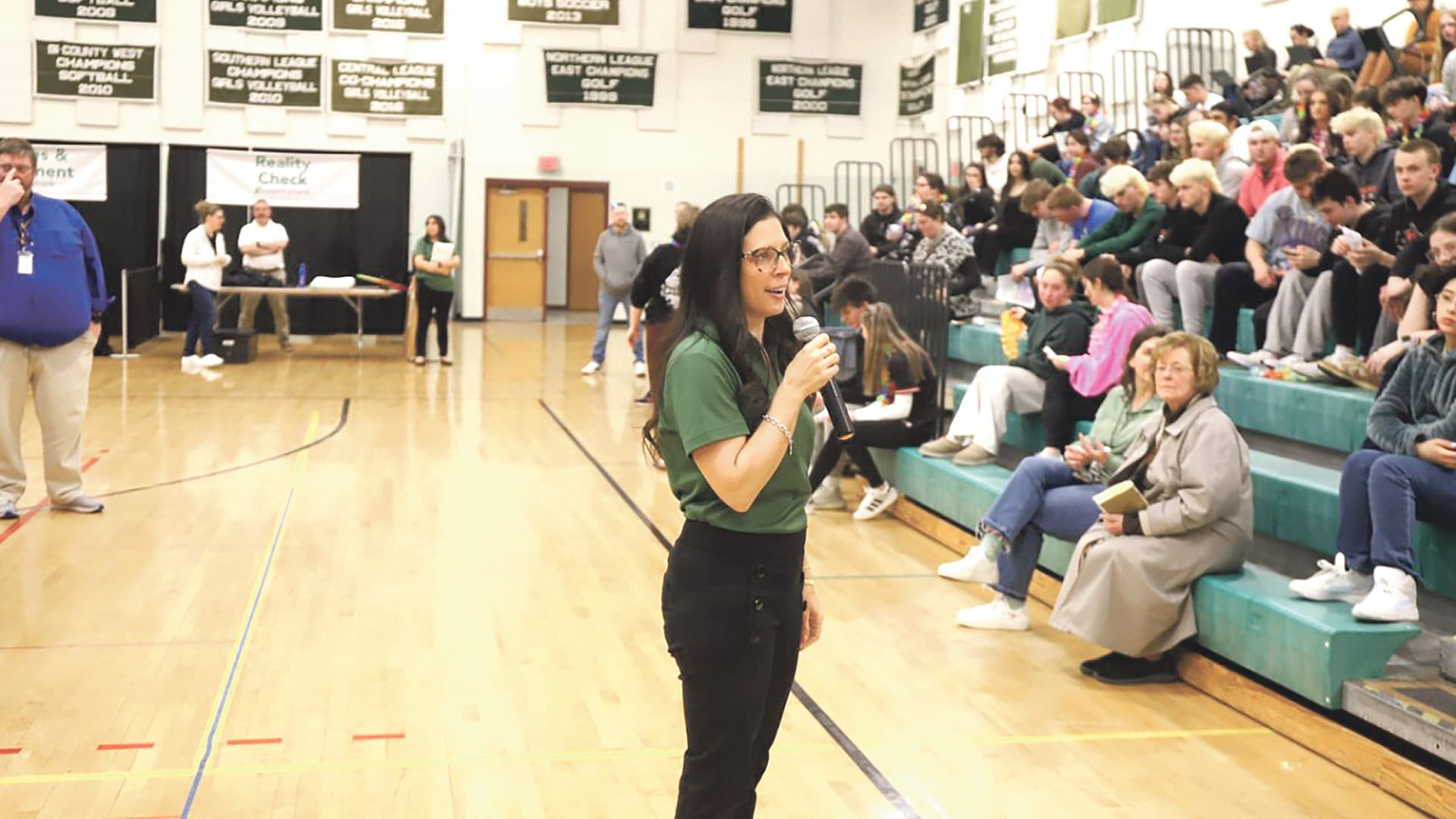
Attendees gather at the 2024 Women in Business Summit, also held in Springfield.

Attendees gather at the 2024 Women in Business Summit, also held in Springfield.


It was called the Women in Business Passing the Baton: Today, Tomorrow & Beyond Summit.

That’s … quite a mouthful.

Back in 2005, Kisha Zullo recalled, she was launching an event planning company called Events of Joy and wanted to plan a conference for women who had achieved a certain level of success and could learn from each other.

“But the summit name was very long,” she admitted. “So, later, I scrunched it into the Women in Business Summit, because who’s going to say all that every day?”

But there was a reason for that initially too-long name.

“I wanted the image of passing the baton, like we’re in this race together, and we’re just passing on knowledge so the next generation can close the pay gap — at the time, I think it was 77 cents to a dollar; now it’s about 83 cents. So, things like the pay gap and managing your time, how to communicate with confidence, topics like that have not gone away.”

Which is why Zullo’s annual Women in Business Summit — which started in Connecticut but moved to Springfield three years ago — is still going strong in what will be its 20th iteration next month. The event will take place on Wednesday and Thursday, Sept. 24-25 at Marriott Springfield Downtown. Registration is open at wibsummit.com.

“We started with 60 people, and we’re anticipating about 300 coming into Springfield this year,” she told BusinessWest. “They’re coming from Western Mass., Connecticut, New York, New Jersey … last year I saw Vermont, Florida, Colorado.”

The mission of the conference, as always, is to develop a strong community of women leaders and entrepreneurs by sharing resources, knowledge, and inspiration.

“This year, we’ve chosen to focus on leadership development because we’ve talked to our [past] attendees, and that’s what they want to hone — their leadership skills,” Zullo explained.

“We’re doing a wellness track, and wellness can be mind, body, soul, and spirit, but it can also be your relationship with money,” she added. “If you’re always saying, ‘money moves through my hand quickly’ or ‘I can never keep it,’ well, that’s a mindset shift that maybe you have to make. So I’m excited about that.

Kisha Zullo

Kisha Zullo

“Over the past 20 years, I have been really fortunate to have a really great group of people. Some speakers are returning from last year because their workshops were incredibly popular.”

“Then we have an entrepreneurship track,” she added, “because half of our audience are solopreneurs or small business owners, and the other half work for someone else in nonprofit, corporate, or other industries.”


Women to the Front

This year’s keynote speaker is Endia DeCordova, vice president for Institutional Advancement at Morgan State University and executive director of the Morgan State University Foundation. “She was at the very first Women in Business Summit, and I’ve kind of watched her career soar,” Zullo said.

Other presenters include María Elena Gavilán Alfonso, technology leader and technical program manager with MathWorks; author and activist Choc’late Allen; Jennifer Bouquot, vice president of Talent Development for Liberty Bank; Lisa Carrol, founder and CEO of LIVLY; Orlena Cowan-Bailey, chief elevation officer of HR Zoom Consulting and HR Swag Shop; Sara Diaz, founder of the First Gen Madrina; Iquo Essien, founder of Crowdfund Your Dream; Veronica Garcia, CEO of Latino Marketing Agency; Patsy Mundy, assistant vice president at Travelers; Tessa Murphy-Romboletti, executive director of EforAll Holyoke and Holyoke city councilor; Latonia Tabb, CEO of Cooke Consulting Management; therapist Whitney Wilfred; and Michelle Wirth, co-owner of Mercedes-Benz of Springfield and founder of Feel Good Shop Local. Tiffany Joy Murchison, owner of TJM & Co. Media Boutique, will serve as emcee.

Meanwhile, panel and workshop topics will touch on managing burnout, technology and AI trends, the future of work, leading with purpose, thinking outside the box, entrepreneurship, the power of conversation, and much more.

“It’s really attendee-led,” Zullo said when asked how the roster comes together. “We get a lot of speaker inquiries, but it’s the attendees who tell us what they want to see.”

Take Carrol, who has turned LIVLY into a well-known high-end clothing brand. “I want her to talk about her story of how she brought LIVLY to life and was able to fundraise $10 million,” Zullo said. “That is of interest to an entrepreneur who’s just starting out or in the middle of their career.”

She added, “one the things that I’ve said to the presenters is, ‘please, when you’re in your session, it’s about have the experience … make your presentations interactive so you’re not just sitting there as a talking head in a workshop. And over the past 20 years, I have been really fortunate to have a really great group of people. Some speakers are returning from last year because their workshops were incredibly popular.”


From the Ground Up

Zullo’s event-planning business, Events of Joy, launched in 2005, and the Women in Business Summit — actually, the Women in Business Passing the Baton: Today, Tomorrow & Beyond Summit — was her first event.

“I didn’t know I wanted to be an entrepreneur. I remember, when I was working in D.C., I worked for this really cool property that did so many different events. I saw different types of weddings, cultural weddings, nonprofit events, corporate events, this really amazing mix,” she recalled, adding that she began to wonder about the woman she saw working behind the scenes, and what that job might be like.

“I thought, one day I want to plan parties. So I tucked it away, and when I moved to this area, I thought I would love to start my own business. And then it was like, how do I get it started? And what is going to be the name?”

In fact, Events of Joy has a double meaning, named after both Zullo’s mother and how she feels bringing events to life.

“I started out doing weddings — I don’t plan weddings anymore, but there’s someone on my team who does. I focus primarily on nonprofit signature events, fundraisers, and corporate events. And of course, planning events for the Women in Business Summit.”

Twenty years later, Zullo is gratified by the impact the event continues to have.

“As women leave, they say, ‘oh, I’m so inspired because I heard this,’ or ‘this is a new thought that I can implement the next day at work,’ or ‘I’m going to use this to resolve this issue in my life.’ That just makes my heart soar, to hear those kinds of testimonials.”

Special Coverage Women in Businesss

Lessons Learned at Home

Lindsay LaBonte


Lindsay LaBonte recalls how she felt growing up, watching her father, who owned an independent mortgage broker company, help people get into homes.

“He always came home from work so satisfied with being able to help people reach the American dream and own a house,” she said, adding that she decided early on that she wanted to do the same. “I knew I had to go to school and get that done, but I really wanted to work. So when I was 16, I started as an intern with him, and the rest is history. I worked my way up, got licensed as a loan officer, happened to be good at it — and I enjoy it.”

These days, LaBonte enjoys that work as branch manager of the Applied Mortgage team at the Northampton branch of HMA Mortgage, the most recent national company Applied Mortgage has been affiliated with.

“We’ve had different parent companies. In the mortgage world, it’s a franchise model, where branches often run as a team name and feed up to a larger parent company,” she explained. “So we’ve had different parent companies over the decades, but always the same Northampton-based Applied Mortgage team.”

Her father entered the business in 1987, and LaBonte’s success over the past two decades — she’s one of the top loan originators in Western Mass. — has turned this family success story into a multi-generational one.

“For people who are buying a home, no one’s process is the same as the next person because everybody’s got different goals, different financials. We take those goals and financials and put them together, figure out the mortgage that’s going to work, and get them into that home.”

“A lot of family businesses don’t work out, but I’m really fortunate — my dad is an awesome dad, an awesome mentor, an awesome boss at the time. I ended up being his boss. Now he’s retired, so it’s been a good run.”

That run continues with LaBonte and her team serving a variety of clients in Western Mass.; the business is licensed in more than 30 states, but about 99% of its business is centered in Hampshire, Franklin, and Hampden counties.

The focus is residential mortgages, she explained — purchases, refinances, and renovations of primary or second homes, and some clients who rent out homes as entrepreneurial enterprises. About a third of her clients are first-time homebuyers, while the rest are either upsizing, downsizing, repeat buying, or renovating.

With that volume of clients navigating the process for the first time, LaBonte said strategic planning and financial education are important parts of what Applied Mortgage brings to the table.

“What I love the most, at least professionally, is getting to meet with and speak to people from all different walks of life,” she said. “For people who are buying a home, no one’s process is the same as the next person because everybody’s got different goals, different financials. We take those goals and financials and put them together, figure out the mortgage that’s going to work, and get them into that home.”

For this issue’s focus on women in business, BusinessWest sat down with LaBonte for a wide-ranging talk about the mortgage business, why she enjoys it, and how she connects with the community in a number of different ways.


Sharing the Love

It’s called Local Love Days.

That’s a program recently created by Applied Mortgage as a way to give back and support local businesses. On select days, the team will partner with local small businesses and invite the community to stop by, explore what they offer, and show their support. To spark participation, Applied Mortgage will cover the cost of a small thank-you item, such as a coupon for the first set of shoppers, a free drink or appetizer, or another offering tailored to the partner business.

Lindsay LaBonte (center) with HMA Mortgage colleagues

Lindsay LaBonte (center) with HMA Mortgage colleagues Bob Petrelli (left) and Jess LaMothe.

“We’ve always, throughout the years, supported nonprofit organizations,” LaBonte said. But at the same time, “we’ve got a lot of business owners we work with. So, while we want to continue to give back to the nonprofit sector, I was trying to brainstorm, how do we directly impact and help businesses?

“If if we’ve got a network of about 10,000 to 15,000 homeowners that we’ve helped over the last 35 years, how can I mobilize those people to come out and support businesses and also give them a cool incentive or coupon or something? So the Local Love Days really came from trying to tie that all in together,” she went on.

“We’re selecting some businesses to partner with and having a day where maybe the first 50 people get a free donut on Tuesday morning at such and such donut shop, or maybe something at a happy hour at a bar, or a free yoga class. We’re trying to span the three counties that we work in, span all different types of restaurants and retail, and use this as an opportunity to mobilize our network and help connect people and bring them out to support businesses.”

As she noted, the company supports dozens of nonprofits as well through volunteerism and philanthropy, and LaBonte also serves on a number of local boards. That, like her business goals, was partly due to her father’s influence.

“I think my dad was maybe a little ahead of his time, starting in the ’80s, being in a mortgage company and raising his hand for corporate social responsibility. We’ve always had that ingrained in our core values. And I picked that up from him when I started.

Lindsay LaBonte

Lindsay LaBonte

“I think my dad was maybe a little ahead of his time, starting in the ’80s, being in a mortgage company and raising his hand for corporate social responsibility. We’ve always had that ingrained in our core values. And I picked that up from him when I started.”

“He said, ‘you’ve got to get out there,’” she added. “So part of it was business networking, and another part of it was, what do you want to support? In the financial world, we’re in a spot where we can financially support causes, as well as volunteering and lending our expertise.”

As for that volunteering, LaBonte — now the mother of two kids, ages 4 and 3 — has had to learn how to balance work, family, and her passion for the community.

“I got engaged with some of the local young professional organizations originally, and it kind of grew from there. I was probably 20 at the time that I served on my first committee, and once you raise your hand as a young professional, you get pulled by a lot of different organizations. So most recently, it’s been figuring out where it makes sense and learning how to not say yes to everybody, even though it’s really hard to do that.”

That said, she finds as much time for all of it as she can, and laughed when asked what her typical day is like.

“Typical is not really in my vocabulary anymore. It used to be,” she said, noting that she was “very type A” at one time, but having young kids changed that.

“About 10% of our homeowners actually are entrepreneurs. And a lot of my time is speaking with other entrepreneurs, business owners right here in the Pioneer Valley. And we do a lot of work with nonprofit organizations, giving back to over 30 organizations a year. So my day kind of bounces between actually working on mortgages to just meeting and networking with folks, and then also doing a lot of the community support that we get to do.”


Changes and Challenges

LaBonte said the mortgage field has changed in some ways, especially through new technology, which now incorporates everything from electronic portals to share information to clients using FaceTime to view houses.

“There’s just so much more video and photography and text messaging and all these different aspects. I think that’s the biggest change. And what we always try to do is use technology and social media and all those other support tools to enhance relationships rather than to replace the relationship.”

Of course, the biggest challenge for clients these days is the fact that home values have soared, inventory is tight in most areas, and mortgage rates are higher than they have been in the recent past.

“I was just speaking with somebody earlier this week, and they said, ‘wow, this just isn’t my mom’s housing market.’ I’m like, I need to make a T-shirt that says that. Because it’s hard, right? I mean, where do you typically go for your advice? Probably your parents or close friends or someone else who bought a house five or 10 years ago. And really, in the last five years, there’s been a big switch.

“It’s attainable for some people, but not for everybody. And it’s less affordable to buy a house than it has been,” she went on. “So we’ve always incorporated an element of education into everything we do. I always tell people, it’s never too soon to contact us to just start making a plan.”

For many clients, especially first-time homebuyers, that’s crucial, LaBonte added.

“There’s not really financial 101 kind of stuff in schools. Sometimes, when we’re talking to people, it’s their first time ever seeing their credit score or really sitting down and making a budget. So we have those conversations that are just a base plan, all the way up to people who own five, six, seven investment properties, and they’re trying to figure out how to structure things to make their next move. So it can be basic or intricate.

“We consider ourselves their debt advisors,” she went on. “Financial advisors are managing the assets, and we’re trying to figure out how do you best structure this debt? Because a mortgage is usually attached to somebody’s biggest asset, but it’s probably their biggest debt, and they’ve got to be able to pay it, and it’s got to make sense and be comfortable.”

That’s another quality she said she absorbed from the way her father conducted business.

“I learned from my dad originally to give people the time of day, to sit down with them, meet them where they are, and just help them. And I think, through that mindset, we get repeat customers. People who worked with my dad before send their kids, even their grandkids now. And it’s really wonderful.

“It’s a great community,” she added. “We’re really fortunate to have a community that values supporting local folks. And we just stick to that mission of just doing good. Good business begets good business. And it just grows from there.”

Like her father, LaBonte is gratified when she comes home having helped someone secure a home in a region she’s clearly passionate about.

“I always ask homeowners, because I am curious, ‘why now? Why are you moving here? What’s the draw?’ And mostly what I hear is we kind of have the perfect area,” she told BusinessWest. “We have the Five Colleges system. We have great public schools. We have great hospitals. We have all these little downtown areas with great retail, great restaurants. People value that. Plus we have a good environment for hiking, biking, whatever outdoor activities that people like.

“So I do think it’s really a perfect landing place for a lot of folks,” she went on. “And that makes it trickier with our low supply and high demand of housing inventory. But that’s a whole other conversation.”


Success Stories

LaBonte has been a Banker & Tradesman top loan originator across the four Western Mass. counties for eight consecutive years, has been named among Scotsman Guide’s top 1% women originators nationally, and was featured in Mortgage Banking’s Powerful Women in Mortgage Banking in 2022.

“I think, when it comes down to it, those are just accolades, right? she said. “It’s the actual people that we’re helping who motivate me — making sure that we’re actually serving people’s best interests.”

When LaBonte was named to BusinessWest’s 40 Under Forty class of 2018, she was asked what three words best describe her, and she replied, “goal-oriented, efficient, planner” — and judging from the recognition from the publications noted above, those traits have certainly served her well.

But she’s also personally evolved quite a bit since 2018.

“What’s that, seven years ago? That was before I was married, before kids, before I was actually managing my own group. My mindset was so much more individual — and you can see that in the words that I picked.

“So yes, I think that foundation definitely got me here, but I think I’ve also learned a lot more empathy and sympathy and leadership skills and everything else since then,” she went on. “And I have such an awesome team now. I’m thankful for that. So I think now it would be a lot more team-oriented.”

She’s also more grateful for each individual client success.

“It’s harder now, and it’s not just helping people get to the finish line of owning the home —that’s really the starting line. It’s everything we do after that to support people and the conversations we have and making sure that they’re continuously able to stay in their home. It’s got to be one of the coolest jobs.”

Community Spotlight Special Coverage

Community Spotlight

Mayor Michael McCabe

Mayor Michael McCabe says it’s important to expand the tax rolls with both new businesses and housing growth.

Westfield Mayor Michael McCabe is a believer in business growth — specifically, bringing new businesses to the city to boost the tax base and general vibrancy. But for every opportunity, there’s a challenge.

For example, “how do we balance the environment with new growth? Our north side pretty much all sits above an aquifer system, which has caused us some angst because most of the land that we have for economic development and growth is on the north side.

“So if you’re trying to be respectful of your aquifer and at the same time trying to figure out how you get new growth, it’s an interesting scenario,” he went on. “As you know, new growth is one of the things that actually funds the city. It’s where you get new tax revenue from, so you don’t have to tax your residents more.”

“Elm Street Plaza has really worked out beyond our expectations.”

That said, while this city — the region’s fourth-most populous and one of the largest geographically in the state — has seen new businesses lay down roots, from several new restaurants downtown to industrial businesses on the north side, what’s been happening at the municipal level has made the biggest news lately, including:

• The completion of the five-year Cowles Bridge replacement project on Routes 10 and 202, which should be finished by Sept. 25;

• A planned reimagining and redesign of Mass Pike exit 41 — funded by the Massachusetts Department of Transportation — that aims create a more motorist- and resident-friendly traffic pattern involving three roundabouts;

• A coming new Police Department headquarters on Union Street, expected to be open by the end of 2027; and

• Elm Street Plaza, a gathering and performance space that has not only drawn both city residents and visitors to Westfield’s downtown for events, but opened up much-needed parking for retail shop and restaurant owners;

“Elm Street Plaza has really worked out beyond our expectations,” McCabe said, “with the amount of events and the amount of use it gets, and the amount of free parking it has, so merchants can have customers in and out who don’t have to worry about trying to find parking.”

That development has coincided with a number of new restaurants downtown, offering culinary diversity to the central district, he added.

“If you’re looking for something to eat and you don’t want traditional America cuisine, you have Spanish, you have Italian, you have Turkish, you have Ukrainian, you have Slavic, you have Polish, you have Vietnamese … I mean, you have a pretty eclectic mix, all within a tenth of a mile.”

Amanda Waterfield

Amanda Waterfield says events in Westfield, from Friday night concerts to Starfires games, have a multiplier effect when visitors stay in the city to eat and drink.

The downtown will also play host to a welcome-back party for Westfield State University students, one way the city is trying to connect the school to its downtown, McCabe added. “I think there’s a realization that vibrancy begins with people walking around downtown.”

Amanda Waterfield, who has been executive director of the Greater Westfield Chamber of Commerce for just over two years, echoed the mayor’s focus on hospitality businesses, noting that the chamber is planning a Restaurant Week this Nov. 4-9, featuring menu specials, unique promos, and other activities aimed at raising the profile of participating eateries just before the start of the holiday retail season.

Noting about 70 restaurants, coffee shops, breweries, and other culinary businesses in Westfield and Southwick, Waterfield said she’d like to see at least a third of them participate, and then grow the event from there in subsequent years.

“And I really would like to reach out beyond Westfield,” she added. “I’d like everybody in the Valley to think of Westfield as a destination.”


On the Right Track

Westfield Gas & Electric (WG&E) adopts the same philosophy on the importance of growth, which partly explains its launch, a decade ago, of Whip City Fiber, which has now completed wiring the entire city for high-speed internet, and also serves 23 other communities, including the region’s hilltowns as well as East Longmeadow and, most recently, West Springfield, where it has begun to build out infrastructure.

That has brought in significant revenue, and the WG&E is using some of it — $15 million over 15 years, in fact — to pay the city’s bond (with interest) for an $11 million athletic complex at Westfield High School, which broke ground last month.

“My overall goal is to see downtown thrive. Restaurants are a wonderful draw, but we need more than just restaurants. We need more things for people to do when they come into town. I’d love there to be a little more retail to draw folks in and keep their dollars local.”

“It’s a stadium with a full collegiate track, lights, and turf fields,” said Tom Flaherty, general manager of WG&E, noting that the field will be used for football, men’s and women’s soccer and lacrosse, field hockey, and more, while a second multi-purpose field, without lights, is being developed behind the school for overflow events; the softball field is being turfed as well.

“We’re really planning for the future with something all of Westfield can use — people of all ages, including senior citizens, who can walk on the track at night safely,” he noted. “I see that all the time in Southwick; a great deal of people use the track they put in about 10 years ago.”

In addition, Flaherty noted, “the fields are for everyone, from youth soccer and youth football all the way to potentially having a revenue stream for the school athletic department by leasing it out to private club teams.”

Westfield Gas & Electric

Westfield Gas & Electric hosted a groundbreaking last month for an $11 million athletic complex at Westfield High School.

McCabe agreed that the benefits of the project are many, and would include the potential of hosting regional tournaments on both the high school and collegiate levels, possibly working with Westfield State University — all of which would bring more visitors to the city, in the same way the Westfield Starfires, now winding down their seventh season of play in the Futures Collegiate Baseball League, or the city’s 14 municipal pickleball courts, have done.

“The greater the exposure to Westfield, the greater commerce there is in the city,” the mayor added. “And it’s not all Westfield residents. People will stop by one of the cafés downtown, or have a drink with their friends afterward, and all of those things are very good, obviously, for the city. So that’s what we’re trying to embrace.”

Waterfield added that Elm Street Plaza has enhanced Westfield’s visibility as a cultural focal point; in fact, the city received a Massachusetts Cultural Council designation last fall.

That’s important, she said, because it brings in marketing dollars to organizations working collectively to raise the city’s profile. For example, an organization called Artworks Westfield puts on eight Friday nights concerts at the plaza during the summer, all free to the public.

Westfield at a Glance

Year Incorporated: 1669
Population: 40,834
Area: 47.4 square miles
County: Hampden
Residential Tax Rate: $15.18
Commercial Tax Rate: $29.17
Median Household Income: $45,240
Median Family Income: $55,327
Type of Government: Mayor, City Council
Largest Employers: Westfield State University, Baystate Noble Hospital, Mestek Inc., Savage Arms Inc., Advance Manufacturing Co.
* Latest information available

“Those seem to be drawing folks in,” she said. “It’s just a good time on a Friday night — bring your lawn chair, there’s food trucks, there’s beer trucks. It’s very family-friendly. I see people with their dogs.”

The prevailing theme with many of these efforts is to get people to notice Westfield — and come back.

“I think if you’re from Westfield, you know what we have to offer here. There’s a lot here,” Waterfield said. “But people might think, ‘I’m from Longmeadow; am I going to make the trek to Westfield?’ Well, yes, actually, you should. You know, come on Thursday to the farmers market and then stay for dinner. Come on Friday and have dinner beforehand and then go to a concert. Go see a baseball game.”

What visitors find, she added, is that Westfield has numerous important elements that contribute to a robust community, from Westfield State University to Baystate Noble Hospital to Barnes Municipal Airport (and the Air National Guard’s 104th Tactical Fighter Group, which recently procured new F-35 fighter jets) to a river and a rail trail.

In addition, “I’m encouraged by the lack of crime downtown, which is wonderful,” she said. “And I give the big businesses downtown credit for being here. The banks, the Gas & Electric, they don’t have to be downtown, but they choose to support the community by having a really visible, meaningful presence here.”

McCabe also praised the Police Department’s work, not only in crime prevention, but being visible to residents, just one more factor in why Westfield has a strong housing market.

“People want to live here,” the mayor said, but, like virtually every town in Western Mass., Westfield needs more housing stock. “We’ve looked at two spaces on the north side for multi-use housing, and we’re hopeful that we were going to see some help from the state in terms of grant funding from the Massachusetts Housing and Livable Communities office.”


Local Focus

Waterfield said she’s made progress in her goal to engage more businesses with the chamber; membership was under 200 when she came on board, but is at 258 now, and her goal is 275 by year’s end.

“That’s partly what I hope Restaurant Week will do, give community members an idea that the chamber is here to support the businesses and ultimately improve the state of living in the city.”

She and her team also updated the chamber’s strategic plan last year, and moving the chamber offices to a downtown storefront has been a plus as well.

“My overall goal is to see downtown thrive. Restaurants are a wonderful draw, but we need more than just restaurants. We need more things for people to do when they come into town. I’d love there to be a little more retail to draw folks in and keep their dollars local,” she told BusinessWest.

The mayor was quick to run down why people might want to move to Westfield, from the ones already mentioned — the university, the community hospital — to recreation opportunities.

“We have Stanley Park, which is 225 acres of preserve. And there are plenty of venues to go to now where the kids can play. The parks have been brought back up to speed to where they’re supposed to be. Our municipal parks have pickleball and tennis courts and baseball fields and softball fields.

“And we have good service organizations — the YMCA and the Boys and Girls Club of Greater Westfield do phenomenal work,” he added. “So I think we’re doing pretty well.”

Features Special Coverage

The Blended Workplace

As companies grapple with the implications of artificial intelligence (AI) and other disruptive technologies, the conversations tend to focus on productivity and efficiency.

Linda Dulye wants companies to think about something else: the human element.

“I’ve seen it in my clients; there’s this rush, this FOMO — ‘we’ve got to get this injection of AI,’” she told BusinessWest, using the popular acronym for ‘fear of missing out.’ “This reminds me a lot of when I was working with General Electric and also AlliedSignal — when Lean and Six Sigma were unfolding, we were on the front end of it; we were the pioneers. And there was this rush.”

And her current concern surrounding AI is the same concern she had then — and has expressed with clients over the years when discussing those efficiency models — which is whether the human element is being squeezed out of the discussion.

“You can come in with all the tools, all the technology that is going to improve processes, and we’re going to take what was 10 steps down to three steps, but that can be daunting and scary for many people. So you still have to have a degree of human connection, collaboration, and communication.

“A lot of my work has been centered on, how do we get people to understand the new technology that’s coming in? Automatically there’s a barrier — ‘we’ve been doing this for 10 years; what do you mean I have to change?’”

Dulye — who launched her management consultancy, Dulye & Co., in 1998 to help business leaders and their organizations cultivate cultures where people want to stay and grow — has turned her thoughts on the coming AI revolution into a concept called the Blended Workplace, which she calls a “human-centered approach that harmonizes the benefits of advanced technology with the in-the-moment power of digital minimalism.”

In short, she said a technology-first, people-second mindset is costing companies dearly and pulling leaders away from making critical investments in human connection and communication.

“You can come in with all the tools, all the technology that is going to improve processes, and we’re going to take what was 10 steps down to three steps, but that can be daunting and scary for many people.”

“AI is essential for business success — so is human interaction,” Dulye notes on her website. “The current AI surge feels eerily similar to the Lean and Six Sigma boom. Back then, companies realized that even the most powerful productivity tools couldn’t succeed without real, person-to-person communication. The same holds true today: when workplace connections erode, so do trust and teamwork.”

In a wide-ranging conversation with BusinessWest recently, she explained that people love new bells and whistles in, say, their cars, but not so much at work.

“That’s kind of scary for many people. So that’s why I developed this concept of the Blended Workplace — it’s helping organizations understand they’ve got to devote time with human beings, helping them understanding why we’re doing this, showing them how this augments their skills and doesn’t make them obsolete.”

Linda Dulye

Linda Dulye says any process improvement has to be accompanied by human connection, collaboration, and communication.

On the contrary, the goal is to show team members how to adapt to new technology and new models and make themselves even more valuable to the company.

“That’s ultimately what we’d love to have people do. But we all don’t operate the same,” Dulye went on. “It’s not like flicking a switch and saying, ‘OK, on Monday, we’re going to be utilizing this new AI technology,’ and you’re like, ‘wait, what? What’s going on?’ We want to help people understand why we’re doing it, what it means to them in their job, and how to get comfortable with it. You have to help people.”


Change Agent

The Blended Workplace fits well with the overarching philosophy of Dulye & Co., a concept (and movement) known as the Spectator-Free Workplace, which emphasizes investments in human connection and communication in the workplace — in short, being engaged at work and not just a spectator.

Dulye’s new message with the Blended Workforce concept is underscored by a few insights:

• Employee fatigue is real. Endless screen time and nonstop notifications are burning employees out. Her company’s research shows employee engagement is steadily declining, echoing Gallup’s report of a 10-year low in 2024. Making matters worse, only 56% of employees believe their leaders genuinely care about their well-being, according to a Deloitte survey.

• Gen Z, in particular, is unplugging. The rising generation of professionals values authenticity and meaningful relationships over algorithms. CNBC reports that Gen Z craves in-person interaction — especially new graduates, who’d rather learn company norms from colleagues than scroll TikTok.

• Connection drives performance. Whether in person or with cameras on, face-to-face interaction builds trust, ignites creativity, and strengthens accountability.

One Dulye & Co. client boosted engagement and productivity by more than 50% in less than a year simply by transforming team meetings with no-frills fixes like employees helping to set agendas, tackling tough issues head-on, and recognizing peer contributions, she noted.

“We want to help people understand why we’re doing it, what it means to them in their job, and how to get comfortable with it. You have to help people.”

Meanwhile, Dulye told BusinessWest, workers from different generations have different responses to — and tolerances of — major change, especially technological change, in the workplace.

“There’s always a new wave. Do you remember when computers happened? I’m old enough to remember the pink slip. I came in my office — I was a reporter then — and saw who called, and now I had to return a call. Well, the person who wrote that doesn’t exist anymore. And neither does the pink slip.”

The idea, she went on, is that change of any kind is constant in the workplace, and in the rush to apply new tools and technologies to be more efficient, companies aren’t spending enough time on the people side to help everyone navigate change — especially dramatic change like AI, which is much more disruptive than ditching written phone messages.

“These tools are only effective when people are working collaboratively, when they understand them together,” she explained. “We all are gaining efficiencies with these new tools that help us work better together collectively, not just individually. So you’ve got to spend time as a team really figuring out, how do we work these tools into our own practices? And that involves communication between team members.”

Moreover, Dulye added, “we’ve got to understand all the different nuances that affect learning it, applying it, and feeling comfortable enough that I want to advance this; you’re going to have different roadblocks than me, just because of our experiences. But that’s the kind of discussion a team needs to do together. Leaders need to spend time helping their organizations know why we are doing this.”

Dulye said there’s an opportunity to promote this kind of conversation with Gen Z, whom many people assume want to live behind screens — a stereotype she said isn’t true. “I feel bad for this generation because they actually want more connections than maybe Boomers do or or some of Gen X.”

But connections are harder in general during the new age of remote and (more commonly) hybrid schedules, which make it more of a challenge for leaders to promote communication in the office. But she said hybrid arrangements are a net positive in many ways.

“I think the flexibility factor is strong. Unless you do a lot of work in manufacturing, or have a job where you have to physically be there — like hospitality — I think you have to have a hybrid schedule. I see models where having an in-person requirement on Tuesday, Wednesday, and Thursday is very effective.

“It’s not just getting people to come in, but being very deliberate and intentional about what we are doing to create more team-based experiences.”

“But here’s the thing,” she went on. “Just because we’re coming in doesn’t mean we’re working more collaboratively together. Just coming in doesn’t mean you and I will cross paths. So it’s not just getting people to come in, but being very deliberate and intentional about what we are doing to create more team-based experiences.”

That goes back to Dulye’s original business concept, the Spectator-Free Workplace.

“People want experiences at work that make them feel, one, I’m valued; two, I really like the team I’m with; and three, I really do like the company I work for. But it takes an experience. If you’re still operating on routines that you’ve been doing the last five years, that’s building a spectator-filled workplace. And it’s not beneficial. It’s just people coming into work, showing their faces, and really not interacting. So I’m all for the hybrid workplace — with very intentional team experiences.”


Beyond Meetings

Dulye concedes, of course, that hybrid schedules create a more challenging environment for business leaders when it comes to in-office interaction, but that it’s still possible to create a healthy, connected workplace even if employees are at home part of the time.

One strategy are team meetings where everyone is expected to contribute.

“It’s not OK to have a team meeting where three people out of 20 are talking, and everyone else just sits there doing something else, and says, ‘yeah, pass, I have nothing going on.’ Really? If you’re paying me and one week has gone by and I have no new information to contribute to my team, there’s something wrong. That’s not acceptable,” she said.

“If you’re getting together as a team once a week for 30 minutes, everyone’s got to bring something they learned, maybe something they didn’t expect that happened, maybe even just a recognition of a team member, but everyone has to contribute. You don’t get a pass.”

Getting back to communication around AI, she said some employees are worried about the implications on job security, but those concerns existed when Lean and Six Sigma came into being as well.

“People were all concerned about, ‘well, if we take 10 steps and go to five, how many jobs is that?’ So this is not new. I think people need to understand this is not a new phenomenon. People have always been fearful that technology can reduce jobs when it makes work more efficient.

“Again, it’s how do you see yourself being able to utilize that technology in a role that you still want? Or, maybe you want to think about a new role that requires skill sets you have and want to grow, but maybe isn’t as affected by AI. I mean, AI won’t affect us all at the same rate. It affects us all, but by different degrees.”

Construction Special Coverage

Spark of Youth

Walt Tomala (center) with apprentices Ben Harrington (left) and Matt Ganhao.

Walt Tomala (center) with apprentices Ben Harrington (left) and Matt Ganhao.


While he was already interested in the construction field, Matt Ganhao had never actually been on a job site before starting a co-op with TNT General Contracting in Westfield, which he procured through the Lower Pioneer Valley Career Technical Education Center, or CTEC.

“I was really excited — it was a new experience for me,” he told BusinessWest. “Once I finally got to work out in the field and actually get to see what goes into building a deck or building stairs, doing a roof, whatever, it really sparked something in my mind that maybe this is something that I want to do. And then, as I kept working my co-op apprenticeship, I decided I want to go full-time.”

That’s music to the ears of Walt Tomala, president of TNT, who has brought a number of teenagers onto job sites for lengthy co-op experiences in order to introduce them to a career path that, both locally and nationally, is in desperate need of young talent, as retirements continue to outpace new workers.

Tomala understands a youthful passion for this work; he started his company right out of high school and has done everything from changing screen doors to large remodels, additions, new homes, and even two Extreme Makeover builds.

“We’ve tried different strategies and different business models,” he explained. “And one that I just kept coming back to is working with our youth. Someone put some time and energy into me and helped me along the way, and if I didn’t have that, I don’t know that I’d be here and still loving the industry the way I do, or as passionate about it.”

“Once I finally got to work out in the field and actually get to see what goes into building a deck or building stairs, doing a roof, whatever, it really sparked something in my mind that maybe this is something that I want to do.”

Ben Harrington will be entering his junior year at Westfield Technical Academy this fall and already has real-world construction experience outside the shop environment at school.

“I just like being out here, working on different things, learning new skills — and I feel like being in this trade is very good for me,” he said, adding that it’s beneficial to learn from both teachers in school and construction professionals on job sites. “It’s good to know multiple people’s ways. If I ask Walt questions, he’ll give me different answers than somebody else, but if I listen to both answers, it helps me a lot. And it feels good knowing I’m doing something right for Walt.”

And that’s one thing Tomala emphasizes with his apprentices — the gratification of a job well done and understanding the why as much as the how.

“We do certain things all day, every day, and it can feel like the same thing over and over. But we take the time and make it our mission to make sure everybody understands why we’re doing this and why it’s so important,” he explained.

“They have to understand the passion that we have,” he went on. “No employee is ever going to be as passionate as you are about your business, but they can be as passionate about the industry. And it may mean they move on and start their own company or become a subcontractor. Or it may mean they just really embrace our beliefs and passions and then stay with us for as long as they choose to. There’s plenty of room for growth.”

Ganhao, who graduated from both West Springfield-based CTEC and Ludlow High School this past spring, is already convinced.

“I don’t really want to go to school and learn a different trade; I did decide that I want to go full-time,” he said. “It’s a new experience, and it’s something that not everyone’s going to like. But if you’re interested in the industry, this is something you should try out.”

Walt Tomala gives some instruction to Ben Harrington on a job site in Westfield.

Walt Tomala gives some instruction to Ben Harrington on a job site in Westfield.

When he was 16, Tomala said, he didn’t know if this was the industry for him; he needed exposure and experience.

“These young people should have an opportunity to really learn, and not just be kind of barked orders at. They’re full employees, on payroll, and we also teach them the whole finance component — how to open up checking accounts, getting direct deposits. So we’re preparing them for the real world, no matter what they choose to do. And hopefully, it’s construction.”


Desire to Inspire

Tomala has served in leadership with local, state, and national trade organizations, with the overall goal of “just kind of making sure that we’re all doing things the right way, the proper way.”

And building things to code is only the bare minimum, he added. “It’s like graduating with a D. You still pass, but did you do a great job? Our focus is showing everybody that it doesn’t have to be difficult — that it really can be an easy transition to just doing things better. It’s about collaborating with the right manufacturers and the right products and finding the systems that really work for you.”

That philosophy carries over to the way he mentors young people in the field. “I think my message to other builders out there is, take the time; put the energy in. Don’t show them just how to dig a hole, but why we dig that hole and, better yet, the importance of doing it right before we have to dig a hole. Make sure the foundation’s sealed correctly; make sure the roof is put on with all the right underlayments; make sure the windows are taped and sealed.

“Someone put some time and energy into me and helped me along the way, and if I didn’t have that, I don’t know that I’d be here and still loving the industry the way I do, or as passionate about it.”

“I’ve found, throughout my years, that a lot of times, we get some older people in the industry who just wanted to do a job. They didn’t want to learn how. So I sit on the board for three trade schools [Roger L. Putnam Vocational Technical Academy in Springfield is the third] because I want these young folks while they’re fresh, while they’re still excited. And the program we implement is, ‘hey, come on board. Come on for the summer; see if you like it. You’re in a trade school right now, but you might not know if this is the industry for you.’”

The backdrop to all these efforts, of course, is a persistent shortage of construction talent, which is why Tomala values apprenticeship.

“It’s not just important; it’s critical. I think we’ve been talking about this as an industry for 15 years,” he said, noting that Fine Homebuilding magazine has a program called Keep the Craft Alive, through which contractors donate funds to help support trade schools and improve their offerings.

“We’re now at a point where most of my subcontractors are going to age out and retire, and we just don’t have enough of the youth understanding how important this industry is, how rewarding it is, and how you can make an extremely good living here,” he said.

Matt Ganhao checks out a residential basement crack.

Matt Ganhao checks out a residential basement crack.

“It’s not like, ‘oh, you’re a roofer, so you’re only going to get paid so much,’” he went on. “No, there’s a really, really good paycheck at the end of the day, especially when you know what you’re doing and you deliver on the expectations. And that’s why it’s so important to know what the client wants and to be able to deliver on that. I’m not saying it’s the right fit for everybody, but I want to remind the world that the are companies out here taking the reins and giving these young folks an opportunity.”


World of Experience

Tomala said his influence on local young people interested in construction started with visits to the trade schools.

“They wanted someone to come in and talk, to just inspire students overall. And that worked out pretty nicely. I’d spend two hours with the students, and I enjoyed it,” he recalled. “But it wasn’t until after COVID that I was like, you know what? I get to see these kids for a day, but there should be more of a connection, and there should be more of an avenue for them to get to us.

“So I sat down with a lot of the teachers and said, ‘this is what I want to do, this is what I want my business model to be, and is there an opportunity for us to collaborate and to bring students on?’” I also said, ‘I don’t want to stop them from going to other places as well, but I’d like them to have an opportunity to interview with me, to just sit down to see if we’re a good fit or not.’”

“There’s a really, really good paycheck at the end of the day, especially when you know what you’re doing and you deliver on the expectations. And that’s why it’s so important to know what the client wants and to be able to deliver on that.”

He had nothing but praise for the teachers and programs in those schools. “Students are coming out with real knowledge. They’ve got some really great, committed teachers who are getting that curriculum going and inspiring the youth coming through that program.”

Ganhao said his classmates in Ludlow have been curious about his real-world experience.

“I’ve been asked questions like, ‘is that something you’re going to do for the rest of your life? Are you just doing it just for the heck of it? What’s up with that?’ And I feel like kids are missing out on the opportunities,” he said. “I feel like it should be more publicized because a lot of kids do want to try out a trade.”

Tomala it’s easy to become passionate about construction on actual job sites, finishing real projects. He was working with Ganhao and Harrington on a home in Westfield the day they spoke with BusinessWest, repairing a basement leak and replacing windows and shutters; a third apprentice, also from Westfield Technical Academy, wasn’t on the job that day.

“I think it’s rewarding for them to be able to start something and finish it and see that completed project because, often in the school system, they don’t get to complete a project in full,” Tomala noted. “And they’re learning how to work with each other in different skill sets and different personalities. They’re all having such a good time doing it, and it’s just such a good experience overall.

“I want them to form relationships and friendships and to just understand that the client is a human being — everything we do, whether it’s a deck or a whole house, is for somebody else,” he added. “It might be a small project to us, but it’s their entire world at one point in time. So they get that feeling of satisfaction and camaraderie, understanding how important it is to the client.”

And, hopefully, they find a passion they can turn into a career, in a field where young talent remains elusive.

“Just being able to see the customer at the end, satisfied with our work,” Ganhao added, “it’s something else.”

Features

Lots to Celebrate

Angela and Ted Chagnon (front, second and third from left) and the leadership team at Valet Park of America

Angela and Ted Chagnon (front, second and third from left) and the leadership team at Valet Park of America


When Ted Chagnon started his own business in 1990, he had big goals, but there were times, early on, when operating in seven states — from New England to Florida — and employing more than 1,250 people may have seemed like a dream too far.

But that’s precisely the growth trajectory Valet Park of America celebrated when it marked 35 years in business last month.

“It was kind of slow growth at first,” Chagnon said, recalling that his first two valet clients were Yankee Pedlar restaurant in Holyoke and Hotel Northampton, and other small businesses followed. It took two years before the company landed its first major client, Baystate Medical Center, and over the next several years, other large clients followed, particularly in the medical realm, from UMass Medical Center to MetroWest Medical Center in Natick and Framingham.

“Around 2005, we started adding ski resorts, locations in Albany, some locations in Connecticut, and we started to build some momentum. It was tough because we didn’t have any resources in the beginning.”

Initially focused on valet parking only, the business later expanded into parking management, operating lots and garages, and then other transportation services.

“That was simply because a lot of our clients, whether it’s a medical facility, a college, a casino, or a ski resort, sometimes need more than just valet; they need parking management services or transportation for guests, patients, or even transporting employees off site,” Chagnon explained. “Sometimes you’re moving the employees to off-site parking garages and parking lots when you run out of space.”

The company operates in a wide geographic footprint, from Buffalo, N.Y. to Boston, as well as in Vermont, Connecticut, Rhode Island, Virginia, and Florida. “We’re in Virginia as of last year, and we’ve been in Florida for five years now, and we’ve really grown tremendously there.”

Many employees have been with Valet Park of America for decades, some more than 30 years. Some of those are family, and Chagnon called this a family business; his wife, Angela, is senior vice president, with responsibilities in client relations, human resources, payroll, auditing, and marketing, and other relatives work in leadership positions as well.

“It’s so important to remember what those frontline people are doing out there, with the weather, and the circumstances, and the vehicles, and the hectic days. It can be stressful at times, and to have somebody in here who understands that and appreciates that is huge.”

“My sister was one of the founders. My niece runs our payroll department. My brother runs our fleet management and quality control department. So we are very much a family-run and owned and operated business,” he said.

But he also attributes this employee loyalty to a culture of opportunity, where someone can start by parking cars and eventually move up as other opportunities arise.

“As we grow, we have to hire more people, more regional managers, and it’s nice that we can promote from within. Many worked for us during college and came on board full-time right after college. I don’t think many of them thought they were going to have a career in parking, but then they stayed with the company. In fact, some of their kids are in college now and working for us.”


Getting Behind the Wheel

The Chagnons initially operated the company from home, then moved into an office at 191 Chestnut St. in Springfield, where Valet Park of America is still headquartered today.

“Then we kind of grew,” he said, but it was very gradual growth until about 20 years in, when both the roster of clients and the company’s geographic reach started to create more noticeable momentum. “Then you start becoming a bigger company, with different challenges. But one of the biggest, I think, has been keeping the mentality of a family-run and owned business and maintaining that culture.”

Angela agreed. “I think that just came naturally to Ted and me. I love seeing somebody that starts off as an entry-level valet attendant, and now they’re in the payroll department, or they’re helping me in the accounting department. It’s very rewarding to know that we can do that for them. Anytime we have an opening in the office, we post internally. I love to bring somebody up who knows us, who knows the business, who knows our culture, who appreciates what those frontline employees do.

“That’s the biggest factor for me,” she added. “I’m more internal; we’re more support staff on the back end, and it’s so important to remember what those frontline people are doing out there, with the weather, and the circumstances, and the vehicles, and the hectic days. It can be stressful at times, and to have somebody in here who understands that and appreciates that is huge. It makes a difference, I think, to the frontline employees when they see that. I’ve parked cars. I know what’s happening.”

With the company’s growth, Ted said he’s competing with a number of national firms, and dealing with the sorts of economic shifts that any industry faces — and, like many of them, he relies on a diverse client mix to weather those trends.

Angela and Ted Chagnon launched their enterprise 35 years ago last month

Angela and Ted Chagnon launched their enterprise 35 years ago last month

“During COVID, which was unusual, colleges got shut down; they’re doing well now, but they’re finding some fiscal restraints. Hospitals right now are finding some fiscal restraints as well; there have been some cuts there. And restaurants, in some cases, with inflation, have had to cut back, and valet services might be something that’s cut,” he explained.

“But we’ve expanded to ski resorts and casinos and still have medical facilities, colleges, and independent parking lots. So we have a wide range of industries that we service,” he added. “So we do well; one industry might be seeing some cuts or finding some fiscal restraints, and something else might be flourishing. And some states might be doing better than others. It’s never completely smooth sailing.”

The pandemic, as Chagnon noted, was indeed unusual, and particularly challenging, as colleges, casinos, and ski resorts shut down and hospitals cut way back on visitor traffic.

“We had to evolve and adapt, and we had to lay a lot of people off, but here’s what we did: we went back to our hospital clients especially and said, ‘is there anything you need us to do? You don’t need us to transport anyone. You don’t need any parking services, but what can we do for you?’

“And as things progressed, we ended up staffing a lot of COVID testing sites. We were greeting people, lining up the parking, queuing them up, checking them in. That rolled into screener services at a lot of facilities where you would come in and we’d check your temperature, and we’d ask you an array of questions pertaining to travel and things like that before you could enter the hospital. We’d register you. Because the hospitals were short-staffed, and we had a lot of people that had been working with us for a long time, and we wanted to retain them.”

Two scenes from last month’s 35th anniversary celebration, a family-friendly event that drew about 500 people.

Two scenes from last month’s 35th anniversary celebration, a family-friendly event that drew about 500 people.

It was a time of pivoting and resilience for most businesses, he noted.

“Everyone just said, ‘what do we need to do to keep the lights on?’ Because we still had bills to pay, mortgages and insurance and leases on vehicles. You still had to charge through that and make it happen. So we were fortunate that we had a decent number of people that were willing to do that,” he continued. “I was here at work every day just fighting through those challenges. It was a difficult time.”


Shifting into the Next Gear

With the pandemic well in the rear view — literally and figuratively — Valet Park of America continues to grow its services and footprint while maintaining that culture the Chagnons value. Last month, the company marked 35 years with a family-oriented celebration in its expansive parking lot, featuring inflatables, rock climbing, cornhole, face painting, and other activities.

“That brought about 500 people here — about 200 employees and all their kids and their spouses — and it was a very much a family environment for everyone to celebrate,” Ted said.

The event also individually recognized employees who had been with the company for 15, 20, 25, 30, and 35 years. “We wanted to start with the fifth year, but we had over 150 employees that were here more than five years and a large number of employees over 10 years, and would have been here for two days celebrating each one of them individually,” he said.

“We take pride in our employees’ tenure and the environment that we provide for them,” he added. “It’s a company that can’t run on its own. You can’t have just one person or two people running it. You need a large, supportive team behind you.”

The company also invests in plenty of training for its employees, he told BusinessWest. “We do a lot of training year-round for all our staff because we feel it’s important to make sure that they’re educated, that they know the business, and it gives them opportunity to advance.

“And it helps maintain our culture, too, because we’re in the people business, any way you look at it. We might be in the parking business, we might be in transportation, but it takes people to provide those services, and our employees are really our greatest asset.”

That culture extends to community involvement in many ways as well, supporting organizations like the USO, Jenna’s Blessing Bags, and the various foundations of the company’s medical clients — not to mention encouraging employee volunteerism with nonprofits and charitable events, like the annual UMass Cancer Walk. And those efforts are multiplied across the company’s seven states.

Looking ahead, Chagnon said Valet Park of America will continue to grow smartly and innovate in a number of ways — like its adoption some years ago of automation in the parking process at many sites.

“It’s a company that can’t run on its own. You can’t have just one person or two people running it. You need a large, supportive team behind you.”

“We distribute magnetic parking gates and started building our own entrance and exit payment kiosks for parking garages and parking lots. We kind of branched off into that a little bit to try to be a multi-faceted service provider for our clients.

“We try to control costs for them, provide a very good service, evolve, and adapt to their needs as a vendor or partner. And I think we do that well,” he continued. “Every year we see growth, and it’s primarily because of the services that we provide and the quality that we provide and a lot of good referrals.”

Angela agreed. “Our culture is so important to us, and it always has been. It’s something we focus on every year when we talk about our goals. We make sure to maintain, as best we can, communication and relationships with all the employees as we continue to grow,” she told BusinessWest. “And we have seen that nice, steady growth … obviously minus the COVID years.”

“We’re just looking forward to the next number of years,” Ted added. “Hopefully we have quite a few ahead of us.”

Cybersecurity Special Coverage

Sophisticated Game


There’s no doubt, information security experts say, that people have become more savvy about detecting phishing attacks and other cyber threats.

Unfortunately, the hackers have become more savvy as well — exponentially so, in the era of artificial intelligence — and that’s a problem.

“The risk is getting worse, not better,” Bean said. “The sophistication of the attacks is getting infinitely better, and the variety or complexity of the attacks is getting significantly higher. And a lot of that is driven by AI.”

Elaborating, he explained that there are essentially two types of phishing attacks. One is the bread-and-butter, scattershot attacks that hope to ensnare as many random recipients as possible. And these hackers — many of them operating from foreign countries where English isn’t their first language — are now using AI to craft emails that sound more plausible, and don’t set off the same alarm bells as their cruder predecessors.

“But then there are high-value attacks, which are much more sophisticated and much more intelligent. They’re not just mass attacks sent out to hundreds or thousands or millions of people. They’re targeted attacks,” Bean said — and these employ AI to a troubling degree.

He related a real-life example of a CFO getting an email from a hacker posing as a vendor, urgently asking for a payment, at a time when the CEO was traveling and unavailable (which the hacker knew). To verify the transaction, the hacker set up a Zoom call with what turned out to be a deepfake version of an actual attorney.

“The lawyer says, ‘this is what the money is for; go ahead and wire it.’ And the CFO, at that point, is very comfortable and sends the money, no hesitation,” Bean said. “That kind of deepfake would have been impossible even three years ago; only Hollywood could provide that level of sophistication. But in the last couple of years, it’s so easy. You can get content online, combine it with certain tools, and do some really impressive stuff that’s beyond phishing — it’s straight-up cybercrime.”

Tim Miller, chief Information Security Officer at Community Bank, agreed that malicious AI tools are helping to create perfectly crafted phishing emails that are specific to a company or individual user, which is why the bank’s employees are not only trained on a regular basis to detect these threats, but tested as well.

“You don’t want to create a simulated fishing program without some level of training tied to failures,” he explained. “And you’ve got to make it believable; you’ve got to make it good. Sometimes that upsets people; we’ve done tests in the past that people have gotten really upset about, but that’s what these threat actors are doing. They don’t care what your feelings are. The point is to get an emotion out of you, a sense of urgency, of fear, and that’s how they get you to click.”

Exploiting the human element in cybercrime — known in IT circles as social engineering — is an ongoing concern for companies of all sizes.

Delcie Bean

Delcie Bean

“The risk is getting worse, not better. The sophistication of the attacks is getting infinitely better, and the variety or complexity of the attacks is getting significantly higher. And a lot of that is driven by AI.”

Hoxhunt, an organization that helps companies with IT risk management, notes that the human element is a factor in 68% of data breaches, according to a Verizon report. Of those, the Comcast Business Cybersecurity Threat Report says 80% to 95% are initiated by a phishing attack, and the total volume of phishing attacks has skyrocketed since the advent of ChatGPT in 2022.

“I think the risks from AI are going to continue to develop, and we’ve already seen significant changes from what the risks were before,” Miller said. “What was theoretical risk a year ago is actual risk now, and what that’s going to look like a year from now, I think, is somewhat unknown.”


Damage Done

For companies that do fall prey to cyberattacks and data breaches, the damage can be significant, Miller said, especially for companies (like banks and hospitals) in highly regulated industries, publicly traded companies, and businesses that operate in multiple states.

“Even if you deem it a small-scale event, it can mushroom very quickly,” he noted. “Now, let’s take the example of ransomware, where they’re able to get in and actually encrypt your data. In almost every ransomware event over the last couple of years, they’ve combined that with data exfiltration. So not only are they preventing you from accessing your files, they have a copy of it themselves. So it’s a combination of them wanting money from you, and they have the data already.”

Another big risk in these events is reputation risk, he went on.

“If a customer knows that you’ve had a security incident or a breach, especially a significant one, how do they know their data is going to be protected going forward? How do they know that the company is ultimately going to be able to protect them in the future? And are they more likely to find somebody else to do their business with? That’s the thing with cybersecurity incidents — it starts to degrade trust a little bit, which makes it challenging for companies to overcome.”

That’s why cybercrime is actually much more prevalent than public reports would suggest, Bean said. “You’re not going hear about 95% of them. The CEO or CFO doesn’t want to let that story get outside their little circle of trust.

“Ransomware has always been much more prevalent than we knew about because companies were keeping it secret, unless it caused a significant outage, like a hospital or an entire town being taken down,” he added. “For every one of those, another 100 businesses were hit quietly, and they dealt with it, and they weren’t telling anyone because they didn’t want it reaching the world because of loss of credibility and fear of lawsuits — and a lot of cybercrime stayed under the radar.”

Bean emphasized that the classic, non-AI attacks that have been around for years are still prevalent — essentially, “they’re trying to get you to log in and do something.” But these have become more sophisticated and targeted as well.

“They’ll know that you placed an Amazon order — ‘there’s a problem with the delivery of your dog food; click here if you still want to receive this order.’ They use very sophisticated tools to scrape your cookies when you’re on websites, and they see that you’re browsing for dog food, they assume you placed the order, and they send a very targeted attack. That stuff is growing.”

Miller said Community Bank communicates regularly with customers on how they can avoid becoming victims, while also making sure employees know what to look for.

Tim Miller

Tim Miller

“If a customer knows that you’ve had a security incident or a breach, especially a significant one, how do they know their data is going to be protected going forward? How do they know that the company is ultimately going to be able to protect them in the future? And are they more likely to find somebody else to do their business with?”

“It’s important, from our perspective, to make sure everyone inside the company understands that cybersecurity risks are everyone’s responsibility. It’s not just my role,” he explained. “And it’s important for the folks in our branches to understand what these threats are because they are the frontline to customer interactions. And if they can relay some of the information to them, that’s obviously beneficial for all.”

That’s especially true at a time when threats are increasing. “I mean, the concept of deepfakes is very much here, and it’s not going anywhere. And that’s a concept that’s really challenging for people to grasp,” Miller went on, going back again to what he emphasizes internally, which is the importance of following established processes — for instance, when a possibly deepfaked company executive is asking for a wire transfer.

“It goes back to adhering to your processes and not necessarily going off of your emotion — because your emotion in that instance would be, ‘I want to satisfy the CFO by making this wire.’ But the reality is, you might have a verification step where you call the CFO back. These attacks have gotten so good that the whole ‘smell test’ piece may not work anymore. So you have to go back to certain things that you know will identify those risks.”


Strong Defense

Bean emphasized the importance of both training and testing employees, saying one without the other isn’t enough.

At the same time, however, “we’ve had to shift to almost accepting that there’s going to be a certain amount of successful phishing attacks. It’s like a war — you have to cede one line in the battle and retreat to a different position that you feel is more defensible.”

And that second position, in many cases, has been recognizing what a successful breach looks like — often using AI systems to monitor that — and locking it down before damage is done.

“Most commonly, they’re stealing Microsoft 365 or Google Workspace credentials. But the second they log into the system, there are certain hallmarks about how that’s going to look. The login is different in subtle ways; a login by a bad actor sends up suspicious flags. An AI system can evaluate that login, and if there’s anything remotely suspicious, a human can lock the account, send a report to us, and we take over the case from there.

“That’s definitely been a godsend. We’re seeing hackers getting through MFA [multi-factor authentication] or getting a password through phishing, but we’re catching them the instant they log in,” Bean went on, comparing it to having both external home security and motion sensors inside the house. “The police arrive before there’s any damage.”

He added that this is a war being fought on multiple fronts, and companies need to take it seriously, through training, testing, and perhaps an outside partner.

“If someone can get in, it can be anywhere from a couple hundred thousand dollars to a couple million, and most businesses don’t have that floating around. Some go out of business or face financial hardships that might not be covered by cyber insurance. It’s not something you can afford to underinvest in.”

Miller added that “a lot of companies, especially smaller companies, don’t have budgets to invest in the latest and greatest, and that’s fine. It’s more about, are you patching your systems? Are employees aware of newer threats? There’s a lot that companies can do.

“These are the basics of cybersecurity — which, honestly, is what protects you 99% of the time,” he added. “It’s doing the basics of being skeptical. That’s one of the keys with phishing and all these other types of fraudulent attempts — being skeptical about it.”

Cover Story

Shifting into a Different Gear

CEO Brian Bachand

CEO Brian Bachand


As he walked with BusinessWest in the large lot behind Westover Auto Salvage in Belchertown, CEO Brian Bachand was quick to explain that he doesn’t care for the word ‘junkyard.’

That’s because handling these vehicles — and there may be between 1,500 and 2,000 here at any given time — involves layers of purposeful processing to extract — and, hopefully, sell — as many useful parts as possible before they’re crushed or otherwise disposed of, and doing it in an environmentally sound manner.

“We pride ourselves in selling used parts, but we’re actually selling relationships and experience, going the extra mile to take care of the customers,” he explained. “We try to do everything in a clean, eco-friendly way. Everything you see back here, there’s an outlet and opportunity for it. All the fluids that we drain from the vehicles are reused or repurposed. We filter the gasoline to use in our delivery trucks, and we use the oil to heat our buildings. It’s about sustainability and promoting the circular economy model.”

That’s especially true with Westover’s recent adoption of the SHiFT Vehicle Retirement Initiative, a global enterprise that helping consumers and companies recycle end-of-life vehicles with environmentally responsible protocols.

SHiFT was founded to address the environmental concerns associated with end-of-life vehicles and their impact on greenhouse gas emissions. The program partners with automotive recycling facilities across the U.S. to process and dismantle vehicles in accordance with strict environmental safeguards while also ensuring reusable components are made available for sale to consumers — all while ensuring these cars don’t end up back on the roads or shipped to landfills in third-world countries.

“The ShiFT initiative is an eco-friendly alternative to just recycling or junking your car, so to speak,” Bachand said, explaining that participants in the program must be certified by the national Automotive Recyclers Assoc.

“It was really intriguing to me to figure out what we do with vehicles when they’re truly at the end of life and how we turn that into environmental value and not just treating them like refuse.”

“It’s a rigorous program, and you have to be vetted. A third party comes in and audits our whole operation to make sure we’re following best management practices — what our layout looks like, stormwater permitting, where all our fluids are going, how our processes are vetted out back,” he explained.

“We’re one of only four certified auto recyclers in the state of Massachusetts, but one of only two high-voltage certified recyclers in the state. That was, again, done by a third-party auditor that made sure we have the proper tools, proper training, and only trained techs are allowed to touch high-voltage vehicles.”

Chapin Griffith, who heads up SHiFT, was formerly Amazon’s senior product manager of delivery fleet remarketing, developing its nationwide vehicle retirement service and end-of-life-cycle strategies and helping scale that practice area into a $100 million business, enabling the retirement of more than 20,000 end-of-life vehicles annually.

“The SHiFT program was actually in its infantile stages before I joined,” Griffith told BusinessWest. “It was really intriguing to me to figure out what we do with vehicles when they’re truly at the end of life and how we turn that into environmental value and not just treating them like refuse.

An end-of-life vehicle is prepped for recycling under the SHiFT Vehicle Retirement Initiative.

An end-of-life vehicle is prepped for recycling under the SHiFT Vehicle Retirement Initiative.

“If end-of-life vehicles are not tracked, they can end up in a landfill or in a yard — like in someone’s backyard or side yard — and kind of just rot. And the fluids and leakage and battery can have negative impacts from just sitting and leaching into groundwater,” he explained. “And then, it’s estimated that up to 30% of vehicles are exported to other countries when they reach end of life in the U.S.”

Griffith’s vision for SHiFT is to reduce the export and outflow of vehicles and engines that end up outside the control of U.S. emissions policy.

“SHIFT is unique in that it’s the only program in the U.S. that guarantees the engine will be fully retired,” he added. “So you can count on that carbon reduction, that carbon negation, because that engine will stop producing whatever its carbon output is at that point.”


A Greener Solution

In partnership with the Automotive Recyclers’ Assoc., SHiFT connects a network of more than 1,000 recyclers across the country that are committed to recycling SHiFT vehicles in a way that achieves the best environmental outcome. To date, almost 36,000 cars have been retired, resulting in more than 477,000 tons of carbon reduced, the program claims.

To participate in SHiFT, recyclers — who receive these cars at a lower cost than they typically would — sign affidavits and agree to retire and recycle the carbon-emitting internal combustion engines. This means the engine cannot be sold whole to be put into another car, but recyclers can still profit off of the recycled engine components.

Chapin Griffith

Chapin Griffith

“It was really intriguing to me to figure out what we do with vehicles when they’re truly at the end of life and how we turn that into environmental value and not just treating them like refuse.”

Participating SHiFT partners pick up the vehicle, manage the hazardous material, harvest and recondition recyclable parts, and prepare the vehicle hulk for further recycling. The engine, though retired as a whole unit, can be disassembled for parts harvesting in order to get the most use out of already manufactured products.

Both Griffith and Bachand emphasized that the program is totally voluntary and doesn’t involve a mandated destruction timeframe like the 2009 government program called the Car Allowance Rebate System. Cash for Clunkers, as it was known colloquially, was controversial for several reasons, including doubts about environmental benefit in that many of the cars weren’t at end of life, and were immediately replaced with new purchases, which also spiked used car prices.

“The government’s not involved, we are not mandated to crush the car within 60 days like Cash for Clunkers, and we’re not destroying any of the parts,” Bachand said. “We cannot sell the motor out of the vehicle because the whole point of the program is reducing carbon footprint and lowering emissions.

“By taking these vehicles in, we’re still promoting the circular economy because, even though it’s a SHiFT car and I can’t sell that motor as a running, driving motor, I can still sell parts of that vehicle, so I can still keep people up and running. There’s still other drive train elements that I can sell off — whereas, with Cash for Clunkers, you were mandated to crush it. They destroyed the motors before we even got them, and that really crippled the auto recycling industry; there were fewer parts available.”

Griffith noted that vehicles can be 90% recyclable when recycled properly. Meanwhile, hybrids in particular are full of rare earth materials, which is a booming industry right now. But in the end, the most significant benefit of SHiFT is its environmental impact.

“We can count the carbon negation from those engines coming off the road. One of the value propositions that we have for fleets is that we can help them meet their internal or sanctioned carbon-counting goals by committing these engines to be retired and doing that accounting for them.”

Recycling businesses benefit as well. “We can increase their increase their net volume just by capturing more vehicles, especially the ones that would be leaving the country and going overseas anyhow,” Griffith added. “The auto recyclers get competitive pricing on these scrap vehicles and can make a fair margin for themselves. But then two good environmental things happen: the vehicle is recycled to a very high degree of sustainability, and the engine is retired.”


Living the Dream

Bachand said his father, Paul, grew up wanting to own a salvage yard, so Westover Auto Salvage, which he opened in Belchertown in 1994, was the culmination of a dream. And even though he earned an accounting degree at Western New England University, joining — and eventually leading — the company has been Brian’s dream as well, if only in that he gets to work every day with his father.

“This was just an open field with 50 cars,” he told BusinessWest as he pointed out the large lot where many of hundreds of cars now sit, at various stages of recycling and parts resale. “We take between six to nine months to see what the car has yielded in terms of profit. If it’s worth saving because of the type of vehicle or the parts still left on it, maybe it’ll sit longer on the lot.

“Once it comes to the end-of-life stage, we pull it out of storage from out back and put it in our holding lot for crushed cars, and that’s when we do the penny pinching,” he went on. “Every piece of wire comes out of it, and we separate those metals accordingly; copper goes in one bin, aluminum in the other, whatever we can sell. We pull the dash out to just try to get that last bit of money off of the car.”

Brian Bachand with his father, Paul Bachand

Brian Bachand with his father, Paul Bachand, who started the business 31 years ago.

The market for reselling parts ranges from people repairing fender benders to young people buying their first used car and wanting to save a buck, as well as repair shops, the collision industry, and even yard-to-yard sales. “There’s other recyclers like us that do the same thing. So if they don’t have a part, they’ll buy it from us. And we do the same thing to connect our customers with the proper part.”

Both Bachand and his father serve on the board of directors of Automotive Recyclers of Massachusetts, which advocates for a more sustainable, eco-friendly industry. And the business stays connected to the local community in different ways; for instance, it will host a training exercise for local firefighters this fall by lighting an electric vehicle on fire.

Meanwhile, Westover’s sustainability efforts extend to a planned solar canopy that will one day cover the vast parking area, generating power for a low-income housing project in the planning stages in town.

Westover employs around 25 people, Bachand said, and perhaps his son will one day be among them. “He’s here in the summer. He’s 10 years old, but he wants to pull cars apart, so I’m taking time to train him.

“We’re a small, family-owned business, and that’s what we remind ourselves,” he added. “As big as we want to grow, we still want to take care of each individual person. You’re buying into our experience. We’re here to take care of you.”

Banking & Finance Special Coverage

Living on the Edge


Most people love the idea of a promotion or raise at work. But not everyone accepts one.

“Some employers may have employees saying no to promotions, and they don’t know why. It’s an invisible issue — they’re asking, ‘why wouldn’t you want more money?’” said Kristen Joyce, Bridge to Prosperity program director at Springfield WORKS.

Many, she explained, are running into something called the cliff effect, a common situation in which a low-income earner who’s accessing public benefits gets a pay bump that negates those benefits and leaves them bringing home less money than before. “They would actually be worse off, and you have to make a rational decision not to take the promotion when you feel that your family is going to be worse off.”

Enter Bridge to Prosperity, the pilot program Joyce oversees. “It’s been a long time coming, and we’ve been working with many partners in Western Mass. on this,” she told BusinessWest. “The cliff effect is really holding folks back and keeping them from moving up. We’ve heard from employers that it’s an issue for them too, when they can’t promote their workers.”

For the past several years, Springfield WORKS, a collaborative affiliated with the Western Massachusetts Economic Development Council, has been working on ways to navigate the cliff effect, and one key tool has been Bridge to Prosperity, a statewide pilot program that launched in February with 18 participants. It was initially funded with $1 million in seed money from ARPA, announced in 2022, a figure that eventually grew to $2.6 million in public and private funds.

“Some employers may have employees saying no to promotions, and they don’t know why. It’s an invisible issue — they’re asking, ‘why wouldn’t you want more money?’”

Seven of the initial 18 participants are in the Springfield area; the others are in Boston and Worcester. The program provides direct payments to workers facing the cliff effect, aimed at bridging the gap and making up for the value of lost benefits. Participants also receive financial and career coaching and connections to community resources as needed, and will be eligible for a $10,000 asset-building bonus at the end of the two-year program.

“The goal is to serve up to 100 people by the end of the year,” Joyce said. “We’re actively fundraising and building out our employer partnerships in Boston and Worcester as well. It’s definitely an economic development issue, and employees being at the table is really key.”

At the heart of the initiative is the idea that rigid safety net policies often discourage economic advancement, and Bridge to Prosperity addresses this challenge in myriad ways.

Kristen Joyce says Bridges to Prosperity Aims to expand to 100 participants this year

Kristen Joyce says Bridges to Prosperity Aims to expand to 100 participants this year, in an expanded range of careers.

“A few months ago, this all felt out of reach,” one of the Springfield pilot participants said. “Now, with support from the Bridge to Prosperity pilot, I’m not just dreaming of becoming a nurse; I’m taking real steps toward it and toward building a stable future for my son.”


Multi-layered Support

Joyce broke down the four key elements of Bridge to Prosperity for BusinessWest.

First, participants receive either $300, $500, or $700 per month to bridge the gap in lost benefits. Essentially, as wage increases result in a loss of assistance supports (like housing, childcare, and food) but are not enough to cover those expenses, the pilot will provide targeted cash assistance payments to bridge the gap.

Next, the pilot offers career coaching, financial management coaching, and wraparound services that empower participants to achieve their career and financial goals. This coaching aims to embed social capital resources into families and their communities, with far-reaching benefits. The coaching partners include United Way Pioneer Valley in Springfield, Worcester Community Action Council, and Women’s Money Matters in Boston.

“This is education and training around budgeting and goal setting around employment,” Joyce said. “Financial education and wellness is a big part of it.”

The third element is employer participation, aimed at mapping access to career pathways that pay a living wage, while helping area employers gain perspective on how the cliff effect impacts their workforce.

Joyce noted that six of the seven Springfield pilot participants are with Baystate Health, on track to become LPNs, in an environment where healthcare employers are in desperate need of more nurses.

“That’s an important part of this, this connection to employers,” she said. “We’re really connected to training and working with employers to advance them to a living wage job, or a family-sustaining wage job, so when they lose benefits, they’ll be in a better position at the end of the two years.”

The final step is a $10,000 asset-building payment, awarded after two years to support life-changing investments, such as moving to a better home or purchasing reliable transportation.

“We see that as a transformational investment for families,” Joyce told BusinessWest. “It’s an active investment in families.”

When the pilot program was announced in 2022, Laura Sylvester, Public Policy manager at the Food Bank of Western Massachusetts, noted that many households who receive emergency food at member food pantries and meal sites are directly impacted by the cliff effect. “Fear of losing benefits prevents people from advancing in their careers, keeping them trapped in a cycle of poverty. It is a major cause of food insecurity and economic instability.”

That’s why supporters of this program hope it will be a meaningful first step toward addressing the cliff effect on a much broader scale in Massachusetts, including through legislative solutions.

“A few months ago, this all felt out of reach. Now, with support from the Bridge to Prosperity pilot, I’m not just dreaming of becoming a nurse; I’m taking real steps toward it and toward building a stable future for my son.”

To that end, Springfield WORKS is also part of Beyond the Cliff, a national coalition with organizations in 12 other states, that grapples with legislative and policy solutions to the cliff effect. Models that have been discussed include benefit policy changes — like more gradual benefit reductions, increased income eligibility, and tax credits — as well as greater employer engagement on this issue, more robust workforce development programs, and addressing systemic barriers like lack of transportation, childcare, and healthcare.


Looking Ahead

Anne Kandilis, director of Springfield WORKS, called the pilot “a tremendous victory for workers and families throughout the Commonwealth” when it was announced. “To create economic opportunity, we must remove obstacles for people as they work to earn a livable wage by making sure that we do not strip away public benefits too rapidly.”

Joyce noted that, as the pilot is expanded to 100 participants — again, in the Springfield, Worcester, and Boston areas — the idea is to study outcomes that will inform policy and system solutions to the cliff going forward.

“The end goal is to eliminate the cliff effect and make policies so that families are not on a poverty track,” she told BusinessWest. “We’re not looking to drop people into a benefit state, but support them as they move into family-sustaining jobs.”

Anne Kandilis

Anne Kandilis

“To create economic opportunity, we must remove obstacles for people as they work to earn a livable wage by making sure that we do not strip away public benefits too rapidly.”

Bedsides United Way Pioneer Valley, Worcester Community Action Council, and Women’s Money Matters, other supporting partners with the program include the Food Bank of Western Massachusetts, Massachusetts Economic Pathways Coalition, Baystate Health, Boston Medical Center, the Massachusetts Department of Transitional Assistance, Boston Foundation, Ceres Foundation, JP Morgan Chase, Massachusetts Community Health and Healthy Aging Funds, MassMutual Foundation, UpTogether, and a number of legislative advocates, including state Sen. Adam Gomez and state Reps. Pat Duffy and Carlos Gonzalez.

And while the initial cohort of pilot participants from Springfield are in healthcare, Joyce sees potential in expanding it to early education, the hospitality sector, and the trades.

“We’re excited to hopefully expand this with fundraising and other employee partners,” she said. “We’ve heard directly from employers that their employees are refusing promotions; going from minimum wage to around $22 an hour is when the cliff effect really hits. We know there’s a lot of that in the healthcare space, education, and hospitality — CNAs, medical assistants, early educators.

“Folks have to make a rational decision, and if they take an increase, it could be a couple dollars an hour, and they lose all these benefits,” Joyce said, quickly adding that, when the cliff effect can be managed, “these employees benefit, and employers also benefit because they can keep their good workers and help their incumbent workers move up in their careers and advance.”

Environment and Engineering Special Coverage

Meeting of the Minds

Cofab Design Partner Mike Stone

Cofab Design Partner Mike Stone


When Mike Stone looks around Holyoke — and some of the innovative companies that have set up shop there — he sees a city with several unique advantages.

“First of all, the cost of energy is low, which is great for companies with electrical-heavy processes. Then there’s the amount of available space,” said Stone, CEO of Cofab Design, a Holyoke-based studio that develops hardtech products (more on that term in a moment) and the strategies to produce them.

In addition, he noted, “there are about 60,000 students in the Pioneer Valley, plus an industrial workforce that’s been here for more than 150 years. That’s not to say it’s the same as it was 100 years ago or 150 years ago, but there are still a lot of precision manufacturers, and there is a manufacturing workforce base here.

“So you have folks that know how to scale processes and do manufacturing, and you have the sort of innovation coming from the Five Colleges, plus the Boston-New York corridor, and I just think we’re uniquely positioned here to be able to kind of leverage that and offer second-stage space.”

“It makes much more sense to grow a base here and have a little bit more room to stretch out and grow. So that’s the vision, and hopefully more companies will take note.”

HardTech Holyoke, the second event of its kind (the first took place in 2023), highlights some of the innovative companies that are growing in Holyoke. The gathering, held on June 18 at Open Square, brought attendees face to face with the minds behind growing companies like Clean Crop Technologies, which is developing new ways to remove contamination from seeds and foods; Sublime Systems, which is developing an innovative cement manufacturing process; Xenocs, which uses X-ray technology to analyze nanoscale materials; and florrent, a maker of supercapacitors for energy storage, to name a few.

As opposed to software, Stone said, hardtech refers to more physical technology. “It’s a wide net — it covers advanced manufacturing, clean tech and green tech, even things in the defense space, energy, food and ag tech. It’s sort of an amorphous term, but the throughline here is folks that are building physical things, which takes a different form of investment and attitude than building software or building other types of businesses.”

Dan White says Holyoke has been attractive to many innovative companies

Dan White says Holyoke has been attractive to many innovative companies, for reasons ranging from competitive utility rates to a supportive city government.

And Holyoke, located not far from major innovation centers but offering a lower cost of doing business with a host of amenities, is the ideal spot to grow a hardtech hub, he added.

“It’s hard to compete on innovation. There are people innovating here, but you can’t compete with Boston or New York in terms of density of schools, and we know the attraction the cities have,” Stone explained. “But for a Clean Crop, when you’re spending money in Cambridge or Somerville for a bigger space, it starts to be disadvantageous, and it makes much more sense to grow a base here and have a little bit more room to stretch out and grow. So that’s the vision, and hopefully more companies will take note.”


Selling a City

HardTech Holyoke was conceived in 2023 when FORGE, a nonproft that helps innovators with physical projects navigate the journey from prototype through to commercialization, teamed up with Cofab, Clean Crop, and the city of Holyoke on a gathering to celebrate the startups, engineers, researchers, manufacturers, and others building new physical products in and around the city.

“So we put an event together, and we expected 50 people to show up, but 100 people came, and there was a good buzz,” Stone recalled. “There was a good sense after the event that people found it a good place to connect and network with this community. So we’ve been trying to do it annually ever since.”

It actually took about a year and a half to get the second HardTech launched, but attendance topped the first, drawing about 150, as did the number of participating companies. “It’s a bigger format, and we have a bigger space here, and we’re really appreciative of the folks at Open Square who donated space for this,” he noted at the start of the June 18 event. “I’m kind of leaning into the exhibit theme — I like to think of this as an art gallery opening night for manufacturing companies.”

“I think we have a chance to re-industrialize in a grassroots way and build cool stuff while also building robust manufacturing jobs, which left Holyoke 40, 50 years ago.”

Inside that ‘gallery,’ along with the participating companies’ exhibit tables, were displays explaining what Holyoke brings to the table in several categories, including:

• Energy and water, including the lowest regional energy costs, a high percentage of renewable sources, access to power infrastructure through Holyoke Gas & Electric, and high water supply and wastewater treatment capacity for water-intensive processes;

• Space and location, including 1.5 million square feet of industrial space available in the city, local development resources, turnkey hardtech startup spaces, pre-zoned industrial parcels, access to I-90 and I-91 connecting to major cities, airport access, and regional rail and bus lines;

• Talent and workforce, including an existing manufacturing base, a rich higher-education ecosystem, technical training programs, and workforce supports like MassHire; and

• A number of other factors, from a strong local industrial supply chain to available pools of both public and private grant funding.

Alex Nichols says he and his two co-founders of florrent took advantage of some specialized equipment at UMass Amherst

Alex Nichols says he and his two co-founders of florrent took advantage of some specialized equipment at UMass Amherst for early prototyping, then decided to stay in the region.

“We want to pitch why we’re here, why some of these other companies are here, and just try to get that into a communicable message where other people can say, ‘oh, there’s something going on in Holyoke,’” Stone said. “We want to show why it’s a good place, specifically for hardtech companies that are past their startup stage and into their scale-up stage.”

Companies like Clean Crop.

“Right now, we’re focused on seed treatment and finding ways to reduce overall pesticide use, so we can displace a lot of existing tools and give growers the same yields or better,” co-founder Dan White said. “We found a really strong initial market in leafy greens. So we’ve got quite a lot of demand that we’re just growing into right now, but we’re on track to expand our facility here to full utilization by the end of this year. And then the next step will be establishing our first facility in California sometime next year.”

White said it’s gratifying to see HardTech Holyoke grow since its first inception.

“When I look across at these other companies, the same reasons that we came here are why I think a lot of other folks are coming as well. We have really competitive utility rates, particularly electricity. But also, the city government has been incredibly helpful, and the ecosystem partners like Cofab are a huge part of the story too.”

Alex Nichols is one of three founders of florrent, a Sunderland-based startup that took part in HardTech Holyoke. The company is developing a material innovation that enables performance improvement in supercapacitor technologies.

The founders, Nichols explained, are UMass Amherst alumni who wound up using specialized lab space on that campus after they graduated. “They have some very specific equipment that allowed us to do early prototyping. That really brought us to the region. We stayed, we hired a team out here, and we’re here to stay.”


One Company at a Time

Stone said growth toward making Holyoke a hardtech hub may be gradual, but every step is meaningful.

“It’s a small city, so one company moving to the city a year could be meaningful for workforce development, which I think is a big part of this,” he told BusinessWest. “I think we have a chance to re-industrialize in a grassroots way and build cool stuff while also building robust manufacturing jobs, which left Holyoke 40, 50 years ago.

“So I think it’s a unique opportunity to do social impact work and create good jobs and create workforce training programs, and have some fun building some really novel, groundbreaking technology and utilize the infrastructure that was started 150-plus years ago in Holyoke; we can have a little bit of a repurposing for some of these tech companies.”

A wave of cannabis companies started moving to Holyoke over the past five years, he noted, and for some of the same reasons.

“I think that crest has peaked. But I think, over the next five, 10, 20 years, there will be a lot of this hardtech stuff. I have my ear to the ground because of Cofab, and there’s been a sea change over the past three or four years where a lot of people are trying to build stuff like this. And we’re able to take advantage of that.”

Where Are They Now?

Where Are They Now?

Elizabeth Staples today

Elizabeth Staples today

Elizabeth Staples was honored in the 40 Under Forty class of 2016

Elizabeth Staples was honored in the 40 Under Forty class of 2016

When Elizabeth Staples was named to BusinessWest’s 40 Under Forty class of 2016, she had been running her business, the Good Dog Spot, for almost a decade, based on one foundational idea: that canine daycare should be more than stowing dogs in kennels.

“On the East Coast, you mostly saw the warehouse style of boarding — put the dog in a cage and go away, which is kind of sad,” she explained back then. “But nationally, the trend was toward an off-leash play center, where people could feel good about leaving their dog and not feel guilty about it. That’s what we wanted to bring to this area.”

Fast-forward nine more years, and Staples is still evolving the idea of how best to serve dogs and their families.

“There’s been a shift in the industry that recognizes that dogs are parts of our family, and people want more than even just a place for them to go play all day,” she told BusinessWest during a visit earlier this month. “They want to make sure that their lives are full of enrichment, and every dog is a little different, so their needs might be a little bit different. So it’s not quite the same as throwing all the dogs into a big group for playtime anymore.”

She’s talking about the Enhanced Dog Daycare program, which goes beyond playtime and aims to create a balanced day that leaves a dog fulfilled, but not exhausted, through carefully tailored activities, personalized attention, and thoughtful socialization — all individualized for each guest.

From a single location in Chicopee starting in 2007, the Good Dog Spot expanded to a second site in Northampton in late 2016, and both locations offer daycare, boarding, grooming, and services like Spot’s Tots, which is a puppy socialization program that gets pups ready for the daycare environment.

“Every dog is a little different, so their needs might be a little bit different. So it’s not quite the same as throwing all the dogs into a big group for playtime anymore.”

“That young puppy period is a really influential time where you can set them up for some very positive experiences,” Staples noted.

In its first nine years, leading up to her 40 Under Forty recognition, the Good Dog Spot grew from one employee to 18, and boasts close to 40 now. In 2016, the business served about 30 dogs a day; now, on a busy day, each site may see 50 dogs checking in for daycare, 20 for boarding, and another 20 for grooming.

“We’re growing organically with the two locations. I guess the big-picture dream is that there would be a third location,” she said. “We currently rent both of our locations, and we’ve got great relationships with our landlords, but eventually owning a property we’re in would be a future goal for us as well.”

The COVID years posed challenges on multiple levels, starting with how to serve the public under strict state regulations.

“Daycare was still on the essential list, so we could open for daycare and grooming, but we couldn’t do boarding. And then it shifted, but the shifts were not necessarily communicated clearly,” Staples said.

“But we realized that grooming was the essential service. You’ve got elderly people that can’t take care of their dogs. You’ve got hygiene, fleas, ticks, and things like that that you want to make sure you’re taking care of,” she noted. “Then, when that got taken off of the essential list, we could only do one at a time. And you’re making clients unhappy because they’re like, ‘my dog’s there; can’t you just groom him anyway? But we couldn’t because we could get fined. So it really was complicated.”

The other change coming out of COVID was that workforce issues across a broad spectrum of industries were forcing wages up, and with a growing staff, the Good Dog Spot has had to respond in order to attract the best talent, hiring staff at $18 per hour and paying managers in the mid-20s.

“We had to stay ultra-competitive,” Staples said. “Minimum wage was going up anyway, but to get ahead of that curve was challenging because we needed to bring in quality people to take care of these pets. The increase in wages allows us to take good care of our staff and keep them happy, content, and safe. But it also allows us to do what’s great for the dogs, so it’s just been a win-win all around.”

Since their children were born, Staples’s husband, Cory, has handled much of the day-to-day operations of the Good Dog Spot. “Cory’s focused on the numbers, and I focus more on what’s really great for the dogs. And when the two mesh together well, that’s really great to see,” she said.

She is also proud of the business’ focus on continuing education and safety. Both Elizabeth and Cory are certified through the Professional Animal Care Certification Council, and they’ve been involved with an organization called Fear Free Pets, which offers training to help the staff recognize stress signals and other signs in an effort to work with animals in a positive way. Employees are also certified in first aid and CPR.

As for the continued growth over the past 18 years, Staples said having to keep up with demand — in terms of both staffing and evolving client offerings — has been challenging, but gratifying when she looks back at her humble beginnings. “It really does blow my mind sometimes.”

Building Trades

Things Are Heating Up

Owner Matthew Abelli

Owner Matthew Abelli

It had been a long few years for Matthew Abelli and his wife — years marked by job changes, a frustrating journey toward parenthood, and years of health issues that culminated with a tumor in his brain.

But Abelli has emerged from all that with a positive diagnosis, a healthy daughter, and his own growing business, Matt’s Pellet Stove Service.

He told BusinessWest about all of that, starting at the beginning — the very beginning, when he was being raised by a divorced mom whom he described as strong-willed and tough.

“She was very do-it-yourself, hands-on, and I picked up a lot of that with her,” he said, recalling how he once repaired a broken toaster for her with a screwdriver and a dose of youthful common sense. “She loves telling that story.”

After studying in the electrical program at Smith Vocational and Agricultural High School in Northampton, Abelli worked in — and was laid off from — an electrician job during the Great Recession, then found himself spending more than 10 years with an HVAC company, installing, servicing, and repairing pellet stoves, wood stoves, and gas appliances, eventually departing around 2017.

“But I kept doing it, whether it was for friends, family, odd jobs, refurbishing units — it’s a big passion of mine,” he noted.

“I was starting to get headaches at work — to the point where I’m like, ‘this is weird.’ You know how sometimes you stand up and your eyes take a second to adjust? Well, I’d do that, but it would take a minute to adjust. And then I would lose my peripheral vision sometimes.”

After a stint as a maintenance technician for Pride, which he found neither challenging or enjoyable, Abelli applied for and eventually secured a custodial job with Barnes Air National Guard Base in Westfield, which he supplemented by working a second maintenance job with Highland Valley Elder Services in Northampton.

And then COVID hit — and so did a major health scare.

“I was starting to get headaches at work — to the point where I’m like, ‘this is weird.’ You know how sometimes you stand up and your eyes take a second to adjust? Well, I’d do that, but it would take a minute to adjust. And then I would lose my peripheral vision sometimes.”

On his wife’s insistence, he got a CT scan that revealed a small blockage and buildup of spinal fluid. The surgery to repair it couldn’t be done locally, so he went to Tufts in Boston. Because of COVID restrictions, his wife couldn’t be with him, which was upsetting, but the surgery was a success — for the moment, anyway.

“When I came back, I felt like a million bucks because I didn’t have that pressure,” he recalled. “They said, ‘come back in a year.’”

The couple did, in January 2022, and an MRI revealed that the blockage seemed a lot larger — in fact, it had tripled in size and was now classified as a brain tumor. Because of the risks of surgery in that location, including blindness — it was very near the optic nerve — Abelli opted for powerful oral chemotherapy and radiation treatments that led to cranial swelling, which was treated with potent steroids.

On top of that stress, his wife, Jennifer, discovered she was pregnant, the culmination of years of trying. Amid all that, an HVAC position came up at the base, which Abelli had wanted. Weakened by his various treatments, he wound up interviewing with sunglasses on because light hurt his eyes.

He got the job, though he continued to struggle with the effects of chemotherapy, while his wife managed her pregnancy. Meanwhile, both were diagnosed with COVID at one point in 2022. But as the year drew to a close, the tumor was shrinking, and Jennifer gave birth to a healthy baby girl, Grace.

Matthew Abelli says he takes pride in keeping pellet stoves clean and safe.

Matthew Abelli says he takes pride in keeping pellet stoves clean and safe.

That’s a lot to experience in a short time. But Abelli was about to make another big change.


Home and Hearth

Specifically, he had never lost his passion for working with pellet stoves, and there came a time in 2023 — when Grace was about 6 months old — when Abelli decided he needed another source of income. So he started picking up cleaning and service jobs, and eventually registered Matt’s Pellet Stove Service as a business in 2024.

Today, he has built a clientele of about 200 regular customers, mainly by hustling for references, social media marketing (he has dozens of five-star reviews), and word of mouth.

“I would go to any place that had pellets. I had this whole spiel: ‘look, I’m factory trained, I can do this, I can do that. I’m not going to step on your toes, but if you have overflow or something you don’t service, I’ll take that on.’ Just anything to get my name out there as somebody doing this in the area. Because there aren’t a lot of people my age who do it. It’s a lot of older guys that are getting out of it.”

And that has created solid opportunity to grow. He works at Barnes on weekdays and devotes weekends to pellet stoves — during the busy winter season, he’s also servicing stoves after work during the week — and envisions a time, in the future, when the pellet stove operation becomes a full-time job, perhaps with a growing team of employees. But even then, he sees himself working in the field.

“I love doing the work, and I would always probably be a part of it, but there’s something comforting about having well-trained people to do the job while I do some of the logistics stuff. I think that would be ideal,” he told BusinessWest.

“My biggest thing is safety,” he added. “Anybody’s house I’m going into, I would hope that I would treat it like my own. I know that’s cliché to say, but it’s very true. And if I see something that somebody else did wrong, I’m going to tell the customer, and I’m going to do everything I can to fix it, to do it right. Because, at the end of the day, my name is on that.”

That commitment has been reflected by comments customers have left on town forums and online review sites, he said. And he’s become involved in the community in other ways, donating to local organizations both on his own and through volunteer efforts at Barnes.

Abelli’s footprint with the pellet stove business covers much of the southern part of the Pioneer Valley and into Connecticut, with Westfield being his busiest city.

He’s also encouraging young people to seek careers in the trades. Earlier this spring, he visited Putnam Vocational Technical Academy in Springfield and spoke with students in the HVAC department.

“I talked to them for about an hour and had a lot of good feedback,” he recalled. “I had kids come up to me at the end, saying, ‘I’d like to check that out.’ So that would be another pool to pick from if I needed a kid to help out.”

Like most trades these days, the career opportunities for young people are plentiful, he added. “Especially in this area, there’s enough work for everybody.”


Grace in the Journey

There’s certainly enough work for Abelli right now, and plenty of potential for growth ahead. He’s especially gratified with his current path having come off a lengthy, often painful health issue that has essentially resolved, and a long struggle for parenthood that culminated in an appropriately named child — because he and Jennifer feel like they’ve needed plenty of grace to get to this point.

“Sometimes you think it’s never going to end. That’s the hardest part. It’s the unknown,” he said of those struggles. “I always get a little emotional just talking about it. We’re not completely religious, but I feel like it was … something. Sometimes the timing just feels that way.”

Building Trades

The Camera Doesn’t Lie

Francis and Rocio George say their use of body cameras is unusual in the cleaning industry, and a strong selling point.

Francis and Rocio George say their use of body cameras is unusual in the cleaning industry, and a strong selling point.


It’s called time theft.

That’s a common problem in service industries, and it essentially refers to workers not spending the time they promised on a job.

Thanks to a proprietary technology called QCam, Skyview Cleaners is cutting down on wage theft — and creating the type of trust with clients that its owners, married couple Francis and Rocio George, believe sets their Springfield-based business apart.

“We’re actually incorporating technology into a legacy industry,” said Francis, who came out of the IT world and was looking for something different after an industry contraction back in 2022. “I have a couple of friends that used to be tech sales guys just like me. And all of a sudden, I see their LinkedIn update — one’s running a porta-potty company, one has a lawnmowing company. All they’re really doing is taking a legacy industry and making it more efficient with tech.”

In Skyview’s case, QCam is a body camera mounted to the worker’s belt when he or she visits a residential or commercial property on a contracted cleaning visit. This footage is shared with clients so they can see the work — and how long was spent completing it.

“In janitorial and cleaning, there aren’t very many tech-forward people, and that gave us a market opportunity,” Francis said. “We don’t consider ourselves in the cleaning business — we’re in the quality control business. And we needed some system to ensure quality.”

The second phase will be live-streaming jobs for clients, and the third will involve an AI assist to identify anomalies for someone watching several different feeds come in.

“For most clients, you’re doing the same thing week over week,” Francis explained. “So we can basically standardize some sort of a time metric, and an alert can go off to the internal quality control manager if the clean significantly diverts from that.”

Rocio said one of the main complaints from customers in the maintenance business is that cleaners don’t always do the job they promised.

“There is a gap in the industry. There is no quality control. We promise these things to the clients, but then, how do we make sure our employees do their job when no one is watching them?

“Right now, we’re just a janitorial company implementing a little bit of tech to differentiate ourselves and compete better, but I do have a vision for the future where this type of technology becomes commonplace.”

“That’s why we implement the QCam. If the client has any complaint at all, we invite them to look at the footage and see,” she went on. “It’s basically to ensure quality control. We also implement this only if the client gives us permission. It’s opt-in; we don’t just record the whole thing without our client’s permission. And we only share the videos with the client.”

Francis said he has not come across another cleaning company in the region that uses cameras like Skyview does, but that may not be the case in the future.

“Right now, we’re just a janitorial company implementing a little bit of tech to differentiate ourselves and compete better, but I do have a vision for the future where this type of technology becomes commonplace.”


Early Challenges

When the couple met five years ago, they were living in New York; Francis was working at tech startups, while Rocio, a native of Paraguay, was studying English. They moved to Western Mass. when she was accepted at Mount Holyoke College, where she studied psychology and recently earned her degree.

“I was working remotely, doing tech sales, so it was an easy move,” Francis recalled. But his career was derailed by industry contraction and, in his case, working for an enterprise that got put out of business by ChatGPT.

“It sucked at the time, but it became a cool story later on,” he said. But not without significant challenges.

First, he worked with a friend selling solar installations door-to-door, using his severance from the IT world and unemployment funds to get the commission-only solar business going. But it failed “catastrophically,” he said.

“When that blew up, we were looking down the barrel of a loaded gun — overdrawn bank account, no money, a baby on the way, rushing to get on EBT and cash assistance.”

That was only last year. Rocio was still studying full-time — and also, eventually, adjusting to life as a new mom — and didn’t have a work permit yet. “I was in the middle of my status being changed from international student to getting my green card, so I couldn’t work.”

It took an emotional toll, Francis said. “I was dealing with all of the shame that comes with being a failed provider, at least in my eyes, and she’s trying to pull me out of that. Meanwhile, she’s dealing with the sheer terror of her provider not being able to provide, so we were both trying to console each other.”

But they had an idea. Rocio’s brother was in the cleaning business in California, so Francis, after studying the potential of such an enterprise, started going door-to-door, picking up the first few commercial and residential clients in what would become Skyview Cleaning.

“The whole past year was just a journey of building up enough income to to get off EBT and cash assistance and all the stuff that kept us afloat. I’m pretty thankful we’re in a state like this where we had access to that stuff,” he said, adding that a microgrant through the Latino Economic Development Corp. in Springfield was a lifesaver, as was a significant contract with Wyckoff Country Club. “That really saved us during a questionable period.”


Looking Ahead

While they also clean residential properties, the couple’s main niche is small (6,000 square feet and under) commercial properties.

“That’s a healthy zone for sure,” Francis said. “With any large commercial and residential, it’s a pretty aggressive race to the bottom. You’re quickly getting to these razor-thin margins.

“We have significantly better margins, and part of the reason is because, with QCam, we’re minimizing risk,” he continued. “For small or medium-sized businesses who are going to drop a couple grand a month on cleaning, they can’t really risk that not being done. A restaurant owner can’t arrive in the morning and have three hours of cleaning work that wasn’t done.”

As noted earlier, he believes wearable tech like QCam will become more commonplace in a number of industries.

“I think cameras in public, with phones everywhere, have culturally engineered the acceptance of being filmed, just by virtue of going outside,” he noted. “I think this is going to be one of the industries that adopts what we’re doing now, especially as companies have to crack down on time theft.

“I mean, when you look at the stats, billions are lost in the U.S. alone because of time theft. And with corporate America tightening the belt, they’re really going to have to figure out how to recapture some of that and make sure employees are out there doing what they say they’re going to do.”

While the Georges work in the field alongside three employees, they envision a time when they can grow the client base and employee roster and take on much less of the physical work themselves. But for now, they’re happy with their early trajectory.

“We did have a really rough start — having a baby while I was still in school, when we didn’t have money,” Rocio said. “But I feel it’s a blessing that we went through all that because we get to appreciate what we have, and we get to work together and create something unique.”

It’s a lesson in resilience anyone can emulate, she added. “No matter how hard your situation is, if you really want to change your circumstances, you can do it. When we didn’t have money last year, it was really hard, and I would never want to go back to that time in my life, but here we are, stronger than ever. We’re visionaries, we’re entrepreneurs, and I’m really grateful for what we’re creating.”

Special Coverage Wealth Management

Bumps in the Road

Pat Grenier says investors worried about market volatility shouldn’t panic, but instead seek competent advice.


Early April was an anxious time for many investors, but not a surprising one for the advisors they rely on.

“We prepped for a volatile market this year,” said Pat Grenier, owner and principal at Grenier Financial Advisors in Springfield. “We thought the market was high. We thought there would be a pullback. We didn’t expect the amount of volatility that we had, but we did expect a little bit of a pullback.”

The early months of the Trump administration have impacted the markets in a number of ways, particularly with an aggressive series of tariff decisions — some in force, some only threatened as negotiating tools — that have triggered fluctuations in the stock market and plenty of client phone calls to investment firms. But Grenier isn’t overly concerned, especially as things are calmer now.

“To me, this is more of an event-driven gyration. Even though we did expect some pullback, I think a lot has to do with all the negative talk about tariffs,” she explained. “So, one of two things is going to happen. The tariffs are going to work out, and the market’s going to do well. Or tariffs are not going to work out, and then the market will adjust and eventually do well. So I’m not negative.

“I think people should not panic,” she went on. “I think they should seek competent advice and not assume things. We’re bombarded 24-7 with news bites, but they’re just news bites. They don’t tell you the whole story.”

“We didn’t expect the amount of volatility that we had, but we did expect a little bit of a pullback.”

Jeff Liguori, executive vice president and senior portfolio manager at Bradley, Foster & Sargent in Hartford, Conn., had similar feelings as the calendar turned.

“At the end of 2024, the optimism was pretty excessive. Everything had gone up. People were feeling really good about the market; it was up 20-odd percent from previous years. There was almost too much enthusiasm.”

So a correction was likely, even if some of the forces generating it were questionable, he added. “Economically, tariffs can be so excessive that it’s not healthy for the economy. But when we were in the throes of that, we told clients, ‘this is a manufactured crisis; it can easily be turned around with a stroke of a pen, or with potential legal roadblocks.’ And that’s how it played out.

Jeff Liguori

Jeff Liguori

“The data is 100% in your favor. Nothing ever goes straight up. We’ve lived through most of these crises — the housing crisis, the tech bubble, the Great Recession. All of those, time and again, have been incredible buying opportunities.”

“After a while, it’s been less of what we consider a headline risk. Before, when every headline came out, stocks reacted instantaneously. Over time, we’ve come out of that, and now people are asking how much of this is really going to materialize.”

That said, taking a sanguine view of the long-term health of the markets is much easier when the tides are calm than when they’re volatile, Liguori noted.

“But the data is 100% in your favor. Nothing ever goes straight up. We’ve lived through most of these crises — the housing crisis, the tech bubble, the Great Recession. All of those, time and again, have been incredible buying opportunities. It’s almost like, if there’s no pain, there’s no gain.”


Risks and Rewards

Tim Suffish, senior vice president and head of equities at St. Germain Investment Management in Springfield, said it’s important that investors understand the long-term nature of the firm’s strategies and how it approaches the market — and its inevitable shifts.

“If we’re doing our job well, we have a conversation with our clients up front about the risks and rewards of various asset classes,” Suffish explained. “Cash is the only asset that does not go down, but cash yields very little. Your checking or savings account is guaranteed by the FDIC, and you might get half of 1% a year. But it’s not going anywhere.

“On the other end of the spectrum, stocks are for the long term, and by looking back a few years, you can see what can happen with stocks. Right after COVID hit, stocks were down 35% in one month. It was one of the worst months ever for the markets. Of course, the economy got flooded with stimulus and low interest rates and bounced back.”

Tim Suffish

Tim Suffish

“We’ve been through it before, and the volatility and the drawdowns happen. The reasons may be different each time, but the global economy is resilient.”

That said, “when you talk about volatility, people need to know what to prepare for. If you can prepare for it, history shows you’ll be rewarded by taking on some risk.”

To explain, Suffish took a quick tour through the past 25 years of market-jarring events, and why risks tend to be short-term and rewards longer-term. The dot-com crash of 2000-01 saw the market down 50%, as did the housing boom and bust and resulting global financial crisis in 2008-09. China-related trade concerns in 2018 caused another 20% drawdown, followed by that 35% COVID-driven drop in 2020, and another 18% hit in 2022 caused by inflation concerns.

“Even with all that volatility and scary drawdowns — and these are not 5% moves in the market that, if you squint at your monthly statement, you don’t notice it; these are big numbers that you do notice — the stock market still averages, over that time frame, going back to 2000, about 7% a year.

“So the market historically rewards you for taking risks,” Suffish went on. “Taking risks is really the only way you’re going to get those rewards, and the rewards tend to be proportionate with your risk. So part of our counsel to clients who are nervous in a time like this is that it’s more than likely a repeat of what we’ve seen over the past 20, 25 years. We’ve been through it before, and the volatility and the drawdowns happen. The reasons may be different each time, but the global economy is resilient.”

Liguori agreed. “We have this philosophy that, when the market gets rocky and volatility increases, there’s always a reason for it, whether it’s something macroeconomic or, in this case, a combination of political and macroeconomic factors. We’ll hear clients say, ‘this time, XYZ is different than the last time.’ Yes, whatever is causing the volatility might be different, but the reaction is always the same. Economic decisions are being made by humans, and humans always act the same way.”

That said, he continued, it can be beneficial to be more aggressive when the market drops.

“No one wants to lose money, even if it’s just on paper. But if I’ve done my job and the market is down 20 but you’re down 10, maybe increase your exposure a little. If we look at the stock market in a broad sense, the time to be more aggressive on equities or stocks is at the point when humans feel really uncertain. It’s a contrarian way to look at it.”


Planning for Life

That long-range view of investments plays into how those we spoke with handle clients; they’re plotting out a path where investments will meet the various needs of life — a home purchase, college education, retirement — both now and well into the future.

“We have to know the client really well,” Grenier said. “Sometimes we know them better than their own family knows them. We have to know what makes them tick, what their goals are, what their aspirations are, what they want from a value perspective, what their values are, so that we can kind of guide them and use the investments as a tool to get them where they want to be. We do so much hand-holding for clients.”

A client’s portfolio can employ a range of vehicles, from mutual funds to stocks, bonds, and annuities.

“When somebody comes here, we want to make sure that they’re well taken care of and that the risks that they face are minimized,” Grenier went on. “And you have to acknowledge that they are nervous, and it is nerve-wracking, when you see the market gyrate the way it has. Nobody likes to see the value of their portfolio come down. So what I try to do is acknowledge that, ‘yes, I get it,’ and then I try to put it in perspective for them.”

Like Liguori, she said those nervous times can be an opportunity.

“We know the market is resilient. And when the market is down the way it was at the beginning of April, I used it as an opportunity to add because we were buying good companies on sale. We added in where we could.”

That said, clients who are closer to retirement — or already there — will be less likely to tolerate risk.

“If they are going to depend on their investments for a good portion of their living expenses, their livelihood, then you have to be more conservative with their investments,” Grenier said. “We’ve been using some buffer programs that kind of make sense — it does cap the upside, but it protects the downside.”

Suffish said portfolio diversification is the best path to enhanced returns while reducing risk.

“When you have diversity in asset classes that are not perfectly correlated, you can build that portfolio,” he explained. “Last year, large cap U.S. stocks were up 20%, but bonds were about flat on the year. But by mixing the asset classes — U.S. equities, foreign equities, bonds, cash, maybe some precious metals — these assets are not perfectly correlated with each other, so you get the blended return. But you also get the blended volatility or risk, which benefits the portfolio.”

Whatever the circumstances in the market, all those we spoke with said that those who start investing early in life — in their 20s and 30s, as opposed to 40s, 50s, or later — can exercise a greater degree of risk taking.

“A younger investor can afford to be more aggressive, can afford to be more speculative. They’re not going to feel the consequences for a long time,” Suffish said. “Our typical client is close to retirement or in retirement, so they need to be diversified and take the sharp edges off off the market downturns.”

Grenier agreed. “The earlier you start, the better, because you have time on your side. If you look back at the market throughout the years, there have been so many gyrations, and you might be caught in a point where the market is down. But if you’re looking at it long-term, it has only gone up.”


Community Spotlight

Community Spotlight

Forbes Library in downtown Northampton will soon feature a small outdoor stage, as seen in this rendering from HAI Architecture.

Forbes Library in downtown Northampton will soon feature a small outdoor stage, as seen in this rendering from HAI Architecture.

Andrea Monson came to her new role as executive director of the Northampton Downtown Assoc. (DNA) in a roundabout way, but found it to be an intriguing fit during an uncertain time for the city and its downtown, which will soon undergo a major — and not universally loved — redevelopment project.

After spending five and a half years at MassDevelopment as its Tranformative Development Initiative fellow for Chicopee, she then moved into the position of creative content officer for a few years; prior to that, she had been in marketing research at companies like Aetna and CVS. She’s also co-owner of Monson Roastery and founded the Urban Food Brood collaborative in Springfield.

“I found out about the Main Street redevelopment project from a friend of mine who lives in Northampton and was connected to a lot of folks there, and said they could really use a fellow to get through the project,” she said, adding that she wound up volunteering with Pardon Our Progress (POP), an entity created to streamline communication and mitigate obstacles around the Main Street redevelopment project, dubbed Picture Main Street by municipal leaders.

Then, when Jillian Duclos, the previous executive director of DNA, stepped down, Monson applied and won the job earlier this year. She explained that a major DNA focus is downtown advocacy, and it has been active in communicating project updates to businesses there.

“The bulk of construction is happening in 2027,” she said. “There will be some preliminary construction in the fall of 2026, but the city is very mindful of the retail experience of Northampton for the holiday season, so no construction then.”

Monson recognizes business owners are a divided camp on the project, and said the city has been trying to level up the way it communicates regarding the issue, while the DNA works directly with business owners, keeping them informed.

“We’re always thinking about how construction will affect traffic, incentives for foot traffic, creative ways to get around the work on Main Street. We don’t want anything to catch us by surprise.”

“We launched a survey to get all the businesses to share their experiences and feelings. A lot of them they’re frustrated because there hasn’t always been clear communication in the past, though we’re actively trying to remedy that,” she explained, adding that businesses emerging from the difficult pandemic years feel stressed on multiple fronts today, worried about tariffs, recession talk, and what they see as a major Main Street upheaval that could keep foot traffic away.

“They’re looking at the project as the end of the world, but that’s not the case,” Monson went on. “A lot of redevelopment projects end up increasing foot traffic; they end up being really profitable when they’re finished. And with POP, and my job at DNA, we’re listening to business owners and acting on their concerns, looking for grant funding and other funding to support them through the project. We’re also launching an RFP for marketing, to market Northampton in general and market the downtown, and keep them in the loop with everything that’s happening, scheduling changes, all of that.”

Judy Herrell, owner of Herrell’s Ice Cream, is one of several business owners who have taken the city to task over its downtown plans for a number of reasons, including an increase in traffic, concerns over bike safety, and a lack of public meetings on the project.

“I’ve talked to a few people that wanted to open businesses Northampton but didn’t for lack of being assured they would be fine during Picture Main Street. They’re worried that, for three years, Main Street will will be torn up, even though the city says it’ll be done in sequences and not tear up the whole street at once,” Herrell told BusinessWest. “That’s still a lot of stress on businesses in the city.”


Meeting of the Minds

Monson said the city is working with Emily Innes from Innes Associates, which specializes in municipal planning, on a grant-funded consultancy.

“She’s seen cities through a lot of these projects, and they’ve told us that we’re ahead of the game just by POP existing. We’re always thinking about how construction will affect traffic, incentives for foot traffic, creative ways to get around the work on Main Street. We don’t want anything to catch us by surprise.”

Monson is also in the process of bringing Jeff Speck to the city for a public talk. A noted city planner who wrote Walkable City: How Downtown Saves America, One Step at a Time, he will tailor his presentation to Picture Main Street and why it’s important, she said, adding that she’s also trying to put together a panel of mayors who have seen these types of projects through in their own cities.

But for locals looking for activities beyond road construction talk, there’s plenty to look forward to in town, including the return of the Taste of Northampton, now as a two-day event on Sept. 13-14.

“I love seeing all the businesses rally around these ideas. They’re all putting in their time and energy to create these collaborations. What I love about Northampton is how businesses help each other thrive.”

“It was a lot of work and a lot of money for just one day,” Monson noted, explaining the expansion to a two-day affair. “Again, this is being led by the restaurants; a lot of food and beverage establishments downtown are co-creating this with us. They know what’s best for them. They’ve been part of the Taste of Northampton for many years, and they’re excited to bring it back.”

The following month, Mischa Roy, owner of Spill the Tea Sis, is spearheading, alongside Isaac Weiner, co-owner of Familiars Coffee & Tea, a month-long October event called the Great Northampton Haunt, which celebrates the city’s haunted history.

“You know, we have as many hauntings here as anywhere else. We had witch trials before Salem. We just don’t brag about it,” Monson said. “So we’re trying to lean into it. They have plans to have something going on every single day in October, which coincides with a dip in retail business. So it’s strategic and intentional.

“I love seeing all the businesses rally around these ideas. They’re all putting in their time and energy to create these collaborations,” she added. “What I love about Northampton is how businesses help each other thrive.”

Meanwhile, a project to construct an outdoor performance stage beside Forbes Library promises to be another activation point for the downtown. HAI Architecture, based in Northampton, designed the accessible, open-air, covered stage to support a wide variety of programs, including concerts, children’s programming, and outdoor movies.

Northampton at a Glance

Year Incorporated: 1883
Population: 29,571
Area: 35.8 square miles
County: Hampshire
Residential tax rate: $13.93
Commercial tax rate: $13.93
Median Household Income: $56,999
Median Family Income: $80,179
Type of government: Mayor, City Council
Largest Employers: Cooley Dickinson Hospital; ServiceNet Inc.; Smith College; L-3 KEO
* Latest information available

The Northampton Jazz Fest also returns to downtown — at numerous venues, as usual — on Sept. 26-27, headlined by New York Voices, a world-renowned vocal jazz quartet.

And speaking of music, the Iron Horse Music Hall recently celebrated one year since its much-anticipated reopening following a major renovation on Center Street, while other venues in town, from the Academy of Music to the Parlor Room to Bombyx, continue to thrive. But Monson said the still-shuttered Calvin Theater in the heart of downtown remains troublesome.

“When music venues are shut down, that’s big. That’s a big piece of what makes Northampton vibrant. If the Calvin doesn’t come back, that’s going keep Northampton from growing.”


Strength in Numbers

Northampton’s success is personal to Monson, who visited the city plenty during her youth and lived there during her college years. “I always felt it’s home. I want to come back and retire in Northampton. So I need it to stay vibrant, selfishly.”

To accomplish that vibrancy, she said, collaboration is key — between businesses, organizations like the chamber and the DNA, and even agencies across the region and state. So is a continued focus on the needs of businesses in a downtown that, aside from CVS, is comprised exclusively of small, local enterprises.

“How can we elevate Northampton? How can we address issues and creatively bring more traffic, more events, more people, so that people want to come back, stay over, go shopping?” Monson asked. “I get to work with some incredibly talented people, which benefits me in my understanding and learning about local economic development. And I think the DNA has been working really hard to build better relationships in Northampton.”

Cities that are struggling, she said, tend to have people working in silos that don’t collaborate with each other, and that’s the opposite of her vision for Paradise City, including that still-controversial reconstruction of Main Street.

“As Northampton forges on with this project, what I see is the potential of so many people working together and collaborating, and that’s ultimately going to be the great success of Northampton.”

Women in Businesss

More Than Words

Ayanna Crawford is a public speaker who has helped many people, especially young women, find their own voice.

Ayanna Crawford is a public speaker who has helped many people, especially young women, find their own voice.


For the past three years, the Springfield Symphony Orchestra has presented its Fearless Women Awards to area women who embody bravery, advocacy, passion, perseverance, and authenticity.

Ayanna Crawford certainly represents all five qualities, which explains why the SSO included her among its class of 2025. But she also finds the honor humbling, recalling a recent conversation with SSO President and CEO Paul Lambert.

“He said, ‘oh my gosh, we’re so honored to honor you because you just do so much great work.’ And I’m thinking, ‘but I do what everybody else does, right? We just help and serve the community.’

“To be recognized like that was a little overwhelming because I’m not looking for the recognition,” she went on. “I just want to do a good job. I want to be a servant for the people I want to help. I want to be positive. I want to encourage everybody, no matter your walk of life, your religious background, your economic status, whatever. I want to help all of our people, you know?”

Many folks in Western Mass. certainly do know, because Crawford has been serving and helping in many ways for decades. And on June 19, she will take the stage at the MassMutual Center as co-emcee, along with White Lion Brewing Co. owner Ray Berry, of BusinessWest’s 19th annual 40 Under Forty gala.

Her career journey began in education — she taught for two decades in the Springfield Public Schools and as an adjunct professor at Springfield Technical Community College — and she is now both president of AC Consulting and Media Services, which helps nonprofits and other organizations with public relations, press releases, social media management, and marketing; and chief of staff to state Rep. Orlando Ramos, a role she assumed in 2020.

She also created a public speaking program about 10 years ago called Take the Mic, which helps young people in the region grow their confidence and self-esteem while becoming comfortable addressing large groups of people. Meanwhile, she’s an in-demand speaker herself on a wide range of topics, including race, women’s issues, and parenthood.

In short, Crawford has been speaking, teaching, and inspiring for a long time — and has no plans to slow down now.


Speaking Up

Crawford didn’t initially pursue an education degree at Westfield State University; she originally studied broadcast journalism, but found she didn’t like the camera and editing work. So she switched majors and found a different way to be a presenter: in the classroom.

“I’ve taught creative writing for middle school, and I’ve taught reading and language arts for elementary school. Those are the two areas I focused in on through my career, which was really awesome because I saw the fundamentals of reading and writing with my younger students and was able to be more creative with my older students,” she recalled.

During that time, she volunteered quite a bit in the community — a passion that has continued until today — and was gratified when students saw her in that setting.

“They were like, ‘Miss Crawford’s not just a teacher, she’s also part of our community. We see her at the grocery store, we see her at the mall, we see her at community events.’ So that was also an opportunity to connect more with my students.

“I want to be positive. I want to encourage everybody, no matter your walk of life, your religious background, your economic status, whatever.”

“And they knew that I wanted to see them successful, so whatever things that I could do to support them, with their families, with themselves, I was always there to help them,” she went on. And that philosophy became the basis of Take the Mic.

Ayanna Crawford says she wants to be a servant who encourages everyone.

Ayanna Crawford says she wants to be a servant who encourages everyone.

“When I was teaching elementary, I found that my children would do their presentations, and they would be really shy. They would cry; they wouldn’t want to do them. So I said, ‘well, what can I do to help?’ And I asked my principal, ‘can I just do a mini-lesson around public speaking?’”

The principal agreed, and the session went well, but Crawford thought she needed more time with them, so she received permission to create an afterschool program. When the middle schoolers caught wind of that, they wanted to join as well. And she knew she had something. So she took her initiative into the community.

Backed by a cadre of interns and volunteers, she has partnered with community colleges, especially STCC, creating a curriculum within its College for Kids summer program, and also conducted programs in the Springfield Public Schools and an afterschool program at the East Springfield branch of Springfield City Library. In all, the program serves young people from ages 6 to 18.

“Now some of the parents were saying, ‘oh, I need to take a public speaking class. You know, I want to do that too.’ We can’t do the full program with the adults, but we do a workshop around public speaking,” she noted, adding that all this work with Take the Mic is especially gratifying in that it can truly impact people’s lives in the long term.

“About 75% of the world’s population is afraid of public speaking. Even myself, growing up, I was afraid to as well. But there are strategies, techniques, resources, so many different things that you can use. I’ve done a lot of training myself to make sure that I’m on the cutting edge of the nuances of public speaking and making sure that not only the students have what they need, but the adults, too.

“We have had graduates come back to tell us, ‘I had a college interview, and I was more prepared than I thought I was because I took your course,’” she went on. “We’ve had youth come back to us to talk about their job interviews, saying, ‘I was more prepared than I thought I was for the job interview.’ So I think it does work, and it does help, and we do see impact.”


Making Connections

Crawford’s work with AC Consulting and Media Services also emerged from her time in education. He recalled her principal noticing she was doing a lot of community work, so she became the go-to person for connecting the school with community leaders, elected officials, and the media as well.

“I used some of that early groundwork to create my firm, where people ask me today, ‘hey, could you help us with this press release?’ ‘Could you help us getting the media to attend our event?’ ‘Can you help us with a flyer?’ ‘Can you help us with a little bit of marketing?’” she explained.

“I’ve helped nonprofits and small businesses that are up and coming; I’ve worked with folks with marketing and branding stuff, folks that want to get more exposure on TV and radio, helped them with their talking points, helped them put their press release together.”

Her foray into politics, culminating with her current role as chief of staff to Ramos (one of this year’s Alumni Achievement Award finalists; see story on page 19) began with her volunteer service on school PTOs, neighborhood councils, and, eventually, political campaigns. She later became chair of the Democratic City Committee for Springfield’s Ward 8, worked on Ramos’ campaign for the State House, and then joined him in that work, much of which she’s personally passionate about.

Take the Mic has helped young people develop self-esteem and empowerment through speaking skills.

Take the Mic has helped young people develop self-esteem and empowerment through speaking skills.

“Anything around education and our teachers, he always leans on me for that. I’m also very very concerned and passionate about our environment and anything that has to do with safety for our children,” she explained. “So it’s been a pretty positive experience being in that role and being a part of initiatives that can help people and change people’s lives.”

Crawford noted that many people in her role came from law or politics, but she joined Ramos from a background in education and community service, and that’s valuable.

“I’m just like everyone else that calls our office looking for support or assistance. I can say to them, ‘I get you, I understand,’ because we all can fall into situations where we need someone to help us. People call, and sometimes they’re ashamed, and I say, ‘there’s no reason to be ashamed. Everyone needs help once in a while.’ So I assure people, and I give them the confidence that they need.

“My whole premise, I think, is all about elevation, positivity, and helping those that are in need,” she added. “Whether it’s an individual or an organization, if I can help fill a need, then I want to be able to do that.”

As for her community work — she is currently on the boards of Parent Villages, American Service Alliance, and Behavioral Health Network, among other volunteer roles — Crawford said she learned about service from her mother.

“She was a nurse for many, many years, and she was always about helping and health and wellness for our community. I saw the work that she was doing, and I wanted to be authentically me, and asked, ‘what can I contribute to the community?’”

Crawford has been answering that question in many ways — fearlessly and impactfully — ever since.

Insurance Special Coverage

Smart Policy

HUB International New England President Timm Marini

HUB International New England President Timm Marini

HUB International New England may be the largest insurance broker in those six states, President Timm Marini said, but that’s a point of pride that goes only so far.

That’s because there’s a difference between largest and best, and the latter is what the company strives for each day, and with each acquisition it makes.

And there have been plenty of those.

“We bought six agencies last year. We focused down in Connecticut a lot. You’ll see a couple more coming soon,” he said, adding that each acquisition has to make sense for both parties. “We bought two agencies down there, one in Fairfield County and one in the Putnam area — both smaller operations, but thirsting to partner with the backroom services that we offer, risk control, loss management, claims, financial services. We just do so many different things now.”

HUB International is no stranger to growth. The company was around 500 employees strong when FieldEddy, one of Massachusetts’ larger agencies, joined the organization in 2014; today, it boasts 19,000 across the U.S.

“A lot of it has been through acquisition, a lot of it through talent acquisition,” Marini said. “We’ve been out there acquiring really good people in their space where they operate — marketing, claims. I don’t know how many attorneys we have working for us in non-attorney jobs, but we’ve got highly educated people transacting and helping our customers.”

As for the smaller firms that join the fold, “they get expertise that they otherwise couldn’t necessarily afford on their own,” he said, noting that was essentially the draw for FieldEddy 11 years ago. “They get shared resources that are available to help make sales happen, make retention happen, and make the customer experience better. Just different minds, different thought processes.”

“We want to have a lot of conversations about how to help our customers and prospective customers survive through the maze of confusion. It’s dizzying the amount of change that goes on every day.”

HUB’s services run the gamut from business insurance and employee benefits to personal insurance and retirement services, with a wide range of specialties within each.

“We’ve refocused on small business, which Western Massachusetts has a ton of,” Marini said. “We’re focusing on some automation in there, some quick quotes, but also day-to-day service, partnering with our carriers to provide top-notch service to those customers. It’s our lifeblood. Small business is a backbone of the United States, and especially in Western Mass., Maine, Vermont, everywhere we are.”

On the middle-market business front, rates have receded a bit after a long stretch in the other direction. “It’s been three to four years of just delivering bad news, but you’re starting to see little to no increase, so that’s nice. Some of it is just loss-driven; if the customer had losses, then they’re getting increases.”

Since its entrance into the Western Mass. market in 2014 through acquisition of FieldEddy Insurance, HUB International has significantly grown its presence through both geographic and organic expansion.

Since its entrance into the Western Mass. market in 2014 through acquisition of FieldEddy Insurance, HUB International has significantly grown its presence through both geographic and organic expansion.

Meanwhile, HUB’s investment services represent one of its fastest-growing businesses; HUB has paired locally with Epstein Financial Services on that front. And these are important times for investors to have someone to consult with, he added, so they understand what’s happening in an uncertain market.

“There’s a ton of confusion, and it’s tough to keep track of all this,” Marini said. “With small business, middle market, employee benefits, and financial services, those four businesses, nobody can know everything. So it’s nice to have a peer group of experts to recommend to our customers so that they can deal with quality people.

“It’s funny, because if you think about what’s going on in the economy, it’s done nothing but really push people to talk to their advisors. And that’s kind of what we want to do, right?” he went on. “We want to have conversations, whether it’s about insurance or investment or risk services. We want to have a lot of conversations about how to help our customers and prospective customers survive through the maze of confusion. It’s dizzying the amount of change that goes on every day.”

That said, “seek your counsel; seek the advice of your experts,” he advised. “Don’t read your investment statement and get all upset and whatnot. Have a conversation. There may be some things moving around that you don’t know.

“I try not to look at my statements and things of that nature,” he added. “Of course, as you get older, you start to look at it. But at the same time, I don’t want to panic.”


Help … in Many Forms

Marini emphasized that the broad reach of expertise at HUB gives clients exposure to team members that can help them and have experience in their particular business or situation.

“We see the exposures, and we see the opportunities for improvement that could help their efficiency and effectiveness. And if you’re helping a business with efficiency and effectiveness, then you’re saving them time and money.”

“We see the exposures, and we see the opportunities for improvement that could help their efficiency and effectiveness. And if you’re helping a business with efficiency and effectiveness, then you’re saving them time and money.”

For example, “coming out of COVID really affected a lot of our manufacturing businesses. We heard a lot about the slowdown of supply and things coming in slower. That created a heck of a budgetary concern for some of those customers. But the only solution wasn’t to do more — because people were slow with reinvesting — but to do it more efficiently and more effectively over a shorter period of time. Better quality control, quality checking. That’s what we try to build, business solution relationships.”

The company employs high-tech methods to determine risk scores, he added. “We have data folks that can put in a mathematical equation using industry standards and data to predict loss. Not necessarily storms or things like that, but how much a machine can run before it breaks down, before it has a problem. It’s amazing the analytics we now see in our business.”

At the same time, he doesn’t want to lose the human touch of the company and especially a workplace culture that prioritizes work-life balance and employee appreciation.

“We want to make sure our employees feel the culture — that this is a pretty good place to work, and it’s a pretty good place to do business with. I never say the best because we’re still striving.”

Marini says HUB International has long maintained relationships of another kind as well — with the nonprofits and community organizations it supports with money, time, energy, and expertise.

Timm Marini, seen here with staff members during an employee-appreciation day at HUB, says the agency emphasizes a healthy workplace culture.

Timm Marini, seen here with staff members during an employee-appreciation day at HUB, says the agency emphasizes a healthy workplace culture.

HUB was recognized on the Military Times 2024 Best for Vets employers list for its efforts to hire veterans, and the company is working with Epstein Financial on a campaign to prevent veteran suicide.

Meanwhile, the company’s philanthropic and volunteerism arm continues to invest in its communities in myriad ways.

“It’s amazing how many different things that we invest in,” Marini said. “Our carrier partners invest along with us. Sometimes they’ll give us dollars to match, or, if we invest a certain amount, then they’ll double it or sometimes triple it. It’s nice to see that, especially in a time of need right now. I can’t tell you how many social service nonprofits, schools, educational institutions, and Boys & Girls Clubs we help.”

Meanwhile, employees are encouraged to volunteer for schools, nonprofits, and other community groups, often during their work hours if they need to.

“I still remain on about six boards, and they’re near and dear to my heart,” he noted. “Every time I think about walking away, I see the level of leadership on those boards is less and less, and doesn’t even meet quorum sometimes; it’s like, I can’t leave now. Some of them I’ve been on 20, 25 years. I’ve learned so much from doing it.”


Expansive Efforts

Marini has said HUB undergoes a due-diligence process before making an offer to acquire a smaller firm, one that involves three questions. Is it a good fit? Are they bringing something to the party to make HUB better? And can it grow? Meanwhile, for the agencies that come aboard, being part of a large, national company is a healthy balance between local autonomy and broader resources.

“We like to say we no longer have to grow just to grow, just to be big. We’re never going to get to the largest,” he told BusinessWest. “We’re around $5.7 billion dollars of revenue, and that affords us some scale in the marketplace so that we can invest in talent and we can grow, but hopefully just not to be big. We don’t want to just be big; we want to be best.”

It’s a message he hopes resonates with those 19,000 employees, who hopefully, as he noted earlier, feel the culture and do what they need to do to maintain a healthy work-life balance, and that means taking time off.

“I always promise, when people take their vacation, ‘don’t worry about your vacation. Your work will be there when you get back. We will take care of what the customer needs.’ And we allow them to enjoy their time.

“I often say, we’re not brain surgeons; we don’t save lives,” Marini added. “But we make lives better.”

Special Coverage Women in Businesss

Sisters at Work

Owners Abigail (left) and Rachel Begley

Owners Abigail (left) and Rachel Begley


The name says it all. The word ‘dream’ in particular.

It’s the culmination of a dream of two sisters, who grew up on a tree farm, to co-found a business centered on a passion for nature they both share.

Now, just a year after launching American Dream Landscape Design from her home in East Longmeadow, Rachel Begley said she and her sister, Abigail, have built a steady pipeline of projects, largely through word of mouth.

“We definitely have a passion when it comes to outdoor work, but we both had separate life paths. Abby moved out west. She was involved in commercial agriculture and other growing operations, kind of off the grid,” Begley said. “My life path was that I always had an interest in gardening, but I had other jobs throughout the years and raised my family for the past few years.”

But last April, the sisters started talking about a business plan.

“I said, ‘I have this idea. I would love to start a woman-owned landscape business. I have no idea how I’m going to do it, or if there’s even a need, but I just noticed there’s no women out there doing this,’” Begley continued. “And Abby adored the idea. She really encouraged it. And it kind of brought us back together.”

While walking BusinessWest around the property she and her husband, Hayden Smith, own, Begley pointed out flower beds, both complete and under development, that will serve as models to show potential clients.

“We work with flowers, mostly — my specialty is sustainable, native flowers — and we do a lot of the softscaping,” she explained, noting that they also put in trees and bushes. “So that means a lot of the vegetation — we’re adding in the plant features and the garden art, but we don’t do the earth-moving type of landscaping.”

At one recent job in Ludlow, they planted three trees and are going back to install an orchard with some fruiting trees and more flowering trees. A typical job begins by sitting down, hearing what the client’s goals are, and mapping out a plan.

“We’re helping save time and effort in the garden, but also we’re helping out with their property values. We’re improving their property, and we’re also making people happier. It’s nice being welcomed home with a beautiful, fresh flowerbed.”

“I listen to what their interests are, favorite flowers, and from there, I’ll just take off; I’ll start researching and drafting things. I usually go back one or two times before we start breaking ground. That way, we’re all on the same page.”

As for who drives the conversation, it’s a healthy mix, Begley added. “A lot of times, people have a good knowledge of different plants, but a lot of times, I am bringing in fresh ideas.”


From the Ground Up

On her website, Begley described the origins of American Dream as simply years of playing in the dirt with her sister and dreaming up beautiful outdoor spaces.

“Growing up on a farm, we’ve always been deeply connected to the land, learning the value of nature and sustainability. Over the years, Abby built her expertise in horticulture while I honed my skills in design, and together, we created a company that’s rooted in family values and environmental care,” she explained.

Rachel Begley says planting beds like this one serve as models for clients.

Rachel Begley says planting beds like this one serve as models for clients.

“From the very beginning,” she added, “we’ve been fortunate to meet so many inspiring people — fellow entrepreneurs, clients, coaches, and mentors — who have offered invaluable advice and support. Every step of this journey has been shaped by their wisdom and encouragement.”

Part of that process was going through an entrepreneurial program at EforAll Holyoke, followed by a few months of just ramping up working out the details of the business. American Dream didn’t tackle many projects that first year, “but then we got a good amount of customers asking us to start their projects this spring. And as soon as May started, we hit the ground running, and every week since, we’ve had jobs.”

She credits much of that early success to word of mouth, noting there are plenty of property owners who want yardscapes filled with flowers and plants, but may not know how to go about it, or simply don’t want to put in the work.

“We’re helping save time and effort in the garden, but also we’re helping out with their property values. We’re improving their property, and we’re also making people happier. It’s nice being welcomed home with a beautiful, fresh flowerbed.”

Besides growing their own plants, American Dream sources plants from a number of local growers, from Stony Hill Farm in Wilbraham to Garden’s Dream and Tarnow Nursery in Enfield, Conn. — relationships that essentially form an ecosystem of connected outdoor-focused businesses.

“As we all know, small business is the backbone of the economy. So, yes, I am a big promoter of small businesses,” Begley said. “Both my parents are entrepreneurs, so I’ve learned from them.”

Meanwhile, this growing business — no pun intended — is an opportunity to train other young people in gardening and landscaping. Ethan Andrews, one of two people who work in the business with the Begley sisters, has enjoyed his time there since coming on earlier this spring.

Rachel Begley says it’s gratifying to support other small businesses, like the nurseries from which she sources flowers and plants.

Rachel Begley says it’s gratifying to support other small businesses, like the nurseries from which she sources flowers and plants.

“It’s a very friendly, inclusive environment, we have a good time on the jobs, and it’s not very intense at work — it’s not super tiring,” he said. “And it’s good to see the work you can do, and you definitely help out people, make them happier, and make a nice, bright place for them to come home to.”


Garden Path

The team at American Dream see plenty of growth potential — and the opportunity to hire more employees — as they build their name and book of business. And while almost all their jobs so far have been residential, Begley sees potential on the commercial side; their first job this spring was at an industrial park outside Bradley International Airport in Windsor Locks, Conn.

“So I guess a goal for the business in the future is more collaborations with business owners or real estate professionals,” she said, noting that the days it takes to complete a project vary. “It depends on how big it is — that industrial park, we were able to accomplish in a week, and I did hire a couple of people to help out, so we had a team of six going. But it’s usually within two or three days that we can complete the job.”

Rachel Begley with Ethan Andrews, a new hire at American Dream in 2025.

Rachel Begley with Ethan Andrews, a new hire at American Dream in 2025.

Begley will have to wait a while to see if her own children want to work in the business — her daughter, Emerson, is just 4, and her son, Arthur, is almost 2 — but she enjoys having them nearby as she tends to her display gardens at home. “They help out with a little backyard biology once in a while,” she joked.

They might eventually feel like Andrews does. “What I enjoy most is that my office is in the great outdoors, and that every project is different,” he said. “You know, the goal of the project changes so often, and just tackling the problems and finding solutions is the best part.”

Begley agreed, adding, “there have been a lot of surprises. But it’s very, very gratifying. I think that this was the right path for me to take. I just wish I took it sooner; that’s the only regret. This is honestly my calling.”

Healthcare News Special Coverage

Critical Gaps


When Beverly Fein surveys the nursing landscape at Holyoke Medical Center, she sees both positives and challenges, and the difference is generational. Take new nursing graduates, for example; the hospital hired more than 25 of them last year.

“Many of them do their clinicals here. They have a good foundation working for us. They like the environment. So we’ve been lucky — we’ve been able to attract them,” said Fein, senior vice president and chief Human Resources officer for Valley Health Systems, which includes HMC.

“And many others were student nurse techs with us, which means they come on earlier during their schooling, while they’re still juniors or seniors, and we hire them as techs, and that creates a pipeline for nurses,” she added. “Many have come through that pipeline, which is a good thing.”

But finding experienced nurses? That’s been much tougher — and it’s a common lament across the healthcare industry.

“The biggest gaps are in nursing, especially when it comes to RNs and LPNs. The shortage is huge. So how does that impact bedside care at hospitals and long-term care facilities? They’re feeling the shortage.”

“We’re always looking for experienced nurses,” Fein said. “We have had a number of different open house events over the year, and we’ve been able to hire experienced nurses. We have a weekly Walk-In Wednesday, and we’ve been able to hire some experienced nurses just walking in, getting interviews on the spot, offers on the spot. That’s been a tactic we’ve been using in addition to some strong advertising on our intranet, as well as all the social media platforms.”

Nicole Polite, CEO of the MH Group in East Longmeadow, a staffing and recruiting firm with a robust healthcare niche, understands the industry challenges as well.

Beverly Fein says Holyoke Medical Center has hired dozens of new graduate nurses recently, but experienced nurses are harder to come by.

Beverly Fein says Holyoke Medical Center has hired dozens of new graduate nurses recently, but experienced nurses are harder to come by.

“The biggest gaps are in nursing, especially when it comes to RNs and LPNs. The shortage is huge,” she said. “So how does that impact bedside care at hospitals and long-term care facilities? They’re feeling the shortage.”

As are other settings. “Home health and hospice are definitely feeling it. Even outpatient and ambulatory centers are feeling it. Then, there’s a dire need for nurse practitioners and physician assistants in primary and urgent care. Believe it or not, we’re even struggling with telemedicine, especially in rural areas and underserved areas.”

The list goes on. Polite cited workforce gaps locally in behavioral health — psychiatrists, licensed social workers, and licensed professional counselors are in high demand — as well as physician specialties including cardiology and oncology (again, especially in rural and underserved areas). As for home health aides, she said the industry is exploding with the continued aging of the Baby Boom generation.

Michele Anstett, president and director of Visiting Angels West Springfield, promoted two CNAs into recruiting positions to bolster the home care agency’s efforts to maintain a workforce that keeps up with demand.

“They use their own personal stories and experiences with Visiting Angels to sell how much they love working here,” she said, adding that aides and nurses with plenty of options are prioritizing workplace culture as much as pay. “Now what is important is telling our story, and whether they like the way the work environment sounds.”

Karen Rousseau, dean of the School of Health Sciences at American International College, sees the workforce crunch from a different perspective — and a positive one for graduates.

She noted that nursing enrollment has been impacted a bit by free community college in Massachusetts, but it’s still strong, and there’s plenty of interest in AIC’s graduate nursing programs, with nursing recognized by many young people as a secure career choice, given the current state of the workforce.

“It’s a pretty strong job market in the region. The labor statistics show growth in PT and OT, and there continues to be a nursing shortage,” she noted. “Our graduates having no trouble finding positions. I’m hearing that current students seeking employment are being selective in what they choose.”


Glass Half Full

Anstett said recruiting has become more challenging in home care for a number of reasons.

“I’m a person who always thinks positively. I don’t try to dwell on, ‘gee we can’t get people.’ I try to think, ‘how can we get people?’ We do tend to use some different tactics, and it’s much different than before, when it was just putting an ad in the paper, and people would answer it. Now you have to get on social media, get on all these job sites, and you have to word it in a way that the algorithms won’t put it down at the bottom and no one will ever see it.”

Karen Rousseau

Karen Rousseau

“Our graduates having no trouble finding positions. I’m hearing that current students seeking employment are being selective in what they choose.”

One annoying aspect of the current market is … well, the ability of some applicants to be dismissive of the process, or even rude.

“A lot of times, we do have people that respond to the ads and seem interested, but then, when we set up an interview, they’re no-shows. One reason is they never intended to have a job, or applying for a job might have been a requirement to receive some kind of aid.

“It’s a different kind of mindset, and I don’t think it’s generational,” Anstett went on. “I definitely think it’s a society thing. We’ve had people of all ages do this ghosting thing. They come for orientation, and then they’re nowhere to be found. And it’s hard for us because it’s quite a process. We have to do background checks and reference checks and check their skill level, everything. It’s a dollar investment, and it’s heartbreaking when they get all the way through and you schedule them, and then they don’t show up.”

She said Visiting Angels continues to bring in quality caregivers, but the process is tougher, as she may wind up hiring two for every 10 interviews — and even then, their work-hour preferences might change between the interview and the hire.

As for retention, Anstett said it’s a mindset.

Nicole Polite says employers need to understand that potential young hires demand different a culture than in the past.

Nicole Polite says employers need to understand that potential young hires demand different a culture than in the past.

“I really believe a good work environment is the key. It’s creating a family culture at work, which is also very respectful of their family. If they need to get to something for their son or daughter, we do our best because we’re all moms and dads. My belief that no one in Visiting Angels is any better or more important than the other person. We’re all very important to the whole team, and I think that resonates.”

Another thing employers need to be mindful of today is burnout, Polite said, as many nurses and other healthcare workers are feeling it, and often feeling it intensely.

That’s one reason many nurses and doctors who are placed through the MH Group work in a contract capacity.

“Being a contract employee helps them to have work-life balance; they get to select when they want to work. The new term is Uber nursing, the ability to sign up for work when they want, like an Uber driver, which allows them more balance and to alleviate burnout.”

While the model is great for workers who desire it, it can actually benefit organizations as well, as the agency pays for benefits and malpractice insurance. Meanwhile, both sides get to test the waters before perhaps committing to something longer-term, Polite explained. “They find out, do they want to stay? What’s the environment like? What’s the culture like?”


Michele Anstett

Michele Anstett

“We’ve had people of all ages do this ghosting thing. They come for orientation, and then they’re nowhere to be found.”

She added that a nationwide shortage of nursing professors — who also sometimes feel burnt out — is taking its toll on the workforce as well, with many aspiring nurses being turned away from programs for lack of capacity.


Meeting the Needs

Speaking of higher education, colleges and universities with health programs are also looking at shifting needs in healthcare when planning new programs. For example, this fall, AIC will introduce a master of population and community health degree to meet a growing need for professionals who can mobilize community resources to address factors that affect people’s health and well-being.

“We feel there’s a need for public health in the community,” Rousseau said. “We had a master’s of public health, but we’re phasing that out. There hasn’t been a large demand for that, and UMass has a very large program. But a master’s in population and community health practice was driven out of the way we see the needs of employers in the region, and what will help them.”

Rousseau noted that there are many different types of roles in healthcare besides nursing, OT, and PT, noting another AIC program, its exercise science track. “It’s strength and conditioning, but you also use exercise as medicine to help people heal. You can perform all kinds of roles with that degree as well. Healthcare is a big industry. It’s not just the things you think of right off the bat.”

To meet its own workforce needs, Holyoke Medical Center has been innovative beyond just the Walk-In Wednesdays for nurses. Open houses for phlebotomists, another in-demand career, have been successful, Fein said, and the hospital has used temp agencies for roles like medical assistants and medical lab techs to test out their fit.

“We’ve recently been happy with the response to our open house events. It’s nice to have leadership from these areas present and for them to make offers on the spot if we feel there’s a great fit after the tour. If we have good dialogue and they have some experience and we feel good about them, we can bring them on pretty quickly. We’re trying to remove some of the hurdles and roadblocks, basically, and streamline the process.”

At the same time, Fein emphasized the importance of benefits to retention efforts, from a health package to a robust tuition reimbursement program that can funnel $7,000 to $8,000 annually toward a degree and help employees move into the positions they aspire to.

“I think a lot of new employees are very focused on work-life balance as well,” she said, noting that HMC has made some changes to vacation policies with that in mind. “That work-life piece is definitely significant with them. They’re speaking about it a lot.”

Polite hears the conversations, too.

“There will be a shift in the newer generation in terms of the healthcare workplace,” she told BusinessWest. “They’re in demand, and their demands are different; they have a different need for flexibility. So everyone needs to come to the table and come up with a better way to staff those medical positions, and it will need to include flexibility for employees.”

Filling in the gaps will take years, Polite she. “And the big fix is going to have to come from the government. There has to be some incentives for the younger generation coming in from their college years, giving them funding if they enter that field.”

It’s just one of many possible solutions to boosting the workforce, decreasing rampant burnout, and, most importantly, making sure patient needs are met.

Features

A Whole New World


Michael Weber says he eases anxiety around AI while giving businesses real tools and strategies to use it.

Michael Weber says he eases anxiety around AI while giving businesses real tools and strategies to use it.


After 20 years building a successful commercial printing business, Michael Weber stopped the presses and took a step into his future — both his own and that of the changing role of business IT.

The printing story begins around 2004, when Weber and his wife, Lindsey, who were living in Boston at the time, had the opportunity to buy Minuteman Press in Enfield, Conn. So they moved to this region and began to grow that business, eventually expanding it to two more locations in Springfield and Brattleboro, Vt., with numerous employees at all three sites.

When Weber received an offer to sell the company in late 2023, he was intrigued.

“The business had changed a lot over 20 years, and I thought it was an interesting opportunity and an interesting time to do something new. So that’s what we did,” he told BusinessWest. “We accepted the offer and took some time off. We traveled with the kids and tried to enjoy life the best we could for a little while — knowing that I needed to get back to work at some point.”

Before his two decades in the printing world, Weber earned a degree in management information systems at Worcester Polytechnic Institute and built a career as a middleware engineer, and had kept his finger on the pulse of IT since. His idea for a second career was to become a fractional chief technology officer (CTO), someone who offers technology leadership and expertise to client companies on a contract basis.

That’s how his current enterprise, North Star Technology Leadership, was born.

“I have a unique skill set in the sense that I understand technology, but I also understand business. So I can talk to business owners about their technology in a way that’s very different than most technology people can,” he explained. “Most technology people are so focused on the bits and the bytes and those kinds of things, but the business people just want the technology to work right. As somebody who’s been on both sides, I feel like I can bring that to the table more clearly than so many other technology companies.”

He chose the name of his firm purposefully. “I wanted to make it clear that I’m not competing with those other technology companies, those managed service providers that come in to fix your computer. I don’t want to do that. I could fix your computer if that’s what I needed to do, but I’m trying to provide leadership and an understanding of technology.

“I have a unique skill set in the sense that I understand technology, but I also understand business. So I can talk to business owners about their technology in a way that’s very different than most technology people can.”

“I felt like part of doing that meant I had to be sitting next to the CEO of the company and not across the table, and the only way I can do that is if I don’t sell anything other than myself,” he went on. “So I don’t sell any products, and I don’t accept commissions. I’m not competing with that MSP who’s already selling hardware and software to the client.”

But the needs Weber does meet are significant, particularly for companies that don’t have a CTO. North Star’s services fall into a few broad buckets, including technology leadership and management; technology roadmap and alignment with business objectives; technology staff and vendor management; and risk, security, and compliance management.

One example of a specific service is a technology stack review. “That’s just understanding what do they have, and is it working, or is it not working? Often, they’ve been doing a process for 15 or 20 years because that’s how they’ve always done it, and nobody’s ever looked at it and said, ‘this is not the efficient way to do it.’

“One of my clients was doing a payroll export from their payroll software into Microsoft Excel and then manipulating that data file for about two hours every payroll period to get it into a format they needed. I was able to automate that task and turn it into, like, 25 seconds. That’s a huge savings,” he explained. “That’s not uncommon, and it’s not his fault that he didn’t know how to make those changes because he’s not a technology person.”


Mindset Shift

One major focus with clients lately — and for the foreseeable future — is the role of artificial intelligence in myriad businesses and industries.

“The biggest concern seems to be understanding the data policy and what is happening with their data. You have employees who are scared of AI as a concept. You have a lot of business owners who don’t understand it, but want to understand it, and they don’t know who to turn to. So I’m providing that level of knowledge and guidance for them,” Weber explained.

“In terms of using AI, the easy ways are using it to rewrite your email to make it more clear and concise, or using it to build your PowerPoint presentation deck that you need to pass off to a client, or using it for data analytics. All those things are really low-hanging fruit, and we can show their staff how to actually engage and use these things in a productive manner that doesn’t have gigantic bills behind it, and is just there to make their day easier and more efficient.”

“You have employees who are scared of AI as a concept. You have a lot of business owners who don’t understand it, but want to understand it, and they don’t know who to turn to. So I’m providing that level of knowledge and guidance for them.”

After he conducts presentations on current uses of AI in the workplace, he noted, “they’re understanding it better, and they’re saying, ‘oh that’s not so scary,’ or ‘yes I can do that better.’ Because it is an amazing technology, and it’s a whole mindset shift in how you’re using it because it’s not just a Google search window. There’s so much more to it and so much more feedback it can provide to you — if you understand the right questions to ask and how to use it.”

Whatever the issue, Weber says he has found a niche in a landscape where many mid-sized businesses — he typically works with firms between $5 million and $50 million in annual revenue, in a wide range of sectors — don’t have this expertise in-house.

“It has to be companies that are interested in growth because you’re not going to bring in somebody as a fractional CTO if you’re just kind of plodding along and doing OK. You’re interested in growing your company, and now you’re looking for those efficiencies to make everything work better. That’s the space I’m filling.”

Since opening North Star last September, Weber has seen a steady influx of clients. He noted that the field isn’t as competitive as one might think.

“There are a lot of fractional CFOs,” he said, referring to the financial side of a business. “Companies will go, ‘accounting is important, and I don’t know what I’m doing anymore, and I need a guy.’ So they bring in a person to fill that role. So a fractional CFO is a very common thing.

“A fractional CTO is very uncommon,” he went on. “I don’t think I’ve met another one in this area. Again, I think I’m unique by bringing the technology and the business sense together, which creates a unique situation.”


Change Agent

Weber also appreciates that he’s able to lessen anxiety — for both business owners and employees — around the changing face of IT, and especially AI.

“Obviously, people get scared whenever there’s change, and that is understandable,” he said, while noting that today’s students may be preparing for high-tech jobs that don’t exist yet, while other careers will fade away. “People need to be aware of both those sides. I mean, if I was a young person today and I was graduating high school or college, I would want to know what’s not going to exist and what is still going to exist in a period of years.

“I was doing an AI presentation the other day, and a woman was talking, and she has a son who’s in high school, and he wants to be a plumber. His job is safe for now. That’s not going anywhere anytime soon,” he noted. “For somebody like him, AI is just an asset because it can help answer questions and provide guidance, but the actual work of a plumber is still going to be done by a human. It’s not being replaced by AI anytime soon.”

For many other jobs and industries, the outlook is less certain, but Weber is optimistic that he can steer clients toward growth and opportunity as they grapple with all the coming changes.

“I owned a small business for a long time, with employees and multiple locations. And now I have the opportunity to help businesses in different manner,” he said. “I’m having a lot of fun, and my clients seem to be really enjoying engaging with me and having this conversation. So it’s working out really well.”

At the end of the day, Weber added, he loves helping and teaching people, demystifying the role of IT, and seeing the impact he can make on a growing pool of clients.

“It’s like I was saying before — I’m kind of a unicorn in the sense that I can talk about technology in a way that regular people understand. And that is rare. You find a lot of really smart IT people that you wouldn’t want to have a coffee with because you couldn’t understand them. And you find a lot of amazing business people that don’t know anything about their technology, but they need to. So I can bridge that gap for them, and that’s what I’m doing.”

Features

Deep Dive

Ted Hebert says his story has been one of being knocked down and always getting back up.

Ted Hebert says his story has been one of being knocked down and always getting back up.


As Teddy Bear Pools & Spas marks its 50th anniversary this year, it’s safe to say most in the business community have read — in this publication and others over the years — Ted Hebert’s story of humble beginnings, perseverance through severe challenges, and current status as not only one of the region’s venerable business owners, but a strong supporter of area nonprofits.

But ask him what the milestone means, and he says, “I don’t see the significance of 50 years.”

That’s not because he lacks gratitude or perspective on his career — he certainly has both — but for him, when he thinks about the work itself, he’s actually been doing it for closer to 60 years, starting as a gofer at a pool store at age 14.

“That developed over about three years. I started to become a pool installer. The above-ground pool would be dropped off at someone’s house, and my late friend Kenny and I would go and build a pool. Back then, we used to hand-dig the above-ground pool. We used to wheelbarrow the dirt into the backyard. We’d even do two pools a day. We’d work from maybe 6, 7 in the morning to 8, 9, 10 at night. I remember working on pools in the dark.”

His own work is, obviously, much less physically strenuous now, but those early years gave Hebert an appreciation for his employees that he’s quick to express.

“I guess I don’t realize the reality of 50 years because I don’t have a job. This isn’t work for me. I mean it sincerely. My employees are my extended family,” he said, noting that some have been with him for decades, and some are second-generation team members.

“Many times, people will say to me, ‘I can’t wait to retire.’ But I do not work — I love what I do. I’m not here for the money. Teddy Bear Pools is my home away from home. I get enough free time, but in May and June, I try to be here almost seven days a week because I want to see my customers.

“I’ve achieved every goal that I could ever think of. I’ve achieved fantasies. I’ve been on top of the mountain. But I’ve also been on the very bottom, with betrayal by close friends, people that I trusted, people in my wedding party. I’ve had a lot of really low points in my life.”

“I built someone’s pool 30, 40, 50 years ago, and now their kids are coming in,” he added. “I call every customer that buys an above ground-pool, a spa, or even a liner, and I call to thank them personally.”

That gratitude extends to his own journey, which has seen both highs and lows (more on that later), but has also been marked by hard work, dogged persistence, and faith.

“I’m a survivor,” he said. “I think, being in business, you need to be a survivor. A lot of people can’t. It’s a challenge, but if you’re up to the challenge, it’s going to be very exciting.”


Into the Deep End

Hebert has told the story of how he wanted to become a doctor, but didn’t have the money for medical school, so he eventually started his own pool company from the carport of his parents’ home. Although the original name he chose for his business was Custom Pools by Ted, his mother suggested he use his childhood nickname of ‘Teddy Bear,’ a play on the French pronunciation of Ted Hebert.

By 1976, Teddy Bear had grown enough to allow Hebert to rent a former car-wash bay on Memorial Drive in Chicopee and turn it into a storefront. When the property was foreclosed upon three years later, he purchased a run-down former car dealership in a dilapidated building on East Street in Chicopee, which remains his address today.

The East Street store wasn’t always surrounded by display pools, as this photo from around 1980 shows.

The East Street store wasn’t always surrounded by display pools, as this photo from around 1980 shows.

In the early years, the business grew steadily, but he suffered two major setbacks during the 1980s in the form of employee betrayal and mismanagement. The first event occurred in 1986 when an audit undercovered $1.2 million of money and goods not accounted for, and the second took place while he was on his honeymoon in 1987. When he returned, he found an additional $200,000 of money and goods missing.

“I’ve been embezzled twice, but I never went bankrupt,” he recalled. “I went back to church, and I prayed to God to help me through this. I worked seven days a week, living at home with my mom. I was like 35. It took me a few years, but I paid off everybody.”

Those times have instilled in him an appreciation for the success that followed.

“I’ve achieved every goal that I could ever think of. I’ve achieved fantasies. I’ve been on top of the mountain. But I’ve also been on the very bottom, with betrayal by close friends, people that I trusted, people in my wedding party. I’ve had a lot of really low points in my life.”

And with that appreciation of his journey, Hebert was even more determined to redirect his own success back on his community. In 2022, he was honored by BusinessWest as a Difference Maker, for his many years of giving back to the community, not just by writing checks to nonprofits (though he does a lot of that), but by sitting on boards and volunteering at fundraising events.

He and his wife, Barbara — who, it should be noted, is an equal partner in all this community service — give time and money to many different types of organizations, but have a special place in their hearts for animal welfare. For example, as a longtime supporter of Second Chance Animal Services (whose CEO, Sheryl Blancato, was also named a Difference Maker this year), Teddy Bear hosts two rabies and parvo vaccination clinics each year for the nonprofit, helping hundreds of pet owners access free or very low-cost services.

Barbara Hebert said some of their civic work hits close to home, as with their support of Camp Words Unspoken, a program for kids who stutter — an issue Ted overcame in his youth, and that Barbara still sometimes struggles with.

“We’re not saying that you have to do as much as us, but if everybody gave a little bit, it would make the world a better place.”

“Between the company and our personal ability, it’s nice to just give back,” she said. “We’re not saying that you have to do as much as us, but if everybody gave a little bit, it would make the world a better place. There are people we know that don’t take the time. They say they’re too busy. We are too, but we make time.”

Ted said his mother, who grew up humbly in the Great Depression, instilled in him a love for identifying needs and meeting them.

“It feels great to give. Whether it be money or time. I can’t explain it. I just love giving to people. So we have the opportunity to sponsor teams, sponsor golf tournaments, be involved in local charities, award scholarships for different programs.”

In recent years, the couple established Ted and Barbara Hebert Charitable Ventures, a 501(c)(3) entity, through which they also give to charity.

“We want to give away our money to help others — furry friends and people young and old — while we’re alive,” Ted said. “It’s not like we have millions of dollars, but we have more money than the average person. So we’re very blessed and very humbled to give some of that money away while we’re alive. We love it.”


A Story Worth Telling

Hebert has also done plenty of motivational speaking over the years — again, quite the accomplishment for someone who once fought a stutter — though he likes to use the term ‘inspirational speaking’ instead.

“I cannot motivate you. In my opinion, motivation is from within,” he said. “But I want to inspire you. If I can inspire you, that motivation may come awake. When I used to do speaking, people would say, ‘you’re an inspirational speaker. You inspired me to do things.’

“And that’s my goal in life: to inspire people to do better for all people, all living creatures, to make this a better world — starting with your family, then in your community, your country, and the world. Because time is infinite. I don’t know when it started or when it’s going to end. My life on this earth is a speck of time. And I’m hoping to make it a better place. Because I will die, and I hope I have more pluses than minuses.”

Teddy Bear Pools & Spas has certainly experienced more of the former, despite challenges ranging from the aforementioned employee betrayals to a number of economic downturns that tend to dampen the sales outlook for luxury items, including pools.

“If you’re going to be in business, you’d better have thick skin, you’ve got to have perseverance, and you’ve got to plan ahead,” Hebert said. “I’ve always put money away for rainy days in the business.

“But I’ve been very blessed and lucky,” he added. “It’s like a boxer getting knocked down. I won a lot of championships. But I’ve been knocked down many times, and instead of quitting or throwing in the towel, I got back up.”

These days, he still shows up in the ring — er, the store — most days, simply because he enjoys running this business that has defined his life, and he enjoys helping customers and supporting employees.

“I’m only as good as my employees; they’re your greatest asset or your greatest liability,” he said. “I know it sounds common, but I try to treat people like I want to be treated. And I’ve been blessed.”

Special Coverage Workforce Development

Focus on the Future

Executive Director Todd Gazda

Executive Director Todd Gazda

“Everyone is a learner.”

Those are the words used on marketing materials for the Collaborative for Educational Services (CES), one of 24 such collaboratives in Massachusetts and arguably the most robust when it comes to programming.

“We’re kind of different than the other 23,” Executive Director Todd Gazda told BusinessWest. “The other 23 collaboratives really focus on special education and direct services to students — autism programs or behavior programs or programs for students with developmental delays, situations where their regular public school district doesn’t have the capacity to effectively meet their needs and they are looking an out-of-district placement.

“What happens is the districts get together and form a collaborative to pool resources and work in a manner that supports maximizing resources,” he explained. “One school district may be too small to apply for a grant, but if the collaborative pulls together three or four or five districts, then they can help coordinate what happens.”

CES does some of that too, and also runs two programs that provide direct services to students: HEC Academy, a special education school in Northampton, and Mount Tom Academy on the Holyoke Community College campus, which serves non-traditional students who, for whatever reason, are having difficulty succeeding in a regular public school setting and need more personalized instruction and support.

“We’ve seen incredible success for the students who attend both of those programs,” Gazda noted.

That said, he added, the Collaborative for Educational Services is much broader than that. For one thing, it runs statewide programs; as one example, for the past 15 years, it has provided all educational programming for the Department of Youth Services (DYS).

“So, for every youth lock-up in the state of Massachusetts, we run the schools. We hire the teachers, we do the curriculum, and it’s just like a regular public school setting.”

CES also provides special education in institutional settings, from DYS to Department of Mental Health programs to county houses of correction. Other statewide services include the Massachusetts Migrant Education Program, which connects migrant youth and their families with services and supports, and the Special Education Surrogate Parent Program, which connects special-education advocates with students whose parents, for whatever reason, aren’t in the picture.

“One of the areas that we’ve really gotten into recently is AI — how do we support districts as they seek to kind of adapt to AI and its use in schools and its use in instruction, and how do we effectively utilize it to support learning in the classroom?”

CES also does a lot of consulting and professional-development work statewide for teachers, schools, and districts, running the gamut from curriculum development to strategic planning.

“One of the areas that we’ve really gotten into recently is AI — how do we support districts as they seek to kind of adapt to AI and its use in schools and its use in instruction, and how do we effectively utilize it to support learning in the classroom?” Gazda explained. “That’s been a big area of growth for us.

“We’ve also done quite a bit of work helping districts navigate difficult conversations. There may be an incident in a school district that creates an emotionally charged atmosphere; we’ll go in and facilitate listening sessions and focus groups and pull people together to help bridge those differences so that people can have thoughtful conversations about their differences. We’ve been doing that work across the Commonwealth as well.”

CES also has an Early Childhood division that serves students “from cradle to career,” Gazda said — from pre-K education all the way up through internship programs to help link them to careers.

“Early Childhood, again, works statewide with school districts, helping them build more robust preschool programs and provide good services to their preschool students,” he explained, adding that other CES programs deal in community wellness, local food policy, and substance-abuse awareness and prevention.


Career Goals

One particularly robust element of the collaborative’s services is its workforce development programs.

“We partner with school districts, and they plan and implement a variety of workforce and career development programs for students — skills trainings, career development, helping students create and refine résumés, interviewing skills,” Gazda said. “These are all things we work on with our member districts to help students so, as they look to go into the workforce or prepare for a career, they have this skill set.”

One of those initiatives has been a paid STEM internship program, helping students prepare for careers in science, technology, engineering, and math. Since 2018, the program has placed 265 students in good-paying internships across 28 Western Mass. school districts.

“These are high-school kids who literally get paid to do work in businesses. It’s a leg up for the kids, but it’s also a leg up for local businesses, particularly those in the STEM fields, because it gives them an opportunity to train these students and generate a future workforce for them. It’s a win for everybody.”

While providing support for students in its local districts, as all such collaboratives do, CES also runs statewide programs.

While providing support for students in its local districts, as all such collaboratives do, CES also runs statewide programs.

Placements, typically for between 100 and 270 hours, are typically done over the summer when students have more time and opportunity. The fields include biomedical engineering, molecular biology, biotechnology, biochemistry, polymer science, neuroscience, oncology, nursing, and other fields within the STEM realm.

“They have paid stipends at the state minimum hourly wage or higher,” Gazda noted. “And they get training and support in researching, communicating, interview preparation, cover letter and résumé writing, and internship performance reviews. They gain professional and scientific experience, and they gain references to support college applications and job applications.”

The STEM program has grown from serving 30 students in 2018 to 69 last year, and 98% of participants complete their internships. Those results aren’t a matter of luck, Gazda said.

“There’s a lot of work that goes into matching the student with the employer in the correct field to get that kind of a completion rate. So it’s a good fit,” he noted, adding that, since 2018, the program has served 28 school districts in Western Mass., with 60 employers hosting student interns.

Funding has come from a variety of sources, but the biggest and longest supporter is the Massachusetts Life Sciences Center (MLSC), which supports internships of up to 270 hours.

“We can coordinate with MLSC to pay for 19 placements at UMass Amherst,” he said. “In 2024, the Massachusetts Executive Office of Education’s STEM-focused internship program funded 47 internships and a portion of our director’s salary. Community partners supported three internships, and a private donor in Hadley supported three internships. And we were able to secure private donor funding to support 41 students this summer with paid internships.”

Finding the finances to support this work is always a challenge, Gazda said.

“The problem is uncertainty at the federal level, which is leading to changes in state funding priorities,” he noted. “The Executive Office of Education is no longer offering funding under the STEM internship program, and the Massachusetts Life Sciences Center is reducing its support for student stipends as well. So this is where we find ourselves — in kind of a state of flux, funding-wise.”

CES, founded in 1974 and now the largest collaborative in Massachusetts by membership, geographic size, and revenue — around $39 million last year — gets funding from grants, contracts, and fees for service. But much of its money filters through the state or federal government in some way, meaning it’s vulnerable to the spending cuts happening in Washington`.

“If we run short, I can’t go back to a town and say, ‘we need more money.’ It just doesn’t work that way. We’ve got to earn and raise and generate revenue to support all of the different programming that we do to support our districts,” Gazda said.

“These are high-school kids who literally get paid to do work in businesses. It’s a leg up for the kids, but it’s also a leg up for local businesses, particularly those in the STEM fields, because it gives them an opportunity to train these students and generate a future workforce for them. It’s a win for everybody.”

“Typically, when you have a lot of grant-funded programs, there’s always a certain amount of trepidation about when that grant is going to end. Will you get another one? Will it be extended? And now, that’s kind of heightened by that additional question regarding anything directly from the federal government: are they going to cut it off with no warning?”

He certainly hopes not, noting that the internship programs have no real downside, for either the students or the businesses.

“The employer business partners who host school STEM interns enjoy the re-energizing benefits of mentorship and the additional support to complete certain projects. Employers are given a seat at the table in creating a pipeline of future researchers and workers,” he told BusinessWest. “Having an educated workforce is critical for our business community to thrive, and this is one vehicle whereby we can help make it happen.”


Revenue Questions

Gazda was superintendent of schools in Ludlow for nine years and has been working for 24 years in public education. Before that, he was an attorney, doing corporate litigation in New York City.

“I just came to the realization that wasn’t the job I wanted or the life I wanted to live. So I moved back home to Western Mass. and became an eighth-grade history teacher,” he recalled. “It was a little scary making that switch, but I’ve never regretted it once.”

The Ludlow district belongs to the Lower Pioneer Valley Educational Collaborative, the only other collaborative in Western Mass. It primarily runs special education programs, as well as a vocational school. “So it’s a slightly different type of collaborative and more in line with the other collaboratives across the state.”

At CES, Gazda has broadened his focus, applying lessons from the classroom and public school administration to an agency that is doing impactful work across a much wider playing field.

“It is a lot, and trying to keep all those moving parts going, particularly in this fiscal environment, has created challenges for the organization,” he noted, adding that the financial challenges aren’t new. “The pandemic really shook things up, and we’re seeing the results of uncertain finances in districts across the state where they’re being forced to adjust to declining student populations, less revenues, and increased expenses. So there’s a ripple effect that creates the system that we have to work within.”

Still, he remains optimistic, and focused on the work. “We continue to monitor the situation in order to be ready to respond to whatever happens to come next.”

In other words, keep on learning, always with an eye on the future.

Commercial Real Estate Special Coverage

Warrior Mentality

Richard Knight says USA Ninja Challenge not only develops core strength, agility, and flexibility, but offers a positive, supportive environment to get in shape.


Richard Knight said the idea for a business that now boasts dozens of franchises across the U.S. — and will soon come to Western Mass. — has its roots in a video found on the internet.

Twelve years ago, he recalled, he was sitting at a luncheon with his friend, Dale Grant, who owned a gymnastics studio in Concord, N.H. with his wife.

“A friend sent a video to him of a child going over homemade obstacles, and we were sitting there saying, ‘that’s just like the TV show American Ninja Warrior,’” Knight recalled.

The child’s enthusiasm was infectious — and the show, which poses a series of challenges along a grueling obstacle course, was peaking in popularity around that time.

At the same time, Grant was lamenting the fact that boys were dropping out of gymnastics — it was becoming harder to keep them engaged as they got older — and he and Knight began talking about opening a different kind of gym. Knight had sold a business in 2008 and was looking for a different opportunity, and in 2015, the pair launched the first USA Ninja Challenge facility in Manchester, N.H.

“The kids see it as variety, working on cool new obstacles. What they’re doing is working different muscle groups — but don’t tell the kids that. They’re having a great time doing something different every week.”

“It’s an interesting model,” said Knight, a New Hampshire native and now the company’s CEO. “We took the basics of our backgrounds from gymnastics and CrossFit and built a curriculum for training children. It’s a different lesson plan every week. The kids see it as variety, working on cool new obstacles. What they’re doing is working different muscle groups — but don’t tell the kids that. They’re having a great time doing something different every week. The variety makes it exciting for them.”

Seven years ago, after a second site opened in Concord, USA Ninja Challenge opened its first franchised location in South Windsor, Conn. Since then, the company has opened — or is in the process of opening — about 50 such locations across the U.S., including three now operating in Massachusetts: in Andover, Marlborough, and, most recently, Norton.

And now Knight and Grant have Western Mass. on their radar. They have researched communities including Northampton, Holyoke, Southampton, and others, and are looking to open up to five locations in and around the Pioneer Valley, with the first expected to open during the first half of 2026.

“All our gyms are doing great in the Massachusetts market, and we’re looking to expand our footprint,” Knight said, before talking about why the company’s franchise model is attractive. “We’ve been able to get 60% of our gym owners to go cash-flow positive in the first month. That’s huge when you start a business — to get to that break-even point. That’s the first hurdle for any business owner. After that, you’re adding kids every month to the program.”

He said USA Ninja Challenge looks for locations within a short driving distance from at least 15,000 to 20,000 people, a quality the Valley has in spades. The sites will ideally have between 3,500 and 8,000 square feet of space.

“It takes about six months to find the right location. We’re looking for light industrial space, flex space — we don’t need retail, similar to a gymnastics studio. That’s what we’re targeting,” he explained. “Once we find a location and sign a lease, it’s 13 weeks to open. It’s highly automated, highly structured, from that point.”

With ambitious plans taking shape, Knight talked with BusinessWest for this issue’s focus on commercial real estate about what USA Ninja Challenge does for kids — and what it can bring to this region.


Fit and Focused

Open to boys and girls aged 2 to 17, USA Ninja Challenge is a year-round obstacle-course training program that combines basic skill sets from gymnastics, climbing, cross training, and track and field. The program features six levels to master with a wide variety of progressions, drills, and challenges, including rings, balance obstacles, tumbling surfaces, cargo nets, traverse walls, slack lines, ropes, ladders, and warped walls.

Ninjas that demonstrate their mastery of skills advance to the next level of training, and each participant progresses according to their own ability. Essentially, Knight said, the program aims to build children’s self-esteem, confidence, and sense of accomplishment, one obstacle at a time.

“When I put my stepson in the program, he was probably 20 to 30 pounds overweight and didn’t like school sports, and six months later, he was doing 10 good push-ups and holding a plank. At the end of the year, he was doing 100. Now he’s 21 years old, and he’s a fit young man.

“Traditional sports never worked for him. He didn’t like football, soccer, or basketball. Ninja gives kids of all abilities the chance to be challenged and get in shape, and we can also take top athletes and elevate them even further,” he went on. “The program helps develop core strength, agility, and flexibility for kids. You develop the upper body as well. It really helps in other sports because, if you have a strong core, that helps you with everything you do in life.”

Kids can enroll in memberships for one, two, or three visits a week, and those classes are supplemented with events like birthday parties, camps, and competitions, he added.

“What sets us apart from other franchises is a focus on families and community give-back,” Knight went on. “People we attract as owners are people that want to work with children and develop long-term relationships with families. It’s about helping kids get fit and feeling good about themselves, and putting kids and families first.”

He called the sport a “positive positive,” then explained what that means.

“We’ve been able to get 60% of our gym owners to go cash-flow positive in the first month. That’s huge when you start a business — to get to that break-even point. That’s the first hurdle for any business owner. After that, you’re adding kids every month to the program.”

“Say you go to a basketball game. People in the stands are booing kids, booing players, booing referees, and they’re cheering their own kids as well. In ninja, when we have a competitive event, you cheer for every athlete. There’s no booing. There’s no ‘oh, ref, you’re terrible.’ There’s none of that. The kids get exposed to an environment that’s all about themselves in a very positive environment.

“From a sports standpoint, that is huge with our kids,” he added. “There’s a lot going on in society today, and here, children can be in a very positive environment and feel good about themselves and grow. And that’s very good for us as parents, too.”

As for the community element, franchises have become involved, through fundraisers and other activities, with organizations like school PTAs and PTOs, Girl Scouts and Boy Scouts, 4-H, the American Cancer Society, Best Buddies, and many more.

“It’s really part of our nature to do those things on a regular basis,” Knight said. “So people who tend to be owners really like the family aspect of it, working with children, and the local give-back. That’s what’s unique about our business model, unlike a fast-food restaurant where you can make good money, but may not make the same kinds of relationships.”


Olympic Dreams

The latest development that has Knight and Grant excited is the elevation of obstacle course racing to the Summer Olympics, starting in 2028 in Los Angeles.

Specifically, it’s now part of the pentathlon, replacing equestrian show jumping. A few years ago, the International Olympic Committee evaluated a whopping 62 proposals to replace that event before deciding on a ninja-style obstacle course. The other four pentathlon events remain swimming, fencing, pistol shooting, and running.

Knight and Grant both believe this development will further legitimize the sport, providing both opportunities for kids to get fit — particularly those who don’t enjoy traditional youth sports — while boosting the profile of USA Ninja Challenge. Knight expects the number of franchises to reach around 90 within a year.

USA Ninja Challenge is looking to open up to five locations in Western Mass., starting in 2026.

USA Ninja Challenge is looking to open up to five locations in Western Mass., starting in 2026.

“We have a partnership with U.S. Olympics,” he told BusinessWest. “We run competitions for our kids, and top athletes get to train with Olympic coaches in the summer. We’re the only one that has a program like that because we have a curriculum that’s all about progression training for kids.”

“People we attract as owners are people that want to work with children and develop long-term relationships with families.”

The company has also been involved with the Junior Olympics program, offering ideas to help create a pathway for kids to compete for the Olympics in this sport. And it is growing worldwide. The Ultimate Ninja Athlete Assoc. saw about 10,000 kids from 23 countries at its championship in Anaheim, Calif. last year — a tenfold increase from 2023.

And when the Olympics added the sport to its pentathlon, 160 countries immediately signed on — the biggest adoption of any sport introduced to the Olympics, Knight said.

He’s equally excited about the potential of this growing youth activity to get kids active and in shape, a particular concern in this era of copious screen time. An article on the USA Ninja Challenge website touts several studies linking youth fitness to better performance at school as well.

In short, he said, the benefits are manifold, and for Western Mass., they will also include that community element he spoke of, as well as job creation.

“We need people to work with kids and provide kids with a positive, safe environment to develop,” he told BusinessWest, adding that there will be a need for coaches, managers, and other positions at the new gyms when they start to open up in this region next year. “It’s remarkable the positive impact this can have on the community.”

Banking and Financial Services Special Coverage

Generational Impact

Country Bank team members help high-school seniors navigate a Credit for Life Fair.

Country Bank team members help high-school seniors navigate a Credit for Life Fair.


Jodie Gerulaitis’s title at Country Bank is first vice president, Community Relations. But before that, she was a Financial Education officer for the institution — a role for which she still has a passion.

“My job was offering financial education to our communities,” she said, noting initiatives like Savings Makes Sense, a partnership forged in the late 1990s with local schools — eventually about 40 of them — in which the bank collected deposits and students could engage in banking activities right at school.

These days, that program has morphed into Money School, a series of financial-literacy resources in public schools that include books, workshops, and five annual Credit for Life fairs that involve about 2,000 seniors from 13 different high schools.

The fair, a Massachusetts-based program that many banks participate in, asks students to role-play a 25-year-old, visiting about a dozen booths and making financial choices based on their career and salary goals.

“Some students get a salary or a credit score they weren’t expecting, and they also learn to understand needs versus wants,” Gerulaitis said, adding that the students also get a dose of reality; at one booth, they might get a bonus at work or an unexpected expense. “Do they want to take vacations? Is that important to them? Do they want to own a pet? These are choices you and I make every day, and we’re bringing it to the students.

“The students who wind up with a low credit score or a low salary and are struggling, they’re going to learn the most,” she added. “They see how difficult it is to get where they want to go. Can they afford a house, or do they need a roommate to split expenses? It’s a really eye-opening experience, and they need to experience this stuff now, so they don’t make bad choices later.”

Two years ago, the United Way of Pioneer Valley started partnering with middle- and high-school students in Springfield and Holyoke to teach basic financial-literacy skills to young adults before they start interacting with finances for real, President and CEO Megan Moynihan said.

Megan Moynihan

Megan Moynihan

“It’s so very important — if you don’t understand how to take care of yourself from a financial perspective, how can you become successful?”

“We want them to create a basis to be financially successful before they go out into the real world,” she noted. “Many of these students may not have access to learning about financial independence through their families. They didn’t learn about the importance of saving and credit and preparing a budget as a child. Some of the students we work with have zero idea going into these classes. The goal is to give them a basis, a skill set to prepare them for the real world.”

The United Way’s financial-literacy programs go well beyond young people; it launched an initiative called Thrive almost a decade ago, which helps individuals across all age groups achieve financial security through education and other resources.

“Personal financial education is huge — it’s a huge gap for so many individuals,” Moynihan said, noting that the partner agencies the United Way funded would refer to Thrive people who needed the service.

“Our partner agencies let us know about individuals who needed support. We would do one-on-one coaching with those individuals, typically follow them for an entire year, helping them with budgeting, helping them set goals for raising their credit score. Many did not even have bank accounts, so we brought in individuals from the banks to set up simple checking accounts, direct deposit, and credit cards to create credit. Others would learn how to fix their credit score, how to consolidate credit, the importance of reducing expenses, and more.”

Around 2020, the United Way switched to a more direct-service model, and now Thrive services are offered to any client of the nonprofit who needs them, typically people who access services from one of the United Way’s service centers in Springfield, Chicopee, and Holyoke.

“Individuals come in needing help with food insecurity or mental-health support, and we can also help them with personal-finance training; every individual who comes through our doors has access to Thrive financial education,” Moynihan explained. “We also partner with other nonprofits on a classroom-style, six-session financial-education series.”

Serving about 450 people at any given time through its youth programs, human-service agencies, and workplaces, Thrive impacts families in ways that can be generational, she noted.

Jodie Gerulaitis says the financial-literacy skills students develop now will benefit them later, no matter what college or career path they choose.

Jodie Gerulaitis says the financial-literacy skills students develop now will benefit them later, no matter what college or career path they choose.

“It’s so very important — if you don’t understand how to take care of yourself from a financial perspective, how can you become successful?”

For this issue’s focus on banking and finance, BusinessWest talks to several area professionals involved in financial-literacy efforts about those impacts, and the various forms these programs take.


Lifetime Financial Journey

Springfield Partners for Community Action is another local organization offering financial-literacy education through a series of different free workshops, from basic financial literacy to first-time homebuying and property management.

“They all consist of a little bit of financial literacy. We dive deep into budgeting, credit, debt management, banking, and investing,” said Gabriel Ortiz, a housing councilor at Springfield Partners, noting that the workshops average around 28 people each. Some are one-session workshops that run six to eight hours, often featuring speakers from the banking and financial-services world, while the first-time homebuyer workshop is a two-part series.

“We have a lot of professionals that have been in that industry for a lot of years, and they give their expert analysis of what the process is and how to get people where they need to go, watching out for predatory lending, things like that.”

Meanwhile, the basic financial-literacy session is a good idea for people looking to establish some credit and start saving for the future, Ortiz added.

“In Springfield, probably one out of four residents live in poverty. Springfield has seen inflation, and potential tariffs will make it harder for households to manage their budgets. As a local financial advisor, we’re trying to give some helpful tips and help people regain control of their finances, stick to a budget, and cope with today’s economic challenges.

“We want to help people transition from poverty to a more equitable future,” he went on. “By establishing generational wealth, buying homes, and establishing some credit, that’s definitely going to help families down the road.”

Having offered financial-literacy programs since 1996, Gerulaitis noted, Country Bank has seen those initiatives take on a life of their own.

“These programs make a difference. Sometimes parents are not in the financial situation they expected themselves to be in, and I’ve found the grown-ups at home sometimes don’t talk to kids about money. Maybe they’re embarrassed about their financial situation.

“So, whether they come from a wealthier background or not — really, all walks of life — these programs empower students to make the decisions themselves. After all, if the parents aren’t having these conversations, who is?”

“In Springfield, probably one out of four residents live in poverty. Springfield has seen inflation, and potential tariffs will make it harder for households to manage their budgets. As a local financial advisor, we’re trying to give some helpful tips and help people regain control of their finances, stick to a budget, and cope with today’s economic challenges.”

Sherleen Crespo, vice president, branch manager, and mortgage specialist at Westfield Bank, who is being honored as one of BusinessWest’s 40 Under Forty this spring, said this reality — and the opportunity to start the conversation — is one of the reasons she loves being in banking.

“Sometimes financial literacy starts in the home, but not everyone has access to that,” she said. “Parents try their best, but they may not know as much as they should. And that lack of education affects people.

“Now, schools are very much involved in financial literacy. They invite me in, and that’s something that we didn’t have when I was growing up,” Crespo added. “It’s super important. It’s planting a seed toward breaking these generational cycles. The more we can educate people, the more that they’ll be able to grow.”

Gerulaitis agrees, and has anecdotal evidence to boot.

“I run into students after they’ve been through the programs — at the grocery store or a restaurant — and they say, ‘thank you, thank you. I got my first job, and a lot of what you said makes sense now.’ They put it into practice. That’s why we hit them when they’re seniors. Whether they’re going into the workforce or college, these skills are necessary at all levels. You can see the impact later on.”

And it’s not just high-schoolers; Country Bank targets educational programs throughout the community, from college students to senior centers. She’s even read age-appropriate books about money to preschoolers.


Bridging the Gaps

Moynihan said the United Way has a Thrive program that goes into workplaces, helping coach employees on the best ways to navigate financial struggles. In fact, three staffers are certified as financial coaches in the workplace, and they come at their roles from a mentorship perspective.

“We’re not giving you this information and saying, ‘now go figure it out yourselves.’ We’re setting you up with a mentor to walk you through these programs that will support you not just in your financial education, but on everything else that impacts your life.”

Another Thrive coach is a social worker, “so he understands the full scope of the needs of our clients — not just help with financial literacy, but so many other underlying issues that need to be addressed in the classes,” she went on. “We work with individuals to understand and identify the other areas where they need support so they can become financially stable.”

Every individual doesn’t need the same level of support, or the same educational components, she noted; some need close hand holding to get through it, and others just need to learn about different modalities to budget, save, and make good financial decisions.

“You don’t know what you don’t know, but it’s one of those things where it can be very difficult to ask for help. They might be ashamed,” Moynihan said. “So we move at the speed of trust. It can take time to build a relationship with an individual to become comfortable talking about this.”

The United Way is also part of the Bridges to Prosperity program through Springfield WORKS, a state-funded pilot program tasked with overcoming the ‘cliff effect,’ a phenomenon whereby the increased income from securing a job isn’t enough to offset public benefits while unemployed.

“It’s a first-in-the-nation approach that pairs cash payments to employed individuals over a two-year period with financial coaching and workforce training to bridge the gap between being on state assistance and being fully, gainfully employed,” Moynihan said. “So far, it’s working wonderfully.”

At the same time, the need for financial education continues, and Gerulaitis wishes it started at a younger age for everyone. She’s part of a committee that has advocated in Boston for state-mandated financial-literacy education in schools, trying to make Massachusetts the 27th state to mandate that as a graduation requirement.

Meanwhile, she added, Country Bank is doing as much as it can by offering free financial education.

“Even if it’s just one class, these schools love to partner with us. They feel they’re able to offer something to students as a benefit. Not all of them have personal-finance classes,” she said. “So, we’ve done a lot of programs. We want to provide as many free resources as we can to the community and guide them through their financial journey.”

Healthcare News Special Coverage

Crossing the Finish Line

Community Foundation of Western Massachusetts President and CEO Megan Burke

Community Foundation of Western Massachusetts President and CEO Megan Burke


A few years ago, faced with a daunting statistic — that average college graduation rates are 60% at four-year institutions and 25% at two-year institutions — the Community Foundation of Western Massachusetts commissioned a study on factors that contribute to higher-education persistence.

From that effort emerged a program called Western Mass Completes, which recently supported 50 nursing and health-sciences students from 10 of the region’s colleges and universities, all of them identified by their schools as possibly being at risk of not finishing their degrees, for a variety of reasons.

The result? Forty-nine of them graduated on time and passed their certification exam, and most have secured employment in their field. The 50th simply missed a class and had to add an extra semester, but is expected to join the list of success stories.

That’s a remarkable result, but what may be even more impressive is the level of financial support involved: just $2,500 per student, to help pay for a range of expenses, from equipment to transportation to exam fees.

“From all these students who potentially were at risk of not completing, to have that much of a completion rate is really important,” said Megan Burke, president and CEO of the Community Foundation. “And because there was a preference for commuter students, these are now qualified nurses who are in our communities and are part of the local workforce. And most of them, as of this past winter, were employed — which isn’t surprising because we know there’s a great need for nurses.”

“It’s important to lift up the fact that there’s regional economic impact — that these folks are gainfully employed, making livable wages, and contributing to their local communities, which are very likely in the three counties that we serve.”

Based on the research of Becky Packard, a Community Foundation trustee and professor of Psychology and Education at Mount Holyoke College, who spearheaded the initial research, Western Mass Completes was developed with the understanding that it’s not enough to help students enter college — the bigger priority, for them and the region, is to see them cross the finish line.

Ten local colleges and universities joined the endeavor — UMass Amherst, Westfield State University, Bay Path University, Springfield College, American International College, Elms College, and Western New England University, as well as Greenfield, Holyoke, and Springfield Technical community colleges.

The research showed that students often need more time and more resources to complete degrees; many are working full-time while in school and taking a reduced course load, while others are balancing school, work, and family responsibilities. Those financial roadblocks create barriers to completion, especially for high-need, first-generation students.

Denise Hurst, vice president for Community Impact and Partnerships at the Community Foundation, noted that Western Mass Completes emerged from a growing focus on access to post-secondary institutions and the emerging realization that the biggest issue isn’t enrollment, but persistence and completion.

“From there, we really started to look at the areas where students were more apt to encounter financial barriers to completion,” she told BusinessWest. “And then the pandemic hit, and we knew there was a shortage in the nursing and allied health-sciences fields.”

Denise Hurst

Denise Hurst says Western Mass Completes has undoubtedly helped change the trajectory of some nursing students’ lives.

So the nonprofit launched a pilot program at four local colleges, providing financial grants to 20 nursing students. When the results came back positive, the program was expanded to 10 institutions and 50 students, some of them not in nursing but in health sciences, as not every school has a nursing program.

“We did that with the same sort of intention — how do we mitigate any financial barriers to completion — providing them with a grant during their time in school so that they could reduce their work hours, use it for food, gas, whatever it was that they needed that could impede their completion,” Hurst explained. “And we followed that up with providing them with a grant toward their NCLEX exam so they could be prepared to go right out into the workforce.”

While the Community Foundation is still working on next steps — determining what lessons can be gleaned from the pilot and how they can be applied to an overall workforce strategy in the region’s healthcare economy — it’s clear that students reaching the finish line is critical not only to their own career success, but to the long-term growth of a key sector.


Meeting a Need

Hurst listed a number of factors that Western Mass Completes seeks to address:

• The demand for skilled nurses has been at an all-time high and escalated with COVID-19, yet many aspiring nurses struggle to complete their education due to financial barriers.

• While tuition is a significant cost, smaller, but critical, expenses — like certification exam fees, technology costs, transportation to clinical training, medical equipment, and scrubs — can be the deciding factor between completing a degree or dropping out of an academic program.

• These challenges disproportionately affect students from low-income backgrounds and those without financial safety nets.

• Investing in students not only supports individuals, but strengthens the entire healthcare system by ensuring communities have access to well-trained professionals.

“Even though we might not know what particular niche of nursing they’ll go into,” she noted, “it’s important to lift up the fact that there’s regional economic impact — that these folks are gainfully employed, making livable wages, and contributing to their local communities, which are very likely in the three counties that we serve.”

Burke said it was important that colleges selected students for this assistance who were most in need of it.

A recent graduating nursing class at Holyoke Community College, one of the 10 partnering institutions in the Western Mass Completes program.

A recent graduating nursing class at Holyoke Community College, one of the 10 partnering institutions in the Western Mass Completes program.

“We recognized that the schools know their students really well and know who might be struggling or who might be facing barriers. When there is an application process, you don’t necessarily get the students who most need it; you sometimes get the students who are best able to complete an application.

“A lot of the students were so surprised and almost didn’t even believe it,” she added. “That was one of the challenges that our researchers had to overcome, which was to say, ‘no, no, this is for real. We’re giving you money, and we want you to be successful.’ And one of the things the students noted in the evaluation is that this vote of confidence, that we want you to succeed, was a really valuable component of the program for them.”

The fact that a relatively small grant can make a significant impact on completion rates is important to note, Burke said.

“It’s concerning that you could get three out of four years through nursing school and then potentially leave without a degree, not be able to pay back your student loans, not necessarily have an income to support your family — and $2,500 really made a significant difference in people’s lives,” she told BusinessWest. “It also helps to fill a nursing shortage in our economy.”


Strategy Sessions

The next big step, Burke said, will be a strategic planning process. “We really want to get a lot of community input into where can we best add value. So we’ve made it pretty clear that we will not be launching a new phase of Western Mass Completes right away until we can do some more of that learning.

“We do have other ongoing things that we’ll continue to do that contribute to student success, like our scholarship program, our interest-free student loans, and other pieces,” she added.
“But in this particular area of study, we’re waiting to learn what could be most useful.”

Another emerging factor, particularly for the community-college partners, is the success of MassReconnect and MassEducate, the state programs that offer an associate degree free of charge to a wide swath of Massachusetts residents.

“There’s also some input we’d like to get from employers who might be saying, ‘we have this program to try to recruit nurses,’ or maybe there’s a need in the early-education space, the daycare centers, who are struggling to employ. How can we build on the efforts that some of the employers are having?” Burke went on.

She noted that many students who are a good fit for a program like Western Mass Completes are

non-traditional students — typically older students who are returning to their education.

“A significant percentage have children, so they’re parenting, they’re sustaining a family, and they’re doing all these other things while they get their education. These are folks who are trying hard to improve the situation for their entire family. And the fact that we could do that with a couple thousand dollars — it feels so gratifying to know you’re helping a family stabilize itself, benefiting not just the one individual, but everyone else they’re supporting as well.”

Hurst agreed it has been satisfying to see the initial impact of the project, whatever strategies come of it. “To know that you were able to change the financial trajectory of someone’s life, something we know has generational impact, is really exciting.”

Special Coverage Technology

Making IT Happen

Tricia Canavan in Tech Foundry’s new space in downtown Springfield.

Tricia Canavan in Tech Foundry’s new space in downtown Springfield.

As she walked BusinessWest through Tech Foundry’s new space on the fifth floor of 1350 Main St. in downtown Springfield, CEO Tricia Canavan expressed gratitude that the space — the former home of digital-health startup TechSpring — was available when her growing operation needed a new home.

“We never in a million years could have afforded to do this kind of buildout, but it was completely turnkey,” she noted.

But there’s plenty of other progress and momentum she’s excited about.

“We were founded 11 years ago by area employers who saw a need to build a stronger entry-level tech force in Western Mass. and, at the same time, connect low- to moderate-income people — who are underrepresented in tech — to training and support to access jobs in the technology field,” Canavan explained.

“The people who come to Tech Foundry are people with tremendous potential and tremendous assets. But there’s a reason why they’re here.”

And while the IT training program started modestly, it has grown significantly in recent years; in fact, in the fall of 2022, Tech Foundry doubled the number of students it serves, from 25 students per cohort to 50. “We’ve been able to maintain that level of funding since that time, which we’re really grateful for.”

Early in her tenure, Tech Foundry leaders discussed how they could better “professionalize” the way they were doing student coaching and mentoring, she added.

“The people who come to Tech Foundry are people with tremendous potential and tremendous assets. But there’s a reason why they’re here. Maybe the traditional college path didn’t work out for them, or the traditional career path didn’t work out for them. They may be changing careers. They may be returning to the workforce after a period of time away.”

Seeking a social-work element in the program, Tech Foundry recently partnered with EMPath, a Boston-based economic-mobility organization nationally known for its work with people who are seeking to move from poverty into more stable financial situations.

“We were fortunate to receive funding for the entire staff to become certified practitioners of the EMPath model,” Canavan said. “We use a standard system which helps us work in a more standardized way with the students to set goals and troubleshoot, and for us to share information as a team so that we can help people overcome obstacles to their success.”

Students work at these stations in the just-opened second Tech Hub location in Springfield; the first launched in Holyoke 18 months ago.

Students work at these stations in the just-opened second Tech Hub location in Springfield; the first launched in Holyoke 18 months ago.

As part of that process, Tech Foundry hired a coaching manager to tackle professional-development training, as well as some part-time coaches to work with him.

“So, in addition to the technical training that we offer through our 18-week program,” she explained, “we do significant professional-development work with the students — everything from time management to résumés to mock interview practice and networking skills.”

In the past three years, Tech Foundry has grown its staff from four people to 19, while still offering all its programs free of charge, thanks to a robust network of support from foundations, corporations, and other sources.

“I love that quote that ‘talent is universal, but opportunity is not,’” Canavan said. “That’s what drives us. And another quote: ‘vision with action can change the world.’ Those are some framing wisdom for us as we think about further growth.”


Hub of Opportunity

Recent growth has taken numerous forms. Working in collaboration with other partners, Tech Foundry launched a program called Tech Hub in downtown Holyoke in the fall of 2023. It offers basic and intermediate digital-literacy training, with an eye on enabling people to access jobs of all kinds, not just specifically in IT.

Those accessing the program have skills gaps ranging from using programs like Word and Excel to understanding the basics of using a mouse and the internet — all skills necessary for jobs in myriad fields. Tech Hub also provides computers free of charge to eligible people, as well as technical support and one-on-one troubleshooting services.

And now Tech Hub has a second location, at the new Tech Foundry location in downtown Springfield, where it can serve even more individuals, thanks to an ARPA grant through the city, as well as other funding sources.

“We knew that there was a need for digital literacy and technical support in the community,” Canavan said, noting that the initial tranche of funding for Tech Hub came through the $50 million allocation the Baker administration made to address digital literacy and digital equity in Massachusetts.

“We’ve done a ton of research, but where the rubber hits the road is the employer community — we need to ensure there are employers eager to work with these young adults, to potentially hire them into their jobs.”

“We had set a goal of serving 100 people a month at Tech Hub Holyoke. And we’ve been blowing those numbers away. I mean, the demand far exceeded our expectations, and last summer, it was so incredibly busy, we actually had to put in an appointment system because the staff was just overwhelmed. We want to serve as many people as we can, but it was standing room only there. So we are really, really pleased with the results at Tech Hub.”

In fact, she added, seven students who started at Tech Hub learned enough skills that they had the foundational knowledge to come to Tech Foundry, and now they’re starting to get jobs.

In addition to offering training and technical support to the community, Canavan noted, Tech Hub also allows Tech Foundry to provide hands-on work experience for students and alumni. “So students, who are in class down the hall, can walk down here if they’re in good standing and get service learning hours working with the team here,” she explained.

“We also have an internship program and a one-year professional digital fellowship, which is a program for Tech Foundry alumni. They’re full-time, paid employees at Tech Foundry,” she went on. “They’re practicing their skills by assisting in class, assisting with repair, assisting with technical support, and over time, they start doing more and more things on their own under the direction of our technical managers. And then, at the end of the year, they have a portfolio of work.”

One intriguing pilot program is a collaboration with the Springfield Empowerment Zone Partnership to help area high-school graduates who do not have firm post-graduation plans.

Tech Foundry’s most recent cohort of graduates celebrates at a ceremony in January.

Tech Foundry’s most recent cohort of graduates celebrates at a ceremony in January.

“I think one of the good news stories about education in Springfield is that our graduation rate has gone up tremendously in the last 10 years,” Canavan said. “But a statistic that doesn’t get looked at quite so much is the plans of those students after they graduate. These are talented students who have tremendous potential. On average, about 37% of Springfield public high-school students go to college. But a much smaller percentage of those students actually graduate — it tends to hover around 10% to 20%.”

So the question, she noted, is what are their options, and what can be done to help them? The pilot program, called Tech Bridge, will start with a small cohort of students, probably about 15, for the first year to trial proof of concept.

“This is going to be a program that focuses a ton on community building, but we’ll have two separate technical training modules,” she explained. “One will be IT-focused, based upon what we currently do.

“The second one, which will be next spring, we are still developing based upon labor-force needs. We’re looking at low-voltage electrical certification or advanced manufacturing skills. We’re still talking to a wide variety of employers to determine where the needs are. We’ve done a ton of research, but where the rubber hits the road is the employer community — we need to ensure there are employers eager to work with these young adults, to potentially hire them into their jobs.”

Canavan said the hope is that roughly half of Tech Bridge participants go to college — “we’re building significant college readiness into this program” — and half will enter good-paying jobs with certifications they earn through the program.

“We’re really trying to think about how to engage them and how to provide the support so that they can complete another year of supported education and training and go thrive, whatever that means for them,” she added. “Hopefully, the Tech Bridge program will prove the concept, and we can expand on that — because there’s an incredible need for us to do better for our young people that are on a non-traditional path.”


Forward Thinkers

Looking forward, Canavan said Tech Foundry is wrapping up its current three-year strategic plan and formulating the next one. To celebrate its 10th anniversary last year, it raised $300,000 for what it calls an innovation fund — money that will be used specifically to fuel growth opportunities.

She said Tech Foundry is also discussing what it would look like to bring its services to other communities. “We love the idea of expanding Tech Hub and Tech Foundry together — bringing those as a joint project to another community here in Massachusetts or Connecticut.”

In short, it’s an organization that thinks big — but with a focus on every individual success story.

“One of my favorite stories is our very first Tech Hub student,” she told BusinessWest. “He came on the day we opened because he saw us on the news, and he completed most, if not all, of our training programs. He had been in a manual job before, had gotten hurt at work, and was no longer able to work in a physically strenuous job. And to his credit, he was like, ‘I have to get back to work; I have to learn a different skill set.’ So he came to us, then he came to Tech Foundry, and he did really well in the program, and now he’s working in a tech job.”

It’s all part of the mission that has powered the organization since its inception 11 years ago — to help people access careers while helping employers succeed as well.

Class of 2025

Director, Five College Center for World Languages: Age 39

Janna White

Janna White

In explaining the importance of her organization, Janna White noted that the Five Colleges are known for language study, but while students are interested in a diverse array of languages, not all of them draw enough interest to be offered in the classroom.

“But they still wanted to make as many languages available as possible,” she said, which is why the Five College Center for World Languages was founded more than three decades ago.

“We complement rather than compete with the languages available on campus, and students can take as many languages as possible while they’re here,” she said — about 60 in all, among the highest number offered anywhere in the country.

White directs all aspects of programming for this element of the Five College Consortium, enabling 300 students per year to study these less commonly taught languages for college credit.

It was an intriguing opportunity for White when she took the job in 2018, as she has always had a love of language. As sole proprietor of Janna R. White Content and Editing from 2011 to 2018, she offered communications products and project-management services, including editing 28 books, 21 articles, and hundreds of reports, white papers, and webpages.

“I worked with a variety of different organizations and individuals, but I really specialized in academic work — academic presses and scholars and faculty. I was really enjoying that work, and I wanted to expand on the ways in which I was partnering with academic institutions. That’s how I wound up at Five Colleges.”

From 2016 to 2018, she served as Academic Programs coordinator before her current job opened up.

“Our particular focus on less commonly taught languages is really important,” she noted. “The reason why we say ‘less commonly taught’ and not ‘less common’ is that many have millions, if not billions, of speakers, like Cantonese, Hindi, and Urdu. But it’s not common for college students to have opportunities to study those languages. So we’re really broadening access and opportunity for students.”

Active in her community, White served two terms on the Northampton Community Preservation Committee and joined the Northampton Planning Board in 2018. Elected vice chair in 2022, she will become chair this year.

“Anyone who has volunteered in the community knows it can be challenging, but it’s also incredibly rewarding,” she said. “It’s been one of the great learning experiences of my personal and professional life. I take that responsibility very seriously.”

—Joseph Bednar

Class of 2025

CEO, Community Health Center of Franklin County: Age 39

Dr. Allison van der Velden

Dr. Allison van der Velden

Like many Hampshire College students, Dr. Allison Van der Velden trod a winding path, first studying language and religion, then switching to microbiology, then landing on dentistry.

“I was interested in working with people, making a difference, working with my hands, learning a useful skill — being a doctor, but not having the same emotional load as, say, pediatric oncology. Just something where I could solve problems.”

After starting her career at Amherst Dental Group, then working in private practice, she did some part-time work Hilltown Community Health Center and immediately preferred that model of care.

“I realized the community health center movement was more my home, so I left private practice,” van der Velden said. “I really enjoy the healthcare aspect of dental. I prefer that to cosmetic dentistry. I don’t enjoy cutting down a perfectly healthy tooth and doing a treatment to look prettier for someone who was already beautiful. That never jived with me.

“What I find really satisfying is taking a person who’s afraid of the dentist, in pain, and putting them at ease and relieving their pain and discomfort and bringing them to a healthier place.”

She eventually landed at the Community Health Center of Franklin County and moved quickly up the ranks from dentist to dental director to CEO. The nonprofit, federally qualified health center provides primary medical care, dental care, behavioral health, and wraparound services like transportation, language translation, and health-insurance navigation, and recently opened its first pharmacy.

“One thing you notice in the community health center population is a lot of patients have been mistreated by the medical healthcare industry,” she explained. “They’ve been invalidated, haven’t had resources during their lives from the beginning, and have had a lot of trauma.”

Away from work, van der Velden has volunteered with numerous boards, including Amherst Survival Center, as well as Deerfield’s Capital Improvement Planning Committee and Finance Committee. At work, she leads a team that serves 9,000 people annually — a number that’s only growing in a rural region with fewer medical resources than other counties.

“I like to say community health centers are the least broken part of the healthcare system,” she said. “People face so many barriers to seeking their best quality of life and medical treatment. I’m passionate about healthcare and healthcare access and feel really good knowing I am working to be part of a solution to an enormous problem.”

—Joseph Bednar

Class of 2025

Director of Diversity, Inclusion, and Community Impact, Fontaine Brothers Inc.: Age 38

Elizabeth Wambui

Elizabeth Wambui

Diversity in construction is important for a number of reasons, Liz Wambui said, while breaking down the elements of her multi-faceted job at Fontaine Brothers Inc.

“The first piece is making sure we’re doing everything we can to be compliant with the workforce goals on every public project — and we are lucky to be building a lot of public projects,” she explained.

“Another piece is workforce development. And we’ve been very intentional about talking to not just students and educators, but anyone considering a career change about all the opportunities within the trades. We need people, and we need them yesterday.”

That’s a common refrain among contractors, especially businesses looking to grow at a time when more people are aging out of the field than entering it. “With the retirements coming up within our industry, we’ve really been spending time on that,” she said. “It’s a huge piece of my work here.”

To that end, Wambui plays a critical role leading project teams to maximize opportunities for minority- and women-owned business enterprises, as well as attracting a more diverse workforce. The firm partners with unions, trade schools, and other community partners to more actively promote and provide opportunities for local residents.

“We’ve been very intentional about is presenting the entire breadth of opportunities within the construction industry — getting to educators and caregivers and anyone in front of young folks, so they understand it,” she said. “These are life-changing opportunities.”

The third part of Fontaine’s role is executive director of the Fontaine Community Foundation, where she builds partnerships with organizations focused on the common good and connects the firm with worthy causes, especially those important to staff members.

Wambui is no stranger to accolades; in fact, she’s a rare double 40 Under Forty winner, having received that honor from the Worcester Business Journal in 2014, when she worked for the American Red Cross of Central Massachusetts. She then served as director of Advancement at Nativity School of Worcester before coming to Fontaine Brothers in 2021.

“I’ve been given so many opportunities to learn and try different things and be creative, and I like that because it definitely pushes me out of my comfort zone,” she said. “I love community engagement, to sit with an issue that affects us all and bring a lot of constituencies together to solve problems. Different perspectives are so important. We need them.”

—Joseph Bednar

Class of 2025

Owner, Guerrera Writer LLC: Age 36

Mydalis Vera

Mydalis Vera

As an author and social worker, Mydalis Vera lives an impactful life on two fronts, which often intersect.

The first is Guerrera Writer LLC, through which she provides editing and consulting services for a number of organizations, making research reports more clear, precise, and professional, and helping to develop culturally responsive educational content.

She also founded and facilitates a writing group for women aspiring to begin their writing journey. The group welcomed 34 women in 2024, with a goal of doubling that number this year.

As a social worker, she partners with agencies across Western Mass., with a special interest in the foster-care system; she has written more than 150 comprehensive adoption studies or child assessments for children in foster care, with the goal of facilitating adoptions.

“It’s a service I provide because the Department of Children and Families has been in overflow for a long time,” she explained. “So I come in and do adoption studies and assessments to make sure children can get adopted in a timely manner. Sometimes kids are in care longer than they should be because these reports are not completed in time. These reports have to be written so the judge can say this child can be adopted.

“This is my passion,” she added. “When it comes to social work and creating content, I took all the things I love and put them together.”

A dedicated civic leader, Vera has contributed to various organizations and initiatives aimed at empowering communities, including serving as a mentor and board member with Girls Inc. of the Valley, joining the board of Dress for Success Western Massachusetts, and volunteering with the O’Dell Women’s Center.

“I love working with communities,” said Vera, who draws inspiration from her mother, Mildred DeJesus. “We grew up in poverty, and I thought my mom was the smartest person I knew, but she never had the opportunity to really flourish and become what she wanted to be. And I always told myself, when I got older, I would try to give women who wanted an opportunity a chance to create that opportunity.”

That’s why much of her volunteerism centers on inspiring and helping girls and women.

“I’m trying to show women that there is possibility, that they can do it,” Vera added. “I want to demonstrate to women that there are people who care about them, and there is a way out of the darkness.”

—Joseph Bednar

Class of 2025

Partner, Director of Acquisitions, Urbanist Development: Age 39

Vadim Tulchinsky

Vadim Tulchinsky

While earning a master’s degree in real-estate development from Columbia University, Vadim Tulchinsky realized early on that he didn’t want to spend his career building skyscrapers or shopping malls.

“I wanted to find a place where I could make a difference,” he said. “And I was never super motivated by money. If I could exist in a place with a lower cost of living and make enough money to pay my mortgage, that was good enough for me.”

About 15 years ago, he visited Holyoke, explored the mill and canal area, and “it was love at first sight.”

He met two like-minded professionals, and they started discussing their vision for urban living, one that’s safe, dense, walkable, and bikeable. “We understood the value of a downtown where you can walk or bike to it; that’s the difference between a thriving place and a stagnant one.”

So they started Urbanist Development about eight years ago specifically to revitalize downtown Holyoke. Since then, they have purchased and redeveloped historically significant buildings in the High Street area, bringing them back to life with a mix of storefronts, offices, and much-needed residential units.

“The once-vibrant Holyoke downtown area has seriously gone into decline since the July 1979 opening of the Holyoke Mall,” said Helene Alderman Florio, president of the Holyoke Taxpayers Assoc., one of 14 people who nominated Tulchinsky for 40 Under Forty. “Vadim has recognized the value in getting people back into the central downtown of Holyoke.”

Tulchinsky not only serves on the board of that organization, but also on the board of directors of Holyoke Preservation Trust, and he has worked to create a business improvement district downtown as well.

An immigrant from Russia — his family fled in the early ’90s when the Soviet Union was collapsing — Tulchinsky grew up in Boston, but is gratified to be working on meaningful projects in a smaller city, projects the size of which many larger developers won’t touch.

“Somebody has to do it for these little buildings, relatively speaking, that otherwise might get torn down. It’s heartbreaking to see these beautiful assets of the city get wasted,” he said. “We have the patience, we have the wherewithal, and we feel like we can make a difference here. If all we do is turn around one block, that will move the needle. We believe we can change the perception of Holyoke.”

—Joseph Bednar

Class of 2025

Vice President, Head of Internal Audit, PeoplesBank: Age 38

Tori Thompson

Tori Thompson

Tori Thompson calls her role “the third line of defense for our bank.”

Management is the first, setting controls and policies, while the second line comprises risk and compliance, she explained. Internal audit is the third line of defense, examining the controls the bank has in place. And it’s important work.

“Her business acumen has resulted in our having successful audits and examinations, without any major findings, from a very wide variety of state compliance and regulatory agencies,” said PeoplesBank President Brian Canina, who recruited Thompson based on their prior tenures at Wolf & Co., an accounting firm in Springfield.

“I got my foot in the door there because we did a lot of financial audit statements for banks,” she explained. “It was like Banking 101; I got to see the inner working of banks.”

Thompson was selected in December as Volunteer of the Month from among 325 PeoplesBank colleagues — a notable achievement at an institution that prioritizes civic engagement.

“They’re very supportive of everyone taking time out of their day to help the community around us, and I’m proud to be part of a company that’s supportive of that,” she said.

For example, as board treasurer for the Hitchcock Center for the Environment since 2019, she chairs the finance committee and serves on the executive committee.

“Their mission is to foster environmental awareness and environmental awareness through educational programs,” she said. “They live and breathe sustainability every day and do work every day to help the community.”

Rhea Banker, president of the Hitchcock Center, noted that Thompson has “led the board and staff in working together with vital information about best working practices. In addition, she was at the forefront of redefining our investment practices, helping to sustain our critical climate education moving into the future.”

Thompson — whose family includes husband Devon and children Carter, Liam, and Ellery — has also volunteered with the Junior Achievement of Western Massachusetts Teen Reality Fair, Revitalize CDC’s #GreenNFit builds, Big Brothers Big Sisters of Western Massachusetts, Safe Passage, Girls Inc. of the Valley, Valley Educational Associates, the United Way of Hampshire County, and Gateway Youth Athletic Assoc., where she serves as board secretary.

“That’s an all-volunteer group of parents who get together, offer sports programs, and promote physical activity and teamwork among everyone,” she explained. “We want to get the kids away from screen time, active, and out in nature as much as possible.”

—Joseph Bednar

Class of 2025

Director of Editorial, EBONY: Age 26

Savannah Taylor

Savannah Taylor

When Savannah Taylor was a child, she used to create her own magazines.

“Writing was my superpower,” she recalled. “I’ve always known I’d be a writer. I had faith and confidence that I could tell a great story. So part of what I’m able to do every day, in a sense, is the fulfillment of my childhood dream.”

But it’s much more than that, too, the editorial director at EBONY magazine said.

“I’ve always been passionate that storytelling and communication can bring people together, and I still believe that. And I strongly believe there’s a place for journalism, even in today’s time.”

In her role, Taylor spearheads content strategy, media engagement, and storytelling for one of the most iconic Black media brands, leading a team of writers, editors, and digital strategists at the 80-year-old publication.

As assistant editor before ascending to her current role, she was given plenty of opportunities to broaden her experience.

“We’re a small but mighty team, so I became super involved in a lot of different capacities — culture, entertainment, politics, technology. It allowed me to become super rounded, and I was able to apply that work ethic and be prepared to step into the role of director of Editorial last year.”

Beyond EBONY, Taylor’s entrepreneurial spirit — and her love of community — is evident in a number of ways, starting with her leadership of the Silhouette Brand, a platform she founded to empower Black creatives through media training, branding, and professional development.

As part of that role, she launched Field Fest in 2021, a two-day virtual conference that drew dozens of speakers and about 500 attendees across Western Mass., aimed at inspiring young people and empowering them to succeed. And last year, she was the keynote speaker for Springfield Partners for Community Action’s annual gala.

“Growing up in Springfield, my parents exposed me to a lot of different opportunities,” Taylor said. “There’s such talent in this community; you don’t have to go to Boston or New York to have access to opportunities.

“I’ve always understood Springfield has challenges, but those challenges are not unique to this city. Once I went away to college, I developed a deeper appreciation,” the Syracuse University graduate said. “There’s so much talent here, so much potential. It just needs to be underlined and highlighted in the best light and given a chance to shine. It’s just about opportunity and how we position ourselves in order to be successful.”

—Joseph Bednar

Class of 2025

CEO, Rewarding Insurance Agency: Age 37

Lidia Rodríguez

Lidia Rodríguez

Lidia Rodríguez and her husband, Miguel Rivera, first began selling insurance in Puerto Rico in 2009, focusing on life and health products, mainly for an older clientele.

When they moved to Massachusetts, they continued that model when they launched Rewarding Insurance Agency in 2018.

Today, as the company’s CEO, Rodríguez has spearheaded the company’s growth to serve more than 1,500 clients in multiple states with insurance, underwriting, and claims, and the main customer base remains Hispanic seniors. The agency started with life insurance, then added Medicare Advantage, and has since moved into auto, home, and business insurance.

“I also do tax preparation because it’s fun for me, something different, and I love to help my community as well,” she said. “I like to sit down and explain everything step by step.”

The company has also expanded its visibility, moving from rented space at the Greater Holyoke Chamber of Commerce to its own office and storefront on Maple Street in downtown Holyoke in 2023.

“Now we are focused on growing the agency to be more successful,” Rodríguez said. Now that we have this experience over 15 years, I’m ready to train new agents. We want to expand our agency and open new offices, maybe in Worcester or the Berkshires.”

In the community, Rodríguez is a board member with Enlace de Familias and president of the Central High School swimming and diving booster club. She also co-founded Rewarding Community Partners Corp., a nonprofit that supports families and professionals, and designed a 10-week boot-camp program that trains young professionals in sales and insurance.

Meanwhile, the Greater Holyoke Chamber honored her and Rivera as its 2024 Business Persons of the Year and Rewarding Insurance Agency as its Business of the Year in the annual Grow Holyoke Awards.

“I didn’t imagine in my life I’d be nominated for those awards. That was a surprise; I cried when I heard that,” she said, quickly adding that she and Rivera have a strong partnership. “I never in my life thought, moving from Puerto Rico to here, that it was going to be this amazing experience. And I wouldn’t be Business Person of the Year or 40 Under Forty if it wasn’t for my husband. He has always supported me.”

She added that it makes her happy when clients trust them. “You don’t create a business in one day. It takes time, and seeing the results, for me, has been extraordinary.”

—Joseph Bednar

Class of 2025

Project Manager, Tighe & Bond: Age 36

Jennifer Reynolds

Jennifer Reynolds

Growing up, Jennifer Reynolds was always interested in math and science, particularly their intersection in chemistry. But while studying chemical engineering in college, she struggled with potential career applications of that degree.

“A lot of chemical engineers go into oil and gas or even pharmaceuticals, and none of those felt quite right,” she recalled, but when she started taking classes in environmental engineering and the water and wastewater field, something clicked.

“Those are also chemistry, but applications that felt better to my heart and soul,” Reynolds said. And she never forgot that. After earning degrees at the University of Connecticut and UMass Amherst, she worked in the power industry in Washington, D.C. for a time, but when she and her husband returned to New England, she saw the projects Tighe & Bond was working on and found her true niche with the regional engineering stalwart.

As project manager and team leader of the firm’s Water Business Line, working out of its Westfield headquarters, Reynolds oversees a team of water engineers and manages several multi-disciplinary projects for municipalities and utilities across the Northeast.

Her experiences include design and construction of drinking-water storage tanks, new chemical feed systems for drinking-water treatment, and infrastructure upgrades, with expertise in treatment, distribution, and storage of clean drinking water.

“There’s a lot of variation, which is what I love,” she said. “Working with utilities just gives me so much more appreciation of the fact that water comes out of my faucet and I can drink it, and the lights come on; that’s just amazing to me. People work so hard to improve those systems and make them reliable, and I’m excited to be a part of it.”

Outside of work, Reynolds chairs the committee that organizes the annual Granby Road Race in Connecticut, which raises funds for the YMCA of Greater Hartford.

Meanwhile, as co-chair of the education and program committee for the Connecticut Section of the American Water Works Assoc., she has worked to further educational opportunities for industry professionals, including young people just starting out. The association recognized her as its Rising Star Young Professional in 2024 for efforts to train colleagues and improve their skill sets.

“Also, folks like treatment-plant operators need their coursework to maintain their licenses and make connections, which makes it easier to solve problems,” she said. Because that’s how the clean water flows and the lights stay on.

—Joseph Bednar

Class of 2025

Service Operations Manager, Colonial Life: Age 39

Kerry Parsons

Kerry Parsons

Kerry Parsons knows she’s not dealing with people in their best moments. But she said it’s gratifying to help them through those times.

“People only call on their worst day, or a really bad day, and when somebody is hurt or going through a stressful time, they don’t want to talk insurance,” she explained. “So I like being able to help people navigate that and give them some positive news on a day that’s probably not so positive for them.”

In her role at Colonial Life’s Western Mass. office, Parsons assists with billing and claims and coordinates meetings between benefits counselors and employees. She started there with a summer job in 2005 and never left. “I just worked in the office, got my license, and I’m still here.”

She’s still active in the community as well. For example, she’s been volunteering for the Miracle League of Western Massachusetts, which offers youth with disabilities the chance to play baseball, since 2015. She led a golf tournament that raised funds to build an accessible playground in Holyoke where everyone, including children with mobility devices and physical challenges, can access all equipment with their peers.a

In addition, Parsons spearheaded a $60,000 fundraising campaign for the Holyoke Public Library, leading a committee that raised the funds with golf tournaments over three years.

She’s also a committee member with Magic for Maddie, a nonprofit formed in memory of her best friend’s niece, who died in 2022 at age 8 from a rare form of pediatric brain cancer that very few survive.

“Seeing Maddie and her family go through that, we wanted to give back to the families that are in the fight,” Parsons said. “We donate to families that are going through that. And it shouldn’t be less than a 1% survival rate. They need more research. So we’re giving them funds for research as well.”

The list goes on, from volunteering in her younger daughters’ schools (her eldest is in the U.S. Navy) to supporting local libraries, food pantries, arts and culture organizations, and, as noted, accessible recreation. In fact, she and her mother, Maureen Ross O’Connell, were honored by the Holyoke Rotary Club in 2024 with the Paul Harris Fellow Award for their service.

“I grew up watching my mom give back,” Parsons said. “I saw what people can do and what the community needs, and it really got to me. I wanted to be involved.”

—Joseph Bednar

Class of 2025

Birth and Postpartum Doula and Childbirth Educator, Perinatal Wellness Partners: Age 38

Brigid Owino

Brigid Owino

Brigid Owino’s journey into the field of perinatal care is a deeply personal one.

She gave birth to her first child during the early days of the pandemic, while also dealing with a difficult separation from her partner, and the isolation contributed to a challenging battle with postpartum depression.

“It was a very lonely, painful journey going through the birth process,” she recalled. “During that time, you weren’t even allowed to have a person in the room with you at the hospital.”

But when she became pregnant with her second child, with the support of compassionate professionals and loved ones, the birth experience was healing and transformative.

“I was present this time. I was ready. I took childbirth classes with a doula. And I wondered how many women go through this themselves and don’t have that support.”

Owino wound up doing some volunteer work in perinatal care, then began working in the field professionally and, eventually, launching her own company, Perinatal Wellness Partners.

Her mission is to create a nurturing, supportive environment where women feel informed, confident, and empowered throughout their journey through pregnancy, birth, and beyond. She said she provides trauma-informed, mindful care tailored to each client’s needs, whether navigating a routine pregnancy or facing complexities such as maternal-fetal medicine cases, cesarean deliveries, medical emergencies, or harm reduction during pregnancy.

Having earned a bachelor’s degree in psychology at UMass Amherst and worked in the mental-health field before her current career, she’s also pursuing a master’s degree in mental health at Framingam State University.

“Mental health, especially in perinatal health, can be very taboo,” she noted. “Often, women are afraid to say, ‘I’m experiencing problems. I’m not feeling well. I’m not bonding with my baby.’ That’s why I wanted to be very honest with my journey. As someone who had PTSD, I wanted to show people that you can go through this and still love your baby and still thrive as a mother.”

Owino also serves a peer mentor doula with Moms Do Care, where she connects families to resources and community supports from pregnancy through postpartum. She is also a board member with the Green River Doula Network, which fosters community for doulas, midwives, and birth workers.

And she remains grateful to keep telling her story.

“No matter what your journey, I want you to know that you’re seen and heard, and you’ll be better off for it.”

—Joseph Bednar

Class of 2025

Executive Director, United Way of the Franklin & Hampshire Region: Age 35

Geoff Naunheim

Geoff Naunheim

Geoff Naunheim has a heart for nonprofits, so when a position at the United Way of Hampshire County opened up in 2017 — specifically, Community Investment director, where he advocated for and collaborated among numerous United Way program partners — he jumped at it, and excelled in that role for more than four years.

“That’s the program side of the United Way, the part that engages with the nonprofit community and works on how we can invest in the nonprofit sector,” he explained. “That was a real interest of mine. And I loved it.”

And when a bigger role opened up in 2022 at the now-combined United Way of the Franklin & Hampshire Region, he didn’t hesitate, serving as interim executive director for seven months before being offered the permanent job.

“We’re trying to build the shelf, trying to create a strong network of social-service organizations in Hampshire and Franklin County,” Naunheim said. “How do we strengthen those services, and how do we invest in programs that are best-positioned to deliver the best services? It’s really gratifying work.”

It’s challenging work, too. Over the past few years, he noted, homelessness has risen across the region, food-insecurity rates are up, and housing costs are way up.

“I like engaging with people in the nonprofit community who are doing incredible and inspiring work in Western Mass. and often working in tough circumstances on some really challenging problems — and making people’s lives a little bit better,” he said.

He has tackled these trends while managing the merger of the former United Way of Franklin County and United Way of Hampshire County into one organization. “I worked on making sure our processes and cultures aligned and blended in the spirit of the United Way.”

In his spare time, Naunheim is an avid hiking enthusiast — and he’s not satisfied with level ground. He and his wife just finished the New Hampshire 48 last summer, which are all 48 peaks above 4,000 feet in that state. He’s now working through the 100 highest peaks in New England.

“If you had told me 10 years ago that I’d be waking up at 5 a.m. to drive to a trailhead, I would have said you were crazy,” he laughed. “But it’s fun. I love getting into the woods. It gives me some space to think and decompress.”

And then get back to work surmounting some truly pressing problems.

—Joseph Bednar

Class of 2025

Co-owner, Lock and Key Realty: Age 39

Marc Murphy

Marc Murphy

Marc Murphy’s trajectory in the real-estate world has been impressive, to put it mildly.

After graduating from Western New England University in 2008, he entered the real-estate world in 2011, then launched Lock and Key Realty with a business partner in 2019. Starting with three agents, the firm has grown to 60 agents and recorded $230 million in sales last year, with a portfolio of commercial and residential properties, including apartment complexes, commercial offices, and industrial sites.

“We continue to be in the top five in Hampden and Hampshire County. We’ve definitely been very busy,” Murphy said, crediting much of that success to the team he’s built and the work environment he’s tried to cultivate.

“We’re able to attract a lot of the top talent in the area through our training of agents and our culture,” he told BusinessWest. “We believe in top-tier service for our clients, whether it’s a first-time homebuyer or an investor or a commercial client. We have resources to solve any problem and make the process as easy as possible with attorneys, lenders, insurance brokers, accountants, and so forth.”

In short, he added, “when we split off, we wanted to create a company with a win-win culture. Every scenario we create should be a win-win for agents, customers, everyone involved.”

Murphy gives back to the community through an annual golf tournament the firm started four years ago, with all proceeds donated to nonprofits; over the last four years, the event has given $20,000 to Habitat for Humanity and the Hartsprings Foundation.

“They’re both heavily involved in real estate, and they’re great organizations; we’ve become close with them over the years,” he said. “We’re trying to do our part.”

Meanwhile, most of his free time centers around his wife, Danielle, and three children, all under age 9. “That keeps me very busy, from traveling to practices to spending time with them. It’s very enjoyable.”

So is real estate, even though it’s been more challenging the past few years, he explained. “Inventory has been the biggest challenge in this area. And there have been a lot of law changes and rule changes around real-estate transactions. We’ve been at the forefront of training our agents in how to deal with it.”

That’s one aspect of what Murphy enjoys most about this career — the people he works with. “They’re awesome. We’re able to problem-solve using our resources and experience, and that’s the fun part.”

—Joseph Bednar

Class of 2025

Practice Owner, Smileworks Family Dentistry and Palmer Smiles: Age 37

Dr. Divya Mudumba

Dr. Divya Mudumba

Dr. Divya Mudumba’s life is a story of turning a negative into a positive.

“I’m from an Army background. My dad was always posted in places where there was not much access to dental care, so I grew up with bad dental experiences,” she explained of her early life in India. “After a few years, I met a female dentist who was serving in the Army, and she made me feel so comfortable in the chair that I decided to become like her.”

She wound up volunteering at that practice, which grew her interest to the point where she decided to pursue a dental career. Today, Mudumba owns two practices, in Pittsfield and Palmer, where she specializes in pediatric and family dentistry, with an emphasis on compassionate, comfort-centered care.

“Eventually, I became more inclined toward kids,” she said. “That’s where long-term anxiety comes from. If you have a bad experience growing up as a kid, it stays with you. It makes you more scared of going to the dentist. That’s why I decided to be a pediatric dentist.”

She also prioritizes patients from underserved populations, including the Medicaid population and veterans in Pittsfield.

“I’m blessed with the ability to change people’s lives, giving them a beautiful and healthy smile, and helping anxious patients get over their anxiety and learn to love — or at least have a level of comfort toward — seeing a dentist for their checkup.”

Mudumba, who was honored last year as a 40 Under 40 dentist by Incisal Edge magazine, is also community-minded, including a breast-cancer donation drive at Smileworks each October. “So many patients have gone through breast-cancer treatment or know someone who has,” she said.

She also frequently speaks on dental health at local schools and daycare centers, reinforcing oral-health awareness among young people, and is working on a collaboration between YWCA and Smiles for Success (a sister organization to the American Assoc. of Women Dentists) so women in YWCA programs can access dental care and rehabilitation.

“Women dentists volunteer their time and practice resources to help women whose background may be one of domestic violence or sexual abuse; they have suffered some dental neglect and trauma, and they’re trying to get back in the game, get ready for a job,” she explained. “We find these women and help them rehabilitate their oral health to a level that they feel confident.”

—Joseph Bednar