Home Sections Archive by category Features (Page 18)

Features

Community Spotlight Features
Balanced Growth Continues in East Longmeadow

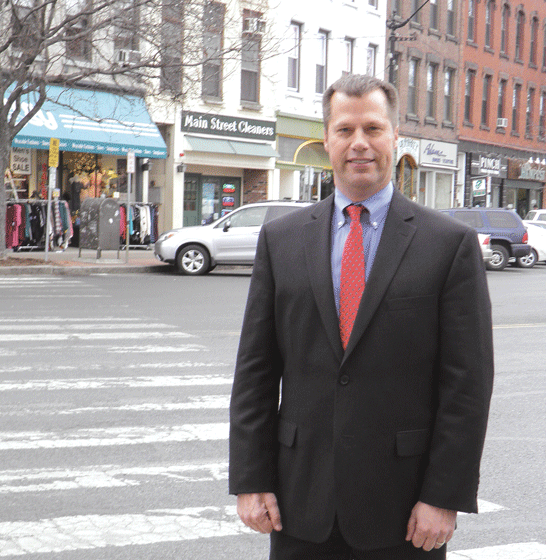
Paul Federici

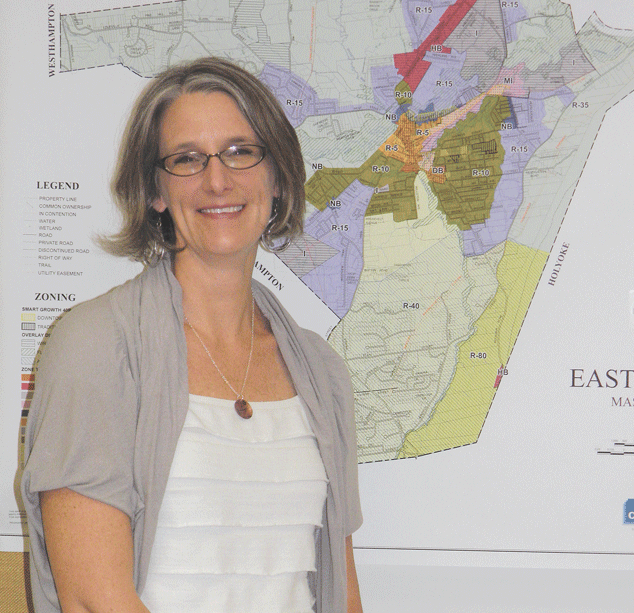
Paul Federici says a favorable business climate bodes well for further economic development in East Longmeadow.

Paul Federici says East Longmeadow has undergone a growth spurt over the past several years, and the trend is continuing.

“The town has been fortunate to have new developments in both our residential and commercial areas,” said the clerk of the Board of Selectmen. “Real estate has picked up tremendously in terms of new construction as well as sales of existing homes, and there has also been a steady increase in commercial growth.”

He attributes the upswing to the availability of property, East Longmeadow’s favorable business climate, and the town’s many amenities. “Businesses and individuals like what we have to offer, and our single tax rate is a big incentive for businesses to move here. We’ve never had a serious discussion about changing the rate because town officials want to keep business owners happy and give them the ability to grow without additional tax burdens. Plus, residents and employees can take advantage of our restaurants, shops, and businesses.”

Robyn Macdonald agrees. “The school system is great, and the town is very safe. The crime rate is very, very low,” said the director of Planning, Zoning, and Conservation. “The single tax rate has a lot to do with the increase in business.”

This business growth is important because East Longmeadow suffered a loss of tax revenue during the recession. “We had a severe slowdown of residential building after the downturn in the economy,” Federici said. “A number of businesses moved out of our industrial area or ceased to operate, and the Appropriations Committee had to tighten their purse strings.”

Although the town fared better than others of its size, Macdonald added, foreclosures occurred for the first time in years. “There were also fears that other businesses would be forced to leave.”

But that has changed, and a surge in balanced growth has helped to improve East Longmeadow’s financial outlook. “Last year, the town was given a triple-A rating by Standard & Poor,” Federici said, referring to the upgrade in long-term bond rating from AA to AA+.

Federici credits the strong fiscal rating in part to dedicated efforts by the Appropriations Committee and town department heads to adhere to tight budgetary constraints while retaining high standards, which include working closely with new businesses to minimize the pain of relocating to the community or opening new.

“Building Commissioner Dan Hellyer does an outstanding job of helping builders get permits and other things they need, which range from utilities to curb cuts,” he said.

As a result, the landscape continues to evolve. “I’ve lived here since 1996, worked in East Longmeadow since 1986, and have witnessed tremendous growth over the years,” said Federici. “We foresee it continuing because we have a favorable business climate.”

Altered Landscape

Roughly 70% of the town is zoned for residential use, and a number of new, high-end housing developments have taken root over the past few years.

“It’s good to see so many developers have confidence in East Longmeadow and are willing to put their shovels in the ground and build houses in anticipation of selling them,” Federici said.

Al Joyce, president of Rose Bud Builders of East Longmeadow, said his company has a new subdivision on Wisteria Lane, off Somers Road (Route 83). “It contains eight lots. Five homes have been built and sold, and the remaining three are under construction,” he said.

In addition, the Great Woods development of single-family homes on Shaker Road and Prospect Street continues to expand. “Phase 11 is almost complete, and we are anticipating Phase 12,” Macdonald said.

Meanwhile, Kent Pecoy & Sons Construction Co. also has a new subdivision called Bella Vista that contains 30 lots, and Macdonald said the homes are all large, with five bedrooms.

“A ribbon-cutting ceremony was held after the first one was completed about 18 months ago, and they are selling as fast as they are built; prices start at about $500,000, and demand continues to be strong,” Federici said.

“Families see East Longmeadow as a good place to live and buy a home. It is a growing community with a great school system and a busy rotary area filled with shops and restaurants,” he added, noting that a new high school has been proposed as well.

Town officials are also happy that Bay Path University in Longmeadow has chosen to expand its campus to East Longmeadow. It is building a new, two-story, 56,000-square-foot structure that will be called the Center for Graduate Studies in Health Sciences; construction is underway, with a completion date expected in early 2015.

“It will be prestigious to have their graduate-studies program here, and it’s also nice to see a parcel of land that sat vacant for many years put to such a good use,” Macdonald said. “The building will be absolutely gorgeous and fits in well with the neighborhood, as there is a residential area across the street and subdivisions on the other side of it.”

Federici agrees. “It’s wonderful that they have chosen to expand from Longmeadow to East Longmeadow, and the college is already doing a lot for us,” he said, noting that Bay Path has made a commitment to provide the town with an annual payment (as a nonprofit, it is exempt from paying taxes), and plans to offer scholarships to East Longmeadow High School graduates and town employees.

Growth is also occurring a short distance away in the town’s Industrial Garden district.  A vacant building on 126 Industrial Dr. was given new life when it was purchased by the Arbors Kids two years ago. “They renovated it and have been very successful. They offer full-time day care, after-school care, and summer camps, which is a great addition to the town,” Federici said, adding that, a short distance away, a new self-storage facility is also in the initial phase of construction.

Go Graphics is another firm that finds East Longmeadow attractive. It relocated from a shopping plaza on North Main Street to a 5,000-square-foot space on Benton Drive in the industrial park. “The company that was in the space before them left because they downsized, and Go Graphics took advantage of the opportunity to move there, which gave them room to expand,” Federici said.

Nearby, he added, the Deer Park section of the Industrial Garden district is also growing. “GMH Fence relocated from Parker Street to a space on Benton Road as they needed more space.”

Change has also taken place in the town center. “Bentley’s Bistro on North Main Street just celebrated its one-year anniversary, and Baystate Rug opened next door about a month ago,” Federici said, adding that the side of the building that houses Bentley’s had been vacant for close to a year, and the portion that is home to Baystate Rug had been empty for almost two years.

The former Spoleto’s restaurant building at 84 Center Square has also changed hands. It was sold to its long-term managers, has reopened as Center Square Grill, and has a staff of about 75 employees.

And Macdonald said a new gas station and convenience store have been approved at the corner of Chestnut Street and Shaker Road on an empty piece of property. “It will contain a 6,500-square-foot building,” she told BusinessWest.

Housing options for older adults are also expanding. The Fields at Chestnut, a condominium association with individual homes for people age 55 and over, continues to grow. “It’s in Phase 5. Most of the homes contain 2,200 square feet, and they are sold as fast as they are built,” Macdonald said.

The town also boasts a new assisted-living facility. Emeritus at East Longmeadow opened a few weeks ago on the grounds of the former Bluebird Acres apple orchard on Parker Street. The property had been vacant for a number of years, and Federici said it offers assisted-living apartments as well as a unit for people with dementia. “It is a well-staffed facility,” he told BusinessWest.

Solid Base

Federici is happy about the surge in residential and commercial activity, especially since East Longmeadow does not have an economic-development director and the marketing budget is limited.

“The town is definitely on the upswing, and the growth is balanced,” he said. “New businesses and families are moving here, and we still have our stalwarts — Lenox and Hasbro. Lenox has been growing and has spent tens of millions of dollars on their facility and training for their employees in the last decade.

“There is still plenty of open land and space available,” he went on. “The town has a lot to offer, and the future looks bright.”

East Longmeadow at a glance

Year Incorporated: 1894
Population: 15,720 (2010)
Area: 13 square miles
County: Hampden
Residential Tax Rate: $20.47
Commercial Tax Rate: $20.47
Median Household Income: $62,680 (2010)
Family Household Income: $70,571 (2010)
Type of government: Open Town Meeting; Board of Selectmen
Largest Employers: Hasbro Games, Lenox, Lower Pioneer Valley Educational, Redstone

* Latest information available

Events Features
The Class of 2014 Has Its Day in the Sun

DSC_0632
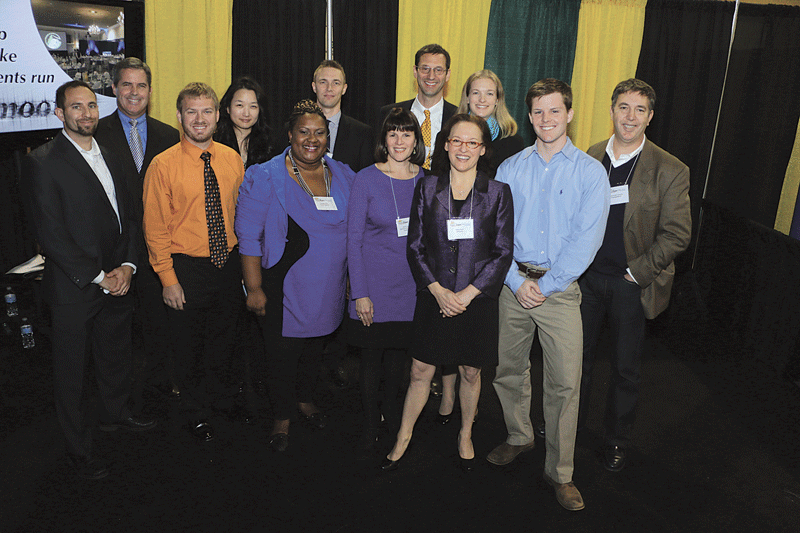
DSC_0674The population of 40 Under Forty winners in Western Mass. officially reached 320 on June 19, as BusinessWest’s Class of 2014 received their plaques — and the applause of more than 600 people — at ceremonies at the Log Cabin Banquet & Meeting House in Holyoke. Perfect weather greeted guests on the penultimate day of spring, and they enjoyed one of the best networking events of the year. The gala featured fine food, music — each winner was introduced to a song of their choosing — and a chance to meet this program’s eighth class of rising stars, as well as many previous winners. On the pages that follow, we offer a fun look back at a memorable evening. Meanwhile, we’ll remind you that the nomination process for the Class of 2015 begins in roughly six months. So it’s time to start thinking about who could be the next members of this prestigious club. This year’s gala was sponsored by Baystate Medical Center, Fathers & Sons, Hampden Bank, Health New England, the Isenberg School of Management at UMass Amherst, Moriarty & Primack, P.C., Paragus Strategic IT, St. Germain Investment Management, and the Young Professional Society of Greater Springfield.

Program Sponsors:

BaystateMedCenter130x70

For reprints contact: Denise Smith Photography / www.denisesmithphotography.com / [email protected]

DSC_0582
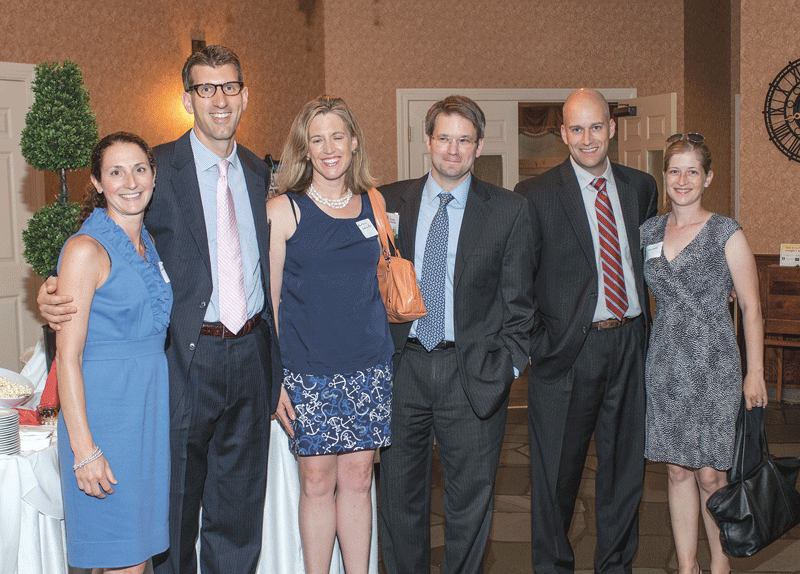
From left, Jennifer Stratton, assistant professor of Education at Springfield College; Seth Stratton, class of 2014, attorney with Fitzgerald Attorneys at Law; Kathleen Schneider, senior director of Budget and Award Management for Save the Children; Michael Schneider, class of 2014, associate attorney at Doherty, Wallace, Pillsbury & Murphy, P.C.; Kevin Maltby, class of 2014, attorney at Bacon Wilson, P.C.; and his wife, Eliza Maltby.

DSC_0586Mike Matty, president of St. Germain Investment Management, one of this year’s 40 Under Forty sponsors, congratulates Patricia Faginski, vice president and financial advisor for the company and member of the class of 2014.


Below, from left, Melinda Moreno, adjunct professor at Bay Path College, networks with Tamara Blake, class of 2014, director of Psychology at Bay Path College and president and founder of Angels Take Flight; Lee Hagon, class of 2014, vocal music director at Minnechaug Regional High School; York Mayo, CEO of Community Volunteers; Angela Lussier, class of 2014, CEO of Anglea Lussier Enterprises; and Nick Rattner, editor at the Ugly Duckling Presse.

DSC_0588

DSC_0601


Jeremy Casey, class of 2013, assistant vice president and Commercial Services officer at Westfield Bank, networks with Garett DiStefano, class of 2014, director of residential dining at UMass Amherst.
DSC_0595
From left, Terra Missildine, co-owner and operations manager at Beloved Earth Environmentally Friendly Custodial Services; Kyle Sullivan, class of 2014, business insurance broker at the John M. Glover Agency; Ashley Clark, assistant store manager, officer at TD Bank; Alfonso Santaniello, class of 2014, president and CEO of the Creative Strategy Agency; Juli Thibault, Manager of Talent Acquistion at Baystate Health; and Jesse Tolan, digital media coordinator at the Creative Strategy Agency.

DSC_0621Jill Monson, left, class of 2010, chief inspiration officer at Inspired Marketing, networks with Rich Griffin, project manager for the City of Springfield, and his wife, Nicole Griffin, class of 2014, president and CEO of Griffin Staffing Network.


DSC_0617
Representing Health New England, one of the program’s sponsors, are, from left, Robert Azeez, Medicaid behavioral health manager; Taylor Moore, credit and collections analyst; Kerri Kane, process improvement facilitator; and Yvonne Diaz, account executive for existing business.

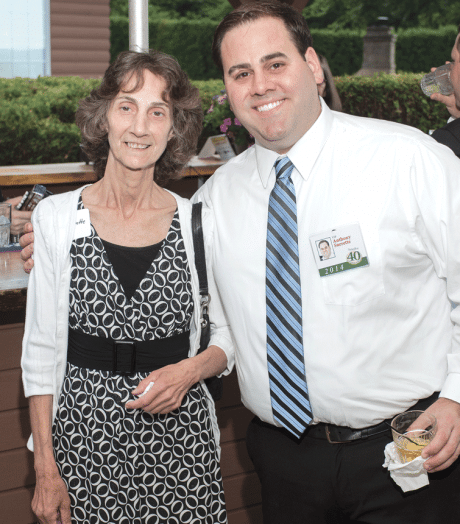
DSC_0614Anthony Surrette, class of 2014, principal at Corbin & Tapases, P.C., stops for a picture with his proud mother, Theresa Surrette.

DSC_0610


From left, Sandy Cassanelli, class of 2014, CEO of Greenough Packaging, and her husband, Craig Cassanelli, president of Greenough Packaging, stop for a picture with Michael Schneider, class of 2014, associate attorney at Doherty, Wallace, Pillsbury & Murphy, P.C., and his wife, Kathleen Schneider, senior director of budget and award management for Save the Children.

DSC_0626

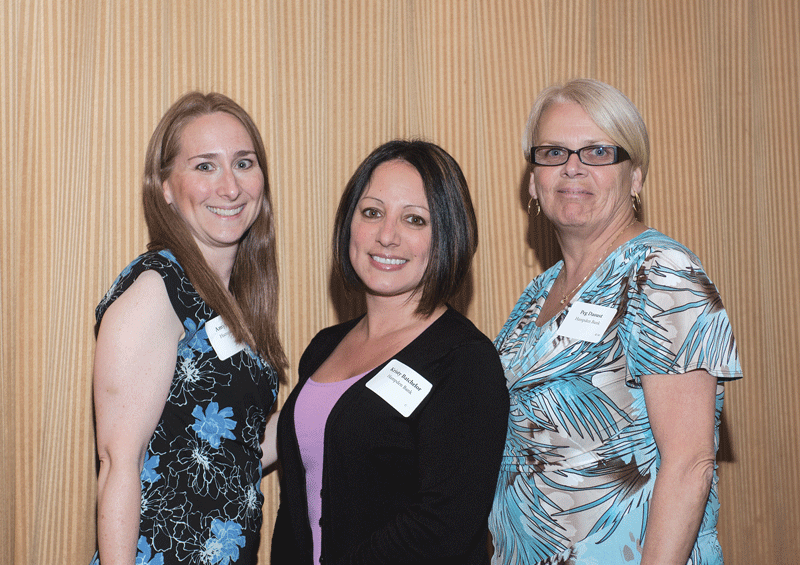
Representing Hampden Bank, an event sponsor, are, from left, Amy Scribner, vice president and director of marketing; Kristy Batchelor, branch manager at the Tower Square location; and Peg Daoust, branch manager at the Boston Road location.

DSC_0623
Representing the UMass Isenberg School of Management, an event sponsor, are Kyle Bate, left, academic advisor and director of regional program development, and Katherine Piedra, director of the full-time MBA program.


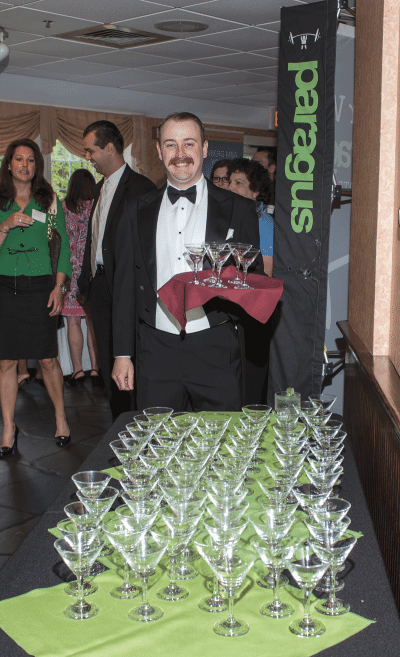
DSC_0637Steve Oparowski, art director at Darby O’Brien Advertising, represents event sponsor Paragus Strategic IT near the main hallway, handing out martini glasses to the guests.


DSC_0644


From left, Mark Wisnewski, Greenfield town councilor, and his wife, Francia Wisnewski, class of 2014, regional program manager at Raising a Reader Massachusetts, network with Denise Hurst, class of 2014, quality improvement manager and human rights coordinator at the Department of Mental Health, and her husband, Justin Hurst, also a member of the class of 2014, owner of Hurst & Crane Investments, and a Springfield city councilor.

DSC_0647
Rich Griffin, left, project manager for the city of Springfield, stops for a photo with Jose Delgado, class of 2014, mayoral aide for the city of Springfield, and Danielle Emery, a second-grade teacher at Kensington Elementary School.

DSC_0651
Representing Monson Savings Bank are, from left, Jaimye Hebert, class of 2011, vice president of Commercial Lending; Melanie Garcia, teller; Robert Chateauneuf, class of 2014, assistant vice president of Commercial Lending; his wife, Shauna Chateauneuf, case manager at MassMutual Financial Group; and Sara Rodrigues, teller.

DSC_0655
From left, Seth Stratton, class of 2014, attorney at Fitzgerald Attorneys at Law; Jennifer Stratton, assistant professor of Education at Springfield College; and Seth’s mother, Mary Stratton, talk with Patrick Leary, class of 2007, shareholder and vice president of Moriarty and Primack, P.C., an event sponsor.

DSC_0615
Jason Randall, class of 2014, director of Human Resources for Peter Pan Bus Lines, networks with Pam Thornton, center, business development manager for United Personnel, and Cindy Landry, human resources generalist at Health New England.

DSC_0657
From left, Waleska Lugo-DeJesus, class of 2012, director of Multicultural Affairs at Westfield State University, networks with Ed Nunéz, senior business development officer at Freedom Credit Union and treasurer of the Young Professional Society of Greater Springfield, an event sponsor; Michelle Crosby, branch manager at PeoplesBank; Jason Tsitso, class of 2012, project manager at R&R Windows; and Sarah Tsitso, class of 2007, executive director of the Springfield Boys & Girls Club.

DSC_0661
Representing Fathers & Sons, an event sponsor, are, from left, Tony Quiterio, manager; Shera Smith, sales; Steve Langieri, sales manager; Bill Visneau, product specialist; Damon Cartelli, class of 2010, general manager; and Stephen Parent, sales director.

DSC_0669
Representing event sponsor Baystate Medical Center are, from left, Sean Gouvin, class of 2014, director of Facilities Planning and Engineering; Ryan Thomas, performance improvement coordinator; and Kevin Kirrane, process improvement coordinator.

DSC_0680
Ryan McCollum, left, owner of RMC Strategies, shares a moment with Erin Brunelle, class of 2013, realtor at Century 21 Hometown Associates, and Holyoke Mayor Alex Morse, class of 2014.

DSC_0703


Jim Barrett, managing partner of Meyers Brother Kalicka, P.C., one of five judges chosen to review this year’s 40 Under Forty nominations, receives a gift basket on stage. Each of the judges was given a basket in gratitude for their hard work.


SelfieGOBAlfonso Santaniello, class of 2014, president and CEO of the Creative Strategy Agency, surprises George O’Brien, BusinessWest editor, with a quick selfie as he accepts his award on stage at the Log Cabin.

Community Spotlight Features
Lenox Strives to Become a Year-round Destination

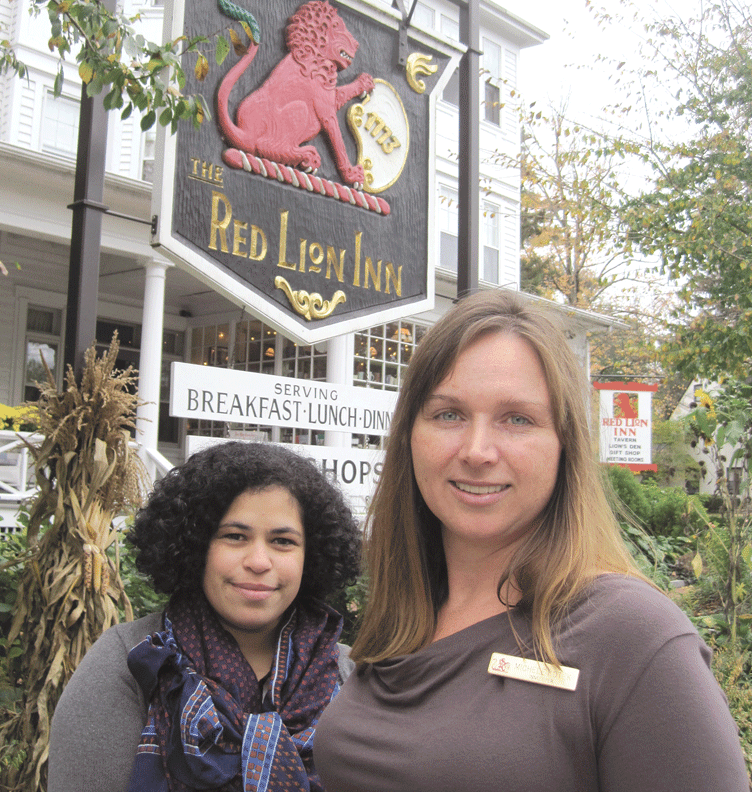
Channing Gibson, left, and Christopher Ketchen

Channing Gibson, left, and Christopher Ketchen want Lenox to become a year-round tourist attraction.

When Channing Gibson envisions what the town of Lenox will look like in the future, he sees a vibrant, year-round destination with a wide array of recreational activities that appeal to young people, along with the cultural attractions that have drawn tourists to the area for generations.

“Recreation could range from birding to biking, hunting, horseback riding, and cross-country skiing,” said the chair of the town’s Board of Selectmen. “We have a town beach on Laurel Lake, and although the traditional tourist comes here for relaxation and culture, there is an opportunity to attract people for recreation as well.”

Right now, the town is packed with tourists whose typical goal is to relax and enjoy the wealth of cultural events offered during the summer. In the coming months, many guests will also attend weddings, because the pastoral setting and large number of historic inns and hotels have made Lenox a popular place to get married. “There are so many places to stay that range from modest accommodations to high-end inns and hotels,” Gibson said.

But during the winter, business dies down, and many storefronts close their doors. In addition, young people in Lenox, as well as in other towns in the Berkshires, are leaving the area, and the town’s demographics reflect an aging population.

So the community is looking to create new recreational venues that would attract tourists year-round and appeal to young people. To that end, officials are waiting for the final report from a study conducted by the Conway School of Landscape Design. It is titled “Lenox’s 2013 Open Space and Recreation Plan,” and provides recommendations to improve existing natural and recreational resources.

In order to understand why the town has chosen this focus for its economic-development plan, Gibson said, it’s necessary to look at its past. He explained that the General Electric manufacturing plant in Pittsfield and the tourist industry played vital roles in the town’s economy for generations, and although GE closed its doors in 1986, Lenox continued to thrive, thanks to tourism.

“The Berkshire Visitors Bureau says that Lenox accounts for 40% of the tourist dollars spent in the Berkshires. Our geography works for us, and our hardworking innkeepers and people in the hospitality business make sure that visitors who come to the Berkshires want to stay in Lenox,” he said, adding that Canyon Ranch, Cranwell Resort and Spa, and Tanglewood, whose offices are in Lenox, are among the town’s leading attractions. “But even though we are in the right place, it’s something we can’t take for granted. We have to do things to improve revenues from tourism, and there is a lot of land available that is presently underdeveloped that can be put to good use.”

Town Manager Christopher Ketchen concurs, and says putting a new spin on tourism offers great potential. “We specialize in hospitality and making folks feel welcome, and the town offers picturesque natural beauty in winter as well as in spring, summer, and fall. Plus, we have been designated by the state as a green community and are starting to become known as a center for health and wellness.”

Gibson said the Conway report contains many suggestions, including the fact that existing trails, parks, and other natural resources could be linked by a pathway which would give residents and tourists easy access to recreational resources.

“There are lots of little pieces of land that could also be developed and linked by a trail that could be used for walking, biking, and more; it’s something we can do ourselves,” he told BusinessWest, adding that there is plenty of open space available for new recreational venues, which could increase the town’s vitality and help change its demographics. “Our goal is to find a way to take what worked in the past and bring it into the future.”

Need for Growth

When town officials created the FY 2015 budget, it included a fiscal-impact analysis. Gibson said it had been suggested by a consultant who did some free work for the town, and the Planning Board thought it was an excellent idea. “There are a lot of people with different ideas about what should be done in terms of economic development, and we were told it was important to understand what was needed and what was realistic.”

Unfortunately, it was eliminated from the budget due to cost. But since that time, several things have put a positive spin on the future.

The first is that Ketchen was hired in April; the town had been without a manager for almost a year. He had served as finance director in Hopkinton and deputy director of general government in Wellesley before moving to Lenox, and town officials are optimistic that his enthusiasm and ideas will result in concrete gains.

Ketchen says his plans include hosting open houses so interested builders and developers can meet town officials from different departments.

In addition, a concerted effort is being made to market the attractions in Lenox via the Internet. “In the past, the Select Board did very little in the way of marketing, other than maintaining our infrastructure,” Gibson said. “But now the Berkshire Visitors Bureau is promoting Lenox as a year-round destination with a Google display ad.”

Some businesses have also started their own marketing campaigns, and Gibson said they have been successful. “But we want to maximize the success and continue to promote the town and bring more tourists here,” he explained.

The Conway report will help facilitate that goal. Its recommendations take into consideration the results of two community forums, in which residents overwhelmingly stated that one of their top priorities was to protect the town’s natural resources. But although they want to maintain the pastoral views and ecological richness found in Lenox, the initial report showed that many do not know where the town’s parks are or where they can access hiking trails.

This needs to be remedied, and town officials hope they will also be able to add new recreational offerings. Collaborative efforts will be required to make the vision a reality, but if the plan is approved, it will allow the town to apply for competitive grants from the state as well as from other entities. In addition, Lenox will be able to use monies set aside beginning in 2006 when the town approved the Community Preservation Act. “The Conway report is timely, as last year the state added recreation to the areas in which Community Preservation funds could be used,” Ketchen said.

Although most people think of the Berkshires as a summer destination, he added, marketing will focus on events held during other seasons, such as the Apple Squeeze Festival in the fall; Shakespeare and Co., which hosts performances year-round; and the summer cottages built by wealthy individuals during the Gilded Age. “Some have been reused and turned into hotels and museums,” Ketchen said, citing Canyon Ranch and Ventford Hall Mansion and Gilded Age Museum as examples.

In addition, Lenox continues to maintain its infrastructure and retain the town’s reputation as a safe, beautiful community. “The majority of our efforts are aimed at tourism,” Gibson said. “We make sure the roads are well-paved, the town is run well, and we have good police and fire departments. It helps the community at large, but is also good for our tourist industry.”

Gibson says every town in the Berkshires is focused on bringing new business to the area, but they have different things to offer. For example, Pittsfield ranks high in terms of size and capacity of building space, while North Adams appeals to lovers of the arts. “So we needed to create our own fertile seed bed, because we don’t have the Mass Turnpike nearby or a lot of industrial space.”

Breaking Ground

Plans for a small, high-end boutique hotel and spa within a Gilded Age mansion were recently permitted, and a new Courtyard by Marriott hotel has received approval from the Zoning Board.

Both will add to the town’s character, but “the Marriott’s demographics are slightly different than our other inns and represent a young, energetic clientele,” said Gibson. “It’s exciting and could relate well to our plan to create new recreation and change our demographics.”

Ketchen agrees. “We have a lot to offer young people in terms of lifestyle. There is a small-town familiarity here that lends itself to a deep and meaningful sense of community, and this feels like fertile ground for businesses,” he said. “Focusing on year-round amenities will give us an opportunity to bring new vitality to the community, and our creativity will drive our economy in the future.”

Gibson is looking forward to bringing the vision to fruition. “I’m very excited about the potential represented in the Conway plan,” he said. “It’s still pie in the sky, and we are not there yet, but we have a good chance for success.”

Lenox at a glance

Year Incorporated: 1767
Population: 5,025 (2010)
Area: 21.7 square miles

County: Berkshire
Residential Tax Rate: $12.07
Commercial Tax Rate: $14.91
Median Household Income: $45,581 (2010)
Family Household Income: $61,413 (2010)
Type of government: Open Town Meeting, Board of Selectmen, Town Manager
Largest Employers: B Mango & Bird, Canyon Ranch, Boston Symphony Orchestra Inc., Cranwell Resort Spa & Golf
* Latest information available

Community Spotlight Features
Zone Change Spurs New Growth in Agawam

Deborah Dachos

Deborah Dachos says a recently approved ordinance for mixed-use zoning in the Walnut Street Extension area will promote revitalization.

Mayor Richard Cohen created what he calls a “dream plan” to revitalize the Walnut Street Extension area years ago, and says it has taken tremendous patience and untold hours of dedicated work to bring it to fruition.

The idea is to make the area into an attractive, walkable, downtown-style location with venues that enhance quality of life for residents of the city, he told BusinessWest, adding that the plan received a major boost early this month when city councilors approved a mixed-use business C zoning change for the area. It relaxes dimensional requirements for buildings and is aimed at encouraging the development of new restaurants, cafés, family-oriented enterprises, and second-story residences.

“Agawam is a great place to live, work, and play, and we want to maintain those attributes and continue to develop them. Our goal is to create an environment that is friendly and can be used by families for entertainment. We don’t have a downtown, and need a place where people can walk and have things to do,” said Cohen, adding that the Walnut Street Extension area had been declining for years, and prior to the zone change, there was no incentive for business owners to improve their property because they were uncertain as to whether they could realize a return on their investments.

Deborah Dachos, director of Planning and Community Development, agreed, and said the new zoning offers an ideal setting for growth and is in line with what business owners and residents want in that section of the city. “The zoning change has finally passed,” she said. “It involved a concerted effort to work with businesses to make the area more user-friendly and less restrictive. We worked hard on the plan, which includes the old Food Mart site and former Ames store building.”

She explained that the downturn in this commercial area began when Food Mart and Ames moved out, leaving both structures in the Springfield Street shopping plaza vacant. The decline was exacerbated after a fire led to the closing of the former Games and Lanes building, which housed a bowling alley. “The Walnut Street commercial area was developed in the ’50s, and the decline occurred over a 10-year period. But the mayor and I made a concerted effort to revitalize the area 12 years ago.”

Progress began after the city sought and gained acceptance from the state to designate the location as an exceptional-opportunity area. The designation made tax-increment financing possible, allowing the city and businesses to agree on a property-tax exemption for up to 20 years, based on a percentage of value added through new construction or significant improvements.

In 2010, city officials also completed an economic-development plan that made the Walnut Street Extension neighborhood a priority. It included the provision for mixed-use zoning, which was refuted by the city council last December before being passed this month.

Parking has been problematic for business owners in the district, but that obstacle is being addressed. The Pioneer Valley Planning Commission accepted the city’s application for district technical assistance, and has plans to study parking and pedestrian issues in the area. “Their report will provide the town with the information we need to seek a MassWorks grant of up to $1 million to address the deficits and construct new parking areas. It’s important because business owners have complained that there is inadequate parking,” Dachos said, adding that the study was contingent on getting mixed-use zoning passed.


Inroads to Success

New venues for family entertainment have begun to crop up in the Walnut Extension Street area in the past few years, and several new businesses are expected to open in the future.

Revitalization began when Dave’s Pet Food City purchased the former Ames building about six years ago. The company used about half of the space and put the remainder up for lease.

Stick Time Sports Inc. opened its doors last fall in a portion of the building, offering training for hockey, field hockey, and lacrosse in its complex, which includes two 45-by-85-foot synthetic turf fields, a strength and conditioning space, a fully equipped pro shop, and a birthday party/conference room for special events.

And a new YMCA is scheduled to open in early August in the old Food Mart building. It is under construction, and will be called the Agawam YMCA Wellness and Program Family Center.

“It will offer everything included in a traditional YMCA, with the exception of a swimming pool and basketball gym,” said  Kristine Allard, chief operating officer for the YMCA of Greater Springfield. “There will be a fitness center, café, community space, group exercise area, and technical center, as well as a child-development center with projects and activities for children whose parents are exercising or participating in other programs.”

The facility is being built in response to need expressed by residents and city leaders, and will be the first YMCA in New England without a pool and gym. “It’s a groundbreaking concept, and we are extremely excited about it; it will be beautiful and functional and will contribute to the community,” Allard said.

Mayor Richard Cohen

Mayor Richard Cohen says the Walnut Street Extension area is becoming a center for family recreation.

The site was chosen several years ago, but it took time to raise enough money to proceed with construction. Allard said $300,000 has been raised for that purpose, but $100,000 is still needed to cover the first year of operating expenses, and fund-raising efforts include soliciting new memberships as well as donations.

Another major improvement is also anticipated. The former Games and Lanes site at 346-350 Walnut St. Extension, which has been an abandoned eyesore for 13 years, may soon be sold and revitalized, thanks in part to an environmental study completed in March that provided the city with a cost-assessment and remediation plan for the 2.3-acre brownfields site. The building on the property was occupied by Standard Uniform Corp. from 1969 through the late ’80s, and when an underground gasoline tank was removed in 1989, contamination was discovered.

“In the past, developers were reluctant to purchase the property because the cost of cleaning it up was unknown,” Dachos said.  “The current owner invested $1 million to do the work, but it was not enough. So in 2012, the city applied for a MassDevelopment grant so prospective buyers would have a better understanding of what needed to be done.”

She told BusinessWest that four parties recently expressed interest in the site, and a Ware couple is pursuing a purchase-and-sale agreement. “They want to make the property into a family entertainment center with a racing theme,” she said, adding that go-kart racing would not have been possible before the mixed-use ordinance passed because the site had been zoned for industrial use.

“Their plan is consistent with other new businesses in the shopping center, which include a tae kwon do training center that opened about 18 months ago and a new Napa Auto Parts store,” Dachos said. “The theme of the Walnut Street Extension area has become family-oriented entertainment and services. A new Dollar General store opened a few months ago at 53 Springfield St., and a Salvation Army Family Store opened about two years ago at 65 Springfield St.”

Cohen said fulfilling his dream plan has taken years of effort, but the vision is finally being realized.

“We have been diligent in pursuing our goal of making this area into a beautiful place for families to enjoy, and we are finally going to be able to see the fruits of our labor,” he explained. “Many people become critical when they see empty buildings, but they don’t know the passion and time it takes to get something to happen. Now that the economy is turning around, there is money for mixed-use zoning from state, federal, and private investors, and a private-public partnership is beginning to take shape.”

Infrastructure improvements that will advance the plan include widening the Morgan Sullivan Bridge from four lanes to five. The bridge connects West Springfield and Agawam, and MassHighway has deemed it structurally and functionally deficient. It approved $12.3 million for bridge reconstruction and remediation of three intersections neighboring the span.

“The bridge is the gateway into the Walnut Street shopping-center area,” Cohen said.

Dachos added that the state has assigned the project to a consultant and it is in the design stage, with construction expected to begin in the winter of 2016-17.

The mayor said these improvements are needed to promote the area and give new businesses the easy commuter access they need to thrive. “There were a lot of pieces of the puzzle that had to be put into place. But everything is finally coming together.”

Other changes are also being made to enhance quality of life in the city. Agawam’s 50-acre School Street Park will undergo a $2 million expansion this year that will include a splash park, disk golf, a volleyball area, a picnic area, walking trails, and a band shell, where open-air concerts can be held during the summer. And a 1.7-mile stretch is being added to the 3.7-mile Connecticut River Walk and Bike Path, which will make the park accessible from the pathway that runs from Springfield into Agawam.

The city will also begin construction on a new dog park this summer, said Cohen, adding that funding for that project comes from a variety of sources. The city received a $237,000 grant from the Stanton Foundation, which was supplemented by $14,000 in Community Preservation Funds and another $10,000 raised by the Agawam Dog Owner’s Group.

In addition, the city recently saw completion of a $4 million project on Main Street that includes new curbing, lights, signs, sidewalks, and traffic signals.

“There are a lot of nice things going on here,” the mayor said, noting that Agawam was designated the second-safest city in the Commonwealth and the 11th-safest in the U.S. in January, based on data from police reports.


Future Outlook

Cohen is happy the City Council voted in favor of mixed-use zoning in the Walnut Street Extension area, and says the future outlook is bright.

“Agawam is a beautiful place, and our convenient location, affordable land and buildings, and low tax rate allow us to build good lives for ourselves and our children. We are proud that this is a safe community with family values and great schools, and the year 2014 bodes very well for Agawam residents,” he said.

“We have learned to be patient and never give up,” the mayor added, “and I hope our dream and vision for the Walnut Street Extension will become a reality that the community will be proud of in the near future.”

Community Spotlight Features
Partnerships Anchor Easthampton’s Development

Jessica Allan

Jessica Allan says Easthampton will soon have three breweries, thanks to the quality of its water and improvements in infrastructure.

Mayor Karen Cadieux says Easthampton’s transformation from a mill town into a thriving city began roughly 15 years ago, and continues today due to unique and ongoing collaborations.
“One hand helps the other here, and partnerships between the city and private business owners have spearheaded revitalization,” she explained. “Public funding has encouraged business owners to make investments, which is how our story began.”
Town Planner Jessica Allan agrees.
“The city finds money through grants for infrastructure, and as a result, private business owners use their own money to make improvements to their property,” she noted. “Things have happened in Easthampton because the community and city have worked together to improve different areas. Our arts community has also formed collaborations to help Easthampton gain recognition in and outside of the Pioneer Valley.
“In the past, Easthampton had a really strong manufacturing base. It is still happening within the mills, but in a creative way,” she continued, citing enterprises that include furniture makers and a high-end wrapping-paper business whose clients include New York City boutiques.
She pointed to the Pleasant Street mills project that is now underway as a good example of a public-private partnership. Several years ago, Michael Michon, who owns Mill 180; Will Bundy, who owns the Eastworks Mill; and James Witmer, who owns the Brickyard Mill, approached the city for help. “They told us they had tenants who wanted to move into their buildings but were hesitant due to the lack of parking,” Allan said, adding that the trio had the idea of connecting their buildings and flipping the entrances, so they would open facing the Manhan Rail Trail instead of on Pleasant Street, because there was space there for a new parking lot.
The owners paid for the design, which includes 440 parking spaces, trees, and lighting. “The city did its part by applying for a MassWorks grant. The city received $2.75 million in October 2012 for the first phase of the project, and a second $1.5 million a year later to increase the parking capacity,” Allan said.
Money from the first grant will pay for an upgrade of the water lines as well as burying the electric lines. “We’re really dealing with safety issues,” Allan said. “The original water lines are still there, and the fire-suppression system doesn’t have enough pressure. There will also be new lateral connections to each building, so, if there is a problem in one building, it won’t affect the others. And burying the electric lines is helpful to the fire department.”
All those involved said Western Mass Electric Co. is a key player in the undertaking and that the utility made additional investments outside the area to some of their substations so the mills can get the power they need.
Cadieux says the project has been challenging, and Allan has held weekly construction meetings with representatives from city departments, the mill owners, the design consultant and engineering team, WMECO, and the construction contractor.
“The project is really complex, and a number of easements were needed,” she said. “But the end result will be rewarding and will spawn new economic activity. And the mill owners have spent millions on their buildings in anticipation of being able to fill in their empty space.”
Cadieux agrees. “It’s absolutely fantastic to have all these groups working together,” she said. “The project is very important to everyone involved.”

Ongoing Collaborations
Cadieux said the city’s history of partnerships began 15 years ago on Cottage Street when a buyer wanted to purchase the former 9,000-square-foot Majestic Theater, which was an eyesore that had been closed for years.
“But the owner of the theater insisted that he would not sell to the man unless he also bought the parking lot across the street. He couldn’t afford both properties, but the city was able to help by purchasing the lot with state funds,” she explained. “It was advantageous to both sides because the city needed more parking. And since that time, the city has received a great deal of state funding for infrastructure improvements. As a result, many restaurants and businesses have gone into space on the street.”
The city’s next major project is aimed at helping downtown businesses as well as providing people with a new recreational outlet. It’s called the Nashawannuck Pond Promenade Park, and will finally bring to fruition an idea that was born about a decade ago. The park is in the design stages, and, thanks in part to a $400,000 grant from the state, construction is expected to begin this summer.
“The 30-acre pond is in the heart of the community and will provide a gathering space for residents and visitors,” Allan said, as she viewed the peaceful body of water from the mayor’s office windows.
“The park will be the gateway to the cultural district on Cottage Street and will make Easthampton a destination location. We want to attract tourism and bring foot traffic downtown,” she told BusinessWest, adding that this is another example of how public funding spurs economic development in the city.

Mayor Karen Cadieux

Mayor Karen Cadieux says Easthampton is flourishing due to its diverse economy.

The project will include three handicap-accessible boat ramps, a 1,600-square-foot plaza, and a 4,000-square-foot boardwalk.
She added that the city is also looking at streamlining its permitting process and has partnered with the Greater Easthampton Chamber of Commerce to develop a workshop for first-time business owners. “In the past two years, ten new businesses have applied for permits downtown, and we are filling in vacant storefronts,” she said.
Allan explained that increased interest in space downtown is related to Easthampton City Arts+ and the events it sponsors, such as monthly art walks, which are very popular.
The formation of that organization resulted from yet another collaboration, this one between Easthampton City Arts and the Easthampton Cultural Council, which shared office space and coordinated events at Old Town Hall with a shared mission before they merged and became ECA+.
The group has worked with the city on a variety of occasions, and last year it was successful in its bid to have Cottage Street designated by the state as its 16th cultural district. “The effort was spearheaded by ECA+,” Allan said, adding that the city applied for the designation from the Mass. Cultural Council in January 2013.
The mayor says these partnerships are beneficial. “It’s exciting to have all of this happening in one community, and the growth that is taking place due to partnerships between the city, private businesses, and the arts community makes Easthampton unique.
“Again, it’s a matter of people working hand in hand,” Cadieux continued. “The arts community stimulates art growth, which attracts businesses to the city, and that results in our diversity.”
Fifty affordable-housing units called Cottage Square Apartments are also under construction in a long-abandoned building at 15 Cottage St. “It was our largest tax title and was purchased by a developer three years ago. The city supported the developer’s idea, and the project was permitted under special zoning,” Cadieux explained, referring to Easthampton’s so-called “smart-growth zoning,” which allows for denser development downtown. The mayor added that the city procured  $200,000 in Community Preservation Act monies, which has helped the owner leverage additional state and federal funding.
Improvements to infrastructure, as well as the city’s pure water, which comes from the Barnes Aquifer, have also played a role in attracting three breweries to the city over the past three years. The Abandoned Building Brewery was created through a renovation of 2,700 square feet in the Brickyard Mill; the Ford Hill Brewery and Hop Farm, located in a 9,500-square-foot building on three acres less than a mile away, is expected to be operational by the end of the year; and New City Brewing, which is not yet open, has chosen Mill 180 as its home.

Bright Future
Cadieux said partnerships will continue to take center stage in Easthampton. “Things have happened here because the business community and the city have worked together. We are committed to working collaboratively with our business and arts community and do all we can to foster partnerships.
“As a result,” she concluded, “we are flourishing — which is exciting, especially during these economic times.”

Features
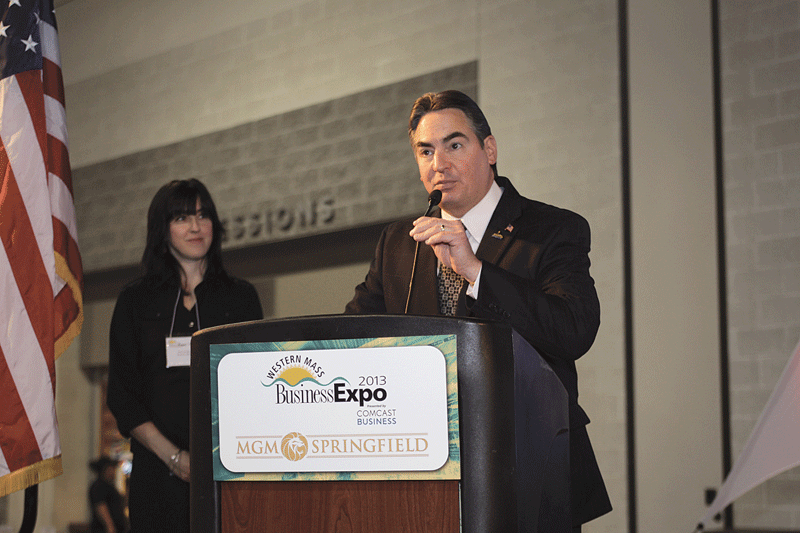
Fourth Annual Western Mass. Business Expo Set for Oct. 29

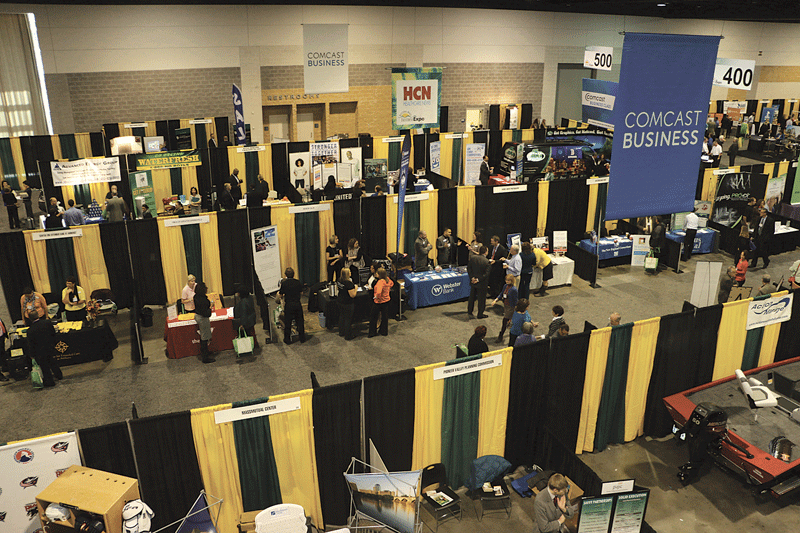
When BusinessWest first presented the Western Mass. Business Expo in October 2011, the immediate goals were to catch the region’s attention, re-energize a concept that had become stale over time, and lay the groundwork for an event that would become an important part of the fall landscape in Greater Springfield.

Three and a half years later, it’s safe to say that those goals have been met.

Indeed, the term ‘Expo’ has become part of the local lexicon, attendance continues to grow with each edition of the show, and the level of energy on the show floor at MassMutual Center continues to increase.

Keeping the needle moving in these directions is a daunting challenge, but this was the assignment BusinessWest gladly accepted in late 2010, said Kate Campiti, the magazine’s associate publisher and sales manager, and it’s one that continues to motivate the staff.

WMassBusinessLogo2014“Continuous improvement — that’s a phrase you hear in businesses large and small and across all sectors; it’s what enables companies to succeed in an ultra-competitive environment,” she said. “And continuous improvement applies to this show as well. It’s not a goal — it’s a mandate from the business community.”

With that in mind, planning for this year’s Expo, which is expected to feature more than 150 exhibitors and draw more than 2,500 attendees, began days after the curtain came down on the 2013 event, said Campiti, adding that a number of component parts of the show are falling into place.

The Affiliated Chambers of Commerce of Greater Springfield and the Professional Women’s Chamber will again stage the breakfast and lunch programs, respectively, she noted, while Northwestern Mutual has signed on as sponsor of the popular day-capping Expo Social, ensuring that it will continue to be one of the best networking events of the year.

“The Expo has been very successful with its basic mission of bringing the business community together — to learn, network, share experiences and ideas, and create some momentum for the region,” said Kate Kane, managing director of the Springfield office of Northwestern Mutual, as she explained her company’s participation as social sponsor. “Our company is all about community, so we saw this as a natural fit for us, a way to bring businesses together and celebrate the many good things happening here.”

As Kane mentioned, education is an important facet of the Expo. Over the years, the event has featured insightful keynote speakers, panel discussions, and seminar leaders, and more of the same is on tap for 2014.

In the weeks and months ahead, details of specific show programs will be presented in this space. In the meantime, area business leaders, educators, and nonprofit managers are invited to submit proposals for seminars and Show Floor Theater presentations that they can lead.

Previous seminars and special presentations have been offered on subjects ranging from social media to one local business leader’s conquest of Mount Everest; from Obamacare to working with Millennials. Presentations should be 45 minutes in length, be interactive, and give business owners and managers insight they can take back to their office or plant. The deadline for submissions is June 20. They may be sent to [email protected].

In addition to Northwestern Mutual and presenting sponsor Comcast Business, a number of other area companies have signed on as Expo sponsors. These include silver sponsors Health New England, Johnson & Hill Staffing, and DIF Design, and education sponsor, the Isenberg School of Management at UMass Amherst. Additional sponsorship opportunities are still available, said Campiti.

For more information on the Expo, to register for the show, or to purchase a booth, call (413) 781-8600, e-mail [email protected], or visit wmbexpo.com.

Community Spotlight Features
Planned Growth Boosts Great Barrington’s Vitality

Betsy Andrus

Betsy Andrus says Great Barrington culture and art venues draw thousands of people to the town each year.

Christopher Rembold calls the economic activity that has taken place in Great Barrington during the last year “a rising wave.”

“It’s a really exciting time, and things are just going to get better with all of the projects and investments that are being made here,” said the town planner, noting that the community’s walkable downtown — featuring a Main Street that bustles with business in small shops and eateries — has been extended in the past year, thanks to businesses and developers who purchased and are renovating and moving into historic buildings.

Meanwhile, the village of Housatonic, just outside downtown, is also experiencing growth as small businesses expand, restaurants open their doors, and old mills become sought-after locations for commerce.

But the vitality that the hub of the Southern Berkshires is known for has been carefully crafted.

“Economic development is very important to Great Barrington, but the way we define it is particular to our community,” said Town Manager Jennifer Tabakin. “People really value local businesses and the quality of life here. We have a beautiful environment with conservation land and natural resources, so it’s a matter of keeping things balanced while supporting sustainable growth that is appropriately scaled.”

The town created a so-called master-plan framework three years ago, which was passed by the Board of Selectmen and earned the prestigious American Planning Assoc. Masssachusetts Chapter Award. “It is a very comprehensive vision that came about after hundreds of meetings with town staff members and community members who looked at our strengths, our weaknesses, our challenges, and our values,” said Tabakin, adding that anyone who wants to start a business in Great Barrington can access the document on the town’s website, www.townofgb.org. “It’s a wonderful resource that defines where we want to go.”

Rembold agreed and said the key element in the plan is promoting locally based growth.

“Many of our buildings and downtown businesses are owned by people who live in Great Barrington, and although they may not employ a lot of people individually, together they employ a great number,” he said. “These business owners are active in our civic organizations and contribute to our nonprofits and our award-winning Fairview Hospital. Small businesses tend to be resilient, and almost every business has relationships with other businesses and with our banks, which makes for a tight-knit community.

“We hope to attract more activity in line with that,” he went on. “Great Barrington is not looking for large corporations.”

However, Tabakin said opportunities to establish new businesses or expand still exist in publicly and privately owned property. “We hope to attract companies that will employ younger people,” she added, noting that the town’s population contains a high percentage of retirees, and officials would like to attract more members of the younger generations to the community.

For this, the latest installment of its Community Spotlight series, BusinessWest examines the many positive developments in Great Barrington, and how that wave Rembold described is just starting to build.


Right Place, Right Time

The success of the local businesses that dominate the Great Barrington economy is fueled by a number of factors, which include an active arts community, the town’s location — near the New York border and not far from many other destinations in the Berkshires — and its plethora of small shops and boutiques.

Many of these ventures have expanded, and some have earned national recognition.

McTeigue & McClelland is one of them. The jewelry store plans to move from its location on 597 South Main St. into the former Christian Science church on Main Street. “They purchased the structure last year and are renovating it and expanding their business,” Rembold said. “It is a real success story because they are also protecting and preserving an historic building. The company is nationally known, and we are lucky to have their business here.”

He added that Salisbury Bank is another example of a business that has chosen to invest in Great Barrington’s downtown. “They opened a new branch on Main Street last week. They renovated an old structure because they wanted to be downtown in a historic building. And the Barrington Boutique, a bed and breakfast with an artistic look, also just opened. It covers the entire third floor of an historic building, and they put in an elevator.

“I could go on and on with examples like this,” he continued. “There are so many businesses who want to be in Great Barrington and Housatonic.”

Jennifer Tabakin

Jennifer Tabakin says the town’s master-plan framework earned the prestigious American Planning Assoc. Massachusetts Chapter Award.

Betsy Andrus, executive director of the Southern Berkshire Chamber of Commerce, concurred. “A new furniture store is about to move in on Main Street, and over the past three months, the chamber received three calls from store owners who wanted to find space in Great Barrington,” she said.

Shoppers appreciate the fact that the town issues its own currency, called Berkshares, which can be purchased at local banks. “It’s popular because it gives people a 5% discount when they are shopping. The program has recently expanded, and architects, printers, and other business people also accept Berkshares,” Tabakin said.

Andrus said the walkable downtown area, which is intersected by side streets housing small businesses, is always bustling with activity. “Nothing stays vacant for every long. Things move very quickly, and in the past year Main Street has seen huge renovations,” she told BusinessWest.

The former Betros Market on the north end of the street, which was a blighted property for many years, was purchased a year ago and has been completely renovated. “It is fully permitted for a 2,500-square-foot, 90-seat restaurant, and the owner is looking for businesses who want to lease space in it,” Rembold said. “And a year ago, Cumberland Farms redid the look of their structure. There has been a lot of progress in that area, and the street is expanding north and south. Our downtown is no longer limited to a small area.”

Opportunity Abounds

Although most downtown storefront space is occupied, space zoned for business use is available in a number of other locations, including three former schools on the Searles/Bryant campus on Bridge Street. “The river runs behind the buildings, and Iredale Mineral Cosmetics, which is one of our biggest companies, is in the former middle/high school. The complex is noteworthy because it’s LEED-certified,” Tabakin said, adding that it was the first project of its size to receive the LEED Gold designation in Southern Berkshire County.

She said the Bridge Street corridor, which the complex sits on, is a prime location. “Iredale is the anchor company, and the property is adjacent to other successful businesses on Main Street. But the big news is that Main Street is being reconstructed. It is long overdue, and work on the curbs, sidewalks, catch basins, and lighting will start this summer.”

The $5 million project is being funded by the state, and will include a large number of new plantings and trees. “Both community and town officials contributed to the design, which will make the street easier to cross,” said Tabakin. “The design has already created excitement and helped expand the streetscape on both ends.”

Andrus agreed. “In the past, people didn’t go past the post office. Now the walkability of downtown has been extended with the new bank, another new jewelry store, a new gallery, and the Prairie Whale Restaurant, which buys from local farms and is a farm-to-table operation.”

The village of Housatonic has also witnessed development activity, as businesses have chosen to locate or relocate in three former mills in the Monument Mills Complex.

“All of the mills are partially occupied by businesses that are leaders in their field, such as Country Curtains and Berkshire Pulse,” Rembold said, adding that the latter is an arts center that serves 650 students. It leased the first two stories of the former Barbieri lumber operation for six years, but moved into larger studios in the Rubin Mill building across the parking lot from its former location earlier this month.

A new restaurant called Pleasant and Main also opened last month in Housatonic, and Rembold tells businesses who are contemplating a move to Great Barrington not to hesitate if they find a suitable spot. “It is so vibrant that, if anyone waits, the space may be taken,” he told BusinessWest.

Town officials are also taking measures to stimulate economic growth. For example, Rembold said they are working to assess the cost of cleaning up the former Reid Dry Cleaners building by the post office, which is a contaminated site. “It is a privately owned, beautiful building with parking for at least 30 vehicles,” he explained. “We’re working with the owners to get funds from a federal grant program to pay for the assessment and cleanup.”

Tabakin said town officials continually look for opportunities to tap into state and federal monies, and do their best to alert business owners and nonprofits about available programs.

Andrus said the former St. James Church on the south end of Main Street was recently purchased and will become a performance space, thanks to a grant from the Massachusetts Cultural Council.

The arts community is thriving in Great Barrington, and thousands of visitors are drawn to the town each year due to its cultural attractions, which include the renowned Mahawie Performing Arts Center. “There are an endless number of cultural organizations within a mile of downtown, including the Daniel Arts Center at Bard College, the Berkshire Playwright Lab, and the Community Access to the Arts,” Andrus said.

Great Barrington is also breaking new ground in the emerging farming and agriculture sector of the Southern Berkshires, and Rembold said the town’s more than 70 restaurants provide an important outlet for farmers selling produce.

Meanwhile, Wired West, an organization focused on expanding fiber-optic broadband, also expanded into Great Barrington within the past year.

“The town already has cable, but fiber optic is 100 times faster, which is great for filmmakers and the healthcare industry,” Rembold said, adding that the service has already been installed in anchor institutions such as Town Hall and Fairview Hospital. “The trunk lines are up, and the next step will be to expand to individual homes and businesses.”

In addition, demand for housing is on the rise, especially for single-floor living. A new development called Barrington Brook, which will be made up of 44 single-floor condominiums and homes, was permitted last year, and the model unit is expected to open soon.

Bright Future

Tabakin said the town’s popularity and desirability continues to grow.

In addition to drawing tourists and people from the Southern Berkshires who do their shopping and business there, “we have had six calls this year to do film shoots here,” she noted.

They include the seven-minute film “Selfie,” which has gone viral and is a testament to the life and people who work and reside in a town whose name and reputation continue to rise.

Great Barrington at a glance

Year Incorporated: 1761
Population: 7,003 (2012)
Area: 45.2 square miles
County: Berkshire
Residential Tax Rate: $13.56
Commercial Tax Rate: $13.56
Median Household Income: $50,882 (2012)
Family Household Income: $75,508 (2012)
Type of government: Open town meeting
Largest Employers: Butternut Ski Area and Shop, URJ Eisner Camp, Fairview Hospital, Berkshire Hills RSD, Berkshire Meadows, Simon’s Rock College
* Latest information available

Features
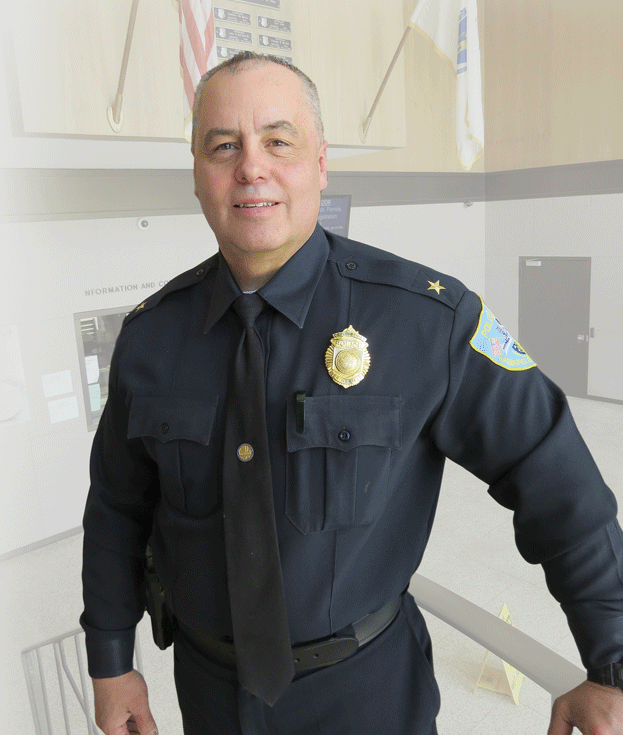
Springfield’s New Police Commissioner Charts a Course

Page6CommishARTJohn Barbieri acknowledged that his analogy wasn’t perfect, but believed it worked on a number of levels, so he went with it.

He was talking about law-enforcement personnel and why many people don’t understand why they can’t prevent crime, or criticize them for not doing so. And he drew a comparison to getting a bad diagnosis from one’s doctor.

“For a community to expect the police to resolve crime in a city is like going to your doctor and being mad at him because you have cancer,” said Barbieri, a deputy chief who will become Springfield’s police commissioner next month. “If the doctor could go back 20 years and take the cigarette out of your hand or stop you from working at the asbestos factory, that would be one thing. Don’t be upset with him because you have cancer; be upset with him if he doesn’t treat it properly.

“I can’t go back 20 years and give the person who broke into your car an educational opportunity or parental discipline,” he went on. “The best I can possibly do is look at the trends and patterns from when such break-ins occur, be responsive and try to have police in that area, make an arrest whenever possible, and work with area residents and educate them about what’s going on in their neighborhood.”

If a community wants to make a serious dent in crime, there must be what he called a “holistic response” to the matter, and a police department will certainly play a key role in that, he said, adding that police must work in collaboration with neighborhood residents, other social agencies, the school department, and other players.

Indeed, collaboration has been the word heard most often in the many media interviews, neighborhood meetings, and other gatherings at which Barbieri has spoken or taken questions since he was named commissioner on March 19.

And it will continue to be heard in the weeks, months, and years to come, because it is the one-word thrust of Barbieri’s philosophy regarding public-safety initiatives and how to make them more effective.

Collaboration between police, the public, and neighborhood groups lies at the heart of the C3 (Counter Criminal Continuum) Policing program in the city’s North End, a multi-faceted initiative aimed at stemming gang-related crime, which Barbieri has co-led, and for which he and other organizers were named Difference Makers by BusinessWest in 2013.

Barbieri wants to expand that specific program to Mason Square, the South End, and Forest Park, but he wants the key ingredients in its success formula — cooperation and information from neighborhood residents — to become a city-wide phenomenon.

“The goal is to go into those neighborhoods and work with the residents to teach them that the department does care, legitimize our services to them, and show them we can be responsive,” he continued. “And then educate them with regard to their responsibilities with preventing crime in their neighborhoods and being our eyes and ears.”

And while working to inspire residents to take a more active role in public-safety efforts, Barbieri has a number of other goals and objectives — everything from making more effective use of available resources to improvements in crime analysis, to making sure the department is ready if and when a casino opens in the South End.

In a broad-ranging interview with BusinessWest, he addressed those issues and many others, and in the course of doing so, put that term ‘collaboration’ to early and repeated use.

Chief Concerns

The office at police headquarters that Barbieri will soon be vacating in favor of the commissioner’s space has an eclectic array of photos on the walls, everything from assorted views of his prized 1966 Chevy Impala — “driving it keeps me sane” — to an image of the World Trade Center the moment the second plane struck the south tower. He said he hung it there so he could point to it whenever someone says a major act of terrorism can’t happen in a city like Springfield.

There’s also a shot of him in a cruiser taken a few months after he joined the force in 1988, one of several times the city was beset with fiscal problems and the police budget was stretched thin — as the photo made clear.

“We didn’t have enough money to paint the cruisers black and white,” he said in noting why the car he was sitting in was all white (it came that way), and also why it looked beat up. “The car was in such disrepair that you had to leave it running at all times. It had a bad battery, so you ran it all night; if you shut it off, it wouldn’t restart, and you’d have to call a tow truck and get a jump.”

Several years later, during the Clinton presidency and a period of heightened federal assistance for law-enforcement efforts, things were much different. Springfield’s force numbered roughly 700 officers, nearly double the current number, community policing was in vogue, and the police could effectively “smother” crime in many ways and many places, said Barbieri, by effectively deploying all that manpower.

John Barbieri

John Barbieri has a number of goals and objectives for his department, including an expansion of the C3 Policing program into three additional neighborhoods.

Those days are gone, and they are, in all likelihood, not coming back, he went on, adding that this reality is why he places such a heavy emphasis on collaboration and involving city residents and a host of other partners in the process of combating crime and making the streets safer.

Talk of inspiring more collaborative efforts has dominated what Barbieri called the “whirlwind tour” he’s been on since he prevailed over two other deputy chiefs in the search for the successor to the retiring William Fitchet.

That tour has included interviews with many local media outlets, community meetings, and the release of his five “priority objectives” for the department and his administration:

• Initiate a movement toward a proactive, patrol-centered department ideology;
• Deliver improved response times;
• Create increased levels of service through clearer lines of delegation of authority and responsibility for line supervisors;
• Build relationships with stakeholders for collaborative problem-solving, enhanced communications, and unified effort; and
• Develop and implement measurement and feedback processes to modify and enhance operations as required regarding calls for service.

Barbieri borrowed the term ‘listening tour’ to describe the six weeks or so since he’s been named the new commissioner, and said it will continue for the next several months, and involve meetings and briefings with the Chamber of Commerce, the City Council and its various subcommittees, the press, concerned-citizens groups, and many other constituencies.

“Hopefully during the listening tour there will be educational opportunities for both of us,” he said. “I want and need to know what some of the concerns of the community are, although I’d like to think I’m fairly well plugged in. And the other part is educating people about this department; there are people out there who still think we have 700 officers and community policing and that we’re going to be able to focus on every small aspect of their concerns. We’ll work with them with regard to prioritization, and I have to work on attaining maximum efficiency here.”

It’s been a relatively quick ride to the top for Barbieri, who joined the force in 1988 after serving as a special police officer for Baystate Medical Center and later as a supervisor there.

Seemingly from the start, his work on the force has involved gangs and gang-related violence. Indeed, one of his first assignments was with the City Uniform Anti-gang Patrol, and after working on a patrol that focused on the city’s schools, whereby he became familiar with many at-risk youths, he was one of the city’s first two gang-intelligence officers.

He was named sergeant in 1995, lieutenant in 2001, captain in 2005, and deputy chief in 2009. In that latest assignment, he had a number of responsibilities, including supervision of the uniform division, the Police Academy, the Street Crimes unit, and anti-gang deployments, including the C3 initiative.

That work in the North End, which he remains involved with, has garnered local and national press, including a segment on 60 Minutes, with Barbieri sharing the spotlight with State Police Officers Michael Cutone and Tom Sarrouf, who drew inspiration for their counter-insurgency tactics from their experiences serving with the Special Forces in Iraq and Afghanistan.

That press has inspired a number of cities to explore creating similar initiatives, said Barbieri, adding that he was recently in Michigan, consulting with state police there on plans to create programs in Detroit, Lansing, Flint, and other cities.

“They’re running into a lot of the same problems in those cities that we ran into here — gang activity and economically impacted cities,” he explained. “And they have several cities that don’t have the financial wherewithal to increase their police departments. So they reached out to us because we have a plan and it’s working.”

Arresting Developments

Overall, the C3 program has been hailed as a major success — crime is down in a number of categories — and the initiative has shown what can happen when the residents of a neighborhood take an active role in making it safer by reporting crimes and providing police with information that could prevent more of them.

As an example, he pointed to a recent shooting on Osgood Street that remains under investigation. Thanks to shot-spotter technology, police were on the scene within a minute, and have received a number of leads from witnesses.

“The level of cooperation we get now down there is just unprecedented,” he said. “We got a number of tips and calls, and we continue to get tips and calls since the shooting occurred. That just didn’t happen before C3 Policing.”

It’s happening now, he said, because those involved in the program have been able to convince residents of the North End that there is a direct connection between this higher level of cooperation and improved quality of life. And this is something that has to happen in other neighborhoods, he said, adding that an obvious key is the simple act of reporting crimes.

“Statistics just tell you about reported crime,” he noted. “And if you look at the worst neighborhoods, where we have the shootings, the drug dealing, and other crimes that makes the newspapers and television, it’s all the little things, the lawlessness in that neighborhood — it’s permissive for all this to occur. And in those neighborhoods, they don’t report crime because they’re afraid, they’re inured, and they’re apathetic.”

The risk to doing all this is that there will be reported crime, something that might create apprehension among those who watch crime statistics or drive Springfield higher on those infamous lists of the most dangerous places to live, he went on, but when crimes are reported, police departments have a better chance of preventing more of them down the road.

Looking forward and acting on the assumption that there won’t be significant, if any, additions to the force in terms of personnel, Barbieri said one of his priorities is to review departmental procedures and initiatives with the goal of ensuring that people and resources are being used in the most efficient manner possible.

“The goal is to take a baseline snapshot of what we do, look at where we want to be, and analytically look at a transition method to get us there,” he said. “We need a projected plan and timeline — and I have the basis of that on paper and in my head — and get a management team in here, because as smart as I’d like to think I am, it’s much smarter to take the experience and intelligence of eight or nine people and put them together to come up with a well-balanced plan.

“The objective is to make us the most efficient department possible with the number of officers we have,” he went on. “There may be a time when I’ll go to the mayor for more police officers, but I’m not there yet.”

And those aforementioned partners that Barbieri listed, especially city residents, can play a role in making the department more efficient through the information they provide.

“In this modern era, what we need is for people to report crime; we need neighborhood residents to get involved and be the eyes and ears of the police,” he told BusinessWest. “And we need to look at that reported crime and put officers where it’s occurring. It’s less about free travel time for police officers for discretionary response, and more about directed patrol time, because there are so many things going on above and beyond what the sector officers may know from their own experience. Neighborhood residents and our computer experts here can predict trends and patterns, and we need to put officers where the dots are.”

Elaborating, Barbieri said another of his goals is to improve crime-analysis efforts, something Boston has been doing, in an effort to both stem crime and more efficiently utilize available resources.

“Instead of catching on to a series of breaks into homes after there have been 30 breaks, and have eight detectives follow up in hopes of catching somebody,” he said, “my hope is to catch on to a series of breaks after three or four them, have uniformed patrol officers patrol more heavily in those neighborhoods in an effort to apprehend that person, but, more importantly, to deter them.”

Looking further ahead, and toward the elephant in the room, the $800 million MGM Springfield gaming and entertainment complex planned for the South End, Barbieri said it will present new and different kinds of challenge for his department.

There are still some hurdles to clear before it becomes reality — especially a referendum question that will soon be in the hands of the Supreme Judicial Court — and it will be at least three years before a casino opens its doors, but Barbieri said the city, and his force, must aggressively move forward with the assignment of being ready.

“We have to plan, plan, plan, plan — that’s the biggest thing,” he said, adding that there will be visits to a number of cities that have casinos to observe, ask questions, and learn. “And once the details start to emerge as to just what we’re looking at, we have to start planning immediately. And then you have to plan to adjust your plan once it starts.”

Off-the-cuff Remarks

Thinking back on those days when Springfield had 700 police offers and could easily afford to paint its cruisers black and white, Barbieri said everyone knew that those conditions wouldn’t last forever — and they didn’t.

“We made the most of it while we had it, though,” he said, adding that the force has adjusted to the new reality, and it will continue to do so in the years to come. Part of that adjustment is stressing that holistic approach to improving public safety and then making it happen.

And this comes back to that notion of collaboration — a word you’ll keep hearing from the new police commissioner long after his listening tour is over.

George O’Brien can be reached at [email protected]

Community Spotlight Features
Ware Looks to Spark Economic Growth

By KEVIN FLANDERS

Roc Goudreau

Roc Goudreau, one of the developers of Workshop13, believes the renovated church will become a cultural hub for Ware.

For eight years, the building at 13 Church St. stood vacant and dilapidated, an eyesore that most residents and town leaders assumed would be torn down.

But two town residents, Roc Goudreau and his friend, Chris DiMarzio, looked past the blight and the daunting challenge of rehabbing the 117-year-old former Methodist Church and saw something others didn’t: opportunity.

What they’ve created at that address is called Workshop13, a bustling cultural-arts and community center that has become not only a major resource, but also a source of inspiration for a town looking for a spark — or several sparks — in its downtown, and is starting to find them.

Indeed, the renovation of the Workshop13 building is just one example of a minor wave of development that has swept through town in recent years, said Town Manager Stuart Beckley.

“Ware can be a hub of activity and services for regional residents,” he told BusinessWest. “The more activity and the better the quality of activity and service, the more growth that will follow. Ware is working to be ready for that increase.”

Hoping to open up a new art school, Goudreau and DiMarzio purchased the 11,000-square-foot former church building in December 2012. After several months of renovations, including the installation of a new roof and chimney, as well as the additions of new doors, flooring, shelves, and lighting, Workshop13 opened in October 2013.

“I’m really glad we were able to save the building,” said Goudreau, who plans to renovate the exterior of the building next year. “It was a real mess when we first bought it, but we always said the place has good bones and structure.”

That phrase could be applied to the community’s downtown as a whole, and officials are looking to create momentum for more development there.

The Ware Business and Civic Assoc. (WBCA) has partnered with town officials to conduct a series of workshops to help gain insight into best practices for a planned revitalization of Ware’s downtown section. Funded by town grant monies, the workshops will be led by four people from throughout Massachusetts with experience in various revitalization strategies. Bill Braman, chairman of the WBCA, is excited about the ideas these individuals will bring to the table.

“They all have different backgrounds and approaches and experiences when it comes to revitalization, and we want to look into employing some of their strategies in Ware,” he said. “There have been a lot of great recent developments downtown, with a new restaurant being constructed a few years ago and Workshop13 opening. Now we’re looking to come together as a community in a coordinated effort to continue revitalizing that area.”

For this, the latest installment of its Community Spotlight series, BusinessWest puts the focus on Ware and the many signs of progress — and hope — in this Quaboag-region community.

Major Steps Forward

The progress at Workshop13 just scratches the surface of recent developments in Ware. A new Cumberland Farms convenience store will soon be constructed on Route 32, a project that has received site-plan approval from the Planning Board. The proposal will now be reviewed by the Zoning Board of Appeals, and representatives from Cumberland Farms hope to be open for business as early as the fall, said Karen Cullen, Ware’s director of Planning and Community Development.

Meanwhile, Seaboard Solar, of Danbury, Conn., received approval last year from the Planning Board to install a solar array on Gilbertville Road, which will be adjacent to a larger array the company is building in West Brookfield. Cullen said Seaboard Solar has submitted a building permit and is planning to get construction underway soon.

From a recreational perspective, Ware is taking major steps with the planned construction of a new section of its Rail Trail within the next 18 months. Selectman John Carroll said recently awarded grant monies from the Recreational Trails Program, as well as volunteer contributions, will allow for the construction of two new bridges and other work.

“Once this new section is finished, people will be able to go from Wal-Mart all the way down to Robbins Road,” covering a significant stretch of Route 32 in town, he said.

The new trail section and others expected to follow it will ultimately connect Ware to several other towns through larger regional trails — both existing and proposed — which would attract more people to the town and thereby generate increased revenue for businesses. “It is important to be connected to the larger region,” Beckley said.

But the transformation of 13 Church St. has been the visible and potentially impactful development in recent months.

“The total rehabilitation they did of the building was wonderful, a very exciting project in our town,” Carroll said. “They took a building that would have been demolished and completely renovated it. Whenever something like that happens, it’s big for the town.”

Cullen agreed. “They put a lot of money and work into it, preserving most of the original features of the building, and now it is a thriving arts center,” she said.

Workshop13 hosts several youth art programs and camps each week, including a spring vacation camp that introduced several youngsters to painting during their break from school. With an accomplished staff of artists, Goudreau is hoping to expand membership in the coming months.

“We have really great instructors here; all of them are professional artists, and right now we’re just looking to get the word out about this place so residents know about what we have to offer,” he said. “Some people who come in didn’t even know we were here.”

Another goal for Goudreau and his staff is to maximize the use of the property, which was built in 1897 and also served for a short time as a senior center. The building boasts stained-glass windows and expansive rooms, and Goudreau is contemplating adding a performance or dance component to his business. The upper rooms, he said, are also perfect for an exercise studio, and renting sections of the building is another viable option. Currently, one of the second-floor rooms serves as a makeshift art museum displaying creations of Workshop13 instructors.

“I really hope that one day this building will be a cultural hub for the town,” he said.

Winds of Change

Karen Cullen

Karen Cullen says there are a number of development projects underway or on the drawing board in Ware.

Several other businesses and organizations in town have been active over the last year with expansion or development plans. Officials at Baystate Health, which operates Baystate Mary Lane Hospital on South Street, has announced its intention to explore the acquisition of Wing Memorial Hospital in nearby Palmer from UMass Memorial Healthcare, and is nearing a decision on whether to proceed.

“Right now we’re in a process of due diligence to move toward a definitive decision,” said Ben Craft, Baystate Health’s director of Public Affairs. “We’re anticipating a decision by the summer, but Baystate Mary Lane Hospital will continue to operate normally and remain a key part of our strategy moving forward. It’s important that we maintain a strong presence in Ware.”

If the agreement is approved, Beckley said it could lead to opportunities for growth in town. Baystate Health operates several medical facilities in the region, including Baystate Medical Center in Springfield and Baystate Franklin Medical Center in Greenfield.

The Quaboag Valley Business Assistance Corp., based in Ware, has also reported major developments of late. Officials with the QVBAC recently learned the corporation has been certified as a ‘community development finance institution’ by the U.S. Department of the Treasury’s Community Development Financial Institutions Fund.

“This certification will increase our access to financial and technical assistance from the CDFI fund and enhance our ability to raise funds from other donors,” said Sheila Cuddy, executive director of the QVBAC. “These funds support our work to increase economic opportunity for the 15 communities in our region.”

The QVBAC, a nonprofit organization, provides loans to small businesses that are not eligible for traditional bank financing.

Meanwhile, officials expressed hope that the planned workshops downtown will spark more development opportunities there.

In addition to exposing residents, town officials, and business owners to specific strategies, the workshops will also serve as a promotional mechanism for the revitalization plans, which will tie into the town’s ongoing formation of a master plan.

“This will create a vehicle to bring various businesses, large and small, together to focus on our priorities,” Braman added. “We’re hoping to get participation from throughout the community as we move forward to determine the best approaches for revitalization.”

At the conclusion of the workshops, Beckley said the town will assist Ware Business and Civic Assoc. members with deciding how they wish to move forward.

Ware It’s At

Overall, town officials are encouraged by the growth that has taken place in recent years, in addition to developments that still may occur.

Even in a tepid economy that has caused many communities to stagnate in terms of development, Ware residents and business owners have found a way to effect positive change and gain momentum.

“All of these activities show the commitment of town and business leaders to growth,” Beckley said, “both residential and commercial.”

Ware at a glance

Year Incorporated: 1775
Population: 9,872 (2010); 9,707 (2000)
Area: 40.0 square miles
County: Hampshire
Residential Tax Rate: 18.31
Commercial Tax Rate: 18.31
Median Household Income: $36,875
Family Household Income: $45,505
Type of Government: Open town meeting
Largest Employers: Baystate Mary Lane Hospital, Wal-Mart, Big Y, Country Bank, Kanzaki Specialty Papers, Town of Ware

* Latest information available

Community Spotlight Features
Wilbraham Carefully Crafts a Plan for Growth

Tracey Plantier and John Pearsall

Tracey Plantier and John Pearsall say Wilbraham residents want to maintain the town’s historic New England charm.

John Pearsall says Wilbraham residents appreciate the town’s New England charm and want it maintained. But they’re equally thankful for the plethora of stores, businesses, and restaurants available to them on Boston Road.

“Wilbraham is primarily a residential community, and what attracts people here is the quality of life,” said the town’s planning director. “But people are also comfortable with the idea that Boston Road is very commercial, and they want growth there to continue.”

These opinions were voiced repeatedly in studies contained in a report released last September titled “Wilbraham Looks Forward.” It documents the results of surveys and focus-group meetings conducted by an all-volunteer vision task force over an 18-month period. Members of the panel were appointed by the Planning Board, and their goal was to solicit opinions from residents and business owners about what they appreciate about the town as well as change they would like to see in coming years.

“Our mission was to generate a consensus-based guiding vision to address Wilbraham’s current and evolving challenges and opportunities,” said vision team chair Tracey Plantier, who is a member of the Planning Board and volunteer for the Open Space and Recreation Plan Committee (more about the report later).

Wilbraham was devastated by the tornado that swept through Western Mass. in 2011, but the majority of that damage has been repaired. And although commercial and residential growth has been slow since 2008, Pearsall said, “last year, things started to rebound.”

In December, Lumber Liquidators opened on 2148 Boston Road, and two auto dealerships made significant investments in their properties. Balise Ford held a grand-opening ceremony to welcome the public to a new, 26,000-square-foot, $4.2 million dealership about 11 months ago. The expansion added about 20 new jobs and helped strengthen the town’s tax base.

“Officials from Balise told us they were impressed by the town’s streamlined permitting process,” said Pearsall. “They described it as effortless compared to other communities.”

In addition, Lia Toyota’s showroom on 2145 Boston Road got a $300,000 facelift last year. “And Baystate Self Store LLC on 2350 Boston Road is expected to open in June with 73,125 square feet of available storage space,” said Pearsall, adding that some of it will be climate-controlled.

Growth is also occurring in the residential sector, as 18 new homes and/or condominiums were built in 2013 at a cost of $4.74 million. “The majority were in the Gardens at Wilbraham and in Cedar Ridge, which are both on Boston Road,” Pearsall said.

Eric Fuller, the town’s planning director, told BusinessWest that the three-mile strip of Boston Road that runs through Wilbraham is zoned for commercial and industrial use and contains land and buildings available for purchase or for lease. “Properties for sale include the former Medeiros Williams Chevrolet Co. building and lot.”

Pearsall agrees that opportunity abounds on Boston Road, home to a significant amount of underutilized and/or vacant space. “The former Taylor Rental property next to Home Depot is available, and on a smaller scale, there is space for lease in a number of strip malls,” he said. “Plus, the site across the street from Post Office Park has been cleaned up and is for sale.”

Post Office Park is a horseshoe-shaped, planned commercial development on Boston Road with two entrances and traffic signals. The back of the property is home to many businesses that are attractive to families, including the YMCA’s Wilbraham branch, All American Gymnastics, a dance academy, some small retail shops, and a pediatric medical office.

But land is still available at the front of the park, which Pearsall said is suitable for a high-profile retail business, due to its visibility from Boston Road and the fact that 40,000 vehicles travel up and down the busy thoroughfare each day.

“It is a significant commuter route, with Springfield to the west, Palmer to the east, and the entrance to the Mass Turnpike in Palmer,” he said. “Jake’s Restaurant across the street feeds off the traffic from the people who attend recreational and sporting events at Post Office Park, and Eastfield Mall, just down the road in Springfield, attracts shoppers.”

Enhanced Value

Education is important to Wilbraham residents, and the town boasts three secondary schools, including the private Wilbraham-Monson Academy; the parochial Cathedral High, temporarily housed in the old Memorial School building; and the new, $50 million, state-of-the-art Minnechaug Regional High School, which serves students from Wilbraham and Hampden.

“When people come into my office, they always ask about our schools, and the high quality we offer is a really big draw,” Pearsall said, explaining that the new high school has a day-care facility, and the grounds of the old building have been turned into athletic playing fields.

Eric Fuller

Eric Fuller shows off a copy of “Wilbraham Looks Forward,” which documents opinions solicited from residents and business owners.

“And Wilbraham Monson Academy continues to expand its campus,” he continued. “A brand-new dorm is under construction for students in their middle-school program, and they have put in new athletic playing fields.”

Major investments have also been made at Spec Pond, which is home to a summer day camp run by the Parks and Recreation Department. “More than $1 million has been spent in the park over the last few years,” said Fuller. “We have new pavilions, a new playground, and new playing fields for youth baseball, lacrosse, and softball. It’s a very large complex with lights that can also be used for night football. Plus, a spray park is being installed and will be ready by the time summer arrives.”

In another section of town, the iconic Rice Fruit Farm building is undergoing a major renovation. “The Rice family ran their farm for many generations and grew their fruit stand into a retail store,” Pearsall explained. But the storefront has been vacant since the family closed the business about five years ago.

Fuller said there was some interest in redeveloping the site, but its residential zoning was a stumbling block. However, that changed recently when the Planning Board revised the zoning based on the fact that the building had been operated as a farm stand. “It allowed the new owner to repurpose the structure and make it into a viable business,” he explained.

The retail establishment, called Heritage Farm Stand, is expected to open within the next few months. “They’ll sell fruit, ice cream, pies, and baked goods, and will have indoor and outdoor seating,” Pearsall said. “This is an adaptive reuse of a building that everyone in town wanted to reopen.”

Vision Quest

The town is comprised of a number of neighborhoods — Wilbraham Center, North Wilbraham, East Wilbraham, Wilbraham Mountain, South Wilbraham, the Boston Road Corridor, and the Pines section — and during the past year, residents and business owners from all sectors had the opportunity to voice their opinions about what type of change they would like to see in the future via surveys conducted by the Vision Task Force.

“We created subcommittees that did in-depth studies on education, land use, livability, and town services,” Plantier said. “The study was unique and something that few towns do, but we wanted to create a focused vision strategy.”

To that end, the task force developed an extensive questionnaire titled “Community Insights,” and residents were given the opportunity to respond online or in writing at town meetings, at concerts in Fountain Park, and during tours of the new high school held at the beginning of the 2012-13 school year.

The study was designed to provide input on what Plantier refers to as “the dynamics of change,” and answer the questions, “where are we going?” “what are we in the process of becoming if we follow the current course?” and “what will Wilbraham look like in 20 years and beyond if current trends continue?”

The task force also held focus-group sessions with business owners, members of the Boston Road Business Assoc., the Rotary Club, the East of the River Chamber of Commerce, and other organizations. In addition, a survey was mailed to 200 businesses.

The final event was called Imagine Wilbraham Day, which was attended by 100 people who had the opportunity to express or reiterate their opinions about what works well in town and what changes could prove beneficial. The results have been compiled in a report titled “Wilbraham Looks Forward,” and a new committee has been created to facilitate ways to implement desired change.

However, two items that emanated from the surveys are already on the town’s agenda and will be voted on during the May 12 town meeting. The first involves signage and would allow new businesses to erect temporary signs welcoming customers.

The second would permit an expansion of land use in Wilbraham Center. Pearsall explained that every plot of land in the neighborhood is currently zoned as either neighborhood/office space or neighborhood/shopping space. “We are not changing the zoning; we are homogenizing it,” he said, adding that the proposal would give property owners the ability to create food establishments or small shops in that section of town.

However, Plantier reiterated that, although residents want more shopping and restaurant options, they are deeply committed to maintaining the look and feel of Wilbraham, which she described as “a scenic, small New England town.”

“One of the biggest challenges to our economic development is balancing the change that residents want while keeping the look and feel of a scenic, historic small town with green, open space,” she said, adding that two requests voiced repeatedly in the survey are for additional sidewalks and bike lanes along the roadways.

The May town meeting will also give residents the chance to learn about volunteer opportunities with the town’s nonprofit organizations. Booths will be set up by representatives who will be ready and willing to share information. “This is important, as many people who responded to the survey expressed an interest in becoming more engaged in town, and said they want to see more events held in our community,” Plantier said.

Wilbraham also has two active committees pushing for a new safety complex and senior center. Although financial resources are limited, the Fire Department completed a $2.8 million renovation of its main fire station last year. “It was brilliantly done in a manner that didn’t require the town to borrow any money,” Fuller said. “It was a collaborative effort, and the fire chief was committed to adapting what he had to the needs of the department through the use of available funds.”

Pearsall added that the project set a precedent “to be creative and try to get the best results at the lowest cost to the taxpayers.”

Home-based Help

One thing that makes Wilbraham unique is the willingness of its residents to share their time to improve life in town.

“Many people own businesses or have professional expertise and are happy to contribute their talents or make donations to programs here,” said Pearsall. “There is a lot of community support to improve the quality of life.”

That trend is sure to continue as “Wilbraham Looks Forward,” paying due diligence to the opinions of residents who take great pride in the place they call home.

Wilbraham at a glance

Year Incorporated: 1763
<strong>Population: 14,868 (2010); 13,473 (2000)
Area: 22.4 square miles

County: Hampden

Residential Tax Rate: $20.44
Commercial Tax Rate: $20.44
Median Household Income: $90,670
Family Household Income: $102,557
Type of government: Open Town Meeting

Largest employers: Friendly Ice Cream Corp.; Town of Wilbraham; Wilbraham and Monson Academy; Life Care Center of Wilbraham
* Latest information available

Features
J. Polep Distribution Services Evolves with the Times

Jeff Polep, president of J. Polep Distribution Services

Jeff Polep, president of J. Polep Distribution Services

Stop by the Chicopee headquarters of J. Polep Distribution Services, and the first thing you’re greeted with is an old-fashioned cigar-store Indian standing beside the front door.

The adjoining office of Jeff Polep, fourth-generation president of this 116-year-old family business, is also strewn with kitschy memorabilia from the past century, but it’s that wooden Indian who tells the most significant story — one that starts with Polep’s great-grandfather launching a small-time enterprise, Polep Tobacco Co., in Salem, Mass.

“He started with candy and tobacco, but we diversified into groceries to survive,” Polep said. “Since then, we’ve kept diversifying.”

Today, J. Polep ranks among the top 12 convenience-store distributors in the country, servicing about 4,500 chain and independent retailers in New England, New York, and — most recently — Pennsylvania and New Jersey.

Much of that expansion has come in just the past several years, with the addition of alcohol products and an ice-cream and frozen-food division in 2007, and the purchase of Springfield Smoked Fish in 2011 and two Connecticut meat-processing plants, Mucke’s and Grote and Weigel, in 2012. Meanwhile, “we recently went into produce, both fruits and vegetables, and we’re carrying about 200 items,” Polep said.

All of this reflects the fourth generation’s constant focus on diversification.

“That’s where most of the growth has come,” Polep said, adding that some product additions have worked out better than others. “We’ve had exceptional growth in the ice-cream business; we sell a lot of ice cream.” Meanwhile, he added, alcohol products haven’t been as lucrative, although they do turn a profit.

In the past decade, J. Polep also launched Rachael’s Food Corp., named after Polep’s daughter. The Rachael’s line includes candy and other snack foods, but also a number of refrigerated products — from sandwiches and salads to meat products — that comprise the only foods that the Polep company produces on its own.

J. Polep also tries to find synergies among the Rachael’s products, such as putting smoked salmon from Rachael’s Springfield Smoked Fish on the sandwiches it makes in its commissary — which, like its meat-processing plants, is a USDA-inspected facility. “Anything we can cross-merchandise is pretty good for us.”

Meanwhile, the company’s salespeople, armed with iPads and other modern devices, are constantly restocking stores and tracking how each product is selling. “Our main function was always convenience stores,” Polep said, “but over the past few years, we’ve gone into fresh foods, healthy foods, natural foods. That’s been really good for us.”

Back from the Dead

Polep likes to show visitors a photograph hanging in the lobby, probably from around 1910. It shows his grandfather, Charles, standing on the running board of a truck driven by his great-grandfather, Sam. He says that photograph — and the hard work and legacy it represents — has inspired him to keep growing the company, even during dark days like the mid-1980s.

“In 1984, my father and uncle sold the business,” he said, adding that they believed the sale, to Trade Development Corp. (TDC), would bring security as well as access to the larger corporation’s expertise and buying power. They were wrong. “Within two years, the company that bought us went bankrupt.”

Polep, who managed the Chicopee operation for TDC, was determined to keep the business alive, but he had a non-compete agreement in his contract that barred him from restarting the company after TDC filed Chapter 11. After a week hashing out the issue in a Texas bankruptcy court, however, a judge released him from the contract. But that was only the beginning.

“We had to start all over again,” he said, adding that this included a name change from Polep Candy & Tobacco Co. to J. Polep Distribution Services. Many of the first employees he brought back worked for free for the first couple months, enabling him to hire about 50 more. And keep growing, steadily, for almost 30 years.

“We went from zero business to almost $1 billion; we’re over $900 million now,” he said, adding that J. Polep currently employs about 630 people, with distribution centers in Chicopee and Woburn, as well as Providence, R.I. and West Haven, Conn. “I’m glad it worked out the way it worked out. It was a lesson learned. We have a good, successful business, and we know that’s because of our employees. They’re loyal. We can’t do it without them.”

Speaking of hardships, much of the company’s recent growth coincided with the Great Recession. Asked whether those years, which impacted so many industries in the Northeast, affected his company, Polep offered a simple “yes … and no” — and for a perhaps surprising reason.

“We didn’t really get hurt too badly by the recession because tobacco items sell better when there are economic issues out there,” he explained.

While it has been a core product for J. Polep since the beginning, tobacco sales have been shaped by a number of different trends.

“There have been a lot of changes in the tobacco business alone. It’s gone way beyond cigarettes, pipe tobacco, and other tobacco products,” Polep said. “The biggest diversification lately has been e-cigarettes. Right now, we sell a lot of e-cigs. A lot.”

At a time when government taxes tobacco heavily and society increasingly frowns on its use — bans in restaurants, workplaces, and a host of other public spaces are simply making it more inconvenient to smoke — e-cigarettes, a smokeless product that uses nicotine vapor, have been widely embraced, particularly by the younger generation.

“Some people are trying to quit smoking, no doubt, and this is a vehicle that helps them achieve that result,” Polep said. “But many people are smoking e-cigs who never smoked cigarettes because it’s an enjoyment for them.”

Healthy Sales

While cigarettes — which are still J. Polep’s top product — may not be in vogue, healthy and organic food is, and the company is starting to take advantage of that trend.

“We’ve now gotten into about 450 colleges with good, healthy alternatives, all the different food groups,” Polep said. “That’s a very, very successful business — although our slow season for colleges is coming up within the month.”

That’s OK, he added, because convenience-store sales rocket up during the summer, more than making up for summer break on campuses. When the weather turns warmer, he explained, people are out driving more, and more apt to make a quick stop for a soda or a snack. “In the winter, they go to the supermarket, load up, and stick it in the fridge or freezer.”

The college crowd may be a solid market for healthier foods, but stores are following suit, he said. “A lot of convenience stores have taken on the organic and natural products we have for the colleges, and they’ve set up healthy sections. And they’re selling.”

While J. Polep has thrived by staying atop trends and making savvy acquisitions of other companies — about two dozen in the last 30 years — it’s ramping up geographic expansion as well. The most recent moves, into Pennsylvania and New Jersey, represent a significant step for the company, but a necessary one if it expects to grow in ways other than diversification.

“If you think about it, in New England, we’re on a peninsula, so we can’t really go much further — we’ll eventually run into the ocean,” he said with a laugh. “The only way we can grow geographically now is by going south to pick up new business.”

He sees the potential of J. Polep to expand beyond its current territory to become an even bigger presence in the eastern half of the U.S., but any growth will have to be gradual and sustainable. “I think it will take us a little while to be satisfied with Pennsylvania and New Jersey. But we’ve grown tremendously through acquisition over the years, so territory growth makes sense.”

The company will continue to take a multi-pronged approach to growth, especially as the recession fades into the past and competition heats up. “We did have an advantage selling certain types of products during the recession,” Polep said. “But things have gotten better, and our industry is looking for more business, so the competition is fierce.”

J. Polep doesn’t seem primed to make the mistakes of the mid-’80s anytime soon, though — not with the fifth generation so firmly entrenched. Polep’s son, Eric, who was a district manager in Boston, returned to Chicopee to learn more of the business. Meanwhile, daughter Rachael works in human resources, and his son-in-law, Adam Kramer, works in food service. They’re all interested in preserving the 116-year legacy and moving it forward, he told BusinessWest.

“And they can have it, at this point. I’m just doing it for them,” he said, expressing pride that his family has continuously grown what has become one of the nation’s most prominent distribution companies — “except for that hiccup of two years, of course.”

Distributing the Wealth

For now, he says, being president gives him something interesting to do every day until the next generation takes over, and he’s fine with that.

“It’s really simple,” he said when asked what he enjoys most about his role. “It’s something new and different every day. We have 600-plus employees, 80 drivers, 100 sales-type people — they all make business interesting and fun. I never walk into the same situation two days in a row.”

That’s easy to see, with hundreds of different products rolling off the conveyer belts every day and being shipped to thousands of destinations. J. Polep has come a long way indeed from that old, black-and-white photo in the lobby, and that 116-year-old dream of making a living selling candy and cigarettes. n

Joseph Bednar can be reached at [email protected]

Community Spotlight Features
Chicopee Is Well-positioned for Economic Growth

Mayor Richard Kos

Mayor Richard Kos says Chicopee’s transportation infrastructure, diverse mix of businesses, and abundance of available building sites all contribute to its economic stability.

The city of Chicopee is known as “the crossroads of New England,” and Mayor Richard Kos says its transportation infrastructure, diverse mix of businesses, and abundance of available building sites play a role in its economic stability and capacity for growth.

“The city’s insignia is ‘Industraie Variae,’ and Chicopee has a variety of industries that show the breadth of its diversity and help it to weather economic storms,” the mayor told BusinessWest.

Four major highways —  Interstates 90, 91, 291, and 391 — exit into Chicopee, and state roads, including Routes 33, 116, and 141, connect to the city’s six neighborhoods, or communities — Chicopee Center (Cabotville), Chicopee Falls, Willimansett, Fairview, Aldenville, and Burnett Road.

Kos, who was mayor from 1997 to 2004 and took office again in January, said his goal is to help Chicopee realize its full potential, especially in its business parks and sections of the city that have not seen much growth in recent years.

Kenn Delude, president and CEO of Westmass Area Development Corp., cites the Chicopee River Business Park as an example of an area poised for development. The park, built on the grounds of the former Oxford Country Club and Springfield Rifle Range, is located at the intersection of I-90 and I-291, and contains plots that vary in size and could be used for office space and/or manufacturing.

“The park contains 147 acres and has fully permitted sites for sale that are complete with utilities,” Delude said, adding that 826,000 square feet of space has been pre-permitted, and incentives are available for qualified businesses. “The sites range from 15,000 to 45,000 square feet, although we could accommodate up to 100,000 square feet. The infrastructure is there, the prices are appropriate, and Westmass will handle the permitting.”

Kos said the industrial park was developed in cooperation with Springfield and contains land in both cities. Infrastructure grants have totaled $4.2 million, but growth has been slow over the past 12 years, and a streamlined permitting process has been created to promote development.

Delude told BusinessWest that many other areas of Chicopee are also rife with opportunity. “Chicopee has existing buildings that are available and ready for occupancy. There is also potential for new construction, and at the same time, the city continues to accumulate land and develop Air Park South,” he said.

The park contains about 80 acres of vacant land acquired from the city by Westover Metropolitan Development Corp. It is located between Burnett Road, Chicopee Municipal Airport, and the Chicopee River Business Park.

In addition, Economic Development Manager Tom Haberlin says there are a number of buildings for sale that were erected in the ’80s and ’90s and are good buys. “They’re available for 25 cents on the dollar in terms of market rate, and can be retrofitted for manufacturing for less than it would cost to build something new.”

For this issue’s Community Spotlight, Kos, Delude, Haberlin, and other city officials talked with BusinessWest at length about opportunities for new business, as well as about firms that recently moved to Chicopee or have chosen to expand and relocate their enterprises within the city’s boundaries.

“My transition team has helped to identify opportunities for economic development,” Kos said.

Future Growth

An exciting development is slated to take place at Westover Air Reserve Base. In addition to the fact that the Great New England Air Show will be staged there again this year, fears that the base could be closed due to military cutbacks have been relieved, thanks to recently passed legislation.

Kenn Delude, left, and Lee Pouliot

Kenn Delude, left, and Lee Pouliot say new hangars for corporate use at Westover Air Reserve Base will mitigate the cost of running the base and add to the city’s economic vitality.

Delude said the state Legislature has allocated $177 million that will be shared by six military bases. Westover will use its funds to tear down antiquated hangars built to house B52s during the ’50s, replacing them with new, modern hangars with space that can be leased by corporate aircraft.

“The public/private investment will enhance Westover and mitigate its costs,” said Kos. “This is the first time that a state has made an investment in a federal military facility, and it reflects the commitment of the community to withstand base closures.”

The city, MassDevelopment, and Western Mass. Development Corp. will be involved in the project, and city officials hope it will lead to an aviation-repair program in Chicopee Comprehensive High School’s Career Education Development division.

Another newsworthy development is the renovation of 150,000 square feet in a building on Champion Drive that was home to the packaging manufacturer RockTenn and sat empty after the corporation closed its Chicopee operation five years ago. The space will be occupied by the German firm Menck Windows.

“They chose to locate here because of the workforce and the city’s ability to train students at Chicopee Comprehensive High School for high-level precision-manufacturing jobs,” Kos said.

The mayor added that the manufacturer was impressed by the school’s vocational-training program and the fact that the city is willing to work closely with them.

“Chicopee has a long history of being supportive of businesses and job creation, and tax incentives helped this as well,” he continued. “Menck looked at more than 20 sites in Western Mass. before they chose our city. This will be their first manufacturing operation in the U.S.”

The business is expected to open in June and will create 50 new jobs.

Haberlin spoke about another success story that involves the manufacturer Lymtech Scientific. “They had offers to move south, but chose stay in Chicopee when they decided to expand their Cabotville operation. They purchased a building at the entrance to Westover and made a substantial investment, which was underwritten by the city and Mass Development,” he said. “The building was ready, so it was cost-effective. They built a clean room and, as a result, have grown quickly.”

Delude added that MicroTek, which is located in Westover Air Park West, is yet another firm that opted to remain in Chicopee when it decided to expand its 24,000-square-foot operation housed in a building on Justin Road.

“They looked at sites everywhere, but wanted to stay in the city,” he said. “They purchased a 55,000-square-foot building in the park.”

To add to the mix, T.J.Maxx has become a tenant in Air Park West. “They expanded from 55,000 square feet to 100,000 square feet,” Kos said. “So staying put is moving forward for a lot of our businesses.”

The mayor said one of Chicopee’s assets is the fact that it’s a data crossroads. “When the Mass Turnpike was redone, new data lines were installed, which is important for businesses that need a lot of capacity.”

In another section of the city, a development known as Chicopee Crossing is taking shape. The Residence Inn by Marriott opened in the complex on Memorial Drive, and Buffalo Wild Wings recently won preliminary approval from the city council to build a restaurant with a liquor license there.

Economic growth continues to occur along that busy thoroughfare. In February, Chick-fil-A opened beside Aldi’s supermarket, and the former IHOP Restaurant, which sat empty for a decade, has become the second McDonald’s restaurant along Memorial Drive.

In other areas of the city, the Collegian Court restaurant, a landmark establishment, reopened last year after being closed for seven years, and the Munich Haus also expanded and added a beer garden with 60 seats, Haberlin said.

Meanwhile, the city also continues to make water and sewer infrastructure improvements, and a $9 million bond has been approved by the City Council to install a second water line to the Quabbin Reservoir, which is the source of Chicopee’s water supply. In addition, the city’s sewer-separation project is scheduled to be complete by June 2015. “It will have addressed 80% of the combined-sewer-overflow issue,” Kos said.

Renewal is also taking place in Chicopee Center at Ames Privilege Apartments. The units are located in a former Civil War foundry that made swords and cannons on 1 Springfield St. But half of them were never opened because the city condemned a portion of the building in 1988 due to weakened support beams, and those apartments sat vacant for 20 years, Haberlin said.

But MassHousing closed on an $8 million loan last summer to allow the developer to renovate 94 occupied apartments and completely restore the 40 units that have never been rented. An additional $1 million was provided by the Affordable Housing Trust Fund, and funding also came from the the city itself and private investments. “We’ll finally see a project that was started in the ’80s brought to completion,” Haberlin said.

Future Outlook

Moving forward, Kos said the city has much more going for it than its location. There is momentum, land, a business-friendly City Hall, and a large legislative delegation — four state representatives and three state senators —  that makes sure the city gets attention from the Commonwealth.

“As we move forward, it is important to recognize Chicopee’s strengths, which include its location, its competitive tax rate, the quality of its utilities, and the benefit of having its own municipal electric supplier,” said the mayor. “I plan to make sure that public and private economic developers, as well as the city team, interconnect on a regular basis so their skill sets enhance their ability and knowledge.”

Which is, indeed, a surefire recipe for success.


Chicopee at a glance

Year Incorporated: 1848
Population: 55,298 (2010); 54,653 (2000)
Area: 23.9 square miles
County: Hampden
Residential Tax Rate: 16.51
Commercial Tax Rate: 29.60
Median Household Income: $35,672
Family Household Income: $44,136
Type of government: Mayor, City Council
Largest employers: Westover Air Reserve Base, J. Polep Distribution Services, Avery Dennison Corp., Callaway Golf Ball Operations Inc., Microtek Inc.

* Latest information available

Features
Wellspring Initiative Strives to Create a Steady Stream of New Jobs

Fred Rose, left, and Evan Cohen

Fred Rose, left, and Evan Cohen say the upholstery cooperative has strong growth potential.

Bob Demerjian says he saw the ad last fall on a state website featuring job postings. It caught his eye for several reasons.

For starters, he had been unemployed for some time, and realistic opportunities to rejoin the workforce had become quite scarce. But there was something else. While waiting for such an opportunity to develop, Demerjian had begun to learn the somewhat obscure trade of upholstery, and had landed a few odd jobs. Escalating this activity into a vocation seemed unlikely, though.

Fast-forward a few months, and Demerjian is stripping the fabric off a chair that until recently occupied the lobby at the campus hotel at UMass Amherst. He is working in the spacious confines of Alliance Upholstery in a century-old building in Springfield’s South End where monkey wrenches were once made, and, decades later, Bottaro-Skolnick Furniture had its showrooms.

He is the first official employee owner of something called the Wellspring Upholstery Cooperative (WUC), and the hope, and expectation, is that there will soon be many more.

Wellspring is the name of a unique collaborative designed to create economic opportunities and revitalize Springfield’s neighborhoods. Launched in 2011 with a grant from the Robert Wood Johnson Foundation, the program intends to use the purchasing power of the region’s largest employers to provide a market for new worker-owned companies that will create entry-level jobs and ownership opportunities for unemployed and underemployed residents.

These employers, also called ‘anchors,’ include Baystate Health, the Sisters of Providence Health System, Springfield Technical Community College, UMass Amherst, and Western New England University, and the hope is to add more, said Fred Rose, co-director of the Wellspring Collaborative at the Center for Public Policy and Administration at UMass Amherst.

“It’s estimated that these major institutions purchase more than $1.5 billion worth of goods and services a year, and maybe less than 10% of it comes from the Springfield area,” he noted. “So there’s a big potential market for goods that we could produce locally, and we’ve been meeting with their purchasers and identifying possible opportunities.

“If we could shift just 10% of that $1.5 billion, we could create 2,000 or 3,000 jobs in this city,” he went on. “We want to build a capacity for these institutions to use their purchasing powers to drive some development.”

Rose said Wellspring was inspired by the many examples worldwide of worker-owned businesses successfully serving such anchors. Perhaps the most notable is the program known as the Evergreen Cooperatives in Cleveland. The initiative, which involves Case Western University, the Cleveland Clinic, University Hospitals, and other major employers, has grown to include a laundry, a solar-power operation, and a growers cooperative, said Rose, adding that the program has created hundreds of jobs.

But there are many other examples of how this concept works effectively, said Rose, citing the Mondragon Cooperatives in Spain’s Basque region as another.

In Springfield, the Wellspring initiative has begun with an upholstery shop, said Rose, because there is recognized need for such services, an existing infrastructure in the form of the Alliance Upholstery facilities, and an important partner at the Hampden County Sheriff’s Department, which has operated an upholstery program for years and provides a pool of employee candidates with some initial upholstery training.

But there could be other businesses underway in the near future, including a greenhouse operation that would supply fresh fruits and vegetables to those anchor businesses, as well as a laundry and other ventures.

The Wellspring initiative involves a number of partners in addition to those anchors, including Jobs with Justice, the New North Citizens Council, the Center for Popular Economics, Partners for a Healthier Community, GreenWorks, the Pioneer Valley Project, the Hampden County Regional Employment Board, Springfield Neighborhood Housing Services, MassMutual, and the United Way of Pioneer Valley.

That list reveals that the program is not only about jobs and economic development, said Steve Bradley, vice president of Government and Community Relations and Public Affairs at Baystate Health. It’s also about neighborhoods, and the overall health of the region.

“There’s a very direct correlation between income levels and both an individual’s and family’s health status,” he said when explaining why a health system would become involved in an economic-development endeavor of this nature. “Simply put, the poorer you are, the worse your health is going to be.”

For this issue, BusinessWest goes behind the scenes at the upholstery cooperative for a look at this intriguing operation, and also talks with a number of those involved with Wellspring to gauge its potential as a vehicle for generating economic development — and much-needed jobs in the city’s poorest neighborhoods.

Seats of Government
Evan Cohen, long-time owner of Alliance Upholstery, a venture that at one time took his name, said his trade is somewhat of a lost art.

Decades ago, he noted, there were a number of upholstery shops in Greater Springfield employing hundreds of highly trained craftspeople. Alliance is one of the few operations left, and it handles everything from new, high-end furniture to old sofas and chairs that need a new look and a new seat. But there is still a good deal of demand for services, as indicated by the number of projects in progress and in waiting on his shop floor.

Scattered in among those mostly high-end new pieces and some antiques have been some institutional projects, including 65 booth-like pieces from the Berkshire Dining Commons at UMass Amherst, several chairs from the mayor’s office in Westfield, assorted pieces from the campus hotel at UMass, and others.

These represent what Rose and others describe as the start of what could be a thriving enterprise, and the first of a series of businesses designed to keep a portion of that aforementioned $1.5 billion in the City of Homes.

“Our goal is to create a network of these businesses,” said Rose, adding that the ultimate success of the Wellspring initiative will be determined by how effective its organizers are at identifying need among those anchor institutions and creating efficient, profitable ventures to meet them.

Bob Demerjian

Bob Demerjian at work at the Wellspring Upholstery Cooperative

There is certainly ample evidence in both this country and abroad to suggest that worker-owned businesses supplying such anchors is a viable economic-development strategy, he said, adding that the Mondragon Cooperatives in Spain have grown to 110 cooperatives employing more than 80,000 people in 2012. Meanwhile, Cleveland’s Evergreen program has grown to four businesses and has received national attention for its potential to revitalize blighted neighborhoods.

It will take years, if not decades, to approach those levels of success, Rose went on, adding that the long-range business plan is to generate smart, need-driven expansion that will meet Wellspring’s stated goals of creating jobs while also revitalizing neighborhoods.

Getting the WUC off the ground has been roughly a two-year initiative, and a learning experience on a number of levels, said Rose, one that involved everything from identifying partners to securing capital to attracting those first customers. And the operation takes Wellspring from words on an informational brochure to reality, which is an important first step.

“We learned a lot getting this business started,” said Rose. “We had to raise $145,000 in capital, and that was challenging, because not a lot of places want to put money into startup companies.”

Funding was eventually obtained from what Rose called a “socially responsible investor” in Boston, while a line of credit was secured from Freedom Credit Union, and a $15,000 grant was attained from the city’s small-business loan program.

And while funding was being located, organizers were creating partnerships with Alliance Upholstery and the Sheriff’s Department, which has contracts for upholstery work with many of those aforementioned anchors, but has limited capacity, so potential exists for handling overflow. Only a few people currently work at the WUC, said Rose, but there is potential to add another six or more before the end of the year.

Couching Their Remarks
Ira Rubenzahl, president of STCC, has been to Cleveland, and he’s toured some of the Evergreen facilities. He came away inspired, believing that Springfield could replicate some of that success.

“Cleveland is very impressive,” he said. “They have major institutions there like the Cleveland Clinic, which is an enormous operation. They’re on a much different scale there, but the concept works, and it’s something we can do here.”

Like others we spoke with, Rubenzahl said the worker-owned-business model has a number of attractive qualities that go beyond simple job creation. Indeed, there is a wealth-creation component to the initiative that could drive home ownership and prompt investments in the neighborhoods where these businesses are located.

“We believe that additional business development is important for the city, especially business development that could employ people of modest skills,” said Rubenzahl. “We have a lot of people in this city without college degrees who need jobs, and this idea of enabling people to pull themselves up by their bootstraps and do it themselves has a certain attraction for us at the college. We think this is an important initiative, and we’re very supportive of it.”

Bradley agreed. He said Baystate became involved in Wellspring as part of its Community Benefits Program, and has been inspired by the program’s goal of stimulating development in areas of the city where there has been little private-sector investment in recent years.

The Baystate system provided the project with some seed money ($50,000) as well as some technical support, most of it from Frank Robinson, president of Partners for a Healthy Community. And the system is committed to helping initiatives like the WUC become reality because of their impact on overall health within a community, especially one like Springfield, which has nearly half its population living at or below the poverty line.

“When you look at the direction in which healthcare is moving, there is a greater focus on education, prevention of disease, and the promotion of wellness,” he explained. “And one of the factors in that equation is economic status; if we can help local people create and grow jobs in their neighborhoods through co-ops, then we can help raise the economic status of those individuals and their families, which will in turn create a much healthier community.

“We like to say healthcare is more than just acute care, and it’s more than just treating people who have serious disease,” he added. “It’s all of that, but it’s also about investing in the health of the community as a whole, and focusing on population health.”

Dan Keenan, vice president of Government Relations for the Sisters of Providence Health System, concurred.
“It’s simple — jobs are a key component to a healthy community,” by way of explaining the system’s involvement in Wellspring. “There’s been a lot of studies showing that a key health indicator is employment.”

Sofa, So Good
As he ripped the old fabric off that chair from UMass, Bob Demerjian used simple, direct, upbeat language to talk about Wellspring and the break it has provided for him.

“It’s good — I like the work,” he said. “I’m learning a skill that few people have. It’s an opportunity for me.”

And for the region as well, to tap into the buying power of those anchors and create businesses that may help change the fortunes of some Springfield neighborhoods.

Demerjian is the first Wellspring employee, and all those involved believe he will be the first of many.

George O’Brien can be reached at [email protected]

Community Spotlight Features
Developments Strengthen Northampton’s Economy

Mayor David Narkewicz

Mayor David Narkewicz says new projects in Northampton range from redevelopment of blighted buildings to new construction.

On March 7, a ribbon-cutting ceremony was staged at two new auto dealerships on 347 King St. — Country Hyundai, which relocated from Greenfield, and Northampton Volkswagen, which moved from Damon Road.

Mayor David Narkewicz said the dealerships are among a bevy of exciting new projects that will increase vitality in Paradise City. “There is a lot of investment going on right now, which we are very pleased about,” he told BusinessWest.
Terry Masterson agreed. “There are 13 projects with a total value of $88.6 million that will add 203,000 square feet of office/professional floor space, 110 new hotel rooms, 73 housing units, and 83 assisted-living units,” said the city’s economic development director.

He and the mayor then offered a tour, figuratively speaking, of the community and its many commercial and residential developments. And there were stops in virtually every corner of the city.

They started on King Street. The auto dealerships were a $6 million investment, and were built by TommyCar Auto Group on the site of the former Kollmorgen Corp. Electro-Optical Division (now L-3 KEO), which moved to Village Hill. They will add about 50 jobs and generate about $85,000 in tax revenue, Narkewicz said, adding that there is a significant amount of activity happening in the King Street area.

This includes the redevelopment of the blighted former Price Chopper supermarket property by Colvest Inc. It is now called Northampton Crossing, and a new building has become home to Greenfield Savings Bank, while the existing Firestone building has been expanded.

The most significant change, however, is the conversion of 70,000 square feet of retail space into medical offices. Baystate Health moved a medical practice into the renovated building and added a laboratory, MRI and imaging services, and obstetrics and gynecology. “They leased about 60,000 square feet of the facility,” Narkewicz said. “This is a great reuse of the property and gives area residents additional medical options in one of our key commercial areas.”

The former Mobil station at 300 King St. was also redeveloped last year by PeoplesBank in Holyoke, which purchased the site and built a LEED-certified, green banking center. “This is a commercial corridor, and we are excited about all of the investment here,” Narkewicz said.

Meanwhile, another project slated to change the landscape is the construction of a 108-room Fairfield Inn on Conz Street. Narkewicz said developer Mansour Ghalibaf, who owns Hotel Northampton, has been challenged to meet the demand for hotel rooms at commencement and other times of the year.

“This will increase the city’s hotel-room inventory from 358 rooms to 470 rooms,” said Masterson. “And multiplying it by the current occupancy rate will equate to 100,000 people staying overnight each year when it is complete.”

Activity is also occurring south of the site on Route 5 in Atwater Business Park, where space in two, new 40,000-square-foot office buildings has been leased. “The first building is occupied, while the second is expected to be finished by the end of the year,” Narkewicz said, adding that Cooley Dickinson Hospital’s medical offices and Community Support Options are consolidated into one building, and the hospital plans to move additional medical practices into the second.

There are also plans to tear down the former Clarion Hotel and Conference Center and build a new hotel with 100 rooms. “The property has a big footprint, and there is a separate retail pad that could become a restaurant as well as room for an 80,000-square-foot office building in the back,” he said.

Moving north, to the site of the former Northampton State Hospital, residential and commercial development is escalating (more on that later), and downtown continues to thrive.

Terry Masterson

Terry Masterson says the majority of space in two new office buildings in Atwater Business Park has been leased by Cooley Dickinson Hospital.

“Downtown has no real vacancies; there are over 70 stores and 35 different types of restaurants and specialty shops,” Masterson said. “Talbots is celebrating 20 years in their Northampton store, and the Academy of Music programs draw more than 40,000 people to the city.”

And long-term planning continues to redevelop the Three County Fairground into a year-round exhibition facility for agricultural and cultural shows. “A new, 80,000-square-foot exhibition facility will be built, and renovations will be made to the existing buildings,” he noted. “In the coming years, the expanded facility will become a regional attraction for shows and exhibits with the potential to generate $50 million in commerce.”

For this, the latest installment of its Community Spotlight series, BusinessWest continues that tour of Northampton, which reveals that an already-thriving city is building additional momentum in every sense of that phrase.

Grounds for Optimism
At Village Hill, the canvas that developers started filling in 15 years ago is fast becoming a masterpiece of mixed-use development, with more initiatives in progress or on the drawing board.

The Gatehouse, a 16,000-square-foot structure that integrated the former gates to the state hospital into its design, opened its doors last year. It hosts office and retail space, and is the first commercial building on the north side of the campus.

Fazzi Associates, a Northampton-based healthcare services firm, relocated to the Gatehouse from King Street and expanded into 20,000 square feet of office space, Masterson noted, adding that the building also contains a Liberty Mutual claims office, and a small coffee shop is being planned.

Although the Gatehouse is the first commercial structure on the north side of the development, it already was home to a number of residential developments that cross all price brackets.

“It’s impressive to drive through Village Hill and see the different types of housing and how balanced it is,” Masterson said, noting that Wright Builders Inc. built a six-unit subdivison of single-family homes last year and started the first phase of Upper Ridge, a four-unit townhome building. The company is expected to begin the second phase of its Upper Ridge at Village Hill project this spring.

That development will include a duplex as well as one three-story, six-unit, elevator-equipped apartment building. Each unit will have three bedrooms and two bathrooms.

Pecoy Builders is also developing homes in Village Hills, said Narkewicz. The company has completed roughly half of a 24-unit subdivision of single-family homes that offers homebuyers nine plans to choose from in varying price ranges.

MassDevelopment, for Hospital Hill Development LLC, has invested more than $18 million in planning and infrastructure construction, and created the master plan for Village Hill, which is being marketed and developed in sections. In addition to the land currently out to bid on the back property, additional acreage remains to be developed, the mayor noted.

Overall, said Masterson, commercial, retail, and residential development occurring in the city is well-balanced. “We have hotel and retail space, along with senior housing,” he noted as he spoke about the new Christopher Heights project, a $13.4 million, 50,000-square-foot, 83-unit assisted-living facility being built at Village Hill by the Grantham Group.

“Half of the units will be affordable,” Narkewicz said, explaining that the master plan includes mixed-income development.
Meanwhile, many other developments are underway or in the planning stages in and around downtown.

Northampton Community Arts Trust has found a new home at 33 Hawley St. “They purchased a former health club [Universal Health and Fitness] and plan to create 12,000 square feet of exhibition space and a 250-seat black-box theater in it,” said Narkewicz. “Northampton Center for the Arts will be the key tenant.”

Also, the former Clarke School campus on Round Hill Road is slated to undergo a transformation. The Springfield-based OPAL Real Estate Group purchased 12 acres, which contain eight buildings, and plan a historic conversion of the structures that will include residential apartments and retail and office space.

“It’s a significant development because the campus was never on the tax rolls,” said Narkewicz, adding that efforts to bring more housing stock onto the market are critical, because officials believe more healthcare professionals will want to live in Northampton due to the expansion of Baystate Health and the fact that Cooley Dickinson Hospital has become an affiliate of Massachusetts General Hospital.

The Northampton-based hospital and Mass General’s Cancer Center have also entered into an agreement to expand oncology services to Pioneer Valley residents, with plans to build a new cancer center in the city.

On the Right Track
Coinciding with the many commercial and residential developments are infrastructure initiatives designed to improve traffic flow and, overall, make it easier for people to commute to and live in Northampton.

For example, improvements are in the works for the fork in the road that drivers encounter when they take Exit 18 off I-91 and head into Northampton.

“The intersection is owned by the state, and it plans to redevelop it and turn it into a roundabout,” said Narkewicz, noting that design work is 75% complete. “It’s a much safer and more efficient way to move high volumes of traffic through a complicated traffic pattern.”

The city is also in discussions with the Greater Northampton Chamber of Commerce about the many new businesses that have opened at the juncture where Pleasant Street becomes Route 5.

“Several commercial buildings have been redeveloped, and this is an area we are trying to grow as a way of extending our downtown,” the mayor explained. “It’s evidence of an emergence of positive small business and retail growth, and the city is working with the chamber to improve parking to support the growth, traffic, and other pedestrian issues to extend the walkable district of Main Street. All these changes are bearing fruit.”

State officials also want Northampton to take over the section of Route 5 that turns into Pleasant Street. There are some environmental challenges, said Narkewicz, adding, “we’re looking at how we can create a better transition from the state highway to downtown. We have put in some traffic islands to demarcate the point when you leave the highway and enter the city zone to encourage new commercial development.”

City officials are also looking forward to the return of Amtrak service, which will transport passengers along the west side of the Connecticut River. It is part of a larger, $73 million federal project and calls for a shift in Amtrak’s Vermonter route, which will include new stations in Greenfield, Northampton, and Holyoke. “The state is working with us on plans to build a new railroad platform next to the track,” Narkewicz said.

Local businessman Jeremiah Micka has purchased the old rail station building with plans for its conversion, which will include a new sports bar on the north side of the structure, as well as a 200-seat banquet hall. The Tunnel Bar underneath the building will remain open, and the mayor said he is happy that the rest of the building will be redeveloped, as it was empty and on the market for several years.

Moving Forward
Masterson calls Northampton a leading city in Western Mass. “It has many diverse economic and demographic assets that generate economic strength locally and within the Pioneer Valley Knowledge Corridor region.”

Narkewicz agreed, and said Village Hill is a model development because it is close to downtown and residents can walk there, ride their bikes, or use PVTA buses. “Plus, it contains open space and community gardens. It’s an example of the sustainable growth Northampton is focusing on,” he said.

Growth that is taking place in every corner of the city.

Northampton at a glance

Year Incorporated: 1884
Population: 28,592 (2012)
Area: 35.8 square miles
County: Hampshire
Residential Tax Rate: $15.39
Commercial Tax Rate: $15.39
Median Household Income: $48,864
Family Household Income: $56,844
Type of government:
Mayor, City Council
Largest employers: Cooley Dickinson Hospital, Smith College, City of Northampton

Features
Women’s Fund Event on May 1 Will Launch 100 Good Men Campaign

Kate Kane

Kate Kane

The name isn’t what one would expect from an event sponsored by the Women’s Fund of Western Massachusetts. And that, Kate Kane notes, is exactly the point.

“We have lots of women sponsors and donors, but not as many men,” said Kane, president of the Women’s Fund board, in explaining the rationale behind “100 Good Men – Bourbon, Cigars, & Stella,” an event slated for May 1 at Twin Hills Country Club in Longmeadow.

“This is a chance to broaden our scope of funders and reach out to people prominently attached to the business community in Springfield — to get more men involved in what, really, are critical issues for everybody,” she said, noting that key issues for the Women’s Fund include economic justice, freedom from violence, and access to education. “These are issues that affect the whole community, not just women.”

Thus, an event that appeals to men. Product sponsors include M.S. Walker for the bourbon, Williams Distributing for the Stella Artois beer, and Connecticut Cigar Co. Attendees will also enjoy an array of food stations, as well as live music. BusinessWest is the event’s media sponsor.

The goal, Kane said, is to get 100 professional men to pledge $1,000 — annually or over a two-year commitment — for WFWM projects.

“This is an outreach,” she said. “We have decided to put priority status on Hampden County, in particular men in the Hampden County professional community. Our ties in Hampden County aren’t as strong as they are in some other areas, and this should cement our connection to the community and hopefully broaden the base of people we can call on.”

The event is part of a larger effort, called the 100 Good Men Campaign, with several ambitions: to connect men in Western Mass. to the mission and impact of the Women’s Fund, to celebrate and publicly acknowledge men’s support of the women and girls in their lives, to educate the community about the cooperation between women and men in meeting social challenges, and to encourage men’s philanthropic support of the Women’s Fund.

The event runs from 5:30 to 8 p.m., and tickets cost $100. Like all money the Women’s Fund takes in, proceeds will be deployed in the four counties of Western Mass.

Michelle Depelteau, who chairs the Women’s Fund’s corporate committee, stressed that the evening is not just for men. “Women will be there as well. The idea is reaching deeper into the business community with hopes of spreading a greater awareness of what the Women’s Fund is doing.”

Ten ‘honorary hosts’ will be introduced at the event, essentially the first handful of men to commit to financially supporting the campaign. These include Jeremy Casey, president of the Young Professional Society of Greater Springfield; Paul Doherty, partner with Doherty, Wallace, Pillsbury & Murphy; Jeff Fialky, partner with Bacon Wilson, P.C.; Bill Trudeau, president of the Insurance Center of New England; Bill Wagner, president of Chicopee Savings Bank; Anthony Cignoli, president of A.L. Cignoli Co., Michael Vann, principal at the Vann Group; U.S. Rep. Richard Neal; state Rep. Aaron Vega; and Springfield Mayor Domenic Sarno.

“It’s an idea the committee came up with to move our mission forward,” Kane said. “It’s a fun idea, a little different for us, not something we’ve tried before. We’re going to test it and see how it goes.”

Added Depelteau, “we’re hoping to open people’s eyes to the potential they have to make a difference in our region. This event is about creating a just community for the women and girls who work among us.”

— Joseph Bednar

Features
Sarah Pompea Wants the Falcons to Be a Force in the Community

DesignPage6pageARTSarah Pompea was a senior at the University of New Haven in December 2010 when her father, Charlie, acquired the Springfield Falcons, the American Hockey League affiliate that traces its roots back to the late ’30s.

She remembers being excited by that development and thinking that it would provide another outlet for a life-long passion for sports, one that included attending a good number of games involving the New Haven Nighthawks, another AHL franchise, in her youth.

What she wasn’t thinking at that time was that this could become a career, or at least an intriguing and highly rewarding start to one.

But then, Sarah, a frequent spectator at Falcons games before and after the acquisition became official, started interacting with team President Bruce Landon, who has spent more than 40 years with the franchise, about various aspects of the sport — and the business — of hockey.

Eventually, Landon approached Charlie Pompea about the possibility of Sarah bringing her talents in marketing and corporate communications to the Falcons organization. When that question was put to her, she jumped at the opportunity and became the team’s first official marketing coordinator.

In that role, she’s worn many hats and taken on a number of initiatives. These include the expanded use of social media to promote the team and interact with fans, as well as initiatives within the community that have players, front-office personnel, and even the team’s mascot, Screech, involved in programs in area schools to promote literacy, encourage healthy eating, and combat bullying.

There’s also the Springfield Falcons Charitable Foundation, which the Pompea family launched in 2013, with a specific focus on families and children.

Last month, when Landon announced that he was retiring from his position as president and accepting a new role as director of hockey operations, Pompea saw her title change to acting president, and her list of responsibilities grow to include most all of the business and sales operations.

Increasingly, she is becoming the face of the franchise, although she acknowledged that Landon, who last year was honored by BusinessWest as a Difference Maker for his efforts to keep hockey alive and well in Springfield, will continue to have that designation.

Sarah Pompea and the Falcons have involved team personnel

Among many other community initiatives, Sarah Pompea and the Falcons have involved team personnel, including players and the mascot, Screech, in literacy programs.

But increasingly, she is becoming the liaison between the team and the community, and it’s a role she relishes.

“I find Springfield to be a very special place to work,” she noted. “It’s a small community, and people work together. Ultimately, I think everyone wants the Falcons organization to succeed, and I think that people do understand that, hockey aside, the players are positive influences and role models within the community, not only for students, but for professionals as well. We certainly hope to be here for a long time.”

For this issue, BusinessWest turns the spotlight on a young rising star in the local business community, an individual who, like her father, is committed to keeping hockey in Springfield, but also making this franchise a more visible, more impactful force within the community.

Net Results

Parked against one wall in Pompea’s small, windowless office within the team’s complex at the MassMutual Center is a cluster of hockey sticks once wielded by team players.

For one reason or another they’ve been retired from game action, and are set for a new and much different life — as collectibles. They’ve all been signed by the players who used them, and are now destined for area nonprofits to be auctioned off at various fund-raising activities.

Matching area agencies with used sticks is just one small, quite unofficial line on Pompea’s job description, but it’s symbolic in many ways of how she has become that link between the team and the community.

Another example sits in a large frame above her desk. It’s a game jersey she bought following a now-annual event called Pink in the Rink, which, as the name suggests, puts players in pink uniforms for a night to raise awareness of programs to battle breast cancer, and raise money for those efforts by selling those jerseys on eBay.

“We’ve been doing this for about six years now, and it’s something that’s gained a lot of traction in that time,” she noted. “And it’s just one of many ways we can give back to the community.”

How Pompea came to lead such initiatives and become involved in all things Falcons is an intriguing story, and one that can’t be summed up by saying she’s the daughter of the team’s owner.

Indeed, Pompea said a number of other career opportunities presented themselves as she was wrapping up her work at New Haven University, where she majored in marketing and minored in corporate communications.

She had various summer jobs and internships working for marketing firms in Boston and New York, and also had a stint with Micato Safaris, a high-end safari operator based in New York. She interned there, but was brought on full-time for the balance of the summer when the marketing director left her job abruptly.

She worked extensively on the company’s involvement in the huge Travel Mart conference in Las Vegas, and company officials liked her work so much they tried to talk her into skipping or delaying her senior of college to stay with the company — a move she wasn’t ready to make.

“I learned a lot there and took on a lot of responsibilities,” she said, adding that Micato kept trying to lure her to New York during her senior year, but then her father, owner of a steel-distribution company, bought the Falcons, and a career path she couldn’t have imagined a few years or even a few months earlier started to emerge.

She pointed to a game the two attended together before the sale became official as one of the pivotal moments in this ongoing story.

“We just sat in the stands and talked to people, and really learned right away how important this team was to the city,” she recalled. “We could sense the passion and the pride the fan base had for the team, and he knew at that moment that it was something he wanted to be part of.”

And something she would soon want to get involved with as well.

“Once he purchased the team, I attended games solely as a fan for the rest of the season,” she told BusinessWest. “It got to the point where I was pretty much coming to every home game. Bruce and my dad had spoken about an opportunity here, and it’s something I jumped on right away because I was always looking for a corporate job, but not something that had me sitting at my desk from 9 to 5 for 40 hours a week.”

Tweet Success

As marketing coordinator, Pompea has had a broad range of responsibilities, from media buying, which she revamped recently to include television and a reworked radio message, to work with social media to increase fan interaction, to creation of promotion nights and theme nights, with a broad focus on enhancing the family experience at Falcons games.

And there have been a number of successes in all those realms, which often come together with various initiatives.

For example, there’s the ‘tweet your seat’ program, something borrowed from the Red Sox, and a name that pretty much says it all: fans tweet out their seat number for an opportunity to win prizes. There’s also something called ‘Facebook fan of the game,’ which encourages fans to take a picture of themselves enjoying the game and post the photo on the Falcons’ Facebook wall.

“We’ve found that this has really generated a lot of interest among our fans,” she said of the Facebook initiative. “Each game, I see more and more pictures being submitted. We pick one lucky winner and feature their photo on our video board during the game. So the fans feel special, and it’s something they look forward to; they’re always hoping they’ll be the winner that night.”

Overall, Pompea views social media as an effective means for connecting with the fan base and the community between games and, in many respects, all season.

“Fans are on their phones and on the Internet non-stop,” she explained. “It’s important for them to feel part of the team, even in the offseason, and know what’s going on.”

With the promotions and themes, the team has introduced or continued everything from restaurant giveaways to celebrity appearances — Jarod Mayo from the Patriots and Gregory Campbell from the Bruins have been on hand for games this year — to so-called ‘seat upgrades.’ Sponsored by A to Z Movers, that program allows two fans, usually sitting high up in the cheap seats, to move to a seat on the glass.

When asked to quantify and qualify the results from such initiatives, Pompea said there has yet to be a strong impact on attendance, although she expects that will happen. In the meantime, though, such programs are keeping those who are in attendance more engaged — and entertained — and broadening the fan base at the same time.

“We can’t control what happens on the ice,” she explained. “But we can control the fan experience. Our goal is to make sure that, whether the Falcons win or lose, fans go home smiling because they had a great time.”

But while Pompea and other members of the Falcons’ staff have made great strides when it comes to the game experience, some of their best work has come outside the arena — in school classrooms, at Habitat for Humanity building projects, and a host of other settings where the team has become not only more visible, but more of a force with a number of the challenges facing this region.

During her tenure, Pompea has played a lead role in introducing several new programs that place Falcons players and staff into the community.

One is called Stick to Reading. Sponsored by Columbia Gas, it puts players in classrooms, where they read to students and then engage in often-lively Q&A sessions.

Another, called Play It Forward, focuses on health, nutrition, and exercise, and also places players in the classroom, where they talk about healthy eating and how it contributed to their success, and also lead a game of ball hockey.

And then, there’s Teamwork, an anti-bullying program that features players talking with small groups about teamwork, what it means to be a leader, and how they work together.

To further emphasize the team’s commitment to the community, the Pompeas launched the Springfield Falcons Charitable Foundation, which puts its focus on families and children.

“It’s important for us to invest in the future of Western Mass., so our foundation focuses on creating long-lasting partnerships with a handful of organizations,” she said.

The first of these relationships was established with Link to Libraries, which works to fill library shelves in schools and youth agencies while also promoting literacy. As part of that partnership, the Falcons sponsor Tatham Elementary School in West Springfield, and players and front-office personnel read there regularly.

Meanwhile, another partnership has been forged with the YMCA of Greater Springfield to sponsor that organization’s so-called Saturday Sports Sampler, which introduces young people to a variety of different games and sports.

The Puck Stops Here

Since joining the Falcons in the spring of 2011, Pompea said her hockey IQ has increased measurably through far greater exposure to the game and its many nuances.

But, as she said, she is focused far more on the business side of the game and the fan experience than she is on penalty killing, power-play opportunities, and line changes.

And thus, she treats each road game (she goes to some, but not all) as a learning experience.

“I like to be a spectator, see other arenas, and pick up some ideas that we can implement here, whether it’s concessions or in-game entertainment,” she said. “I’ve learned a lot from watching how other teams do things.”

A few weeks ago, she was in attendance for the AHL all-star game, played in St. John’s, Newfoundland. The franchise there, the Ice Caps, have sold out 103 consecutive games, said Pompea, speculating that the long, cold winters there probably have something to do with that — fans are looking for an escape — but that streak is more attributable to the team’s success in “creating an NHL atmosphere in an AHL city.”

That’s something she’ll be trying to replicate as the Falcons’ acting president, a role she says she’s growing into.

She now has control of all day-to-day operations, including business-side functions such as marketing and community relations, but also sales. Her new title also means she’s picked up what had become Landon’s top priority in recent years — improving the numbers at the gate.

Pompea said there has been some improvement in attendance since her father bought the team, but not as much as was expected, especially with the team’s recent success — a playoff berth last year, the first in some time, and its steady position at the top of the Eastern Conference’s Northeast Division this year.

“We’re certainly looking to build off our playoff run last year,” she said, “and I hope we’re playing hockey into June.”

She’s not sure if and for how long the word ‘acting’ will remain part of her title, but for now, she’s focused on eventually becoming the face of the franchise, while also working continuously to improve the fan experience and make the Falcons more of a force in the community.

“In the 20 years that he was here, Bruce did some wonderful things for this franchise,” she said. “I just see this as a new chapter for the organization.”

A chapter that is still being written.

George O’Brien can be reached at [email protected]

Community Spotlight Features
Economic Transformation Continues in Pittsfield

Community Development Director Douglas Clark

Community Development Director Douglas Clark says diversity is the key to sustained growth in Pittsfield.

Mayor Daniel Bianchi says downtown Pittsfield is continuing to evolve, and the establishment of a new, multi-million-dollar Innovation Center is moving forward. In addition, a new vocational technical high school is planned as part of a workforce-development initiative, and the city is taking a regional approach to growth.

“We have a lot of good things going on and are progressing nicely,” he told BusinessWest.

Douglas Clark concurred. “We want to be diverse. You have to grow on multiple fronts,” said the city’s community development director.

The Innovation Center holds real promise, and $6.5 million has already been earmarked for the project as part of the Commonwealth’s Life Sciences Bond Bill. It will be built in William Stanley Business Park, which encompasses 52 acres on the grounds of the former General Electric Pittsfield Works. The park opened in the summer of 2012 with a ribbon-cutting ceremony for its first tenant, Mountain One Financial Center, but since that time, plans for the Innovation Center have taken center stage.

Clark said the original plan called for a ‘life science center,’ but the name was changed to reflect the fact that Pittsfield has more plastic and advanced-manufacturing companies than life-science companies.

The 20,000-square-foot center will provide space for the development of new products, support services, and specialized equipment. Companies will pay a membership fee to use the facility, and will be able to lease space for first-stage commercialization.

“It will provide them with access to new, expensive equipment such as a 3-D printer. Plus, we envision support services with intellectual-property rights, patents, and a range of other things a startup might need,” Clark said. “We also hope to foster connections with one or more research universities, such as UMass or RPI [Rensselaer Polytechnic Institute], and become connected to high-speed computer service through the Mass Broadband Initiative. Our hope is that, if a company’s first-stage commercialization is successful, they might move into their own building.”

The center will contain a clean room with a controlled level of contamination, which advanced-manufacturing companies require to produce medical devices and other sensitive equipment.

However, Clark said the room will also offer educational opportunities. “Berkshire Community College could run training in the clean room and tie it into their curriculum.”

Progress has been fueled through a number of groups. Bianchi created a Life Science Task Force to develop ideas for the site, New England Expansion Strategies was hired to conduct outreach and feasibility studies, and Pittsfield Economic Development Authority (PEDA) is doing everything possible to move the project forward via loans and technical assistance. “We are not lying idle,” said the mayor.

Clark agreed. “The task force meets to discuss initiatives, including how Pittsfield can capitalize on life-science industries. They are a strategic focus of the Commonwealth, and we are hoping not to be left out of the discussion,” he said, adding that PEDA has commissioned a study of advanced manufacturing in the Berkshires.

An example of a success story is Nuclea Biotechnologies Inc., which develops and makes diagnostic tests for cancer and diabetes. It moved to Elm Street about a year ago, and recently received a $510,000 state tax incentive from the Massachusetts Life Sciences Center to develop more manufacturing in Pittsfield and create 25 jobs.

The city and PEDA have also joined forces to entice a rail-car manufacturer to the business park.

“The MBTA [Massachusetts Bay Transportation Authority] has issued a request for proposals for an $850 million contract to build railway cars for their Orange and Red Line trains,” with the stipulation that they must be assembled within the state, Clark said. “So a few weeks ago, the city put forth an offer of $1 million, and PEDA offered another $1 million incentive to try to bring a rail-car manufacturer here.”

Proposals are due in May, and any firm coming to Pittsfield will need to develop a parcel and erect a new building in the park, which could cost up to $20 million. But Clark said PEDA has a foundation suitable for construction, and the offer has led to meetings with a number of rail-car manufacturers. “It could bring 200 to 250 jobs to the city,” he added.

Potential for development also exists in Downing Industrial Park, and city officials are in discussion with a high-tech company about the former Meadwestvaco Resource building there, which has been unoccupied for years. If the company decides to settle in the city, Bianchi said, it will add about 100 scientifically oriented jobs to the area.

And although GE closed its transformer and aerospace operation in Pittsfield more than two decades ago, its presence is still evident. GE Advanced Materials, now owned by SABIC Innovative Plastics, has made Pittsfield its North American headquarters, and General Dynamics occupies many of the old GE buildings and is a major employer for the area.

Expanding Metropolis

The city’s downtown, which has undergone a transformation over the past decade, continues to evolve. Pittsfield has received $1.7 million to complete work on its main common, which Bianchi describes as “the largest, most centrally located urban block in the city,” and an additional $2 million in grants has been allocated for Phase 3 of the downtown streetscape-improvement project.

Community Development Specialist Laura Mick noted that infrastructure improvements have been ongoing since 2005, when a concerned citizens advisory committee told city officials the area needed more aesthetic appeal, better lighting, and improved pedestrian safety. “So we updated the master plan. We wanted to create a new image.”

To that end, new sidewalk treatments and LED decorative lighting have been installed; bump-outs were shortened, which makes it safer to cross the streets; and benches, bike racks, new trees, and a rain garden have combined to change the landscape.

Mick said Phase 3 of the plan, which will kick off this spring, will continue the improvements and include a bicycle lane.

The project has brought new restaurants and retail shops to the area, and Bianchi said there is not much vacant space left as developers continue to take advantage of tax credits and repurpose buildings that had sat abandoned for years.

They include the former Berkshire Bank building on 54 North St. Last month, NBT Bank opened a full-service location on the first floor, which will serve as the central location for its Berkshire County presence. Office space on the second floor has also been leased out and is being rented by attorneys. “The building is unique, and the bank fills a gap downtown,” Bianchi said.

A block away, Allegrone Construction is converting the old Goodrich House behind City Hall into about 20 market-rate apartments. That project is nearing completion, but Allegrone has plans for a similar makeover in the nearby Onota building.

In addition, Tierney Construction recently announced construction of a new boutique hotel with 43 rooms and space for meetings. It will occupy 68,000 square feet in two connected brick buildings that run from 273 to 297 North St. “Tierney will also maintain the two restaurants that are there now, and hope to get started on the hotel in 12 to 18 months,” Bianchi said.

Other efforts to promote vitality include a parking-management study commissioned by the city to ensure it is using available space wisely. “These things all work together to create a vibrant downtown,” Clark said.

Change is also occurring nearby. “We are seeing little restaurants, shops, and ethnic markets opening,” Bianchi said, adding that they offer Polish, Far Eastern, and Columbian products.

In addition, an architect hopes to put greenhouses inside the former Eagles building in the Morningside neighborhood, located a few blocks from downtown. “It would complement the farmers’ market that opened last year,” Bianchi said.

The arts community is also thriving. “Pittsfield used to be the ‘hole in the donut’ as far as the arts went, but with the Colonial and Berkshire theaters, Great Barrington Stage, the Beacon Cinema, and our First Friday Art Walks, we have filled that hole,” Clark said.

Bianchi said Barrington Stage opened a second venue about three years ago in a former Veterans of Foreign Wars hall, and the city’s newest art project, which is in the works, is a retrospective that will show how art and industry intertwined throughout Pittsfield’s history.

“The GE plant created glass bushings that were almost a crossover between art and industry,” the mayor said, citing one example. The undertaking will include televised interviews of residents who will recall the heyday of the mills.

In addition to arts and entertainment, Clark said the city offers recreation in the form of a state forest, a ski area, three golf courses, and two large lakes within city limits. But the arts overlay district and these venues are not enough to attract and retain skilled workers, so city officials are working in conjunction with other groups on workforce development.

To that end, a new vocational technical high school will be built on the grounds of Taconic High School, where enhanced programs to prepare people for careers in advanced manufacturing can be developed with partners such as Berkshire Community College.

Bianchi said the city is working with the Mass. School Building Needs Authority on the high school. DAR Associates in Waltham was selected to do the design, and it expects to have several concepts to choose from that will result in either a renovation and expansion of the existing building or a brand-new school. “The new school is integral to helping businesses grow,” the mayor said.

Moving Forward

Progress is expected to continue as people from many walks of life continue to join forces.

“We have a community that knows how to work together and really pull together for mutual purposes, and we are able to turn to the state and federal government and show them investments downtown which inspire them to invest in us,” Bianchi said. “We also have had good public and private partnerships for the last 10 years, and Mass Business Development is interested in helping us with a lot of these projects.”

Clark concurs. “Things don’t change in a linear, predictable fashion,” he said. “They spiral up or down, and right now, Pittsfield is in a good upward spiral.”

Pittsfield at a glance

Year Incorporated: 1761
Population: 44,737 (2010); 45,793 (2000)
Area: 42.5 square miles
County: Berkshire
Residential Tax Rate: 16.70
Commercial Tax Rate: 34.47
Median Household Income: $35,655
Family Household Income: $46,228
Type of government: Mayor, City Council
Largest employers: Berkshire Health Systems, General Dynamics Advanced Info Systems, SABIC Innovative Plastics

* Latest information available

Community Spotlight Features
Farms, Open Space Shape Belchertown’s Outlook

Doug Albertson

Doug Albertson says most residents don’t want big-box stores or other large-scale commerce, so even though Belchertown has grown, its bucolic character has largely remained unsullied.

The sun shone brightly on almost a foot of snow as Steve Lanphear pruned apple trees in his Belchertown orchard. Although the temperature hovered in the mid-20s, the owner of Sentinel Farms enjoyed the hours he spent working outside.

“I love doing this,” said Lanphear, who, with his wife, Meg, began cultivating the fruit trees on their land and running a maple-sugaring business after they retired.

Today the couple numbers among an active group of small farmers whose efforts continue the town’s agrarian history. “Belchertown has always been a place with a huge amount of open space, and our small farms play a role in maintaining agricultural activity in it,” Steve said. “It’s very important to keep that alive.”

William Shattuck concurs. His property includes about 200 acres of farmland, and he says customers who frequent the family’s two businesses — Devon Lane Farm Supply and Devon Lane Power Equipment — often tell him, ‘you have it all right here,’ as they talk about the woods, hayfields, brooks, and open space that are highly visible throughout the town.

Douglas Albertson says most Belchertown residents don’t want big-box stores or other commerce in their neighborhoods, so although the population has doubled since the ’70s, when people began moving from nearby cities such as Springfield and Chicopee, its bucolic setting remains largely unsullied.

“House building is the biggest industry in town, but we have done a lot to preserve and protect the character of the town — the rural look and feel of the community and its open space and farms. We are also working to promote agriculture and viable industry,” he said, speaking about the large number of loggers and licensed foresters who have businesses in Belchertown. “Plus, we have a very active agricultural commission that works to boost local farm products, which include organic vegetables and maple syrup.”

Shattuck, who co-chairs that commission, told BusinessWest that “it’s a different community than it was 30 years ago due to the huge number of new homes that have been built, but our farmers and suppliers hope to see a resurgence of farming here. There is a lot of interest in small startups and self-sufficient food supply.”

He noted that many students from the five nearby colleges want to farm in Belchertown using new technology. It’s possible due to plentiful acreage in the south end of town.

“It’s important for the long term to have enough viable agricultural land to produce more food,” Shattuck said, “and although politics can drive agricultural possibilities away, there are still many farmers here working their land.”

Judith Gillan, founding director of the New England Small Farm Institute, which promotes the development of small farms, said residents have differing opinions about what is best for Belchertown’s future. “But one thing that engages the whole community is a sense of its history and the desire to protect its rural look and feel. Even though the town needs businesses and more discussions about the future, this issue brings people together across demographic lines.

Bountiful Opportunity

The grounds of the former Belchertown State School offer the potential for growth, and MassDevelopment is taking steps to remediate the tillable acreage on the property. “It will give the town an opportunity to meet many of its objectives, including commercial business development,” Gillan said.

The first project will be an assisted-living center, and the agency recently put out an informal request for offers to build the residence on several acres that sit behind the town’s senior center. “People agree there is a demand and believe it is an acceptable and desirable use for the property,” Albertson said.

In addition, there are approximately 50 more acres, currently dotted with old buildings and a network of underground steam tunnels from the school’s steam plant, which offer potential for redevelopment.

That parcel does not include land once used as the farm for Belchertown State School, which was originally designed and operated as a self-reliant community in terms of food production.

But Gillan and other groups, including the town’s agricultural commission, have a vision for that part of the property. “We are in discussion with the state and want to establish a small enterprise zone on the farm parcel which would include small farms and also host food- and energy-related businesses,” she said. “We would like to see people take advantage of the opportunity to assist the town with conservation through small businesses.”

Judith Gillan

Judith Gillan says striking a balance between economic development and environmental and social values is key to Belchertown’s future.

Suitable examples she suggested include a small biodiesel operation or a business producing energy from recycled biomass. “We also want to create a discovery center which would tell the story of the town’s agricultural history and attract visitors.”

Shattuck spoke about how critical farming is to food production in the U.S. “We are trying to increase the food supply produced by local farms. It’s very important.”

Gillan concurred. “Balance is key, and if there was ever a time to be thoughtful about the future, it is now,” she said. “We want to offer economic-development opportunities and at the same time protect the environment and social values through open space and land conservation. For many years, Belchertown State School was off limits to the community, and our hope is that our efforts will result in a combination of economic development and preservation of environmental resources.”

Albertson said economic development has already begun to occur in the area, particularly on State Street. About a month ago, Easthampton Savings Bank moved into a newly constructed building situated at the entrance to the state school property, and a new diner not far from the site is set to open soon.

Shattuck added that people looking to open or relocate a business may find Belchertown attractive because four major roadways — Routes 9, 181, 21, and 202 — intersect at points in town and are well-traveled. “A railroad also runs through town, which adds to the possibilities.”

Quality of Life

Belchertown was one of the first ‘green’ communities designated by the state, and the Department of Public Works and the school system operate energy- conservation programs in all their buildings.

“We are a fairly progressive community,” said Albertson. “We put solar panels on the fire station in the last five years, and are continuing to plan as we step into the future and try to get away from using fossil fuels.”

Other projects in line with conservation include a sewer-treatment plant and a commercial solar operation slated to go online soon. “It’s a good, clean, quiet project on 11 acres,” Albertson said.

Cold Spring Country Club opened two years ago, offering an 18-hole, semi-private course and restaurant, all with panoramic views. UMass also operates a horticultural research station in Belchertown, which Shattuck calls the premier center in New England for research on orchards and fruit trees.

In fact, UMass is integral to the town’s vitality and has been the main employer for townspeople during the past decade. “The UMass transit system, which is operated by the Pioneer Valley Transit Authority, runs from Amherst into Belchertown, and a lot of students, faculty, and staff live here,” Albertson said.

Meanwhile, Quabbin Reservoir, which covers one-fifth of the town’s 54 square miles, offers ample space and opportunity for people to enjoy the outdoors via pursuits such as hiking and fishing.

Albertson reiterated that residents want to preserve open space for recreation, which includes hunting and snowmobiling. “Hunting is still important to many people, and we have a very active snowmobile club that maintains a number of trails,” he said. “We want to make sure we have a good balance.”

Unified Effort

Albertson said MassDevelopment will continue working on a plan for the former Belchertown State School property, which could include a mix of retail establishments, space for offices, some light research and development, and perhaps some small-scale residential development, although the latter will not be the focus. In addition, a set of commercial design guidelines created for the entire town, presented to the board of selectmen in November, is on the agenda for the spring town meeting.

So, growth will continue to move Belchertown into the future, but some things will remain unchanged, including the residents’ appreciation for the landscape that surrounds them. Although they may travel to other communities to shop, many feel their town does ‘have it all’ as a sanctuary from the stressors of city life.

“The people in Belchertown are very friendly,” Shattuck concluded. “It’s a great place to live.”

Belchertown at a Glance

Year Incorporated: 1761
Population: 14,649 (2010); 12,968 (2000)
Area: 55.4 square miles
County: Hampshire
Residential Tax Rate: 17.72
Commercial Tax Rate: 17.72
Median Household Income: $52,467
Family Household Income: $60,830
Type of government: Board of Selectmen, Town Administrator, Town Meeting
Largest employers: Town of Belchertown, Hulmes Transportation, Super Stop & Shop
* Latest information available

Features
Difference Makers to Be Feted on March 20 at the Log Cabin

BizDiffMakrsLOGO2011You might call this the ‘Home Depot class.’

Indeed, there are some notable building, or home-restoration, stories involving this year’s roster of Difference Makers, as chosen recently by the staff at BusinessWest.

For example, there was the massive effort 30 years ago to restore and repurpose an old Victorian on Sheldon Street in Springfield, a structure — and a nonprofit — that have both become known as the Gray House. There was also the extensive work needed to convert the former School Street School in Springfield into the Youth Social Educational Training (YSET) Academy, created by Paula Moore to help keep young people off the city’s streets and out of trouble.

And then, there’s the ongoing work being carried out by Colleen Loveless, the first executive director of the Springfield chapter of Rebuilding Together, a national organization committed to helping low-income homeowners stay in their homes.

But beyond these literal building projects, the Difference Makers Class of 2014 has been figuratively building momentum in a number of realms — everything from early literacy to vital support for low-income residents, to high-quality healthcare for young people — and thus giving this region a stronger foundation on which to build for the future.

These stories will be told — and the Class of 2014 will be celebrated — at the annual Difference Makers Gala on March 20 at the Log Cabin Banquet & Meeting House in Holyoke.

Tickets for the event are $60 each, with tables of 10 available. For more information, or to order tickets, call BusinessWest at (413) 781-8600, ext. 100, or visit here.

The Difference Makers program was launched by BusinessWest in 2009 as a different kind of recognition program. It was created to show the many different ways that groups and individuals can make a difference and improve quality of the life for the residents of Western Mass., and it has, by all accounts, succeeded in that mission.

Past recipients have been honored for work across many spectrums, from fighting crime in Holyoke to creating a hugely successful fund-raiser to combat breast cancer; from tireless work on behalf of the homeless to a 40-year effort to keep professional hockey alive and well in Springfield; from a creative initiative to give residents of Springfield’s North End their streets back, to inspiring work to fill the shelves of area school libraries.

This year’s class, as profiled in the Feb. 10 edition of the magazine (viewable here), certainly adds to that legacy of stepping up and giving back.

The honorees are:

The Gray House, which, for three decades now, has provided a range of services — from food and clothing to adult education programs — to not only residents of Springfield’s North End, but those who live in other sections of the city and other communities as well;

• Colleen Loveless, who, as the first executive director of the Springfield Chapter of Rebuilding Together, has put that organization on the path to continued growth, and positioned it to have a deep impact on both individual homeowners and entire neighborhoods within the city;

• The Melha Shrine Temple, the first fraternal organization recognized as a Difference Maker. It is changing lives in many ways, but especially through its efforts to fund the many Shriners Children’s Hospitals operating in the U.S., Mexico, and Canada (including the one on Carew Street in Springfield), and also by raising awareness of these facilities and thus bringing more children and families in need to their doors;

• Paula Moore, who started Youth Social Educational Training (YSET) Academy as a way to keep at-risk youths off the streets. And when the church that hosted the program decided it couldn’t do that any longer, she personally secured a loan and purchased the former School Street School to keep the initiative alive. Today, it provides a host of services, from preschool to after-school workshops on a wide variety of subjects; and

• Michael Moriarty
, an attorney, current director of the Olde Holyoke Development Corp., and now-former school committee member, who has been at the forefront of efforts to improve early-literacy rates in one of the Commonwealth’s poorest and most challenged communities.

The March 20 gala will feature entertainment, butlered hors d’oeuvres, lavish food stations, introductions of the honorees, and remarks from the honorees. Over the years, the gala has become one of the region’s best networking opportunities, and an event not to be missed.

This year will be no exception.

Features
Western Mass. Is Fertile Ground for Dog Businesses

Joanne Nunes, a therapist at Fitter Critters

Joanne Nunes, a therapist at Fitter Critters, helps Crash, an English springer spaniel who injured a leg last year, regain strength in the pool.

Twenty years ago, Beth Ostrowski-Parks’ career went to the dogs.

“I was in property management, and I hated it,” she said. “I hated everything about it.”

Around the same time, she and her husband, Wayne, had become involved in rescuing greyhounds. “That was my entry into the dog world. I had heard a lot of sad stories and did a lot of rescues. We went up to Hinsdale and took dogs out of the track who were ready to go.”

Her first greyhound was an obedient, extremely easygoing dog, but the second was the polar opposite. “She was in tough shape and full of traumas. We had to do some searching to figure out how to solve some of those problems. I knew nothing about dogs; I wasn’t one of those people who had been involved with dogs their whole life.”

The experience of training that dog, paired with her dissatisfaction with her job, led Ostrowski-Parks to start thinking about starting her own dog-training business. So she became certified at a training school in Connecticut, and she and Wayne started their enterprise in a 1,000-square-foot storefront in Easthampton, all the while looking for something more permanent.
“We looked for a property where we could build a small — a small — building to have a few classes a week,” she said, jokingly emphasizing that word because her current site, which features 5,000 square feet of training floor and additional space for grooming and day camp, is anything but. Today, the business — known as It’s PAWSible! — sits on a formerly undeveloped five-acre plot in Westhampton; they also built a home next door, where they board clients’ dogs overnight.

A few years before Ostrowski-Parks got the itch to change careers, Debbie Guntly and a friend were looking for an indoor area to train their own dogs. They came across a much bigger space than they needed, in a large industrial building in Chicopee, and decided to forge a business venture.

Beth Ostrowski-Parks

Beth Ostrowski-Parks has seen steady growth in her training, grooming, boarding, and especially day-camp services.

“We figured we could offer classes to pay the rent, and have a nice indoor facility to train,” she said. “What started as a place to train our own dogs ended up as a training center. In the beginning, it was beginner obedience and confirmation.”

Later, the business she called Exercise Finished was the first in the area to offer classes in puppy training, followed by forays into breed handling, agility, and, most recently, the scent-and-search activity known colloquially as nose work.

“It hasn’t grown as much as I would have liked,” Guntly said of the business, “but when we started, we were the only game in town. So many training centers have opened up since then — but we’ve held our share of the market.”

In fact, she said, demand for training services has grown in near-direct proportion to the number of enterprises cropping up across the region. “We wouldn’t be able to serve such a demand ourselves.”

Monica Percival has also seen interest surge in dog training — in her case, training for the sport known as agility, in which dogs navigate a timed obstacle course. During a sabbatical from her job in 1988, she signed her puppy up for a class in the then-obscure activity. Soon, she was competing in weekend trials and training other dogs on the side.

In 1995, that turned into a business called Clean Run Productions. At first, the business had a single revenue stream: a weekly newsletter — Xeroxed and hand-stapled — for agility enthusiasts. The initial subscription base totaled 30. “But we slowly built it into a magazine,” she said, serving well over 10,000 subscribers.

Soon after launching Clean Run magazine, Percival started producing books and DVDs, as well as a small-scale operation selling dog toys and other products at competitions. “We used to fit it all in a car, in little boxes. Then we got a little trailer. And when it didn’t fit anymore, we got a bigger trailer.”

In effect, she said, “we went from a wagon to a 20,000-square-foot warehouse” on Industrial Drive in South Hadley.

Percival is far from the only dog enthusiast to trod new business ground in Western Mass., however. In 1999, Jody Chiquoine launched the first canine rehabilitation facility in Massachusetts, and one of only a handful across the U.S.

Then a family nurse practitioner who had built a varied, 13-year career in various rehab settings in Greater Springfield, she, like Ostrowski-Parks, was actively looking for a career change.
“I wanted to step away from the healthcare system and see if there was something else I could do with the second half of my life,” Chiquoine said. “And I started spending more and more time with my dogs. I’ve had dogs all my life, and I’ve always been interested in the health aspects of dogs … I guess I really wanted to do something with dogs.”

One day, she had a brainstorm — “I told my husband, ‘I want to put an addition on our house, and put in a swimming pool and gym, and do rehab for dogs.’ It was a completely original idea for me.”

The growth of that endeavor, called Fitter Critters and based in Lee — and the success of the other business owners who spoke with BusinessWest — speak to a growing canine culture in the region over the past two decades, one that has brought with it some real opportunities for dog lovers willing to take a chance and turn their passion into a career.

Course of Action
Much of that culture centers around the sport of agility, which was born in England in the 1970s and gained a small foothold in America about 30 years ago, leading to the development of several governing bodies and an explosion in competitive events in all skill levels.

In agility, a handler guides a dog through a series of jumps, tunnels, tire jumps, weave poles, and ‘contact’ obstacles like a seesaw, dog walk, and A-frame. The sport’s rise certainly vindicated Percival’s decision to launch Clean Run magazine.

Still, “what caused the biggest leap in growth of this company was when we started to publish outside the magazine — DVDs and books that supported dog agility,” said Pam Green, the company’s accountant, noting that the late ’90s represented the sport’s most significant surge of interest. “People were reading any information they could get their hands on about the sport, then the magazine began to advertise products we were carrying in the store.”

Percival said agility clubs were popping up, but few people knew how to lead classes, and many clubs started relying on the magazine for lesson plans. “We started getting people in different parts of the country communicating with each other.”

That initial growth continues today. “We used to go to trials once a month. Now you can go to multiple trials on the same weekend in the same area,” she said, adding that the availability of open land in Western Mass. — as well as many rentable horse barns and indoor soccer facilities — has made the region especially fertile ground for the sport.

Aided by a robust Internet arm, Clean Run’s retail business has grown consistently each year — not surprisingly, as the average competitive agility handler enters between 12 and 18 events per year and spends more than $4,000 annually on their hobby. “Initially the magazine drove the business, and then we started to identify products that people couldn’t get easily elsewhere,” Percival said, “So now, really, the retail business drives everything.”

Green added that “most people come to this warehouse based on word of mouth, and of course, we have a great support system with all the pet-related companies in the area. In that respect, this has been a good location, because there are a lot of us around here.”
It’s PAWSible! is certainly one of those, and Ostrowski-Parks calls Clean Run her “idol,” noting that the two companies’ websites are hosted by the same company.

Before building the Westhampton facility, she and her husband traveled across the Northeast looking at different dog-training centers, adopting ideas such as her rubber flooring laid over tamped gravel. “I knew I wanted to have agility, but I didn’t know anything about it,” she said, so she eventually hired trainers.

“The agility, actually, is such a small part of this business. If I didn’t do agility with my dogs, I probably wouldn’t even have it anymore because it’s not a money maker — at least not here,” she said, noting that she teaches the classes herself these days. “Our main focus is the pet owner bringing their dogs for the day for our day camp; that’s well over 50% of our business. It feeds everything — the grooming, the boarding at our house, it feeds so many things.”

She said that business model has bred success beyond her expectations. “Every year, we’ve increased our income. Part of it is because I take it and put it right back into the business. We just did a computer upgrade for $2,000, and made an $85,000 purchase of a grooming van for our mobile grooming service. You have to keep spending money.”

She also credits a reputation for customer service and how she treats the staff — “I’ve got several people who have been here for five years or more” — as well as strict rules about which dogs are allowed at the day camp.

“For me, it’s safety first — we have packs of dogs playing, but we’ve never had a bad incident in 14 years. I think it’s pretty amazing. It’s all selection — no aggression, no problem behaviors.”

Human Touch
As a rehab professional, Chiquoine deals with different kinds of dog problems. She said the seed for Fitter Critters was actually planted five years before she decided to go into business.

“I had a Newfoundland who fractured her humerus. I remember the vet saying, after it was pinned, ‘take her home and give her good, supportive care.’ I said, ‘what supportive care?’” she recalled. “If you’re a rehab client, they tell you what to do. I thought, there should be therapists for dogs.”

Dogs train at Exercise Finished

Dogs train at Exercise Finished in sports like agility (pictured) and nose work, but also in basic manners, puppy obedience, and much more.

Intent on providing some kind of post-surgical therapy, she took her dog swimming and worked out some exercises based on her experience with people. The dog had a good outcome, and the idea was born.

Chiquoine visited a number of human rehabilitation facilities and envisioned through a dog’s eyes what her gym would need. Later, she found a canine rehab class in Concord, N.H. “I thought, ‘oh my God — there’s someone else on the planet who has thought about this.’ So I went to the class.” Later, she was certified, through programs based in Tennessee and Florida, as a certified canine rehabilitation therapist.

Fitter Critters helps dogs with medical conditions of all types, from hip, knee, and other joint issues to surgery recovery and early muscle development. In addition to the indoor therapeutic pool, which uses different levels of current for resistance, she installed a water treadmill three years ago, which is especially effective for dogs that fear being completely immersed. Clients are also given home exercises, like stretching and massage, to continue their dogs’ progress during the week.

“Our claim to fame — why people come here — is that we use water a lot differently than most places,” she said. “We use all the physical properties of water to affect the therapy of dogs. The dogs are not just swimming around the pool. We use the pool like other people use the gym. If we think doing circles will improve a limb, we’ll work on circles. We work on neurologically impaired dogs that can’t stand; we’ll do standing exercises in the pool, because they can do things easier in the pool than they can on land, which speeds recovery. It’s not like we get dogs in the water and just let them swim for awhile.”

Like the other company owners who spoke with BusinessWest, Chiquoine said people in Western Mass. do seem to be more dog-focused than they used to be, but she also credited a regional openness, at least in the Berkshires, to complementary therapies.

“As more and more people see the benefit of physical therapy for themselves, especially people who have had water therapy, they figure, ‘why wouldn’t you do this for your dog?’

“When we started, it was a very, very novel concept. Veterinarians would say, ‘why do they need rehab? We’ve done surgery like this for years.’ Well, it’s not like dogs won’t heal, but with therapy, there are fewer complications, less risk of injury,” she continued, noting that, when she began, data was largely anecdotal, but since then, plenty of research has backed up the value of canine rehabilitation. “Today, we have at least as many vets telling people to call us as people who find us by word of mouth.”

Building a Bond
Guntly said she also enjoys seeing dogs improve — in her case, improve their manners and sporting acumen. “I like seeing their relationships with their owners, especially when someone might be having a hard time, struggling, and then seeing them turn around and have a positive relationship with their dog.”

She cited one student — among many similar stories — who came to Exercise Finished to teach her Labrador retriever basic manners, then started playing around with agility just for fun. “The dog started doing well, and now she’s competing in agility and having a blast doing it.

“Dog sports, especially agility, are growing by leaps and bounds; you see it on TV and hear about it more,” she continued, adding that it’s not just agility growing in popularity, but also training of all types. “It seems like more people are getting involved just for the basic beginning obedience. Years ago, they didn’t think about going to places for training.”

Ostrowski-Parks agreed. “The world has changed; this region has changed,” she said. “It’s very dog-friendly.”

For a business owner, that breeds competition, but she’s survived so far. “I’ve seen three or four places in this area come and go. When at first somebody opens, you feel that gnawing in your stomach. But our reputation is stellar.

“Honestly,” she added, “it’s because Wayne and I are workaholics. We’re driven. We’re very proud when we look around here and think about how this place was just grass before. It’s pretty cool.”

Joseph Bednar can be reached at [email protected]

Community Profile Features
Greenfield’s Location, Technology Aid Reinvention

Bob Pyers

Bob Pyers says developments ranging from expanded Amtrak service to new broadband infrastructure will help Greenfield grow and prosper.

As a former economic-development director for 13 years with the Economic Development Council (EDC) of Western Mass., Robert Pyers was consulted several times by various Greenfield municipal employees about growing the town at the intersection of Interstate 91 and Route 2. The answer was always the same.
“We told them you’re not going to get any traction on anything until you change your system of government,” said Pyers, now Greenfield’s economic development director, a position he’s held since Mayor William Martin unseated Greenfield’s first mayor, Christine Forgey, in a write-in campaign in 2009.
Forgey served two terms after the town applied for, and was granted, a city form of government in 2003; under her leadership and, now, with four full years under Martin’s guidance, the city’s unemployment rate has fallen from 8.3% to 6.7% — lower than both the Commonwealth and the nation, Pyers said.
“We’ve been very successful since converting from the selectman style of government to mayoral; it changed things because you have greater impact in terms of designing your business plan,” he said, noting that a mayor’s decision comes much faster than the colliding opinions of select board members and their executive council. “In the old system, it was very difficult for decisions to be made because there was always a naysayer.”
The critics are far fewer these days, Pyers continued, because the city is seeing traction in many areas, like a visible solar farm on a capped landfill and the invisible addition of underground broadband for high-speed Internet, VoIP, (voice over Internet protocol, which facilitates multi-media sessions over online networks), and future wireless Internet for businesses and residences.
“Reinventing itself” is how Martin characterizes Greenfield’s current efforts to become self-sustaining, just as it used to be just after the Civil War through its own gas and electric companies, which were sold to larger corporations in the 1930s. The mission is to now return to that efficient and environmentally sound existence.
Mayor William Martin

Mayor William Martin says Greenfield’s efforts to become more self-sustaining are nothing short of a reinvention.

“We’ve always had this opportunity, surrounded by rivers, roads, and land,” he said, “and we’ve got quite a population that is interested in sustainability and active in cooperatives — in fact, we’re the city with the most number of cooperatives in Massachusetts — so everyone contributes to the economy, the culture, and the governance. It’s wide-open; every opinion is valued.”
The reinvention of Greenfield, which is central to almost a half-million residents within a 25-mile radius, is possible, both told BusinessWest, because of the city’s best natural attribute: its location.
Greenfield has historically prospered in its Upper Pioneer Valley setting as a nexus for walking the famous Mohawk Trail — which became the well-traveled Route 2 that crosses over I-91 — and connecting with roads that lead to Boston, Springfield, Albany, and even Montreal, Martin said.
Revitalized Amtrak passenger service coming online along the Connecticut River in the next year, Pyers added, will help the city — the administrative center of Franklin County — continue to act as a net importer of diverse forms of labor, including manufacturing, retail, tourism, and public-services jobs.
“In the old-fashioned sense, Greenfield is the county seat,” Pyers explained. “We’re the center of the population and the center of all public services, as well as employment.”
For this issue’s Community Spotlight, Martin and Pyers explained how those in Greenfield are using this central location, and the transportation and new technology it supports, to spur future growth in a number of different ways.

Investing in the Future

Of Greenfield’s 9,500-strong workforce, 8,500 of those live in town, Pyers said. But a couple of years ago, the town lost a growing IT firm called HitPoint that moved to Amherst because the infrastructure it needed just wasn’t available in Greenfield. Once in Amherst, HitPoint grew from 10 employees to 35. Pyers said that isn’t going to happen in Greenfield again.
To that end, Greenfield, in partnership with the Department of Public Utilities, is in the last stages of approval to create what’s called a Municipal Aggregate Plan, providing the town with affordable high-speed Internet, broadband, and VoIP, preparing a level, high-tech playing field on which new and existing businesses can grow.
The project is being tackled in conjunction with the Massachusetts Broadband Institute (MBI), a division of the Massachusetts Technology Collaborative. Martin said the MBI has the authority to invest up to $40 million in state capital funding for broadband-related infrastructure and improvement projects. The MBI works closely with municipalities like Greenfield, broadband service providers, and other key stakeholders to create new, statewide digital opportunities. To that end, the MBI has ‘ringed’ Greenfield with seven miles of broadband, with access to about 25 large buildings, said Martin.
The three-phase effort will begin with updating the town’s current IT infrastructure; phase two will expand that hard-wired infrastructure to 25 more major businesses, and the third will benefit the public in the form of free wi-fi — downtown first, and then further outside the town center. Part of that effort involves a promising study by the Franklin County Council of Governments regarding the feasibility of a proposed Internet interconnect facility for a city-owned, 100-acre brownfield-turned-industrial park abutting I-91 — essentially a server farm and switching station for other providers.
As the city solicits private developers, Pyers said, there are two benefits: spinoff businesses that need to be located near high-speed connectivity, and the fact that the extremely expensive mechanics on the property would be privately owned — and the largest taxpayer in Greenfield.
Additionally, when Martin was elected in 2009, he immediately took advantage of the Green Communities Act of 2008, legislation that encourages investment in renewable energy. During the recession, Greenfield was able to build a revenue-generating, 17-acre solar farm on a capped landfill, and is instituting new energy upgrades for residential properties through a Community Development Block Grant (CDBG) program by working with the Department of Energy Resources. By mid-spring, the plan will allow Greenfield to purchase all the electricity for the town’s businesses and residences.
“It won’t cost the town anything, just our investment in looking for the best deal, which should be lower than any other entity, and our distributor, Western Massachusetts Electric Co., will handle house calls and billing,” Martin explained.
While a small community like Greenfield can’t influence the economy, it can prepare its infrastructure and sustainability efforts for when the national and state forecast picks up, said Pyers. “So we’re concentrating on making our investments in things that will make the cost of production in Greenfield, and for service industries, much more competitive.”

Smart Crossroads

Regardless of the industry, businesses take seriously both cost of production and availability of high-tech services, and both Martin and Pyers said several Greenfield firms will immediately benefit from the city’s investments.
They include New England Natural Bakers, producer of granola and tofu; Real Pickles, producer of naturally fermented pickles; PV2, an installer of solar farms and solar applications for business and residential use; Argotec, producer of plastic film for other manufacturers’ applications; Bete Fog Nozzle Inc., a high-precision maker of spray guns and devices used in industrial applications; and the Sandri Company, which provides a diverse combination of energy products (its leader, Tim Van Epps, was named BusinessWest’s Top Entrepreneur for 2013).
While Country Hyundai recently moved to brand-new headquarters in Northampton (see story on page 31), Dillon Chevrolet and Toyota of Greenfield have recently expanded in the west end of the city. More retail business development includes more than 200,000 square feet on the Mohawk Trail; a possible 100-acre parcel on French King Highway, targeted for manufacturing in the power-services industry; and a 40,000-square-foot expansion of an existing food-service business in town.
The renovation and expansion of the Franklin County Courthouse from 60,000 to 96,000 square feet is another bright spot, but one challenge will be to fill the 48,000-square-foot vacancy on Main Street left by the Juvenile Court when it moves to the larger courthouse, Martin added.
Wilson’s

A new hotel above Wilson’s is an example of how Greenfield is growing in myriad ways.

But it’s the renovation of a still-to-be-named, 52-unit boutique hotel on the upper floors of the former Greenfield Hotel, above Wilson’s department store on Main Street — one of the last remaining privately owned general-merchandise department stores — that has many excited about more rooms for business travelers and tourists, and the smart reuse of 30,000 previously empty square feet.
Scheduled to open within the next two years, the hotel will help support a new cultural-district initiative centered around the stately, but vacant, First National Bank building right off the Town Common, and the many events that the Greenfield Business Assoc., a division of the Franklin County Chamber of Commerce, produces each year, including the three-decade-old Green River Festival on the grounds of Greenfield Community College, which attracts thousands each July.
Residents take much pride in Greenfield Community College, Martin noted, adding that, while the city is surrounded by public and private schools, the newest addition to that list is the Massachusetts Virtual Academy, or ‘MAVA @ Greenfield,’ the first of only two distance-learning schools of its kind in the state.
As part of the Commonwealth of Massachusetts Virtual School, the MAVA is a K-12 public school, similar to a charter-school model, that operates independently under a board of trustees. Its 28 certified teachers primarily teach from a remote location using the Internet, Martin explained. Now serving 500 students, MAVA has the ability to serve up to 2,500. The state has indicated that there are approximately 19,000 resident students that would want to participate who are international musicians or athletes, have health issues, or are home-schooled students requiring hybrid classes.
Meanwhile, the MAVA is joined by the new $66 million (80% reimbursed by the state) Greenfield High School, which replaces the original 1950s structure. Classrooms will open this September to 500 students, allowing for growth up to 685, he explained. The entire new school will be fully complete by September 2015, and the original structure demolished.
“We’ll now have a combination of a 1,000-seat auditorium in our new high school and a Cultural Arts District in the downtown,” Martin added. “It’s going to be another catalyst for creating and maintaining momentum in Greenfield.”

Spreading the Word

After the high-school completion, a possible consolidation of public-safety departments, the need for a new senior center, and refurbishment of other 75- to 110-year-old structures are all up for discussion. As those plans develop, the return of improved Amtrak passenger service — for trains topping 75 mph, running between New York’s Grand Central Station and Montreal — will allow more people to discover a reinvented Greenfield.
“When people come into Greenfield, they have that ‘wow, this is quite an interesting place’ type of response,” said Martin. “We’re hearing that more and more, and that spreads the word.”
While the physical changes in Greenfield include new building facades on Main Street that replaced older ones, the city’s biggest changes in the works can’t be seen because they’re either underground, in the form of broadband, or soon to be in the air, as wireless Internet.
“There’s a new vitality, and we’re moving at a different speed now,” Martin said. But while he’s always striving to create a more efficient city, Greenfield — true to its heritage as a county seat — also continues to benefit in every way from its advantageous natural setting.
“Obviously, the Mohawks, the Iroquois, the settlers, and the colonists all noticed the location,” the mayor said. “It’s location, location, location — so let’s use it.”

Greenfield at a Glance

Year Incorporated: 1753
Population: 17,456 (2010); 18,168 (2000)
Area: 21.9 square miles
County: Franklin
Residential Tax Rate: 20.72
Commercial Tax Rate: 20.72
Median Household Income: $38,219
Family Household Income: $46,412
Type of government: Mayor, City Council
Largest employers: Baystate Franklin Medical Center, Greenfield Community College, Argotec, Bete Fog Nozzle Inc.
* Latest information available

Elizabeth Taras can be reached at [email protected]

Features
Riverfront Club’s Mission Blends Fitness, Teamwork, Access to a ‘Jewel’

Jonathon Moss (left) and Jim Sotiropoulos

Jonathon Moss (left) and Jim Sotiropoulos, founder and director, respectively, of the Pioneer Valley Riverfront Club.

Jonathon Moss says he found the item on eBay.
It’s a framed copy of an engraving and short story in Frank Leslie’s Illustrated Newspaper that chronicles the International Regatta, which took place on a stretch of the Connecticut River in Springfield on Sept. 11, 1867 — and, more specifically, the marquee event that day, a race between a crew from Newburg, N.Y. and another from St. John, New Brunswick, Canada.

Moss, the president and co-founder of the Pioneer Valley Riverfront Club (PVRC), says he can’t tell from this artwork where, exactly, on the river the action is taking place — although he suspects it was at or near the site of the current Riverfront Park near the Memorial Bridge. But he can easily discern that this was, in fact, an event.
“There were 10,000 people on hand for this,” he said, citing the account of the regatta as his source for that number. “At the time, the population of Springfield was 15,000 to 20,000 — so the equivalent of half the city showed up on the riverbanks to watch the event. You can see the sundresses and the pomp and the circumstance surrounding this gathering; this was immediately after the Civil War, and folks were looking for a competitive outlet. This was something to celebrate as the country healed.”

‘International Regatta’ in 1867.

An engraving chronicling the ‘International Regatta’ in 1867.

Moss, a rower who competed at Wesleyan University, has no delusions about recreating what is depicted in that engraving in 2014, or even 2034. But making history repeat itself isn’t exactly what the PVRC is all about.
Instead, it’s about recapturing some of the river’s great history in rowing — and there is, as that engraving shows, much more of it than most would think — while also reconnecting area residents with a waterway that most know only from driving over it. And it’s also about introducing people of all ages to the sport of rowing and promoting fitness and well-being.
That’s a rather broad mission, he acknowledged, adding quickly that the club is growing into it, and fairly quickly. And it is doing so by focusing on five words that sum up what this organization is all about: activity, diversity, access, health, and team.
These have been the focal points since the PVRC was created in 2007 and operated programs and competitions at the Pioneer Valley Yacht Club (often taking participants from Springfield by taxi to competitions there). And things have only gained speed since 2012, when the club took up residence in what’s known as North Riverfront Park in Springfield, in the shadow of the North End Bridge, and, more specifically, in the 113-year-old facility (long owned by the city of Springfield) known originally as the Rockrimmon Boathouse that was most recently home to Bassett Boat’s showroom.
That framed engraving now hangs in the PVRC’s conference room in the boathouse, one of many rooms in an ongoing state of transformation that will give a nod to the past, but with some 21st-century amenities (more on that later).
And while the restoration and reconstruction work continues, so too does the club’s efforts to introduce people to the river while also stressing the importance of everything from fitness to teamwork.
It does so through a variety of programs and competitions staged throughout the year, including rowing classes for people of all ages, indoor community fitness, youth fall and spring racing teams, the annual Rockrimmon Regatta staged each fall, dragon-boat racing (20-person teams), running and bicycling programs that make use of the bike trail along the river, kayak rentals, and, perhaps most notably, group team building.
Elaborating on that last bullet point, both Moss and Jim Sotiropoulos, PRVC’s executive director, said that perhaps the club’s greatest success comes in putting young people from different communities — and different backgrounds — together in the same boat, where they can row, compete, and grow together.
A big part of the PVRC’s broad mission

A big part of the PVRC’s broad mission is to introduce — or reintroduce — area residents to the Connecticut River.
(Photo by Jonathan Moss)

“It builds a sense of community, and you can see it in our high-school program,” said Sotiropoulos, referencing an initiative involving a number of area schools. “We have kids coming from the inner city of Springfield, as well as the suburbs — Longmeadow, West Springfield, and Somers. These kids get in a boat together, and while the economic divide between them is enormous, they become best friends; they just get in the boat together and want to go fast.”
For this issue, BusinessWest takes an indepth look at the PVRC and what could be called current events. This is an ongoing story with no finish line — at least in a figurative sense — because the hope is that this work will continue with the next several generations of area residents.

Past Is Prologue
It’s called the ‘great room.’
When asked why, Sotiropoulos, with tongue firmly planted in cheek, said “because everyone who goes in it says, ‘this is great.’”
Actually, no one really knows why it’s called that, said Moss, adding quickly that this large room with a vaulted ceiling on the second floor of the boathouse was once very likely the focal point of fellowship at the facility.
At the moment, it is in the midst of the slow-moving process of deconstruction and then restoration, led in large part by students at Springfield’s Putnam High School. It is currently a museum of sorts for rowing machines. Indeed, there’s a collection of them, representing perhaps each of the past five or six decades of products, as well as a few (donated by Smith College) that are more than a century old.
What will become of the room for the long term is not yet known, said Moss, adding that a more pressing matter is renovating the first-floor space to accommodate showers and lockers, a repeated request (if not demand) from the growing numbers of people enjoying frequent workouts at the facility. And then, there’s that ongoing mission and those five words that define it.
But before telling that story, Moss wanted to first go back in time — to when Springfield could truly be called a mecca for rowing — because relating that history goes a long way toward explaining the PVRC’s reason for being.
“Springfield, at the crossroads of New England and with a beautiful riverfront, featured prominently in rowing from very early on,” he said, noting that there are accounts of regattas going back to the 1850s. Crews from Ivy League powerhouses Harvard and Yale raced on the Connecticut River in Springfield because they considered it an attractive neutral site, he went on, even though the work to transport boats and people here from Cambridge and New Haven was rather involved back then.
Rowing was, by most accounts, the first intercollegiate sport, said Moss, and a number of colleges and universities competed on the Connecticut River and in Springfield. By the end of the 1800s, many area public high schools were involved as well.
“And that was extraordinarily unusual,” he told BusinessWest, “because it was only 50 years earlier that it was introduced at all, and it was completely an Ivy League, gentleman’s sport. For there to be public high-school rowing was very unusual, and it was during those Industrial Revolution years that it became very prominent.”
The 20th century would be marked by a number of highs and lows when it came to rowing on the river, said Moss. One of the highs was a huge regatta that accompanied the opening of what was known then as the Hampden County Memorial Bridge in 1922, he noted, adding that the lows were precipitated by world wars, economic downturns (rowing programs are capital-intensive propositions), and, most recently, the dramatic decline in the river’s cleanliness in the ’60s and ’70s.
“People referred to it as America’s most beautifully landscaped sewage system, or something like that,” said Sotiropoulos, who relayed an anecdote about a traveling team beating a unit from Technical High School in the early ’70s, but foregoing the long-standing tradition of throwing the coxswain into the river after a race amid fears for his health.
“They waited until they got back home and then threw him in a nearby lake; they didn’t dare throw him in the Connecticut River,” he went on, adding that, by the mid-’70s, competitive rowing was all but dead on the river, even as work funded by the Clean Water Act began the process of reversing the river’s fortunes.
Fast-forwarding a few decades, Moss said the Greater Springfield YMCA, at the urging of some area businesspeople, introduced a rowing program, which he eventually joined as a volunteer at the start of this century.
“They were teaching middle-aged adults how to paddle and recreate on the river,” he recalled. “I said, ‘this is great, but there’s more to this.’”

The so-called ‘great room’ at the boathouse at North Riverfront Park

The so-called ‘great room’ at the boathouse at North Riverfront Park is currently a museum of sorts for rowing machines, but PVRC officials envision a grander future.

Elaborating, he said there were team aspects of rowing that were missing from the equation that he wanted to add. Shortly thereafter, though, the Y experienced both funding challenges and a leadership change, and the rowing program was cast adrift.
It was then that Moss and several supporters launched the PVPC, a nonprofit agency that eventually bought some larger boats and incorporated a youth program, as well as an initiative for teen mothers working to get their GEDs, and staged programs and competitions in Longmeadow.

The Current Is Strong
Soon, it was decided that, instead of bringing program participants to the yacht club, the more prudent course would be to bring the program to Springfield, said Moss, adding that the PVRC’s fortunes changed considerably when Springfield officials issued a request for proposals for the old boathouse property.
“Their thinking at the time was, ‘we don’t have great access to the river, and we don’t have great recreational activities on the river in Springfield — let’s do something more than allow someone to have a retail establishment here,’” he went on. “The program that we were running — and planned to run — met their needs.”
The club moved into its new home in 2012, said Moss, and soon became one of many organizations, with the Pioneer Valley Planning Commission taking the lead, to collaborate on an application for a two-year, $2 million Community Transformation Grant (CTG) from the Centers for Disease Control and Prevention.
With its share of that award — roughly $350,000 — as well as donations from several area businesses and foundations and revenue in the form of membership fees, the PVRC has been able to take large strides to renovate and repurpose the boathouse and move aggressively to meet its core mission.
“We want to help people make positive lifestyle choices,” said Moss. “This includes exercise, the bike path, experiencing and exploring the river, training indoors in the winter, things like that.”
Going back to those five mission-defining words — activity, diversity, access, health, and team — Moss and Sotiropoulos said a number of programs have been created to address one or, as is usually the case, several of them.
For example, the Healthy Prescription Program is described as a community outreach undertaken in conjunction with the nearby Brightwood Health Clinic, part of Baystate Health System. When a physician prescribes exercise for a patient, that prescription can be filled at the club, and without co-pays, said Sotiropoulos.
“It’s a very unique endeavor that we fund ourselves, and it’s one of the programs I’m most hopeful for, he said, adding that this is an effort born from the CTG grant.
Another initiative with great promise is the Ready, Set, Row program, which takes some of the club’s many rowing machines and deploys them to area middle schools for use in curricula that promote team building and mindfulness.
“What we’ve seen from some of the surveys that we do before and after the program is that it has a positive impact on kids, and teachers can see it,” he noted. “The kids are getting along better amongst themselves, and the teacher-student dynamic is also improved. But we would like to see this expanded to where it’s not done in a vacuum, and we’re able to do this throughout the year and not in a school for a short period of time.”
Moss agreed, and noted that rowing is a sport with benefits not readily apparent to many people. It is a non-contact activity, he said, and one that people can start when they’re young and continue with for a lifetime. Meanwhile, it’s an activity where people are responsible for their own success.
And in the larger boats, as Moss and Sotiropoulos mentioned, rowing has great potential to build responsibility, camaraderie, and teamwork, while also bridging cultural divides.
“They all started out not knowing anything about rowing,” said Moss, “so it’s a very level playing field in there.”

Wave of the Future
Moving forward, there are a number of challenges facing the PVRC, said Sotiropoulos, starting with the still-lingering perception of the Connecticut as a polluted river not fit for water sports such as rowing. That’s if people have opinions on the river at all.
“That’s one of our barriers to reaching people — there’s the belief that the river still is dirty. Because of the Clean Water Act and people changing their lifestyles, the river has become significantly cleaner, and I don’t believe people fully realize that yet,” he said. “And people don’t have the same association with the river they did years ago; if you look at the way Springfield is built, it’s all turned from the river, and I-91 cut off everyone from the river. So part of our mission is to not only promote healthy lifestyles, but also to reintroduce people to the river and let them know it’s a viable resource and that they should be enjoying it — it’s a jewel.
“We’re in the North End in Springfield; we’re in the middle of a city,” he went on. “And I will guarantee you a bald eagle sighting if you spend more than a couple of days on the river in the spring, summer, or fall. If you run north of here [the boathouse], you won’t know you’re in the North End of Springfield, and people are taken aback by that; it gives you a different perspective on the city. But you need to get people out there.”
The boathouse is another challenge, said Sotiropoulos, adding that the facility is old and has undergone a significant amount of work over the years. The deconstruction process has revealed a lot about the structure’s past — including the last vestiges of a wrap-around porch on the second floor — but also some tests that lie ahead. The first-floor renovations top on the priority list, with the great-room renovations to follow.
And funding will certainly be an issue moving forward, he went on, adding that the grant funding will run out next year, and the club will become more reliant on revenues from memberships and gifts from area businesses and foundations.
Thus, one of the club’s ongoing priorities is to tell its story, said Moss, adding that awareness of the club’s multi-faceted mission will help generate support from both public and private sources.
Meanwhile, the organization must be focused on smart, controlled growth, said Sotiropoulos, adding that the Community Transformation Grant certainly accelerated the club’s pace of growth, and the challenge is to manage this opportunity effectively.
“We want to make sure our business is growing at a reasonable rate,” he explained. “Sure, we want the river flooded with canoers, kayakers, rowers, and stand-up paddleboaders, but if 1,000 people show up at the door, we want to be prepared for that. We don’t want to be that organization that grew too fast, with people saying, ‘that could have been a great idea.”

Paddle to the Metal
Moss told BusinessWest that he can’t recall exactly what he paid for the engraving that captured the International Regatta, but believes it wasn’t more than $50.
The item needs a little work and maybe a better frame, and it will likely get both, he went on, adding quickly that, while he and all those associated with the PVRC want to recognize — and honor — this city’s glorious past when it comes to rowing, it is far more focused on the present and future.
In time, he said, the historic boathouse will feature photos from three centuries, and probably more from the 21st, because, while this organization has a number of missions, at the top of that list is a commitment to see that there is a lot more history written at — and on — the Connecticut River.

George O’Brien can be reached at [email protected]

Community Spotlight Features
Holyoke’s Leaders Take a Broad View of Economic Growth

The Massachusetts Green High Performance Computing Center

The Massachusetts Green High Performance Computing Center is not an end in itself, but hopefully a catalyst for the entire Innovation District.

Alex Morse has a message for Holyoke’s residents and businesses: keep your eyes open.
Over the past two years, said the city’s 24-year-old mayor, “we’ve been doing some excellent planning, laying the foundation for things we’ll be pursuing in 2014. And we have a lot of projects happening this year. Residents, and people visiting Holyoke, have been noticing the changes in the city.”
Added Marcos Marrero, Holyoke’s planning director, “where 2012 was a big year for planning, and in 2013 we took steps to bring things to fruition, we’ll actually see that fruition in 2014.”
For instance, he noted, the Canal Walk project will break ground as soon as the ground thaws, while a $2 million train platform at Main and Dwight Streets, intended to bring passenger rail service to the city, will begin construction this year as well. “And there are a few private projects in the works, too. We’re seeing the needle moving on private activity.”
When Morse took office, he talked up a strategy of bringing municipal brass, economic-development agencies, and business leaders together to formulate and implement growth strategies in several different sectors.
And the city has seen a number of successes, many set in motion long before the current mayor’s tenure, from the $165 million Massachusetts Green High Performance Computing Center that opened in 2012 to the $1.4 million renovation of Veterans Memorial Park, a $14.5 million renovation of the public library, a new, $8.1 million senior center, and a $250,000 skate park at Pulaski Park, all of which opened in 2013. And the city continues to develop residential projects such as conversion of the former Holyoke Catholic High School property into 55 units of housing.
“The city is taking an active role in making the city a more attractive place,” Morse said, “a place where people want to live and where businesses want to be.”
Meanwhile, the urban-renewal plan unveiled by the Holyoke Redevelopment Authority in 2012 — which includes the city’s acquisition of 131 parcels, 92% of which are vacant, as well as a series of infrastructure upgrades and improvements, all with an eye toward spurring more private investment in the city — continues apace.
“The city approved the plan and sent it to the state to be approved, and it was approved in February 2013,” Marrero said, noting that the Redevelopment Authority has received its first seed money — just $100,000, but it’s a start — to start making land deals.
But Morse and Marrero continually stressed that measuring progress in Holyoke is not just an exercise in counting projects; it involves reshaping the image of the city in order to grow and attract sustainable economic vitality. For this issue’s Community Spotlight, they share some of the ways the city is working toward that goal.

Creating Change
Take the creative economy, for example. More than 100 painters, photographers, crafters, filmmakers, and other artisans had already set up shop in Holyoke’s central district when Morse and other leaders began discussing how to galvanize the city’s creative energy into real economic development.
One of the first steps was hiring Jeffrey Bianchine, a photographer who lives and works on Main Street, as the city’s ‘creative economy coordinator’ late in 2012. His roles include connecting the various artists and cultural activities in Holyoke, forging links among creative businesses, and using the presence of arts-related enterprises to boost economic development.
But when city leaders talk about the creative economy, Marrero said, they’re taking a much wider view than that phrase might suggest.
“We’re talking about companies that employ creativity as a centerpiece of production,” he explained. “It can be fine art, but we’re not building an economy based on painters. Craftspeople, photographers, architects, marketing, people like Steve Porter, who’s nationally acclaimed for digital media … what all these industries share is a need for creativity and artistry.”
Bianchine told BusinessWest last year that ‘art’ is too small a term for what the city hopes to accomplish. Rather, it’s forging connections between artists and the overall business community.

Marcos Marrero

Marcos Marrero says building a creative economy in Holyoke means forging connections between creative businesses and companies of all kinds.

One way the city hopes to do that is through a program called SPARK (Stimulating Potential, Accessing Resource Knowledge) geared toward identifying, recruiting, and, yes, stimulating individuals and businesses that have a desire — a spark, as it were — to move innovative or creative business proposals from concept to reality.
The program — which just this month received a $250,000 grant from the state’s Working Cities Challenge program — provides access to community-based resources (nonprofits, government, private business, and higher education), and is run through the Greater Holyoke Chamber of Commerce Foundation in conjunction with several local agencies.
“In cities that successfully develop their local economies, the characteristic they really share is cross-sector cooperation, with both nonprofits and the private sector, to solve very complex problems,” Marrero said.
“We want to start changing our value proposition,” he continued. “We’re not the capital of making paper anymore. We want to become a center of innovation and making things in new ways, and SPARK is really a response to that. We have several strategies, whether it’s being site-ready for businesses to build or rehab buildings, whether it’s fostering specific industries like the creative industry.
“But we want to open up more opportunities for people to be involved in the creative economy, in business and social ventures, and recruit and identify good and promising ideas for new ventures,” he added. “Several will turn into businesses, and some of them will fail — and that’s OK too, because it will make them better for their next venture, or make them more marketable for their next job.”
In a similar vein, the Holyoke Creative Arts Center, a nonprofit creative-learning resource, will benefit from a $75,000 Adams Art Grant. “We want to reposition the center so it’s more financially sustainable on its own — that it doesn’t become just a teaching center for do-it-yourself stuff, but move to the next level, so artists can start marketing their products … start making money, frankly.”
It’s an example of the city leveraging its assets to grow something larger than the sum of its parts, Marrero said, similar to the vision of the Innovation District Task Force, which is tasked with cultivating economic activity along the downtown canals, near the computing center. “We have this great computing resource; now what do we do with it?” Marrero said. “That’s the challenge — it’s not just new construction; you have to know how to leverage it.”

Upping the Ante
Holyoke is also moving quickly to procure benefits from MGM Springfield’s planned $800 million casino project in that city’s South End. Specifically, the city and casino reached a ‘surrounding-community mitigation agreement’ that calls for MGM to pay Holyoke $50,000 up front and nearly $1.28 million over 15 years if it gets a casino license, and also to provide residents hundreds of permanent job opportunities.
“MGM had options to negotiate with surrounding communities,” said Morse, whose initial campaign for mayor emphasized his opposition to siting a gaming resort in Holyoke. “We negotiated with them and are the only non-abutting community to get that designation from them.
“They’re committed to jobs for Holyoke residents at all different levels,” he added. “We’re working with CareerPoint to identify those applicants, and also working with the Chamber of Commerce to identify small businesses in Holyoke that could be contract vendors for services to be provided at the site.”
The main challenge regarding a casino, the mayor said, is how to mitigate the negatives and maximize the positives.
“A casino potentially sited in Springfield only accentuates Holyoke’s ability to set itself apart from other gateway cities to create a different kind of economy,” Morse told BusinessWest. “People are seeing that we have an economic plan that doesn’t rely on one thing, and are impressed that we have a long-term economic plan complemented by short-term gains.”
To that end, Morse and other leaders will continue to pursue development projects while trying to balance growth with neighborhood issues and quality of life, he explained.
“We’re sending a message, with some of the things that are happening, that our city is open for business,” he said. “We do have sites for development, not only in the center of the city, but in all areas of the city. The message is that we’re committed to development; we know we have to generate jobs here and bring in more opportunities for tax revenues, just as every city seeks to do.”
And people who keep their eyes open do recognize the changes, he added. “Sometimes we don’t know exactly what’s going on in a building, but when you see somebody buying it and renovating it, it makes a noticeable difference.”

Holyoke at a Glance

Year Incorporated: 1850
Population: 39,880 (2010); 39,838 (2000)
Area: 22.8 square miles
County: Hampden
Residential Tax Rate: 19.04
Commercial Tax Rate: 39.74
Median Household Income: $33,242
Family Household Income: $39,130
Type of government: Mayor, City Council
Largest employers: Holyoke Medical Center, Holyoke Community College, ISO New England, Marox Corp., Universal Plastics
* Latest information available

Joseph Bednar can be reached at [email protected]

Departments Features Real Estate

The following real estate transactions (latest avail­able) were compiled by Banker & Tradesman and are published as they were received. Only transactions exceeding $115,000 are listed. Buyer and seller fields contain only the first name listed on the deed.

FRANKLIN COUNTY

BERNARDSTON

439 Huckle Hill Road
Bernardston, MA 01337
Amount: $120,474
Buyer: Paul L. Volungis
Seller: Wells Fargo Bank
Date: 12/17/13

34 School Road
Bernardston, MA 01337
Amount: $160,000
Buyer: Christopher D. Rooney
Seller: John Sciandra RET
Date: 12/26/13

BUCKLAND

74 Upper St.
Buckland, MA 01338
Amount: $129,000
Buyer: Paul Bernier
Seller: Helene A. Smith
Date: 12/26/13

38 West Brown Road
Buckland, MA 01338
Amount: $370,000
Buyer: Christopher Seward
Seller: Erik Abend
Date: 12/26/13

CONWAY

136 South Shirkshire Road
Conway, MA 01341
Amount: $203,500
Buyer: Ana Rueda-Hernandez
Seller: Richard B. Chandler
Date: 12/23/13

GREENFIELD

10 Carol Lane
Greenfield, MA 01301
Amount: $218,500
Buyer: Peter F.McLver
Seller: Kurkoski IRT
Date: 12/16/13

65 Cleveland St.
Greenfield, MA 01301
Amount: $185,900
Buyer: Daniel Christenson
Seller: Philip R. Allard
Date: 12/20/13

234 Conway St.
Greenfield, MA 01301
Amount: $169,000
Buyer: Dawn A. Roske
Seller: Peter F. McIver
Date: 12/16/13

86 High St.
Greenfield, MA 01301
Amount: $185,500
Buyer: Kevin J. O’Neil
Seller: Horan, James, (Estate)
Date: 12/24/13

104 Silver St.
Greenfield, MA 01301
Amount: $130,000
Buyer: 104 Silver Street LLC
Seller: Maxine M. Gunn
Date: 12/16/13

256 Wisdom Way
Greenfield, MA 01301
Amount: $143,000
Buyer: Terry J. Kimball
Seller: USA HUD
Date: 12/19/13

LEVERETT

49 Long Hill Road
Leverett, MA 01054
Amount: $211,000
Buyer: Benjamin D. Feeley
Date: 12/27/13

336 Long Plain Road
Leverett, MA 01054
Amount: $159,900
Buyer: Robart A. Weller
Seller: Pioneer Valley Red LLC
Date: 12/27/13

NEW SALEM

547 Daniel Shays Hwy.
New Salem, MA 01355
Amount: $148,000
Buyer: Shawn Chouinard
Seller: Marie Hess
Date: 12/16/13

ORANGE

95 Fairman Road
Orange, MA 01364
Amount: $170,000
Buyer: Eric R. Amato
Seller: Jacos S. Balk
Date: 12/17/13

330 Sentinel Elm Road
Orange, MA 01364
Amount: $190,000
Buyer: Joshuah C. Buell
Seller: Farm School Inc.
Date: 12/24/13

SHUTESBURY

14 Beechwood Lane
Shutesbury, MA 01072
Amount: $214,000
Buyer: Henry J. Allan
Seller: Mitchell D. Freund
Date: 12/20/13

SUNDERLAND

31 Garage Road
Sunderland, MA 01375
Amount: $123,375
Buyer: Valley Building Co. Inc.
Seller: Robert W. Humphreys
Date: 12/23/13

19 Old Amherst Road
Sunderland, MA 01375
Amount: $166,000
Buyer: Danica L. Messerli
Seller: William F. Snyder
Date: 12/16/13

WHATELY

14 Laurel Mountain Road
Whately, MA 01093
Amount: $275,000
Buyer: Erik Abend
Seller: Victor S. Lisewski
Date: 12/26/13

223 State Road
Whately, MA 01093
Amount: $203,500
Buyer: Ronald Lavallee
Seller: Norman E. Young
Date: 12/19/13

HAMPDEN COUNTY

AGAWAM

70 Bailey St.
Agawam, MA 01001
Amount: $120,000
Buyer: Yelana Ivanov
Seller: Lorie L. Baker
Date: 12/23/13

52 Briarcliff Dr.
Agawam, MA 01030
Buyer: Michael J. Tufariello
Seller: Alexa C. McCabe
Date: 12/20/13

105 Butternut Dr.
Agawam, MA 01001
Amount: $207,750
Buyer: Kathryn M. Carmody
Seller: Michael F. McKenna
Date: 12/18/13

95 Christopher Lane
Agawam, MA 01030
Amount: $320,000
Buyer: David A. Wilkinson
Seller: Kathryn M. Carmody
Date: 12/18/13

46 Cottonwood Lane
Agawam, MA 01001
Amount: $287,500
Buyer: Chester S. Wojcik
Seller: Gary E. Nardi
Date: 12/27/13

48 Liquori Dr.
Agawam, MA 01030
Amount: $220,000
Buyer: Joshua J. Devine
Seller: Christopher J. Corriveau
Date: 12/20/13

1811 Main St.
Agawam, MA 01001
Amount: $550,000
Buyer: Riverside Properties LLC
Seller: John Eisenbeiser LLC
Date: 12/20/13

152 Mallard Circle
Agawam, MA 01001
Amount: $245,000
Buyer: Leslie A. Murphy
Seller: Laurie J. Vandergrift
Date: 12/20/13

386 Poplar St.
Agawam, MA 01030
Amount: $168,000
Buyer: Joshua D. Laporte
Seller: David W. Laporte
Date: 12/23/13

687 Silver St.
Agawam, MA 01001
Amount: $460,000
Buyer: Sandy Dollar LLC
Seller: Dorinne A. Rodriguez
Date: 12/18/13

134 Wagon Wheel Dr.
Agawam, MA 01030
Amount: $360,000
Buyer: Patrick J. Moriarty
Seller: William D. Corbin
Date: 12/18/13

CHESTER

93 Blandford Road
Chester, MA 01011
Amount: $390,000
Buyer: Henry R. Frey
Seller: Kathryn Albanese
Date: 12/18/13

CHICOPEE

112 Academy St.
Chicopee, MA 01013
Amount: $142,000
Buyer: Christopher S. Baker
Seller: Catherine A. Deska
Date: 12/20/13

54 Armanella St.
Chicopee, MA 01020
Amount: $116,025
Buyer: Kevin J. Czaplicki
Seller: JP Morgan Chase Bank
Date: 12/27/13

206 Champagne Ave.
Chicopee, MA 01013
Amount: $144,906
Buyer: John A. Ruyffelaert
Seller: Donald R. Benoit
Date: 12/20/13

262 Fairview Ave.
Chicopee, MA 01013
Amount: $160,000
Buyer: Kara A. Supczak
Seller: Tony Monteiro
Date: 12/20/13

72 Jamrog Dr.
Chicopee, MA 01020
Amount: $172,000
Buyer: Daniel M. Boutin
Seller: Mary A. Freeman
Date: 12/16/13

88 Leo Dr.
Chicopee, MA 01020
Amount: $205,000
Buyer: Mark W. Sims
Seller: Daniel M. Boutin
Date: 12/16/13

59 Pajak St.
Chicopee, MA 01013
Amount: $155,000
Buyer: Ralph H. Avery
Seller: Andrew J. Craven
Date: 12/27/13

14 Parker St.
Chicopee, MA 01013
Amount: $140,000
Buyer: Wilmary Labonte
Seller: Ellen J. Labonte
Date: 12/20/13

29 Sullivan St.
Chicopee, MA 01020
Amount: $160,000
Buyer: Kathleen M. Gay
Seller: Joseph W. Gay
Date: 12/17/13

47 Veterans Dr.
Chicopee, MA 01022
Amount: $1,123,500
Buyer: Chicopee Partners LLP
Seller: Willow LLC
Date: 12/19/13

18 West St.
Chicopee, MA 01013
Amount: $215,000
Buyer: Daniel Branco
Seller: Brian P. Despard
Date: 12/24/13

1675 Westover Road
Chicopee, MA 01020
Amount: $148,736
Buyer: Nationstar Mortgage LLC
Seller: Bobbie L. Teehan

153 Woodcrest Dr.
Chicopee, MA 01020
Amount: $195,000
Buyer: Heather E. Locklin
Seller: Theodore L. Klekotka
Date: 12/19/13

EAST LONGMEADOW

43 Alpine Ave.
East Longmeadow, MA 01028
Amount: $198,000
Buyer: Melissa Knott
Seller: Jeffrey A. Hastings
Date: 12/18/13

46 Highlandview Ave.
East Longmeadow, MA 01028
Amount: $142,500
Buyer: Brian Palazzi
Seller: Teresa R. Frazier
Date: 12/27/13

30 Linden Ave.
East Longmeadow, MA 01028
Amount: $175,000
Buyer: Dion Woods
Seller: Joseph J. Giannini
Date: 12/18/13

8 Melwood Ave.
East Longmeadow, MA 01028
Amount: $175,000
Buyer: Amanda M. Kelly
Seller: Carl R. Swanson
Date: 12/19/13

18 Merriam St.
East Longmeadow, MA 01028
Amount: $207,000
Buyer: Veronica P. Mickelson
Seller: Thomas F. Caldbeck
Date: 12/17/13

75 North Main St.
East Longmeadow, MA 01028
Amount: $420,000
Buyer: CTB Realty LLC
Seller: Barry M. Stephens
Date: 12/27/13

32 Parker St.
East Longmeadow, MA 01028
Amount: $205,000
Buyer: Ryan J. Callan
Seller: Reanne A. Burke
Date: 12/23/13

HAMPDEN

32 Ames Road
Hampden, MA 01036
Amount: $213,000
Buyer: Thomas E. Sutherland
Seller: Evelyn M. Parent
Date: 12/23/13

205 Chapin Road
Hampden, MA 01036
Amount: $198,229
Buyer: Wells Fargo Bank
Seller: Michael K. Campbell
Date: 12/17/13

53 Meadow Brook Lane
Hampden, MA 01036
Amount: $238,900
Buyer: Lauren E. Cusson
Seller: Timber Development LLC
Date: 12/20/13

211 South Road
Hampden, MA 01036
Amount: $116,000
Buyer: Paula A. Savoie
Seller: Sherry Himmelstein
Date: 12/23/13

HOLLAND

77 East Brimfield Road
Holland, MA 01521
Amount: $175,000
Buyer: Peter M. Drake
Seller: Normand J. Corriveau
Date: 12/19/13

HOLYOKE

58 Brookline Ave.
Holyoke, MA 01040
Amount: $159,900
Buyer: Michelle Monett
Seller: Majkowski, Christine, (Estate)
Date: 12/18/13

1245 Dwight St.
Holyoke, MA 01040
Amount: $130,000
Buyer: Scott Family Props. LLC
Seller: Peluyera, Maximino, (Estate)
Date: 12/19/13

15 Ladd St.
Holyoke, MA 01040
Amount: $165,000
Buyer: Rigoberto Serrano
Seller: Edward L. Senecal
Date: 12/24/13

37 Mountain Road
Holyoke, MA 01040
Amount: $168,000
Buyer: Timblin Judy
Seller: Angela Perrotta
Date: 12/19/13

22 Orchard St.
Holyoke, MA 01040
Amount: $140,000
Buyer: Daniel W. Sullivan
Seller: Cathleen M. Bradlee
Date: 12/23/13

15 Prew Ave.
Holyoke, MA 01040
Amount: $153,820
Buyer: Beneficial Mass. Inc.
Seller: Jose C. Alvarez
Date: 12/24/13

466 South St.
Holyoke, MA 01040
Amount: $172,500
Buyer: Peter D. Hotz
Seller: Mark O. Bergeron
Date: 12/20/13

92 Sycamore St.
Holyoke, MA 01040
Amount: $140,000
Buyer: Nancy K. Sachs
Seller: Tammy J. Daysh
Date: 12/20/13

35 Steiger Road
Holyoke, MA 01040
Amount: $375,000
Buyer: John S. Weathers
Seller: T. P. Kennedy
Date: 12/16/13

LONGMEADOW

36 Chatham Road
Longmeadow, MA 01106
Amount: $335,000
Buyer: Peter M. Payson
Seller: Frank J. Anzalotti
Date: 12/18/13

348 Emerson Road
Longmeadow, MA 01106
Amount: $400,000
Buyer: Gregory L. Burt
Seller: Douglas E. Burt
Date: 12/16/13

378 Emerson Road
Longmeadow, MA 01106
Amount: $200,000
Buyer: Douglas E. Burt
Seller: Gregory L. Burt
Date: 12/16/13

131 Maple Road
Longmeadow, MA 01106
Amount: $249,000
Buyer: Jason N. Tsitso
Seller: Stephen Foster
Date: 12/27/13

77 Massachusetts Ave.
Longmeadow, MA 01106
Amount: $167,066
Buyer: Deutsche Bank
Seller: Robert C. Homon
Date: 12/23/13

62 Pinewood Dr.
Longmeadow, MA 01106
Amount: $394,000
Buyer: Anil Inamdar
Seller: Janet A. Weiss
Date: 12/16/13

97 Roseland Terrace
Longmeadow, MA 01106
Amount: $287,500
Buyer: Christopher V. Maglio
Seller: Mica LLC
Date: 12/16/13

148 Warren Terrace
Longmeadow, MA 01106
Amount: $210,000
Buyer: Rebecca G. Feinberg
Seller: Russell H. Webster
Date: 12/20/13

LUDLOW

35 Eden St.
Ludlow, MA 01056
Amount: $189,100
Buyer: Wendy M. Pereira
Seller: Benjamin M. Paquette
Date: 12/16/13

300 Winsor St.
Ludlow, MA 01056
Amount: $138,000
Buyer: Deidra M. Thompson
Seller: Andrea Silva
Date: 12/19/13

333 Winsor St.
Ludlow, MA 01056
Amount: $150,000
Buyer: Corrinne A. Mercier
Date: 12/19/13

MONSON

134 Wales Road
Monson, MA 01057
Amount: $186,000
Buyer: Steven D. Pelletier
Seller: Glenn R. Davey
Date: 12/16/13

164 Wales Road
Monson, MA 01057
Amount: $251,000
Buyer: Kevin M. Brown
Seller: Donald C. Demers
Date: 12/20/13

PALMER

1084 Central St.
Palmer, MA 01069
Amount: $137,000
Buyer: Amanda L. Ellithorpe
Seller: Bonny B. Rathbone
Date: 12/18/13

56 Edgewood St.
Palmer, MA 01080
Amount: $174,900
Buyer: Brian K. Sutherland
Seller: Donna L. Martin
Date: 12/23/13

1330 Ware St.
Palmer, MA 01069
Amount: $150,000
Buyer: William M. Kinney
Seller: Robert A. Roy
Date: 12/17/13

SPRINGFIELD

70 Barrington Dr.
Springfield, MA 01129
Amount: $300,000
Buyer: Shoukat Hussain
Seller: Michael D. Akers
Date: 12/20/13

1274 Berkshire Ave.
Springfield, MA 01151
Amount: $120,000
Buyer: Amanda A. Staubin
Seller: Janina Czupryna
Date: 12/23/13

1780 Boston Road
Springfield, MA 01129
Amount: $375,000
Buyer: Marks Realty LLP
Seller: Colonial Pacific Leasing
Date: 12/20/13

48 Burdette St.
Springfield, MA 01108
Amount: $148,000
Buyer: Kristen M. Culver
Seller: Matthew A. Charpentier
Date: 12/20/13

Cadwell Dr. (WS)
Springfield, MA 01101
Amount: $975,000
Buyer: Palmer Paving Corp.
Seller: 8712 LLC
Date: 12/23/13

16 Calley St.
Springfield, MA 01129
Amount: $182,500
Buyer: Alan D. Cook
Seller: Suzie G. Ice
Date: 12/17/13

36 Calley St.
Springfield, MA 01129
Amount: $185,000
Buyer: Ashlee Hyland
Seller: Tara Manzi
Date: 12/18/13

37 Chilson St.
Springfield, MA 01118
Amount: $125,000
Buyer: Lisa S. Kane
Seller: Lynn Makara
Date: 12/24/13

100 Colorado St.
Springfield, MA 01118
Amount: $158,900
Buyer: Nicholas Melikian
Seller: Howard C. Eldridge
Date: 12/20/13

649 Cottage St.
Springfield, MA 01104
Amount: $1,000,000
Buyer: Pioneer Valley Transit Authority
Seller: H&S Truck Leasing Inc.
Date: 12/26/13

Cottage St (SS)
Springfield, MA 01101
Amount: $600,000
Buyer: Pioneer Valley Transit Authority
Seller: R. M. Sullivan Transportation Inc.
Date: 12/26/13

47 Denwall Dr.
Springfield, MA 01119
Amount: $120,000
Buyer: William M. O’Malley
Seller: Omalley, Lillian M., (Estate)
Date: 12/27/13

116 Donbray Road
Springfield, MA 01119
Amount: $134,000
Buyer: Antonieta Ferreira
Seller: Tarpey, Philip J. Jr., (Estate)
Date: 12/20/13

59 Edendale St.
Springfield, MA 01104
Amount: $119,900
Buyer: Sergey Kuropatkin
Seller: Wayne R. Bettinger
Date: 12/20/13

16 Eton St.
Springfield, MA 01108
Amount: $183,000
Buyer: David Ha
Seller: Lee Lepouttre
Date: 12/23/13

39 Fenway Dr.
Springfield, MA 01119
Amount: $134,000
Buyer: Jorge H. Bordonhos
Seller: Yen K. Lee
Date: 12/18/13

103 Fern St.
Springfield, MA 01108
Amount: $200,000
Buyer: James G. Ndungu
Seller: James Mugwanja
Date: 12/17/13

137 Homestead Ave.
Springfield, MA 01151
Amount: $122,500
Buyer: Jacqueline E. Farrow
Seller: Eugene H. Marceau
Date: 12/24/13

41 Hyde Ave.
Springfield, MA 01107
Amount: $136,000
Buyer: Omar Almodovar
Seller: Ana L. Mattey
Date: 12/19/13

91 Jeffrey Road
Springfield, MA 01119
Amount: $138,000
Buyer: Abram Aviles
Seller: Brenda B. Forbes
Date: 12/17/13

28 Jennings St.
Springfield, MA 01119
Amount: $129,900
Buyer: D. Callands-Robinson
Seller: JV Properties Inc.
Date: 12/20/13

87 Lloyd Ave.
Springfield, MA 01119
Amount: $150,000
Buyer: David Nieto
Seller: Jason Balut
Date: 12/23/13

142 Merrimac Ave.
Springfield, MA 01104
Amount: $125,000
Buyer: Jessica Berrios
Seller: Lois F. Zdroykowski
Date: 12/20/13

134 Monrovia St.
Springfield, MA 01104
Amount: $131,000
Buyer: Bret W. Biram
Seller: Olga Pineiro
Date: 12/24/13

133 Oklahoma St.
Springfield, MA 01104
Amount: $123,900
Buyer: Carly O. Eaton
Seller: David M. Kane
Date: 12/20/13

106 Packard Ave.
Springfield, MA 01118
Amount: $242,000
Buyer: Anthony T. Kelliher
Seller: Patrick J. Moriarty
Date: 12/18/13

740 Parker St.
Springfield, MA 01129
Amount: $144,500
Buyer: Sharroya Charles
Seller: AMP Real Estate Group LLC
Date: 12/20/13

524 Plainfield St.
Springfield, MA 01107
Amount: $122,000
Buyer: Nolava LLC
Seller: Kenneth L. Fitzgibbon
Date: 12/20/13

170 Powell Ave.
Springfield, MA 01118
Amount: $125,000
Buyer: Vicki Soditis-Blanchard
Seller: Diane M. Soditis
Date: 12/17/13

2001 Roosevelt Ave.
Springfield, MA 01104
Amount: $550,000
Buyer: Polman Realty LLC
Seller: Envelope Product Group LLC
Date: 12/23/13

58 San Miguel St.
Springfield, MA 01104
Amount: $129,700
Buyer: Maria L. Adorno
Seller: Ara Degray
Date: 12/19/13

16 Sedgewick St.
Springfield, MA 01108
Amount: $130,000
Buyer: Jessica W. Maury
Seller: Gerald Hamburg
Date: 12/27/13

68 Virginia St.
Springfield, MA 01108
Amount: $125,000
Buyer: Thyda Huynh
Seller: Richard C. Olson
Date: 12/19/13

68 Washington Road
Springfield, MA 01108
Amount: $245,000
Buyer: Harry D. Seymour
Seller: Paul J. Riendeau
Date: 12/18/13

2132 Wilbraham Road
Springfield, MA 01129
Amount: $120,000
Buyer: Kenneth C. Wood
Seller: US Bank
Date: 12/24/13

66 Willowbrook Dr.
Springfield, MA 01129
Amount: $150,000
Buyer: Latania Johnson
Seller: Keefe, Rosemary A., (Estate)
Date: 12/23/13

1138 Worthington St.
Springfield, MA 01109
Amount: $200,000
Buyer: Janell S. Haulsey
Seller: Carlo J. Dilizia
Date: 12/19/13

SOUTHWICK

26 Pineywood Road
Southwick, MA 01077
Amount: $142,000
Buyer: Roy A. Crockwell
Seller: Gary R. Allen
Date: 12/18/13

84 Point Grove Road
Southwick, MA 01077
Amount: $229,900
Buyer: Michael T. Panella
Seller: Teresa R. Caronna
Date: 12/17/13

12 Renny Ave.
Southwick, MA 01077
Amount: $187,124
Buyer: FNMA
Seller: Stuart R. Rowley
Date: 12/27/13

WEST Springfield

472 Brush Hill Ave.
West Springfield, MA 01089
Amount: $185,000
Buyer: Daniel J. Garrity
Seller: Trisha Guiel
Date: 12/19/13

195 Falmouth Road
West Springfield, MA 01089
Amount: $320,000
Buyer: Jeffrey R. Krok
Seller: Jason D. Favreau
Date: 12/16/13

36 George St.
West Springfield, MA 01089
Amount: $155,000
Buyer: Budhiman Subedi
Seller: Dzemal Jusufbegovic
Date: 12/20/13

16 Jensen Circle
West Springfield, MA 01089
Amount: $239,900
Buyer: John Bielanski
Seller: Vincent J. Brozini
Date: 12/18/13

1304 Morgan Road
West Springfield, MA 01089
Amount: $295,000
Buyer: David Sutherland
Seller: Peter K. Fritz
Date: 12/17/13

84 Myron St.
West Springfield, MA 01089
Amount: $615,000
Buyer: Salamon Realty LLC
Seller: Bruce D. Aldo
Date: 12/23/13

61 Pheasants Xing
West Springfield, MA 01089
Amount: $469,900
Buyer: Jason D. Favreau
Seller: Donald R. Felix
Date: 12/16/13

102 Westwood Dr.
West Springfield, MA 01089
Amount: $200,000
Buyer: Glenn Grabowski
Seller: Barbara A. Grabowski
Date: 12/27/13

WESTFIELD

100 Acres Road
Westfield, MA 01085
Amount: $135,133
Buyer: Stuart Arnold Real Estate
Seller: DA Farms LLC
Date: 12/17/13

26 Clinton Ave.
Westfield, MA 01085
Amount: $155,000
Buyer: Amber R. Sayer
Seller: Wallis, Marguerite P., (Estate)
Date: 12/19/13

28 Crown St.
Westfield, MA 01085
Amount: $170,000
Buyer: Matthew J. Romano
Seller: Mark A. Pires
Date: 12/20/13

316 Falley Dr.
Westfield, MA 01085
Amount: $237,000
Buyer: Christopher Mitchell
Seller: Ian C. Plakias
Date: 12/16/13

80 Knollwood Dr.
Westfield, MA 01085
Amount: $170,000
Seller: Deborah A. Ashton
Date: 12/23/13

170 Lockhouse Road
Westfield, MA 01085
Amount: $2,700,000
Buyer: Rail Realty Development
Seller: Ronald E. Schortmann
Date: 12/19/13

416 North Road
Westfield, MA 01085
Amount: $187,500
Buyer: Jeffrey S. Slater
Seller: Jean M. Parker
Date: 12/18/13

13 Spring St.
Westfield, MA 01085
Amount: $150,000
Buyer: Alexsander Bloom
Seller: Ralph C. Royland
Date: 12/16/13

95 Westwood Dr.
Westfield, MA 01085
Amount: $186,500
Buyer: Torry R. Gajda
Seller: Madeline T. Marshall
Date: 12/20/13

WILBRAHAM

4 Brainard Road
Wilbraham, MA 01095
Amount: $235,000
Buyer: Paul M. Pereira
Seller: Nermin Hodzic
Date: 12/17/13

971 Main St.
Wilbraham, MA 01095
Amount: $315,000
Buyer: Joseph A. Moran
Seller: Jean-Guy Girard
Date: 12/19/13

28 Old Boston Road
Wilbraham, MA 01095
Amount: $159,000
Buyer: Jose M. Martins
Seller: Kathryn P. Kogut
Date: 12/18/13

3 Pleasant View Road
Wilbraham, MA 01095
Amount: $206,500
Buyer: Gail Harris
Seller: Laura K. Syron
Date: 12/23/13

HAMPSHIRE COUNTY

AMHERST

Gray St.
Amherst, MA 01002
Amount: $340,000
Buyer: Amherst Community Television
Seller: Barbara L. Guidera
Date: 12/19/13

29 Harris St.
Amherst, MA 01002
Amount: $329,000
Buyer: Diana C. Scriver
Seller: Debra L. Beturney
Date: 12/27/13

209 Rolling Ridge Road
Amherst, MA 01002
Amount: $365,000
Buyer: Lie Wang
Seller: Lawrence Orloff
Date: 12/23/13

652 South East St.
Amherst, MA 01002
Amount: $265,000
Buyer: RGC LLC
Seller: Greenfield Savings Bank
Date: 12/23/13

BELCHERTOWN

47 Cottage St.
Belchertown, MA 01007
Amount: $500,000
Buyer: Charles W. True
Seller: Peter S. Landry
Date: 12/20/13

28 Emily Lane
Belchertown, MA 01002
Amount: $363,300
Buyer: David R. Boisjolie
Seller: JP Builders Inc.
Date: 12/20/13

56 N. Main St.
Belchertown, MA 01007
Amount: $135,000
Buyer: Shannon M. Kurzeski
Seller: UMass Five College Credit Union
Date: 12/20/13

68 North St.
Belchertown, MA 01007
Amount: $250,000
Buyer: Miloslava Waldman
Seller: Kevin P. Gustafson
Date: 12/23/13

43 Pondview Circle
Belchertown, MA 01007
Amount: $395,000
Seller: Brian K. Douglas
Date: 12/23/13

11 Rita Lane
Belchertown, MA 01007
Amount: $209,000
Buyer: Shoshana Y. Wirth
Seller: Gail M. Harris
Date: 12/20/13

CHESTERFIELD

72 Bray Road
Chesterfield, MA 01012
Amount: $228,500
Buyer: Cynthia J. Davis
Seller: Lisa C. Rollins
Date: 12/16/13

EASTHAMPTON

15 Cottage St.
Easthampton, MA 01027
Amount: $328,000
Buyer: Cottage Square Apts. LP
Seller: Jefferson Development Partners LLC
Date: 12/17/13

62 Florence Road
Easthampton, MA 01027
Amount: $335,000
Buyer: Joseph W. Simanis
Seller: Raymond & C. Lyman RT
Date: 12/20/13

33 Hendrick St.
Easthampton, MA 01027
Amount: $185,000
Buyer: Thomas A. Briotta
Seller: Jonathan A. Letourneau
Date: 12/27/13

92 Line St.
Easthampton, MA 01027
Amount: $120,750
Buyer: Ashtons Acquisition LLC
Seller: Kevin P. Dostaler
Date: 12/23/13

253 Main St.
Easthampton, MA 01027
Amount: $213,000
Buyer: Maria S. Held
Seller: Julie M. Flahive
Date: 12/20/13

27 Paul St.
Easthampton, MA 01027
Amount: $357,400
Buyer: Brad R. Bullough
Seller: David Garstka Builders LLC
Date: 12/19/13

51 Pomeroy St.
Easthampton, MA 01027
Amount: $179,900
Buyer: Robert L. Kwiatkowski
Seller: Debra A. Collins
Date: 12/17/13

35 Treehouse Circle
Easthampton, MA 01027
Amount: $338,095
Buyer: Jonathan Y. Loh
Seller: EH Homeownership LLC
Date: 12/20/13

GOSHEN

2 Washington Road South
Goshen, MA 01032
Amount: $290,000
Buyer: Michael A. Woolf
Seller: Peter J. Contuzzi
Date: 12/17/13

GRANBY

151 Carver St.
Granby, MA 01033
Amount: $310,000
Buyer: Kevin D. Rolfe
Seller: Joseph V. Zwirko
Date: 12/18/13

144 Porter St.
Granby, MA 01033
Amount: $385,000
Buyer: Michael T. Simpson
Seller: Eva M. Sartori
Date: 12/19/13

HADLEY

42 East St.
Hadley, MA 01035
Amount: $324,000
Seller: Marrion A. Waskiewicz
Date: 12/16/13

12 Farm Lane
Hadley, MA 01035
Amount: $177,500
Buyer: Katie A. Szelewicki
Seller: Kelly Anne Tedford
Date: 12/24/13

203 River Dr.
Hadley, MA 01035
Amount: $160,000
Buyer: Erin F. Doherty
Seller: Carol Ryan
Date: 12/18/13

HATFIELD

42 West St.
Hatfield, MA 01088
Amount: $270,000
Buyer: Michael P. Laude
Seller: Chandler FT
Date: 12/20/13

HUNTINGTON

124 Goss Hill Road
Huntington, MA 01050
Amount: $285,000
Buyer: James Stoudenmire
Seller: Wayne C. Englosh
Date: 12/18/13

NORTHAMPTON

93 Bridge Road
Northampton, MA 01062
Amount: $247,000
Buyer: Jeffrey Robertson
Seller: N. P. Nangle
Date: 12/16/13

35 Chestnut Ave.
Northampton, MA 01053
Amount: $190,000
Buyer: Jesse C. Montgomery
Seller: Isabelle B. Himmelman
Date: 12/20/13

31 Elizabeth St.
Northampton, MA 01060
Amount: $295,500
Buyer: D. Murphy Properties LLC
Seller: Bizzy Street LLC
Date: 12/20/13

399 Elm St.
Northampton, MA 01060
Amount: $315,000
Buyer: Susan F. Rice
Seller: Kristen A. Cole
Date: 12/17/13

4 Ford Xing
Northampton, MA 01060
Amount: $601,659
Buyer: Sally H. Kahn
Seller: Wright Builders Inc.
Date: 12/20/13

9 Massasoit St.
Northampton, MA 01060
Amount: $460,000
Buyer: Harry Keith Johnson RET
Seller: Johnson Childrens GSTE TR
Date: 12/23/13

100 Moser St.
Northampton, MA 01060
Amount: $530,977
Buyer: Ranjan A. Mehta
Seller: Kent Pecoy & Sons Construction
Date: 12/20/13

120 Moser St.
Northampton, MA 01060
Amount: $494,769
Buyer: Susan C. Breines
Seller: Kent Pecoy & Sons Construction
Date: 12/27/13

202 North Main St.
Northampton, MA 01062
Amount: $125,000
Buyer: Robert G. Cromley
Seller: Bill & Marie G. Emerson RET
Date: 12/20/13

906 Ryan Road
Northampton, MA 01062
Amount: $115,000
Buyer: Thomas E. Dawson-Greene
Seller: Cheryl A. Major
Date: 12/18/13

54 Sherman Ave.
Northampton, MA 01060
Amount: $254,900
Buyer: Ann J. Thomas
Seller: Samuel W. Craig
Date: 12/24/13

275 State St.
Northampton, MA 01060
Amount: $250,000
Buyer: Christopher L. Leclerc
Seller: Jan Janusz
Date: 12/23/13

17 Stilson Ave.
Northampton, MA 01062
Amount: $371,000
Buyer: Robyn B. Coady
Seller: Barbara F. Storper
Date: 12/18/13

83 Sylvester Road
Northampton, MA 01062
Amount: $340,000
Buyer: Rebel A. McKinley
Seller: Michelle L. Sauve
Date: 12/20/13

105 Turkey Hill Road
Northampton, MA 01062
Amount: $390,000
Buyer: John Fortier
Seller: David G. Cohen
Date: 12/20/13

134 Williams St.
Northampton, MA 01060
Amount: $275,000
Buyer: Matthew B. McConkey
Seller: Susan M. Nicastro
Date: 12/20/13

48 Willow St.
Northampton, MA 01062
Amount: $238,000
Buyer: Kate Lepore
Seller: Cathleen Lepore
Date: 12/23/13

SOUTH HADLEY

127 Granby Road
South Hadley, MA 01075
Amount: $200,000
Buyer: Francis A. Diratanto
Seller: Victor J. Solano
Date: 12/20/13

68 Hadley St.
South Hadley, MA 01075
Amount: $165,000
Buyer: Sam S. Lemanski
Seller: Hilly A. Delphia
Date: 12/27/13

46 High St.
South Hadley, MA 01075
Amount: $182,000
Buyer: Jeffrey C. Meon
Seller: David R. Masse
Date: 12/20/13

28 Mountain View St.
South Hadley, MA 01075
Amount: $195,000
Buyer: Kathleen A. Reardon
Seller: Belliveau, Robert N., (Estate)
Date: 12/27/13

16 Pheasant Run
South Hadley, MA 01075
Amount: $399,900
Buyer: Benjamin B. Morgan
Seller: Mary A. Kedzior
Date: 12/27/13

SOUTHAMPTON

139 College Hwy.
Southampton, MA 01073
Amount: $274,000
Buyer: Maya L. Leiva
Seller: Richard Debonis
Date: 12/16/13

26 Fomer Road
Southampton, MA 01073
Amount: $193,000
Buyer: Wendy Fournier
Seller: Jeffrey M. Golas
Date: 12/27/13

60 Gunn Road
Southampton, MA 01073
Amount: $750,000
Buyer: James R. Labrie
Seller: Adelia Derwiecki
Date: 12/20/13

84 Gunn Road
Southampton, MA 01073
Amount: $245,000
Buyer: Walter J. Hudzikewicz
Seller: Mary A. Chicone
Date: 12/20/13

WARE

13 Cummings Road
Ware, MA 01082
Amount: $142,000
Buyer: Jill E. Berthiaume
Seller: Country Bank For Savings
Date: 12/23/13

139 North St.
Ware, MA 01082
Amount: $140,000
Buyer: Brendan T. O’Niel
Seller: Paul P. Benoit
Date: 12/20/13

61 Old Poor Farm Road
Ware, MA 01082
Amount: $185,154
Buyer: Bank Of America
Seller: Keith J. Bordeau
Date: 12/17/13

41 Pine St.
Ware, MA 01082
Amount: $119,500
Seller: Luszcz, Ronald J., (Estate)
Date: 12/20/13

WESTHAMPTON

121 Kings Hwy.
Westhampton, MA 01027
Amount: $225,000
Buyer: Barbara L. Brillon
Seller: Glenn A. Williams
Date: 12/27/13

348 Southampton Road
Westhampton, MA 01027
Amount: $500,000
Buyer: Kimberly A. Pedigo
Seller: Laurie E. Wilga
Date: 12/18/13

WILLIAMSBURG

61 South St.
Williamsburg, MA 01096
Amount: $350,000
Buyer: Julie A. Sylvester
Seller: C. C Neely
Date: 12/16/13

WORTHINGTON

140 Cudworth Road
Worthington, MA 01098
Amount: $215,000
Buyer: Val Production Ltd
Seller: Gerald L. Bartlett
Date: 12/18/13

496 Old Post Road
Worthington, MA 01098
Amount: $255,000
Buyer: Patricia A. Lapointe
Seller: Susan T. Romanowski
Date: 12/27/13

210 Williamsburg Road
Worthington, MA 01098
Amount: $157,000
Buyer: James R. Bowles
Seller: Carol A. Wrobleski
Date: 12/16/13

Features
City Tire Wants to Build on an 85-year Legacy

Peter Greenberg

Peter Greenberg in the showroom at City Tire’s Avocado Street location.

It was the Thursday after New Year’s Day.
A Nor’easter was slowly moving its way through the region, blending light but persistent snow with temperatures well below freezing, a combination that made the roads exceedingly slick and difficult to traverse.
Personally, Peter Greenberg, like the rest of us, doesn’t much like this kind of weather. But as a businessman, well, let’s just say he’s pragmatic.
“We haven’t had a good winter in a couple of years,” he said, using the language and tone typically reserved for frustrated ski-area operators and snowblower dealers, as he looked out the window. “You have people who have bought cars over the past few years who don’t even realize they may need snow tires. You get weather like this, and they understand that they need to do something.”
Elaborating, he said that while the extreme conditions that day kept the bays at City Tire’s flagship Avocado Street location in Springfield relatively quiet, they also provided that effective education for drivers. And this knowledge would certainly help Greenberg reduce an inventory of snow tires that hadn’t been substantially dented until very recently.
Coping effectively with what Mother Nature has dished out — good, bad (however those terms are deployed), or “good snow-tire-selling weather,” as he called it — has been one of many reasons why City Tire has survived to be a three-generation company and recently celebrate 85 years in business.
The original store

The original store in downtown Springfield, where the Civic Center parking garage now stands.

Peter, the company’s president, and his brother, Daniel, vice president of sales, comprise that third generation. Today, they preside over an operation far different than the one started in 1927 by their paternal grandfather, Irving, a Russian immigrant, with a small shop on the corner of Dwight and Harrison streets in Springfield. There are now 11 wholly owned locations, stretching from Vermont to Connecticut and from Pittsfield to Worcester, and they offer complete car care, not simply tire replacement and repairs.
And while their grandfather probably had to stock a handful of different sizes and competitors were few, Peter and Daniel have to stock (or provide) hundreds of different sizes and brands and face many types of competitors.
But some things about this business haven’t changed since Calvin Coolidge was in the White House, said Peter. Chief among them is the fact that this is, first and foremost, a service business, one where the successful players are the ones who can perhaps take some of the sting out of something he places firmly in the grudge-purchase category.
“This isn’t like selling diamonds; no one really likes buying tires — it’s just not fun,” he explained, adding that the simple mission of the company has always been to make that experience, and others involving automobiles that are equally disagreeable, a little more tolerable.
Greenberg said there have been many keys to the company’s success over the years, particularly an ability to keep up with both the times and the competition.
When it comes to the latter, there is an ever-increasing amount of it, and it’s coming from many different directions, including national and regional tire chains (Town Fair is the most prominent one in this area); company stores, such as those operated by Goodyear and Firestone; wholesale clubs (Costco and BJ’s); Internet suppliers; and, increasingly, auto dealers.
Indeed, while once that constituency had a reputation for being too expensive or offering inferior service when it came to tires and other services, it has closed those gaps in recent years, said Greenberg. City Tire has responded by renovating and upgrading a number of its locations to make them better able to compete with the spacious and well-appointed dealerships that now dominate the landscape (more on this later).
Meanwhile, after more or less standing pat for the past few years, the company is looking to add more locations, he said, adding that one of his informal New Year’s resolutions is to be more aggressive in scouting new locations and taking the City Tire name to more cities and towns in New England and perhaps beyond.
“My goal would be to at least double the size of the company over the next five years, to 25 locations,” he said, adding that this is an aggressive goal, but one he believes is also realistic.
For this issue, BusinessWest takes a look at a regional business with considerable miles on it, but one with plenty of tread left and an entrepreneurial outlook about what could happen down the road.

In a Groove
The screen saver on Peter Greenberg’s PC is a picture definitely worth more than a thousand words — at least to Springfield history buffs.
It’s a shot looking north on Dwight Street in Springfield, circa late ’40s or early ’50s (he’s not sure). Prominent in the left-center of the photograph is the store his grandfather got things started with, located on the property later taken by the city to build the Civic Center parking garage. The City Tire sign is actually dwarfed by others hyping the products sold there — namely U.S. Royal (United States Rubber Co.) tires, later known as Uniroyals, manufactured just a few miles away at a plant (closed decades ago) in the center of Chicopee.
Greenberg, who said he often finds himself explaining the geography, as well as the signage, noted that his daughter put it on his computer recently in recognition of just how much this company values its past.
Indeed, on one wall in the main lobby is a large collage of photos spanning several decades. Meanwhile, in Peter’s office there are a number of pictures, including one featuring all three generations (the only one he’s been able to find), and another depicting his grandfather at work. And on the wall behind his desk is the original site plan for the current Avocado Street facility; the business was relocated to the former landfill situated across from the old Pynchon Park by the Springfield Redevelopment Authority as it was reshaping downtown Springfield in the early ’70s.

The three generations of ownership at City Tire

The three generations of ownership at City Tire: founder Irving Greenberg (second from right), his son, Larry (left), and grandsons Peter and Daniel.

Retelling the company’s history, as he’s done so many times, Greenberg said his grandfather, eventually nicknamed ‘Greenie,’ was an employee of the Bob Weiner Tire Co. in downtown Springfield when he decided to go into business for himself.
He set up shop on Dwight Street at a time when car ownership was exploding across the country — and when tires needed to be replaced far more often than they do now.
“This has always been a good business — people always need tires and service — but it was a lot simpler back then,” he said. “There weren’t that many kinds of vehicles or brands of tires. It’s much more complicated now.”
Irving Greenberg was eventually joined by his son, Larry, who would begin an expansion process, continued by the third generation, which would take the enterprise to Chicopee, Pittsfield, Greenfield, Wilbraham, Amherst, and Worcester, as well as Waterford, Conn., Williston, Vt., and Keene and West Lebanon, N.H.
Peter told BusinessWest that, while he did consider, and actually start down, some other career paths — he spent two years doing pre-med work before shelving his plan to be a doctor, then ventured out west to be a “ski bum,” and later worked for Uniroyal selling tires wholesale — there was a certain manifest destiny attached to his birth announcement. It told of the “latest U.S. Royal Master” — a top-of-the-line model in the late ’50s — “bouncing out of the maternity ward,” or words to that effect.
Greenberg, who returned to the family venture in 1983, said he grew up in the business, handling tasks ranging from sweeping floors to changing tires to retreading work, and believes he benefited from those experiences because they exposed him to all aspects of the industry.
Today, he and Daniel split most of the administrative duties, with Daniel focused primarily on sales, and Peter on purchasing, advertising, inventory control (an important assignment in this and any other business), and further expansion opportunities.
But in the bigger-picture scheme of things, they share the assignment of constantly sharpening the company’s competitive edge and responding to change, which has come in many different forms.
“There are fewer and fewer independent tire dealers because it just costs a lot more to operate a business,” he said, noting that players must keep large inventories and be able to quickly provide virtually any size and make of tire through regional wholesalers. “You have to buy more tires, you have to stock more tires, and you need to have people who know what they’re doing, so you have to pay people better. It’s a much more complicated business than it was in the ’20s or the ’60s or the ’70s.”

Where the Rubber Meets the Road
Summing up the accomplishments of the second and third generations of the company’s ownership and management, Greenberg said they’ve expanded geographically, but also in terms of service.
He used the phrase “one-stop shopping” early and quite often as he talked with BusinessWest to drive home the point that customers can stop at the company’s locations for much more than new rubber or to get a slow leak plugged.
And this is an important consideration from a competitive standpoint, he went on, adding that consumers value convenience as well as quality service, and operations that can package both — and he believes this chain does — will fare well.
“We provide full auto care, and that’s what makes us different from a lot of our competitors,” he said, specifically referencing independent tire sellers such as Town Fair. “And our managers are local — when someone walks in the door, they know the people — and most of our staff have been here for a long time.
“We come across as local people who are here to stay,” he went on. “We’re easy to do business with.”
Looking ahead — something the brothers do more than looking back, despite their company’s rich history — Greenberg said City Tire must continually respond to new trends and challenges within the industry.
At or near the top of that list is escalating competition and the emergence of auto dealers as a viable threat when it comes to market share.
“Our fiercest competitor on the horizon is the car dealers,” he explained. “For years, they were known as the most expensive place, and we were able to essentially pick their pockets.
“But they finally realized that they need to keep their customers,” he went on. “So they’ve changed their cost basis so now they can afford to compete with us. Because of the number of tires they buy as original equipment, they’ve gone ahead and cut deals with the tire manufacturers. And even though they don’t have the space for the tires, they’ve worked things out with the wholesalers to get product.”
And the dealers have been able to couple this new math with large, comfortable showrooms, he went on, adding that, in response, City Tire has renovated the showrooms in six of its 11 locations over the past few years to make them more inviting and more comfortable, and others will be redone in the near future.
“We have to be more presentable to the public when they walk in the door — they need to feel comfortable,” he said, adding that such renovations are an example of how the company has historically been quick to respond to changes within the industry to stay ahead of the curve.
And then, there’s that New Year’s resolution to scout for new locations.
Greenberg said the company would like to undertake additional expansion, and will target markets where the City Tire name doesn’t exist, and also existing businesses for acquisition rather than start-up ventures.
“When you buy an ongoing business, the day you open, you have customers,” he explained. “When you start your business from scratch, you have to drive people in the door. So my first choice is to buy an existing business.”
Another component of the strategic plan is to continue to aggressively market the City Tire brand, he said, adding that the goal of such activity — including the well-known jingle “the best place by far for your car” — is to simply drive traffic to those 11 locations.
If those efforts are successful, he believes the company’s track record for quality service and providing a pleasant experience — or at least as pleasant as possible given the grudge-purchase nature of this work — will create repeat customers.

Getting a Grip
“But with weather like this, I don’t need any marketing,” he said with a laugh as he again gestured out the window to the accumulating snow.
Turning serious, he said that, through more than 85 years in business, the three generations of this family have learned that the formula for success involves much more than a well-timed nor’easter or two.
It comes down to staying ahead of marketing trends and treating customers like Irving Greenberg did, even when he worked with the third generation of ownership a half-century after getting started.
“I don’t know how many times customers would come in and he would say, ‘you don’t need new tires — they’re fine,’” Peter recalled. “He would say, ‘come back in six months when you really need them.’
“That’s how you build up trust with customers,” he went on, adding that this has essentially been the business plan for the first nine decades, and it will continue to be that way in the years to come.

George O’Brien can be reached at [email protected]

Community Spotlight Features
Amherst Is Redefining the Phrase ‘College Town’

John Musante

John Musante says Amherst’s market-rate housing issue is being addressed with two new private developments, targeting two different demographics.

Through most of its history, Tony Maroulis says, Amherst has been a college town, or, to be more precise, the quintessential college town.
He used that phrase to describe a community that not only hosts institutions of higher learning — in this case, UMass Amherst, Hampshire College, and Amherst College — but has a business community centered mostly on serving those who learn, teach, or are otherwise employed by those colleges and the university.
And while Amherst has certainly thrived in that role through the decades, said Maroulis, the long-time executive director of the Amherst Chamber of Commerce, it has, in relatively recent times, become much than that.
Indeed, it has become a center of arts, culture, and fine dining, with several museums, arts-related programs and events, and eateries that draw people from across the region, not merely across town.
Meanwhile, it has also become — at least partly, because of all those amenities — a popular retirement spot, ranking high on many recent lists of places for people to live out their golden years.
And while it desires to remain all of the above, Amherst is aggressively seeking to add more lines to its résumé by becoming home to start-up companies and research and development (R&D) facilities, said Maroulis, noting that, instead of just hosting service businesses for area students and faculty, the community is taking steps toward becoming an incubator for businesses in several sectors, but especially the life sciences.
Optimism for such a development stems in large part from the emergence of new programs and tens of millions of dollars in research projects at the university, said Maroulis, who pointed specifically to the new, $157 million Life Science Laboratories, part of the Mass. Life Sciences Center (MLSC), and one of many potential catalysts for economic development in the town.
Through the MLSC, the Commonwealth is investing $1 billion over 10 years in the growth of the state’s life-sciences supercluster. At UMass Amherst, the MLSC includes such facilities as the Biosensors and Big Data Center, the Healthcare Informatics and Technology Information Center, and the Models to Medicine Center.
Research at each of those facilities, and others representing many other fields, could translate into startup companies and jobs, said Maroulis, adding that one of the challenges for the community is to build an infrastructure that can support these new enterprises.
Sarah La Cour (left) and Tony Maroulis

With the Amherst BID now up and running, Sarah La Cour (left) and Tony Maroulis are able to focus economic-development efforts on specific projects in each of the organizations they manage.

Elaborating, he said this means everything from building facilities for people to start and grow businesses to creating new places for people to live, to enhancing prospects of doing business through technology.
And already there is progress on these various fronts.
It comes in the form of initiatives like Kendrick Place, a 44,000-square-foot, five-floor, LEED-certified, mixed-use residential, retail, and incubator space on a parcel on East Pleasant Street, not far from downtown. And also in the form of a business-improvement district (BID) that is adding members and broadening its reach, as well as what is being touted as the fastest and largest outdoor wi-fi network in the state (more on those later).
“It’s going to be a really exciting next 10 to 15 years here,” said Maroulis, summing up both what’s happening and what he and others expect to happen over that time span. “It’s important for Amherst to establish this area as an R&D center, not just for this community, but for the rest of the region.”
For this, the initial installment of its Community Spotlight series, BusinessWest focuses on a community that is looking to redefine the phrase ‘college town.’

Work in Progress
John Musante, Amherst’s town manager, noted that the community has four distinct villages.
The first is the downtown center, or central business district, and common area, which Maroulis reports has a vacancy rate of only 3%. Another is called North Amherst Village Center, which includes the Cowls Land Co. and Cowls Building Supply, one of the town’s major employers. Meanwhile, Pomeroy Village Center is on Route 116, and Atkins Corner consists of the new double-rotary intersection of Bay Road and Route 116.
Together, these villages give Amherst a diverse mix of businesses and residential experiences, he told BusinessWest, adding that, with each village, the town is looking for smart growth that facilitates those stated goals of bringing new businesses, more tourism dollars, and more opportunities on many different levels to the town.
One of the most exciting new developments for the town is Kendrick Place, said Musante, noting that it will hopefully build on the success of Boltwood Place, a 12-unit, market-rate housing initiative built in the heart of downtown that also features retail and restaurant space.
Like the Boltwood project, Maroulis said, Kendrick Place, which is being developed by Archipelago Investments, LLC, was conceived with the notion that professionals want to live in the central business district to take advantage of all it offers, but require attractive, market-rate facilities.
“Archipelago is doing with science what other developers in the area have done with their gut,” added Maroulis.  “People know that this is how others want to live … within walking distance from the café or to their jobs. An interesting factoid is that only 30% of UMass professors and staff live in town, so we can do better.”
Meanwhile, Archipelago is moving forward with another intriguing development, Olympia Place, a 100,000-square-foot LEED-certified, 262-bed private dormitory on taxable land next to the UMass campus.
Slated to open in the fall of 2015, the project will feature suite-style dormitory apartments and bring what Archipelago calls “condo-level quality to a prime Amherst location.” With the Kendrick Place endeavor, it will bring more people — and vibrancy — to the downtown area.
“Both are the first of multiple efforts to bring sorely needed residential units and retail space to the northern end of the downtown,” said Musante. “And there’s an active effort to reach out to the university in particular to fill the Kendrick incubator space for some of this off-campus research and development.”
Housing and economic development will be the twin focal points of a survey that will be conducted as a joint initiative between the town and the university, said Maroulis, adding that a request for proposals will be issued shortly. The results of that survey will provide some direction about what kinds of development are needed and where, he said, adding that there is vast potential for new business growth, given the town’s high quality of life and the research taking place at the surrounding colleges.
“I don’t think we have even touched the tip of the iceberg,” he told BusinessWest.
The community has already seen a number of ventures open in Amherst or move there over the past several months, he said. This list includes B. Home, where eco-friendly meets beautiful home furnishings; All Things Local Cooperative Market, a new food and crafts marketplace; and HitPoint, a video-game company that employs 35, which recently relocated from Hatfield.
The HitPoint owners, Maroulis noted, intentionally chose the artsy Amherst lifestyle and the constant source of nearby R&D advancements and tech-savvy talent that the local schools produce, and he expects others to follow that lead.

Right Time, Right Place
While developers explore opportunities in downtown and other areas of the city, the town is broadening its economic-development infrastructure in an effort to make this a better community in which to live and work — and also visit.
Indeed, the BID, still one of only a handful in this region, was created in 2012, and the Regional Tourism Council of Hampshire County (RTC) was launched last May.
The Amherst chamber, which was instrumental in the creation of both agencies, can now shift some of its responsibilities to them, said Maroulis, and focus more time and resources on getting new businesses off the ground and to the next level.
“This is allowing us to focus over the next 12 months on business development and, specifically, small businesses to make sure they’re sustainable,” said Maroulis, noting that the ability to step aside a bit while still supporting the municipality in strengthening town-gown relationships is enabling every organization to put energy into their own projects.
The BID is a legislatively approved nonprofit that collects a nominal tax, currently totaling $275,000, from property owners in a designated area to cover marketing, property cleaning, and beautification, and transportation services to the downtown.
“Creation of the BID has given the local individual businesses the opportunity to join forces and do things they might like to do but, on their own, didn’t have the resources or personnel to do,” said Sarah La Cour, who became executive director last fall after serving as interim head.
Like other BIDs across the state, Amherst’s benefited from a recent change in the rules included in the original legislation that enabled formation of these entities, said La Cour, adding that the controversial opt-out clause has been removed, resulting in a spike in membership from 67 to more than 100.
“The BID’s biggest challenge now is to show those new BID members that had to become members the value in what we do with their money,” she added, noting that the staff consists of herself and a part-time bookkeeper, but assistance and talent also come from the 13-member board.
One of the major initiatives in the BID’s first year was the downtown trolley, a bus that looks like an old-fashioned trolley car. It is underwritten by the BID and is seeing great ridership, not only from students, but also among residents and tourists.
The trolley sees heightened use during special events and the monthly Art Walk, which has been continuous since 2007, said Maroulis. Coordinated by Michelle Raboin, owner of the Hope and Feathers Gallery on Main Street, the event showcases local talent at a variety of galleries, businesses, and restaurants from 5 to 8 p.m. on the first Thursday of each month.
Assistance with tourism-related initiatives is coming from the RTC, the tourism partnership that includes Amherst, Northampton, and Easthampton, which launched in May 2013, located online at www.visithampshirecounty.com, La Cour added. Museums like the Eric Carle Museum of Picture Book Art, the Yiddish Book Center, and the Emily Dickinson Museum are being marketed with other cultural and tourism nonprofits and businesses.
“With more than eight museums that bring in a combined 120,000 people each year, noted Maroulis, “this is an amazingly rich place.”

Open for Business
That sentiment applies to much more than culture, he noted, adding that it also touches on everything from the scenery to the vast number of talented college students who currently call Amherst home and may want to make that arrangement permanent.
As he said, the quintessential college town is expanding the definition of that term, whih should make the next 10 to 15 years, and probably many more, a very exciting time.

Amherst at a Glance

Year Incorporated: 1759
Population: 37,819 (2010); 34,874 (2000)
Area: 27.8 square miles
County: Hampshire
Residential Tax Rate: 20.39
Commercial Tax Rate: 20.39
Median Household Income: $40,017
Type of government: Select Board, Town Manager, Town Meeting
Largest employers: UMass Amherst, Hampshire College, Amherst College, Atkins Farm Market, Cowls Building Supply
(Latest information available)

Elizabeth Taras can be reached at [email protected]

Community Profile Features
Granby Officials Master a Difficult Balancing Act

CommunityProfilesMAPgranbyFour decades.
One could say that’s how long it took to get a new municipal library built in Granby, said Virginia Snopek, a retired teacher in the town’s school system who chaired the building committee that finally got the job done and then orchestrated the elaborate ribbon-cutting ceremony on Nov. 16 that drew more than 1,000 residents.
But while serious talk of replacing the quaint, one-room structure built in 1917 officially began in 1973, active work to build a new facility was sporadic, said Snopek, who counted five different attempts to break ground in the ensuing years, the last, and ultimately successful, one coming in 2010, after town voters turned down a school-building project that would have included a new library, a development that effectively re-energized efforts to get a new facility built.
The elegant, $4.6 million, 12,062-square-foot library came to fruition thanks to an aggressive capital campaign that raised more than $3 million, said Snopek, adding that the successful end to this endeavor provides evidence of this rural community’s patience and resiliency, and offers another example of how change often comes slowly here.

Virginia Snopek

Virginia Snopek says the successful campaign to build a new public library is a good example of the community spirit that exists in Granby.

But not always. Indeed, thanks in large part to more than $15 million in ‘host fees’ generated by the regional landfill built and operated by Waste Management within the town’s borders, Granby was able to undertake a number of municipal projects, including the library, in the past decade or so. Others included a new police/fire complex, and Highway Department building, and relocation of the Council on Aging, said Louis Barry, former town police chief and current chair of the Board of Selectmen, adding that this unique revenue source has enabled the town to do all that without incurring costly debt.
“We owe nothing on the police station, the library, the Council on Aging, or the Highway Department building,” he noted. “We’ve done an incredible amount of construction in a short amount of time and don’t owe a dime, all because of that trash fund.”
But soon, that fund, or “cash cow,” as Barry called it, will be referenced only in the past tense. Indeed, the landfill is scheduled to close Dec. 31, leaving the town with both short- and long-term challenges. In the first category is the simple matter of how and where the town will now dispose of its trash, while the second includes the need to find new, and equally creative, ways to fund municipal projects.
And that challenge comes as the community’s leaders are moving to balance residential growth and those aforementioned municipal improvements with the growth of a business sector still dominated mostly by very small businesses and agricultural ventures.
The MacDuffie School recently relocated from Springfield to the former St. Hyacinth’s Seminary property off School Street, giving Granby a new second-largest employer (behind the municipality itself), but officials are eyeing more commercial development. To encourage it, discussions have been commenced about rezoning Route 202, the main throughway, enabling different types of businesses to locate there, and also about the possibility of infrastructure improvements, such as municipal water and sewer services, which would make the town much more attractive to businesses in several sectors.
“A new sewer line, and possibly town water, isn’t part of rezoning for business, but together, they could enable Granby to lay down a plan for the future, and that’s been one of the missions for the Granby Planning Department,” said Pam Desjardins, chair of the Planning Department.
For this, the final installment of its Community Profile series in 2013, BusinessWest takes an in-depth look at Granby, its recent history, and emerging plans to make this bedroom community a more business-friendly address.

A New Chapter

Granby Free Public Library

A November ribbon cutting celebrated the new $4.6 million, 12,062-square-foot Granby Free Public Library, an effort 40 years in the making.

When visiting a neighboring community’s library, Snopek said, she came across a plaque that read, “communities build libraries; libraries build communities.”
“And that really was what happened with our project,” she went on, adding that the initiative was truly a community-wide effort that not only gave the town a 21st-century facility with a host of amenities — including a children’s programming room, a community room that seats 60, and an area dedicated to teens — but also gave it a source of pride and sense of accomplishment, even if it took 40 years to realize the dream.
Elaborating, she said the long and varied list of donations for the project drives home that notion of a community endeavor. That list includes the gift of land on which the facility was built — made by the Alice and Fred Stewart family — as well as a large challenge grant by the Fowler-Bombardier Family Charitable Trust, and even an in-kind donation of services by a local landscape-design student.
This sense of community has been a trademark of the town since it was settled in 1727 as part of South Hadley. Incorporated in 1768, Granby, which also shares borders with Ludlow, Belchertown, Amherst, and Chicopee, has been a farming community for most of its existence, and there are several agricultural ventures still in operation.
The Dickinson Farm & Greenhouse is one of them. Operated by members of the LaFlamme family — Leonard and his sons, Marc, Mike, and Bruce — the 265-acre farm focuses on produce and flowers. And this time of year, that means poinsettias.
“We sell roughly 15,000 a year,” said Marc as he gestured to one recently emptied greenhouse and another that was reaching that state, noting that many of the festive plants are bound for other florists and churches in the region.
The 70-year-old business also includes several pick-your-own fields planted with strawberries, blueberries, and apples, as well as a second retail location (the original) in Chicopee called LaFlamme’s Garden Center. Like other businesses in town, it has benefited greatly from the loyalty of those who grew up in Granby and surrounding communities and want to buy local.
“We’re a family here, and we take the brunt of everything,” LaFlamme said, adding that, instead of laying off employees during the recent recession, the family remained conscious of each season’s sales, planning for each year based on the year before. “And some people really do understand that ours is fresher, and the Buy Local campaign is helping us.”
When asked about the business climate in the town, he said most businesses have weathered the recent fiscal storms and are holding their own.
“Things aren’t much different than they were 10 years ago,” he noted. “People still have jobs; they’re still working. Things aren’t necessarily getting better, but they aren’t getting any worse, either.”
But there are signs of improvement and new vibrancy, said Barry, who cited the relocation of MacDuffie as an indication that the community can attract new businesses.
Tom Addicks, MacDuffie’s assistant head of school, said the institution, which was founded in Springfield in 1890, was hampered in its ability to grow by the land-locked nature of the campus, located just a few blocks from that city’s central business district. Space is not an issue in Granby — the school’s footprint covers 26 of the seminary’s 500 acres — and he said there are plans in place for further construction.
“MacDuffie is planning to increase its enrollment as soon as possible, and we hope to break ground on an arts facility as soon as the funds are raised,” said Addicks, adding that further expansion of the institution would be greatly aided by infrastructure improvements such as municipal water and sewer services.
Barry concurred, but noted that such a significant step could alter the town’s fortunes — and character — in many ways, if growth is not carefully controlled.
“We don’t have sewer or town water, and that’s a double-edged sword,” he said. “It has limited our development, which is a good thing, if you like rural living, but the limited development is also a bad thing because it limits tax revenue.”

Footnotes
Ultimately, the community, like many in this region, would like to achieve a greater balance between residential and commercial growth, said Barry, adding that, with the library project now in the books, it’s time to focus on the next chapters in this town’s history.
Whatever those new developments are, they probably won’t take 40 years to come to fruition. But they will be community projects, in every sense of that phrase, because that’s how it’s always been in this town, and that’s one thing that won’t change.

Elizabeth Taras can be reached at [email protected]

Features
Valley Gives Organizers Look to Continue Building on Their Success

‘Doug the Dakin Dog’

‘Doug the Dakin Dog’ traveled throughout Western Mass. on Valley Gives Day to promote the second annual e-philanthropy initiative.

On Dec. 11, Flying Object was a small, relatively obscure nonprofit agency based in Hadley that was quietly carrying out its mission to provide opportunities and educational programs to writers, artists, musicians, and publishers, locally and nationally.
On Dec. 13 … well, it was still carrying out that mission, but it was far less obscure. And it had an additional $33,230 with which to carry out its work.
And that’s because of what happened on Dec. 12, or Valley Gives Day, as that date is now known in this region. Indeed, those involved with Flying Object, including Executive Director Guy Petit, its only paid employee, “had their act together” on Valley Gives Day, said Kristen Leutz, vice president of Philanthropic Services for the Community Foundation of Western Mass., the managing organization for the program.
By that, she meant that the agency was organized, worked hard to get its name and mission out to the public, and took full advantage of the many events and initiatives scheduled that day — from so-called ‘golden tickets’ to ‘power hours’ — as well as the online giving, or e-philanthropy, concept that is so appealing to the many young people involved with Flying Object. And when the 24-hour giving period had ended, the nonprofit, launched just three years ago, had taken second place in the ‘most money raised’ category for organizations with budgets under $300,000, and thus earned another $7,500 in the process.
“The day after, the guys at Flying Object were here [at the Community Foundation] for a meeting, and I said, ‘well, everyone knows who you are today,’” said Leutz, adding that there were many nonprofit agencies that similarly had their act together on Valley Gives Day, enabling the program to meet the ambitious goal of raising $2 million ($2,012,089 is the official number), doubling the total from the inaugural year in 2012, and creating a great deal of momentum for 2014.
“Online giving is growing at a very rapid pace, and social media is a crucial tool for nonprofits to engage supporters and educate the community about their mission,” said Katie Allan Zobel, president and CEO of the Community Foundation, noting that the number of donors nearly doubled from the first year, soaring from 6,600 to more than 11,000. “Our message this year was ‘bring a friend,’ and people did, and it works as a social-media-driven campaign.”
While still basking in the light of their successful event, Valley Gives organizers have essentially moved onto the next edition of the program. The team is already preparing surveys and poring over the data from this year’s efforts, while also watching — and learning from — similar iniatives around the country.
“We’re not the only city or region doing this,” said Leutz, “and we’re going to watch others in Miami, Seattle, Minnesota, and their Give Days to see what best practices we can adopt.”
For this issue, BusinessWest takes a look back at Dec. 12, but then turns the focus to the future and where this already hugely successful event can go from here.

In Real Time
When a volunteer for the inaugural Valley Gives Day approached Mark Teed in downtown Springfield’s Tower Square last year, he gladly gave $100 to his favorite nonprofit. Teed, senior vice president of investments at Raymond James in Springfield, didn’t even know about the program then, but this year he was prepared, if not totally up to speed on some of the recent changes that encouraged online interactivity and presented new opportunities for the 350 participating nonprofits.
Splitting $100 among 10 different agencies in Franklin, Hampden, and Hampshire counties this year, Teed’s donations just happened to come during the day’s third power hour, between 4 and 5 p.m., and one was chosen at random to be a ‘golden ticket,’ allowing that nonprofit to receive an extra $1,200.
“It was just serendipity, and I didn’t know about it until afterward, but next year I will certainly be aware of it,” Teed said, laughing. “In our world of the stock exchange, we talk about return on investment. That was certainly a good ROI for the Springfield Symphony Orchestra.”
Golden tickets and power hours are fast becoming part of the local lexicon, especially within the nonprofit community, as Valley Gives continues to broaden its influence.
Based on the model used by the Minnesota Community Foundation for the Give to the Max Day event, or GiveMN, as it’s called — which has facilitated more than $75 million in donations to 6,600 Minnesota-based nonprofits and schools since 2009 — Valley Gives is providing more solid evidence of the effectiveness of e-philanthropy in boosting donations to nonprofits, said Leutz, adding that the program enables people like Teed to choose from more than 350 participating nonprofits, in an easy-to-use format.
Philanthropy is encouraged by program organizers, as well as individual nonprofits, who filled area residents’ e-mail boxes with reminders that Valley Gives Day was coming and messages about why their agency was worthy of support that day, and in general.
And the competition is spiced with special programs and incentives that, as Teed and countless others learned, could make an individual donation become so much more.
ValleyGivesBonusGrantWinnersIndeed, the prize pool (provided by the Community Foundation) was increased $25,000 from last year to $225,000. It includes bonuses for agencies that place high in a host of categories (see box above) as well as for the power-hour and goldenticket donations. (Hourly golden tickets worth $1,200 apiece were drawn from 9 a.m. to 11 p.m., and power-hour tickets offered 20 opportunities for donors to increase their donation by $1,200 during four specific hours of the day  —10 a.m., noon, 4 p.m., and 6 p.m.)
These incentives helped trigger a number of individual success stories, such as the one authored by Flying Object.
Launched in 2010, the agency has produced, hosted, and coordinated more than 250 events and exhibits and dozens of workshops, and published more than 60 books through its Factory Hollow Press, said Pettit, adding that it signed on with Valley Gives to gain visibility and more operating revenue — and wildly exceeded its expectations with both goals.
“I think our success had a lot to do with the events we had going on throughout the day and into the evening,” said Pettit. “We have a certain amount of younger people involved in the organization who really responded to the fact that it was all based around social media, and they took off and ran with it.”
But there were many other big winners that day.
For the second year in a row, Dakin Pioneer Valley Humane Society had the highest total of donations, with $68,965, putting it atop the field among nonprofits with budgets of $300,000 or more. The agency also boasted the highest number of unique donors, with 712. Those accomplishments netted Dakin an additional $20,000 ($10,000 for each competition) from the prize pool.
“That was thrilling for us because you know you’re reaching a lot of people, and every gift matters,” said Candy Lash, manager of marketing and communications for Dakin, which operates with a budget of $3 million. She attributes the amount of unique donations to a huge Facebook following of people who enjoy Dakin’s creative and engaging videos online.
To help promote participation, Valley Gives organizers had three mobile giving teams roaming Western Mass., from downtown Springfield to Greenfield, with iPads to help passersby make gifts to their favorite nonprofits. Meanwhile, Lash and ‘Doug the Dakin Dog’ traveled around the Valley as well, encouraging people to donate.
The outreach proved extremely successful, with some calling it the best way to encourage a new generation to give.
“If you send them [the younger generation] an end-of-the-year appeal in the mail, they might not respond in the same way they respond to something like Valley Gives Day,” said Pettit.  “And seeing that in real time made a difference.”

Community Effort

Michael Balise

Michael Balise says Balise Motor Sales donated graphic and digital-marketing expertise to this year’s Valley Gives effort.

Not all sponsors of Valley Gives donate money; in the case of Balise Motor Sales, the effort was more a donation of time and talent through graphic art and digital marketing assistance. President Michael Balise said that, while the company tends to limit its charitable giving to 501(c)(3) organizations involving children, youth sports, and family nonprofits, Valley Gives is a “no-brainer” for his auto group.
“While this may not be the most focused effort, you can give to any nonprofit, and it’s guilt-free,” Balise said. “And I think this is incremental money. I don’t think that what people are doing here for Valley Gives is displacing other spending; I think it’s getting people to give who wouldn’t normally give.”
Colleen Loveless, executive director of Rebuilding Together Springfield, agreed.
“Many donors were new, because our person-to-person fund-raising efforts really just got off the ground this year,” she noted. “However, we were excited to see that 10% of our donors were not personally asked to give, which tells us that our marketing and social-media campaigns were effective.”
But reaching, and keeping, these new donors will require continued momentum and quite possibly fresh new contests and challenges each year.
Pettit, for example, said he believes that more mobile giving teams roaming the Pioneer Valley that day with their iPads will increase on-the-go electronic giving.
Meanwhile, Loveless would like to see if donors could have a visual representation through a meter on donation pages to show how the nonprofits challenge themselves to meet increased Valley Gives fund-raising goals from year to year.
To that end, the Community Foundation is preparing surveys for nonprofits and donors this month, said Leutz, adding that the results should prove invaluable to organizers as they go about the challenging task of continually raising the bar when it comes to the annual goal, and then meeting or exceeding it.
And what will the goal be for 2014?
“I can’t really say yet, but we do have a careful practice of goal setting,” she said. “But we hope that it will be inspiring for our community, and no matter what the goal is, it’s going to be more than $2 million.”

Challenge Accepted
The results from the first two Valley Gives Days clearly show both the philanthropic nature of the Valley’s residents and businesses, and the power of the Internet as a way to facilitate giving, thus offering area nonprofits and schools more resources with which to carry out their respective missions.
“The nonprofit sector is an economic engine that employs many, and I can’t imagine any business not being online these days,” Leutz added.  “You have to bring the nonprofits into that space, and Valley Gives is a fun way to do that.”
Beyond the fun, though, are the bottom-line numbers, which for many agencies, such as Flying Object, were surprising — and what Pettit called “amazing.”
“This opens up a lot of doors for us to provide programming,” he said, “and we’re pretty good at squeezing out a lot from a dollar.”
Thanks to Valley Gives, his organization — and many others — have considerably more dollars to squeeze.

Elizabeth Taras can be reached at [email protected]

Features
WNEU Polling Institute Is Making a Name for Itself

Tim Vercellotti

Tim Vercellotti says the Scott Brown-Elizabeth Warren Senate race in 2012 gave the polling institute some national exposure that helped put it on the map.

The high-profile 2012 U.S. Senate race between incumbent Scott Brown and challenger Elizabeth Warren was memorable for a number of reasons.
Start with the amount of money spent — $68 million, making it one of the most expensive Senate contests of all time. There was also the heated rhetoric, epic debates, and, perhaps most importantly, the stakes — most analysts said this race was about nothing less than control of the Senate.
But Tim Vercellotti will also remember it for something else.
He considers that race the moment when the Western New England University Polling Institute, which he has directed since 2008, came into the national spotlight — and essentially came of age.
Launched in 2005, the institute included questions concerning that Senate contest in more than a half-dozen polls between the spring of 2011 and the days just before the election in November 2012. The headlines on the press releases announcing the polls’ results essentially mirrored what was happening in that pitched battle, as Warren, well behind when the contest began, gathered steam and, with the support of those also backing President Barack Obama, triumphed on election day:
• “Brown Holds 8-point Lead in Massachusetts Senate Race” (March 4, 2012);
• “Senate Race a Toss-up as Warren Closes Gap on Brown” (June 2);
• “New Poll Shows Warren Leading Brown in Senate Race” (Sept. 16);
• “Warren Leads Brown by Five Points in Latest Senate Survey” (Oct.7);
• “Poll: Warren Maintains Four-point Lead in Senate Race” (Nov. 4)
She would eventually win by eight points, said Vercellotti, noting that 4% of those polled near the end were still undecided, and the poll had a margin of sampling error of plus or minus four percentage points.
“So we were right there; our polls were correctly indicating what was happening,” said Vercellotti, noting that, beyond the level of accuracy and its impact on overall credibility, the institute’s work during the closely watched race gained considerable national exposure, with mentions in the New York Times, the Wall Street Journal, the Washington Post, MSNBC, CNN, and other news outlets. “That was our high-water mark … I’m not sure when that kind of clash of the titans will happen again.”
In the meantime, the institute has been garnering public opinion on everything from economic confidence and expectations for holiday shopping (two subjects in the most recent poll, undertaken in early November); from casino gambling to the recent government shutdown and which party was more responsible for it; from the ‘death with dignity’ poll question on last year’s ballot to healthcare reform.
And, while doing so, it is making strides in the all-important work to establish a reputation for accuracy and transparency, a process that can take years and perhaps decades, he said, but one in which he believes the WNEU facility is making solid progress.
“The longer you’re in the field and the more successful you are at building a record of accuracy, the better off you are,” he said, adding that the Brown-Warren race certainly enhanced the institute’s scorecard. “But it only takes a couple of bad polls to undo all of that, and that’s why I take this very seriously and think long and hard about the surveys and how they’re written.
“One of the challenges is that, in politics today, people want answers, they want absolutes, and surveys are merely exercises in probability — that’s why there’s a margin of error,” he went on. “What you’re saying is that, ‘19 times out of 20, we think the answer in the population is within this margin of error. But one time out of 20, it’s not, and that’s life; that’s just how it works.’ But if that one time in 20 is your final pre-election poll in a major, high-profile race, you can talk about probability all you want, but the audience can be very unforgiving.”
For this issue, BusinessWest takes an in-depth look at the work being conducted at the institute and the intricacies involved with the often-misunderstood world of polling.

Questions and Answers
While effective polling is both an art and a science, Vercellotti told BusinessWest, it is mostly the latter.
Elaborating, he said that strict attention must be paid to everything from how the questions are phrased to the order in which they are asked; from how political candidates are identified to how their names are pronounced, in order to ensure that the results are reliable and accurately reflect the thoughts of those being asked the questions.
As one example, he pointed to the most recent statewide survey, which polled respondents on the economy, holiday spending, casino gambling, medical marijuana, and other topics.
There were several questions about the health of the national economy, respondents’ personal financial position, and when and if improvement was forthcoming, he said, adding that he was careful to ask them after the queries on holiday shopping so as not to influence replies to that specific line of questioning.
“There was concern that if the shopping question came after the questions about the economy and people were gloomy about the economy, that would shape how they would answer those holiday questions,” he explained, adding that such nuances are shaped by experience and large amounts of pre-testing with surveys.
As another example, he cited polls on specific political races. Those asking the questions don’t have to go in alphabetical order with the candidates, said Vercellotti, but they should change the order of the names on a systematic basis, because a percentage of respondents to such queries will simply favor the first name they hear. Likewise, party affiliation must be mentioned with each candidate (when applicable) because some respondents are inclined to favor candidates by party affiliation.
“You have to rotate the order of those names so that each name appears first half the time,” he explained. “And it’s important to put party label with the name, because we know from political-science research that the less-engaged voters will often default to that label; they won’t know much about the candidates, so they’re just going to go with the party.”
These are just some of the things Vercellotti has learned during a career that has blended graduate-school training in survey research and questionnaire design, work at another college-affiliated polling institute (this one at Elon University in North Carolina), teaching, and his current post. He came to WNEU in the 1990s and became director of the institute in 2008.
He said there was a lot of learning while doing at Elon, and the education process essentially continues with each polling assignment.
“Survey researchers write some clunkers of questions,” he noted. “And with almost every survey, I get to the end and say, ‘I should have asked this.’ You file that away and try to do that the next time.”
Tracing the history of the WNEU program, polling institutes at colleges and universities, and polling in general, Vercellotti said the practice of gauging public opinion dates back to the 1930s, when firms such as the one started by George Gallup would go door to door seeking answers to specific questions.
The telephone became the preferred polling method in the ’60s — when the percentage of households with one reached a critical level —  and it remains the best option today, he went on, although Internet polling, considered less reliable by many, is gaining some traction.
In recent decades, several colleges and universities have created polling institutes, he told BusinessWest, with the twin goals of raising the profile of the institution and generating data for a society that has developed an appetite for ever-increasing amounts of it.
The Eagleton Center for Public Interest Polling at Rutgers is one of the best-known of these facilities, but there are many others, including some in the Bay State at Suffolk University, UMass Lowell, and UMass Boston, said Vercelloti, adding that the WNEU model is based loosely on programs at other, smaller colleges, and especially Quinnipiac in New Haven, Conn.
WNEU started small, with 12 calling stations in a computer lab in the College of Business, said Vercellotti, adding that it has since grown to 23 stations, all staffed by thoroughly coached students.
Over the past several years, the institute has conducted two or three polls each semester funded by the university itself, he went on, adding that there have also been several projects — including many of those aforementioned Warren-Brown polls — undertaken in conjunction with the Republican and masslive.com.
There have also been a few contract assignments, including one commissioned by the West of the River Chamber of Commerce, which aimed to gauge the thoughts of Agawam residents on potential development of a large parcel on Tennis Road.
There is the potential for more of that kind of work, he explained, but the price tag — roughly $10,000 for an eight-minute, 24-question survey with 500 respondents — is higher than most inquirers expect and often beyond their means.

Numbers Game
As he talked about the polling institute and its work, Vercellotti made early and frequent use of the word transparency.
Such a facility simply must have it in order for the results it generates and then publicizes to have credibility, he said, adding that objectivity is another trait that a successful polling institute must possess, and this explains why he’s turned down a number of potential contract assignments.
“We have been approached for contract work on the casino issue, and from people on both sides — opponents of gaming and advocates for casinos — and I’ve turned down the work,” he explained. “It’s critical that we’re objective; we’re not going to take sides with an election issue. Candidates will sometimes approach us, including some who are alumni of this university, and I make the same point: we’re not here to be engaged in partisan politics or take one side of an issue.
“We’re extremely transparent about who hires us and the methodology we use,” he went on, adding that he’s a member of AAPOR (the American Assoc. for Public Opinion Research), has signed its code of ethics, and is part of an endeavor known as the Transparency Initiative. “The only way the audience can make an informed judgment about the credibility of polling material is to know how it was gathered.”
Overall, the process of reputation building, which affects both credibility and accuracy, takes years and is certainly ongoing, he said, adding that it takes multiple election cycles to establish that a program is reliable.
To date, the institute has amassed a fairly solid track record, or scorecard, said Vercellotti, adding that he does maintain a record of how well the surveys project what is to come. It has not projected the wrong winner in any political race or referendum question, at least when one takes into account the margin for error that accompanies each polling assignment.
That caveat is necessary with the ‘death with dignity’ question on the 2012 state ballot, he explained, relating the story of how public opinion on that measure changed dramatically between the institute’s first polling exercise on the subject and the last one just before the election.
“When we polled on it in the spring of 2012, it was way ahead, a slam dunk,” he recalled. “But I think that, in some ways, opinion on that question was very wide, but not very deep. And by the fall, opponents of that proposal had gotten organized, they started running some advertising, the Kennedys came out against it, the Catholic bishops came out against it.
“Our final pre-election poll, just five days before the election, had it passing by a two-point margin,” he recalled. “Therefore, I said it was too close to call, and it failed by two percentage points, but that’s within the margin of error.”
While the institute is still in its relative youth at only eight years old, it is, Vercellotti believes, gaining the respect from the many constituencies that are seeing and judging its work — from the general public to the press; from campaign operatives to special-interest groups, such as those on both sides of the casino issue.
And then, there are the growing numbers of bloggers, he said, who take polling data and analyze it — and usually aren’t shy about voicing opinions on the sources of that data.
“They’re the toughest audience of all, because they’ll take the time and go through the methodology and raise questions,” he said, adding that the emergence of this audience is a relatively recent phenomenon. “When I got into the business in 2001, there wasn’t that kind of audience, but now there is, and they’ve developed a level of expertise.”
Therefore, he pays attention to what the bloggers are writing. Summing up the reviews to date, he noted that many are positive, but some are what he called “dismissive,” a tone he attributes to the small size of the school and the youthfulness of the polling program.
Looking ahead, Vercelotti said that 2014 could be an intriguing and busy year for the institute. Indeed, the Deval Patrick era is ending — WNEU’s facility conducted its first poll on the coming contest earlier in the fall, headlining the release “Democrats Out in Front Early in Governor’s Race” — and there will be a race for the Senate seat captured in a special election earlier this year by Ed Markey after John Kerry became secretary of State. Meanwhile, there may also be some interesting ballot questions, including the possibility of another referendum on casino gambling.
But after that, things will likely get quieter, he said, noting that, while there is a presidential race in 2016, there won’t be another governor’s race or Senate race (unless someone else leaves office before their term expires) until 2018.
There may be some local, state, or regional issues to fill the void, he went on, adding quickly that, in an age when the public’s thirst for information only grows, there is unlikely to be a shortage of issues on which to conduct polls.

Making the Call
Referring back to all the science involved in polling, Vercellotti said it extends even to what time individuals are called — or should be.
He said the recent World Series, won by the Red Sox, posed some challenges; many were not happy about their viewing being interrupted by a pollster. Likewise, Patriots games add a layer of intrigue to Sunday afternoons, one of the times when those staffing the phones at the institute are most busy.
“I try to make the most of halftime — I make sure the callers are active then,” said Vercellotti, adding that mastering such nuances is all part of the process of making the institute successful — and respected.
Nearly nine years after it started soliciting opinions, this facility is well on its way to achieving those goals.

George O’Brien can be reached at [email protected]

Community Profile Features
Hampden Thrives on Community Partnerships

CommunityProfilesMAPhampdenRebecca Moriarty, executive director of the Hampden Senior Center for the past 11 years, equates this small, rural community to the TV show Cheers: a place where everybody knows your name.
“Everybody just knows everybody, and everybody pulls together,” she told BusinessWest. “If somebody gets sick, it’s phone calls, letters, cards; everybody is asking what they can do to help. It’s just a great community.”
That last phrase is one heard often in this town, which borders Connecticut, East Longmeadow, and Monson, but is most closely associated with the community just to the north. If fact, the town was originally known as South Wilbraham when settled in 1878; it would eventually take its own name, but the history — and the links — to Wilbraham run deep.
Even after Hampden became its own entity, separate from Wilbraham, “we’ve always been joined at the hip,” said John Flynn, chairman of the Hampden select board and co-owner of Hampden Engineering Corp. in East Longmeadow. “And we enjoy a terrific relationship with Wilbraham. In fact, we were invited to be a part of their recent 250th celebration because, for a number of those years, we were part of them.”
The towns, through the Hampden-Wilbraham Regional School District, share grades K through 12 (Hampden funds approximately 25%, while Wilbraham funds 75%), including the new Minnechaug Regional High School, which opened its doors in 2012.
Hampden currently has a three-member select board, planning board, and other boards that, in addition to paid department heads, run the town through elected and appointed volunteer roles. The selectmen oversee a $10 million budget, a single tax rate, and a recent bond to cover road improvements. The population, roughly 5,000, has remained steady for the past few decades, following a surge in the mid- and late ’80s with the construction of several new subdivisions.

Gary Mayotte

Gary Mayotte has seen his small grocery store and popular meat department grow due to assistance from IGA and a loyal customer base.

Steady is a word that also applies to the business community, which boasts few large players — the town itself is the largest employer, and Rediker Software Inc., a school-administration software company, is a close second — but a number of service businesses that thrive by meeting specific needs.
One such enterprise — the currently shuttered Hampden Country Club — has become a source of speculation and anticipation. The club has been closed for nearly two years now as new ownership undertakes a broad renovation and new-building project, with all eyes focused on the spring of 2015 and the start of a new era for one of the town’s landmark businesses.
For this installment of its Community Profile series, BusinessWest turns the spotlight on a quiet town that is a community in every sense of that word.

Room with a View
One of the most visible business ventures — literally, because it sits high on a mountain, and figuratively, because everyone’s watching it — is the 295-acre Hampden Country Club purchased at auction for $1.4 million in early 2012 by the Antonacci family, owners of USA Hauling & Recycling Inc. of Enfield, Conn.
Guy Antonacci, a golf pro and now owner and general manager of the 18-hole course, told BusinessWest that what first caught his attention, and that of this father, were the stunning views from the clubhouse. But what they could also see was vast potential in a club that had been struggling in the years prior to this acquisition, and thus what had been an eight-year search for a golf operation to add to the family’s business portfolio came to an end.
The process of writing the next chapter in the club’s history has been long and sometimes challenging, said Antonacci, but Hampden officials have been instrumental in moving the plans forward.
“The town has been awesome, very open about it, and it seems they can’t wait for it to go up,” he said, adding, with a laugh, that “it seems that everybody I talk to was married here.”

Guy Antonacci

Guy Antonacci says the millions of dollars of improvements to the Hampden Country Club hold the potential for a private world-class golf destination.

The course is undergoing millions of dollars in improvements to all 18 holes and accompanying facilities, including construction of a new, 6,500-square-foot post-and-beam banquet facility that will entertain up to 200 guests, and a 24,000-square-foot clubhouse with a private restaurant and lounge, slated to open to private membership in the spring of 2015.
“So far we have 100% of 12 holes completed, two are partially done, and the other four will be finished next year,” said Antonacci, adding that other amenities will include a pool, tennis courts, paddle tennis, and a driving range.
“The golf course has the potential to become something very special,” he told BusinessWest. “In my mind, it can be one of the top golf clubs in the state, maybe even better.”
As the course construction continues, the mild-mannered Gary Mayotte, owner of Village Food Mart in the center of Hampden, is content to provide what he calls the freshest and most competitively priced meats and deli products in his small grocery store. He is a member of the Independent Grocers Alliance (IGA), an organization of independent grocers across the U.S. dedicated to helping local, family-owned grocery stores remain strong in the face of growing chain competition.
Mayotte, who has owned and managed the 4,500-square-foot store for the past 27 years, describes the IGA as a “company with a conscience.” And a loyal clientele eases his concerns about big-box competition.
“I can’t stress enough how much they’ve helped a small guy like me,” he said, referring to town residents, adding that he really has little competition with larger grocery stores, with none within a six-mile radius. He employs 25, including three full-time butchers for his popular meat department, and purchases as much locally produced and in-season food as possible.
Mayotte gives back in a variety of ways, but the most popular vehicle has been the Minnechaug Booster Club card, which sells for $10 (with all of that going to the school) and entitles holders to discounts with a number of participating businesses.
The 5% discount that the card brings at the Village Food Mart amounts to hundreds of dollars in savings a year for the store’s regular customers, said Mayotte, who said his participation allows him to reward those patrons and help the town at the same time.
“It allows me to offer a customer-appreciation card and still support the school,” he noted. “And I think it’s important to reward our loyal customers.”
What Mayotte is far less willing to talk about are his Good Samaritan efforts that get less press or attention, but that many in town have personally witnessed.
“He’s one of those businesses that goes above and beyond,” Moriarty told BusinessWest. “He has a schedule for deliveries on a certain day of the week, but if someone calls and they’ve been sick or broken their leg, he’ll say, ‘no problem’ and pick what they need off the shelf and deliver it to them. His last-minute help is really personal.”
Moriarty offered another example of good-neighbor relations. She’s received a few calls over the years from the Village Food Mart about seniors who are in need for someone to help get them home. “It’s this community partnership in which we all work together that makes Hampden what it is.”
She also described Hampden as a small community with a very vibrant older adult population. “We keep the senior center in a ‘home-away-from-home’ feel with the fireplace and the library, and we have people come in and have their coffee and read the morning paper. It’s a place to have a routine.”
Moriarty said there is not much she’d change about Hampden, but admits that, due to its almost 20 square miles of rural territory, getting around can be challenging for those seniors who can no longer drive.
Without a PVTA bus route, she explained, many of those older adults have to rely on volunteers or the generosity of residents to help. However, the town has partnered with the East Longmeadow Senior Center for a regionalized transportation program called the Two Town Trolley. That does help a bit, but funding is always an issue.

All for One
Flynn, who could be called a third-generation selectman — his grandfather served on the board for 22 years, and his father for 33 — said the ongoing challenge for Hampden, and most all communities like it, is balancing needs with available tax revenue and keeping the community both affordable and livable.
“Our biggest challenge is balancing our needs versus the revenue. Everybody has a need, which is valid, but the reality is, we also have taxpayers who are just coming out of the biggest recession in 70 years, so we cannot be increasing the bill on them,” he told BusinessWest. “Everybody wants more services, but you have to be pragmatic and run the town like you do your home.”
Elaborating, he said this is possible with the town-meeting format of governance, a system he called the “purest form of democracy,” and one that has served the town well for nearly 140 years.
“It’s their [residents] choice of how they want to spend the money,” said Flynn. “We tell them, ‘here’s our plan,’ and they can accept it or amend it, but we back it 100%.”
During those important discussions — some more difficult than others — good neighbors reach for the same goals, he said. And it certainly helps that everybody knows your name.

Elizabeth Taras can be reached at [email protected]

Features
Deadline Approaches for Finalizing the Class of 2014

BizDiffMakrsLOGO2011
The clock is ticking, but there is still time to nominate an individual or group for BusinessWest’s Difference Makers class of 2014.
Nominations, which can be completed online here will be accepted until the close of the business day (5 p.m.) on Dec. 20.
Difference Makers is the program BusinessWest launched in 2007 to recognize those who are, as the name suggests, making a difference in the region called Western Mass. Over the years, winners have come from a number of fields and been involved in a host of endeavors — from filling shelves in school libraries to creating a hugely successful fund-raiser to battle breast cancer; from fighting crime in Holyoke to making a community college more of a force in efforts to build a quality workforce in the region.
And in recent weeks, a number of nominations have been received that reinforce the notion that there are, indeed, many ways in which a group or individual can make a difference, said Kate Campiti, associate publisher of BusinessWest.
She noted that individuals and organizations representing several sectors, from healthcare to education to the nonprofit realm, have been nominated.
“Each year, we’re reminded that there are many ways to make a difference, and people and groups that are making a positive impact on overall quality of life in this region,” she said. “In recent years, we’ve had some hard decisions to make about who will be honored at our annual event in March, and this year is no exception.”
The class of 2014 will be selected by the editors and publishers of BusinessWest, and their stories will be told in a special section that will appear in the Feb. 10 edition of the magazine.
The annual Difference Makers awards event will be staged March 20 at the Log Cabin Banquet & Meeting House in Holyoke. For more information on the Difference Makers program, call the magazine’s editor, George O’Brien, at (413) 781-8600, ext. 102.


Previous Difference Makers:


2009

• Doug Bowen, president and CEO of PeoplesBank;
• Kate Kane, managing director of the Springfield office of Northwestern Mutual Financial/the Zuzolo Group;
• Susan Jaye-Kaplan, founder of GoFIT and co-founder of Link to Libraries;
• William Ward, executive director of the Regional Employment Board of Hampden County; and
• The Young Professional Society of Greater Springfield

2010

• The Irene E. and George A. Davis Foundation;
• Ellen Freyman, attorney and shareholder at Shatz, Schwartz and Fentin, P.C.;
• James Goodwin, president and CEO of the Center for Human Development;
• Carol Katz, CEO of the Loomis Communities; and
• UMass Amherst and its chancellor, Robert Holub.

2011
• Tim Brennan, executive director of the Pioneer Valley Planning Commission;
• Lucia Giuggio Carlvalho, founder of Rays of Hope;
• Don Kozera, president of Human Resources Unlimited;
• Robert Perry, retired partner/consultant with Meyers Brothers Kalicka; and
• Anthony Scott, Holyoke police chief.

2012
• Charlie and Donald D’Amour, president/COO and chairman/CEO, respectively, of Big Y Foods;
• William Messner, president of Holyoke Community College;
• Majors Tom and Linda-Jo Perks, officers of the Springfield Corps of the Salvation Army;
• Bob Schwarz, executive vice president of Peter Pan Bus Lines; and
• The Women’s Fund of Western Massachusetts.

2013
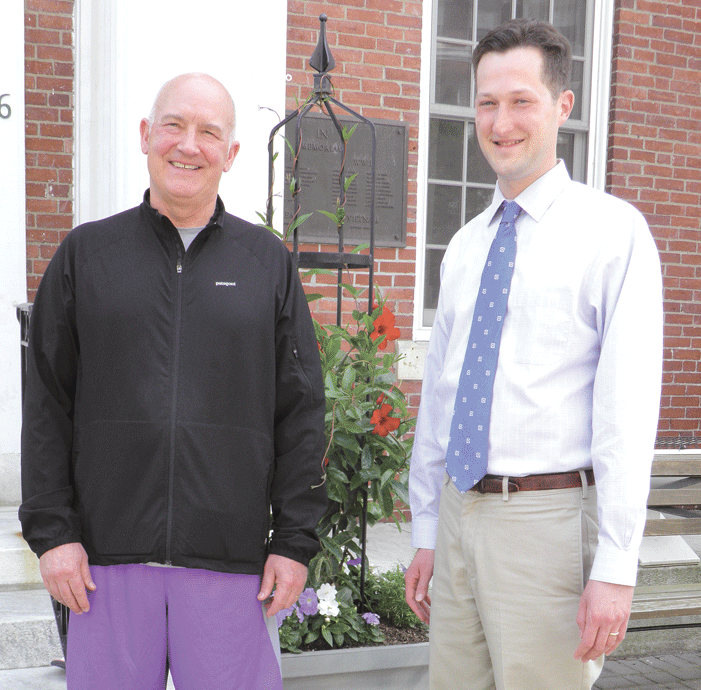
• Michael Cutone, John Barbieri, and Thomas Sarrouf, organizers of Springfield’s C3 Policing program;
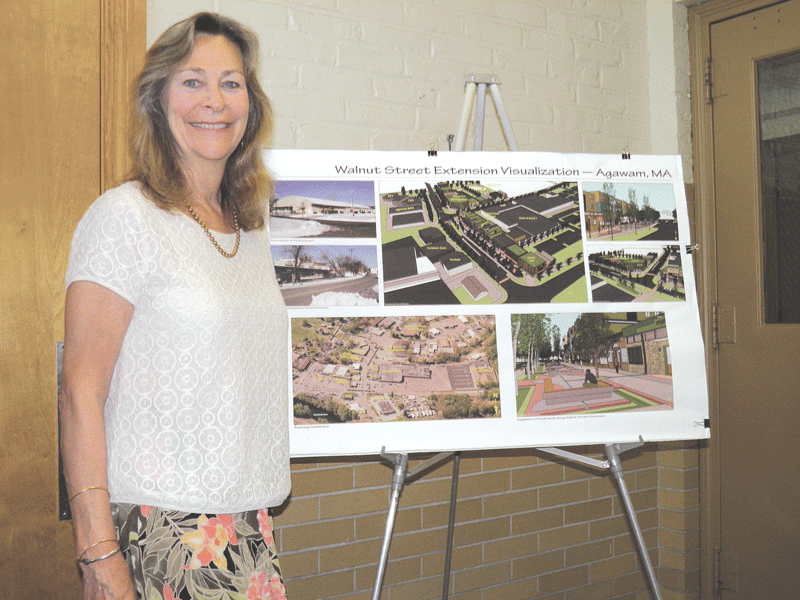
• John Downing, president of Soldier On;
• Bruce Landon, president and general manager of the Springfield Falcons;
• The Sisters of Providence; and
• Jim Vinick, senior vice president of Investments at Moors & Cabot Inc.

Features
This Veteran Goes to the Front Lines — of Home Healthcare

Nicholas Colgin

Nicholas Colgin is still climbing — both literally and figuratively — as a guide for blind individuals on summits, an advocate for unemployed veterans, and now as the owner of his own home-care business.

There have been a number of datelines attached to news stories involving Nicholas Colgin.
Many of them originated in the Tagab Valley in eastern Afghanistan, where, as a combat medic serving in Bravo Company for the Army’s 82nd Airborne Division, he saved the life of a French soldier shot in the head while facing enemy fire himself, an act of bravery that earned him the Bronze Star. It was also while serving in that remote region that others in his squad saved 42 Afghanis from a flooding river, an experience that he believes gave additional validation to his time serving in that conflict.
Later, though, there were stories out of Washington, first when he went to speak before Congress on the difficulties many veterans of Iraq and Afghanistan were experiencing as they sought gainful employment, and later when he was mentioned in speeches given by President Obama that outlined steps to combat the high jobless rates among what are known as the ‘9/11 generation’ of veterans.
Referencing Colgin, who, despite those actions that earned him a medal, couldn’t get a job as an EMT in Wyoming because he lacked the proper certification, the president said, “that isn’t right, and it doesn’t make sense — not for our veterans, not for the strength of our country. If you can save a life in Afghanistan, you can save a life in an ambulance in Wyoming.”
Fast-forward roughly two years from that speech in a former gun factory at the Washington Navy Yard, and the latest dateline for news on Colgin is, improbably, Springfield, Mass. Indeed, he’s not in an ambulance, nor in Wyoming, but instead in one of the many corner offices on the 12th floor of 1350 Main St., also known as One Financial Plaza. There, a map covering more than half of one wall identifies his territory — all of Western Mass. and some of Northern Conn. — as a franchisee for a national chain called Right at Home, which, as the name suggests, is a home-care agency.
There are a number of pushpins now on that map. They identify major healthcare providers in the Greater Springfield area as potential partners of sorts as Colgin looks to obtain market share in what is becoming a crowded playing field for home-care services.
Cultivating such relationships is now a major part of Colgin’s job description, although he noted quickly that there are many pressing issues as his gets this business off the ground, from interviewing candidates for caregiver positions to hiring an operations staff to staging an open house.
“We’ve had more than 300 applications in the past two or three weeks,” he noted, adding that the process of screening these candidates is ongoing. “They go through orientation, and we put a lot of time and investment into training to make sure we’re not sending someone into a person’s home that we wouldn’t let in our own grandmother’s home or parent’s home.”
How and where this entrepreneurial gambit came to be is an intriguing saga, one that says a lot about this determined individual, who overcame a number of injuries himself to put his name — which at one time he had trouble spelling because of a traumatic brain injury, or what those who’ve suffered one call a TBI — and the title ‘owner’ on his current business card.
Summing it all up, he said it has to do with mountains, or, more specifically, with climbing, and the need to keep doing it.
Elaborating, he divided returning veterans (and people in general) into three categories: ‘quitters’ — those who give in to their frustrations and often become substance abusers; ‘campers’ — individuals who come home and “relax for a while” (something he admits he did to some extent); and ‘climbers’ — those who “just keep climbing.”
“I decided I was going to be a climber,” he said, “and do it literally by taking blind people up mountains, and more figuratively by finding the next goal in life.”
ColginArmoredCar
Nicholas Colgin earned a Bronze Star for saving a man’s life in Afghanistan, but later was wounded himself, an experience that transformed a helper into someone who needed help.

Nicholas Colgin earned a Bronze Star for saving a man’s life in Afghanistan, but later was wounded himself, an experience that transformed a helper into someone who needed help.

For this issue and its focus on the business of aging, BusinessWest talked at length with Colgin, who has gone from being the face of unemployment among returning veterans to an individual now employing others in a venture with which he feels, well, right at home.

In the Line of Fire
Colgin was in the Peruvian Andes late last month, leading a team of 12 disabled veterans up 18,000-foot Mount Mariposa, when he received word that his franchise had secured the license necessary to operate in Massachusetts.
The juxtaposition of those happenings adds some poignancy to Colgin’s remarks about climbing, and also to the many facets of his life and the ways he measures success.
“I was going to do one last guiding trip before opening the business,” he explained. I submit the application and hop on a plane to Peru. I get one day in, and our application has been approved. It was a tricky place to be in — I’m in Peru, and now my business is open, and I’ve got to get back and hire employees.
“It’s been quite a journey, and this part of it is really just getting started,” he went on, before venturing back to another dateline in his life, the first.
That would be Chesterfield, Va., a small community not far from Richmond, where he spent several generally unhappy and challenging years.
His mother wound up in prison, and his father, with only a sixth-grade education, struggled to earn a living. Colgin said he was essentially raised by his grandmother, and by his senior year in high school, he was in many ways rudderless. It was a friend bent on joining the Army who provided inspiration and a compass point, but Colgin still had no idea what to do with himself — in the military or after his tour of duty was over.
“I signed on as a medic,” he said, following those words with a pause and shrug as if to indicate there was no profound reason for that choice. “I had never done anything in healthcare … when I went to sign up, I didn’t really know much about the military other than what you see in movies. I had just seen Black Hawk Down, and I said to them, ‘I want to be one of those guys.’
“They chuckled at me and said, ‘that’s not really a job,’” he went on. “They said, ‘you’re pretty smart … you can be this, or this, or maybe a medic.’ I said, ‘I’ll be a medic — that sounds like a job people really look up to.’”
He would eventually find out just how off he was in that reasoning — at least when it came to finding a job a few years later.
Fast-forwarding a little, Colgin passed the six-month training course to become a medic; two-thirds of those in his class did not. He worked in several facilities stateside, teaching medical classes, and was set to get out of the military without being deployed, but wound up volunteering for an assignment. “I figured, we’re at war; I might as well do my part,” he said, adding that a deployment he thought would last six months to a year instead stretched to 15 months.
He called it the “quintessential war experience,” one that took place mostly at Firebase Morales-Frazier. The highlight of his tour, if one could call it that, came in 2007 when he went to the aid of a French soldier hit by Taliban fire. The two were pinned down for about three hours, under constant fire, while Colgin administered care credited with saving the man’s life.
Colgin has several scattered memories of that experience, everything from being able to put whatever French he managed to retain from high-school classes to good use, to his own emotions as he offered care and counseling to the wounded soldier.
“You’re in Afghanistan, you’re getting shot at, people are getting blown up … you’re treating these people day in and day out, but you don’t really get scared; you just say, ‘this is just a job, this is what I’m here to do, treat it as a professional situation,’” he recalled. “But then I remember taking care of him. We’re in a small vehicle finally getting out of there, and his legs are on mine. I’m trying to tell him everything’s going to be all right. I was saying it confidently, but my legs just wouldn’t stop shaking, because I didn’t know if he was going to be all right. But I knew if he wasn’t going to be all right, it was not going to be because I slacked on my job and didn’t do all I could.”
Just a few months later, Colgin was driving a Humvee — something medics don’t often do, but he felt compelled to take his turn behind the wheel — when it took a glancing blow from a rocket-propelled grenade, or RPG. He said his head hit something, probably the steering wheel or windshield, breaking his nose and giving him what he called a “concussion of sorts.”
“One side of my body was numb, and I remember thinking that something wasn’t right,” he recalled. “We didn’t really know a lot about traumatic brain injuries at the time. I came home, had a lot of surgeries on my face — they rebuilt my nose — and needed a lot of treatment.
“I had been this helper overseas,” he went on, “and then I came home and needed help for the first time in my life. I’d never been in that situation before and didn’t really know anyone who had been in that situation before.”
And while he would eventually find some assistance, he essentially helped himself to a new career opportunity and that suite on the 12th floor.

Peaking His Interest
While serving in the Tagab Valley, Colgin, like many veterans, filled the idle time by reading whatever he could get his hands on. And increasingly, this meant books and especially magazines — because they weigh less and are thus easier to carry — about the outdoors.
“I was going to be an outdoor guide,” he said of plans he was making for life after military service, adding quickly that most of these were mapped out before he was injured. “I had never seen these huge mountains in person — I’d never really left the East Coast — and was just fascinated by that country.”
Upon returning home and “healing up” in North Carolina, Colgin would settle in Wyoming to pursue that dream, but he failed in his quest to graduate from the National Outdoor Leadership School due to lingering health problems, physical and mental — he would go back four years later and complete the program, though — and eventually shifted his career aspirations to healthcare, only to find more frustration.
“I had provided medical care in extreme situations — I’d saved someone who was shot in the head while I was getting shot at myself, in the middle of Afghanistan with limited resources — so I figured I shouldn’t have any problem doing emergency medicine, such as work as an EMT,” he told BusinessWest. “Unfortunately, I was wrong.
“And this is an issue that many people in the military are facing and that they’ve just started addressing in the past few years,” he went on. “Basically, you’re trained to do a job in the military, and you can do it in the military, but the certifications do not transfer to the civilian sector. I was trained as an EMT basic, sent to Afghanistan. I’m treating people who were shot in the head, I’m giving IVs and administering medications — and you can’t do that stateside.”
Those who drive trucks and service vehicles in the military face similar roadblocks, he said, adding that thousands of individuals have struggled with the task of turning experience with the armed forces into a job back home.
And this was the message Colgin wanted to bring to elected leaders and the civilian population as the dateline for his story shifted to Washington in mid-2011.
As a representative with Iraq and Afghanistan Veterans of America (IAVA), he spoke before Congress on his frustrations with finding employment in what he considered his chosen field, and made it clear that he was not alone in this predicament.
His comments caught the attention of many groups and individuals, including the commander in chief.
“I remember I showed up to work one day — I was interning for the IAVA — and someone said to me, ‘the White House called for you,’” he told BusinessWest. “That’s not something you hear all the time, and I thought they were joking with me, but they were serious.
“I called them back, and they told me the president was considering telling my story in a speech the next day,” he went on. “They weren’t sure he was going to tell it, but I had to get to D.C. I got a haircut, grabbed my suit, and hopped on a train to Washington.”
After the president’s speech, Colgin found himself in demand — with the media, at least. He did appearances on CNN, the Rachael Maddow Show, the CBS Early Show, and others, becoming adept at live interviews. This face time with the public brought him some job offers — “although not as many as you might expect with the president telling your story” — and eventually he took one, working as membership coordinator with the IAVA, and resettled in Manhattan.
That island is worlds away from Chesterfield, Va. in every respect imaginable, and Colgin liked being an advocate for veterans, working with Congress, and getting plenty of coverage in the media. But something was missing from the equation.
Actually, two things.
The first was an entrepreneurial venture that he could call his own, and the second was what he called “a community in the true sense of the word, a place where I could rest my head, then get up and really get involved in making a difference.”
He would eventually find both in Springfield.

Summit Meetings
Recalling the chain of events that led to his grand opening nearly a month ago, Colgin started with his decision to “step back,” as he put it, and take a sabbatical from his job with the IAVA. He took this opportunity to do some of the outdoor work he’d started dreaming about in Afghanistan, and eventually made acquaintances with Eric Weihenmayer, the first blind man to scale Mount Everest.
“He and I became good friends, and I ended up picking up a lot of skills to guide individuals up mountains and in the back country,” he recalled. “It was a great experience … I started guiding blind people up mountains. I came back to New York after my sabbatical and realized I had to make a change in my life.”
Coincidentally, he attended what he called a “business boot camp for veterans” in Boston, an intense, three-week program conducted in conjunction with Harvard that helped him discover latent entrepreneurial instincts and drive.
“I realized that what was inside me was stronger than anything in my way,” he told BusinessWest. “I realized that I could open a business; I left and started looking for investors.”
As that search for financial backing commenced, so, too, did the process of choosing what kind of business to get into, he went on, adding that he soon concluded that he would like to do something healthcare-related, and something that would make a difference in peoples’ lives. Discussions with a consultant specializing in linking individuals with franchise opportunities narrowed the search to a few national chains, and eventually to Right at Home, an Omaha, Neb.-based enterprise launched in 1995 that by that time had facilities in more than 40 states as well as in the United Kingdom, Brazil, China, and Canada.
It was not, however, doing business in Western Mass., and Colgin, with $250,000 from some investors, decided to seize that opportunity.
“It was just me and the dog, and I could go anywhere and do anything,” he said, referring to his English pointer, Dixie, whom he described as his rock. “I wanted to stay on the East Coast, and started looking at places and scheduling visits. I ended up coming to Springfield, and it looked like a place where I could put down roots. I moved around a lot with the military and never really had a family growing up, but when I came here, I got a sense that this was a place where I could grow.”
Colgin acknowledged that there is considerable competition within the growing home-care industry and that he has a lot to learn as he joins that crowded field of players. But he believes he has the basic ingredients to reach his goals, which he admits are still being set.
“The language of healthcare is pretty universal, and caring is pretty universal as well; if you can care for Afghanistan locals in the middle of a war, you can take care of anyone in the world,” he said, adding that Right at Home has a proven model and track record for success that he believes he can build on. “I care about helping people realize their dreams, and I care about doing the right thing, and at the end of the day, that’s what this is all about.
“They’re extremely innovative,” he said of the chain. “They have great brand management and amazing quality.”

On a Grand Scale
Based on all that has happened in his life since those initial, awkward discussions with Army recruiters nearly a decade ago, it would be logical to assume that Springfield probably won’t be the last dateline for news stories about Colgin.
As he said, he’s a climber, and he doesn’t intend to stop doing that.
For now, though, the climb has reached Western Mass. and a critical juncture in his career, and there are immediate goals right ahead of him.
The plan is to keep reaching higher — in every aspect of that phrase — but that’s something Colgin has been doing his entire life.

George O’Brien can be reached at [email protected]

Features
Valley Gives Looks to Build on a Successful First Year

By MICHAEL REARDON

Valley Gives

Valley Gives, which raised $1 million for area nonprofits and schools its first year, has set the ambitious goal of $2 million for the 2013 edition.

When organizers of Valley Gives, a one-day online fund-raising event for area nonprofits and schools, launched their venture nearly a year ago, they did so with ambitious expectations — for participation among those nonprofits, the number of donors, and the money raised.
And they surpassed all of them.
More than 6,000 donors from across the Pioneer Valley pledged more than $1 million to 250 participating nonprofits, said Kristin Leutz, vice president of Philanthropic Services for the Community Foundation of Western Massachusetts, which helped orchestrate the program. This performance enabled the initiative to live up both halves of its name — it is, indeed, a region-wide effort, and people certainly did give — and prompt organizers to set the bar much higher for year two, slated for Dec. 12.
Indeed, the goal for 2013 is $2 million, said Leutz, adding that there are now more than 350 nonprofits and schools registered for the program, and newcomers and returning participants alike are looking forward to what promises to be an exciting day.
“When we raised $1 million in the first year of Valley Gives, it stunned everyone,” Leutz said, noting that the local effort surpassed the performance of a similar initiative in Boston. “The online-giving growth rate is growing twice as fast as traditional giving. This is an efficient and effective way to raise a large amount of money in a small amount of time.”
But Valley Gives is about much more than raising money, said Al Griggs, former chairman of the Community Foundation and, along with Springfield attorney Paul Doherty, an architect of the initiative.
“The idea is to allow people who are philanthropic to do what they naturally do, and that is to support organizations up and down the Valley,” said Griggs, adding that there is another component to the event. “Thousands of people across the Valley work for nonprofits, and we wanted to celebrate that.”
And the first Valley Gives was very much a celebration — in many respects, said Leutz.
A number of organizations created a party-like atmosphere around Valley Gives last year, she noted. One organization, Country Dance and Song Society, busted out a flash mob at Thornes Marketplace in Northampton. The Jewish Federation of Western Massachusetts brought a dunk tank.
Leutz said a Valley Gives wrap party will be held on Dec. 12 at the Galaxy restaurant in Easthampton.
“We’ll watch the total come in,” she said. “Valley Gives is a festival of generosity, and that’s what I love about it. This is truly a community event.”
For this issue, which also features the annual BusinessWest Giving Guide, we take an in-depth look at this community event and how it has enormous potential to become a powerful Western Mass. tradition.

The Power of Giving

Griggs said it was reports of the generosity of billionaires Warren Buffett and Bill Gates that prompted he and Doherty to start thinking of ways to increase philanthropic giving in the Pioneer Valley.
So two years ago, they sought the advice of the Community Foundation of Western Mass. to find ways to create opportunities for fund-raising in the area. The foundation took what Griggs calls their “germ of an idea” and did some research and came across an effort created in Minnesota called Give to the Max Day, a one-day online fund-raising event for nonprofits and schools that has spread to other parts of the country, including Boston and Miami.
The concept sounded like it could be successfully adapted to the Pioneer Valley, so the foundation decided to create a local event based on the Minnesota model and call it Valley Gives. The idea was to unite residents of Franklin, Hampshire, and Hampden counties in one massive online fund-raising effort for nonprofits up and down the Pioneer Valley.
To bolster the effort, the foundation recruited the Beveridge Family Foundation, the Irene E. and George A. Davis Foundation, the Jewish Endowment Foundation, the Jewish Federation of Western Mass., United Way of Franklin County, United Way of Hampshire County, United Way of Pioneer Valley, and the Women’s Fund of Western Massachusetts as partners.
Donations during Valley Gives are pledged entirely online. The event goes on for 24 hours, beginning at midnight and ending at 11:59 p.m. Donors can log onto valleygivesday.org to find the nonprofit they want to give to and make a donation.
Valley Gives donors don’t have to be a Gates or a Buffett to make a pledge. On the contrary, the minimum donation is $10, and there is no maximum.
Nonprofits registered to participate in Valley Gives in August and September, and went through training in October and November. Much of the training was focused on effective methods of marketing, with a major emphasis on social media and other online strategies like Facebook, Twitter, YouTube, blogging, and e-mail newsletters.
“A large percentage of nonprofits were not on social media, and there were others that were on social media, but didn’t do much with it,” Leutz said. “We convinced them to take social media to a new level. We’re creating the environment for nonprofits to market themselves successfully. For many of the nonprofits, they saw capacity in places that they did not see before. New opportunities were created for them. A lot of donors were new.”
Besides the pledges rolling in during Valley Gives, nonprofits will be eligible to win leaderboard prizes of up to $10,000 for being a top fund-raiser, as well as a Golden Ticket or Power Hour, which are prizes of up to $1,200 throughout the day.
Lisa Oram, marketing and communications director at Snow Farm: the New England Craft Program in Williamsburg, remembers the organization’s staff huddled around computers watching the money come in during the 2012 Valley Gives event, and posting on Facebook and Twitter throughout the day to keep momentum going.
“People were very engaged and enthusiastic,” Oram said. “I felt humbled by the amount of generosity of people across the Valley toward all of the organizations that participated. The day became all about Valley Gives.”
The team members at Snow Farm were floored when they won a prize worth $10,000 last year, especially since they first thought it was for $1,000. Last year, the organization raised $22,000 which paid for new computers for the organization’s digital photo lab and scholarships for its high-school program.
Other nonprofits that participated in last year’s event are looking forward to being involved again this year.
Safe Passage, the Northampton-based organization that addresses issues of domestic violence, was among the nonprofits that participated in Valley Gives in 2012. Marianne Winters, executive director of the organization, said money raised was used for programs to support children who are exposed to domestic violence, and to help fund its legal program in probate court.
This year, money will go toward a prevention initiative called Say Something, which offers training, education, and other skills for dealing with a potentially abusive situation.
“We have startup costs and need to generate publicity and other ways to get people involved,” Winters said.
Nonprofits that are first-time participants in Valley Gives are also eagerly awaiting the stroke of midnight on Dec. 12.
Team Jessica Inc. was formed in 2009 in honor of Jessica Martins of Belchertown, who died at 19 as a result of complications from Rett Syndrome, a neurodevelopmental disorder.
Although Martins was confined to a wheelchair, she was as active as possible, going to school dances, playgrounds, and riding horses. Team Jessica is striving to raise money to build a playground to be named after Jessica on 13,367 square feet of land at the Belchertown school complex.
“We want to build a new playground that’s 100% handicapped-accessible, with a poured rubber surface,” said Deanna Roux, the organization’s spokesperson. “The playground will cost $400,000, and we’ve raised $207,500 so far over the last three years through different events.”
Team Jessica wanted to be involved with Valley Gives last year, but had not achieved 501(c)3 charitable nonprofit status in time to do so.
Team Jessica is hoping to raise $10,000 through the Valley Gives event. Besides raising money to build the playground, Vicky Martins Auffrey, Jessica’s mother, hopes to continue developing handicapped-accessible projects.
On the day of Valley Gives, Team Jessica street teams will visit two Belchertown restaurants and will have postcards printed with a QR code that can be scanned by a smartphone to make a donation, as well as a computer to make a pledge.
“We’re hoping to expand our reach,” Roux said. “We heard all of the success stories from last year’s Valley Gives and felt we really needed to be involved. We signed up the minute it opened up.”

The Bottom Line
After signing on to participate in Valley Gives, Roux and Patti Thornton, Team Jessica Inc.’s grant writer, attended the training sessions and participated in a webinar to prepare them for the event. Roux said they learned a lot of valuable information about how to market themselves to get the word out to potential donors of their involvement with Valley Gives.
Team Jessica learned the importance of developing an e-mail newsletter, as well as posting on Twitter and other social media, and being more active online in general.
“I’m looking forward to 12/12/13,” Roux said. “All of the stuff you do beforehand matters. I’m excited, but nervous. We’ll see right away how dollars are moving.”
And with that, she spoke for everyone looking ahead to the second edition of Valley Gives.

Community Profile Features
Lenox Boasts More Than Just Seasonal Charms

Tanglewood

Tanglewood, which hosts the Boston Symphony Orchestra and other musical events, is one of the top tourism draws to Lenox.

John Bortolotto understands that, from an economic perspective, Lenox is a seasonal destination.
“Predominantly, Lenox revolves around Tanglewood and Shakespeare & Co. and the multiple art venues in town, and as a result, we have a very productive summer. There can be a shortage of rooms in hospitality,” said Bortolotto, who serves on the Lenox Chamber of Commerce board of directors.
“If you talk to many of the local folks, you’ll find out that many have this  preconceived idea that Lenox is busy from June through October, and then the town gets really quiet,” he added. “To an extent, that’s true.”
But he’s trying to get people to think about this small community — population just over 5,000 — in different ways, talking up its energy and recent commercial growth, and not just its many downtown inns and its high-profile performance spaces.
“From a chamber perspective, it used to be that, if you weren’t downtown, you kind of didn’t partake in all things Lenox,” he said. “What’s happening right now — what’s been happening for the last five years or so — is that Route 7, which is just outside downtown, connecting Pittsfield to Lee, has experienced growth of a different type. We now have three banks on that little stretch, where before there were only two downtown. We have multiple attorney’s offices, a fitness facility, a printing company, some retail.”
One notable success story has emerged in the Lenox Shops, a cluster of once-underutilized retail space along Route 7.
“It had a few stores, until a gentleman named David Ward bought the place and started revamping,” Bortolotto told BusinessWest. “He added condos out back and brought some non-retail businesses and restaurants to it. It’s going to be huge.”
In addition, Berkshire Health Systems, the largest employer in Berkshire County, will occupy a large portion of the complex, and healthcare services, from primary care to ob/gyn to yoga, will have a strong presence — and a flow of employees to support other businesses in the shops.
“So Route 7 has really come along, with more professional businesses and not just retail,” he added. “And, of course, we have Cranwell Resort, Spa and Golf Club nearby — a beautiful place to be.”

Growth Pattern
The character of fast-growing Route 7, with its chain hotels and motels, is different than downtown’s Main Street, Church Street, and surrounding roads, which play host to a number of inns, bed and breakfasts, and locally owned shops.
“Downtown is largely retail,” said Bortolotto, who is also branch manager of NBT Bank in town. “You have two banks, some attorney’s offices, a lot of realtors — that’s part of the makeup, some of the more profitable businesses — but the retail, they tend to close for a good part of the year. Church Street gets very quiet. Some restaurants choose to close for the whole winter season because they figure they lose less money by not adding staff and other expenses.”
Laura Shack has bucked that trend for two decades. She opened Roseborough Grill in downtown Lenox in 1993, then transformed it into Firefly, which she calls a “new American bistro,” 10 years later.
“Roseborough Grill had a great run, but that was because there were only 25 restaurants in Berkshire County, and now there are probably 125,” she said. “It got to the point where it was more of a struggle to maintain the antique, country feel, and I didn’t have a big bar. But I love what I do, so I reinvested and gutted the place, changed the name, and started over.”
Firefly features the huge bar she craved, and a décor that’s contemporary and rustic at the same time. “We changed the menu a little bit, did some tapas and light plates — just changing with the times — and it’s been a great run. There were times when the economy was struggling, but this is one of the few restaurants in Lenox that stays open year-round. We’ve created an extremely loyal clientele due to the fact that I cater to the locals tremendously. We went from having 10 people in the winter to 100. People come in, spend money, have drinks — and they come back.”
Shack partly credits a well-received series of daily specials, from a $5 burger to 50-cent chicken wings, a $16 prime rib, and $10 lobster rolls, which locals look forward to. She’s used a similar strategy at her new breakfast-and-lunch eatery, Kitchen on the Commons, located at the transformed Lenox Shops, and is a testimony, Bortolotto says, to the fact that local businesses can succeed year-round in town.
Our challenge as a chamber is to say, ‘look, if you build it, they will come,’” he said. “If you stay open, it won’t happen overnight, but people will come and spend. As they go ski in Great Barrington or Hancock, they may feel inclined to come to Lenox.
“The challenge is to get more people to downtown, yes, but Lenox is sort of changing that,” he added, noting that the chamber is actively trying to lure non-tourism-related business into its fold.
“Some of the professional service people say, ‘look, I’m not going to join the chamber because I really don’t see the benefit; the chamber revolves around the arts. But I work in a professional business, working with attorneys, electricians, and car businesses, and when I joined the chamber, one of my goals was to add value to those businesses. We’re trying to do some of that.”

Taste of Home
A New York City native, Shack said she came to Lenox for the summer 23 years ago and never left. “What I’ve learned is, you have to cater to the locals, and you have to be super warm and friendly and welcoming. I have staff who have been with me for 20 years; I’m known as Mama Shack, and I’ve raised a lot of kids out of there. They started at the age of 13 or 14, and some are still here. They started out busing tables, and I taught them how to cook or bartend.”
One of those, Zee Vassos, left Roseborough for college but decided the food industry was what he loved, Shack said, “so he came back and helped me open Firefly. Then, after being out in Boston for a few years, he came back again, and we just opened Kitchen on the Commons in May. We had a great summer. David Ward, who owns the complex, really turned it around.”
Bortolotto said the chamber has become more open to cooperating with local towns on events and marketing. “It’s one county, not ‘we’re Lenox, and you’re everyone else.’ We’re mixing more, and we’re more open-minded these days than we were 10 or 15 years ago, definitely.”
There’s more to Lenox than its downtown and Route 7, of course, including Lenox Dale, a blue-collar village straddling Lenox and Lee that used to be home to a cluster of paper mills and today still features some manufacturing.
But, overall, Lenox is mainly known as the home to arts destinations like Tanglewood — where the Boston Symphony Orchestra plays — and a knot of rustic inns, while Bortolotto and the chamber continue to raise the profile of the town’s other charms.
Shack certainly finds the town charming, and hated the early days when she closed for part of the time during the off-season. “I find continuity is really important, being open seven days a week, so people don’t ever question, ‘are they open?’
“I love the people. The town is great,” she continued. “Obviously, having Tanglewood around the corner is wonderful. But I’ve really gotten to know the local people, and the clientele makes it really nice. People are grateful I’m here for them, and I’m grateful to have them.”

Joseph Bednar can be reached at [email protected]

Features
Chambers Respond to a Challenging New Environment

Jeff Ciuffreda

Jeff Ciuffreda says the ACCGS and Springfield Chamber have “retooled” when it comes to the services offered to members.

Roy Nascimento told BusinessWest that there’s a saying of sorts used within his industry, one that goes something like this: “when you’ve seen one chamber of commerce … you’ve seen one chamber of commerce.”
The president and CEO of the New Bedford Area Chamber and the incoming president of the Mass. Assoc. of Chamber of Commerce Executives (MACE) summoned that phrase to express the sentiment that, while many have a tendency to paint these institutions with one broad brush, they are in many ways very different from one another.
This is true with regard to everything from size to geography to the specific focus of programs and energy within each organization, he said, noting that his chamber, for example, leads a number of initiatives aimed at supporting and growing the New Bedford area’s $1 billion fishing industry.
But despite these apparent differences, chambers across this state — and around the country, for that matter — are facing some common, and formidable, challenges.
Chief among them is membership. It is down for almost all chambers, and by 25% or more at many of them from 10 or even five years ago, said Jeffrey Ciuffreda, president of the Affiliated Chambers of Commerce of Greater Springfield and executive director of the Springfield Chamber. That latter organization had perhaps 750 members five years ago, he said, and now counts roughly 520, a nearly 30% decrease that he described as “typical,” at least in his estimation.
There are several reasons for such drops, said Ciuffreda and others we spoke with. He and Nascimento both mentioned lingering effects from the Great Recession and a related, ongoing trend toward consolidation in many industries — from banking to insurance; from healthcare to the media — that has simply left fewer players to pay dues to a chamber.
But there are other factors, said Ciuffreda, listing everything from competition from other chambers and groups such as young professional organizations to some changing attitudes about chambers on the part of the mostly smaller businesses that now dominate membership rosters.
“Before, the larger, more established corporations joined the chamber because it was the right thing to do, and the chamber was looked upon as the chief cheerleader for that community,” he said. “Now, when you’re out there getting new members, you’re getting mostly smaller businesses that are looking to the chamber for more assistance, guidance, and some advocacy.”
Summing it all up, Ciuffreda described the current environment as “the changing face of chambers,” and said some organizations are reacting to it more quickly and more effectively than others. Overall, chambers are doing things they haven’t done recently, or much at all, he told BusinessWest, mentioning such initiatives as strategic planning, marketing studies, and deep introspection about mission, programming, and ways to bring more value to members and prospective members.
According to Kate Phelon, a relative newcomer to chamber administration — she took the reins of the Greater Westfield organization three years ago — while providing value has always been a key element in any chamber’s success, in this changed environment it is more imperative than ever to provide what amounts to ROI to members.
And this means all members, she said, adding that the Westfield Chamber has been working to identify the needs of specific sectors, or groups, and develop programs to meet them.
Kate Phelon

Kate Phelon says the Westfield Chamber is focused on finding ways to serve members across all business sectors, from manufacturers to nonprofits.

“Not all members have the same needs, nor do they all see the same value in their chamber,” she explained. “If you look at manufacturers, nonprofits, and very small businesses, those with three employees or fewer, they all see a different value. My manufacturing members will not get business coming to an after-5 event, but my nonprofits and small businesses love those events; it’s their bread and butter. Providing value to each one of these groups is a real challenge, but you have to meet it.”
Kathy Anderson, who segued from Holyoke City Hall, specifically the office of Planning and Economic Development, to the directorship of that city’s chamber 18 months ago, agreed.
She said the Holyoke Chamber has been aggressive in development of new programs, ranging from an ‘Ask a Chamber Expert’ initiative to an endeavor to spotlight the work of manufacturers based in the city, to something called SPARK (Stimulating Potential, Accessing Resource Knowledge), a venture aimed at “fanning the flame of entrepreneurship” (more on these efforts later).
They were all blueprinted, she said, to provide value-added services to different business groups, while also enabling the chamber to “keep changing and evolving, and providing something fresh and different.”
For this issue, BusinessWest takes an in-depth look at this changing face of chambers of commerce, and at what area organizations are doing to adjust to — and thrive in — this new environment.

Matters of Relevance
As he talked about the current climate for chambers and their leaders, Nascimento said there are both challenges and opportunities, and that the common denominator involving elements of each category is the term ‘relevance.’
He used it to describe what chambers must have at a time when they are smaller — at least in terms of membership — than they were years ago, but more is being asked from them, both in the community and from those members.
“Relevance is not a new term, but it is re-emerging within our industry,” he explained. “Is the programming relevant to our members? Is it adding value to our members? Is it providing value to our communities?”
Elaborating, he said that the chambers that are most effectively responding to the changing times are becoming involved in the many facets of economic development — from education to tourism to advocacy — and are becoming more focused on the communities they’re serving.
As examples, he noted his chamber’s work to support the fishing industry — it has helped create what’s known as a ‘seafood buyers mission,’ an event that last year recorded $12 million in sales — and also its work with other groups to revive the region’s convention and visitors bureau, thus bolstering another strong sector of its economy.
There are similar examples from across the state, he said, adding that proactive chambers are changing and getting more involved, again, out of necessity, to gain and retain members.
Indeed, the biggest challenge facing what Nascimento called the “chamber industry” is the same one confronting most all business sectors — ongoing consolidation.
“Our members are merging, they’re being bought out, they’re retiring, and all because of a number of factors — globalization, competition, and others,” he explained, noting that his chamber has seen membership drop from 1,200 to roughly 950 over the past decade or so. “The market out there for traditional members of a chamber are the stakeholders in the business community — your banks, your credit unions, insurance companies, printers, local media, hospitals — and all those industries are consolidating themselves.
“Since I’ve been here over the past seven years, we’ve seen several of our local community banks merge with other community banks that are members,” he went on. “And we’ve seen media merge; at one point, we had a daily newspaper in New Bedford, another daily in a neighboring community, a business publication, and a weekly newspaper in each of the towns. Now, there’s one company that owns them all.”
Similar developments have taken place within the insurance sector, where a number of smaller, family owned agencies have been merged into larger operations; the printing sector; and even office supplies, he said. “We used to have three or four office-supply companies in New Bedford, but they’re all gone — there’s one company, and it’s a regional company.”
This “shrinkage” within the marketplace, as he called it, has left chambers with little choice but to sharpen their focus on services to members and find new — or sometimes old — ways to be relevant.
Ciuffreda agreed, and said the ACCGS and the Springfield Chamber are responding to this challenge in many ways, but mostly a sharper focus on identifying needs and concerns among members — and in the community — and then addressing them.
“We’ve retooled a little bit,” he told BusinessWest, using a word he would come back to often. “When we look at the reasons why people join chambers, it’s clear that we’ve moved on from those days when it was the right thing to do. People are much more focused on services and what they can get out of being a member.”
And this goes beyond benefits such as programs that aggregate small businesses to provide savings on health insurance or discount pharmacy cards, he went on, adding that members are looking for more technical assistance, advocacy, and involvement in key issues.
He said the ACCGS, which has been “in and out” with regard to providing technical assistance to small businesses, will look to get back in if funding can be secured from the state and the private sector. Meanwhile, he said the organization is already more involved in such matters as education and closing the so-called skills gap that is impacting many sectors.
“We’re getting much more involved in education because we are hearing from businesses that want to expand that there is clearly a skills gap,” he noted. “We’re more involved with the school systems, the vocational schools, and the community colleges to try and close that gap.”

Getting Down to Business
The need to effectively identify member needs and tailor a roster of services to meet them is one of many motivating factors behind the ACCGS’s continued involvement in programs with marketing and business students at Western New England University, specifically those taught by marketing professor Janelle Goodnight.
She told BusinessWest that, on several occasions, her students have gathered research on the ACCGS, competing chambers in this region, and chambers in general, and then developed comprehensive marketing plans for consideration.
The latest of these plans will be ready by the end of the fall, she said, adding that, because the ACCGS is a client, she could not get into specifics about what will likely be in the document. But she did say that research conducted last spring revealed that many ACCGS members and prospective members did not fully understand the full range of services the chamber provides, and thus need an education through effective marketing.
Meanwhile, that research also revealed that the chamber’s membership is getting older — “members are aging out” was the phrase Goodnight used — and it is not as diverse, from a demographic standpoint, as the region it serves. Thus, moving forward, two obvious goals are to attract both younger business owners and minority business owners.
The need to more effectively serve members represents one of the many ways in which chambers are very much like the small businesses that dominate their membership roles, said Phelon. They are still coping with the lingering effects of the Great Recession, she noted, but also myriad other issues, ranging from the challenge of understanding and making effective use of technology to mastering the many nuances of social media, to simply finding ways to grow in an environment where it is difficult to do so.
“I have IT issues every day,” she said. “Things are changing constantly … should I get this piece of equipment? How am I going to swipe my credit cards? It’s very hard to keep up, and that’s just one challenge we’re facing.”
Some of the others give credence to Nascimento’s comments about each chamber being different. The Westfield Chamber, for example, serves 10 communities. Westfield and Southwick are home to most members, but the organization’s reach also extends to the small hilltowns (many with populations of 1,000 people or fewer) to the west.
Reaching out to the business owners in these communities, and then convincing them to take part in events and programs several miles down Route 20, can be difficult, she went on, but succeeding in those efforts not only helps the chamber, but it builds a stronger regional business community.
Phelon’s philosophy is summed up in the slogan she puts on the front of her membership packets: ‘The Power of Connectivity.’
She said it refers to the many ways in which the chamber can provide connections — from face-to-face networking events, which she still considers far more effective than social-media outlets, to simply providing information that can help a business owner solve a problem or seize an opportunity.
Phelon said the Westfield Chamber probably had between 400 and 450 members in the late ’80s, but is now roughly half that size, with about 215 at present. While it is not realistic to think the organization can again reach its high-water mark, she said there is certainly room for improvement, and it’s happening, thanks in large part to the hiring of a business development manager.
“Now, we’re actually growing,” she said, noting that, in recent years, new memberships have barely kept pace with the inevitable attrition chambers see each year. “And our ability to keep growing is related directly to our success with providing value to all our members.”

Value Proposition
As she talked about the many new initiatives at the Greater Holyoke Chamber, Anderson said they’ve been developed with several goals in mind. Providing more value to members is obviously one of them, she noted, but beyond that is a desire to help businesses with the challenges that are common to all of them — marketing, gaining new business, and saving money.
One of these concepts, called ‘Ask a Chamber Expert,’ has all these goals in mind.
Started last year, this series of workshops, as the title suggests, enables participants to ask a designated chamber member about some specific subject matter, which to date has included ‘How to Use Facebook to Promote Your Business,’ ‘How to Use LinkedIn as a Connecting Point,’ ‘How to Write a Business Plan,’ and even ‘How to Read a Blueprint,’ a requested program that was comparatively well-attended.
“I certainly learned a lot that day,” said Anderson, adding that the program brings benefits to both those asking the questions and those answering them.
“If I use my own members for these workshops and they become the expert in the room, this gets the people to network and know the businesses within our chamber organization,” she explained. “But it also gives low-cost [$10] advice to members, and if they want more help beyond that and want to hire that person to help them, they can do that.”
Meanwhile, another new initiative is aimed specifically at manufacturers, a constituency that, as Phelon noted, doesn’t directly benefit from many traditional chamber programs, such as after-5 events and breakfasts, where service-related businesses can more easily secure new customers.
The multi-faceted initiative is instead designed to build awareness of manufacturing facilities, said Anderson, noting that such exposure could help generate new business while also introducing young people to potential career opportunities.
“October was Manufacturing Month,” she said, pointing to a full slate of events and programs designed to celebrate and draw attention to that sector. “We had three different tours of manufacturing facilities, and they were open to the public because manufacturers want people to know what they do and what’s being made in the community.”
Another endeavor, in which the chamber will partner with the city’s Boys & Girls Club and, more specifically, with those involved in videography, will place three-to five-minute vignettes about Holyoke-area manufacturers on the chamber’s website.
“This is a value added for them, because they want people to know what they’re doing,” she explained, adding that businesses with specific needs may learn that a Holyoke business can make that part or product. “And down the road, we’re going to have a number of Baby Boomers retiring, and there are questions about who’s going to fill those positions. This program will allow these companies to show what kinds of great jobs there are in our manufacturing businesses.”
And then, there’s SPARK, which is designed to help people bring ideas to reality, said Anderson, by connecting individuals with resources and getting them the support they need. The program will offer mentoring, training, advising, tutoring, teaching opportunities, micro loans and below-market real-estate services, she noted, adding that the name was chosen in part to recognize those who have the ‘spark,’ or desire, to take their dreams to the next level, but need various forms of help to make them happen.
Like Phelon, Ciuffreda, and Nascimento, Anderson also mentioned efforts to partner with other chambers and various economic-development-related organizations to bring still more value to members and bolster the business community or specific sectors within it.
These efforts and the others chronicled above represent a response to the new landscape facing chambers, said Nascimento, adding quickly that the scene didn’t change overnight, and the necessary adjustments won’t come that quickly either.
“There are a lot of challenges for chambers,” he said in conclusion, “but there are also a lot of opportunities. This is an exciting time for chambers and our industry; we’re helping our members, and our communities, with many difficult challenges taking place out there.”

Joining the Fight
While Nascimento contends that if you’ve seen one chamber, you’ve seen just one chamber, these organizations are facing a number of common challenges in a climate seemingly far removed from the one that existed decades ago, when joining the chamber was simply the responsible thing to do.
Words like ‘value’ and ‘relevance’ were not recently added to the chamber industry’s lexicon, but they have certainly taken on new meaning — and importance.
And they will continue to be watchwords in the months and years to come.

George O’Brien can be reached at [email protected]

Community Profile Features
Culture, Education Boost Business in Williamstown

Carl and Marilyn Faulkner

Carl and Marilyn Faulkner have survived myriad setbacks in the tourism industry to remain a regional draw.

Carl Faulkner has never played professional baseball.
His name, however, is engraved inside a New York Yankees World Series ring on display in an antique curio cabinet in the great room of the Williams Inn, on the green in the heart of Williamstown.
Faulkner and his wife, Marilyn, have been the inn’s proprietors since 1979, and the ring is just one of many mementos that validate just how respected the the couple is by thousands of tourists who have visited the area, famous thespians who have performed in the Williamstown Theater Festival, and students and alumni of Williams College, located mere yards away.
“I’ve never been to a Yankee game, but for 30 years I knew George Steinbrenner because he used to come for his college reunion. He said he was fed up with Cooperstown and wanted the fans here to be able to see and touch a real ring,” Faulkner said, adding with a sly smile that he believes Steinbrenner added Faulkner’s name to the ring to deter him from selling it.
All who know Carl Faulkner know he would never do such a thing, but the dry humor and easy demeanor are among the many reasons he and Marilyn have attracted so many return guests, both celebs and regular folks, to this small town on Route 2, the famous Mohawk Trail.
Whether for a Williams College reunion or commencement, a play at the famous Williamstown Theater, a visit to the Sterling and Francine Clark Art Institute — known affectionately as ‘the Clark’ — or an exhibit at the Massachusetts Museum of Contemporary Art (MASS MoCA) in nearby North Adams, Williamstown isn’t easy to get to, but legions of alumni, and fans of culture and natural beauty, think the town and its unique attributes are well worth the trip.
In fact, those making the trek from the Mohawk Trail, or the Mass Pike and Route 7 from the south, can currently see economic development in progress on the Williams campus and at the Clark.
James Kolesar, vice president for public affairs at Williams College for the past 29 years, told BusinessWest that a new, three-story Sawyer Library, now under construction, will replace the original, soon-to-be-demolished library, located about 50 yards away, making way for a formal quadrangle. Throw in the massive, three-year, $50 million renovation and expansion project at the Clark, which should be complete by the end of 2014, and there is a firm foundation for economic growth in Williamstown.
“Our academic reputation is a draw, certainly, no question about it,” said Kolesar, noting that Williams stacks up well in stature with Harvard, Yale, Dartmouth, Brown, and archrival Amherst College. “With our 1,000 employees and operating expenditures of more than $190 million, that’s $82 million in capital improvements from us, plus the Clark improvements.”
Williamstown is not without its issues, however. The Great Recession affected businesses here much the same as in other Western Mass. communities, and when Hurricane Irene struck in 2011, a popular mobile-home park was essentially wiped out, further shrinking an already-low inventory of affordable housing.
Meanwhile, the aforementioned new economic development and ongoing roadwork — courtesy of the federal stimulus program — will be positive for the town in the long run, but Faulkner calls the disruptions they cause in the meantime “medicine that has to be swallowed” (more on this later).
But the biggest challenge this town of 7,870 residents (2,000 of whom are Williams College students) faces, according to Town Manager Peter Fohlin, isn’t what one would expect — it’s a lack of land. Specifically, “we don’t have enough developable land for me to respond to inquires I get.”
The issue, he said, isn’t due to infrastructure or the mountainous terrain surrounding the town, but the fact that a collection of successful farms, producing mostly cattle for beef and not available for sale, comprises much of the usable land.
For this month’s Community Profile, BusinessWest ventured to the most northwestern point of the Commonwealth to learn more about the business life of Williamstown and how the community, even with the logistical challenges of its far-flung location and lack of buildable land, is making the most of its educational, cultural, and natural advantages.

Cultural Values
Like Carl Faulkner, Fohlin has his own sense of humor. He proudly states that Williamstown isn’t that remote, but, rather, “centrally located four hours from everywhere.”
Fohlin’s ability to make fun of himself in his municipal position — in which, he says, he’s often dodging verbal bullets — is on display each year for the Fourth of July parade.
“Instead of Peter being in front waving, he’s at the back behind the horses with a shovel and a broom,” said Marilyn Faulkner, laughing. “That’s the kind of guy he is.”
That upbeat attitude will help as Fohlin, the five-member select board, and other departments in town seek to replace its outdated high school and police and fire stations, among other issues. While citizens are “engaged in lively debate over priorities and affordability” when it comes to municipal needs, he said, Williamstown has a lot on its plate for a small community.

James Kolesar

James Kolesar says Williams Colleges provides an excellent educational and cultural anchor for business in Williamstown.

Also on that plate is the fate of those who used to live in the Spruces, a 100-acre planned mobile-home community. Fohlin said the park was a “showcase” when it was built in the 1950s. “It had a ferris wheel, a fountain, and a groundbreaking government structure in which the people in the park voted their own officials and managed their own rules,” a predecessor of the now-common ownership associations in many residential communities.
But the swift floodwaters from Irene severely damaged 160 of its 225 mobile homes; almost 5% of Williamstown’s non-student population was made homeless in a day. Fohlin said the remaining homes will ultimately be moved because they are in a flood plain, and the housing authority is working on a 40- to 60-unit project for those living temporarily with family or friends.
Kolesar said the loss of the park damaged the town’s socioeconomic diversity, which is already lacking for a combination of reasons, among them fewer jobs for young people, which keeps them from returning after high school or college graduation, as well as increasing real-estate costs.
The town does boast a significant percentage of second homeowners, and some, Faulkner said, are faces that might not be familiar, but as CEOs of major corporations or notable alumni, their names certainly are. “It’s such a desirable place to live, and that drives the property values up,” added Kolesar.

Road Well Traveled
The guest ledger at the Williams Inn, especially from Clark visitors, has been truncated for the past three years due to the massive expansion project. The final phase includes construction of a new visitor, exhibition, and conference center, as well as a comprehensive landscape plan for the 140-acre property. During this period, the Stone Hill Center on campus is housing some of the more famous works, but several others have been loaned out to other galleries across the nation for the duration of construction.
“It makes me cry,” Carl said, feigning the wipe of a tear from his cheek. “We are usually busy for lunch, but it’s been much less so over the past couple years, and with this most recent two-week closure, we had almost no one.”
But the Faulkners are no strangers to setbacks; it’s just part of the tourism industry. Hoteliers all their lives in New England, they suffered through the 1970s gas shortage, and 9-11 slowed all tourism in the U.S., but the tightening of the American and Canadian borders by Homeland Security has caused problems with bus tours, he said. Canadian bus-tour companies now encourage Americans to fly to Canada, skipping American border-security checks and, as a result, bypassing the Berkshires region, Williamstown businesses, and the Williams Inn.
Amid the recent Great Recession, visitorship was also down, and then the federal stimulus to create jobs offered many towns funds to improve roadways, which tore up Main Street and the green in front of the inn for almost two years. When Irene’s rains took out the Spruces, the Mohawk Trail — the most scenic route into town — was also massively damaged.
But the innkeepers remain upbeat, replacing those missing customers with tourists from Europe and Australia, and are focusing on the region’s residents with seasonal events like the German Oktoberfest they recently staged for hundreds of attendees over a two-week period. Next up is a month and a half of holiday programming, which has always proven popular.

Good Company
Fohlin and Kolesar both say Williamstown’s selling points reflect the American Dream — a town that is safe, has an excellent educational system (the Mt. Greylock Regional School District), and little traffic in the real sense of the word.
Certainly, Williams College remains one of the main draws in town, and Kolesar sees the institution as the main anchor of business in the Williamstown area — economically, culturally, and socially.
Yes, prospective students who appreciate city life might see four years in this remote area of the Northern Berkshires as a deal breaker. “But, for some students, it’s a plus,” said Kolesar. “By and large, students who end up coming here end up falling in love with the area, not just the college.”
Faulkner agrees. “The college is like having a good uncle in town,” he added. “And we do have a strong feeling that better days are ahead.”

Elizabeth Taras can be reached at [email protected]

Features
A photographic look back at the Expo

IMG_2038The third annual Western Mass. Business Expo, produced by BusinessWest and again presented by Comcast Business, was staged Nov. 6 in downtown Springfield. More than 2,200 attendees passed through the doors at the MassMutual Center, and they had an opportunity to visit more than 120 exhibitor booths, take in a dozen educational seminars, and watch several special presentations on the Show Floor Theater. The day’s programming started with the ACCGS November breakfast, featuring Jim Koch, founder of the Boston Beer Co. and the Samuel Adams Brewing the American Dream Program. Other highlights included the Professional Women’s Chamber November Luncheon featuring Kathrine Switzer, the first women to run in the Boston Marathon, as well as a Pitch Contest and Demo Day presented by Valley Venture Mentors, the day-capping Expo Social, and the announcement of the winner of the Greater Springfield Extreme Website Makeover contest.

AM7J1177AM7J1218AM7J1258Far left, Kate Campiti, associate publisher of BusinessWest, looks on as Springfield Mayor Domenic Sarno welcomes the crowd and kicks off the Expo. Left, members of the Young Professional Society of Greater Springfield represented the nonprofit networking organization at the show. From left are Kristin Foley, senior employment coordinator at Human Resources Unlimited; Stephanie Killian, event coordinator/marketing assistant at Inspired Marketing; Ashley Clark, commercial services officer at Westfield Bank; Jill Monson, owner of Inspired Marketing; Claudine Gaj, owner of Magic Spoon Catering; and Jeremy Casey, assistant vice president/commercial services officer at Westfield Bank. Below left, Wendy Bryne, left, strategic sourcing manager at MGM Resorts International, speaks with Sophia Sarno, office manager and sales at WhiteStone Marketing Group, at the MGM booth.

AM7J1752AM7J1226AM7J1400More than 120 businesses and nonprofits exhibited at the Expo. Among those seeking the attention of attendees were (clockwise from far left): QualPrint in Pittsfield, represented by, from left, Karen Vosburgh, head estimator, Michael Lennon, account executive, and Audrey Procopio, director of Marketing and Human Resources; Comcast Business, represented by, from left, Adam Dubilo, sales leader, Tina Peel, business account executive, Tim O’Brien, client solutions engineer, Charlie Tzoumas, regional vice president, Stephanie Bedard, marketing communications and operations specialist; Jessie Horne, commercial technician, Tim Paige, business account executive, and Jody Hart, business account executive; and Bay Path College, represented by Sheryl Kosakowski, director of Graduate Admissions (left), and Heather Bushey, associate director of Graduate Admissions.

AM7J1419AM7J1362AM7J1350AM7J1320AM7J1358AM7J1448Left to Right from top left: Eric Harlow, broker relations manager with Health New England, speaks with Kyle Seesman, community relations at ProEx Physical Therapy, at the HNE booth; Jill Tower, associate at Johnson & Hill Staffing (left), and June Liberty, director of Operations for the company, meet Albert Rivers, employment specialist with the Department of Elder Affairs in Springfield; attorneys David McBride and Amelia Holstrom await visitors to the Skoler, Abbott & Presser, P.C. booth; Representing the Isenberg School of Management at UMass Amherst were, from left, Kyle Bate, academic advisor, Judith Miller, director of Undergraduate Online Programs, Jennifer Meunier, director of Business Development and Promotional Strategies for Professional Programs, and Trista Hevey, business development analyst; John Veit, marketing and recruiting coordinator with Meyers Brothers Kalicka, and Teresa Perkins, senior associate for the firm, talk with Susan Smith, director of Business Development for We Care Computers; Brendan Fontanello, promotions manager, and Christine Moauro, marketing and web advertising specialist, staff the abc40/FOX 6 Springfield booth.

AM7J1741SwitzerAM7J1267AM7J1210IMG_2117-7x5AM7J1522AM7J1291AM7J1135AM7J1238The Expo featured entertainment, informative seminars, special presentations, and other highlights that gave attendees plenty to see, learn, and do. Left to right from top left: Kirk Smith, CEO of the Greater Springfield YMCA, presents a seminar titled “The New Business of a Nonprofit”; Luncheon speaker Kathrine Switzer relates the story of how she was the first woman to run in the Boston Marathon; Hector Bauza, president of Bauza & Associates, presents a seminar titled “Effectively Reaching the Hispanic Community”; from left, panelists Audrey Morse Gasteier, deputy director of Policy and Research and director of Employer Policy at the Health Connector; Elin Gaynor, Esq., complaints and appeals manager at Health New England and leader of the company’s Affordable Care Act implementation team, and Marc Criscitelli, vice president at FieldEddy Insurance, lead a presentation titled “Understanding Obamacare”; Peter Ellis, creative director/vice president of DIF Design and organizer of the Springfield Extreme Website Makeover contest, presents a ceremonial $25,000 check to La Esperanza: The Hope of the Pioneer Valley Inc., an organization that provides comprehensive breast-health education and support services to Latina women in Springfield, Holyoke and Chicopee. Beside Ellis, from left, are Linda Cooper, a member of La Esperanza’s board of directors, Jeanette Rodríguez, the organization’s executive director, and Kate Campiti, associate publisher of BusinessWest; Alysia Cutting Cosby (above), a vocalist and actress from Dream Studios of Springfield, leads a group in a performance on the Show Floor Theater; John Maguire, president and CEO of Friendly’s Corp., talks about ongoing efforts to revitalize the company’s brand; Jim Koch, co-founder and chairman of the Boston Beer Co., the breakfast keynote speaker, uses some of his own product to gets his points across; Duane Cashin, president and CEO at Cashin & Co., presents a seminar titled “The Future of Sales.”

AM7J1699AM7J1705IMG_2098A special Pitch Contest & Demo Day showcased local entrepreneurs and those looking to get businesses off the ground. Left to right from far left: Dave (left) and Mike Mullen from KloudBook make their two-minute pitch. Bottom left: judge Ryan Walsh, operations manager from MassChallenge, makes some comments to one of the presenters. The other judges were Paul Peter Nicolai, principal of Nicolai Law Group P.C. (also pictured); Linda Peters, with the Isenberg School of Management at UMass; Stephen Davis, with the Irene E. and George A. Davis Foundation; and Joel Vengco, vice president and chief information officer, Information &  Technology, for Baystate Health. Above: the pitch contestants contestants included, from left, Daniel Ross of Mission Control, Mike Mullen from KloudBook, Kacey Clark from PeopleHedge, MJ Jang from Voncierge, Natasha Clark of Lioness magazine, Richard Stevens from Worksafe Technology, Diane Pearlman from Berkshire Film and Media Commission, Dan Koval from Worksafe Technology, Dede Wilson from Bakepedia, Marcie Muehlke from Celia Grace, Dave Mullen from Kloudbook, and Dino Larouche from KnowledgeWare21.

IMG_2129AM7J1883IMG_2132AM7J1893The Expo Social, the day-capping networking event, drew a large crowd. Left to right from far left: from MGM Resorts International, from left, Gerri Harris, director of Contract Administration, Frank Scharadin, executive director of Strategic Sourcing, Michelle Reichert, strategic sourcing manager, and Mark Stolarczyk, vice president of Global Procurement; from left, Kristi Reale, senior manager of Meyers Brothers Kalika, P.C.,Teresa Utt, senior account executive for Andrew Associates, and Joanne Haley, senior associate, and Anthony Gabinetti, senior manager, audit and accounting, both with Meyers Brothers Kalicka; from left, John Gormally, publisher of BusinessWest and owner of WGGB abc40/FOX 6 Springfield, Jeff Ciuffreda, president of the Affiliated Chambers of Commerce of Greater Springfield, John Garvey, president of Garvey Communication Associates and board member of Valley Venture Mentors, and Dawn Creighton, regional director of AIM; David Condon, owner of Northern Security Systems (left), and Jim White, co-owner of Go Graphix.

Features
Bruce Stebbins Relishes His Role with the State’s Gaming Commission

StebbinsBruce Stebbins doesn’t remember the exact wording of the letter from the search firm that came roughly 20 months ago and would eventually prompt an abrupt career course change and thrust him into the middle of the casino era in Massachusetts.
But he remembers the gist, and the key sentence or two that certainly caught his eye.
“It talked about how the firm was trying to find an individual or individuals to serve on the Massachusetts Gaming Commission,” he said. “I don’t recall whether it said ‘from Western Massachusetts,’ but it did say, ‘if you know of anyone, or if you yourself might have any interest, feel free to give us a call.’
“So I called them back,” continued Stebbins, who, at the time, was serving as business development administrator in Springfield. “And while I was really happy doing what I was doing for the city, I inquired a little more about the position and what it involved. I didn’t have any friend or colleague or someone I knew who I was going to recommend, but I just wanted to find out more about it. By the end of the phone call with the recruiter I’d made up my mind to send him my resume.”
Fast-forward just a few weeks (things were moving quickly because deadlines for filling the panel were looming) and he was being interviewed by the governor, attorney general, and treasurer — the three officials who would collectively decide who won this slot on the board — and eventually prevailed. Jump ahead another 18 months, and he and the other four members are closing in on some of the most anticipated decisions in recent state history, choices that will change the landscape of cities and regions, both literally and figuratively, and alter the fortunes of countless individuals and businesses.
At present, the commission is neck deep in the process of deciding the winner of the contest for the one slots parlor that was made part of the gaming legislation passed nearly two years ago. Three proposals are being reviewed, and a decision is due early next year, said Stebbins.
Concurrently, the board is also advancing the process of determining who will win up to three licenses for resort casinos; there are competitions being played out in the three designated regions for such licenses — the Boston area, Western Mass., and Southeastern Mass.
And while a decision is not due on those licenses until early next spring, the commission is already having a huge impact on the proceedings.
Indeed, when a suitability assessment by commission investigators raised questions about Caesars Entertainment, a partner in the bid to put a casino at Suffolk Downs in East Boston, the industry giant abruptly withdrew — at the behest of its partner — throwing the Boston area competition into something approaching chaos as a Nov. 5 referendum vote on the proposal looms and the Suffolk Downs team scrambles to find a new partner.
The startling turn of events prompted the Boston Globe to praise the commission for setting the bar high when it comes to the standards that casino companies will have to meet in the Bay State. And it also inspired Caesar’s President Gary Loveman to opine that the bar has been set too high.
“It’s going to be very difficult for sophisticated multi-jurisdictional operators to tolerate the environment this commission has created,” he told the press.
MGM

Mass. casino

Deciding the winner of the contest for the Western Mass. casino license — likely to be between MGM Springfield, left, and Mohegan Sun Massachusetts — will be one of many challenging assignments facing Stebbins and the other gaming commission members.

Deciding the winner of the contest for the Western Mass. casino license — likely to be between MGM Springfield, top, and Mohegan Sun Massachusetts — will be one of many challenging assignments facing Stebbins and the other gaming commission members.
[/caption]When queried about the Suffolk Downs development and, in general, the height of that aforementioned bar, Stebbins, obviously choosing words carefully and sounding a lot like Bill Belichick at one of his press conferences, said, “this is what the statute was intended to do; we need to be as thorough as possible, and our investigators have to be diligent and follow up every lead. We want to impress upon people that we want operators who have great business practices to be the ones operating casinos in Massachusetts.”
And when asked if he and his fellow commission members are feeling the pressure that will certainly accompany the decisions to come, Stebbins smiled broadly, implied that ‘pressure’ was probably too strong a word, but nonetheless verified the enormity of the moment.
“All five of us acknowledge that because there’s a limited number of licenses, we understand that we have one shot to get this done right,” he said. “We’re also buffeted by the fact that over half the states in the U.S. have done this before and there is a great working relationship with other jurisdictions.”
For this issue, BusinessWest talked at length with Stebbins about everything from his experiences on the commission to date to the factors he believes will ultimately decide how the casino licenses are awarded, including the one for the Western Mass. region.

Playing His Cards Right

Stebbins isn’t the official Western Mass. representative on the gaming commission, but that’s how he’s generally regarded.
He’s the only member from this part of the state, and he acknowledges that a desire on the part of those assembling the panel to create geographic diversity probably aided his cause. As did a quest for political diversity — Stebbins is a Republican, and one of the stipulations for this commission, he said, was that there not be more than two members for any one political party. (He assumes there are two Democrats and two Republicans, but isn’t sure of the affiliation of the fifth member; “we don’t wear our politics on our sleeves.”)
And he believes his work history, which includes a number of roles in business and economic development, might have turned some heads.
Indeed, Stebbins’ resume includes everything from a stint in the White House — as associate director of Political Affairs while George Bush the elder was in office — to two terms as a Springfield city councilor; from a short run as director of the Mass. Office of Business Development to a decade-long tenure as senior regional manager of the National Association of Manufacturers.
He said the experience gained at these various stops has certainly helped him with his current workload, but that his time with the gaming commission has also helped him grow professionally and sharpen existing skills sets.
“I think there are certainly skills and experiences I’m having that will help round me out as a professional and as an executive,” said Stebbins, who repeatedly compared his work on the commission — and its role in bringing the gaming industry to Massachusetts — to getting a startup business off the ground.
“I was intrigued by two things,” he said, when recalling what prompted this latest line on his resume. “Part of it was setting something up from the ground floor, albeit a government, regulatory agency. Taking something and building it from a piece of legislation — I thought that was a unique opportunity considering my years in public service. I’d never really had the opportunity to do that before; it was enticing.
“It’s not completely akin to a small business, because we came with an operating budget already in hand from the Legislature,” he continued, “but similar to a small company, we were building a way to do business, recruiting and building a team, and coming up with a mission statement, just like any business does, while at the same time learning about a business that was completely new to Massachusetts.
“The other intriguing part of this was the economic aspect,” he went on. “We’re introducing a whole new industry to Massachusetts and really focusing on the priorities of the statute, which are the job creation piece in difficult economic times, and the impact on tourism and small business — this was right up my alley when it came to my background and experiences.”
He said he took on the assignment expecting that there would be large amounts of travel and reading, and there have been both; he commutes to Boston four days a week, spending Friday in Western Mass., and the three slot parlor applications alone account for roughly 20,000 pages of material, although he acknowledged quickly that he doesn’t have to consume all of that.
Beyond that, he anticipated that it would be a learning experience on a number of levels, and it has been that as well.
When asked to elaborate on what he has learned, Stebbins listed everything from insight into just how competitive the gaming industry is, to lessons learned from the experiences of other jurisdictions, such as Atlantic City.
“New Jersey felt that by introducing casino gaming in an effort to revive Atlantic City there would instantly be jobs and opportunities for all the people living in that city,” he noted. “But the casinos came in, the people living in Atlantic City didn’t have the skills and the basic training assistance, and they missed out on the job opportunities that were created, and that’s why Atlantic City languished and some would say it continues to languish. It missed out on some opportunities.”

Odds and Ends

When asked if the decisions regarding the casino licenses were matters of objective or subjective analysis, Stebbins said there is certainly far more of the former, but there is certainly some of the latter.
Elaborating, he noted that proposals will be weighed in five categories — financial, building and site design, mitigation, economic development, and something he called ‘general overview of the project,’ and then described as the “wow factor.”
It is in that last category where there is some subjectivity, he told BusinessWest, adding that with the other four, analysis generally comes down to hard numbers, and lots of them.
“A good percentage of the information is very objective — ‘tell us the number of people you’re hiring,’ ‘show us the plans you intend to work with,’ ‘what’s your debt-to-equity ratio?,’ ‘what are your plans for implementing LEED gold design into your building?, ‘what are your plans for mitigating the impact on the lottery?,’” he explained, noting that for each of the five categories he mentioned applicants are given one of four ratings.
These are ‘insufficient,’ ‘sufficient,’ ‘exceeds expectations,’ and ‘outstanding,’ he went on, adding these ratings, as well as the answers to the 230 questions applicants must answer will be discussed in a public meeting before votes are taken on the specific licenses, including the one for what’s known as Region 2, Western Massachusetts.
When asked what may decide that competition, which will likely be an urban versus suburban matchup featuring MGM Springfield and Mohegan Sun Massachusetts in Palmer (a vote on the host-community agreement in that latter community is set for Nov. 5), Stebbins said it, like the others, will be determined by the tenets of the legislation — and perhaps by that ‘wow factor.’
“The purpose of the statute was to generate revenue for the Commonwealth and create jobs,” he explained. “A lot of the evaluation questions address the other requirements that were put in the statute.
“The general overview portion of this, the ‘wow factor,’ might well be more of a subjective answer,” he continued. “But backing all this up is that we want to know what these players’ track records are in other jurisdictions; have they met their promises? Have they done what they said they were going to do? How have those other facilities operated?”
Meanwhile, the commission will attempt to emulate the best practices of other jurisdictions and learn from what has gone right — and wrong — in other states, he went on.
“We’re all happy to share information and regulations,” he said of those other states. “They’ve been great to talk to; they’re candid and honest — they’ll say ‘we tried to do it this way and didn’t really work out that well. There are great opportunities to build on the best practices of other jurisdictions.”
While the pending decisions on the licenses are certainly the most pressing item facing the commission, its work certainly won’t end there, he told BusinessWest, adding there will be considerable regulatory work to finish, issues with the licensing process, and monitoring the progress of those companies who win the regional competitions.
“It shifts into a regulatory and oversight function,”he said, “but there will be a lot of important work to do.”

The Bottom Line
Stebbins said he’s just over half-way through a term that will last three years. It is possible that he will be awarded another, longer term and perhaps even two (commissioners can serve up to 10 years), but he acknowledged that there will be different people serving as governor and attorney general by then, and they may have some other ideas.
At the moment though, he isn’t focused on the future, but rather the present, and his large role in something that could only be described as historic.
Looking back on that letter from the recruiter that started him down this road, he said that what appealed to him initially — a chance to bring a new industry into Massachusetts and be part of a huge economic development initiative — continues to fuel his imagination today.
If his career gambit was a roll of the dice, he believes he’s thrown a 7.

George O’Brien can be reached at [email protected]

Community Profile Features
Wilbraham Embraces Vision of the Future

Amy Scott

Amy Scott says businesses in Wilbraham try to support each other whenever possible.

Amy Scott, principal of Wild Apple Design Group in Wilbraham, was heading out to look for a new car on the day BusinessWest spoke with her about the general business climate in that community.
The Hampden resident acknowledged that, like other Western Mass. residents, she has plenty of options when it comes to where to shop for a new ride, but she entered the search firmly committed to making sure it started and ended on nearby Boston Road.
“It’s part of the loyalty factor,” said Scott, who used that term to cover not only her buying habits but her willingness to serve the community in a number of roles. It’s an attitude that emerged not long after she took a gamble and leased more expensive space in Post Office Park in Wilbraham when she was searching for a new home for her venture two years ago.
She accepted that risk hoping that her services would appeal to the more than 50 businesses in the park and the hundreds of others in the community and just beyond it in Springfield — and the gamble has been rewarded. And she’s made it her policy to repay the loyalty shown to her.
“I feel like every time I have an opportunity to make a purchase, I look around at my neighbors, and they seem to be doing the same,” she explained. “It shows good faith on everybody’s part.”
Good faith is needed in this community that suffers, in many respects, when it comes to that old axiom about commercial real estate: location, location, location.
Indeed, Wilbraham is not exactly easy to get to from most anywhere in Western Mass. So, in recent years, those involved in town government and its business community have been actively involved in providing reasons for people to withstand the many traffic lights and stopsigns they encounter when trying to get here.
Post Office Park is part of that equation, but so are ongoing efforts, waged by the Boston Road Business Assoc. (BRBA), to make that thoroughfare a true destination for those looking for everything from a car to a major appliance to a good meal.
Scott has recently helped the group revamp its Best of Boston Road awards, which now has thousands of Wilbraham and Springfield residents voting for their favorite retailer, insurance company, dentist, restaurant, and more.
But while civic and business leaders work to help convince consumers that Wilbraham is a good place to do business, they’re also focused on quality of life for those who have chosen to live there — and also those who will join them in the decades to come.
The town christened its new, $65 million Minnechaug Regional High School just over a year ago, and also opened a new fire station, thanks to some imaginative financing. The next priorities, said Robert Boilard, vice president of Boilard Lumber and a selectman, are a new police station and senior center.
They are likely to be key components in a new vision, or comprehensive plan, for the town taking shape through the work of the recently formed Vision Task Force.
Working under the slogan “honoring the past, understanding the present, and imagining the future,” the group began work in early 2012 and gave its final report a few weeks ago, said its chairman, Charles Phillips, a long-time resident. “The Vision Task Force expected a largely positive response and received it,” he noted. “We were surprised, however, at some of the creative ideas that were expressed for improvement.”
For this, the latest installment of its Community Profile series, BusinessWest will look at some of those ideas, and also some of the ongoing — and generally successful — efforts to help people in this region, and sometimes from well beyond it, find Wilbraham.

School of Thought

“Tweedy” and “New Englandy.”
Those are two adjectives concocted by Rodney LaBrecque, head of school at Wilbraham Monson Academy, to describe the institution and help explain why it currently boasts students from 34 countries and several U.S. states, and is at full enrollment.
Those terms (the former is actually in the dictionary, while the latter is not) help paint a picture of the 209-year-old campus, one that is obviously appealing. “It’s certainly a selling point,” said LaBrecque, adding that this quaintness is only one reason for the institution’s success and current growth pattern; the diversity of its programs and the school’s emergence as a leader in such fields as entrepreneurship and business studies are more pertinent factors.
And they (or at least ‘New Englandy’) can also be used to describe Wilbraham itself, which was incorporated in 1763 and, like many neighboring communities, was largely agricultural until quite recently.
Robert Boilard

Robert Boilard says the Vision Task Force has helped define future goals for the town.

The town was once famous for its apple and peach orchards and several farms — including Pheasant Farm, Rice’s Fruit Farm, and Bennett’s Turkey Farm — that are no longer operating. In fact, the Wilbraham Peach Festival, a popular fall tradition for a quarter-century, was discontinued in 2010.
In its place, the Wilbraham Nature and Cultural Center (WNCC) — steward of Fountain Park, located off Tinkham Road, where the peach festival was held — has re-energized a summer music series on Thursday nights, which has drawn great reviews and strong attendance for regional bands such as The Kings, Trailer Trash, and The Frank Manzi Band.
This evolution, from peaches to rock music, mirrors other transformations in the town, from agricultural center to one of the region’s more popular bedroom communities, and from a business community that could only be described as sleepy to one that is growing — and diversifying.
Indeed, the tenant list at Post Office Park, which has seen explosive growth over the past decade, includes everything from marketing firms to the Scantic Valley YMCA; from medical facilities to law offices.
The park has helped make Wilbraham the business mailing address for many entrepreneurs who previously had little reason to give the community a look, and it is fueling the potential for more commercial development, albeit controlled, as civic leaders cope with some of the growing pains that come with the population surge recorded in recent decades.
The new high school is a manifestation of this growth, said Boilard, as is the need for a new police station and senior center — and the new vision plan itself, which was commissioned with the knowledge that the community needed to anticipate its future and properly prepare for it.
The Vision Task Force, with which Scott was involved through her work with the BRBA, completed phase one of the initiative, called the “Community Vision,” which laid the groundwork for the next step, creation of a comprensive plan, which will be the road map for the community, said Phillips.
The key priorities identified by respondents, he said, include the need to work harder alongside the business community, continue to insist on excellent education, preserve the feel and beauty of the community, place added emphasis on individual recreation, offer reasonably priced housing with excellent town services, and improve service on sidewalks and bikeways.
And while contemplating the future, the town is coping with the present, which in recent years has meant everything from the Great Recession to the tornadoes that caused extensive damage within the community in June 2011 to the ongoing budget challenges faced by all cities and towns and exacerbated by the state’s own fiscal turmoil.
Effective teamwork in Town Hall has been the most important ingredient in meeting these challenges head on, said Boilard.
“Our department heads are phenomenal, and no matter what our political affiliation, we’ve always been on the same page fiscally,” he said. “When you have a team that is running for that common goal, it makes the end result easier to get to, and we all work as slim as we can to get the job done.”

The Bottom Line
‘Getting the job done’ is a phrase used by a number of people in a many different contexts in this community.
For town officials, it means creating that roadmap for the future while dealing with current challenges. For LaBrecque, it means continuing to build WMA’s brand around the world while also strengthening an already-solid town-gown relationship. And for Scott and others in business community, it means growing their own ventures while working, collectively, to convince the world that Wilbraham really isn’t that far away.
“I love that I’m doing business with my neighbors and they’re doing business with me,” she said. “It’s a pretty healthy place to be.”

Elizabeth Taras can be reached at [email protected]

Community Profile Features
Tourism, Nostalgia Help Stockbridge Thrive

Michele Kotek, right, and Stephanie Gravalese-Wood

Michele Kotek, right, and Stephanie Gravalese-Wood say Stockbridge brings tradition and nostalgia to life, but looks to the future as well.

It’s been called the most famous Main Street in America.
And there is little disputing that Stockbridge’s main thoroughfare has earned that distinction. It was cinched in the years and decades after the town’s most famous resident, Norman Rockwell, made it famous in his “Stockbridge Main Street at Christmas” painting, created in 1967.
“If people want to experience that classic New England Christmas, then Stockbridge is the place to do it,” said Stephanie Gravalese-Wood, marketing and communications manager for both the Red Lion Inn and the Porches Inn at MassMoCA in North Adams.
Indeed, that classic experience comes to life annually in a weekend event that takes the same name as the Rockwell painting and celebrates both the artist and the holidays through various family-friendly activities. This year’s 24th edition of the event, slated for Dec. 6-8, will include holiday readings, festive home tours, caroling, a luminaria walk, and the sold-out holiday concert at the First Congregational Church. All events lead to the weekend highlight: the closing of Main Street to recreate Rockwell’s scene, complete with 50 antique cars.
Michele Kotek, innkeeper for the Red Lion Inn, has also been involved with the Stockbridge Chamber of Commerce for the past several years; currently she is president of the board. She told BusinessWest that the annual event was launched to help invigorate the holiday season in Stockbridge, and the success is evident, especially for the Red Lion, which is sold out for that weekend a year in advance.
“We [the chamber] have obviously perfected the event, and if you are at all ‘bah, humbug,’ come to Stockbridge and see,” said Kotek, adding that, while the community isn’t shy about celebrating its past, this is definitely not a town where time stands still.
Indeed, the community — as well as those charged with promoting it — are in some ways changing with the times, said Barbara Zanetti, long-time director of the Stockbridge Chamber of Commerce, noting that everything from a recently updated chamber website to mobile apps are being used by the chamber and specific venues to make a number of audiences, and especially the younger generations, aware of all that Stockbridge offers.
Jeremy Clowe

Jeremy Clowe says myriad creative initiatives have helped put the Norman Rockwell Museum — and the town — on the map.

However, ever-advancing technology brings challenges along with opportunities. And one of those challenges is cell-phone coverage and GPS identity, said Town Administrator Jorja-Ann Marsden, noting that dead zones are common and GPS searches for many Stockbridge addresses lead to the wrong locations (more on this later).
But despite these difficulties, people are finding Stockbridge, in both a literal and figurative sense, said Jeremy Clowe, manager of Media Services for the Norman Rockwell Museum, where that famous painting of Main Street hangs, along with hundreds of others.
“People want to experience American history and values, and even the name ‘Norman Rockwell’ has become an adjective, as in ‘a Norman Rockwell moment,’” he said, noting that the artist’s work — and the town in general — resonates with younger audiences, and with people from across the country and around the world. “That’s what a lot of people are looking for when they come here.”
For this latest installment of its Community Profile series, BusinessWest turns the spotlight on Stockbridge, where tourism is the main economic driver, and nostalgia has long been the main ingredient in a recipe for success.

Culture Club
Zanetti said that, while most everyone knows that the official address for Tanglewood, the summer home of the Boston Symphony Orchestra since 1937, carries a Lenox zip code, far fewer know that perhaps 90% of the property is in Stockbridge.
And she and others in the community are not shy about reminding people of that.
“In some of the advertisements for Tanglewood, they’re now saying ‘between Stockbridge and Lenox,’ but we do like to get our name in there for sure,” said Marsden, who has worked for the town since 1985. She noted that Tanglewood — in whatever town people believe it’s in — is one of many venues in the Berkshires that make the area a truly regional attraction, with Stockbridge being a key part of that equation.
And the regional approach is certainly one of the strategic approaches being used by those charged with promoting the community and stimulating tourist activity, said Zanetti, adding that Stockbridge, like Lenox, Great Barrington, Lee, and other communities, certainly benefits from its proximity to other popular locations and the large number of true destinations within an hour of each other.
But Stockbridge itself has long been a major draw, said Zanetti, noting that the museum, Main Street, the Red Lion Inn, and, yes, Tanglewood are some of the many attractions that help bring up to 25,000 people to the town (population: 2,000) in the summer and fall.
And these visitors have helped keep Main Street and its small commercial district — just a few blocks in size — thriving, said Marsden. “Tourism continues to thrive in our small business area, and the few times a storefront has gone empty, it hasn’t stayed empty for long.”
Rockwell and the values ever present in his work play a huge role in the town’s vibrancy, said Clowe, noting that the license plates in the museum parking lot are from all over the country, not just Massachusetts, New York, and Connecticut, and there are bus tours bringing people from China, Japan, France, and other countries as well.
But while Rockwell still seems to resonate with all generations, it doesn’t hurt to have much more to offer the younger audiences, said those we spoke with, and the regional aspect of Berkshires tourism has been part of this equation.
Tanglewood has added popular talent that is drawing a much younger audience over the past several years, said Clowe, adding that the Solid Sound music series at MassMoCA (the Massachusetts Museum of Contemporary Art) in North Adams, featuring such bands as Wilco, has also brought more young people to the Berkshires — and to Stockbridge.
“I think it’s been some of these initiatives that have been really creative that are helping to get our name on the map,” he said. “People don’t always know where this [the Rockwell museum] is, but we’ve found new ways to market ourselves online and with mobile apps, and maybe it’s a combination of all these things making the younger generations aware.”
Overall, the younger generations are “a different type of person and traveler,” said Zanetti, adding that that individual destinations must adapt and create programming that will appeal to such audiences.
Clowe concurred, and cited, as one example, a recent exhibit at the Rockwell museum — “Snow White and the Seven Dwarfs: The Creation of a Classic,” which celebrated the 75th anniversary of the famous film. On display from early June until the end of October, the successful exhibit evolved from the personal friendship between Rockwell and Walt Disney and has drawn Disney fans of all ages from across the country.
“Everyone has to work harder and keep things fresh,” said Clowe, adding that, by doing so, Stockbridge and its individual attractions can make nostalgia just one of many selling points.

History Channel
Marsden told BusinessWest that Stockbridge’s problems with cell-phone dead zones (including some stretches of that famous Main Street) and GPS identity are real and somewhat frustrating, although carriers are looking to perhaps add another tower.
“I think it’s just a matter of time,” she said. “We’re continuing to talk to Verizon and AT&T and pushing for that cell service. While we may have a small year-round population, we’re a tourism destination, and our population swells, and for the people that travel here, we really need that cell service.”
But while it waits for that service to improve, Stockbridge will continue to focus on what enabled visitors of all ages to find — and eventually cherish — this community long before anyone knew what the acronym GPS stood for.
“A visit to Stockbridge and the Red Lion Inn is the classic New England experience,” said Gravalese-Wood. “And sometimes innovation is just keeping things the way they are.”
Stockbridge has continued to prove that point for more than a half-century now.

Elizabeth Taras can be reached at [email protected]