Home Archive by category Sections (Page 10)

Sections

Construction Special Coverage

Cooling Trend

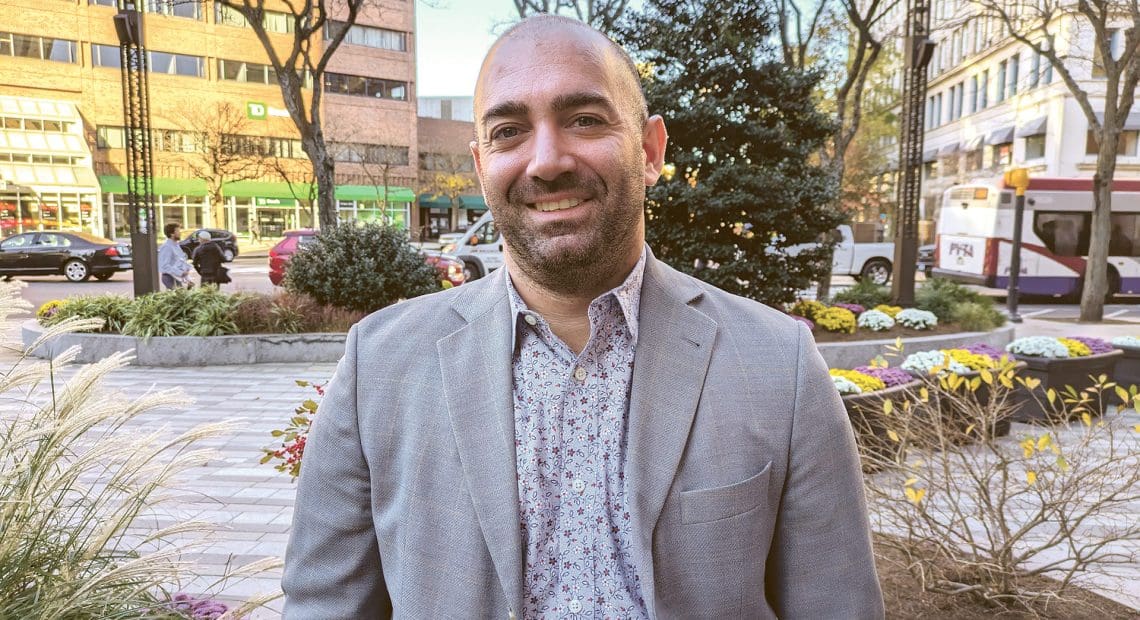
Dave Fontaine

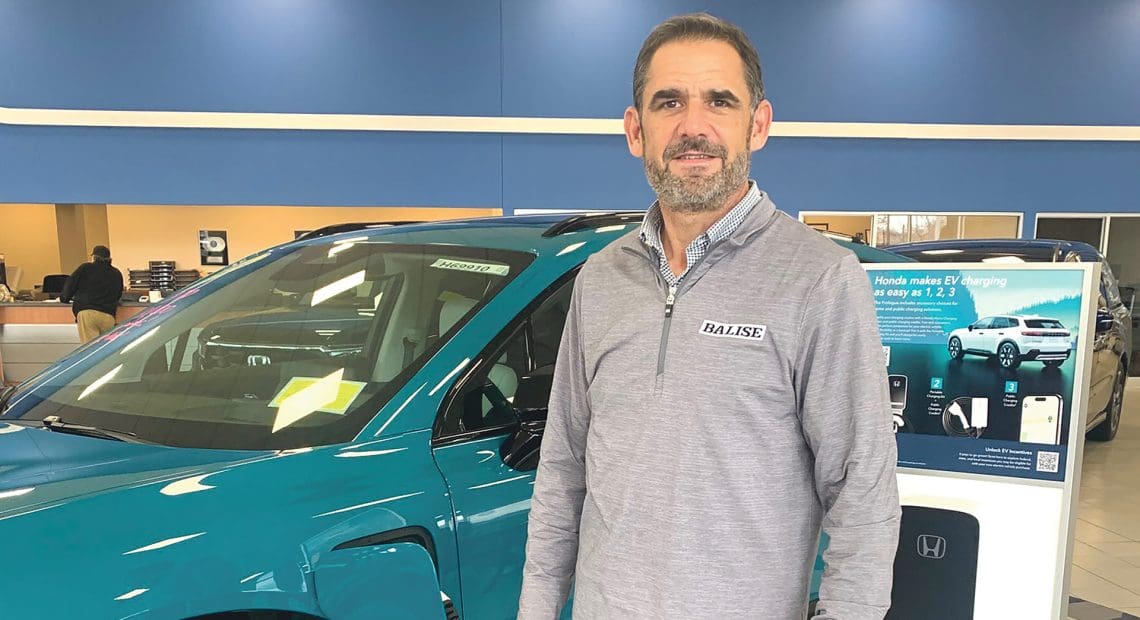
Dave Fontaine at the site of the new Peck Middle School in Holyoke.


Bill Jodice has lived through several economic cycles since he and a few partners bought the engineering and construction firm started by his father in 1964.

And he was quick to note that this current downturn, if it can even be called that, pales in comparison to the Great Recession of 2008, the post-9/11 slump, and even the prolonged recession of the early to mid-’90s, times when the phone seemingly stopped ringing.

Still, it’s been ringing a little less often (in a figurative sense) over the past several months, said Jodice, president of Bloomfield, Conn.-based PDS Engineering & Construction, noting that, while his firm is still quite busy, things are slowing down somewhat, a result of some clients hitting the pause button starting a little over a year ago, waiting for interest rates to come down, the presidential race to be decided, or both.

“We’ve heard some people say it all depends on what happens with the election and who’s managing the finances of the country when it comes to whether they move forward with a project,” he said. “If Trump gets in, they’re going to absolutely move ahead; if Kamala gets in, they’re maybe not going to do it, or at least give it some second thoughts. Some people get nervous around elections, and we hear about it.”

Scott Keiter, president of West Springfield-based Keiter Corp., reports a slowing of many segments within this sector, especially new residential construction, one of his firm’s specialties.

“We’ve seen a lot of deals and projects that were planned with lower interest rates — those in the 2021, 2022 range — in mind that have hit some roadblocks as the interest rates have been rising, borrowing costs have been going up, and the math starts to get difficult.”

He noted that his firm has been averaging five to 10 new homes a year over the past several years, and is certainly on the low end of that range this year, primarily because of higher interest rates and comparatively attractive prices for homes on the market.

“The combination of higher interest rates and well-priced options for people to move to has definitely hit home,” said Keiter, adding that his firm is still busy with work in several areas, from projects for colleges and nonprofits to home renovations, and enjoying the benefits of a diverse portfolio.

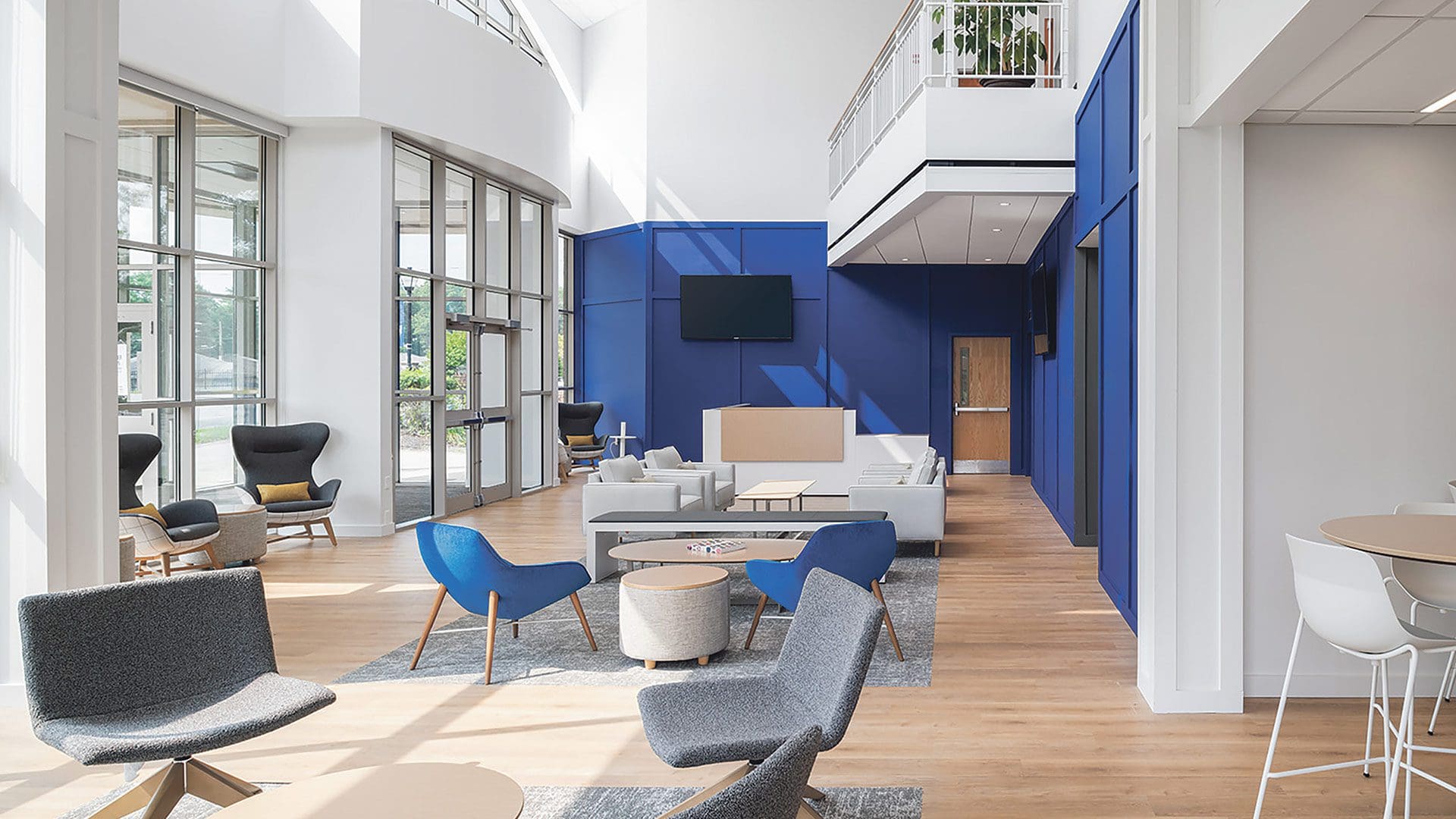
Welcome Center at Western New England University

The interior of the new Welcome Center at Western New England University, one of the many institutional projects in the Keiter Corp. portfolio.

John and Josh Raymaaker, co-owners, with their parents, of Westfield-based J.L. Raymaakers and Sons Inc., agreed. John noted that the number of invitations to bid on projects (especially on the private side) started trending downward several months ago and remains well below the pace of a few years ago.

“They’ve slowed from maybe 10 to 15 a month to eight to 10 a month — it’s not drastic, but it’s definitely noticeable,” he said, adding that the public side of the ledger, which comprises 75% of the firm’s portfolio, remains solid and seemingly unfazed by recent events.

Bill Jodice

Bill Jodice

“We’ve heard some people say it all depends on what happens with the election and who’s managing the finances of the country when it comes to whether they move forward with a project.”

Dave Fontaine, CEO of Springfield-based Fontaine Bros., noted that, generally speaking, the broad construction sector is somewhat of a lagging indicator, meaning decisions to pause or discontinue projects often don’t impact contractors until months later, meaning most firms still have projects on the books.

“We’ve seen a lot of deals and projects that were planned with lower interest rates — those in the 2021, 2022 range — in mind that have hit some roadblocks as the interest rates have been rising, borrowing costs have been going up, and the math starts to get difficult,” he said, noting that most of the hesitancy has been on the private-sector side. “We’ve seen some projects that have been put on hold and others that have been canceled.”

Meanwhile, this slowdown has manifested itself in several different ways, said Fontaine, noting everything from a general cooling of construction material costs from their peak highs (although labor costs continue climbing) to subcontractors, which were booked solid during COVID and the following years, being “hungrier” and more available (more on that later).

But, as noted, this sector remains quite busy, and most players, meaning general contractors, architects, and engineers, have plenty of work on the books now — and, for the most part, for the start of next year as well.

Michael (left) and Brian Sweitzer

Michael (left) and Brian Sweitzer at the site of the new Embr cannabis retail facility on Boston Road in Springfield.

“The money is still flowing, and we anticipate that it will continue to flow,” said Curtis Edgin, a principal with the Chicopee-based architecture firm Caolo & Bieniek Associates, which counts both public and private projects on the books, everything from an elementary school in Westfield to a new Rocky’s hardware store in South Hadley.

“It seems that people are somewhat apprehensive right now, but we’re still busy and hope to still be busy a year from now,” said Edgin, who was one of many to use the phrase ‘cautiously optimistic’ to describe the outlook for the foreseeable future.


Busy Signals

Jodice calls it a “wave.”

He was referring to the explosion of new car-wash centers in Connecticut, a development that has certainly benefited his firm.

“It’s moving across the state,” he said of this wave, mostly involving facilities that offer monthly wash passes that provide benefits to consumers (if they use them) and guaranteed income to those building these facilities.

Curtis Edgin

Curtis Edgin

“It seems that people are somewhat apprehensive right now, but we’re still busy and hope to still be busy a year from now.”

Beyond the car-wash wave, PDS is also benefiting from what Jodice called an ongoing “arms race” in the auto business whereby makers — Ford and Chevrolet are among the latest — are continuously refreshing dealerships to lure customers to showrooms and service bays, as well as an ongoing self-storage boom and Connecticut’s dire need to rehabilitate some aging prisons.

All of the above have brought new projects to the PDS portfolio in recent months, he said, noting that it includes several car washes for a chain called Russell Speeder’s; new dealerships or renovations for Executive Kia in Wallingford, New Country Porsche in Greenwich, and Curran Volkswagen in Stratford; and work at a prison in Cheshire.

But there has been a discernable slowing across the board, particularly in some sectors, including the defense industry (PDS has done work for several of the smaller companies that supply large defense contractors like GE and Pratt & Whitney), which he finds puzzling given the wars in Ukraine and the Middle East.

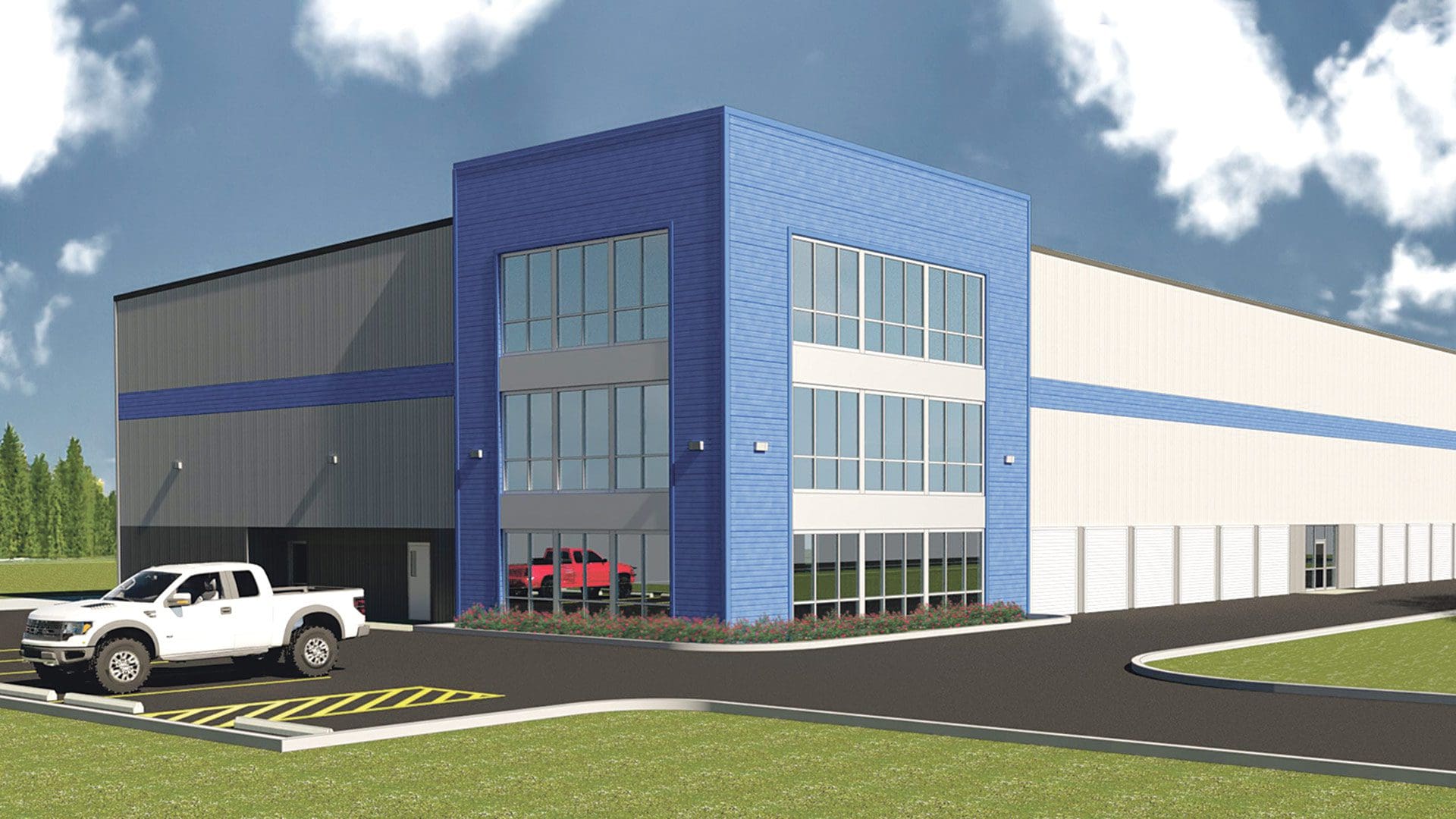
A new self-storage facility in East Longmeadow

A new self-storage facility in East Longmeadow is one of many recent projects in the PDS Engineering & Construction portfolio.

Overall, rising interest rates have prompted some commercial and residential clients to hit pause, or at least think about whether to pause, said those we spoke with. They noted that, while interest rates are still historically low, they are certainly much higher than they’ve been over the past five or six years.

And with the Fed’s move to finally lower rates by half a percentage point last month, there is the possibility, if not the expectation, that they will go lower in either the fourth quarter of this year or the first quarter of next year.

Pat and Craig Sweitzer, the husband-and-wife owners of Monson-based Sweitzer Construction, said they’ve already seen one client benefit from waiting until this fall to build rather than early this year, as originally scheduled, and they believe there is a lot of that going on.

“That’s the first time I’ve ever heard someone say they were happy there were delays,” said Craig, noting that many clients did their original pro formas based on 3% interest rates, and with rates at or around 7%, profit margins are smaller, breeding hesitancy.

Still, like the others we spoke with, the Sweitzers, who share management responsibilities with sons Brian and Michael, are busy, having just wrapped up a new cannabis retail facility called Embr on the large, long-vacant site of the former Russell’s restaurant on Boston Road in Springfield.

The firm specializes in medical facilities, especially dental offices, but has taken on several projects in the cannabis realm over the past several years, said Pat, adding that, at this time, or any time, for that matter, diversity is an important asset.

Josh Raymaaker agreed, noting that his family’s firm remains busy with both private and especially public projects. The list for the former includes a new Dunkin’ Donuts in Easthampton, a new hangar at Barnes Airport, and construction of a new headquarters for the Raymaakers firm on Falcon Drive in Westfield.

On the public side, the firm has several projects in progress, including new sewer lines in Suffield, Conn., pump-station rehabs in Great Barrington, bridge projects in Braintree and Alford, and a new hangar for C5s at Westover Air Reserve Base in Chicopee.

“The combination of interest rates and the costs of construction have definitely affected which version of the project our clients are able to proceed with; in order for them to make their numbers work, they are having to make some concessions.”

Keiter said that, while things are slower, his firm is busy on several fronts, from a move to a new headquarters building in West Springfield to projects across several realms.

Indeed, he said residential renovation work remains vibrant, despite the higher interest rates, while the firm is also handling projects for several colleges and universities, as well as nonprofits, including Girls Inc. of the Valley, which is moving onto the latest phase of renovations to its new home in the former Daniel O’Connell’s Sons headquarters in Holyoke.

“We continue to work with our nonprofit partners — we’re still seeing a good pipeline there — and with the private sector as well,” he said. “But the combination of interest rates and the costs of construction have definitely affected which version of the project our clients are able to proceed with; in order for them to make their numbers work, they are having to make some concessions.”

Elaborating, Keiter said that, while prices for materials and labor are still comparatively high, they are lower than what has been seen since the pandemic. The same is true for availability.

“Our benchmark is … screwy,” he told BusinessWest. “When you say materials availability is better, it’s in reference to a time when it was abnormally askew.”


Moving Forward

Fontaine noted that, while he can certainly understand why some businesses institutions — and homeowners — would put projects on hold until interest rates come down, there are definitely advantages to going forward now as opposed to waiting.

At the top of that list is a cooling of construction prices and better availability of materials, which are already impacting some of the projects the firm is handling, including the new East Longmeadow High School, the new Peck Middle School in Holyoke, and work at Deerfield Academy and the College of the Holy Cross.

“Just the fact that the costs have steadied and that there is increased predictability of costs is starting to be a good thing again for the market; we’re even starting to see some isolated decreases in costs,” he said, adding that these developments could and should incentivize action now, rather than waiting.

“If you can get a lower construction cost, that’s a finite figure for a project,” Fontaine noted. “People always have the option to refinance later if rates come down, but you only have one chance at lower construction costs, and that’s why this might be a good time to build.”

Keiter wouldn’t go that far, noting that no one really knows what tomorrow will bring.

“It’s always a good time to build — it just has to work for you,” he said, adding that, for some clients across different segments of this sector, it’s more difficult to make things work.

And that’s why there is anxiety and some hesitancy among those considering residential and commercial building projects.

Still, as Jodice noted at the top, while this is a slowdown, it doesn’t compare with the far more serious cycles that have visited this sector. And that’s certainly something to build on.

Healthcare News Special Coverage

Pink Power

From left, Kathy Tobin, Lucy Giuggio-Carvalho, Dr. Grace Makari-Judson, and Michelle Graci.

From left, Kathy Tobin, Lucy Giuggio-Carvalho, Dr. Grace Makari-Judson, and Michelle Graci.


Kathy Tobin calls it a “big pink hug.”

That’s one of the many colorful ways she and others referred to Rays of Hope, the comprehensive program to support those with breast cancer and raise money for research, services, and grants, culminating in the annual walk and run that will take place on Sunday, Oct. 27.

To Tobin, director of Annual Events and Giving for the Baystate Health Foundation, that hug conveys that Rays of Hope (ROH) is more than a series of fundraisers, more than a gathering, more than the Walk & Run Toward the Cure of Breast Cancer, which has, to date, raised more than $17.2 million and become a time when a community of survivors, family, and friends gathers, reunites, walks, and inspires others in this fight.

It’s a support network, if you will, for those fighting breast cancer and who have survived it.

“The walk is an event, but what has happened is that this has become a year-round organization of support,” she explained. “It’s about executing support services and being there for people who call us on our phone lines; they’ve just been diagnosed, and they don’t know what to do. Or it’s someone who doesn’t have the money for a breast prosthetic; can we help them? We support, through our grant program, other organizations that are in the trenches with survivors.

“We’re like a network that works year-round. We want to surround people with a diagnosis with what they need.”

“We’re like a network that works year-round,” she went on, adding that this what she and others mean when they say ‘big pink hug.’ “We want to surround people with a diagnosis with what they need.”

Dr. Grace Makari-Judson, co-director of the Rays of Hope Center for Breast Cancer Research, agreed, noting that there have been significant advancements in breast-cancer diagnosis, treatment, and delivery of services over the past 30 years, with Rays of Hope’s fundraising efforts helping to make many of them possible, especially a far more integrated delivery of care.

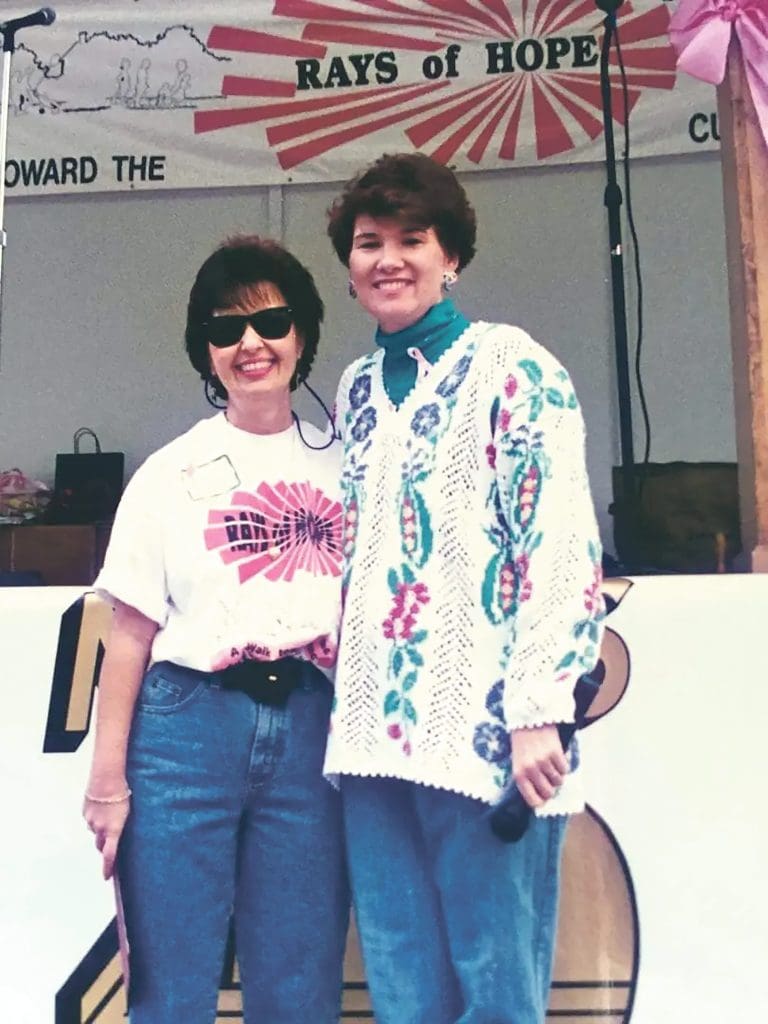
Lucy Giuggio-Carvalho (left) and Kathy Tobin at the first Rays of Hope walk in 1994.

Lucy Giuggio-Carvalho (left) and Kathy Tobin at the first Rays of Hope walk in 1994.

“Before 1994, care was very much linear,” she explained. “A patient would have her mammogram and biopsy, and the mammogram was often in a hospital, beside people getting imaging for other illnesses, not for health management. Meanwhile, the biopsies were often done as surgical biopsies in the operating room, as opposed to outpatient biopsies that we do today. And if there was a new diagnosis of breast cancer, the surgeon would do their breast surgery in a complete vacuum, a complete void — just doing their thing.

“And after the surgery, they would send the patient to the medical oncologist, who would do their thing if they needed chemotherapy or hormone treatments,” Makari-Judson went on. “And when they were done with that, they would go next to the radiation oncologist, who would do their thing. It was very linear — and that was not optimal.”

Since its inception 30 years ago, Rays of Hope has been supporting individuals in their breast-cancer fights by walking with them on their cancer journey, literally, but also figuratively. Through the Baystate Health Breast Network, ROH supports research at the Rays of Hope Center for Breast Cancer Research; provides funding for state-of-the-art equipment, breast-health programs, and outreach and education throughout Baystate Health; supports patients and survivors; and provides grants for complementary therapies and cancer programs to community partners across the region.

All this is what Lucy Giuggio-Carvalho, a breast-cancer survivor, had in mind when she conceived the Rays of Hope walk back in 1994. Well, sort of.

Back then, she just wanted to do something to help those facing what she faced, and provide the kind of love and support she felt when faced with her own diagnosis.

She told BusinessWest she was thinking big back then, but couldn’t have imagined just how broad and impactful her concept would become.

“I wanted it to be an event from day one, but I never thought it would just go on and on, get bigger and bigger, and survive,” she told BusinessWest, noting, like Tobin, that it has become more than an event; it has become a powerful force for those battling the disease and looking for many different forms of support.

“There was no breast center at that time. You had to figure out who to see and what to do next. I already had a medical background, but I found it extremely difficult because you’re dealing with all the emotional aspects of having breast cancer.”

Three decades later, there is now also a Rays of Hope Endowment within the Baystate Health Foundation, through which the community can designate gifts that will perpetually support the mission.

For this issue and its focus on cancer care, we take an in-depth look at this big pink hug; how it has grown, evolved, and widened its impact; and where it can go from here.


Walking the Walk

“In 1993, I was 38 years old and diagnosed with stage-1 breast cancer. I felt overwhelmed, alone, and lost about how to proceed with treatment and life during and after breast cancer. I was on an emotional rollercoaster with many ups and downs. My family and friends came together to support me, and I realized the incredible power of love and support when facing breast cancer.”

That’s one of the many powerful passages in a message Giuggio-Carvalho wrote for the fall 2023 issue of Supporting Hope, a newsletter of the Baystate Health Foundation on the 30th anniversary of the walk and run.

Looking back — and ahead — she and others we spoke with said ROH continues to meet its mission and help ensure that no one facing breast cancer has to feel alone, overwhelmed, or lost. There will always be an emotional roller-coaster ride with ups and downs, but ROH can make that ride more manageable.

Looking back, Giuggio-Carvalho, who was named a Difference Maker by BusinessWest in 2011 for her efforts to launch Rays of Hope, said she started the program to help provide the region with all that was missing when she (an oncology nurse at the time) was diagnosed with breast cancer.

Walkers gather at Temple Beth-El before one of the past Rays of Hope events.

Walkers gather at Temple Beth-El before one of the past Rays of Hope events.

“There was no breast center at that time,” she noted. “You had to figure out who to see and what to do next. I already had a medical background, but I found it extremely difficult because you’re dealing with all the emotional aspects of having breast cancer.

“That, in itself, is one of the more remarkable things that Rays of Hope has brought,” she went on. “We have a team; we have a breast center where people can go. That was lacking at the time, and that’s what precipitated my idea to start a walk and raise money — I was in Boston and went to a breast center, where all the people met together and I was able to hear everyone’s opinion at the same time. I said, ‘this is what we need,’ and now we have it.”

Tobin agreed. “The way we took care of breast cancer was on the cusp of changing — Rays of Hope made it happen faster.”

Makari-Judson concurred, noting that perhaps the biggest, most-needed change was a shift toward a more team-based, integrated model for delivery of care.

“Today, we have a multi-disciplinary team; people communicate, and it’s very integrated, so that people get not only the best care, but the best care in the right sequence,” she explained, adding that the Baystate Health Breast Network was created to look at guidelines and ensure that people were being treated in a guideline-based, consensus-based approach.

There have been many other advances over the past 30 years, she said, adding that, prior to 1994, there were limited support services, limited educational materials, and no survivorship clinics or programs. ROH has helped make them all available, as well as other products and technology needed to provide comprehensive care.

“When we hear that budgets are tight and there isn’t money for something, that’s when we step in,” Tobin said. “Or if there’s something we can’t afford that capital year, we can sometimes provide the funding so we get it a little faster and we keep this region ahead of the curve.”


Steps in the Right Direction

Rays of Hope has been able to support services, research, and developments such as a tissue registry, as well as providing grants through fundraising that has also evolved over the years, adding events and programs such as Pink in the Rink, established by the Springfield Thunderbirds and staged each March.

As for the walk and run itself, it has continued to grow and evolve, said Michelle Graci, manager of Events for the Baystate Health Foundation, noting that COVID forced the actual event (but not the fundraising) to pause for two years, with turnout slowly building back to what it was pre-pandemic.

Last year, more than 20,000 people turned out, with the event raising more than $500,000, she said, noting, as others did, that the walk owes its success to the manner in which organizers listen to participants, adjust, and keep the event fresh and different, while also maintaining elements that have become synonymous with its mission.

These include a survivors’ photo, one that gets bigger each year, as well as a moment to reflect on those who have lost their battles to breast cancer. Overall, said all those we spoke with, the walk is intended to be a celebration — of survivors, the progress made in diagnosing and treating the disease, and the fighting spirit of those battling the disease and their many supporters.

“We celebrate life — this is not a downer,” said Tobin, noting that the gathering of walkers and runners in the parking lot of Temple Beth El in Springfield has become a tradition, an opportunity to renew acquaintances, swap stories, and show that there is strength in numbers.

Graci agreed. “Everyone just crowds into that parking lot, and there’s a lot of love, a lot of laughter, hugging, tears — happy tears, sad tears. It’s just a lot of giving, as Kathy said, a giant pink hug.”

And while the event continues to grow in size and impact each year, organizers have long understood the need to make sure the work of Rays of Hope continues for decades to come — and ensure that it will through the creation of an endowment, through the Baystate Health Foundation, to coincide with ROH’s 30th anniversary.

“This is now a place where people can put their money, and those who understand the importance of long-term planning will get that, and this endowment will only continue to grow,” Tobin said. “Based on the support we’ve received over the past 30 years, I’m confident that this fund will grow proportionately now that it’s in place.”

Overall, Rays of Hope has provided ample proof that a small group of people can accomplish big things and make a huge impact when they work together, Giuggio-Carvalho said.

And this, as much as anything else, is what is being celebrated each October as thousands of people gather to walk and run.

Law Special Coverage

Beyond the Job Title

By Michael Roundy, Esq.

The U.S. Supreme Court recently changed the landscape for certain workplace discrimination claims with its decision in Muldrow v. City of St. Louis, issued in April. Employers need to be aware of the change as it could affect their internal decisions on how to address allegations of discrimination and avoid similar lawsuits.

In Muldrow, the Supreme Court held that transferring an employee to another position, even without any loss of pay or benefits, may violate the anti-discrimination provisions of Title VII of the Civil Rights Act of 1964. Although the case dealt with an internal transfer, the court’s opinion focused on changes to the terms and conditions of employment, which could implicate workplace changes far beyond transfers.

Sgt. Jatonya Muldrow worked for nine years as a plainclothes officer in the St. Louis Police Department’s Intelligence Division. When a new commander took over the division, Muldrow was transferred out, against her wishes, in favor of a male officer who the new commander said was a better fit for the division’s “very dangerous” work.

While Muldrow’s rank, pay, and benefits did not change, her new position in uniform involved different responsibilities, offered fewer perks, was less prestigious, and required weekend shifts, all of which were changes to the terms and conditions of her employment.

The District Court had dismissed Muldrow’s sex-discrimination suit on a motion for summary judgment on the grounds that the changes in the conditions of her employment did not meet a heightened standard requiring her to show a “significant” change to her responsibilities. The Eighth Circuit affirmed that decision.

The Supreme Court took up the appeal to address and resolve a circuit split over whether a Title VII discrimination claim requires a showing of “significant” harm or just some degree of harm caused by the changed working conditions. Most circuit courts, including our First Circuit, had required that a change or detrimental impact be a “material” or “significant” change to working conditions, whereas the D.C. Circuit had recently rejected such a requirement.

The Supreme Court held that the statute does not require any elevated standard of harm. On its face, Title VII makes it unlawful to “discriminate against any individual with respect to his compensation, terms, conditions, or privileges of employment because of such individual’s … sex” (among other characteristics).

Michael Roundy

Michael Roundy

“Investigations handled internally may be perceived as biased and conclusory, particularly where the allegations involve upper management. Using an outside, neutral third party can counteract that perception of bias.”

The court held that this language does not require a “significant” or “serious” or “material” change, but only that Muldrow show some disadvantageous change in employment terms or conditions. Put another way, the statute prohibits “treat[ing] a person worse” because of her sex or other protected trait (race, color, religion, national origin).

A Title VII claim, therefore, must show “some harm” relating to a term or condition of employment, and need not show “significant” harm. In this case, the transfer of Muldrow to a position with less responsibility, fewer perks, less prestige, and requiring a rotating schedule including weekends met the “some harm” requirement. The Supreme Court therefore vacated the Eighth Circuit’s judgment, resurrecting Muldrow’s discrimination claims, and remanded the case for further proceedings.


The Takeaway for Employers

Outcomes like this could be avoided by employers by addressing complaints when they arise, long before they result in litigation. More and more employers have recognized the value of thorough and impartial workplace investigations conducted quickly after complaints arise. An external, third-party investigator limits the perception of bias by the complaining employee, helps ensure that manager actions are properly scrutinized, and may in some cases even help limit liability.

A credible investigation requires more than just an impartial investigator. It requires that the investigator be perceived as impartial as well. Investigations handled internally may be perceived as biased and conclusory, particularly where the allegations involve upper management. Using an outside, neutral third party can counteract that perception of bias.

As an outside investigator, I often find that employees will speak more freely with me and provide more complete and detailed information than originally reported internally to HR. With the benefit of more complete information, I am able to render better-informed findings and provide the employer the context needed for sound decisions and better workplace practices going forward.

In the context of Muldrow, a prompt and impartial investigation may also help employers avoid taking employment actions that later end up in litigation, by identifying responses and practices that should be avoided.

If an employee complains about sex discrimination, for example, and a prompt, neutral investigation confirms there may be some form of discrimination occurring, the employer will be in a position to avoid taking actions that could lead to liability — actions such as transferring the complaining employee to another position that changes the terms and conditions of his or her employment, changing the employee’s shift without his or her consent, or changing the job duties in a way that harms the employee’s chances for advancement. Each of these changes may not be considered “significant” changes, but under Muldrow, they could nonetheless result in liability for discrimination.

The employment law landscape is continuously shifting, as Muldrow v. City of St. Louis illustrates. Employers should continue to seek guidance and assistance from experienced labor and employment attorneys to ensure their policies are up to date and implemented properly and that, when complaints arise, they are investigated quickly and neutrally.


Michael Roundy a partner at the Springfield-based law firm Bulkley Richardson.

Special Coverage Technology

Designs on Innovation

Manufacturing Mash-Up at Gillette Stadium.

Twenty-three companies, including five from Western Mass., were awarded significant grants at this year’s Manufacturing Mash-Up at Gillette Stadium.


Yvonne Hao, secretary of Economic Development, put it succinctly when she explained the critical intersection of manufacturing, technology and innovation, and workforce development in Massachusetts.

“Massachusetts excels in advanced manufacturing because of our robust ecosystem made up of researchers discovering cutting-edge tools and technologies, universities spinning out startups and a pipeline of talented workers, and businesses advancing new solutions to meet global demands,” Hao said during last month’s Manufacturing Mash-Up at Gillette Stadium in Foxborough. “We’re excited to showcase the strength of our ecosystem at the annual Mash-Up event, and to invest in the manufacturing sector through these MMAP awards.”

Specifically, she was referring to more than $3.5 million distributed at the event to 23 manufacturing companies through the Massachusetts Manufacturing Accelerate Program (MMAP), which aims to strengthen supply chains and spur growth in the manufacturing sector. The grants will support the creation of up to 130 advanced-manufacturing jobs in Massachusetts and training for up to 151 workers.

“Massachusetts companies benefit from a state that engages with the private sector to catalyze collaborations with nonprofit partners and provide the resources needed to support growth in manufacturing through the adoption of state-of-the-art technologies.”

The Mash-Up, which brings together companies, students, and state officials, is hosted annually by the Massachusetts Center of Advanced Manufacturing (CAM), a division of the Massachusetts Technology Collaborative (MassTech), a public economic-development agency tasked with supporting business formation and growth in the Commonwealth’s tech and innovation sectors.

“Every year, the Mash-Up proves Massachusetts has a vibrant and engaged manufacturing ecosystem,” MassTech CEO Carolyn Kirk said. “CAM is inspiring the next-generation workforce to enter the field, as evidenced by the hundreds of students who turn out to participate in the event.”

MMAP invests in small- to medium-sized manufacturers, funds capital equipment purchases, and creates partnerships between the manufacturers and nonprofit, academic, or quasi-public partners.

Yvonne Hao

Yvonne Hao

“Massachusetts excels in advanced manufacturing because of our robust ecosystem made up of researchers discovering cutting-edge tools and technologies, universities spinning out startups and a pipeline of talented workers, and businesses advancing new solutions to meet global demands.”

“Massachusetts companies benefit from a state that engages with the private sector to catalyze collaborations with nonprofit partners and provide the resources needed to support growth in manufacturing through the adoption of state-of-the-art technologies,” said Ben Linville-Engler, CAM’s chief investment strategist and acting director. “Programs like MMAP also invest in workers through new jobs and upskilling opportunities, which will help ensure we have a strong advanced-manufacturing technology and talent base to support sectors across the Commonwealth’s economy.”


Local Impact

Five of the 23 companies awarded grants are based in the Pioneer Valley or the Berkshires. The total amount is $772,134.38, and the projects will create an estimated 27 to 35 jobs.

• Bay State Machine in Easthampton is a manufacturer of components for a wide array of companies within the defense, aerospace, medical, and semiconductor industries. Its $179,000 grant will enable Bay State to purchase a five-axis CNC machining center with an auto loader, allowing it to run lights-out to support its increasing demand for complex parts. As a result of this project, Bay State expects to upskill one to three employees.

• Berkshire Sterile Manufacturing in Lee is a contract manufacturer that produces sterile injectable drugs for biotechnology, pharmaceutical, and medical device companies. Its $200,000 grant will enable it to purchase a state-of-the-art, high-capacity, pharmaceutical-grade vial washer, allowing Berkshire Sterile to ensure compliance with stringent regulations, increase automation capabilities, and save energy while reducing wastewater production. As a result of this project, Berkshire Sterile expects to upskill at least 11 employees.

• Cartamundi in East Longmeadow is a card- and board-game manufacturer that produces games for Hasbro and others. Its $193,134.38 grant will enable it to purchase a high speed, side-weld pouch machine for the manufacturing of plastic card sleeves used to protect trading, game, and collectible cards. There are no known manufacturers of protective sleeves within the U.S., with the current sleeves on the market being produced in China, Vietnam, and Japan. As a result of this project, Cartamundi expects to upskill four to six employees.

• Elegant Stitches Inc. in Pittsfield is a minority-owned custom embroidery and screen-printing company, whose clients include the U.S. Army and the FBI. Its $198,930.21 grant will enable it to purchase two new embroidery machines, a laser cutter and engraver, and a robotic sewing machine, allowing it to produce at higher volumes and efficiency and positioning the company to be a formidable manufacturer in the defense industry. As a result of this project, Elegant Stitches expects to upskill four to six employees.

• Lenco Industries Inc. is the nation’s leading designer and manufacturer of commercial armored response and rescue vehicles used by the U.S. military, U.S. law enforcement, and government agencies worldwide. Its $200,000 grant will enable it to purchase a robotic welding system, allowing it to automate a formerly manual process. Lenco will produce small batches of custom parts and high-volume components at a quality that will meet strict standards. As a result of this project, it expects to upskill seven to 10 employees.

The 18 other grant awardees include Accutronics LCC in Chelmsford ($200,000), Aimtek in Auburn ($106,205), Allium Engineering in Somerville ($200,000), Alogus Innovation & Design in Somerville ($55,217), Atlas Devices in Chelmsford ($100,000), Evans Machine Co. in Brockton ($200,000), Finwave Semiconductor Inc. in Waltham ($61,972), Gemline in Lawerence ($200,000), H&S Tool and Engineering Inc. in Fall River ($200,000), Innofiber in Sterling ($110,000), Iradion in Uxbridge ($84,255), OutCast Lures in Holliston ($58,894), RH Adhesives in Acton ($200,000), Salem Metal Inc. in Middleton ($200,000), South Shore Millwork Inc. in Norton ($200,000), Steele Canvas Basket Corp. in Wilmington ($139,851), Stergis Windows and Doors in Attleboro ($200,000), and Wellness Croft Inc. in Plymouth ($100,000).

Community Spotlight

Community Spotlight

Mike and Barbara Trombley returned to Wilbraham for its quality of life — and to be the succession plan for the financial-services firm started by Mike’s father.

Mike and Barbara Trombley returned to Wilbraham for its quality of life — and to be the succession plan for the financial-services firm started by Mike’s father.

Like many young people who grow up in Western Mass., Mike Trombley left this region to start his professional career and then returned because of the quality of life it affords.

His story, and his career, have not been like most others, though.

Indeed, Trombley, who excelled on the baseball diamond at Minnechaug Regional High School in Wilbraham, would go on to play to play at Duke and be drafted by the Minnesota Twins.

Mostly a relief pitcher — with a career record of 37-47 and a high of 24 saves in 1995 — he played for the Twins, Orioles, and, briefly, the Dodgers until 2002. Living in Florida with his wife, Barbara, and three children after his playing days were over, he dabbled in real estate and managed to survive relatively unscathed when the market collapsed.

By 2009, the Trombleys decided that Florida wasn’t really for them, so they relocated to Wilbraham to live and essentially become the succession plan for Mike’s father, Ray Trombley, who founded the financial-services firm Trombley Associates in 1965.

The Wilbraham Mike returned to was and is very much like the one he left, meaning it has maintained its small-town charm and rural character — there are more than 20 farms within the community.

But there have been some significant changes, including the mailing address for the Trombley firm — Post Office Park on Route 20, a business park that includes the Scantic Valley YMCA, a post office (hence the name), and dozens of businesses — as well as many new businesses along that thoroughfare. There have also been some changes on Main Street and just off it, including the town’s new senior center, which was a dozen years in the making, and a new mixed-use development that includes several apartments, a brewery, a restaurant, and a wine-and-cheese shop.

This combination of small-time charm and an eclectic business community makes Wilbraham an attractive community, one where residents sometimes take all they have for granted but shouldn’t, Mike said.

“This is the quintessential New England town; any time anyone would go down Main Street and see Wilbraham & Monson Academy and the Village Store … it’s just a picturesque postcard driving through town.”

“It’s very interesting seeing Wilbraham as an adult. I grew up in this town, then left to go to go to college and play baseball; we were away a long time and came back. To see it as an adult … Barbara said to me, and it’s true, ‘Wilbraham is a charming town.’

“I’m a big fan of New England,” he went on. “And this is the quintessential New England town; any time anyone would go down Main Street and see Wilbraham & Monson Academy and the Village Store … it’s just a picturesque postcard driving through town, especially at this time of year, and I appreciate it much more as an adult.”

This is the message the town’s Economic Development Committee is trying to put out — or, at least, part of the message.

Indeed, the commission has ramped up efforts to let it be known that this community of almost 15,000 people is open for business and has plenty to offer those who wish to set up shop here.

That list includes a single tax rate, one lower for businesses than neighboring Springfield (and some other communities, for that matter); busy Route 20, which is already home to dozens of businesses, with room for many more; access to other neighboring communities; proximity to what will be a totally reimagined Eastfield Mall; that aforementioned quality of life; and, coming sometime soon, a town-owned fiber network that will bring faster and more reliable service to residents and businesses alike.

“We have many attractive selling points here in Wilbraham,” said Mike Mazzuca, chair of the Economic Development Committee. “And we’re going to work harder to make sure businesses are aware of all that we have to offer.”

For this, the latest installment of its Community Spotlight series, BusinessWest takes an in-depth look at Wilbraham and its ongoing, and quite successful, efforts to balance its rural character with needed business growth.


Getting Down to Business

Brady Suomala is a senior at Minnechaug High, captain of the soccer team, and … an intern with the East of the River Five Town Chamber of Commerce, which counts Wilbraham among the five communities it serves.

Since coming aboard just after school started, Suomala, who is focusing his internship on marketing and graphics, has been visiting many businesses in town with chamber Executive Director Grace Barone. He’s been talking with their graphics and marketing people about their work and possible career paths, while also, in some cases, gauging their marketing needs and whether the chamber might be of any assistance.

He’s stopped by a few banks, and recently visited with Sandy Polom, owner of the Scented Garden Gift Shoppe, located in the Wilbraham Shops on Route 20, who is coming up on her five-year anniversary of buying the business and is planning a celebration.

Brady Suomala

As an intern with the ERC5 Chamber of Commerce, high-school senior Brady Suomala is gaining unique insight into Wibraham’s business community.

Suomala’s work to date relates the importance of internships like his to introducing young people to the world of work, while also introducing them to businesses and possible careers. It also helps tell the story of Wilbraham’s business community, which, as noted, is both diverse — with a blend of local companies and regional and even national chains (like Home Depot) — and deep, with many businesses, like Trombley Associates, the Scented Garden, Rice’s Fruit Farm, and many others having well-established roots.

Indeed, the Scented Garden has been a mainstay in the community, and region, for more than 30 years now.

“We reached out to businesses at the mall and were successful in bringing a few here.”

Polom, who had been in medical and pharmaceutical sales for 26 years, was looking for a change, and less travel, and bought the business five years ago.

That was just a few months before COVID, which wound up essentially shutting her down for three and half months.

“That was a little scary, to say the least,” she said, adding that the pause, while unwelcome, gave her an opportunity to refresh the store and make some needed changes. Upon reopening, she has been continuously buoyed by local support — a running theme among business owners in town — but also shoppers from neighboring communities and those passing through along Route 20 or stopping in to other businesses in the shops.

They’re drawn to her mix of gift items, from women’s and children’s clothing to jewelry to home items, with a focus on products made in this country.

As for Trombley Associates, it has been a nice, but not easy, transition for Mike and a solid second career, one where Barbara, a CPA by trade, is his business partner.

Barbara, a frequent contributor of articles to BusinessWest on the many aspects of financial planning, handles the tax side of the business, but also shares the financial-planning work with Mike.

Wilbraham at a glance

Year Incorporated: 1763
Population: 14,613
Area: 22.4 square miles
County: Hampden
Residential Tax Rate: $18.50
Commercial Tax Rate: $18.50
Median Household Income: $65,014
Median Family Income: $73,825
Type of government: Board of Selectmen, Open Town Meeting
Largest Employers: Baystate Wing Wilbraham Medical Center; Friendly Ice Cream Corp.; Big Y; Home Depot; Wilbraham & Monson Academy
*Latest information available

Together, they have grown the client portfolio and, overall, continued a business that traces it roots back 60 years.

“I think my father would be very proud that we’ve carried the torch and, hopefully, made it better in his eyes,” Mike said.

The broad goal for the town’s Economic Development Committee is to help write more success stories like these in Wilbraham, said Mazzuca, adding that the mixed-use project on Main Street, which now includes several apartments, Pafumi’s on Main restaurant, the Guilty Grape wine-and-cheese store, and Scantic River Brewery, has generated momentum in efforts to bring more businesses, and vibrancy, to what would be considered the community’s downtown, the Main Street area.

Meanwhile, Wilbraham has become more focused on promoting itself and its assets and attracting more businesses. The town was successful is recruiting two of the former tenants of the Eastfield Mall — the Mall Barber and School of Fish, an aquarium store — for some of the reasons stated earlier, such as location and proximity to Route 20.

“We reached out to businesses at the mall and were successful in bringing a few here,” said Mazzuca, “because this is a great place to do business.”

Jeff Smith, vice chair of the Economic Development Committee and a small-business owner himself, agreed. He said the town’s single tax rate has incentivized Home Depot and other businesses to locate in town, and there are many other assets as well.

“We have a lot of open space — the trail systems are extensive, and we have two fantastic farms that put on all kinds of activities in the fall,” he explained. “There’s also water, sewer, access to Route 20, and a very business-friendly town government.”

As for the planned new Eastfield Mall … there are still many questions to be answered on that project, but if it is redeveloped as planned, with a mix of local and national stores and restaurant chains, it should bring more traffic through and into Wilbraham.

“If the stores that are proposed to go up do go up, that will draw more people into the area,” Mazzuca said. “For people going to the Eastfield Mall, when it’s time to go to a restaurant, you’ll have more people coming to Wilbraham. We have fantastic restaurants here, and in addition, some of our niche shops are spectacular.”


Bottom Line

Returning to those thoughts he had about how he appreciates Wilbraham even more now than when he was growing up there, Mike Trombley said that, overall, little has changed beyond that appreciation level.

“There’s no way you can avoid progress, which is a good thing, but the town has kept its home-town feel, which is good, too,” he said, noting, as others did, that this community has much to offer — to residents, yes, but also to those who want to get down to business here.


Entrepreneurship

Tools to Grow

Roz Freeman recognizes and values the connection between civil rights and economic justice, which is why she’s gratified by the work being done by BizGrow, an arm of Massachusetts-based Lawyers for Civil Rights (LCR).

LCR was born during the Civil Rights era, said Freeman, entrepreneurship manager for Lawyers for Civil Rights, noting that it sprung from the broader, national movement known as the Lawyers’ Committee for Civil Rights Under Law. “We work through the law to fight for justice. We have a team of litigators who litigate civil rights in collaboration with law firms that are doing pro bono work to support these cases.”

LCR was created in 1968 (more on that later), but about 20 years ago, it established BizGrow, which provides free legal assistance, business support, and technical assistance to minority, immigrant, and women business owners, aiming to ensure they encounter fewer obstacles and more opportunities. Assistance can come in many areas, including starting a business, growing an enterprise, shifting ownership, managing transactional issues, or any other challenge small businesses are faced with.

Now, LCR has launched a new partnership with Springfield City Library aimed at transforming the support landscape for small-business owners and entrepreneurs in and around the city. The collaboration will kick off with the free BizGrow Conference on Thursday, Oct. 10 from noon to 4 p.m. at the library, located at 220 State St.

At the BizGrow Conference, modeled after a similar annual event in Boston, current and aspiring small-business owners will have the opportunity to meet one-on-one with volunteer attorneys for free legal advice, connect with local and state organizations that provide essential resources and support to small businesses, and network with other local business owners. Dozens of business owners and entrepreneurs, pro bono attorneys, and providers of business technical assistance are expected to attend.

Roz Freeman

Roz Freeman

“We work through the law to fight for justice. We have a team of litigators who litigate civil rights in collaboration with law firms that are doing pro bono work to support these cases.”

“We are thrilled to deepen our connections to Springfield and offer this valuable event to the small-business community,” said Priya Lane, BizGrow director at Lawyers for Civil Rights. “Free legal support and business networking are crucial tools to help close the opportunity gap and fuel the small businesses that are the engines of our Commonwealth.”


Birth of a Notion

LCR traces its national roots back to June 1963, when President John F. Kennedy and Attorney General Robert F. Kennedy met with 250 leading American lawyers at the White House to discuss the role lawyers could and should play in the deepening civil-rights crisis.

The nation recently had been shaken by television and news accounts of police-led violence against peaceful demonstrations led by Martin Luther King Jr., and by the spectacle of U.S. Army intervention to enforce court orders requiring the University of Alabama to admit Black students against a defiant Gov. George Wallace.

The Kennedy brothers made an appeal to the lawyers to mobilize the voice and work of the legal profession to support the struggle for civil rights in the nation. Locally, the Lawyers’ Committee for Civil Rights Under Law of the Boston Bar Assoc. was formed in 1968. Funded with a grant from the Ford Foundation and contributions from major Boston law firms, it became the first of eight independent affiliates of the national Lawyers’ Committee. The only Lawyers’ Committee in the country affiliated with a major bar association, it rebranded as Lawyers for Civil Rights in 2018.

But before that, BizGrow developed from a recognition that social justice also means economic opportunity, and LCR had a role to play there as well.

Priya Lane

Priya Lane

“Free legal support and business networking are crucial tools to help close the opportunity gap and fuel the small businesses that are the engines of our Commonwealth.”

“After many years, we wanted to connect fighting for justice with economic justice and wealth creation for disadvantaged communities,” Freeman explained. “Lawyers for Civil Rights and BizGrow partner with law firms that provide pro bono opportunities to support small businesses. Businesses, in turn, get a free legal network to support them.”

Sheila Coon, owner of Hot Oven Cookies, which has locations in Sprngfield and Chicopee, speaks well of her experiences working with lawyers through LCR, and says others should reach out.

“The attorneys I’ve connected with through LCR and BizGrow have been invaluable to solving key issues for my small business,” she noted. “I am so excited that this amazing resource is coming to Springfield.”

Hot Oven is just one of roughly 1,600 different businesses Lawyers for Civil Rights has worked with in 2024 alone through workshops, free legal clinics, and its Boston conference, Freeman told BusinessWest.

And many one-on-one connections made at the conference between entrepreneurs and attorneys will be forged before the event itself, to ensure that each volunteer lawyer has the background needed to help a particular business owner.

“We match businesses with the right attorneys in the area; we talk ahead of time to make sure the questions are clear and they’re able to make most of the meeting with the attorney during the conference,” she explained. “Then, if they need long-term legal representation, we can make a match for free legal support. Any questions that don’t get answered within a 30-minute session during the conference, we can follow up with support.”


Support for the Journey

Of course, BizGrow’s presence in Springfield will extend well beyond one conference.

“We are reaching out to small-business owners to make sure they’re getting the wraparound supports that businesses need. So we offer workshops and legal clinics, too,” Freeman said. “But the reason for the in-person conference is we want to not only bring resources on the ground in Springfield, but also provide a networking opportunity for small businesses. That’s why we partnered with the library.

“Fifteen different small-business resource partners will be there. So entrepreneurs can come to the event and get the support they need and make connections with many of those business resources in the region,” she added. “We’re looking to support Western Mass. businesses in a way we haven’t before.”

The partnership with Lawyers for Civil Rights promises to be “a fantastic opportunity for Springfield’s small-business community,” said Elizabeth McKinstry, programming and training librarian for the 167-year-old Springfield City Library.

“We are thrilled to host the BizGrow Conference and bring such vital resources to our local entrepreneurs,” she added. “For many small-business owners, access to legal advice and business networks can be a game changer. We are hopeful this event will have a lasting impact on the growth of small businesses in our community.”

To register for the BizGrow Conference Springfield, visit bit.ly/BizGrowSpringfield2024.

Insurance

Rules of the Road

By Jack Dowd


Holiday season, which will ramp up over the next few months, is peak travel time. “From Atlantic to Pacific / Gee, the traffic is terrific,” goes the song, and it’s about 10 times truer today than it was when Perry Como sang it in 1954. The more people on the road, the more important it is to take extra care preparing for your trip and driving with safety in mind.


Preparation Is Key

90% of safe travel is in the planning. Even if you’ve driven to grandmother’s house more times than you can count, it’s still essential to run through a safety checklist before you hit the road.


Auto Insurance

Make sure your auto or motorcycle insurance policy is up to date and has the coverage you need. The rates of accidents spike during the holiday season, and even the most careful drivers can find themselves in dangerous situations. It’s best to be sure you’re covered.

Jack Dowd

Jack Dowd

“The one guaranteed result of road rage is regret. Don’t leap at the opportunity to join in on someone else’s bad judgment.”


License and Registration, Please

And pack proof of insurance while you’re at it. Again, despite a careful driver’s best efforts, accidents do happen, so be sure you’ve got an active driver’s license, current registration, and proof of insurance at the ready. We know you’ll follow all state and local speed limits, of course, so we won’t even bother to discuss that here.


Roadside Assistance

Whether you have roadside assistance through your insurance agency, your bank, a cell-phone carrier, or AAA, make sure your policy is active before you set out on your trip. If you choose not to participate in a roadside assistance program, be sure you have all the tools you need to change a tire or take care of any other minor repair en route. While you’re at it, check your spare and be sure it’s properly inflated and in good condition.


Basic Car Maintenance

If you’ve been putting off an oil change and haven’t checked your tire pressure in a while, take a little time to get your car ready for the long haul. Check the levels of oil, coolant, windshield fluid, and brake fluid. Test your lights, including turn signals, taillights, reverse lights, and the low and high beams on your headlights. Bring your tires up to their recommended PSI. Make sure your wipers work well and your windows are clean.


Know Where You’re Going

Don’t be too dependent on your phone to tell you where to go. Review your route carefully before you leave, and note some of the key milestones, exits, and turns. Heaven forbid you lose cell service, overshoot a turn, and miss the turkey!


Watch the Weather

Keep an eye on the weather forecasts for all the regions you’ll pass through along the way. Watch out for storm warnings and predictions of rain, snow, and ice. If it looks like a major storm will impact your route, seriously consider delaying the trip until it’s cleared. If you’re traveling through steep or mountainous terrain, or roads that tend not to be cleared regularly, bring tire chains with you or put your snow tires on before you leave.


Charge Your Devices

Start your drive with a fully charged phone. Bring along both a car charger and a rechargeable battery pack. That way, should your car break down, you can still keep your phone charged to call emergency services, friends, relatives, hotels, or airlines.


Keep a Calm State of Mind

When it comes to safe holiday driving, getting there is what’s important. Don’t worry about getting there before the car in the other lane or teaching that tailgater a lesson. It’s not a contest, and it’s not a race. The one guaranteed result of road rage is regret. Don’t leap at the opportunity to join in on someone else’s bad judgment. Maintain a smooth, safe speed; drive carefully; and visualize grandma’s apple pie. Relaxing music also goes a long way.


Mind the Speed Limit

Should you still be tempted to drive aggressively to make up time, get ready for a big surprise. According to AAA, speeding accomplishes nothing of the sort. If you drive 65 mph on a 45 mph-posted road for five miles, the most you will save is a whopping 1.9 minutes — not exactly worth risking your life or the lives of others. Keep cool and prioritize arriving in one piece.


Jack Dowd is vice president of the Dowd Agencies in Holyoke.

Manufacturing

Innovative Strategy

The Healey-Driscoll administration recently announced the expansion of job-training programs for individuals who face barriers to employment, including those staying in Emergency Assistance (EA) shelters. These programs are part of the administration’s efforts to meet the needs of the state’s employers who are looking to hire skilled talent and connect individuals experiencing homelessness with the training they need to get jobs and move out of shelters into more stable housing.

The administration has created a new ESOL (English for speakers of other languages) for Employment program to connect individuals experiencing homelessness with ESOL training, job-placement programs, and career wrap-around services. Eligible applicants, including community-based organizations, training providers, employers, community colleges, and industry associations, can apply at the Commonwealth Corp. website, commcorp.org/funding. The program is open to work-authorized individuals who are eligible for EA, which includes both long-term Massachusetts families and newly arrived immigrant families.

“Training and job-placement programs provide more access to underserved communities while helping our businesses stay competitive.”

“Employers across Massachusetts have job openings in high-demand fields like healthcare, manufacturing, human services, and hospitality. We also have individuals in EA shelter who have their work authorizations, who want to contribute to our communities and economy, and who want to move their families out of shelter into more stable housing,” Gov. Maura Healey said. “These programs help us meet all of those needs by providing EA residents with the training they need to succeed in the workplace and connecting them directly with employers who are hiring. We’re grateful to the Legislature for their continued partnership as we work to lessen the strain on the EA system and strengthen our economy.”

Lt. Gov. Kim Driscoll added that “training and job-placement programs provide more access to underserved communities while helping our businesses stay competitive. We know language is a barrier to employment, and that’s why the administration has launched a cross-secretariat effort to increase ESOL programs across the state, which will improve worker skills and productivity for our businesses.”

The administration has also made additional funding available for current Workforce Competitiveness Trust Fund (WCTF) awardees to incorporate additional cohorts or slots into pre-existing, currently active grants, including Kenneth Donnelly Success grants, ESOL Continuation grants, and Healthcare and Behavioral Health Hub grants. The WCTF invests in initiatives aimed at increasing access to well-paying jobs for residents facing employment barriers and improving the competitive stature of Massachusetts businesses by enhancing worker skills and productivity.

The funding for these programs was provided for in the April 2024 supplemental budget and distributed by Commonwealth Corp.

Additionally, the Division of Apprentice Standards (DAS) has made $500,000 available for training programs for individuals and families in the Emergency Assistance program or in temporary respite sites across the state.

“The Healey-Driscoll administration has been intentional in our efforts to connect work-authorized individuals with job training and placement, and these grants will help this effort by providing necessary workforce supports for some of our most vulnerable residents,” Labor and Workforce Development Secretary Lauren Jones said. “We look forward to working with applicants as they provide vital ESOL training and help individuals and families foster economic stability.”

Commonwealth Corp. President and CEO Molly Jacobson added that “this funding will support employers, training providers, and regional partners breaking down barriers for thousands of job seekers, particularly those experiencing homelessness.”

Manufacturing

Craft and Community


On Sept. 25, Hired Hand Signs of Turners Falls received an award for Outstanding Leadership Skills in the Manufacturing Industry at the ninth annual Manufacturing Awards Ceremony, presented by the Massachusetts Legislative Manufacturing Caucus.

Over the last decade, Jess Marsh Wissemann has built her sign shop and her career from the ground up. Her unique, hand-painted signs can now be found adorning independent businesses in the Pioneer Valley and across New England.

This award is part of the Massachusetts Manufacturing Mash-Up, and the ceremony, held at Gillette Stadium in Foxborough, was hosted by the Massachusetts Legislative Manufacturing Caucus and other key partners. State Sen. Jo Comerford and state Rep. Natalie Blais nominated Hired Hand Signs for this award.

Marsh Wissemann started painting signs when she couldn’t find anyone to create quality signage for her family’s farmstand. She has always been ambitious, so she picked up a paintbrush and did the work herself.

Jess Marsh Wissemann

Jess Marsh Wissemann

“As a signmaker, I’m passionate about elevating our region’s streetscapes with beautiful storefronts. Having my work recognized with this manufacturing award was an incredible surprise.”

Working as a traditional sign painter, she is on a mission to bring artistry and craftsmanship back to the sign industry. She noted that vinyl and digitally printed signs, while cheap and efficient to produce, don’t have the longevity and inherent character of hand-crafted signs. And, unfortunately, they cannot be restored when they start to peel and fade — they are destined for landfills. Marsh Wissemann provides an alternative for businesses wishing to distinguish themselves with signage that is produced the traditional way, with time-honored techniques and materials.

She also believes that streetscapes are defined by the character of their signage, and that protecting and reviving historic signs and hand-crafting new signage with care and craftsmanship for brick-and-mortar businesses is vital to maintain a thriving community. Through her robust social-media presence and appearances on television, she documents her process and her adventures in sign saving and sign making, with the aim of preserving the legacy of hand-painted signage and inspiring people to care about the places they live.

“As a signmaker, I’m passionate about elevating our region’s streetscapes with beautiful storefronts. Having my work recognized with this manufacturing award was an incredible surprise,” said Marsh Wissemann, who also co-created Mike’s Maze at Warner Farm in Sunderland with her husband and farm owner, Mike Wisseman. “I’m honored and humbled. It is immensely gratifying to know that my effort is making a positive impact on my community.”

Comerford said she was pleased to recognize Marsh Wisseman’s art and the value it brings to independent businesses across Western Mass. “Jess is an example to us all for her work to inspire people to invest deeply into the places they live. She is more than deserving of this Outstanding Leadership Skills in Manufacturing award.”

Blais added that the award “recognizes Jess as a visionary placemaker whose hand-painted signs are helping to define our downtowns.”

Modern Office Special Coverage

View to the Future?

From left, Declan O’Connor, Kelley Gangi, and Evan Plotkin in a classroom in the new Discovery High School.

From left, Declan O’Connor, Kelley Gangi, and Evan Plotkin in a classroom in the new Discovery High School.

Bob Bolduc remembers getting the call from Bill Low, a commercial real-estate broker based in Springfield.

Low was working with Bolduc on finding a new home for Discovery Polytech Early College High School, then located in cramped quarters within Chestnut Middle School, and he had an intriguing suggestion.

When Low explained that the space in question was the top two floors of 1350 Main St. in the heart of downtown Springfield, former home to BankBoston’s regional headquarters, Bolduc, former owner of the Pride chain of stores and gas stations who created the Hope for Youth and Families Foundation with proceeds from the sale of that chain, thought that concept had promise, but it was outside the box. As in way outside the box.

He recalls phoning Matt Brunell, co-executive director of the Springfield Empowerment Zone, which Discovery High is part of, and saying, “this is crazy … but we should at least give it a look.”

“Our school is a STEM high school — we’re an early-college high school, but we’re also a STEM school. Most of our kids are going to work in companies that look like our school. I had the amazing opportunity to work with a team and an architect to design a space that looks like a tech company.”

They did, and that was the official start to a journey that ended on Aug. 28, when the 250 students at Discovery High turned out around 7 a.m. for a different kind of first day at a different kind of school.

One with lots of windows and penthouse (literally) views of the city, the Connecticut River, neighboring communities, and much more. One where students take an elevator to get to class, and might share one with a lawyer, accountant, or nonprofit manager — or maybe one of each. One where they take a PVTA bus, not a yellow school bus, to school. One where the cafeteria looks like your typical school cafeteria … except it’s 17 floors up and has seats that face windows that provide those views.

That aforementioned journey came complete with a whole host of challenges, a super-tight deadline (the first day of school can’t be moved), and the chance to do something really special, said Evan Plotkin, president of NAI Plotkin and co-owner of 1350 Main. He told BusinessWest that bringing a high school, especially this one, where students start taking college courses as freshmen, to downtown Springfield, presents intriguing opportunities for the students, faculty, the businesses in the building — and other buildings downtown — and the city itself.

These opportunities include student internships at downtown businesses, being next door (again, literally) to the Springfield Symphony Orchestra and a block or two from the Quadrangle and its many learning opportunities, and just being part of the dynamic in the city’s central business district.

Add them all up, said Declan O’Connor, principal of the school, and what emerges is an opportunity for students to attend school at a place that looks and feels like the world of work — where they will hopefully be in a half-dozen years or so.

The classrooms at the new Discovery High

The classrooms at the new Discovery High have glass at the front and back and were designed to resemble workspaces at tech companies.

“This was about identity building,” he explained. “Our school is a STEM high school — we’re an early-college high school, but we’re also a STEM school. Most of our kids are going to work in companies that look like our school. I had the amazing opportunity to work with a team and an architect to design a space that looks like a tech company.”

Meanwhile, the relocation of Discovery High to a downtown office tower might become a model for what other cities can do with office space that isn’t needed anymore and is too difficult (and too expensive) to convert into housing, said Plotkin, adding that, for cities and towns, it might prove cheaper to lease space in buildings like his than build and maintain schools.

“The more we looked at the program, and the more we looked at what we think students are really going to need to succeed in life — not only these early-college credits they’re earning, but also work-based learning — we realized that the best place for a school was going to one where students were going to get ease of access to work-based learning opportunities and see themselves as part of the industry and commerce of the city of Springfield.”

“It’s cheaper to buy milk than own cows, as my father used to say,” he noted, adding that this project should generate discussion on the subject.

For this issue and its focus on commercial real estate, we take an in-depth look at how this project came together and what it means for the many stakeholders involved.


School Daze

Ninety days.

That’s roughly how long Plotkin and the architects and general contractors he assigned to the project had to convert the office space on the 16th and 17th floors after all the involved parties — and there were many of them — had given their respective green lights to Discovery High’s relocation to 1350 Main.

Plotkin recalls being nervous as the days seemingly flew by in August. But those involved got it all done.

And what they created is, as O’Connor said, a high school that not only helps prepare people for the world of work, but looks like the world of work.

Specifically, the classrooms look more like very large private offices, complete with glass at the front and back. There’s a grand staircase that connects the two floors and looks like it belongs in an elaborate corporate headquarters — and it did.

Then there’s the cafeteria, created in a space that was once home to rows of cubicles. As noted earlier, it looks like a traditional school cafeteria — but not really.

All this is what Low, Plotkin, Bolduc, Brunell, O’Connor, and others were able to picture back in the spring. Sort of.

Indeed, it would take a while for the picture to start to come together. Meanwhile, there were questions to be answered, said O’Connor, involving everything from security to how to get 250 students to school in elevators over a short time span.

The staircase linking the two floors at Discovery High looks like it belongs in a corporate headquarters — and it did.

The staircase linking the two floors at Discovery High looks like it belongs in a corporate headquarters — and it did.

One by one, these challenges were worked out, said those we spoke with, and now that the proverbial dust has settled — although this is still all very new — they can stop and reflect on what they and the students have here: an ideal setting for a still-young (this is only its fourth year) institution described by Brunell as a “wall-to-wall early-college” model, one where students can graduate from high school with enough credits for an associate degree.

The school had been located in Chestnut Middle School from the beginning, and, almost from the start, it had been looking for its next home, because that one wasn’t working, for many reasons. Cramped quarters was one of them, but high-school students being on a middle-school campus was the bigger one.

“The real innovation here was the city as a campus. The location here, more than any other, provided students with this very unique opportunity to have access to all the assets in the city.”

As the search commenced two and a half years ago, and especially over the past year or so as Bolduc and his foundation became involved in the project, the goal was always to think outside the box, said Brunell, meaning the consideration non-traditional spaces.

“The more we looked at the program, and the more we looked at what we think students are really going to need to succeed in life — not only these early-college credits they’re earning, but also work-based learning — we realized that the best place for a school was going to one where students were going to get ease of access to work-based learning opportunities and see themselves as part of the industry and commerce of the city of Springfield,” he explained.

Matt Brunell in the cafeteria in the new Discovery High School.

Matt Brunell in the cafeteria in the new Discovery High School.

A few different sites were looked at — within the downtown but also in commercial spaces near some of the college campuses where students attend classes. But after the initial visit, 1350 Main St. emerged as a “dream location,” one that married easy access to the school’s college partners with a space that could be tailored to Discovery’s programs and provide proximity to, and connections with, downtown businesses and cultural institutions.

“The real innovation here was the city as a campus,” said Kelly Gangi, chief of School Innovation for Discovery High. “The location here, more than any other, provided students with this very unique opportunity to have access to all the assets in the city.”


Setting the Stage

BusinessWest visited Discovery High mid-morning on a Thursday, which meant it was relatively quiet.

The sophomores, juniors, and the first batch of seniors — as well as some freshmen — were attending early-college classes at several different schools, including Springfield Technical Community College, Western New England University, and Quinsigamond Community College in Worcester. Most of the students who weren’t on the road were in class.

But it was still easy to see the many opportunities this site affords those attending the school. The accommodations, as noted, are both modern and different in that they look and feel more like class-A office space (which, again, this was) than a traditional school.

There’s also the opportunity to be more independent than in a traditional school setting — from taking a PVTA bus to being out in the downtown.

“The other day, Kelly and I were coming back from Starbucks and encountered some students walking in the other direction,” O’Connor recalled. “I said ‘where are you going?’ They said, ‘we’re going to Big Y … we have 12 minutes before school starts.’”

Such episodes help explain why the site offers much more than views out its many windows, said those we spoke with, noting that being downtown provides students with a chance to see and be part of their city in a way that simply wasn’t possible in their corner of Chestnut Middle School. And also a chance to maybe … well, gain some maturity in the process.

“One might think that students can’t handle a school that’s all glass — that they might be goofy with each other and be distracted by one another,” O’Connor said. “They’ve just settled into it because this whole experience is trusting them, as young adults, to exist in a space that they absolutely belong in.

“They’re learning how to move through the building, get on elevators and interact with adult professionals, ride the elevator up and enter a space and move through that space in ways that they are trusted to handle,” he went on. “It’s very much like working in a company, and I think that’s going to translate.”

And while this new downtown location is pioneering from an education perspective, the same is true when it comes to adoptive reuse of class-A office space, said Plotkin, noting that he hasn’t seen or heard of many — or even any — conversions like this one.

As he said, Discovery High might in time become a model for other cities with large portfolios of vacant office space in the wake of the remote-work surge — and there are many of them.

Plotkin said he’s thinking about writing an article for the New England Real Estate Journal on Discovery High landing in 1350 Main. In the meantime, a different kind of story is being written at the new Discovery High.

A story of innovation, outside-the-box thinking, teamwork, partnerships, and reaching higher. That’s what it took to get this done, and those are some of the things students are learning about in their unique new home.


Entrepreneurship Special Coverage

Fired Up

Chamber of Greater Easthampton Executive Director Moe Belliveau

Chamber of Greater Easthampton Executive Director Moe Belliveau


Technology, marketing, and talent.

Those are three elements virtually all businesses must take into account if they want to grow and thrive in 2024. They’re also the main themes of this year’s ignite conference, a “professional learning opportunity” being hosted by the Chamber of Greater Easthampton on Tuesday, Oct. 22 at Abandoned Building Brewery in Easthampton.

This year’s program, dubbed ignite:SPEED, aims to be a fun, fast-paced learning opportunity designed to empower leaders, business owners, professionals, entrepreneurs, employers, and employees with the knowledge and skills required to thrive in the ever-evolving landscape of work.

“In today’s business world, change is the only constant,” chamber Executive Director Moe Belliveau said. “To ensure success, all levels of employees must not only keep pace but anticipate and adapt, turning the momentum and speed of change into a catalyst for growth.”

Sean Hogan certainly sees value in such a conference. The president of Hogan Technology is one of the presenters in the technology category, kicking off the first cluster of presentations with an overview of safety in the dark web. Participants will learn how businesses can be protected from attacks such as webite hacking, security breaches, cyberattacks, ransomware, and phishing schemes.

“I’ll talk about what the dark web is, why it was created, what it’s used for, how to avoid it, and, once your information ends up on the dark web, what to do next,” Hogan told BusinessWest — a relevant concern, especially after the National Public Data breach, reported this summer, exposed some 2.9 billion personal records.

“In today’s business world, change is the only constant. To ensure success, all levels of employees must not only keep pace but anticipate and adapt, turning the momentum and speed of change into a catalyst for growth.”

A credit freeze with the three major credit bureaus should be the first step for anyone exposed, he said. “If you’re not buying something like a house or a car, nobody’s running credit on you, so just freeze them and then unfreeze them if you have to apply for credit somewhere, and then freeze it again.”

This year’s ignite conference is a one-day event following last November’s two-day affair at Abandoned Building, which focused on the latest trends and best practices in artificial intelligence and explored the intersection of AI and the human workforce.

More recently, the Chamber of Greater Easthampton and the Blackstone Valley Chamber of Commerce partnered to bring an ignite conference to the latter’s backyard in North Grafton. That two-day conference took place in April and was aimed at professionals who want to improve their emotional intelligence and learn how to interact with co-workers, customers, or donors more effectively.

Clearly, there’s no shortage of key topics affecting businesses and entrepreneurs, which bodes well for the prospect of keeping future conferences … well, ignited.


Robust Roster

As noted, Hogan will give attendees a crash course in the dangers of the dark web and how to use monitoring tools and other resources to respond to breaches and stay safe.

“If there’s a breach out there, assume that somebody is working to get into more accounts, trying to open credit cards,” he said. “When it becomes identity theft, it’s serious. You can paralyze somebody. You can lock up their bank accounts and ruin their credit for a long time.”

Sean Hogan

Sean Hogan

“If there’s a breach out there, assume that somebody is working to get into more accounts, trying to open credit cards. When it becomes identity theft, it’s serious. You can paralyze somebody. You can lock up their bank accounts and ruin their credit for a long time.”

Following Hogan’s presentation, the technology cluster will continue with Michael Lareau, vice president of Solution Engineering for SourcePass, who will discuss AI governance in the workplace. A recent blog post by Marsh McLennan noted that, while the explosion in AI usage by businesses has driven innovation, efficiency, and profitability, it can also expose businesses to organizational, reputational, and regulatory risks. Lareau will explore how businesses can appropriately govern the use of AI oversight to address risks such as bias, privacy infringement, and misuse while fostering innovation and trust among customers and employees.

Pat Brough, head of Sales and Marketing for Finck & Perras Insurance Agency, will review cyber insurance. According to Cybercrime magazine, 60% of small businesses go out of business within six months of falling victim to a data breach or cyberattack. Cyber insurance covers a business’ liability for a data breach involving sensitive customer information, such as Social Security numbers, credit card numbers, health records, and more.

The second cluster of presentations will focus on the changing landscape of marketing. Jeff Uzzel of Uzzel Design Co. will focus on telling a ‘brand story,’ which entails communicating a mission, values, and purpose in a way that that creates an emotional connection between an organization and its customers. Uzzel will discuss how to successfully tell a brand story and how it can build an organization’s reputation, customer base, and bottom line.

“Building Networks for the Long Game” will be the focus of Bob Burch, owner of Bright Cloud Studio. He will explore how to understand and process what is changing with networking and relationship building, how people can nurture customer relationships, and how to curate marketing to keep pace with it all to build lasting, trusted relationships resulting in repeat, long-term customers.

Blair Winans, president of Rhyme Digital, will end the cluster with a focus on the ever-changing social media algorithms. Social-media platforms utilize algorithms to keep users engaged and ensure users are seeing relevant content. Winans will talk about the various platforms and their algorithms and how businesses can adapt their social-media content to maximize each algorithm to reach a wider audience, increase consumer engagement, and boost their brand.

The final cluster of the program will highlight change in the workplace. With a tight labor market, top talent is in high demand, and talent recruitment, assessment, and retention are critical success factors that can yield a competitive advantage. Allison Ebner, president of the Employers Assoc. of the NorthEast, will discuss how businesses can adapt to the future of work, embrace generational diversity, better engage employees, and reskill and upskill to support retention.

Creating stability in the age of uncertainty and change will be the theme of Tricia Canavan, who will share insights gained as a former business owner, and now as CEO of Tech Foundry. She says technology has always been an industry in constant flux, but newer advances are creating a constantly changing work landscape and environment, causing employers to continuously adapt and upskill, and employees must learn to self-educate to keep pace.

“The fact that we could bring together dozens of partners at both the state and local levels, raising nearly $500,000 to bring this project to fruition, is a clear indication of the value WorkHub on Union will bring to our community and the local economy.”

Shannon Mumblo of Shannon Mumblo Consulting will close the cluster focusing on cultivating robust agility around change. She will help participants discover how to stay confident and resilient in times of uncertainty by embracing discomfort and cultivating a supportive network, and how to expand potential beyond a job description by thinking creatively and continuously adding new skills to one’s personal toolbox.

Registrations for ignite:SPEED cost $75 for chamber members ($110 for non-members) and include a casual dinner provided by Vegan Pizza Land. To register, visit easthamptonchamber.chambermaster.com/eventregistration/register/1690.


And That’s Not All

The ignite conference is just one development that has the Chamber of Greater Easthampton excited; another is last week’s ribbon cutting of the WorkHub on Union project, an ambitious co-workspace project providing resources for entrepreneurs and businesses in the Greater Easthampton region.

In addition to offering flexible workspaces, WorkHub on Union will provide access to mentorship programs, networking events, educational programming, and other support services from the chamber designed to accelerate the growth of startups and small business.

In 2020, the chamber partnered with the city of Easthampton to undertake an extensive analysis of the city’s economic climate relative to entrepreneurialism and innovation. This analysis revealed that businesses would choose to relocate or locate in Easthampton if a supportive entrepreneurial community could be better enhanced and marketed. The analysis also revealed there are more than 13,000 companies in the region that are less than one year old, many of which have no employees and operate from a kitchen table, and could benefit from a resource like WorkHub on Union.

“The fact that we could bring together dozens of partners at both the state and local levels, raising nearly $500,000 to bring this project to fruition, is a clear indication of the value WorkHub on Union will bring to our community and the local economy,” Belliveau said.

Insurance Special Coverage

Ready for the Storm


From water backups, ice dams, and snow runoffs in the basement to windstorms, fires, and floods that can cause much more damage, Beth Pearson has seen it all.

“We have a tremendous amount of experience with these events and have helped educate clients on snow and water-related coverages,” said Pearson, president of Pearson Wallace Insurance in Amherst and Pittsfield. “Then we get involved in the claim remediation and act as a liaison between the company, the carrier, and the client, and make sure it’s an easy process to expedite the claims payouts.”

That process may be a more common one in the coming years, while premium costs creep ever-higher, due to a combination of climate change and more severe weather events, inflation impacting labor and supply costs in the construction world, and insurance carriers basing their rates on what they expect to happen next.

“No area of the U.S. is immune to the impacts of climate risk,” Mark Friedlander, director of Corporate Communications at the Insurance Information Institute, told Bankrate recently. “Whether it’s hurricanes, wildfires, severe convective storms, tornadoes, floods, hailstorms, straight-line winds, or damage from heavy snow or ice accumulation, every county in every state is vulnerable to a multitude of risks.”

“The cost of a loss to a business or a home far outweigh the premium. So it’s important to understand what the replacement cost is. You might want a more expensive premium, but one that will respond to what you need if there’s a loss of business or personal assets.”

That said, the cost of prevention is much preferable to the cost of rebuilding, Friedlander added. “It’s essential that policyholders own their risk. This means they need to assess the risks they face where they live and determine what insurance coverage is essential to be financially protected from losses.”

Pearson agreed. “The premiums are becoming a more expensive budget item for both businesses and personal finances,” she told BusinessWest. “That’s unfortunate, but still, the cost of a loss to a business or a home far outweigh the premium. So it’s important to understand what the replacement cost is. You might want a more expensive premium, but one that will respond to what you need if there’s a loss of business or personal assets.”

That said, Pearson’s agency works with a large number of carriers. “One customer’s policy went from $3,000 to $12,000, and she wanted an alternative option. We found one that lowered it to the original $3,000 cost she was paying. There are options out there.”

Alex Bennett

Alex Bennett

“We come at this from an educational standpoint. It’s complicated, so we sit with every client, and we try to relate the information so they understand what a standard deductible is and how it applies in different claim scenarios.”

Alex Bennett, vice president of Business Development at Pearson Wallace, agreed. “Every carrier has different rates, and they set rates depending on a lot of different factors.”

One recent change due to climate trends has been a remapping of flood zones in Massachusetts and elsewhere, Bennett noted.

“That has changed a lot of the landscape of flood insurance, with the determination that water tables are rising and more floods are popping up,” he explained. “From an agency level, we try to let clients know that certain flood zones are changing, and floods are becoming more and more drastic in terms of actual water flow.”

They also explain that home-insurance policies don’t typically cover flood loss from groundwater, and that clients should consider that additional coverage, just as they would consider additional coverage from, say, earthquakes — which some policyholders do, even though such events aren’t common in the Northeast.

“They might come from the West Coast, where they experienced an earthquake, or a relative did,” Pearson said. “It’s not a standard coverage; it has to be endorsed in the policy. You don’t see a lot of East Coast activity, but it is available coverage if you want to add it.”

Wind damage is far more common, Bennett added, and wind deductibles can be different from other deductibles. In the case of named storms and other factors, the deductible is typically a percentage of the property’s value, which can catch policyholders off guard.

“We come at this from an educational standpoint,” he said. “It’s complicated, so we sit with every client, and we try to relate the information so they understand what a standard deductible is and how it applies in different claim scenarios.”


Ounce of Prevention

The other side of protecting property from weather damage — or at least mitigating the impact of that damage — is the broad realm of storm preparedness.

Lisa Eugin, manager of Marketing and Administration at Encharter Insurance in Amherst, recently prepared a checklist of considerations for businesses to protect their assets from severe weather. They include:

Develop a storm-preparedness plan. Identify the types of severe weather most likely to affect one’s area and evaluate how these weather events could impact business operations; compile a list of emergency contacts, including local emergency services, utilities, insurance companies, and key employees; designate evacuation routes and ensure all employees are familiar with them; and establish a reliable communication system to keep in touch with employees, suppliers, and customers during a storm.

“Do you have a proper replacement cost on your home or business? Five years ago, if you bought a home for $500,000, it might cost $400,000 to $500,000 to replace it. Today, it might be $1 million.”

Secure your physical assets. Regularly inspect buildings for vulnerabilities and repair any damage to roofs, windows, and doors to withstand severe weather; install protective measures like storm shutters, reinforced doors, and impact-resistant windows, as well as sandbags and flood barriers to prevent water intrusion; invest in a backup generator to keep critical systems running during power outages, and move valuable equipment and inventory to safer locations, while elevating sensitive items off the ground to protect them from flooding.

Safeguard your data. Perform regular backups of all essential data and storing copies in multiple locations, including off-site and cloud storage; and implement robust cybersecurity measures to protect against data breaches, which can become more common during chaotic situations.

Prepare your employees. Conduct regular training sessions and emergency drills so employees know what to do in the event of a storm; provide emergency kits for employees that include first-aid supplies, flashlights, batteries, water, and non-perishable food; and develop a remote work plan that allows employees to work from home if the business premises are unsafe or inaccessible.

Review your insurance coverage. Verify that the business insurance includes coverage for natural disasters relevant to the area, such as floods, hurricanes, and tornadoes; purchase business-interruption insurance to cover lost income if the business is forced to close temporarily due to storm damage; and make sure any policy covers damage to or loss of inventory and equipment.

Stay informed. This may include subscribing to weather alerts from reliable sources such as the National Weather Service (NWS) and local news channels, and utilizing resources from government agencies such as FEMA for the latest information and preparedness tips.

Conduct post-storm recovery. Conduct a thorough assessment of any damage to the property and assets, documenting the damage with photos and notes for insurance claims; implement a business-continuity plan to resume operations as quickly as possible; and provide support and resources to employees affected by the storm to help them recover and return to work.

“Even if you haven’t been in contact with the agent or carrier, first mitigate the losses,” Pearson added. “For instance, if a window is blown out, cover it up with plywood to prevent further damage.”

Bennett also emphasized basic preventive measures like winterizing one’s home, checking the roof and gutters, making sure the pipes are insulated, sealing doors and windows, checking the heating system, having a generator on hand, and preparing an emergency kit that includes essential food, medications, blankets, flashlights, and batteries.

“Something I talk about almost every single day is taking photos of your home — inside, outside, the garage, your possessions — maybe once a year,” he added. “If there was a total loss, if you were asked if you know everything you have in your home, most people would say no.”

Pearson also stressed the importance of business-interruption coverage, in case the business needs to be relocated or business income needs to be replicated during a shutdown.

“It’s really important for the clients to sit down with us to make sure there is coverage available and that it’s adequate enough,” she said, adding that both home and business owners need to understand the value of totally replacing a structure. “Do you have a proper replacement cost on your home or business? Five years ago, if you bought a home for $500,000, it might cost $400,000 to $500,000 to replace it. Today, it might be $1 million.”


Weather or Not

When a storm is on the horizon, Pearson Wallace often issues notifications to clients about the timing and expected severity, and the agency encourages property owners to carefully document damage after the event to ease claims processing.

“We work through the mitigation of claims and losses. We have conference calls with the carrier and advocate on the client’s behalf,” Pearson said. “A lot of agencies don’t offer that advocacy opportunity. But working with claims representatives is a tough go, particularly when you’ve had a loss and you’re focused on the loss. Having a claims-process advocate is important.”

And will continue to be important, Bennett added.

“Most carriers at this point are preparing their rates for the future based on continued extreme weather events. Whether it’s the West Coast, East Coast, Florida, regardless where you’re located, most carriers and most reinsurance companies are preparing for more extreme weather,” he told BusinessWest. “That’s a direct correlation to the change in weather patterns we’re seeing.”

Manufacturing Special Coverage

Reducing Barriers to Employment

Earlier this month, the Healey-Driscoll administration launched the Massachusetts Workforce Skills Fund, a pilot stipend program to provide financial support for eligible unemployed and underemployed Massachusetts residents enrolled in job training, including the Career Technical Initiative and Workforce Competitiveness Trust Fund programs.

Administered by the Executive Office of Labor and Workforce Development in partnership with Commonwealth Corp., the Workforce Skills Fund is designed to reduce barriers to job training and employment by providing financial support for eligible trainees and also attract and retain untapped talent pursuing skills and credentials for in-demand occupations in manufacturing, construction, healthcare and human services, and more.

The Massachusetts Workforce Skills Fund builds on strategies outlined in the administration’s Massachusetts Workforce Agenda, titled “Meeting the Moment to Attract, Retain, and Develop a Future Workforce,” released earlier this year. The document outlines the administration’s vision, goals, and strategies to support workforce development statewide, and recognizes a stipend program as a resource to attract and retain talent by providing greater means to pursue and persist in job-training programs that ultimately lead to employment outcomes.

Stipends are awarded to participants based on training duration and issued upon completion of three milestones. Participants in training programs that are fewer than three months will receive $3,000, and participants in training programs longer than three months will receive $5,000. Stipends are issued following the first two weeks of training, at the completion of the training program, and upon post-training employment.

“This new program through the Massachusetts Workforce Skills Fund is a meaningful step toward eliminating barriers to employment and building a strong and inclusive workforce,” Gov. Maura Healey said. “By addressing financial obstacles, this initiative will increase access for more individuals to succeed, compete, and contribute to our growing workforce.”

Gov. Maura Healey

Gov. Maura Healey

“This new program through the Massachusetts Workforce Skills Fund is a meaningful step toward eliminating barriers to employment and building a strong and inclusive workforce. By addressing financial obstacles, this initiative will increase access for more individuals to succeed, compete, and contribute to our growing workforce.”

Added Lt. Gov. Kim Driscoll, “as we support economic opportunity and mobility for Massachusetts residents, this new stipend program is an actionable approach to empower unemployed and underemployed individuals who we need active in our workforce. By offering this resource, our administration will maximize the labor potential of untapped talent, supporting both labor productivity and addressing larger social inequities within our workforce.”


Targeted Impact

The Workforce Skills Fund is being implemented for two specific, pre-existing programs that focus on unemployed and underemployed workers: the Career Technical Initiative (CTI) and the Workforce Competitiveness Trust Fund (WCTF). The stipends are a fixed amount of flexible dollars provided directly to individuals who will enroll in either of the two eligible approved training programs.

WCTF and CTI programs are designed to attract unemployed and underemployed workers. Yet, an array of barriers may hinder participants and prospective participants from enrolling, completing training, and entering the labor market, such as costs for childcare, transportation, and digital equipment. The stipend program through the Massachusetts Workforce Skills Fund aims to address these and other challenges, facilitating greater access to workforce opportunities.

“As Massachusetts strengthens its world-class workforce, we must provide a world-class support system with greater intentionality to reduce barriers to employment and support persistence and success in job-training programs,” Secretary of Labor and Workforce Development Lauren Jones said. “By launching he Massachusetts Workforce Skills Fund and initiating this stipend program, the Healey-Driscoll administration is teaming up with training providers and proven workforce programs to further attract and retain untapped talent and provide added resources aimed at improving outcomes and opportunities for more job seekers in Massachusetts.”

Lauren Jones

Lauren Jones

“As Massachusetts strengthens its world-class workforce, we must provide a world-class support system with greater intentionality to reduce barriers to employment and support persistence and success in job-training programs.”

Molly Jacobson, president and CEO of Commonwealth Corp., said her organization is excited to see the tangible impact the Massachusetts Workforce Skills Fund will have on job seekers’ lives across the Commonwealth. “This initiative not only provides essential support for people who need it, but also encourages participants to seize new opportunities for their future.”

Meanwhile, Department of Transitional Assistance (DTA) Commissioner Jeff McCue said the Workforce Skills Fund will be an instrumental resource for clients to utilize as they strive to reach their career goals and full employment potential, by providing flexible dollars that will help individuals and families overcome barriers to participating in the workforce.

“The Department of Transitional Assistance currently serves one in six Massachusetts residents with food and cash assistance,” he noted. “In addition to providing essential resources to the most vulnerable people in the Commonwealth, DTA also aims to connect clients with meaningful employment to improve economic mobility for families and ensure their long-term success.”


Statements of Support

Aisha Francis, president and CEO of Franklin Cummings Tech in Boston, called the Massachusetts Workforce Skills Fund a crucial resource for the Commonwealth’s technical and trade workforce.

“Stipends make it possible for individuals to complete high-quality training and secure jobs,” she added. “In partnership with the Workforce Competitive Trust Fund and JVS, Franklin Cummings Tech sees the positive impact of financial support on program outcomes. I applaud the Commonwealth’s leadership for recognizing this opportunity and acting quickly to innovate.”

Paul Bello, director of Career and Community Development at South Shore Vocational Technical High School in Hanover, noted that the school will train hundreds of veterans and unemployed or underemployed residents on the South Shore to prepare them for fulfilling jobs in carpentry, manufacturing, landscaping, welding, hospitality, automotive, and HVAC, and looks forward to assisting residents as they embark on new careers with new skills.

“There is great confidence that this program will make an immediate positive impact in people’s lives and will help produce vital members of the workforce in the South Shore area and around the Commonwealth of Massachusetts, he added.

Meanwhile, Susan Almono, director of Grants and Workforce Development at Greater Lawrence Technical School in Andover, noted that the school has provided adult workforce-development training to hundreds of area residents through the Career Technical Initiative.

“We are proud to facilitate entry into lucrative technical careers. However, often candidates can’t take advantage of this opportunity because they need to work rather than increase their skills, in order to pay the bills. We’re thrilled with the new Mass Workforce Skills Fund stipend program and the impact it will have on the lives of area residents. Trainees will be sustained through training and have access to career ladders to stability.”


Modern Office Special Coverage

Patient Approach

By James T. Krupienski, CPA

Every day, it’s the same story for physicians. A couple of patients arrive late for their appointments, and then a few unscheduled visits appear on your schedule. As the provider, you stay late into the evening, but never really seem to get caught up. To make matters even more difficult, reimbursement rates continue to be a struggle and expenses continue to rise, including the impact of employment costs in a post-COVID world.

One of the best ways to help combat these pressures is an effective workflow and time-management review. The problem is that we typically get so caught up in our daily schedules that we don’t always take the time to evaluate ways we can improve them. This is one area, however, where a little effort up front can help to reap significant financial benefits. This article will look at some of the ways that a physician can more effectively manage their time.


Office Workflow

The first step that should be taken is to review the workflow of your office. What inefficiencies exist from the time a patient walks in the door to when they leave? Is there a bottleneck of patients crossing paths in the hallway, or does the provider have to search to locate supplies that are continuously moved from place to place? If corrected, many of these inefficiencies can result in the physician seeing more patients throughout the course of a day.

To identify these inefficiencies, try putting yourself in the shoes of one of your patients. Come in as a patient and go through the entire process of being a patient within your practice. By looking at the flow from a different set of eyes, you may identify many areas where inefficiencies and redundancies may be eliminated, and the flow of your office can be improved.

James T. Krupienski

James T. Krupienski

“When you arrive for the day, after getting your cup of coffee, make sure that you have reviewed the schedule for the day before seeing any patients. This should include a review of the reason for the visits, as well as a review of the patient’s chart.”

An outside consultant may be extremely helpful in this exercise. They would be able to look at your workflow in an unbiased manner and compare what they see to models of successful practices. Additionally, this would make the best use of your time by allowing you to continue seeing patients while this takes place.

As you review the workflow of your practice, consider also how communication takes place. After seeing a patient, do you need to track down one of your nurses or assistants to explain to them the next steps in the care of the patient? Consider the use of technology in this process. A lighting or internal messaging system could let them know that a patient is ready for discharge or that they need to have lab work scheduled, all while allowing the provider to move right on to the next patient. Such a system may also allow the provider to be informed when something comes up that requires attention, without being interrupted during a patient visit.

Improving the efficiency of your practice workflow is an area where your electronic health records (EHR) system may come into play. Consider meeting with your EHR vendor to see what features or functions may exist in the system that you may not be utilizing to their fullest potential. A review of this process may help eliminate unnecessary paperwork or the need for documentation after a patient visit that could have been documented during the patient visit. You pay a lot for these systems, so it is important to make sure you are getting everything you can out of them.


Best Practices

The second step in improving the effectiveness of your time management would be to review some of your own daily tasks. When you arrive for the day, after getting your cup of coffee, make sure that you have reviewed the schedule for the day before seeing any patients. This should include a review of the reason for the visits, as well as a review of the patient’s chart.

For those patients coming in for a follow-up visit, this will ensure that you have received all test results before the patient arrives, as opposed to scrambling to locate them with the patient in the room waiting to be seen. When consulting with a patient, if they bring something up that was not scheduled, and it is non-life-threatening, consider requesting that they make another appointment so that you will be able to spend adequate time discussing the issue with them.

Additionally, be sure to build time into your schedule each day to catch up when you fall behind and to return emails and phone calls. Many providers work late each day and follow up on these items after everyone else has gone home for the day. The problem with this is that a patient waiting for a return phone call may call back multiple times a day until they hear from the provider. Additionally, leaving a pile of paperwork for your staff for when they return the next morning will make them stressed out for the day before they have even placed the first patient in an exam room.


Managing Patients

The one way that all providers can help to more effectively manage their own time is to better manage their patients.

First, when scheduling, particularly with new patients, consider changing your policy so that all patients arrive 10 to 15 minutes prior to their visit. Explain to them in advance this policy so that paperwork can be completed and your team can check weight, blood pressure, and changes from the last visit before their scheduled time with the provider.

Second, call patients in advance of the appointment to remind them of their visit. In this call, be sure to confirm with them the office’s policy for no-shows and late arrivals.

While many providers are busy with their caseload for the day, it is easy to get behind in your daily schedule. To be the most effective and productive, however, take a step back and evaluate some of the areas discussed in this article. They are all areas where a little effort up front will lead to greater rewards at the end of the day.


James T. Krupienski, CPA, MSA is a partner at the Holyoke-based accounting firm Meyers Brothers Kalicka, P.C.


Features Special Coverage

Hire Purpose

Peter Farkas

Peter Farkas

Peter Farkas can give you the textbook definition of workforce development, at least as he understands it.

“Workforce development is economic development,” said Farkas, who was named president and CEO of the MassHire Hampden County Workforce Board in March, succeeding long-time president David Cruise. “Workforce development is addressing the needs of employers by reskilling and upskilling the labor force to meet industry needs. It’s ongoing, and it’s very fluid.”

To him, though, workforce development is defined by, made possible by, and is a function of … partnerships.

In fact, forging and strengthening partnerships is the unofficial job description for his position with the workforce board, the latest stop in a career that, as we’ll see, has been entirely in the broad realm of workforce development in different regions of the Bay State, from the Berkshires to Middlesex County to Boston, and in different capacities, including executive director of the MassHire Greater Lowell Workforce Board.

His latest assignment brings him to Hampden County, a region that includes several gateway cities — Chicopee, Holyoke, Westfield, and, of course, Springfield. These former manufacturing hubs have been reinventing themselves over the past several decades, and, like other Gateway Cities across the state, have their challenges when it comes to workforce.

Specifically, companies across virtually every sector are struggling to find enough qualified help. At the same time, there are significant numbers of unemployed and underemployed individuals who need the skills — often, basic skills — to succeed in the workplace.

With these challenges in mind, MassHire focuses on current needs, while anticipating future needs and taking steps to create a solid pipeline of workers.

“From the workforce-board perspective, we’re demand-driven and industry-led,” Farkas explained. “What are the needs from our industries? What are our employers’ needs? Currently, what jobs are they having trouble filling, but also short- and long-term, where are the areas they need to be invested in?”

Farkas comes to MassHire at an intriguing time. The workplace is changing, thanks largely to COVID and the seismic shifts it brought about in how people work and where. There is still a workforce crisis, if you will, with many sectors struggling mightily to find enough qualified talent. Baby Boomers continue to retire in huge numbers, impacting all sectors, but some, including healthcare and manufacturing, more than others.

“From the workforce-board perspective, we’re demand-driven and industry-led.”

In this environment, the workforce board is working on several fronts involving recruitment, retention, and enabling employees to advance within a business or sector, he said, adding that one of these initiatives involves internships, which not only introduce people to jobs and individual businesses, but start them down the path toward a potential career.

He said the Hampden County Workforce Board is one of the leading participants in the state’s Registered Apprenticeship program, an employer-driven model that combines on-the-job mentoring with job-related instruction.

“This an area I would like to see us continuing growing in,” he told BusinessWest. “We’re doing a lot of registered apprenticeships, which are helping employers address a few areas of need — filling their current job openings, but also investing in current employees and upskilling them for retention purposes.”

Internships are just one piece of a much larger puzzle, he went on, adding that he made this work his career because of the many kinds of rewards it brings. “A lot of what we do can be life-changing. Taking someone who’s unemployed and putting them in a career where they have room to grow and they can support their families … that’s rewarding.”

Peter Farkas says workforce development essentially comes down to one word: partnerships.

Peter Farkas says workforce development essentially comes down to one word: partnerships.

For this issue, we talked at length with Farkas about his latest career challenge, workforce development and what defines it, and his goals and objectives for fulfilling this agency’s important mission.


Forging a Career

As noted earlier, Farkas has spent pretty much his entire career in workforce development.

A graduate of UMass Amherst who later earned an MBA at Suffolk University’s Sawyer Business School, he started his career at Middlesex Community College, serving as Youth Services director, as well as overseeing programs at one-stop career centers serving 20 communities and also managing and coordinating several state- and federally funded grants and initiatives.

In 2014, he became associate director of the Metro North Regional Employment Board. During his tenure there, he chaired the youth committee of the Massachusetts Workforce Professional Assoc. and also secured a three-year, $500,000 grant with the U.S. Department of Commerce by partnering with the city of Somerville and Greentown Labs to connect hardware startups and advanced manufacturers in Northeast Mass.

In 2017, he took the helm at the MassHire Greater Lowell Workforce Board. Lowell is another of those gateway cities, and during his tenure there, punctuated by the pandemic, he secured a three-year, $2.4 million National Health Dislocated Worker grant from the U.S. Department of Labor to address workforce-development issues impacted by the opioid crisis. He also developed strategic relationships with several community stakeholders, including adult basic education providers, Middlesex Community College, UMass Lowell, and various state agencies.

In 2022, Farkas returned to higher education (and where he grew up), but remained focused on workforce development, serving as associate director of Workforce Development & Community Education at Berkshire Community College. There, among things, he oversaw a $735,000 grant to train a diverse talent population for in-demand occupations in the Berkshires.

When Cruise announced his plans to retire late last year, Farkas, who said he “missed the workforce-board/MassHire world,” saw an opportunity to take his career in a different direction, and in a different corner of the state.

“We’re disappointed we didn’t get the grant, but I think — correct that, I know — the region is better-situated now to proceed with applications for larger grants.”

“I wasn’t really looking for a change, but I knew here in Hampden County that the board itself was very strong in terms of the team staff-wise, but also the board of directors,” he explained. “And there were a lot of solid partnerships in place. I was looking forward to joining a great board that is well-regarded across the Commonwealth.”

At MassHire, he manages a budget of between $12 million and $15 million; oversees the region’s two one-stop career centers, in Holyoke and Springfield; and administers publicly funded worker-training and job-placement programs in the county’s 23 cities and towns.

But mostly, this job comes down to developing and nurturing strategic alliances and partnerships with internal and external stakeholders, he said, noting that these include educational institutions; community-based organizations; and federal, state, and municipal government agencies — everything from the U.S. Department of Labor to the state Department of Higher Education.

The career centers are the public-facing entities within the state’s 16 MassHire workforce boards, most of them covering regions rather than counties, Farkas noted, adding that they stage job fairs, stage résumé-writing workshops, and conduct training programs. His work, and that of most team members, is more behind-the-scenes in nature, involving everything from writing grant applications to meeting with other stakeholders to forge strategies for dealing with the region’s workforce issues.


Work in Progress

Since arriving in March, Farkas has been spending some of his time meeting with stakeholders, such as employers and the region’s colleges and universities, and coming to understand the wants, needs, challenges, and opportunities that exist.

He said the unemployment rate in the county remains comparatively low, and employers are still struggling to fill positions. Those remaining on the sidelines when it comes to the workforce are those who lack necessary skills and/or face other challenges, such as transportation, he went on, adding that many employers are just looking to get people in the door and then provide them with the skills they need.

“They’re saying, ‘give me someone who will show up on time, knows how to talk to their co-workers, is a team player, and dresses appropriately, and we’ll help build up their technical skills,’” he said, adding that some struggle simply to find people who can clear this low bar.

Overall, as he surveys the scene in Hampden County, Farkas sees several sectors being impacted by the changes and trends dominating the workplace.

Manufacturing, specifically precision manufacturing, is one of them, he said, noting that this sector is being especially impacted by the so-called silver tsunami, the retirement of the Baby Boom generation, and is thus one of the areas of focus when it comes to educating people, especially young people, about this industry and then putting them on a course to enter it.

“How do we get more people interested in manufacturing, whether it’s young people, current job seekers, or career changers?” he asked, adding that one of the assignments for his team is to create answers to that question.

Meanwhile, healthcare, the region’s largest employer, is another sector facing challenges, and one where the focus must be on both today and tomorrow.

“We have to build awareness of the various career paths in healthcare and let young people know that there are a lot of occupations within this industry,” he said, adding that such work is ongoing and being undertaken by the Healthcare Workforce Partnership of Western Massachusetts, led by one of BusinessWest’s Healthcare Heroes for 2024, Peta-Gaye Johnson (see story on page H20).

Internships are an important part of the equation, but so are efforts to introduce people to careers in these sectors at a young age — middle school and even earlier.

Funding is the key to these and other programs, he said, adding that the workforce board collaborates with its many types of partners in applications for both state and federal grants, many of them focused on young people, unemployed and underemployed individuals, but also incumbent workers needing more skills to advance within a company.

The workforce board was the lead applicant for a $20 million grant from the U.S. Economic Development Administration, Farkas noted, adding that there were several partners in the bid — from Baystate Health to Way Finders — known as the Springfield-Holyoke Recompete Plan.

The alliance became a finalist but did not ultimately receive the grant, which would have gone to “connect historically marginalized communities in Springfield and Holyoke to good jobs,” Farkas said, but the experience gained through that process, which brought several different parties together behind the initiative, will benefit the region moving forward.

“That process of bringing together all those various stakeholders has been beneficial to continue growing partnerships and relationships, which is very important for my role,” he added. “We’re disappointed we didn’t get the grant, but I think — correct that, I know — the region is better-situated now to proceed with applications for larger grants.”

As he said earlier, workforce development is all about partnerships — and workforce development is economic development, and that’s why it’s so important, and so rewarding.


Berkshire County Special Coverage

Progress and Promise


Rebecca Brien was born and raised in Berkshire County and has lived in Pittsfield for the past 30 years, so she knows something about the ebbs and flows of the economy and how that impacts a city and its downtown.

“When an organization like General Electric or a major employer leaves, it does create this gap,” she said, which is why she’s thrilled that 20 new businesses have set up shop downtown over the past two years.

And why she’s equally excited to be managing director of Downtown Pittsfield Inc. (DPI), which has been advocating, convening, and promoting downtown businesses since its launch in 1983.

“We act as a chamber of commerce for downtown. It’s a membership-driven organization; members consist of the usual retailers, restaurants, and cultural and entertainment venues. Nonprofit organizations are welcome, and we work very closely with key property owners downtown as well,” Brien explained.

“We have a vision for as many businesses to join our membership as possible. We have really great diversity downtown, and we want to make sure we welcome as many people as possible and create more foot traffic and a bustling district. Our mission is to strengthen and promote membership through advocacy, collaboration, and celebration.”

The advocacy element means DPI acts as a representative for its members to the city of Pittsfield, speaking to what members want to see downtown. One example has been the parking situation.

“We’ll be announcing, in the next few weeks, meetings to talk about what other changes will best represent what we want the downtown to be — lanes for parking; sidewalks for events and dining; individuals who need more protection, such as bikers or people with motorized scooters — we’ll find what works best for what we want.”

“We worked very closely with membership and City Hall in terms of changing parking along the downtown to be a three-hour limit, which allows for more turnover in parking spaces right on the street,” Brien said. “That’s something that was brought to us by our members. We conducted a survey and brought it to City Hall, and changes have been made. It makes a great difference for retailers when there are open spaces available along North Street.”

DPI also brought a proposal to the city to look at angled parking downtown, but further discussions will be more comprehensive and encompass a fuller plan.

“It prompted the city to go a step further and work with a consultant and talk about many different types of configurations downtown, rather than making a quick decision and a quick paint job,” Brien noted. “We’ll be announcing, in the next few weeks, meetings to talk about what other changes will best represent what we want the downtown to be — lanes for parking; sidewalks for events and dining; individuals who need more protection, such as bikers or people with motorized scooters — we’ll find what works best for what we want.”

Meanwhile, DPI worked with the city on a collaboration called Downtown Blooms, which develops and improves gardens throughout the district. “This program is converting many gardens downtown from annual plantings to perennial beds, and actually saves money for the city.”

First Fridays at Five

First Fridays at Five have featured live music, art, dance, family fun, shopping, food, and entertainment throughout downtown Pittsfield.

But perhaps the most visible aspect of DPI’s work is downtown events, from First Fridays at Five — which spreads art, music, food, family fun, and more across the downtown every month — to First Friday Artwalks, which engage the public with artists and galleries, and Let It Shine!, which is a public art project that has installed almost 20 new murals downtown over the past two years, with funding from MassDevelopment and a host of other local entities. “Last year brought international artists, and we also work with local artists,” Brien said.

In short, DPI seeks to raise the profile of downtown Pittsfield in myriad ways, while supporting businesses both old and new in what she calls “the urban epicenter of Berkshire County.”


Raising All Boats

Downtown Pittsfield Inc. is a lean operation; Brien is the only full-time staffer, and she’s assisted by two part-timers, Marketing Coordinator Kimberly Gritman and Executive Administrator Arri Better.

“So we’re very lucky to have 25 board members and our downtown stakeholders that can help us in terms of programming activities and making connections,” Brien noted. “In terms of hands-on staff, we’re very small.”

The organization has worked with the Pittsfield Cultural Assoc., municipal departments, and other entities on events and programming, and, as noted, there’s quite a lot of both.

Brien came on board DPI two and a half years ago — an exciting time, in some ways.

Rebecca Brien

Rebecca Brien

“There’s a lot of work going on and a lot of partners to work with.”

“Coming out of the pandemic, there was a lot of funding,” she said, noting initiatives like the American Rescue Plan Act and a program of DPI and the Pittsfield Economic Revitalization Corp. (PERC) called Glow Up! whereby businesses and property owners are awarded grants up to $10,000 for signs, painting, lighting, and improvements to their entryways.

This past spring, the second round of grant recipients was announced, including Angelina’s Submarine Shop, Berkshire Pipe & Tabacco, Clark Vintage Lighting, Independent Mobility, Phoenix Theatres, Hotel on North, Otto’s Kitchen & Comfort, Pittsfield Health Food Store, Soda Chef, Thistle and Mirth, and the owners of the Brothership Building and the Dunham Block.

Recipients are selected using a grading system that ranks their responses on how COVID-19 impacted their business, the details of the projects to be funded by the grant, and on the impact the projects would make on their space.

Meanwhile, the Berkshire Black Economic Council introduced VIBE grants for new businesses last summer — the first four recipients were Guelce Collaborative Marketing, BB’s Hot Spot LLC, Dolce Rose Beauty Supply, and Brazzucas — while PERC and MassDevelopment funded Boost! North Street, which supports local businesses through competitive grants and professional consulting. The initial cohort includes ASTScuba/Aquatic Roots, Berkshire International Market, Clark Vintage Lighting, Dottie’s Coffee Lounge/Dorothy’s Estaminet, Empire Pizza, Espetinho Carioca, Methuselah Bar and Lounge, Otto’s Kitchen and Comfort, Placita Latina Restaurant and Market, Steven Valenti Clothing, Tito’s Mexican Bar and Grill, and Witch Slapped.

“It’s made for a wonderful period to come in. There’s a lot of work going on and a lot of partners to work with,” Brien said, adding that Chuck Leach, president of Lee Bank and the newest DPI board president, sees the potential as well. “He’s not a resident of Pittsfield, but he recognizes the importance of Pittsfield to the community, and Lee Bank has made major investments in building downtown and really bringing it to the next level.”

Berkshire Museum is a key cultural driver downtown, with activities and exhibits for the whole family.

Berkshire Museum is a key cultural driver downtown, with activities and exhibits for the whole family.

But Downtown Pittsfield Inc. also has its eye on issues like public safety and social services. “The thing about Pittsfield is, although we’re a tourist area, we’re also a major epicenter in terms of urban services,” she noted, which is why a healthy city isn’t just about arts, events and recreation, but good jobs and easily accessed supports for those who struggle with housing insecurity, food insecurity, and health and mental issues.

“The biggest thing now is how to maintain the momentum,” she went on. “It has to do with our community partners realizing where we are economically and where people are at, and make sure places like food pantries are well-staffed and well-supported.”


Creating a Framework

While helping the city move ahead in many ways, DPI also recently relocated its office to the heart of downtown, at 431 North St., former home of Jan Perry Realty, hosting a ribbon cutting and open house on Sept. 15. DPI is also managing the Framework co-working space at 437 North St., offering rentals of semi-private offices, a classroom, and a boardroom to DPI members and the public.

“We’re also able to offer classes on things like how to better market your own business and how to do collaborative marketing with other members. We have such great offerings, and we want to make sure people know about it,” Brien said, adding that Downtown Pittsfield Inc. also hosts quarterly meetings with Mayor Peter Marchetti.

All these collaborations and connections have generated positive vibes, which Brien appreciates, even though she knows there’s always work to do.

“I’ve had people stop me on the street regularly and tell me things are wonderful. We’ve had letters to the editor about how great things are looking. For our July 4th parade this year, our downtown had never looked better,” she said. “But we recognize there are things that every small town or large city are struggling with right now, and we recognize that changes are needed, even small increments at a time.

“But I really believe this upcoming year will be our best year ever,” she added, encouraging residents to not only check out the the improvements and events, but to talk them up, as a way to change the narrative around downtown and keep the momentum going. “That’s what I would recommend for every community at this time.”

Special Coverage Wealth Management

Opportunity or Crisis?

By Jeff Liguori

The U.S. economy has been strong, with the unemployment rate remaining below 4% (considered full employment by most economists) from the start of 2022 through July of this year. Although it just recently ticked above 4% with the August report by the Bureau of Labor Statistics (BLS), this 31-month stretch has been the longest period of full employment since 1970.

Consequently, incomes have been on the rise as employers compete for employees and inflation has persisted. What has this meant for housing? Coming out of COVID (which caused a sharp — and unexpected — spike in the demand for real estate), prices of homes soared. The combination of remote work, a migration out of cities, and a healthy dose of federal stimulus ignited a mini-frenzy of homebuying.

The median sale price of existing homes in the U.S. increased from about $281,000 in March 2020 to almost $427,000 at its peak in July of this year, a surge of 52%. Incidentally, the median home price in Massachusetts is currently the third-highest in the country at roughly $600,000.

Because of significant inflationary pressures, the Federal Reserve initiated a rate-hiking cycle in 2022 — possibly the most aggressive in history — and the rate on a 30-year mortgage increased to about 6.5% from about 3% prior to the Fed’s actions. For context, the monthly payment on a home purchased for $300,000 with 20% down is $1,500 per month today, up from $1,000 per month a few years ago, which translates to a 50% increase in after-tax dollar spending.

“Coming out of COVID (which caused a sharp — and unexpected — spike in the demand for real estate), prices of homes soared. The combination of remote work, a migration out of cities, and a healthy dose of federal stimulus ignited a mini-frenzy of homebuying.”

Why hasn’t this softened the market? Supply and demand. Cash transactions for real estate now account for almost one-third of all transactions, the highest percentage since 2014, according to the National Assoc. of Realtors. Thus, fewer folks require financing, which has supported prices of existing homes. More importantly, fewer homeowners are using their equity to ‘trade up’ to bigger, nicer homes because the cost to upgrade is exorbitant, thus keeping a lid on supply.


What’s Next?

The horizon isn’t very clear for real estate. Homes are the least affordable they’ve been in decades, and some economists believe they may be the least affordable ever (or at least since the data has been recorded). Prior to the Fed raising rates, both the median household income and the income needed to buy a home in the U.S., which accounts for monthly payments, insurance, property taxes, and maintenance costs, was about $75,000 per year. The income needed to buy has seen a drastic increase due to the higher interest-rate environment.

Some economists believe that new homebuyers are spending north of 40% of their income on housing costs. Renting is not a great alternative, especially in desirable areas, as rents — up until recently — have become largely unaffordable. Tight lending standards by banks, skyrocketing insurance costs, and the effect that inflation has had on building materials have created quite possibly the least affordable housing market ever. According to Zillow, an astounding 43% of homebuyers in 2023 used a gift from friends or family to help with a down payment.

Jeff Liguori

Jeff Liguori

“The horizon isn’t very clear for real estate. Homes are the least affordable they’ve been in decades, and some economists believe they may be the least affordable ever.”

From a long-term perspective, demand is likely to persist. There is a shortage of housing in the U.S. as Millennials are in their prime home-purchasing years, and, until recently, construction of new homes has not kept pace with demand. Real-estate prices should stay firm.

The Fed is expected to cut rates in September, which may help the logjam. But if higher rates have curtailed supply, will lower rates increase the supply of homes for sale? Typically, the Fed eases rates due to fears of a recession or during one, which means unemployment is rising and incomes stagnate. If the past several years are an indication of what happens when residential real-estate demand outpaces supply, the next few years may prove to be the inverse of that dynamic.


Election Impact

Residential real estate is a complex and nuanced market, significantly influenced by geographic location and migration trends. Unlike the market for stocks, bonds, or other assets, it is a zero-sum game. People must live somewhere, whether by renting or owning.

As the election approaches, both candidates have introduced policies to address the real-estate puzzle as part of their platform, ranging from significant tax credits and federal subsidies (Harris) to streamlining the permitting process for construction (both Trump and Harris) to opening portions of federal land for new home builds (Trump). A summary can be found on the National Assoc. of Homebuilders website.

The unforeseen ramp in real-estate demand due to COVID-era policies has taught us one thing: predictions are a fool’s errand. Let’s hope the current quagmire unfolds into opportunity and not crisis, because both scenarios seem possible.


Jeff Liguori is the co-founder and chief Investment officer of Napatree Capital, an investment boutique with offices in Longmeadow as well as Providence and Westerly, R.I.; (401) 437-4730.

Community Spotlight Special Coverage

Community Spotlight

Betsy Andrus says Great Barrington attracts many types of visitors

Betsy Andrus says Great Barrington attracts many types of visitors, including those seeking a respite as they hike the Appalachian Trail.

“Small-town living with an extra dose of culture and sophistication.”

That’s how Brook Redpath chose to describe the Southern Berkshires community of Great Barrington, and she’s well-qualified for that assignment.

Indeed, she grew up in town and moved back after living in the D.C. area for some time to raise her family there (and be near her own family) because of that rare blend of small-town feel with culture — and much more. And, for the past 17 years, she’s owned Matruska Toys and Gifts, a downtown staple in the process of relocating from Main Street to Railroad Street.

“This community has something that appeals to just about everyone,” said Redpath, listing stores and restaurants, theater and art, craft beer, hiking, skiing, biking, and more, adding that this blend makes it a great place to live, but also visit. And many do, from across this state and New England, but especially New York, which is just a few miles away.

Indeed, while the community is home to just over 7,000, it is a destination for exponentially more, who come here for everything from leaf peeping to a brief respite while hiking the Appalachian Trail — there’s an access point to the trail off Monterey Road — to something relatively new and completely different. It’s called Berkshire Busk!

“We live in a world where people are on the screens all day long, and there’s a lack of social cohesion; there’s a real need in this world for people to come together.”

Call it organized street entertainment — everything from singers and flamenco dancers to poets and aerialists — which runs on Railroad Street and other parts of the downtown on Friday and Saturday nights from early July to Labor Day weekend.

Gene Carr, the cellist and arts executive (he was director of the American Symphony Orchestra) turned tech entrepreneur who conceived the program, said it brings people, vibrancy, and “community” to Great Barrington.

“We’re creating economic impact, and we’re also creating community, and that’s something that’s hard to quantify,” he told BusinessWest. “We live in a world where people are on the screens all day long, and there’s a lack of social cohesion; there’s a real need in this world for people to come together. And when you come downtown and you experience what we’re putting together, you’ll see people having an experience together in a community, and it’s rare.”

Betsy Andrus, executive director of the Southern Berkshires Chamber of Commerce, said Berkshire Busk! is one of the many positive notes being hit in Great Barrington these days. Others include its bustling, ever-changing downtown, a farmers market combining with an arts market that is drawing diverse audiences, and its many outdoor activities.

Gene Carr says Berkshire Busk! Is creating economic impact

Gene Carr says Berkshire Busk! Is creating economic impact — and also cultivating community.

While enjoying this vibrancy and progress, the town is experiencing what Gary Happ, co-owner of Barrington Brewery and Restaurant, nearing its 30th anniversary in business, called “growing pains.”

Specifically, he talked about a shortage of workers for the many hospitality-related businesses in town, a shortage of affordable housing, and how the two trends are certainly related.

To make his point, he flashed back nearly a half-century to when he first came to town and worked at a local school. He recalls making $7,000 a year back then, but he could still easily afford to live in the community. That is not the case with the current generation of workers in entry-level jobs and even those a few rungs higher on the ladder.

“People who work here can’t afford to live here,” Happ said, adding that, while this problem is not unique to Great Barrington, it is certainly acute here, where home prices have skyrocketed since the pandemic as rural living has become more popular, and rents have risen accordingly, pricing many people out.

Meanwhile, there are some serious infrastructure issues — the Brookside Road bridge over the Housatonic River was closed down by the state after a routine inspection revealed it was unsafe for vehicular traffic, and there have been two other bridge shutdowns since 2019 — creating some real inconvenience for residents and visitors alike, he noted.

But despite all this, Great Barrington is a picture of vibrancy and energy. For the latest installment of its Community Spotlight series, BusinessWest looks at how this picture is ever-changing and always intriguing.


Taking It to the Streets

As he talked with BusinessWest, Carr was gearing up for Labor Day, the last weekend of Berkshire Busk! The lineup was set to include the Cate Great! Show, an act that combines high-end circus with comedy, at Lower Railroad Street; singer/songwriter Garrin Benfield on Upper Railroad Sreet; Rick and Marilyn, who perform “guitar-centric, edgy, acoustic rock music,” at Carr Hardware; poet Kevin Devaney at TP Saddleblanket, and much more.

That lineup typifies what the program has been about since it was conceived during COVID and launched in 2021 with the support of town officials and several corporate sponsors, including Big Y, Adams Community Bank, and the Geoffrey C. Hughes Foundation, among others.

“Many of our employees have to live in larger groups or further out — maybe in Pittsfield or in New York State. In Great Barrington, the demand for workers is high, and that puts a lot of stress on many businesses.”

As Carr explained, outdoor dining was exploding onto the scene in the summer and fall of 2020, and Berkshire Busk! — busk is a verb referring to street performing — was created to bring that street dining experience to a new and much higher level.

“I went to the town and said, ‘you have such a wonderful outdoor opportunity … why don’t we add some buskers, some street performers, who can perform all over town in Great Barrington, and we can bring people downtown who can dine and shop and be with each other — why don’t we create a real festival?’” he recalled, adding that is exactly what has materialized.

Each weekend, there are between five and seven buskers at different locations in the downtown, he went on, adding that the lineup varies each week and includes local performers and professional buskers.

Carr said about 25,000 people turned out during the 10 Friday and Saturday night weekends of the festival, with two rain days.

“About half the attendees said they specifically came because of Berkshire Busk!, and the vast majority said they came to also to dine and shop … which means that we generated more than $1 million of incremental economic impact,” he noted.

“We reached all ages, particularly families with kids, and the audience was about 50% local Berkshire county and surrounding areas and 50% tourists, with the majority of the tourists coming from the New York metro area. Also, 97% of respondents said that Berkshire Busk! improved their perception of the town of Great Barrington.”

Great Barrington at a glance

Year Incorporated: 1761
Population: 7,172
Area: 45.8 square miles
County: Berkshire
Residential Tax Rate: $13.89
Commercial Tax Rate: $13.89
Median Household Income: $95,490
Median Family Income: $103,135
Type of Government: Open Town Meeting
Largest Employers: Fairview Hospital; Iredale Mineral Cosmetics; Kutscher’s Sports Academy; Prairie Whale
* Latest information available

As noted earlier, Berkshire Busk! is one of many draws in Great Barrington. Another is its array of arts and cultural attractions, including the historic Mahaiwe Performing Arts Center, in continuous operation since 1905, and also an eclectic mix of shops along Main and Railroad streets.

This collection of shops is in an almost-constant state of change, said Andrus, noting that, in addition to new shops opening on a fairly regular basis, existing businesses will often move to different storefronts. All this keeps the downtown fresh, she said, adding that it attracts a mix of locals, many from neighboring New York, and tourists from across New England.

They come … not quite year-round, but for at least three seasons, she said, noting that, while spring is relatively slow, summer and fall are very busy, and winter can be, especially if the conditions are good for skiing.

Happ agreed, but noted that winters, especially lately, have been more hit or miss, with generally less snow and even fewer opportunities to make it.


Lager Than Life

Fall is perhaps the busiest season, here and across the Berkshires, and this year, there will be an additional draw.

Indeed, 15 years after the last one, Barrington Brewery is staging Octoberfest, Happ said. When a wedding slated for Oct. 20 at Crissy Farm, the brewery’s events venue, was canceled and he couldn’t fill the date, he decided to turn back the clock.

“It will be a celebration of beer and food, with entertainment,” he said. “It will be a nice late-fall event.”

In general, business is good, but these are certainly changing times for the craft-beer industry, said Happ, who was one of the local pioneers, if you will. He told BusinessWest that those who just brew beer are struggling — he knows this from all the brewing equipment for sale online from operations that have gone out of business — and that a taproom, and, preferably a full restaurant, is now needed to be profitable.

“To be in the microbrew business without a restaurant attached like we do … it’s hard,” he said. “A lot of those little breweries are struggling because it’s hard to find that space; it’s hard to get taps in bars, and it’s hard to find shelf space in package stores.”

Barrington Brewery & Restaurant not only fits that bill, it’s one of the only businesses of its kind that is solar-powered, and it has Crissy Farm nearby, which hosts a wide array of events, including weddings, rehearsal dinners, anniversary parties, and more.

And while the business has had fewer workforce issues than many other hospitality-related businesses in town, Happ noted that his employees increasingly struggle to both work and live in Great Barrington, and this represents a problem for the town.

“Many of our employees have to live in larger groups or further out — maybe in Pittsfield or in New York State,” he noted. “In Great Barrington, the demand for workers is high, and that puts a lot of stress on many businesses.

“You talk to guys in construction, they can’t find anybody to work — masons, plumbers, electricians, they’re all busy as can be, but there’s no workers,” he went on. “And that does create some problems.”

Still, by and large, most businesses are getting by and having a good summer and good year, said Andrus, even if many shops are seeing an overall drop in consumer spending due to a combination of COVID, the economy, and maybe even the election.

The community remains a popular destination, she said, adding that visitors are drawn to the downtown, the hiking and biking trails the ski resorts, and myriad other events and attractions in and around town.

“There’s so many different reasons why people come,” she said. “Sometimes they come for one specific reason, and then they get here and they say, ‘I want to do that, too. There’s just a lot going on all at once, and there really is something for everyone.”

Visitors come from all over, and many will stay a day or two, but some are simply passing through — quite literally, in the case of those hiking the Appalachian Trail.

The trail, which stretches more than 2,000 miles from Georgia to Maine and passes through 14 states, draws more than 3 million people to hike segments of it each year.

A very small percentage of those hikers will step off the trial in Great Barrington for a break to eat, rest, resupply, or all of the above, but those who do certainly contribute to the local economy and individual businesses, Andrus said.

“It’s amazing the volume of hikers that go through here, and Great Barrington absolutely has become a stopping point for them,” she noted. “A friend of mine who’s retired calls himself a trail angel; he will shuttle people around from one location to the next — to town, to get groceries at the Big Y, etc.

“And he keeps statistics on everyone who gets in his car,” she went on. “He said that 99% of the time he’s driving them into town to eat a meal, go grocery shopping, or stay overnight, usually at the Travelodge, because they accommodate for the hikers, or even to a camping facility. People are in town, and they’re purchasing things — there’s a big impact.”

As Redpath noted, this community has something that appeals to just about everyone — especially that small-town feel with an extra dose of culture and sophistication.


Wealth Management

Behind the Scary Words

By Zach Bass


When was the last time you heard about the term ‘recession?’ How about ‘market crash?’ Often, folks think of these as one and the same, and understandably so. These are posted all over the news. They can make you feel like you’re at your favorite amusement park, and you know that big drop is feet ahead. While both can cause fear and anxiety, understanding the difference between the two is crucial for making informed decisions and helping you sleep at night.

The good news is that, not only do these two terms not always go hand-in-hand, sometimes they can be exact opposites. That won’t have us glued to the news, though. It won’t make us feel like all of our hard-earned money is going to be gone tomorrow. And over the last decade, as Google has become a verb, more people fear losing money — or losing it all — than they fear death.

Zach Bass

Zach Bass

“A dip is a small decline in the market. We normally experience these three to four times a year, where the market will fall roughly 5% from its most recent high. However, they are generally short-lived, lasting only a few days or weeks.”


What Is a Recession?

A recession is a decline in economic activity spread across the economy for two quarters in a row (six months). It is characterized by a decrease in real gross domestic product, rising unemployment, and reduced consumer spending. These events typically also last longer than market declines. The most important thing you should take away from this is that you cannot calculate if a country or economy is in a recession until six months after key events have already unfolded. This is like looking in your rear-view mirror.


What Is a Market Crash?

This is an interesting question because everyone has their own definition of a crash. However, there are three terms that we refer to in the financial industry: a dip, a correction, and a bear market. Now, these are normal activities, and if viewed correctly, could actually be positive. However, I would like to take a moment to tell you about the historic bear and bull symbols of Wall Street. They were chosen for the way these strong animals attack. The bull will thrust its horns up, while the bear swipes its paw down.

How are the three terms different?

• A dip is a small decline in the market. We normally experience these three to four times a year, where the market will fall roughly 5% from its most recent high. However, they are generally short-lived, lasting only a few days or weeks.

• A correction is 10% off the most recent high and occurs roughly every two years, generally lasting around four months on average.

• A bear market is a drop of 20% or more. These are much harder to determine the length and severity. I believe we all remember that thing called COVID? As the world shut down in March 2020, the market fell more than 30%. In July of that same year, we had returned to the previous all-time high.

Here is how rarely these events occur. Since Black Monday in 1987, when the U.S. stock market fell roughly 20% in one day, we have only seen four of these events:

• 2000-02: Y2K had passed, the dot-com bubble burst, 9/11 tossed us into a full-blown recession, and 2002 was the worst of the three years.

• 2007-09: Subprime mortgage and banking crisis.

• 2020: We have already discussed the arrival of COVID.

• 2022: A brief bear market driven by rising interest rates to combat inflation.

The stock market is driven by expectations. It is the front window to your car. When a company or an economy act as expected, everything is fine. When you do not meet your expectations, you are disciplined. When a company is disciplined, its stock price goes down.


Conclusion

I promised a for how you can benefit from these types of events. I want to remind you of the term ‘buy low, sell high.’ The financial markets are the only ‘store’ where, when there is a ‘sale’ sign, people run away. Yet, every year, people stampede into Black Friday sales. If gas was a $1 a gallon, the lines would be crazy. But in the markets, when everyone is panicking, it might be the right time to say, what should I be buying?

It is always a great idea to periodically review what you actually own and make sure you’re comfortable with it. Some folks love having a financial or investment advisor as a partner, while some love to do research and make all the decisions themselves. Having the appropriate amount of cash on the side, and a plan for when these events occur, is so important.


Zach Bass is a chartered retirement planning counselor (CRPC), a fee-only financial advisor and fiduciary. Securities offered through Osaic Wealth Inc., member FINRA/SIPC. Osaic Wealth is separately owned, and other entities and/or marketing names, products, or services referenced here are independent of Osaic Wealth. Wealth Management Resource Group is independently owned and operated.

Community Spotlight

Community Spotlight

Allyson Manuel

Allyson Manuel, seen here at one of the new sidewalks at the common on Elm Street, says there is renewed vibrancy in the downtown area.

Tyler Saremi calls it “cross-pollination.”

That’s how he chose to describe how the various businesses, government offices, and cultural institutions, especially the Majestic Theater, clustered in the downtown are supporting one another in a way that is bringing new vibrancy to the area and effectively turning back the clock in West Springfield’s central business district.

“It’s nice to see the downtown become a downtown again,” said Saremi, vice president of Saremi LLP, a multi-faceted company that redeveloped the former headquarters for United Bank at 95 Elm St. into Town Commons, a mixed-use facility that includes, on its ground floor, Tandem Bagel and West Side Bar & Grill, two eateries that are drawing more people into the downtown area and effectively extending their stays.

Indeed, more people are now arriving an hour or two before the shows at the Majestic for dinner at some of the eateries in that area, such as the Italian restaurant bNapoli — and, on some nights, especially when there is live entertainment at West Side Bar & Grill, sticking around after the shows.

“It’s fantastic cross-pollination in the downtown right now, and it’s beautiful to see; it’s all working,” he said. “You have people coming to West Side Bar & Grill before a show at the Majestic, and then there are people walking over when we have live music on weekends — they’re walking to their cars from bNapoli, and they’re saying, ‘I saw the music; I just wanted to come in and have a drink.’ Everything is complementing other businesses, and it’s exciting to watch the downtown grow.”

Julie Quink, managing principal with the accounting firm Burkhart Pizzanelli, which has been based in a former elementary school on Park Street for more than 25 years now, has also noticed more energy — and widespread general improvement — in the community’s downtown.

She referenced everything from new businesses like Tandem Bagel and West Side Bar & Grill, as well as comprehensive infrastructure improvements to the roads in the downtown and the signature town common as reasons why the downtown is staging what would be considered a comeback.

“There is a strong need, but there is just not much land that can be developed, and when we do propose something, it’s not welcomed.”

“There are a lot of new businesses, which is good for everyone,” she said. “And there is more vibrancy in the downtown area.”

Mayor Will Reichelt, now in his ninth year in the corner office, said this downtown transformation is just one development the community is celebrating as it also marks its 250th birthday — an ongoing party that has included fireworks, a revitalized Taste of West Springfield, and a 5K, and culminated with a parade on Aug. 24.

Indeed, the town that calls itself a city is also celebrating (if that’s the right word) some important infrastructure projects — on Elm Street, Memorial Avenue, and (soon) on Riverdale Street — that are bringing some inconvenience now but substantial benefits … well, down the road.

Also in the infrastructure category is a long-sought and highly anticipated solution to the rail crossing at Front Street near the border with Agawam — a flyover that will alleviate traffic backups in that area and make it more attractive for economic development (more on that later).

And while there is progress on many fronts, there is less of it in one identified area of need — housing, said Reichelt, noting that, while this community has many assets, an abundance of developable land is not one of them.

Tyler Saremi

Tyler Saremi sits at the bar at West Side Bar & Grill, one of the many new businesses creating what he calls “cross-pollination” in the downtown.

“There is a strong need, but there is just not much land that can be developed, and when we do propose something, it’s not welcomed,” he said, adding that options are being considered, including very preliminary talks with the owners of the Cinemark theaters on Riverdale about the massive back parking lot, which might be ideal for a public-safety complex and some mixed-use housing.

Still, there are a few housing projects in various stages of development, including a condominium development at the site of a nursery on Piper Cross Road, as well as another project being undertaken by Saremi LLP — redevelopment of a former nursing home on Westfield Street into multi-family housing, most likely of the over-55 variety.


When a Plan Comes Together

As plans for redevelopment of 95 Elm St. were being drawn up, Saremi said, it was viewed as a three-year project.

Instead, it took maybe 18 months to secure tenants to fill the property’s three floors, he explained, adding that the property is now home to a variety of tenants, including the Saremi company, which has several components, including a real-estate arm and a student health-insurance venture; Tandem Bagel and West Side Bar & Grill; Kindred at Home; the Worcester-based Seven Hills Foundation and Affiliates, which has made Westside its Western Mass. hub; and an engineering company.

These businesses are bringing people back to that property to work years after United Bank left, he said, adding that these workers, coupled with those already downtown — there are dozens of businesses along Park and Elm streets, as well as West Springfield’s town offices — have created a critical mass of people that not only support other businesses, but generate more overall vibrancy.

“When the bank took off and left all those offices vacant, it was very quiet in the downtown,” he noted. “Now, I can look out my office window at any time, and there’s people walking around; there’s foot traffic. People are going into Celery Stalk, walking out and eating on the picnic tables he has outside, or they’re going back to the town offices — it’s great to see.”

Quink agreed, and, like Saremi, she said the infrastructure work taking place downtown, which includes a roundabout at the former intersection of Elm and Westfield streets, new sidewalks, new lighting, and considerable work to make the town common more accessible and walkable, have helped make the area more of a destination.

“The mill buildings are sandwiched between the Westfield River and the train tracks, and you have to get over the train tracks to access them right now. So having that alternative access opens them up to a lot of different uses they’re not suitable for now.”

“The city is doing a good job of making the town common more appealing,” she noted. “They have events there, like the Taste of West Springfield and events for veterans; it’s a great asset for the community.

“The construction has been really challenging for some small businesses on Elm Street,” she went on. “But the end result is going to be good; we just have to get through this period.”

As noted earlier, this renewed vibrancy downtown is one of the many emerging storylines in West Springfield. Others include the year-long 250th celebration, which has brought residents and businesses together to mark the past and contemplate the future; a new Chick-fil-A going into the site of the former Friendly’s on Riverdale Street; and, of course, the upcoming 17-day Big E, which will bring more than 1.5 million people to the community, clogging many of its roads, but also providing a huge boost to its many hotels and other hospitality-related businesses (see story on page 15).

There’s also ongoing infrastructure work along the two main commercial arteries — Riverdale Street and Memorial Avenue. With the latter, a project due to be finished in 2026, crews are undertaking underground utility work, said Reichelt, adding that, in the next construction season, concrete work from the Memorial Bridge to the border with Agawam will be completed, along with new curbing and lane reconfigurations.

On Riverdale Street, utility work is also being undertaken, with repaving coming over the next few years, he said, adding that, while it is inconvenient to have both major arteries torn up at the same time, the town will benefit when the projects are completed.


Train of Thought

Then there’s the planned flyover at the rail crossing at Front Street, which will alleviate traffic backups that have been a problem for decades, the mayor said. Announced late last month, the project, which is expected to cost at least $20 million, came about after extensive and sometimes contentious talks between representatives of Agawam and West Springfield, CSX, state transportation officials, and U.S. Rep. Richard Neal.

The fix will not only alleviate traffic tie-ups, but eliminate a public-safety concern, said Reichelt, noting that ambulances now take alternate routes, not knowing if they will be delayed by a parked train.

Allyson Manuel, West Springfield’s town planner, agreed, noting that the flyover will also facilitate economic development in the area, especially with an old mill complex that has sat mostly vacant in part because of accessibility issues created by moving or parked trains.

“The mill buildings are sandwiched between the Westfield River and the train tracks, and you have to get over the train tracks to access them right now,” she said. “So having that alternative access opens them up to a lot of different uses they’re not suitable for now.”

West Springfield at a glance

Year Incorporated: 1774
Population: 28,835
Area: 17.5 square miles
County: Hampden
Residential Tax Rate: $14.81
Commercial Tax Rate: $29.80
Median Household Income: $40,266
Median Family Income: $50,282
Type of Government: Mayor, City Council
Largest Employers: Eversource Energy, Harris Corp., Home Depot, Interim Health Care, Mercy Home Care
* Latest information available

Like almost all communities in the region, West Springfield is in need of more housing, said Manuel, adding that, unlike most of those cities and towns, it does not have much open land on which to build.

Which is why a provision within the $5.16 billion Affordable Homes Act recently signed into law by Gov. Maura Healey, which will allow in-law apartments in all communities, could have a substantial impact in Westside, where they are currently prohibited.

“We’ll be looking at how to regulate that, and we obviously have some work to do on that because they are currently not allowed; it’s a pretty big change,” Manuel said, adding that, in the few weeks since the housing bill was signed, there have been numerous inquiries.

Meanwhile, there are some projects in various stages of development. These include the condo project on Piper Crossing Road; Heartstone Village, a 55+ project off Birnie Avenue, a project that has been years in the making; and preliminary talks concerning repurposing the former Cowing School at the corner of Park and Elm streets for housing, especially senior housing.

There’s also the former nursing home on Westfield Street, which has been vacant for more than 20 years and in recent years had become an eyesore, Saremi said.

“There was an opportunity to acquire it, and we decided to take it on,” he told BusinessWest, using those words to help explain the size and scope of the challenge and the fact that few, if any, were willing to take on this property.

“It was a nightmare cleaning that place out; it was very labor-intensive — crews had to wear full-body suits with respirators,” he said while detailing the level of deterioration of the building. “There were trees growing on the roof. Now, the interior is completely clean, and we’ve had a zone change go through.”

The most common-sense reuse is housing, either affordable or 55+, Saremi said, adding quickly that, while architectural plans are being developed, funding help will be needed from the state or federal government to take what is likely to be a $7 million project off the drawing board and make it reality.

“The cost to build has just skyrocketed,” he said, adding that he is hoping that the housing bill will include funds for projects like this one.

“We’re ready to go,” he said of the project, which would include 51 mostly efficiency and one-bedroom apartments. “We just need some sort of government assistance on the cost to build.”

Features

Ride of Passage

Gene Cassidy

Gene Cassidy is hoping for less rain in 2024 — and the continuation of a trend whereby presidential election years have been good for large fairs.

Gene Cassidy says presidential election years are generally good ones, attendance-wise, for large fairs like the Big E.

As he explains it, the general population, bombarded with information about candidates, issues, and polls, is looking for a break from all that.

“They want to get out and get away from the news,” said Cassidy, president and CEO of the Big E, adding that this year, people may really want to get away from the news, considering the seemingly heightened tensions around this year’s race.

If they do, that would certainly help the Big E — which will take place Sept. 13-29 — bounce back from a somewhat down year in 2023 when it comes to attendance, due to seemingly relentless rain that started early in the fair, almost wiped out the middle weekend, continued through the 17-day stretch, and led to something Cassidy had never seen in his more than 30 years of involvement with the fair.

“It rained so hard one day, the midway never opened, and that had never, ever happened before,” he told BusinessWest as he quickly did some math in his head. “Let’s see, that’s 30 fairs times 17 days … that’s 510 days; one day out of 510, the midway was closed.”

Pulling out a white book in which he keeps detailed information about the weather, attendance, and other matters, Cassidy noted that the fairgrounds received 1.7 inches of rain the first Monday of the Big E’s 2023 run, and then on the middle weekend (Friday, Saturday, and Sunday) it received 5.1 inches of rain, a half-inch more than the region typically receives, on average, for the entire month of September.

“It rained so hard one day, the midway never opened, and that had never, ever happened before.”

Overall attendance was down about 11% from the year prior, he said, noting that it would have been a sharper decline had there not been a rise in attendance at night, generally after the rains had subsided. And had it not been for a 33% increase in the price of general admission — from $15 to $20, the first such increase in 13 years — 2023 would have been much worse for the Big E.

But enough about last year’s fair.

Fair food

Fair food is one of the perennial draws of the Big E.
Photo courtesy of the Big E

The Big E has certainly turned the page, and Cassidy and others charged with presenting the event are buoyed by everything from those election-year stats to early results from other fairs around the country, to the sense that the weather can’t be as bad this year as it was last.

It can’t, right?

Cassidy said he can’t concern himself with the extended forecasts, or even what the three weather apps on his phone are telling him. He focuses on what he can control, specifically the product he presents those 17 days. And by product, he means everything from the music to the rides on the midway to, of course, the food.

He believes there’s a solid lineup — some new food offerings as always, and a mix of music that ranges from Ludacris to America; Chubby Checker (back by popular demand) to Average White Band — and that 2024 will be a year to maybe, just maybe, meet his long-set goal of topping the attendance of the Minnesota State Fair (more on that later).

For this issue, we look at the 2024 fair and how things are looking up — hopefully, not at more clouds and raindrops.


Fair Game

Speaking of presidential elections … each year Cassidy has been at the helm of the Big E, he has sent a handwritten letter to the sitting president inviting him to attend that year’s fair.

The letter generally goes out in late winter, he said, adding that the only president who has even responded to the missives — and he sent his regrets that he could not attend — is Donald Trump. (The only president to attend the Big E, and this was well before Cassidy’s time, was Dwight Eisenhower in 1953, who wanted to see how one of the cows he bred fared in competition.)

In keeping with tradition, Cassidy sent a letter to President Biden. He hasn’t heard back and doesn’t expect to, especially with recent events. Gov. Maura Healey is expected to make an appearance, though, as she did last year, Cassidy said, adding quickly that he is more focused on the general population than elected officials.

And he expects this year will be a solid one for the fair, despite widespread concerns about the economy and inflation, some rising COVID numbers, and ever-increasing competition for the family’s leisure and entertainment dollar.

“I won’t say the Big E, and fairs in general, are recession-proof. I don’t want to jinx myself; I know people are feeling the pinch,” Cassidy said, while hinting strongly that the fair can withstand economic headwinds, and has historically. “People may postpone a vacation, but they won’t postpone attendance at the fair.”

That track record includes the ticket-price increase, which, he noted, was met with little pushback.

“If you plug the $15 admission ticket in 2010 into an inflation calculator, it actually translated to $20.65 in 2023. We loathe raising our ticket prices, which is why we waited so long to do it, but it saved us; had we not had the increase in the ticket price, we would have had red ink last year.”

“If you plug the $15 admission ticket in 2010 into an inflation calculator, it actually translated to $20.65 in 2023,” he told BusinessWest. “We loathe raising our ticket prices, which is why we waited so long to do it, but it saved us; had we not had the increase in the ticket price, we would have had red ink last year.”

What the fair can’t withstand is rain like last year, which pushed attendance down to 1,427,234, off considerably from the 1,603,000 in 2022, the second-highest attendance on record, behind only 2019 at 1,629,000, Cassidy noted, adding, again, that the weather cannot be controlled.

The music lineup can be, but putting together a slate of performers is becoming increasingly difficult, due primarily to mounting competition for acts from casinos and other venues, and the subsequent rising demands from in-demand performers.

“Buying entertainment gets more difficult annually,” he said. “When I say difficult … prices are off the charts. And the type of talent that we foster today in the entertainment business is not unlike hiring people for entry-level jobs.

rides to enjoy

Kids of all ages will find rides to enjoy at the Big E midway.
Photo courtesy of the Big E

“Everyone wants a corner office coming out of college, and they want to work at home in their pajamas,” he explained, adding that, in the entertainment world, performers want what amounts to the equivalent. “They want gobs and gobs of money, and, because of the ubiquity of casinos everywhere, they’re used to having beautiful green rooms, lots of air conditioning, climate-controlled arenas, and more.”

The fair cannot provide those things, but it has still managed to put together a strong slate. The lineup for the Big E Arena includes Ludacris, Dustin Lynch with special guest Dylan Scott, Phil Wickham, America with special guest Jim Messina, the Brothers Osbourne, Public Enemy, and Big Time Rush. The Court of Honor Stage, meanwhile, will feature Asia, Debby Boone, Herman’s Hermits, and Wang Chung, among many others.

“We originally booked Ludacris back in 2008, but he was viewed at the time by the police chief as being so controversial that we can to cancel him,” Cassidy recalled. “There’s a new police chief, and time has softened Ludacris.”

As for food … Big E officials will keep the public in suspense a little longer, but there will be several new vendors and 44 new food offerings, with vendors featuring $3 items on Mondays, to be called ‘3-buck bites.’

Overall, with its lineup of entertainment, food, some new rides, new float animals, and more, the Big E is expected to follow the lead set by fairs that have already had their 2024 runs, said Cassidy, who closely monitors what’s happening elsewhere.

“Wisconsin closed recently; they had a bang-up fair and set a record at the same time as they were dealing with extraordinary heat — over 100 degrees for four days of the fair,” he noted. “Iowa opened strong … these numbers bode well.”

The Minnesota State Fair comes later, and, as noted, Cassidy has long made it a goal to top that fair in attendance.

“They always beat us — they’re number 4, we’re number 5,” he said in reference to the country’s largest fairs. “We’ve been chasing Minnesota going way back to the very first fair in 1916. I want to challenge people to come to the fair so we can displace them.”


Meet Me Midway

Returning to his thoughts about election years and the attendance bump they generally provide, Cassidy acknowledged that, in this day and age, it’s very difficult to actually escape the news.

But people are likely to try, and the fair can provide that needed respite, he said, adding that this quality is one of many that can, and hopefully will, add up to a year where attendance records are approached and even threatened, and Minnesota’s numbers might even be eclipsed.

That’s if Mother Nature cooperates more than she did last year.

Business Management

They Need to Be Current, and Employers Need to Abide by Them

“Less is more.”

Those three words comprise one of the many forms of advice that Elaine Reall has for business owners and managers when it comes to what’s written in employee handbooks.

She says it should apply to most all content, but especially references to laws and regulations regarding the workplace, including the state’s Paid Family and Medical Leave Act.

“Employers go on, page after page, explaining a very intricate statute,” said Reall, chief legal officer for the Springfield-based Royal Law Firm. “They don’t need to do that; they need to say, ‘you’re eligible under Massachusetts law for the Paid Family and Medical Leave Act, and here’s the hyperlink to the government’s site, which will take you through the entire process.’”

Reall has lots of other advice on handbooks, regarding everything from how they should be updated regularly — especially when there are important changes in laws or seismic shifts in the workplace — to how managers shouldn’t borrow a template off the internet, to … well, whether a small business even needs a handbook.

Elaine Reall

Elaine Reall

“A lot of employers don’t realize that the first or second document that a plaintiff’s attorney in the employment area looks for is the guidebook, handbook, or whatever is being put out there by the employer.”

Indeed, she noted, handbooks are increasingly being viewed as contracts.

“A lot of employers don’t realize that the first or second document that a plaintiff’s attorney in the employment area looks for is the guidebook, handbook, or whatever is being put out there by the employer,” she said. “And they’re looking to see if there are implied contractual commitments that they can use, because Massachusetts does recognize that you can create an implied contract not just with the whole handbook, but with portions of the handbook.”

For this reason, if a business is going to have a handbook, and if it is going to have content on certain subjects, its managers need to be sure they get it right, she said.

John Gannon, an employment-law specialist and partner at Springfield-based Skoler Abbott, agreed. He noted that handbook policies come in two categories — those for which employers are legally obligated to have a policy, such as the Bay State’s earned sick time law, and those that are recommended.

“You don’t have to have them, but you should have them,” he said, adding that policies in this category include everything from remote work (more on that later) to dress codes.

Overall, a handbook should help get everyone on the same page — figuratively, but also literally — and also protect the employer, said Gannon, adding that handbooks are not contracts, but they are, or should be, written in such a way to help protect the employer if there are complaints or legal actions taken by employees.

“One of the reasons you have a handbook — not the principal reason, but one of the reasons — is if there is some kind of litigation and someone is challenging the reasons they are separated from employment,” he explained. “They might say they were fired because of their age, for example; the employer says, ‘no, you violated this policy.’ It’s helpful to have a policy in writing, so you can say, ‘this is the policy, and this is how you violated it.’

John Gannon

John Gannon

“If you have it in writing, that’s good. If you don’t have it in writing, that’s bad. And what’s worse is to have the wrong policy in place, something that’s old and outdated.”

“If you have it in writing, that’s good. If you don’t have it in writing, that’s bad,” he went on. “And what’s worse is to have the wrong policy in place, something that’s old and outdated.”

But — and this is a big but — if an employer is going to put something in the handbook, then it must abide by it, or the company could open itself up to trouble, said Gannon, who has seen this happen on many occasions.

“The best advice I can give is to put it in writing — and follow it,” he said, adding that this is one of the key reasons why training of managers is so important. With training, they’re better able to know the policies and abide by them.

Reall agreed. “There’s a lot of litigation where handbooks show up and are used against employers,” she explained. “You don’t want to require your employees, in the context of your handbook, to do X or Y without recognizing that the courts will recognize that and say, ‘reciprocity — you’re binding their hands here. What about you, employer? If you’re going to make these requirements, then it’s up to you to uphold them.’”

For this issue and its focus on business management, we take an in-depth look at handbooks and how to make sure they do what they are created to do.


The Write Stuff

“Telecommuting is not designed to be a replacement for appropriate childcare. Although an individual employee’s schedule may be modified to accommodate occasional childcare needs, the focus of the arrangement must remain on job performance and meeting business demands. Prospective telecommuters are encouraged to discuss expectations of telecommuting with family members before entering a trial period as the employee should not undertake to provide primary care for a young child during at-home working hours. If a young child will be home during the employee’s at-home working hours, some other individual should be present to provide primary care.”

That’s a passage from a handbook that Gannon, who recommends handbooks for companies with six or more employees, helped craft for a client. It’s an example of being both current — remote work, while not necessarily new, has certainly become much more prevalent since the pandemic — and thorough, leaving little ambiguity when it comes to the employers’ wishes, policies, and expectations.

Indeed, the section on telecommuting in this particular handbook covers everything from eligibility to equipment; from safety to time worked, specifically with regard to overtime and those not exempt from the requirements set in the Fair Labor Standards Act. “Hours worked over those scheduled require the advance approval of the telecommuter’s supervisor,” it reads. “Failure to comply with this requirement may result in the immediate termination of the telecommuting agreement and other disciplinary action.”

The rise of remote work and the many issues associated with it provides a reminder that handbooks need to be updated regularly, said Gannon, suggesting every two years. And if that yardstick is used, the updates should be relatively minor in nature. If they aren’t, well, the opposite is true.

“If I reviewed someone’s handbook in 2002 and they bring it to me in 2024, there may be one or two new policies to add and a few things we need to tweak,” he said. “But it’s quick if you stay on top of it. I had someone who just sent me their handbook, which hadn’t been looked at since 2017, which means it’s missing quite a few things and may have policies that don’t even apply anymore.”

He said there are many topics, as well as changes in the social and workplace landscape, that should be addressed in handbooks — everything from the Bay State’s Crown Act, which expands the definition of discrimination based on race to prohibit discrimination based on natural and protective hairstyles, to social media and the need to use gender-neutral pronouns with all policies.

Overall, there are many topics an effective handbook should cover, Gannon said, listing anti-harassment policies, the state’s sick-time and family-leave laws, meal breaks, what he calls a ‘code of conduct’ outlining proper behavior, and a workplace-violence policy, preferably one stating that the employer has zero tolerance for such violence “because that’s a scary thing these days.”

Reall agreed, but noted, again, that companies, and especially smaller ones, should think at least twice about whether they need a handbook and, if they determine they do, what goes in it.

“I tend to see more problems created by handbooks with smaller companies than positive outcomes,” she told BusinessWest. “It’s a tool, but it’s a tool that, if you don’t use it right, can burn you.”

She added that many of these smaller companies look for a template — a free handbook that shows up on Google — or copy another company’s handbook.

“Years ago, maybe not so much now, everyone used to steal MassMutual’s,” she recalled. “It was about 300 pages long and incredibly detailed; it read like an insurance contract, and it was absolutely what you didn’t want if you had 25 employees.”


Bottom Line

What employers do want is something that suits their sector and their specific business, Reall went on, adding that, if a company if going to have a handbook, it should enlist the help of an expert. And that employer should make it clear that the handbook is just a guide and that the employer reserves the right, unilaterally, to change anything in the handbook at any time.

“It’s got to look like an employer document and not an agreement between the employer and the employee,” she went on, adding that a handbook can, indeed, be a valuable tool — but only if it’s done right.

“You need to make sure that whoever crafts it knows what they’re doing. If you’re a small employer and you have no HR department, and you’re going to look at your handbook about once every 10 years, that’s very dangerous, and you would be best off not putting things in writing that will come back to haunt you.”

In short, when it comes to handbooks, employers should remember that less can certainly be more.

Law

Why Compliance Is Crucial for Business Owners

By Russell F. Anderson, Esq. and James F. Martin, Esq.


The Corporate Transparency Act (CTA) is a federal initiative to limit money laundering, tax evasion, and other illicit activities that took effect on Jan. 1, 2024. The CTA requires many businesses and their owners to register with the U.S. Treasury’s Financial Crimes Enforcement Network (FinCEN).

Russell Anderson

Russell Anderson

James Martin

James Martin

Persons and companies that violate the CTA’s reporting requirements by failing to report at all or by providing false information to FinCEN may be subject to civil penalties of $500 for each day the violation continues and may also risk additional criminal fines and imprisonment.

The reporting requirements of the CTA mainly apply to smaller entities that might otherwise slip under the federal government’s radar. These companies are classified as having a higher risk of abusing anti-money-laundering rules. While there have been legal challenges to the CTA, FinCEN has indicated that it will continue to enforce the law while these challenges are ongoing.

The CTA states that FinCEN must collect and maintain a federal database for beneficial ownership information (BOI) of companies. Unless there is an applicable exemption, all entities that are formed or registered to do business in the U.S. and have registered with the Massachusetts secretary of the Commonwealth’s office (or a similar office in a different state) need to register on the BOI database.


Exemptions

The CTA provides 23 different categories of exemptions, which include exemptions for entities that already make substantial public disclosures, such as financial institutions and tax-exempt charities. Most notably, there is also a more general exemption for larger organizations that have a physical presence in the U.S., employ more than 20 full-time employees, and report more than $5 million in annual revenue to the IRS.

No filing will be required if an entity is exempt, but compliance with the criteria will be determined on a continual basis. For example, if an entity drops below the 20-employee threshold, a prompt filing will be required.


Reporting

FinCEN’s reporting portal can be found at boiefiling.fincen.gov. Entities that are not exempt from BOI reporting must provide the following information for each “beneficial owner” of a company: full legal name, date of birth, current residential or business address, and a copy of an acceptable identification document (such as a driver’s license or passport).

A beneficial owner is considered to be an individual who exercises substantial control over the entity or owns or controls at least 25% of the ownership interests of the entity. Most C-suite officers (for example, CEOs, CFOs, COOs, and general counsel) will fall under the category of possessing substantial control over the entity.

To ensure the purpose of the CTA is being fulfilled, ownership is generally reported at an individual level and not through another reporting company. Thus, the reporting owner may be someone who is several levels up in a company’s organizational chart if holding companies are used.

Reporting ownership interests held by trusts may pose a challenge. A trust by itself is not subject to the reporting requirements under the CTA. However, if a trust holds a 25% or more ownership interest in an organization that is subject to the CTA, the trust’s grantors, trustees, and beneficiaries may all be required to be reported, depending on the specific terms of the trust.

For entities formed in or after 2024, at least one company applicant must also be identified for each entity. A company applicant includes the individual who controls the formation filing with the applicable secretary of state or the individual who actually submits the filing.


Compliance Is Key

For entities formed in 2024, the initial report must be filed within 90 days of formation. All entities that were created before the start of 2024 have until Dec. 31 to submit a BOI report to FinCEN. If there are changes in reported beneficial ownership information, the entity must file an updated report to FinCEN no later than 30 days after the date of the change.

Given the CTA’s draconian penalties, it is advisable to make your CTA registration a high priority and complete the required filing as soon as possible.


Attorneys Russell F. Anderson and James F. Martin are members of the Business and Finance practice at the law firm Pullman & Comley. Martin is based in the firm’s downtown Springfield office.


Law

Salary Transparency

By Michael McAndrew, Esq.


In an effort to increase transparency and equity in wage payment, the Massachusetts Legislature passed, and Gov. Maura Healey signed into law on July 31, H. 4890, “An Act Relative to Salary Range Transparency.”

The act is an extension of employee protections provided in the 2018 Massachusetts Equal Pay Act, a statute that made it unlawful for employers to discriminate on the basis of gender in the payment of wages and to prohibit employers from preventing, discouraging, or reprimanding employees who share wage information. Under the new act, covered employers no longer can keep secret from their employees and prospective employees pay information for positions within their company. The act has wide-ranging reporting and disclosure requirements of salary ranges.

The act’s provisions are twofold. First, it requires that employers disclose pay-range information to current and prospective employees. The act applies to ‘covered employers,’ which are defined as “any employer, public or private, that employs 25 or more employees within the Commonwealth.”

Michael McAndrew

Michael McAndrew

“Under the new act, covered employers no longer can keep secret from their employees and prospective employees pay information for positions within their company. The act has wide-ranging reporting and disclosure requirements of salary ranges.”

Under the act, an employer must disclose the pay range for positions listed in job postings, disclose the pay range for positions offered to current employees as promotions or transfers, and disclose pay-range information to current employees upon request. The act prohibits employers from discharging or retaliating against employees for exercising their rights under the act.

Employers will be required to start complying with these provisions on Oct. 29, 2025. The attorney general is required to conduct, within six months of the act’s passage, a public-awareness campaign regarding the requirements of the act.

Second, the act sets forth a system whereby employers are required to submit annual wage-data reports to the state secretary. The exact type and timing of the report that must be filed with the secretary depends on the size and type of the employer.

For private employers that employ 100 or more employees in the Commonwealth at any time during the prior calendar year that are subject to federal filing requirements of EEO-1 data reports, the employers must submit a copy of the EEO-1 data report to the secretary annually by Feb. 1. Massachusetts employers that are required to file EEO-1 data reports will be required to make their first report under the act by Feb. 1, 2025. Other types of employers, such as public employers, face different filing deadlines and requirements under the act.


Next Steps

After employers submit copies of their EEO data reports, the secretary has until April 1 to report this information to the Executive Office of Labor and Workforce Development. The Executive Office is then required to aggregate the information it receives from the secretary and post it on its website. It is important to know that, while aggregated salary information regarding certain professions will be available on the Executive Office’s website, individual employers’ EEO data reports will not be published. In fact, the act expressly provides that these records are not to be considered ‘public records.’

While this is administratively tedious, employers in Massachusetts must ensure that they comply with both the disclosure and reporting requirements of the act, or they will face heavy administrative fines. The attorney general has exclusive jurisdiction to enforce the wage-disclosure and annual reporting provisions in the act and can impose fines for an employer’s violation of the act and may obtain injunctive or declaratory relief for this purpose.

For a first offense, the employer will be given a warning. For a second offense, the attorney general can impose a fine of up to $500, and for third offenses, fines can be up to $1,000. For fourth and subsequent offenses, penalties are issued pursuant to Massachusetts General Laws chapter 149, section 29C, a violation of which can result in fines between $7,500 and $25,000.

For the first two years that the act is in effect, prior to levying fines for violation of the act, the attorney general is required to provide notice of the violation and give the subject employer two business days to cure the violation. For purposes of the attorney general’s enforcement of job postings, if multiple job postings are made after an initial job posting that violates the act, all posts for the same position that violate the act that are posted within 48 hours of the initial post will be considered a single violation.

Unlike the Massachusetts Equal Pay Act, “An Act Relative to Salary Range Transparency” does not provide for an employee’s private right of action for their unlawful discharge or retaliation by their employer for exercising their rights under the act. An employee may be able to assert such a claim under other discrimination laws or other causes of action. Further guidance on this and many other questions raised by the new law may be given once the provisions of the act become fully effective.


Michael McAndrew is an attorney in the Litigation and Employment Law practices at Bulkley Richardson.

Law

A New Wrinkle from the Supreme Court

By Benjamin M. Coyle, Esq. and Isabelle Fergus


A recent Supreme Court case ruling may have you making some important changes to life-insurance policies owned by your company. In early June, the Supreme Court unanimously ruled that proceeds from life-insurance policies used to buy out a deceased owner’s shares of a business are not offset by redemption obligations, which effectively results in the value of the company being increased.

In Connelly v. United States, the Supreme Court affirmed the lower court’s ruling that the obligation of the company to redeem shares at fair market value does not offset the value of life-insurance proceeds and that life-insurance proceeds must be included in the company’s valuation. The decedent’s estate argued that this decision made by the court will make succession planning increasingly difficult for closely held corporations, and he is right.

Benjamin Coyle

Benjamin Coyle

“The question here is whether Crown’s contractual obligation to redeem Michael’s shares at fair market value offsets the value of life-insurance proceeds committed to funding the redemption. The answer is no.”

In summary, Thomas Connelly, as executor of the estate of Michael P. Connelly Sr., sued the U.S. for a refund of the estate taxes assessed against Michael Connelly’s estate. Michael and Thomas Connelly owned a building-supply corporation known as Crown C Supply (“Crown”). Michael owned a 77.18% stake in the company, while Thomas owned the rest. The brothers had a buy-sell agreement that required the company to be valued as of the date of death of a shareholder.

Crown purchased a $3.5 million life-insurance policy on each brother’s life. The life insurance was to be used by Crown to buy the deceased brother’s shares if the other brother did not want to buy the shares personally. Thomas determined that he did not want to buy Michael’s shares, and therefore Crown was obligated to do so. This is where the valuation of Crown comes into play.

Thomas argues that Crown was worth $3.86 million before the redemption, and Michael’s shares were worth $3 million. He also claims that Crown was worth $3.86 million after Michael’s shares were redeemed. In the court’s eyes, both of Thomas’s claims cannot be true.

In granting summary judgment to the IRS, the lower court reasoned that it found that the stock-purchase agreement did not affect the valuation and, furthermore, that a proper valuation of Crown must include the life-insurance proceeds that were used toward redemption because it is seen as significant asset of the company, making Crown not worth $3.86 million, but $6.86 million.

The question here is whether Crown’s contractual obligation to redeem Michael’s shares at fair market value offsets the value of life-insurance proceeds committed to funding the redemption. The answer is no. The Supreme Court affirms that Crown’s contractual obligation to redeem Michael’s shares did not diminish the value of those shares because redemption obligations are not seen as liabilities that reduce a corporation’s value for federal estate tax.


Impact of the Ruling

So, how does this recent decision affect companies that have existing stock-redemption agreements? It means that the business must review their existing agreements and the manner in which the company and shareholders are obligated pursuant to its terms.

It is essential to review these agreements with your advisors, including your accountant and attorney. There are various options that may be utilized, each of which have significant consequences, and should not be done without consultation with your advisors, as the decisions will have an impact on the business and estate planning.

When looking into life-insurance policies, you may want to consider a cross-purchase agreement where the shareholders will purchase life insurance on each other. In doing so, this ensures insurance proceeds will go right to purchasing the deceased shares without the estate’s tax values rising. Although this was the better option for Thomas and Michael’s situation, this type of agreement requires each shareholder to pay premiums for the insurance policy, creating a risk that one may not be able to pay it. While this type of arrangement may be beneficial in some respects, it may have negative consequences as well.

Another key step is to regularly get valuations to see potential tax impacts and to see current market values and tax regulations. Consulting tax and legal experts on this matter will help to ensure that your corporate agreements align with all current laws and regulations. Along with talking to legal experts, you should also expect to plan for future tax obligations, whether that means setting aside funds and/or developing financial strategies to cover potential tax liabilities that could potentially rise from share redemptions or corporate obligations.

By taking steps to review agreements and evaluate life-insurance policies by consulting with experts, business owners can manage their estates better and minimize tax liabilities, all while establishing effortless ownership transitions within their business.


Ben Coyle is a shareholder with Bacon Wilson who focuses much of his practice in the areas of municipal law and litigation, while also handling probate and business matters. Isabelle Fergus is an intern at Bacon Wilson who is attending the Isenberg School of Management at UMass Amherst.

Home Improvement

Shingle Minded

Adam Quenneville stands in his warehouse

Adam Quenneville stands in his warehouse, which will expand soon when he moves office functions into a new building.


Adam Quenneville will soon open a new building next door to his South Hadley headquarters and move all the office functions there.

One benefit will be an expansion of warehouse space in the current building that currently stores about $500,000 worth of materials — basically, everything but the shingles that get delivered directly to project sites.

“When you see a roof, all you see is the shingles,” the president of Adam Quennville Roofing and Siding told BusinessWest. “There’s a whole layered system underneath the shingles. You have the edging, flashing, nails — all the stuff that is unseen, underneath the roof. The shingles are just the top coating. If you buy all this stuff in small pieces and they deliver it, it costs 30% more.

“Early on, the whole job got delivered, and we paid extra for all the small stuff,” he added. “They were delivering shingles with all this stuff.”

By stocking all that in-house, he said, customers are the ones who see those savings. “We’re buying in bulk to save money, and we pass on the savings to the customer. It’s a nice feeling to know we’ve kept our prices down because of that.”

Plenty of customers are benefiting from that efficiency; Quenneville typically completes four to six roof jobs every day, plus a couple of roof shampoo jobs, across a territory that encompasses all six New England states, the Albany region, and occasionally beyond. Part of the reason why is the ability for customers to get a quote without a visit.

“Now with the software we have online, if someone lives three, four hours away, we don’t have to visit them to price them out. We can use satellite imagery and give them a price.”

“Now with the software we have online, if someone lives three, four hours away, we don’t have to visit them to price them out,” he said. “We can use satellite imagery and give them a price, versus sending a guy there, who wastes a whole day to go there, look at it, measure it, give them a price, and come back. You can save people money by not having to do that.”

Residential and multi-family homes are still Quenneville’s bread and butter, though he does have a commercial division, with one crew that tackles flat roofs for businesses. And the company has even taken housing jobs on military bases as far-flung as North Carolina, South Carolina, Texas, and New Mexico. “That’s helped add some volume to the business,” he said.

So the business has certainly evolved in some ways over its 27 years. Another will be evident this month, when Quenneville sets up at the Big E for the first time ever.

“It’s more than 250 hours with four people there, promotional items, advertising around it. It’s a major undertaking,” he said, explaining that he’ll raffle off a free roof, a free siding job, a free roof shampoo, and a free Roof Maxx treatment. “Obviously, there will be thousands of people who don’t win, and we’ll re-market them with discounts to see if they want to buy a service from us.”


Down and Dirty

Roof Maxx is a low-pressure treatment derived from soybean oil that penetrates aged asphalt shingles and restores the flexibility necessary to facilitate daily expansion and contraction, Quenneville explained, noting that he’s been offering that service for 15 years.

“We spray it, and within a half-hour, it reaches into the asphalt, which is dry. If you think of asphalt on a road, you know that, when it goes down, it’s nice and pliable. Over the years, the sun gets it, and it cracks. It’s the same thing with shingles.”

Meanwhile, he’s been offering roof shampoos, a cleaning that removes algae and dark streaks from the roof, for 13 years. He said dirty roofs detract from curb appeal, reduce the ability to reflect sunlight — leading to super-heating the attic — and, increasingly, are being targeted by insurance companies, which see stains as a risk that can impact a roof’s integrity, and are instructing homeowners have them cleaned.

Both shampoo treatments and Roof Maxx aim to extend a roof’s life, which brings up the question, isn’t that cutting the legs out from Quenneville’s main business of installing roofs?

“We’re doing the right thing for the customer,” he said. “If it only needs a cleaning or a treatment, they can get five or 10 more years out of it. And it often fits the customer’s budget. A lot of people that don’t do these treatments and services will tell the customer, ‘I’m not going to clean your roof; you’ve got to replace it.’ And oftentimes, many roofs don’t need to be replaced. They can get five or 10 more years out of them.

“You can make a decision based on what kind of situation you’re in,” he went on. “You might be in a situation where you need five or 10 more years. Sometimes we deal with older customers, and they hear about a 30- or 50-year roof, and they say, ‘listen, I’m 85 years old. I don’t care about 50 more years.’ And we tell them we can get them five or 10, and they love it.”

That’s one way doing the right thing, as Quenneville calls it, can also be a competitive advantage.

“If someone else is trying to get them for 20 grand, we’re 25% of that cost to treat it. So we do a lot of those. It’s just doing the right thing for the customer and giving them options.”

Whether it’s a roof installation or a treatment (or siding, gutters, windows, or doors), the wide reach of Quenneville’s crews — typically within a five-hour drive — offers plenty of business opportunity, and homeowners aren’t charged extra for those miles. The company also charges the same rate for all customers, whether the project is sited in a wealthy town near Boston or a rural community where home values are much lower.

“Your price per square foot is the same,” he told BusinessWest. “And if you live in your home and we put a roof on it, we can guarantee it for the rest of your life.”


Slow and Steady

Since striking out on his own at age 25 after working in his father’s business, Quenneville, a BusinessWest 40 Under Forty honoree in 2009, has seen business steadily grow over the years, and now employs about 75 people between sales, service, office, and crews.

And while roofing is decidedly hard work — one of the three most dangerous jobs in the world, along with coal mining and deep-sea fishing, he noted — he has never had trouble finding workers to grow the company further, even today, at a time when businesses in many sectors are struggling to find help.

“I don’t like extremes; I like the nice, slow, steady growth,” he said. “I always say, we’re better today than we’ve ever been — we’re operating the best we’ve ever operated — but tomorrow, we’re going to get even better. We have meetings every week to talk about our processes and what we can do to make them better.

“At the end of the day, it’s just delivering the best customer experience we can, so that it’s done safely and seamlessly, giving them options to pay for it, and having a service team that’s there to back it up. It’s pretty simple.”

Technology

Convenience Over Security

Digital wallets — like Apple Pay, Google Pay, and PayPal — are projected to be used by more than 5.3 billion people by 2026. While these wallets promote increased security over traditional payment methods, reliance on outdated authentication methods and prioritizing convenience over security leaves digital wallets vulnerable, according to new research led by computer engineers at UMass Amherst.

“What we have discovered is these digital wallets are not secure,” said Taqi Raza, assistant professor of Electrical and Computer Engineering and an author on the paper. “The main reason is that they have unconditional trust between the cardholder, the wallet, and the bank.”

In the normal digital wallet ecosystem, users start by inputting their credit or debit card number, called the primary account number (PAN), into the digital wallet. The user’s identity is authenticated as the rightful cardholder with a piece of information, such as a ZIP code or the last four digits of their Social Security number.

Raja Hasnain Anwar

“If the banks are trying to move all of their payment platforms digitally, they need to put in more effort to make that secure. They cannot just rely on existing technology to take care of it.”

Then, whenever a purchase is made, the wallet hides the PAN and shares a ‘token’ with the vendor. The vendor attaches the token to the transaction. This information goes back through the bank’s payment network, converting the token back to the PAN. The bank then settles the payment with the vendor on behalf of the customer without ever revealing the PAN to the vendor.

Unfortunately, there are ways that bad actors can circumnavigate this system to make purchases with other people’s credit cards. The major U.S. banks and digital-wallet companies impacted by this are described in the paper. These companies were informed of the study findings prior to its publication and given ample time to make necessary security improvements. The researchers used their own cards to complete their tests, and no fraudulent activity was performed in these security tests.

First, there is the issue of the initial authentication. “Any malicious actor who knows the [physical] card number can pretend to be the cardholder. The digital wallet does not have sufficient mechanism to authenticate whether the card user is the cardholder or not,” Raza said, emphasizing that existing authentication methods can easily be bypassed.

Another issue is that, once a victim reports their card stolen, the banks only block transactions from a physical card, not ones made through a digital wallet. Banks assume that their authentication system has sufficient security to prevent attackers from adding someone else’s card to their wallet, which, as Raza points out, is not the case.

Taqi Raza

Taqi Raza

“We found the banks give more priority to convenience than security. Security is taken for granted because they believe that the user-device verification being used is sufficient for wallet security. It’s not.”

Once stolen card numbers are saved in a digital wallet, it is virtually impossible for the cardholder to deactivate them. “Even if the cardholder requests a card replacement, banks do not re-authenticate the cards stored in the wallet,” Raza said. “What they do is they simply change the virtual number mapping to the new physical card number.”


Case in Point

Here is a fictional example. The victim’s credit card number ends in 0123. An attacker adds 0123 to their digital wallet and starts making purchases. Again, digital wallets work by sending a virtual number to the vendor, so vendors receive the virtual number ABCD and take this number to the bank to get payment associated with account 0123.

The victim discovers the fraudulent payments and asks the bank to issue a new credit card. The bank sends a new card with the number 4567 and, on the back end, remaps the virtual number: ABCD no longer links to 0123; it now links to 4567. The wallet automatically starts showing the new card to its user without any verification for the new card to be updated in the wallet. Vendors then go to the bank with ABCD, which has now been linked to 4567, the new and active number, and the purchase goes through.

The researchers also tested this loophole on the digital wallet side of the equation and found similar vulnerabilities.

“We want [the digital wallet companies] to take some responsibility as well because they are at the forefront of how these transactions happen,” said Raja Hasnain Anwar, a doctoral candidate in electrical and computer engineering and lead study author. “We want them to have solid coordination. That’s the whole point of the paper: there’s not. There’s a lack of coordination.”

He added that many of these issues stem from new features offered by the banks. “For example, you could share your card within a family — one card could be added to multiple mobile phones. Or, if you have a Netflix subscription, the credit card company doesn’t want you to lose that subscription, so they will keep on charging your card, even though that card is locked. If the banks are trying to move all of their payment platforms digitally, they need to put in more effort to make that secure. They cannot just rely on existing technology to take care of it.”

As Raza noted, “it’s security versus convenience. And we found the banks give more priority to convenience than security. Security is taken for granted because they believe that the user-device verification being used is sufficient for wallet security. It’s not.”

While this specific loophole has been resolved, researchers still recommend following security best practices: turn on email notifications when a card is added or removed from the wallet, turn on transaction alerts for credit cards, regularly check credit card statements, and review devices linked to credit cards through the bank’s web portal or mobile app account settings.

This work was done by researchers at UMass Khwarizmi Lab, led by Raza.

Business Management Special Coverage

Culture Clash

Allison Ebner

Allison Ebner says everyone — including the older cohort of workers — is benefiting from workplace changes being driven by Gen Z and younger Millennials.


‘Zoomers to Boomers.’

That’s how folks at the Employers Assoc. of the NorthEast (EANE) refer to the four main generations that populate today’s workforce: Baby Boomers, Gen X, Millennials (sometimes referred to as Gen Y), and Gen Z.

“We are at a point where, nationally, almost 50% of our workforce is Millennials and Gen Zs. And there are pluses to having all those different perspectives,” said Allison Ebner, EANE president. “You have the thought processes of the Baby Boomers and the X-ers who have all the knowledge, and they are transferring that knowledge to the Ys and the Zs, but the Ys and the Zs are bringing in new, creative ways to do things and tackle projects.”

It’s a diversity of experiences and perspectives from which savvy companies can benefit by considering their varied needs and expectations, said Cindy Ryan, head of Human Resources for MassMutual, one of the region’s largest employers.

“While you can’t make sweeping assumptions about any generation, it is safe to say that there are different drivers and motivators for employees across different age groups,” she told BusinessWest. “In our eyes, the best way to address these differences is creating a workforce where we place trust in our people to do their work thoroughly and do that work in an environment that best suits them.”

For MassMutual, she said, that includes offering a diverse range of benefits that support mental, physical, and financial health; providing flexible working dress codes and arrangements; and delivering opportunities for networking and internal connection. “We’re always seeking to increase the breadth and flexibility of what we offer, ensuring our benefits meet employees’ diverse needs at each stage of life.”

Ebner agreed that generational differences certainly become evident around employee benefits.

“We moved away from that cafeteria model of benefits where we had a bunch of different things, and you could sign up for whatever was important to you, to more standard benefits packages,” she noted. “But now, we’re kind of back to asking, ‘what are you looking for?’

“When we’re building our employee value proposition,” she went on, “what’s going to retain my staff? What’s going to help me attract and retain the best talent? And one area where there are some distinct differences generationally is employee benefits, for sure.”

“You have the thought processes of the Baby Boomers and the X-ers who have all the knowledge, and they are transferring that knowledge to the Ys and the Zs, but the Ys and the Zs are bringing in new, creative ways to do things and tackle projects.”

For instance, she said, Millennials and Zoomers express more needs around both mental health and financial education.

“There’s a lot of mistrust from the younger generations in the stock market and what’s going on economically today,” Ebner said of the latter. “They’ve lived through 9% inflation, they know that going to the grocery store is costing them a ton of money, they know they can’t buy a house right now with mortgage rates so high. So giving them a financial holistic wellness picture is important, and what a lot of them are looking for.”

At the same time, older workers can also benefit from that kind of perk, she added, in the same way that younger workers have driven the shift toward remote work and hybrid schedules that everyone now enjoys.

“It’s interesting to see some generational trends, and they’re not the same for everybody,” said Irene Costello, director of Operations at the Markens Group, an association-management firm in Springfield. “It’s forced us to become more flexible in our policies: remote work, time-off policies, reducing dress-code expectations. Earlier this year, we changed our time-off policy at the beginning of the year to adjust to the growing requests. A lot of organizations are doing it as well; some organizations are getting super flexible.”

It’s easier for a company like Markens, a small business where most staffers are under age 40, to make those changes, Costello added, but for larger companies with a more prominent cohort of Boomers and X-ers, it can be difficult to change the culture, alter policies around work-life balance, and … well, be flexible at all. “From the employer’s side, it’s challenging.”

For this issue’s focus on business management, BusinessWest delves into the different work styles and expectations of the four main generations in the workplace, how they influence each other, and why their differences can be positive.


Change Agents

It should be noted that two other generations are in play as well: the pre-Boomer Traditionalists, the youngest of whom are entering their 80s, and some of whom still work; and Gen Alpha, the oldest of whom are in high school and starting to seek summer jobs and internships.

Cindy Ryan

Cindy Ryan

“While you can’t make sweeping assumptions about any generation, it is safe to say that there are different drivers and motivators for employees across different age groups.”

That’s quite a broad spectrum of employees working together, often with dramatically different expectations and work styles. While broad stereotypes hardly fit everyone, Traditionalists and Boomers are known for appreciating structure, stability, and clear expectations, while Gen X and Millennials are more apt than their older counterparts to prioritize work-life balance, collaboration, efficiency, and, as noted, benefits that speak to personal wellness.

“With older generations, there’s some aversion to change, some difficulty adapting to new technologies and new processes overall,” Costello said, adding quickly that there’s plenty of crossover in what different workers want. “We have a very young staff. I’m 29 years old. But even though I’m younger, I love to see people coming into the office five days a week, to be visible.”

What many employers are dealing with now, in a post-COVID era where companies in many sectors are struggling to recruit and retain talent, is the fact that the growing cohort of younger workers has some leverage to stand up for their own needs and desires, Ryan said.

“As such, we can start to draw different conclusions as to what different generations want from their employers,” she added. “Younger generations, for example, often feel more drawn to work for a company that is committed to bettering their communities.”

As a result, she explained, MassMutual offers a volunteer time-off policy that allows employees to take paid volunteer days to support local initiatives they are passionate about. “In the grand scheme, offering benefits and perks that meet the needs of different generations are now major points of emphasis for employers who are looking to attract and retain talent.”

That’s true of other benefits as well, Ryan said, noting that MassMutual offers benefits that support mental, physical, and financial health; provide flexible working arrangements; and deliver opportunities for networking and internal connection, all priorities for younger workers, not to mention a bereavement-leave policy where employees can define who their loved ones are.

Irene Costello

Irene Costello says open communication in the workplace can create a healthier environment for workers of all ages.

“Holistically,” she added, “it’s about supporting all employees’ well-being in ways that are meaningful to them.”

And, as noted earlier, many changes driven by the youngest workers wind up benefiting everyone.

“The X-ers and the Boomers have learned that, ‘hey, we’re getting this better life-work balance because these younger generations have demanded it. And employers can’t throw down the 60-hour work week demands anymore,’” Ebner said. “So it’s a gift that has been given to them by these younger generations.”

At the same time, she added, the pendulum may be starting to swing back in some sectors — layoffs at large technology companies have been in the news recently, for example — which may reduce some of that employee leverage and change the power dynamic.

One interesting — and, to some, concerning — generational trend, Costello noted, is the reluctance of Zoomers and younger Millennials to engage in chambers of commerce and other business associations.

“Boomers, Gen X, and maybe older millennials are of the mindset where it’s the right thing to do. Someone goes and buys a membership to be part of the chamber of commerce, part of an industry association, paying dues to the industry as a whole,” she explained.

“Now, with the younger generations, folks are looking for a tangible takeaway. Is it a résumé builder? Is there something of value at this conference, some credentialing? Instead of just going to build community, what am I getting from this networking?”

That’s an unprecedented shift, Costello added.

“It’s getting harder and harder to keep growing association memberships because of that. And it’s causing everyone in associations to reconsider their offerings: ‘what do you want? What can we do to change the offerings to keep you as a member, as a part of this community?’”

Though it’s difficult to pinpoint the exact reasons, she suspects people feel life is more hectic and stressful post-COVID, and don’t necessarily want to commit time to a two-hour board meeting at the end of the day.

“The younger generation is prioritizing work-life balance, mental health, and their personal lives over what they’re giving to the community, what they’re putting into work,” she told BusinessWest. “They’re protecting and advocating for themselves and their own interests rather than looking at it from a community perspective.”


Let’s Talk

When it comes to managing multiple generations, Ebner said, EANE has been asked to develop some unique trainings, like etiquette training, and how to come back to the office and dress properly. “You know, the yoga pants usually aren’t allowed in the office; flip-flops are a big no-no.

“And we’re getting asked to go back to the basics for some organizations — how to have a conversation with someone when you’re sitting in a room with them. We’re all very bold on the phone, by email, via Zoom. But we’re not in a room with someone watching body language. We need to relearn some of these skills, like how to have a respectful conversation. Being polite is something we’re kind of retraining people on.”

Speaking of communication, teaching the different generations how to talk to one another is critical as well — and can strengthen workplace culture.

“Different generations will naturally bring different perspectives to the table, which is especially important when building a workforce that reflects the markets and communities that we serve,” Ryan said. “This is why we’re always working to create an environment where all feel seen, heard, valued, and respected.”

One innovative initiative is MassMutual’s reverse mentoring program, where members of its Young Professionals Business Resource Group mentor senior executives, she added. It’s a concept that’s been discussed at EANE as well.

“We have some employers that are doing reverse mentoring,” Ebner said. “They’re pairing a Z with a Boomer or an X-er, and they’re having them work together on projects. So, instead of the Boomer mentoring just one way to the newer employee, who’s just coming into the work world, it’s kind of a collaborative back and forth, where the Z is also teaching the Boomer a few tricks. It’s very positive.”

That doesn’t diminish the importance of the traditional mentorship model, of course.

“I have somebody on my team who’s been there for 30 years in association management,” Costello said. “I’m her manager, but she comes into the office and teaches me something every day. I turn to her in confidence. I say, ‘I trust you. Obviously, you’ve done this for 30 years. You have a different perspective.’

“You want everyone on the team to question everyone else — to question everything, in a good way,” she added. “Does this make sense? Is there a better way to do this? Why are we doing this? Why are we still doing this?”

The alternative is a non-communicative culture than can quickly turn toxic, where everyone is putting up walls, Costello noted.

“When no one wants to hear somebody else’s perspective, that’s emotionally draining; no one enjoys it, and no one stands to benefit from it on either side. We have a really strong focus on our culture and that full-circle communication, giving and receiving feedback, no matter who we are, no matter what position we’re in or what project we’re working on.”

Ebner agreed that communication is crucial in effective business management.

“You need to pay attention to the differences, but also don’t think we’re so different that there aren’t some similarities. When employers are struggling, I always say, focus on the things that we have in common. Focus on building that respectful workplace culture where you’ve got one-on-one conversations happening between employee and manager.”

And make sure younger workers have a voice, she added, because at most companies, they’ll be the majority of the team soon, if they aren’t already. “That’s your strategic secret weapon right there: building cross-generational work teams, so they can collaborate and bring the best of all the different thought processes together.”

In other words, bridging the generation gap brings benefits across the board — from the company’s office culture to its bottom line.

Law Special Coverage

Attention, Employers

By Sabba Salebaigi-Tse, Esq.

Artificial Intelligence (AI) is rapidly changing how we live and work. To keep up with this technological revolution, both federal and state governments are introducing new rules to ensure AI is used responsibly in the workplace. Here’s an overview of what you need to know about recent federal, state, and local AI developments.


The White House’s Executive Order

In October 2023, President Biden issued a groundbreaking executive order on the “Safe, Secure, and Trustworthy Development and Use of Artificial Intelligence.” This order pushed federal agencies to create guidelines ensuring AI is used responsibly, especially at work. The goal is to make sure AI helps improve workplaces without causing unfair treatment or discrimination.

Sabba Salebaigi-Tse

Sabba Salebaigi-Tse

“Ensure transparency by clearly communicating to employees and applicants about the use of AI in employment decisions and their rights related to AI.”

Department of Labor’s New Guidelines

Wage and Hour Division’s Bulletin: On April 29, the Department of Labor (DOL) Wage and Hour Division released a bulletin explaining the risks of using AI at work. This bulletin emphasizes the inherent risks associated with AI use and underscores that AI should not replace human oversight. According to the guidelines outlined in FAB, employers must ensure that responsible human oversight accompanies the deployment of AI technologies.

Given the various challenges associated with AI technologies, it is crucial for employers to navigate the complexities while adhering to laws like the Fair Labor Standards Act (FLSA) and others, which stipulate that employers remain accountable for legal issues arising from the use of AI. Even if AI systems autonomously take adverse actions against employees, such actions could potentially constitute retaliation under FLSA and related statutes.


Guidance of Federal Contractors: On April 29, the DOL Office of Federal Contract Compliance Programs issued guidelines aimed at federal contractors utilizing AI, which are valuable for all employers to consider.

These guidelines emphasize several critical practices for the ethical and effective deployment of AI tools in the workplace. Employers are advised to ensure that AI technologies are not only fair and job-related, but also regularly monitored for biases that could inadvertently impact decision-making processes. Additionally, keeping employees well-informed about the use and implications of AI systems fosters transparency and helps mitigate potential concerns or misunderstandings.

“As AI continues to evolve and integrate into the workplace, new and expanded laws will emerge to govern its use. Employers must proactively adapt to these changes to harness AI’s benefits while ensuring compliance with legal standards.”

These proactive measures not only enhance compliance with federal regulations, but also promote a more inclusive and equitable work environment where AI technologies are used responsibly to benefit both employers and employees alike.

AI Principles for Employers: On May 16, the DOL introduced a comprehensive set of principles aimed at guiding the development and implementation of AI technologies in the workplace. These principles underscore the importance of ethical considerations and employee welfare in AI deployment. They stress the need to keep workers informed about how AI is utilized, ensure transparency in AI decision-making processes, and safeguard worker data throughout the entire AI life cycle.

These guidelines aim to foster a fair and secure work environment where AI enhances operations while upholding privacy and ethical standards. Adhering to these principles helps employers build trust, mitigate risks, and integrate AI technologies responsibly for the benefit of all stakeholders.


State-level Developments

New York: Since July 5, 2023, New York city has a law regulating automated employment decision tools (AEDTs). Employers must conduct annual audits to check for bias, publish the results, and let applicants know when AEDTs are used. In addition, a new bill introduced this past February aims to regulate AEDTs across New York State. This bill requires annual bias analyses and public summaries of the findings.

New Jersey: In February, two bills were introduced in New Jersey to manage AI in hiring. One bill requires annual bias audits for AEDTs. The other regulates AI-enabled video interviews, demanding transparency and consent from applications.

Other States: California is working on regulations to prevent algorithmic discrimination and ensure AI tools are used transparently and responsibly. Starting Feb. 1, 2026, Colorado will require AI developers and users to protect against discrimination with high-risk AI systems. And both Illinois and Maryland have laws in place requiring employers to notify and get consent from applicants before using AI in hiring.


What Should Employers Do?

To navigate these new regulations and ensure compliance, employers should:

• Stay informed. Regularly review federal and state guidelines on AI use in the workplace.

• Conduct regular audits of AI tools to detect and mitigate bias or inequitable outcomes.

• Ensure transparency by clearly communicating to employees and applicants about the use of AI in employment decisions and their rights related to AI.

• Provide training to HR and management teams on the ethical and responsible use of AI tools.

• Consult with legal experts to say ahead of regulatory changes and implement best practices tailored to your organization.


Conclusion

As AI continues to evolve and integrate into the workplace, new and expanded laws will emerge to govern its use. Employers must proactively adapt to these changes to harness AI’s benefits while ensuring compliance with legal standards. If you have questions about any of these developments, it is prudent to consult with labor and employment counsel.


Sabba Salebaigi-Tse is an attorney who specializes in labor and employment-law matters at the Royal Law Firm LLP, a woman-owned, women-managed corporate law firm certified as a women’s business enterprise with the Massachusetts Supplier Diversity Office, the National Assoc. of Minority and Women Owned Law Firms, and the Women’s Business Enterprise National Council.

Home Improvement Special Coverage

On the House

Owner Sasha Wilde

Owner Sasha Wilde


After almost 40 years operating the small roofing company that bears his name, Everett Sexton was looking to retire.

At the same time, Sasha and Tim Wilde, who had spent about a decade as project managers in the corporate world, were looking for a new, entrepreneurial challenge.

They found it in roofing, acquiring Sexton Roofing & Siding from its founder a little over a year ago.

“We did large-scale pharmaceutical construction projects, and we decided, after 10-plus years in that career, that we wanted to break out and do something on our own,” Sasha, now president of the company, explained. “A couple of friends of ours bought a business in 2022, and that’s when we learned about buying businesses. So I started doing all the research, doing analysis, reading books, listening to podcasts, just doing everything I could to get educated on the subject of buying businesses.”

The Wildes were living in New Hampshire at the time and wanted to stay in New England, and relocated to Western Mass. to buy Sexton, which is headquartered in West Hatfield.

“People will come to us for siding, windows, or they want to do their roof and their siding, or their roof and their gutters. So we like being able to be that one-stop shop for them so that they don’t have to go and deal with multiple contractors to try to get a project done.”

“Everett Sexton founded it in 1985 and just kind of slowly built his business over the years,” Sasha noted. “The amount of work that he did was very impressive. He had a really great work ethic. It was just work he did, and then, about 10 years ago, he started using subcontractors, so he was able to run one or two jobs a day for the whole roofing season.”

It was a model that appealed to her and Tim, who are among just four full-time employees — Tim is the sales manager and roofing and siding specialist, while they also employ a general manager and business manager — and the field work is subcontracted.

“She really did a lot of homework, and then used that to evaluate 50 or 60 businesses of all types,” Tim said. “She had a very elaborate spreadsheet to evaluate how much they make, what their staff looks like, all this different criteria. And by looking at so many in so many different sectors, she could see this was a good one. You have to see a lot to know what’s good and bad. She put in the time.”

A year later, they’re growing their presence in the region, and while the anxiety of going into business for oneself never completely goes away, it’s also been tempered by a steady flow of roofing jobs, as well as siding, windows, and doors.

“We were kind of buried with learning how to run it last year,” Sasha told BusinessWest. “So we spent a lot of our offseason really thinking about that, and trying to refine our core values, our mission.”

That mission, posted on the wall of their office, is simple: “to change the way people think about the roofing industry, one roof at a time. We lead with integrity, treat everyone like family, and strive to make a positive impact on our community. By taking extreme ownership of our roles, we lift our team members up and pave the way for a better future.”

When asked what extreme ownership means, she responded, “it really just means that we don’t make excuses for anything. We see something, and we solve the problem. We don’t wait for things to become a problem. This is a small business; there’s only four of us. So there’s no one else to do the thing. If we see a thing that needs to be done, we have to do it.”


Getting Up to Speed

Under new ownership, Sexton expanded quickly, Sasha said.

“When we got the business, he just did roofs — asphalt shingle and flat. We quickly ended up expanding into siding, windows, and doors because the salesman we had at the time really wanted to sell those things. And we said, ‘OK, let’s try it.’

“For the most part, we spend most of our marketing budget on roofing. That’s what we like focusing on,” she added. “But people will come to us for siding, windows, or they want to do their roof and their siding, or their roof and their gutters. So we like being able to be that one-stop shop for them so that they don’t have to go and deal with multiple contractors to try to get a project done.”

Like under Everett Sexton’s ownership, the company’s bread and butter is asphalt shingle roofing for residential and commercial clients, and it also offers EPDM rubber membranes for flat roofs.

Tim and Sasha Wilde

Tim and Sasha Wilde

“We have a couple different flat-roof options that we offer,” she said. “There’s a mineral-roll roofing, which is also an asphalt product that you can use on low-slope and flat roofs. And we’ve expanded our roofing services; our crew installs corrugated metal, and we have a relationship with a metal roof company, so we can do standing seam as well.”

In many ways, Sasha is satisfied with how the first year has gone. “I say that thoughtfully because I’m not sure what expectations I had going into this. Last year was just pretty wild, with us executing as fast as we could and learning. This year, it’s been a lot more thought and a lot of processes being put in place,” she noted, from bringing in customer relationship management software in the spring to hiring a general manager with 15 years of experience in the field.

“I have pretty ambitious plans to grow the business,” she added. “But, most importantly, I don’t want to lose touch with our mission and our core values. We’re also always looking to hire — we’re bringing on a new salesperson in a few weeks who will specialize in siding and windows and really help build out our services in that way. So we have ambitious plans to grow, but we want to stay local and family-owned and community-focused.”

“Our life is so different now. I mean, it’s been quite drastically changed from the corporate world to being your own boss. The difference between talking to a high-level pharma client versus a homeowner is just so much different, and this is more enjoyable.”

In doing so, she also wants to continue to invest in employees as one key to the company’s collective success and continuous improvement, through efforts like training programs, access to educational resources, and support for career-advancement initiatives.

Meanwhile, Sexton Roofing & Siding continues to obtain new certifications, recently becoming an IKO roofing craftsmen premier contractor, a certified Velux skylight installer, and WeatherBond certified.


Steady Slope

Sasha said it’s gratifying to work with many different types of customers.

“We work with real people solving real problems. It’s rewarding to see the transformation from what they had to what they have now,” she said, adding that another motivating factor for stepping into the world of entrepreneurship was to set an example for their two sons.

“When we bought the business, we just wanted to show our boys that there are many paths to choose in life, and you don’t necessarily have to go the W-2 route. You can do entrepreneurship. We just wanted to show them there are many paths, and to take risks and not be afraid of failure, because you learn so much in failure.”

Tim credits Sasha for easing some of the initial anxiety.

“When we finally decided on this business, I think some of the fear was taken away because she had done so much homework and seen how much potential there was,” he said, adding that, like any entrepreneurial venture, “it felt … not safe, but at least it wasn’t terrifying.”

Sasha agreed. “With my background in operations, I can understand, if we make this amount of money, I can see where it’s coming from, where it’s going to, and we’ll have this amount of money at the end. Now, does it always go to plan? Not so much, but I at least have a guiding force to push us through this. So I would say it was a calculated risk. And rewarding, challenging, and stressful.”

She also gave Tim plenty of credit for getting the business off the ground — literally and figuratively.

“When we started, he was running all of our projects. He was actually out there stripping roofs with our crew. He was doing the hard work, meeting the homeowners, getting educated on exactly what goes into every single project that we have. And now that we’ve brought on a GM, we’ve been able to move Tim over into sales. And he really knows what he’s talking about now. He’s a very, very good speaker.”

Tim, for his part, has enjoyed the career change. “Our life is so different now. I mean, it’s been quite drastically changed from the corporate world to being your own boss. The difference between talking to a high-level pharma client versus a homeowner is just so much different, and this is more enjoyable.

“I like talking to people,” he added. “I like meeting people every single day, helping them solve their problems.”


Special Coverage Technology

Connecting Communities


It’s all about connecting communities, Comcast says — and public-private partnerships that continue to bear fruit in closing the digital divide.

Comcast recently submitted 91 applications in the second round of the Broadband Infrastructure Gap Networks Grant Program, administered by the Massachusetts Broadband Institute (MBI), a program that funds the deployment of high-speed broadband to unserved or underserved locations in Massachusetts.

“Comcast has a proven track record of connecting residents and businesses in the Commonwealth to reliable and fast internet service, and we look forward to partnering with MBI to further expand the Xfinity network to fully connect local communities,” said Carolyne Hannan, senior vice president of Comcast’s New England Region.

“We have completed five broadband expansion projects in partnership with the MBI, connecting more than 3,000 homes and businesses since 2018,” she added. “Endorsement by the MBI of the applications would build on the successful public-private partnership.”

Throughout Massachusetts, Comcast has invested almost $909 million over the last three years in private capital to build, maintain, and operate its Xfinity network. The company notes that this investment has enabled it to expand its network capabilities and stay ahead of consumer demand, as the need for fast, reliable, and secure internet continues to grow.

Meanwhile, public-private partnership models, like MBI’s grant program, are necessary to reach locations where the economics prevent private investment alone. The company has already received more than 140 letters of support from communities across the state for the applications.

Carolyne Hannan

Carolyne Hannan

“We have completed five broadband expansion projects in partnership with the MBI, connecting more than 3,000 homes and businesses since 2018.”

“Comcast wants to serve as many customers as is geographically and economically feasible,” the company told BusinessWest. “As we continue to evaluate these opportunities for network expansions, especially in rural areas where there can be significant infrastructure challenges, we partner with municipalities and groups like the Massachusetts Broadband Institute for grants that help change the economics to expand in the most cost-efficient manner.”

Through the first round of the Broadband Infrastructure Gap Networks Program, Comcast was awarded grants to connect unserved and underserved residents in Monson, Palmer, and Ware, as well as communities in Martha’s Vineyard and Nantucket. Additionally, it has expanded its network in partnership with the MBI in Western Mass., connecting previously unserved homes and businesses.

It completed its first public-private partnership with the MBI in 2018, enabling the launch of gigabit services in nine Western Mass. towns, bringing Buckland, Conway, Chester, Hardwick, Huntington, Montague, Northfield, Pelham, and Shelburne to the MBI’s overall coverage goal of 96% or above. Since then, Comcast has completed four ‘last mile’ projects in Middlefield, Montgomery, Tolland, and Worthington.


Seeking Equity

Among the Massachusetts Broadband Institute’s other initiatives is its Municipal Digital Equity Planning Program, which provides municipalities with free strategic planning from pre-qualified consultants to help determine the main impediments to internet access and focus on solutions to bridge the existing digital divide, while tackling issues around affordability, digital-literacy training, device access, and other barriers.

“Massachusetts continues to lead the nation in addressing the digital divide, empowering municipalities statewide with vital resources to enhance accessibility and education,” Economic Development Secretary Yvonne Hao said earlier this year in announcing that 16 more cities and towns joined the program.

“This program will enable more municipalities to empower their residents, providing not only internet access, but also with the necessary training, devices, and expertise to compete in the digital economy. As commerce, job opportunities, and essential resources shift online, ensuring robust connections is crucial for residents to excel now and in the future.”

Michael Baldino

Michael Baldino

“Alongside our planning partners, we are excited to provide these communities with the support to help connect with their residents, to ask the right questions, and to receive data-driven results that will enable them to get the right mix of support to their residents.”

Michael Baldino, director of the MBI, added that, “alongside our planning partners, we are excited to provide these communities with the support to help connect with their residents, to ask the right questions, and to receive data-driven results that will enable them to get the right mix of support to their residents.”

There are now 78 municipalities participating in the Municipal Digital Equity Planning Program, a $145 million initiative launched last October. The latest round of 16 includes Springfield, as well as Hampden, Leverett, Otis, Shutesbury, and Westhampton.

The projects vary in scope. Springfield is building on the work done by its City Council’s digital equity subcommittee and interest from residents. The city acknowledges several barriers to digital equity, including equitable access to devices and skills, and intends on using surveys, public meetings, data collection, mailings, community events, tabling in public spaces, and interviews to uncover the reasons for these barriers. Working with consultants to build a digital-equity plan, Springfield aims to establish a coordinated, focused process.

Meanwhile, the town of Otis will spearheard several planning activities through its Municipal Light Plant to expand and improve digital equity. The municipality has previously installed a fiber-to-the-home network, but some seniors and students are unable to access it due to lack of training and equipment. In order to solve this, the town will conduct outreach to residents who are not typically involved in public meetings or do not respond to surveys.

And in Westhampton, the town’s 2022 master plan survey found that 92% of respondents noted the importance of reliable broadband for functioning city services (including emergency response) and to maintain the local economy. So Westhampton is prioritizing reliable access to high-speed internet by working with service providers and the MBI to learn more about existing network availability and reliability. The town will also focus on distributing devices, expanding literacy, and creating financial resources to help last-mile neighborhoods and remote locations.

In short, the MBI’s Municipal Digital Equity Planning Program aims to accomplish two goals: to guide municipal decision making and investments that will increase access, adoption, and usage of the internet, and also to prepare municipalities to submit grant proposals to state or federal programs to support digital equity activities.

Into the Future

Meanwhile, private-sector efforts to connect communities continue. Comcast recently announced higher upload and download speeds are now available to all customers in Holyoke, Longmeadow, West Springfield, and Westfield. In addition, work is nearly complete to provide these faster speeds to all customers in Southwick and Springfield, with the vast majority of those customers already experiencing these faster speeds.

“Modern networks require constant investment and innovation to remain resilient, secure, and future-ready,” the company noted. “The need for fast, reliable, and secure Internet will continue to grow, and Comcast is ensuring customers can stream, surf, and share on a network and service they can rely on today and in the future.”

Community Spotlight

Community Spotlight


Stacey Blanco and her husband, who opened Hide’n’ Sneakz, are among a growing number of small-business owners in Easthampton.

Stacey Blanco and her husband, who opened Hide’n’ Sneakz, are among a growing number of small-business owners in Easthampton.


Stacey Blanco says she’s always been entrepreneurial.

Although she’s worked in office settings — and those experiences have helped inspire her current venture — she has preferred working for herself and has had side hustles, if you will, like teaching Zumba classes.

During the pandemic, she and her husband, Israel, began thinking about new business opportunities and needs they could meet. And they settled on footwear and related items and ultimately opened Hide’n’Sneakz in a storefront on Cottage Street. There, as the name suggests, they sell sneakers, but also apparel (such as T-shirts) and skateboards.

The store opened roughly 15 months ago, and not long thereafter, Stacey, seeking to learn more about the ins and outs of running a business — and improve her odds of success — became part of the first cohort for a new program created by the Greater Easthampton Chamber of Commerce called CO.STARTERS.

The 10-week entrepreneurial training program, lauched with $50,000 in ARPA funding, is designed for those who have started a venture, said Moe Belliveau, executive director of the chamber, but especially for those who are exploring a new idea or getting close to starting up. And it was conceived to complement, not compete with, other programs within the entreprenerial ecosystem, such as EforAll.

“It’s like a menu — we have a lot of different flavors. And that’s what we want to see in Easthampton; it’s what has made us so attractive to the people who want to come live here; it’s not one size fits all.”

“We cover everything from assumptions going in to your work style, knowing your customers to brand identity,” said Belliveau, adding that the first cohort drew some established business owners as well as those thinking about starting ventures ranging from a vegan restaurant to an outlet providing chef’s chothes for women.

“I wanted someone to check and see what I’ve been doing thus far and help me make wiser decisions about what directions to take next,” Blanco said, “and that’s what I found at CO.STARTERS.”

The iniative, soon to launch its second chort, is just one of the intriguing new programs at the chamber — another is its WorkHub on Union, a co-working space several years in the making that is set to open its doors next month — and one of many interesting storylines in this former mill city that has, over the past 30 years or so, reinvented itself as a home for the arts, hospitality businesses, and, well, entrepreneurs of all kinds.

It has become an increasingly popular place to live, work, and operate a business, said Dave DelVecchio, vice president of Marketing for Sourcepass, a national managed-IT services provider, who has lived in the city for 20 years now.

He praised a succession of municipal leaders with continually building on the progress made in various realms to create a very livable city that is continously raising the bar higher — and then clearing that bar.

“Easthampton has continually invested in ways that have been built upon itself,” he explained. “First it was a bike path by Millside Park, then it was ‘let’s clean up the back side of the mills on Pleasant Street to make them more accessible along the bike path and Millside Park.’ Then, it was ‘let’s do the pond project,’ then Union Street. Everything we’re doing is smaller-scale projects, but when you take the aggregate of everything that’s happened over 20 years, one plus one has equaled three, and it’s brought an uplift to Easthampton in general.”

Mayor Nicole LaChapelle agreed, noting that, in addition to new initiatives to support entrepreneurs and would-be entrepreneurs, the city is making strides in several other areas as well, including infrastructure and an issue impacting seemingly every community in the region — housing.

Indeed, there are several intriguing projects in the pipeline — and in a variety of different settings, from former mill buildings to decommissioned schools to wide-open space, as we’ll see — although most are at least a few years away.

“It’s like … hang on tight, housing units are coming, but they’re getting closer every day,” the mayor said, adding that there are a few hundred units of various types in the mix, additions that will certainly provide some intriguing options for the growing numbers of people who want to call Easthampton home.

Moe Belliveau stands in the soon-to-open WorkHub on Union at the chamber offices in Easthampton.

Moe Belliveau stands in the soon-to-open WorkHub on Union at the chamber offices in Easthampton.

“It’s like a menu — we have a lot of different flavors,” LaChapelle said. “And that’s what we want to see in Easthampton; it’s what has made us so attractive to the people who want to come live here; it’s not one size fits all. You can live in a mill district and get that flavor or live in the middle of a pasture.”

For this, the latest installment of its Community Spotlight series, BusinessWest takes a hard look at Easthampton and the many forms of progress taking place in this community at the foot of Mount Tom.


Getting Down to Business

As Belliveau talked with BusinessWest at WorkHub on Union earlier this month, all was quiet.

Indeed, the rows of desks and half-desks (there are 18 in all), the conference room available for rent to tenants, and the common kitchen area were empty.

She expects things will be much different in a few weeks, when the facility officially opens its doors. She’s spent several years bringing her vision for the hub to fruition because she believes there’s a strong need for such a facility in Easthampton, and she expects its vast potential to be realized.

“We’ve had a lot of inquiries,” she said, adding that the $450,000 facilty was inspired by anecdotal but also statistical information indicating that there are large numbers of entrepreneurs working from their homes who would prefer to be in a co-working space if one became available to them. Also, there are professionals working remotely, fully or partially, who would likewise prefer not to be home on occasion.

“There’s a whole shadow economy in Greater Easthampton,” Belliveau explained. “And we’re trying to help those who are part of that informal, shadow economy into a more formal space and give them the opportunity to have professional space when they need it. And some people are finding that, since they’re working remotely, every now and then it’s just nice to be with others and get that creative-energy collaborative and their innovative juices flowing.”

WorkHub provides such opportunities, she said, adding that talk about creating such a facility began well before the pandemic, and the need has only increased since then.

DelVecchio, who has long been involved with the chamber, agreed, noting that iniatives like WorkHub on Union and CO.STARTERS represent a shift of sorts when it comes to the overall mission of the chamber.

“Traditionally, when people think about a chamber, the first thing that comes to mind is business-to-business networking — After-5 events — and that is a component to the overall chamber value proposition,” he explained. “But the chamber has other value propositions, one of which is economic development, particularly for budding entrepreneurs. So we see as part of our mission helping build the next generation of Greater Easthampton-based businesses and giving them an opportunity to build their organizations.”

Businesses like Hide’n’Sneakz, and entrepreneurs like Stacey Blanco.

She said she and Israel were attracted to Easthampton because of both the high energy there and the many forms of support for small businesses, especially at the chamber.

They took their concept to Cottage Street, and thus far they’re off to a solid start, said Stacey, adding that they spent much of their first year building visibility, setting goals, and developing a game plan for continued growth.

CO.STARTERS has played a big role in all that, she told BusinessWest, adding that she found, through the program, a solid support network providing both feedback and mentorship.

Easthampton at a glance

Year Incorporated: 1785
Population: 16,211
Area: 13.6 square miles
County: Hampshire
Residential Tax Rate: $13.56
Commercial Tax Rate: $13.56
Median Household Income: $45,185
Median Family Income: $54,312
Type of Government: Mayor, City Council
Largest Employers: Berry Plastics Corp., INSA, Williston Northampton School, National Nonwovens Co.
* Latest information available

Overall, their venture looks to meet what they consider a need — there isn’t a store like this in Easthampton, and its prices are lower than what can be found at the mall — while also promoting sneakers as, among other things, wellness.

“I think a great pair of sneakers will change your attitude for the day,” she explained. “I’ve worked in the office, in the corporate world, and you always had to wear uncomfortable shoes; I’m trying to promote how you can wear a nice pair of sneakers with casual work pants, and you’re going to have a really comfortable day at work.”


Building Momentum

It’s called the Growing Green project.

This is one of several housing initiatives unfolding in the community, each one different, and each one with a story behind it.

Growing Green is a rural project planned for 56 acres just off Main Street near the border with Southampton. It’s a partnership between the Kestrel Land Trust and the Community Builders Inc. said LaChapelle, adding that 22 of those acres will be set aside for housing — 87 units in the affordable category — and the rest will be preserved as open space, with Kestrel and the Massachusetts Audubon Society overseeing the conservation.

“It’s a very interesting project — it’s really cutting-edge,” said the mayor, adding that the initiative will soon be the focus of an upcoming article in Sierra, the magazine of the Sierra Club, because of the way it demonstrates that new housing (a regional and national issue) and land preservation can be undertaken in the same project.

The new units of housing are expected to come online in 2028 or 2029, with the ultimate timing to be influenced by when the developers can secure low-income-housing tax credits, said LaChapelle, adding that other housing initiatives in the community are decidedly more urban in nature.

They include redevelopment of one of the two remaining former mill buildings in the Ferry Street complex — Building 11 to be specific (leaving the largest of the mills, Building 7 still to be developed), said the mayor, adding that this project, being undertaken by Springfield-based Home City Development Corp., will create 96 units of housing — 90 in the ‘affordable’ category, with the other six being market rate. Low-income tax credits will be needed for this project as well, she said, adding that the hope is that these units can come on line at the end of 2026.

Meanwhile, more housing is planned for three recently decommissioned schools — Maple, Center, and Pepin — into 69 units for those of mixed incomes, said the mayor, ading that the buildings “triangulate” the downtown district.

Also, what’s known as the original Town Lodging House on Oliver Street, known to many as the ‘Poor House,’ is being renovated into housing (perhaps 30 units in the affordable category) by the city in partnership with Valley CDC in an initiative with another long time horizon — 2029 at the earliest.

“That’s a building with a lot of restrictions — there’s a historical restriction on it, an affordable-housing restriction on it, there’s an agricultural restriction on it … it’s very complex to develop,” LaChapelle said. “But historically, it’s a very cool project, and Valley CDC has been working with the city to keep those aspects — some of the history of the building, some of the architecture — while putting together modern housing units.”

These projects comprise several hundred units that are needed, not just because of overall demand for housing, she said, but due to a need, in these changing times, of housing of a somewhat non-traditional sense.

“There’s just a conundrum around housing these days,” she told BusinessWest. “When you close you eyes and dream the American dream in New England, it’s literally a white house with black shutters and a picket fence. There simply isn’t enough land for that, and it doesn’t fit the lifestyle like it did 25 or 30 years ago. With the housing units we have planned, there’s a big cross-selection; with those three schools in the downtown, there’s high walkability — you can park your car and forget about it for a week.”

Like the mayor said, there’s a full menu of options — and a wide range of growth opportunities — in a community that has come a long way in 30 years and continues the process of reinventing itself into a dynamic, in-demand community.

Architecture

Designs on the Future

Spending on non-residential buildings is projected to increase over 7% this year, but then slow to only 2% growth next year. Commercial-facilities activity effectively will be flat this year and next, manufacturing construction will increase almost 14% this year before stabilizing in 2025, and institutional construction will see a more than 10% gain this year before slowing to 4% in 2025.

These are the key conclusions from the midyear update by the American Institute of Architects (AIA) Consensus Construction Forecast panelists, a group comprised of leading construction forecasters from across the country. This survey evaluates how this year is likely to shape up from the midyear vantage point and projects how these trends are expected to play out in the coming year.


Sector Conditions Diverging

While the overall non-residential building market is seeing reasonably healthy growth this year, its performance has varied greatly by sector. The commercial sector has seen declines year-to-date as compared to the same period a year ago, while spending on manufacturing facilities has seen strong growth, and most institutional sectors have seen reasonably healthy gains.

On the commercial/industrial side, a few key sectors have been generating strong growth, while others are stagnating. For example, manufacturing construction currently accounts for well over one-quarter of all spending in the non-residential building sector, a share that has doubled since 2019.

Embedded in the generally weak retail and other commercial sector is warehouses, which account for more than 9% of spending in the broader non-residential building category. Its share has increased from just over 6% in 2019.

“While traditional office spending has been declining, spending on data centers has been rapidly increasing. Commerce Department figures peg data-center spending as accounting for over 3% of the overall non-residential building market, and its share has doubled since 2019.”

Finally, data centers are categorized within the broader office sector. While traditional office spending has been declining, spending on data centers has been rapidly increasing. Commerce Department figures peg data-center spending as accounting for over 3% of the overall non-residential building market, and its share has doubled since 2019.

In total, these three niche commercial/industrial construction sectors currently account for more than 40% of the non-residential building market, up modestly from their 39% share last year. In 2019, these three sectors accounted for less than 23% of overall non-residential building activity. As a result, these construction sectors, which typically have a different design focus, materials composition, and contractor specialization, now account for much of the gain that the industry has seen recently. That would suggest that some segments of the industry have benefited from the strong growth in these sectors, while others have been passed over.


Market Challenges Continue

Construction spending, while continuing to increase, has seen the pace of growth slow so far this year, and this slowdown is expected to continue through this year and into 2025. Indications of a continued slowdown include a challenging lending market for construction projects, continued weakness in commercial property values, and ongoing softness in billings at architecture firms.

The lending market remains challenging, and current lending rates are significantly changing the calculations of project feasibility. The Federal Reserve Board’s survey of senior loan officers documents the tighter lending standards for commercial real-estate (CRE) lending.

According to the Fed’s recent report, “a significant net share of banks reported tightening standards for all types of CRE loans. Meanwhile, a moderate net share of banks reported weaker demand for construction and land development loans, while significant net shares of banks reported weaker demand for loans secured by non-farm, non-residential, and multi-family residential properties. The most cited reasons for tightening credit policies on CRE loans were less favorable or more uncertain outlooks for CRE market rents, vacancy rates, and property prices. Additionally, major net shares of other banks cited a reduced tolerance for risk, increased concerns about the effects of regulatory changes or supervisory actions, and a less favorable or more uncertain outlook for delinquency rates on mortgages backed by CRE properties.”

A tighter financing environment coupled with weaker demand for most categories of commercial properties continues to put downward pressure on property values. MSCI’s Commercial Property Price Index indicates a 13.5% overall decline in commercial property values since its most recent high in mid-year 2022.

Offices have seen the steepest decline of over 26% over this period, while apartment values have declined by 21%. Retail facilities have seen a more modest decline of 10%, while industrial property values have continued to increase, tacking on about 5% in value gains over this period. Price declines for apartments and retail facilities are beginning to moderate, but continue to fall quite sharply for offices, particularly in downtown areas.

Architecture firm revenue is a very accurate leading indicator of construction spending with a nine- to 12-month lead. Quarterly billings at architecture firms have been declining since the fourth quarter of 2022, according to the AIA/Deltek Architecture Billings Index. However, the pace of decline — though volatile— has begun to accelerate over the past 10 months.

Firms that specialize in the multi-family residential market have seen the steepest downturn in billings, followed by those specializing in commercial/industrial activity. Firms with an institutional specialization have generally seen revenue levels hold steady, although there has been emerging weakness in recent months.

Given that both new design contracts and project inquiries at architecture firms have been about as weak as billings, prospects for a turnaround in design activity do not appear to be imminent.


Institutional Sectors Offer Bright Spots

Outside of a few niche sectors, including manufacturing and data centers, the commercial/industrial outlook is poised at best for very modest growth or more likely declines in spending levels moving forward. The AIA Consensus Construction Forecast is calling for essentially no growth this year and next overall in the commercial markets. For industrial facilities, current project activity is expected to produce healthy double-digit spending growth this year, but then stabilize for 2025.

Most of the institutional sectors offer more potential in terms of growth in the near term, according to the AIA Consensus Forecast panelists. The overall sector is projected to increase almost 11% this year and then record another 4% increase next year.

Healthcare construction, a significant institutional sector that has seen growth throughout the pandemic, is poised for a 7% gain this year and an additional 4% next year. Amusement and recreation, a sector that understandably saw little activity during the pandemic, is now poised for a double-digit percentage rebound this year and an additional 4% increase in 2025.

However, expectations are that much of the projected growth in the overall institutional sector will be generated by the education market. Education is the largest institutional component, accounting for almost one in every five dollars spent on non-residential building construction.

Longer-term, spending on educational facilities is largely driven by demographics, namely the increase in the under-age 25 population. There were over 100 million people under age 25 in the U.S. in 2020. This group is expected to increase by almost 2 million by 2030. The greatest increases are expected to come from the under-10 population, as the number of 10- to 19-year-olds is expected to decline between 2020 and 2030, while the 20- to 24-year-old group is expected to increase only modestly.

However, these estimates may turn out to be too low if immigration numbers were to increase. This decade, the increase in net immigration is expected to outpace the natural increase in our population (defined as the number of births minus the number of deaths), and historically children have comprised a large segment of the immigrant population. Additionally, many educational construction and reconstruction projects were put on hold during the pandemic with the increase in remote education, so pent-up demand will push up construction activity levels.


Eye on Reconstruction

One final consideration that will impact the construction outlook moving forward is the growing importance of reconstruction activity as a share of overall construction spending. Surveys conducted by the AIA have discovered that about 50% of billings at architecture firms come from work on existing buildings, including additions to existing facilities.

The current economic environment of declining values of existing buildings, coupled with the elevated cost of building new facilities, often tilts the scales toward reconstruction over new construction. The expectation is that the reconstruction share of total construction activity will continue to increase in the years ahead.

Features

Employment

By Nicole Polite


Nicole Polite

Nicole Polite

The workplace dynamic has continually evolved, influenced by shifting societal values, economic landscapes, and generational ideologies. Views on work can be broadly categorized into two philosophies: live-to-work and work-to-live. Understanding these perspectives is essential as they shape the environments and cultures that define our working lives.


Traditional Workplaces: the Live-to-work Ethos

Traditionally, a significant divide existed between work and personal life, marked by strict hierarchies, rigid schedules, and minimal flexibility. This structure, predominant among Baby Boomers and Generation X, is deeply rooted in a post-World War II economic boom that prized efficiency, stability, and conformity. In such settings, employees often found themselves adhering to exhaustive norms and sacrificing personal priorities for work commitments, epitomizing the live-to-work doctrine.

The typical workplace during this era was characterized by a top-down management style, where decisions were made by high-level executives and permeated downward, often ignoring the needs of lower-tier employees. These practices shaped an environment where individual creativity and innovation were stiflingly restricted, mirroring the mechanical precision of assembly-line work rather than fostering a nurturing and progressive workplace.


Modern Workplaces: the Work-to-live Approach

Conversely, the modern work philosophy, favored by Millennials and Generation Z, champions flexibility, autonomy, and a balanced integration of work with personal life. The 2008 Great Recession shaped the worldview of these younger workers, many of whom watched as their parents struggled with job loss, financial instability, and economic uncertainty despite the years spent working in corporate jobs and traditional career paths.

That experience left a mark on these modern employers and workers and instilled in them a strong desire for financial resilience, job security, and a skepticism toward traditional corporate structures. They realized that their parents’ career paths, work approach, and strict adherence to norms weren’t a surefire guarantee of success, security, and wealth.

Most importantly, they didn’t want to feel the pain of loss and unfulfillment they saw in their parents’ eyes as once esteemed and revered institutions, systems, and structures crumbled around them during the recession. They made it their goal to perpetuate work environments and work in jobs that satisfied their desires, met their yearnings, and fueled their passions. They forged career paths that offered some financial stability and a sense of purpose and autonomy, such as entrepreneurship, freelancing, or pursuing work in socially conscious organizations.

Some modern workers would rather not have a 9-to-5 job. They want control over their schedules, the ability to choose projects that align with their interests, and the freedom to work with like-minded colleagues. The possibility of remote work, facilitated by advancements in technology and software platforms like Zoom and Google Meet, allows these workers to enjoy the benefits of working from anywhere, at any time, and for any company.

Many modern workers are also gig workers; about 16% of American workers have earned an income from gig work such as ride sharing, food delivery, or freelance services. This type of work typically has a lower barrier to entry and offers the kind of flexibility that workers crave today. The emphasis is on working to live, where employment is a means to enjoy a preferred lifestyle rather than the sole focus of one’s existence.


Bridging the Generational Divide

The challenge arises when these two distinct mindsets interact within the same workplace. Conflicts can ensue when a traditional employer hires a modern-thinking employee, or vice versa. Such clashes can lead to misunderstandings, stress, and a decrease in productivity, highlighting the need for a more integrative approach to workforce management.

In an ideal workforce, employers would adopt a more inclusive and flexible mindset that accommodates diverse work philosophies. This involves creating policies that respect traditional values of structure and stability, while also embracing the flexibility and innovation that modern workers bring. Ensuring clear communication and mutual respect among employees can foster an environment where varied work values coexist harmoniously.


The Road to a Symbiotic Workplace

The future of work doesn’t have to be confined to a choice between living to work or working to live. Instead, it can be a blend of both philosophies, taking the robustness of traditional structures and merging them with the flexibility and innovation of modern approaches.

My experience in talent recruitment has shown me that both employers and employees seek a productive, symbiotic relationship that supports individual and collective growth. To achieve this, it’s crucial to go beyond merely matching skills and qualifications. We must understand and integrate the nuanced preferences, goals, and aspirations of the workforce.

Creating such a workplace requires an ongoing dialogue between different generations and mindsets. It needs adaptation and compromise from both sides to forge a solid partnership that withstands the tests of time and challenges of a changing world. Only through such integrative efforts can we build a workforce that not only bridges the gap between generations but also thrives on the diverse strengths each brings to the table.

With a balanced approach, we can ensure that both the live-to-work and work-to-live philosophies contribute positively to our collective professional landscape, leading to increased satisfaction and productivity across the board.


Nicole Polite is CEO of the MH Group, a staffing and recruiting firm in Massachusetts and Connecticut, and the author of Expectations Aligned: Forging Better Paths for Employers and Employees to Meet in the Middle, which will be released on Sept. 16.

Education

Surprising Study


Which packaging type for a 12-ounce, single-serve container of orange juice would you choose as the most sustainable option:

• An aluminum can made with recycled material;

• A carton described as biodegradable or compostable;

• Glass described as 100% recyclable; or

• Plastic described as biodegradable or compostable?

If you were like the U.S. consumers surveyed by food scientists in a UMass Amherst study, you’d prefer glass and believe it was the most sustainable choice. And you would be mistaken.

“Glass was the most sought-after and most highly esteemed packaging type. But it turns out, glass is actually among the least sustainable if you look at the whole packaging lifecycle,” said Nomzamo Dlamini, lead author of the paper recently published in the journal Sustainability.

Alissa Nolden

Alissa Nolden

Dlamini, a food science doctoral candidate, was a recent visiting Fulbright scholar from the University of Pretoria in South Africa studying in the UMass Amherst lab of senior author Alissa Nolden, assistant professor of Food Science.

When asked to rank the packaging choices from their perception of the most to least sustainable, overall the consumers responded: glass, carton, aluminum, and plastic.

Though food-packaging sustainability varies depending on the type of product and packaging, the size and weight of the container, and other variables, in the case of the single-serve orange juice, a carton would be the most sustainable, followed by plastic, then canned, and, finally, glass.

This came as a surprise even to Dlamini. “I was shocked to read the lifecycle assessment from the experts that it takes so much energy to produce glass and recycle it — much more than what it takes to make or recycle plastic,” she said.

The study states that “the production and end-of-life impacts of plastic are less than that of glass; plastic is lighter and thus requires less energy to transport. Furthermore, the aseptic sealing process of plastic containers using steam is less energy-demanding than the retort system used for glass.”

The study aimed to understand the motivation behind consumers’ packaging choices, while also weighing price, lifestyle, and other attitudes. In turn, the data can help industry experts understand what consumers think, believe, and prefer, and educate them on how to make more sustainable choices.

“We designed a questionnaire using a method called conjoint analysis, which mimics a real-life situation where you’re presented with various options and you have to make a tradeoff,” Dlamini said. “And we try to understand, at the end of the day, what matters to people. The whole idea behind the study was to get an understanding of what people think and what drives their choices.”

Nolden pointed out that, while many consumers expressed an intention to purchase sustainable packaging, in the end, the top motivating factor was price — particularly the lowest price — followed by packaging type, product claim, and packaging claim.

Nomzamo Dlamini

Nomzamo Dlamini

“We try to understand, at the end of the day, what matters to people. The whole idea behind the study was to get an understanding of what people think and what drives their choices.”

The ideal orange juice option — culled from the 847 adult consumers who answered the online survey — was priced at $1.10 per 12 fluid ounces, packaged in glass, locally produced, and labeled as 100% recyclable.

The message to the food industry is that consumers are motivated to choose sustainable packaging, as long as the price is right, the paper states. “These sustainable packaging options should be clearly labeled as such, effective (e.g. not defective or just as durable as conventional packaging) and affordable to increase consumers’ motivation and adoption of sustainable packaging for food and beverages.”

Ultimately, there is something even more important than choosing the best packaging when it comes to consuming food with a focus on sustainability, the paper concludes.

“Overall, while packaging choices contribute to environmental outcomes, the most impactful and practical way consumers can contribute to sustainability efforts is to reduce or avoid food waste.”

Education

New Title IX Compliance

By Kathleen E. Dion and Sabrina Galli


Schools across the nation were required to comply with the new Title IX regulations by Aug. 1, 2024, and were undoubtedly given a lot to think about. As institutions continue to iron out new policies and procedures, they will need to balance a number of moving pieces. When trying to prioritize implementation, here is a list of top questions federally funded institutions should ensure they have answered.

1. Is the school’s Title IX coordinator up to date on all new regulations? The Title IX coordinator’s role has been greatly expanded by these new regulations, and it is of the utmost importance that such coordinators are aware of all changes.

For example, coordinators should be aware that the breadth of activities covered under Title IX have increased, such that the new Title IX regulations also apply to conduct that occurs in a building owned or controlled by a recognized student organization, conduct outside of the U.S. (for example, in study-abroad programs), and conduct subject to the school’s disciplinary authority. Additionally, coordinators should be prepared for an influx of complaints now that such complaints are no longer required to be formally in writing.

2. Does the institution’s Title IX policy include the expanded scope of sex-based discrimination? Under the new regulations, sex discrimination now includes “all forms of sex-based discrimination,” as opposed to only sexual harassment, based on sex stereotypes, sex characteristics, pregnancy or related conditions, sexual orientation, and gender identity. The regulations also prohibit discrimination based on parental, family, or marital status.

3. Have all necessary non-discrimination policies been drafted and finalized? The new Title IX regulations require that a notice of non-discrimination be provided to students, employees, applicants for admission and employment, and all unions and professional organizations holding collective-bargaining agreements.

Further, if they did not have a policy in place already, schools also must ensure that they have a policy prohibiting retaliation, including at the peer level, and that the policy calls for handling complaints of retaliation the same way it manages complaints of other forms of sex discrimination. The U.S. Department of Education has released helpful guidance on drafting such policies, which may be helpful to institutions as such policies are implemented and/or revised.

4. Is there a schedule or plan in place for annual employee training? Schools must annually train all employees on Title IX, their obligation as employees to address sex discrimination, and their reporting requirements. Different training is required for each of four employee statuses, pursuant to the following categories:

• All employees;

• Investigators, decision makers, and individuals with authority to modify or terminate supportive measures;

• Facilitators of informal resolution processes; and

• Title IX coordinator and designees.

Practically speaking, institutions will have to evaluate the best method for ensuring that the training reaches all employees. Schools may consider implementing mass Title IX trainings for employees or incorporating such training into other meetings or trainings that are already in place. For example, institutions may consider incorporating such training into pre-existing staff meetings to effectively reach all employees rather than imposing additional, separate training times wherein some staff may not be available or are reluctant to attend.

5. Did the school decide to implement an informal grievance process? The new regulations permit schools to adopt an informal resolution process for complaints of sex discrimination based on sex stereotypes; sex characteristics; pregnancy or related conditions; sexual orientation; gender identity; parental, family, or marital status; as well as for complaints of quid pro quo sexual harassment and Clery Act offenses for non-students. This informal process is less prescriptive and gives the investigator additional flexibility in facilitating the investigation.

6. Is the institution using a single-investigator model, and does it accomplish the school’s objectives? The single-investigator model allows the investigator to also act as the decision maker in the Title IX case. This means that they are not only conducting all of the interviews and collecting all of the evidence, but also assessing the credibility of all parties and rendering a decision as to whether a Title IX violation occurred.

First, institutions should confirm that the single-investigator model is permitted in their jurisdiction, as not all courts have allowed it. The single-investigator model has been critiqued for potential pitfalls in providing due process, but it also often has the benefit of efficiency and can be helpful given that the investigator is generally most familiar with all facets of the case.

Second, if the school’s jurisdiction does allow for use of the single-investigator model, then there are a number of questions to consider, including whether the institution wants to use said model, whether it will conduct investigations in-house or outsource, and whether parties will be permitted to pose questions to the decision maker.

7. Has the institution decided to use live hearings? Is that method working for the needs of the school? Live hearings, which were once required, are now permitted but no longer required. Schools can evaluate the use of a live hearing on a case-by-case basis. If a school has decided to use live hearings, has a decision been made on:

• What criteria will be used to determine whether to do so for each case?

• Whether live cross-examination will be permitted?

• Whether the school will provide an advisor to parties who do not have one?

Schools should keep in mind that, if they choose not to conduct live hearings, they still must allow parties to propose relevant and permissible questions to the other side and that investigators must record party and witness interviews, subsequently providing each party with an audio or audiovisual recording or transcript of said interviews with time to propose follow-up questions.

If schools decide to pivot away from the use of live hearings, evaluate whether the new process is working. Is the process more or less effective and/or time-consuming than the use of a live hearing? Does the new process affect the decision maker’s ability to reach an equitable result? It is common for new policies to include a bit of trial and error.

Overall, as institutions ensure compliance with the new regulations, it would not be surprising to see schools continue to revise policies based on how the new procedures pan out in practice. This is especially true given that the new regulations give schools more autonomy in deciding how to manage grievance procedures and related policies despite expanding the applicable scope of conduct.

With the new school year underway, Title IX teams should keep an eye out for how their chosen policies work in practice and consider any needed changes as the school year progresses.


Kathleen E. Dion is chair of the education industry team at Robinson+Cole. She represents private schools, colleges, and universities in a variety of civil matters, such as tuition disputes, allegations of staff misconduct, and Title IX matters. Sabrina Galli is a member of Robinson+Cole’s business litigation group and education industry team. She represents corporate clients in general commercial litigation matters involving breach of contract and business torts, as well as in arbitrations, mediations, and settlement negotiations.


Tourism & Hospitality

Final Approach

Kevin Dillon says Bradley has made great strides over the past decade

Kevin Dillon says Bradley has made great strides over the past decade and has the potential to eventually welcome 10 million passengers per year.

Kevin Dillon will be retiring from his position as executive director of the Connecticut Airport Authority (CAA) in January, after 12 years in that job and a half-century in the aviation industry.

As he talked with BusinessWest late last month for what will likely be the last time in his tenure, he listed a number of accomplishments and milestones during his stint — everything from sharp increases in the number of carriers and non-stop flights at Bradley International Airport (12 and 47 are the current numbers) to the addition of trans-continental and trans-Atlantic flights; from the completion of the airport’s $210 million ground transportation center to the recent kickoff of $250 million worth of additional improvements to BDL.

“We’ve accomplished most of the goals we set down when we established the airport authority,” Dillon said. “Certainly the re-establishment of trans-Atlantic and trans-continental service was a very high priority for us, and we’ve been able to accomplish that with our Aer Lingus service and our LAX and other California service that we’ve had over the years.”

But he spent far more time with what has become his favorite subject — where this airport, the second-largest in New England, can go from here, building on the momentum gained over the past dozen years and the solid foundation that’s been built.

Indeed, Dillon has talked often over the years about Bradley reaching 10 million passengers per year (the current number is about 7 million) and what it will take to get there.

Specifically, it will take more of what the roughly 2.8 million people living and working in Bradley’s catchment area (mostly those within an hour’s drive from Windsor Locks) are looking for — more carriers, more flights, and especially more non-stop flights to more places, in this country and beyond.

Kevin Dillon

Kevin Dillon

“Business travel hasn’t come back to the level it was pre-pandemic. And that’s a question mark across the country; will the business ever get back to that level?”

Bradley was making considerable progress in these efforts, increasing passenger volume from just under 6 million to 7 million, before significant headwinds, in the form of the pandemic and its after-effects, set things back, as they did at airports across the country.

But slowly but surely, as air travel has recovered in dramatic fashion and Bradley has added more non-stops via carriers such as Breeze and, most recently, Avelo, the airport is back to roughly where it was before the pandemic, Dillon told BusinessWest.

“We’re turning over an airport that still has tremendous opportunity and potential in front of it,” he said. “Right now, we’re back to where we were before the pandemic, and we’re back on that growth mode. I certainly believe that the next person coming in has a real opportunity to bring that airport passenger count to that 10 million level.”

As it looks to make continued progress, the airport, as it eyes nonstops to London and other popular destinations, is facing enormous competition from every other airport looking to grow its numbers, he went on. Meanwhile, the carriers have only so many planes.

“We’re in competition with every other airport in the country for the airline assets,” he said. “Every airport is trying to convince airlines to put flights into their airport; we compete with every airport in the region for passengers, but we compete with every airport in the country for airline assets.”

Then there’s the still-sluggish business-travel market, which is an important part of the equation at Bradley, where, before the pandemic, roughly half the passenger volume was business-oriented — a high percentage for an airport of this size — and now, it’s closer to 40%.

“Business travel hasn’t come back to the level it was pre-pandemic,” he said. “And that’s a question mark across the country; will the business ever get back to that level?”

Overall, Dillon is bullish on Bradley and believes it has all the ingredients to become an even more popular alternative to Logan in Boston and the airports in and around New York. For this issue’s focus on travel and tourism, he talked about how to, well, get there from here.


Plane Speaking

Dillon became the first executive director of the CAA after its formation by state officials more than a dozen years ago in an effort to help Connecticut’s airports, and especially Bradley, reach their full potential.

“We’ve demonstrated time and time again that, if we have non-stop service to a location, we will capture at least 80% of everyone in our core area that’s looking to travel to that location.”

Prior to that, he had worked at several different airports and in various capacities, starting with more than 20 years with the Port Authority of New York and New Jersey, with his last assignment as acting general manager of LaGuardia Airport. Later, he served the Massachusetts Port Authority as director of Aviation Operations before working in Manchester, N.H. as director of its airport, in Orlando, and then as president and CEO of the Rhode Island Airport Corp., before taking the helm at the CAA in 2012.

As noted earlier, his time at Bradley has been marked by a number of accomplishments, including a doubling of non-stop flight destinations, the addition of several new carriers, an economic impact to the region of just under $4 billion, and several capital improvements.

These include upgrades to the terminal building, including $250 million in ongoing work, including an in-line baggage-check system that will also bring two additional gates to the airport, which are sorely needed as it continues to grow.

There’s also a vertical-circulation project that will change the way travelers move through the building, allowing the airport to expand its security checkpoint, Dillon explained, adding that these improvements will effectively extend the useful life of the terminal building.

Some of the biggest steps forward, though, have come with the adding of new carriers, especially those in the “ultra-low-cost” category, as he called it, which are in demand among consumers.

Such carriers include Breeze (which has made Bradley a hub), Frontier, Spirit, and, most recently, Houston-based Avelo, which will start service from Bradley to Cancun; Montego Bay; Jamaica; Charlotte/Concord, N.C.; Daytona Beach and Orlando, Fla.; Houston; and other destinations starting in November.

“That’s a level of carrier that didn’t really exist when the CAA was first created,” he noted, adding that, at the time, Bradley had most of the mainstream carriers — Delta, United, Southwest, and others — and has since has put a hard focus on the lower-cost carriers, “because we saw that’s what the marketplace was looking for, and it has really fueled a lot of the growth here at Bradley as well.”

Another key is the addition of more non-stop flights, which are also in demand among consumers, Dillon said, adding that the total is now at 47 and certain to climb higher. Many of them are to Florida, courtesy of Breeze, JetBlue, Southwest, and Spirit, he said, adding that such flights are popular and integral to the overall success of any airport in the Northeast.

“We know where people in our catchment area are flying to and what airport they’re using to do that — so it’s a matter of aggregating that data and then presenting it to an airline and making the business case for why an airline should start that level of service at Bradley.”

“We’re thrilled to see this level of coverage down into the Florida market,” he said. “It’s what allows us to continue to keep people in our market home instead of seeing them travel to a New York airport or Boston.”


Non-stop Action

These initiatives and others have positioned Bradley for continued growth, Dillon believes, adding that the priorities moving forward are to stress Bradley’s many assets while continuing to add more services to the mix.

Doing so will enable the airport to draw more customers from within that 60-minute-drive circle, while also perhaps expanding that radius, making Bradley an attractive alternative for people in various regions.

That includes Western Mass., the source of perhaps 20% of Bradley’s overall passenger volume, he said, adding that the 413 is definitely a potential source of additional growth, as is the area just east and south of Worcester — and Connecticut, for that matter, he said.

One of the priorities — and opportunities — moving forward is adding non-stop service to London, a key destination and part of the success quotient for any large airport.

“Far and away, I think London would be the most successful trans-Atlantic service for us, simply because of the high level of demand into London itself, but also all of the connectivity opportunities that exist,” he said, adding that Bradley has been in discussions with British Airways and other carriers about such service.

It would come with a certain amount of risk at mid-size airports such as Bradley, he went on, adding that, because of this, airlines look for revenue guarantees and/or business-community commitments that will guarantee a certain amount of revenue on the flight.

“There’s always risk when you start a service like that,” Dillon said. “But I do believe, based on the numbers we’re generating every day in the market area that we serve, of people who are traveling to London, that it would be a very successful service.”

Other priorities include additional non-stop flights to spots in the Caribbean and this country, including Seattle, an increasingly popular destination.

With more non-stops, the airport can, as he noted earlier, attract more people in its main catchment area.

“We’ve demonstrated time and time again that, if we have non-stop service to a location, we will capture at least 80% of everyone in our core area that’s looking to travel to that location,” Dillon said, adding that this bodes well for carriers looking to accept the risk of bringing more of these flights to Bradley.

“If we can bring Seattle service to Bradley, people are going to stay home and utilize Bradley for that service,” he went on. “Today, if you want a non-stop service into Seattle, you have to go to either Boston or New York. We have a lot of data available to us; we know where people in our catchment area are flying to and what airport they’re using to do that — so it’s a matter of aggregating that data and then presenting it to an airline and making the business case for why an airline should start that level of service at Bradley.”

Strong levels of business travel always help an airport make its case, he continued, adding that Bradley has historically been blessed with that quality. Thus, the future of business travel will be one of the factors determining the overall trajectory of its growth pattern.

Overall, many factors will ultimately decide where Bradley goes from here. And as Dillon prepares to step into retirement, he believes he’s helped put the airport on the proper flight path.

Education Special Coverage

Access Granted

John Cook calls it “historic.”

And he’s not alone among the region’s community-college presidents in lauding the potential of MassEducate, a state-funded program that makes community college free for everyone who meets enrollment requirements and does not yet have a bachelor’s degree.

MassReconnect, which the state launched last summer to fully fund tuition, books, and supplies at community college for students over age 25, has already been a “game changer,” said Cook, president of Springfield Technical Community College, contributing to a 15% enrollment increase at STCC from the previous year.

“That’s an almost-unheard-of gain in higher education. And it’s hard not to attribute so much of that to the attention of adults on this idea of, ‘oh, I can come back; there’s a pathway for me.’ So it really did change our fortunes,” Cook noted. “We’ve seen about a 10-year decline in enrollments. With this major policy change, we were able to halt that and go in a different way.”

MassEducate, then, has the potential of building on MassReconnect significantly — and putting a college education within reach for everyone, regardless of economic status, Holyoke Community College (HCC) President George Timmons said.

“We’ve eliminated barriers and dealt with equity and access issues,” he told BusinessWest. “Regardless of your socioeconomic status, background, ethnicity, whoever you are, you can go from kindergarten to getting an associate degree as a right in the state of Massachusetts. That’s phenomenal. And it’s huge for the lowest socioeconomic members of society. While there still may be other barriers, finances will no longer be a barrier.”

George Timmons

George Timmons

“Regardless of your socioeconomic status, background, ethnicity, whoever you are, you can go from kindergarten to getting an associate degree as a right in the state of Massachusetts. That’s phenomenal.”

Michelle Schutt, president of Greenfield Community College, said GCC enrolled 256 MassReconnect students last year, which contributed to turning around an 11-year enrollment decline — a common story among community colleges over the past decade — with a 13% increase last fall. And MassEducate is expected to drive those numbers higher.

“It is so incredibly exciting,” she said when she spoke with BusinessWest on Aug. 7. “Applications are up 22% from last year on this date, acceptance is up 33%, and head count is up 11%. And last year, we got 300 students from August 10 to the first day of class, so those numbers should get even better. We couldn’t be more excited and appreciative of our elected officials who had the vision for this.”

MassEducate, a $117.5 million annual investment by the state, covers tuition and fees for all students, plus books and supplies for some. The program aims to support both economic opportunity for students and workforce development across a Massachusetts economy that has struggled, sector by sector, to recruit and retain talent in recent years.

Importantly, the program is a ‘last dollar’ investment, meaning students will still access federal funds, like Pell Grants, as well as state aid and scholarships, and MassEducate will pay the costs that remain, so it’s not funding anywhere near the full cost of a student’s education.

“It’s important to note that we didn’t leave any money on the table,” Timmons noted. “Basically, the state comes in and closes the deal for whatever gaps you may have.”

Schutt believes the program will have far-reaching impacts on students, families, and the economy.

Michelle Schutt

Michelle Schutt

“Now higher education can be attainable for more people, and that will change families for decades. I’m very passionate about the effects of education, particularly generationally. This will have such a huge impact on families, on the workforce, on social mobility.”

“It is surreal that K-12 education became free in the Commonwealth in the early 1800s, and here we are, almost 200 years later, finally giving higher education the support it needs,” she said. “Now higher education can be attainable for more people, and that will change families for decades. I’m very passionate about the effects of education, particularly generationally. This will have such a huge impact on families, on the workforce, on social mobility.”


Back to School

Schutt served on a MassEducate planning committee that met every other week throughout most of the 2023-24 academic year; the group, about 30 in all, included elected officials, business leaders, union representatives, administrators, financial-aid officers, faculty, and others.

“I’ll be honest — I’ve spent my entire life in higher education, but I never guessed this would be so complicated. People had all different perspectives on it, and that’s what these committees should be — we shouldn’t be all monolithic thinkers,” she said.

“Some people wanted to cap the total; other people wanted the students supported up to the total cost of attendance at a community college, which can be $20,000 a year. Others thought it should only be for students in particular majors — high-demand fields. Some thought if they already had an associate degree, they shouldn’t get another. All voices were brought to the table, and we had great conversations.”

Cook said the college presidents, through the Massachusetts Assoc. of Community Colleges, had a strong voice in the process.

“It was a great lift last year to help launch MassReconnect, and now, the universalness of MassEducate will further add to that. And we’re excited,” he said. “I’ve said before that MassReconnect was a game changer. But MassEducate is historic.”

While many graduating high-school seniors will still prefer to attend a four-year college right from the outset, time will tell how many will pivot to a debt-free first two years before entering the workforce with an associate degree or transferring to earn a bachelor’s degree.

“We have some very robust early-college pathways, and we work closely with a couple of different high schools to put credits in high-school students’ hands,” Cook added. “So it’s just natural to have them know there’s a no-cost avenue to continue on with STCC.”

The committee Schutt participated in discussed whether MassEducate should cover only tuition and fees, but the final bill that passed also included books and supplies for those who qualify based on family income.

John Cook

John Cook

“I’ve said before that MassReconnect was a game changer. But MassEducate is historic.”

“We talked a lot on the committee about the opportunity cost of education. Tuition and fees are not the only cost,” she explained. “Transportation, childcare, all the things that we face every single day, those don’t go away because you have free tuition. So that was the motivation behind helping with book costs.”

Schutt expects some prospective students will hear about MassEducate too late this summer to meet the requirements for the fall semester, and as a result, she feels enrollment increases won’t happen all at once.

“Students found out about this two weeks ago, they haven’t started the FAFSA process, and it’s challenging to get enrolled for the fall because of the steps they have to take to be eligible to enroll in this program. My gut says we’ll see a much more significant uptick in the spring, and then, next fall, we’re going to see the full effect.”

Timmons agreed. “Given the cyclical chain of events, we’ll probably see a greater impact in the spring and in subsequent years. You’ll see a significant bump as people know about it and have time to apply to FAFSA and MASFA again.”

Cook, like Timmons and Schutt, is gratified with the outcome of the bill, and grateful for the legislators who supported it.

“We saw some real champions out this way, and we saw a willingness by the House and the Senate to negotiate to this point,” he told BusinessWest, adding that, because of the success of MassReconnect, “we really had a way last year to build a line of sight toward this outcome. Many, many people saw the value and benefit, and that helped us arrive here today.”


Degrees of Progress

Timmons noted that community colleges in Massachusetts saw an 8% enrollment bump in 2023 following passage of MassReconnect — and 45% among the over-25 crowd. That was heartening in more ways than one; not only did colleges benefit, but the program was actively targeting the fact that some 750,000 Massachusetts adults have started a college degree but not finished it.

“That seemed like low-hanging fruit, and MassReconnect really bears evidence of that,” he said, before noting that MassEducate has, at its heart, the same goals of access and equity.

“I’m so passionate about this work of education. It is the great equalizer. Once you have an education and all the rights and privileges of that degree, you can earn a livable, sustainable wage, you can take care of yourself and your family, and you can literally change the trajectory of a family. You’re not only changing your own life, but the lives of your children and your grandchildren.

“That’s amazing,” he went on. “Think about the impact on people in Massachusetts who will be paying taxes, earning livable wages, and entering the middle class and beyond, who otherwise would not be able to do so. And from a workforce-development standpoint, employers are getting a much more educated and prepared workforce to do the work that is needed.”

Graduates can connect with those jobs in more than one way, Cook said, noting that some might not realize they can enter good careers at a sub-bachelor’s level, in fields ranging from STEM to healthcare, and now do it without debt.

“And we know that our baccalaureate partners will also be the recipients down the road when students transfer. We look forward to that. This is just so significant for Massachusetts,” he added. “The term I use is, community colleges can become an equity engine for higher education.”

At STCC, where more than half the population are students of color, many of whom are first-generation college students in their families, the idea that even more students, especially those from lower-income families, may be able to access and education and a career is exciting, Cook said. “MassConnect demonstrated that, when you can get people’s attention, you will get the outcomes that you want.”

“Think about the impact on people in Massachusetts who will be paying taxes, earning livable wages, and entering the middle class and beyond, who otherwise would not be able to do so.”

One challenge now, Timmons said, is to make sure new students at HCC have the resources they need to succeed.

“With an influx of students, we have to focus on success and completion and how to scale up our support services for students. We’ve dealt with equity and access. Now, how do we remove the barriers to get them across the finish line and right out into the workforce or transferring to a four-year institution? These are good problems to have. I’d rather have these problems than not have them. And over time, we’ll address them as we need to.

“There’s still time to enroll,” Timmons was quick to add. “All you have to do is approach your local community college, express interest, and as long as they meet the program requirements and follow the steps, anyone in Massachusetts can start a new path toward a better way of life, which is pretty exciting for me.”

Special Coverage Tourism & Hospitality

The Seuss Effect

Kay Simpson, left, and Cynthia Campbell

Kay Simpson, left, and Cynthia Campbell at the soon-to-open Chestnut Street Café and Bakery.


‘Bold.’

That’s the word Kay Simpson used as she talked about the Springfield Museums’ decision back in 2018 to acquire what she called a “somewhat blighted” property on Chestnut Street, adjacent to its Wood Museum of Springfield History, with the intention of repurposing it into something else.

The property wasn’t actually for sale, she said, but the Museums essentially made it for sale with an offer that ultimately wasn’t refused, with the intention of improving the landscape and creating a far more positive impression of the Quadrangle. And six years later — a timespan lengthened by COVID, rising construction prices, and other factors — that something else is turning into a nod to Dr. Seuss, or his grandparents, to be more precise.

Indeed, Ted Geisel’s grandparents operated a bakery on Howard Street, a site now part of the MGM Springfield footprint. The two former storefronts on Chestnut Street, a liquor store and convenience store, will become a bakery and café, with the latter featuring plant-based foods (more on that later). The venue has been outfitted with a replica of the kind of delivery truck the children’s author’s grandparents might have used.

This latest initiative at the Museums is innovative, entrepreneurial, and, yes, bold, operating traits that have been inspired by, or amplified by, the runaway success that is the Amazing World of Dr. Seuss Museum, the importance of which to the Springfield Museums, from the bottom line to exposure nationally and globally, simply cannot be overstated, Simpson said.

“We’ve been using the experience of opening the Dr. Seuss museum and the kind of family engagement that it engendered, and spreading it out all over the Quadrangle.”

“It’s been … monumental,” she told BusinessWest, noting that, before the facility opened in 2017, the Museums had logged operating deficits for several years running. In the one month it was open before the end of FY 2017, it helped balance that year’s budget, she went on, adding that there have been balanced budgets and even surpluses since, at a time when many museums have struggled to come back from COVID.

As for exposure, stories about the RMV offering a new license plate honoring Dr. Seuss and featuring the Cat in the Hat have appeared in news outlets across the country.

But the Seuss museum has done more than enhance visitorship, revenues, and the profile of the Springfield Museums, she went on. It has also helped to inspire a number of new programs to make the Museums more interactive, immersive, accessible, and family-friendly.

“We’ve been using the experience of opening the Dr. Seuss museum and the kind of family engagement that it engendered, and spreading it out all over the Quadrangle,” Simpson said, adding that this has always been the case with the Springfield Science Museum (for which there are some intriguing new initiatives in various stages of development), but now extends to all corners of the museum complex.

“When we look at any of our museums, the work that we’re trying to do now is really about making them interactive, making them more participatory, and using the points of accessibility,” she went on, adding that Dr. Seuss has helped make the museums more accessible because he is a worldwide brand associated with fun. “People feel like there’s something to see and do when they’re here at the Museums.”

The Grinch’s Grotto

The Grinch’s Grotto is just one example of how leadership at the Museums is bringing more family-oriented, immersive experiences to its spaces.

Cynthia Campbell, chair of the Museums’ board of directors and a 10-year member, agreed.

“The impact of opening the Amazing World of Dr. Seuss Museum really marked a transformative point for the Museums,” she explained, noting that it has not only doubled overall attendance and led to other Seuss-related opportunities, from the license plate to to a growing Grinchmas celebration, but it has inspired efforts for more innovative and immersive exhibits and programs, including the ambitious upgrades to Dinosaur Hall, including an animatronic T-rex.

Dr. Mark Keroack, the recently retired president and CEO of Baystate Health and longtime Museums board member, concurred.

“The board embarked on the first strategic plan in recent memory about three years ago, and one of the key things we did was to pivot the mission of the Museums and pivot it away from being just a sanctuary for beautiful things to defining its success by the experience of the people who come there,” he said. “There’s an interest in making sure we’re contemporary and relevant, and that we’re appealing to more diverse audiences, particularly in the city of Springfield but also beyond.”

For this issue and its focus on tourism, we take an in-depth look at how the Springfield Museums have caught a Seuss-inspired wave of momentum, innovation, and entrepreneurship, and how those traits are taking the complex to new places — and new heights.


Entrepreneurship on Display

They’re called Free First Wednesdays, or FFWs for short. The name tells you all you need to know.

Admission to the Museums is free the first Wednesday of every month, said Simpson, noting that the FFW on Aug. 7, which drew 1,723 visitors, was the best-attended since the program was launched in January with the help of a three-year, $800,000 grant from the Art Bridges Foundation, founded by Alice Walton, an heiress to the Walmart fortune.

“There’s an interest in making sure we’re contemporary and relevant, and that we’re appealing to more diverse audiences, particularly in the city of Springfield but also beyond.”

Those visitors were treated to Olympics-themed activities, as well as exhibitions and permanent displays, Simpson explained, adding that the Zip code capture in the Welcome Center confirmed that, in addition to strong participation from Connecticut and Massachusetts, visitors also came California, Texas, Oklahoma, Colorado, and other states.

The Free First Wednesdays are just one example of how the Museums have become … let’s say even more innovative and entrepreneurial. Others include initiatives like the Grinch’s Grotto in the SIS Hall of the Lyman and Merrie Wood Museum of Springfield History for the months of November, December, and early January. Featuring an array of thematic, interactive displays, it “adds another layer to the Seuss experience at the Museums,” Simpson noted.

SIS Hall

SIS Hall has become site for many family-friendly exhibitions, like Big Games Big Fun.

“After opening the Amazing World of Dr. Seuss Museum we started thinking of ways to use some of the other spaces in our buildings for large, immersive exhibitions that have broad appeal,” she said, adding that a good example of this is the SIS Hall in the history museum, which has played host to not only Grinch’s Grotto, but other programs and family-friendly exhibitions as well, including a Big Games Big Fun event and a Barbie Day, which capitalized on the excitement of the 2023 movie.

Currently, the space is hosting “Xavier Riddle and the Secret Museum,” an exhibit that brings to life the acclaimed PBS KIDS TV series, which follows the adventures of Xavier and his little sister Yadina and best friend Brad as they tackle everyday problems by traveling back in time to learn from real-life inspirational figures.

“We’ve witnessed many museums struggling and, in fact, closing their doors. Thankfully, we were able to survive that and not only survive — we’re thriving.”

There’s also the Live Animal Center in the Science Museum. With more than $500,000 in funding from a federal earmark and other sources, the tanks in the center have been completely renovated, and new interactive displays are being installed.

Then there’s the new Chestnut Street Café and Bakery, to be operated by the owners of Pulse Café, the 100% plant-based eatery in Hadley, with a soft opening planned for early September.

Funded in part by Leagrey Dimond, Geisel’s stepdaughter, the bakery and café, created at a cost of more than $1 million, will reactivate that space in a way that will bring another dining option to not only Museum visitors, but those who work downtown and the growing numbers of people living there as well.

“I think it’s really exciting that we’re bringing this to downtown Springfield,” she said, adding that the café will be a solid addition to the menu of downtown dining options — and something decidedly different.

It’s also just another example of the Museums being entrepreneurial, innovative, inclusive, and willing to take on new initiatives (and the accompanying risks) at a time when many museums are still struggling in the wake of COVID and doing more hanging on than being bold.

Supporters gather for a celebration in March for meeting the goal for the Dr. Seuss license plate program

Supporters gather for a celebration in March for meeting the goal for the Dr. Seuss license plate program, which is expected to bring more exposure to the Museums and the city.

Campbell agreed. She said the Quadrangle’s deep portfolio of museums — it’s been called a mini-Smithsonian because of the variety — not to mention the huge boost from the Seuss museum, provide it with advantages that most museums simply don’t have.

“We’ve witnessed many museums struggling and, in fact, closing their doors,” she told BusinessWest. “Thankfully, we were able to survive that and not only survive — we’re thriving.”


Exhibiting Boldness

There are many other examples of innovation, interactivity, and inclusion, said those we spoke with, including efforts in the history museum to move beyond the displays of cars, motorcycles, and firearms manufactured in Springfield and use the facility not only for more family-friendly exhibits and programs like Grinch’s Grotto and Hasbro Game Land, but also telling the stories of the people who have lived here and do now.

“We want to do more to tell the story of Springfield and its people,” Simpson said, adding that these efforts are very much a work in process, with grants to be pursued for various initiatives. “Previously, we focused on industry and objects, but I think it’s really important, especially as the city changes, and as part of the work we’re doing with inclusion, to tell all of the stories, starting with Indigenous people, but also historic Black Springfield, the Latino population and the growth of that community, as well as other communities.

“It’s a reinterpretation of the history that is told in the Wood museum,” she went on. “People relate to people, so we need to integrate that into what is being presented in that museum.”

Meanwhile, and as noted earlier, one of the key focal points of the current strategic plan is the Science Museum, said Keroack, noting there have been many improvements and more on the way.

Keroack grew up in Springfield, and in his youth, he was a frequent visitor to the Museums and especially the Science Museum.

“I was a bit of a nerd,” he recalled, adding that he was drawn to the fish tanks, dioramas, and physical exhibits. That museum remains a real draw for young people, he said, but it has been in need of a refresh, as he called it, and it is getting one.

The planetarium has been completely renovated, noted Simpson, adding that while the Korkosz projector — the oldest operating American-made projector in the world — is still used in the planetarium presentation, the facility now boasts a full-dome video system, creating immersive experiences in astronomy and earth science.

Meanwhile, the Museums were recently granted the long-term loan of a large, touch-screen, interactive virtual tour of the International Space Station.

“The second floor of the Science Museum has been progressively transformed,” said Simpson, adding that there are plans for a reimagined dinosaur experience that has many moving parts, literally and figuratively.

The experience will start before visitors enter the front door of the Welcome Center, she noted, adding that a large T-rex will appear to burst out of the exterior wall of the building, setting the tone for play and learning. Two smaller juveniles will appear to congregate near the doors, inviting visitor engagement.

Once inside the Welcome Center, visitors will hear the dinosaurs even as they get their admission tickets, she went on, adding that visitors will enter a completely renovated Dinosaur Hall, which will feature a new, animatronic T-rex that moves and roars. It will be surrounded by hatching baby dinosaurs hidden behind simulated reeds, which visitors can discover as they move through the hall.

Meanwhile, important fossils will be showcased in the renovated space to help tell stories of local paleontology. An elevated observation deck will enable visitors to walk around the T-rex as well as to look down on the exhibitions, allowing for a high level of interactivity.

From Dinosaur Hall, visitors will enter an immersive display that explores archosaurs, the animal group from which dinosaurs evolved. The exhibit will feature flying dinosaurs, erupting volcanoes, and interactive games that connect dinosaurs to current life on earth.

“The overarching goal of the new, reimagined dinosaur experience is to establish the Science Museum as home to the flagship dinosaur destination in New England, as well as the regional center for STEM education,” Simpson explained. “We anticipate that we will increase our annual attendance by 25% with our enhanced dinosaur experience.”

Campbell agreed, noting that the Science Museum is the second-most popular attraction at the Quadrangle behind the Seuss museum, and the planned improvements could generate another significant boost in visitorship.

And another way to tell prospective visitors, “oh, the places you’ll go.”


Architecture Special Coverage

Drawing on Experience

Aelan Tierney says Kuhn Riddle Architects has long been involved in numerous sectors

Aelan Tierney says Kuhn Riddle Architects has long been involved in numerous sectors so it can nimbly shift when the economy does.

When it comes to thriving in the world of architecture, diversity goes a long way.

“During the pandemic, we were working on a lot of large single-family homes,” said Aelan Tierney, president of Kuhn Riddle Architects in Amherst. “That market seems to have slowed down, but higher education is still probably about 50% of our work.”

At the same time, she said, commercial work has declined a bit in the last couple of years. “I’m not quite sure what it is between the economy or construction costs or interest rates, because they all feed into each other,” she noted. But at the same time, the firm has recently tackled numerous multi-family housing developments, both market-rate and affordable, as communities across Massachusetts continue to face an acute need for more of them.

In short, Kuhn Riddle, like many firms, adapts to what the market is offering, she added. “That has always been our strategy, to do a little bit of everything so that we can shift when the economy shifts.”

The situation is similar at Caolo & Bieniek Architects in Chicopee, where educational and municipal projects — schools, public safety, senior centers, libraries, and the like — continue to provide a healthy pipeline of projects, though Curtis Edgin, the firm’s president, doesn’t expect the flow to remain unchanged forever.

“I’m not quite sure what it is between the economy or construction costs or interest rates, because they all feed into each other.”

“That’s why we’re diversified, working in different sectors. Some of that government money, as a result of the pandemic, has begun to taper off a little bit. But they’re still spending it,” he noted. “We’ve also got some commercial projects — healthcare projects, offices, that type of thing — going on. But probably 70% to 75% of our work is public-sector work, whether it’s housing authorities or other projects.”

Kevin Rothschild-Shea, president of ArchitectureEL in East Longmeadow, said his firm continues to stay busy post-COVID, with a number of multi-family residential projects and a growing niche in municipal work, notably a series of projects in Holyoke.

Specifically, AEL has provided services for the city and its public schools as their on-call architect for the past two years, completing a roof and skylight replacement for the Department of Public Works, a roof and skylight replacement for the City Hall Annex, a roof replacement for the Holyoke Children’s Museum and Volleyball Hall of Fame, heating upgrades for the McMahon VRF, historical renovations on the City Council chambers located at City Hall, and HVAC system replacements in the city’s elementary schools. Most recently, it secured an on-call architect contract for the Holyoke Housing Authority.

Principals (from left) Bert Gardner, Curtis Edgin, and Jim Hanifan say Caolo & Bieniek Architects continues to stay busy in the post-pandemic years.

Principals (Principals (from left) Bert Gardner, Curtis Edgin, and Jim Hanifan say Caolo & Bieniek Architects continues to stay busy in the post-pandemic years.
continues to stay busy in the post-pandemic years.

“Diversity continues to be there for us,” Rothschild-Shea said, noting that his firm has significant experience in accessibility, historic preservation, educational, and commercial design, as well as both private and multi-family residential development. “It’s always been competitive, but we haven’t had any trouble with workflow. Word of mouth continues to be one of the strongest methods of obtaining new work on the commercial side. It’s evolving work, and we continue to respond to an ever-changing climate.”


Challenges Persist

What hasn’t changed — though they have eased in some ways — are the challenges architects have felt in recent years from supply-chain issues and higher costs.

“It’s a lot less, but there are some elements — like some particular electrical items — that are still causing delays on projects,” said Jim Hanifan, vice president at Caolo & Bieniek. “If we have a big project, a year-plus, everyone knows what materials have problems and get them ordered the second day of the job. The problem is the smaller ones that are only summer jobs; there’s not enough time. You have to pick the materials that you can get. You can’t wait on certain things, or you’ll never get the job done.”
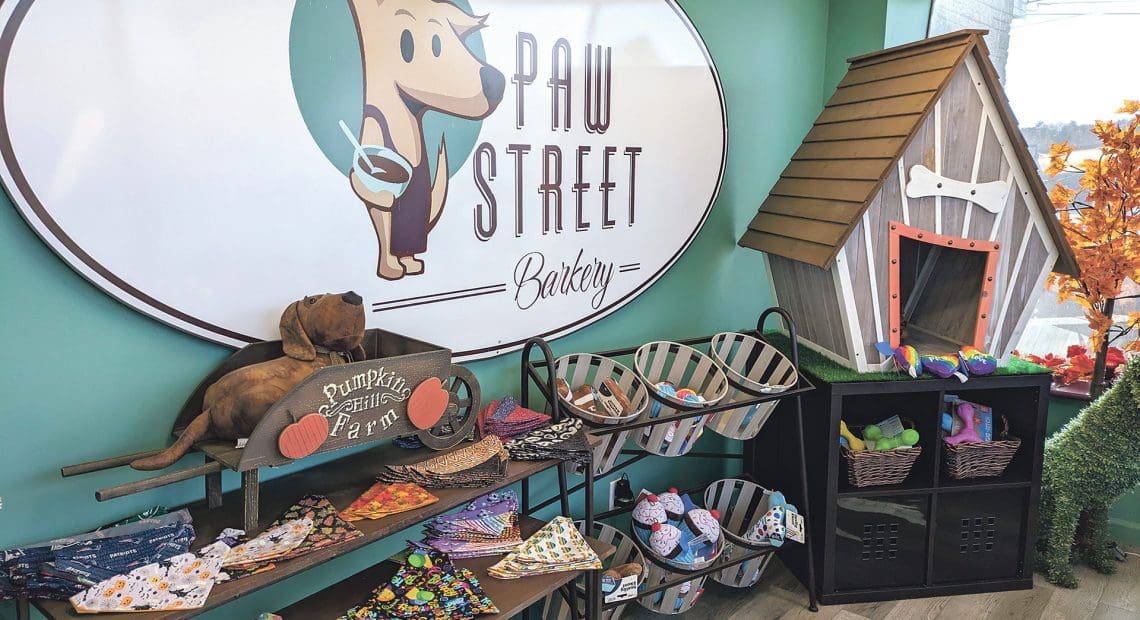
“We’re educating the end user on how to operate systems. That’s something that’s changed in the last 10 years — as part of the design, we build in the training.”
And these are often critical items, he noted. “You can’t have a police station or a fire station without a generator. That’s the kind of thing you’ve got to plan around. Part of the job now is to make sure you can get the materials and get them on time and get them installed and certified, all within a certain time period.”

Another element regarding equipment is how much more complicated some of it is, particularly in the energy-efficiency realm, Hanifan said, and clients need to take into account both their budget and ease of use.

“If you’re going to spend more money on more efficient and better equipment, how long does it really take to pay for that back, and is it worth it? The other part is maintenance. We’ve had clients that want the most sophisticated, the top of the line of everything, but if you don’t have the staff or the crew to maintain it, it’s a headache; it never will operate or be as efficient as it’s supposed to be. So that’s a factor that should always be considered with those systems.”

Bert Gardner, also a vice president with Caolo & Bieniek, agreed.

“Sometimes it causes confusion. So the challenge is, how do you simplify that for the end user as much as possible, because a lot of places don’t have the staff to troubleshoot when things go wrong. We’re educating the end user on how to operate systems. That’s something that’s changed in the last 10 years — as part of the design, we build in the training. We talk to the owner about what the systems are going to be and who they’ve got available to be trained on the systems and how long are they going to need to train. We write it right into the specs for the lighting controls — plan for two days for you to get your staff up to speed on how the lights work in the building.”

This architect’s rendering from Kuhn Riddle shows a mixed-use project

This architect’s rendering from Kuhn Riddle shows a mixed-use project centered around the historic Hastings building in Amherst, which will include five stories of residential units, helping meet a need for more housing in town.

Tierney said current energy codes are moving the world in a positive direction with respect to reducing energy use and the carbon impact of buildings, but owners, architects, builders, and code officials are all having to learn very quickly how to meet these new code requirements. At Kuhn Riddle, that has led to a recent emphasis on passive-house design and certification, which focuses on dramatic energy-use reduction for space heating and cooling.

“We currently have one certified passive-house consultant and five others training to become passive-house designers,” she told BusinessWest. “We understand the detailing that’s required behind passive-house design and the process you have to get through to get passive-house-certified to meet the energy-code requirements. So that’s an expense that, as designers, we’re taking on in terms of getting our staff certified, but then there are layers of construction costs associated with that as well, and testing that needs to happen. It’s all good; it’s just expensive.”

It’s also one way Kuhn Riddle provides professional-development opportunities to its team, Tierney said.

“I think they appreciate having the opportunity to learn a new skill, and it’s obviously a benefit to us to have that expertise, to be able to say to developers, ‘yes, we have five people who are passive-house-certified consultants, and we can do your projects.’”

More broadly, she went on, “in becoming an architect, you have to go through education, training, and then take exams. We’ve been paying for the study software and materials, and then we also pay for people to take their exams. Anybody coming out of college is in debt from going to school, so that additional expense of having to pay for study materials and exams, we just want to take that pressure away. And as people get licensed, that’s a benefit to the firm.”


Opportunity Knocks

The firms we spoke with have all had success bringing in young talent, even though they acknowledged it’s not the easiest field.
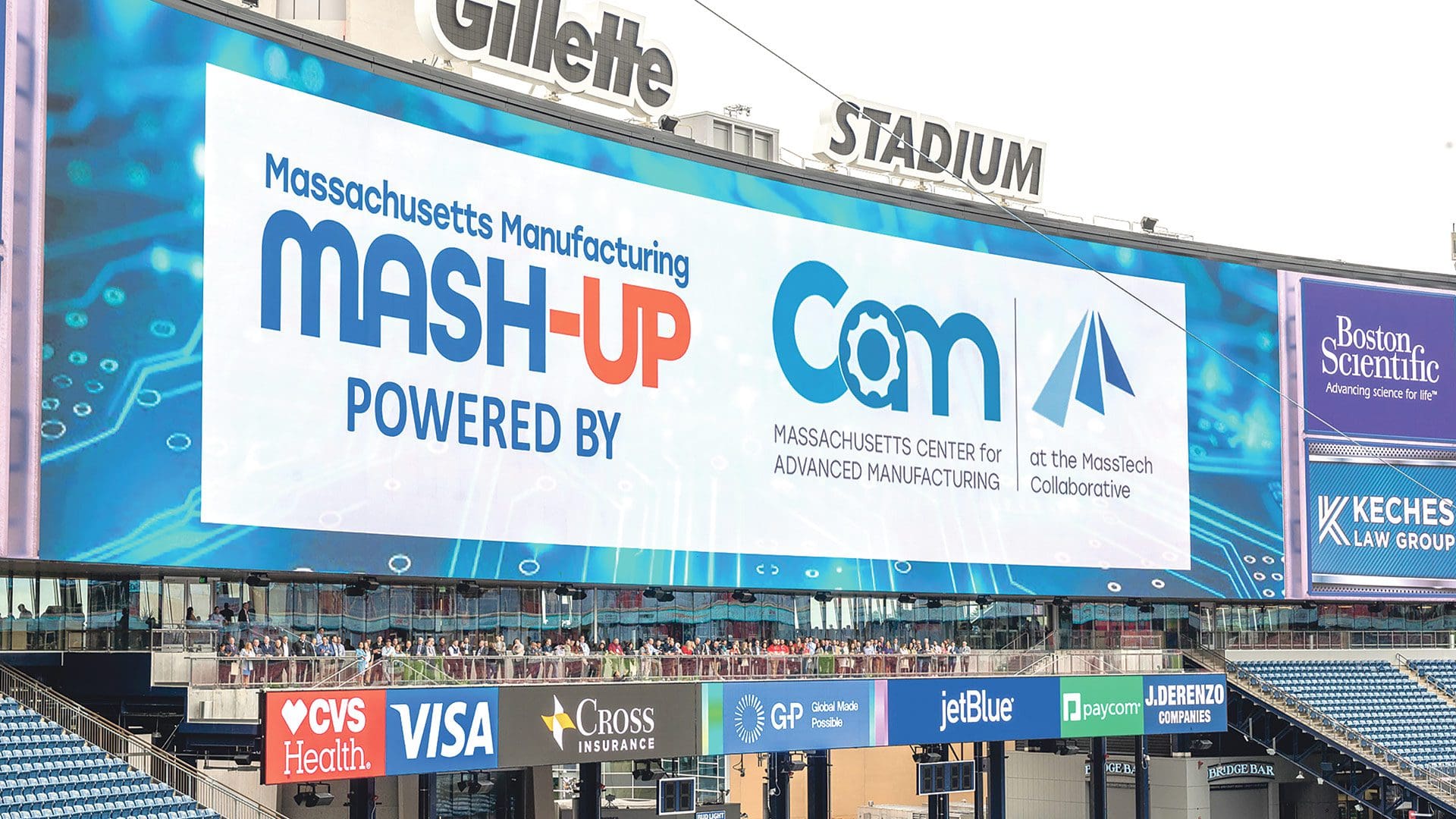
“It’s hard work. There are more lucrative industries to get into, given the amount of work versus the salary,” Edgin said. “So what do we do to attract them? We give you a lot of opportunity, I’ll say that. You’re not pigeonholed into doing just one little task. Continuing education is important to help folks grow and reach their goals. We support that and encourage that.”

Angela Johnson

Angela Johnson

“Someone going into architecture doesn’t necessarily have to choose a certain role. You can be in all kinds of different places within the field.”

Angela Johnson, who went to school for architecture and is now the firm’s marketing assistant, agrees.

“I’ve been here almost three years now, and I’ve definitely learned a lot. Seeing different sides of how it all connects is really eye-opening,” she said. “Someone going into architecture doesn’t necessarily have to choose a certain role. You can be in all kinds of different places within the field. Whether you want to go into the sustainability side, or if you want to go into spec drawing or doing renderings or other things, it’s all about how you want to approach the field, and I think that’s unique to architecture. A lot of industries don’t have that much of a bandwidth.”

Rothschild-Shea said his firm has had success with entry-level interns and entry-level architects, adding that his team members appreciate the relationship aspects of the business. “I think we continue to be people-centric at our core; what we’re doing is designing buildings for people, and we certainly continue to focus on service and taking care of people.”

After all, Tierney said, this is a career in which professionals can bring a job from the drawing board to often very impressive fruition, and that’s a draw for many young people.

“That’s probably my favorite part of the job,” she told BusinessWest — “to draw something on a piece of paper, show it to a client who gets excited about it, and then see it literally come out of the ground and walk through the building with them and have them say, ‘this is exactly what I wanted.’”