Home Archive by category Sections (Page 11)

Sections

Architecture

Designs on the Future

Spending on non-residential buildings is projected to increase over 7% this year, but then slow to only 2% growth next year. Commercial-facilities activity effectively will be flat this year and next, manufacturing construction will increase almost 14% this year before stabilizing in 2025, and institutional construction will see a more than 10% gain this year before slowing to 4% in 2025.

These are the key conclusions from the midyear update by the American Institute of Architects (AIA) Consensus Construction Forecast panelists, a group comprised of leading construction forecasters from across the country. This survey evaluates how this year is likely to shape up from the midyear vantage point and projects how these trends are expected to play out in the coming year.


Sector Conditions Diverging

While the overall non-residential building market is seeing reasonably healthy growth this year, its performance has varied greatly by sector. The commercial sector has seen declines year-to-date as compared to the same period a year ago, while spending on manufacturing facilities has seen strong growth, and most institutional sectors have seen reasonably healthy gains.

On the commercial/industrial side, a few key sectors have been generating strong growth, while others are stagnating. For example, manufacturing construction currently accounts for well over one-quarter of all spending in the non-residential building sector, a share that has doubled since 2019.

Embedded in the generally weak retail and other commercial sector is warehouses, which account for more than 9% of spending in the broader non-residential building category. Its share has increased from just over 6% in 2019.

“While traditional office spending has been declining, spending on data centers has been rapidly increasing. Commerce Department figures peg data-center spending as accounting for over 3% of the overall non-residential building market, and its share has doubled since 2019.”

Finally, data centers are categorized within the broader office sector. While traditional office spending has been declining, spending on data centers has been rapidly increasing. Commerce Department figures peg data-center spending as accounting for over 3% of the overall non-residential building market, and its share has doubled since 2019.

In total, these three niche commercial/industrial construction sectors currently account for more than 40% of the non-residential building market, up modestly from their 39% share last year. In 2019, these three sectors accounted for less than 23% of overall non-residential building activity. As a result, these construction sectors, which typically have a different design focus, materials composition, and contractor specialization, now account for much of the gain that the industry has seen recently. That would suggest that some segments of the industry have benefited from the strong growth in these sectors, while others have been passed over.


Market Challenges Continue

Construction spending, while continuing to increase, has seen the pace of growth slow so far this year, and this slowdown is expected to continue through this year and into 2025. Indications of a continued slowdown include a challenging lending market for construction projects, continued weakness in commercial property values, and ongoing softness in billings at architecture firms.

The lending market remains challenging, and current lending rates are significantly changing the calculations of project feasibility. The Federal Reserve Board’s survey of senior loan officers documents the tighter lending standards for commercial real-estate (CRE) lending.

According to the Fed’s recent report, “a significant net share of banks reported tightening standards for all types of CRE loans. Meanwhile, a moderate net share of banks reported weaker demand for construction and land development loans, while significant net shares of banks reported weaker demand for loans secured by non-farm, non-residential, and multi-family residential properties. The most cited reasons for tightening credit policies on CRE loans were less favorable or more uncertain outlooks for CRE market rents, vacancy rates, and property prices. Additionally, major net shares of other banks cited a reduced tolerance for risk, increased concerns about the effects of regulatory changes or supervisory actions, and a less favorable or more uncertain outlook for delinquency rates on mortgages backed by CRE properties.”

A tighter financing environment coupled with weaker demand for most categories of commercial properties continues to put downward pressure on property values. MSCI’s Commercial Property Price Index indicates a 13.5% overall decline in commercial property values since its most recent high in mid-year 2022.

Offices have seen the steepest decline of over 26% over this period, while apartment values have declined by 21%. Retail facilities have seen a more modest decline of 10%, while industrial property values have continued to increase, tacking on about 5% in value gains over this period. Price declines for apartments and retail facilities are beginning to moderate, but continue to fall quite sharply for offices, particularly in downtown areas.

Architecture firm revenue is a very accurate leading indicator of construction spending with a nine- to 12-month lead. Quarterly billings at architecture firms have been declining since the fourth quarter of 2022, according to the AIA/Deltek Architecture Billings Index. However, the pace of decline — though volatile— has begun to accelerate over the past 10 months.

Firms that specialize in the multi-family residential market have seen the steepest downturn in billings, followed by those specializing in commercial/industrial activity. Firms with an institutional specialization have generally seen revenue levels hold steady, although there has been emerging weakness in recent months.

Given that both new design contracts and project inquiries at architecture firms have been about as weak as billings, prospects for a turnaround in design activity do not appear to be imminent.


Institutional Sectors Offer Bright Spots

Outside of a few niche sectors, including manufacturing and data centers, the commercial/industrial outlook is poised at best for very modest growth or more likely declines in spending levels moving forward. The AIA Consensus Construction Forecast is calling for essentially no growth this year and next overall in the commercial markets. For industrial facilities, current project activity is expected to produce healthy double-digit spending growth this year, but then stabilize for 2025.

Most of the institutional sectors offer more potential in terms of growth in the near term, according to the AIA Consensus Forecast panelists. The overall sector is projected to increase almost 11% this year and then record another 4% increase next year.

Healthcare construction, a significant institutional sector that has seen growth throughout the pandemic, is poised for a 7% gain this year and an additional 4% next year. Amusement and recreation, a sector that understandably saw little activity during the pandemic, is now poised for a double-digit percentage rebound this year and an additional 4% increase in 2025.

However, expectations are that much of the projected growth in the overall institutional sector will be generated by the education market. Education is the largest institutional component, accounting for almost one in every five dollars spent on non-residential building construction.

Longer-term, spending on educational facilities is largely driven by demographics, namely the increase in the under-age 25 population. There were over 100 million people under age 25 in the U.S. in 2020. This group is expected to increase by almost 2 million by 2030. The greatest increases are expected to come from the under-10 population, as the number of 10- to 19-year-olds is expected to decline between 2020 and 2030, while the 20- to 24-year-old group is expected to increase only modestly.

However, these estimates may turn out to be too low if immigration numbers were to increase. This decade, the increase in net immigration is expected to outpace the natural increase in our population (defined as the number of births minus the number of deaths), and historically children have comprised a large segment of the immigrant population. Additionally, many educational construction and reconstruction projects were put on hold during the pandemic with the increase in remote education, so pent-up demand will push up construction activity levels.


Eye on Reconstruction

One final consideration that will impact the construction outlook moving forward is the growing importance of reconstruction activity as a share of overall construction spending. Surveys conducted by the AIA have discovered that about 50% of billings at architecture firms come from work on existing buildings, including additions to existing facilities.

The current economic environment of declining values of existing buildings, coupled with the elevated cost of building new facilities, often tilts the scales toward reconstruction over new construction. The expectation is that the reconstruction share of total construction activity will continue to increase in the years ahead.

Features

Employment

By Nicole Polite


Nicole Polite

Nicole Polite

The workplace dynamic has continually evolved, influenced by shifting societal values, economic landscapes, and generational ideologies. Views on work can be broadly categorized into two philosophies: live-to-work and work-to-live. Understanding these perspectives is essential as they shape the environments and cultures that define our working lives.


Traditional Workplaces: the Live-to-work Ethos

Traditionally, a significant divide existed between work and personal life, marked by strict hierarchies, rigid schedules, and minimal flexibility. This structure, predominant among Baby Boomers and Generation X, is deeply rooted in a post-World War II economic boom that prized efficiency, stability, and conformity. In such settings, employees often found themselves adhering to exhaustive norms and sacrificing personal priorities for work commitments, epitomizing the live-to-work doctrine.

The typical workplace during this era was characterized by a top-down management style, where decisions were made by high-level executives and permeated downward, often ignoring the needs of lower-tier employees. These practices shaped an environment where individual creativity and innovation were stiflingly restricted, mirroring the mechanical precision of assembly-line work rather than fostering a nurturing and progressive workplace.


Modern Workplaces: the Work-to-live Approach

Conversely, the modern work philosophy, favored by Millennials and Generation Z, champions flexibility, autonomy, and a balanced integration of work with personal life. The 2008 Great Recession shaped the worldview of these younger workers, many of whom watched as their parents struggled with job loss, financial instability, and economic uncertainty despite the years spent working in corporate jobs and traditional career paths.

That experience left a mark on these modern employers and workers and instilled in them a strong desire for financial resilience, job security, and a skepticism toward traditional corporate structures. They realized that their parents’ career paths, work approach, and strict adherence to norms weren’t a surefire guarantee of success, security, and wealth.

Most importantly, they didn’t want to feel the pain of loss and unfulfillment they saw in their parents’ eyes as once esteemed and revered institutions, systems, and structures crumbled around them during the recession. They made it their goal to perpetuate work environments and work in jobs that satisfied their desires, met their yearnings, and fueled their passions. They forged career paths that offered some financial stability and a sense of purpose and autonomy, such as entrepreneurship, freelancing, or pursuing work in socially conscious organizations.

Some modern workers would rather not have a 9-to-5 job. They want control over their schedules, the ability to choose projects that align with their interests, and the freedom to work with like-minded colleagues. The possibility of remote work, facilitated by advancements in technology and software platforms like Zoom and Google Meet, allows these workers to enjoy the benefits of working from anywhere, at any time, and for any company.

Many modern workers are also gig workers; about 16% of American workers have earned an income from gig work such as ride sharing, food delivery, or freelance services. This type of work typically has a lower barrier to entry and offers the kind of flexibility that workers crave today. The emphasis is on working to live, where employment is a means to enjoy a preferred lifestyle rather than the sole focus of one’s existence.


Bridging the Generational Divide

The challenge arises when these two distinct mindsets interact within the same workplace. Conflicts can ensue when a traditional employer hires a modern-thinking employee, or vice versa. Such clashes can lead to misunderstandings, stress, and a decrease in productivity, highlighting the need for a more integrative approach to workforce management.

In an ideal workforce, employers would adopt a more inclusive and flexible mindset that accommodates diverse work philosophies. This involves creating policies that respect traditional values of structure and stability, while also embracing the flexibility and innovation that modern workers bring. Ensuring clear communication and mutual respect among employees can foster an environment where varied work values coexist harmoniously.


The Road to a Symbiotic Workplace

The future of work doesn’t have to be confined to a choice between living to work or working to live. Instead, it can be a blend of both philosophies, taking the robustness of traditional structures and merging them with the flexibility and innovation of modern approaches.

My experience in talent recruitment has shown me that both employers and employees seek a productive, symbiotic relationship that supports individual and collective growth. To achieve this, it’s crucial to go beyond merely matching skills and qualifications. We must understand and integrate the nuanced preferences, goals, and aspirations of the workforce.

Creating such a workplace requires an ongoing dialogue between different generations and mindsets. It needs adaptation and compromise from both sides to forge a solid partnership that withstands the tests of time and challenges of a changing world. Only through such integrative efforts can we build a workforce that not only bridges the gap between generations but also thrives on the diverse strengths each brings to the table.

With a balanced approach, we can ensure that both the live-to-work and work-to-live philosophies contribute positively to our collective professional landscape, leading to increased satisfaction and productivity across the board.


Nicole Polite is CEO of the MH Group, a staffing and recruiting firm in Massachusetts and Connecticut, and the author of Expectations Aligned: Forging Better Paths for Employers and Employees to Meet in the Middle, which will be released on Sept. 16.

Education

Surprising Study


Which packaging type for a 12-ounce, single-serve container of orange juice would you choose as the most sustainable option:

• An aluminum can made with recycled material;

• A carton described as biodegradable or compostable;

• Glass described as 100% recyclable; or

• Plastic described as biodegradable or compostable?

If you were like the U.S. consumers surveyed by food scientists in a UMass Amherst study, you’d prefer glass and believe it was the most sustainable choice. And you would be mistaken.

“Glass was the most sought-after and most highly esteemed packaging type. But it turns out, glass is actually among the least sustainable if you look at the whole packaging lifecycle,” said Nomzamo Dlamini, lead author of the paper recently published in the journal Sustainability.

Alissa Nolden

Alissa Nolden

Dlamini, a food science doctoral candidate, was a recent visiting Fulbright scholar from the University of Pretoria in South Africa studying in the UMass Amherst lab of senior author Alissa Nolden, assistant professor of Food Science.

When asked to rank the packaging choices from their perception of the most to least sustainable, overall the consumers responded: glass, carton, aluminum, and plastic.

Though food-packaging sustainability varies depending on the type of product and packaging, the size and weight of the container, and other variables, in the case of the single-serve orange juice, a carton would be the most sustainable, followed by plastic, then canned, and, finally, glass.

This came as a surprise even to Dlamini. “I was shocked to read the lifecycle assessment from the experts that it takes so much energy to produce glass and recycle it — much more than what it takes to make or recycle plastic,” she said.

The study states that “the production and end-of-life impacts of plastic are less than that of glass; plastic is lighter and thus requires less energy to transport. Furthermore, the aseptic sealing process of plastic containers using steam is less energy-demanding than the retort system used for glass.”

The study aimed to understand the motivation behind consumers’ packaging choices, while also weighing price, lifestyle, and other attitudes. In turn, the data can help industry experts understand what consumers think, believe, and prefer, and educate them on how to make more sustainable choices.

“We designed a questionnaire using a method called conjoint analysis, which mimics a real-life situation where you’re presented with various options and you have to make a tradeoff,” Dlamini said. “And we try to understand, at the end of the day, what matters to people. The whole idea behind the study was to get an understanding of what people think and what drives their choices.”

Nolden pointed out that, while many consumers expressed an intention to purchase sustainable packaging, in the end, the top motivating factor was price — particularly the lowest price — followed by packaging type, product claim, and packaging claim.

Nomzamo Dlamini

Nomzamo Dlamini

“We try to understand, at the end of the day, what matters to people. The whole idea behind the study was to get an understanding of what people think and what drives their choices.”

The ideal orange juice option — culled from the 847 adult consumers who answered the online survey — was priced at $1.10 per 12 fluid ounces, packaged in glass, locally produced, and labeled as 100% recyclable.

The message to the food industry is that consumers are motivated to choose sustainable packaging, as long as the price is right, the paper states. “These sustainable packaging options should be clearly labeled as such, effective (e.g. not defective or just as durable as conventional packaging) and affordable to increase consumers’ motivation and adoption of sustainable packaging for food and beverages.”

Ultimately, there is something even more important than choosing the best packaging when it comes to consuming food with a focus on sustainability, the paper concludes.

“Overall, while packaging choices contribute to environmental outcomes, the most impactful and practical way consumers can contribute to sustainability efforts is to reduce or avoid food waste.”

Education

New Title IX Compliance

By Kathleen E. Dion and Sabrina Galli


Schools across the nation were required to comply with the new Title IX regulations by Aug. 1, 2024, and were undoubtedly given a lot to think about. As institutions continue to iron out new policies and procedures, they will need to balance a number of moving pieces. When trying to prioritize implementation, here is a list of top questions federally funded institutions should ensure they have answered.

1. Is the school’s Title IX coordinator up to date on all new regulations? The Title IX coordinator’s role has been greatly expanded by these new regulations, and it is of the utmost importance that such coordinators are aware of all changes.

For example, coordinators should be aware that the breadth of activities covered under Title IX have increased, such that the new Title IX regulations also apply to conduct that occurs in a building owned or controlled by a recognized student organization, conduct outside of the U.S. (for example, in study-abroad programs), and conduct subject to the school’s disciplinary authority. Additionally, coordinators should be prepared for an influx of complaints now that such complaints are no longer required to be formally in writing.

2. Does the institution’s Title IX policy include the expanded scope of sex-based discrimination? Under the new regulations, sex discrimination now includes “all forms of sex-based discrimination,” as opposed to only sexual harassment, based on sex stereotypes, sex characteristics, pregnancy or related conditions, sexual orientation, and gender identity. The regulations also prohibit discrimination based on parental, family, or marital status.

3. Have all necessary non-discrimination policies been drafted and finalized? The new Title IX regulations require that a notice of non-discrimination be provided to students, employees, applicants for admission and employment, and all unions and professional organizations holding collective-bargaining agreements.

Further, if they did not have a policy in place already, schools also must ensure that they have a policy prohibiting retaliation, including at the peer level, and that the policy calls for handling complaints of retaliation the same way it manages complaints of other forms of sex discrimination. The U.S. Department of Education has released helpful guidance on drafting such policies, which may be helpful to institutions as such policies are implemented and/or revised.

4. Is there a schedule or plan in place for annual employee training? Schools must annually train all employees on Title IX, their obligation as employees to address sex discrimination, and their reporting requirements. Different training is required for each of four employee statuses, pursuant to the following categories:

• All employees;

• Investigators, decision makers, and individuals with authority to modify or terminate supportive measures;

• Facilitators of informal resolution processes; and

• Title IX coordinator and designees.

Practically speaking, institutions will have to evaluate the best method for ensuring that the training reaches all employees. Schools may consider implementing mass Title IX trainings for employees or incorporating such training into other meetings or trainings that are already in place. For example, institutions may consider incorporating such training into pre-existing staff meetings to effectively reach all employees rather than imposing additional, separate training times wherein some staff may not be available or are reluctant to attend.

5. Did the school decide to implement an informal grievance process? The new regulations permit schools to adopt an informal resolution process for complaints of sex discrimination based on sex stereotypes; sex characteristics; pregnancy or related conditions; sexual orientation; gender identity; parental, family, or marital status; as well as for complaints of quid pro quo sexual harassment and Clery Act offenses for non-students. This informal process is less prescriptive and gives the investigator additional flexibility in facilitating the investigation.

6. Is the institution using a single-investigator model, and does it accomplish the school’s objectives? The single-investigator model allows the investigator to also act as the decision maker in the Title IX case. This means that they are not only conducting all of the interviews and collecting all of the evidence, but also assessing the credibility of all parties and rendering a decision as to whether a Title IX violation occurred.

First, institutions should confirm that the single-investigator model is permitted in their jurisdiction, as not all courts have allowed it. The single-investigator model has been critiqued for potential pitfalls in providing due process, but it also often has the benefit of efficiency and can be helpful given that the investigator is generally most familiar with all facets of the case.

Second, if the school’s jurisdiction does allow for use of the single-investigator model, then there are a number of questions to consider, including whether the institution wants to use said model, whether it will conduct investigations in-house or outsource, and whether parties will be permitted to pose questions to the decision maker.

7. Has the institution decided to use live hearings? Is that method working for the needs of the school? Live hearings, which were once required, are now permitted but no longer required. Schools can evaluate the use of a live hearing on a case-by-case basis. If a school has decided to use live hearings, has a decision been made on:

• What criteria will be used to determine whether to do so for each case?

• Whether live cross-examination will be permitted?

• Whether the school will provide an advisor to parties who do not have one?

Schools should keep in mind that, if they choose not to conduct live hearings, they still must allow parties to propose relevant and permissible questions to the other side and that investigators must record party and witness interviews, subsequently providing each party with an audio or audiovisual recording or transcript of said interviews with time to propose follow-up questions.

If schools decide to pivot away from the use of live hearings, evaluate whether the new process is working. Is the process more or less effective and/or time-consuming than the use of a live hearing? Does the new process affect the decision maker’s ability to reach an equitable result? It is common for new policies to include a bit of trial and error.

Overall, as institutions ensure compliance with the new regulations, it would not be surprising to see schools continue to revise policies based on how the new procedures pan out in practice. This is especially true given that the new regulations give schools more autonomy in deciding how to manage grievance procedures and related policies despite expanding the applicable scope of conduct.

With the new school year underway, Title IX teams should keep an eye out for how their chosen policies work in practice and consider any needed changes as the school year progresses.


Kathleen E. Dion is chair of the education industry team at Robinson+Cole. She represents private schools, colleges, and universities in a variety of civil matters, such as tuition disputes, allegations of staff misconduct, and Title IX matters. Sabrina Galli is a member of Robinson+Cole’s business litigation group and education industry team. She represents corporate clients in general commercial litigation matters involving breach of contract and business torts, as well as in arbitrations, mediations, and settlement negotiations.


Tourism & Hospitality

Final Approach

Kevin Dillon says Bradley has made great strides over the past decade

Kevin Dillon says Bradley has made great strides over the past decade and has the potential to eventually welcome 10 million passengers per year.

Kevin Dillon will be retiring from his position as executive director of the Connecticut Airport Authority (CAA) in January, after 12 years in that job and a half-century in the aviation industry.

As he talked with BusinessWest late last month for what will likely be the last time in his tenure, he listed a number of accomplishments and milestones during his stint — everything from sharp increases in the number of carriers and non-stop flights at Bradley International Airport (12 and 47 are the current numbers) to the addition of trans-continental and trans-Atlantic flights; from the completion of the airport’s $210 million ground transportation center to the recent kickoff of $250 million worth of additional improvements to BDL.

“We’ve accomplished most of the goals we set down when we established the airport authority,” Dillon said. “Certainly the re-establishment of trans-Atlantic and trans-continental service was a very high priority for us, and we’ve been able to accomplish that with our Aer Lingus service and our LAX and other California service that we’ve had over the years.”

But he spent far more time with what has become his favorite subject — where this airport, the second-largest in New England, can go from here, building on the momentum gained over the past dozen years and the solid foundation that’s been built.

Indeed, Dillon has talked often over the years about Bradley reaching 10 million passengers per year (the current number is about 7 million) and what it will take to get there.

Specifically, it will take more of what the roughly 2.8 million people living and working in Bradley’s catchment area (mostly those within an hour’s drive from Windsor Locks) are looking for — more carriers, more flights, and especially more non-stop flights to more places, in this country and beyond.

Kevin Dillon

Kevin Dillon

“Business travel hasn’t come back to the level it was pre-pandemic. And that’s a question mark across the country; will the business ever get back to that level?”

Bradley was making considerable progress in these efforts, increasing passenger volume from just under 6 million to 7 million, before significant headwinds, in the form of the pandemic and its after-effects, set things back, as they did at airports across the country.

But slowly but surely, as air travel has recovered in dramatic fashion and Bradley has added more non-stops via carriers such as Breeze and, most recently, Avelo, the airport is back to roughly where it was before the pandemic, Dillon told BusinessWest.

“We’re turning over an airport that still has tremendous opportunity and potential in front of it,” he said. “Right now, we’re back to where we were before the pandemic, and we’re back on that growth mode. I certainly believe that the next person coming in has a real opportunity to bring that airport passenger count to that 10 million level.”

As it looks to make continued progress, the airport, as it eyes nonstops to London and other popular destinations, is facing enormous competition from every other airport looking to grow its numbers, he went on. Meanwhile, the carriers have only so many planes.

“We’re in competition with every other airport in the country for the airline assets,” he said. “Every airport is trying to convince airlines to put flights into their airport; we compete with every airport in the region for passengers, but we compete with every airport in the country for airline assets.”

Then there’s the still-sluggish business-travel market, which is an important part of the equation at Bradley, where, before the pandemic, roughly half the passenger volume was business-oriented — a high percentage for an airport of this size — and now, it’s closer to 40%.

“Business travel hasn’t come back to the level it was pre-pandemic,” he said. “And that’s a question mark across the country; will the business ever get back to that level?”

Overall, Dillon is bullish on Bradley and believes it has all the ingredients to become an even more popular alternative to Logan in Boston and the airports in and around New York. For this issue’s focus on travel and tourism, he talked about how to, well, get there from here.


Plane Speaking

Dillon became the first executive director of the CAA after its formation by state officials more than a dozen years ago in an effort to help Connecticut’s airports, and especially Bradley, reach their full potential.

“We’ve demonstrated time and time again that, if we have non-stop service to a location, we will capture at least 80% of everyone in our core area that’s looking to travel to that location.”

Prior to that, he had worked at several different airports and in various capacities, starting with more than 20 years with the Port Authority of New York and New Jersey, with his last assignment as acting general manager of LaGuardia Airport. Later, he served the Massachusetts Port Authority as director of Aviation Operations before working in Manchester, N.H. as director of its airport, in Orlando, and then as president and CEO of the Rhode Island Airport Corp., before taking the helm at the CAA in 2012.

As noted earlier, his time at Bradley has been marked by a number of accomplishments, including a doubling of non-stop flight destinations, the addition of several new carriers, an economic impact to the region of just under $4 billion, and several capital improvements.

These include upgrades to the terminal building, including $250 million in ongoing work, including an in-line baggage-check system that will also bring two additional gates to the airport, which are sorely needed as it continues to grow.

There’s also a vertical-circulation project that will change the way travelers move through the building, allowing the airport to expand its security checkpoint, Dillon explained, adding that these improvements will effectively extend the useful life of the terminal building.

Some of the biggest steps forward, though, have come with the adding of new carriers, especially those in the “ultra-low-cost” category, as he called it, which are in demand among consumers.

Such carriers include Breeze (which has made Bradley a hub), Frontier, Spirit, and, most recently, Houston-based Avelo, which will start service from Bradley to Cancun; Montego Bay; Jamaica; Charlotte/Concord, N.C.; Daytona Beach and Orlando, Fla.; Houston; and other destinations starting in November.

“That’s a level of carrier that didn’t really exist when the CAA was first created,” he noted, adding that, at the time, Bradley had most of the mainstream carriers — Delta, United, Southwest, and others — and has since has put a hard focus on the lower-cost carriers, “because we saw that’s what the marketplace was looking for, and it has really fueled a lot of the growth here at Bradley as well.”

Another key is the addition of more non-stop flights, which are also in demand among consumers, Dillon said, adding that the total is now at 47 and certain to climb higher. Many of them are to Florida, courtesy of Breeze, JetBlue, Southwest, and Spirit, he said, adding that such flights are popular and integral to the overall success of any airport in the Northeast.

“We know where people in our catchment area are flying to and what airport they’re using to do that — so it’s a matter of aggregating that data and then presenting it to an airline and making the business case for why an airline should start that level of service at Bradley.”

“We’re thrilled to see this level of coverage down into the Florida market,” he said. “It’s what allows us to continue to keep people in our market home instead of seeing them travel to a New York airport or Boston.”


Non-stop Action

These initiatives and others have positioned Bradley for continued growth, Dillon believes, adding that the priorities moving forward are to stress Bradley’s many assets while continuing to add more services to the mix.

Doing so will enable the airport to draw more customers from within that 60-minute-drive circle, while also perhaps expanding that radius, making Bradley an attractive alternative for people in various regions.

That includes Western Mass., the source of perhaps 20% of Bradley’s overall passenger volume, he said, adding that the 413 is definitely a potential source of additional growth, as is the area just east and south of Worcester — and Connecticut, for that matter, he said.

One of the priorities — and opportunities — moving forward is adding non-stop service to London, a key destination and part of the success quotient for any large airport.

“Far and away, I think London would be the most successful trans-Atlantic service for us, simply because of the high level of demand into London itself, but also all of the connectivity opportunities that exist,” he said, adding that Bradley has been in discussions with British Airways and other carriers about such service.

It would come with a certain amount of risk at mid-size airports such as Bradley, he went on, adding that, because of this, airlines look for revenue guarantees and/or business-community commitments that will guarantee a certain amount of revenue on the flight.

“There’s always risk when you start a service like that,” Dillon said. “But I do believe, based on the numbers we’re generating every day in the market area that we serve, of people who are traveling to London, that it would be a very successful service.”

Other priorities include additional non-stop flights to spots in the Caribbean and this country, including Seattle, an increasingly popular destination.

With more non-stops, the airport can, as he noted earlier, attract more people in its main catchment area.

“We’ve demonstrated time and time again that, if we have non-stop service to a location, we will capture at least 80% of everyone in our core area that’s looking to travel to that location,” Dillon said, adding that this bodes well for carriers looking to accept the risk of bringing more of these flights to Bradley.

“If we can bring Seattle service to Bradley, people are going to stay home and utilize Bradley for that service,” he went on. “Today, if you want a non-stop service into Seattle, you have to go to either Boston or New York. We have a lot of data available to us; we know where people in our catchment area are flying to and what airport they’re using to do that — so it’s a matter of aggregating that data and then presenting it to an airline and making the business case for why an airline should start that level of service at Bradley.”

Strong levels of business travel always help an airport make its case, he continued, adding that Bradley has historically been blessed with that quality. Thus, the future of business travel will be one of the factors determining the overall trajectory of its growth pattern.

Overall, many factors will ultimately decide where Bradley goes from here. And as Dillon prepares to step into retirement, he believes he’s helped put the airport on the proper flight path.

Education Special Coverage

Access Granted

John Cook calls it “historic.”

And he’s not alone among the region’s community-college presidents in lauding the potential of MassEducate, a state-funded program that makes community college free for everyone who meets enrollment requirements and does not yet have a bachelor’s degree.

MassReconnect, which the state launched last summer to fully fund tuition, books, and supplies at community college for students over age 25, has already been a “game changer,” said Cook, president of Springfield Technical Community College, contributing to a 15% enrollment increase at STCC from the previous year.

“That’s an almost-unheard-of gain in higher education. And it’s hard not to attribute so much of that to the attention of adults on this idea of, ‘oh, I can come back; there’s a pathway for me.’ So it really did change our fortunes,” Cook noted. “We’ve seen about a 10-year decline in enrollments. With this major policy change, we were able to halt that and go in a different way.”

MassEducate, then, has the potential of building on MassReconnect significantly — and putting a college education within reach for everyone, regardless of economic status, Holyoke Community College (HCC) President George Timmons said.

“We’ve eliminated barriers and dealt with equity and access issues,” he told BusinessWest. “Regardless of your socioeconomic status, background, ethnicity, whoever you are, you can go from kindergarten to getting an associate degree as a right in the state of Massachusetts. That’s phenomenal. And it’s huge for the lowest socioeconomic members of society. While there still may be other barriers, finances will no longer be a barrier.”

George Timmons

George Timmons

“Regardless of your socioeconomic status, background, ethnicity, whoever you are, you can go from kindergarten to getting an associate degree as a right in the state of Massachusetts. That’s phenomenal.”

Michelle Schutt, president of Greenfield Community College, said GCC enrolled 256 MassReconnect students last year, which contributed to turning around an 11-year enrollment decline — a common story among community colleges over the past decade — with a 13% increase last fall. And MassEducate is expected to drive those numbers higher.

“It is so incredibly exciting,” she said when she spoke with BusinessWest on Aug. 7. “Applications are up 22% from last year on this date, acceptance is up 33%, and head count is up 11%. And last year, we got 300 students from August 10 to the first day of class, so those numbers should get even better. We couldn’t be more excited and appreciative of our elected officials who had the vision for this.”

MassEducate, a $117.5 million annual investment by the state, covers tuition and fees for all students, plus books and supplies for some. The program aims to support both economic opportunity for students and workforce development across a Massachusetts economy that has struggled, sector by sector, to recruit and retain talent in recent years.

Importantly, the program is a ‘last dollar’ investment, meaning students will still access federal funds, like Pell Grants, as well as state aid and scholarships, and MassEducate will pay the costs that remain, so it’s not funding anywhere near the full cost of a student’s education.

“It’s important to note that we didn’t leave any money on the table,” Timmons noted. “Basically, the state comes in and closes the deal for whatever gaps you may have.”

Schutt believes the program will have far-reaching impacts on students, families, and the economy.

Michelle Schutt

Michelle Schutt

“Now higher education can be attainable for more people, and that will change families for decades. I’m very passionate about the effects of education, particularly generationally. This will have such a huge impact on families, on the workforce, on social mobility.”

“It is surreal that K-12 education became free in the Commonwealth in the early 1800s, and here we are, almost 200 years later, finally giving higher education the support it needs,” she said. “Now higher education can be attainable for more people, and that will change families for decades. I’m very passionate about the effects of education, particularly generationally. This will have such a huge impact on families, on the workforce, on social mobility.”


Back to School

Schutt served on a MassEducate planning committee that met every other week throughout most of the 2023-24 academic year; the group, about 30 in all, included elected officials, business leaders, union representatives, administrators, financial-aid officers, faculty, and others.

“I’ll be honest — I’ve spent my entire life in higher education, but I never guessed this would be so complicated. People had all different perspectives on it, and that’s what these committees should be — we shouldn’t be all monolithic thinkers,” she said.

“Some people wanted to cap the total; other people wanted the students supported up to the total cost of attendance at a community college, which can be $20,000 a year. Others thought it should only be for students in particular majors — high-demand fields. Some thought if they already had an associate degree, they shouldn’t get another. All voices were brought to the table, and we had great conversations.”

Cook said the college presidents, through the Massachusetts Assoc. of Community Colleges, had a strong voice in the process.

“It was a great lift last year to help launch MassReconnect, and now, the universalness of MassEducate will further add to that. And we’re excited,” he said. “I’ve said before that MassReconnect was a game changer. But MassEducate is historic.”

While many graduating high-school seniors will still prefer to attend a four-year college right from the outset, time will tell how many will pivot to a debt-free first two years before entering the workforce with an associate degree or transferring to earn a bachelor’s degree.

“We have some very robust early-college pathways, and we work closely with a couple of different high schools to put credits in high-school students’ hands,” Cook added. “So it’s just natural to have them know there’s a no-cost avenue to continue on with STCC.”

The committee Schutt participated in discussed whether MassEducate should cover only tuition and fees, but the final bill that passed also included books and supplies for those who qualify based on family income.

John Cook

John Cook

“I’ve said before that MassReconnect was a game changer. But MassEducate is historic.”

“We talked a lot on the committee about the opportunity cost of education. Tuition and fees are not the only cost,” she explained. “Transportation, childcare, all the things that we face every single day, those don’t go away because you have free tuition. So that was the motivation behind helping with book costs.”

Schutt expects some prospective students will hear about MassEducate too late this summer to meet the requirements for the fall semester, and as a result, she feels enrollment increases won’t happen all at once.

“Students found out about this two weeks ago, they haven’t started the FAFSA process, and it’s challenging to get enrolled for the fall because of the steps they have to take to be eligible to enroll in this program. My gut says we’ll see a much more significant uptick in the spring, and then, next fall, we’re going to see the full effect.”

Timmons agreed. “Given the cyclical chain of events, we’ll probably see a greater impact in the spring and in subsequent years. You’ll see a significant bump as people know about it and have time to apply to FAFSA and MASFA again.”

Cook, like Timmons and Schutt, is gratified with the outcome of the bill, and grateful for the legislators who supported it.

“We saw some real champions out this way, and we saw a willingness by the House and the Senate to negotiate to this point,” he told BusinessWest, adding that, because of the success of MassReconnect, “we really had a way last year to build a line of sight toward this outcome. Many, many people saw the value and benefit, and that helped us arrive here today.”


Degrees of Progress

Timmons noted that community colleges in Massachusetts saw an 8% enrollment bump in 2023 following passage of MassReconnect — and 45% among the over-25 crowd. That was heartening in more ways than one; not only did colleges benefit, but the program was actively targeting the fact that some 750,000 Massachusetts adults have started a college degree but not finished it.

“That seemed like low-hanging fruit, and MassReconnect really bears evidence of that,” he said, before noting that MassEducate has, at its heart, the same goals of access and equity.

“I’m so passionate about this work of education. It is the great equalizer. Once you have an education and all the rights and privileges of that degree, you can earn a livable, sustainable wage, you can take care of yourself and your family, and you can literally change the trajectory of a family. You’re not only changing your own life, but the lives of your children and your grandchildren.

“That’s amazing,” he went on. “Think about the impact on people in Massachusetts who will be paying taxes, earning livable wages, and entering the middle class and beyond, who otherwise would not be able to do so. And from a workforce-development standpoint, employers are getting a much more educated and prepared workforce to do the work that is needed.”

Graduates can connect with those jobs in more than one way, Cook said, noting that some might not realize they can enter good careers at a sub-bachelor’s level, in fields ranging from STEM to healthcare, and now do it without debt.

“And we know that our baccalaureate partners will also be the recipients down the road when students transfer. We look forward to that. This is just so significant for Massachusetts,” he added. “The term I use is, community colleges can become an equity engine for higher education.”

At STCC, where more than half the population are students of color, many of whom are first-generation college students in their families, the idea that even more students, especially those from lower-income families, may be able to access and education and a career is exciting, Cook said. “MassConnect demonstrated that, when you can get people’s attention, you will get the outcomes that you want.”

“Think about the impact on people in Massachusetts who will be paying taxes, earning livable wages, and entering the middle class and beyond, who otherwise would not be able to do so.”

One challenge now, Timmons said, is to make sure new students at HCC have the resources they need to succeed.

“With an influx of students, we have to focus on success and completion and how to scale up our support services for students. We’ve dealt with equity and access. Now, how do we remove the barriers to get them across the finish line and right out into the workforce or transferring to a four-year institution? These are good problems to have. I’d rather have these problems than not have them. And over time, we’ll address them as we need to.

“There’s still time to enroll,” Timmons was quick to add. “All you have to do is approach your local community college, express interest, and as long as they meet the program requirements and follow the steps, anyone in Massachusetts can start a new path toward a better way of life, which is pretty exciting for me.”

Special Coverage Tourism & Hospitality

The Seuss Effect

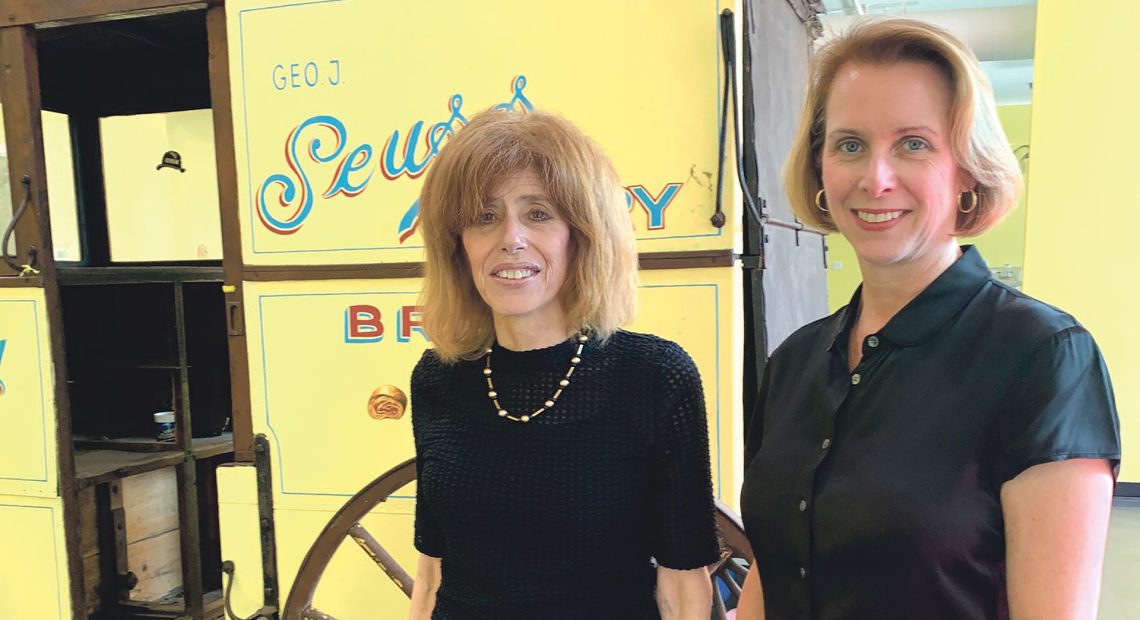
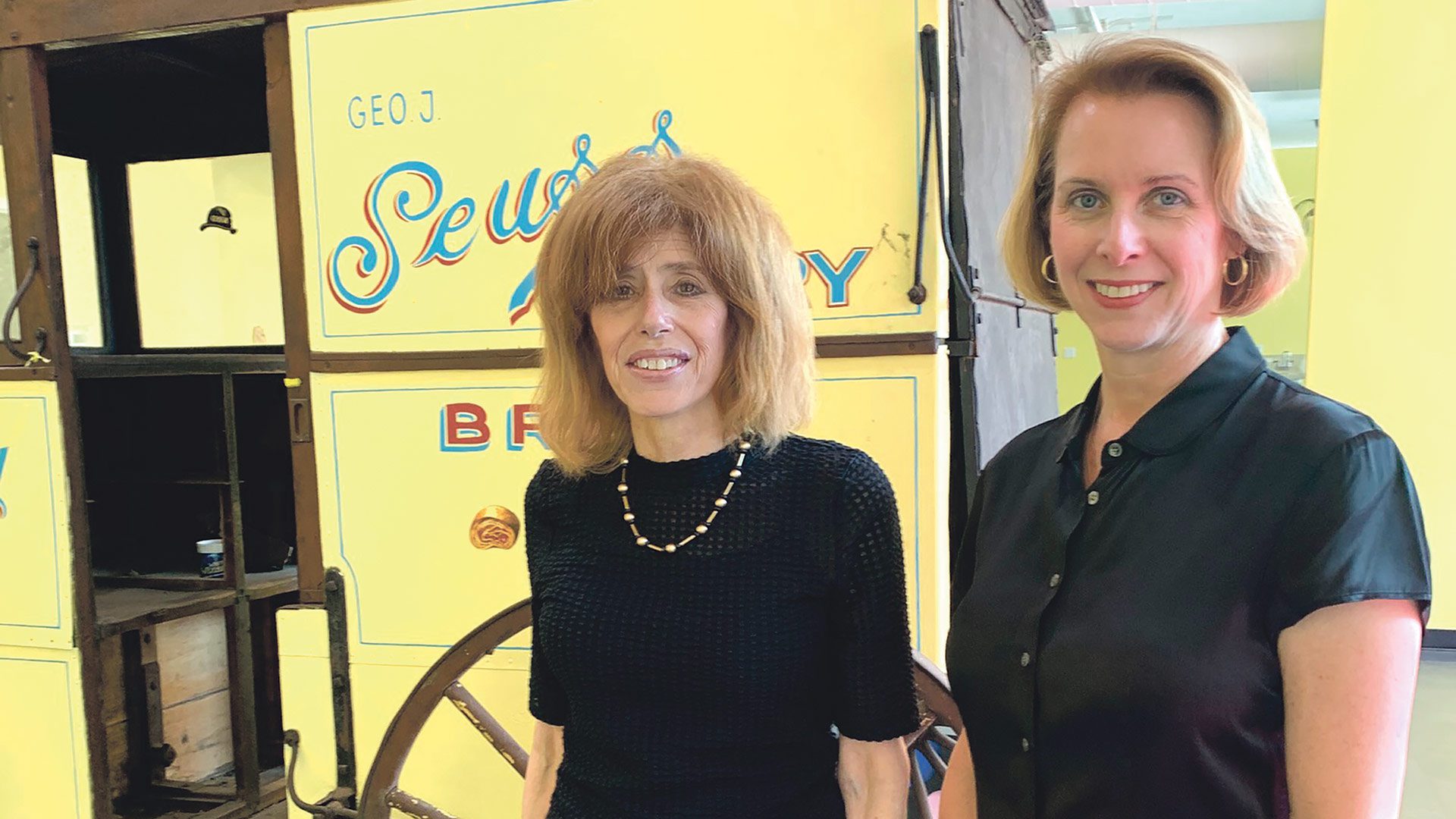
Kay Simpson, left, and Cynthia Campbell

Kay Simpson, left, and Cynthia Campbell at the soon-to-open Chestnut Street Café and Bakery.


‘Bold.’

That’s the word Kay Simpson used as she talked about the Springfield Museums’ decision back in 2018 to acquire what she called a “somewhat blighted” property on Chestnut Street, adjacent to its Wood Museum of Springfield History, with the intention of repurposing it into something else.

The property wasn’t actually for sale, she said, but the Museums essentially made it for sale with an offer that ultimately wasn’t refused, with the intention of improving the landscape and creating a far more positive impression of the Quadrangle. And six years later — a timespan lengthened by COVID, rising construction prices, and other factors — that something else is turning into a nod to Dr. Seuss, or his grandparents, to be more precise.

Indeed, Ted Geisel’s grandparents operated a bakery on Howard Street, a site now part of the MGM Springfield footprint. The two former storefronts on Chestnut Street, a liquor store and convenience store, will become a bakery and café, with the latter featuring plant-based foods (more on that later). The venue has been outfitted with a replica of the kind of delivery truck the children’s author’s grandparents might have used.

This latest initiative at the Museums is innovative, entrepreneurial, and, yes, bold, operating traits that have been inspired by, or amplified by, the runaway success that is the Amazing World of Dr. Seuss Museum, the importance of which to the Springfield Museums, from the bottom line to exposure nationally and globally, simply cannot be overstated, Simpson said.

“We’ve been using the experience of opening the Dr. Seuss museum and the kind of family engagement that it engendered, and spreading it out all over the Quadrangle.”

“It’s been … monumental,” she told BusinessWest, noting that, before the facility opened in 2017, the Museums had logged operating deficits for several years running. In the one month it was open before the end of FY 2017, it helped balance that year’s budget, she went on, adding that there have been balanced budgets and even surpluses since, at a time when many museums have struggled to come back from COVID.

As for exposure, stories about the RMV offering a new license plate honoring Dr. Seuss and featuring the Cat in the Hat have appeared in news outlets across the country.

But the Seuss museum has done more than enhance visitorship, revenues, and the profile of the Springfield Museums, she went on. It has also helped to inspire a number of new programs to make the Museums more interactive, immersive, accessible, and family-friendly.

“We’ve been using the experience of opening the Dr. Seuss museum and the kind of family engagement that it engendered, and spreading it out all over the Quadrangle,” Simpson said, adding that this has always been the case with the Springfield Science Museum (for which there are some intriguing new initiatives in various stages of development), but now extends to all corners of the museum complex.

“When we look at any of our museums, the work that we’re trying to do now is really about making them interactive, making them more participatory, and using the points of accessibility,” she went on, adding that Dr. Seuss has helped make the museums more accessible because he is a worldwide brand associated with fun. “People feel like there’s something to see and do when they’re here at the Museums.”

The Grinch’s Grotto

The Grinch’s Grotto is just one example of how leadership at the Museums is bringing more family-oriented, immersive experiences to its spaces.

Cynthia Campbell, chair of the Museums’ board of directors and a 10-year member, agreed.

“The impact of opening the Amazing World of Dr. Seuss Museum really marked a transformative point for the Museums,” she explained, noting that it has not only doubled overall attendance and led to other Seuss-related opportunities, from the license plate to to a growing Grinchmas celebration, but it has inspired efforts for more innovative and immersive exhibits and programs, including the ambitious upgrades to Dinosaur Hall, including an animatronic T-rex.

Dr. Mark Keroack, the recently retired president and CEO of Baystate Health and longtime Museums board member, concurred.

“The board embarked on the first strategic plan in recent memory about three years ago, and one of the key things we did was to pivot the mission of the Museums and pivot it away from being just a sanctuary for beautiful things to defining its success by the experience of the people who come there,” he said. “There’s an interest in making sure we’re contemporary and relevant, and that we’re appealing to more diverse audiences, particularly in the city of Springfield but also beyond.”

For this issue and its focus on tourism, we take an in-depth look at how the Springfield Museums have caught a Seuss-inspired wave of momentum, innovation, and entrepreneurship, and how those traits are taking the complex to new places — and new heights.


Entrepreneurship on Display

They’re called Free First Wednesdays, or FFWs for short. The name tells you all you need to know.

Admission to the Museums is free the first Wednesday of every month, said Simpson, noting that the FFW on Aug. 7, which drew 1,723 visitors, was the best-attended since the program was launched in January with the help of a three-year, $800,000 grant from the Art Bridges Foundation, founded by Alice Walton, an heiress to the Walmart fortune.

“There’s an interest in making sure we’re contemporary and relevant, and that we’re appealing to more diverse audiences, particularly in the city of Springfield but also beyond.”

Those visitors were treated to Olympics-themed activities, as well as exhibitions and permanent displays, Simpson explained, adding that the Zip code capture in the Welcome Center confirmed that, in addition to strong participation from Connecticut and Massachusetts, visitors also came California, Texas, Oklahoma, Colorado, and other states.

The Free First Wednesdays are just one example of how the Museums have become … let’s say even more innovative and entrepreneurial. Others include initiatives like the Grinch’s Grotto in the SIS Hall of the Lyman and Merrie Wood Museum of Springfield History for the months of November, December, and early January. Featuring an array of thematic, interactive displays, it “adds another layer to the Seuss experience at the Museums,” Simpson noted.

SIS Hall

SIS Hall has become site for many family-friendly exhibitions, like Big Games Big Fun.

“After opening the Amazing World of Dr. Seuss Museum we started thinking of ways to use some of the other spaces in our buildings for large, immersive exhibitions that have broad appeal,” she said, adding that a good example of this is the SIS Hall in the history museum, which has played host to not only Grinch’s Grotto, but other programs and family-friendly exhibitions as well, including a Big Games Big Fun event and a Barbie Day, which capitalized on the excitement of the 2023 movie.

Currently, the space is hosting “Xavier Riddle and the Secret Museum,” an exhibit that brings to life the acclaimed PBS KIDS TV series, which follows the adventures of Xavier and his little sister Yadina and best friend Brad as they tackle everyday problems by traveling back in time to learn from real-life inspirational figures.

“We’ve witnessed many museums struggling and, in fact, closing their doors. Thankfully, we were able to survive that and not only survive — we’re thriving.”

There’s also the Live Animal Center in the Science Museum. With more than $500,000 in funding from a federal earmark and other sources, the tanks in the center have been completely renovated, and new interactive displays are being installed.

Then there’s the new Chestnut Street Café and Bakery, to be operated by the owners of Pulse Café, the 100% plant-based eatery in Hadley, with a soft opening planned for early September.

Funded in part by Leagrey Dimond, Geisel’s stepdaughter, the bakery and café, created at a cost of more than $1 million, will reactivate that space in a way that will bring another dining option to not only Museum visitors, but those who work downtown and the growing numbers of people living there as well.

“I think it’s really exciting that we’re bringing this to downtown Springfield,” she said, adding that the café will be a solid addition to the menu of downtown dining options — and something decidedly different.

It’s also just another example of the Museums being entrepreneurial, innovative, inclusive, and willing to take on new initiatives (and the accompanying risks) at a time when many museums are still struggling in the wake of COVID and doing more hanging on than being bold.

Supporters gather for a celebration in March for meeting the goal for the Dr. Seuss license plate program

Supporters gather for a celebration in March for meeting the goal for the Dr. Seuss license plate program, which is expected to bring more exposure to the Museums and the city.

Campbell agreed. She said the Quadrangle’s deep portfolio of museums — it’s been called a mini-Smithsonian because of the variety — not to mention the huge boost from the Seuss museum, provide it with advantages that most museums simply don’t have.

“We’ve witnessed many museums struggling and, in fact, closing their doors,” she told BusinessWest. “Thankfully, we were able to survive that and not only survive — we’re thriving.”


Exhibiting Boldness

There are many other examples of innovation, interactivity, and inclusion, said those we spoke with, including efforts in the history museum to move beyond the displays of cars, motorcycles, and firearms manufactured in Springfield and use the facility not only for more family-friendly exhibits and programs like Grinch’s Grotto and Hasbro Game Land, but also telling the stories of the people who have lived here and do now.

“We want to do more to tell the story of Springfield and its people,” Simpson said, adding that these efforts are very much a work in process, with grants to be pursued for various initiatives. “Previously, we focused on industry and objects, but I think it’s really important, especially as the city changes, and as part of the work we’re doing with inclusion, to tell all of the stories, starting with Indigenous people, but also historic Black Springfield, the Latino population and the growth of that community, as well as other communities.

“It’s a reinterpretation of the history that is told in the Wood museum,” she went on. “People relate to people, so we need to integrate that into what is being presented in that museum.”

Meanwhile, and as noted earlier, one of the key focal points of the current strategic plan is the Science Museum, said Keroack, noting there have been many improvements and more on the way.

Keroack grew up in Springfield, and in his youth, he was a frequent visitor to the Museums and especially the Science Museum.

“I was a bit of a nerd,” he recalled, adding that he was drawn to the fish tanks, dioramas, and physical exhibits. That museum remains a real draw for young people, he said, but it has been in need of a refresh, as he called it, and it is getting one.

The planetarium has been completely renovated, noted Simpson, adding that while the Korkosz projector — the oldest operating American-made projector in the world — is still used in the planetarium presentation, the facility now boasts a full-dome video system, creating immersive experiences in astronomy and earth science.

Meanwhile, the Museums were recently granted the long-term loan of a large, touch-screen, interactive virtual tour of the International Space Station.

“The second floor of the Science Museum has been progressively transformed,” said Simpson, adding that there are plans for a reimagined dinosaur experience that has many moving parts, literally and figuratively.

The experience will start before visitors enter the front door of the Welcome Center, she noted, adding that a large T-rex will appear to burst out of the exterior wall of the building, setting the tone for play and learning. Two smaller juveniles will appear to congregate near the doors, inviting visitor engagement.

Once inside the Welcome Center, visitors will hear the dinosaurs even as they get their admission tickets, she went on, adding that visitors will enter a completely renovated Dinosaur Hall, which will feature a new, animatronic T-rex that moves and roars. It will be surrounded by hatching baby dinosaurs hidden behind simulated reeds, which visitors can discover as they move through the hall.

Meanwhile, important fossils will be showcased in the renovated space to help tell stories of local paleontology. An elevated observation deck will enable visitors to walk around the T-rex as well as to look down on the exhibitions, allowing for a high level of interactivity.

From Dinosaur Hall, visitors will enter an immersive display that explores archosaurs, the animal group from which dinosaurs evolved. The exhibit will feature flying dinosaurs, erupting volcanoes, and interactive games that connect dinosaurs to current life on earth.

“The overarching goal of the new, reimagined dinosaur experience is to establish the Science Museum as home to the flagship dinosaur destination in New England, as well as the regional center for STEM education,” Simpson explained. “We anticipate that we will increase our annual attendance by 25% with our enhanced dinosaur experience.”

Campbell agreed, noting that the Science Museum is the second-most popular attraction at the Quadrangle behind the Seuss museum, and the planned improvements could generate another significant boost in visitorship.

And another way to tell prospective visitors, “oh, the places you’ll go.”


Architecture Special Coverage

Drawing on Experience

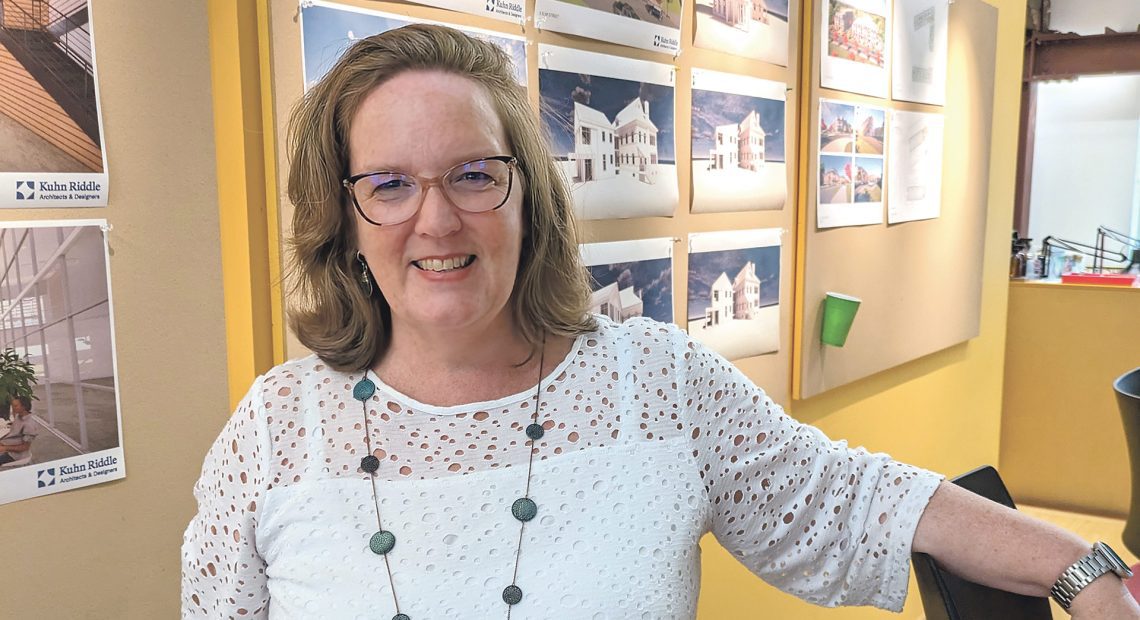
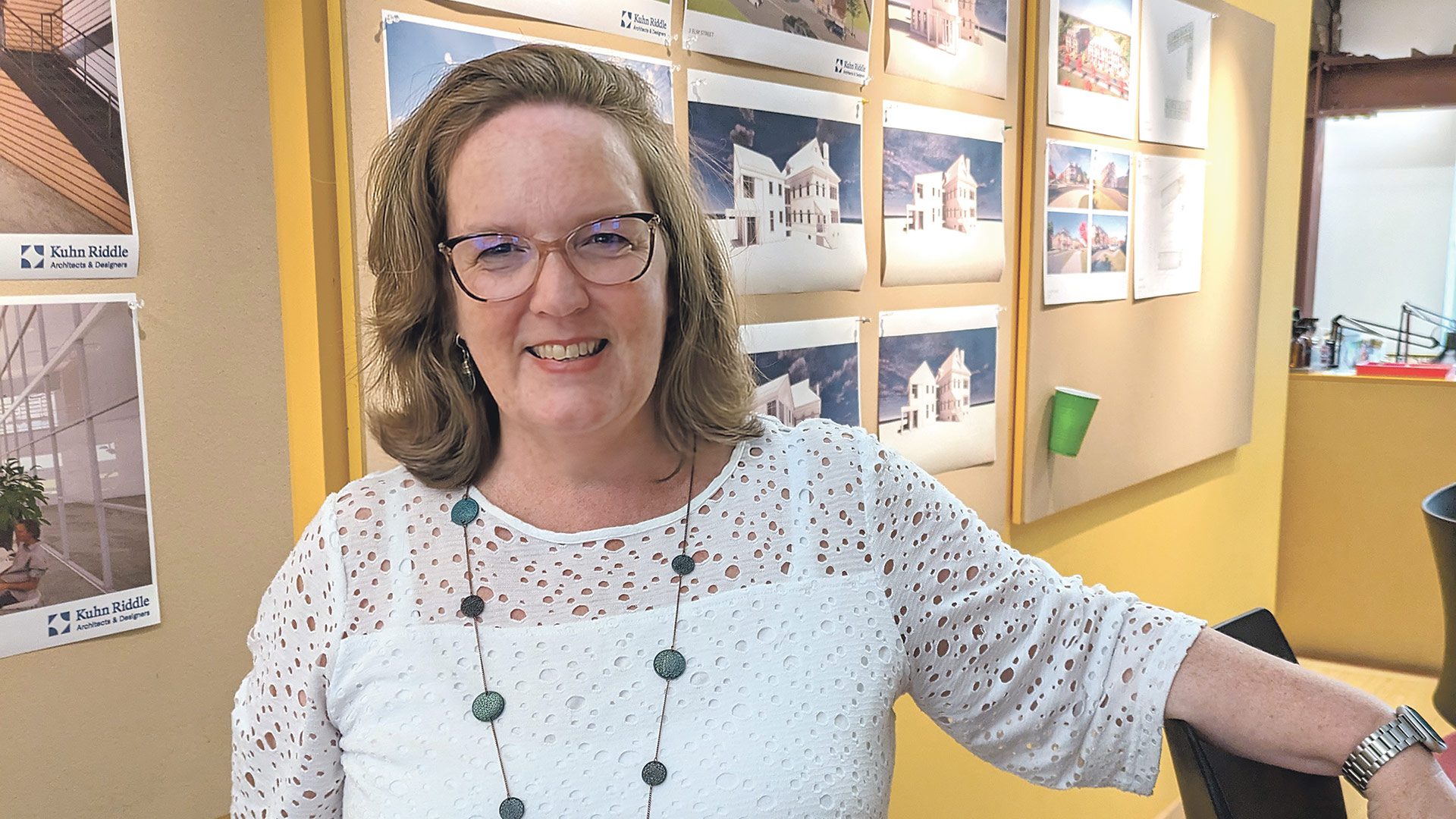
Aelan Tierney says Kuhn Riddle Architects has long been involved in numerous sectors

Aelan Tierney says Kuhn Riddle Architects has long been involved in numerous sectors so it can nimbly shift when the economy does.

When it comes to thriving in the world of architecture, diversity goes a long way.

“During the pandemic, we were working on a lot of large single-family homes,” said Aelan Tierney, president of Kuhn Riddle Architects in Amherst. “That market seems to have slowed down, but higher education is still probably about 50% of our work.”

At the same time, she said, commercial work has declined a bit in the last couple of years. “I’m not quite sure what it is between the economy or construction costs or interest rates, because they all feed into each other,” she noted. But at the same time, the firm has recently tackled numerous multi-family housing developments, both market-rate and affordable, as communities across Massachusetts continue to face an acute need for more of them.

In short, Kuhn Riddle, like many firms, adapts to what the market is offering, she added. “That has always been our strategy, to do a little bit of everything so that we can shift when the economy shifts.”

The situation is similar at Caolo & Bieniek Architects in Chicopee, where educational and municipal projects — schools, public safety, senior centers, libraries, and the like — continue to provide a healthy pipeline of projects, though Curtis Edgin, the firm’s president, doesn’t expect the flow to remain unchanged forever.

“I’m not quite sure what it is between the economy or construction costs or interest rates, because they all feed into each other.”

“That’s why we’re diversified, working in different sectors. Some of that government money, as a result of the pandemic, has begun to taper off a little bit. But they’re still spending it,” he noted. “We’ve also got some commercial projects — healthcare projects, offices, that type of thing — going on. But probably 70% to 75% of our work is public-sector work, whether it’s housing authorities or other projects.”

Kevin Rothschild-Shea, president of ArchitectureEL in East Longmeadow, said his firm continues to stay busy post-COVID, with a number of multi-family residential projects and a growing niche in municipal work, notably a series of projects in Holyoke.

Specifically, AEL has provided services for the city and its public schools as their on-call architect for the past two years, completing a roof and skylight replacement for the Department of Public Works, a roof and skylight replacement for the City Hall Annex, a roof replacement for the Holyoke Children’s Museum and Volleyball Hall of Fame, heating upgrades for the McMahon VRF, historical renovations on the City Council chambers located at City Hall, and HVAC system replacements in the city’s elementary schools. Most recently, it secured an on-call architect contract for the Holyoke Housing Authority.

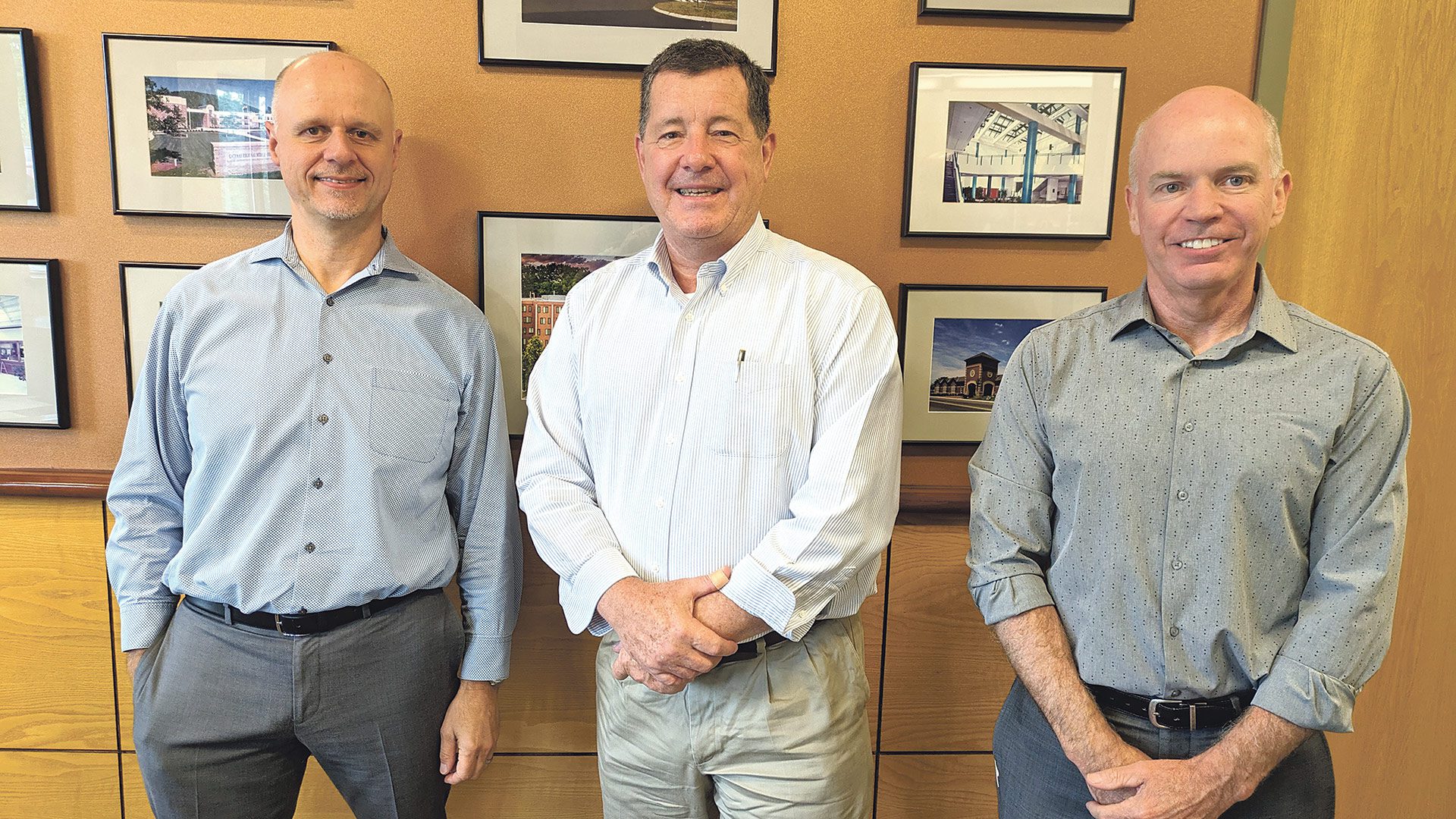
Principals (from left) Bert Gardner, Curtis Edgin, and Jim Hanifan say Caolo & Bieniek Architects continues to stay busy in the post-pandemic years.

Principals (Principals (from left) Bert Gardner, Curtis Edgin, and Jim Hanifan say Caolo & Bieniek Architects continues to stay busy in the post-pandemic years.
continues to stay busy in the post-pandemic years.

“Diversity continues to be there for us,” Rothschild-Shea said, noting that his firm has significant experience in accessibility, historic preservation, educational, and commercial design, as well as both private and multi-family residential development. “It’s always been competitive, but we haven’t had any trouble with workflow. Word of mouth continues to be one of the strongest methods of obtaining new work on the commercial side. It’s evolving work, and we continue to respond to an ever-changing climate.”


Challenges Persist

What hasn’t changed — though they have eased in some ways — are the challenges architects have felt in recent years from supply-chain issues and higher costs.

“It’s a lot less, but there are some elements — like some particular electrical items — that are still causing delays on projects,” said Jim Hanifan, vice president at Caolo & Bieniek. “If we have a big project, a year-plus, everyone knows what materials have problems and get them ordered the second day of the job. The problem is the smaller ones that are only summer jobs; there’s not enough time. You have to pick the materials that you can get. You can’t wait on certain things, or you’ll never get the job done.”

“We’re educating the end user on how to operate systems. That’s something that’s changed in the last 10 years — as part of the design, we build in the training.”

And these are often critical items, he noted. “You can’t have a police station or a fire station without a generator. That’s the kind of thing you’ve got to plan around. Part of the job now is to make sure you can get the materials and get them on time and get them installed and certified, all within a certain time period.”

Another element regarding equipment is how much more complicated some of it is, particularly in the energy-efficiency realm, Hanifan said, and clients need to take into account both their budget and ease of use.

“If you’re going to spend more money on more efficient and better equipment, how long does it really take to pay for that back, and is it worth it? The other part is maintenance. We’ve had clients that want the most sophisticated, the top of the line of everything, but if you don’t have the staff or the crew to maintain it, it’s a headache; it never will operate or be as efficient as it’s supposed to be. So that’s a factor that should always be considered with those systems.”

Bert Gardner, also a vice president with Caolo & Bieniek, agreed.

“Sometimes it causes confusion. So the challenge is, how do you simplify that for the end user as much as possible, because a lot of places don’t have the staff to troubleshoot when things go wrong. We’re educating the end user on how to operate systems. That’s something that’s changed in the last 10 years — as part of the design, we build in the training. We talk to the owner about what the systems are going to be and who they’ve got available to be trained on the systems and how long are they going to need to train. We write it right into the specs for the lighting controls — plan for two days for you to get your staff up to speed on how the lights work in the building.”

This architect’s rendering from Kuhn Riddle shows a mixed-use project

This architect’s rendering from Kuhn Riddle shows a mixed-use project centered around the historic Hastings building in Amherst, which will include five stories of residential units, helping meet a need for more housing in town.

Tierney said current energy codes are moving the world in a positive direction with respect to reducing energy use and the carbon impact of buildings, but owners, architects, builders, and code officials are all having to learn very quickly how to meet these new code requirements. At Kuhn Riddle, that has led to a recent emphasis on passive-house design and certification, which focuses on dramatic energy-use reduction for space heating and cooling.

“We currently have one certified passive-house consultant and five others training to become passive-house designers,” she told BusinessWest. “We understand the detailing that’s required behind passive-house design and the process you have to get through to get passive-house-certified to meet the energy-code requirements. So that’s an expense that, as designers, we’re taking on in terms of getting our staff certified, but then there are layers of construction costs associated with that as well, and testing that needs to happen. It’s all good; it’s just expensive.”

It’s also one way Kuhn Riddle provides professional-development opportunities to its team, Tierney said.

“I think they appreciate having the opportunity to learn a new skill, and it’s obviously a benefit to us to have that expertise, to be able to say to developers, ‘yes, we have five people who are passive-house-certified consultants, and we can do your projects.’”

More broadly, she went on, “in becoming an architect, you have to go through education, training, and then take exams. We’ve been paying for the study software and materials, and then we also pay for people to take their exams. Anybody coming out of college is in debt from going to school, so that additional expense of having to pay for study materials and exams, we just want to take that pressure away. And as people get licensed, that’s a benefit to the firm.”


Opportunity Knocks

The firms we spoke with have all had success bringing in young talent, even though they acknowledged it’s not the easiest field.

“It’s hard work. There are more lucrative industries to get into, given the amount of work versus the salary,” Edgin said. “So what do we do to attract them? We give you a lot of opportunity, I’ll say that. You’re not pigeonholed into doing just one little task. Continuing education is important to help folks grow and reach their goals. We support that and encourage that.”

Angela Johnson

Angela Johnson

“Someone going into architecture doesn’t necessarily have to choose a certain role. You can be in all kinds of different places within the field.”

Angela Johnson, who went to school for architecture and is now the firm’s marketing assistant, agrees.

“I’ve been here almost three years now, and I’ve definitely learned a lot. Seeing different sides of how it all connects is really eye-opening,” she said. “Someone going into architecture doesn’t necessarily have to choose a certain role. You can be in all kinds of different places within the field. Whether you want to go into the sustainability side, or if you want to go into spec drawing or doing renderings or other things, it’s all about how you want to approach the field, and I think that’s unique to architecture. A lot of industries don’t have that much of a bandwidth.”

Rothschild-Shea said his firm has had success with entry-level interns and entry-level architects, adding that his team members appreciate the relationship aspects of the business. “I think we continue to be people-centric at our core; what we’re doing is designing buildings for people, and we certainly continue to focus on service and taking care of people.”

After all, Tierney said, this is a career in which professionals can bring a job from the drawing board to often very impressive fruition, and that’s a draw for many young people.

“That’s probably my favorite part of the job,” she told BusinessWest — “to draw something on a piece of paper, show it to a client who gets excited about it, and then see it literally come out of the ground and walk through the building with them and have them say, ‘this is exactly what I wanted.’”

Commercial Real Estate Special Coverage

Of Paramount Importance

Paramount Theater

Paramount Theater


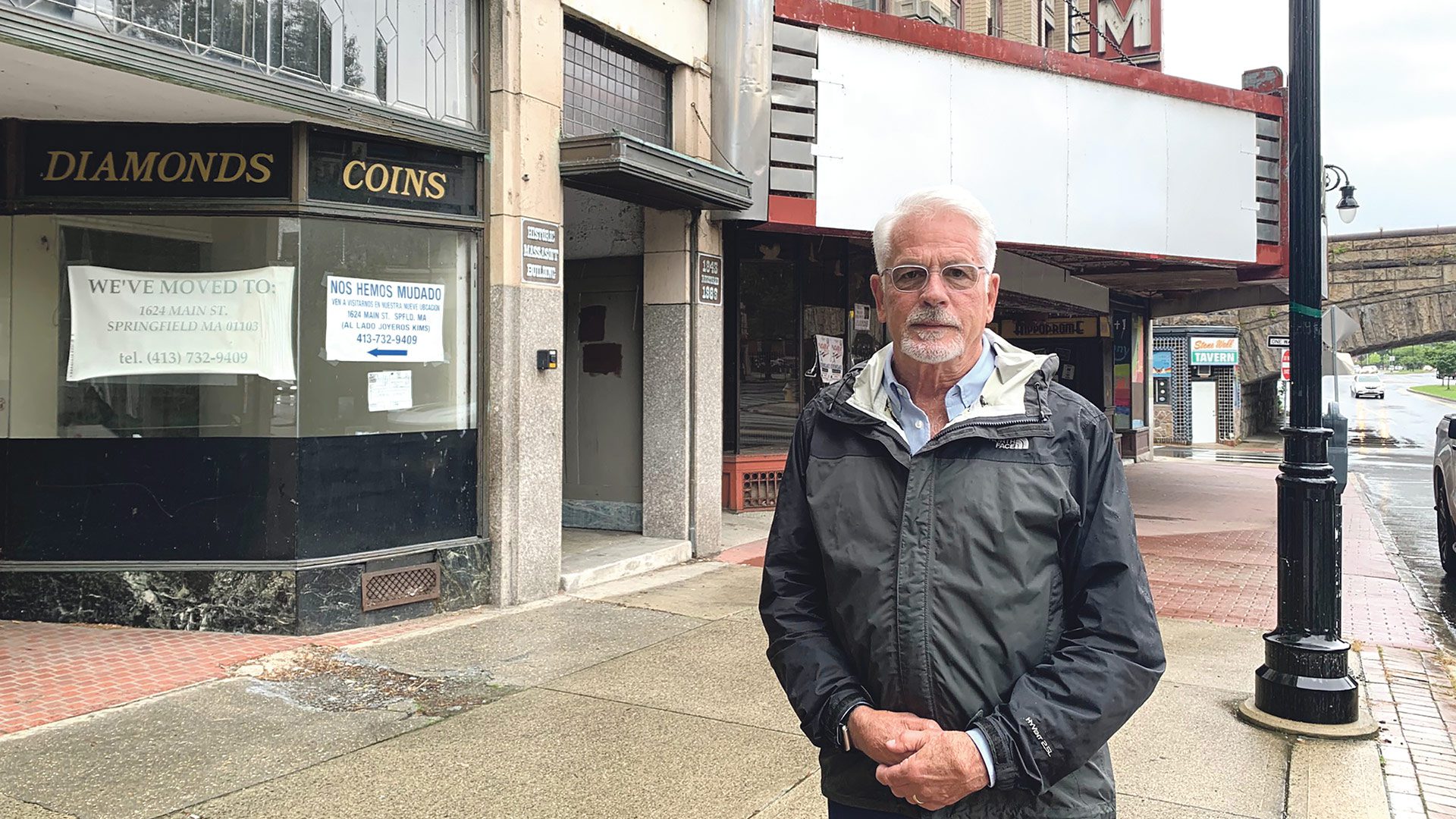
Over the past year or so, while the historic Paramount Theater property in Springfield has somewhat quietly been on the market, Bill Low has taken more than a dozen interested parties through the landmark.

Slicing through the comments made by those taking the tour, he said he’s counted quite a few people saying “what a shame,” or “it’s really sad,” as they view the theater portion of the property — which has hosted shows by the likes of Jerry Seinfeld, the Three Stooges, and Bob Dylan over the years — and the many visible forms of deterioration there.

He’s also heard several of these visitors talk about how, while renovation of the former Massasoit House Hotel portion of the property is likely doable, the theater is … well, another story.

“Over the past year, I probably had 12 to 15 physical tours,” said Low, president of Springfield-based L&P Commercial, which has been handling the sale of this and most other properties within a large portfolio of real estate once owned by the New England Farmworkers Council. “There was lots of interest, which I would expect because it’s a grand property. But when you think about the theater … what do you do with it? It’s beautiful, but what can you do with it?”

Such comments are in many ways helping to set the stage, figuratively but also literally, for what will be a closely watched auction of the Paramount property that was originally slated for mid-August and is now set for Sept. 23.

“There was lots of interest, which I would expect because it’s a grand property. But when you think about the theater … what do you do with it? It’s beautiful, but what can you do with it?”

Low, like Tim Sheehan, Springfield’s chief Development officer, says he doesn’t know exactly what to expect at the auction, to be conducted online by the national real-estate agency Crexi.

According to Crexi’s web page for the Paramount property, the starting bid will be $250,000. That’s roughly one-tenth of what it is assessed at and about one-seventh what the New England Farmworkers Council paid for it in 2011, with plans to author the next chapter in its history — plans that never materialized, due in part to COVID, but also to market conditions and the high degree of difficulty associated with the project.

Theater

The low initial bid price might be another indicator of just how complex and difficult a project this is, but Low also suspects it was set to “generate some action.”

And he believes there will be a good amount of action, but just what it will translate into remains to be seen. The theater portion of the property remains an extreme challenge, he said, not merely because of the high price tag (which has been prohibitive for many of the arts-related groups that have toured the property), but because of the need within the marketplace for another performance venue — or lack thereof.

Sheehan agreed.

“Everyone keeps talking about performance space, but how much performance space is a city the size of Springfield going to be able to support?” he asked rhetorically. “You have Symphony Hall, you have the MassMutual Center. You have MGM, with smaller venues … I’m just not certain you can get positive cash flow out of performance space of that size.”

But he noted that there are other projects in various stages of development in that area, including recently announced plans to convert the floors above the Student Prince Café and the Fort into condominiums (see related story on page 35), and the Paramount could be another building block on that section of Main Street and possible catalyst for still more development.

For this issue and its focus on commercial real estate, we look at how the upcoming auction has cast the Paramount property back into the spotlight, and also why this property with a rich past has so many question marks about its future.


Back in the Spotlight

The marketing language created by L&P Commercial for the Paramount property when it was on the market speaks to everything from its history and architectural significance to the challenges that await those who might want to take this on.

“This endeavor calls for dreamers, history enthusiasts, and architects of the future,” it reads. “Whether you envision a cultural center, boutique hotel, great thriving entertainment hub, this restoration project awaits your touch. Embrace your opportunity to make your mark on history while preserving the city’s rich history. Take the first step toward creating a lasting legacy.”

There has been little if any interest among those who have toured the property to take that first step, said Low, adding that this reality helps explains why the property is now going to auction.

“We just got to the point where we couldn’t find the right buyer,” he told BusinessWest. “It’s a massive undertaking; most of the interest was in the hotel, with people then saying, ‘now what do we do with the theater?’”

By now, most know at least some of the Paramount’s history. Opened in 1926, it was, for decades, all those things listed in the L&P description — a cultural center, thriving hotel, and entertainment hub. Four presidents are said to have stayed in the Massasoit House Hotel. As for the Paramount, formerly named the Julia Sanderson Theater, it has hosted movies and all kinds of live performances, from music to comedy to theater.

Bill Low

Bill Low expects the auction for the Paramount property to draw a good amount of interest.

Renovated in 1999 and renamed the Hippodrome, the property was purchased by the New England Farmworkers Council in 2011 with the intention of restoring it to its former glory. As a casino proposal came together involving real estate just north of the Arch, the Hippodrome was viewed as being a potential key component of such plans.

But the casino was ultimately built in the South End, less than a mile down Main Street, and plans to renovate the Paramount/Massasoit property — with a price tag around $40 million — were never realized.

COVID played a factor, but so did the inability to secure the private funding needed to advance the project to the construction phase, said Sheehan, adding that the Farmworkers Council, burdened with the various costs associated with the real estate, needed to relieve itself of that burden.

Which brings us to next month’s auction. Both Low and Sheehan said it will be “interesting.” Beyond that, they’re not entirely sure what to expect from whomever prevails in that event.


Show of Interest?

They do know that the new owner, whoever that might be, will face the same challenges that the New England Farmworkers Council had in renovating the theater portion of the property and making it viable from a business standpoint.

As Sheehan pointed out, there are several other performance venues in Springfield and elsewhere in the region. Meanwhile, those involved with plans to renovate another historic old movie house — the Victory Theater in Holyoke — are trying to close a funding gap and move forward with 45-year-old efforts to restore that landmark.

That said, he noted that some developers have reached out to him to have discussions about the property and float potential development concepts.

“Hopefully, they’ll show up at the auction and at least gauge a level of interest associated with the properties,” he went on, noting that the decision to take the property to auction has come about rather quickly, so potentially interested parties have not had much time to do their due diligence.

Sheehan said that, if he has a suggestion, or cautionary note, for potential developers of the property, it would be to take on this project in stages.

“I think they should work with scalable pieces of the overall development and begin in the easiest spot that you possibly can,” he said, adding that this spot would likely be the ground-floor retail spaces on the property.

Meanwhile, redevelopment of the Massasoit House Hotel might be the next spot.

“The office component in the former hotel … that won’t be as difficult an undertaking,” he noted. “The really hard part is the Paramount itself; what are you envisioning for the redevelopment of that space that will actually bring positive economics to the overall equation?”

Both the theater and hotel are listed on the National Register of Historic Places, Sheehan noted, adding that the site is significant from both a historic and architectural standpoint, and this needs to factor into happens next, whatever it is.

“Both of those properties have significant historical importance and architectural significance,” he said. “And the city has an interest in making sure that those properties are reactivated and preserved in an appropriate way.”

Low acknowledged the historic nature of the property and the architectural significance, but wondered out loud if something might have to give from a preservation standpoint if something is to happen at this property.

Meanwhile, his only predictions for the auction, based on the interest shown since Crexi started marketing it, are a sale price above (probably well above) $250,000, and “lots of action.”

And maybe, just maybe, from that action, progress will be made in securing a future for this big slice of the city’s past.


Fort Building’s New Owners Plan Condo Development


Peter Picknelly says he and other members of an investment group that recently acquired the property on Main Street in Springfield that is home to the Student Prince Café and the Fort did so to essentially control their own destiny.

Indeed, this same group, which includes Picknelly, chairman of Peter Pan Bus Lines and a principal with OPAL Real Estate Group; the Yee family; and Michael and Kevin Vann, acquired the restaurant in 2014 with the intention of preserving it for future generations of area residents. And as they embark on a series of renovations to the famous restaurant, they understood that their overall path would be easier to negotiate if they owned the property.

But their motivations certainly don’t end there. The new owners have ambitious plans to renovate the long-vacant upper floors of the property into 50 or more condominiums, which Picknelly anticipates will fall into the ‘affordable’ category.

As he talked about these plans, he drew a number of similarities between the Fort building, as it’s known to many, and another project he recently led — conversion of 31 Elm St., the former Court Square Hotel, into mostly market-rate housing units.

Both buildings are historic, to one degree or another (31 Elm St. is on the National Register of Historic places, while the Fort building is not), both have been vacant or mostly vacant for decades, and both are “bears,” as Picknelly put it, when it comes to the many challenges associated with reimagining them as housing.

“But 31 Elm was more of a bear,” he said with a laugh, adding that, while the upper floors of the Fort building do, indeed, present a number of construction and financing challenges — he expects this project will cost $25 million to $30 million — he described it as certainly doable.

“This building is a lot like 31 Elm — it has great bones, but it’s been left to decay for decades,” he explained, noting that the ownership group will work with Winn Development, another partner on 31 Elm, on the Fort Building initiative. “It certainly comes with a challenge, but we’ve teamed up with Winn, who I think are masters at renovating old structures like that and modernizing them and making them great places to live and work.”

Meanwhile, the runaway success of 31 Elm — the building was fully leased when it opened, and there is already a lengthy waiting list — provides both inspiration for the Fort building endeavor and proof of need for this kind of development.

“I think the success of 31 Elm has certainly demonstrated that people want to live in downtown Springfield,” said Picknelly, adding that, just as the Court Square project has injected vibrancy into downtown, the Fort building project can do the same, especially for that section of Main Street.

“I hoping that this serves as a catalyst for further development toward the North End,” he said. “I think that’s the natural course of progress for our city.”

The new ownership group, known as Fort Street Realty Assoc., acquired the property from the New England Farmworkers Council, which has been selling off its portfolio of real estate over the past year or so. The Farmworkers Council acquired the Fort building in 2011 with the intention of renovating the vacant upper floors, but those plans never materialized.

The property, which has been on the market for some time and listed for $2 million, sold for $700,000, an indication of the Farmworkers Council’s willingness to shed properties and get out from under heavy tax and property-maintenance burdens.

Picknelly said the new ownership group has several priorities for the property, including improvements to the restaurant (work in the kitchen, bathrooms, and other areas), efforts to clean up and shore up the “streetscape,” as he called the storefronts along Main Street, and conversion of the upper floors into condos.

—George O’Brien


Community Spotlight

Community Spotlight

Joesiah Gonzales, left, with Home City Development Executive Director Thomas Kegelmen

Joesiah Gonzales, left, with Home City Development Executive Director Thomas Kegelmen at the Gemini Townhomes project in Springfield’s South End.


Joesiah Gonzalez calls it a “game changer.”

He was referring to the Gemini Townhomes project in Springfield’s South End, an initiative that will create 40 single-family homes, specifically for first-time homebuyers, on the site of a long-dormant parcel that was once home to the Gemini clothing manufacturing facility, which was destroyed by fire in 2003.

“This project will expand homeownership in the South End by more than 150%,” said Gonzalez, chief Philanthropy and Communications officer for Home City Development Inc., a nonprofit focused on housing, noting that this is the agency’s first foray into homeownership initiatives.

“This will greatly improve that Central Street corridor,” he went on. “For the families, it’s a great opportunity to build equity and generational wealth. And, most importantly, it will bring vested families that want to be near the downtown district; that’s why this is a game changer.”

The $20 million Gemini project is one of many housing initiatives in various stages of development in Springfield, and just one of many intriguing storylines in the City of Homes.

“Springfield was once the place that was incredibly affordable. Now, it’s not as affordable; if you compare our home values today to our suburban counterparts and smaller urban counterparts, like Chicopee and Holyoke, we’re right on par with a lot of these places.”

Others include the upcoming sixth anniversary of the opening of MGM Springfield and the lingering questions about whether the facility is being sold and what they will mean for the city and the region, the opening (probably early next year) of the new parking garage downtown, the state’s ongoing but slow-moving search for a site for a new courthouse, the next stages in the much-anticipated development of the former Eastfield Mall, Chicago-based McCaffery Interests’ redevelopment of the Clocktower Building and Colonial Block downtown, and the planned $31 million expansion of Performance Food Group in the Smith & Wesson Industrial Park, an initiative that will bring 350 new jobs to the city, just to name a few.

Quickly updating some of these initiatives, Tim Sheehan, the city’s chief Economic Development officer, said the McCaffery project, facing challenges such as rising construction costs and interest rates, may benefit from creating a mix of market-rate and workforce housing, the latter of which would enable the project to access state support. Meanwhile, the state has identified five potential sites for a new courthouse, all in the downtown area, but hasn’t said what they are. The likely plan is to build new and not rehabilitate the existing courthouse, giving the city two intriguing development opportunites.

As for the Eastfield Mall, city officials will soon be considering a TIF (tax increment financing) agreement needed to proceed with the construction phase of a mixed-use development now that demolition of the massive parcel has been completed. And the parking garage should bring much-needed relief after what will be more than two and a half years of being without such a facility.

As for other housing issues, while there are several projects in the pipeline, there is still a housing crisis due to a lack of inventory, said City Council President Michael Fenton, adding that there is another potential crisis emerging — one of affordability.

Michael Fenton

Michael Fenton says there is considerably more vibrancy in Springfield’s downtown than when he was first elected to the City Council more than 14 years ago.

Indeed, Springfield’s home prices have risen at one of the sharpest rates in not only the region, but the state, a development that brings benefits for existing homebuyers, but also hurdles to those looking to buy into the community nicknamed the City of Homes.

“Springfield was once the place that was incredibly affordable,” Fenton said. “Now, it’s not as affordable; if you compare our home values today to our suburban counterparts and smaller urban counterparts, like Chicopee and Holyoke, we’re right on par with a lot of these places.”

For this, the latest installment of its Community Spotlight series, BusinessWest turns its lens on the region’s largest community and its many converging storylines.


Living Proof

For roughly four decades now, Evan Plotkin has been working in downtown Springfield — and working to bring about the vibrancy he remembered when he would come into town as a kid.

That work has come in myriad forms, from organizing the Jazz and Roots Festival (the latest edition of which was staged last month) to commissioning artists for mural projects to spearheading efforts to revitalize parks and other public areas, such as Stearns Square.

That work goes on today, but now, Plotkin brings a different perspective to it — sort of.

Indeed, he now not only works in downtown Springfield (and co-owns the office tower at 1350 Main St.), he lives there as well.

He’s a tenant at 31 Elm St., the mostly market-rate apartment complex created in the former Court Square Hotel, and has one of the sought-after units that looks out on the park. He could walk to his office in a minute, but because Court Square is under reconstruction, it takes two or three.

“It’s a blast living downtown,” he said simply, noting the sum of all there is to do in the city’s central business and entertainment district, almost all of it within easy walking distance of his new address.

Still, while he’s bullish on Springfield and its downtown, Plotkin noted there is considerable work to do to bring more tenants (of all kinds) and vibrancy to the many vacant, or mostly vacant, properties on Main Street and adjoining streets.

“We need to bring back Main Street — that’s what’s weak right now,” he said, referring to the broad stretch between the casino and the Arch. “We need to have more activity; we need to activate vacant spaces and attract more new businesses.

Evan Plotkin in the lobby of his new residence, 31 Elm St. in Springfield.

Evan Plotkin in the lobby of his new residence, 31 Elm St. in Springfield.

“The investment has not been made to change Main Street,” he went on, citing everything from long-stalled plans to redevelop the Hippodrome and adjacent hotel to the many decades that the floors above the Student Prince restaurant have been dormant. “And Main Street will drive everything in the city, as far as I’m concerned.”

Fenton agreed there is still work to be done, but took a moment, or two, to reflect on the progress he’s seen in the 14 years that he’s been on the City Council.

And it’s come in many forms, he said, starting with the $1 billion MGM Springfield development — how it has transformed that part of the downtown and how it has facilitated other developments, including 31 Elm, for which it served as one of many funding partners.

“It’s a delicate balance. For years, the city wanted to create safe neighborhoods, generate economic development, and promote safe schools. Why? So we could increase property values and attract more middle-class residents. But if property values go up too much, too quick, now you have an affordability crisis.”

“If you look back 15, 20 years ago, the downtown Springfield core was largely hollowed out,” he said. “We had an unimproved riverfront, no downtown grocer, a very dormant Worthington Street, and a South End that was dangerous to walk around in, especially in the areas where the casino is now — Union and Howard streets.

“When you think about the things we’ve done since … for a lot of it, we’ve been able to capitalize on the billion-dollar MGM investment,” he went on. “But a lot of it is also a lot of hard work and good economic-development practices.”

Elaborating, he noted everything from an AHL franchise — the city was without one for a short time — to some new restaurants and clubs on Worthington Street and beyond; from new hotels and the return of the Marriott flag to what was known for a time as the Tower Square Hotel to strong movement on market-rate housing.

Indeed, while Stockbridge Court, the massive complex just off Main Street near the South End, was an outlier for many years, Fenton noted, now there are several other projects open or in various phases of development.

“Stockbridge Court used to be an island of market-rate housing; it was an example of what could be done, but no one could seem to replicate it,” he said. “Now, we’ve got 31 Elm, which is full, has a waiting list, and is a really impressive property bringing people with spending power into the area.

“You also have the Willys Overland property, which is also at capacity, and interest in continuing to pursue this across the metro center, most recently with the McCaffery proposal and the city’s investment in the Masonic Block and our foresight in taking that property and conveying it to a developer that’s going to put more than 100 market-rate units there,” he went on. “Add all this stuff up, and it’s really made a difference down here.”

An architect’s rendering of the Clocktower Building

An architect’s rendering of the Clocktower Building, one of many housing and mixed-use projects in various stages of development in the City of Homes.

Discussions about planned and potential new housing (more on that in a bit) and the still-vacant properties downtown and what can be done with them lead Plotkin back to the long-held chicken-or-egg discussions about what Springfield needs most in his downtown — housing to bring residents with spending power to spur new developments, or new retail businesses and hospitality venues that will attract new residents and enable the region to retain more of the students who graduate from its many colleges and universities, strengthening its workforce.


More Living Proof

The reality is that both must happen concurrently, said Plotkin, adding that housing of all kinds, including market-rate and affordable, are needed to create a critical mass of people all hours of the day, every day.

“You don’t want to be a 9-to-5 city,” he explained. “Restaurants shouldn’t be closed on Saturday in a city like Springfield, but many of them are. We need to be a destination.”

As noted, there is considerable progress being made on the housing front, with initiatives ranging from 31 Elm to the Gemini Townhomes to the more than 100 units planned for the Clocktower Building and nearby Colonial Block.

In all, there are more than 850 units of housing in various stages of development, said Sheehan, listing everything from redevelopment of the former Federal Land Bank at 300-310 State St. (60 units), a project known as Residences at the Vault, to the reimagining of the former Kavanagh Furniture store (35 units) further down State Street; from work at the former Brightwood Elementary School (57 units) to an additional 29 units at the former site of the YMCA of Greater Springfield on Chestnut Street.

The last of those projects is another Home City initiative, said Gonzalez, noting that the agency has 130 units in the residential portion (floors 2-6) of the structure, and will redevelop the remaining space on the ground floor of the building, formerly used for offices and programming, to create an additional 29 efficiency units. The remaining back portion of the building will eventually be demolished.

The agency is also working on another homeownership initiative, this one involving the redevelopment of 10 vacant lots in the Old Hill neighborhood into single-family homes. The lots have been identified, he said, and the project is still in the planning phases.

Meanwhile, work proceeds at the Gemini project, which has several funding partners, including the state and the city, which has directed ARPA money toward the initiative. The first 20 of the units are expected to be completed by this fall, with the remaining 20 to come online next spring.

Home City prevailed in a request for proposals for the Gemini site, which, as noted, has been dormant for two decades, said Gonzalez, adding that the agency has been trying to develop a first-time-homebuyers initiative somewhere in the city, and most recently had targeted the site of the former Chestnut Middle School in the North End before refocusing on the Gemini site.

While the additional housing coming onto the market is a huge storyline, so too is what is happening with the values of existing property and what this trend means for the city, those who live there, and those who may want to live here in the future.

Indeed, according to the Warren Group, a real-estate information firm, the median sale price of a home in Springfield rose 68% in Springfield between 2018 and 2023, the highest rate in Hampden County and the highest in Western Mass., outside of a cluster in the Berkshires, a region that greatly benefited from the trend toward remote work.

Fenton told BusinessWest that this dramatic rise brings with it both benefits and potential drawbacks, especially when it comes to affordability, something Springfield has long been able to hype as one its strongest assets.

“It’s created increases in taxes and valuations and demand on services, and it’s also affected affordability — what’s affordable for a renting market or first-time homebuyers,” he asked. “It’s also a huge wealth generator for residents and homeowners who have historically had undervalued properties.

“It’s a delicate balance,” he went on. “For years, the city wanted to create safe neighborhoods, generate economic development, and promote safe schools. Why? So we could increase property values and attract more middle-class residents. But if property values go up too much, too quick, now you have an affordability crisis.”


Betting Lines

While housing is perhaps the biggest issue confronting the city, the casino, and its future, are others.

It was roughly five months ago that Bloomberg reported that MGM had expressed interest in selling one or more of its casinos, including the Springfield facility. That report spurred a good deal of conjecture about a new owner for the existing facility or even a different use for the property, said Fenton, who tried to put some of the chatter into perspective.

He said the property is strictly zoned for a casino and thus cannot be used for other purposes. Meanwhile, any new operator must adhere to the same host-community agreement signed by MGM Springfield, one that requires $25 million in annual payments to city entities, 12 entertainment acts in various downtown venues, and other provisions.

As for the current operation, as the six-year anniversary of its opening approaches, Louie Theros, who took the helm as president in January, said the facility has put the headwinds from COVID in its rear view, is now “fully operational,” and has seen the surge in gross gaming revenues experienced in the second half of 2023 continue into this year.

Springfield at a glance

Year Incorporated: 1852
Population: 155,929
Area: 33.1 square miles
County: Hampden
Residential tax rate: $16.14
Commercial tax rate: $35.49
Median Household Income: $35,236
Median Family Income: $51,110
Type of government: Mayor, City Council
Largest Employers: Baystate Health, MassMutual Financial Group, Mercy Medical Center, Big Y Foods, Center for Human Development, MGM Springfield
* Latest information available

He said the goals moving forward are to focus on what the casino does well and do more of it — he put the ROAR Comedy Club shows and the Free Music Fridays in that category, for example — while also integrating more events at the MassMutual Center (which MGM Springfield manages) into the casino.

“We’ve got AEW Wrestling coming there in the next few months, an event that will be broadcast live on TNT — we’re hoping to do something with that event, obviously — and we have a boxing event coming up where we’ll bring the weigh-in to the casino, so we can bring people into the casino before and after the fight.”

Theros said MGM Springfield has hired Springfield native Andres Gomez, who was part of the initial team that helped launch the MGM Springfield brand in 2018 when he served as director of Restaurants and Nightlife Operations, as executive director of Hospitality.

“He’s really excited about activating the property; he has some great ideas and really wants to liven up the restaurant spaces and common areas,” Theros said. “I’m really excited about what we have coming up in the next year.”

Overall, he’s encouraged by what he’s seeing downtown, especially at 31 Elm, and is looking forward to the completion of the parking garage and the adjoining parking lot as well as Court Square. And, like others we spoke with, he said additional residential units — in the properties across Main Street from the casino and other locations — will bring additional vibrancy to the downtown area.

“To get more people living in the core city center brings more vibrancy to it,” he explained. “And the more people we have walking around, hanging out, and participating in economic redevelopment in the city … it really helps springboard other activity.

“I’m really excited about McCaffery putting hammer to nail and starting to redevelop those properties,” Theros went on, adding that, while the residential component of that project is important, so too is the retail component slated for the ground floors of those properties and the need for a broader retail plan for those buildings, MGM, and other properties in that area.

Sheehan agreed.

“McCaffery has brought back to us that there should be a district-wide, ground-floor commercial plan as to what kinds of businesses can function in this marketplace,” he said. “And all property owners in that district should be sharing in that plan so there’s continuity around what that ground-floor retail experience is, not just from MGM’s perspective, but for the whole district.”

He went on to say that development of such a comprehensive plan is one of many initiatives that fall into the category of long-term planning. He would also like to create a plan for redevelopment of the current Roderick Ireland Courthouse, property that will likely be demolished as the state pursues construction of a new facility elsewhere in the downtown area.

“I think that we should begin master planning now for what that site could ultimately be,” Sheehan told BusinessWest, adding that the city should also start planning now to assist businesses, like Performance Food Group, with expansion plans in various stages of development.

“We only have a limited amount of land in this city,” he said, “and we really need to be looking at ways in which we can be encouraging more existing business expansion in Springfield and creatively work to advance plans companies have for expansion — sooner rather than later.”


 

Women in Businesss

Agents of Change

Change.

In most respects, it’s right there with death and taxes when it comes to constants in life. And in business as well.

“We process change, but since COVID, change has just accelerated, and it’s going to continue to accelerate exponentially. And how do we manage through that in both our businesses and our professional careers?” asked Moe Belliveau, executive director of the Greater Easthampton Chamber of Commerce, noting that change — and coping with the many aspects of it — will be the broad theme running through the third annual SheLeads women’s conference series this fall in the PeoplesBank Conference Room at the Kittredge Center of Holyoke Community College.

Change applies to the conference as well, she told BusinessWest, noting that, in a departure from years past, when the conference was a day-long event, it will now be a series running over four days, starting Sept. 13.

“We process change, but since COVID, change has just accelerated, and it’s going to continue to accelerate exponentially. And how do we manage through that in both our businesses and our professional careers?”

“We think this might fit people’s schedules better; it might be a little easier to manage,” she said, adding that a full day is a rather difficult commitment for many to make.

Programs will begin at 7:30 a.m. with breakfast; proceed with a ‘world café,’ an informal setting whereby participants can explore issues by discussing them in small table groups; then feature a guest speaker, followed by a guest panelist one-on-one interview and discussion facilitated by Belliveau.

Programs will be wrapped up by 10 a.m., and they will be taped as part of the chamber’s Mind Your Own Business podcast.

Again, the common thread running through each program will be change, she said, adding that there are myriad subtopics, including managing conflict during change, leading staff through change, managing burnout through change, vulnerability during change, and authenticity during change.

“We look forward to change, but there’s also some fear that gets generated around that,” she said. “How does it affect your business? How does your own fear affect your business? How do you lead people through change? How do you avoid burnout?”

Answers to these and other questions will be sought at the SheLeads conference, she went on, adding that, over the years, the sessions have drawn women from all sectors and at all stages of their careers.

Belliveau said each of the four speakers has dealt with change on many levels and has gained insight and lessons to share with participants.

“Each one of our guests has a different perspective coming from a different business sector and from a different life-experience perspective,” she went on. “Each one will have their own offerings on different stages of their lives and careers.”

The four sessions are:

Marissa Kulig Crow

Marissa Kulig Crow

• Sept. 13: The series will kick off with a program led by Class A LPGA professional Marissa Kulig Crow, owner of Marissa Golf Movement and creator of the Golf Fore Women program. Kulig Crow had to reinvent her business and career in some respects due to COVID.

Burns Maxey

Burns Maxey

• Sept. 19: The featured speaker is Burns Maxey, who, in addition to owning and operating a small business, BurnsMax Creative, is also an artist, illustrator, designer, and social entrepreneur. Named a Difference Maker by BusinessWest in 2023, she also serves as president of CitySpace, a nonprofit located in Easthampton that restores and manages the historic Old Town Hall as a vital and affordable center for the arts.

Gen Brough

Gen Brough

• Sept. 26: The featured speaker is Gen Brough, president of Finck & Perras Insurance Agency in Easthampton and Florence. Brough began her career in the insurance industry in 1994 as a customer-service representative for Gifford & Perras Insurance Agency. In 2004, after working in various capacities within the industry, she became a partner with Finck & Perras, and in 2015, she purchased the agency from the three other partners to become the sole owner.

Mary Hamel

Mary Hamel

• Sept. 27: The featured speaker is Mary Hamel, owner of Glendale Ridge Vineyard in Southampton. Hamel and her husband, Ed, who manages the vineyard, started the business in 1992 after purchasing Sankey Farm. In 2017, the Glendale Ridge Vineyard brand was born, featuring a variety of estate wines including Cabernet Franc, Vidal, Traminette, and Corot Noir, as well as producing unique wines using grapes carefully sourced from vineyards on Long Island and in the Finger Lakes region.

“We’re thrilled to evolve our women’s professional-development conference into a series, amplifying opportunities for our female leaders to forge connections and glean insights from the tapestry of successful women within our region,” Belliveau said. “With each installment, the series becomes a roadmap for professional advancement, empowering them to thrive in every facet of their careers.”

Attendees can purchase a package of all four sessions in the conference series or customize their professional development and purchase sessions individually. The series package is offered at $119 for members of the chamber ($199 for non-members), and individual sessions are $35 for members ($55 for non-members).

A business showcase sponsorship opportunity is also available at $350 for members ($600 for non-members), affording participants the opportunity to showcase their products and services to attendees. The sponsorship is available per session and includes three complimentary tickets to that session.

For more information, visit www.easthamptonchamber.org or email [email protected].

—George O’Brien

Breweries & Wineries

True Entrepreneurial Spirit

Echo Hill Orchards & Winery is a family business

Echo Hill Orchards & Winery is a family business that includes younger-generation members (from left) Chris, Mia, and Ashley.


When Ashley Krupczak says Echo Hill Orchards and Winery is a family business … she means it.

Indeed, while there are other team members at this Monson institution, the driving forces — figuratively but also literally when it comes to the tractors — comprise two generations of this entrepreneurial family.

There’s Rich and Terry Krupczak, who purchased this orchard more than 25 years ago, and three of their children, Ashley, Chris, and Mia. There’s also, Greg, their oldest child, who passed away in 2022, but remains a huge presence in this multi-faceted operation.

“He was a big part of Echo Hill, and he’s what keeps us going together,” said Ashley, who handles most of the marketing and public relations and acts as official spokesperson, adding that he is remembered with one of the many signature drinks created by the team at Echo Hill.

It’s called Farmer Greg, and it’s a mix of raspberry moonshine and iced tea. It’s part of a growing roster of specialty drinks that also includes Beach Cowboy, made with Jamaican apple rum mixed with orange juice and pineapple juice, with a sugar cinnamon rim and a grenadine floater; Painkiller, made with Jamaican apple rum, cream of coconut, pineapple juice, orange juice, and shaved nutmeg on top; Hoochie Coochie, which features spicy Monson apple vodka, margarita mix, fresh jalapenos, a Tajin rim, and fresh lime; and the OG Mule, made with Monson apple vodka, Goslings ginger beer, and fresh lime.

The offerings are always changing, said Ashley, noting that the depth of this drink list provides just some evidence of how much this family business has evolved over the years — and continues to evolve.

“My brother handles all the farm work, but during the winter, we’re closed down, so I’ll help him trim the apple trees and get the orchards ready.”

Indeed, when the family acquired the orchards 26 years ago, it was a pick-your-own-apples operation, with peaches and pears added to the mix over the years. The ‘you-pick’ offerings have since expanded to now include pumpkins and sunflowers, and blueberries should be added to the portfolio over the next few years.

“People come in, buy their bag, walk out into the orchard, and pick their own,” she explained, adding that this remains a large and important part of the overall operation, especially in the fall months to come.

But the biggest change has come over the past decade or so, when the Krupczak family started making wines from their various fruits, she said, adding that it soon added vodkas, whiskeys, and moonshines to the mix.

These are acquired tastes — and acquired talents, she went on, noting that, like everything else, this is a family affair; Rich handles most of the wine making and distilling, while Ashley is in charge of coming up with the various drink options.

And with these new offerings, Echo Hill has added tastings and winery and distillery flights, whereby consumers can sample five selections, she said, adding that there is a now a full bar and winery where there are tastings, wine by the glass, alcoholic slushies, and those aforementioned signature drinks, which vary with the season and even the week.

For the last weekend in July, after which the winery shut down for a month so the staff could prepare for the busy pick-your-own season, several fall favorites were offered, including a cotton candy slushie, Blue Collared Boys (made with Monson bourbon whiskey, ginger ale, and a splash of apple cider and lime), and the Sugar Daddy, made with Echo Hill’s cider donut whisky, apple cider, and a sugar and cinnamon rim — as well as the a caramel apple sangria and pumpkin pie sangria.

As for wines, Echo Hill now has more than a dozen offerings, including the hugely popular Goblin Grog, a pumpkin chardonnay that goes very quickly in the fall, as well as a sour wine made with apples and blueberries and a blue sangria offered around Halloween called Spooky Sangria.

Meanwhile, Echo Hill books a full schedule of local food trucks — everything from Cousins Maine Lobster to Tony’s Happy Valley Pizza to Rooster’s Roaming Cantina — making the orchard a true destination throughout the year, like many area wineries and breweries.

With its Monson location, Ashley explained, Echo Hill draws visitors from not only Western Mass., but also Connecticut (with easy access off I-84) and, during the fall season, “from all over, really — New Hampshire, Vermont, Florida, you name it.”

As for the pick-your-own aspect of the business, it remains a huge part of the operation, she said, noting that the season officially begins Aug. 30 with apples (more than a dozen varieties) and sunflowers, with pears, peaches, and pumpkins added to the mix by the end of September, with the weather determining exactly when.

Last year was a difficult one, she went on, adding that heavy and persistent rains washed out the peaches and pears, as well as many of the pumpkins. This year — and she acknowledged that it’s still quite early in the game — the outlook is much brighter, in every respect.

As she noted, this is truly a family-owned and operated business, where everyone works together, but each member has a realm that is largely their own.

“My brother handles all the farm work, but during the winter, we’re closed down, so I’ll help him trim the apple trees and get the orchards ready,” said Ashley, noting that her younger sister, Mia, will soon be coming on full-time and will help both in the orchards and in the winery.

Meanwhile, they all work together to develop new offerings and keep the operation on the cutting edge, if you will, when it comes to bringing various audiences to the farm — and then bringing them back.

The Krupczaks have enjoyed great success doing just that over the past quarter-century, and they are on a trajectory for continued growth and ongoing evolution of its varied offerings.

In short, their hard work and entrepreneurial spirit is bearing fruit — in all kinds of ways.

—George O’Brien

Cover Story Features

A Bumper Crop of Perseverance

Farm co-owner Ryan Voiland

Farm co-owner Ryan Voiland


Ryan Voiland doesn’t mince words when he talks about farming and whether it makes good economic sense to be in this sector.

“If I was a smart businessperson, I’d be out of this business,” he said, referring to agriculture in general but especially community-supported agriculture, which isn’t seeing as much support as it once was. “Most other people you talk to would not put up with the type of financial risk and lack of financial rewards that seem to be opening.”

But he kept going, and in poignant fashion.

“It’s a labor of love. We do it because it’s something that’s really important for the world — having food that’s grown nearby, especially fruits and vegetables. We do it because we want to be part of that solution.”

“If I was a smart businessperson, I’d be out of this business.”

He was saying this a few weeks back, but he’s been talking this way for some time now — and certainly long before the historic barn that served as home to the farm store for the Red Fire Farm’s operation in Granby — there is also a farm in Montague — burned to the ground in February.

The fire, which destroyed much more than the barn and farm store itself (more on that later), was only the latest in a series of challenges that have hit this operation hard. Last summer’s torrential rains, other forms of extreme weather, and the decline in interest in CSA co-ops are also on the list.

The fire was an especially devastating setback, one that prompted some deep introspection and hard talk about actually getting out of this business. But Voiland and his wife, Sarah, decided to stay in because this is, as he said, a labor of love.

Nothing since the fire has been easy — nothing before the fire was easy, either, but there are now new layers of challenge — but the Voilands, with some support from the community, have persevered, and, well … made do, as they say.

The fire that broke out in the morning of Feb. 17

The fire that broke out in the morning of Feb. 17 destroyed much more than the Red Fire Farm store.

They have created what they call a temporary farm store comprised of an old farmstand from Montague (the one with which Voiland got his start more than 25 years ago), which was transported to Granby; a new, smaller shed donated by the Massachusetts Federation of Farmers Markets, with two more still to be constructed; and a large tent. And they are making progress with efforts to create something suitable for the fall and winter in a portion of the space under a large solar installation that sits in front of a structure, still under construction, that was designed for the washing and packing of produce and will eventually assume that use.

But the long-term plan calls for building a new, modern farm store just a few hundred yards down Carver Street at the site of a vacant, dilapidated home in a corner of one of the Red Farm fields.

“It’s a labor of love. We do it because it’s something that’s really important for the world — having food that’s grown nearby, especially fruits and vegetables. We do it because we want to be part of that solution.”

Efforts to make these plans reality are complicated by soaring construction costs and insurance settlements that don’t come close to the actual cost of replacing not only the structure that was lost but all that was in it, Voiland said.

So the hopes for reconstruction are contingent upon receiving grants from various sources, he went on, adding that applications have been filed, and the Voilands are now awaiting word.

In what appears to be the best-case scenario, work on a new facility could begin this fall, he said, noting that the farm is dependent on those grants to move ahead and will essentially have to wait for some form of assistance.

Plans to replace the barn

Plans to replace the barn (pictured) lost to fire in February has been complicated by rising construction costs and insurance issues.

For this issue, BusinessWest talked at length with Voiland about the fire, the ongoing efforts to recover, the plans for the future, and how this experience has only hardened the resolve of all those at the farm.


Sudden Destruction

Voiland was working at the Montague facility when he got that dreaded phone call mid-morning on Feb. 17.

A staffer in Granby, one of the few working during the slow time of the year, was telling him that the 100-year-old barn that had come to symbolize the property, and the Red Farm operation, was on fire.

It’s a 45-minute ride from Montague to Granby, and by the time Ryan and Sarah arrived, Carver Street, where the farm is located, was blocked off for a third of a mile in both directions.

“By the time we managed to walk to the property, the barn was 75% gone,” said Ryan, adding that there was little they could do but stand, watch fire crews from Granby and several nearby communities fight the blaze, and start to think about the complex process of carrying on and then rebuilding.

And both have been even more complex than they probably could have imagined.

Indeed, as mentioned earlier, the barn was home to much more than the farm store, and its loss impacted every aspect of the operation.

“Most of the building was devoted to retail sales and to our CSA distribution space, but there were also wings in that barn,” he explained. “We had a wing where we cured and stored garlic. We had several spots where we parked tractors, so now all our tractors are homeless. The basement of that barn was used for storing irrigation equipment; we had tools in there, supplies, and machinery, such as a drop spreader for spreading fertilizer and an orchard sprayer.”
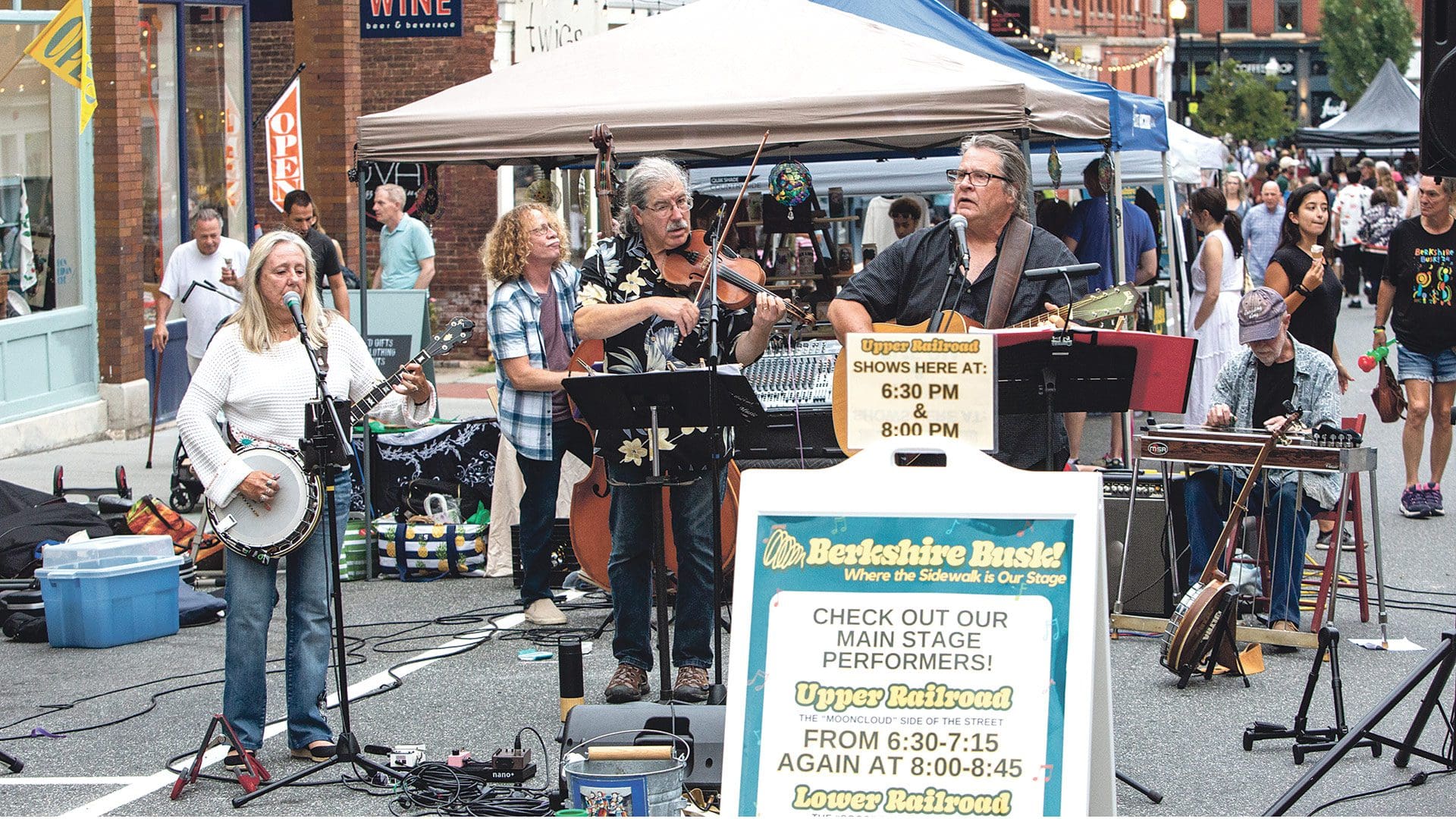
Matters have been further complicated by insurance issues, he added.

Slicing through them, and simplifying them as well, Voiland said his carrier has essentially indicated that the property was insured for $300,000, a number he said doesn’t cover the replacement cost of the various forms of equipment and supplies — including hand-painted signs providing directions to those looking to pick their own produce — that were stored in the barn and its cellar, let alone the cost of rebuilding.

Indeed, he said estimates he’s received from several builders have put the cost of building a new, 6,000-square-foot barn and farm store at $1.5 million on the low end, and $3 million on the high end.

“The price of construction has gone up, even since we updated the insurance policy,” he said, noting that this was maybe five or six years ago. “And in that time, COVID happened, and we’ve had all those supply shortages, some of the many reasons why construction costs have gone through the roof.”

Which explains the reliance on grants to rebuild, he said, adding that a GoFundMe campaign started soon after the fire raised more than $200,000, some of which had to be used to immediately replace supplies and equipment so business could be conducted this season.

Red Fire staff members

Red Fire staff members pose in front of the historic barn around Halloween, during decidedly better days.

The rest went into savings, he said, adding that this money, and whatever can be garnered from insurance, will be used to match outside grants needed to fund new construction.

“We hope to be able to put all that together and get a budget for building something new that’s at least $1 million to a million and a half,” he said, adding that he hopes to avoid having to finance a portion of the project.

An application has been filed with the state’s Food Security Infrastructure Grant program, said Voiland, adding that Red Fire has previously received a grant from the program to help fund construction of its packing facility.

Red Fire is also applying to a federal Rural Energy for America program for a grant that would fund construction of a solar-array-topped carport on the site of the destroyed barn, a facility that would provide not only more solar power for various farm operations, but a space under which to park tractors and other equipment.


Lettuce Rebuild

The cellar hole is all that remains of the 6,000-square-foot barn, made of chestnut, and a replacement for a barn that stood on that same site and was destroyed by fire started by a lightning strike in 1922.

Voiland acknowledged that the operation’s name is a double entrende of sorts, a nod to both the 1922 fire and the red fire variety of lettuce he cultivates, one of myriad vegetables and fruits grown in Granby and Montague.

But history will not repeat itself here, he said, adding that, for several reasons, it makes more sense to rebuild down the road, in the corner of a 25-acre field, then it does on the original site.

Doing so would relieve congestion on that site, provide more parking, and separate the farm activity from the farm store, he explained, adding, again, that if all goes well, ground could be broken before the ground freezes.

Plans are being drawn up for a facility that won’t have any of the history or “majesty” of the destroyed structutre, he noted, but will be more practical in many ways, and more efficient.

“It was designed as a hay-storage barn and livestock barn,” he explained. “And we had made a lot of changes and improvements to that barn to make it more suitable as a farm store, but it still had limitations. And if we rebuild, obviously, we want to rebuild for what we do, not what they did 100 years ago.”

In the meantime, the Voilands, Ryan’s father, Paul, and the team of roughly 75 (during the peak summer months) at Red Fire have been carrying on. It’s not business as usual, by any means, but business — in this case, a wide-ranging farm operation — is getting done.

The weather has been, for the most part (and unlike some recent years), cooperative, with generous amounts of rain — “borderline excessive,” as Voiland put it. “It’s been hot, but not excessively so.”

But there have been challenges, such as piecing together the temporary farm store and maintaining it. For example, strong winds toppled the large tent recently, and it took some time to raise it again.

Then there’s the challenge of doing the day-to-day — and there’s obviously a lot of that — while also handling everything that goes into the process of rebuilding, from talks with the insurance company to conceptualizing a new facility to applying for grants.

Finding the requisite hours in the day hasn’t been easy, but Voiland and others have somehow managed.

Yet, there are other, ongoing challenges, including a general decline in support for CSAs over perhaps the past decade or said, he said.

“There’s still an interest in local and organic and CSAs, but, unfortunately, the supermarkets have figured out how to brand things locally in a way that is sort of detrimental to the CSA farms,” he explained. “People think they can just go to the big-box store and get something that’s local, which is not necessarily true. It’s been a harder marketplace, especially the past five to 10 years, putting natural disasters and unexpected barn burnings aside.”

As Voiland said at the top, if he was a smart businessperson, he would probably be out of this business. But overriding his business sense is his passion for agriculture and giving area residents the opportunity to buy local.

Special Coverage Women in Businesss

Forging Her Own Path

Val Francis

Val Francis


For a long time, Valerie Francis said, she was rather shy about telling her backstory, especially the part about how she didn’t go to college.

When asked why, she said she was concerned about how elements of that story — the lack of a college education and 10 years spent working on the floor at a distribution center — might reflect negatively upon her and perhaps sow doubt about whether she was really qualified for some of the jobs that have appeared on her business card over the years, including her current one — vice president of Employee Benefits for HUB International New England.

Meanwhile, she was concerned that, with her lack of a college degree, she wouldn’t be a good mentor to young people.

“Everyone goes through a little bit of impostor syndrome or not wanting anyone to question your capabilities, especially in my field,” she explained. “I’m in insurance — this had been a male-dominated industry for a very long time, with women kind of breaking through; you don’t want your ability to be questioned. But I see the bigger picture now.”

Indeed, these days, she’s far less shy about sharing that story. She’s done so in many ways and with different audiences, especially women facing the myriad challenges she did growing up and as a young adult (more on that later).

As for how that story is received, Francis believes the confidence she’s always exuded, coupled with her proven aptitude, strong work history, and track record of strong customer service, should override any doubts. And they have.

“Everyone goes through a little bit of impostor syndrome or not wanting anyone to question your capabilities, especially in my field.”

So much so, she said, that when she was being considered for her current job, the latest of many roles she’s filled with various organizations, no one asked her about whether she went to college.

In fact, after she gave a presentation recently, a colleague remarked that she read the audience so well, she must have excelled in a psychology course while in college.

“I said, ‘you, know, Bill, I probably would have, but I never had the opportunity to go to college,’” she recalled, adding that this revelation blew his mind.

To be clear, Francis is a strong advocate of higher education and understands its importance to entering and then advancing within many sectors. But she also acknowledges that a college education is just one of many ingredients to career success, and if one possesses those other ingredients, as she does, then one can advance while also finding work that is fulfilling and promotes work/life balance.

“I’ve been very fortunate throughout my career, especially as a female, a woman of color,” she explained, “in that people have recognized my skill set, my experience, and my capabilities without questioning my background and my education.”

As for that backstory … where to start? Maybe when she was 19, when, after the unexpected death of her mother, a nurse, she was on her own, working in the Springfield Public Library, living with a friend, getting by without a car, and … well, managing. Later, she would work for a decade as an order selector at a Hallmark Cards distribution facility in Enfield, Conn., before deciding she needed to make a change.

Fast-forwarding a little (we’ll go back and fill in the details later), she would take a long, winding road to her current station, starting at a call center, then advancing in the ranks in the broad insurance sector, working for Aetna, Health New England, the Insurance Center of New England (ICNE), and now HUB (which acquired ICNE), and taking titles raging from member service representative to sales executive to vice president.

“I’ve been very fortunate throughout my career, especially as a female, a woman of color, in that people have recognized my skill set, my experience, and my capabilities without questioning my background and my education.”

Today, Francis manages a staff of nine, with another addition expected soon.

She said her work in employee benefits is important, and also rewarding on many levels, especially when it comes to making benefits, and especially healthcare, affordable for employers and employees alike.

“There are new strategies to truly help lower the cost; it’s all about education and comfort because change is not easy,” she said, adding that she works tirelessly with employers and employees alike at renewal time to find something that works.

For this issue and its focus on women in business, we tell a somewhat different story, one of hard work, perseverance, raising the career bar ever higher, and then clearing that bar.


Hard Work Pays Dividends

Francis said she would walk six to 10 miles a day at that job at Hallmark, where she would push a large cart and load it with the items — cards and other products made by the company — sought by individual stores.

“It was lifting, pulling, walking a lot … I was in great shape, but it was killing me; it was beating my body up,” she recalled, adding that the repetitive nature of the work led to various ailments, including carpal tunnel syndrome.

What she wanted was a one-way ticket out of manufacturing and distribution and to “a corporate job where I could dress nice to go to work and have office hours so that, when my kids got out of school, I could go pick them up.”

Problem was, in the 10 years she was at Hallmark (1997 to 2007), most office duties were handled via computer, and she had few, if any, computer skills.

Val Francis says she’s no longer shy about telling her backstory.

Val Francis says she’s no longer shy about telling her backstory.

She discussed this problem with her friend Nicole Polite, who would later launch the recruiting and staffing firm ManeHire (now the MH Group), and confided to her that it would likely be hard for her to pivot at this point, and she would probably have to go back to school to make it happen.

“Nicole said, ‘I don’t know about that,’” Francis recalled, adding that she advised her to sharpen what computer skills she had by taking classes at the workforce agency known then as FutureWorks (now MassHire Springfield). And she did, while also pulling a résumé together and sharpening the focus on what she wanted to do next.

Within a few months, she had an interview at Aetna.

“Even then, I didn’t think I was going to get the job because it was a completely different role from what I was doing,” she recalled, adding that, with some coaching from Polite, she made sure those interviewing her understood that she was reliable and had great work habits, a strong attention to detail, and a keen focus on customer service.

“She said, ‘focus on the skills they need,’” said Francis, adding that she not only got the job, one at a call center, but, before she was even out of training, was named a growth and development coach for other call-center workers.

She would spend several years at Aetna, learning the insurance business, acquiring new skills, and laying the groundwork for what would become a career in that sector.

But first, she would take “three steps backward,” as she put it, for reasons that had much more do with family than her career.

“By that time, my kids were a little older, and they needed me home earlier,” she explained. “I had a daughter who was just shy of six feet tall in middle school, and she did not feel good about her height at all. I said to my husband, ‘we have got to get her into basketball.’ And he said, ‘but Val, you don’t get home until after 7 — you would need a different job and a different role closer to home.’”

She applied to Health New England in 2010, taking a job on the phones as a member service representative. But over the next seven years, she would assume eight different titles and progress through the ranks to senior member service representative to supervisor of member services and provider claims; from sales account representative (after she made the switch from member services to sales) to senior sales account representative to sales executive, gaining experience working not only with employer groups but also brokers.

She joined ICNE in 2017 as an account executive and eventually advanced to sales manager and then vice president of Employee Benefits, a role she maintained after the firm was acquired by HUB in 2019.


Making Policy

As mentioned earlier, Francis’ mother died when she was young. She recalls that her mother, who passed at 52, had several chronic conditions and was often reluctant to seek out the care she knew she needed.

Francis suspects this is because she was unsure of — and apprehensive about — how much that care would ultimately cost her.

“She was in the medical field, and she was knowledgeable about things going on with her body, but at the same time, she didn’t truly understand what her cost was,” she recalled. “I can remember when I was younger, her saying, ‘I don’t how much this is going to cost me.’”

And this is one of many reasons why Francis is so diligent — and compassionate — about her work, especially when it comes to health insurance.

“That’s what rings in the back of my mind with my clients,” she went on. “Once I’m done sitting with the key decision makers, that’s when my fun begins; that’s when I get in front of employees, and I make sure that they’re the smartest consumers of their health plan, their dental plan, vision, disability … you name it.

“And I go into great detail,” she went on, “because, when you’re fully educated and understand your plan, you’re going to get more out of it.”

Francis’s current work involves not only maintaining existing client relationships, but bringing in new clients as well, she said, adding that, overall, she makes sure clients understand and maximize benefits and that they work for employers and employers alike.

That’s especially true when it comes to health insurance, a large expense for both constituencies.

“The cost of health insurance is huge right now, and we want to make sure that it’s affordable in both ways — affordable as far as the rates are concerned for the employer and the employees, because they’re both sharing the cost.

“And from there, we have to make sure that the benefits are equitable,” she went on. “We have to make sure that people can afford to use their plan.”

She counts a number of nonprofits in her client portfolio and admits to having leaned on several of those organizations when she was younger and in need of help. So she finds it rewarding to be able to help them now.

“I relied on them, and now they rely on me,” she went on. “It’s incredibly rewarding, and humbling, for me to be able to help businesses in Western Mass. and outside of Western Mass., but especially our nonprofits because of what they do for our communities and because this is a vulnerable time for all our nonprofits. They have employees at all pay grades, and we have to make sure that each employee will find the benefits equitable and affordable for them to utilize.”

As mentioned earlier, Francis is no longer shy about sharing her backstory. In fact, she’s rather proud to tell it.

“It’s a true testament to who you are as a person and having people recognize your capabilities,” she said, adding that hers has been a long and different journey compared to others with similar titles on their business cards, but she’s looking forward to writing some new chapters.

Indeed, in keeping with her track record for moving ever higher, she’s intent on adding new lines to the CV. What they might be, she’s not sure, but she is sure that her résumé and the confidence gained at each stop will speak volumes about what she can do.

More, perhaps, than a college education could.


Senior Planning Special Coverage Special Publications

According to the U.S. Census Bureau, the number of Americans age 65 and older — which was 35 million in 2000, just 12% of the population — will reach 73 million by 2030, or 21% of U.S. residents. That’s a lot of people. And a lot of planning. And a lot of living left to enjoy.

Achieving your goals — and your desires for your loved ones — requires careful thought, and that was the original thought behind the annual Senior Planning Guide presented by BusinessWest and the Healthcare News.

Go HERE to view the Digital Interactive 2024 Senior Planning Guide

In this year’s edition, we bring you local and national perspectives on everything from the key documents in senior planning — wills, healthcare proxies, living trusts, and more — to discussions on home care, assisted living, adult foster care, and other models; from paying for care to having the talk with your senior loved ones about the next stage of their life.

We present pieces dealing with tough topics like dementia risk and the signs of elder abuse, and also stories about eating well as we get older, easing the stress of caregiving, and the ways in which the senior-living industry has evolved and, in many ways, improved over the years.

In short, stories about the questions families are grappling with every day.

After all, the retirement years should be an enjoyable time, highlighted by special moments with family and friends, the freedom to engage in a range of activities, maybe even a chance to develop new interests and hobbies. But to make the most of that time, knowledge and planning are critically important. Hopefully, the 2024 Senior Planning Guide will be a helpful resource in that process.


Planning for Senior Living

During a Time of Change, Focus on the Many Positives


Two Powerful Tools

Understanding Health Savings Accounts and Medicare


Adult Foster Care

This Can Be a Compassionate Alternative for Senior Living


Making the Transition

Moving Seniors from Long-term Care to Community Living


Recognize the Signs of Elder Abuse

A Crucial Guide to Protecting Vulnerable Loved Ones


An Important Question

Home-care Nurse or In-home Personal Caregiver?


Keeping Alzheimer’s at Bay

While There’s No Cure, Healthy Lifestyle Could Reduce Risk


Easing the Load

Five Ways to Help Reduce Caregiver Stress


Healthy Meal Planning

Eating Well Begins with a Dash of Preparation


Getting Your Affairs in Order

Follow This Checklist to Prepare for the Future


Senior Resources

These Organizations Can Help Families Navigate Decisions


Breweries & Wineries Special Coverage

Beyond the Beer

Ray Berry, owner of White Lion Brewing Co.

Ray Berry, owner of White Lion Brewing Co.


In the early days of White Lion Brewing Co., exposure was critical, Ray Berry said — and it still is.

“When the White Lion brand was created, the ultimate goal was to have a brick-and-mortar location in downtown Springfield. We thought that we would be able to accomplish that in a couple of years, but it took longer than that. And because we were contract brewing in another location, it was hard for consumers to identify us because there was no bricks and mortar,” he recalled.

“So it was important for us to engage the community by doing special events, pop-ups, beer gardens, collaborations, partnerships with other community organizations. And that allowed us to really start to have the brand resonate in the Greater Springfield area.”

Almost a decade ago, Berry started having conversations with the Springfield Business Improvement District about bringing the first beer garden to downtown Springfield.

“We rotated in two or three different locations every week for several summers. And that excitement, that engagement, that new option for professionals — and folks just coming to town after work on Wednesday — was incredible. The crowds grew week over week. It really took on a life of its own.”

“There are over 9,000 craft breweries in the United States. There are towns in Western Mass. that have three or four different breweries, and there are only so many consumers. So it’s important for a brand like White Lion to be very proactive and engage as much as it can to keep the consumer aware of what we’re offering.”

COVID put a damper on those events for a while, but after the pandemic, White Lion not only roared back with events, but continues to expand them in neighboring cities (more on that later).

“I guess the gist of it is, it’s important in this hyper-competitive environment,” Berry went on. “There are over 9,000 craft breweries in the United States. There are towns in Western Mass. that have three or four different breweries, and there are only so many consumers. So it’s important for a brand like White Lion to be very proactive and engage as much as it can to keep the consumer aware of what we’re offering. You have to make a strong marketing effort just because of all of the things that have changed since COVID.”

Barks & Brews is always a popular event at Fort Hill Brewery.

Barks & Brews is always a popular event at Fort Hill Brewery.

Progression Brewing Co. sells beer in hundreds of locations from the Berkshires to Cape Cod, but still relies on business at its downtown Northampton headquarters. Which is why the brewery runs a very busy calendar of events every week, from live music to trivia nights to … bonsai workshops.

“You can find our beer anywhere, but when it comes to getting people in this space, they need specific reasons to go,” said Chris McKenney, taproom manager. “It’s not just about giving a pint to them, but who they’re having a pint with and what they’re doing. It’s all about community engagement. I don’t think any brewery is turnkey anymore — just open the doors, and people will come and drink. I think you need to keep giving people reasons to come, in order to keep the taproom full.

“I can’t believe how busy trivia is week after week,” he went on. “And the live music is great. We’ve got so much talent here in the Valley, so many inquiries from bands who want to play. I don’t charge a cover at the door when we’re trying to get people in; I want people to come and enjoy the place. So maybe you’re losing a little up front, but maybe you get a repeat customer who says, ‘hey, this seems like a cool spot; I want to come back.’”

“It’s all about community engagement. I don’t think any brewery is turnkey anymore — just open the doors, and people will come and drink. I think you need to keep giving people reasons to come, in order to keep the taproom full.”

Eric Berzins, general manager and head brewer at Fort Hill Brewery in Easthampton, called taproom events a critical part of the operation.

“It’s another way to interact and bond with the community,” he said. “Usually, beer drinking has a social dynamic, but adding events, adding music, just facilitates it a little bit more in this age where we’re constantly sort of individualized. So this is just a lubricant to socialization. I guess that’s the best I can describe it in an odd way.

“In terms of music, it’s very eclectic,” Berzins added. “We have big bands, small bands, we’ve got rock and roll, we’ve got folk, we’ve got vocals, we’ve got no vocals. We cover a fairly broad spectrum.”

Then there are annual events like a fundraising 5K and the popular Barks & Brews night, which is what is sounds like — a way for people and their dogs to mingle, eat, drink, and have a good time.

“That’s a very interesting day because everyone’s very rush-rush out on the street, but when everyone’s with their dog on the property, they seem to relax and bring it down a notch. It just doesn’t seem like people are as agitated,” he told BusinessWest, adding that the long-term impact of all this activity is positive for the business. “We’ve got a few people that are here almost every single day.”


Food, Folks, and Fun

This summer, White Lion has a beer-garden presence — featuring live music, food vendors, and, of course, beer — in three cities: at rotating spots in downtown Springfield, in Holyoke’s Armour Yard at the Cubit, and at the new Elm Street Plaza in Westfield.

“That beautiful plaza is right in the heart of downtown,” Berry said of the Westfield park, “so we’re lucky and very happy to be part of that. The last four weeks, the number of people out there has been incredible. I think there’s definite buy-in and appreciation for that new venue in Westfield.

Patrons await entry to the Back Porch Music Festival

Patrons await entry to the Back Porch Music Festival, which hosted a wide array of bands for three days in March at Progression Brewing Co.

“We try to cater to multiple palates,” he said of White Lion’s events in general. “There’s always food available and different variations of beverages. Then there’s music, so there’s the entertainment piece. People want to just come out and enjoy the music, or they may want to have a beverage and a bite to eat, but they want to be part of this ecosystem of energy. It’s incredible — you see little kids running around, young families, grandparents with their grandkids, and people riding through on skateboards and bikes and grabbing a bite to eat. It really does create a sense of community.”

Speaking of community, area breweries find many other ways to connect with locals. In addition to live music, Fort Hill regularly features food trucks, cruise nights, and events that benefit area organizations, from schools to the Pioneer Valley Ballet. It also supported the development of the Fort Hill mountain bike trail at Berkshire East in Charlemont — one that features 40-foot jumps — and Berzins, a mountain-biking enthusiast, is looking to convert some of his Easthampton property to a BMX track.

These efforts are carefully crafted to attract a broad age range, he noted, while generating on-site energy — and revenues — to complement a distribution business that places Fort Hill brews in liquor stores and taps across Western Mass.

“The cruise nights bring in a slightly older crowd because they’re the ones that can afford the 1962 muscle cars,” he said. “But it’s all about socializing. I try to establish an environment where people socialize and talk to their neighbor.”

Progression also runs activities that benefit local schools and nonprofits, McKenney said. “It’s a way to give back. It’s really easy to cut a check, but when you open the doors, you might be getting whole groups who have never been here before, and you might get a repeat customer or two.”

He’s also leaned heavily into renting out the space, either the whole taproom or semi-private events in a smaller space for up to 50 people. Progression has also hosted more than 200 wedding parties in the last three years — in fact, it had three scheduled the week McKenney spoke with BusinessWest — along with after-hours events held after 10 p.m., when most breweries are closed.

“Just like there’s so much musical talent around here, we’re also surrounded by incredible wedding venues left and right,” he said of a wedding-adjacent business that has surprised him in its robustness. “I don’t want to say I spent the first two years throwing stuff at the wall to see what would stick, but there I some truth to that.
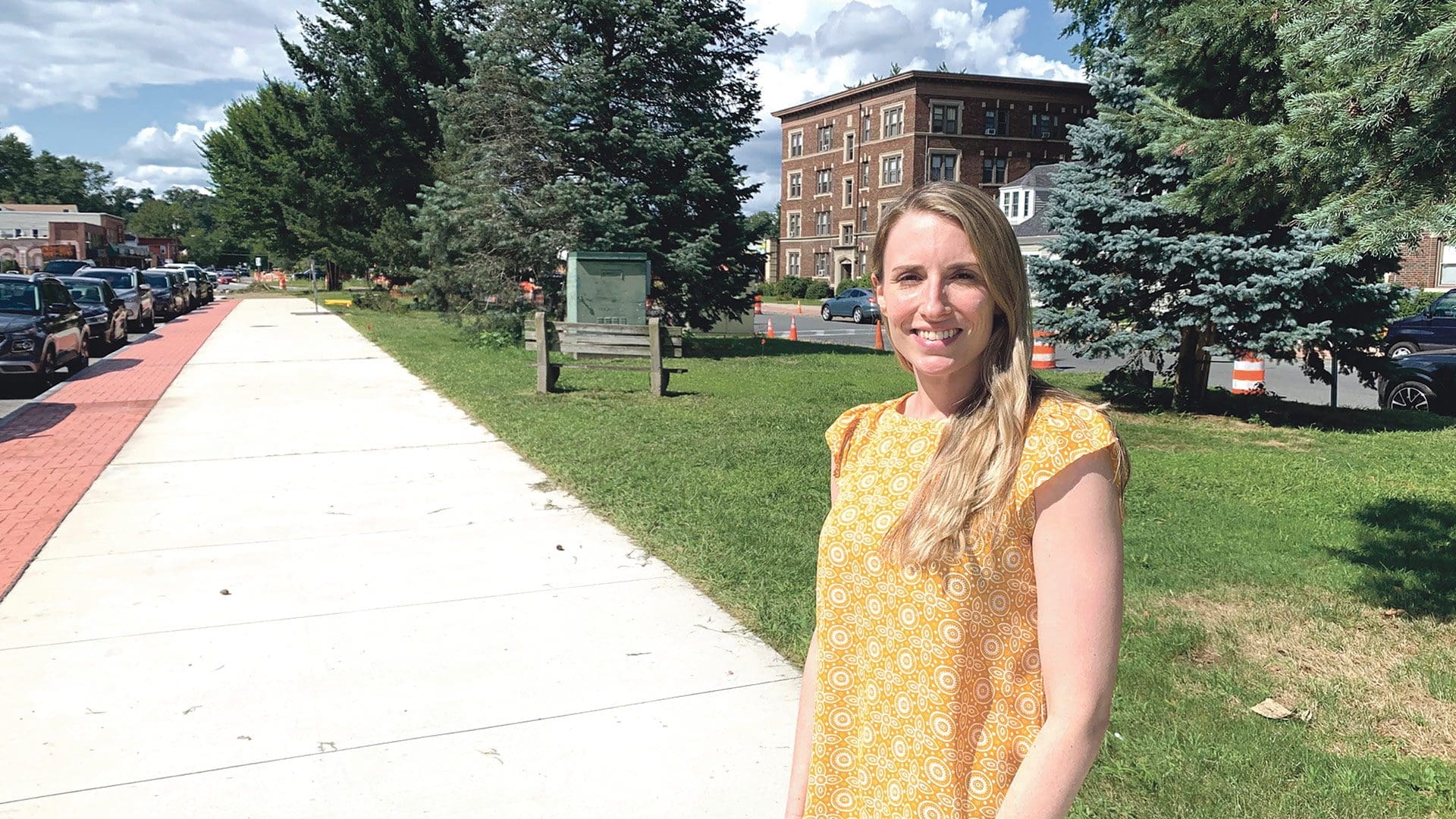
“At the end of the day, most of us in the area are not running ourselves as a destination brewery model, but as a hub for the community.”

“At the end of the day, most of us in the area are not running ourselves as a destination brewery model, but as a hub for the community,” he added. “Any given night, there might be three to five meetups using our space. It could be a shared interest, young entrepreneurs, a group of tabletop gamers; a local running club is here every Thursday. I look around my space, and I see a birthday party or an after-hours office event. The important thing is that everyone is enjoying the space and enjoying a pint or two.”


Community Focus

Berry is proud of the community collaborations White Lion has done over the years, from a celebration of Eastern States Exposition’s 100th anniversary to partnerships with the Springfield Museums, the Basketball Hall of Fame, and the Springfield Thunderbirds, as well as some upcoming events with the Springfield Puerto Rican Parade committee and a new partnership with Ride to Remember, an initiative that supports local law-enforcement families.

“My background has always been the nonprofit, quasi-public space. So, when building White Lion, it was easy for me to take all those relationships and all that experience that I had built up to incorporate it into the fabric of White Lion,” he told BusinessWest. “It’s important for us to be part of those community conversations.”

Events will continue to be important in another, more sobering way, which has to do with the brewery’s location in Tower Square, and downtown Springfield more generally.

“I remember the pre-COVID days, the number of people in the towers. MassDevelopment has statistics that said there were upwards of 7,000 to 8,000 people downtown in these three or four towers. And we built our business model on those pre-COVID numbers. That was part of our business plan.”

After COVID, those numbers have fallen off dramatically as remote work has taken hold.

“Like any other business, you have to pivot,” Berry said. “So we’ve put a stronger emphasis on these different lanes of operation.”

Autos Special Coverage

Shifting into a Higher Gear

Brian Houser, general manager of Balise Hyundai

Brian Houser, general manager of Balise Hyundai, says factors ranging from inventory to incentives are trending in an optimistic direction.


It can be tough to find a parking spot at Marcotte Ford, but Sue Keller says that’s a good problem to have.

Over the past few years, “we got creative, like skipping every space, trying to look like we had more inventory,” she told BusinessWest. “But now, it’s great to see a full fleet out there. And I think it’s just brought up the morale for the whole team here, which is nice.

“When the truck pulls up now, the sales team are like little kids in the window — they want to see what’s rolling off, what’s coming in, and then they sit down and look at who’s put requests in,” added Keller, the dealership’s marketing director. “I feel like the sales team is more upbeat with more inventory. It’s a better vibe out there. They’re ready to sell, and they have it to sell now.”

Inventory, in fact, seems to be the biggest positive development in auto sales across the region, following a pandemic-related shortage that, as Keller noted, forced dealerships to get creative on half-empty lots.

“Inventory is back to being healthy,” said Mike Marcotte, president of the Holyoke-based store. “So when a customer comes in here, compared to six months ago, they have more options, more colors. And then, if they want to factory-order something, Ford has streamlined it, and it’s coming in faster, which is great. Before, the lead time was four to six months; now, it’s a lot faster with the production cycle.

“I feel like the sales team is more upbeat with more inventory. It’s a better vibe out there. They’re ready to sell, and they have it to sell now.”

“So customers can choose exactly what they want instead of settling on something,” he added. “And they can see it. Instead of looking online for a picture, they can see it in person, and drive away that day if they want.”

Brian Houser, general manager of Balise Hyundai in Springfield, has seen a similar inventory rebound.

Mike Marcotte says having plenty of inventory

Mike Marcotte says having plenty of inventory on the lot is important not just to give buyers options, but because they want to see and touch what they’ll be buying.

“Most brands have been able to fill their lots back so customers have more varieties and choices,” he said, adding that, while used-car access continues to fluctuate following a recent drought, new-car selection is strong. “Consumers have been coming out. They have an opportunity to test drive more makes and models. Before, they’d show up on a parking lot, and there wouldn’t be any inventory for them to even test drive. Now, they have more opportunity to see exactly what they’re looking for.”

Carla Cosenzi, president of TommyCar Auto Group, agreed.

“Inventory levels have improved significantly,” she said. “Our used-vehicle inventory is robust, thanks to our trade-in programs and strategic sourcing, ensuring a wide range of options for our customers. Additionally, we have over 500 new vehicles across our five brands, providing an extensive selection for buyers.”

Business across the TommyCar dealerships has been strong in 2024, she added, with consistent demand for both new and pre-owned vehicles.

“We use live market pricing to always ensure we are priced competitively in the market, and these are some of the best incentives we have seen from the manufacturers,” she added, noting a range of incentives to attract buyers, including low-interest financing, lease specials, cash rebates, and loyalty programs, in addition to TommyCar-specific perks like 15% back on service spending (which can be used toward a future car purchase), gift certificates when customers hit certain points in their rewards account, and complimentary service loaners.

“We had a great start to July, and we’re actually looking for a bigger second half of the year than the first half of the year.”

With more inventory, Ford has enhanced its rebates as well, Marcotte noted, like 2.99% financing on a Ford F-150 that kicked off on July 15 and will continue through the summer.

“They’re trying to stay more consistent over a longer period. So it’s not 15 days — it will last the whole month or the whole summer. So we can plan inventory accordingly and reach out to customers that may be in the market or were in the market, and tell them this special is out right now.”

As a result, “we had a great start to July, and we’re actually looking for a bigger second half of the year than the first half of the year,” he added. “Especially as a big commercial truck dealer, with Super Duties and Transits, we’re also ramping up for that, for the end of the year.”

The luxury vehicle market is robust as well, according to Peter Wirth, who co-owns Mercedes-Benz of Springfield with his wife, Michelle Wirth.

“It’s a good environment for us. Inventory levels are back to pre-pandemic levels,” he said, adding that SUV sales are especially strong, citing the brand’s GLC and GLE models.

Michelle and Peter Wirth

Michelle and Peter Wirth say customers are often surprised that some luxury cars at Mercedes-Benz of Springfield aren’t far from the price points at other dealerships.

“We have always had a powertrain for any liking, whether you want a gas-powered vehicle, an all-electric vehicle, or a plug-in hybrid,” Michelle added. “People may not realize they can afford a Mercedes — they may not realize that, when they’re driving other cars, their price point is similar to ours.”


EV Landscape in Flux

One trend that seems to have slowed nationally is the realm of electric vehicles. Locally, however, dealers are still embracing their potential.

“We’ve actually been doing steady with it. Our whole team has learned it, so it’s not just one or two specialists; they’re all fluent with it,” Marcotte said, adding that his dealership has invested in high-speed charging stations as well, so customers can familiarize themselves with them. Meanwhile, state and federal incentives and rebates continue to be attractive, he added.

While some customers remain leery about charging infrastructure and how that affects range, he noted that hybrids continue to sell well, serving as a mileage-efficient middle ground between all-gas vehicles and electrics.

“We want people to feel comfortable. We don’t want them to make a purchase and not feel comfortable. Obviously, with all the different chargers in the area, once you start looking for them, you start seeing more and more. And then you can do the at-home charger.”

That said, EVs — Ford offers the Mach-E, the F-150 Lightning, and the E-Transit — represented 8% of Marcotte’s business in June. “And then we’ll have new products in 2026 and 2027. So that’s been going well. We’re glad we can offer all those ranges — EVs, gas, hybrid, and commercial diesels.”

Cosenzi said she’s seeing increased incentives for electric vehicles and hybrid models, reflecting the industry’s push towards sustainable mobility, and TommyCar has prepared for that shift by expanding its EV inventory and investing in charging stations. “These incentives make it an excellent time for customers to explore both traditional and alternative fuel vehicles.”

“We have charging stations on our campus. But until your condo complexes have them set up, your Starbucks, your Dunkin’ Donuts, places that people can spend 15 to 20 minutes charging their vehicle … until you start to see that, it’s going to be tough for the average consumer.”

Houser said “range anxiety” is still a factor, even though range on EVs has increased substantially and charging stations continue to spring up.

“And there are still plenty of incentives from the state and federal government that are incentivizing these customers to buy EVs,” he noted. “But the infrastructure is the most important thing. We have charging stations on our campus. But until your condo complexes have them set up, your Starbucks, your Dunkin’ Donuts, places that people can spend 15 to 20 minutes charging their vehicle … until you start to see that, it’s going to be tough for the average consumer.”

For now, he agrees with Marcotte that many consumers who desire the mileage of an electric vehicle are more comforable with hybrids.

“The benefit of the hybrid is you don’t have to worry about charging it; the battery itself does it,” Houser noted. “When you’re doing your braking, your regenerative braking system powers everything so there’s no range anxiety of what could go wrong if you can’t get it charged — you’re just putting gas in and relying on the mechanics of the vehicle.”

Peter Wirth said EV adoption has been lower than anticipated, while hybrids remain very much in demand, and Mercedes-Benz of Springfield is stocking accordingly. But he agrees with others that, once people become more comfortable with charge-station availability, both locally and nationally, the future is still bright for all-electric cars and trucks.

“Nobody has a crystal ball,” Michelle added. “But it only stands to reason that, as the charging infrastructure grows in the area, so will the adoption.”


Drive Time

That said, business is normalizing, for both Mercedes as a whole and the Wirths’ Chicopee-based dealership.

“It’s been only seven years, so we’re still getting known in this market,” Peter said. “We’re still selling new cars, factory orders are back to pre-pandemic lead times, and, for customers, the deals are back. Leasing and financing deals are important for us so we can stay competitive.”

TommyCar continues to grow, Conzenzi said, even at a time when all sectors are struggling with talent retention. “We focus on creating a positive work environment, offering competitive compensation, and providing continuous training and development opportunities. Our culture emphasizes teamwork, innovation, and customer-centric service, which helps us attract and retain dedicated professionals.”

The main downside for consumers right now, Houser said, is felt by those who bought at a high point in the market and may be upside down on their loan compared to what their always-depreciating vehicle is worth.

“A lot of people avoid that by leasing a vehicle. Or, if you’ve got to hunker down and keep your vehicle, try to put more money into principal because so many consumers put no money down, rolling in all the taxes and registration fees, and then, at that point, you’re financing the full amount at a high retail price that didn’t have incentives or programs before.”

With the average monthly car payment in the U.S. around $700, Houser added, he’s seeing more consumers finance for a longer period — six or seven years instead of five. “But over the long haul, they have to hopefully realize how much money is going to the bank when you’re financing a car for a longer period of time.”

That’s why the return of rate and rebate incentives are so welcome, he noted, and why new cars are starting to look better than used ones, which rely on local bank financing at higher rates than new cars.

“And the rebates are back in play,” he added. “I’m sure you’ve heard the TV ads. When COVID was going on, you didn’t hear the radio, TV, or billboard ads for two, three, four, five thousand dollars off. Now that inventory is back, we have to get these vehicles into people’s driveways, and the manufacturers give us incentives in order to help us out with that.”

Senior Planning

These regional and statewide nonprofits can help families make decisions and access resources related to elder-care planning.


AARP Massachusetts

1 Beacon St., #2301, Boston, MA 02108

(866) 448-3621; www.states.aarp.org/region/massachusetts

Administrator: Mike Festa

Services: AARP is a nonprofit, nonpartisan, social-welfare organization with a membership of nearly 38 million that advocates for the issues that matter to families, such as healthcare, employment and income security, and protection from financial abuse


The Conversation Project and the Institute for Healthcare Improvement

53 State St., 19th Floor,

Boston, MA 02109

(617) 301-4800;
www.theconversationproject.org

Administrator: Kate DeBartolo

Services: The Conversation Project is dedicated to helping people talk about their wishes for end-of-life care; its team includes five seasoned law, journalism, and media professionals who are working pro bono alongside professional staff from the Instititute for Healthcare Improvement


Elder Services of Berkshire County Inc.

877 South St., Suite 4E,

Pittsfield, MA 01201

(413) 499-0524; www.esbci.org

Administrator: Christopher McLaughlin

Services: Identifies and addresses priority needs of Berkshire County seniors; services include information and referral, care management, respite care, homemaker and home health assistance, healthy-aging programs, and MassHealth nursing home pre-screening; agency also offers housing options, adult family care, group adult foster care, long-term-care ombudsman, and money management, and oversees the Senior Community Service Aide Employment Program


Estate Planning Council of Hampden County

www.estateplan-hc.org

Administrator: Susan McCoy

Services: Provides a forum for current, accurate, and authoritative information with regard to estate and financial planning; council members are life-insurance professionals, bankers, fiduciaries, lawyers, accountants, planned-giving professionals, and other financial-service providers engaged in the planning, settlement, and management of estates


Greater Springfield Senior Services Inc.

66 Industry Ave., Suite 9,

Springfield, MA 01104

(413) 781-8800; www.gsssi.org

Administrator: Jill Keough

Services: Private, nonprofit organization dedicated to maintaining quality of life for older adults, caregivers, and people with disabilities, through programs and services that foster independence, dignity, safety, and peace of mind; services include case management, home care, home-delivered meals, senior community dining, money management, congregate housing, and adult day care


Highland Valley Elder Services

320 Riverside Dr., Florence, MA 01062

(413) 586-2000;
www.highlandvalley.org

Administrator: Allan Ouimet

Services: Services include care management, information/referral services, family caregiver program, personal emergency-response service, protective services, home-health services, chore services, nursing-home ombudsman services, adult day programs, elder-care advice, bill-payer services, options counseling, respite services, representative payee services, local dining centers, personal-care and homemaker services, and home-delivered meals


LifePath

101 Munson St., Suite 201,
Greenfield, MA 01301

(413) 773-5555;
www.lifepathma.org

Administrator: Barbara Bodzin

Services: LifePath, formerly Franklin County Home Care Corp., an area agency on aging, is a private, nonprofit corporation that develops, provides, and coordinates a range of services to support the independent living of elders and people with disabilities with a goal of independence; it also supports caregivers, including grandparents raising grandchildren


Massachusetts Executive Office of Elder Affairs

1 Ashburton Place, Unit 517,
Boston, MA 02108

(617) 727-7750;
www.mass.gov/elders

Administrator: Elizabeth Chen

Services: Connects seniors and families with a range of services, including senior centers, councils on aging, nutrition programs such as Meals on Wheels, exercise, health coaching, and more; supports older adults who may be somewhat frail through programs in nursing homes, such as the ombudsman program, volunteers who visit residents, and quality-improvement initiatives in nursing homes and assisted-living facilities; caregiver programs offer support to people with mild Alzheimer’s disease or those caring for someone with more advanced Alzheimer’s


Massachusetts Senior Legal Helpline

99 Chauncy St., Unit 400,

Boston, MA 02111

(800) 342-5297; www.vlpnet.org

Administrator: Joanna Allison

Services: The Helpline is a project of the Volunteer Lawyers Project of Boston that provides free legal information and referral services to Massachusetts residents age 60 and older; the Helpline is open Monday through Friday, 9 a.m. to noon


MassOptions

(844) 422-6277;
www.massoptions.org

Administrator: Marylou Sudders

Services: A service of the Massachusetts Executive Office of Health and Human Services, MassOptions connects elders, individuals with disabilities, and their caregivers with agencies and organizations that can best meet their needs; staff can also assist with determining eligibility for and applying to MassHealth


VA Central and Western Massachusetts Healthcare System

421 North Main St., Leeds, MA 01053

(413) 584-4040;
www.centralwesternmass.va.gov

Administrator: Suzanne Krafft

Services: Provides primary, specialty, and mental-health care, including psychiatric, substance-abuse, and PTSD services, to a veteran population in Central and Western Massachusetts of more than 120,000 men and women


WestMass ElderCare Inc.

4 Valley Mill Road, Holyoke, MA 01040

(413) 538-9020;
www.wmeldercare.org

Administrator: Roseann Martoccia

Services: Provides an array of in-home and community services to support independent living; interdisciplinary team approach to person-centered care; information, referrals, and options counseling as well as volunteer opportunities available; primary service area includes Holyoke, Chicopee, Granby, South Hadley, Belchertown, Ludlow, and Ware, as well as other surrounding communities


Senior Planning

Getting Your Affairs in Order

By the National Institute on Aging

No one ever plans to be sick or disabled. Yet, planning for the future can make all the difference in an emergency and at the end of life. Being prepared and having important documents in a single place can give you peace of mind, help ensure your wishes are honored, and ease the burden on your loved ones. The following list provides common steps to consider when getting your affairs in order.


1. Plan for Your Estate and Finances

Depending on your situation, you may choose to prepare different types of legal documents to outline how your estate and finances will be handled in the future. Common documents include a will, durable power of attorney for finances, and a living trust.

• A will specifies how your estate — your property, money, and other assets — will be distributed and managed when you die. A will can also address care for children under age 18, adult dependents, and pets, as well as gifts and end-of-life arrangements, such as a funeral or memorial service and burial or cremation. If you do not have a will, your estate will be distributed according to the laws in your state.

• A durable power of attorney for finances names someone who will make financial decisions for you when you are unable to.

• A living trust names and instructs a person, called the trustee, to hold and distribute property and funds on your behalf when you are no longer able to manage your affairs.

“Having a healthcare proxy helps you plan for situations that cannot be foreseen, such as a serious auto accident or stroke.”

2. Plan for Your Future Healthcare

Many people choose to prepare advance directives, which are legal documents that provide instructions for medical care and go into effect only if you cannot communicate your own wishes due to disease or severe injury. The most common advance directives include a living will and a durable power of attorney for healthcare.

• A living will tells doctors how you want to be treated if you cannot make your own decisions about emergency treatment. You can say which common medical treatments or care you would want, which ones you would want to avoid, and under which conditions each of your choices applies.

• A durable power of attorney for healthcare names your healthcare proxy, a person who can make healthcare decisions for you if you are unable to communicate these yourself. Your proxy — also known as a representative, surrogate, or agent — should be familiar with your values and wishes.

A proxy can be chosen in addition to or instead of a living will. Having a healthcare proxy helps you plan for situations that cannot be foreseen, such as a serious auto accident or stroke.

These documents are part of advance care planning, which involves preparing for future decisions about your medical care and discussing your wishes with your loved ones.


3. Put Important Papers and Copies of Legal Documents in One Place

You can set up a file, put everything in a desk or dresser drawer, or list the information and location of papers in a notebook. For added security, consider getting a fireproof, waterproof safe to store your documents. If your papers are in a bank safe deposit box, keep copies in a file at home.


4. Communicate Where to Find Your Important Papers

You don’t need to discuss your personal affairs, but someone you trust should know where to find your papers in case of an emergency. If you don’t have a relative or friend you trust, ask a lawyer to help.


5. Talk to Your Loved Ones and a Doctor About Advance Care Planning

A doctor can help you understand future health decisions you may face and plan the kinds of care or treatment you may want. Discussing advance care planning with your doctor is free through Medicare during your annual wellness visit. Private health insurance may also cover these discussions. Share your decisions with your loved ones to help avoid any surprises or misunderstandings about your wishes.


6. Give Permission for a Doctor or Lawyer to Talk with Your Caregiver

If you need help managing your care, you can give your caregiver permission in advance to talk with your doctors, your lawyer, your insurance provider, a credit card company, or your bank. You may need to sign and return a form. Giving permission for your doctor or lawyer to talk with your caregiver is different from naming a healthcare proxy, who can only make decisions if you are unable to communicate them yourself.


7. Review Your Plans Regularly

It’s important to review your plans at least once each year and when any major life event occurs, like a divorce, move, or major change in your health.

Senior Planning

Healthy Meal Planning

By the National Institute on Aging

Eating healthfully and having an active lifestyle can support healthy aging. Older adults have unique nutrition needs, but simple adjustments can go a long way toward building a healthier eating pattern. Follow these tips to get the most out of foods and beverages while meeting your nutrient needs and reducing the risk of disease.

• Enjoy a variety of foods from each food group to help reduce the risk of developing diseases such as high blood pressure, diabetes, and heart disease. Choose foods with little to no added sugar, saturated fats, and sodium.

• To get enough protein throughout the day and maintain muscle, try adding seafood, dairy, or fortified soy products along with beans, peas, and lentils to your meals.

• Add sliced or chopped fruits and vegetables to meals and snacks. Look for pre-cut varieties if slicing and chopping are a challenge for you.

• Try foods fortified with vitamin B12, such as some cereals, or talk to your doctor about taking a B12 supplement.

• Reduce sodium intake by seasoning foods with herbs and citrus such as lemon juice.

• Drink plenty of water throughout the day to help stay hydrated and aid in the digestion of food and absorption of nutrients. Avoid sugary drinks.

“Older adults have unique nutrition needs, but simple adjustments can go a long way toward building a healthier eating pattern.”

USDA Food Patterns

Eating habits can change as we grow older. The USDA has developed a series of food patterns to help people understand different ways they can eat healthy. The food patterns include:

• The healthy U.S.-style eating pattern is based on the types of foods Americans typically consume. The main types of food in this eating pattern include a variety of vegetables, fruits, whole grains, fat-free or low-fat dairy, seafood, poultry, and meat, as well as eggs, nuts, seeds, and soy products.

• The healthy Mediterranean-style eating pattern contains more fruits and seafood and less dairy than the healthy U.S.-style eating pattern.

• The healthy vegetarian eating pattern contains no meat, poultry, or seafood, but does contain fat-free or low-fat dairy. Compared with the healthy U.S.-style eating pattern, it contains more soy products, eggs, beans and peas, nuts and seeds, and whole grains.

Visit www.fns.usda.gov/cnpp/usda-dietary-patterns for more information on each eating pattern and recommended daily intake amounts for each food group.


Meal Planning

Answering the question ‘what should I eat?’ doesn’t need to leave you feeling baffled and frustrated. In fact, when you have the right information and motivation, you can feel good about making healthy choices. Use these tips to plan healthy and delicious meals.

• Plan in advance. Meal planning takes the guesswork out of eating and can help ensure you eat a variety of nutritious foods throughout the day.

• Find budget-friendly foods. Create a shopping list in advance to help stick to a budget.

• Consider preparation time. Some meals can be made in as little as five minutes. If you love cooking, or if you’re preparing a meal with or for friends or family, you may want to try something a little more challenging.

• Keep calories in mind. The number of calories people need each day varies by individual. Always discuss your weight and fitness goals with your healthcare provider before making big changes. Research calorie goals and healthy food swaps.


Finding Recipes

When planning meals, looking for recipes that sound delicious to you can be a good place to start. The USDA features the MyPlate Kitchen (www.myplate.gov/myplate-kitchen), a resource that helps you find healthy recipes that fit your nutrition needs and create a shopping list. The MyPlate Plan tool (www.myplate.gov/myplate-plan) will create a customized food plan for you based on your age, height, weight, and physical activity level.

Finally, when you create your shopping list, don’t forget nutritious basics such as fresh fruits and vegetables and whole-grain bread.

Senior Planning

Easing the Load

By A Better Life Homecare


Caregiving is a noble and rewarding endeavor but can also be incredibly stressful. The emotional and physical demands of caring for a loved one can take a toll on even the most resilient individuals. At A Better Life Homecare LLC, we understand the unique challenges caregivers face, which is why we are committed to supporting them in every way possible.

One crucial aspect of caregiver support is access to affordable counseling services. Here are five counseling services that can help reduce caregiver stress without breaking the bank.


1. Online Therapy Platforms

Online therapy platforms like BetterHelp and Talkspace offer convenient and affordable access to licensed therapists. These platforms allow caregivers to schedule sessions at their convenience, from the comfort of their own homes. This flexibility is particularly beneficial for those with demanding caregiving schedules. Subscriptions to these services typically range from $60 to $90 per week, which is often more affordable than traditional in-person therapy.


2. Community Mental-health Centers

Community mental-health centers provide a range of services, including counseling, at reduced costs based on income. These centers often receive funding from state and local governments, allowing them to offer sliding scale fees to make mental-health services accessible to everyone. Caregivers can benefit from individual therapy, group therapy, and stress-management workshops provided by these centers. To find a community mental-health center near you, visit your state’s health department website or contact local social services.


3. Employee Assistance Programs

Many employers offer employee assistance programs (EAPs) that provide free or low-cost counseling services to employees and their immediate family members. These programs typically include a limited number of counseling sessions with licensed therapists, as well as resources for managing stress and improving mental health. Caregivers who are employed should check with their human resources department to see if their employer offers an EAP and how to access these valuable services.


4. Nonprofit Organizations

Several nonprofit organizations are dedicated to supporting caregivers and their mental health. Organizations like the Family Caregiver Alliance and the National Alliance for Caregiving offer free or low-cost counseling services, support groups, and educational resources. These nonprofits understand the unique challenges caregivers face and provide specialized support to help them manage stress and maintain their well-being. Additionally, many of these organizations offer virtual support groups, making it easier for caregivers to connect with others who understand their experiences.


5. Local Support Groups

Local support groups can be an excellent resource for caregivers seeking emotional support and practical advice. These groups provide a space for caregivers to share their experiences, learn from others, and receive encouragement. Many local hospitals, community centers, and faith-based organizations offer free or low-cost support groups for caregivers. To find a support group near you, consider reaching out to local healthcare providers, social service agencies, or religious institutions.


Taking the First Step

Recognizing the need for support is the first step in reducing caregiver stress. By taking advantage of affordable counseling services, caregivers can gain valuable coping strategies, emotional support, and practical advice to help them navigate their caregiving journey. We encourage caregivers to prioritize their mental health and seek out the resources available to them. Remember, taking care of yourself is just as important as taking care of your loved one.

Senior Planning

Keeping Alzheimer’s at Bay

By the ADEAR Center

As you age, you may have concerns about the increased risk of dementia. You may have questions, too. Are there steps I can take to prevent it? Is there anything I can do to reduce my risk?

There are currently no approaches that have been proven to prevent Alzheimer’s disease and related dementias. However, as with many other diseases, there may be steps you can take to help reduce your risk.


What Are Risk Factors?

A risk factor is something that may increase the chance of developing a disease. Some risk factors can be controlled, while others cannot. For example, a person is not able to control their age, which is the greatest known risk factor for Alzheimer’s and related dementias. Another uncontrollable risk factor is a person’s genes. Genes are structures in our body’s cells that are passed down from a person’s birth parents. Changes in genes — even small changes — can cause diseases.

Race and gender are also factors that influence risk. Research shows that African-Americans, American Indians, and Alaska Natives have the highest rates of dementia, and that risk factors may differ for women and men. Researchers are investigating what’s behind these differences.

However, people do have control over their behavior and lifestyle, which can influence their risk for certain diseases. For example, high blood pressure is a major risk factor for heart disease. Lowering blood pressure with lifestyle changes or medication can help reduce a person’s risk for heart disease and heart attack. This is not to say that people who lower their blood pressure definitely won’t have a heart attack, but it significantly lowers the chances.

For Alzheimer’s and related dementias, no behavior or lifestyle factors have risen to the level of researchers being able to say this will definitely prevent these diseases. But there are promising avenues.


What Do We Know About Reducing Dementia Risk?

The number of older Americans is rising, so the number of people with dementia is predicted to increase. However, some studies have shown that incidence rates of dementia — meaning new cases in a population over a certain period of time — have decreased in some locations, including in the U.S. Based on observational studies, factors such as healthy lifestyle behaviors and higher levels of education may be contributing to such a decline. But the cause and effect are uncertain, and such factors need to be tested in a clinical trial to prove whether they can prevent dementia.

“For Alzheimer’s and related dementias, no behavior or lifestyle factors have risen to the level of researchers being able to say this will definitely prevent these diseases. But there are promising avenues.”

A review of published research evaluated the evidence from clinical trials on behavior and lifestyle changes to prevent or delay Alzheimer’s or age-related cognitive decline. The review found “encouraging but inconclusive” evidence for three types of behavioral changes (also called interventions): physical activity, blood-pressure control, and cognitive training.

The findings mean that interventions in these areas are promising enough that researchers should keep studying them to learn more. Researchers continue to explore these and other interventions to determine whether — and in what amounts or forms — they might prevent dementia.


What Can You Do?

Although there is no effective treatment or proven prevention for Alzheimer’s and related dementias, in general, leading a healthy lifestyle may help address risk factors that have been associated with these diseases.

• Control high blood pressure. High blood pressure, or hypertension, has harmful effects on the heart, blood vessels, and brain, and increases the risk of stroke and vascular dementia. Treating high blood pressure with medication and healthy lifestyle changes, such as exercising and quitting smoking, may help reduce the risk of dementia.

• Manage blood sugar. Higher-than-normal levels of blood sugar, or glucose, can lead to diabetes and may increase the risk of heart disease, stroke, cognitive impairment, and dementia. Making healthy food choices, getting regular exercise, stopping smoking, and checking glucose levels can help manage blood sugar.

• Maintain a healthy weight. Being overweight or obese increases the risk for related health problems such as diabetes and heart disease. Being active and choosing healthy foods can help maintain a healthy weight.

• Eat a healthy diet. Aim for a mix of fruits and vegetables, whole grains, lean meats and seafood, unsaturated fats such as olive oil, and low-fat or non-fat dairy products, while limiting other fats and sugars.

• Keep physically active. Physical activity has many health benefits, such as helping to prevent being overweight and having obesity, heart disease, stroke, and high blood pressure. Aim to get at least 150 minutes of moderate-intensity physical activity each week.

• Stay mentally active. Lots of activities can help keep your mind active, including reading, playing board games, crafting, taking up a new hobby, learning a new skill, working or volunteering, and socializing.

• Stay connected with family and friends. Connecting with people and engaging in social activities can prevent social isolation and loneliness, which are linked to higher risks for cognitive decline and Alzheimer’s disease.

• Treat hearing problems. Hearing loss may affect cognition and dementia risk in older adults and can make it more difficult to interact with others. Protect your ears from loud sounds to help prevent hearing loss, and use hearing aids if needed.

Take care of your mental and physical health. This includes getting your recommended health screenings, managing chronic health issues such as depression or high cholesterol, and regularly checking in with your healthcare provider.

• Sleep well. Sleeping well is important for both your mind and body. Try to get seven to eight hours of sleep each night. Talk with your doctor if you are not getting enough sleep, are sleeping poorly, or think you may have a sleep disorder.

• Prevent head injury. Take steps to prevent falls and head injury, such as fall-proofing your home and wearing shoes with non-skid soles that fully support your feet. Consider participating in fall-prevention programs online or in your area. Also, wear seatbelts and helmets to help protect you from concussions and other brain injuries.

• Drink less alcohol. Drinking too much alcohol can lead to falls and worsen health conditions such as diabetes, high blood pressure, stroke, memory loss, and mood disorders. The National Institute on Alcohol Abuse and Alcoholism, part of the National Institutes of Health, recommends that men should not have more than two drinks a day and women only one.

• Stop tobacco use. At any age, stopping smoking can improve your health and lower the risk of heart attack, stroke, and lung disease.

Researchers cannot say for certain whether making the above lifestyle changes will protect against dementia, but these changes are good for your health and are all part of making healthy choices as you age.


Watch Out for False Alzheimer’s Cures

Although you might see commercials or online advertisements for products promising to improve brain health and prevent dementia, be cautious about such products. There currently is no product that will effectively prevent or treat Alzheimer’s or related dementias. Check with your doctor before trying any new medication or supplement.

More research is needed to find ways to help prevent Alzheimer’s and related dementias. Future research may determine that specific interventions are needed to prevent or delay the disease in some people, but others may need a combination of treatments based on their individual risk factors. Understanding risk factors and choices you can make now is important for both your present and future health.


The ADEAR (Alzheimer’s & Related Dementias Education & Referral) Center is a service of the National Institute on Aging at the National Institutes of Health.

Senior Planning

An Important Question

By Michele Anstett


More seniors are choosing to age in place at home instead of dwelling in an assisted-living or nursing facility. However, some may need additional help with their medical or personal care and managing everyday household tasks. Seniors and their family members then need to decide whether a home-care nurse or an in-home personal caregiver is required.

Michele Anstett

Michele Anstett

“Professional in-home caregivers help older adults maintain their independence, continue living at home, and age safely and comfortably.”

What Does a Home-care Nurse Do?

A home-care nurse is either a registered nurse (RN) or a licensed practical nurse (LPN) who offers nursing-level medical care to individuals in their home. Home-care nurses provide treatments that may include:

• Wound care;

• Respiratory therapy;

• Tracheotomy care;

• Diabetes management;

• Ostomy care; and

• Injections and infusions.

Other medical providers — such as registered dietitians and physical, speech, and occupational therapists — may also offer specialized healthcare and rehabilitation services in the home.


How In-home Personal Caregivers Can Help

An in-home caregiver provides non-medical assistance for adults needing personal care and assistance with daily tasks. Professional in-home caregivers help older adults maintain their independence, continue living at home, and age safely and comfortably. Caregiver tasks may include:

• Bathing and dressing assistance;

• Assistance with mobility;

• Transfers;

• Companion care;

• Errands and shopping;

• Light housekeeping;

• Meal preparation;

• Medication reminders; and

• Incidental transportation.


Which Type of Care is Necessary?

The first step is determining whether your loved one’s needs are medical or non-medical. If your loved one needs non-medical personal assistance, a professional home-care provider, such as Visiting Angels, might be the right choice. Clients and/or their families can select the hours and tasks required — even if those requests are for companion care or respite care only. Visiting Angels offers many care arrangements, including:

• Up to 24/7 care;

• Overnight care or weekday, evening, weekend, and holiday care;

• Respite care for families;

• Temporary care;

• Long-term care; and

• Long-distance care.


Arrange a Home-care Consultation

Schedule a free home care consultation with Visiting Angels West Springfield to learn more about available services and how an in-home personal caregiver might be able to assist your loved one. Call (413) 733-6900 for more information.


Michele Anstett is director and owner of Visiting Angels West Springfield.

Senior Planning

Recognize the Signs of Elder Abuse

By Lynn Wolf

Elder abuse is a silent epidemic that affects millions of older adults worldwide. According to the World Health Organization (WHO), approximately one in six older adults experience some form of abuse in community settings, with the prevalence even higher in institutional settings such as nursing homes. Shockingly, a study by the National Council on Aging (NCOA) found that only one in 14 cases of elder abuse are reported to authorities, highlighting the pervasive underreporting of this issue.


Understanding Elder Abuse

Elder abuse encompasses various forms of harm inflicted upon older adults, including physical, emotional, sexual, financial, and neglectful mistreatment. It can occur in any setting, whether at home or in nursing homes, assisted-living facilities, or even hospitals. Perpetrators of elder abuse can be family members, caregivers, acquaintances, or professionals entrusted with the elder’s care.

Lynn Wolf

Lynn Wolf

“If an older adult confides in you about abuse, listen with empathy and take their concerns seriously. Many victims of elder abuse suffer in silence due to fear or shame, and it’s essential to provide them with support and validation.”

Recognizing the Signs

Physical abuse may include:

• Unexplained injuries such as bruises, fractures, or burns;

• Signs of restraint such as rope marks on wrists;

• Refusal to seek medical treatment or delays in treatment for injuries; or

• Changes in behavior around specific individuals.


Emotional abuse may include:

• Withdrawal from usual activities or social interactions;

• Unexplained changes in behavior, such as depression or anxiety; or

• Verbal threats, insults, or humiliation.


Sexual abuse may include:

• Bruises or injuries around the genitals or breasts;

• Unexplained sexually transmitted infections; or

• Signs of distress or fear around certain individuals.


Financial abuse may include:

• Sudden changes in financial situation or loss of assets;

• Unexplained withdrawals or transfers of money; or

• Unauthorized use of credit cards or forging signatures.


Signs of neglect may include:

• Poor hygiene, including soiled clothing or lack of bathing;

• Untreated medical conditions or lack of medication; or

• Malnutrition or dehydration.


Taking Action

Stay vigilant. Keep an eye out for any signs of abuse or neglect, especially if your loved one is unable to communicate effectively due to cognitive decline or other health issues.

Listen and believe. If an older adult confides in you about abuse, listen with empathy and take their concerns seriously. Many victims of elder abuse suffer in silence due to fear or shame, and it’s essential to provide them with support and validation.

Report suspected abuse. If you suspect elder abuse, don’t hesitate to report it to the appropriate authorities. Contact adult protective services, local law enforcement, or a trusted elder-abuse hotline for assistance. In Hampden and Hampshire counties, Adult Protective Services is operated by Greater Springfield Senior Services. Contact them at www.gsssi.org/adult-protective-services or call (800) 922-2275.

Seek support. Reach out to organizations and support groups specializing in elder-abuse prevention and intervention. They can provide valuable resources, guidance, and emotional support for both victims and their families.


Prevention is Key

Educate yourself. Learn about the warning signs of elder abuse and the resources available in your community to address it effectively.

Establish open communication. Maintain open lines of communication with your loved ones and encourage them to speak up if they experience any form of mistreatment.

Conduct regular check-ins. Schedule regular visits or phone calls with your older relatives to check on their well-being and address any concerns they may have.

Create a supportive environment. Foster a supportive and respectful environment where older adults feel safe and valued, surrounded by caring individuals who prioritize their needs and rights.


Conclusion

Recognizing the signs of elder abuse is essential for protecting our older loved ones from harm and ensuring they receive the care and respect they deserve. By staying vigilant, taking action, and promoting prevention efforts, we can work together to combat elder abuse and create a safer and more compassionate society for older adults everywhere.

Let’s stand together to advocate for the rights and dignity of our elders and ensure they live their lives free from abuse and exploitation.


Lynn Wolf is Marketing and Development manager at WestMass ElderCare Inc.

Senior Planning

Making the Transition

By Kristen Wampler


Transitioning seniors from long-term care facilities to community or residential housing is a significant change that requires careful planning. Early preparation is key to ensuring a smooth process.

Kristen Wampler

Kristen Wampler

Start by understanding the financial implications and coordinating the transport of belongings. It’s essential to recreate a familiar environment for the senior by bringing personal items from their previous living space, helping them feel more at home.

When exploring potential new homes, visit and evaluate various options. Consider not just the overall environment, but also the location, amenities, and available healthcare services. Transitioning from a nursing home may mean losing immediate access to healthcare professionals, so it’s crucial to ensure that medication management and access to doctors are well-coordinated. This requires time, as these services often take a while to establish.

Involving the senior in the entire process is vital. Their preferences and comfort are crucial for a successful transition. Moving can be emotionally challenging, especially for those who have been in long-term care for an extended period. Offer emotional support and reassurance throughout the process to minimize feelings of loss or anxiety.

Establishing new routines and systems in the new space is important, as routines provide stability and comfort. Nursing homes often offer a built-in social network for residents, and maintaining social connections is crucial. Research local community resources, such as senior centers, book clubs, crochet classes, or support groups, to provide social opportunities and combat loneliness and isolation. Monitor the senior’s adjustment and address any concerns promptly.


Financial concerns are legitimate, as living independently can be expensive, especially for those on a fixed income. Take the time to research eligibility for public assistance, local nutrition programs, behavioral-health outreach, money-management programs, and other resources. These can help promote opportunities for the senior to live with dignity and independence, achieving the highest possible quality of life.

When transitioning individuals, we typically discuss the following areas with the family, to the degree possible:

Choosing the right housing. Ensure that the new residence meets the senior’s needs.

Support system. Establisha network of family, friends, and caregivers.

Healthcare location and in-home preparation. Coordinate medical services and prepare the home for any necessary accommodations.

Emotional and social support. Provide resources for mental well-being and social engagement.

Financial assistance and support. Explore financial-aid options to manage the cost of independent living.

Family involvement. Keep family members engaged and informed throughout the process.

Legal issues. Address any legal considerations, such as power of attorney and living wills.

For more information, visit bfair.org.


Kristen Wampler is vice president of Community Services at BFAIR in North Adams.

Senior Planning

Adult Foster Care

By Anna Randall

As our loved ones get older, ensuring their well-being becomes a top priority. Finding the right balance between independence and care can be challenging for many families. Traditional nursing homes and assisted-living facilities are often considered; however, these options may not always provide the personalized, home-like environment many desire.

This is where Greater Springfield Senior Service’s Adult Foster Care (AFC) comes into play, offering a compassionate and effective alternative for senior living. This program is designed to support individuals who cannot live alone independently due to physical, emotional, or cognitive impairments.

Unlike institutional settings, in AFC, individuals reside in private homes and receive round-the-clock care from dedicated caregivers. This arrangement creates a family-like environment, ensuring participants receive assistance while maintaining a sense of dignity and belonging.


Benefits of Adult Foster Care

Personalized attention. One of the primary advantages of AFC is the personalized care and support participants and caregivers receive. Caregivers work with the case management and nursing team to develop a person-centered plan of care to meet daily living needs and achieve the client’s personal goals.

Caregivers receive support and education every month, ensuring the participant’s needs are addressed and they feel supported in their caregiving journey. After-hours support is available for the caregiver and participants. This tailored approach ensures participants get the support they need, making them feel cared for and providing a sense of dignity and safety.

Enhanced quality of life. Living in a nurturing home environment can significantly enhance the quality of life for those needing this level of care. AFC participants benefit from the stability and comfort of a family setting, which can improve their mental and emotional well-being. The AFC team qualifies every home setting to ensure the participant resides in a safe, supportive setting.

Anna Randall

Anna Randall

Caregivers work with the case management and nursing team to develop a person-centered plan of care to meet daily living needs and achieve the client’s personal goals

Monthly tax-free stipend and respite for family caregivers. Caring for an aging loved one can be rewarding and demanding. The program provides a monthly tax-free stipend and valuable respite for family caregivers, allowing them to take a break while knowing their loved one is in capable hands. This support can help prevent caregiver burnout and ensure family members maintain their health and well-being.

• Professional support. Caregivers in the AFC program receive ongoing training and support from healthcare professionals, including registered nurses and highly trained care managers. This ensures that they are well-equipped to handle the complex needs of their participants and can provide high-quality care. Professional oversight helps maintain high standards and addresses any issues promptly.


Who Can Benefit from Adult Foster Care?

The AFC program is ideal for those (age 16 or older) who require assistance with daily living activities due to chronic illness, disability, or cognitive impairments such as dementia. To be eligible, individuals must meet specific medical and functional criteria and have a particular type of MassHealth insurance or belong to a Senior Care Options or One Care insurance plan. Private-pay options are also available.

AFC is particularly suitable for those who prefer a more personalized and home-like care setting over traditional institutional care. Family members are eligible to serve as caregivers, except for a spouse.


Conclusion

The Greater Springfield Senior Services Inc. Adult Foster Care program offers a unique and compassionate alternative to traditional long-term care options. By providing personalized care in a home-like setting, the program ensures that individuals receive the support they need while enjoying the comfort and stability of a family environment.

Whether you are seeking care for a loved one or considering becoming a caregiver, this program may be a valuable resource. To learn more about this program or others, call (413) 781-8800.


Anna Randall is Community Services director at Greater Springfield Senior Services Inc.

Senior Planning

Two Powerful Tools

By Erica Beaudry


Healthcare costs continue to rise, leaving many individuals worried about how to manage their medical expenses both now and in the future. Two powerful tools in this regard are health savings accounts (HSAs) and Medicare. Understanding how these tools interact can help you make informed decisions about your healthcare and financial well-being.

Erica Beaudry

Erica Beaudry

If you’re still working and have employer-sponsored health insurance after age 65, you can delay enrolling in Medicare without penalty. Your HSA contributions can continue, but once you do enroll in Medicare, coordination between your HSA and Medicare is important to avoid any issues.


What Are the Advantages?

HSAs are tax-advantaged savings accounts that can be used to cover qualified medical expenses. They offer a unique blend of benefits that make them an attractive option for individuals and families.

• Triple tax advantage. One of the standout features of HSAs is their triple tax advantage. Contributions are tax-deductible, meaning you can reduce your taxable income by the amount you contribute. Additionally, the money you contribute grows tax-free, and withdrawals for qualified medical expenses are also tax-free.

• Ownership and portability. Unlike flexible spending accounts, HSAs are not tied to an employer. This means you own the account and can take it with you even if you change jobs or retire.

• Long-term savings. HSAs can be used as a powerful tool for saving for medical expenses in retirement. If you don’t use all the funds in a given year, the money continues to grow and can be tapped into for future healthcare needs.

Eligibility. To open and contribute to an HSA, you must be enrolled in a high deductible health plan, which generally offers lower premiums and higher deductibles compared to traditional health plans.


Making the Most of Both HSAs and Medicare

• Pre-Medicare HSA contributions. Consider maximizing your HSA contributions before you switch to Medicare. Once you’re on any part of Medicare, you can no longer contribute to your HSA, but you can still use the funds for qualified medical expenses.

• Medicare premiums and HSAs. You cannot use HSA funds to pay for Medicare Supplement (Medigap) premiums. However, you can use HSA funds to pay for Medicare Parts A, B, C, and D premiums.

• Social Security and Medicare. If you are receiving Social Security benefits, Medicare Part A enrollment is mandatory. When you elect to collect Social Security benefits after age 65, there is a six-month look-back on your contributions, so planning to stop contributions ahead of time can help avoid tax penalties.

In conclusion, HSAs and Medicare are valuable tools for managing healthcare costs and securing your financial future. Understanding how they work individually and together can help you make informed decisions tailored to your unique circumstances. It’s wise to consult with financial advisors and healthcare insurance experts to create a comprehensive plan that ensures you’re prepared for your healthcare needs during your working years and into retirement.


Erica Beaudry is owner of EA Financial Solutions and a local, licensed, independent insurance agent with a focus on Medicare.

Senior Planning

Planning for Senior Living

By The Arbors Assisted Living


Senior planning presents significant challenges as society ages. Evolving care needs; the quality of care; caregivers’ emotional, physical, and financial burdens; social isolation and loneliness; and healthcare accessibility are all present concerns families face when recognizing a need for change.

While change can be scary, it’s also an inevitable part of life and can lead to many positive outcomes, new opportunities, and fresh perspectives. In regard to senior planning, here are some positive changes you may find in addition to improving the quality of life and overall well-being of your loved one.


“There has been a shift toward person-centered care in senior living communities, focusing on individual preferences, needs, and goals. This approach emphasizes dignity, autonomy, and respect for seniors, allowing them to make choices about their daily routines, activities, and care.”


Person-centered Care

There has been a shift toward person-centered care in senior living communities, focusing on individual preferences, needs, and goals. This approach emphasizes dignity, autonomy, and respect for seniors, allowing them to make choices about their daily routines, activities, and care.


Increased Focus on Wellness

Many senior living communities now offer comprehensive wellness programs designed to promote physical, emotional, and social well-being. These programs may include fitness classes, recreational activities, educational seminars, and mental-health support services.


Age-friendly Design

Senior living communities are incorporating age-friendly design principles to create environments that are accessible, comfortable, and supportive of older adults’ needs. This includes features such as wheelchair ramps, grab bars, non-slip flooring, and well-lit common areas.


Community Engagement

There is a growing emphasis on fostering community engagement and social connections among residents in senior living settings. Communities offer social events, group outings, volunteer opportunities, and intergenerational programs to combat social isolation and loneliness.


Flexible Living Options

Senior living options have become more diverse and flexible to accommodate varying preferences and care needs. In addition to traditional assisted living and nursing home facilities, there are now more options for independent living, continuing-care retirement communities, and aging in place with home care support.


Culinary Excellence

Senior living communities are elevating their dining experiences by offering restaurant-style dining, diverse menus, and nutritious meal options tailored to seniors’ dietary preferences and health needs.


Emphasis on Lifelong Learning

Senior living communities are providing opportunities for lifelong learning and personal enrichment through educational classes, workshops, and cultural activities. These programs help seniors stay mentally stimulated, engaged, and connected to their interests and passions.


Family Involvement and Support

Senior living facilities are recognizing the importance of involving families in the care and decision-making process. They may offer family support services, communication channels, and family-engagement activities to foster collaboration and support among residents and their loved ones.


Advancements in Memory Care

For seniors living with Alzheimer’s disease and other forms of dementia, there have been advancements in memory-care programs, and specialized services. These programs focus on providing personalized care, sensory stimulation, and meaningful activities to enhance quality of life and preserve cognitive function.


A Challenging Transition

Many families struggle with navigating this type of change with their loved ones. While we recognize the benefits and importance of senior planning, it’s important to understand that the seniors in our lives come from a different generation and may not fully grasp how much the industry has evolved. Initiating a conversation can be the most challenging aspect. However, when explaining the need for change to a senior, it’s crucial to approach the discussion with empathy, respect, and clarity. Here’s how you might do so:

• Acknowledge feelings. Start by acknowledging any concerns or fears the senior may have about the proposed change. Let them know that it’s normal to feel apprehensive about new things, but change can also bring positive opportunities and improvements.

• Highlight benefits. Explain the reasons behind the proposed change and the potential benefits it could bring. For example, if you’re discussing a move to a senior living community, you might highlight the social opportunities, amenities, and support services available that could enhance their quality of life.

Address specific concerns. Listen attentively to the senior’s concerns and address them one by one. Offer reassurance and practical solutions to alleviate any worries they may have. For instance, if they’re concerned about losing independence, you could discuss how the new arrangement will still allow them to make decisions and maintain control over their life.

Focus on needs and preferences. Emphasize how the proposed change aligns with the senior’s needs, preferences, and goals. Help them see how it could better meet their current and future needs, whether it’s improved safety, access to healthcare, or opportunities for socialization.

• Involve them in decision making. Involve the senior in the decision-making process and respect their autonomy. Encourage them to share their thoughts, preferences, and concerns, and consider their input when making plans for change. This can help them feel more empowered and in control of the situation.

• Provide support. Offer practical support and assistance throughout the transition process. This could include helping with logistics such as packing, moving, and settling into a new environment, as well as emotional support to help them adjust to the changes.

• Highlight past successes. Remind the senior of times when they successfully navigated change in the past. Reflecting on past experiences of resilience and adaptability can help boost their confidence and willingness to embrace new challenges.

• Offer time and patience. Give the senior time to process the information and adjust to the idea of change. Be patient and supportive, and avoid pressuring them to make decisions before they’re ready. Let them know that you’re there to support them every step of the way.

• Stay positive and encouraging. Maintain a positive and encouraging attitude throughout the conversation. Focus on the potential opportunities and improvements that the change could bring, and express confidence in the senior’s ability to adapt and thrive in the new situation.

• Follow up and check in. After the change has been implemented, continue to check in regularly with your loved one to see how they’re adjusting and address any ongoing concerns or challenges. Offer ongoing support and encouragement as needed to help them navigate the transition successfully.


Bottom Line

By approaching the conversation with empathy, understanding, and support, you can help your loved one feel more comfortable and confident about embracing change and navigating new opportunities in the senior years of their life.

We genuinely believe that embracing change during your loved one’s golden years can be positive. As a family member, you’ll find comfort in knowing they’re receiving excellent care and enjoying a fulfilling experience.

Community Spotlight

Community Spotlight

Mikki Lessard

Mikki Lessard says Monson’s Main Street has been reinvented through small businesses new and old, many of them owned by women.

Mikki Lessard calls it “Main Street USA reinvented.”

She was referring to her business, oHHo, a cannabis and botanical wellness company “dedicated to bringing you plants with benefits,” which recently opened on Monson’s Main Street, but also to a growing collection of new businesses in the town’s center and beyond, including the Better Bean coffee shop, the Happy Hen farmstand, a gourmet cookie venture operated out of a Main Street home, and much more.

“We have some great little businesses that have been there forever and some new businesses, like mine, the Better Bean, and many others,” Lessard said. “It’s proof that the American dream is still alive.”

These businesses, many of them women-owned, are, indeed, part of a growing small-business infrastructure in this rural community of just over 8,000 people — a community that is, in a word, supportive of its local businesses, said Rachel Zundell, owner of Cookies by Ray.

“It’s super-community-oriented, the quintessential small town. It’s great to be here; I Iove this town,” said Zundell, who started this venture as a way to supplement her income and has made it a full-time pursuit, one that continues to grow on the back of both old favorites like chocolate chip, but also a continuous flow of new offerings, including something called the ‘Pub,’ featuring pretzels, potato chips, caramel, and chocolate chips, and a fried dill-pickle cookie created for the Fourth of July.

Lessard agreed. “It’s a gorgeous community; it’s a little hilltown with a great sense of community, especially after the tornado,” she explained, referencing the June 2011 twister that hit Monson hard. “People care about other people here, and they support small business.”

An evolving Main Street and a surge in entrepreneurship are just two of the storylines unfolding in this community. There is also some movement in ongoing efforts to find new uses for the former Monson Developmental Center (MDC). The sprawling, 675-acre campus of nearly 30 buildings was closed by the state Department of Developmental Services in 2012, with the property turned over to the Commonwealth’s Division of Capital Asset Management and Maintenance (DCAMM).

Town Administrator Jennifer Wolowicz told BusinessWest that town officials are currently working with Westmass Area Development Corp. to develop strategies for development of the property.

She noted that, while some of the acreage at the MDC is being transferred to the Massachusetts Department of Fish and Game and the Massachusetts Department of Agricultural Resources, there are plenty of redevelopment opportunities, including new housing, which is certainly needed, as it is in most other cities and towns in the 413 — and across the state, for that matter.

“We have a lot of seniors in town who would like to move out of the larger homes they have — their children are grown and out of the house — but there is no place to downsize to in Monson,” she said, adding that housing for seniors and perhaps younger families is among the preferred new uses for the property.

“We have a lot of seniors in town who would like to move out of the larger homes they have — their children are grown and out of the house — but there is no place to downsize to in Monson.”

She said the town’s population has been decreasing in recent years, and the only real way to achieve growth is to be proactive and create new housing opportunities, especially at the MDC site.

Other storylines on the municipal side, Wolowicz noted, include renovation and modernization of the town’s 1960s-era fire station — a new design should come before town residents this fall; a previous iteration was deemed too expensive — as well as a new, ARPA-funded meter-reading system for water and sewer services and a much-needed communications-tower rebuild.

But perhaps the best story is the continued growth and diversification of the business community, which still boasts a number of farming-related ventures, but now also includes new restaurants and coffee shops, CBD, cookies, and more.

For this, the latest installment of its Community Spotlight series, BusinessWest turns its lens on Monson, a small town with some developing stories — both figuratively and literally.


Down on Main Street

Lessard, who moved to Monson 35 years ago, said it has long been her dream to have a shop on Main Street because of its “quintessential New England Main Street vibe.”

She’s taken a winding road to realizing that dream, but she likes where she is now — in every context, from her own mental and physical health and well-being to her place in Monson’s evolving commercial center.

Monson Redevelopment Center

Jennifer Wolowicz says the Monson Redevelopment Center — one of its roughly 30 remaining buildings is seen here — has vast potential for reuse, especially as housing.

Before we go there, we first need to visit another Main Street: Springfield’s. Actually, the alley just behind it called Marketplace, where Lessard and partner Nancy Feth tried to create (or recreate) that small-town vibe she spoke of, through something called Simply Grace, a portfolio of businesses including a yoga studio, nail salon, ‘serendipity boutique,’ and more that they collectively referred to as a ‘retail-tainment district,’ blending retail and entertainment.

The two were, by most measures, successful with their concept until COVID knocked the foundation from under their feet.

“We were shut down at first, obviously, and it was very difficult to do business downtown because all the businesses were closed and there was very little if any foot traffic,” she recalled. “A lot of business was service, such as yoga and nails, and the retail was really soft.”

The two eventually walked away from their venture, and, when asked what she did in the years that followed, Lessard said simply, “I did a lot of cathartic healing.” That included the use of some CBD products, which kept her “calm, centered, grounded, and hopeful.”

It also became her next career opportunity.

Monson at a glance

Year Incorporated: 1775
Population: 8,150
Area: 44.8 square miles
County: Hampden
Residential Tax Rate: $15.50
Commercial Tax Rate: $15.50
Median Household Income: $52,030
Median Family Income: $58,607
Type of Government: Select Board, Open Town Meeting
Latest information available

Indeed, she interviewed for a corporate position with Bedford, N.Y.-based oHHo and became an independent contractor for the company, supporting its growth and development in the Northeast. And she determined that one of the vehicles for growth in the company’s omni-channel business model should be shops.

“Because the product needs explanation, it needs an education; it almost needs consultation, much like people are doing in dispensaries,” she explained. “This is a newer concept for wellness; it’s botanical wellness.”

Her shop, at 180 Main St., is part of a pilot project for oHHo, one that could eventually lead to franchising opportunities. She describes it as spa experience of sorts, one that caters especially to women.

“It feels like a sanctuary where you can come in from the negative, narrative noise of the world and find a peaceful, quiet space to consider our wellness collection,” she said, adding that she’s been open only a few weeks, but can see the potential of this venture.

Lessard considers herself part of a changing Main Street and just one of several entrepreneurs, many of them women, who are reshaping the business community in Monson.

Zundell is another member of this group. She was working as a third-shift baker at Randall’s Farm in Ludlow when she became pregnant with her third child, a development that helped fuel some entrepreneurial passion.

“I decided to start this business to increase my income because daycare is expensive,” she recalled, adding that her continued success with her cookies enabled her to quit her day (actually, night) job and make this a full-time venture.

A large sign on her front lawn alerts passersby that this is Cookies by Ray ‘world headquarters.’ A solid stream of visitors to the property pick up orders placed online, and they are greeted with a growing portfolio of offerings, baked in small, limited batches, prompting Zundell to inform patrons that “if ya snooze, ya lose.”

“I change my flavors every week, but I have some classic and unique flavors,” she said, noting that chocolate chip, oatmeal raisin, and sugar cookies are among her best sellers. But there are those new offerings as well, including the fried dill-pickle cookie, featuring kettle-cooked potato chips and dill pickle.

“It’s sweet, it’s savory — I tell people it reminds me of cornbread,” she told BusinessWest. “It just works.”


Developing Story

The MDC traces its roots back to 1854, when the state acquired 175 acres in Northern Monson, near the border with Palmer, on which it created an almshouse to provide facilities for poor immigrants fleeing the great famine in Ireland.

Over the years, the property took on different names — the State Farm School, the State Primary School, and the Hospital for Epileptics, among them, before becoming the Monson Developmental Center — and continued to grow, eventually reaching more than 72 buildings.

“It was a little city itself,” said Wolowicz, now in her fourth year as town administrator. “It had a laundry, it had a powerhouse … it had everything needed to run that large operation.”

As its population of residents continued to decline, the state announced plans to close the facility in 2008, and in 2012, it relocated the last residents to other facilities. Since then, its future has been a question mark and a huge issue in this community, with the boarded-up buildings along State Avenue providing both a constant reminder of the past and hints of enormous opportunity for the future.

But like Belchertown State School and Northampton State Hospital before it, the MDC is a state-owned facility; thus, redevelopment is a slow, challenge-filled process, said Wolowicz, while noting that there are signs of progress.

Specifically, the state has set aside $14 million for remediation of those buildings that can be repurposed — and there are some — and demolition of those that cannot be salvaged. Perhaps 200 of more than 600 total acres are suitable for redevelopment, and for several reasons, she noted, ranging from the likelihood of a Palmer stop on the planned east-west rail line — which is expected to make it easier for people to live in the 413 and work elsewhere — and housing, especially the affordable variety.

Wolowicz said the state has issued some requests for proposals in the past regarding the MDC property and not garnered much by way of responses. She noted that there have been discussions about DCAMM supporting legislation that would transfer part of the property to Westmass, which would then partner with the town to advance redevelopment strategies.

Town officials are already working with the agency on another project — redevelopment of the former Omega manufacturing facility, which has been abandoned, is in tax title, and will soon be officially owned by the town. Wolowicz said there are ongoing discussions about what can be done at that two-acre site, including more housing.

Whatever happens at the Omega site and the MDC, it will be part of continuing evolution in Monson, where the overall character of this small town hasn’t changed, but where a good place to live and work gets even better.

Where Are They Now?

Where Are They Now?

Danielle Williams

Danielle Williams has made a smooth transition from practicing law to the bench.

Danielle Williams seen as a 40 Under Forty winner

Danielle Williams seen as a 40 Under Forty winner in 2015.

“When last we left our heroes…”

That’s a line Baby Boomers will remember from the start of each Rocky & Bullwinkle episode. Danielle Williams might have written it a few times a decade or so back, when she was co-creator of comic-book heroes known as the Mighty Magical Majestics, “keepers of ancient mysteries and defenders of civilization.”

Williams’ creative exploits were a major storyline as she was named to BusinessWest’s Forty Under 40 class of 2015; by day, she was an attorney with the Northampton-based firm Fierst Kane & Bloomberg LLP.

Today, she’s still writing, but it takes a much different form, such as motion decisions, which comprise one of the myriad aspects of her work as associate justice of the Westfield District Court, a role she assumed almost five years ago.

This isn’t the job she’d always dreamed of. It’s the position she was told she should apply for after serving just a few years in the job she did always dream of — assistant court magistrate.

“I wanted to do that way back when I was a victim witness advocate in 1999; I had my eye on that job for a long time,” Williams said, noting that it comes with a number of responsibilities. “When I finally got the job, in 2016, I thought I had reached the height of where I wanted to go.”

But after being told by more of the few of the judges she worked with that she should consider joining them behind the bench, she did just that. She wasn’t sure she was ready the first time she applied, and didn’t get an appointment, but felt far more ready the second time, which turned out to be the charm.

Today, she splits her time among courts scattered across the 413, or what’s known as District 6, from Westfield (although she’s not there much, even though that’s her court of appointment) to North Adams; from Chicopee to Orange. On the day she spoke with BusinessWest for the second installment of its Where Are They Now? series, she was in the Palmer court, a shorter drive from her home in Wilbraham than to most of the other courts.

Still, she puts a considerable number of miles on the car, maybe the thing she likes the least about this job, which also provides her with daily opportunities to learn and grow as a jurist and, more importantly, chances to make a difference.

“Our job is to give people access to justice and an opportunity to be heard,” she said. “I’m glad to be part of a system where I hope I’m helping people do that.”

As noted earlier, while Williams enjoyed practicing law — she focused on litigation, housing, and intellectual-property law — she always wanted to be a clerk magistrate. And it wasn’t really long after that goal was realized in 2017 that Judge Willam Boyle, one of many she worked with, suggested she consider applying for a judgeship.

“It’s difficult to make those decisions, and, in my opinion, it should be difficult to make those decisions. Because when you make those decisions, you’re not just affecting that person in front of you; you’re affecting that person’s family and their community. So those shouldn’t be easy decisions to make.”

Williams admitted she needed some convincing, but eventually did apply, unsuccessfully at first, before breaking through at the height of COVID, when she was appointed by Gov. Charlie Baker to the Westfield District Court, and started on Black Friday.

She traditionally gets word a week or two in advance of what court she will be sitting in, but things happen, as she noted, so she must be prepared for anything — and to travel anywhere.

District courts handle both criminal and civil matters, Williams explained, adding that, while there are many aspects to this work, perhaps the most difficult is sentencing. And for some crimes, including firearms violations, there are mandatory minimums, which takes some of the decision making from her, but doesn’t make sentencing anyone any easier.

“Some of our defendants are so very young — their early 20s, and sometimes 18 or 19,” she said. “And there is a proliferation of firearms in our cities. It’s sad — sometimes you don’t have a choice. They don’t give you much of a choice, but it’s still sad to have to sentence someone so young.

“It’s difficult to make those decisions, and, in my opinion, it should be difficult to make those decisions,” she went on. “Because when you make those decisions, you’re not just affecting that person in front of you; you’re affecting that person’s family and their community. So those shouldn’t be easy decisions to make.”

As for what she likes most about her work, Williams said it’s the ability to make a difference in the lives of others — and, for her personally, the opportunity to continue learning.

“We get some really interesting issues, particularly with motions to suppress,” she noted. “It makes me learn, it makes me do research, so you feel like you’re always learning.”

She noted that this has been an intriguing year for the courts, with high-profile cases in Massachusetts (the Karen Read murder trial, for example) and nationally — such as many lawsuits involving Donald Trump.

Overall, and in Massachusetts especially, she believes the judicial system has … well, acquitted itself well.

“I’m very proud of our judicial system in Massachusetts; I’m proud of my colleagues,” she told BusinessWest. “I’m proud of the work that they do every day, both at the District Court level and the Superior Court and up. I read the decisions that come out of the SJC, and I speak with my colleagues, and the ones that I speak with are making considered decisions and doing their best to make decisions in line with the law.”


Banking and Financial Services

Coming Together


Brian Canina

Brian Canina says the merger with Cornerstone Bank’s holding company will provide both institutions with opportunities to become more efficient — and more competitive.

Brian Canina says that, while it’s being called a merger, in reality, it’s more of a partnership.

He was referring to the recent announcement that Holyoke-based PeoplesBank, which he serves as president, and Worcester-based Cornerstone Bank will combine their holding companies — PeoplesBancorp, MHC and SSB Community Bancorp, MHC, respectively — into one entity, which will take the former’s name.

This transaction, the latest to merge multi-bank holding companies, will create an entity with approximately $6 billion in assets, said Canina, a number that brings with it certain competitive advantages and a stronger ability to withstand increasingly thin margins in this sector.

“What we’re trying to do is create some scalability,” he explained. “Through the holding company, we can look for ways we can work together and share the back-office services to become more efficient through size.”

Overall, and outwardly at least, not much will change with this partnership, said Canina, noting that both banks will continue to operate under separate names and brands for the foreseeable future. All account information, branch banking, and digital access will remain the same for both banks throughout the transaction.

It will be, as he put it succinctly, “business as usual.”

Behind the scenes, though, the merger will provide both institutions with opportunities to become more efficient and, in many ways, leverage each other’s markets.

“The banking industry is pretty transparent in terms of being able to see the cost of goods sold,” he explained. “If you look at what the current market interest rates are for deposits, and what people are looking to get for a savings account or CD, and then you compare that to what the market prices are for a 30-year mortgage or a commercial loan … you can see the spread between the two and also see how thin that is.

“As a mutual bank, we can’t raise capital from stock issuances; we earn our capital through hard work and bottom-line earnings. As a result, it can be more challenging for a mutual bank to stay up to speed with inflation, the cost of wages, and competing with stock banks that have more access to capital.”

“The only way to continue to manage like any other business that has shrinking profit margins is to become more efficient in your operations,” he went on. “And that’s where this opportunity is important; you need size in order to become more efficient, and that’s the same in any business.”


Strength in Scale

Canina said this transaction reflects a trend in the industry: a growing number of mergers, or partnerships, among mutual banks and their holding companies, something that wasn’t seen as much years ago, when more mergers involved publicly traded institutions.

And they’re coming about out of necessity, he went on, adding that the size and scale they generate amount to better opportunities to compete with those larger stock banks.

“As a mutual bank, we can’t raise capital from stock issuances; we earn our capital through hard work and bottom-line earnings,” he explained. “As a result, it can be more challenging for a mutual bank to stay up to speed with inflation, the cost of wages, and competing with stock banks that have more access to capital. But we do it because we want a mission that’s focused on our communities, our customers, our employees, and giving back — and not about shareholders.

“So I think you’re going to see more of these mutual-to-mutual mergers,” he went on. “We’re starting to see them already, but I’ll think you’ll see more of them because they need to partner with each other to maintain that mutual status — and to remain relevant.”

Elaborating, he said that, when it comes to such transactions, with no stock to acquire, it’s not as much about dollars as it is about culture. And these two institutions are very similar in that regard.

“We provide the same services and technology as the larger regional and national banks, but we’re also giving back to the community, which a lot of those banks don’t do,” he went on. “That’s what we do, and when we partner with other like-minded mutual banks, we can start really competing — and giving back more to the community.”

Indeed, as noted earlier, bringing these holding companies together creates a $6 billion entity — PeoplesBank has roughly $4.4 billion in assets, and Cornerstone is a $1.6 billion institution — which creates more economies of scale and, thus, opportunities to increase overall profits, Canina explained.

And while it will be business as usual for the time being, the two banks will, over time, seek out ways to share best-in-class technologies as well as resources to become more efficient.

“Over time, we’ll look for opportunities to share employees and to share technologies to be more efficient, as a larger organization would,” he told BusinessWest, emphasizing, again, the importance of scale in banking today.


Promising Partnership

This quest for size helps explain other mergers of holding companies, Canina said, adding that there have been several over the past few years, including a few involving bankESB and its holding company, Hometown Financial Group Inc.

Such mergers enable institutions, often on the other end of this state or in other states, to build on each other’s success in their respective markets. It’s the same with PeoplesBank and Cornerstone.

“We can’t build 11 banking centers in the Worcester County area, and Cornerstone can’t build 21 banking centers in the Western Mass. and Northern Connecticut markets,” he explained. “But by partnering, we’re able to leverage each other’s markets and find ways to enhance each other’s franchise values in those markets by partnering together.

“We don’t necessarily need to merge with Cornerstone — we’re financially strong, and we’re doing great,” he added. “It’s more of the opportunity and what we can do better with a partner.”


Banking and Financial Services

Closing the Account


On July 1, CEO Paul Scully announced his retirement after a career of 28 years at Country Bank and 48 years in the financial-services industry. His retirement will be effective on July 31.

Scully, who started his banking career as a part-time teller while attending Bentley University, previously served as senior vice president of Country Bank, was appointed president in 2004, and later assumed the position of CEO in 2005.

“Throughout my career, I’ve been guided by the belief that success is not just about growth in numbers, but about the positive impact we make in the lives of our team members, customers, and communities,” he said. “It’s been an incredible journey, and I’m immensely proud of what we’ve achieved together.

“As I retire, I leave with a deep sense of gratitude for the opportunity to serve as Country Bank’s CEO for the past 20 years and with the utmost respect of my successor, Mary McGovern, and the entire Country Bank team to continue the bank’s legacy of excellence,” he added.

Paul Scully

Paul Scully

“Throughout my career, I’ve been guided by the belief that success is not just about growth in numbers, but about the positive impact we make in the lives of our team members, customers, and communities.”

McGovern, appointed president by the bank’s board of trustees on April 1, will assume the role of CEO effective Aug. 1. McGovern, who has been with the bank since 2011, previously served as executive vice president and chief financial officer before assuming the role of chief operating officer in 2023. With her extensive experience in the financial-services industry spanning more than three decades, she brings a wealth of knowledge and expertise to her new position.

“I am honored to have worked alongside Paul for the past 13 years,” McGovern said. As I assume the organization’s leadership, I am dedicated to the bank’s continued growth and supporting our customers, community, and team members. The bank is committed to providing best-in-class customer service; the latest banking services, safety and security; and ensuring Country Bank remains a trusted financial institution in our communities.

Country Bank’s board of trustees added that its members and bank employees “are deeply grateful to Paul for his exceptional leadership and unwavering dedication throughout his tenure. His visionary guidance has positioned the bank for continued success and growth. As the bank embarks on this new chapter, it looks forward to the leadership of Mary McGovern, who will undoubtedly build upon Scully’s legacy and drive Country Bank to new heights.”

Construction

Toward More Accessible Housing


On June 27, the Massachusetts Senate passed its Affordable Homes Act, authorizing $5.4 billion in borrowing and making policy changes with the goal of building new housing, accelerating the rehabilitation of existing housing, reducing barriers to development, and promoting affordable housing.

The legislation passed unanimously. With separate versions having passed the Senate and the House of Representatives, the two branches will now reconcile the differences.

State Sen. Adam Gomez, who has personally experienced housing insecurity, lauded the bill’s passage.

“The housing crisis we are seeing nationwide is one of the major challenges of our lifetime, and a challenge we can’t shy away from if our state is going to remain competitive and viable for families and individuals who want to set their roots here,” he said. “Today, we took important steps to address this issue and make the housing market more approachable to first-time buyers and people of color, as well as renters looking for affordability in the areas they work. I am proud of our work here and look forward to seeing this blueprint put in motion.”

Sen. Adam Gomez

Sen. Adam Gomez

“The housing crisis we are seeing nationwide is one of the major challenges of our lifetime, and a challenge we can’t shy away from if our state is going to remain competitive and viable for families and individuals who want to set their roots here.”

According to a release by the Massachusetts Senate press room, the bill’s components include the following:


Creating and Repairing Public Housing

The Senate’s Affordable Homes Act provides $2.2 billion for repairs, rehabilitation, and renovation across the 43,000 units of state-aided public housing. This investment aims to ensure that the state’s public housing infrastructure remains safe, modern, and sustainable so it can continue providing quality living conditions for thousands of families.

To ensure that the Commonwealth makes strides towards its climate goals as it creates housing, $150 million of the funding for public housing is specifically allocated to making energy-efficient upgrades.


Spurring Affordable Housing Units

A further $425 million will go to the Housing Stabilization and Investment Trust Fund, working with municipalities, nonprofits, and developers to support housing preservation, new construction, and rehabilitation projects for affordable rental units. This is intended to help the longevity and sustainability of affordable housing stock, addressing both immediate needs and long-term housing solutions.

In addition, the bill includes $800 million for the Affordable Housing Trust Fund to create and preserve housing for households with an income at or below 110% of area median income, helping to bridge the gap between the high cost of housing and what many families can afford.


Building Sustainably

This bond bill includes $275 million for innovative, sustainable, and green housing initiatives. By finding new ways to build that don’t have such a detrimental environmental impact, these initiatives will help pave the way for a greener housing portfolio in Massachusetts and will be an important part of the state’s response to the climate crisis.


Supporting First-time Homebuyers in Gateway Cities

The Senate’s Affordable Homes Act authorizes $200 million for the CommonWealth Builder program to further the production of housing in gateway cities for first-time homebuyers. This initiative supports economic development in these cities, helping families achieve homeownership and contributing to the revitalization of urban areas.

The legislation also includes $50 million for MassDreams, a program that provides down-payment and closing-cost grants to first-time homebuyers who meet the program’s eligibility criteria and who currently live in one of the 29 communities that were disproportionately impacted by the COVID-19 pandemic.


Maintaining Essential Infrastructure

The bill provides $375 million for HousingWorks, a program that awards grants to municipalities and other public entities for a variety of infrastructure-related support.

Of this amount, $100 million will be dedicated to addressing water, sewer, and septic challenges tied to housing developments, and $100 million will help incentivize best practices in communities that have adopted the Community Preservation Act (CPA) and are spending a high percentage of those funds on housing, as well as MBTA communities that are going beyond the minimum requirements set forth in the MBTA zoning law passed in 2021. Communities that have been proactive in creating transit-oriented development, which reduces traffic congestion and promotes sustainable urban growth, will be eligible.


Addressing Regional Equity

The legislation includes $150 million in dedicated funds to address the unique housing needs of rural towns, seasonal communities, and mid-sized communities, aiming to ensure that all areas of the state, regardless of size or location, have the resources to meet their specific housing challenges.


Policy Proposals

The Senate’s Affordable Homes Act also contains multiple policy proposals to go hand in hand with the new authorizations, including:

• Protecting Tenants from Broker Fees. By requiring that real-estate brokers’ fees be paid solely by the party that contracted with them, this legislation aims to ensure that buyers are not burdened with unexpected and extraordinary costs, while also promoting transparency and fairness in real-estate transactions.

• Establishing Equity-focused Housing Offices. The Office of Fair Housing and the Office of Livable Communities and Community Services will be established under the Executive Office of Housing and Livable Communities. These offices aim to set the Commonwealth on a path to address many decades of housing discrimination by prioritizing equity issues in housing, ensuring equal access to housing opportunities for all residents, and offering technical assistance to cities and towns that can sometimes lack dedicated housing staff.

• Eviction Record Sealing. The bill introduces a process for tenants to seal their eviction records in cases of no-fault evictions and other limited scenarios. This policy protects vulnerable tenants from the long-term stigma of eviction records, enhancing their ability to secure future housing and promoting housing stability.

• Accessory Dwelling Units (ADUs). The legislation prohibits the banning or unreasonable restriction of ADUs in single-family residential zones, promoting flexible housing options. This policy aims to enable homeowners to create additional living spaces, increase housing supply, and provide more affordable rental options within established neighborhoods.

• Homeownership Tax Credit. This new tax credit will be available for the production of homeownership units for households that make up to 120% of the area median income, incentivizing housing production and promoting homeownership opportunities.


‘A Bold Commitment’

State Sen. Lydia Edwards, chair of the Senate Committee on Housing, called the bill “more than a legislative measure; it is a bold commitment to the principles of production, preservation, and protection of housing across the Commonwealth. With a $5.4 billion investment, we are building new homes, preserving existing ones, and ensuring that all residents, especially the most vulnerable, have access to safe and affordable housing.

“This bill can’t fix everything or undo past injustices, but it can course correct and set us on the right path,” she added. “It acknowledges that solving the housing crisis is a long-term effort, one that requires innovative solutions and ongoing commitment. This act focuses on supporting the vanishing middle class, sealing eviction records, and providing protections for seniors and working-class individuals like teachers, healthcare workers, small-business owners, and public servants. Our goal is to create a more equitable, inclusive, and sustainable future for all in Massachusetts.”

Construction

Room to Grow

Rocky’s broke ground on June 19

Rocky’s broke ground on June 19 for the new, expanded South Hadley store.


Rocky’s Ace Hardware, one of the country’s largest family-owned Ace Hardware dealers, held a groundbreaking ceremony on June 19 for a new, expanded store in the South Hadley Plaza at 501 Newton St., which is co-owned locally by the Falcone, Picknelly, and Yee families. The anticipated opening of the new store is March 2025, replacing the existing store in the same plaza.

“This is going to be a 13,000-square-foot new building, all new construction,” Rocky’s Ace Hardware President and CEO Rocco Falcone II said. “We will be relocating from a 10,000-square-foot store, expanding the sales floor and adding a 2,000-square-foot garden center for live plants, Christmas trees, and things of that nature.”

Plans for the new Rocky’s store also include expanded paint and grilling centers, as well as a workwear department featuring the Carhartt brand.

“We’ll carry all the quality name brands we’re known for, such as Benjamin Moore paint; Weber, Traeger, and Big Green Egg in grilling; and Milwaukee, Dewalt, Stihl, Ego, and Craftsman in power tools, to name a few,” Falcone said. “We’ve got a big partnership with Scotts in lawn and garden, and the indoor and outdoor power-equipment department is going to be a knock-your-socks-off experience.”

Falcone noted that, when the Falcone, Picknelly, and Yee families purchased the plaza in 2016, it contained an empty former grocery store and wasn’t being used to its potential. He said the second phase of the project, slated to begin in March 2025 in conjunction with Way Finders, is to construct a six-unit apartment building.

“We’re pretty excited to become more ingrained into the South Hadley community as a property owner and not just a tenant.”

Edison Yee, a partner in the project, said, “I grew up in the town of South Hadley, and in the late ’70s and early ’80s, this used to be our hangout, a gathering spot for meeting up for the night. There used to be a Friendly’s and a Waldbaum’s grocery store. Waldbaum’s closed in 2013, and it’s been relatively dormant since then. I think this revitalization signifies a new era for South Hadley, to hopefully bring the community together and back to this area.”

Falcone said he remembers signing the lease on the South Hadley store back in the ’80s. “It was our seventh store location, and now we have 50. We’re pretty excited to become more ingrained into the South Hadley community as a property owner and not just a tenant.”

The current Rocky’s store will remain open with minimal disruptions during construction and will be available for lease after the store moves to its new home. Construction of the new store is being led by Caolo & Bieniek Architects and Inglewood General Contractors, in conjunction with Falcone Development.

Construction

Building on Momentum


Total construction starts rose 10% in May to a seasonally adjusted annual rate of $1.24 trillion, according to Dodge Construction Network. Non-building starts gained 49% during the month, driven by the start of an offshore wind project and a liquefied natural gas (LNG) facility, while residential starts lost 7%, and non-residential building starts were down 2%.

On a year-to-date basis through May, total construction starts were up 11% from the first five months of 2023. Residential starts were up 16%, while non-building starts gained 17%, and non-residential building starts rose 3%.

For the 12 months ending May 2024, total construction starts were up 2% from the 12 months ending May 2023. Non-residential building starts were down 7%, residential starts were up 5%, and non-building starts were up 14% on a 12-month rolling sum basis.

“Single-family starts in particular have risen in eight of the last 12 months despite high mortgage rates. Growth in single-family will incentivize further demand for retail, health, and education starts, among others.”

“Even though May’s gain in construction starts was mainly due to a handful of large projects, the data highlights that there is some grassroots demand building in the market,” said Richard Branch, chief economist of Dodge Construction Network. “Single-family starts in particular have risen in eight of the last 12 months despite high mortgage rates. Growth in single-family will incentivize further demand for retail, health, and education starts, among others, and the stability in the Dodge Momentum Index, which tracks projects in planning, underscores this optimism.”


Non-building

Nonbuilding construction starts rose 49% in May to a seasonally adjusted annual rate of $463 billion. The increase was solely on the back of a massive gain in gas and utility starts as two large projects (a $10 billion offshore wind project in Virginia and an $11 billion LNG project in Texas) got underway. Environmental public works starts fell 10%, miscellaneous non-building starts lost 16%, while highway and bridge starts were 22% lower in May.

On a year-to-date basis through May, total non-building starts were 17% higher. Gas and utility starts were up 35%, environmental public works and miscellaneous non-building were each up 24%, and highway and bridge starts were up 3% on a year-to-date basis through May.

For the 12 months ending May 2024, total non-building starts were 14% higher than the 12 months ending May 2023. Utility and gas starts were up 28%, miscellaneous non-building starts rose 19%, environmental public works starts moved 14% higher, and highway and bridge starts rose 4% for the 12 months ending May 2024.


Non-residential

Non-residential building starts fell 2% in May to a seasonally adjusted annual rate of $415 billion. Manufacturing starts lost 14% following a very strong April, while institutional starts dropped 6%. Commercial starts gained 10% due to gains in warehouse, office, and parking starts. On a year-to-date basis through May, total non-residential starts were up 3%. Institutional starts were 20% higher, while commercial starts were down 5%, and manufacturing starts were 19% lower on a year-to-date basis through May.

For the 12 months ending May 2024, non-residential building starts were 7% lower than the previous 12 months. Manufacturing starts were down 32%, and commercial starts were down 11%, while institutional starts were 10% higher for the 12 months ending May 2024.


Residential

Residential building starts moved 7% lower in May to a seasonally adjusted annual rate of $365 billion. Single-family starts rose 2%, while multi-family starts lost 25%. On a year-to-date basis through five months, total residential starts were 16% higher. Single-family starts improved 29%, and multi-family starts were 5% lower on a year-to-date basis.

For the 12 months ending May 2024, residential starts were 5% higher than the previous 12 months. Single-family starts were 15% higher, while multi-family starts were 10% lower on a 12-month rolling-sum basis.

Regionally, total construction starts in May rose in the Midwest, South Atlantic, and South Central regions, but fell in the Northeast and West regions.

Cybersecurity

Layers of Protection

By Charlie Christianson


Today’s cyberthreats are constantly evolving, threat actors are increasingly sophisticated, and the risks of having accounts compromised through stolen or hacked passwords are very high.

One of the most effective ways to protect against having an account compromised is by using multi-factor authentication (MFA). MFA is a security process that requires users to provide two or more verification factors to gain access to a resource such as an application, online account, or VPN. By combining multiple forms of verification, MFA significantly reduces the likelihood of unauthorized access. In fact, many cyber insurance providers now require it.


Enhancing Security with Multiple Layers

The key advantage of MFA is that it provides multiple layers of security. Traditional authentication methods, such as passwords, are increasingly vulnerable to attacks. Many people continue to use weak passwords or the same password across many accounts.

Commonly used attack vectors include phishing, brute-force attacks (guessing weak passwords), and credential stuffing (using compromised passwords from one breach to access unrelated accounts) to compromise passwords. MFA addresses these vulnerabilities by requiring additional verification factors that are much harder to steal or replicate. These factors typically include:

Something You Know. This could be a password, PIN, or an answer to a security question.

• Something You Have. This includes physical devices like a smartphone, security token, or smart card.

• Something You Are. Biometric verification may include fingerprints, facial recognition, or voice recognition.

By combining these factors, MFA ensures that, even if one factor is compromised (like a password), unauthorized access is still unlikely unless the attacker can breach multiple layers or the user is not paying attention and actually allows the access.

Charlie Christianson

Charlie Christianson

“The key advantage of MFA is that it provides multiple layers of security. Traditional authentication methods, such as passwords, are increasingly vulnerable to attacks.”

Mitigating the Risk of Data Breaches

Businesses can be devastated by a data breach through financial losses, reputational damage, and legal implications. Implementing MFA can significantly mitigate the risk of such an event. According to a report by Verizon, compromised credentials are one of the leading causes of data breaches. MFA makes it exponentially more difficult for attackers to use stolen credentials, as they would also need to defeat a second or third layer of authentication.

For instance, if a user’s password is compromised through a phishing attack, the scammer would still need access to the user’s mobile device or biometric data to complete the authentication process. This additional barrier is often enough to deter attackers or prompt them to move on to easier targets.


Compliance with Regulatory Standards

Most industries are subject to regulations that mandate the implementation of MFA. These include General Data Protection Regulation, the Health Insurance Portability and Accountability Act, and the Payment Card Industry Data Security Standard. All emphasize the importance of robust authentication mechanisms. Failure to comply with these standards can result in severe penalties and legal repercussions.

By implementing MFA, organizations will satisfy a major requirement of these regulations and enhance their overall security posture. Strong security practices also enhance customer trust and confidence.


Protecting Remote Workforces

A remote workforce presents several cybersecurity challenges. Employees accessing company resources from multiple locations with various devices increase the attack surface for cybercriminals. MFA is essential to ensure that only authorized individuals can access sensitive information and systems.

Remote access solutions, such as virtual private networks and cloud services, should be protected with MFA to prevent unauthorized access. This is an essential tool in preventing man-in-the-middle attacks and session hijacking, which are more prevalent in remote work environments.


Improving Incident Response and Risk Management

MFA also plays a critical role in improving incident response and risk management. By implementing MFA, organizations can better track and monitor access attempts, allowing them to identify and respond to suspicious activities more quickly. Better visibility aids in earlier detection of failed attempts and helps to mitigate threats before they become major incidents.

MFA helps to reduce the overall risk profile of an organization by minimizing the chances of unauthorized access. This is one of the reasons why cybersecurity insurers are requiring MFA on external accounts, internal administrator accounts, and even domain user log-ins.

If you are renewing your cyber coverages, be sure to read the cyber questionnaires carefully and make sure you are doing what you say you are doing. Cyber insurers will deny claims or even deny coverage altogether if they determine these critical controls are not in place.


Conclusion

In an era where cyberthreats are increasingly sophisticated and pervasive, MFA stands out as a crucial component of any cybersecurity strategy. By requiring multiple forms of verification, MFA significantly enhances security, mitigates the risk of data breaches, ensures compliance with regulatory standards, protects remote workforces, and improves incident response and risk management.

Organizations that prioritize the implementation of MFA can better safeguard their digital assets and maintain the trust of their customers and stakeholders. As cyberthreats continue to evolve, the importance of including an MFA solution as part of your cybersecurity strategy is becoming essential in the fight to secure your digital assets.


Charlie Christianson is president of CMD Technology Group Inc. in East Longmeadow.

Construction Cover Story

Firm Foundation

Co-owners Robyn Provost and Bob Provost

Co-owners Robyn Provost and Bob Provost


Marking 75 years in business is a significant milestone for any company, and when Mowry & Schmidt Inc. hit that mark in 2022, it was extra gratifying, simply because of how it had survived the worst of the pandemic.

“We stayed working; we’re that essential workforce,” said Bob Provost, the third-generation co-owner of this family business with his sister, Robyn Provost. “People trusted us, we practiced the proper protocol, and we went in and out of people’s houses and people’s businesses. We never stopped. It was tough, what was going on, but at the same time, we were fortunate because we were able to work; our guys were able to work.”

Greenfield-based Mowry & Schmidt was also able to ride a wave of home improvement that arose when people began spending more time at home, as well as working from home, a trend that has solidified into something more or less permanent.

“You hate to shout out the positives from something that was so horrible, but we were able to stay in business through the worst of it, then things picked up dramatically,” Robyn said. “And that hasn’t changed. We’re still seeing a lot of work out there, and we actually have the ability to pick and choose a little bit more, to figure out what’s the right fit. There’s always a job that’s not the right fit, and you have to recognize that and be able to admit that. But it was an interesting phenomenon that happened, how construction exploded for a lot of people — if they could make it through that initial wave.”

“You hate to shout out the positives from something that was so horrible, but we were able to stay in business through the worst of it, then things picked up dramatically.”

The pandemic years were only the latest cycle in the long history of Mowry & Schmidt, which has been doing residential, commercial, and industrial work since its inception.

“It has kind of evolved over the years,” Bob said. “Years ago, a big part of it was industrial. But a lot of the paper mills and machine shops closed down, so it bounced more to residential and commercial. Even 20 years ago, we still had some pretty substantial industrial contracts. And now it’s maybe one or two, some smaller machine shops.

“So I’d say our work base now is commercial and residential, and that it kind of fluctuates depending on the market. We used to say we were 70% commercial and 30% residential. Now we might be 60-40, or maybe even 50-50 at times.”

The firm has tackled a wide range of jobs, from large construction jobs to smaller renovations and repairs, throughout its history, a diversity of expertise that has served as a buffer against shifting trends and economic tides.

The dining room inside the Farm Table

The dining room inside the Farm Table in Bernardston, where Mowry & Schmidt performed significant work across the campus.

“We do new construction, renovations, additions, alterations,” Bob told BusinessWest. “We still do small projects, decks on homes, window replacements, door replacements, repairs. And then we do larger projects, whether it’s building a new bank, building a new restaurant, new home construction, large additions, prefabricated metal buildings as well.”

For this issue’s focus on construction, we talked at length with the Provost siblings about how their business has stayed remarkably stable over the years, and how they’re tackling today’s challenges — from higher costs to fierce competition to workforce issues — with an eye toward growing the firm further as it approaches the century mark in the decades ahead.


History in the Making

Mowry & Schmidt was founded by David Mowry and Albert Schmidt in Greenfield in 1947, quickly gaining loyal customers and the reputation for diverse expertise it touts today. In 1977, when the founders retired, Robert Provost (David’s son-in-law) and Georges Wetterwald purchased the company and continued to grow it. In 1990, Wetterwald retired, and Robert became the sole owner.

During the 1990s, Bob and Robyn Provost, the current owners, started working in the office — Robyn from outside the company and Bob from its job sites, where he had labored since the 1980s — to work with their father on estimating, project management, and other roles. When the elder Provost died in 2007, ownership was transferred to his wife, Marcia Mowry Provost, and today, the third generation of Bob and Robyn manage all the day-to-day operations, with the help of Bob’s wife, Jessica Provost.

“If they had their kitchen renovated, but then, 20 years later, they come back and ask you to do their deck and porch or their bathroom, I think that’s a big deal.”

“A big part of our success is repeat business, whether it’s residential, commercial, or a commercial project leading to residential work,” Bob said, noting that longtime customers run the gamut from Greenfield Savings Bank — one recent project is the restoration of Greenfield’s former library, the Leavitt-Hovey House, into a new facility for the bank — to educational facilities like Northfield Mount Hermon, Stoneleigh Burnham, and Deerfield Academy.

“One of our last large jobs was the VESH veterinary clinic in West Springfield,” Robyn added. “That was a good-sized project, and we hope to become a repeat customer and able to do more work for them.”

That job is one example of how Mowry & Schmidt continues to expand its footprint outside of Franklin County.

Mowry & Schmidt’s work for VESH in West Springfield

Mowry & Schmidt’s work for VESH in West Springfield is an example of seeking jobs outside its traditional Franklin County footprint.

“We’re not afraid of travel. We’ll go where the customer base is, and if it’s a repeat customer, I’ll go anywhere for them,” Bob said, adding quickly that other firms are doing the same these days.

“We’re competing against contractors up here that we haven’t had to in the past,” Robyn agreed. “And then, vice versa, we’re walking into places that we haven’t been all the time. It’s happening everywhere.”

And it’s happening at a time of flux and challenge in other ways in the construction world, one example being the impact of high prices, she added.

“Our costs are high, and we have to pass that on to the consumer, so consumers are facing construction costs that are substantially higher than what they maybe think they should be. So we need to explain that and get people to understand that this is the time we live in; these are the costs.”

The other major issue across the construction spectrum these days is workforce — specifically, finding enough people to do the available work, a situation that has caused many firms to turn down work they might otherwise procure.

“There’s a lot of work out there still in construction; even though the prices are high, people are paying it. There’s a demand, and that creates a demand on the workforce,” Robyn noted. “People are needed to work in all of the industries, whether they’re making the material, trucking the material, or actually installing it.”

Fortunately, Bob added, Mowry & Schmidt hasn’t seen significant employee turnover, with team members who have been on board for anywhere from five to more than 20 years.

“If they had their kitchen renovated, but then, 20 years later, they come back and ask you to do their deck and porch or their bathroom, I think that’s a big deal.”

“As for the new guys, it’s hard to find younger folks, but some of our newer folks come from other companies closing up, or a lone sole proprietor who has come to a point in their life where they don’t want to deal with the bills, the headaches, all the office crap; they just want to come in and work. That’s been a good avenue for us to find people to come in and work for us. We also have people who’ve retired from other industries, other types of work; they’ve put their 20-plus years in, and they’ve still got a lot to offer.”

Often, they’re offering those services to clients that have been loyal to Mowry & Schmidt for generations, Bob said. “We keep them because they know they can trust us, and we go in there and do their work, and we’re fair.”

More challenging, he added, is developing trust with new clients, but the firm can lean on its reputation over 77 years in business, as well as its recent performance.

“When the same individuals come back time after time to do projects in their house, I think that speaks volumes,” Robyn said. “If they had their kitchen renovated, but then, 20 years later, they come back and ask you to do their deck and porch or their bathroom, I think that’s a big deal.”

The key is honesty and open communication, Bob added. “Don’t get me wrong; in 77 years, we’ve made mistakes. It’s how you finish it out and correct those mistakes … it’s how you take care of them and make sure everything’s squared away at the end.”

The company was founded in Greenfield in 1947

The company was founded in Greenfield in 1947 and is still headquartered in the city today.

Valuing transparency extends to the firm’s expectations for its subcontractors, Robyn said.

“Our crew doesn’t do everything on a project. We do X amount of the work, but we have to rely on subcontractors, or we would not exist. And being able to find trustworthy, transparent subcontractors is something we’ve worked really hard at achieving. And we maintain those relationships as long as we possibly can. We know that’s an important part of being a general contractor because you have to rely on these people.”


Looking to the Future

Bob told BusinessWest he has twins — a son and daughter — who both work at the firm, but he doesn’t know whether they’ll eventually want to become part of a fourth generation of family ownership — and, besides, he and Robyn have a long way to go in that role.

“I’m still pretty young, and I can’t imagine doing anything else. So we’ll be doing it for a while,” he said. “Hopefully another generation comes along, which wouldn’t break my heart if it did. I’m a firm believer that this is a good place, and there’s always going to be a need for general contracting and construction. You just have to run it the right way and keep moving forward; that’s the key.”

Whether it’s construction and renovation, design-build projects, construction management, or even small repairs, there’s still plenty of work in Franklin County and beyond, he added.

“It feels great when you finish a veterinary clinic, but you also feel great when you know that you’ve helped somebody stay in their home by renovating their bathroom or putting up a ramp.”

“Those are good customers. Your local banks, your YMCAs — they’re strong, they’re local, and they’re good repeat business. You could have some people on the board at the YMCA, where you’re working, and next thing you know, you’re working at their house. Getting an opportunity to work for all these people and customers, it’s very rewarding.”

Robyn noted that the city of Greenfield will often call Mowry & Schmidt to tackle an urgent job for the Fire Department or Board of Health. “Unfortunately, things happen, and they need somebody local they can call at a moment’s notice, that can put together a crew and send them out.”

It’s a nimble trait, and an earned one, Bob said.

“That’s having a quality crew. You’ve got to have guys that aren’t looking at you cross-eyed when you take them out of finishing somebody’s beautiful kitchen and say, ‘come with me; we have to go board up a house.’”

Another niche has been helping elders in their homes, figuring out ways to keep them aging in place, Robyn added.

“The other thing is just being there when someone who we’ve worked for for 30 years needs a cabinet door adjusted, and they call, and we do it,” she added. “We’ll send somebody over there as soon as we can to get it done.

“I think if we weren’t able to adjust so quickly and do those small things, that would be tough for us because it makes you feel good about what you do. It feels great when you finish a veterinary clinic, but you also feel great when you know that you’ve helped somebody stay in their home by renovating their bathroom or putting up a ramp.”

It’s just one more way Mowry & Schmidt isn’t just staying busy — it’s making an impact, one customer at a time.

Features Special Coverage

Goal to Go

Peter Banko

Peter Banko

Peter Banko earned a bachelor’s degree at Notre Dame in the late ’80s.

And as with most people who attend that university, his connection to it — and its football team — remains quite strong, manifesting itself in many ways.

Indeed, his office on the sixth floor at 280 Chestnut St. boasts everything from signed photos of players from his era — including one of Pat Terrell, who famously broke up that two-point conversion in the so-called ‘Catholics vs. Convicts’ game against the University of Miami in 1988, Banko’s senior year — to a replica of the famous ‘Play Like a Champion Today’ sign that players smack as they exit the locker room. Meanwhile, he has season tickets and goes to most games in South Bend each fall.

But the connections to Notre Dame don’t end there, and they extend, coincidentally, to his eventual arrival at Baystate Health, where he took the helm as president and CEO on June 3.

As Banko tells the story, he was standing in line at the men’s room at Notre Dame Stadium during the game against USC last October when the person two ahead of him in that line, someone who places executives in healthcare systems, started talking about the top position being open at Baystate, and how he might want to think about pursuing it.

“In meeting with the board and others, what came across was a commitment to mission and community. The academic nature, but also the community nature of the system was very attractive.”

“He turned around and said, ‘hey … are you open to looking at something?’ I said ‘yes,’ and he said, ‘Baystate,’” Banko recalled. “I said, ‘in Springfield?’ and he said, ‘yeah.’” (More on this later.)

And then … well, there’s his commitment to taking the Notre Dame family’s philosophy, if you will, about taking care of one another — long after they’ve graduated or stopped playing football — to healthcare in general, and now to Baystate Health.

Baystate Medical Center

Peter Banko says these have been difficult times for Baystate Health and its flagship hospital, Baystate Medical Center, but the system’s goals are “within reach.”

“There’s a way that you’re indoctrinated, that you take care of each other,” he said, referring those who are called ‘Domers,’ a reference to the campus’s famous golden dome. “From a healthcare perspective, this is a people business, and we have to take care of the people who provide the care. That’s the business lesson learned — you take care of the people; the rest works itself out.”

Putting aside all the Notre Dame memories and connections for a moment, Banko said he came to Baystate because he was well aware of its strong reputation within the industry and wanted to be part of it.

“I’m also having fun again. Sometimes big is not great,” he said, adding that he wasn’t having much fun — or, at least, not as much as he used to — at Centura Health in Centennial, Colo. (which he served as president and CEO), which is part of the massive, $4 billion CommonSpirit Health system.

How much fun he has at Baystate will likely be a function of how well the system, which consists of four hospitals — Baystate Medical Center, Baystate Noble Hospital, Baystate Wing Hospital, and Baystate Franklin Medical Center — as well as several neighborhood clinics and other community-based services, fares with the many challenges facing all healthcare systems today.

“I heard someone say I’ve got the toughest job in town, and I said, ‘no, I’ve got the easiest job in town; I’ve got a great group of people.’”

These include workforce issues, which started before COVID and were amplified by the pandemic; inadequate reimbursements from public payers; and, in general, maintaining a healthy bottom line.

Perhaps the biggest of those challenges is building and maintaining a workforce, he said, adding that a number of factors, from retiring Baby Boomers to COVID-induced burnout that prompted many to leave the industry, are conspiring against healthcare providers on this front.

“We’re facing all the demographics — people are retiring, and there aren’t people replacing them,” he said, adding that Baystate’s status as a teaching hospital will likely be an advantage as it confronts these workforce issues moving forward.

As for financial challenges, he takes over a health system that experienced an operating loss of $178 million in FY 2022, lost $63 million on operations in FY 23, and saw operating losses carry over into FY 24. Nonetheless, Banko sees light at the end of this tunnel.

Peter Banko says workforce issues are the biggest challenge

Peter Banko says workforce issues are the biggest challenge facing Baystate Health, and all healthcare providers, today.

“We’re poised and in a good situation, even though we’ve had a couple of rough years,” he went on. “Folks have said, ‘yeah, it’s been really rough here. I said, ‘well, if it was too rough, I wouldn’t have come.’ We’re poised to do some really good stuff.”

Overall, he said his primary goal is to build on the solid foundation put down his predecessor, Dr. Mark Keroack, and take full advantage of the system’s many assets, especially its core of physicians and clinicians.

“As I told the board then and I keep telling people now, I can move mountains with the group of physicians we have here,” he told BusinessWest. “We can do anything.”

For this issue, we talked at length with Banko about healthcare, the challenges facing the industry, his plans for meeting them head on, and, yes, Notre Dame football and all those connections to his alma mater.


His Chosen Field

Banko calls it his “week of fame.”

It came in 2006, when he was serving as administrator of the CHRISTUS Spohn Health System in Corpus Christi, Texas, and it started when he got a phone call alerting him that Vice President Dick Cheney had been shot while quail hunting and had been taken to what was known then as Corpus Christi Memorial Hospital, part of the system. Upon arrival, Banko found out that wasn’t the case, and also that, while no one was saying it out loud, let alone officially, it seemed that Cheney had likely shot the person who was in his hospital.

“I did a few interviews with national news outlets that evening on the phone, and I came in the next day at 6:30, and every news outlet on the planet was parked outside the hospital,” he recalled. “I did all the press conferences every day; I had a direct line to the White House.”

And what he remembers as much as those press briefings and his hotline to 1600 Pennsylvania Ave. is how his doctors eventually solved the mystery surrounding the victim’s heart-attack-like reaction to the shooting.

“We couldn’t figure out what it was,” he recalled. “We had doctors in from three major teaching hospitals and the White House. I was in the cath lab with seven cardiologists and three heart surgeons on our side, and one of our docs found an obscure article about a Vietnam vet who had shrapnel in his heart, and years later he had the same symptoms. So they treated him based on that one article.”

The rest of Banko’s career has brought considerably less fame, if you will, but myriad rewards and rich learning experiences. And except for one very brief stint in the private sector, as he called it, he’s spent that career in healthcare administration.

He actually got his start in healthcare as a junior volunteer in his home state of New Jersey while attending Notre Dame. His specific assignment was patient transport, which enabled him to meet hundreds of people and compile a large portfolio of stories.

“I had a lot of great conversations, and I learned a lot,” he said, adding that the administrator of the hospital — a Notre Dame football fan — told him he a knack for health leadership.

“Being an academic center has put us in a better position. We can more easily work with the universities and colleges, we can partner more, and we have that academic setting where we can train and keep our own, which puts us in a unique position.”

“I said, ‘I don’t even know what you do,’” he recalled. “She spent a few hours with me and encouraged me down a path. So, other than one week working in a supermarket as a porter, I’ve never worked anywhere other than a hospital or physician group or health plan.”

After earning his bachelor of business administration degree at Notre Dame and his master of health administration degree from the Sloan Program in Health Services Administration at Cornell, where they take their football far less seriously, he worked in a succession of jobs in healthcare administration, starting at Saint Clare’s Health Services in Denville, N.J. Later, there were stints as president and CEO of CHI St. Vincent in Little Rock, Ark.; and at CHRISTUS Spohn in Texas.

With CommonSpirit Health, he spent nearly two decades in various capacities, including vice president of Southeast Operations and national chief integration officer, before becoming president and CEO of Centura Health, with facilities, including 20 hospitals, across Colorado, Kansas, and Utah.

“I was at CommonSpirit for 17 years, and I was ready for a refresh and a chance to do something different,” he said.

Which brings us to that encounter with the executive recruiter in the men’s room at Notre Dame Stadium.


New Team Leader

Banko said he was late, as in very late, to the game when it came to Baystate’s search for a successor for Keroack, but, with some additional encouragement from his executive coach, who once worked in the Baystate system and told him he needed to look into this opportunity, he hustled and became part of a large field of candidates. As noted earlier, he said he was familiar with the organization and its strong reputation within the industry.

“And in meeting with the board and others, what came across was a commitment to mission and community,” he told BusinessWest. “The academic nature, but also the community nature of the system was very attractive.”

He persevered through several rounds of interviews, including a lengthy discussion with the board about his vision for the system, and was chosen by the search committee in March.

Summarizing that vision, he said there are several components to it, everything from honoring a mission and legacy that dates back to 1883 to having a “more physician- and clinical-centered system”; from achieving growth and operating at scale to having a healthy balance sheet.

“We want to use our physicians and other clinicians to drive our strategy and what we do going forward,” he explained. “One of the things that impressed me being here and interviewing is that our cadre of physicians is one of the best I’ve seen in the country in terms of training, expertise, skills, and leadership.”

As for the bottom line, that balance sheet, he said COVID and its after-effects have obviously taken a toll on this and every other healthcare system across the country.

“But it’s all within reach,” Banko added. “Financially, our future is easily within our reach; it’s nothing that’s not attainable. I heard someone say I’ve got the toughest job in town, and I said, ‘no, I’ve got the easiest job in town; I’ve got a great group of people.’

“COVID wasn’t great, and the recovery afterwards has been worse, almost,” he went on. “We’re not facing any problems anybody else isn’t dealing with nationally — some more, some less — but I feel our future is attainable and within our grasp; we just have to go for it.”

Elaborating, he noted that, while all healthcare systems are facing the same issues and challenges, the solutions are local.

“The problems are generally the same … the solutions and how you work at them are very locally contextual,” he elaborated. “Workforce challenges in Boston are different than the ones we face here, but we both have them, and our solutions are not the same as what our colleagues in Boston are doing.”

As for those workforce issues he mentioned earlier, he said Baystate Health does have some advantages as it works to attract and retain talent, including its status as a teaching hospital, but also its location and comparatively lower cost of living.

“Being an academic center has put us in a better position,” he explained. “We can more easily work with the universities and colleges, we can partner more, and we have that academic setting where we can train and keep our own, which puts us in a unique position.

“Plus, this is a great area,” he went on. “It’s affordable, you can raise a family here, and that’s not true of a lot of places around the country.”

One of the keys to success with workforce moving forward is taking care of people, which includes the wages paid, but certainly doesn’t end there, he told BusinessWest.

“My view is that, if you take care of people and help them produce a good product, then growth and profitability will take care of themselves,” he said. “That’s where we have to start; we need to make sure that people want to work here and that we’re a workplace of choice and that we’re delivering a quality product for our community.”

Since arriving at Baystate, Banko says he’s been on a listening tour, one involving both internal and external constituencies, which will continue for the next several months.

What he hears, what he learns, and what he shares will all be part of a report to the board on his first 100 days at the helm, one that will update and likely add new layers of specificity to that vision he has for where this system can go in the years and decades to come — and how to get there.


Passing Thoughts

Getting back to those season tickets Banko has had since 2017 … there are four of them for each game, and he likes to share the wealth. And that includes work colleagues.

Which means some of his new team members will be journeying to South Bend in the autumns to come as the Irish pursue their first national championship since … well, Banko’s senior year.

They’ll also be contributing to another journey, one in which they’ll help write the next chapters in the history of this institution — a game with much higher stakes, and one for which he believes the winning formula is already in place.

As they say in football, it’s a matter of execution — and that will be a big part of Banko’s new job.

Banking and Financial Services Special Coverage

Lending Perspective

President and CEO Tony Worden

President and CEO Tony Worden

Tony Worden has worked at several banks in his career, of various types and sizes, but there’s something about a small community bank that … well, just suits him.

For starters, “there’s less pressure,” said Worden, president and CEO of Greenfield Cooperative Bank (GCB). “I mean, we certainly have to grow, and we have to make money, but there’s less emphasis on that and more emphasis on relationships. I’m not trying to pat us on the back because I know Florence is like this, bankESB is like this, Greenfield Savings, too — we all need to make money, we need to grow, but we also get how important we are to the communities that we serve.

“There are loans we make that, at a previous bank, we never would have made,” he went on. “They just would have said, ‘no, we’re not doing that.’ But community banks find ways to stretch to get people’s mortgages done, and even on commercial loans. As a community bank, we have to think about how we’re serving our community, and bigger banks worry less about that. It’s easier for them to turn loans down because they’re not as involved.”

Worden knows a lot about commercial lending after working in that realm for the vast majority of his career before former GCB President and CEO Michael Tucker persuaded him, in 2019, to pursue that role as Tucker prepared to retire. Worden knew he’d have a steep learning curve in areas ranging from finance to IT to human resources — but he embraced the challenge.

“My thought was, someday, if I play my cards right, maybe I’ll get a chance to be the senior lender somewhere. And I got to be that here. It was not part of my grand plan to be president.”

“A lot of people get into this business, and their dream or goal is to become president of a bank. But I never really thought about that. My thought was, someday, if I play my cards right, maybe I’ll get a chance to be the senior lender somewhere. And I got to be that here,” he said. “It was not part of my grand plan to be president.”

But Tucker was convinced Worden was the right candidate to put forth internally, and the board eventually chose him over two external candidates. Worden, a longtime senior commercial loan officer, initially worked alongside Tucker as chief operating officer through 2020, then took over as president at the start of 2021; Tucker stayed in the CEO role until the start of 2022, when he retired and passed that mantle to Worden as well.

The long transition period working alongside Tucker turned out to be a blessing in more than one way. Not only was Worden learning the ins and outs of a much broader job than his previous career in commercial lending, but the emergence of the pandemic threw a major wrench into the banking world.

“The transition got stunted a little by the pandemic,” he recalled. “Obviously, I was excited when I accepted the job, and we knew COVID was a thing that was happening, but no one knew exactly what it was going to do. And literally within a week, my excitement ended because it was, ‘OK, now we have survive this.’”

Greenfield headquarters

While nine of its 10 branches are in Franklin and Hampshire counties, including its Greenfield headquarters (pictured), GCB has been making inroads into Hampden County as well.

Worden said bank leaders will be telling stories for decades about the adventure of PPP loans and everything else they had to do to help customers navigate that whitewater, but they are gratifying stories to tell.

“It’s amazing, in hindsight, to think about what all the banks accomplished. There were certainly technological hurdles because the SBA was not set up to be doing this volume.”

But in the years that followed, Worden has become accustomed to many other challenges, from a shifting rate environment — and its impact on lending — to the continued evolution of digital banking platforms, to Greenfield Co-op’s own growth trajectory.

“As a community bank, we have a responsibility to serve our customers’ needs as fully as we possibly can,” he told BusinessWest. “So we all stretch a little bit more to get loans done, to get projects done.”


Steady Growth

Greenfield Cooperative Bank has grown in numerous ways over the past decade, most notably by merging with Northampton Cooperative Bank in 2015, which increased its branch total from five to nine; a tenth branch opened in South Hadley in 2020, the first outside of Franklin or Hampshire county.

At the time of the merger, Greenfield Co-op boasted roughly $350 million in assets, and Northampton brought roughly $150 million, to create a $500 million bank.

“Right now, we’re just under $800 million in total,” Worden said. “So, in a decade, we’ve had about $300 million worth of growth, which, obviously, for a bigger bank or a publicly traded bank, wouldn’t be acceptable. But we don’t have stockholders, so we can grow sensibly.”

“The real growth, from a demographic perspective, is in Hampden County. And with all the mergers and acquisitions, there are fewer banks in Hampden County than there used to be.”

That said, he views Hampden County as a big part of GCB’s future, and the South Hadley branch as a jumping-off point to do more business in that region. In fact, many of the bank’s lenders have worked at Springfield-area institutions in the past and have maintained relationships there.

“If you look at the demographics, Hampden County is growing. Franklin County is not; it’s actually retracting. Hampshire County’s growing a little bit, but the real growth, from a demographic perspective, is in Hampden County. And with all the mergers and acquisitions, there are fewer banks in Hampden County than there used to be.

“So we see opportunity,” he went on. “We’ve had some success on the commercial side, and this past winter, we hired a mortgage originator from a local competitor who’s based out of Holyoke and knows that market, and we’re making a push to start doing some residential mortgages in all of Hampden County. But our focus right now is Holyoke, Chicopee, and Springfield because we feel like we can handle that through a branch in South Hadley, which isn’t technically in Hampden County, but it’s not that far away. So we’re taking tentative steps to be more of a presence down there.”

Greenfield Cooperative Bank

Greenfield Cooperative Bank partners with many community organizations, such as Montague Public Libraries (pictured) for programs like its bilingual children’s music and movement program.

That said, when Worden joined the commercial lending team at GCB 15 years ago, the bank had $29 million in commercial loans; that number is now $260 million, and the bank employs more lenders, credit analysts, and administrative staff.

“But we’ve also seen some significant payoffs of our loans — not because they’ve gone and refinanced somewhere else, but because they sold their properties when the market got so hot,” he noted.

At the same time, “I think the rising rate environment has made people shyer about going out and pursuing things because, again, no one wants to finance something at the top of the market and have the rates start to go down the day after they do it. So I think what we’ve seen is people kind of sitting and waiting: ‘is the economy going to tank or not?’

“As time has gone on, I think more people are buying into this idea that there could be a soft landing,” he went on. “But I think it would help to see the rates drop because I think that would get people active again. There’s a lot of wait and see at this point.”

That said, a large swath of the customer base never lived through really high rates.

“When I first started, I was a junior commercial credit analyst at Vermont National Bank up in Brattleboro,” Worden said. “And people were saying, ‘you know, if prime would just get down to 10%, that would be perfect.’ And then we were so low for so long that people started to think that was normal.”

He recently watched a recording of a Red Sox game from the 1980s, complete with commercials, and one in particular made him laugh. “It was a car commercial, and it said, ‘low, 11.99% financing for well-qualified buyers.’ Today, people would see that, and their heads would explode.”

Historical perspective isn’t the only thing separating younger from older bank customers — they have different banking habits as well, as Millennials and Gen Z grew up with technolology and are more apt to eschew physical branches.

“They go in as little as possible. They want to do as much remotely and through their phone as they possibly can,” Worden said. “That’s a new reality, making sure we have the technology and the channels for them to bank the way they want to bank.”

But there will always be a need for a physical presence and face-to-face interactions, he added, which is why banks continue to expand geographically.

“For a decade or so before the pandemic, if you went to any banking-industry events, they said, ‘get rid of your branches, get rid of the bricks and mortar; they’re expensive. The fintechs are eating your lunch because they don’t have those costs. They’re not paying real-estate taxes. They’re not paying for AC. They’re not paying for the lights.’ But now, we’re hearing, ‘lean into your branch network because that’s your advantage over the fintechs. The fintechs wish they had a building on the corner that people could walk into.’

“If everything is going well for you as a customer, maybe you don’t need to talk to somebody face-to-face. But as soon as something goes sideways, it’s nice to know you can walk into a building and talk to somebody face-to-face and deal with them,” he went on. “We, as a bank and as an industry, have to do a better job explaining to people what the value is of having someone local working with you.”


Different Kind of Dream

That local face and relationship banking may be even more important at a time when mergers are creating ever-larger institutions — and fewer of them, Worden noted.

“Some people say to me, ‘you must be happy when you see these bank mergers because it’s one less piece of competition for you.’ But no — I think it’s a shame that local options are going away.

At a Massachusetts Bankers Assoc. meeting he attended last fall, attendees were told there are half as many banks in Massachusetts as there were 20 years ago, and it’s estimated that, over the next decade, that figure could be halved again. “I left there thinking, ‘we have to focus on what it will take for us to make sure we’re one of those banks that survive.”

But it’s a challenge he’ll enjoy, even though it’s not one he dreamed about taking on earlier in his career.

“When it was announced that I got this job, people would come up to me and say, ‘you got your dream job.’ And I’d say, ‘no, actually, I gave up my dream job for this job.’ If someone offers you the chance to be the president of a bank, you take the job. But what’s been fun is focusing on other parts of the bank than commercial lending.”

One of those is philanthropy, and Worden appreciates being in a place where community giving decisions are made locally, rather than regionally or nationally, as is the case at larger banks.

“The decisions we make about where we’re going to give our money happen right here in this building, for the most part,” he noted. “We certainly upped our giving during COVID, and then we never went back down to the historical level — not that it was low before.”

Overall, Worden said, GCB is a relatively uncomplicated bank to run. “We’re very vanilla. I think my senior staff gets sick of hearing me say that, but I say it as a good thing. We’re not in all kinds of weird things. We stick to what we know how to do, and we do them well.”

While Greenfield Co-op isn’t among the region’s largest banks in terms of assets, it’s well on its way to $1 billion, and Worden is looking forward to that milestone.

“Things will change a little bit; there’s more regulation,” he told BusinessWest. “But it’s gratifying to see the growth and to know I played a small part in that. A lot of the reason for the success was Mike Tucker. He did a great job for 20 years; he got the ball rolling. I’m just trying to keep the thing moving down the road.”

Commercial Real Estate Special Coverage

A Matter of Speculation

‘What happens now?’

That’s the question that was on the minds of many as Hampshire Mall was sold at a foreclosure auction last month — to the company that holds the mortgage on the property, and for far less than half its assessed value.

Actually, people have been asking that question for a while now, as the fate of the mall becomes less clear after years of struggle, even after its former owner, Pyramid Management Group (which also owns Holyoke Mall), started doing the things malls are supposed to do in these changing times, especially shifting gears and devoting far more square footage to entertainment-related venues — everything from a large gym to escape rooms to taekwondo.

Apparently, all that simply wasn’t enough, said John Benoit, a principal (with his two brothers) of Vantage Point Retail in Longmeadow, which leases and sells retail properties and finds locations for a few national chains, such as Five Guys, Advance Auto Parts, and 99 Restaurant.

“Zoning is complicated, to say the least, and sometimes, when people hear about an effort and there’s a lack of specificity surrounding it, they can draw conclusions that are not appropriate.”

He noted that Hampshire Mall, located near the Amherst line in Hadley on busy Route 9, is just one of many malls across the U.S. that are suffering and destined for new life; others in this region include Eastfield Mall, which has already been demolished, to be replaced by a large power center, and Enfield Square, which is also awaiting its fate. Meanwhile, the retail sector itself is a state of flux.

John Benoit

John Benoit says Route 9 is a retail destination, but he wonders how much more retail can come to that busy thoroughfare.

“Retail has been undergoing change for a long time, and I don’t know if it’s settled,” Benoit told BusinessWest. “There was a time when online was a new world in retail and the discussion in the trade journals and at the trade association meetings going back 10 to 15 years was about whether brick-and-mortar locations would go away — would people just do business online?”

What has emerged, he went on, is the concept of multi-channel retail that includes online as well as bricks-and-mortar elements, with some consumers using one or the other for research, buying, returns, or some combination of the above.

“It changes every year,” he added. “Some of the statements I just made … I don’t even know if they’re current.”

Nothing is expected to happen at Hampshire Mall for a while, as the new owner, Deutsche Bank Trust Co. Americas and Wells Fargo Commercial Mortgage Securities Inc., which, as noted, held the mortgage on the property, figures out what it wants to do. The bank foreclosed on the mall after Pyramid defaulted on its mortgage.

Shardool Parmar, a more-than-interested observer at the auction — that’s because the Pioneer Valley Hotel Group, which he serves as president, owns three hotels on Route 9 in Hadley and is building a fourth — said it will likely be years before the fate of the property is known.

“It’s a big unknown what will happen to the mall property,” he said. “That’s because it’s difficult to say what the future market will be when it comes to whether this will remain retail or become residential. There are a lot of unknowns.”

The most obvious future uses are more (and perhaps different) retail — because of the emergence of the Route 9 retail corridor as one of the strongest, if not the strongest, in the region, rivaled perhaps only by Memorial Drive in Chicopee, said Benoit — and housing, mostly because of the size of the parcel and the huge need for more housing in that region.

But both of those options come with question marks. Indeed, while Route 9 is a retail hub, there are vacancies — actually, several of them — along that corridor, Parmar said. Meanwhile, Benoit added, while successful retail and especially grocery stores (and there are lot of them on this corridor) attract more retail, most of the major players, from Walmart to Home Depot, are already there.

“They did what people said what malls could do and should do, and they did it early — and that’s entertainment, as compared to shopping. They had the shopping, but they also had an entertainment component.”

As for housing, a zone change would be required, said Hadley Select Board member Molly Keegan, noting that the town will likely pursue creation of what’s known as a 40R, otherwise known as a smart growth zoning overlay district, which, according to the state’s website, “seeks to substantially increase the supply of housing, and decrease its cost, by increasing the amount of land zoned for dense housing.”

“The Planning Board has been working with the Pioneer Valley Planning Commission on researching and potentially bringing a zoning change to town meeting in either the spring or fall of 2025 that would allow for additional types of development, specifically using Chapter 40R,” Keegan explained, noting that the intent of 40R is to encourage municipalities to create dense housing or mixed-use zoning districts.

Such a proposal would require educating town residents about just what such a zone is for and what could happen if one becomes reality on that corridor, she noted, adding that, if a vote comes to fruition, it will Hadley’s first attempt at creating a 40R.

Molly Keegan

Molly Keegan says information and education will be the keys to passing a needed zone change to permit dense housing at the Hampshire Mall site.

“There’s an awful lot of education that needs to go along with this,” Keegan said. “Zoning is complicated, to say the least, and sometimes, when people hear about an effort and there’s a lack of specificity surrounding it, they can draw conclusions that are not appropriate. So the most important thing the town can do right now is educate.”

For this issue and its focus on commercial real estate, we take an in-depth look at Hampshire Mall and what might come next for this retail and cultural landmark.


Landmark Decisions

Hampshire Mall is one of the several area spots that gets some exposure in the recently released Janet Planet, a coming-of-age movie set in Western Mass. in the early ’90s.

In a recent Boston Globe article intended to help readers understand just what ‘Western Mass.’ is — and how the movie helps explain that geography — it is noted that the mall became a solid locale for the movie because … well, with a JCPenney and a rollerskating rink, it looks the part of an early-’90s mall.

In the larger scheme of things, that’s probably not a good look, even though, as noted earlier, the mall has made some significant changes in recent years to make it more viable, especially that shift to more entertainment-related venues. Indeed, in most respects, it doesn’t look like an early-’90s mall, with tenants that include FunHub Action Park, All In Adventures, LaserBlast Ancient Adventure, Planet Fitness, and PiNZ, a bowling alley.

“They did what people said what malls could do and should do, and they did it early — and that’s entertainment, as compared to shopping,” he explained. “They had the shopping, but they also had an entertainment component.”

This shift helped, but it certainly hasn’t stemmed the mall’s decline, said Benoit, theorizing that habits changed during the pandemic — people didn’t want to be indoors around a lot of other people — and they haven’t really changed back.

This reality, coupled with the many changes in retail — and the proliferation of other retail on Route 9 — conspired to all but seal the fate of Hampshire Mall, he noted, adding that similar stories have been written at malls around the country. The ones changing the narrative for the better have embraced reinvention.

“Malls are really struggling, and that struggle didn’t just start — it’s been going on a long time,” Benoit said, emphasizing that word ‘long.’ “Malls are big, complicated financial and physical arrangements.”

Using Eastfield as an example, he said talks about converting it to a large power center with a housing component have been going on for at least 15 years, by his count. Advancing those plans have been complicated by everything from the Great Recession to the pandemic; from ownership of some footprints by the anchors themselves, which slows and adds more layers of complexity to the equation, to the fate of existing tenants.

“The more information people have, and the earlier they have it and have time to ask questions and digest it, the better they’ll understand what they’re voting on what they get to town meeting.”

That question of what might come next at Hampshire became an assignment — “Reimagining the Hampshire Mall: Exploring Opportunities for Intergenerational Housing and Community Development” — for 40 juniors in the architecture and landscape architecture programs at UMass Amherst.

Teams of five students presented different concepts for the mall property. Each one included 350 to 700 new housing units, designed for young professionals, working families, and seniors; site amenities for residents and visitors; parking for tenants and shoppers alike; and some portions of the existing mall. Many of those elements are likely to be included in whatever the mall becomes next, said those we spoke with.

Getting back to a possible 40R zone at the Hampshire Mall site, Keegan said the Planning Board has formed a smart-growth subcommitee that is specifically working on the next steps in the process of creating such a zone. Informational sessions will be scheduled to help inform the public of what is involved and what it means for the community moving forward.

“The more information people have, and the earlier they have it and have time to ask questions and digest it, the better they’ll understand what they’re voting on what they get to town meeting,” she added, noting that, while there is a recognized need for more housing in the community, 40R and its emphasis on dense housing is a new concept for Hadley.

What certainly isn’t a new concept is retail on Route 9. With five colleges only a few miles away and several smaller communities without their own retail centers, the stretch between the Coolidge Bridge and the center of Amherst has been a retail destination for more than 50 years now, one that has consistently added new regional and national brands to the portfolio, becoming what Benoit called a ‘super-regional trade area.’

As a measuring stick, he pointed to all those aforementioned supermarkets. As he commenced counting them, he started with Big Y and Stop & Shop and ended with Maple Farms, a smaller, independent outlet, and listed eight in all. And he was quite sure there was a ninth that he couldn’t recall.

In any case, all those supermarkets attract other retail, he said, adding that there may still be room for more on Route 9, including at a reshaped Hampshire Mall property, where a power center, at which “every store has a front door,” as he put it, could — that’s could — be part of the equation.


History Repeats?

That’s what happened at Mountain Farms Mall, which opened in 1973 and, ironically enough, became known as the ‘dead mall’ after its precipitous decline and the closing of all but a few of its 35 stores.

Converted to an open-air mall and anchored by Whole Foods Market and Walmart, it is now thriving — so much so that Benoit wondered out loud if there is, in fact, room for more retail on that stretch.

“I’m not sure retail is that strong anymore,” he said. “And with the Mountain Farms Mall thriving, a lot of tenants that are in business are already in that market. Between there and the Stop & Shop center, there’s already a lot of retail. The anchors are there — Home Depot, Lowe’s … there’s no one left.”

Parmar concurred, noting that, whatever comes of the site, it will be costly and probably complex.

“There are a lot of variables, including the cost of construction,” he told BusinessWest. “To bring something to light there is not going to be cheap, and will there be a return on investment? There is a lot to investigate before someone can say ‘this will work’ or ‘that will work.’”