Home Archive by category Sections (Page 30)

Sections

Construction Special Coverage

More Demand Than Supply

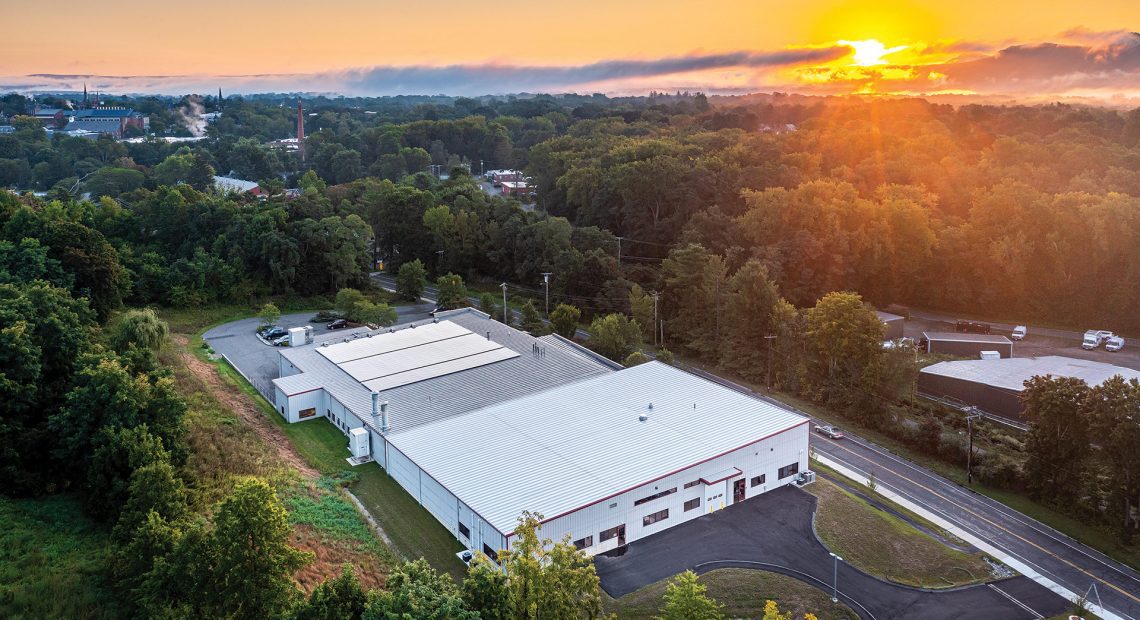
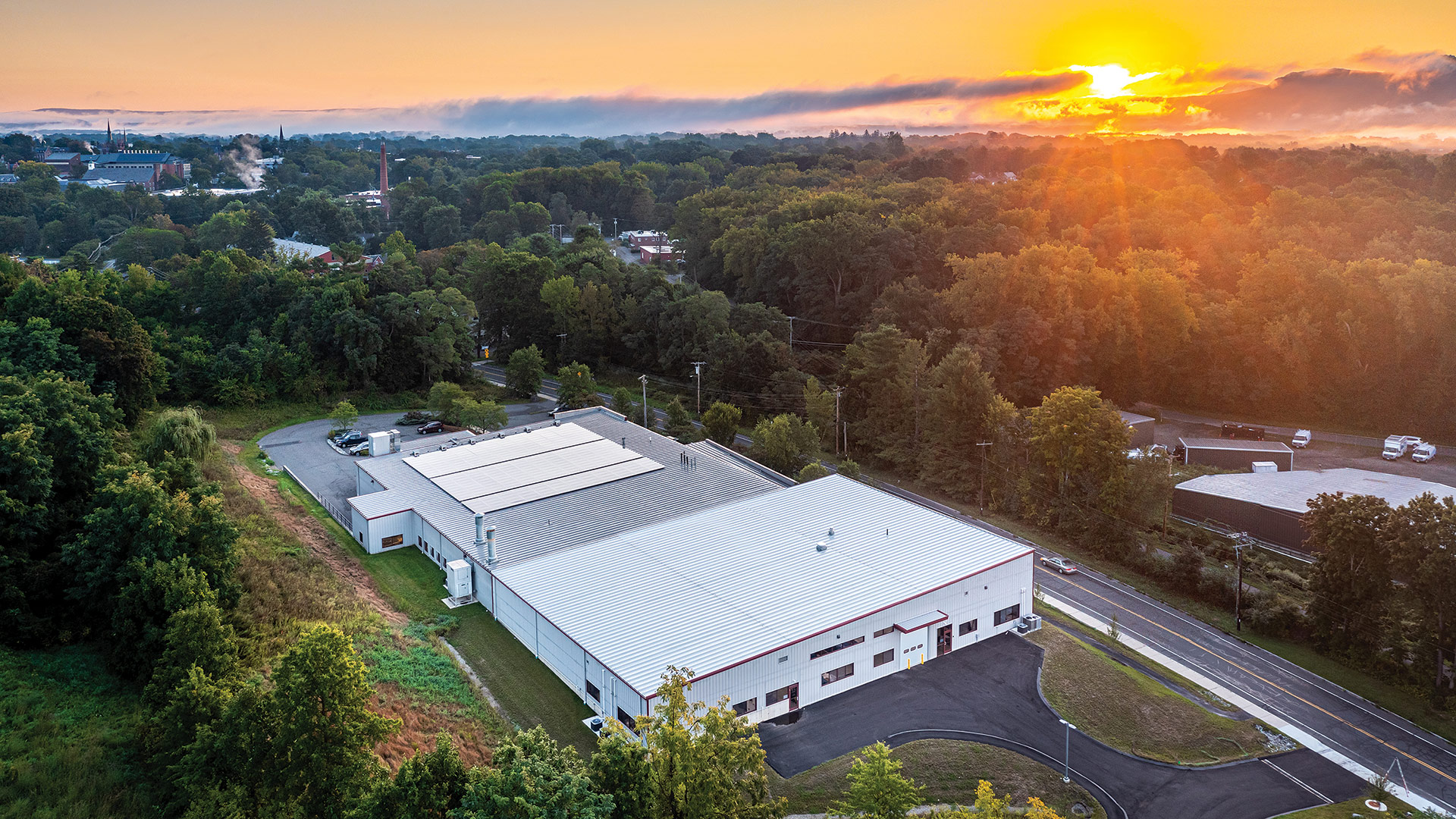
Keiter recently completed a 14,000-square-foot addition to VCA Inc. in Northampton.

Keiter recently completed a 14,000-square-foot addition to VCA Inc. in Northampton. (Photo by Leigh Chodos)

By now, the phrase ‘supply chain’ has become one of the economic buzzwords of our time, as global shortages and slowdowns of goods, not to mention staffing crunches, have impacted industries ranging from food service and retail to manufacturing and auto sales. The construction industry has been particularly vulnerable to those trends, which is especially unfortunate considering that most builders say the work is there — they just can’t tackle it all until these broader issues begin to stabilize. When they will is anyone’s guess.


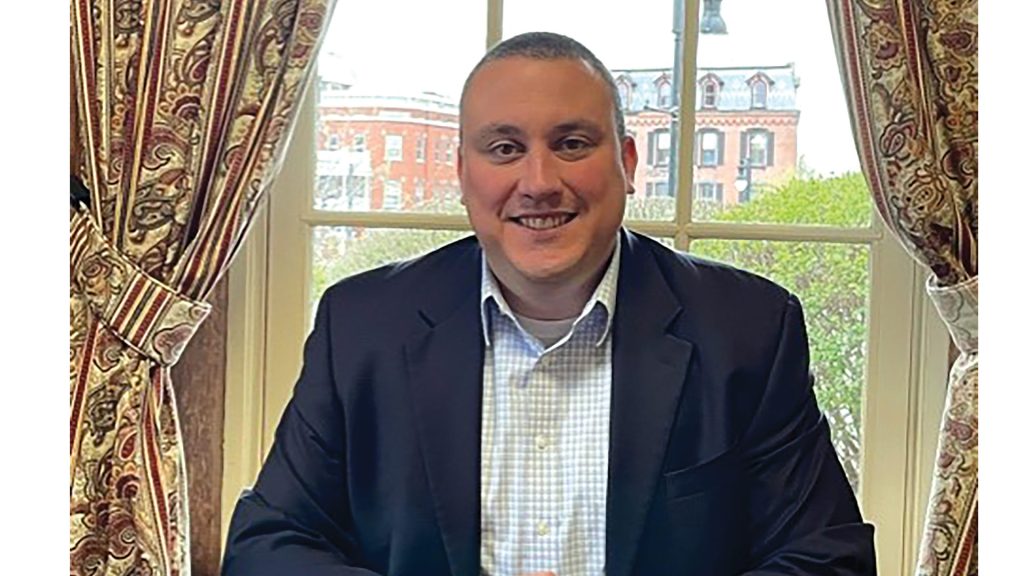
Most people have heard about the challenges facing the construction industry these days, Scott Keiter said — workforce shortages and supply-chain issues foremost among them — but it’s helpful, he noted, to understand how they’re really part of one large issue.

“Part of the supply-chain issue is the workforce,” said the president of Keiter, the new name for his company, which now encompasses four divisions: commercial and industrial, residential, site work, and real estate. “But the pandemic affects people, and people are the ones who produce products. I think the demand is out there, but those other things out there are causing a little bit of a bog on the system. This is something I hear from others in construction as well.”

It’s what BusinessWest is hearing, too — that there’s plenty of demand for work, but no one is in a place to take on all they could were the workforce and supply outlooks more stable.

“Demand is a great thing,” Keiter added, “but if the supply chain is already compromised, those things can really put a strain on the system … and we have to work harder to achieve the same results.”

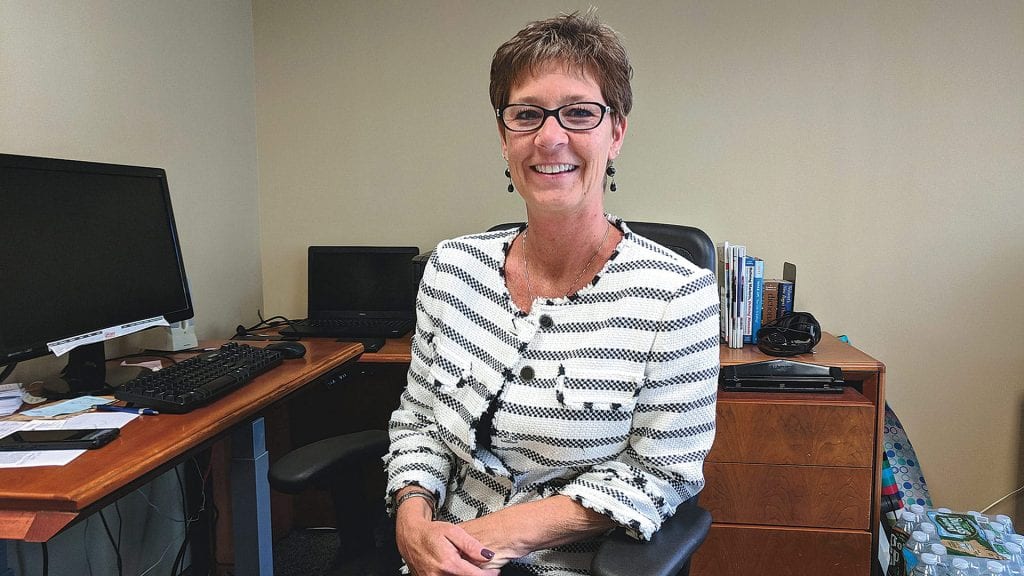
Carol Campbell agreed. “It’s been a year like no other,” the president of Chicopee Industrial Contractors (CIC) said. “I think I’ve said that before, but this time is very different.”

“Demand is a great thing. but if the supply chain is already compromised, those things can really put a strain on the system … and we have to work harder to achieve the same results.”

Indeed, “we are certainly affected by the labor force, or the lack thereof,” she went on. “So when you evaluate your sales or how busy you are, well, if we were at full complement, it would be a different story. We’re at reduced labor teams, so we are busy, but it’s hard to serve all our customers at the level we’re at right now.”

From a supply-chain perspective, CIC is a contractor based in the manufacturing world. “Where we have issues with the supply chain is, if we have a team scheduled to do a project, the installation may take a week or two, then, with 48-hours notice or less, we get a phone call saying the machine hasn’t even hit the dock.

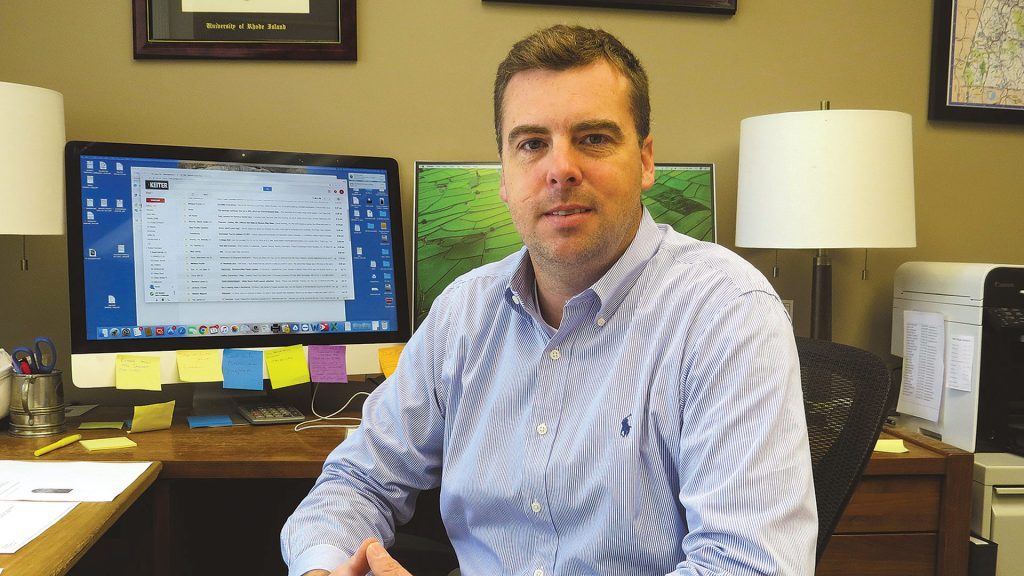
Scott Keiter says the industry is busy

Scott Keiter says the industry is busy, but new challenges make it a different kind of busy than before.

“It’s a scheduling nightmare,” she went on. “I tip my hat to our schedulers, how they keep all the balls in the air and keep all the employees working and customers happy, with all the changes that happen on very quick notice.”

The supply crunch affects both availability and cost, said Craig Sweitzer, co-owner of Sweitzer Construction. “I just got off the phone with someone who needs 12 weeks lead for replacement windows. I’ve never heard of that before. And a lot of materials are unavailable, so we have to search for substitutes.”

Co-owner Pat Sweitzer said she was bidding a project, and a plumber advised her to order a certain piece of equipment needed for the job immediately. “So you ask yourself the question, ‘do we take a chance and order it and expect to get the job?’ These kinds of questions are coming up as well.”

These challenges tend to put contractors in a tough spot, stuck in the middle between customer demands and supply realities.

“Those are real concerns,” Craig said. “At first it sounded like a lot of people complaining, but it truly is an issue. Availability, the cost of materials and shipping, getting stuff shipped to sites … it’s all tricky.”


Links in the Chain

One aspect of the supply-chain issue is trucking, Campbell said, which has impacted her firm on two levels.

“It’s been a nightmare to hire drivers to join our team, then trying to get machines delivered to our facility or to our customer’s facility. They’ll say they’ll be there at noon and may show up at 4 o’clock. So it’s hard because you have to pass some of the cost off, but who’s at fault in all this? It’s a scheduling nightmare, a financial nightmare for customers and vendors. It’s been … quite an interesting year.”

She gave an example of a hard deadline of Dec. 31 to get a machine up and running on a customer’s plant floor. “We’re at the bottom of that chain. It has to come through customs — most are made outside the U.S. — then it has to be piped by the piper, the electrician does his work, then you bring the rigger in, all those dovetail together.”

Keiter said supply shortages and delays are causing some price escalation with materials.

“It’s really causing us to have to look ahead and think about how the disruption and supply chain will affect schedules, and then, of course, the ever-moving pricing with materials is a challenge for not only us as contractors, but for clients and their budgeting. It’s very difficult — the days of just showing up and going at it are gone. We’re having to really get ahead of procurement and also securing tradesman and subcontractors. The industry is busy, but it’s a lot different than it was before.”

Windows and kitchen cabinetry have been especially problematic when it comes to significant timeline increases, Keiter noted. “That said, anything special-order, anything that’s not run-of-the-mill, anything made to order, anything not on a shelf, those seem to be taking longer on average.”

The Construction Products Assoc. (CPA) recently downgraded its forecast for construction growth in 2022 from 6.3% to 4.8% amid what it called a “perfect storm” in the supply chain, Construction Manager magazine reported.

“It’s a scheduling nightmare. I tip my hat to our schedulers, how they keep all the balls in the air and keep all the employees working and customers happy, with all the changes that happen on very quick notice.”

The association warned that supply-chain constraints are now expected to hinder growth well into next year, citing a combination of talent shortages, product availability and cost inflation, driver shortages, the impact of energy-cost increases, and delays at ports as factors in that storm.

“The biggest impacts of the supply constraints are on the small construction firms,” CPA Economics Director Noble Francis said. “Large contractors and major house builders have a greater certainty of demand over the 12- to 18-month horizon and are better able to plan and purchase in advance as well as adjust to changing economic situations. Small firms, however, are more focused on flexibility and have less visibility over demand going forward. Plus, they have less ability and resource to plan and purchase in advance.”

But the workforce issues remain problematic as well.

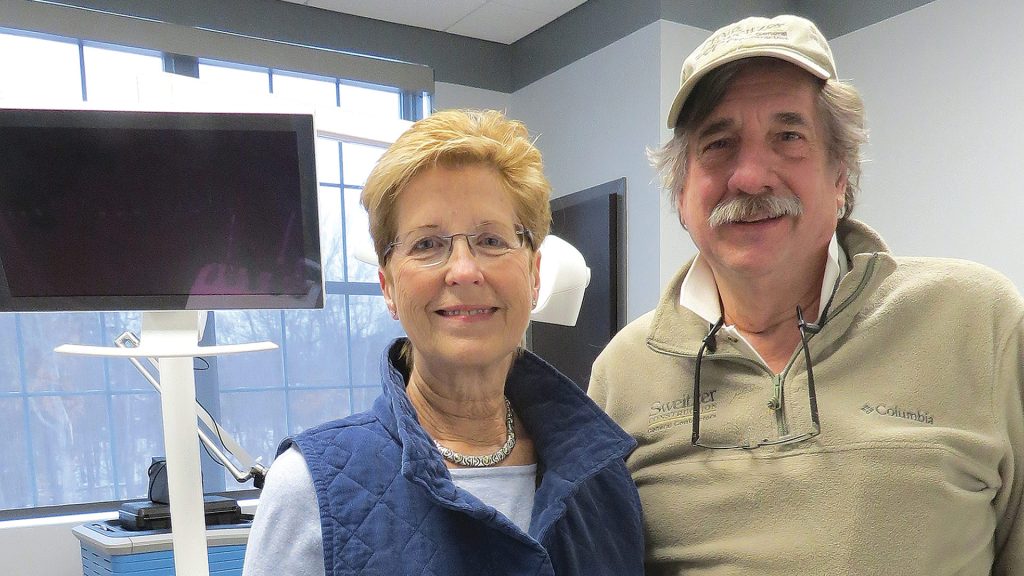
Pat and Craig Sweitzer

Pat and Craig Sweitzer say supply-chain issues affect both availability and cost of materials, and, therefore, both project scheduling and budgeting.

“We were fortunate in that regard,” Keiter said. “We have a very strong, committed team of employees. However, you can see in the workforce in general, whether it’s vendors, subcontractors, or others, I think the pandemic has really shaken things up.”

It’s an issue that worries Campbell moving forward.

“I feel optimistic in our conversations with customers, and we’re booking into 2022, but I have great concerns about the labor force,” she told BusinessWest. “We pay well, and our benefits compare with a state or municipality. And we can’t attract a skilled workforce.

“We’ve always had issues hiring skilled labor just because, coming out of high school, it requires quite a few years of apprenticing. But nothing like we have right now. Over COVID, we had a few people age out, who said, ‘that’s what it took for me to hang it up’ — some people, quite honestly, I just didn’t expect. I understand why they retired, but I think COVID gave them that push.”

Craig Sweitzer said his firm has been navigating workforce issues well, although that did necessitate a lot of personal time to deal with COVID-related issues. “All in all, we survived intact.”

However, the industry’s worker crunch has made clearer the importance of keeping workers happy. “We’ve rolled quite a bit of our profits out of our pockets and put them to use to help our employees and subs. We stress that above and beyond profitability,” he said. “It’s easier to run a business when everybody’s on the same team, pushing in the same direction. So we’re happy to forgo a little profit to have that.”

Pat Sweitzer said she understands the strain workers in all industries have felt over the past two years.

“We have been really fortunate to have our employees and our subcontracting team with us for many, many years. In terms of our employees, they have had family obligations they had to meet during COVID, such as homeschooling and schools being closed down, kids at home. So we have accommodated their needs, and they have stayed with us through the whole year and a half, and we are really fortunate and glad that they have stayed with us all this time; they bring a level of knowledge and skill to our projects that really serve our company and our customers well.”


Optimism Ahead

As noted earlier, despite the industry-wide, often global challenges, area firms have stayed busy.

“For us, this year has been a really good year,” Pat said. “Part of that is thanks to Adaptas Solutions in Palmer, which is a manufacturer in the Palmer Industrial Park that had renovations of five high-tech buildings.

“We were building a clean room and upgrading their facilities,” she added. “It really sustained us and positioned them well as a company. It was a good, steady year for us.”

Carol Campbell

Carol Campbell

“It’s been a nightmare to hire drivers to join our team, then trying to get machines delivered to our facility or to our customer’s facility. They’ll say they’ll be there at noon and may show up at 4 o’clock. So it’s hard because you have to pass some of the cost off, but who’s at fault in all this?”

The firm’s niches in medical and dental facilities continue top be strong as well, she added, and it’s starting to edge into an area with significant growth potential: cannabis.

“One thing I’m grateful about is that we have our bread and butter, our dental and medical work, and now that technical capability and knowledge we’ve developed in those industries is transferring over to the cannabis industry,” she told BusinessWest. “So we have a lot of work coming up, including projects that we hope will be coming through in the cannabis industry.”

Keiter is similarly pleased with his firm’s pipeline.

“We work with a lot of the institutions of higher learning, and those projects continue. We’re also working with a number of nonprofit organizations. We had a pretty good run in 2021. We built a number of new homes, got a lot of residential construction. All the various parts of our business are moving in the right direction.”

In other words, business is booming. That’s the big, positive takeaway amid all the industry concerns about workforce and supply — and how they are, in many ways, the same issue.

“It’s busy, and things are moving. Demand is there,” Keiter said. “We’re here and working hard, and we’re going to get through it. Everyone in construction is hopeful that we’ll start to work our way out of the pandemic and maybe stabilize a little bit.”

Craig Sweitzer agreed. “We’re bidding like mad, and I’m assuming there’s still a lot of optimism out there, so we can only hope to stay as busy as we’ve been. In spite of all the craziness, there does seem to be a lot of optimism out there.”


Joseph Bednar can be reached at [email protected]


Education Special Coverage

A Stern Test Continues

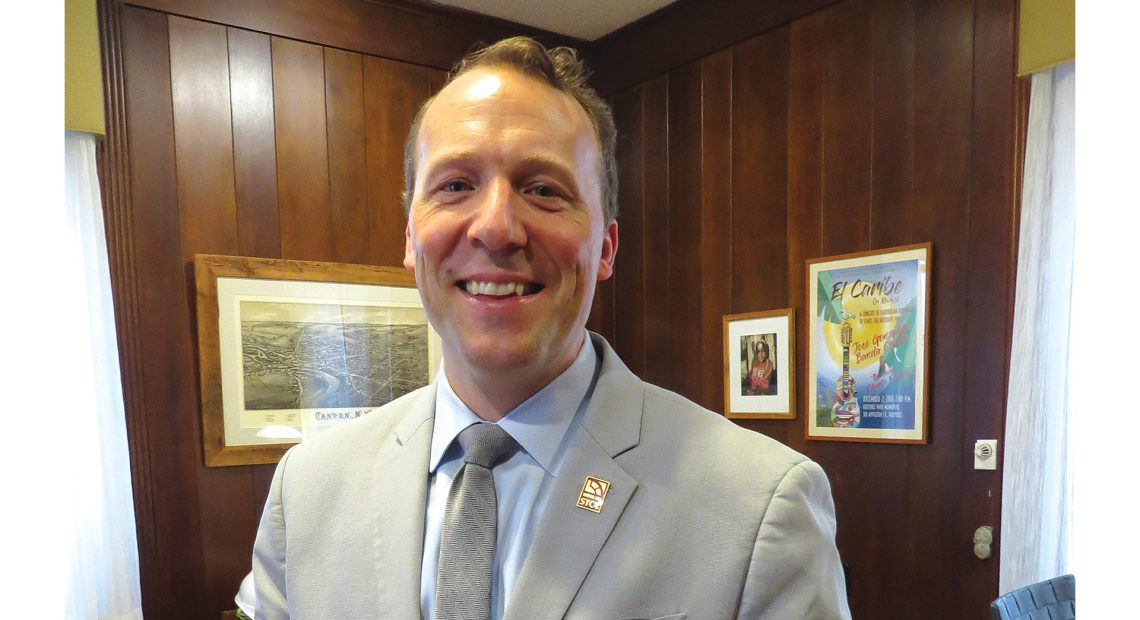
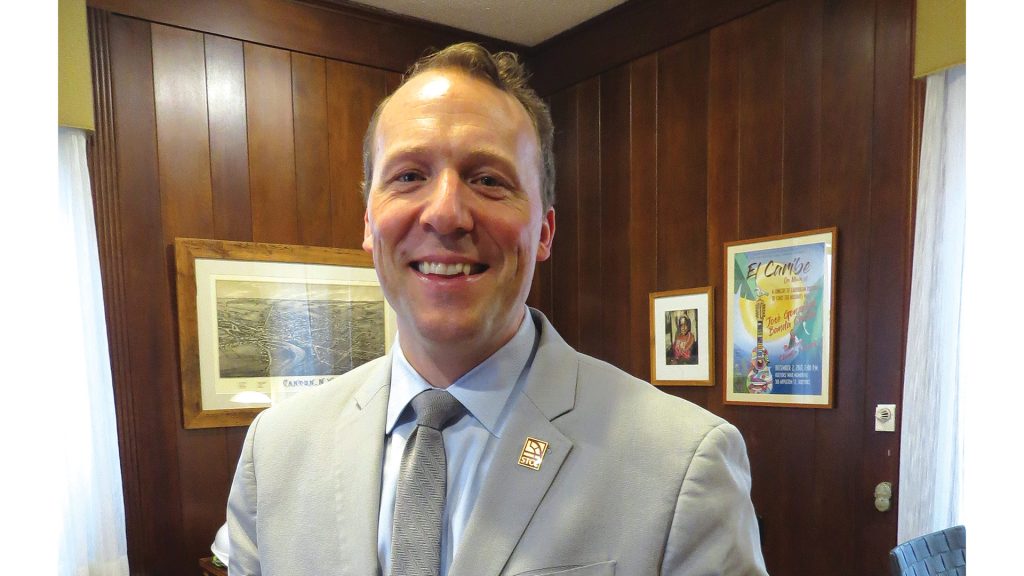
Springfield Technical Community College President John Cook

Springfield Technical Community College President John Cook


For the area community’s colleges, the enrollment numbers continue to fall, with annual declines recently in the double digits. There are many reasons for these declines, which actually started well before COVID but were greatly exacerbated by the pandemic. With many students and potential students now in a state of what one college president called “paralysis,” there are hard-to-answer questions about what ‘normal’ will be like moving forward.


It’s been a while since anyone has talked about parking at Springfield Technical Community College — or the lack thereof.

John Cook, the school’s president, sometimes yearns for the days when they did.

And that was most days. Indeed, going back decades, parking was a problem at this urban campus that sits on the site of the Springfield Armory, despite numerous efforts to add more. By the time Cook arrived in 2017, the school was still parking cars on the commons (the old parade grounds converted by the school into athletic fields) the first few days of classes to make sure all students had a space. That practice was no longer necessary after a new lot was built near the Pearl Street entrance in 2019.

These days, there’s plenty of space in that lot and all the others as enrollment at the school continues a downward trajectory, a pattern seen at the other community colleges in the area — one that is defying many of the patterns concerning these schools and the economy, but one that was already in evidence before the pandemic and only accelerated by it.

“People are in a state of paralysis. And that fear, uncertainty, and the unknown is a driving factor for a lot of people; they feel stuck, they feel lost, and they don’t have a sense of even what they should be preparing for.”

Indeed, since STCC saw enrollment hit its high-water mark just after the Great Recession of 2008, roughly 7,000 students, the numbers have been declining steadily to the present 4,000 or so.

“We were down 16 or 17% last year, and this fall, we were down another 10%,” said Cook, adding that this pattern has been seen at other schools as well, with COVID-19 adding an exclamation point to the problem. At Holyoke Community College, for example, enrollment saw another double-digit decline in 2021, and President Christina Royal said that, with just six weeks to the start of the spring semester, the numbers are down another 7% or so from this time last year.

While most all colleges are seeing enrollment declines at this time, community colleges are being especially hard-hit, in large part because the students who attend these schools, especially older, non-traditional students, are those most impacted by the pandemic and its many side effects, from unemployment to issues with childcare to overall problems balancing life, work, and school.

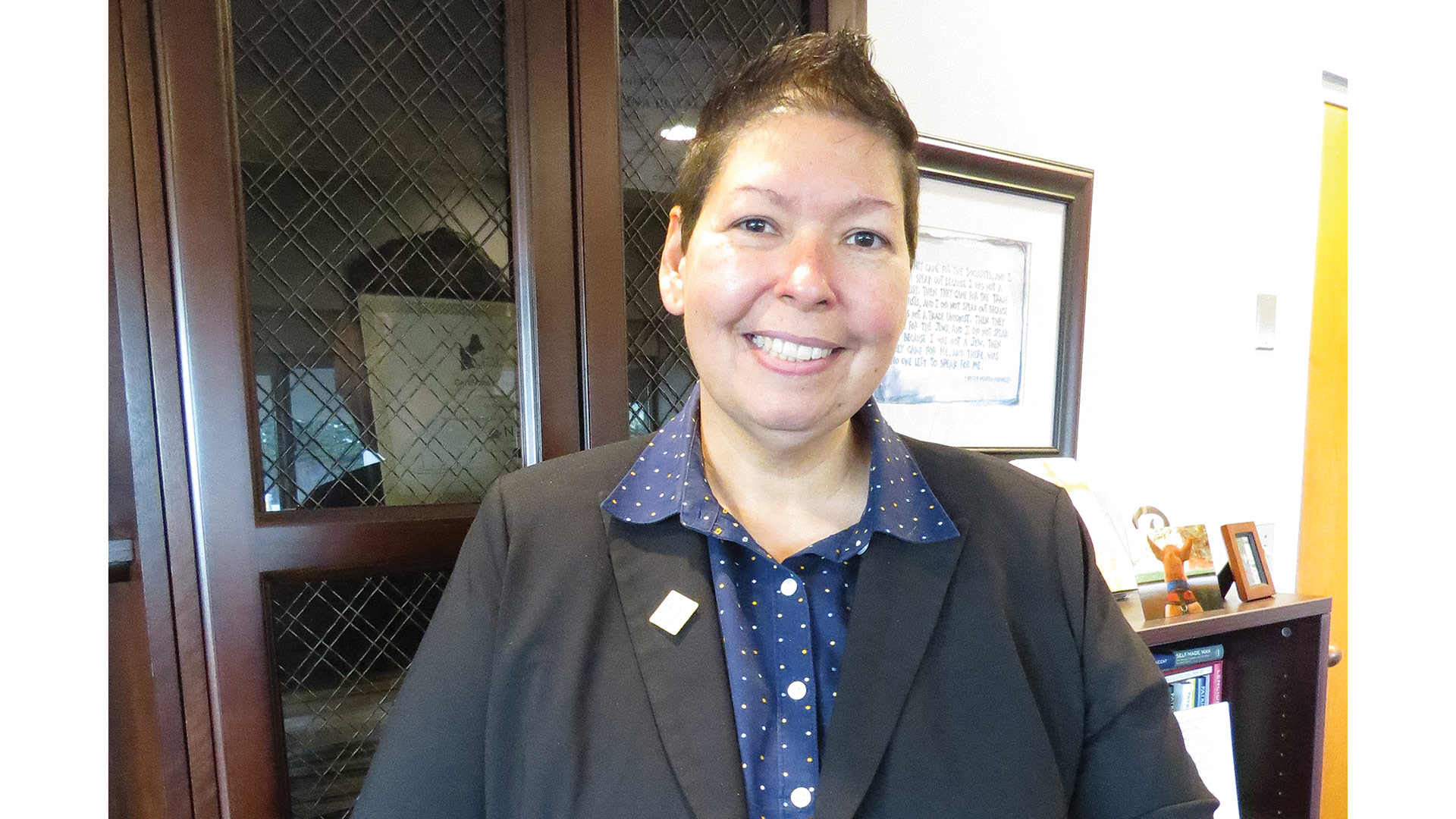
Christina Royal

Christina Royal says some students and potential students are stuck in state of what she called ‘paralysis,’ not knowing exactly what kind of career to prepare for.

While many have returned to the classroom, others have remained on the sidelines, and they are in a state of what Royal likened to paralysis, not knowing exactly what to do with their lives or even what course of study to embark upon. And this distinguishes what’s happening now in the economy from almost anything that has happened before.

“A recession, as difficult as it is, is a predictable circumstance — and it has been up to this point,” she noted. “People are familiar with the ebbs and flows of the economy. What we’re dealing with now is fear, uncertainty, and the unknown.

“Now people are in a state of paralysis,” she went on. “And that fear, uncertainty, and the unknown is a driving factor for a lot of people; they feel stuck, they feel lost, and they don’t have a sense of even what they should be preparing for.”

She said these factors help explain why enrollment continues to decline at a time when logic says they should be rising based on previous performance. Indeed, community-college enrollment would normally rise when the country is in recession or something close to it, when unemployment is still higher than average, and, especially, when businesses in every sector, from manufacturing to IT to healthcare, are facing a workforce crisis unlike anything seen before. And it would also be expected to rise when the cost of four-year schools continue to soar and many parents are looking to community colleges as a sound alternative for those first two years.

“A two-year college is just as good as a four-year school, and it can potentially be a feeder to the four-year college, where they will do even better because they have the foundation from us.”

Michelle Coach, campus CEO at Asnuntuck Community College in Enfield, agreed. She said enrollment at ACC (one of 12 schools currently being merged into something called the Connecticut State Community College), which hit its peak of just under 1,000 a few years ago, is now in the mid-700s for full-time equivalents, up from a low of 650. The numbers are down for several reasons, including restrictions due to COVID that kept inmates from four prisons within just a few miles of the school from attending.

Even enrollment in the school’s popular manufacturing program, which has been supplying graduates to area plants in desperate need of workers, is down, she said, adding that many who would be applying are cautious and hesitant for all those reasons mentioned above.

Overall, many factors are contributing to the falling numbers, from COVID to smaller high-school graduating classes. The ongoing challenge for schools, Coach said, is to tap into new pools of students and consistently stress the value — in the many ways it can be defined — of a community-college education.

For this issue and its focus on education, BusinessWest talked with area community-college leaders about the present and, to the extent they can project, the future as well. In short, these administrators don’t know when, or to what to extent, things will return to normal.


Unsteady Course

As she talked about enrollment and the state of community colleges today, Royal, like the others we spoke with, reiterated that the declines in the numbers started well before COVID.

Indeed, if one were to chart the numbers from the past 15 years or so, she explained, there would be a bell curve, or something approximating it, with the numbers slowly rising until they hit their peak just after the Great Recession and then beginning a gradual tumble after that.

“When I came in in 2017, we had already seen seven consecutive years of declining enrollment — this is certainly a long-term trend,” she said, adding that she believes there is some artificiality in comparing today’s numbers to the high-water marks of a decade or so ago. “If you take out the effect of the recession, both the ramp-up and the decline afterwards, it doesn’t look as extreme and bumpy.” 

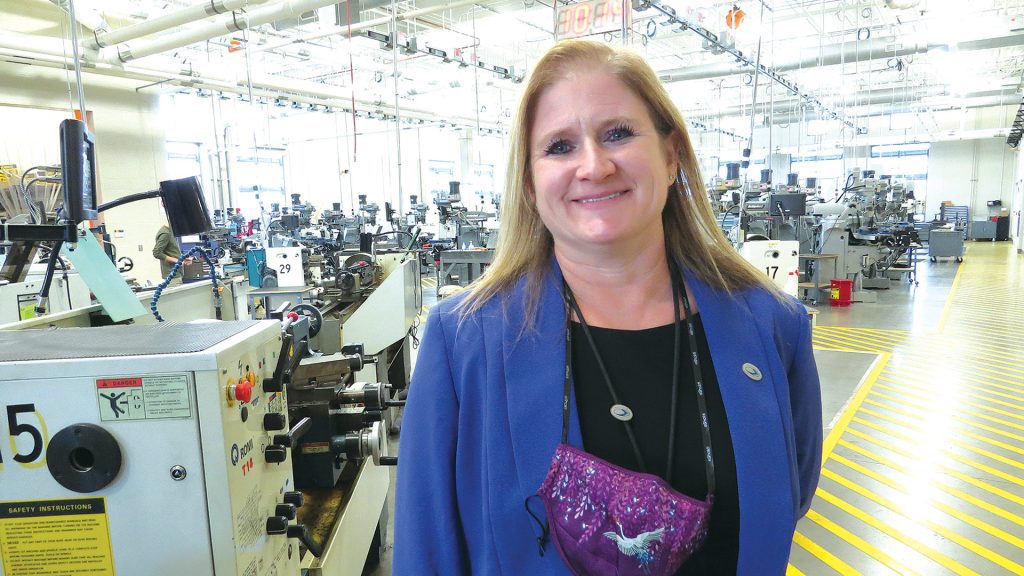
Michelle Coach says there is general optimism

Michelle Coach says there is general optimism that enrollment numbers at ACC and elsewhere in Connecticut will start to move higher, especially with the many incentives being offered.

But ‘gradual’ turned into something much more pronounced during the pandemic, said those we spoke with, noting that enrollment is off 20% or more from a few years ago, and for a host of reasons.

The declines have become the most pressing topic — after ever-changing COVID protocols — at the regular meetings of the state’s 15 community-college presidents, said Cook, adding that, collectively, the schools are looking for answers, a path forward, and perhaps an understanding of what ‘normal’ will look like in the short and long term.

The answers won’t come easily because COVID has created a situation without precedent, and the current trends, as noted earlier, defy historical patterns, he explained, adding that the overarching question now is “where are the people who would be our students? What are they doing?”

And at the moment, many of them are still trying to simply cope with the pandemic.
“They’re still trying to figure out childcare in many cases,” he went on. “Or they may be reconsidering what their own career process might be. And there’s a lot of people who are standing pat and taking stock of what’s important.”

Cook said there has been growth in some numbers, especially those involving students of color and especially the Hispanic population, and there has been growth in some individual programs, such as health science, which the school didn’t have four years ago.

But numbers are down in many areas, including nursing — at least from a retention standpoint — at a time when demand for people in that profession has perhaps never been greater. It’s another sign that these are certainly not normal times.

Royal agreed. “When we have a typical recession, people don’t like the fact that they can’t find jobs or that they’re laid off,” she noted. “But they know that they have to retool, they go back to college, so that they can be prepared for when the jobs come back and the wages start to go up. Now, people are stuck.

“When you have such a global event as COVID-19 has been for our world, then it has put a lot of people in this state of ‘I don’t even know what a couple of months is going to look like — I might not even know what next week is going to look like. How can I think about going to college and starting a future when I’m not even sure what we’re here for anymore, what my purpose is, and what I want to do?’ All of this is causing people to stay still.”

And it’s prompting those running community colleges to do what they can to get them moving again, understanding this may be difficult given those factors that Royal described and fresh uncertainty in the wake of the Omicron variant and rising COVID cases as the winter months approach.

Indeed, most of the colleges are doing some targeted marketing and putting some of the federal-assistance funds to work helping students with the financial aspects of a community-college education.

“We certainly have used every tool available to us to help us with recruitment and retention,” Cook explained, adding that STCC has issued checks of up to $1,500 to help them defray the costs of their education.

“These are not loans … it’s $1,500 to use as you as you decide,” he said. “We’ve done things like that, and we’ve done it for three semesters. This is a real shot in the arm for people.”

Some are taking advantage of the unique opportunity, but many others remain on the sidelines because of COVID-related issues such as childcare, matters that $1,500 checks cannot fix.

At Asnuntuck, the school is being equally aggressive, especially when it comes to recruiting students from the Bay State. Through its Dare to Cross the Line program, Massachusetts residents can attend ACC for the same price as those in Connecticut.

“Currently, 10% of our students are from Massachusetts, and that has stayed fairly consistent,” Coach explained, adding that many enroll in the manufacturing program and a good number in cosmetology, but there is interest across the board. “We’re trying to get the word out, and we’ve done some additional outreach to Massachusetts high-school students.”

Meanwhile, thanks to a grant from the Hartford Foundation for Public Giving, ACC was able to place ‘smart classrooms’ in each of the nearby prisons to allow inmates to take classes, bringing enrollment numbers up somewhat.

Moving forward, with high-school graduating classes getting consistently smaller, there will be greater outreach to non-traditional students, but also a focus on high-school and even middle-school students — and their parents — with the goal of stressing the many advantages presented by the two-year schools.

“For the high schools, we’re trying to change the perception of community colleges,” Coach explained. “In the past, they’ve always said, ‘this is how many students are going to a four-year university.’ Well, a two-year college is just as good as a four-year school, and it can potentially be a feeder to the four-year college, where they will do even better because they have the foundation from us.”


Learning Curves

Overall, Royal and others said it’s clear that community colleges will have to make continual adjustments to bring more people to their schools and see them through to completion of their program. Changes and priorities will likely include everything from a greater emphasis on early college — enabling high-school students to earn credits for college in hopes that this might change their overall career trajectory — to greater flexibility with semester schedules and length of same, to efforts to address the many work/life/school issues challenging students, especially older, non-traditional students.

Royal noted that those who will graduate next spring will have spent their entire time at HCC coping with a global pandemic and everything that has come with it.

These students hung in and persevered, received their degrees, and, in many cases, will be moving on to a four-year school. 

“These are the students that have embraced that uncertainty, and say, ‘I’m going to do something with my life; we don’t know what’s going to happen in the world, but I’m going to further myself and be prepared for when we get to the other side of that.’ That’s who you’re going to see in our graduating class.”

What you won’t see are those who became stuck, as she called it, those who didn’t have the inclination or the ability to plow forward during the pandemic.

Just when people can and will move out of this state of paralysis is still a question mark. Until then, parking will remain a non-issue at STCC — and other schools as well — and the region’s community colleges will remain tested by a situation that is defying trends and their own history.


George O’Brien can be reached at [email protected]

Special Coverage Women in Businesss

Mall Star

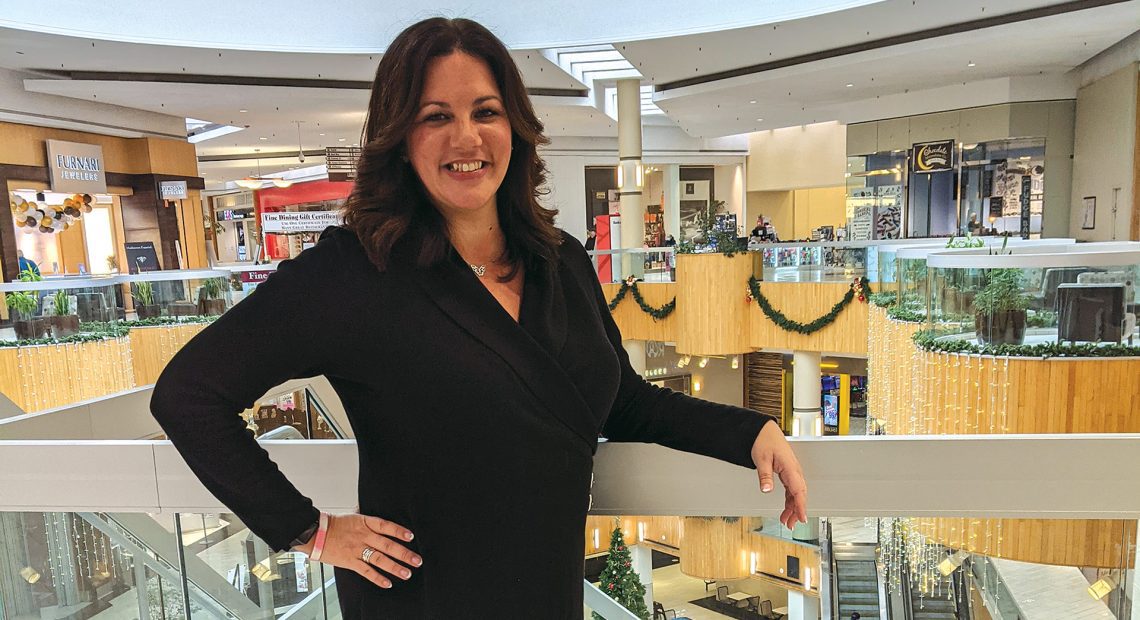
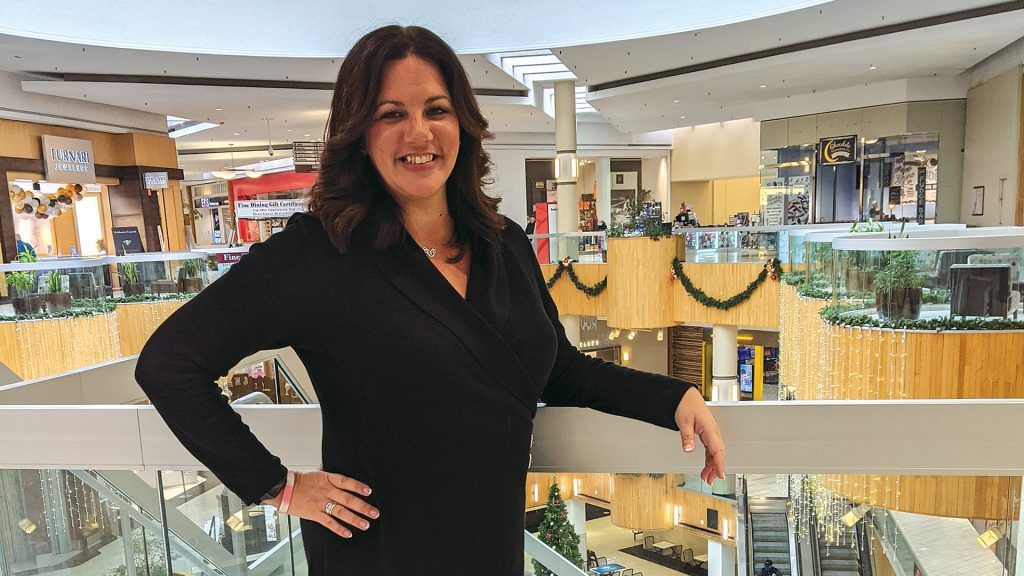
Lynn Gray

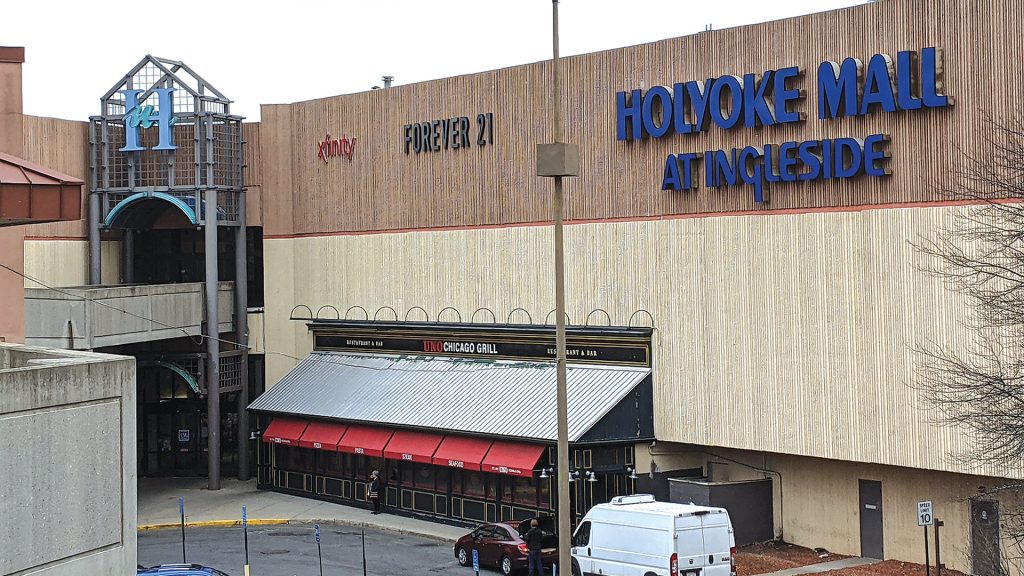
Lynn Gray went from selling Holyoke Mall gift certificates at age 15 to running the facility as general manager.

Lynn Gray has truly come full circle, from attending the grand opening of Holyoke Mall as a newborn to her role as general manager there today. In a career spent in the shopping-center world, she has seen plenty of evolution and a few major challenges as well, the pandemic being the latest and perhaps most daunting. But current customer traffic and interest in available space tell her this is an industry with plenty of life, and she’s passionate about helping individual businesses succeed within it.


When Lynn Gray was two weeks old, her mother packed her up and took her on her very first outing — to the grand opening of Holyoke Mall in 1979, the center where she now works as general manager.

“How cool is that, right?” she asked.

The mall has certainly been a family affair; her mother worked there from its opening as an office manager, and her grandmother would later come on board as a customer-service manager.

“When I was 15, I started at the customer-service desk in the middle of the mall selling gift cards — well, back then it was gift certificates,” Gray recalled. “So that’s how I got into the shopping-center industry.”

It’s been a journey that has taken her across the Northeast and down the East Coast, but mostly at Holyoke Mall and Hampshire Mall, where she was general manager from 2016 until earlier this year, and is still serving in an interim role at the Hadley complex while a replacement is found. And, having been around shopping centers throughout her entire career, she’s seen plenty of evolution in the industry.

“It feels to me very cyclical,” she told BusinessWest, citing, as an example, the 10 years she spent away from Pyramid Management Group, which owns the Holyoke and Hampshire malls, as well as 12 other properties. Between 2006 and 2016, she was with General Growth Properties, taking on various marketing roles, eventually becoming marketing director for the East region.

“I was really focused on the East Coast and got to work with a lot of properties there, from marketplaces to smaller centers to super-regional centers in a variety of different markets. It was funny because, coming back to Hampshire Mall, where my management experience had started, I saw this evolution happening at the properties.”

“When I left them, I had just helped open Target and Trader Joe’s and Dick’s Sporting Goods and Best Buy,” she said by way of explanation — all of them big-name staples at shopping centers across the U.S. at the time.

“It was really a cool evolution. That seems to happen every so often, every few years, something fresh and inviting, when customers are looking for something new.”

“Ten years later, Best Buy had closed, and we had already replaced them with PetSmart. We were putting in a bowling alley; we were putting in a gym. So I saw the the transition from the early 2000s — from Kmart to Target to a variety of new big boxes coming in — and then, when I came back, I saw that cycle over to the lifestyle components like a Planet Fitness, like a bowling alley and an arcade. It was really a cool evolution. That seems to happen every so often, every few years, something fresh and inviting, when customers are looking for something new.”

Indeed, that’s the driving evolution in malls today, she went on — a move not necessarily away from retail, but complementing retail with more entertainment, experiences, and dining options.

“There’s been a lot of change even these last few years, and then, of course, COVID happened,” Gray said. “So then you see a little more of that cyclical stuff happening with the big boxes turning over and repurposing them for a variety of uses.”

And it’s not just a local phenomenon, she added. “I get to support leasing for all of our properties, so I’m not just focused on Hampshire and Holyoke; I get to see what’s happening across the Pyramid portfolio and across the industry. We’re seeing more hotels, we’re seeing apartments, we’re seeing shared office spaces in a lot of our properties. So it’s kind of cool to see it’s not just about a shopping center anymore, it’s about creating a lifestyle.”


Coming Home

Coming back to Hampshire Mall as general manager in 2016 was truly a full-circle event for someone who had built a career from the bottom up at the two local Pyramid properties. From her humble beginnings selling gift certificates at Holyoke Mall, she progressed in the mid-’90s to an office-assistant position at Hampshire Mall for a few years, which evolved into a marketing role. She returned to Holyoke in the late ’90s as assistant marketing director, then went back to Hampshire as marketing director before her stint with General Growth Properties.

“When I came back to Pyramid again,” she said of her hiring as general manager there in 2016, “it was like coming home.”

As for the recent evolution in the use of mall space, one that’s especially noticeable at Hampshire Mall, Gray said even individual tenants understand the trend.

“A lot of our partners in our tenant base have really gone out of their way to try to diversify their use,” she noted. “A great example is Pinz. You’re not just there for bowling; there’s also an arcade, there’s food, there’s dart throwing, axe throwing, all kinds of things. It’s about keeping people in these spaces longer, and that’s something we’re offering at all of our properties.”

That’s why both malls now feature a gym, bowling, and arcades, as well as shopping (including some big boxes, like Target, which is also featured at both). “We really are creating a destination for you to find everything you need. It’s creating sort of a downtown feel.”

No longer can mall managers cater only to people who want to stop in, get what they want quickly, and leave, even though there are still plenty of those. It’s about giving them more to do once they arrive and, therefore, more reasons to come in the first place.

“I think people have more choices today,” Gray said. “They have less time, more on their plates, they’re going in a million different directions, and creating a space they’re going to frequent more often because they’re not coming here just for shopping is critical, because it keeps us relevant; it keeps us top of mind.

“They’re not just going to Target to get their essentials, they’re coming here for a day with their family and going bowling, or maybe they’re coming several times a week because they’re visiting the gym. Or they’re having their birthday parties at Altitude,” she went on. “It’s a space that’s far beyond just a shopping destination. They’re coming more often and spending more time because they’re coming for a variety of different uses.”

Hampshire Mall in particular is no stranger to innovation. Gray credited the wisdom of its original owners, who built a shopping center on farmland in Hadley more than 40 years ago. The Route 9 corridor eventually exploded with much more retail, dining, and other amenities, fed by the affluent communities of Amherst and Northampton that bookend it, and, of course, UMass Amherst and other local colleges.

“We’ve been doing everything we can to support the small businesses. Here at the Holyoke Mall, 27% of our businesses are actually locally owned businesses or locally owned franchises.”

“Somebody had this idea that putting a shopping center there would be really successful, and it has been,” she said. “It’s very desirable real estate now.”

Still, no one in the shopping-center industry was prepared for the impact of COVID-19.

“The biggest challenge has been the uncertainty, which still resonates with a lot of us,” she said. “We’ve been doing everything we can to support the small businesses. Here at the Holyoke Mall, 27% of our businesses are actually locally owned businesses or locally owned franchises. Supporting those businesses, which were hit the hardest during the pandemic, has been something we’ve really tried to put our efforts into.”

That statistic surprises some people, she noted. “Some consider us to be the big-box destination and forget there are so many businesses in this center that are locally owned, here and at Hampshire, and I like to remind people of that. They live in your community, they’re supporting your kids’ schools and sports teams, and they also lease space at a shopping center. It’s not just about the big box and the large retailer.”

The good news, for tenants of all sizes, is that traffic numbers at the malls are up — not just from 2020, but from 2019.

“I think that’s a testament to people itching to get out,” Gray said. “They’ve been missing that in-person connection and getting outside their four walls, and we’ve been able to give them a reason to do that.”

And they’ve been, for the most part, gracious about safety protocols that still fluctuate between communities; in fact, Holyoke Mall currently recommends mask wearing, while Hampshire Mall requires it.

“They want to get out, so they’re going to do what they can to follow the rules so they can continue to frequent those businesses,” she added.


Leading by Example

Gray has long been active in the community, and for the past two years, she’s been president of the board directors at the Amherst Area Chamber of Commerce.

“They were obviously two of the most challenging years for small businesses in particular, so being part of a chamber supporting them was really gratifying,” she said. “Being able to be in the trenches with the executive director and the board of directors and all the various committees that were supporting businesses staying open and surviving the pandemic … I’m really proud of the work we did there.”

She also serves on the board of the Amherst Boys and Girls Club — another family connection, as her mother served on the board of the Chicopee club for many years. She’s also a state ambassador in Massachusetts for CHERUBS, an organization that raises awareness and funds around congenital diaphragmatic hernia (CDH), a condition that affects newborn babies, including Gray’s own baby, who passed away seven years ago.

As the mother of a 19-year-old son, “I think it’s important to set an example for him that it’s not just about getting up, going to work, doing your job, and coming home at the end of the day — it’s about outreach and community development and being out there. It doesn’t just make you feel good, you’re actually doing good. I think it’s important to set that example for our future leaders as well.”

At her day job, of course, she supports businesses in other ways.

“It’s a little win every time we see a new business open, whether it’s an existing business or a small business just starting up. Pyramid is a leasing company; that’s what we do. We want to lease our spaces, we want to stay fresh and relevant, so every time we have a new tenant that’s opening up, we’re excited to share that news. I think it’s a testament to us as a developer that we’ve been able to celebrate so many new openings.”

Gray has heard the rumors over the years that shopping centers aren’t doing well, or are on the decline.

“But people still want to open businesses in successful centers. We’re seeing more and more walk-in requests to look at spaces. There was a time when the phone wasn’t ringing at all, but they’re starting to see that the trend is going up and people are craving being out and about and not just holed up in their homes anymore.”

She also loves working with existing tenants on ways to expand and market their businesses. “They really took a hit, so anything we can do to support the business and spread the word, anything we can do to keep the businesses going, I want to be part of that.”

Gray’s mother no longer works in the shopping-center world; she’s in residential real estate now. But she was very excited to hear her daughter was now general manager of Holyoke Mall.

“She said she’s really proud, and I said I’m really proud, because I went from selling gift certificates at the customer-service desk and answering phones to actually leading the charge for Western Mass.’s largest shopping center. I’m the first woman general manager at Holyoke Mall, and I’m really proud of that. I’m proud to share that story because maybe a little girl can hear that and know that you can start small, and if you grow and work hard at it, someday you can do this too.”


Joseph Bednar can be reached at [email protected]

Special Coverage Sports & Leisure

Coping with the Conditions

Gary Rome, seen here with ‘Daisy,’ one of his mascots

Gary Rome, seen here with ‘Daisy,’ one of his mascots, says cars are moving off the lot as fast as they come in, with most sold long before they arrive.

For the area’s auto dealers, this will be a year, and a December, unlike most and certainly not anything approaching normal. Lots are barren, and showrooms often have used cars under the bright lights. Dealers are coping as best they can, and so are customers, and while current conditions are expected to continue into next year, there seems to be some light at the end of the tunnel.


On one wall in his office at the Hyundai dealership that bears his name, Gary Rome has a large screen that displays images captured by more than two dozen security cameras.

As he talked about the current conditions facing dealers like himself, he gestured toward pictures on that screen of one of the back lots at the massive store on Whiting Farms Road in Holyoke — a barren lot with no cars parked on it.

“Normally … that would be full — four lanes, full,” he said, noting that ‘normal’ was quite some time ago. Now, instead of normal, there is only reality, in the form of inventory shortages that have, as Rome noted, prompted dealers to put used cars in the showrooms, position cars so it looks like there is more inventory than there actually is, and even have employees park in front to provide that same effect.

He’s only taking the first of those steps, and that’s out of necessity, he said with a voice that hints at frustration, which is certainly understandable, but mostly acceptance of a situation that is far beyond dealers’ control and something they will have to live with for at least several more quarters.

“We’re just coming through the second year of the most unprecedented time that the industry has ever faced — and the forecasts for what was going to happen to this industry were far more dire.”

The frustration comes from the knowledge that these dealers could certainly sell a lot more cars if they had them, especially given the pent-up demand and the fact that many consumers have money to spend and are eager to spend it. And also the numbers — most dealers are looking at overall sales volume being down between 20% and 30% from what would be considered a ‘normal’ year. The acceptance part comes from the knowledge that consumers have responded to the situation mostly with patience and understanding, and, overall, dealers are making the best of a bad situation that could actually be worse. Much worse.

“We’re just coming through the second year of the most unprecedented time that the industry has ever faced — and the forecasts for what was going to happen to this industry were far more dire,” said Ben Sullivan, chief operating officer at Balise Motor Sales. “And we’ve actually fared pretty well, and the customers have been accommodating because they can understand; they see the news. Somehow, we’re making it through, and a lot of customers have no issues with doing it this way.”

By ‘this way,’ he meant that, instead of driving onto a lot and choosing from among the dozens of options of the model they want, they’re either ordering what they want and waiting for it arrive in a few weeks (or a few months, as the case may be) or buying something they know is on a truck and on its way — even if it might not be exactly what they want.

Carla Cosenzi, president of TommyCar Auto Group, agreed, noting that her family of dealerships has an appropriately named program that speaks to all this, called Reserve Your Ride.

“People can pick out their vehicle and order it or pick a car out of pipeline,” she said, adding that, while there may be fewer cars to actually choose from on the lots, people can still buy cars, and they are.

Ben Sullivan says there has been some improvement on the inventory front

Ben Sullivan says there has been some improvement on the inventory front, but it might be two more years before dealers see something close to pre-pandemic levels.

Sometimes, because of the inventory issues, it may not be a new car, she went on, adding that, in this environment, some are waiting patiently for the new cars to roll in, while others are opting for used cars, and still others, those with leases that are expiring, are opting to buy those vehicles.

And this is how it will be for the foreseeable future, said those we spoke with, all of whom noted that COVID-19 and its many impacts have made the future — even the immediate future — hard to predict.

As for the present, it’s December, a month that is generally a good one for dealers, and for many reasons, ranging from holiday-gift purchases (especially luxury models) to businesses buying new vehicles before year’s end for tax purposes.

“This is a time of year when people want something new — new cell phones, a new car, a new used car, a new espresso machine,” said Sullivan, adding that this desire for new coincides with a mostly healthy economy, lower unemployment rates, and, overall, higher levels of confidence. “And when people feel confident, they wind up making large purchases because they are not afraid.”

They may not be afraid, but there will certainly be fewer cars to buy, and that means this will be different kind of December, but one that still holds promise for dealers — and customers — waiting for the picture to improve.


Dropping Down a Gear

To the untrained eye, Sullivan said, it doesn’t look like much is happening at area dealerships.

Indeed, what most people see in that minute they drive by a store is lots of acreage not being occupied by new or used cars. Indeed, the vacant parking lots have become one of the enduring images of the supply-chain crisis at this stage of the pandemic.

But a closer look would reveal plenty of activity, just not the type that would be considered normal, he said.

“If you put a stop-motion camera at any dealership, you’d see 18-wheelers coming in, you’d see cars coming off of it, you’d see them going through their pre-delivery inspections and service and the salesperson calling the customer to say his vehicle has arrived, and that person picking it up the next day,” he noted. “That’s about how fast this stuff is going right now.”

Carla Cosenzi says dealers and customers alike are adjusting

Carla Cosenzi says dealers and customers alike are adjusting to a landscape that is without precedent in the auto industry.

Other dealers we spoke with echoed those remarks, saying the days of large inventories have been replaced by that new way of doing business described earlier, with the vast majority of cars sold before they reach the lot (70% to 80%, by most estimates) or within days of rolling off the truck.

This new world order is on clear display on a huge board in one of the offices at Gary Rome Hyundai, one that tracks which vehicles have been sold, by whom, and when they will arrive on the lot for the customer to pick up.

“We’re just coming through the second year of the most unprecedented time that the industry has ever faced — and the forecasts for what was going to happen to this industry were far more dire.”

It’s a different landscape, to be sure, said Rome, adding that there would normally be more than 500 cars on the Hyundai lots; currently there are roughly 140, about one-quarter of that total, with only 20 of them being new cars.

It’s the same at the TommyCar dealerships, said Cosenzi, noting that the Hyundai/Genesis dealership in Northampton would normally have 200 new models on the ground. After a shipment arrived the day before she talked with BusinessWest, there were 30 to 35. At the Volkswagen store, also in Northampton, there would usually be 80 new cars. Now, 20 is the norm.

These numbers prompt frustration because they collide with other kinds of numbers, especially the ones pertaining to unemployment, consumer spending, and consumer confidence levels, said Rome, noting, as others did, that pent-up demand remains high for all types of vehicles, but especially new models.

“Our clients, in general, have more money than they had two years ago, they have more savings, they have more equity in their homes,” he explained. “And they also feel like they want to do something good for themselves. They’ve been locked down for the past 20 months, and they’ve been looking at the same car all that time. They want to do something nice for themselves.”

Such dramatic reductions in inventory also make for obvious changes and adjustments, including those that need to be made for the holidays, said Cosenzi, noting that many of those desiring to put a new car in the driveway on Christmas morning understood that, to make that happen, they needed to place their order in November. And they might also have had to settle for their second choice when it came to color.

Meanwhile, more consumers are looking toward used cars, which are in greater abundance but still not in the pre-pandemic numbers, she said, and also at keeping a car that is coming off lease instead of trading it in for a new one.

“And a lot of those buy-out values are under current market values,” she said. “It’s a good deal for the customer.”

While things certainly aren’t normal, in some respects, the picture is actually starting to improve, said Sullivan, noting that arrivals are expected to pick up in December and be ahead of October and November levels and well ahead of months earlier this year, when supply-chain woes peaked.

“There’s cars coming in, and there’s cars going out,” he said, adding that his general managers — and there are nearly 20 of them — have reported as a group that the company should expect a solid December.

Meanwhile, looking down the road, or trying to, anyway, dealers said it is difficult to say when ‘normal’ — as in lots full of cars for people to choose from — will return, or even if they will return.

“I don’t think we’ll see it in 2022,” said Sullivan. “I think it will be 2023 before you drive by a dealership and see a stock full of cars. It’s not until the third quarter of 2022 where you’ll see maybe 65% of what you’d normally see for ground stock.”

Cosenzi concurred, but noted that projections vary with the brand, with some manufacturers responding to the worldwide microchip shortage and supply-chain crisis better than others.

“We’re anticipating that things will get better over the next few months, but it will take a long time for us to recuperate and get back to the inventory levels that we were accustomed to before COVID,” she said. “I think it will take at least a year.”

As for the longer term, Sullivan reiterated comments he made earlier this year when he said some manufacturers may not go back to those days when they built cars and then hoped dealers would sell them. They likely won’t build to order, although that’s possible, he said, but they may build fewer cars and put the hard focus on models they know the customer wants.

“Most of the manufacturers have decided that just ‘build, build, build, build, build’ isn’t that profitable for them,” he explained, “because all the cars end up on our lots, and we have to find a way to get rid of them, and they have to put incentives on them. There is a level of production that makes more sense to them.

“We’re not going to be this order-to-delivery industry, because when people want something, they want it very quickly, and some want it now,” he went on, adding that, despite this, levels of overall ground stock will likely be lower in the years to become, perhaps 75% of their current levels.


Bottom Line

But there are still far too many unknowns to make any hard projections about the future, said those we spoke with, adding that, right now, they’re dealing with right now.

And that’s the picture that comes clearly into focus on that screen in Rome’s office. Things are not as they were, and they may not be like that for a while — if ever again, in some respects.

“This is a year unlike anything I’ve seen in all the years I’ve been in this business,” said Cosenzi, who spoke for everyone in the industry with those comments, adding that, while the picture is slowly improving, what would be considered normal is still far down the road.


George O’Brien can be reached at [email protected]

Community Spotlight

Community Spotlight

By Mark Morris

Mayor Bob Cressotti

Mayor Bob Cressotti says soaring real-estate activity may lead to the tough decision to re-evaluate Enfield homes and businesses.

There is no shortage of activity in development projects for Enfield.

The most significant project involves the town, with the support of state and federal officials, constructing a train-station platform in the Thompsonville section of town. The planned station will be a stop for Amtrak trains coming from Hartford and Springfield. Mayor Bob Cressotti called it a key to Enfield’s future growth.

“If we have rail access to Hartford, New York City, and points north, such as Springfield and Vermont, we can encourage more young people to live in Enfield,” Cressotti said, noting that funding for the station will come from the infrastructure bill recently signed by President Biden. In the final legislation, Connecticut is scheduled to receive $1.2 billion for roads and transit over the next five years.

When built, the station will be located just beyond Bigelow Commons, a 700-unit apartment complex that was once the Bigelow Carpet Mill. Nelson Tereso, the town’s deputy director of Economic & Community Development, said plans by the Connecticut Department of Transportation call for a covered 220-foot platform that would accommodate entrances to four train cars. As a high-level platform, passengers would be able to walk directly into the cars.

“If we have rail access to Hartford, New York City, and points north, such as Springfield and Vermont, we can encourage more young people to live in Enfield.”

Tereso is working on a number of details for the project, among them securing a right-of-way agreement with Bigelow Commons for parking at the station. Northland, the company that owns the Commons, has indicated it supports the train-station project in Enfield.

“They’ve been very good to work with,” he noted. “In fact, many of their apartment complexes around the country are located near transportation hubs.” 

In anticipation of the train station, Tereso said the town has identified several properties within walking distance that would be ideal candidates for redevelopment. With the success of Bigelow Commons, he sees more potential for housing in that area.

On North Main Street, the Strand Theater has been closed for nearly 30 years and is slated for demolition by next summer. Next door sits the Angelo Lamanga Community Center. Tereso said the town has appropriated money for its demolition, too, but he is talking with developers to see if it’s possible to find a new use for the 27,000-square-foot building.

“We want to sell the Lamanga Center to a developer who is forward-thinking and looking ahead at the train station our town will have in a few years,” he explained. “While not as large as Bigelow, these parcels represent an opportunity to build additional market-rate apartments, especially for young professionals who are working in Hartford and Springfield.”


On the Home Front

According to Cressotti, demand for housing is certainly up Enfield. Since the pandemic began, nearly 2,200 property transfers have been recorded in Enfield. The rising real-estate market is leading to what he called the tough decision of re-evaluating houses and businesses in town.

“Residential property values have increased by 25% to 30% on average,” he said. “We’re going to adjust the mill rate to prevent a huge spike in the tax bills.”

With such large increases in home prices, getting families to locate to Enfield can be a challenge. Tereso talked about a first-time homebuyer program the town offers to increase purchasing power for eligible buyers. The program provides a deferred loan up to $10,000 at a 0% interest rate for first-time buyers who purchase a home in Enfield. For those who choose a home in the Thompsonville or North Thompsonville section of town, the loan is forgivable.

“This program provides the gap funding that many folks need in order to afford a mortgage,” he said, noting that starter homes in Enfield typically cost between $150,000 and $250,000. “It has especially helped younger families to buy their first home.”

With families in mind, the town is currently transforming Higgins Park from a softball field into a multi-faceted park. Plans call for expanding Higgins, as the town plans to purchase the gymnasium building that belonged to the former St. Adalbert parish that abuts the park. Cressotti said the final layout will feature walking trails, a new basketball court, a swimming pool, a splash pad, and a band shell for outdoor concerts.

“We are making five- and 10-year plans instead of just reacting to what’s happening now. Sure, there are challenges ahead of us, but we’ll take each one as they come and always try to do what’s right for the town of Enfield.”

“When it’s complete, the park will have appeal to all ages, and we will be able to hold sponsored events there on a consistent basis,” he noted.

When the pandemic hit in early 2020, officials tried to figure out how to keep town business operating. It so happened that a Santander Bank branch two doors down from Town Hall had recently closed and was on the market. The idea was floated to lease the former bank and use its drive-up window as a convenient and contact-free way to conduct town business during the pandemic.

“The drive-up window worked great for residents looking to apply for building permits, pick up a dog license, or pay their taxes,” Tereso said.

The town moved the entire Tax Department into the former bank and renamed it Enfield Express. The site also had enough room to locate a police substation in the rear of the building. Tereso said the town just finalized the purchase of the building, making it official that Enfield Express is here to stay.

“People love it,” he added. “We will absolutely continue the drive-up service after the pandemic is over.”

Purchasing the former bank branch also expands the amount of municipal parking and provides another entry point for the newly configured Higgins Park.

“When the Tax Department moved out of Town Hall, we turned their old space into a new conference room,” Tereso said, noting yet another benefit of creating Enfield Express.

Finding new uses for existing structures is all part of the plan in Enfield. For example, the Social Services Department recently moved from 110 High St. to the former Alcorn School, where the town’s IT Department is located, while 110 High St. is one of seven town properties Enfield has sold while it strives to efficiently use municipal space.

Enfield at a Glance

Year Incorporated: 1683
Population: 44,626
Area: 34.2 square miles
County: Hartford
Residential Tax Rate: $34.23
Commercial Tax Rate: $34.23
Median Household Income: $67,402
Median Family Income: $77,554
Type of Government: Town Council, Town Manager
Largest Employers: Lego Systems Inc., MassMutual, Retail Brand Alliance, Enfield Distribution Center
* Latest information available

As Tereso explained, “110 High Street was once a day-care center. We sold it to a day-care provider who will now be able to expand their presence in Enfield.”

Enfield Square, purchased by Namdar Realty in 2018, could be another candidate for redevelopment. The new owners were granted a zone change to reconfigure the mall and subdivide the parcels.

While malls all over the country are being redeveloped, Tereso believes Enfield Square’s close proximity to two I-91 exits is a big selling point for future use. He plans to survey residents on possible redevelopment options to get a read on what people would like to see at the mall.

“Whether it’s entertainment, market-rate housing, or outlet shops, all those things could be a successful way to develop the mall for new use,” he said.


Life in the Fast Lane

For Cressotti, life these past months has been moving fast.

In October, he won the election to be Enfield’s new mayor. On Nov. 6, he took over the position, and on Nov. 15, longtime Town Manager Christopher Bromson abruptly resigned after a heated exchange with several Town Council members.

After serving in different positions with the town since 1989, Bromson decided to retire and was recently quoted saying he is grateful to see many of the projects started during his time are now going forward. Enfield Police Chief Alaric Fox has added interim Town Manager to his job title until a new manager is hired.

Even with all that happening, Cressotti likes the direction Enfield is headed.

“We are making five- and 10-year plans instead of just reacting to what’s happening now,” he said. “Sure, there are challenges ahead of us, but we’ll take each one as they come and always try to do what’s right for the town of Enfield.”

Construction

Steady On

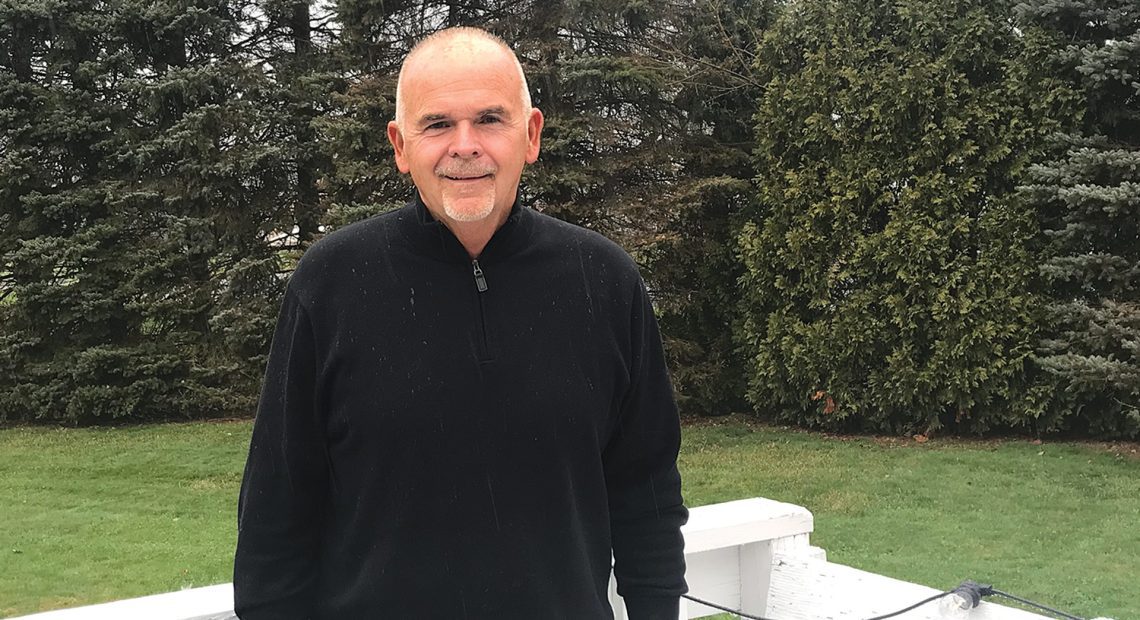
Thomas Crochiere

Thomas Crochiere at the Chicopee property he purchased, renovated, and tenanted up almost two decades ago.


Thomas Crochiere had a modest vision for his construction company a quarter-century ago — and, as it turned out, a successful one.

“Having worked for a company with up to 100 employees in the past, I knew I didn’t want to have a large company,” he told BusinessWest. “I was happy with a small company where I could know my employees very well and work with them and manage one or two projects at a time. I didn’t want to have a large plate of projects. So we’ve just continued in that direction for 26 years.”

Crochiere entered the construction world out of college and, as he said, worked for a large company that performed a lot of state and municipal work.

“I was working as a project manager for that company for about 10 years. But I got a little itchy; I wanted to become an owner. So my wife and I started this business back in 1995, and since I’d been doing mostly municipal and state work, and had pretty decent familiarity with that process, we stayed with commercial construction as our primary focus, and we have just picked away at jobs over the years.”

Tom Crochiere and Ann Collins-Crochiere launched Collins-Crochiere Construction Services Inc. in Palmer and rented shop space in Ludlow for a few years. Then, 18 years ago, they came across an eight-acre parcel on McKinstry Avenue in Chicopee, on which sat a large, long building in need of rehabilitation. They saw potential, not only as the company’s headquarters, but as a rental property for service businesses, under the name of Main Street Property Management.

“I was happy with a small company where I could know my employees very well and work with them and manage one or two projects at a time.”

“When we bought this, it was bankrupt, abandoned, contaminated, and pretty much in nasty shape,” he said of the property, which used to be the home of Jahn Foundry in Chicopee, the sister foundry to the Springfield site that suffered a fateful explosion in 1999. “When we bought this, we cleaned it environmentally and then started building it out for modern business space. It’s been hunky dory. But early on, it was a little sketchy.”

It has also helped him keep his employees busy during slow weeks. “We can always find something to improve here, whether it’s painting a hallway or doing some other repair that makes life better for the tenants. That’s been our filler.”

But the day-to-day business has been consistent over the past 26 years. “We have some busy years, some not-so-busy years, and our staffing ranges from around five to 10 employees. The high point was 10, but that was short-lived. It wasn’t as productive or effective as having four, five, or six.

“So we’ve stayed with that, and all of our work generally has been word of mouth,” Crochiere continued. “We don’t do a whole lot of marketing, and work just seems to come to the surface. When we’re finishing a job, someone else calls and has bought a building or is looking at a building or is planning a major renovation. That’s how work seems to fill our schedules. That’s how we got to this point. It’s worked out reasonably well.”


Work to Be Done

Crochiere noted several jobs from recent years to give an idea of the company’s work, including a renovation and addition to Ralph’s Blacksmith Shop in Northampton, similar work on a building purchased by Fire Detection Systems in Chicopee, and a renovation and upgrades to an older building purchased by Fire Service Group in Palmer. At Multicultural Community Services in Springfield, Collins-Crochiere tackled an office renovation two years ago and is currently working on a group home for the organization.

“A typical job is, somebody buys a building or is about to purchase a building, and they think they got a great deal on it, and then they invite me to do a walk-through, and I start to think about building codes, ADA codes, energy codes, and I inform my potential client that their budget is about a third of what it should be because the building codes require a certain amount of updating,” he explained.

“In a perfect world, property owners would have a contractor or architect or engineer walk through their building every five years just to give them insight into how far behind the 8-ball they are.”

“They look at me initially with ‘this isn’t part of my financial plan this year,’” he went on. “But we work through it. I work with local architects and engineers to do a full code review and come up with design requirements and upgrade requirements, and then we typically work with the owner to put together a team of subcontractors and suppliers to complete the project.”

In addition, Collins-Crochiere has been a subcontractor to some large electrical and mechanical contractors on state and federal jobs, Crochiere said. “We act as support; sometimes a large mechanical job requires two months of carpentry spread over six months. So we might be that supportive subcontractor to a larger mechanical contractor.”

Over the years, plenty of business has been of the repeat variety, he noted — maybe a former customer is growing and is buying a second or third building, or a first renovation was good for 10 years, and now they call looking for more upgrades or a new addition.

“That’s been nice. And our relationships in Western Mass. have been helpful. We often find that a new customer will call and say he’s spoken to two close friends, looking for a contractor, and our name comes up in both conversations. So he says, ‘I guess you’re someone I should talk to.’ That has led to a few jobs over the years.”

Springfield Technical Community College

One of the company’s recent projects involved repairs to this building at Springfield Technical Community College.

Consistency has been king when it comes to the company’s core of subcontractors and suppliers as well, many of which have been the same for decades.

“It’s been an asset for our business to be able to rely on our relationships with these local subcontractors who bring extra expertise in each of the trades, whether it’s electrical, mechanical, or plumbing. That means fewer surprises. That’s one factor that’s helped us with our consistent delivery of jobs.”

Even at the Chicopee property, the company has done plenty of tenant buildouts and renovations over the years. Crochiere knows properties everywhere are crying out for upgrades, but business owners often don’t realize it.

“In a perfect world, property owners would have a contractor or architect or engineer walk through their building every five years just to give them insight into how far behind the 8-ball they are, because codes change, technology changes, things wear out,” he explained. “And yet, when someone goes to sell their building or someone buys a building or someone plans an upgrade, the owner is frequently shocked at how much they have to do and how expensive a project might be — they only wanted to do a conference room and a bathroom, and it turns out to be a whole lot more.

“After so many years in the business, we’ve come to expect it, but unlike getting your car inspected each year, no one inspects their own building each year. And it would be helpful, I think, for owners to do that,” he went on. “Even with efficiencies, there are some products out there that have a short payback time, but they’re never considered until someone considers a major renovation or is purchasing a building.”


New Normal

While, as Crochiere noted earlier, some years have been stronger than others, no one was prepared for the chaos of the early days of COVID-19, and its lingering economic effects.

“When COVID hit, we were here for probably four months during that initial shutdown period, where we have some essential businesses that manufacture products here, so it was nice to be able to do some things to support them and keep our employees busy,” he said.

That was especially fortuitous because the firm had an office renovation in the planning stages, and the client — another essential service — called and decided they didn’t want anyone working in the building for a few months.

While work eventually restarted for contractors during the pandemic, this past year has seen a global supply-chain crunch impact firms of all sizes, and that remains a serious concern (see story on page 15).

“It’s hour to hour — it’s no longer planning for the week, it’s ‘what happened last night? What product isn’t going to get to the job this week that was supposed to be delivered, and it’s now six weeks out?’ It throws a wrench into everything,” Crochiere said.

“But it’s a nationwide issue, and everyone’s aware of it, so customers have been understanding when I send them an e-mail indicating we’ve had a wrinkle in this week’s plan or this month’s plan,” he went on. “Fortunately, our subcontractors are looking forward and trying to purchase long-lead items as early as possible to try to avoid significant effects on jobs. It’s a weekly — no, it’s a daily inconvenience, but everyone is trying to work through it.”

Like other contractors BusinessWest spoke with for this issue, Crochiere said demand for work is plentiful, and once the global issues clear, the future seems bright.

“I think people will continue to want to improve their buildings and make capital improvements to facilitate the changing business environment. Manufacturing has changed a bit over the last two years, and certainly office usage has changed the way we use our spaces. So I expect there will be continued work in the pipeline as a result of people adjusting their business needs.”

The other hindrance to taking on that work is, of course, persistent workforce shortages in construction — an issue that long predates COVID.

“The labor shortage is certainly an issue,” he said. “It does affect us. It would be nice to find another experienced, capable carpenter or laborer or employee, but I’d say those that respond to ads aren’t really employable for the work we do. They either don’t have the skills, don’t have the experience, or they don’t have the driver’s license that’s necessary. The labor shortage is affecting all of our subcontractors and everyone we speak to.”

Crochiere is a believer in construction as a career, though, and would like to see more young people catch the same vision.

“Very few young people are showing interest in the physical labor, but one has to be not just physically capable, but smart — technology is changing in every trade, every business, so it’s a great opportunity for young people who are motivated and want to work, with their hands and with their brain. There’s a lot to learn, but the opportunities are limitless. The lifestyle is good, the income level is good, they’re physically active during the day … it could be a good thing.”

It certainly has been at Collins-Crochiere Construction Services, for 26 years and counting.


Joseph Bednar can be reached at [email protected]


Construction

Continued Momentum


The engineering and construction industry has made a significant recovery from the 2020 recession, but it has also experienced multiple headwinds that are expected to persist. According to a report by Deloitte, 2022 should be another rewarding — but challenging — year, and the industry looks to be poised to capture growth opportunities.

The 2020 recession was among the shortest ever, but its impact continues to be observed across both the larger U.S. economy and the engineering and construction (E&C) industry.

In 2022, as we move into the second year of recovery, the industry has a big role in supporting the nation’s growth plan. The Infrastructure Investment and Jobs Act (IIJA), with investments across healthcare, public safety, and other public infrastructure, is expected to bode well for E&C firms and is likely to accelerate recovery across the non-residential segment. The residential segment is expected to stay strong and exhibit similar activity as it did in 2021.

“The 2020 recession was among the shortest ever, but its impact continues to be observed across both the larger U.S. economy and the engineering and construction industry.”

The industry has increased its investments in digital, including through mergers and acquisitions (M&A), as it prepares to shift toward connected construction capabilities. These technologies can help E&C firms support initiatives such as smart cities, urban air mobility, and climate-change programs, while helping to enhance internal operational efficiencies, reduce costs, and improve margins. Thus, 2022 is likely to be an exciting year for the engineering and construction industry, and Deloitte’s annual outlook explores five key themes to watch closely.


1. Several factors position the industry for strong growth amid the headwinds. The industry responded very well during the pandemic and has come out strong in the recovery period. Total construction spending recovered and peaked at $1.57 trillion in July 2021, 12% higher than 2019 average levels. In a recent survey, 91% of E&C respondents characterize the business outlook for their industry as somewhat or very positive, 23% higher than last year. Driving this business confidence is the expected strong performance of the residential segment and growth from the non-residential segment due to the $1 trillion IIJA.

Looking into the two segments in more detail, residential activities continued to stay strong despite rising material prices and the spread of the coronavirus Delta variant. In contrast, non-residential segment spending growth remained weak for much of 2021. Spending across educational, office, transportation, healthcare, and commercial facilities observed the largest year-over-year decline in July 2021.


2. Supply-chain disruption and sourcing challenges will likely affect project delivery and margins. During the second half of 2020, the pandemic exposed the vulnerabilities of global supply chains. Supply issues were expected to stabilize moving into 2021 as both global production resumed and supplies normalized. However, pandemic-induced supply shortages persist, affecting key materials such as lumber, paint and coatings, aluminum, steel, and cement, among others.

The impact of this crisis is twofold. The first challenge is the lack of materials; per an Associated General Contractors of America (AGC) survey, 75% of E&C firms indicated project delays due to longer lead times or shortage of materials. Furthermore, 57% reported delivery delays, indicating that the industry has difficulty predicting when materials would arrive.

The second impact is sharply increased costs; during the first seven months of 2021, the prices of critical construction materials observed double-digit increases every month. Overall, supply-chain disruptions and volatility are expected to be among the biggest challenges in 2022, and the firms that can navigate through them will likely emerge as winners.


3. Connected construction will help the industry unlock new value streams. The industry landscape is rapidly evolving as engineering firms, contractors, and participants across the value chain realize the benefits of, and increasingly deploy, connected construction technologies. These technologies can help bring assets, people, processes, and job sites onto one platform, making everyone work smarter, reduce downtime, optimize asset utilization and efficiency, and gain greater visibility into operations.

At the core of connected construction are emerging technologies and the data and advanced analytics that these new capabilities can enable. As the industry moves toward connected construction, developing data, analytics, and user-based insights capabilities could be critical. In 2022, connected construction will likely be a catch-all for major digital investments to connect, integrate, and automate operations and bring the entire value chain onto a secure, intelligent infrastructure.


4. M&A will help build broad-based capabilities. In 2020, most E&C firms were focused on being risk-averse and conserving cash to maintain liquidity. However, 2021 provides a stark contrast, as transaction levels for the first nine months were already 152% higher than the full year 2020 and 10% higher than all activity in 2019. The U.S. E&C industry ramped up M&A activity, registering $16 billion in deal value, during the first eight months of 2021. At this pace, the industry is likely to exceed the $20 billion deal value mark by the end of the year.

E&C companies have also shown renewed interest in technology and telecom targets to gain faster access to new digital capabilities and solutions. Between August 2020 and August 2021, U.S. E&C firms acquired as many as 27 targets across the software, electronics, technology consulting and services, and motion-picture fields. A move in the right direction, this is further anticipated to pick up pace in 2022 as E&C firms work toward acquiring technologies to help develop a connected, integrated, and automated operations foundation.


5. Firms will continue to grapple with labor shortages as the workforce landscape evolves. Emerging from the pandemic, the biggest question on the minds of most E&C firms was how to restart work at job sites safely. Surprisingly, while the industry quickly implemented the required safety standards, it is still trying to overcome the challenge of attracting workers. The impact of not filling job openings can negatively affect E&C firms in more ways than one, including project delays and cancellations, projects being scaled back, inability to respond to market needs, losing project bids, and failing to innovate, among others.

Another factor compounding labor shortages is a lack of qualified candidates. This skills gap is partly driven by industry advances into integrating digital technologies with key workstreams to further enhance productivity, efficiency, and worker safety. As we move into 2022, adapting existing talent strategies and forming new talent-management and workforce-experience strategies could be critical to navigating workforce challenges.

Construction

Glass Half Full

The latest issue of the Civil Quarterly (CQ) from Dodge Data & Analytics reveals a dramatic increase in supply-chain challenges faced by civil contractors. However, contractors remain optimistic about the state of their industry in the near future despite adversity.

The report, based on a quarterly survey of civil contractors, engineers, and owners, shows that the vast majority of civil contractors (92%) have had projects impacted by fluctuations in the cost of construction materials in 2021. The latest report also found that 89% expressed concerns about cost increases for materials over the next six months, including prices for steel, piping, paving materials, lumber, and aggregates.

Despite these concerns, more than half (53%) expect to see increases in revenue, and nearly two-thirds (63%) expect to see their profit margins hold steady or grow in the next year. This is likely due to the fact that nearly three-quarters (71%) are highly optimistic about the volume of work they expect in the next year.

The report also features new data from the survey about cybersecurity and reality capture.

The current TCQ finds that civil construction project owners are more likely to consider a cyberattack possible or likely than civil contractors or engineers. Among civil contractors, only large firms frequently consider the risk of cyberattacks a likely possibility. In fact, nearly half (43%) of small contractors with revenues under $10 million believe such an attack is unlikely to hit their firms.

Not surprisingly, there is also a direct correlation between those who consider an attack more likely and the degree to which they are prepared for such an attack. For example, owners and large companies are far more likely to have documented cybersecurity policies, engage in cybersecurity training, and employ numerous other means of protecting themselves against cyberattacks, including having a mobile device plan, protecting IoT devices, or creating an incident-response playbook.

With the overall increase in cybersecurity attacks, the leading obstacle among contractors to widen investment in cybersecurity is that they do not think the level of risk for their companies warrants further investment.

On the topic of reality capture, the findings reveal there are a wide range of reality-capture tools employed on civil job sites. Use of drones, aerial mapping, and digital cameras are widespread, but a range of other tools are also emerging in use, including project-site webcams, laser scanners, and GPS rovers, among others.

Civil contractors who use these reality-capture tools are finding wide applications for the data they gather from them, with earthwork calculations, quality-control verification, and progress documentation being the most common. Not surprisingly, these numerous applications lead to some critical project benefits, with more than half of those who use these reality-capture tools reporting improved ability to track work progress, improved ability to manage schedules and budget, and improved quality on their projects.

Education

A Class Act

Janis Santos

Janis Santos has spent nearly a half-century as an administrator, but she never lost her enthusiasm for being in the classroom and reading to children.

During the early, and darkest, days of the pandemic, Janis Santos recalls, she considered it vitally important to remain positive and find ways to permit her positive attitude to trickle down to every employee and every facet of the Holyoke Chicopee Springfield Head Start operation.

And so, in her daily communications with staff, she would include quotes designed to inspire and uplift others at a time of unprecedented challenge. She borrowed quotes from many, but leaned heavily on Fred Rogers (better known to most as Mister Rogers) — whom she described as a hero for the way he forcefully drove home the message about how very young children learn through play — and also the poet Maya Angelou.

From the latter, there was one passage she remembers using more than a few times: “I’ve learned that people will forget what you said, people will forget what you did, but people will never forget how you made them feel.”

But as powerful and effectual as those words were, it was probably some from Santos herself that helped propel her staff through those tumultuous times. 

When asked to recall and paraphrase, she said, “everyone needed to hear that we’ve been through things before, maybe not as bad as this … but we do this for children. Why are we here? What is our purpose? We’re committed and dedicated to America’s most vulnerable children. We have a big challenge to face — we need to keep the children safe and their families safe — so let’s do it together.”

Those comments are quite poignant because they sum up not only what Santos was saying at the height of the pandemic, but what she’s been saying — and doing — during a remarkable, nearly half-century-long career in Head Start that will come to a close — officially, but not in reality — on Dec. 31.

Indeed, from the time she opened a Head Start facility in the basement of the Boys & Girls Club in Ludlow in 1973, she has been dedicated to the country’s, and this region’s, most vulnerable children. But just as important, she’s been dedicated to those who work with and on behalf of those children, working tirelessly to stress the importance of early-childhood education and lobby for appropriate wages for those at the front of the classrooms.

“I will stay connected to Head Start; I’ve devoted my life to advocating for America’s most vulnerable children, and I will continue to do that.”

And, in what could only be considered irony, the pandemic that tested her mettle as no other challenge during her long career has helped reinforce that message and bring it home in ways that seem destined to bring real change to the landscape.

“During COVID, when there was a lack of childcare and no place for parents to leave their children when they went to work, it became a point of focus,” she explained. “The public finally saw that this is important; they saw how important these facilities are to parents, employers, and the economy.”

But while COVID-19 enlightened many on this topic, it also brought attention to another aspect of this profession that has been a career-long priority for Santos — the need to raise the salary levels for preschool educators.

Indeed, at a time when employers in every sector of the economy are struggling to retain workers being tempted by higher wages and better benefits elsewhere, the problem is especially acute in early-childhood education.

“This year, I’ve lost 15 Head Start teachers to public schools,” she noted, adding that, while it has always been a challenge to recruit people to this profession and retain them, at this critical juncture, it is even more so.

As noted, Santos will be retiring at the end of the year, but not leaving the scene when it comes to advocating for early-childhood education and those who provide it.

“I will stay connected to Head Start; I’ve devoted my life to advocating for America’s most vulnerable children, and I will continue to do that,” she said, adding that, while continuing those lobbying efforts, she plans to write a history of Holyoke Chicopee Springfield Head Start.

It’s a rich history, obviously, and Santos, named a Woman of Impact by BusinessWest in 2018, had a hand in most of it. For this issue and its focus on education, BusinessWest talked at length with Santos about her career, the changes that have come to early-childhood education, and the changes she believes still need to come.


School of Thought

By now, most people in the region know at least some of what we’ll call the Janis Santos story. Most versions begin when she was a mother of three enrolled in night classes at Holyoke Community College, with the dream of being a preschool teacher.

It was there, and then, that a young man in her class who was from Holyoke Chicopee Springfield Head Start encouraged her to start a facility in Ludlow. She did, eventually opening the Parkside Learning Center in that aforementioned basement of the Boys & Girls Club, in 1973. But as she would eventually learn, nothing about getting that facility off the ground — from securing the space to securing the funding — was going to be easy.

Janis Santos, seen here with the late Sen. Edward Kennedy

Janis Santos, seen here with the late Sen. Edward Kennedy, has spent a lifetime preaching the importance of early-childhood education.

She recalls that Head Start was struggling financially as an organization and was not able to actually pay her a salary.

“They offered me $18 a week in Commonwealth Corp. money, and I took it,” she recalled. “I had no benefits, no nothing, and I took that for about three years until my site started to generate some income.”

But what she also learned, rather quickly and much to her dismay, was that there wasn’t much respect within the community, and within the broad realm of education, for what she was doing with her life and her career.

“The perception was that we were babysitters out there, and I felt that people just don’t understand that these are critical learning years for children,” she said. “And the other piece is that children in that age group learn through play; some of my friends would visit and say, ‘why don’t you become a real teacher and go teach kindergarten?’”

Instead of listening to that advice, she spent a lifetime convincing others that she was a real teacher and that early education was vital to young people, their families, and society in general.

“The perception was that we were babysitters out there, and I felt that people just don’t understand that these are critical learning years for children, Some of my friends would visit and say, ‘why don’t you become a real teacher and go teach kindergarten?’”

“I was determined to change those perceptions,” she said. “I wanted people, and educators, and the community to know the importance of those years.”

She would become the director of Holyoke Chicopee Springfield Head Start in 1979 and also go on to serve on the National Head Start Board of Directors for 14 years, which gave her the opportunity to not only advocate for the nation’s most vulnerable children, but make the case for early-childhood education.

Over the years, she would meet three American presidents and lobby countless elected officials on the importance of pre-K and the need to improve the wages of those in that profession. She has pictures of herself with then-U.S. Sen. Edward Kennedy, then-U.S. Sen. Hillary Clinton, U.S. Rep. Richard Neal, several governors, and many other elected leaders.

But as important as her time with those elected leaders has been — and it has been vitally important to moving the needle on early-childhood education — Santos said the most valuable time she spent was with children in the classroom and with teachers and other staff members as a mentor.

She has taken on that role with countless individuals over the years, including the woman chosen in a national search to be her successor at HCS Head Start, Nicole Blais.

To say these two go way back is an understatement. Indeed, Santos was Blais’s preschool teacher in Ludlow in the ’70s.

Santos said she has been working with Blais during the transition, and has some pointed advice for her based on nearly 45 years of being in that job — and also advice provided by those who mentored her.

“One of them told me, ‘you have to take a bold, respectful approach,’ and I’ve never forgotten that,” she told BusinessWest.

She has some other advice for as well — to follow her lead when it comes to taking risks, something one needs to do to succeed as a leader.

“I’m a risk taker,” she told BusinessWest, referring to everything from that first gambit in Ludlow, the one that paid her $18 a week, to her partnership with MGM Springfield on a new facility in Springfield, to her involvement in the new Educare program that opened in 2019. “You can’t sit back; you have to go out there and take risks, and that’s what I tell those that I mentor. I tell them, ‘if you don’t take risks, you will not succeed.’”


Learning Experiences

“Play is often talked about as if it were a relief from serious learning.  But for children, play is serious learning.”

That’s one of those quotes from Mister Rogers that Santos used to help encourage and inspire staff during the darkest times of the pandemic.

It’s more than that, though. It’s one of the pillars on which early-childhood education is built and one of the critical points Santos has spent a career trying to drive home to a wide range of constituencies.

With a little help from COVID, there is a now a better understanding of the importance of early-childhood education and perhaps better odds for universal pre-K to become policy in this country.

In the meantime, most have stopped referring to early-childhood educators as babysitters. And at a time when Santos is being honored by a number of groups for her many accomplishments, that is probably the biggest.


George O’Brien can be reached at [email protected]

Women in Businesss

Taking a Leadership Role

Lora Wondolowski says leadership is constantly changing and evolving

Lora Wondolowski says leadership is constantly changing and evolving, and that’s one of the many intangibles that has kept her at the helm of LPV.


When Lora Wondolowski became founding executive director of Leadership Pioneer Valley (LPV), it certainly wasn’t with the expectation that she would one day be hard at work planning 10-year anniversary celebrations.

Indeed, Wondolowski said it was more her style, her pattern, to launch organizations and programs, stabilize and build them, and then move onto something else, probably in four or five years, as she did with her previous assignment, as founding director of the Massachusetts League of Environmental Voters and the Environmental Voters Education Fund in Boston.

“I’m someone who gets restless — who has trouble staying,” she said in reference to the many lines in the ‘work history’ section of her résumé. “My last two organizations, this one and the last one, were startups, and if I look at the trajectory of my career, a lot of the work I’ve done over the years is starting new programs or new organizations. I didn’t see myself able to sustain within an organization; I thought I’d get bored.”

Suffice it to say that, in this job, she hasn’t.

When asked why, she said there are several reasons, starting with the inspiration she gets from the graduates of LPV’s LEAP program and their success stories (a list that includes exactly half of BusinessWest’s eight Women of Impact for 2021 — more on that later).

But there is more to Wondolowski’s lengthy stay with LPV. Much more, as she explained.

“The work we do keeps changing and growing, and that’s because leadership is ever-changing; our curriculum is ever-changing,” she explained. There is a lot to keep me engaged and energized as I look for new opportunities for our organization.”

Over the past decade, Wondolowski has become a leader in her own right. She is currently serving on several boards, including those for the United Way of Pioneer Valley, the Public Health Institute of Western Massachusetts, and the Connecticut River Conservancy. Meanwhile, at LPV itself, she has managed and grown the organization, expanding its original mission in several different ways that have collectively made it an important addition to the region and its business community.

And, like those at the helm of virtually every business and nonprofit in the region, she has seen her leadership skills tested during COVID-19, a time of extreme challenge for LPV.

“There’s a difference between leadership in crisis, which it was in the beginning — you had to make quick decisions in a certain way — and then this sort of adaptive leadership, which we are now in, which is a lot about resilience and how to get people through change and things that are uncomfortable, because no one wants to do things differently.”

In the spring of 2020, the pandemic forced the agency to offer its programming remotely, make difficult but necessary staff cuts — Wondolowski was a one-person show (and on reduced time) for several months —and eventually take its graduation to a drive-through format similar to what was seen with area high schools.

In 2021, staffing is back to something approaching normal thanks in part to two rounds of PPP, programming has returned to the in-person format, and another class is working its way toward commencement next spring. But some companies are struggling to enroll employees in the program due to staffing constraints and other challenges, and ‘normal,’ as in what existed prior to COVID, is very much a moving target.

Meanwhile, COVID has also made its way into the curriculum. Sort of. Indeed, the pandemic and its side effects have put new emphasis on decision making, conflict resolution, and other matters that have prompted changes to some of the programs, Wondolowski said.

“There’s a difference between leadership in crisis, which it was in the beginning — you had to make quick decisions in a certain way — and then this sort of adaptive leadership, which we are now in, which is a lot about resilience and how to get people through change and things that are uncomfortable, because no one wants to do things differently,” she explained, adding that LPV changed up one of its sessions, from a hard focus on negotiation skills to one recalibrated to center on collaboration and conflict management — out of necessity and the times we’re in.

“I’m seeing more conflict,” she said. “I think some of it is dealing with people remotely, and the communication skills you need are different, and how people are approaching it is different.”

The graduation ceremonies for the LPV class of 2020

The graduation ceremonies for the LPV class of 2020 were drive-through in nature, one of the many challenges to contend with during the pandemic.

For this issue and its focus on women in business, we talked with Wondolowski about LPV as it turns 10, but also about her own leadership role in the region and that notion that leadership is ever-changing and how this still relatively new addition to the local business landscape is helping its participants navigate these changes.


Following the Leader

On one wall of her office on the ninth floor of Harrison Place — space LPV is now sharing with Tech Foundry — Wondolowski has put photos of the agency’s graduating classes. A few of the most recent classes are missing, and there are Post-it notes where those images should be — gentle reminders to fill in that space on the wall.

Wondolowski has had a number of other matters on her mind besides those photos lately. Indeed, she has been steering the agency through the whitewater churned up by COVID while also planning for the long term for an agency created to meet a recognized need cited by the Pioneer Valley Planning Commission’s Plan for Progress: to create more programming to give people the skills and confidence they need to become leaders in the community.

Overall, there are now 327 alumni of the LEAP program, a number that is a source of pride in and of itself. But the accomplishments of those graduates and their continued upward movement in terms of success in business and involvement in the community are much bigger sources.

Among those alums are a number of elected officials, including Holyoke’s first Hispanic mayor, Joshua Garcia, class of 2016, who won that office just a month ago, as well as state Sen. Adam Gomez (class of 2018) and a number of city and town councilors and school-committee members across the region.

“There’s still so much more work to do. And that’s the thing I really appreciate about this organization; it allows me to be entrepreneurial and to try new things. Some things work and some things don’t, so we take small risks. Overall, the need for leadership keeps expanding.”

“We’ve had close to two dozen of our graduates run for office since 2017,” Wondolowski noted. “There are several on the City Council in Springfield and school-committee members up and down the Valley.”

There are also a number of business leaders and, therefore, individuals who have graced the pages of BusinessWest — especially, those issues announcing winners of its various awards. Indeed, a number of the 600 individuals possessing 40 Under Forty plaques are LPV alums, with some going through the program before they were honored by BusinessWest, and some after.

Meanwhile, as noted, four of this year’s Women of Impact — Jessica Collins, executive director of the Public Health Institute of Western Massachusetts; Charlene Elvers, director of the Center for Service and Leadership at Springfield College; Madeline Landrau, Program Engagement manager at MassMutual; and Tracye Whitfield, Springfield city councilor and Diversity, Equity, and Inclusion officer in West Springfield — are also alums.

The most important statistic is that 97% of the alums are still living and working in the Pioneer Valley, Wondolowski said, adding that keeping talent in the region — by getting people engaged in individual cities and towns and the 413 as a whole — was one of the motivating factors for creating LPV.

And the business plan for the organization is simple: to keep growing those numbers and inspiring more people to become leaders and get involved. It does this through a program that, at its core, connects its participants with the community to identify needs and, through the formation of ‘leadership learning lab groups,’ address those needs. In conjunction with local nonprofit partners, Wondolowski explained, teams have developed projects related to children, youth, community and economic development, arts and culture, anti-racism, and much more.

The experience creates a progress of self-discovery and growth, she went on, adding that LEAP participants return to their organizations with stronger relational and leadership skills that they also apply to the communities in which they live and work.

As for her, the decade she has spent at the helm of the agency has likewise been a process of self-discovery and growth.

“There’s still so much more work to do,” she said of LPV and its mission. “And that’s the thing I really appreciate about this organization; it allows me to be entrepreneurial and to try new things. Some things work and some things don’t, so we take small risks. Overall, the need for leadership keeps expanding.”

This need to be entrepreneurial and take small risks was exacerbated by — and in all ways impacted by — guiding LPV through COVID.

Wondolowski said the past 22 months have been a learning experience on all kinds of levels, but especially when it comes to decision making and confronting change on a massive scale.

“It’s been a real a roller coaster,” she said. “In the beginning, it was, ‘OK, we just have to do this,’ and we pulled our board together to make some tough decisions. In the early months, we were meeting very regularly, and in some ways it was hard … but it was in different ways than it is now because there was a sense of purpose, and knowing we were all coming together helped a lot.

“As it dragged on, and it waxes and wanes, there are some days when it can just be really overwhelming and hard,” she went on. “You get decision fatigue.”

These are the same challenges confronted by all business and nonprofit leaders over the past 22 months, she said, adding that COVID and its many side effects have brought changes to how and where work is done, and thus profound changes to the dynamic of the workplace.

And many of these changes are long-term, if not permanent.

“We’re not going to go back to fully in-person workplaces for a long time,” Wondolowski said, adding that many workers have been very productive at home, and many see little, if any, reason to return to the office. And a number of companies large and small see the logic in allowing remote work to continue.

But with this seismic shift comes changes in how people communicate — and how they must lead.

“There are all these questions about work culture and how you create a culture when people aren’t not all in the same place,” she said, adding that this represents just one of new frontiers, if you will, when it comes to managing in these compelling times.

“For our last class, we actually had a session on executive presence and focused a lot on how you communicate effectively virtually, and all the things about body language and how you frame yourself on the camera,” she told BusinessWest. “These are things you would never have thought about, and now you do.”


Bottom Line

That’s just one example of how leadership is, as Wondolowski said earlier, ever-changing. And that’s one of many factors that has not only kept her in this job longer than she ever thought she would be in it, but kept her engaged and energized.

As she plans that 10th-anniversary commencement for next spring, she is also thinking about the many springs to follow and the future classes of LPV and what they will need to be impactful leaders in the community and in business.

Filling in those blanks, especially in the era of COVID and the profound changes it has brought to the landscape, is not easy. But if anything, Wondolowski has demonstrated that she not only grooms leaders — she has become one herself.


George O’Brien can be reached at [email protected]

Women in Businesss

Hidden Costs

A recent report from the Institute for Women’s Policy Research (IWPR) and the TIME’S UP Foundation shows that workplace sexual harassment has large financial costs and economic consequences.

The report, “Paying Today and Tomorrow: Charting the Financial Costs of Workplace Sexual Harassment, is the first-ever attempt to monetize the lifetime financial costs of sexual harassment to individual women. Among those interviewed, workplace sexual harassment cost individuals anywhere from $600 to $1.3 million or more over a lifetime, depending on the wages of the worker.

The report shows how sexual harassment contributes to the gender wage gap and limits women’s earning potential. These costs can be seen through job loss and unemployment, lower earnings, missed opportunities for advancement, forced job changes, and loss of critical employer-sponsored benefits like health insurance and pension contributions. The financial impact of workplace sexual harassment can be detrimental and long-lasting to those who experience it.

“As employers rethink their post-COVID workplaces, we need to ensure that work — whether it’s remote or in the office — is safe, dignified, and equitable.”

The short-term and long-term impact on the economic security of those working in low-wage jobs can be particularly severe. Workers in lower-income occupations and those impacted by historical racial and ethnic discrimination were more likely to be in economically precarious situations without significant savings. A $600 wage loss can quickly translate into increased debts and credit card fees, eviction, homelessness, and food insecurity.

“As employers rethink their post-COVID workplaces, we need to ensure that work — whether it’s remote or in the office — is safe, dignified, and equitable,” said C. Nicole Mason, president and CEO of IWPR. “This report shows the different ways sexual harassment imposes financial and economic costs to women workers.”

Added Jessica Forden of the TIME’S UP Foundation, “no person should ever choose between reporting sexual harassment or speaking up for themselves while considering whether they might lose their ability to feed their families or take their children to the doctor. When we think about the true cost of sexual harassment, we have to think about what’s at stake when women come forward and how this impacts not just them, but everyone around them: their families, communities, and more.”

For every individual interviewed, the experiences of harassment were compounded, and the costs magnified, because those who could have addressed the harassment (including supervisors, human resources staff, and colleagues) failed to act, and, even worse, often retaliated against the employees who were harassed. Few were able to seek legal advice, being kept away by uncertain immigration status, lack of funds, or lack of information on their rights.

Based on in-depth interviews with survivors of workplace sexual harassment, as well as with experts, the report charts the detailed pathways that lead to financial costs to individual workers as a result of workplace sexual harassment and retaliation. Key findings from the report include:

• The costs to economic security are particularly profound for workers in low-paid jobs. While lower earnings and lower job quality in many women-dominated service-sector jobs mean that the monetary costs of harassment are lower for those in these positions, for one fast-food worker forced out of her job, lifetime costs still totaled more than $125,600.

• The lifetime costs of workplace sexual harassment and retaliation were particularly high for those pushed out of well-paid, male-dominated occupations, reaching $1.3 million for an apprentice in the construction trades. The cost of a single year out of work for another apprentice in a construction occupation translates into a lifetime loss of $230,864 due to lost wage progression and foregone benefits.

• Forced career change may necessitate paying for new degrees or credentials. These costs came to almost $70,000 for one woman, reflecting direct tuition costs for a two-year community-college degree plus lost earnings over two years as she pursued her new degree.

The report suggests that culture change, company change, and governmental change are all needed for prevention and accountability.

“It’s clear from our interviews that a lack of enforcement is a part of what’s missing,” said report co-author Ariane Hegewisch of IWPR. “Sexual-harassment policies alone will not work unless there are consequences when they are broken.”

Sports & Leisure

On His Own Turf

Christian McCollum says Notre Dame is like the New York Yankees

Christian McCollum says Notre Dame is like the New York Yankees — it’s a team people love or hate, almost in equal numbers.

Christian McCollum says he was just about to jump on his Peloton for his evening workout when the news that had been simmering all day finally came to a boil.

Brian Kelly, the longtime head football coach of Notre Dame, was leaving to take the same job at Louisiana State University (LSU).

That bombshell immediately changed the night, the next day, and the entire landscape for a number of people, including McCollum, a lead writer for the website Irish Sports Daily, which is devoted entirely to Notre Dame sports, with, as might be expected at this time of year, a heavy focus on a football team that has a huge, national following.

Long story short, McCollum, lead recruiting writer for the site, never did get his bike ride that night, and he’s not sure when he will.

Indeed, after the news became official early in the evening on Nov. 29, the writers at Irish Sports Daily went into action, quickly turning out stories on Kelly’s departure, likely successors, and, in McCollum’s case, one on who might be on the sidelines for the Irish if they play in a New Year’s Six bowl game or even one of the playoff games.

There were emergency Zoom meetings for the writers and, for McCollum, a series of calls to recruits to gauge their reaction to what was, for most, a stunning turn of events.

Recruiting has become McCollum’s main point of focus in a career now devoted mostly to Notre Dame sports and especially football. He also has an entrepreneurial venture of his own called Play Action Pools, an office sports pool hosting site that is gaining traction and looking to hit its stride in time for next spring’s March Madness.

For McCollum, Notre Dame sports has become as a much a passion as a job or a career.

After a 10-year stint with the Republican that started when he was in college, he moved to South Bend when he was hired by Frank Publishing, which produces Irish Sports Daily.  His first job was a beat writer for both the football and basketball teams.

“I would go to all the practices, all the press conferences, and all the games, home and away — I would basically cover the team,” he said, adding that he moved back to this area in 2011 and has since focused mostly on recruiting, following the high-school players the team is recruiting seriously and taking their stories right up to signing day and beyond.

“Recruitment starts earlier and earlier these days; sometimes they’re freshmen in high school, sometimes they’re sophomores,” he noted. “I just track them throughout their journey.”

“There was some hard feelings from some of the recruits and their parents, but mostly disbelief; it took a while for it to sink in.”

He acknowledged that the school’s massive fan base has a status in sports that is much like a certain baseball team in New York. He called it a ‘community.’

“They’re the most loved — and the most hated, kind of like the Yankees, as they say, which makes a lot of sense,” he noted, adding that the message-board comments reflect every emotion when it comes to the team, from loyalty to cynicism.

“A lot of members seem to enjoy misery,” he went on. “They claim to be Notre Dame fans, but they’re not just cynical, they almost seem like they’re hoping for the worst thing that can happen. But deep down, I think they’re still Notre Dame fans; they just enjoy pain.”


Breaking News

When BusinessWest first talked with McCollum in very late November, after the final game of the season, a win over Stanford, he said much of the discussion on the site’s message boards was about what had to happen for the Irish to become one of the four teams in the FBS playoff — certain teams needed to lose in the week ahead for that to become likely — whether that would happen, and even if it should happen.

Indeed, McCollum acknowledged that some of those cynical fans were wondering out loud if it might be better for a team that has made the playoffs several times, and even the championship game one year, but have been routed in each game, to earn a New Year’s Six bowl game instead. The thinking among some is that latter scenario would actually be better for recruiting.

“That’s a big debate we have on the board all the time,” he told BusinessWest. “People say they would rather not go to the playoffs if they’re going to get beat by 30 by Georgia. I’m of the opposite camp. You’re playing these games to try to win a championship, and you can’t win it if you’re not there.

“Some people say it hurts recruiting when you lose big like that, but this is what happened in recent years, and it doesn’t seem to have hurt recruiting,” he went on. “And it’s just as easy to say it helps recruiting; you can say to a kid, ‘we’re there … we just need to take the next step, and you’re one of the players who can help us take that next step.’”

But then, Kelly dropped his bombshell — a few weeks after dismissing speculation that he might be tempted to take other college jobs, such as the one at the University of Southern California — and everything changed.

McCollum had been planning to do a number of stories on Notre Dame’s coaches, including Kelly, fanning out to different parts of the country — now that their regular season was over and another game wouldn’t be played for at least three weeks and possibly more than a month — to check in with those coming to Notre Dame and try to sway some others to come to South Bend. Now, those trips, the ones that will still happen, will be much different in tone and complexity because so much is uncertain.

As for McCollum, he’s already been working the phones to gauge the reaction of recruits and their parents to what has taken place.

“Initially, the response was disbelief,” he said of his early calls to recruits and their families, during which he was often breaking the news about Kelly. “And then, disbelief turned into frustration. There was some hard feelings from some of the recruits and their parents, but mostly disbelief; it took a while for it to sink in.”

Overall, the Kelly saga presents an intriguing day in the life for McCollum, or, to be more precise, a day unlike any other.

Indeed, when asked where he was when the news broke, he said it was more of a process than a single phone call, text, or tweet.

“I was at home during the day when I started hearing rumbles from people I trust,” he said. “It wasn’t that Kelly was going to LSU, but that LSU was going to make a serious offer, as in money that would be hard to turn down.”

From there, events unfolded relatively slowly, and Kelly’s departure, which earlier in the day still seemed unlikely, became more of a possibility, said McCollum, adding that he kept getting calls and updates all day long, even while attending his daughter’s basketball game.

“When I got home, I still didn’t believe he was going to go because of the culture fit,” he explained. “So I started texting some of my buddies to let them know that this was out there and that it would be just my luck to have this happen now and turn my world upside down.”

And … that’s just what happened. His world turned upside down.

But that’s part of life when you cover this team, one that has such a huge following. One where seemingly small news is big news, and where big news is BIG news.

Big enough to keep him off his Peloton.

Instead of the planned stories on what recruits were thinking as National Signing Day (Dec. 15) approached, now, the focus was on whether they would stay with the Irish if they were already committed — some have already de-committed — or adjust their focus if they were not.


Endless Cycle

As noted earlier, talking with recruits and following the high-stakes, often-changing competition to sign top-tier athletes has become more than a job for McCollum.

He’s now one of the foremost, and most trusted, sources on Notre Dame football and especially its recruiting efforts.

He said there is certainly a Groundhog Day nature to his work in that he’s asking the same questions of different people each year, but he noted that each story is different in some respects, and he enjoys following each one to its end — whether the recruit comes to Notre dame or goes somewhere else.

“And it never really ends — it’s always a rolling thing,” he said. “Once this class of ’22 is signed, we’re heavily into ’23 and ’24, to be honest. I enjoy it … it’s my job to really help members understand what’s going on in that young man’s head, what he’s thinking, who’s the competition, what he’s going to value when it comes to making that decision, and keeping our subscribers up to date on what’s likely to happen when it comes to recruiting at Notre Dame.”


George O’Brien can be reached at [email protected]

Cannabis Cover Story

Rolling Along

Matt Yee and Mark Cutting of Enlite in Northampton

Matt Yee and Mark Cutting of Enlite in Northampton

Massachusetts had already legalized medical marijuana when voters were faced with another question in late 2016: whether to legalize cannabis for recreational use. The vote wasn’t close, sailing through on talk of jobs, tax revenue, and, well, people wanting to light up legally. Reality doesn’t always live up to promise, but in this case, it has. Yes, the industry is still facing growing pains, particularly when it comes to creating a level playing field for entrepreneurs. But when it comes to this new industry’s impact on jobs, real-estate investment, municipal tax revenue, and more, these are truly high times.


David Narkewicz wasn’t just a supporter of cannabis coming to Northampton. He was the first customer.

That was three years ago, when NETA opened on Conz Street and became the state’s very first dispensary for legal, recreational cannabis. Today, with cannabis businesses proliferating in the city and across Massachusetts, the outgoing mayor believes his initial enthusiasm was justified.

“We saw the experience of other states, and a lot of the Massachusetts law, when they were trying to put together the regulatory framework, was based on looking at laws in other states,” Narkewicz said. “First and foremost, I supported legalization just as a public-policy meaure, but I also saw an opportunity for investment in the community.”

Elaborating, he said the city is known as a destination with a vibrant retail sector, arts and culture establishments, and plenty of restaurants and bars. “So my sense, and my hope, was that this would be a new investment in the community and a new source of jobs and revenue, and another reason to come to Northampton. I think we took a pretty forward-looking approach to this.”

Today, Northampton is home to eight retail dispensaries for adult-use cannabis, seven manufacturers, four cultivation facilities, and a testing lab. Those numbers grow seemingly by the month.

Meanwhile, three years of excise taxes on adult-use cannabis have brought in more than $4.3 million. “That helps us continue funding schools, police, fire, DPW, all the services we provide as a city.”

Mark Cutting and Matt Yee certainly saw potential, not only in the state’s legalization of cannabis, but Northampton’s embrace of it. Just last week, they opened the city’s eighth adult-use dispensary, Enlite, just off the Coolidge Bridge rotary — and they have a long-term vision for it based on the idea that this is a still-evolving industry.

“Our getting into cannabis was really just another attempt on our part to find jobs that people can get into at the entry level, or get a better job. It’s imperative that we find people who are unemployed, underemployed, those with limited education, limited work history, and get them into employment and on a career track.”

“We thought that, with our background in business and the Yee family’s background in restaurants and entertainment, there may be potential beyond even the retail space,” Cutting said. “There may be opportunities to have some type of dining or some type of entertainment along with cannabis partaking at some point in time — though that’s not legal here yet.”

Yee noted that the sheer number of cannabis businesses in Massachusetts — almost 190 and counting, not just in retail, but in cultivation, manufacturing, and wholesaling — is making it easier for all players to succeed, because of the cross-pollination. It’s why Enlite has adopted the model of many area dispensaries of partnering with boutique makers of cannabis products.

“Early on, it was difficult because [product] availability was so low, you had to be vertically integrated to supply yourself,” he noted. “But Western Mass. has been really kind to small-scale producers, and we’re really happy to showcase them here at this location.”

Cutting added that “a lot of the multi-state operators don’t necessarily like companies like that to sit on their shelves. But we’re basically an open market for some of these producers to share shelf space and advertise their product here locally.”

With each business open, total sales in Massachusetts increase — crossing the $2 billion mark, in fact, earlier this month, a number even proponents might not have expected so soon after voters approved legalizing recreational cannabis in November 2016, four years after giving a similar go-ahead to medical marijuana.

Jeff Hayden

Jeff Hayden says cannabis has created fertile ground for hundreds of new jobs in Holyoke — and an impressive diversity of them.

And those businesses mean jobs, said Jeffrey Hayden, vice president of Business and Community Services at Holyoke Community College (HCC).

“We’ve experienced high levels of unemployment during the pandemic; both Springfield and Holyoke unemployment have been ahead of the federal and state average. In both communities, we see a strong need to connect people to the workforce,” Hayden told BusinessWest.

That’s one reason HCC became a lead partner in the creation of the Cannabis Career Center in late 2019. If HCC exists to give people the skills they need to get into jobs, he reasoned, then the potential of cannabis couldn’t be ignored — especially in a city rivaled only, perhaps, by Northampton in its full-on embrace of this new industry.

“Our getting into cannabis was really just another attempt on our part to find jobs that people can get into at the entry level, or get a better job,” he explained. “It’s imperative that we find people who are unemployed, underemployed, those with limited education, limited work history, and get them into employment and on a career track.”

But cannabis is changing Holyoke in other ways, too, notably in its canal district, where long-neglected mill buildings are springing to life with cannabis cultivation, manufacturing, and sales.

David Narkewicz

David Narkewicz

“We put in place zoning regulations that were not onerous; we’re essentially allowing retail cannabis anywhere we allowed retail, and it was generally the same for manufacturing.”

“The private investment in Holyoke as a result of this industry coming to Massachusetts has been extremely significant,” Hayden said. “Cannabis companies are buying properties that have been long underutilized — and it’s not like acquiring a building and leaving it as is; they’re investing significant dollars to improve it and create new jobs in the city, literally hundreds of jobs already. And, obviously, the tax revenue generated for the city is significant. This is a growing industry in Massachusetts.”

That’s true — literally and figuratively. Five years after that critical vote and three years after businesses started opening, cannabis has proven to be a hardy economic driver, one that not only survived the pandemic, but thrived throughout it. And no one really knows what the ceiling may be.


Ironing Out the Issues

Not everything has been smooth in what is becoming a hyper-competitive market. Enlite is the state’s first Minority Business Enterprise (MBE) applicant to open its doors, and Yee concedes that the Cannabis Control Commission’s stated commitment to MBE and social-equity opportunities — with the goal of helping communities and demographics negatively impacted by the war on drugs to access entrepreneurship opportunities in cannabis — has met with inconsistent results.

“It’s a really big topic in the industry. We’ve had a lot of commissioners change out in the last year or so, and a lot of people in the program saw CCC failing them as far as getting those applicants to the finish line,” Yee explained. “It’s a combination of things: operators with not a lot of resources can be an issue. Obviously you’ve got your multi-state operators with a million dollars allocated to their lawyers and legal teams, so they’re able to have the resources to get them pushed through a little bit faster. Those are big issues.”

Holyoke’s mill district

Holyoke’s mill district has become a promising location for cannabis cultivation for companies like GTI.

But things are changing, he added, with new commissioners “really focusing on those applicants and assisting them, figuring out where the pain points are and getting them to the finish line and open. We’ve been seeing some traction on that.”

The process can be a tricky one (see related story on page 22).

“The biggest issue — because it’s not federally legal — is access to capital,” Cutting said. “It’s a journey getting through the CCC, and if you do make a mistake and don’t dot your I’s and cross your T’s, it gets rejected, and you have to start all over again, and you don’t necessarily go back to the same queue you were in — you may go to the bottom of the pile. And it can be a long, painful process to get back to the top of the pile. And God forbid you make a mistake again.”

It helped, he said, to deal with a city that didn’t limit the number of application approvals. “We sat down with the mayor, and it was the most seamless, easiest process you can ever imagine, versus other cities that either opted out, or there’s a lottery, or they really capped the number of cultivators or retailers they’re allowing.”

In Narkewicz’s eyes, Northampton’s voters approved cannabis — first medical, then recreational — at a much higher percentage than the state average, and the city’s leaders took their cue from that.

“We put in place zoning regulations that were not onerous; we’re essentially allowing retail cannabis anywhere we allowed retail, and it was generally the same for manufacturing,” the mayor said. “And I think we saw a pretty strong response — lots of people wanting to locate here in Northampton.”

He does hear questions from people wondering if the market is too saturated, and has a quick response. “Northampton has 17 liquor stores. I have yet to hear anyone complain that we have too many liquor stores. To me, this is a legal industry, and it’s the free market, which is why I opposed caps on liquor licenses for years, because they hold back economic development in a city like Northampton and only drive up the cost of those licenses and make it harder for entrepreneurs.

“There’s opportunity to get in on the ground floor and also opportunity to grow in these occupations. It’s not like we’ve got 100 people in Holyoke who are cultivators, or 50 people who have strong customer-service experience in retail dispensaries. No one has 10 years of experience in this area. So in Massachusetts, for the job seeker, it’s all about what they bring to the occupation.”

“In an industry like cannabis, which is trying to focus on equity and economic empowerment, particularly for populations that were disproportionately impacted by the criminalization of cannabis and the war on drugs,” he went on, “putting up barriers like that defeats the purpose and works against the goals of this new industry.”

Narkewicz also noted that each new business may be 20 or 25 new local jobs as well.

In Holyoke, cannabis means hundreds of new jobs in a short period of time. And the variety of jobs is appealing to us,” Hayden added, noting that someone with strong customer-service skills could become an effective patient advocate, while someone with an agricultural background could work in cultivation, and someone with a knack for science could work in extraction and infusion.

The appealing thing, he noted, is that companies are looking for workers with broad skills who just need, and want, to be trained in the intricacies of this field and their specific roles.

“There’s opportunity to get in on the ground floor and also opportunity to grow in these occupations,” Hayden said. “It’s not like we’ve got 100 people in Holyoke who are cultivators, or 50 people who have strong customer-service experience in retail dispensaries. No one has 10 years of experience in this area. So in Massachusetts, for the job seeker, it’s all about what they bring to the occupation.”

Kathleen Proper, chief Human Resources officer at Canna Provisions in Holyoke, said as much at a panel discussion that preceded a recent Cannabis Career Fair at HCC, titled “Cultivating an Industry.”

“Our biggest thing is providing outstanding customer service,” she noted. “So if you’ve got experience doing customer service, whether you’ve worked retail, worked in a restaurant, waited tables, tended bar, all of those skills work out really well. Even though cannabis retail is a different animal than other retail … we tend to do really well with people who have waited tables or tended bar.”


Word on the Street

Yee isn’t worried about the ninth dispensary that will open in Northampton, or the 10th or 11th. Like Narkewicz, he believes the legal cannabis industry is thriving, with the saturation point well in the distance.

“I always say our biggest competitor is the black market. Many consumers are still shopping on the black market because the pricing is far better,” he said, noting that an eighth-ounce of cannabis may cost $50 in a store and $30 on the street, with no tax.

“A lot of folks who are stuck in their ways, they know the brands they like on that market, they know the cultivators they want to work with … the black market is still very, very strong,” he went on. “As we see more interesting products hit the shelves here at a commercial dispensary and prices begin to drop — and we are seeing a little more of that — we’ll see folks moving over from the black market to the commercial market. So there’s still a massive untapped customer base out there.”

Cutting agreed that, as the legal cannabis industry matures and deepens, the sheer volume of product will lower prices, and that — as well as the aesthetic and educational experience that many cannabis shops tout — will draw more people in.

“Additionally, all the product on our shelves has been tested; you know what’s in the product. On the black market, you don’t have test results and don’t know what metals or pesticides or mold or yeast are in their product. They don’t have to test — they just roll and sell their product from whatever location they’re growing in.

“Here, it’s a safe, friendly environment,” Cutting went on. “You’re not looking over your shoulder buying something off the black market. And I think that market will eventually snuff itself out. Not entirely, but I think, over time, you’ll see it. The question some will ask is, ‘hey, do I want to be safe, or roll with this and take the risk of an untested product?’ I think most people will want to be on the safe side.”

As for public safety, Narkewicz said concerns from cannabis opponents — regarding surging crime and diversion problems — simply haven’t come to pass. And looking back, he’s proud to have been the first customer in the city’s newest growth industry.

“Obviously, in the early going, we had a little traffic crunch and parking crunch, but I don’t know many mayors worried about too many people wanting to visit their city,” he told BusinessWest. “It’s a good problem to have.”


Joseph Bednar can be reached at [email protected]

Giving Guide Special Coverage

2021 Annual Giving Guide

To Our Readers

While philanthropy is a year-round activity, the holidays are a time when many of us think about those who are in need, and how, in general, we can help make Western Mass. a better community for all who call this region home.

To help individuals, groups, and businesses make effective decisions when it comes to philanthropy, BusinessWest and the Healthcare News present their annual Giving Guide. In this section are profiles of several area nonprofit organizations, a sampling of the region’s thousands of nonprofits.

These profiles are intended to educate readers about what these groups are doing to improve quality of life for the people living and working in the 413, but also to inspire them to provide the critical support (which comes in many different forms) that these organizations and so many others so desperately need.


View the 2021 Giving Guide PDF Flipbook HERE


And while the need to support these nonprofits is constant — year-round and every year — at this challenging time, the need is even greater. Indeed, the COVID-19 pandemic has taken a huge toll on many of the nonprofits in this region, at a time when the collective needs within the community have perhaps never been greater, not just because of COVID, but also a struggling economy, inflation, and even natural disasters.

These profiles within the Giving Guide list not only giving opportunities — everything from online donations to corporate sponsorships — but also volunteer opportunities. And it is through volunteering, as much as with a cash donation, that individuals can help a nonprofit carry out its important mission within our community.

BusinessWest and HCN launched the Giving Guide to 2011 to harness this region’s incredibly strong track record of philanthropy and support of the organizations dedicated to helping those in need.

The publication is designed to inform, but also to encourage individuals and organizations to find new and imaginative ways to give back. We are confident it will succeed with both of those assignments.


George O’Brien, Editor and Associate Publisher

John Gormally, Publisher

Kate Campiti, Sales Manager and Associate Publisher


The Giving Guide is Presented by:

Features Special Coverage

Changing the Script

Jordan Hart

As part of a broad rebranding and rebuilding effort at the Greater Holyoke Chamber, Jordan Hart is working to build a stronger relationship with the Hispanic business community.


Area chambers of commerce, like businesses in all sectors, have suffered during the pandemic and faced a number of stern challenges. For the most part, they have come through these tough times — smaller in many cases, with many chambers now one-person shows — having proven their value and relevance after helping their members survive upheaval without precedence. The challenge moving forward is to rebuild their memberships, their financial foundations, and, yes, their staffs, while also creating new and different ways to maintain that relevance they found during the pandemic.


Jordan Hart admits to sometimes getting lonely at the Greater Holyoke Chamber of Commerce’s spacious offices on High Street.

There are still monthly board meetings in the large conference room and an occasional visitor. And the entrepreneur leasing a small office toward the back of the space comes in now and then.

But mostly, it’s just Hart.

Indeed, this chamber is now essentially a one-person operation, the culmination of a trend that started before the pandemic and has only been accelerated by COVID-19.

“I am the chamber,” said Hart, one several relatively new chamber leaders in the region — she became executive director almost a year ago after more than nine years with the agency in various roles, adding that there were five people working in the same space when she first started there.

And Holyoke’s is not the only area chamber to be run by a staff of one. That’s the model now in place at several agencies, including the Springfield Regional Chamber (SRC), which had five staff members just prior to COVID, but now there’s just one computer humming at its suite of offices at the TD Bank Building, a downsizing that happened over time.

“Part of it was attrition, part of its was budgetary as a result of COVID,” said Nancy Creed, president of the SRC, who announced earlier this month that she will be stepping down from her position no later than next spring to care for her elderly mother.

Coping with smaller staffs — and, in some cases, some loneliness — has been just one of the adjustments area chambers have had to make over the last few years, and especially since COVID. There have been some changes in the services they provide and how they are provided, and there has been somewhat of a change in role as well.

“As chambers stepped up, people saw us as a lifeline. We’re in the business of serving businesses, but never did we realize that we would actually be saving businesses.”

Indeed, where once chambers existed to help promote members and connect them to one another and the community, while also providing needed information on matters ranging from new legislation to changes in tax laws, the mission escalated during COVID — up to and including simply helping members survive an unprecedented disruption to their business and their life.

“As chambers stepped up, people saw us as a lifeline,” said Claudia Pazmany, executive director of the Amherst Area Chamber of Commerce. “We’re in the business of serving businesses, but never did we realize that we would actually be saving businesses.”

Overall, the chamber members we spoke with summarized what’s happened over the past 21 months or so by saying chambers became more relevant during the pandemic, as evidenced by the fact that membership didn’t decrease for many of them at a time of extreme financial duress for many of their members. In some cases, it actually increased.

“Throughout all of this, chambers have really shown their relevance,” Creed said. “It’s like having health insurance in some respects; you don’t ever want to use it, but you’re glad that it’s there when you need to use it, and we’ve shown what we can do and what our value proposition is.”

Now, the challenge is to remain relevant, they said with one voice, noting that they’re going about this assignment in many different ways.

At the Holyoke Chamber, for example, there has been a rebranding — a new logo and a new website, for starters — but also some strong outreach to Hispanic business owners, said Hart, adding that, historically, that population hasn’t felt as if the chamber represented them.

“It was really important to me to become a more inclusive organization, fostering not only our current members, but growing that and extending that into the Hispanic business community, which has really not had the same opportunities that the chamber has offered to other businesses,” she told BusinessWest, adding that she considers 2021 to be a comeback year for a beleaguered chamber. “I don’t want to continue to segregate the two different business communities, but instead find ways to become more unified and be the business community of Holyoke.”

Grace Barone

Grace Barone says the East of the River Five Town Chamber has brought back many of its events, but with adjustments due to COVID.

At the East of the River Five Town Chamber of Commerce, which includes Longmeadow, East Longmeadow, Ludlow, and other communities south and east of Springfield, there has been a return to many of the gatherings staged before COVID, including the popular breakfasts, an important value-added service for members.

“There’s definitely a need for these kinds of networking events,” said Grace Barone, who came on as executive director of the chamber in June. “Everyone needed to know how folks were doing, how to adjust sales, and how to move forward in this world, so we set out to do that, to bring people together again.”

For this issue, BusinessWest talked with several chamber leaders about this process of ‘moving forward,’ and all that this phrase entails. As with businesses in every sector of the economy, it means pivoting when necessary and finding new and sometimes different ways to be relevant and present value to members.


Meeting Expectations

As she talked about her chamber’s recent trade show and fundraising event, the ERC5 Talkin’ Turkey Table Top 2021, Barone said she took a page from the playbook BusinessWest used at its 40 Under Forty gala in September — the one that called for spreading people out to help reduce risks during a surge in COVID.

“We utilized all the different spaces at Twin Hills Country Club that we could,” she explained. “We had some vendors outside and in the lobby — we provided people with more room. People had to do a little more traveling through Twin Hills, but it happened, and it was a success, and everyone was very happy.”

It was the same at an earlier networking event, staged outdoors in another nod to COVID, at the Apple Place in East Longmeadow, which boasts a creamery and a number of farm animals. It wasn’t your typical networking event setting, but it worked, serving as an example of thinking outside the box and making needed adjustments to how things are normally done, Barone said.

“Throughout all of this, chambers have really shown their relevance. It’s like having health insurance in some respects; you don’t ever want to use it, but you’re glad that it’s there when you need to use it, and we’ve shown what we can do and what our value proposition is.”

Making adjustments at events — and conducting fewer events overall — while also making due with smaller staffs, and often one person, are just some of the changes area chambers have been making since COVID changed the landscape.

“It has certainly not been easy, and chambers have to do more with less now,” Creed said. “But that’s not necessarily a bad thing — I think that’s just business, and everyone needs to learn how to do that.”

Overall, most chambers have handled the adjustments they’ve had to make. There have been cutbacks in staffing for many of the agencies — again, through attrition and some cuts — and other forms of downsizing. But while chambers have closed and merged in other parts of the country and even other parts of this state, all of the chambers in the 413 have kept their names and their identities.

That’s not to say there weren’t some precarious times. Indeed, when Kate Phelon, the long-time executive director of the Greater Westfield Chamber of Commerce, announced she would retire at the end of 2020, a search for a successor commenced that September. It was halted a few months later amid some concerns about the chamber’s future — and fiscal concerns stemming from the pandemic — but then started again as arrangements were made to collect past-due membership fees and take other steps to put the agency on solid financial footing.

“Dues started coming in, and people started getting creative about getting businesses into the chamber,” said Eric Oulette, who would eventually become that successor, adding that, today, membership is solid, at nearly 240 members, or roughly where things stood before the pandemic, with the ambitious goal of getting to 300 in the months to come.

Nancy Creed

Nancy Creed says area chambers certainly proved their relevance during COVID, and the challenge now is to maintain that relevance.

He’s confident the chamber can continue adding members and perhaps reach that lofty goal because of the value it has put on display during the pandemic, especially as a resource to members looking for needed information and guidance on relief programs.

Barone agreed. “We’ve been climbing higher and adding new members since I’ve come onboard,” she said, adding that the numbers have been steady and the chamber is on solid ground moving forward.

At the Holyoke Chamber, amid several changes in leadership, the agency fell out of view of many business owners and needed to not only rebrand but reintroduce itself to the business community and in some ways even reinvent itself. And Hart, because of her long tenure with the organization and familiarity with many of the business owners, thought she was in a position to orchestrate what could be called a turnaround.

“I thought I was in a position to really rebrand us and make it known that we’re here to help the community, because there was talk that the chamber was idle,” she told BusinessWest. “We were administering grants, but other than that, we had a very idle pandemic, so I took that opportunity last spring to rebrand us, with a new logo, new website, and new dues structure.”

The more significant aspect of what she is calling a ‘renaissance’ for this chamber is its efforts to promote inclusion and broaden the membership base by putting out a proverbial welcome mat to Hispanic business owners. It is doing this through a number of vehicles, including everything from diversity, equity, and inclusion seminars to complementary Spanish classes (Hart is taking one herself) and English classes as well.

“What I’ve noticed from working here almost a decade is that there are a lot of roadblocks preventing unification within our business community,” she said. “So if can we cross-pollinate and promote one another and highlight one another, using the power of the chamber to become an ally with everyone in our community, we can see tremendous growth. The potential is really endless, in my opinion.”


Getting Down to Business

As he talked with BusinessWest, Oulette was just returning from a ribbon-cutting ceremony, one of many he’s been part of over the past few months.

The giant scissors have been given a workout, he said, thanks in part to a surge in entrepreneurship fueled in some ways by the pandemic and the time it gave people to think about, and act on, their dreams of owning their own business.

“It was really important to me to become a more inclusive organization, fostering not only our current members, but growing that and extending that into the Hispanic business community, which has really not had the same opportunities that the chamber has offered to other businesses.”

“More than 20 businesses have opened up in the Greater Westfield area this year alone,” he said, adding that, from what he can gather, most area chambers are equally busy with those ribbon cuttings, and they represent just one of many ways chambers are showing up during these still-challenging times.

Indeed, with federal PPP money and other sources of funding, such as a large grant the Holyoke chamber has secured through its partnership with EforAll Holyoke, area chambers have been able to carry on — in somewhat different fashion, in some cases, and with a somewhat different mentality in others. And, yes, with fewer people at many agencies.

“We’ve transitioned to be more of a mission-driven organization than an events-driven organization,” said Creed, noting quickly that spending less time on events, such as those monthly or quarterly breakfasts that so many area chambers are known for, has freed up time for “things that truly matter.”

Using different words and phrases, all those we spoke with said essentially the same thing — although, for many, those events are still critical as ways to serve members and raise needed operating revenue.

But the pandemic has inspired all the chambers to look beyond those events and at different ways to help members, especially as they continue to battle not only the pandemic, but also a workforce crisis that is without precedent, and now new challenges to their existence, such as inflation and supply-chain woes.

Eric Oulette says he has been busy at ribbon cuttings

Eric Oulette says he has been busy at ribbon cuttings, one of the many ways the Greater Westfield Chamber has been visible and involved.

While the pandemic has eased in some ways, said Pazmany, area chambers are still working to not only serve but save area businesses. And this work takes many forms, from supporting the Amherst BID’s proposal to build a new parking garage downtown to more global efforts to inspire people to buy local.

But the biggest issues, one that chambers are struggling to help with, are the supply-chain woes and the workforce crisis. And they have Pazmany worried because they are preventing businesses from fully bouncing back from the pandemic, and in some ways still threatening their existence.

“I’m worried that, though our business are performing and they’re still open … they’re often just hanging on because of staffing and because of supply-chain issues,” she said. “Look at restaurants; they can’t stay open and serve the same number of people they used to. Most restaurants are busy, but they have to close two days a week, and if a restaurant has to close two days a week, they’re not doing what they were doing before the pandemic.”

And because a chamber’s fortunes are tied to the relative health of the business community it serves, there is understandable cause for concern, she went on.

“I’m a chamber, I’m a member-driven organization, all my support comes from my members and dues and sponsorships,” she explained. “I certainly have a right to worry; we’ve certainly proven ourselves in terms of our value, but if you’re not making the money, you’re going to cut somewhere. And what we don’t know is how long this staffing shortage and these other issues are going to go on.”

“It has certainly not been easy, and chambers have to do more with less now. But that’s not necessarily a bad thing — I think that’s just business, and everyone needs to learn how to do that.”

Barone agreed, but noted that one of the enduring lessons from the pandemic is that challenges can be met if groups and individuals work together and think outside the box.

“If we learned anything from this, it’s that the community comes together; if it weren’t for the residents in our small towns, a lot of businesses, a lot of restaurants, would not have survived,” she said. “But the community rallied, and that’s the piece that we’ve got to take forward — not that we didn’t before, but we need to focus on that with chambers. If our businesses are doing well and they’re successful, they give back to the communities they’re in, and everyone thrives.”

Bottom Line

As she walked and talked with BusinessWest during a visit to the space on High Street, Hart pointed to the desk positioned in the front lobby, the one she occupied when she started with the agency a decade or so ago.

When she became executive director, she recalled, she sat at that desk for some time, partly because of the familiarity, but also, as a one-person show, she wanted to be out front, greeting whoever came through the front door.

She has since settled into her office located behind the conference room, her “zen space,” as she called it. The broad goal for 2022 is to rebuild the chamber’s finances and, hopefully, place another employee at that desk out front — or one of the other unoccupied workstations.

Getting Hart some company is just one of the many challenges to address, and hopefully overcome, as chambers — like the businesses they serve — move on from surviving the pandemic to life after it.


George O’Brien can be reached at [email protected]

Accounting and Tax Planning Special Coverage

Year-end Tax Planning

As the calendar turns to December, business owners and managers — and individuals as well — have a lot to think about. At or near the top of that that list should be an assessment of their tax outlook for 2021. By developing a comprehensive year-end plan, they can maximize the tax breaks currently on the books and avoid potential pitfalls.

By Kristina Drzal Houghton


What a year it’s been. So far, we have had to cope with a global pandemic, extreme political division, and a series of natural disasters — just to mention a few noteworthy occurrences. These events have complicated tax planning for individuals and small-business owners.

What’s more, new legislation enacted over the last couple of years has had, and will continue to have, a significant impact. First, the Coronavirus, Aid, Relief and Economic Security (CARES) Act addressed numerous issues affected by the pandemic. Following soon after, the Consolidated Appropriations Act (CAA) extended certain provisions and modified others. Finally, the American Rescue Plan Act (ARPA) opens up even more tax-saving opportunities in 2021.

And we still might not be done. New proposed legislation is currently being debated in Congress. If another new law is enacted before 2022, it may require you to revise your year-end tax-planning strategies. This article focuses primarily on techniques to reduce your 2021 taxes. However, if tax rates increase for 2022, as has been proposed, your strategy might be to accelerate income and defer deductions.

Kristina Drzal Houghton

Kristina Drzal Houghton

“Make sure qualified property is placed in service before the end of the year. If your business does not start using the property, it does not qualify for these tax breaks.”

This is the time to assess your tax outlook for 2021. By developing a comprehensive year-end plan, you can maximize the tax breaks currently on the books and avoid potential pitfalls.

Be aware that the concepts discussed in this article are intended to provide only a general overview of year-end tax planning. It is recommended that you review your personal situation with a tax professional.


BUSINESS TAX PLANNING

Depreciation-related Deductions

At year-end, a business may secure one or more of three depreciation-related tax breaks: (1) the Section 179 deduction, (2) first-year ‘bonus’ depreciation, and (3) regular depreciation.

ACTION: Make sure qualified property is placed in service before the end of the year. If your business does not start using the property, it does not qualify for these tax breaks.

• Section 179 deductions: Under this section of the tax code, a business may ‘expense’ (i.e., currently deduct) the cost of qualified property placed in service anytime during the year. The maximum annual deduction is phased out on a dollar-for-dollar basis above a specified threshold.

The maximum Section 179 allowance has increased gradually since 2018, for 2021 the limit is $1.05 million, and the phaseout begins when acquisitions exceed $2.62 million. However, be aware that the Section 179 deduction cannot exceed the taxable income from all your business activities this year. This could limit your deduction for 2021.

• First-year bonus depreciation: The Tax Cuts and Jobs Act (TCJA) doubled the 50% first-year bonus depreciation deduction to 100% for property placed in service after Sept. 27, 2017 and expanded the definition of qualified property to include used, not just new, property. However, the TCJA gradually phases out bonus depreciation after 2022.
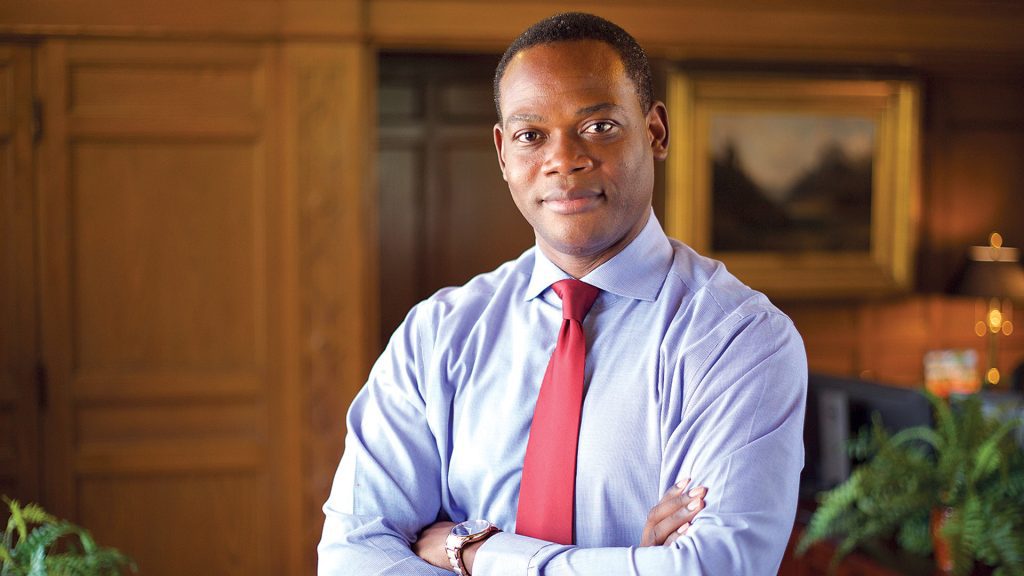
• Regular depreciation: If any remaining acquisition cost remains, the balance may be deducted over time under the Modified Accelerated Cost Recovery System (MACRS).

TIP: The CARES Act fixed a glitch in the TCJA relating to ‘qualified improvement property’ (QIP). Thanks to the change, QIP is eligible for bonus depreciation, retroactive to 2018. Therefore, your business may choose to file an amended return for a prior year.


Employee Retention Credit

Many business operations have been disrupted by the COVID-19 pandemic. At least recent legislation provides tax incentives for keeping workers on the books during these uncertain times.

Under the CARES Act, the ERC was equal to 50% of the first $10,000 of qualified wages per quarter, for a maximum credit of $5,000 per worker. The CAA extended availability of the credit into 2021 with certain modifications, including a maximum ERC of $14,000 per worker per year. Now ARPA authorizes a maximum credit of $28,000 per worker for 2021.

In addition, ARPA allows businesses that started up after Feb. 15, 2020 and have an average of $1 million or less in gross receipts to claim a credit of up to $50,000 per quarter.


Business Meals

Previously, a business could deduct 50% of the cost of its qualified business entertainment expenses. ARPA doubles the usual 50% deduction to 100% of the cost of food and beverages provided by restaurants in 2021 and 2022. Thus, your business may write off the entire cost of some meals this year.

 

Work Opportunity Tax Credit

If your business becomes busier than usual during the holiday season, it may add to the existing staff. Consider all the relevant factors, including tax incentives, in your hiring decisions.

ACTION: All other things being equal, you may hire workers eligible for the Work Opportunity Tax Credit (WOTC). The credit is available if a worker falls into a ‘target’ group.

“Step up your charitable giving at the end of the year. Then you can reap the tax rewards on your 2021 return.”

Generally, the WOTC equals 40% of the first-year wages of up to $6,000 per employee, for a maximum of $2,400. For certain qualified veterans, the credit may be claimed for up to $24,000 of wages, for a $9,600 maximum. There is no limit on the number of credits per business.

TIP: The WOTC has expired — and then been reinstated — multiple times in the past, but the CAA extended it for five years through 2025.


Miscellaneous

• Stock up on routine supplies (especially if they are in high demand). If you buy the supplies in 2021, they are deductible in 2021, even if you do not use them until 2022.
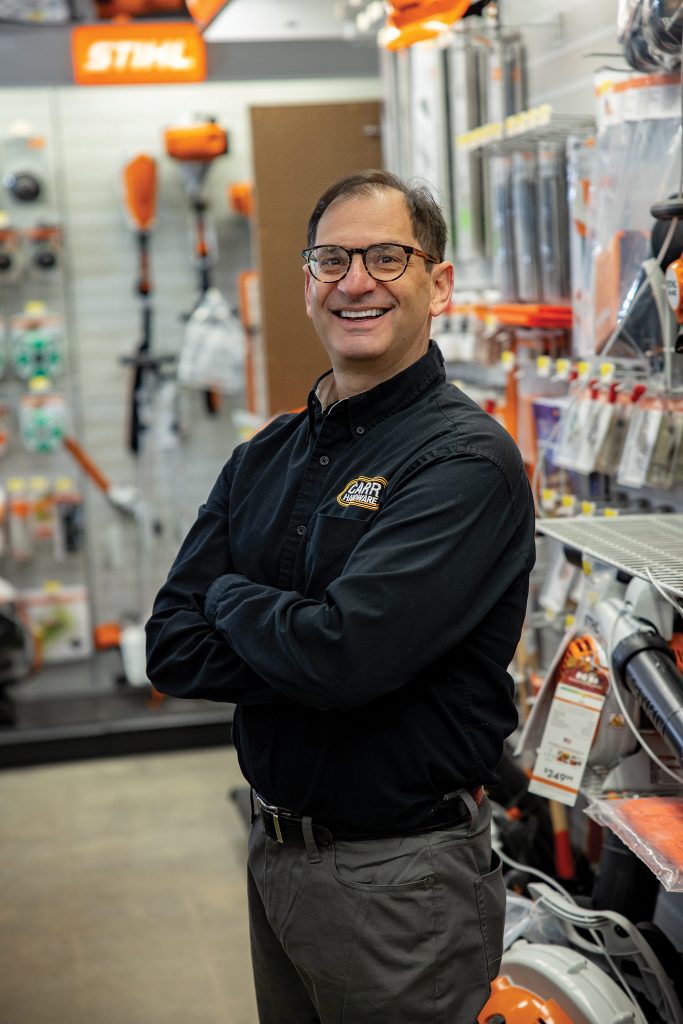
• Under the CARES Act, a business could defer 50% of certain payroll taxes due in 2020. Half of the deferred amount is due at the end of 2021, so meet this obligation if it applies.

• If you pay year-end bonuses to employees in 2021, the bonuses are generally deductible by your company and taxable to the employees in 2021. A calendar-year company operating on the accrual basis may be able to deduct bonuses paid as late as March 15, 2022 on its 2021 return.

• Generally, repairs are currently deductible, while capital improvements must be depreciated over time. Therefore, make minor repairs before 2022 to increase your 2021 deduction.

• Have your C-corporation make monetary donations to charity. ARPA extends a 2020 increase in the annual deduction limit from 10% of taxable income to 25% for 2021.


INDIVIDUAL TAX PLANNING

Charitable Donations

There were plenty of worthy causes for individuals to donate to in 2021, including disaster aid relief. Besides helping out victims, itemizers are eligible for generous tax breaks.

ACTION: Step up your charitable giving at the end of the year. Then you can reap the tax rewards on your 2021 return. This includes amounts charged to your credit card in 2021 that you do not actually pay until 2022.

Under the CARES Act, and then extended through 2021 by the CAA, the annual deduction limit for monetary donations is equal to 100% of your adjusted gross income (AGI). Theoretically, you can eliminate your entire tax liability through charitable donations.

Conversely, if you donate appreciated property held longer than one year (i.e., long-term capital gain property), you can generally deduct an amount equal to the property’s fair market value. But the deduction for short-term capital-gain property is limited to your initial cost. In addition, your annual deduction for property donations generally cannot exceed 30% of your AGI.

TIP: If you do not itemize deductions, you can still write off up to $300 of your monetary charitable donations. The maximum has been doubled to $600 for joint filers in 2021.


Medical Deduction

The tax law allows you to deduct qualified medical and dental expenses above 7.5% of AGI. This threshold was recently lowered from 10% of AGI. What’s more, the latest change is permanent.

To qualify for a deduction, the expense must be for the diagnosis, cure, mitigation, treatment, or prevention of disease or payments for treatments affecting any structure or function of the body. However, any costs that are incurred to improve your general health or well-being, or expenses for cosmetic purposes, are non-deductible.

ACTION: If you expect to itemize deductions and are near or above the AGI limit for 2021, accelerate non-emergency expenses into this year, when possible. For instance, you might move a physical exam or dental cleaning scheduled for January to December. The extra expenses are deductible on your 2021 return.

Note that you can include expenses you pay on behalf of a family member — such as a child or elderly parent — if you provide more than half of that person’s support.

TIP: The medical deduction is not available for expenses covered by health insurance or other reimbursements.


Miscellaneous

• Pay a child’s college tuition for the upcoming semester. The amount paid in 2021 may qualify for one of two higher-education credits, subject to phaseouts based on modified adjusted gross income (MAGI). Note that the alternative tuition-and-fees deduction expired after 2020.

• Avoid an estimated tax penalty by qualifying for a safe-harbor exception. Generally, a penalty will not be imposed if you pay during the year 90% of your current tax liability or 100% of the prior year’s tax liability (110% if your AGI exceeded $150,000).

• If you are in the market for a new car, consider the tax benefits of the electric-vehicle credit. The maximum credit for a qualified vehicle is $7,500. Be aware, however, that credits are no longer available for vehicles produced by certain manufacturers.

• Empty out your flexible spending accounts (FSAs) for healthcare or dependent-care expenses if you will have to forfeit unused funds under the ‘use it or lose it’ rule. However, due to recent changes, your employer’s plan may provide a carryover to next year of up to $550 of funds or a two-and-a-half-month grace period or both.


FINANCIAL TAX PLANNING

Securities Sales

Traditionally, investors time sales of assets like securities at year-end for optimal tax results. For starters, capital gains and losses offset each other. If you show an excess loss for the year, you can then offset up to $3,000 of ordinary income before any remainder is carried over to the next year.

Long-term capital gains from sales of securities owned longer than one year are taxed at a maximum rate of 15% or 20% for certain high-income investors. Conversely, short-term capital gains are taxed at ordinary income rates reaching as high as 37% in 2021.

ACTION: Review your portfolio. Depending on your situation, you may want to harvest capital losses to offset gains or realize capital gains that will be partially or wholly absorbed by losses. For instance, you might sell securities at a loss to offset a high-taxed short-term gain.

Be aware of even more favorable tax treatment for certain long-term capital gains. Notably, a 0% rate applies to taxpayers below certain income levels, such as young children. Furthermore, some taxpayers who ultimately pay ordinary income tax at higher rates due to their investments may qualify for the 0% tax rate on a portion of their long-term capital gains.

However, watch out for the ‘wash sale rule.’ If you sell securities at a loss and reacquire substantially identical securities within 30 days of the sale, the tax loss is disallowed. A simple way to avoid this harsh result is to wait at least 31 days to reacquire substantially identical securities.

TIP: The preferential tax rates for long-term capital gains also apply to qualified dividends received in 2021. These are most dividends paid by U.S. companies or qualified foreign companies.


Required Minimum Distributions

Normally, you must take required minimum distributions (RMDs) from qualified retirement plans and traditional IRAs after reaching age 72 (70½ for taxpayers affected prior to 2020). The amount of the RMD is based on IRS life-expectancy tables and your account balance at the end of last year. If you do not meet this obligation, you owe a tax penalty equal to 50% of the required amount (less any amount you have received) on top of your regular tax liability.

The CARES Act suspended the RMD rules for 2020 — but for 2020 only. The RMD rules are reinstated for this year.

As a general rule, you may arrange to receive the minimum amount required, so you can continue to maximize tax-deferred growth within your accounts. However, you may decide to take larger distributions — or even the full balance of the account — if that suits your needs.

TIP: The IRS has revised the tables for 2022 to reflect longer life expectancies. This will result in smaller RMDs in the future.


Net Investment Income Tax

Moderate- to high-income investors should be aware of an add-on 3.8% tax that applies to the lesser of net investment income (NII) or the amount by which MAGI for the year exceeds $200,000 for single filers or $250,000 for joint filers. (These thresholds are not indexed for inflation.) The definition of NII includes interest, dividends, capital gains, and income from passive activities, but not Social Security benefits, tax-exempt interest, and distributions from qualified retirement plans and IRAs.

ACTION: After a careful analysis, estimate both your NII and MAGI for 2021. Depending on the results, you may be able to reduce your NII tax liability or avoid it altogether.

For example, you might invest in municipal bonds (‘munis’). The interest income generated by munis does not count as NII, nor is it included in the calculation of MAGI. Similarly, if you turn a passive activity into an active business, the resulting income may be exempt from the NII tax. Caution: these rules are complex, so obtain professional assistance.

TIP: When you add the NII tax to your regular tax plus any applicable state income tax, the overall tax rate may approach or even exceed 50%. Factor this into your investment decisions.


Section 1031 Exchanges

Beginning in 2018, the TCJA generally eliminated the tax-deferral break for most Section 1031 exchanges of like-kind properties. However, it preserved this tax-saving technique for swaps involving investment or business real estate. Therefore, you can still exchange qualified real-estate properties in 2021 without paying current tax, except to the extent you receive ‘boot’ (e.g., cash or a reduction in mortgage liability).

ACTION: Make sure you meet the following two timing requirements to qualify for a tax-deferred Section 1031 exchange:

• Identify or actually receive the replacement property within 45 days of transferring legal ownership of the relinquished property; and

• Have the title to the replacement property transferred to you within the earlier of 180 days or your 2021 tax-return due date, plus extensions.

TIP: Proposed legislation would eliminate the tax break for real estate. If this technique appeals to you, start negotiations that can be completed before the end of the year.


Estate and Gift Taxes

Going back to the turn of the century, Congress has gradually increased the federal estate-tax exemption, while establishing a top estate-tax rate of 40%. At one point, the estate tax was repealed — but for 2010 only — while the unified estate- and gift-tax exemption was severed and then subsequently reunified.

Finally, the TCJA doubled the exemption from $5 million to $10 million for 2018 through 2025, with inflation indexing. The exemption is $11.7 million in 2021.

ACTION: Develop a comprehensive estate plan. Generally, this will involve various techniques, including trusts, that maximize the benefits of the estate- and gift-tax exemption.

Furthermore, you can give gifts to family members that qualify for the annual gift-tax exclusion. For 2021, there is no gift-tax liability on gifts of up to $15,000 per recipient ($30,000 for a joint gift by a married couple). This reduces the size of your taxable estate.

TIP: You may ‘double up’ by giving gifts in both December and January that qualify for the annual gift-tax exclusion for 2021 and 2022, respectively.


Miscellaneous

• Contribute up to $19,500 to a 401(k) in 2021 ($26,000 if you are age 50 or older). If you clear the 2021 Social Security wage base of $142,800 and promptly allocate the payroll-tax savings to a 401(k), you can increase your deferral without any further reduction in your take-home pay.

• Sell real estate on an installment basis. For payments over two years or more, you can defer tax on a portion of the sales price. Also, this may effectively reduce your overall tax liability.

• Weigh the benefits of a Roth IRA conversion, especially if this will be a low-tax year. Although the conversion is subject to current tax, you generally can receive tax-free distributions in retirement, unlike taxable distributions from a traditional IRA.

• Consider a qualified charitable distribution (QCD). If you are age 70½ or older, you can transfer up to $100,000 of IRA funds directly to a charity. Although the contribution is not deductible, the QCD is exempt from tax. This may improve your overall tax picture.


Conclusion

This year-end tax-planning article is based on the prevailing federal tax laws, rules, and regulations. Of course, it is subject to change, especially if additional tax legislation is enacted by Congress before the end of the year.

Finally, remember that this article is intended to serve only as a general guideline. Your personal circumstances will likely require careful examination.


Kristina Drzal Houghton, CPA, MST is a partner at the Holyoke-based accounting firm Meyers Brothers Kalicka, P.C.; (413) 536-8510.

Commercial Real Estate Special Coverage

A Time to Think Big


With more than $3 billion being directed to area cities and towns through the American Rescue Plan Act, there is no end to speculation about these funds should be put to use. While infrastructure projects and other municipal needs certainly need to be addressed, area economic leaders and developers are urging communities to think big and make investments that will spur additional private-sector development and allow these cities and towns to take full advantage of the changing times and the opportunities they present.

‘Unprecedented.’ ‘Once in a lifetime.’ ‘Once in a generation.’ ‘Transformative.’ ‘Totally unique.’

These are just some of the words and phrases people are using to describe the federal money now flowing into the state and its individual cities and towns from the American Rescue Plan Act (ARPA) to help them, their residents, and their businesses recover from the hard sting of COVID-19. Area communities are in line for windfalls ranging from hundreds of thousands of dollars for the smallest of towns in Franklin and Hampshire Counties to more than $130 million for Springfield. And the state itself is receiving more than $5 billion.

By and large, there are few strings attached to this money, so the $64,000 question (or the ‘fill in an amount’ question, as the case may be with individual communities) concerns how this windfall will be spent.

Keith Nesbitt

Keith Nesbitt

“There are very safe investments that can be made, and everyone would benefit. But there are game-changing investments that can be made, and I hope that they are.”

The debate is continuing on Beacon Hill and all across the region as mayors, city and town councilors, selectmen, and town administrators mull myriad options for spending these funds — and how other federal money, such as that included in the infrastructure bill recently passed into law, might be put to use.

Much of the talk on the local level concerns infrastructure — roads, bridges, sewer and water lines — as well as new roofs, HVAC systems, and more for municipal buildings, new parking garages, parks, etc., etc., etc.

And while these options have merit, those who spoke with BusinessWest on the broad subject of how this spending spree, especially the ARPA money, should be conducted said that, from an economic-development standpoint, area cities and towns — and the state itself — would do well to think bigger, and more long-term, with an eye toward using this money in ways that justify that word ‘transformative,’ and also spark private-sector development in housing (especially market-rate housing), new businesses, and more.

“These can’t be ‘bridge-to-nowhere’ kinds of investment — they have to be meaningful investments that all of us can benefit from,” said Jeff Daley, president and CEO of Westmass Development Corp., who also warned against a rush to commission studies that would likely yield reports that sit on shelves for years.

Keith Nesbitt, Berkshire Bank’s senior vice president for Business Banking for the Pioneer Valley and Connecticut, agreed.

“There are investments that are needed, and I think they come in a variety of forms,” he said. “I don’t know how we’re going to attract significant private investment without that pump priming that government resources are going to provide. I think this is a once-in-a-generation opportunity, and I really hope that local leaders are bold enough to dream big when it comes to how we use these funds.

“There are very safe investments that can be made, and everyone would benefit,” he went on. “But there are game-changing investments that can be made, and I hope that they are.”

What falls in that category? Nesbitt, who is also hiring manager for the bank and understands the workforce issues facing area businesses and the lack of qualified talent across the board, cited a community in Minnesota that is earmarking some of its federal money to ensure that all high-school graduates can attend community college.

Joy Martin

Joy Martin

“You do have a unique opportunity that you didn’t before because you have money to offer people to come in and develop in your area.”

“They recognized that need to prepare our young people for the jobs of the future,” he said. “The investment in free, two-year community college is what they’ve decided to do, and I’d love to see something that like here.”

Meanwhile, Joy Martin, director of Asset Management with Davenport Companies, which has worked on MGM Springfield, recently converted the former Willys-Overland property on Chestnut Street into market-rate apartments and is redeveloping the former Registry of Motor Vehicles building on Liberty Street, said Springfield and other communities need to think about investing the federal money in ways that would make it easier to undertake such projects.

“You do have a unique opportunity that you didn’t before because you have money to offer people to come in and develop in your area,” she said, adding that many projects need help from state and local government to make the numbers work for developers.

Rick Sullivan, president and CEO of the Western Massachusetts Economic Development Council, who can speak to this subject from various perspectives (he’s the former mayor of Springfield and a current city councilor), concurred, and also stressed the need to invest the money and not just spend it.

“I do think it’s a chance to look at the bigger picture and look down the road,” he told BusinessWest. “And not just fill a gap that might exist today, or not just make some repair that might be necessary, but really further your economy or the quality of life in your community you’re living in.”


Money Talks

While certainly advocating for longer-term thinking when it comes to how the ARPA money should be apportioned, Sullivan and others noted there are some immediate concerns that may also have some ramifications down the road.

That’s especially true when it comes to existing businesses and especially the smaller ventures across many sectors that are still struggling from the effects of not only COVID but some of the side effects from treating it as well.

“With the pandemic, the small, mom-and-pop, downtown, core-district businesses are still hurting,” he told BusinessWest. “They have supply-chain issues, they have employment issues … so I think some of these monies should go to the small, the really small businesses that make up the fabric, the fiber of your downtowns and your communities.

“And it can’t be loans because loans come with interest,” he went on. “It has to be either grants or no-interest loans that have a forgiveness provision — it goes away after a short period of time, be it two years or three years or five years; if you stay open and you’re moving forward, the obligation to pay goes away. Some of this money needs to go to your smallest businesses.”

Rick Sullivan

Rick Sullivan

“With the pandemic, the small, mom-and-pop, downtown, core-district businesses are still hurting. They have supply-chain issues, they have employment issues … so I think some of these monies should go to the small, the really small businesses that make up the fabric, the fiber of your downtowns and your communities.”

That said, Sullivan and others stressed repeatedly the need to think big when it comes to ARPA, meaning a focus on investments that will pay off the long term, with benefits for generations of residents of a given city or town. That could mean investments in everything from education and training initiatives to faster and more reliable internet, to initiatives that will unlock the development potential of unused and underutilized properties.

Seth Stratton, a business lawyer and managing partner of East Longmeadow-based Fitzgerald Attorneys at Law, said the focus should be on economic-development-related investments, a broad term to be sure.

“The programs and initiatives that should be funded with these resources should be intentional, impactful, and innovative — all with an eye toward a continuing spark; it has to be transformative,” he said, putting support for new housing projects high on his list of priorities. “We want to see economic development and a rising tide that lifts all boats. If we just do one-off projects here and there, that can be helpful, but it won’t have this comprehensive effect of economic development in what many of us see as somewhat of a new economy.

“What do restaurant, food and beverage, and entertainment venues look like going forward?” he continued. “We ought to be thinking about what they look like moving forward and how to embrace that and use funds in a smart way that would have exponential impact, rather than talking about one-off items.”

Daley agreed, and mentioned, as one example, Ludlow Mills, the sprawling former jute-making complex along the Chicopee River that Westmass now owns. He said investments made there by the state and perhaps the town of Ludlow could bring property in line for development and create jobs for several generations of area residents.

“We have several under-underutilized and undevelopable properties, and I think this one-time type of money coming in could help put us over the top to redevelop Ludlow Mills and other projects,” he said, adding that he hopes the ARPA money and funds in other federal programs, such as the infrastructure bill that was recently signed into law, trickle down to Western Mass. and help it attract the attention of the development community, which has often found it difficult to take on projects here for a number of reasons, including the market lease rates and the costs of renovating old mills and other properties.

“With a small investment — small relative to the numbers they’re talking about Congress and feds giving the state — we could recapitalize those dollars and give a return on investment that would be a million times what they would give us,” Daley said. “We have very, very large properties in Ludlow, specifically, that, without an infusion of cash, it’s going to hard to redevelop. With a small infusion of cash, several million dollars, we can generate a return on investment of $300 million or $400 million, realistically, within five to 10 years — and create a lot of jobs and tax dollars; there are three or four projects we could do that would change the face of Ludlow.”

Jeff Daley

Jeff Daley

“We have several under-underutilized and undevelopable properties, and I think this one-time type of money coming in could help put us over the top to redevelop Ludlow Mills and other projects.”

Martin concurred, noting that this infusion of federal money comes at an intriguing time, as many forces are coming together to make Western Mass. a more attractive option for individuals and businesses alike. These include the much higher cost of living in other areas such as Boston and New York and the opportunity to now work in those areas but live in a lower-cost region like the 413.

“Western Mass. is getting more attractive to investors and to people in general. Overland Lofts is 97% leased, and it has been 97% leased for some time,” she told BusinessWest. “We thought we were going to have a problem leasing these apartments, and we have not, and what surprised us is that we’ve attracted a lot of residents from the Worcester and Boston areas, because this location is near things that are about to happen — it’s not far from the casino, it’s near the train station … it checks a lot of boxes for urban living at a much lower cost than living in Boston or Worcester.”

Elaborating, she said one of the units is being leased by an executive with a Boston-based firm who is now able to work remotely, and chose to do so in downtown Springfield.

With these trends, or developments, in mind, those we spoke with said area cities and towns need to be thinking about ways to utilize the ARPA funds to take full advantage of the opportunities currently presenting themselves.


Impact Statement

Returning to that town in Minnesota using ARPA money to send young people to community college, Nesbitt said this is the kind of long-term, high-impact investing that state and area leaders should be thinking about as they consider options for allocating funds in the broad realm of economic development.

“These kinds of human-capital investments need to be prioritized,” he said, adding that the workforce crisis now impacting every sector of the economy must be considered a long-term problem and not one that will correct itself in a quarter or two or with the end of additional unemployment benefits.

Seth Stratton

Seth Stratton

“We have to have more market-rate housing in the region and be creative about it, and that’s where we talk about downtown developments. We can leverage Western Mass. and our lower cost of living by investing in market-rate housing, and such investments will help our businesses, because they are struggling to find and keep employees, and if we have robust market-rate housing, that will certainly help.”

Stratton agreed, noting that expanding vocational-education programs to assist the trades and the region’s large manufacturing sector should also be a priority. Meanwhile, he noted that other forces are converging that might bring more people into the local workforce, such as the ability to work remotely. He said there are more individuals like that executive now living in Overland Lofts, and, moving forward, they will need places to live.

“We have to have more market-rate housing in the region and be creative about it, and that’s where we talk about downtown developments,” he said. “We can leverage Western Mass. and our lower cost of living by investing in market-rate housing, and such investments will help our businesses, because they are struggling to find and keep employees, and if we have robust market-rate housing, that will certainly help.”

Meanwhile, with these changes in how and where people work, communities like Springfield have to think about the large amounts of office space currently unleased and the potential for those numbers to climb, he went on, adding that some thought should go into repurposing some of this space into flexible workplaces.

Getting projects like these off the ground is often difficult because it’s not easy to make redevelopment projects like the Overland initiative “pencil out,” as developers say, meaning make the numbers work. Often, historical tax credits or other forms of funding are needed to bridge gaps, said Martin, adding that the state and individual communities should look at using the federal funds flowing to them to make such projects more feasible and doable.

“We thought we were going to have a problem leasing these apartments, and we have not, and what surprised us is that we’ve attracted a lot of residents from the Worcester and Boston areas, because this location is near things that are about to happen — it’s not far from the casino, it’s near the train station … it checks a lot of boxes for urban living at a much lower cost than living in Boston or Worcester.”

“We run into a gap between the cost to build something and the actual asking price for something,” she said, citing the Overland project as an example. “We got 60 apartments out of it and rents that fit the area, but none of that would have happened without historical funds and state housing funds. So if the city had something that could bridge some of the financial gap between new-build and the current economic conditions in Springfield, that will help to bring developers here.

“It’s hard to justify an $18 million project with $2-per-square-foot rent,” she went on. “But if there’s some way to help bridge that gap, I think you’d see more developers willing to come in and give you a good product.”

Daley agreed, noting that the developers of the so-called Clocktower Building at Ludlow Mills, another housing project, have had to wait the better part of six years for the historical tax credits needed to move that initiative off the drawing board.

“We have another mill that’s 600,000 square feet; if we were to start today and try to get those kinds of tax credits, it would be 12 to 15 years before they were all distributed,” he said. “If the state wanted to have an impact on development of those kinds of projects, it should make more money available for good projects that are shovel-ready.”

Martin said the gap in funding facing those looking to develop existing but older and challenged buildings is one of the key factors impeding redevelopment of the buildings across Main Street from MGM Springfield.

“It’s not that people don’t want to be there,” she said. “It costs a lot to redevelop these buildings, and then to charge a rent that fits the community … it doesn’t pencil out without some kind of help,” she said. “Using these funds in a smart way like that would help bring back the Main Streets in Western Mass.”

Sullivan agreed, and said such investments are part of that process of looking beyond today and to tomorrow, and what communities want and need to look like in a rapidly changing landscape.

“I do think this is an opportunity for communities to look at the bigger picture regarding where they want their communities to be 10 years down the road, what they want their downtowns to look like, and what sectors — be it a restaurant district or an entertainment sector, travel and tourism, for example — they want to attract,” he said. “It’s about determining what you want your future to look like, and investing in it.”


Paying It Forward

Summing things up, Sullivan said these are what he hopes are once-in-a-lifetime windfalls that have come to area cities and towns.

“Hopefully, we won’t ever have to go through this again,” he noted, adding quickly that this unique moment in time represents an opportunity to pause, think about the future, and make some investments in it.

Fixing a bridge or putting a new roof on the fire station might be a suitable use for some of the money, he went on, but overall, cities and towns have to think bigger. Much bigger.


George O’Brien can be reached at [email protected]

Community Spotlight

Community Spotlight

By Mark Morris

William Rosenblum

William Rosenblum says Ludlow needs to use available funds to benefit the most people and invest in the future, not just immediate needs.

This fall, two long-anticipated projects in Ludlow opened to the public, and officials say there’s more to come.

In September, the Harris Brook Elementary School on Fuller Street opened for full classes for students in grades 2-5. And in early November, the new Ludlow Senior Center officially opened on State Street. Board of Selectmen Chairman William Rosenblum said that, while Ludlow is already a desirable community, the new school and senior center make it even more so.

“We’ve addressed the bookends of our lives by investing in our children and our seniors,” Rosenblum told BusinessWest, adding that next up for this community is determining the best ways to spend $6.3 million in funds from the American Rescue Plan Act (ARPA). Rosenblum said the Board of Selectmen is asking for input from town department heads and Ludlow citizens on how to spend the funds in a way that will benefit the most people in the community and act as investments for the future.

“It’s like the quote from Star Trek — ‘the needs of the many outweigh the needs of the few,’” he said, citing a line credited to Mr. Spock.

Rosenblum added that using the funds to make improvements and updates to existing facilities will take priority over embarking on new projects.

“For example, we’ll be upgrading the HVAC system at the safety complex,” he said. “It’s something that needs to be done, and we will most likely use ARPA funds for it.”

Ludlow Town Planner Doug Stefancik said the guidelines in spending ARPA money focus on helping public health departments and businesses that were hit hard by the pandemic. They also allow towns to address recreational areas such as community centers and parks.

“This might be an opportunity to upgrade some of the existing facilities in our parks,” he added.

“The mill developments are such a game changer for the town. It’s also where a lot of our major economic development will be going forward.”

Another type of project allowed by ARPA involves investments in broadband. Rosenblum said he’d like the town to explore a fiber-optic installation in Ludlow, an idea that was inspired by his work-from-home experience. During the pandemic, while he stayed connected to work through the internet, his two children also attended school online, which severely taxed his home internet capabilities.

“I learned the 19 IP addresses that were in my house, so I could shut down different devices in order to get better internet reception,” he said.

Rosenblum acknowledges that, while fiber optics certainly fits the Star Trek criteria in benefiting many people, such a move requires considerable research to see if it’s even remotely affordable for the town.

For this, the latest installment of its Community Spotlight series, BusinessWest looks at ARPA options and other pressing matters in Ludlow, a community that has seen considerable residential growth in recent years and is now seeing business growth as well.


At a Crossroads

According to Rosenblum, home sales remain brisk, largely because interest rates have stayed low. Meanwhile, over the past two years, home prices in Ludlow have increased 30%, with the average list price topping out at $376,000.

While some residents are concerned about the tax rate, he pointed out that increasing home values are what leads to higher tax bills.

“When you look at tax rates in communities across Massachusetts, Ludlow is right in the middle,” he noted.

Stefancik added that some of the larger McMansion-type homes in town bring in more than $10,000 a year in taxes.

“While that may seem high, taxpayers are getting a new school and a new senior center, which are both good things for the community,” he said. “The new school might even convince a family to move here.”

As Stefancik reviewed the many activities happening through his department with BusinessWest, one interesting trend stood out. Last year, 17 homeowners applied for special permits for home-based businesses, a high-water mark for the community.

“It’s easy to get hung up on what’s going on at the federal level, but people need to look in their own backyard. The decisions that are made in town are the ones that affect people the most.”

While it would be easy to assume the pandemic sparked this increase in home-based business permits, Stefancik said it’s a trend that actually started before COVID arrived.

“The permits range from electricians and carpenters to artists and consultants,” he noted. “Back when I started in the job, these requests might occasionally trickle in, but now it’s our most common special permit.”

This trend was certainly in evidence back in October when the Ludlow Cultural Commission held a Community Market event at Memorial Park. Grace Barone, executive director for the East of the River Chamber, an event sponsor, was impressed with the community support and the number of home-based businesses represented at the market.

Doug Stefancik

Doug Stefancik says home values have soared in Ludlow, and so has the prevalence of home-based businesses.

“I saw some wonderful business ideas, and the community market provided a great showcase for them,” Barone said. “It would not be a surprise to see some of these vendors become future storefronts in town.”

The original idea for a community market was to bring together small businesses, artists, and community organizations, according to Michelle Goncalves, chair of the Ludlow Cultural Commission. Because the pandemic’s impact hurt many small businesses, especially those in arts and culture, the event’s focus shifted to become an occasion to support these entities.

For a first-year event, Goncalves was surprised to see nearly 40 vendors reserve space. She speculated that most of the smaller vendors were home-based businesses.

“In addition to businesses that have storefronts, I would guess that many of our vendors were based at home,” she said. “For example, we had a person who makes wreaths, a photographer who uses his home for a studio, one person who sells essential oils, and another who makes charcuterie boards.”

Planning has begun to bring the community market back next fall. “We definitely want to do this again,” Goncalves said.

While the population of Ludlow has remained fairly steady over the last several years, Rosenblum noted the town is seemingly growing based on the increased activity that happens there.

“Folks in Chicopee like to say they are the crossroads of New England,” Rosenblum said. “Well, Ludlow is the crossroads of about four or five towns, too.” Indeed, from the Ludlow exit on the Mass Pike, travelers head to Granby, South Hadley, Belchertown, Palmer, Indian Orchard, Wilbraham, and other communities.

The busy Ludlow exit from the turnpike feeds into Center Street, which is part of Route 21. Even after the state completed a comprehensive upgrade of the roadway last year, traffic has never been busier.

“I think we got used to traffic during the pandemic, which was very light because people weren’t commuting to work,” Stefancik said. “Now there’s traffic all week, and it’s still busy on the weekends.”

Don’t expect traffic to lessen anytime soon because Ludlow continues to invest in its future. In 2017, town officials working with Westmass Area Development Corp. and Winn Development transformed one of the old mill buildings in the sprawling Ludlow Mills complex into Residences at Mill 10, providing 75 units of age-55-plus, mixed-income housing. In 2022, construction begins on Mill 8, the mill building with its iconic clock tower. Once complete, that project will bring an additional 95 units of senior housing to Ludlow. Town officials offered high praise both for what’s been done so far and the potential for the entire area.

“The mill developments are such a game changer for the town,” Stefancik said. “It’s also where a lot of our major economic development will be going forward.”

Rosenblum concurred, adding that “the mills are a long-term investment for Ludlow, and we enjoy a great partnership with the developers.”

Like Mill 10, Mill 8 will also offer mixed-income housing. Considering the mills, the new single-family houses being built, and the condominiums that exist and are under construction, Stefancik said, Ludlow gives potential residents many options on where to live.

“Looking forward,” he added, “we’re a community that can offer a wide range of housing and provide a great place to live and do business.”


Right Place, Right Time

As a selectman, Rosenblum enjoys his involvement in projects that make a positive impact on Ludlow, and he believes local politics is “where it’s at.”

“It’s easy to get hung up on what’s going on at the federal level, but people need to look in their own backyard,” he said. “The decisions that are made in town are the ones that affect people the most.”

Mr. Spock couldn’t have said it better.

Cannabis

Aiming High

The executive team at 6 Brick’s

The executive team at 6 Brick’s includes, from left, Taylor Shubrick, Payton Shubrick, and their parents, Dawn and Fred Shubrick.

Payton Shubrick always wanted to effect change in the world.

She never thought it would be through a product that was, for most of her life, illegal.

Specifically, when she graduated from the College of the Holy Cross in 2015 with a degree in political science — and concentrations in Africana studies and peace and conflict studies — the goal was to enroll in law school, she explained.

“Our speaker for our class talked heavily about moving mountains — ‘how do you leave this college on a hill and move mountains the rest of your life?’” she recalled. “So my idea was, I was going to have this landmark case that would change the trajectory of my career and rewrite some type of law.”

But she found herself working full-time at MassMutual instead — and missing her college days filled with extracurricular activities. “It was work, work out, and go home. There was nothing in between.”

So, with the help of her father, Fred, she secured an internship with the Springfield City Council. Meetings became more interesting after Massachusetts voters approved the legalization of adult-use cannabis in late 2016, with out-of-state operators hanging around and officials trying to hash out what the rules would be for zoning and other aspects of legalization. And Shubrick was intrigued — so much that, when the councilor she was interning for lost a re-election bid, she kept attending meetings anyway.

“I was hearing so much conversation about how these businesses were going to make millions. Honestly speaking, they made it sound so easy.”

“I was hearing so much conversation about how these businesses were going to make millions,” she recalled. “Honestly speaking, they made it sound so easy.”

But as Shubrick thought about her own potential in this new industry, she had something else in mind besides dollar signs. She’d read Michelle Alexander’s book The New Jim Crow and gained an understanding of how the failed war on drugs had impacted urban communities like Springfield. And she saw the cannabis industry as a way to engage with that community, succeed in business there, and pay it forward.

“I went to a Springfield public high school, where, if somebody dropped a dime bag, they were going to in-house suspension or being arrested in the middle of the school day because you had police officers present in the building with you. So, when you start to peel back the layers and realize this is going to be a billion-dollar industry, how can you get people in your community to benefit from that?”

The answer is 6 Brick’s, an adult-use retail cannabis shop expected to open early in 2022 on Main Street in Springfield, in the Republican complex.

“We are what most would describe as a mom-and-pop shop, which I tend to agree with since both my parents are on the executive team,” she told BusinessWest.

The Shubrick family hopes to have 6 Brick’s open by early 2022.

The Shubrick family hopes to have 6 Brick’s open by early 2022.

She thought her biggest hurdle would be getting her father on board. “Saying I wanted to be a lawyer has a certain level of prestige around it. Saying I wanted to be a legal drug dealer and own a cannabis dispensary … not so much. How do you make that business case and get Dad to switch gears?”

But not only has Fred become her biggest supporter, he’s also chief procurement officer at 6 Brick’s — a name that echoes the family name, Shubrick. Payton is CEO, while her mother, Dawn, is executive secretary, and her sister, Taylor, is head of community responsibility and quality assurance. Two younger siblings — who aren’t currently old enough to work in cannabis — round out the ‘6’ in the company name.

Once she decided to wade into this burgeoning industry, Payton knew she wanted to do it in Springfield.

“There’s this idea that, to be a star, you have to leave the area and go to Boston or New York. I heard, ‘you have so much potential; go somewhere.’ That was frustrating because I’ve always seen the potential Springfield has, and this industry, in many ways, allows me to prove people wrong; I can stay here, and I can be successful in my own right, and I don’t have to move out of the city of Springfield to do that.”

“Saying I wanted to be a lawyer has a certain level of prestige around it. Saying I wanted to be a legal drug dealer and own a cannabis dispensary … not so much.”

Furthermore, she said, “I can participate in an industry that previously caused so many people’s lives to be disrupted and negatively impacted, and I can try my hand at something I had always been interested in, which is entrepreneurship.”

It hasn’t been easy, and the journey is far from over — and the cannabis landscape in Massachusetts is still a difficult one for minority entrepreneurs, despite the state’s establishment of a social-equity program (more on that later). In a wide-ranging interview, Shubrick talked about why that’s the case, and what can be done to improve the prospects of business owners who lack the resources of large, established companies and, ultimately, create a more level playing field.


No Easy Road

Shubrick and her family officially launched 6 Brick’s in 2019, and the road since has been a thornier one than she had imagined.

Back in 2017, “I thought if I did my homework and put together a really strong application, I would get the license. I didn’t expect an RFP, 27 groups applying, only four being selected. That’s when your heart starts to do many palpitations — what if we don’t get picked? What happens next? I didn’t have a plan B.”

Payton Shubrick and Marcus Williams, president of the Block

Payton Shubrick and Marcus Williams, president of the Block, which seeks opportunity for minority-owned cannabis businesses, share a few words at a recent mixer.

But she did fight through to become one of the four entities chosen in Springfield’s first round of permits.

“The running joke in the industry is they never ask when are you going to open, they say where are you in the process,” Shubrick said, noting that it’s a two-pronged process. At the city level, it involves a special permit and a host-community agreement, while the state’s Cannabis Control Commission (CCC) requires a provisional license, post-provisional-license inspections, and other steps, including a certificate of occupancy (back to the city for that), which is required by the state for the final license.

Shubrick described it all as a long sequence of queues, of getting on meeting agenda after meeting agenda. “It’s a very layered process with two entities that don’t talk to each other, and you need a series of documents from each. It’s a series of waiting rooms in some capacities.”

On top of that, 6 Brick’s has had to deal with supply-chain issues during the pandemic to get its space — now 90% built out — up and running. It even had to wait for doors that were stuck in shipping containers. “There’s not a lot in your control as you think about moving through this process. So patience is key.”

All along, a Springfield-based business was the only goal, she noted, as opposed to, say, Northampton, which never capped the number of cannabis permits.

“I didn’t look to start as a business model that was going to be rinse and repeat in any city,” she explained. “I looked at it as, ‘I can be the hometown hero because, when I hire people, I’m going to hire them from the community, and I’m going to hire those who were impacted by cannabis prohibition.’ And that doesn’t just mean who did jail time — it could be their daughter, their niece, their nephew, because, let’s be honest, when someone is removed from the home and incarcerated, that whole family is impacted.”

In short, “for me, this was aligned to social-justice elements of my hometown and less aligned to me becoming a millionaire overnight.”

She found tht the road to being profitable at all begins with a lot of money up front — between $1 million and $2.5 million, typically, depending on the state of the building, its HVAC requirements, and other costs.

“I didn’t look to start as a business model that was going to be rinse and repeat in any city.”

That has been a roadblock for many applicants that have gone through the state’s social-equity program aimed at creating an entrepreneurial path for communities that were particularly hard hit by the war on drugs — most of them minority-dominated communities. Today, only 8% of cannabis companies currently open in Massachusetts are run by those who emerged from the social-equity program.

“Some go through the process but have no funding at the end of the program,” Shubrick said. “So now you’re well-versed in the process and know how to get through it, and you’re looking around, and there’s no banks giving you money. If you don’t know people with deep pockets, how do you get the right investors? I’ve seen horror stories of people who have the best of intentions and got so far in the process, but you have the wrong investor, and then it becomes a nightmare. And now you’re selling for pennies, and you’ve lost time, energy, and money.

“That’s the heartbreak people don’t talk about,” she went on. “And I wouldn’t categorize it as those people failing; I would categorize it as not having have a holistic structure in place that supports people from start to finish. It’s almost a tease in order to say, ‘hey, I’m going to show you how to make a pizza, but I’m never going to give you the ingredients so you can make your own.’ Many people simply can’t raise the money to do what they’ve gone through a program to learn how to do.”

In an editorial last week, the Boston Globe agreed, noting that the state has ignored calls to create a loan program to help equity applicants, adding that, “as if the barriers to entry weren’t high enough already, getting financing for a marijuana business is difficult because of its murky legal status.”

But the Globe cites other barriers to social-equity applicants as well, particularly the power of municipalities — which are not required to consider equity when awarding licenses — over the approval process, not to mention the head start large medical-marijuana businesses have had in the recreational license-approval process, which has paved the way for bigger medical companies to dominate the market.

“So the state has to double down on its social-equity program and prioritize licensing for minority applicants,” the Globe argues.

It’s also a hyper-competitive industry in general, Shubrick said, one where players are fiercely protecting their piece of the pie, and new retailers are often offered unfair deals to partner with growers, manufacturers, and wholesalers, and vice versa.

“It’s key to have a team of lawyers and accountants help you stay away from the sharks in the water because people are so hyper-focused on trying to extract as much money as possible, they’re not thinking through long-term impacts like ‘how can I be a decent businessperson to this other individual so maybe down the line we can do business together?’ Instead, it’s ‘how can I squeeze as much equity as possible? How can I give them terms that maybe aren’t favorable because I’ll benefit in the short term?’

“Other states around us are legalizing, so the captive audience in Massachusetts won’t be the same,” she went on, “and that doesn’t bring out the best in people when they don’t view competition as healthy and an opportunity to get better.”


Seeking Solutions

Proponents of true social equity in cannabis are working toward a more equitable industry, however. Earlier this month, the Block — an organization that aims to support black and Latino cannabis professionals in Massachusetts — held the last of three networking mixers at White Lion Brewery in downtown Springfield. About 80 people attended, including a CCC commissioner.

In addition to efforts around business development, resources, and connections for its members, the Block is also developing options for members to gain capital, such as minority-owned investment firms, crowdsourcing, and more traditional, institutional backing.

“Plenty was discussed. It was a really good evening overall,” Shubrick said. “Social equity here in Massachusetts is well-intentioned, but logistically, it has opportunities to become more meaningful so we see more people opening doors who have gone through the program.”

She stressed that she’s fortunate to be entering this business backed by people — her family foremost — with her best interest at heart, and she’s passionate about using her business to lift up the only city she considered for this business.

“I want to hire folks from the community who can benefit from this industry, not just because they were impacted by the war on drugs, but also because Springfield should be benefiting from these jobs.”

That passion, she noted, will be shared by ‘budtenders’ who understand the plant and can educate customers on the store’s products, many of them created by local manufacturers that are also smaller companies, many owned by women, veterans, and people of color.

“We’re being intentional about our partnerships and helping customers understand why we’re partnering with them,” she said. “So it’s more of an experience and less of a transaction.”

Certainly, opening a cannabis retail shop — and, again, it’s a long process, one that’s not over yet — has been quite the experience for the Shubrick family.

“Not everything that is faced can be changed, but nothing can be changed until it is faced,” wrote James Baldwin, a quotation Payton calls her favorite. Indeed, she’s facing the challenging realities of cannabis entrepreneurship — with a mind to change things for the better for those who come after.


Joseph Bednar can be reached at [email protected]

Accounting and Tax Planning

Dollars and Sense

By Jim Moran, CPA


With 2021 drawing to a close, it is time for business owners to start thinking about year-end tax-planning opportunities to minimize 2021 taxable income and mitigate the impact of taxes prior to the start of the new year.

Planners are once again faced with the fact that tax reform is still unclear. Congress continues to debate President Biden’s Building Back Better legislation, and revenue raisers are still thinking carefully about how to fund this legislation.

This bill contains numerous tax provisions, but with a divided Congress, it is not known which provisions will end up in the final version. A prudent strategy would be to do year-end tax planning based on the status quo but be flexible based on any last-minute year-end legislation.

Jim Moran

Jim Moran

“A prudent strategy would be to do year-end tax planning based on the status quo but be flexible based on any last-minute year-end legislation.”

Here are items to consider as you proceed, taking into consideration current tax law, including provisions of the recent CARES Acts passed as a result of the pandemic:


Standard Mileage Rate

The standard mileage rate, for those taxpayers who can use it, is $0.56 for 2021. The IRS mileage rate for 2022 will be released sometime next month.


Meals and Entertainment

The CARES Act allows a 100% deduction in 2021 and 2022 for meals purchased from a restaurant. These meals must continue to meet the “ordinary and necessary” business requirements. Entertainment, amusement, and recreation-type events continue to remain 100% non-deductible.


Code Section 179 Expensing and Depreciation

The Code Section 179 expense deduction is $1,050,000 for 2021 with a total investment limitation of $2,620,000. Also, 100% bonus depreciation remains in effect in 2021 and 2022. After 2022, the bonus depreciation amount decreases by 20% each year until bonus depreciation is no longer allowed (beginning in 2027).


Corporate Limit Increased to 25% of Taxable Income

The COVID relief bills raised the limit to 25% of taxable income through 2021 for cash contributions to eligible charities. The increased deduction does not automatically apply. C-corporations must elect the increased limit on a contribution-by-contribution basis.


Increased Limits for Donated Food Inventory

Businesses that contribute food inventory for the care of the “ill, needy, or infants” get an enhanced deduction in 2021. The previous deduction limit was 15% of the taxpayer’s aggregate net income or taxable income. For 2021, business taxpayers may deduct contributions of up to 25% of their aggregate net income or taxable income.

For C-corporations, the 25% limit is based on their taxable income. For other businesses, including sole proprietorships, partnerships, and S-corporations, the limit is based on their aggregate net income for the year from the businesses from which the contributions are made.


Paycheck Protection Program

If your business had a PPP loan forgiven during 2021, the amount forgiven should be reported as debt-forgiveness income on your income statement. As a reminder, PPP loan forgiveness income is non-taxable federally.

Principal and interest payments on loan payments made by the SBA established by the CARES Act and revised by the Economic Aid Act are not taxable for federal income-tax purposes. The SBA is authorized to automatically pay up to six months of principal and interest.


Net Operating Losses

Generally, net operating losses (NOL) arising in 2021 or later cannot be carried back and must be carried forward indefinitely.

Net operating losses arising in tax years 2018 through 2020 can be caried back five years and then carried forward indefinitely. The NOL carryforwards beginning in 2018 can offset only 80% of taxable income for taxable years beginning in 2021.

NOL carryforwards arising in taxable years prior to 2018 can first offset 100% of 2021 taxable income. If all pre-2018 NOLs are used in 2021 and taxable income remains, any NOL carryovers from 2018-20 can offset only 80% of any remaining taxable income.


Bonuses

With the current improvement in the economy, and employees being harder to find and retain, a net-income-reduction measure (in turn tax reduction), businesses should consider bonuses for employees, whether through incentives or through setting work goals. Bonuses should also be contingent on cash flows and the current net income of the company.

For bonuses paid to a controlling shareholder (an individual who owns directly or indirectly greater than 50% of the value of a corporation’s stock), the bonus is considered paid in the year the controlling shareholder reports the income. Thus, in order to deduct the controlling shareholder’s 2021 bonus, it must be paid to the shareholder prior to the end of 2021.

Bonuses subject to a contingency cannot be accrued in 2021 and paid in 2022 even if paid within two and a half months of year-end. Therefore, if employees cannot receive their deferred bonuses for performance in 2021 unless they are still employed in the year 2022 bonus payment date, the company’s liability for the bonus is subject to a contingency and cannot be deducted for tax purposes in 2021, even if paid within two and a half months of year-end.

Similarly, the IRS has held that bonuses are not fixed in the year of service when the amount of individual awards are finalized but revert back to the company if an employee left before receiving the bonus, even though the forfeited amounts could be considered insignificant.

IRS rulings provide that an employer can establish the liability under the first prong of the all-events test for bonuses payable to a group of employees even though the employer does not know the identity of any particular bonus recipient, or the amount payable to that recipient, until after the end of the tax year if the amount of bonuses payable under the program is determinable through a formula that was fixed prior to the end of the year, or through other corporate action that fixed the amount payable to the employees as a group.

Any bonus amount allocable to an employee who was not employed on the date on which bonuses were paid and was reallocated among the other eligible employees and did not revert back to the company is deductible up to the amounts paid within two and a half months of year-end.


Bottom Line

Having a well-thought-out tax-planning strategy for year-end is an important part of business decision-making processes. Contact your CPA to help you develop a plan specific to your goals and needs.


Jim Moran, CPA is an accountant in the Greenfield office of Melanson; (413) 773-5405.

Cover Story Health Care

Critical Condition

Workforce challenges are common to virtually every industry these days — in fact, it’s the dominant economic story of our time, affecting everything from wages to employee relations to damaged supply chains. In healthcare, the pandemic has only exacerbated workforce issues that were already present. Hospitals, nursing homes, and other providers have to keep providing their services, of course, but the stress, burnout, and soaring costs resulting from the talent crunch have many saying the current environment is simply unsustainable.

While workforce shortages in healthcare are not a new story, Spiros Hatiras said, COVID-19 certainly didn’t help the situation. Far from it.

“We had some challenges even before, but really, the pandemic has created a sort of crisis situation,” said Hatiras, president and CEO of Holyoke Medical Center and Valley Health Systems, noting that industry estimates peg current healthcare vacancies around a half-million jobs nationally. “There’s a mixture of reasons why they left, and a lot of them had to do with the pandemic.”

Essentially, he explained, many nurses and specialists have re-evaluated what they want to do for a living, while others who were close to retirement anyway decided to make that transition earlier than they might have. Others who had been part of a double-income household stayed home with the kids during the pandemic and decided they wanted to continue to do so.

“You have people who got burned out dealing with acute illness and decided to stay in the profession, but looked for a setting where they weren’t dealing with acute illness,” he went on. “Then you had some people with an existential crisis, saying ‘healthcare is not for me.’ We certainly had some of those. Put it all together, and we had a lot of folks leave the profession on the clinical side.”

Entry-level, non-licensed jobs in healthcare, like housekeeping and dietary services, have been a struggle to fill as well, Hatiras said, but nowhere near as difficult as on the clinical side.

Adam Berman also recognizes that these issues predate COVID. Well before the pandemic — for several years before, actually — Berman, president and CEO of Legacy Lifecare, would attend trade-association panels and conferences and speak with state and national colleagues, and one topic would always be at the forefront.

“It was always workforce, workforce, workforce,” he said. “This was pre-COVID, and it’s what kept providers up at night.”

However, at Legacy’s two partner companies, JGS Lifecare and Chelsea Jewish Lifecare, Berman agrees with Hatiras that the pandemic took an already-worrisome problem and worsened it.

“We had some challenges even before, but really, the pandemic has created a sort of crisis situation.”

“When COVID came, many individuals who may have been considering careers in healthcare went for it, but for others, COVID gave them pause. And some people elected to retire earlier than they were otherwise going to. For many people, there was the calculus of determining whether they’d stay at home taking care of somebody versus re-entering the workforce.

“That’s not just in healthcare; that’s in general,” Berman added. “You see it across every industry. There are fewer people overall than were previously in the workforce.”

The growing labor shortage in healthcare is starting to have serious bottom-line effects, as organizations boost wages to compete for scarce talent and swallow skyrocketing rates being demanded by travel-nurse agencies.

A recent study conducted by Premier, a national healthcare-improvement company, found that U.S. hospitals and health systems are paying $24 billion more per year for qualified clinical labor than they did pre-pandemic, and approximately two-thirds of hospitals’ current costs are from wages and salary.

Spiros Hatiras

Spiros Hatiras says hospitals like Holyoke Medical Center are feeling the bottom-line impact of soaring workforce costs.

As reported by the Massachusetts Hospital Assoc., Premier found that “overtime hours are up 52% as of September of 2021 when compared to a pre-pandemic baseline. At the same time, use of agency and temporary labor is up 132% for full-time and 131% for part-time workers. Use of contingency labor (or positions created to complete a temporary project or work function) is up nearly 126%.”

The Premier study follows a September study from Kaufman Hall projecting that hospitals nationwide will lose an estimated $54 billion in net income over the course of 2021, even taking into account the funding they received from the federal CARES Act.

Meanwhile, Moody’s Investor Services also predicted hospital margins will continue to fall. “Over the next year, we expect margins to decline given wage inflation, use of expensive nursing agencies, increased recruitment and retention efforts, and expanded benefit packages that include more behavioral-health services and offerings such as childcare. Even after the pandemic, competition for labor is likely to continue as the population ages — a key social risk — and demand for services increases.”

All of this results in what healthcare leaders are increasingly calling an unsustainable situation — one that’s necessitating a great deal of flexibility, creativity, and, yes, anxiety.


Heightened Competition

In the world of home care, COVID posed some very specific issues, said Mary Flahive-Dickson, chief development officer and chief medical officer at Golden Years Homecare Services and Golden Years Staffing Agency.

“We already had an ongoing issue with a shortage of healthcare providers, but with COVID, people were moving loved ones out of facilities and into their homes — getting them out of skilled nursing and assisted living, keeping them out of hospitals. But now they needed home care, and a lot of it — not just an hour here and an hour there. These were people with 24-hour needs.”

The government’s generous unemployment policies didn’t help, she added.

“When the government pays you to stay home, why the hell would you go to work? If you’re getting paid $15 or $16 an hour to potentially expose yourself to COVID by entering someone’s home, why not stay home and get paid $25 an hour to stay home? We had the same issues every other industry had: the government simply made it way too easy to stay home.”

All that became what Flahive-Dickson called a “perfect storm” of increased home-care needs when the worker pool was dramatically shrinking — a simple matter of supply and demand, really. She understands the reluctance to work last year — not just because of the unemployment benefits, but because it was unclear, especially early on, how COVID spread and how serious the risk was. But almost two years after the pandemic began, the workforce disruption still resonates.

Adam Berman

Adam Berman

“When COVID came, many individuals who may have been considering careers in healthcare went for it, but for others, COVID gave them pause. And some people elected to retire earlier than they were otherwise going to.”

This past year did bring some relief, she noted, from the end of the extra-large unemployment checks to the expedited vaccine rollout to healthcare workers in February and March. However, the tight labor market has also created a competitive situation in which nurses, certified nursing assistants (CNAs), home health aides, and others are willing to jump from job to job for a pay bump — and companies are, indeed, offering those bumps.

“If I work for company A and company B offers me a quarter more an hour, I’m going to company B,” she said in explaining the mindset. “Then, if company C offers more than company B, I’m going to company C. Competition for home-care workers and other healthcare workers is through the roof.

“The reimbursements haven’t gone up, but payouts have gone up,” she went on. “A lot of companies are just not able to do that; if you don’t have a certain volume, you’re out of business.”

Wearing her staffing-agency hat for a moment, Flahive-Dickson noted that Massachusetts is the only state in the country that puts a cap on what a staffing agency can charge a facility; in fact, it’s illegal to go over the cap.

“If you’re getting paid $15 or $16 an hour to potentially expose yourself to COVID by entering someone’s home, why not stay home and get paid $25 an hour to stay home? We had the same issues every other industry had: the government simply made it way too easy to stay home.”

“Everyone is trying to outbid each other, and these employees find themselves jumping from opportunity to opportunity simply because the opportunity is there. You can’t blame them for doing that, but it’s completely unsustainable.”

Agency nurses are causing financial problems for hospitals because of the pay they command, Hatiras said. As a result, nurses are leaving their employers, signing on with agencies as ‘travelers,’ and then often returning to the same hospitals at two or three times the pay.

“The staff is making significantly more money, and it enriches those agencies, but the hospitals and consumers are footing the bill,” he said. “That’s an additional problem for us, but we’re not alone.”

HMC offers stability of schedule, without the travel, that agencies can’t, he noted, and has been offering incentives — like bonuses for signing up and for staying on for a certain amount of time, as well as tuition reimbursement and loan forgiveness. “But we can’t match the $100 an hour agencies are paying.”

What all this means, Berman said, is that “employees have far more power to be very discriminating about their future employment. I think that’s wonderful — it does require employers to think differently than in the past. You can’t take for granted that people will show up at your door. You need to do a better job of messaging: ‘this is a good place to work; everyone is treated fairly.’”

And not just say it, but back it up, he added.

“Competitive providers are raising wages, which is one of the positive impacts. It’s tough on employers, but those employers are becoming more competitive in terms of working conditions and wages, and that should not be minimized.”


Priming the Pump

Hatiras said the lack of interstate licensing reciprocity doesn’t help efforts to boost nursing staff, and state-level efforts to create reciprocity have run into union resistance. But he added that any effort to put more workers in the pipeline locally would be welcome.

“I don’t know if the pandemic has discouraged people who ordinarily would want to get into nursing but are staying away from it,” he told BusinessWest.

Mary Flahive-Dickson says many people want to remain in healthcare

Mary Flahive-Dickson says many people want to remain in healthcare, but not in acute-care settings because of stress and burnout.

One step Holyoke Medical Center has taken is to reduce the volume of non-clinical work that its nurses do, like personal hygiene, handling phone calls, and procuring supplies. In that way, the workforce crunch is lessened not by hiring more nurses — which the hospital would do if it could — but giving them more time to do the clinical work they’re uniquely trained to do.

“We decided to go to a model where we add more more staff that acts in a support role — certified nursing assistants, phlebotomists, secretarial help. At times when staffing is down, those support functions will take some of those duties and responsibilities off nurses and give nurses more time to be able to do medication management, care documentation, all that.”

The goal in the past has been one CNA for each two nurses on a shift, but HMC is now shooting for a one-to-one ratio. “The feedback from nurses has been tremendous,” Hatiras said. “Given everything going on, we think this is a good solution.”

It’s a way to reduce the burnout factor, which is real and significant, Flahive-Dickson said. When it’s not chasing healthcare workers toward early retirement, she noted, it’s making others more picky about their work setting. Her staffing agency hears from some clients who want to stay away from high-stress hospital and acute-care settings, and ask instead about shifts in schools, clinics, camps, and the like.

Berman said his industry has long had to stay on message simply because the role of a nurse in a skilled-nursing facility has never been the most glamorous-sounding job. While some people have a passion and calling for it, others need to be persuaded that this is fulfilling work, he noted.

“I don’t think this is going to be a short-lived situation. It’s going to take a long time to dig out from under … you can’t refresh the pipeline immediately.”

“Everyone is looking for staff, and everyone is being bombarded with different messages recruiting people. That becomes more challenging for us.”

Some organizations have become creative in building their own talent pipeline. Faced with a shortage of CNAs in the region, Legacy Lifecare created its own school, covering the cost of training for several dozen individuals so far and hiring many of them.

Likewise, Golden Years offers a 75-hour home health aide certification course, a $1,200 to $1,500 value, for free. “We’re giving them an education and certifying them and, in return, ask them to sign on for six months,” Flahive-Dickson said. “It’s one of the ways we try to offset the incredible need that COVID posed.”

Hatiras understands that other industries are facing similar headwinds when it comes to the availability and rising cost of talent. “You’ve seen everyone struggle. Look at the restaurant industry. When I see McDonald’s advertising high pay rates and tuition reimbursement, you know how bad things are.

“I don’t think this is going to be a short-lived situation,” he added. “It’s going to take a long time to dig out from under … you can’t refresh the pipeline immediately.”

Steve Walsh, president and CEO of the Massachusetts Health & Hospital Assoc., took a similar perspective during a recent meeting of the Health Policy Commission’s advisory council.

“I get that people fully want to go back to some semblance of normal,” he said, “but our healthcare organizations don’t have that option.” u


Joseph Bednar can be reached at [email protected]

Features Special Coverage

A Changing Dynamic

The COVID-19 pandemic has changed the business landscape in countless ways — from where and how employees work to how people communicate. It has also prompted businesses large and small to stop, think about that phrase ‘corporate stewardship’ and what it means to them, and perhaps re-evaluate this all-important concept. We put together a panel of local business and nonprofit managers to discuss the broad topic of corporate stewardship and how COVID may have provided new definition — in every aspect of that phrase — to this issue. For businesses, the pandemic has provided an opportunity to revisit the matter of community involvement and often find new and different ways to give back.
For nonprofits, missions have been broadened, and there has some been pivoting, out of both necessity and a desire to serve in different ways. The panelists are: Paul Scully, president and CEO of Country Bank; Theresa Jasmin, chief financial officer at Big Y Foods; Amy Scribner, partnership director at East School-to-Career Inc., a nonprofit that provides internships, or work-based learning opportunities and other career-education initiatives, for students; Jack Verducci, vice president of Corporate Partnership for the Worcester Red Sox; Dexter Johnson, president and CEO of the YMCA of Greater Springfield; and Michelle D’Amore, executive director of Ronald McDonald House. Scully may have set the tone for the discission when he said, “I think the pandemic has been exhausting and aging, but it’s also been reflective, and I think it’s prompting people to be reflective about how to live your life and how to make a difference.”

BusinessWest: Let’s start by getting your take on — and your working definition of — those phrases ‘corporate stewardship’ and ‘being a good corporate citizen.’

Scully: “Country Bank has been around for 172 years, and its legacy for all those years has been the belief that healthy communities thrive. We’re all in business for our companies to do well, but from a community perspective, we need communities that are healthy — healthy economically, heathy demographically, educationally, with regard to healthcare. So giving back has always been a focus here, and in recent years we’ve taken it to a higher level, both with writing checks and having people on the street giving back and being part of the community. And it differs, depending on what the needs are. There can be very significant multi-year pledges — we just pledged $1 million for hunger awareness in June, with $500,000 for food banks in both Central and Western Mass., because if people have good nutrition, healthy communities will thrive — or having 14 people at Habitat for Humanity helping to build a house. It’s a focus that we do big and small.”

Jasmin: “Being involved in the community is part of the fabric of our company; we consider ourselves a family, we have a culture of caring, and we focus on personal connection, whether that’s with our customers, our employees, or throughout the community. And that manifests itself in many different ways, from large donations to capital campaigns to investments in time and talent. For us, though, it’s about relationships and creating strong vibrant communities; that’s what corporate stewardship means to us.”

Scribner: “For our organization, it’s not so much the money; it’s about organizations allowing these students to come in for semester and do a work-based learning opportunity, and that has long been a challenge for us. We’re trying to create a pipeline for employment, and to do that, we need businesses to assist us and open their doors to students. Often, it’s not about just writing a check, but getting involved on a deeper level.”

D’Amore: “We as a nonprofit are always seeking — and grateful to receive — financial support from the community. But we also rely on our volunteer base. Our organization was built on volunteers; it is the foundation of what we do. For us, we’re continuing our outreach and working with the community to ensure that what we receive is supporting the families who are with us — and there are many forms that this support can take.”

Verducci: “Our WooSox Foundation is a new foundation and not heavily funded, but what we do have is a platform to provide valuable and equitable experiences to the community; specifically, we tend to focus on pediatric oncology, recreation, education, and social justice. So while we love to donate the funds that we do have, we tend to be able to do the most good through corporate partners and partnerships within the community.”

BusinessWest: Has the pandemic changed the dynamic when it comes to corporate stewardship, and if so, how?

Jasmin: “What changed was how urgent the need was and the need to move quickly to respond to those needs. We have a pretty structured mechanism for people who are looking for financial assistance. But during the pandemic, that was accelerated because there was a high sense of urgency. For example, within a week of the shelter-in-place order in March of 2020, we gave some sizable donations to each of the five food banks in our operating area because businesses were shutting down, and people were out of work; the social structure to support those people was not in place yet, so food banks were being taxed. We made that gift quickly, and we made a second gift four weeks later when the need was continuing. That’s one of the ways we adjusted — moving more quickly to meet needs.”

Theresa Jasmin

Theresa Jasmin

“What changed was how urgent the need was and the need to move quickly to respond to those needs.”

Scully: “The urgency absolutely was escalated, but so has the dynamic. When I think of the nonprofits I sit on, so many of them rely on not only corporate giving, but some type of event or two over the course of the year. We’ve all been to a million chicken dinners; what I say to my group is that, when the auction is there, bid high and bid often, because that’s what it’s all about. The big piece that we saw was that people weren’t going to events because they weren’t being held. And it was a case of ‘out of sight, out of mind,’ unfortunately. The money was needed, the funding was needed, but the money wasn’t coming in, and yet all of those organizations had a more dire need than is typical because there were so many people impacted by the pandemic. We looked at it and said, ‘yeah, we can stay with our traditional model of what we do, but there’s a big need to step in here.’ When we look at corporate stewardship and how things have changed over the past 20 months, the need has increased exponentially. So many were hoping that this was the year — we all had our calendars ready for events, and then, they had to switch to virtual events, which don’t raise enough money. So the corporate community needs to realize that, even if there isn’t an event, the needs are so great, and they need to get out there and make a difference.”

D’Amore: “From a nonprofit perspective, we had to figure out how we could support our mission differently. When the pandemic was creeping, we were mandated by our global entity, which holds our licensing agreement, that we could no longer accept new families. And when the last of the families went home, we actually turned it around to provide support to frontline healthcare workers. We opened the house to workers at Baystate to give them an opportunity — if they needed a place to stay, if they needed to take a shower or get a cup of coffee. So our team was committed to support healthcare and support our partner hospitals who are there for us all the time. The tables turned a little bit, but we are able to continue to support our mission in this time of need, and you saw many organizations doing similar things. We pivoted and reinvented ourselves.”

Scribner: “Last year was a real struggle for students; 20% of those students in the Commonwealth just fell off the radar. So we had to change our mindset and pivot, just to help these students communicate how they were feeling. We would have speakers come in an talk about that — how they’re dealing with it, how their companies and themselves personally are dealing with COVID and being on Zoom meetings and not being in school and not being at work. Kids, while resilient, really had a tough time; they missed going to work and interacting with people. It’s those little things that we don’t think about — like going to a company or going to UMass on a field trip. We’re slowly getting back to whatever the new normal is. But last year, we had to have an open mindset and be really flexible about what we could do for the students and also about what we can learn from all these experiences and take those best practices.”

Amy Scribner

Amy Scribner

“Last year, we had to have an open mindset and be really flexible about what we could do for the students and also about what we can learn from all these experiences and take those best practices.”

Johnson: “With the pivot in funding that happened when a lot of companies started steering dollars toward COVID-related things, we also steered a lot of what we were doing toward COVID-related things; we were one of the few places that didn’t really close. When childcare was shut down for the Commonwealth essentially, and then an emergency first-responder-type childcare reopened for those working in retail or transportation or hospitals, we pivoted; our centers closed for one week and then reopened as an emergency childcare facility. We did continue to operate during that time, and on the youth-development side, there were still a lot of great opportunities from a funding standpoint to continue to be involved with some of our corporate sponsors that were changing direction and focusing on COVID.”

Verducci: “We essentially became volunteers; we turned our ballpark in Rhode Island, where we were still based until May, into a food-distribution network. Food insecurity became a huge issue in the region, so we were able to partner with Ocean State Job Lot, which would donate the food, and we would use McCoy Stadium as a vehicle to get that food to people who needed it. We also did coat drives, and we turned the park over to the state to become a testing facility. We tried to use our resources to help where it would do the most good. And once we transitioned to Worcester, we again became volunteers, going to Worcester State University to do food drives and coat drives, and most of those partnerships were with our corporate partners that we’ve had long-time relationships with. We all came together and said, ‘how can we do the best thing for the community, and what do we have at our disposal to move quickly in this challenging environment?’”

Jack Verducci

Jack Verducci

“We all came together and said, ‘how can we do the best thing for the community, and what do we have at our disposal to move quickly in this challenging environment?’”

Scully: “It was suddenly about putting on a different pair of glasses and switching gears when it comes to how you do things. It’s all about, as everyone has talked about, switching gears and saying ‘how do we adapt?’ much like we’ve all had to adapt to how we run our businesses remotely and attend meetings via Zoom.”

BusinessWest: What are the lessons we’ve learned from all this, from having to put a different pair of glasses, and how will this carry over into the future in terms of how we look at corporate stewardship and giving back?

Scully: “If we say that this is the end of the pandemic — and that’s a stretch, certainly — I think what all this has done for us is provide reassurance about how just how good people are and that everyone wants to be a part of something greater. We have a big building here, and for a while there, about four of us were here. You weren’t connecting with people. But as soon as the opportunity came for people to come back, not only to the office, but to get involved with volunteering again, they really wanted to. I think the pandemic has been exhausting and aging, but it’s also been reflective, and I think it’s prompting people to be reflective about how to live your life and how to make a difference. I think people want to be part of something greater, so I think that stewardship will be stronger than ever because this has almost been that switch that has prompted us all to rethink what’s important. There’s a silver lining to everything, and sometimes it’s hard to find, but I think this is it.”

Paul Scully

Paul Scully

“If we say that this is the end of the pandemic — and that’s a stretch, certainly — I think what all this has done for us is provide reassurance about how just how good people are and that everyone wants to be a part of something greater.”

Jasmin: “It was reinforcing for us in terms of our viewpoint on our being involved in the community. We took a look at what our philosophy was and really came out with an even greater understanding that these are the pillars we want to focus on. We’re a food company, first and foremost, and one of our pillars is hunger relief and helping with food insecurity. And that was reinforced for us — this is a continuing need, and we should be involved with it. And just in general, it’s also reinforced that we should continue to be involved — that our investment that we’re making in time and money and people is needed and is valuable. What this has taught us is that we need to be invested continuously, so when a crisis occurs, you can react quickly. It’s not something you can develop from scratch. Overall, it was reinforcing.”

Verducci: “I think the pandemic was a catalyst for empathy amongst companies; it was shared experience that was totally unprecedented, so people were empathetic with each other, and they really did understand what was happening with everyone. Instead of people saying ‘maybe not this year’ when we reached out, everyone we contacted over the past 18 months was willing to help in some way. The other thing we realized was that even the best-laid plans are not going to go the way we anticipate, so you need to be flexible and, more importantly, creative, and this will carry forward.”

D’Amore: “As challenging as the pandemic has been, I think a lot of good has come from it in terms of pausing. Whether as an individual, business, or nonprofit, we all took the time to pause, re-evaluate, and say, ‘what’s the need? How can we help each other?’ Sometimes, prior to the pandemic, we were very focused on our own business model or our own mission, and where it was going. But we were all in the same boat essentially wanting to row in the same direction, so we collectively said, ‘how can we do this together?’”

Michelle D’Amour

Michelle D’Amore

“As challenging as the pandemic has been, I think a lot of good has come from it in terms of pausing. Whether as an individual, business, or nonprofit, we all took the time to pause, re-evaluate, and say, ‘what’s the need? How can we help each other?’”

Johnson: “I think the pandemic pushed us [nonprofits] to work closer together in different ways, such as going after joint funding as one large organization rather than individually, so it has definitely had that benefit.”

BusinessWest: Going forward, how do we maintain this new spirit of cooperation, this new sense of urgency, when it comes to giving back?

Jasmin: “One of the things we lost during the pandemic was that personal connection. We missed seeing our colleagues, our families, and people in the community at large; through corporate stewardship and giving back, we can create those personal connections, and people are recognizing how important this is. The community is us, so when you’re giving back to the community, you’re giving back to yourself, your family, your friends, and your co-workers.”
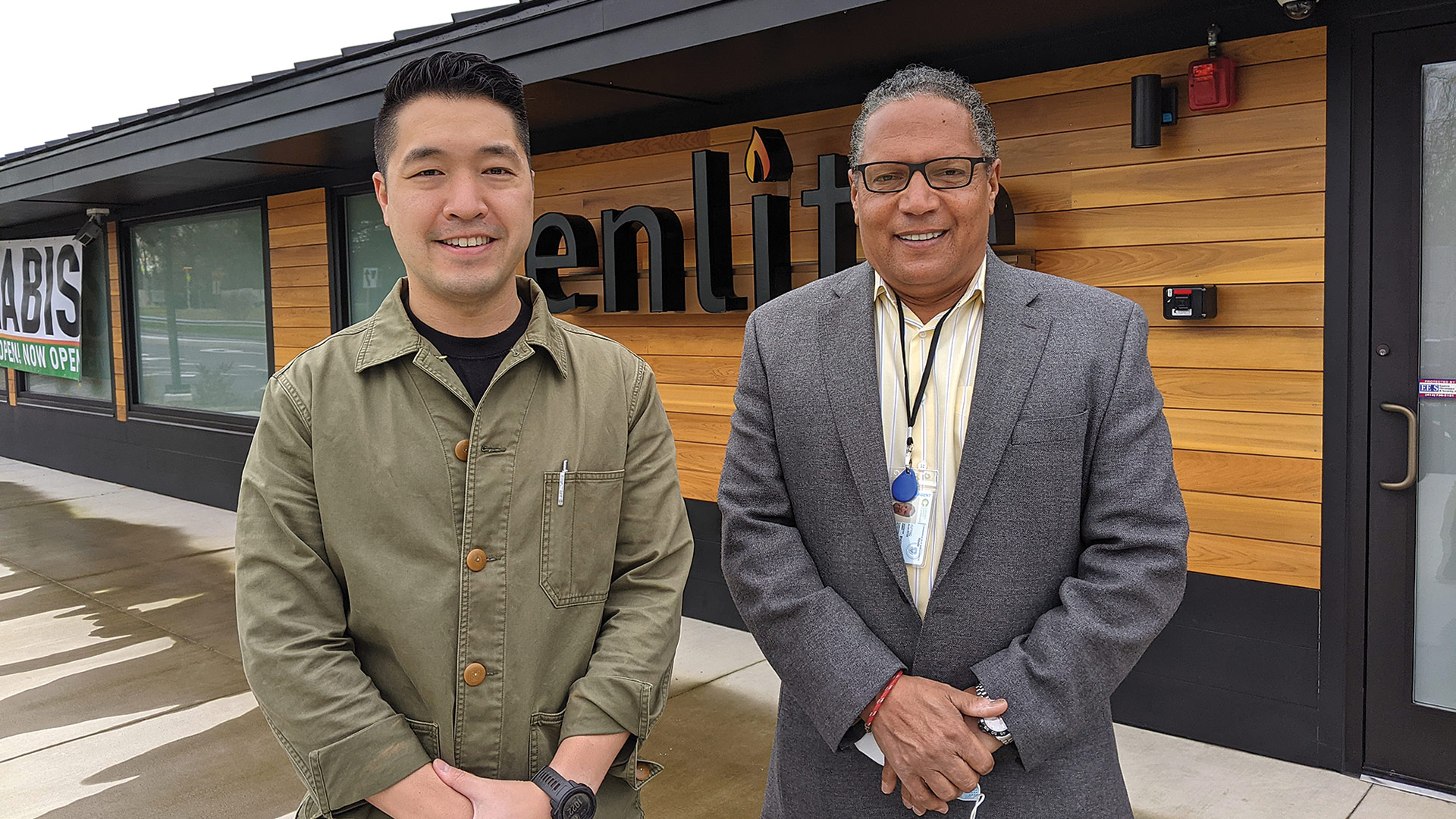
Scully: It starts with all of us — the leaders or organizations — to set the pace. The pandemic may not be over, but I think that what is over is the hunker-down mentality of being locked up at home in the basement on a computer talking to your colleagues all day. It’s time to get on with life. It won’t be the old normal, it will be the new normal, and the new normal is going to be dependent on so many of us to set that tone — that it’s time to get back out there for a Habitat event, with getting over to the Ronald McDonald House to help prepare a dinner when that becomes available to do. It’s dependent on the leadership or organizations to reinforce that tone.”

Scribner: “This pandemic has really allowed people to take time to reflect on their own lives and what’s important to them and their priorities. And when you’re given that time, I think you realize what’s important in life. When it comes to being hunkered down, I think the pandemic provided time and opportunity for people to say, ‘I don’t want to do this anymore; I want to get out, and I want to be part of my community. I want to be part of making a difference.’ People are realizing just how precious things are now, whether it’s shoveling the sidewalk for a neighbor or providing food for a food bank.”

Dexter Johnson

Dexter Johnson

“I think the pandemic pushed us [nonprofits] to work closer together in different ways, such as going after joint funding as one large organization rather than individually, so it has definitely had that benefit.”

Johnson: “In the normal ebb and flow of things, we get hyped up because something’s happened, whether it’s 9/11 or Hurricane Katrina or the tornado — things that bring us together for a short time. And then, life gets back to normal, and human nature tends to make us drift back to how we were. I think COVID is very different … it impacted everyone, every state, every city — we all know someone who has lost their life or lost their job because of it. It’s had a more far-reaching impact than any of those other tragedies, and, hopefully, that will allow it to stick with us and keep that mentality of realizing how fragile life can be.”

George O’Brien can be reached at [email protected]

Law Special Coverage

A Changing Dynamic

Like all businesses, law firms have had to make adjustments in the wake of the pandemic, which has created both new opportunities and new challenges. Overall, firms have seen obvious changes in where people work and how. But there also may be new dynamics when it comes to recruiting and from where firms can attract new business.

Tim Mulhern in the ‘Zoom room’ at Shatz, Schwartz & Fentin.

Tim Mulhern in the ‘Zoom room’ at Shatz, Schwartz & Fentin.


They call it the ‘Zoom room.’ And for obvious reasons.

It’s the office of a retired partner with the Springfield-based law firm Shatz, Schwartz and Fentin that’s been converted into a small conference room equipped with a 60-inch screen for, or mostly for, Zoom meetings with clients that involve at least a few of the firm’s attorneys.

“If we have several of us who want to meet with a client or a couple of clients, we can have a multi-person meeting and have a few people in the room,” said Tim Mulhern, the firm’s managing partner, who said that, prior to the pandemic, there was obviously no need for a Zoom room. And the creation of one is just one of the many adjustments — that’s a word he and others we spoke with would use early and often — that law firms have made over the past 20 or so months. And some of them are more permanent in nature than temporary.

That can likely be said of the receptionist at Shatz — or the lack thereof, to be more precise. No one sits at that desk any longer, and, in fact, the door that leads to the reception area is now locked; a sign taped to it provides a number to call for people with inquiries.

The biggest change, though, is the number of lawyers to be found on the other side of the door — roughly half that from the days before the pandemic.

The rest are working remotely all or most of the time, something that took some getting used to — lawyers, especially, like the office setting, said Mulhern — but most have gotten over that hump.

“A number of our lawyers have learned how to work at home, myself included — I couldn’t have worked at home at all before, and I figured it out now. We’ve made that adjustment, and we have some lawyers who, either because of compromised health issues or simply because they have a long commute, are working predominantly from home.”

Ken Albano, managing partner at Springfield-based Bacon Wilson, agreed. He noted that it’s not uncommon to check his phone in the morning and hear from one or more of the firm’s attorneys letting him know they will be working remotely that day. As other firms have, Bacon Wilson has adjusted — there’s that word again — and become more flexible out of necessity, he said, adding quickly that the firm wants its lawyers and paralegals in the office at least some of the time.

“I’m old school,” he said. “I like the idea of being with a young lawyer or a young paralegal who needs mentoring and advice and has questions. It’s better for me to meet with them one-on-one, in person, with a mask on, as opposed to doing it via Zoom.”

In the grander scheme of things, though, where lawyers work, and whether there’s a receptionist or not, may well turn out to be some of the less significant adjustments, or changes, to result from the pandemic. The larger ones could involve recruiting young lawyers and the potential to add business as a result of the changing landscape.

Ken Albano says the pandemic has exacerbated an already-difficult situation

Ken Albano says the pandemic has exacerbated an already-difficult situation when it comes to hiring lawyers and paralegals.

Starting with the latter, Seth Stratton, managing partner of East Longmeadow-based Fitzgerald Attorneys at Law, summed things up effectively and succinctly when he said “we sell time.” And with some of the changes brought about by the pandemic — including less time commuting to work and less time traveling to meet clients — there is, in theory, at least, more time to sell.

Also, now that clients of all kinds, but especially business clients, have become accustomed to meeting with clients via Zoom and the telephone, there is potential to have such sessions with law firms based in the 413, which charge, on average, anywhere from one-half to two-thirds what lawyers in Boston and New York charge, and less than those in Hartford as well.

“COVID has resulted in more efficiencies, and, generally, efficiencies mean things take less time, and we sell time, so that means we’re selling less per client,” Stratton explained. “But it allows us to potentially work with more clients and work with clients who are more distant — we can expand the footprint of who we’re comfortable working with and who’s comfortable working with us.”

As for recruiting … the pandemic brings both opportunity and challenge, said Betsey Quick, executive director of Springfield-based Bulkley Richardson. She noted, as others have over the years, that it is difficult to recruit young lawyers to Western Mass. law firms, and it often takes a family connection to do so. With the pandemic and the ability to work remotely, there is now the possibility of recruiting lawyers not to Western Mass., necessarily, but to firms based here — and the young lawyers can live where they want.

But — and this is a significant ‘but’ — young lawyers who might want to come to Western Mass. because of the quality of life and comparatively low cost of living can now come here, but not necessarily to work for a firm based here — again, because of the options now available to them.

“Remote working options can help and hurt recruiting efforts,” Quick said. “We are now hearing from attorneys with great résumés who prefer more of a remote schedule. It has opened the doors to new prospects. The concept of urban flight is real, and professionals are considering their options. On the other hand, with remote work, attorneys who once flocked to big-city firms may now have the option to remain at that firm, with the big city salary, and relocated to a rural area.”

Seth Stratton says the changing dynamics

Seth Stratton says the changing dynamics presented by the pandemic could provide area firms with more opportunities to secure work from clients based outside the 413.

For this issue and its focus on law, BusinessWest looks at all of the various ways the pandemic has brought change to a sector that hasn’t seen very much of it over the past several decades.


Case in Point

Mulhern remembers when, at the height of the pandemic in mid-2020, he used to carry a small, foldable table in his car. It was for what came to be known as ‘driveway signings,’ among other names — the inking of documents in outdoor settings, including driveways, but also parking lots and parking garages, where each party would bring their own pen and bottle of hand sanitizer.

Those days seem like a long time ago, and in many respects they are, he said, adding that a large degree of normalcy has returned to the practice of law, although things are, in many ways, not at all like they were in February 2020.

As an example, Albano noted the recent end to Springfield’s mask mandate. While the city took that course, Bacon Wilson has decided to still require masks within its offices, a difference of opinion that has resulted in some confusion and even some harsh words for the receptionist from visitors not inclined to mask up.

Overall, changes have come to where lawyers work, how firms communicate (with clients and employees alike), how and to what extent they use paper (much less now), and how they show community support and engagement (turning out for auctions and golf tournaments has been replaced by other, more pandemic-friendly methods).

Changes have come to where lawyers work, how firms communicate (with clients and employees alike), how and to what extent they use paper (much less now), and how they show community support and engagement (turning out for auctions and golf tournaments has been replaced by other, more pandemic-friendly methods).

“You need to be in the office if you’re going to work in Springfield; if you’re a full-time person working remotely, it doesn’t work out, and it wouldn’t work out — not for us.”

Going back to that word used earlier, firms have been adjusting to a changed world, and the adjustment process is ongoing, especially when it comes to where and how people work.

At Shatz, Schwartz and Fentin, as noted, maybe half the lawyers continue to work remotely, said Mulhern, adding that the firm has not rushed anyone back, and it won’t, at least for the foreseeable future, in large part because the current work policies, if they can be called that, are working.

“A number of our lawyers have learned how to work at home, myself included — I couldn’t have worked at home at all before, and I figured it out now,” he told BusinessWest. “We’ve made that adjustment, and we have some lawyers who, either because of compromised health issues or simply because they have a long commute, are working predominantly from home.”

And there are variations on the theme, he said, noting that some lawyers work a portion of their day at the office and the rest at home.

At other firms, most if not all lawyers are back in the office. That’s certainly the case at Bulkley Richardson, which implemented a vaccine policy on Oct. 1, said Quick, noting that the firm recognizes the importance of in-person interaction with colleagues and the need for human connection.

That said, Bulkley Richardson and other firms have learned that remote working can and does work, and there is certainly room for — and, even more importantly, a need for — flexibility.

Betsey Quick says there has been a “transformation of the practice of law”

Betsey Quick says there has been a “transformation of the practice of law” because of COVID, and she believes there are many positives amid a host of disruptions.

“The transition to remote work was unprecedented, but what we learned by the unexpected lockdown was that flexibility is a viable option,” Quick said. “We have always offered attorneys some degree of flexibility and have worked with them to find an agreeable working model; until the pandemic, most attorneys worked traditional hours within a traditional office setting. But now, with the remote working more acceptable, and sometimes necessary, we have seen no change in productivity or efficiency doing work.”

Stratton agreed, noting that his firm, like most, had a degree of flexibility when it came to working remotely and allowed lawyers to do so; most didn’t, except when they had to (during snowstorms or when they were home sick), because they preferred to be in the office. Now that they’re used to it, and like it, more are taking advantage of the flexibility they have.

Indeed, before COVID, perhaps 10% to 15% of work was done remotely, and now the number is perhaps 25%, said Stratton, adding that this represents a new normal.

And the new ways of doing things have produced greater efficiency, he added, a dynamic that creates the potential for more billable hours in a business that, as he said, sells time.

Meanwhile, the pandemic and the resulting changes in how lawyers interact with clients present new opportunities for firms in the 413 to do business with those well outside it, Stratton noted.

Before, to get such business, firms would need a physical office in Worcester or Boston. Now, for many types of business law, where personal interaction is less necessary, services could be secured from lawyers in this market at rates far below those charged in those larger markets.

“With the increased use of remote communication and remote meetings, you can more easily tap those markets,” he said, adding that the firm is starting to market itself to such clients through professional networking.


Moving Target

Beyond where and how people work, the pandemic may have changed another important dynamic for local firms — the all-important work to attract and retain young talent.

As noted, it has long been a challenge to bring young lawyers to this market unless there is a connection, said Stratton, who offered himself as an example. He and his wife are both from this area, and it was a desire to return here (especially on his wife’s part) after some time spent in Boston that eventually brought him back to the 413.

Summing up the landscape as it has existed for some time, Stratton said the region has long faced what he called “depth of bench” challenges.

Elaborating, he said this is a “top-heavy” market when it comes to lawyers, with many of the leading players in their 60s or even their 70s. There are some rising stars coming up behind them, but not as many as the firms would like.

The reasons for this are many, said those we spoke with, but largely, it comes down to the fact that this market is not the big city — which means it doesn’t have the big-city lifestyle and, more importantly to most young lawyers, it doesn’t have big-city rates for legal services — or big-city salaries.

“Like many cities, Springfield is a proud community with historic charm and continued growth.  And yet, it is not Boston, New York, or Washington, D.C., and in most circumstances, one major difference may be the salaries,” Quick said. “As a Western Mass. firm, we are able to offer a healthier work/life balance and a unique geographic landscape. The challenge is communicating this value to candidates because, if they are not familiar with the business climate in Western Mass. and all it has to offer, attracting new talent to the area can be difficult.”

Stratton agreed. “If I were to have a job posting tomorrow for a junior lawyer with one to three years of experience that fits our practice and say, ‘you come to East Longmeadow, Mass., Monday through Friday, 9 to 5,’ I would get zero applications of qualified attorneys. That might be an exaggeration, but it would be close to zero.”

Albano agreed. He said the pandemic has exacerbated an already-difficult situation when it comes to attracting lawyers to Western Mass. He told BusinessWest the same thing he told Massachusetts Lawyers Weekly when it asked him the same question.

“It’s been very difficult to hire quality lawyers and paralegals during this COVID pandemic,” he explained. “The quality of résumés we’re getting in from people in Western Massachusetts and also outside the area is very weak.”

Moving forward, he noted, the number could be much higher because that lawyer doesn’t need to be in East Longmeadow, at least not Monday through Friday, 9-5, meaning recruiting might become easier — that’s might — because of the pandemic and the manner in which it has changed how people work. It’s also changed some opinions about urban living.

“Many lawyers are growing tired of the city life,” Quick noted. “They want to find a reputable firm where they can advance their career and continue to work with high-level clients. At the same time, they are realizing that work/life balance matters. Western Mass. offers the best of both worlds — a growing, professional city surrounded by the landscape of mountains, rivers, and forests right at your fingertips.”

These qualities may well help attract people to Western Mass., but will it attract them to Western Mass. firms? This is a big question moving forward as remote work becomes plausible and more attractive for those toting law degrees in their briefcases.

“You need to compete with markets that you didn’t have to compete with before for talent,” said Stratton, noting that someone drawn to the Western Mass. lifestyle, or who has family here and wants to stay here, no longer has to limit his or her options to Western Mass. firms. “As a young lawyer, you can, potentially, work out of the Boston or Washington, D.C. markets primarily, and the legal rates charged in those markets are higher, and the pay is higher.”

That’s the downside of the changing dynamic, he went on, adding that there is plenty of upside as well, including the ability to look well beyond the 25-mile circle around Springfield that most young lawyers are currently recruited from.

Much of this is speculation right now, he went on, adding that, over the next six to 12 months, firms like his will have a far better understanding of just how — and how much — the recruiting picture has changed.

Albano agreed, noting that, overall, Bacon Wilson will entertain a hybrid schedule, to one degree or another, but it would certainly prefer its lawyers and paralegals to be in this market.

“I got an e-mail with a résumé from a young man in New York, indicating that he was looking to apply for a job here, but he plans on living in Boston,” he recalled. “First of all, his résumé didn’t coincide with what we were advertising — and we’re seeing a lot of that — and, number two, there needs to be that one-on-one connection. You need to be in the office if you’re going to work in Springfield; if you’re a full-time person working remotely, it doesn’t work out, and it wouldn’t work out — not for us.”


Bottom Line

Looking ahead, those we spoke with said the process of adjusting to everything COVID-19 has wrought is ongoing. That includes looking at the amount of space being rented and whether downsizing might be in order.

“We’re talking about what the future looks like in terms of physical space,” Mulhern said. “And that’s one of the things we’ll talk about — do we still still need all the space we have?”

The firm has more than two years left on its lease, he went on, adding that the answer to that question will come at another time. The answers to some of the questions, especially those regarding recruitment and gaining additional business, including some from other markets, might be answered much sooner.

Overall, this is a time of change and looking at things differently than they been looked at for decades.

“There has undoubtedly been a transformation of the practice of law, and we believe that there are many positives amid all of the disruption,” said Quick, referring to those at Bulkely Richardson while also speaking effectively for all those we spoke with. “The pandemic taught us many things, including how to work more efficiently, utilize available resources, and communicate better to keep teams connected. I anticipate many changes will remain with us in a post-pandemic world.”


George O’Brien can be reached at [email protected]

Holiday Gift Guide Special Coverage

’Tis the Season

It’s not always easy to find the perfect gift item for everyone on your list, but, thankfully, Western Mass. provides a plethora of options, from cooking classes to balloon rides; from sporting events to spa experiences — not to mention books, toys, locally created art pieces … the list goes on. Even better, all support local businesses and organizations — many of which have struggled during the pandemic — and, in turn, boost the region’s economy at a time when it could really use the lift.

When Bill Cole took over leadership of Living Local 413, he said, it was a loose collection of businesses in Longmeadow and East Longmeadow supporting each other. He knew it could be more, and grew its presence and mission; soon, it will even launch an accelerator program.

“Ultimately,” he said, “it’s about the entire business community in Western Mass.”

It’s a business community, like others across the U.S., that has been ravaged by the pandemic and the economic turmoil that has followed in the wake of COVID-19 — and those challenges have not ended, which is why Cole says it’s critical to support locally owned businesses over national chains and online retailers this holiday season, and beyond.

“We should all eat, shop, and hire local,” he said, citing some statistics to back up that thought. “It’s very, very simple: when you take $100 and spend it at a local business, up to $69 stays in the community. When you spend $100 on Amazon, none of it stays in your community.”

Even shopping at a local big-box store returns just $43 of that $100 to the community, he noted.

“The bottom line is, when your money stays local, it helps things like police and fire departments, and sports teams, which are always sponsored by some local business. And it’s better for the environment because you’re not shipping stuff all over the place. Basically, everyone wins. That’s what it comes down to.”

Bill Cole

Bill Cole

“It’s very, very simple: when you take $100 and spend it at a local business, up to $69 stays in the community. When you spend $100 on Amazon, none of it stays in your community.”

Claudia Pazmany, president of the Amherst Area Chamber of Commerce, agreed, noting that local retailers offer unique, often handmade gifts that stand out from what can be purchased on Amazon.

“This is a time when we have to look inside and say, ‘I want to support local businesses,’” she said. “People often say they support local, but can you really say you do?”

To help shoppers come to that decision, the Amherst Area Chamber has developed an economic-stimulus initiative to support local businesses through a gift-card match program. The gift cards can be used at many local businesses, and two chamber members have each donated $5,000 to a gift-card match. Thus, beginning on Nov. 15, each $25 gift card purchased will be doubled in value to $50, thanks to these donations.

“That will translate into a $20,000 reinvestment in our small-business community,” Pazmany said, adding that the Amherst Business Improvement District is bringing back its red-ticket event, and for every $25 gift card purchased, the buyer will receive two red tickets toward a cash drawing on Dec. 18.

Again, it’s a win-win for shoppers and local businesses, she said, noting that restaurant gift cards make good holiday gifts as well.

“Let’s make an effort. Restaurants haven’t opened to full capacity because of staffing. We’re not there yet. That’s the big message I’d like to send — we’re not out of this by any means. A lot more support is needed, and the best way to do it is to buy local during the holidays.”

Cole said the pandemic has certainly made things tougher for businesses, but many were already feeling the crunch of online and big-box sales before COVID arrived. Fortunately, he added, more people have become aware of the need to support their area retailers, restaurateurs, artisans, and others.

“Any restaurant, smaller retailer, event business, these are segments of the economy that had the crap kicked out of them really, really badly, and they’re still struggling,” he told BusinessWest. “Even if they got help with PPP and all the things available to the small-business owner, it wasn’t easy to begin with. Some of these people may not recover.

“On a more positive note,” he added, “those people who will recover are awesome entrepreneurs. They know when to pivot and change and do things that make a difference.”

And they deserve the community’s support to keep pivoting and keep rebounding, Cole added. “Certainly, that’s what Living Local is going to do. We want to be 100% behind that.”


— Joseph Bednar


Keeping It Local

Western Mass. Offers Plenty of Gift-giving Options This Holiday Season


The Baker’s Pin

34 Bridge St., Northampton

(413) 586-7978; thebakerspin.com

This extensive kitchen store carries a wide range of cookware, cutlery, electric devices, bakeware, kitchen tools, home goods, cookbooks, and food products as well — extracts, condiments, jams and jellies, sweets and chocolates, oils and vinegars, tea, spices, pastas, and more. But it also offers an array of cooking classes, both online and in person, exploring different foods and techniques appropriate for the season.


Book Moon

86 Cottage St, Easthampton

(413) 203-1717; bookmoonbooks.com

Since its 2020 opening, Book Moon has established both a local clientele and a robust online presence. The independent store is run by married couple Kelly Link, author of the Pulitzer finalist Get in Trouble, and Gavin Grant, founder and publisher of Small Beer Press. They carry new and used books, collectible first editions, cards and gifts made by local artists, and “mysterious book bundles in brown paper packages tied up in string.”


Cooper’s Gifts

161 Main St., Agawam

(413) 786-7760; coopersgifts.com

Cooper’s is not just a store — it’s a destination,” shopkeeper Kate Gourde has said, calling her facility a shopper’s oasis featuring trendy clothing, window fashions, distinctive home furnishings, and exquisite gifts. “I’ve watched babies be born, grow up, and shop now with their little ones. I’ve assisted them in finding the perfect gifts for all the happy and the sad occasions that life sends us.”


Eric Carle Museum of Picture Book Art

125 West Bay Road, Amherst

(413) 559-6300; carlemuseum.org

The Carle calls itself “the international champion for picture books. We collect, preserve, and present picture books and picture-book illustrations for audiences passionate about children’s literature.” But in addition to the museum, its store carries books, gifts, prints and décor, cards and stickers, clothing and accessories, party supplies, and more. Parent’s Choice calls it “the very best bookstore for picture books in the entire world.”


Glendale Ridge Vineyard

155 Glendale Road, Southampton

(413) 527-0164; glendaleridgevineyard.com

Glendale Ridge Vineyard is a small, family-owned winery committed to producing wines that express the land, climate, and winemaker’s vision. Visitors can taste small-batch wines, tour the inner workings of the boutique winery, or enjoy a glass of wine with family and friends in a scenic rural setting — then purchase a bottle or two from the wine shop. The winery building features indoor seating and space for private events.


The Mill District General Store and Hannah’s Local Art Gallery

91 Cowls Road, Amherst

(413) 835-0966;
facebook.com/milldistrictgeneralstore

(413) 835-1765;
facebook.com/hannahslocalartgallery

Part art gallery, part experiential retail store, the Mill District General Store features an array of household items, gardening supplies, pet supplies, games, art supplies, gifts, and locally sourced items. The adjacent Hannah’s Local Art Gallery creates a community hub for emerging and established artists to show and sell their work, teach pop-up classes in their art modality, and learn with and from one another.


Misty River Ballooning

(413) 586-9579; mistyriverballooning.com

Misty River Ballooning offers hot air balloon rides in the skies above Western Mass. Veteran balloon pilot Don LaFountain launches from several locations in the Pioneer Valley and the surrounding hilltowns. On a clear day, riders can see the Berkshire hills, as well as the mountains of Vermont and New Hampshire. Each flight is followed by a traditional champagne toast and light snacks.


Museum Outlets

31 South St., Pittsfield

(413) 499-1818; museumoutlets.com

One of the product categories on its website is ‘cool stuff,’ but really, it’s all cool stuff, with items like vintage maps, French posters, art and prints, and home goods, including elegant serving trays, candle lanterns, alpaca blankets, sculptures, Amish tin stars, bookends, weathervanes, picture frames, doorstops, pillows, rugs, as well as clothing and accessories. No wonder Museum Outlets was voted Best of the Berkshires in the gift-shop category in 2017, 2018, 2019, and 2021.


Odyssey Bookshop

9 College St, South Hadley

(413) 534-7307; odysseybks.com

Over its 59-year history, Odyssey Bookshop has earned a reputation as an eclectic spot to look for books, and also also features a full-service website for ordering. In addition, according to its website, “we strive to provide a hospitable and nurturing environment to encourage the healthy exchange of ideas by hosting numerous readings, book groups, panel presentations, and online discussions.”


Off the Beam Woodworking

www.offthebeamwoodworking.com

Local artist (and full-time nurse) Sheri Lee handcrafts unique woodworking pieces, including cheese and serving boards, picture frames, cribbage boards, knife racks, and lanterns from domestic and exotic woods. “Many of the items I make will represent a specific nonprofit organization,” she says. “When you purchase the item, all of the proceeds from the sale minus just the cost of wood and hardware will be donated to the nonprofit the item represents.”


Pioneer Valley Food Tours

www.pioneervalleyfoodtours.com

This enterprise creates walking food tours that explore local flavors from Northampton and around the region. It also creates gift boxes sourced from the unique natural resources of the region’s fields and farms, as well as Pioneer Valley picnic baskets of selections ready to bring on an outdoor adventure. Choose a pre-set tour itinerary, or create a custom tour to suit your tastes.


Pioneer Valley Indoor Karting

10 West St., West Hatfield

(413) 446-7845; pioneervalleykarting.com

The 1,000-foot track at Pioneer Valley Indoor Karting is capable of racing up to eight karts at once, with the longest races and fastest on-track speeds in New England, featuring a combination of straightaways designed for speed and sweeping corners for technical driving that will challenge everyone from beginners to experts. The track is equipped with a state-of-the-art timing system to record the individual lap times of each kart.


Renew.Calm

160 Baldwin St., West Springfield

(413) 737-6223; renewcalm.com

For the past two decades, Renew.Calm has offered an array of both medically based and luxurious spa treatments, with services including skin care, therapeutic massage, nail care, body treatments, yoga, hair removal, makeup, and lashes. The 4,000-square-foot facility also hosts educational events, fitness classes, and more. Multi-treatment packages make great gifts.


Rosewood

34 Elm St., Westfield

(413) 642-5365; rosewoodwestfield.com

Rosewood Home & Gifts is a trendsetting retail store located in the heart of downtown Westfield, offering home decor, gift items for special occasions, jewelry, apparel, and more, with a focus on products that support fair trade and products produced locally on the Pioneer Valley. Rosewood also offers seasonal, interactive workshops.


SkinCatering

1500 Main St., Suite 111, Springfield

(413) 282-8772; skincatering.com

SkinCatering offers a release from the hectic holidays, so an extra-special, very personal gift may be just what the doctor ordered. Pamper someone special with a massage, facial treatment, spa and sauna package, or any number of other options. And check out its soothing, expanded space on the first floor of Tower Square. Membership packages are available at several different levels.


Springfield Thunderbirds

45 Bruce Landon Way, Springfield

(413) 739-4625; springfieldthunderbirds.com

A great deal for big-time hockey fans and folks who simply enjoy a fun night out with the family, Thunderbirds games are reasonably priced entertainment in Springfield’s vibrant downtown. The AHL affiliate of the NHL’s St. Louis Blues, the T-birds play home games through April at the MassMutual Center, with a constant stream of promotions, from theme nights to $2 hot dogs, sodas, and beers every Friday night. Purchase tickets at the box office or online.


The Toy Box

201 North Pleasant St., Amherst

(413) 256-8697; thetoyboxamherst.com

The Toy Box is “the family fun store of Amherst,” encouraging kids and adults to play and explore, with a wide array of unique products and features like a birthday club and ‘mystery bags.’ For owner Liz Rosenberg, “the gift of sharing something that promotes family and togetherness, is educational and fun, brings joy to children and grownups alike … well, that helps extinguish fears and makes for a better world, better community, and just plain feels right.”


The Trustees of Reservations

200 High St., Boston

(617) 542-7696; thetrustees.org

This nonprofit land-conservation and historic-preservation organization is dedicated to preserving natural and historical places. The Trustees own title to 120 properties on 27,000 acres in Massachusetts, all of which are open to the public, including historic mansions, estates, and gardens; woodland preserves; waterfalls; mountain peaks; wetlands and riverways; coastal bluffs, beaches, and barrier islands; farmland and CSA projects; and archaeological sites. A membership makes a great gift.


UMass Store

1 Campus Center Way, Amherst

(413) 545-2619; umassstore.com

This is the place for UMass-branded men’s and women’s apparel, drinkware, home and office supplies, accessories, and more. The UMass Store is also the first collegiate campus store to develop a sustainability section. As part of this commitment, it is reaching out to vendors and increasing the variety of sustainable products carried in the store, from recycled newspaper pencils and bamboo calculators to organic cotton T-shirts and recycled bottle apparel.


Veronica Martin Design

(413) 628-1985; veronicamartindesign.com

“I’ve always felt compelled to make things with my hands. It’s a reaction, an impulse. It’s how I breathe. Every day should be filled with beauty, and the everyday item should be beautiful.” That’s how Veronica Martin describes her handmade ceramics, candles, and beauty products, which are both lovely and functional. “Their thoughtful aesthetic and elegant characteristics make them luxurious items to own or stunning gifts to give. They are made with a passion for quality, everyday luxury.”


Zen’s Toyland

801 Williams St., Longmeadow

(413) 754-3654; zenstoyland.com

Zen’s Toyland, formerly known as The Wooden Toy, has been in business for more than 30 years, selling a variety of items ranging from baby teethers to adult puzzles. “You will find high-quality and unique items that aren’t available elsewhere,” owner Harshal Patel says. “All the toys are handpicked, and we only bring in toys that we would give to our own kids. Also, we have a playroom for your little one to test-drive things we carry. Everyone is a kid at our toy store.”


Special Coverage Veterans in Business

Serving Those Who Serve

Al Tracy, with volunteers Andrea Luppi, left, and Darlene Slater.

Al Tracy, with volunteers Andrea Luppi, left, and Darlene Slater.

The USO (United Service Organizations) turned 80 this year. It celebrated, in essence, by enthusiastically carrying out the same mission it has had since 1941 — ‘strengthening America’s military service members by keeping them connected to family, home, and country throughout their service to our nation.’ The organization, and the local chapter based in Chicopee (Pioneer Valley USO), does this in a number of ways, from care packages to Monday night dinners at the Westover base, to a program that helps transition servicemen and women to the civilian workforce. For Al Tracy, executive director of the chapter, this isn’t a job — it’s a passion.


When Al Tracy was serving with the First Marines along the DMZ in Vietnam, the highlight of his day, week, or month — fill in the blank — was receiving a care package from home.

He would get one from his mother pretty much every month, he recalled, adding that the best thing in them was her apple pie, always wrapped in tinfoil, which was almost as precious — and welcome — as the food.

“We needed that tinfoil — we would reuse it to cook things,” recalled Tracy, flashing back more than a half-century as best his memory would allow, adding that such recollections certainly help drive him in a role that is far more a passion than it is a job — executive director of the Pioneer Valley USO, housed at Westover Air Reserve Base in Chicopee.

There is no ‘interim’ next to Tracy’s title, but technically … perhaps there should be. Involved with the USO (United Service Organizations) since the ’80s, he agreed to serve temporarily as executive director when the person in that job left it roughly 15 years ago.

“They’re still looking for an executive director,” said Tracy with a laugh, adding that he likes everything about his job — except all the paperwork — and especially anything that has to do with helping active-duty servicemen and women and also veterans in need.

“I have a passion, and I love taking care of our military. I think that what they do, the sacrifices they make, are countless. You’re up all night, you don’t get weekends off … you’re stuck wherever you’re deployed. They need to know that we’re thinking of them.”

And there are many programs and services that fall into that category, from the care packages that are sent out to destinations around the globe to the Monday-night dinners the USO prepares for those serving at Westover, and also other servicemen and veterans as well (he and his staff were doing the prep work for one as he talked with BusinessWest on Nov. 1); from a program called Pathfinder that helps retiring servicemen and women transition to the workforce to providing tickets to Thunderbirds games and other sporting events.

“I have a passion, and I love taking care of our military,” he said. “I think that what they do, the sacrifices they make, are countless. You’re up all night, you don’t get weekends off … you’re stuck wherever you’re deployed. They need to know that we’re thinking of them.”

Tracy is even busier than normal these days as he coordinates a transition of sorts for the local chapter, which is giving up its independent charter and becoming part of the World USO.

“Our charter was dissolved on Oct. 1 — we’re now part of World USO. I’m excited. Maybe I won’t have as much paperwork, but I haven’t seen that yet,” he said, adding that the agency at Westover will continue doing what it’s been doing from the beginning: “strengthening America’s military service members by keeping them connected to family, home, and country throughout their service to our nation.”

That’s the official wording in the mission statement, but it’s more than words for those tasked with carrying it out. It is a passion, and one that prompts a pause for reflection as the USO, started by President Franklin Roosevelt in 1941, marks its 80th anniversary. Best known perhaps as the agency that sent Bob Hope to entertain troops in hotspots around the globe, the USO has changed over the years, and some adjustments certainly had to be made during COVID. But at its core, the agency and its purpose remain the same: it’s there to keep deployed service members, and also veterans, connected.

For this issue and its focus on veterans in business, we talked at length with Tracy about the USO, its all-important mission, and the many ways in which it is carried out.


Corps Mission

As he talked with BusinessWest, Tracy was thinking ahead to the Nov. 27 Thunderbirds game against the Hartford Wolf Pack, a matinee, at which he will drop the ceremonial puck. It’s an assignment he’s looking forward to.

“I told them I wanted a crash helmet, so when I fall on the ice I don’t hit the back of my head,” he said, adding that the agency partners with the team to get servicemen and women discounted admission, and also tries to secure tickets (to raffle off or simply give away) for area concerts and other types of shows.

Al Tracy says the USO’s mission comes down to a simple assignment

Al Tracy says the USO’s mission comes down to a simple assignment: keeping servicemen and women connected — to their family, their hometown, and their country.

Dropping the puck is just one of many rewarding aspects to a job Tracy has grown into over the past decade and a half after serving the USO in a variety of capacities, incuding board member and treasurer. Indeed, he’s put his own stamp on a position, and an agency, with a proud legacy and an important mission, one that brings him back to his time in Vietnam, which he can pinpoint with astonishing detail after all these years.

“Let’s see … 11 months, 28 days, four hours, 15 minutes, and maybe 30 seconds, but who’s counting? I was looking at my watch as we left the ground,” he recalled, adding that the best of those days were the ones when the care packages arrived. “During the war, my best buddy was my mom; she sent care packages all the time, and it was pretty awesome. Now … I’m just passing it on.”

And in all kinds of ways.

The care packages might be the best-known and perhaps the most symbolic part of the mission, he said, adding that the proud tradition is carried on today.

“It’s a wonderful organization and my favorite charity. I like everything we do — and I get to laugh everyday, so that makes it even better.”

“We have a huge care-package program,” he noted, adding that the local chapter will send them anywhere — all it needs is an address. “Those packages keep them connected to home; it lets them know people are thinking about them.”

Elaborating, he said the packages can be personalized, and many are, but there are many staples — personal-care items, beef jerky, snacks, sunscreen, and wet wipes, which can and often are used to clean weapons.

But there are many other ways in which the local USO carries out its mission, starting with the Monday dinners served at the base (the cafeteria is closed that night). There are usually 125 to 150 people who partake, including some area veterans, he said, adding that meals are delivered to those serving at guard posts, on the runways, and other locations.

The USO facility at Westover Air Reserve Base

The USO facility at Westover Air Reserve Base provides servicemen and women with a number of services and needed items, including books to read in what’s known as the ‘relaxing room.’

There’s also a food pantry at which service members can buy items; that facility also provides items to veterans in need.

The agency also marks deployments and homecomings, and it will also help take fallen servicemen from the area to their final resting place. It will assist servicemen and women in transition with furniture and other needs, said Tracy, and even provide small loans to those in need.

Then there’s the Pathfinder program that assists those transitioning from the service to the workforce.

“We’ll help them put together a résumé and learn how to interview,” he explained, adding that participants in the program are assigned a ‘scout’ who will assist in a job search on many levels.

There’s also the Bob Hope Legacy Reading Program, he went on, a program that enables servicemen and women to be recorded while reading a portion of a book or poem. That tape will then be sent to a designated family on a specified date, such as the holidays.


Finishing Touch

“That’s just another way that those off serving their country can stay connected,” Tracy noted, adding that this has been the simple yet all-important mission of the USO from the beginning.

For him, as noted, it’s not a job, but rather a passion.

“It’s a wonderful organization and my favorite charity,” he said. “I like everything we do — and I get to laugh everyday, so that makes it even better.”

It’s a unique mission, and for 80 years, it’s been mission accomplished.


George O’Brien can be reached at [email protected]

Community Spotlight

Community Spotlight

By Mark Morris

Jennifer Wolowicz says developers have been looking at some of the town’s old mills and other sites for redevelopment.

Jennifer Wolowicz says developers have been looking at some of the town’s old mills and other sites for redevelopment.

It’s a classic small-town balancing act. As Monson leaders look forward to new infrastructure and energy projects, many residents also want to maintain a small-town feel.

But progress is important, Town Administrator Jennifer Wolowicz says. With the town about to receive $1.7 million from the American Rescue Plan Act (ARPA), and a team at Town Hall looking at ways to use those funds, she favors infrastructure projects because she believes they offer the best return on investment.

“There are plenty of projects we could pursue that serve only part of the community, but everyone benefits from improved roads, water, and sewers,” Wolowicz said, adding that she is grateful the town has until 2026 to spend the ARPA funds. “That timetable allows us to be thoughtful in how we use the money.”

In April, Wolowicz was appointed full-time Town Administrator after working in the position since February in an interim capacity. When she first came on board, Town Hall was closed to the public due to COVID-19 mandates while the staff inside were busy trying to figure out how to provide the services residents needed. Some town business moved online, but many residents prefer to pay their bills in person, so Wolowicz and her staff installed drop boxes and even offered some outdoor service.

“With a little education and reassurance, we helped people figure out different ways to get business done,” she said.

These days, Town Hall is fully open. The Monson Select Board has relaxed mask mandates in general, but they are still required in schools. Wolowicz pointed out that COVID numbers have been trending lower than in the past, and currently, 56% of residents have been vaccinated.

“There are plenty of projects we could pursue that serve only part of the community, but everyone benefits from improved roads, water, and sewers.”

Meanwhile, back in January, Andrew Surprise became the new CEO of the Quabaog Hills Chamber of Commerce, which covers 15 towns in the region, including Monson. Surprise admits that, in the past, the chamber had been losing touch with local communities. To address that, he has begun reaching out to Monson businesses to establish a business civic association (BCA).

“The idea is to form a business community in Monson,” Surprise said. “With local people concentrating on the issues that are important to their business and community, it helps the chamber to better focus on ways they can help.”

Upon joining Quabaog Hills, Surprise noticed the chamber did not have strong contacts with local officials at the town or state level.

“As a former city councilor [in Westfield], I’ve seen how important it is for the chamber to have these relationships,” he said. “By connecting businesses and local officials, we can offer better value to everyone involved.”

Andrew Surprise, CEO of Quabaog Hills Chamber of Commerce

Andrew Surprise, CEO of Quabaog Hills Chamber of Commerce, is on a mission to introduce himself to businesses in Monson.

Coordinating efforts is already paying off. Surprise began working with Wolowicz on the idea of a BCA while the town was in the process of seeking a Rapid Recovery grant from the Pioneer Valley Planning Commission. Knowing that Monson was looking to have a business organization focused on its needs, the PVPC advised Surprise and Wolowicz to make it a joint request. Surprise said the BCA will be formed no matter what, but a grant makes a more robust effort possible.

“The grant would allow a much more expansive implementation and enable us to speed up the building of the BCA,” Surprise said. “Also, the grant makes it possible for the chamber to hire a person dedicated to establishing and recruiting for BCAs in both Monson and Belchertown.”


Main Concerns

Much of Monson’s business community can be found right in the heart of town, so BusinessWest asked three Main Street business owners about the idea of a business civic association.

Nissa Lempart, owner of Monson Optical, said the BCA is a good idea if the goal is to reach more people outside of town. “My customers already know where we are, and they tend to keep their business in Monson.”

Richard Green, who owns Richard R. Green Insurance Agency, said that, in his experience, many people tend not to do business in town, so he believes a BCA would be a big plus for Monson.

“It would be a way for local businesses to interact more with the community while benefiting each business and the community at large,” he noted. “I think it would be fantastic.”

Bill Belanger, who has owned Belanger Jewelers for more than 30 years, called Monson a wonderful community, and he’s open to the town taking a different approach to business.

“While the small-business model remains an important part of Monson, we also need to open our doors to new thinking.”

“While the small-business model remains an important part of Monson, we also need to open our doors to new thinking,” he explained.

Part of that new thinking would allow larger franchises to do business in Monson. In 2020, residents staged a vocal rejection when Dollar General proposed a location in town.

“Dollar General might not have been the right fit for our town,” Belanger said. “But there are many other types of national businesses that would work well here.”

One example of Monson welcoming new thinking involves a 26,000-square-foot building on Route 32 where Holistic Industries runs a cannabis growing facility.

Monson at a glance

Year Incorporated: 1775
Population: 8,560
Area: 44.8 square miles
County: Hampden
Residential Tax Rate: $18.12
Commercial Tax Rate: $18.12
Median Household Income: $52,030
Median Family Income: $58,607
Type of Government: Select Board, Open Town Meeting
Latest information available

Wolowicz noted that Holistic represents a large tax base for Monson, as the town received $500,000 in tax revenues from the company in June. Holistic-grown products are sold by Liberty Cannabis retail stores in Springfield, Somerville, and Easthampton. “COVID was good for cannabis sales,” she noted.

In terms of seeking other growth for the town, Wolowicz said discussions are taking place with developers about reusing some of the older mills in town. There is also activity at the former site of the state-owned Monson Developmental Center, where several buildings are being taken down. She said some residents have questioned why the town isn’t involved in redevelopment of this parcel.

“These folks don’t understand this is state property and the cleanup is their project,” she noted. “Their plan is to bring it back to green space and hopefully give the land back to the town at some point.”

For the last year and a half Monson, has been making energy-saving improvements to schools and municipal buildings. Part of the project involves converting the current street lights to LED fixtures.

“Even Town Hall, which was built in 2014, will be getting new lighting because that’s how fast technology has changed,” Wolowicz said.

The town also works with neighboring communities on wider-ranging projects. For example, Monson has signed an agreement with Palmer and Ware to convert the town dog pound into a regional animal-control facility for use by the three communities. That project is expected to take place next year.


Steady On

That’s a fair amount of activity for a town whose Main Street has no traffic signals.

“There are many folks in town who are passionate about keeping it that way,” Wolowicz said, adding that she favors controlled development to keep Monson a vital community.

Belanger expressed a similar sentiment. “Encouraging more business is a way for the community to advance without losing what makes it special.”

While Monson keeps its small-town feel, there is no shortage of new business proposals landing on Wolowicz’s desk.

“We many not be a booming metropolis,” she said, “but we still have opportunities to pursue controlled development.”

Health Care

Shot in the Arm

Following updated guidance from the Centers for Disease Control and Prevention (CDC), the Baker-Polito administration has outlined how families in Massachusetts can access Pfizer COVID-19 pediatric vaccines for children ages 5 to 11.

Children will be able to receive the Pfizer pediatric COVID-19 vaccine from more than 500 locations, including retail pharmacies, primary-care practices, regional collaboratives, local boards of health, community health centers, hospital systems, state-supported vaccination sites, and mobile clinics. Some appointments are available now for booking, with additional locations and appointments expected to come online in the coming days.

“Pediatricians and parents should be very excited about the approval of the COVID-19 vaccine for children ages 5 to 11,” said Dr. John O’Reilly, chief of General Pediatrics at Baystate Children’s Hospital. “Some parents may be reluctant to have their children in this age group vaccinated, but if a day of soreness can get your child safely back to playing with friends and visiting relatives, then the benefits clearly outweigh the discomfort.”

As a pediatrician, O’Reilly said he had been hoping for this approval for months.

“Some parents may be reluctant to have their children in this age group vaccinated, but if a day of soreness can get your child safely back to playing with friends and visiting relatives, then the benefits clearly outweigh the discomfort.”

“I was very glad that the FDA took the time to be sure that the vaccine was safe and effective for children in this age group before it was approved,” he added. “Clinical trials of over 3,000 children who received the vaccine found it produced protective levels of antibodies with only mild reactions to the shot, such as pain at the injection site, fatigue, and headache.”

He understands that some parents might have safety concerns, but noted that much misinformation has been spread about the development of the mRNA vaccines, especially considering how fast the COVID vaccines were rolled out. The truth, he noted, is that scientists have been working on the development of mRNA vaccines for decades. The basic scientific advances in gene sequencing and gene modeling allowed companies to quickly adapt mRNA technology to the COVID-19 virus.

“Vaccine development is very expensive, and companies developing other vaccines would be slower in developing them because of the cost,” he explained. “Operation Warp Speed gave companies billions of dollars in support and guaranteed purchases, allowing companies to use those funds to quickly ramp up clinical trials and manufacturing. The trials themselves followed the highest standards of research, and the FDA has reviewed all of the trial data to be sure that the COVID- 19 vaccines are safe and effective.”

O’Reilly noted that children infected with COVID-19 tend to experience mild symptoms, but for some, it can be more serious. Since the pandemic began, about 1.9 million children ages 5 to 11 have been infected, about 9% of all U.S. cases. More than 8,300 in this age group have been hospitalized, with about one-third requiring ICU care, and 94 have died, according to federal data. Children ages 5 to 11 who are black, Native American, or Hispanic are three times more likely to be hospitalized with COVID than white children.

Also, several thousand children infected with the virus have developed severe cases of inflammation throughout their bodies known as multi-system inflammatory syndrome, while others are reporting long COVID symptoms similar to adults, such as headache, cough, fatigue, and more.

“Parents who vaccinate their children not only protect them, but they also protect everyone their children come in contact with,” O’Reilly said. “In school, it protects vulnerable classmates and adult staff whose medical conditions put them at risk for severe COVID-19. It also protects family members and makes visiting at-risk family members at the holidays safer for everyone. Vaccinating our kids also helps to protect our communities. The higher our community immunization rates, the lower the risk of COVID-19 rapidly spreading through our at-risk community members.”

Parents who prefer to have their child vaccinated by their primary-care provider should call their provider’s office directly. Others may visit the VaxFinder tool at vaxfinder.mass.gov for a full list of hundreds of available locations. Residents will be able to narrow results to search for locations that are offering the Pfizer pediatric COVID-19 vaccine, with some appointments available now for booking. Additional appointments will be available online in the coming days. Many locations will be booking appointments out weeks in advance.

“Parents who vaccinate their children not only protect them, but they also protect everyone their children come in contact with.”

For individuals who are unable to use VaxFinder, or have difficulty accessing the internet, the COVID-19 Vaccine Resource Line (Monday through Friday from 8:30 a.m. to 6 p.m., Saturday and Sunday from 9 a.m. to 2 p.m.) is available by calling 211. The COVID-19 Vaccine Resource Line is available in English and Spanish and has translators available in approximately 100 additional languages.

All state-supported vaccination clinics will offer low-sensory vaccinations for children with disabilities.

Additionally, the administration has partnered with several non-traditional, youth-friendly locations for pediatric vaccination clinics, including the Discovery Museum in Acton, the Museum of Science in Boston, the Springfield Museums, and the EcoTarium in Worcester. Appointments for these clinics are available now on the VaxFinder tool. Visit www.mass.gov/covidvaccinekids for more information.

While infection rates have been trending down from an early-fall spike, the Massachusetts Department of Public Health reported 1,586 new, confirmed COVID cases in the state on Nov. 4, bringing the total since the start of the pandemic to more than 800,000. Health officials said the total number of confirmed cases in the state, as of that date, was 801,567.

The DPH also reported 23 additional COVID deaths in the state, bringing the total number of confirmed deaths since the start of the pandemic to 18,671. As of Nov. 4, there were 509 people hospitalized for a coronavirus-related illness, including 147 in intensive care.

State health officials say getting vaccinated remains the most important thing individuals can do to protect themselves, their families, and their community. Individuals do not need an ID or health insurance to access a vaccine and do not need to show a vaccine card when getting a vaccine.

Massachusetts leads the nation in vaccine administration, including adolescent vaccination, with more than 80% of youth ages 12-17 having received at least one dose. More than 4.7 million individuals in the Bay State are fully vaccinated, with more than 92% of all adults having at least one dose.

“I can’t emphasize enough how important it is for parents to make the right decision to vaccinate their children,” O’Reilly said. “It can be life-saving for your child and further protect those in your household as well as the community from this terrible disease that spares no one. I am looking forward to a holiday season when kids are fully vaccinated and we can all gather with friends and family to celebrate being together without fear of COVID.” u

Law

The Answer Is No — But That Might Be Changing

By Mary Bonzagni


The term artificial intelligence (AI) is used to describe a machine’s ability to ‘think’ or carry out tasks that were once said to require human intelligence. Tasks such as learning, logic, reasoning, perception, and, yes, creativity are now being performed by machines used in every industry.

In fact, AI now forms a part of our everyday lives, from AI-powered search engines, spell checkers, and spam filters to self-driving cars to music-streaming services that use AI to assess your listening habits — with each advance making our lives easier for years to come.

In fact, AI looks like a revolutionary force that drives innovation — but can AI invent?

At least for now, the U.S. Patent and Trademark Office (USPTO) has provided us with an answer to this question — a categorical ‘no.’ The USPTO has held that the statutory language of the U.S. Code clearly defines ‘inventor’ and ‘joint inventor’ as natural persons. Further, the USPTO points out that the purpose of U.S. patent laws is to encourage invention by providing inventors with a limited term of exclusionary rights. The prospect of holding a patent would not motivate an AI — at least not yet.

Mary Bonzagni

Mary Bonzagni

“We are now at a crossroads, and staying the course is not the answer. Patents motivate people who develop, own, and use AI — uncertainty does not.”

In a similar vein, the relevant patent laws of the European Union and the United Kingdom are also said to require a human inventor.

But has the tide begun to turn? Perhaps.

The South African Patent Office and an Australian federal judge recently moved to clear the path for such inventions. The South African Patent Office now holds the noteworthy distinction of being the first patent office in the world to grant a patent listing to an inventor that is not a human being. The patent relates to a “food container based on fractal geometry,” and the sole inventor is an AI system called DABUS.

Within two days of this patent grant, Judge Jonathan Beach of Melbourne ruled that there was no reason why Stephen Thaler, the researcher who developed DABUS, could not protect inventions that list the machine as their sole inventor.

But will the U.S. and other countries around the world follow suit, or will they again turn down the idea of non-human inventors? For now, the answer to this question is unclear.

During this period of uncertainty, how does one go about protecting AI-generated inventions in the U.S. using patents, who should be listed as an inventor on U.S. patent applications for such inventions, and who owns these inventions and related patents? For now, the answer to these questions is also unclear.

The most likely inventor candidate(s) appears to be the person or people who developed the machine that simulates human-intelligence processes (i.e., the developers who made the machine that supplies analysis, triggers events based on findings, parses data contextually to provide the requested information, etc.). That same person(s) or their employer(s) would own the invention and related patent.

But are U.S. patents for AI inventions that list the wrong inventors valid and enforceable? The claim of patent inventorship is of fundamental importance to the validity of a U.S. patent. In fact, failure to name an inventor or naming an incorrect inventor can invalidate a patent.

So, as AI becomes more and more a significant part of U.S. companies’ research and development efforts, these are questions that need to be asked and answered. These companies, as well as individuals, need clarification, which likely will first require a reform of the U.S. patent laws. It appears to be up to the judicial system or, more likely, legislators to provide us with the necessary clarification and/or reform.

We are now at a crossroads, and staying the course is not the answer. Patents motivate people who develop, own, and use AI — uncertainty does not. Allowing patents on AI-generated inventions will promote the development of inventive AI, which will ultimately benefit society with more innovation.


Mary Bonzagni is a patent attorney and co-chair of Bulkley Richardson’s Intellectual Property and Technology practice group; (413) 272-6200.

Veterans in Business

Labor Pains


The unemployment rate for veterans who served on active duty in the U.S. Armed Forces at any time since September 2001 — a group referred to as Gulf War-era II veterans — rose to 7.3% in 2020, the U.S. Bureau of Labor Statistics reported earlier this year. The jobless rate for all veterans increased to 6.5% in 2020. These increases reflect the effect of the COVID-19 pandemic on the labor market.

In August 2020, 40% of Gulf War-era II veterans had a service-connected disability, compared with 26% of all veterans. Among other highlights from the 2020 data:

• Unemployment rates for both male and female veterans increased in 2020, reflecting the COVID-19 pandemic. The rate for male veterans was 6.5%, little different from the rate of 6.7% for female veterans.

• Unemployment rates for white, black, Asian, and Hispanic veterans were lower than for their non-veteran counterparts in 2020.

• Among the 581,000 unemployed veterans in 2020, 54% were ages 25 to 54, 41% were age 55 and over, and 5% were ages 18 to 24.

• The unemployment rate of veterans with a service-connected disability, at 6.2% in August 2020, did not have a statistically significant change over the year. The rate for veterans with no disability rose to 7.2%.

“In 2020, 18.5 million men and women were veterans, accounting for about 7% of the civilian non-institutional population age 18 and over.”

• Gulf War-era II veterans who reported a service-connected disability rating of less than 30% were much more likely to be in the labor force than those with a rating of 60% or higher in August 2020 (91.5%, compared with 63.6%).

• In August 2020, 31% of employed veterans with a service-connected disability worked in the public sector, compared with 19% of veterans with no disability and 14% of non-veterans.

In 2020, 18.5 million men and women were veterans, accounting for about 7% of the civilian non-institutional population age 18 and over. Of all veterans, about 10% were women. In the survey, veterans are defined as men and women who have previously served on active duty in the U.S. Armed Forces and who were civilians at the time these data were collected.

Veterans are much more likely to be men than are non-veterans, and they also tend to be older. In part, this reflects the characteristics of veterans who served during World War II, the Korean War, and the Vietnam era, all of whom are now over 60 years old. Veterans who served during these wartime periods accounted for 37% (6.8 million) of the total veteran population in 2020. Forty-one percent of veterans (7.6 million) served during the Gulf War era I (August 1990 to August 2001) or Gulf War era II (September 2001 to present). Twenty-two percent (4.1 million) served outside the designated wartime periods.

In August 2020, 4.7 million veterans, or 26% of the total, had a service-connected disability. Veterans with a service-connected disability are assigned a disability rating by the U.S. Department of Veterans Affairs or the U.S. Department of Defense. Ratings range from 0 to 100%, in increments of 10 percentage points, depending on the severity of the condition.

The unemployment rate for veterans with a service-connected disability was 6.2% in August 2020, not statistically different from the rate for veterans with no disability (7.2%). The unemployment rates for male and female veterans with a service-connected disability were not statistically different (5.8% and 8.9%, respectively). The labor-force participation rate for veterans with a service-connected disability (48.6%) was also not statistically different from the rate for veterans with no disability (47.2%). Among veterans with a service-connected disability, 27% reported a disability rating of less than 30%, while 44% had a rating of 60% or higher.

Features Special Coverage

A New Kind of Challenge

The COVID-19 pandemic has tested area employers in every way imaginable. And soon, it will test many in a way that probably couldn’t have been imagined even a few months ago — vaccine mandates put in place by the Biden administration and set to take effect probably before the end of the year. The mandates are prompting lawsuits, generating questions that are often hard to answer, and creating high levels of anxiety for employers who are already dealing with a host of problems, especially an ongoing workforce crisis.

Amy Royal says she’s seen all manner of new regulations — state, federal, and local — that employers and their HR departments must contend with as they carry out business day to day.

But she speaks for all employment-law specialists — and those HR professionals as well — when she says she’s never seen anything quite like the COVID-19 vaccine mandates either already in effect or soon to be.

The mandates are far-reaching in their impact, in terms of everything from the number of businesses affected to the costs they will have to absorb to the very real possibility of losing more valued employees, said Royal, a principal with the Indian Orchard-based Royal Law Firm, which specializes in employment law, specifically representing employers. She summed up the measures and their bearing on employers with a single word. “It’s exhausting for companies.”

That would be an understatement.

Already, vaccine mandates enacted by states, individual cities and towns, healthcare providers, and private companies are resulting in thousands of people being fired or simply walking off the job. That list includes the football coach and several assistants at Washington State University, more than 100 state troopers in Massachusetts, police officers in countless communities, and a wide range of healthcare workers, especially nurses.

The recent developments raise questions on everything from just how safe many cities now are to which games NBA star Kyrie Irving can actually play in — none at his home court in Brooklyn, for starters.

And the next shoe — a rather large one — is set to drop in this unfolding drama. That would be the Biden administration’s vaccine and testing mandates, the ones affecting companies of more than 100 employees, any business with federal contracts, and federal employees — mandates the administration estimates will impact more than 80 million workers.

“People would be surprised at the array of businesses, both for-profit and nonprofit, that meet that federal-contractor test.”

Royal and other employment-law specialists we spoke with said there are far more businesses in the 413 in those categories than most people would think, and all of them are, or should be, working diligently to prepare for these mandates — which will take effect soon, although exactly when is a question.

Actually, that’s one of many, many questions, said John Gannon, an employment-law specialist with Springfield-based Skoler, Abbott & Presser, who said others include everything from whether employees get paid while they’re getting vaccinated or tested to who pays for those tests, to whether employees who ultimately lose their jobs to these mandates are eligible for unemployment benefits.

Amy Royal says far more businesses and nonprofits in the 413

Amy Royal says far more businesses and nonprofits in the 413 will be impacted by the Biden administration’s vaccine mandate than most people would believe.

“People are asking, ‘what do we do now — what can we do once the mandate is rolled out?’” he said. “They also want to know when it is going to release and how much lead time they’re going to have for compliance. And, unfortunately, we just don’t know the answers to those kinds of questions.”
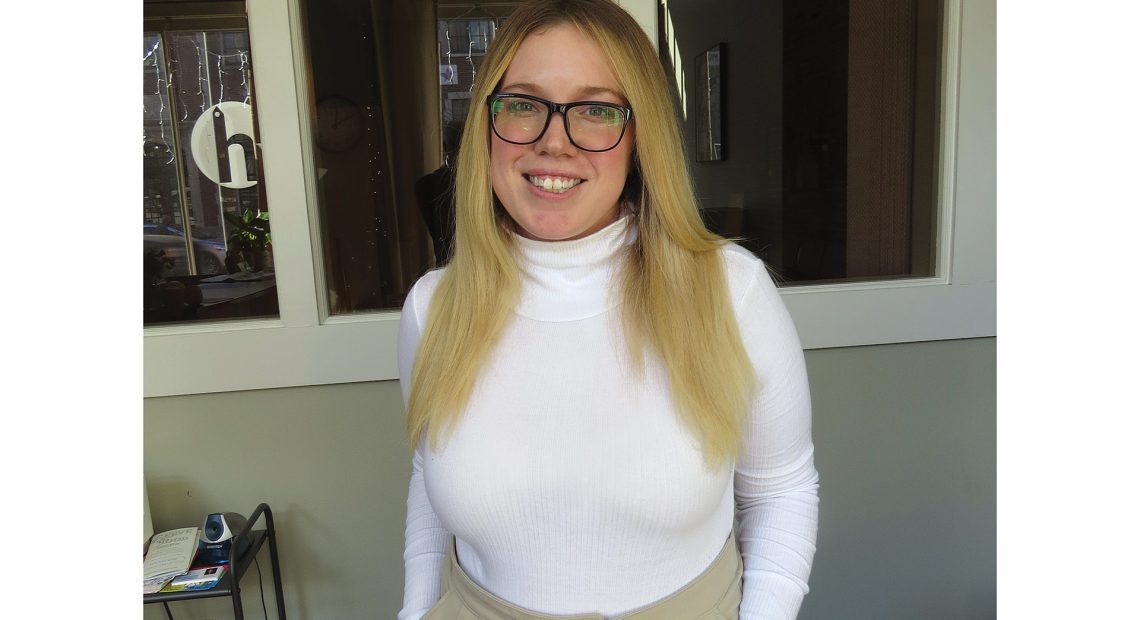
Meredith Wise, president and CEO of the Employers Assoc. of the NorthEast, agreed, noting, as others did, that the vaccine mandates add new layers of intrigue, challenge, and polarization for employers who have seen more than enough of all three over the past 20 months.

When she talked with BusinessWest, Wise had recently left a roundtable of CHROs — chief human-resource officers — representing companies across the Northeast. The group meets every six weeks to discuss the challenges its members are facing, she noted, adding that the dominant topic of conversation was the new vaccine mandates and what they might mean for companies, especially in the broad realm of employee relations.

“People who have not wanted to get vaccinated may get tired of the testing and may eventually get vaccinated, but be disgruntled about it,” she said, adding quickly that, if employers have to pay the cost of testing — and pay employees while they’re getting tested — then there is little incentive, if any, to get vaccinated.

“There’s still a lot of questions about what the mandates are going to say, how it’s all going to come down, and whether we’re going to lose employees,” she went on, adding that employers may have to pay a steep price for a policy they didn’t implement themselves.

The best advice Gannon and the others we spoke with have for employers and the HR departments is to be as ready as they can be for these mandates and fully understand just what they are up against. This means knowing how many employees are vaccinated (and not) and having a plan in place for meeting the mandates.

Above all else, Wise and the employment-law specialists advise that businesses take the mandates seriously — even if enforcement of its provisions will be extremely difficult, if not impossible — and to be prepared.


Taking More Shots

BusinessWest asked a number of area business owners and nonprofit managers who fall under the categories of the Biden vaccination mandates to discuss the measures and what they could mean.

Not surprisingly, none really wanted to talk about it — on the record or even off. Indeed, the subject of vaccinations and the mandates regarding them are a hot-button, polarizing topic, to say the least. Most employers are staying away from it, figuring it’s best not to say anything than delve into a matter drenched in controversy.

Meredith Wise

Meredith Wise

“There’s still a lot of questions about what the mandates are going to say, how it’s all going to come down, and whether we’re going to lose employees.”

That goes for MassMutual, one of the region’s largest employers, with more than 6,000 workers, which offered only this statement from a spokesperson:

“We are waiting for the specifics of the OHSA guidance to be issued, after which we will be able to better evaluate what it will mean for our company and employees. In the meantime, we have begun to prepare by determining how much of our employee base is vaccinated, which is currently approximately 85%. We are also encouraging fully vaccinated employees to begin coming into the office if they are comfortable doing so and on a schedule that makes sense for them. We’ll continue to evaluate our broader return based on the status of COVID-19 as well as guidance from medical experts and government officials to ensure the health, safety, and well-being of our employees.”

With that, the company probably spoke for most employers in the region, who are waiting for OSHA (the U.S. Department of Labor’s Occupational Safety and Health Administration) to offer specifics while also assessing just where they stand with regard to what percentage of their workforce is vaccinated.

Here’s what is known at this juncture. The Biden action plan directs OSHA to issue an emergency temporary standard (ETS) that requires all employers with 100 or more employees to ensure their workers are either fully vaccinated or get tested weekly for COVID-19, Gannon said. Employers will also be required to provide paid time off to employees to get vaccinated and recover from any side effects from the vaccine.

Meanwhile, the Biden administration’s plan also includes two executive orders requiring federal employees and federal contractors (and subcontractors) to get vaccinated, regardless of workforce size. There is no weekly testing exception; employees working on or in connection with a federal contract, including subcontractors, must be fully vaccinated by Dec. 8.

And, as noted, there are more companies in the 413 that will be impacted by these measures than most would think. Indeed, while most businesses in this region fit the textbook definition of ‘small’ — under 100 employees — there are hundreds of companies, nonprofits, and institutions that count at least that many workers. That includes healthcare-related agencies, manufacturers, nursing homes, municipal departments, a few banks, and many more. Meanwhile, the provision regarding federal contractors — and subcontractors — brings many more businesses under the auspices of the Biden mandates.

“People would be surprised at the array of businesses, both for-profit and nonprofit, that meet that federal-contractor test,” said Royal, noting that her own firm has had federal contracts at different points in its history. “So this has an impact on a number of organizations up and down the valley — including small businesses and human-service agencies that may provide a service to the federal government in some way and come under the umbrella of being a federal contractor.

John Gannon

John Gannon

“When President Biden first issued his plan in early September, we told people, ‘let’s see what happens over the next 30 days.’ But now, we’re getting to a situation where employers have to begin planning and preparing.”

“It might even be retail-type product that is sold on a military base,” she went on, while detailing the broad scope of these measures. “This definitely has widespread implications.”

Beyond waiting — and perhaps hoping that the measure is delayed, which most experts say is possible but not likely — the best area employers can try to do is be ready, said Gannon, adding that, while it’s anyone’s guess as to just when the OSHA standard for companies with 100 or more employees will be issued, it will almost certainly be released before the end of the year.

“When President Biden first issued his plan in early September, we told people, ‘let’s see what happens over the next 30 days,’” he explained. “But now, we’re getting to a situation where employers have to begin planning and preparing.”

Indeed, the clock is certainly ticking on the Dec. 8 deadline for federal contractors, he noted, adding that anyone who takes a vaccine that requires two shots must wait several weeks after the first shot to get the second. And full vaccination, regardless of whether it’s a one-dose or two-dose vaccine, is not achieved until two weeks after the final dose.

“It can take employees at least 45 days, and that’s if they act as soon as possible, to make sure they’re vaccinated,” Gannon went on. “Meanwhile, employers are going to have to get testing programs in place and provide options for employees on how they get tested weekly if they are opposed to getting vaccinated.”

The logical next step for employers, if they haven’t done it already, is to determine their vaccination rates and thus get a handle on the scope of the problem they’re facing, he added.

“We’ve seen all sorts of numbers, but generally, employers fall somewhere in the 60% to 80% range,” he said. “And you’re allowed to ask people if they are vaccinated or not — several agencies have confirmed that there is nothing unlawful about that. You can’t ask them why, but you can generally survey your workforce population, and that should be the first step.”


Compounding the Problems

Flashing back to those days — it might even have been hours — after Biden announced his vaccination mandates, when the phone calls started coming in, Royal said the initial reaction was shock, followed by incredulousness.

“That’s because it represents a whole new layer of challenges for employers when they’ve already been navigating a number of challenges related to the pandemic, or just workforce-related issues,” she explained, adding that the overriding concern, beyond all the planning, logistics, and costs of meeting the new standards, regards the potential loss of valued employees at a time when workers are retiring and resigning at unprecedented rates (see related story on page 61), and replacing them has been increasingly difficult.

“Whether you’re in manufacturing or in human services, or are a professional service, there is a general worker shortage and shortage of prospects,” Royal noted, adding that the mandates, especially the one regarding federal contracts (because there is no provision for testing, only required vaccination), will make a serious problem that much worse.

Wise agreed. While she noted that the vaccine mandates for those companies in the listed categories relieve employers from having to implement such a polarizing policy themselves, it does bring a new and unwanted layer of challenge to the table, especially when it comes to workforce.

“They’re already hurting for staff as it is,” she told BusinessWest. “If they lose employees over this, that’s going to make it even harder for them to meet their customer demands and fulfill their orders.”

But there are other considerations, including the costs attached to all this and uncertainty over whether employers who don’t want to get vaccinated or tested can become eligible for unemployment benefits.

She said there has been no clear guidance on that, but she speculates that, if the federal government issues a mandate and an employee is unwilling to comply with that mandate, then the employee would not be eligible to collect unemployment benefits.

But that’s just one of many questions that remain unanswered at this juncture, she said, adding that employers of all sizes are pondering how to get ready for these mandates, but also just how seriously to take them, especially since the T in ETS stands for temporary.

“Apparently, under OSHA guidelines, unless OSHA makes it permanent, within six months this ETS will expire,” she said, adding that some employers may roll the dice and try to wait this out.

Indeed, while there are steep fines attached to the mandates — up to $13,653 per violation — Wise said some employers are wondering out loud just who is going to enforce all this.

“In my mind, this would be a risk that I, as a business owner, don’t think I’d be willing to take,” she told BusinessWest. “But there’s a piece to this that says, ‘how am I going to get caught?’

“OSHA isn’t going to be able to come in and audit every workplace, so there would probably have to be a complaint filed,” she went on, adding that, if an employee doesn’t want to get vaccinated, he or she is unlikely to file a complaint that their employer is not in compliance.


Bottom Line

Like Royal and Gannon, Wise said she’s never seen anything quite like the vaccine mandates when it comes to the many ways they might impact an employer.

“I’ve been in HR for more than 40 years, and I can say that there’s been nothing like this,” she noted. “There’s been a lot of regulations and guidelines that employers have to put in place — certain safety precautions, pay requirements, overtime laws — but there really hasn’t been anything that’s come down that has affected the individual and their bodies like this.”

Indeed, these measures are unprecedented in many respects, and they come at a time when beleaguered employers are already being challenged in every way imaginable.

Only time will tell what happens next, but it’s clear that employers will have their mettle tested even further.


George O’Brien can be reached at [email protected]

Banking and Financial Services Special Coverage

Open for Business

Ben Leonard outside Tower Square

Ben Leonard outside Tower Square, where Country Bank just opened an office to service growing commercial business in and around Springfield.

Businesses didn’t stop borrowing in 2020, although much of last year’s lending activity had more to do with staying afloat with Paycheck Protection Program (PPP) loans than expanding operations. These days, with the economy in a more stable — if not exactly robust — place, many businesses are looking to invest and grow (that is, if they can get enough people to come to work), at a time when banks are sitting on more liquidity than usual and are anxious to lend it out.

When Country Bank announced it was opening a commercial-banking office in Springfield, Ben Leonard was intrigued by the opportunity, noting its similarities to the bank’s push into Worcester in recent years.

“Country Bank has been around a long time, but historically, the physical presence has been between Worcester and Springfield,” noted Leonard, a senior vice president who leads the new Springfield office, located downtown in Tower Square.

“But we’ve always served clients everywhere within a 100-mile radius, and we’ve seen more activity here,” he went on. “We have clients in Springfield and the greater area of Western Mass., so the impetus to build that office was to be closer to those customers. Part of that is growing our C&I [commercial and industrial lending] business — we see a growth market here. It’s an opportunity to grow.”

The C&I lenders who work in the Springfield office have experience in niches like manufacturing, distribution, and equipment-heavy companies, Leonard explained. “That’s kind of what the team knows, and that’s a big part of why Springfield and Worcester are appealing markets for the bank to expand in, because those kinds of businesses are what’s here.”

Those are also the kinds of businesses that maintained operations at a more or less steady level during the pandemic, and now they’re ready to grow — and borrow, he said, adding that the real-estate market is active as well.

Jeff Sullivan

Jeff Sullivan

“If there’s a hindrance to businesses growing, it’s labor. It’s not being able to buy the machine, it’s hiring someone to run the machine.”

“Certainly there’s a need for affordable housing, and we’re seeing a lot of turnover in real-estate properties, some repurposing, and some interesting dynamics with real-estate valuations being as high as they are. We’re also seeing situations where the dynamics have changed, where an office building is half-empty now, and it needs to change hands.”

In short, commercial lenders are busy, which marks a change from a year ago. More accurately, they were just as busy last year, but often dealing with some very pandemic-specific activities, from PPP loan processing to commercial-loan deferments, particularly for hard-hit industries like hospitality. These days, however, businesses (not all, but many) are moving past the treading-water stage and calling on banks to help them expand, not just survive.

“People are spending money,” said Jeff Sullivan, president of New Valley Bank, which is based in downtown Springfield, noting that some business owners are looking to buy property rather than continue to pay a landlord, while others are making speculative investments in real estate, rather than sitting on cash they may have accumulated during the pandemic, when spending was suppressed for both individuals and businesses.

“We’ll see two or three buddies get together and pool some money to use for a down payment on a two-family or three-family house, thinking, ‘I can make 10 to 15% on my money investing in real estate rather than have it make zero percent in my savings account,’” Sullivan said.

Many are first-time real-estate investors, he added, including young people and people of color aiming to build wealth, while established businesses are anxious to invest in their own operations.

“A lot of people have squirreled away cash from the government programs during the pandemic, and have been hanging onto that cash for a rainy day, and now they’re in a situation where they can use some of that — and banks are lending,” he said. “If there’s a hindrance to businesses growing, it’s labor. It’s not being able to buy the machine, it’s hiring someone to run the machine.”

Mike Lynch, senior lender at Florence Bank, said his institution is looking at commercial-loan numbers that are at least equal to pre-pandemic activity — and that’s on top of PPP loans.

Kevin Day says last year’s loan deferments were a “lifesaver” for many businesses.

Kevin Day says last year’s loan deferments were a “lifesaver” for many businesses.

“We do all kinds of loans, commercial real estate and C&I loans. We’ve seen strong activity across all sectors; it hasn’t been one pocket more than others,” Lynch said.

Florence Bank President Kevin Day agreed. “It’s kind of across the board — not every sector, necessarily; we’re not seeing many new hotels and restaurants opening up. But investment properties are creating new borrowers, and they need help with financing.”

The combination of low interest rates and high prices were driving the commercial-loan market a year ago, the last time BusinessWest tackled this story, and that has remained true. “In the real-estate market, everyone understands residential properties are hot,” Day said. “But in commercial real estate, it’s similar.”


Back to Normal?

One thing that has changed is the reliance on loan deferments, which was one of the leading stories in commercial lending (and retail lending as well, for mortgages, car loans, and credit cards) last year.

“We were very active in the deferment program. It was a lifesaver for a lot of businesses,” Day said. “As we’ve come into 2021, a lot of the deferment periods have ended, customers are emerging from pandemic lockdown activity, and things are becoming more normal.”

In the business world, “almost all commercial customers are out of deferments, back on normal schedules, and it feels like their business is gaining traction, getting back to to pre-pandemic levels,” he added. “In the hospitality areas — hotels, restaurants, and such — the pandemic hurt them, but even they’re coming back out of the malaise, and business is starting to pick up. The deferments gave people time, and as everything is starting to come back online, those businesses will get their customers back and should come out of it fine.”

Leonard said Country Bank handled close to 1,000 PPP loans totaling around $75 million.

“I’m happy to say we deployed a lot of that, and consulted with folks on the front end to be sure it wasn’t a rubber stamp,” he said. “It was a differentiator; I think the smaller banks really shined, and were nimble enough to support their customers. You can talk about being there for your customers when they need it, but could you deliver? I think Country Bank did.”

The bank is well-positioned to be a stable provider of financing going forward, he added, “because our capital ratios are head and shoulders above most other banks, which allows us to do a couple things. It means our lending limits are higher, but it also allows us to be patient and pragmatic with our customers.

“We have a lot of capital to lend and the ability to lend it, but where we’re going to be most successful is really understanding our businesses, so that we can bank them through cycles.”

“So I think we see an opportunity because of that,” he added. “We have a lot of capital to lend and the ability to lend it, but where we’re going to be most successful is really understanding our businesses, so that we can bank them through cycles. That is more important than ever, I think.”

Elaborating, Leonard said the pandemic reinforced the need for banks to have close relationships with their commercial clients and really understand their business, and to understand how much struggle — or success — over the past two years was a pandemic-induced anomaly and how much might remain the trend going forward.

“The value add for any banker, especially a C&I lender, is knowing a company well enough to make those educated decisions,” he told BusinessWest. “Our strategy is to spend a lot of time getting to know the companies we bank, so once we start a banking relationship, we’re in it, and we find a way to be pragmatic and support companies for the long term. That takes thoughtfulness on the front end.”

Sullivan said New Valley has been actively reaching out to small-business owners, who are often too busy running their business to seek help. “Larger companies have more resources and have banks calling on them all the time. There’s plenty of capital out there, and we want to make sure we connect with those business people, and that’s what we’re trying to do.”

Almost as one, bankers say there’s plenty of liquidity in the market, and once businesses began seeing some clarity with the pandemic — and, to be sure, there’s still plenty of uncertainty — they started moving into growth mode. But, again, the current labor situation is dampening some of that enthusiasm.

“I talk to a lot of business owners who are grateful the government bailed out businesses during the pandemic,” Sullivan said. “But there are some who would rather have a more normalized market where people are coming back to work.”

Meanwhile, “deposits are way up, and all the community banks I know are looking to put that money to work as loans rather than having it sitting around in cash. If anything, that’s become more exacerbated the last few weeks.”


Good Business

Like Country Bank, Florence Bank has expanded its geographic footprint in recent years, into Hampden County, specifically, to serve — and expand on — commercial business it was already doing in the region.

It has been a successful transition, Day said, one that has turned into retail business growth as well. But right now, he sees plenty of opportunity on the commercial side.

“Our credit quality, frankly, has never been better. People who had jobs and operated businesses during the pandemic have a lot of cash on hand. Hospitality businesses had to take time off because of the pandemic, but are now starting to get over it. Deferments helped people like that a great deal to come back online.”

The resulting liquidity in the system — and the resulting credit quality — mean delinquencies are at record lows, Day added. “Not only is business good, but the business we have is good business as well.”


Joseph Bednar can be reached at [email protected]

Employment Special Coverage

Coping with the ‘Great Resignation’

By Sarah Rose Stack


You’ve just woken up. As you sip your morning coffee, you open your e-mail and give it a quick glance. Wedged in between your work and personal mail, you have several e-mails with the subject line ‘We’re Hiring’ or ‘Join Our Team.’ You switch over to social media and see that your neighbor just announced she’s left her place of employment for a new opportunity. There are few more posts from friends who are frustrated with their employers’ lack of communication or insistence on returning to the office.

How many ‘We’re Hiring’ signs have you seen or talked about today?

There has been much discussion about the current hiring crisis, and while many thought that this would be resolved once Pandemic Unemployment Assistance ended, that has not been the case. In fact, the Bureau of Labor (BOL) recorded the highest number of people who quit their jobs in August 2021, with 2.9% of people quitting (4.3 million people). This is the highest number of quits since the BOL started recording this data in 2000. Probably even more concerning is that August was the sixth consecutive month of massive quitting numbers.

Coined the ‘Great Resignation’ by Anthony Klotz, a professor at Texas A&M, people are leaving their jobs at record-breaking rates as the pandemic is waning. This is only expected to be amplified as 2021 comes to an end and people reflect on what they want in life. Employees are demanding more from their current and potential employers. Companies should be very careful to pay attention to the change in dynamics if they want to retain or attract new talent to their workforces.

“Employees are demanding more from their current and potential employers. Companies should be very careful to pay attention to the change in dynamics if they want to retain or attract new talent to their workforces.”

As part of my position at Meyers Brothers Kalicka, I assist clients with finding new talent, such as controllers, accountants, HR, marketing, and other administrative professionals, for their organizations. Prior to the pandemic, I would see 50 to 100 applications from people in Western Mass. applying for every posted job opportunity. That number has drastically declined, the geographical representation has widened, and the questions and concerns from potential employees have also significantly changed.

So, what are employees expressing that they want? Here’s a hint: it’s not just about salary. People had a lot of time to reflect during the pandemic about what work means to them and what role they want their careers to play in their overall lives.


Work-life Balance

Prior to the pandemic, Americans were obsessed with ‘hustle culture.’ People were happy to rise and grind and wear their burnout like a badge of honor. Perhaps people were too distracted working around the clock to ever consider what they truly wanted. You’ve probably noticed the shift in sentiment in social media from #hustle to the idea that inner peace is the new success.

Working through the pandemic came with its own unique set of stresses. Some workers had to compensate for poorly staffed jobs, while others lost a feeling of security at their jobs, causing them to work even harder to show their value. Indeed recently posted a study that surveyed 1,500 employees about burnout, and a shocking 80% of people said the pandemic made the burnout worse.

As a result, potential employees have been asking:

• What is your company’s view on work/life balance?

• Does management regularly e-mail or call after hours or on weekends?

• Is the schedule flexible if I have a family event or event for my child?

• Do people actually take their paid time off?

According to PR Newswire, “poor work-life balance tops the list of job-seeker deal breakers, ranking above other immediate turnoffs, including lower salary (50%) and a company’s decreasing profits and lack of stability (48%)”.


Flexibility and Remote Work

Employees are actively seeking remote or hybrid work opportunities just as many companies are now demanding that employees return to in-person work. Some have even pre-emptively started seeking flexible work opportunities out of fear that their current remote-work situation might change.

Many are expressing that the ability to work from home and have more flexible work schedules in general have helped to prevent burnout. People have enjoyed ditching the morning commute and 5 p.m. rush hour. The returned pockets of time have come with myriad benefits, including more sleep, more time with family before and after work, less wear and tear on vehicles, more time with pets, and an overall more comfortable environment.

It isn’t all hypothetical, either. Stanford conducted a study of 16,000 remote workers over a period of nine months and showed that productivity increased by 13%. Further, with more workers reporting they were happier working from home, attrition rates were cut by 50%.

Time is the only non-renewable commodity, so when employers are demanding that their people return to in-person work, employees are asking themselves, “at what cost?” The most-asked question I have received from potential employees over the last year is: “can this position be done fully or partially remote?” If the answer was no, most candidates politely declined to continue in the application process, presumably in favor of remote opportunities.

I would also attribute the increase of applicants from other regions to the normalization of remote work. I’ve seen applications from all over the country because most people in professional positions are now of the mindset that they can work for anyone, from anywhere.


Company Culture and Shared Values

At its core, company culture is its identity. It’s how the company’s values, attitude, approach, and ideals dictate the inner workings of the organization. Generally, this is set and modeled by the leadership and then mirrored by the people within the organization, driving the way the company does everything.

Companies with attractive corporate culture actively value their people in ways that are both tangible and intangible. They may have perks such as food, drink, cocktail hours, paid time off, tuition reimbursement, and professional-development opportunities. More than that, they will also have a solid mentorship program, encourage open communication, speak to each other with respect, and show clear indicators that the work and growth of their people are valued.

As part of corporate culture, shared values are another important consideration for many job seekers today. Whether they are directly impacted by certain causes or not, they are looking to work for companies who have values that align with their own. Employers need to understand that potential employees are doing as much vetting and interviewing of the organization as the organization is doing of them.

Employees want to know what your company culture is like and what your values are. They are asking direct questions such as:

• What is the company’s leadership like?

• Describe the company’s culture.

• Does your company have a diversity, equity, and inclusion (DEI) program?

• How does your company implement its DEI statement?

• How involved is your company in the community?

• How does your company handle discourse among employees?


Pandemic Protocols in General

While we all have pandemic fatigue and want the pandemic to be over, there are still so many open issues that need to be faced head-on. Potential employees are very concerned with how companies handle current guidelines regarding masking, social distancing, quarantine, and vaccination.

This would be simple if everyone had the same passionate stance on the subject, but they don’t. Employees tend to be divided into three camps: Those who wants the strictest protocols in place, those who prefer more lax protocols, and those who are indifferent and will simply follow whatever protocols are set. Regardless of which camp your organization falls into, companies should be aware that their response to these questions will either encourage or deter certain prospects from continuing with the interview process.

I’ve found that most candidates were generally satisfied to hear that the organization is simply following the current federal, state, and municipal guidelines. In addition to the actual protocols, candidates have been very concerned with how those protocols are communicated. They routinely ask:

• Does the leadership communicate changes to protocols in a timely manner?

• Have they listened to employees’ questions and concerns?

• Are protocols safe, fair, and reasonable?


In Conclusion

We are in an employee market, and employees want the best of it all. They want work-life balance and more remote-work opportunities, but also want to feel connected with their company’s mission and their colleagues.

This may feel like an impossible balance to achieve, but I believe it can be done. People want to work, they want to feel connected, and they want their work to mean something. That’s the good news. Companies who understand these needs can take action and translate them into powerful employment opportunities that almost certainly will yield happier and more productive workers, better products and services, and stronger businesses.


Sarah Rose Stack is the Marketing and Recruiting manager for the Holyoke-based accounting firm Meyers Brothers Kalicka, P.C.


Commercial Real Estate Special Coverage

A Blast from the Past

Springfield’s Trolley Barn, the property at the corner of Main and Carew streets, has had an important place in the city’s history since it opened back in 1897. It was long home to the Springfield Street Railway Co. and, later, Peter Pan’s Coach Builders operation. Today, it has a new life as home to J.D. Rivet, a roofing and sheet-metal company, thus ensuring that this link to the past will have a place in the city’s future.

At top, the Trolley Barn sign

At top, the Trolley Barn sign is joined by others announcing the newest owners. Above, past and present come together in the second-floor conference room.

Jim Trask says the search took the better part of four years.

That’s because, as he and other members of the leadership team at JD Rivet & Co. Inc., a roofing and sheet-metal company, went about looking for a new home to replace the one on Page Boulevard in Springfield, they had a lot of boxes that needed to be checked.

Chief among them was — and is — location, said Trask, the company’s president, adding that several crews hit the road for jobs each day, and easy access to highways is a major consideration. But there were others, including large open space for a warehouse, parking, and more, as the company, working with a broker, considered a number of options, including property at the Deer Park Industrial Park in East Longmeadow.

Eventually, the search ended at a rather intriguing place, the corner of Main and Carew streets in Springfield, home for nearly 125 years to a building known as the ‘Trolley Barn.’

“That’s a nod to the days when there were actual stables for horses that would pull carriages,” said Trask, adding that the property certainly has seen a great deal of history and change; from the horse-drawn cars to the electrically powered trolleys of the Springfield Street Railway Co., to far more recent uses. These include it being home to Peter Pan Bus Lines’ Coach Builders repair and restoration facility, and, simultaneously, a methadone clinic in the front-office section of the facility.

Trask and Sean Gouvin, the company’s vice president, recalled that, when they were first introduced to the property by Brendan Greeley, a broker at R.J. Greeley Co., they saw both opportunity and challenge, in perhaps equal amounts.

The former was represented by those aforementioned boxes being checked, especially the location part; the property is just a few hundred feet from an on-ramp to I-91, a few blocks from I-291, and a just a few minutes from the Mass Pike. The latter came in the large amount of work that needed to be undertaken to ready the property for the planned new use, especially transforming the portion occupied by the methadone clinic into modern office and warehouse space.

“I liked the building — I could tell it was really strong,” Trask said. “I loved the space in the warehouse, but the office at the time was all broken up and I didn’t really like the office space at all.”

Eventually, though, they decided seizing the opportunity was worth the challenge. Thus commenced more than six months of cleanup and restoration work that yielded some surprises — sheetrock was covering original brick and intricate woodwork in that office area — as well as a few artifacts, and a workspace that speaks to the early 20th century but certainly works in the early 21st century.

At left, from left, Robert Ostrader, Sean Gouvin, and Jim Trask in the new first-floor conference room.

“There are a lot of reasons why we’re here — location, price, everything,” Trask said. “But I love old buildings, and this is one of the most historic buildings around.”

And it provides what the company needs most — a long-term solution to its space needs, he added, noting that JD Rivet has worked through the many hurdles created by the pandemic (although some stern challenges remain, especially supply-chain issues) and is in a growth mode.

Founded in 1960, the company specializes in the installation and maintenance of commercial, industrial, and residential roofing systems. The company has worked on everything from churches to hangars at Westover Air Reserve Base.

From its new headquarters in Springfield’s North End, it can see the past — and the future as well.


Pulling Out All the Stops

As for those artifacts … there are several of them, including old pictures of the trolleys that were once housed there (one now graces the second-floor conference room), a boiler alarm bell (just like it sounds, it’s a bell that would ring if there was a problem with the boiler) that dates back to the turn of the 20th century, and some old fire-insurance maps, found on the property, that offer a glimpse of the dramatic growth that came to that section of Springfield in the early 1900s.

These items would be considered a bonus, said Bob Ostrander, JD Rivet’s chief financial officer, adding that what the company really wanted from its new home was a chance to consolidate operations — it was spread out in several different buildings on Page Boulevard — as well as have better, easier access to highways and that room to grow.

“The office was so chunked up, you couldn’t really get a feel for what it was because you couldn’t see more than a few feet without a wall.”

It got all that and more at an address — Carew and Main — that has seen a lot of history and certainly changed with the times. Indeed, the owner for decades was the Springfield Street Railway Co., which opened in 1870, and originally operated a single line of track — served by four cars and 24 horses — that ran from the North End of the city down Main Street, past State Street.

The original line soon expanded to other parts of the city, and by 1891, the lines were all electrified to run trolleys. By the end of the century, the network had extended to several area communities, and connections were made to other networks in other cities, including Holyoke, Westfield, Northampton, and Hartford. To handle all this growth, the company built the facility, named the Trolley Barn, at the corner of Main and Carew.

Like all trolley lines, Springfield’s became obsolete in the 1950s as cars and buses became the dominant modes of transportation. The Trolley Barn would eventually be acquired by Peter Pan Bus Lines to house its Coach Builders operation, which painted and repaired buses.

When the management team at JD Rivet first looked at the property, Coach Builders was still occupying the large area formerly used for housing and maintaining trolleys, and a methadone clinic had recently moved out of the office portion of the property. That later operation required privacy for its clients, said Ostrander, adding that the relatively large area had been carved up into many smaller spaces covered by sheetrock.

Before-and-after shots of the office area show the amount of work needed to restore the historic Trolley Barn to its former luster.

Before-and-after shots of the office area

“The office was so chunked up, you couldn’t really get a feel for what it was because you couldn’t see more than a few feet without a wall,” he said, adding that their collective imaginations managed to see through all that. And they liked what they saw.

“We had a demolition contractor, Associated Builders, come in and tear down all that sheetrock, and when they did, it revealed all this beautiful wood,” he told BusinessWest, waving his hand across the space that has become his office. “So we decided to restore all that wood — the floors, the wainscoting on the walls, the ceilings, the doors.”

Only small portions of those hardwood floors could not be fully restored, said Ostrander, adding that the company has effectively blended the past — specifically those floors, walls, and ceilings — with the present, including a new, glass-walled conference room created on the ground-floor office area.

Gouvin agreed. “From the beginning, we treated it as historic renovation — every turn was thoughtful,” he said of the efforts to preserve historic qualities of the property (and there are many of them), yet make the property suitable for modern office and warehouse operations.

Elaborating, he said the structure is in a historic district, so any alteration to the building that faces Main Street had to be approved by the Historic Commission. That includes the windows and the front door, which had to be restored and not simply replaced.

The past and present come together in a number of spaces within the building — the warehouse still bears evidence of where trolley cars were kept and maintained, but the there’s now high-efficiency lighting there and elsewhere — but perhaps none better than the second-floor conference room, which takes advantage of large windows, more of that ornate woodwork, and a fireplace (one of several in the building) to provide a unique, homey setting.

“I don’t think we’ve had to turn the lights on in there yet — the windows let in a ton of light,” said Trask, adding that it’s the same throughout the office portion of the property.


Past Is Prologue

The business cards for those at JD Rivet list 2257 Main St. as the address.

That’s a location steeped in history, one that brings three different centuries together in the same building.

Those at the company are proud of how they’ve blended the past with the present. But mostly, they’re excited about the future and the opportunities presented by this new facility.


George O’Brien can be reached at [email protected]

Community Spotlight

Stockbridge Looks Forward, Honors Its Heritage

By Mark Morris

Town Administrator Michael Canales

Town Administrator Michael Canales says a number of municipal projects speak to Stockbridge’s progress during the pandemic.

One of Norman Rockwell’s most famous paintings depicts a snow-covered Main Street in Stockbridge. The painting “Home for Christmas” was intended to celebrate small towns all over America, but these days, it’s nearly impossible for modern-day photographers to recreate the artist’s vision without including a constant stream of traffic.

While that might frustrate photographers, Margaret Kerswill is encouraged by all the activity she has seen this summer and into the fall.

“There’s more tourism than I expected to see in Stockbridge,” the board president of the Stockbridge Chamber of Commerce told BusinessWest. “It’s rare to go into town and not see it full of people.”

Kerswill said the pandemic encouraged business owners to find creative ways to keep people safe while maintaining their operations — and revenues. Despite the many challenges last year, they’ve largely come back strong.

“As rules and mandates kept changing, our business owners rolled with it,” she said. “It was wonderful to see everyone rise to the top of their game.”

Tri Town Health acts as a regional health department for the towns of Lee, Lenox, and Stockbridge. When the Delta variant of COVID-19 began spreading, Tri Town Health imposed mask mandates for indoor common spaces.

“There’s more tourism than I expected to see in Stockbridge. It’s rare to go into town and not see it full of people.”

Stockbridge Town Administrator Michael Canales appreciates the agency’s work to keep the community as safe as possible. As of Oct. 15, 68% of Berkshire residents are fully vaccinated, while 78% have received at least one dose.

On the job for just over a year, Canales has not yet had the chance to lead the community in the absence of a pandemic. “It will be a little difficult for me to compare what normally happens in town because I have yet to see what normal looks like,” he noted.

Children’s Chime Tower

Repair work will begin next year on the Children’s Chime Tower, a fixture since 1878.

For now, he believes longtime residents who tell him Stockbridge is starting to look normal again. Canales himself has certainly noticed the busy summer and fall seasons, and credits that in part to the return of Tanglewood, which offered a limited schedule for audiences half the size of a normal show.

“Tanglewood is an example of one of the big events that happened as a smaller event for this year,” he said.

Despite the limited schedule, Kerswill said it was important that Tanglewood held events this year. “Tanglewood is integral to the local economy. It provides so many jobs in the area and definitely brings visitors to town for dining and shopping.”

Kerswill also wanted to set the record straight for BusinessWest about “a broad misconception” that Tanglewood is located in Lenox. “The entrance is in Lenox, but nearly 85% of Tanglewood’s land is actually in Stockbridge.”


Change and Progress

For several years, Kerswill co-owned Mutability in Motion, a gift shop she ran with her wife, Laureen Vizza. When COVID hit, they made the decision to close the shop.

“We’re working on new endeavors, still keeping our efforts local, but in new areas,” she explained. In addition to starting a personal blog called artmeditationlife.com, Kerswill has become a licensed realtor.

“The real-estate market is doing well — in fact, it’s crazy,” she said, adding that home-improvement services are also coming back strong, as evidenced by long wait times for many home projects.

In terms of municipal projects, Stockbridge added a new highway garage this past spring, though supply-chain issues caused delays in finishing it even sooner.

A current project nearing completion is the Larrywaug Bridge on Route 183. Canales expects this busy connector road will be open by the winter, with finishing touches to be completed in the spring.

“The real-estate market is doing well — in fact, it’s crazy.”

Next year, repair work will begin on the Children’s Chimes Tower, a fixture in Stockbridge built in 1878. Canales said the town has approved funding to refurbish all the internal mechanisms.

“It’s a neat structure, but it needs some tender loving care,” he added. “We’re hoping to make repairs that will keep it playing for the next 50 years.”

Still relatively new in the job, Canales said it’s been exciting to learn about the rich history of Stockbridge. While people all over the world are familiar with Tanglewood, the Norman Rockwell Museum, and the town’s mention in James Taylor’s song “Sweet Baby James,” there are even deeper historical references to be found which Canales said “makes it a fascinating community.”

For example, the town is working on a project to protect old-growth forests, specifically Ice Glen, a ravine in the southeast area of Stockbridge. Its name comes from the many moss-covered rocks with deep crevices that can sustain ice into the summer.

During the time he wrote Moby Dick, Herman Melville lived in Pittsfield and is said to have visited Ice Glen at least once. The Stockbridge ravine is referenced in the novel when narrator Ishmael describes Pupella, a seaside glen, as “a wondrous sight. The wood was green as mosses of the Icy Glen.”

These days, the town is exploring several options to protect the old-growth trees from insects that are causing damage in Ice Glen.

The Chamber of Commerce has joined the effort to help tourists find both famous and lesser-known sites in Stockbridge. As an ongoing project, it has developed and begun installing new signs to help direct people to the many attractions in town. Right now, they’ve been installed downtown, but the plan is to expand the green-and-white signs to more areas of the community.

“We want to help people get around outside the downtown area because there is a lot to see,” Kerswill said. “If someone is here only for a weekend, we want to make sure they can find all the attractions that interest them.”


Better Days

While the town navigates the various stages of the pandemic, Canales said he and many others are looking ahead.

“We are staying on top of things and keeping an eye on trends so that when we come out of this, Stockbridge will be in the best possible shape to return to normal, or as close as we can get to normal,” he noted.

Kerswill added that Stockbridge is a place that continues to amaze her.

“Whether we’re going through good times or difficult times, it’s a community that comes together to get things done. I couldn’t be prouder of that.”

Banking and Financial Services

Gathering Storm

Christopher Viale

Christopher Viale says student-loan deferments, set to end in February, may pose issues for families who haven’t paid them back in a while.


During times of recession or economic upheaval, the last thing economists expect is for credit-card debt to fall.

Yet, that’s exactly what happened during the first year of the pandemic. According to Experian, from the third quarter of 2019 to the third quarter of 2020, credit-card balances fell by 24% nationally. The percentage of credit-card users carrying an interest-bleeding balance month to month fell from 58% to 53%, according to the American Bankers Assoc.

One reason was that this was no normal economic downturn; during the early months of COVID-19, businesses were shuttered, restaurants were closed, and consumers simply reduced their spending dramatically — even if they were still working, and despite the government stimulus checks.

“For the first year of the pandemic, people weren’t really spending; they were paying down debt. Record amounts of debt were being paid down,” said Christopher Viale, CEO of Cambridge Credit Counseling in Agawam.

But that has not been the case in 2021.

“When things started opening up a little bit, people went haywire; they started spending like crazy,” Viale noted. “Credit-card debt has increased by 13% over the last quarter, which is the most it’s ever increased in a quarter.”

“For the most part, consumers have been in a good position, but then, when all these debts start to come due again, it’s going to be a very difficult time.”

Basically, stimulus worked — in the sense of stimulating spending. “You got free money, the $250 tax credit per child, you got whatever other government programs were there … people had a lot of money in their hands. Even though they weren’t working, the unemployment checks they were getting were as good as if they were working. So, for the most part, consumers have been in a good position, but then, when all these debts start to come due again, it’s going to be a very difficult time.”

And that’s what economic leaders — and people like Viale, who help families get out of debt — worry about. The increased spending in 2021 has coincided with an end to loan-deferment programs launched at the start of the pandemic, and if they haven’t been paying attention to their budget, many families might be in for a shock.

“It really is a perfect storm,” Viale said. “Consumers have had the ability to not pay their rent or mortgage or credit-card payments. Most, if not all, of that has ended, except for the 800-pound gorilla, which is student loans.”

Those will continue to be in moratorium until Feb. 1, which is when $1.3 trillion of debt will start to be drafted back out of consumers’ checking accounts. “Yes, they are being alerted and warned to be ready, but after not paying on these loans for almost two years, it’s going to be a shock for many.”

All of this has banks — with whom Viale talks all the time — worried about huge loss rates due to credit defaults starting in late 2022 and early 2023. In short, we may be heading into perilous times for household debt.


Change of Plans

According to a recent CreditCards.com survey, 44% of respondents they are willing to take on debt in the second half of 2021 for non-essential purchases, such as dining out.

That marks a dramatic change from savings-happy 2020. Even after that temporary dip in debt in 2020, 42% of U.S. adults with credit-card debt have increased those balances overall since the pandemic began in March 2020, according to a Bankrate.com survey conducted in September.

“It’s been an upside-down credit environment,” Stephen Biggar, who covers financial institutions at Argus Research, told CNBC this month. “If you told me the market was going to crash 40% and we would have 20% unemployment, you would have also said card delinquency rates would go through the roof, particularly for the lower-end consumer.”

But instead, the savings rate spiked to levels not seen in 70 years, as consumers curtailed spending — and were allowed to halt payments on student loans and mortgages — and started paying back other debt, notably credit-card balances. Now, the tide has completely turned. Meanwhile, most of those deferment programs no longer offer last year’s safety net.

“People haven’t had to pay their bills for a long time,” Viale said. “Mortgage, rent, student loans, even credit cards allowed a period of time when people didn’t have to make payments.”

Unlike payment deferment for credit cards, in which interest keeps accruing, “student loans are very different because that was a true moratorium; no one was being charged,” he explained. “So whatever status someone was in with their student loans when the pandemic started is where they’re going to be in February when they have to start paying again.

“Yes, they are being alerted and warned to be ready, but after not paying on these loans for almost two years, it’s going to be a shock for many.”

But on Feb. 1, those autodrafts will begin again. “And that’s going to be a shock for consumers because they haven’t made these payments in 18 months or so.”

Politico reported that the U.S. Department of Education is considering providing student-loan relief to borrowers who miss a payment during the first 90 days after payments resume, so credit scores won’t be adversely impacted.

According to Forbes, U.S. Sen. Elizabeth Warren wants to go even further; fretting about a surge in student-loan delinquency and default once payments resume, she and other members of Congress have repeatedly asked the Biden administration to postpone the restart of payments.

The average monthly payment for student-loan debt is between $400 and $600, Viale noted. “That’s a pretty big-ticket item they haven’t had to pay for a long time, and now, out of nowhere, they’re going to have to start paying it again.”

This will only exacerbate what seems to be a looming credit crisis, Viale said, one that makes programs like Cambridge’s — which manage and pay down a client’s debt payments in a way that reduces interest costs and protects their credit rating — even more critical.

Because of concerns about consumer debt next year, the Federal Reserve is allowing such relief programs to be extended to offer consumers even more concessions if they are struggling to keep up with mortgage and credit-card payments, Viale added. “My industry has been working flat out to develop and implement these additional hardship programs.”


Back to School

It’s not easy to escape credit-card debt — especially with the average annual percentage rate topping 16%.

According to a Bankrate.com survey, 54% of adults carry credit-card balances from month to month, and 50% of have been in credit-card debt for at least a year. The average person with credit card debt owes $5,525.

And that’s only one element of household debt. Wth student-loan payments ramping back up in February, the Department of Education has launched an extensive outreach campaign to borrowers.

“They’re giving people several months notice. They’re doing a pretty good job of letting consumers know this is coming,” Viale said. “But that doesn’t really mean much when you haven’t had to do it in a long time.”


—Joseph Bednar

Employment

Facing Whistleblower Concerns

By Jeremy Saint Laurent, Esq.


Facebook is currently in very murky waters with both the federal government and with its users. Employers should pay attention to the multitude of issues surrounding this matter to better understand potential exposure and develop a response plan.

On Oct. 5, after leaking sensitive Facebook documents to the media and the Securities Exchange Commission, whistleblower Frances Haugen testified before Congress. Haugen’s testimony provided the Senate subcommittee with a glimpse into how Facebook’s policies negatively impact the mental health of its users, particularly children; creates political and social discord; and undercuts democratic ideologies.

Although dealing with public and agency scrutiny is not uncharted territory for Facebook after facing similar allegations during the last two presidential elections, these newly raised allegations of misconduct appear to be especially worrisome because Haugen was a Facebook insider. Haugen was employed in a department within Facebook tasked with investigating how the platform’s algorithm spreads misinformation and how the network was being used by our nation’s foreign rivals. In short, Haugen is believable, credible, and convincing because her allegations amount to Facebook disbanding and ignoring the work of herself and her colleagues in the pursuit of financial growth.

Jeremy Saint Laurent

Jeremy Saint Laurent

“Employees who come forward to the SEC and/or government regarding perceived misconduct are often covered by federal whistleblower protections and other laws, like wrongful termination in violation of public policy.”

In a recent NPR interview, attorney Andrew Bakaj, who represents Haugen, stated that “we have made lawful, protected disclosures to the Securities and Exchange Commission and to Congress. Such disclosures are protected both by law and Facebook’s own internal policies.”

Bakaj correctly states that federal whistleblower protections afford employees and ex-employees a broad range of legal protections for alerting law enforcement, the SEC, and Congress of potential malfeasance. Typically, employers have no legal recourse if that’s the only thing a whistleblower does to report potentially incriminating information. In fact, a Facebook representative told the Senate subcommittee that the company won’t retaliate against the whistleblower for speaking to Congress.


Lessons Employers Should Learn from the Facebook Whistleblower Fiasco

Employees who come forward to the SEC and/or government regarding perceived misconduct are often covered by federal whistleblower protections and other laws, like wrongful termination in violation of public policy. In a 2014 decision, the U.S. Supreme Court held that privately owned companies, in addition to publicly traded companies, may be subject to whistleblower liability if they retaliate against an employee or former employee who reports malfeasance to the appropriate agencies.

Massachusetts, like most states, adheres to the at-will employment model. The at-will employment doctrine allows an employer or an employee to terminate the employment relationship at any time, for any reason, with or without cause or notice. However, in addition to federal whistleblower protections, employees are afforded additional protections under state law.

Commonly referred to as ‘wrongful discharge,’ wrongful termination in violation of public policy is a sort of catch-all, judge-made rule that prohibits employers in many states from firing an employee who opposes or refuses to participate in certain unlawful or unethical activities. In Massachusetts, an employee has a viable claim for wrongful discharge if they have a reasonable belief that they are preventing a violation of law. An employee who complains internally that his employer allegedly violated a criminal statute will, more often than not, have a claim for wrongful violation of public policy.

Employers must be conscious of when employees make complaints about possible violations of the law, and be cautious of terminating employees who refuse to conform to a company policy or engage in some action because they believe they are preventing a violation of law.

However, the tide turns when an employee takes things a step further and disseminates confidential information to the media or a competing organization. In the situation of Facebook, before Haugen resigned from Facebook, she copied thousands of pages of confidential documents and shared them with the SEC and Congress, but also with the Wall Street Journal, which in turn, authored a series of articles containing the classified information. Although sharing the information with the Journal does not make Haugen’s actions any less heroic, it may muddy the waters when it comes to what protections she is afforded under whistleblower protection and applicable state law.

Releasing information to media outlets or competing organizations can be in violation of many non-disclosure agreements entered into between the employee and employer during the onboarding process. Because most non-disclosure agreements exclude disclosure only to agencies like the SEC and Congress, employers can explore legal recourse through vehicles like breach-of-contract claims. Typically, non-disclosure agreements require employees to return or destroy confidential documents prior to or immediately after either party terminates the employment relationship. Essentially, non-compete agreements are structured to allow employees to utilize their legal right to report potentially illegal activity or policies within their company while protecting the employers’ legal rights and interest by limiting the types of disclosures allowed.

Should an employer choose to pursue a claim against an employee or former employee for exceeding the bounds of protected activities as outlined by whistleblower regulations and state laws, the employer may seek as damages any severance paid at the time of departure, private pension accrued by the former employee, stock options paid in connection to employment, and general monetary damages.

If you find yourself as an employer in a similar situation, be sure to consult with your labor employment counsel before moving forward with any employment action.


Jeremy Saint Laurent, Esq. is a litigation attorney who specializes in labor and employment law matters at the Royal Law Firm LLP, a woman-owned, women-managed corporate law firm that is certified as a women’s business enterprise with the Massachusetts Supplier Diversity Office, the National Assoc. of Minority and Women Owned Law Firms, and the Women’s Business Enterprise National Council; (413) 586-2288; [email protected]


Manufacturing Special Coverage

The Shot Heard ’Round the Region

Smith & Wesson’s recently announced plan to move its Springfield operations to Tennessee came as a shock to many — the 165-year-old company has been part of the city’s fabric, and the region’s rich manufacturing history, for generations. Amid questions about the gunmaker’s reasons for moving — the company cites proposed state legislation targeting its products, while some elected officials say it’s more a case of corporate welfare and a better deal down south — the most immediate concerns involve about 550 jobs to be lost. The silver lining is that, with some concerted effort, most of those individuals should be able to find other work locally in a manufacturing landscape that sorely needs the help.


In the wake of the announcement that Smith & Wesson will be moving its corporate headquarters from Springfield to Maryville, Tenn., questions and discussions have arisen on many levels.

These concern everything from how and when this decision came about to how aggressive Tennessee was in courting this major employer, to whether there were any major deciding factors in that decision beyond what has been stated repeatedly by the company — specifically, proposed state legislation that would ban the manufacture of most of the automatic weapons now made by Smith & Wesson.

But as the dust settles from that bombshell announcement, the lingering questions concern just what the region and the state have lost from the relocation of this company, one that can trace its roots back to 1856.

And the answers to that question don’t exactly come easily.

Western Mass. will lose roughly 550 jobs, according to the information released by the company — a significant number, to be sure, but economic-development leaders are quick to point out that just about every manufacturer has a ‘help wanted’ sign on the door, either figuratively or quite literally, and that any one of those Smith & Wesson employees who doesn’t want to relocate to Tennessee can find employment in the 413 quickly and easily (much more on that later).

“The reason they’re here, and the reason a lot of the jobs will remain here, is that you have a high-quality workforce. And that is probably the biggest issue companies are looking at right now. As a region, and as a state, we’re still a good place to do business.”

Meanwhile, the region will also lose a number of C-suite-level employees from the company that were involved in the community, sat on area boards and commissions, and engaged in philanthropic activity.

“They’re tied to the community,” said Richard Sullivan, president and CEO of the Western Massachusetts Economic Development Council (EDC). “And I think that, sometimes, those aspects of what it means to have a headquarters, the CEOs, and the team at any company get lost; it’s the tieback to the community, because they’re truly vested in the community and want to see it be the best it can be.”

Meanwhile, even though Smith & Wesson handguns and other products will still be made here, and we’re told they will be stamped ‘made in Springfield, Mass.,’ or words to that effect, the region will lose a certain amount of civic pride, if that’s the right term, that comes from having a large employer — and one of the most recognizable brands in the world — headquartered in the City of Homes. Indeed, many would say this company is part of not only the history, but the very fabric of the city.

State Sen. Eric Lesser

State Sen. Eric Lesser says Smith & Wesson’s decision to relocate its headquarters and some operations may actually be a blessing in disguise on some levels.

However, those we spoke with said the region and city are unlikely to lose momentum when it comes to attracting employers and jobs, or its reputation as a manufacturing hub.

Indeed, Sullivan used the phrase “one-off” to describe Smith & Wesson’s decision, drawing a distinction between this pending departure and a much larger exodus, headlined by General Electric, that befell Connecticut several years ago.

“The reason they’re here, and the reason a lot of the jobs will remain here, is that you have a high-quality workforce,” he explained. “And that is probably the biggest issue companies are looking at right now. As a region, and as a state, we’re still a good place to do business.”

State Sen. Eric Lesser, who represents Springfield and several neighboring communities and serves as chair of the state’s Manufacturing Caucus, agreed, and then went further, noting that, amid some obvious losses, there are also some possible benefits to Smith & Wesson’s decision. He even used the phrase “potential blessing in disguise,” mostly to reference opportunities that other area manufacturers may have to stabilize and grow their ventures by hiring displaced S&W workers.

“Sometimes, when one door closes, another one opens, and this may be one of those times,” he told BusinessWest. “We have a very real economic challenge in terms of making sure that those 550 families are taken of. But this is a long-term horizon — they’re not doing this until 2023. Luckily for those families, the manufacturing sector is very hot, and really, almost every company in that sector, including companies right in that immediate neighborhood where Smith & Wesson is located, are looking for people.”

Lesser is one of many elected leaders who are not buying into Smith & Wesson’s contention that it’s moving its headquarters because of the pending legislation. He echoed comments from Massachusetts House Speaker Ronald Mariano, who told the local press that “prudent business people don’t make major decisions, especially a decision that puts hundreds of people out of a job, based on one of the thousands of bills filed each session.”

“The politics of Massachusetts have been the way they are for a very long time, and at the very same time that they announced a move in Springfield, they also announce they’re closing operations in Missouri, a state that has very lax gun laws.”

Lesser, noting the very attractive deal offered to Smith & Wesson by Tennessee, said the company’s motivation for relocating probably has little to do with Bay State politics. “This is more of a classic corporate-welfare story than it is anything else.”

Which is why it shouldn’t impact Springfield’s reputation as a manufacturing hub or its long-term potential to become more of one, noted Tim Sheehan, the city’s director of Planning & Economic Development.

“In this type of industry, Springfield has had a long history, and the skill levels in this area of manufacturing have been noted throughout the Connecticut River Valley,” he said. “I don’t think this sends a message about the city of Springfield — it’s a broader message.”


Targeted Response

The press release arrived in the inboxes of media outlets in this region — and well beyond — at 9:05 a.m. on Sept. 30. The headline over the top read “Smith & Wesson to Relocate Headquarters to Tennessee,” followed by the subhead, “Move includes headquarters and significant portion of operations due to changing business climate for firearms manufacturing in Massachusetts.”

The release went on to quote Mark Smith, president and CEO of the company, saying, “this has been an extremely difficult and emotional decision for us, but after an exhaustive and thorough analysis, for the continued health and strength of our iconic company, we feel that we have been left with no other alternative.”

He specifically cited legislation recently proposed in Massachusetts that, if enacted, would prohibit the company from manufacturing certain firearms in the state. “These bills would prevent Smith & Wesson from manufacturing firearms that are legal in almost every state in America and that are safely used by tens of millions of law-abiding citizens every day exercising their constitutional Second Amendment rights, protecting themselves and their families, and enjoying the shooting sports. While we are hopeful that this arbitrary and damaging legislation will be defeated in this session, these products made up over 60% of our revenue last year, and the unfortunate likelihood that such restrictions would be raised again led to a review of the best path forward for Smith & Wesson.”

The path taken — to Tennessee’s Blount County, which proudly describes itself as a “Second Amendment sanctuary” — is similar to the one taken by Troy Industries, the West Springfield-based maker of a wide array of guns and related products, which announced a move to Tennessee back in May.

So while there is precedent and the relocation sounds like part of a movement, many elected officials, including Lesser, were not exactly buying the company’s stated reason for leaving.

In fact, he referred back to that same press release for some evidence. In it, the company said it was also relocating its distribution operations in Columbia, Mo. to the new, $120 million facility in Maryville.

“I don’t believe their rationale why they’re leaving,” he went on. “The politics of Massachusetts have been the way they are for a very long time, and at the very same time that they announced a move in Springfield, they also announce they’re closing operations in Missouri, a state that has very lax gun laws.”

The bill calling for a ban on the manufacture of certain assault weapons, Lesser noted, “has been filed for years and years. And 6,000 bills are filed every year on every conceivable topic; as the speaker said, for a company to make a decision of this magnitude off of one filed piece of legislation doesn’t make any sense.”

Sullivan said there’s no doubt that Tennessee, and probably other, more gun-friendly states and regions, aggressively pursued Smith & Wesson because … this is what they do.

“The states are actively working every day to get companies to move to their state,” he said. “They offer big incentives, and I have no idea what their package was or wasn’t, but they can show a business-friendly attitude, and in this case, they can show an atmosphere that is more comfortable around Second Amendment issues.”


Another Shot at Employment

While the company’s reasons for leaving have come into question, the loss of 550 jobs locally is real, and that has become the focus of attention for many elected officials and area agencies, who have pledged to help secure new employment opportunities should these individuals decide not to relocate to Tennessee.

“Our first issue of concern is for the employees, enduring that they have a landing spot, in either a job performing the same task or something that’s similar,” Sheehan told BusinessWest. “A number of manufacturing businesses have reached out already, to MassHire and the mayor’s office, about recruitment of those folks.”

It helps, he added that no one is losing their job immediately, with the move not scheduled to be complete until 2023.

“It’s not happening tomorrow, so we have time to plan for this,” he added. “But it’s an unfortunate situation, obviously — they’re good manufacturing jobs that are housed in Springfield, and we would have liked them to stay in Springfield.”

Like others we spoke with, Sheehan said this is a conducive market to find new employment in manufacturing, he doesn’t want the fate of hundreds of workers left to the whims of that market, so a coordinated effort is in order, involving MassHire Hampden County, the EDC, and city officials, to coordinate a response that helps people identify, train for, and succeed in new jobs.

“With any type of upheaval like this, it’s distressing,” he noted. “Our focus is to try to ensure as little economic uncertainty as possible for these employees.”

Dave Cruise, president and CEO of MassHire Hampden County, said his agency is treating Smith & Wesson’s announcement as a reduction in force, or RIF, and not a plant closing, because the plant isn’t closing — 1,000 jobs will remain here in Springfield.

But it’s an unusual RIF in that the jobs won’t officially be lost for roughly two years, until the company builds and moves into its new facilities in Tennessee. At present, Cruise’s agency is awaiting more information from Smith & Wesson on the specific nature of the jobs to be moved before putting in place a formal plan of action to assist those employees impacted by the decision.

“We have a team of people that we deploy whenever we have this type of situation,” he explained. “Right now, we’re looking to gather a little more information — we don’t much more than what we read in the papers — and whenever they sort that out, I’m sure we’ll be able to work with them and see how we come at this.

“It’s hard for us to move forward because it’s still pretty raw,” he went on. “And I’m sure they’re working hard to determine exactly who is being impacted by this. When we know more, we’ll be able to put in motion what we normally do in these situations.”


Loaded and Locked

While elected officials and economic-development leaders have voiced concern about the jobs to be relocated and have made assisting those workers their top priority, S&W’s announcement comes at a time when companies across every sector, and especially manufacturing, are struggling to find qualified workers.

In fact, many are already sending inquiries to Lesser’s desk, Cruise’s office, and other destinations about when and how such workers might be become available long before Smith & Wesson departs for Tennessee.

Indian Orchard-based Eastman Corp., a maker of car windshields and a host of other products, issued a statement through Springfield Mayor Domenic Sarno’s office announcing it is ready, willing, and able to hire some of those being displaced.

“We appreciate the opportunity through Mayor Sarno and his administration to begin to discuss the possibility of members of Smith & Wesson’s skilled labor force considering positions at Eastman in the future,” wrote Plant Manager Shawn Pace. “When those workers and Smith & Wesson are ready, we want them to know that we are here and want to be helpful. Eastman continually reviews its business and workforce strategies to remain competitive and to ensure our long-term success. Like many, we are still learning about Smith & Wesson’s announcement. Eastman stands ready to offer any assistance that Mayor Sarno, his administration, and Smith & Wesson deem appropriate.”

Many other companies are similarly positioned to absorb workers whose jobs are being relocated to Tennessee, said Lesser, reiterating his thoughts about this possibly being a blessing in disguise for the region and especially its precision-manufacturing base.

“I got a lot of inquiries from people all over the state who are in the private sector who are eager to expand and eager to hire people, including some very fast-growing industries like life science, biotech, and robotics,” he told BusinessWest, adding that, while 2023 is two years away, many of the companies looking for help are on a strong growth trajectory, and still will be two years from now.

Elaborating, Lesser cited the tone set the state’s recent Manufacturing Mash-Up event in Worcester late last month, a day-long gathering of those in precision manufacturing.

“We had hundreds of companies from across the state, including a lot from Western Mass.,” he noted. “And they were all saying that they’re busier than they ever have been, business has never been better, and they’re all looking to hire people. And a lot of these companies are in really fast-moving, high-growth areas — robotics, life sciences, medical devices, clean energy.

“We have to react swiftly and make sure those 550 families are taken care of,” he went on. “But it’s also important for people to see the big picture.”

Sullivan agreed.

“I understand that not every manufacturing job can be plug-and-play,” he noted. “But right now, any company that does any kind of manufacturing work is looking to hire. I’m optimistic that everyone who chooses not to move with Smith & Wesson will be able to find a job. That won’t mean that their lives aren’t interrupted, but there are opportunities within this region for them.” v


George O’Brien can be reached at

[email protected]

Law Special Coverage

President Biden’s COVID-19 Action Plan

President Biden has issued a comprehensive plan that orders employers with 100 or more employees to mandate vaccination for their workers and requires other groups of employers to do the same. The clock is ticking on these orders, and there are many unanswered questions as well as lawsuits filed. Here’s what business owners and managers need to know.

By Marylou Fabbo, Esq. and John S. Gannon, Esq.


Last month, President Biden issued a bold new action plan aimed at attacking COVID-19 and fighting the dangerous Delta variant. The plan orders employers with 100 or more employees to mandate that their workers get vaccinated. Similarly, the president’s plan requires the following groups of employees to be vaccinated: those working on federal government contracts (or subcontracts), healthcare workers, and federal government workers.

Not surprisingly, many businesses and politicians are unhappy with these mandates, and one state has already filed a lawsuit against the Biden administration challenging the plan and asking the court to declare it unconstitutional. Here are some takeaways for businesses as they prepare for the novel vaccine mandate.


Biden Administration Mandates Vaccinations

On Sept. 9, the president announced steps that his administration is taking to boost the economy by reducing the spread of COVID-19. One step is called “Path Out of the Pandemic: President Biden’s COVID-19 Action Plan” (more information can be found at www.whitehouse.gov/covidplan).

Marylou Fabbo

Marylou Fabbo

John S. Gannon

John S. Gannon

The action plan directs the U.S. Department of Labor’s Occupational Safety and Health Administration (OSHA) to issue an emergency temporary standard (ETS) that requires all employers with 100 or more employees to ensure their workers are either fully vaccinated or get tested weekly for COVID-19. Employers will also be required to provide paid time off to employees to get vaccinated and recover from any side effects from the vaccine.

The Biden administration estimates this will impact more than 80 million workers in private-sector businesses. Employers that fail to comply with the ETS will face enforcement actions from OSHA, which may include fines up to $13,653 per violation. So, if a workforce with 100 or more employees has 10 unvaccinated workers who are not testing weekly for COVID-19, the business could be looking at a fine of well over $100,000. This is no slap on the wrist.

Additionally, the president signed two executive orders requiring federal employees and federal contractors (and subcontractors) to get vaccinated, regardless of employee size. There is no weekly testing exception for these employees. Employees working on or in connection with a federal contract, including subcontractors, must be fully vaccinated by Dec. 8.

Employees who cannot get vaccinated due to a sincerely held religious belief or disability may be entitled to an accommodation from these requirements. However, it is up to the employer to determine whether medical and/or religious exceptions are legally permissible.

Unfortunately, there are a lot of unanswered questions out there. For instance, who will pay for the testing and vaccinations — the employer or the employee? And if an employee decides to opt for the weekly testing option, is the time spent traveling to and from the vaccination site considered hours worked for payroll purposes? What about the time taking the test? Under Massachusetts law, there appears to be an argument that this is, indeed, time worked for wage-and-hour purposes. Also, will employers who pay for testing be eligible for some sort of tax break if this needs to be paid time? Stay tuned, as we expect more guidance on these topics.


When Can Employers Expect the OSHA Standard to Be Issued?

Right now, this is anyone’s best guess. It has been about a month since President Biden announced his action plan. Assuming OSHA has been working on the ETS for a few weeks now, we anticipate it will be released sometime next month, and almost certainly before the end of 2021. Once the ETS is released, employers will likely have a short window (maybe 30 or 45 days) to get into compliance.


What Should Employers Do Now?

Business with employees working on federal contracts or subcontracts need to act right away if they have not started taking steps to ensure compliance. The Dec. 8 deadline for federal contractors is not that far away, and anyone who takes a vaccine that requires two shots (i.e., a Pfizer-BioNTech or Moderna COVID-19 vaccine) needs to await several weeks after the first shot to get the second. And full vaccination, regardless of whether it’s a one-dose or two-dose vaccine, is not achieved until two weeks after the final dose.

We suggest that businesses with 100 or more employees put their workforce on notice soon that the OSHA emergency standard will require everyone to get vaccinated. Businesses need to gauge how challenging compliance might be if and when the mandate goes into effect.

If your workforce population is around 80% or 90% (or higher) fully vaccinated, compliance might not be daunting. If your rates are closer to 50% or 60% (or lower), you need to start thinking about implementing the mandate soon, and planning for weekly testing options now. You also want to give employees a head start if they need to raise medical or religious objections to vaccination. Employers should have medical and religious exemption forms on file to provide to provide to employees who raise objections.


Legal Challenges

As mentioned above, one state has already challenged the Biden vaccination plan in a legal forum. The state of Arizona filed a lawsuit last month asking a federal court in Arizona to declare the vaccine mandates unconstitutional. The lawsuit contends that the Biden administration does not have authority under the U.S. Constitution to require vaccines.

Similar challenges to past emergency OSHA standards have had mixed results. The legal standard is high: OSHA must demonstrate that workers are in “grave danger” to justify issuing emergency temporary standards. With global COVID-19 deaths recently hitting 5 million, it seems to these authors that OSHA will be able to satisfy the ‘grave danger’ standard.


Marylou Fabbo and John Gannon are attorneys at the firm Skoler, Abbott & Presser, P.C., in Springfield, who both specialize in employment law and regularly counsel employers on compliance with state and federal law; (413) 737-4753; [email protected]; [email protected]

Special Coverage Tourism & Hospitality

Taking Its Game to a New Level

Hall of Fame President and CEO John Doleva

Hall of Fame President and CEO John Doleva

John Doleva says that, when it comes to bar mitzvahs — and probably bat mitzvahs, for that matter — there has always been an informal type of competition among those young people (and their families).

“From what I understand, each bar mitzvah has to outdo the last one that your kid went to,” said Doleva, president and CEO of the Naismith Memorial Basketball Hall of Fame. “And we think we have the right venue to outdo that last one.”

This phenomenon is just one of many factors working in the favor of the Hall as it tries to up its game when it comes to an always-important part of the business plan but one that has never really lived up to all its promise — events. Others include location, the popularity of basketball, and the lure of being in that sport’s shrine.

The biggest of these factors, though, is the refurbished Hall itself. Indeed, as the leadership team at the shrine blueprinted a massive, far-reaching, $25 million renovation of the facility, they did so with the goal of making it a more attractive venue for everything from those bar and bat mitzvahs to weddings; from corporate meetings to memorial services.

“When we the redid the museum, we designed it first to be a great museum experience, but we also looked at every gallery, every presentation, and every interactive with the opportunity to integrate it with someone coming in and doing a corporate fundraiser, a corporate meeting, a wedding, a bar mitzvah, you name it,” he told BusinessWest. “It’s a very important part of our business, and we want to see it grow.”

“You can really be different — it’s a fun environment. We can alter the lighting and do lots of different things. Rather than just the four walls of an institution, you have a special theme here.”

And while COVID-19 is certainly limiting the pace of progress when it comes to this all-important revenue stream in some obvious ways, especially with the emergence of the Delta variant, the early returns on the Hall’s status as an event venue are quite positive, and the outlook for the future — when COVID is far less of a hindrance — is quite bright.

“The facility lends itself to just about any kind of event,” Doleva said. “We’re in a great position to be ‘that place’ when we come out of all this and nonprofits need to have that all-important fundraising dinner or awards ceremony or celebration. I think the Hall of Fame is poised to be a very special place to do that.”

For this issue and its focus on tourism and hospitality, BusinessWest talked with Doleva about the Hall’s efforts to build this side of its business and how it is working to court many different kinds of event planners — literally and figuratively.


Points of Interest

Perhaps the best evidence of the Hall’s emergence as an event venue and its promise moving forward, Doleva said, came at the recent induction ceremonies for the class of 2021.

The actual enshrinement festivities took place at the MassMutual Center, but before that, there was a party for roughly 1,000 people at the Hall, one that became a sort of proving ground when it comes to the many steps taken to bring more events to the facilities on West Columbus Avenue.

John Doleva stands in Center Court at the Hall of Fame

John Doleva stands in Center Court at the Hall of Fame, outfitted with a new 14-by-40-foot video screen.

“We consciously forced people up into the museum rather than being in the lobby and on Center Court, where typically people would be,” he explained. “We wanted to show it off, so we expanded our food and drink offerings up into the museum, and it was a smash hit. It was so great to see everyone in the basketball community enjoying the Hall of Fame, enjoying the technology, the exhibits — just having a great time.

“We actually had a tough time getting people out of here and over to the MassMutual Center for the ceremonies — we had a couple of late buses leaving here,” he went on. “That just underscored the opportunity that we have ahead of us.”

Indeed, the game plan — yes, that’s another sports term — moving forward is to use all the facilities at the Hall, including a new Kobe Bryant exhibit and another new exhibit that enables visitors to virtually become part of TNT’s NBA broadcast crew, to attract a broad array of events.

That list of amenities includes a renovated theater, Center Court with its new 14-by-40-foot screen, the exhibits, catering from Max’s Tavern, and the full package that is now available to businesses, nonprofits, and wedding parties alike.

This is what the leadership team at the Hall had in mind as it blueprinted its renovations — a facility that would be a museum, first and foremost, but also a different kind of event venue.

“We saw the business develop with the old Hall of Fame, before our renovations,” Doleva said. “And we knew, with the redesign and the technology we had, that we could expand that business; with this iteration, it’s by design to be a function venue as well as a great sports-history museum.”

Doleva told BusinessWest that bookings have been solid over the past several months, but COVID has forced some event planners to pause and put some gatherings on hold. He mentioned a local healthcare provider that has rescheduled an event planned for this fall as one example.

Center Court at the Hall has hosted many types of events

Center Court at the Hall has hosted many types of events, including weddings, and with the recent renovations, the goal is to draw more of these receptions.

But, overall, the outlook is positive as event planners continue their quest for something new and different, even during COVID.

“I see smaller organizations wanting to bring people together, and do it in a different kind of venue that’s uplifting and exciting,” he said. “The Hall of Fame, being all brand-new, is very entertaining for people.”

That goes for wedding parties, he noted, adding that, while the Hall has hosted such receptions for years now — his niece was married there well before the renovations — there is now potential to handle more of them.

“You can really be different — it’s a fun environment,” he noted, adding that wedding parties can be, and often are, introduced in the same manner that NBA players are. “We can alter the lighting and do lots of different things. Rather than just the four walls of an institution, you have a special theme here.”


Net Results

It’s a theme that resonates with sports fans of all ages and especially young people, he went on, circling back to those bar mitzvahs, which the Hall is booking in ever-growing numbers.

“It’s a wonderful place to have a bar mitzvah because it’s sports-oriented, it’s very friendly for the kids, and there’s lots to do,” Doleva noted. “There’s lots of energy.”

That energy is projected to translate into more bookings, more business, and an overall improved game for what has always been part of the business plan at the Hall, but can now be a much bigger player.


George O’Brien can be reached at [email protected]

Cybersecurity Special Coverage

Threat Level: Constant

Brian Levine says the UMass Cybersecurity Institute

Brian Levine says the UMass Cybersecurity Institute’s work is “security for the common good.”


Make no mistake, we live in an increasingly interconnected world, and the technology that makes that possible is always under threat from those who would mine, expose, and exploit data — often in life-altering ways. So while it’s no surprise that the cybersecurity field is rife with job opportunity, exactly how much opportunity (a half-million open jobs nationally, according to one study) may still raise eyebrows. Area universities with cybersecurity degree programs hope those statistics also raise interest in a challenging field that offers good pay and the chance to do some truly meaningful work.

It’s impossible to envision a world that doesn’t need cybersecurity, Brian Levine said, and that’s not exactly good news.

“I don’t think there’s any way this will go away, unfortunately,” he said, after listing common threats ranging from malware and ransomware attacks to massive breaches of consumer data. “It’s an ever-present problem. So what we do here is really important.”

He was referring to the UMass Cybersecurity Institute on the Amherst campus, which launched in 2015 with the mission of advancing what it calls “security for the common good,” said Levine, the institute’s director. For example, he has worked over the past decade to build tools used by law enforcement around the country — and the world — on cases of internet-based child sexual abuse (for example, the sharing of exploitative photographs).

“That’s a privacy issue, and a forensics issue,” he said, stressing that the institute’s researchers never lose focus on the human benefits of their work — in other words, it’s never just a technical exercise.

“The courses we offer are influenced by research that we do,” he went on. “We have a lot of pride in moving the research we’re doing into the classroom.”

That high-impact work is appealing to many who enter this profession, but one of the most obvious draws is the career opportunity. Matt Smith, director of Cybersecurity programs at Bay Path University, noted that a half-million jobs in cybersecurity are open across the U.S. — more than 20,000 of them in New England, and roughly two-thirds of those (13,389, according to the national CyberSeek research project) in Massachusetts — the 12th-highest total among all U.S. states.

“The industry is changing so rapidly.Turn on the news — one day they’re talking about ransomware, another day it’s the Colonial Pipeline attack … it’s all about security. So, workforce in this industry is in demand.”

“The industry is changing so rapidly,” Smith said. “Turn on the news — one day they’re talking about ransomware, another day it’s the Colonial Pipeline attack … it’s all about security. So, workforce in this industry is in demand.”

That’s the other side of the ‘bad news’ coin — at least for people who want to make a career of defending against threats that will only continue. “It’s real job security, with high starting salaries. You’re going to retain employment and have opportunities to upscale.”

Reflecting the many different niches in cybersecurity, Bay Path offers three undergraduate degrees in the field — digital forensics and incident response, information assurance, and risk management — as well as a master’s degree in cybersecurity management.

“We renew the courses every time we go live, sometimes two times a year,” Smith said. “Every time it’s being presented to another cohort, we look at the information being presented and decide if it’s still applicable, or how it can be improved upon.”

Matt Smith says the constantly evolving nature of threats means job security

Matt Smith says the constantly evolving nature of threats means job security and advancement opportunities for today’s cybersecurity professionals.

For example, “the Colonial Pipeline incident hadn’t happened two years ago — so, let’s talk about that this year and remove something else from the course. We’re always going through the courses, tweaking them, fine-tuning them, and I think that sets us apart from other universities. We handpick the material we incorporate, and we update it, and we use the best forensic software we can.”

And that’s a challenge, said Beverly Benson, Cybersecurity program director for the American Women’s College, Bay Path’s all-online arm, which offers intensive, accelerated versions of the undergraduate cybersecurity programs taught at the main campus.

“I am constantly doing research on threats, making sure my curriculum and content is fresh, because the reality is, those individuals who are trying to attack systems, they don’t take vacations,” she told BusinessWest. “We need to stay abreast of everything to make sure students are getting as up-to-date a curriculum as possible.”

The industry’s constantly evolving nature makes it attractive to many career seekers, she added.

“It’s not a repetitive type of field. There may be a framework to adhere to, but as technology advances, so does the work that needs to be done. Our world is becoming more connected and interconnected, and data is everything. Think about the gadgets in our homes — even washing machines, dryers, and stoves are connected to the internet. We need people to understand how to keep that data safe.”

For that reason, Benson went on, “cybersecurity touches everyone, whether it’s healthcare, financial services, food service, the travel industry, the Department of Defense, you name it. We’re a very interconnected world, and we’re able to do things faster because of data — so we need to protect that data, whether it’s at rest, in transit, or in use.”


Defending Data

Levine listed a number of ways the cybersecurity research — and classwork — at UMass affects real people.

“One professor looks at ensuring that people have censorship-free access to information on the internet, which can be very important if you’re a dissident in a country that has censored or filtered it,” he said. “Another professor works with differential privacy, and his technology is being used by the U.S. Census.”

That term refers to technology that allows the government, corporations, or anyone else to release statistical information while not exposing people’s individual data.

Beverly Benson

Beverly Benson

“It’s not a repetitive type of field. There may be a framework to adhere to, but as technology advances, so does the work that needs to be done. Our world is becoming more connected and interconnected, and data is everything.”

“One problem with studies that collect information about you and release it later is the possibility that someone’s personal details can be inferred by looking at the data set,” Levine said, noting that differential-privacy measures ‘fuzz’ the information so the statistics are accurate, but don’t reveal information about any one person.

“We have courses on what some people call ‘ethical hacking’ — how to analyze a computer for its vulnerabilities and learn to defend those vulnerabilities. It’s teaching students to be white hats,” he explained, adding that other classes delve into reverse-engineering security, digital forensics, ethics and law, and securing distributed systems — which, these days, means cryptocurrency.

“Cryptocurrencies are one of the hardest challenges — no one is in charge, and people are exchanging things of value,” Levine said, adding that, whatever the topic, UMass brings in experts with practical experience in the field to teach students. “We don’t want everything taught from an ivory-tower point of view. And we want to teach techniques that will survive past graduation in a quickly evolving field. It’s not just computer science.”

At the American Women’s College, Benson said the average age of a cybersecurity student is 35, many no doubt drawn by the expansive opportunities in the field. “We have career changers, we have people in IT fields who are looking to specialize, and some are new to it, looking to learn more about cybersecurity and join the workforce.”

She’s also gratified that the program is making a small dent in what is currently a male-dominated workforce, to the tune of 80%. Part of the pitch, she said, is the reality that work in this field is wildly varied.

“We have the opportunity to demystify cybersecurity,” she said. “I explain to our women that cybersecurity is more than someone being in a basement coding. Part of cybersecurity is things like risk management, which can be a more consultative approach, helping someone understand assets, risks, and how to protect against vulnerabilities. Those are not technical skills; those are essential business skills.”

Smith agreed. “This hits on financial services, healthcare, government, you name it. Every industry has been affected in one way or another by cybersecurity.”

He should know, having worked in a number of sectors, ranging from the Pentagon to the financial-services world, and he often calls on professionals who actually work in those fields to bring their real-world expertise to Bay Path students. “A lot of programs are computer-science-driven; they’re experts in coding and programming. When you jump into cybersecurity, it’s a different animal.”

Introducing more women into the field, and all the sectors it influences, would be a healthy development, he said.

“I’m the program director, but also their cheerleader,” Benson agreed. “They know my motto is ‘dare to dream,’ and having a diverse workforce will bring about diversity of thought, diversity of problem solving, diversity in the ways people will collaborate. And I think that’s so needed.”


Making Connections

Another needed element is networking and making connections in the field early, Smith said. Many Bay Path students take advantage of a Mass Cyber Center mentorship program, working with large companies like Baystate Health, Travelers Insurance, and MassMutual.

“Networking doesn’t happen only when you go to conferences,” he said in explaining the value of such programs. “And most employers, after an internship, offer something on the spot — they’ll say, ‘please, when can you start?’”

That’s huge for new graduates, who typically enter the work world in significant debt. “We’re one of the industries that actually tackles that cohesively. We’re actually getting them employed at a very high-level-paying job, thus cutting down on student debt,” Smith noted, adding that a graduate’s employer will often pay for further education as well.

Speaking of connecting students with careers, the UMass Cybersecurity Institute recently secured a renewal of its CyberCorps Scholarship for Service program, sponsored by the National Science Foundation, which began in 2015.

The latest grant will support approximately 31 scholars at the undergraduate and graduate levels in the university’s computer science and electrical and computer engineering degree programs by offering them full tuition and fees, a stipend ranging from $25,000 per year for undergraduates to $34,000 per year for graduate students, and a professional-development fund for one to three years of their degree program. In addition, students complete an internship at a federal agency during the summers and, upon graduation, work full-time at a federal agency in a cybersecurity role for one to three years at full pay and benefits. Then they’re free to move on, but many don’t.

“We’ve done this for 34 students already, and the vast majority have stayed in the government after their service period is up,” Levine said, noting that federal opportunities range from working at the Pentagon to protecting land and wildlife with the Environmental Protection Agency; from tracking down cybercriminals with the FBI to joining the Cybersecurity and Infrastructure Security Agency, which swoops in to manage ransomware attacks.

“This program will help create a new generation of cybersecurity professionals and researchers to address novel and challenging problems facing society,” said Sanjay Raman, dean of the College of Engineering at UMass Amherst. “These students will help to modernize the executive-branch workforce, advance science and technology at government laboratories, and secure our national defense.”

It’s that kind of real-world impact that inspires those who teach the next generation of cybersecurity pros.

“This is why I get up in the morning,” said Bay Path’s Smith, who worked in counterintelligence around the time of 9/11 and remembers how the world changed. “We did a lot of things to protect our country, and I’m proud of that. Now, I want to give back to the students and help them pick up some of the stuff I’ve learned, so they can excel in a workforce that’s begging for anybody with interest in their field.”

His job, and that of his department, is to stay at the forefront of developments in the field — and, again, they are constant — and continue to hone and evolve the program so it remains relevant and on the cutting edge.

“We want our students to stand out in the industry and get hired,” he said. “And we’ve been very fortunate — our students are landing some amazing jobs.”


Joseph Bednar can be reached at [email protected]